window.__IS_SSR__=true
window.__INITIAL_STATE__={
"attachmentsReducer": {
"audio_0": {
"type": "attachments",
"id": "audio_0",
"imgSizes": {
"kqedFullSize": {
"file": "https://ww2.kqed.org/news/wp-content/themes/KQED-unified/img/audio_bgs/background0.jpg"
}
}
},
"audio_1": {
"type": "attachments",
"id": "audio_1",
"imgSizes": {
"kqedFullSize": {
"file": "https://ww2.kqed.org/news/wp-content/themes/KQED-unified/img/audio_bgs/background1.jpg"
}
}
},
"audio_2": {
"type": "attachments",
"id": "audio_2",
"imgSizes": {
"kqedFullSize": {
"file": "https://ww2.kqed.org/news/wp-content/themes/KQED-unified/img/audio_bgs/background2.jpg"
}
}
},
"audio_3": {
"type": "attachments",
"id": "audio_3",
"imgSizes": {
"kqedFullSize": {
"file": "https://ww2.kqed.org/news/wp-content/themes/KQED-unified/img/audio_bgs/background3.jpg"
}
}
},
"audio_4": {
"type": "attachments",
"id": "audio_4",
"imgSizes": {
"kqedFullSize": {
"file": "https://ww2.kqed.org/news/wp-content/themes/KQED-unified/img/audio_bgs/background4.jpg"
}
}
},
"placeholder": {
"type": "attachments",
"id": "placeholder",
"imgSizes": {
"thumbnail": {
"file": "https://cdn.kqed.org/wp-content/uploads/2024/12/KQED-Default-Image-816638274-2000x1333-1-160x107.jpg",
"width": 160,
"height": 107,
"mimeType": "image/jpeg"
},
"medium": {
"file": "https://cdn.kqed.org/wp-content/uploads/2024/12/KQED-Default-Image-816638274-2000x1333-1-800x533.jpg",
"width": 800,
"height": 533,
"mimeType": "image/jpeg"
},
"medium_large": {
"file": "https://cdn.kqed.org/wp-content/uploads/2024/12/KQED-Default-Image-816638274-2000x1333-1-768x512.jpg",
"width": 768,
"height": 512,
"mimeType": "image/jpeg"
},
"large": {
"file": "https://cdn.kqed.org/wp-content/uploads/2024/12/KQED-Default-Image-816638274-2000x1333-1-1020x680.jpg",
"width": 1020,
"height": 680,
"mimeType": "image/jpeg"
},
"1536x1536": {
"file": "https://cdn.kqed.org/wp-content/uploads/2024/12/KQED-Default-Image-816638274-2000x1333-1-1536x1024.jpg",
"width": 1536,
"height": 1024,
"mimeType": "image/jpeg"
},
"fd-lrg": {
"file": "https://cdn.kqed.org/wp-content/uploads/2024/12/KQED-Default-Image-816638274-2000x1333-1-1536x1024.jpg",
"width": 1536,
"height": 1024,
"mimeType": "image/jpeg"
},
"fd-med": {
"file": "https://cdn.kqed.org/wp-content/uploads/2024/12/KQED-Default-Image-816638274-2000x1333-1-1020x680.jpg",
"width": 1020,
"height": 680,
"mimeType": "image/jpeg"
},
"fd-sm": {
"file": "https://cdn.kqed.org/wp-content/uploads/2024/12/KQED-Default-Image-816638274-2000x1333-1-800x533.jpg",
"width": 800,
"height": 533,
"mimeType": "image/jpeg"
},
"post-thumbnail": {
"file": "https://cdn.kqed.org/wp-content/uploads/2024/12/KQED-Default-Image-816638274-2000x1333-1-672x372.jpg",
"width": 672,
"height": 372,
"mimeType": "image/jpeg"
},
"twentyfourteen-full-width": {
"file": "https://cdn.kqed.org/wp-content/uploads/2024/12/KQED-Default-Image-816638274-2000x1333-1-1038x576.jpg",
"width": 1038,
"height": 576,
"mimeType": "image/jpeg"
},
"xxsmall": {
"file": "https://cdn.kqed.org/wp-content/uploads/2024/12/KQED-Default-Image-816638274-2000x1333-1-160x107.jpg",
"width": 160,
"height": 107,
"mimeType": "image/jpeg"
},
"xsmall": {
"file": "https://cdn.kqed.org/wp-content/uploads/2024/12/KQED-Default-Image-816638274-2000x1333-1-672x372.jpg",
"width": 672,
"height": 372,
"mimeType": "image/jpeg"
},
"small": {
"file": "https://cdn.kqed.org/wp-content/uploads/2024/12/KQED-Default-Image-816638274-2000x1333-1-672x372.jpg",
"width": 672,
"height": 372,
"mimeType": "image/jpeg"
},
"xlarge": {
"file": "https://cdn.kqed.org/wp-content/uploads/2024/12/KQED-Default-Image-816638274-2000x1333-1-1020x680.jpg",
"width": 1020,
"height": 680,
"mimeType": "image/jpeg"
},
"full-width": {
"file": "https://cdn.kqed.org/wp-content/uploads/2024/12/KQED-Default-Image-816638274-2000x1333-1-1920x1280.jpg",
"width": 1920,
"height": 1280,
"mimeType": "image/jpeg"
},
"guest-author-32": {
"file": "https://cdn.kqed.org/wp-content/uploads/2025/01/KQED-Default-Image-816638274-1333x1333-1-160x160.jpg",
"width": 32,
"height": 32,
"mimeType": "image/jpeg"
},
"guest-author-50": {
"file": "https://cdn.kqed.org/wp-content/uploads/2025/01/KQED-Default-Image-816638274-1333x1333-1-160x160.jpg",
"width": 50,
"height": 50,
"mimeType": "image/jpeg"
},
"guest-author-64": {
"file": "https://cdn.kqed.org/wp-content/uploads/2025/01/KQED-Default-Image-816638274-1333x1333-1-160x160.jpg",
"width": 64,
"height": 64,
"mimeType": "image/jpeg"
},
"guest-author-96": {
"file": "https://cdn.kqed.org/wp-content/uploads/2025/01/KQED-Default-Image-816638274-1333x1333-1-160x160.jpg",
"width": 96,
"height": 96,
"mimeType": "image/jpeg"
},
"guest-author-128": {
"file": "https://cdn.kqed.org/wp-content/uploads/2025/01/KQED-Default-Image-816638274-1333x1333-1-160x160.jpg",
"width": 128,
"height": 128,
"mimeType": "image/jpeg"
},
"detail": {
"file": "https://cdn.kqed.org/wp-content/uploads/2025/01/KQED-Default-Image-816638274-1333x1333-1-160x160.jpg",
"width": 160,
"height": 160,
"mimeType": "image/jpeg"
},
"kqedFullSize": {
"file": "https://cdn.kqed.org/wp-content/uploads/2024/12/KQED-Default-Image-816638274-2000x1333-1.jpg",
"width": 2000,
"height": 1333
}
}
},
"news_12044465": {
"type": "attachments",
"id": "news_12044465",
"meta": {
"index": "attachments_1716263798",
"site": "news",
"id": "12044465",
"found": true
},
"title": "250614-NO-KINGS-SF-MD-11-KQED",
"publishDate": 1749940390,
"status": "inherit",
"parent": 0,
"modified": 1749940553,
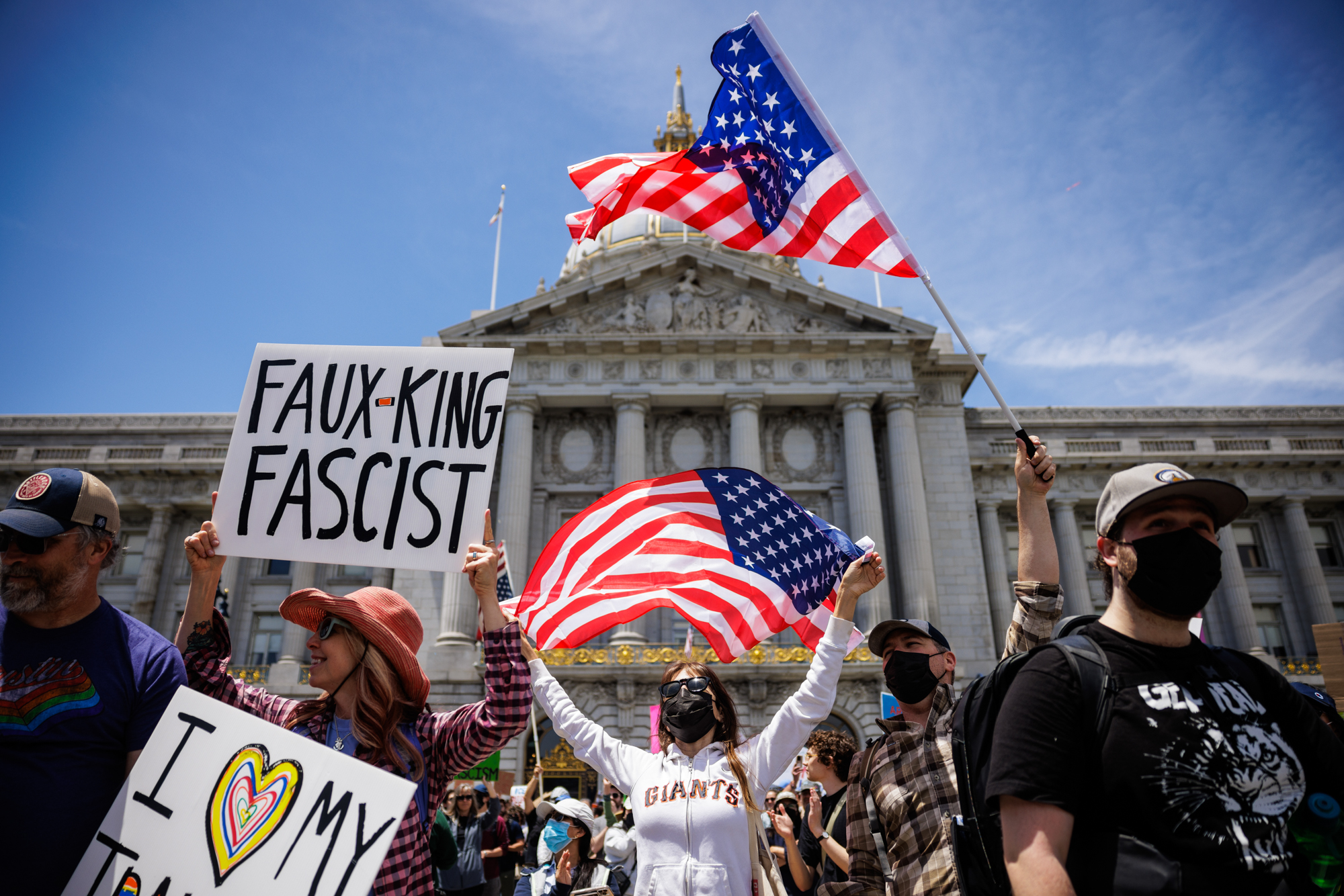
"caption": "Thousands of protesters rally in front of City Hall in San Francisco as part of the No Kings protest on June 14, 2025.",
"credit": "Martin do Nascimento/KQED",
"altTag": null,
"description": null,
"imgSizes": {
"thumbnail": {
"file": "https://cdn.kqed.org/wp-content/uploads/sites/10/2025/06/250614-NO-KINGS-SF-MD-11-KQED-160x107.jpg",
"width": 160,
"height": 107,
"mimeType": "image/jpeg"
},
"1536x1536": {
"file": "https://cdn.kqed.org/wp-content/uploads/sites/10/2025/06/250614-NO-KINGS-SF-MD-11-KQED-1536x1025.jpg",
"width": 1536,
"height": 1025,
"mimeType": "image/jpeg"
},
"post-thumbnail": {
"file": "https://cdn.kqed.org/wp-content/uploads/sites/10/2025/06/250614-NO-KINGS-SF-MD-11-KQED-672x372.jpg",
"width": 672,
"height": 372,
"mimeType": "image/jpeg"
},
"twentyfourteen-full-width": {
"file": "https://cdn.kqed.org/wp-content/uploads/sites/10/2025/06/250614-NO-KINGS-SF-MD-11-KQED-1038x576.jpg",
"width": 1038,
"height": 576,
"mimeType": "image/jpeg"
},
"kqedFullSize": {
"file": "https://cdn.kqed.org/wp-content/uploads/sites/10/2025/06/250614-NO-KINGS-SF-MD-11-KQED.jpg",
"width": 2000,
"height": 1334
}
},
"isLoading": false,
"fetchFailed": false
},
"news_12043264": {
"type": "attachments",
"id": "news_12043264",
"meta": {
"index": "attachments_1716263798",
"site": "news",
"id": "12043264",
"found": true
},
"title": "250608-ICE OUT OF THE BAY-AC-04-KQED",
"publishDate": 1749445597,
"status": "inherit",
"parent": 12043544,
"modified": 1749860292,
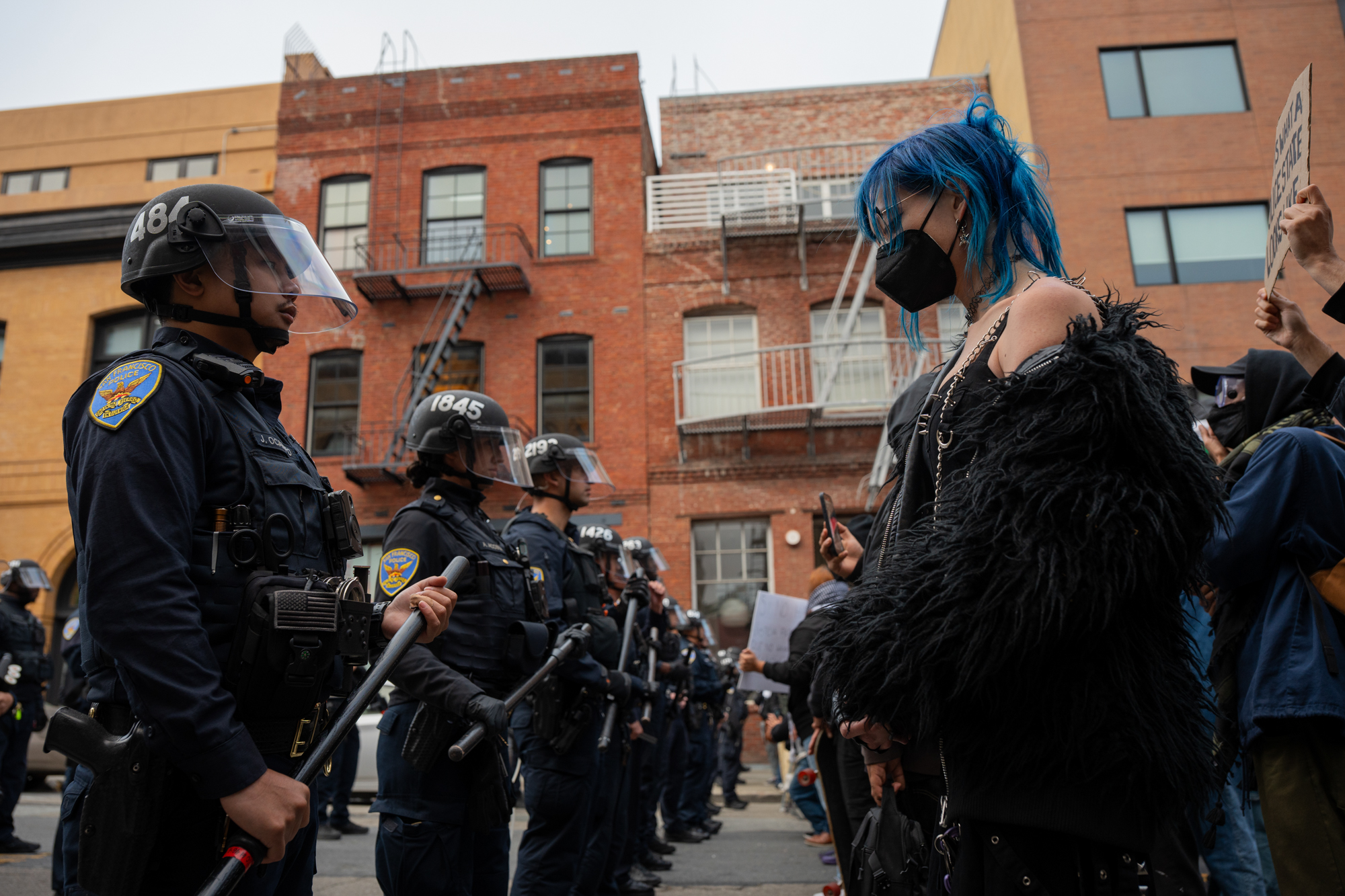
"caption": "Protesters face off with SFPD during an anti-ICE protest in San Francisco on June 8, 2025.",
"credit": "Aryk Copley for KQED",
"altTag": null,
"description": null,
"imgSizes": {
"thumbnail": {
"file": "https://cdn.kqed.org/wp-content/uploads/sites/10/2025/06/250608-ICE-OUT-OF-THE-BAY-AC-04-KQED-160x107.jpg",
"width": 160,
"height": 107,
"mimeType": "image/jpeg"
},
"1536x1536": {
"file": "https://cdn.kqed.org/wp-content/uploads/sites/10/2025/06/250608-ICE-OUT-OF-THE-BAY-AC-04-KQED-1536x1024.jpg",
"width": 1536,
"height": 1024,
"mimeType": "image/jpeg"
},
"post-thumbnail": {
"file": "https://cdn.kqed.org/wp-content/uploads/sites/10/2025/06/250608-ICE-OUT-OF-THE-BAY-AC-04-KQED-672x372.jpg",
"width": 672,
"height": 372,
"mimeType": "image/jpeg"
},
"twentyfourteen-full-width": {
"file": "https://cdn.kqed.org/wp-content/uploads/sites/10/2025/06/250608-ICE-OUT-OF-THE-BAY-AC-04-KQED-1038x576.jpg",
"width": 1038,
"height": 576,
"mimeType": "image/jpeg"
},
"kqedFullSize": {
"file": "https://cdn.kqed.org/wp-content/uploads/sites/10/2025/06/250608-ICE-OUT-OF-THE-BAY-AC-04-KQED.jpg",
"width": 2000,
"height": 1333
}
},
"isLoading": false,
"fetchFailed": false
},
"news_12044278": {
"type": "attachments",
"id": "news_12044278",
"meta": {
"index": "attachments_1716263798",
"site": "news",
"id": "12044278",
"found": true
},
"title": "031523-ICE-Arrest-AP-CM-01 copy",
"publishDate": 1749847621,
"status": "inherit",
"parent": 12048205,
"modified": 1761160605,
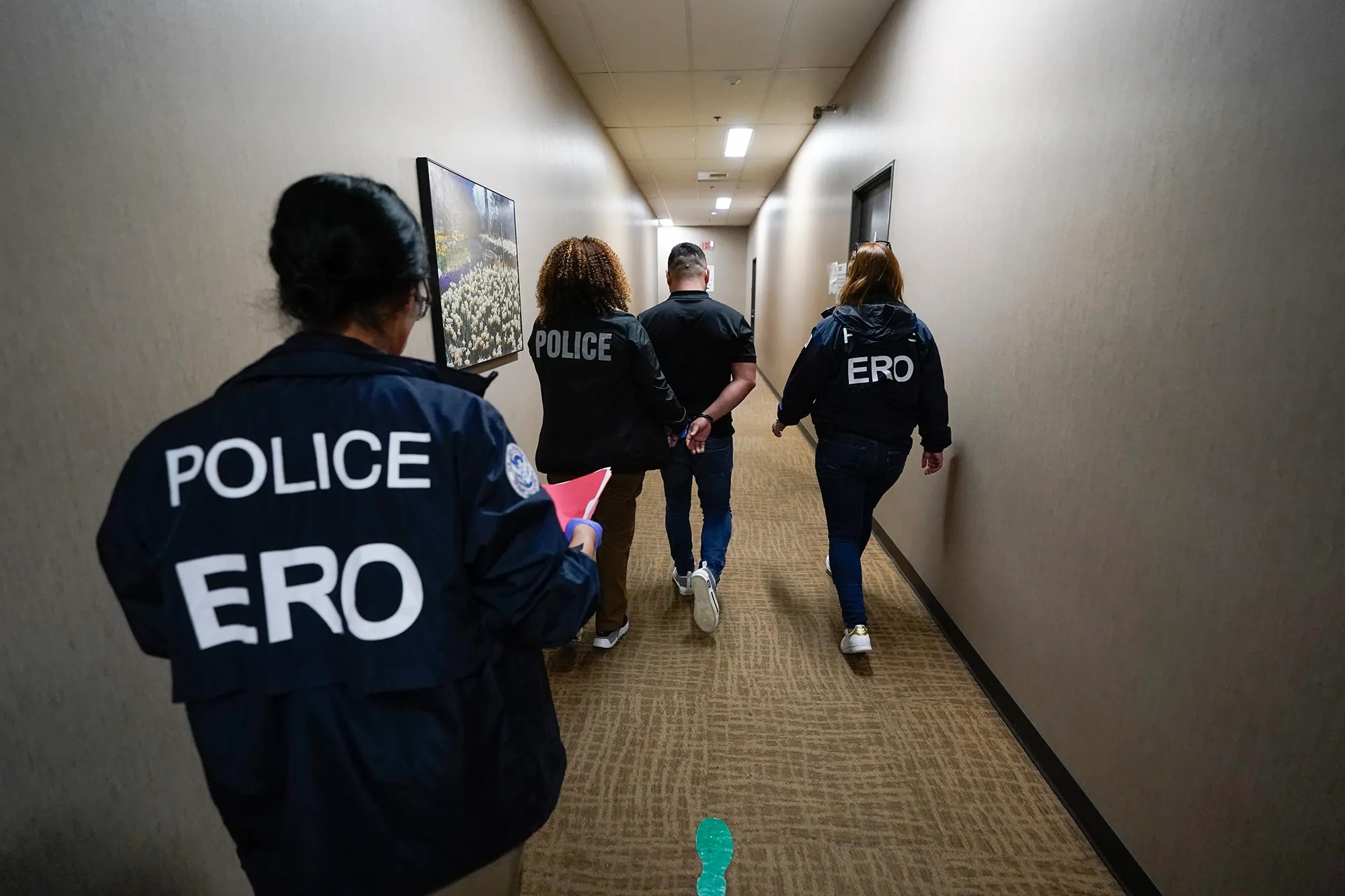
"caption": "Immigration and Customs Enforcement officers escort a man detained at an immigration and customs processing facility in San Diego, California, on March 15, 2023. ",
"credit": "Gregory Bull/AP Photo",
"altTag": null,
"description": null,
"imgSizes": {
"thumbnail": {
"file": "https://cdn.kqed.org/wp-content/uploads/sites/10/2025/06/031523-ICE-Arrest-AP-CM-01-copy-160x107.jpg",
"width": 160,
"height": 107,
"mimeType": "image/jpeg"
},
"1536x1536": {
"file": "https://cdn.kqed.org/wp-content/uploads/sites/10/2025/06/031523-ICE-Arrest-AP-CM-01-copy-1536x1024.jpg",
"width": 1536,
"height": 1024,
"mimeType": "image/jpeg"
},
"post-thumbnail": {
"file": "https://cdn.kqed.org/wp-content/uploads/sites/10/2025/06/031523-ICE-Arrest-AP-CM-01-copy-672x372.jpg",
"width": 672,
"height": 372,
"mimeType": "image/jpeg"
},
"twentyfourteen-full-width": {
"file": "https://cdn.kqed.org/wp-content/uploads/sites/10/2025/06/031523-ICE-Arrest-AP-CM-01-copy-1038x576.jpg",
"width": 1038,
"height": 576,
"mimeType": "image/jpeg"
},
"kqedFullSize": {
"file": "https://cdn.kqed.org/wp-content/uploads/sites/10/2025/06/031523-ICE-Arrest-AP-CM-01-copy.jpg",
"width": 2000,
"height": 1333
}
},
"isLoading": false,
"fetchFailed": false
},
"news_12044055": {
"type": "attachments",
"id": "news_12044055",
"meta": {
"index": "attachments_1716263798",
"site": "news",
"id": "12044055",
"found": true
},
"title": "20250129_UCBerkeleyRally_GC-44_qed",
"publishDate": 1749763340,
"status": "inherit",
"parent": 12044042,
"modified": 1749763426,
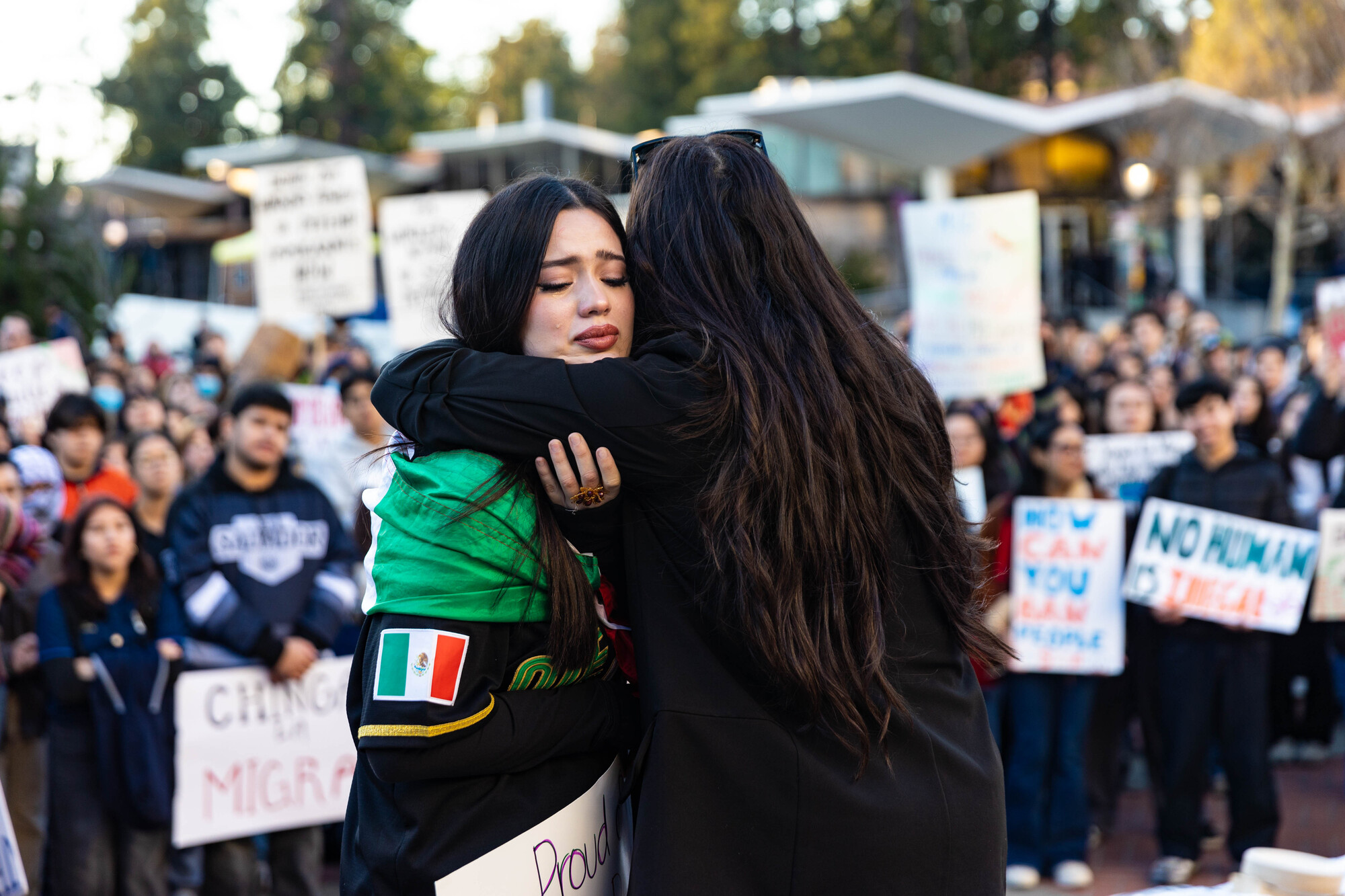
"caption": "A UC Berkeley student gets emotional and hugs a DACA recipient during a rally against the Trump administration’s promises to carry out mass deportations, in Berkeley, California, on Jan. 29, 2025.",
"credit": "Beth LaBerge/KQED",
"altTag": null,
"description": null,
"imgSizes": {
"thumbnail": {
"file": "https://cdn.kqed.org/wp-content/uploads/sites/10/2025/06/20250129_UCBerkeleyRally_GC-44_qed-160x107.jpg",
"width": 160,
"height": 107,
"mimeType": "image/jpeg"
},
"1536x1536": {
"file": "https://cdn.kqed.org/wp-content/uploads/sites/10/2025/06/20250129_UCBerkeleyRally_GC-44_qed-1536x1024.jpg",
"width": 1536,
"height": 1024,
"mimeType": "image/jpeg"
},
"post-thumbnail": {
"file": "https://cdn.kqed.org/wp-content/uploads/sites/10/2025/06/20250129_UCBerkeleyRally_GC-44_qed-672x372.jpg",
"width": 672,
"height": 372,
"mimeType": "image/jpeg"
},
"twentyfourteen-full-width": {
"file": "https://cdn.kqed.org/wp-content/uploads/sites/10/2025/06/20250129_UCBerkeleyRally_GC-44_qed-1038x576.jpg",
"width": 1038,
"height": 576,
"mimeType": "image/jpeg"
},
"kqedFullSize": {
"file": "https://cdn.kqed.org/wp-content/uploads/sites/10/2025/06/20250129_UCBerkeleyRally_GC-44_qed.jpg",
"width": 2000,
"height": 1333
}
},
"isLoading": false,
"fetchFailed": false
},
"news_12044015": {
"type": "attachments",
"id": "news_12044015",
"meta": {
"index": "attachments_1716263798",
"site": "news",
"id": "12044015",
"found": true
},
"title": "IMG_0822_Original 2",
"publishDate": 1749759469,
"status": "inherit",
"parent": 12044013,
"modified": 1749843874,
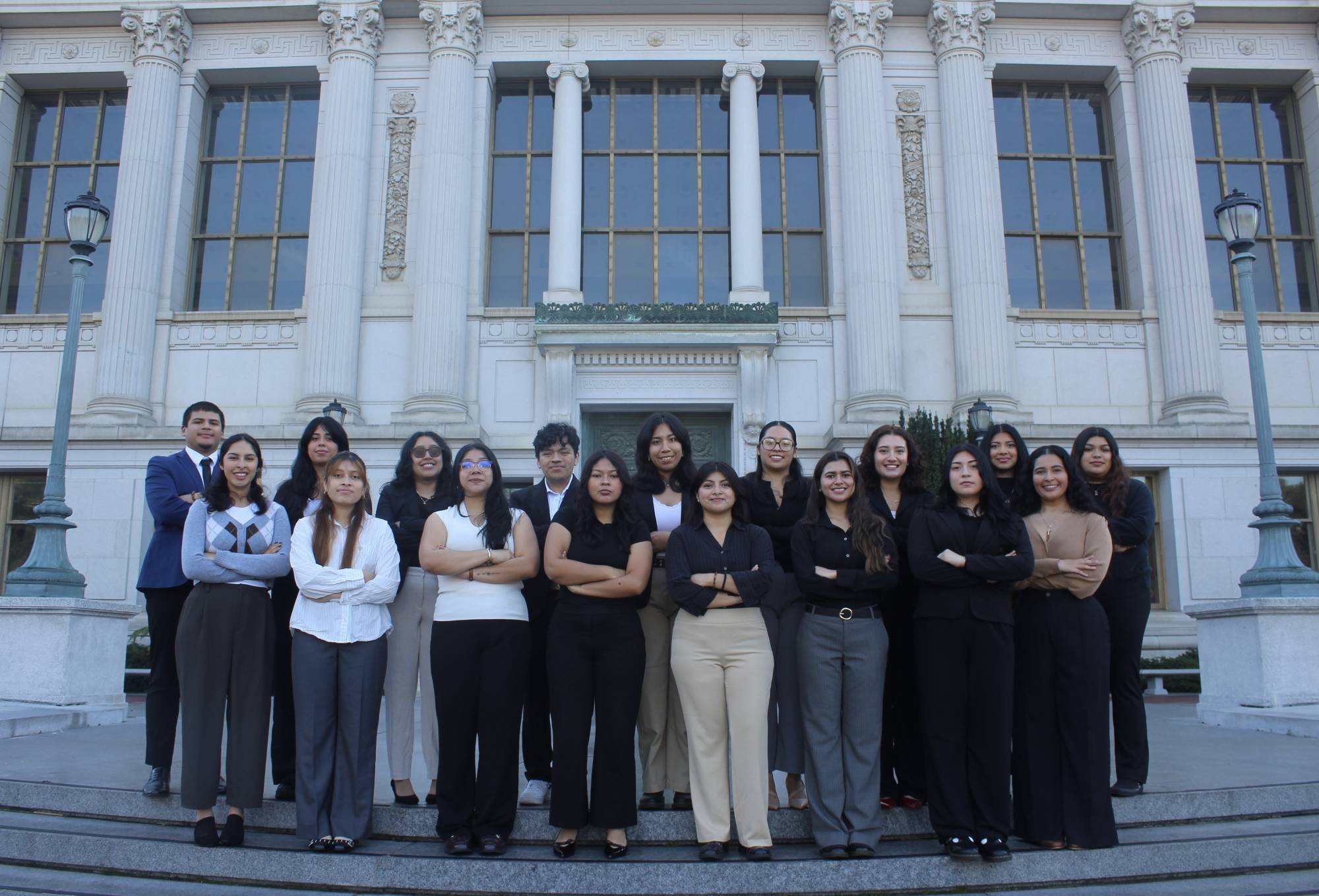
"caption": "UC Berkeley students from the organization, Central Americans for Empowerment (CAFE), pose in front of Doe Library.",
"credit": "Courtesy of Lesly Reyes Reyes",
"altTag": "Students from UC Berkeley in professional attire pose with their arms crossed in front of library with big white columns.",
"description": null,
"imgSizes": {
"medium": {
"file": "https://cdn.kqed.org/wp-content/uploads/sites/10/2025/06/IMG_0822_Original-2-2000x1359.jpg",
"width": 2000,
"height": 1359,
"mimeType": "image/jpeg"
},
"large": {
"file": "https://cdn.kqed.org/wp-content/uploads/sites/10/2025/06/IMG_0822_Original-2-2000x1359.jpg",
"width": 2000,
"height": 1359,
"mimeType": "image/jpeg"
},
"thumbnail": {
"file": "https://cdn.kqed.org/wp-content/uploads/sites/10/2025/06/IMG_0822_Original-2-160x109.jpg",
"width": 160,
"height": 109,
"mimeType": "image/jpeg"
},
"1536x1536": {
"file": "https://cdn.kqed.org/wp-content/uploads/sites/10/2025/06/IMG_0822_Original-2-1536x1044.jpg",
"width": 1536,
"height": 1044,
"mimeType": "image/jpeg"
},
"2048x2048": {
"file": "https://cdn.kqed.org/wp-content/uploads/sites/10/2025/06/IMG_0822_Original-2-2048x1392.jpg",
"width": 2048,
"height": 1392,
"mimeType": "image/jpeg"
},
"post-thumbnail": {
"file": "https://cdn.kqed.org/wp-content/uploads/sites/10/2025/06/IMG_0822_Original-2-672x372.jpg",
"width": 672,
"height": 372,
"mimeType": "image/jpeg"
},
"twentyfourteen-full-width": {
"file": "https://cdn.kqed.org/wp-content/uploads/sites/10/2025/06/IMG_0822_Original-2-1038x576.jpg",
"width": 1038,
"height": 576,
"mimeType": "image/jpeg"
},
"full-width": {
"file": "https://cdn.kqed.org/wp-content/uploads/sites/10/2025/06/IMG_0822_Original-2-2000x1359.jpg",
"width": 2000,
"height": 1359,
"mimeType": "image/jpeg"
},
"kqedFullSize": {
"file": "https://cdn.kqed.org/wp-content/uploads/sites/10/2025/06/IMG_0822_Original-2-scaled.jpg",
"width": 2560,
"height": 1740
}
},
"isLoading": false,
"fetchFailed": false
},
"news_12043922": {
"type": "attachments",
"id": "news_12043922",
"meta": {
"index": "attachments_1716263798",
"site": "news",
"id": "12043922",
"found": true
},
"title": "Immigration Protests Los Angeles",
"publishDate": 1749749041,
"status": "inherit",
"parent": 12043920,
"modified": 1749757600,
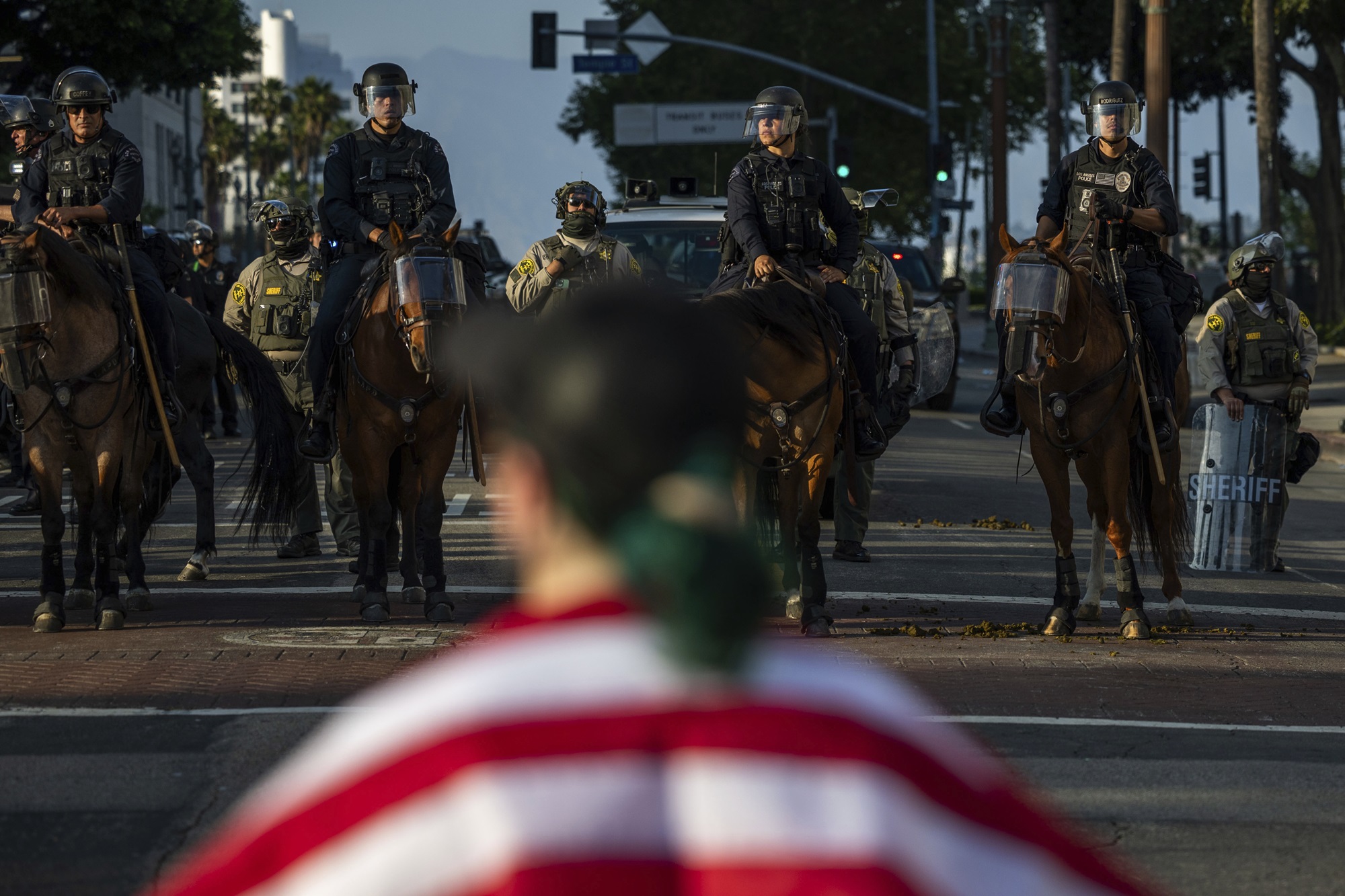
"caption": "Police confront protesters outside City Hall during protests over federal immigration enforcement raids on Wednesday, June 11, 2025, in Los Angeles. ",
"credit": "Ethan Swope/AP Photo",
"altTag": null,
"description": null,
"imgSizes": {
"thumbnail": {
"file": "https://cdn.kqed.org/wp-content/uploads/sites/10/2025/06/LosAngelesImmigrationRaidAP-160x107.jpg",
"width": 160,
"height": 107,
"mimeType": "image/jpeg"
},
"1536x1536": {
"file": "https://cdn.kqed.org/wp-content/uploads/sites/10/2025/06/LosAngelesImmigrationRaidAP-1536x1024.jpg",
"width": 1536,
"height": 1024,
"mimeType": "image/jpeg"
},
"post-thumbnail": {
"file": "https://cdn.kqed.org/wp-content/uploads/sites/10/2025/06/LosAngelesImmigrationRaidAP-672x372.jpg",
"width": 672,
"height": 372,
"mimeType": "image/jpeg"
},
"twentyfourteen-full-width": {
"file": "https://cdn.kqed.org/wp-content/uploads/sites/10/2025/06/LosAngelesImmigrationRaidAP-1038x576.jpg",
"width": 1038,
"height": 576,
"mimeType": "image/jpeg"
},
"kqedFullSize": {
"file": "https://cdn.kqed.org/wp-content/uploads/sites/10/2025/06/LosAngelesImmigrationRaidAP.jpg",
"width": 2000,
"height": 1333
}
},
"isLoading": false,
"fetchFailed": false
},
"news_12043958": {
"type": "attachments",
"id": "news_12043958",
"meta": {
"index": "attachments_1716263798",
"site": "news",
"id": "12043958",
"found": true
},
"title": "APTOPIX Immigration-Protests",
"publishDate": 1749754480,
"status": "inherit",
"parent": 12043957,
"modified": 1749754502,
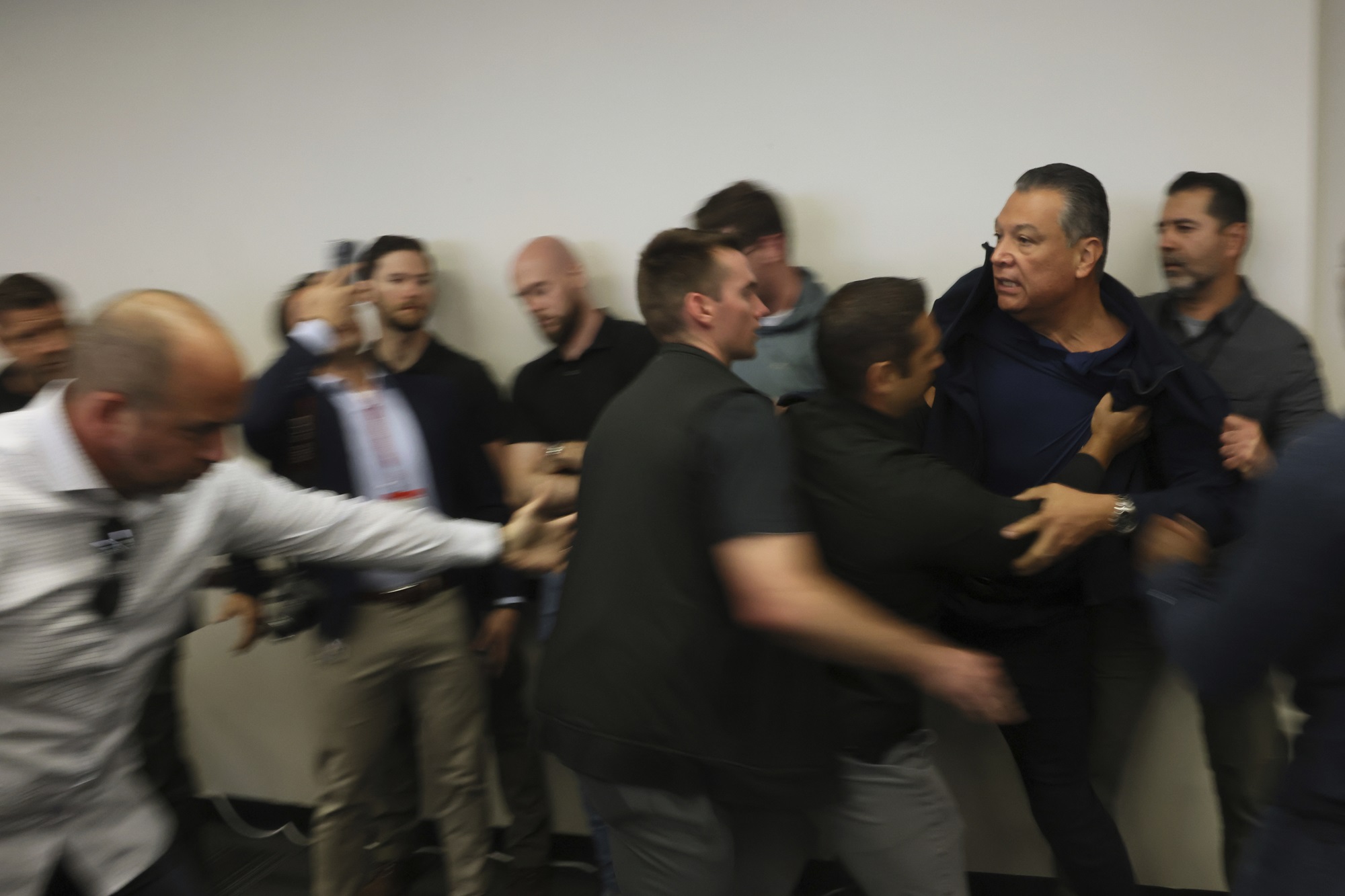
"caption": "U.S. Sen. Alex Padilla is pushed out of the room as Homeland Security Secretary Kristi Noem holds a news conference regarding the recent protests in Los Angeles on Thursday, June 12, 2025. ",
"credit": "Etienne Laurent/AP Photo",
"altTag": null,
"description": null,
"imgSizes": {
"thumbnail": {
"file": "https://cdn.kqed.org/wp-content/uploads/sites/10/2025/06/PadillaRemovedAP-160x107.jpg",
"width": 160,
"height": 107,
"mimeType": "image/jpeg"
},
"1536x1536": {
"file": "https://cdn.kqed.org/wp-content/uploads/sites/10/2025/06/PadillaRemovedAP-1536x1024.jpg",
"width": 1536,
"height": 1024,
"mimeType": "image/jpeg"
},
"post-thumbnail": {
"file": "https://cdn.kqed.org/wp-content/uploads/sites/10/2025/06/PadillaRemovedAP-672x372.jpg",
"width": 672,
"height": 372,
"mimeType": "image/jpeg"
},
"twentyfourteen-full-width": {
"file": "https://cdn.kqed.org/wp-content/uploads/sites/10/2025/06/PadillaRemovedAP-1038x576.jpg",
"width": 1038,
"height": 576,
"mimeType": "image/jpeg"
},
"kqedFullSize": {
"file": "https://cdn.kqed.org/wp-content/uploads/sites/10/2025/06/PadillaRemovedAP.jpg",
"width": 2000,
"height": 1333
}
},
"isLoading": false,
"fetchFailed": false
},
"news_12043197": {
"type": "attachments",
"id": "news_12043197",
"meta": {
"index": "attachments_1716263798",
"site": "news",
"id": "12043197",
"found": true
},
"title": "250606-SJICEPROTEST-JG-5-KQED",
"publishDate": 1749253072,
"status": "inherit",
"parent": 12043139,
"modified": 1749253093,
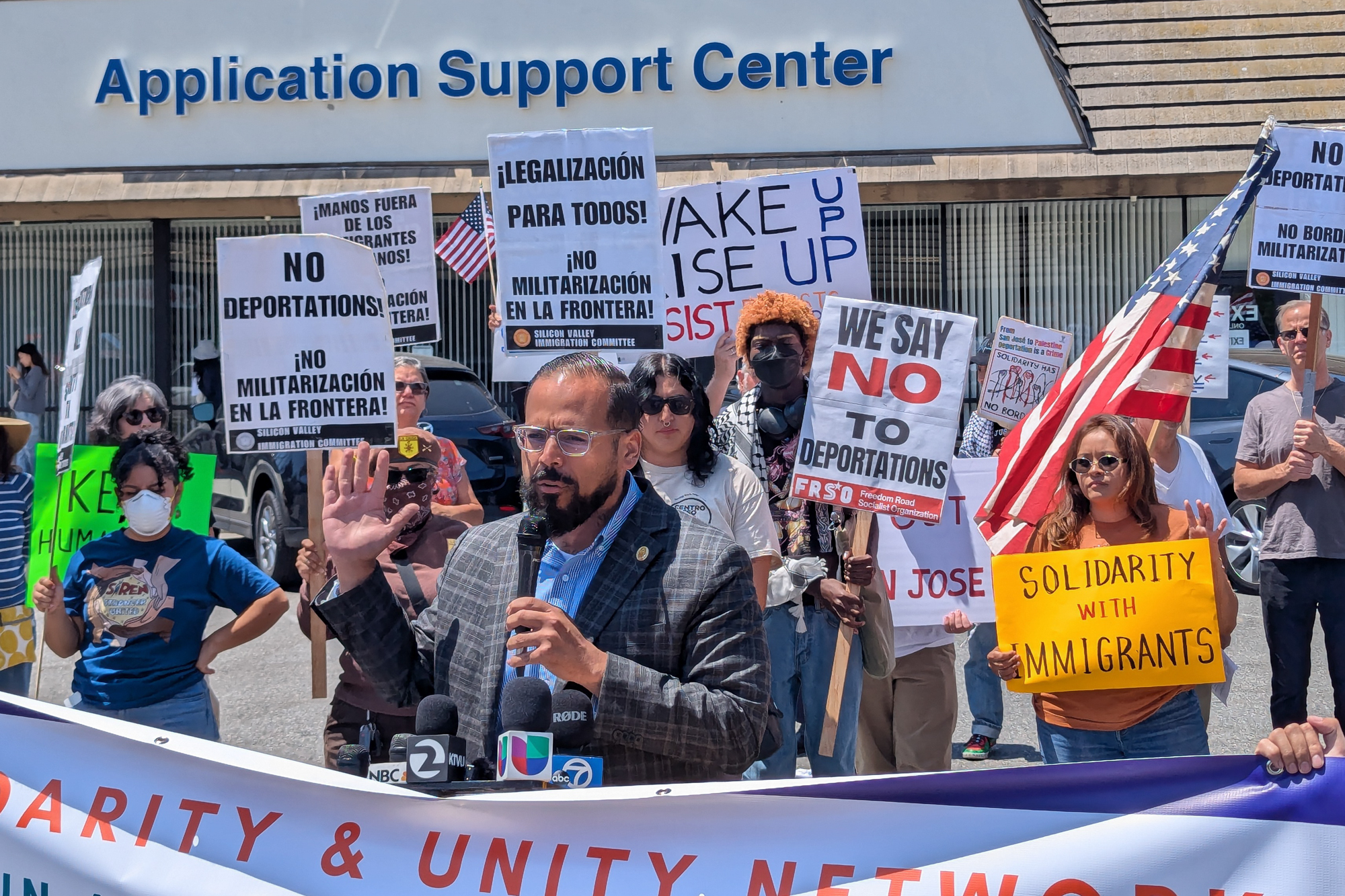
"caption": "District 5 San José City Councilmember Peter Ortiz speaks during a protest against ICE in South San José on June 6, 2025.",
"credit": "Joseph Geha/KQED",
"altTag": null,
"description": null,
"imgSizes": {
"thumbnail": {
"file": "https://cdn.kqed.org/wp-content/uploads/sites/10/2025/06/250606-SJICEPROTEST-JG-5-KQED-160x107.jpg",
"width": 160,
"height": 107,
"mimeType": "image/jpeg"
},
"1536x1536": {
"file": "https://cdn.kqed.org/wp-content/uploads/sites/10/2025/06/250606-SJICEPROTEST-JG-5-KQED-1536x1024.jpg",
"width": 1536,
"height": 1024,
"mimeType": "image/jpeg"
},
"post-thumbnail": {
"file": "https://cdn.kqed.org/wp-content/uploads/sites/10/2025/06/250606-SJICEPROTEST-JG-5-KQED-672x372.jpg",
"width": 672,
"height": 372,
"mimeType": "image/jpeg"
},
"twentyfourteen-full-width": {
"file": "https://cdn.kqed.org/wp-content/uploads/sites/10/2025/06/250606-SJICEPROTEST-JG-5-KQED-1038x576.jpg",
"width": 1038,
"height": 576,
"mimeType": "image/jpeg"
},
"kqedFullSize": {
"file": "https://cdn.kqed.org/wp-content/uploads/sites/10/2025/06/250606-SJICEPROTEST-JG-5-KQED.jpg",
"width": 2000,
"height": 1333
}
},
"isLoading": false,
"fetchFailed": false
},
"news_12036066": {
"type": "attachments",
"id": "news_12036066",
"meta": {
"index": "attachments_1716263798",
"site": "news",
"id": "12036066",
"found": true
},
"title": "California Medicaid",
"publishDate": 1744746796,
"status": "inherit",
"parent": 12036063,
"modified": 1749663522,
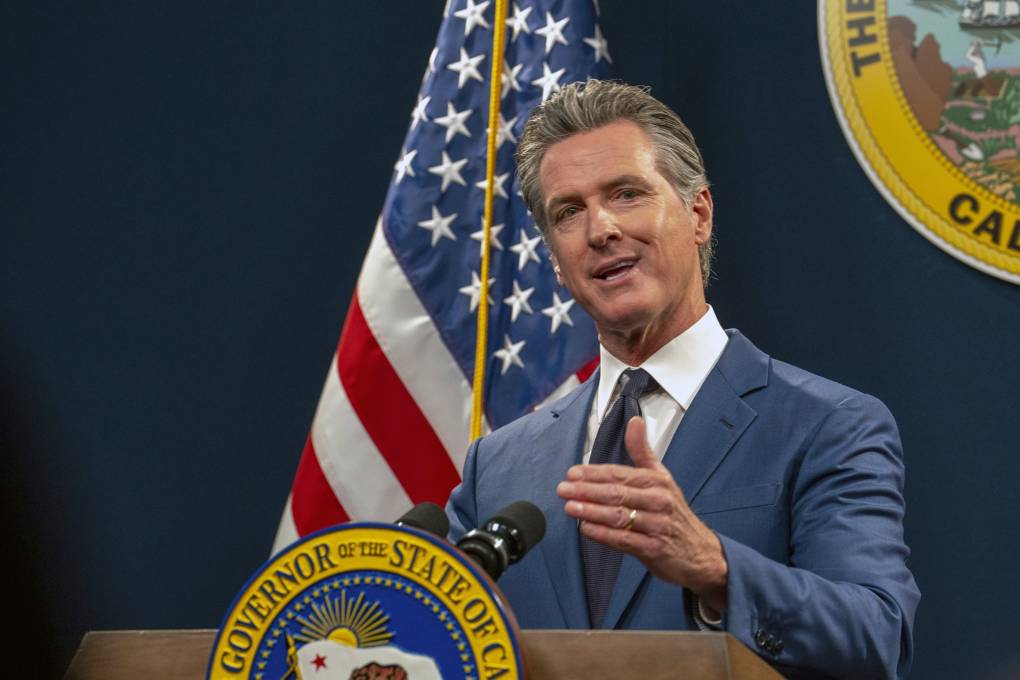
"caption": "Gov. Gavin Newsom discusses his revised 2024-25 state budget during a news conference in Sacramento, California, on May 10, 2024. ",
"credit": "Rich Pedroncelli/AP Photo",
"altTag": null,
"description": null,
"imgSizes": {
"medium": {
"file": "https://cdn.kqed.org/wp-content/uploads/sites/10/2025/04/GavinNewsom1AP-800x533.jpg",
"width": 800,
"height": 533,
"mimeType": "image/jpeg"
},
"large": {
"file": "https://cdn.kqed.org/wp-content/uploads/sites/10/2025/04/GavinNewsom1AP-1020x680.jpg",
"width": 1020,
"height": 680,
"mimeType": "image/jpeg"
},
"thumbnail": {
"file": "https://cdn.kqed.org/wp-content/uploads/sites/10/2025/04/GavinNewsom1AP-160x107.jpg",
"width": 160,
"height": 107,
"mimeType": "image/jpeg"
},
"1536x1536": {
"file": "https://cdn.kqed.org/wp-content/uploads/sites/10/2025/04/GavinNewsom1AP-1536x1024.jpg",
"width": 1536,
"height": 1024,
"mimeType": "image/jpeg"
},
"post-thumbnail": {
"file": "https://cdn.kqed.org/wp-content/uploads/sites/10/2025/04/GavinNewsom1AP-672x372.jpg",
"width": 672,
"height": 372,
"mimeType": "image/jpeg"
},
"twentyfourteen-full-width": {
"file": "https://cdn.kqed.org/wp-content/uploads/sites/10/2025/04/GavinNewsom1AP-1038x576.jpg",
"width": 1038,
"height": 576,
"mimeType": "image/jpeg"
},
"full-width": {
"file": "https://cdn.kqed.org/wp-content/uploads/sites/10/2025/04/GavinNewsom1AP-1920x1280.jpg",
"width": 1920,
"height": 1280,
"mimeType": "image/jpeg"
},
"kqedFullSize": {
"file": "https://cdn.kqed.org/wp-content/uploads/sites/10/2025/04/GavinNewsom1AP.jpg",
"width": 2000,
"height": 1333
}
},
"isLoading": false,
"fetchFailed": false
},
"news_11877202": {
"type": "attachments",
"id": "news_11877202",
"meta": {
"index": "attachments_1716263798",
"site": "news",
"id": "11877202",
"found": true
},
"title": "US-MAYDAY-RALLY",
"publishDate": 1623184946,
"status": "inherit",
"parent": 11877128,
"modified": 1749679480,
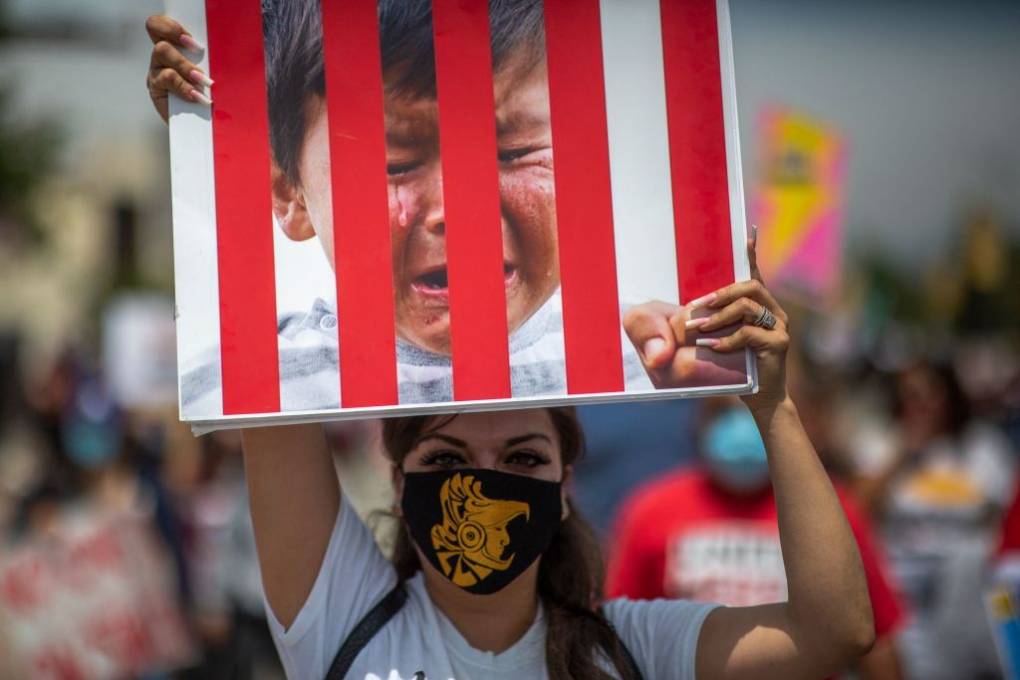
"caption": "A woman protests family separations at the border as a coalition of activist groups and labor unions participates in a May Day march in Los Angeles for workers and human rights in 2021.",
"credit": "David McNew/AFP via Getty Images",
"altTag": null,
"description": null,
"imgSizes": {
"medium": {
"file": "https://cdn.kqed.org/wp-content/uploads/sites/10/2021/06/GettyImages-1232636077-800x534.jpg",
"width": 800,
"height": 534,
"mimeType": "image/jpeg"
},
"large": {
"file": "https://cdn.kqed.org/wp-content/uploads/sites/10/2021/06/GettyImages-1232636077-1020x680.jpg",
"width": 1020,
"height": 680,
"mimeType": "image/jpeg"
},
"thumbnail": {
"file": "https://cdn.kqed.org/wp-content/uploads/sites/10/2021/06/GettyImages-1232636077-160x107.jpg",
"width": 160,
"height": 107,
"mimeType": "image/jpeg"
},
"post-thumbnail": {
"file": "https://cdn.kqed.org/wp-content/uploads/sites/10/2021/06/GettyImages-1232636077-672x372.jpg",
"width": 672,
"height": 372,
"mimeType": "image/jpeg"
},
"twentyfourteen-full-width": {
"file": "https://cdn.kqed.org/wp-content/uploads/sites/10/2021/06/GettyImages-1232636077-1024x576.jpg",
"width": 1024,
"height": 576,
"mimeType": "image/jpeg"
},
"kqedFullSize": {
"file": "https://cdn.kqed.org/wp-content/uploads/sites/10/2021/06/GettyImages-1232636077.jpg",
"width": 1024,
"height": 683
}
},
"isLoading": false,
"fetchFailed": false
},
"news_12043749": {
"type": "attachments",
"id": "news_12043749",
"meta": {
"index": "attachments_1716263798",
"site": "news",
"id": "12043749",
"found": true
},
"title": "LAProtestCM1",
"publishDate": 1749660653,
"status": "inherit",
"parent": 12043745,
"modified": 1749660679,
"caption": "Members of the press take cover as police officers clear the area outside of a federal building as protests continue in Los Angeles on June 9, 2025.",
"credit": "David McNew/Getty Images",
"altTag": null,
"description": null,
"imgSizes": {
"thumbnail": {
"file": "https://cdn.kqed.org/wp-content/uploads/sites/10/2025/06/LAProtestCM1-160x107.jpg",
"width": 160,
"height": 107,
"mimeType": "image/jpeg"
},
"1536x1536": {
"file": "https://cdn.kqed.org/wp-content/uploads/sites/10/2025/06/LAProtestCM1-1536x1025.jpg",
"width": 1536,
"height": 1025,
"mimeType": "image/jpeg"
},
"post-thumbnail": {
"file": "https://cdn.kqed.org/wp-content/uploads/sites/10/2025/06/LAProtestCM1-672x372.jpg",
"width": 672,
"height": 372,
"mimeType": "image/jpeg"
},
"twentyfourteen-full-width": {
"file": "https://cdn.kqed.org/wp-content/uploads/sites/10/2025/06/LAProtestCM1-1038x576.jpg",
"width": 1038,
"height": 576,
"mimeType": "image/jpeg"
},
"kqedFullSize": {
"file": "https://cdn.kqed.org/wp-content/uploads/sites/10/2025/06/LAProtestCM1.jpg",
"width": 1999,
"height": 1334
}
},
"isLoading": false,
"fetchFailed": false
},
"news_12039315": {
"type": "attachments",
"id": "news_12039315",
"meta": {
"index": "attachments_1716263798",
"site": "news",
"id": "12039315",
"found": true
},
"title": "03.21.2025-SoccerPractice-11-scaled",
"publishDate": 1746725418,
"status": "inherit",
"parent": 12039313,
"modified": 1746728550,
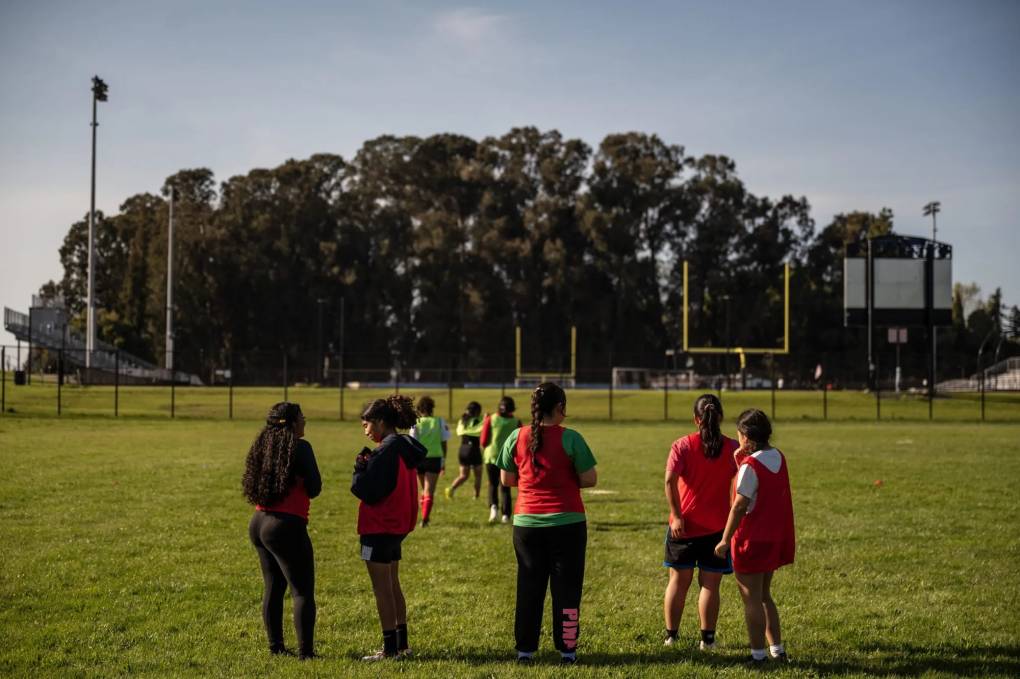
"caption": "A Soccer Without Borders Bay Area team gathered at a high school in the East Bay to practice for a weekend game against a familiar rival on Thursday, March 20, 2025.",
"credit": "Alejandro Durán for El Tímpano/CatchLight Local/ Report for America corps member",
"altTag": null,
"description": null,
"imgSizes": {
"medium": {
"file": "https://cdn.kqed.org/wp-content/uploads/sites/10/2025/05/03.21.2025-SoccerPractice-11-scaled-1-800x532.jpg",
"width": 800,
"height": 532,
"mimeType": "image/jpeg"
},
"large": {
"file": "https://cdn.kqed.org/wp-content/uploads/sites/10/2025/05/03.21.2025-SoccerPractice-11-scaled-1-1020x679.jpg",
"width": 1020,
"height": 679,
"mimeType": "image/jpeg"
},
"thumbnail": {
"file": "https://cdn.kqed.org/wp-content/uploads/sites/10/2025/05/03.21.2025-SoccerPractice-11-scaled-1-160x106.jpg",
"width": 160,
"height": 106,
"mimeType": "image/jpeg"
},
"1536x1536": {
"file": "https://cdn.kqed.org/wp-content/uploads/sites/10/2025/05/03.21.2025-SoccerPractice-11-scaled-1-1536x1022.jpg",
"width": 1536,
"height": 1022,
"mimeType": "image/jpeg"
},
"post-thumbnail": {
"file": "https://cdn.kqed.org/wp-content/uploads/sites/10/2025/05/03.21.2025-SoccerPractice-11-scaled-1-672x372.jpg",
"width": 672,
"height": 372,
"mimeType": "image/jpeg"
},
"twentyfourteen-full-width": {
"file": "https://cdn.kqed.org/wp-content/uploads/sites/10/2025/05/03.21.2025-SoccerPractice-11-scaled-1-1038x576.jpg",
"width": 1038,
"height": 576,
"mimeType": "image/jpeg"
},
"full-width": {
"file": "https://cdn.kqed.org/wp-content/uploads/sites/10/2025/05/03.21.2025-SoccerPractice-11-scaled-1-1920x1278.jpg",
"width": 1920,
"height": 1278,
"mimeType": "image/jpeg"
},
"kqedFullSize": {
"file": "https://cdn.kqed.org/wp-content/uploads/sites/10/2025/05/03.21.2025-SoccerPractice-11-scaled-1.jpg",
"width": 2000,
"height": 1331
}
},
"isLoading": false,
"fetchFailed": false
}
},
"audioPlayerReducer": {
"postId": "stream_live",
"isPaused": true,
"isPlaying": false,
"pfsActive": false,
"pledgeModalIsOpen": true,
"playerDrawerIsOpen": false,
"liveAudioPlayStartedAt": 0,
"liveAudioPlayContext": ""
},
"authorsReducer": {
"byline_news_12043745": {
"type": "authors",
"id": "byline_news_12043745",
"meta": {
"override": true
},
"slug": "byline_news_12043745",
"name": "John D'Anna, CalMatters",
"isLoading": false
},
"gmarzorati": {
"type": "authors",
"id": "227",
"meta": {
"index": "authors_1716337520",
"id": "227",
"found": true
},
"name": "Guy Marzorati",
"firstName": "Guy",
"lastName": "Marzorati",
"slug": "gmarzorati",
"email": "gmarzorati@KQED.org",
"display_author_email": true,
"staff_mastheads": [
"news"
],
"title": "Correspondent",
"bio": "Guy Marzorati is a correspondent on KQED's California Politics and Government Desk, based in San Jose. A graduate of Santa Clara University, Guy joined KQED in 2013. He reports on state and local politics and produces KQED's digital voter guide.",
"avatar": "https://secure.gravatar.com/avatar/e7038b8dbfd55b104369b76b1cd0b9de?s=600&d=blank&r=g",
"twitter": "guymarzorati",
"facebook": null,
"instagram": null,
"linkedin": null,
"sites": [
{
"site": "",
"roles": [
"editor"
]
},
{
"site": "news",
"roles": [
"editor"
]
},
{
"site": "science",
"roles": [
"editor"
]
},
{
"site": "forum",
"roles": [
"editor"
]
},
{
"site": "elections",
"roles": [
"editor"
]
},
{
"site": "liveblog",
"roles": [
"editor"
]
}
],
"headData": {
"title": "Guy Marzorati | KQED",
"description": "Correspondent",
"ogImgSrc": "https://secure.gravatar.com/avatar/e7038b8dbfd55b104369b76b1cd0b9de?s=600&d=blank&r=g",
"twImgSrc": "https://secure.gravatar.com/avatar/e7038b8dbfd55b104369b76b1cd0b9de?s=600&d=blank&r=g"
},
"isLoading": false,
"link": "/author/gmarzorati"
},
"kqed": {
"type": "authors",
"id": "236",
"meta": {
"index": "authors_1716337520",
"id": "236",
"found": true
},
"name": "KQED News Staff",
"firstName": "KQED News Staff",
"lastName": null,
"slug": "kqed",
"email": "faq@kqed.org",
"display_author_email": false,
"staff_mastheads": [],
"title": null,
"bio": null,
"avatar": "https://secure.gravatar.com/avatar/ef0e801a68c4c54afa9180db14084167?s=600&d=blank&r=g",
"twitter": null,
"facebook": null,
"instagram": null,
"linkedin": null,
"sites": [
{
"site": "arts",
"roles": [
"contributor"
]
},
{
"site": "news",
"roles": [
"editor"
]
},
{
"site": "futureofyou",
"roles": [
"author"
]
}
],
"headData": {
"title": "KQED News Staff | KQED",
"description": null,
"ogImgSrc": "https://secure.gravatar.com/avatar/ef0e801a68c4c54afa9180db14084167?s=600&d=blank&r=g",
"twImgSrc": "https://secure.gravatar.com/avatar/ef0e801a68c4c54afa9180db14084167?s=600&d=blank&r=g"
},
"isLoading": false,
"link": "/author/kqed"
},
"tychehendricks": {
"type": "authors",
"id": "259",
"meta": {
"index": "authors_1716337520",
"id": "259",
"found": true
},
"name": "Tyche Hendricks",
"firstName": "Tyche",
"lastName": "Hendricks",
"slug": "tychehendricks",
"email": "thendricks@kqed.org",
"display_author_email": true,
"staff_mastheads": [
"news"
],
"title": "KQED Senior Editor, Immigration",
"bio": "\u003cspan style=\"font-weight: 400;\">Tyche Hendricks is KQED’s senior editor for immigration, leading coverage of the policy and politics that affect California’s immigrant communities. Her work for KQED’s radio and online audiences is also carried on NPR and other national outlets. She has been recognized with awards from the Radio and Television News Directors Association, the Society for Professional Journalists; the Education Writers Association; the Best of the West and the National Federation of Community Broadcasters. Before joining KQED in 2010, Tyche spent more than a dozen years as a newspaper reporter, notably at the \u003c/span>\u003ci>\u003cspan style=\"font-weight: 400;\">San Francisco Chronicle\u003c/span>\u003c/i>\u003cspan style=\"font-weight: 400;\">. At different times she has covered criminal justice, government and politics and urban planning. Tyche has taught in the MFA Creative Writing program at the University of San Francisco and at UC Berkeley’s Graduate School of Journalism, where she was co-director of a national immigration symposium for professional journalists. She is the author of \u003c/span>\u003ci>\u003cspan style=\"font-weight: 400;\">The Wind Doesn't Need a Passport: Stories from the U.S.-Mexico Borderlands\u003c/span>\u003c/i>\u003cspan style=\"font-weight: 400;\"> (University of California Press). \u003c/span>",
"avatar": "https://secure.gravatar.com/avatar/b8ee458e2731c2d43df86882ce17267e?s=600&d=blank&r=g",
"twitter": "tychehendricks",
"facebook": null,
"instagram": null,
"linkedin": null,
"sites": [
{
"site": "news",
"roles": [
"editor"
]
},
{
"site": "stateofhealth",
"roles": [
"editor"
]
}
],
"headData": {
"title": "Tyche Hendricks | KQED",
"description": "KQED Senior Editor, Immigration",
"ogImgSrc": "https://secure.gravatar.com/avatar/b8ee458e2731c2d43df86882ce17267e?s=600&d=blank&r=g",
"twImgSrc": "https://secure.gravatar.com/avatar/b8ee458e2731c2d43df86882ce17267e?s=600&d=blank&r=g"
},
"isLoading": false,
"link": "/author/tychehendricks"
},
"mlagos": {
"type": "authors",
"id": "3239",
"meta": {
"index": "authors_1716337520",
"id": "3239",
"found": true
},
"name": "Marisa Lagos",
"firstName": "Marisa",
"lastName": "Lagos",
"slug": "mlagos",
"email": "mlagos@kqed.org",
"display_author_email": false,
"staff_mastheads": [
"news"
],
"title": "KQED Contributor",
"bio": "Marisa Lagos is a correspondent for KQED’s California Politics and Government Desk and co-hosts the award-winning show and podcast, Political Breakdown. At KQED, Lagos also conducts reporting, analysis and investigations into state, local and national politics for radio, TV, online and onstage. In 2022, she and co-host, Scott Shafer, moderated the only gubernatorial debate in California. In 2020, the \u003ci>Washington Post\u003c/i> named her one of the top political journalists in California; she was nominated for a Peabody and won several other awards for her work investigating the 2017 California wildfires. She has worked at the \u003ci>San Francisco Chronicle\u003c/i>, \u003ci>San Francisco Examiner\u003c/i> and \u003ci>Los Angeles Times\u003c/i>. A UC Santa Barbara graduate, she lives in San Francisco with her two sons and husband.",
"avatar": "https://secure.gravatar.com/avatar/a261a0d3696fc066871ef96b85b5e7d2?s=600&d=blank&r=g",
"twitter": "@mlagos",
"facebook": null,
"instagram": null,
"linkedin": null,
"sites": [
{
"site": "arts",
"roles": [
"author"
]
},
{
"site": "news",
"roles": [
"editor"
]
},
{
"site": "science",
"roles": [
"editor"
]
},
{
"site": "forum",
"roles": [
"author"
]
},
{
"site": "liveblog",
"roles": [
"author"
]
}
],
"headData": {
"title": "Marisa Lagos | KQED",
"description": "KQED Contributor",
"ogImgSrc": "https://secure.gravatar.com/avatar/a261a0d3696fc066871ef96b85b5e7d2?s=600&d=blank&r=g",
"twImgSrc": "https://secure.gravatar.com/avatar/a261a0d3696fc066871ef96b85b5e7d2?s=600&d=blank&r=g"
},
"isLoading": false,
"link": "/author/mlagos"
},
"ecruzguevarra": {
"type": "authors",
"id": "8654",
"meta": {
"index": "authors_1716337520",
"id": "8654",
"found": true
},
"name": "Ericka Cruz Guevarra",
"firstName": "Ericka",
"lastName": "Cruz Guevarra",
"slug": "ecruzguevarra",
"email": "ecruzguevarra@kqed.org",
"display_author_email": true,
"staff_mastheads": [
"news"
],
"title": "Producer, The Bay Podcast",
"bio": "Ericka Cruz Guevarra is host of \u003ca href=\"https://www.kqed.org/podcasts/thebay\">\u003cem>The Bay\u003c/em>\u003c/a> podcast at KQED. Before host, she was the show’s producer. Her work in that capacity includes a three-part reported series on policing in Vallejo, which won a 2020 excellence in journalism award from the Society of Professional Journalists. Ericka has worked as a breaking news reporter at Oregon Public Broadcasting, helped produce the Code Switch podcast, and was KQED’s inaugural Raul Ramirez Diversity Fund intern. She’s also an alumna of NPR’s Next Generation Radio program. Send her an email if you have strong feelings about whether Fairfield and Suisun City are the Bay. Ericka is represented by SAG-AFTRA.",
"avatar": "https://secure.gravatar.com/avatar/25e5ab8d3d53fad2dcc7bb2b5c506b1a?s=600&d=blank&r=g",
"twitter": "NotoriousECG",
"facebook": null,
"instagram": null,
"linkedin": null,
"sites": [
{
"site": "arts",
"roles": [
"subscriber"
]
},
{
"site": "news",
"roles": [
"editor",
"manage_categories"
]
},
{
"site": "futureofyou",
"roles": [
"subscriber"
]
},
{
"site": "stateofhealth",
"roles": [
"subscriber"
]
},
{
"site": "science",
"roles": [
"editor"
]
},
{
"site": "forum",
"roles": [
"subscriber"
]
}
],
"headData": {
"title": "Ericka Cruz Guevarra | KQED",
"description": "Producer, The Bay Podcast",
"ogImgSrc": "https://secure.gravatar.com/avatar/25e5ab8d3d53fad2dcc7bb2b5c506b1a?s=600&d=blank&r=g",
"twImgSrc": "https://secure.gravatar.com/avatar/25e5ab8d3d53fad2dcc7bb2b5c506b1a?s=600&d=blank&r=g"
},
"isLoading": false,
"link": "/author/ecruzguevarra"
},
"amontecillo": {
"type": "authors",
"id": "11649",
"meta": {
"index": "authors_1716337520",
"id": "11649",
"found": true
},
"name": "Alan Montecillo",
"firstName": "Alan",
"lastName": "Montecillo",
"slug": "amontecillo",
"email": "amontecillo@kqed.org",
"display_author_email": false,
"staff_mastheads": [
"news"
],
"title": "KQED Contributor",
"bio": "Alan Montecillo is the senior editor of \u003cem>\u003ca href=\"http://kqed.org/thebay\">The Bay\u003c/a>, \u003c/em> KQED's local news podcast. Before moving to the Bay Area, he worked as a senior talk show producer for WILL in Champaign-Urbana, Illinois and at Oregon Public Broadcasting in Portland, Oregon. He has won journalism awards from the Society of Professional Journalists Northern California, the Public Media Journalists Association, The Signal Awards, and has also received a regional Edward R. Murrow award. Alan is a Filipino American from Hong Kong and a graduate of Reed College.",
"avatar": "https://secure.gravatar.com/avatar/d5e4e7a76481969ccba76f4e2b5ccabc?s=600&d=blank&r=g",
"twitter": "alanmontecillo",
"facebook": null,
"instagram": null,
"linkedin": null,
"sites": [
{
"site": "",
"roles": [
"editor"
]
},
{
"site": "news",
"roles": [
"editor",
"manage_categories"
]
}
],
"headData": {
"title": "Alan Montecillo | KQED",
"description": "KQED Contributor",
"ogImgSrc": "https://secure.gravatar.com/avatar/d5e4e7a76481969ccba76f4e2b5ccabc?s=600&d=blank&r=g",
"twImgSrc": "https://secure.gravatar.com/avatar/d5e4e7a76481969ccba76f4e2b5ccabc?s=600&d=blank&r=g"
},
"isLoading": false,
"link": "/author/amontecillo"
},
"jlara": {
"type": "authors",
"id": "11761",
"meta": {
"index": "authors_1716337520",
"id": "11761",
"found": true
},
"name": "Juan Carlos Lara",
"firstName": "Juan Carlos",
"lastName": "Lara",
"slug": "jlara",
"email": "jlara@kqed.org",
"display_author_email": false,
"staff_mastheads": [],
"title": "KQED Contributor",
"bio": null,
"avatar": "https://secure.gravatar.com/avatar/19e2052b9b05657c5ff2af2121846e9c?s=600&d=blank&r=g",
"twitter": null,
"facebook": null,
"instagram": null,
"linkedin": null,
"sites": [
{
"site": "arts",
"roles": [
"editor"
]
},
{
"site": "news",
"roles": [
"editor"
]
},
{
"site": "forum",
"roles": [
"editor"
]
},
{
"site": "liveblog",
"roles": [
"contributor"
]
}
],
"headData": {
"title": "Juan Carlos Lara | KQED",
"description": "KQED Contributor",
"ogImgSrc": "https://secure.gravatar.com/avatar/19e2052b9b05657c5ff2af2121846e9c?s=600&d=blank&r=g",
"twImgSrc": "https://secure.gravatar.com/avatar/19e2052b9b05657c5ff2af2121846e9c?s=600&d=blank&r=g"
},
"isLoading": false,
"link": "/author/jlara"
},
"jessicakariisa": {
"type": "authors",
"id": "11831",
"meta": {
"index": "authors_1716337520",
"id": "11831",
"found": true
},
"name": "Jessica Kariisa",
"firstName": "Jessica",
"lastName": "Kariisa",
"slug": "jessicakariisa",
"email": "jkariisa@kqed.org",
"display_author_email": false,
"staff_mastheads": [],
"title": "Producer, The Bay",
"bio": "Jessica Kariisa is the producer of The Bay. She first joined KQED as an intern for The California Report Magazine, after which she became an on-call producer. She reported a Bay Curious episode on the use of rap lyrics in criminal trials which won a Society of Professional Journalists award in 2023 for Excellence in Features Journalism and the 2023 Signal Award for Best Conversation Starter. She’s worked on podcasts for Snap Judgment and American Public Media. Before embarking on her audio career, she was a music journalist.\r\n\r\nJessica Kariisa is represented by SAG-AFTRA.",
"avatar": "https://secure.gravatar.com/avatar/522e97b28ac0b3d411621c0fde8f3419c7b71ea2c5c262c57c4bb600963f328c?s=600&d=blank&r=g",
"twitter": null,
"bluesky": null,
"facebook": null,
"instagram": null,
"linkedin": null,
"sites": [
{
"site": "arts",
"roles": [
"author"
]
},
{
"site": "news",
"roles": [
"editor",
"manage_categories"
]
}
],
"headData": {
"title": "Jessica Kariisa | KQED",
"description": "Producer, The Bay",
"ogImgSrc": "https://secure.gravatar.com/avatar/522e97b28ac0b3d411621c0fde8f3419c7b71ea2c5c262c57c4bb600963f328c?s=600&d=blank&r=g",
"twImgSrc": "https://secure.gravatar.com/avatar/522e97b28ac0b3d411621c0fde8f3419c7b71ea2c5c262c57c4bb600963f328c?s=600&d=blank&r=g"
},
"isLoading": false,
"link": "/author/jessicakariisa"
},
"jgeha": {
"type": "authors",
"id": "11906",
"meta": {
"index": "authors_1716337520",
"id": "11906",
"found": true
},
"name": "Joseph Geha",
"firstName": "Joseph",
"lastName": "Geha",
"slug": "jgeha",
"email": "jgeha@kqed.org",
"display_author_email": false,
"staff_mastheads": [
"news",
"science"
],
"title": "KQED Contributor",
"bio": null,
"avatar": "https://secure.gravatar.com/avatar/ea84d2b6dd93d6369d453edf19dd583f117cd1759d2d9c9c92f9de77017354fe?s=600&d=blank&r=g",
"twitter": null,
"bluesky": null,
"facebook": null,
"instagram": null,
"linkedin": null,
"sites": [
{
"site": "news",
"roles": [
"editor"
]
},
{
"site": "liveblog",
"roles": [
"author"
]
}
],
"headData": {
"title": "Joseph Geha | KQED",
"description": "KQED Contributor",
"ogImgSrc": "https://secure.gravatar.com/avatar/ea84d2b6dd93d6369d453edf19dd583f117cd1759d2d9c9c92f9de77017354fe?s=600&d=blank&r=g",
"twImgSrc": "https://secure.gravatar.com/avatar/ea84d2b6dd93d6369d453edf19dd583f117cd1759d2d9c9c92f9de77017354fe?s=600&d=blank&r=g"
},
"isLoading": false,
"link": "/author/jgeha"
},
"jservantez": {
"type": "authors",
"id": "11909",
"meta": {
"index": "authors_1716337520",
"id": "11909",
"found": true
},
"name": "Jared Servantez",
"firstName": "Jared",
"lastName": "Servantez",
"slug": "jservantez",
"email": "jservantez@kqed.org",
"display_author_email": true,
"staff_mastheads": [
"news"
],
"title": "KQED Contributor",
"bio": "Jared Servantez is the editor of KQED's Express Desk, leading the newsroom's online breaking news operation. He most recently worked for the Los Angeles Times, where he served as a breaking news editor, the Metro Desk's night editor, and a copy editor. Jared is a graduate of the USC Annenberg School for Communication and Journalism.",
"avatar": "https://secure.gravatar.com/avatar/46e9029cd4e3bc3391184e65511d73e6?s=600&d=mm&r=g",
"twitter": "jservantez",
"facebook": null,
"instagram": null,
"linkedin": null,
"sites": [
{
"site": "news",
"roles": [
"editor"
]
},
{
"site": "science",
"roles": [
"editor",
"author"
]
},
{
"site": "liveblog",
"roles": [
"editor"
]
}
],
"headData": {
"title": "Jared Servantez | KQED",
"description": "KQED Contributor",
"ogImgSrc": "https://secure.gravatar.com/avatar/46e9029cd4e3bc3391184e65511d73e6?s=600&d=mm&r=g",
"twImgSrc": "https://secure.gravatar.com/avatar/46e9029cd4e3bc3391184e65511d73e6?s=600&d=mm&r=g"
},
"isLoading": false,
"link": "/author/jservantez"
},
"slim": {
"type": "authors",
"id": "11920",
"meta": {
"index": "authors_1716337520",
"id": "11920",
"found": true
},
"name": "Samantha Lim",
"firstName": "Samantha",
"lastName": "Lim",
"slug": "slim",
"email": "slim@KQED.org",
"display_author_email": false,
"staff_mastheads": [],
"title": "KQED Contributor",
"bio": null,
"avatar": "https://secure.gravatar.com/avatar/82e592e6c15fe1a04d385e8ad0fb0b4e?s=600&d=blank&r=g",
"twitter": null,
"facebook": null,
"instagram": null,
"linkedin": null,
"sites": [
{
"site": "news",
"roles": []
}
],
"headData": {
"title": "Samantha Lim | KQED",
"description": "KQED Contributor",
"ogImgSrc": "https://secure.gravatar.com/avatar/82e592e6c15fe1a04d385e8ad0fb0b4e?s=600&d=blank&r=g",
"twImgSrc": "https://secure.gravatar.com/avatar/82e592e6c15fe1a04d385e8ad0fb0b4e?s=600&d=blank&r=g"
},
"isLoading": false,
"link": "/author/slim"
},
"emanoukian": {
"type": "authors",
"id": "11925",
"meta": {
"index": "authors_1716337520",
"id": "11925",
"found": true
},
"name": "Elize Manoukian",
"firstName": "Elize",
"lastName": "Manoukian",
"slug": "emanoukian",
"email": "emanoukian@KQED.org",
"display_author_email": false,
"staff_mastheads": [
"news"
],
"title": "Digital Producer",
"bio": null,
"avatar": "https://secure.gravatar.com/avatar/4525f1a8e46ccb30933b32653d9772064cfefe3fa655eb45b3b3a80341f6bdad?s=600&d=blank&r=g",
"twitter": null,
"bluesky": null,
"facebook": null,
"instagram": null,
"linkedin": null,
"sites": [
{
"site": "arts",
"roles": [
"editor"
]
},
{
"site": "news",
"roles": [
"editor"
]
},
{
"site": "science",
"roles": [
"editor"
]
}
],
"headData": {
"title": "Elize Manoukian | KQED",
"description": "Digital Producer",
"ogImgSrc": "https://secure.gravatar.com/avatar/4525f1a8e46ccb30933b32653d9772064cfefe3fa655eb45b3b3a80341f6bdad?s=600&d=blank&r=g",
"twImgSrc": "https://secure.gravatar.com/avatar/4525f1a8e46ccb30933b32653d9772064cfefe3fa655eb45b3b3a80341f6bdad?s=600&d=blank&r=g"
},
"isLoading": false,
"link": "/author/emanoukian"
},
"mvelasquez": {
"type": "authors",
"id": "11939",
"meta": {
"index": "authors_1716337520",
"id": "11939",
"found": true
},
"name": "Mel Velasquez",
"firstName": "Mel",
"lastName": "Velasquez",
"slug": "mvelasquez",
"email": "mvelasquez@kqed.org",
"display_author_email": false,
"staff_mastheads": [],
"title": "KQED Contributor",
"bio": null,
"avatar": "https://secure.gravatar.com/avatar/409094312d56fab09fef4251e949ffa6?s=600&d=blank&r=g",
"twitter": null,
"facebook": null,
"instagram": null,
"linkedin": "www.linkedin.com/in/melanievelasquezz",
"sites": [
{
"site": "news",
"roles": [
"editor"
]
}
],
"headData": {
"title": "Mel Velasquez | KQED",
"description": "KQED Contributor",
"ogImgSrc": "https://secure.gravatar.com/avatar/409094312d56fab09fef4251e949ffa6?s=600&d=blank&r=g",
"twImgSrc": "https://secure.gravatar.com/avatar/409094312d56fab09fef4251e949ffa6?s=600&d=blank&r=g"
},
"isLoading": false,
"link": "/author/mvelasquez"
}
},
"pagesReducer": {
"news_tag_immigration": {
"type": "terms",
"id": "news_20202",
"meta": {
"index": "terms_1716263798",
"site": "news",
"id": "20202",
"score": 6.9038835
},
"featImg": null,
"name": "immigration",
"description": null,
"taxonomy": "tag",
"headData": {
"twImgId": null,
"twTitle": null,
"ogTitle": null,
"ogImgId": null,
"twDescription": null,
"description": null,
"title": "immigration Archives | KQED News",
"ogDescription": null
},
"ttid": 20219,
"slug": "immigration",
"isLoading": false,
"title": "immigration",
"pageMeta": {
"site": "news",
"WpPageTemplate": "page-topic-editorial",
"currentPage": 26
},
"blocks": [
{
"blockName": "kqed/post-list",
"attrs": {
"layout": "cardArticle2",
"query": "posts/news?tag=immigration",
"seeMore": false,
"paginated": true,
"page": 26
}
},
{
"blockName": "kqed/ad"
}
]
}
},
"pfsSessionReducer": {},
"postsReducer": {
"stream_live": {
"type": "live",
"id": "stream_live",
"audioUrl": "https://streams.kqed.org/kqedradio",
"title": "Live Stream",
"excerpt": "Live Stream information currently unavailable.",
"link": "/radio",
"featImg": "",
"label": {
"name": "KQED Live",
"link": "/"
}
},
"stream_kqedNewscast": {
"type": "posts",
"id": "stream_kqedNewscast",
"audioUrl": "https://www.kqed.org/.stream/anon/radio/RDnews/newscast.mp3?_=1",
"title": "KQED Newscast",
"featImg": "",
"label": {
"name": "88.5 FM",
"link": "/"
}
},
"news_12044426": {
"type": "posts",
"id": "news_12044426",
"meta": {
"index": "posts_1716263798",
"site": "news",
"id": "12044426",
"score": null,
"sort": [
1749927624000
]
},
"guestAuthors": [],
"slug": "no-kings-protests-draw-thousands-across-the-bay-area-to-rally-against-president-trump",
"title": "‘No Kings’ Protests Draw Thousands Across the Bay Area to Rally Against President Trump",
"publishDate": 1749927624,
"format": "standard",
"headTitle": "‘No Kings’ Protests Draw Thousands Across the Bay Area to Rally Against President Trump | KQED",
"labelTerm": {
"site": "news"
},
"content": "\u003cp>\u003cem>Updated 6 p.m. Saturday\u003c/em>\u003c/p>\n\u003cp>Thousands of people flooded streets across the Bay Area Saturday as part of a national day of action against President Donald Trump and his administration’s policies.\u003c/p>\n\u003cp>Dozens of No Kings protests took place around the region in multiple cities including Oakland, San José, Palo Alto, Berkeley, Santa Rosa, Alameda, Fremont and Vallejo. They coincided with a military parade in Washington D.C. and Trump’s 79th birthday.\u003c/p>\n\u003cp>[ad fullwidth]\u003c/p>\n\u003cp>“It’s a protest to reject authoritarian rule and the idea that any one person including President Trump is above the people,” said Liliana Soroceanu an organizer with Indivisible San Francisco.\u003c/p>\n\u003cp>Thousands marched from Dolores Park to Civic Center in San Francisco, with protesters densely spanning the entire 1.5-mile path.\u003c/p>\n\u003cfigure id=\"attachment_12044521\" class=\"wp-caption aligncenter\" style=\"max-width: 2500px\">\u003cimg loading=\"lazy\" decoding=\"async\" class=\"wp-image-12044521 size-full\" src=\"https://cdn.kqed.org/wp-content/uploads/sites/10/2025/06/250614-NO-KINGS-SF-MD-DIPTYCH-01-KQED.jpg\" alt=\"\" width=\"2500\" height=\"831\" srcset=\"https://cdn.kqed.org/wp-content/uploads/sites/10/2025/06/250614-NO-KINGS-SF-MD-DIPTYCH-01-KQED.jpg 2500w, https://cdn.kqed.org/wp-content/uploads/sites/10/2025/06/250614-NO-KINGS-SF-MD-DIPTYCH-01-KQED-2000x665.jpg 2000w, https://cdn.kqed.org/wp-content/uploads/sites/10/2025/06/250614-NO-KINGS-SF-MD-DIPTYCH-01-KQED-160x53.jpg 160w, https://cdn.kqed.org/wp-content/uploads/sites/10/2025/06/250614-NO-KINGS-SF-MD-DIPTYCH-01-KQED-1536x511.jpg 1536w, https://cdn.kqed.org/wp-content/uploads/sites/10/2025/06/250614-NO-KINGS-SF-MD-DIPTYCH-01-KQED-2048x681.jpg 2048w\" sizes=\"auto, (max-width: 2500px) 100vw, 2500px\">\u003cfigcaption class=\"wp-caption-text\">Crowds gather in Mission Dolores Park in San Francisco for the ‘No Kings’ protest that coincides with President Donald Trump’s 79th birthday on June 14, 2025. \u003ccite>(Martin do Nascimento/KQED)\u003c/cite>\u003c/figcaption>\u003c/figure>\n\u003cfigure id=\"attachment_12044428\" class=\"wp-caption aligncenter\" style=\"max-width: 2000px\">\u003cimg loading=\"lazy\" decoding=\"async\" class=\"size-full wp-image-12044428\" src=\"https://cdn.kqed.org/wp-content/uploads/sites/10/2025/06/250614-NO-KINGS-SF-MD-03-KQED.jpg\" alt=\"\" width=\"2000\" height=\"1334\" srcset=\"https://cdn.kqed.org/wp-content/uploads/sites/10/2025/06/250614-NO-KINGS-SF-MD-03-KQED.jpg 2000w, https://cdn.kqed.org/wp-content/uploads/sites/10/2025/06/250614-NO-KINGS-SF-MD-03-KQED-160x107.jpg 160w, https://cdn.kqed.org/wp-content/uploads/sites/10/2025/06/250614-NO-KINGS-SF-MD-03-KQED-1536x1025.jpg 1536w\" sizes=\"auto, (max-width: 2000px) 100vw, 2000px\">\u003cfigcaption class=\"wp-caption-text\">Thousands of people demonstrate as part of the during the ‘No Kings’ protest in San Francisco. \u003ccite>(Martin do Nascimento/KQED)\u003c/cite>\u003c/figcaption>\u003c/figure>\n\u003cp>Michelle Espinoza, a San Francisco resident, is a daughter of immigrants from Mexico. She said she was at the protests to show her support for her friends and family and those who were not able to join out of fear.\u003c/p>\n\u003cp>“It does make me feel better to see that there’s all of these people who are coming to support, not just the Latino community but all people affected by this administration,” Espinoza said. “It brings a kind of hope.”\u003c/p>\n\u003cfigure id=\"attachment_12044459\" class=\"wp-caption aligncenter\" style=\"max-width: 2000px\">\u003cimg loading=\"lazy\" decoding=\"async\" class=\"size-full wp-image-12044459\" src=\"https://cdn.kqed.org/wp-content/uploads/sites/10/2025/06/250614-NO-KINGS-SF-MD-01-KQED-1.jpg\" alt=\"\" width=\"2000\" height=\"1333\" srcset=\"https://cdn.kqed.org/wp-content/uploads/sites/10/2025/06/250614-NO-KINGS-SF-MD-01-KQED-1.jpg 2000w, https://cdn.kqed.org/wp-content/uploads/sites/10/2025/06/250614-NO-KINGS-SF-MD-01-KQED-1-160x107.jpg 160w, https://cdn.kqed.org/wp-content/uploads/sites/10/2025/06/250614-NO-KINGS-SF-MD-01-KQED-1-1536x1024.jpg 1536w\" sizes=\"auto, (max-width: 2000px) 100vw, 2000px\">\u003cfigcaption class=\"wp-caption-text\">Protesters march down Dolores Street in San Francisco. \u003ccite>(Martin do Nascimento/KQED)\u003c/cite>\u003c/figcaption>\u003c/figure>\n\u003cfigure id=\"attachment_12044461\" class=\"wp-caption aligncenter\" style=\"max-width: 2000px\">\u003cimg loading=\"lazy\" decoding=\"async\" class=\"size-full wp-image-12044461\" src=\"https://cdn.kqed.org/wp-content/uploads/sites/10/2025/06/250614-NO-KINGS-SF-MD-07-KQED.jpg\" alt=\"\" width=\"2000\" height=\"1334\" srcset=\"https://cdn.kqed.org/wp-content/uploads/sites/10/2025/06/250614-NO-KINGS-SF-MD-07-KQED.jpg 2000w, https://cdn.kqed.org/wp-content/uploads/sites/10/2025/06/250614-NO-KINGS-SF-MD-07-KQED-160x107.jpg 160w, https://cdn.kqed.org/wp-content/uploads/sites/10/2025/06/250614-NO-KINGS-SF-MD-07-KQED-1536x1025.jpg 1536w\" sizes=\"auto, (max-width: 2000px) 100vw, 2000px\">\u003cfigcaption class=\"wp-caption-text\">Protesters march down Market Street in San Francisco. \u003ccite>(Martin do Nascimento/KQED)\u003c/cite>\u003c/figcaption>\u003c/figure>\n\u003cp>Maria Alvarez, who protested in San José, said she feels outraged.\u003c/p>\n\u003cp>“This president needs to get put in check,” said Alvarez, the daughter of an immigrant. “All kinds of people are getting oppressed and it’s not acceptable at all. I’m just here out of rage.”\u003c/p>\n\u003cp>Marta Guerrero and her daughter Karina Soto, both of whom are educators, said they were at the protest in San José to support democracy.\u003c/p>\n\u003cp>“We know what this country can be, the promise of this country,” said Soto. “We have to fight for it, because I had no idea how quickly it could be taken away.”\u003c/p>\n\u003cfigure id=\"attachment_12044457\" class=\"wp-caption aligncenter\" style=\"max-width: 2000px\">\u003cimg loading=\"lazy\" decoding=\"async\" class=\"size-full wp-image-12044457\" src=\"https://cdn.kqed.org/wp-content/uploads/sites/10/2025/06/250614-NO-KINGS-SAN-JOSE-AC-08-KQED.jpg\" alt=\"\" width=\"2000\" height=\"1333\" srcset=\"https://cdn.kqed.org/wp-content/uploads/sites/10/2025/06/250614-NO-KINGS-SAN-JOSE-AC-08-KQED.jpg 2000w, https://cdn.kqed.org/wp-content/uploads/sites/10/2025/06/250614-NO-KINGS-SAN-JOSE-AC-08-KQED-160x107.jpg 160w, https://cdn.kqed.org/wp-content/uploads/sites/10/2025/06/250614-NO-KINGS-SAN-JOSE-AC-08-KQED-1536x1024.jpg 1536w\" sizes=\"auto, (max-width: 2000px) 100vw, 2000px\">\u003cfigcaption class=\"wp-caption-text\">Daniella coats herself in a Mexican flag to protest the Trump administration during the ‘No Kings’ protest in San José on June 14, 2025. \u003ccite>(Aryk Copley for KQED)\u003c/cite>\u003c/figcaption>\u003c/figure>\n\u003cfigure id=\"attachment_12044473\" class=\"wp-caption aligncenter\" style=\"max-width: 2500px\">\u003cimg loading=\"lazy\" decoding=\"async\" class=\"wp-image-12044473 size-full\" src=\"https://cdn.kqed.org/wp-content/uploads/sites/10/3333/06/Side-by-side-Downpage-1.jpg\" alt=\"\" width=\"2500\" height=\"833\" srcset=\"https://cdn.kqed.org/wp-content/uploads/sites/10/3333/06/Side-by-side-Downpage-1.jpg 2500w, https://cdn.kqed.org/wp-content/uploads/sites/10/3333/06/Side-by-side-Downpage-1-2000x666.jpg 2000w, https://cdn.kqed.org/wp-content/uploads/sites/10/3333/06/Side-by-side-Downpage-1-160x53.jpg 160w, https://cdn.kqed.org/wp-content/uploads/sites/10/3333/06/Side-by-side-Downpage-1-1536x512.jpg 1536w, https://cdn.kqed.org/wp-content/uploads/sites/10/3333/06/Side-by-side-Downpage-1-2048x682.jpg 2048w\" sizes=\"auto, (max-width: 2500px) 100vw, 2500px\">\u003cfigcaption class=\"wp-caption-text\">Protestors dressed as battered and imprisoned versions of Lady Liberty (left) and Mo Little Dove (right) join other protestors in a demonstration outside of the Old County Courthouse in San Jose during a No Kings Day protest on June 14, 2025. \u003ccite>(Aryk Copley for KQED)\u003c/cite>\u003c/figcaption>\u003c/figure>\n\u003cfigure id=\"attachment_12044458\" class=\"wp-caption aligncenter\" style=\"max-width: 2000px\">\u003cimg loading=\"lazy\" decoding=\"async\" class=\"size-full wp-image-12044458\" src=\"https://cdn.kqed.org/wp-content/uploads/sites/10/2025/06/250614-NO-KINGS-SAN-JOSE-AC-09-KQED.jpg\" alt=\"\" width=\"2000\" height=\"1333\" srcset=\"https://cdn.kqed.org/wp-content/uploads/sites/10/2025/06/250614-NO-KINGS-SAN-JOSE-AC-09-KQED.jpg 2000w, https://cdn.kqed.org/wp-content/uploads/sites/10/2025/06/250614-NO-KINGS-SAN-JOSE-AC-09-KQED-160x107.jpg 160w, https://cdn.kqed.org/wp-content/uploads/sites/10/2025/06/250614-NO-KINGS-SAN-JOSE-AC-09-KQED-1536x1024.jpg 1536w\" sizes=\"auto, (max-width: 2000px) 100vw, 2000px\">\u003cfigcaption class=\"wp-caption-text\">Officers from the Santa Clara Sheriff’s Department on duty at the ‘No Kings’ protest in San José. \u003ccite>(Aryk Copley for KQED)\u003c/cite>\u003c/figcaption>\u003c/figure>\n\u003cp>Sara Moiseff, who’s transgender, also took part in the demonstrations in San José, taking aim at the federal government’s immigration enforcement via deportations .\u003c/p>\n\u003cp>“Transgender people are one of the most highly ostracized and persecuted minorities in this country, and they continue to receive only more pushback, more hatred, more discrimination,” Moiseff said. “I want to be a part of the fight against oppressive forces in the country.”\u003c/p>\n\u003cfigure id=\"attachment_12044452\" class=\"wp-caption aligncenter\" style=\"max-width: 2000px\">\u003cimg loading=\"lazy\" decoding=\"async\" class=\"size-full wp-image-12044452\" src=\"https://cdn.kqed.org/wp-content/uploads/sites/10/2025/06/250614-NO-KINGS-SAN-JOSE-AC-03-KQED.jpg\" alt=\"\" width=\"2000\" height=\"1333\" srcset=\"https://cdn.kqed.org/wp-content/uploads/sites/10/2025/06/250614-NO-KINGS-SAN-JOSE-AC-03-KQED.jpg 2000w, https://cdn.kqed.org/wp-content/uploads/sites/10/2025/06/250614-NO-KINGS-SAN-JOSE-AC-03-KQED-160x107.jpg 160w, https://cdn.kqed.org/wp-content/uploads/sites/10/2025/06/250614-NO-KINGS-SAN-JOSE-AC-03-KQED-1536x1024.jpg 1536w\" sizes=\"auto, (max-width: 2000px) 100vw, 2000px\">\u003cfigcaption class=\"wp-caption-text\">Protestors gather in St. James Park during the ‘No Kings’ protest in San José . \u003ccite>(Aryk Copley for KQED)\u003c/cite>\u003c/figcaption>\u003c/figure>\n\u003cfigure id=\"attachment_12044454\" class=\"wp-caption aligncenter\" style=\"max-width: 2000px\">\u003cimg loading=\"lazy\" decoding=\"async\" class=\"size-full wp-image-12044454\" src=\"https://cdn.kqed.org/wp-content/uploads/sites/10/2025/06/250614-NO-KINGS-SAN-JOSE-AC-05-KQED.jpg\" alt=\"\" width=\"2000\" height=\"1333\" srcset=\"https://cdn.kqed.org/wp-content/uploads/sites/10/2025/06/250614-NO-KINGS-SAN-JOSE-AC-05-KQED.jpg 2000w, https://cdn.kqed.org/wp-content/uploads/sites/10/2025/06/250614-NO-KINGS-SAN-JOSE-AC-05-KQED-160x107.jpg 160w, https://cdn.kqed.org/wp-content/uploads/sites/10/2025/06/250614-NO-KINGS-SAN-JOSE-AC-05-KQED-1536x1024.jpg 1536w\" sizes=\"auto, (max-width: 2000px) 100vw, 2000px\">\u003cfigcaption class=\"wp-caption-text\">Will Komar holds up a homemade sign in San José. \u003ccite>(Aryk Copley for KQED)\u003c/cite>\u003c/figcaption>\u003c/figure>\n\u003cp>At a rally in Oakland, which organizers say drew an estimated 10,000 demonstrators, Denise Martin emphasized immigration rights and gay rights as key motivators for coming out to protest.\u003c/p>\n\u003cp>“We are the people and we want to be heard,” Martin said. “Our freedom is important to all of us, and the Constitution. … Nobody’s above the law.”\u003c/p>\n\u003cp>Giving a speech at Frank H. Ogawa Plaza, Oakland Councilmember Carroll Fife said she hadn’t seen such a big crowd in 30 years. She told the crowd that the police chief warned her and other elected officials about coming out today in the wake of the shootings in Minnesota where a Democratic state legislator and her husband were killed and another was injured.\u003c/p>\n\u003cfigure id=\"attachment_12044478\" class=\"wp-caption aligncenter\" style=\"max-width: 2000px\">\u003cimg loading=\"lazy\" decoding=\"async\" class=\"size-full wp-image-12044478\" src=\"https://cdn.kqed.org/wp-content/uploads/sites/10/2025/06/20250614_NOKINGSOAKLAND_GC-2-KQED.jpg\" alt=\"\" width=\"2000\" height=\"1333\" srcset=\"https://cdn.kqed.org/wp-content/uploads/sites/10/2025/06/20250614_NOKINGSOAKLAND_GC-2-KQED.jpg 2000w, https://cdn.kqed.org/wp-content/uploads/sites/10/2025/06/20250614_NOKINGSOAKLAND_GC-2-KQED-160x107.jpg 160w, https://cdn.kqed.org/wp-content/uploads/sites/10/2025/06/20250614_NOKINGSOAKLAND_GC-2-KQED-1536x1024.jpg 1536w\" sizes=\"auto, (max-width: 2000px) 100vw, 2000px\">\u003cfigcaption class=\"wp-caption-text\">Oakland mayor Barbara Lee speaks to a crowd of protesters at the ‘No Kings’ protest in Oakland. \u003ccite>(Gina Castro/KQED)\u003c/cite>\u003c/figcaption>\u003c/figure>\n\u003cfigure id=\"attachment_12044480\" class=\"wp-caption aligncenter\" style=\"max-width: 2000px\">\u003cimg loading=\"lazy\" decoding=\"async\" class=\"wp-image-12044480 size-full\" src=\"https://cdn.kqed.org/wp-content/uploads/sites/10/2025/06/20250614_NOKINGSOAKLAND_GC-9-KQED.jpg\" alt=\"\" width=\"2000\" height=\"1333\" srcset=\"https://cdn.kqed.org/wp-content/uploads/sites/10/2025/06/20250614_NOKINGSOAKLAND_GC-9-KQED.jpg 2000w, https://cdn.kqed.org/wp-content/uploads/sites/10/2025/06/20250614_NOKINGSOAKLAND_GC-9-KQED-160x107.jpg 160w, https://cdn.kqed.org/wp-content/uploads/sites/10/2025/06/20250614_NOKINGSOAKLAND_GC-9-KQED-1536x1024.jpg 1536w\" sizes=\"auto, (max-width: 2000px) 100vw, 2000px\">\u003cfigcaption class=\"wp-caption-text\">Thousands of protesters march in Oakland. \u003ccite>(Gina Castro/KQED)\u003c/cite>\u003c/figcaption>\u003c/figure>\n\u003cp>“Because elected officials are being targeted, because the way that our undocumented citizens are being targeted, makes me want to stand even taller and stronger,” said Fife. “Undocumented immigrants bring trillions of dollars that they will not see a benefit from, and they still work hard for our country. That is the most patriotic thing they could do. We are patriots and we are not ceding ground to the right.”\u003c/p>\n\u003cp>Congresswoman Lateefah Simon praised what she called “the most diverse congressional district in the United States.”\u003c/p>\n\u003cp>“We smell the stench of fascism,” said Simon. “Let me say this to the president of the United States: you don’t get to storm the Capitol, lie to our people, defund the future, and then return four years later, demanding a crown. We say: Hell no.”\u003c/p>\n\u003cp>Konani Chinn, 20, described the crowd of thousands gathered in Oakland as “super powerful” and praised everyone who came out.\u003c/p>\n\u003cp>“It takes a lot of effort for everyone to come out here, especially like I mean this protest is mostly older white people who are privileged. … Protests that I’ve been to personally in the past few years have been a lot of young people, more like marginalized people who are actively being affected. I think it’s really amazing that all these people are coming out regardless of their connection to it.”\u003c/p>\n\u003cfigure id=\"attachment_12044483\" class=\"wp-caption aligncenter\" style=\"max-width: 2000px\">\u003cimg loading=\"lazy\" decoding=\"async\" class=\"size-full wp-image-12044483\" src=\"https://cdn.kqed.org/wp-content/uploads/sites/10/2025/06/20250614_NOKINGSOAKLAND_GC-24-KQED.jpg\" alt=\"\" width=\"2000\" height=\"1333\" srcset=\"https://cdn.kqed.org/wp-content/uploads/sites/10/2025/06/20250614_NOKINGSOAKLAND_GC-24-KQED.jpg 2000w, https://cdn.kqed.org/wp-content/uploads/sites/10/2025/06/20250614_NOKINGSOAKLAND_GC-24-KQED-160x107.jpg 160w, https://cdn.kqed.org/wp-content/uploads/sites/10/2025/06/20250614_NOKINGSOAKLAND_GC-24-KQED-1536x1024.jpg 1536w\" sizes=\"auto, (max-width: 2000px) 100vw, 2000px\">\u003cfigcaption class=\"wp-caption-text\">An inflatable Trump chicken is displayed at Frank H. Ogawa plaza in Oakland. \u003ccite>(Gina Castro/KQED)\u003c/cite>\u003c/figcaption>\u003c/figure>\n\u003cfigure id=\"attachment_12044522\" class=\"wp-caption aligncenter\" style=\"max-width: 2500px\">\u003cimg loading=\"lazy\" decoding=\"async\" class=\"size-full wp-image-12044522\" src=\"https://cdn.kqed.org/wp-content/uploads/sites/10/2025/06/250614-NO-KINGS-SF-MD-DIPTYCH-02-KQED.jpg\" alt=\"\" width=\"2500\" height=\"831\" srcset=\"https://cdn.kqed.org/wp-content/uploads/sites/10/2025/06/250614-NO-KINGS-SF-MD-DIPTYCH-02-KQED.jpg 2500w, https://cdn.kqed.org/wp-content/uploads/sites/10/2025/06/250614-NO-KINGS-SF-MD-DIPTYCH-02-KQED-2000x665.jpg 2000w, https://cdn.kqed.org/wp-content/uploads/sites/10/2025/06/250614-NO-KINGS-SF-MD-DIPTYCH-02-KQED-160x53.jpg 160w, https://cdn.kqed.org/wp-content/uploads/sites/10/2025/06/250614-NO-KINGS-SF-MD-DIPTYCH-02-KQED-1536x511.jpg 1536w, https://cdn.kqed.org/wp-content/uploads/sites/10/2025/06/250614-NO-KINGS-SF-MD-DIPTYCH-02-KQED-2048x681.jpg 2048w\" sizes=\"auto, (max-width: 2500px) 100vw, 2500px\">\u003cfigcaption class=\"wp-caption-text\">Congresswoman Lateefah Simon (right) addresses hundreds of protesters at Frank H. Ogawa Plaza in Oakland. \u003ccite>(Gina Castro/KQED)\u003c/cite>\u003c/figcaption>\u003c/figure>\n\u003cp>Protesters Mary Richardson, Joann George and Carol McCullough all came to the Oakland protest and expressed disgust and shame with their country.\u003c/p>\n\u003cp>“Everything that we had fought for is being taken away from us,” said McCullough.\u003c/p>\n\u003cp>“People really need to pay attention,” George added. “when their Medicaid stops and their Social Security gets affected, they will know what this man is about.”\u003c/p>\n\u003cp>Robin Kettelle, who just turned 66, said at the rally in Oakland, “Enough is enough. I want to show the world that there is another set of beliefs that’s going on in America.”\u003c/p>\n\u003cfigure id=\"attachment_12044479\" class=\"wp-caption aligncenter\" style=\"max-width: 2000px\">\u003cimg loading=\"lazy\" decoding=\"async\" class=\"size-full wp-image-12044479\" src=\"https://cdn.kqed.org/wp-content/uploads/sites/10/2025/06/20250614_NOKINGSOAKLAND_GC-8-KQED.jpg\" alt=\"\" width=\"2000\" height=\"1333\" srcset=\"https://cdn.kqed.org/wp-content/uploads/sites/10/2025/06/20250614_NOKINGSOAKLAND_GC-8-KQED.jpg 2000w, https://cdn.kqed.org/wp-content/uploads/sites/10/2025/06/20250614_NOKINGSOAKLAND_GC-8-KQED-160x107.jpg 160w, https://cdn.kqed.org/wp-content/uploads/sites/10/2025/06/20250614_NOKINGSOAKLAND_GC-8-KQED-1536x1024.jpg 1536w\" sizes=\"auto, (max-width: 2000px) 100vw, 2000px\">\u003cfigcaption class=\"wp-caption-text\">Thousands of protesters march at the ‘No Kings’ protest in Oakland. \u003ccite>(Gina Castro/KQED)\u003c/cite>\u003c/figcaption>\u003c/figure>\n\u003cp>Planning for the national day of action began weeks ago to protest Trump’s military parade.\u003c/p>\n\u003cp>But Soroceanu said Trump’s deployment of the California National Guard and U.S. Marines in Los Angeles added to the sense of urgency among organizers.\u003c/p>\n\u003cp>The Trump administration’s immigration raids in L.A. this month sparked large-scale protests throughout the region. Trump federalized the National Guard on June 7, deploying 2,000 Guard troops, and later 700 Marines, to respond to the protests. Gov. Gavin Newsom has challenged the move in court, arguing the administration violated the law by not coordinating the deployment with him.\u003c/p>\n\u003cfigure id=\"attachment_12044464\" class=\"wp-caption aligncenter\" style=\"max-width: 2000px\">\u003cimg loading=\"lazy\" decoding=\"async\" class=\"wp-image-12044464 size-full\" src=\"https://cdn.kqed.org/wp-content/uploads/sites/10/2025/06/250614-NO-KINGS-SF-MD-10-KQED.jpg\" alt=\"\" width=\"2000\" height=\"1334\" srcset=\"https://cdn.kqed.org/wp-content/uploads/sites/10/2025/06/250614-NO-KINGS-SF-MD-10-KQED.jpg 2000w, https://cdn.kqed.org/wp-content/uploads/sites/10/2025/06/250614-NO-KINGS-SF-MD-10-KQED-160x107.jpg 160w, https://cdn.kqed.org/wp-content/uploads/sites/10/2025/06/250614-NO-KINGS-SF-MD-10-KQED-1536x1025.jpg 1536w\" sizes=\"auto, (max-width: 2000px) 100vw, 2000px\">\u003cfigcaption class=\"wp-caption-text\">Protesters march in front of City Hall in San Francisco. \u003ccite>(Martin do Nascimento/KQED)\u003c/cite>\u003c/figcaption>\u003c/figure>\n\u003cp>“This militarization of law enforcement, which is both illegal and inappropriate, has escalated events in L.A. Yesterday, they assaulted a U.S. senator. So this is all behavior of a fascist regime,” Soroceanu said, referring to \u003ca href=\"https://www.kqed.org/news/12043957/california-sen-alex-padilla-forced-to-ground-handcuffed-by-agents-at-dhs-briefing\">an incident Thursday\u003c/a> when California Sen. Alex Padilla was removed from a press conference with Homeland Security Secretary Kristi Noem, and forced to the ground.\u003c/p>\n\u003cp>San Francisco police arrested more than 200 people in the hours following demonstrations on June 8 and 9, accusing some of vandalizing businesses or throwing objects at police.\u003c/p>\n\u003cp>Soroceanu and other organizers urged attendees to remain peaceful and nonviolent at Saturday’s protests, but local and state officials said they prepared for massive turnout and the possibility of clashes between protesters and police.\u003c/p>\n\u003cfigure id=\"attachment_12044463\" class=\"wp-caption aligncenter\" style=\"max-width: 2000px\">\u003cimg loading=\"lazy\" decoding=\"async\" class=\"wp-image-12044463 size-full\" src=\"https://cdn.kqed.org/wp-content/uploads/sites/10/2025/06/250614-NO-KINGS-SF-MD-09-KQED.jpg\" alt=\"\" width=\"2000\" height=\"1334\" srcset=\"https://cdn.kqed.org/wp-content/uploads/sites/10/2025/06/250614-NO-KINGS-SF-MD-09-KQED.jpg 2000w, https://cdn.kqed.org/wp-content/uploads/sites/10/2025/06/250614-NO-KINGS-SF-MD-09-KQED-160x107.jpg 160w, https://cdn.kqed.org/wp-content/uploads/sites/10/2025/06/250614-NO-KINGS-SF-MD-09-KQED-1536x1025.jpg 1536w\" sizes=\"auto, (max-width: 2000px) 100vw, 2000px\">\u003cfigcaption class=\"wp-caption-text\">Drake Housman, 9, chants alongside other rally-goers in the No Kings protest in San Francisco. \u003ccite>(Martin do Nascimento/KQED)\u003c/cite>\u003c/figcaption>\u003c/figure>\n\u003cp>Earlier Saturday, dozens of demonstrators and immigration lawyers gathered on Tehama Street in San Francisco, after they said immigrants received text messages from Immigration and Customs Enforcement telling them to “check-in” there.\u003c/p>\n\u003cp>“We expect they were planning detentions at check-ins,” said Sanika Mahajan, director of Community Engagement and Organizing at Mission Action, an immigrant advocacy group in San Francisco’s Mission District. “[ICE] have had to change tactics because of the people that have been showing up in large numbers to try to stop detentions.”\u003c/p>\n\u003cp>Camille Taiara, a volunteer with the National Lawyers Guild, said the doors to the offices were closed and that people who had shown up for the check-in didn’t know what to do.\u003c/p>\n\u003cfigure id=\"attachment_12044456\" class=\"wp-caption aligncenter\" style=\"max-width: 2000px\">\u003cimg loading=\"lazy\" decoding=\"async\" class=\"size-full wp-image-12044456\" src=\"https://cdn.kqed.org/wp-content/uploads/sites/10/2025/06/250614-NO-KINGS-SAN-JOSE-AC-07-KQED.jpg\" alt=\"\" width=\"2000\" height=\"1333\" srcset=\"https://cdn.kqed.org/wp-content/uploads/sites/10/2025/06/250614-NO-KINGS-SAN-JOSE-AC-07-KQED.jpg 2000w, https://cdn.kqed.org/wp-content/uploads/sites/10/2025/06/250614-NO-KINGS-SAN-JOSE-AC-07-KQED-160x107.jpg 160w, https://cdn.kqed.org/wp-content/uploads/sites/10/2025/06/250614-NO-KINGS-SAN-JOSE-AC-07-KQED-1536x1024.jpg 1536w\" sizes=\"auto, (max-width: 2000px) 100vw, 2000px\">\u003cfigcaption class=\"wp-caption-text\">Doddie the dog sports a taco costume during a ‘No Kings’ protest in San José. \u003ccite>(Aryk Copley for KQED)\u003c/cite>\u003c/figcaption>\u003c/figure>\n\u003cp>“The people who are reporting here all have immigration cases with the court, so they’re trying to do the right thing,” said Taiara. “They say these people are criminals … but there’s no due process and it’s been shown that the vast majority of people they are grabbing and detaining and sending God-knows-where have no criminal records.”\u003c/p>\n\u003cp>“Basically, it’s state terror,” Taiara added.\u003c/p>\n\u003cp>ICE officials did not immediately respond to a request for comment.\u003c/p>\n\u003cfigure id=\"attachment_12044451\" class=\"wp-caption aligncenter\" style=\"max-width: 2000px\">\u003cimg loading=\"lazy\" decoding=\"async\" class=\"size-full wp-image-12044451\" src=\"https://cdn.kqed.org/wp-content/uploads/sites/10/2025/06/250614-NO-KINGS-SAN-JOSE-AC-02-KQED.jpg\" alt=\"\" width=\"2000\" height=\"1333\" srcset=\"https://cdn.kqed.org/wp-content/uploads/sites/10/2025/06/250614-NO-KINGS-SAN-JOSE-AC-02-KQED.jpg 2000w, https://cdn.kqed.org/wp-content/uploads/sites/10/2025/06/250614-NO-KINGS-SAN-JOSE-AC-02-KQED-160x107.jpg 160w, https://cdn.kqed.org/wp-content/uploads/sites/10/2025/06/250614-NO-KINGS-SAN-JOSE-AC-02-KQED-1536x1024.jpg 1536w\" sizes=\"auto, (max-width: 2000px) 100vw, 2000px\">\u003cfigcaption class=\"wp-caption-text\">Young dancers perform outside of the Old County Courthouse in San José. \u003ccite>(Aryk Copley for KQED)\u003c/cite>\u003c/figcaption>\u003c/figure>\n\u003cp>Gov. Newsom announced Friday that the California Highway Patrol and the state’s Office of Emergency Services would pre-deploy personnel to cities across the state ahead of the No Kings protests.\u003c/p>\n\u003cp>“California has zero tolerance for those who plan to take advantage of peaceful demonstrations with violence,” Newsom said. “We’re pre-deploying resources to maintain safety — and we will prosecute those who break the law.”\u003c/p>\n\u003cp>Newsom added that all eight of CHP’s Special Response Teams, consisting of 700 officers, were staged throughout the state.\u003c/p>\n\u003cp>San Francisco Mayor Daniel Lurie also announced Friday that he was activating the emergency operations center, where several city agencies, including law enforcement and emergency services, would be coordinating the city’s response.\u003c/p>\n\u003cfigure id=\"attachment_12044467\" class=\"wp-caption aligncenter\" style=\"max-width: 2000px\">\u003cimg loading=\"lazy\" decoding=\"async\" class=\"wp-image-12044467 size-full\" src=\"https://cdn.kqed.org/wp-content/uploads/sites/10/2025/06/250614-NO-KINGS-SF-MD-13-KQED.jpg\" alt=\"\" width=\"2000\" height=\"1334\" srcset=\"https://cdn.kqed.org/wp-content/uploads/sites/10/2025/06/250614-NO-KINGS-SF-MD-13-KQED.jpg 2000w, https://cdn.kqed.org/wp-content/uploads/sites/10/2025/06/250614-NO-KINGS-SF-MD-13-KQED-160x107.jpg 160w, https://cdn.kqed.org/wp-content/uploads/sites/10/2025/06/250614-NO-KINGS-SF-MD-13-KQED-1536x1025.jpg 1536w\" sizes=\"auto, (max-width: 2000px) 100vw, 2000px\">\u003cfigcaption class=\"wp-caption-text\">Supporters cheer from their car as protesters march down Van Ness Ave. in San Francisco. \u003ccite>(Martin do Nascimento/KQED)\u003c/cite>\u003c/figcaption>\u003c/figure>\n\u003cp>Lurie was flanked by the police chief, the sheriff, the district attorney and the head of the department of emergency management, many of whom stressed that law enforcement will arrest anybody who breaks the law.\u003cem> \u003c/em>\u003c/p>\n\u003cp>\u003cem>KQED’s Juan Carlos Lara, Attila Pelit, Sara Hossaini, Vanessa Rancaño and Brian Krans contributed to this story, which will be updated throughout the day.\u003c/em>\u003c/p>\n\u003cp>[ad floatright]\u003c/p>\n",
"blocks": [],
"excerpt": "Dozens of anti-Trump protests took place across the Bay Area on Saturday — from San José to Calistoga.",
"status": "publish",
"parent": 0,
"modified": 1749999229,
"stats": {
"hasAudio": false,
"hasVideo": false,
"hasChartOrMap": false,
"iframeSrcs": [],
"hasGoogleForm": false,
"hasGallery": false,
"hasHearkenModule": false,
"hasPolis": false,
"paragraphCount": 45,
"wordCount": 1929
},
"headData": {
"title": "‘No Kings’ Protests Draw Thousands Across the Bay Area to Rally Against President Trump | KQED",
"description": "Dozens of anti-Trump protests took place across the Bay Area on Saturday — from San José to Calistoga.",
"ogTitle": "",
"ogDescription": "",
"ogImgId": "",
"twTitle": "",
"twDescription": "",
"twImgId": "",
"schema": {
"@context": "https://schema.org",
"@type": "NewsArticle",
"headline": "‘No Kings’ Protests Draw Thousands Across the Bay Area to Rally Against President Trump",
"datePublished": "2025-06-14T12:00:24-07:00",
"dateModified": "2025-06-15T07:53:49-07:00",
"image": "https://cdn.kqed.org/wp-content/uploads/2020/02/KQED-OG-Image@1x.png",
"isAccessibleForFree": "True",
"publisher": {
"@type": "NewsMediaOrganization",
"@id": "https://www.kqed.org/#organization",
"name": "KQED",
"logo": "https://cdn.kqed.org/wp-content/uploads/2020/02/KQED-OG-Image@1x.png",
"url": "https://www.kqed.org",
"sameAs": [
"https://www.facebook.com/KQED",
"https://twitter.com/KQED",
"https://www.instagram.com/kqed/",
"https://www.tiktok.com/@kqedofficial",
"https://www.linkedin.com/company/kqed",
"https://www.youtube.com/channel/UCeC0IOo7i1P_61zVUWbJ4nw"
]
}
}
},
"sticky": false,
"nprStoryId": "kqed-12044426",
"templateType": "standard",
"featuredImageType": "standard",
"excludeFromSiteSearch": "Include",
"articleAge": "0",
"path": "/news/12044426/no-kings-protests-draw-thousands-across-the-bay-area-to-rally-against-president-trump",
"audioTrackLength": null,
"parsedContent": [
{
"type": "contentString",
"content": "\u003cdiv class=\"post-body\">\u003cp>\u003cp>\u003cem>Updated 6 p.m. Saturday\u003c/em>\u003c/p>\n\u003cp>Thousands of people flooded streets across the Bay Area Saturday as part of a national day of action against President Donald Trump and his administration’s policies.\u003c/p>\n\u003cp>Dozens of No Kings protests took place around the region in multiple cities including Oakland, San José, Palo Alto, Berkeley, Santa Rosa, Alameda, Fremont and Vallejo. They coincided with a military parade in Washington D.C. and Trump’s 79th birthday.\u003c/p>\n\u003cp>\u003c/p>\u003c/div>",
"attributes": {
"named": {},
"numeric": []
}
},
{
"type": "component",
"content": "",
"name": "ad",
"attributes": {
"named": {
"label": "fullwidth"
},
"numeric": [
"fullwidth"
]
}
},
{
"type": "contentString",
"content": "\u003cdiv class=\"post-body\">\u003cp>\u003c/p>\n\u003cp>“It’s a protest to reject authoritarian rule and the idea that any one person including President Trump is above the people,” said Liliana Soroceanu an organizer with Indivisible San Francisco.\u003c/p>\n\u003cp>Thousands marched from Dolores Park to Civic Center in San Francisco, with protesters densely spanning the entire 1.5-mile path.\u003c/p>\n\u003cfigure id=\"attachment_12044521\" class=\"wp-caption aligncenter\" style=\"max-width: 2500px\">\u003cimg loading=\"lazy\" decoding=\"async\" class=\"wp-image-12044521 size-full\" src=\"https://cdn.kqed.org/wp-content/uploads/sites/10/2025/06/250614-NO-KINGS-SF-MD-DIPTYCH-01-KQED.jpg\" alt=\"\" width=\"2500\" height=\"831\" srcset=\"https://cdn.kqed.org/wp-content/uploads/sites/10/2025/06/250614-NO-KINGS-SF-MD-DIPTYCH-01-KQED.jpg 2500w, https://cdn.kqed.org/wp-content/uploads/sites/10/2025/06/250614-NO-KINGS-SF-MD-DIPTYCH-01-KQED-2000x665.jpg 2000w, https://cdn.kqed.org/wp-content/uploads/sites/10/2025/06/250614-NO-KINGS-SF-MD-DIPTYCH-01-KQED-160x53.jpg 160w, https://cdn.kqed.org/wp-content/uploads/sites/10/2025/06/250614-NO-KINGS-SF-MD-DIPTYCH-01-KQED-1536x511.jpg 1536w, https://cdn.kqed.org/wp-content/uploads/sites/10/2025/06/250614-NO-KINGS-SF-MD-DIPTYCH-01-KQED-2048x681.jpg 2048w\" sizes=\"auto, (max-width: 2500px) 100vw, 2500px\">\u003cfigcaption class=\"wp-caption-text\">Crowds gather in Mission Dolores Park in San Francisco for the ‘No Kings’ protest that coincides with President Donald Trump’s 79th birthday on June 14, 2025. \u003ccite>(Martin do Nascimento/KQED)\u003c/cite>\u003c/figcaption>\u003c/figure>\n\u003cfigure id=\"attachment_12044428\" class=\"wp-caption aligncenter\" style=\"max-width: 2000px\">\u003cimg loading=\"lazy\" decoding=\"async\" class=\"size-full wp-image-12044428\" src=\"https://cdn.kqed.org/wp-content/uploads/sites/10/2025/06/250614-NO-KINGS-SF-MD-03-KQED.jpg\" alt=\"\" width=\"2000\" height=\"1334\" srcset=\"https://cdn.kqed.org/wp-content/uploads/sites/10/2025/06/250614-NO-KINGS-SF-MD-03-KQED.jpg 2000w, https://cdn.kqed.org/wp-content/uploads/sites/10/2025/06/250614-NO-KINGS-SF-MD-03-KQED-160x107.jpg 160w, https://cdn.kqed.org/wp-content/uploads/sites/10/2025/06/250614-NO-KINGS-SF-MD-03-KQED-1536x1025.jpg 1536w\" sizes=\"auto, (max-width: 2000px) 100vw, 2000px\">\u003cfigcaption class=\"wp-caption-text\">Thousands of people demonstrate as part of the during the ‘No Kings’ protest in San Francisco. \u003ccite>(Martin do Nascimento/KQED)\u003c/cite>\u003c/figcaption>\u003c/figure>\n\u003cp>Michelle Espinoza, a San Francisco resident, is a daughter of immigrants from Mexico. She said she was at the protests to show her support for her friends and family and those who were not able to join out of fear.\u003c/p>\n\u003cp>“It does make me feel better to see that there’s all of these people who are coming to support, not just the Latino community but all people affected by this administration,” Espinoza said. “It brings a kind of hope.”\u003c/p>\n\u003cfigure id=\"attachment_12044459\" class=\"wp-caption aligncenter\" style=\"max-width: 2000px\">\u003cimg loading=\"lazy\" decoding=\"async\" class=\"size-full wp-image-12044459\" src=\"https://cdn.kqed.org/wp-content/uploads/sites/10/2025/06/250614-NO-KINGS-SF-MD-01-KQED-1.jpg\" alt=\"\" width=\"2000\" height=\"1333\" srcset=\"https://cdn.kqed.org/wp-content/uploads/sites/10/2025/06/250614-NO-KINGS-SF-MD-01-KQED-1.jpg 2000w, https://cdn.kqed.org/wp-content/uploads/sites/10/2025/06/250614-NO-KINGS-SF-MD-01-KQED-1-160x107.jpg 160w, https://cdn.kqed.org/wp-content/uploads/sites/10/2025/06/250614-NO-KINGS-SF-MD-01-KQED-1-1536x1024.jpg 1536w\" sizes=\"auto, (max-width: 2000px) 100vw, 2000px\">\u003cfigcaption class=\"wp-caption-text\">Protesters march down Dolores Street in San Francisco. \u003ccite>(Martin do Nascimento/KQED)\u003c/cite>\u003c/figcaption>\u003c/figure>\n\u003cfigure id=\"attachment_12044461\" class=\"wp-caption aligncenter\" style=\"max-width: 2000px\">\u003cimg loading=\"lazy\" decoding=\"async\" class=\"size-full wp-image-12044461\" src=\"https://cdn.kqed.org/wp-content/uploads/sites/10/2025/06/250614-NO-KINGS-SF-MD-07-KQED.jpg\" alt=\"\" width=\"2000\" height=\"1334\" srcset=\"https://cdn.kqed.org/wp-content/uploads/sites/10/2025/06/250614-NO-KINGS-SF-MD-07-KQED.jpg 2000w, https://cdn.kqed.org/wp-content/uploads/sites/10/2025/06/250614-NO-KINGS-SF-MD-07-KQED-160x107.jpg 160w, https://cdn.kqed.org/wp-content/uploads/sites/10/2025/06/250614-NO-KINGS-SF-MD-07-KQED-1536x1025.jpg 1536w\" sizes=\"auto, (max-width: 2000px) 100vw, 2000px\">\u003cfigcaption class=\"wp-caption-text\">Protesters march down Market Street in San Francisco. \u003ccite>(Martin do Nascimento/KQED)\u003c/cite>\u003c/figcaption>\u003c/figure>\n\u003cp>Maria Alvarez, who protested in San José, said she feels outraged.\u003c/p>\n\u003cp>“This president needs to get put in check,” said Alvarez, the daughter of an immigrant. “All kinds of people are getting oppressed and it’s not acceptable at all. I’m just here out of rage.”\u003c/p>\n\u003cp>Marta Guerrero and her daughter Karina Soto, both of whom are educators, said they were at the protest in San José to support democracy.\u003c/p>\n\u003cp>“We know what this country can be, the promise of this country,” said Soto. “We have to fight for it, because I had no idea how quickly it could be taken away.”\u003c/p>\n\u003cfigure id=\"attachment_12044457\" class=\"wp-caption aligncenter\" style=\"max-width: 2000px\">\u003cimg loading=\"lazy\" decoding=\"async\" class=\"size-full wp-image-12044457\" src=\"https://cdn.kqed.org/wp-content/uploads/sites/10/2025/06/250614-NO-KINGS-SAN-JOSE-AC-08-KQED.jpg\" alt=\"\" width=\"2000\" height=\"1333\" srcset=\"https://cdn.kqed.org/wp-content/uploads/sites/10/2025/06/250614-NO-KINGS-SAN-JOSE-AC-08-KQED.jpg 2000w, https://cdn.kqed.org/wp-content/uploads/sites/10/2025/06/250614-NO-KINGS-SAN-JOSE-AC-08-KQED-160x107.jpg 160w, https://cdn.kqed.org/wp-content/uploads/sites/10/2025/06/250614-NO-KINGS-SAN-JOSE-AC-08-KQED-1536x1024.jpg 1536w\" sizes=\"auto, (max-width: 2000px) 100vw, 2000px\">\u003cfigcaption class=\"wp-caption-text\">Daniella coats herself in a Mexican flag to protest the Trump administration during the ‘No Kings’ protest in San José on June 14, 2025. \u003ccite>(Aryk Copley for KQED)\u003c/cite>\u003c/figcaption>\u003c/figure>\n\u003cfigure id=\"attachment_12044473\" class=\"wp-caption aligncenter\" style=\"max-width: 2500px\">\u003cimg loading=\"lazy\" decoding=\"async\" class=\"wp-image-12044473 size-full\" src=\"https://cdn.kqed.org/wp-content/uploads/sites/10/3333/06/Side-by-side-Downpage-1.jpg\" alt=\"\" width=\"2500\" height=\"833\" srcset=\"https://cdn.kqed.org/wp-content/uploads/sites/10/3333/06/Side-by-side-Downpage-1.jpg 2500w, https://cdn.kqed.org/wp-content/uploads/sites/10/3333/06/Side-by-side-Downpage-1-2000x666.jpg 2000w, https://cdn.kqed.org/wp-content/uploads/sites/10/3333/06/Side-by-side-Downpage-1-160x53.jpg 160w, https://cdn.kqed.org/wp-content/uploads/sites/10/3333/06/Side-by-side-Downpage-1-1536x512.jpg 1536w, https://cdn.kqed.org/wp-content/uploads/sites/10/3333/06/Side-by-side-Downpage-1-2048x682.jpg 2048w\" sizes=\"auto, (max-width: 2500px) 100vw, 2500px\">\u003cfigcaption class=\"wp-caption-text\">Protestors dressed as battered and imprisoned versions of Lady Liberty (left) and Mo Little Dove (right) join other protestors in a demonstration outside of the Old County Courthouse in San Jose during a No Kings Day protest on June 14, 2025. \u003ccite>(Aryk Copley for KQED)\u003c/cite>\u003c/figcaption>\u003c/figure>\n\u003cfigure id=\"attachment_12044458\" class=\"wp-caption aligncenter\" style=\"max-width: 2000px\">\u003cimg loading=\"lazy\" decoding=\"async\" class=\"size-full wp-image-12044458\" src=\"https://cdn.kqed.org/wp-content/uploads/sites/10/2025/06/250614-NO-KINGS-SAN-JOSE-AC-09-KQED.jpg\" alt=\"\" width=\"2000\" height=\"1333\" srcset=\"https://cdn.kqed.org/wp-content/uploads/sites/10/2025/06/250614-NO-KINGS-SAN-JOSE-AC-09-KQED.jpg 2000w, https://cdn.kqed.org/wp-content/uploads/sites/10/2025/06/250614-NO-KINGS-SAN-JOSE-AC-09-KQED-160x107.jpg 160w, https://cdn.kqed.org/wp-content/uploads/sites/10/2025/06/250614-NO-KINGS-SAN-JOSE-AC-09-KQED-1536x1024.jpg 1536w\" sizes=\"auto, (max-width: 2000px) 100vw, 2000px\">\u003cfigcaption class=\"wp-caption-text\">Officers from the Santa Clara Sheriff’s Department on duty at the ‘No Kings’ protest in San José. \u003ccite>(Aryk Copley for KQED)\u003c/cite>\u003c/figcaption>\u003c/figure>\n\u003cp>Sara Moiseff, who’s transgender, also took part in the demonstrations in San José, taking aim at the federal government’s immigration enforcement via deportations .\u003c/p>\n\u003cp>“Transgender people are one of the most highly ostracized and persecuted minorities in this country, and they continue to receive only more pushback, more hatred, more discrimination,” Moiseff said. “I want to be a part of the fight against oppressive forces in the country.”\u003c/p>\n\u003cfigure id=\"attachment_12044452\" class=\"wp-caption aligncenter\" style=\"max-width: 2000px\">\u003cimg loading=\"lazy\" decoding=\"async\" class=\"size-full wp-image-12044452\" src=\"https://cdn.kqed.org/wp-content/uploads/sites/10/2025/06/250614-NO-KINGS-SAN-JOSE-AC-03-KQED.jpg\" alt=\"\" width=\"2000\" height=\"1333\" srcset=\"https://cdn.kqed.org/wp-content/uploads/sites/10/2025/06/250614-NO-KINGS-SAN-JOSE-AC-03-KQED.jpg 2000w, https://cdn.kqed.org/wp-content/uploads/sites/10/2025/06/250614-NO-KINGS-SAN-JOSE-AC-03-KQED-160x107.jpg 160w, https://cdn.kqed.org/wp-content/uploads/sites/10/2025/06/250614-NO-KINGS-SAN-JOSE-AC-03-KQED-1536x1024.jpg 1536w\" sizes=\"auto, (max-width: 2000px) 100vw, 2000px\">\u003cfigcaption class=\"wp-caption-text\">Protestors gather in St. James Park during the ‘No Kings’ protest in San José . \u003ccite>(Aryk Copley for KQED)\u003c/cite>\u003c/figcaption>\u003c/figure>\n\u003cfigure id=\"attachment_12044454\" class=\"wp-caption aligncenter\" style=\"max-width: 2000px\">\u003cimg loading=\"lazy\" decoding=\"async\" class=\"size-full wp-image-12044454\" src=\"https://cdn.kqed.org/wp-content/uploads/sites/10/2025/06/250614-NO-KINGS-SAN-JOSE-AC-05-KQED.jpg\" alt=\"\" width=\"2000\" height=\"1333\" srcset=\"https://cdn.kqed.org/wp-content/uploads/sites/10/2025/06/250614-NO-KINGS-SAN-JOSE-AC-05-KQED.jpg 2000w, https://cdn.kqed.org/wp-content/uploads/sites/10/2025/06/250614-NO-KINGS-SAN-JOSE-AC-05-KQED-160x107.jpg 160w, https://cdn.kqed.org/wp-content/uploads/sites/10/2025/06/250614-NO-KINGS-SAN-JOSE-AC-05-KQED-1536x1024.jpg 1536w\" sizes=\"auto, (max-width: 2000px) 100vw, 2000px\">\u003cfigcaption class=\"wp-caption-text\">Will Komar holds up a homemade sign in San José. \u003ccite>(Aryk Copley for KQED)\u003c/cite>\u003c/figcaption>\u003c/figure>\n\u003cp>At a rally in Oakland, which organizers say drew an estimated 10,000 demonstrators, Denise Martin emphasized immigration rights and gay rights as key motivators for coming out to protest.\u003c/p>\n\u003cp>“We are the people and we want to be heard,” Martin said. “Our freedom is important to all of us, and the Constitution. … Nobody’s above the law.”\u003c/p>\n\u003cp>Giving a speech at Frank H. Ogawa Plaza, Oakland Councilmember Carroll Fife said she hadn’t seen such a big crowd in 30 years. She told the crowd that the police chief warned her and other elected officials about coming out today in the wake of the shootings in Minnesota where a Democratic state legislator and her husband were killed and another was injured.\u003c/p>\n\u003cfigure id=\"attachment_12044478\" class=\"wp-caption aligncenter\" style=\"max-width: 2000px\">\u003cimg loading=\"lazy\" decoding=\"async\" class=\"size-full wp-image-12044478\" src=\"https://cdn.kqed.org/wp-content/uploads/sites/10/2025/06/20250614_NOKINGSOAKLAND_GC-2-KQED.jpg\" alt=\"\" width=\"2000\" height=\"1333\" srcset=\"https://cdn.kqed.org/wp-content/uploads/sites/10/2025/06/20250614_NOKINGSOAKLAND_GC-2-KQED.jpg 2000w, https://cdn.kqed.org/wp-content/uploads/sites/10/2025/06/20250614_NOKINGSOAKLAND_GC-2-KQED-160x107.jpg 160w, https://cdn.kqed.org/wp-content/uploads/sites/10/2025/06/20250614_NOKINGSOAKLAND_GC-2-KQED-1536x1024.jpg 1536w\" sizes=\"auto, (max-width: 2000px) 100vw, 2000px\">\u003cfigcaption class=\"wp-caption-text\">Oakland mayor Barbara Lee speaks to a crowd of protesters at the ‘No Kings’ protest in Oakland. \u003ccite>(Gina Castro/KQED)\u003c/cite>\u003c/figcaption>\u003c/figure>\n\u003cfigure id=\"attachment_12044480\" class=\"wp-caption aligncenter\" style=\"max-width: 2000px\">\u003cimg loading=\"lazy\" decoding=\"async\" class=\"wp-image-12044480 size-full\" src=\"https://cdn.kqed.org/wp-content/uploads/sites/10/2025/06/20250614_NOKINGSOAKLAND_GC-9-KQED.jpg\" alt=\"\" width=\"2000\" height=\"1333\" srcset=\"https://cdn.kqed.org/wp-content/uploads/sites/10/2025/06/20250614_NOKINGSOAKLAND_GC-9-KQED.jpg 2000w, https://cdn.kqed.org/wp-content/uploads/sites/10/2025/06/20250614_NOKINGSOAKLAND_GC-9-KQED-160x107.jpg 160w, https://cdn.kqed.org/wp-content/uploads/sites/10/2025/06/20250614_NOKINGSOAKLAND_GC-9-KQED-1536x1024.jpg 1536w\" sizes=\"auto, (max-width: 2000px) 100vw, 2000px\">\u003cfigcaption class=\"wp-caption-text\">Thousands of protesters march in Oakland. \u003ccite>(Gina Castro/KQED)\u003c/cite>\u003c/figcaption>\u003c/figure>\n\u003cp>“Because elected officials are being targeted, because the way that our undocumented citizens are being targeted, makes me want to stand even taller and stronger,” said Fife. “Undocumented immigrants bring trillions of dollars that they will not see a benefit from, and they still work hard for our country. That is the most patriotic thing they could do. We are patriots and we are not ceding ground to the right.”\u003c/p>\n\u003cp>Congresswoman Lateefah Simon praised what she called “the most diverse congressional district in the United States.”\u003c/p>\n\u003cp>“We smell the stench of fascism,” said Simon. “Let me say this to the president of the United States: you don’t get to storm the Capitol, lie to our people, defund the future, and then return four years later, demanding a crown. We say: Hell no.”\u003c/p>\n\u003cp>Konani Chinn, 20, described the crowd of thousands gathered in Oakland as “super powerful” and praised everyone who came out.\u003c/p>\n\u003cp>“It takes a lot of effort for everyone to come out here, especially like I mean this protest is mostly older white people who are privileged. … Protests that I’ve been to personally in the past few years have been a lot of young people, more like marginalized people who are actively being affected. I think it’s really amazing that all these people are coming out regardless of their connection to it.”\u003c/p>\n\u003cfigure id=\"attachment_12044483\" class=\"wp-caption aligncenter\" style=\"max-width: 2000px\">\u003cimg loading=\"lazy\" decoding=\"async\" class=\"size-full wp-image-12044483\" src=\"https://cdn.kqed.org/wp-content/uploads/sites/10/2025/06/20250614_NOKINGSOAKLAND_GC-24-KQED.jpg\" alt=\"\" width=\"2000\" height=\"1333\" srcset=\"https://cdn.kqed.org/wp-content/uploads/sites/10/2025/06/20250614_NOKINGSOAKLAND_GC-24-KQED.jpg 2000w, https://cdn.kqed.org/wp-content/uploads/sites/10/2025/06/20250614_NOKINGSOAKLAND_GC-24-KQED-160x107.jpg 160w, https://cdn.kqed.org/wp-content/uploads/sites/10/2025/06/20250614_NOKINGSOAKLAND_GC-24-KQED-1536x1024.jpg 1536w\" sizes=\"auto, (max-width: 2000px) 100vw, 2000px\">\u003cfigcaption class=\"wp-caption-text\">An inflatable Trump chicken is displayed at Frank H. Ogawa plaza in Oakland. \u003ccite>(Gina Castro/KQED)\u003c/cite>\u003c/figcaption>\u003c/figure>\n\u003cfigure id=\"attachment_12044522\" class=\"wp-caption aligncenter\" style=\"max-width: 2500px\">\u003cimg loading=\"lazy\" decoding=\"async\" class=\"size-full wp-image-12044522\" src=\"https://cdn.kqed.org/wp-content/uploads/sites/10/2025/06/250614-NO-KINGS-SF-MD-DIPTYCH-02-KQED.jpg\" alt=\"\" width=\"2500\" height=\"831\" srcset=\"https://cdn.kqed.org/wp-content/uploads/sites/10/2025/06/250614-NO-KINGS-SF-MD-DIPTYCH-02-KQED.jpg 2500w, https://cdn.kqed.org/wp-content/uploads/sites/10/2025/06/250614-NO-KINGS-SF-MD-DIPTYCH-02-KQED-2000x665.jpg 2000w, https://cdn.kqed.org/wp-content/uploads/sites/10/2025/06/250614-NO-KINGS-SF-MD-DIPTYCH-02-KQED-160x53.jpg 160w, https://cdn.kqed.org/wp-content/uploads/sites/10/2025/06/250614-NO-KINGS-SF-MD-DIPTYCH-02-KQED-1536x511.jpg 1536w, https://cdn.kqed.org/wp-content/uploads/sites/10/2025/06/250614-NO-KINGS-SF-MD-DIPTYCH-02-KQED-2048x681.jpg 2048w\" sizes=\"auto, (max-width: 2500px) 100vw, 2500px\">\u003cfigcaption class=\"wp-caption-text\">Congresswoman Lateefah Simon (right) addresses hundreds of protesters at Frank H. Ogawa Plaza in Oakland. \u003ccite>(Gina Castro/KQED)\u003c/cite>\u003c/figcaption>\u003c/figure>\n\u003cp>Protesters Mary Richardson, Joann George and Carol McCullough all came to the Oakland protest and expressed disgust and shame with their country.\u003c/p>\n\u003cp>“Everything that we had fought for is being taken away from us,” said McCullough.\u003c/p>\n\u003cp>“People really need to pay attention,” George added. “when their Medicaid stops and their Social Security gets affected, they will know what this man is about.”\u003c/p>\n\u003cp>Robin Kettelle, who just turned 66, said at the rally in Oakland, “Enough is enough. I want to show the world that there is another set of beliefs that’s going on in America.”\u003c/p>\n\u003cfigure id=\"attachment_12044479\" class=\"wp-caption aligncenter\" style=\"max-width: 2000px\">\u003cimg loading=\"lazy\" decoding=\"async\" class=\"size-full wp-image-12044479\" src=\"https://cdn.kqed.org/wp-content/uploads/sites/10/2025/06/20250614_NOKINGSOAKLAND_GC-8-KQED.jpg\" alt=\"\" width=\"2000\" height=\"1333\" srcset=\"https://cdn.kqed.org/wp-content/uploads/sites/10/2025/06/20250614_NOKINGSOAKLAND_GC-8-KQED.jpg 2000w, https://cdn.kqed.org/wp-content/uploads/sites/10/2025/06/20250614_NOKINGSOAKLAND_GC-8-KQED-160x107.jpg 160w, https://cdn.kqed.org/wp-content/uploads/sites/10/2025/06/20250614_NOKINGSOAKLAND_GC-8-KQED-1536x1024.jpg 1536w\" sizes=\"auto, (max-width: 2000px) 100vw, 2000px\">\u003cfigcaption class=\"wp-caption-text\">Thousands of protesters march at the ‘No Kings’ protest in Oakland. \u003ccite>(Gina Castro/KQED)\u003c/cite>\u003c/figcaption>\u003c/figure>\n\u003cp>Planning for the national day of action began weeks ago to protest Trump’s military parade.\u003c/p>\n\u003cp>But Soroceanu said Trump’s deployment of the California National Guard and U.S. Marines in Los Angeles added to the sense of urgency among organizers.\u003c/p>\n\u003cp>The Trump administration’s immigration raids in L.A. this month sparked large-scale protests throughout the region. Trump federalized the National Guard on June 7, deploying 2,000 Guard troops, and later 700 Marines, to respond to the protests. Gov. Gavin Newsom has challenged the move in court, arguing the administration violated the law by not coordinating the deployment with him.\u003c/p>\n\u003cfigure id=\"attachment_12044464\" class=\"wp-caption aligncenter\" style=\"max-width: 2000px\">\u003cimg loading=\"lazy\" decoding=\"async\" class=\"wp-image-12044464 size-full\" src=\"https://cdn.kqed.org/wp-content/uploads/sites/10/2025/06/250614-NO-KINGS-SF-MD-10-KQED.jpg\" alt=\"\" width=\"2000\" height=\"1334\" srcset=\"https://cdn.kqed.org/wp-content/uploads/sites/10/2025/06/250614-NO-KINGS-SF-MD-10-KQED.jpg 2000w, https://cdn.kqed.org/wp-content/uploads/sites/10/2025/06/250614-NO-KINGS-SF-MD-10-KQED-160x107.jpg 160w, https://cdn.kqed.org/wp-content/uploads/sites/10/2025/06/250614-NO-KINGS-SF-MD-10-KQED-1536x1025.jpg 1536w\" sizes=\"auto, (max-width: 2000px) 100vw, 2000px\">\u003cfigcaption class=\"wp-caption-text\">Protesters march in front of City Hall in San Francisco. \u003ccite>(Martin do Nascimento/KQED)\u003c/cite>\u003c/figcaption>\u003c/figure>\n\u003cp>“This militarization of law enforcement, which is both illegal and inappropriate, has escalated events in L.A. Yesterday, they assaulted a U.S. senator. So this is all behavior of a fascist regime,” Soroceanu said, referring to \u003ca href=\"https://www.kqed.org/news/12043957/california-sen-alex-padilla-forced-to-ground-handcuffed-by-agents-at-dhs-briefing\">an incident Thursday\u003c/a> when California Sen. Alex Padilla was removed from a press conference with Homeland Security Secretary Kristi Noem, and forced to the ground.\u003c/p>\n\u003cp>San Francisco police arrested more than 200 people in the hours following demonstrations on June 8 and 9, accusing some of vandalizing businesses or throwing objects at police.\u003c/p>\n\u003cp>Soroceanu and other organizers urged attendees to remain peaceful and nonviolent at Saturday’s protests, but local and state officials said they prepared for massive turnout and the possibility of clashes between protesters and police.\u003c/p>\n\u003cfigure id=\"attachment_12044463\" class=\"wp-caption aligncenter\" style=\"max-width: 2000px\">\u003cimg loading=\"lazy\" decoding=\"async\" class=\"wp-image-12044463 size-full\" src=\"https://cdn.kqed.org/wp-content/uploads/sites/10/2025/06/250614-NO-KINGS-SF-MD-09-KQED.jpg\" alt=\"\" width=\"2000\" height=\"1334\" srcset=\"https://cdn.kqed.org/wp-content/uploads/sites/10/2025/06/250614-NO-KINGS-SF-MD-09-KQED.jpg 2000w, https://cdn.kqed.org/wp-content/uploads/sites/10/2025/06/250614-NO-KINGS-SF-MD-09-KQED-160x107.jpg 160w, https://cdn.kqed.org/wp-content/uploads/sites/10/2025/06/250614-NO-KINGS-SF-MD-09-KQED-1536x1025.jpg 1536w\" sizes=\"auto, (max-width: 2000px) 100vw, 2000px\">\u003cfigcaption class=\"wp-caption-text\">Drake Housman, 9, chants alongside other rally-goers in the No Kings protest in San Francisco. \u003ccite>(Martin do Nascimento/KQED)\u003c/cite>\u003c/figcaption>\u003c/figure>\n\u003cp>Earlier Saturday, dozens of demonstrators and immigration lawyers gathered on Tehama Street in San Francisco, after they said immigrants received text messages from Immigration and Customs Enforcement telling them to “check-in” there.\u003c/p>\n\u003cp>“We expect they were planning detentions at check-ins,” said Sanika Mahajan, director of Community Engagement and Organizing at Mission Action, an immigrant advocacy group in San Francisco’s Mission District. “[ICE] have had to change tactics because of the people that have been showing up in large numbers to try to stop detentions.”\u003c/p>\n\u003cp>Camille Taiara, a volunteer with the National Lawyers Guild, said the doors to the offices were closed and that people who had shown up for the check-in didn’t know what to do.\u003c/p>\n\u003cfigure id=\"attachment_12044456\" class=\"wp-caption aligncenter\" style=\"max-width: 2000px\">\u003cimg loading=\"lazy\" decoding=\"async\" class=\"size-full wp-image-12044456\" src=\"https://cdn.kqed.org/wp-content/uploads/sites/10/2025/06/250614-NO-KINGS-SAN-JOSE-AC-07-KQED.jpg\" alt=\"\" width=\"2000\" height=\"1333\" srcset=\"https://cdn.kqed.org/wp-content/uploads/sites/10/2025/06/250614-NO-KINGS-SAN-JOSE-AC-07-KQED.jpg 2000w, https://cdn.kqed.org/wp-content/uploads/sites/10/2025/06/250614-NO-KINGS-SAN-JOSE-AC-07-KQED-160x107.jpg 160w, https://cdn.kqed.org/wp-content/uploads/sites/10/2025/06/250614-NO-KINGS-SAN-JOSE-AC-07-KQED-1536x1024.jpg 1536w\" sizes=\"auto, (max-width: 2000px) 100vw, 2000px\">\u003cfigcaption class=\"wp-caption-text\">Doddie the dog sports a taco costume during a ‘No Kings’ protest in San José. \u003ccite>(Aryk Copley for KQED)\u003c/cite>\u003c/figcaption>\u003c/figure>\n\u003cp>“The people who are reporting here all have immigration cases with the court, so they’re trying to do the right thing,” said Taiara. “They say these people are criminals … but there’s no due process and it’s been shown that the vast majority of people they are grabbing and detaining and sending God-knows-where have no criminal records.”\u003c/p>\n\u003cp>“Basically, it’s state terror,” Taiara added.\u003c/p>\n\u003cp>ICE officials did not immediately respond to a request for comment.\u003c/p>\n\u003cfigure id=\"attachment_12044451\" class=\"wp-caption aligncenter\" style=\"max-width: 2000px\">\u003cimg loading=\"lazy\" decoding=\"async\" class=\"size-full wp-image-12044451\" src=\"https://cdn.kqed.org/wp-content/uploads/sites/10/2025/06/250614-NO-KINGS-SAN-JOSE-AC-02-KQED.jpg\" alt=\"\" width=\"2000\" height=\"1333\" srcset=\"https://cdn.kqed.org/wp-content/uploads/sites/10/2025/06/250614-NO-KINGS-SAN-JOSE-AC-02-KQED.jpg 2000w, https://cdn.kqed.org/wp-content/uploads/sites/10/2025/06/250614-NO-KINGS-SAN-JOSE-AC-02-KQED-160x107.jpg 160w, https://cdn.kqed.org/wp-content/uploads/sites/10/2025/06/250614-NO-KINGS-SAN-JOSE-AC-02-KQED-1536x1024.jpg 1536w\" sizes=\"auto, (max-width: 2000px) 100vw, 2000px\">\u003cfigcaption class=\"wp-caption-text\">Young dancers perform outside of the Old County Courthouse in San José. \u003ccite>(Aryk Copley for KQED)\u003c/cite>\u003c/figcaption>\u003c/figure>\n\u003cp>Gov. Newsom announced Friday that the California Highway Patrol and the state’s Office of Emergency Services would pre-deploy personnel to cities across the state ahead of the No Kings protests.\u003c/p>\n\u003cp>“California has zero tolerance for those who plan to take advantage of peaceful demonstrations with violence,” Newsom said. “We’re pre-deploying resources to maintain safety — and we will prosecute those who break the law.”\u003c/p>\n\u003cp>Newsom added that all eight of CHP’s Special Response Teams, consisting of 700 officers, were staged throughout the state.\u003c/p>\n\u003cp>San Francisco Mayor Daniel Lurie also announced Friday that he was activating the emergency operations center, where several city agencies, including law enforcement and emergency services, would be coordinating the city’s response.\u003c/p>\n\u003cfigure id=\"attachment_12044467\" class=\"wp-caption aligncenter\" style=\"max-width: 2000px\">\u003cimg loading=\"lazy\" decoding=\"async\" class=\"wp-image-12044467 size-full\" src=\"https://cdn.kqed.org/wp-content/uploads/sites/10/2025/06/250614-NO-KINGS-SF-MD-13-KQED.jpg\" alt=\"\" width=\"2000\" height=\"1334\" srcset=\"https://cdn.kqed.org/wp-content/uploads/sites/10/2025/06/250614-NO-KINGS-SF-MD-13-KQED.jpg 2000w, https://cdn.kqed.org/wp-content/uploads/sites/10/2025/06/250614-NO-KINGS-SF-MD-13-KQED-160x107.jpg 160w, https://cdn.kqed.org/wp-content/uploads/sites/10/2025/06/250614-NO-KINGS-SF-MD-13-KQED-1536x1025.jpg 1536w\" sizes=\"auto, (max-width: 2000px) 100vw, 2000px\">\u003cfigcaption class=\"wp-caption-text\">Supporters cheer from their car as protesters march down Van Ness Ave. in San Francisco. \u003ccite>(Martin do Nascimento/KQED)\u003c/cite>\u003c/figcaption>\u003c/figure>\n\u003cp>Lurie was flanked by the police chief, the sheriff, the district attorney and the head of the department of emergency management, many of whom stressed that law enforcement will arrest anybody who breaks the law.\u003cem> \u003c/em>\u003c/p>\n\u003cp>\u003cem>KQED’s Juan Carlos Lara, Attila Pelit, Sara Hossaini, Vanessa Rancaño and Brian Krans contributed to this story, which will be updated throughout the day.\u003c/em>\u003c/p>\n\u003cp>\u003c/p>\u003c/div>",
"attributes": {
"named": {},
"numeric": []
}
},
{
"type": "component",
"content": "",
"name": "ad",
"attributes": {
"named": {
"label": "floatright"
},
"numeric": [
"floatright"
]
}
},
{
"type": "contentString",
"content": "\u003cdiv class=\"post-body\">\u003cp>\u003c/p>\n\u003c/div>\u003c/p>",
"attributes": {
"named": {},
"numeric": []
}
}
],
"link": "/news/12044426/no-kings-protests-draw-thousands-across-the-bay-area-to-rally-against-president-trump",
"authors": [
"236"
],
"categories": [
"news_1169",
"news_8",
"news_13"
],
"tags": [
"news_27626",
"news_20202",
"news_2672",
"news_745",
"news_38",
"news_35256",
"news_20529"
],
"featImg": "news_12044465",
"label": "news"
},
"news_12044206": {
"type": "posts",
"id": "news_12044206",
"meta": {
"index": "posts_1716263798",
"site": "news",
"id": "12044206",
"score": null,
"sort": [
1749906058000
]
},
"guestAuthors": [],
"slug": "sfpds-protest-response-raises-press-freedom-concerns-ahead-of-anti-trump-march",
"title": "SFPD’s Protest Response Raises Press Freedom Concerns Ahead of Anti-Trump March",
"publishDate": 1749906058,
"format": "standard",
"headTitle": "SFPD’s Protest Response Raises Press Freedom Concerns Ahead of Anti-Trump March | KQED",
"labelTerm": {
"site": "news"
},
"content": "\u003cp>“We’re student journalists. We’re press.”\u003c/p>\n\u003cp>For the second night in a row, as part of their coverage of \u003ca href=\"https://www.kqed.org/news/12043653/hundreds-rally-in-oakland-to-protest-ice-raids-support-immigrant-communities\">immigration protests\u003c/a> in downtown San Francisco, UC Berkeley students Aarya Mukherjee and Sam Grotenstein found themselves detained by police.\u003c/p>\n\u003cp>“SFPD has kennelled us,” Mukherjee, a journalist for the university’s \u003cem>Daily Californian\u003c/em> student newspaper, posted on the social media platform \u003ca href=\"https://x.com/Aarya_Muk/status/1932306723785842718\">X\u003c/a> on June 9. “We have announced that we are press and they are not letting us leave.”\u003c/p>\n\u003cp>Their experience was not unique.\u003c/p>\n\u003cp>[ad fullwidth]\u003c/p>\n\u003cp>Press freedom groups are raising alarms about police interference with journalists’ First Amendment rights ahead of Saturday’s planned mass protests against the Trump administration’s immigration crackdown.\u003c/p>\n\u003cp>In the last week, the San Francisco Police Department detained “numerous journalists” covering protests, “halting their ability to report the news,” according to a letter sent Wednesday to interim Police Chief Paul Yep by the Society of Professional Journalists and the First Amendment Coalition.\u003c/p>\n\u003cp>Some were kettled into barricaded areas, like Mukherjee and Grotenstein, despite displaying their badges and identifying themselves as press. Others were restricted from crossing police lines, obstructing their view of newsworthy events.\u003c/p>\n\u003cfigure id=\"attachment_12044364\" class=\"wp-caption aligncenter\" style=\"max-width: 2000px\">\u003cimg loading=\"lazy\" decoding=\"async\" class=\"wp-image-12044364 size-full\" src=\"https://cdn.kqed.org/wp-content/uploads/sites/10/2025/06/FirstAmendment.jpg\" alt=\"\" width=\"2000\" height=\"1500\" srcset=\"https://cdn.kqed.org/wp-content/uploads/sites/10/2025/06/FirstAmendment.jpg 2000w, https://cdn.kqed.org/wp-content/uploads/sites/10/2025/06/FirstAmendment-160x120.jpg 160w, https://cdn.kqed.org/wp-content/uploads/sites/10/2025/06/FirstAmendment-1536x1152.jpg 1536w\" sizes=\"auto, (max-width: 2000px) 100vw, 2000px\">\u003cfigcaption class=\"wp-caption-text\">Press badges and homemade helmets identifying UC Berkeley student journalists detained by the San Francisco Police Department, on June 13, 2025, in Berkeley, California. \u003ccite>(Courtesy of Aarya Mukherjee)\u003c/cite>\u003c/figcaption>\u003c/figure>\n\u003cp>Aldo Toledo, a \u003cem>San Francisco Chronicle\u003c/em> reporter, was reportedly “shoved” to the ground, his phone knocked out of his hand as he tried to record police, the letter said.\u003c/p>\n\u003cp>Press freedom advocates condemned these actions by law enforcement, which they said trampled on journalists’ rights under state law.\u003c/p>\n\u003cp>“The press should not be singled out by officers to be kept away from a protest or a scene,” said Chessie Thacher, senior staff attorney at the ACLU of Northern California. “That’s actually unlawful in California, and it is questionable under the First Amendment in California’s free speech rights.”\u003c/p>\n\u003cp>In 2022, California significantly expanded legal protections for the press, spurred by numerous injuries to journalists and arrests during coverage of the protests following the murder of George Floyd.[aside postID=news_12043596 hero='https://cdn.kqed.org/wp-content/uploads/sites/10/2025/06/250609-SF-IMMIGRATION-PROTESTS-MD-12-KQED.jpg']The new law explicitly allows journalists access behind police lines during an emergency and prohibits police from interfering with newsgathering or citing journalists for failing to disperse. The law also gives journalists the right to challenge any detention with a supervisor on the scene.\u003c/p>\n\u003cp>But as tensions have escalated between the Trump administration and California, journalists have increasingly found themselves caught in the crossfire.\u003c/p>\n\u003cp>In Los Angeles, several journalists covering the protests against ramped-up immigration enforcement have been injured, including an Australian TV broadcaster who police shot with a less-lethal projectile while she was live on air.\u003c/p>\n\u003cp>It is not immediately clear what led to the incidents involving journalists in San Francisco, and the SFPD did not respond to requests for comment in time for publication of this story.\u003c/p>\n\u003cp>Tracy McCray, head of the San Francisco Police Officers Association, said it can be difficult in a tense environment to identify who is a journalist and who is a protester “with a phone.”\u003c/p>\n\u003cp>“The press has a right to do their job and report on this. That helps everyone. But there needs to be a better way to identify them,” McCray told KQED. “Because people can say anything, right? And sometimes we can’t take their word for it.”\u003c/p>\n\u003cfigure id=\"attachment_12043375\" class=\"wp-caption aligncenter\" style=\"max-width: 2000px\">\u003cimg loading=\"lazy\" decoding=\"async\" class=\"wp-image-12043375 size-full\" src=\"https://cdn.kqed.org/wp-content/uploads/sites/10/2025/06/250608-ICE-OUT-OF-THE-BAY-AC-18-KQED.jpg\" alt=\"\" width=\"2000\" height=\"1333\" srcset=\"https://cdn.kqed.org/wp-content/uploads/sites/10/2025/06/250608-ICE-OUT-OF-THE-BAY-AC-18-KQED.jpg 2000w, https://cdn.kqed.org/wp-content/uploads/sites/10/2025/06/250608-ICE-OUT-OF-THE-BAY-AC-18-KQED-160x107.jpg 160w, https://cdn.kqed.org/wp-content/uploads/sites/10/2025/06/250608-ICE-OUT-OF-THE-BAY-AC-18-KQED-1536x1024.jpg 1536w\" sizes=\"auto, (max-width: 2000px) 100vw, 2000px\">\u003cfigcaption class=\"wp-caption-text\">SFPD officers advance a line toward anti-ICE protesters during a demonstration outside the ICE offices in San Francisco on June 8, 2025. \u003ccite>(Aryk Copley for KQED)\u003c/cite>\u003c/figcaption>\u003c/figure>\n\u003cp>Mukherjee and Grotenstein were both wearing their student press badges and hard hats with “Press” and “Daily Cal” written on them, Mukherjee told KQED.\u003c/p>\n\u003cp>“On some level I understand that they are working and it’s an intense situation, but so far as detaining us for an hour, on two separate days, behind an SFPD line, when we’re repeatedly asking to speak to a supervisor … they’re putting our safety at risk,” said Mukherjee, 20. “And on a level I care about more, they’re impeding our ability to do our work and report on the events happening — it impedes both of those things.\u003c/p>\n\u003cp>While past anti-Trump protests in San Francisco have been relatively peaceful, including an April 5 protest called “Hands Off,” heightened tensions over the past week have led some to wonder if the protest could escalate. A safety advisory published by \u003ca href=\"https://bridgingdivides.princeton.edu/sites/g/files/toruqf6646/files/documents/BDI_Advisory_No%20Kings%20Protests%20June%202025.pdf\">Princeton University’s\u003c/a> Bridging Divides Initiative reported that the recent developments in Los Angeles may contribute to increased “contention” on Saturday.\u003c/p>\n\u003cp>Indivisible SF’s Liliana Soroceanu, an organizer of the upcoming protest, said she expects that the escalation in L.A. would bring more than the 4,000 currently registered attendees out into the streets “to express their dissatisfaction with what’s going on in America.”\u003c/p>\n\u003cp>Members of her organization have been in touch with SFPD and the mayor’s office to come up with a safety plan for the event.\u003c/p>\n\u003cp>“Our hope is that this will be a joyful, peaceful event, and the police will basically keep us safe,” she said.\u003c/p>\n\u003cp>\u003c/p>\n",
"blocks": [],
"excerpt": "Journalists and advocates say San Francisco police detained multiple reporters and interfered with First Amendment rights during recent protests against immigration raids.",
"status": "publish",
"parent": 0,
"modified": 1749861483,
"stats": {
"hasAudio": false,
"hasVideo": false,
"hasChartOrMap": false,
"iframeSrcs": [],
"hasGoogleForm": false,
"hasGallery": false,
"hasHearkenModule": false,
"hasPolis": false,
"paragraphCount": 24,
"wordCount": 920
},
"headData": {
"title": "SFPD’s Protest Response Raises Press Freedom Concerns Ahead of Anti-Trump March | KQED",
"description": "Journalists and advocates say San Francisco police detained multiple reporters and interfered with First Amendment rights during recent protests against immigration raids.",
"ogTitle": "",
"ogDescription": "",
"ogImgId": "",
"twTitle": "",
"twDescription": "",
"twImgId": "",
"schema": {
"@context": "https://schema.org",
"@type": "NewsArticle",
"headline": "SFPD’s Protest Response Raises Press Freedom Concerns Ahead of Anti-Trump March",
"datePublished": "2025-06-14T06:00:58-07:00",
"dateModified": "2025-06-13T17:38:03-07:00",
"image": "https://cdn.kqed.org/wp-content/uploads/2020/02/KQED-OG-Image@1x.png",
"isAccessibleForFree": "True",
"publisher": {
"@type": "NewsMediaOrganization",
"@id": "https://www.kqed.org/#organization",
"name": "KQED",
"logo": "https://cdn.kqed.org/wp-content/uploads/2020/02/KQED-OG-Image@1x.png",
"url": "https://www.kqed.org",
"sameAs": [
"https://www.facebook.com/KQED",
"https://twitter.com/KQED",
"https://www.instagram.com/kqed/",
"https://www.tiktok.com/@kqedofficial",
"https://www.linkedin.com/company/kqed",
"https://www.youtube.com/channel/UCeC0IOo7i1P_61zVUWbJ4nw"
]
}
}
},
"sticky": false,
"templateType": "standard",
"featuredImageType": "standard",
"excludeFromSiteSearch": "Include",
"articleAge": "0",
"path": "/news/12044206/sfpds-protest-response-raises-press-freedom-concerns-ahead-of-anti-trump-march",
"audioTrackLength": null,
"parsedContent": [
{
"type": "contentString",
"content": "\u003cdiv class=\"post-body\">\u003cp>\u003cp>“We’re student journalists. We’re press.”\u003c/p>\n\u003cp>For the second night in a row, as part of their coverage of \u003ca href=\"https://www.kqed.org/news/12043653/hundreds-rally-in-oakland-to-protest-ice-raids-support-immigrant-communities\">immigration protests\u003c/a> in downtown San Francisco, UC Berkeley students Aarya Mukherjee and Sam Grotenstein found themselves detained by police.\u003c/p>\n\u003cp>“SFPD has kennelled us,” Mukherjee, a journalist for the university’s \u003cem>Daily Californian\u003c/em> student newspaper, posted on the social media platform \u003ca href=\"https://x.com/Aarya_Muk/status/1932306723785842718\">X\u003c/a> on June 9. “We have announced that we are press and they are not letting us leave.”\u003c/p>\n\u003cp>Their experience was not unique.\u003c/p>\n\u003cp>\u003c/p>\u003c/div>",
"attributes": {
"named": {},
"numeric": []
}
},
{
"type": "component",
"content": "",
"name": "ad",
"attributes": {
"named": {
"label": "fullwidth"
},
"numeric": [
"fullwidth"
]
}
},
{
"type": "contentString",
"content": "\u003cdiv class=\"post-body\">\u003cp>\u003c/p>\n\u003cp>Press freedom groups are raising alarms about police interference with journalists’ First Amendment rights ahead of Saturday’s planned mass protests against the Trump administration’s immigration crackdown.\u003c/p>\n\u003cp>In the last week, the San Francisco Police Department detained “numerous journalists” covering protests, “halting their ability to report the news,” according to a letter sent Wednesday to interim Police Chief Paul Yep by the Society of Professional Journalists and the First Amendment Coalition.\u003c/p>\n\u003cp>Some were kettled into barricaded areas, like Mukherjee and Grotenstein, despite displaying their badges and identifying themselves as press. Others were restricted from crossing police lines, obstructing their view of newsworthy events.\u003c/p>\n\u003cfigure id=\"attachment_12044364\" class=\"wp-caption aligncenter\" style=\"max-width: 2000px\">\u003cimg loading=\"lazy\" decoding=\"async\" class=\"wp-image-12044364 size-full\" src=\"https://cdn.kqed.org/wp-content/uploads/sites/10/2025/06/FirstAmendment.jpg\" alt=\"\" width=\"2000\" height=\"1500\" srcset=\"https://cdn.kqed.org/wp-content/uploads/sites/10/2025/06/FirstAmendment.jpg 2000w, https://cdn.kqed.org/wp-content/uploads/sites/10/2025/06/FirstAmendment-160x120.jpg 160w, https://cdn.kqed.org/wp-content/uploads/sites/10/2025/06/FirstAmendment-1536x1152.jpg 1536w\" sizes=\"auto, (max-width: 2000px) 100vw, 2000px\">\u003cfigcaption class=\"wp-caption-text\">Press badges and homemade helmets identifying UC Berkeley student journalists detained by the San Francisco Police Department, on June 13, 2025, in Berkeley, California. \u003ccite>(Courtesy of Aarya Mukherjee)\u003c/cite>\u003c/figcaption>\u003c/figure>\n\u003cp>Aldo Toledo, a \u003cem>San Francisco Chronicle\u003c/em> reporter, was reportedly “shoved” to the ground, his phone knocked out of his hand as he tried to record police, the letter said.\u003c/p>\n\u003cp>Press freedom advocates condemned these actions by law enforcement, which they said trampled on journalists’ rights under state law.\u003c/p>\n\u003cp>“The press should not be singled out by officers to be kept away from a protest or a scene,” said Chessie Thacher, senior staff attorney at the ACLU of Northern California. “That’s actually unlawful in California, and it is questionable under the First Amendment in California’s free speech rights.”\u003c/p>\n\u003cp>In 2022, California significantly expanded legal protections for the press, spurred by numerous injuries to journalists and arrests during coverage of the protests following the murder of George Floyd.\u003c/p>\u003c/div>",
"attributes": {
"named": {},
"numeric": []
}
},
{
"type": "component",
"content": "",
"name": "aside",
"attributes": {
"named": {
"postid": "news_12043596",
"hero": "https://cdn.kqed.org/wp-content/uploads/sites/10/2025/06/250609-SF-IMMIGRATION-PROTESTS-MD-12-KQED.jpg",
"label": ""
},
"numeric": []
}
},
{
"type": "contentString",
"content": "\u003cdiv class=\"post-body\">\u003cp>The new law explicitly allows journalists access behind police lines during an emergency and prohibits police from interfering with newsgathering or citing journalists for failing to disperse. The law also gives journalists the right to challenge any detention with a supervisor on the scene.\u003c/p>\n\u003cp>But as tensions have escalated between the Trump administration and California, journalists have increasingly found themselves caught in the crossfire.\u003c/p>\n\u003cp>In Los Angeles, several journalists covering the protests against ramped-up immigration enforcement have been injured, including an Australian TV broadcaster who police shot with a less-lethal projectile while she was live on air.\u003c/p>\n\u003cp>It is not immediately clear what led to the incidents involving journalists in San Francisco, and the SFPD did not respond to requests for comment in time for publication of this story.\u003c/p>\n\u003cp>Tracy McCray, head of the San Francisco Police Officers Association, said it can be difficult in a tense environment to identify who is a journalist and who is a protester “with a phone.”\u003c/p>\n\u003cp>“The press has a right to do their job and report on this. That helps everyone. But there needs to be a better way to identify them,” McCray told KQED. “Because people can say anything, right? And sometimes we can’t take their word for it.”\u003c/p>\n\u003cfigure id=\"attachment_12043375\" class=\"wp-caption aligncenter\" style=\"max-width: 2000px\">\u003cimg loading=\"lazy\" decoding=\"async\" class=\"wp-image-12043375 size-full\" src=\"https://cdn.kqed.org/wp-content/uploads/sites/10/2025/06/250608-ICE-OUT-OF-THE-BAY-AC-18-KQED.jpg\" alt=\"\" width=\"2000\" height=\"1333\" srcset=\"https://cdn.kqed.org/wp-content/uploads/sites/10/2025/06/250608-ICE-OUT-OF-THE-BAY-AC-18-KQED.jpg 2000w, https://cdn.kqed.org/wp-content/uploads/sites/10/2025/06/250608-ICE-OUT-OF-THE-BAY-AC-18-KQED-160x107.jpg 160w, https://cdn.kqed.org/wp-content/uploads/sites/10/2025/06/250608-ICE-OUT-OF-THE-BAY-AC-18-KQED-1536x1024.jpg 1536w\" sizes=\"auto, (max-width: 2000px) 100vw, 2000px\">\u003cfigcaption class=\"wp-caption-text\">SFPD officers advance a line toward anti-ICE protesters during a demonstration outside the ICE offices in San Francisco on June 8, 2025. \u003ccite>(Aryk Copley for KQED)\u003c/cite>\u003c/figcaption>\u003c/figure>\n\u003cp>Mukherjee and Grotenstein were both wearing their student press badges and hard hats with “Press” and “Daily Cal” written on them, Mukherjee told KQED.\u003c/p>\n\u003cp>“On some level I understand that they are working and it’s an intense situation, but so far as detaining us for an hour, on two separate days, behind an SFPD line, when we’re repeatedly asking to speak to a supervisor … they’re putting our safety at risk,” said Mukherjee, 20. “And on a level I care about more, they’re impeding our ability to do our work and report on the events happening — it impedes both of those things.\u003c/p>\n\u003cp>While past anti-Trump protests in San Francisco have been relatively peaceful, including an April 5 protest called “Hands Off,” heightened tensions over the past week have led some to wonder if the protest could escalate. A safety advisory published by \u003ca href=\"https://bridgingdivides.princeton.edu/sites/g/files/toruqf6646/files/documents/BDI_Advisory_No%20Kings%20Protests%20June%202025.pdf\">Princeton University’s\u003c/a> Bridging Divides Initiative reported that the recent developments in Los Angeles may contribute to increased “contention” on Saturday.\u003c/p>\n\u003cp>Indivisible SF’s Liliana Soroceanu, an organizer of the upcoming protest, said she expects that the escalation in L.A. would bring more than the 4,000 currently registered attendees out into the streets “to express their dissatisfaction with what’s going on in America.”\u003c/p>\n\u003cp>Members of her organization have been in touch with SFPD and the mayor’s office to come up with a safety plan for the event.\u003c/p>\n\u003cp>“Our hope is that this will be a joyful, peaceful event, and the police will basically keep us safe,” she said.\u003c/p>\n\u003cp>\u003c/p>\n\u003c/div>\u003c/p>",
"attributes": {
"named": {},
"numeric": []
}
}
],
"link": "/news/12044206/sfpds-protest-response-raises-press-freedom-concerns-ahead-of-anti-trump-march",
"authors": [
"11925"
],
"categories": [
"news_1169",
"news_28250",
"news_8",
"news_13"
],
"tags": [
"news_18538",
"news_4750",
"news_34055",
"news_1323",
"news_27626",
"news_34377",
"news_23960",
"news_16",
"news_20202",
"news_19903",
"news_17968",
"news_745",
"news_38",
"news_545",
"news_20331",
"news_244"
],
"featImg": "news_12043264",
"label": "news"
},
"news_12044352": {
"type": "posts",
"id": "news_12044352",
"meta": {
"index": "posts_1716263798",
"site": "news",
"id": "12044352",
"score": null,
"sort": [
1749859270000
]
},
"guestAuthors": [],
"slug": "proposed-legislation-would-prohibit-immigration-officials-from-posing-as-police",
"title": "Proposed Legislation Would Prohibit Immigration Officials From Posing as Police",
"publishDate": 1749859270,
"format": "standard",
"headTitle": "Proposed Legislation Would Prohibit Immigration Officials From Posing as Police | KQED",
"labelTerm": {
"site": "news"
},
"content": "\u003cp>As the Trump administration escalates its attacks on \u003ca href=\"https://www.kqed.org/immigration\">immigrant communities\u003c/a> across the state, a bill introduced in Congress last week could prohibit immigration officials from posing as local law enforcement.\u003c/p>\n\u003cp>Under the \u003ca href=\"https://velazquez.house.gov/sites/evo-subsites/velazquez.house.gov/files/evo-media-document/police-not-ice-text.pdf\">bill\u003c/a>, officers with Immigration and Customs Enforcement, the Department of Homeland Security and Customs and Border Protection are barred from wearing clothing that bears the word police. State Rep. Mike Thompson, who co-authored the bill with Rep. Nydia Velázquez, D-New York, said the goal of the legislation is to ease mistrust of local police among immigrant families.\u003c/p>\n\u003cp>“When immigrant communities see ‘police’ on an ICE individual’s uniform … it creates problems. It puts people at risk,” Thompson told KQED. “If there’s an immigrant who is a victim of a crime, they’re reluctant to report it. If the police are trying to question an immigrant that’s a witness to a crime, they’re reluctant to get involved.”\u003c/p>\n\u003cp>[ad fullwidth]\u003c/p>\n\u003cp>According to the National Immigrant Justice Center, immigration enforcement will often introduce themselves as police officers even though they are not legally considered to be so. The resulting confusion can be detrimental to public safety, Thompson argued.\u003c/p>\n\u003cp>When people are unsure of whether a police officer is actually an immigration official, it sours the relationship between local law enforcement and the communities they’re supposed to serve, he said. By prohibiting ICE agents and other officials from wearing uniforms that say ‘police,’ the trust between police officers and community members can be rebuilt.\u003c/p>\n\u003cp>[aside postID=news_12044042 hero='https://cdn.kqed.org/wp-content/uploads/sites/10/2025/06/20250129_UCBerkeleyRally_GC-44_qed.jpg']\u003c/p>\n\u003cp>Tensions between state residents and immigration enforcement have grown over the last few weeks as President Donald Trump continues his calls for the \u003ca href=\"https://www.kqed.org/news/12024178/trumps-executive-orders-on-immigration-and-the-real-life-impacts-in-the-central-valley\">mass deportation\u003c/a> of undocumented people.\u003c/p>\n\u003cp>When widespread protests against federal immigration raids broke out last week, Trump responded by deploying \u003ca href=\"https://www.kqed.org/news/12043453/trump-mobilizes-marines-for-duty-in-los-angeles\">thousands of National Guard troops and Marines\u003c/a> to Los Angeles. The result: fear, panic and a \u003ca href=\"https://www.kqed.org/news/12043920/judge-weighs-californias-lawsuit-over-trumps-troop-deployment-in-la\">lawsuit\u003c/a> filed by Gov. Gavin Newsom against Trump for what he alleges to be the president’s unconstitutional actions.\u003c/p>\n\u003cp>On Thursday, a judge ruled that Trump had overstepped his authority by seizing the state’s National Guard without notifying the governor. Hours later, the Ninth Circuit Court of Appeals reversed the decision and scheduled a follow-up hearing for next week.\u003c/p>\n\u003cp>“Immigrant communities live in fear of one day being deported and never seeing their family members again,” Velázquez said in a statement.\u003c/p>\n\u003cp>“While we resist the threat of raids and mass deportations, it’s equally important to curb actions that fuel distrust between law enforcement and immigrant communities, like ICE agents posing as local police officers.”\u003c/p>\n\u003cp>Similar legislation has been introduced in Congress before. In 2022, Sen. Corey Booker, D-New Jersey, worked with Velázquez on a \u003ca href=\"https://www.booker.senate.gov/imo/media/doc/booker_re-introduces_bill_to_block_ice_cbp_officers_from_identifying_as_local_police.pdf\">bill\u003c/a> with language identical to Thompson and Velázquez’s. The most recent bill was introduced to the House of Representatives on June 6.\u003c/p>\n\u003cp>The Trump “administration has squarely taken aim at immigrant communities,” Thompson said. “We need to build an interest in passing something like this, and we’re hopeful that we’ll be able to do that.”\u003c/p>\n\u003cp>\u003cem>KQED’s \u003c/em>\u003ca href=\"https://www.kqed.org/author/rpalmer\">\u003cem>Riley Palmer\u003c/em>\u003c/a>\u003cem> contributed to this report.\u003c/em>\u003c/p>\n\u003cp>\u003c/p>\n",
"blocks": [],
"excerpt": "A bill introduced in Congress last week would bar immigration officials from wearing clothing that bears the word ‘police’ to ease mistrust of local law enforcement among immigrant families. ",
"status": "publish",
"parent": 0,
"modified": 1749862851,
"stats": {
"hasAudio": false,
"hasVideo": false,
"hasChartOrMap": false,
"iframeSrcs": [],
"hasGoogleForm": false,
"hasGallery": false,
"hasHearkenModule": false,
"hasPolis": false,
"paragraphCount": 16,
"wordCount": 567
},
"headData": {
"title": "Proposed Legislation Would Prohibit Immigration Officials From Posing as Police | KQED",
"description": "A bill introduced in Congress last week would bar immigration officials from wearing clothing that bears the word ‘police’ to ease mistrust of local law enforcement among immigrant families. ",
"ogTitle": "",
"ogDescription": "",
"ogImgId": "",
"twTitle": "",
"twDescription": "",
"twImgId": "",
"schema": {
"@context": "https://schema.org",
"@type": "NewsArticle",
"headline": "Proposed Legislation Would Prohibit Immigration Officials From Posing as Police",
"datePublished": "2025-06-13T17:01:10-07:00",
"dateModified": "2025-06-13T18:00:51-07:00",
"image": "https://cdn.kqed.org/wp-content/uploads/2020/02/KQED-OG-Image@1x.png",
"isAccessibleForFree": "True",
"publisher": {
"@type": "NewsMediaOrganization",
"@id": "https://www.kqed.org/#organization",
"name": "KQED",
"logo": "https://cdn.kqed.org/wp-content/uploads/2020/02/KQED-OG-Image@1x.png",
"url": "https://www.kqed.org",
"sameAs": [
"https://www.facebook.com/KQED",
"https://twitter.com/KQED",
"https://www.instagram.com/kqed/",
"https://www.tiktok.com/@kqedofficial",
"https://www.linkedin.com/company/kqed",
"https://www.youtube.com/channel/UCeC0IOo7i1P_61zVUWbJ4nw"
]
}
}
},
"sticky": false,
"nprStoryId": "kqed-12044352",
"templateType": "standard",
"featuredImageType": "standard",
"excludeFromSiteSearch": "Include",
"articleAge": "0",
"path": "/news/12044352/proposed-legislation-would-prohibit-immigration-officials-from-posing-as-police",
"audioTrackLength": null,
"parsedContent": [
{
"type": "contentString",
"content": "\u003cdiv class=\"post-body\">\u003cp>\u003cp>As the Trump administration escalates its attacks on \u003ca href=\"https://www.kqed.org/immigration\">immigrant communities\u003c/a> across the state, a bill introduced in Congress last week could prohibit immigration officials from posing as local law enforcement.\u003c/p>\n\u003cp>Under the \u003ca href=\"https://velazquez.house.gov/sites/evo-subsites/velazquez.house.gov/files/evo-media-document/police-not-ice-text.pdf\">bill\u003c/a>, officers with Immigration and Customs Enforcement, the Department of Homeland Security and Customs and Border Protection are barred from wearing clothing that bears the word police. State Rep. Mike Thompson, who co-authored the bill with Rep. Nydia Velázquez, D-New York, said the goal of the legislation is to ease mistrust of local police among immigrant families.\u003c/p>\n\u003cp>“When immigrant communities see ‘police’ on an ICE individual’s uniform … it creates problems. It puts people at risk,” Thompson told KQED. “If there’s an immigrant who is a victim of a crime, they’re reluctant to report it. If the police are trying to question an immigrant that’s a witness to a crime, they’re reluctant to get involved.”\u003c/p>\n\u003cp>\u003c/p>\u003c/div>",
"attributes": {
"named": {},
"numeric": []
}
},
{
"type": "component",
"content": "",
"name": "ad",
"attributes": {
"named": {
"label": "fullwidth"
},
"numeric": [
"fullwidth"
]
}
},
{
"type": "contentString",
"content": "\u003cdiv class=\"post-body\">\u003cp>\u003c/p>\n\u003cp>According to the National Immigrant Justice Center, immigration enforcement will often introduce themselves as police officers even though they are not legally considered to be so. The resulting confusion can be detrimental to public safety, Thompson argued.\u003c/p>\n\u003cp>When people are unsure of whether a police officer is actually an immigration official, it sours the relationship between local law enforcement and the communities they’re supposed to serve, he said. By prohibiting ICE agents and other officials from wearing uniforms that say ‘police,’ the trust between police officers and community members can be rebuilt.\u003c/p>\n\u003cp>\u003c/p>\u003c/div>",
"attributes": {
"named": {},
"numeric": []
}
},
{
"type": "component",
"content": "",
"name": "aside",
"attributes": {
"named": {
"postid": "news_12044042",
"hero": "https://cdn.kqed.org/wp-content/uploads/sites/10/2025/06/20250129_UCBerkeleyRally_GC-44_qed.jpg",
"label": ""
},
"numeric": []
}
},
{
"type": "contentString",
"content": "\u003cdiv class=\"post-body\">\u003cp>\u003c/p>\n\u003cp>Tensions between state residents and immigration enforcement have grown over the last few weeks as President Donald Trump continues his calls for the \u003ca href=\"https://www.kqed.org/news/12024178/trumps-executive-orders-on-immigration-and-the-real-life-impacts-in-the-central-valley\">mass deportation\u003c/a> of undocumented people.\u003c/p>\n\u003cp>When widespread protests against federal immigration raids broke out last week, Trump responded by deploying \u003ca href=\"https://www.kqed.org/news/12043453/trump-mobilizes-marines-for-duty-in-los-angeles\">thousands of National Guard troops and Marines\u003c/a> to Los Angeles. The result: fear, panic and a \u003ca href=\"https://www.kqed.org/news/12043920/judge-weighs-californias-lawsuit-over-trumps-troop-deployment-in-la\">lawsuit\u003c/a> filed by Gov. Gavin Newsom against Trump for what he alleges to be the president’s unconstitutional actions.\u003c/p>\n\u003cp>On Thursday, a judge ruled that Trump had overstepped his authority by seizing the state’s National Guard without notifying the governor. Hours later, the Ninth Circuit Court of Appeals reversed the decision and scheduled a follow-up hearing for next week.\u003c/p>\n\u003cp>“Immigrant communities live in fear of one day being deported and never seeing their family members again,” Velázquez said in a statement.\u003c/p>\n\u003cp>“While we resist the threat of raids and mass deportations, it’s equally important to curb actions that fuel distrust between law enforcement and immigrant communities, like ICE agents posing as local police officers.”\u003c/p>\n\u003cp>Similar legislation has been introduced in Congress before. In 2022, Sen. Corey Booker, D-New Jersey, worked with Velázquez on a \u003ca href=\"https://www.booker.senate.gov/imo/media/doc/booker_re-introduces_bill_to_block_ice_cbp_officers_from_identifying_as_local_police.pdf\">bill\u003c/a> with language identical to Thompson and Velázquez’s. The most recent bill was introduced to the House of Representatives on June 6.\u003c/p>\n\u003cp>The Trump “administration has squarely taken aim at immigrant communities,” Thompson said. “We need to build an interest in passing something like this, and we’re hopeful that we’ll be able to do that.”\u003c/p>\n\u003cp>\u003cem>KQED’s \u003c/em>\u003ca href=\"https://www.kqed.org/author/rpalmer\">\u003cem>Riley Palmer\u003c/em>\u003c/a>\u003cem> contributed to this report.\u003c/em>\u003c/p>\n\u003cp>\u003c/p>\n\u003c/div>\u003c/p>",
"attributes": {
"named": {},
"numeric": []
}
}
],
"link": "/news/12044352/proposed-legislation-would-prohibit-immigration-officials-from-posing-as-police",
"authors": [
"11920"
],
"categories": [
"news_31795",
"news_1169",
"news_8"
],
"tags": [
"news_18538",
"news_1323",
"news_34377",
"news_23687",
"news_20202",
"news_21791",
"news_17968",
"news_20529"
],
"featImg": "news_12044278",
"label": "news"
},
"news_12044042": {
"type": "posts",
"id": "news_12044042",
"meta": {
"index": "posts_1716263798",
"site": "news",
"id": "12044042",
"score": null,
"sort": [
1749837798000
]
},
"guestAuthors": [],
"slug": "advocates-raise-alarms-over-california-budgets-restrictions-on-immigration-legal-aid",
"title": "Advocates Raise Alarms Over California Budget’s Restrictions on Immigration Legal Aid",
"publishDate": 1749837798,
"format": "standard",
"headTitle": "Advocates Raise Alarms Over California Budget’s Restrictions on Immigration Legal Aid | KQED",
"labelTerm": {
"site": "news"
},
"content": "\u003cp>With lawmakers poised to vote on the \u003ca href=\"https://www.kqed.org/news/12040025/newsom-blames-trump-california-budget-deficit-aims-cap-undocumented-health-care\">state budget\u003c/a> bill on Friday, California legal aid groups that serve immigrants are raising alarms over some fine print that they say could seriously restrict \u003ca href=\"https://www.kqed.org/news/11979997/concords-new-immigration-court\">access to deportation defense\u003c/a>.\u003c/p>\n\u003cp>Legislators included language in the bill saying that the state funding that has long gone to immigration legal aid cannot be used to assist people who have any sort of felony conviction. Advocates and legal aid administrators say that’s a problem at a moment when the Trump administration is ramping up immigration raids — most recently in Los Angeles \u003ca href=\"https://www.kqed.org/news/12043885/increased-ice-raids-send-shock-waves-through-farm-worker-community\">and the Central Valley\u003c/a> — and as \u003ca href=\"https://www.kqed.org/news/12016037/california-is-a-sanctuary-state-how-much-protection-will-that-give-immigrants-from-trumps-deportation-plans\">state leaders have vowed\u003c/a> to vigorously protect California’s immigrants.\u003c/p>\n\u003cp>“The timing couldn’t be worse,” said Doan Nguyen, director for the Office of Access & Inclusion at the State Bar of California, which administers the state’s funding for legal services. “With the current atmosphere and the ICE raids … we just think that this is really going to add to the chilling effect.”\u003c/p>\n\u003cp>[ad fullwidth]\u003c/p>\n\u003cp>Since 1999, the state has supported legal assistance for low-income Californians dealing with issues such as housing discrimination, wage theft at work and navigating the immigration system. Last year, the Equal Access Fund distributed more than $31 million to nonprofit legal service providers, according to the State Bar.\u003c/p>\n\u003cp>This year’s budget bill \u003ca href=\"https://leginfo.legislature.ca.gov/faces/billNavClient.xhtml?bill_id=202520260SB101\">currently says\u003c/a> the funds “shall not be used for legal services defending an immigrant against removal from the United States or another immigration remedy based on a documented felony conviction.”\u003c/p>\n\u003cfigure id=\"attachment_12040027\" class=\"wp-caption aligncenter\" style=\"max-width: 2000px\">\u003cimg loading=\"lazy\" decoding=\"async\" class=\"size-full wp-image-12040027\" src=\"https://cdn.kqed.org/wp-content/uploads/sites/10/2025/05/GavinNewsom2025AP2.jpg\" alt=\"\" width=\"2000\" height=\"1333\" srcset=\"https://cdn.kqed.org/wp-content/uploads/sites/10/2025/05/GavinNewsom2025AP2.jpg 2000w, https://cdn.kqed.org/wp-content/uploads/sites/10/2025/05/GavinNewsom2025AP2-800x533.jpg 800w, https://cdn.kqed.org/wp-content/uploads/sites/10/2025/05/GavinNewsom2025AP2-1020x680.jpg 1020w, https://cdn.kqed.org/wp-content/uploads/sites/10/2025/05/GavinNewsom2025AP2-160x107.jpg 160w, https://cdn.kqed.org/wp-content/uploads/sites/10/2025/05/GavinNewsom2025AP2-1536x1024.jpg 1536w, https://cdn.kqed.org/wp-content/uploads/sites/10/2025/05/GavinNewsom2025AP2-1920x1280.jpg 1920w\" sizes=\"auto, (max-width: 2000px) 100vw, 2000px\">\u003cfigcaption class=\"wp-caption-text\">Gov. Gavin Newsom stands in front of a state flag during a press conference about President Donald Trump’s tariffs on Wednesday, April 16, 2025, at an almond farm in Ceres, California. \u003ccite>(Noah Berger/AP Photo)\u003c/cite>\u003c/figcaption>\u003c/figure>\n\u003cp>That comes after a winter special session at which the Legislature approved an extra $25 million to fund immigration legal services, including $10 million channeled through the State Bar. \u003ca href=\"https://www.kqed.org/news/12024851/california-legislature-approves-50m-to-fight-trump-administration-in-court\">Under pressure from Republicans\u003c/a>, the Democratic authors of that bill included a caveat, reflected in \u003ca href=\"https://www.gov.ca.gov/wp-content/uploads/2025/02/SBx1-2-Signing-Message.pdf\">Gov. Gavin Newsom’s signing statement\u003c/a>, that those funds were not to be used for “individuals with serious or violent felony convictions.”\u003c/p>\n\u003cp>Given that history, Nguyen said she and her colleagues were expecting some kind of restrictive language in the budget bill for the next year, but they were taken aback at how broad it was, excluding even people who’ve committed nonviolent crimes such as theft or vandalism from getting help with immigration matters.[aside postID=news_12043582 hero='https://cdn.kqed.org/wp-content/uploads/sites/10/2025/06/250610-LEGAL-AID-HUNGER-STRIKE-MD-01-KQED.jpg']“It raises a lot of concern,” she said. “It’s going to stoke fears and create a chilling effect on low-income communities that are in need of vital legal services, even beyond immigration, say public benefits or housing-related.”\u003c/p>\n\u003cp>Nguyen added that she also worried that any new requirement to screen clients’ criminal histories would create an administrative burden on already stretched legal clinics.\u003c/p>\n\u003cp>Hamid Yazdan Panah, who leads Immigrant Defense Advocates, said he was frustrated that Democratic lawmakers opted to include what he called a \u003cstrong>“\u003c/strong>criminalizing exemption.”\u003c/p>\n\u003cp>“If they spent more time understanding the importance of legal resources, they would understand that it ultimately helps our state to invest in legal infrastructure and protect due process, especially when it’s being attacked in the manner that we see right now in the streets in L.A.,” he said. “The majority of the funding goes to long-term California residents. And California reaps the benefits of keeping households together and having a strong immigrant workforce that has work permits.”\u003c/p>\n\u003cp>Panah said he’s also worried that the syntax of the bill is sloppy, fearing that the language could be interpreted to mean that the funds may not be used to provide deportation defense for anyone at all.\u003c/p>\n\u003cp>Legislative staffers say that’s not the intention.\u003c/p>\n\u003cfigure id=\"attachment_12040807\" class=\"wp-caption aligncenter\" style=\"max-width: 2000px\">\u003cimg loading=\"lazy\" decoding=\"async\" class=\"size-full wp-image-12040807\" src=\"https://cdn.kqed.org/wp-content/uploads/sites/10/2025/05/250506-SACRAMENTOFILE-11-BL-KQED.jpg\" alt=\"\" width=\"2000\" height=\"1333\" srcset=\"https://cdn.kqed.org/wp-content/uploads/sites/10/2025/05/250506-SACRAMENTOFILE-11-BL-KQED.jpg 2000w, https://cdn.kqed.org/wp-content/uploads/sites/10/2025/05/250506-SACRAMENTOFILE-11-BL-KQED-800x533.jpg 800w, https://cdn.kqed.org/wp-content/uploads/sites/10/2025/05/250506-SACRAMENTOFILE-11-BL-KQED-1020x680.jpg 1020w, https://cdn.kqed.org/wp-content/uploads/sites/10/2025/05/250506-SACRAMENTOFILE-11-BL-KQED-160x107.jpg 160w, https://cdn.kqed.org/wp-content/uploads/sites/10/2025/05/250506-SACRAMENTOFILE-11-BL-KQED-1536x1024.jpg 1536w, https://cdn.kqed.org/wp-content/uploads/sites/10/2025/05/250506-SACRAMENTOFILE-11-BL-KQED-1920x1280.jpg 1920w\" sizes=\"auto, (max-width: 2000px) 100vw, 2000px\">\u003cfigcaption class=\"wp-caption-text\">The California State Capitol in Sacramento on May 6, 2025. \u003ccite>(Beth LaBerge/KQED)\u003c/cite>\u003c/figcaption>\u003c/figure>\n\u003cp>Though the Legislature is required to pass the budget by June 15, there are still two weeks in which they are expected to hammer out final language in talks with the governor before the new fiscal year begins July 1.\u003c/p>\n\u003cp>“The Legislature doubled down on investments in legal aid this year, because immigrant workers, students and parents need support more than ever in the face of Trump’s raids and terror,” said Nick Miller, communications director for Assembly Speaker Robert Rivas. “The Governor’s message from January regarding aid and felons, and any draft language, will be discussed during ongoing budget negotiations.”\u003c/p>\n\u003cp>In 2024, roughly $8 million of the Equal Access Fund was spent on immigration legal services, and of the nearly 42,000 low-income Californians who got legal help, more than 11,000 were immigration clients, according to State Bar officials. Additional funds for immigration legal aid flow through the state Department of Social Services.\u003c/p>\n\u003cp>One of the nonprofits that receives funding from the Equal Access program is the Oakland-based California Collaborative for Immigrant Justice. Co-Executive Director Lisa Knox urged lawmakers to remove the restriction and once again allow groups like hers to serve anyone who needs a lawyer to fight deportation or apply for protection.\u003c/p>\n\u003cp>“Legal representation is the most important factor in whether someone facing deportation is able to remain in their community with their family,” she said. “At a time when the Trump administration is sending in the military to make sure ICE can violently detain as many people as possible in California, it is unconscionable that our state Legislature would pull the rug out from under people who need legal representation.”\u003c/p>\n\u003cp>\u003c/p>\n",
"blocks": [],
"excerpt": "Lawmakers want to block funds from helping immigrants with felony convictions, which legal aid groups said could seriously limit access to deportation defense even as immigration raids mount. ",
"status": "publish",
"parent": 0,
"modified": 1749839930,
"stats": {
"hasAudio": false,
"hasVideo": false,
"hasChartOrMap": false,
"iframeSrcs": [],
"hasGoogleForm": false,
"hasGallery": false,
"hasHearkenModule": false,
"hasPolis": false,
"paragraphCount": 19,
"wordCount": 983
},
"headData": {
"title": "Advocates Raise Alarms Over California Budget’s Restrictions on Immigration Legal Aid | KQED",
"description": "Lawmakers want to block funds from helping immigrants with felony convictions, which legal aid groups said could seriously limit access to deportation defense even as immigration raids mount. ",
"ogTitle": "",
"ogDescription": "",
"ogImgId": "",
"twTitle": "",
"twDescription": "",
"twImgId": "",
"schema": {
"@context": "https://schema.org",
"@type": "NewsArticle",
"headline": "Advocates Raise Alarms Over California Budget’s Restrictions on Immigration Legal Aid",
"datePublished": "2025-06-13T11:03:18-07:00",
"dateModified": "2025-06-13T11:38:50-07:00",
"image": "https://cdn.kqed.org/wp-content/uploads/2020/02/KQED-OG-Image@1x.png",
"isAccessibleForFree": "True",
"publisher": {
"@type": "NewsMediaOrganization",
"@id": "https://www.kqed.org/#organization",
"name": "KQED",
"logo": "https://cdn.kqed.org/wp-content/uploads/2020/02/KQED-OG-Image@1x.png",
"url": "https://www.kqed.org",
"sameAs": [
"https://www.facebook.com/KQED",
"https://twitter.com/KQED",
"https://www.instagram.com/kqed/",
"https://www.tiktok.com/@kqedofficial",
"https://www.linkedin.com/company/kqed",
"https://www.youtube.com/channel/UCeC0IOo7i1P_61zVUWbJ4nw"
]
}
}
},
"audioUrl": "https://traffic.omny.fm/d/clips/0af137ef-751e-4b19-a055-aaef00d2d578/ffca7e9f-6831-41c5-bcaf-aaef00f5a073/704bb293-960c-4f62-a8d9-b2fb01095b3e/audio.mp3",
"sticky": false,
"nprStoryId": "kqed-12044042",
"templateType": "standard",
"featuredImageType": "standard",
"excludeFromSiteSearch": "Include",
"articleAge": "0",
"path": "/news/12044042/advocates-raise-alarms-over-california-budgets-restrictions-on-immigration-legal-aid",
"audioTrackLength": null,
"parsedContent": [
{
"type": "contentString",
"content": "\u003cdiv class=\"post-body\">\u003cp>\u003cp>With lawmakers poised to vote on the \u003ca href=\"https://www.kqed.org/news/12040025/newsom-blames-trump-california-budget-deficit-aims-cap-undocumented-health-care\">state budget\u003c/a> bill on Friday, California legal aid groups that serve immigrants are raising alarms over some fine print that they say could seriously restrict \u003ca href=\"https://www.kqed.org/news/11979997/concords-new-immigration-court\">access to deportation defense\u003c/a>.\u003c/p>\n\u003cp>Legislators included language in the bill saying that the state funding that has long gone to immigration legal aid cannot be used to assist people who have any sort of felony conviction. Advocates and legal aid administrators say that’s a problem at a moment when the Trump administration is ramping up immigration raids — most recently in Los Angeles \u003ca href=\"https://www.kqed.org/news/12043885/increased-ice-raids-send-shock-waves-through-farm-worker-community\">and the Central Valley\u003c/a> — and as \u003ca href=\"https://www.kqed.org/news/12016037/california-is-a-sanctuary-state-how-much-protection-will-that-give-immigrants-from-trumps-deportation-plans\">state leaders have vowed\u003c/a> to vigorously protect California’s immigrants.\u003c/p>\n\u003cp>“The timing couldn’t be worse,” said Doan Nguyen, director for the Office of Access & Inclusion at the State Bar of California, which administers the state’s funding for legal services. “With the current atmosphere and the ICE raids … we just think that this is really going to add to the chilling effect.”\u003c/p>\n\u003cp>\u003c/p>\u003c/div>",
"attributes": {
"named": {},
"numeric": []
}
},
{
"type": "component",
"content": "",
"name": "ad",
"attributes": {
"named": {
"label": "fullwidth"
},
"numeric": [
"fullwidth"
]
}
},
{
"type": "contentString",
"content": "\u003cdiv class=\"post-body\">\u003cp>\u003c/p>\n\u003cp>Since 1999, the state has supported legal assistance for low-income Californians dealing with issues such as housing discrimination, wage theft at work and navigating the immigration system. Last year, the Equal Access Fund distributed more than $31 million to nonprofit legal service providers, according to the State Bar.\u003c/p>\n\u003cp>This year’s budget bill \u003ca href=\"https://leginfo.legislature.ca.gov/faces/billNavClient.xhtml?bill_id=202520260SB101\">currently says\u003c/a> the funds “shall not be used for legal services defending an immigrant against removal from the United States or another immigration remedy based on a documented felony conviction.”\u003c/p>\n\u003cfigure id=\"attachment_12040027\" class=\"wp-caption aligncenter\" style=\"max-width: 2000px\">\u003cimg loading=\"lazy\" decoding=\"async\" class=\"size-full wp-image-12040027\" src=\"https://cdn.kqed.org/wp-content/uploads/sites/10/2025/05/GavinNewsom2025AP2.jpg\" alt=\"\" width=\"2000\" height=\"1333\" srcset=\"https://cdn.kqed.org/wp-content/uploads/sites/10/2025/05/GavinNewsom2025AP2.jpg 2000w, https://cdn.kqed.org/wp-content/uploads/sites/10/2025/05/GavinNewsom2025AP2-800x533.jpg 800w, https://cdn.kqed.org/wp-content/uploads/sites/10/2025/05/GavinNewsom2025AP2-1020x680.jpg 1020w, https://cdn.kqed.org/wp-content/uploads/sites/10/2025/05/GavinNewsom2025AP2-160x107.jpg 160w, https://cdn.kqed.org/wp-content/uploads/sites/10/2025/05/GavinNewsom2025AP2-1536x1024.jpg 1536w, https://cdn.kqed.org/wp-content/uploads/sites/10/2025/05/GavinNewsom2025AP2-1920x1280.jpg 1920w\" sizes=\"auto, (max-width: 2000px) 100vw, 2000px\">\u003cfigcaption class=\"wp-caption-text\">Gov. Gavin Newsom stands in front of a state flag during a press conference about President Donald Trump’s tariffs on Wednesday, April 16, 2025, at an almond farm in Ceres, California. \u003ccite>(Noah Berger/AP Photo)\u003c/cite>\u003c/figcaption>\u003c/figure>\n\u003cp>That comes after a winter special session at which the Legislature approved an extra $25 million to fund immigration legal services, including $10 million channeled through the State Bar. \u003ca href=\"https://www.kqed.org/news/12024851/california-legislature-approves-50m-to-fight-trump-administration-in-court\">Under pressure from Republicans\u003c/a>, the Democratic authors of that bill included a caveat, reflected in \u003ca href=\"https://www.gov.ca.gov/wp-content/uploads/2025/02/SBx1-2-Signing-Message.pdf\">Gov. Gavin Newsom’s signing statement\u003c/a>, that those funds were not to be used for “individuals with serious or violent felony convictions.”\u003c/p>\n\u003cp>Given that history, Nguyen said she and her colleagues were expecting some kind of restrictive language in the budget bill for the next year, but they were taken aback at how broad it was, excluding even people who’ve committed nonviolent crimes such as theft or vandalism from getting help with immigration matters.\u003c/p>\u003c/div>",
"attributes": {
"named": {},
"numeric": []
}
},
{
"type": "component",
"content": "",
"name": "aside",
"attributes": {
"named": {
"postid": "news_12043582",
"hero": "https://cdn.kqed.org/wp-content/uploads/sites/10/2025/06/250610-LEGAL-AID-HUNGER-STRIKE-MD-01-KQED.jpg",
"label": ""
},
"numeric": []
}
},
{
"type": "contentString",
"content": "\u003cdiv class=\"post-body\">\u003cp>“It raises a lot of concern,” she said. “It’s going to stoke fears and create a chilling effect on low-income communities that are in need of vital legal services, even beyond immigration, say public benefits or housing-related.”\u003c/p>\n\u003cp>Nguyen added that she also worried that any new requirement to screen clients’ criminal histories would create an administrative burden on already stretched legal clinics.\u003c/p>\n\u003cp>Hamid Yazdan Panah, who leads Immigrant Defense Advocates, said he was frustrated that Democratic lawmakers opted to include what he called a \u003cstrong>“\u003c/strong>criminalizing exemption.”\u003c/p>\n\u003cp>“If they spent more time understanding the importance of legal resources, they would understand that it ultimately helps our state to invest in legal infrastructure and protect due process, especially when it’s being attacked in the manner that we see right now in the streets in L.A.,” he said. “The majority of the funding goes to long-term California residents. And California reaps the benefits of keeping households together and having a strong immigrant workforce that has work permits.”\u003c/p>\n\u003cp>Panah said he’s also worried that the syntax of the bill is sloppy, fearing that the language could be interpreted to mean that the funds may not be used to provide deportation defense for anyone at all.\u003c/p>\n\u003cp>Legislative staffers say that’s not the intention.\u003c/p>\n\u003cfigure id=\"attachment_12040807\" class=\"wp-caption aligncenter\" style=\"max-width: 2000px\">\u003cimg loading=\"lazy\" decoding=\"async\" class=\"size-full wp-image-12040807\" src=\"https://cdn.kqed.org/wp-content/uploads/sites/10/2025/05/250506-SACRAMENTOFILE-11-BL-KQED.jpg\" alt=\"\" width=\"2000\" height=\"1333\" srcset=\"https://cdn.kqed.org/wp-content/uploads/sites/10/2025/05/250506-SACRAMENTOFILE-11-BL-KQED.jpg 2000w, https://cdn.kqed.org/wp-content/uploads/sites/10/2025/05/250506-SACRAMENTOFILE-11-BL-KQED-800x533.jpg 800w, https://cdn.kqed.org/wp-content/uploads/sites/10/2025/05/250506-SACRAMENTOFILE-11-BL-KQED-1020x680.jpg 1020w, https://cdn.kqed.org/wp-content/uploads/sites/10/2025/05/250506-SACRAMENTOFILE-11-BL-KQED-160x107.jpg 160w, https://cdn.kqed.org/wp-content/uploads/sites/10/2025/05/250506-SACRAMENTOFILE-11-BL-KQED-1536x1024.jpg 1536w, https://cdn.kqed.org/wp-content/uploads/sites/10/2025/05/250506-SACRAMENTOFILE-11-BL-KQED-1920x1280.jpg 1920w\" sizes=\"auto, (max-width: 2000px) 100vw, 2000px\">\u003cfigcaption class=\"wp-caption-text\">The California State Capitol in Sacramento on May 6, 2025. \u003ccite>(Beth LaBerge/KQED)\u003c/cite>\u003c/figcaption>\u003c/figure>\n\u003cp>Though the Legislature is required to pass the budget by June 15, there are still two weeks in which they are expected to hammer out final language in talks with the governor before the new fiscal year begins July 1.\u003c/p>\n\u003cp>“The Legislature doubled down on investments in legal aid this year, because immigrant workers, students and parents need support more than ever in the face of Trump’s raids and terror,” said Nick Miller, communications director for Assembly Speaker Robert Rivas. “The Governor’s message from January regarding aid and felons, and any draft language, will be discussed during ongoing budget negotiations.”\u003c/p>\n\u003cp>In 2024, roughly $8 million of the Equal Access Fund was spent on immigration legal services, and of the nearly 42,000 low-income Californians who got legal help, more than 11,000 were immigration clients, according to State Bar officials. Additional funds for immigration legal aid flow through the state Department of Social Services.\u003c/p>\n\u003cp>One of the nonprofits that receives funding from the Equal Access program is the Oakland-based California Collaborative for Immigrant Justice. Co-Executive Director Lisa Knox urged lawmakers to remove the restriction and once again allow groups like hers to serve anyone who needs a lawyer to fight deportation or apply for protection.\u003c/p>\n\u003cp>“Legal representation is the most important factor in whether someone facing deportation is able to remain in their community with their family,” she said. “At a time when the Trump administration is sending in the military to make sure ICE can violently detain as many people as possible in California, it is unconscionable that our state Legislature would pull the rug out from under people who need legal representation.”\u003c/p>\n\u003cp>\u003c/p>\n\u003c/div>\u003c/p>",
"attributes": {
"named": {},
"numeric": []
}
}
],
"link": "/news/12044042/advocates-raise-alarms-over-california-budgets-restrictions-on-immigration-legal-aid",
"authors": [
"259"
],
"categories": [
"news_1169",
"news_8",
"news_13"
],
"tags": [
"news_18538",
"news_22178",
"news_1323",
"news_27626",
"news_34377",
"news_16",
"news_20202",
"news_17968",
"news_20529",
"news_244"
],
"featImg": "news_12044055",
"label": "news"
},
"news_12044013": {
"type": "posts",
"id": "news_12044013",
"meta": {
"index": "posts_1716263798",
"site": "news",
"id": "12044013",
"score": null,
"sort": [
1749808838000
]
},
"guestAuthors": [],
"slug": "the-uc-berkeley-students-who-want-a-central-american-studies-department",
"title": "The UC Berkeley Students Who Want a Central American Studies Department",
"publishDate": 1749808838,
"format": "audio",
"headTitle": "The UC Berkeley Students Who Want a Central American Studies Department | KQED",
"labelTerm": {},
"content": "\u003cp>Since Donald Trump’s first term in office, a UC Berkeley student group called Central Americans for Empowerment (CAFE) has been pushing for a Central American Studies department. For them, it would help raise visibility of Central Americans whose specific stories often get lost in broader conversations about Latinos and immigration in the U.S.\u003c/p>\n\u003cp>\u003cem>\u003ci>Some members of the KQED podcast team are represented by The Screen Actors Guild, American Federation of Television and Radio Artists. San Francisco Northern California Local.\u003c/i>\u003c/em>\u003c/p>\n\u003cp>\u003c!-- iframe plugin v.4.3 wordpress.org/plugins/iframe/ -->\u003cbr>\n\u003ciframe loading=\"lazy\" frameborder=\"0\" height=\"200\" scrolling=\"no\" src=\"https://playlist.megaphone.fm?e=KQINC4135996503&light=true\" width=\"100%\" class=\"iframe-class\">\u003c/iframe>\u003c/p>\n\u003cp>\u003cem>This is a computer-generated transcript. While our team has reviewed it, there may be errors.\u003c/em>\u003c/p>\n\u003cp>\u003cstrong>Ericka Cruz Guevarra \u003c/strong>[00:01:09] Early in Donald Trump’s first term as president, caravans of Central Americans seeking asylum were arriving to Tijuana at the border with San Diego. Many groups here in the U.S. Made their way there to provide direct aid to the newly arrived migrants. One of them was a group of Central American students from UC Berkeley who’d started meeting as a way to build community and visibility around issues affecting Central Americans. On campus, they also had their own dreams of starting a Central American Studies Department at UC Berkeley.\u003c/p>\n\u003cp>[ad fullwidth]\u003c/p>\n\u003cp>\u003cstrong>Arlette Jacomé \u003c/strong>[00:01:54] There was just a lot around immigration and there was a lot around Central American migration and like the way Central Americans were being described in the public that really came to the forefront. And so I think it was very much perfect timing.\u003c/p>\n\u003cp>\u003cstrong>Ericka Cruz Guevarra \u003c/strong>[00:02:13] Cal students with roots in Honduras, Guatemala, Nicaragua, El Salvador, and Costa Rica wanted a closer study of their cultural backgrounds. For them, their specific stories often got lost in broader conversations about Latinos and even immigration in the U.S. And establishing a Central American Studies Department at UC Berkeley was one answer to that.\u003c/p>\n\u003cp>\u003cstrong>Lesly Reyes Reyes \u003c/strong>[00:02:42] Being Central American, we’re always seen as less than, just because our countries aren’t known as much. Being Salvadoran, everyone always assumed that, oh, you’re either affiliated with gang violence or they just assume a lot about the Civil War.\u003c/p>\n\u003cp>\u003cstrong>Ericka Cruz Guevarra \u003c/strong>[00:02:59] Today, the students fighting for a Central American Studies Department at UC Berkeley.\u003c/p>\n\u003cp>\u003cstrong>Mel Velasquez \u003c/strong>[00:03:18] According to the Census, the San Francisco-Oakland-Fremont metropolitan area has a population of around 145,000 immigrants from Central America. So that’s also like not including like first gens like me who were born here, but our parents are from Central America.\u003c/p>\n\u003cp>\u003cstrong>Ericka Cruz Guevarra \u003c/strong>[00:03:43] Mel Velasquez is the production intern for The Bay.\u003c/p>\n\u003cp>\u003cstrong>Mel Velasquez \u003c/strong>[00:03:48] Here in California, there’s a large population of Mexican Americans and Mexican immigrants. They make up a majority of the Latine community, which is natural, there are more people in Mexico than in Central America. But what these other sources I’ve talked to and other people I’ve talk to have spoken about is just how a lot of the conversations are very Mexico-centric. It’s very like common for people to just be like, oh yeah, okay, so you’re Latino, so, you’re Mexican. That’s something I’ve gotten like my entire life. I actually didn’t even know I was Central American until like kindergarten. I always thought I was Mexican because other kids would be like yeah. And I was like, yeah, that makes sense.\u003c/p>\n\u003cp>\u003cstrong>Ericka Cruz Guevarra \u003c/strong>[00:04:39] Yeah, but like, as you were saying, there’s many people from these countries have their own histories. And for, I guess, people who don’t know what are some big moments that led Central Americans to come here to the Bay Area.\u003c/p>\n\u003cp>\u003cstrong>Mel Velasquez \u003c/strong>[00:04:53] The second half of the 20th century, there were the civil wars in Central America, which led a lot of folks from these countries to flee here, into the Mission District in particular. In Honduras, there was the presidential coup in 2009 that also led a lot of people here. And also the civil wars that happened from around like the 60s to the 90s. They were Cold War fears from the United States that like, oh, we’re gonna have communist regime like in our backyard.\u003c/p>\n\u003cp>\u003cstrong>Ronald Reagan \u003c/strong>[00:05:34] Central America is America. It’s at our doorstep, and it’s become the stage for a bold attempt by the Soviet Union, Cuba, and Nicaragua to install communism by force throughout the hemisphere.\u003c/p>\n\u003cp>\u003cstrong>Ericka Cruz Guevarra \u003c/strong>[00:05:52] Well, I know you met someone whose family is from Central America to talk about some of these just sort of shared histories that you’re talking about. Tell me about Arlette Jacomé. Who is she and what’s her background?\u003c/p>\n\u003cp>\u003cstrong>Mel Velasquez \u003c/strong>[00:06:07] I spoke with Arlette Jacomé and she was a student at UC Berkeley from around 2012 to 2017 and she’s Guatemalan.\u003c/p>\n\u003cp>\u003cstrong>Arlette Jacomé \u003c/strong>[00:06:19] Specifically tried to take Spanish classes and Latin American studies classes.\u003c/p>\n\u003cp>\u003cstrong>Mel Velasquez \u003c/strong>[00:06:24] I wanted to talk to Arlette because she was the co-founder of CAFE, which is Central Americans for Empowerment.\u003c/p>\n\u003cp>\u003cstrong>Ericka Cruz Guevarra \u003c/strong>[00:06:34] How does Arlette describe her first years at Cal?\u003c/p>\n\u003cp>\u003cstrong>Mel Velasquez \u003c/strong>[00:06:38] So she felt like she was really alone.\u003c/p>\n\u003cp>\u003cstrong>Arlette Jacomé \u003c/strong>[00:06:42] I could spot Central Americans pretty easily and I was like you’re gonna be my friend but in terms of like structure or like organizationally or systemically speaking I was lonely.\u003c/p>\n\u003cp>\u003cstrong>Mel Velasquez \u003c/strong>[00:06:54] She was a first gen college student and she was looking for a group to be a part of that reflected her identity.\u003c/p>\n\u003cp>\u003cstrong>Arlette Jacomé \u003c/strong>[00:07:04] But I always wanted more. I always want more Central American community. And in my heart of hearts, since probably freshman year, I was like, if we had a Central American group, I would join and I wish I could do that.\u003c/p>\n\u003cp>\u003cstrong>Mel Velasquez \u003c/strong>[00:07:17] And there’s like other clubs, Latine affinity groups like MECHA, which is like a nationwide organization. And then there’s smaller clubs here and there that have specific needs for Latino students, but that she didn’t really identify with. And so she wanted to start CAFE, which is Central Americans for Empowerment.\u003c/p>\n\u003cp>\u003cstrong>Ericka Cruz Guevarra \u003c/strong>[00:07:42] I mean, this is 2016, 2017. What is the context around this time and what was happening in the news around immigration in particular as Arlette and other students were forming CAFE?\u003c/p>\n\u003cp>\u003cstrong>Mel Velasquez \u003c/strong>[00:07:56] Yeah, so around this time was the first Trump administration. So this was the beginning of the anti-immigration rhetoric about building a border wall and a lot of racist comments about Mexicans in general and also, like, Central Americans lumped in there as well. So, there was a lot of Central Americans coming into the United States during this time as well and more specifically the Honduran caravans that were coming here. And they were at the San Diego-Tijuana border, the U.S.-Mexico border.\u003c/p>\n\u003cp>\u003cstrong>CNN reporter \u003c/strong>[00:08:42] I want to show you exactly what’s happening behind me. You can see on this side, there are quite a few of people from the caravan that has arrived here to the US-Mexico border. They sort of have.\u003c/p>\n\u003cp>\u003cstrong>Mel Velasquez \u003c/strong>[00:08:55] So the cafe wasn’t built around that, those issues specifically, but it just happened to be that this was the political climate that CAFE was started in.\u003c/p>\n\u003cp>\u003cstrong>Arlette Jacomé \u003c/strong>[00:09:06] At the time, the media was just disparaging Central Americans and the caravans. There weren’t a lot of spaces for Central Americans in general to really like talk about that in a way that was like personal. Cause for us, it’s personal, right?\u003c/p>\n\u003cp>\u003cstrong>Mel Velasquez \u003c/strong>[00:09:25] They did a lot of direct aid for the Honduran caravan at the border. Some students collected like clothes and money and toiletries and things that anybody can need. They went down south to Tijuana and they were talking to the women of the caravan and just giving them grooming services and helping them just feel normal, feel like a person. Another big goal of theirs was to create a Central American Studies Department. It doesn’t exist at Berkeley. Actually, no university in the Bay Area has a Central American Studies department. They have classes, but the first program for Central American Studies was created at Cal State Northridge. In the beginning, it was just like an idea. It was a dream. They didn’t actually think like when they were there that it would happen because… It’s a long process to create a department at a university. Other ethnicities and races have their own departments as well. And they have like the faculty and staff to educate other folks about things like Chicanx studies, and which is a very popular and nationwide program and that a lot of different universities have. So these students are like, okay, well, this exists somewhere. It exists at Cal State Northridge. Why can’t we have it over here? They want academics to teach Central American history, which is what they feel is very intertwined with U.S. History. The folks I talked to, they told me that they didn’t learn any of this when they were in school, and they were very interested in it.\u003c/p>\n\u003cp>\u003cstrong>Arlette Jacomé \u003c/strong>[00:11:25] Central American studies is more than just students who are Central American, who wanna identify within this higher ed space. It’s about understanding a history that is very American because the U.S. Has done so much with their imperialistic endeavors that has impacted Central Americans to where we’re here and now we have this interconnected history.\u003c/p>\n\u003cp>\u003cstrong>Ericka Cruz Guevarra \u003c/strong>[00:11:52] Coming up, how CAFE students today are trying to move the needle on a Central American Studies Department. Stay with us.\u003c/p>\n\u003cp>\u003cstrong>Ericka Cruz Guevarra \u003c/strong>[00:13:09] So CAFE started around the beginning of President Trump’s first term. It’s now 2025. How has it grown? Or changed?\u003c/p>\n\u003cp>\u003cstrong>Mel Velasquez \u003c/strong>[00:13:18] So it’s definitely gone through some ebbs and flows throughout the years, and especially during COVID. But now, in 2025, there’s more students who are active in organizing around a Central American Studies department.\u003c/p>\n\u003cp>\u003cstrong>Lesly Reyes Reyes \u003c/strong>[00:13:35] We’re fighting for a department that’s just very important to us, but then also to the community.\u003c/p>\n\u003cp>\u003cstrong>Mel Velasquez \u003c/strong>[00:13:43] I talked to Lesly Reyes Reyes. She’s going to be a sophomore at Berkeley. She’s a pre-med major. She was really ambitious right at orientation.\u003c/p>\n\u003cp>\u003cstrong>Lesly Reyes Reyes \u003c/strong>[00:13:55] And I see that they posted, oh, we’re having a board application. So I was like, should I just go for it? I was, like, I might regret if I don’t. So I went ahead and like applied for board.\u003c/p>\n\u003cp>\u003cstrong>Mel Velasquez \u003c/strong>[00:14:06] Now, she is working on a class about Central American migration and identity.\u003c/p>\n\u003cp>\u003cstrong>Lesly Reyes Reyes \u003c/strong>[00:14:14] We’re going to start with a timeline from the 1930s all the way to the present. And then later on, we’re focusing on identifying the different murals that are related to Central American diaspora in the Mission District.\u003c/p>\n\u003cp>\u003cstrong>Mel Velasquez \u003c/strong>[00:14:27] There’s this thing at Berkeley called DeCal. So it’s basically a student-led class and there’s a faculty advisor, but it’s everything that a traditional class has, a syllabus, coursework, readings, lectures, and you can get units for them. She already made the syllabus. Now she’s working on the lectures and the homework and the readings. And so she told me that she wants this. Class to like encourage people of all backgrounds to join, not just Central American students.\u003c/p>\n\u003cp>\u003cstrong>Lesly Reyes Reyes \u003c/strong>[00:15:05] Someone that’s not Central American. I would just want them to feel more educated and kind of feel like, not pity that’s definitely not something I want someone to feel not pity for us, but kind of more like whoa like you guys are strong like you did that and like y’all are still fighting for your identities here in like the US\u003c/p>\n\u003cp>\u003cstrong>Ericka Cruz Guevarra \u003c/strong>[00:15:29] Why is doing this an important piece of the puzzle to eventually establishing a Central American Studies Department?\u003c/p>\n\u003cp>\u003cstrong>Mel Velasquez \u003c/strong>[00:15:38] I talked to Professor Enrique Lima. He is a continuing lecturer at Berkeley and he teaches two of the Central American classes at Berkeley. He was telling me that the university cares about enrollment.\u003c/p>\n\u003cp>\u003cstrong>Enrique Lima \u003c/strong>[00:15:55] My main concern for them was the university cares about numbers. The university is at some level an institution that cares about money.\u003c/p>\n\u003cp>\u003cstrong>Mel Velasquez \u003c/strong>[00:16:08] And if the students can prove that they have the numbers in this class, so if they’re consistent with teaching the DeCal, maybe if that has demand, there can be another one, and hopefully it’ll snowball into something like that.\u003c/p>\n\u003cp>\u003cstrong>Ericka Cruz Guevarra \u003c/strong>[00:16:28] What does Professor Lima think about CAFE’s goal of establishing a Central American Studies Department?\u003c/p>\n\u003cp>\u003cstrong>Mel Velasquez \u003c/strong>[00:16:37] Yeah, he’s excited about the idea, but he’s also a little skeptical about it as well.\u003c/p>\n\u003cp>\u003cstrong>Enrique Lima \u003c/strong>[00:16:45] It’s a lot of work. It’s not just where would it be housed, all the staff that would it would require.\u003c/p>\n\u003cp>\u003cstrong>Mel Velasquez \u003c/strong>[00:16:53] It’s really hard being a college student, first of all, and then a lot of them being first gen college students and also having to support their parents and their family.\u003c/p>\n\u003cp>\u003cstrong>Enrique Lima \u003c/strong>[00:17:05] It would require immense planning. So it would be a multi-year process, I would imagine, even after the approval.\u003c/p>\n\u003cp>\u003cstrong>Mel Velasquez \u003c/strong>[00:17:13] The new class he started teaching this past semester, he told me that it took a lot to just even make one class that’s like approved by the university. And from start to finish, it took over a year for him to get the syllabus approved and the coursework approved. So he’s like, this is not gonna happen for a few years at least.\u003c/p>\n\u003cp>\u003cstrong>Ericka Cruz Guevarra \u003c/strong>[00:17:40] And not to mention students graduating and moving on. And are people like Lesly feeling hopeful that they can actually make this happen?\u003c/p>\n\u003cp>\u003cstrong>Mel Velasquez \u003c/strong>[00:17:51] Lesly told me that she’s just really passionate about Central American history.\u003c/p>\n\u003cp>\u003cstrong>Lesly Reyes Reyes \u003c/strong>[00:17:57] For me as a student that’s teaching the class, I hope to feel like I did something more. We’re all like planting our seed to hopefully get the fruit, which is the Central American Studies Department.\u003c/p>\n\u003cp>\u003cstrong>Mel Velasquez \u003c/strong>[00:18:09] There’s no exact timeline for like, this department could be created. It’s more about proving to the university that there is a demand for a program and a department.\u003c/p>\n\u003cp>\u003cstrong>Ericka Cruz Guevarra \u003c/strong>[00:18:27] Well, Mel, this all started back in 2017, but what do the students you talk with say about how they’re thinking about the importance of CAFE and even the Central American Studies Department in this particular moment that we’re in now?\u003c/p>\n\u003cp>\u003cstrong>Mel Velasquez \u003c/strong>[00:18:44] The students that I spoke to and the former students as well, were telling me that it’s important to know the context, especially right now with the ICE raids that are happening. It’s important for people to be educated around why Central Americans are immigrating here anyways. The students I spoke too were telling me that there are conditions in Central America that are, they’re there because the United States had influence in it in a way, so that led them to immigrating over here so they could flee violence. They could flee political repression. So they want people to know that there’s a reason why Central Americans are here. And there’s also a reason why we should protect them.\u003c/p>\n\u003cp>\u003cstrong>Ericka Cruz Guevarra \u003c/strong>[00:19:38] Yeah, I mean, what’s your takeaway from your reporting, Mel? I know this came from a very personal place for you, and now that you’ve finished all your reporting. I mean what, what are you walking away with?\u003c/p>\n\u003cp>\u003cstrong>Mel Velasquez \u003c/strong>[00:19:51] Um, I’m feeling very proud of my community, actually. I hope that people can also see that we’re beyond just immigration and drug violence and crime that’s happening. Even here in the Bay Area, that rhetoric has been going on for a long time, especially when it comes to drug trafficking. We’re more than that.\u003c/p>\n\u003cp>\u003cstrong>Ericka Cruz Guevarra \u003c/strong>[00:20:23] Well, Mel Velasquez, The Bay’s intern, thank you so much for joining me.\u003c/p>\n\u003cp>\u003cstrong>Mel Velasquez \u003c/strong>[00:20:28] It’s always a pleasure, Ericka.\u003c/p>\n\u003cp>[ad floatright]\u003c/p>\n\u003cp>\u003cstrong>Ericka Cruz Guevarra \u003c/strong>[00:20:37] That was Mel Velasquez, The Bay’s beloved production intern. This 38-minute conversation with Mel was cut down and edited by Alan Montecillo. Mel produced this episode, scored it, and added all the tape. Extra production support by me and Jessica Kariisa.\u003c/p>\n\n",
"blocks": [],
"excerpt": "A UC Berkeley student group called Central Americans for Empowerment (CAFE) has been pushing for a Central American Studies department.",
"status": "publish",
"parent": 0,
"modified": 1749851117,
"stats": {
"hasAudio": true,
"hasVideo": false,
"hasChartOrMap": false,
"iframeSrcs": [],
"hasGoogleForm": false,
"hasGallery": false,
"hasHearkenModule": false,
"hasPolis": false,
"paragraphCount": 65,
"wordCount": 3036
},
"headData": {
"title": "The UC Berkeley Students Who Want a Central American Studies Department | KQED",
"description": "A UC Berkeley student group called Central Americans for Empowerment (CAFE) has been pushing for a Central American Studies department.",
"ogTitle": "",
"ogDescription": "",
"ogImgId": "",
"twTitle": "",
"twDescription": "",
"twImgId": "",
"schema": {
"@context": "https://schema.org",
"@type": "NewsArticle",
"headline": "The UC Berkeley Students Who Want a Central American Studies Department",
"datePublished": "2025-06-13T03:00:38-07:00",
"dateModified": "2025-06-13T14:45:17-07:00",
"image": "https://cdn.kqed.org/wp-content/uploads/2020/02/KQED-OG-Image@1x.png",
"isAccessibleForFree": "True",
"publisher": {
"@type": "NewsMediaOrganization",
"@id": "https://www.kqed.org/#organization",
"name": "KQED",
"logo": "https://cdn.kqed.org/wp-content/uploads/2020/02/KQED-OG-Image@1x.png",
"url": "https://www.kqed.org",
"sameAs": [
"https://www.facebook.com/KQED",
"https://twitter.com/KQED",
"https://www.instagram.com/kqed/",
"https://www.tiktok.com/@kqedofficial",
"https://www.linkedin.com/company/kqed",
"https://www.youtube.com/channel/UCeC0IOo7i1P_61zVUWbJ4nw"
]
}
}
},
"source": "The Bay",
"sourceUrl": "https://www.kqed.org/podcasts/thebay",
"audioUrl": "https://www.podtrac.com/pts/redirect.mp3/chrt.fm/track/G6C7C3/traffic.megaphone.fm/KQINC4135996503.mp3?updated=1749759862",
"sticky": false,
"nprStoryId": "kqed-12044013",
"templateType": "standard",
"featuredImageType": "standard",
"excludeFromSiteSearch": "Include",
"articleAge": "0",
"path": "/news/12044013/the-uc-berkeley-students-who-want-a-central-american-studies-department",
"audioTrackLength": null,
"parsedContent": [
{
"type": "contentString",
"content": "\u003cdiv class=\"post-body\">\u003cp>\u003cp>Since Donald Trump’s first term in office, a UC Berkeley student group called Central Americans for Empowerment (CAFE) has been pushing for a Central American Studies department. For them, it would help raise visibility of Central Americans whose specific stories often get lost in broader conversations about Latinos and immigration in the U.S.\u003c/p>\n\u003cp>\u003cem>\u003ci>Some members of the KQED podcast team are represented by The Screen Actors Guild, American Federation of Television and Radio Artists. San Francisco Northern California Local.\u003c/i>\u003c/em>\u003c/p>\n\u003cp>\u003c!-- iframe plugin v.4.3 wordpress.org/plugins/iframe/ -->\u003cbr>\n\u003ciframe loading=\"lazy\" frameborder=\"0\" height=\"200\" scrolling=\"no\" src=\"https://playlist.megaphone.fm?e=KQINC4135996503&light=true\" width=\"100%\" class=\"iframe-class\">\u003c/iframe>\u003c/p>\n\u003cp>\u003cem>This is a computer-generated transcript. While our team has reviewed it, there may be errors.\u003c/em>\u003c/p>\n\u003cp>\u003cstrong>Ericka Cruz Guevarra \u003c/strong>[00:01:09] Early in Donald Trump’s first term as president, caravans of Central Americans seeking asylum were arriving to Tijuana at the border with San Diego. Many groups here in the U.S. Made their way there to provide direct aid to the newly arrived migrants. One of them was a group of Central American students from UC Berkeley who’d started meeting as a way to build community and visibility around issues affecting Central Americans. On campus, they also had their own dreams of starting a Central American Studies Department at UC Berkeley.\u003c/p>\n\u003cp>\u003c/p>\u003c/div>",
"attributes": {
"named": {},
"numeric": []
}
},
{
"type": "component",
"content": "",
"name": "ad",
"attributes": {
"named": {
"label": "fullwidth"
},
"numeric": [
"fullwidth"
]
}
},
{
"type": "contentString",
"content": "\u003cdiv class=\"post-body\">\u003cp>\u003c/p>\n\u003cp>\u003cstrong>Arlette Jacomé \u003c/strong>[00:01:54] There was just a lot around immigration and there was a lot around Central American migration and like the way Central Americans were being described in the public that really came to the forefront. And so I think it was very much perfect timing.\u003c/p>\n\u003cp>\u003cstrong>Ericka Cruz Guevarra \u003c/strong>[00:02:13] Cal students with roots in Honduras, Guatemala, Nicaragua, El Salvador, and Costa Rica wanted a closer study of their cultural backgrounds. For them, their specific stories often got lost in broader conversations about Latinos and even immigration in the U.S. And establishing a Central American Studies Department at UC Berkeley was one answer to that.\u003c/p>\n\u003cp>\u003cstrong>Lesly Reyes Reyes \u003c/strong>[00:02:42] Being Central American, we’re always seen as less than, just because our countries aren’t known as much. Being Salvadoran, everyone always assumed that, oh, you’re either affiliated with gang violence or they just assume a lot about the Civil War.\u003c/p>\n\u003cp>\u003cstrong>Ericka Cruz Guevarra \u003c/strong>[00:02:59] Today, the students fighting for a Central American Studies Department at UC Berkeley.\u003c/p>\n\u003cp>\u003cstrong>Mel Velasquez \u003c/strong>[00:03:18] According to the Census, the San Francisco-Oakland-Fremont metropolitan area has a population of around 145,000 immigrants from Central America. So that’s also like not including like first gens like me who were born here, but our parents are from Central America.\u003c/p>\n\u003cp>\u003cstrong>Ericka Cruz Guevarra \u003c/strong>[00:03:43] Mel Velasquez is the production intern for The Bay.\u003c/p>\n\u003cp>\u003cstrong>Mel Velasquez \u003c/strong>[00:03:48] Here in California, there’s a large population of Mexican Americans and Mexican immigrants. They make up a majority of the Latine community, which is natural, there are more people in Mexico than in Central America. But what these other sources I’ve talked to and other people I’ve talk to have spoken about is just how a lot of the conversations are very Mexico-centric. It’s very like common for people to just be like, oh yeah, okay, so you’re Latino, so, you’re Mexican. That’s something I’ve gotten like my entire life. I actually didn’t even know I was Central American until like kindergarten. I always thought I was Mexican because other kids would be like yeah. And I was like, yeah, that makes sense.\u003c/p>\n\u003cp>\u003cstrong>Ericka Cruz Guevarra \u003c/strong>[00:04:39] Yeah, but like, as you were saying, there’s many people from these countries have their own histories. And for, I guess, people who don’t know what are some big moments that led Central Americans to come here to the Bay Area.\u003c/p>\n\u003cp>\u003cstrong>Mel Velasquez \u003c/strong>[00:04:53] The second half of the 20th century, there were the civil wars in Central America, which led a lot of folks from these countries to flee here, into the Mission District in particular. In Honduras, there was the presidential coup in 2009 that also led a lot of people here. And also the civil wars that happened from around like the 60s to the 90s. They were Cold War fears from the United States that like, oh, we’re gonna have communist regime like in our backyard.\u003c/p>\n\u003cp>\u003cstrong>Ronald Reagan \u003c/strong>[00:05:34] Central America is America. It’s at our doorstep, and it’s become the stage for a bold attempt by the Soviet Union, Cuba, and Nicaragua to install communism by force throughout the hemisphere.\u003c/p>\n\u003cp>\u003cstrong>Ericka Cruz Guevarra \u003c/strong>[00:05:52] Well, I know you met someone whose family is from Central America to talk about some of these just sort of shared histories that you’re talking about. Tell me about Arlette Jacomé. Who is she and what’s her background?\u003c/p>\n\u003cp>\u003cstrong>Mel Velasquez \u003c/strong>[00:06:07] I spoke with Arlette Jacomé and she was a student at UC Berkeley from around 2012 to 2017 and she’s Guatemalan.\u003c/p>\n\u003cp>\u003cstrong>Arlette Jacomé \u003c/strong>[00:06:19] Specifically tried to take Spanish classes and Latin American studies classes.\u003c/p>\n\u003cp>\u003cstrong>Mel Velasquez \u003c/strong>[00:06:24] I wanted to talk to Arlette because she was the co-founder of CAFE, which is Central Americans for Empowerment.\u003c/p>\n\u003cp>\u003cstrong>Ericka Cruz Guevarra \u003c/strong>[00:06:34] How does Arlette describe her first years at Cal?\u003c/p>\n\u003cp>\u003cstrong>Mel Velasquez \u003c/strong>[00:06:38] So she felt like she was really alone.\u003c/p>\n\u003cp>\u003cstrong>Arlette Jacomé \u003c/strong>[00:06:42] I could spot Central Americans pretty easily and I was like you’re gonna be my friend but in terms of like structure or like organizationally or systemically speaking I was lonely.\u003c/p>\n\u003cp>\u003cstrong>Mel Velasquez \u003c/strong>[00:06:54] She was a first gen college student and she was looking for a group to be a part of that reflected her identity.\u003c/p>\n\u003cp>\u003cstrong>Arlette Jacomé \u003c/strong>[00:07:04] But I always wanted more. I always want more Central American community. And in my heart of hearts, since probably freshman year, I was like, if we had a Central American group, I would join and I wish I could do that.\u003c/p>\n\u003cp>\u003cstrong>Mel Velasquez \u003c/strong>[00:07:17] And there’s like other clubs, Latine affinity groups like MECHA, which is like a nationwide organization. And then there’s smaller clubs here and there that have specific needs for Latino students, but that she didn’t really identify with. And so she wanted to start CAFE, which is Central Americans for Empowerment.\u003c/p>\n\u003cp>\u003cstrong>Ericka Cruz Guevarra \u003c/strong>[00:07:42] I mean, this is 2016, 2017. What is the context around this time and what was happening in the news around immigration in particular as Arlette and other students were forming CAFE?\u003c/p>\n\u003cp>\u003cstrong>Mel Velasquez \u003c/strong>[00:07:56] Yeah, so around this time was the first Trump administration. So this was the beginning of the anti-immigration rhetoric about building a border wall and a lot of racist comments about Mexicans in general and also, like, Central Americans lumped in there as well. So, there was a lot of Central Americans coming into the United States during this time as well and more specifically the Honduran caravans that were coming here. And they were at the San Diego-Tijuana border, the U.S.-Mexico border.\u003c/p>\n\u003cp>\u003cstrong>CNN reporter \u003c/strong>[00:08:42] I want to show you exactly what’s happening behind me. You can see on this side, there are quite a few of people from the caravan that has arrived here to the US-Mexico border. They sort of have.\u003c/p>\n\u003cp>\u003cstrong>Mel Velasquez \u003c/strong>[00:08:55] So the cafe wasn’t built around that, those issues specifically, but it just happened to be that this was the political climate that CAFE was started in.\u003c/p>\n\u003cp>\u003cstrong>Arlette Jacomé \u003c/strong>[00:09:06] At the time, the media was just disparaging Central Americans and the caravans. There weren’t a lot of spaces for Central Americans in general to really like talk about that in a way that was like personal. Cause for us, it’s personal, right?\u003c/p>\n\u003cp>\u003cstrong>Mel Velasquez \u003c/strong>[00:09:25] They did a lot of direct aid for the Honduran caravan at the border. Some students collected like clothes and money and toiletries and things that anybody can need. They went down south to Tijuana and they were talking to the women of the caravan and just giving them grooming services and helping them just feel normal, feel like a person. Another big goal of theirs was to create a Central American Studies Department. It doesn’t exist at Berkeley. Actually, no university in the Bay Area has a Central American Studies department. They have classes, but the first program for Central American Studies was created at Cal State Northridge. In the beginning, it was just like an idea. It was a dream. They didn’t actually think like when they were there that it would happen because… It’s a long process to create a department at a university. Other ethnicities and races have their own departments as well. And they have like the faculty and staff to educate other folks about things like Chicanx studies, and which is a very popular and nationwide program and that a lot of different universities have. So these students are like, okay, well, this exists somewhere. It exists at Cal State Northridge. Why can’t we have it over here? They want academics to teach Central American history, which is what they feel is very intertwined with U.S. History. The folks I talked to, they told me that they didn’t learn any of this when they were in school, and they were very interested in it.\u003c/p>\n\u003cp>\u003cstrong>Arlette Jacomé \u003c/strong>[00:11:25] Central American studies is more than just students who are Central American, who wanna identify within this higher ed space. It’s about understanding a history that is very American because the U.S. Has done so much with their imperialistic endeavors that has impacted Central Americans to where we’re here and now we have this interconnected history.\u003c/p>\n\u003cp>\u003cstrong>Ericka Cruz Guevarra \u003c/strong>[00:11:52] Coming up, how CAFE students today are trying to move the needle on a Central American Studies Department. Stay with us.\u003c/p>\n\u003cp>\u003cstrong>Ericka Cruz Guevarra \u003c/strong>[00:13:09] So CAFE started around the beginning of President Trump’s first term. It’s now 2025. How has it grown? Or changed?\u003c/p>\n\u003cp>\u003cstrong>Mel Velasquez \u003c/strong>[00:13:18] So it’s definitely gone through some ebbs and flows throughout the years, and especially during COVID. But now, in 2025, there’s more students who are active in organizing around a Central American Studies department.\u003c/p>\n\u003cp>\u003cstrong>Lesly Reyes Reyes \u003c/strong>[00:13:35] We’re fighting for a department that’s just very important to us, but then also to the community.\u003c/p>\n\u003cp>\u003cstrong>Mel Velasquez \u003c/strong>[00:13:43] I talked to Lesly Reyes Reyes. She’s going to be a sophomore at Berkeley. She’s a pre-med major. She was really ambitious right at orientation.\u003c/p>\n\u003cp>\u003cstrong>Lesly Reyes Reyes \u003c/strong>[00:13:55] And I see that they posted, oh, we’re having a board application. So I was like, should I just go for it? I was, like, I might regret if I don’t. So I went ahead and like applied for board.\u003c/p>\n\u003cp>\u003cstrong>Mel Velasquez \u003c/strong>[00:14:06] Now, she is working on a class about Central American migration and identity.\u003c/p>\n\u003cp>\u003cstrong>Lesly Reyes Reyes \u003c/strong>[00:14:14] We’re going to start with a timeline from the 1930s all the way to the present. And then later on, we’re focusing on identifying the different murals that are related to Central American diaspora in the Mission District.\u003c/p>\n\u003cp>\u003cstrong>Mel Velasquez \u003c/strong>[00:14:27] There’s this thing at Berkeley called DeCal. So it’s basically a student-led class and there’s a faculty advisor, but it’s everything that a traditional class has, a syllabus, coursework, readings, lectures, and you can get units for them. She already made the syllabus. Now she’s working on the lectures and the homework and the readings. And so she told me that she wants this. Class to like encourage people of all backgrounds to join, not just Central American students.\u003c/p>\n\u003cp>\u003cstrong>Lesly Reyes Reyes \u003c/strong>[00:15:05] Someone that’s not Central American. I would just want them to feel more educated and kind of feel like, not pity that’s definitely not something I want someone to feel not pity for us, but kind of more like whoa like you guys are strong like you did that and like y’all are still fighting for your identities here in like the US\u003c/p>\n\u003cp>\u003cstrong>Ericka Cruz Guevarra \u003c/strong>[00:15:29] Why is doing this an important piece of the puzzle to eventually establishing a Central American Studies Department?\u003c/p>\n\u003cp>\u003cstrong>Mel Velasquez \u003c/strong>[00:15:38] I talked to Professor Enrique Lima. He is a continuing lecturer at Berkeley and he teaches two of the Central American classes at Berkeley. He was telling me that the university cares about enrollment.\u003c/p>\n\u003cp>\u003cstrong>Enrique Lima \u003c/strong>[00:15:55] My main concern for them was the university cares about numbers. The university is at some level an institution that cares about money.\u003c/p>\n\u003cp>\u003cstrong>Mel Velasquez \u003c/strong>[00:16:08] And if the students can prove that they have the numbers in this class, so if they’re consistent with teaching the DeCal, maybe if that has demand, there can be another one, and hopefully it’ll snowball into something like that.\u003c/p>\n\u003cp>\u003cstrong>Ericka Cruz Guevarra \u003c/strong>[00:16:28] What does Professor Lima think about CAFE’s goal of establishing a Central American Studies Department?\u003c/p>\n\u003cp>\u003cstrong>Mel Velasquez \u003c/strong>[00:16:37] Yeah, he’s excited about the idea, but he’s also a little skeptical about it as well.\u003c/p>\n\u003cp>\u003cstrong>Enrique Lima \u003c/strong>[00:16:45] It’s a lot of work. It’s not just where would it be housed, all the staff that would it would require.\u003c/p>\n\u003cp>\u003cstrong>Mel Velasquez \u003c/strong>[00:16:53] It’s really hard being a college student, first of all, and then a lot of them being first gen college students and also having to support their parents and their family.\u003c/p>\n\u003cp>\u003cstrong>Enrique Lima \u003c/strong>[00:17:05] It would require immense planning. So it would be a multi-year process, I would imagine, even after the approval.\u003c/p>\n\u003cp>\u003cstrong>Mel Velasquez \u003c/strong>[00:17:13] The new class he started teaching this past semester, he told me that it took a lot to just even make one class that’s like approved by the university. And from start to finish, it took over a year for him to get the syllabus approved and the coursework approved. So he’s like, this is not gonna happen for a few years at least.\u003c/p>\n\u003cp>\u003cstrong>Ericka Cruz Guevarra \u003c/strong>[00:17:40] And not to mention students graduating and moving on. And are people like Lesly feeling hopeful that they can actually make this happen?\u003c/p>\n\u003cp>\u003cstrong>Mel Velasquez \u003c/strong>[00:17:51] Lesly told me that she’s just really passionate about Central American history.\u003c/p>\n\u003cp>\u003cstrong>Lesly Reyes Reyes \u003c/strong>[00:17:57] For me as a student that’s teaching the class, I hope to feel like I did something more. We’re all like planting our seed to hopefully get the fruit, which is the Central American Studies Department.\u003c/p>\n\u003cp>\u003cstrong>Mel Velasquez \u003c/strong>[00:18:09] There’s no exact timeline for like, this department could be created. It’s more about proving to the university that there is a demand for a program and a department.\u003c/p>\n\u003cp>\u003cstrong>Ericka Cruz Guevarra \u003c/strong>[00:18:27] Well, Mel, this all started back in 2017, but what do the students you talk with say about how they’re thinking about the importance of CAFE and even the Central American Studies Department in this particular moment that we’re in now?\u003c/p>\n\u003cp>\u003cstrong>Mel Velasquez \u003c/strong>[00:18:44] The students that I spoke to and the former students as well, were telling me that it’s important to know the context, especially right now with the ICE raids that are happening. It’s important for people to be educated around why Central Americans are immigrating here anyways. The students I spoke too were telling me that there are conditions in Central America that are, they’re there because the United States had influence in it in a way, so that led them to immigrating over here so they could flee violence. They could flee political repression. So they want people to know that there’s a reason why Central Americans are here. And there’s also a reason why we should protect them.\u003c/p>\n\u003cp>\u003cstrong>Ericka Cruz Guevarra \u003c/strong>[00:19:38] Yeah, I mean, what’s your takeaway from your reporting, Mel? I know this came from a very personal place for you, and now that you’ve finished all your reporting. I mean what, what are you walking away with?\u003c/p>\n\u003cp>\u003cstrong>Mel Velasquez \u003c/strong>[00:19:51] Um, I’m feeling very proud of my community, actually. I hope that people can also see that we’re beyond just immigration and drug violence and crime that’s happening. Even here in the Bay Area, that rhetoric has been going on for a long time, especially when it comes to drug trafficking. We’re more than that.\u003c/p>\n\u003cp>\u003cstrong>Ericka Cruz Guevarra \u003c/strong>[00:20:23] Well, Mel Velasquez, The Bay’s intern, thank you so much for joining me.\u003c/p>\n\u003cp>\u003cstrong>Mel Velasquez \u003c/strong>[00:20:28] It’s always a pleasure, Ericka.\u003c/p>\n\u003cp>\u003c/p>\u003c/div>",
"attributes": {
"named": {},
"numeric": []
}
},
{
"type": "component",
"content": "",
"name": "ad",
"attributes": {
"named": {
"label": "floatright"
},
"numeric": [
"floatright"
]
}
},
{
"type": "contentString",
"content": "\u003cdiv class=\"post-body\">\u003cp>\u003c/p>\n\u003cp>\u003cstrong>Ericka Cruz Guevarra \u003c/strong>[00:20:37] That was Mel Velasquez, The Bay’s beloved production intern. This 38-minute conversation with Mel was cut down and edited by Alan Montecillo. Mel produced this episode, scored it, and added all the tape. Extra production support by me and Jessica Kariisa.\u003c/p>\n\n\u003c/div>\u003c/p>",
"attributes": {
"named": {},
"numeric": []
}
}
],
"link": "/news/12044013/the-uc-berkeley-students-who-want-a-central-american-studies-department",
"authors": [
"8654",
"11939",
"11831",
"11649"
],
"programs": [
"news_28779"
],
"categories": [
"news_8",
"news_33520"
],
"tags": [
"news_35288",
"news_20575",
"news_4843",
"news_20202",
"news_33812",
"news_3457",
"news_22598",
"news_17597"
],
"featImg": "news_12044015",
"label": "source_news_12044013"
},
"news_12043920": {
"type": "posts",
"id": "news_12043920",
"meta": {
"index": "posts_1716263798",
"site": "news",
"id": "12043920",
"score": null,
"sort": [
1749780016000
]
},
"guestAuthors": [],
"slug": "judge-weighs-californias-lawsuit-over-trumps-troop-deployment-in-la",
"title": "Appeals Court Halts Order for Trump to Return California Guard to Newsom",
"publishDate": 1749780016,
"format": "standard",
"headTitle": "Appeals Court Halts Order for Trump to Return California Guard to Newsom | KQED",
"labelTerm": {
"site": "news"
},
"content": "\u003cp>\u003cem>Updated at 9:15 p.m. Thursday\u003c/em>\u003c/p>\n\u003cp>A federal appeals court blocked a judge’s ruling Thursday that President Donald Trump overstepped his authority when he seized control of California’s National Guard without telling Gov. Gavin Newsom.\u003c/p>\n\u003cp>Trump dispatched the troops to Los Angeles to respond to protests sparked by immigration raids.\u003c/p>\n\u003cp>Earlier Thursday, U.S. District Judge Charles Breyer issued a decision that returned control of the National Guard troops to Newsom, but it did not change the status of the 700 U.S. Marines Trump also ordered to L.A. But the Ninth Circuit Court of appeals blocked that ruling a few hours later, and scheduled a hearing for Tuesday.\u003c/p>\n\u003cp>[ad fullwidth]\u003c/p>\n\u003cp>Breyer had ruled that Trump needed to cede control of the National Guard troops back to the governor by midday Friday.\u003c/p>\n\u003cp>“At this early stage of the proceedings, the Court must determine whether the President followed the congressionally mandated procedure for his actions. He did not,” Breyer wrote. “His actions were illegal — both exceeding the scope of his statutory authority and violating the Tenth Amendment to the United States Constitution. He must therefore return control of the California National Guard to the Governor of the State of California forthwith.”\u003c/p>\n\u003cp>Before the appeals court intervened, Newsom applauded Breyer’s decision and told reporters Thursday’s ruling was a test of democracy.\u003c/p>\n\u003cp>“This decision was important because it’s about constraints, it’s about limits, it’s about our democracy,” Newsom said, and added that the National Guard would be redeployed to “what they were doing before Donald Trump commandeered them” — border security, vegetation management and law enforcement.\u003c/p>\n\u003cp>“Donald Trump better abide by these orders or we have a constitutional crisis,” the governor warned. “The likes of which we haven’t seen in our lifetime.”\u003c/p>\n\u003cp>[aside postID=news_12043766 hero='https://cdn.kqed.org/wp-content/uploads/sites/10/2025/04/GavinNewsom1AP-1020x680.jpg']\u003c/p>\n\u003cp>The initial ruling followed an hour-long hearing during which Breyer pressed both sides, and focused mostly around whether Trump went through the proper process for calling up the National Guard. He forcefully pushed back at the federal government’s contention that the courts had no place to weigh in on the issue, noting that the U.S. was “founded in response to a monarch.”\u003c/p>\n\u003cp>“The president is, of course, limited to his authority, and that’s the difference between a constitutional government and King George,” he said.\u003c/p>\n\u003cp>“It’s not that a leader can simply say something and then it becomes it. It’s a question of a leader — a president or a governor — following the law as set forth in both the Constitution and statutes. That’s what a president, a governor, or any leader must act under. Otherwise they become something other than a constitutional officer.”\u003c/p>\n\u003cp>At issue is whether the president had the power to overrule Newsom and activate 2,000 National Guard troops this week — troops who are normally under the control of state governors. Such a move by a U.S. president hasn’t occurred since the Civil Rights Movement in the 1960s.\u003c/p>\n\u003cp>California also objected in the suit to Trump and Defense Secretary Pete Hegseth’s decision to deploy 700 U.S. Marines to the Southern California city, though in that case, the state acknowledges that the president has sole authority over the troops.\u003c/p>\n\u003cp>The state’s attorneys asked the judge to order the National Guard troops back to their regular assignments, and for both the Marines and National Guard troops to be prohibited from patrolling streets or otherwise aiding in any law enforcement action other than protecting federal property and personnel. Specifically, the state wanted Breyer to bar the armed troops from directly participating in the “enforcement of civil laws,” something California contends they have been doing this week.\u003c/p>\n\u003cp>California filed suit on Monday, then asked for an immediate restraining order on Tuesday. Breyer instead asked the Trump administration to respond by Wednesday and scheduled the hearing for Thursday.\u003c/p>\n\u003cfigure id=\"attachment_12043426\" class=\"wp-caption aligncenter\" style=\"max-width: 2000px\">\u003ca href=\"https://cdn.kqed.org/wp-content/uploads/sites/10/2025/06/GavinNewsomRobBontaGetty.jpg\">\u003cimg loading=\"lazy\" decoding=\"async\" class=\"size-full wp-image-12043426\" src=\"https://cdn.kqed.org/wp-content/uploads/sites/10/2025/06/GavinNewsomRobBontaGetty.jpg\" alt=\"\" width=\"2000\" height=\"1491\" srcset=\"https://cdn.kqed.org/wp-content/uploads/sites/10/2025/06/GavinNewsomRobBontaGetty.jpg 2000w, https://cdn.kqed.org/wp-content/uploads/sites/10/2025/06/GavinNewsomRobBontaGetty-160x119.jpg 160w, https://cdn.kqed.org/wp-content/uploads/sites/10/2025/06/GavinNewsomRobBontaGetty-1536x1145.jpg 1536w\" sizes=\"auto, (max-width: 2000px) 100vw, 2000px\">\u003c/a>\u003cfigcaption class=\"wp-caption-text\">Gov. Gavin Newsom (right) speaks as Attorney General Rob Bonta looks on during a news conference on April 16, 2025, in Ceres, California. \u003ccite>(Justin Sullivan/Getty Images)\u003c/cite>\u003c/figcaption>\u003c/figure>\n\u003cp>In court Thursday, California Deputy Attorney General Nicholas Green contended that the “version of executive power to police civilian communities that the government is advancing is breathtaking in scope.”\u003c/p>\n\u003cp>“They are saying, Your Honor, that the president by fiat can federalize the National Guard and deploy it in the streets of a civilian city whenever he perceives that there is disobedience to an order,” Green said. “That is an expansive, dangerous conception of federal executive power.”\u003c/p>\n\u003cp>Trump invoked a rarely used legal provision on Saturday that allows a president to deploy federal service members if “there is a rebellion or danger of a rebellion against the authority of the Government of the United States.” In court filings, the government argued the state is asking the court to “stop the President of the United States from exercising his lawful statutory and constitutional power to ensure that federal personnel and facilities are protected.”\u003c/p>\n\u003cp>In its response, California accused the president of advancing “a breathtaking vision of unlimited, unreviewable executive power.”\u003c/p>\n\u003cp>While the federal government has argued the troops are solely there to protect immigration agents as they pursue deportations, the commander overseeing U.S. military operations in Los Angeles said this week that the troops can detain people if federal personnel are assaulted — but cannot arrest them.\u003c/p>\n\u003cp>Breyer focused much of his questioning Thursday on whether Trump had followed proper legal procedures. He honed in on language in the \u003ca href=\"https://codes.findlaw.com/us/title-10-armed-forces/10-usc-sect-12406/\">statute\u003c/a> that says “orders for these purposes shall be issued through governors of the states.”\u003c/p>\n\u003cp>Breyer said Trump’s administration didn’t tell Newsom directly, but instead Hegseth told the California National Guard’s adjutant general.\u003c/p>\n\u003cp>“I’m trying to figure out how something is through somebody if in fact you didn’t give it to him,” he said.\u003c/p>\n\u003cp>Assistant Attorney General Brett Shumate argued that the proper process was followed because the adjutant general “issues orders in the name of the governor.”\u003c/p>\n\u003cp>But if that’s the case, Breyer mused, why would Congress even mention the governor in the statute?\u003c/p>\n\u003cp>“Why not just simply say to the commanding officer, the command officer of the guard should be notified. I mean, isn’t there a contemplation at least that there may be a discussion between the commander in chief of the force and the prospective commander in chief of the force as to the advisability of that force?” Breyer said, noting that both Trump and Newsom were duly elected.\u003c/p>\n\u003cp>Breyer rejected California’s request to limit the actions of the U.S. Marines. The state wanted Breyer to prohibit the Marines from conducting law enforcement of civilians — but at the hearing, the judge noted that he has no evidence that is happening.\u003c/p>\n\u003cp>Green responded that the governor’s office has information that the Marines are planning to relieve the National Guard on the ground in L.A. “in the next 24 hours.”\u003c/p>\n\u003cp>But Breyer said it’s not his job as a judge to issue orders based on something that might happen.\u003c/p>\n\u003cp>“I sort of don’t think that’s my business,” he said.“It seems somewhat speculative, and it seems certainly a view of the future as distinct from what is presently being done today on this record.”\u003c/p>\n\u003cp>\u003cem>KQED’s \u003c/em>\u003ca href=\"https://www.kqed.org/author/gmarzorati\">\u003cem>Guy Marzorati\u003c/em>\u003c/a>\u003cem> contributed to this report.\u003c/em>\u003c/p>\n\u003cp>[ad floatright]\u003c/p>\n",
"blocks": [],
"excerpt": "Lawyers for California accused the Trump administration of advancing 'unlimited' executive power. ",
"status": "publish",
"parent": 0,
"modified": 1749846064,
"stats": {
"hasAudio": false,
"hasVideo": false,
"hasChartOrMap": false,
"iframeSrcs": [],
"hasGoogleForm": false,
"hasGallery": false,
"hasHearkenModule": false,
"hasPolis": false,
"paragraphCount": 35,
"wordCount": 1320
},
"headData": {
"title": "Appeals Court Halts Order for Trump to Return California Guard to Newsom | KQED",
"description": "Lawyers for California accused the Trump administration of advancing 'unlimited' executive power. ",
"ogTitle": "",
"ogDescription": "",
"ogImgId": "",
"twTitle": "",
"twDescription": "",
"twImgId": "",
"schema": {
"@context": "https://schema.org",
"@type": "NewsArticle",
"headline": "Appeals Court Halts Order for Trump to Return California Guard to Newsom",
"datePublished": "2025-06-12T19:00:16-07:00",
"dateModified": "2025-06-13T13:21:04-07:00",
"image": "https://cdn.kqed.org/wp-content/uploads/2020/02/KQED-OG-Image@1x.png",
"isAccessibleForFree": "True",
"publisher": {
"@type": "NewsMediaOrganization",
"@id": "https://www.kqed.org/#organization",
"name": "KQED",
"logo": "https://cdn.kqed.org/wp-content/uploads/2020/02/KQED-OG-Image@1x.png",
"url": "https://www.kqed.org",
"sameAs": [
"https://www.facebook.com/KQED",
"https://twitter.com/KQED",
"https://www.instagram.com/kqed/",
"https://www.tiktok.com/@kqedofficial",
"https://www.linkedin.com/company/kqed",
"https://www.youtube.com/channel/UCeC0IOo7i1P_61zVUWbJ4nw"
]
}
}
},
"audioUrl": "https://traffic.omny.fm/d/clips/0af137ef-751e-4b19-a055-aaef00d2d578/ffca7e9f-6831-41c5-bcaf-aaef00f5a073/06ebc327-c13a-400d-8b4e-b2fb01095b3f/audio.mp3",
"sticky": false,
"nprStoryId": "kqed-12043920",
"templateType": "standard",
"featuredImageType": "standard",
"excludeFromSiteSearch": "Include",
"articleAge": "0",
"path": "/news/12043920/judge-weighs-californias-lawsuit-over-trumps-troop-deployment-in-la",
"audioTrackLength": null,
"parsedContent": [
{
"type": "contentString",
"content": "\u003cdiv class=\"post-body\">\u003cp>\u003cp>\u003cem>Updated at 9:15 p.m. Thursday\u003c/em>\u003c/p>\n\u003cp>A federal appeals court blocked a judge’s ruling Thursday that President Donald Trump overstepped his authority when he seized control of California’s National Guard without telling Gov. Gavin Newsom.\u003c/p>\n\u003cp>Trump dispatched the troops to Los Angeles to respond to protests sparked by immigration raids.\u003c/p>\n\u003cp>Earlier Thursday, U.S. District Judge Charles Breyer issued a decision that returned control of the National Guard troops to Newsom, but it did not change the status of the 700 U.S. Marines Trump also ordered to L.A. But the Ninth Circuit Court of appeals blocked that ruling a few hours later, and scheduled a hearing for Tuesday.\u003c/p>\n\u003cp>\u003c/p>\u003c/div>",
"attributes": {
"named": {},
"numeric": []
}
},
{
"type": "component",
"content": "",
"name": "ad",
"attributes": {
"named": {
"label": "fullwidth"
},
"numeric": [
"fullwidth"
]
}
},
{
"type": "contentString",
"content": "\u003cdiv class=\"post-body\">\u003cp>\u003c/p>\n\u003cp>Breyer had ruled that Trump needed to cede control of the National Guard troops back to the governor by midday Friday.\u003c/p>\n\u003cp>“At this early stage of the proceedings, the Court must determine whether the President followed the congressionally mandated procedure for his actions. He did not,” Breyer wrote. “His actions were illegal — both exceeding the scope of his statutory authority and violating the Tenth Amendment to the United States Constitution. He must therefore return control of the California National Guard to the Governor of the State of California forthwith.”\u003c/p>\n\u003cp>Before the appeals court intervened, Newsom applauded Breyer’s decision and told reporters Thursday’s ruling was a test of democracy.\u003c/p>\n\u003cp>“This decision was important because it’s about constraints, it’s about limits, it’s about our democracy,” Newsom said, and added that the National Guard would be redeployed to “what they were doing before Donald Trump commandeered them” — border security, vegetation management and law enforcement.\u003c/p>\n\u003cp>“Donald Trump better abide by these orders or we have a constitutional crisis,” the governor warned. “The likes of which we haven’t seen in our lifetime.”\u003c/p>\n\u003cp>\u003c/p>\u003c/div>",
"attributes": {
"named": {},
"numeric": []
}
},
{
"type": "component",
"content": "",
"name": "aside",
"attributes": {
"named": {
"postid": "news_12043766",
"hero": "https://cdn.kqed.org/wp-content/uploads/sites/10/2025/04/GavinNewsom1AP-1020x680.jpg",
"label": ""
},
"numeric": []
}
},
{
"type": "contentString",
"content": "\u003cdiv class=\"post-body\">\u003cp>\u003c/p>\n\u003cp>The initial ruling followed an hour-long hearing during which Breyer pressed both sides, and focused mostly around whether Trump went through the proper process for calling up the National Guard. He forcefully pushed back at the federal government’s contention that the courts had no place to weigh in on the issue, noting that the U.S. was “founded in response to a monarch.”\u003c/p>\n\u003cp>“The president is, of course, limited to his authority, and that’s the difference between a constitutional government and King George,” he said.\u003c/p>\n\u003cp>“It’s not that a leader can simply say something and then it becomes it. It’s a question of a leader — a president or a governor — following the law as set forth in both the Constitution and statutes. That’s what a president, a governor, or any leader must act under. Otherwise they become something other than a constitutional officer.”\u003c/p>\n\u003cp>At issue is whether the president had the power to overrule Newsom and activate 2,000 National Guard troops this week — troops who are normally under the control of state governors. Such a move by a U.S. president hasn’t occurred since the Civil Rights Movement in the 1960s.\u003c/p>\n\u003cp>California also objected in the suit to Trump and Defense Secretary Pete Hegseth’s decision to deploy 700 U.S. Marines to the Southern California city, though in that case, the state acknowledges that the president has sole authority over the troops.\u003c/p>\n\u003cp>The state’s attorneys asked the judge to order the National Guard troops back to their regular assignments, and for both the Marines and National Guard troops to be prohibited from patrolling streets or otherwise aiding in any law enforcement action other than protecting federal property and personnel. Specifically, the state wanted Breyer to bar the armed troops from directly participating in the “enforcement of civil laws,” something California contends they have been doing this week.\u003c/p>\n\u003cp>California filed suit on Monday, then asked for an immediate restraining order on Tuesday. Breyer instead asked the Trump administration to respond by Wednesday and scheduled the hearing for Thursday.\u003c/p>\n\u003cfigure id=\"attachment_12043426\" class=\"wp-caption aligncenter\" style=\"max-width: 2000px\">\u003ca href=\"https://cdn.kqed.org/wp-content/uploads/sites/10/2025/06/GavinNewsomRobBontaGetty.jpg\">\u003cimg loading=\"lazy\" decoding=\"async\" class=\"size-full wp-image-12043426\" src=\"https://cdn.kqed.org/wp-content/uploads/sites/10/2025/06/GavinNewsomRobBontaGetty.jpg\" alt=\"\" width=\"2000\" height=\"1491\" srcset=\"https://cdn.kqed.org/wp-content/uploads/sites/10/2025/06/GavinNewsomRobBontaGetty.jpg 2000w, https://cdn.kqed.org/wp-content/uploads/sites/10/2025/06/GavinNewsomRobBontaGetty-160x119.jpg 160w, https://cdn.kqed.org/wp-content/uploads/sites/10/2025/06/GavinNewsomRobBontaGetty-1536x1145.jpg 1536w\" sizes=\"auto, (max-width: 2000px) 100vw, 2000px\">\u003c/a>\u003cfigcaption class=\"wp-caption-text\">Gov. Gavin Newsom (right) speaks as Attorney General Rob Bonta looks on during a news conference on April 16, 2025, in Ceres, California. \u003ccite>(Justin Sullivan/Getty Images)\u003c/cite>\u003c/figcaption>\u003c/figure>\n\u003cp>In court Thursday, California Deputy Attorney General Nicholas Green contended that the “version of executive power to police civilian communities that the government is advancing is breathtaking in scope.”\u003c/p>\n\u003cp>“They are saying, Your Honor, that the president by fiat can federalize the National Guard and deploy it in the streets of a civilian city whenever he perceives that there is disobedience to an order,” Green said. “That is an expansive, dangerous conception of federal executive power.”\u003c/p>\n\u003cp>Trump invoked a rarely used legal provision on Saturday that allows a president to deploy federal service members if “there is a rebellion or danger of a rebellion against the authority of the Government of the United States.” In court filings, the government argued the state is asking the court to “stop the President of the United States from exercising his lawful statutory and constitutional power to ensure that federal personnel and facilities are protected.”\u003c/p>\n\u003cp>In its response, California accused the president of advancing “a breathtaking vision of unlimited, unreviewable executive power.”\u003c/p>\n\u003cp>While the federal government has argued the troops are solely there to protect immigration agents as they pursue deportations, the commander overseeing U.S. military operations in Los Angeles said this week that the troops can detain people if federal personnel are assaulted — but cannot arrest them.\u003c/p>\n\u003cp>Breyer focused much of his questioning Thursday on whether Trump had followed proper legal procedures. He honed in on language in the \u003ca href=\"https://codes.findlaw.com/us/title-10-armed-forces/10-usc-sect-12406/\">statute\u003c/a> that says “orders for these purposes shall be issued through governors of the states.”\u003c/p>\n\u003cp>Breyer said Trump’s administration didn’t tell Newsom directly, but instead Hegseth told the California National Guard’s adjutant general.\u003c/p>\n\u003cp>“I’m trying to figure out how something is through somebody if in fact you didn’t give it to him,” he said.\u003c/p>\n\u003cp>Assistant Attorney General Brett Shumate argued that the proper process was followed because the adjutant general “issues orders in the name of the governor.”\u003c/p>\n\u003cp>But if that’s the case, Breyer mused, why would Congress even mention the governor in the statute?\u003c/p>\n\u003cp>“Why not just simply say to the commanding officer, the command officer of the guard should be notified. I mean, isn’t there a contemplation at least that there may be a discussion between the commander in chief of the force and the prospective commander in chief of the force as to the advisability of that force?” Breyer said, noting that both Trump and Newsom were duly elected.\u003c/p>\n\u003cp>Breyer rejected California’s request to limit the actions of the U.S. Marines. The state wanted Breyer to prohibit the Marines from conducting law enforcement of civilians — but at the hearing, the judge noted that he has no evidence that is happening.\u003c/p>\n\u003cp>Green responded that the governor’s office has information that the Marines are planning to relieve the National Guard on the ground in L.A. “in the next 24 hours.”\u003c/p>\n\u003cp>But Breyer said it’s not his job as a judge to issue orders based on something that might happen.\u003c/p>\n\u003cp>“I sort of don’t think that’s my business,” he said.“It seems somewhat speculative, and it seems certainly a view of the future as distinct from what is presently being done today on this record.”\u003c/p>\n\u003cp>\u003cem>KQED’s \u003c/em>\u003ca href=\"https://www.kqed.org/author/gmarzorati\">\u003cem>Guy Marzorati\u003c/em>\u003c/a>\u003cem> contributed to this report.\u003c/em>\u003c/p>\n\u003cp>\u003c/p>\u003c/div>",
"attributes": {
"named": {},
"numeric": []
}
},
{
"type": "component",
"content": "",
"name": "ad",
"attributes": {
"named": {
"label": "floatright"
},
"numeric": [
"floatright"
]
}
},
{
"type": "contentString",
"content": "\u003cdiv class=\"post-body\">\u003cp>\u003c/p>\n\u003c/div>\u003c/p>",
"attributes": {
"named": {},
"numeric": []
}
}
],
"link": "/news/12043920/judge-weighs-californias-lawsuit-over-trumps-troop-deployment-in-la",
"authors": [
"3239"
],
"categories": [
"news_31795",
"news_1169",
"news_8",
"news_13"
],
"tags": [
"news_18538",
"news_20098",
"news_1323",
"news_27626",
"news_34377",
"news_16",
"news_20202",
"news_4",
"news_79",
"news_17968",
"news_20529"
],
"featImg": "news_12043922",
"label": "news"
},
"news_12043957": {
"type": "posts",
"id": "news_12043957",
"meta": {
"index": "posts_1716263798",
"site": "news",
"id": "12043957",
"score": null,
"sort": [
1749755887000
]
},
"guestAuthors": [],
"slug": "california-sen-alex-padilla-forced-to-ground-handcuffed-by-agents-at-dhs-briefing",
"title": "California Sen. Alex Padilla Forced to Ground, Handcuffed by Agents at DHS Briefing",
"publishDate": 1749755887,
"format": "standard",
"headTitle": "California Sen. Alex Padilla Forced to Ground, Handcuffed by Agents at DHS Briefing | KQED",
"labelTerm": {
"site": "news"
},
"content": "\u003cp>\u003cem>Updated 2:10 p.m. Thursday\u003c/em>\u003c/p>\n\u003cp>California Sen. \u003ca href=\"https://www.kqed.org/news/tag/alex-padilla\">Alex Padilla\u003c/a> was forced to the ground and handcuffed at a Los Angeles press conference Thursday, where Homeland Security Secretary Kristi Noem was speaking.\u003c/p>\n\u003cp>\u003ca href=\"https://x.com/BillMelugin_/status/1933222907398008912\">Footage from the scene\u003c/a> shows several federal agents pushing Padilla out of the room as he says, “I’m Senator Alex Padilla, I have questions for the secretary.” As they push him into an adjacent hallway, he can be heard saying, “Hands off.”\u003c/p>\n\u003cp>The officials then push Padilla, who has his hands up at his sides, onto his knees, then fully onto the floor, \u003ca href=\"https://x.com/jacobsoboroff/status/1933232550409089128\">where he is handcuffed\u003c/a>.\u003c/p>\n\u003cp>[ad fullwidth]\u003c/p>\n\u003cp>Noem was talking about demonstrations against Immigration and Customs Enforcement operations in L.A. at the time.\u003c/p>\n\u003cp>Shortly before 12:30 p.m., Padilla exited the federal building in Los Angeles and spoke to reporters outside, where he said he had not been arrested or detained.\u003c/p>\n\u003cp>Padilla said he was at the federal building to attend a briefing “as part of my responsibility as a senator to provide oversight and accountability” when he learned that Noem was holding a press conference in another room. He said he went to seek answers on the administration’s “increasingly extreme immigration actions,” because he had been unable to get a meeting with Department of Homeland Security officials.\u003c/p>\n\u003cfigure id=\"attachment_12043454\" class=\"wp-caption aligncenter\" style=\"max-width: 2560px\">\u003cimg loading=\"lazy\" decoding=\"async\" class=\"size-full wp-image-12043454\" src=\"https://cdn.kqed.org/wp-content/uploads/sites/10/2025/06/gettyimages-2219185144-scaled.jpeg\" alt=\"National Guard troops stand outside the Metropolitan Detention Center on Sunday in Los Angeles. Tensions in the city remain high after the Trump administration called in the National Guard against the wishes of city leaders following two days of clashes with police during a series of immigration raids.\" width=\"2560\" height=\"1708\" srcset=\"https://cdn.kqed.org/wp-content/uploads/sites/10/2025/06/gettyimages-2219185144-scaled.jpeg 2560w, https://cdn.kqed.org/wp-content/uploads/sites/10/2025/06/gettyimages-2219185144-2000x1334.jpeg 2000w, https://cdn.kqed.org/wp-content/uploads/sites/10/2025/06/gettyimages-2219185144-160x107.jpeg 160w, https://cdn.kqed.org/wp-content/uploads/sites/10/2025/06/gettyimages-2219185144-1536x1025.jpeg 1536w, https://cdn.kqed.org/wp-content/uploads/sites/10/2025/06/gettyimages-2219185144-2048x1366.jpeg 2048w\" sizes=\"auto, (max-width: 2560px) 100vw, 2560px\">\u003cfigcaption class=\"wp-caption-text\">National Guard troops stand outside the Metropolitan Detention Center on Sunday in Los Angeles. Tensions in the city remain high after the Trump administration called in the National Guard against the wishes of city leaders following two days of clashes with police during a series of immigration raids. \u003ccite>(Spencer Platt/Getty Images)\u003c/cite>\u003c/figcaption>\u003c/figure>\n\u003cp>When he began to ask a question, he said, he was “almost immediately forcibly removed from the room.”\u003c/p>\n\u003cp>“I will say this,” Padilla said outside the federal building. “If this is how this administration responds to a senator with a question, if this is how the Department of Homeland Security responds to a senator with a question, you can only imagine what they’re doing to farmworkers, to cooks, to day laborers out in the Los Angeles community and throughout California and throughout the country. We will hold this administration accountable.”\u003c/p>\n\u003cp>Padilla has long been an outspoken supporter of immigrants and migrant workers. The son of Mexican immigrants and the first Latino to represent California in the Senate, he began his political career in L.A. in the 1990s after protesting against Proposition 187, which excluded undocumented immigrants from a swath of public benefits.\u003c/p>\n\u003cp>Mike Madrid, a longtime political consultant, said in \u003ca href=\"https://x.com/madrid_mike/status/1933227968958247161\">a social media post\u003c/a> that he had known Padilla for 25 years, “and never seen anything like this. It’s so out of character for his measured personality — he’s a living example of how Latinos feel right now.”\u003c/p>\n\u003cp>In a statement, Gov. Gavin Newsom called the incident “outrageous, dictatorial and shameful,” adding that “Trump and his shock troops are out of control.”[aside postID=news_11984807 hero='https://cdn.kqed.org/wp-content/uploads/sites/10/2025/06/250609-SF-IMMIGRATION-PROTESTS-MD-18-KQED.jpg']Senate Minority Leader Chuck Schumer (D–N.Y.) spoke about the video on the Senate floor, saying: “I just saw something that sickened my stomach: the manhandling of a United States senator. We need immediate answers to what the hell went on.”\u003c/p>\n\u003cp>Los Angeles Mayor Karen Bass called the incident “absolutely abhorrent and outrageous.”\u003c/p>\n\u003cp>“This administration’s violent attacks on our city must end,” she said in \u003ca href=\"https://x.com/MayorOfLA/status/1933227193771176262\">a social media post\u003c/a>.\u003c/p>\n\u003cp>A statement from Assistant Homeland Security Secretary Tricia McLaughlin accused Padilla of “disrespectful political theatre,” charging that he did not comply with requests to back away. Noem and her office accused Padilla of failing to identify himself, adding that the Secret Service “thought he was an attacker” after he “lunged toward Secretary Noem.”\u003c/p>\n\u003cp>Video from the scene shows Padilla clearly identifying himself as authorities grapple with him and try to push him out of the room.\u003c/p>\n\u003cp>The DHS statement said that the senator and Noem spoke for 15 minutes after the incident.\u003c/p>\n\u003cp>“The conversation was great and we’re going to continue to communicate,” Noem told reporters after walking out of the press conference. “We exchanged phone numbers and we’re going to continue to talk on ways we can communicate better.”\u003c/p>\n\u003cp>Ahead of the press conference, the department said the event was for Noem to “show her support for DHS, law enforcement, and U.S. military personnel who are working to restore law and order.”\u003c/p>\n\u003cp>The Trump administration has called on National Guard troops and Marines in recent days in response to protests of the administration’s immigration enforcement tactics.\u003c/p>\n\u003cp>\u003c/p>\n",
"blocks": [],
"excerpt": "The senator was trying to speak at a press conference by Homeland Security Secretary Kristi Noem in Los Angeles when he was forcibly removed.",
"status": "publish",
"parent": 0,
"modified": 1749767559,
"stats": {
"hasAudio": false,
"hasVideo": false,
"hasChartOrMap": false,
"iframeSrcs": [],
"hasGoogleForm": false,
"hasGallery": false,
"hasHearkenModule": false,
"hasPolis": false,
"paragraphCount": 22,
"wordCount": 817
},
"headData": {
"title": "California Sen. Alex Padilla Forced to Ground, Handcuffed by Agents at DHS Briefing | KQED",
"description": "The senator was trying to speak at a press conference by Homeland Security Secretary Kristi Noem in Los Angeles when he was forcibly removed.",
"ogTitle": "",
"ogDescription": "",
"ogImgId": "",
"twTitle": "",
"twDescription": "",
"twImgId": "",
"schema": {
"@context": "https://schema.org",
"@type": "NewsArticle",
"headline": "California Sen. Alex Padilla Forced to Ground, Handcuffed by Agents at DHS Briefing",
"datePublished": "2025-06-12T12:18:07-07:00",
"dateModified": "2025-06-12T15:32:39-07:00",
"image": "https://cdn.kqed.org/wp-content/uploads/2020/02/KQED-OG-Image@1x.png",
"isAccessibleForFree": "True",
"publisher": {
"@type": "NewsMediaOrganization",
"@id": "https://www.kqed.org/#organization",
"name": "KQED",
"logo": "https://cdn.kqed.org/wp-content/uploads/2020/02/KQED-OG-Image@1x.png",
"url": "https://www.kqed.org",
"sameAs": [
"https://www.facebook.com/KQED",
"https://twitter.com/KQED",
"https://www.instagram.com/kqed/",
"https://www.tiktok.com/@kqedofficial",
"https://www.linkedin.com/company/kqed",
"https://www.youtube.com/channel/UCeC0IOo7i1P_61zVUWbJ4nw"
]
}
}
},
"sticky": false,
"nprStoryId": "kqed-12043957",
"templateType": "standard",
"featuredImageType": "standard",
"excludeFromSiteSearch": "Include",
"articleAge": "0",
"path": "/news/12043957/california-sen-alex-padilla-forced-to-ground-handcuffed-by-agents-at-dhs-briefing",
"audioTrackLength": null,
"parsedContent": [
{
"type": "contentString",
"content": "\u003cdiv class=\"post-body\">\u003cp>\u003cp>\u003cem>Updated 2:10 p.m. Thursday\u003c/em>\u003c/p>\n\u003cp>California Sen. \u003ca href=\"https://www.kqed.org/news/tag/alex-padilla\">Alex Padilla\u003c/a> was forced to the ground and handcuffed at a Los Angeles press conference Thursday, where Homeland Security Secretary Kristi Noem was speaking.\u003c/p>\n\u003cp>\u003ca href=\"https://x.com/BillMelugin_/status/1933222907398008912\">Footage from the scene\u003c/a> shows several federal agents pushing Padilla out of the room as he says, “I’m Senator Alex Padilla, I have questions for the secretary.” As they push him into an adjacent hallway, he can be heard saying, “Hands off.”\u003c/p>\n\u003cp>The officials then push Padilla, who has his hands up at his sides, onto his knees, then fully onto the floor, \u003ca href=\"https://x.com/jacobsoboroff/status/1933232550409089128\">where he is handcuffed\u003c/a>.\u003c/p>\n\u003cp>\u003c/p>\u003c/div>",
"attributes": {
"named": {},
"numeric": []
}
},
{
"type": "component",
"content": "",
"name": "ad",
"attributes": {
"named": {
"label": "fullwidth"
},
"numeric": [
"fullwidth"
]
}
},
{
"type": "contentString",
"content": "\u003cdiv class=\"post-body\">\u003cp>\u003c/p>\n\u003cp>Noem was talking about demonstrations against Immigration and Customs Enforcement operations in L.A. at the time.\u003c/p>\n\u003cp>Shortly before 12:30 p.m., Padilla exited the federal building in Los Angeles and spoke to reporters outside, where he said he had not been arrested or detained.\u003c/p>\n\u003cp>Padilla said he was at the federal building to attend a briefing “as part of my responsibility as a senator to provide oversight and accountability” when he learned that Noem was holding a press conference in another room. He said he went to seek answers on the administration’s “increasingly extreme immigration actions,” because he had been unable to get a meeting with Department of Homeland Security officials.\u003c/p>\n\u003cfigure id=\"attachment_12043454\" class=\"wp-caption aligncenter\" style=\"max-width: 2560px\">\u003cimg loading=\"lazy\" decoding=\"async\" class=\"size-full wp-image-12043454\" src=\"https://cdn.kqed.org/wp-content/uploads/sites/10/2025/06/gettyimages-2219185144-scaled.jpeg\" alt=\"National Guard troops stand outside the Metropolitan Detention Center on Sunday in Los Angeles. Tensions in the city remain high after the Trump administration called in the National Guard against the wishes of city leaders following two days of clashes with police during a series of immigration raids.\" width=\"2560\" height=\"1708\" srcset=\"https://cdn.kqed.org/wp-content/uploads/sites/10/2025/06/gettyimages-2219185144-scaled.jpeg 2560w, https://cdn.kqed.org/wp-content/uploads/sites/10/2025/06/gettyimages-2219185144-2000x1334.jpeg 2000w, https://cdn.kqed.org/wp-content/uploads/sites/10/2025/06/gettyimages-2219185144-160x107.jpeg 160w, https://cdn.kqed.org/wp-content/uploads/sites/10/2025/06/gettyimages-2219185144-1536x1025.jpeg 1536w, https://cdn.kqed.org/wp-content/uploads/sites/10/2025/06/gettyimages-2219185144-2048x1366.jpeg 2048w\" sizes=\"auto, (max-width: 2560px) 100vw, 2560px\">\u003cfigcaption class=\"wp-caption-text\">National Guard troops stand outside the Metropolitan Detention Center on Sunday in Los Angeles. Tensions in the city remain high after the Trump administration called in the National Guard against the wishes of city leaders following two days of clashes with police during a series of immigration raids. \u003ccite>(Spencer Platt/Getty Images)\u003c/cite>\u003c/figcaption>\u003c/figure>\n\u003cp>When he began to ask a question, he said, he was “almost immediately forcibly removed from the room.”\u003c/p>\n\u003cp>“I will say this,” Padilla said outside the federal building. “If this is how this administration responds to a senator with a question, if this is how the Department of Homeland Security responds to a senator with a question, you can only imagine what they’re doing to farmworkers, to cooks, to day laborers out in the Los Angeles community and throughout California and throughout the country. We will hold this administration accountable.”\u003c/p>\n\u003cp>Padilla has long been an outspoken supporter of immigrants and migrant workers. The son of Mexican immigrants and the first Latino to represent California in the Senate, he began his political career in L.A. in the 1990s after protesting against Proposition 187, which excluded undocumented immigrants from a swath of public benefits.\u003c/p>\n\u003cp>Mike Madrid, a longtime political consultant, said in \u003ca href=\"https://x.com/madrid_mike/status/1933227968958247161\">a social media post\u003c/a> that he had known Padilla for 25 years, “and never seen anything like this. It’s so out of character for his measured personality — he’s a living example of how Latinos feel right now.”\u003c/p>\n\u003cp>In a statement, Gov. Gavin Newsom called the incident “outrageous, dictatorial and shameful,” adding that “Trump and his shock troops are out of control.”\u003c/p>\u003c/div>",
"attributes": {
"named": {},
"numeric": []
}
},
{
"type": "component",
"content": "",
"name": "aside",
"attributes": {
"named": {
"postid": "news_11984807",
"hero": "https://cdn.kqed.org/wp-content/uploads/sites/10/2025/06/250609-SF-IMMIGRATION-PROTESTS-MD-18-KQED.jpg",
"label": ""
},
"numeric": []
}
},
{
"type": "contentString",
"content": "\u003cdiv class=\"post-body\">\u003cp>Senate Minority Leader Chuck Schumer (D–N.Y.) spoke about the video on the Senate floor, saying: “I just saw something that sickened my stomach: the manhandling of a United States senator. We need immediate answers to what the hell went on.”\u003c/p>\n\u003cp>Los Angeles Mayor Karen Bass called the incident “absolutely abhorrent and outrageous.”\u003c/p>\n\u003cp>“This administration’s violent attacks on our city must end,” she said in \u003ca href=\"https://x.com/MayorOfLA/status/1933227193771176262\">a social media post\u003c/a>.\u003c/p>\n\u003cp>A statement from Assistant Homeland Security Secretary Tricia McLaughlin accused Padilla of “disrespectful political theatre,” charging that he did not comply with requests to back away. Noem and her office accused Padilla of failing to identify himself, adding that the Secret Service “thought he was an attacker” after he “lunged toward Secretary Noem.”\u003c/p>\n\u003cp>Video from the scene shows Padilla clearly identifying himself as authorities grapple with him and try to push him out of the room.\u003c/p>\n\u003cp>The DHS statement said that the senator and Noem spoke for 15 minutes after the incident.\u003c/p>\n\u003cp>“The conversation was great and we’re going to continue to communicate,” Noem told reporters after walking out of the press conference. “We exchanged phone numbers and we’re going to continue to talk on ways we can communicate better.”\u003c/p>\n\u003cp>Ahead of the press conference, the department said the event was for Noem to “show her support for DHS, law enforcement, and U.S. military personnel who are working to restore law and order.”\u003c/p>\n\u003cp>The Trump administration has called on National Guard troops and Marines in recent days in response to protests of the administration’s immigration enforcement tactics.\u003c/p>\n\u003cp>\u003c/p>\n\u003c/div>\u003c/p>",
"attributes": {
"named": {},
"numeric": []
}
}
],
"link": "/news/12043957/california-sen-alex-padilla-forced-to-ground-handcuffed-by-agents-at-dhs-briefing",
"authors": [
"11909",
"11761"
],
"categories": [
"news_31795",
"news_1169",
"news_8",
"news_13"
],
"tags": [
"news_19112",
"news_18538",
"news_20098",
"news_1323",
"news_27626",
"news_16",
"news_20202",
"news_4",
"news_21708",
"news_79",
"news_20529",
"news_244"
],
"featImg": "news_12043958",
"label": "news"
},
"news_12043787": {
"type": "posts",
"id": "news_12043787",
"meta": {
"index": "posts_1716263798",
"site": "news",
"id": "12043787",
"score": null,
"sort": [
1749740420000
]
},
"guestAuthors": [],
"slug": "as-ice-fears-grow-san-jose-approves-1-5-million-to-support-immigrants",
"title": "As ICE Fears Grow, San José Approves $1.5 Million to Support Immigrants",
"publishDate": 1749740420,
"format": "standard",
"headTitle": "As ICE Fears Grow, San José Approves $1.5 Million to Support Immigrants | KQED",
"labelTerm": {
"site": "news"
},
"content": "\u003cp>As increasing arrests by federal immigration authorities continue, stoking fears in immigrant communities, \u003ca href=\"https://www.kqed.org/news/tag/san-jose\">San José\u003c/a> is allocating at least $1 million to support undocumented residents in the city.\u003c/p>\n\u003cp>As part of the city’s budget beginning on July 1, city council members on Tuesday approved dipping into reserves to shore up legal defense services, real-time community support during immigration raids and financial relief for families in crisis after arrests.\u003c/p>\n\u003cp>The council also agreed to consider approving an additional $500,000 toward those services later this year, if funds are available during mid-year budget reviews.\u003c/p>\n\u003cp>[ad fullwidth]\u003c/p>\n\u003cp>Councilmember Peter Ortiz, who championed the increased funding, said this is the largest investment ever by San José to protect immigrants, motivated in part by what he described as the terror being inflicted on city residents by the Trump administration and Immigration and Customs Enforcement, or ICE.[aside postID=news_12042751 hero='https://cdn.kqed.org/wp-content/uploads/sites/10/2021/01/Child-CBP-Agents.jpg']\u003c/p>\n\u003cp>“We already know our immigrant community is scared. They’re not going to school, they’re not going to work, people are scared to go to their local corner store because they are getting picked up. ICE is following people once they leave their house, as soon as they get out of their car, they get picked up,” Ortiz said Tuesday evening, after the approval vote.\u003c/p>\n\u003cp>“That kind of gave the motivation to the council to follow through with what I believe is San José values, a community that welcomes immigrants and stands up when they’re under attack.”\u003c/p>\n\u003cp>The money from the city can be used for a variety of purposes, including legal defense funds to help people “who are stuck in the deportation machine,” Ortiz said. It will also help build up the Rapid Response Network, which works to alert communities when ICE is present, observe immigration enforcement actions and inform people of their rights when they are being detained.\u003c/p>\n\u003cp>Some of the money could go to families who need help making ends meet after the breadwinner of their household is arrested, Ortiz said, and for long-term immigrant advocacy work to make sure communities are prepared.\u003c/p>\n\u003cp>The action reflects an increasingly visible commitment to build resilience and preparedness in immigrant communities in the South Bay and to match or outpace the efforts of federal agents.\u003c/p>\n\u003cfigure id=\"attachment_12043199\" class=\"wp-caption aligncenter\" style=\"max-width: 2000px\">\u003cimg loading=\"lazy\" decoding=\"async\" class=\"size-full wp-image-12043199\" src=\"https://cdn.kqed.org/wp-content/uploads/sites/10/2025/06/250606-SJICEPROTEST-JG-1-KQED.jpg\" alt=\"\" width=\"2000\" height=\"1333\" srcset=\"https://cdn.kqed.org/wp-content/uploads/sites/10/2025/06/250606-SJICEPROTEST-JG-1-KQED.jpg 2000w, https://cdn.kqed.org/wp-content/uploads/sites/10/2025/06/250606-SJICEPROTEST-JG-1-KQED-160x107.jpg 160w, https://cdn.kqed.org/wp-content/uploads/sites/10/2025/06/250606-SJICEPROTEST-JG-1-KQED-1536x1024.jpg 1536w\" sizes=\"auto, (max-width: 2000px) 100vw, 2000px\">\u003cfigcaption class=\"wp-caption-text\">Uriel Magdaleno, an organizer with the Silicon Valley Immigration Committee, chants into a megaphone during a protest outside an ICE office in South San José on June 6, 2025. \u003ccite>(Joseph Geha/KQED)\u003c/cite>\u003c/figcaption>\u003c/figure>\n\u003cp>In the past week, protests and rallies opposing the actions of ICE have taken place in \u003ca href=\"https://www.kqed.org/news/12043139/san-jose-immigrant-advocates-protest-sweeping-ice-arrests\">San José\u003c/a>, \u003ca href=\"https://www.kqed.org/news/12043653/hundreds-rally-in-oakland-to-protest-ice-raids-support-immigrant-communities\">Oakland\u003c/a> and \u003ca href=\"https://www.kqed.org/news/12043596/protesters-swarm-sf-immigration-court-after-more-ice-arrests\">San Francisco\u003c/a>, opposing ICE arrests made at U.S. Citizenship and Immigration Services offices, ICE offices and immigration courts in those communities and across the nation.\u003c/p>\n\u003cp>While some of the recent escalations of immigration authorities played a role in pushing council members to approve a bigger spend, Ortiz said there were months of advocacy efforts and organizing by a coalition of South Bay groups, including Amigos de Guadalupe, Siren and the Rapid Response Network of Santa Clara County.\u003c/p>\n\u003cp>The city’s draft budget initially included about $250,000 for immigrant support, and in a recent memo by Mayor Matt Mahan, who previously attended community meetings to hear from families directly affected by immigration enforcements, he recommended it be doubled to $500,000.[aside postID=news_12043139 hero='https://cdn.kqed.org/wp-content/uploads/sites/10/2025/06/250606-SJICEPROTEST-JG-2-KQED.jpg']\u003c/p>\n\u003cp>“San José’s greatest strength is our diverse community and the immensely talented people who\u003cbr>\ncontinue to be drawn to our valley from across the world,” Mahan wrote. “Given recent rhetoric and policy action at the federal level, we have an obligation to help our immigrant community.”\u003c/p>\n\u003cp>Maritza Maldonado, the executive director of Amigos de Guadalupe, said her organization is focused on ensuring residents and families feel empowered “to speak truth to power” about their experiences.\u003c/p>\n\u003cp>“Our community will protect itself once they’re empowered to do so and see wins like what we just saw with the $1 million,” she said. “We’re in it for the long game, and it doesn’t happen overnight. It’s smart organizing, it’s strategic and it’s bringing our leaders along.”\u003c/p>\n\u003cp>She said the city’s efforts will be a boon and complement the $5 million in additional immigrant support funding Santa Clara County pledged in December, following the election. But more support from other government agencies, individuals and philanthropic groups will be needed to sustain the efforts, she added.\u003c/p>\n\u003cp>“These dollars are more critical than ever,” Maldonado said. “Our work is about our neighbors and all of us as a community rising up together as one.”\u003c/p>\n\u003cp>\u003cem>KQED’s \u003ca href=\"https://www.kqed.org/author/gmarzorati\">Guy Marzorati\u003c/a> contributed to this report\u003c/em>.\u003c/p>\n\u003cp>\u003c/p>\n",
"blocks": [],
"excerpt": "San José leaders approved spending up to $1.5 million in its current budget to shore up resources in the face of rising immigration enforcement actions in the South Bay.",
"status": "publish",
"parent": 0,
"modified": 1749689511,
"stats": {
"hasAudio": false,
"hasVideo": false,
"hasChartOrMap": false,
"iframeSrcs": [],
"hasGoogleForm": false,
"hasGallery": false,
"hasHearkenModule": false,
"hasPolis": false,
"paragraphCount": 20,
"wordCount": 841
},
"headData": {
"title": "As ICE Fears Grow, San José Approves $1.5 Million to Support Immigrants | KQED",
"description": "San José leaders approved spending up to $1.5 million in its current budget to shore up resources in the face of rising immigration enforcement actions in the South Bay.",
"ogTitle": "",
"ogDescription": "",
"ogImgId": "",
"twTitle": "",
"twDescription": "",
"twImgId": "",
"schema": {
"@context": "https://schema.org",
"@type": "NewsArticle",
"headline": "As ICE Fears Grow, San José Approves $1.5 Million to Support Immigrants",
"datePublished": "2025-06-12T08:00:20-07:00",
"dateModified": "2025-06-11T17:51:51-07:00",
"image": "https://cdn.kqed.org/wp-content/uploads/2020/02/KQED-OG-Image@1x.png",
"isAccessibleForFree": "True",
"publisher": {
"@type": "NewsMediaOrganization",
"@id": "https://www.kqed.org/#organization",
"name": "KQED",
"logo": "https://cdn.kqed.org/wp-content/uploads/2020/02/KQED-OG-Image@1x.png",
"url": "https://www.kqed.org",
"sameAs": [
"https://www.facebook.com/KQED",
"https://twitter.com/KQED",
"https://www.instagram.com/kqed/",
"https://www.tiktok.com/@kqedofficial",
"https://www.linkedin.com/company/kqed",
"https://www.youtube.com/channel/UCeC0IOo7i1P_61zVUWbJ4nw"
]
}
}
},
"sticky": false,
"templateType": "standard",
"featuredImageType": "standard",
"excludeFromSiteSearch": "Include",
"articleAge": "0",
"path": "/news/12043787/as-ice-fears-grow-san-jose-approves-1-5-million-to-support-immigrants",
"audioTrackLength": null,
"parsedContent": [
{
"type": "contentString",
"content": "\u003cdiv class=\"post-body\">\u003cp>\u003cp>As increasing arrests by federal immigration authorities continue, stoking fears in immigrant communities, \u003ca href=\"https://www.kqed.org/news/tag/san-jose\">San José\u003c/a> is allocating at least $1 million to support undocumented residents in the city.\u003c/p>\n\u003cp>As part of the city’s budget beginning on July 1, city council members on Tuesday approved dipping into reserves to shore up legal defense services, real-time community support during immigration raids and financial relief for families in crisis after arrests.\u003c/p>\n\u003cp>The council also agreed to consider approving an additional $500,000 toward those services later this year, if funds are available during mid-year budget reviews.\u003c/p>\n\u003cp>\u003c/p>\u003c/div>",
"attributes": {
"named": {},
"numeric": []
}
},
{
"type": "component",
"content": "",
"name": "ad",
"attributes": {
"named": {
"label": "fullwidth"
},
"numeric": [
"fullwidth"
]
}
},
{
"type": "contentString",
"content": "\u003cdiv class=\"post-body\">\u003cp>\u003c/p>\n\u003cp>Councilmember Peter Ortiz, who championed the increased funding, said this is the largest investment ever by San José to protect immigrants, motivated in part by what he described as the terror being inflicted on city residents by the Trump administration and Immigration and Customs Enforcement, or ICE.\u003c/p>\u003c/div>",
"attributes": {
"named": {},
"numeric": []
}
},
{
"type": "component",
"content": "",
"name": "aside",
"attributes": {
"named": {
"postid": "news_12042751",
"hero": "https://cdn.kqed.org/wp-content/uploads/sites/10/2021/01/Child-CBP-Agents.jpg",
"label": ""
},
"numeric": []
}
},
{
"type": "contentString",
"content": "\u003cdiv class=\"post-body\">\u003cp>\u003c/p>\n\u003cp>“We already know our immigrant community is scared. They’re not going to school, they’re not going to work, people are scared to go to their local corner store because they are getting picked up. ICE is following people once they leave their house, as soon as they get out of their car, they get picked up,” Ortiz said Tuesday evening, after the approval vote.\u003c/p>\n\u003cp>“That kind of gave the motivation to the council to follow through with what I believe is San José values, a community that welcomes immigrants and stands up when they’re under attack.”\u003c/p>\n\u003cp>The money from the city can be used for a variety of purposes, including legal defense funds to help people “who are stuck in the deportation machine,” Ortiz said. It will also help build up the Rapid Response Network, which works to alert communities when ICE is present, observe immigration enforcement actions and inform people of their rights when they are being detained.\u003c/p>\n\u003cp>Some of the money could go to families who need help making ends meet after the breadwinner of their household is arrested, Ortiz said, and for long-term immigrant advocacy work to make sure communities are prepared.\u003c/p>\n\u003cp>The action reflects an increasingly visible commitment to build resilience and preparedness in immigrant communities in the South Bay and to match or outpace the efforts of federal agents.\u003c/p>\n\u003cfigure id=\"attachment_12043199\" class=\"wp-caption aligncenter\" style=\"max-width: 2000px\">\u003cimg loading=\"lazy\" decoding=\"async\" class=\"size-full wp-image-12043199\" src=\"https://cdn.kqed.org/wp-content/uploads/sites/10/2025/06/250606-SJICEPROTEST-JG-1-KQED.jpg\" alt=\"\" width=\"2000\" height=\"1333\" srcset=\"https://cdn.kqed.org/wp-content/uploads/sites/10/2025/06/250606-SJICEPROTEST-JG-1-KQED.jpg 2000w, https://cdn.kqed.org/wp-content/uploads/sites/10/2025/06/250606-SJICEPROTEST-JG-1-KQED-160x107.jpg 160w, https://cdn.kqed.org/wp-content/uploads/sites/10/2025/06/250606-SJICEPROTEST-JG-1-KQED-1536x1024.jpg 1536w\" sizes=\"auto, (max-width: 2000px) 100vw, 2000px\">\u003cfigcaption class=\"wp-caption-text\">Uriel Magdaleno, an organizer with the Silicon Valley Immigration Committee, chants into a megaphone during a protest outside an ICE office in South San José on June 6, 2025. \u003ccite>(Joseph Geha/KQED)\u003c/cite>\u003c/figcaption>\u003c/figure>\n\u003cp>In the past week, protests and rallies opposing the actions of ICE have taken place in \u003ca href=\"https://www.kqed.org/news/12043139/san-jose-immigrant-advocates-protest-sweeping-ice-arrests\">San José\u003c/a>, \u003ca href=\"https://www.kqed.org/news/12043653/hundreds-rally-in-oakland-to-protest-ice-raids-support-immigrant-communities\">Oakland\u003c/a> and \u003ca href=\"https://www.kqed.org/news/12043596/protesters-swarm-sf-immigration-court-after-more-ice-arrests\">San Francisco\u003c/a>, opposing ICE arrests made at U.S. Citizenship and Immigration Services offices, ICE offices and immigration courts in those communities and across the nation.\u003c/p>\n\u003cp>While some of the recent escalations of immigration authorities played a role in pushing council members to approve a bigger spend, Ortiz said there were months of advocacy efforts and organizing by a coalition of South Bay groups, including Amigos de Guadalupe, Siren and the Rapid Response Network of Santa Clara County.\u003c/p>\n\u003cp>The city’s draft budget initially included about $250,000 for immigrant support, and in a recent memo by Mayor Matt Mahan, who previously attended community meetings to hear from families directly affected by immigration enforcements, he recommended it be doubled to $500,000.\u003c/p>\u003c/div>",
"attributes": {
"named": {},
"numeric": []
}
},
{
"type": "component",
"content": "",
"name": "aside",
"attributes": {
"named": {
"postid": "news_12043139",
"hero": "https://cdn.kqed.org/wp-content/uploads/sites/10/2025/06/250606-SJICEPROTEST-JG-2-KQED.jpg",
"label": ""
},
"numeric": []
}
},
{
"type": "contentString",
"content": "\u003cdiv class=\"post-body\">\u003cp>\u003c/p>\n\u003cp>“San José’s greatest strength is our diverse community and the immensely talented people who\u003cbr>\ncontinue to be drawn to our valley from across the world,” Mahan wrote. “Given recent rhetoric and policy action at the federal level, we have an obligation to help our immigrant community.”\u003c/p>\n\u003cp>Maritza Maldonado, the executive director of Amigos de Guadalupe, said her organization is focused on ensuring residents and families feel empowered “to speak truth to power” about their experiences.\u003c/p>\n\u003cp>“Our community will protect itself once they’re empowered to do so and see wins like what we just saw with the $1 million,” she said. “We’re in it for the long game, and it doesn’t happen overnight. It’s smart organizing, it’s strategic and it’s bringing our leaders along.”\u003c/p>\n\u003cp>She said the city’s efforts will be a boon and complement the $5 million in additional immigrant support funding Santa Clara County pledged in December, following the election. But more support from other government agencies, individuals and philanthropic groups will be needed to sustain the efforts, she added.\u003c/p>\n\u003cp>“These dollars are more critical than ever,” Maldonado said. “Our work is about our neighbors and all of us as a community rising up together as one.”\u003c/p>\n\u003cp>\u003cem>KQED’s \u003ca href=\"https://www.kqed.org/author/gmarzorati\">Guy Marzorati\u003c/a> contributed to this report\u003c/em>.\u003c/p>\n\u003cp>\u003c/p>\n\u003c/div>\u003c/p>",
"attributes": {
"named": {},
"numeric": []
}
}
],
"link": "/news/12043787/as-ice-fears-grow-san-jose-approves-1-5-million-to-support-immigrants",
"authors": [
"11906"
],
"categories": [
"news_31795",
"news_1169",
"news_8",
"news_13"
],
"tags": [
"news_18538",
"news_34388",
"news_20202",
"news_17968",
"news_18541",
"news_21285"
],
"featImg": "news_12043197",
"label": "news"
},
"news_12043766": {
"type": "posts",
"id": "news_12043766",
"meta": {
"index": "posts_1716263798",
"site": "news",
"id": "12043766",
"score": null,
"sort": [
1749690822000
]
},
"guestAuthors": [],
"slug": "newsom-tries-to-find-political-footing-in-clash-with-trump",
"title": "Newsom Tries to Find Political Footing in Clash With Trump",
"publishDate": 1749690822,
"format": "standard",
"headTitle": "Newsom Tries to Find Political Footing in Clash With Trump | KQED",
"labelTerm": {
"site": "news"
},
"content": "\u003cp>Facing a gaping budget hole, an electorate that decided his attention was elsewhere and middling reviews on Apple Podcasts, \u003ca href=\"https://www.kqed.org/news/tag/gavin-newsom\">Gov. Gavin Newsom\u003c/a> began the first half of 2025 searching for relevance and purpose.\u003c/p>\n\u003cp>That all changed this week.\u003c/p>\n\u003cp>Newsom stood before a camera on Tuesday night and delivered remarks seemingly aimed at positioning himself as President Donald Trump’s number one opponent — and perhaps the Democratic Party’s heir apparent. In \u003ca href=\"https://www.youtube.com/watch?v=8slqGnae3-U\">the nine-minute speech\u003c/a>, the governor tore into Trump’s decision \u003ca href=\"https://www.kqed.org/news/12043221/newsom-asks-trump-to-rescind-unlawful-deployment-of-troops-in-los-angeles\">to send armed troops to Los Angeles\u003c/a> in response to immigration protests in and around the city, and framed it as part of a larger power grab by the president.\u003c/p>\n\u003cp>[ad fullwidth]\u003c/p>\n\u003cp>“When Donald Trump sought blanket authority to commandeer the National Guard, he made that order apply to every state in this nation. This is about all of us. This is all about you. California may be first, but it clearly will not end here,” Newsom warned. “And other states are next. Democracy is next. Democracy is under assault before our eyes. This moment we have feared has arrived.”\u003c/p>\n\u003cp>It didn’t hurt that the confrontation with Trump gave the governor a break from a thicket of thorny issues back at the state capitol. But after months during which both the governor and Democrats more broadly have struggled to find a coherent message to push back against the president, Newsom seized a volatile moment to speak not just to California but to the nation — and seemed to find his footing.\u003c/p>\n\u003cfigure id=\"attachment_12043862\" class=\"wp-caption aligncenter\" style=\"max-width: 2000px\">\u003cimg loading=\"lazy\" decoding=\"async\" class=\"size-full wp-image-12043862\" src=\"https://cdn.kqed.org/wp-content/uploads/sites/10/2025/06/231013-IsraelRally-029-BL_qed-1.jpg\" alt=\"\" width=\"2000\" height=\"1333\" srcset=\"https://cdn.kqed.org/wp-content/uploads/sites/10/2025/06/231013-IsraelRally-029-BL_qed-1.jpg 2000w, https://cdn.kqed.org/wp-content/uploads/sites/10/2025/06/231013-IsraelRally-029-BL_qed-1-160x107.jpg 160w, https://cdn.kqed.org/wp-content/uploads/sites/10/2025/06/231013-IsraelRally-029-BL_qed-1-1536x1024.jpg 1536w\" sizes=\"auto, (max-width: 2000px) 100vw, 2000px\">\u003cfigcaption class=\"wp-caption-text\">Sen. Josh Becker speaks during a rally calling on Hamas to release hostages captured in Israel, at Civic Center Plaza, in San Francisco, on Oct. 13, 2023. \u003ccite>(Beth LaBerge/KQED)\u003c/cite>\u003c/figcaption>\u003c/figure>\n\u003cp>“He’s rising to the moment,” said state Sen. Josh Becker, a Bay Area Democrat who has known Newsom since the governor was a fresh-faced supervisor in San Francisco.\u003c/p>\n\u003cp>“I think Democrats have been looking for leadership and this is the kind of leadership they want,” Becker added. “Donald Trump is a bully. He is a bully 100% and the only way to confront a bully is to stand up to a bully, and Gavin Newsom is standing up to him right now — and I think he’s earning the admiration and appreciation of Californians and the nation.”\u003c/p>\n\u003cp>Newsom’s speech followed a dayslong legal and rhetorical battle with Trump, who took the rare step of ordering the National Guard and U.S. Marines to Los Angeles over Newsom’s objections. On Sunday, Newsom challenged Trump’s border czar Tom Homan to arrest him — “Just get it over with,” Newsom insisted — which Trump said would be a “great thing.”\u003c/p>\n\u003cp>The next day, Newsom and Attorney General Rob Bonta \u003ca href=\"https://www.kqed.org/news/12043221/newsom-asks-trump-to-rescind-unlawful-deployment-of-troops-in-los-angeles\">filed a lawsuit\u003c/a> challenging the military deployment.[aside postID=news_12043314 hero='https://cdn.kqed.org/wp-content/uploads/sites/10/2025/06/GavinNewsomRobBontaGetty.jpg']The back and forth laid bare the strange relationship between Trump and Newsom, who have at times appeared friendly, like when the president traveled to L.A. during the fires there in January. But they both have also relished using the other person as a politically convenient foil to play to their respective bases.\u003c/p>\n\u003cp>“Look, I like Gavin Newsom — he’s a nice guy, but he’s grossly incompetent,” \u003ca href=\"https://www.youtube.com/watch?v=z79YvUbDTVQ\">Trump said \u003c/a>Sunday when asked about the incendiary idea of arresting a democratically elected governor. Trump went on to say that \u003ca href=\"https://apnews.com/video/trump-praises-his-response-to-the-la-protests-we-have-it-very-well-under-control-8b132c7063884d92a2aee002bd07e8e0\">Newsom’s crime\u003c/a> was “running for governor.”\u003c/p>\n\u003cp>There have been many twists and turns over the years between Newsom and Trump.\u003c/p>\n\u003cp>In Trump’s first term, Newsom stepped forward immediately as one of the president’s most vocal Democratic critics. But this year, \u003ca href=\"https://www.kqed.org/news/12026230/after-years-of-attacks-newsom-tries-flattery-on-trump\">Newsom has treaded more carefully\u003c/a>. He has let other Democrats, namely California Attorney General Rob Bonta, take the lead on pushing back against Trump’s agenda. Some of that shift can be attributed to the devastating Los Angeles fires earlier this year and the state’s need for federal assistance.\u003c/p>\n\u003cp>But it’s also created some political problems for Newsom — and this showdown with Trump could shore up support for the governor among California Democrats, who have questioned the termed-out governor’s political intentions and policy agenda for his final 18 months in the Capitol.\u003c/p>\n\u003cfigure id=\"attachment_12040806\" class=\"wp-caption aligncenter\" style=\"max-width: 2000px\">\u003cimg loading=\"lazy\" decoding=\"async\" class=\"size-full wp-image-12040806\" src=\"https://cdn.kqed.org/wp-content/uploads/sites/10/2025/05/250506-SACRAMENTOFILE-04-BL-KQED.jpg\" alt=\"\" width=\"2000\" height=\"1333\" srcset=\"https://cdn.kqed.org/wp-content/uploads/sites/10/2025/05/250506-SACRAMENTOFILE-04-BL-KQED.jpg 2000w, https://cdn.kqed.org/wp-content/uploads/sites/10/2025/05/250506-SACRAMENTOFILE-04-BL-KQED-800x533.jpg 800w, https://cdn.kqed.org/wp-content/uploads/sites/10/2025/05/250506-SACRAMENTOFILE-04-BL-KQED-1020x680.jpg 1020w, https://cdn.kqed.org/wp-content/uploads/sites/10/2025/05/250506-SACRAMENTOFILE-04-BL-KQED-160x107.jpg 160w, https://cdn.kqed.org/wp-content/uploads/sites/10/2025/05/250506-SACRAMENTOFILE-04-BL-KQED-1536x1024.jpg 1536w, https://cdn.kqed.org/wp-content/uploads/sites/10/2025/05/250506-SACRAMENTOFILE-04-BL-KQED-1920x1280.jpg 1920w\" sizes=\"auto, (max-width: 2000px) 100vw, 2000px\">\u003cfigcaption class=\"wp-caption-text\">The California State Capitol in Sacramento on May 6, 2025. \u003ccite>(Beth LaBerge/KQED)\u003c/cite>\u003c/figcaption>\u003c/figure>\n\u003cp>Newsom’s proposal to close \u003ca href=\"https://www.kqed.org/news/12040025/newsom-blames-trump-california-budget-deficit-aims-cap-undocumented-health-care\">a projected $12 billion budget shortfall\u003c/a> rested on cuts to Medicaid coverage for undocumented residents — an idea that garnered fierce pushback from immigrant advocacy groups. A podcast he launched this year, featuring interviews with far-right figures, angered many in his own party — especially after the governor made comments that many on the left saw as throwing transgender kids under the bus.\u003c/p>\n\u003cp>And voters seemed to question whether Newsom’s eyes were wandering toward the White House. A recent poll from the UC Berkeley Institute of Governmental Studies found 54% of California voters thought Newsom was focusing more on bolstering a future run for president than on governing the state. Even Democrats were split evenly on this question of the governor’s political compass.\u003c/p>\n\u003cp>California Republican strategist Tim Rosales said the chance to climb back in the ring with Trump provides a welcome respite for Newsom from tough governing choices that could further divide the governor from his base.\u003c/p>\n\u003cp>“Anything that he can do to kind of deflect attention from some of those things and pick a fight with President Trump is certainly beneficial for him,” Rosales said. “It puts Governor Newsom back on the national stage, which is, we all know, where he wants to be and I think where he has eyes toward for 2028.”\u003c/p>\n\u003cp>That sense — that Newsom is acting out of his own interests, with an eye on his political future — has long dogged the governor.\u003c/p>\n\u003cfigure id=\"attachment_11781815\" class=\"wp-caption aligncenter\" style=\"max-width: 1920px\">\u003cimg loading=\"lazy\" decoding=\"async\" class=\"size-full wp-image-11781815\" src=\"https://cdn.kqed.org/wp-content/uploads/sites/10/2019/10/Newsom-AB5-Gonzalez-signing-1-e1571781593776.jpeg\" alt=\"Assemblywoman Lorena Gonzalez, right, and labor activists celebrate as Gov. Gavin Newsom signs the legislation, which forces companies to treat roughly 1 million contract workers as employees under California law.\" width=\"1920\" height=\"1280\">\u003cfigcaption class=\"wp-caption-text\">Assemblywoman Lorena Gonzalez, right, and labor activists celebrate as Gov. Gavin Newsom signs the legislation, which forces companies to treat roughly 1 million contract workers as employees under California law.\u003c/figcaption>\u003c/figure>\n\u003cp>But some Democrats who have clashed with Newsom in the past said they were heartened by the governor’s shift in tone and message this week.\u003c/p>\n\u003cp>“He’s stepping up in this time. He’s stepping up for Californians, and it’s something I think we were hungry for,” said California Labor Federation president Lorena Gonzalez.\u003c/p>\n\u003cp>Gonzalez is a former state Assembly member who has undertaken public policy fights with Newsom in the past. But she praised his Tuesday speech for calling out the indiscriminate nature of Trump’s immigration raids — and said the integral role of undocumented immigrants in California necessitated a response from the state’s highest officeholder.[aside postID=news_12042751 hero='https://cdn.kqed.org/wp-content/uploads/sites/10/2021/06/GettyImages-1232636077-1020x680.jpg']“There is nothing I think that Gavin Newsom has ever done to suggest that he doesn’t have that type of desire to stand up for Californians, all Californians and protect them from deportation when they’re not criminals. So I think it’s very consistent. I don’t think it is opportunist,” she said.\u003c/p>\n\u003cp>An ever-escalating confrontation is not without risk for Newsom. For one, the governor is largely responding to developments outside of his control. Trump could very well benefit politically with his own base if troops are needed to maintain order — and he could use any confrontation as justification to roll out troops in other Democratic cities, and as a pretense for further escalation nationally.\u003c/p>\n\u003cp>Newsom, by pushing back against those deployments, is betting that state and local officials can keep acts of violence or vandalism isolated and the situation in control.\u003c/p>\n\u003cp>In the meantime, the governor has joined Trump in using the events in Los Angeles to rally his political supporters.\u003c/p>\n\u003cp>On Monday, Trump’s political arm sent an email blast to backers warning of an “ATTACK ON THE HOMELAND.” Then on Wednesday, Newsom’s Campaign for Democracy PAC issued his own appeal in a text, alongside a request for $10 and $20 donations.\u003c/p>\n\u003cp>“Gavin Newsom here, asking if there is ANYTHING I can say to convince you to donate to help me continue to fight back against the attacks and threats from the Trump administration,” the text read. “I can’t do this alone.”\u003c/p>\n\u003cp>Accompanying the text was a photo of Newsom and Trump facing one another, the governor wagging his finger at the president.\u003c/p>\n\u003cp>[ad floatright]\u003c/p>\n",
"blocks": [],
"excerpt": "After months of trying to balance confrontation and collaboration, Newsom seized a volatile moment on Tuesday to speak not just to California but to the nation.",
"status": "publish",
"parent": 0,
"modified": 1749690863,
"stats": {
"hasAudio": false,
"hasVideo": false,
"hasChartOrMap": false,
"iframeSrcs": [],
"hasGoogleForm": false,
"hasGallery": false,
"hasHearkenModule": false,
"hasPolis": false,
"paragraphCount": 29,
"wordCount": 1474
},
"headData": {
"title": "Newsom Tries to Find Political Footing in Clash With Trump | KQED",
"description": "After months of trying to balance confrontation and collaboration, Newsom seized a volatile moment on Tuesday to speak not just to California but to the nation.",
"ogTitle": "",
"ogDescription": "",
"ogImgId": "",
"twTitle": "",
"twDescription": "",
"twImgId": "",
"schema": {
"@context": "https://schema.org",
"@type": "NewsArticle",
"headline": "Newsom Tries to Find Political Footing in Clash With Trump",
"datePublished": "2025-06-11T18:13:42-07:00",
"dateModified": "2025-06-11T18:14:23-07:00",
"image": "https://cdn.kqed.org/wp-content/uploads/2020/02/KQED-OG-Image@1x.png",
"isAccessibleForFree": "True",
"publisher": {
"@type": "NewsMediaOrganization",
"@id": "https://www.kqed.org/#organization",
"name": "KQED",
"logo": "https://cdn.kqed.org/wp-content/uploads/2020/02/KQED-OG-Image@1x.png",
"url": "https://www.kqed.org",
"sameAs": [
"https://www.facebook.com/KQED",
"https://twitter.com/KQED",
"https://www.instagram.com/kqed/",
"https://www.tiktok.com/@kqedofficial",
"https://www.linkedin.com/company/kqed",
"https://www.youtube.com/channel/UCeC0IOo7i1P_61zVUWbJ4nw"
]
}
}
},
"sticky": false,
"nprStoryId": "kqed-12043766",
"templateType": "standard",
"featuredImageType": "standard",
"excludeFromSiteSearch": "Include",
"articleAge": "0",
"path": "/news/12043766/newsom-tries-to-find-political-footing-in-clash-with-trump",
"audioTrackLength": null,
"parsedContent": [
{
"type": "contentString",
"content": "\u003cdiv class=\"post-body\">\u003cp>\u003cp>Facing a gaping budget hole, an electorate that decided his attention was elsewhere and middling reviews on Apple Podcasts, \u003ca href=\"https://www.kqed.org/news/tag/gavin-newsom\">Gov. Gavin Newsom\u003c/a> began the first half of 2025 searching for relevance and purpose.\u003c/p>\n\u003cp>That all changed this week.\u003c/p>\n\u003cp>Newsom stood before a camera on Tuesday night and delivered remarks seemingly aimed at positioning himself as President Donald Trump’s number one opponent — and perhaps the Democratic Party’s heir apparent. In \u003ca href=\"https://www.youtube.com/watch?v=8slqGnae3-U\">the nine-minute speech\u003c/a>, the governor tore into Trump’s decision \u003ca href=\"https://www.kqed.org/news/12043221/newsom-asks-trump-to-rescind-unlawful-deployment-of-troops-in-los-angeles\">to send armed troops to Los Angeles\u003c/a> in response to immigration protests in and around the city, and framed it as part of a larger power grab by the president.\u003c/p>\n\u003cp>\u003c/p>\u003c/div>",
"attributes": {
"named": {},
"numeric": []
}
},
{
"type": "component",
"content": "",
"name": "ad",
"attributes": {
"named": {
"label": "fullwidth"
},
"numeric": [
"fullwidth"
]
}
},
{
"type": "contentString",
"content": "\u003cdiv class=\"post-body\">\u003cp>\u003c/p>\n\u003cp>“When Donald Trump sought blanket authority to commandeer the National Guard, he made that order apply to every state in this nation. This is about all of us. This is all about you. California may be first, but it clearly will not end here,” Newsom warned. “And other states are next. Democracy is next. Democracy is under assault before our eyes. This moment we have feared has arrived.”\u003c/p>\n\u003cp>It didn’t hurt that the confrontation with Trump gave the governor a break from a thicket of thorny issues back at the state capitol. But after months during which both the governor and Democrats more broadly have struggled to find a coherent message to push back against the president, Newsom seized a volatile moment to speak not just to California but to the nation — and seemed to find his footing.\u003c/p>\n\u003cfigure id=\"attachment_12043862\" class=\"wp-caption aligncenter\" style=\"max-width: 2000px\">\u003cimg loading=\"lazy\" decoding=\"async\" class=\"size-full wp-image-12043862\" src=\"https://cdn.kqed.org/wp-content/uploads/sites/10/2025/06/231013-IsraelRally-029-BL_qed-1.jpg\" alt=\"\" width=\"2000\" height=\"1333\" srcset=\"https://cdn.kqed.org/wp-content/uploads/sites/10/2025/06/231013-IsraelRally-029-BL_qed-1.jpg 2000w, https://cdn.kqed.org/wp-content/uploads/sites/10/2025/06/231013-IsraelRally-029-BL_qed-1-160x107.jpg 160w, https://cdn.kqed.org/wp-content/uploads/sites/10/2025/06/231013-IsraelRally-029-BL_qed-1-1536x1024.jpg 1536w\" sizes=\"auto, (max-width: 2000px) 100vw, 2000px\">\u003cfigcaption class=\"wp-caption-text\">Sen. Josh Becker speaks during a rally calling on Hamas to release hostages captured in Israel, at Civic Center Plaza, in San Francisco, on Oct. 13, 2023. \u003ccite>(Beth LaBerge/KQED)\u003c/cite>\u003c/figcaption>\u003c/figure>\n\u003cp>“He’s rising to the moment,” said state Sen. Josh Becker, a Bay Area Democrat who has known Newsom since the governor was a fresh-faced supervisor in San Francisco.\u003c/p>\n\u003cp>“I think Democrats have been looking for leadership and this is the kind of leadership they want,” Becker added. “Donald Trump is a bully. He is a bully 100% and the only way to confront a bully is to stand up to a bully, and Gavin Newsom is standing up to him right now — and I think he’s earning the admiration and appreciation of Californians and the nation.”\u003c/p>\n\u003cp>Newsom’s speech followed a dayslong legal and rhetorical battle with Trump, who took the rare step of ordering the National Guard and U.S. Marines to Los Angeles over Newsom’s objections. On Sunday, Newsom challenged Trump’s border czar Tom Homan to arrest him — “Just get it over with,” Newsom insisted — which Trump said would be a “great thing.”\u003c/p>\n\u003cp>The next day, Newsom and Attorney General Rob Bonta \u003ca href=\"https://www.kqed.org/news/12043221/newsom-asks-trump-to-rescind-unlawful-deployment-of-troops-in-los-angeles\">filed a lawsuit\u003c/a> challenging the military deployment.\u003c/p>\u003c/div>",
"attributes": {
"named": {},
"numeric": []
}
},
{
"type": "component",
"content": "",
"name": "aside",
"attributes": {
"named": {
"postid": "news_12043314",
"hero": "https://cdn.kqed.org/wp-content/uploads/sites/10/2025/06/GavinNewsomRobBontaGetty.jpg",
"label": ""
},
"numeric": []
}
},
{
"type": "contentString",
"content": "\u003cdiv class=\"post-body\">\u003cp>The back and forth laid bare the strange relationship between Trump and Newsom, who have at times appeared friendly, like when the president traveled to L.A. during the fires there in January. But they both have also relished using the other person as a politically convenient foil to play to their respective bases.\u003c/p>\n\u003cp>“Look, I like Gavin Newsom — he’s a nice guy, but he’s grossly incompetent,” \u003ca href=\"https://www.youtube.com/watch?v=z79YvUbDTVQ\">Trump said \u003c/a>Sunday when asked about the incendiary idea of arresting a democratically elected governor. Trump went on to say that \u003ca href=\"https://apnews.com/video/trump-praises-his-response-to-the-la-protests-we-have-it-very-well-under-control-8b132c7063884d92a2aee002bd07e8e0\">Newsom’s crime\u003c/a> was “running for governor.”\u003c/p>\n\u003cp>There have been many twists and turns over the years between Newsom and Trump.\u003c/p>\n\u003cp>In Trump’s first term, Newsom stepped forward immediately as one of the president’s most vocal Democratic critics. But this year, \u003ca href=\"https://www.kqed.org/news/12026230/after-years-of-attacks-newsom-tries-flattery-on-trump\">Newsom has treaded more carefully\u003c/a>. He has let other Democrats, namely California Attorney General Rob Bonta, take the lead on pushing back against Trump’s agenda. Some of that shift can be attributed to the devastating Los Angeles fires earlier this year and the state’s need for federal assistance.\u003c/p>\n\u003cp>But it’s also created some political problems for Newsom — and this showdown with Trump could shore up support for the governor among California Democrats, who have questioned the termed-out governor’s political intentions and policy agenda for his final 18 months in the Capitol.\u003c/p>\n\u003cfigure id=\"attachment_12040806\" class=\"wp-caption aligncenter\" style=\"max-width: 2000px\">\u003cimg loading=\"lazy\" decoding=\"async\" class=\"size-full wp-image-12040806\" src=\"https://cdn.kqed.org/wp-content/uploads/sites/10/2025/05/250506-SACRAMENTOFILE-04-BL-KQED.jpg\" alt=\"\" width=\"2000\" height=\"1333\" srcset=\"https://cdn.kqed.org/wp-content/uploads/sites/10/2025/05/250506-SACRAMENTOFILE-04-BL-KQED.jpg 2000w, https://cdn.kqed.org/wp-content/uploads/sites/10/2025/05/250506-SACRAMENTOFILE-04-BL-KQED-800x533.jpg 800w, https://cdn.kqed.org/wp-content/uploads/sites/10/2025/05/250506-SACRAMENTOFILE-04-BL-KQED-1020x680.jpg 1020w, https://cdn.kqed.org/wp-content/uploads/sites/10/2025/05/250506-SACRAMENTOFILE-04-BL-KQED-160x107.jpg 160w, https://cdn.kqed.org/wp-content/uploads/sites/10/2025/05/250506-SACRAMENTOFILE-04-BL-KQED-1536x1024.jpg 1536w, https://cdn.kqed.org/wp-content/uploads/sites/10/2025/05/250506-SACRAMENTOFILE-04-BL-KQED-1920x1280.jpg 1920w\" sizes=\"auto, (max-width: 2000px) 100vw, 2000px\">\u003cfigcaption class=\"wp-caption-text\">The California State Capitol in Sacramento on May 6, 2025. \u003ccite>(Beth LaBerge/KQED)\u003c/cite>\u003c/figcaption>\u003c/figure>\n\u003cp>Newsom’s proposal to close \u003ca href=\"https://www.kqed.org/news/12040025/newsom-blames-trump-california-budget-deficit-aims-cap-undocumented-health-care\">a projected $12 billion budget shortfall\u003c/a> rested on cuts to Medicaid coverage for undocumented residents — an idea that garnered fierce pushback from immigrant advocacy groups. A podcast he launched this year, featuring interviews with far-right figures, angered many in his own party — especially after the governor made comments that many on the left saw as throwing transgender kids under the bus.\u003c/p>\n\u003cp>And voters seemed to question whether Newsom’s eyes were wandering toward the White House. A recent poll from the UC Berkeley Institute of Governmental Studies found 54% of California voters thought Newsom was focusing more on bolstering a future run for president than on governing the state. Even Democrats were split evenly on this question of the governor’s political compass.\u003c/p>\n\u003cp>California Republican strategist Tim Rosales said the chance to climb back in the ring with Trump provides a welcome respite for Newsom from tough governing choices that could further divide the governor from his base.\u003c/p>\n\u003cp>“Anything that he can do to kind of deflect attention from some of those things and pick a fight with President Trump is certainly beneficial for him,” Rosales said. “It puts Governor Newsom back on the national stage, which is, we all know, where he wants to be and I think where he has eyes toward for 2028.”\u003c/p>\n\u003cp>That sense — that Newsom is acting out of his own interests, with an eye on his political future — has long dogged the governor.\u003c/p>\n\u003cfigure id=\"attachment_11781815\" class=\"wp-caption aligncenter\" style=\"max-width: 1920px\">\u003cimg loading=\"lazy\" decoding=\"async\" class=\"size-full wp-image-11781815\" src=\"https://cdn.kqed.org/wp-content/uploads/sites/10/2019/10/Newsom-AB5-Gonzalez-signing-1-e1571781593776.jpeg\" alt=\"Assemblywoman Lorena Gonzalez, right, and labor activists celebrate as Gov. Gavin Newsom signs the legislation, which forces companies to treat roughly 1 million contract workers as employees under California law.\" width=\"1920\" height=\"1280\">\u003cfigcaption class=\"wp-caption-text\">Assemblywoman Lorena Gonzalez, right, and labor activists celebrate as Gov. Gavin Newsom signs the legislation, which forces companies to treat roughly 1 million contract workers as employees under California law.\u003c/figcaption>\u003c/figure>\n\u003cp>But some Democrats who have clashed with Newsom in the past said they were heartened by the governor’s shift in tone and message this week.\u003c/p>\n\u003cp>“He’s stepping up in this time. He’s stepping up for Californians, and it’s something I think we were hungry for,” said California Labor Federation president Lorena Gonzalez.\u003c/p>\n\u003cp>Gonzalez is a former state Assembly member who has undertaken public policy fights with Newsom in the past. But she praised his Tuesday speech for calling out the indiscriminate nature of Trump’s immigration raids — and said the integral role of undocumented immigrants in California necessitated a response from the state’s highest officeholder.\u003c/p>\u003c/div>",
"attributes": {
"named": {},
"numeric": []
}
},
{
"type": "component",
"content": "",
"name": "aside",
"attributes": {
"named": {
"postid": "news_12042751",
"hero": "https://cdn.kqed.org/wp-content/uploads/sites/10/2021/06/GettyImages-1232636077-1020x680.jpg",
"label": ""
},
"numeric": []
}
},
{
"type": "contentString",
"content": "\u003cdiv class=\"post-body\">\u003cp>“There is nothing I think that Gavin Newsom has ever done to suggest that he doesn’t have that type of desire to stand up for Californians, all Californians and protect them from deportation when they’re not criminals. So I think it’s very consistent. I don’t think it is opportunist,” she said.\u003c/p>\n\u003cp>An ever-escalating confrontation is not without risk for Newsom. For one, the governor is largely responding to developments outside of his control. Trump could very well benefit politically with his own base if troops are needed to maintain order — and he could use any confrontation as justification to roll out troops in other Democratic cities, and as a pretense for further escalation nationally.\u003c/p>\n\u003cp>Newsom, by pushing back against those deployments, is betting that state and local officials can keep acts of violence or vandalism isolated and the situation in control.\u003c/p>\n\u003cp>In the meantime, the governor has joined Trump in using the events in Los Angeles to rally his political supporters.\u003c/p>\n\u003cp>On Monday, Trump’s political arm sent an email blast to backers warning of an “ATTACK ON THE HOMELAND.” Then on Wednesday, Newsom’s Campaign for Democracy PAC issued his own appeal in a text, alongside a request for $10 and $20 donations.\u003c/p>\n\u003cp>“Gavin Newsom here, asking if there is ANYTHING I can say to convince you to donate to help me continue to fight back against the attacks and threats from the Trump administration,” the text read. “I can’t do this alone.”\u003c/p>\n\u003cp>Accompanying the text was a photo of Newsom and Trump facing one another, the governor wagging his finger at the president.\u003c/p>\n\u003cp>\u003c/p>\u003c/div>",
"attributes": {
"named": {},
"numeric": []
}
},
{
"type": "component",
"content": "",
"name": "ad",
"attributes": {
"named": {
"label": "floatright"
},
"numeric": [
"floatright"
]
}
},
{
"type": "contentString",
"content": "\u003cdiv class=\"post-body\">\u003cp>\u003c/p>\n\u003c/div>\u003c/p>",
"attributes": {
"named": {},
"numeric": []
}
}
],
"link": "/news/12043766/newsom-tries-to-find-political-footing-in-clash-with-trump",
"authors": [
"3239",
"227"
],
"categories": [
"news_31795",
"news_8",
"news_13"
],
"tags": [
"news_18538",
"news_20251",
"news_1323",
"news_27626",
"news_34377",
"news_16",
"news_20202",
"news_26062",
"news_4",
"news_17968",
"news_244"
],
"featImg": "news_12036066",
"label": "news"
},
"news_12042751": {
"type": "posts",
"id": "news_12042751",
"meta": {
"index": "posts_1716263798",
"site": "news",
"id": "12042751",
"score": null,
"sort": [
1749678740000
]
},
"guestAuthors": [],
"slug": "judge-orders-us-to-reinstate-legal-aid-for-immigrant-families-separated-at-border",
"title": "Judge Orders US to Reinstate Legal Aid for Immigrant Families Separated at Border",
"publishDate": 1749678740,
"format": "standard",
"headTitle": "Judge Orders US to Reinstate Legal Aid for Immigrant Families Separated at Border | KQED",
"labelTerm": {
"site": "news"
},
"content": "\u003cp>A federal judge in Southern California ordered the Trump administration on Tuesday to reinstate a contract with a legal aid nonprofit that was \u003ca href=\"https://www.kqed.org/news/12040537/some-families-separated-at-the-border-got-free-legal-aid-the-us-just-cut-that-contract\">helping immigrant families\u003c/a> who had been forcibly separated at the U.S.-Mexico border.\u003c/p>\n\u003cp>The government began funding the program as part of a settlement in a class-action lawsuit brought on behalf of the thousands of separated families during the first Trump administration. Those families were reunited in the U.S. and \u003ca href=\"https://www.kqed.org/news/12026959/families-separated-at-the-border-are-protected-by-a-2023-settlement-will-trump-honor-it\">offered legal services\u003c/a> to help with applying for permission to live and work in the country.\u003c/p>\n\u003cp>When federal officials announced in April that they \u003ca href=\"https://www.kqed.org/news/12038327/doj-proposes-giving-legal-advice-to-immigrants-in-cases-it-oversees\">would not renew the contract\u003c/a> with Acacia Center for Justice, they said they would instead administer the legal program themselves to “maximize efficiency in the delivery of the program services.”\u003c/p>\n\u003cp>[ad fullwidth]\u003c/p>\n\u003cp>That didn’t happen, according to District Judge Dana M. Sabraw’s ruling, which said the government violated the settlement agreement by failing to provide the services that Acacia had been offering.\u003c/p>\n\u003cp>“Although numerous Class members have been referred to [Executive Office for Immigration Review] and some have requested services under the new ‘federalized’ Program … there is no evidence that any of those services have actually been provided,” Sabraw wrote.\u003c/p>\n\u003cp>Sara Van Hofwegen, managing director for legal access programs at Acacia, said the nonprofit staffers “are really relieved with the court’s ruling that recognized the clear violations of the settlement agreement.”\u003c/p>\n\u003cfigure id=\"attachment_12043496\" class=\"wp-caption aligncenter\" style=\"max-width: 2000px\">\u003cimg loading=\"lazy\" decoding=\"async\" class=\"size-full wp-image-12043496\" src=\"https://cdn.kqed.org/wp-content/uploads/sites/10/2025/06/250609-SF-IMMIGRATION-PROTESTS-MD-12-KQED.jpg\" alt=\"\" width=\"2000\" height=\"1334\" srcset=\"https://cdn.kqed.org/wp-content/uploads/sites/10/2025/06/250609-SF-IMMIGRATION-PROTESTS-MD-12-KQED.jpg 2000w, https://cdn.kqed.org/wp-content/uploads/sites/10/2025/06/250609-SF-IMMIGRATION-PROTESTS-MD-12-KQED-160x107.jpg 160w, https://cdn.kqed.org/wp-content/uploads/sites/10/2025/06/250609-SF-IMMIGRATION-PROTESTS-MD-12-KQED-1536x1025.jpg 1536w\" sizes=\"auto, (max-width: 2000px) 100vw, 2000px\">\u003cfigcaption class=\"wp-caption-text\">Protestors rally in the Mission District in San Francisco in opposition to the Trump Administration’s immigration policy and enforcement on June 9, 2025. \u003ccite>(Martin do Nascimento/KQED)\u003c/cite>\u003c/figcaption>\u003c/figure>\n\u003cp>In a written declaration submitted to the court, one nonprofit that was offering legal services as a subcontractor under Acacia wrote that it had referred over 80 people to the federal program under EOIR, but only one received services in the form of an online orientation.\u003c/p>\n\u003cp>“It’s very vindicating,” said Danielle Fritz, directing attorney for the San Francisco-based Immigration Center for Women and Children, another subcontractor.\u003c/p>\n\u003cp>When the government allowed the contract to lapse at the end of April, the immigration center continued offering services without funding. Fritz said her organization was prioritizing cases with imminent deadlines for renewing work authorization or parole to remain in the country, but she warned at the time that the situation was unsustainable.\u003c/p>\n\u003cp>“We’ve been limiting it to ongoing services with people we’ve already been working with,” Fritz said. “So, hopefully, if things move quickly, we’d be able to reopen to new referrals, really, as soon as we get the new contract.”[aside postID=news_12043582 hero='https://cdn.kqed.org/wp-content/uploads/sites/10/2025/06/250610-LEGAL-AID-HUNGER-STRIKE-MD-01-KQED.jpg']Sabraw also ruled that the government must notify the American Civil Liberties Union if federal officials detained any class members, since some have missed important immigration deadlines without legal assistance.\u003c/p>\n\u003cp>“There were hundreds of class members whose parole expired in May, who we are worried about, who are now in the United States without parole and are even more vulnerable to enforcement actions,” Van Hofwegen said.\u003c/p>\n\u003cp>As of June 4, the ACLU was aware of three class members or their close family members who had been detained by Immigration and Customs Enforcement. One had active parole but was mistakenly detained for at least a week “on the verge of removal,” according to Van Hofwegen.\u003c/p>\n\u003cp>Representatives for ICE and EOIR did not immediately respond to requests for comment for this story.\u003c/p>\n\u003cp>Van Hofwegen said there is currently no clear timeline for when the contract will be reinstated, but she hopes to hear from government officials in the coming days. Subcontractors will also need time to rehire laid-off staff and reconnect with former clients.\u003c/p>\n\u003cp>“During that time, class members continue to be vulnerable,” Van Hofwegen said. “It’s especially an issue because we know that the deadline for many class members to apply for asylum is coming up in December.\u003c/p>\n\u003cp>Sabraw declined to extend the deadline for asylum applications, which ACLU lawyers had requested.\u003c/p>\n\u003cfigure id=\"attachment_12033465\" class=\"wp-caption aligncenter\" style=\"max-width: 2000px\">\u003cimg loading=\"lazy\" decoding=\"async\" class=\"size-full wp-image-12033465\" src=\"https://cdn.kqed.org/wp-content/uploads/sites/10/2025/03/DonaldTrump100DaysGetty.jpg\" alt=\"\" width=\"2000\" height=\"1333\" srcset=\"https://cdn.kqed.org/wp-content/uploads/sites/10/2025/03/DonaldTrump100DaysGetty.jpg 2000w, https://cdn.kqed.org/wp-content/uploads/sites/10/2025/03/DonaldTrump100DaysGetty-800x533.jpg 800w, https://cdn.kqed.org/wp-content/uploads/sites/10/2025/03/DonaldTrump100DaysGetty-1020x680.jpg 1020w, https://cdn.kqed.org/wp-content/uploads/sites/10/2025/03/DonaldTrump100DaysGetty-160x107.jpg 160w, https://cdn.kqed.org/wp-content/uploads/sites/10/2025/03/DonaldTrump100DaysGetty-1536x1024.jpg 1536w, https://cdn.kqed.org/wp-content/uploads/sites/10/2025/03/DonaldTrump100DaysGetty-1920x1280.jpg 1920w\" sizes=\"auto, (max-width: 2000px) 100vw, 2000px\">\u003cfigcaption class=\"wp-caption-text\">President Donald Trump speaks alongside U.S. Secretary of Defense Pete Hegseth in the Oval Office of the White House on March 21, 2025, in Washington, D.C. \u003ccite>(Anna Moneymaker/Getty Images)\u003c/cite>\u003c/figcaption>\u003c/figure>\n\u003cp>At a hearing on June 4, lawyers for the ACLU, who first brought the class-action lawsuit in 2018, argued that the government’s plan to cancel the Acacia contract and take over the legal program had several holes.\u003c/p>\n\u003cp>For starters, it relied largely on referring class members to pro bono attorneys. But the ACLU argued that the government was unlikely to find enough lawyers willing to work for free to meet the needs of thousands of people with unique cases — especially after other recent federal funding cuts to organizations that could offer those services.\u003c/p>\n\u003cp>“We are extremely pleased with the court’s ruling,” said Lee Gelernt, deputy director of the ACLU’s Immigrants’ Rights Project. “Had the court ruled the other way and allowed the government to eliminate legal assistance, I think there’s no doubt that hundreds, if not thousands, of these families might have been re-separated and re-traumatized.”[aside postID=news_12043548 hero='https://cdn.kqed.org/wp-content/uploads/sites/10/2025/06/AP25160742848163-2000x1333.jpg']Lawyers for the government admitted that as of May 23, no cases had been placed with a pro bono attorney, and Sabraw wrote that “the current landscape strongly suggests Defendants’ placement rate, which is presently zero, is not likely to improve.”\u003c/p>\n\u003cp>Although government lawyers insisted that they would have been able to run the program, they simultaneously argued in court that they were not obligated to offer every service that Acacia had offered.\u003c/p>\n\u003cp>For example, they argued that the settlement agreement only required them to help with initial applications for parole and work authorization, but not with applications for re-parole, which is necessary every three years.\u003c/p>\n\u003cp>“It might not look exactly like what Acacia had run previously and it may not be at lightning speed placing class members, but it is sufficient under the settlement agreement, and there was no requirement that an independent contractor facilitate or run this program,” Department of Justice attorney Daniel Schutrum-Boward said in the June 4 hearing.\u003c/p>\n\u003cp>Gelernt pushed back in court.\u003c/p>\n\u003cp>“If people don’t get legal advice and they don’t have the ability to have re-parole and get a chance, a meaningful chance, to get asylum, they’re going to be re-separated from their children,” he said.\u003c/p>\n\u003ch2>Attacks on other immigrant services\u003c/h2>\n\u003cp>Earlier this week, the government chose not to renew another contract for services stemming from the settlement, according to Oakland-based Seneca Family of Agencies.\u003c/p>\n\u003cp>As part of its contract with the government, Seneca had been offering supportive services including behavioral health, medical referrals, housing placement assistance and efforts to track down separated families.\u003c/p>\n\u003cfigure id=\"attachment_11888806\" class=\"wp-caption aligncenter\" style=\"max-width: 2560px\">\u003cimg loading=\"lazy\" decoding=\"async\" class=\"size-full wp-image-11888806\" src=\"https://cdn.kqed.org/wp-content/uploads/sites/10/2021/09/GettyImages-1031228044-scaled.jpg\" alt=\"A man and young boy hold hands as they walk in silhouette on an urban sidewalk in early morning sun.\" width=\"2560\" height=\"1707\" srcset=\"https://cdn.kqed.org/wp-content/uploads/sites/10/2021/09/GettyImages-1031228044-scaled.jpg 2560w, https://cdn.kqed.org/wp-content/uploads/sites/10/2021/09/GettyImages-1031228044-800x533.jpg 800w, https://cdn.kqed.org/wp-content/uploads/sites/10/2021/09/GettyImages-1031228044-1020x680.jpg 1020w, https://cdn.kqed.org/wp-content/uploads/sites/10/2021/09/GettyImages-1031228044-160x107.jpg 160w, https://cdn.kqed.org/wp-content/uploads/sites/10/2021/09/GettyImages-1031228044-1536x1024.jpg 1536w, https://cdn.kqed.org/wp-content/uploads/sites/10/2021/09/GettyImages-1031228044-2048x1365.jpg 2048w, https://cdn.kqed.org/wp-content/uploads/sites/10/2021/09/GettyImages-1031228044-1920x1280.jpg 1920w\" sizes=\"auto, (max-width: 2560px) 100vw, 2560px\">\u003cfigcaption class=\"wp-caption-text\">A Honduran father and his 6-year-old son walk to Sunday Mass on Sept. 9, 2018, in Oakland, California. They were one of almost 2,600 families separated due to the Trump administration’s “zero tolerance” immigration policy. \u003ccite>(Mario Tama/Getty Images)\u003c/cite>\u003c/figcaption>\u003c/figure>\n\u003cp>“Reunification alone does not erase the trauma of separation for families,” a statement on the organization’s website said. “A family’s journey toward healing is an ongoing process that is unique to each parent, child, and family, and services must be individualized and responsive to each family’s situation.”\u003c/p>\n\u003cp>The government wrote in a court filing that it is searching for a new provider of those services “because it has been determined that Seneca has likely violated anti-discrimination civil rights laws through its Diversity, Equity, and Inclusion(DEI) program.”[aside postID=news_11821950 hero='https://ww2.kqed.org/app/uploads/sites/10/2023/04/RS64575_022_KQED_AntiochPoliceRacistTextProtest_04182023-qut-1020x680.jpg']Government lawyers are now asking the court to temporarily relieve them of their responsibility to provide the aforementioned services while they find a new provider.\u003c/p>\n\u003cp>The federal government has also moved to cut other immigrant legal services in recent months.\u003c/p>\n\u003cp>In March, the Trump administration ended a separate contract with Acacia that provided direct legal representation for tens of thousands of children who are in the country without a parent or legal guardian. Several of Acacia’s subcontractors sued in response, and a federal judge in San Francisco ordered the government to continue funding that legal representation through September while the case plays out.\u003c/p>\n\u003cp>Two other contracts funding programs that offer informational orientations for people facing deportation, or for the legal custodians of people facing deportation, have also been cut.\u003c/p>\n\u003cp>Fritz, the directing attorney for ICWC, said these cuts mean that detained people will be less likely to win asylum claims or deportation proceedings.\u003c/p>\n\u003cp>[ad floatright]\u003c/p>\n",
"blocks": [],
"excerpt": "The government had declined to renew its contract with Acacia Center for Justice, which was part of a class-action settlement for families separated under the first Trump administration.",
"status": "publish",
"parent": 0,
"modified": 1749680849,
"stats": {
"hasAudio": false,
"hasVideo": false,
"hasChartOrMap": false,
"iframeSrcs": [],
"hasGoogleForm": false,
"hasGallery": false,
"hasHearkenModule": false,
"hasPolis": false,
"paragraphCount": 34,
"wordCount": 1515
},
"headData": {
"title": "Judge Orders US to Reinstate Legal Aid for Immigrant Families Separated at Border | KQED",
"description": "The government had declined to renew its contract with Acacia Center for Justice, which was part of a class-action settlement for families separated under the first Trump administration.",
"ogTitle": "",
"ogDescription": "",
"ogImgId": "",
"twTitle": "",
"twDescription": "",
"twImgId": "",
"schema": {
"@context": "https://schema.org",
"@type": "NewsArticle",
"headline": "Judge Orders US to Reinstate Legal Aid for Immigrant Families Separated at Border",
"datePublished": "2025-06-11T14:52:20-07:00",
"dateModified": "2025-06-11T15:27:29-07:00",
"image": "https://cdn.kqed.org/wp-content/uploads/2020/02/KQED-OG-Image@1x.png",
"isAccessibleForFree": "True",
"publisher": {
"@type": "NewsMediaOrganization",
"@id": "https://www.kqed.org/#organization",
"name": "KQED",
"logo": "https://cdn.kqed.org/wp-content/uploads/2020/02/KQED-OG-Image@1x.png",
"url": "https://www.kqed.org",
"sameAs": [
"https://www.facebook.com/KQED",
"https://twitter.com/KQED",
"https://www.instagram.com/kqed/",
"https://www.tiktok.com/@kqedofficial",
"https://www.linkedin.com/company/kqed",
"https://www.youtube.com/channel/UCeC0IOo7i1P_61zVUWbJ4nw"
]
}
}
},
"sticky": false,
"nprStoryId": "kqed-12042751",
"templateType": "standard",
"featuredImageType": "standard",
"excludeFromSiteSearch": "Include",
"articleAge": "0",
"path": "/news/12042751/judge-orders-us-to-reinstate-legal-aid-for-immigrant-families-separated-at-border",
"audioTrackLength": null,
"parsedContent": [
{
"type": "contentString",
"content": "\u003cdiv class=\"post-body\">\u003cp>\u003cp>A federal judge in Southern California ordered the Trump administration on Tuesday to reinstate a contract with a legal aid nonprofit that was \u003ca href=\"https://www.kqed.org/news/12040537/some-families-separated-at-the-border-got-free-legal-aid-the-us-just-cut-that-contract\">helping immigrant families\u003c/a> who had been forcibly separated at the U.S.-Mexico border.\u003c/p>\n\u003cp>The government began funding the program as part of a settlement in a class-action lawsuit brought on behalf of the thousands of separated families during the first Trump administration. Those families were reunited in the U.S. and \u003ca href=\"https://www.kqed.org/news/12026959/families-separated-at-the-border-are-protected-by-a-2023-settlement-will-trump-honor-it\">offered legal services\u003c/a> to help with applying for permission to live and work in the country.\u003c/p>\n\u003cp>When federal officials announced in April that they \u003ca href=\"https://www.kqed.org/news/12038327/doj-proposes-giving-legal-advice-to-immigrants-in-cases-it-oversees\">would not renew the contract\u003c/a> with Acacia Center for Justice, they said they would instead administer the legal program themselves to “maximize efficiency in the delivery of the program services.”\u003c/p>\n\u003cp>\u003c/p>\u003c/div>",
"attributes": {
"named": {},
"numeric": []
}
},
{
"type": "component",
"content": "",
"name": "ad",
"attributes": {
"named": {
"label": "fullwidth"
},
"numeric": [
"fullwidth"
]
}
},
{
"type": "contentString",
"content": "\u003cdiv class=\"post-body\">\u003cp>\u003c/p>\n\u003cp>That didn’t happen, according to District Judge Dana M. Sabraw’s ruling, which said the government violated the settlement agreement by failing to provide the services that Acacia had been offering.\u003c/p>\n\u003cp>“Although numerous Class members have been referred to [Executive Office for Immigration Review] and some have requested services under the new ‘federalized’ Program … there is no evidence that any of those services have actually been provided,” Sabraw wrote.\u003c/p>\n\u003cp>Sara Van Hofwegen, managing director for legal access programs at Acacia, said the nonprofit staffers “are really relieved with the court’s ruling that recognized the clear violations of the settlement agreement.”\u003c/p>\n\u003cfigure id=\"attachment_12043496\" class=\"wp-caption aligncenter\" style=\"max-width: 2000px\">\u003cimg loading=\"lazy\" decoding=\"async\" class=\"size-full wp-image-12043496\" src=\"https://cdn.kqed.org/wp-content/uploads/sites/10/2025/06/250609-SF-IMMIGRATION-PROTESTS-MD-12-KQED.jpg\" alt=\"\" width=\"2000\" height=\"1334\" srcset=\"https://cdn.kqed.org/wp-content/uploads/sites/10/2025/06/250609-SF-IMMIGRATION-PROTESTS-MD-12-KQED.jpg 2000w, https://cdn.kqed.org/wp-content/uploads/sites/10/2025/06/250609-SF-IMMIGRATION-PROTESTS-MD-12-KQED-160x107.jpg 160w, https://cdn.kqed.org/wp-content/uploads/sites/10/2025/06/250609-SF-IMMIGRATION-PROTESTS-MD-12-KQED-1536x1025.jpg 1536w\" sizes=\"auto, (max-width: 2000px) 100vw, 2000px\">\u003cfigcaption class=\"wp-caption-text\">Protestors rally in the Mission District in San Francisco in opposition to the Trump Administration’s immigration policy and enforcement on June 9, 2025. \u003ccite>(Martin do Nascimento/KQED)\u003c/cite>\u003c/figcaption>\u003c/figure>\n\u003cp>In a written declaration submitted to the court, one nonprofit that was offering legal services as a subcontractor under Acacia wrote that it had referred over 80 people to the federal program under EOIR, but only one received services in the form of an online orientation.\u003c/p>\n\u003cp>“It’s very vindicating,” said Danielle Fritz, directing attorney for the San Francisco-based Immigration Center for Women and Children, another subcontractor.\u003c/p>\n\u003cp>When the government allowed the contract to lapse at the end of April, the immigration center continued offering services without funding. Fritz said her organization was prioritizing cases with imminent deadlines for renewing work authorization or parole to remain in the country, but she warned at the time that the situation was unsustainable.\u003c/p>\n\u003cp>“We’ve been limiting it to ongoing services with people we’ve already been working with,” Fritz said. “So, hopefully, if things move quickly, we’d be able to reopen to new referrals, really, as soon as we get the new contract.”\u003c/p>\u003c/div>",
"attributes": {
"named": {},
"numeric": []
}
},
{
"type": "component",
"content": "",
"name": "aside",
"attributes": {
"named": {
"postid": "news_12043582",
"hero": "https://cdn.kqed.org/wp-content/uploads/sites/10/2025/06/250610-LEGAL-AID-HUNGER-STRIKE-MD-01-KQED.jpg",
"label": ""
},
"numeric": []
}
},
{
"type": "contentString",
"content": "\u003cdiv class=\"post-body\">\u003cp>Sabraw also ruled that the government must notify the American Civil Liberties Union if federal officials detained any class members, since some have missed important immigration deadlines without legal assistance.\u003c/p>\n\u003cp>“There were hundreds of class members whose parole expired in May, who we are worried about, who are now in the United States without parole and are even more vulnerable to enforcement actions,” Van Hofwegen said.\u003c/p>\n\u003cp>As of June 4, the ACLU was aware of three class members or their close family members who had been detained by Immigration and Customs Enforcement. One had active parole but was mistakenly detained for at least a week “on the verge of removal,” according to Van Hofwegen.\u003c/p>\n\u003cp>Representatives for ICE and EOIR did not immediately respond to requests for comment for this story.\u003c/p>\n\u003cp>Van Hofwegen said there is currently no clear timeline for when the contract will be reinstated, but she hopes to hear from government officials in the coming days. Subcontractors will also need time to rehire laid-off staff and reconnect with former clients.\u003c/p>\n\u003cp>“During that time, class members continue to be vulnerable,” Van Hofwegen said. “It’s especially an issue because we know that the deadline for many class members to apply for asylum is coming up in December.\u003c/p>\n\u003cp>Sabraw declined to extend the deadline for asylum applications, which ACLU lawyers had requested.\u003c/p>\n\u003cfigure id=\"attachment_12033465\" class=\"wp-caption aligncenter\" style=\"max-width: 2000px\">\u003cimg loading=\"lazy\" decoding=\"async\" class=\"size-full wp-image-12033465\" src=\"https://cdn.kqed.org/wp-content/uploads/sites/10/2025/03/DonaldTrump100DaysGetty.jpg\" alt=\"\" width=\"2000\" height=\"1333\" srcset=\"https://cdn.kqed.org/wp-content/uploads/sites/10/2025/03/DonaldTrump100DaysGetty.jpg 2000w, https://cdn.kqed.org/wp-content/uploads/sites/10/2025/03/DonaldTrump100DaysGetty-800x533.jpg 800w, https://cdn.kqed.org/wp-content/uploads/sites/10/2025/03/DonaldTrump100DaysGetty-1020x680.jpg 1020w, https://cdn.kqed.org/wp-content/uploads/sites/10/2025/03/DonaldTrump100DaysGetty-160x107.jpg 160w, https://cdn.kqed.org/wp-content/uploads/sites/10/2025/03/DonaldTrump100DaysGetty-1536x1024.jpg 1536w, https://cdn.kqed.org/wp-content/uploads/sites/10/2025/03/DonaldTrump100DaysGetty-1920x1280.jpg 1920w\" sizes=\"auto, (max-width: 2000px) 100vw, 2000px\">\u003cfigcaption class=\"wp-caption-text\">President Donald Trump speaks alongside U.S. Secretary of Defense Pete Hegseth in the Oval Office of the White House on March 21, 2025, in Washington, D.C. \u003ccite>(Anna Moneymaker/Getty Images)\u003c/cite>\u003c/figcaption>\u003c/figure>\n\u003cp>At a hearing on June 4, lawyers for the ACLU, who first brought the class-action lawsuit in 2018, argued that the government’s plan to cancel the Acacia contract and take over the legal program had several holes.\u003c/p>\n\u003cp>For starters, it relied largely on referring class members to pro bono attorneys. But the ACLU argued that the government was unlikely to find enough lawyers willing to work for free to meet the needs of thousands of people with unique cases — especially after other recent federal funding cuts to organizations that could offer those services.\u003c/p>\n\u003cp>“We are extremely pleased with the court’s ruling,” said Lee Gelernt, deputy director of the ACLU’s Immigrants’ Rights Project. “Had the court ruled the other way and allowed the government to eliminate legal assistance, I think there’s no doubt that hundreds, if not thousands, of these families might have been re-separated and re-traumatized.”\u003c/p>\u003c/div>",
"attributes": {
"named": {},
"numeric": []
}
},
{
"type": "component",
"content": "",
"name": "aside",
"attributes": {
"named": {
"postid": "news_12043548",
"hero": "https://cdn.kqed.org/wp-content/uploads/sites/10/2025/06/AP25160742848163-2000x1333.jpg",
"label": ""
},
"numeric": []
}
},
{
"type": "contentString",
"content": "\u003cdiv class=\"post-body\">\u003cp>Lawyers for the government admitted that as of May 23, no cases had been placed with a pro bono attorney, and Sabraw wrote that “the current landscape strongly suggests Defendants’ placement rate, which is presently zero, is not likely to improve.”\u003c/p>\n\u003cp>Although government lawyers insisted that they would have been able to run the program, they simultaneously argued in court that they were not obligated to offer every service that Acacia had offered.\u003c/p>\n\u003cp>For example, they argued that the settlement agreement only required them to help with initial applications for parole and work authorization, but not with applications for re-parole, which is necessary every three years.\u003c/p>\n\u003cp>“It might not look exactly like what Acacia had run previously and it may not be at lightning speed placing class members, but it is sufficient under the settlement agreement, and there was no requirement that an independent contractor facilitate or run this program,” Department of Justice attorney Daniel Schutrum-Boward said in the June 4 hearing.\u003c/p>\n\u003cp>Gelernt pushed back in court.\u003c/p>\n\u003cp>“If people don’t get legal advice and they don’t have the ability to have re-parole and get a chance, a meaningful chance, to get asylum, they’re going to be re-separated from their children,” he said.\u003c/p>\n\u003ch2>Attacks on other immigrant services\u003c/h2>\n\u003cp>Earlier this week, the government chose not to renew another contract for services stemming from the settlement, according to Oakland-based Seneca Family of Agencies.\u003c/p>\n\u003cp>As part of its contract with the government, Seneca had been offering supportive services including behavioral health, medical referrals, housing placement assistance and efforts to track down separated families.\u003c/p>\n\u003cfigure id=\"attachment_11888806\" class=\"wp-caption aligncenter\" style=\"max-width: 2560px\">\u003cimg loading=\"lazy\" decoding=\"async\" class=\"size-full wp-image-11888806\" src=\"https://cdn.kqed.org/wp-content/uploads/sites/10/2021/09/GettyImages-1031228044-scaled.jpg\" alt=\"A man and young boy hold hands as they walk in silhouette on an urban sidewalk in early morning sun.\" width=\"2560\" height=\"1707\" srcset=\"https://cdn.kqed.org/wp-content/uploads/sites/10/2021/09/GettyImages-1031228044-scaled.jpg 2560w, https://cdn.kqed.org/wp-content/uploads/sites/10/2021/09/GettyImages-1031228044-800x533.jpg 800w, https://cdn.kqed.org/wp-content/uploads/sites/10/2021/09/GettyImages-1031228044-1020x680.jpg 1020w, https://cdn.kqed.org/wp-content/uploads/sites/10/2021/09/GettyImages-1031228044-160x107.jpg 160w, https://cdn.kqed.org/wp-content/uploads/sites/10/2021/09/GettyImages-1031228044-1536x1024.jpg 1536w, https://cdn.kqed.org/wp-content/uploads/sites/10/2021/09/GettyImages-1031228044-2048x1365.jpg 2048w, https://cdn.kqed.org/wp-content/uploads/sites/10/2021/09/GettyImages-1031228044-1920x1280.jpg 1920w\" sizes=\"auto, (max-width: 2560px) 100vw, 2560px\">\u003cfigcaption class=\"wp-caption-text\">A Honduran father and his 6-year-old son walk to Sunday Mass on Sept. 9, 2018, in Oakland, California. They were one of almost 2,600 families separated due to the Trump administration’s “zero tolerance” immigration policy. \u003ccite>(Mario Tama/Getty Images)\u003c/cite>\u003c/figcaption>\u003c/figure>\n\u003cp>“Reunification alone does not erase the trauma of separation for families,” a statement on the organization’s website said. “A family’s journey toward healing is an ongoing process that is unique to each parent, child, and family, and services must be individualized and responsive to each family’s situation.”\u003c/p>\n\u003cp>The government wrote in a court filing that it is searching for a new provider of those services “because it has been determined that Seneca has likely violated anti-discrimination civil rights laws through its Diversity, Equity, and Inclusion(DEI) program.”\u003c/p>\u003c/div>",
"attributes": {
"named": {},
"numeric": []
}
},
{
"type": "component",
"content": "",
"name": "aside",
"attributes": {
"named": {
"postid": "news_11821950",
"hero": "https://ww2.kqed.org/app/uploads/sites/10/2023/04/RS64575_022_KQED_AntiochPoliceRacistTextProtest_04182023-qut-1020x680.jpg",
"label": ""
},
"numeric": []
}
},
{
"type": "contentString",
"content": "\u003cdiv class=\"post-body\">\u003cp>Government lawyers are now asking the court to temporarily relieve them of their responsibility to provide the aforementioned services while they find a new provider.\u003c/p>\n\u003cp>The federal government has also moved to cut other immigrant legal services in recent months.\u003c/p>\n\u003cp>In March, the Trump administration ended a separate contract with Acacia that provided direct legal representation for tens of thousands of children who are in the country without a parent or legal guardian. Several of Acacia’s subcontractors sued in response, and a federal judge in San Francisco ordered the government to continue funding that legal representation through September while the case plays out.\u003c/p>\n\u003cp>Two other contracts funding programs that offer informational orientations for people facing deportation, or for the legal custodians of people facing deportation, have also been cut.\u003c/p>\n\u003cp>Fritz, the directing attorney for ICWC, said these cuts mean that detained people will be less likely to win asylum claims or deportation proceedings.\u003c/p>\n\u003cp>\u003c/p>\u003c/div>",
"attributes": {
"named": {},
"numeric": []
}
},
{
"type": "component",
"content": "",
"name": "ad",
"attributes": {
"named": {
"label": "floatright"
},
"numeric": [
"floatright"
]
}
},
{
"type": "contentString",
"content": "\u003cdiv class=\"post-body\">\u003cp>\u003c/p>\n\u003c/div>\u003c/p>",
"attributes": {
"named": {},
"numeric": []
}
}
],
"link": "/news/12042751/judge-orders-us-to-reinstate-legal-aid-for-immigrant-families-separated-at-border",
"authors": [
"11761"
],
"categories": [
"news_1169",
"news_8",
"news_13"
],
"tags": [
"news_350",
"news_4750",
"news_1323",
"news_23456",
"news_27626",
"news_34377",
"news_16",
"news_20202",
"news_17968",
"news_20529"
],
"featImg": "news_11877202",
"label": "news"
},
"news_12043745": {
"type": "posts",
"id": "news_12043745",
"meta": {
"index": "posts_1716263798",
"site": "news",
"id": "12043745",
"score": null,
"sort": [
1749664806000
]
},
"guestAuthors": [],
"slug": "why-reporter-ruben-salazars-death-55-years-ago-still-resonates-ice-protests",
"title": "Why Reporter Ruben Salazar’s Death 55 Years Ago Still Resonates in LA Protests",
"publishDate": 1749664806,
"format": "standard",
"headTitle": "Why Reporter Ruben Salazar’s Death 55 Years Ago Still Resonates in LA Protests | KQED",
"labelTerm": {},
"content": "\u003cp>\u003c!-- Creative Commons Attribution-NonCommercial-NoDerivatives https://creativecommons.org/licenses/by-nc-nd/4.0/ -->\u003c/p>\n\u003cp>\u003cem>This story was originally published by \u003ca href=\"https://calmatters.org/\">CalMatters\u003c/a>. \u003ca href=\"https://calmatters.org/subscribe-to-calmatters/\">Sign up\u003c/a> for their newsletters.\u003c/em>\u003c/p>\n\u003cp>The specter of law enforcement firing “less-lethal” rounds into crowds of protesters and striking journalists on the streets of \u003ca href=\"https://www.kqed.org/news/tag/los-angeles\">Los Angeles\u003c/a> is a haunting echo of the death of journalist \u003ca href=\"https://library.sonoma.edu/research/research-guides/regional-research/notable-north-bay-people/ruben-salazar-1928-1970\">Ruben Salazar while covering a protest more than 50 years ago\u003c/a>.\u003c/p>\n\u003cp>In four days of protests over ICE immigration arrests in the Los Angeles Area, nearly a dozen journalists, including CalMatters investigative reporter Sergio Olmos, were struck by projectiles fired by law enforcement officers, according to data compiled by \u003ca href=\"https://lapressclub.org/about/board/adam-rose-2/\">Adam Rose, chair of the press rights committee \u003c/a>of the Los Angeles Press Club.\u003c/p>\n\u003cp>Most sustained minor bruises, but one, British journalist Nick Stern, was hit in the leg with a projectile, apparently fired by a Los Angeles County Sheriff’s deputy, while covering Friday night’s disturbance in the community of Paramount.\u003c/p>\n\u003cp>[ad fullwidth]\u003c/p>\n\u003cp>The impact left a 2-inch hole in his leg and required emergency surgery to remove a 40mm projectile, according to media reports.\u003c/p>\n\u003cp>“It hurt so much that I thought they might be firing live rounds,” \u003ca href=\"https://www.theguardian.com/us-news/2025/jun/08/la-protests-photographer-hit-by-non-lethal-rounds\">he told \u003cem>The Guardian\u003c/em>.\u003c/a> “I’ve been with non-lethal rounds before. They hurt like hell but generally don’t break the skin. But the blood made me think it was a live round.”\u003c/p>\n\u003cp>Another journalist, Lauren Tomasi of News9 Australia, was struck by a rubber bullet fired by a Los Angeles Police Department officer while she was broadcasting live during Sunday’s protest outside the Metropolitan Detention Center in Downtown Los Angeles.\u003c/p>\n\u003cfigure id=\"attachment_12043754\" class=\"wp-caption aligncenter\" style=\"max-width: 2250px\">\u003cimg loading=\"lazy\" decoding=\"async\" class=\"size-full wp-image-12043754\" src=\"https://cdn.kqed.org/wp-content/uploads/sites/10/2025/06/LAProtestScreengrab01.jpg\" alt=\"\" width=\"2250\" height=\"2000\" srcset=\"https://cdn.kqed.org/wp-content/uploads/sites/10/2025/06/LAProtestScreengrab01.jpg 2250w, https://cdn.kqed.org/wp-content/uploads/sites/10/2025/06/LAProtestScreengrab01-2000x1778.jpg 2000w, https://cdn.kqed.org/wp-content/uploads/sites/10/2025/06/LAProtestScreengrab01-160x142.jpg 160w, https://cdn.kqed.org/wp-content/uploads/sites/10/2025/06/LAProtestScreengrab01-1536x1365.jpg 1536w, https://cdn.kqed.org/wp-content/uploads/sites/10/2025/06/LAProtestScreengrab01-2048x1820.jpg 2048w\" sizes=\"auto, (max-width: 2250px) 100vw, 2250px\">\u003cfigcaption class=\"wp-caption-text\">U.S correspondent Lauren Tomasi of 9News in Australia is hit by a projectile fired by LAPD during a live broadcast in downtown Los Angeles on June 8, 2025. \u003ccite>(Screenshot/9News)\u003c/cite>\u003c/figcaption>\u003c/figure>\n\u003cp>The Los Angeles Sheriff’s Department told CalMatters in a statement that the department is reviewing footage of Stern’s injury and “it is not clear at this time whether our department was involved.”\u003c/p>\n\u003cp>The statement said the department is committed to ensuring members of the media “can perform their duties safely while covering events, including protests, civil disobedience and public gatherings.”\u003c/p>\n\u003cp>The statement added that the Tomasi incident “involved another law enforcement agency and not the Sheriff’s Department.”\u003c/p>\n\u003cp>\u003ca href=\"https://x.com/9NewsAUS/status/1931885297203347706?ref_src=twsrc%5Etfw%7Ctwcamp%5Etweetembed%7Ctwterm%5E1931885297203347706%7Ctwgr%5E5bb6c7a309df0e8abb6908bca8945f2a5808eb17%7Ctwcon%5Es1_&ref_url=https%3A%2F%2Fwww.theguardian.com%2Fmedia%2F2025%2Fjun%2F09%2Faustralian-reporter-shot-with-rubber-bullet-while-covering-anti-ice-protests-in-los-angeles\">A video posted on X by News9 Australia\u003c/a> shows a uniformed LAPD officer taking aim and firing in the direction of Tomasi and her crew.\u003c/p>\n\u003cp>When asked for comment, an LAPD spokesperson directed CalMatters to \u003ca href=\"https://x.com/LAPDPIO/status/1932200228951892284/photo/1\">a news release posted\u003c/a> on the agency’s X account. It states that police fired more than 600 rounds of “less-than-lethal munitions” Saturday and Sunday while arresting 29 people.\u003c/p>\n\u003cp>The release states that the department will continue to review body-worn footage from the incidents, but makes no mention of the Tomasi case or other journalists who were struck.\u003c/p>\n\u003cp>News9 reported that the LAPD has launched a formal investigation into the Tomasi incident.\u003c/p>\n\u003cp>A subsequent release by the LAPD states that its Professional Standards Bureau “will be investigating allegations of excessive force,” but does not mention Tomasi or other media.\u003c/p>\n\u003ch2>A history of problems\u003c/h2>\n\u003cp>The hazards journalists face covering the news are not new. Throughout the years, dozens of journalists have been injured by police while covering disturbances in and around Los Angeles.\u003c/p>\n\u003cp>Rose, the LA Press Club’s journalists’ rights advocate, said he started compiling data on incidents after the violence during the 2020 LA George Floyd protests to try to determine whether there has been a pattern involving police encounters in which journalists are injured.\u003c/p>\n\u003cfigure id=\"attachment_11987039\" class=\"wp-caption aligncenter\" style=\"max-width: 2000px\">\u003cimg loading=\"lazy\" decoding=\"async\" class=\"size-full wp-image-11987039\" src=\"https://cdn.kqed.org/wp-content/uploads/sites/10/2024/05/200529-GeorgeFloyd-04-BL.jpg\" alt=\"\" width=\"2000\" height=\"1333\" srcset=\"https://cdn.kqed.org/wp-content/uploads/sites/10/2024/05/200529-GeorgeFloyd-04-BL.jpg 2000w, https://cdn.kqed.org/wp-content/uploads/sites/10/2024/05/200529-GeorgeFloyd-04-BL-800x533.jpg 800w, https://cdn.kqed.org/wp-content/uploads/sites/10/2024/05/200529-GeorgeFloyd-04-BL-1020x680.jpg 1020w, https://cdn.kqed.org/wp-content/uploads/sites/10/2024/05/200529-GeorgeFloyd-04-BL-160x107.jpg 160w, https://cdn.kqed.org/wp-content/uploads/sites/10/2024/05/200529-GeorgeFloyd-04-BL-1536x1024.jpg 1536w, https://cdn.kqed.org/wp-content/uploads/sites/10/2024/05/200529-GeorgeFloyd-04-BL-1920x1280.jpg 1920w\" sizes=\"auto, (max-width: 2000px) 100vw, 2000px\">\u003cfigcaption class=\"wp-caption-text\">A demonstrator outside Oakland police headquarters on May 29 2020, carries a sign with the words, “I can’t breathe” spoken by George Floyd, the man murdered on May 25, 2020, by police in Minneapolis. \u003ccite>(Beth LaBerge/KQED)\u003c/cite>\u003c/figcaption>\u003c/figure>\n\u003cp>He said he believes a pattern does exist.\u003c/p>\n\u003cp>“There has been a long history of problematic dynamics between police and the press in Los Angeles,” he said, especially during incidents of unrest in which police “appear to clearly target journalists.”\u003c/p>\n\u003cp>He cited the 2007 “Mayday Melee,” in which LAPD officers tried to clear protesters at an immigration rally in MacArthur Park. More than 40 people were injured, including nine journalists, and the city paid out $13 million to settle excessive force claims.\u003c/p>\n\u003cp>Six years earlier, LAPD agreed to pay $60,000 to settle a case involving seven reporters who were injured by police covering disturbances surrounding the 2000 Democratic National Convention.[aside postID=news_12043548 hero='https://cdn.kqed.org/wp-content/uploads/sites/10/2025/06/AP25160742848163-2000x1333.jpg']“The [LAPD] culture is really concerning,” Rose said. “Police and the press are both a type of first responder and there should be a level of professionalism and respect. When you culturally target journalists, the rights of the press are chilled and the ability of the public to be informed is harmed.”\u003c/p>\n\u003cp>Rose noted that \u003ca href=\"https://law.justia.com/codes/california/code-pen/part-4/title-4-7/section-13652/#:~:text=(6)%20Officers%20shall%20minimize%20the,to%20extract%20individuals%20in%20distress.\">California Penal Code Section 13652\u003c/a> was amended in 2021 to require that officers “minimize the possible incidental impact of their use of kinetic energy projectiles and chemical agents on bystanders, medical personnel, journalists, or other unintended targets.”\u003c/p>\n\u003cp>Olmos, the CalMatters journalist who was struck, \u003ca href=\"https://x.com/MrOlmos/status/1932266657139024094\">reported on X \u003c/a>that he saw officers aiming less-lethal munitions at close range, “including at eye level.”\u003c/p>\n\u003cp>When asked for a response, an LAPD spokesman directed CalMatters to submit questions in writing via email but not to expect an immediate reply.\u003c/p>\n\u003cp>Rose said it is somewhat difficult to draw a straight line between more recent episodes and the death of Salzar, but there are enough similarities that after 55 years, his case still rings as a cautionary tale.\u003c/p>\n\u003cp>“He was killed by a tear-gas canister fired through an open door, which indicates a sort of recklessness, and that recklessness certainly continues,” he said.\u003c/p>\n\u003cp>Rose noted that on Friday, freelance journalist Sean Becker-Carmitchel was struck in the head by a tear-gas round and that “had it been two inches lower, he would have lost an eye.”\u003c/p>\n\u003ch2>‘The loss of a hero’\u003c/h2>\n\u003cp>Salazar was a columnist for the \u003cem>Los Angeles Times\u003c/em> as well as the news director of a Spanish-language radio station.\u003c/p>\n\u003cp>On Aug. 29, 1970, he was covering a march in East Los Angeles by Latinos against the Vietnam War. As the protest grew more heated, sheriff’s deputies tried to disperse the crowds with tear gas.\u003c/p>\n\u003cp>Salazar ducked into a bar called The Silver Dollar. A short time later, a deputy fired a 10-inch tear gas projectile through the curtained door of the establishment, striking Salazar in the head and killing him. The death was ultimately ruled accidental.\u003c/p>\n\u003cfigure id=\"attachment_11643081\" class=\"wp-caption aligncenter\" style=\"max-width: 1920px\">\u003cimg loading=\"lazy\" decoding=\"async\" class=\"size-full wp-image-11643081\" src=\"https://cdn.kqed.org/wp-content/uploads/sites/10/2018/01/LATimes.jpg\" alt=\"The Los Angeles Times building in downtown L.A.\" width=\"1920\" height=\"1254\" srcset=\"https://cdn.kqed.org/wp-content/uploads/sites/10/2018/01/LATimes.jpg 1920w, https://cdn.kqed.org/wp-content/uploads/sites/10/2018/01/LATimes-160x105.jpg 160w, https://cdn.kqed.org/wp-content/uploads/sites/10/2018/01/LATimes-800x523.jpg 800w, https://cdn.kqed.org/wp-content/uploads/sites/10/2018/01/LATimes-1020x666.jpg 1020w, https://cdn.kqed.org/wp-content/uploads/sites/10/2018/01/LATimes-1180x771.jpg 1180w, https://cdn.kqed.org/wp-content/uploads/sites/10/2018/01/LATimes-960x627.jpg 960w, https://cdn.kqed.org/wp-content/uploads/sites/10/2018/01/LATimes-240x157.jpg 240w, https://cdn.kqed.org/wp-content/uploads/sites/10/2018/01/LATimes-375x245.jpg 375w, https://cdn.kqed.org/wp-content/uploads/sites/10/2018/01/LATimes-520x340.jpg 520w\" sizes=\"auto, (max-width: 1920px) 100vw, 1920px\">\u003cfigcaption class=\"wp-caption-text\">The Los Angeles Times building in downtown L.A. \u003ccite>(Mae Ryan/KPCC)\u003c/cite>\u003c/figcaption>\u003c/figure>\n\u003cp>Retired journalist Frank Sotomayor joined the \u003cem>Times\u003c/em> in 1970, shortly after Salazar’s death. He had become an admirer of Salazar’s after relatives began sending him copies of his columns while he was stationed in Tokyo with the Army.\u003c/p>\n\u003cp>Those columns led him to apply at the \u003cem>Times\u003c/em>.\u003c/p>\n\u003cp>“The day I got out of the Army was the day he was killed,” Sotomayor told CalMatters.\u003c/p>\n\u003cp>“He was one of the few Latinos in journalism at the time … for the people who knew him, they were just stunned … that anything like this would happen.”[aside postID=news_12043445 hero='https://cdn.kqed.org/wp-content/uploads/sites/10/2025/06/250609-SF-IMMIGRATION-PROTESTS-MD-17-KQED-1.jpg']“To me, it was the loss of a hero that I’d always wanted to meet and never had the opportunity.”\u003c/p>\n\u003cp>Sotomayor, who helped lead a \u003cem>Times\u003c/em> project on the Latino community and culture that won the 1984 Pulitzer Prize for public service and later worked on a 20th anniversary retrospective about Salazar’s death, noted that there are still questions surrounding the case.\u003c/p>\n\u003cp>“There’s still people who believe Ruben was killed on purpose,” he said. “I’ve never made my mind up whether it was on purpose or an accident, as the Sheriff’s Office called it. Why someone would fire a projectile of that type into a business … it seems like it’s beyond a coincidence.”\u003c/p>\n\u003cp>Sotomayor noted that the type of tear-gas canister that struck Salazar would not fit the description of a non-lethal projectile today.\u003c/p>\n\u003cp>But that doesn’t discount the danger journalists face in trying to cover their communities.\u003c/p>\n\u003cp>Last year was the deadliest year for journalists on record, with at least 124 killed in the line of duty, \u003ca href=\"https://cpj.org/special-reports/2024-is-deadliest-year-for-journalists-in-cpj-history-almost-70-percent-killed-by-israel/#:~:text=All%20of%20the%202024%20killings,See%20our%20methodology%20here.\">according to the Committee to Protect Journalists. \u003c/a>Most died while covering conflicts in Gaza, Ukraine and other parts of the world.\u003c/p>\n\u003cp>\u003cem>This article was \u003ca href=\"https://calmatters.org/justice/2025/06/ruben-salazars-death-journalists-protests/\">originally published on CalMatters\u003c/a> and was republished under the \u003ca href=\"https://creativecommons.org/licenses/by-nc-nd/4.0/\">Creative Commons Attribution-NonCommercial-NoDerivatives\u003c/a> license.\u003c/em>\u003c/p>\n\u003cp>[ad floatright]\u003c/p>\n",
"blocks": [],
"excerpt": "Ruben Salazar died 55 years ago while covering a protest in LA. His case illustrates the dangers journalists face today as police fire “less lethal munitions” into crowds.",
"status": "publish",
"parent": 0,
"modified": 1749662379,
"stats": {
"hasAudio": false,
"hasVideo": false,
"hasChartOrMap": false,
"iframeSrcs": [],
"hasGoogleForm": false,
"hasGallery": false,
"hasHearkenModule": false,
"hasPolis": false,
"paragraphCount": 43,
"wordCount": 1512
},
"headData": {
"title": "Why Reporter Ruben Salazar’s Death 55 Years Ago Still Resonates in LA Protests | KQED",
"description": "Ruben Salazar died 55 years ago while covering a protest in LA. His case illustrates the dangers journalists face today as police fire “less lethal munitions” into crowds.",
"ogTitle": "",
"ogDescription": "",
"ogImgId": "",
"twTitle": "",
"twDescription": "",
"twImgId": "",
"schema": {
"@context": "https://schema.org",
"@type": "NewsArticle",
"headline": "Why Reporter Ruben Salazar’s Death 55 Years Ago Still Resonates in LA Protests",
"datePublished": "2025-06-11T11:00:06-07:00",
"dateModified": "2025-06-11T10:19:39-07:00",
"image": "https://cdn.kqed.org/wp-content/uploads/2020/02/KQED-OG-Image@1x.png",
"isAccessibleForFree": "True",
"publisher": {
"@type": "NewsMediaOrganization",
"@id": "https://www.kqed.org/#organization",
"name": "KQED",
"logo": "https://cdn.kqed.org/wp-content/uploads/2020/02/KQED-OG-Image@1x.png",
"url": "https://www.kqed.org",
"sameAs": [
"https://www.facebook.com/KQED",
"https://twitter.com/KQED",
"https://www.instagram.com/kqed/",
"https://www.tiktok.com/@kqedofficial",
"https://www.linkedin.com/company/kqed",
"https://www.youtube.com/channel/UCeC0IOo7i1P_61zVUWbJ4nw"
]
}
}
},
"source": "CalMatters",
"sourceUrl": "https://calmatters.org/",
"sticky": false,
"nprByline": "John D'Anna, CalMatters",
"templateType": "standard",
"featuredImageType": "standard",
"excludeFromSiteSearch": "Include",
"showOnAuthorArchivePages": "No",
"articleAge": "0",
"path": "/news/12043745/why-reporter-ruben-salazars-death-55-years-ago-still-resonates-ice-protests",
"audioTrackLength": null,
"parsedContent": [
{
"type": "contentString",
"content": "\u003cdiv class=\"post-body\">\u003cp>\u003cp>\u003c!-- Creative Commons Attribution-NonCommercial-NoDerivatives https://creativecommons.org/licenses/by-nc-nd/4.0/ -->\u003c/p>\n\u003cp>\u003cem>This story was originally published by \u003ca href=\"https://calmatters.org/\">CalMatters\u003c/a>. \u003ca href=\"https://calmatters.org/subscribe-to-calmatters/\">Sign up\u003c/a> for their newsletters.\u003c/em>\u003c/p>\n\u003cp>The specter of law enforcement firing “less-lethal” rounds into crowds of protesters and striking journalists on the streets of \u003ca href=\"https://www.kqed.org/news/tag/los-angeles\">Los Angeles\u003c/a> is a haunting echo of the death of journalist \u003ca href=\"https://library.sonoma.edu/research/research-guides/regional-research/notable-north-bay-people/ruben-salazar-1928-1970\">Ruben Salazar while covering a protest more than 50 years ago\u003c/a>.\u003c/p>\n\u003cp>In four days of protests over ICE immigration arrests in the Los Angeles Area, nearly a dozen journalists, including CalMatters investigative reporter Sergio Olmos, were struck by projectiles fired by law enforcement officers, according to data compiled by \u003ca href=\"https://lapressclub.org/about/board/adam-rose-2/\">Adam Rose, chair of the press rights committee \u003c/a>of the Los Angeles Press Club.\u003c/p>\n\u003cp>Most sustained minor bruises, but one, British journalist Nick Stern, was hit in the leg with a projectile, apparently fired by a Los Angeles County Sheriff’s deputy, while covering Friday night’s disturbance in the community of Paramount.\u003c/p>\n\u003cp>\u003c/p>\u003c/div>",
"attributes": {
"named": {},
"numeric": []
}
},
{
"type": "component",
"content": "",
"name": "ad",
"attributes": {
"named": {
"label": "fullwidth"
},
"numeric": [
"fullwidth"
]
}
},
{
"type": "contentString",
"content": "\u003cdiv class=\"post-body\">\u003cp>\u003c/p>\n\u003cp>The impact left a 2-inch hole in his leg and required emergency surgery to remove a 40mm projectile, according to media reports.\u003c/p>\n\u003cp>“It hurt so much that I thought they might be firing live rounds,” \u003ca href=\"https://www.theguardian.com/us-news/2025/jun/08/la-protests-photographer-hit-by-non-lethal-rounds\">he told \u003cem>The Guardian\u003c/em>.\u003c/a> “I’ve been with non-lethal rounds before. They hurt like hell but generally don’t break the skin. But the blood made me think it was a live round.”\u003c/p>\n\u003cp>Another journalist, Lauren Tomasi of News9 Australia, was struck by a rubber bullet fired by a Los Angeles Police Department officer while she was broadcasting live during Sunday’s protest outside the Metropolitan Detention Center in Downtown Los Angeles.\u003c/p>\n\u003cfigure id=\"attachment_12043754\" class=\"wp-caption aligncenter\" style=\"max-width: 2250px\">\u003cimg loading=\"lazy\" decoding=\"async\" class=\"size-full wp-image-12043754\" src=\"https://cdn.kqed.org/wp-content/uploads/sites/10/2025/06/LAProtestScreengrab01.jpg\" alt=\"\" width=\"2250\" height=\"2000\" srcset=\"https://cdn.kqed.org/wp-content/uploads/sites/10/2025/06/LAProtestScreengrab01.jpg 2250w, https://cdn.kqed.org/wp-content/uploads/sites/10/2025/06/LAProtestScreengrab01-2000x1778.jpg 2000w, https://cdn.kqed.org/wp-content/uploads/sites/10/2025/06/LAProtestScreengrab01-160x142.jpg 160w, https://cdn.kqed.org/wp-content/uploads/sites/10/2025/06/LAProtestScreengrab01-1536x1365.jpg 1536w, https://cdn.kqed.org/wp-content/uploads/sites/10/2025/06/LAProtestScreengrab01-2048x1820.jpg 2048w\" sizes=\"auto, (max-width: 2250px) 100vw, 2250px\">\u003cfigcaption class=\"wp-caption-text\">U.S correspondent Lauren Tomasi of 9News in Australia is hit by a projectile fired by LAPD during a live broadcast in downtown Los Angeles on June 8, 2025. \u003ccite>(Screenshot/9News)\u003c/cite>\u003c/figcaption>\u003c/figure>\n\u003cp>The Los Angeles Sheriff’s Department told CalMatters in a statement that the department is reviewing footage of Stern’s injury and “it is not clear at this time whether our department was involved.”\u003c/p>\n\u003cp>The statement said the department is committed to ensuring members of the media “can perform their duties safely while covering events, including protests, civil disobedience and public gatherings.”\u003c/p>\n\u003cp>The statement added that the Tomasi incident “involved another law enforcement agency and not the Sheriff’s Department.”\u003c/p>\n\u003cp>\u003ca href=\"https://x.com/9NewsAUS/status/1931885297203347706?ref_src=twsrc%5Etfw%7Ctwcamp%5Etweetembed%7Ctwterm%5E1931885297203347706%7Ctwgr%5E5bb6c7a309df0e8abb6908bca8945f2a5808eb17%7Ctwcon%5Es1_&ref_url=https%3A%2F%2Fwww.theguardian.com%2Fmedia%2F2025%2Fjun%2F09%2Faustralian-reporter-shot-with-rubber-bullet-while-covering-anti-ice-protests-in-los-angeles\">A video posted on X by News9 Australia\u003c/a> shows a uniformed LAPD officer taking aim and firing in the direction of Tomasi and her crew.\u003c/p>\n\u003cp>When asked for comment, an LAPD spokesperson directed CalMatters to \u003ca href=\"https://x.com/LAPDPIO/status/1932200228951892284/photo/1\">a news release posted\u003c/a> on the agency’s X account. It states that police fired more than 600 rounds of “less-than-lethal munitions” Saturday and Sunday while arresting 29 people.\u003c/p>\n\u003cp>The release states that the department will continue to review body-worn footage from the incidents, but makes no mention of the Tomasi case or other journalists who were struck.\u003c/p>\n\u003cp>News9 reported that the LAPD has launched a formal investigation into the Tomasi incident.\u003c/p>\n\u003cp>A subsequent release by the LAPD states that its Professional Standards Bureau “will be investigating allegations of excessive force,” but does not mention Tomasi or other media.\u003c/p>\n\u003ch2>A history of problems\u003c/h2>\n\u003cp>The hazards journalists face covering the news are not new. Throughout the years, dozens of journalists have been injured by police while covering disturbances in and around Los Angeles.\u003c/p>\n\u003cp>Rose, the LA Press Club’s journalists’ rights advocate, said he started compiling data on incidents after the violence during the 2020 LA George Floyd protests to try to determine whether there has been a pattern involving police encounters in which journalists are injured.\u003c/p>\n\u003cfigure id=\"attachment_11987039\" class=\"wp-caption aligncenter\" style=\"max-width: 2000px\">\u003cimg loading=\"lazy\" decoding=\"async\" class=\"size-full wp-image-11987039\" src=\"https://cdn.kqed.org/wp-content/uploads/sites/10/2024/05/200529-GeorgeFloyd-04-BL.jpg\" alt=\"\" width=\"2000\" height=\"1333\" srcset=\"https://cdn.kqed.org/wp-content/uploads/sites/10/2024/05/200529-GeorgeFloyd-04-BL.jpg 2000w, https://cdn.kqed.org/wp-content/uploads/sites/10/2024/05/200529-GeorgeFloyd-04-BL-800x533.jpg 800w, https://cdn.kqed.org/wp-content/uploads/sites/10/2024/05/200529-GeorgeFloyd-04-BL-1020x680.jpg 1020w, https://cdn.kqed.org/wp-content/uploads/sites/10/2024/05/200529-GeorgeFloyd-04-BL-160x107.jpg 160w, https://cdn.kqed.org/wp-content/uploads/sites/10/2024/05/200529-GeorgeFloyd-04-BL-1536x1024.jpg 1536w, https://cdn.kqed.org/wp-content/uploads/sites/10/2024/05/200529-GeorgeFloyd-04-BL-1920x1280.jpg 1920w\" sizes=\"auto, (max-width: 2000px) 100vw, 2000px\">\u003cfigcaption class=\"wp-caption-text\">A demonstrator outside Oakland police headquarters on May 29 2020, carries a sign with the words, “I can’t breathe” spoken by George Floyd, the man murdered on May 25, 2020, by police in Minneapolis. \u003ccite>(Beth LaBerge/KQED)\u003c/cite>\u003c/figcaption>\u003c/figure>\n\u003cp>He said he believes a pattern does exist.\u003c/p>\n\u003cp>“There has been a long history of problematic dynamics between police and the press in Los Angeles,” he said, especially during incidents of unrest in which police “appear to clearly target journalists.”\u003c/p>\n\u003cp>He cited the 2007 “Mayday Melee,” in which LAPD officers tried to clear protesters at an immigration rally in MacArthur Park. More than 40 people were injured, including nine journalists, and the city paid out $13 million to settle excessive force claims.\u003c/p>\n\u003cp>Six years earlier, LAPD agreed to pay $60,000 to settle a case involving seven reporters who were injured by police covering disturbances surrounding the 2000 Democratic National Convention.\u003c/p>\u003c/div>",
"attributes": {
"named": {},
"numeric": []
}
},
{
"type": "component",
"content": "",
"name": "aside",
"attributes": {
"named": {
"postid": "news_12043548",
"hero": "https://cdn.kqed.org/wp-content/uploads/sites/10/2025/06/AP25160742848163-2000x1333.jpg",
"label": ""
},
"numeric": []
}
},
{
"type": "contentString",
"content": "\u003cdiv class=\"post-body\">\u003cp>“The [LAPD] culture is really concerning,” Rose said. “Police and the press are both a type of first responder and there should be a level of professionalism and respect. When you culturally target journalists, the rights of the press are chilled and the ability of the public to be informed is harmed.”\u003c/p>\n\u003cp>Rose noted that \u003ca href=\"https://law.justia.com/codes/california/code-pen/part-4/title-4-7/section-13652/#:~:text=(6)%20Officers%20shall%20minimize%20the,to%20extract%20individuals%20in%20distress.\">California Penal Code Section 13652\u003c/a> was amended in 2021 to require that officers “minimize the possible incidental impact of their use of kinetic energy projectiles and chemical agents on bystanders, medical personnel, journalists, or other unintended targets.”\u003c/p>\n\u003cp>Olmos, the CalMatters journalist who was struck, \u003ca href=\"https://x.com/MrOlmos/status/1932266657139024094\">reported on X \u003c/a>that he saw officers aiming less-lethal munitions at close range, “including at eye level.”\u003c/p>\n\u003cp>When asked for a response, an LAPD spokesman directed CalMatters to submit questions in writing via email but not to expect an immediate reply.\u003c/p>\n\u003cp>Rose said it is somewhat difficult to draw a straight line between more recent episodes and the death of Salzar, but there are enough similarities that after 55 years, his case still rings as a cautionary tale.\u003c/p>\n\u003cp>“He was killed by a tear-gas canister fired through an open door, which indicates a sort of recklessness, and that recklessness certainly continues,” he said.\u003c/p>\n\u003cp>Rose noted that on Friday, freelance journalist Sean Becker-Carmitchel was struck in the head by a tear-gas round and that “had it been two inches lower, he would have lost an eye.”\u003c/p>\n\u003ch2>‘The loss of a hero’\u003c/h2>\n\u003cp>Salazar was a columnist for the \u003cem>Los Angeles Times\u003c/em> as well as the news director of a Spanish-language radio station.\u003c/p>\n\u003cp>On Aug. 29, 1970, he was covering a march in East Los Angeles by Latinos against the Vietnam War. As the protest grew more heated, sheriff’s deputies tried to disperse the crowds with tear gas.\u003c/p>\n\u003cp>Salazar ducked into a bar called The Silver Dollar. A short time later, a deputy fired a 10-inch tear gas projectile through the curtained door of the establishment, striking Salazar in the head and killing him. The death was ultimately ruled accidental.\u003c/p>\n\u003cfigure id=\"attachment_11643081\" class=\"wp-caption aligncenter\" style=\"max-width: 1920px\">\u003cimg loading=\"lazy\" decoding=\"async\" class=\"size-full wp-image-11643081\" src=\"https://cdn.kqed.org/wp-content/uploads/sites/10/2018/01/LATimes.jpg\" alt=\"The Los Angeles Times building in downtown L.A.\" width=\"1920\" height=\"1254\" srcset=\"https://cdn.kqed.org/wp-content/uploads/sites/10/2018/01/LATimes.jpg 1920w, https://cdn.kqed.org/wp-content/uploads/sites/10/2018/01/LATimes-160x105.jpg 160w, https://cdn.kqed.org/wp-content/uploads/sites/10/2018/01/LATimes-800x523.jpg 800w, https://cdn.kqed.org/wp-content/uploads/sites/10/2018/01/LATimes-1020x666.jpg 1020w, https://cdn.kqed.org/wp-content/uploads/sites/10/2018/01/LATimes-1180x771.jpg 1180w, https://cdn.kqed.org/wp-content/uploads/sites/10/2018/01/LATimes-960x627.jpg 960w, https://cdn.kqed.org/wp-content/uploads/sites/10/2018/01/LATimes-240x157.jpg 240w, https://cdn.kqed.org/wp-content/uploads/sites/10/2018/01/LATimes-375x245.jpg 375w, https://cdn.kqed.org/wp-content/uploads/sites/10/2018/01/LATimes-520x340.jpg 520w\" sizes=\"auto, (max-width: 1920px) 100vw, 1920px\">\u003cfigcaption class=\"wp-caption-text\">The Los Angeles Times building in downtown L.A. \u003ccite>(Mae Ryan/KPCC)\u003c/cite>\u003c/figcaption>\u003c/figure>\n\u003cp>Retired journalist Frank Sotomayor joined the \u003cem>Times\u003c/em> in 1970, shortly after Salazar’s death. He had become an admirer of Salazar’s after relatives began sending him copies of his columns while he was stationed in Tokyo with the Army.\u003c/p>\n\u003cp>Those columns led him to apply at the \u003cem>Times\u003c/em>.\u003c/p>\n\u003cp>“The day I got out of the Army was the day he was killed,” Sotomayor told CalMatters.\u003c/p>\n\u003cp>“He was one of the few Latinos in journalism at the time … for the people who knew him, they were just stunned … that anything like this would happen.”\u003c/p>\u003c/div>",
"attributes": {
"named": {},
"numeric": []
}
},
{
"type": "component",
"content": "",
"name": "aside",
"attributes": {
"named": {
"postid": "news_12043445",
"hero": "https://cdn.kqed.org/wp-content/uploads/sites/10/2025/06/250609-SF-IMMIGRATION-PROTESTS-MD-17-KQED-1.jpg",
"label": ""
},
"numeric": []
}
},
{
"type": "contentString",
"content": "\u003cdiv class=\"post-body\">\u003cp>“To me, it was the loss of a hero that I’d always wanted to meet and never had the opportunity.”\u003c/p>\n\u003cp>Sotomayor, who helped lead a \u003cem>Times\u003c/em> project on the Latino community and culture that won the 1984 Pulitzer Prize for public service and later worked on a 20th anniversary retrospective about Salazar’s death, noted that there are still questions surrounding the case.\u003c/p>\n\u003cp>“There’s still people who believe Ruben was killed on purpose,” he said. “I’ve never made my mind up whether it was on purpose or an accident, as the Sheriff’s Office called it. Why someone would fire a projectile of that type into a business … it seems like it’s beyond a coincidence.”\u003c/p>\n\u003cp>Sotomayor noted that the type of tear-gas canister that struck Salazar would not fit the description of a non-lethal projectile today.\u003c/p>\n\u003cp>But that doesn’t discount the danger journalists face in trying to cover their communities.\u003c/p>\n\u003cp>Last year was the deadliest year for journalists on record, with at least 124 killed in the line of duty, \u003ca href=\"https://cpj.org/special-reports/2024-is-deadliest-year-for-journalists-in-cpj-history-almost-70-percent-killed-by-israel/#:~:text=All%20of%20the%202024%20killings,See%20our%20methodology%20here.\">according to the Committee to Protect Journalists. \u003c/a>Most died while covering conflicts in Gaza, Ukraine and other parts of the world.\u003c/p>\n\u003cp>\u003cem>This article was \u003ca href=\"https://calmatters.org/justice/2025/06/ruben-salazars-death-journalists-protests/\">originally published on CalMatters\u003c/a> and was republished under the \u003ca href=\"https://creativecommons.org/licenses/by-nc-nd/4.0/\">Creative Commons Attribution-NonCommercial-NoDerivatives\u003c/a> license.\u003c/em>\u003c/p>\n\u003cp>\u003c/p>\u003c/div>",
"attributes": {
"named": {},
"numeric": []
}
},
{
"type": "component",
"content": "",
"name": "ad",
"attributes": {
"named": {
"label": "floatright"
},
"numeric": [
"floatright"
]
}
},
{
"type": "contentString",
"content": "\u003cdiv class=\"post-body\">\u003cp>\u003c/p>\n\u003c/div>\u003c/p>",
"attributes": {
"named": {},
"numeric": []
}
}
],
"link": "/news/12043745/why-reporter-ruben-salazars-death-55-years-ago-still-resonates-ice-protests",
"authors": [
"byline_news_12043745"
],
"categories": [
"news_31795",
"news_1169",
"news_8",
"news_13"
],
"tags": [
"news_18538",
"news_20098",
"news_4750",
"news_1323",
"news_23960",
"news_23959",
"news_16",
"news_20202",
"news_4",
"news_21708",
"news_205",
"news_3260",
"news_17968",
"news_20529"
],
"affiliates": [
"news_18481"
],
"featImg": "news_12043749",
"label": "source_news_12043745"
},
"news_12043424": {
"type": "posts",
"id": "news_12043424",
"meta": {
"index": "posts_1716263798",
"site": "news",
"id": "12043424",
"score": null,
"sort": [
1749636054000
]
},
"guestAuthors": [],
"slug": "for-immigrant-youth-local-soccer-leagues-are-a-rare-safe-space",
"title": "For Immigrant Youth, Local Soccer Leagues Are a Rare Safe Space",
"publishDate": 1749636054,
"format": "audio",
"headTitle": "For Immigrant Youth, Local Soccer Leagues Are a Rare Safe Space | KQED",
"labelTerm": {},
"content": "\u003cp>The Trump Administration’s immigration crackdown has left few safe spaces for immigrants. But in the East Bay, local soccer leagues have provided a rare sense of psychological safety for immigrant newcomers.\u003c/p>\n\u003cp>\u003c!-- iframe plugin v.4.3 wordpress.org/plugins/iframe/ -->\u003cbr>\n\u003ciframe loading=\"lazy\" frameborder=\"0\" height=\"200\" scrolling=\"no\" src=\"https://playlist.megaphone.fm?e=KQINC1325111478&light=true\" width=\"100%\" class=\"iframe-class\">\u003c/iframe>\u003c/p>\n\u003cp>\u003cem>\u003ci>Some members of the KQED podcast team are represented by The Screen Actors Guild, American Federation of Television and Radio Artists. San Francisco Northern California Local.\u003c/i>\u003c/em>\u003c/p>\n\u003cp>\u003cem>This is a computer-generated transcript. While our team has reviewed it, there may be errors.\u003c/em>\u003cb>\u003c/b>\u003c/p>\n\u003cp>\u003cb>Ericka Cruz Guevarra: \u003c/b>\u003cem>[00:04:22] \u003c/em>Truly safe places for immigrants are hard to come by these days. Even places once considered safe, like schools or churches or hospitals, aren’t off limits anymore for immigration and customs enforcement. But one rare place of solace for immigrant youth and newcomers to the Bay are local soccer leagues\u003c/p>\n\u003cp>[ad fullwidth]\u003c/p>\n\u003cp>\u003cb>Erica Hellerstein: \u003c/b>\u003cem>[00:04:49] \u003c/em>this ethos of soccer as a sort of global language and this really emotionally safe space is really core to how they operate.\u003c/p>\n\u003cp>\u003cb>Ericka Cruz Guevarra: \u003c/b>\u003cem>[00:04:58] \u003c/em>Today, how immigrant youth are finding solace in soccer.\u003c/p>\n\u003cp>\u003cb>Ericka Cruz Guevarra: \u003c/b>\u003cem>[00:05:06] \u003c/em>Obviously, immigration’s probably the biggest story right now. You’re an immigration reporter. I imagine you’ve been really busy. But why did you want to focus on immigrant youth and young newcomers in particular?\u003c/p>\n\u003cp>\u003cb>Erica Hellerstein: \u003c/b>\u003cem>[00:05:22] \u003c/em>I really wanted to look at how this population was experiencing the first few months of the Trump administration.\u003c/p>\n\u003cp>\u003cb>Ericka Cruz Guevarra: \u003c/b>\u003cem>[00:05:32] \u003c/em>Erika Hellerstein is a senior immigration reporter for El Timpano, a Spanish language news organization covering issues affecting Latino and Mayan immigrant communities in the Bay Area.\u003c/p>\n\u003cp>\u003cb>Erica Hellerstein: \u003c/b>\u003cem>[00:05:46] \u003c/em>Alameda County has the second largest population of unaccompanied minors in California, which some people also refer to as newcomers. So these are children who came to the U.S. On their own, and they’re often placed in households with a sponsor, and that sponsor tends to be a family member or somebody maybe who their parents knew back at home. So there’s a lot of young immigrant children who are resettling in the Bay Area. Oakland Unified School District in particular has a lot of not just unaccompanied minors, but children maybe who did come with their family members as well within the school district. And so as the Trump administration issued a policy revoking sort of longstanding guidance that said basically immigration enforcement can’t conduct ICE raids at schools. I really wanted to focus on the emotional journey of newcomers as they experience the Trump administration and the federal immigration policies that are coming down the pipeline.\u003c/p>\n\u003cp>\u003cb>Ericka Cruz Guevarra: \u003c/b>\u003cem>[00:06:58] \u003c/em>Well, I know you talked with a young person who recently immigrated to Alameda County. Tell me about Adelaida. Who is she and what’s her story?\u003c/p>\n\u003cp>\u003cb>Erica Hellerstein: \u003c/b>\u003cem>[00:07:07] \u003c/em>So Adelaida came to California when she was 12. She came from a pretty rural part of northern Guatemala. Adelaide asked us just to use her first name because she’s an immigrant and wanted to maintain her safety and security.\u003c/p>\n\u003cp>\u003cb>Erica Hellerstein: \u003c/b>\u003cem>[00:07:23] \u003c/em>And when did you arrive in the United States?\u003c/p>\n\u003cp>\u003cb>Adelaida: \u003c/b>\u003cem>[00:07:26] \u003c/em>I arrived in 2019, at the beginning of the pandemic.\u003c/p>\n\u003cp>\u003cb>Erica Hellerstein: \u003c/b>\u003cem>[00:07:30] \u003c/em>She arrived in the U.S. When she was 12. It was the winter of 2019. And so just as she was kind of beginning this process of trying to acclimate to her new home, the pandemic happened and was completely disruptive, which we all remember, obviously.\u003c/p>\n\u003cp>\u003cb>Erica Hellerstein: \u003c/b>\u003cem>[00:07:48] \u003c/em>When you arrived, were you in a virtual school?\u003c/p>\n\u003cp>\u003cb>Adelaida: \u003c/b>\u003cem>[00:07:53] \u003c/em>Yes, we were in a school, but it was virtual. But it’s not the same. Communicating with people is such a vital thing in this life.\u003c/p>\n\u003cp>\u003cb>Erica Hellerstein: \u003c/b>\u003cem>[00:08:01] \u003c/em>You know, school shut down, and so just kind of all of the, like, places that a teenager or a soon-to-be teenager would try to, you know acclimate to a new place and make friends and just build relationships, immediately kind of shut down and she was just shut down at home. And she, you know, she was… Trying to learn English. So it was also just really hard to keep up with school. She described it as sort of a series of two shocks at once, coming here and then experiencing the shock of the pandemic.\u003c/p>\n\u003cp>\u003cb>Adelaida: \u003c/b>\u003cem>[00:08:31] \u003c/em>And during the pandemic, we couldn’t do anything. When we left the pandemic it was difficult to adapt to the situation.\u003c/p>\n\u003cp>\u003cb>Erica Hellerstein: \u003c/b>\u003cem>[00:08:38] \u003c/em>And that sense of isolation really persisted for her over the years. She kind of struggled to rebound from the pandemic and just never really feeling like she found her community.\u003c/p>\n\u003cp>\u003cb>Ericka Cruz Guevarra: \u003c/b>\u003cem>[00:08:54] \u003c/em>Tell me about the first time she came across a soccer team.\u003c/p>\n\u003cp>\u003cb>Erica Hellerstein: \u003c/b>\u003cem>[00:08:59] \u003c/em>Walking home from school one day, a bit over a year ago, and saw a group of girls like outside at a high school soccer field, messing around. She just felt immediately intrigued by this group.\u003c/p>\n\u003cp>\u003cb>Erica Hellerstein: \u003c/b>\u003cem>[00:09:15] \u003c/em>They were laughing, having fun, playing so freely, and I said, I want that.\u003c/p>\n\u003cp>\u003cb>Erica Hellerstein: \u003c/b>\u003cem>[00:09:26] \u003c/em>The way that she saw them playing, she just saw so much freedom. So those are the words that she used. They just felt very free to her. They felt like they were having fun, messing around, joking. And that was exactly what she had been looking for. And then she learned that they were part of a team that was overseen by a nonprofit called Soccer Without Borders that basically staffs soccer teams largely made up of refugee and immigrant youth in the Bay Area, but also in other parts of the country. And she approached the coach and was like, how do I join? Sign me up. She became a really, really committed player and member of this squad, the majority of whom are girls from Central America.\u003c/p>\n\u003cp>\u003cb>Ericka Cruz Guevarra: \u003c/b>\u003cem>[00:10:17] \u003c/em>So these are people just like Adelaida who share, I imagine, many of the same experiences of immigrating here and looking for community. And I know you actually went to one of these matches. What was it like?\u003c/p>\n\u003cp>\u003cb>Girls at soccer game: \u003c/b>\u003cem>[00:10:31] \u003c/em>Get up, get up, you’re good, you good. You got it, you got it!\u003c/p>\n\u003cp>\u003cb>Erica Hellerstein: \u003c/b>\u003cem>[00:10:35] \u003c/em>Yeah, so I went to a few games during the team’s spring season and I went to one in April. And it was a really vibrant environment. There was the team’s family members that were there and cheering them on. And it was really like intense competitive game.\u003c/p>\n\u003cp>\u003cb>Maddie Boston: \u003c/b>\u003cem>[00:10:54] \u003c/em>Remember what is the best shape to pass in it’s a triangle the reason why I do this\u003c/p>\n\u003cp>\u003cb>Erica Hellerstein: \u003c/b>\u003cem>[00:11:00] \u003c/em>Maddie Boston is a program manager at Soccer Without Borders. And so when I went to the games, she was coaching a team. And her role is to just basically be relentlessly enthusiastic. And I was just kind of blown away by her energy level that she was able to sustain the entire game.\u003c/p>\n\u003cp>\u003cb>Maddie Boston: \u003c/b>\u003cem>[00:11:21] \u003c/em>Keep it up, girls! Keep trying! Come on, come on, Come on!\u003c/p>\n\u003cp>\u003cb>Erica Hellerstein: \u003c/b>\u003cem>[00:11:23] \u003c/em>But also, I think what Maddie kind of embodies is just that it was a very fun-loving league. The girls are really goofy, joking around, having a lot of fun, and I think expressing themselves fully in a way that maybe is difficult to do in other spheres of their lives\u003c/p>\n\u003cp>\u003cb>Girls at soccer game: \u003c/b>\u003cem>[00:11:42] \u003c/em>Thank you, I’m so proud of you! Look how good your English is! Oh, it’s beautiful, girls! Okay, get your team over there.\u003c/p>\n\u003cp>\u003cb>Erica Hellerstein: \u003c/b>\u003cem>[00:11:49] \u003c/em>A lot of them did describe it as we’re like, we’re creating this one kind of safe space that these children have, especially as the administration is, you know, coming after immigrant communities. Schools are no longer necessarily feeling safe. Churches are no long necessarily feeling save. Immigration policy is changing every five minutes, so spaces that maybe felt okay, like immigration court, now aren’t because there’s detentions. So… They’re trying to create, I think at the very least, a sense of emotional safety and security in these fields and spaces. And I think that is something that I saw, just a level of trust between the players internally with each other, but also the coaches.\u003c/p>\n\u003cp>\u003cb>Ericka Cruz Guevarra: \u003c/b>\u003cem>[00:12:40] \u003c/em>Coming up, what immigrant youth say about the importance of soccer. Stay with us.\u003c/p>\n\u003cp>\u003cb>Ericka Cruz Guevarra: \u003c/b>\u003cem>[00:12:51] \u003c/em>I mean, talk a little bit more about this organization, Soccer Without Borders. It seems like it’s specifically made for immigrant youth.\u003c/p>\n\u003cp>\u003cb>Erica Hellerstein: \u003c/b>\u003cem>[00:13:01] \u003c/em>It is, and that’s who’s playing on these teams. Places have used, and organizations have used soccer as a integration tool for children to feel more comfortable. I knew about the work of Soccer Without Borders, and it just seemed like a really natural place to start speaking to people because they work exclusively really with refugee and immigrant youth. And I think they, this ethos of soccer is this sort of global language and this really emotionally safe space is really core to how they operate.\u003c/p>\n\u003cp>\u003cb>Katie Annand: \u003c/b>\u003cem>[00:13:36] \u003c/em>I would say that soccer is a very common and excited response for many of my clients.\u003c/p>\n\u003cp>\u003cb>Erica Hellerstein: \u003c/b>\u003cem>[00:13:43] \u003c/em>Katie Annand is an immigration attorney at Immigrant Legal Defense. She basically said that soccer provides a sense of freedom and emotional security for newcomers that’s very distinct.\u003c/p>\n\u003cp>\u003cb>Katie Annand: \u003c/b>\u003cem>[00:13:56] \u003c/em>I remember working on a declaration with a client and talking about, again, things that bring this client joy. And we’re talking about soccer. And I asked him how he feels when he plays soccer. And there was no hesitation. His first words were, I feel free.\u003c/p>\n\u003cp>\u003cb>Erica Hellerstein: \u003c/b>\u003cem>[00:14:15] \u003c/em>And that was interesting to me because that’s something Adelaida told me as well. And so there is this through line. I think something about soccer allows children to feel unburdened.\u003c/p>\n\u003cp>\u003cb>Ericka Cruz Guevarra: \u003c/b>\u003cem>[00:14:26] \u003c/em>Yeah, tell me a little bit more about Adelaida. I want to come back to her. I mean, what does she tell you about how soccer has helped her through some of the challenges that she’s experienced as a newcomer in the Bay Area?\u003c/p>\n\u003cp>\u003cb>Erica Hellerstein: \u003c/b>\u003cem>[00:14:40] \u003c/em>She really pinpointed soccer as the starting point for her of beginning to consider Oakland her home.\u003c/p>\n\u003cp>\u003cb>Adelaida: \u003c/b>\u003cem>[00:14:54] \u003c/em>It has helped me to feel more integrated to this country, to them, to the school, more part of it.\u003c/p>\n\u003cp>\u003cb>Erica Hellerstein: \u003c/b>\u003cem>[00:15:03] \u003c/em>By the end of the conversation that we had, we started, she came here, it was a pandemic. Everything shut down, she was completely isolated. That was 2019. Now it’s 2025. She told me, Oakland’s my home. I consider this place 100% my home, so to have that kind of trajectory was interesting and she told me that’s, yeah, that’s because of soccer. That’s because the people that I met, people who have played on team sports. Maybe can relate to that, that you just develop relationships with other players on your team or the members of your team. And she kind of all of a sudden had this built-in network of people who could not, who not only shared her experience because they were also newcomers and spoke the language that she speaks, Spanish, but could give her advice on like, maybe if, you know, some people were a little bit older and had, or had been here a little longer. Had a little more experience and would just give her tips on like, here’s how you deal with this thing at school. Or, you know, just kind of insider info that I think she was feeling like she didn’t have before when she was just cooped up at home and then searching for like her friends.\u003c/p>\n\u003cp>\u003cb>Ericka Cruz Guevarra: \u003c/b>\u003cem>[00:16:19] \u003c/em>And I mean, you talked earlier about there being just so much fear right now, even in schools and in courthouses and churches, places that were traditionally considered safe places. I mean did you get the sense that folks who are part of this league are feeling safe playing soccer outside with a bunch of other immigrants or do they worry about being a target even on the field?\u003c/p>\n\u003cp>\u003cb>Erica Hellerstein: \u003c/b>\u003cem>[00:16:45] \u003c/em>I think the stories that they shared with me were that they feel safe. But I think it’s emotionally safe. And that’s maybe different from the realities of, yeah, this is a time when we’re all seeing what happened in LA, and there’s protests, and people are getting picked up at courthouses and at Home Depots. And so it’s a constantly ever-shifting environment of, where are you actually safe? But what I heard from them was at the very least a sense of psychological safety, which when you consider how much of the intent of the administration is also to, I think, create fear. Psychological safety for a lot of people is also really important. Some kids, yeah, they come to practice and they want to talk about what’s going on. Some kids really, really don’t. Some of the coaches said, you know, if it comes up, it comes up, but like our job is not to facilitate a discussion every practice about the administration if that’s not where kids are.\u003c/p>\n\u003cp>\u003cb>Ericka Cruz Guevarra: \u003c/b>\u003cem>[00:17:50] \u003c/em>Yeah, and as you say that, it just makes me think about how amazing it is that just thinking about and looking at the photos of those girls on the field, how much it took all of them to get to that field.\u003c/p>\n\u003cp>[ad floatright]\u003c/p>\n\u003cp>\u003cb>Erica Hellerstein: \u003c/b>\u003cem>[00:18:04] \u003c/em>Yeah, it’s sort of a process that it’s generative. Like, they help each other. Adelaida, what I thought was so interesting was she said, you know, I kind of want to start a league of soccer players myself. Like, I’m going to go away to college. Maybe I can do, like, Soccer Without Borders 2.0 somewhere, right? At one of the games, I actually saw alumni from the program who were in their 20s come back just to watch, you know? And they’re having conversations. They’re seeing the younger players. Maybe they’re seeing themselves in a lot of the younger player, but then the younger look to them is like, oh my God, look at how cool and funny they are. And they really seem like they know their way around this new state and city. So I think. They find each other and then they also inspire each other.\u003c/p>\n\n",
"blocks": [],
"excerpt": "In the East Bay, local soccer leagues have provided a rare sense of psychological safety for immigrant newcomers.",
"status": "publish",
"parent": 0,
"modified": 1749662583,
"stats": {
"hasAudio": true,
"hasVideo": false,
"hasChartOrMap": false,
"iframeSrcs": [],
"hasGoogleForm": false,
"hasGallery": false,
"hasHearkenModule": false,
"hasPolis": false,
"paragraphCount": 51,
"wordCount": 2603
},
"headData": {
"title": "For Immigrant Youth, Local Soccer Leagues Are a Rare Safe Space | KQED",
"description": "In the East Bay, local soccer leagues have provided a rare sense of psychological safety for immigrant newcomers.",
"ogTitle": "",
"ogDescription": "",
"ogImgId": "",
"twTitle": "",
"twDescription": "",
"twImgId": "",
"schema": {
"@context": "https://schema.org",
"@type": "NewsArticle",
"headline": "For Immigrant Youth, Local Soccer Leagues Are a Rare Safe Space",
"datePublished": "2025-06-11T03:00:54-07:00",
"dateModified": "2025-06-11T10:23:03-07:00",
"image": "https://cdn.kqed.org/wp-content/uploads/2020/02/KQED-OG-Image@1x.png",
"isAccessibleForFree": "True",
"publisher": {
"@type": "NewsMediaOrganization",
"@id": "https://www.kqed.org/#organization",
"name": "KQED",
"logo": "https://cdn.kqed.org/wp-content/uploads/2020/02/KQED-OG-Image@1x.png",
"url": "https://www.kqed.org",
"sameAs": [
"https://www.facebook.com/KQED",
"https://twitter.com/KQED",
"https://www.instagram.com/kqed/",
"https://www.tiktok.com/@kqedofficial",
"https://www.linkedin.com/company/kqed",
"https://www.youtube.com/channel/UCeC0IOo7i1P_61zVUWbJ4nw"
]
}
}
},
"source": "The Bay",
"sourceUrl": "https://www.kqed.org/podcasts/thebay",
"audioUrl": "https://www.podtrac.com/pts/redirect.mp3/chrt.fm/track/G6C7C3/traffic.megaphone.fm/KQINC1325111478.mp3?updated=1749507176",
"sticky": false,
"nprStoryId": "kqed-12043424",
"templateType": "standard",
"featuredImageType": "standard",
"excludeFromSiteSearch": "Include",
"articleAge": "0",
"path": "/news/12043424/for-immigrant-youth-local-soccer-leagues-are-a-rare-safe-space",
"audioTrackLength": null,
"parsedContent": [
{
"type": "contentString",
"content": "\u003cdiv class=\"post-body\">\u003cp>\u003cp>The Trump Administration’s immigration crackdown has left few safe spaces for immigrants. But in the East Bay, local soccer leagues have provided a rare sense of psychological safety for immigrant newcomers.\u003c/p>\n\u003cp>\u003c!-- iframe plugin v.4.3 wordpress.org/plugins/iframe/ -->\u003cbr>\n\u003ciframe loading=\"lazy\" frameborder=\"0\" height=\"200\" scrolling=\"no\" src=\"https://playlist.megaphone.fm?e=KQINC1325111478&light=true\" width=\"100%\" class=\"iframe-class\">\u003c/iframe>\u003c/p>\n\u003cp>\u003cem>\u003ci>Some members of the KQED podcast team are represented by The Screen Actors Guild, American Federation of Television and Radio Artists. San Francisco Northern California Local.\u003c/i>\u003c/em>\u003c/p>\n\u003cp>\u003cem>This is a computer-generated transcript. While our team has reviewed it, there may be errors.\u003c/em>\u003cb>\u003c/b>\u003c/p>\n\u003cp>\u003cb>Ericka Cruz Guevarra: \u003c/b>\u003cem>[00:04:22] \u003c/em>Truly safe places for immigrants are hard to come by these days. Even places once considered safe, like schools or churches or hospitals, aren’t off limits anymore for immigration and customs enforcement. But one rare place of solace for immigrant youth and newcomers to the Bay are local soccer leagues\u003c/p>\n\u003cp>\u003c/p>\u003c/div>",
"attributes": {
"named": {},
"numeric": []
}
},
{
"type": "component",
"content": "",
"name": "ad",
"attributes": {
"named": {
"label": "fullwidth"
},
"numeric": [
"fullwidth"
]
}
},
{
"type": "contentString",
"content": "\u003cdiv class=\"post-body\">\u003cp>\u003c/p>\n\u003cp>\u003cb>Erica Hellerstein: \u003c/b>\u003cem>[00:04:49] \u003c/em>this ethos of soccer as a sort of global language and this really emotionally safe space is really core to how they operate.\u003c/p>\n\u003cp>\u003cb>Ericka Cruz Guevarra: \u003c/b>\u003cem>[00:04:58] \u003c/em>Today, how immigrant youth are finding solace in soccer.\u003c/p>\n\u003cp>\u003cb>Ericka Cruz Guevarra: \u003c/b>\u003cem>[00:05:06] \u003c/em>Obviously, immigration’s probably the biggest story right now. You’re an immigration reporter. I imagine you’ve been really busy. But why did you want to focus on immigrant youth and young newcomers in particular?\u003c/p>\n\u003cp>\u003cb>Erica Hellerstein: \u003c/b>\u003cem>[00:05:22] \u003c/em>I really wanted to look at how this population was experiencing the first few months of the Trump administration.\u003c/p>\n\u003cp>\u003cb>Ericka Cruz Guevarra: \u003c/b>\u003cem>[00:05:32] \u003c/em>Erika Hellerstein is a senior immigration reporter for El Timpano, a Spanish language news organization covering issues affecting Latino and Mayan immigrant communities in the Bay Area.\u003c/p>\n\u003cp>\u003cb>Erica Hellerstein: \u003c/b>\u003cem>[00:05:46] \u003c/em>Alameda County has the second largest population of unaccompanied minors in California, which some people also refer to as newcomers. So these are children who came to the U.S. On their own, and they’re often placed in households with a sponsor, and that sponsor tends to be a family member or somebody maybe who their parents knew back at home. So there’s a lot of young immigrant children who are resettling in the Bay Area. Oakland Unified School District in particular has a lot of not just unaccompanied minors, but children maybe who did come with their family members as well within the school district. And so as the Trump administration issued a policy revoking sort of longstanding guidance that said basically immigration enforcement can’t conduct ICE raids at schools. I really wanted to focus on the emotional journey of newcomers as they experience the Trump administration and the federal immigration policies that are coming down the pipeline.\u003c/p>\n\u003cp>\u003cb>Ericka Cruz Guevarra: \u003c/b>\u003cem>[00:06:58] \u003c/em>Well, I know you talked with a young person who recently immigrated to Alameda County. Tell me about Adelaida. Who is she and what’s her story?\u003c/p>\n\u003cp>\u003cb>Erica Hellerstein: \u003c/b>\u003cem>[00:07:07] \u003c/em>So Adelaida came to California when she was 12. She came from a pretty rural part of northern Guatemala. Adelaide asked us just to use her first name because she’s an immigrant and wanted to maintain her safety and security.\u003c/p>\n\u003cp>\u003cb>Erica Hellerstein: \u003c/b>\u003cem>[00:07:23] \u003c/em>And when did you arrive in the United States?\u003c/p>\n\u003cp>\u003cb>Adelaida: \u003c/b>\u003cem>[00:07:26] \u003c/em>I arrived in 2019, at the beginning of the pandemic.\u003c/p>\n\u003cp>\u003cb>Erica Hellerstein: \u003c/b>\u003cem>[00:07:30] \u003c/em>She arrived in the U.S. When she was 12. It was the winter of 2019. And so just as she was kind of beginning this process of trying to acclimate to her new home, the pandemic happened and was completely disruptive, which we all remember, obviously.\u003c/p>\n\u003cp>\u003cb>Erica Hellerstein: \u003c/b>\u003cem>[00:07:48] \u003c/em>When you arrived, were you in a virtual school?\u003c/p>\n\u003cp>\u003cb>Adelaida: \u003c/b>\u003cem>[00:07:53] \u003c/em>Yes, we were in a school, but it was virtual. But it’s not the same. Communicating with people is such a vital thing in this life.\u003c/p>\n\u003cp>\u003cb>Erica Hellerstein: \u003c/b>\u003cem>[00:08:01] \u003c/em>You know, school shut down, and so just kind of all of the, like, places that a teenager or a soon-to-be teenager would try to, you know acclimate to a new place and make friends and just build relationships, immediately kind of shut down and she was just shut down at home. And she, you know, she was… Trying to learn English. So it was also just really hard to keep up with school. She described it as sort of a series of two shocks at once, coming here and then experiencing the shock of the pandemic.\u003c/p>\n\u003cp>\u003cb>Adelaida: \u003c/b>\u003cem>[00:08:31] \u003c/em>And during the pandemic, we couldn’t do anything. When we left the pandemic it was difficult to adapt to the situation.\u003c/p>\n\u003cp>\u003cb>Erica Hellerstein: \u003c/b>\u003cem>[00:08:38] \u003c/em>And that sense of isolation really persisted for her over the years. She kind of struggled to rebound from the pandemic and just never really feeling like she found her community.\u003c/p>\n\u003cp>\u003cb>Ericka Cruz Guevarra: \u003c/b>\u003cem>[00:08:54] \u003c/em>Tell me about the first time she came across a soccer team.\u003c/p>\n\u003cp>\u003cb>Erica Hellerstein: \u003c/b>\u003cem>[00:08:59] \u003c/em>Walking home from school one day, a bit over a year ago, and saw a group of girls like outside at a high school soccer field, messing around. She just felt immediately intrigued by this group.\u003c/p>\n\u003cp>\u003cb>Erica Hellerstein: \u003c/b>\u003cem>[00:09:15] \u003c/em>They were laughing, having fun, playing so freely, and I said, I want that.\u003c/p>\n\u003cp>\u003cb>Erica Hellerstein: \u003c/b>\u003cem>[00:09:26] \u003c/em>The way that she saw them playing, she just saw so much freedom. So those are the words that she used. They just felt very free to her. They felt like they were having fun, messing around, joking. And that was exactly what she had been looking for. And then she learned that they were part of a team that was overseen by a nonprofit called Soccer Without Borders that basically staffs soccer teams largely made up of refugee and immigrant youth in the Bay Area, but also in other parts of the country. And she approached the coach and was like, how do I join? Sign me up. She became a really, really committed player and member of this squad, the majority of whom are girls from Central America.\u003c/p>\n\u003cp>\u003cb>Ericka Cruz Guevarra: \u003c/b>\u003cem>[00:10:17] \u003c/em>So these are people just like Adelaida who share, I imagine, many of the same experiences of immigrating here and looking for community. And I know you actually went to one of these matches. What was it like?\u003c/p>\n\u003cp>\u003cb>Girls at soccer game: \u003c/b>\u003cem>[00:10:31] \u003c/em>Get up, get up, you’re good, you good. You got it, you got it!\u003c/p>\n\u003cp>\u003cb>Erica Hellerstein: \u003c/b>\u003cem>[00:10:35] \u003c/em>Yeah, so I went to a few games during the team’s spring season and I went to one in April. And it was a really vibrant environment. There was the team’s family members that were there and cheering them on. And it was really like intense competitive game.\u003c/p>\n\u003cp>\u003cb>Maddie Boston: \u003c/b>\u003cem>[00:10:54] \u003c/em>Remember what is the best shape to pass in it’s a triangle the reason why I do this\u003c/p>\n\u003cp>\u003cb>Erica Hellerstein: \u003c/b>\u003cem>[00:11:00] \u003c/em>Maddie Boston is a program manager at Soccer Without Borders. And so when I went to the games, she was coaching a team. And her role is to just basically be relentlessly enthusiastic. And I was just kind of blown away by her energy level that she was able to sustain the entire game.\u003c/p>\n\u003cp>\u003cb>Maddie Boston: \u003c/b>\u003cem>[00:11:21] \u003c/em>Keep it up, girls! Keep trying! Come on, come on, Come on!\u003c/p>\n\u003cp>\u003cb>Erica Hellerstein: \u003c/b>\u003cem>[00:11:23] \u003c/em>But also, I think what Maddie kind of embodies is just that it was a very fun-loving league. The girls are really goofy, joking around, having a lot of fun, and I think expressing themselves fully in a way that maybe is difficult to do in other spheres of their lives\u003c/p>\n\u003cp>\u003cb>Girls at soccer game: \u003c/b>\u003cem>[00:11:42] \u003c/em>Thank you, I’m so proud of you! Look how good your English is! Oh, it’s beautiful, girls! Okay, get your team over there.\u003c/p>\n\u003cp>\u003cb>Erica Hellerstein: \u003c/b>\u003cem>[00:11:49] \u003c/em>A lot of them did describe it as we’re like, we’re creating this one kind of safe space that these children have, especially as the administration is, you know, coming after immigrant communities. Schools are no longer necessarily feeling safe. Churches are no long necessarily feeling save. Immigration policy is changing every five minutes, so spaces that maybe felt okay, like immigration court, now aren’t because there’s detentions. So… They’re trying to create, I think at the very least, a sense of emotional safety and security in these fields and spaces. And I think that is something that I saw, just a level of trust between the players internally with each other, but also the coaches.\u003c/p>\n\u003cp>\u003cb>Ericka Cruz Guevarra: \u003c/b>\u003cem>[00:12:40] \u003c/em>Coming up, what immigrant youth say about the importance of soccer. Stay with us.\u003c/p>\n\u003cp>\u003cb>Ericka Cruz Guevarra: \u003c/b>\u003cem>[00:12:51] \u003c/em>I mean, talk a little bit more about this organization, Soccer Without Borders. It seems like it’s specifically made for immigrant youth.\u003c/p>\n\u003cp>\u003cb>Erica Hellerstein: \u003c/b>\u003cem>[00:13:01] \u003c/em>It is, and that’s who’s playing on these teams. Places have used, and organizations have used soccer as a integration tool for children to feel more comfortable. I knew about the work of Soccer Without Borders, and it just seemed like a really natural place to start speaking to people because they work exclusively really with refugee and immigrant youth. And I think they, this ethos of soccer is this sort of global language and this really emotionally safe space is really core to how they operate.\u003c/p>\n\u003cp>\u003cb>Katie Annand: \u003c/b>\u003cem>[00:13:36] \u003c/em>I would say that soccer is a very common and excited response for many of my clients.\u003c/p>\n\u003cp>\u003cb>Erica Hellerstein: \u003c/b>\u003cem>[00:13:43] \u003c/em>Katie Annand is an immigration attorney at Immigrant Legal Defense. She basically said that soccer provides a sense of freedom and emotional security for newcomers that’s very distinct.\u003c/p>\n\u003cp>\u003cb>Katie Annand: \u003c/b>\u003cem>[00:13:56] \u003c/em>I remember working on a declaration with a client and talking about, again, things that bring this client joy. And we’re talking about soccer. And I asked him how he feels when he plays soccer. And there was no hesitation. His first words were, I feel free.\u003c/p>\n\u003cp>\u003cb>Erica Hellerstein: \u003c/b>\u003cem>[00:14:15] \u003c/em>And that was interesting to me because that’s something Adelaida told me as well. And so there is this through line. I think something about soccer allows children to feel unburdened.\u003c/p>\n\u003cp>\u003cb>Ericka Cruz Guevarra: \u003c/b>\u003cem>[00:14:26] \u003c/em>Yeah, tell me a little bit more about Adelaida. I want to come back to her. I mean, what does she tell you about how soccer has helped her through some of the challenges that she’s experienced as a newcomer in the Bay Area?\u003c/p>\n\u003cp>\u003cb>Erica Hellerstein: \u003c/b>\u003cem>[00:14:40] \u003c/em>She really pinpointed soccer as the starting point for her of beginning to consider Oakland her home.\u003c/p>\n\u003cp>\u003cb>Adelaida: \u003c/b>\u003cem>[00:14:54] \u003c/em>It has helped me to feel more integrated to this country, to them, to the school, more part of it.\u003c/p>\n\u003cp>\u003cb>Erica Hellerstein: \u003c/b>\u003cem>[00:15:03] \u003c/em>By the end of the conversation that we had, we started, she came here, it was a pandemic. Everything shut down, she was completely isolated. That was 2019. Now it’s 2025. She told me, Oakland’s my home. I consider this place 100% my home, so to have that kind of trajectory was interesting and she told me that’s, yeah, that’s because of soccer. That’s because the people that I met, people who have played on team sports. Maybe can relate to that, that you just develop relationships with other players on your team or the members of your team. And she kind of all of a sudden had this built-in network of people who could not, who not only shared her experience because they were also newcomers and spoke the language that she speaks, Spanish, but could give her advice on like, maybe if, you know, some people were a little bit older and had, or had been here a little longer. Had a little more experience and would just give her tips on like, here’s how you deal with this thing at school. Or, you know, just kind of insider info that I think she was feeling like she didn’t have before when she was just cooped up at home and then searching for like her friends.\u003c/p>\n\u003cp>\u003cb>Ericka Cruz Guevarra: \u003c/b>\u003cem>[00:16:19] \u003c/em>And I mean, you talked earlier about there being just so much fear right now, even in schools and in courthouses and churches, places that were traditionally considered safe places. I mean did you get the sense that folks who are part of this league are feeling safe playing soccer outside with a bunch of other immigrants or do they worry about being a target even on the field?\u003c/p>\n\u003cp>\u003cb>Erica Hellerstein: \u003c/b>\u003cem>[00:16:45] \u003c/em>I think the stories that they shared with me were that they feel safe. But I think it’s emotionally safe. And that’s maybe different from the realities of, yeah, this is a time when we’re all seeing what happened in LA, and there’s protests, and people are getting picked up at courthouses and at Home Depots. And so it’s a constantly ever-shifting environment of, where are you actually safe? But what I heard from them was at the very least a sense of psychological safety, which when you consider how much of the intent of the administration is also to, I think, create fear. Psychological safety for a lot of people is also really important. Some kids, yeah, they come to practice and they want to talk about what’s going on. Some kids really, really don’t. Some of the coaches said, you know, if it comes up, it comes up, but like our job is not to facilitate a discussion every practice about the administration if that’s not where kids are.\u003c/p>\n\u003cp>\u003cb>Ericka Cruz Guevarra: \u003c/b>\u003cem>[00:17:50] \u003c/em>Yeah, and as you say that, it just makes me think about how amazing it is that just thinking about and looking at the photos of those girls on the field, how much it took all of them to get to that field.\u003c/p>\n\u003cp>\u003c/p>\u003c/div>",
"attributes": {
"named": {},
"numeric": []
}
},
{
"type": "component",
"content": "",
"name": "ad",
"attributes": {
"named": {
"label": "floatright"
},
"numeric": [
"floatright"
]
}
},
{
"type": "contentString",
"content": "\u003cdiv class=\"post-body\">\u003cp>\u003c/p>\n\u003cp>\u003cb>Erica Hellerstein: \u003c/b>\u003cem>[00:18:04] \u003c/em>Yeah, it’s sort of a process that it’s generative. Like, they help each other. Adelaida, what I thought was so interesting was she said, you know, I kind of want to start a league of soccer players myself. Like, I’m going to go away to college. Maybe I can do, like, Soccer Without Borders 2.0 somewhere, right? At one of the games, I actually saw alumni from the program who were in their 20s come back just to watch, you know? And they’re having conversations. They’re seeing the younger players. Maybe they’re seeing themselves in a lot of the younger player, but then the younger look to them is like, oh my God, look at how cool and funny they are. And they really seem like they know their way around this new state and city. So I think. They find each other and then they also inspire each other.\u003c/p>\n\n\u003c/div>\u003c/p>",
"attributes": {
"named": {},
"numeric": []
}
}
],
"link": "/news/12043424/for-immigrant-youth-local-soccer-leagues-are-a-rare-safe-space",
"authors": [
"8654",
"11831",
"11649",
"11939"
],
"categories": [
"news_8"
],
"tags": [
"news_260",
"news_20611",
"news_20202",
"news_33812",
"news_1489",
"news_34078",
"news_22598",
"news_6886",
"news_98"
],
"featImg": "news_12039315",
"label": "source_news_12043424"
}
},
"podcastsReducer": {
"isFetching": false,
"fetchFailed": false,
"hasFetched": false,
"podcasts": {}
},
"radioProgramsReducer": {
"isFetching": false,
"fetchFailed": false,
"hasFetched": false,
"radioPrograms": {}
},
"programsReducer": {
"all-things-considered": {
"id": "all-things-considered",
"title": "All Things Considered",
"info": "Every weekday, \u003cem>All Things Considered\u003c/em> hosts Robert Siegel, Audie Cornish, Ari Shapiro, and Kelly McEvers present the program's trademark mix of news, interviews, commentaries, reviews, and offbeat features. Michel Martin hosts on the weekends.",
"airtime": "MON-FRI 1pm-2pm, 4:30pm-6:30pm\u003cbr />SAT-SUN 5pm-6pm",
"imageSrc": "https://cdn.kqed.org/wp-content/uploads/2024/04/All-Things-Considered-Podcast-Tile-360x360-1.jpg",
"officialWebsiteLink": "https://www.npr.org/programs/all-things-considered/",
"meta": {
"site": "news",
"source": "npr"
},
"link": "/radio/program/all-things-considered"
},
"american-suburb-podcast": {
"id": "american-suburb-podcast",
"title": "American Suburb: The Podcast",
"tagline": "The flip side of gentrification, told through one town",
"info": "Gentrification is changing cities across America, forcing people from neighborhoods they have long called home. Call them the displaced. Now those priced out of the Bay Area are looking for a better life in an unlikely place. American Suburb follows this migration to one California town along the Delta, 45 miles from San Francisco. But is this once sleepy suburb ready for them?",
"imageSrc": "https://cdn.kqed.org/wp-content/uploads/2024/04/American-Suburb-Podcast-Tile-703x703-1.jpg",
"officialWebsiteLink": "/news/series/american-suburb-podcast",
"meta": {
"site": "news",
"source": "kqed",
"order": 19
},
"link": "/news/series/american-suburb-podcast/",
"subscribe": {
"npr": "https://rpb3r.app.goo.gl/RBrW",
"apple": "https://itunes.apple.com/WebObjects/MZStore.woa/wa/viewPodcast?mt=2&id=1287748328",
"tuneIn": "https://tunein.com/radio/American-Suburb-p1086805/",
"rss": "https://ww2.kqed.org/news/series/american-suburb-podcast/feed/podcast",
"google": "https://podcasts.google.com/feed/aHR0cHM6Ly9mZWVkcy5tZWdhcGhvbmUuZm0vS1FJTkMzMDExODgxNjA5"
}
},
"baycurious": {
"id": "baycurious",
"title": "Bay Curious",
"tagline": "Exploring the Bay Area, one question at a time",
"info": "KQED’s new podcast, Bay Curious, gets to the bottom of the mysteries — both profound and peculiar — that give the Bay Area its unique identity. And we’ll do it with your help! You ask the questions. You decide what Bay Curious investigates. And you join us on the journey to find the answers.",
"imageSrc": "https://cdn.kqed.org/wp-content/uploads/2024/04/Bay-Curious-Podcast-Tile-703x703-1.jpg",
"imageAlt": "KQED Bay Curious",
"officialWebsiteLink": "/news/series/baycurious",
"meta": {
"site": "news",
"source": "kqed",
"order": 3
},
"link": "/podcasts/baycurious",
"subscribe": {
"apple": "https://podcasts.apple.com/us/podcast/bay-curious/id1172473406",
"npr": "https://www.npr.org/podcasts/500557090/bay-curious",
"rss": "https://ww2.kqed.org/news/category/bay-curious-podcast/feed/podcast",
"amazon": "https://music.amazon.com/podcasts/9a90d476-aa04-455d-9a4c-0871ed6216d4/bay-curious",
"stitcher": "https://www.stitcher.com/podcast/kqed/bay-curious",
"spotify": "https://open.spotify.com/show/6O76IdmhixfijmhTZLIJ8k"
}
},
"bbc-world-service": {
"id": "bbc-world-service",
"title": "BBC World Service",
"info": "The day's top stories from BBC News compiled twice daily in the week, once at weekends.",
"airtime": "MON-FRI 9pm-10pm, TUE-FRI 1am-2am",
"imageSrc": "https://cdn.kqed.org/wp-content/uploads/2024/04/BBC-World-Service-Podcast-Tile-360x360-1.jpg",
"officialWebsiteLink": "https://www.bbc.co.uk/sounds/play/live:bbc_world_service",
"meta": {
"site": "news",
"source": "BBC World Service"
},
"link": "/radio/program/bbc-world-service",
"subscribe": {
"apple": "https://itunes.apple.com/us/podcast/global-news-podcast/id135067274?mt=2",
"tuneIn": "https://tunein.com/radio/BBC-World-Service-p455581/",
"rss": "https://podcasts.files.bbci.co.uk/p02nq0gn.rss"
}
},
"californiareport": {
"id": "californiareport",
"title": "The California Report",
"tagline": "California, day by day",
"info": "KQED’s statewide radio news program providing daily coverage of issues, trends and public policy decisions.",
"imageSrc": "https://cdn.kqed.org/wp-content/uploads/2024/04/The-California-Report-Podcast-Tile-703x703-1.jpg",
"imageAlt": "KQED The California Report",
"officialWebsiteLink": "/californiareport",
"meta": {
"site": "news",
"source": "kqed",
"order": 8
},
"link": "/californiareport",
"subscribe": {
"apple": "https://podcasts.apple.com/us/podcast/kqeds-the-california-report/id79681292",
"amazon": "https://music.amazon.com/podcasts/26099305-72af-4542-9dde-ac1807fe36d5/kqed-s-the-california-report",
"npr": "https://www.npr.org/podcasts/432285393/the-california-report",
"stitcher": "https://www.stitcher.com/podcast/kqedfm-kqeds-the-california-report-podcast-8838",
"rss": "https://ww2.kqed.org/news/tag/tcram/feed/podcast"
}
},
"californiareportmagazine": {
"id": "californiareportmagazine",
"title": "The California Report Magazine",
"tagline": "Your state, your stories",
"info": "Every week, The California Report Magazine takes you on a road trip for the ears: to visit the places and meet the people who make California unique. The in-depth storytelling podcast from the California Report.",
"airtime": "FRI 4:30pm-5pm, 6:30pm-7pm, 11pm-11:30pm",
"imageSrc": "https://cdn.kqed.org/wp-content/uploads/2024/04/The-California-Report-Magazine-Podcast-Tile-703x703-1.jpg",
"imageAlt": "KQED The California Report Magazine",
"officialWebsiteLink": "/californiareportmagazine",
"meta": {
"site": "news",
"source": "kqed",
"order": 10
},
"link": "/californiareportmagazine",
"subscribe": {
"apple": "https://podcasts.apple.com/us/podcast/the-california-report-magazine/id1314750545",
"google": "https://podcasts.google.com/feed/aHR0cHM6Ly9mZWVkcy5tZWdhcGhvbmUuZm0vS1FJTkM3NjkwNjk1OTAz",
"npr": "https://www.npr.org/podcasts/564733126/the-california-report-magazine",
"stitcher": "https://www.stitcher.com/podcast/kqed/the-california-report-magazine",
"rss": "https://ww2.kqed.org/news/tag/tcrmag/feed/podcast"
}
},
"city-arts": {
"id": "city-arts",
"title": "City Arts & Lectures",
"info": "A one-hour radio program to hear celebrated writers, artists and thinkers address contemporary ideas and values, often discussing the creative process. Please note: tapes or transcripts are not available",
"imageSrc": "https://ww2.kqed.org/radio/wp-content/uploads/sites/50/2018/05/cityartsandlecture-300x300.jpg",
"officialWebsiteLink": "https://www.cityarts.net/",
"airtime": "SUN 1pm-2pm, TUE 10pm, WED 1am",
"meta": {
"site": "news",
"source": "City Arts & Lectures"
},
"link": "https://www.cityarts.net",
"subscribe": {
"tuneIn": "https://tunein.com/radio/City-Arts-and-Lectures-p692/",
"rss": "https://www.cityarts.net/feed/"
}
},
"closealltabs": {
"id": "closealltabs",
"title": "Close All Tabs",
"tagline": "Your irreverent guide to the trends redefining our world",
"info": "Close All Tabs breaks down how digital culture shapes our world through thoughtful insights and irreverent humor.",
"imageSrc": "https://cdn.kqed.org/wp-content/uploads/2025/02/CAT_2_Tile-scaled.jpg",
"imageAlt": "KQED Close All Tabs",
"officialWebsiteLink": "/podcasts/closealltabs",
"meta": {
"site": "news",
"source": "kqed",
"order": 1
},
"link": "/podcasts/closealltabs",
"subscribe": {
"apple": "https://podcasts.apple.com/us/podcast/close-all-tabs/id214663465",
"rss": "https://feeds.megaphone.fm/KQINC6993880386",
"amazon": "https://music.amazon.com/podcasts/92d9d4ac-67a3-4eed-b10a-fb45d45b1ef2/close-all-tabs",
"spotify": "https://open.spotify.com/show/6LAJFHnGK1pYXYzv6SIol6?si=deb0cae19813417c"
}
},
"code-switch-life-kit": {
"id": "code-switch-life-kit",
"title": "Code Switch / Life Kit",
"info": "\u003cem>Code Switch\u003c/em>, which listeners will hear in the first part of the hour, has fearless and much-needed conversations about race. Hosted by journalists of color, the show tackles the subject of race head-on, exploring how it impacts every part of society — from politics and pop culture to history, sports and more.\u003cbr />\u003cbr />\u003cem>Life Kit\u003c/em>, which will be in the second part of the hour, guides you through spaces and feelings no one prepares you for — from finances to mental health, from workplace microaggressions to imposter syndrome, from relationships to parenting. The show features experts with real world experience and shares their knowledge. Because everyone needs a little help being human.\u003cbr />\u003cbr />\u003ca href=\"https://www.npr.org/podcasts/510312/codeswitch\">\u003cem>Code Switch\u003c/em> offical site and podcast\u003c/a>\u003cbr />\u003ca href=\"https://www.npr.org/lifekit\">\u003cem>Life Kit\u003c/em> offical site and podcast\u003c/a>\u003cbr />",
"airtime": "SUN 9pm-10pm",
"imageSrc": "https://cdn.kqed.org/wp-content/uploads/2024/04/Code-Switch-Life-Kit-Podcast-Tile-360x360-1.jpg",
"meta": {
"site": "radio",
"source": "npr"
},
"link": "/radio/program/code-switch-life-kit",
"subscribe": {
"apple": "https://podcasts.apple.com/podcast/1112190608?mt=2&at=11l79Y&ct=nprdirectory",
"google": "https://podcasts.google.com/feed/aHR0cHM6Ly93d3cubnByLm9yZy9yc3MvcG9kY2FzdC5waHA_aWQ9NTEwMzEy",
"spotify": "https://open.spotify.com/show/3bExJ9JQpkwNhoHvaIIuyV",
"rss": "https://feeds.npr.org/510312/podcast.xml"
}
},
"commonwealth-club": {
"id": "commonwealth-club",
"title": "Commonwealth Club of California Podcast",
"info": "The Commonwealth Club of California is the nation's oldest and largest public affairs forum. As a non-partisan forum, The Club brings to the public airwaves diverse viewpoints on important topics. The Club's weekly radio broadcast - the oldest in the U.S., dating back to 1924 - is carried across the nation on public radio stations and is now podcasting. Our website archive features audio of our recent programs, as well as selected speeches from our long and distinguished history. This podcast feed is usually updated twice a week and is always un-edited.",
"airtime": "THU 10pm, FRI 1am",
"imageSrc": "https://cdn.kqed.org/wp-content/uploads/2024/04/Commonwealth-Club-Podcast-Tile-360x360-1.jpg",
"officialWebsiteLink": "https://www.commonwealthclub.org/podcasts",
"meta": {
"site": "news",
"source": "Commonwealth Club of California"
},
"link": "/radio/program/commonwealth-club",
"subscribe": {
"apple": "https://itunes.apple.com/us/podcast/commonwealth-club-of-california-podcast/id976334034?mt=2",
"google": "https://podcasts.google.com/feed/aHR0cDovL3d3dy5jb21tb253ZWFsdGhjbHViLm9yZy9hdWRpby9wb2RjYXN0L3dlZWtseS54bWw",
"tuneIn": "https://tunein.com/radio/Commonwealth-Club-of-California-p1060/"
}
},
"forum": {
"id": "forum",
"title": "Forum",
"tagline": "The conversation starts here",
"info": "KQED’s live call-in program discussing local, state, national and international issues, as well as in-depth interviews.",
"airtime": "MON-FRI 9am-11am, 10pm-11pm",
"imageSrc": "https://cdn.kqed.org/wp-content/uploads/2024/04/Forum-Podcast-Tile-703x703-1.jpg",
"imageAlt": "KQED Forum with Mina Kim and Alexis Madrigal",
"officialWebsiteLink": "/forum",
"meta": {
"site": "news",
"source": "kqed",
"order": 9
},
"link": "/forum",
"subscribe": {
"apple": "https://podcasts.apple.com/us/podcast/kqeds-forum/id73329719",
"google": "https://podcasts.google.com/feed/aHR0cHM6Ly9mZWVkcy5tZWdhcGhvbmUuZm0vS1FJTkM5NTU3MzgxNjMz",
"npr": "https://www.npr.org/podcasts/432307980/forum",
"stitcher": "https://www.stitcher.com/podcast/kqedfm-kqeds-forum-podcast",
"rss": "https://feeds.megaphone.fm/KQINC9557381633"
}
},
"freakonomics-radio": {
"id": "freakonomics-radio",
"title": "Freakonomics Radio",
"info": "Freakonomics Radio is a one-hour award-winning podcast and public-radio project hosted by Stephen Dubner, with co-author Steve Levitt as a regular guest. It is produced in partnership with WNYC.",
"imageSrc": "https://ww2.kqed.org/news/wp-content/uploads/sites/10/2018/05/freakonomicsRadio.png",
"officialWebsiteLink": "http://freakonomics.com/",
"airtime": "SUN 1am-2am, SAT 3pm-4pm",
"meta": {
"site": "radio",
"source": "WNYC"
},
"link": "/radio/program/freakonomics-radio",
"subscribe": {
"npr": "https://rpb3r.app.goo.gl/4s8b",
"apple": "https://itunes.apple.com/us/podcast/freakonomics-radio/id354668519",
"tuneIn": "https://tunein.com/podcasts/WNYC-Podcasts/Freakonomics-Radio-p272293/",
"rss": "https://feeds.feedburner.com/freakonomicsradio"
}
},
"fresh-air": {
"id": "fresh-air",
"title": "Fresh Air",
"info": "Hosted by Terry Gross, \u003cem>Fresh Air from WHYY\u003c/em> is the Peabody Award-winning weekday magazine of contemporary arts and issues. One of public radio's most popular programs, Fresh Air features intimate conversations with today's biggest luminaries.",
"airtime": "MON-FRI 7pm-8pm",
"imageSrc": "https://cdn.kqed.org/wp-content/uploads/2024/04/Fresh-Air-Podcast-Tile-360x360-1.jpg",
"officialWebsiteLink": "https://www.npr.org/programs/fresh-air/",
"meta": {
"site": "radio",
"source": "npr"
},
"link": "/radio/program/fresh-air",
"subscribe": {
"npr": "https://rpb3r.app.goo.gl/4s8b",
"apple": "https://itunes.apple.com/WebObjects/MZStore.woa/wa/viewPodcast?s=143441&mt=2&id=214089682&at=11l79Y&ct=nprdirectory",
"tuneIn": "https://tunein.com/radio/Fresh-Air-p17/",
"rss": "https://feeds.npr.org/381444908/podcast.xml"
}
},
"here-and-now": {
"id": "here-and-now",
"title": "Here & Now",
"info": "A live production of NPR and WBUR Boston, in collaboration with stations across the country, Here & Now reflects the fluid world of news as it's happening in the middle of the day, with timely, in-depth news, interviews and conversation. Hosted by Robin Young, Jeremy Hobson and Tonya Mosley.",
"airtime": "MON-THU 11am-12pm",
"imageSrc": "https://cdn.kqed.org/wp-content/uploads/2024/04/Here-And-Now-Podcast-Tile-360x360-1.jpg",
"officialWebsiteLink": "http://www.wbur.org/hereandnow",
"meta": {
"site": "news",
"source": "npr"
},
"link": "/radio/program/here-and-now",
"subsdcribe": {
"apple": "https://itunes.apple.com/WebObjects/MZStore.woa/wa/viewPodcast?mt=2&id=426698661",
"tuneIn": "https://tunein.com/radio/Here--Now-p211/",
"rss": "https://feeds.npr.org/510051/podcast.xml"
}
},
"hidden-brain": {
"id": "hidden-brain",
"title": "Hidden Brain",
"info": "Shankar Vedantam uses science and storytelling to reveal the unconscious patterns that drive human behavior, shape our choices and direct our relationships.",
"imageSrc": "https://ww2.kqed.org/radio/wp-content/uploads/sites/50/2018/05/hiddenbrain.jpg",
"officialWebsiteLink": "https://www.npr.org/series/423302056/hidden-brain",
"airtime": "SUN 7pm-8pm",
"meta": {
"site": "news",
"source": "NPR"
},
"link": "/radio/program/hidden-brain",
"subscribe": {
"apple": "https://itunes.apple.com/us/podcast/hidden-brain/id1028908750?mt=2",
"tuneIn": "https://tunein.com/podcasts/Science-Podcasts/Hidden-Brain-p787503/",
"rss": "https://feeds.npr.org/510308/podcast.xml"
}
},
"how-i-built-this": {
"id": "how-i-built-this",
"title": "How I Built This with Guy Raz",
"info": "Guy Raz dives into the stories behind some of the world's best known companies. How I Built This weaves a narrative journey about innovators, entrepreneurs and idealists—and the movements they built.",
"imageSrc": "https://ww2.kqed.org/news/wp-content/uploads/sites/10/2018/05/howIBuiltThis.png",
"officialWebsiteLink": "https://www.npr.org/podcasts/510313/how-i-built-this",
"airtime": "SUN 7:30pm-8pm",
"meta": {
"site": "news",
"source": "npr"
},
"link": "/radio/program/how-i-built-this",
"subscribe": {
"npr": "https://rpb3r.app.goo.gl/3zxy",
"apple": "https://itunes.apple.com/us/podcast/how-i-built-this-with-guy-raz/id1150510297?mt=2",
"tuneIn": "https://tunein.com/podcasts/Arts--Culture-Podcasts/How-I-Built-This-p910896/",
"rss": "https://feeds.npr.org/510313/podcast.xml"
}
},
"hyphenacion": {
"id": "hyphenacion",
"title": "Hyphenación",
"tagline": "Where conversation and cultura meet",
"info": "What kind of no sabo word is Hyphenación? For us, it’s about living within a hyphenation. Like being a third-gen Mexican-American from the Texas border now living that Bay Area Chicano life. Like Xorje! Each week we bring together a couple of hyphenated Latinos to talk all about personal life choices: family, careers, relationships, belonging … everything is on the table. ",
"imageSrc": "https://cdn.kqed.org/wp-content/uploads/2025/03/Hyphenacion_FinalAssets_PodcastTile.png",
"imageAlt": "KQED Hyphenación",
"officialWebsiteLink": "/podcasts/hyphenacion",
"meta": {
"site": "news",
"source": "kqed",
"order": 15
},
"link": "/podcasts/hyphenacion",
"subscribe": {
"apple": "https://podcasts.apple.com/us/podcast/hyphenaci%C3%B3n/id1191591838",
"spotify": "https://open.spotify.com/show/2p3Fifq96nw9BPcmFdIq0o?si=39209f7b25774f38",
"youtube": "https://www.youtube.com/c/kqedarts",
"amazon": "https://music.amazon.com/podcasts/6c3dd23c-93fb-4aab-97ba-1725fa6315f1/hyphenaci%C3%B3n",
"rss": "https://feeds.megaphone.fm/KQINC2275451163"
}
},
"jerrybrown": {
"id": "jerrybrown",
"title": "The Political Mind of Jerry Brown",
"tagline": "Lessons from a lifetime in politics",
"info": "The Political Mind of Jerry Brown brings listeners the wisdom of the former Governor, Mayor, and presidential candidate. Scott Shafer interviewed Brown for more than 40 hours, covering the former governor's life and half-century in the political game – and Brown has some lessons he'd like to share. ",
"imageSrc": "https://cdn.kqed.org/wp-content/uploads/2024/04/The-Political-Mind-of-Jerry-Brown-Podcast-Tile-703x703-1.jpg",
"imageAlt": "KQED The Political Mind of Jerry Brown",
"officialWebsiteLink": "/podcasts/jerrybrown",
"meta": {
"site": "news",
"source": "kqed",
"order": 18
},
"link": "/podcasts/jerrybrown",
"subscribe": {
"npr": "https://www.npr.org/podcasts/790253322/the-political-mind-of-jerry-brown",
"apple": "https://itunes.apple.com/us/podcast/id1492194549",
"rss": "https://ww2.kqed.org/news/series/jerrybrown/feed/podcast/",
"tuneIn": "http://tun.in/pjGcK",
"stitcher": "https://www.stitcher.com/podcast/kqed/the-political-mind-of-jerry-brown",
"spotify": "https://open.spotify.com/show/54C1dmuyFyKMFttY6X2j6r?si=K8SgRCoISNK6ZbjpXrX5-w",
"amazon": "https://music.amazon.com/podcasts/44420f75-3b0e-4301-ab3b-16da6b09e543/the-political-mind-of-jerry-brown"
}
},
"latino-usa": {
"id": "latino-usa",
"title": "Latino USA",
"airtime": "MON 1am-2am, SUN 6pm-7pm",
"info": "Latino USA, the radio journal of news and culture, is the only national, English-language radio program produced from a Latino perspective.",
"imageSrc": "https://ww2.kqed.org/radio/wp-content/uploads/sites/50/2018/04/latinoUsa.jpg",
"officialWebsiteLink": "http://latinousa.org/",
"meta": {
"site": "news",
"source": "npr"
},
"link": "/radio/program/latino-usa",
"subscribe": {
"npr": "https://rpb3r.app.goo.gl/xtTd",
"apple": "https://itunes.apple.com/WebObjects/MZStore.woa/wa/viewPodcast?s=143441&mt=2&id=79681317&at=11l79Y&ct=nprdirectory",
"tuneIn": "https://tunein.com/radio/Latino-USA-p621/",
"rss": "https://feeds.npr.org/510016/podcast.xml"
}
},
"marketplace": {
"id": "marketplace",
"title": "Marketplace",
"info": "Our flagship program, helmed by Kai Ryssdal, examines what the day in money delivered, through stories, conversations, newsworthy numbers and more. Updated Monday through Friday at about 3:30 p.m. PT.",
"airtime": "MON-FRI 4pm-4:30pm, MON-WED 6:30pm-7pm",
"imageSrc": "https://cdn.kqed.org/wp-content/uploads/2024/04/Marketplace-Podcast-Tile-360x360-1.jpg",
"officialWebsiteLink": "https://www.marketplace.org/",
"meta": {
"site": "news",
"source": "American Public Media"
},
"link": "/radio/program/marketplace",
"subscribe": {
"apple": "https://itunes.apple.com/WebObjects/MZStore.woa/wa/viewPodcast?s=143441&mt=2&id=201853034&at=11l79Y&ct=nprdirectory",
"tuneIn": "https://tunein.com/radio/APM-Marketplace-p88/",
"rss": "https://feeds.publicradio.org/public_feeds/marketplace-pm/rss/rss"
}
},
"masters-of-scale": {
"id": "masters-of-scale",
"title": "Masters of Scale",
"info": "Masters of Scale is an original podcast in which LinkedIn co-founder and Greylock Partner Reid Hoffman sets out to describe and prove theories that explain how great entrepreneurs take their companies from zero to a gazillion in ingenious fashion.",
"airtime": "Every other Wednesday June 12 through October 16 at 8pm (repeats Thursdays at 2am)",
"imageSrc": "https://cdn.kqed.org/wp-content/uploads/2024/04/Masters-of-Scale-Podcast-Tile-360x360-1.jpg",
"officialWebsiteLink": "https://mastersofscale.com/",
"meta": {
"site": "radio",
"source": "WaitWhat"
},
"link": "/radio/program/masters-of-scale",
"subscribe": {
"apple": "http://mastersofscale.app.link/",
"rss": "https://rss.art19.com/masters-of-scale"
}
},
"mindshift": {
"id": "mindshift",
"title": "MindShift",
"tagline": "A podcast about the future of learning and how we raise our kids",
"info": "The MindShift podcast explores the innovations in education that are shaping how kids learn. Hosts Ki Sung and Katrina Schwartz introduce listeners to educators, researchers, parents and students who are developing effective ways to improve how kids learn. We cover topics like how fed-up administrators are developing surprising tactics to deal with classroom disruptions; how listening to podcasts are helping kids develop reading skills; the consequences of overparenting; and why interdisciplinary learning can engage students on all ends of the traditional achievement spectrum. This podcast is part of the MindShift education site, a division of KQED News. KQED is an NPR/PBS member station based in San Francisco. You can also visit the MindShift website for episodes and supplemental blog posts or tweet us \u003ca href=\"https://twitter.com/MindShiftKQED\">@MindShiftKQED\u003c/a> or visit us at \u003ca href=\"/mindshift\">MindShift.KQED.org\u003c/a>",
"imageSrc": "https://cdn.kqed.org/wp-content/uploads/2024/04/Mindshift-Podcast-Tile-703x703-1.jpg",
"imageAlt": "KQED MindShift: How We Will Learn",
"officialWebsiteLink": "/mindshift/",
"meta": {
"site": "news",
"source": "kqed",
"order": 12
},
"link": "/podcasts/mindshift",
"subscribe": {
"apple": "https://podcasts.apple.com/us/podcast/mindshift-podcast/id1078765985",
"google": "https://podcasts.google.com/feed/aHR0cHM6Ly9mZWVkcy5tZWdhcGhvbmUuZm0vS1FJTkM1NzY0NjAwNDI5",
"npr": "https://www.npr.org/podcasts/464615685/mind-shift-podcast",
"stitcher": "https://www.stitcher.com/podcast/kqed/stories-teachers-share",
"spotify": "https://open.spotify.com/show/0MxSpNYZKNprFLCl7eEtyx"
}
},
"morning-edition": {
"id": "morning-edition",
"title": "Morning Edition",
"info": "\u003cem>Morning Edition\u003c/em> takes listeners around the country and the world with multi-faceted stories and commentaries every weekday. Hosts Steve Inskeep, David Greene and Rachel Martin bring you the latest breaking news and features to prepare you for the day.",
"airtime": "MON-FRI 3am-9am",
"imageSrc": "https://cdn.kqed.org/wp-content/uploads/2024/04/Morning-Edition-Podcast-Tile-360x360-1.jpg",
"officialWebsiteLink": "https://www.npr.org/programs/morning-edition/",
"meta": {
"site": "news",
"source": "npr"
},
"link": "/radio/program/morning-edition"
},
"onourwatch": {
"id": "onourwatch",
"title": "On Our Watch",
"tagline": "Deeply-reported investigative journalism",
"info": "For decades, the process for how police police themselves has been inconsistent – if not opaque. In some states, like California, these proceedings were completely hidden. After a new police transparency law unsealed scores of internal affairs files, our reporters set out to examine these cases and the shadow world of police discipline. On Our Watch brings listeners into the rooms where officers are questioned and witnesses are interrogated to find out who this system is really protecting. Is it the officers, or the public they've sworn to serve?",
"imageSrc": "https://cdn.kqed.org/wp-content/uploads/2024/04/On-Our-Watch-Podcast-Tile-703x703-1.jpg",
"imageAlt": "On Our Watch from NPR and KQED",
"officialWebsiteLink": "/podcasts/onourwatch",
"meta": {
"site": "news",
"source": "kqed",
"order": 11
},
"link": "/podcasts/onourwatch",
"subscribe": {
"apple": "https://podcasts.apple.com/podcast/id1567098962",
"google": "https://podcasts.google.com/feed/aHR0cHM6Ly9mZWVkcy5ucHIub3JnLzUxMDM2MC9wb2RjYXN0LnhtbD9zYz1nb29nbGVwb2RjYXN0cw",
"npr": "https://rpb3r.app.goo.gl/onourwatch",
"spotify": "https://open.spotify.com/show/0OLWoyizopu6tY1XiuX70x",
"tuneIn": "https://tunein.com/radio/On-Our-Watch-p1436229/",
"stitcher": "https://www.stitcher.com/show/on-our-watch",
"rss": "https://feeds.npr.org/510360/podcast.xml"
}
},
"on-the-media": {
"id": "on-the-media",
"title": "On The Media",
"info": "Our weekly podcast explores how the media 'sausage' is made, casts an incisive eye on fluctuations in the marketplace of ideas, and examines threats to the freedom of information and expression in America and abroad. For one hour a week, the show tries to lift the veil from the process of \"making media,\" especially news media, because it's through that lens that we see the world and the world sees us",
"airtime": "SUN 2pm-3pm, MON 12am-1am",
"imageSrc": "https://ww2.kqed.org/radio/wp-content/uploads/sites/50/2018/04/onTheMedia.png",
"officialWebsiteLink": "https://www.wnycstudios.org/shows/otm",
"meta": {
"site": "news",
"source": "wnyc"
},
"link": "/radio/program/on-the-media",
"subscribe": {
"apple": "https://itunes.apple.com/us/podcast/on-the-media/id73330715?mt=2",
"tuneIn": "https://tunein.com/radio/On-the-Media-p69/",
"rss": "http://feeds.wnyc.org/onthemedia"
}
},
"pbs-newshour": {
"id": "pbs-newshour",
"title": "PBS NewsHour",
"info": "Analysis, background reports and updates from the PBS NewsHour putting today's news in context.",
"airtime": "MON-FRI 3pm-4pm",
"imageSrc": "https://cdn.kqed.org/wp-content/uploads/2024/04/PBS-News-Hour-Podcast-Tile-360x360-1.jpg",
"officialWebsiteLink": "https://www.pbs.org/newshour/",
"meta": {
"site": "news",
"source": "pbs"
},
"link": "/radio/program/pbs-newshour",
"subscribe": {
"apple": "https://itunes.apple.com/us/podcast/pbs-newshour-full-show/id394432287?mt=2",
"tuneIn": "https://tunein.com/radio/PBS-NewsHour---Full-Show-p425698/",
"rss": "https://www.pbs.org/newshour/feeds/rss/podcasts/show"
}
},
"perspectives": {
"id": "perspectives",
"title": "Perspectives",
"tagline": "KQED's series of daily listener commentaries since 1991",
"info": "KQED's series of daily listener commentaries since 1991.",
"imageSrc": "https://cdn.kqed.org/wp-content/uploads/2025/01/Perspectives_Tile_Final.jpg",
"imageAlt": "KQED Perspectives",
"officialWebsiteLink": "/perspectives/",
"meta": {
"site": "radio",
"source": "kqed",
"order": 14
},
"link": "/perspectives",
"subscribe": {
"apple": "https://podcasts.apple.com/us/podcast/id73801135",
"npr": "https://www.npr.org/podcasts/432309616/perspectives",
"rss": "https://ww2.kqed.org/perspectives/category/perspectives/feed/",
"google": "https://podcasts.google.com/feed/aHR0cHM6Ly93dzIua3FlZC5vcmcvcGVyc3BlY3RpdmVzL2NhdGVnb3J5L3BlcnNwZWN0aXZlcy9mZWVkLw"
}
},
"planet-money": {
"id": "planet-money",
"title": "Planet Money",
"info": "The economy explained. Imagine you could call up a friend and say, Meet me at the bar and tell me what's going on with the economy. Now imagine that's actually a fun evening.",
"airtime": "SUN 3pm-4pm",
"imageSrc": "https://ww2.kqed.org/radio/wp-content/uploads/sites/50/2018/04/planetmoney.jpg",
"officialWebsiteLink": "https://www.npr.org/sections/money/",
"meta": {
"site": "news",
"source": "npr"
},
"link": "/radio/program/planet-money",
"subscribe": {
"npr": "https://rpb3r.app.goo.gl/M4f5",
"apple": "https://itunes.apple.com/us/podcast/planet-money/id290783428?mt=2",
"tuneIn": "https://tunein.com/podcasts/Business--Economics-Podcasts/Planet-Money-p164680/",
"rss": "https://feeds.npr.org/510289/podcast.xml"
}
},
"politicalbreakdown": {
"id": "politicalbreakdown",
"title": "Political Breakdown",
"tagline": "Politics from a personal perspective",
"info": "Political Breakdown is a new series that explores the political intersection of California and the nation. Each week hosts Scott Shafer and Marisa Lagos are joined with a new special guest to unpack politics -- with personality — and offer an insider’s glimpse at how politics happens.",
"airtime": "THU 6:30pm-7pm",
"imageSrc": "https://cdn.kqed.org/wp-content/uploads/2024/04/Political-Breakdown-2024-Podcast-Tile-703x703-1.jpg",
"imageAlt": "KQED Political Breakdown",
"officialWebsiteLink": "/podcasts/politicalbreakdown",
"meta": {
"site": "radio",
"source": "kqed",
"order": 5
},
"link": "/podcasts/politicalbreakdown",
"subscribe": {
"apple": "https://podcasts.apple.com/us/podcast/political-breakdown/id1327641087",
"amazon": "https://music.amazon.com/podcasts/e0c2d153-ad36-4c8d-901d-f1da6a724824/political-breakdown",
"npr": "https://www.npr.org/podcasts/572155894/political-breakdown",
"stitcher": "https://www.stitcher.com/podcast/kqed/political-breakdown",
"spotify": "https://open.spotify.com/show/07RVyIjIdk2WDuVehvBMoN",
"rss": "https://ww2.kqed.org/news/tag/political-breakdown/feed/podcast"
}
},
"possible": {
"id": "possible",
"title": "Possible",
"info": "Possible is hosted by entrepreneur Reid Hoffman and writer Aria Finger. Together in Possible, Hoffman and Finger lead enlightening discussions about building a brighter collective future. The show features interviews with visionary guests like Trevor Noah, Sam Altman and Janette Sadik-Khan. Possible paints an optimistic portrait of the world we can create through science, policy, business, art and our shared humanity. It asks: What if everything goes right for once? How can we get there? Each episode also includes a short fiction story generated by advanced AI GPT-4, serving as a thought-provoking springboard to speculate how humanity could leverage technology for good.",
"airtime": "SUN 2pm",
"imageSrc": "https://cdn.kqed.org/wp-content/uploads/2024/04/Possible-Podcast-Tile-360x360-1.jpg",
"officialWebsiteLink": "https://www.possible.fm/",
"meta": {
"site": "news",
"source": "Possible"
},
"link": "/radio/program/possible",
"subscribe": {
"apple": "https://podcasts.apple.com/us/podcast/possible/id1677184070",
"spotify": "https://open.spotify.com/show/730YpdUSNlMyPQwNnyjp4k"
}
},
"pri-the-world": {
"id": "pri-the-world",
"title": "PRI's The World: Latest Edition",
"info": "Each weekday, host Marco Werman and his team of producers bring you the world's most interesting stories in an hour of radio that reminds us just how small our planet really is.",
"airtime": "MON-FRI 2pm-3pm",
"imageSrc": "https://cdn.kqed.org/wp-content/uploads/2024/04/The-World-Podcast-Tile-360x360-1.jpg",
"officialWebsiteLink": "https://www.pri.org/programs/the-world",
"meta": {
"site": "news",
"source": "PRI"
},
"link": "/radio/program/pri-the-world",
"subscribe": {
"apple": "https://itunes.apple.com/us/podcast/pris-the-world-latest-edition/id278196007?mt=2",
"tuneIn": "https://tunein.com/podcasts/News--Politics-Podcasts/PRIs-The-World-p24/",
"rss": "http://feeds.feedburner.com/pri/theworld"
}
},
"radiolab": {
"id": "radiolab",
"title": "Radiolab",
"info": "A two-time Peabody Award-winner, Radiolab is an investigation told through sounds and stories, and centered around one big idea. In the Radiolab world, information sounds like music and science and culture collide. Hosted by Jad Abumrad and Robert Krulwich, the show is designed for listeners who demand skepticism, but appreciate wonder. WNYC Studios is the producer of other leading podcasts including Freakonomics Radio, Death, Sex & Money, On the Media and many more.",
"airtime": "SUN 12am-1am, SAT 2pm-3pm",
"imageSrc": "https://ww2.kqed.org/radio/wp-content/uploads/sites/50/2018/04/radiolab1400.png",
"officialWebsiteLink": "https://www.wnycstudios.org/shows/radiolab/",
"meta": {
"site": "science",
"source": "WNYC"
},
"link": "/radio/program/radiolab",
"subscribe": {
"apple": "https://itunes.apple.com/us/podcast/radiolab/id152249110?mt=2",
"tuneIn": "https://tunein.com/radio/RadioLab-p68032/",
"rss": "https://feeds.wnyc.org/radiolab"
}
},
"reveal": {
"id": "reveal",
"title": "Reveal",
"info": "Created by The Center for Investigative Reporting and PRX, Reveal is public radios first one-hour weekly radio show and podcast dedicated to investigative reporting. Credible, fact based and without a partisan agenda, Reveal combines the power and artistry of driveway moment storytelling with data-rich reporting on critically important issues. The result is stories that inform and inspire, arming our listeners with information to right injustices, hold the powerful accountable and improve lives.Reveal is hosted by Al Letson and showcases the award-winning work of CIR and newsrooms large and small across the nation. In a radio and podcast market crowded with choices, Reveal focuses on important and often surprising stories that illuminate the world for our listeners.",
"airtime": "SAT 4pm-5pm",
"imageSrc": "https://ww2.kqed.org/radio/wp-content/uploads/sites/50/2018/04/reveal300px.png",
"officialWebsiteLink": "https://www.revealnews.org/episodes/",
"meta": {
"site": "news",
"source": "npr"
},
"link": "/radio/program/reveal",
"subscribe": {
"apple": "https://itunes.apple.com/us/podcast/reveal/id886009669",
"tuneIn": "https://tunein.com/radio/Reveal-p679597/",
"rss": "http://feeds.revealradio.org/revealpodcast"
}
},
"rightnowish": {
"id": "rightnowish",
"title": "Rightnowish",
"tagline": "Art is where you find it",
"info": "Rightnowish digs into life in the Bay Area right now… ish. Journalist Pendarvis Harshaw takes us to galleries painted on the sides of liquor stores in West Oakland. We'll dance in warehouses in the Bayview, make smoothies with kids in South Berkeley, and listen to classical music in a 1984 Cutlass Supreme in Richmond. Every week, Pen talks to movers and shakers about how the Bay Area shapes what they create, and how they shape the place we call home.",
"imageSrc": "https://cdn.kqed.org/wp-content/uploads/2024/04/Rightnowish-Podcast-Tile-500x500-1.jpg",
"imageAlt": "KQED Rightnowish with Pendarvis Harshaw",
"officialWebsiteLink": "/podcasts/rightnowish",
"meta": {
"site": "arts",
"source": "kqed",
"order": 16
},
"link": "/podcasts/rightnowish",
"subscribe": {
"npr": "https://www.npr.org/podcasts/721590300/rightnowish",
"rss": "https://ww2.kqed.org/arts/programs/rightnowish/feed/podcast",
"apple": "https://podcasts.apple.com/us/podcast/rightnowish/id1482187648",
"stitcher": "https://www.stitcher.com/podcast/kqed/rightnowish",
"google": "https://podcasts.google.com/feed/aHR0cHM6Ly9mZWVkcy5tZWdhcGhvbmUuZm0vS1FJTkMxMjU5MTY3NDc4",
"spotify": "https://open.spotify.com/show/7kEJuafTzTVan7B78ttz1I"
}
},
"science-friday": {
"id": "science-friday",
"title": "Science Friday",
"info": "Science Friday is a weekly science talk show, broadcast live over public radio stations nationwide. Each week, the show focuses on science topics that are in the news and tries to bring an educated, balanced discussion to bear on the scientific issues at hand. Panels of expert guests join host Ira Flatow, a veteran science journalist, to discuss science and to take questions from listeners during the call-in portion of the program.",
"airtime": "FRI 11am-1pm",
"imageSrc": "https://cdn.kqed.org/wp-content/uploads/2024/04/Science-Friday-Podcast-Tile-360x360-1.jpg",
"officialWebsiteLink": "https://www.wnycstudios.org/shows/science-friday",
"meta": {
"site": "news",
"source": "npr"
},
"link": "/radio/program/science-friday",
"subscribe": {
"apple": "https://itunes.apple.com/WebObjects/MZStore.woa/wa/viewPodcast?s=143441&mt=2&id=73329284&at=11l79Y&ct=nprdirectory",
"tuneIn": "https://tunein.com/radio/Science-Friday-p394/",
"rss": "http://feeds.wnyc.org/science-friday"
}
},
"snap-judgment": {
"id": "snap-judgment",
"title": "Snap Judgment",
"tagline": "Real stories with killer beats",
"info": "The Snap Judgment radio show and podcast mixes real stories with killer beats to produce cinematic, dramatic radio. Snap's musical brand of storytelling dares listeners to see the world through the eyes of another. This is storytelling... with a BEAT!! Snap first aired on public radio stations nationwide in July 2010. Today, Snap Judgment airs on over 450 public radio stations and is brought to the airwaves by KQED & PRX.",
"airtime": "SAT 1pm-2pm, 9pm-10pm",
"imageSrc": "https://cdn.kqed.org/wp-content/uploads/2024/05/Snap-Judgment-Podcast-Tile-703x703-1.jpg",
"imageAlt": "KQED Snap Judgment",
"officialWebsiteLink": "https://snapjudgment.org",
"meta": {
"site": "arts",
"source": "kqed",
"order": 4
},
"link": "https://snapjudgment.org",
"subscribe": {
"apple": "https://podcasts.apple.com/us/podcast/snap-judgment/id283657561",
"npr": "https://www.npr.org/podcasts/449018144/snap-judgment",
"stitcher": "https://www.pandora.com/podcast/snap-judgment/PC:241?source=stitcher-sunset",
"spotify": "https://open.spotify.com/show/3Cct7ZWmxHNAtLgBTqjC5v",
"rss": "https://snap.feed.snapjudgment.org/"
}
},
"soldout": {
"id": "soldout",
"title": "SOLD OUT: Rethinking Housing in America",
"tagline": "A new future for housing",
"info": "Sold Out: Rethinking Housing in America",
"imageSrc": "https://cdn.kqed.org/wp-content/uploads/2024/04/Sold-Out-Podcast-Tile-703x703-1.jpg",
"imageAlt": "KQED Sold Out: Rethinking Housing in America",
"officialWebsiteLink": "/podcasts/soldout",
"meta": {
"site": "news",
"source": "kqed",
"order": 13
},
"link": "/podcasts/soldout",
"subscribe": {
"npr": "https://www.npr.org/podcasts/911586047/s-o-l-d-o-u-t-a-new-future-for-housing",
"apple": "https://podcasts.apple.com/us/podcast/introducing-sold-out-rethinking-housing-in-america/id1531354937",
"rss": "https://feeds.megaphone.fm/soldout",
"spotify": "https://open.spotify.com/show/38dTBSk2ISFoPiyYNoKn1X",
"stitcher": "https://www.stitcher.com/podcast/kqed/sold-out-rethinking-housing-in-america",
"tunein": "https://tunein.com/radio/SOLD-OUT-Rethinking-Housing-in-America-p1365871/"
}
},
"spooked": {
"id": "spooked",
"title": "Spooked",
"tagline": "True-life supernatural stories",
"info": "",
"imageSrc": "https://cdn.kqed.org/wp-content/uploads/2024/10/Spooked-Podcast-Tile-703x703-1.jpg",
"imageAlt": "KQED Spooked",
"officialWebsiteLink": "https://spookedpodcast.org/",
"meta": {
"site": "news",
"source": "kqed",
"order": 7
},
"link": "https://spookedpodcast.org/",
"subscribe": {
"apple": "https://podcasts.apple.com/us/podcast/spooked/id1279361017",
"npr": "https://www.npr.org/podcasts/549547848/snap-judgment-presents-spooked",
"spotify": "https://open.spotify.com/show/76571Rfl3m7PLJQZKQIGCT",
"rss": "https://feeds.simplecast.com/TBotaapn"
}
},
"tech-nation": {
"id": "tech-nation",
"title": "Tech Nation Radio Podcast",
"info": "Tech Nation is a weekly public radio program, hosted by Dr. Moira Gunn. Founded in 1993, it has grown from a simple interview show to a multi-faceted production, featuring conversations with noted technology and science leaders, and a weekly science and technology-related commentary.",
"airtime": "FRI 10pm",
"imageSrc": "https://cdn.kqed.org/wp-content/uploads/2024/04/Tech-Nation-Radio-Podcast-Tile-360x360-1.jpg",
"officialWebsiteLink": "http://technation.podomatic.com/",
"meta": {
"site": "science",
"source": "Tech Nation Media"
},
"link": "/radio/program/tech-nation",
"subscribe": {
"rss": "https://technation.podomatic.com/rss2.xml"
}
},
"ted-radio-hour": {
"id": "ted-radio-hour",
"title": "TED Radio Hour",
"info": "The TED Radio Hour is a journey through fascinating ideas, astonishing inventions, fresh approaches to old problems, and new ways to think and create.",
"airtime": "SUN 3pm-4pm, SAT 10pm-11pm",
"imageSrc": "https://ww2.kqed.org/radio/wp-content/uploads/sites/50/2018/04/tedRadioHour.jpg",
"officialWebsiteLink": "https://www.npr.org/programs/ted-radio-hour/?showDate=2018-06-22",
"meta": {
"site": "news",
"source": "npr"
},
"link": "/radio/program/ted-radio-hour",
"subscribe": {
"npr": "https://rpb3r.app.goo.gl/8vsS",
"apple": "https://itunes.apple.com/WebObjects/MZStore.woa/wa/viewPodcast?s=143441&mt=2&id=523121474&at=11l79Y&ct=nprdirectory",
"tuneIn": "https://tunein.com/radio/TED-Radio-Hour-p418021/",
"rss": "https://feeds.npr.org/510298/podcast.xml"
}
},
"thebay": {
"id": "thebay",
"title": "The Bay",
"tagline": "Local news to keep you rooted",
"info": "Host Devin Katayama walks you through the biggest story of the day with reporters and newsmakers.",
"imageSrc": "https://cdn.kqed.org/wp-content/uploads/2024/04/The-Bay-Podcast-Tile-703x703-1.jpg",
"imageAlt": "KQED The Bay",
"officialWebsiteLink": "/podcasts/thebay",
"meta": {
"site": "radio",
"source": "kqed",
"order": 2
},
"link": "/podcasts/thebay",
"subscribe": {
"apple": "https://podcasts.apple.com/us/podcast/the-bay/id1350043452",
"amazon": "https://music.amazon.com/podcasts/d800ea4c-7a2c-42f2-b861-edaf78a5db0b/the-bay",
"npr": "https://www.npr.org/podcasts/586725995/the-bay",
"stitcher": "https://www.stitcher.com/podcast/kqed/the-bay",
"spotify": "https://open.spotify.com/show/4BIKBKIujizLHlIlBNaAqQ",
"rss": "https://feeds.megaphone.fm/KQINC8259786327"
}
},
"thelatest": {
"id": "thelatest",
"title": "The Latest",
"tagline": "Trusted local news in real time",
"info": "",
"imageSrc": "https://cdn.kqed.org/wp-content/uploads/2025/05/The-Latest-2025-Podcast-Tile-703x703-1.jpg",
"imageAlt": "KQED The Latest",
"officialWebsiteLink": "/thelatest",
"meta": {
"site": "news",
"source": "kqed",
"order": 6
},
"link": "/thelatest",
"subscribe": {
"apple": "https://podcasts.apple.com/us/podcast/the-latest-from-kqed/id1197721799",
"npr": "https://www.npr.org/podcasts/1257949365/the-latest-from-k-q-e-d",
"spotify": "https://open.spotify.com/show/5KIIXMgM9GTi5AepwOYvIZ?si=bd3053fec7244dba",
"rss": "https://feeds.megaphone.fm/KQINC9137121918"
}
},
"theleap": {
"id": "theleap",
"title": "The Leap",
"tagline": "What if you closed your eyes, and jumped?",
"info": "Stories about people making dramatic, risky changes, told by award-winning public radio reporter Judy Campbell.",
"imageSrc": "https://cdn.kqed.org/wp-content/uploads/2024/04/The-Leap-Podcast-Tile-703x703-1.jpg",
"imageAlt": "KQED The Leap",
"officialWebsiteLink": "/podcasts/theleap",
"meta": {
"site": "news",
"source": "kqed",
"order": 17
},
"link": "/podcasts/theleap",
"subscribe": {
"apple": "https://podcasts.apple.com/us/podcast/the-leap/id1046668171",
"npr": "https://www.npr.org/podcasts/447248267/the-leap",
"stitcher": "https://www.stitcher.com/podcast/kqed/the-leap",
"spotify": "https://open.spotify.com/show/3sSlVHHzU0ytLwuGs1SD1U",
"rss": "https://ww2.kqed.org/news/programs/the-leap/feed/podcast"
}
},
"the-moth-radio-hour": {
"id": "the-moth-radio-hour",
"title": "The Moth Radio Hour",
"info": "Since its launch in 1997, The Moth has presented thousands of true stories, told live and without notes, to standing-room-only crowds worldwide. Moth storytellers stand alone, under a spotlight, with only a microphone and a roomful of strangers. The storyteller and the audience embark on a high-wire act of shared experience which is both terrifying and exhilarating. Since 2008, The Moth podcast has featured many of our favorite stories told live on Moth stages around the country. For information on all of our programs and live events, visit themoth.org.",
"airtime": "SAT 8pm-9pm and SUN 11am-12pm",
"imageSrc": "https://ww2.kqed.org/radio/wp-content/uploads/sites/50/2018/04/theMoth.jpg",
"officialWebsiteLink": "https://themoth.org/",
"meta": {
"site": "arts",
"source": "prx"
},
"link": "/radio/program/the-moth-radio-hour",
"subscribe": {
"apple": "https://itunes.apple.com/us/podcast/the-moth-podcast/id275699983?mt=2",
"tuneIn": "https://tunein.com/radio/The-Moth-p273888/",
"rss": "http://feeds.themoth.org/themothpodcast"
}
},
"the-new-yorker-radio-hour": {
"id": "the-new-yorker-radio-hour",
"title": "The New Yorker Radio Hour",
"info": "The New Yorker Radio Hour is a weekly program presented by the magazine's editor, David Remnick, and produced by WNYC Studios and The New Yorker. Each episode features a diverse mix of interviews, profiles, storytelling, and an occasional burst of humor inspired by the magazine, and shaped by its writers, artists, and editors. This isn't a radio version of a magazine, but something all its own, reflecting the rich possibilities of audio storytelling and conversation. Theme music for the show was composed and performed by Merrill Garbus of tUnE-YArDs.",
"airtime": "SAT 10am-11am",
"imageSrc": "https://cdn.kqed.org/wp-content/uploads/2024/04/The-New-Yorker-Podcast-Tile-360x360-1.jpg",
"officialWebsiteLink": "https://www.wnycstudios.org/shows/tnyradiohour",
"meta": {
"site": "arts",
"source": "WNYC"
},
"link": "/radio/program/the-new-yorker-radio-hour",
"subscribe": {
"apple": "https://itunes.apple.com/us/podcast/id1050430296",
"tuneIn": "https://tunein.com/podcasts/WNYC-Podcasts/New-Yorker-Radio-Hour-p803804/",
"rss": "https://feeds.feedburner.com/newyorkerradiohour"
}
},
"the-sam-sanders-show": {
"id": "the-sam-sanders-show",
"title": "The Sam Sanders Show",
"info": "One of public radio's most dynamic voices, Sam Sanders helped launch The NPR Politics Podcast and hosted NPR's hit show It's Been A Minute. Now, the award-winning host returns with something brand new, The Sam Sanders Show. Every week, Sam Sanders and friends dig into the culture that shapes our lives: what's driving the biggest trends, how artists really think, and even the memes you can't stop scrolling past. Sam is beloved for his way of unpacking the world and bringing you up close to fresh currents and engaging conversations. The Sam Sanders Show is smart, funny and always a good time.",
"airtime": "FRI 12-1pm AND SAT 11am-12pm",
"imageSrc": "https://cdn.kqed.org/wp-content/uploads/2025/11/The-Sam-Sanders-Show-Podcast-Tile-400x400-1.jpg",
"officialWebsiteLink": "https://www.kcrw.com/shows/the-sam-sanders-show/latest",
"meta": {
"site": "arts",
"source": "KCRW"
},
"link": "https://www.kcrw.com/shows/the-sam-sanders-show/latest",
"subscribe": {
"rss": "https://feed.cdnstream1.com/zjb/feed/download/ac/28/59/ac28594c-e1d0-4231-8728-61865cdc80e8.xml"
}
},
"the-splendid-table": {
"id": "the-splendid-table",
"title": "The Splendid Table",
"info": "\u003cem>The Splendid Table\u003c/em> hosts our nation's conversations about cooking, sustainability and food culture.",
"imageSrc": "https://cdn.kqed.org/wp-content/uploads/2024/04/The-Splendid-Table-Podcast-Tile-360x360-1.jpg",
"officialWebsiteLink": "https://www.splendidtable.org/",
"airtime": "SUN 10-11 pm",
"meta": {
"site": "radio",
"source": "npr"
},
"link": "/radio/program/the-splendid-table"
},
"this-american-life": {
"id": "this-american-life",
"title": "This American Life",
"info": "This American Life is a weekly public radio show, heard by 2.2 million people on more than 500 stations. Another 2.5 million people download the weekly podcast. It is hosted by Ira Glass, produced in collaboration with Chicago Public Media, delivered to stations by PRX The Public Radio Exchange, and has won all of the major broadcasting awards.",
"airtime": "SAT 12pm-1pm, 7pm-8pm",
"imageSrc": "https://ww2.kqed.org/radio/wp-content/uploads/sites/50/2018/04/thisAmericanLife.png",
"officialWebsiteLink": "https://www.thisamericanlife.org/",
"meta": {
"site": "news",
"source": "wbez"
},
"link": "/radio/program/this-american-life",
"subscribe": {
"apple": "https://itunes.apple.com/WebObjects/MZStore.woa/wa/viewPodcast?s=143441&mt=2&id=201671138&at=11l79Y&ct=nprdirectory",
"rss": "https://www.thisamericanlife.org/podcast/rss.xml"
}
},
"tinydeskradio": {
"id": "tinydeskradio",
"title": "Tiny Desk Radio",
"info": "We're bringing the best of Tiny Desk to the airwaves, only on public radio.",
"airtime": "SUN 8pm and SAT 9pm",
"imageSrc": "https://cdn.kqed.org/wp-content/uploads/2025/04/300x300-For-Member-Station-Logo-Tiny-Desk-Radio-@2x.png",
"officialWebsiteLink": "https://www.npr.org/series/g-s1-52030/tiny-desk-radio",
"meta": {
"site": "news",
"source": "npr"
},
"link": "/radio/program/tinydeskradio",
"subscribe": {
"rss": "https://feeds.npr.org/g-s1-52030/rss.xml"
}
},
"wait-wait-dont-tell-me": {
"id": "wait-wait-dont-tell-me",
"title": "Wait Wait... Don't Tell Me!",
"info": "Peter Sagal and Bill Kurtis host the weekly NPR News quiz show alongside some of the best and brightest news and entertainment personalities.",
"airtime": "SUN 10am-11am, SAT 11am-12pm, SAT 6pm-7pm",
"imageSrc": "https://cdn.kqed.org/wp-content/uploads/2024/04/Wait-Wait-Podcast-Tile-300x300-1.jpg",
"officialWebsiteLink": "https://www.npr.org/programs/wait-wait-dont-tell-me/",
"meta": {
"site": "news",
"source": "npr"
},
"link": "/radio/program/wait-wait-dont-tell-me",
"subscribe": {
"npr": "https://rpb3r.app.goo.gl/Xogv",
"apple": "https://itunes.apple.com/WebObjects/MZStore.woa/wa/viewPodcast?s=143441&mt=2&id=121493804&at=11l79Y&ct=nprdirectory",
"tuneIn": "https://tunein.com/radio/Wait-Wait-Dont-Tell-Me-p46/",
"rss": "https://feeds.npr.org/344098539/podcast.xml"
}
},
"weekend-edition-saturday": {
"id": "weekend-edition-saturday",
"title": "Weekend Edition Saturday",
"info": "Weekend Edition Saturday wraps up the week's news and offers a mix of analysis and features on a wide range of topics, including arts, sports, entertainment, and human interest stories. The two-hour program is hosted by NPR's Peabody Award-winning Scott Simon.",
"airtime": "SAT 5am-10am",
"imageSrc": "https://cdn.kqed.org/wp-content/uploads/2024/04/Weekend-Edition-Podcast-Tile-360x360-1.jpg",
"officialWebsiteLink": "https://www.npr.org/programs/weekend-edition-saturday/",
"meta": {
"site": "news",
"source": "npr"
},
"link": "/radio/program/weekend-edition-saturday"
},
"weekend-edition-sunday": {
"id": "weekend-edition-sunday",
"title": "Weekend Edition Sunday",
"info": "Weekend Edition Sunday features interviews with newsmakers, artists, scientists, politicians, musicians, writers, theologians and historians. The program has covered news events from Nelson Mandela's 1990 release from a South African prison to the capture of Saddam Hussein.",
"airtime": "SUN 5am-10am",
"imageSrc": "https://cdn.kqed.org/wp-content/uploads/2024/04/Weekend-Edition-Podcast-Tile-360x360-1.jpg",
"officialWebsiteLink": "https://www.npr.org/programs/weekend-edition-sunday/",
"meta": {
"site": "news",
"source": "npr"
},
"link": "/radio/program/weekend-edition-sunday"
}
},
"racesReducer": {},
"racesGenElectionReducer": {},
"racesGenElection2026Reducer": {},
"radioSchedulesReducer": {},
"listsReducer": {
"posts/news?tag=immigration": {
"isFetching": false,
"latestQuery": {
"from": 300,
"size": 12
},
"vitalsOnly": false,
"totalRequested": 12,
"isLoading": false,
"isLoadingMore": true,
"total": {
"value": 1098,
"relation": "eq"
},
"items": [
"news_12044426",
"news_12044206",
"news_12044352",
"news_12044042",
"news_12044013",
"news_12043920",
"news_12043957",
"news_12043787",
"news_12043766",
"news_12042751",
"news_12043745",
"news_12043424"
],
"complete": true
}
},
"recallGuideReducer": {
"intros": {},
"policy": {},
"candidates": {}
},
"savedArticleReducer": {
"articles": [],
"status": {}
},
"newslettersReducer": {
"isFetching": false,
"fetchFailed": false,
"hasFetched": false,
"newsletters": {},
"isSubscribing": false,
"isUnsubscribing": false,
"subscribedNewsletters": {}
},
"termsReducer": {
"about": {
"name": "About",
"type": "terms",
"id": "about",
"slug": "about",
"link": "/about",
"taxonomy": "site"
},
"arts": {
"name": "Arts & Culture",
"grouping": [
"arts",
"pop",
"trulyca"
],
"description": "KQED Arts provides daily in-depth coverage of the Bay Area's music, art, film, performing arts, literature and arts news, as well as cultural commentary and criticism.",
"type": "terms",
"id": "arts",
"slug": "arts",
"link": "/arts",
"taxonomy": "site"
},
"artschool": {
"name": "Art School",
"parent": "arts",
"type": "terms",
"id": "artschool",
"slug": "artschool",
"link": "/artschool",
"taxonomy": "site"
},
"bayareabites": {
"name": "KQED food",
"grouping": [
"food",
"bayareabites",
"checkplease"
],
"parent": "food",
"type": "terms",
"id": "bayareabites",
"slug": "bayareabites",
"link": "/food",
"taxonomy": "site"
},
"bayareahiphop": {
"name": "Bay Area Hiphop",
"type": "terms",
"id": "bayareahiphop",
"slug": "bayareahiphop",
"link": "/bayareahiphop",
"taxonomy": "site"
},
"campaign21": {
"name": "Campaign 21",
"type": "terms",
"id": "campaign21",
"slug": "campaign21",
"link": "/campaign21",
"taxonomy": "site"
},
"careers": {
"name": "Careers",
"type": "terms",
"id": "careers",
"slug": "careers",
"link": "/careers",
"taxonomy": "site"
},
"checkplease": {
"name": "KQED food",
"grouping": [
"food",
"bayareabites",
"checkplease"
],
"parent": "food",
"type": "terms",
"id": "checkplease",
"slug": "checkplease",
"link": "/food",
"taxonomy": "site"
},
"education": {
"name": "Education",
"grouping": [
"education"
],
"type": "terms",
"id": "education",
"slug": "education",
"link": "/education",
"taxonomy": "site"
},
"elections": {
"name": "Elections",
"type": "terms",
"id": "elections",
"slug": "elections",
"link": "/elections",
"taxonomy": "site"
},
"events": {
"name": "Events",
"type": "terms",
"id": "events",
"slug": "events",
"link": "/events",
"taxonomy": "site"
},
"event": {
"name": "Event",
"alias": "events",
"type": "terms",
"id": "event",
"slug": "event",
"link": "/event",
"taxonomy": "site"
},
"filmschoolshorts": {
"name": "Film School Shorts",
"type": "terms",
"id": "filmschoolshorts",
"slug": "filmschoolshorts",
"link": "/filmschoolshorts",
"taxonomy": "site"
},
"food": {
"name": "KQED food",
"grouping": [
"food",
"bayareabites",
"checkplease"
],
"type": "terms",
"id": "food",
"slug": "food",
"link": "/food",
"taxonomy": "site"
},
"forum": {
"name": "Forum",
"relatedContentQuery": "posts/forum?",
"parent": "news",
"type": "terms",
"id": "forum",
"slug": "forum",
"link": "/forum",
"taxonomy": "site"
},
"futureofyou": {
"name": "Future of You",
"grouping": [
"science",
"futureofyou"
],
"parent": "science",
"type": "terms",
"id": "futureofyou",
"slug": "futureofyou",
"link": "/futureofyou",
"taxonomy": "site"
},
"jpepinheart": {
"name": "KQED food",
"relatedContentQuery": "posts/food,bayareabites,checkplease",
"parent": "food",
"type": "terms",
"id": "jpepinheart",
"slug": "jpepinheart",
"link": "/food",
"taxonomy": "site"
},
"liveblog": {
"name": "Live Blog",
"type": "terms",
"id": "liveblog",
"slug": "liveblog",
"link": "/liveblog",
"taxonomy": "site"
},
"livetv": {
"name": "Live TV",
"parent": "tv",
"type": "terms",
"id": "livetv",
"slug": "livetv",
"link": "/livetv",
"taxonomy": "site"
},
"lowdown": {
"name": "The Lowdown",
"relatedContentQuery": "posts/lowdown?",
"parent": "news",
"type": "terms",
"id": "lowdown",
"slug": "lowdown",
"link": "/lowdown",
"taxonomy": "site"
},
"mindshift": {
"name": "Mindshift",
"parent": "news",
"description": "MindShift explores the future of education by highlighting the innovative – and sometimes counterintuitive – ways educators and parents are helping all children succeed.",
"type": "terms",
"id": "mindshift",
"slug": "mindshift",
"link": "/mindshift",
"taxonomy": "site"
},
"news": {
"name": "News",
"grouping": [
"news",
"forum"
],
"type": "terms",
"id": "news",
"slug": "news",
"link": "/news",
"taxonomy": "site"
},
"newsletters": {
"name": "newsletters",
"type": "terms",
"id": "newsletters",
"slug": "newsletters",
"link": "/newsletters",
"taxonomy": "site"
},
"perspectives": {
"name": "Perspectives",
"parent": "radio",
"type": "terms",
"id": "perspectives",
"slug": "perspectives",
"link": "/perspectives",
"taxonomy": "site"
},
"podcasts": {
"name": "Podcasts",
"type": "terms",
"id": "podcasts",
"slug": "podcasts",
"link": "/podcasts",
"taxonomy": "site"
},
"pop": {
"name": "Pop",
"parent": "arts",
"type": "terms",
"id": "pop",
"slug": "pop",
"link": "/pop",
"taxonomy": "site"
},
"pressroom": {
"name": "Pressroom",
"type": "terms",
"id": "pressroom",
"slug": "pressroom",
"link": "/pressroom",
"taxonomy": "site"
},
"quest": {
"name": "Quest",
"parent": "science",
"type": "terms",
"id": "quest",
"slug": "quest",
"link": "/quest",
"taxonomy": "site"
},
"radio": {
"name": "Radio",
"grouping": [
"forum",
"perspectives"
],
"description": "Listen to KQED Public Radio – home of Forum and The California Report – on 88.5 FM in San Francisco, 89.3 FM in Sacramento, 88.3 FM in Santa Rosa and 88.1 FM in Martinez.",
"type": "terms",
"id": "radio",
"slug": "radio",
"link": "/radio",
"taxonomy": "site"
},
"root": {
"name": "KQED",
"image": "https://ww2.kqed.org/app/uploads/2020/02/KQED-OG-Image@1x.png",
"imageWidth": 1200,
"imageHeight": 630,
"headData": {
"title": "KQED | News, Radio, Podcasts, TV | Public Media for Northern California",
"description": "KQED provides public radio, television, and independent reporting on issues that matter to the Bay Area. We’re the NPR and PBS member station for Northern California."
},
"type": "terms",
"id": "root",
"slug": "root",
"link": "/root",
"taxonomy": "site"
},
"science": {
"name": "Science",
"grouping": [
"science",
"futureofyou"
],
"description": "KQED Science brings you award-winning science and environment coverage from the Bay Area and beyond.",
"type": "terms",
"id": "science",
"slug": "science",
"link": "/science",
"taxonomy": "site"
},
"stateofhealth": {
"name": "State of Health",
"parent": "science",
"type": "terms",
"id": "stateofhealth",
"slug": "stateofhealth",
"link": "/stateofhealth",
"taxonomy": "site"
},
"support": {
"name": "Support",
"type": "terms",
"id": "support",
"slug": "support",
"link": "/support",
"taxonomy": "site"
},
"thedolist": {
"name": "The Do List",
"parent": "arts",
"type": "terms",
"id": "thedolist",
"slug": "thedolist",
"link": "/thedolist",
"taxonomy": "site"
},
"trulyca": {
"name": "Truly CA",
"grouping": [
"arts",
"pop",
"trulyca"
],
"parent": "arts",
"type": "terms",
"id": "trulyca",
"slug": "trulyca",
"link": "/trulyca",
"taxonomy": "site"
},
"tv": {
"name": "TV",
"type": "terms",
"id": "tv",
"slug": "tv",
"link": "/tv",
"taxonomy": "site"
},
"voterguide": {
"name": "Voter Guide",
"parent": "elections",
"alias": "elections",
"type": "terms",
"id": "voterguide",
"slug": "voterguide",
"link": "/voterguide",
"taxonomy": "site"
},
"guiaelectoral": {
"name": "Guia Electoral",
"parent": "elections",
"alias": "elections",
"type": "terms",
"id": "guiaelectoral",
"slug": "guiaelectoral",
"link": "/guiaelectoral",
"taxonomy": "site"
},
"news_tag_immigration": {
"isLoading": true
},
"news_20202": {
"type": "terms",
"id": "news_20202",
"meta": {
"index": "terms_1716263798",
"site": "news",
"id": "20202",
"found": true
},
"relationships": {},
"featImg": null,
"name": "immigration",
"description": null,
"taxonomy": "tag",
"headData": {
"twImgId": null,
"twTitle": null,
"ogTitle": null,
"ogImgId": null,
"twDescription": null,
"description": null,
"title": "immigration Archives | KQED News",
"ogDescription": null
},
"ttid": 20219,
"slug": "immigration",
"isLoading": false,
"link": "/news/tag/immigration"
},
"source_news_12044013": {
"type": "terms",
"id": "source_news_12044013",
"meta": {
"override": true
},
"name": "The Bay",
"link": "https://www.kqed.org/podcasts/thebay",
"isLoading": false
},
"source_news_12043745": {
"type": "terms",
"id": "source_news_12043745",
"meta": {
"override": true
},
"name": "CalMatters",
"link": "https://calmatters.org/",
"isLoading": false
},
"source_news_12043424": {
"type": "terms",
"id": "source_news_12043424",
"meta": {
"override": true
},
"name": "The Bay",
"link": "https://www.kqed.org/podcasts/thebay",
"isLoading": false
},
"news_1169": {
"type": "terms",
"id": "news_1169",
"meta": {
"index": "terms_1716263798",
"site": "news",
"id": "1169",
"found": true
},
"relationships": {},
"featImg": null,
"name": "Immigration",
"description": null,
"taxonomy": "category",
"headData": {
"twImgId": null,
"twTitle": null,
"ogTitle": null,
"ogImgId": null,
"twDescription": null,
"description": null,
"title": "Immigration Archives | KQED News",
"ogDescription": null
},
"ttid": 1180,
"slug": "immigration",
"isLoading": false,
"link": "/news/category/immigration"
},
"news_8": {
"type": "terms",
"id": "news_8",
"meta": {
"index": "terms_1716263798",
"site": "news",
"id": "8",
"found": true
},
"relationships": {},
"featImg": null,
"name": "News",
"description": null,
"taxonomy": "category",
"headData": {
"twImgId": null,
"twTitle": null,
"ogTitle": null,
"ogImgId": null,
"twDescription": null,
"description": null,
"title": "News Archives | KQED News",
"ogDescription": null
},
"ttid": 8,
"slug": "news",
"isLoading": false,
"link": "/news/category/news"
},
"news_13": {
"type": "terms",
"id": "news_13",
"meta": {
"index": "terms_1716263798",
"site": "news",
"id": "13",
"found": true
},
"relationships": {},
"name": "Politics",
"slug": "politics",
"taxonomy": "category",
"description": null,
"featImg": null,
"headData": {
"title": "Politics | KQED News",
"description": null,
"ogTitle": null,
"ogDescription": null,
"ogImgId": null,
"twTitle": null,
"twDescription": null,
"twImgId": null
},
"ttid": 13,
"isLoading": false,
"link": "/news/category/politics"
},
"news_27626": {
"type": "terms",
"id": "news_27626",
"meta": {
"index": "terms_1716263798",
"site": "news",
"id": "27626",
"found": true
},
"relationships": {},
"featImg": null,
"name": "featured-news",
"description": null,
"taxonomy": "tag",
"headData": {
"twImgId": null,
"twTitle": null,
"ogTitle": null,
"ogImgId": null,
"twDescription": null,
"description": null,
"title": "featured-news Archives | KQED News",
"ogDescription": null
},
"ttid": 27643,
"slug": "featured-news",
"isLoading": false,
"link": "/news/tag/featured-news"
},
"news_2672": {
"type": "terms",
"id": "news_2672",
"meta": {
"index": "terms_1716263798",
"site": "news",
"id": "2672",
"found": true
},
"relationships": {},
"featImg": null,
"name": "Photography",
"description": "Witness the Bay Area through captivating images and compelling narratives. Explore the latest visually-driven storytelling by KQED and immerse yourself in the heart of our community.",
"taxonomy": "tag",
"headData": {
"twImgId": null,
"twTitle": null,
"ogTitle": null,
"ogImgId": null,
"twDescription": null,
"description": "Witness the Bay Area through captivating images and compelling narratives. Explore the latest visually-driven storytelling by KQED and immerse yourself in the heart of our community.",
"title": "Photography Archives | KQED News",
"ogDescription": null
},
"ttid": 2689,
"slug": "photography",
"isLoading": false,
"link": "/news/tag/photography"
},
"news_745": {
"type": "terms",
"id": "news_745",
"meta": {
"index": "terms_1716263798",
"site": "news",
"id": "745",
"found": true
},
"relationships": {},
"featImg": null,
"name": "protests",
"description": null,
"taxonomy": "tag",
"headData": {
"twImgId": null,
"twTitle": null,
"ogTitle": null,
"ogImgId": null,
"twDescription": null,
"description": null,
"title": "protests Archives | KQED News",
"ogDescription": null
},
"ttid": 754,
"slug": "protests",
"isLoading": false,
"link": "/news/tag/protests"
},
"news_38": {
"type": "terms",
"id": "news_38",
"meta": {
"index": "terms_1716263798",
"site": "news",
"id": "38",
"found": true
},
"relationships": {},
"featImg": null,
"name": "San Francisco",
"description": null,
"taxonomy": "tag",
"headData": {
"twImgId": null,
"twTitle": null,
"ogTitle": null,
"ogImgId": null,
"twDescription": null,
"description": null,
"title": "San Francisco Archives | KQED News",
"ogDescription": null
},
"ttid": 58,
"slug": "san-francisco",
"isLoading": false,
"link": "/news/tag/san-francisco"
},
"news_35256": {
"type": "terms",
"id": "news_35256",
"meta": {
"index": "terms_1716263798",
"site": "news",
"id": "35256",
"found": true
},
"relationships": {},
"name": "Trump Administration",
"slug": "trump-administration",
"taxonomy": "tag",
"description": null,
"featImg": null,
"headData": {
"title": "Trump Administration | KQED News",
"description": null,
"ogTitle": null,
"ogDescription": null,
"ogImgId": null,
"twTitle": null,
"twDescription": null,
"twImgId": null
},
"ttid": 35273,
"isLoading": false,
"link": "/news/tag/trump-administration"
},
"news_20529": {
"type": "terms",
"id": "news_20529",
"meta": {
"index": "terms_1716263798",
"site": "news",
"id": "20529",
"found": true
},
"relationships": {},
"featImg": null,
"name": "U.S. Immigration and Customs Enforcement",
"description": null,
"taxonomy": "tag",
"headData": {
"twImgId": null,
"twTitle": null,
"ogTitle": null,
"ogImgId": null,
"twDescription": null,
"description": null,
"title": "U.S. Immigration and Customs Enforcement Archives | KQED News",
"ogDescription": null
},
"ttid": 20546,
"slug": "u-s-immigration-and-customs-enforcement",
"isLoading": false,
"link": "/news/tag/u-s-immigration-and-customs-enforcement"
},
"news_33748": {
"type": "terms",
"id": "news_33748",
"meta": {
"index": "terms_1716263798",
"site": "news",
"id": "33748",
"found": true
},
"relationships": {},
"featImg": null,
"name": "Immigration",
"description": null,
"taxonomy": "interest",
"headData": {
"twImgId": null,
"twTitle": null,
"ogTitle": null,
"ogImgId": null,
"twDescription": null,
"description": null,
"title": "Immigration Archives | KQED News",
"ogDescription": null
},
"ttid": 33765,
"slug": "immigration",
"isLoading": false,
"link": "/news/interest/immigration"
},
"news_33733": {
"type": "terms",
"id": "news_33733",
"meta": {
"index": "terms_1716263798",
"site": "news",
"id": "33733",
"found": true
},
"relationships": {},
"featImg": null,
"name": "News",
"description": null,
"taxonomy": "interest",
"headData": {
"twImgId": null,
"twTitle": null,
"ogTitle": null,
"ogImgId": null,
"twDescription": null,
"description": null,
"title": "News Archives | KQED News",
"ogDescription": null
},
"ttid": 33750,
"slug": "news",
"isLoading": false,
"link": "/news/interest/news"
},
"news_33729": {
"type": "terms",
"id": "news_33729",
"meta": {
"index": "terms_1716263798",
"site": "news",
"id": "33729",
"found": true
},
"relationships": {},
"featImg": null,
"name": "San Francisco",
"description": null,
"taxonomy": "interest",
"headData": {
"twImgId": null,
"twTitle": null,
"ogTitle": null,
"ogImgId": null,
"twDescription": null,
"description": null,
"title": "San Francisco Archives | KQED News",
"ogDescription": null
},
"ttid": 33746,
"slug": "san-francisco",
"isLoading": false,
"link": "/news/interest/san-francisco"
},
"news_28250": {
"type": "terms",
"id": "news_28250",
"meta": {
"index": "terms_1716263798",
"site": "news",
"id": "28250",
"found": true
},
"relationships": {},
"featImg": null,
"name": "Local",
"description": null,
"taxonomy": "category",
"headData": {
"twImgId": null,
"twTitle": null,
"ogTitle": null,
"ogImgId": null,
"twDescription": null,
"description": null,
"title": "Local Archives | KQED News",
"ogDescription": null
},
"ttid": 28267,
"slug": "local",
"isLoading": false,
"link": "/news/category/local"
},
"news_18538": {
"type": "terms",
"id": "news_18538",
"meta": {
"index": "terms_1716263798",
"site": "news",
"id": "18538",
"found": true
},
"relationships": {},
"featImg": null,
"name": "California",
"description": null,
"taxonomy": "tag",
"headData": {
"twImgId": null,
"twTitle": null,
"ogTitle": null,
"ogImgId": null,
"twDescription": null,
"description": null,
"title": "California Archives | KQED News",
"ogDescription": null
},
"ttid": 31,
"slug": "california",
"isLoading": false,
"link": "/news/tag/california"
},
"news_4750": {
"type": "terms",
"id": "news_4750",
"meta": {
"index": "terms_1716263798",
"site": "news",
"id": "4750",
"found": true
},
"relationships": {},
"featImg": null,
"name": "civil rights",
"description": null,
"taxonomy": "tag",
"headData": {
"twImgId": null,
"twTitle": null,
"ogTitle": null,
"ogImgId": null,
"twDescription": null,
"description": null,
"title": "civil rights Archives | KQED News",
"ogDescription": null
},
"ttid": 4769,
"slug": "civil-rights",
"isLoading": false,
"link": "/news/tag/civil-rights"
},
"news_34055": {
"type": "terms",
"id": "news_34055",
"meta": {
"index": "terms_1716263798",
"site": "news",
"id": "34055",
"found": true
},
"relationships": {},
"name": "Daniel Lurie",
"slug": "daniel-lurie",
"taxonomy": "tag",
"description": null,
"featImg": null,
"headData": {
"title": "Daniel Lurie | KQED News",
"description": null,
"ogTitle": null,
"ogDescription": null,
"ogImgId": null,
"twTitle": null,
"twDescription": null,
"twImgId": null
},
"ttid": 34072,
"isLoading": false,
"link": "/news/tag/daniel-lurie"
},
"news_1323": {
"type": "terms",
"id": "news_1323",
"meta": {
"index": "terms_1716263798",
"site": "news",
"id": "1323",
"found": true
},
"relationships": {},
"featImg": null,
"name": "Donald Trump",
"description": null,
"taxonomy": "tag",
"headData": {
"twImgId": null,
"twTitle": null,
"ogTitle": null,
"ogImgId": null,
"twDescription": null,
"description": null,
"title": "Donald Trump Archives | KQED News",
"ogDescription": null
},
"ttid": 1335,
"slug": "donald-trump",
"isLoading": false,
"link": "/news/tag/donald-trump"
},
"news_34377": {
"type": "terms",
"id": "news_34377",
"meta": {
"index": "terms_1716263798",
"site": "news",
"id": "34377",
"found": true
},
"relationships": {},
"name": "featured-politics",
"slug": "featured-politics",
"taxonomy": "tag",
"description": null,
"featImg": null,
"headData": {
"title": "featured-politics Archives | KQED News",
"description": null,
"ogTitle": null,
"ogDescription": null,
"ogImgId": null,
"twTitle": null,
"twDescription": null,
"twImgId": null
},
"ttid": 34394,
"isLoading": false,
"link": "/news/tag/featured-politics"
},
"news_23960": {
"type": "terms",
"id": "news_23960",
"meta": {
"index": "terms_1716263798",
"site": "news",
"id": "23960",
"found": true
},
"relationships": {},
"featImg": null,
"name": "First Amendment",
"description": null,
"taxonomy": "tag",
"headData": {
"twImgId": null,
"twTitle": null,
"ogTitle": null,
"ogImgId": null,
"twDescription": null,
"description": null,
"title": "First Amendment Archives | KQED News",
"ogDescription": null
},
"ttid": 23977,
"slug": "first-amendment",
"isLoading": false,
"link": "/news/tag/first-amendment"
},
"news_16": {
"type": "terms",
"id": "news_16",
"meta": {
"index": "terms_1716263798",
"site": "news",
"id": "16",
"found": true
},
"relationships": {},
"featImg": null,
"name": "Gavin Newsom",
"description": null,
"taxonomy": "tag",
"headData": {
"twImgId": null,
"twTitle": null,
"ogTitle": null,
"ogImgId": null,
"twDescription": null,
"description": null,
"title": "Gavin Newsom Archives | KQED News",
"ogDescription": null
},
"ttid": 16,
"slug": "gavin-newsom",
"isLoading": false,
"link": "/news/tag/gavin-newsom"
},
"news_19903": {
"type": "terms",
"id": "news_19903",
"meta": {
"index": "terms_1716263798",
"site": "news",
"id": "19903",
"found": true
},
"relationships": {},
"featImg": null,
"name": "law enforcement",
"description": null,
"taxonomy": "tag",
"headData": {
"twImgId": null,
"twTitle": null,
"ogTitle": null,
"ogImgId": null,
"twDescription": null,
"description": null,
"title": "law enforcement Archives | KQED News",
"ogDescription": null
},
"ttid": 19920,
"slug": "law-enforcement",
"isLoading": false,
"link": "/news/tag/law-enforcement"
},
"news_17968": {
"type": "terms",
"id": "news_17968",
"meta": {
"index": "terms_1716263798",
"site": "news",
"id": "17968",
"found": true
},
"relationships": {},
"name": "Politics",
"slug": "politics",
"taxonomy": "tag",
"description": null,
"featImg": null,
"headData": {
"title": "Politics | KQED News",
"description": null,
"ogTitle": null,
"ogDescription": null,
"ogImgId": null,
"twTitle": null,
"twDescription": null,
"twImgId": null
},
"ttid": 18002,
"isLoading": false,
"link": "/news/tag/politics"
},
"news_545": {
"type": "terms",
"id": "news_545",
"meta": {
"index": "terms_1716263798",
"site": "news",
"id": "545",
"found": true
},
"relationships": {},
"featImg": null,
"name": "San Francisco Police Department",
"description": null,
"taxonomy": "tag",
"headData": {
"twImgId": null,
"twTitle": null,
"ogTitle": null,
"ogImgId": null,
"twDescription": null,
"description": null,
"title": "San Francisco Police Department Archives | KQED News",
"ogDescription": null
},
"ttid": 554,
"slug": "san-francisco-police-department",
"isLoading": false,
"link": "/news/tag/san-francisco-police-department"
},
"news_20331": {
"type": "terms",
"id": "news_20331",
"meta": {
"index": "terms_1716263798",
"site": "news",
"id": "20331",
"found": true
},
"relationships": {},
"featImg": null,
"name": "SFPD",
"description": null,
"taxonomy": "tag",
"headData": {
"twImgId": null,
"twTitle": null,
"ogTitle": null,
"ogImgId": null,
"twDescription": null,
"description": null,
"title": "SFPD Archives | KQED News",
"ogDescription": null
},
"ttid": 20348,
"slug": "sfpd",
"isLoading": false,
"link": "/news/tag/sfpd"
},
"news_244": {
"type": "terms",
"id": "news_244",
"meta": {
"index": "terms_1716263798",
"site": "news",
"id": "244",
"found": true
},
"relationships": {},
"featImg": null,
"name": "undocumented immigrants",
"description": null,
"taxonomy": "tag",
"headData": {
"twImgId": null,
"twTitle": null,
"ogTitle": null,
"ogImgId": null,
"twDescription": null,
"description": null,
"title": "undocumented immigrants Archives | KQED News",
"ogDescription": null
},
"ttid": 252,
"slug": "undocumented-immigrants",
"isLoading": false,
"link": "/news/tag/undocumented-immigrants"
},
"news_31795": {
"type": "terms",
"id": "news_31795",
"meta": {
"index": "terms_1716263798",
"site": "news",
"id": "31795",
"found": true
},
"relationships": {},
"featImg": null,
"name": "California",
"description": null,
"taxonomy": "category",
"headData": {
"twImgId": null,
"twTitle": null,
"ogTitle": null,
"ogImgId": null,
"twDescription": null,
"description": null,
"title": "California Archives | KQED News",
"ogDescription": null
},
"ttid": 31812,
"slug": "california",
"isLoading": false,
"link": "/news/category/california"
},
"news_23687": {
"type": "terms",
"id": "news_23687",
"meta": {
"index": "terms_1716263798",
"site": "news",
"id": "23687",
"found": true
},
"relationships": {},
"featImg": null,
"name": "immigrant detention",
"description": null,
"taxonomy": "tag",
"headData": {
"twImgId": null,
"twTitle": null,
"ogTitle": null,
"ogImgId": null,
"twDescription": null,
"description": null,
"title": "immigrant detention Archives | KQED News",
"ogDescription": null
},
"ttid": 23704,
"slug": "immigrant-detention",
"isLoading": false,
"link": "/news/tag/immigrant-detention"
},
"news_21791": {
"type": "terms",
"id": "news_21791",
"meta": {
"index": "terms_1716263798",
"site": "news",
"id": "21791",
"found": true
},
"relationships": {},
"featImg": null,
"name": "immigration enforcement",
"description": null,
"taxonomy": "tag",
"headData": {
"twImgId": null,
"twTitle": null,
"ogTitle": null,
"ogImgId": null,
"twDescription": null,
"description": null,
"title": "immigration enforcement Archives | KQED News",
"ogDescription": null
},
"ttid": 21808,
"slug": "immigration-enforcement",
"isLoading": false,
"link": "/news/tag/immigration-enforcement"
},
"news_33738": {
"type": "terms",
"id": "news_33738",
"meta": {
"index": "terms_1716263798",
"site": "news",
"id": "33738",
"found": true
},
"relationships": {},
"featImg": null,
"name": "California",
"description": null,
"taxonomy": "interest",
"headData": {
"twImgId": null,
"twTitle": null,
"ogTitle": null,
"ogImgId": null,
"twDescription": null,
"description": null,
"title": "California Archives | KQED News",
"ogDescription": null
},
"ttid": 33755,
"slug": "california",
"isLoading": false,
"link": "/news/interest/california"
},
"news_22178": {
"type": "terms",
"id": "news_22178",
"meta": {
"index": "terms_1716263798",
"site": "news",
"id": "22178",
"found": true
},
"relationships": {},
"featImg": null,
"name": "California State Budget",
"description": null,
"taxonomy": "tag",
"headData": {
"twImgId": null,
"twTitle": null,
"ogTitle": null,
"ogImgId": null,
"twDescription": null,
"description": null,
"title": "California State Budget Archives | KQED News",
"ogDescription": null
},
"ttid": 22195,
"slug": "california-state-budget",
"isLoading": false,
"link": "/news/tag/california-state-budget"
},
"news_33734": {
"type": "terms",
"id": "news_33734",
"meta": {
"index": "terms_1716263798",
"site": "news",
"id": "33734",
"found": true
},
"relationships": {},
"featImg": null,
"name": "Local Politics",
"description": null,
"taxonomy": "interest",
"headData": {
"twImgId": null,
"twTitle": null,
"ogTitle": null,
"ogImgId": null,
"twDescription": null,
"description": null,
"title": "Local Politics Archives | KQED News",
"ogDescription": null
},
"ttid": 33751,
"slug": "local-politics",
"isLoading": false,
"link": "/news/interest/local-politics"
},
"news_28779": {
"type": "terms",
"id": "news_28779",
"meta": {
"index": "terms_1716263798",
"site": "news",
"id": "28779",
"found": true
},
"relationships": {},
"featImg": null,
"name": "The Bay",
"description": null,
"taxonomy": "program",
"headData": {
"twImgId": null,
"twTitle": null,
"ogTitle": null,
"ogImgId": null,
"twDescription": null,
"description": "The Bay is a daily news and culture program from KQED that covers the latest headlines, trends, and stories that matter to the Bay Area.",
"title": "The Bay Area Archives | KQED",
"ogDescription": null
},
"ttid": 28796,
"slug": "the-bay",
"isLoading": false,
"link": "/news/program/the-bay"
},
"news_33520": {
"type": "terms",
"id": "news_33520",
"meta": {
"index": "terms_1716263798",
"site": "news",
"id": "33520",
"found": true
},
"relationships": {},
"featImg": null,
"name": "Podcast",
"description": null,
"taxonomy": "category",
"headData": {
"twImgId": null,
"twTitle": null,
"ogTitle": null,
"ogImgId": null,
"twDescription": null,
"description": null,
"title": "Podcast Archives | KQED News",
"ogDescription": null
},
"ttid": 33537,
"slug": "podcast",
"isLoading": false,
"link": "/news/category/podcast"
},
"news_35288": {
"type": "terms",
"id": "news_35288",
"meta": {
"index": "terms_1716263798",
"site": "news",
"id": "35288",
"found": true
},
"relationships": {},
"name": "Cal students",
"slug": "cal-students",
"taxonomy": "tag",
"description": null,
"featImg": null,
"headData": {
"title": "Cal students | KQED News",
"description": null,
"ogTitle": null,
"ogDescription": null,
"ogImgId": null,
"twTitle": null,
"twDescription": null,
"twImgId": null
},
"ttid": 35305,
"isLoading": false,
"link": "/news/tag/cal-students"
},
"news_20575": {
"type": "terms",
"id": "news_20575",
"meta": {
"index": "terms_1716263798",
"site": "news",
"id": "20575",
"found": true
},
"relationships": {},
"featImg": null,
"name": "Central America",
"description": null,
"taxonomy": "tag",
"headData": {
"twImgId": null,
"twTitle": null,
"ogTitle": null,
"ogImgId": null,
"twDescription": null,
"description": null,
"title": "Central America Archives | KQED News",
"ogDescription": null
},
"ttid": 20592,
"slug": "central-america",
"isLoading": false,
"link": "/news/tag/central-america"
},
"news_4843": {
"type": "terms",
"id": "news_4843",
"meta": {
"index": "terms_1716263798",
"site": "news",
"id": "4843",
"found": true
},
"relationships": {},
"featImg": null,
"name": "higher education",
"description": null,
"taxonomy": "tag",
"headData": {
"twImgId": null,
"twTitle": null,
"ogTitle": null,
"ogImgId": null,
"twDescription": null,
"description": null,
"title": "higher education Archives | KQED News",
"ogDescription": null
},
"ttid": 4862,
"slug": "higher-education",
"isLoading": false,
"link": "/news/tag/higher-education"
},
"news_33812": {
"type": "terms",
"id": "news_33812",
"meta": {
"index": "terms_1716263798",
"site": "news",
"id": "33812",
"found": true
},
"relationships": {},
"featImg": null,
"name": "Interests",
"description": null,
"taxonomy": "tag",
"headData": {
"twImgId": null,
"twTitle": null,
"ogTitle": null,
"ogImgId": null,
"twDescription": null,
"description": null,
"title": "Interests Archives | KQED News",
"ogDescription": null
},
"ttid": 33829,
"slug": "interests",
"isLoading": false,
"link": "/news/tag/interests"
},
"news_3457": {
"type": "terms",
"id": "news_3457",
"meta": {
"index": "terms_1716263798",
"site": "news",
"id": "3457",
"found": true
},
"relationships": {},
"name": "Students",
"slug": "students",
"taxonomy": "tag",
"description": null,
"featImg": null,
"headData": {
"title": "Students | KQED News",
"description": null,
"ogTitle": null,
"ogDescription": null,
"ogImgId": null,
"twTitle": null,
"twDescription": null,
"twImgId": null
},
"ttid": 3475,
"isLoading": false,
"link": "/news/tag/students"
},
"news_22598": {
"type": "terms",
"id": "news_22598",
"meta": {
"index": "terms_1716263798",
"site": "news",
"id": "22598",
"found": true
},
"relationships": {},
"featImg": null,
"name": "The Bay",
"description": "\u003cimg class=\"alignnone size-medium wp-image-11638190\" src=\"https://ww2.kqed.org/news/wp-content/uploads/sites/10/2018/02/TheBay_1200x6301.png\" alt=\"\" />\r\n\u003cbr/>\r\n\r\nEvery good story starts local. So that’s where we start. \u003ci>The Bay\u003c/i> is storytelling for daily news. KQED host Devin Katayama talks with reporters to help us make sense of what’s happening in the Bay Area. One story. One conversation. One idea.\r\n\r\n\u003cstrong>Subscribe to The Bay:\u003c/strong>\r\n\r\n\u003ca href=\"https://itunes.apple.com/us/podcast/the-bay/id1350043452?mt=2\">\u003cimg src=\"https://ww2.kqed.org/news/wp-content/uploads/sites/10/2018/01/Listen_on_Apple_Podcasts_sRGB_US-e1515635079510.png\" />\u003c/a>",
"taxonomy": "tag",
"headData": {
"twImgId": null,
"twTitle": null,
"ogTitle": null,
"ogImgId": null,
"twDescription": null,
"description": "Every good story starts local. So that’s where we start. The Bay is storytelling for daily news. KQED host Devin Katayama talks with reporters to help us make sense of what’s happening in the Bay Area. One story. One conversation. One idea. Subscribe to The Bay:",
"title": "The Bay Archives | KQED News",
"ogDescription": null
},
"ttid": 22615,
"slug": "the-bay",
"isLoading": false,
"link": "/news/tag/the-bay"
},
"news_17597": {
"type": "terms",
"id": "news_17597",
"meta": {
"index": "terms_1716263798",
"site": "news",
"id": "17597",
"found": true
},
"relationships": {},
"featImg": null,
"name": "UC Berkeley",
"description": null,
"taxonomy": "tag",
"headData": {
"twImgId": null,
"twTitle": null,
"ogTitle": null,
"ogImgId": null,
"twDescription": null,
"description": null,
"title": "UC Berkeley Archives | KQED News",
"ogDescription": null
},
"ttid": 17631,
"slug": "uc-berkeley",
"isLoading": false,
"link": "/news/tag/uc-berkeley"
},
"news_33746": {
"type": "terms",
"id": "news_33746",
"meta": {
"index": "terms_1716263798",
"site": "news",
"id": "33746",
"found": true
},
"relationships": {},
"featImg": null,
"name": "Education",
"description": null,
"taxonomy": "interest",
"headData": {
"twImgId": null,
"twTitle": null,
"ogTitle": null,
"ogImgId": null,
"twDescription": null,
"description": null,
"title": "Education Archives | KQED News",
"ogDescription": null
},
"ttid": 33763,
"slug": "education",
"isLoading": false,
"link": "/news/interest/education"
},
"news_20098": {
"type": "terms",
"id": "news_20098",
"meta": {
"index": "terms_1716263798",
"site": "news",
"id": "20098",
"found": true
},
"relationships": {},
"featImg": null,
"name": "California National Guard",
"description": null,
"taxonomy": "tag",
"headData": {
"twImgId": null,
"twTitle": null,
"ogTitle": null,
"ogImgId": null,
"twDescription": null,
"description": null,
"title": "California National Guard Archives | KQED News",
"ogDescription": null
},
"ttid": 20115,
"slug": "california-national-guard",
"isLoading": false,
"link": "/news/tag/california-national-guard"
},
"news_4": {
"type": "terms",
"id": "news_4",
"meta": {
"index": "terms_1716263798",
"site": "news",
"id": "4",
"found": true
},
"relationships": {},
"featImg": null,
"name": "los angeles",
"description": null,
"taxonomy": "tag",
"headData": {
"twImgId": null,
"twTitle": null,
"ogTitle": null,
"ogImgId": null,
"twDescription": null,
"description": null,
"title": "los angeles Archives | KQED News",
"ogDescription": null
},
"ttid": 4,
"slug": "los-angeles",
"isLoading": false,
"link": "/news/tag/los-angeles"
},
"news_79": {
"type": "terms",
"id": "news_79",
"meta": {
"index": "terms_1716263798",
"site": "news",
"id": "79",
"found": true
},
"relationships": {},
"featImg": null,
"name": "National Guard",
"description": null,
"taxonomy": "tag",
"headData": {
"twImgId": null,
"twTitle": null,
"ogTitle": null,
"ogImgId": null,
"twDescription": null,
"description": null,
"title": "National Guard Archives | KQED News",
"ogDescription": null
},
"ttid": 80,
"slug": "national-guard",
"isLoading": false,
"link": "/news/tag/national-guard"
},
"news_19112": {
"type": "terms",
"id": "news_19112",
"meta": {
"index": "terms_1716263798",
"site": "news",
"id": "19112",
"found": true
},
"relationships": {},
"featImg": null,
"name": "Alex Padilla",
"description": null,
"taxonomy": "tag",
"headData": {
"twImgId": null,
"twTitle": null,
"ogTitle": null,
"ogImgId": null,
"twDescription": null,
"description": null,
"title": "Alex Padilla Archives | KQED News",
"ogDescription": null
},
"ttid": 19129,
"slug": "alex-padilla",
"isLoading": false,
"link": "/news/tag/alex-padilla"
},
"news_21708": {
"type": "terms",
"id": "news_21708",
"meta": {
"index": "terms_1716263798",
"site": "news",
"id": "21708",
"found": true
},
"relationships": {},
"featImg": null,
"name": "Marines",
"description": null,
"taxonomy": "tag",
"headData": {
"twImgId": null,
"twTitle": null,
"ogTitle": null,
"ogImgId": null,
"twDescription": null,
"description": null,
"title": "Marines Archives | KQED News",
"ogDescription": null
},
"ttid": 21725,
"slug": "marines",
"isLoading": false,
"link": "/news/tag/marines"
},
"news_34388": {
"type": "terms",
"id": "news_34388",
"meta": {
"index": "terms_1716263798",
"site": "news",
"id": "34388",
"found": true
},
"relationships": {},
"name": "funding",
"slug": "funding",
"taxonomy": "tag",
"description": null,
"featImg": null,
"headData": {
"title": "funding Archives | KQED News",
"description": null,
"ogTitle": null,
"ogDescription": null,
"ogImgId": null,
"twTitle": null,
"twDescription": null,
"twImgId": null
},
"ttid": 34405,
"isLoading": false,
"link": "/news/tag/funding"
},
"news_18541": {
"type": "terms",
"id": "news_18541",
"meta": {
"index": "terms_1716263798",
"site": "news",
"id": "18541",
"found": true
},
"relationships": {},
"featImg": null,
"name": "San Jose",
"description": null,
"taxonomy": "tag",
"headData": {
"twImgId": null,
"twTitle": null,
"ogTitle": null,
"ogImgId": null,
"twDescription": null,
"description": null,
"title": "San Jose Archives | KQED News",
"ogDescription": null
},
"ttid": 91,
"slug": "san-jose",
"isLoading": false,
"link": "/news/tag/san-jose"
},
"news_21285": {
"type": "terms",
"id": "news_21285",
"meta": {
"index": "terms_1716263798",
"site": "news",
"id": "21285",
"found": true
},
"relationships": {},
"featImg": null,
"name": "South Bay",
"description": null,
"taxonomy": "tag",
"headData": {
"twImgId": null,
"twTitle": null,
"ogTitle": null,
"ogImgId": null,
"twDescription": null,
"description": null,
"title": "South Bay Archives | KQED News",
"ogDescription": null
},
"ttid": 21302,
"slug": "south-bay",
"isLoading": false,
"link": "/news/tag/south-bay"
},
"news_33731": {
"type": "terms",
"id": "news_33731",
"meta": {
"index": "terms_1716263798",
"site": "news",
"id": "33731",
"found": true
},
"relationships": {},
"featImg": null,
"name": "South Bay",
"description": null,
"taxonomy": "interest",
"headData": {
"twImgId": null,
"twTitle": null,
"ogTitle": null,
"ogImgId": null,
"twDescription": null,
"description": null,
"title": "South Bay Archives | KQED News",
"ogDescription": null
},
"ttid": 33748,
"slug": "south-bay",
"isLoading": false,
"link": "/news/interest/south-bay"
},
"news_20251": {
"type": "terms",
"id": "news_20251",
"meta": {
"index": "terms_1716263798",
"site": "news",
"id": "20251",
"found": true
},
"relationships": {},
"featImg": null,
"name": "California Democrats",
"description": null,
"taxonomy": "tag",
"headData": {
"twImgId": null,
"twTitle": null,
"ogTitle": null,
"ogImgId": null,
"twDescription": null,
"description": null,
"title": "California Democrats Archives | KQED News",
"ogDescription": null
},
"ttid": 20268,
"slug": "california-democrats",
"isLoading": false,
"link": "/news/tag/california-democrats"
},
"news_26062": {
"type": "terms",
"id": "news_26062",
"meta": {
"index": "terms_1716263798",
"site": "news",
"id": "26062",
"found": true
},
"relationships": {},
"featImg": null,
"name": "lorena gonzalez",
"description": null,
"taxonomy": "tag",
"headData": {
"twImgId": null,
"twTitle": null,
"ogTitle": null,
"ogImgId": null,
"twDescription": null,
"description": null,
"title": "lorena gonzalez Archives | KQED News",
"ogDescription": null
},
"ttid": 26079,
"slug": "lorena-gonzalez",
"isLoading": false,
"link": "/news/tag/lorena-gonzalez"
},
"news_350": {
"type": "terms",
"id": "news_350",
"meta": {
"index": "terms_1716263798",
"site": "news",
"id": "350",
"found": true
},
"relationships": {},
"featImg": null,
"name": "ACLU",
"description": null,
"taxonomy": "tag",
"headData": {
"twImgId": null,
"twTitle": null,
"ogTitle": null,
"ogImgId": null,
"twDescription": null,
"description": null,
"title": "ACLU Archives | KQED News",
"ogDescription": null
},
"ttid": 358,
"slug": "aclu",
"isLoading": false,
"link": "/news/tag/aclu"
},
"news_23456": {
"type": "terms",
"id": "news_23456",
"meta": {
"index": "terms_1716263798",
"site": "news",
"id": "23456",
"found": true
},
"relationships": {},
"featImg": null,
"name": "family separation",
"description": null,
"taxonomy": "tag",
"headData": {
"twImgId": null,
"twTitle": null,
"ogTitle": null,
"ogImgId": null,
"twDescription": null,
"description": null,
"title": "family separation Archives | KQED News",
"ogDescription": null
},
"ttid": 23473,
"slug": "family-separation",
"isLoading": false,
"link": "/news/tag/family-separation"
},
"news_23959": {
"type": "terms",
"id": "news_23959",
"meta": {
"index": "terms_1716263798",
"site": "news",
"id": "23959",
"found": true
},
"relationships": {},
"featImg": null,
"name": "freedom of the press",
"description": null,
"taxonomy": "tag",
"headData": {
"twImgId": null,
"twTitle": null,
"ogTitle": null,
"ogImgId": null,
"twDescription": null,
"description": null,
"title": "freedom of the press Archives | KQED News",
"ogDescription": null
},
"ttid": 23976,
"slug": "freedom-of-the-press",
"isLoading": false,
"link": "/news/tag/freedom-of-the-press"
},
"news_205": {
"type": "terms",
"id": "news_205",
"meta": {
"index": "terms_1716263798",
"site": "news",
"id": "205",
"found": true
},
"relationships": {},
"featImg": null,
"name": "Media",
"description": null,
"taxonomy": "tag",
"headData": {
"twImgId": null,
"twTitle": null,
"ogTitle": null,
"ogImgId": null,
"twDescription": null,
"description": null,
"title": "Media Archives | KQED News",
"ogDescription": null
},
"ttid": 213,
"slug": "media",
"isLoading": false,
"link": "/news/tag/media"
},
"news_3260": {
"type": "terms",
"id": "news_3260",
"meta": {
"index": "terms_1716263798",
"site": "news",
"id": "3260",
"found": true
},
"relationships": {},
"featImg": null,
"name": "media access",
"description": null,
"taxonomy": "tag",
"headData": {
"twImgId": null,
"twTitle": null,
"ogTitle": null,
"ogImgId": null,
"twDescription": null,
"description": null,
"title": "media access Archives | KQED News",
"ogDescription": null
},
"ttid": 3278,
"slug": "media-access",
"isLoading": false,
"link": "/news/tag/media-access"
},
"news_18481": {
"type": "terms",
"id": "news_18481",
"meta": {
"index": "terms_1716263798",
"site": "news",
"id": "18481",
"found": true
},
"relationships": {},
"featImg": null,
"name": "CALmatters",
"description": null,
"taxonomy": "affiliate",
"headData": {
"twImgId": null,
"twTitle": null,
"ogTitle": null,
"ogImgId": null,
"twDescription": null,
"description": null,
"title": "CALmatters Archives | KQED Arts",
"ogDescription": null
},
"ttid": 18515,
"slug": "calmatters",
"isLoading": false,
"link": "/news/affiliate/calmatters"
},
"news_260": {
"type": "terms",
"id": "news_260",
"meta": {
"index": "terms_1716263798",
"site": "news",
"id": "260",
"found": true
},
"relationships": {},
"featImg": null,
"name": "Alameda County",
"description": null,
"taxonomy": "tag",
"headData": {
"twImgId": null,
"twTitle": null,
"ogTitle": null,
"ogImgId": null,
"twDescription": null,
"description": null,
"title": "Alameda County Archives | KQED News",
"ogDescription": null
},
"ttid": 268,
"slug": "alameda-county",
"isLoading": false,
"link": "/news/tag/alameda-county"
},
"news_20611": {
"type": "terms",
"id": "news_20611",
"meta": {
"index": "terms_1716263798",
"site": "news",
"id": "20611",
"found": true
},
"relationships": {},
"featImg": null,
"name": "immigrant",
"description": null,
"taxonomy": "tag",
"headData": {
"twImgId": null,
"twTitle": null,
"ogTitle": null,
"ogImgId": null,
"twDescription": null,
"description": null,
"title": "immigrant Archives | KQED News",
"ogDescription": null
},
"ttid": 20628,
"slug": "immigrant",
"isLoading": false,
"link": "/news/tag/immigrant"
},
"news_1489": {
"type": "terms",
"id": "news_1489",
"meta": {
"index": "terms_1716263798",
"site": "news",
"id": "1489",
"found": true
},
"relationships": {},
"featImg": null,
"name": "soccer",
"description": null,
"taxonomy": "tag",
"headData": {
"twImgId": null,
"twTitle": null,
"ogTitle": null,
"ogImgId": null,
"twDescription": null,
"description": null,
"title": "soccer Archives | KQED News",
"ogDescription": null
},
"ttid": 1501,
"slug": "soccer",
"isLoading": false,
"link": "/news/tag/soccer"
},
"news_34078": {
"type": "terms",
"id": "news_34078",
"meta": {
"index": "terms_1716263798",
"site": "news",
"id": "34078",
"found": true
},
"relationships": {},
"featImg": null,
"name": "sports",
"description": null,
"taxonomy": "tag",
"headData": {
"twImgId": null,
"twTitle": null,
"ogTitle": null,
"ogImgId": null,
"twDescription": null,
"description": null,
"title": "sports Archives | KQED News",
"ogDescription": null
},
"ttid": 34095,
"slug": "sports",
"isLoading": false,
"link": "/news/tag/sports"
},
"news_6886": {
"type": "terms",
"id": "news_6886",
"meta": {
"index": "terms_1716263798",
"site": "news",
"id": "6886",
"found": true
},
"relationships": {},
"featImg": null,
"name": "unaccompanied minors",
"description": null,
"taxonomy": "tag",
"headData": {
"twImgId": null,
"twTitle": null,
"ogTitle": null,
"ogImgId": null,
"twDescription": null,
"description": null,
"title": "unaccompanied minors Archives | KQED News",
"ogDescription": null
},
"ttid": 6910,
"slug": "unaccompanied-minors",
"isLoading": false,
"link": "/news/tag/unaccompanied-minors"
},
"news_98": {
"type": "terms",
"id": "news_98",
"meta": {
"index": "terms_1716263798",
"site": "news",
"id": "98",
"found": true
},
"relationships": {},
"featImg": null,
"name": "Youth",
"description": null,
"taxonomy": "tag",
"headData": {
"twImgId": null,
"twTitle": null,
"ogTitle": null,
"ogImgId": null,
"twDescription": null,
"description": null,
"title": "Youth Archives | KQED News",
"ogDescription": null
},
"ttid": 101,
"slug": "youth",
"isLoading": false,
"link": "/news/tag/youth"
}
},
"userPermissionsReducer": {
"wpLoggedIn": false
},
"eventsReducer": {},
"fssReducer": {},
"tvDailyScheduleReducer": {},
"tvWeeklyScheduleReducer": {},
"tvPrimetimeScheduleReducer": {},
"tvMonthlyScheduleReducer": {},
"userAccountReducer": {
"user": {
"email": null,
"emailStatus": "EMAIL_UNVALIDATED",
"loggedStatus": "LOGGED_OUT",
"loggingChecked": false,
"articles": [],
"firstName": null,
"lastName": null,
"phoneNumber": null,
"fetchingMembership": false,
"membershipError": false,
"memberships": [
{
"id": null,
"startDate": null,
"firstName": null,
"lastName": null,
"familyNumber": null,
"memberNumber": null,
"memberSince": null,
"expirationDate": null,
"pfsEligible": false,
"isSustaining": false,
"membershipLevel": "Prospect",
"membershipStatus": "Non Member",
"lastGiftDate": null,
"renewalDate": null,
"lastDonationAmount": null
}
]
},
"authModal": {
"isOpen": false,
"view": "LANDING_VIEW"
},
"error": null
},
"youthMediaReducer": {},
"checkPleaseReducer": {
"filterData": {
"region": {
"key": "Restaurant Region",
"filters": [
"Any Region"
]
},
"cuisine": {
"key": "Restaurant Cuisine",
"filters": [
"Any Cuisine"
]
}
},
"restaurantDataById": {},
"restaurantIdsSorted": [],
"error": null
},
"userAgentReducer": {
"userAgent": "Mozilla/5.0 AppleWebKit/537.36 (KHTML, like Gecko; compatible; ClaudeBot/1.0; +claudebot@anthropic.com)",
"isBot": true
}
}