window.__IS_SSR__=true
window.__INITIAL_STATE__={
"attachmentsReducer": {
"audio_0": {
"type": "attachments",
"id": "audio_0",
"imgSizes": {
"kqedFullSize": {
"file": "https://ww2.kqed.org/news/wp-content/themes/KQED-unified/img/audio_bgs/background0.jpg"
}
}
},
"audio_1": {
"type": "attachments",
"id": "audio_1",
"imgSizes": {
"kqedFullSize": {
"file": "https://ww2.kqed.org/news/wp-content/themes/KQED-unified/img/audio_bgs/background1.jpg"
}
}
},
"audio_2": {
"type": "attachments",
"id": "audio_2",
"imgSizes": {
"kqedFullSize": {
"file": "https://ww2.kqed.org/news/wp-content/themes/KQED-unified/img/audio_bgs/background2.jpg"
}
}
},
"audio_3": {
"type": "attachments",
"id": "audio_3",
"imgSizes": {
"kqedFullSize": {
"file": "https://ww2.kqed.org/news/wp-content/themes/KQED-unified/img/audio_bgs/background3.jpg"
}
}
},
"audio_4": {
"type": "attachments",
"id": "audio_4",
"imgSizes": {
"kqedFullSize": {
"file": "https://ww2.kqed.org/news/wp-content/themes/KQED-unified/img/audio_bgs/background4.jpg"
}
}
},
"placeholder": {
"type": "attachments",
"id": "placeholder",
"imgSizes": {
"thumbnail": {
"file": "https://cdn.kqed.org/wp-content/uploads/2024/12/KQED-Default-Image-816638274-2000x1333-1-160x107.jpg",
"width": 160,
"height": 107,
"mimeType": "image/jpeg"
},
"medium": {
"file": "https://cdn.kqed.org/wp-content/uploads/2024/12/KQED-Default-Image-816638274-2000x1333-1-800x533.jpg",
"width": 800,
"height": 533,
"mimeType": "image/jpeg"
},
"medium_large": {
"file": "https://cdn.kqed.org/wp-content/uploads/2024/12/KQED-Default-Image-816638274-2000x1333-1-768x512.jpg",
"width": 768,
"height": 512,
"mimeType": "image/jpeg"
},
"large": {
"file": "https://cdn.kqed.org/wp-content/uploads/2024/12/KQED-Default-Image-816638274-2000x1333-1-1020x680.jpg",
"width": 1020,
"height": 680,
"mimeType": "image/jpeg"
},
"1536x1536": {
"file": "https://cdn.kqed.org/wp-content/uploads/2024/12/KQED-Default-Image-816638274-2000x1333-1-1536x1024.jpg",
"width": 1536,
"height": 1024,
"mimeType": "image/jpeg"
},
"fd-lrg": {
"file": "https://cdn.kqed.org/wp-content/uploads/2024/12/KQED-Default-Image-816638274-2000x1333-1-1536x1024.jpg",
"width": 1536,
"height": 1024,
"mimeType": "image/jpeg"
},
"fd-med": {
"file": "https://cdn.kqed.org/wp-content/uploads/2024/12/KQED-Default-Image-816638274-2000x1333-1-1020x680.jpg",
"width": 1020,
"height": 680,
"mimeType": "image/jpeg"
},
"fd-sm": {
"file": "https://cdn.kqed.org/wp-content/uploads/2024/12/KQED-Default-Image-816638274-2000x1333-1-800x533.jpg",
"width": 800,
"height": 533,
"mimeType": "image/jpeg"
},
"post-thumbnail": {
"file": "https://cdn.kqed.org/wp-content/uploads/2024/12/KQED-Default-Image-816638274-2000x1333-1-672x372.jpg",
"width": 672,
"height": 372,
"mimeType": "image/jpeg"
},
"twentyfourteen-full-width": {
"file": "https://cdn.kqed.org/wp-content/uploads/2024/12/KQED-Default-Image-816638274-2000x1333-1-1038x576.jpg",
"width": 1038,
"height": 576,
"mimeType": "image/jpeg"
},
"xxsmall": {
"file": "https://cdn.kqed.org/wp-content/uploads/2024/12/KQED-Default-Image-816638274-2000x1333-1-160x107.jpg",
"width": 160,
"height": 107,
"mimeType": "image/jpeg"
},
"xsmall": {
"file": "https://cdn.kqed.org/wp-content/uploads/2024/12/KQED-Default-Image-816638274-2000x1333-1-672x372.jpg",
"width": 672,
"height": 372,
"mimeType": "image/jpeg"
},
"small": {
"file": "https://cdn.kqed.org/wp-content/uploads/2024/12/KQED-Default-Image-816638274-2000x1333-1-672x372.jpg",
"width": 672,
"height": 372,
"mimeType": "image/jpeg"
},
"xlarge": {
"file": "https://cdn.kqed.org/wp-content/uploads/2024/12/KQED-Default-Image-816638274-2000x1333-1-1020x680.jpg",
"width": 1020,
"height": 680,
"mimeType": "image/jpeg"
},
"full-width": {
"file": "https://cdn.kqed.org/wp-content/uploads/2024/12/KQED-Default-Image-816638274-2000x1333-1-1920x1280.jpg",
"width": 1920,
"height": 1280,
"mimeType": "image/jpeg"
},
"guest-author-32": {
"file": "https://cdn.kqed.org/wp-content/uploads/2025/01/KQED-Default-Image-816638274-1333x1333-1-160x160.jpg",
"width": 32,
"height": 32,
"mimeType": "image/jpeg"
},
"guest-author-50": {
"file": "https://cdn.kqed.org/wp-content/uploads/2025/01/KQED-Default-Image-816638274-1333x1333-1-160x160.jpg",
"width": 50,
"height": 50,
"mimeType": "image/jpeg"
},
"guest-author-64": {
"file": "https://cdn.kqed.org/wp-content/uploads/2025/01/KQED-Default-Image-816638274-1333x1333-1-160x160.jpg",
"width": 64,
"height": 64,
"mimeType": "image/jpeg"
},
"guest-author-96": {
"file": "https://cdn.kqed.org/wp-content/uploads/2025/01/KQED-Default-Image-816638274-1333x1333-1-160x160.jpg",
"width": 96,
"height": 96,
"mimeType": "image/jpeg"
},
"guest-author-128": {
"file": "https://cdn.kqed.org/wp-content/uploads/2025/01/KQED-Default-Image-816638274-1333x1333-1-160x160.jpg",
"width": 128,
"height": 128,
"mimeType": "image/jpeg"
},
"detail": {
"file": "https://cdn.kqed.org/wp-content/uploads/2025/01/KQED-Default-Image-816638274-1333x1333-1-160x160.jpg",
"width": 160,
"height": 160,
"mimeType": "image/jpeg"
},
"kqedFullSize": {
"file": "https://cdn.kqed.org/wp-content/uploads/2024/12/KQED-Default-Image-816638274-2000x1333-1.jpg",
"width": 2000,
"height": 1333
}
}
},
"news_10444970": {
"type": "attachments",
"id": "news_10444970",
"meta": {
"index": "attachments_1716263798",
"site": "news",
"id": "10444970",
"found": true
},
"parent": 10444749,
"imgSizes": {
"twentyfourteen-full-width": {
"file": "https://ww2.kqed.org/app/uploads/sites/10/2015/02/pray2-1024x576.jpg",
"width": 1024,
"mimeType": "image/jpeg",
"height": 576
},
"thumbnail": {
"file": "https://ww2.kqed.org/app/uploads/sites/10/2015/02/pray2-400x248.jpg",
"width": 400,
"mimeType": "image/jpeg",
"height": 248
},
"fd-sm": {
"file": "https://ww2.kqed.org/app/uploads/sites/10/2015/02/pray2-320x199.jpg",
"width": 320,
"mimeType": "image/jpeg",
"height": 199
},
"post-thumbnail": {
"file": "https://ww2.kqed.org/app/uploads/sites/10/2015/02/pray2-672x372.jpg",
"width": 672,
"mimeType": "image/jpeg",
"height": 372
},
"kqedFullSize": {
"file": "https://ww2.kqed.org/app/uploads/sites/10/2015/02/pray2.jpg",
"width": 1024,
"height": 636
},
"fd-med": {
"file": "https://ww2.kqed.org/app/uploads/sites/10/2015/02/pray2-768x477.jpg",
"width": 768,
"mimeType": "image/jpeg",
"height": 477
},
"guest-author-96": {
"file": "https://ww2.kqed.org/app/uploads/sites/10/2015/02/pray2-96x96.jpg",
"width": 96,
"mimeType": "image/jpeg",
"height": 96
},
"medium": {
"file": "https://ww2.kqed.org/app/uploads/sites/10/2015/02/pray2-800x497.jpg",
"width": 800,
"mimeType": "image/jpeg",
"height": 497
},
"guest-author-64": {
"file": "https://ww2.kqed.org/app/uploads/sites/10/2015/02/pray2-64x64.jpg",
"width": 64,
"mimeType": "image/jpeg",
"height": 64
},
"detail": {
"file": "https://ww2.kqed.org/app/uploads/sites/10/2015/02/pray2-75x75.jpg",
"width": 75,
"mimeType": "image/jpeg",
"height": 75
},
"guest-author-32": {
"file": "https://ww2.kqed.org/app/uploads/sites/10/2015/02/pray2-32x32.jpg",
"width": 32,
"mimeType": "image/jpeg",
"height": 32
},
"guest-author-128": {
"file": "https://ww2.kqed.org/app/uploads/sites/10/2015/02/pray2-128x128.jpg",
"width": 128,
"mimeType": "image/jpeg",
"height": 128
}
},
"publishDate": 1425082894,
"modified": 1425082941,
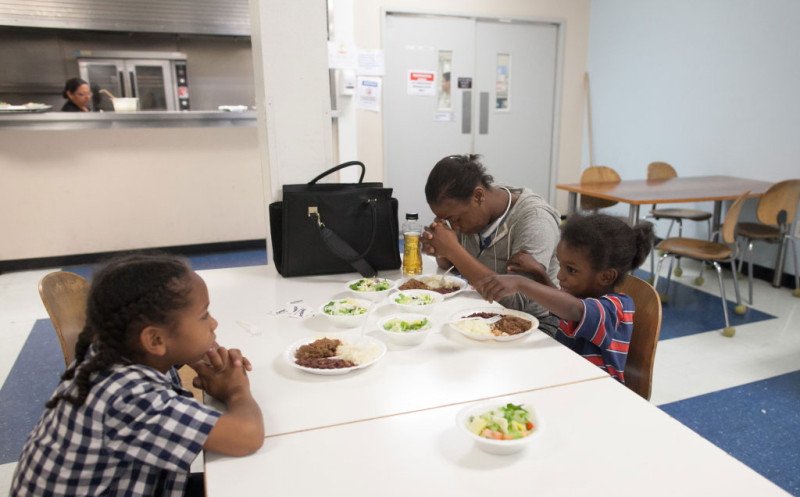
"caption": "Mayah McCoy and her family take a moment to pray before dinner on Feb. 2, 2015.\n",
"description": null,
"title": "pray2",
"credit": "Susanica Tam/KPCC",
"status": "inherit",
"isLoading": false,
"fetchFailed": false
},
"news_10420169": {
"type": "attachments",
"id": "news_10420169",
"meta": {
"index": "attachments_1716263798",
"site": "news",
"id": "10420169",
"found": true
},
"parent": 10419378,
"imgSizes": {
"twentyfourteen-full-width": {
"file": "https://ww2.kqed.org/app/uploads/sites/10/2015/01/LAHomelessCount-1038x576.jpg",
"width": 1038,
"mimeType": "image/jpeg",
"height": 576
},
"thumbnail": {
"file": "https://ww2.kqed.org/app/uploads/sites/10/2015/01/LAHomelessCount-400x244.jpg",
"width": 400,
"mimeType": "image/jpeg",
"height": 244
},
"post-thumbnail": {
"file": "https://ww2.kqed.org/app/uploads/sites/10/2015/01/LAHomelessCount-672x372.jpg",
"width": 672,
"mimeType": "image/jpeg",
"height": 372
},
"kqedFullSize": {
"file": "https://ww2.kqed.org/app/uploads/sites/10/2015/01/LAHomelessCount.jpg",
"width": 1440,
"height": 880
},
"large": {
"file": "https://ww2.kqed.org/app/uploads/sites/10/2015/01/LAHomelessCount-1440x880.jpg",
"width": 1440,
"mimeType": "image/jpeg",
"height": 880
},
"guest-author-96": {
"file": "https://ww2.kqed.org/app/uploads/sites/10/2015/01/LAHomelessCount-96x96.jpg",
"width": 96,
"mimeType": "image/jpeg",
"height": 96
},
"medium": {
"file": "https://ww2.kqed.org/app/uploads/sites/10/2015/01/LAHomelessCount-800x489.jpg",
"width": 800,
"mimeType": "image/jpeg",
"height": 489
},
"guest-author-64": {
"file": "https://ww2.kqed.org/app/uploads/sites/10/2015/01/LAHomelessCount-64x64.jpg",
"width": 64,
"mimeType": "image/jpeg",
"height": 64
},
"detail": {
"file": "https://ww2.kqed.org/app/uploads/sites/10/2015/01/LAHomelessCount-75x75.jpg",
"width": 75,
"mimeType": "image/jpeg",
"height": 75
},
"guest-author-32": {
"file": "https://ww2.kqed.org/app/uploads/sites/10/2015/01/LAHomelessCount-32x32.jpg",
"width": 32,
"mimeType": "image/jpeg",
"height": 32
},
"guest-author-128": {
"file": "https://ww2.kqed.org/app/uploads/sites/10/2015/01/LAHomelessCount-128x128.jpg",
"width": 128,
"mimeType": "image/jpeg",
"height": 128
}
},
"publishDate": 1422658745,
"modified": 1422658795,
"caption": "Volunteers count homeless people on a dark street on Skid Row during the 2015 Greater Los Angeles Homeless Count conducted by the Los Angeles Homeless Services Authority (LAHSA) on January 29, 2015.",
"description": "Volunteers count homeless people on a dark street on Skid Row during the 2015 Greater Los Angeles Homeless Count conducted by the Los Angeles Homeless Services Authority (LAHSA) on January 29, 2015.",
"title": "LAHomelessCount",
"credit": "David McNew/Getty Images",
"status": "inherit",
"isLoading": false,
"fetchFailed": false
},
"news_10417471": {
"type": "attachments",
"id": "news_10417471",
"meta": {
"index": "attachments_1716263798",
"site": "news",
"id": "10417471",
"found": true
},
"parent": 10417412,
"imgSizes": {
"twentyfourteen-full-width": {
"file": "https://ww2.kqed.org/app/uploads/sites/10/2015/01/RS14088_SimilingCounters.JPG-qut-1038x576.jpg",
"width": 1038,
"mimeType": "image/jpeg",
"height": 576
},
"thumbnail": {
"file": "https://ww2.kqed.org/app/uploads/sites/10/2015/01/RS14088_SimilingCounters.JPG-qut-400x300.jpg",
"width": 400,
"mimeType": "image/jpeg",
"height": 300
},
"post-thumbnail": {
"file": "https://ww2.kqed.org/app/uploads/sites/10/2015/01/RS14088_SimilingCounters.JPG-qut-672x372.jpg",
"width": 672,
"mimeType": "image/jpeg",
"height": 372
},
"kqedFullSize": {
"file": "https://ww2.kqed.org/app/uploads/sites/10/2015/01/RS14088_SimilingCounters.JPG-qut.jpg",
"width": 1440,
"height": 1080
},
"large": {
"file": "https://ww2.kqed.org/app/uploads/sites/10/2015/01/RS14088_SimilingCounters.JPG-qut-1440x1080.jpg",
"width": 1440,
"mimeType": "image/jpeg",
"height": 1080
},
"guest-author-96": {
"file": "https://ww2.kqed.org/app/uploads/sites/10/2015/01/RS14088_SimilingCounters.JPG-qut-96x96.jpg",
"width": 96,
"mimeType": "image/jpeg",
"height": 96
},
"medium": {
"file": "https://ww2.kqed.org/app/uploads/sites/10/2015/01/RS14088_SimilingCounters.JPG-qut-800x600.jpg",
"width": 800,
"mimeType": "image/jpeg",
"height": 600
},
"guest-author-64": {
"file": "https://ww2.kqed.org/app/uploads/sites/10/2015/01/RS14088_SimilingCounters.JPG-qut-64x64.jpg",
"width": 64,
"mimeType": "image/jpeg",
"height": 64
},
"detail": {
"file": "https://ww2.kqed.org/app/uploads/sites/10/2015/01/RS14088_SimilingCounters.JPG-qut-75x75.jpg",
"width": 75,
"mimeType": "image/jpeg",
"height": 75
},
"guest-author-32": {
"file": "https://ww2.kqed.org/app/uploads/sites/10/2015/01/RS14088_SimilingCounters.JPG-qut-32x32.jpg",
"width": 32,
"mimeType": "image/jpeg",
"height": 32
},
"guest-author-128": {
"file": "https://ww2.kqed.org/app/uploads/sites/10/2015/01/RS14088_SimilingCounters.JPG-qut-128x128.jpg",
"width": 128,
"mimeType": "image/jpeg",
"height": 128
}
},
"publishDate": 1422401638,
"modified": 1422408749,
"caption": "Social workers Jen Sandhu and Pauline Bayati of HomeFirst, a nonprofit that helps homeless people in Santa Clara County. They volunteered to help count the homeless in San Jose.",
"description": "Social workers Jen Sandhu and Pauline Bayati of HomeFirst, a nonprofit that helps homeless people in Santa Clara County. They volunteered to help count the homeless in San Jose.",
"title": "RS14088_SimilingCounters.JPG-qut",
"credit": "Rachael Myrow/KQED",
"status": "inherit",
"isLoading": false,
"fetchFailed": false
},
"news_10411514": {
"type": "attachments",
"id": "news_10411514",
"meta": {
"index": "attachments_1716263798",
"site": "news",
"id": "10411514",
"found": true
},
"parent": 10411480,
"imgSizes": {
"twentyfourteen-full-width": {
"file": "https://ww2.kqed.org/app/uploads/sites/10/2015/01/RS8875_baybridge-lpr-1038x576.jpg",
"width": 1038,
"mimeType": "image/jpeg",
"height": 576
},
"thumbnail": {
"file": "https://ww2.kqed.org/app/uploads/sites/10/2015/01/RS8875_baybridge-lpr-400x270.jpg",
"width": 400,
"mimeType": "image/jpeg",
"height": 270
},
"post-thumbnail": {
"file": "https://ww2.kqed.org/app/uploads/sites/10/2015/01/RS8875_baybridge-lpr-672x372.jpg",
"width": 672,
"mimeType": "image/jpeg",
"height": 372
},
"kqedFullSize": {
"file": "https://ww2.kqed.org/app/uploads/sites/10/2015/01/RS8875_baybridge-lpr.jpg",
"width": 2000,
"height": 1353
},
"large": {
"file": "https://ww2.kqed.org/app/uploads/sites/10/2015/01/RS8875_baybridge-lpr-1440x974.jpg",
"width": 1440,
"mimeType": "image/jpeg",
"height": 974
},
"guest-author-96": {
"file": "https://ww2.kqed.org/app/uploads/sites/10/2015/01/RS8875_baybridge-lpr-96x96.jpg",
"width": 96,
"mimeType": "image/jpeg",
"height": 96
},
"medium": {
"file": "https://ww2.kqed.org/app/uploads/sites/10/2015/01/RS8875_baybridge-lpr-800x541.jpg",
"width": 800,
"mimeType": "image/jpeg",
"height": 541
},
"guest-author-64": {
"file": "https://ww2.kqed.org/app/uploads/sites/10/2015/01/RS8875_baybridge-lpr-64x64.jpg",
"width": 64,
"mimeType": "image/jpeg",
"height": 64
},
"detail": {
"file": "https://ww2.kqed.org/app/uploads/sites/10/2015/01/RS8875_baybridge-lpr-75x75.jpg",
"width": 75,
"mimeType": "image/jpeg",
"height": 75
},
"guest-author-32": {
"file": "https://ww2.kqed.org/app/uploads/sites/10/2015/01/RS8875_baybridge-lpr-32x32.jpg",
"width": 32,
"mimeType": "image/jpeg",
"height": 32
},
"guest-author-128": {
"file": "https://ww2.kqed.org/app/uploads/sites/10/2015/01/RS8875_baybridge-lpr-128x128.jpg",
"width": 128,
"mimeType": "image/jpeg",
"height": 128
}
},
"publishDate": 1421777058,
"modified": 1421777089,
"caption": "The new eastern span of the Bay Bridge shortly before it opened in September 2013.",
"description": "The new eastern span of the Bay Bridge shortly before it opened in September 2013.",
"title": "Bay Bridge eastern span ",
"credit": "Justin Sullivan/Getty Images",
"status": "inherit",
"isLoading": false,
"fetchFailed": false
},
"news_10387475": {
"type": "attachments",
"id": "news_10387475",
"meta": {
"index": "attachments_1716263798",
"site": "news",
"id": "10387475",
"found": true
},
"parent": 10387444,
"imgSizes": {
"twentyfourteen-full-width": {
"file": "https://ww2.kqed.org/app/uploads/sites/10/2014/12/Patrick-and-Sandra-1024x576.jpg",
"width": 1024,
"mimeType": "image/jpeg",
"height": 576
},
"thumbnail": {
"file": "https://ww2.kqed.org/app/uploads/sites/10/2014/12/Patrick-and-Sandra-400x266.jpg",
"width": 400,
"mimeType": "image/jpeg",
"height": 266
},
"post-thumbnail": {
"file": "https://ww2.kqed.org/app/uploads/sites/10/2014/12/Patrick-and-Sandra-672x372.jpg",
"width": 672,
"mimeType": "image/jpeg",
"height": 372
},
"kqedFullSize": {
"file": "https://ww2.kqed.org/app/uploads/sites/10/2014/12/Patrick-and-Sandra.jpg",
"width": 1024,
"height": 682
},
"guest-author-96": {
"file": "https://ww2.kqed.org/app/uploads/sites/10/2014/12/Patrick-and-Sandra-96x96.jpg",
"width": 96,
"mimeType": "image/jpeg",
"height": 96
},
"medium": {
"file": "https://ww2.kqed.org/app/uploads/sites/10/2014/12/Patrick-and-Sandra-800x532.jpg",
"width": 800,
"mimeType": "image/jpeg",
"height": 532
},
"guest-author-64": {
"file": "https://ww2.kqed.org/app/uploads/sites/10/2014/12/Patrick-and-Sandra-64x64.jpg",
"width": 64,
"mimeType": "image/jpeg",
"height": 64
},
"detail": {
"file": "https://ww2.kqed.org/app/uploads/sites/10/2014/12/Patrick-and-Sandra-75x75.jpg",
"width": 75,
"mimeType": "image/jpeg",
"height": 75
},
"guest-author-32": {
"file": "https://ww2.kqed.org/app/uploads/sites/10/2014/12/Patrick-and-Sandra-32x32.jpg",
"width": 32,
"mimeType": "image/jpeg",
"height": 32
},
"guest-author-128": {
"file": "https://ww2.kqed.org/app/uploads/sites/10/2014/12/Patrick-and-Sandra-128x128.jpg",
"width": 128,
"mimeType": "image/jpeg",
"height": 128
}
},
"publishDate": 1419366005,
"modified": 1419366025,
"caption": "Patrick and Sandra Scott, both 62, play with their dog Pepper in a motel room in Santa Clara, on Dec. 13, 2014. They were placed into a motel after being homeless for almost a year. (Yuqing Pan/Peninsula Press)",
"description": "Patrick and Sandra Scott, both 62, play with their dog Pepper in a motel room in Santa Clara, on Dec. 13, 2014. They were placed into a motel after being homeless for almost a year. (Yuqing Pan/Peninsula Press)",
"title": "Patrick and Sandra",
"credit": null,
"status": "inherit",
"isLoading": false,
"fetchFailed": false
},
"news_10387394": {
"type": "attachments",
"id": "news_10387394",
"meta": {
"index": "attachments_1716263798",
"site": "news",
"id": "10387394",
"found": true
},
"parent": 10387360,
"imgSizes": {
"twentyfourteen-full-width": {
"file": "https://ww2.kqed.org/app/uploads/sites/10/2014/12/mission_camp_for_web-1038x576.jpg",
"width": 1038,
"mimeType": "image/jpeg",
"height": 576
},
"thumbnail": {
"file": "https://ww2.kqed.org/app/uploads/sites/10/2014/12/mission_camp_for_web-400x272.jpg",
"width": 400,
"mimeType": "image/jpeg",
"height": 272
},
"post-thumbnail": {
"file": "https://ww2.kqed.org/app/uploads/sites/10/2014/12/mission_camp_for_web-672x372.jpg",
"width": 672,
"mimeType": "image/jpeg",
"height": 372
},
"kqedFullSize": {
"file": "https://ww2.kqed.org/app/uploads/sites/10/2014/12/mission_camp_for_web.jpg",
"width": 2370,
"height": 1617
},
"large": {
"file": "https://ww2.kqed.org/app/uploads/sites/10/2014/12/mission_camp_for_web-1440x982.jpg",
"width": 1440,
"mimeType": "image/jpeg",
"height": 982
},
"guest-author-96": {
"file": "https://ww2.kqed.org/app/uploads/sites/10/2014/12/mission_camp_for_web-96x96.jpg",
"width": 96,
"mimeType": "image/jpeg",
"height": 96
},
"medium": {
"file": "https://ww2.kqed.org/app/uploads/sites/10/2014/12/mission_camp_for_web-800x545.jpg",
"width": 800,
"mimeType": "image/jpeg",
"height": 545
},
"guest-author-64": {
"file": "https://ww2.kqed.org/app/uploads/sites/10/2014/12/mission_camp_for_web-64x64.jpg",
"width": 64,
"mimeType": "image/jpeg",
"height": 64
},
"detail": {
"file": "https://ww2.kqed.org/app/uploads/sites/10/2014/12/mission_camp_for_web-75x75.jpg",
"width": 75,
"mimeType": "image/jpeg",
"height": 75
},
"guest-author-32": {
"file": "https://ww2.kqed.org/app/uploads/sites/10/2014/12/mission_camp_for_web-32x32.jpg",
"width": 32,
"mimeType": "image/jpeg",
"height": 32
},
"guest-author-128": {
"file": "https://ww2.kqed.org/app/uploads/sites/10/2014/12/mission_camp_for_web-128x128.jpg",
"width": 128,
"mimeType": "image/jpeg",
"height": 128
}
},
"publishDate": 1419360743,
"modified": 1419385304,
"caption": "Some Mission District residents say encampments are growing, while others say more aggressive homeless people may have migrated to the area from other neighborhoods. Police officers say they are powerless to alter the trend in a permanent way. ",
"description": "Some Mission District residents say encampments are growing, while others say more aggressive homeless people may have migrated to the area from other neighborhoods. Police officers say they are powerless to alter the trend in a permanent way. (Eric Lawson / San Francisco Public Press)",
"title": "mission_camp_for_web",
"credit": "Eric Lawson/San Francisco Public Press",
"status": "inherit",
"isLoading": false,
"fetchFailed": false
},
"news_10383407": {
"type": "attachments",
"id": "news_10383407",
"meta": {
"index": "attachments_1716263798",
"site": "news",
"id": "10383407",
"found": true
},
"parent": 10383399,
"imgSizes": {
"twentyfourteen-full-width": {
"file": "https://ww2.kqed.org/app/uploads/sites/10/2014/12/20141218_homeless_jt_005-1038x576.jpg",
"width": 1038,
"mimeType": "image/jpeg",
"height": 576
},
"thumbnail": {
"file": "https://ww2.kqed.org/app/uploads/sites/10/2014/12/20141218_homeless_jt_005-400x266.jpg",
"width": 400,
"mimeType": "image/jpeg",
"height": 266
},
"post-thumbnail": {
"file": "https://ww2.kqed.org/app/uploads/sites/10/2014/12/20141218_homeless_jt_005-672x372.jpg",
"width": 672,
"mimeType": "image/jpeg",
"height": 372
},
"kqedFullSize": {
"file": "https://ww2.kqed.org/app/uploads/sites/10/2014/12/20141218_homeless_jt_005-e1419010870939.jpg",
"width": 1440,
"height": 960
},
"large": {
"file": "https://ww2.kqed.org/app/uploads/sites/10/2014/12/20141218_homeless_jt_005-1440x959.jpg",
"width": 1440,
"mimeType": "image/jpeg",
"height": 959
},
"guest-author-96": {
"file": "https://ww2.kqed.org/app/uploads/sites/10/2014/12/20141218_homeless_jt_005-96x96.jpg",
"width": 96,
"mimeType": "image/jpeg",
"height": 96
},
"medium": {
"file": "https://ww2.kqed.org/app/uploads/sites/10/2014/12/20141218_homeless_jt_005-800x533.jpg",
"width": 800,
"mimeType": "image/jpeg",
"height": 533
},
"guest-author-64": {
"file": "https://ww2.kqed.org/app/uploads/sites/10/2014/12/20141218_homeless_jt_005-64x64.jpg",
"width": 64,
"mimeType": "image/jpeg",
"height": 64
},
"detail": {
"file": "https://ww2.kqed.org/app/uploads/sites/10/2014/12/20141218_homeless_jt_005-75x75.jpg",
"width": 75,
"mimeType": "image/jpeg",
"height": 75
},
"guest-author-32": {
"file": "https://ww2.kqed.org/app/uploads/sites/10/2014/12/20141218_homeless_jt_005-32x32.jpg",
"width": 32,
"mimeType": "image/jpeg",
"height": 32
},
"guest-author-128": {
"file": "https://ww2.kqed.org/app/uploads/sites/10/2014/12/20141218_homeless_jt_005-128x128.jpg",
"width": 128,
"mimeType": "image/jpeg",
"height": 128
}
},
"publishDate": 1418957657,
"modified": 1419010896,
"caption": "T.J. Johnston pays his respects in San Francisco on Dec. 18 to the homeless people who died this year. Dozens of people attended the annual gathering hosted by local religious leaders.",
"description": "T.J. Johnston pays his respects in San Francisco on Dec. 18 to the homeless people who died this year. Dozens of people attended the annual gathering hosted by local religious leaders.",
"title": "20141218_homeless_jt_005",
"credit": "James Tensuan/KQED",
"status": "inherit",
"isLoading": false,
"fetchFailed": false
},
"news_10384074": {
"type": "attachments",
"id": "news_10384074",
"meta": {
"index": "attachments_1716263798",
"site": "news",
"id": "10384074",
"found": true
},
"parent": 10384072,
"imgSizes": {
"twentyfourteen-full-width": {
"file": "https://ww2.kqed.org/app/uploads/sites/10/2014/12/RS13773_20141218_homeless_jt_001.JPG-qut-1038x576.jpg",
"width": 1038,
"mimeType": "image/jpeg",
"height": 576
},
"thumbnail": {
"file": "https://ww2.kqed.org/app/uploads/sites/10/2014/12/RS13773_20141218_homeless_jt_001.JPG-qut-400x266.jpg",
"width": 400,
"mimeType": "image/jpeg",
"height": 266
},
"post-thumbnail": {
"file": "https://ww2.kqed.org/app/uploads/sites/10/2014/12/RS13773_20141218_homeless_jt_001.JPG-qut-672x372.jpg",
"width": 672,
"mimeType": "image/jpeg",
"height": 372
},
"kqedFullSize": {
"file": "https://ww2.kqed.org/app/uploads/sites/10/2014/12/RS13773_20141218_homeless_jt_001.JPG-qut.jpg",
"width": 1440,
"height": 961
},
"guest-author-96": {
"file": "https://ww2.kqed.org/app/uploads/sites/10/2014/12/RS13773_20141218_homeless_jt_001.JPG-qut-96x96.jpg",
"width": 96,
"mimeType": "image/jpeg",
"height": 96
},
"medium": {
"file": "https://ww2.kqed.org/app/uploads/sites/10/2014/12/RS13773_20141218_homeless_jt_001.JPG-qut-800x533.jpg",
"width": 800,
"mimeType": "image/jpeg",
"height": 533
},
"guest-author-64": {
"file": "https://ww2.kqed.org/app/uploads/sites/10/2014/12/RS13773_20141218_homeless_jt_001.JPG-qut-64x64.jpg",
"width": 64,
"mimeType": "image/jpeg",
"height": 64
},
"detail": {
"file": "https://ww2.kqed.org/app/uploads/sites/10/2014/12/RS13773_20141218_homeless_jt_001.JPG-qut-75x75.jpg",
"width": 75,
"mimeType": "image/jpeg",
"height": 75
},
"guest-author-32": {
"file": "https://ww2.kqed.org/app/uploads/sites/10/2014/12/RS13773_20141218_homeless_jt_001.JPG-qut-32x32.jpg",
"width": 32,
"mimeType": "image/jpeg",
"height": 32
},
"guest-author-128": {
"file": "https://ww2.kqed.org/app/uploads/sites/10/2014/12/RS13773_20141218_homeless_jt_001.JPG-qut-128x128.jpg",
"width": 128,
"mimeType": "image/jpeg",
"height": 128
}
},
"publishDate": 1419017555,
"modified": 1419021539,
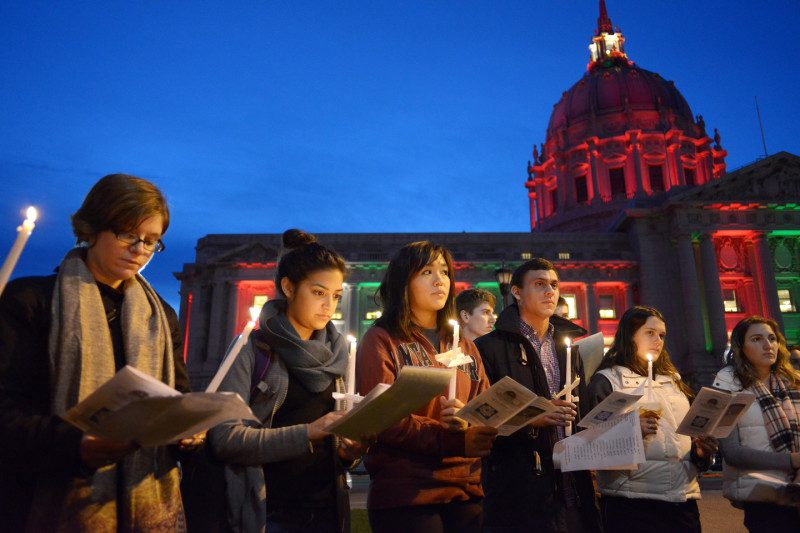
"caption": "A Thursday evening gathering in San Francisco's Civic Center Plaza to remember the dozens of homeless people who died in the city in 2014. (James Tensuan/KQED)",
"description": "A Thursday evening gathering in San Francisco's Civic Center Plaza to remember the dozens of homeless people who died in the city in 2014. (James Tensuan/KQED)",
"title": "San Francisco-Homeless",
"credit": null,
"status": "inherit",
"isLoading": false,
"fetchFailed": false
},
"news_10367265": {
"type": "attachments",
"id": "news_10367265",
"meta": {
"index": "attachments_1716263798",
"site": "news",
"id": "10367265",
"found": true
},
"parent": 10367260,
"imgSizes": {
"twentyfourteen-full-width": {
"file": "https://ww2.kqed.org/app/uploads/sites/10/2014/12/RS13351_20141203_jungle_jt_013-scr-1038x576.jpg",
"width": 1038,
"mimeType": "image/jpeg",
"height": 576
},
"thumbnail": {
"file": "https://ww2.kqed.org/app/uploads/sites/10/2014/12/RS13351_20141203_jungle_jt_013-scr-400x266.jpg",
"width": 400,
"mimeType": "image/jpeg",
"height": 266
},
"post-thumbnail": {
"file": "https://ww2.kqed.org/app/uploads/sites/10/2014/12/RS13351_20141203_jungle_jt_013-scr-672x372.jpg",
"width": 672,
"mimeType": "image/jpeg",
"height": 372
},
"kqedFullSize": {
"file": "https://ww2.kqed.org/app/uploads/sites/10/2014/12/RS13351_20141203_jungle_jt_013-scr.jpg",
"width": 1440,
"height": 960
},
"guest-author-96": {
"file": "https://ww2.kqed.org/app/uploads/sites/10/2014/12/RS13351_20141203_jungle_jt_013-scr-96x96.jpg",
"width": 96,
"mimeType": "image/jpeg",
"height": 96
},
"medium": {
"file": "https://ww2.kqed.org/app/uploads/sites/10/2014/12/RS13351_20141203_jungle_jt_013-scr-800x533.jpg",
"width": 800,
"mimeType": "image/jpeg",
"height": 533
},
"guest-author-64": {
"file": "https://ww2.kqed.org/app/uploads/sites/10/2014/12/RS13351_20141203_jungle_jt_013-scr-64x64.jpg",
"width": 64,
"mimeType": "image/jpeg",
"height": 64
},
"detail": {
"file": "https://ww2.kqed.org/app/uploads/sites/10/2014/12/RS13351_20141203_jungle_jt_013-scr-75x75.jpg",
"width": 75,
"mimeType": "image/jpeg",
"height": 75
},
"guest-author-32": {
"file": "https://ww2.kqed.org/app/uploads/sites/10/2014/12/RS13351_20141203_jungle_jt_013-scr-32x32.jpg",
"width": 32,
"mimeType": "image/jpeg",
"height": 32
},
"guest-author-128": {
"file": "https://ww2.kqed.org/app/uploads/sites/10/2014/12/RS13351_20141203_jungle_jt_013-scr-128x128.jpg",
"width": 128,
"mimeType": "image/jpeg",
"height": 128
}
},
"publishDate": 1417716969,
"modified": 1417717044,
"caption": "Kathryn Cota says she spends most of her time at the Jungle, but doesn't live there. (James Tensuan/KQED)",
"description": "Kathryn Cota says she spends most of her time at the Jungle, but doesn't live there. (James Tensuan/KQED)",
"title": "RS13351_20141203_jungle_jt_013-scr",
"credit": null,
"status": "inherit",
"isLoading": false,
"fetchFailed": false
},
"news_10364889": {
"type": "attachments",
"id": "news_10364889",
"meta": {
"index": "attachments_1716263798",
"site": "news",
"id": "10364889",
"found": true
},
"parent": 10364888,
"imgSizes": {
"twentyfourteen-full-width": {
"file": "https://ww2.kqed.org/app/uploads/sites/10/2014/12/Larkin-crafts-1038x576.jpg",
"width": 1038,
"mimeType": "image/jpeg",
"height": 576
},
"thumbnail": {
"file": "https://ww2.kqed.org/app/uploads/sites/10/2014/12/Larkin-crafts-400x225.jpg",
"width": 400,
"mimeType": "image/jpeg",
"height": 225
},
"post-thumbnail": {
"file": "https://ww2.kqed.org/app/uploads/sites/10/2014/12/Larkin-crafts-672x372.jpg",
"width": 672,
"mimeType": "image/jpeg",
"height": 372
},
"kqedFullSize": {
"file": "https://ww2.kqed.org/app/uploads/sites/10/2014/12/Larkin-crafts.jpg",
"width": 1440,
"height": 810
},
"guest-author-96": {
"file": "https://ww2.kqed.org/app/uploads/sites/10/2014/12/Larkin-crafts-96x96.jpg",
"width": 96,
"mimeType": "image/jpeg",
"height": 96
},
"medium": {
"file": "https://ww2.kqed.org/app/uploads/sites/10/2014/12/Larkin-crafts-800x450.jpg",
"width": 800,
"mimeType": "image/jpeg",
"height": 450
},
"guest-author-64": {
"file": "https://ww2.kqed.org/app/uploads/sites/10/2014/12/Larkin-crafts-64x64.jpg",
"width": 64,
"mimeType": "image/jpeg",
"height": 64
},
"detail": {
"file": "https://ww2.kqed.org/app/uploads/sites/10/2014/12/Larkin-crafts-75x75.jpg",
"width": 75,
"mimeType": "image/jpeg",
"height": 75
},
"guest-author-32": {
"file": "https://ww2.kqed.org/app/uploads/sites/10/2014/12/Larkin-crafts-32x32.jpg",
"width": 32,
"mimeType": "image/jpeg",
"height": 32
},
"guest-author-128": {
"file": "https://ww2.kqed.org/app/uploads/sites/10/2014/12/Larkin-crafts-128x128.jpg",
"width": 128,
"mimeType": "image/jpeg",
"height": 128
}
},
"publishDate": 1417549055,
"modified": 1417549131,
"caption": "A young woman relaxes while creating beaded art at Larkin Street’s recent Thanksgiving Harvest Festival celebration. (Kathleen Stavis/Larkin Street Youth Services)",
"description": null,
"title": "Larkin-crafts",
"credit": null,
"status": "inherit",
"isLoading": false,
"fetchFailed": false
},
"news_10341871": {
"type": "attachments",
"id": "news_10341871",
"meta": {
"index": "attachments_1716263798",
"site": "news",
"id": "10341871",
"found": true
},
"parent": 10341433,
"imgSizes": {
"thumbnail": {
"file": "https://ww2.kqed.org/app/uploads/sites/10/2014/09/RS11991_MetroHomeless-800-400x225.jpg",
"width": 400,
"mimeType": "image/jpeg",
"height": 225
},
"post-thumbnail": {
"file": "https://ww2.kqed.org/app/uploads/sites/10/2014/09/RS11991_MetroHomeless-800-672x372.jpg",
"width": 672,
"mimeType": "image/jpeg",
"height": 372
},
"kqedFullSize": {
"file": "https://ww2.kqed.org/app/uploads/sites/10/2014/09/RS11991_MetroHomeless-800.jpg",
"width": 800,
"height": 450
},
"guest-author-96": {
"file": "https://ww2.kqed.org/app/uploads/sites/10/2014/09/RS11991_MetroHomeless-800-96x96.jpg",
"width": 96,
"mimeType": "image/jpeg",
"height": 96
},
"guest-author-64": {
"file": "https://ww2.kqed.org/app/uploads/sites/10/2014/09/RS11991_MetroHomeless-800-64x64.jpg",
"width": 64,
"mimeType": "image/jpeg",
"height": 64
},
"detail": {
"file": "https://ww2.kqed.org/app/uploads/sites/10/2014/09/RS11991_MetroHomeless-800-75x75.jpg",
"width": 75,
"mimeType": "image/jpeg",
"height": 75
},
"guest-author-32": {
"file": "https://ww2.kqed.org/app/uploads/sites/10/2014/09/RS11991_MetroHomeless-800-32x32.jpg",
"width": 32,
"mimeType": "image/jpeg",
"height": 32
},
"guest-author-128": {
"file": "https://ww2.kqed.org/app/uploads/sites/10/2014/09/RS11991_MetroHomeless-800-128x128.jpg",
"width": 128,
"mimeType": "image/jpeg",
"height": 128
}
},
"publishDate": 1412188216,
"modified": 1412188216,
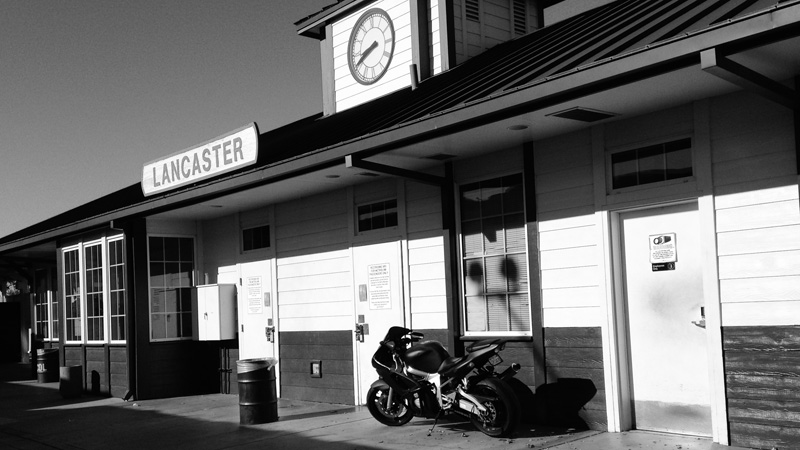
"caption": "Officials in the city of Lancaster are contemplating a possible closure of the only Metrolink train station in town to help stem an alleged flood of homeless people from the L.A. area. (Steven Cuevas)",
"description": null,
"title": "RS11991_MetroHomeless-800",
"credit": null,
"status": "inherit",
"isLoading": false,
"fetchFailed": false
},
"news_10341647": {
"type": "attachments",
"id": "news_10341647",
"meta": {
"index": "attachments_1716263798",
"site": "news",
"id": "10341647",
"found": true
},
"parent": 10341646,
"imgSizes": {
"thumbnail": {
"file": "https://ww2.kqed.org/app/uploads/sites/10/2014/09/MetroLinkSheriff-400x225.jpg",
"width": 400,
"mimeType": "image/jpeg",
"height": 225
},
"post-thumbnail": {
"file": "https://ww2.kqed.org/app/uploads/sites/10/2014/09/MetroLinkSheriff-672x372.jpg",
"width": 672,
"mimeType": "image/jpeg",
"height": 372
},
"kqedFullSize": {
"file": "https://ww2.kqed.org/app/uploads/sites/10/2014/09/MetroLinkSheriff.jpg",
"width": 800,
"height": 450
},
"guest-author-96": {
"file": "https://ww2.kqed.org/app/uploads/sites/10/2014/09/MetroLinkSheriff-96x96.jpg",
"width": 96,
"mimeType": "image/jpeg",
"height": 96
},
"guest-author-64": {
"file": "https://ww2.kqed.org/app/uploads/sites/10/2014/09/MetroLinkSheriff-64x64.jpg",
"width": 64,
"mimeType": "image/jpeg",
"height": 64
},
"detail": {
"file": "https://ww2.kqed.org/app/uploads/sites/10/2014/09/MetroLinkSheriff-75x75.jpg",
"width": 75,
"mimeType": "image/jpeg",
"height": 75
},
"guest-author-32": {
"file": "https://ww2.kqed.org/app/uploads/sites/10/2014/09/MetroLinkSheriff-32x32.jpg",
"width": 32,
"mimeType": "image/jpeg",
"height": 32
},
"guest-author-128": {
"file": "https://ww2.kqed.org/app/uploads/sites/10/2014/09/MetroLinkSheriff-128x128.jpg",
"width": 128,
"mimeType": "image/jpeg",
"height": 128
}
},
"publishDate": 1412108499,
"modified": 1412108499,
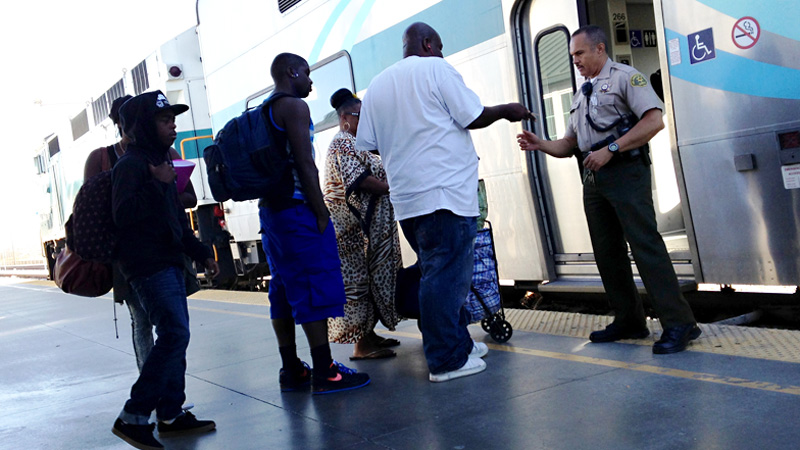
"caption": "A sheriff's deputy checks tickets outside an L.A.-bound train in Lancaster. When told the city may close the station, he expressed surprise and said he doesn't see many who appear to be homeless. (Steven Cuevas/KQED)",
"description": null,
"title": "MetroLinkSheriff",
"credit": null,
"status": "inherit",
"isLoading": false,
"fetchFailed": false
}
},
"audioPlayerReducer": {
"postId": "stream_live",
"isPaused": true,
"isPlaying": false,
"pfsActive": false,
"pledgeModalIsOpen": true,
"playerDrawerIsOpen": false,
"liveAudioPlayStartedAt": 0,
"liveAudioPlayContext": ""
},
"authorsReducer": {
"byline_news_10444749": {
"type": "authors",
"id": "byline_news_10444749",
"meta": {
"override": true
},
"slug": "byline_news_10444749",
"name": "Deepa Fernandes",
"isLoading": false
},
"byline_news_10387444": {
"type": "authors",
"id": "byline_news_10387444",
"meta": {
"override": true
},
"slug": "byline_news_10387444",
"name": " \u003ca href=\"http://peninsulapress.com/author/yuqingpan/\">Yuqing Pan\u003c/a>\u003cbr>Peninsula Press",
"isLoading": false
},
"byline_news_10387360": {
"type": "authors",
"id": "byline_news_10387360",
"meta": {
"override": true
},
"slug": "byline_news_10387360",
"name": "\u003ca href=\"http://sfpublicpress.org/members/sanne-bergh\">Sanne Bergh\u003c/a> and \u003ca href=\"http://sfpublicpress.org/members/paul-lorgerie\">Paul Lorgerie\u003c/a>\u003cbr> San Francisco Public Press",
"isLoading": false
},
"ohubertallen": {
"type": "authors",
"id": "102",
"meta": {
"index": "authors_1716337520",
"id": "102",
"found": true
},
"name": "Olivia Allen-Price",
"firstName": "Olivia",
"lastName": "Allen-Price",
"slug": "ohubertallen",
"email": "oallenprice@kqed.org",
"display_author_email": false,
"staff_mastheads": [
"news"
],
"title": "Senior Editor",
"bio": "Olivia Allen-Price is senior editor and host of the award-winning Bay Curious podcast. Prior to joining KQED in 2013, Olivia worked at The Baltimore Sun and The Virginian-Pilot in Norfolk, Va. She holds degrees in journalism and political science from Elon University. Her work has earned awards from the Society of Professional Journalists, the Hearst Foundation and Hearken. She loves to talk about running and curly hair.\r\n\r\nFollow: \u003ca href=\"https://twitter.com/oallenprice\">@oallenprice\u003c/a>\r\nEmail: \u003ca href=\"mailto:oallenprice@kqed.org\">oallenprice@kqed.org\u003c/a>",
"avatar": "https://secure.gravatar.com/avatar/07f7803c1f6be56f3be58ef276dfa64dce898502e0554408ef4858451a8294f7?s=600&d=blank&r=g",
"twitter": "oallenprice",
"bluesky": null,
"facebook": null,
"instagram": null,
"linkedin": null,
"sites": [
{
"site": "",
"roles": [
"editor"
]
},
{
"site": "arts",
"roles": [
"subscriber"
]
},
{
"site": "news",
"roles": [
"administrator"
]
},
{
"site": "pop",
"roles": [
"administrator"
]
},
{
"site": "bayareabites",
"roles": [
"contributor"
]
},
{
"site": "stateofhealth",
"roles": [
"administrator"
]
},
{
"site": "science",
"roles": [
"editor"
]
}
],
"headData": {
"title": "Olivia Allen-Price | KQED",
"description": "Senior Editor",
"ogImgSrc": "https://secure.gravatar.com/avatar/07f7803c1f6be56f3be58ef276dfa64dce898502e0554408ef4858451a8294f7?s=600&d=blank&r=g",
"twImgSrc": "https://secure.gravatar.com/avatar/07f7803c1f6be56f3be58ef276dfa64dce898502e0554408ef4858451a8294f7?s=600&d=blank&r=g"
},
"isLoading": false,
"link": "/author/ohubertallen"
},
"danbrekke": {
"type": "authors",
"id": "222",
"meta": {
"index": "authors_1716337520",
"id": "222",
"found": true
},
"name": "Dan Brekke",
"firstName": "Dan",
"lastName": "Brekke",
"slug": "danbrekke",
"email": "dbrekke@kqed.org",
"display_author_email": true,
"staff_mastheads": [
"news",
"science"
],
"title": "KQED Editor and Reporter",
"bio": "Dan Brekke is a reporter and editor for KQED News, responsible for coverage of topics ranging from California water issues to the Bay Area's transportation challenges. In a newsroom career that began in Chicago in 1972, Dan has worked for \u003cem>The San Francisco Examiner,\u003c/em> Wired and TechTV and has been published in The New York Times, The New York Times Magazine, Business 2.0, Salon and elsewhere.\r\n\r\nSince joining KQED in 2007, Dan has reported, edited and produced both radio and online features and breaking news pieces. He has shared as both editor and reporter in four Society of Professional Journalists Norcal Excellence in Journalism awards and one Edward R. Murrow regional award. He was chosen for a spring 2017 residency at the Mesa Refuge to advance his research on California salmon.\r\n\r\nEmail Dan at: \u003ca href=\"mailto:dbrekke@kqed.org\">dbrekke@kqed.org\u003c/a>\r\n\r\n\u003cstrong>Twitter:\u003c/strong> \u003ca href=\"https://twitter.com/danbrekke\" rel=\"noopener noreferrer\">twitter.com/danbrekke\u003c/a>\r\n\u003cstrong>Facebook:\u003c/strong> \u003ca href=\"https://www.facebook.com/danbrekke\" rel=\"noopener noreferrer\">www.facebook.com/danbrekke\u003c/a>\r\n\u003cstrong>LinkedIn:\u003c/strong> \u003ca href=\"https://www.linkedin.com/in/danbrekke\" rel=\"noopener noreferrer\">www.linkedin.com/in/danbrekke\u003c/a>",
"avatar": "https://secure.gravatar.com/avatar/c8126230345efca3f7aa89b1a402be45?s=600&d=mm&r=g",
"twitter": "danbrekke",
"facebook": null,
"instagram": "https://www.instagram.com/dan.brekke/",
"linkedin": "https://www.linkedin.com/in/danbrekke/",
"sites": [
{
"site": "news",
"roles": [
"administrator",
"create_posts"
]
},
{
"site": "stateofhealth",
"roles": [
"editor"
]
},
{
"site": "science",
"roles": [
"editor"
]
},
{
"site": "quest",
"roles": [
"contributor"
]
},
{
"site": "food",
"roles": [
"contributor"
]
},
{
"site": "forum",
"roles": [
"contributor"
]
},
{
"site": "liveblog",
"roles": [
"editor"
]
}
],
"headData": {
"title": "Dan Brekke | KQED",
"description": "KQED Editor and Reporter",
"ogImgSrc": "https://secure.gravatar.com/avatar/c8126230345efca3f7aa89b1a402be45?s=600&d=mm&r=g",
"twImgSrc": "https://secure.gravatar.com/avatar/c8126230345efca3f7aa89b1a402be45?s=600&d=mm&r=g"
},
"isLoading": false,
"link": "/author/danbrekke"
},
"katrinaschwartz": {
"type": "authors",
"id": "234",
"meta": {
"index": "authors_1716337520",
"id": "234",
"found": true
},
"name": "Katrina Schwartz",
"firstName": "Katrina",
"lastName": "Schwartz",
"slug": "katrinaschwartz",
"email": "kschwartz@kqed.org",
"display_author_email": false,
"staff_mastheads": [
"news"
],
"title": "Producer",
"bio": "Katrina Schwartz is a journalist based in San Francisco. She's worked at KPCC public radio in LA and has reported on air and online for KQED since 2010. She covered how teaching and learning is changing for MindShift between 2012 and 2020. She is the co-host of the MindShift podcast and now produces KQED's Bay Curious podcast.",
"avatar": "https://secure.gravatar.com/avatar/edb4ee79070447a018538c9aae6eeecf28786515b8a0c30e43b6b7dce5aa44c8?s=600&d=blank&r=g",
"twitter": "kschwart",
"bluesky": null,
"facebook": null,
"instagram": null,
"linkedin": null,
"sites": [
{
"site": "news",
"roles": [
"editor"
]
},
{
"site": "mindshift",
"roles": [
"administrator"
]
},
{
"site": "stateofhealth",
"roles": [
"author"
]
},
{
"site": "science",
"roles": [
"editor"
]
}
],
"headData": {
"title": "Katrina Schwartz | KQED",
"description": "Producer",
"ogImgSrc": "https://secure.gravatar.com/avatar/edb4ee79070447a018538c9aae6eeecf28786515b8a0c30e43b6b7dce5aa44c8?s=600&d=blank&r=g",
"twImgSrc": "https://secure.gravatar.com/avatar/edb4ee79070447a018538c9aae6eeecf28786515b8a0c30e43b6b7dce5aa44c8?s=600&d=blank&r=g"
},
"isLoading": false,
"link": "/author/katrinaschwartz"
},
"rachael-myrow": {
"type": "authors",
"id": "251",
"meta": {
"index": "authors_1716337520",
"id": "251",
"found": true
},
"name": "Rachael Myrow",
"firstName": "Rachael",
"lastName": "Myrow",
"slug": "rachael-myrow",
"email": "rmyrow@kqed.org",
"display_author_email": true,
"staff_mastheads": [
"news"
],
"title": "Senior Editor of KQED's Silicon Valley News Desk",
"bio": "• I write and edit stories about how Silicon Valley power and policies shape everyday life in California. I’m also passionate about making Bay Area history and culture more accessible to a broad public. • I’ve been a journalist for most of my life, starting in high school with The Franklin Press in Los Angeles, where I grew up. While earning my first degree in English at UC Berkeley, I got my start in public radio at KALX-FM. After completing a second degree in journalism at Cal, I landed my first professional job at Marketplace, then moved on to KPCC (now LAist), and then KQED, where I hosted The California Report for more than seven years. • My reporting has appeared on NPR, The World, WBUR’s \u003ci>Here & Now\u003c/i>, and the BBC. I also guest host for KQED’s \u003ci>Forum\u003c/i>, as well as the Commonwealth Club in San Francisco. • I speak periodically on media, democracy and technology issues, and do voiceover work for documentaries and educational video projects. • Outside of the studio, you'll find me hiking Bay Area trails and whipping up Insta-ready meals in my kitchen. • I do not accept gifts, money, or favors from anyone connected to my reporting, I don't pay people for information, and I do not support or donate to political causes. • I strive to treat the people I report on with fairness, honesty, and respect. I also recognize there are often multiple sides to a story and work to verify information through multiple sources and documentation. If I get something wrong, I correct it.",
"avatar": "https://secure.gravatar.com/avatar/87bf8cb5874e045cdff430523a6d48b1?s=600&d=blank&r=g",
"twitter": "rachaelmyrow",
"facebook": null,
"instagram": null,
"linkedin": "https://www.linkedin.com/in/rachaelmyrow/",
"sites": [
{
"site": "arts",
"roles": [
"administrator"
]
},
{
"site": "news",
"roles": [
"edit_others_posts",
"editor"
]
},
{
"site": "futureofyou",
"roles": [
"editor"
]
},
{
"site": "bayareabites",
"roles": [
"editor"
]
},
{
"site": "stateofhealth",
"roles": [
"editor"
]
},
{
"site": "science",
"roles": [
"editor"
]
},
{
"site": "food",
"roles": [
"editor"
]
},
{
"site": "forum",
"roles": [
"editor"
]
},
{
"site": "liveblog",
"roles": [
"author"
]
}
],
"headData": {
"title": "Rachael Myrow | KQED",
"description": "Senior Editor of KQED's Silicon Valley News Desk",
"ogImgSrc": "https://secure.gravatar.com/avatar/87bf8cb5874e045cdff430523a6d48b1?s=600&d=blank&r=g",
"twImgSrc": "https://secure.gravatar.com/avatar/87bf8cb5874e045cdff430523a6d48b1?s=600&d=blank&r=g"
},
"isLoading": false,
"link": "/author/rachael-myrow"
},
"jtensuan": {
"type": "authors",
"id": "2598",
"meta": {
"index": "authors_1716337520",
"id": "2598",
"found": true
},
"name": "James Tensuan",
"firstName": "James",
"lastName": "Tensuan",
"slug": "jtensuan",
"email": "jtensuan@KQED.org",
"display_author_email": false,
"staff_mastheads": [],
"title": null,
"bio": null,
"avatar": "https://secure.gravatar.com/avatar/e1884a809af2335ff4d1bdc3ee242868?s=600&d=blank&r=g",
"twitter": null,
"facebook": null,
"instagram": null,
"linkedin": null,
"sites": [
{
"site": "news",
"roles": [
"contributor"
]
}
],
"headData": {
"title": "James Tensuan | KQED",
"description": null,
"ogImgSrc": "https://secure.gravatar.com/avatar/e1884a809af2335ff4d1bdc3ee242868?s=600&d=blank&r=g",
"twImgSrc": "https://secure.gravatar.com/avatar/e1884a809af2335ff4d1bdc3ee242868?s=600&d=blank&r=g"
},
"isLoading": false,
"link": "/author/jtensuan"
},
"scuevas": {
"type": "authors",
"id": "2600",
"meta": {
"index": "authors_1716337520",
"id": "2600",
"found": true
},
"name": "Steven Cuevas",
"firstName": "Steven",
"lastName": "Cuevas",
"slug": "scuevas",
"email": "scuevas@kqed.org",
"display_author_email": false,
"staff_mastheads": [],
"title": "KQED Contributor",
"bio": "Steven is a former Los Angeles bureau chief for The California Report.\r\n\r\nHe reports on an array of issues across the Southland, from immigration and regional politics to religion, the performing arts and pop culture.\r\n\r\nPrior to joining KQED in 2012, Steven covered Inland southern California for KPCC in Pasadena. He also helped establish the first newsroom at \u003ca href=\"http://kut.org/\">KUT\u003c/a> in Austin, Texas where he was a general assignment reporter.\r\n\r\nSteven has received numerous awards for his reporting including an RTNDA Edward R. Murrow Award for investigative reporting in addition to awards from the LA Press Club, the Associated Press and the Society for Professional Journalists.\r\n\r\nSteven grew up in and around San Francisco and now lives in Pasadena just a short jog from the foot of the San Gabriel Mountains.",
"avatar": "https://secure.gravatar.com/avatar/bbb0bb7b496f83ab350e23ad0dc7c81c?s=600&d=blank&r=g",
"twitter": null,
"facebook": null,
"instagram": null,
"linkedin": null,
"sites": [
{
"site": "news",
"roles": [
"contributor"
]
},
{
"site": "stateofhealth",
"roles": [
"author"
]
}
],
"headData": {
"title": "Steven Cuevas | KQED",
"description": "KQED Contributor",
"ogImgSrc": "https://secure.gravatar.com/avatar/bbb0bb7b496f83ab350e23ad0dc7c81c?s=600&d=blank&r=g",
"twImgSrc": "https://secure.gravatar.com/avatar/bbb0bb7b496f83ab350e23ad0dc7c81c?s=600&d=blank&r=g"
},
"isLoading": false,
"link": "/author/scuevas"
}
},
"pagesReducer": {
"news_tag_homelessness": {
"type": "terms",
"id": "news_4020",
"meta": {
"index": "terms_1716263798",
"site": "news",
"id": "4020",
"score": 8.555151
},
"name": "Homelessness",
"slug": "homelessness",
"taxonomy": "tag",
"description": null,
"featImg": null,
"headData": {
"title": "Homelessness | KQED News",
"description": null,
"ogTitle": null,
"ogDescription": null,
"ogImgId": null,
"twTitle": null,
"twDescription": null,
"twImgId": null,
"metaRobotsNoIndex": "index"
},
"ttid": 4039,
"isLoading": false,
"title": "Homelessness",
"pageMeta": {
"site": "news",
"WpPageTemplate": "page-topic-editorial",
"currentPage": 64
},
"blocks": [
{
"blockName": "kqed/post-list",
"attrs": {
"layout": "cardArticle2",
"query": "posts/news?tag=homelessness",
"seeMore": false,
"paginated": true,
"page": 64
}
},
{
"blockName": "kqed/ad"
}
]
}
},
"pfsSessionReducer": {},
"postsReducer": {
"stream_live": {
"type": "live",
"id": "stream_live",
"audioUrl": "https://streams.kqed.org/kqedradio",
"title": "Live Stream",
"excerpt": "Live Stream information currently unavailable.",
"link": "/radio",
"featImg": "",
"label": {
"name": "KQED Live",
"link": "/"
}
},
"stream_kqedNewscast": {
"type": "posts",
"id": "stream_kqedNewscast",
"audioUrl": "https://www.kqed.org/.stream/anon/radio/RDnews/newscast.mp3?_=1",
"title": "KQED Newscast",
"featImg": "",
"label": {
"name": "88.5 FM",
"link": "/"
}
},
"news_10444749": {
"type": "posts",
"id": "news_10444749",
"meta": {
"index": "posts_1716263798",
"site": "news",
"id": "10444749",
"score": null,
"sort": [
1425312015000
]
},
"guestAuthors": [],
"slug": "homeless-kids-face-health-and-learning-difficulties",
"title": "California's Homeless Kids Face Health, Learning Difficulties",
"publishDate": 1425312015,
"format": "standard",
"headTitle": "California’s Homeless Kids Face Health, Learning Difficulties | KQED",
"labelTerm": {},
"content": "\u003cp>Young kids are not often the face of homelessness. Yet, in California more than half a million children don’t have a stable home. Instead of using the shelter system, parents with kids often shuttle between the homes of friends and relatives.\u003c/p>\n\u003cp>That’s called “doubling up,” says Melissa Schoonmaker, homeless education consultant at the Los Angeles County Office of Education. And she says it has a big impact on the development and health of small children. They face poor nutrition, lack of health care and immunizations.\u003c/p>\n\u003cp>[soundcloud url=”https://api.soundcloud.com/tracks/193883257″ params=”color=ff5500&auto_play=false&hide_related=false&show_comments=true&show_user=true&show_reposts=false” width=”100%” height=”166″ iframe=”true” /]\u003c/p>\n\u003cp>It’s the lack of stability that really affects the kids, says Yanira Rodriguez, a preschool teacher in the Pomona Unified School District who has taught many homeless children.\u003c/p>\n\u003cp>“Anytime a child is moved, it can feel to that child like a death because it’s so traumatic,” says Rodriguez.\u003c/p>\n\u003cp>[ad fullwidth]\u003c/p>\n\u003cp>She says young children can’t articulate how they’re feeling, so they either withdraw or act out. “It makes it hard for those children to make connections with other children, because we’re not worried about, ‘Are you going to play with me?’ They’re worried about, ‘Where am I going to sleep?’ ” Rodriguez says.\u003c/p>\n\u003cp>\u003c/p>\n\u003cp>\u003ca href=\"http://www.scpr.org/blogs/education/2015/02/04/17865/how-homelessness-impacts-very-youngest-in-shelters/\">\u003cstrong>\u003cem>Read the full story via KPCC\u003c/em>\u003c/strong>\u003c/a>\u003c/p>\n\n",
"blocks": [],
"excerpt": "Instability follows kids without shelter as parents shuttle between the family and friends' homes.",
"status": "publish",
"parent": 0,
"modified": 1725926805,
"stats": {
"hasAudio": false,
"hasVideo": false,
"hasChartOrMap": false,
"iframeSrcs": [],
"hasGoogleForm": false,
"hasGallery": false,
"hasHearkenModule": false,
"hasPolis": false,
"paragraphCount": 9,
"wordCount": 261
},
"headData": {
"title": "California's Homeless Kids Face Health, Learning Difficulties | KQED",
"description": "Instability follows kids without shelter as parents shuttle between the family and friends' homes.",
"ogTitle": "",
"ogDescription": "",
"ogImgId": "",
"twTitle": "",
"twDescription": "",
"twImgId": "",
"schema": {
"@context": "https://schema.org",
"@type": "NewsArticle",
"headline": "California's Homeless Kids Face Health, Learning Difficulties",
"datePublished": "2015-03-02T08:00:15-08:00",
"dateModified": "2024-09-09T17:06:45-07:00",
"image": "https://cdn.kqed.org/wp-content/uploads/2020/02/KQED-OG-Image@1x.png",
"isAccessibleForFree": "True",
"publisher": {
"@type": "NewsMediaOrganization",
"@id": "https://www.kqed.org/#organization",
"name": "KQED",
"logo": "https://cdn.kqed.org/wp-content/uploads/2020/02/KQED-OG-Image@1x.png",
"url": "https://www.kqed.org",
"sameAs": [
"https://www.facebook.com/KQED",
"https://twitter.com/KQED",
"https://www.instagram.com/kqed/",
"https://www.tiktok.com/@kqedofficial",
"https://www.linkedin.com/company/kqed",
"https://www.youtube.com/channel/UCeC0IOo7i1P_61zVUWbJ4nw"
]
}
}
},
"source": "KPCC",
"sourceUrl": "http://www.scpr.org/blogs/education/2015/02/04/17865/how-homelessness-impacts-very-youngest-in-shelters/",
"sticky": false,
"nprByline": "Deepa Fernandes",
"path": "/news/10444749/homeless-kids-face-health-and-learning-difficulties",
"audioTrackLength": null,
"parsedContent": [
{
"type": "contentString",
"content": "\u003cdiv class=\"post-body\">\u003cp>\u003cp>Young kids are not often the face of homelessness. Yet, in California more than half a million children don’t have a stable home. Instead of using the shelter system, parents with kids often shuttle between the homes of friends and relatives.\u003c/p>\n\u003cp>That’s called “doubling up,” says Melissa Schoonmaker, homeless education consultant at the Los Angeles County Office of Education. And she says it has a big impact on the development and health of small children. They face poor nutrition, lack of health care and immunizations.\u003c/p>\n\u003cp>\u003c/p>\u003cp>\u003cdiv class='utils-parseShortcode-shortcodes-__shortcodes__shortcodeWrapper'>\n \u003ciframe width='”100%”' height='”166″'\n scrolling='no' frameborder='no'\n src='https://w.soundcloud.com/player/?url=”https://api.soundcloud.com/tracks/193883257″&visual=true&”color=ff5500&auto_play=false&hide_related=false&show_comments=true&show_user=true&show_reposts=false”'\n title='”https://api.soundcloud.com/tracks/193883257″'>\n \u003c/iframe>\n \u003c/div>\u003c/p>\u003cp>\u003c/p>\n\u003cp>It’s the lack of stability that really affects the kids, says Yanira Rodriguez, a preschool teacher in the Pomona Unified School District who has taught many homeless children.\u003c/p>\n\u003cp>“Anytime a child is moved, it can feel to that child like a death because it’s so traumatic,” says Rodriguez.\u003c/p>\n\u003cp>\u003c/p>\u003c/div>",
"attributes": {
"named": {},
"numeric": []
}
},
{
"type": "component",
"content": "",
"name": "ad",
"attributes": {
"named": {
"label": "fullwidth"
},
"numeric": [
"fullwidth"
]
}
},
{
"type": "contentString",
"content": "\u003cdiv class=\"post-body\">\u003cp>\u003c/p>\n\u003cp>She says young children can’t articulate how they’re feeling, so they either withdraw or act out. “It makes it hard for those children to make connections with other children, because we’re not worried about, ‘Are you going to play with me?’ They’re worried about, ‘Where am I going to sleep?’ ” Rodriguez says.\u003c/p>\n\u003cp>\u003c/p>\n\u003cp>\u003ca href=\"http://www.scpr.org/blogs/education/2015/02/04/17865/how-homelessness-impacts-very-youngest-in-shelters/\">\u003cstrong>\u003cem>Read the full story via KPCC\u003c/em>\u003c/strong>\u003c/a>\u003c/p>\n\n\u003c/div>\u003c/p>",
"attributes": {
"named": {},
"numeric": []
}
}
],
"link": "/news/10444749/homeless-kids-face-health-and-learning-difficulties",
"authors": [
"byline_news_10444749"
],
"programs": [
"news_72"
],
"series": [
"news_19491"
],
"categories": [
"news_18540",
"news_6266",
"news_8"
],
"tags": [
"news_4020",
"news_4",
"news_17763",
"news_17286",
"news_17041"
],
"affiliates": [
"news_7055"
],
"featImg": "news_10444970",
"label": "source_news_10444749"
},
"news_10419378": {
"type": "posts",
"id": "news_10419378",
"meta": {
"index": "posts_1716263798",
"site": "news",
"id": "10419378",
"score": null,
"sort": [
1422659515000
]
},
"parent": 0,
"labelTerm": {
"site": "news",
"term": 72
},
"blocks": [],
"publishDate": 1422659515,
"format": "standard",
"disqusTitle": "Thousands Participate in L.A. County Homeless Count",
"title": "Thousands Participate in L.A. County Homeless Count",
"headTitle": "The California Report | KQED News",
"content": "\u003cp>Volunteers fanned out in cities across California and the U.S. this week for a head count of the nation’s homeless population.\u003c/p>\n\u003cp>In Los Angeles County, the three-day effort involved thousands of people searching hundreds of square miles from downtown L.A.’s Skid Row to the semi-rural desert towns of the Antelope Valley. How many people are counted helps determine where federal dollars are spent.\u003c/p>\n\u003cp>On the first night of the count in West Covina south of Los Angeles, Angel Espinoza and three other volunteers slowly prowled a dark riverside access road in a minivan.\u003c/p>\n\u003cp>\"Yeah, it looks like an entrance. And I’ll open it up with a key and then we can go up in there,” said Espinoza, spotting a locked gate at the top of the access road.\u003c/p>\n\u003cp>[soundcloud url=\"https://api.soundcloud.com/tracks/188481384\" params=\"color=ff5500&auto_play=false&hide_related=false&show_comments=true&show_user=true&show_reposts=false\" width=\"100%\" height=\"166\" iframe=\"true\" /]\u003c/p>\n\u003cp>Much of the night’s search went like this, slowly cruising streets and back alleys by car with the occasional hike through a park or secluded river bottom. Street maps and flashlights helped guide the way.\u003c/p>\n\u003cp>[ad fullwidth]\u003c/p>\n\u003cp>“Yeah, OK, let me get out and see,” said Espinoza, climbing out of the van with a jumble of keys.\u003c/p>\n\u003cp>“I got the key to every gate along every creek and river in the county,” he laughed. “I’m very familiar with riverbeds. I’m in ‘em all day long.”\u003c/p>\n\u003cp>That’s because Espinoza is on the streets a lot as an outreach worker with the \u003ca title=\"LAHSA\" href=\"http://www.lahsa.org/\">L.A. Homeless Services Authority’s \u003c/a>emergency response team.\u003c/p>\n\u003cp>He grew up in West Covina but hasn’t been back in a long time. So it’s a good thing Frederick Sykes happened to be riding shotgun.\u003c/p>\n\u003cp>Sykes directed the van’s driver where to go to find homeless hot spots in parks or outside liquor stores and 7-Elevens.\u003c/p>\n\u003cp>Wearing a white hoodie and munching on sunflower seeds, Sykes said he’s lived here since the late '70s. He also happens to be the mayor of \u003ca title=\"City of West Covina\" href=\"http://www.westcovina.org/\">West Covina\u003c/a>\u003c/p>\n\u003cp>“As the mayor of the city, you’re constantly trying to make life better for everybody. And that includes the homeless because they’re a resource,” said Sykes.\u003c/p>\n\u003cp>[contextly_sidebar id=\"8mO5t15CAzABkqd7HP1421Os7xM7cznR\"]\u003c/p>\n\u003cp>“It’s just a matter of how do we get so they can function better. We know we need a place to house them, something that’s humane.”\u003c/p>\n\u003cp>Guidelines for the homeless count are precise. You stay within a pre-assigned “zone.” If you see someone you think is homeless, you jot down the basics; male, female, adult, child and so on.\u003c/p>\n\u003cp>Same thing goes for a car or RV that looks like it is being lived in. We spotted several of those. There are telltale signs like belongings piled to a car’s ceiling, or windshields blocked with dirty linens or cardboard.\u003c/p>\n\u003cp>Volunteers are discouraged from talking to or disturbing a person they believe is homeless. That means volunteer counters can’t actually be sure if a person is homeless or not.\u003c/p>\n\u003cp>It's an imperfect science, but part of a national effort that nonetheless gives federal authorities a better snapshot of where people are and how they’re living.\u003c/p>\n\u003cp>Todd Palmquist, from the \u003ca href=\"http://www.sgvconsortium.net/\">San Gabriel Valley Consortium on Homelessness\u003c/a>, said L.A. County will delve a little deeper with a face-to-face survey next month.\u003c/p>\n\u003cp>“And at that point they will actually interview individuals and talk to them,” said Palmquist. “You ask a lot more about living conditions, and if they are a veteran and those kinds of things. This one tonight is just strictly a count.”\u003c/p>\n\u003cp>\u003c/p>\n\u003cp>Results from this week’s three-day count and the upcoming L.A. County homeless survey should be available by the summer.\u003c/p>\n\n",
"disqusIdentifier": "10419378 http://ww2.kqed.org/news/?p=10419378",
"disqusUrl": "https://ww2.kqed.org/news/2015/01/30/thousands-participate-in-l-a-county-homeless-count/",
"stats": {
"hasVideo": false,
"hasChartOrMap": false,
"hasAudio": false,
"hasPolis": false,
"wordCount": 688,
"hasGoogleForm": false,
"hasGallery": false,
"hasHearkenModule": false,
"iframeSrcs": [],
"paragraphCount": 24
},
"modified": 1422661639,
"excerpt": "How many homeless people are counted helps determine where federal dollars are spent.",
"headData": {
"twImgId": "",
"twTitle": "",
"ogTitle": "",
"ogImgId": "",
"twDescription": "",
"description": "How many homeless people are counted helps determine where federal dollars are spent.",
"title": "Thousands Participate in L.A. County Homeless Count | KQED",
"ogDescription": "",
"schema": {
"@context": "https://schema.org",
"@type": "NewsArticle",
"headline": "Thousands Participate in L.A. County Homeless Count",
"datePublished": "2015-01-30T15:11:55-08:00",
"dateModified": "2015-01-30T15:47:19-08:00",
"image": "https://cdn.kqed.org/wp-content/uploads/2020/02/KQED-OG-Image@1x.png",
"isAccessibleForFree": "True",
"publisher": {
"@type": "NewsMediaOrganization",
"@id": "https://www.kqed.org/#organization",
"name": "KQED",
"logo": "https://cdn.kqed.org/wp-content/uploads/2020/02/KQED-OG-Image@1x.png",
"url": "https://www.kqed.org",
"sameAs": [
"https://www.facebook.com/KQED",
"https://twitter.com/KQED",
"https://www.instagram.com/kqed/",
"https://www.tiktok.com/@kqedofficial",
"https://www.linkedin.com/company/kqed",
"https://www.youtube.com/channel/UCeC0IOo7i1P_61zVUWbJ4nw"
]
}
}
},
"guestAuthors": [],
"slug": "thousands-participate-in-l-a-county-homeless-count",
"status": "publish",
"path": "/news/10419378/thousands-participate-in-l-a-county-homeless-count",
"audioTrackLength": null,
"parsedContent": [
{
"type": "contentString",
"content": "\u003cdiv class=\"post-body\">\u003cp>\u003cp>Volunteers fanned out in cities across California and the U.S. this week for a head count of the nation’s homeless population.\u003c/p>\n\u003cp>In Los Angeles County, the three-day effort involved thousands of people searching hundreds of square miles from downtown L.A.’s Skid Row to the semi-rural desert towns of the Antelope Valley. How many people are counted helps determine where federal dollars are spent.\u003c/p>\n\u003cp>On the first night of the count in West Covina south of Los Angeles, Angel Espinoza and three other volunteers slowly prowled a dark riverside access road in a minivan.\u003c/p>\n\u003cp>\"Yeah, it looks like an entrance. And I’ll open it up with a key and then we can go up in there,” said Espinoza, spotting a locked gate at the top of the access road.\u003c/p>\n\u003cp>\u003c/p>\u003cp>\u003cdiv class='utils-parseShortcode-shortcodes-__shortcodes__shortcodeWrapper'>\n \u003ciframe width='100%' height='166'\n scrolling='no' frameborder='no'\n src='https://w.soundcloud.com/player/?url=https://api.soundcloud.com/tracks/188481384&visual=true&color=ff5500&auto_play=false&hide_related=false&show_comments=true&show_user=true&show_reposts=false'\n title='https://api.soundcloud.com/tracks/188481384'>\n \u003c/iframe>\n \u003c/div>\u003c/p>\u003cp>\u003c/p>\n\u003cp>Much of the night’s search went like this, slowly cruising streets and back alleys by car with the occasional hike through a park or secluded river bottom. Street maps and flashlights helped guide the way.\u003c/p>\n\u003cp>\u003c/p>\u003c/div>",
"attributes": {
"named": {},
"numeric": []
}
},
{
"type": "component",
"content": "",
"name": "ad",
"attributes": {
"named": {
"label": "fullwidth"
},
"numeric": [
"fullwidth"
]
}
},
{
"type": "contentString",
"content": "\u003cdiv class=\"post-body\">\u003cp>\u003c/p>\n\u003cp>“Yeah, OK, let me get out and see,” said Espinoza, climbing out of the van with a jumble of keys.\u003c/p>\n\u003cp>“I got the key to every gate along every creek and river in the county,” he laughed. “I’m very familiar with riverbeds. I’m in ‘em all day long.”\u003c/p>\n\u003cp>That’s because Espinoza is on the streets a lot as an outreach worker with the \u003ca title=\"LAHSA\" href=\"http://www.lahsa.org/\">L.A. Homeless Services Authority’s \u003c/a>emergency response team.\u003c/p>\n\u003cp>He grew up in West Covina but hasn’t been back in a long time. So it’s a good thing Frederick Sykes happened to be riding shotgun.\u003c/p>\n\u003cp>Sykes directed the van’s driver where to go to find homeless hot spots in parks or outside liquor stores and 7-Elevens.\u003c/p>\n\u003cp>Wearing a white hoodie and munching on sunflower seeds, Sykes said he’s lived here since the late '70s. He also happens to be the mayor of \u003ca title=\"City of West Covina\" href=\"http://www.westcovina.org/\">West Covina\u003c/a>\u003c/p>\n\u003cp>“As the mayor of the city, you’re constantly trying to make life better for everybody. And that includes the homeless because they’re a resource,” said Sykes.\u003c/p>\n\u003cp>\u003c/p>\u003cp>\u003c/p>\u003cp>\u003c/p>\n\u003cp>“It’s just a matter of how do we get so they can function better. We know we need a place to house them, something that’s humane.”\u003c/p>\n\u003cp>Guidelines for the homeless count are precise. You stay within a pre-assigned “zone.” If you see someone you think is homeless, you jot down the basics; male, female, adult, child and so on.\u003c/p>\n\u003cp>Same thing goes for a car or RV that looks like it is being lived in. We spotted several of those. There are telltale signs like belongings piled to a car’s ceiling, or windshields blocked with dirty linens or cardboard.\u003c/p>\n\u003cp>Volunteers are discouraged from talking to or disturbing a person they believe is homeless. That means volunteer counters can’t actually be sure if a person is homeless or not.\u003c/p>\n\u003cp>It's an imperfect science, but part of a national effort that nonetheless gives federal authorities a better snapshot of where people are and how they’re living.\u003c/p>\n\u003cp>Todd Palmquist, from the \u003ca href=\"http://www.sgvconsortium.net/\">San Gabriel Valley Consortium on Homelessness\u003c/a>, said L.A. County will delve a little deeper with a face-to-face survey next month.\u003c/p>\n\u003cp>“And at that point they will actually interview individuals and talk to them,” said Palmquist. “You ask a lot more about living conditions, and if they are a veteran and those kinds of things. This one tonight is just strictly a count.”\u003c/p>\n\u003cp>\u003c/p>\n\u003cp>Results from this week’s three-day count and the upcoming L.A. County homeless survey should be available by the summer.\u003c/p>\n\n\u003c/div>\u003c/p>",
"attributes": {
"named": {},
"numeric": []
}
}
],
"link": "/news/10419378/thousands-participate-in-l-a-county-homeless-count",
"authors": [
"2600"
],
"programs": [
"news_72"
],
"categories": [
"news_6266",
"news_8"
],
"tags": [
"news_4020",
"news_4",
"news_1585",
"news_17286"
],
"featImg": "news_10420169",
"label": "news_72"
},
"news_10417412": {
"type": "posts",
"id": "news_10417412",
"meta": {
"index": "posts_1716263798",
"site": "news",
"id": "10417412",
"score": null,
"sort": [
1422457240000
]
},
"parent": 0,
"labelTerm": {
"site": "news",
"term": 6944
},
"blocks": [],
"publishDate": 1422457240,
"format": "standard",
"disqusTitle": "Hidden in Plain View: Santa Clara County Counts Homeless",
"title": "Hidden in Plain View: Santa Clara County Counts Homeless",
"headTitle": "News Fix | KQED News",
"content": "\u003cp>At 6 a.m. Tuesday, the teams receive their marching orders at \u003ca href=\"http://www.cityteam.org/\" target=\"_blank\">CityTeam\u003c/a> in the Berryessa neighborhood of San Jose.\u003c/p>\n\u003cp>\"Alum Rock!\" calls out a representative with Applied Survey Research, the San Jose nonprofit that's coordinating this \"Point-in-Time\" homeless census for the U.S. Department of Housing and Urban Development.\u003c/p>\n\u003cp>Up step social workers Jen Sandhu and Pauline Bayati of \u003ca href=\"http://www.homefirstscc.org/\" target=\"_blank\">HomeFirst\u003c/a>, a nonprofit that helps homeless people in Santa Clara County. They're teamed up with Nick, a formerly homeless guide, before they set off for Alum Rock and Eastside San Jose.\u003c/p>\n\u003cp>You might imagine they'll travel by foot, but the trip is mostly by car, slowly cruising down individual streets, looking for what can be spotted without disturbing people living rough.\u003c/p>\n\u003cp>On the back side of \u003ca href=\"http://www.olgparishsj.org/\" target=\"_blank\">Our Lady of Guadalupe Church\u003c/a>, we spot the first encampment.\u003c/p>\n\u003cp>[ad fullwidth]\u003c/p>\n\u003cp>\"Right there,\" says Nick, pointing at a clutch of sleeping bags and tents huddled against a fence at the end of a cul-de-sac. A neighborhood cat prowls around as the folks inside sleep.\u003c/p>\n\u003cp>\"Oh, wow,\" says Sandhu, counting \"one, two, three, four, five, six tents.\"\u003c/p>\n\u003cp>Nick says many homeless people choose to stay near places where food is distributed or other services are provided. Shelters report their numbers to HUD independent of this street survey. While it's possible this team will double-count some people, the hope is the early hour means there won't be redundancy.\u003c/p>\n\u003cfigure id=\"attachment_10417472\" class=\"wp-caption aligncenter\" style=\"max-width: 800px\">\u003ca href=\"http://ww2.kqed.org/news/wp-content/uploads/sites/10/2015/01/RS14087_TellTaleSign.JPG-qut.jpg\">\u003cimg class=\"size-medium wp-image-10417472\" src=\"http://ww2.kqed.org/news/wp-content/uploads/sites/10/2015/01/RS14087_TellTaleSign.JPG-qut-800x600.jpg\" alt=\"Where you see a shopping cart packed with possessions, there's probably a homeless person nearby, and probably an encampment. Behind this cart, back in the bushes, there are signs somebody is living in the greenery by a freeway off-ramp.\" width=\"800\" height=\"600\" srcset=\"https://ww2.kqed.org/app/uploads/sites/10/2015/01/RS14087_TellTaleSign.JPG-qut-800x600.jpg 800w, https://ww2.kqed.org/app/uploads/sites/10/2015/01/RS14087_TellTaleSign.JPG-qut-400x300.jpg 400w, https://ww2.kqed.org/app/uploads/sites/10/2015/01/RS14087_TellTaleSign.JPG-qut.jpg 1440w\" sizes=\"(max-width: 800px) 100vw, 800px\">\u003c/a>\u003cfigcaption class=\"wp-caption-text\">Where you see a shopping cart packed with possessions, there's probably a homeless person nearby, and probably an encampment. Behind this cart, back in the bushes, there are signs somebody is living in the greenery by a freeway offramp. \u003ccite>(Rachael Myrow/KQED)\u003c/cite>\u003c/figcaption>\u003c/figure>\n\u003cp>Nick points out the telltale signs: holes cut into fences, makeshift sheds, shopping carts packed with possessions. We see quite a few alongside freeway on- and offramps. As cars roar past, we tiptoe past the carts to the bushes that grow along the concrete walls. Sure enough, there are sofas and sleeping bags, as well as cleared spots that indicate someone was sleeping on the ground recently.\u003c/p>\n\u003cp>\"It just gives you a new perspective for who’s around you and who’s part of your community,\" says Sandhu.\u003c/p>\n\u003cp>Away from obvious encampments, it proves remarkably hard to identify people who are homeless, other than those deep into addiction and/or mental illness. A disheveled woman on the street in her housecoat and slippers attracts our attention, until she walks up and into a house. There's no way to know a kid wearing a worn hoodie or carrying a backpack too big for him is homeless just because of that.\u003c/p>\n\u003cfigure id=\"attachment_10417515\" class=\"wp-caption aligncenter\" style=\"max-width: 800px\">\u003ca href=\"http://ww2.kqed.org/news/wp-content/uploads/sites/10/2015/01/RS14091_Nick-qut.jpg\">\u003cimg class=\"size-medium wp-image-10417515\" src=\"http://ww2.kqed.org/news/wp-content/uploads/sites/10/2015/01/RS14091_Nick-qut-800x629.jpg\" alt=\"Nick grew up in the Alum Rock area. Family troubles and alcoholism led him to the streets, but he's housed now, working with a local group called Downtown Streets Team. He's also an excellent guide for a homeless survey. \" width=\"800\" height=\"629\" srcset=\"https://ww2.kqed.org/app/uploads/sites/10/2015/01/RS14091_Nick-qut-800x629.jpg 800w, https://ww2.kqed.org/app/uploads/sites/10/2015/01/RS14091_Nick-qut-400x315.jpg 400w, https://ww2.kqed.org/app/uploads/sites/10/2015/01/RS14091_Nick-qut.jpg 1440w\" sizes=\"(max-width: 800px) 100vw, 800px\">\u003c/a>\u003cfigcaption class=\"wp-caption-text\">Nick grew up in the Alum Rock area. Family troubles and alcoholism led him to the streets, but he's housed now, working with a local group called Downtown Streets Team. He's also an excellent guide for a homeless survey. \u003ccite>(Rachael Myrow/KQED)\u003c/cite>\u003c/figcaption>\u003c/figure>\n\u003cp>The counters don't try to engage the people they see on the street. There's concern about safety, and an awareness that concern cuts both ways. A homeless person may not trust a stranger to have his best interests at heart. Many of those living on the streets are easy targets for robbery and rape.\u003c/p>\n\u003cp>Robert Aguirre, who used to live in the Jungle -- a massive homeless camp dismantled in December -- has another concern: that San Jose city officials are using intelligence they gather to evict people from encampments, like they did at the \u003ca href=\"http://ww2.kqed.org/news/2014/12/04/homeless-evicted-from-the-jungle-in-san-jose\" target=\"_blank\">Jungle\u003c/a>, Aguirre says. \"Since they closed the Jungle, all those people scattered, and now every time they settle down somewhere, the city goes and finds where they are. They clear them out.\"\u003c/p>\n\u003cp>The two-day survey, which continues Wednesday, doesn't track specific locations. Only the counters would know exactly where they spotted an encampment, and that's not to say they would share that information with police. That said, local agencies and nonprofits are using information they gather.\u003c/p>\n\u003cp>As in other counties, Santa Clara County will send out teams after this count is over to meet and talk with people, gather more information about who they are and what they need, and potentially hook them up with services.\u003c/p>\n\u003cp>Santa Clara Supervisor and Board President Dave Cortese called for a new task force to address the problem in his State of the County \u003ca href=\"http://www.sccgov.org/sites/d3/Documents/SOTC%20Speech%202015.pdf\" target=\"_blank\">speech\u003c/a> Tuesday night. \"In a valley among the highest in per capita income, productivity and wealth in the world, it is unthinkable that homelessness is one of our largest challenges.\"\u003c/p>\n\u003cp>In 2013, the count found more than \u003cspan id=\"mn_Global\">\u003cspan id=\"MNGiSection\">7,631\u003c/span>\u003c/span> homeless people in Santa Clara County, two-thirds of them in San Jose. HUD will release the official results for 2015 in May.\u003c/p>\n\u003cfigure id=\"attachment_10417475\" class=\"wp-caption aligncenter\" style=\"max-width: 800px\">\u003ca href=\"http://ww2.kqed.org/news/wp-content/uploads/sites/10/2015/01/RS14089_CensusMaps.JPG-qut.jpg\">\u003cimg class=\"size-medium wp-image-10417475\" src=\"http://ww2.kqed.org/news/wp-content/uploads/sites/10/2015/01/RS14089_CensusMaps.JPG-qut-800x600.jpg\" alt=\"These maps of San Jose give a sense of how detailed and extensive the survey is.\" width=\"800\" height=\"600\" srcset=\"https://ww2.kqed.org/app/uploads/sites/10/2015/01/RS14089_CensusMaps.JPG-qut-800x600.jpg 800w, https://ww2.kqed.org/app/uploads/sites/10/2015/01/RS14089_CensusMaps.JPG-qut-400x300.jpg 400w, https://ww2.kqed.org/app/uploads/sites/10/2015/01/RS14089_CensusMaps.JPG-qut.jpg 1440w\" sizes=\"(max-width: 800px) 100vw, 800px\">\u003c/a>\u003cfigcaption class=\"wp-caption-text\">These maps of San Jose give a sense of how detailed and extensive the homeless survey is. \u003ccite>(Rachael Myrow/KQED)\u003c/cite>\u003c/figcaption>\u003c/figure>\n\u003cp>The numbers are shocking, but not the reasons people become homeless. Bayati, who studied psychology at San Jose State, says: \"A lot of it is mental illness or drug abuse.\" There are also unstable families, as well as work that doesn’t pay enough to cover rent. And even though there are programs like \u003ca href=\"http://www.hacsc.org/\" target=\"_blank\">Section 8\u003c/a>, Bayati says a one-bedroom apartment in a rough part of San Jose can run $1,700 a month or more. All this explains the count.\u003c/p>\n\u003cp>Sandhu says the U.S. Department of Housing and Urban Development requires the survey every two years to figure out where to spend its money. \"Using an actual head count and having statistically figured multipliers to assess the issue is much better than an educated guess.\"\u003c/p>\n\u003cp>\u003c/p>\n\u003cp>This year’s census won’t include everybody. Counters invariably miss people on the streets, especially those living in cars and RVs. It’s also impossible to count the people living on the edge in somebody else’s home, staying indoors thanks to the kindness of friends or family.\u003c/p>\n\n",
"disqusIdentifier": "10417412 http://ww2.kqed.org/news/?p=10417412",
"disqusUrl": "https://ww2.kqed.org/news/2015/01/28/hidden-in-plain-view-santa-clara-county-counts-homeless/",
"stats": {
"hasVideo": false,
"hasChartOrMap": false,
"hasAudio": false,
"hasPolis": false,
"wordCount": 1005,
"hasGoogleForm": false,
"hasGallery": false,
"hasHearkenModule": false,
"iframeSrcs": [],
"paragraphCount": 22
},
"modified": 1422458738,
"excerpt": "The survey mobilizes hundreds of volunteers to comb back streets and freeways looking for encampments.",
"headData": {
"twImgId": "",
"twTitle": "",
"ogTitle": "",
"ogImgId": "",
"twDescription": "",
"description": "The survey mobilizes hundreds of volunteers to comb back streets and freeways looking for encampments.",
"title": "Hidden in Plain View: Santa Clara County Counts Homeless | KQED",
"ogDescription": "",
"schema": {
"@context": "https://schema.org",
"@type": "NewsArticle",
"headline": "Hidden in Plain View: Santa Clara County Counts Homeless",
"datePublished": "2015-01-28T07:00:40-08:00",
"dateModified": "2015-01-28T07:25:38-08:00",
"image": "https://cdn.kqed.org/wp-content/uploads/2020/02/KQED-OG-Image@1x.png",
"isAccessibleForFree": "True",
"publisher": {
"@type": "NewsMediaOrganization",
"@id": "https://www.kqed.org/#organization",
"name": "KQED",
"logo": "https://cdn.kqed.org/wp-content/uploads/2020/02/KQED-OG-Image@1x.png",
"url": "https://www.kqed.org",
"sameAs": [
"https://www.facebook.com/KQED",
"https://twitter.com/KQED",
"https://www.instagram.com/kqed/",
"https://www.tiktok.com/@kqedofficial",
"https://www.linkedin.com/company/kqed",
"https://www.youtube.com/channel/UCeC0IOo7i1P_61zVUWbJ4nw"
]
}
}
},
"guestAuthors": [],
"slug": "hidden-in-plain-view-santa-clara-county-counts-homeless",
"status": "publish",
"customPermalink": "2015/01/28/hidden-in-plain-view-santa-clara-county-counts-homeless/",
"path": "/news/10417412/hidden-in-plain-view-santa-clara-county-counts-homeless",
"audioTrackLength": null,
"parsedContent": [
{
"type": "contentString",
"content": "\u003cdiv class=\"post-body\">\u003cp>\u003cp>At 6 a.m. Tuesday, the teams receive their marching orders at \u003ca href=\"http://www.cityteam.org/\" target=\"_blank\">CityTeam\u003c/a> in the Berryessa neighborhood of San Jose.\u003c/p>\n\u003cp>\"Alum Rock!\" calls out a representative with Applied Survey Research, the San Jose nonprofit that's coordinating this \"Point-in-Time\" homeless census for the U.S. Department of Housing and Urban Development.\u003c/p>\n\u003cp>Up step social workers Jen Sandhu and Pauline Bayati of \u003ca href=\"http://www.homefirstscc.org/\" target=\"_blank\">HomeFirst\u003c/a>, a nonprofit that helps homeless people in Santa Clara County. They're teamed up with Nick, a formerly homeless guide, before they set off for Alum Rock and Eastside San Jose.\u003c/p>\n\u003cp>You might imagine they'll travel by foot, but the trip is mostly by car, slowly cruising down individual streets, looking for what can be spotted without disturbing people living rough.\u003c/p>\n\u003cp>On the back side of \u003ca href=\"http://www.olgparishsj.org/\" target=\"_blank\">Our Lady of Guadalupe Church\u003c/a>, we spot the first encampment.\u003c/p>\n\u003cp>\u003c/p>\u003c/div>",
"attributes": {
"named": {},
"numeric": []
}
},
{
"type": "component",
"content": "",
"name": "ad",
"attributes": {
"named": {
"label": "fullwidth"
},
"numeric": [
"fullwidth"
]
}
},
{
"type": "contentString",
"content": "\u003cdiv class=\"post-body\">\u003cp>\u003c/p>\n\u003cp>\"Right there,\" says Nick, pointing at a clutch of sleeping bags and tents huddled against a fence at the end of a cul-de-sac. A neighborhood cat prowls around as the folks inside sleep.\u003c/p>\n\u003cp>\"Oh, wow,\" says Sandhu, counting \"one, two, three, four, five, six tents.\"\u003c/p>\n\u003cp>Nick says many homeless people choose to stay near places where food is distributed or other services are provided. Shelters report their numbers to HUD independent of this street survey. While it's possible this team will double-count some people, the hope is the early hour means there won't be redundancy.\u003c/p>\n\u003cfigure id=\"attachment_10417472\" class=\"wp-caption aligncenter\" style=\"max-width: 800px\">\u003ca href=\"http://ww2.kqed.org/news/wp-content/uploads/sites/10/2015/01/RS14087_TellTaleSign.JPG-qut.jpg\">\u003cimg class=\"size-medium wp-image-10417472\" src=\"http://ww2.kqed.org/news/wp-content/uploads/sites/10/2015/01/RS14087_TellTaleSign.JPG-qut-800x600.jpg\" alt=\"Where you see a shopping cart packed with possessions, there's probably a homeless person nearby, and probably an encampment. Behind this cart, back in the bushes, there are signs somebody is living in the greenery by a freeway off-ramp.\" width=\"800\" height=\"600\" srcset=\"https://ww2.kqed.org/app/uploads/sites/10/2015/01/RS14087_TellTaleSign.JPG-qut-800x600.jpg 800w, https://ww2.kqed.org/app/uploads/sites/10/2015/01/RS14087_TellTaleSign.JPG-qut-400x300.jpg 400w, https://ww2.kqed.org/app/uploads/sites/10/2015/01/RS14087_TellTaleSign.JPG-qut.jpg 1440w\" sizes=\"(max-width: 800px) 100vw, 800px\">\u003c/a>\u003cfigcaption class=\"wp-caption-text\">Where you see a shopping cart packed with possessions, there's probably a homeless person nearby, and probably an encampment. Behind this cart, back in the bushes, there are signs somebody is living in the greenery by a freeway offramp. \u003ccite>(Rachael Myrow/KQED)\u003c/cite>\u003c/figcaption>\u003c/figure>\n\u003cp>Nick points out the telltale signs: holes cut into fences, makeshift sheds, shopping carts packed with possessions. We see quite a few alongside freeway on- and offramps. As cars roar past, we tiptoe past the carts to the bushes that grow along the concrete walls. Sure enough, there are sofas and sleeping bags, as well as cleared spots that indicate someone was sleeping on the ground recently.\u003c/p>\n\u003cp>\"It just gives you a new perspective for who’s around you and who’s part of your community,\" says Sandhu.\u003c/p>\n\u003cp>Away from obvious encampments, it proves remarkably hard to identify people who are homeless, other than those deep into addiction and/or mental illness. A disheveled woman on the street in her housecoat and slippers attracts our attention, until she walks up and into a house. There's no way to know a kid wearing a worn hoodie or carrying a backpack too big for him is homeless just because of that.\u003c/p>\n\u003cfigure id=\"attachment_10417515\" class=\"wp-caption aligncenter\" style=\"max-width: 800px\">\u003ca href=\"http://ww2.kqed.org/news/wp-content/uploads/sites/10/2015/01/RS14091_Nick-qut.jpg\">\u003cimg class=\"size-medium wp-image-10417515\" src=\"http://ww2.kqed.org/news/wp-content/uploads/sites/10/2015/01/RS14091_Nick-qut-800x629.jpg\" alt=\"Nick grew up in the Alum Rock area. Family troubles and alcoholism led him to the streets, but he's housed now, working with a local group called Downtown Streets Team. He's also an excellent guide for a homeless survey. \" width=\"800\" height=\"629\" srcset=\"https://ww2.kqed.org/app/uploads/sites/10/2015/01/RS14091_Nick-qut-800x629.jpg 800w, https://ww2.kqed.org/app/uploads/sites/10/2015/01/RS14091_Nick-qut-400x315.jpg 400w, https://ww2.kqed.org/app/uploads/sites/10/2015/01/RS14091_Nick-qut.jpg 1440w\" sizes=\"(max-width: 800px) 100vw, 800px\">\u003c/a>\u003cfigcaption class=\"wp-caption-text\">Nick grew up in the Alum Rock area. Family troubles and alcoholism led him to the streets, but he's housed now, working with a local group called Downtown Streets Team. He's also an excellent guide for a homeless survey. \u003ccite>(Rachael Myrow/KQED)\u003c/cite>\u003c/figcaption>\u003c/figure>\n\u003cp>The counters don't try to engage the people they see on the street. There's concern about safety, and an awareness that concern cuts both ways. A homeless person may not trust a stranger to have his best interests at heart. Many of those living on the streets are easy targets for robbery and rape.\u003c/p>\n\u003cp>Robert Aguirre, who used to live in the Jungle -- a massive homeless camp dismantled in December -- has another concern: that San Jose city officials are using intelligence they gather to evict people from encampments, like they did at the \u003ca href=\"http://ww2.kqed.org/news/2014/12/04/homeless-evicted-from-the-jungle-in-san-jose\" target=\"_blank\">Jungle\u003c/a>, Aguirre says. \"Since they closed the Jungle, all those people scattered, and now every time they settle down somewhere, the city goes and finds where they are. They clear them out.\"\u003c/p>\n\u003cp>The two-day survey, which continues Wednesday, doesn't track specific locations. Only the counters would know exactly where they spotted an encampment, and that's not to say they would share that information with police. That said, local agencies and nonprofits are using information they gather.\u003c/p>\n\u003cp>As in other counties, Santa Clara County will send out teams after this count is over to meet and talk with people, gather more information about who they are and what they need, and potentially hook them up with services.\u003c/p>\n\u003cp>Santa Clara Supervisor and Board President Dave Cortese called for a new task force to address the problem in his State of the County \u003ca href=\"http://www.sccgov.org/sites/d3/Documents/SOTC%20Speech%202015.pdf\" target=\"_blank\">speech\u003c/a> Tuesday night. \"In a valley among the highest in per capita income, productivity and wealth in the world, it is unthinkable that homelessness is one of our largest challenges.\"\u003c/p>\n\u003cp>In 2013, the count found more than \u003cspan id=\"mn_Global\">\u003cspan id=\"MNGiSection\">7,631\u003c/span>\u003c/span> homeless people in Santa Clara County, two-thirds of them in San Jose. HUD will release the official results for 2015 in May.\u003c/p>\n\u003cfigure id=\"attachment_10417475\" class=\"wp-caption aligncenter\" style=\"max-width: 800px\">\u003ca href=\"http://ww2.kqed.org/news/wp-content/uploads/sites/10/2015/01/RS14089_CensusMaps.JPG-qut.jpg\">\u003cimg class=\"size-medium wp-image-10417475\" src=\"http://ww2.kqed.org/news/wp-content/uploads/sites/10/2015/01/RS14089_CensusMaps.JPG-qut-800x600.jpg\" alt=\"These maps of San Jose give a sense of how detailed and extensive the survey is.\" width=\"800\" height=\"600\" srcset=\"https://ww2.kqed.org/app/uploads/sites/10/2015/01/RS14089_CensusMaps.JPG-qut-800x600.jpg 800w, https://ww2.kqed.org/app/uploads/sites/10/2015/01/RS14089_CensusMaps.JPG-qut-400x300.jpg 400w, https://ww2.kqed.org/app/uploads/sites/10/2015/01/RS14089_CensusMaps.JPG-qut.jpg 1440w\" sizes=\"(max-width: 800px) 100vw, 800px\">\u003c/a>\u003cfigcaption class=\"wp-caption-text\">These maps of San Jose give a sense of how detailed and extensive the homeless survey is. \u003ccite>(Rachael Myrow/KQED)\u003c/cite>\u003c/figcaption>\u003c/figure>\n\u003cp>The numbers are shocking, but not the reasons people become homeless. Bayati, who studied psychology at San Jose State, says: \"A lot of it is mental illness or drug abuse.\" There are also unstable families, as well as work that doesn’t pay enough to cover rent. And even though there are programs like \u003ca href=\"http://www.hacsc.org/\" target=\"_blank\">Section 8\u003c/a>, Bayati says a one-bedroom apartment in a rough part of San Jose can run $1,700 a month or more. All this explains the count.\u003c/p>\n\u003cp>Sandhu says the U.S. Department of Housing and Urban Development requires the survey every two years to figure out where to spend its money. \"Using an actual head count and having statistically figured multipliers to assess the issue is much better than an educated guess.\"\u003c/p>\n\u003cp>\u003c/p>\n\u003cp>This year’s census won’t include everybody. Counters invariably miss people on the streets, especially those living in cars and RVs. It’s also impossible to count the people living on the edge in somebody else’s home, staying indoors thanks to the kindness of friends or family.\u003c/p>\n\n\u003c/div>\u003c/p>",
"attributes": {
"named": {},
"numeric": []
}
}
],
"link": "/news/10417412/hidden-in-plain-view-santa-clara-county-counts-homeless",
"authors": [
"251"
],
"programs": [
"news_6944"
],
"categories": [
"news_1758",
"news_457",
"news_6266",
"news_8",
"news_13"
],
"tags": [
"news_4020",
"news_18541"
],
"featImg": "news_10417471",
"label": "news_6944"
},
"news_10411480": {
"type": "posts",
"id": "news_10411480",
"meta": {
"index": "posts_1716263798",
"site": "news",
"id": "10411480",
"score": null,
"sort": [
1421776338000
]
},
"guestAuthors": [],
"slug": "9-stories-you-should-know-about-today-tuesday-jan-20",
"title": "9 Stories You Should Know About Today: Tuesday, Jan. 20",
"publishDate": 1421776338,
"format": "standard",
"headTitle": "9 Stories You Should Know About Today: Tuesday, Jan. 20 | KQED",
"labelTerm": {
"term": 6944,
"site": "news"
},
"content": "\u003cul>\n\u003cli>\u003cstrong>Unvaccinated kids: Where are the clusters?\u003c/strong> \u003cem>(San Jose Mercury News)\u003c/em>:\u003cbr>\n\u003cblockquote>\u003cp>Researchers have identified several geographic hot spots in the Bay Area where parents are not vaccinating their children, triggering concern about potential outbreaks of dangerous and preventable infectious diseases. One cluster is in the East Bay communities of El Cerrito, Berkeley, Oakland and Alameda, where parents rejected vaccines for 10.2 percent of children. The second was in the northern part of San Francisco, as well as Marin County and the southwestern part of Sonoma County, with a 6.6 percent rate of vaccine refusal. \u003ca href=\"http://www.mercurynews.com/health/ci_27350529/kaiser-study-clusters-unvaccinated-children-bay-area\" target=\"_blank\" rel=\"noopener\">Full story\u003c/a>\u003c/p>\u003c/blockquote>\n\u003c/li>\n\u003cli>\u003cstrong>Bay Bridge’s history of trouble: How a landmark became a debacle\u003c/strong> \u003cem>(San Francisco Chronicle)\u003c/em>:\u003cbr>\n\u003cblockquote>\u003cp>Sometime in the next few weeks, the lead contractor for the Bay Bridge’s new eastern span will finally declare that the most complex public works project in California history is done — and state and local authorities will be solely responsible for a landmark beset by problems that trace back more than 16 years, to the day a handful of experts picked a design that bordered on the experimental. \u003ca href=\"http://www.sfgate.com/bayarea/article/Bay-Bridge-s-troubles-How-a-landmark-became-a-6021955.php\" target=\"_blank\" rel=\"noopener\">Full story\u003c/a>\u003c/p>\u003c/blockquote>\n\u003c/li>\n\u003cli>\u003cstrong>Facebook report: Users have $227 billion global economic impact\u003c/strong> \u003cem>(Venture Beat)\u003c/em>:\u003cbr>\n\u003cblockquote>\u003cp>If you thought Facebook was just one giant time-suck vortex where your life disappears while sharing cat videos and finding quizzes to discover which character on “Friends” you most resemble, then here’s some good news: The company says you are actually doing your part to boost the world’s economy. \u003ca href=\"http://venturebeat.com/2015/01/20/facebook-report-says-its-1-35-billion-users-have-227-billion-global-economic-impact/\" target=\"_blank\" rel=\"noopener\">Full story\u003c/a>\u003c/p>\u003c/blockquote>\n\u003c/li>\n\u003cli>\u003cstrong>Santa Clara County gearing up for annual homeless census\u003c/strong> \u003cem>(San Jose Mercury News)\u003c/em>:\u003cbr>\n\u003cblockquote>\u003cp>When Francisca Garcia canvasses Santa Clara County later this month to help gauge the size of the local homeless population, she will know exactly where to look for young people living on the streets. Not long ago, she was one of them. \u003ca href=\"http://www.mercurynews.com/bay-area-news/ci_27356130/santa-clara-county-gearing-up-count-that-will\" target=\"_blank\" rel=\"noopener\">Full story\u003c/a>\u003c/p>\u003c/blockquote>\n\u003c/li>\n\u003cli>\u003cstrong>One face of the Great Recession — and of a recovery that’s leaving many behind\u003c/strong> \u003cem>(NPR)\u003c/em>:\u003cbr>\n\u003cblockquote>\u003cp>Ed Neufeldt, 68, was laid off from his job in the RV industry in Elkhart County, Indiana, when the economy crashed. His story was so emblematic of hard times in Middle America that he was chosen to introduce President Obama at a rally. Now, he’s employed again, working three jobs 50 hours a week — and making less than he did when he was on unemployment. \u003ca href=\"http://www.kqed.org/news/story/2015/01/20/154343/working_3_jobs_in_a_time_of_recovery?source=npr&category=economy\" target=\"_blank\" rel=\"noopener\">Full story\u003c/a>\u003c/p>\u003c/blockquote>\n\u003c/li>\n\u003cli>\u003cstrong>Trying to get a look inside Uber’s ‘black box’\u003c/strong> \u003cem>(Valleywag)\u003c/em>:\u003cbr>\n\u003cblockquote>\u003cp>We’re fascinated by Uber. It’s a hugely successful service that’s reshaping urban transportation. But it’s also kind of a black box. With your help — a quick survey to gather your Uber rating and some anonymous demographic data — we want to take a look inside. \u003ca href=\"http://valleywag.gawker.com/whats-your-uber-score-find-out-and-help-us-see-how-ub-1679896144\" target=\"_blank\" rel=\"noopener\">Full story\u003c/a>\u003c/p>\u003c/blockquote>\n\u003c/li>\n\u003cli>\u003cstrong>Children of the drought\u003c/strong> \u003cem>(New America Media)\u003c/em>:\u003cbr>\n\u003cblockquote>\u003cp>While Californians have continued to more or less live their lives—washing their cars, taking showers, running through their sprinklers on a hot summer day—it is the land itself that, at least visually, has borne the brunt of the drought. While water continues to flow for most of us, the land, as these photographs testify, is hurting. \u003ca href=\"http://newamericamedia.org/2015/01/children-of-the-drought-new-generation-looks-at-california.php\" target=\"_blank\" rel=\"noopener\">Full story\u003c/a>\u003c/p>\u003c/blockquote>\n\u003c/li>\n\u003cli>\u003cstrong>Model killed by train during video shoot on tracks \u003c/strong> \u003cem>(Associated Press)\u003c/em>:\u003cbr>\n\u003cblockquote>\u003cp>Friends of a fitness model and actor who was hit by a train and killed while making a video said Monday that he was a bold and fearless person who just made a rare mistake. “It was just a freaky moment where something got out of control,” said Warren Coulter, who had been friends for 15 years with 37-year-old George Gregory Plitt Jr., who went by “Greg.” Plitt, among the more recognizable faces and physiques in the fitness industry, was shooting a video for his website with two crew members when the Metrolink commuter train hit him Saturday afternoon in Burbank, authorities and friends said. \u003ca href=\"http://bigstory.ap.org/article/f1747c8e65c14d0ca2fe0ac8f182dd8e/fitness-model-was-filming-when-killed-train-california\" target=\"_blank\" rel=\"noopener\">Full story\u003c/a>\u003c/p>\u003c/blockquote>\n\u003c/li>\n\u003cli>\u003cstrong>SpaceX releases video of rocket crash-landing on barge\u003c/strong> \u003cstrong>(Associated Press)\u003c/strong>:\u003cbr>\n\u003cblockquote>\u003cp>SpaceX has released dramatic footage of its booster rocket trying to land on a floating ocean barge after a launch — an unprecedented attempt that ended in a fiery explosion. The video released Friday shows the 14-story rocket hitting the football field-sized barge at an angle, lighting up the night sky off the Florida coast. \u003ca href=\"http://bigstory.ap.org/article/46e09fea037e49889b74fc3f58f83ba0/spacex-releases-video-rocket-crash-landing-ocean-barge\" target=\"_blank\" rel=\"noopener\">Full story\u003c/a>\u003c/p>\u003c/blockquote>\n\u003c/li>\n\u003cli>\u003cstrong>The Museum of Broken Relationships is coming to San Francisco\u003c/strong> \u003cem>(SF Weekly)\u003c/em>:\u003cbr>\n\u003cblockquote>\u003cp>Maybe it’s a sweatshirt or a book or coffee mug — no matter what the inanimate object is, you’ve just been unable to get rid of it because it carries the weight of a broken relationship. But now it’s time to go deep into the storage room, unearth the dusty box of mementos from your ex, pick one — and put it on display. “The Museum of Broken Relationships,” has journeyed across the globe, picking up objects and stories of heartbreak, and now it wants your object and story to be a part of it. Hosted by Root Division and BAASICS, the traveling museum will arrive in San Francisco next month — where the gallery space at RD will feature the broken-heart pieces, and stories associated with them. \u003ca href=\"http://www.sfweekly.com/exhibitionist/2015/01/19/collecting-broken-hearts-the-museum-of-broken-relationships-comes-to-san-francisco\" target=\"_blank\" rel=\"noopener\">Full story\u003c/a>\u003c/p>\u003c/blockquote>\n\u003c/li>\n\u003c/ul>\n\u003cp>[ad fullwidth]\u003c/p>\u003cp>\u003c/p>\n",
"blocks": [],
"excerpt": "Just where are those clusters of unvaccinated kids? Bay Bridge's daring, and troubled, design. And more. ",
"status": "publish",
"parent": 0,
"modified": 1725926808,
"stats": {
"hasAudio": false,
"hasVideo": false,
"hasChartOrMap": false,
"iframeSrcs": [],
"hasGoogleForm": false,
"hasGallery": false,
"hasHearkenModule": false,
"hasPolis": false,
"paragraphCount": 12,
"wordCount": 888
},
"headData": {
"title": "9 Stories You Should Know About Today: Tuesday, Jan. 20 | KQED",
"description": "Just where are those clusters of unvaccinated kids? Bay Bridge's daring, and troubled, design. And more. ",
"ogTitle": "",
"ogDescription": "",
"ogImgId": "",
"twTitle": "",
"twDescription": "",
"twImgId": "",
"schema": {
"@context": "https://schema.org",
"@type": "NewsArticle",
"headline": "9 Stories You Should Know About Today: Tuesday, Jan. 20",
"datePublished": "2015-01-20T09:52:18-08:00",
"dateModified": "2024-09-09T17:06:48-07:00",
"image": "https://cdn.kqed.org/wp-content/uploads/2020/02/KQED-OG-Image@1x.png",
"isAccessibleForFree": "True",
"publisher": {
"@type": "NewsMediaOrganization",
"@id": "https://www.kqed.org/#organization",
"name": "KQED",
"logo": "https://cdn.kqed.org/wp-content/uploads/2020/02/KQED-OG-Image@1x.png",
"url": "https://www.kqed.org",
"sameAs": [
"https://www.facebook.com/KQED",
"https://twitter.com/KQED",
"https://www.instagram.com/kqed/",
"https://www.tiktok.com/@kqedofficial",
"https://www.linkedin.com/company/kqed",
"https://www.youtube.com/channel/UCeC0IOo7i1P_61zVUWbJ4nw"
]
}
}
},
"sticky": false,
"path": "/news/10411480/9-stories-you-should-know-about-today-tuesday-jan-20",
"audioTrackLength": null,
"parsedContent": [
{
"type": "contentString",
"content": "\u003cdiv class=\"post-body\">\u003cp>\u003cul>\n\u003cli>\u003cstrong>Unvaccinated kids: Where are the clusters?\u003c/strong> \u003cem>(San Jose Mercury News)\u003c/em>:\u003cbr>\n\u003cblockquote>\u003cp>Researchers have identified several geographic hot spots in the Bay Area where parents are not vaccinating their children, triggering concern about potential outbreaks of dangerous and preventable infectious diseases. One cluster is in the East Bay communities of El Cerrito, Berkeley, Oakland and Alameda, where parents rejected vaccines for 10.2 percent of children. The second was in the northern part of San Francisco, as well as Marin County and the southwestern part of Sonoma County, with a 6.6 percent rate of vaccine refusal. \u003ca href=\"http://www.mercurynews.com/health/ci_27350529/kaiser-study-clusters-unvaccinated-children-bay-area\" target=\"_blank\" rel=\"noopener\">Full story\u003c/a>\u003c/p>\u003c/blockquote>\n\u003c/li>\n\u003cli>\u003cstrong>Bay Bridge’s history of trouble: How a landmark became a debacle\u003c/strong> \u003cem>(San Francisco Chronicle)\u003c/em>:\u003cbr>\n\u003cblockquote>\u003cp>Sometime in the next few weeks, the lead contractor for the Bay Bridge’s new eastern span will finally declare that the most complex public works project in California history is done — and state and local authorities will be solely responsible for a landmark beset by problems that trace back more than 16 years, to the day a handful of experts picked a design that bordered on the experimental. \u003ca href=\"http://www.sfgate.com/bayarea/article/Bay-Bridge-s-troubles-How-a-landmark-became-a-6021955.php\" target=\"_blank\" rel=\"noopener\">Full story\u003c/a>\u003c/p>\u003c/blockquote>\n\u003c/li>\n\u003cli>\u003cstrong>Facebook report: Users have $227 billion global economic impact\u003c/strong> \u003cem>(Venture Beat)\u003c/em>:\u003cbr>\n\u003cblockquote>\u003cp>If you thought Facebook was just one giant time-suck vortex where your life disappears while sharing cat videos and finding quizzes to discover which character on “Friends” you most resemble, then here’s some good news: The company says you are actually doing your part to boost the world’s economy. \u003ca href=\"http://venturebeat.com/2015/01/20/facebook-report-says-its-1-35-billion-users-have-227-billion-global-economic-impact/\" target=\"_blank\" rel=\"noopener\">Full story\u003c/a>\u003c/p>\u003c/blockquote>\n\u003c/li>\n\u003cli>\u003cstrong>Santa Clara County gearing up for annual homeless census\u003c/strong> \u003cem>(San Jose Mercury News)\u003c/em>:\u003cbr>\n\u003cblockquote>\u003cp>When Francisca Garcia canvasses Santa Clara County later this month to help gauge the size of the local homeless population, she will know exactly where to look for young people living on the streets. Not long ago, she was one of them. \u003ca href=\"http://www.mercurynews.com/bay-area-news/ci_27356130/santa-clara-county-gearing-up-count-that-will\" target=\"_blank\" rel=\"noopener\">Full story\u003c/a>\u003c/p>\u003c/blockquote>\n\u003c/li>\n\u003cli>\u003cstrong>One face of the Great Recession — and of a recovery that’s leaving many behind\u003c/strong> \u003cem>(NPR)\u003c/em>:\u003cbr>\n\u003cblockquote>\u003cp>Ed Neufeldt, 68, was laid off from his job in the RV industry in Elkhart County, Indiana, when the economy crashed. His story was so emblematic of hard times in Middle America that he was chosen to introduce President Obama at a rally. Now, he’s employed again, working three jobs 50 hours a week — and making less than he did when he was on unemployment. \u003ca href=\"http://www.kqed.org/news/story/2015/01/20/154343/working_3_jobs_in_a_time_of_recovery?source=npr&category=economy\" target=\"_blank\" rel=\"noopener\">Full story\u003c/a>\u003c/p>\u003c/blockquote>\n\u003c/li>\n\u003cli>\u003cstrong>Trying to get a look inside Uber’s ‘black box’\u003c/strong> \u003cem>(Valleywag)\u003c/em>:\u003cbr>\n\u003cblockquote>\u003cp>We’re fascinated by Uber. It’s a hugely successful service that’s reshaping urban transportation. But it’s also kind of a black box. With your help — a quick survey to gather your Uber rating and some anonymous demographic data — we want to take a look inside. \u003ca href=\"http://valleywag.gawker.com/whats-your-uber-score-find-out-and-help-us-see-how-ub-1679896144\" target=\"_blank\" rel=\"noopener\">Full story\u003c/a>\u003c/p>\u003c/blockquote>\n\u003c/li>\n\u003cli>\u003cstrong>Children of the drought\u003c/strong> \u003cem>(New America Media)\u003c/em>:\u003cbr>\n\u003cblockquote>\u003cp>While Californians have continued to more or less live their lives—washing their cars, taking showers, running through their sprinklers on a hot summer day—it is the land itself that, at least visually, has borne the brunt of the drought. While water continues to flow for most of us, the land, as these photographs testify, is hurting. \u003ca href=\"http://newamericamedia.org/2015/01/children-of-the-drought-new-generation-looks-at-california.php\" target=\"_blank\" rel=\"noopener\">Full story\u003c/a>\u003c/p>\u003c/blockquote>\n\u003c/li>\n\u003cli>\u003cstrong>Model killed by train during video shoot on tracks \u003c/strong> \u003cem>(Associated Press)\u003c/em>:\u003cbr>\n\u003cblockquote>\u003cp>Friends of a fitness model and actor who was hit by a train and killed while making a video said Monday that he was a bold and fearless person who just made a rare mistake. “It was just a freaky moment where something got out of control,” said Warren Coulter, who had been friends for 15 years with 37-year-old George Gregory Plitt Jr., who went by “Greg.” Plitt, among the more recognizable faces and physiques in the fitness industry, was shooting a video for his website with two crew members when the Metrolink commuter train hit him Saturday afternoon in Burbank, authorities and friends said. \u003ca href=\"http://bigstory.ap.org/article/f1747c8e65c14d0ca2fe0ac8f182dd8e/fitness-model-was-filming-when-killed-train-california\" target=\"_blank\" rel=\"noopener\">Full story\u003c/a>\u003c/p>\u003c/blockquote>\n\u003c/li>\n\u003cli>\u003cstrong>SpaceX releases video of rocket crash-landing on barge\u003c/strong> \u003cstrong>(Associated Press)\u003c/strong>:\u003cbr>\n\u003cblockquote>\u003cp>SpaceX has released dramatic footage of its booster rocket trying to land on a floating ocean barge after a launch — an unprecedented attempt that ended in a fiery explosion. The video released Friday shows the 14-story rocket hitting the football field-sized barge at an angle, lighting up the night sky off the Florida coast. \u003ca href=\"http://bigstory.ap.org/article/46e09fea037e49889b74fc3f58f83ba0/spacex-releases-video-rocket-crash-landing-ocean-barge\" target=\"_blank\" rel=\"noopener\">Full story\u003c/a>\u003c/p>\u003c/blockquote>\n\u003c/li>\n\u003cli>\u003cstrong>The Museum of Broken Relationships is coming to San Francisco\u003c/strong> \u003cem>(SF Weekly)\u003c/em>:\u003cbr>\n\u003cblockquote>\u003cp>Maybe it’s a sweatshirt or a book or coffee mug — no matter what the inanimate object is, you’ve just been unable to get rid of it because it carries the weight of a broken relationship. But now it’s time to go deep into the storage room, unearth the dusty box of mementos from your ex, pick one — and put it on display. “The Museum of Broken Relationships,” has journeyed across the globe, picking up objects and stories of heartbreak, and now it wants your object and story to be a part of it. Hosted by Root Division and BAASICS, the traveling museum will arrive in San Francisco next month — where the gallery space at RD will feature the broken-heart pieces, and stories associated with them. \u003ca href=\"http://www.sfweekly.com/exhibitionist/2015/01/19/collecting-broken-hearts-the-museum-of-broken-relationships-comes-to-san-francisco\" target=\"_blank\" rel=\"noopener\">Full story\u003c/a>\u003c/p>\u003c/blockquote>\n\u003c/li>\n\u003c/ul>\n\u003cp>\u003c/p>\u003c/div>",
"attributes": {
"named": {},
"numeric": []
}
},
{
"type": "component",
"content": "",
"name": "ad",
"attributes": {
"named": {
"label": "fullwidth"
},
"numeric": [
"fullwidth"
]
}
},
{
"type": "contentString",
"content": "\u003cdiv class=\"post-body\">\u003cp>\u003c/p>\u003cp>\u003c/p>\n\u003c/div>\u003c/p>",
"attributes": {
"named": {},
"numeric": []
}
}
],
"link": "/news/10411480/9-stories-you-should-know-about-today-tuesday-jan-20",
"authors": [
"222"
],
"programs": [
"news_6944"
],
"categories": [
"news_6266",
"news_8"
],
"tags": [
"news_231",
"news_4020",
"news_4523"
],
"featImg": "news_10411514",
"label": "news_6944"
},
"news_10387444": {
"type": "posts",
"id": "news_10387444",
"meta": {
"index": "posts_1716263798",
"site": "news",
"id": "10387444",
"score": null,
"sort": [
1419696006000
]
},
"parent": 0,
"labelTerm": {
"site": "news",
"term": 6944
},
"blocks": [],
"publishDate": 1419696006,
"format": "video",
"disqusTitle": "Santa Clara County's Homeless Hope for Hotel Rooms After Shelter Closes",
"title": "Santa Clara County's Homeless Hope for Hotel Rooms After Shelter Closes",
"headTitle": "SF Homeless Project | News Fix | KQED News",
"content": "\u003cp>Patrick and Sandra Scott spent their 41st anniversary on Dec. 14 in a place they can finally call home — even temporarily. After being homeless for a year, the couple moved into a motel room paid for by the county.\u003c/p>\n\u003cp>After living under the bleachers, in the flowerbeds and beneath different trees in Sunnyvale’s Fair Oaks Park for most of the year, Patrick Scott said he was looking forward to sitting in a bath for a whole day, just letting the water run, fully aware that there’s a drought in California.\u003c/p>\n\u003cp>“It’s the little things that you miss the most,” Patrick said.\u003c/p>\n\u003cp>Patrick and Sandra, both 62 years old, became homeless last December because Patrick retired as a cook one year before he was eligible for Social Security benefits. Sandra was unemployed after being injured at work in 2005, and expensive hospital stays exhausted most of their savings.\u003c/p>\n\u003cfigure id=\"attachment_10387476\" class=\"wp-caption alignright\" style=\"max-width: 2550px\">\u003ca href=\"http://ww2.kqed.org/news/wp-content/uploads/sites/10/2014/12/Graphic_survey.jpg\">\u003cimg class=\"size-full wp-image-10387476\" src=\"http://ww2.kqed.org/news/wp-content/uploads/sites/10/2014/12/Graphic_survey.jpg\" alt=\"Facts on the homeless in Santa Clara County. (Yuqing Pan/Peninsula Press)\" width=\"2550\" height=\"3300\" srcset=\"https://ww2.kqed.org/app/uploads/sites/10/2014/12/Graphic_survey.jpg 2550w, https://ww2.kqed.org/app/uploads/sites/10/2014/12/Graphic_survey-400x517.jpg 400w, https://ww2.kqed.org/app/uploads/sites/10/2014/12/Graphic_survey-800x1035.jpg 800w, https://ww2.kqed.org/app/uploads/sites/10/2014/12/Graphic_survey-1440x1863.jpg 1440w\" sizes=\"(max-width: 2550px) 100vw, 2550px\">\u003c/a>\u003cfigcaption class=\"wp-caption-text\">Facts on the homeless in Santa Clara County. (Yuqing Pan/Peninsula Press)\u003c/figcaption>\u003c/figure>\n\u003cp>When they were forced to leave their apartment in Sunnyvale, a relative offered to help, but they said they wanted to work out their money problems on their own.\u003c/p>\n\u003cp>[ad fullwidth]\u003c/p>\n\u003cp>Santa Clara County, even with its enormous wealth per capita because of Silicon Valley’s boom, had the largest percentage of unsheltered homeless in the country this year, according to the 2014 Annual Homeless Assessment Report to Congress. Of the 7,567 homeless, 75 percent lived on the streets or in their cars. Of New York City’s 67,810 homeless, only 5 percent were unsheltered this year.\u003c/p>\n\u003cp>For the past decade, Santa Clara County has opened three shelters from Dec. 1 to March 31 to provide overnight lodging for homeless during the winter months. But the closing of one of them — the Sunnyvale Armory — this past spring has left homeless in the northern part of the county searching for alternatives as the cold winter temperatures set in. The old Sunnyvale Armory site is being converted to low-income housing.\u003c/p>\n\u003cp>When a countywide search for a replacement shelter bore no fruit, the county’s Board of Supervisors approved a new comprehensive winter plan to deal with the homeless.\u003c/p>\n\u003cp>To make up for the loss of 125 beds in the Sunnyvale Armory, 56 beds are being added to other shelters, including the Boccardo Reception Center, the Commercial Street Inn in San Jose, Hotel de Zink in Palo Alto and Project WeHOPE in East Palo Alto. In addition, the county is offering 90 motel beds — like the ones the Scotts obtained — the largest number the county has ever offered.\u003c/p>\n\u003cp>[contextly_sidebar id=\"Nsn2V61GQGJ3Rgo0xcCXCwwiyHd0nl0y\"]\u003c/p>\n\u003cp>In October, the county approved $1 million to assist the homeless, an increase of close to $400,000 compared with last year.\u003c/p>\n\u003cp>Part of the increase is to pay for the motel beds, which cost an average of $850 per week for one person — nearly twice as much as a shelter bed — according to Bob Dolci, the county’s homeless concerns coordinator.\u003c/p>\n\u003cp>Out of the 90 motel beds, 54 are dedicated to homeless families. InnVision Shelter Network, a provider of shelter and supportive services for the homeless, referred families on a first-come, first-serve basis.\u003c/p>\n\u003cp>The remaining 36 motel beds are reserved for homeless individuals and are overseen by Downtown Streets Team, an organization that helps the homeless find jobs and housing. Members on the Downtown Streets Team “volunteer” up to 20 hours per week on cleaning jobs, and instead of payment, receive grocery gift cards and case management services.\u003c/p>\n\u003cp>Only team members, or those on the wait list to get on the team, are eligible for motel beds.\u003c/p>\n\u003cp>That’s how the Scotts — both team members — were able to move into a motel.\u003c/p>\n\u003cp>The idea is for “people to see those on the team getting into a motel, getting housing and building better lives, and say, ‘I can do that too,' ” said Chris Richardson, Downtown Streets Team’s program director.\u003c/p>\n\u003cp>In the past, those who wanted to stay in the Sunnyvale Armory had to line up each afternoon and join a lottery for a bed every day. Under the new program, the lucky ones are placed into a motel or a shelter for 90 to 120 days. Demand still far exceeds supply.\u003c/p>\n\u003cfigure id=\"attachment_10387477\" class=\"wp-caption alignright\" style=\"max-width: 2667px\">\u003ca href=\"http://ww2.kqed.org/news/wp-content/uploads/sites/10/2014/12/jungle_new1.jpg\">\u003cimg class=\"size-full wp-image-10387477\" src=\"http://ww2.kqed.org/news/wp-content/uploads/sites/10/2014/12/jungle_new1.jpg\" alt=\"In the vicinity of giant tech companies in Silicon Valley, San Jose’s “Jungle” was one of the country’s largest homeless encampments. This site, where about 300 people lived, was shut down on Dec. 4, 2014. (Graphic by Yuqing Pan/Peninsula Press)\" width=\"2667\" height=\"2000\" srcset=\"https://ww2.kqed.org/app/uploads/sites/10/2014/12/jungle_new1.jpg 2667w, https://ww2.kqed.org/app/uploads/sites/10/2014/12/jungle_new1-400x299.jpg 400w, https://ww2.kqed.org/app/uploads/sites/10/2014/12/jungle_new1-800x599.jpg 800w, https://ww2.kqed.org/app/uploads/sites/10/2014/12/jungle_new1-1440x1079.jpg 1440w\" sizes=\"(max-width: 2667px) 100vw, 2667px\">\u003c/a>\u003cfigcaption class=\"wp-caption-text\">In the vicinity of giant tech companies in Silicon Valley, San Jose’s 'Jungle' was one of the country’s largest homeless encampments. This site, where about 300 people lived, was shut down on Dec. 4, 2014. (Graphic by Yuqing Pan/Peninsula Press)\u003c/figcaption>\u003c/figure>\n\u003cp>“I sure can use a motel room where I can come back anytime I want,” said Clint, a 62-year-old homeless veteran who wouldn’t give his last name, while he was eating a free breakfast at a church in Mountain View.\u003c/p>\n\u003cp>Clint was given a bed at a church in San Jose after he underwent heart surgery in September. He unzipped the top of his sweater and revealed a 4-inch-long scar on his chest that was still fresh. But he has to leave by 5:30 in the morning and come back after 8:00 at night, under church rules. He spends most of his days reading in the library or wandering aimlessly.\u003c/p>\n\u003cp>Joseph Rosado, 40, was ecstatic when he was told by the Downtown Streets Team to move into a motel last week. For the past month, he had been sleeping in his brother’s truck after getting off work at a Mountain View Safeway at 11:30 p.m. When it got really cold, he stayed at work for extra hours or took a bus ride to keep warm.\u003c/p>\n\u003cp>Rosado almost lost his chance at a motel bed after being kicked off the Downtown Streets Team in early November for not showing up for his shifts. Rosado said the schedule conflicted with his two other jobs — one at Safeway and another part-time job.\u003c/p>\n\u003cp>Eventually, the team took Rosado back and put him on the wait list for a motel bed.\u003c/p>\n\u003cp>Being homeless in Silicon Valley means constantly having to figure out where to get a night’s sleep. While some sleep in their cars, some sleep on “Motel 22″ — the only bus that runs 24 hours a day in Silicon Valley. Others scatter to wherever they can get a few hours of undisturbed sleep. One of those places — the San Jose “Jungle” along Coyote Creek — was \u003ca href=\"http://peninsulapress.com/2014/12/09/san-jose-homeless-encampment-shut-down/\" target=\"_blank\">dismantled on Dec. 4\u003c/a>.\u003c/p>\n\u003cp>Dolci acknowledged that the new homeless program helped fewer people, but said those who received hotel rooms were more likely to get off the streets permanently. They won’t have to constantly look for a place to sleep and will have time, with the help of case managers, to look for employment and permanent housing.\u003c/p>\n\u003cp>“This is geared to hopefully solve some homelessness problems and end it,” Dolci said.\u003c/p>\n\u003cp>If the new program proves effective, the county will continue it next year while still looking for a replacement for the Sunnyvale Armory, he added.\u003c/p>\n\u003cp>Lori Collins, shelter director at InnVision Shelter Network, described this year as a “trial period.”\u003c/p>\n\u003cp>“We are all learning this together,” Collins said. “We are all optimistic.”\u003c/p>\n\u003cp>The Scotts, with their retirement benefits kicking in early next year, hope the motel will be the last stop in their homeless journey. They have been accepted to the low-income apartment complex currently being built at the old Sunnyvale Armory site.\u003c/p>\n\u003cp>“Being homeless, it hurts,” Patrick said. “But in the morning, you get up, tie your shoes and get life going.”\u003c/p>\n\u003cp>[ad floatright]\u003c/p>\n\u003cp>\u003cem>This story originally appeared on KQED News Associate site \u003ca href=\"http://peninsulapress.com/\" target=\"_blank\">Peninsula Press\u003c/a>. It's part of a special reporting series on \u003ca href=\"http://peninsulapress.com/2014/12/15/special-report-living-in-silicon-valley-profiles-of-communities-in-transition/\" target=\"_blank\">South Bay communities in transition\u003c/a>.\u003c/em>\u003c/p>\n\n",
"disqusIdentifier": "10387444 http://ww2.kqed.org/news/?p=10387444",
"disqusUrl": "https://ww2.kqed.org/news/2014/12/27/santa-clara-countys-homeless-hope-for-hotel-rooms-after-shelter-closes/",
"stats": {
"hasVideo": false,
"hasChartOrMap": false,
"hasAudio": false,
"hasPolis": false,
"wordCount": 1330,
"hasGoogleForm": false,
"hasGallery": false,
"hasHearkenModule": false,
"iframeSrcs": [],
"paragraphCount": 34
},
"modified": 1466559239,
"excerpt": "Santa Clara County had the largest percentage of unsheltered homeless in the country this year.",
"headData": {
"twImgId": "",
"twTitle": "",
"ogTitle": "",
"ogImgId": "",
"twDescription": "",
"description": "Santa Clara County had the largest percentage of unsheltered homeless in the country this year.",
"title": "Santa Clara County's Homeless Hope for Hotel Rooms After Shelter Closes | KQED",
"ogDescription": "",
"schema": {
"@context": "https://schema.org",
"@type": "NewsArticle",
"headline": "Santa Clara County's Homeless Hope for Hotel Rooms After Shelter Closes",
"datePublished": "2014-12-27T08:00:06-08:00",
"dateModified": "2016-06-21T18:33:59-07:00",
"image": "https://cdn.kqed.org/wp-content/uploads/2020/02/KQED-OG-Image@1x.png",
"isAccessibleForFree": "True",
"publisher": {
"@type": "NewsMediaOrganization",
"@id": "https://www.kqed.org/#organization",
"name": "KQED",
"logo": "https://cdn.kqed.org/wp-content/uploads/2020/02/KQED-OG-Image@1x.png",
"url": "https://www.kqed.org",
"sameAs": [
"https://www.facebook.com/KQED",
"https://twitter.com/KQED",
"https://www.instagram.com/kqed/",
"https://www.tiktok.com/@kqedofficial",
"https://www.linkedin.com/company/kqed",
"https://www.youtube.com/channel/UCeC0IOo7i1P_61zVUWbJ4nw"
]
}
}
},
"guestAuthors": [],
"slug": "santa-clara-countys-homeless-hope-for-hotel-rooms-after-shelter-closes",
"status": "publish",
"customPermalink": "2014/12/27/santa-clara-county-homelessness-jungle-shelters/",
"videoEmbed": "https://www.youtube.com/watch?v=8TZOb7zsKqw",
"nprByline": " \u003ca href=\"http://peninsulapress.com/author/yuqingpan/\">Yuqing Pan\u003c/a>\u003cbr>Peninsula Press",
"path": "/news/10387444/santa-clara-countys-homeless-hope-for-hotel-rooms-after-shelter-closes",
"audioTrackLength": null,
"parsedContent": [
{
"type": "contentString",
"content": "\u003cdiv class=\"post-body\">\u003cp>\u003cp>Patrick and Sandra Scott spent their 41st anniversary on Dec. 14 in a place they can finally call home — even temporarily. After being homeless for a year, the couple moved into a motel room paid for by the county.\u003c/p>\n\u003cp>After living under the bleachers, in the flowerbeds and beneath different trees in Sunnyvale’s Fair Oaks Park for most of the year, Patrick Scott said he was looking forward to sitting in a bath for a whole day, just letting the water run, fully aware that there’s a drought in California.\u003c/p>\n\u003cp>“It’s the little things that you miss the most,” Patrick said.\u003c/p>\n\u003cp>Patrick and Sandra, both 62 years old, became homeless last December because Patrick retired as a cook one year before he was eligible for Social Security benefits. Sandra was unemployed after being injured at work in 2005, and expensive hospital stays exhausted most of their savings.\u003c/p>\n\u003cfigure id=\"attachment_10387476\" class=\"wp-caption alignright\" style=\"max-width: 2550px\">\u003ca href=\"http://ww2.kqed.org/news/wp-content/uploads/sites/10/2014/12/Graphic_survey.jpg\">\u003cimg class=\"size-full wp-image-10387476\" src=\"http://ww2.kqed.org/news/wp-content/uploads/sites/10/2014/12/Graphic_survey.jpg\" alt=\"Facts on the homeless in Santa Clara County. (Yuqing Pan/Peninsula Press)\" width=\"2550\" height=\"3300\" srcset=\"https://ww2.kqed.org/app/uploads/sites/10/2014/12/Graphic_survey.jpg 2550w, https://ww2.kqed.org/app/uploads/sites/10/2014/12/Graphic_survey-400x517.jpg 400w, https://ww2.kqed.org/app/uploads/sites/10/2014/12/Graphic_survey-800x1035.jpg 800w, https://ww2.kqed.org/app/uploads/sites/10/2014/12/Graphic_survey-1440x1863.jpg 1440w\" sizes=\"(max-width: 2550px) 100vw, 2550px\">\u003c/a>\u003cfigcaption class=\"wp-caption-text\">Facts on the homeless in Santa Clara County. (Yuqing Pan/Peninsula Press)\u003c/figcaption>\u003c/figure>\n\u003cp>When they were forced to leave their apartment in Sunnyvale, a relative offered to help, but they said they wanted to work out their money problems on their own.\u003c/p>\n\u003cp>\u003c/p>\u003c/div>",
"attributes": {
"named": {},
"numeric": []
}
},
{
"type": "component",
"content": "",
"name": "ad",
"attributes": {
"named": {
"label": "fullwidth"
},
"numeric": [
"fullwidth"
]
}
},
{
"type": "contentString",
"content": "\u003cdiv class=\"post-body\">\u003cp>\u003c/p>\n\u003cp>Santa Clara County, even with its enormous wealth per capita because of Silicon Valley’s boom, had the largest percentage of unsheltered homeless in the country this year, according to the 2014 Annual Homeless Assessment Report to Congress. Of the 7,567 homeless, 75 percent lived on the streets or in their cars. Of New York City’s 67,810 homeless, only 5 percent were unsheltered this year.\u003c/p>\n\u003cp>For the past decade, Santa Clara County has opened three shelters from Dec. 1 to March 31 to provide overnight lodging for homeless during the winter months. But the closing of one of them — the Sunnyvale Armory — this past spring has left homeless in the northern part of the county searching for alternatives as the cold winter temperatures set in. The old Sunnyvale Armory site is being converted to low-income housing.\u003c/p>\n\u003cp>When a countywide search for a replacement shelter bore no fruit, the county’s Board of Supervisors approved a new comprehensive winter plan to deal with the homeless.\u003c/p>\n\u003cp>To make up for the loss of 125 beds in the Sunnyvale Armory, 56 beds are being added to other shelters, including the Boccardo Reception Center, the Commercial Street Inn in San Jose, Hotel de Zink in Palo Alto and Project WeHOPE in East Palo Alto. In addition, the county is offering 90 motel beds — like the ones the Scotts obtained — the largest number the county has ever offered.\u003c/p>\n\u003cp>\u003c/p>\u003cp>\u003c/p>\u003cp>\u003c/p>\n\u003cp>In October, the county approved $1 million to assist the homeless, an increase of close to $400,000 compared with last year.\u003c/p>\n\u003cp>Part of the increase is to pay for the motel beds, which cost an average of $850 per week for one person — nearly twice as much as a shelter bed — according to Bob Dolci, the county’s homeless concerns coordinator.\u003c/p>\n\u003cp>Out of the 90 motel beds, 54 are dedicated to homeless families. InnVision Shelter Network, a provider of shelter and supportive services for the homeless, referred families on a first-come, first-serve basis.\u003c/p>\n\u003cp>The remaining 36 motel beds are reserved for homeless individuals and are overseen by Downtown Streets Team, an organization that helps the homeless find jobs and housing. Members on the Downtown Streets Team “volunteer” up to 20 hours per week on cleaning jobs, and instead of payment, receive grocery gift cards and case management services.\u003c/p>\n\u003cp>Only team members, or those on the wait list to get on the team, are eligible for motel beds.\u003c/p>\n\u003cp>That’s how the Scotts — both team members — were able to move into a motel.\u003c/p>\n\u003cp>The idea is for “people to see those on the team getting into a motel, getting housing and building better lives, and say, ‘I can do that too,' ” said Chris Richardson, Downtown Streets Team’s program director.\u003c/p>\n\u003cp>In the past, those who wanted to stay in the Sunnyvale Armory had to line up each afternoon and join a lottery for a bed every day. Under the new program, the lucky ones are placed into a motel or a shelter for 90 to 120 days. Demand still far exceeds supply.\u003c/p>\n\u003cfigure id=\"attachment_10387477\" class=\"wp-caption alignright\" style=\"max-width: 2667px\">\u003ca href=\"http://ww2.kqed.org/news/wp-content/uploads/sites/10/2014/12/jungle_new1.jpg\">\u003cimg class=\"size-full wp-image-10387477\" src=\"http://ww2.kqed.org/news/wp-content/uploads/sites/10/2014/12/jungle_new1.jpg\" alt=\"In the vicinity of giant tech companies in Silicon Valley, San Jose’s “Jungle” was one of the country’s largest homeless encampments. This site, where about 300 people lived, was shut down on Dec. 4, 2014. (Graphic by Yuqing Pan/Peninsula Press)\" width=\"2667\" height=\"2000\" srcset=\"https://ww2.kqed.org/app/uploads/sites/10/2014/12/jungle_new1.jpg 2667w, https://ww2.kqed.org/app/uploads/sites/10/2014/12/jungle_new1-400x299.jpg 400w, https://ww2.kqed.org/app/uploads/sites/10/2014/12/jungle_new1-800x599.jpg 800w, https://ww2.kqed.org/app/uploads/sites/10/2014/12/jungle_new1-1440x1079.jpg 1440w\" sizes=\"(max-width: 2667px) 100vw, 2667px\">\u003c/a>\u003cfigcaption class=\"wp-caption-text\">In the vicinity of giant tech companies in Silicon Valley, San Jose’s 'Jungle' was one of the country’s largest homeless encampments. This site, where about 300 people lived, was shut down on Dec. 4, 2014. (Graphic by Yuqing Pan/Peninsula Press)\u003c/figcaption>\u003c/figure>\n\u003cp>“I sure can use a motel room where I can come back anytime I want,” said Clint, a 62-year-old homeless veteran who wouldn’t give his last name, while he was eating a free breakfast at a church in Mountain View.\u003c/p>\n\u003cp>Clint was given a bed at a church in San Jose after he underwent heart surgery in September. He unzipped the top of his sweater and revealed a 4-inch-long scar on his chest that was still fresh. But he has to leave by 5:30 in the morning and come back after 8:00 at night, under church rules. He spends most of his days reading in the library or wandering aimlessly.\u003c/p>\n\u003cp>Joseph Rosado, 40, was ecstatic when he was told by the Downtown Streets Team to move into a motel last week. For the past month, he had been sleeping in his brother’s truck after getting off work at a Mountain View Safeway at 11:30 p.m. When it got really cold, he stayed at work for extra hours or took a bus ride to keep warm.\u003c/p>\n\u003cp>Rosado almost lost his chance at a motel bed after being kicked off the Downtown Streets Team in early November for not showing up for his shifts. Rosado said the schedule conflicted with his two other jobs — one at Safeway and another part-time job.\u003c/p>\n\u003cp>Eventually, the team took Rosado back and put him on the wait list for a motel bed.\u003c/p>\n\u003cp>Being homeless in Silicon Valley means constantly having to figure out where to get a night’s sleep. While some sleep in their cars, some sleep on “Motel 22″ — the only bus that runs 24 hours a day in Silicon Valley. Others scatter to wherever they can get a few hours of undisturbed sleep. One of those places — the San Jose “Jungle” along Coyote Creek — was \u003ca href=\"http://peninsulapress.com/2014/12/09/san-jose-homeless-encampment-shut-down/\" target=\"_blank\">dismantled on Dec. 4\u003c/a>.\u003c/p>\n\u003cp>Dolci acknowledged that the new homeless program helped fewer people, but said those who received hotel rooms were more likely to get off the streets permanently. They won’t have to constantly look for a place to sleep and will have time, with the help of case managers, to look for employment and permanent housing.\u003c/p>\n\u003cp>“This is geared to hopefully solve some homelessness problems and end it,” Dolci said.\u003c/p>\n\u003cp>If the new program proves effective, the county will continue it next year while still looking for a replacement for the Sunnyvale Armory, he added.\u003c/p>\n\u003cp>Lori Collins, shelter director at InnVision Shelter Network, described this year as a “trial period.”\u003c/p>\n\u003cp>“We are all learning this together,” Collins said. “We are all optimistic.”\u003c/p>\n\u003cp>The Scotts, with their retirement benefits kicking in early next year, hope the motel will be the last stop in their homeless journey. They have been accepted to the low-income apartment complex currently being built at the old Sunnyvale Armory site.\u003c/p>\n\u003cp>“Being homeless, it hurts,” Patrick said. “But in the morning, you get up, tie your shoes and get life going.”\u003c/p>\n\u003cp>\u003c/p>\u003c/div>",
"attributes": {
"named": {},
"numeric": []
}
},
{
"type": "component",
"content": "",
"name": "ad",
"attributes": {
"named": {
"label": "floatright"
},
"numeric": [
"floatright"
]
}
},
{
"type": "contentString",
"content": "\u003cdiv class=\"post-body\">\u003cp>\u003c/p>\n\u003cp>\u003cem>This story originally appeared on KQED News Associate site \u003ca href=\"http://peninsulapress.com/\" target=\"_blank\">Peninsula Press\u003c/a>. It's part of a special reporting series on \u003ca href=\"http://peninsulapress.com/2014/12/15/special-report-living-in-silicon-valley-profiles-of-communities-in-transition/\" target=\"_blank\">South Bay communities in transition\u003c/a>.\u003c/em>\u003c/p>\n\n\u003c/div>\u003c/p>",
"attributes": {
"named": {},
"numeric": []
}
}
],
"link": "/news/10387444/santa-clara-countys-homeless-hope-for-hotel-rooms-after-shelter-closes",
"authors": [
"byline_news_10387444"
],
"programs": [
"news_6944"
],
"series": [
"news_18549",
"news_19491"
],
"categories": [
"news_6266"
],
"tags": [
"news_4020"
],
"affiliates": [
"news_5933"
],
"featImg": "news_10387475",
"label": "news_6944"
},
"news_10387360": {
"type": "posts",
"id": "news_10387360",
"meta": {
"index": "posts_1716263798",
"site": "news",
"id": "10387360",
"score": null,
"sort": [
1419436831000
]
},
"parent": 0,
"labelTerm": {
"site": "news",
"term": 6944
},
"blocks": [],
"publishDate": 1419436831,
"format": "standard",
"disqusTitle": "Mission Resident Opens Her Home to Homeless Man in Need of a Little Help",
"title": "Mission Resident Opens Her Home to Homeless Man in Need of a Little Help",
"headTitle": "News Fix | KQED News",
"content": "\u003cp>It started as the summer weather descended on the Mission District: Shabby tents popped up in clusters of three or four along residential streets at dusk. Then came the human waste. Then the drug dealing and the thefts.\u003c/p>\n\u003cp>The marked increase in homeless encampments in the Mission, Potrero Hill and nearby neighborhoods has led residents to complain of their sense of powerlessness and insecurity with the proliferation of extreme poverty, grime and crime on their doorsteps.\u003c/p>\n\u003cp>While the spread of the encampments is hard to quantify because of the nomadic culture on the streets, neighbors say they were unprepared for the change. Some say it is due to a mass migration from the Civic Center and Mid-Market areas as police step up enforcement of the \u003ca href=\"http://sfpublicpress.org/news/2011-04/2010-sit-lie-law-could-cost-city-thousands-to-jail-repeat-offenders\" target=\"_blank\">“sit-lie” policy \u003c/a>that restricts loitering and sleeping on the streets.\u003c/p>\n\u003cp>[contextly_sidebar id=\"ypUxaSXgMelpNSfZiqwiwQL1nVejLIn0\"]\u003c/p>\n\u003cp>BART police have made efforts using the sit-lie policy to \u003ca href=\"http://www.sfgate.com/bayarea/article/BART-starts-enforcing-rules-on-sitting-at-Powell-5636846.php\" target=\"_blank\">aggressively clear out Powell and Civic Center stations\u003c/a> to keep corridors safe for emergency situations, the San Francisco Chronicle reported in July. The paper also reported that Mayor Ed Lee has made it a priority to clean up the Mid-Market area. Police Chief Greg Suhr said he “takes orders straight from the mayor” and has doubled foot patrols.\u003c/p>\n\u003cp>[ad fullwidth]\u003c/p>\n\u003cp>So it is no surprise that efforts to clean up one neighborhood are shifting these problems to another, where residents say enforcement seems relatively lax.\u003c/p>\n\u003cp>“The complaints have been incoming for probably two to three months now,” said Bevan Dufty, San Francisco’s so-called homelessness czar, at a community gathering in late September.\u003c/p>\n\u003cp>Dufty, director of the city’s \u003ca href=\"http://www.sfmayor.org/index.aspx?page=903\" target=\"_blank\">Housing Opportunity, Partnerships & Engagement program\u003c/a>, said the streets of the Mission District are more comfortable and convenient for outdoor living than areas closer to downtown. “It is safe enough, and seems to work for them enough that they are willing to move for an hour,” he said. The sense of frustration among residents is palpable. At the community meeting, residents expressed a complex mix of fear and disgust, and asked city officials and police to fix the problem. But not everyone is scared of the rising population of homeless people in the neighborhood.\u003c/p>\n\u003cp>Monica Pereira, an urban planner, owns a home in a three-story renovated Victorian building with her husband. While she agrees that the Mission has become a “dirty neighborhood,” she said she wanted to shift the conversation to generosity and community. She attended the meeting to see what options were out there for her new house guest.\u003c/p>\n\u003cp>Pereira did something few of her neighbors would contemplate: She befriended a homeless man, and ended up inviting him into a semi-detached room in her home so he could get back on his feet, apply for city and state benefits and interview for jobs. So far, she said, he seems to be making progress despite problems getting help through the slow and dysfunctional welfare system.\u003c/p>\n\u003cp>\u003cstrong>NEIGHBORS FRUSTRATED\u003c/strong>\u003c/p>\n\u003cp>The town hall-style meeting, organized by residents of the Mission and Potrero Hill, filled an auditorium at Bonhams auction house near Highway 101. The gathering served as a platform for numerous complaints. While officials offered no firm ideas about solutions, they said they had stepped up policing, street cleaning and outreach.\u003c/p>\n\u003cfigure id=\"attachment_10387397\" class=\"wp-caption aligncenter\" style=\"max-width: 867px\">\u003ca href=\"http://ww2.kqed.org/news/wp-content/uploads/sites/10/2014/12/Kane.jpg\">\u003cimg class=\"size-full wp-image-10387397\" src=\"http://ww2.kqed.org/news/wp-content/uploads/sites/10/2014/12/Kane.jpg\" alt=\"Kane, camping near Showplace Square at 15th and Utah streets, says police tell him to move from site to site. Sitting or lying on the sidewalk has been illegal in San Francisco since November 2010, when a majority of voters empowered police to fine, and sometimes arrest, people for the offense. (Eric Lawson / San Francisco Public Press)\" width=\"867\" height=\"589\" srcset=\"https://ww2.kqed.org/app/uploads/sites/10/2014/12/Kane.jpg 867w, https://ww2.kqed.org/app/uploads/sites/10/2014/12/Kane-400x271.jpg 400w, https://ww2.kqed.org/app/uploads/sites/10/2014/12/Kane-800x543.jpg 800w\" sizes=\"(max-width: 867px) 100vw, 867px\">\u003c/a>\u003cfigcaption class=\"wp-caption-text\">Kane, camping near Showplace Square at 15th and Utah streets, says police tell him to move from site to site. Sitting or lying on the sidewalk has been illegal in San Francisco since November 2010, when a majority of voters empowered police to fine, and sometimes arrest, people for the offense. (Eric Lawson/San Francisco Public Press)\u003c/figcaption>\u003c/figure>\n\u003cp>On any given day, about six tents stand beneath the looming, noisy intersection of interstate highways 101 and 80, nestled at the junction of the Mission, SoMa and Potrero Hill. The freeway overpass offers some protection from the elements during the colder seasons.\u003c/p>\n\u003cp>“It’s quiet at night,” Dufty said. “The people who I talked to who have been camping here say it’s very safe here, and the people watch out for each other.”\u003c/p>\n\u003cp>Billy Bean, a Bonhams employee and co-organizer of the meeting, said that while the homeless find safety there, longtime residents feel the community overall is becoming less safe. He said he perceives the street population becoming younger and more aggressive.\u003c/p>\n\u003cp>“Now there are broken-into cars, stolen bikes, shady drug activity and growing fear,” Bean said. “It’s more a changing of population than an increase of encampments.”\u003c/p>\n\u003caside class=\"pullquote alignleft\">'But if I give someone who's homeless a citation, they're not gonna stop. And nine out of 10 times they say 'no' to shelters. We just have no answer to this.'\u003ccite>Capt. Daniel Perea, Mission Station\u003c/cite>\u003c/aside>\n\u003cp>Gregory Dicum, a resident of the Mission for 15 years, criticized police Capt. Daniel Perea of Mission Station for not providing enough foot patrols. He said Perea was “throwing up his hands” to absolve himself from responsibility.\u003c/p>\n\u003cp>\u003ca href=\"http://missionlocal.org/2014/09/homeless-encampments-here-to-stay/\" target=\"_blank\">Perea told Mission Local\u003c/a>, a neighborhood news website, that “enforcement is ineffective, because it only temporarily displaces the encampments. Further enforcement is not going to correct this.”\u003c/p>\n\u003cp>“I could go to all these places every day and give tickets to everybody,” he said. “But if I give someone who’s homeless a citation, they’re not gonna stop. And nine out of 10 times they say ‘no’ to shelters. We just have no answer to this.”\u003c/p>\n\u003cp>But Dicum also conceded that Mission Station was understaffed, and that homelessness was a citywide issue that could not be addressed by police in just one neighborhood.\u003c/p>\n\u003cp>“At the end of the day, what we believe or suspect is not enough to place somebody under arrest or to take them away,” Capt. Robert O’Sullivan of Bayview Police Station told residents at the community meeting.\u003c/p>\n\u003cp>But one homeless man by the name of Kane said police often “insist” that he move from site to site, using the 2010 sit-lie law.\u003c/p>\n\u003cp>[contextly_sidebar id=\"p0vrutYsjHDjneFkIB6eHJvHSn4u7Kfb\"]\u003c/p>\n\u003cp>The police are also responding to poor sanitary conditions on the streets, which are distressing to residents. Problems include human feces, used condoms and drug needles, as well as increased vulnerability to sexual harassment.\u003c/p>\n\u003cp>Larry Stringer, director of operations at the Department of Public Works, said he is organizing “alley crews” to visit 50 sites a day.\u003c/p>\n\u003cp>“One of the biggest challenges when alley crews clean,” he said, is that “the homeless return to the 50 sites to make another mess.”\u003c/p>\n\u003cp>The crews work with the police and Dufty’s team at the mayor’s office to ask the homeless to leave so they can clean the sidewalks.\u003c/p>\n\u003cp>But Kane said that despite the increasing complaints from neighbors, not much has changed recently in terms of enforcement and cleanup.\u003c/p>\n\u003cp>“We’ve been here off and on for years. They’ve been doing it every day,” he said, adding: “I wonder how much it costs for them to stand around while they watch us pack.”\u003c/p>\n\u003cp>\u003cstrong>ANOTHER TYPE OF RESPONSE\u003c/strong>\u003c/p>\n\u003cp>But the range of discussion about options for dealing with the street population seems limited to Monica Pereira.\u003c/p>\n\u003caside class=\"pullquote alignright\">'He didn't look homeless, he looked poor, just someone in a bad situation that needs help.'\u003ccite>Monica Pereira\u003c/cite>\u003c/aside>\n\u003cp>Early in the fall, she took in a homeless man who moved to San Francisco earlier this year. A Venezuelan native, he moved into a “glorified storage room” attached to the garage.\u003c/p>\n\u003cp>She invited him to stay after meeting him two or three times and learning that he had the potential to get back on his feet with a little bit of help. What convinced her was when he asked her to watch his dog while he attended a job interview. She said she hopes her assistance will help expedite his journey out of homelessness.\u003c/p>\n\u003cp>“He didn’t look homeless, he looked poor, just someone in a bad situation that needs help,” she said.\u003c/p>\n\u003cp>The man had been living in San Francisco for about four months. Trained as a boxer, he came to fight in the United States for a South American boxing club and stayed. Since then, he has worked odd jobs in pest control and casinos in Las Vegas. While he does have a green card, Pereira said, he does not have enough money to apply for citizenship.\u003c/p>\n\u003cp>Pereira acknowledged that the man’s situation was unusual, and she had a gut feeling that she could help him.\u003c/p>\n\u003cp>Pereira also bought the man a bus pass and a prepaid cellphone. In return, he sweeps the front yard daily and sometimes cooks traditional Venezuelan dishes for Pereira and her husband, Kevin.\u003c/p>\n\u003cp>The homeless man’s room had bright blue walls and low ceilings. The full-size bed was made up neatly. When Pereira opened the door, the man’s small black dog, Negrita, raced out and jumped on her shins.\u003c/p>\n\u003cp>The homeless man has been working with a case manager at the Human Services Agency to get public benefits, but it has been hard. Pereira wrote to the case manager on the man’s behalf, saying she did not want to charge him for rent, urging the city to help him with housing, “and a job, so that he can support himself.”\u003c/p>\n\u003cp>City shelters are not an answer for everyone, said Jennifer Friedenbach, executive director of the San Francisco-based Coalition on Homelessness, an advocacy group. Most of the shelters scattered across the city are at capacity nightly, offering space only to about one in five homeless people, she said. Those who cannot secure spots must fend for themselves.\u003c/p>\n\u003cp>At the community meeting, Dufty said the complexity of the problem of homelessness defied simple solutions. “Everyone is an expert in homelessness,” he said. “You cannot do business here, you cannot work here, you cannot live here without seeing a lot of homelessness.”\u003c/p>\n\u003cp>[ad floatright]\u003c/p>\n\u003cp>\u003cem>This story is part of a \u003ca href=\"http://sfpublicpress.org/homelessness\" target=\"_blank\">special report on homelessness and mental health in San Francisco\u003c/a> reported and produced by KQED News Associate the San Francisco Public Press.\u003c/em>\u003c/p>\n\n",
"disqusIdentifier": "10387360 http://ww2.kqed.org/news/?p=10387360",
"disqusUrl": "https://ww2.kqed.org/news/2014/12/24/mission-resident-opens-her-home-to-homeless-man-in-need-of-a-little-help/",
"stats": {
"hasVideo": false,
"hasChartOrMap": false,
"hasAudio": false,
"hasPolis": false,
"wordCount": 1726,
"hasGoogleForm": false,
"hasGallery": false,
"hasHearkenModule": false,
"iframeSrcs": [],
"paragraphCount": 44
},
"modified": 1419385307,
"excerpt": "While neighbors in Potrero Hill and the Mission complain, homelessness is getting worse.",
"headData": {
"twImgId": "",
"twTitle": "",
"ogTitle": "",
"ogImgId": "",
"twDescription": "",
"description": "While neighbors in Potrero Hill and the Mission complain, homelessness is getting worse.",
"title": "Mission Resident Opens Her Home to Homeless Man in Need of a Little Help | KQED",
"ogDescription": "",
"schema": {
"@context": "https://schema.org",
"@type": "NewsArticle",
"headline": "Mission Resident Opens Her Home to Homeless Man in Need of a Little Help",
"datePublished": "2014-12-24T08:00:31-08:00",
"dateModified": "2014-12-23T17:41:47-08:00",
"image": "https://cdn.kqed.org/wp-content/uploads/2020/02/KQED-OG-Image@1x.png",
"isAccessibleForFree": "True",
"publisher": {
"@type": "NewsMediaOrganization",
"@id": "https://www.kqed.org/#organization",
"name": "KQED",
"logo": "https://cdn.kqed.org/wp-content/uploads/2020/02/KQED-OG-Image@1x.png",
"url": "https://www.kqed.org",
"sameAs": [
"https://www.facebook.com/KQED",
"https://twitter.com/KQED",
"https://www.instagram.com/kqed/",
"https://www.tiktok.com/@kqedofficial",
"https://www.linkedin.com/company/kqed",
"https://www.youtube.com/channel/UCeC0IOo7i1P_61zVUWbJ4nw"
]
}
}
},
"guestAuthors": [],
"slug": "mission-resident-opens-her-home-to-homeless-man-in-need-of-a-little-help",
"status": "publish",
"customPermalink": "2014/12/24/mission-district-homelessness-neighbors-fed-up/",
"nprByline": "\u003ca href=\"http://sfpublicpress.org/members/sanne-bergh\">Sanne Bergh\u003c/a> and \u003ca href=\"http://sfpublicpress.org/members/paul-lorgerie\">Paul Lorgerie\u003c/a>\u003cbr> San Francisco Public Press",
"path": "/news/10387360/mission-resident-opens-her-home-to-homeless-man-in-need-of-a-little-help",
"audioTrackLength": null,
"parsedContent": [
{
"type": "contentString",
"content": "\u003cdiv class=\"post-body\">\u003cp>\u003cp>It started as the summer weather descended on the Mission District: Shabby tents popped up in clusters of three or four along residential streets at dusk. Then came the human waste. Then the drug dealing and the thefts.\u003c/p>\n\u003cp>The marked increase in homeless encampments in the Mission, Potrero Hill and nearby neighborhoods has led residents to complain of their sense of powerlessness and insecurity with the proliferation of extreme poverty, grime and crime on their doorsteps.\u003c/p>\n\u003cp>While the spread of the encampments is hard to quantify because of the nomadic culture on the streets, neighbors say they were unprepared for the change. Some say it is due to a mass migration from the Civic Center and Mid-Market areas as police step up enforcement of the \u003ca href=\"http://sfpublicpress.org/news/2011-04/2010-sit-lie-law-could-cost-city-thousands-to-jail-repeat-offenders\" target=\"_blank\">“sit-lie” policy \u003c/a>that restricts loitering and sleeping on the streets.\u003c/p>\n\u003cp>\u003c/p>\u003cp>\u003c/p>\u003cp>\u003c/p>\n\u003cp>BART police have made efforts using the sit-lie policy to \u003ca href=\"http://www.sfgate.com/bayarea/article/BART-starts-enforcing-rules-on-sitting-at-Powell-5636846.php\" target=\"_blank\">aggressively clear out Powell and Civic Center stations\u003c/a> to keep corridors safe for emergency situations, the San Francisco Chronicle reported in July. The paper also reported that Mayor Ed Lee has made it a priority to clean up the Mid-Market area. Police Chief Greg Suhr said he “takes orders straight from the mayor” and has doubled foot patrols.\u003c/p>\n\u003cp>\u003c/p>\u003c/div>",
"attributes": {
"named": {},
"numeric": []
}
},
{
"type": "component",
"content": "",
"name": "ad",
"attributes": {
"named": {
"label": "fullwidth"
},
"numeric": [
"fullwidth"
]
}
},
{
"type": "contentString",
"content": "\u003cdiv class=\"post-body\">\u003cp>\u003c/p>\n\u003cp>So it is no surprise that efforts to clean up one neighborhood are shifting these problems to another, where residents say enforcement seems relatively lax.\u003c/p>\n\u003cp>“The complaints have been incoming for probably two to three months now,” said Bevan Dufty, San Francisco’s so-called homelessness czar, at a community gathering in late September.\u003c/p>\n\u003cp>Dufty, director of the city’s \u003ca href=\"http://www.sfmayor.org/index.aspx?page=903\" target=\"_blank\">Housing Opportunity, Partnerships & Engagement program\u003c/a>, said the streets of the Mission District are more comfortable and convenient for outdoor living than areas closer to downtown. “It is safe enough, and seems to work for them enough that they are willing to move for an hour,” he said. The sense of frustration among residents is palpable. At the community meeting, residents expressed a complex mix of fear and disgust, and asked city officials and police to fix the problem. But not everyone is scared of the rising population of homeless people in the neighborhood.\u003c/p>\n\u003cp>Monica Pereira, an urban planner, owns a home in a three-story renovated Victorian building with her husband. While she agrees that the Mission has become a “dirty neighborhood,” she said she wanted to shift the conversation to generosity and community. She attended the meeting to see what options were out there for her new house guest.\u003c/p>\n\u003cp>Pereira did something few of her neighbors would contemplate: She befriended a homeless man, and ended up inviting him into a semi-detached room in her home so he could get back on his feet, apply for city and state benefits and interview for jobs. So far, she said, he seems to be making progress despite problems getting help through the slow and dysfunctional welfare system.\u003c/p>\n\u003cp>\u003cstrong>NEIGHBORS FRUSTRATED\u003c/strong>\u003c/p>\n\u003cp>The town hall-style meeting, organized by residents of the Mission and Potrero Hill, filled an auditorium at Bonhams auction house near Highway 101. The gathering served as a platform for numerous complaints. While officials offered no firm ideas about solutions, they said they had stepped up policing, street cleaning and outreach.\u003c/p>\n\u003cfigure id=\"attachment_10387397\" class=\"wp-caption aligncenter\" style=\"max-width: 867px\">\u003ca href=\"http://ww2.kqed.org/news/wp-content/uploads/sites/10/2014/12/Kane.jpg\">\u003cimg class=\"size-full wp-image-10387397\" src=\"http://ww2.kqed.org/news/wp-content/uploads/sites/10/2014/12/Kane.jpg\" alt=\"Kane, camping near Showplace Square at 15th and Utah streets, says police tell him to move from site to site. Sitting or lying on the sidewalk has been illegal in San Francisco since November 2010, when a majority of voters empowered police to fine, and sometimes arrest, people for the offense. (Eric Lawson / San Francisco Public Press)\" width=\"867\" height=\"589\" srcset=\"https://ww2.kqed.org/app/uploads/sites/10/2014/12/Kane.jpg 867w, https://ww2.kqed.org/app/uploads/sites/10/2014/12/Kane-400x271.jpg 400w, https://ww2.kqed.org/app/uploads/sites/10/2014/12/Kane-800x543.jpg 800w\" sizes=\"(max-width: 867px) 100vw, 867px\">\u003c/a>\u003cfigcaption class=\"wp-caption-text\">Kane, camping near Showplace Square at 15th and Utah streets, says police tell him to move from site to site. Sitting or lying on the sidewalk has been illegal in San Francisco since November 2010, when a majority of voters empowered police to fine, and sometimes arrest, people for the offense. (Eric Lawson/San Francisco Public Press)\u003c/figcaption>\u003c/figure>\n\u003cp>On any given day, about six tents stand beneath the looming, noisy intersection of interstate highways 101 and 80, nestled at the junction of the Mission, SoMa and Potrero Hill. The freeway overpass offers some protection from the elements during the colder seasons.\u003c/p>\n\u003cp>“It’s quiet at night,” Dufty said. “The people who I talked to who have been camping here say it’s very safe here, and the people watch out for each other.”\u003c/p>\n\u003cp>Billy Bean, a Bonhams employee and co-organizer of the meeting, said that while the homeless find safety there, longtime residents feel the community overall is becoming less safe. He said he perceives the street population becoming younger and more aggressive.\u003c/p>\n\u003cp>“Now there are broken-into cars, stolen bikes, shady drug activity and growing fear,” Bean said. “It’s more a changing of population than an increase of encampments.”\u003c/p>\n\u003caside class=\"pullquote alignleft\">'But if I give someone who's homeless a citation, they're not gonna stop. And nine out of 10 times they say 'no' to shelters. We just have no answer to this.'\u003ccite>Capt. Daniel Perea, Mission Station\u003c/cite>\u003c/aside>\n\u003cp>Gregory Dicum, a resident of the Mission for 15 years, criticized police Capt. Daniel Perea of Mission Station for not providing enough foot patrols. He said Perea was “throwing up his hands” to absolve himself from responsibility.\u003c/p>\n\u003cp>\u003ca href=\"http://missionlocal.org/2014/09/homeless-encampments-here-to-stay/\" target=\"_blank\">Perea told Mission Local\u003c/a>, a neighborhood news website, that “enforcement is ineffective, because it only temporarily displaces the encampments. Further enforcement is not going to correct this.”\u003c/p>\n\u003cp>“I could go to all these places every day and give tickets to everybody,” he said. “But if I give someone who’s homeless a citation, they’re not gonna stop. And nine out of 10 times they say ‘no’ to shelters. We just have no answer to this.”\u003c/p>\n\u003cp>But Dicum also conceded that Mission Station was understaffed, and that homelessness was a citywide issue that could not be addressed by police in just one neighborhood.\u003c/p>\n\u003cp>“At the end of the day, what we believe or suspect is not enough to place somebody under arrest or to take them away,” Capt. Robert O’Sullivan of Bayview Police Station told residents at the community meeting.\u003c/p>\n\u003cp>But one homeless man by the name of Kane said police often “insist” that he move from site to site, using the 2010 sit-lie law.\u003c/p>\n\u003cp>\u003c/p>\u003cp>\u003c/p>\u003cp>\u003c/p>\n\u003cp>The police are also responding to poor sanitary conditions on the streets, which are distressing to residents. Problems include human feces, used condoms and drug needles, as well as increased vulnerability to sexual harassment.\u003c/p>\n\u003cp>Larry Stringer, director of operations at the Department of Public Works, said he is organizing “alley crews” to visit 50 sites a day.\u003c/p>\n\u003cp>“One of the biggest challenges when alley crews clean,” he said, is that “the homeless return to the 50 sites to make another mess.”\u003c/p>\n\u003cp>The crews work with the police and Dufty’s team at the mayor’s office to ask the homeless to leave so they can clean the sidewalks.\u003c/p>\n\u003cp>But Kane said that despite the increasing complaints from neighbors, not much has changed recently in terms of enforcement and cleanup.\u003c/p>\n\u003cp>“We’ve been here off and on for years. They’ve been doing it every day,” he said, adding: “I wonder how much it costs for them to stand around while they watch us pack.”\u003c/p>\n\u003cp>\u003cstrong>ANOTHER TYPE OF RESPONSE\u003c/strong>\u003c/p>\n\u003cp>But the range of discussion about options for dealing with the street population seems limited to Monica Pereira.\u003c/p>\n\u003caside class=\"pullquote alignright\">'He didn't look homeless, he looked poor, just someone in a bad situation that needs help.'\u003ccite>Monica Pereira\u003c/cite>\u003c/aside>\n\u003cp>Early in the fall, she took in a homeless man who moved to San Francisco earlier this year. A Venezuelan native, he moved into a “glorified storage room” attached to the garage.\u003c/p>\n\u003cp>She invited him to stay after meeting him two or three times and learning that he had the potential to get back on his feet with a little bit of help. What convinced her was when he asked her to watch his dog while he attended a job interview. She said she hopes her assistance will help expedite his journey out of homelessness.\u003c/p>\n\u003cp>“He didn’t look homeless, he looked poor, just someone in a bad situation that needs help,” she said.\u003c/p>\n\u003cp>The man had been living in San Francisco for about four months. Trained as a boxer, he came to fight in the United States for a South American boxing club and stayed. Since then, he has worked odd jobs in pest control and casinos in Las Vegas. While he does have a green card, Pereira said, he does not have enough money to apply for citizenship.\u003c/p>\n\u003cp>Pereira acknowledged that the man’s situation was unusual, and she had a gut feeling that she could help him.\u003c/p>\n\u003cp>Pereira also bought the man a bus pass and a prepaid cellphone. In return, he sweeps the front yard daily and sometimes cooks traditional Venezuelan dishes for Pereira and her husband, Kevin.\u003c/p>\n\u003cp>The homeless man’s room had bright blue walls and low ceilings. The full-size bed was made up neatly. When Pereira opened the door, the man’s small black dog, Negrita, raced out and jumped on her shins.\u003c/p>\n\u003cp>The homeless man has been working with a case manager at the Human Services Agency to get public benefits, but it has been hard. Pereira wrote to the case manager on the man’s behalf, saying she did not want to charge him for rent, urging the city to help him with housing, “and a job, so that he can support himself.”\u003c/p>\n\u003cp>City shelters are not an answer for everyone, said Jennifer Friedenbach, executive director of the San Francisco-based Coalition on Homelessness, an advocacy group. Most of the shelters scattered across the city are at capacity nightly, offering space only to about one in five homeless people, she said. Those who cannot secure spots must fend for themselves.\u003c/p>\n\u003cp>At the community meeting, Dufty said the complexity of the problem of homelessness defied simple solutions. “Everyone is an expert in homelessness,” he said. “You cannot do business here, you cannot work here, you cannot live here without seeing a lot of homelessness.”\u003c/p>\n\u003cp>\u003c/p>\u003c/div>",
"attributes": {
"named": {},
"numeric": []
}
},
{
"type": "component",
"content": "",
"name": "ad",
"attributes": {
"named": {
"label": "floatright"
},
"numeric": [
"floatright"
]
}
},
{
"type": "contentString",
"content": "\u003cdiv class=\"post-body\">\u003cp>\u003c/p>\n\u003cp>\u003cem>This story is part of a \u003ca href=\"http://sfpublicpress.org/homelessness\" target=\"_blank\">special report on homelessness and mental health in San Francisco\u003c/a> reported and produced by KQED News Associate the San Francisco Public Press.\u003c/em>\u003c/p>\n\n\u003c/div>\u003c/p>",
"attributes": {
"named": {},
"numeric": []
}
}
],
"link": "/news/10387360/mission-resident-opens-her-home-to-homeless-man-in-need-of-a-little-help",
"authors": [
"byline_news_10387360"
],
"programs": [
"news_6944"
],
"categories": [
"news_6266"
],
"tags": [
"news_4020"
],
"affiliates": [
"news_1832"
],
"featImg": "news_10387394",
"label": "news_6944"
},
"news_10383399": {
"type": "posts",
"id": "news_10383399",
"meta": {
"index": "posts_1716263798",
"site": "news",
"id": "10383399",
"score": null,
"sort": [
1419010940000
]
},
"parent": 0,
"labelTerm": {
"site": "news",
"term": 6944
},
"blocks": [],
"publishDate": 1419010940,
"format": "standard",
"disqusTitle": "Forgotten Names: Annual San Francisco Gathering Honors Homeless Dead",
"title": "Forgotten Names: Annual San Francisco Gathering Honors Homeless Dead",
"headTitle": "News Fix | KQED News",
"content": "\u003cp>The names of the dead homeless people echoed through the Civic Center as the sun set over City Hall last night.\u003c/p>\n\u003cp>Dozens of people with differing backgrounds and faiths came to pay their respects. Various religious leaders read more than 160 names as the \u003ca href=\"http://ww2.kqed.org/news/2013/09/23/glenda-hope-retires-after-four-decades-serving-san-franciscos-blighted-tenderloin-district/\" target=\"_blank\">Rev. Glenda Hope\u003c/a> of \u003ca href=\"http://www.sfnetworkministries.org/\" target=\"_blank\">San Francisco Network Ministries\u003c/a> rang a bell after each one.\u003c/p>\n\u003cfigure id=\"attachment_10383408\" class=\"wp-caption aligncenter\" style=\"max-width: 800px\">\u003ca href=\"http://ww2.kqed.org/news/wp-content/uploads/sites/10/2014/12/20141218_homeless_jt_006.jpg\">\u003cimg class=\"wp-image-10383408 size-medium\" src=\"http://ww2.kqed.org/news/wp-content/uploads/sites/10/2014/12/20141218_homeless_jt_006-800x533.jpg\" alt=\"20141218_homeless_jt_006\" width=\"800\" height=\"533\" srcset=\"https://ww2.kqed.org/app/uploads/sites/10/2014/12/20141218_homeless_jt_006-800x533.jpg 800w, https://ww2.kqed.org/app/uploads/sites/10/2014/12/20141218_homeless_jt_006-400x266.jpg 400w, https://ww2.kqed.org/app/uploads/sites/10/2014/12/20141218_homeless_jt_006-1440x959.jpg 1440w, https://ww2.kqed.org/app/uploads/sites/10/2014/12/20141218_homeless_jt_006.jpg 2000w\" sizes=\"(max-width: 800px) 100vw, 800px\">\u003c/a>\u003cfigcaption class=\"wp-caption-text\">Mourners gather in San Francisco's Civic Center Plaza to pay their respects to the homeless people who died this year. (James Tensuan/KQED)\u003c/figcaption>\u003c/figure>\n\u003cp>Hope started the memorial 27 years ago after hearing of homeless people freezing to death overnight.\u003c/p>\n\u003cp>Since then, she’s been attending and planning these memorials. She said she feels that everybody deserves a dignified farewell.\u003c/p>\n\u003cfigure id=\"attachment_10383404\" class=\"wp-caption aligncenter\" style=\"max-width: 800px\">\u003ca href=\"http://ww2.kqed.org/news/wp-content/uploads/sites/10/2014/12/20141218_homeless_jt_003.jpg\">\u003cimg class=\"wp-image-10383404 size-medium\" src=\"http://ww2.kqed.org/news/wp-content/uploads/sites/10/2014/12/20141218_homeless_jt_003-800x534.jpg\" alt=\"20141218_homeless_jt_003\" width=\"800\" height=\"534\" srcset=\"https://ww2.kqed.org/app/uploads/sites/10/2014/12/20141218_homeless_jt_003-800x534.jpg 800w, https://ww2.kqed.org/app/uploads/sites/10/2014/12/20141218_homeless_jt_003-400x267.jpg 400w, https://ww2.kqed.org/app/uploads/sites/10/2014/12/20141218_homeless_jt_003-1440x961.jpg 1440w, https://ww2.kqed.org/app/uploads/sites/10/2014/12/20141218_homeless_jt_003.jpg 2000w\" sizes=\"(max-width: 800px) 100vw, 800px\">\u003c/a>\u003cfigcaption class=\"wp-caption-text\">The Rev. Lyle Beckman reads the names of the deceased homeless as the Rev. Glenda Hope rings a bell.\u003c/figcaption>\u003c/figure>\n\u003cp>\"People without homes are also part of the community,\" said Rebecca Swee, an intern with the San Francisco Interfaith Council. Swee believes it is time to take a stand for the homeless and serve the community.\u003c/p>\n\u003cfigure id=\"attachment_10383403\" class=\"wp-caption aligncenter\" style=\"max-width: 800px\">\u003ca href=\"http://ww2.kqed.org/news/wp-content/uploads/sites/10/2014/12/20141218_homeless_jt_002.jpg\">\u003cimg class=\"wp-image-10383403 size-medium\" src=\"http://ww2.kqed.org/news/wp-content/uploads/sites/10/2014/12/20141218_homeless_jt_002-800x534.jpg\" alt=\"20141218_homeless_jt_002\" width=\"800\" height=\"534\" srcset=\"https://ww2.kqed.org/app/uploads/sites/10/2014/12/20141218_homeless_jt_002-800x534.jpg 800w, https://ww2.kqed.org/app/uploads/sites/10/2014/12/20141218_homeless_jt_002-400x267.jpg 400w, https://ww2.kqed.org/app/uploads/sites/10/2014/12/20141218_homeless_jt_002-1440x961.jpg 1440w, https://ww2.kqed.org/app/uploads/sites/10/2014/12/20141218_homeless_jt_002.jpg 2000w\" sizes=\"(max-width: 800px) 100vw, 800px\">\u003c/a>\u003cfigcaption class=\"wp-caption-text\">A mourner holds a candle as the names of the deceased are read. (James Tensuan/KQED)\u003c/figcaption>\u003c/figure>\n\u003cp>The Rev. Lyle Beckman of the \u003ca href=\"http://www.sfnetworkministries.org/\" target=\"_blank\">San Francisco Night Ministry\u003c/a> helped lead the group in prayers and helped read some of the names.\u003c/p>\n\u003cfigure id=\"attachment_10383405\" class=\"wp-caption aligncenter\" style=\"max-width: 800px\">\u003ca href=\"http://ww2.kqed.org/news/wp-content/uploads/sites/10/2014/12/20141218_homeless_jt_004.jpg\">\u003cimg class=\"wp-image-10383405 size-medium\" src=\"http://ww2.kqed.org/news/wp-content/uploads/sites/10/2014/12/20141218_homeless_jt_004-800x534.jpg\" alt=\"20141218_homeless_jt_004\" width=\"800\" height=\"534\" srcset=\"https://ww2.kqed.org/app/uploads/sites/10/2014/12/20141218_homeless_jt_004-800x534.jpg 800w, https://ww2.kqed.org/app/uploads/sites/10/2014/12/20141218_homeless_jt_004-400x267.jpg 400w, https://ww2.kqed.org/app/uploads/sites/10/2014/12/20141218_homeless_jt_004-1440x961.jpg 1440w, https://ww2.kqed.org/app/uploads/sites/10/2014/12/20141218_homeless_jt_004.jpg 2000w\" sizes=\"(max-width: 800px) 100vw, 800px\">\u003c/a>\u003cfigcaption class=\"wp-caption-text\">Mourners burn the names of the homeless people who died this year. (James Tensuan/KQED)\u003c/figcaption>\u003c/figure>\n\u003cp>At the end of the evening, the names were placed in a bowl and burned.\u003c/p>\n\u003cp>[ad fullwidth]\u003c/p>\n\u003cp>\u003c/p>\n\u003cp>Beckman said he hopes for a time when these memorials won’t be necessary because people will be off the streets.\u003c/p>\n\n",
"disqusIdentifier": "10383399 http://ww2.kqed.org/news/?p=10383399",
"disqusUrl": "https://ww2.kqed.org/news/2014/12/19/forgotton-names-annual-san-francisco-gathering-honors-homeless-dead/",
"stats": {
"hasVideo": false,
"hasChartOrMap": false,
"hasAudio": false,
"hasPolis": false,
"wordCount": 268,
"hasGoogleForm": false,
"hasGallery": false,
"hasHearkenModule": false,
"iframeSrcs": [],
"paragraphCount": 10
},
"modified": 1419270113,
"excerpt": "Religious leaders read the names of more than 160 people who died without a home this year.",
"headData": {
"twImgId": "",
"twTitle": "",
"ogTitle": "",
"ogImgId": "",
"twDescription": "",
"description": "Religious leaders read the names of more than 160 people who died without a home this year.",
"title": "Forgotten Names: Annual San Francisco Gathering Honors Homeless Dead | KQED",
"ogDescription": "",
"schema": {
"@context": "https://schema.org",
"@type": "NewsArticle",
"headline": "Forgotten Names: Annual San Francisco Gathering Honors Homeless Dead",
"datePublished": "2014-12-19T09:42:20-08:00",
"dateModified": "2014-12-22T09:41:53-08:00",
"image": "https://cdn.kqed.org/wp-content/uploads/2020/02/KQED-OG-Image@1x.png",
"isAccessibleForFree": "True",
"publisher": {
"@type": "NewsMediaOrganization",
"@id": "https://www.kqed.org/#organization",
"name": "KQED",
"logo": "https://cdn.kqed.org/wp-content/uploads/2020/02/KQED-OG-Image@1x.png",
"url": "https://www.kqed.org",
"sameAs": [
"https://www.facebook.com/KQED",
"https://twitter.com/KQED",
"https://www.instagram.com/kqed/",
"https://www.tiktok.com/@kqedofficial",
"https://www.linkedin.com/company/kqed",
"https://www.youtube.com/channel/UCeC0IOo7i1P_61zVUWbJ4nw"
]
}
}
},
"guestAuthors": [],
"slug": "forgotton-names-annual-san-francisco-gathering-honors-homeless-dead",
"status": "publish",
"customPermalink": "dozens_gather_for_deceased_homeless/",
"path": "/news/10383399/forgotton-names-annual-san-francisco-gathering-honors-homeless-dead",
"audioTrackLength": null,
"parsedContent": [
{
"type": "contentString",
"content": "\u003cdiv class=\"post-body\">\u003cp>\u003cp>The names of the dead homeless people echoed through the Civic Center as the sun set over City Hall last night.\u003c/p>\n\u003cp>Dozens of people with differing backgrounds and faiths came to pay their respects. Various religious leaders read more than 160 names as the \u003ca href=\"http://ww2.kqed.org/news/2013/09/23/glenda-hope-retires-after-four-decades-serving-san-franciscos-blighted-tenderloin-district/\" target=\"_blank\">Rev. Glenda Hope\u003c/a> of \u003ca href=\"http://www.sfnetworkministries.org/\" target=\"_blank\">San Francisco Network Ministries\u003c/a> rang a bell after each one.\u003c/p>\n\u003cfigure id=\"attachment_10383408\" class=\"wp-caption aligncenter\" style=\"max-width: 800px\">\u003ca href=\"http://ww2.kqed.org/news/wp-content/uploads/sites/10/2014/12/20141218_homeless_jt_006.jpg\">\u003cimg class=\"wp-image-10383408 size-medium\" src=\"http://ww2.kqed.org/news/wp-content/uploads/sites/10/2014/12/20141218_homeless_jt_006-800x533.jpg\" alt=\"20141218_homeless_jt_006\" width=\"800\" height=\"533\" srcset=\"https://ww2.kqed.org/app/uploads/sites/10/2014/12/20141218_homeless_jt_006-800x533.jpg 800w, https://ww2.kqed.org/app/uploads/sites/10/2014/12/20141218_homeless_jt_006-400x266.jpg 400w, https://ww2.kqed.org/app/uploads/sites/10/2014/12/20141218_homeless_jt_006-1440x959.jpg 1440w, https://ww2.kqed.org/app/uploads/sites/10/2014/12/20141218_homeless_jt_006.jpg 2000w\" sizes=\"(max-width: 800px) 100vw, 800px\">\u003c/a>\u003cfigcaption class=\"wp-caption-text\">Mourners gather in San Francisco's Civic Center Plaza to pay their respects to the homeless people who died this year. (James Tensuan/KQED)\u003c/figcaption>\u003c/figure>\n\u003cp>Hope started the memorial 27 years ago after hearing of homeless people freezing to death overnight.\u003c/p>\n\u003cp>Since then, she’s been attending and planning these memorials. She said she feels that everybody deserves a dignified farewell.\u003c/p>\n\u003cfigure id=\"attachment_10383404\" class=\"wp-caption aligncenter\" style=\"max-width: 800px\">\u003ca href=\"http://ww2.kqed.org/news/wp-content/uploads/sites/10/2014/12/20141218_homeless_jt_003.jpg\">\u003cimg class=\"wp-image-10383404 size-medium\" src=\"http://ww2.kqed.org/news/wp-content/uploads/sites/10/2014/12/20141218_homeless_jt_003-800x534.jpg\" alt=\"20141218_homeless_jt_003\" width=\"800\" height=\"534\" srcset=\"https://ww2.kqed.org/app/uploads/sites/10/2014/12/20141218_homeless_jt_003-800x534.jpg 800w, https://ww2.kqed.org/app/uploads/sites/10/2014/12/20141218_homeless_jt_003-400x267.jpg 400w, https://ww2.kqed.org/app/uploads/sites/10/2014/12/20141218_homeless_jt_003-1440x961.jpg 1440w, https://ww2.kqed.org/app/uploads/sites/10/2014/12/20141218_homeless_jt_003.jpg 2000w\" sizes=\"(max-width: 800px) 100vw, 800px\">\u003c/a>\u003cfigcaption class=\"wp-caption-text\">The Rev. Lyle Beckman reads the names of the deceased homeless as the Rev. Glenda Hope rings a bell.\u003c/figcaption>\u003c/figure>\n\u003cp>\"People without homes are also part of the community,\" said Rebecca Swee, an intern with the San Francisco Interfaith Council. Swee believes it is time to take a stand for the homeless and serve the community.\u003c/p>\n\u003cfigure id=\"attachment_10383403\" class=\"wp-caption aligncenter\" style=\"max-width: 800px\">\u003ca href=\"http://ww2.kqed.org/news/wp-content/uploads/sites/10/2014/12/20141218_homeless_jt_002.jpg\">\u003cimg class=\"wp-image-10383403 size-medium\" src=\"http://ww2.kqed.org/news/wp-content/uploads/sites/10/2014/12/20141218_homeless_jt_002-800x534.jpg\" alt=\"20141218_homeless_jt_002\" width=\"800\" height=\"534\" srcset=\"https://ww2.kqed.org/app/uploads/sites/10/2014/12/20141218_homeless_jt_002-800x534.jpg 800w, https://ww2.kqed.org/app/uploads/sites/10/2014/12/20141218_homeless_jt_002-400x267.jpg 400w, https://ww2.kqed.org/app/uploads/sites/10/2014/12/20141218_homeless_jt_002-1440x961.jpg 1440w, https://ww2.kqed.org/app/uploads/sites/10/2014/12/20141218_homeless_jt_002.jpg 2000w\" sizes=\"(max-width: 800px) 100vw, 800px\">\u003c/a>\u003cfigcaption class=\"wp-caption-text\">A mourner holds a candle as the names of the deceased are read. (James Tensuan/KQED)\u003c/figcaption>\u003c/figure>\n\u003cp>The Rev. Lyle Beckman of the \u003ca href=\"http://www.sfnetworkministries.org/\" target=\"_blank\">San Francisco Night Ministry\u003c/a> helped lead the group in prayers and helped read some of the names.\u003c/p>\n\u003cfigure id=\"attachment_10383405\" class=\"wp-caption aligncenter\" style=\"max-width: 800px\">\u003ca href=\"http://ww2.kqed.org/news/wp-content/uploads/sites/10/2014/12/20141218_homeless_jt_004.jpg\">\u003cimg class=\"wp-image-10383405 size-medium\" src=\"http://ww2.kqed.org/news/wp-content/uploads/sites/10/2014/12/20141218_homeless_jt_004-800x534.jpg\" alt=\"20141218_homeless_jt_004\" width=\"800\" height=\"534\" srcset=\"https://ww2.kqed.org/app/uploads/sites/10/2014/12/20141218_homeless_jt_004-800x534.jpg 800w, https://ww2.kqed.org/app/uploads/sites/10/2014/12/20141218_homeless_jt_004-400x267.jpg 400w, https://ww2.kqed.org/app/uploads/sites/10/2014/12/20141218_homeless_jt_004-1440x961.jpg 1440w, https://ww2.kqed.org/app/uploads/sites/10/2014/12/20141218_homeless_jt_004.jpg 2000w\" sizes=\"(max-width: 800px) 100vw, 800px\">\u003c/a>\u003cfigcaption class=\"wp-caption-text\">Mourners burn the names of the homeless people who died this year. (James Tensuan/KQED)\u003c/figcaption>\u003c/figure>\n\u003cp>At the end of the evening, the names were placed in a bowl and burned.\u003c/p>\n\u003cp>\u003c/p>\u003c/div>",
"attributes": {
"named": {},
"numeric": []
}
},
{
"type": "component",
"content": "",
"name": "ad",
"attributes": {
"named": {
"label": "fullwidth"
},
"numeric": [
"fullwidth"
]
}
},
{
"type": "contentString",
"content": "\u003cdiv class=\"post-body\">\u003cp>\u003c/p>\n\u003cp>\u003c/p>\n\u003cp>Beckman said he hopes for a time when these memorials won’t be necessary because people will be off the streets.\u003c/p>\n\n\u003c/div>\u003c/p>",
"attributes": {
"named": {},
"numeric": []
}
}
],
"link": "/news/10383399/forgotton-names-annual-san-francisco-gathering-honors-homeless-dead",
"authors": [
"2598"
],
"programs": [
"news_6944"
],
"categories": [
"news_6266",
"news_8"
],
"tags": [
"news_4020"
],
"featImg": "news_10383407",
"label": "news_6944"
},
"news_10384072": {
"type": "posts",
"id": "news_10384072",
"meta": {
"index": "posts_1716263798",
"site": "news",
"id": "10384072",
"score": null,
"sort": [
1418980524000
]
},
"guestAuthors": [],
"slug": "news-pix-police-protests-continue-homeless-lives-remembered",
"title": "News Pix: Police Protests Continue, Homeless Lives Remembered",
"publishDate": 1418980524,
"format": "standard",
"headTitle": "News Pix: Police Protests Continue, Homeless Lives Remembered | KQED",
"labelTerm": {
"term": 6944,
"site": "news"
},
"content": "\u003cp>\u003ca href=\"http://ww2.kqed.org/news/wp-content/uploads/sites/10/2014/12/RS13774_20141218_homeless_jt_002.JPG-qut.jpg\">\u003cimg loading=\"lazy\" decoding=\"async\" class=\"aligncenter size-full wp-image-10384075\" src=\"http://ww2.kqed.org/news/wp-content/uploads/sites/10/2014/12/RS13774_20141218_homeless_jt_002.JPG-qut.jpg\" alt=\"RS13774_20141218_homeless_jt_002.JPG-qut\" width=\"1440\" height=\"961\" srcset=\"https://cdn.kqed.org/wp-content/uploads/sites/10/2014/12/RS13774_20141218_homeless_jt_002.JPG-qut.jpg 1440w, https://cdn.kqed.org/wp-content/uploads/sites/10/2014/12/RS13774_20141218_homeless_jt_002.JPG-qut-400x266.jpg 400w, https://cdn.kqed.org/wp-content/uploads/sites/10/2014/12/RS13774_20141218_homeless_jt_002.JPG-qut-800x533.jpg 800w\" sizes=\"(max-width: 1440px) 100vw, 1440px\">\u003c/a>\u003c/p>\n\u003cp>A man holds a candle during a \u003ca href=\"http://ww2.kqed.org/news/dozens_gather_for_deceased_homeless\" target=\"_blank\" rel=\"noopener\">Thursday evening vigil for homeless people\u003c/a> who have died in San Francisco this year. Dozens of people gathered as ministers read more than 160 names of the dead. (James Tensuan/KQED)\u003c/p>\n\u003cp>\u003ca href=\"http://ww2.kqed.org/news/wp-content/uploads/sites/10/2014/12/RS13679_JV0A0614-qut.jpg\">\u003cimg loading=\"lazy\" decoding=\"async\" class=\"aligncenter size-full wp-image-10384076\" src=\"http://ww2.kqed.org/news/wp-content/uploads/sites/10/2014/12/RS13679_JV0A0614-qut.jpg\" alt=\"RS13679_JV0A0614-qut\" width=\"1440\" height=\"960\" srcset=\"https://cdn.kqed.org/wp-content/uploads/sites/10/2014/12/RS13679_JV0A0614-qut.jpg 1440w, https://cdn.kqed.org/wp-content/uploads/sites/10/2014/12/RS13679_JV0A0614-qut-400x266.jpg 400w, https://cdn.kqed.org/wp-content/uploads/sites/10/2014/12/RS13679_JV0A0614-qut-800x533.jpg 800w\" sizes=\"(max-width: 1440px) 100vw, 1440px\">\u003c/a>\u003c/p>\n\u003cp>San Francisco marchers joined \u003ca href=\"http://ww2.kqed.org/news/2014/12/13/thousands-in-oakland-berkeley-and-san-francisco-join-millions-march\" target=\"_blank\" rel=\"noopener\">tens of thousands nationwide\u003c/a> who turned out last Saturday to protest police violence against African-Americans. (Jeremy Raff/KQED)\u003c/p>\n\u003cp>\u003ca href=\"http://ww2.kqed.org/news/wp-content/uploads/sites/10/2014/12/RS13689_IMG_8909-qut.jpg\">\u003cimg loading=\"lazy\" decoding=\"async\" class=\"aligncenter size-full wp-image-10384077\" src=\"http://ww2.kqed.org/news/wp-content/uploads/sites/10/2014/12/RS13689_IMG_8909-qut.jpg\" alt=\"RS13689_IMG_8909-qut\" width=\"1440\" height=\"960\" srcset=\"https://cdn.kqed.org/wp-content/uploads/sites/10/2014/12/RS13689_IMG_8909-qut.jpg 1440w, https://cdn.kqed.org/wp-content/uploads/sites/10/2014/12/RS13689_IMG_8909-qut-400x266.jpg 400w, https://cdn.kqed.org/wp-content/uploads/sites/10/2014/12/RS13689_IMG_8909-qut-800x533.jpg 800w\" sizes=\"(max-width: 1440px) 100vw, 1440px\">\u003c/a>\u003c/p>\n\u003cp>[ad fullwidth]\u003c/p>\n\u003cp>In Oakland’s march, \u003ca href=\"http://ww2.kqed.org/news/2014/12/13/thousands-in-oakland-berkeley-and-san-francisco-join-millions-march\" target=\"_blank\" rel=\"noopener\">more than 3,000 people walked from Frank Ogawa Plaza\u003c/a> to the Alameda County Courthouse waving “Black Lives Matter” signs and chanting, “I can’t breathe!” Later in the evening after speeches at the courthouse, a smaller group of several hundred people broke away and vandalized property downtown. (Mark Andrew Boyer/KQED)\u003c/p>\n\u003cp>\u003ca href=\"http://ww2.kqed.org/news/wp-content/uploads/sites/10/2014/12/RS13710_IMG_20141215_084413742_HDR-scr-e1418664690605.jpg\">\u003cimg loading=\"lazy\" decoding=\"async\" class=\"aligncenter size-full wp-image-10379594\" src=\"http://ww2.kqed.org/news/wp-content/uploads/sites/10/2014/12/RS13710_IMG_20141215_084413742_HDR-scr-e1418664690605.jpg\" alt=\"Oakland Police-Protest\" width=\"1126\" height=\"629\" srcset=\"https://cdn.kqed.org/wp-content/uploads/sites/10/2014/12/RS13710_IMG_20141215_084413742_HDR-scr-e1418664690605.jpg 1126w, https://cdn.kqed.org/wp-content/uploads/sites/10/2014/12/RS13710_IMG_20141215_084413742_HDR-scr-e1418664690605-400x223.jpg 400w, https://cdn.kqed.org/wp-content/uploads/sites/10/2014/12/RS13710_IMG_20141215_084413742_HDR-scr-e1418664690605-800x446.jpg 800w\" sizes=\"(max-width: 1126px) 100vw, 1126px\">\u003c/a>\u003c/p>\n\u003cp>In another protest against police violence, as many as 200 protesters \u003ca href=\"http://ww2.kqed.org/news/2014/12/15/protesters-target-oakland-police-in-early-morning-action\" target=\"_blank\" rel=\"noopener\">blocked entrances to Oakland Police Department\u003c/a> headquarters early Monday morning. Streets around the headquarters were blocked most of the morning, and police arrested 25 people. (Andrew Stelzer/KQED)\u003c/p>\n\u003cp>\u003ca href=\"http://ww2.kqed.org/news/wp-content/uploads/sites/10/2014/12/Adachi-sized.jpg\">\u003cimg loading=\"lazy\" decoding=\"async\" class=\"aligncenter size-full wp-image-10383218\" src=\"http://ww2.kqed.org/news/wp-content/uploads/sites/10/2014/12/Adachi-sized.jpg\" alt=\"San Francisco Public Defender Jeff Adachi speaks in front of the city's Hall of Justice during a demonstration on Dec. 18. Public defenders in Alameda, Contra Costa, Santa Clara and Solano counties staged similar actions today at their county courthouses.\" width=\"1440\" height=\"984\" srcset=\"https://cdn.kqed.org/wp-content/uploads/sites/10/2014/12/Adachi-sized.jpg 1440w, https://cdn.kqed.org/wp-content/uploads/sites/10/2014/12/Adachi-sized-400x273.jpg 400w, https://cdn.kqed.org/wp-content/uploads/sites/10/2014/12/Adachi-sized-800x546.jpg 800w\" sizes=\"(max-width: 1440px) 100vw, 1440px\">\u003c/a>\u003c/p>\n\u003cp>Bay Area public defenders \u003ca href=\"http://ww2.kqed.org/news/2014/12/18/public-defenders-hold-black-lives-matter-rallies-for-police-accountability/\" target=\"_blank\" rel=\"noopener\">held demonstrations outside county courthouses\u003c/a> on Thursday decrying lack of prosecutions for racially charged police killings around the country. (Justin Sullivan/Getty Images)\u003c/p>\n\u003cp>\u003ca href=\"http://ww2.kqed.org/news/wp-content/uploads/sites/10/2014/12/RS13753_McDonald-2-qut.jpg\">\u003cimg loading=\"lazy\" decoding=\"async\" class=\"aligncenter size-full wp-image-10382046\" src=\"http://ww2.kqed.org/news/wp-content/uploads/sites/10/2014/12/RS13753_McDonald-2-qut.jpg\" alt=\"Ray McDonald at AT&T Stadium in Arlington, Texas on on Sept. 7.\" width=\"1440\" height=\"960\" srcset=\"https://cdn.kqed.org/wp-content/uploads/sites/10/2014/12/RS13753_McDonald-2-qut.jpg 1440w, https://cdn.kqed.org/wp-content/uploads/sites/10/2014/12/RS13753_McDonald-2-qut-400x266.jpg 400w, https://cdn.kqed.org/wp-content/uploads/sites/10/2014/12/RS13753_McDonald-2-qut-800x533.jpg 800w\" sizes=\"(max-width: 1440px) 100vw, 1440px\">\u003c/a>\u003c/p>\n\u003cp>\u003c/p>\n\u003cp>The San Francisco 49ers announced Wednesday \u003ca href=\"http://ww2.kqed.org/news/2014/12/17/49ers-release-mcdonald-following-latest-sexual-assault-investigation\" target=\"_blank\" rel=\"noopener\">the team head terminated defensive tackle Ray McDonald\u003c/a> after new allegations against the veteran player. San Jose police said they are investigating a report from a woman who reportedly said McDonald had sexually assaulted her. The 49ers had allowed McDonald to continue playing during an earlier domestic violence investigation. (Ronald Martinez/Getty Images)\u003c/p>\n\n",
"blocks": [],
"excerpt": "Images of Bay Area news for the past week. ",
"status": "publish",
"parent": 0,
"modified": 1725926811,
"stats": {
"hasAudio": false,
"hasVideo": false,
"hasChartOrMap": false,
"iframeSrcs": [],
"hasGoogleForm": false,
"hasGallery": false,
"hasHearkenModule": false,
"hasPolis": false,
"paragraphCount": 14,
"wordCount": 250
},
"headData": {
"title": "News Pix: Police Protests Continue, Homeless Lives Remembered | KQED",
"description": "Images of Bay Area news for the past week. ",
"ogTitle": "",
"ogDescription": "",
"ogImgId": "",
"twTitle": "",
"twDescription": "",
"twImgId": "",
"schema": {
"@context": "https://schema.org",
"@type": "NewsArticle",
"headline": "News Pix: Police Protests Continue, Homeless Lives Remembered",
"datePublished": "2014-12-19T01:15:24-08:00",
"dateModified": "2024-09-09T17:06:51-07:00",
"image": "https://cdn.kqed.org/wp-content/uploads/2020/02/KQED-OG-Image@1x.png",
"isAccessibleForFree": "True",
"publisher": {
"@type": "NewsMediaOrganization",
"@id": "https://www.kqed.org/#organization",
"name": "KQED",
"logo": "https://cdn.kqed.org/wp-content/uploads/2020/02/KQED-OG-Image@1x.png",
"url": "https://www.kqed.org",
"sameAs": [
"https://www.facebook.com/KQED",
"https://twitter.com/KQED",
"https://www.instagram.com/kqed/",
"https://www.tiktok.com/@kqedofficial",
"https://www.linkedin.com/company/kqed",
"https://www.youtube.com/channel/UCeC0IOo7i1P_61zVUWbJ4nw"
]
}
}
},
"sticky": false,
"customPermalink": "2014/12/20/news-pix-black-lives-matter-protest-homeless-memorial-ray-mcdonald/",
"path": "/news/10384072/news-pix-police-protests-continue-homeless-lives-remembered",
"audioTrackLength": null,
"parsedContent": [
{
"type": "contentString",
"content": "\u003cdiv class=\"post-body\">\u003cp>\u003cp>\u003ca href=\"http://ww2.kqed.org/news/wp-content/uploads/sites/10/2014/12/RS13774_20141218_homeless_jt_002.JPG-qut.jpg\">\u003cimg loading=\"lazy\" decoding=\"async\" class=\"aligncenter size-full wp-image-10384075\" src=\"http://ww2.kqed.org/news/wp-content/uploads/sites/10/2014/12/RS13774_20141218_homeless_jt_002.JPG-qut.jpg\" alt=\"RS13774_20141218_homeless_jt_002.JPG-qut\" width=\"1440\" height=\"961\" srcset=\"https://cdn.kqed.org/wp-content/uploads/sites/10/2014/12/RS13774_20141218_homeless_jt_002.JPG-qut.jpg 1440w, https://cdn.kqed.org/wp-content/uploads/sites/10/2014/12/RS13774_20141218_homeless_jt_002.JPG-qut-400x266.jpg 400w, https://cdn.kqed.org/wp-content/uploads/sites/10/2014/12/RS13774_20141218_homeless_jt_002.JPG-qut-800x533.jpg 800w\" sizes=\"(max-width: 1440px) 100vw, 1440px\">\u003c/a>\u003c/p>\n\u003cp>A man holds a candle during a \u003ca href=\"http://ww2.kqed.org/news/dozens_gather_for_deceased_homeless\" target=\"_blank\" rel=\"noopener\">Thursday evening vigil for homeless people\u003c/a> who have died in San Francisco this year. Dozens of people gathered as ministers read more than 160 names of the dead. (James Tensuan/KQED)\u003c/p>\n\u003cp>\u003ca href=\"http://ww2.kqed.org/news/wp-content/uploads/sites/10/2014/12/RS13679_JV0A0614-qut.jpg\">\u003cimg loading=\"lazy\" decoding=\"async\" class=\"aligncenter size-full wp-image-10384076\" src=\"http://ww2.kqed.org/news/wp-content/uploads/sites/10/2014/12/RS13679_JV0A0614-qut.jpg\" alt=\"RS13679_JV0A0614-qut\" width=\"1440\" height=\"960\" srcset=\"https://cdn.kqed.org/wp-content/uploads/sites/10/2014/12/RS13679_JV0A0614-qut.jpg 1440w, https://cdn.kqed.org/wp-content/uploads/sites/10/2014/12/RS13679_JV0A0614-qut-400x266.jpg 400w, https://cdn.kqed.org/wp-content/uploads/sites/10/2014/12/RS13679_JV0A0614-qut-800x533.jpg 800w\" sizes=\"(max-width: 1440px) 100vw, 1440px\">\u003c/a>\u003c/p>\n\u003cp>San Francisco marchers joined \u003ca href=\"http://ww2.kqed.org/news/2014/12/13/thousands-in-oakland-berkeley-and-san-francisco-join-millions-march\" target=\"_blank\" rel=\"noopener\">tens of thousands nationwide\u003c/a> who turned out last Saturday to protest police violence against African-Americans. (Jeremy Raff/KQED)\u003c/p>\n\u003cp>\u003ca href=\"http://ww2.kqed.org/news/wp-content/uploads/sites/10/2014/12/RS13689_IMG_8909-qut.jpg\">\u003cimg loading=\"lazy\" decoding=\"async\" class=\"aligncenter size-full wp-image-10384077\" src=\"http://ww2.kqed.org/news/wp-content/uploads/sites/10/2014/12/RS13689_IMG_8909-qut.jpg\" alt=\"RS13689_IMG_8909-qut\" width=\"1440\" height=\"960\" srcset=\"https://cdn.kqed.org/wp-content/uploads/sites/10/2014/12/RS13689_IMG_8909-qut.jpg 1440w, https://cdn.kqed.org/wp-content/uploads/sites/10/2014/12/RS13689_IMG_8909-qut-400x266.jpg 400w, https://cdn.kqed.org/wp-content/uploads/sites/10/2014/12/RS13689_IMG_8909-qut-800x533.jpg 800w\" sizes=\"(max-width: 1440px) 100vw, 1440px\">\u003c/a>\u003c/p>\n\u003cp>\u003c/p>\u003c/div>",
"attributes": {
"named": {},
"numeric": []
}
},
{
"type": "component",
"content": "",
"name": "ad",
"attributes": {
"named": {
"label": "fullwidth"
},
"numeric": [
"fullwidth"
]
}
},
{
"type": "contentString",
"content": "\u003cdiv class=\"post-body\">\u003cp>\u003c/p>\n\u003cp>In Oakland’s march, \u003ca href=\"http://ww2.kqed.org/news/2014/12/13/thousands-in-oakland-berkeley-and-san-francisco-join-millions-march\" target=\"_blank\" rel=\"noopener\">more than 3,000 people walked from Frank Ogawa Plaza\u003c/a> to the Alameda County Courthouse waving “Black Lives Matter” signs and chanting, “I can’t breathe!” Later in the evening after speeches at the courthouse, a smaller group of several hundred people broke away and vandalized property downtown. (Mark Andrew Boyer/KQED)\u003c/p>\n\u003cp>\u003ca href=\"http://ww2.kqed.org/news/wp-content/uploads/sites/10/2014/12/RS13710_IMG_20141215_084413742_HDR-scr-e1418664690605.jpg\">\u003cimg loading=\"lazy\" decoding=\"async\" class=\"aligncenter size-full wp-image-10379594\" src=\"http://ww2.kqed.org/news/wp-content/uploads/sites/10/2014/12/RS13710_IMG_20141215_084413742_HDR-scr-e1418664690605.jpg\" alt=\"Oakland Police-Protest\" width=\"1126\" height=\"629\" srcset=\"https://cdn.kqed.org/wp-content/uploads/sites/10/2014/12/RS13710_IMG_20141215_084413742_HDR-scr-e1418664690605.jpg 1126w, https://cdn.kqed.org/wp-content/uploads/sites/10/2014/12/RS13710_IMG_20141215_084413742_HDR-scr-e1418664690605-400x223.jpg 400w, https://cdn.kqed.org/wp-content/uploads/sites/10/2014/12/RS13710_IMG_20141215_084413742_HDR-scr-e1418664690605-800x446.jpg 800w\" sizes=\"(max-width: 1126px) 100vw, 1126px\">\u003c/a>\u003c/p>\n\u003cp>In another protest against police violence, as many as 200 protesters \u003ca href=\"http://ww2.kqed.org/news/2014/12/15/protesters-target-oakland-police-in-early-morning-action\" target=\"_blank\" rel=\"noopener\">blocked entrances to Oakland Police Department\u003c/a> headquarters early Monday morning. Streets around the headquarters were blocked most of the morning, and police arrested 25 people. (Andrew Stelzer/KQED)\u003c/p>\n\u003cp>\u003ca href=\"http://ww2.kqed.org/news/wp-content/uploads/sites/10/2014/12/Adachi-sized.jpg\">\u003cimg loading=\"lazy\" decoding=\"async\" class=\"aligncenter size-full wp-image-10383218\" src=\"http://ww2.kqed.org/news/wp-content/uploads/sites/10/2014/12/Adachi-sized.jpg\" alt=\"San Francisco Public Defender Jeff Adachi speaks in front of the city's Hall of Justice during a demonstration on Dec. 18. Public defenders in Alameda, Contra Costa, Santa Clara and Solano counties staged similar actions today at their county courthouses.\" width=\"1440\" height=\"984\" srcset=\"https://cdn.kqed.org/wp-content/uploads/sites/10/2014/12/Adachi-sized.jpg 1440w, https://cdn.kqed.org/wp-content/uploads/sites/10/2014/12/Adachi-sized-400x273.jpg 400w, https://cdn.kqed.org/wp-content/uploads/sites/10/2014/12/Adachi-sized-800x546.jpg 800w\" sizes=\"(max-width: 1440px) 100vw, 1440px\">\u003c/a>\u003c/p>\n\u003cp>Bay Area public defenders \u003ca href=\"http://ww2.kqed.org/news/2014/12/18/public-defenders-hold-black-lives-matter-rallies-for-police-accountability/\" target=\"_blank\" rel=\"noopener\">held demonstrations outside county courthouses\u003c/a> on Thursday decrying lack of prosecutions for racially charged police killings around the country. (Justin Sullivan/Getty Images)\u003c/p>\n\u003cp>\u003ca href=\"http://ww2.kqed.org/news/wp-content/uploads/sites/10/2014/12/RS13753_McDonald-2-qut.jpg\">\u003cimg loading=\"lazy\" decoding=\"async\" class=\"aligncenter size-full wp-image-10382046\" src=\"http://ww2.kqed.org/news/wp-content/uploads/sites/10/2014/12/RS13753_McDonald-2-qut.jpg\" alt=\"Ray McDonald at AT&T Stadium in Arlington, Texas on on Sept. 7.\" width=\"1440\" height=\"960\" srcset=\"https://cdn.kqed.org/wp-content/uploads/sites/10/2014/12/RS13753_McDonald-2-qut.jpg 1440w, https://cdn.kqed.org/wp-content/uploads/sites/10/2014/12/RS13753_McDonald-2-qut-400x266.jpg 400w, https://cdn.kqed.org/wp-content/uploads/sites/10/2014/12/RS13753_McDonald-2-qut-800x533.jpg 800w\" sizes=\"(max-width: 1440px) 100vw, 1440px\">\u003c/a>\u003c/p>\n\u003cp>\u003c/p>\n\u003cp>The San Francisco 49ers announced Wednesday \u003ca href=\"http://ww2.kqed.org/news/2014/12/17/49ers-release-mcdonald-following-latest-sexual-assault-investigation\" target=\"_blank\" rel=\"noopener\">the team head terminated defensive tackle Ray McDonald\u003c/a> after new allegations against the veteran player. San Jose police said they are investigating a report from a woman who reportedly said McDonald had sexually assaulted her. The 49ers had allowed McDonald to continue playing during an earlier domestic violence investigation. (Ronald Martinez/Getty Images)\u003c/p>\n\n\u003c/div>\u003c/p>",
"attributes": {
"named": {},
"numeric": []
}
}
],
"link": "/news/10384072/news-pix-police-protests-continue-homeless-lives-remembered",
"authors": [
"234"
],
"programs": [
"news_6944"
],
"categories": [
"news_6266",
"news_8"
],
"tags": [
"news_4020",
"news_6930"
],
"featImg": "news_10384074",
"label": "news_6944"
},
"news_10367260": {
"type": "posts",
"id": "news_10367260",
"meta": {
"index": "posts_1716263798",
"site": "news",
"id": "10367260",
"score": null,
"sort": [
1417718277000
]
},
"guestAuthors": [],
"slug": "homeless-evicted-from-the-jungle-in-san-jose",
"title": "Homeless Evicted From 'The Jungle' in San Jose",
"publishDate": 1417718277,
"format": "image",
"headTitle": "Homeless Evicted From ‘The Jungle’ in San Jose | KQED",
"labelTerm": {
"term": 6944,
"site": "news"
},
"content": "\u003cp>City crews began dismantling San Jose’s massive homeless encampment known as “The Jungle” Thursday morning.\u003c/p>\n\u003cp>Thought to be the largest homeless encampment in the United States, the 75-acre camp was home to about 300 people. Most lived in tents, shacks and tree houses amid piles of trash.\u003c/p>\n\u003cp>The city says the camp must be cleared because of increased violence, wet weather and unsanitary conditions that are polluting nearby Coyote Creek.\u003c/p>\n\u003cp>“Living conditions that constantly jeopardize [lives of the homeless], put the environment at risk and put the surrounding safety of the neighborhoods in jeopardy is not a situation we can tolerate as a city,” said Ray Bramson, San Jose’s homeless encampment project manager.\u003c/p>\n\u003cp>Residents were given notice Monday that they had to leave or face arrest for trespassing. This morning, about 60 residents remained at the camp, dragging their belongings through ankle-deep mud as they made their exit. Some had friends pick them up in cars or vans, while others left on foot with shopping carts filled to the brim.\u003c/p>\n\u003cfigure id=\"attachment_10367312\" class=\"wp-caption alignleft\" style=\"max-width: 400px\">\u003cimg loading=\"lazy\" decoding=\"async\" class=\"wp-image-10367312\" src=\"http://ww2.kqed.org/news/wp-content/uploads/sites/10/2014/12/RS13347_20141203_jungle_jt_009-scr-800x1200.jpg\" alt=\"Doug Wynne pokes his head out of his tent where he's been living for the past four years. Wynne came to San Jose from Florida hoping for a job in the tech industry, but feels he was too old to be viewed as a desirable employee. (James Tensuan/KQED)\" width=\"400\" height=\"600\" srcset=\"https://cdn.kqed.org/wp-content/uploads/sites/10/2014/12/RS13347_20141203_jungle_jt_009-scr-800x1200.jpg 800w, https://cdn.kqed.org/wp-content/uploads/sites/10/2014/12/RS13347_20141203_jungle_jt_009-scr-400x600.jpg 400w, https://cdn.kqed.org/wp-content/uploads/sites/10/2014/12/RS13347_20141203_jungle_jt_009-scr.jpg 1248w\" sizes=\"(max-width: 400px) 100vw, 400px\">\u003cfigcaption class=\"wp-caption-text\">Doug Wynne pokes his head out of his tent where he’s been living for the past four years. Wynne came to San Jose from Florida hoping for a job in the tech industry, but feels he was too old to be viewed as a desirable employee. (James Tensuan/KQED)\u003c/figcaption>\u003c/figure>\n\u003cp>Resident Robert Aguirre says the closure is baffling, because for years police and social workers sent people to The Jungle after closing other encampments across the city.\u003c/p>\n\u003cp>[ad fullwidth]\u003c/p>\n\u003cp>“By shutting this down you’re actually making these people homeless,” he said on \u003ca href=\"http://www.kqed.org/a/forum/R201412030900\" target=\"_blank\" rel=\"noopener\">\u003cem>KQED Forum\u003c/em>\u003c/a>. “A lot of these people have been here for as much as 20 years. They built homes for themselves. They’re waterproof, they’re weatherproof, they’re just nontraditional homes. Now they’re going to be forced out into the streets.”\u003c/p>\n\u003cp>San Jose has cleared out The Jungle in the past, most recently in May 2012, when 150 people were evicted. Aguirre said that it was only a matter of weeks before residents returned.\u003c/p>\n\u003cp>This time, the city says, the eviction is final. They’ve dedicated $4 million to cleaning up the site and providing housing subsidies for residents.\u003c/p>\n\u003cp>Social workers have spent the past few months finding housing and jobs for residents. Instead of clearing camps as they have in the past, the city is taking a “housing first” approach, Bramson said.\u003c/p>\n\u003cp>They’ve placed 144 people in permanent homes and another 55 will be housed soon, Bramson said. Nearby shelters have also set aside designated beds for camp residents.\u003c/p>\n\u003cp>[soundcloud url=”https://api.soundcloud.com/tracks/179846221″ params=”color=ff5500&inverse=false&auto_play=false&show_user=true” width=”100%” height=”20″ iframe=”true” /]\u003c/p>\n\u003cp>But some housing advocates say the closure should have been postponed until more alternative housing could have been found, and that the housing subsidies aren’t enough.\u003c/p>\n\u003cfigure id=\"attachment_10367381\" class=\"wp-caption alignright\" style=\"max-width: 400px\">\u003cimg loading=\"lazy\" decoding=\"async\" class=\"size-thumbnail wp-image-10367381\" src=\"http://ww2.kqed.org/news/wp-content/uploads/sites/10/2014/12/RS13378_20141204_jungle_jt_013-scr-400x266.jpg\" alt=\"Crews work to clean out debris left behind. (James Tensuan/KQED)\" width=\"400\" height=\"266\" srcset=\"https://cdn.kqed.org/wp-content/uploads/sites/10/2014/12/RS13378_20141204_jungle_jt_013-scr-400x266.jpg 400w, https://cdn.kqed.org/wp-content/uploads/sites/10/2014/12/RS13378_20141204_jungle_jt_013-scr-800x533.jpg 800w, https://cdn.kqed.org/wp-content/uploads/sites/10/2014/12/RS13378_20141204_jungle_jt_013-scr.jpg 1440w\" sizes=\"(max-width: 400px) 100vw, 400px\">\u003cfigcaption class=\"wp-caption-text\">Crews work to clean out debris left behind. (James Tensuan/KQED)\u003c/figcaption>\u003c/figure>\n\u003cp>“What [the city] does, is they fail to provide housing for people, and then they blame the homeless and think they can solve the problem just by moving them around,” said housing advocate Sandy Perry.\u003c/p>\n\u003cp>Nearby companies like Google, Apple, Yahoo, eBay and Facebook have amassed incredible wealth as the tech sector roars back to life following the recession. The growth has driven up home prices in the Bay Area, and many available units are unaffordable for low and middle-class residents.\u003c/p>\n\u003cp>“To not be able to house our people in the richest place in the world at the richest time in its history shows us that something’s completely broken about our city,” Perry said.\u003c/p>\n\u003cfigure id=\"attachment_10367382\" class=\"wp-caption aligncenter\" style=\"max-width: 1440px\">\u003cimg loading=\"lazy\" decoding=\"async\" class=\"size-full wp-image-10367382\" src=\"http://ww2.kqed.org/news/wp-content/uploads/sites/10/2014/12/RS13367_20141204_jungle_jt_002-scr.jpg\" alt=\"Jose Alcala, right, removes his belongings after living at The Jungle for two years. Rain and mud has complicated the move for many residents. (James Tensuan/KQED) \" width=\"1440\" height=\"960\" srcset=\"https://cdn.kqed.org/wp-content/uploads/sites/10/2014/12/RS13367_20141204_jungle_jt_002-scr.jpg 1440w, https://cdn.kqed.org/wp-content/uploads/sites/10/2014/12/RS13367_20141204_jungle_jt_002-scr-400x266.jpg 400w, https://cdn.kqed.org/wp-content/uploads/sites/10/2014/12/RS13367_20141204_jungle_jt_002-scr-800x533.jpg 800w\" sizes=\"(max-width: 1440px) 100vw, 1440px\">\u003cfigcaption class=\"wp-caption-text\">Jose Alcala, right, removes his belongings after living at The Jungle for two years. Rain and mud have complicated the move for many residents. (James Tensuan/KQED)\u003c/figcaption>\u003c/figure>\n\u003cfigure id=\"attachment_10367430\" class=\"wp-caption aligncenter\" style=\"max-width: 800px\">\u003cimg loading=\"lazy\" decoding=\"async\" class=\"size-medium wp-image-10367430\" src=\"http://ww2.kqed.org/news/wp-content/uploads/sites/10/2014/12/RS13379_20141204_jungle_jt_014-scr-800x533.jpg\" alt=\"A work tears down a wall at The Jungle. (James Tensuan/KQED)\" width=\"800\" height=\"533\" srcset=\"https://cdn.kqed.org/wp-content/uploads/sites/10/2014/12/RS13379_20141204_jungle_jt_014-scr-800x533.jpg 800w, https://cdn.kqed.org/wp-content/uploads/sites/10/2014/12/RS13379_20141204_jungle_jt_014-scr-400x266.jpg 400w, https://cdn.kqed.org/wp-content/uploads/sites/10/2014/12/RS13379_20141204_jungle_jt_014-scr.jpg 1440w\" sizes=\"(max-width: 800px) 100vw, 800px\">\u003cfigcaption class=\"wp-caption-text\">A worker tears down a wall at The Jungle. (James Tensuan/KQED)\u003c/figcaption>\u003c/figure>\n\u003cfigure id=\"attachment_10367492\" class=\"wp-caption aligncenter\" style=\"max-width: 800px\">\u003cimg loading=\"lazy\" decoding=\"async\" class=\"size-medium wp-image-10367492\" src=\"http://ww2.kqed.org/news/wp-content/uploads/sites/10/2014/12/RS13368_20141204_jungle_jt_003-scr-800x533.jpg\" alt=\"Residents dragged their belongings to the side of the road. Some had friends to pick them up. Others left on foot. (James Tensuan/KQED)\" width=\"800\" height=\"533\" srcset=\"https://cdn.kqed.org/wp-content/uploads/sites/10/2014/12/RS13368_20141204_jungle_jt_003-scr-800x533.jpg 800w, https://cdn.kqed.org/wp-content/uploads/sites/10/2014/12/RS13368_20141204_jungle_jt_003-scr-400x266.jpg 400w, https://cdn.kqed.org/wp-content/uploads/sites/10/2014/12/RS13368_20141204_jungle_jt_003-scr.jpg 1440w\" sizes=\"(max-width: 800px) 100vw, 800px\">\u003cfigcaption class=\"wp-caption-text\">Residents dragged their belongings to the side of the road. Some had friends to pick them up. Others left on foot. (James Tensuan/KQED)\u003c/figcaption>\u003c/figure>\n\u003cfigure id=\"attachment_10367493\" class=\"wp-caption aligncenter\" style=\"max-width: 800px\">\u003cimg loading=\"lazy\" decoding=\"async\" class=\"size-medium wp-image-10367493\" src=\"http://ww2.kqed.org/news/wp-content/uploads/sites/10/2014/12/RS13369_20141204_jungle_jt_004-scr-800x533.jpg\" alt=\"Jose Alcala takes a break from packing to get a drink of water. Alcala lived in The Jungle for 2 years, and is now headed to a group home down the street. (James Tensuan/KQED)\" width=\"800\" height=\"533\" srcset=\"https://cdn.kqed.org/wp-content/uploads/sites/10/2014/12/RS13369_20141204_jungle_jt_004-scr-800x533.jpg 800w, https://cdn.kqed.org/wp-content/uploads/sites/10/2014/12/RS13369_20141204_jungle_jt_004-scr-400x266.jpg 400w, https://cdn.kqed.org/wp-content/uploads/sites/10/2014/12/RS13369_20141204_jungle_jt_004-scr.jpg 1440w\" sizes=\"(max-width: 800px) 100vw, 800px\">\u003cfigcaption class=\"wp-caption-text\">Jose Alcala takes a break from packing to get a drink of water. Alcala lived in The Jungle two years, and is now headed to a group home down the street. (James Tensuan/KQED)\u003c/figcaption>\u003c/figure>\n\u003cfigure id=\"attachment_10367494\" class=\"wp-caption aligncenter\" style=\"max-width: 800px\">\u003cimg loading=\"lazy\" decoding=\"async\" class=\"size-medium wp-image-10367494\" src=\"http://ww2.kqed.org/news/wp-content/uploads/sites/10/2014/12/RS13375_20141204_jungle_jt_010-scr-800x533.jpg\" alt=\"The rain and mud made the move messy. At one point a dump truck brought in to cart debris away got stuck in the muck. (James Tensuan/KQED)\" width=\"800\" height=\"533\" srcset=\"https://cdn.kqed.org/wp-content/uploads/sites/10/2014/12/RS13375_20141204_jungle_jt_010-scr-800x533.jpg 800w, https://cdn.kqed.org/wp-content/uploads/sites/10/2014/12/RS13375_20141204_jungle_jt_010-scr-400x266.jpg 400w, https://cdn.kqed.org/wp-content/uploads/sites/10/2014/12/RS13375_20141204_jungle_jt_010-scr.jpg 1440w\" sizes=\"(max-width: 800px) 100vw, 800px\">\u003cfigcaption class=\"wp-caption-text\">The rain and mud made the move messy. At one point a dump truck brought in to cart debris away got stuck in the muck. (James Tensuan/KQED)\u003c/figcaption>\u003c/figure>\n\u003cfigure id=\"attachment_10367495\" class=\"wp-caption aligncenter\" style=\"max-width: 800px\">\u003cimg loading=\"lazy\" decoding=\"async\" class=\"size-medium wp-image-10367495\" src=\"http://ww2.kqed.org/news/wp-content/uploads/sites/10/2014/12/RS13380_20141204_jungle_jt_015-qut-800x533.jpg\" alt=\"Many residents left any valuables they could not carry in one or two loads behind. (James Tensuan/KQED)\" width=\"800\" height=\"533\" srcset=\"https://cdn.kqed.org/wp-content/uploads/sites/10/2014/12/RS13380_20141204_jungle_jt_015-qut-800x533.jpg 800w, https://cdn.kqed.org/wp-content/uploads/sites/10/2014/12/RS13380_20141204_jungle_jt_015-qut-400x266.jpg 400w, https://cdn.kqed.org/wp-content/uploads/sites/10/2014/12/RS13380_20141204_jungle_jt_015-qut.jpg 1440w\" sizes=\"(max-width: 800px) 100vw, 800px\">\u003cfigcaption class=\"wp-caption-text\">Many residents left behind any valuables they could not carry in one or two loads. (James Tensuan/KQED)\u003c/figcaption>\u003c/figure>\n\u003cfigure id=\"attachment_10367428\" class=\"wp-caption aligncenter\" style=\"max-width: 800px\">\u003cimg loading=\"lazy\" decoding=\"async\" class=\"wp-image-10367428 size-medium\" src=\"http://ww2.kqed.org/news/wp-content/uploads/sites/10/2014/12/RS13376_20141204_jungle_jt_011-800x533.jpg\" alt=\"Andrew Costa peels of a warning sign off a makeshift wall. The area was called 'The Jungle' because it reminded him of him of his four tours in Vietnam. (James Tensuan/KQED)\" width=\"800\" height=\"533\" srcset=\"https://cdn.kqed.org/wp-content/uploads/sites/10/2014/12/RS13376_20141204_jungle_jt_011-800x533.jpg 800w, https://cdn.kqed.org/wp-content/uploads/sites/10/2014/12/RS13376_20141204_jungle_jt_011-400x266.jpg 400w, https://cdn.kqed.org/wp-content/uploads/sites/10/2014/12/RS13376_20141204_jungle_jt_011-1440x959.jpg 1440w, https://cdn.kqed.org/wp-content/uploads/sites/10/2014/12/RS13376_20141204_jungle_jt_011.jpg 2000w\" sizes=\"(max-width: 800px) 100vw, 800px\">\u003cfigcaption class=\"wp-caption-text\">Andrew Costa peels a warning sign off a makeshift wall. The area was called ‘The Jungle’ because it reminded him of his four tours in Vietnam. (James Tensuan/KQED)\u003c/figcaption>\u003c/figure>\n\u003cfigure id=\"attachment_10367429\" class=\"wp-caption aligncenter\" style=\"max-width: 800px\">\u003cimg loading=\"lazy\" decoding=\"async\" class=\"size-medium wp-image-10367429\" src=\"http://ww2.kqed.org/news/wp-content/uploads/sites/10/2014/12/RS13372_20141204_jungle_jt_007-scr-800x533.jpg\" alt=\"Residents were given noticed that they needed to clear out on Monday. (James Tensuan/KQED)\" width=\"800\" height=\"533\" srcset=\"https://cdn.kqed.org/wp-content/uploads/sites/10/2014/12/RS13372_20141204_jungle_jt_007-scr-800x533.jpg 800w, https://cdn.kqed.org/wp-content/uploads/sites/10/2014/12/RS13372_20141204_jungle_jt_007-scr-400x266.jpg 400w, https://cdn.kqed.org/wp-content/uploads/sites/10/2014/12/RS13372_20141204_jungle_jt_007-scr.jpg 1440w\" sizes=\"(max-width: 800px) 100vw, 800px\">\u003cfigcaption class=\"wp-caption-text\">Residents were given notice that they needed to clear out on Monday. (James Tensuan/KQED)\u003c/figcaption>\u003c/figure>\n\u003cfigure id=\"attachment_10367315\" class=\"wp-caption aligncenter\" style=\"max-width: 800px\">\u003cimg loading=\"lazy\" decoding=\"async\" class=\"size-medium wp-image-10367315\" src=\"http://ww2.kqed.org/news/wp-content/uploads/sites/10/2014/12/RS13343_20141203_jungle_jt_005-scr-800x533.jpg\" alt=\"Mike Cooper takes a break from pushing his shopping cart of belongings out of The Jungle. He's been living in the Jungle for about six months after falling on bad luck when he moved to San Jose from St. Louis. (James Tensuan/KQED)\" width=\"800\" height=\"533\" srcset=\"https://cdn.kqed.org/wp-content/uploads/sites/10/2014/12/RS13343_20141203_jungle_jt_005-scr-800x533.jpg 800w, https://cdn.kqed.org/wp-content/uploads/sites/10/2014/12/RS13343_20141203_jungle_jt_005-scr-400x266.jpg 400w, https://cdn.kqed.org/wp-content/uploads/sites/10/2014/12/RS13343_20141203_jungle_jt_005-scr.jpg 1440w\" sizes=\"(max-width: 800px) 100vw, 800px\">\u003cfigcaption class=\"wp-caption-text\">Mike Cooper takes a break from pushing his shopping cart of belongings out of The Jungle. He’s been living in the Jungle for about six months after falling on bad luck when he moved to San Jose from St. Louis. (James Tensuan/KQED)\u003c/figcaption>\u003c/figure>\n\u003cfigure id=\"attachment_10367375\" class=\"wp-caption aligncenter\" style=\"max-width: 800px\">\u003cimg loading=\"lazy\" decoding=\"async\" class=\"size-medium wp-image-10367375\" src=\"http://ww2.kqed.org/news/wp-content/uploads/sites/10/2014/12/RS13352_20141203_jungle_jt_014-scr-800x533.jpg\" alt=\"An item left behind by a Jungle resident. (James Tensuan/KQED)\" width=\"800\" height=\"533\" srcset=\"https://cdn.kqed.org/wp-content/uploads/sites/10/2014/12/RS13352_20141203_jungle_jt_014-scr-800x533.jpg 800w, https://cdn.kqed.org/wp-content/uploads/sites/10/2014/12/RS13352_20141203_jungle_jt_014-scr-400x266.jpg 400w, https://cdn.kqed.org/wp-content/uploads/sites/10/2014/12/RS13352_20141203_jungle_jt_014-scr.jpg 1440w\" sizes=\"(max-width: 800px) 100vw, 800px\">\u003cfigcaption class=\"wp-caption-text\">An item left behind by a Jungle resident. (James Tensuan/KQED)\u003c/figcaption>\u003c/figure>\n\u003cfigure id=\"attachment_10367376\" class=\"wp-caption aligncenter\" style=\"max-width: 800px\">\u003cimg loading=\"lazy\" decoding=\"async\" class=\"size-medium wp-image-10367376\" src=\"http://ww2.kqed.org/news/wp-content/uploads/sites/10/2014/12/RS13350_20141203_jungle_jt_012-scr-800x533.jpg\" alt=\"Holiday decorations adorn a tree at the Jungle. (James Tensuan/KQED)\" width=\"800\" height=\"533\" srcset=\"https://cdn.kqed.org/wp-content/uploads/sites/10/2014/12/RS13350_20141203_jungle_jt_012-scr-800x533.jpg 800w, https://cdn.kqed.org/wp-content/uploads/sites/10/2014/12/RS13350_20141203_jungle_jt_012-scr-400x266.jpg 400w, https://cdn.kqed.org/wp-content/uploads/sites/10/2014/12/RS13350_20141203_jungle_jt_012-scr.jpg 1440w\" sizes=\"(max-width: 800px) 100vw, 800px\">\u003cfigcaption class=\"wp-caption-text\">Holiday decorations adorn a tree at the Jungle. (James Tensuan/KQED)\u003c/figcaption>\u003c/figure>\n\u003cfigure id=\"attachment_10367377\" class=\"wp-caption aligncenter\" style=\"max-width: 800px\">\u003cimg loading=\"lazy\" decoding=\"async\" class=\"size-medium wp-image-10367377\" src=\"http://ww2.kqed.org/news/wp-content/uploads/sites/10/2014/12/RS13346_20141203_jungle_jt_008-scr-800x533.jpg\" alt=\"One of Doug Wynne's six cats sits near his tent at the Jungle. (James Tensuan/KQED)\" width=\"800\" height=\"533\" srcset=\"https://cdn.kqed.org/wp-content/uploads/sites/10/2014/12/RS13346_20141203_jungle_jt_008-scr-800x533.jpg 800w, https://cdn.kqed.org/wp-content/uploads/sites/10/2014/12/RS13346_20141203_jungle_jt_008-scr-400x266.jpg 400w, https://cdn.kqed.org/wp-content/uploads/sites/10/2014/12/RS13346_20141203_jungle_jt_008-scr.jpg 1440w\" sizes=\"(max-width: 800px) 100vw, 800px\">\u003cfigcaption class=\"wp-caption-text\">One of Doug Wynne’s six cats sits near his tent at the Jungle. (James Tensuan/KQED)\u003c/figcaption>\u003c/figure>\n\u003cp>\u003c/p>\n\u003cp>\u003cem>The Associated Press contributed to this report. \u003c/em>\u003c/p>\n\n",
"blocks": [],
"excerpt": "Thought to be the largest homeless camp in the country, the 75-acre site was home to about 300 people.",
"status": "publish",
"parent": 0,
"modified": 1725926813,
"stats": {
"hasAudio": false,
"hasVideo": false,
"hasChartOrMap": false,
"iframeSrcs": [],
"hasGoogleForm": false,
"hasGallery": false,
"hasHearkenModule": false,
"hasPolis": false,
"paragraphCount": 19,
"wordCount": 945
},
"headData": {
"title": "Homeless Evicted From 'The Jungle' in San Jose | KQED",
"description": "Thought to be the largest homeless camp in the country, the 75-acre site was home to about 300 people.",
"ogTitle": "",
"ogDescription": "",
"ogImgId": "",
"twTitle": "",
"twDescription": "",
"twImgId": "",
"schema": {
"@context": "https://schema.org",
"@type": "NewsArticle",
"headline": "Homeless Evicted From 'The Jungle' in San Jose",
"datePublished": "2014-12-04T10:37:57-08:00",
"dateModified": "2024-09-09T17:06:53-07:00",
"image": "https://cdn.kqed.org/wp-content/uploads/2020/02/KQED-OG-Image@1x.png",
"isAccessibleForFree": "True",
"publisher": {
"@type": "NewsMediaOrganization",
"@id": "https://www.kqed.org/#organization",
"name": "KQED",
"logo": "https://cdn.kqed.org/wp-content/uploads/2020/02/KQED-OG-Image@1x.png",
"url": "https://www.kqed.org",
"sameAs": [
"https://www.facebook.com/KQED",
"https://twitter.com/KQED",
"https://www.instagram.com/kqed/",
"https://www.tiktok.com/@kqedofficial",
"https://www.linkedin.com/company/kqed",
"https://www.youtube.com/channel/UCeC0IOo7i1P_61zVUWbJ4nw"
]
}
}
},
"sticky": false,
"path": "/news/10367260/homeless-evicted-from-the-jungle-in-san-jose",
"audioTrackLength": null,
"parsedContent": [
{
"type": "contentString",
"content": "\u003cdiv class=\"post-body\">\u003cp>\u003cp>City crews began dismantling San Jose’s massive homeless encampment known as “The Jungle” Thursday morning.\u003c/p>\n\u003cp>Thought to be the largest homeless encampment in the United States, the 75-acre camp was home to about 300 people. Most lived in tents, shacks and tree houses amid piles of trash.\u003c/p>\n\u003cp>The city says the camp must be cleared because of increased violence, wet weather and unsanitary conditions that are polluting nearby Coyote Creek.\u003c/p>\n\u003cp>“Living conditions that constantly jeopardize [lives of the homeless], put the environment at risk and put the surrounding safety of the neighborhoods in jeopardy is not a situation we can tolerate as a city,” said Ray Bramson, San Jose’s homeless encampment project manager.\u003c/p>\n\u003cp>Residents were given notice Monday that they had to leave or face arrest for trespassing. This morning, about 60 residents remained at the camp, dragging their belongings through ankle-deep mud as they made their exit. Some had friends pick them up in cars or vans, while others left on foot with shopping carts filled to the brim.\u003c/p>\n\u003cfigure id=\"attachment_10367312\" class=\"wp-caption alignleft\" style=\"max-width: 400px\">\u003cimg loading=\"lazy\" decoding=\"async\" class=\"wp-image-10367312\" src=\"http://ww2.kqed.org/news/wp-content/uploads/sites/10/2014/12/RS13347_20141203_jungle_jt_009-scr-800x1200.jpg\" alt=\"Doug Wynne pokes his head out of his tent where he's been living for the past four years. Wynne came to San Jose from Florida hoping for a job in the tech industry, but feels he was too old to be viewed as a desirable employee. (James Tensuan/KQED)\" width=\"400\" height=\"600\" srcset=\"https://cdn.kqed.org/wp-content/uploads/sites/10/2014/12/RS13347_20141203_jungle_jt_009-scr-800x1200.jpg 800w, https://cdn.kqed.org/wp-content/uploads/sites/10/2014/12/RS13347_20141203_jungle_jt_009-scr-400x600.jpg 400w, https://cdn.kqed.org/wp-content/uploads/sites/10/2014/12/RS13347_20141203_jungle_jt_009-scr.jpg 1248w\" sizes=\"(max-width: 400px) 100vw, 400px\">\u003cfigcaption class=\"wp-caption-text\">Doug Wynne pokes his head out of his tent where he’s been living for the past four years. Wynne came to San Jose from Florida hoping for a job in the tech industry, but feels he was too old to be viewed as a desirable employee. (James Tensuan/KQED)\u003c/figcaption>\u003c/figure>\n\u003cp>Resident Robert Aguirre says the closure is baffling, because for years police and social workers sent people to The Jungle after closing other encampments across the city.\u003c/p>\n\u003cp>\u003c/p>\u003c/div>",
"attributes": {
"named": {},
"numeric": []
}
},
{
"type": "component",
"content": "",
"name": "ad",
"attributes": {
"named": {
"label": "fullwidth"
},
"numeric": [
"fullwidth"
]
}
},
{
"type": "contentString",
"content": "\u003cdiv class=\"post-body\">\u003cp>\u003c/p>\n\u003cp>“By shutting this down you’re actually making these people homeless,” he said on \u003ca href=\"http://www.kqed.org/a/forum/R201412030900\" target=\"_blank\" rel=\"noopener\">\u003cem>KQED Forum\u003c/em>\u003c/a>. “A lot of these people have been here for as much as 20 years. They built homes for themselves. They’re waterproof, they’re weatherproof, they’re just nontraditional homes. Now they’re going to be forced out into the streets.”\u003c/p>\n\u003cp>San Jose has cleared out The Jungle in the past, most recently in May 2012, when 150 people were evicted. Aguirre said that it was only a matter of weeks before residents returned.\u003c/p>\n\u003cp>This time, the city says, the eviction is final. They’ve dedicated $4 million to cleaning up the site and providing housing subsidies for residents.\u003c/p>\n\u003cp>Social workers have spent the past few months finding housing and jobs for residents. Instead of clearing camps as they have in the past, the city is taking a “housing first” approach, Bramson said.\u003c/p>\n\u003cp>They’ve placed 144 people in permanent homes and another 55 will be housed soon, Bramson said. Nearby shelters have also set aside designated beds for camp residents.\u003c/p>\n\u003cp>\u003c/p>\u003cp>\u003cdiv class='utils-parseShortcode-shortcodes-__shortcodes__shortcodeWrapper'>\n \u003ciframe width='”100%”' height='”20″'\n scrolling='no' frameborder='no'\n src='https://w.soundcloud.com/player/?url=”https://api.soundcloud.com/tracks/179846221″&visual=true&”color=ff5500&inverse=false&auto_play=false&show_user=true”'\n title='”https://api.soundcloud.com/tracks/179846221″'>\n \u003c/iframe>\n \u003c/div>\u003c/p>\u003cp>\u003c/p>\n\u003cp>But some housing advocates say the closure should have been postponed until more alternative housing could have been found, and that the housing subsidies aren’t enough.\u003c/p>\n\u003cfigure id=\"attachment_10367381\" class=\"wp-caption alignright\" style=\"max-width: 400px\">\u003cimg loading=\"lazy\" decoding=\"async\" class=\"size-thumbnail wp-image-10367381\" src=\"http://ww2.kqed.org/news/wp-content/uploads/sites/10/2014/12/RS13378_20141204_jungle_jt_013-scr-400x266.jpg\" alt=\"Crews work to clean out debris left behind. (James Tensuan/KQED)\" width=\"400\" height=\"266\" srcset=\"https://cdn.kqed.org/wp-content/uploads/sites/10/2014/12/RS13378_20141204_jungle_jt_013-scr-400x266.jpg 400w, https://cdn.kqed.org/wp-content/uploads/sites/10/2014/12/RS13378_20141204_jungle_jt_013-scr-800x533.jpg 800w, https://cdn.kqed.org/wp-content/uploads/sites/10/2014/12/RS13378_20141204_jungle_jt_013-scr.jpg 1440w\" sizes=\"(max-width: 400px) 100vw, 400px\">\u003cfigcaption class=\"wp-caption-text\">Crews work to clean out debris left behind. (James Tensuan/KQED)\u003c/figcaption>\u003c/figure>\n\u003cp>“What [the city] does, is they fail to provide housing for people, and then they blame the homeless and think they can solve the problem just by moving them around,” said housing advocate Sandy Perry.\u003c/p>\n\u003cp>Nearby companies like Google, Apple, Yahoo, eBay and Facebook have amassed incredible wealth as the tech sector roars back to life following the recession. The growth has driven up home prices in the Bay Area, and many available units are unaffordable for low and middle-class residents.\u003c/p>\n\u003cp>“To not be able to house our people in the richest place in the world at the richest time in its history shows us that something’s completely broken about our city,” Perry said.\u003c/p>\n\u003cfigure id=\"attachment_10367382\" class=\"wp-caption aligncenter\" style=\"max-width: 1440px\">\u003cimg loading=\"lazy\" decoding=\"async\" class=\"size-full wp-image-10367382\" src=\"http://ww2.kqed.org/news/wp-content/uploads/sites/10/2014/12/RS13367_20141204_jungle_jt_002-scr.jpg\" alt=\"Jose Alcala, right, removes his belongings after living at The Jungle for two years. Rain and mud has complicated the move for many residents. (James Tensuan/KQED) \" width=\"1440\" height=\"960\" srcset=\"https://cdn.kqed.org/wp-content/uploads/sites/10/2014/12/RS13367_20141204_jungle_jt_002-scr.jpg 1440w, https://cdn.kqed.org/wp-content/uploads/sites/10/2014/12/RS13367_20141204_jungle_jt_002-scr-400x266.jpg 400w, https://cdn.kqed.org/wp-content/uploads/sites/10/2014/12/RS13367_20141204_jungle_jt_002-scr-800x533.jpg 800w\" sizes=\"(max-width: 1440px) 100vw, 1440px\">\u003cfigcaption class=\"wp-caption-text\">Jose Alcala, right, removes his belongings after living at The Jungle for two years. Rain and mud have complicated the move for many residents. (James Tensuan/KQED)\u003c/figcaption>\u003c/figure>\n\u003cfigure id=\"attachment_10367430\" class=\"wp-caption aligncenter\" style=\"max-width: 800px\">\u003cimg loading=\"lazy\" decoding=\"async\" class=\"size-medium wp-image-10367430\" src=\"http://ww2.kqed.org/news/wp-content/uploads/sites/10/2014/12/RS13379_20141204_jungle_jt_014-scr-800x533.jpg\" alt=\"A work tears down a wall at The Jungle. (James Tensuan/KQED)\" width=\"800\" height=\"533\" srcset=\"https://cdn.kqed.org/wp-content/uploads/sites/10/2014/12/RS13379_20141204_jungle_jt_014-scr-800x533.jpg 800w, https://cdn.kqed.org/wp-content/uploads/sites/10/2014/12/RS13379_20141204_jungle_jt_014-scr-400x266.jpg 400w, https://cdn.kqed.org/wp-content/uploads/sites/10/2014/12/RS13379_20141204_jungle_jt_014-scr.jpg 1440w\" sizes=\"(max-width: 800px) 100vw, 800px\">\u003cfigcaption class=\"wp-caption-text\">A worker tears down a wall at The Jungle. (James Tensuan/KQED)\u003c/figcaption>\u003c/figure>\n\u003cfigure id=\"attachment_10367492\" class=\"wp-caption aligncenter\" style=\"max-width: 800px\">\u003cimg loading=\"lazy\" decoding=\"async\" class=\"size-medium wp-image-10367492\" src=\"http://ww2.kqed.org/news/wp-content/uploads/sites/10/2014/12/RS13368_20141204_jungle_jt_003-scr-800x533.jpg\" alt=\"Residents dragged their belongings to the side of the road. Some had friends to pick them up. Others left on foot. (James Tensuan/KQED)\" width=\"800\" height=\"533\" srcset=\"https://cdn.kqed.org/wp-content/uploads/sites/10/2014/12/RS13368_20141204_jungle_jt_003-scr-800x533.jpg 800w, https://cdn.kqed.org/wp-content/uploads/sites/10/2014/12/RS13368_20141204_jungle_jt_003-scr-400x266.jpg 400w, https://cdn.kqed.org/wp-content/uploads/sites/10/2014/12/RS13368_20141204_jungle_jt_003-scr.jpg 1440w\" sizes=\"(max-width: 800px) 100vw, 800px\">\u003cfigcaption class=\"wp-caption-text\">Residents dragged their belongings to the side of the road. Some had friends to pick them up. Others left on foot. (James Tensuan/KQED)\u003c/figcaption>\u003c/figure>\n\u003cfigure id=\"attachment_10367493\" class=\"wp-caption aligncenter\" style=\"max-width: 800px\">\u003cimg loading=\"lazy\" decoding=\"async\" class=\"size-medium wp-image-10367493\" src=\"http://ww2.kqed.org/news/wp-content/uploads/sites/10/2014/12/RS13369_20141204_jungle_jt_004-scr-800x533.jpg\" alt=\"Jose Alcala takes a break from packing to get a drink of water. Alcala lived in The Jungle for 2 years, and is now headed to a group home down the street. (James Tensuan/KQED)\" width=\"800\" height=\"533\" srcset=\"https://cdn.kqed.org/wp-content/uploads/sites/10/2014/12/RS13369_20141204_jungle_jt_004-scr-800x533.jpg 800w, https://cdn.kqed.org/wp-content/uploads/sites/10/2014/12/RS13369_20141204_jungle_jt_004-scr-400x266.jpg 400w, https://cdn.kqed.org/wp-content/uploads/sites/10/2014/12/RS13369_20141204_jungle_jt_004-scr.jpg 1440w\" sizes=\"(max-width: 800px) 100vw, 800px\">\u003cfigcaption class=\"wp-caption-text\">Jose Alcala takes a break from packing to get a drink of water. Alcala lived in The Jungle two years, and is now headed to a group home down the street. (James Tensuan/KQED)\u003c/figcaption>\u003c/figure>\n\u003cfigure id=\"attachment_10367494\" class=\"wp-caption aligncenter\" style=\"max-width: 800px\">\u003cimg loading=\"lazy\" decoding=\"async\" class=\"size-medium wp-image-10367494\" src=\"http://ww2.kqed.org/news/wp-content/uploads/sites/10/2014/12/RS13375_20141204_jungle_jt_010-scr-800x533.jpg\" alt=\"The rain and mud made the move messy. At one point a dump truck brought in to cart debris away got stuck in the muck. (James Tensuan/KQED)\" width=\"800\" height=\"533\" srcset=\"https://cdn.kqed.org/wp-content/uploads/sites/10/2014/12/RS13375_20141204_jungle_jt_010-scr-800x533.jpg 800w, https://cdn.kqed.org/wp-content/uploads/sites/10/2014/12/RS13375_20141204_jungle_jt_010-scr-400x266.jpg 400w, https://cdn.kqed.org/wp-content/uploads/sites/10/2014/12/RS13375_20141204_jungle_jt_010-scr.jpg 1440w\" sizes=\"(max-width: 800px) 100vw, 800px\">\u003cfigcaption class=\"wp-caption-text\">The rain and mud made the move messy. At one point a dump truck brought in to cart debris away got stuck in the muck. (James Tensuan/KQED)\u003c/figcaption>\u003c/figure>\n\u003cfigure id=\"attachment_10367495\" class=\"wp-caption aligncenter\" style=\"max-width: 800px\">\u003cimg loading=\"lazy\" decoding=\"async\" class=\"size-medium wp-image-10367495\" src=\"http://ww2.kqed.org/news/wp-content/uploads/sites/10/2014/12/RS13380_20141204_jungle_jt_015-qut-800x533.jpg\" alt=\"Many residents left any valuables they could not carry in one or two loads behind. (James Tensuan/KQED)\" width=\"800\" height=\"533\" srcset=\"https://cdn.kqed.org/wp-content/uploads/sites/10/2014/12/RS13380_20141204_jungle_jt_015-qut-800x533.jpg 800w, https://cdn.kqed.org/wp-content/uploads/sites/10/2014/12/RS13380_20141204_jungle_jt_015-qut-400x266.jpg 400w, https://cdn.kqed.org/wp-content/uploads/sites/10/2014/12/RS13380_20141204_jungle_jt_015-qut.jpg 1440w\" sizes=\"(max-width: 800px) 100vw, 800px\">\u003cfigcaption class=\"wp-caption-text\">Many residents left behind any valuables they could not carry in one or two loads. (James Tensuan/KQED)\u003c/figcaption>\u003c/figure>\n\u003cfigure id=\"attachment_10367428\" class=\"wp-caption aligncenter\" style=\"max-width: 800px\">\u003cimg loading=\"lazy\" decoding=\"async\" class=\"wp-image-10367428 size-medium\" src=\"http://ww2.kqed.org/news/wp-content/uploads/sites/10/2014/12/RS13376_20141204_jungle_jt_011-800x533.jpg\" alt=\"Andrew Costa peels of a warning sign off a makeshift wall. The area was called 'The Jungle' because it reminded him of him of his four tours in Vietnam. (James Tensuan/KQED)\" width=\"800\" height=\"533\" srcset=\"https://cdn.kqed.org/wp-content/uploads/sites/10/2014/12/RS13376_20141204_jungle_jt_011-800x533.jpg 800w, https://cdn.kqed.org/wp-content/uploads/sites/10/2014/12/RS13376_20141204_jungle_jt_011-400x266.jpg 400w, https://cdn.kqed.org/wp-content/uploads/sites/10/2014/12/RS13376_20141204_jungle_jt_011-1440x959.jpg 1440w, https://cdn.kqed.org/wp-content/uploads/sites/10/2014/12/RS13376_20141204_jungle_jt_011.jpg 2000w\" sizes=\"(max-width: 800px) 100vw, 800px\">\u003cfigcaption class=\"wp-caption-text\">Andrew Costa peels a warning sign off a makeshift wall. The area was called ‘The Jungle’ because it reminded him of his four tours in Vietnam. (James Tensuan/KQED)\u003c/figcaption>\u003c/figure>\n\u003cfigure id=\"attachment_10367429\" class=\"wp-caption aligncenter\" style=\"max-width: 800px\">\u003cimg loading=\"lazy\" decoding=\"async\" class=\"size-medium wp-image-10367429\" src=\"http://ww2.kqed.org/news/wp-content/uploads/sites/10/2014/12/RS13372_20141204_jungle_jt_007-scr-800x533.jpg\" alt=\"Residents were given noticed that they needed to clear out on Monday. (James Tensuan/KQED)\" width=\"800\" height=\"533\" srcset=\"https://cdn.kqed.org/wp-content/uploads/sites/10/2014/12/RS13372_20141204_jungle_jt_007-scr-800x533.jpg 800w, https://cdn.kqed.org/wp-content/uploads/sites/10/2014/12/RS13372_20141204_jungle_jt_007-scr-400x266.jpg 400w, https://cdn.kqed.org/wp-content/uploads/sites/10/2014/12/RS13372_20141204_jungle_jt_007-scr.jpg 1440w\" sizes=\"(max-width: 800px) 100vw, 800px\">\u003cfigcaption class=\"wp-caption-text\">Residents were given notice that they needed to clear out on Monday. (James Tensuan/KQED)\u003c/figcaption>\u003c/figure>\n\u003cfigure id=\"attachment_10367315\" class=\"wp-caption aligncenter\" style=\"max-width: 800px\">\u003cimg loading=\"lazy\" decoding=\"async\" class=\"size-medium wp-image-10367315\" src=\"http://ww2.kqed.org/news/wp-content/uploads/sites/10/2014/12/RS13343_20141203_jungle_jt_005-scr-800x533.jpg\" alt=\"Mike Cooper takes a break from pushing his shopping cart of belongings out of The Jungle. He's been living in the Jungle for about six months after falling on bad luck when he moved to San Jose from St. Louis. (James Tensuan/KQED)\" width=\"800\" height=\"533\" srcset=\"https://cdn.kqed.org/wp-content/uploads/sites/10/2014/12/RS13343_20141203_jungle_jt_005-scr-800x533.jpg 800w, https://cdn.kqed.org/wp-content/uploads/sites/10/2014/12/RS13343_20141203_jungle_jt_005-scr-400x266.jpg 400w, https://cdn.kqed.org/wp-content/uploads/sites/10/2014/12/RS13343_20141203_jungle_jt_005-scr.jpg 1440w\" sizes=\"(max-width: 800px) 100vw, 800px\">\u003cfigcaption class=\"wp-caption-text\">Mike Cooper takes a break from pushing his shopping cart of belongings out of The Jungle. He’s been living in the Jungle for about six months after falling on bad luck when he moved to San Jose from St. Louis. (James Tensuan/KQED)\u003c/figcaption>\u003c/figure>\n\u003cfigure id=\"attachment_10367375\" class=\"wp-caption aligncenter\" style=\"max-width: 800px\">\u003cimg loading=\"lazy\" decoding=\"async\" class=\"size-medium wp-image-10367375\" src=\"http://ww2.kqed.org/news/wp-content/uploads/sites/10/2014/12/RS13352_20141203_jungle_jt_014-scr-800x533.jpg\" alt=\"An item left behind by a Jungle resident. (James Tensuan/KQED)\" width=\"800\" height=\"533\" srcset=\"https://cdn.kqed.org/wp-content/uploads/sites/10/2014/12/RS13352_20141203_jungle_jt_014-scr-800x533.jpg 800w, https://cdn.kqed.org/wp-content/uploads/sites/10/2014/12/RS13352_20141203_jungle_jt_014-scr-400x266.jpg 400w, https://cdn.kqed.org/wp-content/uploads/sites/10/2014/12/RS13352_20141203_jungle_jt_014-scr.jpg 1440w\" sizes=\"(max-width: 800px) 100vw, 800px\">\u003cfigcaption class=\"wp-caption-text\">An item left behind by a Jungle resident. (James Tensuan/KQED)\u003c/figcaption>\u003c/figure>\n\u003cfigure id=\"attachment_10367376\" class=\"wp-caption aligncenter\" style=\"max-width: 800px\">\u003cimg loading=\"lazy\" decoding=\"async\" class=\"size-medium wp-image-10367376\" src=\"http://ww2.kqed.org/news/wp-content/uploads/sites/10/2014/12/RS13350_20141203_jungle_jt_012-scr-800x533.jpg\" alt=\"Holiday decorations adorn a tree at the Jungle. (James Tensuan/KQED)\" width=\"800\" height=\"533\" srcset=\"https://cdn.kqed.org/wp-content/uploads/sites/10/2014/12/RS13350_20141203_jungle_jt_012-scr-800x533.jpg 800w, https://cdn.kqed.org/wp-content/uploads/sites/10/2014/12/RS13350_20141203_jungle_jt_012-scr-400x266.jpg 400w, https://cdn.kqed.org/wp-content/uploads/sites/10/2014/12/RS13350_20141203_jungle_jt_012-scr.jpg 1440w\" sizes=\"(max-width: 800px) 100vw, 800px\">\u003cfigcaption class=\"wp-caption-text\">Holiday decorations adorn a tree at the Jungle. (James Tensuan/KQED)\u003c/figcaption>\u003c/figure>\n\u003cfigure id=\"attachment_10367377\" class=\"wp-caption aligncenter\" style=\"max-width: 800px\">\u003cimg loading=\"lazy\" decoding=\"async\" class=\"size-medium wp-image-10367377\" src=\"http://ww2.kqed.org/news/wp-content/uploads/sites/10/2014/12/RS13346_20141203_jungle_jt_008-scr-800x533.jpg\" alt=\"One of Doug Wynne's six cats sits near his tent at the Jungle. (James Tensuan/KQED)\" width=\"800\" height=\"533\" srcset=\"https://cdn.kqed.org/wp-content/uploads/sites/10/2014/12/RS13346_20141203_jungle_jt_008-scr-800x533.jpg 800w, https://cdn.kqed.org/wp-content/uploads/sites/10/2014/12/RS13346_20141203_jungle_jt_008-scr-400x266.jpg 400w, https://cdn.kqed.org/wp-content/uploads/sites/10/2014/12/RS13346_20141203_jungle_jt_008-scr.jpg 1440w\" sizes=\"(max-width: 800px) 100vw, 800px\">\u003cfigcaption class=\"wp-caption-text\">One of Doug Wynne’s six cats sits near his tent at the Jungle. (James Tensuan/KQED)\u003c/figcaption>\u003c/figure>\n\u003cp>\u003c/p>\n\u003cp>\u003cem>The Associated Press contributed to this report. \u003c/em>\u003c/p>\n\n\u003c/div>\u003c/p>",
"attributes": {
"named": {},
"numeric": []
}
}
],
"link": "/news/10367260/homeless-evicted-from-the-jungle-in-san-jose",
"authors": [
"102"
],
"programs": [
"news_6944"
],
"series": [
"news_18549",
"news_19491"
],
"categories": [
"news_6266",
"news_8"
],
"tags": [
"news_4020",
"news_18541"
],
"featImg": "news_10367265",
"label": "news_6944"
},
"news_10364888": {
"type": "posts",
"id": "news_10364888",
"meta": {
"index": "posts_1716263798",
"site": "news",
"id": "10364888",
"score": null,
"sort": [
1417638420000
]
},
"parent": 0,
"labelTerm": {
"site": "news",
"term": 6944
},
"blocks": [],
"publishDate": 1417638420,
"format": "standard",
"disqusTitle": "Youth Shelter in San Francisco's NoPa Becomes 24-Hour Operation",
"title": "Youth Shelter in San Francisco's NoPa Becomes 24-Hour Operation",
"headTitle": "News Fix | KQED News",
"content": "\u003cp>Homelessness is still a big problem in San Francisco. At \u003ca href=\"http://www.sfgov3.org/modules/showdocument.aspx?documentid=4819\" target=\"_blank\">last count in January 2013\u003c/a>, there were 7,350 sheltered and unsheltered homeless people in San Francisco, including about 914 youths. Anyone who lives in or visits the city sees panhandlers downtown, destitute people in doorways and young people hanging out on Haight Street or in the Panhandle of Golden Gate Park.\u003c/p>\n\u003cp>[soundcloud url=\"https://api.soundcloud.com/tracks/179839021\" params=\"color=ff5500&auto_play=false&hide_related=false&show_comments=true&show_user=true&show_reposts=false\" width=\"100%\" height=\"166\" iframe=\"true\" /]\u003c/p>\n\u003cp>There are many organizations working hard to provide services to the homeless, but finding places for shelters or halfway homes is a constant struggle in a city as dense and expensive as San Francisco.\u003c/p>\n\u003cp>\u003ca href=\"http://www.larkinstreetyouth.org/about-us/\" target=\"_blank\">Larkin Street Youth Services\u003c/a> is one of the many nonprofit service providers working on homelessness in San Francisco. The organization operates an array of shelters, group homes, drop-in centers and other services for homeless youth, often in residential neighborhoods.\u003c/p>\n\u003caside class=\"pullquote alignright\">'We said we're going to do this and do it right and take care of everything we haven't taken care of in the past. And I want to be a good neighbor.'\u003ccite>Denise Jimenez,\u003cbr>\nDiamond Youth Shelter assistant manager\u003c/cite>\u003c/aside>\n\u003cp>One of Larkin's emergency shelters, known as Diamond Youth Shelter, is located in the upper-middle class neighborhood known as NoPa (North of the Panhandle). It’s been there for over 30 years, serving homeless and runaway kids under the age of 18. Many of its clients left home because of abuse, neglect, even a bad foster placement. The shelter was first run by Catholic Charities and now is part of Larkin Street Youth Services. Recently, it won approval from the city’s Planning Commission to expand its operations to 24 hours a day.\u003c/p>\n\u003cp>[ad fullwidth]\u003c/p>\n\u003cp>The change is a response to \u003ca href=\"http://commissions.sfplanning.org/cpcpackets/2014.0362C.pdf\" target=\"_blank\">new state licensing rules\u003c/a> that require shelters like Diamond to offer continuous 24-hour service in the same building. For the past 20 years, Diamond has been operating at two locations. Kids spent the night at the shelter in NoPa, which opened at 8 p.m., but they had to leave by 8 a.m. So, if they wanted a place to be during the day, they had to make their way to a drop-in center in the Tenderloin that serves homeless youths through age 20.\u003c/p>\n\u003cp>“It's hard to have a feeling of stability when you have to move around to so many places,” said Denise Jimenez, assistant manager of the Diamond Youth Shelter. “They need a safe space. Some of the youth that aren't from San Francisco don't know San Francisco.”\u003c/p>\n\u003cp>[contextly_sidebar id=\"8SbSAtynfbzLLFMeyCKNzHCOmw3ixYQN\"]\u003c/p>\n\u003cp>Jimenez wants Diamond to feel like a real home, even if it's temporary. Youth can stay here for only 21 days. But as the shelter transitions to a 24-hour operation, Jimenez says her staff will be able to keep a closer eye on the kids. That means keeping them out of trouble and getting them more services.\u003c/p>\n\u003cp>“We're doing everything in our power to make sure nothing changes in the neighborhood other than our hours,” Jimenez said.\u003c/p>\n\u003cp>It's taken awhile to convince neighbors on this quiet block of Central Avenue, between Hayes and Grove streets, that the change in hours won’t disturb their quality of life. Over the past decade, NoPa has become a family-oriented neighborhood with million-dollar homes. Neighbors are already fed up with parties spilling over from the Panhandle and onto their block. And even though the shelter has been around longer than many residents, some are wary that the longer hours will bring unwanted problems.\u003c/p>\n\u003cp>“Each one of the neighbors on either side found syringes just on the other side of the fence,” said neighbor Dan Reynolds. He worries that Diamond staff are too lenient with the kids that seek shelter there, and that troubled youth could jeopardize the safety of his own children.\u003c/p>\n\u003cp>Reynolds said there have been issues with loitering, smoking, noise, even aggressive or defensive behavior from Diamond staff. But what bothers him most is how the shelter has incrementally grown while its managers claimed it wouldn't.\u003c/p>\n\u003cp>“It's just tough to take because you feel like you're being piecemealed,” Reynolds said.\u003c/p>\n\u003cfigure id=\"attachment_10364899\" class=\"wp-caption alignright\" style=\"max-width: 400px\">\u003ca href=\"http://ww2.kqed.org/news/wp-content/uploads/sites/10/2014/12/drop-in-center.jpg\">\u003cimg class=\"size-thumbnail wp-image-10364899\" src=\"http://ww2.kqed.org/news/wp-content/uploads/sites/10/2014/12/drop-in-center-400x225.jpg\" alt=\"Motivational posters on the walls of Larkin's drop-in center on Sutter Street. (Katrina Schwartz/KQED)\" width=\"400\" height=\"225\" srcset=\"https://ww2.kqed.org/app/uploads/sites/10/2014/12/drop-in-center-400x225.jpg 400w, https://ww2.kqed.org/app/uploads/sites/10/2014/12/drop-in-center.jpg 640w\" sizes=\"(max-width: 400px) 100vw, 400px\">\u003c/a>\u003cfigcaption class=\"wp-caption-text\">Motivational posters on the walls of Larkin's drop-in center on Sutter Street. (Katrina Schwartz/KQED)\u003c/figcaption>\u003c/figure>\n\u003cp>The first shelter was only one story. Larkin rebuilt it into a three-floor structure in 2009, promising it wouldn't change hours of operation. Now it's doing just that.\u003c/p>\n\u003cp>“It's just one thing after another,” Reynolds said. “You realize how valuable it is to have approval for some sort of services that aren't necessarily welcome to communities.”\u003c/p>\n\u003cp>Jimenez knows some neighbors have concerns, so she’s been reaching out to people like Reynolds, trying to create a personal connection and single point of contact for neighbors to bring complaints. She's been holding monthly community meetings so she can respond to concerns like his.\u003c/p>\n\u003cp>\"We said we're going to do this and do it right and take care of everything we haven't taken care of in the past,” Jimenez said. “And I want to be a good neighbor.”\u003c/p>\n\u003cp>Reynolds said he’s glad there's finally one person in charge at Diamond. He and other neighbors said it’s a good sign that Larkin is responding to concerns proactively, but they are reserving judgment to see how the transition pans out.\u003c/p>\n\u003cp>Other neighbors say they don’t have a problem with the new hours. Liz Singer lives next door to the shelter. She says NoPa is the perfect kind of neighborhood for kids looking for help. It's safe; people are watching what they do; and the kids aren't that bad anyway.\u003c/p>\n\u003cp>\"They're not littering any more or less. It's just easy to blame them,\" Singer said. \"And the noise -- they're never noisy. I think that one's just crazy.\"\u003c/p>\n\u003cp>[ad floatright]\u003c/p>\n\u003cp>Larkin went to the new 24-hour schedule right before Thanksgiving. Kids were able to stay in the house and celebrate a meal together. Jimenez says Larkin pushed for this timing so kids wouldn't have to wander the streets during their holiday break.\u003c/p>\n\n",
"disqusIdentifier": "10364888 http://ww2.kqed.org/news/?p=10364888",
"disqusUrl": "https://ww2.kqed.org/news/2014/12/03/youth-shelter-in-san-franciscos-nopa-becomes-24-hour-operation/",
"stats": {
"hasVideo": false,
"hasChartOrMap": false,
"hasAudio": false,
"hasPolis": false,
"wordCount": 1078,
"hasGoogleForm": false,
"hasGallery": false,
"hasHearkenModule": false,
"iframeSrcs": [],
"paragraphCount": 24
},
"modified": 1417641591,
"excerpt": "With a lot of hard work, neighbors and shelter staff have worked out a way to coexist.",
"headData": {
"twImgId": "",
"twTitle": "",
"ogTitle": "",
"ogImgId": "",
"twDescription": "",
"description": "With a lot of hard work, neighbors and shelter staff have worked out a way to coexist.",
"title": "Youth Shelter in San Francisco's NoPa Becomes 24-Hour Operation | KQED",
"ogDescription": "",
"schema": {
"@context": "https://schema.org",
"@type": "NewsArticle",
"headline": "Youth Shelter in San Francisco's NoPa Becomes 24-Hour Operation",
"datePublished": "2014-12-03T12:27:00-08:00",
"dateModified": "2014-12-03T13:19:51-08:00",
"image": "https://cdn.kqed.org/wp-content/uploads/2020/02/KQED-OG-Image@1x.png",
"isAccessibleForFree": "True",
"publisher": {
"@type": "NewsMediaOrganization",
"@id": "https://www.kqed.org/#organization",
"name": "KQED",
"logo": "https://cdn.kqed.org/wp-content/uploads/2020/02/KQED-OG-Image@1x.png",
"url": "https://www.kqed.org",
"sameAs": [
"https://www.facebook.com/KQED",
"https://twitter.com/KQED",
"https://www.instagram.com/kqed/",
"https://www.tiktok.com/@kqedofficial",
"https://www.linkedin.com/company/kqed",
"https://www.youtube.com/channel/UCeC0IOo7i1P_61zVUWbJ4nw"
]
}
}
},
"guestAuthors": [],
"slug": "youth-shelter-in-san-franciscos-nopa-becomes-24-hour-operation",
"status": "publish",
"customPermalink": "2014/12/03/Larkin-homeless-youth-shelter-hours-expansion-neighbor-pushback/",
"path": "/news/10364888/youth-shelter-in-san-franciscos-nopa-becomes-24-hour-operation",
"audioTrackLength": null,
"parsedContent": [
{
"type": "contentString",
"content": "\u003cdiv class=\"post-body\">\u003cp>\u003cp>Homelessness is still a big problem in San Francisco. At \u003ca href=\"http://www.sfgov3.org/modules/showdocument.aspx?documentid=4819\" target=\"_blank\">last count in January 2013\u003c/a>, there were 7,350 sheltered and unsheltered homeless people in San Francisco, including about 914 youths. Anyone who lives in or visits the city sees panhandlers downtown, destitute people in doorways and young people hanging out on Haight Street or in the Panhandle of Golden Gate Park.\u003c/p>\n\u003cp>\u003c/p>\u003cp>\u003cdiv class='utils-parseShortcode-shortcodes-__shortcodes__shortcodeWrapper'>\n \u003ciframe width='100%' height='166'\n scrolling='no' frameborder='no'\n src='https://w.soundcloud.com/player/?url=https://api.soundcloud.com/tracks/179839021&visual=true&color=ff5500&auto_play=false&hide_related=false&show_comments=true&show_user=true&show_reposts=false'\n title='https://api.soundcloud.com/tracks/179839021'>\n \u003c/iframe>\n \u003c/div>\u003c/p>\u003cp>\u003c/p>\n\u003cp>There are many organizations working hard to provide services to the homeless, but finding places for shelters or halfway homes is a constant struggle in a city as dense and expensive as San Francisco.\u003c/p>\n\u003cp>\u003ca href=\"http://www.larkinstreetyouth.org/about-us/\" target=\"_blank\">Larkin Street Youth Services\u003c/a> is one of the many nonprofit service providers working on homelessness in San Francisco. The organization operates an array of shelters, group homes, drop-in centers and other services for homeless youth, often in residential neighborhoods.\u003c/p>\n\u003caside class=\"pullquote alignright\">'We said we're going to do this and do it right and take care of everything we haven't taken care of in the past. And I want to be a good neighbor.'\u003ccite>Denise Jimenez,\u003cbr>\nDiamond Youth Shelter assistant manager\u003c/cite>\u003c/aside>\n\u003cp>One of Larkin's emergency shelters, known as Diamond Youth Shelter, is located in the upper-middle class neighborhood known as NoPa (North of the Panhandle). It’s been there for over 30 years, serving homeless and runaway kids under the age of 18. Many of its clients left home because of abuse, neglect, even a bad foster placement. The shelter was first run by Catholic Charities and now is part of Larkin Street Youth Services. Recently, it won approval from the city’s Planning Commission to expand its operations to 24 hours a day.\u003c/p>\n\u003cp>\u003c/p>\u003c/div>",
"attributes": {
"named": {},
"numeric": []
}
},
{
"type": "component",
"content": "",
"name": "ad",
"attributes": {
"named": {
"label": "fullwidth"
},
"numeric": [
"fullwidth"
]
}
},
{
"type": "contentString",
"content": "\u003cdiv class=\"post-body\">\u003cp>\u003c/p>\n\u003cp>The change is a response to \u003ca href=\"http://commissions.sfplanning.org/cpcpackets/2014.0362C.pdf\" target=\"_blank\">new state licensing rules\u003c/a> that require shelters like Diamond to offer continuous 24-hour service in the same building. For the past 20 years, Diamond has been operating at two locations. Kids spent the night at the shelter in NoPa, which opened at 8 p.m., but they had to leave by 8 a.m. So, if they wanted a place to be during the day, they had to make their way to a drop-in center in the Tenderloin that serves homeless youths through age 20.\u003c/p>\n\u003cp>“It's hard to have a feeling of stability when you have to move around to so many places,” said Denise Jimenez, assistant manager of the Diamond Youth Shelter. “They need a safe space. Some of the youth that aren't from San Francisco don't know San Francisco.”\u003c/p>\n\u003cp>\u003c/p>\u003cp>\u003c/p>\u003cp>\u003c/p>\n\u003cp>Jimenez wants Diamond to feel like a real home, even if it's temporary. Youth can stay here for only 21 days. But as the shelter transitions to a 24-hour operation, Jimenez says her staff will be able to keep a closer eye on the kids. That means keeping them out of trouble and getting them more services.\u003c/p>\n\u003cp>“We're doing everything in our power to make sure nothing changes in the neighborhood other than our hours,” Jimenez said.\u003c/p>\n\u003cp>It's taken awhile to convince neighbors on this quiet block of Central Avenue, between Hayes and Grove streets, that the change in hours won’t disturb their quality of life. Over the past decade, NoPa has become a family-oriented neighborhood with million-dollar homes. Neighbors are already fed up with parties spilling over from the Panhandle and onto their block. And even though the shelter has been around longer than many residents, some are wary that the longer hours will bring unwanted problems.\u003c/p>\n\u003cp>“Each one of the neighbors on either side found syringes just on the other side of the fence,” said neighbor Dan Reynolds. He worries that Diamond staff are too lenient with the kids that seek shelter there, and that troubled youth could jeopardize the safety of his own children.\u003c/p>\n\u003cp>Reynolds said there have been issues with loitering, smoking, noise, even aggressive or defensive behavior from Diamond staff. But what bothers him most is how the shelter has incrementally grown while its managers claimed it wouldn't.\u003c/p>\n\u003cp>“It's just tough to take because you feel like you're being piecemealed,” Reynolds said.\u003c/p>\n\u003cfigure id=\"attachment_10364899\" class=\"wp-caption alignright\" style=\"max-width: 400px\">\u003ca href=\"http://ww2.kqed.org/news/wp-content/uploads/sites/10/2014/12/drop-in-center.jpg\">\u003cimg class=\"size-thumbnail wp-image-10364899\" src=\"http://ww2.kqed.org/news/wp-content/uploads/sites/10/2014/12/drop-in-center-400x225.jpg\" alt=\"Motivational posters on the walls of Larkin's drop-in center on Sutter Street. (Katrina Schwartz/KQED)\" width=\"400\" height=\"225\" srcset=\"https://ww2.kqed.org/app/uploads/sites/10/2014/12/drop-in-center-400x225.jpg 400w, https://ww2.kqed.org/app/uploads/sites/10/2014/12/drop-in-center.jpg 640w\" sizes=\"(max-width: 400px) 100vw, 400px\">\u003c/a>\u003cfigcaption class=\"wp-caption-text\">Motivational posters on the walls of Larkin's drop-in center on Sutter Street. (Katrina Schwartz/KQED)\u003c/figcaption>\u003c/figure>\n\u003cp>The first shelter was only one story. Larkin rebuilt it into a three-floor structure in 2009, promising it wouldn't change hours of operation. Now it's doing just that.\u003c/p>\n\u003cp>“It's just one thing after another,” Reynolds said. “You realize how valuable it is to have approval for some sort of services that aren't necessarily welcome to communities.”\u003c/p>\n\u003cp>Jimenez knows some neighbors have concerns, so she’s been reaching out to people like Reynolds, trying to create a personal connection and single point of contact for neighbors to bring complaints. She's been holding monthly community meetings so she can respond to concerns like his.\u003c/p>\n\u003cp>\"We said we're going to do this and do it right and take care of everything we haven't taken care of in the past,” Jimenez said. “And I want to be a good neighbor.”\u003c/p>\n\u003cp>Reynolds said he’s glad there's finally one person in charge at Diamond. He and other neighbors said it’s a good sign that Larkin is responding to concerns proactively, but they are reserving judgment to see how the transition pans out.\u003c/p>\n\u003cp>Other neighbors say they don’t have a problem with the new hours. Liz Singer lives next door to the shelter. She says NoPa is the perfect kind of neighborhood for kids looking for help. It's safe; people are watching what they do; and the kids aren't that bad anyway.\u003c/p>\n\u003cp>\"They're not littering any more or less. It's just easy to blame them,\" Singer said. \"And the noise -- they're never noisy. I think that one's just crazy.\"\u003c/p>\n\u003cp>\u003c/p>\u003c/div>",
"attributes": {
"named": {},
"numeric": []
}
},
{
"type": "component",
"content": "",
"name": "ad",
"attributes": {
"named": {
"label": "floatright"
},
"numeric": [
"floatright"
]
}
},
{
"type": "contentString",
"content": "\u003cdiv class=\"post-body\">\u003cp>\u003c/p>\n\u003cp>Larkin went to the new 24-hour schedule right before Thanksgiving. Kids were able to stay in the house and celebrate a meal together. Jimenez says Larkin pushed for this timing so kids wouldn't have to wander the streets during their holiday break.\u003c/p>\n\n\u003c/div>\u003c/p>",
"attributes": {
"named": {},
"numeric": []
}
}
],
"link": "/news/10364888/youth-shelter-in-san-franciscos-nopa-becomes-24-hour-operation",
"authors": [
"234"
],
"programs": [
"news_6944"
],
"categories": [
"news_6266"
],
"tags": [
"news_4020"
],
"featImg": "news_10364889",
"label": "news_6944"
},
"news_10341433": {
"type": "posts",
"id": "news_10341433",
"meta": {
"index": "posts_1716263798",
"site": "news",
"id": "10341433",
"score": null,
"sort": [
1411398049000
]
},
"guestAuthors": [],
"slug": "funding-homeless-services-in-the-city-of-lancaster",
"title": "Funding Homeless Services in the City of Lancaster",
"publishDate": 1411398049,
"format": "standard",
"headTitle": "Funding Homeless Services in the City of Lancaster | KQED",
"labelTerm": {
"term": 72,
"site": "news"
},
"content": "\u003cp>http://www.kqed.org/.stream/anon/radio/tcr/2014/09/2014-09-22b-tcr.mp3\u003c/p>\n\u003cp>\u003cem>The California Report\u003c/em> recently broadcast a story about a push to close the sole commuter train station that connects the desert city of \u003ca href=\"http://www.cityoflancasterca.org/\" target=\"_blank\" rel=\"noopener\">Lancaster\u003c/a> to L.A.\u003c/p>\n\u003cp>Lancaster officials claim it’s the last stop for scores of homeless people hoping to take advantage of their city’s public services.\u003c/p>\n\u003cp>But local homeless advocates say the real problem is a gap in county funding for those services and what the city aims to do about it.\u003c/p>\n\u003cp>The Antelope Valley, home to the cities of Palmdale and Lancaster, is also home to roughly 16 percent of L.A. County’s homeless. Yet it receives just 2 percent of overall funding for homeless services.\u003c/p>\n\u003cp>[ad fullwidth]\u003c/p>\n\u003cp>“We have the fourth-highest homeless count in all of L.A. County and we get the least amount of resources,” says Judy Cooperberg, regional director of \u003ca href=\"http://www.mhala.org/\">Mental Health America.\u003c/a>\u003c/p>\n\u003cp>“And downtown L.A., skid row, has 19 percent of the homeless in the whole county but get 49 percent of the money,” says Steve Baker of \u003ca href=\"http://www.graceresources.org/\">Grace Resource Center \u003c/a>in Lancaster, the valley’s biggest homeless services agency.\u003c/p>\n\u003cp>Look at the numbers and it would seem Baker and Cooperberg have their work cut out for them.\u003c/p>\n\u003cp>L.A. County’s most recent homeless count tallied over 6,000 homeless people in the Antelope Valley. That’s about four times the amount counted in 2011. Local service providers say the spike is mainly due to a more efficient counting process.\u003c/p>\n\u003cp>But officials in Lancaster say it’s evidence that the L.A. County’s homeless services department is actually directing homeless people to their city some 80 miles north of downtown Los Angeles.\u003c/p>\n\u003cp>“As far as I’m concerned, what the county does to underprivileged people by getting them to come up here is a homicide,” says Lancaster Mayor Rex Parris.\u003c/p>\n\u003cp>He says not only is L.A. County steering the homeless to his city, it is also withholding critical funds for the city’s small network of public services.\u003c/p>\n\u003cp>“L.A. (County) could fix it that fast,” says Parris, snapping his fingers. “But they won’t. So hopefully we can embarrass them enough to say, ‘Hey, this is not a solution.’ ”\u003c/p>\n\u003cp>While there’s no concrete evidence to back up claims of homeless dumping in Lancaster, the city hinted earlier this year that it might sue the \u003ca href=\"http://www.lahsa.org/\">Los Angeles Homeless Services Authority \u003c/a>(LAHSA) over the alleged withholding of funds.\u003c/p>\n\u003cp>LAHSA spokesman George McQuade says the agency isn’t withholding anything. “Since 2009 Lancaster has applied for zero, I repeat zero, federal funds for homeless services under the McKinney-Vento Act,” says McQuade.\u003c/p>\n\u003cp>McQuade is referring to U.S. Department of Housing and Urban Development money earmarked for specific uses. LAHSA is responsible for delivering those federal dollars based on a demonstrated need.\u003c/p>\n\u003cp>Baker of Grace Resource Center, which operates the Antelope Valley’s only shelter, says the region doesn’t qualify for a sizable chunk of that HUD money because much of it is directed to permanent supportive housing — a priority for the federal government but something not widely available in the Antelope Valley.\u003c/p>\n\u003cp>“We didn’t ask for some of the funds because some of it was specific to things we can’t provide here,” says Baker. “We don’t have enough housing to do permanent supportive housing because a lot of the older housing was so old it got torn down.”\u003c/p>\n\u003cp>What Lancaster really needs from the county, says Cooperberg of Mental Health America, is more money for supportive services like shelter beds, substance abuse programs and psychiatric counseling.\u003c/p>\n\u003cp>She says valley agencies feel at a disadvantage because of their remote location and what’s perceived as an overemphasis on L.A.’s skid row. “And that’s a fight we’ve been having for many years,” says Cooperberg.\u003c/p>\n\u003cp>According to figures provided by the L.A. Homeless Services Authority, requests for funding, including from the city of Lancaster, are being met.\u003c/p>\n\u003cp>LAHSA’s McQuade says it’s a competitive process. Sometimes cities and agencies get the full amount requested, sometimes they don’t.\u003c/p>\n\u003cp>He also adds that LAHSA officials earlier this year traveled to Lancaster and met with city leaders to explain the full range of funding options and how to obtain them.\u003c/p>\n\u003cp>“They seemed very receptive, but I think they were not really informed,” says McQuade. “They didn’t know what resources were available, so we explained all that to them and we offered an open-door policy, call us anytime, come on down and meet with us and we’ll be willing to help you.”\u003c/p>\n\u003cp>As well intentioned as Lancaster’s renewed involvement in the region’s homeless problem may be, Cooperberg says it’s late in coming: “My question is, why is it that the city of Lancaster, all of the sudden it’s an issue?”\u003c/p>\n\u003cp>She also worries it could actually jeopardize inroads made with county officials that hold the purse strings.\u003c/p>\n\u003cp>“And we’ve been begging them to advocate with us (for years) and all the sudden they are, and they are not going about it in a very collaborative way,” says Cooperberg.\u003c/p>\n\u003cp>Coopersburg points to the city’s threat of lawsuits, and its recent crusade to shutter its only Metrolink station over unsubstantiated claims that it’s a magnet for the homeless.\u003c/p>\n\u003cp>It’s not the first time Lancaster has been accused of mishandling the issue of homelessness.\u003c/p>\n\u003cp>\u003c/p>\n\u003cp>More: \u003ca href=\"http://www.californiareport.org/archive/R201409110850/b\" target=\"_blank\" rel=\"noopener\">Citing Homeless Infusion, Lancaster Officials Move to Shutter Metrolink Station\u003c/a>\u003c/p>\n\n",
"blocks": [],
"excerpt": "L.A. County's most recent count tallied more than 6,000 people without shelter in Antelope Valley.",
"status": "publish",
"parent": 0,
"modified": 1721150243,
"stats": {
"hasAudio": true,
"hasVideo": false,
"hasChartOrMap": false,
"iframeSrcs": [],
"hasGoogleForm": false,
"hasGallery": false,
"hasHearkenModule": false,
"hasPolis": false,
"paragraphCount": 31,
"wordCount": 995
},
"headData": {
"title": "Funding Homeless Services in the City of Lancaster | KQED",
"description": "L.A. County's most recent count tallied more than 6,000 people without shelter in Antelope Valley.",
"ogTitle": "",
"ogDescription": "",
"ogImgId": "",
"twTitle": "",
"twDescription": "",
"twImgId": "",
"schema": {
"@context": "https://schema.org",
"@type": "NewsArticle",
"headline": "Funding Homeless Services in the City of Lancaster",
"datePublished": "2014-09-22T08:00:49-07:00",
"dateModified": "2024-07-16T10:17:23-07:00",
"image": "https://cdn.kqed.org/wp-content/uploads/2020/02/KQED-OG-Image@1x.png",
"isAccessibleForFree": "True",
"publisher": {
"@type": "NewsMediaOrganization",
"@id": "https://www.kqed.org/#organization",
"name": "KQED",
"logo": "https://cdn.kqed.org/wp-content/uploads/2020/02/KQED-OG-Image@1x.png",
"url": "https://www.kqed.org",
"sameAs": [
"https://www.facebook.com/KQED",
"https://twitter.com/KQED",
"https://www.instagram.com/kqed/",
"https://www.tiktok.com/@kqedofficial",
"https://www.linkedin.com/company/kqed",
"https://www.youtube.com/channel/UCeC0IOo7i1P_61zVUWbJ4nw"
]
}
}
},
"sticky": false,
"path": "/news/10341433/funding-homeless-services-in-the-city-of-lancaster",
"audioUrl": "http://www.kqed.org/.stream/anon/radio/tcr/2014/09/2014-09-22b-tcr.mp3",
"audioDuration": null,
"audioTrackLength": null,
"parsedContent": [
{
"type": "contentString",
"content": "\u003cdiv class=\"post-body\">\u003cp>\u003cp>http://www.kqed.org/.stream/anon/radio/tcr/2014/09/2014-09-22b-tcr.mp3\u003c/p>\n\u003cp>\u003cem>The California Report\u003c/em> recently broadcast a story about a push to close the sole commuter train station that connects the desert city of \u003ca href=\"http://www.cityoflancasterca.org/\" target=\"_blank\" rel=\"noopener\">Lancaster\u003c/a> to L.A.\u003c/p>\n\u003cp>Lancaster officials claim it’s the last stop for scores of homeless people hoping to take advantage of their city’s public services.\u003c/p>\n\u003cp>But local homeless advocates say the real problem is a gap in county funding for those services and what the city aims to do about it.\u003c/p>\n\u003cp>The Antelope Valley, home to the cities of Palmdale and Lancaster, is also home to roughly 16 percent of L.A. County’s homeless. Yet it receives just 2 percent of overall funding for homeless services.\u003c/p>\n\u003cp>\u003c/p>\u003c/div>",
"attributes": {
"named": {},
"numeric": []
}
},
{
"type": "component",
"content": "",
"name": "ad",
"attributes": {
"named": {
"label": "fullwidth"
},
"numeric": [
"fullwidth"
]
}
},
{
"type": "contentString",
"content": "\u003cdiv class=\"post-body\">\u003cp>\u003c/p>\n\u003cp>“We have the fourth-highest homeless count in all of L.A. County and we get the least amount of resources,” says Judy Cooperberg, regional director of \u003ca href=\"http://www.mhala.org/\">Mental Health America.\u003c/a>\u003c/p>\n\u003cp>“And downtown L.A., skid row, has 19 percent of the homeless in the whole county but get 49 percent of the money,” says Steve Baker of \u003ca href=\"http://www.graceresources.org/\">Grace Resource Center \u003c/a>in Lancaster, the valley’s biggest homeless services agency.\u003c/p>\n\u003cp>Look at the numbers and it would seem Baker and Cooperberg have their work cut out for them.\u003c/p>\n\u003cp>L.A. County’s most recent homeless count tallied over 6,000 homeless people in the Antelope Valley. That’s about four times the amount counted in 2011. Local service providers say the spike is mainly due to a more efficient counting process.\u003c/p>\n\u003cp>But officials in Lancaster say it’s evidence that the L.A. County’s homeless services department is actually directing homeless people to their city some 80 miles north of downtown Los Angeles.\u003c/p>\n\u003cp>“As far as I’m concerned, what the county does to underprivileged people by getting them to come up here is a homicide,” says Lancaster Mayor Rex Parris.\u003c/p>\n\u003cp>He says not only is L.A. County steering the homeless to his city, it is also withholding critical funds for the city’s small network of public services.\u003c/p>\n\u003cp>“L.A. (County) could fix it that fast,” says Parris, snapping his fingers. “But they won’t. So hopefully we can embarrass them enough to say, ‘Hey, this is not a solution.’ ”\u003c/p>\n\u003cp>While there’s no concrete evidence to back up claims of homeless dumping in Lancaster, the city hinted earlier this year that it might sue the \u003ca href=\"http://www.lahsa.org/\">Los Angeles Homeless Services Authority \u003c/a>(LAHSA) over the alleged withholding of funds.\u003c/p>\n\u003cp>LAHSA spokesman George McQuade says the agency isn’t withholding anything. “Since 2009 Lancaster has applied for zero, I repeat zero, federal funds for homeless services under the McKinney-Vento Act,” says McQuade.\u003c/p>\n\u003cp>McQuade is referring to U.S. Department of Housing and Urban Development money earmarked for specific uses. LAHSA is responsible for delivering those federal dollars based on a demonstrated need.\u003c/p>\n\u003cp>Baker of Grace Resource Center, which operates the Antelope Valley’s only shelter, says the region doesn’t qualify for a sizable chunk of that HUD money because much of it is directed to permanent supportive housing — a priority for the federal government but something not widely available in the Antelope Valley.\u003c/p>\n\u003cp>“We didn’t ask for some of the funds because some of it was specific to things we can’t provide here,” says Baker. “We don’t have enough housing to do permanent supportive housing because a lot of the older housing was so old it got torn down.”\u003c/p>\n\u003cp>What Lancaster really needs from the county, says Cooperberg of Mental Health America, is more money for supportive services like shelter beds, substance abuse programs and psychiatric counseling.\u003c/p>\n\u003cp>She says valley agencies feel at a disadvantage because of their remote location and what’s perceived as an overemphasis on L.A.’s skid row. “And that’s a fight we’ve been having for many years,” says Cooperberg.\u003c/p>\n\u003cp>According to figures provided by the L.A. Homeless Services Authority, requests for funding, including from the city of Lancaster, are being met.\u003c/p>\n\u003cp>LAHSA’s McQuade says it’s a competitive process. Sometimes cities and agencies get the full amount requested, sometimes they don’t.\u003c/p>\n\u003cp>He also adds that LAHSA officials earlier this year traveled to Lancaster and met with city leaders to explain the full range of funding options and how to obtain them.\u003c/p>\n\u003cp>“They seemed very receptive, but I think they were not really informed,” says McQuade. “They didn’t know what resources were available, so we explained all that to them and we offered an open-door policy, call us anytime, come on down and meet with us and we’ll be willing to help you.”\u003c/p>\n\u003cp>As well intentioned as Lancaster’s renewed involvement in the region’s homeless problem may be, Cooperberg says it’s late in coming: “My question is, why is it that the city of Lancaster, all of the sudden it’s an issue?”\u003c/p>\n\u003cp>She also worries it could actually jeopardize inroads made with county officials that hold the purse strings.\u003c/p>\n\u003cp>“And we’ve been begging them to advocate with us (for years) and all the sudden they are, and they are not going about it in a very collaborative way,” says Cooperberg.\u003c/p>\n\u003cp>Coopersburg points to the city’s threat of lawsuits, and its recent crusade to shutter its only Metrolink station over unsubstantiated claims that it’s a magnet for the homeless.\u003c/p>\n\u003cp>It’s not the first time Lancaster has been accused of mishandling the issue of homelessness.\u003c/p>\n\u003cp>\u003c/p>\n\u003cp>More: \u003ca href=\"http://www.californiareport.org/archive/R201409110850/b\" target=\"_blank\" rel=\"noopener\">Citing Homeless Infusion, Lancaster Officials Move to Shutter Metrolink Station\u003c/a>\u003c/p>\n\n\u003c/div>\u003c/p>",
"attributes": {
"named": {},
"numeric": []
}
}
],
"link": "/news/10341433/funding-homeless-services-in-the-city-of-lancaster",
"authors": [
"2600"
],
"programs": [
"news_72"
],
"series": [
"news_19491"
],
"categories": [
"news_6266"
],
"tags": [
"news_4020"
],
"featImg": "news_10341871",
"label": "news_72"
},
"news_10341646": {
"type": "posts",
"id": "news_10341646",
"meta": {
"index": "posts_1716263798",
"site": "news",
"id": "10341646",
"score": null,
"sort": [
1410447649000
]
},
"guestAuthors": [],
"slug": "citing-homeless-infusion-lancaster-officials-move-to-shutter-metrolink-station",
"title": "Citing Homeless Infusion, Lancaster Officials Move to Shutter Metrolink Station",
"publishDate": 1410447649,
"format": "standard",
"headTitle": "Citing Homeless Infusion, Lancaster Officials Move to Shutter Metrolink Station | KQED",
"labelTerm": {
"term": 72,
"site": "news"
},
"content": "\u003cp>http://www.kqed.org/.stream/anon/radio/tcr/2014/09/2014-09-11b-tcr.mp3\u003c/p>\n\u003cp>The Antelope Valley, about an hour and a half north of Los Angeles, is home to roughly 12 percent of the county’s homeless population. Officials from the city of \u003ca href=\"http://www.cityoflancasterca.org/\" target=\"_blank\" rel=\"noopener\">Lancaster\u003c/a> claim that number grows by the day because of an alleged migration of train-hopping homeless people.\u003c/p>\n\u003cp>To curb this apparent surge of homelessness, the city aims to shutter the sole commuter train station linking Lancaster to L.A.\u003c/p>\n\u003cp>On a recent weekday morning in Lancaster, about two dozen young people, senior citizens and neatly dressed professionals disembark from one of just two trains that arrive from Los Angeles each morning.\u003c/p>\n\u003cp>According to Lancaster’s chief of public safety, Lee D’Errico, \u003ca href=\"http://www.metrolinktrains.com/\" target=\"_blank\" rel=\"noopener\">Metrolink\u003c/a> commuter trains also ferry dozens of homeless people a week to the city. His office recently conducted a three-day homeless survey.\u003c/p>\n\u003cp>[ad fullwidth]\u003c/p>\n\u003cp>“And on one particular day we counted and contacted over 67 individuals that were coming here for transitory services being provided,” said D’Errico during a presentation to the City Council last month. “And they indicated to us that the train was their main mechanism for moving throughout communities to obtain those services.”\u003c/p>\n\u003cp>Details of how the study was conducted are unclear, other than it was apparently carried out with the assistance of the \u003ca href=\"http://sheriff.lacounty.gov/wps/portal/lasd\" target=\"_blank\" rel=\"noopener\">L.A. County Sheriff’s Department\u003c/a> and a local merchants association.\u003c/p>\n\u003cp>Numerous city officials reached for this story would not disclose, among other things, how many homeless individuals were contacted in total over the three-day study, what kind of questions were asked or even what specific dates the survey was done.\u003c/p>\n\u003cp>D’Errico declined several requests for an interview and for data collected in the survey. He referred all inquiries to City Manager Mark Bozigian.\u003c/p>\n\u003cp>“The purpose (of the survey) was to ascertain general information regarding point of origin and need for services for Metrolink riders arriving at the Lancaster Metrolink station,” said Bozigian in a written response to a series of emailed questions from The California Report.\u003c/p>\n\u003cp>Bozigian suggested that in fact some individuals counted in the survey might not have actually been homeless or seeking services in Lancaster, only “likely” doing so.\u003c/p>\n\u003cp>“During one survey day, it was observed that 67 individuals who arrived via Metrolink were likely homeless and/or arriving for the purpose of receiving social services,” said Bozigian.\u003c/p>\n\u003cp>No written report on the results of the survey was ever submitted to, or apparently requested by, the City Council. Yet it is being cited by Mayor Rex Parris and other officials as justification to either shut down or move the Lancaster Metrolink station about 10 miles to the south. \u003c/p>\n\u003cp>“It doesn’t take a rocket scientist to figure out 67 homeless people a day being shipped from downtown to us is, uh. I, I mean, isn’t it about time we quit being victims of downtown Los Angeles?” said Parris during an August council meeting.\u003c/p>\n\u003cp>The Lancaster Metrolink station is used by some 400 L.A.-bound commuters a day, including Dominic Bongiovanni, a Vietnam War veteran with a bushy beard and long silver hair who gets around with the help of a motorized wheelchair.\u003c/p>\n\u003cp>Bongiovanni uses Metrolink several times a week to get to and from doctor appointments in West L.A. He usually catches the first train out of Lancaster at 3:58 AM to get to those appointments on time.\u003c/p>\n\u003cp>“Now you wanna move the station somewhere else? I have to hope the buses are running on time and I get that train,” says Bongiovanni.\u003c/p>\n\u003cp>I ask if he sees many homeless people on his rides back from L.A.\u003c/p>\n\u003cp> “I look like I’m homeless!” he laughs.\u003c/p>\n\u003cp>“I’ve seen maybe three times homeless people and I’ve been riding Metrolink for the six years I’ve lived up here.”\u003c/p>\n\u003cp>The Lancaster Metrolink station has long been an irritant to police and city officials. It became a haven for prostitution, drug dealing and other petty crime. A Metrolink spokesman says the agency is taking steps to increase security. That includes more security personal and fencing off the station platform so it cannot be accessed by people without tickets.\u003c/p>\n\u003cp>It’s common to find a few homeless people loitering in or around the property. The station is a short walk from numerous homeless service providers, including Grace Resource Center, the biggest in the region.\u003c/p>\n\u003cp>It operates a cavernous thrift store, a food bank and the area’s only shelter for homeless families and individuals. The center’s director, Steve Baker, says people occasionally do drop in from outside the area.\u003c/p>\n\u003cp> “The ones that I see that are not local. A lot of them they just hop on the train to get away from somebody down in L.A.,” says Baker.\u003c/p>\n\u003cp>“And I go, you came here because you think there’s a lot of help? Well, there isn’t. How about we send you back? And then I’ll work it out, and try to get them back on the train.”\u003c/p>\n\u003cp>The Antelope Valley, which includes the cities of Lancaster and Palmdale, is home to approximately 6,000 homeless people. Service providers in the region try to funnel those seeking assistance through a coordinated intake center in Lancaster. \u003c/p>\n\u003cp>According to the local branch of the organization Mental Health America, the number of people coming through the center is fairly stable — roughly 300 to 400 a month.\u003c/p>\n\u003cp>A small fraction are from outside the region, says MHA’s director, Judy Cooperberg.\u003c/p>\n\u003cp>“A very, very small percentage,” she says.\u003c/p>\n\u003cp>“The majority of people we serve are indigenous to the Antelope Valley. I do not believe that we have 67 people a day coming from L.A.,” says Cooperberg, contradicting the findings of Lancaster’s recent street survey. \u003c/p>\n\u003cp>But Lancaster’s vice mayor, Marvin Crist, says it doesn’t matter if it’s 67 people a day or just one a day.\u003c/p>\n\u003cp>“Say it’s one a day. That still overwhelms our system,” says Crist.\u003c/p>\n\u003cp>“If you gave us the resources to take care of the homeless population, absolutely. But we’re having to react because we don’t have the resources to take care of them,” he says.\u003c/p>\n\u003cp>Officials have long complained that Los Angeles receives a disproportionate amount of county funding for homeless services compared with the Antelope Valley.\u003c/p>\n\u003cp>George McQuade, a spokesman for L.A. County homeless services, says that if Lancaster wants more money, it needs to apply for it. McQuade says there have been few specific funding increase requests over the last several years.\u003c/p>\n\u003cp>But the apparent funding gap isn’t all that’s driving the move to shutter Lancaster’s Metrolink stop.\u003c/p>\n\u003cp>It’s also a thorn in the side of the city’s ongoing campaign to revitalize its downtown shopping district. Parris says shuttering the station, or moving it south nearly 10 miles to the border of Palmdale, would help shield downtown from the homeless.\u003c/p>\n\u003cp>“If you have to get 10 miles without transportation to whatever services are there, you are less likely to make the trip in the first place,” says Perris, speaking after this week’s Lancaster City Council meeting.\u003c/p>\n\u003cp>Better, he says, the problem move somewhere else.\u003c/p>\n\u003cp>“Better it goes any place but Lancaster. I have 146,000 people and I will protect them, no matter what the consequences elsewhere.”\u003c/p>\n\u003cp>A vote to close the transit station would also require an environmental review, public hearings and the approval of Metrolink’s board of directors. \u003c/p>\n\u003cp>[ad floatright]\u003c/p>\n\u003cp>But Parris says he won’t wait for approval. If the City Council votes to close the station, he’ll have it fenced off immediately.\u003c/p>\n\n",
"blocks": [],
"excerpt": "The Antelope Valley is home to roughly 12 percent of the Los Angeles County’s homeless population.",
"status": "publish",
"parent": 0,
"modified": 1721150247,
"stats": {
"hasAudio": true,
"hasVideo": false,
"hasChartOrMap": false,
"iframeSrcs": [],
"hasGoogleForm": false,
"hasGallery": false,
"hasHearkenModule": false,
"hasPolis": false,
"paragraphCount": 43,
"wordCount": 1353
},
"headData": {
"title": "Citing Homeless Infusion, Lancaster Officials Move to Shutter Metrolink Station | KQED",
"description": "The Antelope Valley is home to roughly 12 percent of the Los Angeles County’s homeless population.",
"ogTitle": "",
"ogDescription": "",
"ogImgId": "",
"twTitle": "",
"twDescription": "",
"twImgId": "",
"schema": {
"@context": "https://schema.org",
"@type": "NewsArticle",
"headline": "Citing Homeless Infusion, Lancaster Officials Move to Shutter Metrolink Station",
"datePublished": "2014-09-11T08:00:49-07:00",
"dateModified": "2024-07-16T10:17:27-07:00",
"image": "https://cdn.kqed.org/wp-content/uploads/2020/02/KQED-OG-Image@1x.png",
"isAccessibleForFree": "True",
"publisher": {
"@type": "NewsMediaOrganization",
"@id": "https://www.kqed.org/#organization",
"name": "KQED",
"logo": "https://cdn.kqed.org/wp-content/uploads/2020/02/KQED-OG-Image@1x.png",
"url": "https://www.kqed.org",
"sameAs": [
"https://www.facebook.com/KQED",
"https://twitter.com/KQED",
"https://www.instagram.com/kqed/",
"https://www.tiktok.com/@kqedofficial",
"https://www.linkedin.com/company/kqed",
"https://www.youtube.com/channel/UCeC0IOo7i1P_61zVUWbJ4nw"
]
}
}
},
"sticky": false,
"path": "/news/10341646/citing-homeless-infusion-lancaster-officials-move-to-shutter-metrolink-station",
"audioUrl": "http://www.kqed.org/.stream/anon/radio/tcr/2014/09/2014-09-11b-tcr.mp3",
"audioDuration": null,
"audioTrackLength": null,
"parsedContent": [
{
"type": "contentString",
"content": "\u003cdiv class=\"post-body\">\u003cp>\u003cp>http://www.kqed.org/.stream/anon/radio/tcr/2014/09/2014-09-11b-tcr.mp3\u003c/p>\n\u003cp>The Antelope Valley, about an hour and a half north of Los Angeles, is home to roughly 12 percent of the county’s homeless population. Officials from the city of \u003ca href=\"http://www.cityoflancasterca.org/\" target=\"_blank\" rel=\"noopener\">Lancaster\u003c/a> claim that number grows by the day because of an alleged migration of train-hopping homeless people.\u003c/p>\n\u003cp>To curb this apparent surge of homelessness, the city aims to shutter the sole commuter train station linking Lancaster to L.A.\u003c/p>\n\u003cp>On a recent weekday morning in Lancaster, about two dozen young people, senior citizens and neatly dressed professionals disembark from one of just two trains that arrive from Los Angeles each morning.\u003c/p>\n\u003cp>According to Lancaster’s chief of public safety, Lee D’Errico, \u003ca href=\"http://www.metrolinktrains.com/\" target=\"_blank\" rel=\"noopener\">Metrolink\u003c/a> commuter trains also ferry dozens of homeless people a week to the city. His office recently conducted a three-day homeless survey.\u003c/p>\n\u003cp>\u003c/p>\u003c/div>",
"attributes": {
"named": {},
"numeric": []
}
},
{
"type": "component",
"content": "",
"name": "ad",
"attributes": {
"named": {
"label": "fullwidth"
},
"numeric": [
"fullwidth"
]
}
},
{
"type": "contentString",
"content": "\u003cdiv class=\"post-body\">\u003cp>\u003c/p>\n\u003cp>“And on one particular day we counted and contacted over 67 individuals that were coming here for transitory services being provided,” said D’Errico during a presentation to the City Council last month. “And they indicated to us that the train was their main mechanism for moving throughout communities to obtain those services.”\u003c/p>\n\u003cp>Details of how the study was conducted are unclear, other than it was apparently carried out with the assistance of the \u003ca href=\"http://sheriff.lacounty.gov/wps/portal/lasd\" target=\"_blank\" rel=\"noopener\">L.A. County Sheriff’s Department\u003c/a> and a local merchants association.\u003c/p>\n\u003cp>Numerous city officials reached for this story would not disclose, among other things, how many homeless individuals were contacted in total over the three-day study, what kind of questions were asked or even what specific dates the survey was done.\u003c/p>\n\u003cp>D’Errico declined several requests for an interview and for data collected in the survey. He referred all inquiries to City Manager Mark Bozigian.\u003c/p>\n\u003cp>“The purpose (of the survey) was to ascertain general information regarding point of origin and need for services for Metrolink riders arriving at the Lancaster Metrolink station,” said Bozigian in a written response to a series of emailed questions from The California Report.\u003c/p>\n\u003cp>Bozigian suggested that in fact some individuals counted in the survey might not have actually been homeless or seeking services in Lancaster, only “likely” doing so.\u003c/p>\n\u003cp>“During one survey day, it was observed that 67 individuals who arrived via Metrolink were likely homeless and/or arriving for the purpose of receiving social services,” said Bozigian.\u003c/p>\n\u003cp>No written report on the results of the survey was ever submitted to, or apparently requested by, the City Council. Yet it is being cited by Mayor Rex Parris and other officials as justification to either shut down or move the Lancaster Metrolink station about 10 miles to the south. \u003c/p>\n\u003cp>“It doesn’t take a rocket scientist to figure out 67 homeless people a day being shipped from downtown to us is, uh. I, I mean, isn’t it about time we quit being victims of downtown Los Angeles?” said Parris during an August council meeting.\u003c/p>\n\u003cp>The Lancaster Metrolink station is used by some 400 L.A.-bound commuters a day, including Dominic Bongiovanni, a Vietnam War veteran with a bushy beard and long silver hair who gets around with the help of a motorized wheelchair.\u003c/p>\n\u003cp>Bongiovanni uses Metrolink several times a week to get to and from doctor appointments in West L.A. He usually catches the first train out of Lancaster at 3:58 AM to get to those appointments on time.\u003c/p>\n\u003cp>“Now you wanna move the station somewhere else? I have to hope the buses are running on time and I get that train,” says Bongiovanni.\u003c/p>\n\u003cp>I ask if he sees many homeless people on his rides back from L.A.\u003c/p>\n\u003cp> “I look like I’m homeless!” he laughs.\u003c/p>\n\u003cp>“I’ve seen maybe three times homeless people and I’ve been riding Metrolink for the six years I’ve lived up here.”\u003c/p>\n\u003cp>The Lancaster Metrolink station has long been an irritant to police and city officials. It became a haven for prostitution, drug dealing and other petty crime. A Metrolink spokesman says the agency is taking steps to increase security. That includes more security personal and fencing off the station platform so it cannot be accessed by people without tickets.\u003c/p>\n\u003cp>It’s common to find a few homeless people loitering in or around the property. The station is a short walk from numerous homeless service providers, including Grace Resource Center, the biggest in the region.\u003c/p>\n\u003cp>It operates a cavernous thrift store, a food bank and the area’s only shelter for homeless families and individuals. The center’s director, Steve Baker, says people occasionally do drop in from outside the area.\u003c/p>\n\u003cp> “The ones that I see that are not local. A lot of them they just hop on the train to get away from somebody down in L.A.,” says Baker.\u003c/p>\n\u003cp>“And I go, you came here because you think there’s a lot of help? Well, there isn’t. How about we send you back? And then I’ll work it out, and try to get them back on the train.”\u003c/p>\n\u003cp>The Antelope Valley, which includes the cities of Lancaster and Palmdale, is home to approximately 6,000 homeless people. Service providers in the region try to funnel those seeking assistance through a coordinated intake center in Lancaster. \u003c/p>\n\u003cp>According to the local branch of the organization Mental Health America, the number of people coming through the center is fairly stable — roughly 300 to 400 a month.\u003c/p>\n\u003cp>A small fraction are from outside the region, says MHA’s director, Judy Cooperberg.\u003c/p>\n\u003cp>“A very, very small percentage,” she says.\u003c/p>\n\u003cp>“The majority of people we serve are indigenous to the Antelope Valley. I do not believe that we have 67 people a day coming from L.A.,” says Cooperberg, contradicting the findings of Lancaster’s recent street survey. \u003c/p>\n\u003cp>But Lancaster’s vice mayor, Marvin Crist, says it doesn’t matter if it’s 67 people a day or just one a day.\u003c/p>\n\u003cp>“Say it’s one a day. That still overwhelms our system,” says Crist.\u003c/p>\n\u003cp>“If you gave us the resources to take care of the homeless population, absolutely. But we’re having to react because we don’t have the resources to take care of them,” he says.\u003c/p>\n\u003cp>Officials have long complained that Los Angeles receives a disproportionate amount of county funding for homeless services compared with the Antelope Valley.\u003c/p>\n\u003cp>George McQuade, a spokesman for L.A. County homeless services, says that if Lancaster wants more money, it needs to apply for it. McQuade says there have been few specific funding increase requests over the last several years.\u003c/p>\n\u003cp>But the apparent funding gap isn’t all that’s driving the move to shutter Lancaster’s Metrolink stop.\u003c/p>\n\u003cp>It’s also a thorn in the side of the city’s ongoing campaign to revitalize its downtown shopping district. Parris says shuttering the station, or moving it south nearly 10 miles to the border of Palmdale, would help shield downtown from the homeless.\u003c/p>\n\u003cp>“If you have to get 10 miles without transportation to whatever services are there, you are less likely to make the trip in the first place,” says Perris, speaking after this week’s Lancaster City Council meeting.\u003c/p>\n\u003cp>Better, he says, the problem move somewhere else.\u003c/p>\n\u003cp>“Better it goes any place but Lancaster. I have 146,000 people and I will protect them, no matter what the consequences elsewhere.”\u003c/p>\n\u003cp>A vote to close the transit station would also require an environmental review, public hearings and the approval of Metrolink’s board of directors. \u003c/p>\n\u003cp>\u003c/p>\u003c/div>",
"attributes": {
"named": {},
"numeric": []
}
},
{
"type": "component",
"content": "",
"name": "ad",
"attributes": {
"named": {
"label": "floatright"
},
"numeric": [
"floatright"
]
}
},
{
"type": "contentString",
"content": "\u003cdiv class=\"post-body\">\u003cp>\u003c/p>\n\u003cp>But Parris says he won’t wait for approval. If the City Council votes to close the station, he’ll have it fenced off immediately.\u003c/p>\n\n\u003c/div>\u003c/p>",
"attributes": {
"named": {},
"numeric": []
}
}
],
"link": "/news/10341646/citing-homeless-infusion-lancaster-officials-move-to-shutter-metrolink-station",
"authors": [
"2600"
],
"programs": [
"news_72"
],
"categories": [
"news_1758",
"news_6266"
],
"tags": [
"news_4020"
],
"featImg": "news_10341647",
"label": "news_72"
}
},
"podcastsReducer": {
"isFetching": false,
"fetchFailed": false,
"hasFetched": false,
"podcasts": {}
},
"radioProgramsReducer": {
"isFetching": false,
"fetchFailed": false,
"hasFetched": false,
"radioPrograms": {}
},
"programsReducer": {
"all-things-considered": {
"id": "all-things-considered",
"title": "All Things Considered",
"info": "Every weekday, \u003cem>All Things Considered\u003c/em> hosts Robert Siegel, Audie Cornish, Ari Shapiro, and Kelly McEvers present the program's trademark mix of news, interviews, commentaries, reviews, and offbeat features. Michel Martin hosts on the weekends.",
"airtime": "MON-FRI 1pm-2pm, 4:30pm-6:30pm\u003cbr />SAT-SUN 5pm-6pm",
"imageSrc": "https://cdn.kqed.org/wp-content/uploads/2024/04/All-Things-Considered-Podcast-Tile-360x360-1.jpg",
"officialWebsiteLink": "https://www.npr.org/programs/all-things-considered/",
"meta": {
"site": "news",
"source": "npr"
},
"link": "/radio/program/all-things-considered"
},
"american-suburb-podcast": {
"id": "american-suburb-podcast",
"title": "American Suburb: The Podcast",
"tagline": "The flip side of gentrification, told through one town",
"info": "Gentrification is changing cities across America, forcing people from neighborhoods they have long called home. Call them the displaced. Now those priced out of the Bay Area are looking for a better life in an unlikely place. American Suburb follows this migration to one California town along the Delta, 45 miles from San Francisco. But is this once sleepy suburb ready for them?",
"imageSrc": "https://cdn.kqed.org/wp-content/uploads/2024/04/American-Suburb-Podcast-Tile-703x703-1.jpg",
"officialWebsiteLink": "/news/series/american-suburb-podcast",
"meta": {
"site": "news",
"source": "kqed",
"order": 19
},
"link": "/news/series/american-suburb-podcast/",
"subscribe": {
"npr": "https://rpb3r.app.goo.gl/RBrW",
"apple": "https://itunes.apple.com/WebObjects/MZStore.woa/wa/viewPodcast?mt=2&id=1287748328",
"tuneIn": "https://tunein.com/radio/American-Suburb-p1086805/",
"rss": "https://ww2.kqed.org/news/series/american-suburb-podcast/feed/podcast",
"google": "https://podcasts.google.com/feed/aHR0cHM6Ly9mZWVkcy5tZWdhcGhvbmUuZm0vS1FJTkMzMDExODgxNjA5"
}
},
"baycurious": {
"id": "baycurious",
"title": "Bay Curious",
"tagline": "Exploring the Bay Area, one question at a time",
"info": "KQED’s new podcast, Bay Curious, gets to the bottom of the mysteries — both profound and peculiar — that give the Bay Area its unique identity. And we’ll do it with your help! You ask the questions. You decide what Bay Curious investigates. And you join us on the journey to find the answers.",
"imageSrc": "https://cdn.kqed.org/wp-content/uploads/2024/04/Bay-Curious-Podcast-Tile-703x703-1.jpg",
"imageAlt": "KQED Bay Curious",
"officialWebsiteLink": "/news/series/baycurious",
"meta": {
"site": "news",
"source": "kqed",
"order": 3
},
"link": "/podcasts/baycurious",
"subscribe": {
"apple": "https://podcasts.apple.com/us/podcast/bay-curious/id1172473406",
"npr": "https://www.npr.org/podcasts/500557090/bay-curious",
"rss": "https://ww2.kqed.org/news/category/bay-curious-podcast/feed/podcast",
"amazon": "https://music.amazon.com/podcasts/9a90d476-aa04-455d-9a4c-0871ed6216d4/bay-curious",
"stitcher": "https://www.stitcher.com/podcast/kqed/bay-curious",
"spotify": "https://open.spotify.com/show/6O76IdmhixfijmhTZLIJ8k"
}
},
"bbc-world-service": {
"id": "bbc-world-service",
"title": "BBC World Service",
"info": "The day's top stories from BBC News compiled twice daily in the week, once at weekends.",
"airtime": "MON-FRI 9pm-10pm, TUE-FRI 1am-2am",
"imageSrc": "https://cdn.kqed.org/wp-content/uploads/2024/04/BBC-World-Service-Podcast-Tile-360x360-1.jpg",
"officialWebsiteLink": "https://www.bbc.co.uk/sounds/play/live:bbc_world_service",
"meta": {
"site": "news",
"source": "BBC World Service"
},
"link": "/radio/program/bbc-world-service",
"subscribe": {
"apple": "https://itunes.apple.com/us/podcast/global-news-podcast/id135067274?mt=2",
"tuneIn": "https://tunein.com/radio/BBC-World-Service-p455581/",
"rss": "https://podcasts.files.bbci.co.uk/p02nq0gn.rss"
}
},
"californiareport": {
"id": "californiareport",
"title": "The California Report",
"tagline": "California, day by day",
"info": "KQED’s statewide radio news program providing daily coverage of issues, trends and public policy decisions.",
"imageSrc": "https://cdn.kqed.org/wp-content/uploads/2024/04/The-California-Report-Podcast-Tile-703x703-1.jpg",
"imageAlt": "KQED The California Report",
"officialWebsiteLink": "/californiareport",
"meta": {
"site": "news",
"source": "kqed",
"order": 8
},
"link": "/californiareport",
"subscribe": {
"apple": "https://podcasts.apple.com/us/podcast/kqeds-the-california-report/id79681292",
"amazon": "https://music.amazon.com/podcasts/26099305-72af-4542-9dde-ac1807fe36d5/kqed-s-the-california-report",
"npr": "https://www.npr.org/podcasts/432285393/the-california-report",
"stitcher": "https://www.stitcher.com/podcast/kqedfm-kqeds-the-california-report-podcast-8838",
"rss": "https://ww2.kqed.org/news/tag/tcram/feed/podcast"
}
},
"californiareportmagazine": {
"id": "californiareportmagazine",
"title": "The California Report Magazine",
"tagline": "Your state, your stories",
"info": "Every week, The California Report Magazine takes you on a road trip for the ears: to visit the places and meet the people who make California unique. The in-depth storytelling podcast from the California Report.",
"airtime": "FRI 4:30pm-5pm, 6:30pm-7pm, 11pm-11:30pm",
"imageSrc": "https://cdn.kqed.org/wp-content/uploads/2024/04/The-California-Report-Magazine-Podcast-Tile-703x703-1.jpg",
"imageAlt": "KQED The California Report Magazine",
"officialWebsiteLink": "/californiareportmagazine",
"meta": {
"site": "news",
"source": "kqed",
"order": 10
},
"link": "/californiareportmagazine",
"subscribe": {
"apple": "https://podcasts.apple.com/us/podcast/the-california-report-magazine/id1314750545",
"google": "https://podcasts.google.com/feed/aHR0cHM6Ly9mZWVkcy5tZWdhcGhvbmUuZm0vS1FJTkM3NjkwNjk1OTAz",
"npr": "https://www.npr.org/podcasts/564733126/the-california-report-magazine",
"stitcher": "https://www.stitcher.com/podcast/kqed/the-california-report-magazine",
"rss": "https://ww2.kqed.org/news/tag/tcrmag/feed/podcast"
}
},
"city-arts": {
"id": "city-arts",
"title": "City Arts & Lectures",
"info": "A one-hour radio program to hear celebrated writers, artists and thinkers address contemporary ideas and values, often discussing the creative process. Please note: tapes or transcripts are not available",
"imageSrc": "https://ww2.kqed.org/radio/wp-content/uploads/sites/50/2018/05/cityartsandlecture-300x300.jpg",
"officialWebsiteLink": "https://www.cityarts.net/",
"airtime": "SUN 1pm-2pm, TUE 10pm, WED 1am",
"meta": {
"site": "news",
"source": "City Arts & Lectures"
},
"link": "https://www.cityarts.net",
"subscribe": {
"tuneIn": "https://tunein.com/radio/City-Arts-and-Lectures-p692/",
"rss": "https://www.cityarts.net/feed/"
}
},
"closealltabs": {
"id": "closealltabs",
"title": "Close All Tabs",
"tagline": "Your irreverent guide to the trends redefining our world",
"info": "Close All Tabs breaks down how digital culture shapes our world through thoughtful insights and irreverent humor.",
"imageSrc": "https://cdn.kqed.org/wp-content/uploads/2025/02/CAT_2_Tile-scaled.jpg",
"imageAlt": "KQED Close All Tabs",
"officialWebsiteLink": "/podcasts/closealltabs",
"meta": {
"site": "news",
"source": "kqed",
"order": 1
},
"link": "/podcasts/closealltabs",
"subscribe": {
"apple": "https://podcasts.apple.com/us/podcast/close-all-tabs/id214663465",
"rss": "https://feeds.megaphone.fm/KQINC6993880386",
"amazon": "https://music.amazon.com/podcasts/92d9d4ac-67a3-4eed-b10a-fb45d45b1ef2/close-all-tabs",
"spotify": "https://open.spotify.com/show/6LAJFHnGK1pYXYzv6SIol6?si=deb0cae19813417c"
}
},
"code-switch-life-kit": {
"id": "code-switch-life-kit",
"title": "Code Switch / Life Kit",
"info": "\u003cem>Code Switch\u003c/em>, which listeners will hear in the first part of the hour, has fearless and much-needed conversations about race. Hosted by journalists of color, the show tackles the subject of race head-on, exploring how it impacts every part of society — from politics and pop culture to history, sports and more.\u003cbr />\u003cbr />\u003cem>Life Kit\u003c/em>, which will be in the second part of the hour, guides you through spaces and feelings no one prepares you for — from finances to mental health, from workplace microaggressions to imposter syndrome, from relationships to parenting. The show features experts with real world experience and shares their knowledge. Because everyone needs a little help being human.\u003cbr />\u003cbr />\u003ca href=\"https://www.npr.org/podcasts/510312/codeswitch\">\u003cem>Code Switch\u003c/em> offical site and podcast\u003c/a>\u003cbr />\u003ca href=\"https://www.npr.org/lifekit\">\u003cem>Life Kit\u003c/em> offical site and podcast\u003c/a>\u003cbr />",
"airtime": "SUN 9pm-10pm",
"imageSrc": "https://cdn.kqed.org/wp-content/uploads/2024/04/Code-Switch-Life-Kit-Podcast-Tile-360x360-1.jpg",
"meta": {
"site": "radio",
"source": "npr"
},
"link": "/radio/program/code-switch-life-kit",
"subscribe": {
"apple": "https://podcasts.apple.com/podcast/1112190608?mt=2&at=11l79Y&ct=nprdirectory",
"google": "https://podcasts.google.com/feed/aHR0cHM6Ly93d3cubnByLm9yZy9yc3MvcG9kY2FzdC5waHA_aWQ9NTEwMzEy",
"spotify": "https://open.spotify.com/show/3bExJ9JQpkwNhoHvaIIuyV",
"rss": "https://feeds.npr.org/510312/podcast.xml"
}
},
"commonwealth-club": {
"id": "commonwealth-club",
"title": "Commonwealth Club of California Podcast",
"info": "The Commonwealth Club of California is the nation's oldest and largest public affairs forum. As a non-partisan forum, The Club brings to the public airwaves diverse viewpoints on important topics. The Club's weekly radio broadcast - the oldest in the U.S., dating back to 1924 - is carried across the nation on public radio stations and is now podcasting. Our website archive features audio of our recent programs, as well as selected speeches from our long and distinguished history. This podcast feed is usually updated twice a week and is always un-edited.",
"airtime": "THU 10pm, FRI 1am",
"imageSrc": "https://cdn.kqed.org/wp-content/uploads/2024/04/Commonwealth-Club-Podcast-Tile-360x360-1.jpg",
"officialWebsiteLink": "https://www.commonwealthclub.org/podcasts",
"meta": {
"site": "news",
"source": "Commonwealth Club of California"
},
"link": "/radio/program/commonwealth-club",
"subscribe": {
"apple": "https://itunes.apple.com/us/podcast/commonwealth-club-of-california-podcast/id976334034?mt=2",
"google": "https://podcasts.google.com/feed/aHR0cDovL3d3dy5jb21tb253ZWFsdGhjbHViLm9yZy9hdWRpby9wb2RjYXN0L3dlZWtseS54bWw",
"tuneIn": "https://tunein.com/radio/Commonwealth-Club-of-California-p1060/"
}
},
"forum": {
"id": "forum",
"title": "Forum",
"tagline": "The conversation starts here",
"info": "KQED’s live call-in program discussing local, state, national and international issues, as well as in-depth interviews.",
"airtime": "MON-FRI 9am-11am, 10pm-11pm",
"imageSrc": "https://cdn.kqed.org/wp-content/uploads/2024/04/Forum-Podcast-Tile-703x703-1.jpg",
"imageAlt": "KQED Forum with Mina Kim and Alexis Madrigal",
"officialWebsiteLink": "/forum",
"meta": {
"site": "news",
"source": "kqed",
"order": 9
},
"link": "/forum",
"subscribe": {
"apple": "https://podcasts.apple.com/us/podcast/kqeds-forum/id73329719",
"google": "https://podcasts.google.com/feed/aHR0cHM6Ly9mZWVkcy5tZWdhcGhvbmUuZm0vS1FJTkM5NTU3MzgxNjMz",
"npr": "https://www.npr.org/podcasts/432307980/forum",
"stitcher": "https://www.stitcher.com/podcast/kqedfm-kqeds-forum-podcast",
"rss": "https://feeds.megaphone.fm/KQINC9557381633"
}
},
"freakonomics-radio": {
"id": "freakonomics-radio",
"title": "Freakonomics Radio",
"info": "Freakonomics Radio is a one-hour award-winning podcast and public-radio project hosted by Stephen Dubner, with co-author Steve Levitt as a regular guest. It is produced in partnership with WNYC.",
"imageSrc": "https://ww2.kqed.org/news/wp-content/uploads/sites/10/2018/05/freakonomicsRadio.png",
"officialWebsiteLink": "http://freakonomics.com/",
"airtime": "SUN 1am-2am, SAT 3pm-4pm",
"meta": {
"site": "radio",
"source": "WNYC"
},
"link": "/radio/program/freakonomics-radio",
"subscribe": {
"npr": "https://rpb3r.app.goo.gl/4s8b",
"apple": "https://itunes.apple.com/us/podcast/freakonomics-radio/id354668519",
"tuneIn": "https://tunein.com/podcasts/WNYC-Podcasts/Freakonomics-Radio-p272293/",
"rss": "https://feeds.feedburner.com/freakonomicsradio"
}
},
"fresh-air": {
"id": "fresh-air",
"title": "Fresh Air",
"info": "Hosted by Terry Gross, \u003cem>Fresh Air from WHYY\u003c/em> is the Peabody Award-winning weekday magazine of contemporary arts and issues. One of public radio's most popular programs, Fresh Air features intimate conversations with today's biggest luminaries.",
"airtime": "MON-FRI 7pm-8pm",
"imageSrc": "https://cdn.kqed.org/wp-content/uploads/2024/04/Fresh-Air-Podcast-Tile-360x360-1.jpg",
"officialWebsiteLink": "https://www.npr.org/programs/fresh-air/",
"meta": {
"site": "radio",
"source": "npr"
},
"link": "/radio/program/fresh-air",
"subscribe": {
"npr": "https://rpb3r.app.goo.gl/4s8b",
"apple": "https://itunes.apple.com/WebObjects/MZStore.woa/wa/viewPodcast?s=143441&mt=2&id=214089682&at=11l79Y&ct=nprdirectory",
"tuneIn": "https://tunein.com/radio/Fresh-Air-p17/",
"rss": "https://feeds.npr.org/381444908/podcast.xml"
}
},
"here-and-now": {
"id": "here-and-now",
"title": "Here & Now",
"info": "A live production of NPR and WBUR Boston, in collaboration with stations across the country, Here & Now reflects the fluid world of news as it's happening in the middle of the day, with timely, in-depth news, interviews and conversation. Hosted by Robin Young, Jeremy Hobson and Tonya Mosley.",
"airtime": "MON-THU 11am-12pm",
"imageSrc": "https://cdn.kqed.org/wp-content/uploads/2024/04/Here-And-Now-Podcast-Tile-360x360-1.jpg",
"officialWebsiteLink": "http://www.wbur.org/hereandnow",
"meta": {
"site": "news",
"source": "npr"
},
"link": "/radio/program/here-and-now",
"subsdcribe": {
"apple": "https://itunes.apple.com/WebObjects/MZStore.woa/wa/viewPodcast?mt=2&id=426698661",
"tuneIn": "https://tunein.com/radio/Here--Now-p211/",
"rss": "https://feeds.npr.org/510051/podcast.xml"
}
},
"hidden-brain": {
"id": "hidden-brain",
"title": "Hidden Brain",
"info": "Shankar Vedantam uses science and storytelling to reveal the unconscious patterns that drive human behavior, shape our choices and direct our relationships.",
"imageSrc": "https://ww2.kqed.org/radio/wp-content/uploads/sites/50/2018/05/hiddenbrain.jpg",
"officialWebsiteLink": "https://www.npr.org/series/423302056/hidden-brain",
"airtime": "SUN 7pm-8pm",
"meta": {
"site": "news",
"source": "NPR"
},
"link": "/radio/program/hidden-brain",
"subscribe": {
"apple": "https://itunes.apple.com/us/podcast/hidden-brain/id1028908750?mt=2",
"tuneIn": "https://tunein.com/podcasts/Science-Podcasts/Hidden-Brain-p787503/",
"rss": "https://feeds.npr.org/510308/podcast.xml"
}
},
"how-i-built-this": {
"id": "how-i-built-this",
"title": "How I Built This with Guy Raz",
"info": "Guy Raz dives into the stories behind some of the world's best known companies. How I Built This weaves a narrative journey about innovators, entrepreneurs and idealists—and the movements they built.",
"imageSrc": "https://ww2.kqed.org/news/wp-content/uploads/sites/10/2018/05/howIBuiltThis.png",
"officialWebsiteLink": "https://www.npr.org/podcasts/510313/how-i-built-this",
"airtime": "SUN 7:30pm-8pm",
"meta": {
"site": "news",
"source": "npr"
},
"link": "/radio/program/how-i-built-this",
"subscribe": {
"npr": "https://rpb3r.app.goo.gl/3zxy",
"apple": "https://itunes.apple.com/us/podcast/how-i-built-this-with-guy-raz/id1150510297?mt=2",
"tuneIn": "https://tunein.com/podcasts/Arts--Culture-Podcasts/How-I-Built-This-p910896/",
"rss": "https://feeds.npr.org/510313/podcast.xml"
}
},
"hyphenacion": {
"id": "hyphenacion",
"title": "Hyphenación",
"tagline": "Where conversation and cultura meet",
"info": "What kind of no sabo word is Hyphenación? For us, it’s about living within a hyphenation. Like being a third-gen Mexican-American from the Texas border now living that Bay Area Chicano life. Like Xorje! Each week we bring together a couple of hyphenated Latinos to talk all about personal life choices: family, careers, relationships, belonging … everything is on the table. ",
"imageSrc": "https://cdn.kqed.org/wp-content/uploads/2025/03/Hyphenacion_FinalAssets_PodcastTile.png",
"imageAlt": "KQED Hyphenación",
"officialWebsiteLink": "/podcasts/hyphenacion",
"meta": {
"site": "news",
"source": "kqed",
"order": 15
},
"link": "/podcasts/hyphenacion",
"subscribe": {
"apple": "https://podcasts.apple.com/us/podcast/hyphenaci%C3%B3n/id1191591838",
"spotify": "https://open.spotify.com/show/2p3Fifq96nw9BPcmFdIq0o?si=39209f7b25774f38",
"youtube": "https://www.youtube.com/c/kqedarts",
"amazon": "https://music.amazon.com/podcasts/6c3dd23c-93fb-4aab-97ba-1725fa6315f1/hyphenaci%C3%B3n",
"rss": "https://feeds.megaphone.fm/KQINC2275451163"
}
},
"jerrybrown": {
"id": "jerrybrown",
"title": "The Political Mind of Jerry Brown",
"tagline": "Lessons from a lifetime in politics",
"info": "The Political Mind of Jerry Brown brings listeners the wisdom of the former Governor, Mayor, and presidential candidate. Scott Shafer interviewed Brown for more than 40 hours, covering the former governor's life and half-century in the political game – and Brown has some lessons he'd like to share. ",
"imageSrc": "https://cdn.kqed.org/wp-content/uploads/2024/04/The-Political-Mind-of-Jerry-Brown-Podcast-Tile-703x703-1.jpg",
"imageAlt": "KQED The Political Mind of Jerry Brown",
"officialWebsiteLink": "/podcasts/jerrybrown",
"meta": {
"site": "news",
"source": "kqed",
"order": 18
},
"link": "/podcasts/jerrybrown",
"subscribe": {
"npr": "https://www.npr.org/podcasts/790253322/the-political-mind-of-jerry-brown",
"apple": "https://itunes.apple.com/us/podcast/id1492194549",
"rss": "https://ww2.kqed.org/news/series/jerrybrown/feed/podcast/",
"tuneIn": "http://tun.in/pjGcK",
"stitcher": "https://www.stitcher.com/podcast/kqed/the-political-mind-of-jerry-brown",
"spotify": "https://open.spotify.com/show/54C1dmuyFyKMFttY6X2j6r?si=K8SgRCoISNK6ZbjpXrX5-w",
"amazon": "https://music.amazon.com/podcasts/44420f75-3b0e-4301-ab3b-16da6b09e543/the-political-mind-of-jerry-brown"
}
},
"latino-usa": {
"id": "latino-usa",
"title": "Latino USA",
"airtime": "MON 1am-2am, SUN 6pm-7pm",
"info": "Latino USA, the radio journal of news and culture, is the only national, English-language radio program produced from a Latino perspective.",
"imageSrc": "https://ww2.kqed.org/radio/wp-content/uploads/sites/50/2018/04/latinoUsa.jpg",
"officialWebsiteLink": "http://latinousa.org/",
"meta": {
"site": "news",
"source": "npr"
},
"link": "/radio/program/latino-usa",
"subscribe": {
"npr": "https://rpb3r.app.goo.gl/xtTd",
"apple": "https://itunes.apple.com/WebObjects/MZStore.woa/wa/viewPodcast?s=143441&mt=2&id=79681317&at=11l79Y&ct=nprdirectory",
"tuneIn": "https://tunein.com/radio/Latino-USA-p621/",
"rss": "https://feeds.npr.org/510016/podcast.xml"
}
},
"marketplace": {
"id": "marketplace",
"title": "Marketplace",
"info": "Our flagship program, helmed by Kai Ryssdal, examines what the day in money delivered, through stories, conversations, newsworthy numbers and more. Updated Monday through Friday at about 3:30 p.m. PT.",
"airtime": "MON-FRI 4pm-4:30pm, MON-WED 6:30pm-7pm",
"imageSrc": "https://cdn.kqed.org/wp-content/uploads/2024/04/Marketplace-Podcast-Tile-360x360-1.jpg",
"officialWebsiteLink": "https://www.marketplace.org/",
"meta": {
"site": "news",
"source": "American Public Media"
},
"link": "/radio/program/marketplace",
"subscribe": {
"apple": "https://itunes.apple.com/WebObjects/MZStore.woa/wa/viewPodcast?s=143441&mt=2&id=201853034&at=11l79Y&ct=nprdirectory",
"tuneIn": "https://tunein.com/radio/APM-Marketplace-p88/",
"rss": "https://feeds.publicradio.org/public_feeds/marketplace-pm/rss/rss"
}
},
"masters-of-scale": {
"id": "masters-of-scale",
"title": "Masters of Scale",
"info": "Masters of Scale is an original podcast in which LinkedIn co-founder and Greylock Partner Reid Hoffman sets out to describe and prove theories that explain how great entrepreneurs take their companies from zero to a gazillion in ingenious fashion.",
"airtime": "Every other Wednesday June 12 through October 16 at 8pm (repeats Thursdays at 2am)",
"imageSrc": "https://cdn.kqed.org/wp-content/uploads/2024/04/Masters-of-Scale-Podcast-Tile-360x360-1.jpg",
"officialWebsiteLink": "https://mastersofscale.com/",
"meta": {
"site": "radio",
"source": "WaitWhat"
},
"link": "/radio/program/masters-of-scale",
"subscribe": {
"apple": "http://mastersofscale.app.link/",
"rss": "https://rss.art19.com/masters-of-scale"
}
},
"mindshift": {
"id": "mindshift",
"title": "MindShift",
"tagline": "A podcast about the future of learning and how we raise our kids",
"info": "The MindShift podcast explores the innovations in education that are shaping how kids learn. Hosts Ki Sung and Katrina Schwartz introduce listeners to educators, researchers, parents and students who are developing effective ways to improve how kids learn. We cover topics like how fed-up administrators are developing surprising tactics to deal with classroom disruptions; how listening to podcasts are helping kids develop reading skills; the consequences of overparenting; and why interdisciplinary learning can engage students on all ends of the traditional achievement spectrum. This podcast is part of the MindShift education site, a division of KQED News. KQED is an NPR/PBS member station based in San Francisco. You can also visit the MindShift website for episodes and supplemental blog posts or tweet us \u003ca href=\"https://twitter.com/MindShiftKQED\">@MindShiftKQED\u003c/a> or visit us at \u003ca href=\"/mindshift\">MindShift.KQED.org\u003c/a>",
"imageSrc": "https://cdn.kqed.org/wp-content/uploads/2024/04/Mindshift-Podcast-Tile-703x703-1.jpg",
"imageAlt": "KQED MindShift: How We Will Learn",
"officialWebsiteLink": "/mindshift/",
"meta": {
"site": "news",
"source": "kqed",
"order": 12
},
"link": "/podcasts/mindshift",
"subscribe": {
"apple": "https://podcasts.apple.com/us/podcast/mindshift-podcast/id1078765985",
"google": "https://podcasts.google.com/feed/aHR0cHM6Ly9mZWVkcy5tZWdhcGhvbmUuZm0vS1FJTkM1NzY0NjAwNDI5",
"npr": "https://www.npr.org/podcasts/464615685/mind-shift-podcast",
"stitcher": "https://www.stitcher.com/podcast/kqed/stories-teachers-share",
"spotify": "https://open.spotify.com/show/0MxSpNYZKNprFLCl7eEtyx"
}
},
"morning-edition": {
"id": "morning-edition",
"title": "Morning Edition",
"info": "\u003cem>Morning Edition\u003c/em> takes listeners around the country and the world with multi-faceted stories and commentaries every weekday. Hosts Steve Inskeep, David Greene and Rachel Martin bring you the latest breaking news and features to prepare you for the day.",
"airtime": "MON-FRI 3am-9am",
"imageSrc": "https://cdn.kqed.org/wp-content/uploads/2024/04/Morning-Edition-Podcast-Tile-360x360-1.jpg",
"officialWebsiteLink": "https://www.npr.org/programs/morning-edition/",
"meta": {
"site": "news",
"source": "npr"
},
"link": "/radio/program/morning-edition"
},
"onourwatch": {
"id": "onourwatch",
"title": "On Our Watch",
"tagline": "Deeply-reported investigative journalism",
"info": "For decades, the process for how police police themselves has been inconsistent – if not opaque. In some states, like California, these proceedings were completely hidden. After a new police transparency law unsealed scores of internal affairs files, our reporters set out to examine these cases and the shadow world of police discipline. On Our Watch brings listeners into the rooms where officers are questioned and witnesses are interrogated to find out who this system is really protecting. Is it the officers, or the public they've sworn to serve?",
"imageSrc": "https://cdn.kqed.org/wp-content/uploads/2024/04/On-Our-Watch-Podcast-Tile-703x703-1.jpg",
"imageAlt": "On Our Watch from NPR and KQED",
"officialWebsiteLink": "/podcasts/onourwatch",
"meta": {
"site": "news",
"source": "kqed",
"order": 11
},
"link": "/podcasts/onourwatch",
"subscribe": {
"apple": "https://podcasts.apple.com/podcast/id1567098962",
"google": "https://podcasts.google.com/feed/aHR0cHM6Ly9mZWVkcy5ucHIub3JnLzUxMDM2MC9wb2RjYXN0LnhtbD9zYz1nb29nbGVwb2RjYXN0cw",
"npr": "https://rpb3r.app.goo.gl/onourwatch",
"spotify": "https://open.spotify.com/show/0OLWoyizopu6tY1XiuX70x",
"tuneIn": "https://tunein.com/radio/On-Our-Watch-p1436229/",
"stitcher": "https://www.stitcher.com/show/on-our-watch",
"rss": "https://feeds.npr.org/510360/podcast.xml"
}
},
"on-the-media": {
"id": "on-the-media",
"title": "On The Media",
"info": "Our weekly podcast explores how the media 'sausage' is made, casts an incisive eye on fluctuations in the marketplace of ideas, and examines threats to the freedom of information and expression in America and abroad. For one hour a week, the show tries to lift the veil from the process of \"making media,\" especially news media, because it's through that lens that we see the world and the world sees us",
"airtime": "SUN 2pm-3pm, MON 12am-1am",
"imageSrc": "https://ww2.kqed.org/radio/wp-content/uploads/sites/50/2018/04/onTheMedia.png",
"officialWebsiteLink": "https://www.wnycstudios.org/shows/otm",
"meta": {
"site": "news",
"source": "wnyc"
},
"link": "/radio/program/on-the-media",
"subscribe": {
"apple": "https://itunes.apple.com/us/podcast/on-the-media/id73330715?mt=2",
"tuneIn": "https://tunein.com/radio/On-the-Media-p69/",
"rss": "http://feeds.wnyc.org/onthemedia"
}
},
"pbs-newshour": {
"id": "pbs-newshour",
"title": "PBS NewsHour",
"info": "Analysis, background reports and updates from the PBS NewsHour putting today's news in context.",
"airtime": "MON-FRI 3pm-4pm",
"imageSrc": "https://cdn.kqed.org/wp-content/uploads/2024/04/PBS-News-Hour-Podcast-Tile-360x360-1.jpg",
"officialWebsiteLink": "https://www.pbs.org/newshour/",
"meta": {
"site": "news",
"source": "pbs"
},
"link": "/radio/program/pbs-newshour",
"subscribe": {
"apple": "https://itunes.apple.com/us/podcast/pbs-newshour-full-show/id394432287?mt=2",
"tuneIn": "https://tunein.com/radio/PBS-NewsHour---Full-Show-p425698/",
"rss": "https://www.pbs.org/newshour/feeds/rss/podcasts/show"
}
},
"perspectives": {
"id": "perspectives",
"title": "Perspectives",
"tagline": "KQED's series of daily listener commentaries since 1991",
"info": "KQED's series of daily listener commentaries since 1991.",
"imageSrc": "https://cdn.kqed.org/wp-content/uploads/2025/01/Perspectives_Tile_Final.jpg",
"imageAlt": "KQED Perspectives",
"officialWebsiteLink": "/perspectives/",
"meta": {
"site": "radio",
"source": "kqed",
"order": 14
},
"link": "/perspectives",
"subscribe": {
"apple": "https://podcasts.apple.com/us/podcast/id73801135",
"npr": "https://www.npr.org/podcasts/432309616/perspectives",
"rss": "https://ww2.kqed.org/perspectives/category/perspectives/feed/",
"google": "https://podcasts.google.com/feed/aHR0cHM6Ly93dzIua3FlZC5vcmcvcGVyc3BlY3RpdmVzL2NhdGVnb3J5L3BlcnNwZWN0aXZlcy9mZWVkLw"
}
},
"planet-money": {
"id": "planet-money",
"title": "Planet Money",
"info": "The economy explained. Imagine you could call up a friend and say, Meet me at the bar and tell me what's going on with the economy. Now imagine that's actually a fun evening.",
"airtime": "SUN 3pm-4pm",
"imageSrc": "https://ww2.kqed.org/radio/wp-content/uploads/sites/50/2018/04/planetmoney.jpg",
"officialWebsiteLink": "https://www.npr.org/sections/money/",
"meta": {
"site": "news",
"source": "npr"
},
"link": "/radio/program/planet-money",
"subscribe": {
"npr": "https://rpb3r.app.goo.gl/M4f5",
"apple": "https://itunes.apple.com/us/podcast/planet-money/id290783428?mt=2",
"tuneIn": "https://tunein.com/podcasts/Business--Economics-Podcasts/Planet-Money-p164680/",
"rss": "https://feeds.npr.org/510289/podcast.xml"
}
},
"politicalbreakdown": {
"id": "politicalbreakdown",
"title": "Political Breakdown",
"tagline": "Politics from a personal perspective",
"info": "Political Breakdown is a new series that explores the political intersection of California and the nation. Each week hosts Scott Shafer and Marisa Lagos are joined with a new special guest to unpack politics -- with personality — and offer an insider’s glimpse at how politics happens.",
"airtime": "THU 6:30pm-7pm",
"imageSrc": "https://cdn.kqed.org/wp-content/uploads/2024/04/Political-Breakdown-2024-Podcast-Tile-703x703-1.jpg",
"imageAlt": "KQED Political Breakdown",
"officialWebsiteLink": "/podcasts/politicalbreakdown",
"meta": {
"site": "radio",
"source": "kqed",
"order": 5
},
"link": "/podcasts/politicalbreakdown",
"subscribe": {
"apple": "https://podcasts.apple.com/us/podcast/political-breakdown/id1327641087",
"amazon": "https://music.amazon.com/podcasts/e0c2d153-ad36-4c8d-901d-f1da6a724824/political-breakdown",
"npr": "https://www.npr.org/podcasts/572155894/political-breakdown",
"stitcher": "https://www.stitcher.com/podcast/kqed/political-breakdown",
"spotify": "https://open.spotify.com/show/07RVyIjIdk2WDuVehvBMoN",
"rss": "https://ww2.kqed.org/news/tag/political-breakdown/feed/podcast"
}
},
"possible": {
"id": "possible",
"title": "Possible",
"info": "Possible is hosted by entrepreneur Reid Hoffman and writer Aria Finger. Together in Possible, Hoffman and Finger lead enlightening discussions about building a brighter collective future. The show features interviews with visionary guests like Trevor Noah, Sam Altman and Janette Sadik-Khan. Possible paints an optimistic portrait of the world we can create through science, policy, business, art and our shared humanity. It asks: What if everything goes right for once? How can we get there? Each episode also includes a short fiction story generated by advanced AI GPT-4, serving as a thought-provoking springboard to speculate how humanity could leverage technology for good.",
"airtime": "SUN 2pm",
"imageSrc": "https://cdn.kqed.org/wp-content/uploads/2024/04/Possible-Podcast-Tile-360x360-1.jpg",
"officialWebsiteLink": "https://www.possible.fm/",
"meta": {
"site": "news",
"source": "Possible"
},
"link": "/radio/program/possible",
"subscribe": {
"apple": "https://podcasts.apple.com/us/podcast/possible/id1677184070",
"spotify": "https://open.spotify.com/show/730YpdUSNlMyPQwNnyjp4k"
}
},
"pri-the-world": {
"id": "pri-the-world",
"title": "PRI's The World: Latest Edition",
"info": "Each weekday, host Marco Werman and his team of producers bring you the world's most interesting stories in an hour of radio that reminds us just how small our planet really is.",
"airtime": "MON-FRI 2pm-3pm",
"imageSrc": "https://cdn.kqed.org/wp-content/uploads/2024/04/The-World-Podcast-Tile-360x360-1.jpg",
"officialWebsiteLink": "https://www.pri.org/programs/the-world",
"meta": {
"site": "news",
"source": "PRI"
},
"link": "/radio/program/pri-the-world",
"subscribe": {
"apple": "https://itunes.apple.com/us/podcast/pris-the-world-latest-edition/id278196007?mt=2",
"tuneIn": "https://tunein.com/podcasts/News--Politics-Podcasts/PRIs-The-World-p24/",
"rss": "http://feeds.feedburner.com/pri/theworld"
}
},
"radiolab": {
"id": "radiolab",
"title": "Radiolab",
"info": "A two-time Peabody Award-winner, Radiolab is an investigation told through sounds and stories, and centered around one big idea. In the Radiolab world, information sounds like music and science and culture collide. Hosted by Jad Abumrad and Robert Krulwich, the show is designed for listeners who demand skepticism, but appreciate wonder. WNYC Studios is the producer of other leading podcasts including Freakonomics Radio, Death, Sex & Money, On the Media and many more.",
"airtime": "SUN 12am-1am, SAT 2pm-3pm",
"imageSrc": "https://ww2.kqed.org/radio/wp-content/uploads/sites/50/2018/04/radiolab1400.png",
"officialWebsiteLink": "https://www.wnycstudios.org/shows/radiolab/",
"meta": {
"site": "science",
"source": "WNYC"
},
"link": "/radio/program/radiolab",
"subscribe": {
"apple": "https://itunes.apple.com/us/podcast/radiolab/id152249110?mt=2",
"tuneIn": "https://tunein.com/radio/RadioLab-p68032/",
"rss": "https://feeds.wnyc.org/radiolab"
}
},
"reveal": {
"id": "reveal",
"title": "Reveal",
"info": "Created by The Center for Investigative Reporting and PRX, Reveal is public radios first one-hour weekly radio show and podcast dedicated to investigative reporting. Credible, fact based and without a partisan agenda, Reveal combines the power and artistry of driveway moment storytelling with data-rich reporting on critically important issues. The result is stories that inform and inspire, arming our listeners with information to right injustices, hold the powerful accountable and improve lives.Reveal is hosted by Al Letson and showcases the award-winning work of CIR and newsrooms large and small across the nation. In a radio and podcast market crowded with choices, Reveal focuses on important and often surprising stories that illuminate the world for our listeners.",
"airtime": "SAT 4pm-5pm",
"imageSrc": "https://ww2.kqed.org/radio/wp-content/uploads/sites/50/2018/04/reveal300px.png",
"officialWebsiteLink": "https://www.revealnews.org/episodes/",
"meta": {
"site": "news",
"source": "npr"
},
"link": "/radio/program/reveal",
"subscribe": {
"apple": "https://itunes.apple.com/us/podcast/reveal/id886009669",
"tuneIn": "https://tunein.com/radio/Reveal-p679597/",
"rss": "http://feeds.revealradio.org/revealpodcast"
}
},
"rightnowish": {
"id": "rightnowish",
"title": "Rightnowish",
"tagline": "Art is where you find it",
"info": "Rightnowish digs into life in the Bay Area right now… ish. Journalist Pendarvis Harshaw takes us to galleries painted on the sides of liquor stores in West Oakland. We'll dance in warehouses in the Bayview, make smoothies with kids in South Berkeley, and listen to classical music in a 1984 Cutlass Supreme in Richmond. Every week, Pen talks to movers and shakers about how the Bay Area shapes what they create, and how they shape the place we call home.",
"imageSrc": "https://cdn.kqed.org/wp-content/uploads/2024/04/Rightnowish-Podcast-Tile-500x500-1.jpg",
"imageAlt": "KQED Rightnowish with Pendarvis Harshaw",
"officialWebsiteLink": "/podcasts/rightnowish",
"meta": {
"site": "arts",
"source": "kqed",
"order": 16
},
"link": "/podcasts/rightnowish",
"subscribe": {
"npr": "https://www.npr.org/podcasts/721590300/rightnowish",
"rss": "https://ww2.kqed.org/arts/programs/rightnowish/feed/podcast",
"apple": "https://podcasts.apple.com/us/podcast/rightnowish/id1482187648",
"stitcher": "https://www.stitcher.com/podcast/kqed/rightnowish",
"google": "https://podcasts.google.com/feed/aHR0cHM6Ly9mZWVkcy5tZWdhcGhvbmUuZm0vS1FJTkMxMjU5MTY3NDc4",
"spotify": "https://open.spotify.com/show/7kEJuafTzTVan7B78ttz1I"
}
},
"science-friday": {
"id": "science-friday",
"title": "Science Friday",
"info": "Science Friday is a weekly science talk show, broadcast live over public radio stations nationwide. Each week, the show focuses on science topics that are in the news and tries to bring an educated, balanced discussion to bear on the scientific issues at hand. Panels of expert guests join host Ira Flatow, a veteran science journalist, to discuss science and to take questions from listeners during the call-in portion of the program.",
"airtime": "FRI 11am-1pm",
"imageSrc": "https://cdn.kqed.org/wp-content/uploads/2024/04/Science-Friday-Podcast-Tile-360x360-1.jpg",
"officialWebsiteLink": "https://www.wnycstudios.org/shows/science-friday",
"meta": {
"site": "news",
"source": "npr"
},
"link": "/radio/program/science-friday",
"subscribe": {
"apple": "https://itunes.apple.com/WebObjects/MZStore.woa/wa/viewPodcast?s=143441&mt=2&id=73329284&at=11l79Y&ct=nprdirectory",
"tuneIn": "https://tunein.com/radio/Science-Friday-p394/",
"rss": "http://feeds.wnyc.org/science-friday"
}
},
"snap-judgment": {
"id": "snap-judgment",
"title": "Snap Judgment",
"tagline": "Real stories with killer beats",
"info": "The Snap Judgment radio show and podcast mixes real stories with killer beats to produce cinematic, dramatic radio. Snap's musical brand of storytelling dares listeners to see the world through the eyes of another. This is storytelling... with a BEAT!! Snap first aired on public radio stations nationwide in July 2010. Today, Snap Judgment airs on over 450 public radio stations and is brought to the airwaves by KQED & PRX.",
"airtime": "SAT 1pm-2pm, 9pm-10pm",
"imageSrc": "https://cdn.kqed.org/wp-content/uploads/2024/05/Snap-Judgment-Podcast-Tile-703x703-1.jpg",
"imageAlt": "KQED Snap Judgment",
"officialWebsiteLink": "https://snapjudgment.org",
"meta": {
"site": "arts",
"source": "kqed",
"order": 4
},
"link": "https://snapjudgment.org",
"subscribe": {
"apple": "https://podcasts.apple.com/us/podcast/snap-judgment/id283657561",
"npr": "https://www.npr.org/podcasts/449018144/snap-judgment",
"stitcher": "https://www.pandora.com/podcast/snap-judgment/PC:241?source=stitcher-sunset",
"spotify": "https://open.spotify.com/show/3Cct7ZWmxHNAtLgBTqjC5v",
"rss": "https://snap.feed.snapjudgment.org/"
}
},
"soldout": {
"id": "soldout",
"title": "SOLD OUT: Rethinking Housing in America",
"tagline": "A new future for housing",
"info": "Sold Out: Rethinking Housing in America",
"imageSrc": "https://cdn.kqed.org/wp-content/uploads/2024/04/Sold-Out-Podcast-Tile-703x703-1.jpg",
"imageAlt": "KQED Sold Out: Rethinking Housing in America",
"officialWebsiteLink": "/podcasts/soldout",
"meta": {
"site": "news",
"source": "kqed",
"order": 13
},
"link": "/podcasts/soldout",
"subscribe": {
"npr": "https://www.npr.org/podcasts/911586047/s-o-l-d-o-u-t-a-new-future-for-housing",
"apple": "https://podcasts.apple.com/us/podcast/introducing-sold-out-rethinking-housing-in-america/id1531354937",
"rss": "https://feeds.megaphone.fm/soldout",
"spotify": "https://open.spotify.com/show/38dTBSk2ISFoPiyYNoKn1X",
"stitcher": "https://www.stitcher.com/podcast/kqed/sold-out-rethinking-housing-in-america",
"tunein": "https://tunein.com/radio/SOLD-OUT-Rethinking-Housing-in-America-p1365871/"
}
},
"spooked": {
"id": "spooked",
"title": "Spooked",
"tagline": "True-life supernatural stories",
"info": "",
"imageSrc": "https://cdn.kqed.org/wp-content/uploads/2024/10/Spooked-Podcast-Tile-703x703-1.jpg",
"imageAlt": "KQED Spooked",
"officialWebsiteLink": "https://spookedpodcast.org/",
"meta": {
"site": "news",
"source": "kqed",
"order": 7
},
"link": "https://spookedpodcast.org/",
"subscribe": {
"apple": "https://podcasts.apple.com/us/podcast/spooked/id1279361017",
"npr": "https://www.npr.org/podcasts/549547848/snap-judgment-presents-spooked",
"spotify": "https://open.spotify.com/show/76571Rfl3m7PLJQZKQIGCT",
"rss": "https://feeds.simplecast.com/TBotaapn"
}
},
"tech-nation": {
"id": "tech-nation",
"title": "Tech Nation Radio Podcast",
"info": "Tech Nation is a weekly public radio program, hosted by Dr. Moira Gunn. Founded in 1993, it has grown from a simple interview show to a multi-faceted production, featuring conversations with noted technology and science leaders, and a weekly science and technology-related commentary.",
"airtime": "FRI 10pm",
"imageSrc": "https://cdn.kqed.org/wp-content/uploads/2024/04/Tech-Nation-Radio-Podcast-Tile-360x360-1.jpg",
"officialWebsiteLink": "http://technation.podomatic.com/",
"meta": {
"site": "science",
"source": "Tech Nation Media"
},
"link": "/radio/program/tech-nation",
"subscribe": {
"rss": "https://technation.podomatic.com/rss2.xml"
}
},
"ted-radio-hour": {
"id": "ted-radio-hour",
"title": "TED Radio Hour",
"info": "The TED Radio Hour is a journey through fascinating ideas, astonishing inventions, fresh approaches to old problems, and new ways to think and create.",
"airtime": "SUN 3pm-4pm, SAT 10pm-11pm",
"imageSrc": "https://ww2.kqed.org/radio/wp-content/uploads/sites/50/2018/04/tedRadioHour.jpg",
"officialWebsiteLink": "https://www.npr.org/programs/ted-radio-hour/?showDate=2018-06-22",
"meta": {
"site": "news",
"source": "npr"
},
"link": "/radio/program/ted-radio-hour",
"subscribe": {
"npr": "https://rpb3r.app.goo.gl/8vsS",
"apple": "https://itunes.apple.com/WebObjects/MZStore.woa/wa/viewPodcast?s=143441&mt=2&id=523121474&at=11l79Y&ct=nprdirectory",
"tuneIn": "https://tunein.com/radio/TED-Radio-Hour-p418021/",
"rss": "https://feeds.npr.org/510298/podcast.xml"
}
},
"thebay": {
"id": "thebay",
"title": "The Bay",
"tagline": "Local news to keep you rooted",
"info": "Host Devin Katayama walks you through the biggest story of the day with reporters and newsmakers.",
"imageSrc": "https://cdn.kqed.org/wp-content/uploads/2024/04/The-Bay-Podcast-Tile-703x703-1.jpg",
"imageAlt": "KQED The Bay",
"officialWebsiteLink": "/podcasts/thebay",
"meta": {
"site": "radio",
"source": "kqed",
"order": 2
},
"link": "/podcasts/thebay",
"subscribe": {
"apple": "https://podcasts.apple.com/us/podcast/the-bay/id1350043452",
"amazon": "https://music.amazon.com/podcasts/d800ea4c-7a2c-42f2-b861-edaf78a5db0b/the-bay",
"npr": "https://www.npr.org/podcasts/586725995/the-bay",
"stitcher": "https://www.stitcher.com/podcast/kqed/the-bay",
"spotify": "https://open.spotify.com/show/4BIKBKIujizLHlIlBNaAqQ",
"rss": "https://feeds.megaphone.fm/KQINC8259786327"
}
},
"thelatest": {
"id": "thelatest",
"title": "The Latest",
"tagline": "Trusted local news in real time",
"info": "",
"imageSrc": "https://cdn.kqed.org/wp-content/uploads/2025/05/The-Latest-2025-Podcast-Tile-703x703-1.jpg",
"imageAlt": "KQED The Latest",
"officialWebsiteLink": "/thelatest",
"meta": {
"site": "news",
"source": "kqed",
"order": 6
},
"link": "/thelatest",
"subscribe": {
"apple": "https://podcasts.apple.com/us/podcast/the-latest-from-kqed/id1197721799",
"npr": "https://www.npr.org/podcasts/1257949365/the-latest-from-k-q-e-d",
"spotify": "https://open.spotify.com/show/5KIIXMgM9GTi5AepwOYvIZ?si=bd3053fec7244dba",
"rss": "https://feeds.megaphone.fm/KQINC9137121918"
}
},
"theleap": {
"id": "theleap",
"title": "The Leap",
"tagline": "What if you closed your eyes, and jumped?",
"info": "Stories about people making dramatic, risky changes, told by award-winning public radio reporter Judy Campbell.",
"imageSrc": "https://cdn.kqed.org/wp-content/uploads/2024/04/The-Leap-Podcast-Tile-703x703-1.jpg",
"imageAlt": "KQED The Leap",
"officialWebsiteLink": "/podcasts/theleap",
"meta": {
"site": "news",
"source": "kqed",
"order": 17
},
"link": "/podcasts/theleap",
"subscribe": {
"apple": "https://podcasts.apple.com/us/podcast/the-leap/id1046668171",
"npr": "https://www.npr.org/podcasts/447248267/the-leap",
"stitcher": "https://www.stitcher.com/podcast/kqed/the-leap",
"spotify": "https://open.spotify.com/show/3sSlVHHzU0ytLwuGs1SD1U",
"rss": "https://ww2.kqed.org/news/programs/the-leap/feed/podcast"
}
},
"the-moth-radio-hour": {
"id": "the-moth-radio-hour",
"title": "The Moth Radio Hour",
"info": "Since its launch in 1997, The Moth has presented thousands of true stories, told live and without notes, to standing-room-only crowds worldwide. Moth storytellers stand alone, under a spotlight, with only a microphone and a roomful of strangers. The storyteller and the audience embark on a high-wire act of shared experience which is both terrifying and exhilarating. Since 2008, The Moth podcast has featured many of our favorite stories told live on Moth stages around the country. For information on all of our programs and live events, visit themoth.org.",
"airtime": "SAT 8pm-9pm and SUN 11am-12pm",
"imageSrc": "https://ww2.kqed.org/radio/wp-content/uploads/sites/50/2018/04/theMoth.jpg",
"officialWebsiteLink": "https://themoth.org/",
"meta": {
"site": "arts",
"source": "prx"
},
"link": "/radio/program/the-moth-radio-hour",
"subscribe": {
"apple": "https://itunes.apple.com/us/podcast/the-moth-podcast/id275699983?mt=2",
"tuneIn": "https://tunein.com/radio/The-Moth-p273888/",
"rss": "http://feeds.themoth.org/themothpodcast"
}
},
"the-new-yorker-radio-hour": {
"id": "the-new-yorker-radio-hour",
"title": "The New Yorker Radio Hour",
"info": "The New Yorker Radio Hour is a weekly program presented by the magazine's editor, David Remnick, and produced by WNYC Studios and The New Yorker. Each episode features a diverse mix of interviews, profiles, storytelling, and an occasional burst of humor inspired by the magazine, and shaped by its writers, artists, and editors. This isn't a radio version of a magazine, but something all its own, reflecting the rich possibilities of audio storytelling and conversation. Theme music for the show was composed and performed by Merrill Garbus of tUnE-YArDs.",
"airtime": "SAT 10am-11am",
"imageSrc": "https://cdn.kqed.org/wp-content/uploads/2024/04/The-New-Yorker-Podcast-Tile-360x360-1.jpg",
"officialWebsiteLink": "https://www.wnycstudios.org/shows/tnyradiohour",
"meta": {
"site": "arts",
"source": "WNYC"
},
"link": "/radio/program/the-new-yorker-radio-hour",
"subscribe": {
"apple": "https://itunes.apple.com/us/podcast/id1050430296",
"tuneIn": "https://tunein.com/podcasts/WNYC-Podcasts/New-Yorker-Radio-Hour-p803804/",
"rss": "https://feeds.feedburner.com/newyorkerradiohour"
}
},
"the-sam-sanders-show": {
"id": "the-sam-sanders-show",
"title": "The Sam Sanders Show",
"info": "One of public radio's most dynamic voices, Sam Sanders helped launch The NPR Politics Podcast and hosted NPR's hit show It's Been A Minute. Now, the award-winning host returns with something brand new, The Sam Sanders Show. Every week, Sam Sanders and friends dig into the culture that shapes our lives: what's driving the biggest trends, how artists really think, and even the memes you can't stop scrolling past. Sam is beloved for his way of unpacking the world and bringing you up close to fresh currents and engaging conversations. The Sam Sanders Show is smart, funny and always a good time.",
"airtime": "FRI 12-1pm AND SAT 11am-12pm",
"imageSrc": "https://cdn.kqed.org/wp-content/uploads/2025/11/The-Sam-Sanders-Show-Podcast-Tile-400x400-1.jpg",
"officialWebsiteLink": "https://www.kcrw.com/shows/the-sam-sanders-show/latest",
"meta": {
"site": "arts",
"source": "KCRW"
},
"link": "https://www.kcrw.com/shows/the-sam-sanders-show/latest",
"subscribe": {
"rss": "https://feed.cdnstream1.com/zjb/feed/download/ac/28/59/ac28594c-e1d0-4231-8728-61865cdc80e8.xml"
}
},
"the-splendid-table": {
"id": "the-splendid-table",
"title": "The Splendid Table",
"info": "\u003cem>The Splendid Table\u003c/em> hosts our nation's conversations about cooking, sustainability and food culture.",
"imageSrc": "https://cdn.kqed.org/wp-content/uploads/2024/04/The-Splendid-Table-Podcast-Tile-360x360-1.jpg",
"officialWebsiteLink": "https://www.splendidtable.org/",
"airtime": "SUN 10-11 pm",
"meta": {
"site": "radio",
"source": "npr"
},
"link": "/radio/program/the-splendid-table"
},
"this-american-life": {
"id": "this-american-life",
"title": "This American Life",
"info": "This American Life is a weekly public radio show, heard by 2.2 million people on more than 500 stations. Another 2.5 million people download the weekly podcast. It is hosted by Ira Glass, produced in collaboration with Chicago Public Media, delivered to stations by PRX The Public Radio Exchange, and has won all of the major broadcasting awards.",
"airtime": "SAT 12pm-1pm, 7pm-8pm",
"imageSrc": "https://ww2.kqed.org/radio/wp-content/uploads/sites/50/2018/04/thisAmericanLife.png",
"officialWebsiteLink": "https://www.thisamericanlife.org/",
"meta": {
"site": "news",
"source": "wbez"
},
"link": "/radio/program/this-american-life",
"subscribe": {
"apple": "https://itunes.apple.com/WebObjects/MZStore.woa/wa/viewPodcast?s=143441&mt=2&id=201671138&at=11l79Y&ct=nprdirectory",
"rss": "https://www.thisamericanlife.org/podcast/rss.xml"
}
},
"tinydeskradio": {
"id": "tinydeskradio",
"title": "Tiny Desk Radio",
"info": "We're bringing the best of Tiny Desk to the airwaves, only on public radio.",
"airtime": "SUN 8pm and SAT 9pm",
"imageSrc": "https://cdn.kqed.org/wp-content/uploads/2025/04/300x300-For-Member-Station-Logo-Tiny-Desk-Radio-@2x.png",
"officialWebsiteLink": "https://www.npr.org/series/g-s1-52030/tiny-desk-radio",
"meta": {
"site": "news",
"source": "npr"
},
"link": "/radio/program/tinydeskradio",
"subscribe": {
"rss": "https://feeds.npr.org/g-s1-52030/rss.xml"
}
},
"wait-wait-dont-tell-me": {
"id": "wait-wait-dont-tell-me",
"title": "Wait Wait... Don't Tell Me!",
"info": "Peter Sagal and Bill Kurtis host the weekly NPR News quiz show alongside some of the best and brightest news and entertainment personalities.",
"airtime": "SUN 10am-11am, SAT 11am-12pm, SAT 6pm-7pm",
"imageSrc": "https://cdn.kqed.org/wp-content/uploads/2024/04/Wait-Wait-Podcast-Tile-300x300-1.jpg",
"officialWebsiteLink": "https://www.npr.org/programs/wait-wait-dont-tell-me/",
"meta": {
"site": "news",
"source": "npr"
},
"link": "/radio/program/wait-wait-dont-tell-me",
"subscribe": {
"npr": "https://rpb3r.app.goo.gl/Xogv",
"apple": "https://itunes.apple.com/WebObjects/MZStore.woa/wa/viewPodcast?s=143441&mt=2&id=121493804&at=11l79Y&ct=nprdirectory",
"tuneIn": "https://tunein.com/radio/Wait-Wait-Dont-Tell-Me-p46/",
"rss": "https://feeds.npr.org/344098539/podcast.xml"
}
},
"weekend-edition-saturday": {
"id": "weekend-edition-saturday",
"title": "Weekend Edition Saturday",
"info": "Weekend Edition Saturday wraps up the week's news and offers a mix of analysis and features on a wide range of topics, including arts, sports, entertainment, and human interest stories. The two-hour program is hosted by NPR's Peabody Award-winning Scott Simon.",
"airtime": "SAT 5am-10am",
"imageSrc": "https://cdn.kqed.org/wp-content/uploads/2024/04/Weekend-Edition-Podcast-Tile-360x360-1.jpg",
"officialWebsiteLink": "https://www.npr.org/programs/weekend-edition-saturday/",
"meta": {
"site": "news",
"source": "npr"
},
"link": "/radio/program/weekend-edition-saturday"
},
"weekend-edition-sunday": {
"id": "weekend-edition-sunday",
"title": "Weekend Edition Sunday",
"info": "Weekend Edition Sunday features interviews with newsmakers, artists, scientists, politicians, musicians, writers, theologians and historians. The program has covered news events from Nelson Mandela's 1990 release from a South African prison to the capture of Saddam Hussein.",
"airtime": "SUN 5am-10am",
"imageSrc": "https://cdn.kqed.org/wp-content/uploads/2024/04/Weekend-Edition-Podcast-Tile-360x360-1.jpg",
"officialWebsiteLink": "https://www.npr.org/programs/weekend-edition-sunday/",
"meta": {
"site": "news",
"source": "npr"
},
"link": "/radio/program/weekend-edition-sunday"
}
},
"racesReducer": {},
"racesGenElectionReducer": {},
"racesGenElection2026Reducer": {},
"radioSchedulesReducer": {},
"listsReducer": {
"posts/news?tag=homelessness": {
"isFetching": false,
"latestQuery": {
"from": 756,
"size": 12
},
"vitalsOnly": false,
"totalRequested": 12,
"isLoading": false,
"isLoadingMore": true,
"total": {
"value": 799,
"relation": "eq"
},
"items": [
"news_10444749",
"news_10419378",
"news_10417412",
"news_10411480",
"news_10387444",
"news_10387360",
"news_10383399",
"news_10384072",
"news_10367260",
"news_10364888",
"news_10341433",
"news_10341646"
],
"complete": true
}
},
"recallGuideReducer": {
"intros": {},
"policy": {},
"candidates": {}
},
"savedArticleReducer": {
"articles": [],
"status": {}
},
"newslettersReducer": {
"isFetching": false,
"fetchFailed": false,
"hasFetched": false,
"newsletters": {},
"isSubscribing": false,
"isUnsubscribing": false,
"subscribedNewsletters": {}
},
"termsReducer": {
"about": {
"name": "About",
"type": "terms",
"id": "about",
"slug": "about",
"link": "/about",
"taxonomy": "site"
},
"arts": {
"name": "Arts & Culture",
"grouping": [
"arts",
"pop",
"trulyca"
],
"description": "KQED Arts provides daily in-depth coverage of the Bay Area's music, art, film, performing arts, literature and arts news, as well as cultural commentary and criticism.",
"type": "terms",
"id": "arts",
"slug": "arts",
"link": "/arts",
"taxonomy": "site"
},
"artschool": {
"name": "Art School",
"parent": "arts",
"type": "terms",
"id": "artschool",
"slug": "artschool",
"link": "/artschool",
"taxonomy": "site"
},
"bayareabites": {
"name": "KQED food",
"grouping": [
"food",
"bayareabites",
"checkplease"
],
"parent": "food",
"type": "terms",
"id": "bayareabites",
"slug": "bayareabites",
"link": "/food",
"taxonomy": "site"
},
"bayareahiphop": {
"name": "Bay Area Hiphop",
"type": "terms",
"id": "bayareahiphop",
"slug": "bayareahiphop",
"link": "/bayareahiphop",
"taxonomy": "site"
},
"campaign21": {
"name": "Campaign 21",
"type": "terms",
"id": "campaign21",
"slug": "campaign21",
"link": "/campaign21",
"taxonomy": "site"
},
"careers": {
"name": "Careers",
"type": "terms",
"id": "careers",
"slug": "careers",
"link": "/careers",
"taxonomy": "site"
},
"checkplease": {
"name": "KQED food",
"grouping": [
"food",
"bayareabites",
"checkplease"
],
"parent": "food",
"type": "terms",
"id": "checkplease",
"slug": "checkplease",
"link": "/food",
"taxonomy": "site"
},
"education": {
"name": "Education",
"grouping": [
"education"
],
"type": "terms",
"id": "education",
"slug": "education",
"link": "/education",
"taxonomy": "site"
},
"elections": {
"name": "Elections",
"type": "terms",
"id": "elections",
"slug": "elections",
"link": "/elections",
"taxonomy": "site"
},
"events": {
"name": "Events",
"type": "terms",
"id": "events",
"slug": "events",
"link": "/events",
"taxonomy": "site"
},
"event": {
"name": "Event",
"alias": "events",
"type": "terms",
"id": "event",
"slug": "event",
"link": "/event",
"taxonomy": "site"
},
"filmschoolshorts": {
"name": "Film School Shorts",
"type": "terms",
"id": "filmschoolshorts",
"slug": "filmschoolshorts",
"link": "/filmschoolshorts",
"taxonomy": "site"
},
"food": {
"name": "KQED food",
"grouping": [
"food",
"bayareabites",
"checkplease"
],
"type": "terms",
"id": "food",
"slug": "food",
"link": "/food",
"taxonomy": "site"
},
"forum": {
"name": "Forum",
"relatedContentQuery": "posts/forum?",
"parent": "news",
"type": "terms",
"id": "forum",
"slug": "forum",
"link": "/forum",
"taxonomy": "site"
},
"futureofyou": {
"name": "Future of You",
"grouping": [
"science",
"futureofyou"
],
"parent": "science",
"type": "terms",
"id": "futureofyou",
"slug": "futureofyou",
"link": "/futureofyou",
"taxonomy": "site"
},
"jpepinheart": {
"name": "KQED food",
"relatedContentQuery": "posts/food,bayareabites,checkplease",
"parent": "food",
"type": "terms",
"id": "jpepinheart",
"slug": "jpepinheart",
"link": "/food",
"taxonomy": "site"
},
"liveblog": {
"name": "Live Blog",
"type": "terms",
"id": "liveblog",
"slug": "liveblog",
"link": "/liveblog",
"taxonomy": "site"
},
"livetv": {
"name": "Live TV",
"parent": "tv",
"type": "terms",
"id": "livetv",
"slug": "livetv",
"link": "/livetv",
"taxonomy": "site"
},
"lowdown": {
"name": "The Lowdown",
"relatedContentQuery": "posts/lowdown?",
"parent": "news",
"type": "terms",
"id": "lowdown",
"slug": "lowdown",
"link": "/lowdown",
"taxonomy": "site"
},
"mindshift": {
"name": "Mindshift",
"parent": "news",
"description": "MindShift explores the future of education by highlighting the innovative – and sometimes counterintuitive – ways educators and parents are helping all children succeed.",
"type": "terms",
"id": "mindshift",
"slug": "mindshift",
"link": "/mindshift",
"taxonomy": "site"
},
"news": {
"name": "News",
"grouping": [
"news",
"forum"
],
"type": "terms",
"id": "news",
"slug": "news",
"link": "/news",
"taxonomy": "site"
},
"newsletters": {
"name": "newsletters",
"type": "terms",
"id": "newsletters",
"slug": "newsletters",
"link": "/newsletters",
"taxonomy": "site"
},
"perspectives": {
"name": "Perspectives",
"parent": "radio",
"type": "terms",
"id": "perspectives",
"slug": "perspectives",
"link": "/perspectives",
"taxonomy": "site"
},
"podcasts": {
"name": "Podcasts",
"type": "terms",
"id": "podcasts",
"slug": "podcasts",
"link": "/podcasts",
"taxonomy": "site"
},
"pop": {
"name": "Pop",
"parent": "arts",
"type": "terms",
"id": "pop",
"slug": "pop",
"link": "/pop",
"taxonomy": "site"
},
"pressroom": {
"name": "Pressroom",
"type": "terms",
"id": "pressroom",
"slug": "pressroom",
"link": "/pressroom",
"taxonomy": "site"
},
"quest": {
"name": "Quest",
"parent": "science",
"type": "terms",
"id": "quest",
"slug": "quest",
"link": "/quest",
"taxonomy": "site"
},
"radio": {
"name": "Radio",
"grouping": [
"forum",
"perspectives"
],
"description": "Listen to KQED Public Radio – home of Forum and The California Report – on 88.5 FM in San Francisco, 89.3 FM in Sacramento, 88.3 FM in Santa Rosa and 88.1 FM in Martinez.",
"type": "terms",
"id": "radio",
"slug": "radio",
"link": "/radio",
"taxonomy": "site"
},
"root": {
"name": "KQED",
"image": "https://ww2.kqed.org/app/uploads/2020/02/KQED-OG-Image@1x.png",
"imageWidth": 1200,
"imageHeight": 630,
"headData": {
"title": "KQED | News, Radio, Podcasts, TV | Public Media for Northern California",
"description": "KQED provides public radio, television, and independent reporting on issues that matter to the Bay Area. We’re the NPR and PBS member station for Northern California."
},
"type": "terms",
"id": "root",
"slug": "root",
"link": "/root",
"taxonomy": "site"
},
"science": {
"name": "Science",
"grouping": [
"science",
"futureofyou"
],
"description": "KQED Science brings you award-winning science and environment coverage from the Bay Area and beyond.",
"type": "terms",
"id": "science",
"slug": "science",
"link": "/science",
"taxonomy": "site"
},
"stateofhealth": {
"name": "State of Health",
"parent": "science",
"type": "terms",
"id": "stateofhealth",
"slug": "stateofhealth",
"link": "/stateofhealth",
"taxonomy": "site"
},
"support": {
"name": "Support",
"type": "terms",
"id": "support",
"slug": "support",
"link": "/support",
"taxonomy": "site"
},
"thedolist": {
"name": "The Do List",
"parent": "arts",
"type": "terms",
"id": "thedolist",
"slug": "thedolist",
"link": "/thedolist",
"taxonomy": "site"
},
"trulyca": {
"name": "Truly CA",
"grouping": [
"arts",
"pop",
"trulyca"
],
"parent": "arts",
"type": "terms",
"id": "trulyca",
"slug": "trulyca",
"link": "/trulyca",
"taxonomy": "site"
},
"tv": {
"name": "TV",
"type": "terms",
"id": "tv",
"slug": "tv",
"link": "/tv",
"taxonomy": "site"
},
"voterguide": {
"name": "Voter Guide",
"parent": "elections",
"alias": "elections",
"type": "terms",
"id": "voterguide",
"slug": "voterguide",
"link": "/voterguide",
"taxonomy": "site"
},
"guiaelectoral": {
"name": "Guia Electoral",
"parent": "elections",
"alias": "elections",
"type": "terms",
"id": "guiaelectoral",
"slug": "guiaelectoral",
"link": "/guiaelectoral",
"taxonomy": "site"
},
"news_tag_homelessness": {
"isLoading": true
},
"news_4020": {
"type": "terms",
"id": "news_4020",
"meta": {
"index": "terms_1716263798",
"site": "news",
"id": "4020",
"found": true
},
"relationships": {},
"name": "Homelessness",
"slug": "homelessness",
"taxonomy": "tag",
"description": null,
"featImg": null,
"headData": {
"title": "Homelessness | KQED News",
"description": null,
"ogTitle": null,
"ogDescription": null,
"ogImgId": null,
"twTitle": null,
"twDescription": null,
"twImgId": null,
"metaRobotsNoIndex": "index"
},
"ttid": 4039,
"isLoading": false,
"link": "/news/tag/homelessness"
},
"source_news_10444749": {
"type": "terms",
"id": "source_news_10444749",
"meta": {
"override": true
},
"name": "KPCC",
"link": "http://www.scpr.org/blogs/education/2015/02/04/17865/how-homelessness-impacts-very-youngest-in-shelters/",
"isLoading": false
},
"news_72": {
"type": "terms",
"id": "news_72",
"meta": {
"index": "terms_1716263798",
"site": "news",
"id": "72",
"found": true
},
"relationships": {},
"featImg": "https://ww2.kqed.org/app/uploads/sites/10/2014/10/TCR-2-Logo-Web-Banners-03.png",
"name": "The California Report",
"description": null,
"taxonomy": "program",
"headData": {
"twImgId": null,
"twTitle": null,
"ogTitle": null,
"ogImgId": null,
"twDescription": null,
"description": null,
"title": "The California Report Archives | KQED News",
"ogDescription": null
},
"ttid": 6969,
"slug": "the-california-report",
"isLoading": false,
"link": "/news/program/the-california-report"
},
"news_19491": {
"type": "terms",
"id": "news_19491",
"meta": {
"index": "terms_1716263798",
"site": "news",
"id": "19491",
"found": true
},
"relationships": {},
"featImg": "https://ww2.kqed.org/app/uploads/sites/10/2016/06/SFHomeless_long_Horizontal-02-e1467163328567.png",
"name": "SF Homeless Project",
"description": "Thousands of people are homeless in San Francisco, and even more throughout the Bay Area. Despite years of concern and millions of dollars of investment, the problem persists.\r\n\r\nWho are the people who live on the streets and on the edge of homelessness? Why have we failed to create lasting change? And are there solutions that offer hope for the future? \u003cstrong>As part of a collaboration with dozens of Bay Area news organizations, KQED is exploring these questions, and more.\u003c/strong>",
"taxonomy": "series",
"headData": {
"twImgId": null,
"twTitle": null,
"ogTitle": null,
"ogImgId": null,
"twDescription": null,
"description": "KQED's SF Homeless Project is an in-depth look at homelessness in SF. We explore the causes, the challenges, and the efforts being made to address this crisis.",
"title": "SF Homeless Project: Diving into Homelessness in SF | KQED",
"ogDescription": null
},
"ttid": 19508,
"slug": "sf-homeless-project",
"isLoading": false,
"link": "/news/series/sf-homeless-project"
},
"news_18540": {
"type": "terms",
"id": "news_18540",
"meta": {
"index": "terms_1716263798",
"site": "news",
"id": "18540",
"found": true
},
"relationships": {},
"featImg": null,
"name": "Education",
"description": null,
"taxonomy": "category",
"headData": {
"twImgId": null,
"twTitle": null,
"ogTitle": null,
"ogImgId": null,
"twDescription": null,
"description": null,
"title": "Education Archives | KQED News",
"ogDescription": null
},
"ttid": 2595,
"slug": "education",
"isLoading": false,
"link": "/news/category/education"
},
"news_6266": {
"type": "terms",
"id": "news_6266",
"meta": {
"index": "terms_1716263798",
"site": "news",
"id": "6266",
"found": true
},
"relationships": {},
"featImg": null,
"name": "Housing",
"description": null,
"taxonomy": "category",
"headData": {
"twImgId": null,
"twTitle": null,
"ogTitle": null,
"ogImgId": null,
"twDescription": null,
"description": null,
"title": "Housing Archives | KQED News",
"ogDescription": null
},
"ttid": 6290,
"slug": "housing",
"isLoading": false,
"link": "/news/category/housing"
},
"news_8": {
"type": "terms",
"id": "news_8",
"meta": {
"index": "terms_1716263798",
"site": "news",
"id": "8",
"found": true
},
"relationships": {},
"featImg": null,
"name": "News",
"description": null,
"taxonomy": "category",
"headData": {
"twImgId": null,
"twTitle": null,
"ogTitle": null,
"ogImgId": null,
"twDescription": null,
"description": null,
"title": "News Archives | KQED News",
"ogDescription": null
},
"ttid": 8,
"slug": "news",
"isLoading": false,
"link": "/news/category/news"
},
"news_4": {
"type": "terms",
"id": "news_4",
"meta": {
"index": "terms_1716263798",
"site": "news",
"id": "4",
"found": true
},
"relationships": {},
"featImg": null,
"name": "los angeles",
"description": null,
"taxonomy": "tag",
"headData": {
"twImgId": null,
"twTitle": null,
"ogTitle": null,
"ogImgId": null,
"twDescription": null,
"description": null,
"title": "los angeles Archives | KQED News",
"ogDescription": null
},
"ttid": 4,
"slug": "los-angeles",
"isLoading": false,
"link": "/news/tag/los-angeles"
},
"news_17763": {
"type": "terms",
"id": "news_17763",
"meta": {
"index": "terms_1716263798",
"site": "news",
"id": "17763",
"found": true
},
"relationships": {},
"featImg": null,
"name": "preschool",
"description": null,
"taxonomy": "tag",
"headData": {
"twImgId": null,
"twTitle": null,
"ogTitle": null,
"ogImgId": null,
"twDescription": null,
"description": null,
"title": "preschool Archives | KQED News",
"ogDescription": null
},
"ttid": 17797,
"slug": "preschool",
"isLoading": false,
"link": "/news/tag/preschool"
},
"news_17286": {
"type": "terms",
"id": "news_17286",
"meta": {
"index": "terms_1716263798",
"site": "news",
"id": "17286",
"found": true
},
"relationships": {},
"featImg": null,
"name": "tcr",
"description": null,
"taxonomy": "tag",
"headData": {
"twImgId": null,
"twTitle": null,
"ogTitle": null,
"ogImgId": null,
"twDescription": null,
"description": null,
"title": "tcr Archives | KQED News",
"ogDescription": null
},
"ttid": 17318,
"slug": "tcr",
"isLoading": false,
"link": "/news/tag/tcr"
},
"news_17041": {
"type": "terms",
"id": "news_17041",
"meta": {
"index": "terms_1716263798",
"site": "news",
"id": "17041",
"found": true
},
"relationships": {},
"featImg": null,
"name": "the-california-report-featured",
"description": null,
"taxonomy": "tag",
"headData": {
"twImgId": null,
"twTitle": null,
"ogTitle": null,
"ogImgId": null,
"twDescription": null,
"description": null,
"title": "the-california-report-featured Archives | KQED News",
"ogDescription": null
},
"ttid": 17067,
"slug": "the-california-report-featured",
"isLoading": false,
"link": "/news/tag/the-california-report-featured"
},
"news_7055": {
"type": "terms",
"id": "news_7055",
"meta": {
"index": "terms_1716263798",
"site": "news",
"id": "7055",
"found": true
},
"relationships": {},
"featImg": null,
"name": "KPCC",
"description": null,
"taxonomy": "affiliate",
"headData": {
"twImgId": null,
"twTitle": null,
"ogTitle": null,
"ogImgId": null,
"twDescription": null,
"description": null,
"title": "KPCC Archives | KQED Arts",
"ogDescription": null
},
"ttid": 7082,
"slug": "kpcc",
"isLoading": false,
"link": "/news/affiliate/kpcc"
},
"news_1585": {
"type": "terms",
"id": "news_1585",
"meta": {
"index": "terms_1716263798",
"site": "news",
"id": "1585",
"found": true
},
"relationships": {},
"featImg": null,
"name": "poverty",
"description": null,
"taxonomy": "tag",
"headData": {
"twImgId": null,
"twTitle": null,
"ogTitle": null,
"ogImgId": null,
"twDescription": null,
"description": null,
"title": "poverty Archives | KQED News",
"ogDescription": null
},
"ttid": 1597,
"slug": "poverty",
"isLoading": false,
"link": "/news/tag/poverty"
},
"news_6944": {
"type": "terms",
"id": "news_6944",
"meta": {
"index": "terms_1716263798",
"site": "news",
"id": "6944",
"found": true
},
"relationships": {},
"featImg": "https://ww2.kqed.org/app/uploads/sites/10/2014/10/News-Fix-Logo-Web-Banners-04.png",
"name": "News Fix",
"description": null,
"taxonomy": "program",
"headData": {
"twImgId": null,
"twTitle": null,
"ogTitle": null,
"ogImgId": null,
"twDescription": null,
"description": "The News Fix is a daily news podcast from KQED that breaks down the latest headlines and provides in-depth analysis of the stories that matter to the Bay Area.",
"title": "News Fix - Daily Dose of Bay Area News | KQED",
"ogDescription": null
},
"ttid": 6968,
"slug": "news-fix",
"isLoading": false,
"link": "/news/program/news-fix"
},
"news_1758": {
"type": "terms",
"id": "news_1758",
"meta": {
"index": "terms_1716263798",
"site": "news",
"id": "1758",
"found": true
},
"relationships": {},
"featImg": null,
"name": "Economy",
"description": null,
"taxonomy": "category",
"headData": {
"twImgId": null,
"twTitle": null,
"ogTitle": null,
"ogImgId": null,
"twDescription": null,
"description": "Full coverage of the economy",
"title": "Economy Archives | KQED News",
"ogDescription": null
},
"ttid": 2648,
"slug": "economy",
"isLoading": false,
"link": "/news/category/economy"
},
"news_457": {
"type": "terms",
"id": "news_457",
"meta": {
"index": "terms_1716263798",
"site": "news",
"id": "457",
"found": true
},
"relationships": {},
"featImg": null,
"name": "Health",
"description": null,
"taxonomy": "category",
"headData": {
"twImgId": null,
"twTitle": null,
"ogTitle": null,
"ogImgId": null,
"twDescription": null,
"description": null,
"title": "Health Archives | KQED News",
"ogDescription": null
},
"ttid": 16998,
"slug": "health",
"isLoading": false,
"link": "/news/category/health"
},
"news_13": {
"type": "terms",
"id": "news_13",
"meta": {
"index": "terms_1716263798",
"site": "news",
"id": "13",
"found": true
},
"relationships": {},
"name": "Politics",
"slug": "politics",
"taxonomy": "category",
"description": null,
"featImg": null,
"headData": {
"title": "Politics | KQED News",
"description": null,
"ogTitle": null,
"ogDescription": null,
"ogImgId": null,
"twTitle": null,
"twDescription": null,
"twImgId": null
},
"ttid": 13,
"isLoading": false,
"link": "/news/category/politics"
},
"news_18541": {
"type": "terms",
"id": "news_18541",
"meta": {
"index": "terms_1716263798",
"site": "news",
"id": "18541",
"found": true
},
"relationships": {},
"featImg": null,
"name": "San Jose",
"description": null,
"taxonomy": "tag",
"headData": {
"twImgId": null,
"twTitle": null,
"ogTitle": null,
"ogImgId": null,
"twDescription": null,
"description": null,
"title": "San Jose Archives | KQED News",
"ogDescription": null
},
"ttid": 91,
"slug": "san-jose",
"isLoading": false,
"link": "/news/tag/san-jose"
},
"news_231": {
"type": "terms",
"id": "news_231",
"meta": {
"index": "terms_1716263798",
"site": "news",
"id": "231",
"found": true
},
"relationships": {},
"featImg": null,
"name": "Bay Bridge",
"description": null,
"taxonomy": "tag",
"headData": {
"twImgId": null,
"twTitle": null,
"ogTitle": null,
"ogImgId": null,
"twDescription": null,
"description": null,
"title": "Bay Bridge Archives | KQED News",
"ogDescription": null
},
"ttid": 239,
"slug": "bay-bridge",
"isLoading": false,
"link": "/news/tag/bay-bridge"
},
"news_4523": {
"type": "terms",
"id": "news_4523",
"meta": {
"index": "terms_1716263798",
"site": "news",
"id": "4523",
"found": true
},
"relationships": {},
"featImg": null,
"name": "Uber",
"description": null,
"taxonomy": "tag",
"headData": {
"twImgId": null,
"twTitle": null,
"ogTitle": null,
"ogImgId": null,
"twDescription": null,
"description": null,
"title": "Uber Archives | KQED News",
"ogDescription": null
},
"ttid": 4542,
"slug": "uber",
"isLoading": false,
"link": "/news/tag/uber"
},
"news_18549": {
"type": "terms",
"id": "news_18549",
"meta": {
"index": "terms_1716263798",
"site": "news",
"id": "18549",
"found": true
},
"relationships": {},
"featImg": null,
"name": "Priced Out",
"description": "It seems that almost everyone in the Bay Area has a housing horror story to tell. Anecdotes abound of renters spending months looking for a new place, and the pound of flesh extracted when they do find one. Equally scary are the stories from aspiring, seemingly qualified homeowners who are turned away by banks. \r\n \r\nThroughout 2014, KQED brought out the facts and stories behind the Bay Area housing crisis as part of our series called ‘Priced Out.’ We told the stories of people struggling and surviving amidst the increasing cost of living. We examined the changing neighborhoods and cities in the Bay Area, looked at who is getting evicted and why, as well as the potential solutions that have emerged.",
"taxonomy": "series",
"headData": {
"twImgId": null,
"twTitle": null,
"ogTitle": null,
"ogImgId": null,
"twDescription": null,
"description": "It seems that almost everyone in the Bay Area has a housing horror story to tell. Anecdotes abound of renters spending months looking for a new place, and the pound of flesh extracted when they do find one. Equally scary are the stories from aspiring, seemingly qualified homeowners who are turned away by banks. Throughout 2014, KQED brought out the facts and stories behind the Bay Area housing crisis as part of our series called ‘Priced Out.’ We told the stories of people struggling and surviving amidst the increasing cost of living. We examined the changing neighborhoods and cities in the Bay Area, looked at who is getting evicted and why, as well as the potential solutions that have emerged.",
"title": "Priced Out Archives | KQED News",
"ogDescription": null
},
"ttid": 5066,
"slug": "priced-out",
"isLoading": false,
"link": "/news/series/priced-out"
},
"news_5933": {
"type": "terms",
"id": "news_5933",
"meta": {
"index": "terms_1716263798",
"site": "news",
"id": "5933",
"found": true
},
"relationships": {},
"featImg": null,
"name": "Peninsula Press",
"description": null,
"taxonomy": "affiliate",
"headData": {
"twImgId": null,
"twTitle": null,
"ogTitle": null,
"ogImgId": null,
"twDescription": null,
"description": null,
"title": "Peninsula Press Archives | KQED Arts",
"ogDescription": null
},
"ttid": 7088,
"slug": "peninsula-press",
"isLoading": false,
"link": "/news/affiliate/peninsula-press"
},
"news_1832": {
"type": "terms",
"id": "news_1832",
"meta": {
"index": "terms_1716263798",
"site": "news",
"id": "1832",
"found": true
},
"relationships": {},
"featImg": "https://ww2.kqed.org/app/uploads/sites/10/2014/09/SF-Public-Press-Big-Logo.jpg",
"name": "SF Public Press",
"description": null,
"taxonomy": "affiliate",
"headData": {
"twImgId": null,
"twTitle": null,
"ogTitle": null,
"ogImgId": null,
"twDescription": null,
"description": null,
"title": "SF Public Press Archives | KQED Arts",
"ogDescription": null
},
"ttid": 7085,
"slug": "sf-public-press",
"isLoading": false,
"link": "/news/affiliate/sf-public-press"
},
"news_6930": {
"type": "terms",
"id": "news_6930",
"meta": {
"index": "terms_1716263798",
"site": "news",
"id": "6930",
"found": true
},
"relationships": {},
"featImg": null,
"name": "Ray McDonald",
"description": null,
"taxonomy": "tag",
"headData": {
"twImgId": null,
"twTitle": null,
"ogTitle": null,
"ogImgId": null,
"twDescription": null,
"description": null,
"title": "Ray McDonald Archives | KQED News",
"ogDescription": null
},
"ttid": 6954,
"slug": "ray-mcdonald",
"isLoading": false,
"link": "/news/tag/ray-mcdonald"
}
},
"userPermissionsReducer": {
"wpLoggedIn": false
},
"eventsReducer": {},
"fssReducer": {},
"tvDailyScheduleReducer": {},
"tvWeeklyScheduleReducer": {},
"tvPrimetimeScheduleReducer": {},
"tvMonthlyScheduleReducer": {},
"userAccountReducer": {
"user": {
"email": null,
"emailStatus": "EMAIL_UNVALIDATED",
"loggedStatus": "LOGGED_OUT",
"loggingChecked": false,
"articles": [],
"firstName": null,
"lastName": null,
"phoneNumber": null,
"fetchingMembership": false,
"membershipError": false,
"memberships": [
{
"id": null,
"startDate": null,
"firstName": null,
"lastName": null,
"familyNumber": null,
"memberNumber": null,
"memberSince": null,
"expirationDate": null,
"pfsEligible": false,
"isSustaining": false,
"membershipLevel": "Prospect",
"membershipStatus": "Non Member",
"lastGiftDate": null,
"renewalDate": null,
"lastDonationAmount": null
}
]
},
"authModal": {
"isOpen": false,
"view": "LANDING_VIEW"
},
"error": null
},
"youthMediaReducer": {},
"checkPleaseReducer": {
"filterData": {
"region": {
"key": "Restaurant Region",
"filters": [
"Any Region"
]
},
"cuisine": {
"key": "Restaurant Cuisine",
"filters": [
"Any Cuisine"
]
}
},
"restaurantDataById": {},
"restaurantIdsSorted": [],
"error": null
},
"userAgentReducer": {
"userAgent": "Mozilla/5.0 AppleWebKit/537.36 (KHTML, like Gecko; compatible; ClaudeBot/1.0; +claudebot@anthropic.com)",
"isBot": true
}
}