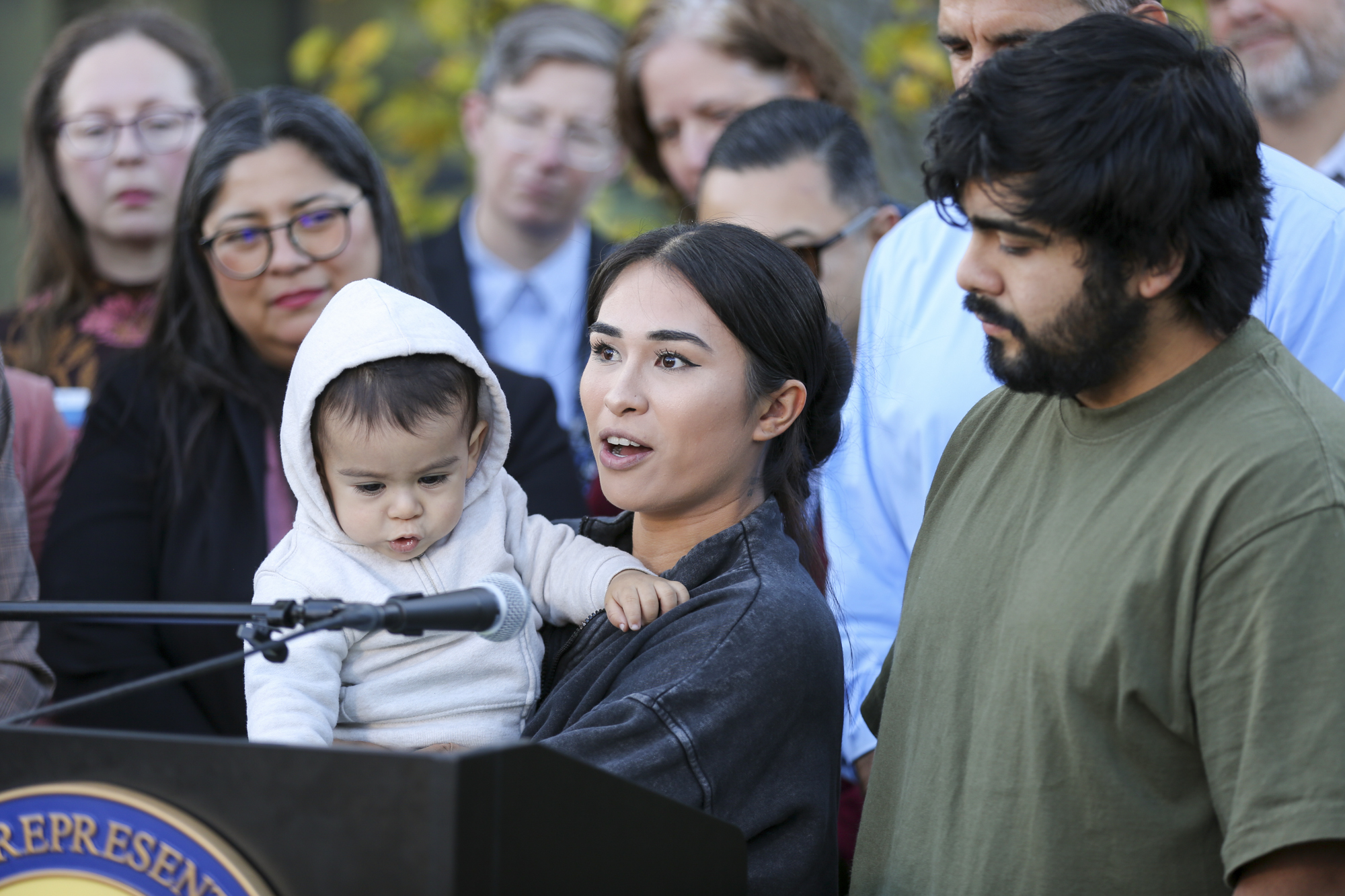
Trump HUD Cuts Dampen New Affordable Apartment Openings in South Bay
New San José Tiny Homes for Unhoused Open Next to Former Encampment
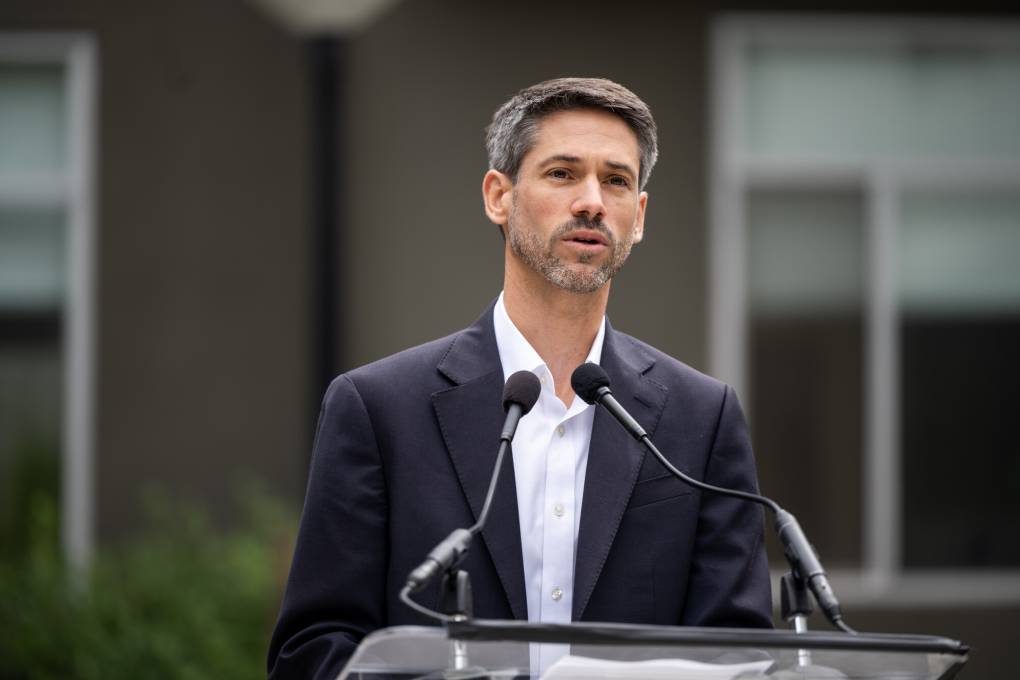
Bay Area Cities Expand Homeless Shelters. Winning Over Neighbors Is the Hard Part
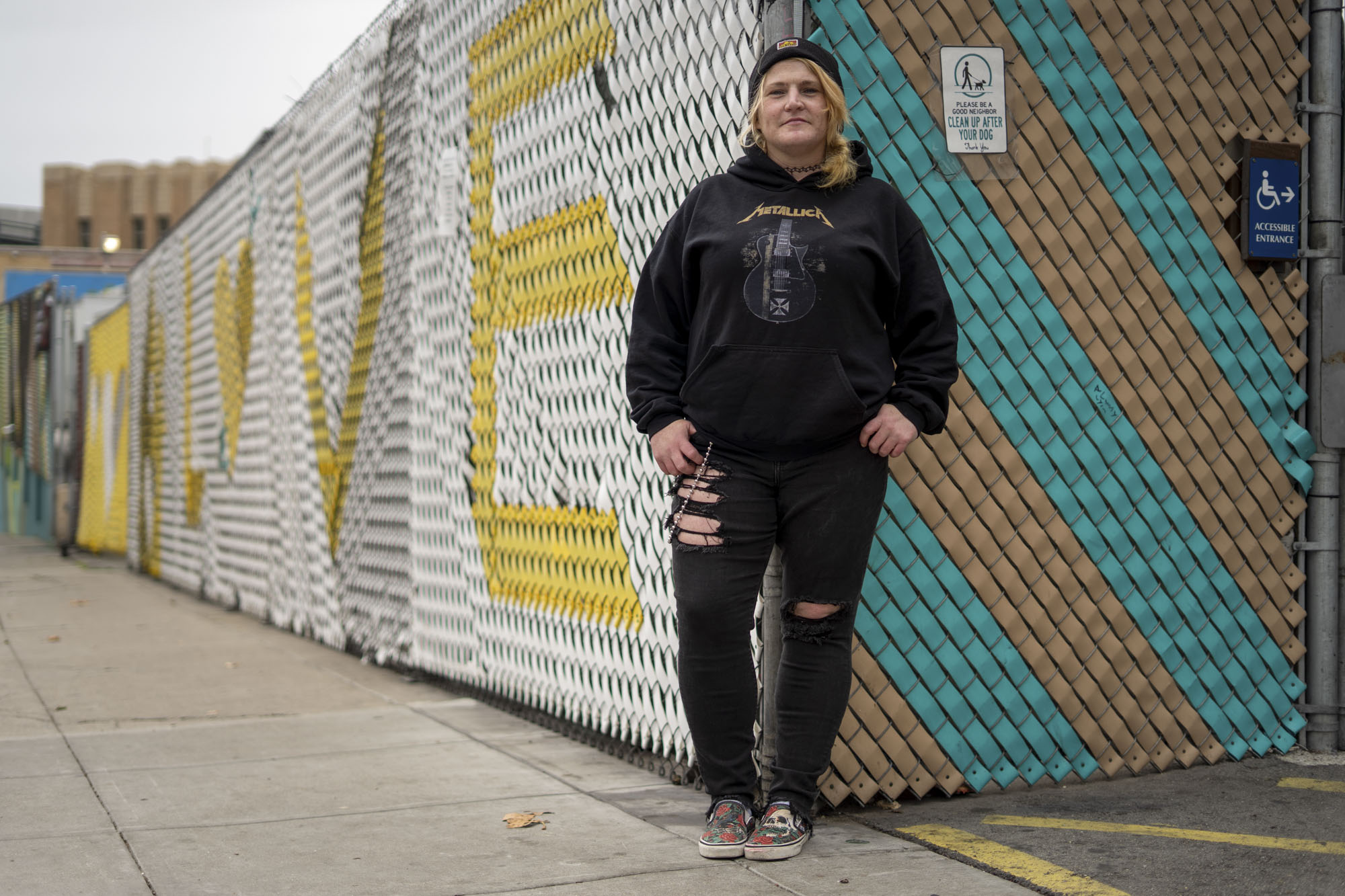
Empty Tiny Homes Headed to the Bayview Ruffle Feathers in City Hall
Newsom’s New Statewide Encampment Taskforce Ramps Up Operations in San Francisco
Judge Halts Trump Policy Denying Schools, Shelters to Certain Immigrants
SF Homeless Services Nonprofit to Pay $1 Million After Investigation Found Fraud
The Families Living in San Francisco’s Homeless Shelters
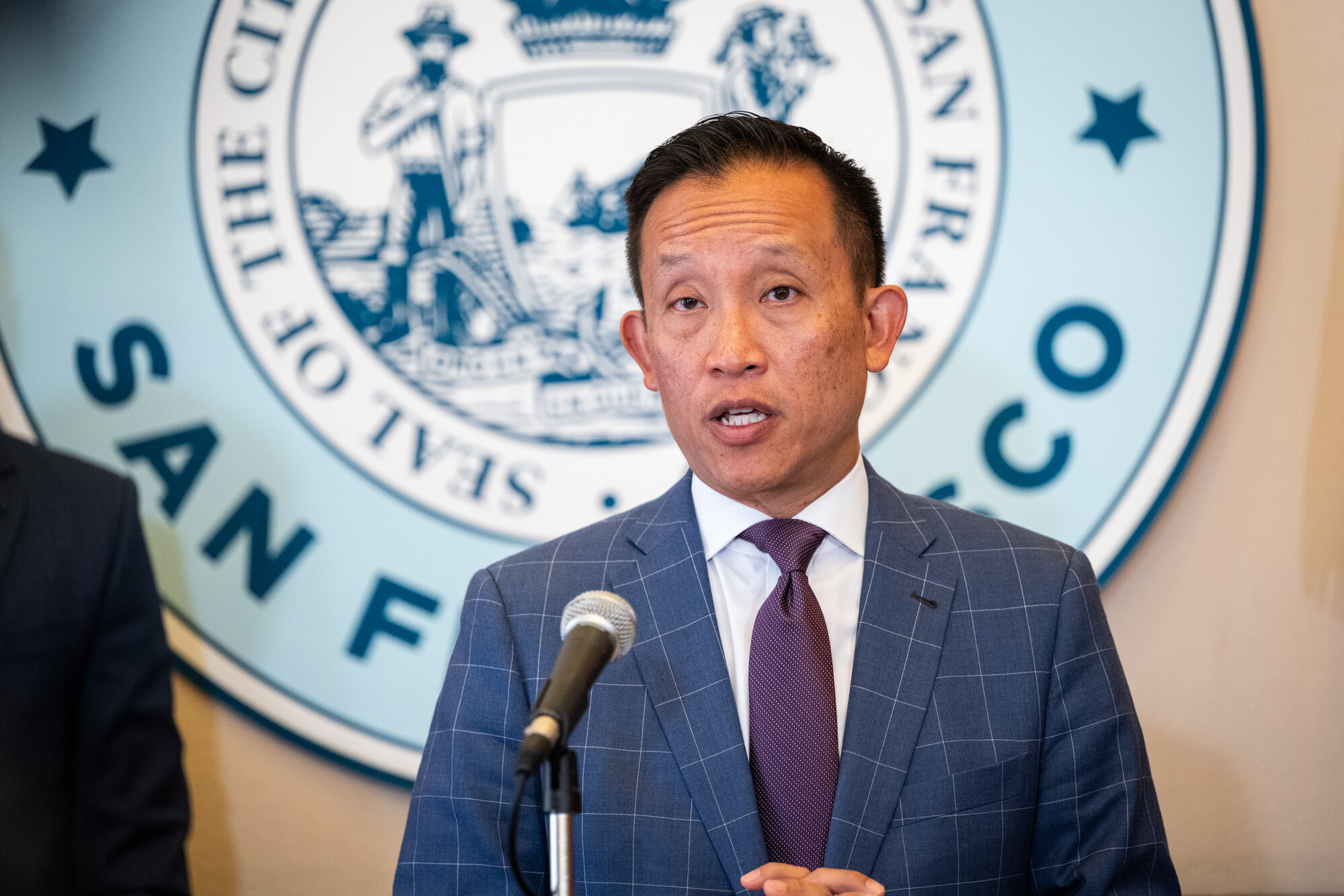
A New San Francisco Plan Would Spread Out Homeless Shelters More Evenly
Sponsored
Player sponsored by
window.__IS_SSR__=true
window.__INITIAL_STATE__={
"attachmentsReducer": {
"audio_0": {
"type": "attachments",
"id": "audio_0",
"imgSizes": {
"kqedFullSize": {
"file": "https://ww2.kqed.org/news/wp-content/themes/KQED-unified/img/audio_bgs/background0.jpg"
}
}
},
"audio_1": {
"type": "attachments",
"id": "audio_1",
"imgSizes": {
"kqedFullSize": {
"file": "https://ww2.kqed.org/news/wp-content/themes/KQED-unified/img/audio_bgs/background1.jpg"
}
}
},
"audio_2": {
"type": "attachments",
"id": "audio_2",
"imgSizes": {
"kqedFullSize": {
"file": "https://ww2.kqed.org/news/wp-content/themes/KQED-unified/img/audio_bgs/background2.jpg"
}
}
},
"audio_3": {
"type": "attachments",
"id": "audio_3",
"imgSizes": {
"kqedFullSize": {
"file": "https://ww2.kqed.org/news/wp-content/themes/KQED-unified/img/audio_bgs/background3.jpg"
}
}
},
"audio_4": {
"type": "attachments",
"id": "audio_4",
"imgSizes": {
"kqedFullSize": {
"file": "https://ww2.kqed.org/news/wp-content/themes/KQED-unified/img/audio_bgs/background4.jpg"
}
}
},
"placeholder": {
"type": "attachments",
"id": "placeholder",
"imgSizes": {
"thumbnail": {
"file": "https://cdn.kqed.org/wp-content/uploads/2024/12/KQED-Default-Image-816638274-2000x1333-1-160x107.jpg",
"width": 160,
"height": 107,
"mimeType": "image/jpeg"
},
"medium": {
"file": "https://cdn.kqed.org/wp-content/uploads/2024/12/KQED-Default-Image-816638274-2000x1333-1-800x533.jpg",
"width": 800,
"height": 533,
"mimeType": "image/jpeg"
},
"medium_large": {
"file": "https://cdn.kqed.org/wp-content/uploads/2024/12/KQED-Default-Image-816638274-2000x1333-1-768x512.jpg",
"width": 768,
"height": 512,
"mimeType": "image/jpeg"
},
"large": {
"file": "https://cdn.kqed.org/wp-content/uploads/2024/12/KQED-Default-Image-816638274-2000x1333-1-1020x680.jpg",
"width": 1020,
"height": 680,
"mimeType": "image/jpeg"
},
"1536x1536": {
"file": "https://cdn.kqed.org/wp-content/uploads/2024/12/KQED-Default-Image-816638274-2000x1333-1-1536x1024.jpg",
"width": 1536,
"height": 1024,
"mimeType": "image/jpeg"
},
"fd-lrg": {
"file": "https://cdn.kqed.org/wp-content/uploads/2024/12/KQED-Default-Image-816638274-2000x1333-1-1536x1024.jpg",
"width": 1536,
"height": 1024,
"mimeType": "image/jpeg"
},
"fd-med": {
"file": "https://cdn.kqed.org/wp-content/uploads/2024/12/KQED-Default-Image-816638274-2000x1333-1-1020x680.jpg",
"width": 1020,
"height": 680,
"mimeType": "image/jpeg"
},
"fd-sm": {
"file": "https://cdn.kqed.org/wp-content/uploads/2024/12/KQED-Default-Image-816638274-2000x1333-1-800x533.jpg",
"width": 800,
"height": 533,
"mimeType": "image/jpeg"
},
"post-thumbnail": {
"file": "https://cdn.kqed.org/wp-content/uploads/2024/12/KQED-Default-Image-816638274-2000x1333-1-672x372.jpg",
"width": 672,
"height": 372,
"mimeType": "image/jpeg"
},
"twentyfourteen-full-width": {
"file": "https://cdn.kqed.org/wp-content/uploads/2024/12/KQED-Default-Image-816638274-2000x1333-1-1038x576.jpg",
"width": 1038,
"height": 576,
"mimeType": "image/jpeg"
},
"xxsmall": {
"file": "https://cdn.kqed.org/wp-content/uploads/2024/12/KQED-Default-Image-816638274-2000x1333-1-160x107.jpg",
"width": 160,
"height": 107,
"mimeType": "image/jpeg"
},
"xsmall": {
"file": "https://cdn.kqed.org/wp-content/uploads/2024/12/KQED-Default-Image-816638274-2000x1333-1-672x372.jpg",
"width": 672,
"height": 372,
"mimeType": "image/jpeg"
},
"small": {
"file": "https://cdn.kqed.org/wp-content/uploads/2024/12/KQED-Default-Image-816638274-2000x1333-1-672x372.jpg",
"width": 672,
"height": 372,
"mimeType": "image/jpeg"
},
"xlarge": {
"file": "https://cdn.kqed.org/wp-content/uploads/2024/12/KQED-Default-Image-816638274-2000x1333-1-1020x680.jpg",
"width": 1020,
"height": 680,
"mimeType": "image/jpeg"
},
"full-width": {
"file": "https://cdn.kqed.org/wp-content/uploads/2024/12/KQED-Default-Image-816638274-2000x1333-1-1920x1280.jpg",
"width": 1920,
"height": 1280,
"mimeType": "image/jpeg"
},
"guest-author-32": {
"file": "https://cdn.kqed.org/wp-content/uploads/2025/01/KQED-Default-Image-816638274-1333x1333-1-160x160.jpg",
"width": 32,
"height": 32,
"mimeType": "image/jpeg"
},
"guest-author-50": {
"file": "https://cdn.kqed.org/wp-content/uploads/2025/01/KQED-Default-Image-816638274-1333x1333-1-160x160.jpg",
"width": 50,
"height": 50,
"mimeType": "image/jpeg"
},
"guest-author-64": {
"file": "https://cdn.kqed.org/wp-content/uploads/2025/01/KQED-Default-Image-816638274-1333x1333-1-160x160.jpg",
"width": 64,
"height": 64,
"mimeType": "image/jpeg"
},
"guest-author-96": {
"file": "https://cdn.kqed.org/wp-content/uploads/2025/01/KQED-Default-Image-816638274-1333x1333-1-160x160.jpg",
"width": 96,
"height": 96,
"mimeType": "image/jpeg"
},
"guest-author-128": {
"file": "https://cdn.kqed.org/wp-content/uploads/2025/01/KQED-Default-Image-816638274-1333x1333-1-160x160.jpg",
"width": 128,
"height": 128,
"mimeType": "image/jpeg"
},
"detail": {
"file": "https://cdn.kqed.org/wp-content/uploads/2025/01/KQED-Default-Image-816638274-1333x1333-1-160x160.jpg",
"width": 160,
"height": 160,
"mimeType": "image/jpeg"
},
"kqedFullSize": {
"file": "https://cdn.kqed.org/wp-content/uploads/2024/12/KQED-Default-Image-816638274-2000x1333-1.jpg",
"width": 2000,
"height": 1333
}
}
},
"news_12065387": {
"type": "attachments",
"id": "news_12065387",
"meta": {
"index": "attachments_1716263798",
"site": "news",
"id": "12065387",
"found": true
},
"title": "251124-SJHUDCUTS-JG-05-KQED",
"publishDate": 1764111364,
"status": "inherit",
"parent": 0,
"modified": 1764111398,
"caption": "Kaytana Alvarido, center, with her son Lucius and her husband Alberto Barragan, speaks during a press conference in San José about changes to a federal housing program’s funding by the Trump administration on Nov. 24, 2025, shortly before moving into a new, affordable apartment complex. ",
"credit": "Joseph Geha/KQED",
"altTag": null,
"description": null,
"imgSizes": {
"thumbnail": {
"file": "https://cdn.kqed.org/wp-content/uploads/sites/10/2025/11/251124-SJHUDCUTS-JG-05-KQED-160x107.jpg",
"width": 160,
"height": 107,
"mimeType": "image/jpeg"
},
"1536x1536": {
"file": "https://cdn.kqed.org/wp-content/uploads/sites/10/2025/11/251124-SJHUDCUTS-JG-05-KQED-1536x1024.jpg",
"width": 1536,
"height": 1024,
"mimeType": "image/jpeg"
},
"post-thumbnail": {
"file": "https://cdn.kqed.org/wp-content/uploads/sites/10/2025/11/251124-SJHUDCUTS-JG-05-KQED-672x372.jpg",
"width": 672,
"height": 372,
"mimeType": "image/jpeg"
},
"twentyfourteen-full-width": {
"file": "https://cdn.kqed.org/wp-content/uploads/sites/10/2025/11/251124-SJHUDCUTS-JG-05-KQED-1038x576.jpg",
"width": 1038,
"height": 576,
"mimeType": "image/jpeg"
},
"npr-cds-wide": {
"file": "https://cdn.kqed.org/wp-content/uploads/sites/10/2025/11/251124-SJHUDCUTS-JG-05-KQED-1200x675.jpg",
"width": 1200,
"height": 675,
"mimeType": "image/jpeg"
},
"kqedFullSize": {
"file": "https://cdn.kqed.org/wp-content/uploads/sites/10/2025/11/251124-SJHUDCUTS-JG-05-KQED.jpg",
"width": 2000,
"height": 1333
}
},
"fetchFailed": false,
"isLoading": false
},
"news_12026470": {
"type": "attachments",
"id": "news_12026470",
"meta": {
"index": "attachments_1716263798",
"site": "news",
"id": "12026470",
"found": true
},
"title": "240620-AffordableHousingPresser-16-BL_qed",
"publishDate": 1739218616,
"status": "inherit",
"parent": 12026437,
"modified": 1739218629,
"caption": "San José Mayor Matt Mahan speaks during a press conference in support of a regional affordable housing measure at Five88, a mixed-use residential and retail property, in the Mission Bay neighborhood in San Francisco on June 20, 2024.",
"credit": "Beth LaBerge/KQED",
"altTag": null,
"description": null,
"imgSizes": {
"medium": {
"file": "https://cdn.kqed.org/wp-content/uploads/sites/10/2025/02/240620-AffordableHousingPresser-16-BL_qed-800x533.jpg",
"width": 800,
"height": 533,
"mimeType": "image/jpeg"
},
"large": {
"file": "https://cdn.kqed.org/wp-content/uploads/sites/10/2025/02/240620-AffordableHousingPresser-16-BL_qed-1020x680.jpg",
"width": 1020,
"height": 680,
"mimeType": "image/jpeg"
},
"thumbnail": {
"file": "https://cdn.kqed.org/wp-content/uploads/sites/10/2025/02/240620-AffordableHousingPresser-16-BL_qed-160x107.jpg",
"width": 160,
"height": 107,
"mimeType": "image/jpeg"
},
"1536x1536": {
"file": "https://cdn.kqed.org/wp-content/uploads/sites/10/2025/02/240620-AffordableHousingPresser-16-BL_qed-1536x1024.jpg",
"width": 1536,
"height": 1024,
"mimeType": "image/jpeg"
},
"post-thumbnail": {
"file": "https://cdn.kqed.org/wp-content/uploads/sites/10/2025/02/240620-AffordableHousingPresser-16-BL_qed-672x372.jpg",
"width": 672,
"height": 372,
"mimeType": "image/jpeg"
},
"twentyfourteen-full-width": {
"file": "https://cdn.kqed.org/wp-content/uploads/sites/10/2025/02/240620-AffordableHousingPresser-16-BL_qed-1038x576.jpg",
"width": 1038,
"height": 576,
"mimeType": "image/jpeg"
},
"full-width": {
"file": "https://cdn.kqed.org/wp-content/uploads/sites/10/2025/02/240620-AffordableHousingPresser-16-BL_qed-1920x1280.jpg",
"width": 1920,
"height": 1280,
"mimeType": "image/jpeg"
},
"kqedFullSize": {
"file": "https://cdn.kqed.org/wp-content/uploads/sites/10/2025/02/240620-AffordableHousingPresser-16-BL_qed.jpg",
"width": 2000,
"height": 1333
}
},
"fetchFailed": false,
"isLoading": false
},
"news_12058500": {
"type": "attachments",
"id": "news_12058500",
"meta": {
"index": "attachments_1716263798",
"site": "news",
"id": "12058500",
"found": true
},
"title": "251001_BAYAREASHELTER_-17-KQED",
"publishDate": 1759447814,
"status": "inherit",
"parent": 0,
"modified": 1759447933,
"caption": "Sarah Spillane, a resident of the DignityMoves tiny home cabins, outside the entrance in SoMa in San Francisco on Oct. 1, 2025.",
"credit": "Gustavo Hernandez/KQED",
"altTag": null,
"description": null,
"imgSizes": {
"thumbnail": {
"file": "https://cdn.kqed.org/wp-content/uploads/sites/10/2025/10/251001_BAYAREASHELTER_-17-KQED-160x107.jpg",
"width": 160,
"height": 107,
"mimeType": "image/jpeg"
},
"1536x1536": {
"file": "https://cdn.kqed.org/wp-content/uploads/sites/10/2025/10/251001_BAYAREASHELTER_-17-KQED-1536x1024.jpg",
"width": 1536,
"height": 1024,
"mimeType": "image/jpeg"
},
"post-thumbnail": {
"file": "https://cdn.kqed.org/wp-content/uploads/sites/10/2025/10/251001_BAYAREASHELTER_-17-KQED-672x372.jpg",
"width": 672,
"height": 372,
"mimeType": "image/jpeg"
},
"twentyfourteen-full-width": {
"file": "https://cdn.kqed.org/wp-content/uploads/sites/10/2025/10/251001_BAYAREASHELTER_-17-KQED-1038x576.jpg",
"width": 1038,
"height": 576,
"mimeType": "image/jpeg"
},
"kqedFullSize": {
"file": "https://cdn.kqed.org/wp-content/uploads/sites/10/2025/10/251001_BAYAREASHELTER_-17-KQED.jpg",
"width": 2000,
"height": 1333
}
},
"fetchFailed": false,
"isLoading": false
},
"news_11927447": {
"type": "attachments",
"id": "news_11927447",
"meta": {
"index": "attachments_1716263798",
"site": "news",
"id": "11927447",
"found": true
},
"parent": 11927434,
"imgSizes": {
"twentyfourteen-full-width": {
"file": "https://ww2.kqed.org/app/uploads/sites/10/2022/10/RS50006_047_SanFrancisco_JuneteenthKickoffRally_06172021-qut-1038x576.jpg",
"width": 1038,
"mimeType": "image/jpeg",
"height": 576
},
"thumbnail": {
"file": "https://ww2.kqed.org/app/uploads/sites/10/2022/10/RS50006_047_SanFrancisco_JuneteenthKickoffRally_06172021-qut-160x107.jpg",
"width": 160,
"mimeType": "image/jpeg",
"height": 107
},
"post-thumbnail": {
"file": "https://ww2.kqed.org/app/uploads/sites/10/2022/10/RS50006_047_SanFrancisco_JuneteenthKickoffRally_06172021-qut-672x372.jpg",
"width": 672,
"mimeType": "image/jpeg",
"height": 372
},
"kqedFullSize": {
"file": "https://ww2.kqed.org/app/uploads/sites/10/2022/10/RS50006_047_SanFrancisco_JuneteenthKickoffRally_06172021-qut.jpg",
"width": 1920,
"height": 1278
},
"large": {
"file": "https://ww2.kqed.org/app/uploads/sites/10/2022/10/RS50006_047_SanFrancisco_JuneteenthKickoffRally_06172021-qut-1020x679.jpg",
"width": 1020,
"mimeType": "image/jpeg",
"height": 679
},
"1536x1536": {
"file": "https://ww2.kqed.org/app/uploads/sites/10/2022/10/RS50006_047_SanFrancisco_JuneteenthKickoffRally_06172021-qut-1536x1022.jpg",
"width": 1536,
"mimeType": "image/jpeg",
"height": 1022
},
"medium": {
"file": "https://ww2.kqed.org/app/uploads/sites/10/2022/10/RS50006_047_SanFrancisco_JuneteenthKickoffRally_06172021-qut-800x533.jpg",
"width": 800,
"mimeType": "image/jpeg",
"height": 533
}
},
"publishDate": 1664654554,
"modified": 1664654887,
"caption": "San Francisco Board of Supervisors President Shamann Walton and his fellow supervisors are challenging Mayor Breed and the Navy over Bayview-Hunters Point.",
"description": "SF Board of Supervisors President Shamann Walton",
"title": "RS50006_047_SanFrancisco_JuneteenthKickoffRally_06172021-qut",
"credit": "Beth LaBerge/KQED",
"status": "inherit",
"altTag": "A man in a suit with a blue tie speaks at a rally in front of a microphone.",
"fetchFailed": false,
"isLoading": false
},
"news_12056154": {
"type": "attachments",
"id": "news_12056154",
"meta": {
"index": "attachments_1716263798",
"site": "news",
"id": "12056154",
"found": true
},
"title": "250916-SAFE TASKFORCE-MD-04-KQED",
"publishDate": 1758054367,
"status": "inherit",
"parent": 0,
"modified": 1758054408,
"caption": "Crews work to clear out an encampment next to the 101 Freeway in San Francisco on Sept. 16, 2025.",
"credit": "Martin do Nascimento/KQED",
"altTag": null,
"description": null,
"imgSizes": {
"thumbnail": {
"file": "https://cdn.kqed.org/wp-content/uploads/sites/10/2025/09/250916-SAFE-TASKFORCE-MD-04-KQED-160x107.jpg",
"width": 160,
"height": 107,
"mimeType": "image/jpeg"
},
"1536x1536": {
"file": "https://cdn.kqed.org/wp-content/uploads/sites/10/2025/09/250916-SAFE-TASKFORCE-MD-04-KQED-1536x1025.jpg",
"width": 1536,
"height": 1025,
"mimeType": "image/jpeg"
},
"post-thumbnail": {
"file": "https://cdn.kqed.org/wp-content/uploads/sites/10/2025/09/250916-SAFE-TASKFORCE-MD-04-KQED-672x372.jpg",
"width": 672,
"height": 372,
"mimeType": "image/jpeg"
},
"twentyfourteen-full-width": {
"file": "https://cdn.kqed.org/wp-content/uploads/sites/10/2025/09/250916-SAFE-TASKFORCE-MD-04-KQED-1038x576.jpg",
"width": 1038,
"height": 576,
"mimeType": "image/jpeg"
},
"kqedFullSize": {
"file": "https://cdn.kqed.org/wp-content/uploads/sites/10/2025/09/250916-SAFE-TASKFORCE-MD-04-KQED.jpg",
"width": 2000,
"height": 1334
}
},
"fetchFailed": false,
"isLoading": false
},
"news_12055530": {
"type": "attachments",
"id": "news_12055530",
"meta": {
"index": "attachments_1716263798",
"site": "news",
"id": "12055530",
"found": true
},
"title": "ImmigrationCoverageCM1",
"publishDate": 1757546413,
"status": "inherit",
"parent": 12055528,
"modified": 1757546450,
"caption": "Tebh Altawil, teacher apprentice at the Ralph Hawley Head Start Center at the YMCA of the East Bay, blows bubbles with her infant and toddler class during their outdoor time in Emeryville on Dec. 9, 2024. ",
"credit": "Florence Middleton/CalMatters",
"altTag": null,
"description": null,
"imgSizes": {
"thumbnail": {
"file": "https://cdn.kqed.org/wp-content/uploads/sites/10/2025/09/ImmigrationCoverageCM1-160x107.jpg",
"width": 160,
"height": 107,
"mimeType": "image/jpeg"
},
"1536x1536": {
"file": "https://cdn.kqed.org/wp-content/uploads/sites/10/2025/09/ImmigrationCoverageCM1-1536x1024.jpg",
"width": 1536,
"height": 1024,
"mimeType": "image/jpeg"
},
"post-thumbnail": {
"file": "https://cdn.kqed.org/wp-content/uploads/sites/10/2025/09/ImmigrationCoverageCM1-672x372.jpg",
"width": 672,
"height": 372,
"mimeType": "image/jpeg"
},
"twentyfourteen-full-width": {
"file": "https://cdn.kqed.org/wp-content/uploads/sites/10/2025/09/ImmigrationCoverageCM1-1038x576.jpg",
"width": 1038,
"height": 576,
"mimeType": "image/jpeg"
},
"kqedFullSize": {
"file": "https://cdn.kqed.org/wp-content/uploads/sites/10/2025/09/ImmigrationCoverageCM1.jpg",
"width": 2000,
"height": 1333
}
},
"fetchFailed": false,
"isLoading": false
},
"news_12053793": {
"type": "attachments",
"id": "news_12053793",
"meta": {
"index": "attachments_1716263798",
"site": "news",
"id": "12053793",
"found": true
},
"title": "240815-CityAttorneyDeepfakes-10-BL_qed (1)",
"publishDate": 1756237509,
"status": "inherit",
"parent": 12053750,
"modified": 1756237531,
"caption": "City Attorney David Chiu speaks during a press conference at City Hall in San Francisco on Aug. 15, 2024.",
"credit": "Beth LaBerge/KQED",
"altTag": null,
"description": null,
"imgSizes": {
"thumbnail": {
"file": "https://cdn.kqed.org/wp-content/uploads/sites/10/2025/08/240815-CityAttorneyDeepfakes-10-BL_qed-1-160x107.jpg",
"width": 160,
"height": 107,
"mimeType": "image/jpeg"
},
"1536x1536": {
"file": "https://cdn.kqed.org/wp-content/uploads/sites/10/2025/08/240815-CityAttorneyDeepfakes-10-BL_qed-1-1536x1024.jpg",
"width": 1536,
"height": 1024,
"mimeType": "image/jpeg"
},
"post-thumbnail": {
"file": "https://cdn.kqed.org/wp-content/uploads/sites/10/2025/08/240815-CityAttorneyDeepfakes-10-BL_qed-1-672x372.jpg",
"width": 672,
"height": 372,
"mimeType": "image/jpeg"
},
"twentyfourteen-full-width": {
"file": "https://cdn.kqed.org/wp-content/uploads/sites/10/2025/08/240815-CityAttorneyDeepfakes-10-BL_qed-1-1038x576.jpg",
"width": 1038,
"height": 576,
"mimeType": "image/jpeg"
},
"kqedFullSize": {
"file": "https://cdn.kqed.org/wp-content/uploads/sites/10/2025/08/240815-CityAttorneyDeepfakes-10-BL_qed-1.jpg",
"width": 1999,
"height": 1333
}
},
"fetchFailed": false,
"isLoading": false
},
"news_12049535": {
"type": "attachments",
"id": "news_12049535",
"meta": {
"index": "attachments_1716263798",
"site": "news",
"id": "12049535",
"found": true
},
"title": "250722-SHELTERFAMILIES-08-BL-KQED",
"publishDate": 1753377079,
"status": "inherit",
"parent": 0,
"modified": 1753377125,
"caption": "Maritza Salinas arrives at The Salvation Army Harbor House, a temporary shelter, with her daughter Ranea, 4, in San Francisco on July 22, 2025.",
"credit": "Beth LaBerge/KQED",
"altTag": null,
"description": null,
"imgSizes": {
"thumbnail": {
"file": "https://cdn.kqed.org/wp-content/uploads/sites/10/2025/07/250722-SHELTERFAMILIES-08-BL-KQED-160x107.jpg",
"width": 160,
"height": 107,
"mimeType": "image/jpeg"
},
"1536x1536": {
"file": "https://cdn.kqed.org/wp-content/uploads/sites/10/2025/07/250722-SHELTERFAMILIES-08-BL-KQED-1536x1024.jpg",
"width": 1536,
"height": 1024,
"mimeType": "image/jpeg"
},
"post-thumbnail": {
"file": "https://cdn.kqed.org/wp-content/uploads/sites/10/2025/07/250722-SHELTERFAMILIES-08-BL-KQED-672x372.jpg",
"width": 672,
"height": 372,
"mimeType": "image/jpeg"
},
"twentyfourteen-full-width": {
"file": "https://cdn.kqed.org/wp-content/uploads/sites/10/2025/07/250722-SHELTERFAMILIES-08-BL-KQED-1038x576.jpg",
"width": 1038,
"height": 576,
"mimeType": "image/jpeg"
},
"kqedFullSize": {
"file": "https://cdn.kqed.org/wp-content/uploads/sites/10/2025/07/250722-SHELTERFAMILIES-08-BL-KQED.jpg",
"width": 2000,
"height": 1333
}
},
"fetchFailed": false,
"isLoading": false
},
"news_12050268": {
"type": "attachments",
"id": "news_12050268",
"meta": {
"index": "attachments_1716263798",
"site": "news",
"id": "12050268",
"found": true
},
"title": "250722-ShelterFamilies-09-BL_qed",
"publishDate": 1753903562,
"status": "inherit",
"parent": 12050263,
"modified": 1753903608,
"caption": "A mother arrives at The Salvation Army Harbor House, a temporary shelter, with her 4-year-old daughter in San Francisco on July 22, 2025.",
"credit": "Beth LaBerge/KQED",
"altTag": null,
"description": null,
"imgSizes": {
"thumbnail": {
"file": "https://cdn.kqed.org/wp-content/uploads/sites/10/2025/07/250722-ShelterFamilies-09-BL_qed-160x107.jpg",
"width": 160,
"height": 107,
"mimeType": "image/jpeg"
},
"1536x1536": {
"file": "https://cdn.kqed.org/wp-content/uploads/sites/10/2025/07/250722-ShelterFamilies-09-BL_qed-1536x1024.jpg",
"width": 1536,
"height": 1024,
"mimeType": "image/jpeg"
},
"post-thumbnail": {
"file": "https://cdn.kqed.org/wp-content/uploads/sites/10/2025/07/250722-ShelterFamilies-09-BL_qed-672x372.jpg",
"width": 672,
"height": 372,
"mimeType": "image/jpeg"
},
"twentyfourteen-full-width": {
"file": "https://cdn.kqed.org/wp-content/uploads/sites/10/2025/07/250722-ShelterFamilies-09-BL_qed-1038x576.jpg",
"width": 1038,
"height": 576,
"mimeType": "image/jpeg"
},
"kqedFullSize": {
"file": "https://cdn.kqed.org/wp-content/uploads/sites/10/2025/07/250722-ShelterFamilies-09-BL_qed.jpg",
"width": 2000,
"height": 1333
}
},
"fetchFailed": false,
"isLoading": false
}
},
"audioPlayerReducer": {
"postId": "stream_live",
"isPaused": true,
"isPlaying": false,
"pfsActive": false,
"pledgeModalIsOpen": true,
"playerDrawerIsOpen": false
},
"authorsReducer": {
"byline_news_12055528": {
"type": "authors",
"id": "byline_news_12055528",
"meta": {
"override": true
},
"slug": "byline_news_12055528",
"name": "Adam Echelman, CalMatters",
"isLoading": false
},
"gmarzorati": {
"type": "authors",
"id": "227",
"meta": {
"index": "authors_1716337520",
"id": "227",
"found": true
},
"name": "Guy Marzorati",
"firstName": "Guy",
"lastName": "Marzorati",
"slug": "gmarzorati",
"email": "gmarzorati@KQED.org",
"display_author_email": true,
"staff_mastheads": [
"news"
],
"title": "Correspondent",
"bio": "Guy Marzorati is a correspondent on KQED's California Politics and Government Desk, based in San Jose. A graduate of Santa Clara University, Guy joined KQED in 2013. He reports on state and local politics and produces KQED's digital voter guide.",
"avatar": "https://secure.gravatar.com/avatar/e7038b8dbfd55b104369b76b1cd0b9de?s=600&d=blank&r=g",
"twitter": "guymarzorati",
"facebook": null,
"instagram": null,
"linkedin": null,
"sites": [
{
"site": "",
"roles": [
"editor"
]
},
{
"site": "news",
"roles": [
"editor"
]
},
{
"site": "science",
"roles": [
"editor"
]
},
{
"site": "forum",
"roles": [
"editor"
]
},
{
"site": "elections",
"roles": [
"editor"
]
},
{
"site": "liveblog",
"roles": [
"editor"
]
}
],
"headData": {
"title": "Guy Marzorati | KQED",
"description": "Correspondent",
"ogImgSrc": "https://secure.gravatar.com/avatar/e7038b8dbfd55b104369b76b1cd0b9de?s=600&d=blank&r=g",
"twImgSrc": "https://secure.gravatar.com/avatar/e7038b8dbfd55b104369b76b1cd0b9de?s=600&d=blank&r=g"
},
"isLoading": false,
"link": "/author/gmarzorati"
},
"ecruzguevarra": {
"type": "authors",
"id": "8654",
"meta": {
"index": "authors_1716337520",
"id": "8654",
"found": true
},
"name": "Ericka Cruz Guevarra",
"firstName": "Ericka",
"lastName": "Cruz Guevarra",
"slug": "ecruzguevarra",
"email": "ecruzguevarra@kqed.org",
"display_author_email": true,
"staff_mastheads": [
"news"
],
"title": "Producer, The Bay Podcast",
"bio": "Ericka Cruz Guevarra is host of \u003ca href=\"https://www.kqed.org/podcasts/thebay\">\u003cem>The Bay\u003c/em>\u003c/a> podcast at KQED. Before host, she was the show’s producer. Her work in that capacity includes a three-part reported series on policing in Vallejo, which won a 2020 excellence in journalism award from the Society of Professional Journalists. Ericka has worked as a breaking news reporter at Oregon Public Broadcasting, helped produce the Code Switch podcast, and was KQED’s inaugural Raul Ramirez Diversity Fund intern. She’s also an alumna of NPR’s Next Generation Radio program. Send her an email if you have strong feelings about whether Fairfield and Suisun City are the Bay. Ericka is represented by SAG-AFTRA.",
"avatar": "https://secure.gravatar.com/avatar/25e5ab8d3d53fad2dcc7bb2b5c506b1a?s=600&d=blank&r=g",
"twitter": "NotoriousECG",
"facebook": null,
"instagram": null,
"linkedin": null,
"sites": [
{
"site": "arts",
"roles": [
"subscriber"
]
},
{
"site": "news",
"roles": [
"editor",
"manage_categories"
]
},
{
"site": "futureofyou",
"roles": [
"subscriber"
]
},
{
"site": "stateofhealth",
"roles": [
"subscriber"
]
},
{
"site": "science",
"roles": [
"editor"
]
},
{
"site": "forum",
"roles": [
"subscriber"
]
}
],
"headData": {
"title": "Ericka Cruz Guevarra | KQED",
"description": "Producer, The Bay Podcast",
"ogImgSrc": "https://secure.gravatar.com/avatar/25e5ab8d3d53fad2dcc7bb2b5c506b1a?s=600&d=blank&r=g",
"twImgSrc": "https://secure.gravatar.com/avatar/25e5ab8d3d53fad2dcc7bb2b5c506b1a?s=600&d=blank&r=g"
},
"isLoading": false,
"link": "/author/ecruzguevarra"
},
"amontecillo": {
"type": "authors",
"id": "11649",
"meta": {
"index": "authors_1716337520",
"id": "11649",
"found": true
},
"name": "Alan Montecillo",
"firstName": "Alan",
"lastName": "Montecillo",
"slug": "amontecillo",
"email": "amontecillo@kqed.org",
"display_author_email": false,
"staff_mastheads": [
"news"
],
"title": "KQED Contributor",
"bio": "Alan Montecillo is the senior editor of \u003cem>\u003ca href=\"http://kqed.org/thebay\">The Bay\u003c/a>, \u003c/em> KQED's local news podcast. Before moving to the Bay Area, he worked as a senior talk show producer for WILL in Champaign-Urbana, Illinois and at Oregon Public Broadcasting in Portland, Oregon. He has won journalism awards from the Society of Professional Journalists Northern California, the Public Media Journalists Association, The Signal Awards, and has also received a regional Edward R. Murrow award. Alan is a Filipino American from Hong Kong and a graduate of Reed College.",
"avatar": "https://secure.gravatar.com/avatar/d5e4e7a76481969ccba76f4e2b5ccabc?s=600&d=blank&r=g",
"twitter": "alanmontecillo",
"facebook": null,
"instagram": null,
"linkedin": null,
"sites": [
{
"site": "",
"roles": [
"editor"
]
},
{
"site": "news",
"roles": [
"editor",
"manage_categories"
]
}
],
"headData": {
"title": "Alan Montecillo | KQED",
"description": "KQED Contributor",
"ogImgSrc": "https://secure.gravatar.com/avatar/d5e4e7a76481969ccba76f4e2b5ccabc?s=600&d=blank&r=g",
"twImgSrc": "https://secure.gravatar.com/avatar/d5e4e7a76481969ccba76f4e2b5ccabc?s=600&d=blank&r=g"
},
"isLoading": false,
"link": "/author/amontecillo"
},
"ebaldassari": {
"type": "authors",
"id": "11652",
"meta": {
"index": "authors_1716337520",
"id": "11652",
"found": true
},
"name": "Erin Baldassari",
"firstName": "Erin",
"lastName": "Baldassari",
"slug": "ebaldassari",
"email": "ebaldassari@KQED.org",
"display_author_email": true,
"staff_mastheads": [
"news"
],
"title": "Staff Writer",
"bio": "Erin Baldassari covers housing for KQED. She's a former print journalist and most recently worked as the transportation reporter for the \u003cem>Mercury News\u003c/em> and \u003cem>East Bay Times. \u003c/em>There, she focused on how the Bay Area’s housing shortage has changed the way people move around the region. She also served on the \u003cem>East Bay Times\u003c/em>’ 2017 Pulitzer Prize-winning team for coverage of the Ghost Ship Fire in Oakland. Prior to that, Erin worked as a breaking news and general assignment reporter for a variety of outlets in the Bay Area and the greater Boston area. A Tufts University alumna, Erin grew up in the foothills of the Sierra Nevada mountains and in Sonoma County. She is a life-long KQED listener.",
"avatar": "https://secure.gravatar.com/avatar/660ce35d088ca54ad606d7e941abc652?s=600&d=mm&r=g",
"twitter": "e_baldi",
"facebook": null,
"instagram": null,
"linkedin": null,
"sites": [
{
"site": "news",
"roles": [
"edit_others_posts",
"editor"
]
},
{
"site": "science",
"roles": [
"editor"
]
},
{
"site": "liveblog",
"roles": [
"editor"
]
}
],
"headData": {
"title": "Erin Baldassari | KQED",
"description": "Staff Writer",
"ogImgSrc": "https://secure.gravatar.com/avatar/660ce35d088ca54ad606d7e941abc652?s=600&d=mm&r=g",
"twImgSrc": "https://secure.gravatar.com/avatar/660ce35d088ca54ad606d7e941abc652?s=600&d=mm&r=g"
},
"isLoading": false,
"link": "/author/ebaldassari"
},
"abandlamudi": {
"type": "authors",
"id": "11672",
"meta": {
"index": "authors_1716337520",
"id": "11672",
"found": true
},
"name": "Adhiti Bandlamudi",
"firstName": "Adhiti",
"lastName": "Bandlamudi",
"slug": "abandlamudi",
"email": "abandlamudi@kqed.org",
"display_author_email": false,
"staff_mastheads": [
"news"
],
"title": "KQED Housing Reporter",
"bio": "Adhiti Bandlamudi reports for KQED's Housing desk. She focuses on how housing gets built across the Bay Area. Before joining KQED in 2020, she reported for WUNC in Durham, North Carolina, WABE in Atlanta, Georgia and Capital Public Radio in Sacramento. In 2017, she was awarded a Kroc Fellowship at NPR where she reported on everything from sprinkles to the Golden State Killer's arrest. When she's not reporting, she's baking new recipes in her kitchen or watching movies with friends and family. She's originally from Georgia and has strong opinions about Great British Bake Off.",
"avatar": "https://secure.gravatar.com/avatar/868129c8b257bb99a3500e2c86a65400?s=600&d=mm&r=g",
"twitter": "oddity_adhiti",
"facebook": null,
"instagram": null,
"linkedin": null,
"sites": [
{
"site": "arts",
"roles": [
"author"
]
},
{
"site": "news",
"roles": [
"editor"
]
},
{
"site": "liveblog",
"roles": [
"author"
]
}
],
"headData": {
"title": "Adhiti Bandlamudi | KQED",
"description": "KQED Housing Reporter",
"ogImgSrc": "https://secure.gravatar.com/avatar/868129c8b257bb99a3500e2c86a65400?s=600&d=mm&r=g",
"twImgSrc": "https://secure.gravatar.com/avatar/868129c8b257bb99a3500e2c86a65400?s=600&d=mm&r=g"
},
"isLoading": false,
"link": "/author/abandlamudi"
},
"jessicakariisa": {
"type": "authors",
"id": "11831",
"meta": {
"index": "authors_1716337520",
"id": "11831",
"found": true
},
"name": "Jessica Kariisa",
"firstName": "Jessica",
"lastName": "Kariisa",
"slug": "jessicakariisa",
"email": "jkariisa@kqed.org",
"display_author_email": false,
"staff_mastheads": [
"news"
],
"title": "Producer, The Bay",
"bio": "Jessica Kariisa is the producer of The Bay. She first joined KQED as an intern for The California Report Magazine, after which she became an on-call producer. She reported a Bay Curious episode on the use of rap lyrics in criminal trials which won a Society of Professional Journalists award in 2023 for Excellence in Features Journalism and the 2023 Signal Award for Best Conversation Starter. She’s worked on podcasts for Snap Judgment and American Public Media. Before embarking on her audio career, she was a music journalist.\r\n\r\nJessica Kariisa is represented by SAG-AFTRA.",
"avatar": "https://secure.gravatar.com/avatar/4afd355fd24f5515aeab77fd6c72b671?s=600&d=blank&r=g",
"twitter": null,
"facebook": null,
"instagram": null,
"linkedin": null,
"sites": [
{
"site": "arts",
"roles": [
"author"
]
},
{
"site": "news",
"roles": [
"editor",
"manage_categories"
]
}
],
"headData": {
"title": "Jessica Kariisa | KQED",
"description": "Producer, The Bay",
"ogImgSrc": "https://secure.gravatar.com/avatar/4afd355fd24f5515aeab77fd6c72b671?s=600&d=blank&r=g",
"twImgSrc": "https://secure.gravatar.com/avatar/4afd355fd24f5515aeab77fd6c72b671?s=600&d=blank&r=g"
},
"isLoading": false,
"link": "/author/jessicakariisa"
},
"sjohnson": {
"type": "authors",
"id": "11840",
"meta": {
"index": "authors_1716337520",
"id": "11840",
"found": true
},
"name": "Sydney Johnson",
"firstName": "Sydney",
"lastName": "Johnson",
"slug": "sjohnson",
"email": "sjohnson@kqed.org",
"display_author_email": false,
"staff_mastheads": [
"news"
],
"title": "KQED Reporter",
"bio": "Sydney Johnson is a general assignment reporter at KQED. She previously reported on public health and city government at the San Francisco Examiner, and before that, she covered statewide education policy for EdSource. Her reporting has won multiple local, state and national awards. Sydney is a graduate of the University of California, Berkeley and lives in San Francisco.",
"avatar": "https://secure.gravatar.com/avatar/97855f2719b72ad6190b7c535fe642c8?s=600&d=blank&r=g",
"twitter": "sydneyfjohnson",
"facebook": null,
"instagram": null,
"linkedin": null,
"sites": [
{
"site": "news",
"roles": [
"editor"
]
}
],
"headData": {
"title": "Sydney Johnson | KQED",
"description": "KQED Reporter",
"ogImgSrc": "https://secure.gravatar.com/avatar/97855f2719b72ad6190b7c535fe642c8?s=600&d=blank&r=g",
"twImgSrc": "https://secure.gravatar.com/avatar/97855f2719b72ad6190b7c535fe642c8?s=600&d=blank&r=g"
},
"isLoading": false,
"link": "/author/sjohnson"
},
"jgeha": {
"type": "authors",
"id": "11906",
"meta": {
"index": "authors_1716337520",
"id": "11906",
"found": true
},
"name": "Joseph Geha",
"firstName": "Joseph",
"lastName": "Geha",
"slug": "jgeha",
"email": "jgeha@kqed.org",
"display_author_email": false,
"staff_mastheads": [
"news",
"science"
],
"title": "KQED Contributor",
"bio": null,
"avatar": "https://secure.gravatar.com/avatar/06334764312afacae9c3d6cd48fd9fd7?s=600&d=blank&r=g",
"twitter": null,
"facebook": null,
"instagram": null,
"linkedin": null,
"sites": [
{
"site": "news",
"roles": [
"editor"
]
},
{
"site": "liveblog",
"roles": [
"author"
]
}
],
"headData": {
"title": "Joseph Geha | KQED",
"description": "KQED Contributor",
"ogImgSrc": "https://secure.gravatar.com/avatar/06334764312afacae9c3d6cd48fd9fd7?s=600&d=blank&r=g",
"twImgSrc": "https://secure.gravatar.com/avatar/06334764312afacae9c3d6cd48fd9fd7?s=600&d=blank&r=g"
},
"isLoading": false,
"link": "/author/jgeha"
},
"gzada": {
"type": "authors",
"id": "11929",
"meta": {
"index": "authors_1716337520",
"id": "11929",
"found": true
},
"name": "Gilare Zada",
"firstName": "Gilare",
"lastName": "Zada",
"slug": "gzada",
"email": "gzada@kqed.org",
"display_author_email": true,
"staff_mastheads": [
"news"
],
"title": "KQED Contributor",
"bio": "Gilare Zada is a Kurdish-American from San Diego, CA. Storytelling, fitness, and binge reading are some of her passions outside of news reporting. Her work has appeared in Mission Local, the Peninsula Press, the Stanford Magazine, and more. She's a proud Stanford alum - Go Card!",
"avatar": "https://secure.gravatar.com/avatar/c0a76135699193aca2ae5a053ec2fb98?s=600&d=blank&r=g",
"twitter": null,
"facebook": null,
"instagram": null,
"linkedin": null,
"sites": [
{
"site": "arts",
"roles": [
"editor"
]
},
{
"site": "news",
"roles": [
"editor",
"contributor"
]
},
{
"site": "science",
"roles": [
"editor"
]
}
],
"headData": {
"title": "Gilare Zada | KQED",
"description": "KQED Contributor",
"ogImgSrc": "https://secure.gravatar.com/avatar/c0a76135699193aca2ae5a053ec2fb98?s=600&d=blank&r=g",
"twImgSrc": "https://secure.gravatar.com/avatar/c0a76135699193aca2ae5a053ec2fb98?s=600&d=blank&r=g"
},
"isLoading": false,
"link": "/author/gzada"
}
},
"breakingNewsReducer": {},
"pagesReducer": {},
"postsReducer": {
"stream_live": {
"type": "live",
"id": "stream_live",
"audioUrl": "https://streams.kqed.org/kqedradio",
"title": "Live Stream",
"excerpt": "Live Stream information currently unavailable.",
"link": "/radio",
"featImg": "",
"label": {
"name": "KQED Live",
"link": "/"
}
},
"stream_kqedNewscast": {
"type": "posts",
"id": "stream_kqedNewscast",
"audioUrl": "https://www.kqed.org/.stream/anon/radio/RDnews/newscast.mp3?_=1",
"title": "KQED Newscast",
"featImg": "",
"label": {
"name": "88.5 FM",
"link": "/"
}
},
"news_12065271": {
"type": "posts",
"id": "news_12065271",
"meta": {
"index": "posts_1716263798",
"site": "news",
"id": "12065271",
"score": null,
"sort": [
1764112304000
]
},
"guestAuthors": [],
"slug": "trump-hud-cuts-dampen-new-affordable-apartment-openings-in-south-bay",
"title": "Trump HUD Cuts Dampen New Affordable Apartment Openings in South Bay",
"publishDate": 1764112304,
"format": "standard",
"headTitle": "Trump HUD Cuts Dampen New Affordable Apartment Openings in South Bay | KQED",
"labelTerm": {
"site": "news"
},
"content": "\u003cp>\u003ca href=\"https://www.kqed.org/news/tag/south-bay\">South Bay\u003c/a> housing officials are cheering the opening of a new affordable apartment complex adjacent to a once massive homeless encampment in \u003ca href=\"https://www.kqed.org/news/tag/san-jose\">San José\u003c/a>, but the celebration has been dampened by looming cuts to federal housing funding by the \u003ca href=\"https://www.kqed.org/news/tag/donald-trump\">Trump administration\u003c/a>.\u003c/p>\n\u003cp>Elected leaders and advocates for the unhoused in the region say changes to a longstanding federal homelessness support program will make it harder to get and keep people housed, and threaten the stability of thousands of families in pricey Silicon Valley.\u003c/p>\n\u003cp>“We are not going to get more people off the street by pushing others onto it,” Rep. Sam Liccardo said Monday while standing in front of a new building for formerly homeless and lower-income families in the Little Saigon district. “This strategy by the Trump administration amounts to cutting one end of the fabric and stapling it onto the other and calling it one big, beautiful blanket. It is not going to cover us.”\u003c/p>\n\u003cp>[ad fullwidth]\u003c/p>\n\u003cp>Liccardo, a Democrat whose district runs from Los Gatos up through parts of the Peninsula, made the comments this week outside The Charles, a new building opening for occupancy this month, just minutes before 23-year-old Kaytana Alvarido and her family were shown their brand-new, two-bedroom apartment for the first time.\u003c/p>\n\u003cp>Alvarido teared up with joy as she and her husband, Alberto Barragan, 28, and their 1-year-old son Lucius walked through the door into the living room.\u003c/p>\n\u003cp>“Wow, it’s beautiful. This is your new home, baby,” Alvarido said to the toddler.\u003c/p>\n\u003cfigure id=\"attachment_12065390\" class=\"wp-caption aligncenter\" style=\"max-width: 2000px\">\u003cimg loading=\"lazy\" decoding=\"async\" class=\"size-full wp-image-12065390\" src=\"https://cdn.kqed.org/wp-content/uploads/sites/10/2025/11/251124-SJHUDCUTS-JG-13-KQED.jpg\" alt=\"\" width=\"2000\" height=\"1333\" srcset=\"https://cdn.kqed.org/wp-content/uploads/sites/10/2025/11/251124-SJHUDCUTS-JG-13-KQED.jpg 2000w, https://cdn.kqed.org/wp-content/uploads/sites/10/2025/11/251124-SJHUDCUTS-JG-13-KQED-160x107.jpg 160w, https://cdn.kqed.org/wp-content/uploads/sites/10/2025/11/251124-SJHUDCUTS-JG-13-KQED-1536x1024.jpg 1536w\" sizes=\"auto, (max-width: 2000px) 100vw, 2000px\">\u003cfigcaption class=\"wp-caption-text\">A view of The Charles, a 99-unit affordable apartment complex in San José, on Nov. 24, 2025. \u003ccite>(Joseph Geha/KQED)\u003c/cite>\u003c/figcaption>\u003c/figure>\n\u003cp>The family’s apartment is one of 99 at the complex, which is named in honor of the late Dr. Charles Preston, the former Director of Psychology Services for the Valley Homeless Healthcare Program in Santa Clara County.\u003c/p>\n\u003cp>“I think the most important thing I’m looking forward to is setting up our son’s room because we never thought that we would even have the space for that,” Alvarido said. “Just having his own space to play and be free is so important and so exciting.”\u003c/p>\n\u003cp>She and Barragan lived in a shelter for the past year with Lucius, and before that, the couple spent time living on the streets, in their car, and in motels while Alvarido was pregnant.\u003c/p>\n\u003cp>“There were a lot of times where my husband would go even without eating to make sure that I would eat and that we could pay for a room to not have to sleep outside,” Alvarido said.[aside postID=news_12064324 hero='https://cdn.kqed.org/wp-content/uploads/sites/10/2025/11/240522-ERPressure-09-BL_qed.jpg']The building is located less than a block away from the site of a formerly sprawling homeless encampment infamously dubbed The Jungle, where hundreds of people lived in rough conditions, exemplifying the region’s harsh wealth gaps and intense unaffordability.\u003c/p>\n\u003cp>While The Charles was built using a substantial mix of funding from a local homelessness tax measure, state and city grants and credits, officials say the money to support rental subsidies for tenants and building operations is largely paid for by the federal funding that is being redirected.\u003c/p>\n\u003cp>The move hangs a cloud of uncertainty around the future of existing housing projects like The Charles, and could prevent other similar projects in the region from opening.\u003c/p>\n\u003cp>The U.S. Department of Housing and Urban Development, headed by Secretary Scott Turner, issued new guidelines earlier this month that will shift the majority of the $3.9 billion program\u003c/p>\n\u003cp>funding away from permanent housing and rapid rehousing efforts, toward more temporary or transitional housing and supportive services for substance abuse and mental health.\u003c/p>\n\u003cp>In Santa Clara and San Mateo counties, that could amount to as much as a cumulative $35 million loss annually, amid a potential $100 million hit across the entire Bay Area.\u003c/p>\n\u003cp>Turner, in a statement, called the program a “Biden-era slush fund that fueled the homelessness crisis,” and said the change “restores accountability to homelessness programs and promotes self-sufficiency among vulnerable Americans.”\u003c/p>\n\u003cfigure id=\"attachment_12065392\" class=\"wp-caption aligncenter\" style=\"max-width: 1999px\">\u003cimg loading=\"lazy\" decoding=\"async\" class=\"size-full wp-image-12065392\" src=\"https://cdn.kqed.org/wp-content/uploads/sites/10/2025/11/251124-SJHUDCUTS-JG-06_qed.jpg\" alt=\"\" width=\"1999\" height=\"1333\" srcset=\"https://cdn.kqed.org/wp-content/uploads/sites/10/2025/11/251124-SJHUDCUTS-JG-06_qed.jpg 1999w, https://cdn.kqed.org/wp-content/uploads/sites/10/2025/11/251124-SJHUDCUTS-JG-06_qed-160x107.jpg 160w, https://cdn.kqed.org/wp-content/uploads/sites/10/2025/11/251124-SJHUDCUTS-JG-06_qed-1536x1024.jpg 1536w\" sizes=\"auto, (max-width: 1999px) 100vw, 1999px\">\u003cfigcaption class=\"wp-caption-text\">Vivian Wan, CEO of the nonprofit housing provider Abode Services, speaks about the impacts of changes to a federal housing program’s funding by the Trump administration on Nov. 24, 2025, during a press conference in San José. \u003ccite>(Joseph Geha/KQED)\u003c/cite>\u003c/figcaption>\u003c/figure>\n\u003cp>Vivian Wan, the CEO of Abode Services, a Fremont-based nonprofit housing provider in the Bay Area, said the federal government’s move away from “housing first” approaches to helping people get off the street isn’t just a policy change, it’s a moral shift.\u003c/p>\n\u003cp>“Everyone in our community deserves a stable place to call home, regardless of how much money they make,” Wan said during a press conference on Monday. “We must continue to invest in permanent housing solutions or people will just get stuck in shelters, transitional housing, interim housing, and many people will stay outside and be pushed outside.”\u003c/p>\n\u003cp>Liccardo sent a letter to federal housing officials on Monday. More than 30 other members of Congress, including Zoe Lofgren and Speaker Emerita Nancy Pelosi, signed onto the letter, which challenges the administration’s decision and asks for more information.\u003c/p>\n\u003cp>“It does not move the ball forward a single inch to be pushing hundreds of thousands of people out of their existing homes and claiming that we’re going to come up with better solutions for homelessness,” Liccardo said. “We need to keep people housed while we are working on these more intractable challenges.”\u003c/p>\n\u003cfigure id=\"attachment_12065389\" class=\"wp-caption aligncenter\" style=\"max-width: 2000px\">\u003cimg loading=\"lazy\" decoding=\"async\" class=\"size-full wp-image-12065389\" src=\"https://cdn.kqed.org/wp-content/uploads/sites/10/2025/11/251124-SJHUDCUTS-JG-07-KQED.jpg\" alt=\"\" width=\"2000\" height=\"1333\" srcset=\"https://cdn.kqed.org/wp-content/uploads/sites/10/2025/11/251124-SJHUDCUTS-JG-07-KQED.jpg 2000w, https://cdn.kqed.org/wp-content/uploads/sites/10/2025/11/251124-SJHUDCUTS-JG-07-KQED-160x107.jpg 160w, https://cdn.kqed.org/wp-content/uploads/sites/10/2025/11/251124-SJHUDCUTS-JG-07-KQED-1536x1024.jpg 1536w\" sizes=\"auto, (max-width: 2000px) 100vw, 2000px\">\u003cfigcaption class=\"wp-caption-text\">Rep. Sam Liccardo speaks during a press conference in San José about changes to a federal housing program’s funding by the Trump administration on Nov. 24, 2025. \u003ccite>(Joseph Geha/KQED)\u003c/cite>\u003c/figcaption>\u003c/figure>\n\u003cp>He also said he plans to talk to his Republican counterparts whose districts are also affected by the changes to “see if we could put together legislation to reverse the administration’s decision.”\u003c/p>\n\u003cp>Gov. Gavin Newsom on Tuesday announced that California, as part of a 20-state coalition, filed a lawsuit over the changes.\u003c/p>\n\u003cp>“The Trump administration’s callous and unlawful decision threatens to upend generational progress and strategies that are making a difference in turning the nationwide homelessness crisis around and jeopardize housing access for American families,” Newsom’s office said in a statement.\u003c/p>\n\u003cp>Alvarido said she hopes the funding for programs like the one supporting her family can continue.\u003c/p>\n\u003cp>“Because all families, especially families with children, they deserve to have a chance to have this security and the feeling of safety that we get to feel now,” she said.\u003c/p>\n\u003cp>The first day in their new home was one filled with excitement and possibilities. She and Barragan talked about how important it is to have a space they can properly baby-proof, how she is looking forward to making a big batch of brownies in their new kitchen, and taking a shower in a private bathroom.\u003c/p>\n\u003cp>“My husband was saying that we should host Christmas, so I guess that might be on the table,” Alvarido said. “And definitely having our friends and family over to enjoy the new space with us and start creating memories.”\u003c/p>\n\u003cp>[ad floatright]\u003c/p>\n",
"blocks": [],
"excerpt": "Regional leaders say housing for thousands of people in Silicon Valley is threatened by the Trump administration’s new homeless funding changes. ",
"status": "publish",
"parent": 0,
"modified": 1764114341,
"stats": {
"hasAudio": false,
"hasVideo": false,
"hasChartOrMap": false,
"iframeSrcs": [],
"hasGoogleForm": false,
"hasGallery": false,
"hasHearkenModule": false,
"hasPolis": false,
"paragraphCount": 29,
"wordCount": 1252
},
"headData": {
"title": "Trump HUD Cuts Dampen New Affordable Apartment Openings in South Bay | KQED",
"description": "Regional leaders say housing for thousands of people in Silicon Valley is threatened by the Trump administration’s new homeless funding changes. ",
"ogTitle": "",
"ogDescription": "",
"ogImgId": "",
"twTitle": "",
"twDescription": "",
"twImgId": "",
"schema": {
"@context": "https://schema.org",
"@type": "NewsArticle",
"headline": "Trump HUD Cuts Dampen New Affordable Apartment Openings in South Bay",
"datePublished": "2025-11-25T15:11:44-08:00",
"dateModified": "2025-11-25T15:45:41-08:00",
"image": "https://cdn.kqed.org/wp-content/uploads/2020/02/KQED-OG-Image@1x.png",
"isAccessibleForFree": "True",
"publisher": {
"@type": "NewsMediaOrganization",
"@id": "https://www.kqed.org/#organization",
"name": "KQED",
"logo": "https://cdn.kqed.org/wp-content/uploads/2020/02/KQED-OG-Image@1x.png",
"url": "https://www.kqed.org",
"sameAs": [
"https://www.facebook.com/KQED",
"https://twitter.com/KQED",
"https://www.instagram.com/kqed/",
"https://www.tiktok.com/@kqedofficial",
"https://www.linkedin.com/company/kqed",
"https://www.youtube.com/channel/UCeC0IOo7i1P_61zVUWbJ4nw"
]
}
}
},
"primaryCategory": {
"termId": 6266,
"slug": "housing",
"name": "Housing"
},
"sticky": false,
"nprStoryId": "kqed-12065271",
"templateType": "standard",
"featuredImageType": "standard",
"excludeFromSiteSearch": "Include",
"articleAge": "0",
"path": "/news/12065271/trump-hud-cuts-dampen-new-affordable-apartment-openings-in-south-bay",
"audioTrackLength": null,
"parsedContent": [
{
"type": "contentString",
"content": "\u003cdiv class=\"post-body\">\u003cp>\u003cp>\u003ca href=\"https://www.kqed.org/news/tag/south-bay\">South Bay\u003c/a> housing officials are cheering the opening of a new affordable apartment complex adjacent to a once massive homeless encampment in \u003ca href=\"https://www.kqed.org/news/tag/san-jose\">San José\u003c/a>, but the celebration has been dampened by looming cuts to federal housing funding by the \u003ca href=\"https://www.kqed.org/news/tag/donald-trump\">Trump administration\u003c/a>.\u003c/p>\n\u003cp>Elected leaders and advocates for the unhoused in the region say changes to a longstanding federal homelessness support program will make it harder to get and keep people housed, and threaten the stability of thousands of families in pricey Silicon Valley.\u003c/p>\n\u003cp>“We are not going to get more people off the street by pushing others onto it,” Rep. Sam Liccardo said Monday while standing in front of a new building for formerly homeless and lower-income families in the Little Saigon district. “This strategy by the Trump administration amounts to cutting one end of the fabric and stapling it onto the other and calling it one big, beautiful blanket. It is not going to cover us.”\u003c/p>\n\u003cp>\u003c/p>\u003c/div>",
"attributes": {
"named": {},
"numeric": []
}
},
{
"type": "component",
"content": "",
"name": "ad",
"attributes": {
"named": {
"label": "fullwidth"
},
"numeric": [
"fullwidth"
]
}
},
{
"type": "contentString",
"content": "\u003cdiv class=\"post-body\">\u003cp>\u003c/p>\n\u003cp>Liccardo, a Democrat whose district runs from Los Gatos up through parts of the Peninsula, made the comments this week outside The Charles, a new building opening for occupancy this month, just minutes before 23-year-old Kaytana Alvarido and her family were shown their brand-new, two-bedroom apartment for the first time.\u003c/p>\n\u003cp>Alvarido teared up with joy as she and her husband, Alberto Barragan, 28, and their 1-year-old son Lucius walked through the door into the living room.\u003c/p>\n\u003cp>“Wow, it’s beautiful. This is your new home, baby,” Alvarido said to the toddler.\u003c/p>\n\u003cfigure id=\"attachment_12065390\" class=\"wp-caption aligncenter\" style=\"max-width: 2000px\">\u003cimg loading=\"lazy\" decoding=\"async\" class=\"size-full wp-image-12065390\" src=\"https://cdn.kqed.org/wp-content/uploads/sites/10/2025/11/251124-SJHUDCUTS-JG-13-KQED.jpg\" alt=\"\" width=\"2000\" height=\"1333\" srcset=\"https://cdn.kqed.org/wp-content/uploads/sites/10/2025/11/251124-SJHUDCUTS-JG-13-KQED.jpg 2000w, https://cdn.kqed.org/wp-content/uploads/sites/10/2025/11/251124-SJHUDCUTS-JG-13-KQED-160x107.jpg 160w, https://cdn.kqed.org/wp-content/uploads/sites/10/2025/11/251124-SJHUDCUTS-JG-13-KQED-1536x1024.jpg 1536w\" sizes=\"auto, (max-width: 2000px) 100vw, 2000px\">\u003cfigcaption class=\"wp-caption-text\">A view of The Charles, a 99-unit affordable apartment complex in San José, on Nov. 24, 2025. \u003ccite>(Joseph Geha/KQED)\u003c/cite>\u003c/figcaption>\u003c/figure>\n\u003cp>The family’s apartment is one of 99 at the complex, which is named in honor of the late Dr. Charles Preston, the former Director of Psychology Services for the Valley Homeless Healthcare Program in Santa Clara County.\u003c/p>\n\u003cp>“I think the most important thing I’m looking forward to is setting up our son’s room because we never thought that we would even have the space for that,” Alvarido said. “Just having his own space to play and be free is so important and so exciting.”\u003c/p>\n\u003cp>She and Barragan lived in a shelter for the past year with Lucius, and before that, the couple spent time living on the streets, in their car, and in motels while Alvarido was pregnant.\u003c/p>\n\u003cp>“There were a lot of times where my husband would go even without eating to make sure that I would eat and that we could pay for a room to not have to sleep outside,” Alvarido said.\u003c/p>\u003c/div>",
"attributes": {
"named": {},
"numeric": []
}
},
{
"type": "component",
"content": "",
"name": "aside",
"attributes": {
"named": {
"postid": "news_12064324",
"hero": "https://cdn.kqed.org/wp-content/uploads/sites/10/2025/11/240522-ERPressure-09-BL_qed.jpg",
"label": ""
},
"numeric": []
}
},
{
"type": "contentString",
"content": "\u003cdiv class=\"post-body\">\u003cp>The building is located less than a block away from the site of a formerly sprawling homeless encampment infamously dubbed The Jungle, where hundreds of people lived in rough conditions, exemplifying the region’s harsh wealth gaps and intense unaffordability.\u003c/p>\n\u003cp>While The Charles was built using a substantial mix of funding from a local homelessness tax measure, state and city grants and credits, officials say the money to support rental subsidies for tenants and building operations is largely paid for by the federal funding that is being redirected.\u003c/p>\n\u003cp>The move hangs a cloud of uncertainty around the future of existing housing projects like The Charles, and could prevent other similar projects in the region from opening.\u003c/p>\n\u003cp>The U.S. Department of Housing and Urban Development, headed by Secretary Scott Turner, issued new guidelines earlier this month that will shift the majority of the $3.9 billion program\u003c/p>\n\u003cp>funding away from permanent housing and rapid rehousing efforts, toward more temporary or transitional housing and supportive services for substance abuse and mental health.\u003c/p>\n\u003cp>In Santa Clara and San Mateo counties, that could amount to as much as a cumulative $35 million loss annually, amid a potential $100 million hit across the entire Bay Area.\u003c/p>\n\u003cp>Turner, in a statement, called the program a “Biden-era slush fund that fueled the homelessness crisis,” and said the change “restores accountability to homelessness programs and promotes self-sufficiency among vulnerable Americans.”\u003c/p>\n\u003cfigure id=\"attachment_12065392\" class=\"wp-caption aligncenter\" style=\"max-width: 1999px\">\u003cimg loading=\"lazy\" decoding=\"async\" class=\"size-full wp-image-12065392\" src=\"https://cdn.kqed.org/wp-content/uploads/sites/10/2025/11/251124-SJHUDCUTS-JG-06_qed.jpg\" alt=\"\" width=\"1999\" height=\"1333\" srcset=\"https://cdn.kqed.org/wp-content/uploads/sites/10/2025/11/251124-SJHUDCUTS-JG-06_qed.jpg 1999w, https://cdn.kqed.org/wp-content/uploads/sites/10/2025/11/251124-SJHUDCUTS-JG-06_qed-160x107.jpg 160w, https://cdn.kqed.org/wp-content/uploads/sites/10/2025/11/251124-SJHUDCUTS-JG-06_qed-1536x1024.jpg 1536w\" sizes=\"auto, (max-width: 1999px) 100vw, 1999px\">\u003cfigcaption class=\"wp-caption-text\">Vivian Wan, CEO of the nonprofit housing provider Abode Services, speaks about the impacts of changes to a federal housing program’s funding by the Trump administration on Nov. 24, 2025, during a press conference in San José. \u003ccite>(Joseph Geha/KQED)\u003c/cite>\u003c/figcaption>\u003c/figure>\n\u003cp>Vivian Wan, the CEO of Abode Services, a Fremont-based nonprofit housing provider in the Bay Area, said the federal government’s move away from “housing first” approaches to helping people get off the street isn’t just a policy change, it’s a moral shift.\u003c/p>\n\u003cp>“Everyone in our community deserves a stable place to call home, regardless of how much money they make,” Wan said during a press conference on Monday. “We must continue to invest in permanent housing solutions or people will just get stuck in shelters, transitional housing, interim housing, and many people will stay outside and be pushed outside.”\u003c/p>\n\u003cp>Liccardo sent a letter to federal housing officials on Monday. More than 30 other members of Congress, including Zoe Lofgren and Speaker Emerita Nancy Pelosi, signed onto the letter, which challenges the administration’s decision and asks for more information.\u003c/p>\n\u003cp>“It does not move the ball forward a single inch to be pushing hundreds of thousands of people out of their existing homes and claiming that we’re going to come up with better solutions for homelessness,” Liccardo said. “We need to keep people housed while we are working on these more intractable challenges.”\u003c/p>\n\u003cfigure id=\"attachment_12065389\" class=\"wp-caption aligncenter\" style=\"max-width: 2000px\">\u003cimg loading=\"lazy\" decoding=\"async\" class=\"size-full wp-image-12065389\" src=\"https://cdn.kqed.org/wp-content/uploads/sites/10/2025/11/251124-SJHUDCUTS-JG-07-KQED.jpg\" alt=\"\" width=\"2000\" height=\"1333\" srcset=\"https://cdn.kqed.org/wp-content/uploads/sites/10/2025/11/251124-SJHUDCUTS-JG-07-KQED.jpg 2000w, https://cdn.kqed.org/wp-content/uploads/sites/10/2025/11/251124-SJHUDCUTS-JG-07-KQED-160x107.jpg 160w, https://cdn.kqed.org/wp-content/uploads/sites/10/2025/11/251124-SJHUDCUTS-JG-07-KQED-1536x1024.jpg 1536w\" sizes=\"auto, (max-width: 2000px) 100vw, 2000px\">\u003cfigcaption class=\"wp-caption-text\">Rep. Sam Liccardo speaks during a press conference in San José about changes to a federal housing program’s funding by the Trump administration on Nov. 24, 2025. \u003ccite>(Joseph Geha/KQED)\u003c/cite>\u003c/figcaption>\u003c/figure>\n\u003cp>He also said he plans to talk to his Republican counterparts whose districts are also affected by the changes to “see if we could put together legislation to reverse the administration’s decision.”\u003c/p>\n\u003cp>Gov. Gavin Newsom on Tuesday announced that California, as part of a 20-state coalition, filed a lawsuit over the changes.\u003c/p>\n\u003cp>“The Trump administration’s callous and unlawful decision threatens to upend generational progress and strategies that are making a difference in turning the nationwide homelessness crisis around and jeopardize housing access for American families,” Newsom’s office said in a statement.\u003c/p>\n\u003cp>Alvarido said she hopes the funding for programs like the one supporting her family can continue.\u003c/p>\n\u003cp>“Because all families, especially families with children, they deserve to have a chance to have this security and the feeling of safety that we get to feel now,” she said.\u003c/p>\n\u003cp>The first day in their new home was one filled with excitement and possibilities. She and Barragan talked about how important it is to have a space they can properly baby-proof, how she is looking forward to making a big batch of brownies in their new kitchen, and taking a shower in a private bathroom.\u003c/p>\n\u003cp>“My husband was saying that we should host Christmas, so I guess that might be on the table,” Alvarido said. “And definitely having our friends and family over to enjoy the new space with us and start creating memories.”\u003c/p>\n\u003cp>\u003c/p>\u003c/div>",
"attributes": {
"named": {},
"numeric": []
}
},
{
"type": "component",
"content": "",
"name": "ad",
"attributes": {
"named": {
"label": "floatright"
},
"numeric": [
"floatright"
]
}
},
{
"type": "contentString",
"content": "\u003cdiv class=\"post-body\">\u003cp>\u003c/p>\n\u003c/div>\u003c/p>",
"attributes": {
"named": {},
"numeric": []
}
}
],
"link": "/news/12065271/trump-hud-cuts-dampen-new-affordable-apartment-openings-in-south-bay",
"authors": [
"11906"
],
"categories": [
"news_6266",
"news_28250",
"news_8"
],
"tags": [
"news_3921",
"news_1323",
"news_35063",
"news_35213",
"news_4020",
"news_1775",
"news_17968",
"news_18188",
"news_21285"
],
"featImg": "news_12065387",
"label": "news"
},
"news_12064380": {
"type": "posts",
"id": "news_12064380",
"meta": {
"index": "posts_1716263798",
"site": "news",
"id": "12064380",
"score": null,
"sort": [
1763417758000
]
},
"guestAuthors": [],
"slug": "new-san-jose-tiny-homes-for-unhoused-open-next-to-former-encampment",
"title": "New San José Tiny Homes for Unhoused Open Next to Former Encampment",
"publishDate": 1763417758,
"format": "standard",
"headTitle": "New San José Tiny Homes for Unhoused Open Next to Former Encampment | KQED",
"labelTerm": {
"site": "news"
},
"content": "\u003cp>A new village of tiny homes for people experiencing homelessness opened Monday along the Guadalupe River in San José, as city officials work to \u003ca href=\"https://www.kqed.org/news/12042370/in-san-jose-a-controversial-choice-for-unhoused-shelter-or-arrest\">clear encampments along the riverbed\u003c/a> and move unhoused residents into a \u003ca href=\"https://www.kqed.org/news/12026630/san-jose-has-an-idea-to-bring-street-homelessness-to-functional-zero-can-it-work\">growing system\u003c/a> of temporary housing.\u003c/p>\n\u003cp>The 136-bed development sits on land owned by the Santa Clara Valley Water District, adjacent to a \u003ca href=\"https://www.kqed.org/news/12042960/soon-refusing-shelter-in-san-jose-could-get-you-arrested\">recently cleared encampment\u003c/a> clustered underneath Highway 85. The ribbon-cutting for the Cherry Avenue Interim Housing Community marks the latest in the city’s ambitious program of \u003ca href=\"https://www.kqed.org/news/12059460/bay-area-cities-expand-homeless-shelters-winning-over-neighbors-is-the-hard-part\">shelter expansion\u003c/a>.\u003c/p>\n\u003cp>“In just 10 months, we’ve opened eleven communities like this one, that are helping people get off the streets and get on with their lives,” Mayor Matt Mahan said on Monday.\u003c/p>\n\u003cp>[ad fullwidth]\u003c/p>\n\u003cp>The city council is \u003ca href=\"https://www.kqed.org/news/12043418/san-jose-council-approves-mahans-shelter-enforcement-plan\">investing tens of millions\u003c/a> of dollars to build nearly two dozen interim housing sites, which include tiny homes, converted motels and parking lots for RVs. Mahan \u003ca href=\"https://www.kqed.org/news/12042688/mahan-unveils-final-san-jose-budget-plan\">has argued\u003c/a> that housing can be constructed more quickly than affordable apartment buildings, while providing more desirable living conditions than a congregate shelter.\u003c/p>\n\u003cp>The detached units at Cherry Avenue each contain a bed and an HVAC system. Residents will be able to access bathrooms, laundry, prepared food and social workers in separate buildings.\u003c/p>\n\u003cfigure id=\"attachment_12042506\" class=\"wp-caption aligncenter\" style=\"max-width: 2000px\">\u003cimg loading=\"lazy\" decoding=\"async\" class=\"size-full wp-image-12042506\" src=\"https://cdn.kqed.org/wp-content/uploads/sites/10/2025/06/250529-SJARRESTSHELTERVOTE-14-BL-KQED.jpg\" alt=\"\" width=\"2000\" height=\"1333\" srcset=\"https://cdn.kqed.org/wp-content/uploads/sites/10/2025/06/250529-SJARRESTSHELTERVOTE-14-BL-KQED.jpg 2000w, https://cdn.kqed.org/wp-content/uploads/sites/10/2025/06/250529-SJARRESTSHELTERVOTE-14-BL-KQED-800x533.jpg 800w, https://cdn.kqed.org/wp-content/uploads/sites/10/2025/06/250529-SJARRESTSHELTERVOTE-14-BL-KQED-1020x680.jpg 1020w, https://cdn.kqed.org/wp-content/uploads/sites/10/2025/06/250529-SJARRESTSHELTERVOTE-14-BL-KQED-160x107.jpg 160w, https://cdn.kqed.org/wp-content/uploads/sites/10/2025/06/250529-SJARRESTSHELTERVOTE-14-BL-KQED-1536x1024.jpg 1536w, https://cdn.kqed.org/wp-content/uploads/sites/10/2025/06/250529-SJARRESTSHELTERVOTE-14-BL-KQED-1920x1280.jpg 1920w\" sizes=\"auto, (max-width: 2000px) 100vw, 2000px\">\u003cfigcaption class=\"wp-caption-text\">An interim housing site is built near an unhoused community along the Guadalupe River in San José on May 29, 2025. \u003ccite>(Beth LaBerge/KQED)\u003c/cite>\u003c/figcaption>\u003c/figure>\n\u003cp>The project was approved by the city council in 2023 and was backed by city and state dollars, along with private contributions from developer John Sobrato and Good Samaritan Hospital. The city broke ground on the development in January and residents will begin moving in by the end of the month.\u003c/p>\n\u003cp>Unlike \u003ca href=\"https://www.kqed.org/news/11942734/emergency-calls-complaints-are-down-near-san-joses-temporary-housing-sites-so-why-are-they-still-so-politically-risky\">many shelter projects\u003c/a>, Councilmember Pam Foley said the Cherry Avenue development faced no opposition from the surrounding community, which includes residents of the Robertsville and Erikson neighborhoods and businesses in the Almaden Ranch shopping center.\u003c/p>\n\u003cp>“This is the first and only project that hasn’t had the community members push back in a negative way,” Foley said. “The Erikson neighbors have been fundraising and organizing to create welcome baskets for the new residents who will soon call this home.”[aside postID=news_12059557 hero='https://cdn.kqed.org/wp-content/uploads/sites/10/2025/11/250724_Visit-to-Esmeralda_-0009_GH_qed.jpg']Under city policy, people experiencing homelessness near a new interim housing site are given the first offer to move in. For years, dozens of tents lined the Guadalupe River roughly a hundred yards from the Cherry Avenue shelter.\u003c/p>\n\u003cp>On Monday, the riverbed was clear of tents, the result of a sweep that took place this summer. San José Housing Director Erik Soliván said the city logged the names and contact information for roughly 40 people who were living in the encampment.\u003c/p>\n\u003cp>“As the process moved forward of clearing the encampment, we maintained contact with those individuals,” Soliván said. “That set of individuals who were cleared … will be the first ones to move into this site, as they’ll get the first offers.”\u003c/p>\n\u003cp>Gail Osmer, an advocate for the unhoused, spent years bringing food, blankets and other necessities to people in the riverbank encampment. She said many of the people living in the encampment were moved into other temporary housing facilities after the abatement.\u003c/p>\n\u003cp>“People are happy, I talked to people at the other sites,” Osmer said. “I don’t know if anybody is going to be coming [back] here … but people were happy to go inside — they don’t want to live out in the elements.”\u003c/p>\n\u003cp>\u003c/p>\n",
"blocks": [],
"excerpt": "Unhoused people living along the Guadalupe River will be given priority placement at a new tiny home community on San José’s Cherry Avenue. ",
"status": "publish",
"parent": 0,
"modified": 1763419956,
"stats": {
"hasAudio": false,
"hasVideo": false,
"hasChartOrMap": false,
"iframeSrcs": [],
"hasGoogleForm": false,
"hasGallery": false,
"hasHearkenModule": false,
"hasPolis": false,
"paragraphCount": 14,
"wordCount": 615
},
"headData": {
"title": "New San José Tiny Homes for Unhoused Open Next to Former Encampment | KQED",
"description": "Unhoused people living along the Guadalupe River will be given priority placement at a new tiny home community on San José’s Cherry Avenue. ",
"ogTitle": "",
"ogDescription": "",
"ogImgId": "",
"twTitle": "",
"twDescription": "",
"twImgId": "",
"schema": {
"@context": "https://schema.org",
"@type": "NewsArticle",
"headline": "New San José Tiny Homes for Unhoused Open Next to Former Encampment",
"datePublished": "2025-11-17T14:15:58-08:00",
"dateModified": "2025-11-17T14:52:36-08:00",
"image": "https://cdn.kqed.org/wp-content/uploads/2020/02/KQED-OG-Image@1x.png",
"isAccessibleForFree": "True",
"publisher": {
"@type": "NewsMediaOrganization",
"@id": "https://www.kqed.org/#organization",
"name": "KQED",
"logo": "https://cdn.kqed.org/wp-content/uploads/2020/02/KQED-OG-Image@1x.png",
"url": "https://www.kqed.org",
"sameAs": [
"https://www.facebook.com/KQED",
"https://twitter.com/KQED",
"https://www.instagram.com/kqed/",
"https://www.tiktok.com/@kqedofficial",
"https://www.linkedin.com/company/kqed",
"https://www.youtube.com/channel/UCeC0IOo7i1P_61zVUWbJ4nw"
]
}
}
},
"primaryCategory": {
"termId": 6266,
"slug": "housing",
"name": "Housing"
},
"sticky": false,
"nprStoryId": "kqed-12064380",
"templateType": "standard",
"featuredImageType": "standard",
"excludeFromSiteSearch": "Include",
"articleAge": "0",
"path": "/news/12064380/new-san-jose-tiny-homes-for-unhoused-open-next-to-former-encampment",
"audioTrackLength": null,
"parsedContent": [
{
"type": "contentString",
"content": "\u003cdiv class=\"post-body\">\u003cp>\u003cp>A new village of tiny homes for people experiencing homelessness opened Monday along the Guadalupe River in San José, as city officials work to \u003ca href=\"https://www.kqed.org/news/12042370/in-san-jose-a-controversial-choice-for-unhoused-shelter-or-arrest\">clear encampments along the riverbed\u003c/a> and move unhoused residents into a \u003ca href=\"https://www.kqed.org/news/12026630/san-jose-has-an-idea-to-bring-street-homelessness-to-functional-zero-can-it-work\">growing system\u003c/a> of temporary housing.\u003c/p>\n\u003cp>The 136-bed development sits on land owned by the Santa Clara Valley Water District, adjacent to a \u003ca href=\"https://www.kqed.org/news/12042960/soon-refusing-shelter-in-san-jose-could-get-you-arrested\">recently cleared encampment\u003c/a> clustered underneath Highway 85. The ribbon-cutting for the Cherry Avenue Interim Housing Community marks the latest in the city’s ambitious program of \u003ca href=\"https://www.kqed.org/news/12059460/bay-area-cities-expand-homeless-shelters-winning-over-neighbors-is-the-hard-part\">shelter expansion\u003c/a>.\u003c/p>\n\u003cp>“In just 10 months, we’ve opened eleven communities like this one, that are helping people get off the streets and get on with their lives,” Mayor Matt Mahan said on Monday.\u003c/p>\n\u003cp>\u003c/p>\u003c/div>",
"attributes": {
"named": {},
"numeric": []
}
},
{
"type": "component",
"content": "",
"name": "ad",
"attributes": {
"named": {
"label": "fullwidth"
},
"numeric": [
"fullwidth"
]
}
},
{
"type": "contentString",
"content": "\u003cdiv class=\"post-body\">\u003cp>\u003c/p>\n\u003cp>The city council is \u003ca href=\"https://www.kqed.org/news/12043418/san-jose-council-approves-mahans-shelter-enforcement-plan\">investing tens of millions\u003c/a> of dollars to build nearly two dozen interim housing sites, which include tiny homes, converted motels and parking lots for RVs. Mahan \u003ca href=\"https://www.kqed.org/news/12042688/mahan-unveils-final-san-jose-budget-plan\">has argued\u003c/a> that housing can be constructed more quickly than affordable apartment buildings, while providing more desirable living conditions than a congregate shelter.\u003c/p>\n\u003cp>The detached units at Cherry Avenue each contain a bed and an HVAC system. Residents will be able to access bathrooms, laundry, prepared food and social workers in separate buildings.\u003c/p>\n\u003cfigure id=\"attachment_12042506\" class=\"wp-caption aligncenter\" style=\"max-width: 2000px\">\u003cimg loading=\"lazy\" decoding=\"async\" class=\"size-full wp-image-12042506\" src=\"https://cdn.kqed.org/wp-content/uploads/sites/10/2025/06/250529-SJARRESTSHELTERVOTE-14-BL-KQED.jpg\" alt=\"\" width=\"2000\" height=\"1333\" srcset=\"https://cdn.kqed.org/wp-content/uploads/sites/10/2025/06/250529-SJARRESTSHELTERVOTE-14-BL-KQED.jpg 2000w, https://cdn.kqed.org/wp-content/uploads/sites/10/2025/06/250529-SJARRESTSHELTERVOTE-14-BL-KQED-800x533.jpg 800w, https://cdn.kqed.org/wp-content/uploads/sites/10/2025/06/250529-SJARRESTSHELTERVOTE-14-BL-KQED-1020x680.jpg 1020w, https://cdn.kqed.org/wp-content/uploads/sites/10/2025/06/250529-SJARRESTSHELTERVOTE-14-BL-KQED-160x107.jpg 160w, https://cdn.kqed.org/wp-content/uploads/sites/10/2025/06/250529-SJARRESTSHELTERVOTE-14-BL-KQED-1536x1024.jpg 1536w, https://cdn.kqed.org/wp-content/uploads/sites/10/2025/06/250529-SJARRESTSHELTERVOTE-14-BL-KQED-1920x1280.jpg 1920w\" sizes=\"auto, (max-width: 2000px) 100vw, 2000px\">\u003cfigcaption class=\"wp-caption-text\">An interim housing site is built near an unhoused community along the Guadalupe River in San José on May 29, 2025. \u003ccite>(Beth LaBerge/KQED)\u003c/cite>\u003c/figcaption>\u003c/figure>\n\u003cp>The project was approved by the city council in 2023 and was backed by city and state dollars, along with private contributions from developer John Sobrato and Good Samaritan Hospital. The city broke ground on the development in January and residents will begin moving in by the end of the month.\u003c/p>\n\u003cp>Unlike \u003ca href=\"https://www.kqed.org/news/11942734/emergency-calls-complaints-are-down-near-san-joses-temporary-housing-sites-so-why-are-they-still-so-politically-risky\">many shelter projects\u003c/a>, Councilmember Pam Foley said the Cherry Avenue development faced no opposition from the surrounding community, which includes residents of the Robertsville and Erikson neighborhoods and businesses in the Almaden Ranch shopping center.\u003c/p>\n\u003cp>“This is the first and only project that hasn’t had the community members push back in a negative way,” Foley said. “The Erikson neighbors have been fundraising and organizing to create welcome baskets for the new residents who will soon call this home.”\u003c/p>\u003c/div>",
"attributes": {
"named": {},
"numeric": []
}
},
{
"type": "component",
"content": "",
"name": "aside",
"attributes": {
"named": {
"postid": "news_12059557",
"hero": "https://cdn.kqed.org/wp-content/uploads/sites/10/2025/11/250724_Visit-to-Esmeralda_-0009_GH_qed.jpg",
"label": ""
},
"numeric": []
}
},
{
"type": "contentString",
"content": "\u003cdiv class=\"post-body\">\u003cp>Under city policy, people experiencing homelessness near a new interim housing site are given the first offer to move in. For years, dozens of tents lined the Guadalupe River roughly a hundred yards from the Cherry Avenue shelter.\u003c/p>\n\u003cp>On Monday, the riverbed was clear of tents, the result of a sweep that took place this summer. San José Housing Director Erik Soliván said the city logged the names and contact information for roughly 40 people who were living in the encampment.\u003c/p>\n\u003cp>“As the process moved forward of clearing the encampment, we maintained contact with those individuals,” Soliván said. “That set of individuals who were cleared … will be the first ones to move into this site, as they’ll get the first offers.”\u003c/p>\n\u003cp>Gail Osmer, an advocate for the unhoused, spent years bringing food, blankets and other necessities to people in the riverbank encampment. She said many of the people living in the encampment were moved into other temporary housing facilities after the abatement.\u003c/p>\n\u003cp>“People are happy, I talked to people at the other sites,” Osmer said. “I don’t know if anybody is going to be coming [back] here … but people were happy to go inside — they don’t want to live out in the elements.”\u003c/p>\n\u003cp>\u003c/p>\n\u003c/div>\u003c/p>",
"attributes": {
"named": {},
"numeric": []
}
}
],
"link": "/news/12064380/new-san-jose-tiny-homes-for-unhoused-open-next-to-former-encampment",
"authors": [
"227"
],
"categories": [
"news_6266",
"news_28250",
"news_8"
],
"tags": [
"news_3921",
"news_35213",
"news_1775",
"news_35718",
"news_31197",
"news_18541",
"news_3327"
],
"featImg": "news_12026470",
"label": "news"
},
"news_12059460": {
"type": "posts",
"id": "news_12059460",
"meta": {
"index": "posts_1716263798",
"site": "news",
"id": "12059460",
"score": null,
"sort": [
1762862459000
]
},
"guestAuthors": [],
"slug": "bay-area-cities-expand-homeless-shelters-winning-over-neighbors-is-the-hard-part",
"title": "Bay Area Cities Expand Homeless Shelters. Winning Over Neighbors Is the Hard Part",
"publishDate": 1762862459,
"format": "standard",
"headTitle": "Bay Area Cities Expand Homeless Shelters. Winning Over Neighbors Is the Hard Part | KQED",
"labelTerm": {
"site": "news"
},
"content": "\u003cp>Sarah Spillane is a proud native of \u003ca href=\"https://www.kqed.org/news/tag/san-francisco\">San Francisco\u003c/a>’s Sunset District. “Born and raised, Sunset,” she said while standing outside of her current residence, a modest, tiny cabin near Mid-Market, several miles from the foggy avenues where she grew up.\u003c/p>\n\u003cp>Spillane has lived in this homeless shelter with 70 private cabins for nearly two years, since being picked up by the city’s Homeless Outreach Team nearly a decade after she lost her housing on the westside.\u003c/p>\n\u003cp>Before that, “I did primarily stay in the Sunset when I was homeless,” Spillane said.\u003c/p>\n\u003cp>[ad fullwidth]\u003c/p>\n\u003cp>While her tiny home offers some privacy in the form of her own unit with a lock and key, her goal is to move closer to the Sunset, where her son, who is about to enter high school, still lives. But Spillane can’t afford to live in the neighborhood and the city’s homeless services are primarily concentrated downtown.\u003c/p>\n\u003cp>“Even though I’m from the city, it can get really ugly down here,” she said.\u003c/p>\n\u003cp>As Bay Area cities like San Francisco, San José and Oakland look to curb homelessness, many are turning their focus to expanding transitional housing like this tiny home site, in order to move people off the street quicker.\u003c/p>\n\u003cfigure id=\"attachment_12058494\" class=\"wp-caption aligncenter\" style=\"max-width: 2000px\">\u003cimg loading=\"lazy\" decoding=\"async\" class=\"size-full wp-image-12058494\" src=\"https://cdn.kqed.org/wp-content/uploads/sites/10/2025/10/251001_BAYAREASHELTER_-2-KQED.jpg\" alt=\"\" width=\"2000\" height=\"1333\" srcset=\"https://cdn.kqed.org/wp-content/uploads/sites/10/2025/10/251001_BAYAREASHELTER_-2-KQED.jpg 2000w, https://cdn.kqed.org/wp-content/uploads/sites/10/2025/10/251001_BAYAREASHELTER_-2-KQED-160x107.jpg 160w, https://cdn.kqed.org/wp-content/uploads/sites/10/2025/10/251001_BAYAREASHELTER_-2-KQED-1536x1024.jpg 1536w\" sizes=\"auto, (max-width: 2000px) 100vw, 2000px\">\u003cfigcaption class=\"wp-caption-text\">RVs and trailers parked on Lake Merced Boulevard and State Drive near San Francisco State University in San Francisco on Oct. 1, 2025. \u003ccite>(Gustavo Hernandez/KQED)\u003c/cite>\u003c/figcaption>\u003c/figure>\n\u003cp>But as community and government leaders push to add shelter space in neighborhoods where it’s traditionally been absent, they are grappling with fresh resistance from residents concerned that placing services for homeless people nearby will upend their community.\u003c/p>\n\u003cp>The debate comes on the heels of a Supreme Court ruling in 2024, the \u003cem>City of Grants Pass v. Johnson\u003c/em>, that now allows cities to force unhoused people to move off sidewalks, regardless of whether shelter is available.\u003c/p>\n\u003cp>Cities can cite or arrest individuals who refuse offers of shelter, and instances of both have ramped up across the Bay Area since the ruling, particularly in \u003ca href=\"https://www.kqed.org/news/12051236/an-unhoused-san-francisco-resident-navigates-a-new-era-of-street-enforcement\">major cities like San Francisco\u003c/a> and \u003ca href=\"https://sanjosespotlight.com/san-jose-homeless-housing-wont-be-ready-ahead-of-big-sweep/\">San José\u003c/a>.\u003c/p>\n\u003ch2>San Francisco, San José look to put shelters in new neighborhoods\u003c/h2>\n\u003cp>In San Francisco, as elsewhere, political opposition and constraints on land and transportation have long kept shelters out of many neighborhoods, including single-family home communities like the Sunset. But that dynamic has angered many residents who live in areas like the Tenderloin, Bayview and Mission District, which have a higher concentration of shelters than other parts of the city.\u003c/p>\n\u003cp>The issue recently spurred some local elected leaders to \u003ca href=\"https://www.kqed.org/news/12059519/empty-tiny-homes-headed-to-the-bayview-ruffle-feathers-in-city-hall\">push for greater geographic equity\u003c/a> as more temporary housing is built.\u003c/p>\n\u003cfigure id=\"attachment_12051931\" class=\"wp-caption aligncenter\" style=\"max-width: 2000px\">\u003cimg loading=\"lazy\" decoding=\"async\" class=\"size-full wp-image-12051931\" src=\"https://cdn.kqed.org/wp-content/uploads/sites/10/2025/08/250812-TNDC-UNION-MD-07-KQED.jpg\" alt=\"\" width=\"2000\" height=\"1334\" srcset=\"https://cdn.kqed.org/wp-content/uploads/sites/10/2025/08/250812-TNDC-UNION-MD-07-KQED.jpg 2000w, https://cdn.kqed.org/wp-content/uploads/sites/10/2025/08/250812-TNDC-UNION-MD-07-KQED-160x107.jpg 160w, https://cdn.kqed.org/wp-content/uploads/sites/10/2025/08/250812-TNDC-UNION-MD-07-KQED-1536x1025.jpg 1536w\" sizes=\"auto, (max-width: 2000px) 100vw, 2000px\">\u003cfigcaption class=\"wp-caption-text\">Supervisor Bilal Mahmood speaks at an event celebrating the creation of a union by the workers at the Tenderloin Neighborhood Development Corporation at Boeddeker Park in San Francisco on Aug. 12, 2025. \u003ccite>(Martin do Nascimento/KQED)\u003c/cite>\u003c/figcaption>\u003c/figure>\n\u003cp>“Neighborhoods like the Tenderloin have more resources than unsheltered residents. Other parts of the city are unable to provide life-saving services to those that need it most,” said San Francisco Supervisor Bilal Mahmood, who represents the Tenderloin and recently sponsored an ordinance that requires the city to build shelter in areas where they are lacking.\u003c/p>\n\u003cp>A Budget and Legislative Office analysis shows which parts of the city have the greatest discrepancy between services and people who need them. The Sunset, for example, accounted for 3.8% of the total unhoused population according to 2024 federal data, but provides 0% of year-round shelter. That’s compared to the Tenderloin, which has 19.4% of the unsheltered population and 33.8% of the city’s shelters.\u003c/p>\n\u003cp>San Francisco Mayor Daniel Lurie signed Mahmood’s legislation this fall. Beginning in January, the city will be prohibited from opening new shelters or transitional housing facilities in neighborhoods where the number of existing beds and services exceeds the number of unhoused residents.[aside postID=news_12059519 hero='https://ww2.kqed.org/app/uploads/sites/10/2022/10/RS50006_047_SanFrancisco_JuneteenthKickoffRally_06172021-qut-1020x679.jpg']“Why should someone have to move across the city to access help?” said Edie Irons, director of communications at All Home, a nonprofit that works on regional approaches to solving homelessness. “They might turn down shelter for many reasons. One could be they are far away from where they became homeless.”\u003c/p>\n\u003cp>In San Francisco, proponents of the ordinance hope the legislation will help win over reluctant homeowners, which hasn’t proven easy.\u003c/p>\n\u003cp>Vera Genkin lives in the Sunset and said she “has a big heart for all these people,” but she worries unhoused people from other places will come to her quiet neighborhood looking for services, despite \u003ca href=\"https://www.sf.gov/reports--september-2024--2024-point-time-count\">evidence\u003c/a> showing people often live in the neighborhoods and cities where they became homeless.\u003c/p>\n\u003cp>“Why are we being expected to pick up problems of homelessness that did not start here?” she said. “Why is this county supposed to pay with city municipal funds for some other county’s homelessness? I don’t understand that either, so the same equation applies to me between districts.”\u003c/p>\n\u003cp>Efforts to expand shelters to new neighborhoods have been fraught across the Bay Area.\u003c/p>\n\u003cp>At a town hall meeting earlier this summer, San José’s housing director Erik Soliván presented a plan to open the first temporary housing site in the city’s sleepy Cambrian neighborhood: a converted motel that would provide shelter for senior women and mothers with children.\u003c/p>\n\u003cfigure id=\"attachment_12058493\" class=\"wp-caption aligncenter\" style=\"max-width: 2000px\">\u003cimg loading=\"lazy\" decoding=\"async\" class=\"size-full wp-image-12058493\" src=\"https://cdn.kqed.org/wp-content/uploads/sites/10/2025/10/251001_BAYAREASHELTER_-1-KQED.jpg\" alt=\"\" width=\"2000\" height=\"1333\" srcset=\"https://cdn.kqed.org/wp-content/uploads/sites/10/2025/10/251001_BAYAREASHELTER_-1-KQED.jpg 2000w, https://cdn.kqed.org/wp-content/uploads/sites/10/2025/10/251001_BAYAREASHELTER_-1-KQED-160x107.jpg 160w, https://cdn.kqed.org/wp-content/uploads/sites/10/2025/10/251001_BAYAREASHELTER_-1-KQED-1536x1024.jpg 1536w\" sizes=\"auto, (max-width: 2000px) 100vw, 2000px\">\u003cfigcaption class=\"wp-caption-text\">An RV trailer parked on Lake Merced Boulevard and State Drive near San Francisco State University in San Francisco on Oct. 1, 2025. \u003ccite>(Gustavo Hernandez/KQED)\u003c/cite>\u003c/figcaption>\u003c/figure>\n\u003cp>He was met with jeers.\u003c/p>\n\u003cp>“Put it in your backyard!” one man yelled, in a video \u003ca href=\"https://www.tiktok.com/@sanjosespotlight/video/7515232924657143082\">recorded by the San Jose Spotlight\u003c/a>.\u003c/p>\n\u003cp>“I live in downtown, and I have three of them,” Soliván replied.\u003c/p>\n\u003cp>San José Mayor Matt Mahan and the city council have embarked on an \u003ca href=\"https://www.kqed.org/news/12042688/mahan-unveils-final-san-jose-budget-plan\">aggressive expansion \u003c/a>of short-term shelter in recent years — building out a system of tiny home villages, RV parking lots and sanctioned encampments that have amounted to nearly 1,900 placements across 22 locations as of June.\u003c/p>\n\u003cp>As in San Francisco, most of them remain clustered in the city’s downtown core, or in South San José near Monterey Road. Meanwhile, more upscale neighborhoods such as West San José and Evergreen have no shelter sites.\u003c/p>\n\u003cfigure id=\"attachment_12063652\" class=\"wp-caption aligncenter\" style=\"max-width: 1999px\">\u003cimg loading=\"lazy\" decoding=\"async\" class=\"size-full wp-image-12063652\" src=\"https://cdn.kqed.org/wp-content/uploads/sites/10/2025/11/250512-DAY-WITHOUT-CHILDCARE-MD-06_qed.jpg\" alt=\"\" width=\"1999\" height=\"1333\" srcset=\"https://cdn.kqed.org/wp-content/uploads/sites/10/2025/11/250512-DAY-WITHOUT-CHILDCARE-MD-06_qed.jpg 1999w, https://cdn.kqed.org/wp-content/uploads/sites/10/2025/11/250512-DAY-WITHOUT-CHILDCARE-MD-06_qed-160x107.jpg 160w, https://cdn.kqed.org/wp-content/uploads/sites/10/2025/11/250512-DAY-WITHOUT-CHILDCARE-MD-06_qed-1536x1024.jpg 1536w\" sizes=\"auto, (max-width: 1999px) 100vw, 1999px\">\u003cfigcaption class=\"wp-caption-text\">San José City Councilmember Pamela Campos speaks the Day Without Childcare rally in front of the Federal Building in San José on May 12, 2025. \u003ccite>(Martin do Nascimento/KQED)\u003c/cite>\u003c/figcaption>\u003c/figure>\n\u003cp>“These emergency interim housing sites are one part of what is needed in the continuum of housing, and so we need to make sure that we are distributing them equitably throughout the city,” said Councilmember Pamela Campos, whose District 2 seat includes much of South San José. “Every district in San José is affected by homelessness; therefore, every district should be playing their part in addressing our homelessness crisis.”\u003c/p>\n\u003cp>Earlier this month, the Rue Ferrari interim housing site, in Campos’ district, was expanded from 122 to 266 beds, making it the largest tiny home community in the city. Campos celebrated the move but worried that her sprawling district lacks public transit for residents of Rue Ferrari to easily access jobs and services.\u003c/p>\n\u003cp>“If there’s a way to ensure that we are not putting more than the fair share of emergency interim housing in one district than others, that’s definitely a policy that is worth exploring,” she said. “It cannot continue to be the same neighborhoods and the same places, especially when we’re going into neighborhoods that are severely lacking in the resources and amenities that are needed to support people who are working hard to stabilize their lives and move forward in an upward trajectory.”\u003c/p>\n\u003ch2>Resistance isn’t the only barrier\u003c/h2>\n\u003cp>Mahan has said he would like to see shelters expand into every council district in the city. But he pointed to barriers beyond community pushback. In District 1, for example, which borders Sunnyvale and Cupertino, Mahan said available land is simply too scarce.\u003c/p>\n\u003cp>“That is one of the most densely built-out and expensive places in the city, where it is very hard to secure land. We just don’t have a good parcel that is city-owned to build a solution there,” he said. “And it can’t be a tiny parcel because we need enough scale to make it worth taxpayers’ investment in providing services. So there are just many factors.”\u003c/p>\n\u003cfigure id=\"attachment_12050503\" class=\"wp-caption aligncenter\" style=\"max-width: 2000px\">\u003cimg loading=\"lazy\" decoding=\"async\" class=\"wp-image-12050503 size-full\" src=\"https://cdn.kqed.org/wp-content/uploads/sites/10/2025/07/250731-DEPORTBILL-JG-3_qed.jpg\" alt=\"\" width=\"2000\" height=\"1333\" srcset=\"https://cdn.kqed.org/wp-content/uploads/sites/10/2025/07/250731-DEPORTBILL-JG-3_qed.jpg 2000w, https://cdn.kqed.org/wp-content/uploads/sites/10/2025/07/250731-DEPORTBILL-JG-3_qed-160x107.jpg 160w, https://cdn.kqed.org/wp-content/uploads/sites/10/2025/07/250731-DEPORTBILL-JG-3_qed-1536x1024.jpg 1536w\" sizes=\"auto, (max-width: 2000px) 100vw, 2000px\">\u003cfigcaption class=\"wp-caption-text\">San José Mayor Matt Mahan speaks during a press conference outside City Hall on July 31, 2025. \u003ccite>(Joseph Geha/KQED)\u003c/cite>\u003c/figcaption>\u003c/figure>\n\u003cp>And he said any ordinance governing shelter placement, such as the one passed in San Francisco, could limit opportunities to quickly move people off the street. Mahan pointed to another South San José tiny home site that opened earlier this year, on private land owned by developer John Sobrato, who leased it to the city at virtually no cost.\u003c/p>\n\u003cp>“If we had had a restriction on having a second site within half a mile, we would not have been able to move forward [with] that site,” Mahan said. “So if you create a straitjacket through policy, you start missing opportunities.”\u003c/p>\n\u003cp>Mahan and the council have instead sought to placate the concerns of residents living near existing shelters by instituting a no-encampment zone around each site, granting first preference for beds to people living in the immediate area, and starting community advisory groups to solicit feedback after a shelter opens.[aside postID=news_12058952 hero='https://cdn.kqed.org/wp-content/uploads/sites/10/2025/06/20250616_UNHOUSEDCREEKRESTORATION_GC-37-KQED.jpg']Still, there’s a danger to this approach of trying to convince residents to “share the burden” of homelessness, said Marlene Bennett, an adjunct professor of health law at Santa Clara University.\u003c/p>\n\u003cp>“That unfortunately just propels these negative stereotypes and misinformation about the housing crisis and folks who are experiencing homelessness or maybe living with mental illness or using substances or all three,” Bennett said.\u003c/p>\n\u003cp>There’s also the issue of funding. In San Francisco, Lurie shifted some of the city’s funding for permanent housing toward interim housing in the latest budget cycle, a move that was met with pushback from housing advocates and experts, pointing out that homelessness doesn’t end with shelter.\u003c/p>\n\u003cp>But supporters say the funding is needed to build out temporary options where people can move off the street.\u003c/p>\n\u003cp>“The reality is that they both have the same problem, which is there is not enough funding for shelter,” said Elizabeth Funk, CEO of Dignity Moves, which contracts with both San José and San Francisco to build tiny home shelters. “From HUD all the way down, they’ve decided shelter doesn’t work. We’re trying to change that form of shelter, what you think of as a big warehouse of bunk beds, and focus on interim housing. There needs to be funding for that.”\u003c/p>\n\u003cp>Oakland has not expanded shelter as aggressively because of funding challenges, even as Alameda County is increasing resources for homelessness services.\u003c/p>\n\u003cfigure id=\"attachment_11986458\" class=\"wp-caption aligncenter\" style=\"max-width: 2000px\">\u003cimg loading=\"lazy\" decoding=\"async\" class=\"size-full wp-image-11986458\" src=\"https://cdn.kqed.org/wp-content/uploads/sites/10/2024/05/GettyImages-1247572601-scaled-e1760372488675.jpg\" alt=\"Tents line a city street.\" width=\"2000\" height=\"1334\">\u003cfigcaption class=\"wp-caption-text\">A large tent encampment where people live in West Oakland in February 2023. \u003ccite>(Tayfun CoÅkun/Anadolu Agency via Getty Images)\u003c/cite>\u003c/figcaption>\u003c/figure>\n\u003cp>“We have observed that siting is often the most challenging part of the process of standing up new shelter, due to community pushback,” Irons, with All Home, said, pointing out that many smaller cities are not yet trying to build shelters in neighborhoods where they have historically been absent.\u003c/p>\n\u003cp>In Alameda County, millions of dollars from Measure W, a 2020 ballot measure that authorized a 10-year sales tax, will soon go to a variety of homeless resources across the county, including for transitional housing and shelter.\u003c/p>\n\u003cp>“We are really trying to have a county-wide approach and distribute these resources,” Supervisor Nikki Fortunato Bas said. As a councilmember in Oakland, Fortunato Bas oversaw a tiny home project in her district, which has since transformed into an affordable housing project. “We know that it’s largely African-American residents and more and more seniors.”\u003c/p>\n\u003cp>Oakland is facing cuts to shelter services in the short term before those Measure W funds become available, however.\u003c/p>\n\u003cfigure id=\"attachment_12024498\" class=\"wp-caption aligncenter\" style=\"max-width: 2000px\">\u003cimg loading=\"lazy\" decoding=\"async\" class=\"size-full wp-image-12024498\" src=\"https://cdn.kqed.org/wp-content/uploads/sites/10/2025/01/027_KQED_WoodStreetEncampment_07192022_qed.jpg\" alt=\"\" width=\"2000\" height=\"1333\" srcset=\"https://cdn.kqed.org/wp-content/uploads/sites/10/2025/01/027_KQED_WoodStreetEncampment_07192022_qed.jpg 2000w, https://cdn.kqed.org/wp-content/uploads/sites/10/2025/01/027_KQED_WoodStreetEncampment_07192022_qed-800x533.jpg 800w, https://cdn.kqed.org/wp-content/uploads/sites/10/2025/01/027_KQED_WoodStreetEncampment_07192022_qed-1020x680.jpg 1020w, https://cdn.kqed.org/wp-content/uploads/sites/10/2025/01/027_KQED_WoodStreetEncampment_07192022_qed-160x107.jpg 160w, https://cdn.kqed.org/wp-content/uploads/sites/10/2025/01/027_KQED_WoodStreetEncampment_07192022_qed-1536x1024.jpg 1536w, https://cdn.kqed.org/wp-content/uploads/sites/10/2025/01/027_KQED_WoodStreetEncampment_07192022_qed-1920x1280.jpg 1920w\" sizes=\"auto, (max-width: 2000px) 100vw, 2000px\">\u003cfigcaption class=\"wp-caption-text\">A sign says, “Housing is a Human Right” at the Cob on Wood Project at the Wood Street encampment in West Oakland on July 19, 2022. \u003ccite>(Beth LaBerge/KQED)\u003c/cite>\u003c/figcaption>\u003c/figure>\n\u003cp>Homelessness experts there say that the increased policing that stems from the Grants Pass ruling has not significantly decreased the unhoused population.\u003c/p>\n\u003cp>“We are seeing more and more of an attempt to solve homelessness through the enforcement-forward approach, and a belief that [unhoused] people who are in our community are not from here,” said Sasha Hauswald, interim chief homelessness solutions officer for Oakland. “Those two things actually are positively reinforcing of one another, because the more you have enforcement without real housing options for people to move into, the more people have to move.”\u003c/p>\n\u003cp>In Oakland, just as in San Francisco and Santa Clara counties, most unhoused residents became homeless in the city where they were living.\u003c/p>\n\u003cfigure id=\"attachment_12063655\" class=\"wp-caption aligncenter\" style=\"max-width: 2000px\">\u003cimg loading=\"lazy\" decoding=\"async\" class=\"size-full wp-image-12063655\" src=\"https://cdn.kqed.org/wp-content/uploads/sites/10/2025/11/251001_BayAreaShelter_-16_qed.jpg\" alt=\"\" width=\"2000\" height=\"1333\" srcset=\"https://cdn.kqed.org/wp-content/uploads/sites/10/2025/11/251001_BayAreaShelter_-16_qed.jpg 2000w, https://cdn.kqed.org/wp-content/uploads/sites/10/2025/11/251001_BayAreaShelter_-16_qed-160x107.jpg 160w, https://cdn.kqed.org/wp-content/uploads/sites/10/2025/11/251001_BayAreaShelter_-16_qed-1536x1024.jpg 1536w\" sizes=\"auto, (max-width: 2000px) 100vw, 2000px\">\u003cfigcaption class=\"wp-caption-text\">Sarah Spillane, a resident of the DignityMoves tiny home cabins, outside the entrance in SoMa on Oct. 1, 2025. \u003ccite>(Gustavo Hernandez/KQED)\u003c/cite>\u003c/figcaption>\u003c/figure>\n\u003cp>“Each person is someone’s child, sister, brother — often whole families who have nowhere to go and could use a helping hand,” Mahmood, the San Francisco supervisor, said.\u003c/p>\n\u003cp>Spillane, the Sunset native, hopes that as San Francisco expands shelter options across the city, she’ll be able to move to the neighborhood she considers home.\u003c/p>\n\u003cp>She said having a space like where she’s living now, but closer to her family in the Sunset, “would be an answer to my prayers, big time.”\u003c/p>\n\u003cp>She goes back to the neighborhood as often as she can. “That’s where my heart is.”\u003c/p>\n\u003cp>[ad floatright]\u003c/p>\n",
"blocks": [],
"excerpt": "San Francisco and San José are looking to expand shelters and transitional housing in new neighborhoods to move people off the street quicker, but resistance remains high. ",
"status": "publish",
"parent": 0,
"modified": 1764709520,
"stats": {
"hasAudio": false,
"hasVideo": false,
"hasChartOrMap": false,
"iframeSrcs": [],
"hasGoogleForm": false,
"hasGallery": false,
"hasHearkenModule": false,
"hasPolis": false,
"paragraphCount": 50,
"wordCount": 2401
},
"headData": {
"title": "Bay Area Cities Expand Homeless Shelters. Winning Over Neighbors Is the Hard Part | KQED",
"description": "San Francisco and San José are looking to expand shelters and transitional housing in new neighborhoods to move people off the street quicker, but resistance remains high. ",
"ogTitle": "",
"ogDescription": "",
"ogImgId": "",
"twTitle": "",
"twDescription": "",
"twImgId": "",
"schema": {
"@context": "https://schema.org",
"@type": "NewsArticle",
"headline": "Bay Area Cities Expand Homeless Shelters. Winning Over Neighbors Is the Hard Part",
"datePublished": "2025-11-11T04:00:59-08:00",
"dateModified": "2025-12-02T13:05:20-08:00",
"image": "https://cdn.kqed.org/wp-content/uploads/2020/02/KQED-OG-Image@1x.png",
"isAccessibleForFree": "True",
"publisher": {
"@type": "NewsMediaOrganization",
"@id": "https://www.kqed.org/#organization",
"name": "KQED",
"logo": "https://cdn.kqed.org/wp-content/uploads/2020/02/KQED-OG-Image@1x.png",
"url": "https://www.kqed.org",
"sameAs": [
"https://www.facebook.com/KQED",
"https://twitter.com/KQED",
"https://www.instagram.com/kqed/",
"https://www.tiktok.com/@kqedofficial",
"https://www.linkedin.com/company/kqed",
"https://www.youtube.com/channel/UCeC0IOo7i1P_61zVUWbJ4nw"
]
}
}
},
"primaryCategory": {
"termId": 6266,
"slug": "housing",
"name": "Housing"
},
"audioUrl": "https://traffic.omny.fm/d/clips/0af137ef-751e-4b19-a055-aaef00d2d578/ffca7e9f-6831-41c5-bcaf-aaef00f5a073/30aa3e27-b2da-4d99-beb4-b3a7011d3019/audio.mp3",
"sticky": false,
"nprStoryId": "kqed-12059460",
"templateType": "standard",
"featuredImageType": "standard",
"excludeFromSiteSearch": "Include",
"articleAge": "0",
"path": "/news/12059460/bay-area-cities-expand-homeless-shelters-winning-over-neighbors-is-the-hard-part",
"audioTrackLength": null,
"parsedContent": [
{
"type": "contentString",
"content": "\u003cdiv class=\"post-body\">\u003cp>\u003cp>Sarah Spillane is a proud native of \u003ca href=\"https://www.kqed.org/news/tag/san-francisco\">San Francisco\u003c/a>’s Sunset District. “Born and raised, Sunset,” she said while standing outside of her current residence, a modest, tiny cabin near Mid-Market, several miles from the foggy avenues where she grew up.\u003c/p>\n\u003cp>Spillane has lived in this homeless shelter with 70 private cabins for nearly two years, since being picked up by the city’s Homeless Outreach Team nearly a decade after she lost her housing on the westside.\u003c/p>\n\u003cp>Before that, “I did primarily stay in the Sunset when I was homeless,” Spillane said.\u003c/p>\n\u003cp>\u003c/p>\u003c/div>",
"attributes": {
"named": {},
"numeric": []
}
},
{
"type": "component",
"content": "",
"name": "ad",
"attributes": {
"named": {
"label": "fullwidth"
},
"numeric": [
"fullwidth"
]
}
},
{
"type": "contentString",
"content": "\u003cdiv class=\"post-body\">\u003cp>\u003c/p>\n\u003cp>While her tiny home offers some privacy in the form of her own unit with a lock and key, her goal is to move closer to the Sunset, where her son, who is about to enter high school, still lives. But Spillane can’t afford to live in the neighborhood and the city’s homeless services are primarily concentrated downtown.\u003c/p>\n\u003cp>“Even though I’m from the city, it can get really ugly down here,” she said.\u003c/p>\n\u003cp>As Bay Area cities like San Francisco, San José and Oakland look to curb homelessness, many are turning their focus to expanding transitional housing like this tiny home site, in order to move people off the street quicker.\u003c/p>\n\u003cfigure id=\"attachment_12058494\" class=\"wp-caption aligncenter\" style=\"max-width: 2000px\">\u003cimg loading=\"lazy\" decoding=\"async\" class=\"size-full wp-image-12058494\" src=\"https://cdn.kqed.org/wp-content/uploads/sites/10/2025/10/251001_BAYAREASHELTER_-2-KQED.jpg\" alt=\"\" width=\"2000\" height=\"1333\" srcset=\"https://cdn.kqed.org/wp-content/uploads/sites/10/2025/10/251001_BAYAREASHELTER_-2-KQED.jpg 2000w, https://cdn.kqed.org/wp-content/uploads/sites/10/2025/10/251001_BAYAREASHELTER_-2-KQED-160x107.jpg 160w, https://cdn.kqed.org/wp-content/uploads/sites/10/2025/10/251001_BAYAREASHELTER_-2-KQED-1536x1024.jpg 1536w\" sizes=\"auto, (max-width: 2000px) 100vw, 2000px\">\u003cfigcaption class=\"wp-caption-text\">RVs and trailers parked on Lake Merced Boulevard and State Drive near San Francisco State University in San Francisco on Oct. 1, 2025. \u003ccite>(Gustavo Hernandez/KQED)\u003c/cite>\u003c/figcaption>\u003c/figure>\n\u003cp>But as community and government leaders push to add shelter space in neighborhoods where it’s traditionally been absent, they are grappling with fresh resistance from residents concerned that placing services for homeless people nearby will upend their community.\u003c/p>\n\u003cp>The debate comes on the heels of a Supreme Court ruling in 2024, the \u003cem>City of Grants Pass v. Johnson\u003c/em>, that now allows cities to force unhoused people to move off sidewalks, regardless of whether shelter is available.\u003c/p>\n\u003cp>Cities can cite or arrest individuals who refuse offers of shelter, and instances of both have ramped up across the Bay Area since the ruling, particularly in \u003ca href=\"https://www.kqed.org/news/12051236/an-unhoused-san-francisco-resident-navigates-a-new-era-of-street-enforcement\">major cities like San Francisco\u003c/a> and \u003ca href=\"https://sanjosespotlight.com/san-jose-homeless-housing-wont-be-ready-ahead-of-big-sweep/\">San José\u003c/a>.\u003c/p>\n\u003ch2>San Francisco, San José look to put shelters in new neighborhoods\u003c/h2>\n\u003cp>In San Francisco, as elsewhere, political opposition and constraints on land and transportation have long kept shelters out of many neighborhoods, including single-family home communities like the Sunset. But that dynamic has angered many residents who live in areas like the Tenderloin, Bayview and Mission District, which have a higher concentration of shelters than other parts of the city.\u003c/p>\n\u003cp>The issue recently spurred some local elected leaders to \u003ca href=\"https://www.kqed.org/news/12059519/empty-tiny-homes-headed-to-the-bayview-ruffle-feathers-in-city-hall\">push for greater geographic equity\u003c/a> as more temporary housing is built.\u003c/p>\n\u003cfigure id=\"attachment_12051931\" class=\"wp-caption aligncenter\" style=\"max-width: 2000px\">\u003cimg loading=\"lazy\" decoding=\"async\" class=\"size-full wp-image-12051931\" src=\"https://cdn.kqed.org/wp-content/uploads/sites/10/2025/08/250812-TNDC-UNION-MD-07-KQED.jpg\" alt=\"\" width=\"2000\" height=\"1334\" srcset=\"https://cdn.kqed.org/wp-content/uploads/sites/10/2025/08/250812-TNDC-UNION-MD-07-KQED.jpg 2000w, https://cdn.kqed.org/wp-content/uploads/sites/10/2025/08/250812-TNDC-UNION-MD-07-KQED-160x107.jpg 160w, https://cdn.kqed.org/wp-content/uploads/sites/10/2025/08/250812-TNDC-UNION-MD-07-KQED-1536x1025.jpg 1536w\" sizes=\"auto, (max-width: 2000px) 100vw, 2000px\">\u003cfigcaption class=\"wp-caption-text\">Supervisor Bilal Mahmood speaks at an event celebrating the creation of a union by the workers at the Tenderloin Neighborhood Development Corporation at Boeddeker Park in San Francisco on Aug. 12, 2025. \u003ccite>(Martin do Nascimento/KQED)\u003c/cite>\u003c/figcaption>\u003c/figure>\n\u003cp>“Neighborhoods like the Tenderloin have more resources than unsheltered residents. Other parts of the city are unable to provide life-saving services to those that need it most,” said San Francisco Supervisor Bilal Mahmood, who represents the Tenderloin and recently sponsored an ordinance that requires the city to build shelter in areas where they are lacking.\u003c/p>\n\u003cp>A Budget and Legislative Office analysis shows which parts of the city have the greatest discrepancy between services and people who need them. The Sunset, for example, accounted for 3.8% of the total unhoused population according to 2024 federal data, but provides 0% of year-round shelter. That’s compared to the Tenderloin, which has 19.4% of the unsheltered population and 33.8% of the city’s shelters.\u003c/p>\n\u003cp>San Francisco Mayor Daniel Lurie signed Mahmood’s legislation this fall. Beginning in January, the city will be prohibited from opening new shelters or transitional housing facilities in neighborhoods where the number of existing beds and services exceeds the number of unhoused residents.\u003c/p>\u003c/div>",
"attributes": {
"named": {},
"numeric": []
}
},
{
"type": "component",
"content": "",
"name": "aside",
"attributes": {
"named": {
"postid": "news_12059519",
"hero": "https://ww2.kqed.org/app/uploads/sites/10/2022/10/RS50006_047_SanFrancisco_JuneteenthKickoffRally_06172021-qut-1020x679.jpg",
"label": ""
},
"numeric": []
}
},
{
"type": "contentString",
"content": "\u003cdiv class=\"post-body\">\u003cp>“Why should someone have to move across the city to access help?” said Edie Irons, director of communications at All Home, a nonprofit that works on regional approaches to solving homelessness. “They might turn down shelter for many reasons. One could be they are far away from where they became homeless.”\u003c/p>\n\u003cp>In San Francisco, proponents of the ordinance hope the legislation will help win over reluctant homeowners, which hasn’t proven easy.\u003c/p>\n\u003cp>Vera Genkin lives in the Sunset and said she “has a big heart for all these people,” but she worries unhoused people from other places will come to her quiet neighborhood looking for services, despite \u003ca href=\"https://www.sf.gov/reports--september-2024--2024-point-time-count\">evidence\u003c/a> showing people often live in the neighborhoods and cities where they became homeless.\u003c/p>\n\u003cp>“Why are we being expected to pick up problems of homelessness that did not start here?” she said. “Why is this county supposed to pay with city municipal funds for some other county’s homelessness? I don’t understand that either, so the same equation applies to me between districts.”\u003c/p>\n\u003cp>Efforts to expand shelters to new neighborhoods have been fraught across the Bay Area.\u003c/p>\n\u003cp>At a town hall meeting earlier this summer, San José’s housing director Erik Soliván presented a plan to open the first temporary housing site in the city’s sleepy Cambrian neighborhood: a converted motel that would provide shelter for senior women and mothers with children.\u003c/p>\n\u003cfigure id=\"attachment_12058493\" class=\"wp-caption aligncenter\" style=\"max-width: 2000px\">\u003cimg loading=\"lazy\" decoding=\"async\" class=\"size-full wp-image-12058493\" src=\"https://cdn.kqed.org/wp-content/uploads/sites/10/2025/10/251001_BAYAREASHELTER_-1-KQED.jpg\" alt=\"\" width=\"2000\" height=\"1333\" srcset=\"https://cdn.kqed.org/wp-content/uploads/sites/10/2025/10/251001_BAYAREASHELTER_-1-KQED.jpg 2000w, https://cdn.kqed.org/wp-content/uploads/sites/10/2025/10/251001_BAYAREASHELTER_-1-KQED-160x107.jpg 160w, https://cdn.kqed.org/wp-content/uploads/sites/10/2025/10/251001_BAYAREASHELTER_-1-KQED-1536x1024.jpg 1536w\" sizes=\"auto, (max-width: 2000px) 100vw, 2000px\">\u003cfigcaption class=\"wp-caption-text\">An RV trailer parked on Lake Merced Boulevard and State Drive near San Francisco State University in San Francisco on Oct. 1, 2025. \u003ccite>(Gustavo Hernandez/KQED)\u003c/cite>\u003c/figcaption>\u003c/figure>\n\u003cp>He was met with jeers.\u003c/p>\n\u003cp>“Put it in your backyard!” one man yelled, in a video \u003ca href=\"https://www.tiktok.com/@sanjosespotlight/video/7515232924657143082\">recorded by the San Jose Spotlight\u003c/a>.\u003c/p>\n\u003cp>“I live in downtown, and I have three of them,” Soliván replied.\u003c/p>\n\u003cp>San José Mayor Matt Mahan and the city council have embarked on an \u003ca href=\"https://www.kqed.org/news/12042688/mahan-unveils-final-san-jose-budget-plan\">aggressive expansion \u003c/a>of short-term shelter in recent years — building out a system of tiny home villages, RV parking lots and sanctioned encampments that have amounted to nearly 1,900 placements across 22 locations as of June.\u003c/p>\n\u003cp>As in San Francisco, most of them remain clustered in the city’s downtown core, or in South San José near Monterey Road. Meanwhile, more upscale neighborhoods such as West San José and Evergreen have no shelter sites.\u003c/p>\n\u003cfigure id=\"attachment_12063652\" class=\"wp-caption aligncenter\" style=\"max-width: 1999px\">\u003cimg loading=\"lazy\" decoding=\"async\" class=\"size-full wp-image-12063652\" src=\"https://cdn.kqed.org/wp-content/uploads/sites/10/2025/11/250512-DAY-WITHOUT-CHILDCARE-MD-06_qed.jpg\" alt=\"\" width=\"1999\" height=\"1333\" srcset=\"https://cdn.kqed.org/wp-content/uploads/sites/10/2025/11/250512-DAY-WITHOUT-CHILDCARE-MD-06_qed.jpg 1999w, https://cdn.kqed.org/wp-content/uploads/sites/10/2025/11/250512-DAY-WITHOUT-CHILDCARE-MD-06_qed-160x107.jpg 160w, https://cdn.kqed.org/wp-content/uploads/sites/10/2025/11/250512-DAY-WITHOUT-CHILDCARE-MD-06_qed-1536x1024.jpg 1536w\" sizes=\"auto, (max-width: 1999px) 100vw, 1999px\">\u003cfigcaption class=\"wp-caption-text\">San José City Councilmember Pamela Campos speaks the Day Without Childcare rally in front of the Federal Building in San José on May 12, 2025. \u003ccite>(Martin do Nascimento/KQED)\u003c/cite>\u003c/figcaption>\u003c/figure>\n\u003cp>“These emergency interim housing sites are one part of what is needed in the continuum of housing, and so we need to make sure that we are distributing them equitably throughout the city,” said Councilmember Pamela Campos, whose District 2 seat includes much of South San José. “Every district in San José is affected by homelessness; therefore, every district should be playing their part in addressing our homelessness crisis.”\u003c/p>\n\u003cp>Earlier this month, the Rue Ferrari interim housing site, in Campos’ district, was expanded from 122 to 266 beds, making it the largest tiny home community in the city. Campos celebrated the move but worried that her sprawling district lacks public transit for residents of Rue Ferrari to easily access jobs and services.\u003c/p>\n\u003cp>“If there’s a way to ensure that we are not putting more than the fair share of emergency interim housing in one district than others, that’s definitely a policy that is worth exploring,” she said. “It cannot continue to be the same neighborhoods and the same places, especially when we’re going into neighborhoods that are severely lacking in the resources and amenities that are needed to support people who are working hard to stabilize their lives and move forward in an upward trajectory.”\u003c/p>\n\u003ch2>Resistance isn’t the only barrier\u003c/h2>\n\u003cp>Mahan has said he would like to see shelters expand into every council district in the city. But he pointed to barriers beyond community pushback. In District 1, for example, which borders Sunnyvale and Cupertino, Mahan said available land is simply too scarce.\u003c/p>\n\u003cp>“That is one of the most densely built-out and expensive places in the city, where it is very hard to secure land. We just don’t have a good parcel that is city-owned to build a solution there,” he said. “And it can’t be a tiny parcel because we need enough scale to make it worth taxpayers’ investment in providing services. So there are just many factors.”\u003c/p>\n\u003cfigure id=\"attachment_12050503\" class=\"wp-caption aligncenter\" style=\"max-width: 2000px\">\u003cimg loading=\"lazy\" decoding=\"async\" class=\"wp-image-12050503 size-full\" src=\"https://cdn.kqed.org/wp-content/uploads/sites/10/2025/07/250731-DEPORTBILL-JG-3_qed.jpg\" alt=\"\" width=\"2000\" height=\"1333\" srcset=\"https://cdn.kqed.org/wp-content/uploads/sites/10/2025/07/250731-DEPORTBILL-JG-3_qed.jpg 2000w, https://cdn.kqed.org/wp-content/uploads/sites/10/2025/07/250731-DEPORTBILL-JG-3_qed-160x107.jpg 160w, https://cdn.kqed.org/wp-content/uploads/sites/10/2025/07/250731-DEPORTBILL-JG-3_qed-1536x1024.jpg 1536w\" sizes=\"auto, (max-width: 2000px) 100vw, 2000px\">\u003cfigcaption class=\"wp-caption-text\">San José Mayor Matt Mahan speaks during a press conference outside City Hall on July 31, 2025. \u003ccite>(Joseph Geha/KQED)\u003c/cite>\u003c/figcaption>\u003c/figure>\n\u003cp>And he said any ordinance governing shelter placement, such as the one passed in San Francisco, could limit opportunities to quickly move people off the street. Mahan pointed to another South San José tiny home site that opened earlier this year, on private land owned by developer John Sobrato, who leased it to the city at virtually no cost.\u003c/p>\n\u003cp>“If we had had a restriction on having a second site within half a mile, we would not have been able to move forward [with] that site,” Mahan said. “So if you create a straitjacket through policy, you start missing opportunities.”\u003c/p>\n\u003cp>Mahan and the council have instead sought to placate the concerns of residents living near existing shelters by instituting a no-encampment zone around each site, granting first preference for beds to people living in the immediate area, and starting community advisory groups to solicit feedback after a shelter opens.\u003c/p>\u003c/div>",
"attributes": {
"named": {},
"numeric": []
}
},
{
"type": "component",
"content": "",
"name": "aside",
"attributes": {
"named": {
"postid": "news_12058952",
"hero": "https://cdn.kqed.org/wp-content/uploads/sites/10/2025/06/20250616_UNHOUSEDCREEKRESTORATION_GC-37-KQED.jpg",
"label": ""
},
"numeric": []
}
},
{
"type": "contentString",
"content": "\u003cdiv class=\"post-body\">\u003cp>Still, there’s a danger to this approach of trying to convince residents to “share the burden” of homelessness, said Marlene Bennett, an adjunct professor of health law at Santa Clara University.\u003c/p>\n\u003cp>“That unfortunately just propels these negative stereotypes and misinformation about the housing crisis and folks who are experiencing homelessness or maybe living with mental illness or using substances or all three,” Bennett said.\u003c/p>\n\u003cp>There’s also the issue of funding. In San Francisco, Lurie shifted some of the city’s funding for permanent housing toward interim housing in the latest budget cycle, a move that was met with pushback from housing advocates and experts, pointing out that homelessness doesn’t end with shelter.\u003c/p>\n\u003cp>But supporters say the funding is needed to build out temporary options where people can move off the street.\u003c/p>\n\u003cp>“The reality is that they both have the same problem, which is there is not enough funding for shelter,” said Elizabeth Funk, CEO of Dignity Moves, which contracts with both San José and San Francisco to build tiny home shelters. “From HUD all the way down, they’ve decided shelter doesn’t work. We’re trying to change that form of shelter, what you think of as a big warehouse of bunk beds, and focus on interim housing. There needs to be funding for that.”\u003c/p>\n\u003cp>Oakland has not expanded shelter as aggressively because of funding challenges, even as Alameda County is increasing resources for homelessness services.\u003c/p>\n\u003cfigure id=\"attachment_11986458\" class=\"wp-caption aligncenter\" style=\"max-width: 2000px\">\u003cimg loading=\"lazy\" decoding=\"async\" class=\"size-full wp-image-11986458\" src=\"https://cdn.kqed.org/wp-content/uploads/sites/10/2024/05/GettyImages-1247572601-scaled-e1760372488675.jpg\" alt=\"Tents line a city street.\" width=\"2000\" height=\"1334\">\u003cfigcaption class=\"wp-caption-text\">A large tent encampment where people live in West Oakland in February 2023. \u003ccite>(Tayfun CoÅkun/Anadolu Agency via Getty Images)\u003c/cite>\u003c/figcaption>\u003c/figure>\n\u003cp>“We have observed that siting is often the most challenging part of the process of standing up new shelter, due to community pushback,” Irons, with All Home, said, pointing out that many smaller cities are not yet trying to build shelters in neighborhoods where they have historically been absent.\u003c/p>\n\u003cp>In Alameda County, millions of dollars from Measure W, a 2020 ballot measure that authorized a 10-year sales tax, will soon go to a variety of homeless resources across the county, including for transitional housing and shelter.\u003c/p>\n\u003cp>“We are really trying to have a county-wide approach and distribute these resources,” Supervisor Nikki Fortunato Bas said. As a councilmember in Oakland, Fortunato Bas oversaw a tiny home project in her district, which has since transformed into an affordable housing project. “We know that it’s largely African-American residents and more and more seniors.”\u003c/p>\n\u003cp>Oakland is facing cuts to shelter services in the short term before those Measure W funds become available, however.\u003c/p>\n\u003cfigure id=\"attachment_12024498\" class=\"wp-caption aligncenter\" style=\"max-width: 2000px\">\u003cimg loading=\"lazy\" decoding=\"async\" class=\"size-full wp-image-12024498\" src=\"https://cdn.kqed.org/wp-content/uploads/sites/10/2025/01/027_KQED_WoodStreetEncampment_07192022_qed.jpg\" alt=\"\" width=\"2000\" height=\"1333\" srcset=\"https://cdn.kqed.org/wp-content/uploads/sites/10/2025/01/027_KQED_WoodStreetEncampment_07192022_qed.jpg 2000w, https://cdn.kqed.org/wp-content/uploads/sites/10/2025/01/027_KQED_WoodStreetEncampment_07192022_qed-800x533.jpg 800w, https://cdn.kqed.org/wp-content/uploads/sites/10/2025/01/027_KQED_WoodStreetEncampment_07192022_qed-1020x680.jpg 1020w, https://cdn.kqed.org/wp-content/uploads/sites/10/2025/01/027_KQED_WoodStreetEncampment_07192022_qed-160x107.jpg 160w, https://cdn.kqed.org/wp-content/uploads/sites/10/2025/01/027_KQED_WoodStreetEncampment_07192022_qed-1536x1024.jpg 1536w, https://cdn.kqed.org/wp-content/uploads/sites/10/2025/01/027_KQED_WoodStreetEncampment_07192022_qed-1920x1280.jpg 1920w\" sizes=\"auto, (max-width: 2000px) 100vw, 2000px\">\u003cfigcaption class=\"wp-caption-text\">A sign says, “Housing is a Human Right” at the Cob on Wood Project at the Wood Street encampment in West Oakland on July 19, 2022. \u003ccite>(Beth LaBerge/KQED)\u003c/cite>\u003c/figcaption>\u003c/figure>\n\u003cp>Homelessness experts there say that the increased policing that stems from the Grants Pass ruling has not significantly decreased the unhoused population.\u003c/p>\n\u003cp>“We are seeing more and more of an attempt to solve homelessness through the enforcement-forward approach, and a belief that [unhoused] people who are in our community are not from here,” said Sasha Hauswald, interim chief homelessness solutions officer for Oakland. “Those two things actually are positively reinforcing of one another, because the more you have enforcement without real housing options for people to move into, the more people have to move.”\u003c/p>\n\u003cp>In Oakland, just as in San Francisco and Santa Clara counties, most unhoused residents became homeless in the city where they were living.\u003c/p>\n\u003cfigure id=\"attachment_12063655\" class=\"wp-caption aligncenter\" style=\"max-width: 2000px\">\u003cimg loading=\"lazy\" decoding=\"async\" class=\"size-full wp-image-12063655\" src=\"https://cdn.kqed.org/wp-content/uploads/sites/10/2025/11/251001_BayAreaShelter_-16_qed.jpg\" alt=\"\" width=\"2000\" height=\"1333\" srcset=\"https://cdn.kqed.org/wp-content/uploads/sites/10/2025/11/251001_BayAreaShelter_-16_qed.jpg 2000w, https://cdn.kqed.org/wp-content/uploads/sites/10/2025/11/251001_BayAreaShelter_-16_qed-160x107.jpg 160w, https://cdn.kqed.org/wp-content/uploads/sites/10/2025/11/251001_BayAreaShelter_-16_qed-1536x1024.jpg 1536w\" sizes=\"auto, (max-width: 2000px) 100vw, 2000px\">\u003cfigcaption class=\"wp-caption-text\">Sarah Spillane, a resident of the DignityMoves tiny home cabins, outside the entrance in SoMa on Oct. 1, 2025. \u003ccite>(Gustavo Hernandez/KQED)\u003c/cite>\u003c/figcaption>\u003c/figure>\n\u003cp>“Each person is someone’s child, sister, brother — often whole families who have nowhere to go and could use a helping hand,” Mahmood, the San Francisco supervisor, said.\u003c/p>\n\u003cp>Spillane, the Sunset native, hopes that as San Francisco expands shelter options across the city, she’ll be able to move to the neighborhood she considers home.\u003c/p>\n\u003cp>She said having a space like where she’s living now, but closer to her family in the Sunset, “would be an answer to my prayers, big time.”\u003c/p>\n\u003cp>She goes back to the neighborhood as often as she can. “That’s where my heart is.”\u003c/p>\n\u003cp>\u003c/p>\u003c/div>",
"attributes": {
"named": {},
"numeric": []
}
},
{
"type": "component",
"content": "",
"name": "ad",
"attributes": {
"named": {
"label": "floatright"
},
"numeric": [
"floatright"
]
}
},
{
"type": "contentString",
"content": "\u003cdiv class=\"post-body\">\u003cp>\u003c/p>\n\u003c/div>\u003c/p>",
"attributes": {
"named": {},
"numeric": []
}
}
],
"link": "/news/12059460/bay-area-cities-expand-homeless-shelters-winning-over-neighbors-is-the-hard-part",
"authors": [
"11840",
"227"
],
"categories": [
"news_31795",
"news_6266",
"news_28250",
"news_8",
"news_13"
],
"tags": [
"news_3921",
"news_1386",
"news_34055",
"news_18352",
"news_27626",
"news_34377",
"news_35213",
"news_4020",
"news_1775",
"news_31197",
"news_34054",
"news_17968",
"news_38",
"news_18541",
"news_21285",
"news_31584"
],
"featImg": "news_12058500",
"label": "news"
},
"news_12059519": {
"type": "posts",
"id": "news_12059519",
"meta": {
"index": "posts_1716263798",
"site": "news",
"id": "12059519",
"score": null,
"sort": [
1760131827000
]
},
"guestAuthors": [],
"slug": "empty-tiny-homes-headed-to-the-bayview-ruffle-feathers-in-city-hall",
"title": "Empty Tiny Homes Headed to the Bayview Ruffle Feathers in City Hall",
"publishDate": 1760131827,
"format": "standard",
"headTitle": "Empty Tiny Homes Headed to the Bayview Ruffle Feathers in City Hall | KQED",
"labelTerm": {
"site": "news"
},
"content": "\u003cp>\u003ca href=\"https://www.kqed.org/news/tag/san-francisco\">San Francisco\u003c/a> officials plan to move 60 now-vacant cabins for homeless people from \u003ca href=\"https://www.kqed.org/news/11637875/new-program-pitches-tiny-homes-as-solution-to-s-f-homelessness\">a former shelter site in the Mission District\u003c/a> to Jerrold Commons, a temporary shelter site in the Bayview neighborhood. While the cabins aren’t slated to be occupied anytime soon, the decision has drawn ire from Bayview leaders who say it takes advantage of their community.\u003c/p>\n\u003cp>Jerrold Commons is part of a broader debate over where to locate services for homeless people as the city seeks to expand transitional housing and shelters across the city.\u003c/p>\n\u003cp>Supervisor Shamann Walton, who represents the historically Black neighborhood on the southeast edge of the city, blasted the decision to store the unused cabins at Jerrold Commons, saying he was not notified and that the move goes against agreements the Board of Supervisors made earlier this year.\u003c/p>\n\u003cp>[ad fullwidth]\u003c/p>\n\u003cp>“First, the mayor tried to turn Jerrold into a 200-bed shelter site with no RV parking and no community input. Now, he’s trying to quietly drop in cabins from the Mission and talk about expansion later,” Walton said. “At no point has this administration come back to the community in good faith for this decision.”\u003c/p>\n\u003cp>About 60 tiny home cabins are currently housing residents at Jerrold Commons, according to Emily Cohen, deputy director for communications and legislative affairs at the city’s Department of Homelessness and Supportive Housing (HSH).\u003c/p>\n\u003cfigure id=\"attachment_10483076\" class=\"wp-caption aligncenter\" style=\"max-width: 1920px\">\u003cimg loading=\"lazy\" decoding=\"async\" class=\"size-full wp-image-10483076\" src=\"https://cdn.kqed.org/wp-content/uploads/sites/10/2015/04/BART-e1428532843522.jpg\" alt=\"The BART station at 16th and Mission streets in San Francisco.\" width=\"1920\" height=\"1280\">\u003cfigcaption class=\"wp-caption-text\">The BART station at 16th and Mission streets in San Francisco. \u003ccite>(Deborah Svoboda/KQED)\u003c/cite>\u003c/figcaption>\u003c/figure>\n\u003cp>The city is now planning to relocate 60 empty cabins from a former shelter site near the 16th Street BART station because the parcel is slated to be developed into affordable housing.\u003c/p>\n\u003cp>“With thousands of people sleeping on the streets every night, we need these cabins available to offer those people somewhere inside to sleep,” Cohen said. “But until these cabins have a long-term site, we have a simple choice: dispose of them entirely, delay a critical affordable housing project in the Mission, or store them temporarily.”\u003c/p>\n\u003cp>Officials said they are working to identify a long-term site and use for the now-empty cabins, which Cohen said will remain unused while they are stored at Jerrold Commons. It’s unclear how long they will be stored at the site.[aside postID=news_12050263 hero='https://cdn.kqed.org/wp-content/uploads/sites/10/2025/07/250722-ShelterFamilies-09-BL_qed.jpg']The department said it intends to notify and work with current residents at Jerrold Commons and community members for any future efforts to fill the cabins or make other changes to the site.\u003c/p>\n\u003cp>“The city will conduct a robust community engagement process before activating the cabins at any future site or making any changes to the operations at Jerrold,” Cohen said.\u003c/p>\n\u003cp>The mayor’s office declined to provide a comment for this story.\u003c/p>\n\u003cp>Walton’s district has been \u003ca href=\"https://www.sfchronicle.com/sf/article/lawmaker-blasts-mayor-over-bayview-homeless-plan-20246317.php\">at the center of much debate\u003c/a> over where the city should build out new shelters and transitional housing. The supervisor earlier this year \u003ca href=\"https://www.kqed.org/news/12050263/a-new-san-francisco-plan-would-spread-out-homeless-shelters-more-evenly\">supported legislation\u003c/a> that would require the city to build new facilities in neighborhoods where data shows there are more unhoused people than services available, and avoid over-concentrating services in a few communities.\u003c/p>\n\u003cp>District 10 is home to a large portion of the city’s unhoused population as well as residents living in cars and RVs. But the supervisor and residents say their community hosts a disproportionate amount of the city’s homeless facilities and resources, while other neighborhoods lack services.\u003c/p>\n\u003cfigure id=\"attachment_11999676\" class=\"wp-caption aligncenter\" style=\"max-width: 2000px\">\u003cimg loading=\"lazy\" decoding=\"async\" class=\"size-full wp-image-11999676\" src=\"https://cdn.kqed.org/wp-content/uploads/sites/10/2024/08/020_KQED_OneLoveBlackCommunity_11132022_qed.jpg\" alt=\"\" width=\"2000\" height=\"1333\" srcset=\"https://cdn.kqed.org/wp-content/uploads/sites/10/2024/08/020_KQED_OneLoveBlackCommunity_11132022_qed.jpg 2000w, https://cdn.kqed.org/wp-content/uploads/sites/10/2024/08/020_KQED_OneLoveBlackCommunity_11132022_qed-800x533.jpg 800w, https://cdn.kqed.org/wp-content/uploads/sites/10/2024/08/020_KQED_OneLoveBlackCommunity_11132022_qed-1020x680.jpg 1020w, https://cdn.kqed.org/wp-content/uploads/sites/10/2024/08/020_KQED_OneLoveBlackCommunity_11132022_qed-160x107.jpg 160w, https://cdn.kqed.org/wp-content/uploads/sites/10/2024/08/020_KQED_OneLoveBlackCommunity_11132022_qed-1536x1024.jpg 1536w, https://cdn.kqed.org/wp-content/uploads/sites/10/2024/08/020_KQED_OneLoveBlackCommunity_11132022_qed-1920x1280.jpg 1920w\" sizes=\"auto, (max-width: 2000px) 100vw, 2000px\">\u003cfigcaption class=\"wp-caption-text\">View of the San Francisco skyline in the Bayview-Hunters Point neighborhood on Nov. 13, 2022. \u003ccite>(Beth LaBerge/KQED)\u003c/cite>\u003c/figcaption>\u003c/figure>\n\u003cp>“We have three navigation centers in District 10. Two are in the Bayview,” Walton said. “We had a safe sleeping site. We have the site at Jerrold now. So we’ve been working hard to obviously address the concerns and needs of the unhoused community. But most certainly, you have to have conversations that include the community about the best way to do anything, particularly when we’re bringing in more sites because services are needed.”\u003c/p>\n\u003cp>Walton has supported a plan developed over a year with community members and HSH to use Jerrold Avenue to house 68 cabins and 20 RV parking sites, after the city closed the Candlestick safe parking site during the pandemic.[aside postID=news_12057616 hero='https://cdn.kqed.org/wp-content/uploads/sites/10/2025/08/250826_SFHARMREDUCTION00437_TV-KQED-1.jpg']During this year’s budget negotiations, supervisors agreed on legislation that would allow PG&E to expand services for additional shelter at the Jerrold site. According to Walton, “the mayor and his team agreed that if we allow the PG&E expansion, that anything they did at the Jerrold site moving forward would be a community conversation.”\u003c/p>\n\u003cp>The city has also moved to \u003ca href=\"https://www.kqed.org/news/12007425/san-francisco-bans-overnight-parking-for-rvs-on-most-city-streets\">ban overnight RV parking\u003c/a> and is initiating a two-hour parking limit \u003ca href=\"https://www.sf.gov/large-vehicle-refuge-permit-program\">beginning in November\u003c/a>, scattering many families and RV dwellers across the region.\u003c/p>\n\u003cp>The supervisor said the city’s decision to move the cabins for storage to Jerrold Commons “directly contradicts every promise made by the mayor and his administration to the Bayview community.”\u003c/p>\n\u003cp>Officials defended the cabin relocation, saying it utilizes storage space on land that the city leases and that no new residents are moving in at this time.\u003c/p>\n\u003cp>Walton is now calling for the city to halt the relocation of the empty cabins to Jerrold Avenue and work with the community there before any changes to the site are announced. The city plans to begin moving the cabins over the next few weeks.\u003c/p>\n\u003cp>\u003c/p>\n",
"blocks": [],
"excerpt": "The city is now planning to move 60 empty cabins off a former shelter site near the 16th Street BART station that is slated to be developed into affordable housing. ",
"status": "publish",
"parent": 0,
"modified": 1760133531,
"stats": {
"hasAudio": false,
"hasVideo": false,
"hasChartOrMap": false,
"iframeSrcs": [],
"hasGoogleForm": false,
"hasGallery": false,
"hasHearkenModule": false,
"hasPolis": false,
"paragraphCount": 20,
"wordCount": 951
},
"headData": {
"title": "Empty Tiny Homes Headed to the Bayview Ruffle Feathers in City Hall | KQED",
"description": "The city is now planning to move 60 empty cabins off a former shelter site near the 16th Street BART station that is slated to be developed into affordable housing. ",
"ogTitle": "",
"ogDescription": "",
"ogImgId": "",
"twTitle": "",
"twDescription": "",
"twImgId": "",
"schema": {
"@context": "https://schema.org",
"@type": "NewsArticle",
"headline": "Empty Tiny Homes Headed to the Bayview Ruffle Feathers in City Hall",
"datePublished": "2025-10-10T14:30:27-07:00",
"dateModified": "2025-10-10T14:58:51-07:00",
"image": "https://cdn.kqed.org/wp-content/uploads/2020/02/KQED-OG-Image@1x.png",
"isAccessibleForFree": "True",
"publisher": {
"@type": "NewsMediaOrganization",
"@id": "https://www.kqed.org/#organization",
"name": "KQED",
"logo": "https://cdn.kqed.org/wp-content/uploads/2020/02/KQED-OG-Image@1x.png",
"url": "https://www.kqed.org",
"sameAs": [
"https://www.facebook.com/KQED",
"https://twitter.com/KQED",
"https://www.instagram.com/kqed/",
"https://www.tiktok.com/@kqedofficial",
"https://www.linkedin.com/company/kqed",
"https://www.youtube.com/channel/UCeC0IOo7i1P_61zVUWbJ4nw"
]
}
}
},
"primaryCategory": {
"termId": 13,
"slug": "politics",
"name": "Politics"
},
"sticky": false,
"nprStoryId": "kqed-12059519",
"templateType": "standard",
"featuredImageType": "standard",
"excludeFromSiteSearch": "Include",
"articleAge": "0",
"path": "/news/12059519/empty-tiny-homes-headed-to-the-bayview-ruffle-feathers-in-city-hall",
"audioTrackLength": null,
"parsedContent": [
{
"type": "contentString",
"content": "\u003cdiv class=\"post-body\">\u003cp>\u003cp>\u003ca href=\"https://www.kqed.org/news/tag/san-francisco\">San Francisco\u003c/a> officials plan to move 60 now-vacant cabins for homeless people from \u003ca href=\"https://www.kqed.org/news/11637875/new-program-pitches-tiny-homes-as-solution-to-s-f-homelessness\">a former shelter site in the Mission District\u003c/a> to Jerrold Commons, a temporary shelter site in the Bayview neighborhood. While the cabins aren’t slated to be occupied anytime soon, the decision has drawn ire from Bayview leaders who say it takes advantage of their community.\u003c/p>\n\u003cp>Jerrold Commons is part of a broader debate over where to locate services for homeless people as the city seeks to expand transitional housing and shelters across the city.\u003c/p>\n\u003cp>Supervisor Shamann Walton, who represents the historically Black neighborhood on the southeast edge of the city, blasted the decision to store the unused cabins at Jerrold Commons, saying he was not notified and that the move goes against agreements the Board of Supervisors made earlier this year.\u003c/p>\n\u003cp>\u003c/p>\u003c/div>",
"attributes": {
"named": {},
"numeric": []
}
},
{
"type": "component",
"content": "",
"name": "ad",
"attributes": {
"named": {
"label": "fullwidth"
},
"numeric": [
"fullwidth"
]
}
},
{
"type": "contentString",
"content": "\u003cdiv class=\"post-body\">\u003cp>\u003c/p>\n\u003cp>“First, the mayor tried to turn Jerrold into a 200-bed shelter site with no RV parking and no community input. Now, he’s trying to quietly drop in cabins from the Mission and talk about expansion later,” Walton said. “At no point has this administration come back to the community in good faith for this decision.”\u003c/p>\n\u003cp>About 60 tiny home cabins are currently housing residents at Jerrold Commons, according to Emily Cohen, deputy director for communications and legislative affairs at the city’s Department of Homelessness and Supportive Housing (HSH).\u003c/p>\n\u003cfigure id=\"attachment_10483076\" class=\"wp-caption aligncenter\" style=\"max-width: 1920px\">\u003cimg loading=\"lazy\" decoding=\"async\" class=\"size-full wp-image-10483076\" src=\"https://cdn.kqed.org/wp-content/uploads/sites/10/2015/04/BART-e1428532843522.jpg\" alt=\"The BART station at 16th and Mission streets in San Francisco.\" width=\"1920\" height=\"1280\">\u003cfigcaption class=\"wp-caption-text\">The BART station at 16th and Mission streets in San Francisco. \u003ccite>(Deborah Svoboda/KQED)\u003c/cite>\u003c/figcaption>\u003c/figure>\n\u003cp>The city is now planning to relocate 60 empty cabins from a former shelter site near the 16th Street BART station because the parcel is slated to be developed into affordable housing.\u003c/p>\n\u003cp>“With thousands of people sleeping on the streets every night, we need these cabins available to offer those people somewhere inside to sleep,” Cohen said. “But until these cabins have a long-term site, we have a simple choice: dispose of them entirely, delay a critical affordable housing project in the Mission, or store them temporarily.”\u003c/p>\n\u003cp>Officials said they are working to identify a long-term site and use for the now-empty cabins, which Cohen said will remain unused while they are stored at Jerrold Commons. It’s unclear how long they will be stored at the site.\u003c/p>\u003c/div>",
"attributes": {
"named": {},
"numeric": []
}
},
{
"type": "component",
"content": "",
"name": "aside",
"attributes": {
"named": {
"postid": "news_12050263",
"hero": "https://cdn.kqed.org/wp-content/uploads/sites/10/2025/07/250722-ShelterFamilies-09-BL_qed.jpg",
"label": ""
},
"numeric": []
}
},
{
"type": "contentString",
"content": "\u003cdiv class=\"post-body\">\u003cp>The department said it intends to notify and work with current residents at Jerrold Commons and community members for any future efforts to fill the cabins or make other changes to the site.\u003c/p>\n\u003cp>“The city will conduct a robust community engagement process before activating the cabins at any future site or making any changes to the operations at Jerrold,” Cohen said.\u003c/p>\n\u003cp>The mayor’s office declined to provide a comment for this story.\u003c/p>\n\u003cp>Walton’s district has been \u003ca href=\"https://www.sfchronicle.com/sf/article/lawmaker-blasts-mayor-over-bayview-homeless-plan-20246317.php\">at the center of much debate\u003c/a> over where the city should build out new shelters and transitional housing. The supervisor earlier this year \u003ca href=\"https://www.kqed.org/news/12050263/a-new-san-francisco-plan-would-spread-out-homeless-shelters-more-evenly\">supported legislation\u003c/a> that would require the city to build new facilities in neighborhoods where data shows there are more unhoused people than services available, and avoid over-concentrating services in a few communities.\u003c/p>\n\u003cp>District 10 is home to a large portion of the city’s unhoused population as well as residents living in cars and RVs. But the supervisor and residents say their community hosts a disproportionate amount of the city’s homeless facilities and resources, while other neighborhoods lack services.\u003c/p>\n\u003cfigure id=\"attachment_11999676\" class=\"wp-caption aligncenter\" style=\"max-width: 2000px\">\u003cimg loading=\"lazy\" decoding=\"async\" class=\"size-full wp-image-11999676\" src=\"https://cdn.kqed.org/wp-content/uploads/sites/10/2024/08/020_KQED_OneLoveBlackCommunity_11132022_qed.jpg\" alt=\"\" width=\"2000\" height=\"1333\" srcset=\"https://cdn.kqed.org/wp-content/uploads/sites/10/2024/08/020_KQED_OneLoveBlackCommunity_11132022_qed.jpg 2000w, https://cdn.kqed.org/wp-content/uploads/sites/10/2024/08/020_KQED_OneLoveBlackCommunity_11132022_qed-800x533.jpg 800w, https://cdn.kqed.org/wp-content/uploads/sites/10/2024/08/020_KQED_OneLoveBlackCommunity_11132022_qed-1020x680.jpg 1020w, https://cdn.kqed.org/wp-content/uploads/sites/10/2024/08/020_KQED_OneLoveBlackCommunity_11132022_qed-160x107.jpg 160w, https://cdn.kqed.org/wp-content/uploads/sites/10/2024/08/020_KQED_OneLoveBlackCommunity_11132022_qed-1536x1024.jpg 1536w, https://cdn.kqed.org/wp-content/uploads/sites/10/2024/08/020_KQED_OneLoveBlackCommunity_11132022_qed-1920x1280.jpg 1920w\" sizes=\"auto, (max-width: 2000px) 100vw, 2000px\">\u003cfigcaption class=\"wp-caption-text\">View of the San Francisco skyline in the Bayview-Hunters Point neighborhood on Nov. 13, 2022. \u003ccite>(Beth LaBerge/KQED)\u003c/cite>\u003c/figcaption>\u003c/figure>\n\u003cp>“We have three navigation centers in District 10. Two are in the Bayview,” Walton said. “We had a safe sleeping site. We have the site at Jerrold now. So we’ve been working hard to obviously address the concerns and needs of the unhoused community. But most certainly, you have to have conversations that include the community about the best way to do anything, particularly when we’re bringing in more sites because services are needed.”\u003c/p>\n\u003cp>Walton has supported a plan developed over a year with community members and HSH to use Jerrold Avenue to house 68 cabins and 20 RV parking sites, after the city closed the Candlestick safe parking site during the pandemic.\u003c/p>\u003c/div>",
"attributes": {
"named": {},
"numeric": []
}
},
{
"type": "component",
"content": "",
"name": "aside",
"attributes": {
"named": {
"postid": "news_12057616",
"hero": "https://cdn.kqed.org/wp-content/uploads/sites/10/2025/08/250826_SFHARMREDUCTION00437_TV-KQED-1.jpg",
"label": ""
},
"numeric": []
}
},
{
"type": "contentString",
"content": "\u003cdiv class=\"post-body\">\u003cp>During this year’s budget negotiations, supervisors agreed on legislation that would allow PG&E to expand services for additional shelter at the Jerrold site. According to Walton, “the mayor and his team agreed that if we allow the PG&E expansion, that anything they did at the Jerrold site moving forward would be a community conversation.”\u003c/p>\n\u003cp>The city has also moved to \u003ca href=\"https://www.kqed.org/news/12007425/san-francisco-bans-overnight-parking-for-rvs-on-most-city-streets\">ban overnight RV parking\u003c/a> and is initiating a two-hour parking limit \u003ca href=\"https://www.sf.gov/large-vehicle-refuge-permit-program\">beginning in November\u003c/a>, scattering many families and RV dwellers across the region.\u003c/p>\n\u003cp>The supervisor said the city’s decision to move the cabins for storage to Jerrold Commons “directly contradicts every promise made by the mayor and his administration to the Bayview community.”\u003c/p>\n\u003cp>Officials defended the cabin relocation, saying it utilizes storage space on land that the city leases and that no new residents are moving in at this time.\u003c/p>\n\u003cp>Walton is now calling for the city to halt the relocation of the empty cabins to Jerrold Avenue and work with the community there before any changes to the site are announced. The city plans to begin moving the cabins over the next few weeks.\u003c/p>\n\u003cp>\u003c/p>\n\u003c/div>\u003c/p>",
"attributes": {
"named": {},
"numeric": []
}
}
],
"link": "/news/12059519/empty-tiny-homes-headed-to-the-bayview-ruffle-feathers-in-city-hall",
"authors": [
"11840"
],
"categories": [
"news_6266",
"news_28250",
"news_8",
"news_13"
],
"tags": [
"news_3921",
"news_1386",
"news_34055",
"news_35213",
"news_4020",
"news_1775",
"news_17968",
"news_38",
"news_3327"
],
"featImg": "news_11927447",
"label": "news"
},
"news_12056128": {
"type": "posts",
"id": "news_12056128",
"meta": {
"index": "posts_1716263798",
"site": "news",
"id": "12056128",
"score": null,
"sort": [
1758138707000
]
},
"guestAuthors": [],
"slug": "newsoms-new-statewide-encampment-taskforce-ramps-up-operations-in-san-francisco",
"title": "Newsom’s New Statewide Encampment Taskforce Ramps Up Operations in San Francisco",
"publishDate": 1758138707,
"format": "standard",
"headTitle": "Newsom’s New Statewide Encampment Taskforce Ramps Up Operations in San Francisco | KQED",
"labelTerm": {
"site": "news"
},
"content": "\u003cp>As Caltrans workers cleared the last remnants of an encampment from beneath a \u003ca href=\"https://www.kqed.org/news/tag/san-francisco\">San Francisco\u003c/a> overpass on Tuesday, Candice Dixon wondered if she would soon be asked to leave.\u003c/p>\n\u003cp>There, workers were for the latest operation of Gov. Gavin Newsom’s \u003ca href=\"https://www.gov.ca.gov/2025/08/29/governor-newsom-convenes-statewide-task-force-to-prioritize-and-dismantle-homeless-encampments-and-accelerate-care/\">new task force\u003c/a>, which brings together California’s departments of transportation, law enforcement, health and housing, among others, to remove homeless encampments across California.\u003c/p>\n\u003cp>The State Action for Facilitation on Encampments — or, SAFE — Task Force had just finished clearing the area where Cesar Chavez Street meets Highway 101, marking the seventh such operation along the freeway in the city since the start of the month.\u003c/p>\n\u003cp>[ad fullwidth]\u003c/p>\n\u003cp>“They’re going to come tell us to move,” the 44-year-old predicted.\u003c/p>\n\u003cp>She and another friend have, for the past three months, been living in an alcove on the opposite side of the freeway. Fenced in between Cesar Chavez Street, an onramp and a pedestrian crossing, the area is difficult to reach, which had been part of the appeal.\u003c/p>\n\u003cp>Now, as she considered how long she would be able to stay, she weighed her options. “Everywhere you go, or you put up a tent somewhere, you’ve got to be mindful that you know they’re going to come,” Dixon said. “It’s just finding somewhere to stay, that’s the hard part.”\u003c/p>\n\u003cfigure id=\"attachment_12056156\" class=\"wp-caption aligncenter\" style=\"max-width: 2000px\">\u003cimg loading=\"lazy\" decoding=\"async\" class=\"size-full wp-image-12056156\" src=\"https://cdn.kqed.org/wp-content/uploads/sites/10/2025/09/250916-SAFE-TASKFORCE-MD-07-KQED.jpg\" alt=\"\" width=\"2000\" height=\"1334\" srcset=\"https://cdn.kqed.org/wp-content/uploads/sites/10/2025/09/250916-SAFE-TASKFORCE-MD-07-KQED.jpg 2000w, https://cdn.kqed.org/wp-content/uploads/sites/10/2025/09/250916-SAFE-TASKFORCE-MD-07-KQED-160x107.jpg 160w, https://cdn.kqed.org/wp-content/uploads/sites/10/2025/09/250916-SAFE-TASKFORCE-MD-07-KQED-1536x1025.jpg 1536w\" sizes=\"auto, (max-width: 2000px) 100vw, 2000px\">\u003cfigcaption class=\"wp-caption-text\">Candice Dixon (left) and Joshua Hoffart sit near the 101 Freeway in San Francisco on Sept. 16, 2025. \u003ccite>(Martin do Nascimento/KQED)\u003c/cite>\u003c/figcaption>\u003c/figure>\n\u003cp>Dixon had grown accustomed to moving. Under former \u003ca href=\"https://www.kqed.org/news/11999056/sf-promises-to-make-life-uncomfortable-for-people-sleeping-outside\">mayor London Breed\u003c/a>, and then Breed’s successor, Daniel Lurie, the city has been cracking down on encampments \u003ca href=\"https://www.kqed.org/news/12051236/an-unhoused-san-francisco-resident-navigates-a-new-era-of-street-enforcement\">over the past year\u003c/a>, threatening arrest to those who refuse offers of shelter.\u003c/p>\n\u003cp>In May, Newsom \u003ca href=\"https://www.kqed.org/news/12039730/newsom-pushes-cities-ban-homeless-encampments-across-california\">urged cities\u003c/a> to make it illegal for people to camp outside for more than three nights in a row. And last summer, he \u003ca href=\"https://www.kqed.org/news/11997352/newsom-orders-state-agencies-to-dismantle-homeless-encampments-across-california\">directed state agencies\u003c/a> to clear encampments on state land. The new task force, announced in August, marked his latest effort to reduce unsheltered homelessness by clearing encampments and directing people into services.\u003c/p>\n\u003cp>On Tuesday, California Secretary of Transportation Toks Omishakin described it as an “all of government” approach.[aside postID=news_12054274 hero='https://cdn.kqed.org/wp-content/uploads/sites/10/2025/08/NewsomHousingCM1.jpg']“We’re taking the comprehensive steps that we need to take, not just clearing encampments,” he said, but rather, “a wraparound approach to addressing this issue that is likely one of the biggest challenges in front of the state.”\u003c/p>\n\u003cp>Since July 2021, Caltrans has removed more than 18,000 encampments along the state rights-of-way, filling nearly 12,000 garbage trucks with unhoused people’s discarded belongings. But Omishakin said the SAFE Taskforce would take a new approach.\u003c/p>\n\u003cp>Rather than being primarily led by Caltrans and the California Highway Patrol, Omishakin said leaders from the state’s department of health and housing were also at the table. “All the key agencies are at the table every single day,” he said.\u003c/p>\n\u003cp>The task force will focus first on the state’s 10 largest cities, Omishakin said. Already, the state had secured agreements to allow workers onto city property with San Francisco, Los Angeles and San Diego and was working on another with San José.\u003c/p>\n\u003cp>It’s part of a larger effort to address homelessness across California that Omishakin said is beginning to pay dividends. At \u003ca href=\"https://www.huduser.gov/portal/sites/default/files/pdf/2024-AHAR-Part-1.pdf\">last count\u003c/a>, more than 187,000 people were homeless on a given night in California, according to federal data, but the rate of growth has been slowing.\u003c/p>\n\u003cfigure id=\"attachment_12056153\" class=\"wp-caption aligncenter\" style=\"max-width: 2000px\">\u003cimg loading=\"lazy\" decoding=\"async\" class=\"size-full wp-image-12056153\" src=\"https://cdn.kqed.org/wp-content/uploads/sites/10/2025/09/250916-SAFE-TASKFORCE-MD-02-KQED.jpg\" alt=\"\" width=\"2000\" height=\"1334\" srcset=\"https://cdn.kqed.org/wp-content/uploads/sites/10/2025/09/250916-SAFE-TASKFORCE-MD-02-KQED.jpg 2000w, https://cdn.kqed.org/wp-content/uploads/sites/10/2025/09/250916-SAFE-TASKFORCE-MD-02-KQED-160x107.jpg 160w, https://cdn.kqed.org/wp-content/uploads/sites/10/2025/09/250916-SAFE-TASKFORCE-MD-02-KQED-1536x1025.jpg 1536w\" sizes=\"auto, (max-width: 2000px) 100vw, 2000px\">\u003cfigcaption class=\"wp-caption-text\">California Secretary of Transportation Toks Omishakin addresses the press from beside the 101 Freeway in San Francisco on Sept. 16, 2025. \u003ccite>(Martin do Nascimento/KQED)\u003c/cite>\u003c/figcaption>\u003c/figure>\n\u003cp>The number of people sleeping outside was nearly unchanged from 2023 to 2024, Omishakin noted, compared to a nearly 7% increase nationwide.\u003c/p>\n\u003cp>The operation underway Tuesday sought to address the needs of 18 people, said Jay Wierenga, a spokesperson for the state’s Business, Consumer Services, and Housing Agency. Of those, 12 agreed to speak with task force staff, he said; five were already in shelter, seven were offered shelter, and one accepted.\u003c/p>\n\u003cp>But Wierenga said outreach would continue: “We don’t just stop. This is a continuing effort every day — not only with the state departments — but also the city and the counties that we are working with very closely.”\u003c/p>\n\u003cp>Before they leave, Omishakin said workers will also install large boulders to make it harder for people to reenter the site. The goal, he said, is to ensure that they aren’t “playing that game of whack-a-mole.”\u003c/p>\n\u003cfigure id=\"attachment_12056152\" class=\"wp-caption aligncenter\" style=\"max-width: 2000px\">\u003cimg loading=\"lazy\" decoding=\"async\" class=\"size-full wp-image-12056152\" src=\"https://cdn.kqed.org/wp-content/uploads/sites/10/2025/09/250916-SAFE-TASKFORCE-MD-01-KQED.jpg\" alt=\"\" width=\"2000\" height=\"1334\" srcset=\"https://cdn.kqed.org/wp-content/uploads/sites/10/2025/09/250916-SAFE-TASKFORCE-MD-01-KQED.jpg 2000w, https://cdn.kqed.org/wp-content/uploads/sites/10/2025/09/250916-SAFE-TASKFORCE-MD-01-KQED-160x107.jpg 160w, https://cdn.kqed.org/wp-content/uploads/sites/10/2025/09/250916-SAFE-TASKFORCE-MD-01-KQED-1536x1025.jpg 1536w\" sizes=\"auto, (max-width: 2000px) 100vw, 2000px\">\u003cfigcaption class=\"wp-caption-text\">Andre Brown (left) and Alton Perdew sit together under the 101 Freeway in San Francisco on Sept. 16, 2025. \u003ccite>(Martin do Nascimento/KQED)\u003c/cite>\u003c/figcaption>\u003c/figure>\n\u003cp>“We clear it, and they come right back,” Omishakin explained. “That’s why this strategy that we’re deploying now is even more important than ever.”\u003c/p>\n\u003cp>Dixon has been offered services before — and accepted them. The shelters didn’t always work out well for her, though, she said.\u003c/p>\n\u003cp>“They steal your stuff. They just do you wrong in there, you know?” she said. “They don’t give us the proper care that we need.”\u003c/p>\n\u003cp>Still, after being homeless for 18 years and faced with the prospect of moving yet again, Dixon said she’s willing to give shelters another shot. If she’s told to leave, she might ask for help.\u003c/p>\n\u003cfigure id=\"attachment_12056157\" class=\"wp-caption aligncenter\" style=\"max-width: 2000px\">\u003cimg loading=\"lazy\" decoding=\"async\" class=\"size-full wp-image-12056157\" src=\"https://cdn.kqed.org/wp-content/uploads/sites/10/2025/09/250916-SAFE-TASKFORCE-MD-08-KQED.jpg\" alt=\"\" width=\"2000\" height=\"1334\" srcset=\"https://cdn.kqed.org/wp-content/uploads/sites/10/2025/09/250916-SAFE-TASKFORCE-MD-08-KQED.jpg 2000w, https://cdn.kqed.org/wp-content/uploads/sites/10/2025/09/250916-SAFE-TASKFORCE-MD-08-KQED-160x107.jpg 160w, https://cdn.kqed.org/wp-content/uploads/sites/10/2025/09/250916-SAFE-TASKFORCE-MD-08-KQED-1536x1025.jpg 1536w\" sizes=\"auto, (max-width: 2000px) 100vw, 2000px\">\u003cfigcaption class=\"wp-caption-text\">Candice Dixon (left) and Joshua Hoffart sit near the 101 Freeway in San Francisco on Sept. 16, 2025. \u003ccite>(Martin do Nascimento/KQED)\u003c/cite>\u003c/figcaption>\u003c/figure>\n\u003cp>“I was never raised like this to be homeless,” she said. “I always had a house to go to. So, it was kind of like adapting to this life, but I’ve been adapting to it for a while now.”\u003c/p>\n\u003cp>Maybe outreach workers would help her with the paperwork she needs to complete to get on the list for housing, she said.\u003c/p>\n\u003cp>Dixon thought about what that might look like. “My own place with my bathroom and shower, where I don’t have to worry about people stealing my stuff,” she said. “That would definitely be good.”\u003c/p>\n\u003cp>\u003c/p>\n",
"blocks": [],
"excerpt": "The State Action for Facilitation of Encampments (SAFE) Task Force has begun clearing encampments, prioritizing California’s 10 largest cities. ",
"status": "publish",
"parent": 0,
"modified": 1758149500,
"stats": {
"hasAudio": false,
"hasVideo": false,
"hasChartOrMap": false,
"iframeSrcs": [],
"hasGoogleForm": false,
"hasGallery": false,
"hasHearkenModule": false,
"hasPolis": false,
"paragraphCount": 26,
"wordCount": 1079
},
"headData": {
"title": "Newsom’s New Statewide Encampment Taskforce Ramps Up Operations in San Francisco | KQED",
"description": "The State Action for Facilitation of Encampments (SAFE) Task Force has begun clearing encampments, prioritizing California’s 10 largest cities. ",
"ogTitle": "",
"ogDescription": "",
"ogImgId": "",
"twTitle": "",
"twDescription": "",
"twImgId": "",
"schema": {
"@context": "https://schema.org",
"@type": "NewsArticle",
"headline": "Newsom’s New Statewide Encampment Taskforce Ramps Up Operations in San Francisco",
"datePublished": "2025-09-17T12:51:47-07:00",
"dateModified": "2025-09-17T15:51:40-07:00",
"image": "https://cdn.kqed.org/wp-content/uploads/2020/02/KQED-OG-Image@1x.png",
"isAccessibleForFree": "True",
"publisher": {
"@type": "NewsMediaOrganization",
"@id": "https://www.kqed.org/#organization",
"name": "KQED",
"logo": "https://cdn.kqed.org/wp-content/uploads/2020/02/KQED-OG-Image@1x.png",
"url": "https://www.kqed.org",
"sameAs": [
"https://www.facebook.com/KQED",
"https://twitter.com/KQED",
"https://www.instagram.com/kqed/",
"https://www.tiktok.com/@kqedofficial",
"https://www.linkedin.com/company/kqed",
"https://www.youtube.com/channel/UCeC0IOo7i1P_61zVUWbJ4nw"
]
}
}
},
"primaryCategory": {
"termId": 6266,
"slug": "housing",
"name": "Housing"
},
"sticky": false,
"nprStoryId": "kqed-12056128",
"templateType": "standard",
"featuredImageType": "standard",
"excludeFromSiteSearch": "Include",
"articleAge": "0",
"path": "/news/12056128/newsoms-new-statewide-encampment-taskforce-ramps-up-operations-in-san-francisco",
"audioTrackLength": null,
"parsedContent": [
{
"type": "contentString",
"content": "\u003cdiv class=\"post-body\">\u003cp>\u003cp>As Caltrans workers cleared the last remnants of an encampment from beneath a \u003ca href=\"https://www.kqed.org/news/tag/san-francisco\">San Francisco\u003c/a> overpass on Tuesday, Candice Dixon wondered if she would soon be asked to leave.\u003c/p>\n\u003cp>There, workers were for the latest operation of Gov. Gavin Newsom’s \u003ca href=\"https://www.gov.ca.gov/2025/08/29/governor-newsom-convenes-statewide-task-force-to-prioritize-and-dismantle-homeless-encampments-and-accelerate-care/\">new task force\u003c/a>, which brings together California’s departments of transportation, law enforcement, health and housing, among others, to remove homeless encampments across California.\u003c/p>\n\u003cp>The State Action for Facilitation on Encampments — or, SAFE — Task Force had just finished clearing the area where Cesar Chavez Street meets Highway 101, marking the seventh such operation along the freeway in the city since the start of the month.\u003c/p>\n\u003cp>\u003c/p>\u003c/div>",
"attributes": {
"named": {},
"numeric": []
}
},
{
"type": "component",
"content": "",
"name": "ad",
"attributes": {
"named": {
"label": "fullwidth"
},
"numeric": [
"fullwidth"
]
}
},
{
"type": "contentString",
"content": "\u003cdiv class=\"post-body\">\u003cp>\u003c/p>\n\u003cp>“They’re going to come tell us to move,” the 44-year-old predicted.\u003c/p>\n\u003cp>She and another friend have, for the past three months, been living in an alcove on the opposite side of the freeway. Fenced in between Cesar Chavez Street, an onramp and a pedestrian crossing, the area is difficult to reach, which had been part of the appeal.\u003c/p>\n\u003cp>Now, as she considered how long she would be able to stay, she weighed her options. “Everywhere you go, or you put up a tent somewhere, you’ve got to be mindful that you know they’re going to come,” Dixon said. “It’s just finding somewhere to stay, that’s the hard part.”\u003c/p>\n\u003cfigure id=\"attachment_12056156\" class=\"wp-caption aligncenter\" style=\"max-width: 2000px\">\u003cimg loading=\"lazy\" decoding=\"async\" class=\"size-full wp-image-12056156\" src=\"https://cdn.kqed.org/wp-content/uploads/sites/10/2025/09/250916-SAFE-TASKFORCE-MD-07-KQED.jpg\" alt=\"\" width=\"2000\" height=\"1334\" srcset=\"https://cdn.kqed.org/wp-content/uploads/sites/10/2025/09/250916-SAFE-TASKFORCE-MD-07-KQED.jpg 2000w, https://cdn.kqed.org/wp-content/uploads/sites/10/2025/09/250916-SAFE-TASKFORCE-MD-07-KQED-160x107.jpg 160w, https://cdn.kqed.org/wp-content/uploads/sites/10/2025/09/250916-SAFE-TASKFORCE-MD-07-KQED-1536x1025.jpg 1536w\" sizes=\"auto, (max-width: 2000px) 100vw, 2000px\">\u003cfigcaption class=\"wp-caption-text\">Candice Dixon (left) and Joshua Hoffart sit near the 101 Freeway in San Francisco on Sept. 16, 2025. \u003ccite>(Martin do Nascimento/KQED)\u003c/cite>\u003c/figcaption>\u003c/figure>\n\u003cp>Dixon had grown accustomed to moving. Under former \u003ca href=\"https://www.kqed.org/news/11999056/sf-promises-to-make-life-uncomfortable-for-people-sleeping-outside\">mayor London Breed\u003c/a>, and then Breed’s successor, Daniel Lurie, the city has been cracking down on encampments \u003ca href=\"https://www.kqed.org/news/12051236/an-unhoused-san-francisco-resident-navigates-a-new-era-of-street-enforcement\">over the past year\u003c/a>, threatening arrest to those who refuse offers of shelter.\u003c/p>\n\u003cp>In May, Newsom \u003ca href=\"https://www.kqed.org/news/12039730/newsom-pushes-cities-ban-homeless-encampments-across-california\">urged cities\u003c/a> to make it illegal for people to camp outside for more than three nights in a row. And last summer, he \u003ca href=\"https://www.kqed.org/news/11997352/newsom-orders-state-agencies-to-dismantle-homeless-encampments-across-california\">directed state agencies\u003c/a> to clear encampments on state land. The new task force, announced in August, marked his latest effort to reduce unsheltered homelessness by clearing encampments and directing people into services.\u003c/p>\n\u003cp>On Tuesday, California Secretary of Transportation Toks Omishakin described it as an “all of government” approach.\u003c/p>\u003c/div>",
"attributes": {
"named": {},
"numeric": []
}
},
{
"type": "component",
"content": "",
"name": "aside",
"attributes": {
"named": {
"postid": "news_12054274",
"hero": "https://cdn.kqed.org/wp-content/uploads/sites/10/2025/08/NewsomHousingCM1.jpg",
"label": ""
},
"numeric": []
}
},
{
"type": "contentString",
"content": "\u003cdiv class=\"post-body\">\u003cp>“We’re taking the comprehensive steps that we need to take, not just clearing encampments,” he said, but rather, “a wraparound approach to addressing this issue that is likely one of the biggest challenges in front of the state.”\u003c/p>\n\u003cp>Since July 2021, Caltrans has removed more than 18,000 encampments along the state rights-of-way, filling nearly 12,000 garbage trucks with unhoused people’s discarded belongings. But Omishakin said the SAFE Taskforce would take a new approach.\u003c/p>\n\u003cp>Rather than being primarily led by Caltrans and the California Highway Patrol, Omishakin said leaders from the state’s department of health and housing were also at the table. “All the key agencies are at the table every single day,” he said.\u003c/p>\n\u003cp>The task force will focus first on the state’s 10 largest cities, Omishakin said. Already, the state had secured agreements to allow workers onto city property with San Francisco, Los Angeles and San Diego and was working on another with San José.\u003c/p>\n\u003cp>It’s part of a larger effort to address homelessness across California that Omishakin said is beginning to pay dividends. At \u003ca href=\"https://www.huduser.gov/portal/sites/default/files/pdf/2024-AHAR-Part-1.pdf\">last count\u003c/a>, more than 187,000 people were homeless on a given night in California, according to federal data, but the rate of growth has been slowing.\u003c/p>\n\u003cfigure id=\"attachment_12056153\" class=\"wp-caption aligncenter\" style=\"max-width: 2000px\">\u003cimg loading=\"lazy\" decoding=\"async\" class=\"size-full wp-image-12056153\" src=\"https://cdn.kqed.org/wp-content/uploads/sites/10/2025/09/250916-SAFE-TASKFORCE-MD-02-KQED.jpg\" alt=\"\" width=\"2000\" height=\"1334\" srcset=\"https://cdn.kqed.org/wp-content/uploads/sites/10/2025/09/250916-SAFE-TASKFORCE-MD-02-KQED.jpg 2000w, https://cdn.kqed.org/wp-content/uploads/sites/10/2025/09/250916-SAFE-TASKFORCE-MD-02-KQED-160x107.jpg 160w, https://cdn.kqed.org/wp-content/uploads/sites/10/2025/09/250916-SAFE-TASKFORCE-MD-02-KQED-1536x1025.jpg 1536w\" sizes=\"auto, (max-width: 2000px) 100vw, 2000px\">\u003cfigcaption class=\"wp-caption-text\">California Secretary of Transportation Toks Omishakin addresses the press from beside the 101 Freeway in San Francisco on Sept. 16, 2025. \u003ccite>(Martin do Nascimento/KQED)\u003c/cite>\u003c/figcaption>\u003c/figure>\n\u003cp>The number of people sleeping outside was nearly unchanged from 2023 to 2024, Omishakin noted, compared to a nearly 7% increase nationwide.\u003c/p>\n\u003cp>The operation underway Tuesday sought to address the needs of 18 people, said Jay Wierenga, a spokesperson for the state’s Business, Consumer Services, and Housing Agency. Of those, 12 agreed to speak with task force staff, he said; five were already in shelter, seven were offered shelter, and one accepted.\u003c/p>\n\u003cp>But Wierenga said outreach would continue: “We don’t just stop. This is a continuing effort every day — not only with the state departments — but also the city and the counties that we are working with very closely.”\u003c/p>\n\u003cp>Before they leave, Omishakin said workers will also install large boulders to make it harder for people to reenter the site. The goal, he said, is to ensure that they aren’t “playing that game of whack-a-mole.”\u003c/p>\n\u003cfigure id=\"attachment_12056152\" class=\"wp-caption aligncenter\" style=\"max-width: 2000px\">\u003cimg loading=\"lazy\" decoding=\"async\" class=\"size-full wp-image-12056152\" src=\"https://cdn.kqed.org/wp-content/uploads/sites/10/2025/09/250916-SAFE-TASKFORCE-MD-01-KQED.jpg\" alt=\"\" width=\"2000\" height=\"1334\" srcset=\"https://cdn.kqed.org/wp-content/uploads/sites/10/2025/09/250916-SAFE-TASKFORCE-MD-01-KQED.jpg 2000w, https://cdn.kqed.org/wp-content/uploads/sites/10/2025/09/250916-SAFE-TASKFORCE-MD-01-KQED-160x107.jpg 160w, https://cdn.kqed.org/wp-content/uploads/sites/10/2025/09/250916-SAFE-TASKFORCE-MD-01-KQED-1536x1025.jpg 1536w\" sizes=\"auto, (max-width: 2000px) 100vw, 2000px\">\u003cfigcaption class=\"wp-caption-text\">Andre Brown (left) and Alton Perdew sit together under the 101 Freeway in San Francisco on Sept. 16, 2025. \u003ccite>(Martin do Nascimento/KQED)\u003c/cite>\u003c/figcaption>\u003c/figure>\n\u003cp>“We clear it, and they come right back,” Omishakin explained. “That’s why this strategy that we’re deploying now is even more important than ever.”\u003c/p>\n\u003cp>Dixon has been offered services before — and accepted them. The shelters didn’t always work out well for her, though, she said.\u003c/p>\n\u003cp>“They steal your stuff. They just do you wrong in there, you know?” she said. “They don’t give us the proper care that we need.”\u003c/p>\n\u003cp>Still, after being homeless for 18 years and faced with the prospect of moving yet again, Dixon said she’s willing to give shelters another shot. If she’s told to leave, she might ask for help.\u003c/p>\n\u003cfigure id=\"attachment_12056157\" class=\"wp-caption aligncenter\" style=\"max-width: 2000px\">\u003cimg loading=\"lazy\" decoding=\"async\" class=\"size-full wp-image-12056157\" src=\"https://cdn.kqed.org/wp-content/uploads/sites/10/2025/09/250916-SAFE-TASKFORCE-MD-08-KQED.jpg\" alt=\"\" width=\"2000\" height=\"1334\" srcset=\"https://cdn.kqed.org/wp-content/uploads/sites/10/2025/09/250916-SAFE-TASKFORCE-MD-08-KQED.jpg 2000w, https://cdn.kqed.org/wp-content/uploads/sites/10/2025/09/250916-SAFE-TASKFORCE-MD-08-KQED-160x107.jpg 160w, https://cdn.kqed.org/wp-content/uploads/sites/10/2025/09/250916-SAFE-TASKFORCE-MD-08-KQED-1536x1025.jpg 1536w\" sizes=\"auto, (max-width: 2000px) 100vw, 2000px\">\u003cfigcaption class=\"wp-caption-text\">Candice Dixon (left) and Joshua Hoffart sit near the 101 Freeway in San Francisco on Sept. 16, 2025. \u003ccite>(Martin do Nascimento/KQED)\u003c/cite>\u003c/figcaption>\u003c/figure>\n\u003cp>“I was never raised like this to be homeless,” she said. “I always had a house to go to. So, it was kind of like adapting to this life, but I’ve been adapting to it for a while now.”\u003c/p>\n\u003cp>Maybe outreach workers would help her with the paperwork she needs to complete to get on the list for housing, she said.\u003c/p>\n\u003cp>Dixon thought about what that might look like. “My own place with my bathroom and shower, where I don’t have to worry about people stealing my stuff,” she said. “That would definitely be good.”\u003c/p>\n\u003cp>\u003c/p>\n\u003c/div>\u003c/p>",
"attributes": {
"named": {},
"numeric": []
}
}
],
"link": "/news/12056128/newsoms-new-statewide-encampment-taskforce-ramps-up-operations-in-san-francisco",
"authors": [
"11652"
],
"categories": [
"news_31795",
"news_6266",
"news_8",
"news_13"
],
"tags": [
"news_3921",
"news_18538",
"news_35094",
"news_27626",
"news_16",
"news_21214",
"news_35213",
"news_1775",
"news_38"
],
"featImg": "news_12056154",
"label": "news"
},
"news_12055528": {
"type": "posts",
"id": "news_12055528",
"meta": {
"index": "posts_1716263798",
"site": "news",
"id": "12055528",
"score": null,
"sort": [
1757588440000
]
},
"guestAuthors": [],
"slug": "judge-halts-trump-policy-denying-schools-shelters-to-certain-immigrants",
"title": "Judge Halts Trump Policy Denying Schools, Shelters to Certain Immigrants",
"publishDate": 1757588440,
"format": "standard",
"headTitle": "Judge Halts Trump Policy Denying Schools, Shelters to Certain Immigrants | KQED",
"labelTerm": {},
"content": "\u003cp>\u003c!-- Creative Commons Attribution-NonCommercial-NoDerivatives https://creativecommons.org/licenses/by-nc-nd/4.0/ -->\u003c/p>\n\u003cp>\u003cem>This story was originally published by \u003ca href=\"https://calmatters.org/\">CalMatters\u003c/a>. \u003ca href=\"https://calmatters.org/subscribe-to-calmatters/\">Sign up\u003c/a> for their newsletters.\u003c/em>\u003c/p>\n\u003cp>\u003ca href=\"https://www.kqed.org/news/tag/california\">California\u003c/a>’s soup kitchens, homeless shelters and preschools can continue to serve those without legal status, at least temporarily, according to a decision on Wednesday by a U.S. district court judge in Rhode Island.\u003c/p>\n\u003cp>In July, four federal departments — Education, Justice, Health and Human Services and Labor — directed California to deny many immigrants access to federally funded public services, including health care, \u003ca href=\"https://www.kqed.org/news/tag/education\">education\u003c/a> and job training. The new policies apply to certain classes of immigrants, including those without legal status as well as those who have it, such as asylum seekers or those with student visas.\u003c/p>\n\u003cp>California quickly joined 20 other states and the District of Columbia in \u003ca href=\"https://www.courtlistener.com/docket/70869382/state-of-new-york-v-us-department-of-justice/\">a lawsuit\u003c/a>, arguing that the policy changes were illegal. The ruling today, which is a preliminary injunction, means that the federal government can’t enforce the new policies in these states until the lawsuit is decided, which could take months or years to resolve.\u003c/p>\n\u003cp>[ad fullwidth]\u003c/p>\n\u003cp>The four federal departments said in July that the new policies were an effort to fulfill one of Trump’s \u003ca href=\"https://www.whitehouse.gov/presidential-actions/2025/02/ending-taxpayer-subsidization-of-open-borders/\">executive orders\u003c/a>, which claims that public benefits fuel “illegal immigration.” The executive order asks federal departments to ensure that “no taxpayer-funded benefits go to unqualified aliens.”\u003c/p>\n\u003cp>A lawyer for the Justice Department, Sean Skedzielewski, said the new policies also reflect the proper interpretation of federal law, despite the fact that the Justice Department has used a different interpretation for nearly 30 years.\u003c/p>\n\u003cfigure id=\"attachment_12026832\" class=\"wp-caption aligncenter\" style=\"max-width: 2000px\">\u003cimg loading=\"lazy\" decoding=\"async\" class=\"size-full wp-image-12026832\" src=\"https://cdn.kqed.org/wp-content/uploads/sites/10/2025/02/GettyImages-2197914000-scaled-e1740613370625.jpg\" alt=\"\" width=\"2000\" height=\"1334\">\u003cfigcaption class=\"wp-caption-text\">A protester waves the national flags of Mexico during a demonstration for immigrants’ rights outside of Los Angeles City Hall on Feb. 5, 2025. \u003ccite>(Qian Weizhong/VCG via Getty Images)\u003c/cite>\u003c/figcaption>\u003c/figure>\n\u003cp>In \u003ca href=\"https://calmatters.org/wp-content/uploads/2025/09/c8da6d92-c0d0-4a14-a4a1-6c6c94d48b8b.pdf\">her written decision\u003c/a> issuing the preliminary injunction, U.S. District Judge Mary McElroy said she’s skeptical of Skedzielewski’s legal argument. “The [federal] Government argues that it has somehow interpreted this statute incorrectly for the nearly thirty years that it has been the law. In its view, everyone [from every past administration] has misunderstood it from the start — at least until last month, when the right way to read it became clear to the [federal] Government.”\u003c/p>\n\u003cp>McElroy wrote that the new policies, which are now paused, would mean that “fewer people will get critical antipoverty resources due to immigrant communities avoiding services but also because, generally, people living in poverty at times lack government identification.”\u003c/p>\n\u003ch2>Who qualifies for public benefits?\u003c/h2>\n\u003cp>In 1996, Congress passed a law restricting most federally funded public benefits to U.S. citizens or those with certain legal statuses, such as a green card. Later, when clarifying the law, the federal government carved out certain exceptions.\u003c/p>\n\u003cp>Any person, regardless of their legal status, can access a crisis call center and any neglected or abused child can receive public assistance because these services are “necessary for the protection of life and safety,” according to \u003ca href=\"https://www.govinfo.gov/content/pkg/FR-1996-08-30/pdf/96-22233.pdf\">federal guidance from 1996\u003c/a>, which clarified the meaning of that year’s law. Homeless and domestic violence shelters, public hospitals and programs that support mental health or substance use recovery are also available to all.\u003c/p>\n\u003cfigure id=\"attachment_11707712\" class=\"wp-caption aligncenter\" style=\"max-width: 1920px\">\u003cimg loading=\"lazy\" decoding=\"async\" class=\"size-full wp-image-11707712\" src=\"https://cdn.kqed.org/wp-content/uploads/sites/10/2018/11/RS33989_111918_AW_SoupKitchen_03-qut.jpg\" alt=\"\" width=\"1920\" height=\"1280\" srcset=\"https://cdn.kqed.org/wp-content/uploads/sites/10/2018/11/RS33989_111918_AW_SoupKitchen_03-qut.jpg 1920w, https://cdn.kqed.org/wp-content/uploads/sites/10/2018/11/RS33989_111918_AW_SoupKitchen_03-qut-160x107.jpg 160w, https://cdn.kqed.org/wp-content/uploads/sites/10/2018/11/RS33989_111918_AW_SoupKitchen_03-qut-800x533.jpg 800w, https://cdn.kqed.org/wp-content/uploads/sites/10/2018/11/RS33989_111918_AW_SoupKitchen_03-qut-1020x680.jpg 1020w, https://cdn.kqed.org/wp-content/uploads/sites/10/2018/11/RS33989_111918_AW_SoupKitchen_03-qut-1200x800.jpg 1200w\" sizes=\"auto, (max-width: 1920px) 100vw, 1920px\">\u003cfigcaption class=\"wp-caption-text\">Volunteers pass trays down the cafeteria line at St. Anthony’s. \u003ccite>(Anne Wernikoff/KQED)\u003c/cite>\u003c/figcaption>\u003c/figure>\n\u003cp>As a result of a 1982 \u003ca href=\"https://calmatters.org/education/k-12-education/2025/08/immigrants-california/\">Supreme Court decision\u003c/a>, the federal government allows all students under 18 years old, regardless of legal status, to attend public school. Immigrants without legal status are also able to access Head Start and to enroll in adult education classes, which include English as a second language and high school equivalency programs.\u003c/p>\n\u003cp>In Santa Clara County, which encompasses San Jose, roughly 40% of residents are foreign-born and more than half of all children in the county have a foreign-born parent. The county receives about $3.7 billion in federal funding each year, most of which supports its public hospital system, according to a court declaration by Greta Hanson, the chief operating officer of the county.\u003c/p>\n\u003cp>Verifying patients’ legal status isn’t feasible, she said, but even if it were, it would “have extremely detrimental impacts and deter individuals from seeking much-needed care.” If an individual has a contagious disease but avoids seeking care, for example, they could jeopardize the health of their entire community.\u003c/p>\n\u003cp>Although the new policies went into effect in July, the health system has yet to turn away any patients. The states in the lawsuit and the four federal departments came to an agreement that they would delay enforcing the new policies until Sept. 11. Because of today’s preliminary injunction, it will now take months or years before the policies are enacted, and if the judge ultimately rules in favor of California, the policies may never take effect at all.[aside postID=news_12055279 hero='https://cdn.kqed.org/wp-content/uploads/sites/10/2025/09/250903-ICETRAINING_01023_TV-KQED.jpg']It’s just one of many lawsuits California has filed against the Trump administration regarding the treatment of immigrants. In an attempt to implement a different presidential executive order, which asked federal departments to stop “\u003ca href=\"https://www.federalregister.gov/documents/2025/03/25/2025-05214/stopping-waste-fraud-and-abuse-by-eliminating-information-silos\">waste, fraud and abuse\u003c/a>,” the U.S. Department of Agriculture (USDA) asked California to share private data about people who receive food stamps.\u003c/p>\n\u003cp>In July, Democratic attorneys general, including California Attorney General Rob Bonta, sued the USDA, saying it’s an attempt to target \u003ca href=\"https://www.kqed.org/news/12052815/oakland-attorneys-say-immigrant-children-are-being-held-in-prison-like-conditions\">mixed-status families\u003c/a>, where U.S. citizens may have a non-citizen relative. California has also sued the Trump Administration over its \u003ca href=\"https://www.kqed.org/news/12054700/newsom-trump-troop-stunt-cost-taxpayers-nearly-120-million\">deployment of the National Guard\u003c/a> after federal immigration raids led to protests in Los Angeles this summer.\u003c/p>\n\u003cp>All told, California has sued or joined other states in suing the federal government \u003ca href=\"https://www.kqed.org/news/12047925/california-sues-trump-administration-again-this-time-over-withheld-school-funds\">roughly 40 times\u003c/a> since the president’s inauguration. During the first Trump administration, California sued the president 123 times and won about two-thirds of those cases.\u003c/p>\n\u003cp>Many of the lawsuits filed this year have already led to preliminary injunctions, temporarily halting the Trump administration’s new policies, but advocates for immigrants say the president’s actions have had an impact nonetheless.\u003c/p>\n\u003cp>Many Californians, including those with legal status, are shying away from public services out of fear. Some are \u003ca href=\"https://calmatters.org/justice/2025/08/la-immigration-raids-empty-spaces/\">afraid to leave their house\u003c/a> at all.\u003c/p>\n\u003cp>At an adult school in Huntington Beach, principal Steve Curiel said few immigrants are showing up for English-language classes this summer. He said he’s heard that other schools across the state are seeing the same trend.\u003c/p>\n\u003cp>\u003cem>Education reporter Carolyn Jones contributed to this story\u003c/em>\u003c/p>\n\u003cp>\u003cem>This article was \u003ca href=\"https://calmatters.org/education/2025/09/public-benefits-california/\">originally published on CalMatters\u003c/a> and was republished under the \u003ca href=\"https://creativecommons.org/licenses/by-nc-nd/4.0/\">Creative Commons Attribution-NonCommercial-NoDerivatives\u003c/a> license.\u003c/em>\u003c/p>\n\u003cp>[ad floatright]\u003c/p>\n",
"blocks": [],
"excerpt": "A U.S. district judge issued a preliminary injunction, temporarily pausing a series of federal policies aimed at restricting certain immigrants’ access to public benefits and programs.",
"status": "publish",
"parent": 0,
"modified": 1757547846,
"stats": {
"hasAudio": false,
"hasVideo": false,
"hasChartOrMap": false,
"iframeSrcs": [],
"hasGoogleForm": false,
"hasGallery": false,
"hasHearkenModule": false,
"hasPolis": false,
"paragraphCount": 24,
"wordCount": 1117
},
"headData": {
"title": "Judge Halts Trump Policy Denying Schools, Shelters to Certain Immigrants | KQED",
"description": "A U.S. district judge issued a preliminary injunction, temporarily pausing a series of federal policies aimed at restricting certain immigrants’ access to public benefits and programs.",
"ogTitle": "",
"ogDescription": "",
"ogImgId": "",
"twTitle": "",
"twDescription": "",
"twImgId": "",
"schema": {
"@context": "https://schema.org",
"@type": "NewsArticle",
"headline": "Judge Halts Trump Policy Denying Schools, Shelters to Certain Immigrants",
"datePublished": "2025-09-11T04:00:40-07:00",
"dateModified": "2025-09-10T16:44:06-07:00",
"image": "https://cdn.kqed.org/wp-content/uploads/2020/02/KQED-OG-Image@1x.png",
"isAccessibleForFree": "True",
"publisher": {
"@type": "NewsMediaOrganization",
"@id": "https://www.kqed.org/#organization",
"name": "KQED",
"logo": "https://cdn.kqed.org/wp-content/uploads/2020/02/KQED-OG-Image@1x.png",
"url": "https://www.kqed.org",
"sameAs": [
"https://www.facebook.com/KQED",
"https://twitter.com/KQED",
"https://www.instagram.com/kqed/",
"https://www.tiktok.com/@kqedofficial",
"https://www.linkedin.com/company/kqed",
"https://www.youtube.com/channel/UCeC0IOo7i1P_61zVUWbJ4nw"
]
}
}
},
"primaryCategory": {
"termId": 1169,
"slug": "immigration",
"name": "Immigration"
},
"source": "CalMatters",
"sourceUrl": "https://calmatters.org/",
"sticky": false,
"nprByline": "Adam Echelman, CalMatters",
"templateType": "standard",
"featuredImageType": "standard",
"excludeFromSiteSearch": "Include",
"showOnAuthorArchivePages": "No",
"articleAge": "0",
"path": "/news/12055528/judge-halts-trump-policy-denying-schools-shelters-to-certain-immigrants",
"audioTrackLength": null,
"parsedContent": [
{
"type": "contentString",
"content": "\u003cdiv class=\"post-body\">\u003cp>\u003cp>\u003c!-- Creative Commons Attribution-NonCommercial-NoDerivatives https://creativecommons.org/licenses/by-nc-nd/4.0/ -->\u003c/p>\n\u003cp>\u003cem>This story was originally published by \u003ca href=\"https://calmatters.org/\">CalMatters\u003c/a>. \u003ca href=\"https://calmatters.org/subscribe-to-calmatters/\">Sign up\u003c/a> for their newsletters.\u003c/em>\u003c/p>\n\u003cp>\u003ca href=\"https://www.kqed.org/news/tag/california\">California\u003c/a>’s soup kitchens, homeless shelters and preschools can continue to serve those without legal status, at least temporarily, according to a decision on Wednesday by a U.S. district court judge in Rhode Island.\u003c/p>\n\u003cp>In July, four federal departments — Education, Justice, Health and Human Services and Labor — directed California to deny many immigrants access to federally funded public services, including health care, \u003ca href=\"https://www.kqed.org/news/tag/education\">education\u003c/a> and job training. The new policies apply to certain classes of immigrants, including those without legal status as well as those who have it, such as asylum seekers or those with student visas.\u003c/p>\n\u003cp>California quickly joined 20 other states and the District of Columbia in \u003ca href=\"https://www.courtlistener.com/docket/70869382/state-of-new-york-v-us-department-of-justice/\">a lawsuit\u003c/a>, arguing that the policy changes were illegal. The ruling today, which is a preliminary injunction, means that the federal government can’t enforce the new policies in these states until the lawsuit is decided, which could take months or years to resolve.\u003c/p>\n\u003cp>\u003c/p>\u003c/div>",
"attributes": {
"named": {},
"numeric": []
}
},
{
"type": "component",
"content": "",
"name": "ad",
"attributes": {
"named": {
"label": "fullwidth"
},
"numeric": [
"fullwidth"
]
}
},
{
"type": "contentString",
"content": "\u003cdiv class=\"post-body\">\u003cp>\u003c/p>\n\u003cp>The four federal departments said in July that the new policies were an effort to fulfill one of Trump’s \u003ca href=\"https://www.whitehouse.gov/presidential-actions/2025/02/ending-taxpayer-subsidization-of-open-borders/\">executive orders\u003c/a>, which claims that public benefits fuel “illegal immigration.” The executive order asks federal departments to ensure that “no taxpayer-funded benefits go to unqualified aliens.”\u003c/p>\n\u003cp>A lawyer for the Justice Department, Sean Skedzielewski, said the new policies also reflect the proper interpretation of federal law, despite the fact that the Justice Department has used a different interpretation for nearly 30 years.\u003c/p>\n\u003cfigure id=\"attachment_12026832\" class=\"wp-caption aligncenter\" style=\"max-width: 2000px\">\u003cimg loading=\"lazy\" decoding=\"async\" class=\"size-full wp-image-12026832\" src=\"https://cdn.kqed.org/wp-content/uploads/sites/10/2025/02/GettyImages-2197914000-scaled-e1740613370625.jpg\" alt=\"\" width=\"2000\" height=\"1334\">\u003cfigcaption class=\"wp-caption-text\">A protester waves the national flags of Mexico during a demonstration for immigrants’ rights outside of Los Angeles City Hall on Feb. 5, 2025. \u003ccite>(Qian Weizhong/VCG via Getty Images)\u003c/cite>\u003c/figcaption>\u003c/figure>\n\u003cp>In \u003ca href=\"https://calmatters.org/wp-content/uploads/2025/09/c8da6d92-c0d0-4a14-a4a1-6c6c94d48b8b.pdf\">her written decision\u003c/a> issuing the preliminary injunction, U.S. District Judge Mary McElroy said she’s skeptical of Skedzielewski’s legal argument. “The [federal] Government argues that it has somehow interpreted this statute incorrectly for the nearly thirty years that it has been the law. In its view, everyone [from every past administration] has misunderstood it from the start — at least until last month, when the right way to read it became clear to the [federal] Government.”\u003c/p>\n\u003cp>McElroy wrote that the new policies, which are now paused, would mean that “fewer people will get critical antipoverty resources due to immigrant communities avoiding services but also because, generally, people living in poverty at times lack government identification.”\u003c/p>\n\u003ch2>Who qualifies for public benefits?\u003c/h2>\n\u003cp>In 1996, Congress passed a law restricting most federally funded public benefits to U.S. citizens or those with certain legal statuses, such as a green card. Later, when clarifying the law, the federal government carved out certain exceptions.\u003c/p>\n\u003cp>Any person, regardless of their legal status, can access a crisis call center and any neglected or abused child can receive public assistance because these services are “necessary for the protection of life and safety,” according to \u003ca href=\"https://www.govinfo.gov/content/pkg/FR-1996-08-30/pdf/96-22233.pdf\">federal guidance from 1996\u003c/a>, which clarified the meaning of that year’s law. Homeless and domestic violence shelters, public hospitals and programs that support mental health or substance use recovery are also available to all.\u003c/p>\n\u003cfigure id=\"attachment_11707712\" class=\"wp-caption aligncenter\" style=\"max-width: 1920px\">\u003cimg loading=\"lazy\" decoding=\"async\" class=\"size-full wp-image-11707712\" src=\"https://cdn.kqed.org/wp-content/uploads/sites/10/2018/11/RS33989_111918_AW_SoupKitchen_03-qut.jpg\" alt=\"\" width=\"1920\" height=\"1280\" srcset=\"https://cdn.kqed.org/wp-content/uploads/sites/10/2018/11/RS33989_111918_AW_SoupKitchen_03-qut.jpg 1920w, https://cdn.kqed.org/wp-content/uploads/sites/10/2018/11/RS33989_111918_AW_SoupKitchen_03-qut-160x107.jpg 160w, https://cdn.kqed.org/wp-content/uploads/sites/10/2018/11/RS33989_111918_AW_SoupKitchen_03-qut-800x533.jpg 800w, https://cdn.kqed.org/wp-content/uploads/sites/10/2018/11/RS33989_111918_AW_SoupKitchen_03-qut-1020x680.jpg 1020w, https://cdn.kqed.org/wp-content/uploads/sites/10/2018/11/RS33989_111918_AW_SoupKitchen_03-qut-1200x800.jpg 1200w\" sizes=\"auto, (max-width: 1920px) 100vw, 1920px\">\u003cfigcaption class=\"wp-caption-text\">Volunteers pass trays down the cafeteria line at St. Anthony’s. \u003ccite>(Anne Wernikoff/KQED)\u003c/cite>\u003c/figcaption>\u003c/figure>\n\u003cp>As a result of a 1982 \u003ca href=\"https://calmatters.org/education/k-12-education/2025/08/immigrants-california/\">Supreme Court decision\u003c/a>, the federal government allows all students under 18 years old, regardless of legal status, to attend public school. Immigrants without legal status are also able to access Head Start and to enroll in adult education classes, which include English as a second language and high school equivalency programs.\u003c/p>\n\u003cp>In Santa Clara County, which encompasses San Jose, roughly 40% of residents are foreign-born and more than half of all children in the county have a foreign-born parent. The county receives about $3.7 billion in federal funding each year, most of which supports its public hospital system, according to a court declaration by Greta Hanson, the chief operating officer of the county.\u003c/p>\n\u003cp>Verifying patients’ legal status isn’t feasible, she said, but even if it were, it would “have extremely detrimental impacts and deter individuals from seeking much-needed care.” If an individual has a contagious disease but avoids seeking care, for example, they could jeopardize the health of their entire community.\u003c/p>\n\u003cp>Although the new policies went into effect in July, the health system has yet to turn away any patients. The states in the lawsuit and the four federal departments came to an agreement that they would delay enforcing the new policies until Sept. 11. Because of today’s preliminary injunction, it will now take months or years before the policies are enacted, and if the judge ultimately rules in favor of California, the policies may never take effect at all.\u003c/p>\u003c/div>",
"attributes": {
"named": {},
"numeric": []
}
},
{
"type": "component",
"content": "",
"name": "aside",
"attributes": {
"named": {
"postid": "news_12055279",
"hero": "https://cdn.kqed.org/wp-content/uploads/sites/10/2025/09/250903-ICETRAINING_01023_TV-KQED.jpg",
"label": ""
},
"numeric": []
}
},
{
"type": "contentString",
"content": "\u003cdiv class=\"post-body\">\u003cp>It’s just one of many lawsuits California has filed against the Trump administration regarding the treatment of immigrants. In an attempt to implement a different presidential executive order, which asked federal departments to stop “\u003ca href=\"https://www.federalregister.gov/documents/2025/03/25/2025-05214/stopping-waste-fraud-and-abuse-by-eliminating-information-silos\">waste, fraud and abuse\u003c/a>,” the U.S. Department of Agriculture (USDA) asked California to share private data about people who receive food stamps.\u003c/p>\n\u003cp>In July, Democratic attorneys general, including California Attorney General Rob Bonta, sued the USDA, saying it’s an attempt to target \u003ca href=\"https://www.kqed.org/news/12052815/oakland-attorneys-say-immigrant-children-are-being-held-in-prison-like-conditions\">mixed-status families\u003c/a>, where U.S. citizens may have a non-citizen relative. California has also sued the Trump Administration over its \u003ca href=\"https://www.kqed.org/news/12054700/newsom-trump-troop-stunt-cost-taxpayers-nearly-120-million\">deployment of the National Guard\u003c/a> after federal immigration raids led to protests in Los Angeles this summer.\u003c/p>\n\u003cp>All told, California has sued or joined other states in suing the federal government \u003ca href=\"https://www.kqed.org/news/12047925/california-sues-trump-administration-again-this-time-over-withheld-school-funds\">roughly 40 times\u003c/a> since the president’s inauguration. During the first Trump administration, California sued the president 123 times and won about two-thirds of those cases.\u003c/p>\n\u003cp>Many of the lawsuits filed this year have already led to preliminary injunctions, temporarily halting the Trump administration’s new policies, but advocates for immigrants say the president’s actions have had an impact nonetheless.\u003c/p>\n\u003cp>Many Californians, including those with legal status, are shying away from public services out of fear. Some are \u003ca href=\"https://calmatters.org/justice/2025/08/la-immigration-raids-empty-spaces/\">afraid to leave their house\u003c/a> at all.\u003c/p>\n\u003cp>At an adult school in Huntington Beach, principal Steve Curiel said few immigrants are showing up for English-language classes this summer. He said he’s heard that other schools across the state are seeing the same trend.\u003c/p>\n\u003cp>\u003cem>Education reporter Carolyn Jones contributed to this story\u003c/em>\u003c/p>\n\u003cp>\u003cem>This article was \u003ca href=\"https://calmatters.org/education/2025/09/public-benefits-california/\">originally published on CalMatters\u003c/a> and was republished under the \u003ca href=\"https://creativecommons.org/licenses/by-nc-nd/4.0/\">Creative Commons Attribution-NonCommercial-NoDerivatives\u003c/a> license.\u003c/em>\u003c/p>\n\u003cp>\u003c/p>\u003c/div>",
"attributes": {
"named": {},
"numeric": []
}
},
{
"type": "component",
"content": "",
"name": "ad",
"attributes": {
"named": {
"label": "floatright"
},
"numeric": [
"floatright"
]
}
},
{
"type": "contentString",
"content": "\u003cdiv class=\"post-body\">\u003cp>\u003c/p>\n\u003c/div>\u003c/p>",
"attributes": {
"named": {},
"numeric": []
}
}
],
"link": "/news/12055528/judge-halts-trump-policy-denying-schools-shelters-to-certain-immigrants",
"authors": [
"byline_news_12055528"
],
"categories": [
"news_31795",
"news_1169",
"news_8",
"news_13"
],
"tags": [
"news_18538",
"news_1323",
"news_20013",
"news_35213",
"news_20202",
"news_17968",
"news_244"
],
"affiliates": [
"news_18481"
],
"featImg": "news_12055530",
"label": "source_news_12055528"
},
"news_12053750": {
"type": "posts",
"id": "news_12053750",
"meta": {
"index": "posts_1716263798",
"site": "news",
"id": "12053750",
"score": null,
"sort": [
1756238175000
]
},
"guestAuthors": [],
"slug": "sf-homeless-services-nonprofit-to-pay-1-million-after-investigation-found-fraud",
"title": "SF Homeless Services Nonprofit to Pay $1 Million After Investigation Found Fraud",
"publishDate": 1756238175,
"format": "standard",
"headTitle": "SF Homeless Services Nonprofit to Pay $1 Million After Investigation Found Fraud | KQED",
"labelTerm": {
"site": "news"
},
"content": "\u003cp>The San Francisco City Attorney’s Office announced Tuesday it has reached a $1 million settlement with a homeless services nonprofit, which it had previously \u003ca href=\"https://www.kqed.org/news/11985194\">accused of nepotism and fraud\u003c/a>.\u003c/p>\n\u003cp>Under the agreement, Providence Foundation of San Francisco admitted wrongdoing, removed employees who participated in the misconduct, reimbursed the city for fraudulent invoices and paid current and former employees who were denied holiday pay, among other concessions.\u003c/p>\n\u003cp>“I’m proud we were able to resolve this amicably,” City Attorney David Chiu told KQED. “This is a great example of how an organization can turn itself around and do the right thing.”\u003c/p>\n\u003cp>[ad fullwidth]\u003c/p>\n\u003cp>The organization operates the Oasis Hotel, a 59-unit shelter, a navigation center, multiple voucher and housing subsidy programs and services for people experiencing homelessness. Dexter Hall, Providence’s Interim Executive Director, said the settlement was “a pivotal moment” for his organization.\u003c/p>\n\u003cp>“It’s public recognition of the transformation that we have led over this past year,” he told KQED. “Under my leadership, a new board’s leadership, as well as our talented team members, Providence has implemented some very sweeping reforms.”\u003c/p>\n\u003cp>Representatives of Providence and its lawyers did not immediately respond to KQED’s request for comment. The organization operates the Oasis Hotel, a 59-unit shelter, a navigation center, multiple voucher and housing subsidy programs and services for people experiencing homelessness.\u003c/p>\n\u003cp>It’s not the only homeless services nonprofit to come under scrutiny. Last year, \u003ca href=\"https://www.kqed.org/news/11981767\">city officials also audited HomeRise\u003c/a>, a housing provider for people exiting homelessness, accusing it of wasteful spending and mismanagement.\u003c/p>\n\u003cp>In Chiu’s investigation of Providence, his office found that previous leaders signed off on falsified invoices — totalling $105,000 of taxpayer funding — related to maintenance for the Oasis Hotel. The company submitted invoices claiming it painted the hotel’s exterior and removed deadbolt locks, despite that work not happening at all, the investigation found. Rust and fungus remained on its outer walls.[aside postID=news_11985194 hero='https://cdn.kqed.org/wp-content/uploads/sites/10/2024/05/230808-SanFranciscoCityHall-25-BL_qut-1020x680.jpg']Chiu’s office also accused the nonprofit of hiring family members, including children of the executive director and vice president of the board, violating an anti-nepotism provision in a city grant agreement. Separately, San Francisco’s Office of Labor Standards Enforcement started its own investigation after receiving complaints from employees who claimed labor violations.\u003c/p>\n\u003cp>The city suspended funding for Providence to operate the Oasis Hotel and its other programs and threatened to debar it, permanently cutting off future funding.\u003c/p>\n\u003cp>Hall said he and other colleagues now require more transparency and oversight for the hours employees work and how expenses are approved.\u003c/p>\n\u003cp>“With this matter behind us, we really do stand stronger, clearer and more committed than ever,” he said. “We’re not just rebuilding systems, we’re rebuilding trust, and we’re committed to doing that with our families, seniors, youth — all who deserve nothing less than dignity, stability and hope.”\u003c/p>\n\u003cp>In the case of HomeRise, the city’s report found the company had spent $12,500 on a social event and $200,000 in bonuses. The developer operates about 1,500 units across 19 properties, making up almost a third of city-funded homes.\u003c/p>\n\u003cp>But rather than cut off funding, it instead urged other city agencies to strengthen oversight of HomeRise contracts and directed the housing provider to improve how it managed city funds.\u003c/p>\n\u003cp>Chiu told KQED the city does not want to debar organizations if it doesn’t have to and called the announcement a “win-win” because Providence cooperated with the investigation and agreed to reform its practices.\u003c/p>\n\u003cp>“The city has spent an incredible amount of dollars in recent years investing in addressing the homelessness crisis in our streets, and we need to make sure that every dollar is put to good use,” he said. “I think today’s announcement is a step forward toward that accountability and assuring that public dollars are addressing the needs and crises on our streets.”\u003c/p>\n\u003cp>The Board of Supervisors is expected to approve the settlement agreement in the coming months.\u003c/p>\n\u003cp>\u003c/p>\n",
"blocks": [],
"excerpt": "The settlement stemmed from a 2024 investigation of Providence Foundation of San Francisco, which found wage theft, accounting irregularities and fraudulent invoices.",
"status": "publish",
"parent": 0,
"modified": 1756417370,
"stats": {
"hasAudio": false,
"hasVideo": false,
"hasChartOrMap": false,
"iframeSrcs": [],
"hasGoogleForm": false,
"hasGallery": false,
"hasHearkenModule": false,
"hasPolis": false,
"paragraphCount": 18,
"wordCount": 723
},
"headData": {
"title": "SF Homeless Services Nonprofit to Pay $1 Million After Investigation Found Fraud | KQED",
"description": "The settlement stemmed from a 2024 investigation of Providence Foundation of San Francisco, which found wage theft, accounting irregularities and fraudulent invoices.",
"ogTitle": "",
"ogDescription": "",
"ogImgId": "",
"twTitle": "",
"twDescription": "",
"twImgId": "",
"schema": {
"@context": "https://schema.org",
"@type": "NewsArticle",
"headline": "SF Homeless Services Nonprofit to Pay $1 Million After Investigation Found Fraud",
"datePublished": "2025-08-26T12:56:15-07:00",
"dateModified": "2025-08-28T14:42:50-07:00",
"image": "https://cdn.kqed.org/wp-content/uploads/2020/02/KQED-OG-Image@1x.png",
"isAccessibleForFree": "True",
"publisher": {
"@type": "NewsMediaOrganization",
"@id": "https://www.kqed.org/#organization",
"name": "KQED",
"logo": "https://cdn.kqed.org/wp-content/uploads/2020/02/KQED-OG-Image@1x.png",
"url": "https://www.kqed.org",
"sameAs": [
"https://www.facebook.com/KQED",
"https://twitter.com/KQED",
"https://www.instagram.com/kqed/",
"https://www.tiktok.com/@kqedofficial",
"https://www.linkedin.com/company/kqed",
"https://www.youtube.com/channel/UCeC0IOo7i1P_61zVUWbJ4nw"
]
}
}
},
"primaryCategory": {
"termId": 8,
"slug": "news",
"name": "News"
},
"sticky": false,
"nprStoryId": "kqed-12053750",
"templateType": "standard",
"featuredImageType": "standard",
"excludeFromSiteSearch": "Include",
"articleAge": "0",
"path": "/news/12053750/sf-homeless-services-nonprofit-to-pay-1-million-after-investigation-found-fraud",
"audioTrackLength": null,
"parsedContent": [
{
"type": "contentString",
"content": "\u003cdiv class=\"post-body\">\u003cp>\u003cp>The San Francisco City Attorney’s Office announced Tuesday it has reached a $1 million settlement with a homeless services nonprofit, which it had previously \u003ca href=\"https://www.kqed.org/news/11985194\">accused of nepotism and fraud\u003c/a>.\u003c/p>\n\u003cp>Under the agreement, Providence Foundation of San Francisco admitted wrongdoing, removed employees who participated in the misconduct, reimbursed the city for fraudulent invoices and paid current and former employees who were denied holiday pay, among other concessions.\u003c/p>\n\u003cp>“I’m proud we were able to resolve this amicably,” City Attorney David Chiu told KQED. “This is a great example of how an organization can turn itself around and do the right thing.”\u003c/p>\n\u003cp>\u003c/p>\u003c/div>",
"attributes": {
"named": {},
"numeric": []
}
},
{
"type": "component",
"content": "",
"name": "ad",
"attributes": {
"named": {
"label": "fullwidth"
},
"numeric": [
"fullwidth"
]
}
},
{
"type": "contentString",
"content": "\u003cdiv class=\"post-body\">\u003cp>\u003c/p>\n\u003cp>The organization operates the Oasis Hotel, a 59-unit shelter, a navigation center, multiple voucher and housing subsidy programs and services for people experiencing homelessness. Dexter Hall, Providence’s Interim Executive Director, said the settlement was “a pivotal moment” for his organization.\u003c/p>\n\u003cp>“It’s public recognition of the transformation that we have led over this past year,” he told KQED. “Under my leadership, a new board’s leadership, as well as our talented team members, Providence has implemented some very sweeping reforms.”\u003c/p>\n\u003cp>Representatives of Providence and its lawyers did not immediately respond to KQED’s request for comment. The organization operates the Oasis Hotel, a 59-unit shelter, a navigation center, multiple voucher and housing subsidy programs and services for people experiencing homelessness.\u003c/p>\n\u003cp>It’s not the only homeless services nonprofit to come under scrutiny. Last year, \u003ca href=\"https://www.kqed.org/news/11981767\">city officials also audited HomeRise\u003c/a>, a housing provider for people exiting homelessness, accusing it of wasteful spending and mismanagement.\u003c/p>\n\u003cp>In Chiu’s investigation of Providence, his office found that previous leaders signed off on falsified invoices — totalling $105,000 of taxpayer funding — related to maintenance for the Oasis Hotel. The company submitted invoices claiming it painted the hotel’s exterior and removed deadbolt locks, despite that work not happening at all, the investigation found. Rust and fungus remained on its outer walls.\u003c/p>\u003c/div>",
"attributes": {
"named": {},
"numeric": []
}
},
{
"type": "component",
"content": "",
"name": "aside",
"attributes": {
"named": {
"postid": "news_11985194",
"hero": "https://cdn.kqed.org/wp-content/uploads/sites/10/2024/05/230808-SanFranciscoCityHall-25-BL_qut-1020x680.jpg",
"label": ""
},
"numeric": []
}
},
{
"type": "contentString",
"content": "\u003cdiv class=\"post-body\">\u003cp>Chiu’s office also accused the nonprofit of hiring family members, including children of the executive director and vice president of the board, violating an anti-nepotism provision in a city grant agreement. Separately, San Francisco’s Office of Labor Standards Enforcement started its own investigation after receiving complaints from employees who claimed labor violations.\u003c/p>\n\u003cp>The city suspended funding for Providence to operate the Oasis Hotel and its other programs and threatened to debar it, permanently cutting off future funding.\u003c/p>\n\u003cp>Hall said he and other colleagues now require more transparency and oversight for the hours employees work and how expenses are approved.\u003c/p>\n\u003cp>“With this matter behind us, we really do stand stronger, clearer and more committed than ever,” he said. “We’re not just rebuilding systems, we’re rebuilding trust, and we’re committed to doing that with our families, seniors, youth — all who deserve nothing less than dignity, stability and hope.”\u003c/p>\n\u003cp>In the case of HomeRise, the city’s report found the company had spent $12,500 on a social event and $200,000 in bonuses. The developer operates about 1,500 units across 19 properties, making up almost a third of city-funded homes.\u003c/p>\n\u003cp>But rather than cut off funding, it instead urged other city agencies to strengthen oversight of HomeRise contracts and directed the housing provider to improve how it managed city funds.\u003c/p>\n\u003cp>Chiu told KQED the city does not want to debar organizations if it doesn’t have to and called the announcement a “win-win” because Providence cooperated with the investigation and agreed to reform its practices.\u003c/p>\n\u003cp>“The city has spent an incredible amount of dollars in recent years investing in addressing the homelessness crisis in our streets, and we need to make sure that every dollar is put to good use,” he said. “I think today’s announcement is a step forward toward that accountability and assuring that public dollars are addressing the needs and crises on our streets.”\u003c/p>\n\u003cp>The Board of Supervisors is expected to approve the settlement agreement in the coming months.\u003c/p>\n\u003cp>\u003c/p>\n\u003c/div>\u003c/p>",
"attributes": {
"named": {},
"numeric": []
}
}
],
"link": "/news/12053750/sf-homeless-services-nonprofit-to-pay-1-million-after-investigation-found-fraud",
"authors": [
"11672"
],
"categories": [
"news_31795",
"news_6266",
"news_8"
],
"tags": [
"news_3921",
"news_34420",
"news_18538",
"news_167",
"news_23052",
"news_35213",
"news_4020",
"news_1775",
"news_38"
],
"featImg": "news_12053793",
"label": "news"
},
"news_12050701": {
"type": "posts",
"id": "news_12050701",
"meta": {
"index": "posts_1716263798",
"site": "news",
"id": "12050701",
"score": null,
"sort": [
1754301626000
]
},
"guestAuthors": [],
"slug": "the-families-living-in-san-franciscos-homeless-shelters",
"title": "The Families Living in San Francisco’s Homeless Shelters ",
"publishDate": 1754301626,
"format": "audio",
"headTitle": "The Families Living in San Francisco’s Homeless Shelters | KQED",
"labelTerm": {},
"content": "\u003cp>When we talk about homelessness, especially in San Francisco, many of us are usually talking about individuals living on the streets.\u003c/p>\n\u003cp>But the number of \u003ci>families\u003c/i> experiencing homelessness in San Francisco nearly doubled from 2022 to 2024, according to the city’s Point In Time Count. And many of them move from shelter to shelter, in a system that’s meant to be temporary but has few permanent housing options to offer.\u003c/p>\n\u003cp>\u003c!-- iframe plugin v.4.3 wordpress.org/plugins/iframe/ -->\u003cbr>\n\u003ciframe loading=\"lazy\" frameborder=\"0\" height=\"200\" scrolling=\"no\" src=\"https://playlist.megaphone.fm?e=KQINC1400014884&light=true\" width=\"100%\" class=\"iframe-class\">\u003c/iframe>\u003c/p>\n\u003cp>\u003cstrong>Links:\u003c/strong>\u003c/p>\n\u003cul>\n\u003cli>\u003ca href=\"https://www.kqed.org/news/12049612/sf-families-win-shelter-extension-rights-still-face-long-waits-for-housing\">SF Families Win Shelter Extension Rights, Still Face Long Waits for Housing\u003c/a>\u003c/li>\n\u003c/ul>\n\u003cp>\u003cem>\u003ci>Some members of the KQED podcast team are represented by The Screen Actors Guild, American Federation of Television and Radio Artists. San Francisco Northern California Local.\u003c/i>\u003c/em>\u003c/p>\n\u003cp>[ad fullwidth]\u003c/p>\n\u003cp>\u003cem>This is a computer-generated transcript. While our team has reviewed it, there may be errors.\u003c/em>\u003c/p>\n\u003cp>\u003cstrong>Sydney Johnson \u003c/strong>[00:01:41] I wanted to focus on families because many of them already live in shelters and are not visible on the streets and are are not necessarily part of this population that the city is putting a lot of focus on right now.\u003c/p>\n\u003cp>\u003cstrong>Ericka Cruz Guevarra \u003c/strong>[00:01:56] Sydney Johnson is a reporter for KQED.\u003c/p>\n\u003cp>\u003cstrong>Sydney Johnson \u003c/strong>[00:01:59] They end up getting stuck in shelters and have had time limits for how long that they can stay there. And that can be a really tedious, onerous process to go through that extension while you’re waiting for housing to come through.\u003c/p>\n\u003cp>\u003cstrong>Ericka Cruz Guevarra \u003c/strong>[00:02:16] I know you met a family living in a shelter. Can you tell me a little bit about Maritza Salinas?\u003c/p>\n\u003cp>\u003cstrong>Sydney Johnson \u003c/strong>[00:02:22] Maritza is a mother of three and she’s living in one of the city’s homeless shelters for families. She’s originally from El Salvador, but moved to the Bay Area when she was 19 and has lived in San Francisco for many years now.\u003c/p>\n\u003cp>\u003cstrong>Sydney Johnson \u003c/strong>[00:02:38] Maritza, I’m curious what a, just like a typical day is like for you and your family.\u003c/p>\n\u003cp>\u003cstrong>Maritza Salinas \u003c/strong>[00:02:45] For me, as a single mom, it’s many things daily. And sometimes I am blessed to accomplish one thing.\u003c/p>\n\u003cp>\u003cstrong>Sydney Johnson \u003c/strong>[00:02:53] I spent some time with her and her two littlest ones, Matthew who’s six and Renee who’s four. And you know, they’re just adorable little kids.\u003c/p>\n\u003cp>\u003cstrong>Maritza Salinas \u003c/strong>[00:03:04] We get up daily, shower first thing, prayer, and we make food. We share kitchen and community so you have to get up very early when nobody else is awake so you can have time to cook.\u003c/p>\n\u003cp>\u003cstrong>Ericka Cruz Guevarra \u003c/strong>[00:03:28] How did she and her kids end up in a shelter?\u003c/p>\n\u003cp>\u003cstrong>Sydney Johnson \u003c/strong>[00:03:33] So Maritza became homeless after leaving an abusive relationship in 2022. And this is unfortunately a pretty common experience for many mothers and families who are in the city’s shelter system. And it’s also a reminder of why shelters are important. People often need a place to go, sometimes immediately, when they know it’s time to leave their situation or if they don’t have a choice and are evicted. So she now lives in a shelter for families in the south of Market. It’s one of several shelters she’s bounced around from, including shelters specifically for domestic violence survivors. But these place often have time limits for how long you can stay. And, you know, she’s grateful to have the shelter and says the staff there are helpful and kind to her kids and that her children have other kids to play with there too. But it’s been a really unstable situation bouncing from shelter to shelter, and they’re really just looking for a home to stay in.\u003c/p>\n\u003cp>\u003cstrong>Maritza Salinas \u003c/strong>[00:04:40] I have two extensions with Harbor House, which that comes to six months. And when those six months ends, that’s the question, right? Where we gonna go? What we gonna do?\u003c/p>\n\u003cp>\u003cstrong>Ericka Cruz Guevarra \u003c/strong>[00:04:57] Shelters aren’t meant to be forever homes, but affordable forever homes are just really hard to come by. At the same time, the city is focusing more on moving people off the streets and into these shelters, and they need more open beds to do that. So in December, San Francisco decided families could only stay in shelters for 90 days. And if they wanted to stay longer, they’d have to apply for it. When this rule was announced, families like Maritza’s pushed back because it felt like they were being punished for a system that just doesn’t move people into permanent housing fast enough.\u003c/p>\n\u003cp>\u003cstrong>Sydney Johnson \u003c/strong>[00:05:42] The shelter she’s staying at right now, she currently has a 90 day limit before she can apply for an extension. But at the last shelter she was at, she did reach that end of the term. And so she was waiting for an expansion to come through. She said it was an extremely confusing process.\u003c/p>\n\u003cp>\u003cstrong>Maritza Salinas \u003c/strong>[00:06:02] When I was being pushed away from Hamilton without an extension and it’s like y’all saying it’s so easy, it sounds so easy but I’m being pushed away, like what I’m supposed to do you know like where do I need to go?\u003c/p>\n\u003cp>\u003cstrong>Sydney Johnson \u003c/strong>[00:06:15] Families and advocates for people who are unhoused said this was incredibly stressful to essentially just be chasing application after application because they essentially were still just waiting for rapid rehousing vouchers or permanent housing placements to come through. For Maritza, she has stayed in shelters, but she has also stayed in cars. She has had her kids stay with family members. She stayed in hotels, and all of that change and disruption can be really taxing and demoralizing as you’re trying to move forward.\u003c/p>\n\u003cp>\u003cstrong>Ericka Cruz Guevarra \u003c/strong>[00:07:03] That said, we are talking about this because changes are coming to these shelter extension rules in San Francisco, right?\u003c/p>\n\u003cp>\u003cstrong>Sydney Johnson \u003c/strong>[00:07:12] Right. So the city recently announced that instead of requiring people who are in shelters to apply for extensions every 30 days, they now get about three months or 90 days at their shelter stay. You know, that still requires going through an application process, but it’s a bit more of a compromise, I think, between people in the city who are trying to deal with a limited number of beds and move people in and out of shelters. But also extending some grace to the families who are there and already stuck waiting for a housing opportunity to come through and don’t necessarily have somewhere else to go besides another shelter if that extension is not approved.\u003c/p>\n\u003cp>\u003cstrong>Ericka Cruz Guevarra \u003c/strong>[00:08:05] Why is this change happening? Like, how did it happen?\u003c/p>\n\u003cp>\u003cstrong>Sydney Johnson \u003c/strong>[00:08:09] The change came about really after a lot of activism and outcry from families themselves. That was actually how I met Maritza. She was one of many mothers who have been showing up to City Hall and telling city officials that this 30-day extension process was extremely taxing and telling them, you know, we don’t want to stay in shelters forever. We want housing. But it’s really stressful to have to go through this extra process week after week, month after month of ensuring that you can just stay where you’re at while you’re waiting for housing to come through.\u003c/p>\n\u003cp>\u003cstrong>Maritza Salinas \u003c/strong>[00:08:50] For my autistic kid. This is a challenge, like transfer from one shelter to the next shelter, there’s no stability. There is a lot of behavior issues because of that. It’s a lot a stress for him and for us.\u003c/p>\n\u003cp>\u003cstrong>Sydney Johnson \u003c/strong>[00:09:11] And the city listened. And they said, okay, we’ll space that out a bit more, give you a little more breathing room while other parts of the homelessness system are hopefully catching up.\u003c/p>\n\u003cp>\u003cstrong>Ericka Cruz Guevarra \u003c/strong>[00:09:41] I want to talk a little more about this instability in shelters for families, because obviously the best case scenario is that when you get sent into a shelter, you then get eventually moved into some sort of permanent, more stable housing. But how often is that even happening for families like Maritza’s in San Francisco?\u003c/p>\n\u003cp>\u003cstrong>Sydney Johnson \u003c/strong>[00:10:07] A report from March of this year found that just 13% of people in the city’s shelters exited to permanent housing. That was overall. And for families specifically, it was a little higher, around 21%. But that’s still, you know, less than a quarter of families who are leaving shelters for housing. Many are moving back into other shelters, or they are deciding to stay in cars or doubling up with friends and family. For the majority, the city just doesn’t know. They might reach the end of their time limit at the shelter and then exit the city’s system of care entirely.\u003c/p>\n\u003cp>\u003cstrong>Ericka Cruz Guevarra \u003c/strong>[00:10:47] Why are these numbers so low? Does it really all just come back down to the fact that there is simply not enough affordable housing in California and in San Francisco?\u003c/p>\n\u003cp>\u003cstrong>Sydney Johnson \u003c/strong>[00:10:58] That’s certainly a big part of it, and that’s what Christin Evans, who is a member of the city’s Homeless Oversight Board, shared with me.\u003c/p>\n\u003cp>\u003cstrong>Christin Evans \u003c/strong>[00:11:07] When people come into shelter, they’re seeking assistance to secure stable housing. They don’t want to remain in the shelter. They actually want to exit to a permanent housing situation. We have limited amount of funds that are going to rapid rehousing vouchers and permanent supportive housing placements and there are very long wait lists for people to get resources.\u003c/p>\n\u003cp>\u003cstrong>Sydney Johnson \u003c/strong>[00:11:28] It’s also some upstream effects too, like the city can also prevent homelessness by helping families who are facing eviction, providing legal aid to folks who maybe are going through a messy divorce that could cause them to lose their housing. You know, there are so many ways that people can become homeless. And so, yes, it’s certainly a deficit of affordable housing, specifically for people who have little to no income.\u003c/p>\n\u003cp>\u003cstrong>Christin Evans \u003c/strong>[00:12:03] I’ve been working with a senior that has three school-age children and he just doesn’t make enough money. So this is the problem. We just have a lack of affordable housing, especially if you had two or more children. It’s really hard to find housing that would be within minimum wage or low wage workers.\u003c/p>\n\u003cp>\u003cstrong>Sydney Johnson \u003c/strong>[00:12:29] There are people who are just living on razor thin margins and that can also be a really powerful place where the city can address homelessness before it reaches that point, before someone needs a shelter bed.\u003c/p>\n\u003cp>\u003cstrong>Ericka Cruz Guevarra \u003c/strong>[00:12:47] Coming back to Maritza here, what does she tell you about how this change to shelter stays and extensions are gonna help her in her daily life?\u003c/p>\n\u003cp>\u003cstrong>Sydney Johnson \u003c/strong>[00:13:00] Yeah, I mean, Maritza, I think is pretty clear-eyed about it. She’s grateful that she has, you know, one less thing that she had to do every four weeks or probably even more frequently than that, you know by not having to apply for a shelter extension so often.\u003c/p>\n\u003cp>\u003cstrong>Maritza Salinas \u003c/strong>[00:13:20] This is a new thing for me, and I’m just gonna follow through. I don’t know yet how is it gonna go.\u003c/p>\n\u003cp>\u003cstrong>Sydney Johnson \u003c/strong>[00:13:31] But she also recognizes that staying at the shelter is not the end goal for the city or for her and her family. Quite simply, she wants a home for her children. She is on the wait list for an apartment right now and has applied for housing vouchers and other support, but she’s still waiting to hear back. And in the meantime, her stay at the shelter is limited. And even though she can request extensions and doesn’t have to do so quite as frequently now, she still doesn’t wanna get caught there and wants to build a stable life for her kids.\u003c/p>\n\u003cp>\u003cstrong>Maritza Salinas \u003c/strong>[00:14:11] It will be nice for people to understand that we are humans, and it’s not that we want to be there. It is a process for us to move forward, and it will be for people to really see the children, our children, and that they have compassion and love for them.\u003c/p>\n\u003cp>\u003cstrong>Ericka Cruz Guevarra \u003c/strong>[00:14:30] I mean, you cover homelessness in San Francisco. You’ve been covering Mayor Daniel Lurie’s approach to homelessness. I’m curious what takeaways you might have on the challenges that families in particular are facing around homelessness in Francisco.\u003c/p>\n\u003cp>\u003cstrong>Sydney Johnson \u003c/strong>[00:14:49] You know, the city has put a lot of emphasis on clearing street homelessness, particularly for people with substance use disorder. And those people do need help, but families like Maritza’s, like we talked about, often go unnoticed. You know, her kids are in the city’s public schools. Her youngest daughter is starting kindergarten this fall. She’s active in her community and you just probably wouldn’t know she’s homeless if you saw her just picking up groceries at your local store. And at the same time, advocates say that families like hers are losing some attention and quite literal like material resources. In the city’s current fight over homeless funding and with this priority on clearing tents and sidewalks. The city is still planning to build more shelters, to be clear. The mayor’s office has said that they have about 1,000 shelter beds that they were planning to open by the end of the year. We’ll see if that actually comes about. It’s worth pointing out that many of these families, the city’s even quote unquote affordable housing doesn’t cut it. Vouchers and subsidized housing are really important and those are also limited resources. Because without places where people can move on to, the city kind of creates this bottleneck in the shelter system and beds become limited too.\u003c/p>\n\u003cp>\u003cstrong>Ericka Cruz Guevarra \u003c/strong>[00:16:28] Well, Sydney, thanks so much for sharing your reporting with us. I appreciate it.\u003c/p>\n\u003cp>[ad floatright]\u003c/p>\n\u003cp>\u003cstrong>Sydney Johnson \u003c/strong>[00:16:33] Thank you.\u003c/p>\n\n",
"blocks": [],
"excerpt": "The number of families experiencing homelessness in San Francisco nearly doubled from 2022 to 2024, according to the city’s Point In Time Count.",
"status": "publish",
"parent": 0,
"modified": 1755026276,
"stats": {
"hasAudio": true,
"hasVideo": false,
"hasChartOrMap": false,
"iframeSrcs": [],
"hasGoogleForm": false,
"hasGallery": false,
"hasHearkenModule": false,
"hasPolis": false,
"paragraphCount": 47,
"wordCount": 2532
},
"headData": {
"title": "The Families Living in San Francisco’s Homeless Shelters | KQED",
"description": "The number of families experiencing homelessness in San Francisco nearly doubled from 2022 to 2024, according to the city’s Point In Time Count.",
"ogTitle": "",
"ogDescription": "",
"ogImgId": "",
"twTitle": "",
"twDescription": "",
"twImgId": "",
"schema": {
"@context": "https://schema.org",
"@type": "NewsArticle",
"headline": "The Families Living in San Francisco’s Homeless Shelters ",
"datePublished": "2025-08-04T03:00:26-07:00",
"dateModified": "2025-08-12T12:17:56-07:00",
"image": "https://cdn.kqed.org/wp-content/uploads/2020/02/KQED-OG-Image@1x.png",
"isAccessibleForFree": "True",
"publisher": {
"@type": "NewsMediaOrganization",
"@id": "https://www.kqed.org/#organization",
"name": "KQED",
"logo": "https://cdn.kqed.org/wp-content/uploads/2020/02/KQED-OG-Image@1x.png",
"url": "https://www.kqed.org",
"sameAs": [
"https://www.facebook.com/KQED",
"https://twitter.com/KQED",
"https://www.instagram.com/kqed/",
"https://www.tiktok.com/@kqedofficial",
"https://www.linkedin.com/company/kqed",
"https://www.youtube.com/channel/UCeC0IOo7i1P_61zVUWbJ4nw"
]
}
}
},
"source": "The Bay",
"sourceUrl": "https://www.kqed.org/podcasts/thebay",
"audioUrl": "https://www.podtrac.com/pts/redirect.mp3/chrt.fm/track/G6C7C3/traffic.megaphone.fm/KQINC1400014884.mp3",
"sticky": false,
"nprStoryId": "kqed-12050701",
"templateType": "standard",
"featuredImageType": "standard",
"excludeFromSiteSearch": "Include",
"articleAge": "0",
"path": "/news/12050701/the-families-living-in-san-franciscos-homeless-shelters",
"audioTrackLength": null,
"parsedContent": [
{
"type": "contentString",
"content": "\u003cdiv class=\"post-body\">\u003cp>\u003cp>When we talk about homelessness, especially in San Francisco, many of us are usually talking about individuals living on the streets.\u003c/p>\n\u003cp>But the number of \u003ci>families\u003c/i> experiencing homelessness in San Francisco nearly doubled from 2022 to 2024, according to the city’s Point In Time Count. And many of them move from shelter to shelter, in a system that’s meant to be temporary but has few permanent housing options to offer.\u003c/p>\n\u003cp>\u003c!-- iframe plugin v.4.3 wordpress.org/plugins/iframe/ -->\u003cbr>\n\u003ciframe loading=\"lazy\" frameborder=\"0\" height=\"200\" scrolling=\"no\" src=\"https://playlist.megaphone.fm?e=KQINC1400014884&light=true\" width=\"100%\" class=\"iframe-class\">\u003c/iframe>\u003c/p>\n\u003cp>\u003cstrong>Links:\u003c/strong>\u003c/p>\n\u003cul>\n\u003cli>\u003ca href=\"https://www.kqed.org/news/12049612/sf-families-win-shelter-extension-rights-still-face-long-waits-for-housing\">SF Families Win Shelter Extension Rights, Still Face Long Waits for Housing\u003c/a>\u003c/li>\n\u003c/ul>\n\u003cp>\u003cem>\u003ci>Some members of the KQED podcast team are represented by The Screen Actors Guild, American Federation of Television and Radio Artists. San Francisco Northern California Local.\u003c/i>\u003c/em>\u003c/p>\n\u003cp>\u003c/p>\u003c/div>",
"attributes": {
"named": {},
"numeric": []
}
},
{
"type": "component",
"content": "",
"name": "ad",
"attributes": {
"named": {
"label": "fullwidth"
},
"numeric": [
"fullwidth"
]
}
},
{
"type": "contentString",
"content": "\u003cdiv class=\"post-body\">\u003cp>\u003c/p>\n\u003cp>\u003cem>This is a computer-generated transcript. While our team has reviewed it, there may be errors.\u003c/em>\u003c/p>\n\u003cp>\u003cstrong>Sydney Johnson \u003c/strong>[00:01:41] I wanted to focus on families because many of them already live in shelters and are not visible on the streets and are are not necessarily part of this population that the city is putting a lot of focus on right now.\u003c/p>\n\u003cp>\u003cstrong>Ericka Cruz Guevarra \u003c/strong>[00:01:56] Sydney Johnson is a reporter for KQED.\u003c/p>\n\u003cp>\u003cstrong>Sydney Johnson \u003c/strong>[00:01:59] They end up getting stuck in shelters and have had time limits for how long that they can stay there. And that can be a really tedious, onerous process to go through that extension while you’re waiting for housing to come through.\u003c/p>\n\u003cp>\u003cstrong>Ericka Cruz Guevarra \u003c/strong>[00:02:16] I know you met a family living in a shelter. Can you tell me a little bit about Maritza Salinas?\u003c/p>\n\u003cp>\u003cstrong>Sydney Johnson \u003c/strong>[00:02:22] Maritza is a mother of three and she’s living in one of the city’s homeless shelters for families. She’s originally from El Salvador, but moved to the Bay Area when she was 19 and has lived in San Francisco for many years now.\u003c/p>\n\u003cp>\u003cstrong>Sydney Johnson \u003c/strong>[00:02:38] Maritza, I’m curious what a, just like a typical day is like for you and your family.\u003c/p>\n\u003cp>\u003cstrong>Maritza Salinas \u003c/strong>[00:02:45] For me, as a single mom, it’s many things daily. And sometimes I am blessed to accomplish one thing.\u003c/p>\n\u003cp>\u003cstrong>Sydney Johnson \u003c/strong>[00:02:53] I spent some time with her and her two littlest ones, Matthew who’s six and Renee who’s four. And you know, they’re just adorable little kids.\u003c/p>\n\u003cp>\u003cstrong>Maritza Salinas \u003c/strong>[00:03:04] We get up daily, shower first thing, prayer, and we make food. We share kitchen and community so you have to get up very early when nobody else is awake so you can have time to cook.\u003c/p>\n\u003cp>\u003cstrong>Ericka Cruz Guevarra \u003c/strong>[00:03:28] How did she and her kids end up in a shelter?\u003c/p>\n\u003cp>\u003cstrong>Sydney Johnson \u003c/strong>[00:03:33] So Maritza became homeless after leaving an abusive relationship in 2022. And this is unfortunately a pretty common experience for many mothers and families who are in the city’s shelter system. And it’s also a reminder of why shelters are important. People often need a place to go, sometimes immediately, when they know it’s time to leave their situation or if they don’t have a choice and are evicted. So she now lives in a shelter for families in the south of Market. It’s one of several shelters she’s bounced around from, including shelters specifically for domestic violence survivors. But these place often have time limits for how long you can stay. And, you know, she’s grateful to have the shelter and says the staff there are helpful and kind to her kids and that her children have other kids to play with there too. But it’s been a really unstable situation bouncing from shelter to shelter, and they’re really just looking for a home to stay in.\u003c/p>\n\u003cp>\u003cstrong>Maritza Salinas \u003c/strong>[00:04:40] I have two extensions with Harbor House, which that comes to six months. And when those six months ends, that’s the question, right? Where we gonna go? What we gonna do?\u003c/p>\n\u003cp>\u003cstrong>Ericka Cruz Guevarra \u003c/strong>[00:04:57] Shelters aren’t meant to be forever homes, but affordable forever homes are just really hard to come by. At the same time, the city is focusing more on moving people off the streets and into these shelters, and they need more open beds to do that. So in December, San Francisco decided families could only stay in shelters for 90 days. And if they wanted to stay longer, they’d have to apply for it. When this rule was announced, families like Maritza’s pushed back because it felt like they were being punished for a system that just doesn’t move people into permanent housing fast enough.\u003c/p>\n\u003cp>\u003cstrong>Sydney Johnson \u003c/strong>[00:05:42] The shelter she’s staying at right now, she currently has a 90 day limit before she can apply for an extension. But at the last shelter she was at, she did reach that end of the term. And so she was waiting for an expansion to come through. She said it was an extremely confusing process.\u003c/p>\n\u003cp>\u003cstrong>Maritza Salinas \u003c/strong>[00:06:02] When I was being pushed away from Hamilton without an extension and it’s like y’all saying it’s so easy, it sounds so easy but I’m being pushed away, like what I’m supposed to do you know like where do I need to go?\u003c/p>\n\u003cp>\u003cstrong>Sydney Johnson \u003c/strong>[00:06:15] Families and advocates for people who are unhoused said this was incredibly stressful to essentially just be chasing application after application because they essentially were still just waiting for rapid rehousing vouchers or permanent housing placements to come through. For Maritza, she has stayed in shelters, but she has also stayed in cars. She has had her kids stay with family members. She stayed in hotels, and all of that change and disruption can be really taxing and demoralizing as you’re trying to move forward.\u003c/p>\n\u003cp>\u003cstrong>Ericka Cruz Guevarra \u003c/strong>[00:07:03] That said, we are talking about this because changes are coming to these shelter extension rules in San Francisco, right?\u003c/p>\n\u003cp>\u003cstrong>Sydney Johnson \u003c/strong>[00:07:12] Right. So the city recently announced that instead of requiring people who are in shelters to apply for extensions every 30 days, they now get about three months or 90 days at their shelter stay. You know, that still requires going through an application process, but it’s a bit more of a compromise, I think, between people in the city who are trying to deal with a limited number of beds and move people in and out of shelters. But also extending some grace to the families who are there and already stuck waiting for a housing opportunity to come through and don’t necessarily have somewhere else to go besides another shelter if that extension is not approved.\u003c/p>\n\u003cp>\u003cstrong>Ericka Cruz Guevarra \u003c/strong>[00:08:05] Why is this change happening? Like, how did it happen?\u003c/p>\n\u003cp>\u003cstrong>Sydney Johnson \u003c/strong>[00:08:09] The change came about really after a lot of activism and outcry from families themselves. That was actually how I met Maritza. She was one of many mothers who have been showing up to City Hall and telling city officials that this 30-day extension process was extremely taxing and telling them, you know, we don’t want to stay in shelters forever. We want housing. But it’s really stressful to have to go through this extra process week after week, month after month of ensuring that you can just stay where you’re at while you’re waiting for housing to come through.\u003c/p>\n\u003cp>\u003cstrong>Maritza Salinas \u003c/strong>[00:08:50] For my autistic kid. This is a challenge, like transfer from one shelter to the next shelter, there’s no stability. There is a lot of behavior issues because of that. It’s a lot a stress for him and for us.\u003c/p>\n\u003cp>\u003cstrong>Sydney Johnson \u003c/strong>[00:09:11] And the city listened. And they said, okay, we’ll space that out a bit more, give you a little more breathing room while other parts of the homelessness system are hopefully catching up.\u003c/p>\n\u003cp>\u003cstrong>Ericka Cruz Guevarra \u003c/strong>[00:09:41] I want to talk a little more about this instability in shelters for families, because obviously the best case scenario is that when you get sent into a shelter, you then get eventually moved into some sort of permanent, more stable housing. But how often is that even happening for families like Maritza’s in San Francisco?\u003c/p>\n\u003cp>\u003cstrong>Sydney Johnson \u003c/strong>[00:10:07] A report from March of this year found that just 13% of people in the city’s shelters exited to permanent housing. That was overall. And for families specifically, it was a little higher, around 21%. But that’s still, you know, less than a quarter of families who are leaving shelters for housing. Many are moving back into other shelters, or they are deciding to stay in cars or doubling up with friends and family. For the majority, the city just doesn’t know. They might reach the end of their time limit at the shelter and then exit the city’s system of care entirely.\u003c/p>\n\u003cp>\u003cstrong>Ericka Cruz Guevarra \u003c/strong>[00:10:47] Why are these numbers so low? Does it really all just come back down to the fact that there is simply not enough affordable housing in California and in San Francisco?\u003c/p>\n\u003cp>\u003cstrong>Sydney Johnson \u003c/strong>[00:10:58] That’s certainly a big part of it, and that’s what Christin Evans, who is a member of the city’s Homeless Oversight Board, shared with me.\u003c/p>\n\u003cp>\u003cstrong>Christin Evans \u003c/strong>[00:11:07] When people come into shelter, they’re seeking assistance to secure stable housing. They don’t want to remain in the shelter. They actually want to exit to a permanent housing situation. We have limited amount of funds that are going to rapid rehousing vouchers and permanent supportive housing placements and there are very long wait lists for people to get resources.\u003c/p>\n\u003cp>\u003cstrong>Sydney Johnson \u003c/strong>[00:11:28] It’s also some upstream effects too, like the city can also prevent homelessness by helping families who are facing eviction, providing legal aid to folks who maybe are going through a messy divorce that could cause them to lose their housing. You know, there are so many ways that people can become homeless. And so, yes, it’s certainly a deficit of affordable housing, specifically for people who have little to no income.\u003c/p>\n\u003cp>\u003cstrong>Christin Evans \u003c/strong>[00:12:03] I’ve been working with a senior that has three school-age children and he just doesn’t make enough money. So this is the problem. We just have a lack of affordable housing, especially if you had two or more children. It’s really hard to find housing that would be within minimum wage or low wage workers.\u003c/p>\n\u003cp>\u003cstrong>Sydney Johnson \u003c/strong>[00:12:29] There are people who are just living on razor thin margins and that can also be a really powerful place where the city can address homelessness before it reaches that point, before someone needs a shelter bed.\u003c/p>\n\u003cp>\u003cstrong>Ericka Cruz Guevarra \u003c/strong>[00:12:47] Coming back to Maritza here, what does she tell you about how this change to shelter stays and extensions are gonna help her in her daily life?\u003c/p>\n\u003cp>\u003cstrong>Sydney Johnson \u003c/strong>[00:13:00] Yeah, I mean, Maritza, I think is pretty clear-eyed about it. She’s grateful that she has, you know, one less thing that she had to do every four weeks or probably even more frequently than that, you know by not having to apply for a shelter extension so often.\u003c/p>\n\u003cp>\u003cstrong>Maritza Salinas \u003c/strong>[00:13:20] This is a new thing for me, and I’m just gonna follow through. I don’t know yet how is it gonna go.\u003c/p>\n\u003cp>\u003cstrong>Sydney Johnson \u003c/strong>[00:13:31] But she also recognizes that staying at the shelter is not the end goal for the city or for her and her family. Quite simply, she wants a home for her children. She is on the wait list for an apartment right now and has applied for housing vouchers and other support, but she’s still waiting to hear back. And in the meantime, her stay at the shelter is limited. And even though she can request extensions and doesn’t have to do so quite as frequently now, she still doesn’t wanna get caught there and wants to build a stable life for her kids.\u003c/p>\n\u003cp>\u003cstrong>Maritza Salinas \u003c/strong>[00:14:11] It will be nice for people to understand that we are humans, and it’s not that we want to be there. It is a process for us to move forward, and it will be for people to really see the children, our children, and that they have compassion and love for them.\u003c/p>\n\u003cp>\u003cstrong>Ericka Cruz Guevarra \u003c/strong>[00:14:30] I mean, you cover homelessness in San Francisco. You’ve been covering Mayor Daniel Lurie’s approach to homelessness. I’m curious what takeaways you might have on the challenges that families in particular are facing around homelessness in Francisco.\u003c/p>\n\u003cp>\u003cstrong>Sydney Johnson \u003c/strong>[00:14:49] You know, the city has put a lot of emphasis on clearing street homelessness, particularly for people with substance use disorder. And those people do need help, but families like Maritza’s, like we talked about, often go unnoticed. You know, her kids are in the city’s public schools. Her youngest daughter is starting kindergarten this fall. She’s active in her community and you just probably wouldn’t know she’s homeless if you saw her just picking up groceries at your local store. And at the same time, advocates say that families like hers are losing some attention and quite literal like material resources. In the city’s current fight over homeless funding and with this priority on clearing tents and sidewalks. The city is still planning to build more shelters, to be clear. The mayor’s office has said that they have about 1,000 shelter beds that they were planning to open by the end of the year. We’ll see if that actually comes about. It’s worth pointing out that many of these families, the city’s even quote unquote affordable housing doesn’t cut it. Vouchers and subsidized housing are really important and those are also limited resources. Because without places where people can move on to, the city kind of creates this bottleneck in the shelter system and beds become limited too.\u003c/p>\n\u003cp>\u003cstrong>Ericka Cruz Guevarra \u003c/strong>[00:16:28] Well, Sydney, thanks so much for sharing your reporting with us. I appreciate it.\u003c/p>\n\u003cp>\u003c/p>\u003c/div>",
"attributes": {
"named": {},
"numeric": []
}
},
{
"type": "component",
"content": "",
"name": "ad",
"attributes": {
"named": {
"label": "floatright"
},
"numeric": [
"floatright"
]
}
},
{
"type": "contentString",
"content": "\u003cdiv class=\"post-body\">\u003cp>\u003c/p>\n\u003cp>\u003cstrong>Sydney Johnson \u003c/strong>[00:16:33] Thank you.\u003c/p>\n\n\u003c/div>\u003c/p>",
"attributes": {
"named": {},
"numeric": []
}
}
],
"link": "/news/12050701/the-families-living-in-san-franciscos-homeless-shelters",
"authors": [
"8654",
"11840",
"11831",
"11649"
],
"categories": [
"news_8"
],
"tags": [
"news_3921",
"news_34055",
"news_35213",
"news_4020",
"news_33812",
"news_38",
"news_22598"
],
"featImg": "news_12049535",
"label": "source_news_12050701"
},
"news_12050263": {
"type": "posts",
"id": "news_12050263",
"meta": {
"index": "posts_1716263798",
"site": "news",
"id": "12050263",
"score": null,
"sort": [
1753918297000
]
},
"guestAuthors": [],
"slug": "a-new-san-francisco-plan-would-spread-out-homeless-shelters-more-evenly",
"title": "A New San Francisco Plan Would Spread Out Homeless Shelters More Evenly",
"publishDate": 1753918297,
"format": "standard",
"headTitle": "A New San Francisco Plan Would Spread Out Homeless Shelters More Evenly | KQED",
"labelTerm": {
"site": "news"
},
"content": "\u003cp>San Francisco is one step closer to establishing a city-wide standard for opening homeless shelters after city leaders this week voted on legislation that would\u003ca href=\"https://www.kqed.org/news/12038376/tenderloin-welcomes-mental-health-clinic-demands-broader-city-action-on-homelessness\"> spread out shelters more equitably\u003c/a>.\u003c/p>\n\u003cp>The One City Shelter Act, authored by Supervisor Bilal Mahmood, is part of a broader effort to address the shortage of shelter for its homeless population, and address concerns of \u003ca href=\"https://www.kqed.org/news/12037895/12037895-autosave-v1\">Tenderloin and South of Market residents \u003c/a>who say their neighborhoods already house more than their fair share.\u003c/p>\n\u003cp>Seventy-five percent of the city’s shelters and housing beds are situated in eight neighborhoods, according to \u003ca href=\"https://media.api.sf.gov/documents/CON_Shelter_Assessment_Report.pdf\">city data\u003c/a>.\u003c/p>\n\u003cp>[ad fullwidth]\u003c/p>\n\u003cp>The new legislation is a departure from Mahmood’s original proposal back in April, which would have required that new shelters be built in each district. But after weeks of talks with Mayor Daniel Lurie and other lawmakers, Mahmood, who represents the Tenderloin, adopted his proposal as a model that proposes new shelters based on neighborhood needs.\u003c/p>\n\u003cp>Mahmood also amended his original proposal to construct new shelters — which include transitional housing facilities and treatment centers — at least 300 feet away from existing shelters nearby. Originally, the proposed distance was at least 1,000 feet from existing shelters.\u003c/p>\n\u003cfigure id=\"attachment_12043476\" class=\"wp-caption aligncenter\" style=\"max-width: 2000px\">\u003cimg loading=\"lazy\" decoding=\"async\" class=\"size-full wp-image-12043476\" src=\"https://cdn.kqed.org/wp-content/uploads/sites/10/2025/06/250609-SF-IMMIGRATION-PROTESTS-MD-01-KQED.jpg\" alt=\"\" width=\"2000\" height=\"1334\" srcset=\"https://cdn.kqed.org/wp-content/uploads/sites/10/2025/06/250609-SF-IMMIGRATION-PROTESTS-MD-01-KQED.jpg 2000w, https://cdn.kqed.org/wp-content/uploads/sites/10/2025/06/250609-SF-IMMIGRATION-PROTESTS-MD-01-KQED-160x107.jpg 160w, https://cdn.kqed.org/wp-content/uploads/sites/10/2025/06/250609-SF-IMMIGRATION-PROTESTS-MD-01-KQED-1536x1025.jpg 1536w\" sizes=\"auto, (max-width: 2000px) 100vw, 2000px\">\u003cfigcaption class=\"wp-caption-text\">San Francisco City Supervisor Bilal Mahmood speaks at a rally against the Trump administration’s travel bans in front of City Hall in San Francisco on June 9, 2025. \u003ccite>(Martin do Nascimento/KQED)\u003c/cite>\u003c/figcaption>\u003c/figure>\n\u003cp>“This is a commitment to new neighborhoods that are going to help their unhoused neighbors come indoors,” Mahmood told KQED. “We’re not going to put multiple shelters on the same block.”\u003c/p>\n\u003cp>The legislation also requires the city to conduct a report every two years to monitor which neighborhoods are meeting their shelter capacity. Based on the results, the city would then reallocate funding for neighborhoods with greater need.[aside postID=news_12049612 hero='https://cdn.kqed.org/wp-content/uploads/sites/10/2025/07/250723-SHELTERFAMILIES-05-BL-KQED.jpg']The board voted overwhelmingly in favor of the bill on Tuesday. Supervisors Connie Chan and Chyanne Chen voted against it, with Chan calling the bill “overly prescriptive.”\u003c/p>\n\u003cp>“Placing a shelter in every neighborhood without intentional community input won’t address root causes of housing and affordability, behavioral health issues and more,” Chen said in the meeting.\u003c/p>\n\u003cp>The Coalition on Homelessness’s executive director, Jennifer Friedenbach, echoed Chen’s concern over a lack of housing and the city’s overreliance on emergency shelter.\u003c/p>\n\u003cp>“Shelter should not be expanded unless housing is expanded along with it,” Friedenbach said. “You want them to move out and into housing, and then that leaves the bed open for someone else.”\u003c/p>\n\u003cp>While Friedenbach supports more geographic diversity within the city’s shelter system, she also pushed back against the idea that unhoused residents are “a burden.”\u003c/p>\n\u003cp>The legislation is slated for a final consent vote in September before it lands on Lurie’s desk.\u003c/p>\n\u003cp>\u003c/p>\n",
"blocks": [],
"excerpt": "The San Francisco Board of Supervisors this week voted to adopt legislation that would mandate a more equitable distribution of homeless shelters across the city.",
"status": "publish",
"parent": 0,
"modified": 1753920400,
"stats": {
"hasAudio": false,
"hasVideo": false,
"hasChartOrMap": false,
"iframeSrcs": [],
"hasGoogleForm": false,
"hasGallery": false,
"hasHearkenModule": false,
"hasPolis": false,
"paragraphCount": 14,
"wordCount": 504
},
"headData": {
"title": "A New San Francisco Plan Would Spread Out Homeless Shelters More Evenly | KQED",
"description": "The San Francisco Board of Supervisors this week voted to adopt legislation that would mandate a more equitable distribution of homeless shelters across the city.",
"ogTitle": "",
"ogDescription": "",
"ogImgId": "",
"twTitle": "",
"twDescription": "",
"twImgId": "",
"schema": {
"@context": "https://schema.org",
"@type": "NewsArticle",
"headline": "A New San Francisco Plan Would Spread Out Homeless Shelters More Evenly",
"datePublished": "2025-07-30T16:31:37-07:00",
"dateModified": "2025-07-30T17:06:40-07:00",
"image": "https://cdn.kqed.org/wp-content/uploads/2020/02/KQED-OG-Image@1x.png",
"isAccessibleForFree": "True",
"publisher": {
"@type": "NewsMediaOrganization",
"@id": "https://www.kqed.org/#organization",
"name": "KQED",
"logo": "https://cdn.kqed.org/wp-content/uploads/2020/02/KQED-OG-Image@1x.png",
"url": "https://www.kqed.org",
"sameAs": [
"https://www.facebook.com/KQED",
"https://twitter.com/KQED",
"https://www.instagram.com/kqed/",
"https://www.tiktok.com/@kqedofficial",
"https://www.linkedin.com/company/kqed",
"https://www.youtube.com/channel/UCeC0IOo7i1P_61zVUWbJ4nw"
]
}
}
},
"primaryCategory": {
"termId": 8,
"slug": "news",
"name": "News"
},
"sticky": false,
"nprStoryId": "kqed-12050263",
"templateType": "standard",
"featuredImageType": "standard",
"excludeFromSiteSearch": "Include",
"articleAge": "0",
"path": "/news/12050263/a-new-san-francisco-plan-would-spread-out-homeless-shelters-more-evenly",
"audioTrackLength": null,
"parsedContent": [
{
"type": "contentString",
"content": "\u003cdiv class=\"post-body\">\u003cp>\u003cp>San Francisco is one step closer to establishing a city-wide standard for opening homeless shelters after city leaders this week voted on legislation that would\u003ca href=\"https://www.kqed.org/news/12038376/tenderloin-welcomes-mental-health-clinic-demands-broader-city-action-on-homelessness\"> spread out shelters more equitably\u003c/a>.\u003c/p>\n\u003cp>The One City Shelter Act, authored by Supervisor Bilal Mahmood, is part of a broader effort to address the shortage of shelter for its homeless population, and address concerns of \u003ca href=\"https://www.kqed.org/news/12037895/12037895-autosave-v1\">Tenderloin and South of Market residents \u003c/a>who say their neighborhoods already house more than their fair share.\u003c/p>\n\u003cp>Seventy-five percent of the city’s shelters and housing beds are situated in eight neighborhoods, according to \u003ca href=\"https://media.api.sf.gov/documents/CON_Shelter_Assessment_Report.pdf\">city data\u003c/a>.\u003c/p>\n\u003cp>\u003c/p>\u003c/div>",
"attributes": {
"named": {},
"numeric": []
}
},
{
"type": "component",
"content": "",
"name": "ad",
"attributes": {
"named": {
"label": "fullwidth"
},
"numeric": [
"fullwidth"
]
}
},
{
"type": "contentString",
"content": "\u003cdiv class=\"post-body\">\u003cp>\u003c/p>\n\u003cp>The new legislation is a departure from Mahmood’s original proposal back in April, which would have required that new shelters be built in each district. But after weeks of talks with Mayor Daniel Lurie and other lawmakers, Mahmood, who represents the Tenderloin, adopted his proposal as a model that proposes new shelters based on neighborhood needs.\u003c/p>\n\u003cp>Mahmood also amended his original proposal to construct new shelters — which include transitional housing facilities and treatment centers — at least 300 feet away from existing shelters nearby. Originally, the proposed distance was at least 1,000 feet from existing shelters.\u003c/p>\n\u003cfigure id=\"attachment_12043476\" class=\"wp-caption aligncenter\" style=\"max-width: 2000px\">\u003cimg loading=\"lazy\" decoding=\"async\" class=\"size-full wp-image-12043476\" src=\"https://cdn.kqed.org/wp-content/uploads/sites/10/2025/06/250609-SF-IMMIGRATION-PROTESTS-MD-01-KQED.jpg\" alt=\"\" width=\"2000\" height=\"1334\" srcset=\"https://cdn.kqed.org/wp-content/uploads/sites/10/2025/06/250609-SF-IMMIGRATION-PROTESTS-MD-01-KQED.jpg 2000w, https://cdn.kqed.org/wp-content/uploads/sites/10/2025/06/250609-SF-IMMIGRATION-PROTESTS-MD-01-KQED-160x107.jpg 160w, https://cdn.kqed.org/wp-content/uploads/sites/10/2025/06/250609-SF-IMMIGRATION-PROTESTS-MD-01-KQED-1536x1025.jpg 1536w\" sizes=\"auto, (max-width: 2000px) 100vw, 2000px\">\u003cfigcaption class=\"wp-caption-text\">San Francisco City Supervisor Bilal Mahmood speaks at a rally against the Trump administration’s travel bans in front of City Hall in San Francisco on June 9, 2025. \u003ccite>(Martin do Nascimento/KQED)\u003c/cite>\u003c/figcaption>\u003c/figure>\n\u003cp>“This is a commitment to new neighborhoods that are going to help their unhoused neighbors come indoors,” Mahmood told KQED. “We’re not going to put multiple shelters on the same block.”\u003c/p>\n\u003cp>The legislation also requires the city to conduct a report every two years to monitor which neighborhoods are meeting their shelter capacity. Based on the results, the city would then reallocate funding for neighborhoods with greater need.\u003c/p>\u003c/div>",
"attributes": {
"named": {},
"numeric": []
}
},
{
"type": "component",
"content": "",
"name": "aside",
"attributes": {
"named": {
"postid": "news_12049612",
"hero": "https://cdn.kqed.org/wp-content/uploads/sites/10/2025/07/250723-SHELTERFAMILIES-05-BL-KQED.jpg",
"label": ""
},
"numeric": []
}
},
{
"type": "contentString",
"content": "\u003cdiv class=\"post-body\">\u003cp>The board voted overwhelmingly in favor of the bill on Tuesday. Supervisors Connie Chan and Chyanne Chen voted against it, with Chan calling the bill “overly prescriptive.”\u003c/p>\n\u003cp>“Placing a shelter in every neighborhood without intentional community input won’t address root causes of housing and affordability, behavioral health issues and more,” Chen said in the meeting.\u003c/p>\n\u003cp>The Coalition on Homelessness’s executive director, Jennifer Friedenbach, echoed Chen’s concern over a lack of housing and the city’s overreliance on emergency shelter.\u003c/p>\n\u003cp>“Shelter should not be expanded unless housing is expanded along with it,” Friedenbach said. “You want them to move out and into housing, and then that leaves the bed open for someone else.”\u003c/p>\n\u003cp>While Friedenbach supports more geographic diversity within the city’s shelter system, she also pushed back against the idea that unhoused residents are “a burden.”\u003c/p>\n\u003cp>The legislation is slated for a final consent vote in September before it lands on Lurie’s desk.\u003c/p>\n\u003cp>\u003c/p>\n\u003c/div>\u003c/p>",
"attributes": {
"named": {},
"numeric": []
}
}
],
"link": "/news/12050263/a-new-san-francisco-plan-would-spread-out-homeless-shelters-more-evenly",
"authors": [
"11929"
],
"categories": [
"news_31795",
"news_6266",
"news_28250",
"news_8"
],
"tags": [
"news_3921",
"news_1386",
"news_35666",
"news_18538",
"news_35095",
"news_21214",
"news_35213",
"news_4020",
"news_1775",
"news_3327",
"news_6544",
"news_3181"
],
"featImg": "news_12050268",
"label": "news"
}
},
"programsReducer": {
"all-things-considered": {
"id": "all-things-considered",
"title": "All Things Considered",
"info": "Every weekday, \u003cem>All Things Considered\u003c/em> hosts Robert Siegel, Audie Cornish, Ari Shapiro, and Kelly McEvers present the program's trademark mix of news, interviews, commentaries, reviews, and offbeat features. Michel Martin hosts on the weekends.",
"airtime": "MON-FRI 1pm-2pm, 4:30pm-6:30pm\u003cbr />SAT-SUN 5pm-6pm",
"imageSrc": "https://cdn.kqed.org/wp-content/uploads/2024/04/All-Things-Considered-Podcast-Tile-360x360-1.jpg",
"officialWebsiteLink": "https://www.npr.org/programs/all-things-considered/",
"meta": {
"site": "news",
"source": "npr"
},
"link": "/radio/program/all-things-considered"
},
"american-suburb-podcast": {
"id": "american-suburb-podcast",
"title": "American Suburb: The Podcast",
"tagline": "The flip side of gentrification, told through one town",
"info": "Gentrification is changing cities across America, forcing people from neighborhoods they have long called home. Call them the displaced. Now those priced out of the Bay Area are looking for a better life in an unlikely place. American Suburb follows this migration to one California town along the Delta, 45 miles from San Francisco. But is this once sleepy suburb ready for them?",
"imageSrc": "https://cdn.kqed.org/wp-content/uploads/2024/04/American-Suburb-Podcast-Tile-703x703-1.jpg",
"officialWebsiteLink": "/news/series/american-suburb-podcast",
"meta": {
"site": "news",
"source": "kqed",
"order": 19
},
"link": "/news/series/american-suburb-podcast/",
"subscribe": {
"npr": "https://rpb3r.app.goo.gl/RBrW",
"apple": "https://itunes.apple.com/WebObjects/MZStore.woa/wa/viewPodcast?mt=2&id=1287748328",
"tuneIn": "https://tunein.com/radio/American-Suburb-p1086805/",
"rss": "https://ww2.kqed.org/news/series/american-suburb-podcast/feed/podcast",
"google": "https://podcasts.google.com/feed/aHR0cHM6Ly9mZWVkcy5tZWdhcGhvbmUuZm0vS1FJTkMzMDExODgxNjA5"
}
},
"baycurious": {
"id": "baycurious",
"title": "Bay Curious",
"tagline": "Exploring the Bay Area, one question at a time",
"info": "KQED’s new podcast, Bay Curious, gets to the bottom of the mysteries — both profound and peculiar — that give the Bay Area its unique identity. And we’ll do it with your help! You ask the questions. You decide what Bay Curious investigates. And you join us on the journey to find the answers.",
"imageSrc": "https://cdn.kqed.org/wp-content/uploads/2024/04/Bay-Curious-Podcast-Tile-703x703-1.jpg",
"imageAlt": "\"KQED Bay Curious",
"officialWebsiteLink": "/news/series/baycurious",
"meta": {
"site": "news",
"source": "kqed",
"order": 3
},
"link": "/podcasts/baycurious",
"subscribe": {
"apple": "https://podcasts.apple.com/us/podcast/bay-curious/id1172473406",
"npr": "https://www.npr.org/podcasts/500557090/bay-curious",
"rss": "https://ww2.kqed.org/news/category/bay-curious-podcast/feed/podcast",
"google": "https://podcasts.google.com/feed/aHR0cHM6Ly93dzIua3FlZC5vcmcvbmV3cy9jYXRlZ29yeS9iYXktY3VyaW91cy1wb2RjYXN0L2ZlZWQvcG9kY2FzdA",
"stitcher": "https://www.stitcher.com/podcast/kqed/bay-curious",
"spotify": "https://open.spotify.com/show/6O76IdmhixfijmhTZLIJ8k"
}
},
"bbc-world-service": {
"id": "bbc-world-service",
"title": "BBC World Service",
"info": "The day's top stories from BBC News compiled twice daily in the week, once at weekends.",
"airtime": "MON-FRI 9pm-10pm, TUE-FRI 1am-2am",
"imageSrc": "https://cdn.kqed.org/wp-content/uploads/2024/04/BBC-World-Service-Podcast-Tile-360x360-1.jpg",
"officialWebsiteLink": "https://www.bbc.co.uk/sounds/play/live:bbc_world_service",
"meta": {
"site": "news",
"source": "BBC World Service"
},
"link": "/radio/program/bbc-world-service",
"subscribe": {
"apple": "https://itunes.apple.com/us/podcast/global-news-podcast/id135067274?mt=2",
"tuneIn": "https://tunein.com/radio/BBC-World-Service-p455581/",
"rss": "https://podcasts.files.bbci.co.uk/p02nq0gn.rss"
}
},
"californiareport": {
"id": "californiareport",
"title": "The California Report",
"tagline": "California, day by day",
"info": "KQED’s statewide radio news program providing daily coverage of issues, trends and public policy decisions.",
"imageSrc": "https://cdn.kqed.org/wp-content/uploads/2024/04/The-California-Report-Podcast-Tile-703x703-1.jpg",
"imageAlt": "KQED The California Report",
"officialWebsiteLink": "/californiareport",
"meta": {
"site": "news",
"source": "kqed",
"order": 8
},
"link": "/californiareport",
"subscribe": {
"apple": "https://podcasts.apple.com/us/podcast/kqeds-the-california-report/id79681292",
"google": "https://podcasts.google.com/feed/aHR0cHM6Ly9mZWVkcy5tZWdhcGhvbmUuZm0vS1FJTkM1MDAyODE4NTgz",
"npr": "https://www.npr.org/podcasts/432285393/the-california-report",
"stitcher": "https://www.stitcher.com/podcast/kqedfm-kqeds-the-california-report-podcast-8838",
"rss": "https://ww2.kqed.org/news/tag/tcram/feed/podcast"
}
},
"californiareportmagazine": {
"id": "californiareportmagazine",
"title": "The California Report Magazine",
"tagline": "Your state, your stories",
"info": "Every week, The California Report Magazine takes you on a road trip for the ears: to visit the places and meet the people who make California unique. The in-depth storytelling podcast from the California Report.",
"airtime": "FRI 4:30pm-5pm, 6:30pm-7pm, 11pm-11:30pm",
"imageSrc": "https://cdn.kqed.org/wp-content/uploads/2024/04/The-California-Report-Magazine-Podcast-Tile-703x703-1.jpg",
"imageAlt": "KQED The California Report Magazine",
"officialWebsiteLink": "/californiareportmagazine",
"meta": {
"site": "news",
"source": "kqed",
"order": 10
},
"link": "/californiareportmagazine",
"subscribe": {
"apple": "https://podcasts.apple.com/us/podcast/the-california-report-magazine/id1314750545",
"google": "https://podcasts.google.com/feed/aHR0cHM6Ly9mZWVkcy5tZWdhcGhvbmUuZm0vS1FJTkM3NjkwNjk1OTAz",
"npr": "https://www.npr.org/podcasts/564733126/the-california-report-magazine",
"stitcher": "https://www.stitcher.com/podcast/kqed/the-california-report-magazine",
"rss": "https://ww2.kqed.org/news/tag/tcrmag/feed/podcast"
}
},
"city-arts": {
"id": "city-arts",
"title": "City Arts & Lectures",
"info": "A one-hour radio program to hear celebrated writers, artists and thinkers address contemporary ideas and values, often discussing the creative process. Please note: tapes or transcripts are not available",
"imageSrc": "https://ww2.kqed.org/radio/wp-content/uploads/sites/50/2018/05/cityartsandlecture-300x300.jpg",
"officialWebsiteLink": "https://www.cityarts.net/",
"airtime": "SUN 1pm-2pm, TUE 10pm, WED 1am",
"meta": {
"site": "news",
"source": "City Arts & Lectures"
},
"link": "https://www.cityarts.net",
"subscribe": {
"tuneIn": "https://tunein.com/radio/City-Arts-and-Lectures-p692/",
"rss": "https://www.cityarts.net/feed/"
}
},
"closealltabs": {
"id": "closealltabs",
"title": "Close All Tabs",
"tagline": "Your irreverent guide to the trends redefining our world",
"info": "Close All Tabs breaks down how digital culture shapes our world through thoughtful insights and irreverent humor.",
"imageSrc": "https://cdn.kqed.org/wp-content/uploads/2025/02/CAT_2_Tile-scaled.jpg",
"imageAlt": "\"KQED Close All Tabs",
"officialWebsiteLink": "/podcasts/closealltabs",
"meta": {
"site": "news",
"source": "kqed",
"order": 1
},
"link": "/podcasts/closealltabs",
"subscribe": {
"apple": "https://podcasts.apple.com/us/podcast/close-all-tabs/id214663465",
"rss": "https://feeds.megaphone.fm/KQINC6993880386",
"amazon": "https://music.amazon.com/podcasts/92d9d4ac-67a3-4eed-b10a-fb45d45b1ef2/close-all-tabs",
"spotify": "https://open.spotify.com/show/6LAJFHnGK1pYXYzv6SIol6?si=deb0cae19813417c"
}
},
"code-switch-life-kit": {
"id": "code-switch-life-kit",
"title": "Code Switch / Life Kit",
"info": "\u003cem>Code Switch\u003c/em>, which listeners will hear in the first part of the hour, has fearless and much-needed conversations about race. Hosted by journalists of color, the show tackles the subject of race head-on, exploring how it impacts every part of society — from politics and pop culture to history, sports and more.\u003cbr />\u003cbr />\u003cem>Life Kit\u003c/em>, which will be in the second part of the hour, guides you through spaces and feelings no one prepares you for — from finances to mental health, from workplace microaggressions to imposter syndrome, from relationships to parenting. The show features experts with real world experience and shares their knowledge. Because everyone needs a little help being human.\u003cbr />\u003cbr />\u003ca href=\"https://www.npr.org/podcasts/510312/codeswitch\">\u003cem>Code Switch\u003c/em> offical site and podcast\u003c/a>\u003cbr />\u003ca href=\"https://www.npr.org/lifekit\">\u003cem>Life Kit\u003c/em> offical site and podcast\u003c/a>\u003cbr />",
"airtime": "SUN 9pm-10pm",
"imageSrc": "https://cdn.kqed.org/wp-content/uploads/2024/04/Code-Switch-Life-Kit-Podcast-Tile-360x360-1.jpg",
"meta": {
"site": "radio",
"source": "npr"
},
"link": "/radio/program/code-switch-life-kit",
"subscribe": {
"apple": "https://podcasts.apple.com/podcast/1112190608?mt=2&at=11l79Y&ct=nprdirectory",
"google": "https://podcasts.google.com/feed/aHR0cHM6Ly93d3cubnByLm9yZy9yc3MvcG9kY2FzdC5waHA_aWQ9NTEwMzEy",
"spotify": "https://open.spotify.com/show/3bExJ9JQpkwNhoHvaIIuyV",
"rss": "https://feeds.npr.org/510312/podcast.xml"
}
},
"commonwealth-club": {
"id": "commonwealth-club",
"title": "Commonwealth Club of California Podcast",
"info": "The Commonwealth Club of California is the nation's oldest and largest public affairs forum. As a non-partisan forum, The Club brings to the public airwaves diverse viewpoints on important topics. The Club's weekly radio broadcast - the oldest in the U.S., dating back to 1924 - is carried across the nation on public radio stations and is now podcasting. Our website archive features audio of our recent programs, as well as selected speeches from our long and distinguished history. This podcast feed is usually updated twice a week and is always un-edited.",
"airtime": "THU 10pm, FRI 1am",
"imageSrc": "https://cdn.kqed.org/wp-content/uploads/2024/04/Commonwealth-Club-Podcast-Tile-360x360-1.jpg",
"officialWebsiteLink": "https://www.commonwealthclub.org/podcasts",
"meta": {
"site": "news",
"source": "Commonwealth Club of California"
},
"link": "/radio/program/commonwealth-club",
"subscribe": {
"apple": "https://itunes.apple.com/us/podcast/commonwealth-club-of-california-podcast/id976334034?mt=2",
"google": "https://podcasts.google.com/feed/aHR0cDovL3d3dy5jb21tb253ZWFsdGhjbHViLm9yZy9hdWRpby9wb2RjYXN0L3dlZWtseS54bWw",
"tuneIn": "https://tunein.com/radio/Commonwealth-Club-of-California-p1060/"
}
},
"forum": {
"id": "forum",
"title": "Forum",
"tagline": "The conversation starts here",
"info": "KQED’s live call-in program discussing local, state, national and international issues, as well as in-depth interviews.",
"airtime": "MON-FRI 9am-11am, 10pm-11pm",
"imageSrc": "https://cdn.kqed.org/wp-content/uploads/2024/04/Forum-Podcast-Tile-703x703-1.jpg",
"imageAlt": "KQED Forum with Mina Kim and Alexis Madrigal",
"officialWebsiteLink": "/forum",
"meta": {
"site": "news",
"source": "kqed",
"order": 9
},
"link": "/forum",
"subscribe": {
"apple": "https://podcasts.apple.com/us/podcast/kqeds-forum/id73329719",
"google": "https://podcasts.google.com/feed/aHR0cHM6Ly9mZWVkcy5tZWdhcGhvbmUuZm0vS1FJTkM5NTU3MzgxNjMz",
"npr": "https://www.npr.org/podcasts/432307980/forum",
"stitcher": "https://www.stitcher.com/podcast/kqedfm-kqeds-forum-podcast",
"rss": "https://feeds.megaphone.fm/KQINC9557381633"
}
},
"freakonomics-radio": {
"id": "freakonomics-radio",
"title": "Freakonomics Radio",
"info": "Freakonomics Radio is a one-hour award-winning podcast and public-radio project hosted by Stephen Dubner, with co-author Steve Levitt as a regular guest. It is produced in partnership with WNYC.",
"imageSrc": "https://ww2.kqed.org/news/wp-content/uploads/sites/10/2018/05/freakonomicsRadio.png",
"officialWebsiteLink": "http://freakonomics.com/",
"airtime": "SUN 1am-2am, SAT 3pm-4pm",
"meta": {
"site": "radio",
"source": "WNYC"
},
"link": "/radio/program/freakonomics-radio",
"subscribe": {
"npr": "https://rpb3r.app.goo.gl/4s8b",
"apple": "https://itunes.apple.com/us/podcast/freakonomics-radio/id354668519",
"tuneIn": "https://tunein.com/podcasts/WNYC-Podcasts/Freakonomics-Radio-p272293/",
"rss": "https://feeds.feedburner.com/freakonomicsradio"
}
},
"fresh-air": {
"id": "fresh-air",
"title": "Fresh Air",
"info": "Hosted by Terry Gross, \u003cem>Fresh Air from WHYY\u003c/em> is the Peabody Award-winning weekday magazine of contemporary arts and issues. One of public radio's most popular programs, Fresh Air features intimate conversations with today's biggest luminaries.",
"airtime": "MON-FRI 7pm-8pm",
"imageSrc": "https://cdn.kqed.org/wp-content/uploads/2024/04/Fresh-Air-Podcast-Tile-360x360-1.jpg",
"officialWebsiteLink": "https://www.npr.org/programs/fresh-air/",
"meta": {
"site": "radio",
"source": "npr"
},
"link": "/radio/program/fresh-air",
"subscribe": {
"npr": "https://rpb3r.app.goo.gl/4s8b",
"apple": "https://itunes.apple.com/WebObjects/MZStore.woa/wa/viewPodcast?s=143441&mt=2&id=214089682&at=11l79Y&ct=nprdirectory",
"tuneIn": "https://tunein.com/radio/Fresh-Air-p17/",
"rss": "https://feeds.npr.org/381444908/podcast.xml"
}
},
"here-and-now": {
"id": "here-and-now",
"title": "Here & Now",
"info": "A live production of NPR and WBUR Boston, in collaboration with stations across the country, Here & Now reflects the fluid world of news as it's happening in the middle of the day, with timely, in-depth news, interviews and conversation. Hosted by Robin Young, Jeremy Hobson and Tonya Mosley.",
"airtime": "MON-THU 11am-12pm",
"imageSrc": "https://cdn.kqed.org/wp-content/uploads/2024/04/Here-And-Now-Podcast-Tile-360x360-1.jpg",
"officialWebsiteLink": "http://www.wbur.org/hereandnow",
"meta": {
"site": "news",
"source": "npr"
},
"link": "/radio/program/here-and-now",
"subsdcribe": {
"apple": "https://itunes.apple.com/WebObjects/MZStore.woa/wa/viewPodcast?mt=2&id=426698661",
"tuneIn": "https://tunein.com/radio/Here--Now-p211/",
"rss": "https://feeds.npr.org/510051/podcast.xml"
}
},
"hidden-brain": {
"id": "hidden-brain",
"title": "Hidden Brain",
"info": "Shankar Vedantam uses science and storytelling to reveal the unconscious patterns that drive human behavior, shape our choices and direct our relationships.",
"imageSrc": "https://ww2.kqed.org/radio/wp-content/uploads/sites/50/2018/05/hiddenbrain.jpg",
"officialWebsiteLink": "https://www.npr.org/series/423302056/hidden-brain",
"airtime": "SUN 7pm-8pm",
"meta": {
"site": "news",
"source": "NPR"
},
"link": "/radio/program/hidden-brain",
"subscribe": {
"apple": "https://itunes.apple.com/us/podcast/hidden-brain/id1028908750?mt=2",
"tuneIn": "https://tunein.com/podcasts/Science-Podcasts/Hidden-Brain-p787503/",
"rss": "https://feeds.npr.org/510308/podcast.xml"
}
},
"how-i-built-this": {
"id": "how-i-built-this",
"title": "How I Built This with Guy Raz",
"info": "Guy Raz dives into the stories behind some of the world's best known companies. How I Built This weaves a narrative journey about innovators, entrepreneurs and idealists—and the movements they built.",
"imageSrc": "https://ww2.kqed.org/news/wp-content/uploads/sites/10/2018/05/howIBuiltThis.png",
"officialWebsiteLink": "https://www.npr.org/podcasts/510313/how-i-built-this",
"airtime": "SUN 7:30pm-8pm",
"meta": {
"site": "news",
"source": "npr"
},
"link": "/radio/program/how-i-built-this",
"subscribe": {
"npr": "https://rpb3r.app.goo.gl/3zxy",
"apple": "https://itunes.apple.com/us/podcast/how-i-built-this-with-guy-raz/id1150510297?mt=2",
"tuneIn": "https://tunein.com/podcasts/Arts--Culture-Podcasts/How-I-Built-This-p910896/",
"rss": "https://feeds.npr.org/510313/podcast.xml"
}
},
"hyphenacion": {
"id": "hyphenacion",
"title": "Hyphenación",
"tagline": "Where conversation and cultura meet",
"info": "What kind of no sabo word is Hyphenación? For us, it’s about living within a hyphenation. Like being a third-gen Mexican-American from the Texas border now living that Bay Area Chicano life. Like Xorje! Each week we bring together a couple of hyphenated Latinos to talk all about personal life choices: family, careers, relationships, belonging … everything is on the table. ",
"imageSrc": "https://cdn.kqed.org/wp-content/uploads/2025/03/Hyphenacion_FinalAssets_PodcastTile.png",
"imageAlt": "KQED Hyphenación",
"officialWebsiteLink": "/podcasts/hyphenacion",
"meta": {
"site": "news",
"source": "kqed",
"order": 15
},
"link": "/podcasts/hyphenacion",
"subscribe": {
"apple": "https://podcasts.apple.com/us/podcast/hyphenaci%C3%B3n/id1191591838",
"spotify": "https://open.spotify.com/show/2p3Fifq96nw9BPcmFdIq0o?si=39209f7b25774f38",
"youtube": "https://www.youtube.com/c/kqedarts",
"amazon": "https://music.amazon.com/podcasts/6c3dd23c-93fb-4aab-97ba-1725fa6315f1/hyphenaci%C3%B3n",
"rss": "https://feeds.megaphone.fm/KQINC2275451163"
}
},
"jerrybrown": {
"id": "jerrybrown",
"title": "The Political Mind of Jerry Brown",
"tagline": "Lessons from a lifetime in politics",
"info": "The Political Mind of Jerry Brown brings listeners the wisdom of the former Governor, Mayor, and presidential candidate. Scott Shafer interviewed Brown for more than 40 hours, covering the former governor's life and half-century in the political game – and Brown has some lessons he'd like to share. ",
"imageSrc": "https://cdn.kqed.org/wp-content/uploads/2024/04/The-Political-Mind-of-Jerry-Brown-Podcast-Tile-703x703-1.jpg",
"imageAlt": "KQED The Political Mind of Jerry Brown",
"officialWebsiteLink": "/podcasts/jerrybrown",
"meta": {
"site": "news",
"source": "kqed",
"order": 18
},
"link": "/podcasts/jerrybrown",
"subscribe": {
"npr": "https://www.npr.org/podcasts/790253322/the-political-mind-of-jerry-brown",
"apple": "https://itunes.apple.com/us/podcast/id1492194549",
"rss": "https://ww2.kqed.org/news/series/jerrybrown/feed/podcast/",
"tuneIn": "http://tun.in/pjGcK",
"stitcher": "https://www.stitcher.com/podcast/kqed/the-political-mind-of-jerry-brown",
"spotify": "https://open.spotify.com/show/54C1dmuyFyKMFttY6X2j6r?si=K8SgRCoISNK6ZbjpXrX5-w",
"google": "https://podcasts.google.com/feed/aHR0cHM6Ly93dzIua3FlZC5vcmcvbmV3cy9zZXJpZXMvamVycnlicm93bi9mZWVkL3BvZGNhc3Qv"
}
},
"latino-usa": {
"id": "latino-usa",
"title": "Latino USA",
"airtime": "MON 1am-2am, SUN 6pm-7pm",
"info": "Latino USA, the radio journal of news and culture, is the only national, English-language radio program produced from a Latino perspective.",
"imageSrc": "https://ww2.kqed.org/radio/wp-content/uploads/sites/50/2018/04/latinoUsa.jpg",
"officialWebsiteLink": "http://latinousa.org/",
"meta": {
"site": "news",
"source": "npr"
},
"link": "/radio/program/latino-usa",
"subscribe": {
"npr": "https://rpb3r.app.goo.gl/xtTd",
"apple": "https://itunes.apple.com/WebObjects/MZStore.woa/wa/viewPodcast?s=143441&mt=2&id=79681317&at=11l79Y&ct=nprdirectory",
"tuneIn": "https://tunein.com/radio/Latino-USA-p621/",
"rss": "https://feeds.npr.org/510016/podcast.xml"
}
},
"marketplace": {
"id": "marketplace",
"title": "Marketplace",
"info": "Our flagship program, helmed by Kai Ryssdal, examines what the day in money delivered, through stories, conversations, newsworthy numbers and more. Updated Monday through Friday at about 3:30 p.m. PT.",
"airtime": "MON-FRI 4pm-4:30pm, MON-WED 6:30pm-7pm",
"imageSrc": "https://cdn.kqed.org/wp-content/uploads/2024/04/Marketplace-Podcast-Tile-360x360-1.jpg",
"officialWebsiteLink": "https://www.marketplace.org/",
"meta": {
"site": "news",
"source": "American Public Media"
},
"link": "/radio/program/marketplace",
"subscribe": {
"apple": "https://itunes.apple.com/WebObjects/MZStore.woa/wa/viewPodcast?s=143441&mt=2&id=201853034&at=11l79Y&ct=nprdirectory",
"tuneIn": "https://tunein.com/radio/APM-Marketplace-p88/",
"rss": "https://feeds.publicradio.org/public_feeds/marketplace-pm/rss/rss"
}
},
"masters-of-scale": {
"id": "masters-of-scale",
"title": "Masters of Scale",
"info": "Masters of Scale is an original podcast in which LinkedIn co-founder and Greylock Partner Reid Hoffman sets out to describe and prove theories that explain how great entrepreneurs take their companies from zero to a gazillion in ingenious fashion.",
"airtime": "Every other Wednesday June 12 through October 16 at 8pm (repeats Thursdays at 2am)",
"imageSrc": "https://cdn.kqed.org/wp-content/uploads/2024/04/Masters-of-Scale-Podcast-Tile-360x360-1.jpg",
"officialWebsiteLink": "https://mastersofscale.com/",
"meta": {
"site": "radio",
"source": "WaitWhat"
},
"link": "/radio/program/masters-of-scale",
"subscribe": {
"apple": "http://mastersofscale.app.link/",
"rss": "https://rss.art19.com/masters-of-scale"
}
},
"mindshift": {
"id": "mindshift",
"title": "MindShift",
"tagline": "A podcast about the future of learning and how we raise our kids",
"info": "The MindShift podcast explores the innovations in education that are shaping how kids learn. Hosts Ki Sung and Katrina Schwartz introduce listeners to educators, researchers, parents and students who are developing effective ways to improve how kids learn. We cover topics like how fed-up administrators are developing surprising tactics to deal with classroom disruptions; how listening to podcasts are helping kids develop reading skills; the consequences of overparenting; and why interdisciplinary learning can engage students on all ends of the traditional achievement spectrum. This podcast is part of the MindShift education site, a division of KQED News. KQED is an NPR/PBS member station based in San Francisco. You can also visit the MindShift website for episodes and supplemental blog posts or tweet us \u003ca href=\"https://twitter.com/MindShiftKQED\">@MindShiftKQED\u003c/a> or visit us at \u003ca href=\"/mindshift\">MindShift.KQED.org\u003c/a>",
"imageSrc": "https://cdn.kqed.org/wp-content/uploads/2024/04/Mindshift-Podcast-Tile-703x703-1.jpg",
"imageAlt": "KQED MindShift: How We Will Learn",
"officialWebsiteLink": "/mindshift/",
"meta": {
"site": "news",
"source": "kqed",
"order": 12
},
"link": "/podcasts/mindshift",
"subscribe": {
"apple": "https://podcasts.apple.com/us/podcast/mindshift-podcast/id1078765985",
"google": "https://podcasts.google.com/feed/aHR0cHM6Ly9mZWVkcy5tZWdhcGhvbmUuZm0vS1FJTkM1NzY0NjAwNDI5",
"npr": "https://www.npr.org/podcasts/464615685/mind-shift-podcast",
"stitcher": "https://www.stitcher.com/podcast/kqed/stories-teachers-share",
"spotify": "https://open.spotify.com/show/0MxSpNYZKNprFLCl7eEtyx"
}
},
"morning-edition": {
"id": "morning-edition",
"title": "Morning Edition",
"info": "\u003cem>Morning Edition\u003c/em> takes listeners around the country and the world with multi-faceted stories and commentaries every weekday. Hosts Steve Inskeep, David Greene and Rachel Martin bring you the latest breaking news and features to prepare you for the day.",
"airtime": "MON-FRI 3am-9am",
"imageSrc": "https://cdn.kqed.org/wp-content/uploads/2024/04/Morning-Edition-Podcast-Tile-360x360-1.jpg",
"officialWebsiteLink": "https://www.npr.org/programs/morning-edition/",
"meta": {
"site": "news",
"source": "npr"
},
"link": "/radio/program/morning-edition"
},
"onourwatch": {
"id": "onourwatch",
"title": "On Our Watch",
"tagline": "Deeply-reported investigative journalism",
"info": "For decades, the process for how police police themselves has been inconsistent – if not opaque. In some states, like California, these proceedings were completely hidden. After a new police transparency law unsealed scores of internal affairs files, our reporters set out to examine these cases and the shadow world of police discipline. On Our Watch brings listeners into the rooms where officers are questioned and witnesses are interrogated to find out who this system is really protecting. Is it the officers, or the public they've sworn to serve?",
"imageSrc": "https://cdn.kqed.org/wp-content/uploads/2024/04/On-Our-Watch-Podcast-Tile-703x703-1.jpg",
"imageAlt": "On Our Watch from NPR and KQED",
"officialWebsiteLink": "/podcasts/onourwatch",
"meta": {
"site": "news",
"source": "kqed",
"order": 11
},
"link": "/podcasts/onourwatch",
"subscribe": {
"apple": "https://podcasts.apple.com/podcast/id1567098962",
"google": "https://podcasts.google.com/feed/aHR0cHM6Ly9mZWVkcy5ucHIub3JnLzUxMDM2MC9wb2RjYXN0LnhtbD9zYz1nb29nbGVwb2RjYXN0cw",
"npr": "https://rpb3r.app.goo.gl/onourwatch",
"spotify": "https://open.spotify.com/show/0OLWoyizopu6tY1XiuX70x",
"tuneIn": "https://tunein.com/radio/On-Our-Watch-p1436229/",
"stitcher": "https://www.stitcher.com/show/on-our-watch",
"rss": "https://feeds.npr.org/510360/podcast.xml"
}
},
"on-the-media": {
"id": "on-the-media",
"title": "On The Media",
"info": "Our weekly podcast explores how the media 'sausage' is made, casts an incisive eye on fluctuations in the marketplace of ideas, and examines threats to the freedom of information and expression in America and abroad. For one hour a week, the show tries to lift the veil from the process of \"making media,\" especially news media, because it's through that lens that we see the world and the world sees us",
"airtime": "SUN 2pm-3pm, MON 12am-1am",
"imageSrc": "https://ww2.kqed.org/radio/wp-content/uploads/sites/50/2018/04/onTheMedia.png",
"officialWebsiteLink": "https://www.wnycstudios.org/shows/otm",
"meta": {
"site": "news",
"source": "wnyc"
},
"link": "/radio/program/on-the-media",
"subscribe": {
"apple": "https://itunes.apple.com/us/podcast/on-the-media/id73330715?mt=2",
"tuneIn": "https://tunein.com/radio/On-the-Media-p69/",
"rss": "http://feeds.wnyc.org/onthemedia"
}
},
"pbs-newshour": {
"id": "pbs-newshour",
"title": "PBS NewsHour",
"info": "Analysis, background reports and updates from the PBS NewsHour putting today's news in context.",
"airtime": "MON-FRI 3pm-4pm",
"imageSrc": "https://cdn.kqed.org/wp-content/uploads/2024/04/PBS-News-Hour-Podcast-Tile-360x360-1.jpg",
"officialWebsiteLink": "https://www.pbs.org/newshour/",
"meta": {
"site": "news",
"source": "pbs"
},
"link": "/radio/program/pbs-newshour",
"subscribe": {
"apple": "https://itunes.apple.com/us/podcast/pbs-newshour-full-show/id394432287?mt=2",
"tuneIn": "https://tunein.com/radio/PBS-NewsHour---Full-Show-p425698/",
"rss": "https://www.pbs.org/newshour/feeds/rss/podcasts/show"
}
},
"perspectives": {
"id": "perspectives",
"title": "Perspectives",
"tagline": "KQED's series of daily listener commentaries since 1991",
"info": "KQED's series of daily listener commentaries since 1991.",
"imageSrc": "https://cdn.kqed.org/wp-content/uploads/2025/01/Perspectives_Tile_Final.jpg",
"officialWebsiteLink": "/perspectives/",
"meta": {
"site": "radio",
"source": "kqed",
"order": 14
},
"link": "/perspectives",
"subscribe": {
"apple": "https://podcasts.apple.com/us/podcast/id73801135",
"npr": "https://www.npr.org/podcasts/432309616/perspectives",
"rss": "https://ww2.kqed.org/perspectives/category/perspectives/feed/",
"google": "https://podcasts.google.com/feed/aHR0cHM6Ly93dzIua3FlZC5vcmcvcGVyc3BlY3RpdmVzL2NhdGVnb3J5L3BlcnNwZWN0aXZlcy9mZWVkLw"
}
},
"planet-money": {
"id": "planet-money",
"title": "Planet Money",
"info": "The economy explained. Imagine you could call up a friend and say, Meet me at the bar and tell me what's going on with the economy. Now imagine that's actually a fun evening.",
"airtime": "SUN 3pm-4pm",
"imageSrc": "https://ww2.kqed.org/radio/wp-content/uploads/sites/50/2018/04/planetmoney.jpg",
"officialWebsiteLink": "https://www.npr.org/sections/money/",
"meta": {
"site": "news",
"source": "npr"
},
"link": "/radio/program/planet-money",
"subscribe": {
"npr": "https://rpb3r.app.goo.gl/M4f5",
"apple": "https://itunes.apple.com/us/podcast/planet-money/id290783428?mt=2",
"tuneIn": "https://tunein.com/podcasts/Business--Economics-Podcasts/Planet-Money-p164680/",
"rss": "https://feeds.npr.org/510289/podcast.xml"
}
},
"politicalbreakdown": {
"id": "politicalbreakdown",
"title": "Political Breakdown",
"tagline": "Politics from a personal perspective",
"info": "Political Breakdown is a new series that explores the political intersection of California and the nation. Each week hosts Scott Shafer and Marisa Lagos are joined with a new special guest to unpack politics -- with personality — and offer an insider’s glimpse at how politics happens.",
"airtime": "THU 6:30pm-7pm",
"imageSrc": "https://cdn.kqed.org/wp-content/uploads/2024/04/Political-Breakdown-2024-Podcast-Tile-703x703-1.jpg",
"imageAlt": "KQED Political Breakdown",
"officialWebsiteLink": "/podcasts/politicalbreakdown",
"meta": {
"site": "radio",
"source": "kqed",
"order": 5
},
"link": "/podcasts/politicalbreakdown",
"subscribe": {
"apple": "https://podcasts.apple.com/us/podcast/political-breakdown/id1327641087",
"google": "https://podcasts.google.com/feed/aHR0cHM6Ly9mZWVkcy5tZWdhcGhvbmUuZm0vS1FJTkM5Nzk2MzI2MTEx",
"npr": "https://www.npr.org/podcasts/572155894/political-breakdown",
"stitcher": "https://www.stitcher.com/podcast/kqed/political-breakdown",
"spotify": "https://open.spotify.com/show/07RVyIjIdk2WDuVehvBMoN",
"rss": "https://ww2.kqed.org/news/tag/political-breakdown/feed/podcast"
}
},
"possible": {
"id": "possible",
"title": "Possible",
"info": "Possible is hosted by entrepreneur Reid Hoffman and writer Aria Finger. Together in Possible, Hoffman and Finger lead enlightening discussions about building a brighter collective future. The show features interviews with visionary guests like Trevor Noah, Sam Altman and Janette Sadik-Khan. Possible paints an optimistic portrait of the world we can create through science, policy, business, art and our shared humanity. It asks: What if everything goes right for once? How can we get there? Each episode also includes a short fiction story generated by advanced AI GPT-4, serving as a thought-provoking springboard to speculate how humanity could leverage technology for good.",
"airtime": "SUN 2pm",
"imageSrc": "https://cdn.kqed.org/wp-content/uploads/2024/04/Possible-Podcast-Tile-360x360-1.jpg",
"officialWebsiteLink": "https://www.possible.fm/",
"meta": {
"site": "news",
"source": "Possible"
},
"link": "/radio/program/possible",
"subscribe": {
"apple": "https://podcasts.apple.com/us/podcast/possible/id1677184070",
"spotify": "https://open.spotify.com/show/730YpdUSNlMyPQwNnyjp4k"
}
},
"pri-the-world": {
"id": "pri-the-world",
"title": "PRI's The World: Latest Edition",
"info": "Each weekday, host Marco Werman and his team of producers bring you the world's most interesting stories in an hour of radio that reminds us just how small our planet really is.",
"airtime": "MON-FRI 2pm-3pm",
"imageSrc": "https://cdn.kqed.org/wp-content/uploads/2024/04/The-World-Podcast-Tile-360x360-1.jpg",
"officialWebsiteLink": "https://www.pri.org/programs/the-world",
"meta": {
"site": "news",
"source": "PRI"
},
"link": "/radio/program/pri-the-world",
"subscribe": {
"apple": "https://itunes.apple.com/us/podcast/pris-the-world-latest-edition/id278196007?mt=2",
"tuneIn": "https://tunein.com/podcasts/News--Politics-Podcasts/PRIs-The-World-p24/",
"rss": "http://feeds.feedburner.com/pri/theworld"
}
},
"radiolab": {
"id": "radiolab",
"title": "Radiolab",
"info": "A two-time Peabody Award-winner, Radiolab is an investigation told through sounds and stories, and centered around one big idea. In the Radiolab world, information sounds like music and science and culture collide. Hosted by Jad Abumrad and Robert Krulwich, the show is designed for listeners who demand skepticism, but appreciate wonder. WNYC Studios is the producer of other leading podcasts including Freakonomics Radio, Death, Sex & Money, On the Media and many more.",
"airtime": "SUN 12am-1am, SAT 2pm-3pm",
"imageSrc": "https://ww2.kqed.org/radio/wp-content/uploads/sites/50/2018/04/radiolab1400.png",
"officialWebsiteLink": "https://www.wnycstudios.org/shows/radiolab/",
"meta": {
"site": "science",
"source": "WNYC"
},
"link": "/radio/program/radiolab",
"subscribe": {
"apple": "https://itunes.apple.com/us/podcast/radiolab/id152249110?mt=2",
"tuneIn": "https://tunein.com/radio/RadioLab-p68032/",
"rss": "https://feeds.wnyc.org/radiolab"
}
},
"reveal": {
"id": "reveal",
"title": "Reveal",
"info": "Created by The Center for Investigative Reporting and PRX, Reveal is public radios first one-hour weekly radio show and podcast dedicated to investigative reporting. Credible, fact based and without a partisan agenda, Reveal combines the power and artistry of driveway moment storytelling with data-rich reporting on critically important issues. The result is stories that inform and inspire, arming our listeners with information to right injustices, hold the powerful accountable and improve lives.Reveal is hosted by Al Letson and showcases the award-winning work of CIR and newsrooms large and small across the nation. In a radio and podcast market crowded with choices, Reveal focuses on important and often surprising stories that illuminate the world for our listeners.",
"airtime": "SAT 4pm-5pm",
"imageSrc": "https://ww2.kqed.org/radio/wp-content/uploads/sites/50/2018/04/reveal300px.png",
"officialWebsiteLink": "https://www.revealnews.org/episodes/",
"meta": {
"site": "news",
"source": "npr"
},
"link": "/radio/program/reveal",
"subscribe": {
"apple": "https://itunes.apple.com/us/podcast/reveal/id886009669",
"tuneIn": "https://tunein.com/radio/Reveal-p679597/",
"rss": "http://feeds.revealradio.org/revealpodcast"
}
},
"rightnowish": {
"id": "rightnowish",
"title": "Rightnowish",
"tagline": "Art is where you find it",
"info": "Rightnowish digs into life in the Bay Area right now… ish. Journalist Pendarvis Harshaw takes us to galleries painted on the sides of liquor stores in West Oakland. We'll dance in warehouses in the Bayview, make smoothies with kids in South Berkeley, and listen to classical music in a 1984 Cutlass Supreme in Richmond. Every week, Pen talks to movers and shakers about how the Bay Area shapes what they create, and how they shape the place we call home.",
"imageSrc": "https://cdn.kqed.org/wp-content/uploads/2024/04/Rightnowish-Podcast-Tile-500x500-1.jpg",
"imageAlt": "KQED Rightnowish with Pendarvis Harshaw",
"officialWebsiteLink": "/podcasts/rightnowish",
"meta": {
"site": "arts",
"source": "kqed",
"order": 16
},
"link": "/podcasts/rightnowish",
"subscribe": {
"npr": "https://www.npr.org/podcasts/721590300/rightnowish",
"rss": "https://ww2.kqed.org/arts/programs/rightnowish/feed/podcast",
"apple": "https://podcasts.apple.com/us/podcast/rightnowish/id1482187648",
"stitcher": "https://www.stitcher.com/podcast/kqed/rightnowish",
"google": "https://podcasts.google.com/feed/aHR0cHM6Ly9mZWVkcy5tZWdhcGhvbmUuZm0vS1FJTkMxMjU5MTY3NDc4",
"spotify": "https://open.spotify.com/show/7kEJuafTzTVan7B78ttz1I"
}
},
"science-friday": {
"id": "science-friday",
"title": "Science Friday",
"info": "Science Friday is a weekly science talk show, broadcast live over public radio stations nationwide. Each week, the show focuses on science topics that are in the news and tries to bring an educated, balanced discussion to bear on the scientific issues at hand. Panels of expert guests join host Ira Flatow, a veteran science journalist, to discuss science and to take questions from listeners during the call-in portion of the program.",
"airtime": "FRI 11am-1pm",
"imageSrc": "https://cdn.kqed.org/wp-content/uploads/2024/04/Science-Friday-Podcast-Tile-360x360-1.jpg",
"officialWebsiteLink": "https://www.wnycstudios.org/shows/science-friday",
"meta": {
"site": "news",
"source": "npr"
},
"link": "/radio/program/science-friday",
"subscribe": {
"apple": "https://itunes.apple.com/WebObjects/MZStore.woa/wa/viewPodcast?s=143441&mt=2&id=73329284&at=11l79Y&ct=nprdirectory",
"tuneIn": "https://tunein.com/radio/Science-Friday-p394/",
"rss": "http://feeds.wnyc.org/science-friday"
}
},
"snap-judgment": {
"id": "snap-judgment",
"title": "Snap Judgment",
"tagline": "Real stories with killer beats",
"info": "The Snap Judgment radio show and podcast mixes real stories with killer beats to produce cinematic, dramatic radio. Snap's musical brand of storytelling dares listeners to see the world through the eyes of another. This is storytelling... with a BEAT!! Snap first aired on public radio stations nationwide in July 2010. Today, Snap Judgment airs on over 450 public radio stations and is brought to the airwaves by KQED & PRX.",
"airtime": "SAT 1pm-2pm, 9pm-10pm",
"imageSrc": "https://cdn.kqed.org/wp-content/uploads/2024/05/Snap-Judgment-Podcast-Tile-703x703-1.jpg",
"officialWebsiteLink": "https://snapjudgment.org",
"meta": {
"site": "arts",
"source": "kqed",
"order": 4
},
"link": "https://snapjudgment.org",
"subscribe": {
"apple": "https://podcasts.apple.com/us/podcast/snap-judgment/id283657561",
"npr": "https://www.npr.org/podcasts/449018144/snap-judgment",
"stitcher": "https://www.pandora.com/podcast/snap-judgment/PC:241?source=stitcher-sunset",
"spotify": "https://open.spotify.com/show/3Cct7ZWmxHNAtLgBTqjC5v",
"rss": "https://snap.feed.snapjudgment.org/"
}
},
"soldout": {
"id": "soldout",
"title": "SOLD OUT: Rethinking Housing in America",
"tagline": "A new future for housing",
"info": "Sold Out: Rethinking Housing in America",
"imageSrc": "https://cdn.kqed.org/wp-content/uploads/2024/04/Sold-Out-Podcast-Tile-703x703-1.jpg",
"imageAlt": "KQED Sold Out: Rethinking Housing in America",
"officialWebsiteLink": "/podcasts/soldout",
"meta": {
"site": "news",
"source": "kqed",
"order": 13
},
"link": "/podcasts/soldout",
"subscribe": {
"npr": "https://www.npr.org/podcasts/911586047/s-o-l-d-o-u-t-a-new-future-for-housing",
"apple": "https://podcasts.apple.com/us/podcast/introducing-sold-out-rethinking-housing-in-america/id1531354937",
"rss": "https://feeds.megaphone.fm/soldout",
"spotify": "https://open.spotify.com/show/38dTBSk2ISFoPiyYNoKn1X",
"stitcher": "https://www.stitcher.com/podcast/kqed/sold-out-rethinking-housing-in-america",
"tunein": "https://tunein.com/radio/SOLD-OUT-Rethinking-Housing-in-America-p1365871/",
"google": "https://podcasts.google.com/feed/aHR0cHM6Ly9mZWVkcy5tZWdhcGhvbmUuZm0vc29sZG91dA"
}
},
"spooked": {
"id": "spooked",
"title": "Spooked",
"tagline": "True-life supernatural stories",
"info": "",
"imageSrc": "https://cdn.kqed.org/wp-content/uploads/2024/10/Spooked-Podcast-Tile-703x703-1.jpg",
"imageAlt": "",
"officialWebsiteLink": "https://spookedpodcast.org/",
"meta": {
"site": "news",
"source": "kqed",
"order": 7
},
"link": "https://spookedpodcast.org/",
"subscribe": {
"apple": "https://podcasts.apple.com/us/podcast/spooked/id1279361017",
"npr": "https://www.npr.org/podcasts/549547848/snap-judgment-presents-spooked",
"spotify": "https://open.spotify.com/show/76571Rfl3m7PLJQZKQIGCT",
"rss": "https://feeds.simplecast.com/TBotaapn"
}
},
"tech-nation": {
"id": "tech-nation",
"title": "Tech Nation Radio Podcast",
"info": "Tech Nation is a weekly public radio program, hosted by Dr. Moira Gunn. Founded in 1993, it has grown from a simple interview show to a multi-faceted production, featuring conversations with noted technology and science leaders, and a weekly science and technology-related commentary.",
"airtime": "FRI 10pm",
"imageSrc": "https://cdn.kqed.org/wp-content/uploads/2024/04/Tech-Nation-Radio-Podcast-Tile-360x360-1.jpg",
"officialWebsiteLink": "http://technation.podomatic.com/",
"meta": {
"site": "science",
"source": "Tech Nation Media"
},
"link": "/radio/program/tech-nation",
"subscribe": {
"rss": "https://technation.podomatic.com/rss2.xml"
}
},
"ted-radio-hour": {
"id": "ted-radio-hour",
"title": "TED Radio Hour",
"info": "The TED Radio Hour is a journey through fascinating ideas, astonishing inventions, fresh approaches to old problems, and new ways to think and create.",
"airtime": "SUN 3pm-4pm, SAT 10pm-11pm",
"imageSrc": "https://ww2.kqed.org/radio/wp-content/uploads/sites/50/2018/04/tedRadioHour.jpg",
"officialWebsiteLink": "https://www.npr.org/programs/ted-radio-hour/?showDate=2018-06-22",
"meta": {
"site": "news",
"source": "npr"
},
"link": "/radio/program/ted-radio-hour",
"subscribe": {
"npr": "https://rpb3r.app.goo.gl/8vsS",
"apple": "https://itunes.apple.com/WebObjects/MZStore.woa/wa/viewPodcast?s=143441&mt=2&id=523121474&at=11l79Y&ct=nprdirectory",
"tuneIn": "https://tunein.com/radio/TED-Radio-Hour-p418021/",
"rss": "https://feeds.npr.org/510298/podcast.xml"
}
},
"thebay": {
"id": "thebay",
"title": "The Bay",
"tagline": "Local news to keep you rooted",
"info": "Host Devin Katayama walks you through the biggest story of the day with reporters and newsmakers.",
"imageSrc": "https://cdn.kqed.org/wp-content/uploads/2024/04/The-Bay-Podcast-Tile-703x703-1.jpg",
"imageAlt": "KQED The Bay",
"officialWebsiteLink": "/podcasts/thebay",
"meta": {
"site": "radio",
"source": "kqed",
"order": 2
},
"link": "/podcasts/thebay",
"subscribe": {
"apple": "https://podcasts.apple.com/us/podcast/the-bay/id1350043452",
"google": "https://podcasts.google.com/feed/aHR0cHM6Ly9mZWVkcy5tZWdhcGhvbmUuZm0vS1FJTkM4MjU5Nzg2MzI3",
"npr": "https://www.npr.org/podcasts/586725995/the-bay",
"stitcher": "https://www.stitcher.com/podcast/kqed/the-bay",
"spotify": "https://open.spotify.com/show/4BIKBKIujizLHlIlBNaAqQ",
"rss": "https://feeds.megaphone.fm/KQINC8259786327"
}
},
"thelatest": {
"id": "thelatest",
"title": "The Latest",
"tagline": "Trusted local news in real time",
"info": "",
"imageSrc": "https://cdn.kqed.org/wp-content/uploads/2025/05/The-Latest-2025-Podcast-Tile-703x703-1.jpg",
"imageAlt": "KQED The Latest",
"officialWebsiteLink": "/thelatest",
"meta": {
"site": "news",
"source": "kqed",
"order": 6
},
"link": "/thelatest",
"subscribe": {
"apple": "https://podcasts.apple.com/us/podcast/the-latest-from-kqed/id1197721799",
"npr": "https://www.npr.org/podcasts/1257949365/the-latest-from-k-q-e-d",
"spotify": "https://open.spotify.com/show/5KIIXMgM9GTi5AepwOYvIZ?si=bd3053fec7244dba",
"rss": "https://feeds.megaphone.fm/KQINC9137121918"
}
},
"theleap": {
"id": "theleap",
"title": "The Leap",
"tagline": "What if you closed your eyes, and jumped?",
"info": "Stories about people making dramatic, risky changes, told by award-winning public radio reporter Judy Campbell.",
"imageSrc": "https://cdn.kqed.org/wp-content/uploads/2024/04/The-Leap-Podcast-Tile-703x703-1.jpg",
"imageAlt": "KQED The Leap",
"officialWebsiteLink": "/podcasts/theleap",
"meta": {
"site": "news",
"source": "kqed",
"order": 17
},
"link": "/podcasts/theleap",
"subscribe": {
"apple": "https://podcasts.apple.com/us/podcast/the-leap/id1046668171",
"google": "https://podcasts.google.com/feed/aHR0cHM6Ly9mZWVkcy5tZWdhcGhvbmUuZm0vS1FJTkM0NTcwODQ2MjY2",
"npr": "https://www.npr.org/podcasts/447248267/the-leap",
"stitcher": "https://www.stitcher.com/podcast/kqed/the-leap",
"spotify": "https://open.spotify.com/show/3sSlVHHzU0ytLwuGs1SD1U",
"rss": "https://ww2.kqed.org/news/programs/the-leap/feed/podcast"
}
},
"the-moth-radio-hour": {
"id": "the-moth-radio-hour",
"title": "The Moth Radio Hour",
"info": "Since its launch in 1997, The Moth has presented thousands of true stories, told live and without notes, to standing-room-only crowds worldwide. Moth storytellers stand alone, under a spotlight, with only a microphone and a roomful of strangers. The storyteller and the audience embark on a high-wire act of shared experience which is both terrifying and exhilarating. Since 2008, The Moth podcast has featured many of our favorite stories told live on Moth stages around the country. For information on all of our programs and live events, visit themoth.org.",
"airtime": "SAT 8pm-9pm and SUN 11am-12pm",
"imageSrc": "https://ww2.kqed.org/radio/wp-content/uploads/sites/50/2018/04/theMoth.jpg",
"officialWebsiteLink": "https://themoth.org/",
"meta": {
"site": "arts",
"source": "prx"
},
"link": "/radio/program/the-moth-radio-hour",
"subscribe": {
"apple": "https://itunes.apple.com/us/podcast/the-moth-podcast/id275699983?mt=2",
"tuneIn": "https://tunein.com/radio/The-Moth-p273888/",
"rss": "http://feeds.themoth.org/themothpodcast"
}
},
"the-new-yorker-radio-hour": {
"id": "the-new-yorker-radio-hour",
"title": "The New Yorker Radio Hour",
"info": "The New Yorker Radio Hour is a weekly program presented by the magazine's editor, David Remnick, and produced by WNYC Studios and The New Yorker. Each episode features a diverse mix of interviews, profiles, storytelling, and an occasional burst of humor inspired by the magazine, and shaped by its writers, artists, and editors. This isn't a radio version of a magazine, but something all its own, reflecting the rich possibilities of audio storytelling and conversation. Theme music for the show was composed and performed by Merrill Garbus of tUnE-YArDs.",
"airtime": "SAT 10am-11am",
"imageSrc": "https://cdn.kqed.org/wp-content/uploads/2024/04/The-New-Yorker-Podcast-Tile-360x360-1.jpg",
"officialWebsiteLink": "https://www.wnycstudios.org/shows/tnyradiohour",
"meta": {
"site": "arts",
"source": "WNYC"
},
"link": "/radio/program/the-new-yorker-radio-hour",
"subscribe": {
"apple": "https://itunes.apple.com/us/podcast/id1050430296",
"tuneIn": "https://tunein.com/podcasts/WNYC-Podcasts/New-Yorker-Radio-Hour-p803804/",
"rss": "https://feeds.feedburner.com/newyorkerradiohour"
}
},
"the-sam-sanders-show": {
"id": "the-sam-sanders-show",
"title": "The Sam Sanders Show",
"info": "One of public radio's most dynamic voices, Sam Sanders helped launch The NPR Politics Podcast and hosted NPR's hit show It's Been A Minute. Now, the award-winning host returns with something brand new, The Sam Sanders Show. Every week, Sam Sanders and friends dig into the culture that shapes our lives: what's driving the biggest trends, how artists really think, and even the memes you can't stop scrolling past. Sam is beloved for his way of unpacking the world and bringing you up close to fresh currents and engaging conversations. The Sam Sanders Show is smart, funny and always a good time.",
"airtime": "FRI 12-1pm AND SAT 11am-12pm",
"imageSrc": "https://cdn.kqed.org/wp-content/uploads/2025/11/The-Sam-Sanders-Show-Podcast-Tile-400x400-1.jpg",
"officialWebsiteLink": "https://www.kcrw.com/shows/the-sam-sanders-show/latest",
"meta": {
"site": "arts",
"source": "KCRW"
},
"link": "https://www.kcrw.com/shows/the-sam-sanders-show/latest",
"subscribe": {
"rss": "https://feed.cdnstream1.com/zjb/feed/download/ac/28/59/ac28594c-e1d0-4231-8728-61865cdc80e8.xml"
}
},
"the-splendid-table": {
"id": "the-splendid-table",
"title": "The Splendid Table",
"info": "\u003cem>The Splendid Table\u003c/em> hosts our nation's conversations about cooking, sustainability and food culture.",
"imageSrc": "https://cdn.kqed.org/wp-content/uploads/2024/04/The-Splendid-Table-Podcast-Tile-360x360-1.jpg",
"officialWebsiteLink": "https://www.splendidtable.org/",
"airtime": "SUN 10-11 pm",
"meta": {
"site": "radio",
"source": "npr"
},
"link": "/radio/program/the-splendid-table"
},
"this-american-life": {
"id": "this-american-life",
"title": "This American Life",
"info": "This American Life is a weekly public radio show, heard by 2.2 million people on more than 500 stations. Another 2.5 million people download the weekly podcast. It is hosted by Ira Glass, produced in collaboration with Chicago Public Media, delivered to stations by PRX The Public Radio Exchange, and has won all of the major broadcasting awards.",
"airtime": "SAT 12pm-1pm, 7pm-8pm",
"imageSrc": "https://ww2.kqed.org/radio/wp-content/uploads/sites/50/2018/04/thisAmericanLife.png",
"officialWebsiteLink": "https://www.thisamericanlife.org/",
"meta": {
"site": "news",
"source": "wbez"
},
"link": "/radio/program/this-american-life",
"subscribe": {
"apple": "https://itunes.apple.com/WebObjects/MZStore.woa/wa/viewPodcast?s=143441&mt=2&id=201671138&at=11l79Y&ct=nprdirectory",
"rss": "https://www.thisamericanlife.org/podcast/rss.xml"
}
},
"tinydeskradio": {
"id": "tinydeskradio",
"title": "Tiny Desk Radio",
"info": "We're bringing the best of Tiny Desk to the airwaves, only on public radio.",
"airtime": "SUN 8pm and SAT 9pm",
"imageSrc": "https://cdn.kqed.org/wp-content/uploads/2025/04/300x300-For-Member-Station-Logo-Tiny-Desk-Radio-@2x.png",
"officialWebsiteLink": "https://www.npr.org/series/g-s1-52030/tiny-desk-radio",
"meta": {
"site": "news",
"source": "npr"
},
"link": "/radio/program/tinydeskradio",
"subscribe": {
"rss": "https://feeds.npr.org/g-s1-52030/rss.xml"
}
},
"wait-wait-dont-tell-me": {
"id": "wait-wait-dont-tell-me",
"title": "Wait Wait... Don't Tell Me!",
"info": "Peter Sagal and Bill Kurtis host the weekly NPR News quiz show alongside some of the best and brightest news and entertainment personalities.",
"airtime": "SUN 10am-11am, SAT 11am-12pm, SAT 6pm-7pm",
"imageSrc": "https://cdn.kqed.org/wp-content/uploads/2024/04/Wait-Wait-Podcast-Tile-300x300-1.jpg",
"officialWebsiteLink": "https://www.npr.org/programs/wait-wait-dont-tell-me/",
"meta": {
"site": "news",
"source": "npr"
},
"link": "/radio/program/wait-wait-dont-tell-me",
"subscribe": {
"npr": "https://rpb3r.app.goo.gl/Xogv",
"apple": "https://itunes.apple.com/WebObjects/MZStore.woa/wa/viewPodcast?s=143441&mt=2&id=121493804&at=11l79Y&ct=nprdirectory",
"tuneIn": "https://tunein.com/radio/Wait-Wait-Dont-Tell-Me-p46/",
"rss": "https://feeds.npr.org/344098539/podcast.xml"
}
},
"weekend-edition-saturday": {
"id": "weekend-edition-saturday",
"title": "Weekend Edition Saturday",
"info": "Weekend Edition Saturday wraps up the week's news and offers a mix of analysis and features on a wide range of topics, including arts, sports, entertainment, and human interest stories. The two-hour program is hosted by NPR's Peabody Award-winning Scott Simon.",
"airtime": "SAT 5am-10am",
"imageSrc": "https://cdn.kqed.org/wp-content/uploads/2024/04/Weekend-Edition-Podcast-Tile-360x360-1.jpg",
"officialWebsiteLink": "https://www.npr.org/programs/weekend-edition-saturday/",
"meta": {
"site": "news",
"source": "npr"
},
"link": "/radio/program/weekend-edition-saturday"
},
"weekend-edition-sunday": {
"id": "weekend-edition-sunday",
"title": "Weekend Edition Sunday",
"info": "Weekend Edition Sunday features interviews with newsmakers, artists, scientists, politicians, musicians, writers, theologians and historians. The program has covered news events from Nelson Mandela's 1990 release from a South African prison to the capture of Saddam Hussein.",
"airtime": "SUN 5am-10am",
"imageSrc": "https://cdn.kqed.org/wp-content/uploads/2024/04/Weekend-Edition-Podcast-Tile-360x360-1.jpg",
"officialWebsiteLink": "https://www.npr.org/programs/weekend-edition-sunday/",
"meta": {
"site": "news",
"source": "npr"
},
"link": "/radio/program/weekend-edition-sunday"
}
},
"racesReducer": {},
"racesGenElectionReducer": {},
"radioSchedulesReducer": {},
"listsReducer": {
"posts/news?tag=homeless-shelters": {
"isFetching": false,
"latestQuery": {
"from": 0,
"postsToRender": 9
},
"tag": null,
"vitalsOnly": true,
"totalRequested": 9,
"isLoading": false,
"isLoadingMore": true,
"total": {
"value": 24,
"relation": "eq"
},
"items": [
"news_12065271",
"news_12064380",
"news_12059460",
"news_12059519",
"news_12056128",
"news_12055528",
"news_12053750",
"news_12050701",
"news_12050263"
]
}
},
"recallGuideReducer": {
"intros": {},
"policy": {},
"candidates": {}
},
"savedArticleReducer": {
"articles": [],
"status": {}
},
"pfsSessionReducer": {},
"subscriptionsReducer": {},
"termsReducer": {
"about": {
"name": "About",
"type": "terms",
"id": "about",
"slug": "about",
"link": "/about",
"taxonomy": "site"
},
"arts": {
"name": "Arts & Culture",
"grouping": [
"arts",
"pop",
"trulyca"
],
"description": "KQED Arts provides daily in-depth coverage of the Bay Area's music, art, film, performing arts, literature and arts news, as well as cultural commentary and criticism.",
"type": "terms",
"id": "arts",
"slug": "arts",
"link": "/arts",
"taxonomy": "site"
},
"artschool": {
"name": "Art School",
"parent": "arts",
"type": "terms",
"id": "artschool",
"slug": "artschool",
"link": "/artschool",
"taxonomy": "site"
},
"bayareabites": {
"name": "KQED food",
"grouping": [
"food",
"bayareabites",
"checkplease"
],
"parent": "food",
"type": "terms",
"id": "bayareabites",
"slug": "bayareabites",
"link": "/food",
"taxonomy": "site"
},
"bayareahiphop": {
"name": "Bay Area Hiphop",
"type": "terms",
"id": "bayareahiphop",
"slug": "bayareahiphop",
"link": "/bayareahiphop",
"taxonomy": "site"
},
"campaign21": {
"name": "Campaign 21",
"type": "terms",
"id": "campaign21",
"slug": "campaign21",
"link": "/campaign21",
"taxonomy": "site"
},
"checkplease": {
"name": "KQED food",
"grouping": [
"food",
"bayareabites",
"checkplease"
],
"parent": "food",
"type": "terms",
"id": "checkplease",
"slug": "checkplease",
"link": "/food",
"taxonomy": "site"
},
"education": {
"name": "Education",
"grouping": [
"education"
],
"type": "terms",
"id": "education",
"slug": "education",
"link": "/education",
"taxonomy": "site"
},
"elections": {
"name": "Elections",
"type": "terms",
"id": "elections",
"slug": "elections",
"link": "/elections",
"taxonomy": "site"
},
"events": {
"name": "Events",
"type": "terms",
"id": "events",
"slug": "events",
"link": "/events",
"taxonomy": "site"
},
"event": {
"name": "Event",
"alias": "events",
"type": "terms",
"id": "event",
"slug": "event",
"link": "/event",
"taxonomy": "site"
},
"filmschoolshorts": {
"name": "Film School Shorts",
"type": "terms",
"id": "filmschoolshorts",
"slug": "filmschoolshorts",
"link": "/filmschoolshorts",
"taxonomy": "site"
},
"food": {
"name": "KQED food",
"grouping": [
"food",
"bayareabites",
"checkplease"
],
"type": "terms",
"id": "food",
"slug": "food",
"link": "/food",
"taxonomy": "site"
},
"forum": {
"name": "Forum",
"relatedContentQuery": "posts/forum?",
"parent": "news",
"type": "terms",
"id": "forum",
"slug": "forum",
"link": "/forum",
"taxonomy": "site"
},
"futureofyou": {
"name": "Future of You",
"grouping": [
"science",
"futureofyou"
],
"parent": "science",
"type": "terms",
"id": "futureofyou",
"slug": "futureofyou",
"link": "/futureofyou",
"taxonomy": "site"
},
"jpepinheart": {
"name": "KQED food",
"relatedContentQuery": "posts/food,bayareabites,checkplease",
"parent": "food",
"type": "terms",
"id": "jpepinheart",
"slug": "jpepinheart",
"link": "/food",
"taxonomy": "site"
},
"liveblog": {
"name": "Live Blog",
"type": "terms",
"id": "liveblog",
"slug": "liveblog",
"link": "/liveblog",
"taxonomy": "site"
},
"livetv": {
"name": "Live TV",
"parent": "tv",
"type": "terms",
"id": "livetv",
"slug": "livetv",
"link": "/livetv",
"taxonomy": "site"
},
"lowdown": {
"name": "The Lowdown",
"relatedContentQuery": "posts/lowdown?",
"parent": "news",
"type": "terms",
"id": "lowdown",
"slug": "lowdown",
"link": "/lowdown",
"taxonomy": "site"
},
"mindshift": {
"name": "Mindshift",
"parent": "news",
"description": "MindShift explores the future of education by highlighting the innovative – and sometimes counterintuitive – ways educators and parents are helping all children succeed.",
"type": "terms",
"id": "mindshift",
"slug": "mindshift",
"link": "/mindshift",
"taxonomy": "site"
},
"news": {
"name": "News",
"grouping": [
"news",
"forum"
],
"type": "terms",
"id": "news",
"slug": "news",
"link": "/news",
"taxonomy": "site"
},
"perspectives": {
"name": "Perspectives",
"parent": "radio",
"type": "terms",
"id": "perspectives",
"slug": "perspectives",
"link": "/perspectives",
"taxonomy": "site"
},
"podcasts": {
"name": "Podcasts",
"type": "terms",
"id": "podcasts",
"slug": "podcasts",
"link": "/podcasts",
"taxonomy": "site"
},
"pop": {
"name": "Pop",
"parent": "arts",
"type": "terms",
"id": "pop",
"slug": "pop",
"link": "/pop",
"taxonomy": "site"
},
"pressroom": {
"name": "Pressroom",
"type": "terms",
"id": "pressroom",
"slug": "pressroom",
"link": "/pressroom",
"taxonomy": "site"
},
"quest": {
"name": "Quest",
"parent": "science",
"type": "terms",
"id": "quest",
"slug": "quest",
"link": "/quest",
"taxonomy": "site"
},
"radio": {
"name": "Radio",
"grouping": [
"forum",
"perspectives"
],
"description": "Listen to KQED Public Radio – home of Forum and The California Report – on 88.5 FM in San Francisco, 89.3 FM in Sacramento, 88.3 FM in Santa Rosa and 88.1 FM in Martinez.",
"type": "terms",
"id": "radio",
"slug": "radio",
"link": "/radio",
"taxonomy": "site"
},
"root": {
"name": "KQED",
"image": "https://ww2.kqed.org/app/uploads/2020/02/KQED-OG-Image@1x.png",
"imageWidth": 1200,
"imageHeight": 630,
"headData": {
"title": "KQED | News, Radio, Podcasts, TV | Public Media for Northern California",
"description": "KQED provides public radio, television, and independent reporting on issues that matter to the Bay Area. We’re the NPR and PBS member station for Northern California."
},
"type": "terms",
"id": "root",
"slug": "root",
"link": "/root",
"taxonomy": "site"
},
"science": {
"name": "Science",
"grouping": [
"science",
"futureofyou"
],
"description": "KQED Science brings you award-winning science and environment coverage from the Bay Area and beyond.",
"type": "terms",
"id": "science",
"slug": "science",
"link": "/science",
"taxonomy": "site"
},
"stateofhealth": {
"name": "State of Health",
"parent": "science",
"type": "terms",
"id": "stateofhealth",
"slug": "stateofhealth",
"link": "/stateofhealth",
"taxonomy": "site"
},
"support": {
"name": "Support",
"type": "terms",
"id": "support",
"slug": "support",
"link": "/support",
"taxonomy": "site"
},
"thedolist": {
"name": "The Do List",
"parent": "arts",
"type": "terms",
"id": "thedolist",
"slug": "thedolist",
"link": "/thedolist",
"taxonomy": "site"
},
"trulyca": {
"name": "Truly CA",
"grouping": [
"arts",
"pop",
"trulyca"
],
"parent": "arts",
"type": "terms",
"id": "trulyca",
"slug": "trulyca",
"link": "/trulyca",
"taxonomy": "site"
},
"tv": {
"name": "TV",
"type": "terms",
"id": "tv",
"slug": "tv",
"link": "/tv",
"taxonomy": "site"
},
"voterguide": {
"name": "Voter Guide",
"parent": "elections",
"alias": "elections",
"type": "terms",
"id": "voterguide",
"slug": "voterguide",
"link": "/voterguide",
"taxonomy": "site"
},
"guiaelectoral": {
"name": "Guia Electoral",
"parent": "elections",
"alias": "elections",
"type": "terms",
"id": "guiaelectoral",
"slug": "guiaelectoral",
"link": "/guiaelectoral",
"taxonomy": "site"
},
"news_5259": {
"type": "terms",
"id": "news_5259",
"meta": {
"index": "terms_1716263798",
"site": "news",
"id": "5259",
"score": 9.541426
},
"relationships": {},
"featImg": null,
"name": "homeless shelters",
"description": null,
"taxonomy": "tag",
"headData": {
"twImgId": null,
"twTitle": null,
"ogTitle": null,
"ogImgId": null,
"twDescription": null,
"description": null,
"title": "homeless shelters Archives | KQED News",
"ogDescription": null,
"imageData": {
"ogImageSize": {
"file": "https://cdn.kqed.org/wp-content/uploads/2020/02/KQED-OG-Image@1x.png",
"width": 1200,
"height": 630
},
"twImageSize": {
"file": "https://cdn.kqed.org/wp-content/uploads/2020/02/KQED-OG-Image@1x.png"
},
"twitterCard": "summary_large_image"
}
},
"ttid": 5281,
"slug": "homeless-shelters",
"isLoading": false,
"link": "/news/tag/homeless-shelters"
},
"news_35098": {
"type": "terms",
"id": "news_35098",
"meta": {
"index": "terms_1716263798",
"site": "news",
"id": "35098",
"score": 9.541426
},
"relationships": {},
"name": "homeless shelters",
"slug": "homeless-shelters",
"taxonomy": "tag",
"description": null,
"featImg": null,
"headData": {
"title": "homeless shelters | KQED News",
"description": null,
"ogTitle": null,
"ogDescription": null,
"ogImgId": null,
"twTitle": null,
"twDescription": null,
"twImgId": null
},
"ttid": 35115,
"isLoading": false,
"link": "/news/tag/homeless-shelters"
},
"news_35213": {
"type": "terms",
"id": "news_35213",
"meta": {
"index": "terms_1716263798",
"site": "news",
"id": "35213",
"found": true
},
"relationships": {},
"name": "homeless shelters",
"slug": "homeless-shelters",
"taxonomy": "tag",
"description": null,
"featImg": null,
"headData": {
"title": "homeless shelters | KQED News",
"description": null,
"ogTitle": null,
"ogDescription": null,
"ogImgId": null,
"twTitle": null,
"twDescription": null,
"twImgId": null
},
"ttid": 35230,
"isLoading": false,
"link": "/news/tag/homeless-shelters"
},
"source_news_12055528": {
"type": "terms",
"id": "source_news_12055528",
"meta": {
"override": true
},
"name": "CalMatters",
"link": "https://calmatters.org/",
"isLoading": false
},
"source_news_12050701": {
"type": "terms",
"id": "source_news_12050701",
"meta": {
"override": true
},
"name": "The Bay",
"link": "https://www.kqed.org/podcasts/thebay",
"isLoading": false
},
"news_6266": {
"type": "terms",
"id": "news_6266",
"meta": {
"index": "terms_1716263798",
"site": "news",
"id": "6266",
"found": true
},
"relationships": {},
"featImg": null,
"name": "Housing",
"description": null,
"taxonomy": "category",
"headData": {
"twImgId": null,
"twTitle": null,
"ogTitle": null,
"ogImgId": null,
"twDescription": null,
"description": null,
"title": "Housing Archives | KQED News",
"ogDescription": null
},
"ttid": 6290,
"slug": "housing",
"isLoading": false,
"link": "/news/category/housing"
},
"news_28250": {
"type": "terms",
"id": "news_28250",
"meta": {
"index": "terms_1716263798",
"site": "news",
"id": "28250",
"found": true
},
"relationships": {},
"featImg": null,
"name": "Local",
"description": null,
"taxonomy": "category",
"headData": {
"twImgId": null,
"twTitle": null,
"ogTitle": null,
"ogImgId": null,
"twDescription": null,
"description": null,
"title": "Local Archives | KQED News",
"ogDescription": null
},
"ttid": 28267,
"slug": "local",
"isLoading": false,
"link": "/news/category/local"
},
"news_8": {
"type": "terms",
"id": "news_8",
"meta": {
"index": "terms_1716263798",
"site": "news",
"id": "8",
"found": true
},
"relationships": {},
"featImg": null,
"name": "News",
"description": null,
"taxonomy": "category",
"headData": {
"twImgId": null,
"twTitle": null,
"ogTitle": null,
"ogImgId": null,
"twDescription": null,
"description": null,
"title": "News Archives | KQED News",
"ogDescription": null
},
"ttid": 8,
"slug": "news",
"isLoading": false,
"link": "/news/category/news"
},
"news_3921": {
"type": "terms",
"id": "news_3921",
"meta": {
"index": "terms_1716263798",
"site": "news",
"id": "3921",
"found": true
},
"relationships": {},
"featImg": null,
"name": "affordable housing",
"description": null,
"taxonomy": "tag",
"headData": {
"twImgId": null,
"twTitle": null,
"ogTitle": null,
"ogImgId": null,
"twDescription": null,
"description": null,
"title": "affordable housing Archives | KQED News",
"ogDescription": null
},
"ttid": 3940,
"slug": "affordable-housing",
"isLoading": false,
"link": "/news/tag/affordable-housing"
},
"news_1323": {
"type": "terms",
"id": "news_1323",
"meta": {
"index": "terms_1716263798",
"site": "news",
"id": "1323",
"found": true
},
"relationships": {},
"featImg": null,
"name": "Donald Trump",
"description": null,
"taxonomy": "tag",
"headData": {
"twImgId": null,
"twTitle": null,
"ogTitle": null,
"ogImgId": null,
"twDescription": null,
"description": null,
"title": "Donald Trump Archives | KQED News",
"ogDescription": null
},
"ttid": 1335,
"slug": "donald-trump",
"isLoading": false,
"link": "/news/tag/donald-trump"
},
"news_35063": {
"type": "terms",
"id": "news_35063",
"meta": {
"index": "terms_1716263798",
"site": "news",
"id": "35063",
"found": true
},
"relationships": {},
"name": "federal funding",
"slug": "federal-funding",
"taxonomy": "tag",
"description": null,
"featImg": null,
"headData": {
"title": "federal funding | KQED News",
"description": null,
"ogTitle": null,
"ogDescription": null,
"ogImgId": null,
"twTitle": null,
"twDescription": null,
"twImgId": null
},
"ttid": 35080,
"isLoading": false,
"link": "/news/tag/federal-funding"
},
"news_4020": {
"type": "terms",
"id": "news_4020",
"meta": {
"index": "terms_1716263798",
"site": "news",
"id": "4020",
"found": true
},
"relationships": {},
"name": "Homelessness",
"slug": "homelessness",
"taxonomy": "tag",
"description": null,
"featImg": null,
"headData": {
"title": "Homelessness | KQED News",
"description": null,
"ogTitle": null,
"ogDescription": null,
"ogImgId": null,
"twTitle": null,
"twDescription": null,
"twImgId": null,
"metaRobotsNoIndex": "index"
},
"ttid": 4039,
"isLoading": false,
"link": "/news/tag/homelessness"
},
"news_1775": {
"type": "terms",
"id": "news_1775",
"meta": {
"index": "terms_1716263798",
"site": "news",
"id": "1775",
"found": true
},
"relationships": {},
"featImg": null,
"name": "housing",
"description": null,
"taxonomy": "tag",
"headData": {
"twImgId": null,
"twTitle": null,
"ogTitle": null,
"ogImgId": null,
"twDescription": null,
"description": null,
"title": "housing Archives | KQED News",
"ogDescription": null
},
"ttid": 1790,
"slug": "housing",
"isLoading": false,
"link": "/news/tag/housing"
},
"news_17968": {
"type": "terms",
"id": "news_17968",
"meta": {
"index": "terms_1716263798",
"site": "news",
"id": "17968",
"found": true
},
"relationships": {},
"name": "Politics",
"slug": "politics",
"taxonomy": "tag",
"description": null,
"featImg": null,
"headData": {
"title": "Politics | KQED News",
"description": null,
"ogTitle": null,
"ogDescription": null,
"ogImgId": null,
"twTitle": null,
"twDescription": null,
"twImgId": null
},
"ttid": 18002,
"isLoading": false,
"link": "/news/tag/politics"
},
"news_18188": {
"type": "terms",
"id": "news_18188",
"meta": {
"index": "terms_1716263798",
"site": "news",
"id": "18188",
"found": true
},
"relationships": {},
"featImg": null,
"name": "Santa Clara County",
"description": null,
"taxonomy": "tag",
"headData": {
"twImgId": null,
"twTitle": null,
"ogTitle": null,
"ogImgId": null,
"twDescription": null,
"description": null,
"title": "Santa Clara County Archives | KQED News",
"ogDescription": null
},
"ttid": 18222,
"slug": "santa-clara-county",
"isLoading": false,
"link": "/news/tag/santa-clara-county"
},
"news_21285": {
"type": "terms",
"id": "news_21285",
"meta": {
"index": "terms_1716263798",
"site": "news",
"id": "21285",
"found": true
},
"relationships": {},
"featImg": null,
"name": "South Bay",
"description": null,
"taxonomy": "tag",
"headData": {
"twImgId": null,
"twTitle": null,
"ogTitle": null,
"ogImgId": null,
"twDescription": null,
"description": null,
"title": "South Bay Archives | KQED News",
"ogDescription": null
},
"ttid": 21302,
"slug": "south-bay",
"isLoading": false,
"link": "/news/tag/south-bay"
},
"news_33739": {
"type": "terms",
"id": "news_33739",
"meta": {
"index": "terms_1716263798",
"site": "news",
"id": "33739",
"found": true
},
"relationships": {},
"featImg": null,
"name": "Housing",
"description": null,
"taxonomy": "interest",
"headData": {
"twImgId": null,
"twTitle": null,
"ogTitle": null,
"ogImgId": null,
"twDescription": null,
"description": null,
"title": "Housing Archives | KQED News",
"ogDescription": null
},
"ttid": 33756,
"slug": "housing",
"isLoading": false,
"link": "/news/interest/housing"
},
"news_33733": {
"type": "terms",
"id": "news_33733",
"meta": {
"index": "terms_1716263798",
"site": "news",
"id": "33733",
"found": true
},
"relationships": {},
"featImg": null,
"name": "News",
"description": null,
"taxonomy": "interest",
"headData": {
"twImgId": null,
"twTitle": null,
"ogTitle": null,
"ogImgId": null,
"twDescription": null,
"description": null,
"title": "News Archives | KQED News",
"ogDescription": null
},
"ttid": 33750,
"slug": "news",
"isLoading": false,
"link": "/news/interest/news"
},
"news_33731": {
"type": "terms",
"id": "news_33731",
"meta": {
"index": "terms_1716263798",
"site": "news",
"id": "33731",
"found": true
},
"relationships": {},
"featImg": null,
"name": "South Bay",
"description": null,
"taxonomy": "interest",
"headData": {
"twImgId": null,
"twTitle": null,
"ogTitle": null,
"ogImgId": null,
"twDescription": null,
"description": null,
"title": "South Bay Archives | KQED News",
"ogDescription": null
},
"ttid": 33748,
"slug": "south-bay",
"isLoading": false,
"link": "/news/interest/south-bay"
},
"news_35718": {
"type": "terms",
"id": "news_35718",
"meta": {
"index": "terms_1716263798",
"site": "news",
"id": "35718",
"found": true
},
"relationships": {},
"name": "housing assistance",
"slug": "housing-assistance",
"taxonomy": "tag",
"description": null,
"featImg": null,
"headData": {
"title": "housing assistance | KQED News",
"description": null,
"ogTitle": null,
"ogDescription": null,
"ogImgId": null,
"twTitle": null,
"twDescription": null,
"twImgId": null
},
"ttid": 35735,
"isLoading": false,
"link": "/news/tag/housing-assistance"
},
"news_31197": {
"type": "terms",
"id": "news_31197",
"meta": {
"index": "terms_1716263798",
"site": "news",
"id": "31197",
"found": true
},
"relationships": {},
"featImg": null,
"name": "matt mahan",
"description": null,
"taxonomy": "tag",
"headData": {
"twImgId": null,
"twTitle": null,
"ogTitle": null,
"ogImgId": null,
"twDescription": null,
"description": null,
"title": "matt mahan Archives | KQED News",
"ogDescription": null
},
"ttid": 31214,
"slug": "matt-mahan",
"isLoading": false,
"link": "/news/tag/matt-mahan"
},
"news_18541": {
"type": "terms",
"id": "news_18541",
"meta": {
"index": "terms_1716263798",
"site": "news",
"id": "18541",
"found": true
},
"relationships": {},
"featImg": null,
"name": "San Jose",
"description": null,
"taxonomy": "tag",
"headData": {
"twImgId": null,
"twTitle": null,
"ogTitle": null,
"ogImgId": null,
"twDescription": null,
"description": null,
"title": "San Jose Archives | KQED News",
"ogDescription": null
},
"ttid": 91,
"slug": "san-jose",
"isLoading": false,
"link": "/news/tag/san-jose"
},
"news_3327": {
"type": "terms",
"id": "news_3327",
"meta": {
"index": "terms_1716263798",
"site": "news",
"id": "3327",
"found": true
},
"relationships": {},
"featImg": null,
"name": "shelter",
"description": null,
"taxonomy": "tag",
"headData": {
"twImgId": null,
"twTitle": null,
"ogTitle": null,
"ogImgId": null,
"twDescription": null,
"description": null,
"title": "shelter Archives | KQED News",
"ogDescription": null
},
"ttid": 3345,
"slug": "shelter",
"isLoading": false,
"link": "/news/tag/shelter"
},
"news_31795": {
"type": "terms",
"id": "news_31795",
"meta": {
"index": "terms_1716263798",
"site": "news",
"id": "31795",
"found": true
},
"relationships": {},
"featImg": null,
"name": "California",
"description": null,
"taxonomy": "category",
"headData": {
"twImgId": null,
"twTitle": null,
"ogTitle": null,
"ogImgId": null,
"twDescription": null,
"description": null,
"title": "California Archives | KQED News",
"ogDescription": null
},
"ttid": 31812,
"slug": "california",
"isLoading": false,
"link": "/news/category/california"
},
"news_13": {
"type": "terms",
"id": "news_13",
"meta": {
"index": "terms_1716263798",
"site": "news",
"id": "13",
"found": true
},
"relationships": {},
"name": "Politics",
"slug": "politics",
"taxonomy": "category",
"description": null,
"featImg": null,
"headData": {
"title": "Politics | KQED News",
"description": null,
"ogTitle": null,
"ogDescription": null,
"ogImgId": null,
"twTitle": null,
"twDescription": null,
"twImgId": null
},
"ttid": 13,
"isLoading": false,
"link": "/news/category/politics"
},
"news_1386": {
"type": "terms",
"id": "news_1386",
"meta": {
"index": "terms_1716263798",
"site": "news",
"id": "1386",
"found": true
},
"relationships": {},
"featImg": null,
"name": "Bay Area",
"description": null,
"taxonomy": "tag",
"headData": {
"twImgId": null,
"twTitle": null,
"ogTitle": null,
"ogImgId": null,
"twDescription": null,
"description": null,
"title": "Bay Area Archives | KQED News",
"ogDescription": null
},
"ttid": 1398,
"slug": "bay-area",
"isLoading": false,
"link": "/news/tag/bay-area"
},
"news_34055": {
"type": "terms",
"id": "news_34055",
"meta": {
"index": "terms_1716263798",
"site": "news",
"id": "34055",
"found": true
},
"relationships": {},
"name": "Daniel Lurie",
"slug": "daniel-lurie",
"taxonomy": "tag",
"description": null,
"featImg": null,
"headData": {
"title": "Daniel Lurie | KQED News",
"description": null,
"ogTitle": null,
"ogDescription": null,
"ogImgId": null,
"twTitle": null,
"twDescription": null,
"twImgId": null
},
"ttid": 34072,
"isLoading": false,
"link": "/news/tag/daniel-lurie"
},
"news_18352": {
"type": "terms",
"id": "news_18352",
"meta": {
"index": "terms_1716263798",
"site": "news",
"id": "18352",
"found": true
},
"relationships": {},
"featImg": null,
"name": "East Bay",
"description": null,
"taxonomy": "tag",
"headData": {
"twImgId": null,
"twTitle": null,
"ogTitle": null,
"ogImgId": null,
"twDescription": null,
"description": null,
"title": "East Bay Archives | KQED News",
"ogDescription": null
},
"ttid": 18386,
"slug": "east-bay",
"isLoading": false,
"link": "/news/tag/east-bay"
},
"news_27626": {
"type": "terms",
"id": "news_27626",
"meta": {
"index": "terms_1716263798",
"site": "news",
"id": "27626",
"found": true
},
"relationships": {},
"featImg": null,
"name": "featured-news",
"description": null,
"taxonomy": "tag",
"headData": {
"twImgId": null,
"twTitle": null,
"ogTitle": null,
"ogImgId": null,
"twDescription": null,
"description": null,
"title": "featured-news Archives | KQED News",
"ogDescription": null
},
"ttid": 27643,
"slug": "featured-news",
"isLoading": false,
"link": "/news/tag/featured-news"
},
"news_34377": {
"type": "terms",
"id": "news_34377",
"meta": {
"index": "terms_1716263798",
"site": "news",
"id": "34377",
"found": true
},
"relationships": {},
"name": "featured-politics",
"slug": "featured-politics",
"taxonomy": "tag",
"description": null,
"featImg": null,
"headData": {
"title": "featured-politics Archives | KQED News",
"description": null,
"ogTitle": null,
"ogDescription": null,
"ogImgId": null,
"twTitle": null,
"twDescription": null,
"twImgId": null
},
"ttid": 34394,
"isLoading": false,
"link": "/news/tag/featured-politics"
},
"news_34054": {
"type": "terms",
"id": "news_34054",
"meta": {
"index": "terms_1716263798",
"site": "news",
"id": "34054",
"found": true
},
"relationships": {},
"featImg": null,
"name": "oakland",
"description": null,
"taxonomy": "tag",
"headData": {
"twImgId": null,
"twTitle": null,
"ogTitle": null,
"ogImgId": null,
"twDescription": null,
"description": null,
"title": "oakland Archives | KQED News",
"ogDescription": null
},
"ttid": 34071,
"slug": "oakland",
"isLoading": false,
"link": "/news/tag/oakland"
},
"news_38": {
"type": "terms",
"id": "news_38",
"meta": {
"index": "terms_1716263798",
"site": "news",
"id": "38",
"found": true
},
"relationships": {},
"featImg": null,
"name": "San Francisco",
"description": null,
"taxonomy": "tag",
"headData": {
"twImgId": null,
"twTitle": null,
"ogTitle": null,
"ogImgId": null,
"twDescription": null,
"description": null,
"title": "San Francisco Archives | KQED News",
"ogDescription": null
},
"ttid": 58,
"slug": "san-francisco",
"isLoading": false,
"link": "/news/tag/san-francisco"
},
"news_31584": {
"type": "terms",
"id": "news_31584",
"meta": {
"index": "terms_1716263798",
"site": "news",
"id": "31584",
"found": true
},
"relationships": {},
"featImg": null,
"name": "sunset district",
"description": null,
"taxonomy": "tag",
"headData": {
"twImgId": null,
"twTitle": null,
"ogTitle": null,
"ogImgId": null,
"twDescription": null,
"description": null,
"title": "sunset district Archives | KQED News",
"ogDescription": null
},
"ttid": 31601,
"slug": "sunset-district",
"isLoading": false,
"link": "/news/tag/sunset-district"
},
"news_33734": {
"type": "terms",
"id": "news_33734",
"meta": {
"index": "terms_1716263798",
"site": "news",
"id": "33734",
"found": true
},
"relationships": {},
"featImg": null,
"name": "Local Politics",
"description": null,
"taxonomy": "interest",
"headData": {
"twImgId": null,
"twTitle": null,
"ogTitle": null,
"ogImgId": null,
"twDescription": null,
"description": null,
"title": "Local Politics Archives | KQED News",
"ogDescription": null
},
"ttid": 33751,
"slug": "local-politics",
"isLoading": false,
"link": "/news/interest/local-politics"
},
"news_33729": {
"type": "terms",
"id": "news_33729",
"meta": {
"index": "terms_1716263798",
"site": "news",
"id": "33729",
"found": true
},
"relationships": {},
"featImg": null,
"name": "San Francisco",
"description": null,
"taxonomy": "interest",
"headData": {
"twImgId": null,
"twTitle": null,
"ogTitle": null,
"ogImgId": null,
"twDescription": null,
"description": null,
"title": "San Francisco Archives | KQED News",
"ogDescription": null
},
"ttid": 33746,
"slug": "san-francisco",
"isLoading": false,
"link": "/news/interest/san-francisco"
},
"news_18538": {
"type": "terms",
"id": "news_18538",
"meta": {
"index": "terms_1716263798",
"site": "news",
"id": "18538",
"found": true
},
"relationships": {},
"featImg": null,
"name": "California",
"description": null,
"taxonomy": "tag",
"headData": {
"twImgId": null,
"twTitle": null,
"ogTitle": null,
"ogImgId": null,
"twDescription": null,
"description": null,
"title": "California Archives | KQED News",
"ogDescription": null
},
"ttid": 31,
"slug": "california",
"isLoading": false,
"link": "/news/tag/california"
},
"news_35094": {
"type": "terms",
"id": "news_35094",
"meta": {
"index": "terms_1716263798",
"site": "news",
"id": "35094",
"found": true
},
"relationships": {},
"name": "encampment sweeps",
"slug": "encampment-sweeps",
"taxonomy": "tag",
"description": null,
"featImg": null,
"headData": {
"title": "encampment sweeps | KQED News",
"description": null,
"ogTitle": null,
"ogDescription": null,
"ogImgId": null,
"twTitle": null,
"twDescription": null,
"twImgId": null
},
"ttid": 35111,
"isLoading": false,
"link": "/news/tag/encampment-sweeps"
},
"news_16": {
"type": "terms",
"id": "news_16",
"meta": {
"index": "terms_1716263798",
"site": "news",
"id": "16",
"found": true
},
"relationships": {},
"featImg": null,
"name": "Gavin Newsom",
"description": null,
"taxonomy": "tag",
"headData": {
"twImgId": null,
"twTitle": null,
"ogTitle": null,
"ogImgId": null,
"twDescription": null,
"description": null,
"title": "Gavin Newsom Archives | KQED News",
"ogDescription": null
},
"ttid": 16,
"slug": "gavin-newsom",
"isLoading": false,
"link": "/news/tag/gavin-newsom"
},
"news_21214": {
"type": "terms",
"id": "news_21214",
"meta": {
"index": "terms_1716263798",
"site": "news",
"id": "21214",
"found": true
},
"relationships": {},
"featImg": null,
"name": "homeless encampments",
"description": null,
"taxonomy": "tag",
"headData": {
"twImgId": null,
"twTitle": null,
"ogTitle": null,
"ogImgId": null,
"twDescription": null,
"description": null,
"title": "homeless encampments Archives | KQED News",
"ogDescription": null
},
"ttid": 21231,
"slug": "homeless-encampments",
"isLoading": false,
"link": "/news/tag/homeless-encampments"
},
"news_1169": {
"type": "terms",
"id": "news_1169",
"meta": {
"index": "terms_1716263798",
"site": "news",
"id": "1169",
"found": true
},
"relationships": {},
"featImg": null,
"name": "Immigration",
"description": null,
"taxonomy": "category",
"headData": {
"twImgId": null,
"twTitle": null,
"ogTitle": null,
"ogImgId": null,
"twDescription": null,
"description": null,
"title": "Immigration Archives | KQED News",
"ogDescription": null
},
"ttid": 1180,
"slug": "immigration",
"isLoading": false,
"link": "/news/category/immigration"
},
"news_20013": {
"type": "terms",
"id": "news_20013",
"meta": {
"index": "terms_1716263798",
"site": "news",
"id": "20013",
"found": true
},
"relationships": {},
"featImg": null,
"name": "education",
"description": null,
"taxonomy": "tag",
"headData": {
"twImgId": null,
"twTitle": null,
"ogTitle": null,
"ogImgId": null,
"twDescription": null,
"description": null,
"title": "education Archives | KQED News",
"ogDescription": null
},
"ttid": 20030,
"slug": "education",
"isLoading": false,
"link": "/news/tag/education"
},
"news_20202": {
"type": "terms",
"id": "news_20202",
"meta": {
"index": "terms_1716263798",
"site": "news",
"id": "20202",
"found": true
},
"relationships": {},
"featImg": null,
"name": "immigration",
"description": null,
"taxonomy": "tag",
"headData": {
"twImgId": null,
"twTitle": null,
"ogTitle": null,
"ogImgId": null,
"twDescription": null,
"description": null,
"title": "immigration Archives | KQED News",
"ogDescription": null
},
"ttid": 20219,
"slug": "immigration",
"isLoading": false,
"link": "/news/tag/immigration"
},
"news_244": {
"type": "terms",
"id": "news_244",
"meta": {
"index": "terms_1716263798",
"site": "news",
"id": "244",
"found": true
},
"relationships": {},
"featImg": null,
"name": "undocumented immigrants",
"description": null,
"taxonomy": "tag",
"headData": {
"twImgId": null,
"twTitle": null,
"ogTitle": null,
"ogImgId": null,
"twDescription": null,
"description": null,
"title": "undocumented immigrants Archives | KQED News",
"ogDescription": null
},
"ttid": 252,
"slug": "undocumented-immigrants",
"isLoading": false,
"link": "/news/tag/undocumented-immigrants"
},
"news_18481": {
"type": "terms",
"id": "news_18481",
"meta": {
"index": "terms_1716263798",
"site": "news",
"id": "18481",
"found": true
},
"relationships": {},
"featImg": null,
"name": "CALmatters",
"description": null,
"taxonomy": "affiliate",
"headData": {
"twImgId": null,
"twTitle": null,
"ogTitle": null,
"ogImgId": null,
"twDescription": null,
"description": null,
"title": "CALmatters Archives | KQED Arts",
"ogDescription": null
},
"ttid": 18515,
"slug": "calmatters",
"isLoading": false,
"link": "/news/affiliate/calmatters"
},
"news_33738": {
"type": "terms",
"id": "news_33738",
"meta": {
"index": "terms_1716263798",
"site": "news",
"id": "33738",
"found": true
},
"relationships": {},
"featImg": null,
"name": "California",
"description": null,
"taxonomy": "interest",
"headData": {
"twImgId": null,
"twTitle": null,
"ogTitle": null,
"ogImgId": null,
"twDescription": null,
"description": null,
"title": "California Archives | KQED News",
"ogDescription": null
},
"ttid": 33755,
"slug": "california",
"isLoading": false,
"link": "/news/interest/california"
},
"news_33748": {
"type": "terms",
"id": "news_33748",
"meta": {
"index": "terms_1716263798",
"site": "news",
"id": "33748",
"found": true
},
"relationships": {},
"featImg": null,
"name": "Immigration",
"description": null,
"taxonomy": "interest",
"headData": {
"twImgId": null,
"twTitle": null,
"ogTitle": null,
"ogImgId": null,
"twDescription": null,
"description": null,
"title": "Immigration Archives | KQED News",
"ogDescription": null
},
"ttid": 33765,
"slug": "immigration",
"isLoading": false,
"link": "/news/interest/immigration"
},
"news_34420": {
"type": "terms",
"id": "news_34420",
"meta": {
"index": "terms_1716263798",
"site": "news",
"id": "34420",
"found": true
},
"relationships": {},
"name": "audit",
"slug": "audit",
"taxonomy": "tag",
"description": null,
"featImg": null,
"headData": {
"title": "audit | KQED News",
"description": null,
"ogTitle": null,
"ogDescription": null,
"ogImgId": null,
"twTitle": null,
"twDescription": null,
"twImgId": null
},
"ttid": 34437,
"isLoading": false,
"link": "/news/tag/audit"
},
"news_167": {
"type": "terms",
"id": "news_167",
"meta": {
"index": "terms_1716263798",
"site": "news",
"id": "167",
"found": true
},
"relationships": {},
"featImg": null,
"name": "David Chiu",
"description": null,
"taxonomy": "tag",
"headData": {
"twImgId": null,
"twTitle": null,
"ogTitle": null,
"ogImgId": null,
"twDescription": null,
"description": null,
"title": "David Chiu Archives | KQED News",
"ogDescription": null
},
"ttid": 174,
"slug": "david-chiu",
"isLoading": false,
"link": "/news/tag/david-chiu"
},
"news_23052": {
"type": "terms",
"id": "news_23052",
"meta": {
"index": "terms_1716263798",
"site": "news",
"id": "23052",
"found": true
},
"relationships": {},
"featImg": null,
"name": "fraud",
"description": null,
"taxonomy": "tag",
"headData": {
"twImgId": null,
"twTitle": null,
"ogTitle": null,
"ogImgId": null,
"twDescription": null,
"description": null,
"title": "fraud Archives | KQED News",
"ogDescription": null
},
"ttid": 23069,
"slug": "fraud",
"isLoading": false,
"link": "/news/tag/fraud"
},
"news_33812": {
"type": "terms",
"id": "news_33812",
"meta": {
"index": "terms_1716263798",
"site": "news",
"id": "33812",
"found": true
},
"relationships": {},
"featImg": null,
"name": "Interests",
"description": null,
"taxonomy": "tag",
"headData": {
"twImgId": null,
"twTitle": null,
"ogTitle": null,
"ogImgId": null,
"twDescription": null,
"description": null,
"title": "Interests Archives | KQED News",
"ogDescription": null
},
"ttid": 33829,
"slug": "interests",
"isLoading": false,
"link": "/news/tag/interests"
},
"news_22598": {
"type": "terms",
"id": "news_22598",
"meta": {
"index": "terms_1716263798",
"site": "news",
"id": "22598",
"found": true
},
"relationships": {},
"featImg": null,
"name": "The Bay",
"description": "\u003cimg class=\"alignnone size-medium wp-image-11638190\" src=\"https://ww2.kqed.org/news/wp-content/uploads/sites/10/2018/02/TheBay_1200x6301.png\" alt=\"\" />\r\n\u003cbr/>\r\n\r\nEvery good story starts local. So that’s where we start. \u003ci>The Bay\u003c/i> is storytelling for daily news. KQED host Devin Katayama talks with reporters to help us make sense of what’s happening in the Bay Area. One story. One conversation. One idea.\r\n\r\n\u003cstrong>Subscribe to The Bay:\u003c/strong>\r\n\r\n\u003ca href=\"https://itunes.apple.com/us/podcast/the-bay/id1350043452?mt=2\">\u003cimg src=\"https://ww2.kqed.org/news/wp-content/uploads/sites/10/2018/01/Listen_on_Apple_Podcasts_sRGB_US-e1515635079510.png\" />\u003c/a>",
"taxonomy": "tag",
"headData": {
"twImgId": null,
"twTitle": null,
"ogTitle": null,
"ogImgId": null,
"twDescription": null,
"description": "Every good story starts local. So that’s where we start. The Bay is storytelling for daily news. KQED host Devin Katayama talks with reporters to help us make sense of what’s happening in the Bay Area. One story. One conversation. One idea. Subscribe to The Bay:",
"title": "The Bay Archives | KQED News",
"ogDescription": null
},
"ttid": 22615,
"slug": "the-bay",
"isLoading": false,
"link": "/news/tag/the-bay"
},
"news_35666": {
"type": "terms",
"id": "news_35666",
"meta": {
"index": "terms_1716263798",
"site": "news",
"id": "35666",
"found": true
},
"relationships": {},
"name": "bilal mahmood",
"slug": "bilal-mahmood",
"taxonomy": "tag",
"description": null,
"featImg": null,
"headData": {
"title": "bilal mahmood | KQED News",
"description": null,
"ogTitle": null,
"ogDescription": null,
"ogImgId": null,
"twTitle": null,
"twDescription": null,
"twImgId": null
},
"ttid": 35683,
"isLoading": false,
"link": "/news/tag/bilal-mahmood"
},
"news_35095": {
"type": "terms",
"id": "news_35095",
"meta": {
"index": "terms_1716263798",
"site": "news",
"id": "35095",
"found": true
},
"relationships": {},
"name": "encampments",
"slug": "encampments",
"taxonomy": "tag",
"description": null,
"featImg": null,
"headData": {
"title": "encampments | KQED News",
"description": null,
"ogTitle": null,
"ogDescription": null,
"ogImgId": null,
"twTitle": null,
"twDescription": null,
"twImgId": null
},
"ttid": 35112,
"isLoading": false,
"link": "/news/tag/encampments"
},
"news_6544": {
"type": "terms",
"id": "news_6544",
"meta": {
"index": "terms_1716263798",
"site": "news",
"id": "6544",
"found": true
},
"relationships": {},
"featImg": null,
"name": "SOMA",
"description": null,
"taxonomy": "tag",
"headData": {
"twImgId": null,
"twTitle": null,
"ogTitle": null,
"ogImgId": null,
"twDescription": null,
"description": null,
"title": "SOMA Archives | KQED News",
"ogDescription": null
},
"ttid": 6568,
"slug": "soma",
"isLoading": false,
"link": "/news/tag/soma"
},
"news_3181": {
"type": "terms",
"id": "news_3181",
"meta": {
"index": "terms_1716263798",
"site": "news",
"id": "3181",
"found": true
},
"relationships": {},
"featImg": null,
"name": "Tenderloin",
"description": null,
"taxonomy": "tag",
"headData": {
"twImgId": null,
"twTitle": null,
"ogTitle": null,
"ogImgId": null,
"twDescription": null,
"description": null,
"title": "Tenderloin Archives | KQED News",
"ogDescription": null
},
"ttid": 3199,
"slug": "tenderloin",
"isLoading": false,
"link": "/news/tag/tenderloin"
}
},
"userAgentReducer": {
"userAgent": "Mozilla/5.0 AppleWebKit/537.36 (KHTML, like Gecko; compatible; ClaudeBot/1.0; +claudebot@anthropic.com)",
"isBot": true
},
"userPermissionsReducer": {
"wpLoggedIn": false
},
"localStorageReducer": {},
"browserHistoryReducer": [],
"eventsReducer": {},
"fssReducer": {},
"tvDailyScheduleReducer": {},
"tvWeeklyScheduleReducer": {},
"tvPrimetimeScheduleReducer": {},
"tvMonthlyScheduleReducer": {},
"userAccountReducer": {
"user": {
"email": null,
"emailStatus": "EMAIL_UNVALIDATED",
"loggedStatus": "LOGGED_OUT",
"loggingChecked": false,
"articles": [],
"firstName": null,
"lastName": null,
"phoneNumber": null,
"fetchingMembership": false,
"membershipError": false,
"memberships": [
{
"id": null,
"startDate": null,
"firstName": null,
"lastName": null,
"familyNumber": null,
"memberNumber": null,
"memberSince": null,
"expirationDate": null,
"pfsEligible": false,
"isSustaining": false,
"membershipLevel": "Prospect",
"membershipStatus": "Non Member",
"lastGiftDate": null,
"renewalDate": null,
"lastDonationAmount": null
}
]
},
"authModal": {
"isOpen": false,
"view": "LANDING_VIEW"
},
"error": null
},
"youthMediaReducer": {},
"checkPleaseReducer": {
"filterData": {},
"restaurantData": []
},
"location": {
"pathname": "/news/tag/homeless-shelters",
"previousPathname": "/"
}
}