window.__IS_SSR__=true
window.__INITIAL_STATE__={
"attachmentsReducer": {
"audio_0": {
"type": "attachments",
"id": "audio_0",
"imgSizes": {
"kqedFullSize": {
"file": "https://ww2.kqed.org/news/wp-content/themes/KQED-unified/img/audio_bgs/background0.jpg"
}
}
},
"audio_1": {
"type": "attachments",
"id": "audio_1",
"imgSizes": {
"kqedFullSize": {
"file": "https://ww2.kqed.org/news/wp-content/themes/KQED-unified/img/audio_bgs/background1.jpg"
}
}
},
"audio_2": {
"type": "attachments",
"id": "audio_2",
"imgSizes": {
"kqedFullSize": {
"file": "https://ww2.kqed.org/news/wp-content/themes/KQED-unified/img/audio_bgs/background2.jpg"
}
}
},
"audio_3": {
"type": "attachments",
"id": "audio_3",
"imgSizes": {
"kqedFullSize": {
"file": "https://ww2.kqed.org/news/wp-content/themes/KQED-unified/img/audio_bgs/background3.jpg"
}
}
},
"audio_4": {
"type": "attachments",
"id": "audio_4",
"imgSizes": {
"kqedFullSize": {
"file": "https://ww2.kqed.org/news/wp-content/themes/KQED-unified/img/audio_bgs/background4.jpg"
}
}
},
"placeholder": {
"type": "attachments",
"id": "placeholder",
"imgSizes": {
"thumbnail": {
"file": "https://cdn.kqed.org/wp-content/uploads/2024/12/KQED-Default-Image-816638274-2000x1333-1-160x107.jpg",
"width": 160,
"height": 107,
"mimeType": "image/jpeg"
},
"medium": {
"file": "https://cdn.kqed.org/wp-content/uploads/2024/12/KQED-Default-Image-816638274-2000x1333-1-800x533.jpg",
"width": 800,
"height": 533,
"mimeType": "image/jpeg"
},
"medium_large": {
"file": "https://cdn.kqed.org/wp-content/uploads/2024/12/KQED-Default-Image-816638274-2000x1333-1-768x512.jpg",
"width": 768,
"height": 512,
"mimeType": "image/jpeg"
},
"large": {
"file": "https://cdn.kqed.org/wp-content/uploads/2024/12/KQED-Default-Image-816638274-2000x1333-1-1020x680.jpg",
"width": 1020,
"height": 680,
"mimeType": "image/jpeg"
},
"1536x1536": {
"file": "https://cdn.kqed.org/wp-content/uploads/2024/12/KQED-Default-Image-816638274-2000x1333-1-1536x1024.jpg",
"width": 1536,
"height": 1024,
"mimeType": "image/jpeg"
},
"fd-lrg": {
"file": "https://cdn.kqed.org/wp-content/uploads/2024/12/KQED-Default-Image-816638274-2000x1333-1-1536x1024.jpg",
"width": 1536,
"height": 1024,
"mimeType": "image/jpeg"
},
"fd-med": {
"file": "https://cdn.kqed.org/wp-content/uploads/2024/12/KQED-Default-Image-816638274-2000x1333-1-1020x680.jpg",
"width": 1020,
"height": 680,
"mimeType": "image/jpeg"
},
"fd-sm": {
"file": "https://cdn.kqed.org/wp-content/uploads/2024/12/KQED-Default-Image-816638274-2000x1333-1-800x533.jpg",
"width": 800,
"height": 533,
"mimeType": "image/jpeg"
},
"post-thumbnail": {
"file": "https://cdn.kqed.org/wp-content/uploads/2024/12/KQED-Default-Image-816638274-2000x1333-1-672x372.jpg",
"width": 672,
"height": 372,
"mimeType": "image/jpeg"
},
"twentyfourteen-full-width": {
"file": "https://cdn.kqed.org/wp-content/uploads/2024/12/KQED-Default-Image-816638274-2000x1333-1-1038x576.jpg",
"width": 1038,
"height": 576,
"mimeType": "image/jpeg"
},
"xxsmall": {
"file": "https://cdn.kqed.org/wp-content/uploads/2024/12/KQED-Default-Image-816638274-2000x1333-1-160x107.jpg",
"width": 160,
"height": 107,
"mimeType": "image/jpeg"
},
"xsmall": {
"file": "https://cdn.kqed.org/wp-content/uploads/2024/12/KQED-Default-Image-816638274-2000x1333-1-672x372.jpg",
"width": 672,
"height": 372,
"mimeType": "image/jpeg"
},
"small": {
"file": "https://cdn.kqed.org/wp-content/uploads/2024/12/KQED-Default-Image-816638274-2000x1333-1-672x372.jpg",
"width": 672,
"height": 372,
"mimeType": "image/jpeg"
},
"xlarge": {
"file": "https://cdn.kqed.org/wp-content/uploads/2024/12/KQED-Default-Image-816638274-2000x1333-1-1020x680.jpg",
"width": 1020,
"height": 680,
"mimeType": "image/jpeg"
},
"full-width": {
"file": "https://cdn.kqed.org/wp-content/uploads/2024/12/KQED-Default-Image-816638274-2000x1333-1-1920x1280.jpg",
"width": 1920,
"height": 1280,
"mimeType": "image/jpeg"
},
"guest-author-32": {
"file": "https://cdn.kqed.org/wp-content/uploads/2025/01/KQED-Default-Image-816638274-1333x1333-1-160x160.jpg",
"width": 32,
"height": 32,
"mimeType": "image/jpeg"
},
"guest-author-50": {
"file": "https://cdn.kqed.org/wp-content/uploads/2025/01/KQED-Default-Image-816638274-1333x1333-1-160x160.jpg",
"width": 50,
"height": 50,
"mimeType": "image/jpeg"
},
"guest-author-64": {
"file": "https://cdn.kqed.org/wp-content/uploads/2025/01/KQED-Default-Image-816638274-1333x1333-1-160x160.jpg",
"width": 64,
"height": 64,
"mimeType": "image/jpeg"
},
"guest-author-96": {
"file": "https://cdn.kqed.org/wp-content/uploads/2025/01/KQED-Default-Image-816638274-1333x1333-1-160x160.jpg",
"width": 96,
"height": 96,
"mimeType": "image/jpeg"
},
"guest-author-128": {
"file": "https://cdn.kqed.org/wp-content/uploads/2025/01/KQED-Default-Image-816638274-1333x1333-1-160x160.jpg",
"width": 128,
"height": 128,
"mimeType": "image/jpeg"
},
"detail": {
"file": "https://cdn.kqed.org/wp-content/uploads/2025/01/KQED-Default-Image-816638274-1333x1333-1-160x160.jpg",
"width": 160,
"height": 160,
"mimeType": "image/jpeg"
},
"kqedFullSize": {
"file": "https://cdn.kqed.org/wp-content/uploads/2024/12/KQED-Default-Image-816638274-2000x1333-1.jpg",
"width": 2000,
"height": 1333
}
}
},
"news_12100837": {
"type": "attachments",
"id": "news_12100837",
"meta": {
"index": "attachments_1716263798",
"site": "news",
"id": "12100837",
"found": true
},
"title": "Paramount Sovereign Funds",
"publishDate": 1790020687,
"status": "inherit",
"parent": 12100834,
"modified": 1790020864,
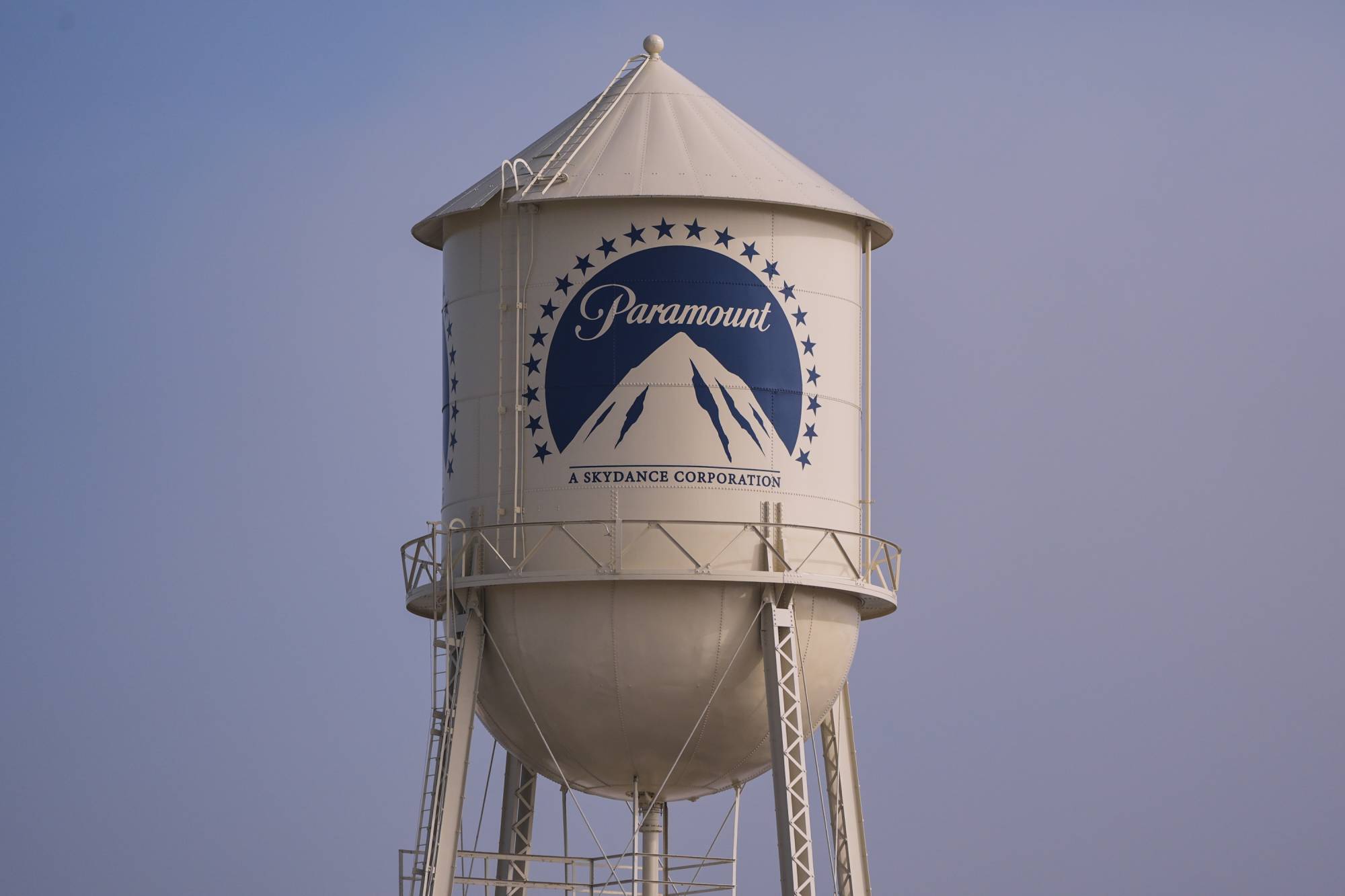
"caption": "The Paramount Pictures water tower is seen in Los Angeles on Dec. 17, 2025. ",
"credit": "Jae C. Hong/AP Photo",
"altTag": null,
"description": null,
"imgSizes": {
"medium": {
"file": "https://cdn.kqed.org/wp-content/uploads/sites/10/2026/09/AP26261652892340-2000x1333.jpg",
"width": 2000,
"height": 1333,
"mimeType": "image/jpeg"
},
"large": {
"file": "https://cdn.kqed.org/wp-content/uploads/sites/10/2026/09/AP26261652892340-2000x1333.jpg",
"width": 2000,
"height": 1333,
"mimeType": "image/jpeg"
},
"thumbnail": {
"file": "https://cdn.kqed.org/wp-content/uploads/sites/10/2026/09/AP26261652892340-160x107.jpg",
"width": 160,
"height": 107,
"mimeType": "image/jpeg"
},
"1536x1536": {
"file": "https://cdn.kqed.org/wp-content/uploads/sites/10/2026/09/AP26261652892340-1536x1024.jpg",
"width": 1536,
"height": 1024,
"mimeType": "image/jpeg"
},
"2048x2048": {
"file": "https://cdn.kqed.org/wp-content/uploads/sites/10/2026/09/AP26261652892340-2048x1365.jpg",
"width": 2048,
"height": 1365,
"mimeType": "image/jpeg"
},
"post-thumbnail": {
"file": "https://cdn.kqed.org/wp-content/uploads/sites/10/2026/09/AP26261652892340-672x372.jpg",
"width": 672,
"height": 372,
"mimeType": "image/jpeg"
},
"twentyfourteen-full-width": {
"file": "https://cdn.kqed.org/wp-content/uploads/sites/10/2026/09/AP26261652892340-1038x576.jpg",
"width": 1038,
"height": 576,
"mimeType": "image/jpeg"
},
"full-width": {
"file": "https://cdn.kqed.org/wp-content/uploads/sites/10/2026/09/AP26261652892340-2000x1333.jpg",
"width": 2000,
"height": 1333,
"mimeType": "image/jpeg"
},
"npr-cds-wide": {
"file": "https://cdn.kqed.org/wp-content/uploads/sites/10/2026/09/AP26261652892340-1200x675.jpg",
"width": 1200,
"height": 675,
"mimeType": "image/jpeg"
},
"npr-cds-square": {
"file": "https://cdn.kqed.org/wp-content/uploads/sites/10/2026/09/AP26261652892340-600x600.jpg",
"width": 600,
"height": 600,
"mimeType": "image/jpeg"
},
"kqedFullSize": {
"file": "https://cdn.kqed.org/wp-content/uploads/sites/10/2026/09/AP26261652892340-scaled-e1790020896368.jpg",
"width": 2000,
"height": 1334
}
},
"isLoading": false,
"fetchFailed": false
},
"news_12091890": {
"type": "attachments",
"id": "news_12091890",
"meta": {
"index": "attachments_1716263798",
"site": "news",
"id": "12091890",
"found": true
},
"title": "Several States Are Preparing Lawsuit To Challenge Paramount's Purchase Of Warner Bros. Discovery",
"publishDate": 1784574206,
"status": "inherit",
"parent": 12091887,
"modified": 1784574273,
"caption": "The Paramount logo is displayed on a water tower at the Paramount Studios lot on July 13, 2026, in Los Angeles, California. Twelve state attorneys general, led by California, filed a lawsuit seeking to block Paramount Skydance's proposed acquisition of Warner Bros. Discovery. They argue that the merger would violate the Clayton Act, an antitrust law that prevents anticompetitive practices. ",
"credit": "Justin Sullivan/Getty Images",
"altTag": null,
"description": null,
"imgSizes": {
"thumbnail": {
"file": "https://cdn.kqed.org/wp-content/uploads/sites/10/2026/07/ParamountStudiosGetty-160x113.jpg",
"width": 160,
"height": 113,
"mimeType": "image/jpeg"
},
"1536x1536": {
"file": "https://cdn.kqed.org/wp-content/uploads/sites/10/2026/07/ParamountStudiosGetty-1536x1081.jpg",
"width": 1536,
"height": 1081,
"mimeType": "image/jpeg"
},
"post-thumbnail": {
"file": "https://cdn.kqed.org/wp-content/uploads/sites/10/2026/07/ParamountStudiosGetty-672x372.jpg",
"width": 672,
"height": 372,
"mimeType": "image/jpeg"
},
"twentyfourteen-full-width": {
"file": "https://cdn.kqed.org/wp-content/uploads/sites/10/2026/07/ParamountStudiosGetty-1038x576.jpg",
"width": 1038,
"height": 576,
"mimeType": "image/jpeg"
},
"npr-cds-wide": {
"file": "https://cdn.kqed.org/wp-content/uploads/sites/10/2026/07/ParamountStudiosGetty-1200x675.jpg",
"width": 1200,
"height": 675,
"mimeType": "image/jpeg"
},
"npr-cds-square": {
"file": "https://cdn.kqed.org/wp-content/uploads/sites/10/2026/07/ParamountStudiosGetty-600x600.jpg",
"width": 600,
"height": 600,
"mimeType": "image/jpeg"
},
"kqedFullSize": {
"file": "https://cdn.kqed.org/wp-content/uploads/sites/10/2026/07/ParamountStudiosGetty.jpg",
"width": 2000,
"height": 1407
}
},
"isLoading": false,
"fetchFailed": false
},
"news_12076578": {
"type": "attachments",
"id": "news_12076578",
"meta": {
"index": "attachments_1716263798",
"site": "news",
"id": "12076578",
"found": true
},
"title": "20260309_MIGNON_20-KQED",
"publishDate": 1773679184,
"status": "inherit",
"parent": 12080800,
"modified": 1777075707,
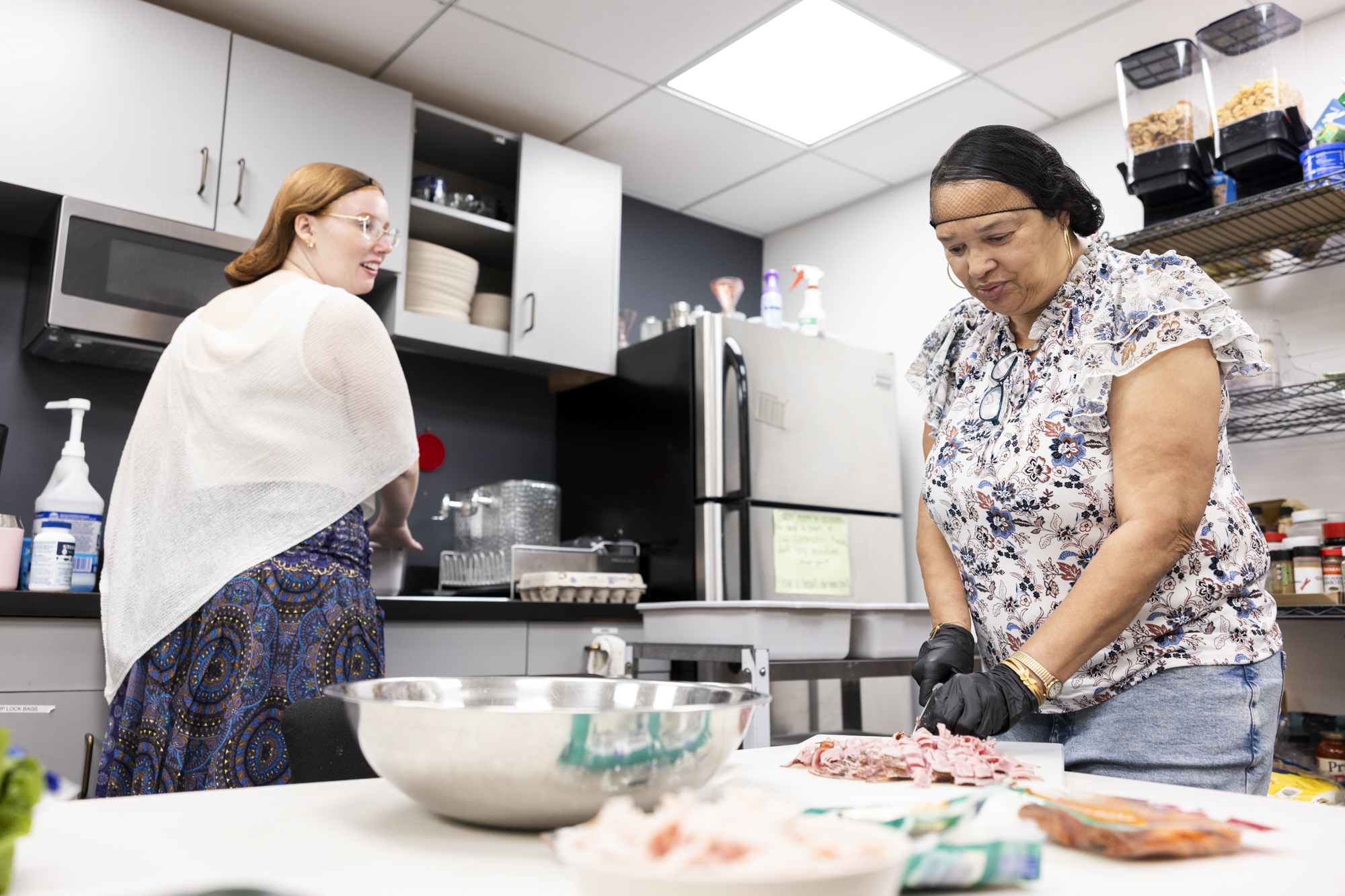
"caption": "Program director McKenzie Dowdle, left, helps Mignon Annette Poon prepare lunch for members and staff in the kitchen at Fountain House Hollywood, also known as “the clubhouse” in Los Angeles, on March 9, 2026. The clubhouse provides a non-clinical community for people living with serious mental illness who receive assistance in the Hollywood area. Poon works on the hospitality team, helping prepare meals for any members who want to stop in for lunch.",
"credit": "Alisha Jucevic/KQED",
"altTag": null,
"description": null,
"imgSizes": {
"thumbnail": {
"file": "https://cdn.kqed.org/wp-content/uploads/sites/10/2026/03/20260309_MIGNON_20-KQED-160x107.jpg",
"width": 160,
"height": 107,
"mimeType": "image/jpeg"
},
"1536x1536": {
"file": "https://cdn.kqed.org/wp-content/uploads/sites/10/2026/03/20260309_MIGNON_20-KQED-1536x1024.jpg",
"width": 1536,
"height": 1024,
"mimeType": "image/jpeg"
},
"post-thumbnail": {
"file": "https://cdn.kqed.org/wp-content/uploads/sites/10/2026/03/20260309_MIGNON_20-KQED-672x372.jpg",
"width": 672,
"height": 372,
"mimeType": "image/jpeg"
},
"twentyfourteen-full-width": {
"file": "https://cdn.kqed.org/wp-content/uploads/sites/10/2026/03/20260309_MIGNON_20-KQED-1038x576.jpg",
"width": 1038,
"height": 576,
"mimeType": "image/jpeg"
},
"npr-cds-wide": {
"file": "https://cdn.kqed.org/wp-content/uploads/sites/10/2026/03/20260309_MIGNON_20-KQED-1200x675.jpg",
"width": 1200,
"height": 675,
"mimeType": "image/jpeg"
},
"kqedFullSize": {
"file": "https://cdn.kqed.org/wp-content/uploads/sites/10/2026/03/20260309_MIGNON_20-KQED.jpg",
"width": 2000,
"height": 1333
}
},
"isLoading": false,
"fetchFailed": false
},
"news_12073663": {
"type": "attachments",
"id": "news_12073663",
"meta": {
"index": "attachments_1716263798",
"site": "news",
"id": "12073663",
"found": true
},
"title": "021726_avalancherescuers-p",
"publishDate": 1771427402,
"status": "inherit",
"parent": 12073662,
"modified": 1771527322,
"caption": "Emergency responders deploy to rescue six skiers and find others caught in an avalanche in the Castle Peak area near Truckee Feb. 17, 2026.",
"credit": "Courtesy of the Nevada County Sheriff's Office",
"altTag": null,
"description": null,
"imgSizes": {
"thumbnail": {
"file": "https://cdn.kqed.org/wp-content/uploads/sites/10/2026/02/021726_avalancherescuers-p-160x120.jpg",
"width": 160,
"height": 120,
"mimeType": "image/jpeg"
},
"post-thumbnail": {
"file": "https://cdn.kqed.org/wp-content/uploads/sites/10/2026/02/021726_avalancherescuers-p-672x372.jpg",
"width": 672,
"height": 372,
"mimeType": "image/jpeg"
},
"twentyfourteen-full-width": {
"file": "https://cdn.kqed.org/wp-content/uploads/sites/10/2026/02/021726_avalancherescuers-p-1038x576.jpg",
"width": 1038,
"height": 576,
"mimeType": "image/jpeg"
},
"npr-cds-wide": {
"file": "https://cdn.kqed.org/wp-content/uploads/sites/10/2026/02/021726_avalancherescuers-p-1200x675.jpg",
"width": 1200,
"height": 675,
"mimeType": "image/jpeg"
},
"kqedFullSize": {
"file": "https://cdn.kqed.org/wp-content/uploads/sites/10/2026/02/021726_avalancherescuers-p.jpg",
"width": 1200,
"height": 900
}
},
"isLoading": false,
"fetchFailed": false
},
"news_12040496": {
"type": "attachments",
"id": "news_12040496",
"meta": {
"index": "attachments_1716263798",
"site": "news",
"id": "12040496",
"found": true
},
"title": "010425_Golden-Globes_GETTY_CM_01 copy",
"publishDate": 1747418658,
"status": "inherit",
"parent": 12040495,
"modified": 1747418690,
"caption": "Technicians work on a TV set as they add the last touches the day before the Golden Globes at Beverly Hilton in Beverly Hills on Jan. 4, 2025.\n",
"credit": "Etienne Laurent/AFP via Getty Images",
"altTag": null,
"description": null,
"imgSizes": {
"medium": {
"file": "https://cdn.kqed.org/wp-content/uploads/sites/10/2025/05/010425_Golden-Globes_GETTY_CM_01-copy-800x533.jpg",
"width": 800,
"height": 533,
"mimeType": "image/jpeg"
},
"large": {
"file": "https://cdn.kqed.org/wp-content/uploads/sites/10/2025/05/010425_Golden-Globes_GETTY_CM_01-copy-1020x680.jpg",
"width": 1020,
"height": 680,
"mimeType": "image/jpeg"
},
"thumbnail": {
"file": "https://cdn.kqed.org/wp-content/uploads/sites/10/2025/05/010425_Golden-Globes_GETTY_CM_01-copy-160x107.jpg",
"width": 160,
"height": 107,
"mimeType": "image/jpeg"
},
"1536x1536": {
"file": "https://cdn.kqed.org/wp-content/uploads/sites/10/2025/05/010425_Golden-Globes_GETTY_CM_01-copy-1536x1024.jpg",
"width": 1536,
"height": 1024,
"mimeType": "image/jpeg"
},
"post-thumbnail": {
"file": "https://cdn.kqed.org/wp-content/uploads/sites/10/2025/05/010425_Golden-Globes_GETTY_CM_01-copy-672x372.jpg",
"width": 672,
"height": 372,
"mimeType": "image/jpeg"
},
"twentyfourteen-full-width": {
"file": "https://cdn.kqed.org/wp-content/uploads/sites/10/2025/05/010425_Golden-Globes_GETTY_CM_01-copy-1038x576.jpg",
"width": 1038,
"height": 576,
"mimeType": "image/jpeg"
},
"full-width": {
"file": "https://cdn.kqed.org/wp-content/uploads/sites/10/2025/05/010425_Golden-Globes_GETTY_CM_01-copy-1920x1280.jpg",
"width": 1920,
"height": 1280,
"mimeType": "image/jpeg"
},
"kqedFullSize": {
"file": "https://cdn.kqed.org/wp-content/uploads/sites/10/2025/05/010425_Golden-Globes_GETTY_CM_01-copy.jpg",
"width": 2000,
"height": 1333
}
},
"isLoading": false,
"fetchFailed": false
},
"news_12029423": {
"type": "attachments",
"id": "news_12029423",
"meta": {
"index": "attachments_1716263798",
"site": "news",
"id": "12029423",
"found": true
},
"title": "Cinema1",
"publishDate": 1741013524,
"status": "inherit",
"parent": 12029420,
"modified": 1741013712,
"caption": null,
"credit": "Saul Gonzalez/The California Report",
"altTag": null,
"description": "Film production at Cine-Gear Expo on the Warner Brothers lot.",
"imgSizes": {
"medium": {
"file": "https://cdn.kqed.org/wp-content/uploads/sites/10/2025/03/Cinema1-800x600.jpeg",
"width": 800,
"height": 600,
"mimeType": "image/jpeg"
},
"large": {
"file": "https://cdn.kqed.org/wp-content/uploads/sites/10/2025/03/Cinema1-1020x765.jpeg",
"width": 1020,
"height": 765,
"mimeType": "image/jpeg"
},
"thumbnail": {
"file": "https://cdn.kqed.org/wp-content/uploads/sites/10/2025/03/Cinema1-160x120.jpeg",
"width": 160,
"height": 120,
"mimeType": "image/jpeg"
},
"1536x1536": {
"file": "https://cdn.kqed.org/wp-content/uploads/sites/10/2025/03/Cinema1-1536x1152.jpeg",
"width": 1536,
"height": 1152,
"mimeType": "image/jpeg"
},
"2048x2048": {
"file": "https://cdn.kqed.org/wp-content/uploads/sites/10/2025/03/Cinema1-2048x1536.jpeg",
"width": 2048,
"height": 1536,
"mimeType": "image/jpeg"
},
"post-thumbnail": {
"file": "https://cdn.kqed.org/wp-content/uploads/sites/10/2025/03/Cinema1-672x372.jpeg",
"width": 672,
"height": 372,
"mimeType": "image/jpeg"
},
"twentyfourteen-full-width": {
"file": "https://cdn.kqed.org/wp-content/uploads/sites/10/2025/03/Cinema1-1038x576.jpeg",
"width": 1038,
"height": 576,
"mimeType": "image/jpeg"
},
"full-width": {
"file": "https://cdn.kqed.org/wp-content/uploads/sites/10/2025/03/Cinema1-1920x1440.jpeg",
"width": 1920,
"height": 1440,
"mimeType": "image/jpeg"
},
"kqedFullSize": {
"file": "https://cdn.kqed.org/wp-content/uploads/sites/10/2025/03/Cinema1-scaled.jpeg",
"width": 2560,
"height": 1920
}
},
"isLoading": false,
"fetchFailed": false
},
"news_11959570": {
"type": "attachments",
"id": "news_11959570",
"meta": {
"index": "attachments_1716263798",
"site": "news",
"id": "11959570",
"found": true
},
"parent": 0,
"imgSizes": {
"twentyfourteen-full-width": {
"file": "https://ww2.kqed.org/app/uploads/sites/10/2023/08/230830-Hollywood-Food-Stylist-LM-01-KQED-1038x576.jpg",
"width": 1038,
"mimeType": "image/jpeg",
"height": 576
},
"thumbnail": {
"file": "https://ww2.kqed.org/app/uploads/sites/10/2023/08/230830-Hollywood-Food-Stylist-LM-01-KQED-160x107.jpg",
"width": 160,
"mimeType": "image/jpeg",
"height": 107
},
"post-thumbnail": {
"file": "https://ww2.kqed.org/app/uploads/sites/10/2023/08/230830-Hollywood-Food-Stylist-LM-01-KQED-672x372.jpg",
"width": 672,
"mimeType": "image/jpeg",
"height": 372
},
"kqedFullSize": {
"file": "https://ww2.kqed.org/app/uploads/sites/10/2023/08/230830-Hollywood-Food-Stylist-LM-01-KQED.jpg",
"width": 2000,
"height": 1333
},
"large": {
"file": "https://ww2.kqed.org/app/uploads/sites/10/2023/08/230830-Hollywood-Food-Stylist-LM-01-KQED-1020x680.jpg",
"width": 1020,
"mimeType": "image/jpeg",
"height": 680
},
"1536x1536": {
"file": "https://ww2.kqed.org/app/uploads/sites/10/2023/08/230830-Hollywood-Food-Stylist-LM-01-KQED-1536x1024.jpg",
"width": 1536,
"mimeType": "image/jpeg",
"height": 1024
},
"full-width": {
"file": "https://ww2.kqed.org/app/uploads/sites/10/2023/08/230830-Hollywood-Food-Stylist-LM-01-KQED-1920x1280.jpg",
"width": 1920,
"mimeType": "image/jpeg",
"height": 1280
},
"medium": {
"file": "https://ww2.kqed.org/app/uploads/sites/10/2023/08/230830-Hollywood-Food-Stylist-LM-01-KQED-800x533.jpg",
"width": 800,
"mimeType": "image/jpeg",
"height": 533
}
},
"publishDate": 1693414137,
"modified": 1693426424,
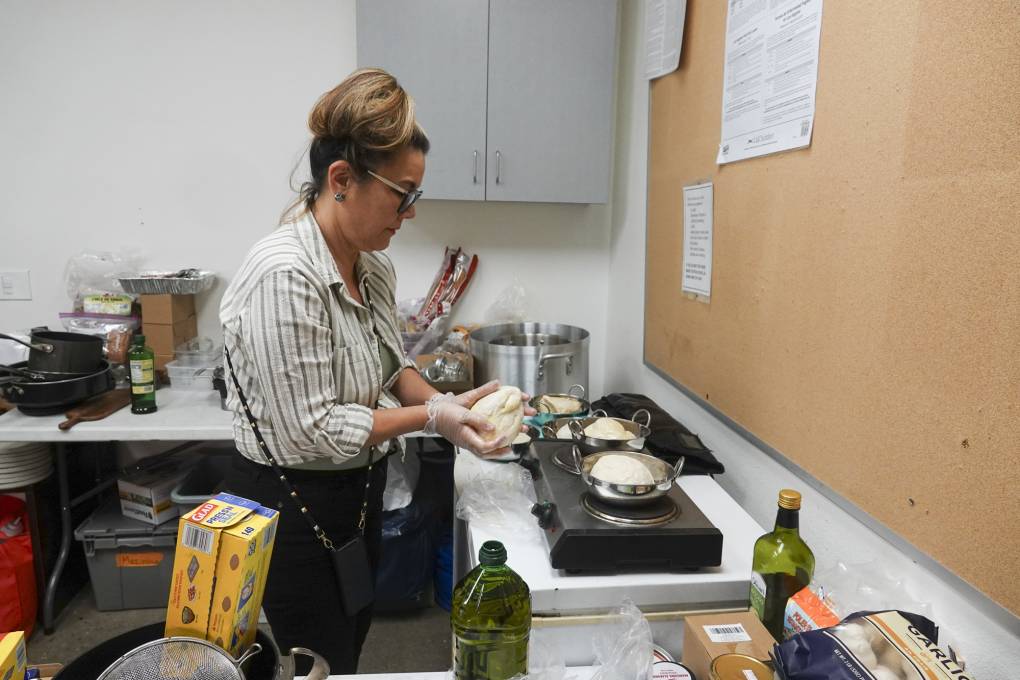
"caption": "Hollywood food stylist, Melissa McSorley, preps pizza dough in her work kitchen on the set of the Hulu television series 'Good Trouble.'",
"description": null,
"title": "230830-Hollywood Food Stylist-LM-01-KQED",
"credit": "Lisa Morehouse/KQED",
"status": "inherit",
"altTag": "A woman with her hair tied up in a bun, preps pizza dough in her hands in a commercial kitchen.",
"isLoading": false,
"fetchFailed": false
},
"news_11958791": {
"type": "attachments",
"id": "news_11958791",
"meta": {
"index": "attachments_1716263798",
"site": "news",
"id": "11958791",
"found": true
},
"parent": 11958785,
"imgSizes": {
"twentyfourteen-full-width": {
"file": "https://ww2.kqed.org/app/uploads/sites/10/2023/08/GettyImages-1558852156-1038x576.jpg",
"width": 1038,
"mimeType": "image/jpeg",
"height": 576
},
"thumbnail": {
"file": "https://ww2.kqed.org/app/uploads/sites/10/2023/08/GettyImages-1558852156-160x110.jpg",
"width": 160,
"mimeType": "image/jpeg",
"height": 110
},
"post-thumbnail": {
"file": "https://ww2.kqed.org/app/uploads/sites/10/2023/08/GettyImages-1558852156-672x372.jpg",
"width": 672,
"mimeType": "image/jpeg",
"height": 372
},
"kqedFullSize": {
"file": "https://ww2.kqed.org/app/uploads/sites/10/2023/08/GettyImages-1558852156-scaled.jpg",
"width": 2560,
"height": 1754
},
"2048x2048": {
"file": "https://ww2.kqed.org/app/uploads/sites/10/2023/08/GettyImages-1558852156-2048x1403.jpg",
"width": 2048,
"mimeType": "image/jpeg",
"height": 1403
},
"large": {
"file": "https://ww2.kqed.org/app/uploads/sites/10/2023/08/GettyImages-1558852156-1020x699.jpg",
"width": 1020,
"mimeType": "image/jpeg",
"height": 699
},
"1536x1536": {
"file": "https://ww2.kqed.org/app/uploads/sites/10/2023/08/GettyImages-1558852156-1536x1052.jpg",
"width": 1536,
"mimeType": "image/jpeg",
"height": 1052
},
"full-width": {
"file": "https://ww2.kqed.org/app/uploads/sites/10/2023/08/GettyImages-1558852156-1920x1315.jpg",
"width": 1920,
"mimeType": "image/jpeg",
"height": 1315
},
"medium": {
"file": "https://ww2.kqed.org/app/uploads/sites/10/2023/08/GettyImages-1558852156-800x548.jpg",
"width": 800,
"mimeType": "image/jpeg",
"height": 548
}
},
"publishDate": 1692731850,
"modified": 1694699755,
"caption": "Members of SAG-AFTRA hold signs as they picket in front of Netflix headquarters on July 20, 2023 in Los Gatos, California. Hollywood productions have stopped across the country as both writers and actors went on strike after their contracts expired with the Alliance of Motion Picture and Television Producers (AMPTP). This is the first time since 1960 that both unions have gone on strike at the same time. Both unions are fighting for contracts that prevent an A.I. from replacing them at their jobs as well as better pay when working on shows for streaming services.",
"description": null,
"title": "SAG-AFTRA Strikers And Supporters Rally Across The U.S.",
"credit": "Justin Sullivan/Getty Images",
"status": "inherit",
"altTag": "Hollywood Strike",
"isLoading": false,
"fetchFailed": false
},
"news_11926003": {
"type": "attachments",
"id": "news_11926003",
"meta": {
"index": "attachments_1716263798",
"site": "news",
"id": "11926003",
"found": true
},
"parent": 0,
"imgSizes": {
"twentyfourteen-full-width": {
"file": "https://ww2.kqed.org/app/uploads/sites/10/2022/09/RS58667_Split-image-Mag-9.16.22-qut-1038x576.jpg",
"width": 1038,
"mimeType": "image/jpeg",
"height": 576
},
"thumbnail": {
"file": "https://ww2.kqed.org/app/uploads/sites/10/2022/09/RS58667_Split-image-Mag-9.16.22-qut-160x90.jpg",
"width": 160,
"mimeType": "image/jpeg",
"height": 90
},
"post-thumbnail": {
"file": "https://ww2.kqed.org/app/uploads/sites/10/2022/09/RS58667_Split-image-Mag-9.16.22-qut-672x372.jpg",
"width": 672,
"mimeType": "image/jpeg",
"height": 372
},
"kqedFullSize": {
"file": "https://ww2.kqed.org/app/uploads/sites/10/2022/09/RS58667_Split-image-Mag-9.16.22-qut.jpg",
"width": 1920,
"height": 1080
},
"large": {
"file": "https://ww2.kqed.org/app/uploads/sites/10/2022/09/RS58667_Split-image-Mag-9.16.22-qut-1020x574.jpg",
"width": 1020,
"mimeType": "image/jpeg",
"height": 574
},
"1536x1536": {
"file": "https://ww2.kqed.org/app/uploads/sites/10/2022/09/RS58667_Split-image-Mag-9.16.22-qut-1536x864.jpg",
"width": 1536,
"mimeType": "image/jpeg",
"height": 864
},
"medium": {
"file": "https://ww2.kqed.org/app/uploads/sites/10/2022/09/RS58667_Split-image-Mag-9.16.22-qut-800x450.jpg",
"width": 800,
"mimeType": "image/jpeg",
"height": 450
}
},
"publishDate": 1663354334,
"modified": 1663354391,
"caption": "Pioneering Asian-American actress Anna May Wong (left) poses with a cut rose. Wong's image will appear on the quarter this year; she is the first Asian-American to appear on U.S. currency. Emmett Chen-Ran (right) with his mother, Yanfei Ran, in China in 2001 or 2002. When Chen-Ran told his parents he is transgender in high school, he grappled with whether he should tell them in the language he knows best, English, or in their native Chinese.",
"description": "Pioneering Asian-American actress Anna May Wong (left) poses with a cut rose. Wong's image will appear on the quarter this year; she is the first Asian-American to appear on U.S. currency. Emmett Chen-Ran (right) with his mother, Yanfei Ran, in China in 2001 or 2002. When Chen-Ran told his parents he is transgender in high school, he grappled with whether he should tell them in the language he knows best, English, or in their native Chinese.",
"title": "RS58667_Split image Mag 9.16.22-qut",
"credit": "(Courtesy of General Photographic Agency/Getty Images and Emmett Chen-Ran)",
"status": "inherit",
"altTag": null,
"isLoading": false,
"fetchFailed": false
},
"news_11874738": {
"type": "attachments",
"id": "news_11874738",
"meta": {
"index": "attachments_1716263798",
"site": "news",
"id": "11874738",
"found": true
},
"parent": 11874704,
"imgSizes": {
"twentyfourteen-full-width": {
"file": "https://ww2.kqed.org/app/uploads/sites/10/2021/05/Arnett-Holding-Photo-1038x576.jpg",
"width": 1038,
"mimeType": "image/jpeg",
"height": 576
},
"thumbnail": {
"file": "https://ww2.kqed.org/app/uploads/sites/10/2021/05/Arnett-Holding-Photo-160x106.jpg",
"width": 160,
"mimeType": "image/jpeg",
"height": 106
},
"post-thumbnail": {
"file": "https://ww2.kqed.org/app/uploads/sites/10/2021/05/Arnett-Holding-Photo-672x372.jpg",
"width": 672,
"mimeType": "image/jpeg",
"height": 372
},
"kqedFullSize": {
"file": "https://ww2.kqed.org/app/uploads/sites/10/2021/05/Arnett-Holding-Photo.jpg",
"width": 1920,
"height": 1266
},
"large": {
"file": "https://ww2.kqed.org/app/uploads/sites/10/2021/05/Arnett-Holding-Photo-1020x673.jpg",
"width": 1020,
"mimeType": "image/jpeg",
"height": 673
},
"1536x1536": {
"file": "https://ww2.kqed.org/app/uploads/sites/10/2021/05/Arnett-Holding-Photo-1536x1013.jpg",
"width": 1536,
"mimeType": "image/jpeg",
"height": 1013
},
"medium": {
"file": "https://ww2.kqed.org/app/uploads/sites/10/2021/05/Arnett-Holding-Photo-800x528.jpg",
"width": 800,
"mimeType": "image/jpeg",
"height": 528
}
},
"publishDate": 1621625920,
"modified": 1621626096,
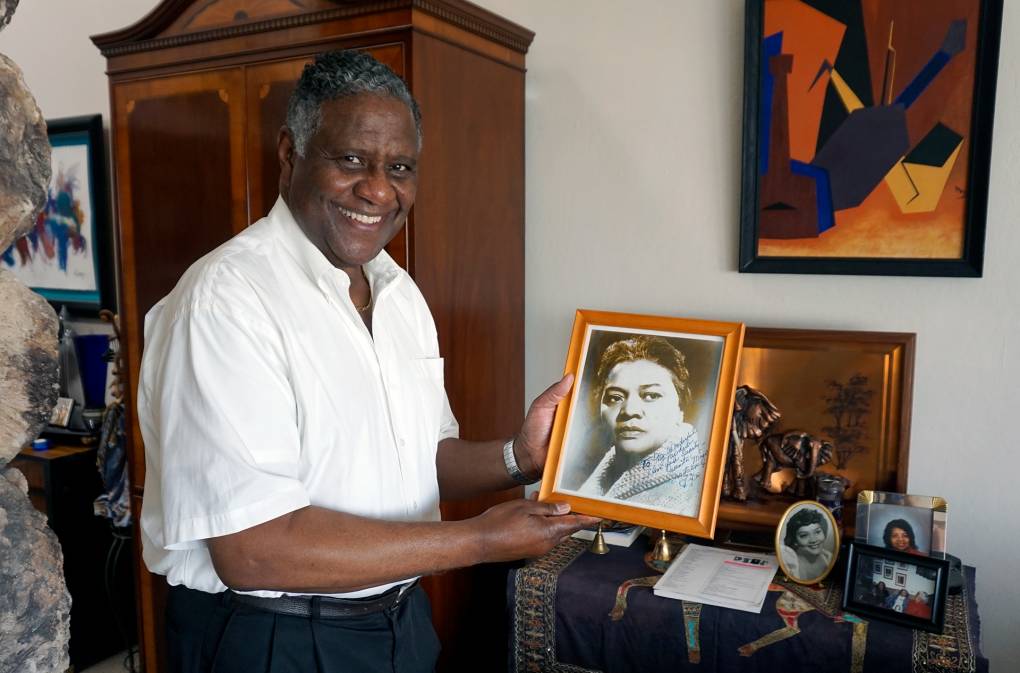
"caption": "Arnett Moore holds of photo of his late aunt, actress Juanita Moore. He's determined to get Juanita a star on the Hollywood Walk of Fame. ",
"description": null,
"title": "Arnett Holding Photo",
"credit": "Amanda Font/KQED",
"status": "inherit",
"altTag": null,
"isLoading": false,
"fetchFailed": false
},
"news_11802510": {
"type": "attachments",
"id": "news_11802510",
"meta": {
"index": "attachments_1716263798",
"site": "news",
"id": "11802510",
"found": true
},
"parent": 11801357,
"imgSizes": {
"apple_news_ca_landscape_5_5": {
"file": "https://ww2.kqed.org/app/uploads/sites/10/2020/02/RS41376_man-in-black-sleeve-shirt-holding-camera-3488031-2-qut-1044x783.jpg",
"width": 1044,
"mimeType": "image/jpeg",
"height": 783
},
"apple_news_ca_square_4_0": {
"file": "https://ww2.kqed.org/app/uploads/sites/10/2020/02/RS41376_man-in-black-sleeve-shirt-holding-camera-3488031-2-qut-470x470.jpg",
"width": 470,
"mimeType": "image/jpeg",
"height": 470
},
"twentyfourteen-full-width": {
"file": "https://ww2.kqed.org/app/uploads/sites/10/2020/02/RS41376_man-in-black-sleeve-shirt-holding-camera-3488031-2-qut-1038x576.jpg",
"width": 1038,
"mimeType": "image/jpeg",
"height": 576
},
"thumbnail": {
"file": "https://ww2.kqed.org/app/uploads/sites/10/2020/02/RS41376_man-in-black-sleeve-shirt-holding-camera-3488031-2-qut-160x100.jpg",
"width": 160,
"mimeType": "image/jpeg",
"height": 100
},
"post-thumbnail": {
"file": "https://ww2.kqed.org/app/uploads/sites/10/2020/02/RS41376_man-in-black-sleeve-shirt-holding-camera-3488031-2-qut-672x372.jpg",
"width": 672,
"mimeType": "image/jpeg",
"height": 372
},
"kqedFullSize": {
"file": "https://ww2.kqed.org/app/uploads/sites/10/2020/02/RS41376_man-in-black-sleeve-shirt-holding-camera-3488031-2-qut.jpg",
"width": 1887,
"height": 1183
},
"apple_news_ca_landscape_4_7": {
"file": "https://ww2.kqed.org/app/uploads/sites/10/2020/02/RS41376_man-in-black-sleeve-shirt-holding-camera-3488031-2-qut-632x474.jpg",
"width": 632,
"mimeType": "image/jpeg",
"height": 474
},
"large": {
"file": "https://ww2.kqed.org/app/uploads/sites/10/2020/02/RS41376_man-in-black-sleeve-shirt-holding-camera-3488031-2-qut-1020x639.jpg",
"width": 1020,
"mimeType": "image/jpeg",
"height": 639
},
"apple_news_ca_landscape_4_0": {
"file": "https://ww2.kqed.org/app/uploads/sites/10/2020/02/RS41376_man-in-black-sleeve-shirt-holding-camera-3488031-2-qut-536x402.jpg",
"width": 536,
"mimeType": "image/jpeg",
"height": 402
},
"apple_news_ca_portrait_12_9": {
"file": "https://ww2.kqed.org/app/uploads/sites/10/2020/02/RS41376_man-in-black-sleeve-shirt-holding-camera-3488031-2-qut-1122x1183.jpg",
"width": 1122,
"mimeType": "image/jpeg",
"height": 1183
},
"medium": {
"file": "https://ww2.kqed.org/app/uploads/sites/10/2020/02/RS41376_man-in-black-sleeve-shirt-holding-camera-3488031-2-qut-800x502.jpg",
"width": 800,
"mimeType": "image/jpeg",
"height": 502
},
"apple_news_ca_portrait_4_0": {
"file": "https://ww2.kqed.org/app/uploads/sites/10/2020/02/RS41376_man-in-black-sleeve-shirt-holding-camera-3488031-2-qut-354x472.jpg",
"width": 354,
"mimeType": "image/jpeg",
"height": 472
},
"apple_news_ca_portrait_9_7": {
"file": "https://ww2.kqed.org/app/uploads/sites/10/2020/02/RS41376_man-in-black-sleeve-shirt-holding-camera-3488031-2-qut-840x1120.jpg",
"width": 840,
"mimeType": "image/jpeg",
"height": 1120
},
"apple_news_ca_landscape_12_9": {
"file": "https://ww2.kqed.org/app/uploads/sites/10/2020/02/RS41376_man-in-black-sleeve-shirt-holding-camera-3488031-2-qut-1832x1183.jpg",
"width": 1832,
"mimeType": "image/jpeg",
"height": 1183
},
"apple_news_ca_square_9_7": {
"file": "https://ww2.kqed.org/app/uploads/sites/10/2020/02/RS41376_man-in-black-sleeve-shirt-holding-camera-3488031-2-qut-1104x1104.jpg",
"width": 1104,
"mimeType": "image/jpeg",
"height": 1104
},
"apple_news_ca_portrait_4_7": {
"file": "https://ww2.kqed.org/app/uploads/sites/10/2020/02/RS41376_man-in-black-sleeve-shirt-holding-camera-3488031-2-qut-414x552.jpg",
"width": 414,
"mimeType": "image/jpeg",
"height": 552
},
"apple_news_ca_square_12_9": {
"file": "https://ww2.kqed.org/app/uploads/sites/10/2020/02/RS41376_man-in-black-sleeve-shirt-holding-camera-3488031-2-qut-1472x1183.jpg",
"width": 1472,
"mimeType": "image/jpeg",
"height": 1183
},
"apple_news_ca_portrait_5_5": {
"file": "https://ww2.kqed.org/app/uploads/sites/10/2020/02/RS41376_man-in-black-sleeve-shirt-holding-camera-3488031-2-qut-687x916.jpg",
"width": 687,
"mimeType": "image/jpeg",
"height": 916
},
"apple_news_ca_square_4_7": {
"file": "https://ww2.kqed.org/app/uploads/sites/10/2020/02/RS41376_man-in-black-sleeve-shirt-holding-camera-3488031-2-qut-550x550.jpg",
"width": 550,
"mimeType": "image/jpeg",
"height": 550
},
"apple_news_ca_landscape_9_7": {
"file": "https://ww2.kqed.org/app/uploads/sites/10/2020/02/RS41376_man-in-black-sleeve-shirt-holding-camera-3488031-2-qut-1376x1032.jpg",
"width": 1376,
"mimeType": "image/jpeg",
"height": 1032
},
"apple_news_ca_square_5_5": {
"file": "https://ww2.kqed.org/app/uploads/sites/10/2020/02/RS41376_man-in-black-sleeve-shirt-holding-camera-3488031-2-qut-912x912.jpg",
"width": 912,
"mimeType": "image/jpeg",
"height": 912
}
},
"publishDate": 1582160884,
"modified": 1582161920,
"caption": "SAG-AFTRA seeks to shift on-set culture with new protocols for filming scenes involving physical intimacy.",
"description": "SAG-AFTRA seeks to shift on-set culture with new protocols for filming scenes involving physical intimacy.",
"title": "RS41376_man-in-black-sleeve-shirt-holding-camera-3488031-2-qut",
"credit": "Luis Quintero/Pexels",
"status": "inherit",
"isLoading": false,
"fetchFailed": false
},
"arts_13872424": {
"type": "attachments",
"id": "arts_13872424",
"meta": {
"index": "attachments_1716263798",
"site": "arts",
"id": "13872424",
"found": true
},
"parent": 13872423,
"imgSizes": {
"twentyfourteen-full-width": {
"file": "https://ww2.kqed.org/app/uploads/sites/2/2020/01/gettyimages-1187941558_wide-c889359aea8feb1f022a0af6becdb8a4cca9c580-1038x576.jpg",
"width": 1038,
"mimeType": "image/jpeg",
"height": 576
},
"thumbnail": {
"file": "https://ww2.kqed.org/app/uploads/sites/2/2020/01/gettyimages-1187941558_wide-c889359aea8feb1f022a0af6becdb8a4cca9c580-160x90.jpg",
"width": 160,
"mimeType": "image/jpeg",
"height": 90
},
"post-thumbnail": {
"file": "https://ww2.kqed.org/app/uploads/sites/2/2020/01/gettyimages-1187941558_wide-c889359aea8feb1f022a0af6becdb8a4cca9c580-672x372.jpg",
"width": 672,
"mimeType": "image/jpeg",
"height": 372
},
"kqedFullSize": {
"file": "https://ww2.kqed.org/app/uploads/sites/2/2020/01/gettyimages-1187941558_wide-c889359aea8feb1f022a0af6becdb8a4cca9c580-e1578337447784.jpg",
"width": 1920,
"height": 1080
},
"large": {
"file": "https://ww2.kqed.org/app/uploads/sites/2/2020/01/gettyimages-1187941558_wide-c889359aea8feb1f022a0af6becdb8a4cca9c580-1020x574.jpg",
"width": 1020,
"mimeType": "image/jpeg",
"height": 574
},
"complete_open_graph": {
"file": "https://ww2.kqed.org/app/uploads/sites/2/2020/01/gettyimages-1187941558_wide-c889359aea8feb1f022a0af6becdb8a4cca9c580-1200x675.jpg",
"width": 1200,
"mimeType": "image/jpeg",
"height": 675
},
"full-width": {
"file": "https://ww2.kqed.org/app/uploads/sites/2/2020/01/gettyimages-1187941558_wide-c889359aea8feb1f022a0af6becdb8a4cca9c580-1920x1080.jpg",
"width": 1920,
"mimeType": "image/jpeg",
"height": 1080
},
"medium": {
"file": "https://ww2.kqed.org/app/uploads/sites/2/2020/01/gettyimages-1187941558_wide-c889359aea8feb1f022a0af6becdb8a4cca9c580-800x450.jpg",
"width": 800,
"mimeType": "image/jpeg",
"height": 450
},
"medium_large": {
"file": "https://ww2.kqed.org/app/uploads/sites/2/2020/01/gettyimages-1187941558_wide-c889359aea8feb1f022a0af6becdb8a4cca9c580-768x432.jpg",
"width": 768,
"mimeType": "image/jpeg",
"height": 432
}
},
"publishDate": 1578336857,
"modified": 1578337474,
"caption": "Harvey Weinstein (center) leaves a bail hearing last month in New York City. The former Hollywood megaproducer has been accused of sexual misconduct by dozens of women. He now faces five charges in New York City.",
"description": "Harvey Weinstein (center) leaves a bail hearing last month in New York City. The former Hollywood megaproducer has been accused of sexual misconduct by dozens of women. He now faces five charges in New York City.",
"title": "Harvey Weinstein (center) leaves a bail hearing last month in New York City. The former Hollywood megaproducer has been accused of sexual misconduct by dozens of women. He now faces five charges in New York City.",
"credit": "Jeenah Moon/Getty Images",
"status": "inherit",
"isLoading": false,
"fetchFailed": false
}
},
"audioPlayerReducer": {
"postId": "stream_live",
"isPaused": true,
"isPlaying": false,
"pfsActive": false,
"pledgeModalIsOpen": true,
"playerDrawerIsOpen": false,
"liveAudioPlayStartedAt": 0,
"liveAudioPlayContext": ""
},
"authorsReducer": {
"byline_news_12100834": {
"type": "authors",
"id": "byline_news_12100834",
"meta": {
"override": true
},
"slug": "byline_news_12100834",
"name": "Wyatte Grantham-Philips and Michael R. Sisak, AP",
"isLoading": false
},
"byline_news_12080800": {
"type": "authors",
"id": "byline_news_12080800",
"meta": {
"override": true
},
"slug": "byline_news_12080800",
"name": "Lee Romney",
"isLoading": false
},
"byline_news_12040495": {
"type": "authors",
"id": "byline_news_12040495",
"meta": {
"override": true
},
"slug": "byline_news_12040495",
"name": "\u003ca href=\"https://calmatters.org/author/yue-yu/\">Yue Stella Yu\u003c/a>, CalMatters",
"isLoading": false
},
"byline_news_11926009": {
"type": "authors",
"id": "byline_news_11926009",
"meta": {
"override": true
},
"slug": "byline_news_11926009",
"name": "KQED News Staff",
"isLoading": false
},
"byline_arts_13872423": {
"type": "authors",
"id": "byline_arts_13872423",
"meta": {
"override": true
},
"slug": "byline_arts_13872423",
"name": "Rose Friedman, Colin Dwyer",
"isLoading": false
},
"rachael-myrow": {
"type": "authors",
"id": "251",
"meta": {
"index": "authors_1716337520",
"id": "251",
"found": true
},
"name": "Rachael Myrow",
"firstName": "Rachael",
"lastName": "Myrow",
"slug": "rachael-myrow",
"email": "rmyrow@kqed.org",
"display_author_email": true,
"staff_mastheads": [
"news"
],
"title": "Senior Editor of KQED's Silicon Valley News Desk",
"bio": "• I write and edit stories about how Silicon Valley power and policies shape everyday life in California. I’m also passionate about making Bay Area history and culture more accessible to a broad public. • I’ve been a journalist for most of my life, starting in high school with The Franklin Press in Los Angeles, where I grew up. While earning my first degree in English at UC Berkeley, I got my start in public radio at KALX-FM. After completing a second degree in journalism at Cal, I landed my first professional job at Marketplace, then moved on to KPCC (now LAist), and then KQED, where I hosted The California Report for more than seven years. • My reporting has appeared on NPR, The World, WBUR’s \u003ci>Here & Now\u003c/i>, and the BBC. I also guest host for KQED’s \u003ci>Forum\u003c/i>, as well as the Commonwealth Club in San Francisco. • I speak periodically on media, democracy and technology issues, and do voiceover work for documentaries and educational video projects. • Outside of the studio, you'll find me hiking Bay Area trails and whipping up Insta-ready meals in my kitchen. • I do not accept gifts, money, or favors from anyone connected to my reporting, I don't pay people for information, and I do not support or donate to political causes. • I strive to treat the people I report on with fairness, honesty, and respect. I also recognize there are often multiple sides to a story and work to verify information through multiple sources and documentation. If I get something wrong, I correct it.",
"avatar": "https://secure.gravatar.com/avatar/3ed8a3c5f26025e4a805ba634cda8cd764906b97438a6d9ce216b044e340da4e?s=600&d=blank&r=g",
"twitter": "rachaelmyrow",
"bluesky": null,
"facebook": null,
"instagram": null,
"linkedin": "https://www.linkedin.com/in/rachaelmyrow/",
"sites": [
{
"site": "arts",
"roles": [
"administrator"
]
},
{
"site": "news",
"roles": [
"edit_others_posts",
"editor"
]
},
{
"site": "futureofyou",
"roles": [
"editor"
]
},
{
"site": "bayareabites",
"roles": [
"editor"
]
},
{
"site": "stateofhealth",
"roles": [
"editor"
]
},
{
"site": "science",
"roles": [
"editor"
]
},
{
"site": "food",
"roles": [
"editor"
]
},
{
"site": "forum",
"roles": [
"editor"
]
},
{
"site": "liveblog",
"roles": [
"author"
]
}
],
"headData": {
"title": "Rachael Myrow | KQED",
"description": "Senior Editor of KQED's Silicon Valley News Desk",
"ogImgSrc": "https://secure.gravatar.com/avatar/3ed8a3c5f26025e4a805ba634cda8cd764906b97438a6d9ce216b044e340da4e?s=600&d=blank&r=g",
"twImgSrc": "https://secure.gravatar.com/avatar/3ed8a3c5f26025e4a805ba634cda8cd764906b97438a6d9ce216b044e340da4e?s=600&d=blank&r=g"
},
"isLoading": false,
"link": "/author/rachael-myrow"
},
"lmorehouse": {
"type": "authors",
"id": "3229",
"meta": {
"index": "authors_1716337520",
"id": "3229",
"found": true
},
"name": "Lisa Morehouse",
"firstName": "Lisa",
"lastName": "Morehouse",
"slug": "lmorehouse",
"email": "morehouse.lisa@gmail.com",
"display_author_email": false,
"staff_mastheads": [],
"title": "KQED Contributor",
"bio": "Lisa Morehouse is an award-winning public radio and print journalist, who has filed for National Public Radio, American Public Media, KQED Public Radio, Edutopia, and McSweeney’s. Her reporting has taken her from Samoan traveling circuses to Mississippi Delta classrooms to the homes of Lao refugees in rural Iowa. In addition to reporting, she teaches radio production to at-risk youth in the Bay Area. Her series \u003ca href=\"http://afterthegoldrushradio.com/\">After the Gold Rush\u003c/a> featured the changing industries, populations and identities of rural towns throughout California. She’s now producing \u003ca href=\"http://www.californiafoodways.com/\">California Foodways\u003c/a>, a series exploring the intersections of food, culture, economics, history and labor. Follow along on the \u003ca href=\"https://www.facebook.com/californiafoodways?ref=hl\">Facebook page\u003c/a> or on Twitter @cafoodways.",
"avatar": "https://secure.gravatar.com/avatar/dae74b002a6e256f39abb19d6f5acaea?s=600&d=blank&r=g",
"twitter": null,
"facebook": null,
"instagram": null,
"linkedin": null,
"sites": [
{
"site": "",
"roles": [
"editor"
]
},
{
"site": "news",
"roles": [
"author"
]
}
],
"headData": {
"title": "Lisa Morehouse | KQED",
"description": "KQED Contributor",
"ogImgSrc": "https://secure.gravatar.com/avatar/dae74b002a6e256f39abb19d6f5acaea?s=600&d=blank&r=g",
"twImgSrc": "https://secure.gravatar.com/avatar/dae74b002a6e256f39abb19d6f5acaea?s=600&d=blank&r=g"
},
"isLoading": false,
"link": "/author/lmorehouse"
},
"afont": {
"type": "authors",
"id": "8637",
"meta": {
"index": "authors_1716337520",
"id": "8637",
"found": true
},
"name": "Amanda Font",
"firstName": "Amanda",
"lastName": "Font",
"slug": "afont",
"email": "afont@kqed.org",
"display_author_email": false,
"staff_mastheads": [],
"title": "KQED Contributor",
"bio": "Amanda Font is a producer on \u003cem>The Latest\u003c/em> podcast, and the host and co-producer of the series \u003cem>Audible Cosmos\u003c/em>. She has previously worked as a producer and reporter on the \u003cem>Bay Curious\u003c/em> podcast, and director of \u003cem>The California Report Magazine\u003c/em>. She grew up in the deserts of Southern California and moved north for the trees. Amanda earned a B.A. from the BECA program at San Francisco State, where she worked in the university's radio station. Amanda Font is represented by SAG-AFTRA.",
"avatar": "https://secure.gravatar.com/avatar/d9e81cf0117d5849b9cfb7ab4b1422f1?s=600&d=blank&r=g",
"twitter": null,
"facebook": null,
"instagram": null,
"linkedin": null,
"sites": [
{
"site": "news",
"roles": [
"add_users",
"create_users"
]
},
{
"site": "science",
"roles": []
},
{
"site": "forum",
"roles": [
"administrator"
]
},
{
"site": "perspectives",
"roles": [
"administrator"
]
},
{
"site": "radio",
"roles": [
"administrator"
]
}
],
"headData": {
"title": "Amanda Font | KQED",
"description": "KQED Contributor",
"ogImgSrc": "https://secure.gravatar.com/avatar/d9e81cf0117d5849b9cfb7ab4b1422f1?s=600&d=blank&r=g",
"twImgSrc": "https://secure.gravatar.com/avatar/d9e81cf0117d5849b9cfb7ab4b1422f1?s=600&d=blank&r=g"
},
"isLoading": false,
"link": "/author/afont"
},
"ecruzguevarra": {
"type": "authors",
"id": "8654",
"meta": {
"index": "authors_1716337520",
"id": "8654",
"found": true
},
"name": "Ericka Cruz Guevarra",
"firstName": "Ericka",
"lastName": "Cruz Guevarra",
"slug": "ecruzguevarra",
"email": "ecruzguevarra@kqed.org",
"display_author_email": true,
"staff_mastheads": [
"news"
],
"title": "Producer, The Bay Podcast",
"bio": "Ericka Cruz Guevarra is host of \u003ca href=\"https://www.kqed.org/podcasts/thebay\">\u003cem>The Bay\u003c/em>\u003c/a> podcast at KQED. Before host, she was the show’s producer. Her work in that capacity includes a three-part reported series on policing in Vallejo, which won a 2020 excellence in journalism award from the Society of Professional Journalists. Ericka has worked as a breaking news reporter at Oregon Public Broadcasting, helped produce the Code Switch podcast, and was KQED’s inaugural Raul Ramirez Diversity Fund intern. She’s also an alumna of NPR’s Next Generation Radio program. Send her an email if you have strong feelings about whether Fairfield and Suisun City are the Bay. Ericka is represented by SAG-AFTRA.",
"avatar": "https://secure.gravatar.com/avatar/accefc1de4bafc7e234b69bcb9b6f6536c130fd84709bc3069ef11a78787e1bb?s=600&d=blank&r=g",
"twitter": "NotoriousECG",
"bluesky": null,
"facebook": null,
"instagram": null,
"linkedin": null,
"sites": [
{
"site": "arts",
"roles": [
"subscriber"
]
},
{
"site": "news",
"roles": [
"editor",
"manage_categories"
]
},
{
"site": "futureofyou",
"roles": [
"subscriber"
]
},
{
"site": "stateofhealth",
"roles": [
"subscriber"
]
},
{
"site": "science",
"roles": [
"editor"
]
},
{
"site": "forum",
"roles": [
"subscriber"
]
}
],
"headData": {
"title": "Ericka Cruz Guevarra | KQED",
"description": "Producer, The Bay Podcast",
"ogImgSrc": "https://secure.gravatar.com/avatar/accefc1de4bafc7e234b69bcb9b6f6536c130fd84709bc3069ef11a78787e1bb?s=600&d=blank&r=g",
"twImgSrc": "https://secure.gravatar.com/avatar/accefc1de4bafc7e234b69bcb9b6f6536c130fd84709bc3069ef11a78787e1bb?s=600&d=blank&r=g"
},
"isLoading": false,
"link": "/author/ecruzguevarra"
},
"mfharvin": {
"type": "authors",
"id": "11583",
"meta": {
"index": "authors_1716337520",
"id": "11583",
"found": true
},
"name": "Mary Franklin Harvin",
"firstName": "Mary Franklin",
"lastName": "Harvin",
"slug": "mfharvin",
"email": "mfharvin@KQED.org",
"display_author_email": false,
"staff_mastheads": [
"news"
],
"title": "KQED Contributor",
"bio": null,
"avatar": "https://secure.gravatar.com/avatar/0e53510a7d48cfbdebfc9b11357d845f?s=600&d=blank&r=g",
"twitter": "EmEffHarvin",
"facebook": null,
"instagram": null,
"linkedin": null,
"sites": [
{
"site": "news",
"roles": [
"author",
"edit_others_posts"
]
},
{
"site": "science",
"roles": [
"editor"
]
}
],
"headData": {
"title": "Mary Franklin Harvin | KQED",
"description": "KQED Contributor",
"ogImgSrc": "https://secure.gravatar.com/avatar/0e53510a7d48cfbdebfc9b11357d845f?s=600&d=blank&r=g",
"twImgSrc": "https://secure.gravatar.com/avatar/0e53510a7d48cfbdebfc9b11357d845f?s=600&d=blank&r=g"
},
"isLoading": false,
"link": "/author/mfharvin"
},
"amontecillo": {
"type": "authors",
"id": "11649",
"meta": {
"index": "authors_1716337520",
"id": "11649",
"found": true
},
"name": "Alan Montecillo",
"firstName": "Alan",
"lastName": "Montecillo",
"slug": "amontecillo",
"email": "amontecillo@kqed.org",
"display_author_email": false,
"staff_mastheads": [
"news"
],
"title": "KQED Contributor",
"bio": "Alan Montecillo is the senior editor of \u003cem>\u003ca href=\"http://kqed.org/thebay\">The Bay\u003c/a>, \u003c/em> KQED's local news podcast. Before moving to the Bay Area, he worked as a senior talk show producer for WILL in Champaign-Urbana, Illinois and at Oregon Public Broadcasting in Portland, Oregon. He has won journalism awards from the Society of Professional Journalists Northern California, the Public Media Journalists Association, The Signal Awards, and has also received a regional Edward R. Murrow award. Alan is a Filipino American from Hong Kong and a graduate of Reed College.",
"avatar": "https://secure.gravatar.com/avatar/268f53a2066899ea9efdd8a5900218b17c822d9862cbc9326cccec53ef41d349?s=600&d=blank&r=g",
"twitter": "alanmontecillo",
"bluesky": null,
"facebook": null,
"instagram": null,
"linkedin": null,
"sites": [
{
"site": "",
"roles": [
"editor"
]
},
{
"site": "news",
"roles": [
"editor",
"manage_categories"
]
}
],
"headData": {
"title": "Alan Montecillo | KQED",
"description": "KQED Contributor",
"ogImgSrc": "https://secure.gravatar.com/avatar/268f53a2066899ea9efdd8a5900218b17c822d9862cbc9326cccec53ef41d349?s=600&d=blank&r=g",
"twImgSrc": "https://secure.gravatar.com/avatar/268f53a2066899ea9efdd8a5900218b17c822d9862cbc9326cccec53ef41d349?s=600&d=blank&r=g"
},
"isLoading": false,
"link": "/author/amontecillo"
},
"harzate": {
"type": "authors",
"id": "11727",
"meta": {
"index": "authors_1716337520",
"id": "11727",
"found": true
},
"name": "Héctor Alejandro Arzate",
"firstName": "Héctor Alejandro",
"lastName": "Arzate",
"slug": "harzate",
"email": "harzate@kqed.org",
"display_author_email": false,
"staff_mastheads": [],
"title": "KQED Contributor",
"bio": null,
"avatar": "https://secure.gravatar.com/avatar/23c72c3afa19f2c6801c5db997a908d8?s=600&d=blank&r=g",
"twitter": null,
"facebook": null,
"instagram": null,
"linkedin": null,
"sites": [
{
"site": "news",
"roles": [
"author"
]
}
],
"headData": {
"title": "Héctor Alejandro Arzate | KQED",
"description": "KQED Contributor",
"ogImgSrc": "https://secure.gravatar.com/avatar/23c72c3afa19f2c6801c5db997a908d8?s=600&d=blank&r=g",
"twImgSrc": "https://secure.gravatar.com/avatar/23c72c3afa19f2c6801c5db997a908d8?s=600&d=blank&r=g"
},
"isLoading": false,
"link": "/author/harzate"
},
"kmizuguchi": {
"type": "authors",
"id": "11739",
"meta": {
"index": "authors_1716337520",
"id": "11739",
"found": true
},
"name": "Keith Mizuguchi",
"firstName": "Keith",
"lastName": "Mizuguchi",
"slug": "kmizuguchi",
"email": "kmizuguchi@kqed.org",
"display_author_email": false,
"staff_mastheads": [],
"title": "KQED Contributor",
"bio": null,
"avatar": "https://secure.gravatar.com/avatar/64d8a7de0723d4099b9fe4e915136103febcc20809abce228ee4415bcb237023?s=600&d=blank&r=g",
"twitter": null,
"bluesky": null,
"facebook": null,
"instagram": null,
"linkedin": null,
"sites": [
{
"site": "news",
"roles": [
"editor"
]
},
{
"site": "science",
"roles": [
"editor"
]
}
],
"headData": {
"title": "Keith Mizuguchi | KQED",
"description": "KQED Contributor",
"ogImgSrc": "https://secure.gravatar.com/avatar/64d8a7de0723d4099b9fe4e915136103febcc20809abce228ee4415bcb237023?s=600&d=blank&r=g",
"twImgSrc": "https://secure.gravatar.com/avatar/64d8a7de0723d4099b9fe4e915136103febcc20809abce228ee4415bcb237023?s=600&d=blank&r=g"
},
"isLoading": false,
"link": "/author/kmizuguchi"
},
"mesquinca": {
"type": "authors",
"id": "11802",
"meta": {
"index": "authors_1716337520",
"id": "11802",
"found": true
},
"name": "Maria Esquinca",
"firstName": "Maria",
"lastName": "Esquinca",
"slug": "mesquinca",
"email": "mesquinca@kqed.org",
"display_author_email": false,
"staff_mastheads": [],
"title": "Producer, The Bay",
"bio": "María Esquinca is a producer of The Bay. Before that, she was a New York Women’s Foundation IGNITE Fellow at Latino USA. She worked at Radio Bilingue where she covered the San Joaquin Valley. Maria has interned at WLRN, News 21, The New York Times Student Journalism Institute and at Crain’s Detroit Business as a Dow Jones News Fund Business Reporting Intern. She is an MFA graduate from the University of Miami. In 2017, she graduated from the Walter Cronkite School of Journalism and Mass Communication with a Master of Mass Communication. A fronteriza, she was born in Ciudad Juárez, Chihuahua, Mexico and grew up in El Paso, Texas.",
"avatar": "https://secure.gravatar.com/avatar/77cedba18aae91da775038ba06dcd8d0?s=600&d=blank&r=g",
"twitter": "@m_esquinca",
"facebook": null,
"instagram": null,
"linkedin": null,
"sites": [
{
"site": "news",
"roles": []
}
],
"headData": {
"title": "Maria Esquinca | KQED",
"description": "Producer, The Bay",
"ogImgSrc": "https://secure.gravatar.com/avatar/77cedba18aae91da775038ba06dcd8d0?s=600&d=blank&r=g",
"twImgSrc": "https://secure.gravatar.com/avatar/77cedba18aae91da775038ba06dcd8d0?s=600&d=blank&r=g"
},
"isLoading": false,
"link": "/author/mesquinca"
},
"kdebenedetti": {
"type": "authors",
"id": "11913",
"meta": {
"index": "authors_1716337520",
"id": "11913",
"found": true
},
"name": "Katie DeBenedetti",
"firstName": "Katie",
"lastName": "DeBenedetti",
"slug": "kdebenedetti",
"email": "kdebenedetti@kqed.org",
"display_author_email": false,
"staff_mastheads": [
"news",
"science"
],
"title": "KQED Contributor",
"bio": "Katie DeBenedetti is a digital reporter covering daily news for the Express Desk. Prior to joining KQED as a culture reporting intern in January 2024, she covered education and city government for the Napa Valley Register.",
"avatar": "https://secure.gravatar.com/avatar/6e31073cb8f7e4214ab03f42771d0f45?s=600&d=blank&r=g",
"twitter": null,
"facebook": null,
"instagram": null,
"linkedin": null,
"sites": [
{
"site": "news",
"roles": [
"author"
]
},
{
"site": "science",
"roles": [
"author"
]
},
{
"site": "liveblog",
"roles": [
"author"
]
}
],
"headData": {
"title": "Katie DeBenedetti | KQED",
"description": "KQED Contributor",
"ogImgSrc": "https://secure.gravatar.com/avatar/6e31073cb8f7e4214ab03f42771d0f45?s=600&d=blank&r=g",
"twImgSrc": "https://secure.gravatar.com/avatar/6e31073cb8f7e4214ab03f42771d0f45?s=600&d=blank&r=g"
},
"isLoading": false,
"link": "/author/kdebenedetti"
}
},
"pagesReducer": {
"news_tag_hollywood": {
"type": "terms",
"id": "news_5396",
"meta": {
"index": "terms_1716263798",
"site": "news",
"id": "5396",
"score": 8.79519
},
"featImg": null,
"name": "hollywood",
"description": null,
"taxonomy": "tag",
"headData": {
"twImgId": null,
"twTitle": null,
"ogTitle": null,
"ogImgId": null,
"twDescription": null,
"description": null,
"title": "hollywood Archives | KQED News",
"ogDescription": null
},
"ttid": 5419,
"slug": "hollywood",
"isLoading": false,
"title": "hollywood",
"pageMeta": {
"site": "news",
"WpPageTemplate": "page-topic-editorial",
"currentPage": 1
},
"blocks": [
{
"blockName": "kqed/post-list",
"attrs": {
"layout": "cardArticle2",
"query": "posts/news?tag=hollywood",
"seeMore": false,
"paginated": true,
"page": 1
}
},
{
"blockName": "kqed/ad"
}
]
}
},
"pfsSessionReducer": {},
"postsReducer": {
"stream_live": {
"type": "live",
"id": "stream_live",
"audioUrl": "https://streams.kqed.org/kqedradio",
"title": "Live Stream",
"excerpt": "Live Stream information currently unavailable.",
"link": "/radio",
"featImg": "",
"label": {
"name": "KQED Live",
"link": "/"
}
},
"stream_kqedNewscast": {
"type": "posts",
"id": "stream_kqedNewscast",
"audioUrl": "https://www.kqed.org/.stream/anon/radio/RDnews/newscast.mp3?_=1",
"title": "KQED Newscast",
"featImg": "",
"label": {
"name": "88.5 FM",
"link": "/"
}
},
"news_12100834": {
"type": "posts",
"id": "news_12100834",
"meta": {
"index": "posts_1716263798",
"site": "news",
"id": "12100834",
"score": null,
"sort": [
1790021914000
]
},
"guestAuthors": [],
"slug": "states-settle-lawsuit-over-paramount-warner-merger-clearing-key-hurdle-for-81-billion-deal",
"title": "States Settle Lawsuit Over Paramount-Warner Merger, Clearing Key Hurdle for $81 Billion Deal",
"publishDate": 1790021914,
"format": "standard",
"headTitle": "States Settle Lawsuit Over Paramount-Warner Merger, Clearing Key Hurdle for $81 Billion Deal | KQED",
"labelTerm": {},
"content": "\n\u003cp>Twelve states and Hollywood writers \u003ca href=\"https://www.kqed.org/news/12091887/us-judge-says-paramount-and-warner-bros-must-temporarily-pause-merger\">challenging Paramount’s buyout\u003c/a> of Warner Bros. Discovery agreed to settle their lawsuits on Monday, effectively paving the way for the $81 billion mega merger to cross the finish line, with some new commitments from the company. The blockbuster deal \u003ca href=\"https://apnews.com/article/warner-discovery-paramount-skydance-cbs-cnn-26252771aa58c8b6b2243809bad13e77\">will still bring together\u003c/a> two of Hollywood’s oldest studios, key TV networks like CBS and CNN and streaming platforms HBO Max and Paramount+, as well as decades-old libraries with titles ranging from “Harry Potter” to “Top Gun.”\u003c/p>\n\n\n\n\u003cp>But among terms of Monday’s agreement announced by California Attorney General Rob Bonta — who led the states’ case — Paramount pledged to increase film production in the U.S., commit millions of dollars to a fund aimed at supporting workers who are displaced by the merger and establish monitoring of editorial independence of the company’s news operations.\u003c/p>\n\n\n\n\u003cp>The settlement still needs a final sign-off by a judge. Bonta said Monday’s agreement was about “protecting people’s careers, the lives they’ve built here in California, the livelihoods their families rely on” — but he maintained it was not a vote in support of the merger.\u003c/p>\n\n\n\n\u003cfigure class=\"wp-block-image size-full\">\u003cimg loading=\"lazy\" decoding=\"async\" width=\"2000\" height=\"1334\" src=\"https://cdn.kqed.org/wp-content/uploads/sites/10/2026/07/260717-FILMMAKER-RALLY-MD-01-KQED.jpg\" alt=\"\" class=\"wp-image-12091614\" srcset=\"https://cdn.kqed.org/wp-content/uploads/sites/10/2026/07/260717-FILMMAKER-RALLY-MD-01-KQED.jpg 2000w, https://cdn.kqed.org/wp-content/uploads/sites/10/2026/07/260717-FILMMAKER-RALLY-MD-01-KQED-160x107.jpg 160w, https://cdn.kqed.org/wp-content/uploads/sites/10/2026/07/260717-FILMMAKER-RALLY-MD-01-KQED-1536x1025.jpg 1536w\" sizes=\"auto, (max-width: 2000px) 100vw, 2000px\" />\u003cfigcaption class=\"wp-element-caption\">Filmmaker and comedian W. Kamau Bell speaks at a rally calling for immediate action to stop the proposed $110 billion Paramount Skydance and Warner Bros. Discovery merger, in front of the federal courthouse in Oakland on July 17, 2026. (Martin do Nascimento/KQED)\u003c/figcaption>\u003c/figure>\n\n\n\n\u003cp>“I don’t think these two companies should merge,” Bonta said in a Monday press conference. “But that’s not something that we are focused on with our resolution here.”\u003c/p>\n\n\n\n\u003cp>Paramount CEO David Ellison welcomed the settlement, which he said marked “complete clearance for this merger.” He added that “bringing Paramount and Warner Bros. Discovery together will build that stronger Hollywood, creating expanded opportunity for our people and even more great entertainment for audiences around the world.”\u003c/p>\n\n\n\n\u003cp>The coalition of states — including entertainment heavyweights like California and New York — sued to block the merger in July, alleging a Paramount-Warner combo would “extinguish competition” and lead to fewer choices for consumers, particularly movie theatergoers and cable customers across the U.S.\u003c/p>\n\n\n\n\u003cp>The Writers Guild of America also filed suit, and both challenges were headed toward a full antitrust trial set to kick off in March. The WGA separately confirmed Monday that it settled its case, too.\u003c/p>\n\n\n\n\n\n\u003cp>“We continue to believe the merger will cause damage to writers and the industry at large,” the guild said in a statement. “Now that the Attorneys General have settled with Paramount, however, as a nonprofit, the WGA must contend with the reality of forging ahead alone, with no backing from government enforcers, with a complex antitrust lawsuit that would cost millions of dollars to pursue through trial.”\u003c/p>\n\n\n\n\u003cp>The union added that Paramount had agreed to prohibit writer layoffs at CBS News for five years and to pay $17.5 million to WGA’s health fund, along with attorneys’ fees from the litigation.\u003c/p>\n\n\n\n\u003cp>Paramount previously agreed to \u003ca href=\"https://apnews.com/article/warner-bros-paramount-skydance-0f4ed7b4627b2d0ac8c1f1626689bf5d\">delay its transaction well into next year\u003c/a> so the challenges could make their way through court. It then \u003ca href=\"https://ir.paramount.com/news-releases/news-release-details/paramount-skydance-satisfies-all-regulatory-conditions-under\">quickly called\u003c/a> for a settlement — arguing that it had satisfied all regulatory clearances worldwide (including from \u003ca href=\"https://apnews.com/article/paramount-warner-regulation-antitrust-994c277d12297b8a7507fcb78004f679\">the Trump administration’s Justice Department\u003c/a> ), saying that the states’ lawsuit, in particular, was its “final obstacle.”\u003c/p>\n\n\n\n\u003cp>As reports of the states reaching a settlement with Paramount emerged Monday, critics decried the deal — while warning of what further consolidation could mean in an industry \u003ca href=\"https://apnews.com/article/warner-discovery-paramount-skydance-cbs-cnn-26252771aa58c8b6b2243809bad13e77\">already controlled\u003c/a> by just a few major players.\u003c/p>\n\n\n\n\u003cp>“Today, billionaires have yet again bribed, censored, and bullied their way to the top,” Alvaro Bedoya, senior adviser at the American Economic Liberties Project and a former commissioner of the Federal Trade Commission, said in a statement. “Layoffs will follow. People from L.A. to Atlanta will lose their jobs, small businesses will lose their contracts, your cable bill and movie ticket will be even more expensive.”\u003c/p>\n\n\n\n\u003cp>\u003cem>AP Writers Sophie Austin in Sacramento contributed. Sisak reported from New York.\u003c/em>\u003c/p>\n",
"blocks": [
{
"blockName": "core/paragraph",
"attrs": {
"dropCap": false
},
"innerHTML": "\n\u003cp>Twelve states and Hollywood writers \u003ca href=\"https://www.kqed.org/news/12091887/us-judge-says-paramount-and-warner-bros-must-temporarily-pause-merger\">challenging Paramount’s buyout\u003c/a> of Warner Bros. Discovery agreed to settle their lawsuits on Monday, effectively paving the way for the $81 billion mega merger to cross the finish line, with some new commitments from the company. The blockbuster deal \u003ca href=\"https://apnews.com/article/warner-discovery-paramount-skydance-cbs-cnn-26252771aa58c8b6b2243809bad13e77\">will still bring together\u003c/a> two of Hollywood’s oldest studios, key TV networks like CBS and CNN and streaming platforms HBO Max and Paramount+, as well as decades-old libraries with titles ranging from “Harry Potter” to “Top Gun.”\u003c/p>\n",
"innerContent": [
"\n\u003cp>Twelve states and Hollywood writers \u003ca href=\"https://www.kqed.org/news/12091887/us-judge-says-paramount-and-warner-bros-must-temporarily-pause-merger\">challenging Paramount’s buyout\u003c/a> of Warner Bros. Discovery agreed to settle their lawsuits on Monday, effectively paving the way for the $81 billion mega merger to cross the finish line, with some new commitments from the company. The blockbuster deal \u003ca href=\"https://apnews.com/article/warner-discovery-paramount-skydance-cbs-cnn-26252771aa58c8b6b2243809bad13e77\">will still bring together\u003c/a> two of Hollywood’s oldest studios, key TV networks like CBS and CNN and streaming platforms HBO Max and Paramount+, as well as decades-old libraries with titles ranging from “Harry Potter” to “Top Gun.”\u003c/p>\n"
],
"innerBlocks": []
},
{
"blockName": "core/paragraph",
"attrs": {
"dropCap": false
},
"innerHTML": "\n\u003cp>But among terms of Monday’s agreement announced by California Attorney General Rob Bonta — who led the states’ case — Paramount pledged to increase film production in the U.S., commit millions of dollars to a fund aimed at supporting workers who are displaced by the merger and establish monitoring of editorial independence of the company’s news operations.\u003c/p>\n",
"innerContent": [
"\n\u003cp>But among terms of Monday’s agreement announced by California Attorney General Rob Bonta — who led the states’ case — Paramount pledged to increase film production in the U.S., commit millions of dollars to a fund aimed at supporting workers who are displaced by the merger and establish monitoring of editorial independence of the company’s news operations.\u003c/p>\n"
],
"innerBlocks": []
},
{
"blockName": "core/paragraph",
"attrs": {
"dropCap": false
},
"innerHTML": "\n\u003cp>The settlement still needs a final sign-off by a judge. Bonta said Monday’s agreement was about “protecting people’s careers, the lives they’ve built here in California, the livelihoods their families rely on” — but he maintained it was not a vote in support of the merger.\u003c/p>\n",
"innerContent": [
"\n\u003cp>The settlement still needs a final sign-off by a judge. Bonta said Monday’s agreement was about “protecting people’s careers, the lives they’ve built here in California, the livelihoods their families rely on” — but he maintained it was not a vote in support of the merger.\u003c/p>\n"
],
"innerBlocks": []
},
{
"blockName": "core/image",
"attrs": {
"id": 12091614,
"sizeSlug": "full",
"linkDestination": "none",
"alt": "",
"srcset": "https://cdn.kqed.org/wp-content/uploads/sites/10/2026/07/260717-FILMMAKER-RALLY-MD-01-KQED.jpg 2000w, https://cdn.kqed.org/wp-content/uploads/sites/10/2026/07/260717-FILMMAKER-RALLY-MD-01-KQED-160x107.jpg 160w, https://cdn.kqed.org/wp-content/uploads/sites/10/2026/07/260717-FILMMAKER-RALLY-MD-01-KQED-1536x1025.jpg 1536w",
"sizes": "(min-width: 992px) min(100vw, 1536px), (min-width: 768px) min(100vw, 1280px), min(100vw, 1020px)"
},
"innerHTML": "\n\u003cfigure class=\"wp-block-image size-full\">\u003cimg src=\"https://cdn.kqed.org/wp-content/uploads/sites/10/2026/07/260717-FILMMAKER-RALLY-MD-01-KQED.jpg\" alt=\"\" class=\"wp-image-12091614\" srcset=\"https://cdn.kqed.org/wp-content/uploads/sites/10/2026/07/260717-FILMMAKER-RALLY-MD-01-KQED.jpg 2000w, https://cdn.kqed.org/wp-content/uploads/sites/10/2026/07/260717-FILMMAKER-RALLY-MD-01-KQED-160x107.jpg 160w, https://cdn.kqed.org/wp-content/uploads/sites/10/2026/07/260717-FILMMAKER-RALLY-MD-01-KQED-1536x1025.jpg 1536w\" sizes=\"(min-width: 992px) min(100vw, 1536px), (min-width: 768px) min(100vw, 1280px), min(100vw, 1020px)\"/>\u003cfigcaption class=\"wp-element-caption\">Filmmaker and comedian W. Kamau Bell speaks at a rally calling for immediate action to stop the proposed $110 billion Paramount Skydance and Warner Bros. Discovery merger, in front of the federal courthouse in Oakland on July 17, 2026.\u003ccite class=\"wp-inline-image-credit\"> (Martin do Nascimento/KQED)\u003c/cite>\u003c/figcaption>\u003c/figure>\n",
"innerContent": [
"\n\u003cfigure class=\"wp-block-image size-full\">\u003cimg src=\"https://cdn.kqed.org/wp-content/uploads/sites/10/2026/07/260717-FILMMAKER-RALLY-MD-01-KQED.jpg\" alt=\"\" class=\"wp-image-12091614\"/>\u003cfigcaption class=\"wp-element-caption\">Filmmaker and comedian W. Kamau Bell speaks at a rally calling for immediate action to stop the proposed $110 billion Paramount Skydance and Warner Bros. Discovery merger, in front of the federal courthouse in Oakland on July 17, 2026.\u003ccite class=\"wp-inline-image-credit\"> (Martin do Nascimento/KQED)\u003c/cite>\u003c/figcaption>\u003c/figure>\n"
],
"innerBlocks": []
},
{
"blockName": "core/paragraph",
"attrs": {
"dropCap": false
},
"innerHTML": "\n\u003cp>“I don’t think these two companies should merge,” Bonta said in a Monday press conference. “But that’s not something that we are focused on with our resolution here.”\u003c/p>\n",
"innerContent": [
"\n\u003cp>“I don’t think these two companies should merge,” Bonta said in a Monday press conference. “But that’s not something that we are focused on with our resolution here.”\u003c/p>\n"
],
"innerBlocks": []
},
{
"blockName": "core/paragraph",
"attrs": {
"dropCap": false
},
"innerHTML": "\n\u003cp>Paramount CEO David Ellison welcomed the settlement, which he said marked “complete clearance for this merger.” He added that “bringing Paramount and Warner Bros. Discovery together will build that stronger Hollywood, creating expanded opportunity for our people and even more great entertainment for audiences around the world.”\u003c/p>\n",
"innerContent": [
"\n\u003cp>Paramount CEO David Ellison welcomed the settlement, which he said marked “complete clearance for this merger.” He added that “bringing Paramount and Warner Bros. Discovery together will build that stronger Hollywood, creating expanded opportunity for our people and even more great entertainment for audiences around the world.”\u003c/p>\n"
],
"innerBlocks": []
},
{
"blockName": "core/paragraph",
"attrs": {
"dropCap": false
},
"innerHTML": "\n\u003cp>The coalition of states — including entertainment heavyweights like California and New York — sued to block the merger in July, alleging a Paramount-Warner combo would “extinguish competition” and lead to fewer choices for consumers, particularly movie theatergoers and cable customers across the U.S.\u003c/p>\n",
"innerContent": [
"\n\u003cp>The coalition of states — including entertainment heavyweights like California and New York — sued to block the merger in July, alleging a Paramount-Warner combo would “extinguish competition” and lead to fewer choices for consumers, particularly movie theatergoers and cable customers across the U.S.\u003c/p>\n"
],
"innerBlocks": []
},
{
"blockName": "core/paragraph",
"attrs": {
"dropCap": false
},
"innerHTML": "\n\u003cp>The Writers Guild of America also filed suit, and both challenges were headed toward a full antitrust trial set to kick off in March. The WGA separately confirmed Monday that it settled its case, too.\u003c/p>\n",
"innerContent": [
"\n\u003cp>The Writers Guild of America also filed suit, and both challenges were headed toward a full antitrust trial set to kick off in March. The WGA separately confirmed Monday that it settled its case, too.\u003c/p>\n"
],
"innerBlocks": []
},
{
"blockName": "kqed-v2/related-articles",
"attrs": {
"postIds": [
"forum_2010101914425"
],
"label": "Related Articles",
"maxPosts": 1,
"showImages": false,
"heroImage": "https://cdn.kqed.org/wp-content/uploads/sites/43/2023/11/GettyImages-1530623256-1.jpg",
"query": "",
"labelWasCleared": false,
"heroImageAlt": "",
"heroImageLink": "",
"labelLink": "",
"alignment": "right",
"target": "_self",
"manualLinks": [],
"posts": []
},
"innerHTML": "",
"innerContent": [],
"innerBlocks": []
},
{
"blockName": "core/paragraph",
"attrs": {
"dropCap": false
},
"innerHTML": "\n\u003cp>“We continue to believe the merger will cause damage to writers and the industry at large,” the guild said in a statement. “Now that the Attorneys General have settled with Paramount, however, as a nonprofit, the WGA must contend with the reality of forging ahead alone, with no backing from government enforcers, with a complex antitrust lawsuit that would cost millions of dollars to pursue through trial.”\u003c/p>\n",
"innerContent": [
"\n\u003cp>“We continue to believe the merger will cause damage to writers and the industry at large,” the guild said in a statement. “Now that the Attorneys General have settled with Paramount, however, as a nonprofit, the WGA must contend with the reality of forging ahead alone, with no backing from government enforcers, with a complex antitrust lawsuit that would cost millions of dollars to pursue through trial.”\u003c/p>\n"
],
"innerBlocks": []
},
{
"blockName": "core/paragraph",
"attrs": {
"dropCap": false
},
"innerHTML": "\n\u003cp>The union added that Paramount had agreed to prohibit writer layoffs at CBS News for five years and to pay $17.5 million to WGA’s health fund, along with attorneys’ fees from the litigation.\u003c/p>\n",
"innerContent": [
"\n\u003cp>The union added that Paramount had agreed to prohibit writer layoffs at CBS News for five years and to pay $17.5 million to WGA’s health fund, along with attorneys’ fees from the litigation.\u003c/p>\n"
],
"innerBlocks": []
},
{
"blockName": "core/paragraph",
"attrs": {
"dropCap": false
},
"innerHTML": "\n\u003cp>Paramount previously agreed to \u003ca href=\"https://apnews.com/article/warner-bros-paramount-skydance-0f4ed7b4627b2d0ac8c1f1626689bf5d\">delay its transaction well into next year\u003c/a> so the challenges could make their way through court. It then \u003ca href=\"https://ir.paramount.com/news-releases/news-release-details/paramount-skydance-satisfies-all-regulatory-conditions-under\">quickly called\u003c/a> for a settlement — arguing that it had satisfied all regulatory clearances worldwide (including from \u003ca href=\"https://apnews.com/article/paramount-warner-regulation-antitrust-994c277d12297b8a7507fcb78004f679\">the Trump administration’s Justice Department\u003c/a> ), saying that the states’ lawsuit, in particular, was its “final obstacle.”\u003c/p>\n",
"innerContent": [
"\n\u003cp>Paramount previously agreed to \u003ca href=\"https://apnews.com/article/warner-bros-paramount-skydance-0f4ed7b4627b2d0ac8c1f1626689bf5d\">delay its transaction well into next year\u003c/a> so the challenges could make their way through court. It then \u003ca href=\"https://ir.paramount.com/news-releases/news-release-details/paramount-skydance-satisfies-all-regulatory-conditions-under\">quickly called\u003c/a> for a settlement — arguing that it had satisfied all regulatory clearances worldwide (including from \u003ca href=\"https://apnews.com/article/paramount-warner-regulation-antitrust-994c277d12297b8a7507fcb78004f679\">the Trump administration’s Justice Department\u003c/a> ), saying that the states’ lawsuit, in particular, was its “final obstacle.”\u003c/p>\n"
],
"innerBlocks": []
},
{
"blockName": "core/paragraph",
"attrs": {
"dropCap": false
},
"innerHTML": "\n\u003cp>As reports of the states reaching a settlement with Paramount emerged Monday, critics decried the deal — while warning of what further consolidation could mean in an industry \u003ca href=\"https://apnews.com/article/warner-discovery-paramount-skydance-cbs-cnn-26252771aa58c8b6b2243809bad13e77\">already controlled\u003c/a> by just a few major players.\u003c/p>\n",
"innerContent": [
"\n\u003cp>As reports of the states reaching a settlement with Paramount emerged Monday, critics decried the deal — while warning of what further consolidation could mean in an industry \u003ca href=\"https://apnews.com/article/warner-discovery-paramount-skydance-cbs-cnn-26252771aa58c8b6b2243809bad13e77\">already controlled\u003c/a> by just a few major players.\u003c/p>\n"
],
"innerBlocks": []
},
{
"blockName": "core/paragraph",
"attrs": {
"dropCap": false
},
"innerHTML": "\n\u003cp>“Today, billionaires have yet again bribed, censored, and bullied their way to the top,” Alvaro Bedoya, senior adviser at the American Economic Liberties Project and a former commissioner of the Federal Trade Commission, said in a statement. “Layoffs will follow. People from L.A. to Atlanta will lose their jobs, small businesses will lose their contracts, your cable bill and movie ticket will be even more expensive.”\u003c/p>\n",
"innerContent": [
"\n\u003cp>“Today, billionaires have yet again bribed, censored, and bullied their way to the top,” Alvaro Bedoya, senior adviser at the American Economic Liberties Project and a former commissioner of the Federal Trade Commission, said in a statement. “Layoffs will follow. People from L.A. to Atlanta will lose their jobs, small businesses will lose their contracts, your cable bill and movie ticket will be even more expensive.”\u003c/p>\n"
],
"innerBlocks": []
},
{
"blockName": "core/paragraph",
"attrs": {
"dropCap": false
},
"innerHTML": "\n\u003cp>\u003cem>AP Writers Sophie Austin in Sacramento contributed. Sisak reported from New York.\u003c/em>\u003c/p>\n",
"innerContent": [
"\n\u003cp>\u003cem>AP Writers Sophie Austin in Sacramento contributed. Sisak reported from New York.\u003c/em>\u003c/p>\n"
],
"innerBlocks": []
}
],
"excerpt": "Twelve states and Hollywood writers challenging Paramount’s buyout of Warner Bros. Discovery have agreed to settle their lawsuits against the mega merger.",
"status": "publish",
"parent": 0,
"modified": 1790024739,
"stats": {
"hasAudio": false,
"hasVideo": false,
"hasChartOrMap": false,
"iframeSrcs": [],
"hasGoogleForm": false,
"hasGallery": false,
"hasHearkenModule": false,
"hasPolis": false,
"paragraphCount": 13,
"wordCount": 670
},
"headData": {
"title": "States Settle Lawsuit Over Paramount-Warner Merger, Clearing Key Hurdle for $81 Billion Deal | KQED",
"description": "Twelve states and Hollywood writers challenging Paramount’s buyout of Warner Bros. Discovery have agreed to settle their lawsuits against the mega merger.",
"ogTitle": "",
"ogDescription": "",
"ogImgId": "",
"twTitle": "",
"twDescription": "",
"twImgId": "",
"schema": {
"@context": "https://schema.org",
"@type": "NewsArticle",
"headline": "States Settle Lawsuit Over Paramount-Warner Merger, Clearing Key Hurdle for $81 Billion Deal",
"datePublished": "2026-09-21T13:18:34-07:00",
"dateModified": "2026-09-21T14:05:39-07:00",
"image": "https://cdn.kqed.org/wp-content/uploads/2020/02/KQED-OG-Image@1x.png",
"isAccessibleForFree": "True",
"publisher": {
"@type": "NewsMediaOrganization",
"@id": "https://www.kqed.org/#organization",
"name": "KQED",
"logo": "https://cdn.kqed.org/wp-content/uploads/2020/02/KQED-OG-Image@1x.png",
"url": "https://www.kqed.org",
"sameAs": [
"https://www.facebook.com/KQED",
"https://twitter.com/KQED",
"https://www.instagram.com/kqed/",
"https://www.tiktok.com/@kqedofficial",
"https://www.linkedin.com/company/kqed",
"https://www.youtube.com/channel/UCeC0IOo7i1P_61zVUWbJ4nw"
]
}
}
},
"primaryCategory": {
"termId": 223,
"slug": "arts-and-culture",
"name": "Arts and Culture"
},
"source": "The Associated Press",
"sourceUrl": "https://apnews.com/article/warner-bros-paramount-skydance-merger-settlement-1aaa7c471d8ba286ccfad92b18bc1ecf",
"sticky": false,
"nprByline": "Wyatte Grantham-Philips and Michael R. Sisak, AP",
"nprStoryId": "kqed-12100834",
"templateType": "standard",
"featuredImageType": "standard",
"excludeFromSiteSearch": "Include",
"showOnAuthorArchivePages": "No",
"articleAge": "0",
"path": "/news/12100834/states-settle-lawsuit-over-paramount-warner-merger-clearing-key-hurdle-for-81-billion-deal",
"audioTrackLength": null,
"parsedContent": [
{
"type": "contentString",
"content": "\u003cdiv class=\"post-body\">\u003cp>\n\u003cp>Twelve states and Hollywood writers \u003ca href=\"https://www.kqed.org/news/12091887/us-judge-says-paramount-and-warner-bros-must-temporarily-pause-merger\">challenging Paramount’s buyout\u003c/a> of Warner Bros. Discovery agreed to settle their lawsuits on Monday, effectively paving the way for the $81 billion mega merger to cross the finish line, with some new commitments from the company. The blockbuster deal \u003ca href=\"https://apnews.com/article/warner-discovery-paramount-skydance-cbs-cnn-26252771aa58c8b6b2243809bad13e77\">will still bring together\u003c/a> two of Hollywood’s oldest studios, key TV networks like CBS and CNN and streaming platforms HBO Max and Paramount+, as well as decades-old libraries with titles ranging from “Harry Potter” to “Top Gun.”\u003c/p>\n\n\n\n\u003cp>But among terms of Monday’s agreement announced by California Attorney General Rob Bonta — who led the states’ case — Paramount pledged to increase film production in the U.S., commit millions of dollars to a fund aimed at supporting workers who are displaced by the merger and establish monitoring of editorial independence of the company’s news operations.\u003c/p>\n\n\n\n\u003cp>The settlement still needs a final sign-off by a judge. Bonta said Monday’s agreement was about “protecting people’s careers, the lives they’ve built here in California, the livelihoods their families rely on” — but he maintained it was not a vote in support of the merger.\u003c/p>\n\n\n\n\u003cfigure class=\"wp-block-image size-full\">\u003cimg loading=\"lazy\" decoding=\"async\" width=\"2000\" height=\"1334\" src=\"https://cdn.kqed.org/wp-content/uploads/sites/10/2026/07/260717-FILMMAKER-RALLY-MD-01-KQED.jpg\" alt=\"\" class=\"wp-image-12091614\" srcset=\"https://cdn.kqed.org/wp-content/uploads/sites/10/2026/07/260717-FILMMAKER-RALLY-MD-01-KQED.jpg 2000w, https://cdn.kqed.org/wp-content/uploads/sites/10/2026/07/260717-FILMMAKER-RALLY-MD-01-KQED-160x107.jpg 160w, https://cdn.kqed.org/wp-content/uploads/sites/10/2026/07/260717-FILMMAKER-RALLY-MD-01-KQED-1536x1025.jpg 1536w\" sizes=\"auto, (max-width: 2000px) 100vw, 2000px\" />\u003cfigcaption class=\"wp-element-caption\">Filmmaker and comedian W. Kamau Bell speaks at a rally calling for immediate action to stop the proposed $110 billion Paramount Skydance and Warner Bros. Discovery merger, in front of the federal courthouse in Oakland on July 17, 2026. (Martin do Nascimento/KQED)\u003c/figcaption>\u003c/figure>\n\n\n\n\u003cp>“I don’t think these two companies should merge,” Bonta said in a Monday press conference. “But that’s not something that we are focused on with our resolution here.”\u003c/p>\n\n\n\n\u003cp>Paramount CEO David Ellison welcomed the settlement, which he said marked “complete clearance for this merger.” He added that “bringing Paramount and Warner Bros. Discovery together will build that stronger Hollywood, creating expanded opportunity for our people and even more great entertainment for audiences around the world.”\u003c/p>\n\n\n\n\u003cp>The coalition of states — including entertainment heavyweights like California and New York — sued to block the merger in July, alleging a Paramount-Warner combo would “extinguish competition” and lead to fewer choices for consumers, particularly movie theatergoers and cable customers across the U.S.\u003c/p>\n\n\n\n\u003cp>The Writers Guild of America also filed suit, and both challenges were headed toward a full antitrust trial set to kick off in March. The WGA separately confirmed Monday that it settled its case, too.\u003c/p>\n\n\n\n\n\n\u003cp>“We continue to believe the merger will cause damage to writers and the industry at large,” the guild said in a statement. “Now that the Attorneys General have settled with Paramount, however, as a nonprofit, the WGA must contend with the reality of forging ahead alone, with no backing from government enforcers, with a complex antitrust lawsuit that would cost millions of dollars to pursue through trial.”\u003c/p>\n\n\n\n\u003cp>The union added that Paramount had agreed to prohibit writer layoffs at CBS News for five years and to pay $17.5 million to WGA’s health fund, along with attorneys’ fees from the litigation.\u003c/p>\n\n\n\n\u003cp>Paramount previously agreed to \u003ca href=\"https://apnews.com/article/warner-bros-paramount-skydance-0f4ed7b4627b2d0ac8c1f1626689bf5d\">delay its transaction well into next year\u003c/a> so the challenges could make their way through court. It then \u003ca href=\"https://ir.paramount.com/news-releases/news-release-details/paramount-skydance-satisfies-all-regulatory-conditions-under\">quickly called\u003c/a> for a settlement — arguing that it had satisfied all regulatory clearances worldwide (including from \u003ca href=\"https://apnews.com/article/paramount-warner-regulation-antitrust-994c277d12297b8a7507fcb78004f679\">the Trump administration’s Justice Department\u003c/a> ), saying that the states’ lawsuit, in particular, was its “final obstacle.”\u003c/p>\n\n\n\n\u003cp>As reports of the states reaching a settlement with Paramount emerged Monday, critics decried the deal — while warning of what further consolidation could mean in an industry \u003ca href=\"https://apnews.com/article/warner-discovery-paramount-skydance-cbs-cnn-26252771aa58c8b6b2243809bad13e77\">already controlled\u003c/a> by just a few major players.\u003c/p>\n\n\n\n\u003cp>“Today, billionaires have yet again bribed, censored, and bullied their way to the top,” Alvaro Bedoya, senior adviser at the American Economic Liberties Project and a former commissioner of the Federal Trade Commission, said in a statement. “Layoffs will follow. People from L.A. to Atlanta will lose their jobs, small businesses will lose their contracts, your cable bill and movie ticket will be even more expensive.”\u003c/p>\n\n\n\n\u003cp>\u003cem>AP Writers Sophie Austin in Sacramento contributed. Sisak reported from New York.\u003c/em>\u003c/p>\n\u003c/div>\u003c/p>",
"attributes": {
"named": {},
"numeric": []
}
}
],
"link": "/news/12100834/states-settle-lawsuit-over-paramount-warner-merger-clearing-key-hurdle-for-81-billion-deal",
"authors": [
"byline_news_12100834"
],
"categories": [
"news_223",
"news_31795",
"news_8",
"news_13"
],
"tags": [
"news_18538",
"news_4016",
"news_1323",
"news_5396",
"news_17968",
"news_3674"
],
"featImg": "news_12100837",
"label": "source_news_12100834"
},
"news_12091887": {
"type": "posts",
"id": "news_12091887",
"meta": {
"index": "posts_1716263798",
"site": "news",
"id": "12091887",
"score": null,
"sort": [
1784590537000
]
},
"guestAuthors": [],
"slug": "us-judge-says-paramount-and-warner-bros-must-temporarily-pause-merger",
"title": "US Judge Says Paramount and Warner Bros. Must Temporarily Pause Merger",
"publishDate": 1784590537,
"format": "standard",
"headTitle": "US Judge Says Paramount and Warner Bros. Must Temporarily Pause Merger | KQED",
"labelTerm": {
"site": "news"
},
"content": "\u003cp>A federal judge in Oakland \u003ca href=\"https://www.kqed.org/news/12091592/an-oakland-judge-will-soon-rule-on-one-of-the-largest-media-mergers-in-hollywood-history\">has temporarily halted\u003c/a> a major merger between Paramount and Warner Brothers, as she considers a lawsuit from California that alleges the deal violates antitrust laws.\u003c/p>\n\n\n\n\u003cp>U.S. Judge Araceli Martínez-Olguín granted a temporary restraining order requested by \u003ca href=\"https://www.kqed.org/forum/2010101914425/why-california-wants-to-block-the-paramount-warner-bros-merger\">California Attorney General Rob Bonta\u003c/a> and nearly a dozen other states’ attorneys general to pause Paramount Skydance’s $111 billion acquisition of Warner Bros. Discovery. \u003c/p>\n\n\n\n\u003cp>“This is a critical first win in our case to ensure this megamerger never sees the light of day,” Bonta said in a statement. “With our lawsuit, we’re fighting for a free and fair market and a thriving film and television industry that serves creatives and audiences alike. We have a full tank of gas, the law on our side, and look forward to continuing to make our case.”\u003c/p>\n\n\n\n\u003cp>The court order will remain in place while a judge decides whether or not to grant a preliminary injunction, which would delay the transaction throughout litigation. \u003c/p>\n\n\n\n\u003cfigure class=\"wp-block-image size-full\">\u003cimg loading=\"lazy\" decoding=\"async\" width=\"2000\" height=\"1333\" src=\"https://cdn.kqed.org/wp-content/uploads/sites/10/2025/10/RobBontaTrumpGetty.jpg\" alt=\"\" class=\"wp-image-12058864\" srcset=\"https://cdn.kqed.org/wp-content/uploads/sites/10/2025/10/RobBontaTrumpGetty.jpg 2000w, https://cdn.kqed.org/wp-content/uploads/sites/10/2025/10/RobBontaTrumpGetty-160x107.jpg 160w, https://cdn.kqed.org/wp-content/uploads/sites/10/2025/10/RobBontaTrumpGetty-1536x1024.jpg 1536w\" sizes=\"auto, (max-width: 2000px) 100vw, 2000px\">\u003cfigcaption class=\"wp-element-caption\">California Attorney General Rob Bonta is briefed by members of his Civil Rights Enforcement Section on litigation challenging the Trump administration at his offices in downtown Los Angeles, California, on March 11, 2025. (Allen J. Schaben/Los Angeles Times via Getty Images)\u003c/figcaption>\u003c/figure>\n\n\n\n\u003cp>If successful, the deal would be the largest merger in Hollywood history — consolidating major film studios, television networks and streaming services. The attorneys general argue that the move violates Section 7 of the Clayton Act, which makes mergers that may substantially lessen competition or create a monopoly illegal. \u003c/p>\n\n\n\n\u003cp>[ad fullwidth]\u003c/p>\n\u003cp>While the Department of Justice has concluded an investigation into the deal and determined that it does not create a threat to competition, critics have been skeptical of President Donald Trump’s proximity to the Ellison family, which controls Paramount. \u003c/p>\n\n\n\n\u003cp>Oracle co-founder Larry Ellison, who is the father of Paramount CEO David Ellison and the deal’s primary financial backer, is a close ally of Trump. In the acquisition, Paramount would gain control over CNN, which Trump has repeatedly criticized as “fake news” when it’s been critical of his administration.\u003c/p>\n\n\n\n\u003cp>The top litigators in Arizona, Colorado, Connecticut, Massachusetts, Minnesota, Nevada, New Jersey, New Mexico, New York, Oregon and Washington are also party to the suit. While it’s not uncommon for states to challenge mergers, it is rare to do so when federal antitrust agencies do not challenge the transaction, according to UC Davis law professor Menesh Patel. \u003c/p>\n\n\n\n\u003cp>“What at least is happening in this administration [is] there are certain deals that might be expected to be challenged based on the sort of initial competitive landscape,” Patel said. “This may be an instance where the executive has sort of interjected their views into what the DOJ might be doing, but whether or not that’s the case, the federal agencies have not acted, the states have.” \u003c/p>\n\n\n\n\n\n\u003cp>The states alleged that the merger would reduce competition in multiple markets, including wide-release film distribution, anticipated top-grossing film distribution and licensing basic cable television channels. \u003c/p>\n\n\n\n\u003cp>“History tells the tale of what happens when a few people have great power over markets that are central to Americans’ lives: fewer opportunities for more people, worse products and services for all people,” Bonta said.\u003c/p>\n\n\n\n\u003cp>Paramount has distributed major classic movies, like \u003cem>Titanic\u003c/em> and the \u003cem>Top Gun\u003c/em> franchise, while Warner Brothers distributed \u003cem>Barbie\u003c/em> and franchises like \u003cem>Harry Potter\u003c/em> and \u003cem>Batman\u003c/em>. They also have a massive rights deal with major sporting markets like March Madness.\u003c/p>\n\n\n\n\u003cp>The states argue that the merger would increase the companies’ combined market share to 27%, and increase its Herfindahl-Hirschman Index, a metric used to measure market concentration and competition, by nearly 360 points. \u003c/p>\n\n\n\n\u003cp>Mergers that create a firm with a combined market share of 30% are “presumed likely to violate antitrust law,” and mergers that increase HHI by more than 200 points are “presumed to be likely to enhance market power.” \u003c/p>\n\n\n\n\u003cp>Martínez-Olguín wrote in her decision that “the plaintiff states thus make a strong showing that the Transaction will substantially lessen competition.”\u003c/p>\n\n\n\n\u003cp>Patel said that while the ruling issued Monday does stop forward progress on the deal for two weeks, whether or not the judge decides to issue a preliminary injunction, which assesses both their argument and Paramount’s rebuttal, will give a better indication of the likely outcome of the suit. \u003c/p>\n\n\n\n\u003cp>\u003c/p>\n\u003cp>“That’s the one that’s going to decide what happens to the deal,” Patel said.\u003c/p>\n\n",
"blocks": [
{
"blockName": "core/paragraph",
"attrs": [],
"innerHTML": "\n\u003cp>A federal judge in Oakland \u003ca href=\"https://www.kqed.org/news/12091592/an-oakland-judge-will-soon-rule-on-one-of-the-largest-media-mergers-in-hollywood-history\">has temporarily halted\u003c/a> a major merger between Paramount and Warner Brothers, as she considers a lawsuit from California that alleges the deal violates antitrust laws.\u003c/p>\n",
"innerContent": [
"\n\u003cp>A federal judge in Oakland \u003ca href=\"https://www.kqed.org/news/12091592/an-oakland-judge-will-soon-rule-on-one-of-the-largest-media-mergers-in-hollywood-history\">has temporarily halted\u003c/a> a major merger between Paramount and Warner Brothers, as she considers a lawsuit from California that alleges the deal violates antitrust laws.\u003c/p>\n"
],
"innerBlocks": []
},
{
"blockName": "core/paragraph",
"attrs": [],
"innerHTML": "\n\u003cp>U.S. Judge Araceli Martínez-Olguín granted a temporary restraining order requested by \u003ca href=\"https://www.kqed.org/forum/2010101914425/why-california-wants-to-block-the-paramount-warner-bros-merger\">California Attorney General Rob Bonta\u003c/a> and nearly a dozen other states’ attorneys general to pause Paramount Skydance’s $111 billion acquisition of Warner Bros. Discovery. \u003c/p>\n",
"innerContent": [
"\n\u003cp>U.S. Judge Araceli Martínez-Olguín granted a temporary restraining order requested by \u003ca href=\"https://www.kqed.org/forum/2010101914425/why-california-wants-to-block-the-paramount-warner-bros-merger\">California Attorney General Rob Bonta\u003c/a> and nearly a dozen other states’ attorneys general to pause Paramount Skydance’s $111 billion acquisition of Warner Bros. Discovery. \u003c/p>\n"
],
"innerBlocks": []
},
{
"blockName": "core/paragraph",
"attrs": [],
"innerHTML": "\n\u003cp>“This is a critical first win in our case to ensure this megamerger never sees the light of day,” Bonta said in a statement. “With our lawsuit, we’re fighting for a free and fair market and a thriving film and television industry that serves creatives and audiences alike. We have a full tank of gas, the law on our side, and look forward to continuing to make our case.”\u003c/p>\n",
"innerContent": [
"\n\u003cp>“This is a critical first win in our case to ensure this megamerger never sees the light of day,” Bonta said in a statement. “With our lawsuit, we’re fighting for a free and fair market and a thriving film and television industry that serves creatives and audiences alike. We have a full tank of gas, the law on our side, and look forward to continuing to make our case.”\u003c/p>\n"
],
"innerBlocks": []
},
{
"blockName": "core/paragraph",
"attrs": [],
"innerHTML": "\n\u003cp>The court order will remain in place while a judge decides whether or not to grant a preliminary injunction, which would delay the transaction throughout litigation. \u003c/p>\n",
"innerContent": [
"\n\u003cp>The court order will remain in place while a judge decides whether or not to grant a preliminary injunction, which would delay the transaction throughout litigation. \u003c/p>\n"
],
"innerBlocks": []
},
{
"blockName": "core/image",
"attrs": {
"id": 12058864,
"sizeSlug": "full",
"linkDestination": "none",
"imageCredit": "Allen J. Schaben/Los Angeles Times via Getty Images",
"srcset": "https://cdn.kqed.org/wp-content/uploads/sites/10/2025/10/RobBontaTrumpGetty.jpg 2000w, https://cdn.kqed.org/wp-content/uploads/sites/10/2025/10/RobBontaTrumpGetty-160x107.jpg 160w, https://cdn.kqed.org/wp-content/uploads/sites/10/2025/10/RobBontaTrumpGetty-1536x1024.jpg 1536w",
"sizes": "(min-width: 992px) min(100vw, 1536px), (min-width: 768px) min(100vw, 1280px), min(100vw, 1020px)"
},
"innerHTML": "\n\u003cfigure class=\"wp-block-image size-full\">\u003cimg src=\"https://cdn.kqed.org/wp-content/uploads/sites/10/2025/10/RobBontaTrumpGetty.jpg\" alt=\"\" class=\"wp-image-12058864\" srcset=\"https://cdn.kqed.org/wp-content/uploads/sites/10/2025/10/RobBontaTrumpGetty.jpg 2000w, https://cdn.kqed.org/wp-content/uploads/sites/10/2025/10/RobBontaTrumpGetty-160x107.jpg 160w, https://cdn.kqed.org/wp-content/uploads/sites/10/2025/10/RobBontaTrumpGetty-1536x1024.jpg 1536w\" sizes=\"(min-width: 992px) min(100vw, 1536px), (min-width: 768px) min(100vw, 1280px), min(100vw, 1020px)\" />\u003cfigcaption class=\"wp-element-caption\">California Attorney General Rob Bonta is briefed by members of his Civil Rights Enforcement Section on litigation challenging the Trump administration at his offices in downtown Los Angeles, California, on March 11, 2025. \u003c/figcaption>\u003c/figure>\n",
"innerContent": [
"\n\u003cfigure class=\"wp-block-image size-full\">\u003cimg src=\"https://cdn.kqed.org/wp-content/uploads/sites/10/2025/10/RobBontaTrumpGetty.jpg\" alt=\"\" class=\"wp-image-12058864\" />\u003cfigcaption class=\"wp-element-caption\">California Attorney General Rob Bonta is briefed by members of his Civil Rights Enforcement Section on litigation challenging the Trump administration at his offices in downtown Los Angeles, California, on March 11, 2025. \u003c/figcaption>\u003c/figure>\n"
],
"innerBlocks": []
},
{
"blockName": "core/paragraph",
"attrs": [],
"innerHTML": "\n\u003cp>If successful, the deal would be the largest merger in Hollywood history — consolidating major film studios, television networks and streaming services. The attorneys general argue that the move violates Section 7 of the Clayton Act, which makes mergers that may substantially lessen competition or create a monopoly illegal. \u003c/p>\n",
"innerContent": [
"\n\u003cp>If successful, the deal would be the largest merger in Hollywood history — consolidating major film studios, television networks and streaming services. The attorneys general argue that the move violates Section 7 of the Clayton Act, which makes mergers that may substantially lessen competition or create a monopoly illegal. \u003c/p>\n"
],
"innerBlocks": []
},
{
"blockName": "kqed/ad",
"attrs": {
"format": "fullwidth"
},
"innerBlocks": [],
"innerHTML": "",
"innerContent": []
},
{
"blockName": "core/paragraph",
"attrs": [],
"innerHTML": "\n\u003cp>While the Department of Justice has concluded an investigation into the deal and determined that it does not create a threat to competition, critics have been skeptical of President Donald Trump’s proximity to the Ellison family, which controls Paramount. \u003c/p>\n",
"innerContent": [
"\n\u003cp>While the Department of Justice has concluded an investigation into the deal and determined that it does not create a threat to competition, critics have been skeptical of President Donald Trump’s proximity to the Ellison family, which controls Paramount. \u003c/p>\n"
],
"innerBlocks": []
},
{
"blockName": "core/paragraph",
"attrs": [],
"innerHTML": "\n\u003cp>Oracle co-founder Larry Ellison, who is the father of Paramount CEO David Ellison and the deal’s primary financial backer, is a close ally of Trump. In the acquisition, Paramount would gain control over CNN, which Trump has repeatedly criticized as “fake news” when it’s been critical of his administration.\u003c/p>\n",
"innerContent": [
"\n\u003cp>Oracle co-founder Larry Ellison, who is the father of Paramount CEO David Ellison and the deal’s primary financial backer, is a close ally of Trump. In the acquisition, Paramount would gain control over CNN, which Trump has repeatedly criticized as “fake news” when it’s been critical of his administration.\u003c/p>\n"
],
"innerBlocks": []
},
{
"blockName": "core/paragraph",
"attrs": [],
"innerHTML": "\n\u003cp>The top litigators in Arizona, Colorado, Connecticut, Massachusetts, Minnesota, Nevada, New Jersey, New Mexico, New York, Oregon and Washington are also party to the suit. While it’s not uncommon for states to challenge mergers, it is rare to do so when federal antitrust agencies do not challenge the transaction, according to UC Davis law professor Menesh Patel. \u003c/p>\n",
"innerContent": [
"\n\u003cp>The top litigators in Arizona, Colorado, Connecticut, Massachusetts, Minnesota, Nevada, New Jersey, New Mexico, New York, Oregon and Washington are also party to the suit. While it’s not uncommon for states to challenge mergers, it is rare to do so when federal antitrust agencies do not challenge the transaction, according to UC Davis law professor Menesh Patel. \u003c/p>\n"
],
"innerBlocks": []
},
{
"blockName": "core/paragraph",
"attrs": [],
"innerHTML": "\n\u003cp>“What at least is happening in this administration [is] there are certain deals that might be expected to be challenged based on the sort of initial competitive landscape,” Patel said. “This may be an instance where the executive has sort of interjected their views into what the DOJ might be doing, but whether or not that’s the case, the federal agencies have not acted, the states have.” \u003c/p>\n",
"innerContent": [
"\n\u003cp>“What at least is happening in this administration [is] there are certain deals that might be expected to be challenged based on the sort of initial competitive landscape,” Patel said. “This may be an instance where the executive has sort of interjected their views into what the DOJ might be doing, but whether or not that’s the case, the federal agencies have not acted, the states have.” \u003c/p>\n"
],
"innerBlocks": []
},
{
"blockName": "kqed-v2/related-articles",
"attrs": {
"postIds": [
"news_12091592"
],
"label": "Related Articles",
"maxPosts": 1,
"showImages": false,
"heroImage": "https://cdn.kqed.org/wp-content/uploads/sites/10/2026/07/260717-FILMMAKER-RALLY-MD-01-KQED.jpg"
},
"innerHTML": "",
"innerContent": [],
"innerBlocks": []
},
{
"blockName": "core/paragraph",
"attrs": [],
"innerHTML": "\n\u003cp>The states alleged that the merger would reduce competition in multiple markets, including wide-release film distribution, anticipated top-grossing film distribution and licensing basic cable television channels. \u003c/p>\n",
"innerContent": [
"\n\u003cp>The states alleged that the merger would reduce competition in multiple markets, including wide-release film distribution, anticipated top-grossing film distribution and licensing basic cable television channels. \u003c/p>\n"
],
"innerBlocks": []
},
{
"blockName": "core/paragraph",
"attrs": [],
"innerHTML": "\n\u003cp>“History tells the tale of what happens when a few people have great power over markets that are central to Americans’ lives: fewer opportunities for more people, worse products and services for all people,” Bonta said.\u003c/p>\n",
"innerContent": [
"\n\u003cp>“History tells the tale of what happens when a few people have great power over markets that are central to Americans’ lives: fewer opportunities for more people, worse products and services for all people,” Bonta said.\u003c/p>\n"
],
"innerBlocks": []
},
{
"blockName": "core/paragraph",
"attrs": [],
"innerHTML": "\n\u003cp>Paramount has distributed major classic movies, like \u003cem>Titanic\u003c/em> and the \u003cem>Top Gun\u003c/em> franchise, while Warner Brothers distributed \u003cem>Barbie\u003c/em> and franchises like \u003cem>Harry Potter\u003c/em> and \u003cem>Batman\u003c/em>. They also have a massive rights deal with major sporting markets like March Madness.\u003c/p>\n",
"innerContent": [
"\n\u003cp>Paramount has distributed major classic movies, like \u003cem>Titanic\u003c/em> and the \u003cem>Top Gun\u003c/em> franchise, while Warner Brothers distributed \u003cem>Barbie\u003c/em> and franchises like \u003cem>Harry Potter\u003c/em> and \u003cem>Batman\u003c/em>. They also have a massive rights deal with major sporting markets like March Madness.\u003c/p>\n"
],
"innerBlocks": []
},
{
"blockName": "core/paragraph",
"attrs": [],
"innerHTML": "\n\u003cp>The states argue that the merger would increase the companies’ combined market share to 27%, and increase its Herfindahl-Hirschman Index, a metric used to measure market concentration and competition, by nearly 360 points. \u003c/p>\n",
"innerContent": [
"\n\u003cp>The states argue that the merger would increase the companies’ combined market share to 27%, and increase its Herfindahl-Hirschman Index, a metric used to measure market concentration and competition, by nearly 360 points. \u003c/p>\n"
],
"innerBlocks": []
},
{
"blockName": "core/paragraph",
"attrs": [],
"innerHTML": "\n\u003cp>Mergers that create a firm with a combined market share of 30% are “presumed likely to violate antitrust law,” and mergers that increase HHI by more than 200 points are “presumed to be likely to enhance market power.” \u003c/p>\n",
"innerContent": [
"\n\u003cp>Mergers that create a firm with a combined market share of 30% are “presumed likely to violate antitrust law,” and mergers that increase HHI by more than 200 points are “presumed to be likely to enhance market power.” \u003c/p>\n"
],
"innerBlocks": []
},
{
"blockName": "core/paragraph",
"attrs": [],
"innerHTML": "\n\u003cp>Martínez-Olguín wrote in her decision that “the plaintiff states thus make a strong showing that the Transaction will substantially lessen competition.”\u003c/p>\n",
"innerContent": [
"\n\u003cp>Martínez-Olguín wrote in her decision that “the plaintiff states thus make a strong showing that the Transaction will substantially lessen competition.”\u003c/p>\n"
],
"innerBlocks": []
},
{
"blockName": "core/paragraph",
"attrs": [],
"innerHTML": "\n\u003cp>Patel said that while the ruling issued Monday does stop forward progress on the deal for two weeks, whether or not the judge decides to issue a preliminary injunction, which assesses both their argument and Paramount’s rebuttal, will give a better indication of the likely outcome of the suit. \u003c/p>\n",
"innerContent": [
"\n\u003cp>Patel said that while the ruling issued Monday does stop forward progress on the deal for two weeks, whether or not the judge decides to issue a preliminary injunction, which assesses both their argument and Paramount’s rebuttal, will give a better indication of the likely outcome of the suit. \u003c/p>\n"
],
"innerBlocks": []
},
{
"blockName": "kqed/ad",
"attrs": {
"format": "floatright"
},
"innerBlocks": [],
"innerHTML": "",
"innerContent": []
},
{
"blockName": "core/paragraph",
"attrs": [],
"innerHTML": "\n\u003cp>“That’s the one that’s going to decide what happens to the deal,” Patel said.\u003c/p>\n",
"innerContent": [
"\n\u003cp>“That’s the one that’s going to decide what happens to the deal,” Patel said.\u003c/p>\n"
],
"innerBlocks": []
}
],
"excerpt": "The judge granted California’s request and allowed the states more time to argue their case against the deal between media giants in court. ",
"status": "publish",
"parent": 0,
"modified": 1784594393,
"stats": {
"hasAudio": false,
"hasVideo": false,
"hasChartOrMap": false,
"iframeSrcs": [],
"hasGoogleForm": false,
"hasGallery": false,
"hasHearkenModule": false,
"hasPolis": false,
"paragraphCount": 19,
"wordCount": 789
},
"headData": {
"title": "US Judge Says Paramount and Warner Bros. Must Temporarily Pause Merger | KQED",
"description": "The judge granted California’s request and allowed the states more time to argue their case against the deal between media giants in court. ",
"ogTitle": "",
"ogDescription": "",
"ogImgId": "",
"twTitle": "",
"twDescription": "",
"twImgId": "",
"schema": {
"@context": "https://schema.org",
"@type": "NewsArticle",
"headline": "US Judge Says Paramount and Warner Bros. Must Temporarily Pause Merger",
"datePublished": "2026-07-20T16:35:37-07:00",
"dateModified": "2026-07-20T17:39:53-07:00",
"image": "https://cdn.kqed.org/wp-content/uploads/2020/02/KQED-OG-Image@1x.png",
"isAccessibleForFree": "True",
"publisher": {
"@type": "NewsMediaOrganization",
"@id": "https://www.kqed.org/#organization",
"name": "KQED",
"logo": "https://cdn.kqed.org/wp-content/uploads/2020/02/KQED-OG-Image@1x.png",
"url": "https://www.kqed.org",
"sameAs": [
"https://www.facebook.com/KQED",
"https://twitter.com/KQED",
"https://www.instagram.com/kqed/",
"https://www.tiktok.com/@kqedofficial",
"https://www.linkedin.com/company/kqed",
"https://www.youtube.com/channel/UCeC0IOo7i1P_61zVUWbJ4nw"
]
}
}
},
"primaryCategory": {
"termId": 31795,
"slug": "california",
"name": "California"
},
"sticky": false,
"nprStoryId": "kqed-12091887",
"templateType": "standard",
"featuredImageType": "standard",
"excludeFromSiteSearch": "Include",
"articleAge": "0",
"path": "/news/12091887/us-judge-says-paramount-and-warner-bros-must-temporarily-pause-merger",
"audioTrackLength": null,
"parsedContent": [
{
"type": "contentString",
"content": "\u003cdiv class=\"post-body\">\u003cp>\u003cp>A federal judge in Oakland \u003ca href=\"https://www.kqed.org/news/12091592/an-oakland-judge-will-soon-rule-on-one-of-the-largest-media-mergers-in-hollywood-history\">has temporarily halted\u003c/a> a major merger between Paramount and Warner Brothers, as she considers a lawsuit from California that alleges the deal violates antitrust laws.\u003c/p>\n\n\n\n\u003cp>U.S. Judge Araceli Martínez-Olguín granted a temporary restraining order requested by \u003ca href=\"https://www.kqed.org/forum/2010101914425/why-california-wants-to-block-the-paramount-warner-bros-merger\">California Attorney General Rob Bonta\u003c/a> and nearly a dozen other states’ attorneys general to pause Paramount Skydance’s $111 billion acquisition of Warner Bros. Discovery. \u003c/p>\n\n\n\n\u003cp>“This is a critical first win in our case to ensure this megamerger never sees the light of day,” Bonta said in a statement. “With our lawsuit, we’re fighting for a free and fair market and a thriving film and television industry that serves creatives and audiences alike. We have a full tank of gas, the law on our side, and look forward to continuing to make our case.”\u003c/p>\n\n\n\n\u003cp>The court order will remain in place while a judge decides whether or not to grant a preliminary injunction, which would delay the transaction throughout litigation. \u003c/p>\n\n\n\n\u003cfigure class=\"wp-block-image size-full\">\u003cimg loading=\"lazy\" decoding=\"async\" width=\"2000\" height=\"1333\" src=\"https://cdn.kqed.org/wp-content/uploads/sites/10/2025/10/RobBontaTrumpGetty.jpg\" alt=\"\" class=\"wp-image-12058864\" srcset=\"https://cdn.kqed.org/wp-content/uploads/sites/10/2025/10/RobBontaTrumpGetty.jpg 2000w, https://cdn.kqed.org/wp-content/uploads/sites/10/2025/10/RobBontaTrumpGetty-160x107.jpg 160w, https://cdn.kqed.org/wp-content/uploads/sites/10/2025/10/RobBontaTrumpGetty-1536x1024.jpg 1536w\" sizes=\"auto, (max-width: 2000px) 100vw, 2000px\">\u003cfigcaption class=\"wp-element-caption\">California Attorney General Rob Bonta is briefed by members of his Civil Rights Enforcement Section on litigation challenging the Trump administration at his offices in downtown Los Angeles, California, on March 11, 2025. (Allen J. Schaben/Los Angeles Times via Getty Images)\u003c/figcaption>\u003c/figure>\n\n\n\n\u003cp>If successful, the deal would be the largest merger in Hollywood history — consolidating major film studios, television networks and streaming services. The attorneys general argue that the move violates Section 7 of the Clayton Act, which makes mergers that may substantially lessen competition or create a monopoly illegal. \u003c/p>\n\n\n\n\u003cp>\u003c/p>\u003c/div>",
"attributes": {
"named": {},
"numeric": []
}
},
{
"type": "component",
"content": "",
"name": "ad",
"attributes": {
"named": {
"label": "fullwidth"
},
"numeric": [
"fullwidth"
]
}
},
{
"type": "contentString",
"content": "\u003cdiv class=\"post-body\">\u003cp>\u003c/p>\n\u003cp>While the Department of Justice has concluded an investigation into the deal and determined that it does not create a threat to competition, critics have been skeptical of President Donald Trump’s proximity to the Ellison family, which controls Paramount. \u003c/p>\n\n\n\n\u003cp>Oracle co-founder Larry Ellison, who is the father of Paramount CEO David Ellison and the deal’s primary financial backer, is a close ally of Trump. In the acquisition, Paramount would gain control over CNN, which Trump has repeatedly criticized as “fake news” when it’s been critical of his administration.\u003c/p>\n\n\n\n\u003cp>The top litigators in Arizona, Colorado, Connecticut, Massachusetts, Minnesota, Nevada, New Jersey, New Mexico, New York, Oregon and Washington are also party to the suit. While it’s not uncommon for states to challenge mergers, it is rare to do so when federal antitrust agencies do not challenge the transaction, according to UC Davis law professor Menesh Patel. \u003c/p>\n\n\n\n\u003cp>“What at least is happening in this administration [is] there are certain deals that might be expected to be challenged based on the sort of initial competitive landscape,” Patel said. “This may be an instance where the executive has sort of interjected their views into what the DOJ might be doing, but whether or not that’s the case, the federal agencies have not acted, the states have.” \u003c/p>\n\n\n\n\n\n\u003cp>The states alleged that the merger would reduce competition in multiple markets, including wide-release film distribution, anticipated top-grossing film distribution and licensing basic cable television channels. \u003c/p>\n\n\n\n\u003cp>“History tells the tale of what happens when a few people have great power over markets that are central to Americans’ lives: fewer opportunities for more people, worse products and services for all people,” Bonta said.\u003c/p>\n\n\n\n\u003cp>Paramount has distributed major classic movies, like \u003cem>Titanic\u003c/em> and the \u003cem>Top Gun\u003c/em> franchise, while Warner Brothers distributed \u003cem>Barbie\u003c/em> and franchises like \u003cem>Harry Potter\u003c/em> and \u003cem>Batman\u003c/em>. They also have a massive rights deal with major sporting markets like March Madness.\u003c/p>\n\n\n\n\u003cp>The states argue that the merger would increase the companies’ combined market share to 27%, and increase its Herfindahl-Hirschman Index, a metric used to measure market concentration and competition, by nearly 360 points. \u003c/p>\n\n\n\n\u003cp>Mergers that create a firm with a combined market share of 30% are “presumed likely to violate antitrust law,” and mergers that increase HHI by more than 200 points are “presumed to be likely to enhance market power.” \u003c/p>\n\n\n\n\u003cp>Martínez-Olguín wrote in her decision that “the plaintiff states thus make a strong showing that the Transaction will substantially lessen competition.”\u003c/p>\n\n\n\n\u003cp>Patel said that while the ruling issued Monday does stop forward progress on the deal for two weeks, whether or not the judge decides to issue a preliminary injunction, which assesses both their argument and Paramount’s rebuttal, will give a better indication of the likely outcome of the suit. \u003c/p>\n\n\n\n\u003cp>\u003c/p>\n\u003cp>“That’s the one that’s going to decide what happens to the deal,” Patel said.\u003c/p>\n\n\u003c/div>\u003c/p>",
"attributes": {
"named": {},
"numeric": []
}
}
],
"link": "/news/12091887/us-judge-says-paramount-and-warner-bros-must-temporarily-pause-merger",
"authors": [
"11913"
],
"categories": [
"news_31795",
"news_28250",
"news_8",
"news_13"
],
"tags": [
"news_27626",
"news_5396",
"news_36518",
"news_34054",
"news_17968"
],
"featImg": "news_12091890",
"label": "news"
},
"news_12080800": {
"type": "posts",
"id": "news_12080800",
"meta": {
"index": "posts_1716263798",
"site": "news",
"id": "12080800",
"score": null,
"sort": [
1777046449000
]
},
"guestAuthors": [],
"slug": "a-los-angeles-woman-was-lost-an-ambitious-mental-health-program-gave-her-a-sense-of-purpose",
"title": "A Los Angeles Woman Was Lost. An Ambitious Mental Health Program Gave Her a Sense of Purpose",
"publishDate": 1777046449,
"format": "standard",
"headTitle": "A Los Angeles Woman Was Lost. An Ambitious Mental Health Program Gave Her a Sense of Purpose | KQED",
"labelTerm": {
"term": 26731,
"site": "news"
},
"content": "\u003cp>When Mignon Poon strode into the small clubhouse kitchen \u003ca href=\"https://www.kqed.org/news/tag/los-angeles-county\">in Hollywood\u003c/a> on a morning in late November, a lunch recipe waited on the table: for barbecued chicken, mac and cheese and collard greens.\u003c/p>\n\u003cp>She pulled on a pair of hygienic gloves and, with Motown vibes wafting from a Bluetooth speaker, got to work with two fellow members of the clubhouse, called \u003ca href=\"https://www.fountainhouse.org/services/hollywood\">Fountain House Hollywood\u003c/a>, chatting and singing along as they cooked.\u003c/p>\n\u003cp>For Poon, 66, this easy camaraderie was nearly unimaginable just three years ago.\u003c/p>\n\u003cp>[ad fullwidth]\u003c/p>\n\u003cp>She’d spent decades living with severe, untreated mental illness, bouncing from the streets to homeless shelters. To quiet her mind, she self-medicated with alcohol and, sometimes, hard drugs. It all led to countless nights spent sleeping on the hard ground.\u003c/p>\n\u003cp>“This place right here saved me,” Poon, whose caramel eyes shine with playful mischief, said at the clubhouse, a bustling collective that operates out of a repurposed Sunset Boulevard office space. “Besides get up and start drinking, I get dressed and come here. It gives me something to look forward to.”\u003c/p>\n\u003cfigure id=\"attachment_12076577\" class=\"wp-caption aligncenter\" style=\"max-width: 2000px\">\u003ca href=\"https://cdn.kqed.org/wp-content/uploads/sites/10/2026/03/20260309_MIGNON_13-KQED.jpg\">\u003cimg loading=\"lazy\" decoding=\"async\" class=\"size-full wp-image-12076577\" src=\"https://cdn.kqed.org/wp-content/uploads/sites/10/2026/03/20260309_MIGNON_13-KQED.jpg\" alt=\"\" width=\"2000\" height=\"1333\" srcset=\"https://cdn.kqed.org/wp-content/uploads/sites/10/2026/03/20260309_MIGNON_13-KQED.jpg 2000w, https://cdn.kqed.org/wp-content/uploads/sites/10/2026/03/20260309_MIGNON_13-KQED-160x107.jpg 160w, https://cdn.kqed.org/wp-content/uploads/sites/10/2026/03/20260309_MIGNON_13-KQED-1536x1024.jpg 1536w\" sizes=\"auto, (max-width: 2000px) 100vw, 2000px\">\u003c/a>\u003cfigcaption class=\"wp-caption-text\">Mignon Annette Poon is pictured at Fountain House Hollywood, also known as “the clubhouse” in Los Angeles, on March 9, 2026. \u003ccite>(Alisha Jucevic/KQED)\u003c/cite>\u003c/figcaption>\u003c/figure>\n\u003cp>The private, nonprofit clubhouse is open to anyone diagnosed with a serious mental illness who lives, works or receives mental health treatment in Hollywood. The Los Angeles County Department of Mental Health doesn’t run it. In fact, there are no clinicians on staff.\u003c/p>\n\u003cp>County mental health leaders partnered with a \u003ca href=\"https://www.fountainhouse.org/about\">storied New York-based nonprofit\u003c/a> to bring the clubhouse to Los Angeles, so their clients could participate. It’s part of an ambitious multilayered pilot project — which seeks to collaborate with community organizations to build an ecosystem of care that goes well beyond conventional clinical treatment.\u003c/p>\n\u003cp>Fountain House Hollywood is just one piece of that project to remake mental health care in the neighborhood, which officials termed “\u003ca href=\"https://www.hollywood4wrd.org/hollywood-2-0\">Hollywood 2.0.\u003c/a>”\u003c/p>\n\u003cp>Hollywood 2.0 architects say intensive intervention by clinical teams, who deliver treatment on the streets and in shelters, is a must for people like Poon, who’ve survived unhoused and untreated for years, often with \u003ca href=\"http://www.samhsa.gov/substance-use/treatment/co-occurring-disorders\">co-occurring addictions\u003c/a>. So is safe and stable housing. But true recovery, they maintain, requires more: a sense of agency, purpose, belonging and joy, in community.\u003c/p>\n\u003cp>Poon, one of Hollywood 2.0’s earliest clients, is thriving. And when it comes to that sense of belonging, she and her care team agree: the clubhouse has been key.\u003c/p>\n\u003cp>Those who choose to join come on weekdays, set the agenda and commit to one of two work assignments to keep the place running. Poon picked the hospitality team, which does all the shopping, meal planning, cooking and serving.\u003c/p>\n\u003cp>“We respect each other,” she said of her peers. “It’s a family. It’s a community. It’s love.”\u003c/p>\n\u003ch2>\u003cstrong>A core trauma \u003c/strong>\u003c/h2>\n\u003cp>Poon is an elegant dresser who favors rose-tinted glasses that lend her an air of celebrity. She grew up in Albany, Georgia, three hours south of Atlanta. Her mom was born to a Black mother and white father; Her dad was Seminole Indian. “That made me international flavors,” she said, smiling.\u003c/p>\n\u003cp>Her mother earned four college degrees, but was often absent, Poon said, and alcoholism haunted the family for generations. At age 17, Poon ran away from home with a man she described as a pimp and a dope dealer.[aside postID=news_12075065 hero='https://cdn.kqed.org/wp-content/uploads/sites/10/2026/01/260116-NewsomLuriePresser-32-BL_qed.jpg'] “I didn’t know what sex trafficking meant,” she said. “No one talked about it back then.”\u003c/p>\n\u003cp>He put her on a plane to San Francisco, where she peddled her body and his drugs. In time, she was jailed for selling drugs to an undercover cop. She got out, had a brief relationship, got pregnant, then moved to Los Angeles and was jailed again.\u003c/p>\n\u003cp>“I wanted my daughter,” Poon said softly, “so I had her.”\u003c/p>\n\u003cp>At 20 years old, Poon gave birth on May 8, 1980, just before Mother’s Day, in the jail ward of the county hospital. Her little girl, who she named Sabrina, was premature and drug addicted, and went straight to an incubator. Soon after, Poon lost her child to the foster care system.\u003c/p>\n\u003cp>This is a trauma, Poon said she revisits every Mother’s Day, every Christmas — practically every day. A few years after her daughter was taken from her, she said she called the county to try to get her back.\u003c/p>\n\u003cp>“They said, ‘Oh, she’s been adopted,’” Poon said. “That screwed me up. I was depressed and didn’t even know I was depressed. Didn’t take no medication.”\u003c/p>\n\u003cp>She didn’t know it, but in addition to depression, she was experiencing cycles of mania and psychosis. Early each morning, as years turned to decades, she’d start drinking. She’d argue with shelter roommates and neighbors, she said, disputes she called “misunderstandings.”\u003c/p>\n\u003cfigure id=\"attachment_12076576\" class=\"wp-caption aligncenter\" style=\"max-width: 2000px\">\u003ca href=\"https://cdn.kqed.org/wp-content/uploads/sites/10/2026/03/20260309_MIGNON_07-KQED.jpg\">\u003cimg loading=\"lazy\" decoding=\"async\" class=\"size-full wp-image-12076576\" src=\"https://cdn.kqed.org/wp-content/uploads/sites/10/2026/03/20260309_MIGNON_07-KQED.jpg\" alt=\"\" width=\"2000\" height=\"1333\" srcset=\"https://cdn.kqed.org/wp-content/uploads/sites/10/2026/03/20260309_MIGNON_07-KQED.jpg 2000w, https://cdn.kqed.org/wp-content/uploads/sites/10/2026/03/20260309_MIGNON_07-KQED-160x107.jpg 160w, https://cdn.kqed.org/wp-content/uploads/sites/10/2026/03/20260309_MIGNON_07-KQED-1536x1024.jpg 1536w\" sizes=\"auto, (max-width: 2000px) 100vw, 2000px\">\u003c/a>\u003cfigcaption class=\"wp-caption-text\">Mignon Annette Poon leads a morning meeting with the hospitality team at Fountain House Hollywood, also known as “the clubhouse” in Los Angeles, on March 9, 2026. \u003ccite>(Alisha Jucevic/KQED)\u003c/cite>\u003c/figcaption>\u003c/figure>\n\u003cp>“I would get places and lose them,” said Poon. “I was homeless.”\u003c/p>\n\u003cp>Her eldest sister, Rosemary Swan, 69, kept track of Poon’s journey whenever she could: a decade or more in Washington D.C., a long stint on the streets of Atlanta, and through Poon’s travels in the Midwest.\u003c/p>\n\u003cp>“For a long time she was like a \u003ca href=\"https://www.nami.org/blog/understanding-dual-diagnosis/\">dual-diagnosis\u003c/a> case,” said Swan, who noted that mental illness, like alcoholism, also runs in the family. “It just went unmanaged.”\u003c/p>\n\u003cp>Every time she spoke to her younger sister, that core trauma came up: the loss of her daughter. So, Swan tried to help Poon find Sabrina.\u003c/p>\n\u003cp>“For over 25 years, she worried me about it,” Swan said. “I kept telling her, I’m trying, I’m trying. It hurt me that I couldn’t find the child. It’s probably why she went back to California. She never gave up.”\u003c/p>\n\u003ch2>\u003cstrong>A reunion\u003c/strong>\u003c/h2>\n\u003cp>In 2016, Poon returned to the streets of Los Angeles. Then, in 2018, while staying at a shelter in South Los Angeles, she picked up her cell phone and went down a rabbit hole.\u003c/p>\n\u003cp>She knew her daughter’s first name and birthdate. A Google search yielded gold, because Sabrina Bradley — her adoptive father’s last name — had a booming \u003ca href=\"https://www.skinbysabrina.com/?srsltid=AfmBOorTkD-tr6DmSKh_JklKwcdqZpILJyuVhp4J6FhOfmwPo95nQJS5\">skin care business\u003c/a> and big \u003ca href=\"https://www.instagram.com/sabrinatoday/\">online presence\u003c/a>.\u003c/p>\n\u003cfigure id=\"attachment_12080804\" class=\"wp-caption alignright\" style=\"max-width: 1920px\">\u003ca href=\"https://cdn.kqed.org/wp-content/uploads/sites/10/2026/04/MignonSabrinaReuniteOct2018-scaled.jpeg\">\u003cimg loading=\"lazy\" decoding=\"async\" class=\"size-full wp-image-12080804\" src=\"https://cdn.kqed.org/wp-content/uploads/sites/10/2026/04/MignonSabrinaReuniteOct2018-scaled.jpeg\" alt=\"\" width=\"1920\" height=\"2560\" srcset=\"https://cdn.kqed.org/wp-content/uploads/sites/10/2026/04/MignonSabrinaReuniteOct2018-scaled.jpeg 1920w, https://cdn.kqed.org/wp-content/uploads/sites/10/2026/04/MignonSabrinaReuniteOct2018-2000x2667.jpeg 2000w, https://cdn.kqed.org/wp-content/uploads/sites/10/2026/04/MignonSabrinaReuniteOct2018-160x213.jpeg 160w, https://cdn.kqed.org/wp-content/uploads/sites/10/2026/04/MignonSabrinaReuniteOct2018-1152x1536.jpeg 1152w, https://cdn.kqed.org/wp-content/uploads/sites/10/2026/04/MignonSabrinaReuniteOct2018-1536x2048.jpeg 1536w\" sizes=\"auto, (max-width: 1920px) 100vw, 1920px\">\u003c/a>\u003cfigcaption class=\"wp-caption-text\">Sabrina Bradley and her birth mother, Mignon Poon, embrace after reuniting in October 2018. Today, with Poon in recovery, they’re bonding. \u003ccite>(Courtesy of Sabrina Bradley)\u003c/cite>\u003c/figcaption>\u003c/figure>\n\u003cp>As a child, Bradley said, she’d tell her dad, “The angels are around me, my mom is near me. And everyone would be, like, ‘there she goes in her fantasy world.”\u003c/p>\n\u003cp>By age 29, while living in Portland, she made a vow.\u003c/p>\n\u003cp>“I told myself, I’m going to move [back] to Los Angeles, and I’m going to do two things,” said Bradley, now 45. “Find my mother and create a name for myself in the beauty business.”\u003c/p>\n\u003cp>She achieved her second goal, and on a Sunday in 2018, was praying on the first.\u003c/p>\n\u003cp>“I said God, if you’re real, just give me a sign, just show me that my mom is near me,” Bradley recalled. “I won’t ask for anything else. But if you’re real, please show me. Please show me.”\u003c/p>\n\u003cp>That evening, after a schedule packed with clients, her phone rang. The woman on the line asked for “Sabrina, the esthetician.” Bradley assumed she wanted to book a facial. “No,’ the caller responded. “My name’s Mignon Poon. I’m your mom.”\u003c/p>\n\u003cp>Bradley went straight to the shelter and brought Poon into her home. But her mother was still using drugs, Bradley said, and her mental illness remained untreated. Police showed up at the house more than once when Poon was having what appeared to be a manic episode, banging on the doors of random neighbors.\u003c/p>\n\u003cp>They’d been together for just three weeks. Then, Bradley put her mom in a cab, and communications between them went dark.\u003c/p>\n\u003cp>“Me and her had a misunderstanding,” said Poon. “I had to go back to the shelter.”\u003c/p>\n\u003cp>As Poon returned to her old life, something was happening in LA County mental health offices and nonprofit community meeting spaces. The project that would come to be known as Hollywood 2.0 was taking shape.\u003c/p>\n\u003ch2>\u003cstrong>The right to a whole life\u003c/strong>\u003c/h2>\n\u003cp>The seed was planted more than a dozen years ago. The Hollywood neighborhood was benefiting from a burst of investment — hotels, housing and retail. But homelessness was also on the rise. \u003ca href=\"https://www.heartforwardla.org/our-staff\">Kerry Morrison\u003c/a>, who then ran Hollywood’s business improvement district, said she came face to face daily with people “that stayed for months if not years in the same alley or the same bus bench.”\u003c/p>\n\u003cp>Morrison was not a mental health expert, but she was a community leader. She had helped pull together a \u003ca href=\"https://www.hollywood4wrd.org/about\">coalition \u003c/a>of Hollywood homeless service providers and nonprofits, and in 2013, they identified the people outside “most likely to die unless we intervened.” All were living with serious mental illness.\u003c/p>\n\u003cfigure id=\"attachment_12076575\" class=\"wp-caption aligncenter\" style=\"max-width: 2000px\">\u003ca href=\"https://cdn.kqed.org/wp-content/uploads/sites/10/2026/03/20260309_MIGNON_05-KQED.jpg\">\u003cimg loading=\"lazy\" decoding=\"async\" class=\"size-full wp-image-12076575\" src=\"https://cdn.kqed.org/wp-content/uploads/sites/10/2026/03/20260309_MIGNON_05-KQED.jpg\" alt=\"\" width=\"2000\" height=\"1333\" srcset=\"https://cdn.kqed.org/wp-content/uploads/sites/10/2026/03/20260309_MIGNON_05-KQED.jpg 2000w, https://cdn.kqed.org/wp-content/uploads/sites/10/2026/03/20260309_MIGNON_05-KQED-160x107.jpg 160w, https://cdn.kqed.org/wp-content/uploads/sites/10/2026/03/20260309_MIGNON_05-KQED-1536x1024.jpg 1536w\" sizes=\"auto, (max-width: 2000px) 100vw, 2000px\">\u003c/a>\u003cfigcaption class=\"wp-caption-text\">The meditation room and library at Fountain House Hollywood, also known as “the clubhouse” in Los Angeles, on March 9, 2026. \u003ccite>(Alisha Jucevic/KQED)\u003c/cite>\u003c/figcaption>\u003c/figure>\n\u003cp>In 2015, she applied for a fellowship to study one question: “Why is it so hard to help people with serious mental illness move from the streets into a safe place, and who is doing it better?”\u003c/p>\n\u003cp>Her research took her all the way to \u003ca href=\"https://mindsitenews.org/2021/09/29/the-old-asylum-is-gone-today-a-mental-health-system-serves-all/\">Trieste\u003c/a>, Italy, a port city on the Adriatic coast. Trieste had emptied its psychiatric hospital system decades earlier, just like \u003ca href=\"https://pubmed.ncbi.nlm.nih.gov/7356002/\">California did\u003c/a> starting in the late 1960s. But Trieste shifted instead towards something more holistic.\u003c/p>\n\u003cp>Rather than the U.S. top-down approach of “experts” dictating treatment, Morrison said, she witnessed respectful collaboration in Trieste.\u003c/p>\n\u003cp>“They talk more about life plans and life aspirations than diagnoses or symptoms,” she said, “and when you operate with that kind of cultural predisposition, all the edges get softened, trust begins to emerge.”\u003c/p>\n\u003cp>Social collectives provide paid jobs and community connections to those living with serious mental illness. The hospital’s small psychiatric ward was unlocked, not even full, and Morrison saw no one living on the streets with untreated psychosis. The community clinics, where staff and clients share meals, she said, felt “incredibly warm and open and free. You can come anytime to talk to anyone, without an appointment.”\u003c/p>\n\u003cfigure id=\"attachment_12076574\" class=\"wp-caption aligncenter\" style=\"max-width: 2000px\">\u003ca href=\"https://cdn.kqed.org/wp-content/uploads/sites/10/2026/03/20260309_MIGNON_03-KQED.jpg\">\u003cimg loading=\"lazy\" decoding=\"async\" class=\"size-full wp-image-12076574\" src=\"https://cdn.kqed.org/wp-content/uploads/sites/10/2026/03/20260309_MIGNON_03-KQED.jpg\" alt=\"\" width=\"2000\" height=\"1333\" srcset=\"https://cdn.kqed.org/wp-content/uploads/sites/10/2026/03/20260309_MIGNON_03-KQED.jpg 2000w, https://cdn.kqed.org/wp-content/uploads/sites/10/2026/03/20260309_MIGNON_03-KQED-160x107.jpg 160w, https://cdn.kqed.org/wp-content/uploads/sites/10/2026/03/20260309_MIGNON_03-KQED-1536x1024.jpg 1536w\" sizes=\"auto, (max-width: 2000px) 100vw, 2000px\">\u003c/a>\u003cfigcaption class=\"wp-caption-text\">Mignon Annette Poon shows off the small store area at Fountain House Hollywood, also known as “the clubhouse” in Los Angeles, on March 9, 2026. \u003ccite>(Alisha Jucevic/KQED)\u003c/cite>\u003c/figcaption>\u003c/figure>\n\u003cp>Morrison said she wept as her first visit came to an end.\u003c/p>\n\u003cp>“I don’t know what to do with this,” she told her guide. “I run a business improvement district. No one is ever gonna believe me that you guys are so kind and compassionate.”\u003c/p>\n\u003cp>She was wrong. She cold-called Jonathan Sherin, the then-head of the Los Angeles County Department of Mental Health, and he went all in. In 2017, he and Morrison traveled back to Italy for \u003ca href=\"https://www.youtube.com/watch?v=gnYydKZzIGM\">a tour and a conference \u003c/a>focused on the importance of nurturing aspirations, relationships and personal fulfillment in those living with mental illness. Joining them was a small group of Los Angeles County leaders, mental health advocates, law enforcement representatives and a judge.\u003c/p>\n\u003cp>“Everybody was gobsmacked,” Morrison said. “And that’s how it started.”\u003c/p>\n\u003cp>The region served by Trieste’s mental health system is home to fewer than 300,000 people, compared to Los Angeles County’s population of nearly 10 million. Italy has socialized medicine. The U.S. does not. And here, with a crisis on the streets, so many public health officials stress that \u003ca href=\"https://link.springer.com/article/10.1007/s00127-020-01849-1\">getting people inside \u003c/a>is paramount.\u003c/p>\n\u003cp>The small group of travelers knew they had to adapt their approach to those realities, and for a true community solution, they had to concentrate the effort. They settled on Hollywood.\u003c/p>\n\u003cp>In 2022, the California Mental Health Oversight and Accountability Commission awarded the county a \u003ca href=\"https://file.lacounty.gov/SDSInter/bos/supdocs/6e2457e0-2310-4564-a15a-e1c249bbbee2.pdf\">grant of nearly $117 million \u003c/a>for a five-year pilot. The goal: to seed a new culture of recovery in the community.\u003c/p>\n\u003ch2>\u003cstrong>A crossroads\u003c/strong>\u003c/h2>\n\u003cp>That summer, another “misunderstanding.”\u003c/p>\n\u003cp>Poon was arrested for assaulting a drinking buddy, an elderly neighbor at an East Los Angeles apartment building where she’d finally found herself a place. She was facing felony charges and possible state prison time. From jail, she called Swan, who tapped her life savings to get her sister out on bond.\u003c/p>\n\u003cp>But once Mignon walked free, she refused contact with the family, Swan said, so she wrote the public defender.\u003c/p>\n\u003cp>“Drug testing, mental health treatment, anything but prison,” she pleaded in a letter, and she begged him to get her sister a diagnosis. “She [has] been needing one for about fifty years, if not sixty,” she said. “I told him!”\u003c/p>\n\u003cp>Meanwhile, Poon was back on \u003ca href=\"https://homeless.lacounty.gov/skid-row-2/\">Skid Row\u003c/a>. She was feeling the weight of her age, so she made a choice to head to Hollywood, where neighborhood homeless outreach teams regularly “wake you up and ask you, ‘Why you not housed?’” she said. “Then you explain your situation, and they try to help you get into a shelter.”\u003c/p>\n\u003cp>This was her big break. Poon landed at a Hollywood women’s shelter where staff reached out to the Los Angeles County Mental Health Department on her behalf — just as they were layering key pieces of the Hollywood 2.0 pilot into place.\u003c/p>\n\u003cp>“That’s when I got my social worker, therapist and my psychiatrist,” said Poon.\u003c/p>\n\u003cp>Today, as two of her Hollywood 2.0 clinicians put it, Poon’s inner spirit shines through. Dr. Jonathan Gomez, her first psychiatrist under the program, and Eleanor Bray, her current social worker, described her as charismatic, sweet, welcoming and warm, with a dose of sass and a sense of humor.\u003c/p>\n\u003cp>But when Gomez first visited Poon in August of 2023 at the shelter, she struck him as “one of the most symptomatically-distressed people I’ve seen.”\u003c/p>\n\u003cp>Poon believed the neighbor she’d assaulted was part of a conspiracy to electronically monitor her and had implanted a device in her foot, he said. She was so focused on this violation that she could hardly finish a sentence.\u003c/p>\n\u003cp>“I was like, yeah, let’s look at your foot,” he said. “Let’s also talk about how much of this comes and goes with your sleep pattern and with the substance use.”\u003c/p>\n\u003cp>Poon has a diagnosis now: schizoaffective disorder, bipolar type. Mania from bipolar disorder can cause psychosis. Poon’s diagnosis is schizoaffective because she sometimes experiences psychosis when she\u003cem> isn’t\u003c/em> manic. But what matters more than that diagnostic label is alleviating distress.\u003c/p>\n\u003cfigure id=\"attachment_12076579\" class=\"wp-caption aligncenter\" style=\"max-width: 2000px\">\u003ca href=\"https://cdn.kqed.org/wp-content/uploads/sites/10/2026/03/20260309_MIGNON_22-KQED.jpg\">\u003cimg loading=\"lazy\" decoding=\"async\" class=\"size-full wp-image-12076579\" src=\"https://cdn.kqed.org/wp-content/uploads/sites/10/2026/03/20260309_MIGNON_22-KQED.jpg\" alt=\"\" width=\"2000\" height=\"1333\" srcset=\"https://cdn.kqed.org/wp-content/uploads/sites/10/2026/03/20260309_MIGNON_22-KQED.jpg 2000w, https://cdn.kqed.org/wp-content/uploads/sites/10/2026/03/20260309_MIGNON_22-KQED-160x107.jpg 160w, https://cdn.kqed.org/wp-content/uploads/sites/10/2026/03/20260309_MIGNON_22-KQED-1536x1024.jpg 1536w\" sizes=\"auto, (max-width: 2000px) 100vw, 2000px\">\u003c/a>\u003cfigcaption class=\"wp-caption-text\">Program director McKenzie Dowdle, left, helps Mignon Annette Poon prepare lunch for members and staff in the kitchen at Fountain House Hollywood, also known as “the clubhouse” in Los Angeles, on March 9, 2026. \u003ccite>(Alisha Jucevic/KQED)\u003c/cite>\u003c/figcaption>\u003c/figure>\n\u003cp>The Hollywood 2.0 approach had him visiting her at the shelter once a week. It allowed them to work together to fine-tune her medication regimen.\u003c/p>\n\u003cp>“I think they help me stay focused, stay positive, stay uplifted,” Poon said of the meds, “helping my thoughts to be clear.”\u003c/p>\n\u003cp>Soon, Poon was ready to move to transitional housing. But she was feeling paranoid about her shelter roommate, Gomez said, and told him she might head back to the streets. With his input, her care team got her into \u003ca href=\"https://homeless.lacounty.gov/news/help-at-a-hollywood-hotel/\">The Mark Twain Hotel\u003c/a>, which had just been repurposed as Hollywood 2.0 transitional housing with intensive onsite support — and single rooms.\u003c/p>\n\u003cp>It was there, more than two and a half years ago, that Poon took her last sip of alcohol. Five months later, to her sister’s delight, a judge granted her mental health diversion. If she stayed on course, the felony charges against her would be dismissed. And in September 2024, Mignon’s team helped her move into her very own subsidized apartment.\u003c/p>\n\u003ch2>\u003cstrong>“Community will heal us all”\u003c/strong>\u003c/h2>\n\u003cp>Getting a client medicated, sober and permanently housed is often considered the pinnacle of success. But after years in survival mode, said Bray, Poon’s social worker, finding oneself alone without all the support of transitional housing programs “can be quite shocking.”\u003c/p>\n\u003cp>The Fountain House Hollywood clubhouse had opened its doors on Sunset Boulevard in July of 2024, joining more than 300 others \u003ca href=\"https://clubhouse-intl.org/\">worldwide\u003c/a> that hew to the same philosophy: empowering members to take ownership of their own recovery.[aside postID=news_12074674 hero='https://cdn.kqed.org/wp-content/uploads/sites/10/2026/01/012326_SINGINGHEALTH_GH_011-KQED.jpg'] When Poon moved into her own apartment two months later, Bray encouraged her to check it out, and said it’s been “monumental in her recovery.” There, she said, Poon is making friends, collaborating on a common purpose, learning to follow recipes.\u003c/p>\n\u003cp>Her thoughts still return to memories of that conspiracy to electronically monitor her. In the lexicon of psychiatry, that’s known as a \u003ca href=\"https://my.clevelandclinic.org/health/diseases/9599-delusional-disorder\">fixed delusion\u003c/a>.\u003c/p>\n\u003cp>To Poon, it’s truth. But she said her medication appears to be helping. Meanwhile, she is embracing the coping mechanisms that she and Bray have worked on together: distraction from the inner life with a focus on the here and now.\u003c/p>\n\u003cp>“Something like cooking is very grounding,” Bray said. “You’re very out of your head, you’re very in your body. Plus the aspect of community, I mean, I think community is really the thing that will heal us all.”\u003c/p>\n\u003ch2>\u003cstrong>Final pieces\u003c/strong>\u003c/h2>\n\u003cp>So far, Hollywood 2.0 has moved more than 700 people off the streets, helping to slash the neighborhood’s homelessness by \u003ca href=\"https://www.rand.org/news/press/2025/07/number-of-unhoused-residents-drops-across-three-la.html\">nearly half\u003c/a> in 2024 alone.\u003c/p>\n\u003cfigure id=\"attachment_12076580\" class=\"wp-caption aligncenter\" style=\"max-width: 2000px\">\u003ca href=\"https://cdn.kqed.org/wp-content/uploads/sites/10/2026/03/20260309_MIGNON_23-KQED.jpg\">\u003cimg loading=\"lazy\" decoding=\"async\" class=\"size-full wp-image-12076580\" src=\"https://cdn.kqed.org/wp-content/uploads/sites/10/2026/03/20260309_MIGNON_23-KQED.jpg\" alt=\"\" width=\"2000\" height=\"1333\" srcset=\"https://cdn.kqed.org/wp-content/uploads/sites/10/2026/03/20260309_MIGNON_23-KQED.jpg 2000w, https://cdn.kqed.org/wp-content/uploads/sites/10/2026/03/20260309_MIGNON_23-KQED-160x107.jpg 160w, https://cdn.kqed.org/wp-content/uploads/sites/10/2026/03/20260309_MIGNON_23-KQED-1536x1024.jpg 1536w\" sizes=\"auto, (max-width: 2000px) 100vw, 2000px\">\u003c/a>\u003cfigcaption class=\"wp-caption-text\">Program director McKenzie Dowdle, left, chats with Mignon Annette Poon as they prepare lunch for members and staff in the kitchen at Fountain House Hollywood, also known as “the clubhouse” in Los Angeles, on March 9, 2026. \u003ccite>(Alisha Jucevic/KQED)\u003c/cite>\u003c/figcaption>\u003c/figure>\n\u003cp>There’s job counseling, and a new welcoming clinic for clients well enough to get there on their own. Poon will soon join them. An urgent care drop-in and peer-respite center is scheduled to open later this year, so those in crisis can be stabilized without the trauma of hospitalization.\u003c/p>\n\u003cp>And this fall, at more than 170 members and counting, Fountain House Hollywood will move to a much larger space.\u003c/p>\n\u003cp>A final step is now taking shape: persuading Hollywood businesses and residents \u003ca href=\"https://www.hollywood4wrd.org/hollywood-2-0/volunteer\">to take part\u003c/a>, by donating, hiring participants or committing to spend quality time with them by volunteering, leading classes and more.\u003c/p>\n\u003cp>“It’s such a big, big change we’re looking to achieve,” said Morrison, “and that’s why I keep calling it a generational change. This is just the beginning of something.”\u003c/p>\n\u003ch2>\u003cstrong>A calm life\u003c/strong>\u003c/h2>\n\u003cfigure id=\"attachment_12081244\" class=\"wp-caption alignright\" style=\"max-width: 731px\">\u003ca href=\"https://cdn.kqed.org/wp-content/uploads/sites/10/2026/04/SabrinaMignonOriginalPhoto.jpeg\">\u003cimg loading=\"lazy\" decoding=\"async\" class=\"size-full wp-image-12081244\" src=\"https://cdn.kqed.org/wp-content/uploads/sites/10/2026/04/SabrinaMignonOriginalPhoto.jpeg\" alt=\"\" width=\"731\" height=\"1280\" srcset=\"https://cdn.kqed.org/wp-content/uploads/sites/10/2026/04/SabrinaMignonOriginalPhoto.jpeg 731w, https://cdn.kqed.org/wp-content/uploads/sites/10/2026/04/SabrinaMignonOriginalPhoto-160x280.jpeg 160w\" sizes=\"auto, (max-width: 731px) 100vw, 731px\">\u003c/a>\u003cfigcaption class=\"wp-caption-text\">Sabrina Bradley and her birth mother, Mignon Poon, attended the clubhouse’s 2024 Thanksgiving celebration. \u003ccite>(Courtesy of Sabrina Bradley)\u003c/cite>\u003c/figcaption>\u003c/figure>\n\u003cp>Last month, Poon returned to criminal court for the last time, for dismissal of her charges. Her life is calm, she said, anchored by the clubhouse — and a budding relationship with her daughter.\u003c/p>\n\u003cp>Poon reached out to her daughter again once she was treated and sober.\u003c/p>\n\u003cp>“She likes strawberry milkshakes, so I would take her to Mel’s Diner,” Bradley said of her mother.\u003c/p>\n\u003cp>Together, they’ve taken two road trips to Las Vegas and are discovering common passions: butterflies, the colors pink — “girly stuff,” Bradley said.\u003c/p>\n\u003cp>“Her bathroom and my bathroom are like the same, you know, beauty products all over the place, hair products all over the place.”\u003c/p>\n\u003cp>“We still bonding,” said Poon. “We still working on our relationship.”\u003c/p>\n\u003cp>The state grant for the Hollywood 2.0 pilot program runs out next year. And MediCal, which has helped fund the program, is \u003ca href=\"https://www.kqed.org/news/12051681/local-health-providers-prepare-for-medi-cal-cuts\">threatened by big federal cuts\u003c/a>. But Los Angeles County mental health leaders said they’ll find ways to keep the successful parts of the project going.\u003c/p>\n\u003cp>Already, they have plans to open clubhouses in six more neighborhoods. Each, they said, could become a hub for community-based healing.\u003c/p>\n\u003cp>\u003cem>This reporting was supported in part by California Humanities, the California Health Care Foundation and the California Endowment. It’s part of \u003c/em>\u003ca href=\"http://novemberinmysoul.com\">\u003cem>November In My Soul\u003c/em>\u003c/a>\u003cem>, a narrative podcast co-created by Lee Romney and former public defender Jenny Johnson that is slated for release in 2027\u003c/em>\u003c/p>\n\u003cp>[ad floatright]\u003c/p>\n",
"blocks": [],
"excerpt": "The novel experiment in community care, concentrated in Hollywood, was inspired by the mental health system in Trieste, Italy.",
"status": "publish",
"parent": 0,
"modified": 1777075711,
"stats": {
"hasAudio": false,
"hasVideo": false,
"hasChartOrMap": false,
"iframeSrcs": [],
"hasGoogleForm": false,
"hasGallery": false,
"hasHearkenModule": false,
"hasPolis": false,
"paragraphCount": 88,
"wordCount": 3613
},
"headData": {
"title": "A Los Angeles Woman Was Lost. An Ambitious Mental Health Program Gave Her a Sense of Purpose | KQED",
"description": "The novel experiment in community care, concentrated in Hollywood, was inspired by the mental health system in Trieste, Italy.",
"ogTitle": "",
"ogDescription": "",
"ogImgId": "",
"twTitle": "",
"twDescription": "",
"twImgId": "",
"schema": {
"@context": "https://schema.org",
"@type": "NewsArticle",
"headline": "A Los Angeles Woman Was Lost. An Ambitious Mental Health Program Gave Her a Sense of Purpose",
"datePublished": "2026-04-24T09:00:49-07:00",
"dateModified": "2026-04-24T17:08:31-07:00",
"image": "https://cdn.kqed.org/wp-content/uploads/2020/02/KQED-OG-Image@1x.png",
"isAccessibleForFree": "True",
"publisher": {
"@type": "NewsMediaOrganization",
"@id": "https://www.kqed.org/#organization",
"name": "KQED",
"logo": "https://cdn.kqed.org/wp-content/uploads/2020/02/KQED-OG-Image@1x.png",
"url": "https://www.kqed.org",
"sameAs": [
"https://www.facebook.com/KQED",
"https://twitter.com/KQED",
"https://www.instagram.com/kqed/",
"https://www.tiktok.com/@kqedofficial",
"https://www.linkedin.com/company/kqed",
"https://www.youtube.com/channel/UCeC0IOo7i1P_61zVUWbJ4nw"
]
}
}
},
"primaryCategory": {
"termId": 457,
"slug": "health",
"name": "Health"
},
"audioUrl": "https://www.podtrac.com/pts/redirect.mp3/traffic.megaphone.fm/KQINC2695410328.mp3",
"sticky": false,
"nprByline": "Lee Romney",
"nprStoryId": "kqed-12080800",
"templateType": "standard",
"featuredImageType": "standard",
"excludeFromSiteSearch": "Include",
"showOnAuthorArchivePages": "No",
"articleAge": "0",
"path": "/news/12080800/a-los-angeles-woman-was-lost-an-ambitious-mental-health-program-gave-her-a-sense-of-purpose",
"audioTrackLength": null,
"parsedContent": [
{
"type": "contentString",
"content": "\u003cdiv class=\"post-body\">\u003cp>\u003cp>When Mignon Poon strode into the small clubhouse kitchen \u003ca href=\"https://www.kqed.org/news/tag/los-angeles-county\">in Hollywood\u003c/a> on a morning in late November, a lunch recipe waited on the table: for barbecued chicken, mac and cheese and collard greens.\u003c/p>\n\u003cp>She pulled on a pair of hygienic gloves and, with Motown vibes wafting from a Bluetooth speaker, got to work with two fellow members of the clubhouse, called \u003ca href=\"https://www.fountainhouse.org/services/hollywood\">Fountain House Hollywood\u003c/a>, chatting and singing along as they cooked.\u003c/p>\n\u003cp>For Poon, 66, this easy camaraderie was nearly unimaginable just three years ago.\u003c/p>\n\u003cp>\u003c/p>\u003c/div>",
"attributes": {
"named": {},
"numeric": []
}
},
{
"type": "component",
"content": "",
"name": "ad",
"attributes": {
"named": {
"label": "fullwidth"
},
"numeric": [
"fullwidth"
]
}
},
{
"type": "contentString",
"content": "\u003cdiv class=\"post-body\">\u003cp>\u003c/p>\n\u003cp>She’d spent decades living with severe, untreated mental illness, bouncing from the streets to homeless shelters. To quiet her mind, she self-medicated with alcohol and, sometimes, hard drugs. It all led to countless nights spent sleeping on the hard ground.\u003c/p>\n\u003cp>“This place right here saved me,” Poon, whose caramel eyes shine with playful mischief, said at the clubhouse, a bustling collective that operates out of a repurposed Sunset Boulevard office space. “Besides get up and start drinking, I get dressed and come here. It gives me something to look forward to.”\u003c/p>\n\u003cfigure id=\"attachment_12076577\" class=\"wp-caption aligncenter\" style=\"max-width: 2000px\">\u003ca href=\"https://cdn.kqed.org/wp-content/uploads/sites/10/2026/03/20260309_MIGNON_13-KQED.jpg\">\u003cimg loading=\"lazy\" decoding=\"async\" class=\"size-full wp-image-12076577\" src=\"https://cdn.kqed.org/wp-content/uploads/sites/10/2026/03/20260309_MIGNON_13-KQED.jpg\" alt=\"\" width=\"2000\" height=\"1333\" srcset=\"https://cdn.kqed.org/wp-content/uploads/sites/10/2026/03/20260309_MIGNON_13-KQED.jpg 2000w, https://cdn.kqed.org/wp-content/uploads/sites/10/2026/03/20260309_MIGNON_13-KQED-160x107.jpg 160w, https://cdn.kqed.org/wp-content/uploads/sites/10/2026/03/20260309_MIGNON_13-KQED-1536x1024.jpg 1536w\" sizes=\"auto, (max-width: 2000px) 100vw, 2000px\">\u003c/a>\u003cfigcaption class=\"wp-caption-text\">Mignon Annette Poon is pictured at Fountain House Hollywood, also known as “the clubhouse” in Los Angeles, on March 9, 2026. \u003ccite>(Alisha Jucevic/KQED)\u003c/cite>\u003c/figcaption>\u003c/figure>\n\u003cp>The private, nonprofit clubhouse is open to anyone diagnosed with a serious mental illness who lives, works or receives mental health treatment in Hollywood. The Los Angeles County Department of Mental Health doesn’t run it. In fact, there are no clinicians on staff.\u003c/p>\n\u003cp>County mental health leaders partnered with a \u003ca href=\"https://www.fountainhouse.org/about\">storied New York-based nonprofit\u003c/a> to bring the clubhouse to Los Angeles, so their clients could participate. It’s part of an ambitious multilayered pilot project — which seeks to collaborate with community organizations to build an ecosystem of care that goes well beyond conventional clinical treatment.\u003c/p>\n\u003cp>Fountain House Hollywood is just one piece of that project to remake mental health care in the neighborhood, which officials termed “\u003ca href=\"https://www.hollywood4wrd.org/hollywood-2-0\">Hollywood 2.0.\u003c/a>”\u003c/p>\n\u003cp>Hollywood 2.0 architects say intensive intervention by clinical teams, who deliver treatment on the streets and in shelters, is a must for people like Poon, who’ve survived unhoused and untreated for years, often with \u003ca href=\"http://www.samhsa.gov/substance-use/treatment/co-occurring-disorders\">co-occurring addictions\u003c/a>. So is safe and stable housing. But true recovery, they maintain, requires more: a sense of agency, purpose, belonging and joy, in community.\u003c/p>\n\u003cp>Poon, one of Hollywood 2.0’s earliest clients, is thriving. And when it comes to that sense of belonging, she and her care team agree: the clubhouse has been key.\u003c/p>\n\u003cp>Those who choose to join come on weekdays, set the agenda and commit to one of two work assignments to keep the place running. Poon picked the hospitality team, which does all the shopping, meal planning, cooking and serving.\u003c/p>\n\u003cp>“We respect each other,” she said of her peers. “It’s a family. It’s a community. It’s love.”\u003c/p>\n\u003ch2>\u003cstrong>A core trauma \u003c/strong>\u003c/h2>\n\u003cp>Poon is an elegant dresser who favors rose-tinted glasses that lend her an air of celebrity. She grew up in Albany, Georgia, three hours south of Atlanta. Her mom was born to a Black mother and white father; Her dad was Seminole Indian. “That made me international flavors,” she said, smiling.\u003c/p>\n\u003cp>Her mother earned four college degrees, but was often absent, Poon said, and alcoholism haunted the family for generations. At age 17, Poon ran away from home with a man she described as a pimp and a dope dealer.\u003c/p>\u003c/div>",
"attributes": {
"named": {},
"numeric": []
}
},
{
"type": "component",
"content": "",
"name": "aside",
"attributes": {
"named": {
"postid": "news_12075065",
"hero": "https://cdn.kqed.org/wp-content/uploads/sites/10/2026/01/260116-NewsomLuriePresser-32-BL_qed.jpg",
"label": ""
},
"numeric": []
}
},
{
"type": "contentString",
"content": "\u003cdiv class=\"post-body\">\u003cp> “I didn’t know what sex trafficking meant,” she said. “No one talked about it back then.”\u003c/p>\n\u003cp>He put her on a plane to San Francisco, where she peddled her body and his drugs. In time, she was jailed for selling drugs to an undercover cop. She got out, had a brief relationship, got pregnant, then moved to Los Angeles and was jailed again.\u003c/p>\n\u003cp>“I wanted my daughter,” Poon said softly, “so I had her.”\u003c/p>\n\u003cp>At 20 years old, Poon gave birth on May 8, 1980, just before Mother’s Day, in the jail ward of the county hospital. Her little girl, who she named Sabrina, was premature and drug addicted, and went straight to an incubator. Soon after, Poon lost her child to the foster care system.\u003c/p>\n\u003cp>This is a trauma, Poon said she revisits every Mother’s Day, every Christmas — practically every day. A few years after her daughter was taken from her, she said she called the county to try to get her back.\u003c/p>\n\u003cp>“They said, ‘Oh, she’s been adopted,’” Poon said. “That screwed me up. I was depressed and didn’t even know I was depressed. Didn’t take no medication.”\u003c/p>\n\u003cp>She didn’t know it, but in addition to depression, she was experiencing cycles of mania and psychosis. Early each morning, as years turned to decades, she’d start drinking. She’d argue with shelter roommates and neighbors, she said, disputes she called “misunderstandings.”\u003c/p>\n\u003cfigure id=\"attachment_12076576\" class=\"wp-caption aligncenter\" style=\"max-width: 2000px\">\u003ca href=\"https://cdn.kqed.org/wp-content/uploads/sites/10/2026/03/20260309_MIGNON_07-KQED.jpg\">\u003cimg loading=\"lazy\" decoding=\"async\" class=\"size-full wp-image-12076576\" src=\"https://cdn.kqed.org/wp-content/uploads/sites/10/2026/03/20260309_MIGNON_07-KQED.jpg\" alt=\"\" width=\"2000\" height=\"1333\" srcset=\"https://cdn.kqed.org/wp-content/uploads/sites/10/2026/03/20260309_MIGNON_07-KQED.jpg 2000w, https://cdn.kqed.org/wp-content/uploads/sites/10/2026/03/20260309_MIGNON_07-KQED-160x107.jpg 160w, https://cdn.kqed.org/wp-content/uploads/sites/10/2026/03/20260309_MIGNON_07-KQED-1536x1024.jpg 1536w\" sizes=\"auto, (max-width: 2000px) 100vw, 2000px\">\u003c/a>\u003cfigcaption class=\"wp-caption-text\">Mignon Annette Poon leads a morning meeting with the hospitality team at Fountain House Hollywood, also known as “the clubhouse” in Los Angeles, on March 9, 2026. \u003ccite>(Alisha Jucevic/KQED)\u003c/cite>\u003c/figcaption>\u003c/figure>\n\u003cp>“I would get places and lose them,” said Poon. “I was homeless.”\u003c/p>\n\u003cp>Her eldest sister, Rosemary Swan, 69, kept track of Poon’s journey whenever she could: a decade or more in Washington D.C., a long stint on the streets of Atlanta, and through Poon’s travels in the Midwest.\u003c/p>\n\u003cp>“For a long time she was like a \u003ca href=\"https://www.nami.org/blog/understanding-dual-diagnosis/\">dual-diagnosis\u003c/a> case,” said Swan, who noted that mental illness, like alcoholism, also runs in the family. “It just went unmanaged.”\u003c/p>\n\u003cp>Every time she spoke to her younger sister, that core trauma came up: the loss of her daughter. So, Swan tried to help Poon find Sabrina.\u003c/p>\n\u003cp>“For over 25 years, she worried me about it,” Swan said. “I kept telling her, I’m trying, I’m trying. It hurt me that I couldn’t find the child. It’s probably why she went back to California. She never gave up.”\u003c/p>\n\u003ch2>\u003cstrong>A reunion\u003c/strong>\u003c/h2>\n\u003cp>In 2016, Poon returned to the streets of Los Angeles. Then, in 2018, while staying at a shelter in South Los Angeles, she picked up her cell phone and went down a rabbit hole.\u003c/p>\n\u003cp>She knew her daughter’s first name and birthdate. A Google search yielded gold, because Sabrina Bradley — her adoptive father’s last name — had a booming \u003ca href=\"https://www.skinbysabrina.com/?srsltid=AfmBOorTkD-tr6DmSKh_JklKwcdqZpILJyuVhp4J6FhOfmwPo95nQJS5\">skin care business\u003c/a> and big \u003ca href=\"https://www.instagram.com/sabrinatoday/\">online presence\u003c/a>.\u003c/p>\n\u003cfigure id=\"attachment_12080804\" class=\"wp-caption alignright\" style=\"max-width: 1920px\">\u003ca href=\"https://cdn.kqed.org/wp-content/uploads/sites/10/2026/04/MignonSabrinaReuniteOct2018-scaled.jpeg\">\u003cimg loading=\"lazy\" decoding=\"async\" class=\"size-full wp-image-12080804\" src=\"https://cdn.kqed.org/wp-content/uploads/sites/10/2026/04/MignonSabrinaReuniteOct2018-scaled.jpeg\" alt=\"\" width=\"1920\" height=\"2560\" srcset=\"https://cdn.kqed.org/wp-content/uploads/sites/10/2026/04/MignonSabrinaReuniteOct2018-scaled.jpeg 1920w, https://cdn.kqed.org/wp-content/uploads/sites/10/2026/04/MignonSabrinaReuniteOct2018-2000x2667.jpeg 2000w, https://cdn.kqed.org/wp-content/uploads/sites/10/2026/04/MignonSabrinaReuniteOct2018-160x213.jpeg 160w, https://cdn.kqed.org/wp-content/uploads/sites/10/2026/04/MignonSabrinaReuniteOct2018-1152x1536.jpeg 1152w, https://cdn.kqed.org/wp-content/uploads/sites/10/2026/04/MignonSabrinaReuniteOct2018-1536x2048.jpeg 1536w\" sizes=\"auto, (max-width: 1920px) 100vw, 1920px\">\u003c/a>\u003cfigcaption class=\"wp-caption-text\">Sabrina Bradley and her birth mother, Mignon Poon, embrace after reuniting in October 2018. Today, with Poon in recovery, they’re bonding. \u003ccite>(Courtesy of Sabrina Bradley)\u003c/cite>\u003c/figcaption>\u003c/figure>\n\u003cp>As a child, Bradley said, she’d tell her dad, “The angels are around me, my mom is near me. And everyone would be, like, ‘there she goes in her fantasy world.”\u003c/p>\n\u003cp>By age 29, while living in Portland, she made a vow.\u003c/p>\n\u003cp>“I told myself, I’m going to move [back] to Los Angeles, and I’m going to do two things,” said Bradley, now 45. “Find my mother and create a name for myself in the beauty business.”\u003c/p>\n\u003cp>She achieved her second goal, and on a Sunday in 2018, was praying on the first.\u003c/p>\n\u003cp>“I said God, if you’re real, just give me a sign, just show me that my mom is near me,” Bradley recalled. “I won’t ask for anything else. But if you’re real, please show me. Please show me.”\u003c/p>\n\u003cp>That evening, after a schedule packed with clients, her phone rang. The woman on the line asked for “Sabrina, the esthetician.” Bradley assumed she wanted to book a facial. “No,’ the caller responded. “My name’s Mignon Poon. I’m your mom.”\u003c/p>\n\u003cp>Bradley went straight to the shelter and brought Poon into her home. But her mother was still using drugs, Bradley said, and her mental illness remained untreated. Police showed up at the house more than once when Poon was having what appeared to be a manic episode, banging on the doors of random neighbors.\u003c/p>\n\u003cp>They’d been together for just three weeks. Then, Bradley put her mom in a cab, and communications between them went dark.\u003c/p>\n\u003cp>“Me and her had a misunderstanding,” said Poon. “I had to go back to the shelter.”\u003c/p>\n\u003cp>As Poon returned to her old life, something was happening in LA County mental health offices and nonprofit community meeting spaces. The project that would come to be known as Hollywood 2.0 was taking shape.\u003c/p>\n\u003ch2>\u003cstrong>The right to a whole life\u003c/strong>\u003c/h2>\n\u003cp>The seed was planted more than a dozen years ago. The Hollywood neighborhood was benefiting from a burst of investment — hotels, housing and retail. But homelessness was also on the rise. \u003ca href=\"https://www.heartforwardla.org/our-staff\">Kerry Morrison\u003c/a>, who then ran Hollywood’s business improvement district, said she came face to face daily with people “that stayed for months if not years in the same alley or the same bus bench.”\u003c/p>\n\u003cp>Morrison was not a mental health expert, but she was a community leader. She had helped pull together a \u003ca href=\"https://www.hollywood4wrd.org/about\">coalition \u003c/a>of Hollywood homeless service providers and nonprofits, and in 2013, they identified the people outside “most likely to die unless we intervened.” All were living with serious mental illness.\u003c/p>\n\u003cfigure id=\"attachment_12076575\" class=\"wp-caption aligncenter\" style=\"max-width: 2000px\">\u003ca href=\"https://cdn.kqed.org/wp-content/uploads/sites/10/2026/03/20260309_MIGNON_05-KQED.jpg\">\u003cimg loading=\"lazy\" decoding=\"async\" class=\"size-full wp-image-12076575\" src=\"https://cdn.kqed.org/wp-content/uploads/sites/10/2026/03/20260309_MIGNON_05-KQED.jpg\" alt=\"\" width=\"2000\" height=\"1333\" srcset=\"https://cdn.kqed.org/wp-content/uploads/sites/10/2026/03/20260309_MIGNON_05-KQED.jpg 2000w, https://cdn.kqed.org/wp-content/uploads/sites/10/2026/03/20260309_MIGNON_05-KQED-160x107.jpg 160w, https://cdn.kqed.org/wp-content/uploads/sites/10/2026/03/20260309_MIGNON_05-KQED-1536x1024.jpg 1536w\" sizes=\"auto, (max-width: 2000px) 100vw, 2000px\">\u003c/a>\u003cfigcaption class=\"wp-caption-text\">The meditation room and library at Fountain House Hollywood, also known as “the clubhouse” in Los Angeles, on March 9, 2026. \u003ccite>(Alisha Jucevic/KQED)\u003c/cite>\u003c/figcaption>\u003c/figure>\n\u003cp>In 2015, she applied for a fellowship to study one question: “Why is it so hard to help people with serious mental illness move from the streets into a safe place, and who is doing it better?”\u003c/p>\n\u003cp>Her research took her all the way to \u003ca href=\"https://mindsitenews.org/2021/09/29/the-old-asylum-is-gone-today-a-mental-health-system-serves-all/\">Trieste\u003c/a>, Italy, a port city on the Adriatic coast. Trieste had emptied its psychiatric hospital system decades earlier, just like \u003ca href=\"https://pubmed.ncbi.nlm.nih.gov/7356002/\">California did\u003c/a> starting in the late 1960s. But Trieste shifted instead towards something more holistic.\u003c/p>\n\u003cp>Rather than the U.S. top-down approach of “experts” dictating treatment, Morrison said, she witnessed respectful collaboration in Trieste.\u003c/p>\n\u003cp>“They talk more about life plans and life aspirations than diagnoses or symptoms,” she said, “and when you operate with that kind of cultural predisposition, all the edges get softened, trust begins to emerge.”\u003c/p>\n\u003cp>Social collectives provide paid jobs and community connections to those living with serious mental illness. The hospital’s small psychiatric ward was unlocked, not even full, and Morrison saw no one living on the streets with untreated psychosis. The community clinics, where staff and clients share meals, she said, felt “incredibly warm and open and free. You can come anytime to talk to anyone, without an appointment.”\u003c/p>\n\u003cfigure id=\"attachment_12076574\" class=\"wp-caption aligncenter\" style=\"max-width: 2000px\">\u003ca href=\"https://cdn.kqed.org/wp-content/uploads/sites/10/2026/03/20260309_MIGNON_03-KQED.jpg\">\u003cimg loading=\"lazy\" decoding=\"async\" class=\"size-full wp-image-12076574\" src=\"https://cdn.kqed.org/wp-content/uploads/sites/10/2026/03/20260309_MIGNON_03-KQED.jpg\" alt=\"\" width=\"2000\" height=\"1333\" srcset=\"https://cdn.kqed.org/wp-content/uploads/sites/10/2026/03/20260309_MIGNON_03-KQED.jpg 2000w, https://cdn.kqed.org/wp-content/uploads/sites/10/2026/03/20260309_MIGNON_03-KQED-160x107.jpg 160w, https://cdn.kqed.org/wp-content/uploads/sites/10/2026/03/20260309_MIGNON_03-KQED-1536x1024.jpg 1536w\" sizes=\"auto, (max-width: 2000px) 100vw, 2000px\">\u003c/a>\u003cfigcaption class=\"wp-caption-text\">Mignon Annette Poon shows off the small store area at Fountain House Hollywood, also known as “the clubhouse” in Los Angeles, on March 9, 2026. \u003ccite>(Alisha Jucevic/KQED)\u003c/cite>\u003c/figcaption>\u003c/figure>\n\u003cp>Morrison said she wept as her first visit came to an end.\u003c/p>\n\u003cp>“I don’t know what to do with this,” she told her guide. “I run a business improvement district. No one is ever gonna believe me that you guys are so kind and compassionate.”\u003c/p>\n\u003cp>She was wrong. She cold-called Jonathan Sherin, the then-head of the Los Angeles County Department of Mental Health, and he went all in. In 2017, he and Morrison traveled back to Italy for \u003ca href=\"https://www.youtube.com/watch?v=gnYydKZzIGM\">a tour and a conference \u003c/a>focused on the importance of nurturing aspirations, relationships and personal fulfillment in those living with mental illness. Joining them was a small group of Los Angeles County leaders, mental health advocates, law enforcement representatives and a judge.\u003c/p>\n\u003cp>“Everybody was gobsmacked,” Morrison said. “And that’s how it started.”\u003c/p>\n\u003cp>The region served by Trieste’s mental health system is home to fewer than 300,000 people, compared to Los Angeles County’s population of nearly 10 million. Italy has socialized medicine. The U.S. does not. And here, with a crisis on the streets, so many public health officials stress that \u003ca href=\"https://link.springer.com/article/10.1007/s00127-020-01849-1\">getting people inside \u003c/a>is paramount.\u003c/p>\n\u003cp>The small group of travelers knew they had to adapt their approach to those realities, and for a true community solution, they had to concentrate the effort. They settled on Hollywood.\u003c/p>\n\u003cp>In 2022, the California Mental Health Oversight and Accountability Commission awarded the county a \u003ca href=\"https://file.lacounty.gov/SDSInter/bos/supdocs/6e2457e0-2310-4564-a15a-e1c249bbbee2.pdf\">grant of nearly $117 million \u003c/a>for a five-year pilot. The goal: to seed a new culture of recovery in the community.\u003c/p>\n\u003ch2>\u003cstrong>A crossroads\u003c/strong>\u003c/h2>\n\u003cp>That summer, another “misunderstanding.”\u003c/p>\n\u003cp>Poon was arrested for assaulting a drinking buddy, an elderly neighbor at an East Los Angeles apartment building where she’d finally found herself a place. She was facing felony charges and possible state prison time. From jail, she called Swan, who tapped her life savings to get her sister out on bond.\u003c/p>\n\u003cp>But once Mignon walked free, she refused contact with the family, Swan said, so she wrote the public defender.\u003c/p>\n\u003cp>“Drug testing, mental health treatment, anything but prison,” she pleaded in a letter, and she begged him to get her sister a diagnosis. “She [has] been needing one for about fifty years, if not sixty,” she said. “I told him!”\u003c/p>\n\u003cp>Meanwhile, Poon was back on \u003ca href=\"https://homeless.lacounty.gov/skid-row-2/\">Skid Row\u003c/a>. She was feeling the weight of her age, so she made a choice to head to Hollywood, where neighborhood homeless outreach teams regularly “wake you up and ask you, ‘Why you not housed?’” she said. “Then you explain your situation, and they try to help you get into a shelter.”\u003c/p>\n\u003cp>This was her big break. Poon landed at a Hollywood women’s shelter where staff reached out to the Los Angeles County Mental Health Department on her behalf — just as they were layering key pieces of the Hollywood 2.0 pilot into place.\u003c/p>\n\u003cp>“That’s when I got my social worker, therapist and my psychiatrist,” said Poon.\u003c/p>\n\u003cp>Today, as two of her Hollywood 2.0 clinicians put it, Poon’s inner spirit shines through. Dr. Jonathan Gomez, her first psychiatrist under the program, and Eleanor Bray, her current social worker, described her as charismatic, sweet, welcoming and warm, with a dose of sass and a sense of humor.\u003c/p>\n\u003cp>But when Gomez first visited Poon in August of 2023 at the shelter, she struck him as “one of the most symptomatically-distressed people I’ve seen.”\u003c/p>\n\u003cp>Poon believed the neighbor she’d assaulted was part of a conspiracy to electronically monitor her and had implanted a device in her foot, he said. She was so focused on this violation that she could hardly finish a sentence.\u003c/p>\n\u003cp>“I was like, yeah, let’s look at your foot,” he said. “Let’s also talk about how much of this comes and goes with your sleep pattern and with the substance use.”\u003c/p>\n\u003cp>Poon has a diagnosis now: schizoaffective disorder, bipolar type. Mania from bipolar disorder can cause psychosis. Poon’s diagnosis is schizoaffective because she sometimes experiences psychosis when she\u003cem> isn’t\u003c/em> manic. But what matters more than that diagnostic label is alleviating distress.\u003c/p>\n\u003cfigure id=\"attachment_12076579\" class=\"wp-caption aligncenter\" style=\"max-width: 2000px\">\u003ca href=\"https://cdn.kqed.org/wp-content/uploads/sites/10/2026/03/20260309_MIGNON_22-KQED.jpg\">\u003cimg loading=\"lazy\" decoding=\"async\" class=\"size-full wp-image-12076579\" src=\"https://cdn.kqed.org/wp-content/uploads/sites/10/2026/03/20260309_MIGNON_22-KQED.jpg\" alt=\"\" width=\"2000\" height=\"1333\" srcset=\"https://cdn.kqed.org/wp-content/uploads/sites/10/2026/03/20260309_MIGNON_22-KQED.jpg 2000w, https://cdn.kqed.org/wp-content/uploads/sites/10/2026/03/20260309_MIGNON_22-KQED-160x107.jpg 160w, https://cdn.kqed.org/wp-content/uploads/sites/10/2026/03/20260309_MIGNON_22-KQED-1536x1024.jpg 1536w\" sizes=\"auto, (max-width: 2000px) 100vw, 2000px\">\u003c/a>\u003cfigcaption class=\"wp-caption-text\">Program director McKenzie Dowdle, left, helps Mignon Annette Poon prepare lunch for members and staff in the kitchen at Fountain House Hollywood, also known as “the clubhouse” in Los Angeles, on March 9, 2026. \u003ccite>(Alisha Jucevic/KQED)\u003c/cite>\u003c/figcaption>\u003c/figure>\n\u003cp>The Hollywood 2.0 approach had him visiting her at the shelter once a week. It allowed them to work together to fine-tune her medication regimen.\u003c/p>\n\u003cp>“I think they help me stay focused, stay positive, stay uplifted,” Poon said of the meds, “helping my thoughts to be clear.”\u003c/p>\n\u003cp>Soon, Poon was ready to move to transitional housing. But she was feeling paranoid about her shelter roommate, Gomez said, and told him she might head back to the streets. With his input, her care team got her into \u003ca href=\"https://homeless.lacounty.gov/news/help-at-a-hollywood-hotel/\">The Mark Twain Hotel\u003c/a>, which had just been repurposed as Hollywood 2.0 transitional housing with intensive onsite support — and single rooms.\u003c/p>\n\u003cp>It was there, more than two and a half years ago, that Poon took her last sip of alcohol. Five months later, to her sister’s delight, a judge granted her mental health diversion. If she stayed on course, the felony charges against her would be dismissed. And in September 2024, Mignon’s team helped her move into her very own subsidized apartment.\u003c/p>\n\u003ch2>\u003cstrong>“Community will heal us all”\u003c/strong>\u003c/h2>\n\u003cp>Getting a client medicated, sober and permanently housed is often considered the pinnacle of success. But after years in survival mode, said Bray, Poon’s social worker, finding oneself alone without all the support of transitional housing programs “can be quite shocking.”\u003c/p>\n\u003cp>The Fountain House Hollywood clubhouse had opened its doors on Sunset Boulevard in July of 2024, joining more than 300 others \u003ca href=\"https://clubhouse-intl.org/\">worldwide\u003c/a> that hew to the same philosophy: empowering members to take ownership of their own recovery.\u003c/p>\u003c/div>",
"attributes": {
"named": {},
"numeric": []
}
},
{
"type": "component",
"content": "",
"name": "aside",
"attributes": {
"named": {
"postid": "news_12074674",
"hero": "https://cdn.kqed.org/wp-content/uploads/sites/10/2026/01/012326_SINGINGHEALTH_GH_011-KQED.jpg",
"label": ""
},
"numeric": []
}
},
{
"type": "contentString",
"content": "\u003cdiv class=\"post-body\">\u003cp> When Poon moved into her own apartment two months later, Bray encouraged her to check it out, and said it’s been “monumental in her recovery.” There, she said, Poon is making friends, collaborating on a common purpose, learning to follow recipes.\u003c/p>\n\u003cp>Her thoughts still return to memories of that conspiracy to electronically monitor her. In the lexicon of psychiatry, that’s known as a \u003ca href=\"https://my.clevelandclinic.org/health/diseases/9599-delusional-disorder\">fixed delusion\u003c/a>.\u003c/p>\n\u003cp>To Poon, it’s truth. But she said her medication appears to be helping. Meanwhile, she is embracing the coping mechanisms that she and Bray have worked on together: distraction from the inner life with a focus on the here and now.\u003c/p>\n\u003cp>“Something like cooking is very grounding,” Bray said. “You’re very out of your head, you’re very in your body. Plus the aspect of community, I mean, I think community is really the thing that will heal us all.”\u003c/p>\n\u003ch2>\u003cstrong>Final pieces\u003c/strong>\u003c/h2>\n\u003cp>So far, Hollywood 2.0 has moved more than 700 people off the streets, helping to slash the neighborhood’s homelessness by \u003ca href=\"https://www.rand.org/news/press/2025/07/number-of-unhoused-residents-drops-across-three-la.html\">nearly half\u003c/a> in 2024 alone.\u003c/p>\n\u003cfigure id=\"attachment_12076580\" class=\"wp-caption aligncenter\" style=\"max-width: 2000px\">\u003ca href=\"https://cdn.kqed.org/wp-content/uploads/sites/10/2026/03/20260309_MIGNON_23-KQED.jpg\">\u003cimg loading=\"lazy\" decoding=\"async\" class=\"size-full wp-image-12076580\" src=\"https://cdn.kqed.org/wp-content/uploads/sites/10/2026/03/20260309_MIGNON_23-KQED.jpg\" alt=\"\" width=\"2000\" height=\"1333\" srcset=\"https://cdn.kqed.org/wp-content/uploads/sites/10/2026/03/20260309_MIGNON_23-KQED.jpg 2000w, https://cdn.kqed.org/wp-content/uploads/sites/10/2026/03/20260309_MIGNON_23-KQED-160x107.jpg 160w, https://cdn.kqed.org/wp-content/uploads/sites/10/2026/03/20260309_MIGNON_23-KQED-1536x1024.jpg 1536w\" sizes=\"auto, (max-width: 2000px) 100vw, 2000px\">\u003c/a>\u003cfigcaption class=\"wp-caption-text\">Program director McKenzie Dowdle, left, chats with Mignon Annette Poon as they prepare lunch for members and staff in the kitchen at Fountain House Hollywood, also known as “the clubhouse” in Los Angeles, on March 9, 2026. \u003ccite>(Alisha Jucevic/KQED)\u003c/cite>\u003c/figcaption>\u003c/figure>\n\u003cp>There’s job counseling, and a new welcoming clinic for clients well enough to get there on their own. Poon will soon join them. An urgent care drop-in and peer-respite center is scheduled to open later this year, so those in crisis can be stabilized without the trauma of hospitalization.\u003c/p>\n\u003cp>And this fall, at more than 170 members and counting, Fountain House Hollywood will move to a much larger space.\u003c/p>\n\u003cp>A final step is now taking shape: persuading Hollywood businesses and residents \u003ca href=\"https://www.hollywood4wrd.org/hollywood-2-0/volunteer\">to take part\u003c/a>, by donating, hiring participants or committing to spend quality time with them by volunteering, leading classes and more.\u003c/p>\n\u003cp>“It’s such a big, big change we’re looking to achieve,” said Morrison, “and that’s why I keep calling it a generational change. This is just the beginning of something.”\u003c/p>\n\u003ch2>\u003cstrong>A calm life\u003c/strong>\u003c/h2>\n\u003cfigure id=\"attachment_12081244\" class=\"wp-caption alignright\" style=\"max-width: 731px\">\u003ca href=\"https://cdn.kqed.org/wp-content/uploads/sites/10/2026/04/SabrinaMignonOriginalPhoto.jpeg\">\u003cimg loading=\"lazy\" decoding=\"async\" class=\"size-full wp-image-12081244\" src=\"https://cdn.kqed.org/wp-content/uploads/sites/10/2026/04/SabrinaMignonOriginalPhoto.jpeg\" alt=\"\" width=\"731\" height=\"1280\" srcset=\"https://cdn.kqed.org/wp-content/uploads/sites/10/2026/04/SabrinaMignonOriginalPhoto.jpeg 731w, https://cdn.kqed.org/wp-content/uploads/sites/10/2026/04/SabrinaMignonOriginalPhoto-160x280.jpeg 160w\" sizes=\"auto, (max-width: 731px) 100vw, 731px\">\u003c/a>\u003cfigcaption class=\"wp-caption-text\">Sabrina Bradley and her birth mother, Mignon Poon, attended the clubhouse’s 2024 Thanksgiving celebration. \u003ccite>(Courtesy of Sabrina Bradley)\u003c/cite>\u003c/figcaption>\u003c/figure>\n\u003cp>Last month, Poon returned to criminal court for the last time, for dismissal of her charges. Her life is calm, she said, anchored by the clubhouse — and a budding relationship with her daughter.\u003c/p>\n\u003cp>Poon reached out to her daughter again once she was treated and sober.\u003c/p>\n\u003cp>“She likes strawberry milkshakes, so I would take her to Mel’s Diner,” Bradley said of her mother.\u003c/p>\n\u003cp>Together, they’ve taken two road trips to Las Vegas and are discovering common passions: butterflies, the colors pink — “girly stuff,” Bradley said.\u003c/p>\n\u003cp>“Her bathroom and my bathroom are like the same, you know, beauty products all over the place, hair products all over the place.”\u003c/p>\n\u003cp>“We still bonding,” said Poon. “We still working on our relationship.”\u003c/p>\n\u003cp>The state grant for the Hollywood 2.0 pilot program runs out next year. And MediCal, which has helped fund the program, is \u003ca href=\"https://www.kqed.org/news/12051681/local-health-providers-prepare-for-medi-cal-cuts\">threatened by big federal cuts\u003c/a>. But Los Angeles County mental health leaders said they’ll find ways to keep the successful parts of the project going.\u003c/p>\n\u003cp>Already, they have plans to open clubhouses in six more neighborhoods. Each, they said, could become a hub for community-based healing.\u003c/p>\n\u003cp>\u003cem>This reporting was supported in part by California Humanities, the California Health Care Foundation and the California Endowment. It’s part of \u003c/em>\u003ca href=\"http://novemberinmysoul.com\">\u003cem>November In My Soul\u003c/em>\u003c/a>\u003cem>, a narrative podcast co-created by Lee Romney and former public defender Jenny Johnson that is slated for release in 2027\u003c/em>\u003c/p>\n\u003cp>\u003c/p>\u003c/div>",
"attributes": {
"named": {},
"numeric": []
}
},
{
"type": "component",
"content": "",
"name": "ad",
"attributes": {
"named": {
"label": "floatright"
},
"numeric": [
"floatright"
]
}
},
{
"type": "contentString",
"content": "\u003cdiv class=\"post-body\">\u003cp>\u003c/p>\n\u003c/div>\u003c/p>",
"attributes": {
"named": {},
"numeric": []
}
}
],
"link": "/news/12080800/a-los-angeles-woman-was-lost-an-ambitious-mental-health-program-gave-her-a-sense-of-purpose",
"authors": [
"byline_news_12080800"
],
"programs": [
"news_26731"
],
"categories": [
"news_31795",
"news_457",
"news_8",
"news_33520"
],
"tags": [
"news_18538",
"news_27626",
"news_18543",
"news_5396",
"news_1775",
"news_21238",
"news_2109",
"news_30162"
],
"featImg": "news_12076578",
"label": "news_26731"
},
"news_12073662": {
"type": "posts",
"id": "news_12073662",
"meta": {
"index": "posts_1716263798",
"site": "news",
"id": "12073662",
"score": null,
"sort": [
1771437616000
]
},
"guestAuthors": [],
"slug": "nine-missing-following-avalanche-in-nevada-county",
"title": "Nine Missing Following Avalanche in Nevada County",
"publishDate": 1771437616,
"format": "standard",
"headTitle": "Nine Missing Following Avalanche in Nevada County | KQED",
"labelTerm": {},
"content": "\u003cp>\u003cb>Here are the morning’s top stories on Wednesday, February 18, 2026\u003c/b>\u003c/p>\n\u003cul>\n\u003cli style=\"font-weight: 400\">\u003cspan style=\"font-weight: 400\">Search and rescue crews are looking for nine backcountry skiers after \u003ca href=\"https://www.capradio.org/articles/2026/02/17/six-skiers-rescued-after-nevada-county-avalanche-search-continues-for-nine-others-missing/\">an avalanche near Castle Peak in the Sierra Nevada\u003c/a> Tuesday morning. Six people were safely rescued. Two of them were transported to the hospital for treatment.\u003c/span>\u003c/li>\n\u003cli style=\"font-weight: 400\">\u003cspan style=\"font-weight: 400\">The city of Los Angeles is looking to ban the construction and operation of some private detention centers. This comes amid reports that warehouses across the country are being eyed as potential detention centers, by President Trump and federal immigration officials. \u003c/span>\u003c/li>\n\u003cli style=\"font-weight: 400\">\u003cspan style=\"font-weight: 400\">Work is slow in Hollywood right now. But at least one new type of production is hiring. They are bingeable shows made to be watched on your phone. And they’re called vertical micro dramas.\u003c/span>\u003c/li>\n\u003c/ul>\n\u003ch2 class=\"page-title\">\u003ca href=\"https://www.capradio.org/articles/2026/02/17/six-skiers-rescued-after-nevada-county-avalanche-search-continues-for-nine-others-missing/\">\u003cstrong>Search continues for nine skiers missing after Nevada County avalanche\u003c/strong>\u003c/a>\u003c/h2>\n\u003cp>The Nevada County Sheriff’s Office says six backcountry skiers who survived an avalanche Tuesday have been rescued.\u003c/p>\n\u003cp>Officials said it took search and rescue teams several hours to reach the survivors and transport them to safety due to extreme weather conditions. The six skiers suffered varying injuries, and two were transported to a hospital for treatment. The survivors had been told to shelter in place at the avalanche site as they were awaiting rescue.\u003c/p>\n\u003cp>The sheriff’s office said the search for the remaining nine skiers who were caught in the avalanche is ongoing, pending weather conditions.\u003c/p>\n\u003cp>Blackbird Mountain Guides, an outdoor activities company located in Truckee, \u003ca href=\"https://blackbirdguides.com/pages/live-incident-updates\">released a statement Tuesday afternoon\u003c/a> saying its guides and clients were involved in the incident, and that it is coordinating with the Nevada County Sheriff’s Office. The company said the 16 people had been staying at the Frog Lake huts in the Castle Peak area since Feb. 15. “The group was in the process of returning to the trailhead at the conclusion of a three-day trip when the incident occurred,” the statement read.\u003c/p>\n\u003cp>[ad fullwidth]\u003c/p>\n\u003cp>The \u003ca href=\"https://www.sierraavalanchecenter.org/\">Sierra Avalanche Center\u003c/a>, which provides forecasts and information for backcountry travel in the region, issued a warning for the greater Lake Tahoe area, including Castle Peak, hours before the avalanche occurred. Lead forecaster Brandon Schwartz said the area had received two to three feet of snow in the preceding 48 hours, falling at a rate of two to four inches per hour. He said weak layers in the existing snowpack from a dry spell in January and February are adding to the dangers.\u003c/p>\n\u003ch2 class=\"ArticlePage-headline\">\u003ca href=\"https://laist.com/news/politics/la-zoning-law-ban-some-private-detention-centers-contracting-with-ice\">\u003cstrong>LA revives zoning law that could ban some private detention centers from contracting with ICE\u003c/strong>\u003c/a>\u003c/h2>\n\u003cp>The L.A. City Council has taken a step toward reactivating a zoning code that could prohibit the construction and operation of private detention centers for unaccompanied children.\u003c/p>\n\u003cp>The ordinance is meant to prevent private facilities from contracting with federal law enforcement agencies like ICE, according to Councilmember Tim McOsker, who introduced the motion last Wednesday. The zoning ordinance was first introduced in 2019 in response to President Donald Trump’s immigration policies during his first term. The file was drafted in 2021, but was never officially adopted, and therefore it expired in 2024.\u003c/p>\n\u003cp>The City Council\u003cb> \u003c/b>last week\u003cb> \u003c/b>voted to revive the file and update the drafted zoning code in response to immigration raids. “The concern, of course, was the worry that profiteers, private entities working with the federal government, were creating detention centers across the country,” McOsker said during the council meeting. “Those were creating human rights violations and poor living conditions, disease, death and harms that were unconstitutional to residents of the United States.”\u003c/p>\n\u003cp>The Department of Homeland Security \u003ca class=\"Link\" href=\"https://www.dhs.gov/news/2025/12/11/more-10000-illegal-aliens-arrested-sanctuary-los-angeles-dhs-launched-operations\" target=\"_blank\" rel=\"noopener\" data-cms-ai=\"0\">\u003cu>reported\u003c/u>\u003c/a> it has detained more than 10,000 people in Los Angeles since raids started in June. The raids have mostly upended immigrant, working-class communities and negatively hit the local economy, according to a recent \u003ca class=\"Link\" href=\"https://laist.com/news/politics/la-county-identifies-zip-codes-hit-hardest-by-ice\" target=\"_blank\" rel=\"noopener\" data-cms-ai=\"0\">\u003cu>L.A. County report\u003c/u>\u003c/a>.\u003c/p>\n\u003cp>In response to the raids, the city has limited power, but McOsker said it has authority over land use and he’s asking the city to consider wielding that power. “Do we want to prohibit private detention centers in every zone in the city of Los Angeles?” McOsker said. He added that L.A. has an opportunity now to update its zoning laws to regulate private detention centers. McOsker said he doesn’t know of any proposed private detention centers in L.A., but that the facilities have been reported in at least eight states.\u003c/p>\n\u003ch2>\u003ca href=\"https://www.kcrw.com/stories/hollywood-production-booms-vertically\">\u003cstrong>Hollywood production booms — vertically\u003c/strong>\u003c/a>\u003c/h2>\n\u003cp>Work is painfully slow in Hollywood right now, but not for vertical microdramas — bingeable, campy shows made to be watched on your phone in episodes that cycle past in 90 seconds or less.\u003c/p>\n\u003cp>Verticals generated \u003ca class=\"rich-text-hyperlink\" href=\"https://www.owlandco.com/insights/the-short-report-ep-1-the-long-view-on-short-form\" target=\"_blank\" rel=\"noopener noreferrer\">\u003cu>$1.3 billion in the US in 2025\u003c/u>\u003c/a>, according to the streaming consultant Owl and Co., as millions of people watched shows like \u003ca class=\"rich-text-hyperlink\" href=\"https://www.imdb.com/title/tt35180688/\" target=\"_blank\" rel=\"noopener noreferrer\">\u003ci>\u003cu>Fake Married to my Billionaire CEO\u003c/u>\u003c/i>\u003c/a>\u003ci>,\u003c/i> \u003ca class=\"rich-text-hyperlink\" href=\"https://www.imdb.com/title/tt38573297/\" target=\"_blank\" rel=\"noopener noreferrer\">\u003ci>\u003cu>Watch Out I’m a Lady Boss\u003c/u>\u003c/i>\u003c/a>, and \u003ca class=\"rich-text-hyperlink\" href=\"https://www.imdb.com/title/tt39375734/\" target=\"_blank\" rel=\"noopener noreferrer\">\u003ci>\u003cu>Kissing The Wrong Brother\u003c/u>\u003c/i>\u003c/a>. Revenue comes from advertising and the fees people pay to watch the shows. Now, studios like \u003ca class=\"rich-text-hyperlink\" href=\"https://www.hollywoodreporter.com/business/business-news/fox-entertainment-invests-in-holywater-ai-microdramas-1236396802/\" target=\"_blank\" rel=\"noopener noreferrer\">\u003cu>Fox\u003c/u>\u003c/a> and \u003ca class=\"rich-text-hyperlink\" href=\"https://variety.com/2026/tv/news/disney-embraces-microcontent-short-form-streaming-1236625030/\" target=\"_blank\" rel=\"noopener noreferrer\">\u003cu>Disney\u003c/u>\u003c/a> are investing in the medium.\u003c/p>\n\u003cp>The success of verticals, and their appeal to a mostly female audience, has echoes in the history of cinema, says cinematographer Michael Pessah, who teaches at the American Film Institute. “One hundred and ten years ago, when cinema was still sort of working out what its language was, you had these serialized melodramas that, maybe not coincidentally, really spoke to the female audience of the time,” says Pessah. “These were some of the first really, really successful narrative films.”\u003c/p>\n\u003cp>Pessah says today’s verticals remind him of music videos in the 1980s and ‘90s, which launched the careers of filmmakers like Spike Jonze. “Music videos were a place for innovative voices, and people with ambitious and new ways of seeing the world,” he says. “It became this hotbed of experimentation and a second film school for so many filmmakers.”\u003c/p>\n\u003cp>Today verticals appeal to production companies because of the price tag: most cost between $150,000 and $200,000 dollars per show (one show can have 60 to 90 episodes). That’s because they are shot on simple sets, quickly (but not on phones – on real cameras), and most of the work is non-union.\u003c/p>\n\u003cp>Kylie Karson, co-founder and VP of development and production with \u003ca class=\"rich-text-hyperlink\" href=\"https://www.cheratv.com/\" target=\"_blank\" rel=\"noopener noreferrer\">\u003cu>Chera TV\u003c/u>\u003c/a>, a new Encino-based production company and streaming platform that makes verticals, moved to LA in 2022 to act. She started working in verticals full-time in 2024. She describes the company as a creator-led artistic space that pays workers fairly and prioritizes set safety. “There needs to be people in charge that actually care about the people making these projects,” says Karson.\u003c/p>\n\u003cp>[ad floatright]\u003c/p>\n\u003cp>She founded Chera TV with fellow actor Candace Mizga, who has acted in over 30 verticals in the last two years. It’s how she got her break in Hollywood right out of acting school at NYU. “My main goal was never to be famous or to be huge. It was always just to be a full-time working actor,” says Mizga. “So for that to happen, it changed my entire life.” The women wanted to start their own company after experiencing systemic problems in verticals. They complain about a lack of diversity in casting, and productions that don’t hire intimacy coordinators or stunt coordinators.\u003c/p>\n\n",
"blocks": [],
"excerpt": "The Sierra Avalanche Center issued a warning for the greater Lake Tahoe area hours before the avalanche.",
"status": "publish",
"parent": 0,
"modified": 1771521470,
"stats": {
"hasAudio": false,
"hasVideo": false,
"hasChartOrMap": false,
"iframeSrcs": [],
"hasGoogleForm": false,
"hasGallery": false,
"hasHearkenModule": false,
"hasPolis": false,
"paragraphCount": 20,
"wordCount": 1278
},
"headData": {
"title": "Nine Missing Following Avalanche in Nevada County | KQED",
"description": "The Sierra Avalanche Center issued a warning for the greater Lake Tahoe area hours before the avalanche.",
"ogTitle": "",
"ogDescription": "",
"ogImgId": "",
"twTitle": "",
"twDescription": "",
"twImgId": "",
"schema": {
"@context": "https://schema.org",
"@type": "NewsArticle",
"headline": "Nine Missing Following Avalanche in Nevada County",
"datePublished": "2026-02-18T10:00:16-08:00",
"dateModified": "2026-02-19T09:17:50-08:00",
"image": "https://cdn.kqed.org/wp-content/uploads/2020/02/KQED-OG-Image@1x.png",
"isAccessibleForFree": "True",
"publisher": {
"@type": "NewsMediaOrganization",
"@id": "https://www.kqed.org/#organization",
"name": "KQED",
"logo": "https://cdn.kqed.org/wp-content/uploads/2020/02/KQED-OG-Image@1x.png",
"url": "https://www.kqed.org",
"sameAs": [
"https://www.facebook.com/KQED",
"https://twitter.com/KQED",
"https://www.instagram.com/kqed/",
"https://www.tiktok.com/@kqedofficial",
"https://www.linkedin.com/company/kqed",
"https://www.youtube.com/channel/UCeC0IOo7i1P_61zVUWbJ4nw"
]
}
}
},
"primaryCategory": {
"termId": 33520,
"slug": "podcast",
"name": "Podcast"
},
"source": "The California Report",
"sourceUrl": "https://www.kqed.org/news/tag/tcrarchive/",
"audioUrl": "https://www.podtrac.com/pts/redirect.mp3/traffic.megaphone.fm/KQINC6541152106.mp3?updated=1771429785",
"sticky": false,
"nprStoryId": "kqed-12073662",
"templateType": "standard",
"featuredImageType": "standard",
"excludeFromSiteSearch": "Include",
"articleAge": "0",
"path": "/news/12073662/nine-missing-following-avalanche-in-nevada-county",
"audioTrackLength": null,
"parsedContent": [
{
"type": "contentString",
"content": "\u003cdiv class=\"post-body\">\u003cp>\u003cp>\u003cb>Here are the morning’s top stories on Wednesday, February 18, 2026\u003c/b>\u003c/p>\n\u003cul>\n\u003cli style=\"font-weight: 400\">\u003cspan style=\"font-weight: 400\">Search and rescue crews are looking for nine backcountry skiers after \u003ca href=\"https://www.capradio.org/articles/2026/02/17/six-skiers-rescued-after-nevada-county-avalanche-search-continues-for-nine-others-missing/\">an avalanche near Castle Peak in the Sierra Nevada\u003c/a> Tuesday morning. Six people were safely rescued. Two of them were transported to the hospital for treatment.\u003c/span>\u003c/li>\n\u003cli style=\"font-weight: 400\">\u003cspan style=\"font-weight: 400\">The city of Los Angeles is looking to ban the construction and operation of some private detention centers. This comes amid reports that warehouses across the country are being eyed as potential detention centers, by President Trump and federal immigration officials. \u003c/span>\u003c/li>\n\u003cli style=\"font-weight: 400\">\u003cspan style=\"font-weight: 400\">Work is slow in Hollywood right now. But at least one new type of production is hiring. They are bingeable shows made to be watched on your phone. And they’re called vertical micro dramas.\u003c/span>\u003c/li>\n\u003c/ul>\n\u003ch2 class=\"page-title\">\u003ca href=\"https://www.capradio.org/articles/2026/02/17/six-skiers-rescued-after-nevada-county-avalanche-search-continues-for-nine-others-missing/\">\u003cstrong>Search continues for nine skiers missing after Nevada County avalanche\u003c/strong>\u003c/a>\u003c/h2>\n\u003cp>The Nevada County Sheriff’s Office says six backcountry skiers who survived an avalanche Tuesday have been rescued.\u003c/p>\n\u003cp>Officials said it took search and rescue teams several hours to reach the survivors and transport them to safety due to extreme weather conditions. The six skiers suffered varying injuries, and two were transported to a hospital for treatment. The survivors had been told to shelter in place at the avalanche site as they were awaiting rescue.\u003c/p>\n\u003cp>The sheriff’s office said the search for the remaining nine skiers who were caught in the avalanche is ongoing, pending weather conditions.\u003c/p>\n\u003cp>Blackbird Mountain Guides, an outdoor activities company located in Truckee, \u003ca href=\"https://blackbirdguides.com/pages/live-incident-updates\">released a statement Tuesday afternoon\u003c/a> saying its guides and clients were involved in the incident, and that it is coordinating with the Nevada County Sheriff’s Office. The company said the 16 people had been staying at the Frog Lake huts in the Castle Peak area since Feb. 15. “The group was in the process of returning to the trailhead at the conclusion of a three-day trip when the incident occurred,” the statement read.\u003c/p>\n\u003cp>\u003c/p>\u003c/div>",
"attributes": {
"named": {},
"numeric": []
}
},
{
"type": "component",
"content": "",
"name": "ad",
"attributes": {
"named": {
"label": "fullwidth"
},
"numeric": [
"fullwidth"
]
}
},
{
"type": "contentString",
"content": "\u003cdiv class=\"post-body\">\u003cp>\u003c/p>\n\u003cp>The \u003ca href=\"https://www.sierraavalanchecenter.org/\">Sierra Avalanche Center\u003c/a>, which provides forecasts and information for backcountry travel in the region, issued a warning for the greater Lake Tahoe area, including Castle Peak, hours before the avalanche occurred. Lead forecaster Brandon Schwartz said the area had received two to three feet of snow in the preceding 48 hours, falling at a rate of two to four inches per hour. He said weak layers in the existing snowpack from a dry spell in January and February are adding to the dangers.\u003c/p>\n\u003ch2 class=\"ArticlePage-headline\">\u003ca href=\"https://laist.com/news/politics/la-zoning-law-ban-some-private-detention-centers-contracting-with-ice\">\u003cstrong>LA revives zoning law that could ban some private detention centers from contracting with ICE\u003c/strong>\u003c/a>\u003c/h2>\n\u003cp>The L.A. City Council has taken a step toward reactivating a zoning code that could prohibit the construction and operation of private detention centers for unaccompanied children.\u003c/p>\n\u003cp>The ordinance is meant to prevent private facilities from contracting with federal law enforcement agencies like ICE, according to Councilmember Tim McOsker, who introduced the motion last Wednesday. The zoning ordinance was first introduced in 2019 in response to President Donald Trump’s immigration policies during his first term. The file was drafted in 2021, but was never officially adopted, and therefore it expired in 2024.\u003c/p>\n\u003cp>The City Council\u003cb> \u003c/b>last week\u003cb> \u003c/b>voted to revive the file and update the drafted zoning code in response to immigration raids. “The concern, of course, was the worry that profiteers, private entities working with the federal government, were creating detention centers across the country,” McOsker said during the council meeting. “Those were creating human rights violations and poor living conditions, disease, death and harms that were unconstitutional to residents of the United States.”\u003c/p>\n\u003cp>The Department of Homeland Security \u003ca class=\"Link\" href=\"https://www.dhs.gov/news/2025/12/11/more-10000-illegal-aliens-arrested-sanctuary-los-angeles-dhs-launched-operations\" target=\"_blank\" rel=\"noopener\" data-cms-ai=\"0\">\u003cu>reported\u003c/u>\u003c/a> it has detained more than 10,000 people in Los Angeles since raids started in June. The raids have mostly upended immigrant, working-class communities and negatively hit the local economy, according to a recent \u003ca class=\"Link\" href=\"https://laist.com/news/politics/la-county-identifies-zip-codes-hit-hardest-by-ice\" target=\"_blank\" rel=\"noopener\" data-cms-ai=\"0\">\u003cu>L.A. County report\u003c/u>\u003c/a>.\u003c/p>\n\u003cp>In response to the raids, the city has limited power, but McOsker said it has authority over land use and he’s asking the city to consider wielding that power. “Do we want to prohibit private detention centers in every zone in the city of Los Angeles?” McOsker said. He added that L.A. has an opportunity now to update its zoning laws to regulate private detention centers. McOsker said he doesn’t know of any proposed private detention centers in L.A., but that the facilities have been reported in at least eight states.\u003c/p>\n\u003ch2>\u003ca href=\"https://www.kcrw.com/stories/hollywood-production-booms-vertically\">\u003cstrong>Hollywood production booms — vertically\u003c/strong>\u003c/a>\u003c/h2>\n\u003cp>Work is painfully slow in Hollywood right now, but not for vertical microdramas — bingeable, campy shows made to be watched on your phone in episodes that cycle past in 90 seconds or less.\u003c/p>\n\u003cp>Verticals generated \u003ca class=\"rich-text-hyperlink\" href=\"https://www.owlandco.com/insights/the-short-report-ep-1-the-long-view-on-short-form\" target=\"_blank\" rel=\"noopener noreferrer\">\u003cu>$1.3 billion in the US in 2025\u003c/u>\u003c/a>, according to the streaming consultant Owl and Co., as millions of people watched shows like \u003ca class=\"rich-text-hyperlink\" href=\"https://www.imdb.com/title/tt35180688/\" target=\"_blank\" rel=\"noopener noreferrer\">\u003ci>\u003cu>Fake Married to my Billionaire CEO\u003c/u>\u003c/i>\u003c/a>\u003ci>,\u003c/i> \u003ca class=\"rich-text-hyperlink\" href=\"https://www.imdb.com/title/tt38573297/\" target=\"_blank\" rel=\"noopener noreferrer\">\u003ci>\u003cu>Watch Out I’m a Lady Boss\u003c/u>\u003c/i>\u003c/a>, and \u003ca class=\"rich-text-hyperlink\" href=\"https://www.imdb.com/title/tt39375734/\" target=\"_blank\" rel=\"noopener noreferrer\">\u003ci>\u003cu>Kissing The Wrong Brother\u003c/u>\u003c/i>\u003c/a>. Revenue comes from advertising and the fees people pay to watch the shows. Now, studios like \u003ca class=\"rich-text-hyperlink\" href=\"https://www.hollywoodreporter.com/business/business-news/fox-entertainment-invests-in-holywater-ai-microdramas-1236396802/\" target=\"_blank\" rel=\"noopener noreferrer\">\u003cu>Fox\u003c/u>\u003c/a> and \u003ca class=\"rich-text-hyperlink\" href=\"https://variety.com/2026/tv/news/disney-embraces-microcontent-short-form-streaming-1236625030/\" target=\"_blank\" rel=\"noopener noreferrer\">\u003cu>Disney\u003c/u>\u003c/a> are investing in the medium.\u003c/p>\n\u003cp>The success of verticals, and their appeal to a mostly female audience, has echoes in the history of cinema, says cinematographer Michael Pessah, who teaches at the American Film Institute. “One hundred and ten years ago, when cinema was still sort of working out what its language was, you had these serialized melodramas that, maybe not coincidentally, really spoke to the female audience of the time,” says Pessah. “These were some of the first really, really successful narrative films.”\u003c/p>\n\u003cp>Pessah says today’s verticals remind him of music videos in the 1980s and ‘90s, which launched the careers of filmmakers like Spike Jonze. “Music videos were a place for innovative voices, and people with ambitious and new ways of seeing the world,” he says. “It became this hotbed of experimentation and a second film school for so many filmmakers.”\u003c/p>\n\u003cp>Today verticals appeal to production companies because of the price tag: most cost between $150,000 and $200,000 dollars per show (one show can have 60 to 90 episodes). That’s because they are shot on simple sets, quickly (but not on phones – on real cameras), and most of the work is non-union.\u003c/p>\n\u003cp>Kylie Karson, co-founder and VP of development and production with \u003ca class=\"rich-text-hyperlink\" href=\"https://www.cheratv.com/\" target=\"_blank\" rel=\"noopener noreferrer\">\u003cu>Chera TV\u003c/u>\u003c/a>, a new Encino-based production company and streaming platform that makes verticals, moved to LA in 2022 to act. She started working in verticals full-time in 2024. She describes the company as a creator-led artistic space that pays workers fairly and prioritizes set safety. “There needs to be people in charge that actually care about the people making these projects,” says Karson.\u003c/p>\n\u003cp>\u003c/p>\u003c/div>",
"attributes": {
"named": {},
"numeric": []
}
},
{
"type": "component",
"content": "",
"name": "ad",
"attributes": {
"named": {
"label": "floatright"
},
"numeric": [
"floatright"
]
}
},
{
"type": "contentString",
"content": "\u003cdiv class=\"post-body\">\u003cp>\u003c/p>\n\u003cp>She founded Chera TV with fellow actor Candace Mizga, who has acted in over 30 verticals in the last two years. It’s how she got her break in Hollywood right out of acting school at NYU. “My main goal was never to be famous or to be huge. It was always just to be a full-time working actor,” says Mizga. “So for that to happen, it changed my entire life.” The women wanted to start their own company after experiencing systemic problems in verticals. They complain about a lack of diversity in casting, and productions that don’t hire intimacy coordinators or stunt coordinators.\u003c/p>\n\n\u003c/div>\u003c/p>",
"attributes": {
"named": {},
"numeric": []
}
}
],
"link": "/news/12073662/nine-missing-following-avalanche-in-nevada-county",
"authors": [
"11739"
],
"programs": [
"news_72"
],
"categories": [
"news_33520",
"news_34018"
],
"tags": [
"news_33721",
"news_36519",
"news_27240",
"news_36521",
"news_5396",
"news_20606",
"news_4",
"news_4747",
"news_36523",
"news_21998",
"news_21268",
"news_36520",
"news_36522",
"news_25372"
],
"featImg": "news_12073663",
"label": "source_news_12073662"
},
"news_12040495": {
"type": "posts",
"id": "news_12040495",
"meta": {
"index": "posts_1716263798",
"site": "news",
"id": "12040495",
"score": null,
"sort": [
1747504801000
]
},
"guestAuthors": [],
"slug": "faced-with-budget-woes-gavin-newsom-wants-more-tax-credits-for-hollywood",
"title": "Faced With Budget Woes, Gavin Newsom Wants More Tax Credits for Hollywood",
"publishDate": 1747504801,
"format": "standard",
"headTitle": "Faced With Budget Woes, Gavin Newsom Wants More Tax Credits for Hollywood | KQED",
"labelTerm": {
"term": 18481,
"site": "news"
},
"content": "\u003cp>\u003c!-- Creative Commons Attribution-NonCommercial-NoDerivatives https://creativecommons.org/licenses/by-nc-nd/4.0/ -->\u003c/p>\n\u003cp>\u003cem>This story was originally published by \u003ca href=\"https://calmatters.org/\">CalMatters\u003c/a>. \u003ca href=\"https://calmatters.org/subscribe-to-calmatters/\">Sign up\u003c/a> for their newsletters.\u003c/em>\u003c/p>\n\u003cp>Staring down a $12 billion budget deficit, Gov. Gavin Newsom \u003ca href=\"https://calmatters.org/politics/2025/05/california-budget-revision-may-2025/\">proposed steep cuts\u003c/a> to California’s health care services and public universities — all while promising more dollars to Hollywood.\u003c/p>\n\u003cp>Newsom on Wednesday doubled down on \u003ca href=\"https://calmatters.digitaldemocracy.org/bills/ca_202520260ab1138\">his proposal to expand\u003c/a> the state’s investment in film and television tax credits, \u003ca href=\"https://lao.ca.gov/Publications/Report/3502#:~:text=California%20Adopted%20First%20Film%20Tax,credits%20under%20this%20new%20program.\">incentives created\u003c/a> by then-Gov. Arnold Schwarzenegger in 2009 to boost California’s marquee industry. If passed, the state would allocate up to $750 million each year to film production, up from the current $330 million.\u003c/p>\n\u003cp>Despite saying that any funding request from Los Angeles unrelated to disaster recovery would be a “non-starter,” Newsom deemed the tax credit expansion essential to reviving an ailing industry.\u003c/p>\n\u003cp>[ad fullwidth]\u003c/p>\n\u003cp>“It’s on life support,” he told reporters. “We need to step things up, and this is all part and parcel of economic recovery, economic growth.”\u003c/p>\n\u003cp>Newsom’s plan would also increase the amount each qualified applicant can receive, extend the credit to live action and animated series and devote more money toward independent films.\u003c/p>\n\u003cp>But his proposal has drawn criticism from both Democrats and Republicans who argue the state should prioritize essential programs in a tight budget year. Assembly Republican Leader James Gallagher of Chico called Newsom’s proposal “tone-deaf.”\u003c/p>\n\u003cp>“I’m not sure the rest of California will be OK with their senior programs, their disability programs, their education programs being cut in order to prop up a regional industry,” said \u003ca href=\"https://calmatters.digitaldemocracy.org/legislators/corey-jackson-165443\">Assemblymember Corey Jackson\u003c/a>, a Moreno Valley Democrat.\u003c/p>\n\u003cp>[aside postID=news_12039465 hero='https://cdn.kqed.org/wp-content/uploads/sites/10/2025/03/250323-DEM-TOWN-HALLS-MD-13-KQED-1-1020x680.jpg']\u003c/p>\n\u003cp>Some lawmakers warned that other states could respond with even more aggressive incentives, creating a “race to the bottom.”\u003c/p>\n\u003cp>“It seems eminently predictable that we will be back next year with a proposal that says: ‘We’ve fallen behind again. I don’t know what happened. And now we need to do more,’” said Sen. \u003ca href=\"https://calmatters.digitaldemocracy.org/legislators/christopher-cabaldon-5699\">Christopher Cabaldon\u003c/a>, a Napa Democrat, in March.\u003c/p>\n\u003cp>Despite those concerns, the proposal has advanced in the state Legislature with little resistance. Assemblymember Jesse Gabriel, a Los Angeles Democrat who chairs the powerful budget committee, told CalMatters that anyone seeking large funding increases this year “should stop wasting people’s time” because there isn’t enough money.\u003c/p>\n\u003cp>Newsom’s proposal is different, Gabriel said, because it would expand a longstanding, tested program that would also help offset the impact of the L.A. wildfires.\u003c/p>\n\u003cp>For Newsom, a lame-duck governor with presidential ambitions, expanding the tax credits could please the wealthy Hollywood donors who could propel his campaign.\u003c/p>\n\u003cp>But the handout can easily be portrayed as a tax break for the rich.\u003c/p>\n\u003cp>“The ads kind of make themselves,” said Kim Nalder, a political science professor at California State University, Sacramento. “It’s been effective in previous years to … use (Hollywood) as an example of unserious, privileged waste.”\u003c/p>\n\u003ch2>Saving Hollywood\u003c/h2>\n\u003cp>Hollywood has suffered. A “quadruple-whammy” of the COVID-19 pandemic that shut down productions, a \u003ca href=\"https://apnews.com/article/actors-strike-contract-a7a529acaf6b5b38aac93722db54c193\">Hollywood writers strike\u003c/a>, \u003ca href=\"https://calmatters.org/politics/capitol/2025/01/la-fires-california-legislature-bills/\">deadly wildfires\u003c/a> and growing production incentives from other states that lured movies out of California have decreased its nationwide share in film industry employment from 54% in 2010 to 46% in 2023, according to the bill analysis. Film production levels in Los Angeles also saw a \u003ca href=\"https://filmla.com/la-on-location-filming-falls-in-first-quarter/\">sharp drop-off\u003c/a> in recent years.\u003c/p>\n\u003cp>The industry is also struggling to compete globally, so much so that even President Donald Trump has weighed in, ordering a \u003ca href=\"https://www.reuters.com/business/media-telecom/trump-announces-100-tariff-movies-produced-outside-us-2025-05-04/\">100% tariff on overseas productions\u003c/a>, though he has given no details. In response, Newsom has offered to work with Trump to \u003ca href=\"https://www.theguardian.com/us-news/2025/may/06/newsom-trump-movie-tariffs\">develop a $7.5 billion federal tax credit\u003c/a>.[aside postID=news_12040025 hero='https://cdn.kqed.org/wp-content/uploads/sites/10/2025/05/GavinNewsom2025AP2-1020x680.jpg']“I applaud President Trump for recognizing that we are losing a lot of films to foreign countries, and I hope he steps up,” Newsom said Wednesday.\u003c/p>\n\u003cp>The proposed state film tax credit expansion has united motion picture studios and entertainment industry workers, but it is the unions that have been leading the fight.\u003c/p>\n\u003cp>The groups backing the plan have poured at least $8.4 million into lawmakers’ coffers since 2015, including nearly $6.5 million from the \u003ca href=\"https://calmatters.digitaldemocracy.org/organizations/-2947#financials\">California State Council of Laborers\u003c/a> alone, according to an analysis of CalMatters’ Digital Democracy database. Walt Disney, a top supporter, has given nearly $750,000 to lawmakers since 2015.\u003c/p>\n\u003cp>Dozens of unionized workers have filled legislative hearing rooms and spilled into the hallways as they testify in support.\u003c/p>\n\u003cp>“We are the thousands of artisans whose names whip by in the credit roll at the end of the movie. Not those that appear in huge letters and fade slowly at the beginning of the movie. We don’t go to the award shows. We work the award shows,” \u003ca href=\"https://calmatters.digitaldemocracy.org/hearings/258945?t=896&f=9cdd49a18e32c5cbd74ef45e6426401c\">said Renata Ray\u003c/a>, representing a chapter of the International Alliance of Theatrical Stage Employees.\u003c/p>\n\u003cp>Nalder said that is a smart political move since labor unions hold so much political sway with Democratic lawmakers.\u003c/p>\n\u003cp>And the tax credit expansion “touches both the struggling workers as well as international mega-stars,” said Thad Kousser, a political science professor at University of California-San Diego.\u003c/p>\n\u003cp>Still, the funding could backfire on Newsom as he eyes a potential White House run in 2028.\u003c/p>\n\u003cp>“You’ve got to think about policies’ effect on your core supporters … but also the average voters in places like Iowa, New Hampshire, who may not see someone who’s helping bail out Hollywood as someone taking the nation in the direction they want to see,” Kousser said.\u003c/p>\n\u003ch2>Do film tax credits work?\u003c/h2>\n\u003cp>California’s film tax credit was created \u003ca href=\"https://lao.ca.gov/Publications/Report/3502#Economic_Effects:~:text=California%20Adopted%20First,this%20new%20program.\">in response to other states’ incentives\u003c/a>. As of last year, \u003ca href=\"https://www.ncsl.org/fiscal/state-film-and-television-incentive-programs\">37 states\u003c/a> had similar incentives. California’s program is often compared to the unlimited tax credit in Georgia, a frequent destination for film production, and New York’s incentives, which were raised last week, from $700 million to \u003ca href=\"https://www.hollywoodreporter.com/business/business-news/new-york-aims-large-scale-producers-indie-projects-film-subsidy-boost-1236212240/\">$800 million a year\u003c/a>.\u003c/p>\n\u003cp>But California’s program is unique: It is the only state to \u003ca href=\"https://film.ca.gov/tax-credit/jobs-ratio-ranking/\">award credits based on the likelihood\u003c/a> of a project creating jobs and boosting the economy. It is also one of the few states to prohibit using the tax credits to pay “above-the-line” crews, such as directors, actors or writers.\u003c/p>\n\u003cp>The nonpartisan \u003ca href=\"https://lao.ca.gov/Publications/Report/5000\">Legislative Analyst’s Office said\u003c/a> there is “good evidence that tax credits increase production activity” and it could increase the size of the state’s film industry.\u003c/p>\n\u003cp>That is partly because some studios choose to film elsewhere when they are denied tax incentives. Between 2011 and 2013, roughly two thirds of the applicants who did not receive tax credits in California shot out of state, \u003ca href=\"https://lao.ca.gov/reports/2016/3502/First-Film-Tax-Credit-Prog-092916.pdf\" target=\"_blank\" rel=\"noopener\">according to a 2016 report\u003c/a> by the legislative analyst. And between 2020 and 2023, almost 60% of applicants who were denied the tax credits produced out of state, according to \u003ca href=\"https://cdn.film.ca.gov/wp-content/uploads/2024/04/Progress-Report-2023.pdf\" target=\"_blank\" rel=\"noopener\">a 2023 report by the California Film Commission\u003c/a>, which administers the credits.\u003c/p>\n\u003cp>But would the tax credit boost the state’s broader economy? Research is mixed.\u003c/p>\n\u003cp>\u003ca href=\"https://journals.sagepub.com/doi/abs/10.1177/08912424211000127\">A study of California’s first film tax credit program\u003c/a>, which used a lottery system to award credits, found major studios that received the incentives spent and hired more in California.\u003c/p>\n\u003cp>Supporters of the California proposal, such as Assembly Democratic Caucus Chair Rick Zbur, a Los Angeles lawmaker who introduced the legislation — argue that the program “pays for itself.” They \u003ca href=\"https://laedc.org/wp-content/uploads/2022/03/LAEDC-Report_CA-Film-TV-Tax-Credit-Program-2.0_FINAL_2022.03.14.pdf\" target=\"_blank\" rel=\"noopener\">frequently cite a 2023 analysis\u003c/a> by the nonprofit Los Angeles Economic Development Corporation which concluded that for every dollar the state spent on the tax credits, state and local governments collected $1.07 in tax revenue. It also said each dollar invested led to $24.40 in economic activity and $8.60 in increased wages.\u003c/p>\n\u003cp>“Every show that shoots in California supports hundreds of jobs. It pumps money into local economies from lumber yards to restaurants, from car rentals to dry cleaners,” said Ed Lammi, a former Sony Pictures Television executive, \u003ca href=\"https://calmatters.org/commentary/2025/05/hollywood-industry-job-tax-credit/\">in an opinion piece citing the research\u003c/a>.\u003c/p>\n\u003cp>The study was prepared for the Motion Picture Association, one of the legislation’s top supporters. The association has given lawmakers $168,000 since 2015, \u003ca href=\"https://calmatters.digitaldemocracy.org/financials?giver%5B%5D=oid--8112\">Digital Democracy data shows\u003c/a>.\u003c/p>\n\u003cp>But while some studies show some evidence that filmmakers are drawn to states with better incentives, the legislative analyst’s office and most researchers have concluded that \u003ca href=\"https://www.tax.ny.gov/pdf/research/economic-impact-of-tax-incentive-programs.pdf\" target=\"_blank\" rel=\"noopener\">states almost always lose money\u003c/a> on \u003ca href=\"https://www.audits.ga.gov/ReportSearch/download/30438?_gl=1*fcit89*_ga*MTYxMTU0MTYxNy4xNzQwNDE0MTE3*_ga_8Z4RV13R5J*MTc0MzUzMTAxOS40LjAuMTc0MzUzMTAxOS4wLjAuMA..*_ga_65FL79Y113*MTc0MzUzMTAxOS40LjAuMTc0MzUzMTAxOS42MC4wLjA\">such programs\u003c/a>, and that the credits have little to no effect on a state’s \u003ca href=\"https://journals.sagepub.com/doi/abs/10.1177/0275074016651958\">economic growth\u003c/a> or its \u003ca href=\"https://www.nber.org/papers/w25963\">job market\u003c/a>.\u003c/p>\n\u003cp>Michael Thom, a professor at the University of Southern California, wrote to \u003ca href=\"https://srev.senate.ca.gov/system/files/2025-03/testimony-prof-michael-thom.pdf\" target=\"_blank\" rel=\"noopener\">lawmakers in March\u003c/a> that his research showed the programs generally failed to create jobs or increase wages. “Simply put, California cannot afford the existing incentive, much less a substantial expansion to it,” he said.\u003c/p>\n\u003cp>Mike Gatto, a Los Angeles Democrat who authored the first expansion of the film tax credit program in 2014, said he is skeptical about subsidizing the film industry without addressing the root causes of its problems.\u003c/p>\n\u003cp>“It is doubtful that the amount of money that the state gives to this industry proves to be something that we get back,” he said.\u003c/p>\n\u003cp>\u003cem>This article was \u003ca href=\"https://calmatters.org/politics/2025/05/california-film-tax-credit-gavin-newsom-hollywood/\">originally published on CalMatters\u003c/a> and was republished under the \u003ca href=\"https://creativecommons.org/licenses/by-nc-nd/4.0/\">Creative Commons Attribution-NonCommercial-NoDerivatives\u003c/a> license.\u003c/em>\u003c/p>\n\u003cp>[ad floatright]\u003c/p>\n",
"blocks": [],
"excerpt": "Gov. Gavin Newsom’s latest budget proposal lays out deep cuts to public universities and health care. It also seeks to more than double the tax credits for Hollywood studios — an expansion moving smoothly through the state Legislature.",
"status": "publish",
"parent": 0,
"modified": 1747419710,
"stats": {
"hasAudio": false,
"hasVideo": false,
"hasChartOrMap": false,
"iframeSrcs": [],
"hasGoogleForm": false,
"hasGallery": false,
"hasHearkenModule": false,
"hasPolis": false,
"paragraphCount": 43,
"wordCount": 1625
},
"headData": {
"title": "Faced With Budget Woes, Gavin Newsom Wants More Tax Credits for Hollywood | KQED",
"description": "Gov. Gavin Newsom’s latest budget proposal lays out deep cuts to public universities and health care. It also seeks to more than double the tax credits for Hollywood studios — an expansion moving smoothly through the state Legislature.",
"ogTitle": "",
"ogDescription": "",
"ogImgId": "",
"twTitle": "",
"twDescription": "",
"twImgId": "",
"schema": {
"@context": "https://schema.org",
"@type": "NewsArticle",
"headline": "Faced With Budget Woes, Gavin Newsom Wants More Tax Credits for Hollywood",
"datePublished": "2025-05-17T11:00:01-07:00",
"dateModified": "2025-05-16T11:21:50-07:00",
"image": "https://cdn.kqed.org/wp-content/uploads/2020/02/KQED-OG-Image@1x.png",
"isAccessibleForFree": "True",
"publisher": {
"@type": "NewsMediaOrganization",
"@id": "https://www.kqed.org/#organization",
"name": "KQED",
"logo": "https://cdn.kqed.org/wp-content/uploads/2020/02/KQED-OG-Image@1x.png",
"url": "https://www.kqed.org",
"sameAs": [
"https://www.facebook.com/KQED",
"https://twitter.com/KQED",
"https://www.instagram.com/kqed/",
"https://www.tiktok.com/@kqedofficial",
"https://www.linkedin.com/company/kqed",
"https://www.youtube.com/channel/UCeC0IOo7i1P_61zVUWbJ4nw"
]
}
}
},
"sticky": false,
"nprByline": "\u003ca href=\"https://calmatters.org/author/yue-yu/\">Yue Stella Yu\u003c/a>, CalMatters",
"templateType": "standard",
"featuredImageType": "standard",
"excludeFromSiteSearch": "Include",
"showOnAuthorArchivePages": "No",
"articleAge": "0",
"path": "/news/12040495/faced-with-budget-woes-gavin-newsom-wants-more-tax-credits-for-hollywood",
"audioTrackLength": null,
"parsedContent": [
{
"type": "contentString",
"content": "\u003cdiv class=\"post-body\">\u003cp>\u003cp>\u003c!-- Creative Commons Attribution-NonCommercial-NoDerivatives https://creativecommons.org/licenses/by-nc-nd/4.0/ -->\u003c/p>\n\u003cp>\u003cem>This story was originally published by \u003ca href=\"https://calmatters.org/\">CalMatters\u003c/a>. \u003ca href=\"https://calmatters.org/subscribe-to-calmatters/\">Sign up\u003c/a> for their newsletters.\u003c/em>\u003c/p>\n\u003cp>Staring down a $12 billion budget deficit, Gov. Gavin Newsom \u003ca href=\"https://calmatters.org/politics/2025/05/california-budget-revision-may-2025/\">proposed steep cuts\u003c/a> to California’s health care services and public universities — all while promising more dollars to Hollywood.\u003c/p>\n\u003cp>Newsom on Wednesday doubled down on \u003ca href=\"https://calmatters.digitaldemocracy.org/bills/ca_202520260ab1138\">his proposal to expand\u003c/a> the state’s investment in film and television tax credits, \u003ca href=\"https://lao.ca.gov/Publications/Report/3502#:~:text=California%20Adopted%20First%20Film%20Tax,credits%20under%20this%20new%20program.\">incentives created\u003c/a> by then-Gov. Arnold Schwarzenegger in 2009 to boost California’s marquee industry. If passed, the state would allocate up to $750 million each year to film production, up from the current $330 million.\u003c/p>\n\u003cp>Despite saying that any funding request from Los Angeles unrelated to disaster recovery would be a “non-starter,” Newsom deemed the tax credit expansion essential to reviving an ailing industry.\u003c/p>\n\u003cp>\u003c/p>\u003c/div>",
"attributes": {
"named": {},
"numeric": []
}
},
{
"type": "component",
"content": "",
"name": "ad",
"attributes": {
"named": {
"label": "fullwidth"
},
"numeric": [
"fullwidth"
]
}
},
{
"type": "contentString",
"content": "\u003cdiv class=\"post-body\">\u003cp>\u003c/p>\n\u003cp>“It’s on life support,” he told reporters. “We need to step things up, and this is all part and parcel of economic recovery, economic growth.”\u003c/p>\n\u003cp>Newsom’s plan would also increase the amount each qualified applicant can receive, extend the credit to live action and animated series and devote more money toward independent films.\u003c/p>\n\u003cp>But his proposal has drawn criticism from both Democrats and Republicans who argue the state should prioritize essential programs in a tight budget year. Assembly Republican Leader James Gallagher of Chico called Newsom’s proposal “tone-deaf.”\u003c/p>\n\u003cp>“I’m not sure the rest of California will be OK with their senior programs, their disability programs, their education programs being cut in order to prop up a regional industry,” said \u003ca href=\"https://calmatters.digitaldemocracy.org/legislators/corey-jackson-165443\">Assemblymember Corey Jackson\u003c/a>, a Moreno Valley Democrat.\u003c/p>\n\u003cp>\u003c/p>\u003c/div>",
"attributes": {
"named": {},
"numeric": []
}
},
{
"type": "component",
"content": "",
"name": "aside",
"attributes": {
"named": {
"postid": "news_12039465",
"hero": "https://cdn.kqed.org/wp-content/uploads/sites/10/2025/03/250323-DEM-TOWN-HALLS-MD-13-KQED-1-1020x680.jpg",
"label": ""
},
"numeric": []
}
},
{
"type": "contentString",
"content": "\u003cdiv class=\"post-body\">\u003cp>\u003c/p>\n\u003cp>Some lawmakers warned that other states could respond with even more aggressive incentives, creating a “race to the bottom.”\u003c/p>\n\u003cp>“It seems eminently predictable that we will be back next year with a proposal that says: ‘We’ve fallen behind again. I don’t know what happened. And now we need to do more,’” said Sen. \u003ca href=\"https://calmatters.digitaldemocracy.org/legislators/christopher-cabaldon-5699\">Christopher Cabaldon\u003c/a>, a Napa Democrat, in March.\u003c/p>\n\u003cp>Despite those concerns, the proposal has advanced in the state Legislature with little resistance. Assemblymember Jesse Gabriel, a Los Angeles Democrat who chairs the powerful budget committee, told CalMatters that anyone seeking large funding increases this year “should stop wasting people’s time” because there isn’t enough money.\u003c/p>\n\u003cp>Newsom’s proposal is different, Gabriel said, because it would expand a longstanding, tested program that would also help offset the impact of the L.A. wildfires.\u003c/p>\n\u003cp>For Newsom, a lame-duck governor with presidential ambitions, expanding the tax credits could please the wealthy Hollywood donors who could propel his campaign.\u003c/p>\n\u003cp>But the handout can easily be portrayed as a tax break for the rich.\u003c/p>\n\u003cp>“The ads kind of make themselves,” said Kim Nalder, a political science professor at California State University, Sacramento. “It’s been effective in previous years to … use (Hollywood) as an example of unserious, privileged waste.”\u003c/p>\n\u003ch2>Saving Hollywood\u003c/h2>\n\u003cp>Hollywood has suffered. A “quadruple-whammy” of the COVID-19 pandemic that shut down productions, a \u003ca href=\"https://apnews.com/article/actors-strike-contract-a7a529acaf6b5b38aac93722db54c193\">Hollywood writers strike\u003c/a>, \u003ca href=\"https://calmatters.org/politics/capitol/2025/01/la-fires-california-legislature-bills/\">deadly wildfires\u003c/a> and growing production incentives from other states that lured movies out of California have decreased its nationwide share in film industry employment from 54% in 2010 to 46% in 2023, according to the bill analysis. Film production levels in Los Angeles also saw a \u003ca href=\"https://filmla.com/la-on-location-filming-falls-in-first-quarter/\">sharp drop-off\u003c/a> in recent years.\u003c/p>\n\u003cp>The industry is also struggling to compete globally, so much so that even President Donald Trump has weighed in, ordering a \u003ca href=\"https://www.reuters.com/business/media-telecom/trump-announces-100-tariff-movies-produced-outside-us-2025-05-04/\">100% tariff on overseas productions\u003c/a>, though he has given no details. In response, Newsom has offered to work with Trump to \u003ca href=\"https://www.theguardian.com/us-news/2025/may/06/newsom-trump-movie-tariffs\">develop a $7.5 billion federal tax credit\u003c/a>.\u003c/p>\u003c/div>",
"attributes": {
"named": {},
"numeric": []
}
},
{
"type": "component",
"content": "",
"name": "aside",
"attributes": {
"named": {
"postid": "news_12040025",
"hero": "https://cdn.kqed.org/wp-content/uploads/sites/10/2025/05/GavinNewsom2025AP2-1020x680.jpg",
"label": ""
},
"numeric": []
}
},
{
"type": "contentString",
"content": "\u003cdiv class=\"post-body\">\u003cp>“I applaud President Trump for recognizing that we are losing a lot of films to foreign countries, and I hope he steps up,” Newsom said Wednesday.\u003c/p>\n\u003cp>The proposed state film tax credit expansion has united motion picture studios and entertainment industry workers, but it is the unions that have been leading the fight.\u003c/p>\n\u003cp>The groups backing the plan have poured at least $8.4 million into lawmakers’ coffers since 2015, including nearly $6.5 million from the \u003ca href=\"https://calmatters.digitaldemocracy.org/organizations/-2947#financials\">California State Council of Laborers\u003c/a> alone, according to an analysis of CalMatters’ Digital Democracy database. Walt Disney, a top supporter, has given nearly $750,000 to lawmakers since 2015.\u003c/p>\n\u003cp>Dozens of unionized workers have filled legislative hearing rooms and spilled into the hallways as they testify in support.\u003c/p>\n\u003cp>“We are the thousands of artisans whose names whip by in the credit roll at the end of the movie. Not those that appear in huge letters and fade slowly at the beginning of the movie. We don’t go to the award shows. We work the award shows,” \u003ca href=\"https://calmatters.digitaldemocracy.org/hearings/258945?t=896&f=9cdd49a18e32c5cbd74ef45e6426401c\">said Renata Ray\u003c/a>, representing a chapter of the International Alliance of Theatrical Stage Employees.\u003c/p>\n\u003cp>Nalder said that is a smart political move since labor unions hold so much political sway with Democratic lawmakers.\u003c/p>\n\u003cp>And the tax credit expansion “touches both the struggling workers as well as international mega-stars,” said Thad Kousser, a political science professor at University of California-San Diego.\u003c/p>\n\u003cp>Still, the funding could backfire on Newsom as he eyes a potential White House run in 2028.\u003c/p>\n\u003cp>“You’ve got to think about policies’ effect on your core supporters … but also the average voters in places like Iowa, New Hampshire, who may not see someone who’s helping bail out Hollywood as someone taking the nation in the direction they want to see,” Kousser said.\u003c/p>\n\u003ch2>Do film tax credits work?\u003c/h2>\n\u003cp>California’s film tax credit was created \u003ca href=\"https://lao.ca.gov/Publications/Report/3502#Economic_Effects:~:text=California%20Adopted%20First,this%20new%20program.\">in response to other states’ incentives\u003c/a>. As of last year, \u003ca href=\"https://www.ncsl.org/fiscal/state-film-and-television-incentive-programs\">37 states\u003c/a> had similar incentives. California’s program is often compared to the unlimited tax credit in Georgia, a frequent destination for film production, and New York’s incentives, which were raised last week, from $700 million to \u003ca href=\"https://www.hollywoodreporter.com/business/business-news/new-york-aims-large-scale-producers-indie-projects-film-subsidy-boost-1236212240/\">$800 million a year\u003c/a>.\u003c/p>\n\u003cp>But California’s program is unique: It is the only state to \u003ca href=\"https://film.ca.gov/tax-credit/jobs-ratio-ranking/\">award credits based on the likelihood\u003c/a> of a project creating jobs and boosting the economy. It is also one of the few states to prohibit using the tax credits to pay “above-the-line” crews, such as directors, actors or writers.\u003c/p>\n\u003cp>The nonpartisan \u003ca href=\"https://lao.ca.gov/Publications/Report/5000\">Legislative Analyst’s Office said\u003c/a> there is “good evidence that tax credits increase production activity” and it could increase the size of the state’s film industry.\u003c/p>\n\u003cp>That is partly because some studios choose to film elsewhere when they are denied tax incentives. Between 2011 and 2013, roughly two thirds of the applicants who did not receive tax credits in California shot out of state, \u003ca href=\"https://lao.ca.gov/reports/2016/3502/First-Film-Tax-Credit-Prog-092916.pdf\" target=\"_blank\" rel=\"noopener\">according to a 2016 report\u003c/a> by the legislative analyst. And between 2020 and 2023, almost 60% of applicants who were denied the tax credits produced out of state, according to \u003ca href=\"https://cdn.film.ca.gov/wp-content/uploads/2024/04/Progress-Report-2023.pdf\" target=\"_blank\" rel=\"noopener\">a 2023 report by the California Film Commission\u003c/a>, which administers the credits.\u003c/p>\n\u003cp>But would the tax credit boost the state’s broader economy? Research is mixed.\u003c/p>\n\u003cp>\u003ca href=\"https://journals.sagepub.com/doi/abs/10.1177/08912424211000127\">A study of California’s first film tax credit program\u003c/a>, which used a lottery system to award credits, found major studios that received the incentives spent and hired more in California.\u003c/p>\n\u003cp>Supporters of the California proposal, such as Assembly Democratic Caucus Chair Rick Zbur, a Los Angeles lawmaker who introduced the legislation — argue that the program “pays for itself.” They \u003ca href=\"https://laedc.org/wp-content/uploads/2022/03/LAEDC-Report_CA-Film-TV-Tax-Credit-Program-2.0_FINAL_2022.03.14.pdf\" target=\"_blank\" rel=\"noopener\">frequently cite a 2023 analysis\u003c/a> by the nonprofit Los Angeles Economic Development Corporation which concluded that for every dollar the state spent on the tax credits, state and local governments collected $1.07 in tax revenue. It also said each dollar invested led to $24.40 in economic activity and $8.60 in increased wages.\u003c/p>\n\u003cp>“Every show that shoots in California supports hundreds of jobs. It pumps money into local economies from lumber yards to restaurants, from car rentals to dry cleaners,” said Ed Lammi, a former Sony Pictures Television executive, \u003ca href=\"https://calmatters.org/commentary/2025/05/hollywood-industry-job-tax-credit/\">in an opinion piece citing the research\u003c/a>.\u003c/p>\n\u003cp>The study was prepared for the Motion Picture Association, one of the legislation’s top supporters. The association has given lawmakers $168,000 since 2015, \u003ca href=\"https://calmatters.digitaldemocracy.org/financials?giver%5B%5D=oid--8112\">Digital Democracy data shows\u003c/a>.\u003c/p>\n\u003cp>But while some studies show some evidence that filmmakers are drawn to states with better incentives, the legislative analyst’s office and most researchers have concluded that \u003ca href=\"https://www.tax.ny.gov/pdf/research/economic-impact-of-tax-incentive-programs.pdf\" target=\"_blank\" rel=\"noopener\">states almost always lose money\u003c/a> on \u003ca href=\"https://www.audits.ga.gov/ReportSearch/download/30438?_gl=1*fcit89*_ga*MTYxMTU0MTYxNy4xNzQwNDE0MTE3*_ga_8Z4RV13R5J*MTc0MzUzMTAxOS40LjAuMTc0MzUzMTAxOS4wLjAuMA..*_ga_65FL79Y113*MTc0MzUzMTAxOS40LjAuMTc0MzUzMTAxOS42MC4wLjA\">such programs\u003c/a>, and that the credits have little to no effect on a state’s \u003ca href=\"https://journals.sagepub.com/doi/abs/10.1177/0275074016651958\">economic growth\u003c/a> or its \u003ca href=\"https://www.nber.org/papers/w25963\">job market\u003c/a>.\u003c/p>\n\u003cp>Michael Thom, a professor at the University of Southern California, wrote to \u003ca href=\"https://srev.senate.ca.gov/system/files/2025-03/testimony-prof-michael-thom.pdf\" target=\"_blank\" rel=\"noopener\">lawmakers in March\u003c/a> that his research showed the programs generally failed to create jobs or increase wages. “Simply put, California cannot afford the existing incentive, much less a substantial expansion to it,” he said.\u003c/p>\n\u003cp>Mike Gatto, a Los Angeles Democrat who authored the first expansion of the film tax credit program in 2014, said he is skeptical about subsidizing the film industry without addressing the root causes of its problems.\u003c/p>\n\u003cp>“It is doubtful that the amount of money that the state gives to this industry proves to be something that we get back,” he said.\u003c/p>\n\u003cp>\u003cem>This article was \u003ca href=\"https://calmatters.org/politics/2025/05/california-film-tax-credit-gavin-newsom-hollywood/\">originally published on CalMatters\u003c/a> and was republished under the \u003ca href=\"https://creativecommons.org/licenses/by-nc-nd/4.0/\">Creative Commons Attribution-NonCommercial-NoDerivatives\u003c/a> license.\u003c/em>\u003c/p>\n\u003cp>\u003c/p>\u003c/div>",
"attributes": {
"named": {},
"numeric": []
}
},
{
"type": "component",
"content": "",
"name": "ad",
"attributes": {
"named": {
"label": "floatright"
},
"numeric": [
"floatright"
]
}
},
{
"type": "contentString",
"content": "\u003cdiv class=\"post-body\">\u003cp>\u003c/p>\n\u003c/div>\u003c/p>",
"attributes": {
"named": {},
"numeric": []
}
}
],
"link": "/news/12040495/faced-with-budget-woes-gavin-newsom-wants-more-tax-credits-for-hollywood",
"authors": [
"byline_news_12040495"
],
"categories": [
"news_223",
"news_31795",
"news_1758",
"news_8"
],
"tags": [
"news_32662",
"news_402",
"news_16",
"news_5396",
"news_35127"
],
"affiliates": [
"news_18481"
],
"featImg": "news_12040496",
"label": "news_18481"
},
"news_12029420": {
"type": "posts",
"id": "news_12029420",
"meta": {
"index": "posts_1716263798",
"site": "news",
"id": "12029420",
"score": null,
"sort": [
1741031054000
]
},
"guestAuthors": [],
"slug": "challenges-keeping-hollywood-production-in-california",
"title": "Challenges Keeping Hollywood Production In California",
"publishDate": 1741031054,
"format": "audio",
"headTitle": "Challenges Keeping Hollywood Production In California | KQED",
"labelTerm": {},
"content": "\u003cp>\u003cb>Here are the morning’s top stories on Monday, March 3, 2025…\u003c/b>\u003c/p>\n\u003cul>\n\u003cli style=\"font-weight: 400\">\u003cspan style=\"font-weight: 400\">On Sunday night, Hollywood had its biggest night of the year with \u003c/span>\u003ca href=\"https://www.npr.org/2025/03/03/nx-s1-5307159/oscars-winners-2025-anora-sean-baker-mikey-madison-zoe-saldana\">\u003cspan style=\"font-weight: 400\">the Academy Awards ceremony.\u003c/span>\u003c/a>\u003cspan style=\"font-weight: 400\"> But here’s a plot twist. None of the ten films that were up for the best picture Oscar were shot in Hollywood or the greater L.A. area. It’s just the latest example of how much film and television production now occurs outside of Los Angeles, costing local jobs and raising questions about the very future of Hollywood.\u003c/span>\u003c/li>\n\u003cli style=\"font-weight: 400\">\u003cspan style=\"font-weight: 400\">On Saturday, people gathered at national parks across the country \u003c/span>\u003ca href=\"https://www.kvcrnews.org/local-news/2025-03-01/hundreds-gather-at-joshua-tree-national-park-to-protest-federal-cuts\">\u003cspan style=\"font-weight: 400\">to protest \u003c/span>\u003c/a>\u003cspan style=\"font-weight: 400\">the firing of 1,000 National Park employees. Some 90 miles east of Los Angeles at Joshua Tree National Park, hundreds joined the movement. \u003c/span>\u003c/li>\n\u003cli>Declaring \u003ca href=\"https://www.gov.ca.gov/2025/03/01/with-growing-fire-risk-governor-newsom-proclaims-state-of-emergency-to-fast-track-critical-wildfire-prevention-projects-statewide/\">a state of emergency\u003c/a>, Gavin Governor Newsom has suspended two landmark state laws – the California Environmental Quality Act and the California Coastal Act.\u003c/li>\n\u003c/ul>\n\u003ch2>\u003cstrong>Can Tax Credits Help Keep TV/Film Production In California?\u003c/strong>\u003c/h2>\n\u003cp>Film and television production has long been a staple of Hollywood. But the state’s production \u003ca href=\"https://www.capradio.org/articles/2025/02/24/newsom-wants-to-more-than-double-californias-film-industry-tax-credit-would-it-pay-for-itself/\">has been in decline\u003c/a> since the 2000s. That’s why last year, Governor Gavin Newsom \u003ca href=\"https://www.gov.ca.gov/2024/10/27/governor-newsom-proposes-historic-expansion-of-film-tv-tax-credit-program/\">proposed a major expansion\u003c/a> of the state’s tv and film tax credit program. It would expand California’s Film & Television Tax Credit Program to $750 million annually, up from the current $330 million annual allocation. This proposed expansion would position California as the top state for capped film incentive programs, surpassing other states like New York.\u003c/p>\n\u003cp>“California is the entertainment capital of the world, rooted in decades of creativity, innovation, and unparalleled talent. Expanding this program will help keep production here at home, generate thousands of good-paying jobs, and strengthen the vital link between our communities and the state’s iconic film and TV industry,” Newsom said.\u003c/p>\n\u003cp>The tax credit program, first introduced in 2009, is designed to cut production costs and keep film and TV jobs in California. But is it working? Take the new NBC Peacock drama “Suits L.A.” The show was originally set to film out of state. Then, after receiving $12 million in California tax credits, it moved production to Los Angeles. In return, the show is expected to generate $25 million in wages and create more than 2,600 jobs.\u003c/p>\n\u003cp>But other states and countries are also trying to lure big productions. And it’s still unclear if these tax credits make a dent in wider economic growth. A \u003ca href=\"https://lao.ca.gov/reports/2025/5000/Film-Tax-Credit-022825.pdf\">recent report released\u003c/a> by the non-partisan Legislative Analyst’s Office expressed doubts, finding that tax credits are “rarely effective at creating broader economic development.”\u003c/p>\n\u003ch2 class=\"ArtP-headline\">\u003ca href=\"https://www.kvcrnews.org/local-news/2025-03-01/hundreds-gather-at-joshua-tree-national-park-to-protest-federal-cuts\">\u003cstrong>Hundreds Gather At Joshua Tree National Park To Protest Federal Cuts\u003c/strong>\u003c/a>\u003c/h2>\n\u003cp>On Saturday, people gathered at national parks all over the country to protest \u003ca href=\"https://www.npr.org/2025/02/26/nx-s1-5307908/national-parks-layoffs-visitors-disruptions\">the firing of 1000 national park employees.\u003c/a> At Joshua Tree National Park, hundreds joined the movement.\u003c/p>\n\u003cp>[ad fullwidth]\u003c/p>\n\u003cp>Six rangers were fired last month at Joshua Tree as part of the Trump administration’s push to downsize the federal workforce. Some 300 people showed up at Joshua Tree. Nick Graver, a community organizer, says he’s worried Trump’s cuts will make it harder to protect the rare Joshua trees.\u003c/p>\n\u003cp>“We don’t have that many Joshua trees to lose and our parks are understaffed and our public lands are understaffed, we’re gonna we’re gonna lose huge areas of desert,” said Graver. He’s also concerned there won’t be enough rangers to respond to emergencies— especially when temperatures soar in the summertime.\u003c/p>\n\u003ch2>\u003cstrong>Newsom Looks To Fast-Track Wildfire Prevention Projects \u003c/strong>\u003c/h2>\n\u003cp>Governor Gavin Newsom \u003ca href=\"https://www.gov.ca.gov/2025/03/01/with-growing-fire-risk-governor-newsom-proclaims-state-of-emergency-to-fast-track-critical-wildfire-prevention-projects-statewide/\">proclaimed a state of emergency\u003c/a> on Saturday in an effort to fast-track wildfire prevention projects in California. Environmental regulations like the California Environmental Quality Act and the California Coastal Act will both be suspended under the proclamation.\u003c/p>\n\u003cp>\u003c/p>\n\u003cp>“This year has already seen some of the most destructive wildfires in California history, and we’re only in March. Building on unprecedented work cutting red tape and making historic investments – we’re taking action with a state of emergency to fast-track critical wildfire projects even more. These are the forest management projects we need to protect our communities most vulnerable to wildfire, and we’re going to get them done,” Newsom said in a statement.\u003c/p>\n\n",
"blocks": [],
"excerpt": "The state has proposed a major expansion of the state's tv and film tax credit program.",
"status": "publish",
"parent": 0,
"modified": 1741031054,
"stats": {
"hasAudio": false,
"hasVideo": false,
"hasChartOrMap": false,
"iframeSrcs": [],
"hasGoogleForm": false,
"hasGallery": false,
"hasHearkenModule": false,
"hasPolis": false,
"paragraphCount": 12,
"wordCount": 747
},
"headData": {
"title": "Challenges Keeping Hollywood Production In California | KQED",
"description": "The state has proposed a major expansion of the state's tv and film tax credit program.",
"ogTitle": "",
"ogDescription": "",
"ogImgId": "",
"twTitle": "",
"twDescription": "",
"twImgId": "",
"schema": {
"@context": "https://schema.org",
"@type": "NewsArticle",
"headline": "Challenges Keeping Hollywood Production In California",
"datePublished": "2025-03-03T11:44:14-08:00",
"dateModified": "2025-03-03T11:44:14-08:00",
"image": "https://cdn.kqed.org/wp-content/uploads/2020/02/KQED-OG-Image@1x.png",
"isAccessibleForFree": "True",
"publisher": {
"@type": "NewsMediaOrganization",
"@id": "https://www.kqed.org/#organization",
"name": "KQED",
"logo": "https://cdn.kqed.org/wp-content/uploads/2020/02/KQED-OG-Image@1x.png",
"url": "https://www.kqed.org",
"sameAs": [
"https://www.facebook.com/KQED",
"https://twitter.com/KQED",
"https://www.instagram.com/kqed/",
"https://www.tiktok.com/@kqedofficial",
"https://www.linkedin.com/company/kqed",
"https://www.youtube.com/channel/UCeC0IOo7i1P_61zVUWbJ4nw"
]
}
}
},
"source": "The California Report",
"sourceUrl": "https://www.kqed.org/news/tag/tcrarchive/",
"audioUrl": "https://www.podtrac.com/pts/redirect.mp3/chrt.fm/track/G6C7C3/traffic.megaphone.fm/KQINC5502616672.mp3?updated=1741014722",
"sticky": false,
"nprStoryId": "kqed-12029420",
"templateType": "standard",
"featuredImageType": "standard",
"excludeFromSiteSearch": "Include",
"articleAge": "0",
"path": "/news/12029420/challenges-keeping-hollywood-production-in-california",
"audioTrackLength": null,
"parsedContent": [
{
"type": "contentString",
"content": "\u003cdiv class=\"post-body\">\u003cp>\u003cp>\u003cb>Here are the morning’s top stories on Monday, March 3, 2025…\u003c/b>\u003c/p>\n\u003cul>\n\u003cli style=\"font-weight: 400\">\u003cspan style=\"font-weight: 400\">On Sunday night, Hollywood had its biggest night of the year with \u003c/span>\u003ca href=\"https://www.npr.org/2025/03/03/nx-s1-5307159/oscars-winners-2025-anora-sean-baker-mikey-madison-zoe-saldana\">\u003cspan style=\"font-weight: 400\">the Academy Awards ceremony.\u003c/span>\u003c/a>\u003cspan style=\"font-weight: 400\"> But here’s a plot twist. None of the ten films that were up for the best picture Oscar were shot in Hollywood or the greater L.A. area. It’s just the latest example of how much film and television production now occurs outside of Los Angeles, costing local jobs and raising questions about the very future of Hollywood.\u003c/span>\u003c/li>\n\u003cli style=\"font-weight: 400\">\u003cspan style=\"font-weight: 400\">On Saturday, people gathered at national parks across the country \u003c/span>\u003ca href=\"https://www.kvcrnews.org/local-news/2025-03-01/hundreds-gather-at-joshua-tree-national-park-to-protest-federal-cuts\">\u003cspan style=\"font-weight: 400\">to protest \u003c/span>\u003c/a>\u003cspan style=\"font-weight: 400\">the firing of 1,000 National Park employees. Some 90 miles east of Los Angeles at Joshua Tree National Park, hundreds joined the movement. \u003c/span>\u003c/li>\n\u003cli>Declaring \u003ca href=\"https://www.gov.ca.gov/2025/03/01/with-growing-fire-risk-governor-newsom-proclaims-state-of-emergency-to-fast-track-critical-wildfire-prevention-projects-statewide/\">a state of emergency\u003c/a>, Gavin Governor Newsom has suspended two landmark state laws – the California Environmental Quality Act and the California Coastal Act.\u003c/li>\n\u003c/ul>\n\u003ch2>\u003cstrong>Can Tax Credits Help Keep TV/Film Production In California?\u003c/strong>\u003c/h2>\n\u003cp>Film and television production has long been a staple of Hollywood. But the state’s production \u003ca href=\"https://www.capradio.org/articles/2025/02/24/newsom-wants-to-more-than-double-californias-film-industry-tax-credit-would-it-pay-for-itself/\">has been in decline\u003c/a> since the 2000s. That’s why last year, Governor Gavin Newsom \u003ca href=\"https://www.gov.ca.gov/2024/10/27/governor-newsom-proposes-historic-expansion-of-film-tv-tax-credit-program/\">proposed a major expansion\u003c/a> of the state’s tv and film tax credit program. It would expand California’s Film & Television Tax Credit Program to $750 million annually, up from the current $330 million annual allocation. This proposed expansion would position California as the top state for capped film incentive programs, surpassing other states like New York.\u003c/p>\n\u003cp>“California is the entertainment capital of the world, rooted in decades of creativity, innovation, and unparalleled talent. Expanding this program will help keep production here at home, generate thousands of good-paying jobs, and strengthen the vital link between our communities and the state’s iconic film and TV industry,” Newsom said.\u003c/p>\n\u003cp>The tax credit program, first introduced in 2009, is designed to cut production costs and keep film and TV jobs in California. But is it working? Take the new NBC Peacock drama “Suits L.A.” The show was originally set to film out of state. Then, after receiving $12 million in California tax credits, it moved production to Los Angeles. In return, the show is expected to generate $25 million in wages and create more than 2,600 jobs.\u003c/p>\n\u003cp>But other states and countries are also trying to lure big productions. And it’s still unclear if these tax credits make a dent in wider economic growth. A \u003ca href=\"https://lao.ca.gov/reports/2025/5000/Film-Tax-Credit-022825.pdf\">recent report released\u003c/a> by the non-partisan Legislative Analyst’s Office expressed doubts, finding that tax credits are “rarely effective at creating broader economic development.”\u003c/p>\n\u003ch2 class=\"ArtP-headline\">\u003ca href=\"https://www.kvcrnews.org/local-news/2025-03-01/hundreds-gather-at-joshua-tree-national-park-to-protest-federal-cuts\">\u003cstrong>Hundreds Gather At Joshua Tree National Park To Protest Federal Cuts\u003c/strong>\u003c/a>\u003c/h2>\n\u003cp>On Saturday, people gathered at national parks all over the country to protest \u003ca href=\"https://www.npr.org/2025/02/26/nx-s1-5307908/national-parks-layoffs-visitors-disruptions\">the firing of 1000 national park employees.\u003c/a> At Joshua Tree National Park, hundreds joined the movement.\u003c/p>\n\u003cp>\u003c/p>\u003c/div>",
"attributes": {
"named": {},
"numeric": []
}
},
{
"type": "component",
"content": "",
"name": "ad",
"attributes": {
"named": {
"label": "fullwidth"
},
"numeric": [
"fullwidth"
]
}
},
{
"type": "contentString",
"content": "\u003cdiv class=\"post-body\">\u003cp>\u003c/p>\n\u003cp>Six rangers were fired last month at Joshua Tree as part of the Trump administration’s push to downsize the federal workforce. Some 300 people showed up at Joshua Tree. Nick Graver, a community organizer, says he’s worried Trump’s cuts will make it harder to protect the rare Joshua trees.\u003c/p>\n\u003cp>“We don’t have that many Joshua trees to lose and our parks are understaffed and our public lands are understaffed, we’re gonna we’re gonna lose huge areas of desert,” said Graver. He’s also concerned there won’t be enough rangers to respond to emergencies— especially when temperatures soar in the summertime.\u003c/p>\n\u003ch2>\u003cstrong>Newsom Looks To Fast-Track Wildfire Prevention Projects \u003c/strong>\u003c/h2>\n\u003cp>Governor Gavin Newsom \u003ca href=\"https://www.gov.ca.gov/2025/03/01/with-growing-fire-risk-governor-newsom-proclaims-state-of-emergency-to-fast-track-critical-wildfire-prevention-projects-statewide/\">proclaimed a state of emergency\u003c/a> on Saturday in an effort to fast-track wildfire prevention projects in California. Environmental regulations like the California Environmental Quality Act and the California Coastal Act will both be suspended under the proclamation.\u003c/p>\n\u003cp>\u003c/p>\n\u003cp>“This year has already seen some of the most destructive wildfires in California history, and we’re only in March. Building on unprecedented work cutting red tape and making historic investments – we’re taking action with a state of emergency to fast-track critical wildfire projects even more. These are the forest management projects we need to protect our communities most vulnerable to wildfire, and we’re going to get them done,” Newsom said in a statement.\u003c/p>\n\n\u003c/div>\u003c/p>",
"attributes": {
"named": {},
"numeric": []
}
}
],
"link": "/news/12029420/challenges-keeping-hollywood-production-in-california",
"authors": [
"11739"
],
"programs": [
"news_72"
],
"categories": [
"news_33520",
"news_34018"
],
"tags": [
"news_17719",
"news_787",
"news_5396",
"news_2715",
"news_35127",
"news_21998",
"news_21268",
"news_35128"
],
"featImg": "news_12029423",
"label": "source_news_12029420"
},
"news_11959359": {
"type": "posts",
"id": "news_11959359",
"meta": {
"index": "posts_1716263798",
"site": "news",
"id": "11959359",
"score": null,
"sort": [
1693576825000
]
},
"guestAuthors": [],
"slug": "hulus-good-trouble-hired-this-hollywood-food-stylist-to-make-18-pizzas",
"title": "The Hollywood Food Stylist Behind the Scenes of Popular Films and TV",
"publishDate": 1693576825,
"format": "standard",
"headTitle": "The Hollywood Food Stylist Behind the Scenes of Popular Films and TV | KQED",
"labelTerm": {},
"content": "\u003cp>Making engaging movies or TV shows is all about creating a convincing fantasy. Take the show \u003ca href=\"https://www.imdb.com/title/tt0804503/\">\u003cem>Mad Men\u003c/em>\u003c/a> for example: The mid-century furniture, soundtrack and clothes all work together to create a mood.\u003c/p>\n\u003cp>Perhaps less obvious, but no less important, is the food seen on screen — tomato aspic, salmon mousse or cocktail party weenies in grape jelly that take us right back to the 1960s.\u003c/p>\n\u003cp>Behind every dish on screen, there’s a person or a team of people researching it, cooking it and keeping it fresh on set take after take. It may seem simple, but food styling requires a unique combination of organizational skills, culinary expertise and creativity.\u003c/p>\n\u003cp>While much of the \u003ca href=\"https://www.washingtonpost.com/lifestyle/2023/08/27/hollywood-writers-strike-issues-studios/\">media attention is focused on the Hollywood writers and actors strike\u003c/a>, thousands of \u003ca href=\"https://www.kcrw.com/news/shows/press-play-with-madeleine-brand/hollywood-indictment-crypto-space/wga-sag-aftra-economic-costs\">other movie industry workers are impacted\u003c/a> by the work stoppage. People like food stylist Melissa McSorley, whose work is often invisible.\u003c/p>\n\u003cp>[ad fullwidth]\u003c/p>\n\u003ch2>Behind the scenes with Hollywood’s food stylist\u003c/h2>\n\u003cp>On an early morning in March, well before the strikes began, McSorley pulled into the parking lot of a distinctly unglamorous part of Santa Clarita — an industrial-park-turned-soundstage.\u003c/p>\n\u003cp>She unloaded her SUV, packed as tightly as a perfectly played Tetris game, pulling out electric burners and what looked like a contractor’s tool bag. Instead of hammers and drills, it held hundreds of kitchen utensils, from tongs and torches to measuring cups and cutting boards.\u003c/p>\n\u003cp>McSorley moves around a lot, working on different sets most days, so she carries all her tools with her. On this particular set, she was assigned a designated space for her work kitchen — a treat — because the show, Hulu’s \u003ca href=\"https://www.imdb.com/title/tt7820906/?ref_=fn_al_tt_1\">\u003cem>Good Trouble\u003c/em>\u003c/a>, features a character who is opening a restaurant. Food is central to the show’s plot.[aside postID=news_11954383 hero='https://ww2.kqed.org/app/uploads/sites/10/2023/06/20230626-SAUCY-CHICK-05-KQED-1020x816.jpg']Before they started filming, the space was an empty shell with ceiling insulation exposed, McSorley said. But crews built a half-dozen huge plywood boxes that each hold a completely realistic room, like an office or a den.\u003c/p>\n\u003cp>“So many people touched all of this before you could even think about putting food into this set,” McSorley said, with awe.\u003cem> \u003c/em>\u003c/p>\n\u003cp>She made sure everything on the commercial kitchen set was perfect before filming began the next day when actors were expected to flip burgers and stir polenta. The set was incredibly realistic, from rubber mats covering the floor to food containers labeled with blue painter’s tape. Except, it wasn’t a real kitchen.\u003c/p>\n\u003cp>“One thing about a set, it doesn’t have practical lighting,” McSorley said. “Any light switches you see don’t really work.”\u003c/p>\n\u003cp>She had to use the flashlight on her phone to complete her inspection.\u003c/p>\n\u003ch2>An unlikely career\u003c/h2>\n\u003cp>Food styling is not the job McSorley thought she’d have.\u003c/p>\n\u003cp>She grew up in Burbank, home to many studios, but her family wasn’t involved in entertainment at all.\u003c/p>\n\u003cp>“My mom had office jobs,” McSorley said. “In fact, when I was little, she was a telephone operator. I don’t even think that exists anymore.”\u003c/p>\n\u003cp>Her stepfather owned a printing company in North Hollywood. But the entertainment industry was all around. As a girl, she remembers driving past fans lining up to watch \u003cem>The Tonight Show\u003c/em> being taped.\u003c/p>\n\u003cp>“There was [an actors’] strike that happened when I was in high school, and it affected a lot of the families that I grew up with,” she said.\u003c/p>\n\u003cp>That’s when she told her family that she would never work in entertainment.\u003c/p>\n\u003cp>“I never wanted to work in an industry where people were so expendable,” she said. “Nobody cared how many lives these strikes could disrupt. And so, I was never, ever, ever going to be in this industry.”\u003c/p>\n\u003cp>Melissa was a kid with a creative streak, growing up in a structured home.\u003c/p>\n\u003cp>“When I was in high school, I actually wanted to go to school for photography, and my parents said that I could do that as a hobby any time I wanted,” she said.[pullquote size=\"medium\" align=\"right\" citation=\"Melissa McSorley, Hollywood food stylist\"]‘I decided I was just going to do it part-time for a little while before I decided what I really wanted to do. It turned out that I loved it. And here I am, almost 20 years later.’[/pullquote]They expected her to pursue a degree that would lead to a stable career.\u003c/p>\n\u003cp>“Culinary arts falls under the term ‘arts,’ and it would not have been acceptable to my parents,” she said.\u003c/p>\n\u003cp>So she studied biology and psychology. She learned the basics of cooking as a kid by whipping up casseroles for her hungry siblings when her mom was working.\u003c/p>\n\u003cp>After college, she started taking cooking courses in her spare time. She cycled through several different careers, working at an electrical engineering company, drawing blood and producing commercials at an advertising agency.\u003c/p>\n\u003cp>But she yearned for more creative work. While working at the ad agency, she encountered her first “food stylist.”\u003c/p>\n\u003cp>“I decided I was just going to do it part-time for a little while before I decided what I really wanted to do,” McSorley said. “It turned out that I loved it. And here I am, almost 20 years later.”\u003c/p>\n\u003ch2>Not home cooking\u003c/h2>\n\u003cp>In her work kitchen on the set of \u003cem>Good Trouble\u003c/em>, McSorley demonstrated how cooking for the screen is a lot different than cooking at home. For example, in one scene an actor makes a pizza. To pull that off, she needed to prep at least 18 pizzas so the crew could shoot the actor in all stages of pizza-making.\u003c/p>\n\u003cp>“So you’ll see her grab a dough ball, that’s been proofed and looks amazing,” McSorley said.[pullquote size=\"medium\" align=\"right\" citation=\"Melissa McSorley, Hollywood food stylist\"]‘Then, you might see her start to sauce it. Then, you might see it finished, but uncooked. At the very, very end of the scene, she’ll pull out that perfect pizza.’[/pullquote]McSorley will then swap out that dough for another that’s been perfectly shaped.\u003c/p>\n\u003cp>“Then, you might see her start to sauce it. Then, you might see it finished, but uncooked,” she said. “At the very, very end of the scene, she’ll pull out that perfect pizza.”\u003c/p>\n\u003cp>And to make sure that shot is just right, McSorley will have three or four perfect pizzas prepped — just in case.\u003c/p>\n\u003cp>Her job depends on making sure that food looks as delicious as possible, and that it looks identical, take after take.\u003c/p>\n\u003ch2>A bizarre set of skills\u003c/h2>\n\u003cp>What’s clear is that a Hollywood food stylist needs an eclectic array of skills that go way beyond cooking.\u003c/p>\n\u003cp>First, they have to be organized. Even the simplest scene has many moving parts. One pivotal scene in the \u003ca href=\"https://www.imdb.com/title/tt2279339/\">2015 film \u003cem>Love the Coopers\u003c/em>\u003c/a>, for example, took place around a Christmas dinner table.\u003c/p>\n\u003cfigure id=\"attachment_11959571\" class=\"wp-caption aligncenter\" style=\"max-width: 2000px\">\u003cimg loading=\"lazy\" decoding=\"async\" class=\"size-full wp-image-11959571\" src=\"https://ww2.kqed.org/app/uploads/sites/10/2023/08/230830-Hollywood-Food-Stylist-LM-02-KQED.jpg\" alt=\"A woman with light-brown hair and black glasses holds a clipboard in one hand, a pen in the other, as she stands in front of a large refrigerator filled with food.\" width=\"2000\" height=\"1333\" srcset=\"https://cdn.kqed.org/wp-content/uploads/sites/10/2023/08/230830-Hollywood-Food-Stylist-LM-02-KQED.jpg 2000w, https://cdn.kqed.org/wp-content/uploads/sites/10/2023/08/230830-Hollywood-Food-Stylist-LM-02-KQED-800x533.jpg 800w, https://cdn.kqed.org/wp-content/uploads/sites/10/2023/08/230830-Hollywood-Food-Stylist-LM-02-KQED-1020x680.jpg 1020w, https://cdn.kqed.org/wp-content/uploads/sites/10/2023/08/230830-Hollywood-Food-Stylist-LM-02-KQED-160x107.jpg 160w, https://cdn.kqed.org/wp-content/uploads/sites/10/2023/08/230830-Hollywood-Food-Stylist-LM-02-KQED-1536x1024.jpg 1536w, https://cdn.kqed.org/wp-content/uploads/sites/10/2023/08/230830-Hollywood-Food-Stylist-LM-02-KQED-1920x1280.jpg 1920w\" sizes=\"auto, (max-width: 2000px) 100vw, 2000px\">\u003cfigcaption class=\"wp-caption-text\">Food stylist Melissa McSorley checks the set refrigerator for ingredients needed for the next day’s shooting on the set of the Hulu series ‘Good Trouble.’ \u003ccite>(Lisa Morehouse/KQED)\u003c/cite>\u003c/figcaption>\u003c/figure>\n\u003cp>McSorley said the scene took nine days to shoot and in that time they went through more than 50 turkeys. There were full, perfect turkeys, turkeys staged just for carving, turkeys that fell on the floor, turkeys that the dog came too close to, and even turkeys in the oven. McSorley had to find them, buy them, store them and cook them.\u003c/p>\n\u003cp>“There were a lot of turkeys,” she said, shaking her head.\u003c/p>\n\u003cp>Second, a food stylist needs to be a nutritionist — and a problem-solver. In that same scene in \u003cem>Love the Coopers\u003c/em>, stars like Diane Keaton, John Goodman, Marisa Tomei and Alan Arkin all sat together.[aside postID=news_11958720 hero='https://ww2.kqed.org/app/uploads/sites/10/2023/06/RS66538_230623-wahpepahs-kitchen-05-ks-KQED-1020x679.jpg']“When you went around the table, there was a vegetarian who loves cheese; a vegan that also doesn’t do sugar or sugar substitutes; [and] other people who ate no carbs,” McSorley said. “You have to make sure that you’ve made something that everybody can eat.”\u003c/p>\n\u003cp>Third, food stylists are often technical advisors, making sure kitchens on set seem real to viewers. They’ll organize a fictional restaurant’s fridge according to safety regulations, with raw meat on the bottom level, not sitting on top of produce, for instance.\u003c/p>\n\u003ch2>Amplifying scenes with food\u003c/h2>\n\u003cp>“The highlights of my career are the times when I’ve been able to do something that is, like, so amplified,” McSorley said.\u003c/p>\n\u003cp>Like the time she dug into research for a period-perfect meal in \u003cem>Mad Men\u003c/em> or \u003cem>Perry Mason\u003c/em> or making food for imaginary worlds.\u003c/p>\n\u003cp>On \u003ca href=\"https://www.imdb.com/title/tt0844441/?ref_=fn_al_tt_1\">the vampire drama \u003cem>True Blood\u003c/em>\u003c/a>, McSorley’s first task was to concoct a substance worthy of the show’s title — a drink that actors could gulp down, that also looked and functioned like blood, not juice.\u003c/p>\n\u003cp>“It had to leave a trail when it went down the glass,” she said, “And so, that was a lot of fun, using a little bit of wheatgrass to give it the opaqueness that it needed, and then to add a little bit of methyl cellulose to get the viscosity that it needed.”\u003c/p>\n\u003cp>She added pomegranate-cherry juice to get the right color and to lend it a decent taste.\u003c/p>\n\u003cp>“It was like a little chemistry experiment in the kitchen,” she said.\u003cstrong> \u003c/strong>\u003c/p>\n\u003cp>McSorley also created the food seen in science-fiction shows like \u003ca href=\"https://www.imdb.com/title/tt8806524/?ref_=nv_sr_srsg_0_tt_2_nm_6_q_picard\">\u003cem>Star Trek:\u003c/em> \u003cem>Picard\u003c/em>\u003c/a> or \u003ca href=\"https://www.imdb.com/title/tt13668894/?ref_=nv_sr_srsg_0_tt_8_nm_0_q_boba%2520fett\">\u003cem>The Book of\u003c/em> \u003cem>Boba Fett\u003c/em>\u003c/a>. And that’s not as simple as it might seem.[pullquote size=\"medium\" align=\"right\" citation=\"Melissa McSorley, Hollywood food stylist\"]‘I was able to work with the prop master to come up with a \u003cem>nuna\u003c/em> skeleton and skin that I could work with. Then, I filled it with turkey meat so that it looked like the meat was just coming off in layers.’[/pullquote]“The food couldn’t look like anything that we’ve seen here,” McSorley said. “Was it a planet that actually had an environment: air, water to it? Was it a dry planet that maybe everything would have been from root vegetables? And then, you just figure out what exists in the edible world that you can make look like that.”\u003c/p>\n\u003cp>For one scene in \u003cem>Boba Fett\u003c/em>, McSorley helped fill a 30-foot-long table for a feast. One element was a roasted \u003cem>nuna\u003c/em>, a swamp turkey from the planet Naboo.\u003c/p>\n\u003cp>“And it was really awesome because I was able to work with the prop master to come up with a \u003cem>nuna\u003c/em> skeleton and skin that I could work with,” she said. “Then, I filled it with turkey meat so that it looked like the meat was just coming off in layers. And you really get the idea that these came from another planet.”\u003c/p>\n\u003cp>In the hands of a stylist like McSorley, food becomes a character on screen. It can help set the mood with party food, home cooking or upscale bites.\u003c/p>\n\u003cp>It can mirror the personality of a character — like a meticulous assassin who also bakes with precision. One glance at a plate and the viewer should get a sense of the person in the scene with it.\u003c/p>\n\u003cp>It takes a lot of labor to make the shimmering fantasy that Hollywood sells to the world. There are a lot of behind-the-scenes industry people like Melissa whose work is largely invisible — and they’re all feeling the impact of recent labor disputes.\u003c/p>\n\u003cp>“I guess I wish people knew that the job existed, that the food didn’t just miraculously appear on the plate,” she said.\u003c/p>\n\u003cp>\u003cem>Lisa Morehouse’s series \u003c/em>\u003ca href=\"https://californiafoodways.com/\">\u003cem>California Foodways\u003c/em>\u003c/a>\u003cem> is supported by California Humanities, a nonprofit partner of the National Endowment for the Humanities.\u003c/em>\u003c/p>\n\u003cp>[ad floatright]\u003c/p>\n",
"blocks": [],
"excerpt": "Hollywood writers and actors are on strike. But these work stoppages also affect other creative people in the business, including food stylists for TV and film.",
"status": "publish",
"parent": 0,
"modified": 1765232806,
"stats": {
"hasAudio": false,
"hasVideo": false,
"hasChartOrMap": false,
"iframeSrcs": [],
"hasGoogleForm": false,
"hasGallery": false,
"hasHearkenModule": false,
"hasPolis": false,
"paragraphCount": 52,
"wordCount": 2083
},
"headData": {
"title": "The Hollywood Food Stylist Behind the Scenes of Popular Films and TV | KQED",
"description": "Hollywood writers and actors are on strike. But these work stoppages also affect other creative people in the business, including food stylists for TV and film.",
"ogTitle": "",
"ogDescription": "",
"ogImgId": "",
"twTitle": "",
"twDescription": "",
"twImgId": "",
"schema": {
"@context": "https://schema.org",
"@type": "NewsArticle",
"headline": "The Hollywood Food Stylist Behind the Scenes of Popular Films and TV",
"datePublished": "2023-09-01T07:00:25-07:00",
"dateModified": "2025-12-08T14:26:46-08:00",
"image": "https://cdn.kqed.org/wp-content/uploads/2020/02/KQED-OG-Image@1x.png",
"isAccessibleForFree": "True",
"publisher": {
"@type": "NewsMediaOrganization",
"@id": "https://www.kqed.org/#organization",
"name": "KQED",
"logo": "https://cdn.kqed.org/wp-content/uploads/2020/02/KQED-OG-Image@1x.png",
"url": "https://www.kqed.org",
"sameAs": [
"https://www.facebook.com/KQED",
"https://twitter.com/KQED",
"https://www.instagram.com/kqed/",
"https://www.tiktok.com/@kqedofficial",
"https://www.linkedin.com/company/kqed",
"https://www.youtube.com/channel/UCeC0IOo7i1P_61zVUWbJ4nw"
]
}
}
},
"primaryCategory": {
"termId": 8,
"slug": "news",
"name": "News"
},
"source": "Food",
"sourceUrl": "https://www.kqed.org/food/",
"audioUrl": "https://traffic.omny.fm/d/clips/0af137ef-751e-4b19-a055-aaef00d2d578/ffca7e9f-6831-41c5-bcaf-aaef00f5a073/e712bbfc-a3f5-4276-a764-b06e01610b66/audio.mp3",
"sticky": false,
"templateType": "standard",
"featuredImageType": "standard",
"excludeFromSiteSearch": "Include",
"articleAge": "0",
"path": "/news/11959359/hulus-good-trouble-hired-this-hollywood-food-stylist-to-make-18-pizzas",
"audioTrackLength": null,
"parsedContent": [
{
"type": "contentString",
"content": "\u003cdiv class=\"post-body\">\u003cp>\u003cp>Making engaging movies or TV shows is all about creating a convincing fantasy. Take the show \u003ca href=\"https://www.imdb.com/title/tt0804503/\">\u003cem>Mad Men\u003c/em>\u003c/a> for example: The mid-century furniture, soundtrack and clothes all work together to create a mood.\u003c/p>\n\u003cp>Perhaps less obvious, but no less important, is the food seen on screen — tomato aspic, salmon mousse or cocktail party weenies in grape jelly that take us right back to the 1960s.\u003c/p>\n\u003cp>Behind every dish on screen, there’s a person or a team of people researching it, cooking it and keeping it fresh on set take after take. It may seem simple, but food styling requires a unique combination of organizational skills, culinary expertise and creativity.\u003c/p>\n\u003cp>While much of the \u003ca href=\"https://www.washingtonpost.com/lifestyle/2023/08/27/hollywood-writers-strike-issues-studios/\">media attention is focused on the Hollywood writers and actors strike\u003c/a>, thousands of \u003ca href=\"https://www.kcrw.com/news/shows/press-play-with-madeleine-brand/hollywood-indictment-crypto-space/wga-sag-aftra-economic-costs\">other movie industry workers are impacted\u003c/a> by the work stoppage. People like food stylist Melissa McSorley, whose work is often invisible.\u003c/p>\n\u003cp>\u003c/p>\u003c/div>",
"attributes": {
"named": {},
"numeric": []
}
},
{
"type": "component",
"content": "",
"name": "ad",
"attributes": {
"named": {
"label": "fullwidth"
},
"numeric": [
"fullwidth"
]
}
},
{
"type": "contentString",
"content": "\u003cdiv class=\"post-body\">\u003cp>\u003c/p>\n\u003ch2>Behind the scenes with Hollywood’s food stylist\u003c/h2>\n\u003cp>On an early morning in March, well before the strikes began, McSorley pulled into the parking lot of a distinctly unglamorous part of Santa Clarita — an industrial-park-turned-soundstage.\u003c/p>\n\u003cp>She unloaded her SUV, packed as tightly as a perfectly played Tetris game, pulling out electric burners and what looked like a contractor’s tool bag. Instead of hammers and drills, it held hundreds of kitchen utensils, from tongs and torches to measuring cups and cutting boards.\u003c/p>\n\u003cp>McSorley moves around a lot, working on different sets most days, so she carries all her tools with her. On this particular set, she was assigned a designated space for her work kitchen — a treat — because the show, Hulu’s \u003ca href=\"https://www.imdb.com/title/tt7820906/?ref_=fn_al_tt_1\">\u003cem>Good Trouble\u003c/em>\u003c/a>, features a character who is opening a restaurant. Food is central to the show’s plot.\u003c/p>\u003c/div>",
"attributes": {
"named": {},
"numeric": []
}
},
{
"type": "component",
"content": "",
"name": "aside",
"attributes": {
"named": {
"postid": "news_11954383",
"hero": "https://ww2.kqed.org/app/uploads/sites/10/2023/06/20230626-SAUCY-CHICK-05-KQED-1020x816.jpg",
"label": ""
},
"numeric": []
}
},
{
"type": "contentString",
"content": "\u003cdiv class=\"post-body\">\u003cp>Before they started filming, the space was an empty shell with ceiling insulation exposed, McSorley said. But crews built a half-dozen huge plywood boxes that each hold a completely realistic room, like an office or a den.\u003c/p>\n\u003cp>“So many people touched all of this before you could even think about putting food into this set,” McSorley said, with awe.\u003cem> \u003c/em>\u003c/p>\n\u003cp>She made sure everything on the commercial kitchen set was perfect before filming began the next day when actors were expected to flip burgers and stir polenta. The set was incredibly realistic, from rubber mats covering the floor to food containers labeled with blue painter’s tape. Except, it wasn’t a real kitchen.\u003c/p>\n\u003cp>“One thing about a set, it doesn’t have practical lighting,” McSorley said. “Any light switches you see don’t really work.”\u003c/p>\n\u003cp>She had to use the flashlight on her phone to complete her inspection.\u003c/p>\n\u003ch2>An unlikely career\u003c/h2>\n\u003cp>Food styling is not the job McSorley thought she’d have.\u003c/p>\n\u003cp>She grew up in Burbank, home to many studios, but her family wasn’t involved in entertainment at all.\u003c/p>\n\u003cp>“My mom had office jobs,” McSorley said. “In fact, when I was little, she was a telephone operator. I don’t even think that exists anymore.”\u003c/p>\n\u003cp>Her stepfather owned a printing company in North Hollywood. But the entertainment industry was all around. As a girl, she remembers driving past fans lining up to watch \u003cem>The Tonight Show\u003c/em> being taped.\u003c/p>\n\u003cp>“There was [an actors’] strike that happened when I was in high school, and it affected a lot of the families that I grew up with,” she said.\u003c/p>\n\u003cp>That’s when she told her family that she would never work in entertainment.\u003c/p>\n\u003cp>“I never wanted to work in an industry where people were so expendable,” she said. “Nobody cared how many lives these strikes could disrupt. And so, I was never, ever, ever going to be in this industry.”\u003c/p>\n\u003cp>Melissa was a kid with a creative streak, growing up in a structured home.\u003c/p>\n\u003cp>“When I was in high school, I actually wanted to go to school for photography, and my parents said that I could do that as a hobby any time I wanted,” she said.\u003c/p>\u003c/div>",
"attributes": {
"named": {},
"numeric": []
}
},
{
"type": "component",
"content": "‘I decided I was just going to do it part-time for a little while before I decided what I really wanted to do. It turned out that I loved it. And here I am, almost 20 years later.’",
"name": "pullquote",
"attributes": {
"named": {
"size": "medium",
"align": "right",
"citation": "Melissa McSorley, Hollywood food stylist",
"label": ""
},
"numeric": []
}
},
{
"type": "contentString",
"content": "\u003cdiv class=\"post-body\">\u003cp>They expected her to pursue a degree that would lead to a stable career.\u003c/p>\n\u003cp>“Culinary arts falls under the term ‘arts,’ and it would not have been acceptable to my parents,” she said.\u003c/p>\n\u003cp>So she studied biology and psychology. She learned the basics of cooking as a kid by whipping up casseroles for her hungry siblings when her mom was working.\u003c/p>\n\u003cp>After college, she started taking cooking courses in her spare time. She cycled through several different careers, working at an electrical engineering company, drawing blood and producing commercials at an advertising agency.\u003c/p>\n\u003cp>But she yearned for more creative work. While working at the ad agency, she encountered her first “food stylist.”\u003c/p>\n\u003cp>“I decided I was just going to do it part-time for a little while before I decided what I really wanted to do,” McSorley said. “It turned out that I loved it. And here I am, almost 20 years later.”\u003c/p>\n\u003ch2>Not home cooking\u003c/h2>\n\u003cp>In her work kitchen on the set of \u003cem>Good Trouble\u003c/em>, McSorley demonstrated how cooking for the screen is a lot different than cooking at home. For example, in one scene an actor makes a pizza. To pull that off, she needed to prep at least 18 pizzas so the crew could shoot the actor in all stages of pizza-making.\u003c/p>\n\u003cp>“So you’ll see her grab a dough ball, that’s been proofed and looks amazing,” McSorley said.\u003c/p>\u003c/div>",
"attributes": {
"named": {},
"numeric": []
}
},
{
"type": "component",
"content": "‘Then, you might see her start to sauce it. Then, you might see it finished, but uncooked. At the very, very end of the scene, she’ll pull out that perfect pizza.’",
"name": "pullquote",
"attributes": {
"named": {
"size": "medium",
"align": "right",
"citation": "Melissa McSorley, Hollywood food stylist",
"label": ""
},
"numeric": []
}
},
{
"type": "contentString",
"content": "\u003cdiv class=\"post-body\">\u003cp>McSorley will then swap out that dough for another that’s been perfectly shaped.\u003c/p>\n\u003cp>“Then, you might see her start to sauce it. Then, you might see it finished, but uncooked,” she said. “At the very, very end of the scene, she’ll pull out that perfect pizza.”\u003c/p>\n\u003cp>And to make sure that shot is just right, McSorley will have three or four perfect pizzas prepped — just in case.\u003c/p>\n\u003cp>Her job depends on making sure that food looks as delicious as possible, and that it looks identical, take after take.\u003c/p>\n\u003ch2>A bizarre set of skills\u003c/h2>\n\u003cp>What’s clear is that a Hollywood food stylist needs an eclectic array of skills that go way beyond cooking.\u003c/p>\n\u003cp>First, they have to be organized. Even the simplest scene has many moving parts. One pivotal scene in the \u003ca href=\"https://www.imdb.com/title/tt2279339/\">2015 film \u003cem>Love the Coopers\u003c/em>\u003c/a>, for example, took place around a Christmas dinner table.\u003c/p>\n\u003cfigure id=\"attachment_11959571\" class=\"wp-caption aligncenter\" style=\"max-width: 2000px\">\u003cimg loading=\"lazy\" decoding=\"async\" class=\"size-full wp-image-11959571\" src=\"https://ww2.kqed.org/app/uploads/sites/10/2023/08/230830-Hollywood-Food-Stylist-LM-02-KQED.jpg\" alt=\"A woman with light-brown hair and black glasses holds a clipboard in one hand, a pen in the other, as she stands in front of a large refrigerator filled with food.\" width=\"2000\" height=\"1333\" srcset=\"https://cdn.kqed.org/wp-content/uploads/sites/10/2023/08/230830-Hollywood-Food-Stylist-LM-02-KQED.jpg 2000w, https://cdn.kqed.org/wp-content/uploads/sites/10/2023/08/230830-Hollywood-Food-Stylist-LM-02-KQED-800x533.jpg 800w, https://cdn.kqed.org/wp-content/uploads/sites/10/2023/08/230830-Hollywood-Food-Stylist-LM-02-KQED-1020x680.jpg 1020w, https://cdn.kqed.org/wp-content/uploads/sites/10/2023/08/230830-Hollywood-Food-Stylist-LM-02-KQED-160x107.jpg 160w, https://cdn.kqed.org/wp-content/uploads/sites/10/2023/08/230830-Hollywood-Food-Stylist-LM-02-KQED-1536x1024.jpg 1536w, https://cdn.kqed.org/wp-content/uploads/sites/10/2023/08/230830-Hollywood-Food-Stylist-LM-02-KQED-1920x1280.jpg 1920w\" sizes=\"auto, (max-width: 2000px) 100vw, 2000px\">\u003cfigcaption class=\"wp-caption-text\">Food stylist Melissa McSorley checks the set refrigerator for ingredients needed for the next day’s shooting on the set of the Hulu series ‘Good Trouble.’ \u003ccite>(Lisa Morehouse/KQED)\u003c/cite>\u003c/figcaption>\u003c/figure>\n\u003cp>McSorley said the scene took nine days to shoot and in that time they went through more than 50 turkeys. There were full, perfect turkeys, turkeys staged just for carving, turkeys that fell on the floor, turkeys that the dog came too close to, and even turkeys in the oven. McSorley had to find them, buy them, store them and cook them.\u003c/p>\n\u003cp>“There were a lot of turkeys,” she said, shaking her head.\u003c/p>\n\u003cp>Second, a food stylist needs to be a nutritionist — and a problem-solver. In that same scene in \u003cem>Love the Coopers\u003c/em>, stars like Diane Keaton, John Goodman, Marisa Tomei and Alan Arkin all sat together.\u003c/p>\u003c/div>",
"attributes": {
"named": {},
"numeric": []
}
},
{
"type": "component",
"content": "",
"name": "aside",
"attributes": {
"named": {
"postid": "news_11958720",
"hero": "https://ww2.kqed.org/app/uploads/sites/10/2023/06/RS66538_230623-wahpepahs-kitchen-05-ks-KQED-1020x679.jpg",
"label": ""
},
"numeric": []
}
},
{
"type": "contentString",
"content": "\u003cdiv class=\"post-body\">\u003cp>“When you went around the table, there was a vegetarian who loves cheese; a vegan that also doesn’t do sugar or sugar substitutes; [and] other people who ate no carbs,” McSorley said. “You have to make sure that you’ve made something that everybody can eat.”\u003c/p>\n\u003cp>Third, food stylists are often technical advisors, making sure kitchens on set seem real to viewers. They’ll organize a fictional restaurant’s fridge according to safety regulations, with raw meat on the bottom level, not sitting on top of produce, for instance.\u003c/p>\n\u003ch2>Amplifying scenes with food\u003c/h2>\n\u003cp>“The highlights of my career are the times when I’ve been able to do something that is, like, so amplified,” McSorley said.\u003c/p>\n\u003cp>Like the time she dug into research for a period-perfect meal in \u003cem>Mad Men\u003c/em> or \u003cem>Perry Mason\u003c/em> or making food for imaginary worlds.\u003c/p>\n\u003cp>On \u003ca href=\"https://www.imdb.com/title/tt0844441/?ref_=fn_al_tt_1\">the vampire drama \u003cem>True Blood\u003c/em>\u003c/a>, McSorley’s first task was to concoct a substance worthy of the show’s title — a drink that actors could gulp down, that also looked and functioned like blood, not juice.\u003c/p>\n\u003cp>“It had to leave a trail when it went down the glass,” she said, “And so, that was a lot of fun, using a little bit of wheatgrass to give it the opaqueness that it needed, and then to add a little bit of methyl cellulose to get the viscosity that it needed.”\u003c/p>\n\u003cp>She added pomegranate-cherry juice to get the right color and to lend it a decent taste.\u003c/p>\n\u003cp>“It was like a little chemistry experiment in the kitchen,” she said.\u003cstrong> \u003c/strong>\u003c/p>\n\u003cp>McSorley also created the food seen in science-fiction shows like \u003ca href=\"https://www.imdb.com/title/tt8806524/?ref_=nv_sr_srsg_0_tt_2_nm_6_q_picard\">\u003cem>Star Trek:\u003c/em> \u003cem>Picard\u003c/em>\u003c/a> or \u003ca href=\"https://www.imdb.com/title/tt13668894/?ref_=nv_sr_srsg_0_tt_8_nm_0_q_boba%2520fett\">\u003cem>The Book of\u003c/em> \u003cem>Boba Fett\u003c/em>\u003c/a>. And that’s not as simple as it might seem.\u003c/p>\u003c/div>",
"attributes": {
"named": {},
"numeric": []
}
},
{
"type": "component",
"content": "‘I was able to work with the prop master to come up with a \u003cem>nuna\u003c/em> skeleton and skin that I could work with. Then, I filled it with turkey meat so that it looked like the meat was just coming off in layers.’",
"name": "pullquote",
"attributes": {
"named": {
"size": "medium",
"align": "right",
"citation": "Melissa McSorley, Hollywood food stylist",
"label": ""
},
"numeric": []
}
},
{
"type": "contentString",
"content": "\u003cdiv class=\"post-body\">\u003cp>“The food couldn’t look like anything that we’ve seen here,” McSorley said. “Was it a planet that actually had an environment: air, water to it? Was it a dry planet that maybe everything would have been from root vegetables? And then, you just figure out what exists in the edible world that you can make look like that.”\u003c/p>\n\u003cp>For one scene in \u003cem>Boba Fett\u003c/em>, McSorley helped fill a 30-foot-long table for a feast. One element was a roasted \u003cem>nuna\u003c/em>, a swamp turkey from the planet Naboo.\u003c/p>\n\u003cp>“And it was really awesome because I was able to work with the prop master to come up with a \u003cem>nuna\u003c/em> skeleton and skin that I could work with,” she said. “Then, I filled it with turkey meat so that it looked like the meat was just coming off in layers. And you really get the idea that these came from another planet.”\u003c/p>\n\u003cp>In the hands of a stylist like McSorley, food becomes a character on screen. It can help set the mood with party food, home cooking or upscale bites.\u003c/p>\n\u003cp>It can mirror the personality of a character — like a meticulous assassin who also bakes with precision. One glance at a plate and the viewer should get a sense of the person in the scene with it.\u003c/p>\n\u003cp>It takes a lot of labor to make the shimmering fantasy that Hollywood sells to the world. There are a lot of behind-the-scenes industry people like Melissa whose work is largely invisible — and they’re all feeling the impact of recent labor disputes.\u003c/p>\n\u003cp>“I guess I wish people knew that the job existed, that the food didn’t just miraculously appear on the plate,” she said.\u003c/p>\n\u003cp>\u003cem>Lisa Morehouse’s series \u003c/em>\u003ca href=\"https://californiafoodways.com/\">\u003cem>California Foodways\u003c/em>\u003c/a>\u003cem> is supported by California Humanities, a nonprofit partner of the National Endowment for the Humanities.\u003c/em>\u003c/p>\n\u003cp>\u003c/p>\u003c/div>",
"attributes": {
"named": {},
"numeric": []
}
},
{
"type": "component",
"content": "",
"name": "ad",
"attributes": {
"named": {
"label": "floatright"
},
"numeric": [
"floatright"
]
}
},
{
"type": "contentString",
"content": "\u003cdiv class=\"post-body\">\u003cp>\u003c/p>\n\u003c/div>\u003c/p>",
"attributes": {
"named": {},
"numeric": []
}
}
],
"link": "/news/11959359/hulus-good-trouble-hired-this-hollywood-food-stylist-to-make-18-pizzas",
"authors": [
"3229"
],
"programs": [
"news_72",
"news_26731"
],
"series": [
"news_17045"
],
"categories": [
"news_223",
"news_24114",
"news_8",
"news_33520"
],
"tags": [
"news_18538",
"news_17719",
"news_333",
"news_5396",
"news_2254",
"news_24590",
"news_701",
"news_472"
],
"featImg": "news_11959570",
"label": "source_news_11959359"
},
"news_11958785": {
"type": "posts",
"id": "news_11958785",
"meta": {
"index": "posts_1716263798",
"site": "news",
"id": "11958785",
"score": null,
"sort": [
1692784837000
]
},
"guestAuthors": [],
"slug": "how-silicon-valley-ate-hollywood",
"title": "How Silicon Valley Ate Hollywood",
"publishDate": 1692784837,
"format": "audio",
"headTitle": "How Silicon Valley Ate Hollywood | KQED",
"labelTerm": {},
"content": "\u003cp>\u003ca href=\"#episode-transcript\">\u003ci>\u003cspan style=\"font-weight: 400\">View the full episode transcript.\u003c/span>\u003c/i>\u003c/a>\u003c/p>\n\u003cp>\u003cspan style=\"font-weight: 400\">Hollywood is no stranger to changes brought on by technology. But KQED’s Rachael Myrow says that for writers and actors currently on strike, this moment is existential — thanks in no small part to Silicon Valley.\u003c/span>\u003c/p>\n\u003cp>\u003ci>\u003cspan style=\"font-weight: 400\">Many KQED staffers are also members of SAG-AFTRA, but journalists have a different contract from Hollywood actors.\u003c/span>\u003c/i>\u003c/p>\n\u003cp>\u003c!-- iframe plugin v.4.3 wordpress.org/plugins/iframe/ -->\u003cbr>\n\u003ciframe loading=\"lazy\" frameborder=\"0\" height=\"200\" scrolling=\"no\" src=\"https://playlist.megaphone.fm/?e=KQINC9846389333\" width=\"100%\" class=\"iframe-class\">\u003c/iframe>\u003c/p>\n\u003ch2 id=\"episode-transcript\">Episode Transcript\u003c/h2>\n\u003cp>\u003ci>\u003cspan style=\"font-weight: 400\">This is a computer-generated transcript. While our team has reviewed it, there may be errors.\u003c/span>\u003c/i>\u003c/p>\n\u003cp>[ad fullwidth]\u003c/p>\n\u003cp style=\"font-weight: 400\">\u003cstrong>Ericka Cruz Guevarra: \u003c/strong>I’m Ericka Cruz Guevarra, and welcome to The Bay. Local news to keep you r ooted. Writers in Hollywood have been on strike since May, demanding better wages and working conditions. And last month, thousands of actors joined them. This standoff between the Writers Guild of America, the Screen Actors Guild and the Alliance of Motion Picture and Television Producers is likely to drag on for a while. And behind these calls for improved working conditions is an entire business model changed in large part by none other than Silicon Valley.\u003c/p>\n\u003cp style=\"font-weight: 400\">\u003cstrong>Ericka Cruz Guevarra: \u003c/strong>The entire business model has been changed by streaming digital air. This is a moment of history. That is a moment of truth. If we don’t stand tall right now, we are all going to be in trouble.\u003c/p>\n\u003cp style=\"font-weight: 400\">\u003cstrong>Ericka Cruz Guevarra: \u003c/strong>Hollywood is no stranger to big changes brought on by technology. But for writers and actors on strike right now, this moment is existential. Today, how Silicon Valley changed Hollywood and why this strike has everything to do with big tech.\u003c/p>\n\u003cp style=\"font-weight: 400\">\u003cstrong>Ericka Cruz Guevarra: \u003c/strong>Well, my first question, Rachel, I understand you actually come from a Hollywood family. So am I in the presence of Hollywood royalty right now?\u003c/p>\n\u003cp style=\"font-weight: 400\">\u003cstrong>Rachael Myrow: \u003c/strong>I wouldn’t call it royalty, but I come from a long line of composers.\u003c/p>\n\u003cp style=\"font-weight: 400\">\u003cstrong>Ericka Cruz Guevarra: \u003c/strong>Rachael Myrow is senior editor of KQED’s Silicon Valley Desk.\u003c/p>\n\u003cp style=\"font-weight: 400\">\u003cstrong>MUSIC: \u003c/strong>[“You Make Me Feel So Young” by Frank Sinatra]\u003c/p>\n\u003cp style=\"font-weight: 400\">\u003cstrong>Rachael Myrow: \u003c/strong>Both my father and grandfather worked in Hollywood. My grandfather worked for 20th Century Fox in the studio system during the 1940s and fifties. He’s probably best known today for two songs. “You Make Me Feel So Young” and “Autumn Nocturne.”\u003c/p>\n\u003cp style=\"font-weight: 400\">\u003cstrong>MUSIC: \u003c/strong>[continues]\u003c/p>\n\u003cp style=\"font-weight: 400\">\u003cstrong>Rachael Myrow: \u003c/strong>You know, you make me feel so young was was part of a sort of a boiler plate musical of the kind that Hollywood used to churn out back then and would probably have been buried in that movie, except for the fact that a number of years later, Frank Sinatra decided to do a cover. Oh, my gosh. I don’t know. That’s that sounds like royalty to me.\u003c/p>\n\u003cp style=\"font-weight: 400\">\u003cstrong>MUSIC: \u003c/strong>[continues]\u003c/p>\n\u003cp style=\"font-weight: 400\">\u003cstrong>Ericka Cruz Guevarra:: \u003c/strong>Well, I guess what did you come to learn about how Hollywood works from like this point of view or this perspective?\u003c/p>\n\u003cp style=\"font-weight: 400\">\u003cstrong>Rachael Myrow: \u003c/strong>There’s always been this war dance, if you will, between labor and the production companies. New technologies always been new technologies, disrupting things. And there’s always been this sort of gap between the experimental phase of a new technology being rolled out and that moment when the unions catch on and demand a piece of the action for their members in the next contract talks. So whether you’re talking about the shift to television or videotape rentals, remember those or foreign residuals? You know, there’s a little lag and then the unions catch up.\u003c/p>\n\u003cp style=\"font-weight: 400\">\u003cstrong>Ericka Cruz Guevarra: \u003c/strong>You know, we’re talking about the strike. All these actors, producers, writers demanding higher wages and better protections. But what is that? What does any of that have to do with big tech and Silicon Valley?\u003c/p>\n\u003cp style=\"font-weight: 400\">\u003cstrong>Rachael Myrow: \u003c/strong>This wouldn’t be the first time Big Tech has essentially gone up against Big Labor in California, Right? These are very well-established unions. The Writers Guild of America, SAG-AFTRA. The gig economy has disrupted all sorts of labor markets. Right. And in really stark terms, because the shift to part time work with minimal employer provided benefits has taken money out of the pockets of rank and file workers and shifted it to the pockets of executives and investors. And again, in Hollywood, you know, the executives have always looked out for themselves, for sure. But what’s happening now is that these companies don’t mind sharing the wealth with the top 1%, the superstars, the the showrunners. But everybody else appears to be treated as expendable in much the same way that you see very carefully delineated stratification of the labor market in Silicon Valley. So, you know, Hollywood was already gig ified by the time Silicon Valley arrived. But Silicon Valley has perfected the business model in a very kind of dark and foreboding way.\u003c/p>\n\u003cp style=\"font-weight: 400\">\u003cstrong>Ericka Cruz Guevarra: \u003c/strong>And that is in big part because of the fact that streaming has really sort of changed the game. Right. You talk about the role of streaming in all this and Netflix sort of changing the landscape for many of these these folks.\u003c/p>\n\u003cp style=\"font-weight: 400\">\u003cstrong>Rachael Myrow: \u003c/strong>Netflix introduced the concept of streaming. Netflix has also changed the name of the game in terms of transparency or lack thereof. You know, it was always hard to know exactly what was happening under the hood, financially speaking, with a show that you’re involved in producing. But Netflix tells you nothing. Even if you were the one making this the show and people who have been very successful on these programs report that they’re not making the kind of money you would think you would make if you were involved with a hit. My God, I’m going to be so rich.\u003c/p>\n\u003cp style=\"font-weight: 400\">\u003cstrong>News Anchor \u003c/strong>That was Kimiko Glenn, who played Brooks Soso on Netflix’s Orange is the New Black. She earned just $27 on that residual check. You saw it there. Her frustration being echoed by many of her costars.\u003c/p>\n\u003cp style=\"font-weight: 400\">\u003cstrong>Rachael Myrow: \u003c/strong>Which makes you ask the question, who knows how much Orange is the New Black is actually making, and who stands in for the actors inside Netflix arguing for them to get a fair amount of money?\u003c/p>\n\u003cp style=\"font-weight: 400\">\u003cstrong>News Anchor \u003c/strong>Leah DeLaria telling The New Yorker, I got $20. I would love to know how much money did Ted Sarandos make last year? Well, here’s the answer. Sarandos, who’s the CEO of Netflix. According to the company’s financial statements last year, he received $20 million in base salary, more than $50 million, if you include the stock and the options…\u003c/p>\n\u003cp style=\"font-weight: 400\">\u003cstrong>Protesters \u003c/strong>[chanting]\u003c/p>\n\u003cp style=\"font-weight: 400\">\u003cstrong>Rachael Myrow: \u003c/strong>The people I talked to on the picket lines outside of Netflix headquarters in Los Gatos. These people, Ericka, they can connect the dots. They watched what happened to gig workers in other industries. They saw what happened to musicians. My grandfather made a comfortable living on contract with 20th Century Fox, now owned by Disney. My father, on the other hand, died young, in large part from the stress of the ups and downs of working as an independent, a creative gig worker before we knew what that meant. But then you get to someone like Rajiv Shah, right? He’s from Los Gatos. He’s a member of SAG-AFTRA, the Screen Actors Guild slash American Federation of Television and Radio Artists for more than 20 years.\u003c/p>\n\u003cp style=\"font-weight: 400\">\u003cstrong>Rajiv Shah: \u003c/strong>This is full time for me. So, I mean, I do a lot of work in L.A. and here I’m also a writer, so I do a lot of work with that. And we actually have a production company that does a lot of work for, you know, small businesses and things like that. So it’s all creative. You know, what I’ve been doing.\u003c/p>\n\u003cp style=\"font-weight: 400\">\u003cstrong>Rachael Myrow: \u003c/strong>And like many creatives, he’s a hyphenate. He’s working a diversified portfolio of gigs. And I think I mentioned he’s from Los Gatos, right? He gets the tech has eaten Hollywood.\u003c/p>\n\u003cp style=\"font-weight: 400\">\u003cstrong>Rajiv Shah: \u003c/strong>But I think what everybody understands is this is setting a precedent for what’s going to come in the future because, you know, tech is only going to grow. You know, streaming is only going to grow. So all we’re asking is that we grow with it.\u003c/p>\n\u003cp style=\"font-weight: 400\">\u003cstrong>Rachael Myrow: \u003c/strong>You know, But this is Labor’s moment, right? Maybe the last opportunity it has to fight for a share of the pie that allows people like Shah to survive economically.\u003c/p>\n\u003cp style=\"font-weight: 400\">\u003cstrong>Ericka Cruz Guevarra: \u003c/strong>I mean, Rachael, big tech has also been notoriously anti-union, right? I mean, just sort of thinking about how Uber and Lyft, for example, have been some of the biggest champions of gig work as opposed to full time work with benefits. How does that play into this? Like has. Have you seen this sort of anti-union, I guess, energy trickling down into Hollywood?\u003c/p>\n\u003cp style=\"font-weight: 400\">\u003cstrong>Rachael Myrow: \u003c/strong>The companies coming from tech. They don’t have this history of hashing things out every few years with the writers, the directors and the actors. Many of them are not union in the slightest, not even a portion of their employee base. It’s a different ballgame. We’ve seen Hollywood executives say some pretty dark things about willing to watch the writers and the actors bleed. You lose their homes. And, you know, it’s not that the companies aren’t at risk of losing a lot of money, but a lot of their entertainment services are are kind of loss leaders, to borrow a phrase from retail. If you’re Amazon, it doesn’t matter if prime, you know, at least the entertainment part of prime makes money. The whole point is to give people a reason to sign up for prime. Right. To to have the diapers delivered to your doorstep and to keep you engaged with Prime to continue re-upping every year. So that’s what Prime video is there for if you’re Apple. You don’t need to make money from Apple TV, right? This it’s just one unit. And in truth, you could say, well, yeah, those other media behemoths, they’re also made up of multiple units, many of which they talk about selling to each other. So so there’s some of that. But the big media companies, they have to succeed in entertainment versus for tech companies. I don’t think they have to.\u003c/p>\n\u003cp style=\"font-weight: 400\">\u003cstrong>Ericka Cruz Guevarra: \u003c/strong>There’s so much talk now about A.I. in big tech. How do you think that might further reshape the landscape of Hollywood?\u003c/p>\n\u003cp style=\"font-weight: 400\">\u003cstrong>Rachael Myrow: \u003c/strong>This is the question on everybody’s lips, and there’s a lot that really nobody really knows yet. You’ve probably noticed the companies are busy hiring specialists just to figure out what’s possible. Right. And what kind of intellectual property rights are protectable because nobody owns as much creative content as these companies. Right. But already it doesn’t take a software engineer to see that visual special effects people are in big trouble and actors are in big trouble. I don’t know if you saw the latest Indiana Jones movie. There’s a big chunk at the beginning, which is starring a fairly believable younger version of Harrison Ford, but that’s Harrison Ford. So he gets to make bank off that project, right? $25 million. Now, imagine that you’re an extra or the kind of actor who makes a little money here and there for big roles. People might recognize your face or the kind of character you usually play. There are legions of people like this in Hollywood and really all over the world, because there are all sorts of film sets all over the world. Right, including the Bay Area today. Nothing protects these actors from having their likeness recorded on the one or two days. They’re brought on to a set and then used for perpetuity. They’re never going to get called back.\u003c/p>\n\u003cp style=\"font-weight: 400\">\u003cstrong>Harley Ford: \u003c/strong>There’s places for A.I., but let us do the work.\u003c/p>\n\u003cp style=\"font-weight: 400\">\u003cstrong>Rachael Myrow: \u003c/strong>So actors like. One woman I met outside of Netflix in Los Gatos, Harley Ford, she can see the writing on the wall. She knows where this is going.\u003c/p>\n\u003cp style=\"font-weight: 400\">\u003cstrong>Harley Ford: \u003c/strong>We’re the ones that, you know, have felt those emotions. And how can a robot put a tear behind something that doesn’t know what a real feeling is? It doesn’t know love. It doesn’t know respect or kindness. It doesn’t know fear.\u003c/p>\n\u003cp style=\"font-weight: 400\">\u003cstrong>Rachael Myrow: \u003c/strong>Harley understands something that I think if you can appreciate that spark of creativity, the way that that only a human can speak to the emotions within us, like some some computer driven retread just can’t. Get to that. Looking ahead here, where does the, I guess, strike stand now? Are the actors and writers any closer to reaching a deal? At this moment, it’s just the writers back at the bargaining table. But I. I can’t read the tea leaves on this one because for one thing, we’re not getting a lot of public information about what they’re talking about. But also, I think that all three core issues for the writers especially are existential, right? Who gets paid and how? Who works and how much and who gets a say in how generative AI is used. And I should say it’s existential for the actors, too. I just think this is this is a moment, perhaps the last moment when when these two unions have the strategic capacity to drive the conversation. I go back to the idea, Erica, that Silicon Valley has eaten Hollywood, eaten the production model, eaten the economic model, and, you know, seems to be well on its way to eating the creative model. We might not see so many picket lines up here in the San Francisco Bay Area. But I’ll tell you, when you see those actors and writers yelling into the cameras on social media, they are yelling at us.\u003c/p>\n\u003cp style=\"font-weight: 400\">\u003cstrong>Ericka Cruz Guevarra: \u003c/strong>Rachel, thank you so much.\u003c/p>\n\u003cp style=\"font-weight: 400\">\u003cstrong>Rachael Myrow: \u003c/strong>Thank you.\u003c/p>\n\u003cp style=\"font-weight: 400\">\u003cstrong>Ericka Cruz Guevarra: \u003c/strong>That was Rachael Myrow, senior editor of the Silicon Valley desk for KQED. Many KQED staffers are members of SAG-AFTRA. But broadcast journalists have a different contract than the Hollywood actors. This 40-minute conversation with Rachel was cut down and edited by senior editor Alan Montecillo. Producer Maria Esquinca scored this episode and added all the tape. If you liked this episode or learn something, tell someone about it. I’m Ericka Cruz Guevarra, thanks for listening to The Bay. Talk to you next time.\u003c/p>\n\u003cp>[ad floatright]\u003c/p>\n\u003cp style=\"font-weight: 400\">\n\u003c/p>\n",
"blocks": [],
"excerpt": null,
"status": "publish",
"parent": 0,
"modified": 1740178481,
"stats": {
"hasAudio": true,
"hasVideo": false,
"hasChartOrMap": false,
"iframeSrcs": [],
"hasGoogleForm": false,
"hasGallery": false,
"hasHearkenModule": false,
"hasPolis": false,
"paragraphCount": 7,
"wordCount": 2547
},
"headData": {
"title": "How Silicon Valley Ate Hollywood | KQED",
"description": "View the full episode transcript. Hollywood is no stranger to changes brought on by technology. But KQED’s Rachael Myrow says that for writers and actors currently on strike, this moment is existential — thanks in no small part to Silicon Valley. Many KQED staffers are also members of SAG-AFTRA, but journalists have a different contract from Hollywood actors. Episode Transcript This is a computer-generated transcript. While our team has reviewed it, there may be errors. Ericka Cruz Guevarra: I'm Ericka Cruz Guevarra, and welcome to The Bay. Local news to keep you r ooted. Writers in Hollywood have been on",
"ogTitle": "",
"ogDescription": "",
"ogImgId": "",
"twTitle": "",
"twDescription": "",
"twImgId": "",
"schema": {
"@context": "https://schema.org",
"@type": "NewsArticle",
"headline": "How Silicon Valley Ate Hollywood",
"datePublished": "2023-08-23T03:00:37-07:00",
"dateModified": "2025-02-21T14:54:41-08:00",
"image": "https://cdn.kqed.org/wp-content/uploads/2020/02/KQED-OG-Image@1x.png",
"isAccessibleForFree": "True",
"publisher": {
"@type": "NewsMediaOrganization",
"@id": "https://www.kqed.org/#organization",
"name": "KQED",
"logo": "https://cdn.kqed.org/wp-content/uploads/2020/02/KQED-OG-Image@1x.png",
"url": "https://www.kqed.org",
"sameAs": [
"https://www.facebook.com/KQED",
"https://twitter.com/KQED",
"https://www.instagram.com/kqed/",
"https://www.tiktok.com/@kqedofficial",
"https://www.linkedin.com/company/kqed",
"https://www.youtube.com/channel/UCeC0IOo7i1P_61zVUWbJ4nw"
]
}
}
},
"source": "The Bay",
"sourceUrl": "https://www.kqed.org/podcasts/thebay",
"audioUrl": "https://www.podtrac.com/pts/redirect.mp3/chrt.fm/track/G6C7C3/traffic.megaphone.fm/KQINC9846389333.mp3?updated=1692732229",
"sticky": false,
"excludeFromSiteSearch": "Include",
"articleAge": "0",
"path": "/news/11958785/how-silicon-valley-ate-hollywood",
"audioTrackLength": null,
"parsedContent": [
{
"type": "contentString",
"content": "\u003cdiv class=\"post-body\">\u003cp>\u003cp>\u003ca href=\"#episode-transcript\">\u003ci>\u003cspan style=\"font-weight: 400\">View the full episode transcript.\u003c/span>\u003c/i>\u003c/a>\u003c/p>\n\u003cp>\u003cspan style=\"font-weight: 400\">Hollywood is no stranger to changes brought on by technology. But KQED’s Rachael Myrow says that for writers and actors currently on strike, this moment is existential — thanks in no small part to Silicon Valley.\u003c/span>\u003c/p>\n\u003cp>\u003ci>\u003cspan style=\"font-weight: 400\">Many KQED staffers are also members of SAG-AFTRA, but journalists have a different contract from Hollywood actors.\u003c/span>\u003c/i>\u003c/p>\n\u003cp>\u003c!-- iframe plugin v.4.3 wordpress.org/plugins/iframe/ -->\u003cbr>\n\u003ciframe loading=\"lazy\" frameborder=\"0\" height=\"200\" scrolling=\"no\" src=\"https://playlist.megaphone.fm/?e=KQINC9846389333\" width=\"100%\" class=\"iframe-class\">\u003c/iframe>\u003c/div>",
"attributes": {
"named": {},
"numeric": []
}
},
{
"type": "contentString",
"content": "\u003cdiv class=\"post-content post-body\">\u003ch2 id=\"episode-transcript\">Episode Transcript\u003c/h2>\n\u003cp>\u003ci>\u003cspan style=\"font-weight: 400\">This is a computer-generated transcript. While our team has reviewed it, there may be errors.\u003c/span>\u003c/i>\u003c/p>\n\u003cp>\u003c/p>\n\u003cp style=\"font-weight: 400\">\u003cstrong>Ericka Cruz Guevarra: \u003c/strong>I’m Ericka Cruz Guevarra, and welcome to The Bay. Local news to keep you r ooted. Writers in Hollywood have been on strike since May, demanding better wages and working conditions. And last month, thousands of actors joined them. This standoff between the Writers Guild of America, the Screen Actors Guild and the Alliance of Motion Picture and Television Producers is likely to drag on for a while. And behind these calls for improved working conditions is an entire business model changed in large part by none other than Silicon Valley.\u003c/p>\n\u003cp style=\"font-weight: 400\">\u003cstrong>Ericka Cruz Guevarra: \u003c/strong>The entire business model has been changed by streaming digital air. This is a moment of history. That is a moment of truth. If we don’t stand tall right now, we are all going to be in trouble.\u003c/p>\n\u003cp style=\"font-weight: 400\">\u003cstrong>Ericka Cruz Guevarra: \u003c/strong>Hollywood is no stranger to big changes brought on by technology. But for writers and actors on strike right now, this moment is existential. Today, how Silicon Valley changed Hollywood and why this strike has everything to do with big tech.\u003c/p>\n\u003cp style=\"font-weight: 400\">\u003cstrong>Ericka Cruz Guevarra: \u003c/strong>Well, my first question, Rachel, I understand you actually come from a Hollywood family. So am I in the presence of Hollywood royalty right now?\u003c/p>\n\u003cp style=\"font-weight: 400\">\u003cstrong>Rachael Myrow: \u003c/strong>I wouldn’t call it royalty, but I come from a long line of composers.\u003c/p>\n\u003cp style=\"font-weight: 400\">\u003cstrong>Ericka Cruz Guevarra: \u003c/strong>Rachael Myrow is senior editor of KQED’s Silicon Valley Desk.\u003c/p>\n\u003cp style=\"font-weight: 400\">\u003cstrong>MUSIC: \u003c/strong>[“You Make Me Feel So Young” by Frank Sinatra]\u003c/p>\n\u003cp style=\"font-weight: 400\">\u003cstrong>Rachael Myrow: \u003c/strong>Both my father and grandfather worked in Hollywood. My grandfather worked for 20th Century Fox in the studio system during the 1940s and fifties. He’s probably best known today for two songs. “You Make Me Feel So Young” and “Autumn Nocturne.”\u003c/p>\n\u003cp style=\"font-weight: 400\">\u003cstrong>MUSIC: \u003c/strong>[continues]\u003c/p>\n\u003cp style=\"font-weight: 400\">\u003cstrong>Rachael Myrow: \u003c/strong>You know, you make me feel so young was was part of a sort of a boiler plate musical of the kind that Hollywood used to churn out back then and would probably have been buried in that movie, except for the fact that a number of years later, Frank Sinatra decided to do a cover. Oh, my gosh. I don’t know. That’s that sounds like royalty to me.\u003c/p>\n\u003cp style=\"font-weight: 400\">\u003cstrong>MUSIC: \u003c/strong>[continues]\u003c/p>\n\u003cp style=\"font-weight: 400\">\u003cstrong>Ericka Cruz Guevarra:: \u003c/strong>Well, I guess what did you come to learn about how Hollywood works from like this point of view or this perspective?\u003c/p>\n\u003cp style=\"font-weight: 400\">\u003cstrong>Rachael Myrow: \u003c/strong>There’s always been this war dance, if you will, between labor and the production companies. New technologies always been new technologies, disrupting things. And there’s always been this sort of gap between the experimental phase of a new technology being rolled out and that moment when the unions catch on and demand a piece of the action for their members in the next contract talks. So whether you’re talking about the shift to television or videotape rentals, remember those or foreign residuals? You know, there’s a little lag and then the unions catch up.\u003c/p>\n\u003cp style=\"font-weight: 400\">\u003cstrong>Ericka Cruz Guevarra: \u003c/strong>You know, we’re talking about the strike. All these actors, producers, writers demanding higher wages and better protections. But what is that? What does any of that have to do with big tech and Silicon Valley?\u003c/p>\n\u003cp style=\"font-weight: 400\">\u003cstrong>Rachael Myrow: \u003c/strong>This wouldn’t be the first time Big Tech has essentially gone up against Big Labor in California, Right? These are very well-established unions. The Writers Guild of America, SAG-AFTRA. The gig economy has disrupted all sorts of labor markets. Right. And in really stark terms, because the shift to part time work with minimal employer provided benefits has taken money out of the pockets of rank and file workers and shifted it to the pockets of executives and investors. And again, in Hollywood, you know, the executives have always looked out for themselves, for sure. But what’s happening now is that these companies don’t mind sharing the wealth with the top 1%, the superstars, the the showrunners. But everybody else appears to be treated as expendable in much the same way that you see very carefully delineated stratification of the labor market in Silicon Valley. So, you know, Hollywood was already gig ified by the time Silicon Valley arrived. But Silicon Valley has perfected the business model in a very kind of dark and foreboding way.\u003c/p>\n\u003cp style=\"font-weight: 400\">\u003cstrong>Ericka Cruz Guevarra: \u003c/strong>And that is in big part because of the fact that streaming has really sort of changed the game. Right. You talk about the role of streaming in all this and Netflix sort of changing the landscape for many of these these folks.\u003c/p>\n\u003cp style=\"font-weight: 400\">\u003cstrong>Rachael Myrow: \u003c/strong>Netflix introduced the concept of streaming. Netflix has also changed the name of the game in terms of transparency or lack thereof. You know, it was always hard to know exactly what was happening under the hood, financially speaking, with a show that you’re involved in producing. But Netflix tells you nothing. Even if you were the one making this the show and people who have been very successful on these programs report that they’re not making the kind of money you would think you would make if you were involved with a hit. My God, I’m going to be so rich.\u003c/p>\n\u003cp style=\"font-weight: 400\">\u003cstrong>News Anchor \u003c/strong>That was Kimiko Glenn, who played Brooks Soso on Netflix’s Orange is the New Black. She earned just $27 on that residual check. You saw it there. Her frustration being echoed by many of her costars.\u003c/p>\n\u003cp style=\"font-weight: 400\">\u003cstrong>Rachael Myrow: \u003c/strong>Which makes you ask the question, who knows how much Orange is the New Black is actually making, and who stands in for the actors inside Netflix arguing for them to get a fair amount of money?\u003c/p>\n\u003cp style=\"font-weight: 400\">\u003cstrong>News Anchor \u003c/strong>Leah DeLaria telling The New Yorker, I got $20. I would love to know how much money did Ted Sarandos make last year? Well, here’s the answer. Sarandos, who’s the CEO of Netflix. According to the company’s financial statements last year, he received $20 million in base salary, more than $50 million, if you include the stock and the options…\u003c/p>\n\u003cp style=\"font-weight: 400\">\u003cstrong>Protesters \u003c/strong>[chanting]\u003c/p>\n\u003cp style=\"font-weight: 400\">\u003cstrong>Rachael Myrow: \u003c/strong>The people I talked to on the picket lines outside of Netflix headquarters in Los Gatos. These people, Ericka, they can connect the dots. They watched what happened to gig workers in other industries. They saw what happened to musicians. My grandfather made a comfortable living on contract with 20th Century Fox, now owned by Disney. My father, on the other hand, died young, in large part from the stress of the ups and downs of working as an independent, a creative gig worker before we knew what that meant. But then you get to someone like Rajiv Shah, right? He’s from Los Gatos. He’s a member of SAG-AFTRA, the Screen Actors Guild slash American Federation of Television and Radio Artists for more than 20 years.\u003c/p>\n\u003cp style=\"font-weight: 400\">\u003cstrong>Rajiv Shah: \u003c/strong>This is full time for me. So, I mean, I do a lot of work in L.A. and here I’m also a writer, so I do a lot of work with that. And we actually have a production company that does a lot of work for, you know, small businesses and things like that. So it’s all creative. You know, what I’ve been doing.\u003c/p>\n\u003cp style=\"font-weight: 400\">\u003cstrong>Rachael Myrow: \u003c/strong>And like many creatives, he’s a hyphenate. He’s working a diversified portfolio of gigs. And I think I mentioned he’s from Los Gatos, right? He gets the tech has eaten Hollywood.\u003c/p>\n\u003cp style=\"font-weight: 400\">\u003cstrong>Rajiv Shah: \u003c/strong>But I think what everybody understands is this is setting a precedent for what’s going to come in the future because, you know, tech is only going to grow. You know, streaming is only going to grow. So all we’re asking is that we grow with it.\u003c/p>\n\u003cp style=\"font-weight: 400\">\u003cstrong>Rachael Myrow: \u003c/strong>You know, But this is Labor’s moment, right? Maybe the last opportunity it has to fight for a share of the pie that allows people like Shah to survive economically.\u003c/p>\n\u003cp style=\"font-weight: 400\">\u003cstrong>Ericka Cruz Guevarra: \u003c/strong>I mean, Rachael, big tech has also been notoriously anti-union, right? I mean, just sort of thinking about how Uber and Lyft, for example, have been some of the biggest champions of gig work as opposed to full time work with benefits. How does that play into this? Like has. Have you seen this sort of anti-union, I guess, energy trickling down into Hollywood?\u003c/p>\n\u003cp style=\"font-weight: 400\">\u003cstrong>Rachael Myrow: \u003c/strong>The companies coming from tech. They don’t have this history of hashing things out every few years with the writers, the directors and the actors. Many of them are not union in the slightest, not even a portion of their employee base. It’s a different ballgame. We’ve seen Hollywood executives say some pretty dark things about willing to watch the writers and the actors bleed. You lose their homes. And, you know, it’s not that the companies aren’t at risk of losing a lot of money, but a lot of their entertainment services are are kind of loss leaders, to borrow a phrase from retail. If you’re Amazon, it doesn’t matter if prime, you know, at least the entertainment part of prime makes money. The whole point is to give people a reason to sign up for prime. Right. To to have the diapers delivered to your doorstep and to keep you engaged with Prime to continue re-upping every year. So that’s what Prime video is there for if you’re Apple. You don’t need to make money from Apple TV, right? This it’s just one unit. And in truth, you could say, well, yeah, those other media behemoths, they’re also made up of multiple units, many of which they talk about selling to each other. So so there’s some of that. But the big media companies, they have to succeed in entertainment versus for tech companies. I don’t think they have to.\u003c/p>\n\u003cp style=\"font-weight: 400\">\u003cstrong>Ericka Cruz Guevarra: \u003c/strong>There’s so much talk now about A.I. in big tech. How do you think that might further reshape the landscape of Hollywood?\u003c/p>\n\u003cp style=\"font-weight: 400\">\u003cstrong>Rachael Myrow: \u003c/strong>This is the question on everybody’s lips, and there’s a lot that really nobody really knows yet. You’ve probably noticed the companies are busy hiring specialists just to figure out what’s possible. Right. And what kind of intellectual property rights are protectable because nobody owns as much creative content as these companies. Right. But already it doesn’t take a software engineer to see that visual special effects people are in big trouble and actors are in big trouble. I don’t know if you saw the latest Indiana Jones movie. There’s a big chunk at the beginning, which is starring a fairly believable younger version of Harrison Ford, but that’s Harrison Ford. So he gets to make bank off that project, right? $25 million. Now, imagine that you’re an extra or the kind of actor who makes a little money here and there for big roles. People might recognize your face or the kind of character you usually play. There are legions of people like this in Hollywood and really all over the world, because there are all sorts of film sets all over the world. Right, including the Bay Area today. Nothing protects these actors from having their likeness recorded on the one or two days. They’re brought on to a set and then used for perpetuity. They’re never going to get called back.\u003c/p>\n\u003cp style=\"font-weight: 400\">\u003cstrong>Harley Ford: \u003c/strong>There’s places for A.I., but let us do the work.\u003c/p>\n\u003cp style=\"font-weight: 400\">\u003cstrong>Rachael Myrow: \u003c/strong>So actors like. One woman I met outside of Netflix in Los Gatos, Harley Ford, she can see the writing on the wall. She knows where this is going.\u003c/p>\n\u003cp style=\"font-weight: 400\">\u003cstrong>Harley Ford: \u003c/strong>We’re the ones that, you know, have felt those emotions. And how can a robot put a tear behind something that doesn’t know what a real feeling is? It doesn’t know love. It doesn’t know respect or kindness. It doesn’t know fear.\u003c/p>\n\u003cp style=\"font-weight: 400\">\u003cstrong>Rachael Myrow: \u003c/strong>Harley understands something that I think if you can appreciate that spark of creativity, the way that that only a human can speak to the emotions within us, like some some computer driven retread just can’t. Get to that. Looking ahead here, where does the, I guess, strike stand now? Are the actors and writers any closer to reaching a deal? At this moment, it’s just the writers back at the bargaining table. But I. I can’t read the tea leaves on this one because for one thing, we’re not getting a lot of public information about what they’re talking about. But also, I think that all three core issues for the writers especially are existential, right? Who gets paid and how? Who works and how much and who gets a say in how generative AI is used. And I should say it’s existential for the actors, too. I just think this is this is a moment, perhaps the last moment when when these two unions have the strategic capacity to drive the conversation. I go back to the idea, Erica, that Silicon Valley has eaten Hollywood, eaten the production model, eaten the economic model, and, you know, seems to be well on its way to eating the creative model. We might not see so many picket lines up here in the San Francisco Bay Area. But I’ll tell you, when you see those actors and writers yelling into the cameras on social media, they are yelling at us.\u003c/p>\n\u003cp style=\"font-weight: 400\">\u003cstrong>Ericka Cruz Guevarra: \u003c/strong>Rachel, thank you so much.\u003c/p>\n\u003cp style=\"font-weight: 400\">\u003cstrong>Rachael Myrow: \u003c/strong>Thank you.\u003c/p>\n\u003cp style=\"font-weight: 400\">\u003cstrong>Ericka Cruz Guevarra: \u003c/strong>That was Rachael Myrow, senior editor of the Silicon Valley desk for KQED. Many KQED staffers are members of SAG-AFTRA. But broadcast journalists have a different contract than the Hollywood actors. This 40-minute conversation with Rachel was cut down and edited by senior editor Alan Montecillo. Producer Maria Esquinca scored this episode and added all the tape. If you liked this episode or learn something, tell someone about it. I’m Ericka Cruz Guevarra, thanks for listening to The Bay. Talk to you next time.\u003c/p>\n\u003cp>\u003c/p>\n\u003cp style=\"font-weight: 400\">\n\u003c/p>\n\u003c/div>"
}
],
"link": "/news/11958785/how-silicon-valley-ate-hollywood",
"authors": [
"8654",
"251",
"11802",
"11649"
],
"programs": [
"news_28779"
],
"categories": [
"news_8",
"news_33520",
"news_248"
],
"tags": [
"news_5396",
"news_26182",
"news_727",
"news_1631",
"news_22598"
],
"featImg": "news_11958791",
"label": "source_news_11958785"
},
"news_11926009": {
"type": "posts",
"id": "news_11926009",
"meta": {
"index": "posts_1716263798",
"site": "news",
"id": "11926009",
"score": null,
"sort": [
1663360045000
]
},
"guestAuthors": [],
"slug": "hollywoods-first-chinese-american-star-pronouns-lost-in-translation",
"title": "Hollywood's First Chinese American Star + Pronouns Lost in Translation",
"publishDate": 1663360045,
"format": "standard",
"headTitle": "Hollywood’s First Chinese American Star + Pronouns Lost in Translation | KQED",
"labelTerm": {
"term": 26731,
"site": "news"
},
"content": "\u003cp>\u003ca href=\"https://ww2.kqed.org/news/2022/09/16/she-fought-racism-in-early-hollywood-now-shell-be-the-first-asian-american-on-us-currency/\">\u003cstrong>She Fought Racism in Early Hollywood. Now She’ll Be the First Asian American on US Currency\u003c/strong>\u003c/a>\u003c/p>\n\u003cp>The pioneering Asian American actress Anna May Wong is one of five American women the U.S. Mint is recognizing this year with an image on the American quarter, and the first Asian American to appear on U.S. currency. Wong was born in Los Angeles in 1905, and she grew up helping out at her father’s laundromat. When the film industry moved from New York to Hollywood, she started skipping school to visit movie sets. She would eventually go on to become Hollywood’s first Chinese American movie star. Wong fought the ever-present obstacle of institutional racism in the film industry to forge a remarkable career that spanned 40 years. Host Sasha Khokha talks about Wong’s legacy with Nancy Wang Yeun, a sociologist and expert on race in Hollywood.\u003c/p>\n\u003cp>\u003cstrong>Lost in Translation\u003c/strong>\u003c/p>\n\u003cp>What is it like to talk about your gender identity in different languages? What happens when the pronouns for “he” and “she” in a particular language are similar, or even identical? We meet Emmett Chen-Ran, who decided during his senior year of high school to tell his parents he is transgender. While he grappled with whether they would accept and understand him, there was another challenge: deciding what language he should use to tell them – English or Chinese? The California Report Magazine’s former intern Izzy Bloom and reporter Elena Neale-Sacks bring us this story, which first aired on \u003ca href=\"https://www.npr.org/transcripts/1115176145\">NPR’s Code Switch\u003c/a>.\u003c/p>\n\u003cp>[ad fullwidth]\u003c/p>\u003cp>\u003c/p>\n",
"blocks": [],
"excerpt": null,
"status": "publish",
"parent": 0,
"modified": 1735856394,
"stats": {
"hasAudio": false,
"hasVideo": false,
"hasChartOrMap": false,
"iframeSrcs": [],
"hasGoogleForm": false,
"hasGallery": false,
"hasHearkenModule": false,
"hasPolis": false,
"paragraphCount": 6,
"wordCount": 271
},
"headData": {
"title": "Hollywood's First Chinese American Star + Pronouns Lost in Translation | KQED",
"description": "She Fought Racism in Early Hollywood. Now She'll Be the First Asian American on US Currency The pioneering Asian American actress Anna May Wong is one of five American women the U.S. Mint is recognizing this year with an image on the American quarter, and the first Asian American to appear on U.S. currency. Wong was born in Los Angeles in 1905, and she grew up helping out at her father's laundromat. When the film industry moved from New York to Hollywood, she started skipping school to visit movie sets. She would eventually go on to become Hollywood’s first Chinese",
"ogTitle": "",
"ogDescription": "",
"ogImgId": "",
"twTitle": "",
"twDescription": "",
"twImgId": "",
"schema": {
"@context": "https://schema.org",
"@type": "NewsArticle",
"headline": "Hollywood's First Chinese American Star + Pronouns Lost in Translation",
"datePublished": "2022-09-16T13:27:25-07:00",
"dateModified": "2025-01-02T14:19:54-08:00",
"image": "https://cdn.kqed.org/wp-content/uploads/2020/02/KQED-OG-Image@1x.png",
"isAccessibleForFree": "True",
"publisher": {
"@type": "NewsMediaOrganization",
"@id": "https://www.kqed.org/#organization",
"name": "KQED",
"logo": "https://cdn.kqed.org/wp-content/uploads/2020/02/KQED-OG-Image@1x.png",
"url": "https://www.kqed.org",
"sameAs": [
"https://www.facebook.com/KQED",
"https://twitter.com/KQED",
"https://www.instagram.com/kqed/",
"https://www.tiktok.com/@kqedofficial",
"https://www.linkedin.com/company/kqed",
"https://www.youtube.com/channel/UCeC0IOo7i1P_61zVUWbJ4nw"
]
}
}
},
"audioUrl": "https://www.podtrac.com/pts/redirect.mp3/traffic.megaphone.fm/KQINC8516851929.mp3?updated=1663360063",
"sticky": false,
"nprByline": "KQED News Staff",
"templateType": "standard",
"featuredImageType": "standard",
"excludeFromSiteSearch": "Include",
"showOnAuthorArchivePages": "Yes",
"articleAge": "0",
"path": "/news/11926009/hollywoods-first-chinese-american-star-pronouns-lost-in-translation",
"audioTrackLength": null,
"parsedContent": [
{
"type": "contentString",
"content": "\u003cdiv class=\"post-body\">\u003cp>\u003cp>\u003ca href=\"https://ww2.kqed.org/news/2022/09/16/she-fought-racism-in-early-hollywood-now-shell-be-the-first-asian-american-on-us-currency/\">\u003cstrong>She Fought Racism in Early Hollywood. Now She’ll Be the First Asian American on US Currency\u003c/strong>\u003c/a>\u003c/p>\n\u003cp>The pioneering Asian American actress Anna May Wong is one of five American women the U.S. Mint is recognizing this year with an image on the American quarter, and the first Asian American to appear on U.S. currency. Wong was born in Los Angeles in 1905, and she grew up helping out at her father’s laundromat. When the film industry moved from New York to Hollywood, she started skipping school to visit movie sets. She would eventually go on to become Hollywood’s first Chinese American movie star. Wong fought the ever-present obstacle of institutional racism in the film industry to forge a remarkable career that spanned 40 years. Host Sasha Khokha talks about Wong’s legacy with Nancy Wang Yeun, a sociologist and expert on race in Hollywood.\u003c/p>\n\u003cp>\u003cstrong>Lost in Translation\u003c/strong>\u003c/p>\n\u003cp>What is it like to talk about your gender identity in different languages? What happens when the pronouns for “he” and “she” in a particular language are similar, or even identical? We meet Emmett Chen-Ran, who decided during his senior year of high school to tell his parents he is transgender. While he grappled with whether they would accept and understand him, there was another challenge: deciding what language he should use to tell them – English or Chinese? The California Report Magazine’s former intern Izzy Bloom and reporter Elena Neale-Sacks bring us this story, which first aired on \u003ca href=\"https://www.npr.org/transcripts/1115176145\">NPR’s Code Switch\u003c/a>.\u003c/p>\n\u003cp>\u003c/p>\u003c/div>",
"attributes": {
"named": {},
"numeric": []
}
},
{
"type": "component",
"content": "",
"name": "ad",
"attributes": {
"named": {
"label": "fullwidth"
},
"numeric": [
"fullwidth"
]
}
},
{
"type": "contentString",
"content": "\u003cdiv class=\"post-body\">\u003cp>\u003c/p>\u003cp>\u003c/p>\n\u003c/div>\u003c/p>",
"attributes": {
"named": {},
"numeric": []
}
}
],
"link": "/news/11926009/hollywoods-first-chinese-american-star-pronouns-lost-in-translation",
"authors": [
"byline_news_11926009"
],
"programs": [
"news_72",
"news_26731"
],
"categories": [
"news_1169",
"news_8",
"news_33520"
],
"tags": [
"news_29182",
"news_31655",
"news_5396",
"news_20202",
"news_20004",
"news_24732"
],
"featImg": "news_11926003",
"label": "news_26731"
},
"news_11874704": {
"type": "posts",
"id": "news_11874704",
"meta": {
"index": "posts_1716263798",
"site": "news",
"id": "11874704",
"score": null,
"sort": [
1621710304000
]
},
"guestAuthors": [],
"slug": "a-star-without-a-star-an-oakland-mans-mission-to-get-his-aunt-on-the-hollywood-walk-of-fame",
"title": "‘A Star Without a Star’: An Oakland Man's Mission to Get his Aunt on the Hollywood Walk of Fame",
"publishDate": 1621710304,
"format": "standard",
"headTitle": "‘A Star Without a Star’: An Oakland Man’s Mission to Get his Aunt on the Hollywood Walk of Fame | KQED",
"labelTerm": {
"term": 26731,
"site": "news"
},
"content": "\u003cp>Long before the current reckoning with the Golden Globe Awards and the push for more diverse representation in media, Black actors in Hollywood’s golden age paved the way in an industry that gave them few options and, often, no credit. In her seven-decade stage and screen career, Juanita Moore made more than 80 film and television appearances.\u003c/p>\n\u003cp>Though she was nominated for an Academy Award for her performance in the 1959 film, \u003ca href=\"https://www.imdb.com/title/tt0052918/?ref_=tt_mv_close\">“Imitation of Life,” \u003c/a>she didn’t reach the level of fame and recognition that might normally follow such a nomination. Her nephew, Arnett Moore, says her spotlight is long overdue. [pullquote size=\"medium\" align=\"right\" citation=\"Arnett Moore\"]‘In the ’50s when I was growing up, when you saw a Black person on the TV screen, you got excited. And Juanita was that face you saw again and again and again. You might not know her name, but you knew that she was that person.’[/pullquote]\u003c/p>\n\u003cp>From his home in the Oakland Hills, 75-year-old Arnett has launched a one-man campaign to get his late aunt a star on the Hollywood Walk of Fame. The Hollywood Chamber of Commerce only picks one posthumous candidate each year to get a star. Applications are due by May 28, and this is the third year in a row Arnett has submitted Juanita for consideration.\u003c/p>\n\u003cp>“In the ’50s when I was growing up, when you saw a Black person on the TV screen, you got excited. And Juanita was that face you saw again and again and again,” he says, “You might not know her name, but you knew that she was that person.”\u003c/p>\n\u003cfigure id=\"attachment_11874869\" class=\"wp-caption alignnone\" style=\"max-width: 800px\">\u003ca href=\"https://ww2.kqed.org/app/uploads/sites/10/2021/05/Juanita-Portrait.jpg\">\u003cimg loading=\"lazy\" decoding=\"async\" class=\"wp-image-11874869 size-medium\" src=\"https://ww2.kqed.org/app/uploads/sites/10/2021/05/Juanita-Portrait-800x947.jpg\" alt=\"\" width=\"800\" height=\"947\" srcset=\"https://cdn.kqed.org/wp-content/uploads/sites/10/2021/05/Juanita-Portrait-800x947.jpg 800w, https://cdn.kqed.org/wp-content/uploads/sites/10/2021/05/Juanita-Portrait-1020x1207.jpg 1020w, https://cdn.kqed.org/wp-content/uploads/sites/10/2021/05/Juanita-Portrait-160x189.jpg 160w, https://cdn.kqed.org/wp-content/uploads/sites/10/2021/05/Juanita-Portrait-1298x1536.jpg 1298w, https://cdn.kqed.org/wp-content/uploads/sites/10/2021/05/Juanita-Portrait-1731x2048.jpg 1731w, https://cdn.kqed.org/wp-content/uploads/sites/10/2021/05/Juanita-Portrait.jpg 1920w\" sizes=\"(max-width: 800px) 100vw, 800px\">\u003c/a>\u003cfigcaption class=\"wp-caption-text\">Portrait of Juanita Moore. Photo courtesy Arnett Moore \u003ccite>(Courtesy of Arnett Moore)\u003c/cite>\u003c/figcaption>\u003c/figure>\n\u003cp>Juanita was born in Itta Bena, Mississippi, one of seven sisters, and the youngest of nine children, though one of her brothers died in childhood. Her other brother was Arnett’s father. Juanita’s mother moved all the children to Los Angeles around 1921. Her brother, Juanita’s uncle, was a sleeping car porter and was able to get train tickets for the family to come to California.\u003c/p>\n\u003cp>[ad fullwidth]\u003c/p>\n\u003cp>While attending Thomas Jefferson High School in Los Angeles, Juanita was part of the glee club, singing and dancing. A teacher saw her perform and suggested that she had the talent to pursue a career on stage. Arnett says she and a friend moved to New York City to do just that.\u003c/p>\n\u003cp>“She was a showgirl at 18 at Small’s Paradise, at the (Cafe Zanzibar), at several venues throughout New York, during the Harlem Renaissance. This is in the thirties.\u003ci>” \u003c/i>\u003c/p>\n\u003cfigure id=\"attachment_11874820\" class=\"wp-caption alignnone\" style=\"max-width: 800px\">\u003ca href=\"https://ww2.kqed.org/app/uploads/sites/10/2021/05/Juanita-Age-18.jpg\">\u003cimg loading=\"lazy\" decoding=\"async\" class=\"wp-image-11874820 size-medium\" src=\"https://ww2.kqed.org/app/uploads/sites/10/2021/05/Juanita-Age-18-800x653.jpg\" alt=\"\" width=\"800\" height=\"653\" srcset=\"https://cdn.kqed.org/wp-content/uploads/sites/10/2021/05/Juanita-Age-18-800x653.jpg 800w, https://cdn.kqed.org/wp-content/uploads/sites/10/2021/05/Juanita-Age-18-1020x833.jpg 1020w, https://cdn.kqed.org/wp-content/uploads/sites/10/2021/05/Juanita-Age-18-160x131.jpg 160w, https://cdn.kqed.org/wp-content/uploads/sites/10/2021/05/Juanita-Age-18-1536x1255.jpg 1536w, https://cdn.kqed.org/wp-content/uploads/sites/10/2021/05/Juanita-Age-18.jpg 1921w\" sizes=\"(max-width: 800px) 100vw, 800px\">\u003c/a>\u003cfigcaption class=\"wp-caption-text\">Juanita Moore, around 18 years old, as a Chorus Girl in New York circa 1933. Photo courtesy Arnett Moore \u003ccite>(Courtesy of Arnett Moore)\u003c/cite>\u003c/figcaption>\u003c/figure>\n\u003cp>But soon after, says Arnett, Juanita headed to Europe, “Because Black entertainers weren’t as well received in America as they were in Europe.” She sang at the London Palladium, at the Moulin Rouge, and Arnett says she even had a chance to sing and dance with Josephine Baker, the entertainer and civil rights activist.\u003c/p>\n\u003cfigure id=\"attachment_11874838\" class=\"wp-caption alignleft\" style=\"max-width: 800px\">\u003ca href=\"https://ww2.kqed.org/app/uploads/sites/10/2021/05/Juanita-and-Friend.jpg\">\u003cimg loading=\"lazy\" decoding=\"async\" class=\"wp-image-11874838 size-medium\" src=\"https://ww2.kqed.org/app/uploads/sites/10/2021/05/Juanita-and-Friend-800x983.jpg\" alt=\"\" width=\"800\" height=\"983\" srcset=\"https://cdn.kqed.org/wp-content/uploads/sites/10/2021/05/Juanita-and-Friend-800x983.jpg 800w, https://cdn.kqed.org/wp-content/uploads/sites/10/2021/05/Juanita-and-Friend-1020x1253.jpg 1020w, https://cdn.kqed.org/wp-content/uploads/sites/10/2021/05/Juanita-and-Friend-160x197.jpg 160w, https://cdn.kqed.org/wp-content/uploads/sites/10/2021/05/Juanita-and-Friend-1250x1536.jpg 1250w, https://cdn.kqed.org/wp-content/uploads/sites/10/2021/05/Juanita-and-Friend-1667x2048.jpg 1667w, https://cdn.kqed.org/wp-content/uploads/sites/10/2021/05/Juanita-and-Friend.jpg 1920w\" sizes=\"(max-width: 800px) 100vw, 800px\">\u003c/a>\u003cfigcaption class=\"wp-caption-text\">Juanita Moore (right), with a friend, sometime in the early ’30s. Photo courtesy Arnett Moore \u003ccite>(Courtesy of Arnett Moore)\u003c/cite>\u003c/figcaption>\u003c/figure>\n\u003cp>Juanita returned to California after the death of her mother, and it was then that she began to pursue acting. “She started out in, they called it, Black cinema or\u003ca href=\"https://www.npr.org/sections/codeswitch/2016/03/04/469149240/restored-movies-by-african-american-filmmakers-find-new-audiences\"> race movies,\u003c/a>” Arnett says. These were films made by Black filmmakers featuring primary Black casts for Black audiences. “But these were all movies that you aren’t getting credit for, for being a Hollywood star yet.\u003cem>” \u003c/em>\u003c/p>\n\u003cp>Her first appearance in a mainstream movie came in the 1949 film, “Pinky,” in which she had a few lines as a nurse. Many of the roles available to her were based on negative stereotypes, Arnett says.\u003c/p>\n\u003cp>“She once said she was from the boudoir to the jungle,” he says, “In other words, she played a maid to a savage. And that was her early career.” Those were the roles available to Black women at the time, says Arnett, but Juanita had her limits. “One thing she wouldn’t do is play the mammy role or the buffoon roles. She would not do those, and those that did became very successful. But she refused to do those.”\u003c/p>\n\u003cp>It wasn’t until 1959 that Juanita got her big break when she was cast in the drama, “Imitation of Life,” alongside Lana Turner and Susan Kohner. Juanita plays Annie, a woman whose light-skinned daughter rejects her Black identity, to live her life passing as white.\u003c/p>\n\u003cp>https://youtu.be/-_ax1pt8zp0\u003c/p>\n\u003cp>“I remember that it was a very emotional picture,” Arnett says, “I once was asked by a friend of mine who was older, ‘Did you cry during Imitation of Life?’ I said, ‘No!’ I didn’t want him to think I cried. But yes,” Arnett admits, laughing, “I cry even today. And I cried then.”\u003c/p>\n\u003cp>During a 1995 interview with Turner Classic Movies, Juanita Moore remembered what the film’s producer, Ross Hunter, told her when she got the part: “’Juanita,’ he said, ‘I’ve put my neck out for you. If you’re no good, the picture is not gonna be any good.’”\u003c/p>\n\u003cfigure id=\"attachment_11874895\" class=\"wp-caption alignright\" style=\"max-width: 800px\">\u003ca href=\"https://ww2.kqed.org/app/uploads/sites/10/2021/05/Juanita-with-Ross-and-Sammy-scaled.jpg\">\u003cimg loading=\"lazy\" decoding=\"async\" class=\"wp-image-11874895 size-medium\" src=\"https://ww2.kqed.org/app/uploads/sites/10/2021/05/Juanita-with-Ross-and-Sammy-800x1234.jpg\" alt=\"\" width=\"800\" height=\"1234\" srcset=\"https://cdn.kqed.org/wp-content/uploads/sites/10/2021/05/Juanita-with-Ross-and-Sammy-800x1234.jpg 800w, https://cdn.kqed.org/wp-content/uploads/sites/10/2021/05/Juanita-with-Ross-and-Sammy-1020x1573.jpg 1020w, https://cdn.kqed.org/wp-content/uploads/sites/10/2021/05/Juanita-with-Ross-and-Sammy-160x247.jpg 160w, https://cdn.kqed.org/wp-content/uploads/sites/10/2021/05/Juanita-with-Ross-and-Sammy-996x1536.jpg 996w, https://cdn.kqed.org/wp-content/uploads/sites/10/2021/05/Juanita-with-Ross-and-Sammy-1328x2048.jpg 1328w, https://cdn.kqed.org/wp-content/uploads/sites/10/2021/05/Juanita-with-Ross-and-Sammy-1920x2960.jpg 1920w, https://cdn.kqed.org/wp-content/uploads/sites/10/2021/05/Juanita-with-Ross-and-Sammy-scaled.jpg 1660w\" sizes=\"(max-width: 800px) 100vw, 800px\">\u003c/a>\u003cfigcaption class=\"wp-caption-text\">Juanita with Ross Hunter, the producer of ‘Imitation of Life,’ and Sammy Davis Jr. Sammy was a friend of Juanita’s, and stopped by the set for a visit. Photo courtesy Arnett Moore \u003ccite>(Courtesy of Arnett Moore)\u003c/cite>\u003c/figcaption>\u003c/figure>\n\u003cp>“That was significant pressure,” Arnett says, “Because really that was her coming out too. She had been in movies prior to that, playing small parts and some uncredited parts. But this was her opportunity to bust out at 44-years-old.”\u003c/p>\n\u003cp>The film was a success and Juanita received an Academy Awards nomination for Best Supporting Actress. She became the fifth Black actor ever to be nominated for an Oscar. Although she didn’t win, Juanita hoped she would get cast in more leading roles. But the offers never came. She didn’t work for a year after that.\u003c/p>\n\u003cp>“I didn’t want to carry the trays anymore,” recalled Juanita during the 1995 interview. “I knew that was the only kind of job that I was going to get. I knew that, but I did not want to do that. So I don’t know if being nominated helped me or not.”\u003c/p>\n\u003cp>But true to her passion, Juanita never quit acting. She went on to perform in mostly small roles. Her last role was in 2000, as a grandmother in Disney’s “The Kid” with Bruce Willis.\u003c/p>\n\u003cp>She died just before New Year’s Day 2014, at the age of 99.\u003c/p>\n\u003cfigure id=\"attachment_11874843\" class=\"wp-caption alignnone\" style=\"max-width: 800px\">\u003ca href=\"https://ww2.kqed.org/app/uploads/sites/10/2021/05/Juanita-Laughing-1950s.jpg\">\u003cimg loading=\"lazy\" decoding=\"async\" class=\"wp-image-11874843 size-medium\" src=\"https://ww2.kqed.org/app/uploads/sites/10/2021/05/Juanita-Laughing-1950s-800x995.jpg\" alt=\"\" width=\"800\" height=\"995\">\u003c/a>\u003cfigcaption class=\"wp-caption-text\">Juanita Moore in the 1950s. Photo courtesy Arnett Moore\u003c/figcaption>\u003c/figure>\n\u003cp>Arnett says his aunt never talked much about her career when he was a kid growing up in LA.[aside tag=\"hollywood, golden globes\" label=\"More Hollywood Stories\"] He’s had to uncover much of her professional history himself after her death, including digging up hundreds of photos. A three-inch-thick binder holds much of the information he’s found about his aunt, and many family photos too. Framed portraits of her sit in his living room. His affection and admiration for her is clear.\u003c/p>\n\u003cp>“I’m very proud of her,” he says, “She had a lot of obstacles, the biggest one being racism … she’s a star without a star.”\u003c/p>\n\u003cp>Arnett recalls a conversation he had with Juanita just a few months before her death.\u003c/p>\n\u003cp>“I said, Nita, do you want a star on the Hollywood Walk of Fame? And she says, ‘If you think I deserve one, baby.’ From that point on, I did everything I could to look and research and see how she could earn a star on the Hollywood Walk of Fame.”\u003c/p>\n\u003cp>[ad floatright]\u003c/p>\n\u003cp>Arnett says he’s mostly optimistic. If Juanita isn’t selected this time around, he says he’ll keep trying until she gets her star.\u003c/p>\n\n",
"blocks": [],
"excerpt": "In her seven-decade stage and screen career, Juanita Moore made more than 80 film and television appearances.",
"status": "publish",
"parent": 0,
"modified": 1721157281,
"stats": {
"hasAudio": false,
"hasVideo": false,
"hasChartOrMap": false,
"iframeSrcs": [],
"hasGoogleForm": false,
"hasGallery": false,
"hasHearkenModule": false,
"hasPolis": false,
"paragraphCount": 26,
"wordCount": 1425
},
"headData": {
"title": "‘A Star Without a Star’: An Oakland Man's Mission to Get his Aunt on the Hollywood Walk of Fame | KQED",
"description": "In her seven-decade stage and screen career, Juanita Moore made more than 80 film and television appearances.",
"ogTitle": "",
"ogDescription": "",
"ogImgId": "",
"twTitle": "",
"twDescription": "",
"twImgId": "",
"schema": {
"@context": "https://schema.org",
"@type": "NewsArticle",
"headline": "‘A Star Without a Star’: An Oakland Man's Mission to Get his Aunt on the Hollywood Walk of Fame",
"datePublished": "2021-05-22T12:05:04-07:00",
"dateModified": "2024-07-16T12:14:41-07:00",
"image": "https://cdn.kqed.org/wp-content/uploads/2020/02/KQED-OG-Image@1x.png",
"isAccessibleForFree": "True",
"publisher": {
"@type": "NewsMediaOrganization",
"@id": "https://www.kqed.org/#organization",
"name": "KQED",
"logo": "https://cdn.kqed.org/wp-content/uploads/2020/02/KQED-OG-Image@1x.png",
"url": "https://www.kqed.org",
"sameAs": [
"https://www.facebook.com/KQED",
"https://twitter.com/KQED",
"https://www.instagram.com/kqed/",
"https://www.tiktok.com/@kqedofficial",
"https://www.linkedin.com/company/kqed",
"https://www.youtube.com/channel/UCeC0IOo7i1P_61zVUWbJ4nw"
]
}
}
},
"audioUrl": "https://traffic.omny.fm/d/clips/0af137ef-751e-4b19-a055-aaef00d2d578/ffca7e9f-6831-41c5-bcaf-aaef00f5a073/ff7dbe31-104a-402c-9a6a-ad30000b5f30/audio.mp3",
"sticky": false,
"path": "/news/11874704/a-star-without-a-star-an-oakland-mans-mission-to-get-his-aunt-on-the-hollywood-walk-of-fame",
"audioTrackLength": null,
"parsedContent": [
{
"type": "contentString",
"content": "\u003cdiv class=\"post-body\">\u003cp>\u003cp>Long before the current reckoning with the Golden Globe Awards and the push for more diverse representation in media, Black actors in Hollywood’s golden age paved the way in an industry that gave them few options and, often, no credit. In her seven-decade stage and screen career, Juanita Moore made more than 80 film and television appearances.\u003c/p>\n\u003cp>Though she was nominated for an Academy Award for her performance in the 1959 film, \u003ca href=\"https://www.imdb.com/title/tt0052918/?ref_=tt_mv_close\">“Imitation of Life,” \u003c/a>she didn’t reach the level of fame and recognition that might normally follow such a nomination. Her nephew, Arnett Moore, says her spotlight is long overdue. \u003c/p>\u003c/div>",
"attributes": {
"named": {},
"numeric": []
}
},
{
"type": "component",
"content": "‘In the ’50s when I was growing up, when you saw a Black person on the TV screen, you got excited. And Juanita was that face you saw again and again and again. You might not know her name, but you knew that she was that person.’",
"name": "pullquote",
"attributes": {
"named": {
"size": "medium",
"align": "right",
"citation": "Arnett Moore",
"label": ""
},
"numeric": []
}
},
{
"type": "contentString",
"content": "\u003cdiv class=\"post-body\">\u003cp>\u003c/p>\n\u003cp>From his home in the Oakland Hills, 75-year-old Arnett has launched a one-man campaign to get his late aunt a star on the Hollywood Walk of Fame. The Hollywood Chamber of Commerce only picks one posthumous candidate each year to get a star. Applications are due by May 28, and this is the third year in a row Arnett has submitted Juanita for consideration.\u003c/p>\n\u003cp>“In the ’50s when I was growing up, when you saw a Black person on the TV screen, you got excited. And Juanita was that face you saw again and again and again,” he says, “You might not know her name, but you knew that she was that person.”\u003c/p>\n\u003cfigure id=\"attachment_11874869\" class=\"wp-caption alignnone\" style=\"max-width: 800px\">\u003ca href=\"https://ww2.kqed.org/app/uploads/sites/10/2021/05/Juanita-Portrait.jpg\">\u003cimg loading=\"lazy\" decoding=\"async\" class=\"wp-image-11874869 size-medium\" src=\"https://ww2.kqed.org/app/uploads/sites/10/2021/05/Juanita-Portrait-800x947.jpg\" alt=\"\" width=\"800\" height=\"947\" srcset=\"https://cdn.kqed.org/wp-content/uploads/sites/10/2021/05/Juanita-Portrait-800x947.jpg 800w, https://cdn.kqed.org/wp-content/uploads/sites/10/2021/05/Juanita-Portrait-1020x1207.jpg 1020w, https://cdn.kqed.org/wp-content/uploads/sites/10/2021/05/Juanita-Portrait-160x189.jpg 160w, https://cdn.kqed.org/wp-content/uploads/sites/10/2021/05/Juanita-Portrait-1298x1536.jpg 1298w, https://cdn.kqed.org/wp-content/uploads/sites/10/2021/05/Juanita-Portrait-1731x2048.jpg 1731w, https://cdn.kqed.org/wp-content/uploads/sites/10/2021/05/Juanita-Portrait.jpg 1920w\" sizes=\"(max-width: 800px) 100vw, 800px\">\u003c/a>\u003cfigcaption class=\"wp-caption-text\">Portrait of Juanita Moore. Photo courtesy Arnett Moore \u003ccite>(Courtesy of Arnett Moore)\u003c/cite>\u003c/figcaption>\u003c/figure>\n\u003cp>Juanita was born in Itta Bena, Mississippi, one of seven sisters, and the youngest of nine children, though one of her brothers died in childhood. Her other brother was Arnett’s father. Juanita’s mother moved all the children to Los Angeles around 1921. Her brother, Juanita’s uncle, was a sleeping car porter and was able to get train tickets for the family to come to California.\u003c/p>\n\u003cp>\u003c/p>\u003c/div>",
"attributes": {
"named": {},
"numeric": []
}
},
{
"type": "component",
"content": "",
"name": "ad",
"attributes": {
"named": {
"label": "fullwidth"
},
"numeric": [
"fullwidth"
]
}
},
{
"type": "contentString",
"content": "\u003cdiv class=\"post-body\">\u003cp>\u003c/p>\n\u003cp>While attending Thomas Jefferson High School in Los Angeles, Juanita was part of the glee club, singing and dancing. A teacher saw her perform and suggested that she had the talent to pursue a career on stage. Arnett says she and a friend moved to New York City to do just that.\u003c/p>\n\u003cp>“She was a showgirl at 18 at Small’s Paradise, at the (Cafe Zanzibar), at several venues throughout New York, during the Harlem Renaissance. This is in the thirties.\u003ci>” \u003c/i>\u003c/p>\n\u003cfigure id=\"attachment_11874820\" class=\"wp-caption alignnone\" style=\"max-width: 800px\">\u003ca href=\"https://ww2.kqed.org/app/uploads/sites/10/2021/05/Juanita-Age-18.jpg\">\u003cimg loading=\"lazy\" decoding=\"async\" class=\"wp-image-11874820 size-medium\" src=\"https://ww2.kqed.org/app/uploads/sites/10/2021/05/Juanita-Age-18-800x653.jpg\" alt=\"\" width=\"800\" height=\"653\" srcset=\"https://cdn.kqed.org/wp-content/uploads/sites/10/2021/05/Juanita-Age-18-800x653.jpg 800w, https://cdn.kqed.org/wp-content/uploads/sites/10/2021/05/Juanita-Age-18-1020x833.jpg 1020w, https://cdn.kqed.org/wp-content/uploads/sites/10/2021/05/Juanita-Age-18-160x131.jpg 160w, https://cdn.kqed.org/wp-content/uploads/sites/10/2021/05/Juanita-Age-18-1536x1255.jpg 1536w, https://cdn.kqed.org/wp-content/uploads/sites/10/2021/05/Juanita-Age-18.jpg 1921w\" sizes=\"(max-width: 800px) 100vw, 800px\">\u003c/a>\u003cfigcaption class=\"wp-caption-text\">Juanita Moore, around 18 years old, as a Chorus Girl in New York circa 1933. Photo courtesy Arnett Moore \u003ccite>(Courtesy of Arnett Moore)\u003c/cite>\u003c/figcaption>\u003c/figure>\n\u003cp>But soon after, says Arnett, Juanita headed to Europe, “Because Black entertainers weren’t as well received in America as they were in Europe.” She sang at the London Palladium, at the Moulin Rouge, and Arnett says she even had a chance to sing and dance with Josephine Baker, the entertainer and civil rights activist.\u003c/p>\n\u003cfigure id=\"attachment_11874838\" class=\"wp-caption alignleft\" style=\"max-width: 800px\">\u003ca href=\"https://ww2.kqed.org/app/uploads/sites/10/2021/05/Juanita-and-Friend.jpg\">\u003cimg loading=\"lazy\" decoding=\"async\" class=\"wp-image-11874838 size-medium\" src=\"https://ww2.kqed.org/app/uploads/sites/10/2021/05/Juanita-and-Friend-800x983.jpg\" alt=\"\" width=\"800\" height=\"983\" srcset=\"https://cdn.kqed.org/wp-content/uploads/sites/10/2021/05/Juanita-and-Friend-800x983.jpg 800w, https://cdn.kqed.org/wp-content/uploads/sites/10/2021/05/Juanita-and-Friend-1020x1253.jpg 1020w, https://cdn.kqed.org/wp-content/uploads/sites/10/2021/05/Juanita-and-Friend-160x197.jpg 160w, https://cdn.kqed.org/wp-content/uploads/sites/10/2021/05/Juanita-and-Friend-1250x1536.jpg 1250w, https://cdn.kqed.org/wp-content/uploads/sites/10/2021/05/Juanita-and-Friend-1667x2048.jpg 1667w, https://cdn.kqed.org/wp-content/uploads/sites/10/2021/05/Juanita-and-Friend.jpg 1920w\" sizes=\"(max-width: 800px) 100vw, 800px\">\u003c/a>\u003cfigcaption class=\"wp-caption-text\">Juanita Moore (right), with a friend, sometime in the early ’30s. Photo courtesy Arnett Moore \u003ccite>(Courtesy of Arnett Moore)\u003c/cite>\u003c/figcaption>\u003c/figure>\n\u003cp>Juanita returned to California after the death of her mother, and it was then that she began to pursue acting. “She started out in, they called it, Black cinema or\u003ca href=\"https://www.npr.org/sections/codeswitch/2016/03/04/469149240/restored-movies-by-african-american-filmmakers-find-new-audiences\"> race movies,\u003c/a>” Arnett says. These were films made by Black filmmakers featuring primary Black casts for Black audiences. “But these were all movies that you aren’t getting credit for, for being a Hollywood star yet.\u003cem>” \u003c/em>\u003c/p>\n\u003cp>Her first appearance in a mainstream movie came in the 1949 film, “Pinky,” in which she had a few lines as a nurse. Many of the roles available to her were based on negative stereotypes, Arnett says.\u003c/p>\n\u003cp>“She once said she was from the boudoir to the jungle,” he says, “In other words, she played a maid to a savage. And that was her early career.” Those were the roles available to Black women at the time, says Arnett, but Juanita had her limits. “One thing she wouldn’t do is play the mammy role or the buffoon roles. She would not do those, and those that did became very successful. But she refused to do those.”\u003c/p>\n\u003cp>It wasn’t until 1959 that Juanita got her big break when she was cast in the drama, “Imitation of Life,” alongside Lana Turner and Susan Kohner. Juanita plays Annie, a woman whose light-skinned daughter rejects her Black identity, to live her life passing as white.\u003c/p>\u003c/p>\u003cp>\u003cspan class='utils-parseShortcode-shortcodes-__youtubeShortcode__embedYoutube'>\n \u003cspan class='utils-parseShortcode-shortcodes-__youtubeShortcode__embedYoutubeInside'>\n \u003ciframe\n loading='lazy'\n class='utils-parseShortcode-shortcodes-__youtubeShortcode__youtubePlayer'\n type='text/html'\n src='//www.youtube.com/embed/-_ax1pt8zp0'\n title='//www.youtube.com/embed/-_ax1pt8zp0'\n allowfullscreen='true'\n style='border:0;'>\u003c/iframe>\n \u003c/span>\n \u003c/span>\u003c/p>\u003cp>\u003cp>“I remember that it was a very emotional picture,” Arnett says, “I once was asked by a friend of mine who was older, ‘Did you cry during Imitation of Life?’ I said, ‘No!’ I didn’t want him to think I cried. But yes,” Arnett admits, laughing, “I cry even today. And I cried then.”\u003c/p>\n\u003cp>During a 1995 interview with Turner Classic Movies, Juanita Moore remembered what the film’s producer, Ross Hunter, told her when she got the part: “’Juanita,’ he said, ‘I’ve put my neck out for you. If you’re no good, the picture is not gonna be any good.’”\u003c/p>\n\u003cfigure id=\"attachment_11874895\" class=\"wp-caption alignright\" style=\"max-width: 800px\">\u003ca href=\"https://ww2.kqed.org/app/uploads/sites/10/2021/05/Juanita-with-Ross-and-Sammy-scaled.jpg\">\u003cimg loading=\"lazy\" decoding=\"async\" class=\"wp-image-11874895 size-medium\" src=\"https://ww2.kqed.org/app/uploads/sites/10/2021/05/Juanita-with-Ross-and-Sammy-800x1234.jpg\" alt=\"\" width=\"800\" height=\"1234\" srcset=\"https://cdn.kqed.org/wp-content/uploads/sites/10/2021/05/Juanita-with-Ross-and-Sammy-800x1234.jpg 800w, https://cdn.kqed.org/wp-content/uploads/sites/10/2021/05/Juanita-with-Ross-and-Sammy-1020x1573.jpg 1020w, https://cdn.kqed.org/wp-content/uploads/sites/10/2021/05/Juanita-with-Ross-and-Sammy-160x247.jpg 160w, https://cdn.kqed.org/wp-content/uploads/sites/10/2021/05/Juanita-with-Ross-and-Sammy-996x1536.jpg 996w, https://cdn.kqed.org/wp-content/uploads/sites/10/2021/05/Juanita-with-Ross-and-Sammy-1328x2048.jpg 1328w, https://cdn.kqed.org/wp-content/uploads/sites/10/2021/05/Juanita-with-Ross-and-Sammy-1920x2960.jpg 1920w, https://cdn.kqed.org/wp-content/uploads/sites/10/2021/05/Juanita-with-Ross-and-Sammy-scaled.jpg 1660w\" sizes=\"(max-width: 800px) 100vw, 800px\">\u003c/a>\u003cfigcaption class=\"wp-caption-text\">Juanita with Ross Hunter, the producer of ‘Imitation of Life,’ and Sammy Davis Jr. Sammy was a friend of Juanita’s, and stopped by the set for a visit. Photo courtesy Arnett Moore \u003ccite>(Courtesy of Arnett Moore)\u003c/cite>\u003c/figcaption>\u003c/figure>\n\u003cp>“That was significant pressure,” Arnett says, “Because really that was her coming out too. She had been in movies prior to that, playing small parts and some uncredited parts. But this was her opportunity to bust out at 44-years-old.”\u003c/p>\n\u003cp>The film was a success and Juanita received an Academy Awards nomination for Best Supporting Actress. She became the fifth Black actor ever to be nominated for an Oscar. Although she didn’t win, Juanita hoped she would get cast in more leading roles. But the offers never came. She didn’t work for a year after that.\u003c/p>\n\u003cp>“I didn’t want to carry the trays anymore,” recalled Juanita during the 1995 interview. “I knew that was the only kind of job that I was going to get. I knew that, but I did not want to do that. So I don’t know if being nominated helped me or not.”\u003c/p>\n\u003cp>But true to her passion, Juanita never quit acting. She went on to perform in mostly small roles. Her last role was in 2000, as a grandmother in Disney’s “The Kid” with Bruce Willis.\u003c/p>\n\u003cp>She died just before New Year’s Day 2014, at the age of 99.\u003c/p>\n\u003cfigure id=\"attachment_11874843\" class=\"wp-caption alignnone\" style=\"max-width: 800px\">\u003ca href=\"https://ww2.kqed.org/app/uploads/sites/10/2021/05/Juanita-Laughing-1950s.jpg\">\u003cimg loading=\"lazy\" decoding=\"async\" class=\"wp-image-11874843 size-medium\" src=\"https://ww2.kqed.org/app/uploads/sites/10/2021/05/Juanita-Laughing-1950s-800x995.jpg\" alt=\"\" width=\"800\" height=\"995\">\u003c/a>\u003cfigcaption class=\"wp-caption-text\">Juanita Moore in the 1950s. Photo courtesy Arnett Moore\u003c/figcaption>\u003c/figure>\n\u003cp>Arnett says his aunt never talked much about her career when he was a kid growing up in LA.\u003c/p>\u003c/div>",
"attributes": {
"named": {},
"numeric": []
}
},
{
"type": "component",
"content": "",
"name": "aside",
"attributes": {
"named": {
"tag": "hollywood, golden globes",
"label": "More Hollywood Stories "
},
"numeric": []
}
},
{
"type": "contentString",
"content": "\u003cdiv class=\"post-body\">\u003cp> He’s had to uncover much of her professional history himself after her death, including digging up hundreds of photos. A three-inch-thick binder holds much of the information he’s found about his aunt, and many family photos too. Framed portraits of her sit in his living room. His affection and admiration for her is clear.\u003c/p>\n\u003cp>“I’m very proud of her,” he says, “She had a lot of obstacles, the biggest one being racism … she’s a star without a star.”\u003c/p>\n\u003cp>Arnett recalls a conversation he had with Juanita just a few months before her death.\u003c/p>\n\u003cp>“I said, Nita, do you want a star on the Hollywood Walk of Fame? And she says, ‘If you think I deserve one, baby.’ From that point on, I did everything I could to look and research and see how she could earn a star on the Hollywood Walk of Fame.”\u003c/p>\n\u003cp>\u003c/p>\u003c/div>",
"attributes": {
"named": {},
"numeric": []
}
},
{
"type": "component",
"content": "",
"name": "ad",
"attributes": {
"named": {
"label": "floatright"
},
"numeric": [
"floatright"
]
}
},
{
"type": "contentString",
"content": "\u003cdiv class=\"post-body\">\u003cp>\u003c/p>\n\u003cp>Arnett says he’s mostly optimistic. If Juanita isn’t selected this time around, he says he’ll keep trying until she gets her star.\u003c/p>\n\n\u003c/div>\u003c/p>",
"attributes": {
"named": {},
"numeric": []
}
}
],
"link": "/news/11874704/a-star-without-a-star-an-oakland-mans-mission-to-get-his-aunt-on-the-hollywood-walk-of-fame",
"authors": [
"8637",
"11727"
],
"programs": [
"news_26731"
],
"categories": [
"news_223",
"news_8"
],
"tags": [
"news_19133",
"news_5396"
],
"featImg": "news_11874738",
"label": "news_26731"
},
"news_11801357": {
"type": "posts",
"id": "news_11801357",
"meta": {
"index": "posts_1716263798",
"site": "news",
"id": "11801357",
"score": null,
"sort": [
1582207226000
]
},
"parent": 0,
"labelTerm": {
"site": "news"
},
"blocks": [],
"publishDate": 1582207226,
"format": "standard",
"disqusTitle": "Will 'Intimacy Coordinators' Change the Future of Sex Scenes in Hollywood?",
"title": "Will 'Intimacy Coordinators' Change the Future of Sex Scenes in Hollywood?",
"headTitle": "KQED News",
"content": "\u003cp>\u003cspan style=\"font-weight: 400\">As jury deliberations continue in the trial of big budget movie producer Harvey Weinstein, the Screen Actors Guild-American Federation of Television and Radio Artists (SAG-AFTRA) has signaled it wants to institutionalize more sensitive approaches to simulating intimacy on set.\u003c/span>\u003c/p>\n\u003cp>Last month, the guild released \u003ca href=\"https://www.sagaftra.org/contracts-industry-resources/workplace-harassment/intimacy-coordinator-standards-protocols\" target=\"_blank\" rel=\"noopener noreferrer\">new standards and protocols\u003c/a> for the work of intimacy coordinators, a growing industry of professionals who help choreograph scenes that depict sexual behavior\u003cspan style=\"font-weight: 400\"> in movies and TV\u003c/span>\u003cstrong>.\u003c/strong>\u003c/p>\n\u003cp>\"The best practice around when to use us is whenever there are scenes involving any level of nudity — and then, of course, any type of simulated sex,\" said Amanda Blumenthal, an intimacy coordinator who helped the guild put together the new standards.\u003c/p>\n\u003cp>Blumenthal's website lists a number of specific scenarios during which intimacy coordinators can be useful, like \"coordinating with departments such as costumes and makeup to make sure that the actors are provided with appropriate nudity garments and prosthetics.\"\u003c/p>\n\u003cp>Intimacy coordinators, or ICs, can play a role in all kinds of intimate scenes, including “groping of breasts over clothing, heavy make out sessions, first kisses for minors and things like that,\" said Blumenthal.\u003c/p>\n\u003cp>[ad fullwidth]\u003c/p>\n\u003cp>\"A lot of people don't realize that there are many younger actors who have their first kiss on screen, and that can be a really sensitive and tender situation that should be handled with care,” she said.\u003c/p>\n\u003cp>Scenes with simulated sexual violence are also part of intimacy coordinators' work.\u003c/p>\n\u003cfigure id=\"attachment_11802512\" class=\"wp-caption alignnone\" style=\"max-width: 800px\">\u003cimg class=\"size-medium wp-image-11802512\" src=\"https://ww2.kqed.org/app/uploads/sites/10/2020/02/RS41375_GettyImages-1199730929-qut-1-800x533.jpg\" alt=\"Michelle Hurd at the \" width=\"800\" height=\"533\" srcset=\"https://ww2.kqed.org/app/uploads/sites/10/2020/02/RS41375_GettyImages-1199730929-qut-1-800x533.jpg 800w, https://ww2.kqed.org/app/uploads/sites/10/2020/02/RS41375_GettyImages-1199730929-qut-1-160x107.jpg 160w, https://ww2.kqed.org/app/uploads/sites/10/2020/02/RS41375_GettyImages-1199730929-qut-1-1020x679.jpg 1020w, https://ww2.kqed.org/app/uploads/sites/10/2020/02/RS41375_GettyImages-1199730929-qut-1.jpg 1920w\" sizes=\"(max-width: 800px) 100vw, 800px\">\u003cfigcaption class=\"wp-caption-text\">Michelle Hurd at the \"Star Trek: Picard\" premiere in London, England, on Jan. 15, 2020. \u003ccite>(Eamonn M. McCormack/Getty Images)\u003c/cite>\u003c/figcaption>\u003c/figure>\n\u003cp>Productions across studios, networks and genres are using IC services, including the new television series, Star Trek: Picard. This is thanks, in part, to one of its stars, veteran actress Michelle Hurd. Hurd is a member of \u003ca href=\"https://timesupfoundation.org/\" target=\"_blank\" rel=\"noopener noreferrer\">Time’s Up\u003c/a> and also worked with SAG-AFTRA on the new protocols.\u003c/p>\n\u003cp>\"We’re talking about people. We're talking about physical contact,\" Hurd told KQED. \"These scenes need to be handled with kid gloves and choreographed.\"\u003c/p>\n\u003cp>The new standards strive to lay a foundation, Hurd added, “to enable and empower the actors to feel confident and strong and comfortable.\"\u003c/p>\n\u003ch3>Shifting the Culture on Set\u003c/h3>\n\u003cp>Intimacy coordinators have been working on sets for a while now, but SAG-AFTRA decided to formalize their role with new protocols to give ICs a more official platform and to help raise awareness within the industry.\u003c/p>\n\u003cp>“It’s hard for the whole concept to find space in the entertainment industry and to find a path to flourish and to grow without there being a standard understanding of what we’re talking about and what it means,” said David White, national executive director of SAG-AFTRA.\u003c/p>\n\u003cp>Some of the \u003ca href=\"https://www.sagaftra.org/files/sa_documents/SAG-AFTRA_IntimacyCoord_part.pdf\" target=\"_blank\" rel=\"noopener noreferrer\">new guidelines\u003c/a> include:\u003c/p>\n\u003cul>\n\u003cli>Standards for training for intimacy coordinators, including gender and sexual diversity sensitivity training and an understanding of guild and union contracts that impact simulated sex.\u003c/li>\n\u003cli>Guidelines for resolving discrepancies in expectations between actors and productions around scenes involving intimacy.\u003c/li>\n\u003cli>Guidelines for on-set assistance, including enforcing continued consent throughout filming.\u003c/li>\n\u003c/ul>\n\u003cp>White is careful to point out that the guild is not making intimacy coordinators mandatory. He said there will be time in the future to integrate coordinators into collective bargaining agreements, but that's not the point of the guild's recent move.\u003c/p>\n\u003cp>Both White and SAG-AFTRA president Gabrielle Carteris acknowledged the potential for pushback from filmmakers for both creative and financial reasons.\u003c/p>\n\u003cp>Carteris, who is also an actor, recounted a conversation she'd had with a female director who was initially resistant to including an intimacy coordinator on a recent project — the director worried that an extra facilitator might interfere with her vision and rapport with the actors.\u003c/p>\n\u003cp>But that's not what happened, said Carteris.\u003c/p>\n\u003cp>“That director said to me, ‘I was able to share my vision, work [with the] actor, but also pay attention to everybody else in the set, knowing that the actor had somebody who [was] there one-on-one with them regarding any concerns they might have',” said Carteris.\u003c/p>\n\u003cp>Another potential obstacle to incorporating intimacy coordinators on set regularly is that they add another line item to project budgets.\u003c/p>\n\u003cp>“It’s very unusual for the [filmmaking] community to embrace the idea of a new cost to a production,” said White.\u003c/p>\n\u003cp>But Hurd said that if there is nudity or intimacy in a script, producers should build accommodations into their budgets to allow for “more care-taking to our artists... as they are put into vulnerable positions that will be... there on screen and film or digital for the rest of their lives.”\u003c/p>\n\u003cp>Hurd's own experience may inform her commitment to instill more sensitivity on sets. In 2014, she \u003ca href=\"https://www.cbsnews.com/news/actress-michelle-hurd-bill-cosby-was-very-inappropriate-with-me/\" target=\"_blank\" rel=\"noopener noreferrer\">spoke out about\u003c/a> Bill Cosby treating her inappropriately during the filming of the television show, The Cosby Mysteries, when she was working as a stand-in.\u003c/p>\n\u003cp>Hurd said she sees intimacy coordinators as just the next evolution of conscientiousness on set.\u003c/p>\n\u003cp>\"There didn’t used to be stunt coordinators or regulations around child actors or the way animals were used in filming,\" she said, “[Intimacy coordinators] should go into the same kind of category.”\u003c/p>\n\u003cp>And there are other parallels, like actors \"requesting \u003ca href=\"https://www.npr.org/sections/thetwo-way/2018/03/05/590867132/whats-an-inclusion-rider-here-s-the-story-behind-frances-mcdormand-s-closing-wor\" target=\"_blank\" rel=\"noopener noreferrer\">inclusion riders\u003c/a> so that there's a person of color or LGBTQ or disabled [person] in every room,” Hurd added.\u003c/p>\n\u003cp>For now, actors who request coordinators are not guaranteed one. Blumenthal, who also founded Intimacy Professional Association, one of the bodies that accredits ICs, said there are about 25 accredited coordinators currently working in the United States.\u003c/p>\n\u003cp>White said the guild is not directly connecting ICs with filmmakers, just raising awareness about their work. Intimacy coordinators are also not currently union members, though some are advocating for SAG-AFTRA membership.\u003c/p>\n\u003cp>Still, White said, the new protocols have the power to gradually shift the culture on set.\u003c/p>\n\u003cp>\u003c/p>\n\u003cp>\"The time will come where this position becomes a standard role of any production involving intimate scenes,” he said.\u003c/p>\n\n",
"disqusIdentifier": "11801357 https://ww2.kqed.org/news/?p=11801357",
"disqusUrl": "https://ww2.kqed.org/news/2020/02/20/will-intimacy-coordinators-change-the-future-of-sex-scenes-in-hollywood/",
"stats": {
"hasVideo": false,
"hasChartOrMap": false,
"hasAudio": false,
"hasPolis": false,
"wordCount": 1014,
"hasGoogleForm": false,
"hasGallery": false,
"hasHearkenModule": false,
"iframeSrcs": [],
"paragraphCount": 31
},
"modified": 1582227074,
"excerpt": "The Screen Actor's Guild wants to institutionalize more sensitive approaches to filming scenes with simulated intimacy.",
"headData": {
"twImgId": "",
"twTitle": "",
"ogTitle": "",
"ogImgId": "",
"twDescription": "",
"description": "The Screen Actor's Guild wants to institutionalize more sensitive approaches to filming scenes with simulated intimacy.",
"title": "Will 'Intimacy Coordinators' Change the Future of Sex Scenes in Hollywood? | KQED",
"ogDescription": "",
"schema": {
"@context": "https://schema.org",
"@type": "NewsArticle",
"headline": "Will 'Intimacy Coordinators' Change the Future of Sex Scenes in Hollywood?",
"datePublished": "2020-02-20T06:00:26-08:00",
"dateModified": "2020-02-20T11:31:14-08:00",
"image": "https://cdn.kqed.org/wp-content/uploads/2020/02/KQED-OG-Image@1x.png",
"isAccessibleForFree": "True",
"publisher": {
"@type": "NewsMediaOrganization",
"@id": "https://www.kqed.org/#organization",
"name": "KQED",
"logo": "https://cdn.kqed.org/wp-content/uploads/2020/02/KQED-OG-Image@1x.png",
"url": "https://www.kqed.org",
"sameAs": [
"https://www.facebook.com/KQED",
"https://twitter.com/KQED",
"https://www.instagram.com/kqed/",
"https://www.tiktok.com/@kqedofficial",
"https://www.linkedin.com/company/kqed",
"https://www.youtube.com/channel/UCeC0IOo7i1P_61zVUWbJ4nw"
]
}
}
},
"guestAuthors": [],
"slug": "will-intimacy-coordinators-change-the-future-of-sex-scenes-in-hollywood",
"status": "publish",
"path": "/news/11801357/will-intimacy-coordinators-change-the-future-of-sex-scenes-in-hollywood",
"audioTrackLength": null,
"parsedContent": [
{
"type": "contentString",
"content": "\u003cdiv class=\"post-body\">\u003cp>\u003cp>\u003cspan style=\"font-weight: 400\">As jury deliberations continue in the trial of big budget movie producer Harvey Weinstein, the Screen Actors Guild-American Federation of Television and Radio Artists (SAG-AFTRA) has signaled it wants to institutionalize more sensitive approaches to simulating intimacy on set.\u003c/span>\u003c/p>\n\u003cp>Last month, the guild released \u003ca href=\"https://www.sagaftra.org/contracts-industry-resources/workplace-harassment/intimacy-coordinator-standards-protocols\" target=\"_blank\" rel=\"noopener noreferrer\">new standards and protocols\u003c/a> for the work of intimacy coordinators, a growing industry of professionals who help choreograph scenes that depict sexual behavior\u003cspan style=\"font-weight: 400\"> in movies and TV\u003c/span>\u003cstrong>.\u003c/strong>\u003c/p>\n\u003cp>\"The best practice around when to use us is whenever there are scenes involving any level of nudity — and then, of course, any type of simulated sex,\" said Amanda Blumenthal, an intimacy coordinator who helped the guild put together the new standards.\u003c/p>\n\u003cp>Blumenthal's website lists a number of specific scenarios during which intimacy coordinators can be useful, like \"coordinating with departments such as costumes and makeup to make sure that the actors are provided with appropriate nudity garments and prosthetics.\"\u003c/p>\n\u003cp>Intimacy coordinators, or ICs, can play a role in all kinds of intimate scenes, including “groping of breasts over clothing, heavy make out sessions, first kisses for minors and things like that,\" said Blumenthal.\u003c/p>\n\u003cp>\u003c/p>\u003c/div>",
"attributes": {
"named": {},
"numeric": []
}
},
{
"type": "component",
"content": "",
"name": "ad",
"attributes": {
"named": {
"label": "fullwidth"
},
"numeric": [
"fullwidth"
]
}
},
{
"type": "contentString",
"content": "\u003cdiv class=\"post-body\">\u003cp>\u003c/p>\n\u003cp>\"A lot of people don't realize that there are many younger actors who have their first kiss on screen, and that can be a really sensitive and tender situation that should be handled with care,” she said.\u003c/p>\n\u003cp>Scenes with simulated sexual violence are also part of intimacy coordinators' work.\u003c/p>\n\u003cfigure id=\"attachment_11802512\" class=\"wp-caption alignnone\" style=\"max-width: 800px\">\u003cimg class=\"size-medium wp-image-11802512\" src=\"https://ww2.kqed.org/app/uploads/sites/10/2020/02/RS41375_GettyImages-1199730929-qut-1-800x533.jpg\" alt=\"Michelle Hurd at the \" width=\"800\" height=\"533\" srcset=\"https://ww2.kqed.org/app/uploads/sites/10/2020/02/RS41375_GettyImages-1199730929-qut-1-800x533.jpg 800w, https://ww2.kqed.org/app/uploads/sites/10/2020/02/RS41375_GettyImages-1199730929-qut-1-160x107.jpg 160w, https://ww2.kqed.org/app/uploads/sites/10/2020/02/RS41375_GettyImages-1199730929-qut-1-1020x679.jpg 1020w, https://ww2.kqed.org/app/uploads/sites/10/2020/02/RS41375_GettyImages-1199730929-qut-1.jpg 1920w\" sizes=\"(max-width: 800px) 100vw, 800px\">\u003cfigcaption class=\"wp-caption-text\">Michelle Hurd at the \"Star Trek: Picard\" premiere in London, England, on Jan. 15, 2020. \u003ccite>(Eamonn M. McCormack/Getty Images)\u003c/cite>\u003c/figcaption>\u003c/figure>\n\u003cp>Productions across studios, networks and genres are using IC services, including the new television series, Star Trek: Picard. This is thanks, in part, to one of its stars, veteran actress Michelle Hurd. Hurd is a member of \u003ca href=\"https://timesupfoundation.org/\" target=\"_blank\" rel=\"noopener noreferrer\">Time’s Up\u003c/a> and also worked with SAG-AFTRA on the new protocols.\u003c/p>\n\u003cp>\"We’re talking about people. We're talking about physical contact,\" Hurd told KQED. \"These scenes need to be handled with kid gloves and choreographed.\"\u003c/p>\n\u003cp>The new standards strive to lay a foundation, Hurd added, “to enable and empower the actors to feel confident and strong and comfortable.\"\u003c/p>\n\u003ch3>Shifting the Culture on Set\u003c/h3>\n\u003cp>Intimacy coordinators have been working on sets for a while now, but SAG-AFTRA decided to formalize their role with new protocols to give ICs a more official platform and to help raise awareness within the industry.\u003c/p>\n\u003cp>“It’s hard for the whole concept to find space in the entertainment industry and to find a path to flourish and to grow without there being a standard understanding of what we’re talking about and what it means,” said David White, national executive director of SAG-AFTRA.\u003c/p>\n\u003cp>Some of the \u003ca href=\"https://www.sagaftra.org/files/sa_documents/SAG-AFTRA_IntimacyCoord_part.pdf\" target=\"_blank\" rel=\"noopener noreferrer\">new guidelines\u003c/a> include:\u003c/p>\n\u003cul>\n\u003cli>Standards for training for intimacy coordinators, including gender and sexual diversity sensitivity training and an understanding of guild and union contracts that impact simulated sex.\u003c/li>\n\u003cli>Guidelines for resolving discrepancies in expectations between actors and productions around scenes involving intimacy.\u003c/li>\n\u003cli>Guidelines for on-set assistance, including enforcing continued consent throughout filming.\u003c/li>\n\u003c/ul>\n\u003cp>White is careful to point out that the guild is not making intimacy coordinators mandatory. He said there will be time in the future to integrate coordinators into collective bargaining agreements, but that's not the point of the guild's recent move.\u003c/p>\n\u003cp>Both White and SAG-AFTRA president Gabrielle Carteris acknowledged the potential for pushback from filmmakers for both creative and financial reasons.\u003c/p>\n\u003cp>Carteris, who is also an actor, recounted a conversation she'd had with a female director who was initially resistant to including an intimacy coordinator on a recent project — the director worried that an extra facilitator might interfere with her vision and rapport with the actors.\u003c/p>\n\u003cp>But that's not what happened, said Carteris.\u003c/p>\n\u003cp>“That director said to me, ‘I was able to share my vision, work [with the] actor, but also pay attention to everybody else in the set, knowing that the actor had somebody who [was] there one-on-one with them regarding any concerns they might have',” said Carteris.\u003c/p>\n\u003cp>Another potential obstacle to incorporating intimacy coordinators on set regularly is that they add another line item to project budgets.\u003c/p>\n\u003cp>“It’s very unusual for the [filmmaking] community to embrace the idea of a new cost to a production,” said White.\u003c/p>\n\u003cp>But Hurd said that if there is nudity or intimacy in a script, producers should build accommodations into their budgets to allow for “more care-taking to our artists... as they are put into vulnerable positions that will be... there on screen and film or digital for the rest of their lives.”\u003c/p>\n\u003cp>Hurd's own experience may inform her commitment to instill more sensitivity on sets. In 2014, she \u003ca href=\"https://www.cbsnews.com/news/actress-michelle-hurd-bill-cosby-was-very-inappropriate-with-me/\" target=\"_blank\" rel=\"noopener noreferrer\">spoke out about\u003c/a> Bill Cosby treating her inappropriately during the filming of the television show, The Cosby Mysteries, when she was working as a stand-in.\u003c/p>\n\u003cp>Hurd said she sees intimacy coordinators as just the next evolution of conscientiousness on set.\u003c/p>\n\u003cp>\"There didn’t used to be stunt coordinators or regulations around child actors or the way animals were used in filming,\" she said, “[Intimacy coordinators] should go into the same kind of category.”\u003c/p>\n\u003cp>And there are other parallels, like actors \"requesting \u003ca href=\"https://www.npr.org/sections/thetwo-way/2018/03/05/590867132/whats-an-inclusion-rider-here-s-the-story-behind-frances-mcdormand-s-closing-wor\" target=\"_blank\" rel=\"noopener noreferrer\">inclusion riders\u003c/a> so that there's a person of color or LGBTQ or disabled [person] in every room,” Hurd added.\u003c/p>\n\u003cp>For now, actors who request coordinators are not guaranteed one. Blumenthal, who also founded Intimacy Professional Association, one of the bodies that accredits ICs, said there are about 25 accredited coordinators currently working in the United States.\u003c/p>\n\u003cp>White said the guild is not directly connecting ICs with filmmakers, just raising awareness about their work. Intimacy coordinators are also not currently union members, though some are advocating for SAG-AFTRA membership.\u003c/p>\n\u003cp>Still, White said, the new protocols have the power to gradually shift the culture on set.\u003c/p>\n\u003cp>\u003c/p>\n\u003cp>\"The time will come where this position becomes a standard role of any production involving intimate scenes,” he said.\u003c/p>\n\n\u003c/div>\u003c/p>",
"attributes": {
"named": {},
"numeric": []
}
}
],
"link": "/news/11801357/will-intimacy-coordinators-change-the-future-of-sex-scenes-in-hollywood",
"authors": [
"11583"
],
"categories": [
"news_223",
"news_8"
],
"tags": [
"news_21812",
"news_5396",
"news_2838"
],
"featImg": "news_11802510",
"label": "news"
},
"arts_13872423": {
"type": "posts",
"id": "arts_13872423",
"meta": {
"index": "posts_1716263798",
"site": "arts",
"id": "13872423",
"score": null,
"sort": [
1578337581000
]
},
"parent": 0,
"labelTerm": {
"site": "arts",
"term": 137
},
"blocks": [],
"publishDate": 1578337581,
"format": "standard",
"title": "Harvey Weinstein Heads to Trial For Sex Crimes in a #MeToo Landmark",
"headTitle": "Harvey Weinstein Heads to Trial For Sex Crimes in a #MeToo Landmark | KQED",
"content": "\u003cp>\u003cem>\u003cstrong>Editor’s note: \u003c/strong>\u003c/em>\u003cem>This report includes descriptions of sexual assault.\u003c/em>\u003c/p>\n\u003cp>Once one of Hollywood’s most powerful men, whose very reputation could help determine the fate of the films he financed, Harvey Weinstein is set for a starring role on a very different kind of stage: The former megaproducer’s criminal trial opens Monday in Manhattan, where Weinstein faces sexual assault charges that may land him in prison for a very long time.\u003c/p>\n\u003cp>More than 80 women have publicly accused Weinstein of various types of sexual misconduct since \u003cem>The \u003ca href=\"https://www.nytimes.com/2017/10/05/us/harvey-weinstein-harassment-allegations.html\" target=\"_blank\" rel=\"noopener noreferrer\">New York Times\u003c/a>\u003c/em> and \u003cem>The \u003ca href=\"https://www.newyorker.com/news/news-desk/from-aggressive-overtures-to-sexual-assault-harvey-weinsteins-accusers-tell-their-stories\" target=\"_blank\" rel=\"noopener noreferrer\">New Yorker\u003c/a>\u003c/em> published near-simultaneous bombshell reports more than two years ago. Those allegations, widespread as they were—dating back decades and including alleged incidents from \u003ca href=\"https://www.latimes.com/local/lanow/la-me-weinstein-lapd-20171102-story.html\" target=\"_blank\" rel=\"noopener noreferrer\">Los Angeles\u003c/a> to \u003ca href=\"https://www.bbc.com/news/entertainment-arts-41760069\" target=\"_blank\" rel=\"noopener noreferrer\">London\u003c/a>—helped ignite the \u003ca href=\"https://www.npr.org/tags/570698249/-metoo\" target=\"_blank\" rel=\"noopener noreferrer\">#MeToo movement\u003c/a> calling attention to sexual assault.\u003c/p>\n\u003cp>But it was the Manhattan district attorney, \u003ca href=\"https://www.manhattanda.org/\" target=\"_blank\" rel=\"noopener noreferrer\">Cyrus Vance\u003c/a>, who first made the move to charge Weinstein \u003ca href=\"https://www.npr.org/sections/thetwo-way/2018/05/25/614339339/harvey-weinstein-surrenders-to-authorities-on-sexual-assault-charges\" target=\"_blank\" rel=\"noopener noreferrer\">in 2018\u003c/a>, eventually slapping the disgraced Oscar winner with five counts of sex crimes—including rape and predatory sexual assault—principally relating to two alleged victims in New York City.\u003c/p>\n\u003cp>The first incident involved Mimi Haleyi, a former production assistant at his old studio, the Weinstein Company. (That company is now dead—\u003ca href=\"https://www.npr.org/sections/thetwo-way/2018/03/19/595089301/the-weinstein-co-files-for-bankruptcy-cancels-non-disclosure-agreements\" target=\"_blank\" rel=\"noopener noreferrer\">declared bankrupt\u003c/a> and \u003ca href=\"https://www.npr.org/sections/thetwo-way/2018/05/08/609476924/the-weinstein-co-gets-court-ok-to-sell-itself-to-lantern-capital-partners\" target=\"_blank\" rel=\"noopener noreferrer\">sold to\u003c/a> a private equity firm.) Haleyi says that in 2006, Weinstein invited her to his New York City home, where he pulled out her tampon and orally forced himself on her.\u003c/p>\n\u003cp>[ad fullwidth]\u003c/p>\n\u003cp>“No woman should have to be subjected to this type of unacceptable abuse,” she \u003ca href=\"https://www.youtube.com/watch?v=VFX-wWVOyjc\" target=\"_blank\" rel=\"noopener noreferrer\">told reporters\u003c/a> in October 2017. “Women have the right to say no. A ‘no’ is a ‘no,’ regardless of the circumstances—and I told Harvey no.”\u003c/p>\n\u003cp>The name of the alleged victim in the second incident, from 2013, has not been released.\u003c/p>\n\u003cp>https://www.youtube.com/watch?v=VFX-wWVOyjc&feature=emb_logo\u003c/p>\n\u003cp>Another alleged attack, dating to the winter of 1993-1994, became something of a flashpoint in the pretrial wrangling: Actress \u003ca href=\"https://www.newyorker.com/news/news-desk/weighing-the-costs-of-speaking-out-about-harvey-weinstein\" target=\"_blank\" rel=\"noopener noreferrer\">Annabella Sciorra\u003c/a> says Weinstein attacked her after a film industry dinner around that time. After the producer dropped her off at her apartment in Manhattan, Sciorra says that he reappeared at her door and pushed it open, overpowering and raping her once he had gotten inside.\u003c/p>\n\u003cp>The incident took place too long ago for prosecution under state law, but prosecutors pushed for Sciorra’s testimony to be included anyway over the objections of Weinstein’s legal team—and prosecutors \u003ca href=\"https://www.nytimes.com/2019/08/26/nyregion/harvey-weinstein-annabella-sciorra-trial-rape.html\" target=\"_blank\" rel=\"noopener noreferrer\">got their way\u003c/a>. She will be allowed to take the witness stand to bolster the case that Weinstein committed \u003ca href=\"https://www.nysenate.gov/legislation/laws/PEN/130.95\" target=\"_blank\" rel=\"noopener noreferrer\">predatory sexual assault\u003c/a>, which carries the longest possible sentence of his charges.\u003c/p>\n\u003cp>Weinstein, for his part, has pleaded not guilty to the charges, maintaining that everything that he did with these women and others was consensual.\u003c/p>\n\u003cp>While the case that heads to trial Monday is Weinstein’s first to include criminal charges, it is by no means the first case against the producer. Just last month, in fact, Weinstein and the board of his bankrupt film studio reached a tentative \u003ca href=\"https://www.npr.org/2019/12/11/787306873/harvey-weinstein-reaches-tentative-25-million-deal-to-settle-sex-claims\" target=\"_blank\" rel=\"noopener noreferrer\">$47 million deal \u003c/a>to settle their financial obligations—about $25 million of which would be earmarked for the accusers who filed lawsuits against him.\u003c/p>\n\u003cp>The settlement, which is still subject to approval by a judge, did not include any formal admission of wrongdoing or personal payments from Weinstein.\u003c/p>\n\u003cp>As for Weinstein’s criminal case in Manhattan, the producer has changed lawyers several times during his pretrial preparations. The first of his attorneys, Benjamin Brafman, staged an aggressive defense in the media. He warned that the #MeToo movement, while generally a positive development, also resulted in an unfair rush to judgment in Weinstein’s situation.\u003c/p>\n\u003cp>“When you have a #MeToo movement that pressures public officials to take certain action when perhaps it’s not warranted, then it gets to be very, very scary,” he told NPR \u003ca href=\"https://www.npr.org/2018/12/17/676803400/weinstein-seeks-dismissal-of-sexual-assault-case-in-possible-metoo-setback\" target=\"_blank\" rel=\"noopener noreferrer\">in late 2018\u003c/a>, while he was still representing Weinstein. “And I think that’s what happened here.”\u003c/p>\n\u003cp>Brafman and Weinstein officially \u003ca href=\"https://deadline.com/2019/01/harvey-weinstein-laywer-leaves-benjamin-brafman-criminal-trial-1202534787/\" target=\"_blank\" rel=\"noopener noreferrer\">parted ways\u003c/a> about a month after speaking with NPR. Donna Rotunno, a former prosecutor who joined Weinstein’s legal team \u003ca href=\"https://www.theguardian.com/film/2019/jul/11/harvey-weinstein-trial-legal-team-donna-rotunno\" target=\"_blank\" rel=\"noopener noreferrer\">last year\u003c/a>, has suggested she plans to pursue a similarly aggressive defense strategy, trying to prove that the women willingly took part in their contact with Weinstein.\u003c/p>\n\u003cp>“I can promise you there is a truth that you have not reported on; we’re here to uncover that truth,” Rotunno explained. “I think it’s going to be obvious that the relationships had with women in this case were quite consensual. We have a lot of documentation to back those things up.”\u003c/p>\n\u003cp>But first, before the opposing sides make their cases in court, a jury must be selected to hear those arguments—and that task won’t be easy in a case this well known.\u003c/p>\n\u003cp>“The issue is not necessarily finding the needle in the haystack—you know, the one person who has never heard of the Weinstein case. The odds of finding such a person are slim to none,” said Nancy Gertner, a former federal judge and author of a \u003ca href=\"http://www.nancygertner.com/content/law-juries-6th-edition\" target=\"_blank\" rel=\"noopener noreferrer\">book on jury selection\u003c/a>.\u003c/p>\n\u003cp>She says that instead, each side likely will be scrutinizing every potential juror for any sign of prejudice, such as strong feelings about the #MeToo movement or Weinstein personally.\u003c/p>\n\u003cp>“In other words, within the pool of people who have heard about him, there are distinctions to be made,” Gertner added. “And that’s where you have to find a fair jury.”\u003c/p>\n\u003cp>\u003c/p>\n\u003cp>That process is expected to last about two weeks. The entire trial could last six to eight. If Weinstein is convicted on the most serious charge, predatory sexual assault, \u003ca href=\"https://www.nysenate.gov/legislation/laws/PEN/70.00\" target=\"_blank\" rel=\"noopener noreferrer\">he faces\u003c/a> a minimum sentence of 10 to 25 years in prison or a maximum of life.\u003c/p>\n\u003cdiv class=\"fullattribution\">\u003cem>Copyright 2020 NPR. To see more, visit \u003ca href=\"https://www.npr.org\" target=\"_blank\" rel=\"noopener noreferrer\">NPR\u003c/a>.\u003cimg decoding=\"async\" src=\"https://www.google-analytics.com/__utm.gif?utmac=UA-5828686-4&utmdt=Harvey+Weinstein+Heads+To+Trial+For+Sex+Crimes+In+A+%23MeToo+Landmark&utme=8(APIKey)9(MDAxOTAwOTE4MDEyMTkxMDAzNjczZDljZA004)\">\u003c/em>\u003c/div>\n\n",
"stats": {
"hasVideo": true,
"hasChartOrMap": false,
"hasAudio": false,
"hasPolis": false,
"wordCount": 1007,
"hasGoogleForm": false,
"hasGallery": false,
"hasHearkenModule": false,
"iframeSrcs": [],
"paragraphCount": 23
},
"modified": 1705021565,
"excerpt": "It's the first criminal trial for Weinstein, whose alleged misconduct helped set off a movement. Now, the former producer faces five charges that may land him a long prison sentence in New York.",
"headData": {
"twImgId": "",
"twTitle": "",
"ogTitle": "",
"ogImgId": "",
"twDescription": "",
"description": "It's the first criminal trial for Weinstein, whose alleged misconduct helped set off a movement. Now, the former producer faces five charges that may land him a long prison sentence in New York.",
"title": "Harvey Weinstein Heads to Trial For Sex Crimes in a #MeToo Landmark | KQED",
"ogDescription": "",
"schema": {
"@context": "https://schema.org",
"@type": "Article",
"headline": "Harvey Weinstein Heads to Trial For Sex Crimes in a #MeToo Landmark",
"datePublished": "2020-01-06T11:06:21-08:00",
"dateModified": "2024-01-11T17:06:05-08:00",
"image": "https://cdn.kqed.org/wp-content/uploads/2020/02/KQED-OG-Image@1x.png"
}
},
"guestAuthors": [],
"slug": "harvey-weinstein-heads-to-trial-for-sex-crimes-in-a-metoo-landmark",
"status": "publish",
"nprApiLink": "http://api.npr.org/query?id=793613868&apiKey=MDAxOTAwOTE4MDEyMTkxMDAzNjczZDljZA004",
"templateType": "standard",
"nprStoryDate": "Mon, 06 Jan 2020 05:07:00 -0500",
"nprLastModifiedDate": "Mon, 06 Jan 2020 08:37:48 -0500",
"featuredImageType": "standard",
"nprHtmlLink": "https://www.npr.org/2020/01/06/793613868/harvey-weinstein-heads-to-trial-for-sex-crimes-in-a-metoo-landmark?ft=nprml&f=793613868",
"nprAudio": "https://ondemand.npr.org/anon.npr-mp3/npr/me/2020/01/20200106_me_harvey_weinstein_heads_to_trial_for_sex_crimes_in_a_metoo_landmark.mp3?orgId=1&topicId=1070&d=231&p=3&story=793613868&ft=nprml&f=793613868",
"nprImageAgency": "Getty Images",
"nprAudioM3u": "http://api.npr.org/m3u/1793895450-28cbc0.m3u?orgId=1&topicId=1070&d=231&p=3&story=793613868&ft=nprml&f=793613868",
"nprStoryId": "793613868",
"nprByline": "Rose Friedman, Colin Dwyer",
"sticky": false,
"nprImageCredit": "Jeenah Moon",
"nprRetrievedStory": "1",
"nprPubDate": "Mon, 06 Jan 2020 07:37:00 -0500",
"path": "/arts/13872423/harvey-weinstein-heads-to-trial-for-sex-crimes-in-a-metoo-landmark",
"audioUrl": "https://ondemand.npr.org/anon.npr-mp3/npr/me/2020/01/20200106_me_harvey_weinstein_heads_to_trial_for_sex_crimes_in_a_metoo_landmark.mp3?orgId=1&topicId=1070&d=231&p=3&story=793613868&ft=nprml&f=793613868",
"audioTrackLength": null,
"parsedContent": [
{
"type": "contentString",
"content": "\u003cdiv class=\"post-body\">\u003cp>\u003cp>\u003cem>\u003cstrong>Editor’s note: \u003c/strong>\u003c/em>\u003cem>This report includes descriptions of sexual assault.\u003c/em>\u003c/p>\n\u003cp>Once one of Hollywood’s most powerful men, whose very reputation could help determine the fate of the films he financed, Harvey Weinstein is set for a starring role on a very different kind of stage: The former megaproducer’s criminal trial opens Monday in Manhattan, where Weinstein faces sexual assault charges that may land him in prison for a very long time.\u003c/p>\n\u003cp>More than 80 women have publicly accused Weinstein of various types of sexual misconduct since \u003cem>The \u003ca href=\"https://www.nytimes.com/2017/10/05/us/harvey-weinstein-harassment-allegations.html\" target=\"_blank\" rel=\"noopener noreferrer\">New York Times\u003c/a>\u003c/em> and \u003cem>The \u003ca href=\"https://www.newyorker.com/news/news-desk/from-aggressive-overtures-to-sexual-assault-harvey-weinsteins-accusers-tell-their-stories\" target=\"_blank\" rel=\"noopener noreferrer\">New Yorker\u003c/a>\u003c/em> published near-simultaneous bombshell reports more than two years ago. Those allegations, widespread as they were—dating back decades and including alleged incidents from \u003ca href=\"https://www.latimes.com/local/lanow/la-me-weinstein-lapd-20171102-story.html\" target=\"_blank\" rel=\"noopener noreferrer\">Los Angeles\u003c/a> to \u003ca href=\"https://www.bbc.com/news/entertainment-arts-41760069\" target=\"_blank\" rel=\"noopener noreferrer\">London\u003c/a>—helped ignite the \u003ca href=\"https://www.npr.org/tags/570698249/-metoo\" target=\"_blank\" rel=\"noopener noreferrer\">#MeToo movement\u003c/a> calling attention to sexual assault.\u003c/p>\n\u003cp>But it was the Manhattan district attorney, \u003ca href=\"https://www.manhattanda.org/\" target=\"_blank\" rel=\"noopener noreferrer\">Cyrus Vance\u003c/a>, who first made the move to charge Weinstein \u003ca href=\"https://www.npr.org/sections/thetwo-way/2018/05/25/614339339/harvey-weinstein-surrenders-to-authorities-on-sexual-assault-charges\" target=\"_blank\" rel=\"noopener noreferrer\">in 2018\u003c/a>, eventually slapping the disgraced Oscar winner with five counts of sex crimes—including rape and predatory sexual assault—principally relating to two alleged victims in New York City.\u003c/p>\n\u003cp>The first incident involved Mimi Haleyi, a former production assistant at his old studio, the Weinstein Company. (That company is now dead—\u003ca href=\"https://www.npr.org/sections/thetwo-way/2018/03/19/595089301/the-weinstein-co-files-for-bankruptcy-cancels-non-disclosure-agreements\" target=\"_blank\" rel=\"noopener noreferrer\">declared bankrupt\u003c/a> and \u003ca href=\"https://www.npr.org/sections/thetwo-way/2018/05/08/609476924/the-weinstein-co-gets-court-ok-to-sell-itself-to-lantern-capital-partners\" target=\"_blank\" rel=\"noopener noreferrer\">sold to\u003c/a> a private equity firm.) Haleyi says that in 2006, Weinstein invited her to his New York City home, where he pulled out her tampon and orally forced himself on her.\u003c/p>\n\u003cp>\u003c/p>\u003c/div>",
"attributes": {
"named": {},
"numeric": []
}
},
{
"type": "component",
"content": "",
"name": "ad",
"attributes": {
"named": {
"label": "fullwidth"
},
"numeric": [
"fullwidth"
]
}
},
{
"type": "contentString",
"content": "\u003cdiv class=\"post-body\">\u003cp>\u003c/p>\n\u003cp>“No woman should have to be subjected to this type of unacceptable abuse,” she \u003ca href=\"https://www.youtube.com/watch?v=VFX-wWVOyjc\" target=\"_blank\" rel=\"noopener noreferrer\">told reporters\u003c/a> in October 2017. “Women have the right to say no. A ‘no’ is a ‘no,’ regardless of the circumstances—and I told Harvey no.”\u003c/p>\n\u003cp>The name of the alleged victim in the second incident, from 2013, has not been released.\u003c/p>\u003c/p>\u003cp>\u003cspan class='utils-parseShortcode-shortcodes-__youtubeShortcode__embedYoutube'>\n \u003cspan class='utils-parseShortcode-shortcodes-__youtubeShortcode__embedYoutubeInside'>\n \u003ciframe\n loading='lazy'\n class='utils-parseShortcode-shortcodes-__youtubeShortcode__youtubePlayer'\n type='text/html'\n src='//www.youtube.com/embed/VFX-wWVOyjc'\n title='//www.youtube.com/embed/VFX-wWVOyjc'\n allowfullscreen='true'\n style='border:0;'>\u003c/iframe>\n \u003c/span>\n \u003c/span>\u003c/p>\u003cp>\u003cp>Another alleged attack, dating to the winter of 1993-1994, became something of a flashpoint in the pretrial wrangling: Actress \u003ca href=\"https://www.newyorker.com/news/news-desk/weighing-the-costs-of-speaking-out-about-harvey-weinstein\" target=\"_blank\" rel=\"noopener noreferrer\">Annabella Sciorra\u003c/a> says Weinstein attacked her after a film industry dinner around that time. After the producer dropped her off at her apartment in Manhattan, Sciorra says that he reappeared at her door and pushed it open, overpowering and raping her once he had gotten inside.\u003c/p>\n\u003cp>The incident took place too long ago for prosecution under state law, but prosecutors pushed for Sciorra’s testimony to be included anyway over the objections of Weinstein’s legal team—and prosecutors \u003ca href=\"https://www.nytimes.com/2019/08/26/nyregion/harvey-weinstein-annabella-sciorra-trial-rape.html\" target=\"_blank\" rel=\"noopener noreferrer\">got their way\u003c/a>. She will be allowed to take the witness stand to bolster the case that Weinstein committed \u003ca href=\"https://www.nysenate.gov/legislation/laws/PEN/130.95\" target=\"_blank\" rel=\"noopener noreferrer\">predatory sexual assault\u003c/a>, which carries the longest possible sentence of his charges.\u003c/p>\n\u003cp>Weinstein, for his part, has pleaded not guilty to the charges, maintaining that everything that he did with these women and others was consensual.\u003c/p>\n\u003cp>While the case that heads to trial Monday is Weinstein’s first to include criminal charges, it is by no means the first case against the producer. Just last month, in fact, Weinstein and the board of his bankrupt film studio reached a tentative \u003ca href=\"https://www.npr.org/2019/12/11/787306873/harvey-weinstein-reaches-tentative-25-million-deal-to-settle-sex-claims\" target=\"_blank\" rel=\"noopener noreferrer\">$47 million deal \u003c/a>to settle their financial obligations—about $25 million of which would be earmarked for the accusers who filed lawsuits against him.\u003c/p>\n\u003cp>The settlement, which is still subject to approval by a judge, did not include any formal admission of wrongdoing or personal payments from Weinstein.\u003c/p>\n\u003cp>As for Weinstein’s criminal case in Manhattan, the producer has changed lawyers several times during his pretrial preparations. The first of his attorneys, Benjamin Brafman, staged an aggressive defense in the media. He warned that the #MeToo movement, while generally a positive development, also resulted in an unfair rush to judgment in Weinstein’s situation.\u003c/p>\n\u003cp>“When you have a #MeToo movement that pressures public officials to take certain action when perhaps it’s not warranted, then it gets to be very, very scary,” he told NPR \u003ca href=\"https://www.npr.org/2018/12/17/676803400/weinstein-seeks-dismissal-of-sexual-assault-case-in-possible-metoo-setback\" target=\"_blank\" rel=\"noopener noreferrer\">in late 2018\u003c/a>, while he was still representing Weinstein. “And I think that’s what happened here.”\u003c/p>\n\u003cp>Brafman and Weinstein officially \u003ca href=\"https://deadline.com/2019/01/harvey-weinstein-laywer-leaves-benjamin-brafman-criminal-trial-1202534787/\" target=\"_blank\" rel=\"noopener noreferrer\">parted ways\u003c/a> about a month after speaking with NPR. Donna Rotunno, a former prosecutor who joined Weinstein’s legal team \u003ca href=\"https://www.theguardian.com/film/2019/jul/11/harvey-weinstein-trial-legal-team-donna-rotunno\" target=\"_blank\" rel=\"noopener noreferrer\">last year\u003c/a>, has suggested she plans to pursue a similarly aggressive defense strategy, trying to prove that the women willingly took part in their contact with Weinstein.\u003c/p>\n\u003cp>“I can promise you there is a truth that you have not reported on; we’re here to uncover that truth,” Rotunno explained. “I think it’s going to be obvious that the relationships had with women in this case were quite consensual. We have a lot of documentation to back those things up.”\u003c/p>\n\u003cp>But first, before the opposing sides make their cases in court, a jury must be selected to hear those arguments—and that task won’t be easy in a case this well known.\u003c/p>\n\u003cp>“The issue is not necessarily finding the needle in the haystack—you know, the one person who has never heard of the Weinstein case. The odds of finding such a person are slim to none,” said Nancy Gertner, a former federal judge and author of a \u003ca href=\"http://www.nancygertner.com/content/law-juries-6th-edition\" target=\"_blank\" rel=\"noopener noreferrer\">book on jury selection\u003c/a>.\u003c/p>\n\u003cp>She says that instead, each side likely will be scrutinizing every potential juror for any sign of prejudice, such as strong feelings about the #MeToo movement or Weinstein personally.\u003c/p>\n\u003cp>“In other words, within the pool of people who have heard about him, there are distinctions to be made,” Gertner added. “And that’s where you have to find a fair jury.”\u003c/p>\n\u003cp>\u003c/p>\n\u003cp>That process is expected to last about two weeks. The entire trial could last six to eight. If Weinstein is convicted on the most serious charge, predatory sexual assault, \u003ca href=\"https://www.nysenate.gov/legislation/laws/PEN/70.00\" target=\"_blank\" rel=\"noopener noreferrer\">he faces\u003c/a> a minimum sentence of 10 to 25 years in prison or a maximum of life.\u003c/p>\n\u003cdiv class=\"fullattribution\">\u003cem>Copyright 2020 NPR. To see more, visit \u003ca href=\"https://www.npr.org\" target=\"_blank\" rel=\"noopener noreferrer\">NPR\u003c/a>.\u003cimg decoding=\"async\" src=\"https://www.google-analytics.com/__utm.gif?utmac=UA-5828686-4&utmdt=Harvey+Weinstein+Heads+To+Trial+For+Sex+Crimes+In+A+%23MeToo+Landmark&utme=8(APIKey)9(MDAxOTAwOTE4MDEyMTkxMDAzNjczZDljZA004)\">\u003c/em>\u003c/div>\n\n\u003c/div>\u003c/p>",
"attributes": {
"named": {},
"numeric": []
}
}
],
"link": "/arts/13872423/harvey-weinstein-heads-to-trial-for-sex-crimes-in-a-metoo-landmark",
"authors": [
"byline_arts_13872423"
],
"categories": [
"arts_74",
"arts_235"
],
"tags": [
"arts_2798",
"arts_2777",
"arts_2462",
"arts_5676"
],
"affiliates": [
"arts_137"
],
"featImg": "arts_13872424",
"label": "arts_137"
}
},
"podcastsReducer": {
"isFetching": false,
"fetchFailed": false,
"hasFetched": false,
"podcasts": {}
},
"radioProgramsReducer": {
"isFetching": false,
"fetchFailed": false,
"hasFetched": false,
"radioPrograms": {}
},
"radioSearchSegmentsReducer": {},
"programsReducer": {
"all-things-considered": {
"id": "all-things-considered",
"title": "All Things Considered",
"info": "Every weekday, \u003cem>All Things Considered\u003c/em> hosts Robert Siegel, Audie Cornish, Ari Shapiro, and Kelly McEvers present the program's trademark mix of news, interviews, commentaries, reviews, and offbeat features. Michel Martin hosts on the weekends.",
"airtime": "MON-FRI 1pm-2pm, 4:30pm-6:30pm\u003cbr />SAT-SUN 5pm-6pm",
"imageSrc": "https://cdn.kqed.org/wp-content/uploads/2024/04/All-Things-Considered-Podcast-Tile-360x360-1.jpg",
"officialWebsiteLink": "https://www.npr.org/programs/all-things-considered/",
"meta": {
"site": "news",
"source": "npr"
},
"link": "/radio/program/all-things-considered"
},
"american-suburb-podcast": {
"id": "american-suburb-podcast",
"title": "American Suburb: The Podcast",
"tagline": "The flip side of gentrification, told through one town",
"info": "Gentrification is changing cities across America, forcing people from neighborhoods they have long called home. Call them the displaced. Now those priced out of the Bay Area are looking for a better life in an unlikely place. American Suburb follows this migration to one California town along the Delta, 45 miles from San Francisco. But is this once sleepy suburb ready for them?",
"imageSrc": "https://cdn.kqed.org/wp-content/uploads/2024/04/American-Suburb-Podcast-Tile-703x703-1.jpg",
"officialWebsiteLink": "/news/series/american-suburb-podcast",
"meta": {
"site": "news",
"source": "kqed",
"order": 19
},
"link": "/news/series/american-suburb-podcast/",
"subscribe": {
"npr": "https://rpb3r.app.goo.gl/RBrW",
"apple": "https://itunes.apple.com/WebObjects/MZStore.woa/wa/viewPodcast?mt=2&id=1287748328",
"tuneIn": "https://tunein.com/radio/American-Suburb-p1086805/",
"rss": "https://ww2.kqed.org/news/series/american-suburb-podcast/feed/podcast",
"google": "https://podcasts.google.com/feed/aHR0cHM6Ly9mZWVkcy5tZWdhcGhvbmUuZm0vS1FJTkMzMDExODgxNjA5"
}
},
"baycurious": {
"id": "baycurious",
"title": "Bay Curious",
"tagline": "Exploring the Bay Area, one question at a time",
"info": "KQED’s new podcast, Bay Curious, gets to the bottom of the mysteries — both profound and peculiar — that give the Bay Area its unique identity. And we’ll do it with your help! You ask the questions. You decide what Bay Curious investigates. And you join us on the journey to find the answers.",
"imageSrc": "https://cdn.kqed.org/wp-content/uploads/2024/04/Bay-Curious-Podcast-Tile-703x703-1.jpg",
"imageAlt": "KQED Bay Curious",
"officialWebsiteLink": "/news/series/baycurious",
"meta": {
"site": "news",
"source": "kqed",
"order": 3
},
"link": "/podcasts/baycurious",
"subscribe": {
"apple": "https://podcasts.apple.com/us/podcast/bay-curious/id1172473406",
"npr": "https://www.npr.org/podcasts/500557090/bay-curious",
"rss": "https://ww2.kqed.org/news/category/bay-curious-podcast/feed/podcast",
"amazon": "https://music.amazon.com/podcasts/9a90d476-aa04-455d-9a4c-0871ed6216d4/bay-curious",
"stitcher": "https://www.stitcher.com/podcast/kqed/bay-curious",
"spotify": "https://open.spotify.com/show/6O76IdmhixfijmhTZLIJ8k"
}
},
"bbc-world-service": {
"id": "bbc-world-service",
"title": "BBC World Service",
"info": "The day's top stories from BBC News compiled twice daily in the week, once at weekends.",
"airtime": "MON-FRI 9pm-10pm, TUE-FRI 1am-2am",
"imageSrc": "https://cdn.kqed.org/wp-content/uploads/2024/04/BBC-World-Service-Podcast-Tile-360x360-1.jpg",
"officialWebsiteLink": "https://www.bbc.co.uk/sounds/play/live:bbc_world_service",
"meta": {
"site": "news",
"source": "BBC World Service"
},
"link": "/radio/program/bbc-world-service",
"subscribe": {
"apple": "https://itunes.apple.com/us/podcast/global-news-podcast/id135067274?mt=2",
"tuneIn": "https://tunein.com/radio/BBC-World-Service-p455581/",
"rss": "https://podcasts.files.bbci.co.uk/p02nq0gn.rss"
}
},
"californiareport": {
"id": "californiareport",
"title": "The California Report",
"tagline": "California, day by day",
"info": "KQED’s statewide radio news program providing daily coverage of issues, trends and public policy decisions.",
"imageSrc": "https://cdn.kqed.org/wp-content/uploads/2024/04/The-California-Report-Podcast-Tile-703x703-1.jpg",
"imageAlt": "KQED The California Report",
"officialWebsiteLink": "/californiareport",
"meta": {
"site": "news",
"source": "kqed",
"order": 8
},
"link": "/californiareport",
"subscribe": {
"apple": "https://podcasts.apple.com/us/podcast/kqeds-the-california-report/id79681292",
"amazon": "https://music.amazon.com/podcasts/26099305-72af-4542-9dde-ac1807fe36d5/kqed-s-the-california-report",
"npr": "https://www.npr.org/podcasts/432285393/the-california-report",
"stitcher": "https://www.stitcher.com/podcast/kqedfm-kqeds-the-california-report-podcast-8838",
"rss": "https://ww2.kqed.org/news/tag/tcram/feed/podcast"
}
},
"californiareportmagazine": {
"id": "californiareportmagazine",
"title": "The California Report Magazine",
"tagline": "Your state, your stories",
"info": "Every week, The California Report Magazine takes you on a road trip for the ears: to visit the places and meet the people who make California unique. The in-depth storytelling podcast from the California Report.",
"airtime": "FRI 4:30pm-5pm, 6:30pm-7pm, 11pm-11:30pm",
"imageSrc": "https://cdn.kqed.org/wp-content/uploads/2024/04/The-California-Report-Magazine-Podcast-Tile-703x703-1.jpg",
"imageAlt": "KQED The California Report Magazine",
"officialWebsiteLink": "/californiareportmagazine",
"meta": {
"site": "news",
"source": "kqed",
"order": 10
},
"link": "/californiareportmagazine",
"subscribe": {
"apple": "https://podcasts.apple.com/us/podcast/the-california-report-magazine/id1314750545",
"google": "https://podcasts.google.com/feed/aHR0cHM6Ly9mZWVkcy5tZWdhcGhvbmUuZm0vS1FJTkM3NjkwNjk1OTAz",
"npr": "https://www.npr.org/podcasts/564733126/the-california-report-magazine",
"stitcher": "https://www.stitcher.com/podcast/kqed/the-california-report-magazine",
"rss": "https://ww2.kqed.org/news/tag/tcrmag/feed/podcast"
}
},
"city-arts": {
"id": "city-arts",
"title": "City Arts & Lectures",
"info": "A one-hour radio program to hear celebrated writers, artists and thinkers address contemporary ideas and values, often discussing the creative process. Please note: tapes or transcripts are not available",
"imageSrc": "https://ww2.kqed.org/radio/wp-content/uploads/sites/50/2018/05/cityartsandlecture-300x300.jpg",
"officialWebsiteLink": "https://www.cityarts.net/",
"airtime": "SUN 1pm-2pm, TUE 10pm, WED 1am",
"meta": {
"site": "news",
"source": "City Arts & Lectures"
},
"link": "https://www.cityarts.net",
"subscribe": {
"tuneIn": "https://tunein.com/radio/City-Arts-and-Lectures-p692/",
"rss": "https://www.cityarts.net/feed/"
}
},
"closealltabs": {
"id": "closealltabs",
"title": "Close All Tabs",
"tagline": "Your irreverent guide to the trends redefining our world",
"info": "Close All Tabs breaks down how digital culture shapes our world through thoughtful insights and irreverent humor.",
"imageSrc": "https://cdn.kqed.org/wp-content/uploads/2025/02/CAT_2_Tile-scaled.jpg",
"imageAlt": "KQED Close All Tabs",
"officialWebsiteLink": "/podcasts/closealltabs",
"meta": {
"site": "news",
"source": "kqed",
"order": 1
},
"link": "/podcasts/closealltabs",
"subscribe": {
"apple": "https://podcasts.apple.com/us/podcast/close-all-tabs/id214663465",
"rss": "https://feeds.megaphone.fm/KQINC6993880386",
"amazon": "https://music.amazon.com/podcasts/92d9d4ac-67a3-4eed-b10a-fb45d45b1ef2/close-all-tabs",
"spotify": "https://open.spotify.com/show/6LAJFHnGK1pYXYzv6SIol6?si=deb0cae19813417c"
}
},
"code-switch-life-kit": {
"id": "code-switch-life-kit",
"title": "Code Switch / Life Kit",
"info": "\u003cem>Code Switch\u003c/em>, which listeners will hear in the first part of the hour, has fearless and much-needed conversations about race. Hosted by journalists of color, the show tackles the subject of race head-on, exploring how it impacts every part of society — from politics and pop culture to history, sports and more.\u003cbr />\u003cbr />\u003cem>Life Kit\u003c/em>, which will be in the second part of the hour, guides you through spaces and feelings no one prepares you for — from finances to mental health, from workplace microaggressions to imposter syndrome, from relationships to parenting. The show features experts with real world experience and shares their knowledge. Because everyone needs a little help being human.\u003cbr />\u003cbr />\u003ca href=\"https://www.npr.org/podcasts/510312/codeswitch\">\u003cem>Code Switch\u003c/em> offical site and podcast\u003c/a>\u003cbr />\u003ca href=\"https://www.npr.org/lifekit\">\u003cem>Life Kit\u003c/em> offical site and podcast\u003c/a>\u003cbr />",
"airtime": "SUN 9pm-10pm",
"imageSrc": "https://cdn.kqed.org/wp-content/uploads/2024/04/Code-Switch-Life-Kit-Podcast-Tile-360x360-1.jpg",
"meta": {
"site": "radio",
"source": "npr"
},
"link": "/radio/program/code-switch-life-kit",
"subscribe": {
"apple": "https://podcasts.apple.com/podcast/1112190608?mt=2&at=11l79Y&ct=nprdirectory",
"google": "https://podcasts.google.com/feed/aHR0cHM6Ly93d3cubnByLm9yZy9yc3MvcG9kY2FzdC5waHA_aWQ9NTEwMzEy",
"spotify": "https://open.spotify.com/show/3bExJ9JQpkwNhoHvaIIuyV",
"rss": "https://feeds.npr.org/510312/podcast.xml"
}
},
"commonwealth-club": {
"id": "commonwealth-club",
"title": "Commonwealth Club of California Podcast",
"info": "The Commonwealth Club of California is the nation's oldest and largest public affairs forum. As a non-partisan forum, The Club brings to the public airwaves diverse viewpoints on important topics. The Club's weekly radio broadcast - the oldest in the U.S., dating back to 1924 - is carried across the nation on public radio stations and is now podcasting. Our website archive features audio of our recent programs, as well as selected speeches from our long and distinguished history. This podcast feed is usually updated twice a week and is always un-edited.",
"airtime": "THU 10pm, FRI 1am",
"imageSrc": "https://cdn.kqed.org/wp-content/uploads/2024/04/Commonwealth-Club-Podcast-Tile-360x360-1.jpg",
"officialWebsiteLink": "https://www.commonwealthclub.org/podcasts",
"meta": {
"site": "news",
"source": "Commonwealth Club of California"
},
"link": "/radio/program/commonwealth-club",
"subscribe": {
"apple": "https://itunes.apple.com/us/podcast/commonwealth-club-of-california-podcast/id976334034?mt=2",
"google": "https://podcasts.google.com/feed/aHR0cDovL3d3dy5jb21tb253ZWFsdGhjbHViLm9yZy9hdWRpby9wb2RjYXN0L3dlZWtseS54bWw",
"tuneIn": "https://tunein.com/radio/Commonwealth-Club-of-California-p1060/"
}
},
"forum": {
"id": "forum",
"title": "Forum",
"tagline": "The conversation starts here",
"info": "KQED’s live call-in program discussing local, state, national and international issues, as well as in-depth interviews.",
"airtime": "MON-FRI 9am-11am, 10pm-11pm",
"imageSrc": "https://cdn.kqed.org/wp-content/uploads/2024/04/Forum-Podcast-Tile-703x703-1.jpg",
"imageAlt": "KQED Forum with Mina Kim and Alexis Madrigal",
"officialWebsiteLink": "/forum",
"meta": {
"site": "news",
"source": "kqed",
"order": 9
},
"link": "/forum",
"subscribe": {
"apple": "https://podcasts.apple.com/us/podcast/kqeds-forum/id73329719",
"google": "https://podcasts.google.com/feed/aHR0cHM6Ly9mZWVkcy5tZWdhcGhvbmUuZm0vS1FJTkM5NTU3MzgxNjMz",
"npr": "https://www.npr.org/podcasts/432307980/forum",
"stitcher": "https://www.stitcher.com/podcast/kqedfm-kqeds-forum-podcast",
"rss": "https://feeds.megaphone.fm/KQINC9557381633"
}
},
"freakonomics-radio": {
"id": "freakonomics-radio",
"title": "Freakonomics Radio",
"info": "Freakonomics Radio is a one-hour award-winning podcast and public-radio project hosted by Stephen Dubner, with co-author Steve Levitt as a regular guest. It is produced in partnership with WNYC.",
"imageSrc": "https://ww2.kqed.org/news/wp-content/uploads/sites/10/2018/05/freakonomicsRadio.png",
"officialWebsiteLink": "http://freakonomics.com/",
"airtime": "SUN 1am-2am, SAT 3pm-4pm",
"meta": {
"site": "radio",
"source": "WNYC"
},
"link": "/radio/program/freakonomics-radio",
"subscribe": {
"npr": "https://rpb3r.app.goo.gl/4s8b",
"apple": "https://itunes.apple.com/us/podcast/freakonomics-radio/id354668519",
"tuneIn": "https://tunein.com/podcasts/WNYC-Podcasts/Freakonomics-Radio-p272293/",
"rss": "https://feeds.feedburner.com/freakonomicsradio"
}
},
"fresh-air": {
"id": "fresh-air",
"title": "Fresh Air",
"info": "Hosted by Terry Gross, \u003cem>Fresh Air from WHYY\u003c/em> is the Peabody Award-winning weekday magazine of contemporary arts and issues. One of public radio's most popular programs, Fresh Air features intimate conversations with today's biggest luminaries.",
"airtime": "MON-FRI 7pm-8pm",
"imageSrc": "https://cdn.kqed.org/wp-content/uploads/2024/04/Fresh-Air-Podcast-Tile-360x360-1.jpg",
"officialWebsiteLink": "https://www.npr.org/programs/fresh-air/",
"meta": {
"site": "radio",
"source": "npr"
},
"link": "/radio/program/fresh-air",
"subscribe": {
"npr": "https://rpb3r.app.goo.gl/4s8b",
"apple": "https://itunes.apple.com/WebObjects/MZStore.woa/wa/viewPodcast?s=143441&mt=2&id=214089682&at=11l79Y&ct=nprdirectory",
"tuneIn": "https://tunein.com/radio/Fresh-Air-p17/",
"rss": "https://feeds.npr.org/381444908/podcast.xml"
}
},
"here-and-now": {
"id": "here-and-now",
"title": "Here & Now",
"info": "A live production of NPR and WBUR Boston, in collaboration with stations across the country, Here & Now reflects the fluid world of news as it's happening in the middle of the day, with timely, in-depth news, interviews and conversation. Hosted by Robin Young, Jeremy Hobson and Tonya Mosley.",
"airtime": "MON-THU 11am-12pm",
"imageSrc": "https://cdn.kqed.org/wp-content/uploads/2024/04/Here-And-Now-Podcast-Tile-360x360-1.jpg",
"officialWebsiteLink": "http://www.wbur.org/hereandnow",
"meta": {
"site": "news",
"source": "npr"
},
"link": "/radio/program/here-and-now",
"subsdcribe": {
"apple": "https://itunes.apple.com/WebObjects/MZStore.woa/wa/viewPodcast?mt=2&id=426698661",
"tuneIn": "https://tunein.com/radio/Here--Now-p211/",
"rss": "https://feeds.npr.org/510051/podcast.xml"
}
},
"hidden-brain": {
"id": "hidden-brain",
"title": "Hidden Brain",
"info": "Shankar Vedantam uses science and storytelling to reveal the unconscious patterns that drive human behavior, shape our choices and direct our relationships.",
"imageSrc": "https://ww2.kqed.org/radio/wp-content/uploads/sites/50/2018/05/hiddenbrain.jpg",
"officialWebsiteLink": "https://www.npr.org/series/423302056/hidden-brain",
"airtime": "SUN 7pm-8pm",
"meta": {
"site": "news",
"source": "NPR"
},
"link": "/radio/program/hidden-brain",
"subscribe": {
"apple": "https://itunes.apple.com/us/podcast/hidden-brain/id1028908750?mt=2",
"tuneIn": "https://tunein.com/podcasts/Science-Podcasts/Hidden-Brain-p787503/",
"rss": "https://feeds.npr.org/510308/podcast.xml"
}
},
"how-i-built-this": {
"id": "how-i-built-this",
"title": "How I Built This with Guy Raz",
"info": "Guy Raz dives into the stories behind some of the world's best known companies. How I Built This weaves a narrative journey about innovators, entrepreneurs and idealists—and the movements they built.",
"imageSrc": "https://ww2.kqed.org/news/wp-content/uploads/sites/10/2018/05/howIBuiltThis.png",
"officialWebsiteLink": "https://www.npr.org/podcasts/510313/how-i-built-this",
"airtime": "SUN 7:30pm-8pm",
"meta": {
"site": "news",
"source": "npr"
},
"link": "/radio/program/how-i-built-this",
"subscribe": {
"npr": "https://rpb3r.app.goo.gl/3zxy",
"apple": "https://itunes.apple.com/us/podcast/how-i-built-this-with-guy-raz/id1150510297?mt=2",
"tuneIn": "https://tunein.com/podcasts/Arts--Culture-Podcasts/How-I-Built-This-p910896/",
"rss": "https://feeds.npr.org/510313/podcast.xml"
}
},
"hyphenacion": {
"id": "hyphenacion",
"title": "Hyphenación",
"tagline": "Where conversation and cultura meet",
"info": "What kind of no sabo word is Hyphenación? For us, it’s about living within a hyphenation. Like being a third-gen Mexican-American from the Texas border now living that Bay Area Chicano life. Like Xorje! Each week we bring together a couple of hyphenated Latinos to talk all about personal life choices: family, careers, relationships, belonging … everything is on the table. ",
"imageSrc": "https://cdn.kqed.org/wp-content/uploads/2025/03/Hyphenacion_FinalAssets_PodcastTile.png",
"imageAlt": "KQED Hyphenación",
"officialWebsiteLink": "/podcasts/hyphenacion",
"meta": {
"site": "news",
"source": "kqed",
"order": 15
},
"link": "/podcasts/hyphenacion",
"subscribe": {
"apple": "https://podcasts.apple.com/us/podcast/hyphenaci%C3%B3n/id1191591838",
"spotify": "https://open.spotify.com/show/2p3Fifq96nw9BPcmFdIq0o?si=39209f7b25774f38",
"youtube": "https://www.youtube.com/c/kqedarts",
"amazon": "https://music.amazon.com/podcasts/6c3dd23c-93fb-4aab-97ba-1725fa6315f1/hyphenaci%C3%B3n",
"rss": "https://feeds.megaphone.fm/KQINC2275451163"
}
},
"jerrybrown": {
"id": "jerrybrown",
"title": "The Political Mind of Jerry Brown",
"tagline": "Lessons from a lifetime in politics",
"info": "The Political Mind of Jerry Brown brings listeners the wisdom of the former Governor, Mayor, and presidential candidate. Scott Shafer interviewed Brown for more than 40 hours, covering the former governor's life and half-century in the political game – and Brown has some lessons he'd like to share. ",
"imageSrc": "https://cdn.kqed.org/wp-content/uploads/2024/04/The-Political-Mind-of-Jerry-Brown-Podcast-Tile-703x703-1.jpg",
"imageAlt": "KQED The Political Mind of Jerry Brown",
"officialWebsiteLink": "/podcasts/jerrybrown",
"meta": {
"site": "news",
"source": "kqed",
"order": 18
},
"link": "/podcasts/jerrybrown",
"subscribe": {
"npr": "https://www.npr.org/podcasts/790253322/the-political-mind-of-jerry-brown",
"apple": "https://itunes.apple.com/us/podcast/id1492194549",
"rss": "https://ww2.kqed.org/news/series/jerrybrown/feed/podcast/",
"tuneIn": "http://tun.in/pjGcK",
"stitcher": "https://www.stitcher.com/podcast/kqed/the-political-mind-of-jerry-brown",
"spotify": "https://open.spotify.com/show/54C1dmuyFyKMFttY6X2j6r?si=K8SgRCoISNK6ZbjpXrX5-w",
"amazon": "https://music.amazon.com/podcasts/44420f75-3b0e-4301-ab3b-16da6b09e543/the-political-mind-of-jerry-brown"
}
},
"latino-usa": {
"id": "latino-usa",
"title": "Latino USA",
"airtime": "MON 1am-2am, SUN 6pm-7pm",
"info": "Latino USA, the radio journal of news and culture, is the only national, English-language radio program produced from a Latino perspective.",
"imageSrc": "https://ww2.kqed.org/radio/wp-content/uploads/sites/50/2018/04/latinoUsa.jpg",
"officialWebsiteLink": "http://latinousa.org/",
"meta": {
"site": "news",
"source": "npr"
},
"link": "/radio/program/latino-usa",
"subscribe": {
"npr": "https://rpb3r.app.goo.gl/xtTd",
"apple": "https://itunes.apple.com/WebObjects/MZStore.woa/wa/viewPodcast?s=143441&mt=2&id=79681317&at=11l79Y&ct=nprdirectory",
"tuneIn": "https://tunein.com/radio/Latino-USA-p621/",
"rss": "https://feeds.npr.org/510016/podcast.xml"
}
},
"marketplace": {
"id": "marketplace",
"title": "Marketplace",
"info": "Our flagship program, helmed by Kai Ryssdal, examines what the day in money delivered, through stories, conversations, newsworthy numbers and more. Updated Monday through Friday at about 3:30 p.m. PT.",
"airtime": "MON-FRI 4pm-4:30pm, MON-WED 6:30pm-7pm",
"imageSrc": "https://cdn.kqed.org/wp-content/uploads/2024/04/Marketplace-Podcast-Tile-360x360-1.jpg",
"officialWebsiteLink": "https://www.marketplace.org/",
"meta": {
"site": "news",
"source": "American Public Media"
},
"link": "/radio/program/marketplace",
"subscribe": {
"apple": "https://itunes.apple.com/WebObjects/MZStore.woa/wa/viewPodcast?s=143441&mt=2&id=201853034&at=11l79Y&ct=nprdirectory",
"tuneIn": "https://tunein.com/radio/APM-Marketplace-p88/",
"rss": "https://feeds.publicradio.org/public_feeds/marketplace-pm/rss/rss"
}
},
"masters-of-scale": {
"id": "masters-of-scale",
"title": "Masters of Scale",
"info": "Masters of Scale is an original podcast in which LinkedIn co-founder and Greylock Partner Reid Hoffman sets out to describe and prove theories that explain how great entrepreneurs take their companies from zero to a gazillion in ingenious fashion.",
"airtime": "Every other Wednesday June 12 through October 16 at 8pm (repeats Thursdays at 2am)",
"imageSrc": "https://cdn.kqed.org/wp-content/uploads/2024/04/Masters-of-Scale-Podcast-Tile-360x360-1.jpg",
"officialWebsiteLink": "https://mastersofscale.com/",
"meta": {
"site": "radio",
"source": "WaitWhat"
},
"link": "/radio/program/masters-of-scale",
"subscribe": {
"apple": "http://mastersofscale.app.link/",
"rss": "https://rss.art19.com/masters-of-scale"
}
},
"mindshift": {
"id": "mindshift",
"title": "MindShift",
"tagline": "A podcast about the future of learning and how we raise our kids",
"info": "The MindShift podcast explores the innovations in education that are shaping how kids learn. Hosts Ki Sung and Katrina Schwartz introduce listeners to educators, researchers, parents and students who are developing effective ways to improve how kids learn. We cover topics like how fed-up administrators are developing surprising tactics to deal with classroom disruptions; how listening to podcasts are helping kids develop reading skills; the consequences of overparenting; and why interdisciplinary learning can engage students on all ends of the traditional achievement spectrum. This podcast is part of the MindShift education site, a division of KQED News. KQED is an NPR/PBS member station based in San Francisco. You can also visit the MindShift website for episodes and supplemental blog posts or tweet us \u003ca href=\"https://twitter.com/MindShiftKQED\">@MindShiftKQED\u003c/a> or visit us at \u003ca href=\"/mindshift\">MindShift.KQED.org\u003c/a>",
"imageSrc": "https://cdn.kqed.org/wp-content/uploads/2024/04/Mindshift-Podcast-Tile-703x703-1.jpg",
"imageAlt": "KQED MindShift: How We Will Learn",
"officialWebsiteLink": "/mindshift/",
"meta": {
"site": "news",
"source": "kqed",
"order": 12
},
"link": "/podcasts/mindshift",
"subscribe": {
"apple": "https://podcasts.apple.com/us/podcast/mindshift-podcast/id1078765985",
"google": "https://podcasts.google.com/feed/aHR0cHM6Ly9mZWVkcy5tZWdhcGhvbmUuZm0vS1FJTkM1NzY0NjAwNDI5",
"npr": "https://www.npr.org/podcasts/464615685/mind-shift-podcast",
"stitcher": "https://www.stitcher.com/podcast/kqed/stories-teachers-share",
"spotify": "https://open.spotify.com/show/0MxSpNYZKNprFLCl7eEtyx"
}
},
"morning-edition": {
"id": "morning-edition",
"title": "Morning Edition",
"info": "\u003cem>Morning Edition\u003c/em> takes listeners around the country and the world with multi-faceted stories and commentaries every weekday. Hosts Steve Inskeep, David Greene and Rachel Martin bring you the latest breaking news and features to prepare you for the day.",
"airtime": "MON-FRI 3am-9am",
"imageSrc": "https://cdn.kqed.org/wp-content/uploads/2024/04/Morning-Edition-Podcast-Tile-360x360-1.jpg",
"officialWebsiteLink": "https://www.npr.org/programs/morning-edition/",
"meta": {
"site": "news",
"source": "npr"
},
"link": "/radio/program/morning-edition"
},
"onourwatch": {
"id": "onourwatch",
"title": "On Our Watch",
"tagline": "Deeply-reported investigative journalism",
"info": "For decades, the process for how police police themselves has been inconsistent – if not opaque. In some states, like California, these proceedings were completely hidden. After a new police transparency law unsealed scores of internal affairs files, our reporters set out to examine these cases and the shadow world of police discipline. On Our Watch brings listeners into the rooms where officers are questioned and witnesses are interrogated to find out who this system is really protecting. Is it the officers, or the public they've sworn to serve?",
"imageSrc": "https://cdn.kqed.org/wp-content/uploads/2024/04/On-Our-Watch-Podcast-Tile-703x703-1.jpg",
"imageAlt": "On Our Watch from NPR and KQED",
"officialWebsiteLink": "/podcasts/onourwatch",
"meta": {
"site": "news",
"source": "kqed",
"order": 11
},
"link": "/podcasts/onourwatch",
"subscribe": {
"apple": "https://podcasts.apple.com/podcast/id1567098962",
"google": "https://podcasts.google.com/feed/aHR0cHM6Ly9mZWVkcy5ucHIub3JnLzUxMDM2MC9wb2RjYXN0LnhtbD9zYz1nb29nbGVwb2RjYXN0cw",
"npr": "https://rpb3r.app.goo.gl/onourwatch",
"spotify": "https://open.spotify.com/show/0OLWoyizopu6tY1XiuX70x",
"tuneIn": "https://tunein.com/radio/On-Our-Watch-p1436229/",
"stitcher": "https://www.stitcher.com/show/on-our-watch",
"rss": "https://feeds.npr.org/510360/podcast.xml"
}
},
"on-the-media": {
"id": "on-the-media",
"title": "On The Media",
"info": "Our weekly podcast explores how the media 'sausage' is made, casts an incisive eye on fluctuations in the marketplace of ideas, and examines threats to the freedom of information and expression in America and abroad. For one hour a week, the show tries to lift the veil from the process of \"making media,\" especially news media, because it's through that lens that we see the world and the world sees us",
"airtime": "SUN 2pm-3pm, MON 12am-1am",
"imageSrc": "https://ww2.kqed.org/radio/wp-content/uploads/sites/50/2018/04/onTheMedia.png",
"officialWebsiteLink": "https://www.wnycstudios.org/shows/otm",
"meta": {
"site": "news",
"source": "wnyc"
},
"link": "/radio/program/on-the-media",
"subscribe": {
"apple": "https://itunes.apple.com/us/podcast/on-the-media/id73330715?mt=2",
"tuneIn": "https://tunein.com/radio/On-the-Media-p69/",
"rss": "http://feeds.wnyc.org/onthemedia"
}
},
"pbs-newshour": {
"id": "pbs-newshour",
"title": "PBS NewsHour",
"info": "Analysis, background reports and updates from the PBS NewsHour putting today's news in context.",
"airtime": "MON-FRI 3pm-4pm",
"imageSrc": "https://cdn.kqed.org/wp-content/uploads/2024/04/PBS-News-Hour-Podcast-Tile-360x360-1.jpg",
"officialWebsiteLink": "https://www.pbs.org/newshour/",
"meta": {
"site": "news",
"source": "pbs"
},
"link": "/radio/program/pbs-newshour",
"subscribe": {
"apple": "https://itunes.apple.com/us/podcast/pbs-newshour-full-show/id394432287?mt=2",
"tuneIn": "https://tunein.com/radio/PBS-NewsHour---Full-Show-p425698/",
"rss": "https://www.pbs.org/newshour/feeds/rss/podcasts/show"
}
},
"perspectives": {
"id": "perspectives",
"title": "Perspectives",
"tagline": "KQED's series of daily listener commentaries since 1991",
"info": "KQED's series of daily listener commentaries since 1991.",
"imageSrc": "https://cdn.kqed.org/wp-content/uploads/2025/01/Perspectives_Tile_Final.jpg",
"imageAlt": "KQED Perspectives",
"officialWebsiteLink": "/perspectives/",
"meta": {
"site": "radio",
"source": "kqed",
"order": 14
},
"link": "/perspectives",
"subscribe": {
"apple": "https://podcasts.apple.com/us/podcast/id73801135",
"npr": "https://www.npr.org/podcasts/432309616/perspectives",
"rss": "https://ww2.kqed.org/perspectives/category/perspectives/feed/",
"google": "https://podcasts.google.com/feed/aHR0cHM6Ly93dzIua3FlZC5vcmcvcGVyc3BlY3RpdmVzL2NhdGVnb3J5L3BlcnNwZWN0aXZlcy9mZWVkLw"
}
},
"planet-money": {
"id": "planet-money",
"title": "Planet Money",
"info": "The economy explained. Imagine you could call up a friend and say, Meet me at the bar and tell me what's going on with the economy. Now imagine that's actually a fun evening.",
"airtime": "SUN 3pm-4pm",
"imageSrc": "https://ww2.kqed.org/radio/wp-content/uploads/sites/50/2018/04/planetmoney.jpg",
"officialWebsiteLink": "https://www.npr.org/sections/money/",
"meta": {
"site": "news",
"source": "npr"
},
"link": "/radio/program/planet-money",
"subscribe": {
"npr": "https://rpb3r.app.goo.gl/M4f5",
"apple": "https://itunes.apple.com/us/podcast/planet-money/id290783428?mt=2",
"tuneIn": "https://tunein.com/podcasts/Business--Economics-Podcasts/Planet-Money-p164680/",
"rss": "https://feeds.npr.org/510289/podcast.xml"
}
},
"politicalbreakdown": {
"id": "politicalbreakdown",
"title": "Political Breakdown",
"tagline": "Politics from a personal perspective",
"info": "Political Breakdown is a new series that explores the political intersection of California and the nation. Each week hosts Scott Shafer and Marisa Lagos are joined with a new special guest to unpack politics -- with personality — and offer an insider’s glimpse at how politics happens.",
"airtime": "THU 6:30pm-7pm",
"imageSrc": "https://cdn.kqed.org/wp-content/uploads/2024/04/Political-Breakdown-2024-Podcast-Tile-703x703-1.jpg",
"imageAlt": "KQED Political Breakdown",
"officialWebsiteLink": "/podcasts/politicalbreakdown",
"meta": {
"site": "radio",
"source": "kqed",
"order": 5
},
"link": "/podcasts/politicalbreakdown",
"subscribe": {
"apple": "https://podcasts.apple.com/us/podcast/political-breakdown/id1327641087",
"amazon": "https://music.amazon.com/podcasts/e0c2d153-ad36-4c8d-901d-f1da6a724824/political-breakdown",
"npr": "https://www.npr.org/podcasts/572155894/political-breakdown",
"stitcher": "https://www.stitcher.com/podcast/kqed/political-breakdown",
"spotify": "https://open.spotify.com/show/07RVyIjIdk2WDuVehvBMoN",
"rss": "https://ww2.kqed.org/news/tag/political-breakdown/feed/podcast"
}
},
"possible": {
"id": "possible",
"title": "Possible",
"info": "Possible is hosted by entrepreneur Reid Hoffman and writer Aria Finger. Together in Possible, Hoffman and Finger lead enlightening discussions about building a brighter collective future. The show features interviews with visionary guests like Trevor Noah, Sam Altman and Janette Sadik-Khan. Possible paints an optimistic portrait of the world we can create through science, policy, business, art and our shared humanity. It asks: What if everything goes right for once? How can we get there? Each episode also includes a short fiction story generated by advanced AI GPT-4, serving as a thought-provoking springboard to speculate how humanity could leverage technology for good.",
"airtime": "SUN 2pm",
"imageSrc": "https://cdn.kqed.org/wp-content/uploads/2024/04/Possible-Podcast-Tile-360x360-1.jpg",
"officialWebsiteLink": "https://www.possible.fm/",
"meta": {
"site": "news",
"source": "Possible"
},
"link": "/radio/program/possible",
"subscribe": {
"apple": "https://podcasts.apple.com/us/podcast/possible/id1677184070",
"spotify": "https://open.spotify.com/show/730YpdUSNlMyPQwNnyjp4k"
}
},
"pri-the-world": {
"id": "pri-the-world",
"title": "PRI's The World: Latest Edition",
"info": "Each weekday, host Marco Werman and his team of producers bring you the world's most interesting stories in an hour of radio that reminds us just how small our planet really is.",
"airtime": "MON-FRI 2pm-3pm",
"imageSrc": "https://cdn.kqed.org/wp-content/uploads/2024/04/The-World-Podcast-Tile-360x360-1.jpg",
"officialWebsiteLink": "https://www.pri.org/programs/the-world",
"meta": {
"site": "news",
"source": "PRI"
},
"link": "/radio/program/pri-the-world",
"subscribe": {
"apple": "https://itunes.apple.com/us/podcast/pris-the-world-latest-edition/id278196007?mt=2",
"tuneIn": "https://tunein.com/podcasts/News--Politics-Podcasts/PRIs-The-World-p24/",
"rss": "http://feeds.feedburner.com/pri/theworld"
}
},
"radiolab": {
"id": "radiolab",
"title": "Radiolab",
"info": "A two-time Peabody Award-winner, Radiolab is an investigation told through sounds and stories, and centered around one big idea. In the Radiolab world, information sounds like music and science and culture collide. Hosted by Jad Abumrad and Robert Krulwich, the show is designed for listeners who demand skepticism, but appreciate wonder. WNYC Studios is the producer of other leading podcasts including Freakonomics Radio, Death, Sex & Money, On the Media and many more.",
"airtime": "SUN 12am-1am, SAT 2pm-3pm",
"imageSrc": "https://ww2.kqed.org/radio/wp-content/uploads/sites/50/2018/04/radiolab1400.png",
"officialWebsiteLink": "https://www.wnycstudios.org/shows/radiolab/",
"meta": {
"site": "science",
"source": "WNYC"
},
"link": "/radio/program/radiolab",
"subscribe": {
"apple": "https://itunes.apple.com/us/podcast/radiolab/id152249110?mt=2",
"tuneIn": "https://tunein.com/radio/RadioLab-p68032/",
"rss": "https://feeds.wnyc.org/radiolab"
}
},
"reveal": {
"id": "reveal",
"title": "Reveal",
"info": "Created by The Center for Investigative Reporting and PRX, Reveal is public radios first one-hour weekly radio show and podcast dedicated to investigative reporting. Credible, fact based and without a partisan agenda, Reveal combines the power and artistry of driveway moment storytelling with data-rich reporting on critically important issues. The result is stories that inform and inspire, arming our listeners with information to right injustices, hold the powerful accountable and improve lives.Reveal is hosted by Al Letson and showcases the award-winning work of CIR and newsrooms large and small across the nation. In a radio and podcast market crowded with choices, Reveal focuses on important and often surprising stories that illuminate the world for our listeners.",
"airtime": "SAT 4pm-5pm",
"imageSrc": "https://ww2.kqed.org/radio/wp-content/uploads/sites/50/2018/04/reveal300px.png",
"officialWebsiteLink": "https://www.revealnews.org/episodes/",
"meta": {
"site": "news",
"source": "npr"
},
"link": "/radio/program/reveal",
"subscribe": {
"apple": "https://itunes.apple.com/us/podcast/reveal/id886009669",
"tuneIn": "https://tunein.com/radio/Reveal-p679597/",
"rss": "http://feeds.revealradio.org/revealpodcast"
}
},
"rightnowish": {
"id": "rightnowish",
"title": "Rightnowish",
"tagline": "Art is where you find it",
"info": "Rightnowish digs into life in the Bay Area right now… ish. Journalist Pendarvis Harshaw takes us to galleries painted on the sides of liquor stores in West Oakland. We'll dance in warehouses in the Bayview, make smoothies with kids in South Berkeley, and listen to classical music in a 1984 Cutlass Supreme in Richmond. Every week, Pen talks to movers and shakers about how the Bay Area shapes what they create, and how they shape the place we call home.",
"imageSrc": "https://cdn.kqed.org/wp-content/uploads/2024/04/Rightnowish-Podcast-Tile-500x500-1.jpg",
"imageAlt": "KQED Rightnowish with Pendarvis Harshaw",
"officialWebsiteLink": "/podcasts/rightnowish",
"meta": {
"site": "arts",
"source": "kqed",
"order": 16
},
"link": "/podcasts/rightnowish",
"subscribe": {
"npr": "https://www.npr.org/podcasts/721590300/rightnowish",
"rss": "https://ww2.kqed.org/arts/programs/rightnowish/feed/podcast",
"apple": "https://podcasts.apple.com/us/podcast/rightnowish/id1482187648",
"stitcher": "https://www.stitcher.com/podcast/kqed/rightnowish",
"google": "https://podcasts.google.com/feed/aHR0cHM6Ly9mZWVkcy5tZWdhcGhvbmUuZm0vS1FJTkMxMjU5MTY3NDc4",
"spotify": "https://open.spotify.com/show/7kEJuafTzTVan7B78ttz1I"
}
},
"science-friday": {
"id": "science-friday",
"title": "Science Friday",
"info": "Science Friday is a weekly science talk show, broadcast live over public radio stations nationwide. Each week, the show focuses on science topics that are in the news and tries to bring an educated, balanced discussion to bear on the scientific issues at hand. Panels of expert guests join host Ira Flatow, a veteran science journalist, to discuss science and to take questions from listeners during the call-in portion of the program.",
"airtime": "FRI 11am-1pm",
"imageSrc": "https://cdn.kqed.org/wp-content/uploads/2024/04/Science-Friday-Podcast-Tile-360x360-1.jpg",
"officialWebsiteLink": "https://www.wnycstudios.org/shows/science-friday",
"meta": {
"site": "news",
"source": "npr"
},
"link": "/radio/program/science-friday",
"subscribe": {
"apple": "https://itunes.apple.com/WebObjects/MZStore.woa/wa/viewPodcast?s=143441&mt=2&id=73329284&at=11l79Y&ct=nprdirectory",
"tuneIn": "https://tunein.com/radio/Science-Friday-p394/",
"rss": "http://feeds.wnyc.org/science-friday"
}
},
"snap-judgment": {
"id": "snap-judgment",
"title": "Snap Judgment",
"tagline": "Real stories with killer beats",
"info": "The Snap Judgment radio show and podcast mixes real stories with killer beats to produce cinematic, dramatic radio. Snap's musical brand of storytelling dares listeners to see the world through the eyes of another. This is storytelling... with a BEAT!! Snap first aired on public radio stations nationwide in July 2010. Today, Snap Judgment airs on over 450 public radio stations and is brought to the airwaves by KQED & PRX.",
"airtime": "SAT 1pm-2pm, 9pm-10pm",
"imageSrc": "https://cdn.kqed.org/wp-content/uploads/2024/05/Snap-Judgment-Podcast-Tile-703x703-1.jpg",
"imageAlt": "KQED Snap Judgment",
"officialWebsiteLink": "https://snapjudgment.org",
"meta": {
"site": "arts",
"source": "kqed",
"order": 4
},
"link": "https://snapjudgment.org",
"subscribe": {
"apple": "https://podcasts.apple.com/us/podcast/snap-judgment/id283657561",
"npr": "https://www.npr.org/podcasts/449018144/snap-judgment",
"stitcher": "https://www.pandora.com/podcast/snap-judgment/PC:241?source=stitcher-sunset",
"spotify": "https://open.spotify.com/show/3Cct7ZWmxHNAtLgBTqjC5v",
"rss": "https://snap.feed.snapjudgment.org/"
}
},
"soldout": {
"id": "soldout",
"title": "SOLD OUT: Rethinking Housing in America",
"tagline": "A new future for housing",
"info": "Sold Out: Rethinking Housing in America",
"imageSrc": "https://cdn.kqed.org/wp-content/uploads/2024/04/Sold-Out-Podcast-Tile-703x703-1.jpg",
"imageAlt": "KQED Sold Out: Rethinking Housing in America",
"officialWebsiteLink": "/podcasts/soldout",
"meta": {
"site": "news",
"source": "kqed",
"order": 13
},
"link": "/podcasts/soldout",
"subscribe": {
"npr": "https://www.npr.org/podcasts/911586047/s-o-l-d-o-u-t-a-new-future-for-housing",
"apple": "https://podcasts.apple.com/us/podcast/introducing-sold-out-rethinking-housing-in-america/id1531354937",
"rss": "https://feeds.megaphone.fm/soldout",
"spotify": "https://open.spotify.com/show/38dTBSk2ISFoPiyYNoKn1X",
"stitcher": "https://www.stitcher.com/podcast/kqed/sold-out-rethinking-housing-in-america",
"tunein": "https://tunein.com/radio/SOLD-OUT-Rethinking-Housing-in-America-p1365871/"
}
},
"spooked": {
"id": "spooked",
"title": "Spooked",
"tagline": "True-life supernatural stories",
"info": "",
"imageSrc": "https://cdn.kqed.org/wp-content/uploads/2024/10/Spooked-Podcast-Tile-703x703-1.jpg",
"imageAlt": "KQED Spooked",
"officialWebsiteLink": "https://spookedpodcast.org/",
"meta": {
"site": "news",
"source": "kqed",
"order": 7
},
"link": "https://spookedpodcast.org/",
"subscribe": {
"apple": "https://podcasts.apple.com/us/podcast/spooked/id1279361017",
"npr": "https://www.npr.org/podcasts/549547848/snap-judgment-presents-spooked",
"spotify": "https://open.spotify.com/show/76571Rfl3m7PLJQZKQIGCT",
"rss": "https://feeds.simplecast.com/TBotaapn"
}
},
"tech-nation": {
"id": "tech-nation",
"title": "Tech Nation Radio Podcast",
"info": "Tech Nation is a weekly public radio program, hosted by Dr. Moira Gunn. Founded in 1993, it has grown from a simple interview show to a multi-faceted production, featuring conversations with noted technology and science leaders, and a weekly science and technology-related commentary.",
"airtime": "FRI 10pm",
"imageSrc": "https://cdn.kqed.org/wp-content/uploads/2024/04/Tech-Nation-Radio-Podcast-Tile-360x360-1.jpg",
"officialWebsiteLink": "http://technation.podomatic.com/",
"meta": {
"site": "science",
"source": "Tech Nation Media"
},
"link": "/radio/program/tech-nation",
"subscribe": {
"rss": "https://technation.podomatic.com/rss2.xml"
}
},
"ted-radio-hour": {
"id": "ted-radio-hour",
"title": "TED Radio Hour",
"info": "The TED Radio Hour is a journey through fascinating ideas, astonishing inventions, fresh approaches to old problems, and new ways to think and create.",
"airtime": "SUN 3pm-4pm, SAT 10pm-11pm",
"imageSrc": "https://ww2.kqed.org/radio/wp-content/uploads/sites/50/2018/04/tedRadioHour.jpg",
"officialWebsiteLink": "https://www.npr.org/programs/ted-radio-hour/?showDate=2018-06-22",
"meta": {
"site": "news",
"source": "npr"
},
"link": "/radio/program/ted-radio-hour",
"subscribe": {
"npr": "https://rpb3r.app.goo.gl/8vsS",
"apple": "https://itunes.apple.com/WebObjects/MZStore.woa/wa/viewPodcast?s=143441&mt=2&id=523121474&at=11l79Y&ct=nprdirectory",
"tuneIn": "https://tunein.com/radio/TED-Radio-Hour-p418021/",
"rss": "https://feeds.npr.org/510298/podcast.xml"
}
},
"thebay": {
"id": "thebay",
"title": "The Bay",
"tagline": "Local news to keep you rooted",
"info": "Host Devin Katayama walks you through the biggest story of the day with reporters and newsmakers.",
"imageSrc": "https://cdn.kqed.org/wp-content/uploads/2024/04/The-Bay-Podcast-Tile-703x703-1.jpg",
"imageAlt": "KQED The Bay",
"officialWebsiteLink": "/podcasts/thebay",
"meta": {
"site": "radio",
"source": "kqed",
"order": 2
},
"link": "/podcasts/thebay",
"subscribe": {
"apple": "https://podcasts.apple.com/us/podcast/the-bay/id1350043452",
"amazon": "https://music.amazon.com/podcasts/d800ea4c-7a2c-42f2-b861-edaf78a5db0b/the-bay",
"npr": "https://www.npr.org/podcasts/586725995/the-bay",
"stitcher": "https://www.stitcher.com/podcast/kqed/the-bay",
"spotify": "https://open.spotify.com/show/4BIKBKIujizLHlIlBNaAqQ",
"rss": "https://feeds.megaphone.fm/KQINC8259786327"
}
},
"thelatest": {
"id": "thelatest",
"title": "The Latest",
"tagline": "Trusted local news in real time",
"info": "",
"imageSrc": "https://cdn.kqed.org/wp-content/uploads/2025/05/The-Latest-2025-Podcast-Tile-703x703-1.jpg",
"imageAlt": "KQED The Latest",
"officialWebsiteLink": "/thelatest",
"meta": {
"site": "news",
"source": "kqed",
"order": 6
},
"link": "/thelatest",
"subscribe": {
"apple": "https://podcasts.apple.com/us/podcast/the-latest-from-kqed/id1197721799",
"npr": "https://www.npr.org/podcasts/1257949365/the-latest-from-k-q-e-d",
"spotify": "https://open.spotify.com/show/5KIIXMgM9GTi5AepwOYvIZ?si=bd3053fec7244dba",
"rss": "https://feeds.megaphone.fm/KQINC9137121918"
}
},
"theleap": {
"id": "theleap",
"title": "The Leap",
"tagline": "What if you closed your eyes, and jumped?",
"info": "Stories about people making dramatic, risky changes, told by award-winning public radio reporter Judy Campbell.",
"imageSrc": "https://cdn.kqed.org/wp-content/uploads/2024/04/The-Leap-Podcast-Tile-703x703-1.jpg",
"imageAlt": "KQED The Leap",
"officialWebsiteLink": "/podcasts/theleap",
"meta": {
"site": "news",
"source": "kqed",
"order": 17
},
"link": "/podcasts/theleap",
"subscribe": {
"apple": "https://podcasts.apple.com/us/podcast/the-leap/id1046668171",
"npr": "https://www.npr.org/podcasts/447248267/the-leap",
"stitcher": "https://www.stitcher.com/podcast/kqed/the-leap",
"spotify": "https://open.spotify.com/show/3sSlVHHzU0ytLwuGs1SD1U",
"rss": "https://ww2.kqed.org/news/programs/the-leap/feed/podcast"
}
},
"the-moth-radio-hour": {
"id": "the-moth-radio-hour",
"title": "The Moth Radio Hour",
"info": "Since its launch in 1997, The Moth has presented thousands of true stories, told live and without notes, to standing-room-only crowds worldwide. Moth storytellers stand alone, under a spotlight, with only a microphone and a roomful of strangers. The storyteller and the audience embark on a high-wire act of shared experience which is both terrifying and exhilarating. Since 2008, The Moth podcast has featured many of our favorite stories told live on Moth stages around the country. For information on all of our programs and live events, visit themoth.org.",
"airtime": "SAT 8pm-9pm and SUN 11am-12pm",
"imageSrc": "https://ww2.kqed.org/radio/wp-content/uploads/sites/50/2018/04/theMoth.jpg",
"officialWebsiteLink": "https://themoth.org/",
"meta": {
"site": "arts",
"source": "prx"
},
"link": "/radio/program/the-moth-radio-hour",
"subscribe": {
"apple": "https://itunes.apple.com/us/podcast/the-moth-podcast/id275699983?mt=2",
"tuneIn": "https://tunein.com/radio/The-Moth-p273888/",
"rss": "http://feeds.themoth.org/themothpodcast"
}
},
"the-new-yorker-radio-hour": {
"id": "the-new-yorker-radio-hour",
"title": "The New Yorker Radio Hour",
"info": "The New Yorker Radio Hour is a weekly program presented by the magazine's editor, David Remnick, and produced by WNYC Studios and The New Yorker. Each episode features a diverse mix of interviews, profiles, storytelling, and an occasional burst of humor inspired by the magazine, and shaped by its writers, artists, and editors. This isn't a radio version of a magazine, but something all its own, reflecting the rich possibilities of audio storytelling and conversation. Theme music for the show was composed and performed by Merrill Garbus of tUnE-YArDs.",
"airtime": "SAT 10am-11am",
"imageSrc": "https://cdn.kqed.org/wp-content/uploads/2024/04/The-New-Yorker-Podcast-Tile-360x360-1.jpg",
"officialWebsiteLink": "https://www.wnycstudios.org/shows/tnyradiohour",
"meta": {
"site": "arts",
"source": "WNYC"
},
"link": "/radio/program/the-new-yorker-radio-hour",
"subscribe": {
"apple": "https://itunes.apple.com/us/podcast/id1050430296",
"tuneIn": "https://tunein.com/podcasts/WNYC-Podcasts/New-Yorker-Radio-Hour-p803804/",
"rss": "https://feeds.feedburner.com/newyorkerradiohour"
}
},
"the-sam-sanders-show": {
"id": "the-sam-sanders-show",
"title": "The Sam Sanders Show",
"info": "One of public radio's most dynamic voices, Sam Sanders helped launch The NPR Politics Podcast and hosted NPR's hit show It's Been A Minute. Now, the award-winning host returns with something brand new, The Sam Sanders Show. Every week, Sam Sanders and friends dig into the culture that shapes our lives: what's driving the biggest trends, how artists really think, and even the memes you can't stop scrolling past. Sam is beloved for his way of unpacking the world and bringing you up close to fresh currents and engaging conversations. The Sam Sanders Show is smart, funny and always a good time.",
"airtime": "FRI 12-1pm AND SAT 11am-12pm",
"imageSrc": "https://cdn.kqed.org/wp-content/uploads/2025/11/The-Sam-Sanders-Show-Podcast-Tile-400x400-1.jpg",
"officialWebsiteLink": "https://www.kcrw.com/shows/the-sam-sanders-show/latest",
"meta": {
"site": "arts",
"source": "KCRW"
},
"link": "https://www.kcrw.com/shows/the-sam-sanders-show/latest",
"subscribe": {
"rss": "https://feed.cdnstream1.com/zjb/feed/download/ac/28/59/ac28594c-e1d0-4231-8728-61865cdc80e8.xml"
}
},
"the-splendid-table": {
"id": "the-splendid-table",
"title": "The Splendid Table",
"info": "\u003cem>The Splendid Table\u003c/em> hosts our nation's conversations about cooking, sustainability and food culture.",
"imageSrc": "https://cdn.kqed.org/wp-content/uploads/2024/04/The-Splendid-Table-Podcast-Tile-360x360-1.jpg",
"officialWebsiteLink": "https://www.splendidtable.org/",
"airtime": "SUN 10-11 pm",
"meta": {
"site": "radio",
"source": "npr"
},
"link": "/radio/program/the-splendid-table"
},
"this-american-life": {
"id": "this-american-life",
"title": "This American Life",
"info": "This American Life is a weekly public radio show, heard by 2.2 million people on more than 500 stations. Another 2.5 million people download the weekly podcast. It is hosted by Ira Glass, produced in collaboration with Chicago Public Media, delivered to stations by PRX The Public Radio Exchange, and has won all of the major broadcasting awards.",
"airtime": "SAT 12pm-1pm, 7pm-8pm",
"imageSrc": "https://ww2.kqed.org/radio/wp-content/uploads/sites/50/2018/04/thisAmericanLife.png",
"officialWebsiteLink": "https://www.thisamericanlife.org/",
"meta": {
"site": "news",
"source": "wbez"
},
"link": "/radio/program/this-american-life",
"subscribe": {
"apple": "https://itunes.apple.com/WebObjects/MZStore.woa/wa/viewPodcast?s=143441&mt=2&id=201671138&at=11l79Y&ct=nprdirectory",
"rss": "https://www.thisamericanlife.org/podcast/rss.xml"
}
},
"tinydeskradio": {
"id": "tinydeskradio",
"title": "Tiny Desk Radio",
"info": "We're bringing the best of Tiny Desk to the airwaves, only on public radio.",
"airtime": "SUN 8pm and SAT 9pm",
"imageSrc": "https://cdn.kqed.org/wp-content/uploads/2025/04/300x300-For-Member-Station-Logo-Tiny-Desk-Radio-@2x.png",
"officialWebsiteLink": "https://www.npr.org/series/g-s1-52030/tiny-desk-radio",
"meta": {
"site": "news",
"source": "npr"
},
"link": "/radio/program/tinydeskradio",
"subscribe": {
"rss": "https://feeds.npr.org/g-s1-52030/rss.xml"
}
},
"wait-wait-dont-tell-me": {
"id": "wait-wait-dont-tell-me",
"title": "Wait Wait... Don't Tell Me!",
"info": "Peter Sagal and Bill Kurtis host the weekly NPR News quiz show alongside some of the best and brightest news and entertainment personalities.",
"airtime": "SUN 10am-11am, SAT 11am-12pm, SAT 6pm-7pm",
"imageSrc": "https://cdn.kqed.org/wp-content/uploads/2024/04/Wait-Wait-Podcast-Tile-300x300-1.jpg",
"officialWebsiteLink": "https://www.npr.org/programs/wait-wait-dont-tell-me/",
"meta": {
"site": "news",
"source": "npr"
},
"link": "/radio/program/wait-wait-dont-tell-me",
"subscribe": {
"npr": "https://rpb3r.app.goo.gl/Xogv",
"apple": "https://itunes.apple.com/WebObjects/MZStore.woa/wa/viewPodcast?s=143441&mt=2&id=121493804&at=11l79Y&ct=nprdirectory",
"tuneIn": "https://tunein.com/radio/Wait-Wait-Dont-Tell-Me-p46/",
"rss": "https://feeds.npr.org/344098539/podcast.xml"
}
},
"weekend-edition-saturday": {
"id": "weekend-edition-saturday",
"title": "Weekend Edition Saturday",
"info": "Weekend Edition Saturday wraps up the week's news and offers a mix of analysis and features on a wide range of topics, including arts, sports, entertainment, and human interest stories. The two-hour program is hosted by NPR's Peabody Award-winning Scott Simon.",
"airtime": "SAT 5am-10am",
"imageSrc": "https://cdn.kqed.org/wp-content/uploads/2024/04/Weekend-Edition-Podcast-Tile-360x360-1.jpg",
"officialWebsiteLink": "https://www.npr.org/programs/weekend-edition-saturday/",
"meta": {
"site": "news",
"source": "npr"
},
"link": "/radio/program/weekend-edition-saturday"
},
"weekend-edition-sunday": {
"id": "weekend-edition-sunday",
"title": "Weekend Edition Sunday",
"info": "Weekend Edition Sunday features interviews with newsmakers, artists, scientists, politicians, musicians, writers, theologians and historians. The program has covered news events from Nelson Mandela's 1990 release from a South African prison to the capture of Saddam Hussein.",
"airtime": "SUN 5am-10am",
"imageSrc": "https://cdn.kqed.org/wp-content/uploads/2024/04/Weekend-Edition-Podcast-Tile-360x360-1.jpg",
"officialWebsiteLink": "https://www.npr.org/programs/weekend-edition-sunday/",
"meta": {
"site": "news",
"source": "npr"
},
"link": "/radio/program/weekend-edition-sunday"
}
},
"racesReducer": {},
"racesGenElectionReducer": {},
"racesGenElection2026Reducer": {},
"racesGenElection2026PresidentialReducer": {},
"radioSchedulesReducer": {},
"listsReducer": {
"posts/news?tag=hollywood": {
"isFetching": false,
"latestQuery": {
"from": 0,
"size": 12
},
"vitalsOnly": false,
"totalRequested": 12,
"isLoading": false,
"isLoadingMore": true,
"total": {
"value": 35,
"relation": "eq"
},
"items": [
"news_12100834",
"news_12091887",
"news_12080800",
"news_12073662",
"news_12040495",
"news_12029420",
"news_11959359",
"news_11958785",
"news_11926009",
"news_11874704",
"news_11801357",
"arts_13872423"
],
"complete": true
}
},
"recallGuideReducer": {
"intros": {},
"policy": {},
"candidates": {}
},
"savedArticleReducer": {
"articles": [],
"status": {}
},
"newslettersReducer": {
"isFetching": false,
"fetchFailed": false,
"hasFetched": false,
"newsletters": {},
"isSubscribing": false,
"isUnsubscribing": false,
"subscribedNewsletters": {}
},
"termsReducer": {
"about": {
"name": "About",
"type": "terms",
"id": "about",
"slug": "about",
"link": "/about",
"taxonomy": "site"
},
"arts": {
"name": "Arts & Culture",
"grouping": [
"arts",
"pop",
"trulyca"
],
"description": "KQED Arts provides daily in-depth coverage of the Bay Area's music, art, film, performing arts, literature and arts news, as well as cultural commentary and criticism.",
"type": "terms",
"id": "arts",
"slug": "arts",
"link": "/arts",
"taxonomy": "site"
},
"artschool": {
"name": "Art School",
"parent": "arts",
"type": "terms",
"id": "artschool",
"slug": "artschool",
"link": "/artschool",
"taxonomy": "site"
},
"bayareabites": {
"name": "KQED food",
"grouping": [
"food",
"bayareabites",
"checkplease"
],
"parent": "food",
"type": "terms",
"id": "bayareabites",
"slug": "bayareabites",
"link": "/food",
"taxonomy": "site"
},
"bayareahiphop": {
"name": "Bay Area Hiphop",
"type": "terms",
"id": "bayareahiphop",
"slug": "bayareahiphop",
"link": "/bayareahiphop",
"taxonomy": "site"
},
"campaign21": {
"name": "Campaign 21",
"type": "terms",
"id": "campaign21",
"slug": "campaign21",
"link": "/campaign21",
"taxonomy": "site"
},
"careers": {
"name": "Careers",
"type": "terms",
"id": "careers",
"slug": "careers",
"link": "/careers",
"taxonomy": "site"
},
"checkplease": {
"name": "KQED food",
"grouping": [
"food",
"bayareabites",
"checkplease"
],
"parent": "food",
"type": "terms",
"id": "checkplease",
"slug": "checkplease",
"link": "/food",
"taxonomy": "site"
},
"education": {
"name": "Education",
"grouping": [
"education"
],
"type": "terms",
"id": "education",
"slug": "education",
"link": "/education",
"taxonomy": "site"
},
"elections": {
"name": "Elections",
"type": "terms",
"id": "elections",
"slug": "elections",
"link": "/elections",
"taxonomy": "site"
},
"events": {
"name": "Events",
"type": "terms",
"id": "events",
"slug": "events",
"link": "/events",
"taxonomy": "site"
},
"event": {
"name": "Event",
"alias": "events",
"type": "terms",
"id": "event",
"slug": "event",
"link": "/event",
"taxonomy": "site"
},
"filmschoolshorts": {
"name": "Film School Shorts",
"type": "terms",
"id": "filmschoolshorts",
"slug": "filmschoolshorts",
"link": "/filmschoolshorts",
"taxonomy": "site"
},
"food": {
"name": "KQED food",
"grouping": [
"food",
"bayareabites",
"checkplease"
],
"type": "terms",
"id": "food",
"slug": "food",
"link": "/food",
"taxonomy": "site"
},
"forum": {
"name": "Forum",
"relatedContentQuery": "posts/forum?",
"parent": "news",
"type": "terms",
"id": "forum",
"slug": "forum",
"link": "/forum",
"taxonomy": "site"
},
"futureofyou": {
"name": "Future of You",
"grouping": [
"science",
"futureofyou"
],
"parent": "science",
"type": "terms",
"id": "futureofyou",
"slug": "futureofyou",
"link": "/futureofyou",
"taxonomy": "site"
},
"jpepinheart": {
"name": "KQED food",
"relatedContentQuery": "posts/food,bayareabites,checkplease",
"parent": "food",
"type": "terms",
"id": "jpepinheart",
"slug": "jpepinheart",
"link": "/food",
"taxonomy": "site"
},
"liveblog": {
"name": "Live Blog",
"type": "terms",
"id": "liveblog",
"slug": "liveblog",
"link": "/liveblog",
"taxonomy": "site"
},
"livetv": {
"name": "Live TV",
"parent": "tv",
"type": "terms",
"id": "livetv",
"slug": "livetv",
"link": "/livetv",
"taxonomy": "site"
},
"lowdown": {
"name": "The Lowdown",
"relatedContentQuery": "posts/lowdown?",
"parent": "news",
"type": "terms",
"id": "lowdown",
"slug": "lowdown",
"link": "/lowdown",
"taxonomy": "site"
},
"mindshift": {
"name": "Mindshift",
"parent": "news",
"description": "MindShift explores the future of education by highlighting the innovative – and sometimes counterintuitive – ways educators and parents are helping all children succeed.",
"type": "terms",
"id": "mindshift",
"slug": "mindshift",
"link": "/mindshift",
"taxonomy": "site"
},
"news": {
"name": "News",
"grouping": [
"news",
"forum"
],
"type": "terms",
"id": "news",
"slug": "news",
"link": "/news",
"taxonomy": "site"
},
"newsletters": {
"name": "newsletters",
"type": "terms",
"id": "newsletters",
"slug": "newsletters",
"link": "/newsletters",
"taxonomy": "site"
},
"perspectives": {
"name": "Perspectives",
"parent": "radio",
"type": "terms",
"id": "perspectives",
"slug": "perspectives",
"link": "/perspectives",
"taxonomy": "site"
},
"podcasts": {
"name": "Podcasts",
"type": "terms",
"id": "podcasts",
"slug": "podcasts",
"link": "/podcasts",
"taxonomy": "site"
},
"pop": {
"name": "Pop",
"parent": "arts",
"type": "terms",
"id": "pop",
"slug": "pop",
"link": "/pop",
"taxonomy": "site"
},
"pressroom": {
"name": "Pressroom",
"type": "terms",
"id": "pressroom",
"slug": "pressroom",
"link": "/pressroom",
"taxonomy": "site"
},
"quest": {
"name": "Quest",
"parent": "science",
"type": "terms",
"id": "quest",
"slug": "quest",
"link": "/quest",
"taxonomy": "site"
},
"radio": {
"name": "Radio",
"grouping": [
"forum",
"perspectives"
],
"description": "Listen to KQED Public Radio – home of Forum and The California Report – on 88.5 FM in San Francisco, 89.3 FM in Sacramento, 88.3 FM in Santa Rosa and 88.1 FM in Martinez.",
"type": "terms",
"id": "radio",
"slug": "radio",
"link": "/radio",
"taxonomy": "site"
},
"root": {
"name": "KQED",
"image": "https://ww2.kqed.org/app/uploads/2020/02/KQED-OG-Image@1x.png",
"imageWidth": 1200,
"imageHeight": 630,
"headData": {
"title": "KQED | News, Radio, Podcasts, TV | Public Media for Northern California",
"description": "KQED provides public radio, television, and independent reporting on issues that matter to the Bay Area. We’re the NPR and PBS member station for Northern California."
},
"type": "terms",
"id": "root",
"slug": "root",
"link": "/root",
"taxonomy": "site"
},
"science": {
"name": "Science",
"grouping": [
"science",
"futureofyou"
],
"description": "KQED Science brings you award-winning science and environment coverage from the Bay Area and beyond.",
"type": "terms",
"id": "science",
"slug": "science",
"link": "/science",
"taxonomy": "site"
},
"stateofhealth": {
"name": "State of Health",
"parent": "science",
"type": "terms",
"id": "stateofhealth",
"slug": "stateofhealth",
"link": "/stateofhealth",
"taxonomy": "site"
},
"support": {
"name": "Support",
"type": "terms",
"id": "support",
"slug": "support",
"link": "/support",
"taxonomy": "site"
},
"thedolist": {
"name": "The Do List",
"parent": "arts",
"type": "terms",
"id": "thedolist",
"slug": "thedolist",
"link": "/thedolist",
"taxonomy": "site"
},
"trulyca": {
"name": "Truly CA",
"grouping": [
"arts",
"pop",
"trulyca"
],
"parent": "arts",
"type": "terms",
"id": "trulyca",
"slug": "trulyca",
"link": "/trulyca",
"taxonomy": "site"
},
"tv": {
"name": "TV",
"type": "terms",
"id": "tv",
"slug": "tv",
"link": "/tv",
"taxonomy": "site"
},
"voterguide": {
"name": "Voter Guide",
"parent": "elections",
"alias": "elections",
"type": "terms",
"id": "voterguide",
"slug": "voterguide",
"link": "/voterguide",
"taxonomy": "site"
},
"guiaelectoral": {
"name": "Guia Electoral",
"parent": "elections",
"alias": "elections",
"type": "terms",
"id": "guiaelectoral",
"slug": "guiaelectoral",
"link": "/guiaelectoral",
"taxonomy": "site"
},
"news_tag_hollywood": {
"isLoading": true
},
"news_5396": {
"type": "terms",
"id": "news_5396",
"meta": {
"index": "terms_1716263798",
"site": "news",
"id": "5396",
"found": true
},
"relationships": {},
"featImg": null,
"name": "hollywood",
"description": null,
"taxonomy": "tag",
"headData": {
"twImgId": null,
"twTitle": null,
"ogTitle": null,
"ogImgId": null,
"twDescription": null,
"description": null,
"title": "hollywood Archives | KQED News",
"ogDescription": null
},
"ttid": 5419,
"slug": "hollywood",
"isLoading": false,
"link": "/news/tag/hollywood"
},
"source_news_12100834": {
"type": "terms",
"id": "source_news_12100834",
"meta": {
"override": true
},
"name": "The Associated Press",
"link": "https://apnews.com/article/warner-bros-paramount-skydance-merger-settlement-1aaa7c471d8ba286ccfad92b18bc1ecf",
"isLoading": false
},
"source_news_12073662": {
"type": "terms",
"id": "source_news_12073662",
"meta": {
"override": true
},
"name": "The California Report",
"link": "https://www.kqed.org/news/tag/tcrarchive/",
"isLoading": false
},
"source_news_12029420": {
"type": "terms",
"id": "source_news_12029420",
"meta": {
"override": true
},
"name": "The California Report",
"link": "https://www.kqed.org/news/tag/tcrarchive/",
"isLoading": false
},
"source_news_11959359": {
"type": "terms",
"id": "source_news_11959359",
"meta": {
"override": true
},
"name": "Food",
"link": "https://www.kqed.org/food/",
"isLoading": false
},
"source_news_11958785": {
"type": "terms",
"id": "source_news_11958785",
"meta": {
"override": true
},
"name": "The Bay",
"link": "https://www.kqed.org/podcasts/thebay",
"isLoading": false
},
"news_223": {
"type": "terms",
"id": "news_223",
"meta": {
"index": "terms_1716263798",
"site": "news",
"id": "223",
"found": true
},
"relationships": {},
"featImg": null,
"name": "Arts and Culture",
"description": null,
"taxonomy": "category",
"headData": {
"twImgId": null,
"twTitle": null,
"ogTitle": null,
"ogImgId": null,
"twDescription": null,
"description": null,
"title": "Arts and Culture Archives | KQED News",
"ogDescription": null
},
"ttid": 231,
"slug": "arts-and-culture",
"isLoading": false,
"link": "/news/category/arts-and-culture"
},
"news_31795": {
"type": "terms",
"id": "news_31795",
"meta": {
"index": "terms_1716263798",
"site": "news",
"id": "31795",
"found": true
},
"relationships": {},
"featImg": null,
"name": "California",
"description": null,
"taxonomy": "category",
"headData": {
"twImgId": null,
"twTitle": null,
"ogTitle": null,
"ogImgId": null,
"twDescription": null,
"description": null,
"title": "California Archives | KQED News",
"ogDescription": null
},
"ttid": 31812,
"slug": "california",
"isLoading": false,
"link": "/news/category/california"
},
"news_8": {
"type": "terms",
"id": "news_8",
"meta": {
"index": "terms_1716263798",
"site": "news",
"id": "8",
"found": true
},
"relationships": {},
"featImg": null,
"name": "News",
"description": null,
"taxonomy": "category",
"headData": {
"twImgId": null,
"twTitle": null,
"ogTitle": null,
"ogImgId": null,
"twDescription": null,
"description": null,
"title": "News Archives | KQED News",
"ogDescription": null
},
"ttid": 8,
"slug": "news",
"isLoading": false,
"link": "/news/category/news"
},
"news_13": {
"type": "terms",
"id": "news_13",
"meta": {
"index": "terms_1716263798",
"site": "news",
"id": "13",
"found": true
},
"relationships": {},
"name": "Politics",
"slug": "politics",
"taxonomy": "category",
"description": null,
"featImg": null,
"headData": {
"title": "Politics | KQED News",
"description": null,
"ogTitle": null,
"ogDescription": null,
"ogImgId": null,
"twTitle": null,
"twDescription": null,
"twImgId": null
},
"ttid": 13,
"isLoading": false,
"link": "/news/category/politics"
},
"news_18538": {
"type": "terms",
"id": "news_18538",
"meta": {
"index": "terms_1716263798",
"site": "news",
"id": "18538",
"found": true
},
"relationships": {},
"featImg": null,
"name": "California",
"description": null,
"taxonomy": "tag",
"headData": {
"twImgId": null,
"twTitle": null,
"ogTitle": null,
"ogImgId": null,
"twDescription": null,
"description": null,
"title": "California Archives | KQED News",
"ogDescription": null
},
"ttid": 31,
"slug": "california",
"isLoading": false,
"link": "/news/tag/california"
},
"news_4016": {
"type": "terms",
"id": "news_4016",
"meta": {
"index": "terms_1716263798",
"site": "news",
"id": "4016",
"found": true
},
"relationships": {},
"featImg": null,
"name": "Department of Justice",
"description": null,
"taxonomy": "tag",
"headData": {
"twImgId": null,
"twTitle": null,
"ogTitle": null,
"ogImgId": null,
"twDescription": null,
"description": null,
"title": "Department of Justice Archives | KQED News",
"ogDescription": null
},
"ttid": 4035,
"slug": "department-of-justice",
"isLoading": false,
"link": "/news/tag/department-of-justice"
},
"news_1323": {
"type": "terms",
"id": "news_1323",
"meta": {
"index": "terms_1716263798",
"site": "news",
"id": "1323",
"found": true
},
"relationships": {},
"featImg": null,
"name": "Donald Trump",
"description": null,
"taxonomy": "tag",
"headData": {
"twImgId": null,
"twTitle": null,
"ogTitle": null,
"ogImgId": null,
"twDescription": null,
"description": null,
"title": "Donald Trump Archives | KQED News",
"ogDescription": null
},
"ttid": 1335,
"slug": "donald-trump",
"isLoading": false,
"link": "/news/tag/donald-trump"
},
"news_17968": {
"type": "terms",
"id": "news_17968",
"meta": {
"index": "terms_1716263798",
"site": "news",
"id": "17968",
"found": true
},
"relationships": {},
"name": "Politics",
"slug": "politics",
"taxonomy": "tag",
"description": null,
"featImg": null,
"headData": {
"title": "Politics | KQED News",
"description": null,
"ogTitle": null,
"ogDescription": null,
"ogImgId": null,
"twTitle": null,
"twDescription": null,
"twImgId": null
},
"ttid": 18002,
"isLoading": false,
"link": "/news/tag/politics"
},
"news_3674": {
"type": "terms",
"id": "news_3674",
"meta": {
"index": "terms_1716263798",
"site": "news",
"id": "3674",
"found": true
},
"relationships": {},
"featImg": null,
"name": "Rob Bonta",
"description": null,
"taxonomy": "tag",
"headData": {
"twImgId": null,
"twTitle": null,
"ogTitle": null,
"ogImgId": null,
"twDescription": null,
"description": null,
"title": "Rob Bonta Archives | KQED News",
"ogDescription": null
},
"ttid": 3692,
"slug": "rob-bonta",
"isLoading": false,
"link": "/news/tag/rob-bonta"
},
"news_33736": {
"type": "terms",
"id": "news_33736",
"meta": {
"index": "terms_1716263798",
"site": "news",
"id": "33736",
"found": true
},
"relationships": {},
"featImg": null,
"name": "Arts and Culture",
"description": null,
"taxonomy": "interest",
"headData": {
"twImgId": null,
"twTitle": null,
"ogTitle": null,
"ogImgId": null,
"twDescription": null,
"description": null,
"title": "Arts and Culture Archives | KQED News",
"ogDescription": null
},
"ttid": 33753,
"slug": "arts-and-culture",
"isLoading": false,
"link": "/news/interest/arts-and-culture"
},
"news_33738": {
"type": "terms",
"id": "news_33738",
"meta": {
"index": "terms_1716263798",
"site": "news",
"id": "33738",
"found": true
},
"relationships": {},
"featImg": null,
"name": "California",
"description": null,
"taxonomy": "interest",
"headData": {
"twImgId": null,
"twTitle": null,
"ogTitle": null,
"ogImgId": null,
"twDescription": null,
"description": null,
"title": "California Archives | KQED News",
"ogDescription": null
},
"ttid": 33755,
"slug": "california",
"isLoading": false,
"link": "/news/interest/california"
},
"news_33749": {
"type": "terms",
"id": "news_33749",
"meta": {
"index": "terms_1716263798",
"site": "news",
"id": "33749",
"found": true
},
"relationships": {},
"featImg": null,
"name": "Entertainment",
"description": null,
"taxonomy": "interest",
"headData": {
"twImgId": null,
"twTitle": null,
"ogTitle": null,
"ogImgId": null,
"twDescription": null,
"description": null,
"title": "Entertainment Archives | KQED News",
"ogDescription": null
},
"ttid": 33766,
"slug": "entertainment",
"isLoading": false,
"link": "/news/interest/entertainment"
},
"news_28250": {
"type": "terms",
"id": "news_28250",
"meta": {
"index": "terms_1716263798",
"site": "news",
"id": "28250",
"found": true
},
"relationships": {},
"featImg": null,
"name": "Local",
"description": null,
"taxonomy": "category",
"headData": {
"twImgId": null,
"twTitle": null,
"ogTitle": null,
"ogImgId": null,
"twDescription": null,
"description": null,
"title": "Local Archives | KQED News",
"ogDescription": null
},
"ttid": 28267,
"slug": "local",
"isLoading": false,
"link": "/news/category/local"
},
"news_27626": {
"type": "terms",
"id": "news_27626",
"meta": {
"index": "terms_1716263798",
"site": "news",
"id": "27626",
"found": true
},
"relationships": {},
"featImg": null,
"name": "featured-news",
"description": null,
"taxonomy": "tag",
"headData": {
"twImgId": null,
"twTitle": null,
"ogTitle": null,
"ogImgId": null,
"twDescription": null,
"description": null,
"title": "featured-news Archives | KQED News",
"ogDescription": null
},
"ttid": 27643,
"slug": "featured-news",
"isLoading": false,
"link": "/news/tag/featured-news"
},
"news_36518": {
"type": "terms",
"id": "news_36518",
"meta": {
"index": "terms_1716263798",
"site": "news",
"id": "36518",
"found": true
},
"relationships": {},
"name": "Hollywood studios",
"slug": "hollywood-studios",
"taxonomy": "tag",
"description": null,
"featImg": null,
"headData": {
"title": "Hollywood studios | KQED News",
"description": null,
"ogTitle": null,
"ogDescription": null,
"ogImgId": null,
"twTitle": null,
"twDescription": null,
"twImgId": null
},
"ttid": 36535,
"isLoading": false,
"link": "/news/tag/hollywood-studios"
},
"news_34054": {
"type": "terms",
"id": "news_34054",
"meta": {
"index": "terms_1716263798",
"site": "news",
"id": "34054",
"found": true
},
"relationships": {},
"featImg": null,
"name": "oakland",
"description": null,
"taxonomy": "tag",
"headData": {
"twImgId": null,
"twTitle": null,
"ogTitle": null,
"ogImgId": null,
"twDescription": null,
"description": null,
"title": "oakland Archives | KQED News",
"ogDescription": null
},
"ttid": 34071,
"slug": "oakland",
"isLoading": false,
"link": "/news/tag/oakland"
},
"news_33733": {
"type": "terms",
"id": "news_33733",
"meta": {
"index": "terms_1716263798",
"site": "news",
"id": "33733",
"found": true
},
"relationships": {},
"featImg": null,
"name": "News",
"description": null,
"taxonomy": "interest",
"headData": {
"twImgId": null,
"twTitle": null,
"ogTitle": null,
"ogImgId": null,
"twDescription": null,
"description": null,
"title": "News Archives | KQED News",
"ogDescription": null
},
"ttid": 33750,
"slug": "news",
"isLoading": false,
"link": "/news/interest/news"
},
"news_33730": {
"type": "terms",
"id": "news_33730",
"meta": {
"index": "terms_1716263798",
"site": "news",
"id": "33730",
"found": true
},
"relationships": {},
"featImg": null,
"name": "Oakland",
"description": null,
"taxonomy": "interest",
"headData": {
"twImgId": null,
"twTitle": null,
"ogTitle": null,
"ogImgId": null,
"twDescription": null,
"description": null,
"title": "Oakland Archives | KQED News",
"ogDescription": null
},
"ttid": 33747,
"slug": "oakland",
"isLoading": false,
"link": "/news/interest/oakland"
},
"news_26731": {
"type": "terms",
"id": "news_26731",
"meta": {
"index": "terms_1716263798",
"site": "news",
"id": "26731",
"found": true
},
"relationships": {},
"featImg": null,
"name": "The California Report Magazine",
"description": null,
"taxonomy": "program",
"headData": {
"twImgId": null,
"twTitle": null,
"ogTitle": null,
"ogImgId": null,
"twDescription": null,
"description": null,
"title": "The California Report Magazine Archives | KQED News",
"ogDescription": null
},
"ttid": 26748,
"slug": "the-california-report-magazine",
"isLoading": false,
"link": "/news/program/the-california-report-magazine"
},
"news_457": {
"type": "terms",
"id": "news_457",
"meta": {
"index": "terms_1716263798",
"site": "news",
"id": "457",
"found": true
},
"relationships": {},
"featImg": null,
"name": "Health",
"description": null,
"taxonomy": "category",
"headData": {
"twImgId": null,
"twTitle": null,
"ogTitle": null,
"ogImgId": null,
"twDescription": null,
"description": null,
"title": "Health Archives | KQED News",
"ogDescription": null
},
"ttid": 16998,
"slug": "health",
"isLoading": false,
"link": "/news/category/health"
},
"news_33520": {
"type": "terms",
"id": "news_33520",
"meta": {
"index": "terms_1716263798",
"site": "news",
"id": "33520",
"found": true
},
"relationships": {},
"featImg": null,
"name": "Podcast",
"description": null,
"taxonomy": "category",
"headData": {
"twImgId": null,
"twTitle": null,
"ogTitle": null,
"ogImgId": null,
"twDescription": null,
"description": null,
"title": "Podcast Archives | KQED News",
"ogDescription": null
},
"ttid": 33537,
"slug": "podcast",
"isLoading": false,
"link": "/news/category/podcast"
},
"news_18543": {
"type": "terms",
"id": "news_18543",
"meta": {
"index": "terms_1716263798",
"site": "news",
"id": "18543",
"found": true
},
"relationships": {},
"featImg": null,
"name": "Health",
"description": null,
"taxonomy": "tag",
"headData": {
"twImgId": null,
"twTitle": null,
"ogTitle": null,
"ogImgId": null,
"twDescription": null,
"description": null,
"title": "Health Archives | KQED News",
"ogDescription": null
},
"ttid": 466,
"slug": "health",
"isLoading": false,
"link": "/news/tag/health"
},
"news_1775": {
"type": "terms",
"id": "news_1775",
"meta": {
"index": "terms_1716263798",
"site": "news",
"id": "1775",
"found": true
},
"relationships": {},
"featImg": null,
"name": "housing",
"description": null,
"taxonomy": "tag",
"headData": {
"twImgId": null,
"twTitle": null,
"ogTitle": null,
"ogImgId": null,
"twDescription": null,
"description": null,
"title": "housing Archives | KQED News",
"ogDescription": null
},
"ttid": 1790,
"slug": "housing",
"isLoading": false,
"link": "/news/tag/housing"
},
"news_21238": {
"type": "terms",
"id": "news_21238",
"meta": {
"index": "terms_1716263798",
"site": "news",
"id": "21238",
"found": true
},
"relationships": {},
"featImg": null,
"name": "Los Angeles County",
"description": null,
"taxonomy": "tag",
"headData": {
"twImgId": null,
"twTitle": null,
"ogTitle": null,
"ogImgId": null,
"twDescription": null,
"description": null,
"title": "Los Angeles County Archives | KQED News",
"ogDescription": null
},
"ttid": 21255,
"slug": "los-angeles-county",
"isLoading": false,
"link": "/news/tag/los-angeles-county"
},
"news_2109": {
"type": "terms",
"id": "news_2109",
"meta": {
"index": "terms_1716263798",
"site": "news",
"id": "2109",
"found": true
},
"relationships": {},
"featImg": null,
"name": "mental health",
"description": null,
"taxonomy": "tag",
"headData": {
"twImgId": null,
"twTitle": null,
"ogTitle": null,
"ogImgId": null,
"twDescription": null,
"description": null,
"title": "mental health Archives | KQED News",
"ogDescription": null
},
"ttid": 2124,
"slug": "mental-health",
"isLoading": false,
"link": "/news/tag/mental-health"
},
"news_30162": {
"type": "terms",
"id": "news_30162",
"meta": {
"index": "terms_1716263798",
"site": "news",
"id": "30162",
"found": true
},
"relationships": {},
"featImg": null,
"name": "The California Report Magazine",
"description": null,
"taxonomy": "tag",
"headData": {
"twImgId": null,
"twTitle": null,
"ogTitle": null,
"ogImgId": null,
"twDescription": null,
"description": null,
"title": "The California Report Magazine Archives | KQED News",
"ogDescription": null
},
"ttid": 30179,
"slug": "the-california-report-magazine",
"isLoading": false,
"link": "/news/tag/the-california-report-magazine"
},
"news_33747": {
"type": "terms",
"id": "news_33747",
"meta": {
"index": "terms_1716263798",
"site": "news",
"id": "33747",
"found": true
},
"relationships": {},
"featImg": null,
"name": "Health",
"description": null,
"taxonomy": "interest",
"headData": {
"twImgId": null,
"twTitle": null,
"ogTitle": null,
"ogImgId": null,
"twDescription": null,
"description": null,
"title": "Health Archives | KQED News",
"ogDescription": null
},
"ttid": 33764,
"slug": "health",
"isLoading": false,
"link": "/news/interest/health"
},
"news_72": {
"type": "terms",
"id": "news_72",
"meta": {
"index": "terms_1716263798",
"site": "news",
"id": "72",
"found": true
},
"relationships": {},
"featImg": "https://ww2.kqed.org/app/uploads/sites/10/2014/10/TCR-2-Logo-Web-Banners-03.png",
"name": "The California Report",
"description": null,
"taxonomy": "program",
"headData": {
"twImgId": null,
"twTitle": null,
"ogTitle": null,
"ogImgId": null,
"twDescription": null,
"description": null,
"title": "The California Report Archives | KQED News",
"ogDescription": null
},
"ttid": 6969,
"slug": "the-california-report",
"isLoading": false,
"link": "/news/program/the-california-report"
},
"news_34018": {
"type": "terms",
"id": "news_34018",
"meta": {
"index": "terms_1716263798",
"site": "news",
"id": "34018",
"found": true
},
"relationships": {},
"featImg": null,
"name": "tcr",
"description": null,
"taxonomy": "category",
"headData": {
"twImgId": null,
"twTitle": null,
"ogTitle": null,
"ogImgId": null,
"twDescription": null,
"description": null,
"title": "tcr Archives | KQED News",
"ogDescription": null
},
"ttid": 34035,
"slug": "tcr",
"isLoading": false,
"link": "/news/category/tcr"
},
"news_33721": {
"type": "terms",
"id": "news_33721",
"meta": {
"index": "terms_1716263798",
"site": "news",
"id": "33721",
"found": true
},
"relationships": {},
"featImg": null,
"name": "avalanche",
"description": null,
"taxonomy": "tag",
"headData": {
"twImgId": null,
"twTitle": null,
"ogTitle": null,
"ogImgId": null,
"twDescription": null,
"description": null,
"title": "avalanche Archives | KQED News",
"ogDescription": null
},
"ttid": 33738,
"slug": "avalanche",
"isLoading": false,
"link": "/news/tag/avalanche"
},
"news_36519": {
"type": "terms",
"id": "news_36519",
"meta": {
"index": "terms_1716263798",
"site": "news",
"id": "36519",
"found": true
},
"relationships": {},
"name": "backcountry skiers",
"slug": "backcountry-skiers",
"taxonomy": "tag",
"description": null,
"featImg": null,
"headData": {
"title": "backcountry skiers | KQED News",
"description": null,
"ogTitle": null,
"ogDescription": null,
"ogImgId": null,
"twTitle": null,
"twDescription": null,
"twImgId": null
},
"ttid": 36536,
"isLoading": false,
"link": "/news/tag/backcountry-skiers"
},
"news_27240": {
"type": "terms",
"id": "news_27240",
"meta": {
"index": "terms_1716263798",
"site": "news",
"id": "27240",
"found": true
},
"relationships": {},
"featImg": null,
"name": "detention centers",
"description": null,
"taxonomy": "tag",
"headData": {
"twImgId": null,
"twTitle": null,
"ogTitle": null,
"ogImgId": null,
"twDescription": null,
"description": null,
"title": "detention centers Archives | KQED News",
"ogDescription": null
},
"ttid": 27257,
"slug": "detention-centers",
"isLoading": false,
"link": "/news/tag/detention-centers"
},
"news_36521": {
"type": "terms",
"id": "news_36521",
"meta": {
"index": "terms_1716263798",
"site": "news",
"id": "36521",
"found": true
},
"relationships": {},
"name": "Donner Summit",
"slug": "donner-summit",
"taxonomy": "tag",
"description": null,
"featImg": null,
"headData": {
"title": "Donner Summit | KQED News",
"description": null,
"ogTitle": null,
"ogDescription": null,
"ogImgId": null,
"twTitle": null,
"twDescription": null,
"twImgId": null
},
"ttid": 36538,
"isLoading": false,
"link": "/news/tag/donner-summit"
},
"news_20606": {
"type": "terms",
"id": "news_20606",
"meta": {
"index": "terms_1716263798",
"site": "news",
"id": "20606",
"found": true
},
"relationships": {},
"featImg": null,
"name": "immigrant detainees",
"description": null,
"taxonomy": "tag",
"headData": {
"twImgId": null,
"twTitle": null,
"ogTitle": null,
"ogImgId": null,
"twDescription": null,
"description": null,
"title": "immigrant detainees Archives | KQED News",
"ogDescription": null
},
"ttid": 20623,
"slug": "immigrant-detainees",
"isLoading": false,
"link": "/news/tag/immigrant-detainees"
},
"news_4": {
"type": "terms",
"id": "news_4",
"meta": {
"index": "terms_1716263798",
"site": "news",
"id": "4",
"found": true
},
"relationships": {},
"featImg": null,
"name": "los angeles",
"description": null,
"taxonomy": "tag",
"headData": {
"twImgId": null,
"twTitle": null,
"ogTitle": null,
"ogImgId": null,
"twDescription": null,
"description": null,
"title": "los angeles Archives | KQED News",
"ogDescription": null
},
"ttid": 4,
"slug": "los-angeles",
"isLoading": false,
"link": "/news/tag/los-angeles"
},
"news_4747": {
"type": "terms",
"id": "news_4747",
"meta": {
"index": "terms_1716263798",
"site": "news",
"id": "4747",
"found": true
},
"relationships": {},
"featImg": null,
"name": "Sierra Nevada",
"description": null,
"taxonomy": "tag",
"headData": {
"twImgId": null,
"twTitle": null,
"ogTitle": null,
"ogImgId": null,
"twDescription": null,
"description": null,
"title": "Sierra Nevada Archives | KQED News",
"ogDescription": null
},
"ttid": 4766,
"slug": "sierra-nevada",
"isLoading": false,
"link": "/news/tag/sierra-nevada"
},
"news_36523": {
"type": "terms",
"id": "news_36523",
"meta": {
"index": "terms_1716263798",
"site": "news",
"id": "36523",
"found": true
},
"relationships": {},
"name": "studios",
"slug": "studios",
"taxonomy": "tag",
"description": null,
"featImg": null,
"headData": {
"title": "studios | KQED News",
"description": null,
"ogTitle": null,
"ogDescription": null,
"ogImgId": null,
"twTitle": null,
"twDescription": null,
"twImgId": null
},
"ttid": 36540,
"isLoading": false,
"link": "/news/tag/studios"
},
"news_21998": {
"type": "terms",
"id": "news_21998",
"meta": {
"index": "terms_1716263798",
"site": "news",
"id": "21998",
"found": true
},
"relationships": {},
"featImg": null,
"name": "TCRAM",
"description": null,
"taxonomy": "tag",
"headData": {
"twImgId": null,
"twTitle": null,
"ogTitle": null,
"ogImgId": null,
"twDescription": null,
"description": null,
"title": "TCRAM Archives | KQED News",
"ogDescription": null
},
"ttid": 22015,
"slug": "tcram",
"isLoading": false,
"link": "/news/tag/tcram"
},
"news_21268": {
"type": "terms",
"id": "news_21268",
"meta": {
"index": "terms_1716263798",
"site": "news",
"id": "21268",
"found": true
},
"relationships": {},
"featImg": null,
"name": "tcrarchive",
"description": null,
"taxonomy": "tag",
"headData": {
"twImgId": null,
"twTitle": null,
"ogTitle": null,
"ogImgId": null,
"twDescription": null,
"description": null,
"title": "tcrarchive Archives | KQED News",
"ogDescription": null
},
"ttid": 21285,
"slug": "tcrarchive",
"isLoading": false,
"link": "/news/tag/tcrarchive"
},
"news_36520": {
"type": "terms",
"id": "news_36520",
"meta": {
"index": "terms_1716263798",
"site": "news",
"id": "36520",
"found": true
},
"relationships": {},
"name": "Truckee",
"slug": "truckee",
"taxonomy": "tag",
"description": null,
"featImg": null,
"headData": {
"title": "Truckee | KQED News",
"description": null,
"ogTitle": null,
"ogDescription": null,
"ogImgId": null,
"twTitle": null,
"twDescription": null,
"twImgId": null
},
"ttid": 36537,
"isLoading": false,
"link": "/news/tag/truckee"
},
"news_36522": {
"type": "terms",
"id": "news_36522",
"meta": {
"index": "terms_1716263798",
"site": "news",
"id": "36522",
"found": true
},
"relationships": {},
"name": "verticals",
"slug": "verticals",
"taxonomy": "tag",
"description": null,
"featImg": null,
"headData": {
"title": "verticals | KQED News",
"description": null,
"ogTitle": null,
"ogDescription": null,
"ogImgId": null,
"twTitle": null,
"twDescription": null,
"twImgId": null
},
"ttid": 36539,
"isLoading": false,
"link": "/news/tag/verticals"
},
"news_25372": {
"type": "terms",
"id": "news_25372",
"meta": {
"index": "terms_1716263798",
"site": "news",
"id": "25372",
"found": true
},
"relationships": {},
"featImg": null,
"name": "zoning",
"description": null,
"taxonomy": "tag",
"headData": {
"twImgId": null,
"twTitle": null,
"ogTitle": null,
"ogImgId": null,
"twDescription": null,
"description": null,
"title": "zoning Archives | KQED News",
"ogDescription": null
},
"ttid": 25389,
"slug": "zoning",
"isLoading": false,
"link": "/news/tag/zoning"
},
"news_1758": {
"type": "terms",
"id": "news_1758",
"meta": {
"index": "terms_1716263798",
"site": "news",
"id": "1758",
"found": true
},
"relationships": {},
"featImg": null,
"name": "Economy",
"description": null,
"taxonomy": "category",
"headData": {
"twImgId": null,
"twTitle": null,
"ogTitle": null,
"ogImgId": null,
"twDescription": null,
"description": "Full coverage of the economy",
"title": "Economy Archives | KQED News",
"ogDescription": null
},
"ttid": 2648,
"slug": "economy",
"isLoading": false,
"link": "/news/category/economy"
},
"news_32662": {
"type": "terms",
"id": "news_32662",
"meta": {
"index": "terms_1716263798",
"site": "news",
"id": "32662",
"found": true
},
"relationships": {},
"featImg": null,
"name": "arts and culture",
"description": null,
"taxonomy": "tag",
"headData": {
"twImgId": null,
"twTitle": null,
"ogTitle": null,
"ogImgId": null,
"twDescription": null,
"description": null,
"title": "arts and culture Archives | KQED News",
"ogDescription": null
},
"ttid": 32679,
"slug": "arts-and-culture",
"isLoading": false,
"link": "/news/tag/arts-and-culture"
},
"news_402": {
"type": "terms",
"id": "news_402",
"meta": {
"index": "terms_1716263798",
"site": "news",
"id": "402",
"found": true
},
"relationships": {},
"featImg": null,
"name": "California budget",
"description": null,
"taxonomy": "tag",
"headData": {
"twImgId": null,
"twTitle": null,
"ogTitle": null,
"ogImgId": null,
"twDescription": null,
"description": null,
"title": "California budget Archives | KQED News",
"ogDescription": null
},
"ttid": 410,
"slug": "california-budget",
"isLoading": false,
"link": "/news/tag/california-budget"
},
"news_16": {
"type": "terms",
"id": "news_16",
"meta": {
"index": "terms_1716263798",
"site": "news",
"id": "16",
"found": true
},
"relationships": {},
"featImg": null,
"name": "Gavin Newsom",
"description": null,
"taxonomy": "tag",
"headData": {
"twImgId": null,
"twTitle": null,
"ogTitle": null,
"ogImgId": null,
"twDescription": null,
"description": null,
"title": "Gavin Newsom Archives | KQED News",
"ogDescription": null
},
"ttid": 16,
"slug": "gavin-newsom",
"isLoading": false,
"link": "/news/tag/gavin-newsom"
},
"news_35127": {
"type": "terms",
"id": "news_35127",
"meta": {
"index": "terms_1716263798",
"site": "news",
"id": "35127",
"found": true
},
"relationships": {},
"name": "tax credits",
"slug": "tax-credits",
"taxonomy": "tag",
"description": null,
"featImg": null,
"headData": {
"title": "tax credits | KQED News",
"description": null,
"ogTitle": null,
"ogDescription": null,
"ogImgId": null,
"twTitle": null,
"twDescription": null,
"twImgId": null
},
"ttid": 35144,
"isLoading": false,
"link": "/news/tag/tax-credits"
},
"news_18481": {
"type": "terms",
"id": "news_18481",
"meta": {
"index": "terms_1716263798",
"site": "news",
"id": "18481",
"found": true
},
"relationships": {},
"featImg": null,
"name": "CALmatters",
"description": null,
"taxonomy": "affiliate",
"headData": {
"twImgId": null,
"twTitle": null,
"ogTitle": null,
"ogImgId": null,
"twDescription": null,
"description": null,
"title": "CALmatters Archives | KQED Arts",
"ogDescription": null
},
"ttid": 18515,
"slug": "calmatters",
"isLoading": false,
"link": "/news/affiliate/calmatters"
},
"news_17719": {
"type": "terms",
"id": "news_17719",
"meta": {
"index": "terms_1716263798",
"site": "news",
"id": "17719",
"found": true
},
"relationships": {},
"featImg": null,
"name": "film",
"description": null,
"taxonomy": "tag",
"headData": {
"twImgId": null,
"twTitle": null,
"ogTitle": null,
"ogImgId": null,
"twDescription": null,
"description": null,
"title": "film Archives | KQED News",
"ogDescription": null
},
"ttid": 17753,
"slug": "film",
"isLoading": false,
"link": "/news/tag/film"
},
"news_787": {
"type": "terms",
"id": "news_787",
"meta": {
"index": "terms_1716263798",
"site": "news",
"id": "787",
"found": true
},
"relationships": {},
"featImg": null,
"name": "fire",
"description": null,
"taxonomy": "tag",
"headData": {
"twImgId": null,
"twTitle": null,
"ogTitle": null,
"ogImgId": null,
"twDescription": null,
"description": null,
"title": "fire Archives | KQED News",
"ogDescription": null
},
"ttid": 797,
"slug": "fire-2",
"isLoading": false,
"link": "/news/tag/fire-2"
},
"news_2715": {
"type": "terms",
"id": "news_2715",
"meta": {
"index": "terms_1716263798",
"site": "news",
"id": "2715",
"found": true
},
"relationships": {},
"featImg": null,
"name": "national parks",
"description": null,
"taxonomy": "tag",
"headData": {
"twImgId": null,
"twTitle": null,
"ogTitle": null,
"ogImgId": null,
"twDescription": null,
"description": null,
"title": "national parks Archives | KQED News",
"ogDescription": null
},
"ttid": 2733,
"slug": "national-parks",
"isLoading": false,
"link": "/news/tag/national-parks"
},
"news_35128": {
"type": "terms",
"id": "news_35128",
"meta": {
"index": "terms_1716263798",
"site": "news",
"id": "35128",
"found": true
},
"relationships": {},
"name": "tv",
"slug": "tv",
"taxonomy": "tag",
"description": null,
"featImg": null,
"headData": {
"title": "tv | KQED News",
"description": null,
"ogTitle": null,
"ogDescription": null,
"ogImgId": null,
"twTitle": null,
"twDescription": null,
"twImgId": null
},
"ttid": 35145,
"isLoading": false,
"link": "/news/tag/tv"
},
"news_17045": {
"type": "terms",
"id": "news_17045",
"meta": {
"index": "terms_1716263798",
"site": "news",
"id": "17045",
"found": true
},
"relationships": {},
"featImg": null,
"name": "California Foodways",
"description": "\u003ca href=\"http://www.californiafoodways.com/\" target=\"_blank\">California Foodways\u003c/a> is a series by independent producer Lisa Morehouse. She's traveling county by county reporting on people and places at the intersection of food, culture, history and economy.\r\n\r\nFollow the series on \u003ca href=\"https://www.facebook.com/californiafoodways\">Facebook\u003c/a> and Twitter \u003ca href=\"https://twitter.com/cafoodways\">@cafoodways.\r\n\u003c/a>\r\n\u003cem>Funded in part by \u003ca href=\"http://www.calhum.org/\">Cal Humanities\u003c/a>.\u003c/em>",
"taxonomy": "series",
"headData": {
"twImgId": null,
"twTitle": null,
"ogTitle": null,
"ogImgId": null,
"twDescription": null,
"description": "California Foodways is a series by independent producer Lisa Morehouse. She's traveling county by county reporting on people and places at the intersection of food, culture, history and economy. Follow the series on Facebook and Twitter @cafoodways. Funded in part by Cal Humanities.",
"title": "California Foodways Archives | KQED News",
"ogDescription": null
},
"ttid": 17073,
"slug": "california-foodways",
"isLoading": false,
"link": "/news/series/california-foodways"
},
"news_24114": {
"type": "terms",
"id": "news_24114",
"meta": {
"index": "terms_1716263798",
"site": "news",
"id": "24114",
"found": true
},
"relationships": {},
"featImg": null,
"name": "Food",
"description": null,
"taxonomy": "category",
"headData": {
"twImgId": null,
"twTitle": null,
"ogTitle": null,
"ogImgId": null,
"twDescription": null,
"description": null,
"title": "Food Archives | KQED News",
"ogDescription": null
},
"ttid": 24131,
"slug": "food",
"isLoading": false,
"link": "/news/category/food"
},
"news_333": {
"type": "terms",
"id": "news_333",
"meta": {
"index": "terms_1716263798",
"site": "news",
"id": "333",
"found": true
},
"relationships": {},
"featImg": null,
"name": "Food",
"description": null,
"taxonomy": "tag",
"headData": {
"twImgId": null,
"twTitle": null,
"ogTitle": null,
"ogImgId": null,
"twDescription": null,
"description": null,
"title": "Food Archives | KQED News",
"ogDescription": null
},
"ttid": 341,
"slug": "food",
"isLoading": false,
"link": "/news/tag/food"
},
"news_2254": {
"type": "terms",
"id": "news_2254",
"meta": {
"index": "terms_1716263798",
"site": "news",
"id": "2254",
"found": true
},
"relationships": {},
"name": "Hulu",
"slug": "hulu",
"taxonomy": "tag",
"description": null,
"featImg": null,
"headData": {
"title": "Hulu | KQED News",
"description": null,
"ogTitle": null,
"ogDescription": null,
"ogImgId": null,
"twTitle": null,
"twDescription": null,
"twImgId": null,
"metaRobotsNoIndex": "noindex"
},
"ttid": 2269,
"isLoading": false,
"link": "/news/tag/hulu"
},
"news_24590": {
"type": "terms",
"id": "news_24590",
"meta": {
"index": "terms_1716263798",
"site": "news",
"id": "24590",
"found": true
},
"relationships": {},
"featImg": null,
"name": "labor strikes",
"description": null,
"taxonomy": "tag",
"headData": {
"twImgId": null,
"twTitle": null,
"ogTitle": null,
"ogImgId": null,
"twDescription": null,
"description": null,
"title": "labor strikes Archives | KQED News",
"ogDescription": null
},
"ttid": 24607,
"slug": "labor-strikes",
"isLoading": false,
"link": "/news/tag/labor-strikes"
},
"news_701": {
"type": "terms",
"id": "news_701",
"meta": {
"index": "terms_1716263798",
"site": "news",
"id": "701",
"found": true
},
"relationships": {},
"featImg": null,
"name": "movies",
"description": null,
"taxonomy": "tag",
"headData": {
"twImgId": null,
"twTitle": null,
"ogTitle": null,
"ogImgId": null,
"twDescription": null,
"description": null,
"title": "movies Archives | KQED News",
"ogDescription": null
},
"ttid": 710,
"slug": "movies",
"isLoading": false,
"link": "/news/tag/movies"
},
"news_472": {
"type": "terms",
"id": "news_472",
"meta": {
"index": "terms_1716263798",
"site": "news",
"id": "472",
"found": true
},
"relationships": {},
"featImg": null,
"name": "television",
"description": null,
"taxonomy": "tag",
"headData": {
"twImgId": null,
"twTitle": null,
"ogTitle": null,
"ogImgId": null,
"twDescription": null,
"description": null,
"title": "television Archives | KQED News",
"ogDescription": null
},
"ttid": 481,
"slug": "television",
"isLoading": false,
"link": "/news/tag/television"
},
"news_28779": {
"type": "terms",
"id": "news_28779",
"meta": {
"index": "terms_1716263798",
"site": "news",
"id": "28779",
"found": true
},
"relationships": {},
"featImg": null,
"name": "The Bay",
"description": null,
"taxonomy": "program",
"headData": {
"twImgId": null,
"twTitle": null,
"ogTitle": null,
"ogImgId": null,
"twDescription": null,
"description": "The Bay is a daily news and culture program from KQED that covers the latest headlines, trends, and stories that matter to the Bay Area.",
"title": "The Bay Area Archives | KQED",
"ogDescription": null
},
"ttid": 28796,
"slug": "the-bay",
"isLoading": false,
"link": "/news/program/the-bay"
},
"news_248": {
"type": "terms",
"id": "news_248",
"meta": {
"index": "terms_1716263798",
"site": "news",
"id": "248",
"found": true
},
"relationships": {},
"featImg": null,
"name": "Technology",
"description": null,
"taxonomy": "category",
"headData": {
"twImgId": null,
"twTitle": null,
"ogTitle": null,
"ogImgId": null,
"twDescription": null,
"description": null,
"title": "Technology Archives | KQED News",
"ogDescription": null
},
"ttid": 256,
"slug": "technology",
"isLoading": false,
"link": "/news/category/technology"
},
"news_26182": {
"type": "terms",
"id": "news_26182",
"meta": {
"index": "terms_1716263798",
"site": "news",
"id": "26182",
"found": true
},
"relationships": {},
"featImg": null,
"name": "Los Gatos",
"description": null,
"taxonomy": "tag",
"headData": {
"twImgId": null,
"twTitle": null,
"ogTitle": null,
"ogImgId": null,
"twDescription": null,
"description": null,
"title": "Los Gatos Archives | KQED News",
"ogDescription": null
},
"ttid": 26199,
"slug": "los-gatos",
"isLoading": false,
"link": "/news/tag/los-gatos"
},
"news_727": {
"type": "terms",
"id": "news_727",
"meta": {
"index": "terms_1716263798",
"site": "news",
"id": "727",
"found": true
},
"relationships": {},
"featImg": null,
"name": "Netflix",
"description": null,
"taxonomy": "tag",
"headData": {
"twImgId": null,
"twTitle": null,
"ogTitle": null,
"ogImgId": null,
"twDescription": null,
"description": null,
"title": "Netflix Archives | KQED News",
"ogDescription": null
},
"ttid": 736,
"slug": "netflix",
"isLoading": false,
"link": "/news/tag/netflix"
},
"news_1631": {
"type": "terms",
"id": "news_1631",
"meta": {
"index": "terms_1716263798",
"site": "news",
"id": "1631",
"found": true
},
"relationships": {},
"name": "Technology",
"slug": "technology",
"taxonomy": "tag",
"description": null,
"featImg": null,
"headData": {
"title": "Technology | KQED News",
"description": null,
"ogTitle": null,
"ogDescription": null,
"ogImgId": null,
"twTitle": null,
"twDescription": null,
"twImgId": null
},
"ttid": 1643,
"isLoading": false,
"link": "/news/tag/technology"
},
"news_22598": {
"type": "terms",
"id": "news_22598",
"meta": {
"index": "terms_1716263798",
"site": "news",
"id": "22598",
"found": true
},
"relationships": {},
"featImg": null,
"name": "The Bay",
"description": "\u003cimg class=\"alignnone size-medium wp-image-11638190\" src=\"https://ww2.kqed.org/news/wp-content/uploads/sites/10/2018/02/TheBay_1200x6301.png\" alt=\"\" />\r\n\u003cbr/>\r\n\r\nEvery good story starts local. So that’s where we start. \u003ci>The Bay\u003c/i> is storytelling for daily news. KQED host Devin Katayama talks with reporters to help us make sense of what’s happening in the Bay Area. One story. One conversation. One idea.\r\n\r\n\u003cstrong>Subscribe to The Bay:\u003c/strong>\r\n\r\n\u003ca href=\"https://itunes.apple.com/us/podcast/the-bay/id1350043452?mt=2\">\u003cimg src=\"https://ww2.kqed.org/news/wp-content/uploads/sites/10/2018/01/Listen_on_Apple_Podcasts_sRGB_US-e1515635079510.png\" />\u003c/a>",
"taxonomy": "tag",
"headData": {
"twImgId": null,
"twTitle": null,
"ogTitle": null,
"ogImgId": null,
"twDescription": null,
"description": "Every good story starts local. So that’s where we start. The Bay is storytelling for daily news. KQED host Devin Katayama talks with reporters to help us make sense of what’s happening in the Bay Area. One story. One conversation. One idea. Subscribe to The Bay:",
"title": "The Bay Archives | KQED News",
"ogDescription": null
},
"ttid": 22615,
"slug": "the-bay",
"isLoading": false,
"link": "/news/tag/the-bay"
},
"news_1169": {
"type": "terms",
"id": "news_1169",
"meta": {
"index": "terms_1716263798",
"site": "news",
"id": "1169",
"found": true
},
"relationships": {},
"featImg": null,
"name": "Immigration",
"description": null,
"taxonomy": "category",
"headData": {
"twImgId": null,
"twTitle": null,
"ogTitle": null,
"ogImgId": null,
"twDescription": null,
"description": null,
"title": "Immigration Archives | KQED News",
"ogDescription": null
},
"ttid": 1180,
"slug": "immigration",
"isLoading": false,
"link": "/news/category/immigration"
},
"news_29182": {
"type": "terms",
"id": "news_29182",
"meta": {
"index": "terms_1716263798",
"site": "news",
"id": "29182",
"found": true
},
"relationships": {},
"featImg": null,
"name": "AAPI",
"description": null,
"taxonomy": "tag",
"headData": {
"twImgId": null,
"twTitle": null,
"ogTitle": null,
"ogImgId": null,
"twDescription": null,
"description": null,
"title": "AAPI Archives | KQED News",
"ogDescription": null
},
"ttid": 29199,
"slug": "aapi",
"isLoading": false,
"link": "/news/tag/aapi"
},
"news_31655": {
"type": "terms",
"id": "news_31655",
"meta": {
"index": "terms_1716263798",
"site": "news",
"id": "31655",
"found": true
},
"relationships": {},
"featImg": null,
"name": "Chinese American",
"description": null,
"taxonomy": "tag",
"headData": {
"twImgId": null,
"twTitle": null,
"ogTitle": null,
"ogImgId": null,
"twDescription": null,
"description": null,
"title": "Chinese American Archives | KQED News",
"ogDescription": null
},
"ttid": 31672,
"slug": "chinese-american",
"isLoading": false,
"link": "/news/tag/chinese-american"
},
"news_20202": {
"type": "terms",
"id": "news_20202",
"meta": {
"index": "terms_1716263798",
"site": "news",
"id": "20202",
"found": true
},
"relationships": {},
"featImg": null,
"name": "immigration",
"description": null,
"taxonomy": "tag",
"headData": {
"twImgId": null,
"twTitle": null,
"ogTitle": null,
"ogImgId": null,
"twDescription": null,
"description": null,
"title": "immigration Archives | KQED News",
"ogDescription": null
},
"ttid": 20219,
"slug": "immigration",
"isLoading": false,
"link": "/news/tag/immigration"
},
"news_20004": {
"type": "terms",
"id": "news_20004",
"meta": {
"index": "terms_1716263798",
"site": "news",
"id": "20004",
"found": true
},
"relationships": {},
"featImg": null,
"name": "LGBTQ",
"description": null,
"taxonomy": "tag",
"headData": {
"twImgId": null,
"twTitle": null,
"ogTitle": null,
"ogImgId": null,
"twDescription": null,
"description": null,
"title": "LGBTQ Archives | KQED News",
"ogDescription": null
},
"ttid": 20021,
"slug": "lgbtq",
"isLoading": false,
"link": "/news/tag/lgbtq"
},
"news_24732": {
"type": "terms",
"id": "news_24732",
"meta": {
"index": "terms_1716263798",
"site": "news",
"id": "24732",
"found": true
},
"relationships": {},
"featImg": null,
"name": "nonbinary",
"description": null,
"taxonomy": "tag",
"headData": {
"twImgId": null,
"twTitle": null,
"ogTitle": null,
"ogImgId": null,
"twDescription": null,
"description": null,
"title": "nonbinary Archives | KQED News",
"ogDescription": null
},
"ttid": 24749,
"slug": "nonbinary",
"isLoading": false,
"link": "/news/tag/nonbinary"
},
"news_19133": {
"type": "terms",
"id": "news_19133",
"meta": {
"index": "terms_1716263798",
"site": "news",
"id": "19133",
"found": true
},
"relationships": {},
"featImg": null,
"name": "Arts",
"description": null,
"taxonomy": "tag",
"headData": {
"twImgId": null,
"twTitle": null,
"ogTitle": null,
"ogImgId": null,
"twDescription": null,
"description": null,
"title": "Arts Archives | KQED News",
"ogDescription": null
},
"ttid": 19150,
"slug": "arts",
"isLoading": false,
"link": "/news/tag/arts"
},
"news_21812": {
"type": "terms",
"id": "news_21812",
"meta": {
"index": "terms_1716263798",
"site": "news",
"id": "21812",
"found": true
},
"relationships": {},
"featImg": null,
"name": "harvey weinstein",
"description": null,
"taxonomy": "tag",
"headData": {
"twImgId": null,
"twTitle": null,
"ogTitle": null,
"ogImgId": null,
"twDescription": null,
"description": null,
"title": "harvey weinstein Archives | KQED News",
"ogDescription": null
},
"ttid": 21829,
"slug": "harvey-weinstein",
"isLoading": false,
"link": "/news/tag/harvey-weinstein"
},
"news_2838": {
"type": "terms",
"id": "news_2838",
"meta": {
"index": "terms_1716263798",
"site": "news",
"id": "2838",
"found": true
},
"relationships": {},
"featImg": null,
"name": "sexual harassment",
"description": null,
"taxonomy": "tag",
"headData": {
"twImgId": null,
"twTitle": null,
"ogTitle": null,
"ogImgId": null,
"twDescription": null,
"description": null,
"title": "sexual harassment Archives | KQED News",
"ogDescription": null
},
"ttid": 2856,
"slug": "sexual-harassment",
"isLoading": false,
"link": "/news/tag/sexual-harassment"
},
"arts_74": {
"type": "terms",
"id": "arts_74",
"meta": {
"index": "terms_1716263798",
"site": "arts",
"id": "74",
"found": true
},
"relationships": {},
"featImg": null,
"name": "Movies",
"description": null,
"taxonomy": "category",
"headData": {
"twImgId": null,
"twTitle": null,
"ogTitle": null,
"ogImgId": null,
"twDescription": null,
"description": null,
"title": "Movies Archives | KQED Arts",
"ogDescription": null
},
"ttid": 75,
"slug": "movies",
"isLoading": false,
"link": "/arts/category/movies"
},
"arts_235": {
"type": "terms",
"id": "arts_235",
"meta": {
"index": "terms_1716263798",
"site": "arts",
"id": "235",
"found": true
},
"relationships": {},
"featImg": null,
"name": "News",
"description": null,
"taxonomy": "category",
"headData": {
"twImgId": null,
"twTitle": null,
"ogTitle": null,
"ogImgId": null,
"twDescription": null,
"description": null,
"title": "News Archives | KQED Arts",
"ogDescription": null
},
"ttid": 236,
"slug": "news",
"isLoading": false,
"link": "/arts/category/news"
},
"arts_2798": {
"type": "terms",
"id": "arts_2798",
"meta": {
"index": "terms_1716263798",
"site": "arts",
"id": "2798",
"found": true
},
"relationships": {},
"name": "#MeToo",
"slug": "metoo",
"taxonomy": "tag",
"description": null,
"featImg": null,
"headData": {
"title": "#MeToo | KQED Arts",
"description": null,
"ogTitle": null,
"ogDescription": null,
"ogImgId": null,
"twTitle": null,
"twDescription": null,
"twImgId": null
},
"ttid": 2810,
"isLoading": false,
"link": "/arts/tag/metoo"
},
"arts_2777": {
"type": "terms",
"id": "arts_2777",
"meta": {
"index": "terms_1716263798",
"site": "arts",
"id": "2777",
"found": true
},
"relationships": {},
"featImg": null,
"name": "Harvey Weinstein",
"description": null,
"taxonomy": "tag",
"headData": {
"twImgId": null,
"twTitle": null,
"ogTitle": null,
"ogImgId": null,
"twDescription": null,
"description": null,
"title": "Harvey Weinstein Archives | KQED Arts",
"ogDescription": null
},
"ttid": 2789,
"slug": "harvey-weinstein",
"isLoading": false,
"link": "/arts/tag/harvey-weinstein"
},
"arts_2462": {
"type": "terms",
"id": "arts_2462",
"meta": {
"index": "terms_1716263798",
"site": "arts",
"id": "2462",
"found": true
},
"relationships": {},
"featImg": null,
"name": "sexual assault",
"description": null,
"taxonomy": "tag",
"headData": {
"twImgId": null,
"twTitle": null,
"ogTitle": null,
"ogImgId": null,
"twDescription": null,
"description": null,
"title": "sexual assault Archives | KQED Arts",
"ogDescription": null
},
"ttid": 2474,
"slug": "sexual-assault",
"isLoading": false,
"link": "/arts/tag/sexual-assault"
},
"arts_5676": {
"type": "terms",
"id": "arts_5676",
"meta": {
"index": "terms_1716263798",
"site": "arts",
"id": "5676",
"found": true
},
"relationships": {},
"featImg": null,
"name": "sexual harassment",
"description": null,
"taxonomy": "tag",
"headData": {
"twImgId": null,
"twTitle": null,
"ogTitle": null,
"ogImgId": null,
"twDescription": null,
"description": null,
"title": "sexual harassment Archives | KQED Arts",
"ogDescription": null
},
"ttid": 5688,
"slug": "sexual-harassment",
"isLoading": false,
"link": "/arts/tag/sexual-harassment"
},
"arts_137": {
"type": "terms",
"id": "arts_137",
"meta": {
"index": "terms_1716263798",
"site": "arts",
"id": "137",
"found": true
},
"relationships": {},
"featImg": "https://ww2.kqed.org/app/uploads/sites/2/2014/04/logo-npr-lg1.png",
"name": "NPR",
"description": null,
"taxonomy": "affiliate",
"headData": {
"twImgId": null,
"twTitle": null,
"ogTitle": null,
"ogImgId": null,
"twDescription": null,
"description": null,
"title": "NPR Archives | KQED Arts",
"ogDescription": null
},
"ttid": 138,
"slug": "npr",
"isLoading": false,
"link": "/arts/affiliate/npr"
}
},
"userPermissionsReducer": {
"wpLoggedIn": false
},
"eventsReducer": {},
"fssReducer": {},
"tvDailyScheduleReducer": {},
"tvWeeklyScheduleReducer": {},
"tvPrimetimeScheduleReducer": {},
"tvMonthlyScheduleReducer": {},
"userAccountReducer": {
"user": {
"email": null,
"emailStatus": "EMAIL_UNVALIDATED",
"loggedStatus": "LOGGED_OUT",
"loggingChecked": false,
"articles": [],
"firstName": null,
"lastName": null,
"phoneNumber": null,
"fetchingMembership": false,
"membershipError": false,
"memberships": [
{
"id": null,
"startDate": null,
"firstName": null,
"lastName": null,
"familyNumber": null,
"memberNumber": null,
"memberSince": null,
"expirationDate": null,
"pfsEligible": false,
"isSustaining": false,
"membershipLevel": "Prospect",
"membershipStatus": "Non Member",
"lastGiftDate": null,
"renewalDate": null,
"lastDonationAmount": null
}
]
},
"authModal": {
"isOpen": false,
"view": "LANDING_VIEW"
},
"error": null
},
"youthMediaReducer": {},
"checkPleaseReducer": {
"filterData": {
"region": {
"key": "Restaurant Region",
"filters": [
"Any Region"
]
},
"cuisine": {
"key": "Restaurant Cuisine",
"filters": [
"Any Cuisine"
]
}
},
"restaurantDataById": {},
"restaurantIdsSorted": [],
"error": null
},
"userAgentReducer": {
"userAgent": "Mozilla/5.0 AppleWebKit/537.36 (KHTML, like Gecko; compatible; ClaudeBot/1.0; +claudebot@anthropic.com)",
"isBot": true
},
"requestOutcomesReducer": {
"notFound": []
}
}