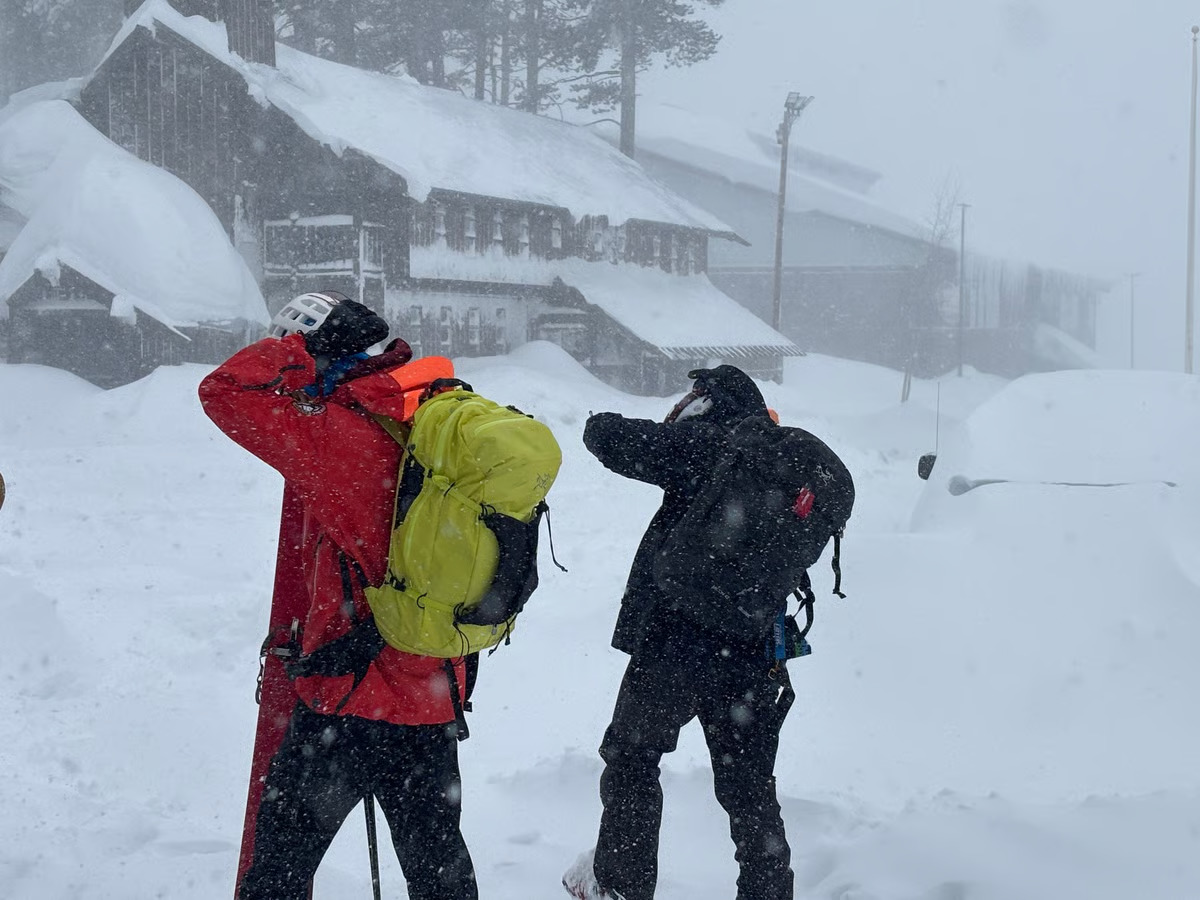
The Sierra Avalanche Center, which provides forecasts and information for backcountry travel in the region, issued a warning for the greater Lake Tahoe area, including Castle Peak, hours before the avalanche occurred. Lead forecaster Brandon Schwartz said the area had received two to three feet of snow in the preceding 48 hours, falling at a rate of two to four inches per hour. He said weak layers in the existing snowpack from a dry spell in January and February are adding to the dangers.
The L.A. City Council has taken a step toward reactivating a zoning code that could prohibit the construction and operation of private detention centers for unaccompanied children.
The ordinance is meant to prevent private facilities from contracting with federal law enforcement agencies like ICE, according to Councilmember Tim McOsker, who introduced the motion last Wednesday. The zoning ordinance was first introduced in 2019 in response to President Donald Trump’s immigration policies during his first term. The file was drafted in 2021, but was never officially adopted, and therefore it expired in 2024.
The City Council last week voted to revive the file and update the drafted zoning code in response to immigration raids. “The concern, of course, was the worry that profiteers, private entities working with the federal government, were creating detention centers across the country,” McOsker said during the council meeting. “Those were creating human rights violations and poor living conditions, disease, death and harms that were unconstitutional to residents of the United States.”
The Department of Homeland Security reported it has detained more than 10,000 people in Los Angeles since raids started in June. The raids have mostly upended immigrant, working-class communities and negatively hit the local economy, according to a recent L.A. County report.
In response to the raids, the city has limited power, but McOsker said it has authority over land use and he’s asking the city to consider wielding that power. “Do we want to prohibit private detention centers in every zone in the city of Los Angeles?” McOsker said. He added that L.A. has an opportunity now to update its zoning laws to regulate private detention centers. McOsker said he doesn’t know of any proposed private detention centers in L.A., but that the facilities have been reported in at least eight states.
Work is painfully slow in Hollywood right now, but not for vertical microdramas — bingeable, campy shows made to be watched on your phone in episodes that cycle past in 90 seconds or less.
Verticals generated $1.3 billion in the US in 2025, according to the streaming consultant Owl and Co., as millions of people watched shows like Fake Married to my Billionaire CEO, Watch Out I’m a Lady Boss, and Kissing The Wrong Brother. Revenue comes from advertising and the fees people pay to watch the shows. Now, studios like Fox and Disney are investing in the medium.
The success of verticals, and their appeal to a mostly female audience, has echoes in the history of cinema, says cinematographer Michael Pessah, who teaches at the American Film Institute. “One hundred and ten years ago, when cinema was still sort of working out what its language was, you had these serialized melodramas that, maybe not coincidentally, really spoke to the female audience of the time,” says Pessah. “These were some of the first really, really successful narrative films.”
Pessah says today’s verticals remind him of music videos in the 1980s and ‘90s, which launched the careers of filmmakers like Spike Jonze. “Music videos were a place for innovative voices, and people with ambitious and new ways of seeing the world,” he says. “It became this hotbed of experimentation and a second film school for so many filmmakers.”
Today verticals appeal to production companies because of the price tag: most cost between $150,000 and $200,000 dollars per show (one show can have 60 to 90 episodes). That’s because they are shot on simple sets, quickly (but not on phones – on real cameras), and most of the work is non-union.
Kylie Karson, co-founder and VP of development and production with Chera TV, a new Encino-based production company and streaming platform that makes verticals, moved to LA in 2022 to act. She started working in verticals full-time in 2024. She describes the company as a creator-led artistic space that pays workers fairly and prioritizes set safety. “There needs to be people in charge that actually care about the people making these projects,” says Karson.