window.__IS_SSR__=true
window.__INITIAL_STATE__={
"attachmentsReducer": {
"audio_0": {
"type": "attachments",
"id": "audio_0",
"imgSizes": {
"kqedFullSize": {
"file": "https://ww2.kqed.org/news/wp-content/themes/KQED-unified/img/audio_bgs/background0.jpg"
}
}
},
"audio_1": {
"type": "attachments",
"id": "audio_1",
"imgSizes": {
"kqedFullSize": {
"file": "https://ww2.kqed.org/news/wp-content/themes/KQED-unified/img/audio_bgs/background1.jpg"
}
}
},
"audio_2": {
"type": "attachments",
"id": "audio_2",
"imgSizes": {
"kqedFullSize": {
"file": "https://ww2.kqed.org/news/wp-content/themes/KQED-unified/img/audio_bgs/background2.jpg"
}
}
},
"audio_3": {
"type": "attachments",
"id": "audio_3",
"imgSizes": {
"kqedFullSize": {
"file": "https://ww2.kqed.org/news/wp-content/themes/KQED-unified/img/audio_bgs/background3.jpg"
}
}
},
"audio_4": {
"type": "attachments",
"id": "audio_4",
"imgSizes": {
"kqedFullSize": {
"file": "https://ww2.kqed.org/news/wp-content/themes/KQED-unified/img/audio_bgs/background4.jpg"
}
}
},
"placeholder": {
"type": "attachments",
"id": "placeholder",
"imgSizes": {
"thumbnail": {
"file": "https://cdn.kqed.org/wp-content/uploads/2024/12/KQED-Default-Image-816638274-2000x1333-1-160x107.jpg",
"width": 160,
"height": 107,
"mimeType": "image/jpeg"
},
"medium": {
"file": "https://cdn.kqed.org/wp-content/uploads/2024/12/KQED-Default-Image-816638274-2000x1333-1-800x533.jpg",
"width": 800,
"height": 533,
"mimeType": "image/jpeg"
},
"medium_large": {
"file": "https://cdn.kqed.org/wp-content/uploads/2024/12/KQED-Default-Image-816638274-2000x1333-1-768x512.jpg",
"width": 768,
"height": 512,
"mimeType": "image/jpeg"
},
"large": {
"file": "https://cdn.kqed.org/wp-content/uploads/2024/12/KQED-Default-Image-816638274-2000x1333-1-1020x680.jpg",
"width": 1020,
"height": 680,
"mimeType": "image/jpeg"
},
"1536x1536": {
"file": "https://cdn.kqed.org/wp-content/uploads/2024/12/KQED-Default-Image-816638274-2000x1333-1-1536x1024.jpg",
"width": 1536,
"height": 1024,
"mimeType": "image/jpeg"
},
"fd-lrg": {
"file": "https://cdn.kqed.org/wp-content/uploads/2024/12/KQED-Default-Image-816638274-2000x1333-1-1536x1024.jpg",
"width": 1536,
"height": 1024,
"mimeType": "image/jpeg"
},
"fd-med": {
"file": "https://cdn.kqed.org/wp-content/uploads/2024/12/KQED-Default-Image-816638274-2000x1333-1-1020x680.jpg",
"width": 1020,
"height": 680,
"mimeType": "image/jpeg"
},
"fd-sm": {
"file": "https://cdn.kqed.org/wp-content/uploads/2024/12/KQED-Default-Image-816638274-2000x1333-1-800x533.jpg",
"width": 800,
"height": 533,
"mimeType": "image/jpeg"
},
"post-thumbnail": {
"file": "https://cdn.kqed.org/wp-content/uploads/2024/12/KQED-Default-Image-816638274-2000x1333-1-672x372.jpg",
"width": 672,
"height": 372,
"mimeType": "image/jpeg"
},
"twentyfourteen-full-width": {
"file": "https://cdn.kqed.org/wp-content/uploads/2024/12/KQED-Default-Image-816638274-2000x1333-1-1038x576.jpg",
"width": 1038,
"height": 576,
"mimeType": "image/jpeg"
},
"xxsmall": {
"file": "https://cdn.kqed.org/wp-content/uploads/2024/12/KQED-Default-Image-816638274-2000x1333-1-160x107.jpg",
"width": 160,
"height": 107,
"mimeType": "image/jpeg"
},
"xsmall": {
"file": "https://cdn.kqed.org/wp-content/uploads/2024/12/KQED-Default-Image-816638274-2000x1333-1-672x372.jpg",
"width": 672,
"height": 372,
"mimeType": "image/jpeg"
},
"small": {
"file": "https://cdn.kqed.org/wp-content/uploads/2024/12/KQED-Default-Image-816638274-2000x1333-1-672x372.jpg",
"width": 672,
"height": 372,
"mimeType": "image/jpeg"
},
"xlarge": {
"file": "https://cdn.kqed.org/wp-content/uploads/2024/12/KQED-Default-Image-816638274-2000x1333-1-1020x680.jpg",
"width": 1020,
"height": 680,
"mimeType": "image/jpeg"
},
"full-width": {
"file": "https://cdn.kqed.org/wp-content/uploads/2024/12/KQED-Default-Image-816638274-2000x1333-1-1920x1280.jpg",
"width": 1920,
"height": 1280,
"mimeType": "image/jpeg"
},
"guest-author-32": {
"file": "https://cdn.kqed.org/wp-content/uploads/2025/01/KQED-Default-Image-816638274-1333x1333-1-160x160.jpg",
"width": 32,
"height": 32,
"mimeType": "image/jpeg"
},
"guest-author-50": {
"file": "https://cdn.kqed.org/wp-content/uploads/2025/01/KQED-Default-Image-816638274-1333x1333-1-160x160.jpg",
"width": 50,
"height": 50,
"mimeType": "image/jpeg"
},
"guest-author-64": {
"file": "https://cdn.kqed.org/wp-content/uploads/2025/01/KQED-Default-Image-816638274-1333x1333-1-160x160.jpg",
"width": 64,
"height": 64,
"mimeType": "image/jpeg"
},
"guest-author-96": {
"file": "https://cdn.kqed.org/wp-content/uploads/2025/01/KQED-Default-Image-816638274-1333x1333-1-160x160.jpg",
"width": 96,
"height": 96,
"mimeType": "image/jpeg"
},
"guest-author-128": {
"file": "https://cdn.kqed.org/wp-content/uploads/2025/01/KQED-Default-Image-816638274-1333x1333-1-160x160.jpg",
"width": 128,
"height": 128,
"mimeType": "image/jpeg"
},
"detail": {
"file": "https://cdn.kqed.org/wp-content/uploads/2025/01/KQED-Default-Image-816638274-1333x1333-1-160x160.jpg",
"width": 160,
"height": 160,
"mimeType": "image/jpeg"
},
"kqedFullSize": {
"file": "https://cdn.kqed.org/wp-content/uploads/2024/12/KQED-Default-Image-816638274-2000x1333-1.jpg",
"width": 2000,
"height": 1333
}
}
},
"news_12030960": {
"type": "attachments",
"id": "news_12030960",
"meta": {
"index": "attachments_1716263798",
"site": "news",
"id": "12030960",
"found": true
},
"title": "uc-berkeley-malak-afaneh-handout_qed",
"publishDate": 1741801339,
"status": "inherit",
"parent": 12030938,
"modified": 1741801426,
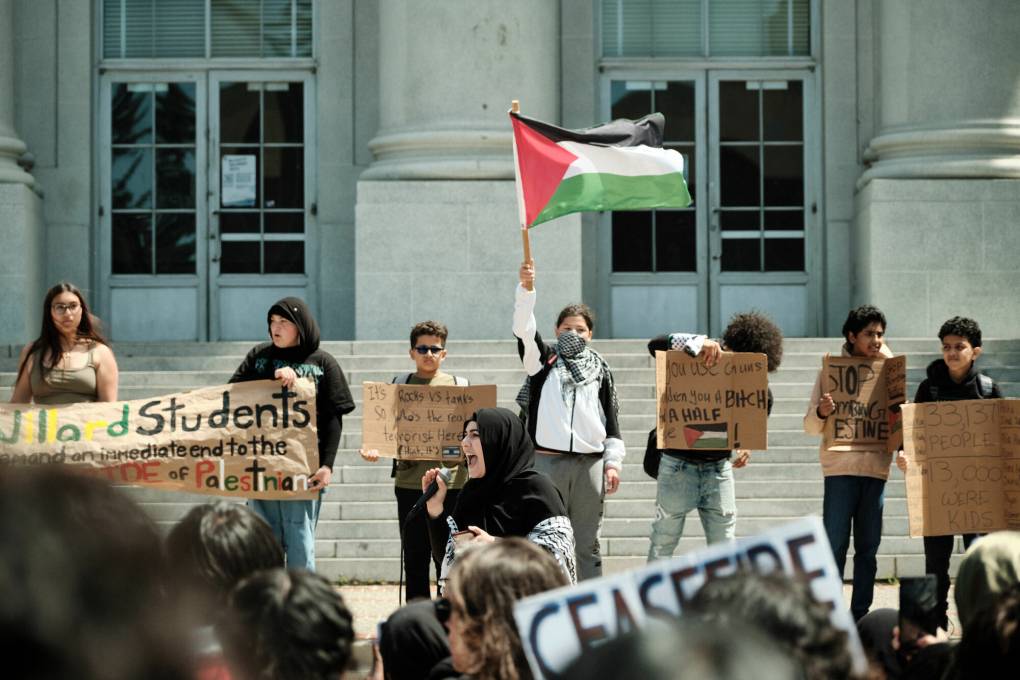
"caption": "A third-year UC Berkeley law student speaks during a protest at the university on May 7, 2024. A report published on Thursday found that the university failed to protect students’ rights to free speech and perpetuated anti-Arab racism in the treatment of demonstrators on campus.",
"credit": "Courtesy of Malak Afaneh",
"altTag": null,
"description": null,
"imgSizes": {
"medium": {
"file": "https://cdn.kqed.org/wp-content/uploads/sites/10/2025/03/uc-berkeley-malak-afaneh-handout_qed-800x533.jpg",
"width": 800,
"height": 533,
"mimeType": "image/jpeg"
},
"large": {
"file": "https://cdn.kqed.org/wp-content/uploads/sites/10/2025/03/uc-berkeley-malak-afaneh-handout_qed-1020x680.jpg",
"width": 1020,
"height": 680,
"mimeType": "image/jpeg"
},
"thumbnail": {
"file": "https://cdn.kqed.org/wp-content/uploads/sites/10/2025/03/uc-berkeley-malak-afaneh-handout_qed-160x107.jpg",
"width": 160,
"height": 107,
"mimeType": "image/jpeg"
},
"1536x1536": {
"file": "https://cdn.kqed.org/wp-content/uploads/sites/10/2025/03/uc-berkeley-malak-afaneh-handout_qed-1536x1024.jpg",
"width": 1536,
"height": 1024,
"mimeType": "image/jpeg"
},
"post-thumbnail": {
"file": "https://cdn.kqed.org/wp-content/uploads/sites/10/2025/03/uc-berkeley-malak-afaneh-handout_qed-672x372.jpg",
"width": 672,
"height": 372,
"mimeType": "image/jpeg"
},
"twentyfourteen-full-width": {
"file": "https://cdn.kqed.org/wp-content/uploads/sites/10/2025/03/uc-berkeley-malak-afaneh-handout_qed-1038x576.jpg",
"width": 1038,
"height": 576,
"mimeType": "image/jpeg"
},
"full-width": {
"file": "https://cdn.kqed.org/wp-content/uploads/sites/10/2025/03/uc-berkeley-malak-afaneh-handout_qed-1920x1280.jpg",
"width": 1920,
"height": 1280,
"mimeType": "image/jpeg"
},
"kqedFullSize": {
"file": "https://cdn.kqed.org/wp-content/uploads/sites/10/2025/03/uc-berkeley-malak-afaneh-handout_qed.jpg",
"width": 2000,
"height": 1333
}
},
"isLoading": false,
"fetchFailed": false
},
"news_12061707": {
"type": "attachments",
"id": "news_12061707",
"meta": {
"index": "attachments_1716263798",
"site": "news",
"id": "12061707",
"found": true
},
"title": "American Muslims for Palestine, 17th Annual Convention for Palestine in Illinois",
"publishDate": 1761594151,
"status": "inherit",
"parent": 12061703,
"modified": 1761594378,
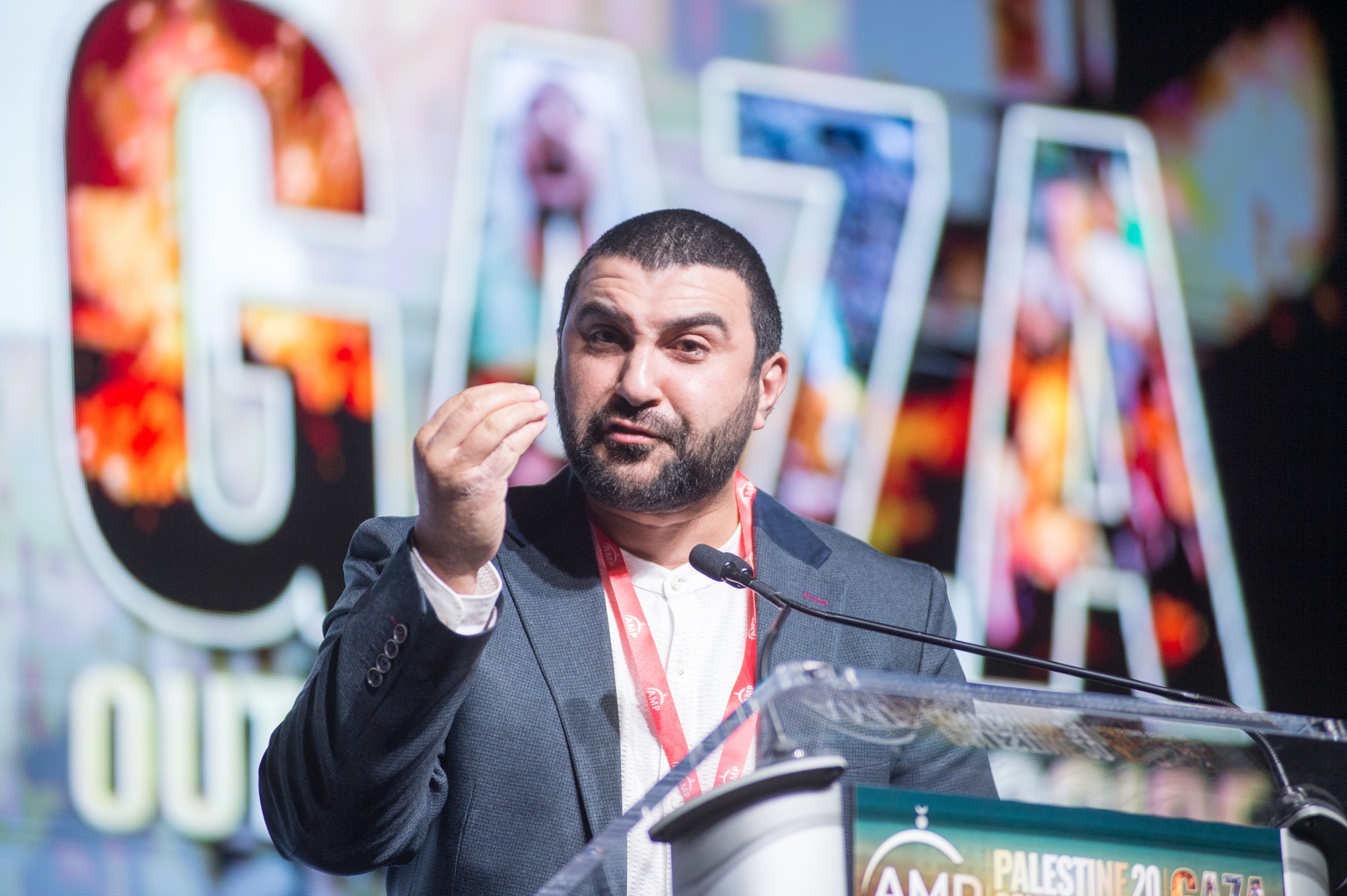
"caption": "Sami Hamdi, managing director of the International Interest, during a speech at the 17th Annual Convention for Palestine at the Tinley Park Convention Center in Tinley Park, Illinois, on Nov. 30, 2024.",
"credit": "Jacek Boczarski/Anadolu via Getty Images",
"altTag": null,
"description": null,
"imgSizes": {
"thumbnail": {
"file": "https://cdn.kqed.org/wp-content/uploads/sites/10/2025/10/SamiHamdiGetty-160x106.jpg",
"width": 160,
"height": 106,
"mimeType": "image/jpeg"
},
"1536x1536": {
"file": "https://cdn.kqed.org/wp-content/uploads/sites/10/2025/10/SamiHamdiGetty-1536x1022.jpg",
"width": 1536,
"height": 1022,
"mimeType": "image/jpeg"
},
"post-thumbnail": {
"file": "https://cdn.kqed.org/wp-content/uploads/sites/10/2025/10/SamiHamdiGetty-672x372.jpg",
"width": 672,
"height": 372,
"mimeType": "image/jpeg"
},
"twentyfourteen-full-width": {
"file": "https://cdn.kqed.org/wp-content/uploads/sites/10/2025/10/SamiHamdiGetty-1038x576.jpg",
"width": 1038,
"height": 576,
"mimeType": "image/jpeg"
},
"npr-cds-wide": {
"file": "https://cdn.kqed.org/wp-content/uploads/sites/10/2025/10/SamiHamdiGetty-1600x900.jpg",
"width": 1600,
"height": 900,
"mimeType": "image/jpeg"
},
"kqedFullSize": {
"file": "https://cdn.kqed.org/wp-content/uploads/sites/10/2025/10/SamiHamdiGetty.jpg",
"width": 2000,
"height": 1331
}
},
"isLoading": false,
"fetchFailed": false
},
"news_12059726": {
"type": "attachments",
"id": "news_12059726",
"meta": {
"index": "attachments_1716263798",
"site": "news",
"id": "12059726",
"found": true
},
"title": "PALESTINIAN-ISRAEL-CONFLICT-HOSTAGES-PRISONERS-SWAP",
"publishDate": 1760386670,
"status": "inherit",
"parent": 12059721,
"modified": 1760386875,
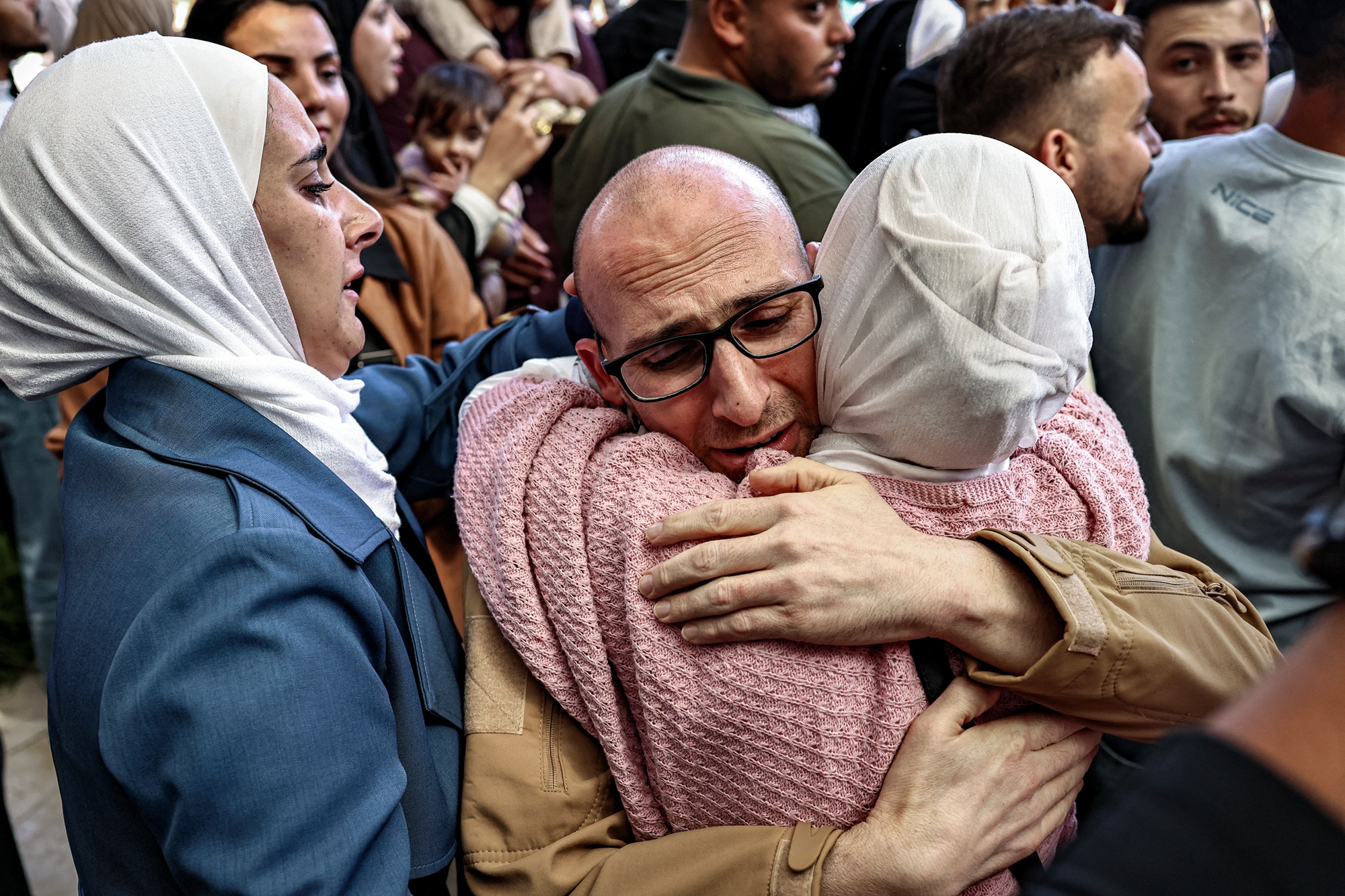
"caption": "One of the Palestinian prisoners, who was released in a prisoner-hostage swap and ceasefire deal between Israel and Hamas, is embraced by a relative upon arrival by bus at Ramallah Cultural Centre in Ramallah in the occupied West Bank, on Oct. 13, 2025, coming from Ofer military prison in the Israel-occupied Palestinian territories. The initial stage of the Gaza ceasefire deal includes the release of 47 Israeli living and dead hostages taken on Oct. 7, 2023, in exchange for 250 prisoners and 1,700 Gazans held by Israel since the war broke out. ",
"credit": "Zain Jaafar/AFP via Getty Images",
"altTag": null,
"description": null,
"imgSizes": {
"thumbnail": {
"file": "https://cdn.kqed.org/wp-content/uploads/sites/10/2025/10/Israel-Hamas-Ceasefire-Getty-160x107.jpg",
"width": 160,
"height": 107,
"mimeType": "image/jpeg"
},
"1536x1536": {
"file": "https://cdn.kqed.org/wp-content/uploads/sites/10/2025/10/Israel-Hamas-Ceasefire-Getty-1536x1024.jpg",
"width": 1536,
"height": 1024,
"mimeType": "image/jpeg"
},
"post-thumbnail": {
"file": "https://cdn.kqed.org/wp-content/uploads/sites/10/2025/10/Israel-Hamas-Ceasefire-Getty-672x372.jpg",
"width": 672,
"height": 372,
"mimeType": "image/jpeg"
},
"twentyfourteen-full-width": {
"file": "https://cdn.kqed.org/wp-content/uploads/sites/10/2025/10/Israel-Hamas-Ceasefire-Getty-1038x576.jpg",
"width": 1038,
"height": 576,
"mimeType": "image/jpeg"
},
"kqedFullSize": {
"file": "https://cdn.kqed.org/wp-content/uploads/sites/10/2025/10/Israel-Hamas-Ceasefire-Getty.jpg",
"width": 2000,
"height": 1333
}
},
"isLoading": false,
"fetchFailed": false
},
"news_12014213": {
"type": "attachments",
"id": "news_12014213",
"meta": {
"index": "attachments_1716263798",
"site": "news",
"id": "12014213",
"found": true
},
"title": "Stanford campus on May 30, 2023.",
"publishDate": 1731521794,
"status": "inherit",
"parent": 0,
"modified": 1733786946,
"caption": "Stanford University campus on May 30, 2023.",
"credit": "Beth LaBerge/KQED",
"altTag": null,
"description": null,
"imgSizes": {
"medium": {
"file": "https://cdn.kqed.org/wp-content/uploads/sites/10/2024/11/005_KQED_StanfordGradUnion_05302023_qed-800x533.jpg",
"width": 800,
"height": 533,
"mimeType": "image/jpeg"
},
"large": {
"file": "https://cdn.kqed.org/wp-content/uploads/sites/10/2024/11/005_KQED_StanfordGradUnion_05302023_qed-1020x680.jpg",
"width": 1020,
"height": 680,
"mimeType": "image/jpeg"
},
"thumbnail": {
"file": "https://cdn.kqed.org/wp-content/uploads/sites/10/2024/11/005_KQED_StanfordGradUnion_05302023_qed-160x107.jpg",
"width": 160,
"height": 107,
"mimeType": "image/jpeg"
},
"1536x1536": {
"file": "https://cdn.kqed.org/wp-content/uploads/sites/10/2024/11/005_KQED_StanfordGradUnion_05302023_qed-1536x1024.jpg",
"width": 1536,
"height": 1024,
"mimeType": "image/jpeg"
},
"post-thumbnail": {
"file": "https://cdn.kqed.org/wp-content/uploads/sites/10/2024/11/005_KQED_StanfordGradUnion_05302023_qed-672x372.jpg",
"width": 672,
"height": 372,
"mimeType": "image/jpeg"
},
"twentyfourteen-full-width": {
"file": "https://cdn.kqed.org/wp-content/uploads/sites/10/2024/11/005_KQED_StanfordGradUnion_05302023_qed-1038x576.jpg",
"width": 1038,
"height": 576,
"mimeType": "image/jpeg"
},
"full-width": {
"file": "https://cdn.kqed.org/wp-content/uploads/sites/10/2024/11/005_KQED_StanfordGradUnion_05302023_qed-1920x1280.jpg",
"width": 1920,
"height": 1280,
"mimeType": "image/jpeg"
},
"kqedFullSize": {
"file": "https://cdn.kqed.org/wp-content/uploads/sites/10/2024/11/005_KQED_StanfordGradUnion_05302023_qed.jpg",
"width": 2000,
"height": 1333
}
},
"isLoading": false,
"fetchFailed": false
},
"news_12059415": {
"type": "attachments",
"id": "news_12059415",
"meta": {
"index": "attachments_1716263798",
"site": "news",
"id": "12059415",
"found": true
},
"title": "68e5df0e9817d",
"publishDate": 1760111956,
"status": "inherit",
"parent": 12059351,
"modified": 1765399526,
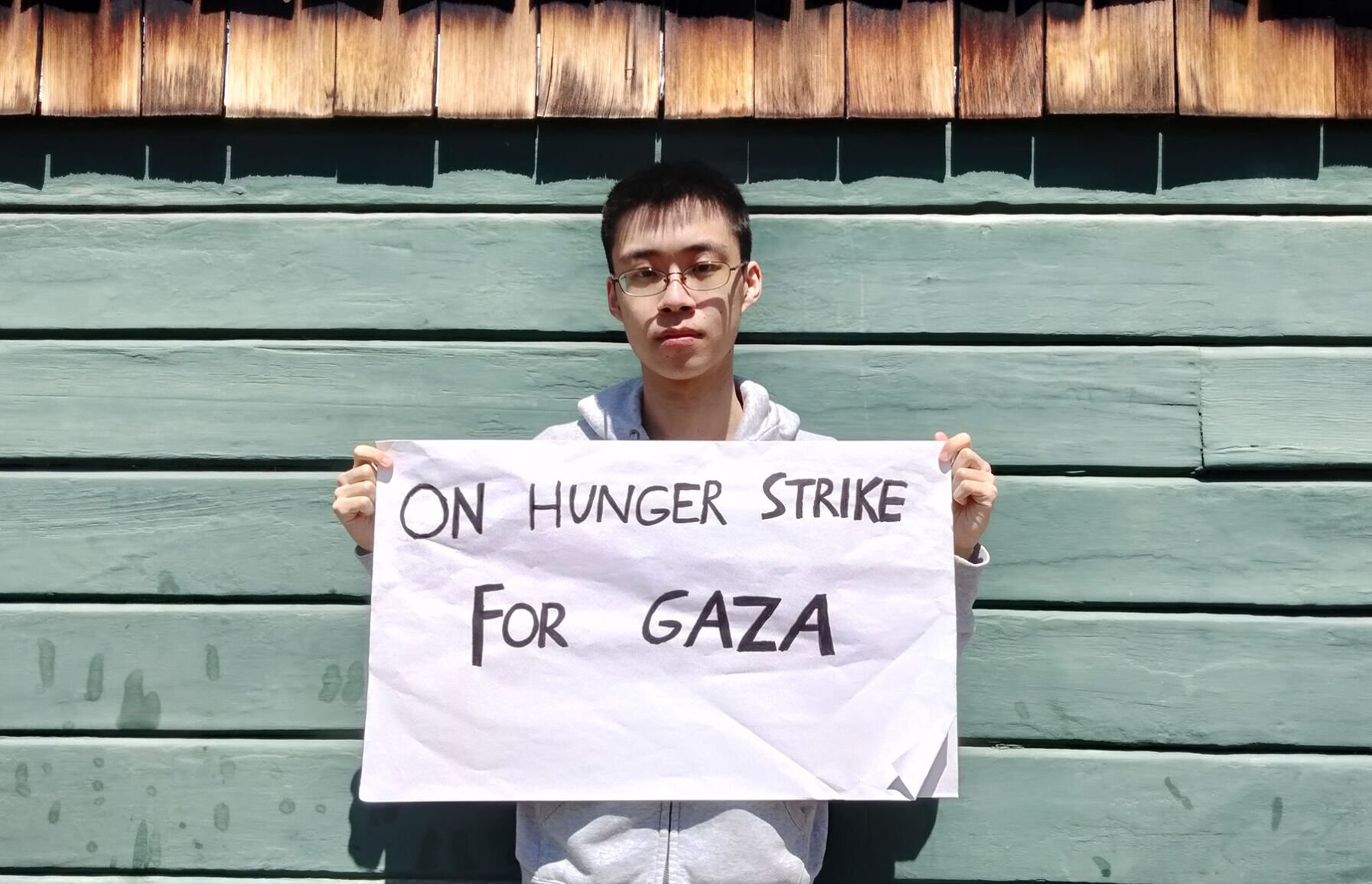
"caption": "UC Berkeley administration has suspended lecturer Peyrin Kao for the spring 2026 semester without pay for pro-Palestinian political remarks made in the classroom. Kao, a lecturer in the electrical engineering and computer sciences department, has been an outspoken advocate for Palestinian rights.",
"credit": "Courtesy of Peyrin Kao",
"altTag": null,
"description": null,
"imgSizes": {
"thumbnail": {
"file": "https://cdn.kqed.org/wp-content/uploads/sites/10/2025/10/68e5df0e9817d-160x103.jpg",
"width": 160,
"height": 103,
"mimeType": "image/jpeg"
},
"1536x1536": {
"file": "https://cdn.kqed.org/wp-content/uploads/sites/10/2025/10/68e5df0e9817d-1536x989.jpg",
"width": 1536,
"height": 989,
"mimeType": "image/jpeg"
},
"post-thumbnail": {
"file": "https://cdn.kqed.org/wp-content/uploads/sites/10/2025/10/68e5df0e9817d-672x372.jpg",
"width": 672,
"height": 372,
"mimeType": "image/jpeg"
},
"twentyfourteen-full-width": {
"file": "https://cdn.kqed.org/wp-content/uploads/sites/10/2025/10/68e5df0e9817d-1038x576.jpg",
"width": 1038,
"height": 576,
"mimeType": "image/jpeg"
},
"kqedFullSize": {
"file": "https://cdn.kqed.org/wp-content/uploads/sites/10/2025/10/68e5df0e9817d.jpg",
"width": 1793,
"height": 1155
}
},
"isLoading": false,
"fetchFailed": false
},
"news_12058826": {
"type": "attachments",
"id": "news_12058826",
"meta": {
"index": "attachments_1716263798",
"site": "news",
"id": "12058826",
"found": true
},
"title": "Protest In Poland After Gaza Flotilla Interception",
"publishDate": 1759786690,
"status": "inherit",
"parent": 12058820,
"modified": 1759786743,
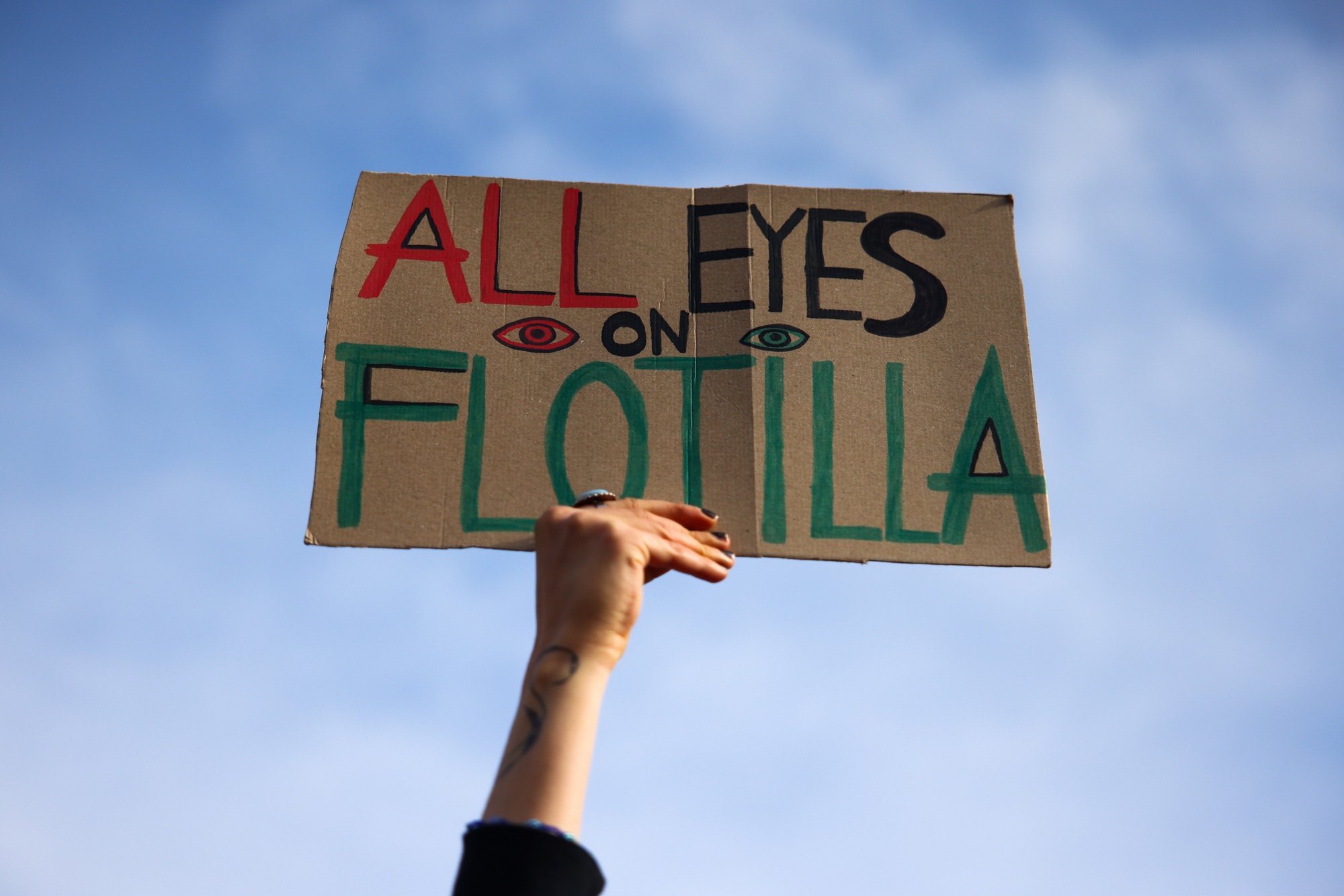
"caption": "A person holds an \"All eyes on flotilla\" sign during a protest after Israeli forces intercepted the Global Sumud Flotilla, a fleet of vessels carrying aid to Gaza on Oct. 5, 2025. ",
"credit": "Beata Zawrzel/NurPhoto via Getty Images",
"altTag": null,
"description": null,
"imgSizes": {
"thumbnail": {
"file": "https://cdn.kqed.org/wp-content/uploads/sites/10/2025/10/GazaFlotillaGetty-160x107.jpg",
"width": 160,
"height": 107,
"mimeType": "image/jpeg"
},
"1536x1536": {
"file": "https://cdn.kqed.org/wp-content/uploads/sites/10/2025/10/GazaFlotillaGetty-1536x1025.jpg",
"width": 1536,
"height": 1025,
"mimeType": "image/jpeg"
},
"post-thumbnail": {
"file": "https://cdn.kqed.org/wp-content/uploads/sites/10/2025/10/GazaFlotillaGetty-672x372.jpg",
"width": 672,
"height": 372,
"mimeType": "image/jpeg"
},
"twentyfourteen-full-width": {
"file": "https://cdn.kqed.org/wp-content/uploads/sites/10/2025/10/GazaFlotillaGetty-1038x576.jpg",
"width": 1038,
"height": 576,
"mimeType": "image/jpeg"
},
"kqedFullSize": {
"file": "https://cdn.kqed.org/wp-content/uploads/sites/10/2025/10/GazaFlotillaGetty.jpg",
"width": 2000,
"height": 1334
}
},
"isLoading": false,
"fetchFailed": false
},
"news_12056792": {
"type": "attachments",
"id": "news_12056792",
"meta": {
"index": "attachments_1716263798",
"site": "news",
"id": "12056792",
"found": true
},
"title": "OaklandGazaProtest1",
"publishDate": 1758300666,
"status": "inherit",
"parent": 12056787,
"modified": 1758300708,
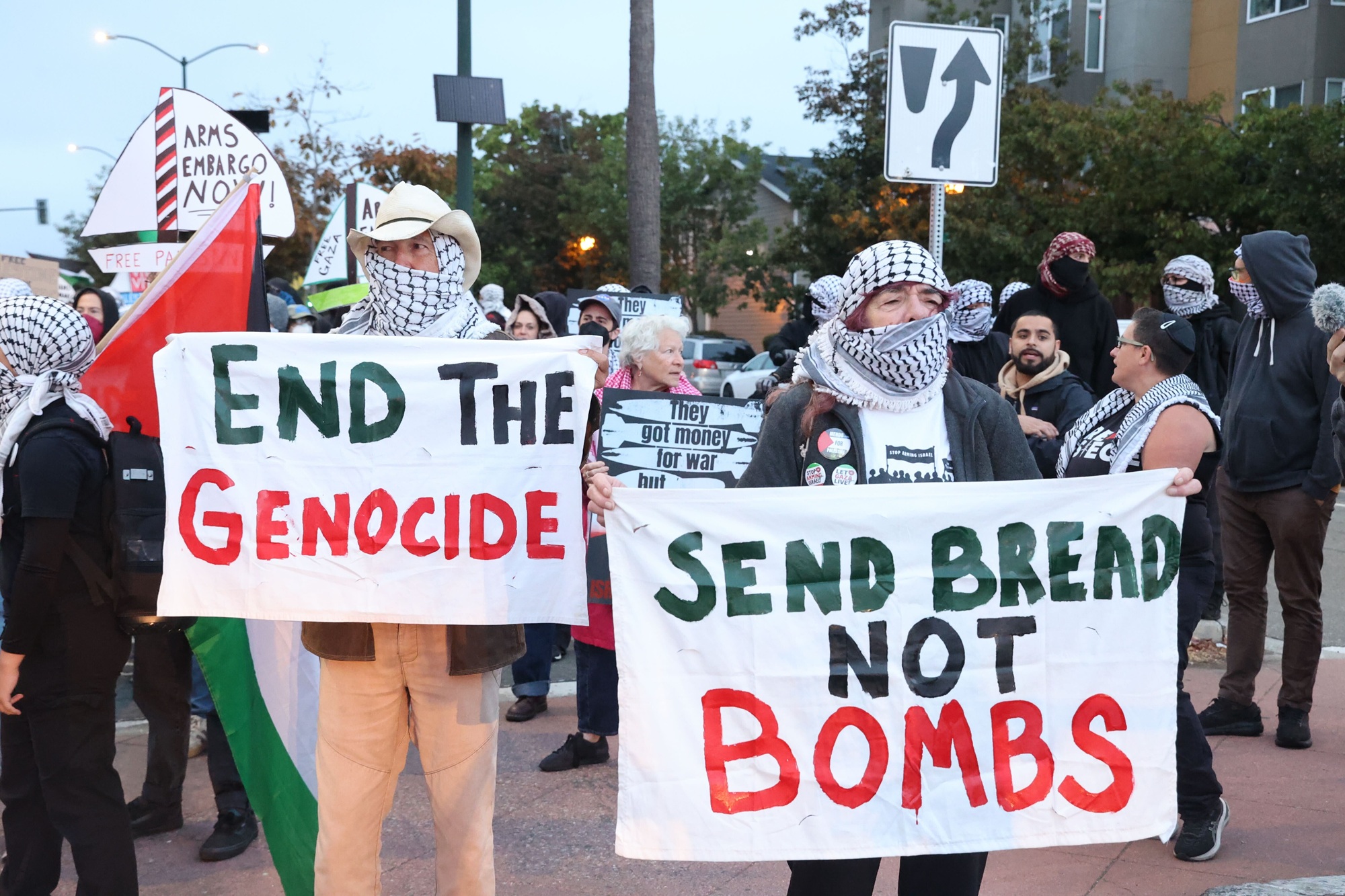
"caption": "Pro-Palestinian activists tried to block access to the Port of Oakland on Friday morning. ",
"credit": "Juan Carlos Lara/KQED",
"altTag": null,
"description": null,
"imgSizes": {
"thumbnail": {
"file": "https://cdn.kqed.org/wp-content/uploads/sites/10/2025/09/OaklandGazaProtest1-160x107.jpg",
"width": 160,
"height": 107,
"mimeType": "image/jpeg"
},
"1536x1536": {
"file": "https://cdn.kqed.org/wp-content/uploads/sites/10/2025/09/OaklandGazaProtest1-1536x1024.jpg",
"width": 1536,
"height": 1024,
"mimeType": "image/jpeg"
},
"post-thumbnail": {
"file": "https://cdn.kqed.org/wp-content/uploads/sites/10/2025/09/OaklandGazaProtest1-672x372.jpg",
"width": 672,
"height": 372,
"mimeType": "image/jpeg"
},
"twentyfourteen-full-width": {
"file": "https://cdn.kqed.org/wp-content/uploads/sites/10/2025/09/OaklandGazaProtest1-1038x576.jpg",
"width": 1038,
"height": 576,
"mimeType": "image/jpeg"
},
"kqedFullSize": {
"file": "https://cdn.kqed.org/wp-content/uploads/sites/10/2025/09/OaklandGazaProtest1.jpg",
"width": 2000,
"height": 1333
}
},
"isLoading": false,
"fetchFailed": false
},
"news_12037905": {
"type": "attachments",
"id": "news_12037905",
"meta": {
"index": "attachments_1716263798",
"site": "news",
"id": "12037905",
"found": true
},
"title": "Santa Clara County Superior Court in San Jose on March 24, 2025.",
"publishDate": 1745862778,
"status": "inherit",
"parent": 12060893,
"modified": 1761091215,
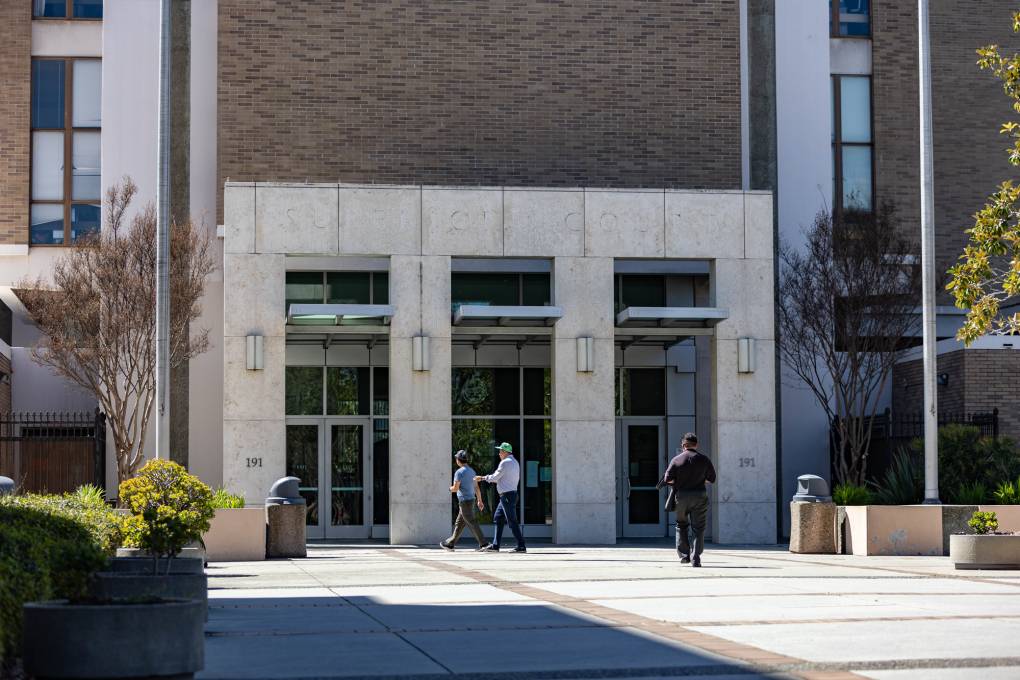
"caption": "Santa Clara County Superior Court in San José on March 24, 2025.",
"credit": "Gina Castro/KQED",
"altTag": null,
"description": null,
"imgSizes": {
"medium": {
"file": "https://cdn.kqed.org/wp-content/uploads/sites/10/2025/04/20240324_SANTACLARASUPERIORCOURT_GC-2-KQED-800x533.jpg",
"width": 800,
"height": 533,
"mimeType": "image/jpeg"
},
"large": {
"file": "https://cdn.kqed.org/wp-content/uploads/sites/10/2025/04/20240324_SANTACLARASUPERIORCOURT_GC-2-KQED-1020x680.jpg",
"width": 1020,
"height": 680,
"mimeType": "image/jpeg"
},
"thumbnail": {
"file": "https://cdn.kqed.org/wp-content/uploads/sites/10/2025/04/20240324_SANTACLARASUPERIORCOURT_GC-2-KQED-160x107.jpg",
"width": 160,
"height": 107,
"mimeType": "image/jpeg"
},
"1536x1536": {
"file": "https://cdn.kqed.org/wp-content/uploads/sites/10/2025/04/20240324_SANTACLARASUPERIORCOURT_GC-2-KQED-1536x1024.jpg",
"width": 1536,
"height": 1024,
"mimeType": "image/jpeg"
},
"post-thumbnail": {
"file": "https://cdn.kqed.org/wp-content/uploads/sites/10/2025/04/20240324_SANTACLARASUPERIORCOURT_GC-2-KQED-672x372.jpg",
"width": 672,
"height": 372,
"mimeType": "image/jpeg"
},
"twentyfourteen-full-width": {
"file": "https://cdn.kqed.org/wp-content/uploads/sites/10/2025/04/20240324_SANTACLARASUPERIORCOURT_GC-2-KQED-1038x576.jpg",
"width": 1038,
"height": 576,
"mimeType": "image/jpeg"
},
"full-width": {
"file": "https://cdn.kqed.org/wp-content/uploads/sites/10/2025/04/20240324_SANTACLARASUPERIORCOURT_GC-2-KQED-1920x1280.jpg",
"width": 1920,
"height": 1280,
"mimeType": "image/jpeg"
},
"kqedFullSize": {
"file": "https://cdn.kqed.org/wp-content/uploads/sites/10/2025/04/20240324_SANTACLARASUPERIORCOURT_GC-2-KQED.jpg",
"width": 2000,
"height": 1333
}
},
"isLoading": false,
"fetchFailed": false
},
"news_12056822": {
"type": "attachments",
"id": "news_12056822",
"meta": {
"index": "attachments_1716263798",
"site": "news",
"id": "12056822",
"found": true
},
"title": "250919-GAZA PROTEST OAKLAND-MD-03-KQED",
"publishDate": 1758302018,
"status": "inherit",
"parent": 0,
"modified": 1758302749,
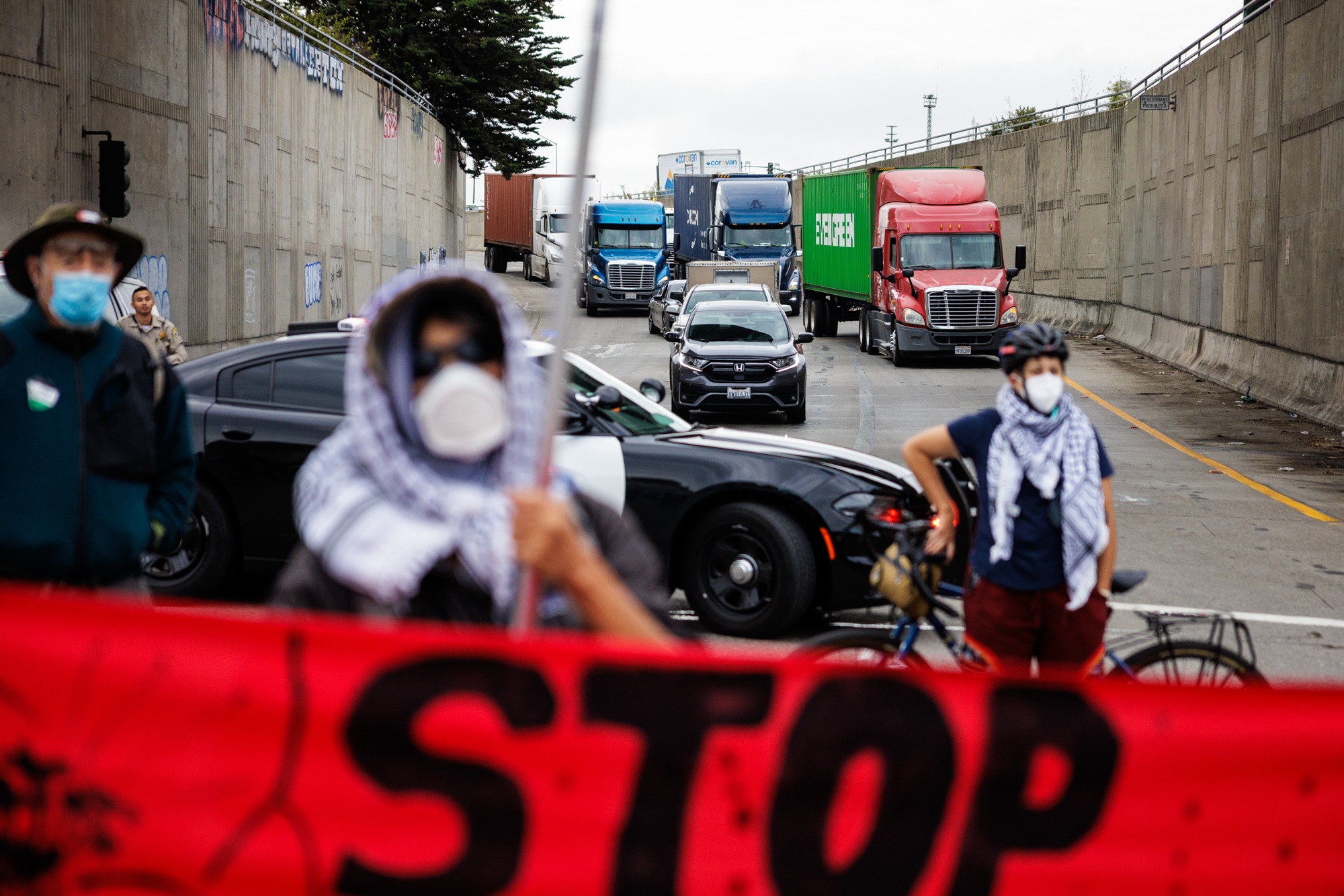
"caption": "Traffic is backed up on an 880 offramp as Pro-Palestinian activists block an intersection on Seventh Street in West Oakland on Sept. 19, 2025.",
"credit": "Martin do Nascimento/KQED",
"altTag": null,
"description": null,
"imgSizes": {
"thumbnail": {
"file": "https://cdn.kqed.org/wp-content/uploads/sites/10/2025/09/250919-GAZA-PROTEST-OAKLAND-MD-03-KQED-160x107.jpg",
"width": 160,
"height": 107,
"mimeType": "image/jpeg"
},
"1536x1536": {
"file": "https://cdn.kqed.org/wp-content/uploads/sites/10/2025/09/250919-GAZA-PROTEST-OAKLAND-MD-03-KQED-1536x1025.jpg",
"width": 1536,
"height": 1025,
"mimeType": "image/jpeg"
},
"post-thumbnail": {
"file": "https://cdn.kqed.org/wp-content/uploads/sites/10/2025/09/250919-GAZA-PROTEST-OAKLAND-MD-03-KQED-672x372.jpg",
"width": 672,
"height": 372,
"mimeType": "image/jpeg"
},
"twentyfourteen-full-width": {
"file": "https://cdn.kqed.org/wp-content/uploads/sites/10/2025/09/250919-GAZA-PROTEST-OAKLAND-MD-03-KQED-1038x576.jpg",
"width": 1038,
"height": 576,
"mimeType": "image/jpeg"
},
"kqedFullSize": {
"file": "https://cdn.kqed.org/wp-content/uploads/sites/10/2025/09/250919-GAZA-PROTEST-OAKLAND-MD-03-KQED.jpg",
"width": 2000,
"height": 1334
}
},
"isLoading": false,
"fetchFailed": false
},
"news_12056703": {
"type": "attachments",
"id": "news_12056703",
"meta": {
"index": "attachments_1716263798",
"site": "news",
"id": "12056703",
"found": true
},
"title": "250918-Oakland Arms Folo-JCL-01-KQED",
"publishDate": 1758236396,
"status": "inherit",
"parent": 12056544,
"modified": 1758240270,
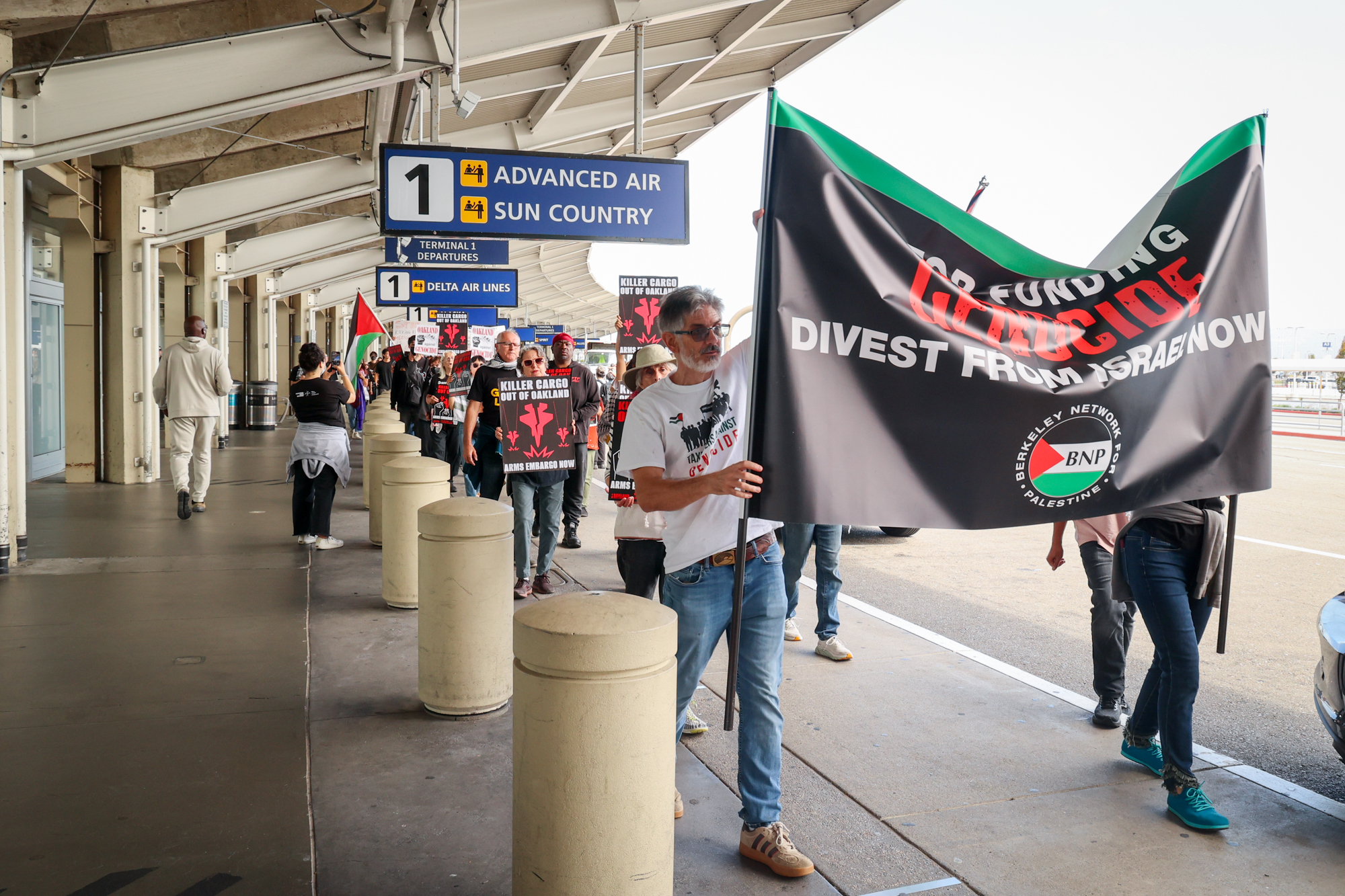
"caption": "Protesters march across OAK’s Terminal 1 chanting “Oakland Airport, drop your cargo! We demand an arms embargo!” on Sept. 18, 2025. The Oakland People’s Arms Embargo Coalition is calling for Oakland officials to end military cargo shipments through the civilian airport.",
"credit": "Juan Carlos Lara/KQED",
"altTag": null,
"description": null,
"imgSizes": {
"thumbnail": {
"file": "https://cdn.kqed.org/wp-content/uploads/sites/10/2025/09/250918-Oakland-Arms-Folo-JCL-01-KQED-160x107.jpg",
"width": 160,
"height": 107,
"mimeType": "image/jpeg"
},
"1536x1536": {
"file": "https://cdn.kqed.org/wp-content/uploads/sites/10/2025/09/250918-Oakland-Arms-Folo-JCL-01-KQED-1536x1024.jpg",
"width": 1536,
"height": 1024,
"mimeType": "image/jpeg"
},
"post-thumbnail": {
"file": "https://cdn.kqed.org/wp-content/uploads/sites/10/2025/09/250918-Oakland-Arms-Folo-JCL-01-KQED-672x372.jpg",
"width": 672,
"height": 372,
"mimeType": "image/jpeg"
},
"twentyfourteen-full-width": {
"file": "https://cdn.kqed.org/wp-content/uploads/sites/10/2025/09/250918-Oakland-Arms-Folo-JCL-01-KQED-1038x576.jpg",
"width": 1038,
"height": 576,
"mimeType": "image/jpeg"
},
"kqedFullSize": {
"file": "https://cdn.kqed.org/wp-content/uploads/sites/10/2025/09/250918-Oakland-Arms-Folo-JCL-01-KQED.jpg",
"width": 2000,
"height": 1333
}
},
"isLoading": false,
"fetchFailed": false
},
"news_12016604": {
"type": "attachments",
"id": "news_12016604",
"meta": {
"index": "attachments_1716263798",
"site": "news",
"id": "12016604",
"found": true
},
"title": "The UC Berkeley Campus in Berkeley on Aug. 17, 2023.",
"publishDate": 1733334753,
"status": "inherit",
"parent": 12016602,
"modified": 1733334766,
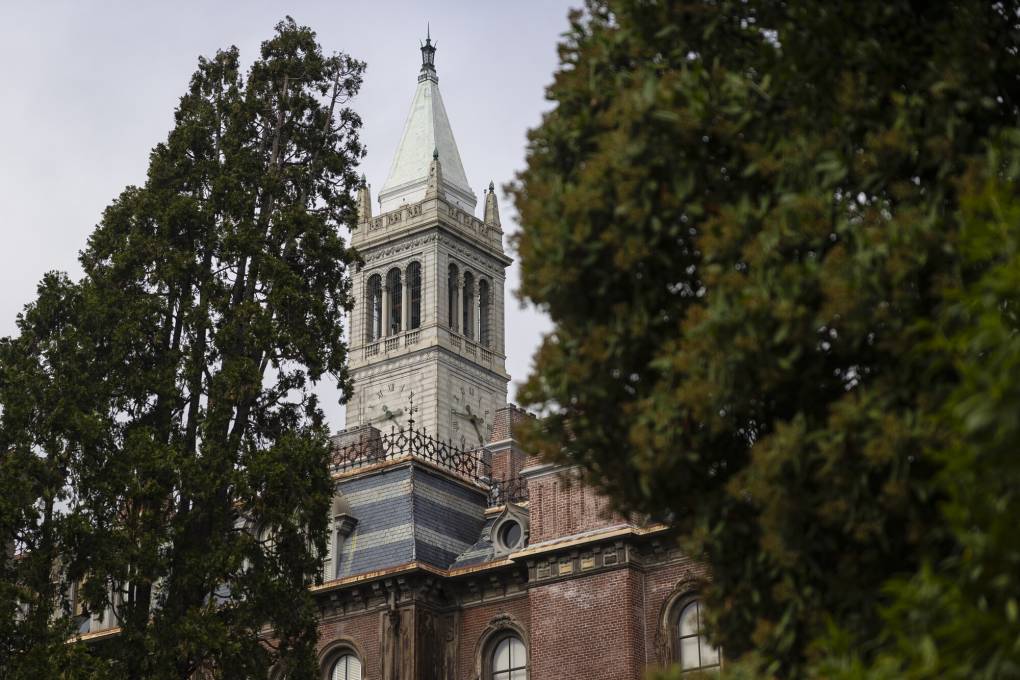
"caption": "The UC Berkeley Campus in Berkeley on Aug. 17, 2023.",
"credit": "Martin do Nascimento/KQED",
"altTag": null,
"description": null,
"imgSizes": {
"medium": {
"file": "https://cdn.kqed.org/wp-content/uploads/sites/10/2024/12/230817-UC-BERKELEY-CAMPUS-MD-02_qed-800x533.jpg",
"width": 800,
"height": 533,
"mimeType": "image/jpeg"
},
"large": {
"file": "https://cdn.kqed.org/wp-content/uploads/sites/10/2024/12/230817-UC-BERKELEY-CAMPUS-MD-02_qed-1020x680.jpg",
"width": 1020,
"height": 680,
"mimeType": "image/jpeg"
},
"thumbnail": {
"file": "https://cdn.kqed.org/wp-content/uploads/sites/10/2024/12/230817-UC-BERKELEY-CAMPUS-MD-02_qed-160x107.jpg",
"width": 160,
"height": 107,
"mimeType": "image/jpeg"
},
"1536x1536": {
"file": "https://cdn.kqed.org/wp-content/uploads/sites/10/2024/12/230817-UC-BERKELEY-CAMPUS-MD-02_qed-1536x1024.jpg",
"width": 1536,
"height": 1024,
"mimeType": "image/jpeg"
},
"post-thumbnail": {
"file": "https://cdn.kqed.org/wp-content/uploads/sites/10/2024/12/230817-UC-BERKELEY-CAMPUS-MD-02_qed-672x372.jpg",
"width": 672,
"height": 372,
"mimeType": "image/jpeg"
},
"twentyfourteen-full-width": {
"file": "https://cdn.kqed.org/wp-content/uploads/sites/10/2024/12/230817-UC-BERKELEY-CAMPUS-MD-02_qed-1038x576.jpg",
"width": 1038,
"height": 576,
"mimeType": "image/jpeg"
},
"full-width": {
"file": "https://cdn.kqed.org/wp-content/uploads/sites/10/2024/12/230817-UC-BERKELEY-CAMPUS-MD-02_qed-1920x1280.jpg",
"width": 1920,
"height": 1280,
"mimeType": "image/jpeg"
},
"kqedFullSize": {
"file": "https://cdn.kqed.org/wp-content/uploads/sites/10/2024/12/230817-UC-BERKELEY-CAMPUS-MD-02_qed.jpg",
"width": 2000,
"height": 1333
}
},
"isLoading": false,
"fetchFailed": false
},
"news_12053653": {
"type": "attachments",
"id": "news_12053653",
"meta": {
"index": "attachments_1716263798",
"site": "news",
"id": "12053653",
"found": true
},
"title": "The entrance to the Oakland International Airport in Oakland on April 12, 2024.",
"publishDate": 1756159972,
"status": "inherit",
"parent": 12053637,
"modified": 1756159981,
"caption": "The entrance to the Oakland International Airport in Oakland on April 12, 2024.",
"credit": "Beth LaBerge/KQED",
"altTag": null,
"description": null,
"imgSizes": {
"thumbnail": {
"file": "https://cdn.kqed.org/wp-content/uploads/sites/10/2025/08/240412-OAKAirport-004-BL_qed-160x107.jpg",
"width": 160,
"height": 107,
"mimeType": "image/jpeg"
},
"1536x1536": {
"file": "https://cdn.kqed.org/wp-content/uploads/sites/10/2025/08/240412-OAKAirport-004-BL_qed-1536x1024.jpg",
"width": 1536,
"height": 1024,
"mimeType": "image/jpeg"
},
"post-thumbnail": {
"file": "https://cdn.kqed.org/wp-content/uploads/sites/10/2025/08/240412-OAKAirport-004-BL_qed-672x372.jpg",
"width": 672,
"height": 372,
"mimeType": "image/jpeg"
},
"twentyfourteen-full-width": {
"file": "https://cdn.kqed.org/wp-content/uploads/sites/10/2025/08/240412-OAKAirport-004-BL_qed-1038x576.jpg",
"width": 1038,
"height": 576,
"mimeType": "image/jpeg"
},
"kqedFullSize": {
"file": "https://cdn.kqed.org/wp-content/uploads/sites/10/2025/08/240412-OAKAirport-004-BL_qed.jpg",
"width": 2000,
"height": 1333
}
},
"isLoading": false,
"fetchFailed": false
}
},
"audioPlayerReducer": {
"postId": "stream_live",
"isPaused": true,
"isPlaying": false,
"pfsActive": false,
"pledgeModalIsOpen": true,
"playerDrawerIsOpen": false,
"liveAudioPlayStartedAt": 0,
"liveAudioPlayContext": ""
},
"authorsReducer": {
"ecruzguevarra": {
"type": "authors",
"id": "8654",
"meta": {
"index": "authors_1716337520",
"id": "8654",
"found": true
},
"name": "Ericka Cruz Guevarra",
"firstName": "Ericka",
"lastName": "Cruz Guevarra",
"slug": "ecruzguevarra",
"email": "ecruzguevarra@kqed.org",
"display_author_email": true,
"staff_mastheads": [
"news"
],
"title": "Producer, The Bay Podcast",
"bio": "Ericka Cruz Guevarra is host of \u003ca href=\"https://www.kqed.org/podcasts/thebay\">\u003cem>The Bay\u003c/em>\u003c/a> podcast at KQED. Before host, she was the show’s producer. Her work in that capacity includes a three-part reported series on policing in Vallejo, which won a 2020 excellence in journalism award from the Society of Professional Journalists. Ericka has worked as a breaking news reporter at Oregon Public Broadcasting, helped produce the Code Switch podcast, and was KQED’s inaugural Raul Ramirez Diversity Fund intern. She’s also an alumna of NPR’s Next Generation Radio program. Send her an email if you have strong feelings about whether Fairfield and Suisun City are the Bay. Ericka is represented by SAG-AFTRA.",
"avatar": "https://secure.gravatar.com/avatar/accefc1de4bafc7e234b69bcb9b6f6536c130fd84709bc3069ef11a78787e1bb?s=600&d=blank&r=g",
"twitter": "NotoriousECG",
"bluesky": null,
"facebook": null,
"instagram": null,
"linkedin": null,
"sites": [
{
"site": "arts",
"roles": [
"subscriber"
]
},
{
"site": "news",
"roles": [
"editor",
"manage_categories"
]
},
{
"site": "futureofyou",
"roles": [
"subscriber"
]
},
{
"site": "stateofhealth",
"roles": [
"subscriber"
]
},
{
"site": "science",
"roles": [
"editor"
]
},
{
"site": "forum",
"roles": [
"subscriber"
]
}
],
"headData": {
"title": "Ericka Cruz Guevarra | KQED",
"description": "Producer, The Bay Podcast",
"ogImgSrc": "https://secure.gravatar.com/avatar/accefc1de4bafc7e234b69bcb9b6f6536c130fd84709bc3069ef11a78787e1bb?s=600&d=blank&r=g",
"twImgSrc": "https://secure.gravatar.com/avatar/accefc1de4bafc7e234b69bcb9b6f6536c130fd84709bc3069ef11a78787e1bb?s=600&d=blank&r=g"
},
"isLoading": false,
"link": "/author/ecruzguevarra"
},
"amontecillo": {
"type": "authors",
"id": "11649",
"meta": {
"index": "authors_1716337520",
"id": "11649",
"found": true
},
"name": "Alan Montecillo",
"firstName": "Alan",
"lastName": "Montecillo",
"slug": "amontecillo",
"email": "amontecillo@kqed.org",
"display_author_email": false,
"staff_mastheads": [
"news"
],
"title": "KQED Contributor",
"bio": "Alan Montecillo is the senior editor of \u003cem>\u003ca href=\"http://kqed.org/thebay\">The Bay\u003c/a>, \u003c/em> KQED's local news podcast. Before moving to the Bay Area, he worked as a senior talk show producer for WILL in Champaign-Urbana, Illinois and at Oregon Public Broadcasting in Portland, Oregon. He has won journalism awards from the Society of Professional Journalists Northern California, the Public Media Journalists Association, The Signal Awards, and has also received a regional Edward R. Murrow award. Alan is a Filipino American from Hong Kong and a graduate of Reed College.",
"avatar": "https://secure.gravatar.com/avatar/268f53a2066899ea9efdd8a5900218b17c822d9862cbc9326cccec53ef41d349?s=600&d=blank&r=g",
"twitter": "alanmontecillo",
"bluesky": null,
"facebook": null,
"instagram": null,
"linkedin": null,
"sites": [
{
"site": "",
"roles": [
"editor"
]
},
{
"site": "news",
"roles": [
"editor",
"manage_categories"
]
}
],
"headData": {
"title": "Alan Montecillo | KQED",
"description": "KQED Contributor",
"ogImgSrc": "https://secure.gravatar.com/avatar/268f53a2066899ea9efdd8a5900218b17c822d9862cbc9326cccec53ef41d349?s=600&d=blank&r=g",
"twImgSrc": "https://secure.gravatar.com/avatar/268f53a2066899ea9efdd8a5900218b17c822d9862cbc9326cccec53ef41d349?s=600&d=blank&r=g"
},
"isLoading": false,
"link": "/author/amontecillo"
},
"jlara": {
"type": "authors",
"id": "11761",
"meta": {
"index": "authors_1716337520",
"id": "11761",
"found": true
},
"name": "Juan Carlos Lara",
"firstName": "Juan Carlos",
"lastName": "Lara",
"slug": "jlara",
"email": "jlara@kqed.org",
"display_author_email": false,
"staff_mastheads": [],
"title": "KQED Contributor",
"bio": null,
"avatar": "https://secure.gravatar.com/avatar/19e2052b9b05657c5ff2af2121846e9c?s=600&d=blank&r=g",
"twitter": null,
"facebook": null,
"instagram": null,
"linkedin": null,
"sites": [
{
"site": "arts",
"roles": [
"editor"
]
},
{
"site": "news",
"roles": [
"editor"
]
},
{
"site": "forum",
"roles": [
"editor"
]
},
{
"site": "liveblog",
"roles": [
"contributor"
]
}
],
"headData": {
"title": "Juan Carlos Lara | KQED",
"description": "KQED Contributor",
"ogImgSrc": "https://secure.gravatar.com/avatar/19e2052b9b05657c5ff2af2121846e9c?s=600&d=blank&r=g",
"twImgSrc": "https://secure.gravatar.com/avatar/19e2052b9b05657c5ff2af2121846e9c?s=600&d=blank&r=g"
},
"isLoading": false,
"link": "/author/jlara"
},
"jessicakariisa": {
"type": "authors",
"id": "11831",
"meta": {
"index": "authors_1716337520",
"id": "11831",
"found": true
},
"name": "Jessica Kariisa",
"firstName": "Jessica",
"lastName": "Kariisa",
"slug": "jessicakariisa",
"email": "jkariisa@kqed.org",
"display_author_email": false,
"staff_mastheads": [],
"title": "Producer, The Bay",
"bio": "Jessica Kariisa is the producer of The Bay. She first joined KQED as an intern for The California Report Magazine, after which she became an on-call producer. She reported a Bay Curious episode on the use of rap lyrics in criminal trials which won a Society of Professional Journalists award in 2023 for Excellence in Features Journalism and the 2023 Signal Award for Best Conversation Starter. She’s worked on podcasts for Snap Judgment and American Public Media. Before embarking on her audio career, she was a music journalist.\r\n\r\nJessica Kariisa is represented by SAG-AFTRA.",
"avatar": "https://secure.gravatar.com/avatar/522e97b28ac0b3d411621c0fde8f3419c7b71ea2c5c262c57c4bb600963f328c?s=600&d=blank&r=g",
"twitter": null,
"bluesky": null,
"facebook": null,
"instagram": null,
"linkedin": null,
"sites": [
{
"site": "arts",
"roles": [
"author"
]
},
{
"site": "news",
"roles": [
"editor",
"manage_categories"
]
}
],
"headData": {
"title": "Jessica Kariisa | KQED",
"description": "Producer, The Bay",
"ogImgSrc": "https://secure.gravatar.com/avatar/522e97b28ac0b3d411621c0fde8f3419c7b71ea2c5c262c57c4bb600963f328c?s=600&d=blank&r=g",
"twImgSrc": "https://secure.gravatar.com/avatar/522e97b28ac0b3d411621c0fde8f3419c7b71ea2c5c262c57c4bb600963f328c?s=600&d=blank&r=g"
},
"isLoading": false,
"link": "/author/jessicakariisa"
},
"jgeha": {
"type": "authors",
"id": "11906",
"meta": {
"index": "authors_1716337520",
"id": "11906",
"found": true
},
"name": "Joseph Geha",
"firstName": "Joseph",
"lastName": "Geha",
"slug": "jgeha",
"email": "jgeha@kqed.org",
"display_author_email": false,
"staff_mastheads": [
"news",
"science"
],
"title": "KQED Contributor",
"bio": null,
"avatar": "https://secure.gravatar.com/avatar/ea84d2b6dd93d6369d453edf19dd583f117cd1759d2d9c9c92f9de77017354fe?s=600&d=blank&r=g",
"twitter": null,
"bluesky": null,
"facebook": null,
"instagram": null,
"linkedin": null,
"sites": [
{
"site": "news",
"roles": [
"editor"
]
},
{
"site": "liveblog",
"roles": [
"author"
]
}
],
"headData": {
"title": "Joseph Geha | KQED",
"description": "KQED Contributor",
"ogImgSrc": "https://secure.gravatar.com/avatar/ea84d2b6dd93d6369d453edf19dd583f117cd1759d2d9c9c92f9de77017354fe?s=600&d=blank&r=g",
"twImgSrc": "https://secure.gravatar.com/avatar/ea84d2b6dd93d6369d453edf19dd583f117cd1759d2d9c9c92f9de77017354fe?s=600&d=blank&r=g"
},
"isLoading": false,
"link": "/author/jgeha"
},
"kdebenedetti": {
"type": "authors",
"id": "11913",
"meta": {
"index": "authors_1716337520",
"id": "11913",
"found": true
},
"name": "Katie DeBenedetti",
"firstName": "Katie",
"lastName": "DeBenedetti",
"slug": "kdebenedetti",
"email": "kdebenedetti@kqed.org",
"display_author_email": false,
"staff_mastheads": [
"news",
"science"
],
"title": "KQED Contributor",
"bio": "Katie DeBenedetti is a digital reporter covering daily news for the Express Desk. Prior to joining KQED as a culture reporting intern in January 2024, she covered education and city government for the Napa Valley Register.",
"avatar": "https://secure.gravatar.com/avatar/6e31073cb8f7e4214ab03f42771d0f45?s=600&d=blank&r=g",
"twitter": null,
"facebook": null,
"instagram": null,
"linkedin": null,
"sites": [
{
"site": "news",
"roles": [
"author"
]
},
{
"site": "science",
"roles": [
"author"
]
},
{
"site": "liveblog",
"roles": [
"author"
]
}
],
"headData": {
"title": "Katie DeBenedetti | KQED",
"description": "KQED Contributor",
"ogImgSrc": "https://secure.gravatar.com/avatar/6e31073cb8f7e4214ab03f42771d0f45?s=600&d=blank&r=g",
"twImgSrc": "https://secure.gravatar.com/avatar/6e31073cb8f7e4214ab03f42771d0f45?s=600&d=blank&r=g"
},
"isLoading": false,
"link": "/author/kdebenedetti"
},
"bkrans": {
"type": "authors",
"id": "11923",
"meta": {
"index": "authors_1716337520",
"id": "11923",
"found": true
},
"name": "Brian Krans",
"firstName": "Brian",
"lastName": "Krans",
"slug": "bkrans",
"email": "bkrans@kqed.org",
"display_author_email": false,
"staff_mastheads": [
"news"
],
"title": "KQED Contributing Reporter",
"bio": "Brian Krans is an award-winning local news and investigative reporter who has been proudly working as a general assignment reporter for KQED since August 2023. He lives in Richmond, where he also reports on air pollution for Richmondside. He is also a founding member of the Vallejo Sun.",
"avatar": "https://secure.gravatar.com/avatar/d1014d604089314a94807d2c4f2d3e06?s=600&d=blank&r=g",
"twitter": "citizenkrans",
"facebook": null,
"instagram": null,
"linkedin": null,
"sites": [
{
"site": "news",
"roles": [
"editor"
]
}
],
"headData": {
"title": "Brian Krans | KQED",
"description": "KQED Contributing Reporter",
"ogImgSrc": "https://secure.gravatar.com/avatar/d1014d604089314a94807d2c4f2d3e06?s=600&d=blank&r=g",
"twImgSrc": "https://secure.gravatar.com/avatar/d1014d604089314a94807d2c4f2d3e06?s=600&d=blank&r=g"
},
"isLoading": false,
"link": "/author/bkrans"
}
},
"pagesReducer": {
"news_tag_gaza": {
"type": "terms",
"id": "news_6631",
"meta": {
"index": "terms_1716263798",
"site": "news",
"id": "6631",
"score": 9.304595
},
"featImg": null,
"name": "Gaza",
"description": null,
"taxonomy": "tag",
"headData": {
"twImgId": null,
"twTitle": null,
"ogTitle": null,
"ogImgId": null,
"twDescription": null,
"description": null,
"title": "Gaza Archives | KQED News",
"ogDescription": null
},
"ttid": 6655,
"slug": "gaza",
"isLoading": false,
"title": "Gaza",
"pageMeta": {
"site": "news",
"WpPageTemplate": "page-topic-editorial",
"currentPage": 3
},
"blocks": [
{
"blockName": "kqed/post-list",
"attrs": {
"layout": "cardArticle2",
"query": "posts/news?tag=gaza",
"seeMore": false,
"paginated": true,
"page": 3
}
},
{
"blockName": "kqed/ad"
}
]
}
},
"pfsSessionReducer": {},
"postsReducer": {
"stream_live": {
"type": "live",
"id": "stream_live",
"audioUrl": "https://streams.kqed.org/kqedradio",
"title": "Live Stream",
"excerpt": "Live Stream information currently unavailable.",
"link": "/radio",
"featImg": "",
"label": {
"name": "KQED Live",
"link": "/"
}
},
"stream_kqedNewscast": {
"type": "posts",
"id": "stream_kqedNewscast",
"audioUrl": "https://www.kqed.org/.stream/anon/radio/RDnews/newscast.mp3?_=1",
"title": "KQED Newscast",
"featImg": "",
"label": {
"name": "88.5 FM",
"link": "/"
}
},
"news_12062192": {
"type": "posts",
"id": "news_12062192",
"meta": {
"index": "posts_1716263798",
"site": "news",
"id": "12062192",
"score": null,
"sort": [
1761857996000
]
},
"guestAuthors": [],
"slug": "uc-berkeley-law-school-says-school-likely-violated-civil-rights-of-pro-palestinian-protesters",
"title": "Law Students Say UC Berkeley Likely Violated Civil Rights of Pro-Palestinian Protesters",
"publishDate": 1761857996,
"format": "standard",
"headTitle": "Law Students Say UC Berkeley Likely Violated Civil Rights of Pro-Palestinian Protesters | KQED",
"labelTerm": {
"site": "news"
},
"content": "\u003cp>\u003ca href=\"https://www.kqed.org/news/tag/uc-berkeley\">UC Berkeley\u003c/a> likely violated federal civil rights law in its response to pro-Palestinian protests over the past two years, according to a new \u003ca href=\"https://static1.squarespace.com/static/548748b1e4b083fc03ebf70e/t/69038e405b5a3e7d70225824/1761840704073/PALA+Report_final.pdf\">report\u003c/a> by Berkeley law school students.\u003c/p>\n\u003cp>In the report, published Thursday, the Palestine Advocacy Legal Assistance Project found that the university repressed pro-Palestinian speech and failed to support or protect Palestinian students who were harassed or assaulted as a result of their activism.\u003c/p>\n\u003cp>“UC Berkeley’s administration has responded to this mobilization for Gaza by repressing pro-Palestinian speech and punishing Palestinian students and their allies for their activism,” the report’s authors wrote.\u003c/p>\n\u003cp>[ad fullwidth]\u003c/p>\n\u003cp>The report said that the university’s actions — or in some cases, inaction — likely violated Title VI of the Civil Rights Act, which prohibits discrimination against race, color or national origin.\u003c/p>\n\u003cp>“An institution need not directly discriminate to violate Title VI. It may also violate Title VI if it demonstrates deliberate indifference to a “hostile environment” created by peer-to-peer harassment,” the report authors wrote.\u003c/p>\n\u003cp>Israel’s bombing of Gaza as part of the country’s war with Hamas and killing of nearly \u003ca href=\"https://www.unrwa.org/resources/reports/unrwa-situation-report-194-situation-gaza-strip-and-west-bank-including-east-jerusalem\">70,000 \u003c/a>Palestinians has sparked widespread protests on Berkeley’s campus and led to several confrontations between pro-Palestinian activists and Jewish groups, supporters of Israel and faculty members.\u003c/p>\n\u003cfigure id=\"attachment_12008661\" class=\"wp-caption aligncenter\" style=\"max-width: 2000px\">\u003cimg loading=\"lazy\" decoding=\"async\" class=\"size-full wp-image-12008661\" src=\"https://cdn.kqed.org/wp-content/uploads/sites/10/2024/10/241008-UCB-CAMPUS-WALKOUT-MD-07-KQED.jpg\" alt=\"\" width=\"2000\" height=\"1333\" srcset=\"https://cdn.kqed.org/wp-content/uploads/sites/10/2024/10/241008-UCB-CAMPUS-WALKOUT-MD-07-KQED.jpg 2000w, https://cdn.kqed.org/wp-content/uploads/sites/10/2024/10/241008-UCB-CAMPUS-WALKOUT-MD-07-KQED-800x533.jpg 800w, https://cdn.kqed.org/wp-content/uploads/sites/10/2024/10/241008-UCB-CAMPUS-WALKOUT-MD-07-KQED-1020x680.jpg 1020w, https://cdn.kqed.org/wp-content/uploads/sites/10/2024/10/241008-UCB-CAMPUS-WALKOUT-MD-07-KQED-160x107.jpg 160w, https://cdn.kqed.org/wp-content/uploads/sites/10/2024/10/241008-UCB-CAMPUS-WALKOUT-MD-07-KQED-1536x1024.jpg 1536w, https://cdn.kqed.org/wp-content/uploads/sites/10/2024/10/241008-UCB-CAMPUS-WALKOUT-MD-07-KQED-1920x1280.jpg 1920w\" sizes=\"auto, (max-width: 2000px) 100vw, 2000px\">\u003cfigcaption class=\"wp-caption-text\">Students cheer at a rally for Gaza and Lebanon at the University of California, Berkeley, on Oct. 8, 2024. \u003ccite>(Martin do Nascimento/KQED)\u003c/cite>\u003c/figcaption>\u003c/figure>\n\u003cp>As the number of clashes has grown, groups across the ideological spectrum have increased calls for university administrators to intervene, and many have accused the university of failing to take sufficient action.\u003c/p>\n\u003cp>In March, the Department of Justice began investigating the UC system \u003ca href=\"https://www.kqed.org/news/12029887/trump-doj-investigate-university-california-over-antisemitism-allegations\">for violations of civil rights law r\u003c/a>elated to employees facing antisemitism.\u003c/p>\n\u003cp>Campus Jewish groups are \u003ca href=\"https://www.kqed.org/news/11969165/lawsuit-intensifies-spotlight-on-free-speech-controversies-at-uc-berkeley\">also suing the university\u003c/a> for failing to intervene after several student groups implemented bylaws stating that they would not allow supporters of Zionism to speak at their events. Those groups said that the policy does not discriminate against Jewish students, but critics said that those policies disproportionately affect Jewish people.[aside postID=news_12061703 hero='https://cdn.kqed.org/wp-content/uploads/sites/10/2025/10/SamiHamdiGetty.jpg']The university also faced backlash for its decision in September to hand over the names of 160 students and faculty \u003ca href=\"https://www.kqed.org/news/12055827/uc-berkeley-gives-trump-administration-160-names-in-antisemitism-investigation\">accused of antisemitism to the federal government\u003c/a>, as part of the Trump administration’s broader investigations into reports of bullying and \u003ca href=\"https://www.kqed.org/news/11978998/uc-berkeley-jewish-community-members-march-on-campus-amid-rising-tensions\">harassment of Jewish students on campus\u003c/a>. The report’s main finding notably mirrors these accusations by arguing that the university deliberately allowed a hostile environment towards pro-Palestinian demonstrators.\u003c/p>\n\u003cp>“UC Berkeley has and will maintain an unwavering commitment to Free Speech for all, and to doing all that we can so that every student feels safe and a true sense of belonging regardless of their identity, origins or beliefs,” Assistant Vice Chancellor Dan Mogulof said. “The campus also continues to urge anyone who has witnessed or has been subject to alleged identity-based discrimination and/or harassment to report to our Office for the Prevention of Harassment and Discrimination.”\u003c/p>\n\u003cp>Thursday’s report cited several incidents where authors said the university failed to intervene.\u003c/p>\n\u003cp>When protesters blocked part of Sather Gate in early 2024, they faced “daily harassment and sometimes physical violence,” the report said.\u003c/p>\n\u003cfigure id=\"attachment_11978960\" class=\"wp-caption aligncenter\" style=\"max-width: 2000px\">\u003cimg loading=\"lazy\" decoding=\"async\" class=\"size-full wp-image-11978960\" src=\"https://cdn.kqed.org/wp-content/uploads/sites/10/2024/03/240311-JEWISHPROTEST-JY-05-KQED.jpg\" alt=\"A sign blocks passage through an ornate gateway.\" width=\"2000\" height=\"1333\" srcset=\"https://cdn.kqed.org/wp-content/uploads/sites/10/2024/03/240311-JEWISHPROTEST-JY-05-KQED.jpg 2000w, https://cdn.kqed.org/wp-content/uploads/sites/10/2024/03/240311-JEWISHPROTEST-JY-05-KQED-800x533.jpg 800w, https://cdn.kqed.org/wp-content/uploads/sites/10/2024/03/240311-JEWISHPROTEST-JY-05-KQED-1020x680.jpg 1020w, https://cdn.kqed.org/wp-content/uploads/sites/10/2024/03/240311-JEWISHPROTEST-JY-05-KQED-160x107.jpg 160w, https://cdn.kqed.org/wp-content/uploads/sites/10/2024/03/240311-JEWISHPROTEST-JY-05-KQED-1536x1024.jpg 1536w, https://cdn.kqed.org/wp-content/uploads/sites/10/2024/03/240311-JEWISHPROTEST-JY-05-KQED-1920x1280.jpg 1920w\" sizes=\"auto, (max-width: 2000px) 100vw, 2000px\">\u003cfigcaption class=\"wp-caption-text\">A large pro-Palestine sign held by students blocks the central entrance to Sather Gate on the Berkeley campus. Both walkways on either side remained open. \u003ccite>(Juliana Yamada/KQED)\u003c/cite>\u003c/figcaption>\u003c/figure>\n\u003cp>One person reportedly became aggressive, threatened protesters’ lives and brandished a knife. That person was placed on a week-long restraining order, the report said, but protesters didn’t press charges, and once the order expired, the man returned.\u003c/p>\n\u003cp>In April of 2024, during a dinner for law students hosted by \u003ca href=\"https://www.kqed.org/news/11982697/confrontation-at-uc-berkeley-law-school-deans-home-highlights-campus-tensions\">Dean of Berkeley Law Erwin Chemerinsky and his wife,\u003c/a> law professor Catherine Fisk, a Muslim student addressed the group with a microphone to talk about the plight of Palestinian students and the last night of Ramadan.\u003c/p>\n\u003cp>Chemerinsky and Fisk repeatedly asked the student to leave, with Fisk also seemingly attempting to take the microphone from the student’s hands. The University later opened a\u003ca href=\"https://www.kqed.org/news/11985245/uc-berkeley-opens-civil-rights-investigation-into-confrontation-at-deans-home\"> civil rights investigation into Fisk\u003c/a>, on behalf of the student.\u003c/p>\n\u003cp>The report accused Chemerinsky of aiming to chill student protest through a statement he made following that incident.\u003c/p>\n\u003cfigure id=\"attachment_12042500\" class=\"wp-caption aligncenter\" style=\"max-width: 2000px\">\u003cimg loading=\"lazy\" decoding=\"async\" class=\"size-full wp-image-12042500\" src=\"https://cdn.kqed.org/wp-content/uploads/sites/10/2025/06/ErwinChemerinskyGetty.jpg\" alt=\"\" width=\"2000\" height=\"1373\" srcset=\"https://cdn.kqed.org/wp-content/uploads/sites/10/2025/06/ErwinChemerinskyGetty.jpg 2000w, https://cdn.kqed.org/wp-content/uploads/sites/10/2025/06/ErwinChemerinskyGetty-800x549.jpg 800w, https://cdn.kqed.org/wp-content/uploads/sites/10/2025/06/ErwinChemerinskyGetty-1020x700.jpg 1020w, https://cdn.kqed.org/wp-content/uploads/sites/10/2025/06/ErwinChemerinskyGetty-160x110.jpg 160w, https://cdn.kqed.org/wp-content/uploads/sites/10/2025/06/ErwinChemerinskyGetty-1536x1054.jpg 1536w, https://cdn.kqed.org/wp-content/uploads/sites/10/2025/06/ErwinChemerinskyGetty-1920x1318.jpg 1920w\" sizes=\"auto, (max-width: 2000px) 100vw, 2000px\">\u003cfigcaption class=\"wp-caption-text\">UC Berkeley law school dean Erwin Chemerinsky at his home in Oakland, California, on Jan. 19, 2021. \u003ccite>(Carlos Avila Gonzalez/The San Francisco Chronicle via Getty Images)\u003c/cite>\u003c/figcaption>\u003c/figure>\n\u003cp>“He wrote that any similar disruptions would be reported to student conduct and noted that student conduct violations are reported to the bar association — a clear threat to protestors’ ability to practice law after they graduate,” the report stated.\u003c/p>\n\u003cp>“The Fisk incident happened right before I entered in the fall of ‘24,” said Oton De Souza, a second-year law student and one of the authors. “I remember during orientation, it was a very somber moment where Dean Chemerinsky was talking about free speech, but then it turned very cold when he talked about disruption and how that would lead into student conduct [reports].”\u003c/p>\n\u003cp>While the university has encouraged all community members to report harassment or discrimination, the report also found that Berkeley did not fully investigate some of those reports.\u003c/p>\n\u003cp>“PALA interviewed a lot of these students who went through this process from the pro-Palestine advocacy side,” De Souza said. “A lot of their requests directly to the university weren’t listened to, and ultimately, some of them just fizzled out and the university never followed up on it.”\u003c/p>\n\u003cp>\u003cem>\u003cstrong>Correction, Nov. 4:\u003c/strong> An earlier version of this story misstated the number of Palestinian civilians killed in Gaza. The story said that nearly 70,000 Palestinian civilians had been killed. That figure represents the total number of Palestinians killed, according to United Nations estimates, and not all were civilians. The story has been updated to remove the word “civilians.”\u003c/em>\u003c/p>\n\u003cp>\u003c/p>\n",
"blocks": [],
"excerpt": "The report found that the university failed to protect students’ rights to free speech and perpetuated anti-Arab racism in the treatment of demonstrators on campus.",
"status": "publish",
"parent": 0,
"modified": 1762304625,
"stats": {
"hasAudio": false,
"hasVideo": false,
"hasChartOrMap": false,
"iframeSrcs": [],
"hasGoogleForm": false,
"hasGallery": false,
"hasHearkenModule": false,
"hasPolis": false,
"paragraphCount": 23,
"wordCount": 1028
},
"headData": {
"title": "Law Students Say UC Berkeley Likely Violated Civil Rights of Pro-Palestinian Protesters | KQED",
"description": "The report found that the university failed to protect students’ rights to free speech and perpetuated anti-Arab racism in the treatment of demonstrators on campus.",
"ogTitle": "",
"ogDescription": "",
"ogImgId": "",
"twTitle": "",
"twDescription": "",
"twImgId": "",
"schema": {
"@context": "https://schema.org",
"@type": "NewsArticle",
"headline": "Law Students Say UC Berkeley Likely Violated Civil Rights of Pro-Palestinian Protesters",
"datePublished": "2025-10-30T13:59:56-07:00",
"dateModified": "2025-11-04T17:03:45-08:00",
"image": "https://cdn.kqed.org/wp-content/uploads/2020/02/KQED-OG-Image@1x.png",
"isAccessibleForFree": "True",
"publisher": {
"@type": "NewsMediaOrganization",
"@id": "https://www.kqed.org/#organization",
"name": "KQED",
"logo": "https://cdn.kqed.org/wp-content/uploads/2020/02/KQED-OG-Image@1x.png",
"url": "https://www.kqed.org",
"sameAs": [
"https://www.facebook.com/KQED",
"https://twitter.com/KQED",
"https://www.instagram.com/kqed/",
"https://www.tiktok.com/@kqedofficial",
"https://www.linkedin.com/company/kqed",
"https://www.youtube.com/channel/UCeC0IOo7i1P_61zVUWbJ4nw"
]
}
}
},
"primaryCategory": {
"termId": 6188,
"slug": "law-and-justice",
"name": "Law and Justice"
},
"sticky": false,
"nprStoryId": "kqed-12062192",
"templateType": "standard",
"featuredImageType": "standard",
"excludeFromSiteSearch": "Include",
"articleAge": "0",
"path": "/news/12062192/uc-berkeley-law-school-says-school-likely-violated-civil-rights-of-pro-palestinian-protesters",
"audioTrackLength": null,
"parsedContent": [
{
"type": "contentString",
"content": "\u003cdiv class=\"post-body\">\u003cp>\u003cp>\u003ca href=\"https://www.kqed.org/news/tag/uc-berkeley\">UC Berkeley\u003c/a> likely violated federal civil rights law in its response to pro-Palestinian protests over the past two years, according to a new \u003ca href=\"https://static1.squarespace.com/static/548748b1e4b083fc03ebf70e/t/69038e405b5a3e7d70225824/1761840704073/PALA+Report_final.pdf\">report\u003c/a> by Berkeley law school students.\u003c/p>\n\u003cp>In the report, published Thursday, the Palestine Advocacy Legal Assistance Project found that the university repressed pro-Palestinian speech and failed to support or protect Palestinian students who were harassed or assaulted as a result of their activism.\u003c/p>\n\u003cp>“UC Berkeley’s administration has responded to this mobilization for Gaza by repressing pro-Palestinian speech and punishing Palestinian students and their allies for their activism,” the report’s authors wrote.\u003c/p>\n\u003cp>\u003c/p>\u003c/div>",
"attributes": {
"named": {},
"numeric": []
}
},
{
"type": "component",
"content": "",
"name": "ad",
"attributes": {
"named": {
"label": "fullwidth"
},
"numeric": [
"fullwidth"
]
}
},
{
"type": "contentString",
"content": "\u003cdiv class=\"post-body\">\u003cp>\u003c/p>\n\u003cp>The report said that the university’s actions — or in some cases, inaction — likely violated Title VI of the Civil Rights Act, which prohibits discrimination against race, color or national origin.\u003c/p>\n\u003cp>“An institution need not directly discriminate to violate Title VI. It may also violate Title VI if it demonstrates deliberate indifference to a “hostile environment” created by peer-to-peer harassment,” the report authors wrote.\u003c/p>\n\u003cp>Israel’s bombing of Gaza as part of the country’s war with Hamas and killing of nearly \u003ca href=\"https://www.unrwa.org/resources/reports/unrwa-situation-report-194-situation-gaza-strip-and-west-bank-including-east-jerusalem\">70,000 \u003c/a>Palestinians has sparked widespread protests on Berkeley’s campus and led to several confrontations between pro-Palestinian activists and Jewish groups, supporters of Israel and faculty members.\u003c/p>\n\u003cfigure id=\"attachment_12008661\" class=\"wp-caption aligncenter\" style=\"max-width: 2000px\">\u003cimg loading=\"lazy\" decoding=\"async\" class=\"size-full wp-image-12008661\" src=\"https://cdn.kqed.org/wp-content/uploads/sites/10/2024/10/241008-UCB-CAMPUS-WALKOUT-MD-07-KQED.jpg\" alt=\"\" width=\"2000\" height=\"1333\" srcset=\"https://cdn.kqed.org/wp-content/uploads/sites/10/2024/10/241008-UCB-CAMPUS-WALKOUT-MD-07-KQED.jpg 2000w, https://cdn.kqed.org/wp-content/uploads/sites/10/2024/10/241008-UCB-CAMPUS-WALKOUT-MD-07-KQED-800x533.jpg 800w, https://cdn.kqed.org/wp-content/uploads/sites/10/2024/10/241008-UCB-CAMPUS-WALKOUT-MD-07-KQED-1020x680.jpg 1020w, https://cdn.kqed.org/wp-content/uploads/sites/10/2024/10/241008-UCB-CAMPUS-WALKOUT-MD-07-KQED-160x107.jpg 160w, https://cdn.kqed.org/wp-content/uploads/sites/10/2024/10/241008-UCB-CAMPUS-WALKOUT-MD-07-KQED-1536x1024.jpg 1536w, https://cdn.kqed.org/wp-content/uploads/sites/10/2024/10/241008-UCB-CAMPUS-WALKOUT-MD-07-KQED-1920x1280.jpg 1920w\" sizes=\"auto, (max-width: 2000px) 100vw, 2000px\">\u003cfigcaption class=\"wp-caption-text\">Students cheer at a rally for Gaza and Lebanon at the University of California, Berkeley, on Oct. 8, 2024. \u003ccite>(Martin do Nascimento/KQED)\u003c/cite>\u003c/figcaption>\u003c/figure>\n\u003cp>As the number of clashes has grown, groups across the ideological spectrum have increased calls for university administrators to intervene, and many have accused the university of failing to take sufficient action.\u003c/p>\n\u003cp>In March, the Department of Justice began investigating the UC system \u003ca href=\"https://www.kqed.org/news/12029887/trump-doj-investigate-university-california-over-antisemitism-allegations\">for violations of civil rights law r\u003c/a>elated to employees facing antisemitism.\u003c/p>\n\u003cp>Campus Jewish groups are \u003ca href=\"https://www.kqed.org/news/11969165/lawsuit-intensifies-spotlight-on-free-speech-controversies-at-uc-berkeley\">also suing the university\u003c/a> for failing to intervene after several student groups implemented bylaws stating that they would not allow supporters of Zionism to speak at their events. Those groups said that the policy does not discriminate against Jewish students, but critics said that those policies disproportionately affect Jewish people.\u003c/p>\u003c/div>",
"attributes": {
"named": {},
"numeric": []
}
},
{
"type": "component",
"content": "",
"name": "aside",
"attributes": {
"named": {
"postid": "news_12061703",
"hero": "https://cdn.kqed.org/wp-content/uploads/sites/10/2025/10/SamiHamdiGetty.jpg",
"label": ""
},
"numeric": []
}
},
{
"type": "contentString",
"content": "\u003cdiv class=\"post-body\">\u003cp>The university also faced backlash for its decision in September to hand over the names of 160 students and faculty \u003ca href=\"https://www.kqed.org/news/12055827/uc-berkeley-gives-trump-administration-160-names-in-antisemitism-investigation\">accused of antisemitism to the federal government\u003c/a>, as part of the Trump administration’s broader investigations into reports of bullying and \u003ca href=\"https://www.kqed.org/news/11978998/uc-berkeley-jewish-community-members-march-on-campus-amid-rising-tensions\">harassment of Jewish students on campus\u003c/a>. The report’s main finding notably mirrors these accusations by arguing that the university deliberately allowed a hostile environment towards pro-Palestinian demonstrators.\u003c/p>\n\u003cp>“UC Berkeley has and will maintain an unwavering commitment to Free Speech for all, and to doing all that we can so that every student feels safe and a true sense of belonging regardless of their identity, origins or beliefs,” Assistant Vice Chancellor Dan Mogulof said. “The campus also continues to urge anyone who has witnessed or has been subject to alleged identity-based discrimination and/or harassment to report to our Office for the Prevention of Harassment and Discrimination.”\u003c/p>\n\u003cp>Thursday’s report cited several incidents where authors said the university failed to intervene.\u003c/p>\n\u003cp>When protesters blocked part of Sather Gate in early 2024, they faced “daily harassment and sometimes physical violence,” the report said.\u003c/p>\n\u003cfigure id=\"attachment_11978960\" class=\"wp-caption aligncenter\" style=\"max-width: 2000px\">\u003cimg loading=\"lazy\" decoding=\"async\" class=\"size-full wp-image-11978960\" src=\"https://cdn.kqed.org/wp-content/uploads/sites/10/2024/03/240311-JEWISHPROTEST-JY-05-KQED.jpg\" alt=\"A sign blocks passage through an ornate gateway.\" width=\"2000\" height=\"1333\" srcset=\"https://cdn.kqed.org/wp-content/uploads/sites/10/2024/03/240311-JEWISHPROTEST-JY-05-KQED.jpg 2000w, https://cdn.kqed.org/wp-content/uploads/sites/10/2024/03/240311-JEWISHPROTEST-JY-05-KQED-800x533.jpg 800w, https://cdn.kqed.org/wp-content/uploads/sites/10/2024/03/240311-JEWISHPROTEST-JY-05-KQED-1020x680.jpg 1020w, https://cdn.kqed.org/wp-content/uploads/sites/10/2024/03/240311-JEWISHPROTEST-JY-05-KQED-160x107.jpg 160w, https://cdn.kqed.org/wp-content/uploads/sites/10/2024/03/240311-JEWISHPROTEST-JY-05-KQED-1536x1024.jpg 1536w, https://cdn.kqed.org/wp-content/uploads/sites/10/2024/03/240311-JEWISHPROTEST-JY-05-KQED-1920x1280.jpg 1920w\" sizes=\"auto, (max-width: 2000px) 100vw, 2000px\">\u003cfigcaption class=\"wp-caption-text\">A large pro-Palestine sign held by students blocks the central entrance to Sather Gate on the Berkeley campus. Both walkways on either side remained open. \u003ccite>(Juliana Yamada/KQED)\u003c/cite>\u003c/figcaption>\u003c/figure>\n\u003cp>One person reportedly became aggressive, threatened protesters’ lives and brandished a knife. That person was placed on a week-long restraining order, the report said, but protesters didn’t press charges, and once the order expired, the man returned.\u003c/p>\n\u003cp>In April of 2024, during a dinner for law students hosted by \u003ca href=\"https://www.kqed.org/news/11982697/confrontation-at-uc-berkeley-law-school-deans-home-highlights-campus-tensions\">Dean of Berkeley Law Erwin Chemerinsky and his wife,\u003c/a> law professor Catherine Fisk, a Muslim student addressed the group with a microphone to talk about the plight of Palestinian students and the last night of Ramadan.\u003c/p>\n\u003cp>Chemerinsky and Fisk repeatedly asked the student to leave, with Fisk also seemingly attempting to take the microphone from the student’s hands. The University later opened a\u003ca href=\"https://www.kqed.org/news/11985245/uc-berkeley-opens-civil-rights-investigation-into-confrontation-at-deans-home\"> civil rights investigation into Fisk\u003c/a>, on behalf of the student.\u003c/p>\n\u003cp>The report accused Chemerinsky of aiming to chill student protest through a statement he made following that incident.\u003c/p>\n\u003cfigure id=\"attachment_12042500\" class=\"wp-caption aligncenter\" style=\"max-width: 2000px\">\u003cimg loading=\"lazy\" decoding=\"async\" class=\"size-full wp-image-12042500\" src=\"https://cdn.kqed.org/wp-content/uploads/sites/10/2025/06/ErwinChemerinskyGetty.jpg\" alt=\"\" width=\"2000\" height=\"1373\" srcset=\"https://cdn.kqed.org/wp-content/uploads/sites/10/2025/06/ErwinChemerinskyGetty.jpg 2000w, https://cdn.kqed.org/wp-content/uploads/sites/10/2025/06/ErwinChemerinskyGetty-800x549.jpg 800w, https://cdn.kqed.org/wp-content/uploads/sites/10/2025/06/ErwinChemerinskyGetty-1020x700.jpg 1020w, https://cdn.kqed.org/wp-content/uploads/sites/10/2025/06/ErwinChemerinskyGetty-160x110.jpg 160w, https://cdn.kqed.org/wp-content/uploads/sites/10/2025/06/ErwinChemerinskyGetty-1536x1054.jpg 1536w, https://cdn.kqed.org/wp-content/uploads/sites/10/2025/06/ErwinChemerinskyGetty-1920x1318.jpg 1920w\" sizes=\"auto, (max-width: 2000px) 100vw, 2000px\">\u003cfigcaption class=\"wp-caption-text\">UC Berkeley law school dean Erwin Chemerinsky at his home in Oakland, California, on Jan. 19, 2021. \u003ccite>(Carlos Avila Gonzalez/The San Francisco Chronicle via Getty Images)\u003c/cite>\u003c/figcaption>\u003c/figure>\n\u003cp>“He wrote that any similar disruptions would be reported to student conduct and noted that student conduct violations are reported to the bar association — a clear threat to protestors’ ability to practice law after they graduate,” the report stated.\u003c/p>\n\u003cp>“The Fisk incident happened right before I entered in the fall of ‘24,” said Oton De Souza, a second-year law student and one of the authors. “I remember during orientation, it was a very somber moment where Dean Chemerinsky was talking about free speech, but then it turned very cold when he talked about disruption and how that would lead into student conduct [reports].”\u003c/p>\n\u003cp>While the university has encouraged all community members to report harassment or discrimination, the report also found that Berkeley did not fully investigate some of those reports.\u003c/p>\n\u003cp>“PALA interviewed a lot of these students who went through this process from the pro-Palestine advocacy side,” De Souza said. “A lot of their requests directly to the university weren’t listened to, and ultimately, some of them just fizzled out and the university never followed up on it.”\u003c/p>\n\u003cp>\u003cem>\u003cstrong>Correction, Nov. 4:\u003c/strong> An earlier version of this story misstated the number of Palestinian civilians killed in Gaza. The story said that nearly 70,000 Palestinian civilians had been killed. That figure represents the total number of Palestinians killed, according to United Nations estimates, and not all were civilians. The story has been updated to remove the word “civilians.”\u003c/em>\u003c/p>\n\u003cp>\u003c/p>\n\u003c/div>\u003c/p>",
"attributes": {
"named": {},
"numeric": []
}
}
],
"link": "/news/12062192/uc-berkeley-law-school-says-school-likely-violated-civil-rights-of-pro-palestinian-protesters",
"authors": [
"11761"
],
"categories": [
"news_31795",
"news_18540",
"news_6188",
"news_28250",
"news_8"
],
"tags": [
"news_4750",
"news_20013",
"news_6631",
"news_33333",
"news_19954",
"news_33440",
"news_33647",
"news_17597"
],
"featImg": "news_12030960",
"label": "news"
},
"news_12061703": {
"type": "posts",
"id": "news_12061703",
"meta": {
"index": "posts_1716263798",
"site": "news",
"id": "12061703",
"score": null,
"sort": [
1761603251000
]
},
"guestAuthors": [],
"slug": "british-commentator-sami-hamdis-detention-at-sfo-raises-alarms-over-free-speech",
"title": "British Commentator Sami Hamdi’s Detention at SFO Raises Alarms Over Free Speech",
"publishDate": 1761603251,
"format": "standard",
"headTitle": "British Commentator Sami Hamdi’s Detention at SFO Raises Alarms Over Free Speech | KQED",
"labelTerm": {
"site": "news"
},
"content": "\u003cp>Activists are warning about the erosion of free speech as they demand the release of British political commentator Sami Hamdi, who was detained at \u003ca href=\"https://www.kqed.org/news/tag/san-francisco-international-airport\">San Francisco International Airport\u003c/a> on Sunday during a speaking tour of the U.S.\u003c/p>\n\u003cp>The State Department confirmed in a \u003ca href=\"https://x.com/StateDept/status/1982564610759594104\">statement on social media\u003c/a> that Hamdi, who has been a vocal critic of Israel, had his visa revoked and will be removed from the country.\u003c/p>\n\u003cp>He was traveling across the U.S. to appear at multiple events, including the Council on American-Islamic Relations’ Sacramento chapter’s annual gala Saturday, and another CAIR gala in Florida, scheduled for Sunday night.\u003c/p>\n\u003cp>[ad fullwidth]\u003c/p>\n\u003cp>The organization alleged that Hamdi was detained because of his criticism of Israel and at the urging of right-wing political activists, including Laura Loomer, who has called herself a “\u003ca href=\"https://www.independent.co.uk/news/world/americas/us-election/laura-loomer-islamophobe-republican-primary-florida-a9677066.html\">proud Islamophobe\u003c/a>.”\u003c/p>\n\u003cp>“Abducting a prominent British Muslim journalist and political commentator on a speaking tour in the United States because he dared to criticize the Israeli government’s genocide is a blatant affront to free speech,” CAIR said in a statement.\u003c/p>\n\u003cp>Loomer wrote on X that she demanded federal authorities “treat Hamdi as the major National security threat that he is” and reported him “over his documented support for Islamic terrorism.”\u003c/p>\n\u003cp>The Department of Homeland Security \u003ca href=\"https://x.com/TriciaOhio/status/1982514569307197749\">revoked Hamdi’s visa\u003c/a> and has him in Immigration and Customs Enforcement custody as it moves to deport him, spokesperson Tricia McLaughlin said.[aside postID=news_12061545 hero='https://cdn.kqed.org/wp-content/uploads/sites/10/2025/10/251023-MAYOR-LEE-PRESSER-MD-05-KQED.jpg']“The United States has no obligation to host foreigners who support terrorism and actively undermine the safety of Americans,” the State Department said on X on Sunday. “We continue to revoke the visas of persons engaged in such activity.”\u003c/p>\n\u003cp>Hamdi is the managing director of the International Interest, an organization that says it “advises on geopolitical environments and risks across the globe.” He has also appeared on \u003ca href=\"https://www.facebook.com/reel/2469842849870782\">Al Jazeera\u003c/a>, Britain’s \u003ca href=\"https://www.instagram.com/p/DP07I53DJsj/?hl=en\">Sky News\u003c/a> and other media outlets to offer commentary on the war in Gaza.\u003c/p>\n\u003cp>His detention appears to follow others by DHS under President Trump to revoke visas from people over political speech, \u003ca href=\"https://www.cnn.com/2025/10/14/politics/state-department-revoke-visas-charlie-kirk-murder\">including people who the State Department said “celebrated” Charlie Kirk’s\u003c/a> death.\u003c/p>\n\u003cp>“Sending him to ICE detention, I think, is intentionally trying to put fear into others who are also speaking about this subject and … others who are traveling with visas as well, as public speakers or guests at different events,” said Reshad Noorzay, the executive director of CAIR Sacramento Valley/Central California.\u003c/p>\n\u003cp>California’s CAIR chapter said Monday that its legal team, as well as attorneys from the Muslim Legal Fund of America and the HMA Law Firm, are seeking Hamdi’s release.\u003c/p>\n\u003cp>Noorzay told KQED on Sunday that the organization is hoping Hamdi can reunite with his family and travel back to the United Kingdom. He said in the future, there should be a longer conversation about what the claims that led to Hamdi’s detention were and the State Department’s willingness to “act so brazenly.”\u003c/p>\n\u003cp>“It’s an attack on free speech, it’s an attack on the community and it’s really an attack on Americans who dare to criticize a foreign government and its actions,” he said.\u003c/p>\n\u003cp>\u003cem>KQED’s \u003c/em>\u003ca href=\"https://www.kqed.org/author/shossaini\">\u003cem>Sara Hossaini\u003c/em>\u003c/a>\u003cem> contributed to this report.\u003c/em>\u003c/p>\n\u003cp>\u003c/p>\n",
"blocks": [],
"excerpt": "Immigration officials on Sunday detained Hamdi, who has been a vocal critic of Israel, and the State Department said his visa was revoked as it seeks to remove him from the U.S.",
"status": "publish",
"parent": 0,
"modified": 1761605264,
"stats": {
"hasAudio": false,
"hasVideo": false,
"hasChartOrMap": false,
"iframeSrcs": [],
"hasGoogleForm": false,
"hasGallery": false,
"hasHearkenModule": false,
"hasPolis": false,
"paragraphCount": 16,
"wordCount": 590
},
"headData": {
"title": "British Commentator Sami Hamdi’s Detention at SFO Raises Alarms Over Free Speech | KQED",
"description": "Immigration officials on Sunday detained Hamdi, who has been a vocal critic of Israel, and the State Department said his visa was revoked as it seeks to remove him from the U.S.",
"ogTitle": "",
"ogDescription": "",
"ogImgId": "",
"twTitle": "",
"twDescription": "",
"twImgId": "",
"schema": {
"@context": "https://schema.org",
"@type": "NewsArticle",
"headline": "British Commentator Sami Hamdi’s Detention at SFO Raises Alarms Over Free Speech",
"datePublished": "2025-10-27T15:14:11-07:00",
"dateModified": "2025-10-27T15:47:44-07:00",
"image": "https://cdn.kqed.org/wp-content/uploads/2020/02/KQED-OG-Image@1x.png",
"isAccessibleForFree": "True",
"publisher": {
"@type": "NewsMediaOrganization",
"@id": "https://www.kqed.org/#organization",
"name": "KQED",
"logo": "https://cdn.kqed.org/wp-content/uploads/2020/02/KQED-OG-Image@1x.png",
"url": "https://www.kqed.org",
"sameAs": [
"https://www.facebook.com/KQED",
"https://twitter.com/KQED",
"https://www.instagram.com/kqed/",
"https://www.tiktok.com/@kqedofficial",
"https://www.linkedin.com/company/kqed",
"https://www.youtube.com/channel/UCeC0IOo7i1P_61zVUWbJ4nw"
]
}
}
},
"primaryCategory": {
"termId": 1169,
"slug": "immigration",
"name": "Immigration"
},
"sticky": false,
"nprStoryId": "kqed-12061703",
"templateType": "standard",
"featuredImageType": "standard",
"excludeFromSiteSearch": "Include",
"articleAge": "0",
"path": "/news/12061703/british-commentator-sami-hamdis-detention-at-sfo-raises-alarms-over-free-speech",
"audioTrackLength": null,
"parsedContent": [
{
"type": "contentString",
"content": "\u003cdiv class=\"post-body\">\u003cp>\u003cp>Activists are warning about the erosion of free speech as they demand the release of British political commentator Sami Hamdi, who was detained at \u003ca href=\"https://www.kqed.org/news/tag/san-francisco-international-airport\">San Francisco International Airport\u003c/a> on Sunday during a speaking tour of the U.S.\u003c/p>\n\u003cp>The State Department confirmed in a \u003ca href=\"https://x.com/StateDept/status/1982564610759594104\">statement on social media\u003c/a> that Hamdi, who has been a vocal critic of Israel, had his visa revoked and will be removed from the country.\u003c/p>\n\u003cp>He was traveling across the U.S. to appear at multiple events, including the Council on American-Islamic Relations’ Sacramento chapter’s annual gala Saturday, and another CAIR gala in Florida, scheduled for Sunday night.\u003c/p>\n\u003cp>\u003c/p>\u003c/div>",
"attributes": {
"named": {},
"numeric": []
}
},
{
"type": "component",
"content": "",
"name": "ad",
"attributes": {
"named": {
"label": "fullwidth"
},
"numeric": [
"fullwidth"
]
}
},
{
"type": "contentString",
"content": "\u003cdiv class=\"post-body\">\u003cp>\u003c/p>\n\u003cp>The organization alleged that Hamdi was detained because of his criticism of Israel and at the urging of right-wing political activists, including Laura Loomer, who has called herself a “\u003ca href=\"https://www.independent.co.uk/news/world/americas/us-election/laura-loomer-islamophobe-republican-primary-florida-a9677066.html\">proud Islamophobe\u003c/a>.”\u003c/p>\n\u003cp>“Abducting a prominent British Muslim journalist and political commentator on a speaking tour in the United States because he dared to criticize the Israeli government’s genocide is a blatant affront to free speech,” CAIR said in a statement.\u003c/p>\n\u003cp>Loomer wrote on X that she demanded federal authorities “treat Hamdi as the major National security threat that he is” and reported him “over his documented support for Islamic terrorism.”\u003c/p>\n\u003cp>The Department of Homeland Security \u003ca href=\"https://x.com/TriciaOhio/status/1982514569307197749\">revoked Hamdi’s visa\u003c/a> and has him in Immigration and Customs Enforcement custody as it moves to deport him, spokesperson Tricia McLaughlin said.\u003c/p>\u003c/div>",
"attributes": {
"named": {},
"numeric": []
}
},
{
"type": "component",
"content": "",
"name": "aside",
"attributes": {
"named": {
"postid": "news_12061545",
"hero": "https://cdn.kqed.org/wp-content/uploads/sites/10/2025/10/251023-MAYOR-LEE-PRESSER-MD-05-KQED.jpg",
"label": ""
},
"numeric": []
}
},
{
"type": "contentString",
"content": "\u003cdiv class=\"post-body\">\u003cp>“The United States has no obligation to host foreigners who support terrorism and actively undermine the safety of Americans,” the State Department said on X on Sunday. “We continue to revoke the visas of persons engaged in such activity.”\u003c/p>\n\u003cp>Hamdi is the managing director of the International Interest, an organization that says it “advises on geopolitical environments and risks across the globe.” He has also appeared on \u003ca href=\"https://www.facebook.com/reel/2469842849870782\">Al Jazeera\u003c/a>, Britain’s \u003ca href=\"https://www.instagram.com/p/DP07I53DJsj/?hl=en\">Sky News\u003c/a> and other media outlets to offer commentary on the war in Gaza.\u003c/p>\n\u003cp>His detention appears to follow others by DHS under President Trump to revoke visas from people over political speech, \u003ca href=\"https://www.cnn.com/2025/10/14/politics/state-department-revoke-visas-charlie-kirk-murder\">including people who the State Department said “celebrated” Charlie Kirk’s\u003c/a> death.\u003c/p>\n\u003cp>“Sending him to ICE detention, I think, is intentionally trying to put fear into others who are also speaking about this subject and … others who are traveling with visas as well, as public speakers or guests at different events,” said Reshad Noorzay, the executive director of CAIR Sacramento Valley/Central California.\u003c/p>\n\u003cp>California’s CAIR chapter said Monday that its legal team, as well as attorneys from the Muslim Legal Fund of America and the HMA Law Firm, are seeking Hamdi’s release.\u003c/p>\n\u003cp>Noorzay told KQED on Sunday that the organization is hoping Hamdi can reunite with his family and travel back to the United Kingdom. He said in the future, there should be a longer conversation about what the claims that led to Hamdi’s detention were and the State Department’s willingness to “act so brazenly.”\u003c/p>\n\u003cp>“It’s an attack on free speech, it’s an attack on the community and it’s really an attack on Americans who dare to criticize a foreign government and its actions,” he said.\u003c/p>\n\u003cp>\u003cem>KQED’s \u003c/em>\u003ca href=\"https://www.kqed.org/author/shossaini\">\u003cem>Sara Hossaini\u003c/em>\u003c/a>\u003cem> contributed to this report.\u003c/em>\u003c/p>\n\u003cp>\u003c/p>\n\u003c/div>\u003c/p>",
"attributes": {
"named": {},
"numeric": []
}
}
],
"link": "/news/12061703/british-commentator-sami-hamdis-detention-at-sfo-raises-alarms-over-free-speech",
"authors": [
"11913"
],
"categories": [
"news_31795",
"news_1169",
"news_8",
"news_13"
],
"tags": [
"news_27626",
"news_6631",
"news_35606",
"news_20202",
"news_33333",
"news_4272",
"news_17968",
"news_38",
"news_2767",
"news_451",
"news_20529"
],
"featImg": "news_12061707",
"label": "news"
},
"news_12059721": {
"type": "posts",
"id": "news_12059721",
"meta": {
"index": "posts_1716263798",
"site": "news",
"id": "12059721",
"score": null,
"sort": [
1760396530000
]
},
"guestAuthors": [],
"slug": "gaza-ceasefire-deal-brings-scenes-of-relief-and-some-uncertainty-for-activists",
"title": "Gaza Ceasefire Deal Brings Scenes of Relief and Some Uncertainty for Activists",
"publishDate": 1760396530,
"format": "standard",
"headTitle": "Gaza Ceasefire Deal Brings Scenes of Relief and Some Uncertainty for Activists | KQED",
"labelTerm": {
"site": "news"
},
"content": "\u003cp>As international leaders gathered in Egypt on Monday to mark the first stage of a ceasefire deal in \u003ca href=\"https://www.kqed.org/news/tag/gaza\">Gaza\u003c/a>, activists in the Bay Area celebrated the relief of the major breakthrough but said it isn’t without hesitation — and fear — over whether it will lead to prolonged peace.\u003c/p>\n\u003cp>On Monday, Hamas released the final 20 living Israeli hostages captured during their Oct. 7, 2023, attack on southern Israel, and in exchange, Israel released nearly 2,000 Palestinian prisoners, many of whom were detained without charges during the two-year war.\u003c/p>\n\u003cp>The Israeli hostages were delivered to the International Committee of the Red Cross inside Gaza in two groups, \u003ca href=\"https://www.npr.org/2025/10/13/g-s1-93207/hamas-releasing-israeli-hostages\">NPR reported\u003c/a>, and many have been reunited with loved ones in Israel, according to social media posts from the Israel Defense Forces. Many of the detained Palestinians were put on buses to Gaza and the West Bank. Israel is sending others abroad.\u003c/p>\n\u003cp>[ad fullwidth]\u003c/p>\n\u003cp>The exchange was one of the most critical and long-demanded aspects of a deal to end the fighting. But many questions about how to rehabilitate the destroyed Gaza Strip, who will lead, and when Israel will withdraw its troops remain uncertain and precarious.\u003c/p>\n\u003cp>“It’s both happiness and relief, and understanding that we need to work hard to make it so that Palestinians really do have freedom,” said Ellen Brotsky, a council member of the Bay Area’s chapter of Jewish Voice for Peace. “It’s both of those. I’m holding both of them.”\u003c/p>\n\u003cp>Seth Brysk, the Northern California regional director for the American Jewish Committee, said that while he also feels relief and appreciation for the moment, “there’s a lot more work that needs to be done.”\u003c/p>\n\u003cfigure id=\"attachment_12050066\" class=\"wp-caption aligncenter\" style=\"max-width: 2000px\">\u003cimg loading=\"lazy\" decoding=\"async\" class=\"size-full wp-image-12050066\" src=\"https://cdn.kqed.org/wp-content/uploads/sites/10/2025/07/GazaHumanitarianCrisisJuly2025Getty.jpg\" alt=\"\" width=\"2000\" height=\"1333\" srcset=\"https://cdn.kqed.org/wp-content/uploads/sites/10/2025/07/GazaHumanitarianCrisisJuly2025Getty.jpg 2000w, https://cdn.kqed.org/wp-content/uploads/sites/10/2025/07/GazaHumanitarianCrisisJuly2025Getty-160x107.jpg 160w, https://cdn.kqed.org/wp-content/uploads/sites/10/2025/07/GazaHumanitarianCrisisJuly2025Getty-1536x1024.jpg 1536w\" sizes=\"auto, (max-width: 2000px) 100vw, 2000px\">\u003cfigcaption class=\"wp-caption-text\">Thousands of Palestinians struggling with hunger in Gaza flock to the Zakim area in the north of the region to receive aid on July 22, 2025. \u003ccite>(Hamza Z. H. Qraiqea/Anadolu via Getty Images)\u003c/cite>\u003c/figcaption>\u003c/figure>\n\u003cp>“This is a potentially historic, pivotal moment for the Middle East. There’s potential here for the brighter future that we’ve all hoped for for Israelis and Palestinians and really for the entire region,” he told KQED. “It’s a great moment that shouldn’t be allowed to pass.”\u003c/p>\n\u003cp>“We could see the joy in both Palestinians and Israelis on the ground,” Brotsky said.\u003c/p>\n\u003cp>“I was deeply impacted both by the videos of Palestinians, once the ceasefire agreement was announced, the stream of Palestinians going back to northern Gaza; the videos of the hostages being returned both in Israel and in Palestine,” she continued. “And also, I feel like this is just the first step.”\u003c/p>\n\u003cp>The first phase of the plan that would end the war, sparked by Hamas’ Oct. 7 attack on southern Israel and Israel’s subsequent military offensive in Gaza, officially took effect Friday after gaining approval from Israeli Prime Minister Benjamin Netanyahu’s cabinet and Hamas leaders.[aside postID=news_12059265 hero='https://cdn.kqed.org/wp-content/uploads/sites/10/2024/11/005_KQED_StanfordGradUnion_05302023_qed-1020x680.jpg']Israeli forces have pulled back from some of the most populous parts of Gaza they’ve occupied, and through the weekend, many Palestinians have begun returning to displaced parts of Northern Gaza.\u003c/p>\n\u003cp>Many of the longer-term aspects of President Trump’s previously announced \u003ca href=\"https://www.bbc.com/news/articles/c70155nked7o\">20-point peace proposal, published by the BBC\u003c/a>, still need to be worked out and will likely be challenging to execute.\u003c/p>\n\u003cp>The initial phase of the deal still demands that Hamas release the bodies of 28 more Israeli hostages who are presumed to be dead, and that Israel allows an influx of humanitarian aid to enter Gaza.\u003c/p>\n\u003cp>Four coffins carrying hostages’ remains were en route to Israel’s National Institute for Forensic Medicine for identification, the IDF said Monday. It’s unclear if and when the outstanding bodies might be returned.\u003c/p>\n\u003cp>The deal also required Israeli troops to pull back to agreed-upon “yellow lines” outside the Gaza City and Khan Yunis areas. Going forward, Israel would need to withdraw from Gaza entirely — aside from a security buffer zone — while Hamas would be required to agree to disarm and give up any role in governing the region.\u003c/p>\n\u003cp>Hamas has not publicly agreed to disarm, and it’s unclear what other group might have the capacity to lead long-term. Israel has not set forth a timeline for withdrawing its remaining troops, who are \u003ca href=\"https://www.npr.org/2025/10/13/g-s1-93207/hamas-releasing-israeli-hostages\">still stationed in about half of the region\u003c/a>, according to NPR.\u003c/p>\n\u003cfigure id=\"attachment_12022355\" class=\"wp-caption aligncenter\" style=\"max-width: 2000px\">\u003cimg loading=\"lazy\" decoding=\"async\" class=\"size-full wp-image-12022355\" src=\"https://cdn.kqed.org/wp-content/uploads/sites/10/2025/01/CeasefireGazaAP.jpg\" alt=\"\" width=\"2000\" height=\"1333\" srcset=\"https://cdn.kqed.org/wp-content/uploads/sites/10/2025/01/CeasefireGazaAP.jpg 2000w, https://cdn.kqed.org/wp-content/uploads/sites/10/2025/01/CeasefireGazaAP-800x533.jpg 800w, https://cdn.kqed.org/wp-content/uploads/sites/10/2025/01/CeasefireGazaAP-1020x680.jpg 1020w, https://cdn.kqed.org/wp-content/uploads/sites/10/2025/01/CeasefireGazaAP-160x107.jpg 160w, https://cdn.kqed.org/wp-content/uploads/sites/10/2025/01/CeasefireGazaAP-1536x1024.jpg 1536w, https://cdn.kqed.org/wp-content/uploads/sites/10/2025/01/CeasefireGazaAP-1920x1280.jpg 1920w\" sizes=\"auto, (max-width: 2000px) 100vw, 2000px\">\u003cfigcaption class=\"wp-caption-text\">Palestinians celebrate the announcement of a ceasefire deal between Hamas and Israel in Deir al-Balah, central Gaza Strip, on Wednesday, Jan. 15, 2025. \u003ccite>(Abdel Kareem Hana/AP Photo)\u003c/cite>\u003c/figcaption>\u003c/figure>\n\u003cp>“The international community has to maintain pressure on Hamas to agree to the rest of the peace plan,” Brysk said. “They have to agree to disarm, that there needs to be an international mechanism with a Palestinian presence to govern a post-war Gaza and we have to make sure that Hamas can’t be allowed to maintain its weapons or to govern Gaza.”\u003c/p>\n\u003cp>“I’m going to be watching to see that Israel is held to the agreements in the ceasefire,” Brotsky said.\u003c/p>\n\u003cp>Since Oct. 7, there have been three attempts to pause or halt fighting in exchange for the release of some hostages and delivery of aid to Gaza. Israel and Hamas have both accused the other of violating the temporary ceasefires, as well as historical peace deals prior to the war.\u003c/p>\n\u003cp>“That often happens,” Brotsky said.\u003c/p>\n\u003cp>She said Jewish Voice for Peace will be closely watching to see that, as negotiations over the reconstruction and habilitation of Gaza begin, Palestinians are given autonomy, and that they do not endure “military rule and oppression” by Israel.[aside postID=news_12058616 hero='https://cdn.kqed.org/wp-content/uploads/sites/10/2025/09/OaklandGazaProtest1.jpg']“Without Palestinian sovereignty and authority and participation in the peace deal as leaders, things aren’t going to change,” she said. “Israel, the U.S., other nations can’t be the decisive voices in the reconstruction that happens.”\u003c/p>\n\u003cp>Under Trump’s proposed plan, he would oversee a body called the “Board of Peace,” which would guide a “technocratic, apolitical Palestinian committee” to set up new governance in Gaza. The body would be temporary, and Trump said it would be comprised of a group of “qualified” Palestinians and international experts.\u003c/p>\n\u003cp>Former British Prime Minister Tony Blair would also be a member of the Board of Peace, according to the plan, though others who might also be involved in leadership haven’t been named.\u003c/p>\n\u003cp>Samer Araabi of the Arab Resource and Organizing Center said he’s wary of a group of international leaders guiding the development of a governance structure in Gaza.\u003c/p>\n\u003cp>“Europeans overseeing the way that Palestine will be ‘rebuilt’ — we have a hundred years of history of that happening, and we know exactly how well that has worked in the past,” he said.\u003c/p>\n\u003cp>He’s also unsure that the group of Palestinian technocrats and Board of Peace put together by Trump would effectively oversee economic recovery and rehabilitation of the land in Gaza, the vast majority of which has been destroyed.\u003c/p>\n\u003cp>\u003ca href=\"https://www.npr.org/2025/10/13/g-s1-92205/ceasefire-gaza-war-key-figures\">NPR estimates\u003c/a> that 78% of buildings in Gaza have been destroyed or damaged, including more than 100 historical and archeological sites. Only 1.5% of farmland in Gaza can still be cultivated, and just 14 of its 36 hospitals are partially or wholly functional.\u003c/p>\n\u003cp>“I don’t know whether the political will exists to actually make Gaza livable again, to put in the investment and time and energy to rebuild an utterly devastated society,” Araabi said. “It’s hard to see whether or not that is all going to be done and whether it will actually be done in a way that prioritizes and values Palestinian sovereignty.”\u003c/p>\n\u003cp>\u003cem>KQED’s \u003c/em>\u003ca href=\"https://www.kqed.org/author/shossaini\">\u003cem>Sara Hossaini\u003c/em>\u003c/a>\u003cem> contributed to this report.\u003c/em>\u003c/p>\n\u003cp>[ad floatright]\u003c/p>\n",
"blocks": [],
"excerpt": "The exchange of Israeli hostages captured by Hamas and Palestinian prisoners held in Israel was one of the most critical aspects of a deal to end the fighting. But many questions remain.",
"status": "publish",
"parent": 0,
"modified": 1760398741,
"stats": {
"hasAudio": false,
"hasVideo": false,
"hasChartOrMap": false,
"iframeSrcs": [],
"hasGoogleForm": false,
"hasGallery": false,
"hasHearkenModule": false,
"hasPolis": false,
"paragraphCount": 30,
"wordCount": 1378
},
"headData": {
"title": "Gaza Ceasefire Deal Brings Scenes of Relief and Some Uncertainty for Activists | KQED",
"description": "The exchange of Israeli hostages captured by Hamas and Palestinian prisoners held in Israel was one of the most critical aspects of a deal to end the fighting. But many questions remain.",
"ogTitle": "",
"ogDescription": "",
"ogImgId": "",
"twTitle": "",
"twDescription": "",
"twImgId": "",
"schema": {
"@context": "https://schema.org",
"@type": "NewsArticle",
"headline": "Gaza Ceasefire Deal Brings Scenes of Relief and Some Uncertainty for Activists",
"datePublished": "2025-10-13T16:02:10-07:00",
"dateModified": "2025-10-13T16:39:01-07:00",
"image": "https://cdn.kqed.org/wp-content/uploads/2020/02/KQED-OG-Image@1x.png",
"isAccessibleForFree": "True",
"publisher": {
"@type": "NewsMediaOrganization",
"@id": "https://www.kqed.org/#organization",
"name": "KQED",
"logo": "https://cdn.kqed.org/wp-content/uploads/2020/02/KQED-OG-Image@1x.png",
"url": "https://www.kqed.org",
"sameAs": [
"https://www.facebook.com/KQED",
"https://twitter.com/KQED",
"https://www.instagram.com/kqed/",
"https://www.tiktok.com/@kqedofficial",
"https://www.linkedin.com/company/kqed",
"https://www.youtube.com/channel/UCeC0IOo7i1P_61zVUWbJ4nw"
]
}
}
},
"primaryCategory": {
"termId": 13,
"slug": "politics",
"name": "Politics"
},
"sticky": false,
"nprStoryId": "kqed-12059721",
"templateType": "standard",
"featuredImageType": "standard",
"excludeFromSiteSearch": "Include",
"articleAge": "0",
"path": "/news/12059721/gaza-ceasefire-deal-brings-scenes-of-relief-and-some-uncertainty-for-activists",
"audioTrackLength": null,
"parsedContent": [
{
"type": "contentString",
"content": "\u003cdiv class=\"post-body\">\u003cp>\u003cp>As international leaders gathered in Egypt on Monday to mark the first stage of a ceasefire deal in \u003ca href=\"https://www.kqed.org/news/tag/gaza\">Gaza\u003c/a>, activists in the Bay Area celebrated the relief of the major breakthrough but said it isn’t without hesitation — and fear — over whether it will lead to prolonged peace.\u003c/p>\n\u003cp>On Monday, Hamas released the final 20 living Israeli hostages captured during their Oct. 7, 2023, attack on southern Israel, and in exchange, Israel released nearly 2,000 Palestinian prisoners, many of whom were detained without charges during the two-year war.\u003c/p>\n\u003cp>The Israeli hostages were delivered to the International Committee of the Red Cross inside Gaza in two groups, \u003ca href=\"https://www.npr.org/2025/10/13/g-s1-93207/hamas-releasing-israeli-hostages\">NPR reported\u003c/a>, and many have been reunited with loved ones in Israel, according to social media posts from the Israel Defense Forces. Many of the detained Palestinians were put on buses to Gaza and the West Bank. Israel is sending others abroad.\u003c/p>\n\u003cp>\u003c/p>\u003c/div>",
"attributes": {
"named": {},
"numeric": []
}
},
{
"type": "component",
"content": "",
"name": "ad",
"attributes": {
"named": {
"label": "fullwidth"
},
"numeric": [
"fullwidth"
]
}
},
{
"type": "contentString",
"content": "\u003cdiv class=\"post-body\">\u003cp>\u003c/p>\n\u003cp>The exchange was one of the most critical and long-demanded aspects of a deal to end the fighting. But many questions about how to rehabilitate the destroyed Gaza Strip, who will lead, and when Israel will withdraw its troops remain uncertain and precarious.\u003c/p>\n\u003cp>“It’s both happiness and relief, and understanding that we need to work hard to make it so that Palestinians really do have freedom,” said Ellen Brotsky, a council member of the Bay Area’s chapter of Jewish Voice for Peace. “It’s both of those. I’m holding both of them.”\u003c/p>\n\u003cp>Seth Brysk, the Northern California regional director for the American Jewish Committee, said that while he also feels relief and appreciation for the moment, “there’s a lot more work that needs to be done.”\u003c/p>\n\u003cfigure id=\"attachment_12050066\" class=\"wp-caption aligncenter\" style=\"max-width: 2000px\">\u003cimg loading=\"lazy\" decoding=\"async\" class=\"size-full wp-image-12050066\" src=\"https://cdn.kqed.org/wp-content/uploads/sites/10/2025/07/GazaHumanitarianCrisisJuly2025Getty.jpg\" alt=\"\" width=\"2000\" height=\"1333\" srcset=\"https://cdn.kqed.org/wp-content/uploads/sites/10/2025/07/GazaHumanitarianCrisisJuly2025Getty.jpg 2000w, https://cdn.kqed.org/wp-content/uploads/sites/10/2025/07/GazaHumanitarianCrisisJuly2025Getty-160x107.jpg 160w, https://cdn.kqed.org/wp-content/uploads/sites/10/2025/07/GazaHumanitarianCrisisJuly2025Getty-1536x1024.jpg 1536w\" sizes=\"auto, (max-width: 2000px) 100vw, 2000px\">\u003cfigcaption class=\"wp-caption-text\">Thousands of Palestinians struggling with hunger in Gaza flock to the Zakim area in the north of the region to receive aid on July 22, 2025. \u003ccite>(Hamza Z. H. Qraiqea/Anadolu via Getty Images)\u003c/cite>\u003c/figcaption>\u003c/figure>\n\u003cp>“This is a potentially historic, pivotal moment for the Middle East. There’s potential here for the brighter future that we’ve all hoped for for Israelis and Palestinians and really for the entire region,” he told KQED. “It’s a great moment that shouldn’t be allowed to pass.”\u003c/p>\n\u003cp>“We could see the joy in both Palestinians and Israelis on the ground,” Brotsky said.\u003c/p>\n\u003cp>“I was deeply impacted both by the videos of Palestinians, once the ceasefire agreement was announced, the stream of Palestinians going back to northern Gaza; the videos of the hostages being returned both in Israel and in Palestine,” she continued. “And also, I feel like this is just the first step.”\u003c/p>\n\u003cp>The first phase of the plan that would end the war, sparked by Hamas’ Oct. 7 attack on southern Israel and Israel’s subsequent military offensive in Gaza, officially took effect Friday after gaining approval from Israeli Prime Minister Benjamin Netanyahu’s cabinet and Hamas leaders.\u003c/p>\u003c/div>",
"attributes": {
"named": {},
"numeric": []
}
},
{
"type": "component",
"content": "",
"name": "aside",
"attributes": {
"named": {
"postid": "news_12059265",
"hero": "https://cdn.kqed.org/wp-content/uploads/sites/10/2024/11/005_KQED_StanfordGradUnion_05302023_qed-1020x680.jpg",
"label": ""
},
"numeric": []
}
},
{
"type": "contentString",
"content": "\u003cdiv class=\"post-body\">\u003cp>Israeli forces have pulled back from some of the most populous parts of Gaza they’ve occupied, and through the weekend, many Palestinians have begun returning to displaced parts of Northern Gaza.\u003c/p>\n\u003cp>Many of the longer-term aspects of President Trump’s previously announced \u003ca href=\"https://www.bbc.com/news/articles/c70155nked7o\">20-point peace proposal, published by the BBC\u003c/a>, still need to be worked out and will likely be challenging to execute.\u003c/p>\n\u003cp>The initial phase of the deal still demands that Hamas release the bodies of 28 more Israeli hostages who are presumed to be dead, and that Israel allows an influx of humanitarian aid to enter Gaza.\u003c/p>\n\u003cp>Four coffins carrying hostages’ remains were en route to Israel’s National Institute for Forensic Medicine for identification, the IDF said Monday. It’s unclear if and when the outstanding bodies might be returned.\u003c/p>\n\u003cp>The deal also required Israeli troops to pull back to agreed-upon “yellow lines” outside the Gaza City and Khan Yunis areas. Going forward, Israel would need to withdraw from Gaza entirely — aside from a security buffer zone — while Hamas would be required to agree to disarm and give up any role in governing the region.\u003c/p>\n\u003cp>Hamas has not publicly agreed to disarm, and it’s unclear what other group might have the capacity to lead long-term. Israel has not set forth a timeline for withdrawing its remaining troops, who are \u003ca href=\"https://www.npr.org/2025/10/13/g-s1-93207/hamas-releasing-israeli-hostages\">still stationed in about half of the region\u003c/a>, according to NPR.\u003c/p>\n\u003cfigure id=\"attachment_12022355\" class=\"wp-caption aligncenter\" style=\"max-width: 2000px\">\u003cimg loading=\"lazy\" decoding=\"async\" class=\"size-full wp-image-12022355\" src=\"https://cdn.kqed.org/wp-content/uploads/sites/10/2025/01/CeasefireGazaAP.jpg\" alt=\"\" width=\"2000\" height=\"1333\" srcset=\"https://cdn.kqed.org/wp-content/uploads/sites/10/2025/01/CeasefireGazaAP.jpg 2000w, https://cdn.kqed.org/wp-content/uploads/sites/10/2025/01/CeasefireGazaAP-800x533.jpg 800w, https://cdn.kqed.org/wp-content/uploads/sites/10/2025/01/CeasefireGazaAP-1020x680.jpg 1020w, https://cdn.kqed.org/wp-content/uploads/sites/10/2025/01/CeasefireGazaAP-160x107.jpg 160w, https://cdn.kqed.org/wp-content/uploads/sites/10/2025/01/CeasefireGazaAP-1536x1024.jpg 1536w, https://cdn.kqed.org/wp-content/uploads/sites/10/2025/01/CeasefireGazaAP-1920x1280.jpg 1920w\" sizes=\"auto, (max-width: 2000px) 100vw, 2000px\">\u003cfigcaption class=\"wp-caption-text\">Palestinians celebrate the announcement of a ceasefire deal between Hamas and Israel in Deir al-Balah, central Gaza Strip, on Wednesday, Jan. 15, 2025. \u003ccite>(Abdel Kareem Hana/AP Photo)\u003c/cite>\u003c/figcaption>\u003c/figure>\n\u003cp>“The international community has to maintain pressure on Hamas to agree to the rest of the peace plan,” Brysk said. “They have to agree to disarm, that there needs to be an international mechanism with a Palestinian presence to govern a post-war Gaza and we have to make sure that Hamas can’t be allowed to maintain its weapons or to govern Gaza.”\u003c/p>\n\u003cp>“I’m going to be watching to see that Israel is held to the agreements in the ceasefire,” Brotsky said.\u003c/p>\n\u003cp>Since Oct. 7, there have been three attempts to pause or halt fighting in exchange for the release of some hostages and delivery of aid to Gaza. Israel and Hamas have both accused the other of violating the temporary ceasefires, as well as historical peace deals prior to the war.\u003c/p>\n\u003cp>“That often happens,” Brotsky said.\u003c/p>\n\u003cp>She said Jewish Voice for Peace will be closely watching to see that, as negotiations over the reconstruction and habilitation of Gaza begin, Palestinians are given autonomy, and that they do not endure “military rule and oppression” by Israel.\u003c/p>\u003c/div>",
"attributes": {
"named": {},
"numeric": []
}
},
{
"type": "component",
"content": "",
"name": "aside",
"attributes": {
"named": {
"postid": "news_12058616",
"hero": "https://cdn.kqed.org/wp-content/uploads/sites/10/2025/09/OaklandGazaProtest1.jpg",
"label": ""
},
"numeric": []
}
},
{
"type": "contentString",
"content": "\u003cdiv class=\"post-body\">\u003cp>“Without Palestinian sovereignty and authority and participation in the peace deal as leaders, things aren’t going to change,” she said. “Israel, the U.S., other nations can’t be the decisive voices in the reconstruction that happens.”\u003c/p>\n\u003cp>Under Trump’s proposed plan, he would oversee a body called the “Board of Peace,” which would guide a “technocratic, apolitical Palestinian committee” to set up new governance in Gaza. The body would be temporary, and Trump said it would be comprised of a group of “qualified” Palestinians and international experts.\u003c/p>\n\u003cp>Former British Prime Minister Tony Blair would also be a member of the Board of Peace, according to the plan, though others who might also be involved in leadership haven’t been named.\u003c/p>\n\u003cp>Samer Araabi of the Arab Resource and Organizing Center said he’s wary of a group of international leaders guiding the development of a governance structure in Gaza.\u003c/p>\n\u003cp>“Europeans overseeing the way that Palestine will be ‘rebuilt’ — we have a hundred years of history of that happening, and we know exactly how well that has worked in the past,” he said.\u003c/p>\n\u003cp>He’s also unsure that the group of Palestinian technocrats and Board of Peace put together by Trump would effectively oversee economic recovery and rehabilitation of the land in Gaza, the vast majority of which has been destroyed.\u003c/p>\n\u003cp>\u003ca href=\"https://www.npr.org/2025/10/13/g-s1-92205/ceasefire-gaza-war-key-figures\">NPR estimates\u003c/a> that 78% of buildings in Gaza have been destroyed or damaged, including more than 100 historical and archeological sites. Only 1.5% of farmland in Gaza can still be cultivated, and just 14 of its 36 hospitals are partially or wholly functional.\u003c/p>\n\u003cp>“I don’t know whether the political will exists to actually make Gaza livable again, to put in the investment and time and energy to rebuild an utterly devastated society,” Araabi said. “It’s hard to see whether or not that is all going to be done and whether it will actually be done in a way that prioritizes and values Palestinian sovereignty.”\u003c/p>\n\u003cp>\u003cem>KQED’s \u003c/em>\u003ca href=\"https://www.kqed.org/author/shossaini\">\u003cem>Sara Hossaini\u003c/em>\u003c/a>\u003cem> contributed to this report.\u003c/em>\u003c/p>\n\u003cp>\u003c/p>\u003c/div>",
"attributes": {
"named": {},
"numeric": []
}
},
{
"type": "component",
"content": "",
"name": "ad",
"attributes": {
"named": {
"label": "floatright"
},
"numeric": [
"floatright"
]
}
},
{
"type": "contentString",
"content": "\u003cdiv class=\"post-body\">\u003cp>\u003c/p>\n\u003c/div>\u003c/p>",
"attributes": {
"named": {},
"numeric": []
}
}
],
"link": "/news/12059721/gaza-ceasefire-deal-brings-scenes-of-relief-and-some-uncertainty-for-activists",
"authors": [
"11913"
],
"categories": [
"news_28250",
"news_8",
"news_13"
],
"tags": [
"news_1386",
"news_34377",
"news_6631",
"news_1741",
"news_33333",
"news_33440",
"news_17968"
],
"featImg": "news_12059726",
"label": "news"
},
"news_12059265": {
"type": "posts",
"id": "news_12059265",
"meta": {
"index": "posts_1716263798",
"site": "news",
"id": "12059265",
"score": null,
"sort": [
1760124696000
]
},
"guestAuthors": [],
"slug": "california-journalist-others-on-2nd-gaza-aid-flotilla-released-from-israeli-captivity",
"title": "California Journalist, Others on Second Gaza Aid Flotilla Released From Israeli Prison",
"publishDate": 1760124696,
"format": "standard",
"headTitle": "California Journalist, Others on Second Gaza Aid Flotilla Released From Israeli Prison | KQED",
"labelTerm": {
"site": "news"
},
"content": "\u003cp>Less than a week after Israeli forces \u003ca href=\"https://www.kqed.org/news/12058820/ca-families-officials-call-for-release-of-us-citizens-detained-with-gaza-aid-flotilla\">intercepted a global flotilla\u003c/a> attempting to deliver aid to \u003ca href=\"https://www.kqed.org/news/tag/gaza\">Gaza\u003c/a> and detained hundreds of participants, a second contingent of international activists, medical workers and journalists was captured on Wednesday — including a California-based journalist reporting on the barriers to covering the ongoing war.\u003c/p>\n\u003cp>Emily Wilder, a Stanford University graduate and former reporter for Santa Rosa’s \u003cem>Press Democrat\u003c/em>, had joined the second flotilla as a reporter for \u003cem>Jewish Currents\u003c/em>, a left-leaning magazine based in New York. Israel deported her to Istanbul on Friday alongside many others from the flotilla, \u003ca href=\"https://x.com/JewishCurrents/status/1976650360530804938\">according to \u003cem>Jewish Currents\u003c/em>\u003c/a>, and U.S. Rep. Jimmy Gomez \u003ca href=\"https://x.com/RepJimmyGomez/status/1976653231326638395\">said\u003c/a> she “is on her way home\u003cem>.\u003c/em>”\u003c/p>\n\u003cp>One of Wilder’s goals was to shed light on the struggle journalists are facing to report on the war and conditions in Gaza from the ground, two years after Israel blocked foreign journalists from accessing the region, \u003cem>Jewish Currents\u003c/em> associate editor Mari Cohen said.\u003c/p>\n\u003cp>[ad fullwidth]\u003c/p>\n\u003cp>“There was a specific call for media and medical workers to join [the flotilla] with the idea … for there to be an opportunity for journalists to cover Gaza on the ground,” Cohen said. “She went on this mission partly for the sake of this broader coverage — to cover the Israeli blockade of Gaza.”\u003c/p>\n\u003cp>Her release came as Israeli forces began pulling back from Gaza after Prime Minister Benjamin Netanyahu’s cabinet \u003ca href=\"https://www.npr.org/2025/10/10/nx-s1-5567998/israeli-forces-begin-pullback-in-gaza-after-government-agrees-to-ceasefire-plan\">approved phase one of a ceasefire deal\u003c/a> that would end the two-year war. Many details remain unknown, but NPR reported that as of midday Friday in Gaza, Israeli forces had retreated to an agreed-upon line and airstrikes had ceased. The deal, brokered by the Trump administration, would mean the release of Israeli hostages in Gaza next week.\u003c/p>\n\u003cfigure id=\"attachment_12059497\" class=\"wp-caption aligncenter\" style=\"max-width: 2000px\">\u003cimg loading=\"lazy\" decoding=\"async\" class=\"size-full wp-image-12059497\" src=\"https://cdn.kqed.org/wp-content/uploads/sites/10/2025/10/GazaFlotillaGetty-1.jpg\" alt=\"\" width=\"2000\" height=\"1333\" srcset=\"https://cdn.kqed.org/wp-content/uploads/sites/10/2025/10/GazaFlotillaGetty-1.jpg 2000w, https://cdn.kqed.org/wp-content/uploads/sites/10/2025/10/GazaFlotillaGetty-1-160x107.jpg 160w, https://cdn.kqed.org/wp-content/uploads/sites/10/2025/10/GazaFlotillaGetty-1-1536x1024.jpg 1536w\" sizes=\"auto, (max-width: 2000px) 100vw, 2000px\">\u003cfigcaption class=\"wp-caption-text\">A vessel of the Gaza-bound flotilla is tugged toward the port of Ashdod in southern Israel on Oct. 8, 2025. The Israeli Navy intercepted an international aid flotilla on its way to Gaza in the Mediterranean Sea on Wednesday, the Israeli Foreign Ministry said in a statement. \u003ccite>(Jamal Awad/Xinhua via Getty Images)\u003c/cite>\u003c/figcaption>\u003c/figure>\n\u003cp>Wilder, a freelance journalist based in Los Angeles, was aboard the Conscience, a 100-person boat that set sail on Sept. 30 with a\u003ca href=\"https://www.instagram.com/p/DPjOfGTAB4M/?img_index=2\"> fleet of international ships\u003c/a> carrying humanitarian aid days after the high-profile Global Sumud Flotilla. Both were part of an ongoing movement to break Israel’s yearslong blockade of Gaza.\u003c/p>\n\u003cp>Throughout Wilder’s career, much of her work has focused on social justice, including reporting on the ongoing conflict in the Middle East, according to Alana Minkler, a former coworker and close friend.\u003c/p>\n\u003cp>“I know her as someone who is very brave and fearless, and also just very committed to reporting about the conditions in Gaza,” said Minkler, who worked with Wilder at the \u003cem>Press Democrat \u003c/em>from 2021 to 2022.\u003c/p>\n\u003cp>Minkler met Wilder when they were both interns at the Phoenix-based \u003cem>Arizona Republic, \u003c/em>covering the Black Lives Matter protests following George Floyd’s murder in 2020.[aside postID=news_12058820 hero='https://cdn.kqed.org/wp-content/uploads/sites/10/2025/10/GazaFlotillaGetty.jpg']“She’s always been incredibly dedicated to covering social justice and human rights issues across the world and in her own communities,” Minkler said.\u003c/p>\n\u003cp>Minkler said she wasn’t surprised to hear that Wilder would be joining the flotilla last month.\u003c/p>\n\u003cp>“Emily was already aware of a lot of the backlash that a lot of journalists, including herself, have faced when reporting on these issues,” she told KQED.\u003c/p>\n\u003cp>In 2021, Wilder was hired as a news associate for the \u003cem>Associated Press\u003c/em> but was fired after a little more than two weeks over “violations of its social media policy that took place after she became an employee.”\u003c/p>\n\u003cp>At the time, the organization \u003ca href=\"https://apnews.com/article/middle-east-journalists-797ea15c03fadff692ced0f6dfc4281c\">reported on its decision\u003c/a>, citing in its coverage a number of posts Wilder had retweeted on the social media platform X, then known as Twitter, that were “sympathetic to Palestinians in the current Gaza conflict,” including a video in which demonstrators chanted “Free Palestine!”\u003c/p>\n\u003cp>Wilder’s termination came days after a student group at Stanford blasted the AP on social media, calling it biased against Israel for hiring her, since she had formerly been a “leader” in pro-Palestinian student organizations at the university.\u003c/p>\n\u003cp>According to Cohen, Wilder had brought the idea to join the Conscience to \u003cem>Jewish Currents\u003c/em>, in part to bring attention to the difficulty and danger of reporting on the war and conflict in Gaza generally. Throughout her time on the boat, which set off Sept. 30, Wilder shared updates from the journey via social media that the outlet was re-sharing.\u003c/p>\n\u003cfigure id=\"attachment_11956028\" class=\"wp-caption aligncenter\" style=\"max-width: 2000px\">\u003cimg loading=\"lazy\" decoding=\"async\" class=\"size-full wp-image-11956028\" src=\"https://cdn.kqed.org/wp-content/uploads/sites/10/2023/07/230719-STANFORD-GETTY-DM-KQED.jpg\" alt=\"An ornate sandstone-colored building with a series of arches sitting on a brick plaza.\" width=\"2000\" height=\"1320\" srcset=\"https://cdn.kqed.org/wp-content/uploads/sites/10/2023/07/230719-STANFORD-GETTY-DM-KQED.jpg 2000w, https://cdn.kqed.org/wp-content/uploads/sites/10/2023/07/230719-STANFORD-GETTY-DM-KQED-800x528.jpg 800w, https://cdn.kqed.org/wp-content/uploads/sites/10/2023/07/230719-STANFORD-GETTY-DM-KQED-1020x673.jpg 1020w, https://cdn.kqed.org/wp-content/uploads/sites/10/2023/07/230719-STANFORD-GETTY-DM-KQED-160x106.jpg 160w, https://cdn.kqed.org/wp-content/uploads/sites/10/2023/07/230719-STANFORD-GETTY-DM-KQED-1536x1014.jpg 1536w, https://cdn.kqed.org/wp-content/uploads/sites/10/2023/07/230719-STANFORD-GETTY-DM-KQED-1920x1267.jpg 1920w\" sizes=\"auto, (max-width: 2000px) 100vw, 2000px\">\u003cfigcaption class=\"wp-caption-text\">The arches of the Main Quadrangle buildings on the campus of Stanford University in Palo Alto on Oct. 2, 2021. \u003ccite>(David Madison/Getty Images)\u003c/cite>\u003c/figcaption>\u003c/figure>\n\u003cp>Up until the day before the Conscience was intercepted, Cohen said they were in touch daily, discussing what reporting would come out of the endeavor. She said she last heard from Wilder the afternoon before Israeli military forces intercepted the Conscience.\u003c/p>\n\u003cp>“She went to bed and we knew that it was possible the following morning,” Cohen said. “The next time I got updates and was in communication with her family was that evening when we saw on the live feed [streamed from the ship] that they were being intercepted and that they were on the deck and wearing life jackets and putting their hands up and preparing for arrest.”\u003c/p>\n\u003cp>Cohen said the detainees were taken to Israel’s Ashdod Port and were held in Ketziot Prison, like members of the Global Sumud Flotilla were last week.\u003c/p>\n\u003cp>While most of the more than 400 people detained as part of that fleet have now been deported, \u003ca href=\"https://www.instagram.com/p/DPlhCZvAs1T/\">according to organizers\u003c/a>, many Americans remained in custody for nearly a week, where they \u003ca href=\"https://www.kqed.org/news/12058820/ca-families-officials-call-for-release-of-us-citizens-detained-with-gaza-aid-flotilla\">reportedly went without food, water and medication\u003c/a> and had to sleep in overcrowded cells and on floors with little support from the U.S. government.[aside postID=news_12059351 hero='https://cdn.kqed.org/wp-content/uploads/sites/10/2025/10/68e5df0e9817d.jpg']San Francisco resident Sidney Hollar, whose son Logan Hollarsmith was among the American detainees from the Global Sumud Flotilla, told KQED that she struggled to get support from state and federal lawmakers despite repeated attempts, and that “the U.S. Embassy offered no help [to detainees] when they were deported.”\u003c/p>\n\u003cp>Cohen said it appears the Embassy was responding more quickly to support detainees from the Conscience and had visited Wilder, who they said was safe.\u003c/p>\n\u003cp>She was deported to Turkey on Friday morning and would be flying back to Los Angeles from there, according to Minkler.\u003c/p>\n\u003cp>Cohen said that while the magazine’s decision to send Wilder on the flotilla might have been different after hearing reports of the treatment of Global Sumud Flotilla participants, “it was her decision and something she wanted to do.”\u003c/p>\n\u003cp>“One of the reasons that Emily went on this trip was to shed light on the conditions of the free press and trying to report on these issues in Gaza,” Minkler said.\u003c/p>\n\u003cp>Israeli attacks have killed at least 245 media workers since the war began two years ago, according to lists published by Palestinian journalists. The United Nations has reported a similar number killed. More have been taken into captivity.\u003c/p>\n\u003cp>“I can’t speak for Emily, but she really wanted to raise awareness about the need to have journalism in the ongoing conflict,” Minkler said. “Emily would not want this story to be about Emily. This is about what she was trying to cover as a journalist, which is the conditions in Palestine and about these efforts to deliver humanitarian aid.”\u003c/p>\n\u003cp>\u003cem>KQED’s \u003c/em>\u003ca href=\"https://www.kqed.org/author/jlara\">\u003cem>Juan Carlos Lara\u003c/em>\u003c/a>\u003cem> contributed to this report.\u003c/em>\u003c/p>\n\u003cp>[ad floatright]\u003c/p>\n",
"blocks": [],
"excerpt": "Emily Wilder, a Stanford graduate and former Press Democrat journalist, was reporting for Jewish Currents on the barriers to covering Israel’s war in Gaza.",
"status": "publish",
"parent": 0,
"modified": 1760133158,
"stats": {
"hasAudio": false,
"hasVideo": false,
"hasChartOrMap": false,
"iframeSrcs": [],
"hasGoogleForm": false,
"hasGallery": false,
"hasHearkenModule": false,
"hasPolis": false,
"paragraphCount": 28,
"wordCount": 1330
},
"headData": {
"title": "California Journalist, Others on Second Gaza Aid Flotilla Released From Israeli Prison | KQED",
"description": "Emily Wilder, a Stanford graduate and former Press Democrat journalist, was reporting for Jewish Currents on the barriers to covering Israel’s war in Gaza.",
"ogTitle": "",
"ogDescription": "",
"ogImgId": "",
"twTitle": "",
"twDescription": "",
"twImgId": "",
"schema": {
"@context": "https://schema.org",
"@type": "NewsArticle",
"headline": "California Journalist, Others on Second Gaza Aid Flotilla Released From Israeli Prison",
"datePublished": "2025-10-10T12:31:36-07:00",
"dateModified": "2025-10-10T14:52:38-07:00",
"image": "https://cdn.kqed.org/wp-content/uploads/2020/02/KQED-OG-Image@1x.png",
"isAccessibleForFree": "True",
"publisher": {
"@type": "NewsMediaOrganization",
"@id": "https://www.kqed.org/#organization",
"name": "KQED",
"logo": "https://cdn.kqed.org/wp-content/uploads/2020/02/KQED-OG-Image@1x.png",
"url": "https://www.kqed.org",
"sameAs": [
"https://www.facebook.com/KQED",
"https://twitter.com/KQED",
"https://www.instagram.com/kqed/",
"https://www.tiktok.com/@kqedofficial",
"https://www.linkedin.com/company/kqed",
"https://www.youtube.com/channel/UCeC0IOo7i1P_61zVUWbJ4nw"
]
}
}
},
"primaryCategory": {
"termId": 13,
"slug": "politics",
"name": "Politics"
},
"sticky": false,
"nprStoryId": "kqed-12059265",
"templateType": "standard",
"featuredImageType": "standard",
"excludeFromSiteSearch": "Include",
"articleAge": "0",
"path": "/news/12059265/california-journalist-others-on-2nd-gaza-aid-flotilla-released-from-israeli-captivity",
"audioTrackLength": null,
"parsedContent": [
{
"type": "contentString",
"content": "\u003cdiv class=\"post-body\">\u003cp>\u003cp>Less than a week after Israeli forces \u003ca href=\"https://www.kqed.org/news/12058820/ca-families-officials-call-for-release-of-us-citizens-detained-with-gaza-aid-flotilla\">intercepted a global flotilla\u003c/a> attempting to deliver aid to \u003ca href=\"https://www.kqed.org/news/tag/gaza\">Gaza\u003c/a> and detained hundreds of participants, a second contingent of international activists, medical workers and journalists was captured on Wednesday — including a California-based journalist reporting on the barriers to covering the ongoing war.\u003c/p>\n\u003cp>Emily Wilder, a Stanford University graduate and former reporter for Santa Rosa’s \u003cem>Press Democrat\u003c/em>, had joined the second flotilla as a reporter for \u003cem>Jewish Currents\u003c/em>, a left-leaning magazine based in New York. Israel deported her to Istanbul on Friday alongside many others from the flotilla, \u003ca href=\"https://x.com/JewishCurrents/status/1976650360530804938\">according to \u003cem>Jewish Currents\u003c/em>\u003c/a>, and U.S. Rep. Jimmy Gomez \u003ca href=\"https://x.com/RepJimmyGomez/status/1976653231326638395\">said\u003c/a> she “is on her way home\u003cem>.\u003c/em>”\u003c/p>\n\u003cp>One of Wilder’s goals was to shed light on the struggle journalists are facing to report on the war and conditions in Gaza from the ground, two years after Israel blocked foreign journalists from accessing the region, \u003cem>Jewish Currents\u003c/em> associate editor Mari Cohen said.\u003c/p>\n\u003cp>\u003c/p>\u003c/div>",
"attributes": {
"named": {},
"numeric": []
}
},
{
"type": "component",
"content": "",
"name": "ad",
"attributes": {
"named": {
"label": "fullwidth"
},
"numeric": [
"fullwidth"
]
}
},
{
"type": "contentString",
"content": "\u003cdiv class=\"post-body\">\u003cp>\u003c/p>\n\u003cp>“There was a specific call for media and medical workers to join [the flotilla] with the idea … for there to be an opportunity for journalists to cover Gaza on the ground,” Cohen said. “She went on this mission partly for the sake of this broader coverage — to cover the Israeli blockade of Gaza.”\u003c/p>\n\u003cp>Her release came as Israeli forces began pulling back from Gaza after Prime Minister Benjamin Netanyahu’s cabinet \u003ca href=\"https://www.npr.org/2025/10/10/nx-s1-5567998/israeli-forces-begin-pullback-in-gaza-after-government-agrees-to-ceasefire-plan\">approved phase one of a ceasefire deal\u003c/a> that would end the two-year war. Many details remain unknown, but NPR reported that as of midday Friday in Gaza, Israeli forces had retreated to an agreed-upon line and airstrikes had ceased. The deal, brokered by the Trump administration, would mean the release of Israeli hostages in Gaza next week.\u003c/p>\n\u003cfigure id=\"attachment_12059497\" class=\"wp-caption aligncenter\" style=\"max-width: 2000px\">\u003cimg loading=\"lazy\" decoding=\"async\" class=\"size-full wp-image-12059497\" src=\"https://cdn.kqed.org/wp-content/uploads/sites/10/2025/10/GazaFlotillaGetty-1.jpg\" alt=\"\" width=\"2000\" height=\"1333\" srcset=\"https://cdn.kqed.org/wp-content/uploads/sites/10/2025/10/GazaFlotillaGetty-1.jpg 2000w, https://cdn.kqed.org/wp-content/uploads/sites/10/2025/10/GazaFlotillaGetty-1-160x107.jpg 160w, https://cdn.kqed.org/wp-content/uploads/sites/10/2025/10/GazaFlotillaGetty-1-1536x1024.jpg 1536w\" sizes=\"auto, (max-width: 2000px) 100vw, 2000px\">\u003cfigcaption class=\"wp-caption-text\">A vessel of the Gaza-bound flotilla is tugged toward the port of Ashdod in southern Israel on Oct. 8, 2025. The Israeli Navy intercepted an international aid flotilla on its way to Gaza in the Mediterranean Sea on Wednesday, the Israeli Foreign Ministry said in a statement. \u003ccite>(Jamal Awad/Xinhua via Getty Images)\u003c/cite>\u003c/figcaption>\u003c/figure>\n\u003cp>Wilder, a freelance journalist based in Los Angeles, was aboard the Conscience, a 100-person boat that set sail on Sept. 30 with a\u003ca href=\"https://www.instagram.com/p/DPjOfGTAB4M/?img_index=2\"> fleet of international ships\u003c/a> carrying humanitarian aid days after the high-profile Global Sumud Flotilla. Both were part of an ongoing movement to break Israel’s yearslong blockade of Gaza.\u003c/p>\n\u003cp>Throughout Wilder’s career, much of her work has focused on social justice, including reporting on the ongoing conflict in the Middle East, according to Alana Minkler, a former coworker and close friend.\u003c/p>\n\u003cp>“I know her as someone who is very brave and fearless, and also just very committed to reporting about the conditions in Gaza,” said Minkler, who worked with Wilder at the \u003cem>Press Democrat \u003c/em>from 2021 to 2022.\u003c/p>\n\u003cp>Minkler met Wilder when they were both interns at the Phoenix-based \u003cem>Arizona Republic, \u003c/em>covering the Black Lives Matter protests following George Floyd’s murder in 2020.\u003c/p>\u003c/div>",
"attributes": {
"named": {},
"numeric": []
}
},
{
"type": "component",
"content": "",
"name": "aside",
"attributes": {
"named": {
"postid": "news_12058820",
"hero": "https://cdn.kqed.org/wp-content/uploads/sites/10/2025/10/GazaFlotillaGetty.jpg",
"label": ""
},
"numeric": []
}
},
{
"type": "contentString",
"content": "\u003cdiv class=\"post-body\">\u003cp>“She’s always been incredibly dedicated to covering social justice and human rights issues across the world and in her own communities,” Minkler said.\u003c/p>\n\u003cp>Minkler said she wasn’t surprised to hear that Wilder would be joining the flotilla last month.\u003c/p>\n\u003cp>“Emily was already aware of a lot of the backlash that a lot of journalists, including herself, have faced when reporting on these issues,” she told KQED.\u003c/p>\n\u003cp>In 2021, Wilder was hired as a news associate for the \u003cem>Associated Press\u003c/em> but was fired after a little more than two weeks over “violations of its social media policy that took place after she became an employee.”\u003c/p>\n\u003cp>At the time, the organization \u003ca href=\"https://apnews.com/article/middle-east-journalists-797ea15c03fadff692ced0f6dfc4281c\">reported on its decision\u003c/a>, citing in its coverage a number of posts Wilder had retweeted on the social media platform X, then known as Twitter, that were “sympathetic to Palestinians in the current Gaza conflict,” including a video in which demonstrators chanted “Free Palestine!”\u003c/p>\n\u003cp>Wilder’s termination came days after a student group at Stanford blasted the AP on social media, calling it biased against Israel for hiring her, since she had formerly been a “leader” in pro-Palestinian student organizations at the university.\u003c/p>\n\u003cp>According to Cohen, Wilder had brought the idea to join the Conscience to \u003cem>Jewish Currents\u003c/em>, in part to bring attention to the difficulty and danger of reporting on the war and conflict in Gaza generally. Throughout her time on the boat, which set off Sept. 30, Wilder shared updates from the journey via social media that the outlet was re-sharing.\u003c/p>\n\u003cfigure id=\"attachment_11956028\" class=\"wp-caption aligncenter\" style=\"max-width: 2000px\">\u003cimg loading=\"lazy\" decoding=\"async\" class=\"size-full wp-image-11956028\" src=\"https://cdn.kqed.org/wp-content/uploads/sites/10/2023/07/230719-STANFORD-GETTY-DM-KQED.jpg\" alt=\"An ornate sandstone-colored building with a series of arches sitting on a brick plaza.\" width=\"2000\" height=\"1320\" srcset=\"https://cdn.kqed.org/wp-content/uploads/sites/10/2023/07/230719-STANFORD-GETTY-DM-KQED.jpg 2000w, https://cdn.kqed.org/wp-content/uploads/sites/10/2023/07/230719-STANFORD-GETTY-DM-KQED-800x528.jpg 800w, https://cdn.kqed.org/wp-content/uploads/sites/10/2023/07/230719-STANFORD-GETTY-DM-KQED-1020x673.jpg 1020w, https://cdn.kqed.org/wp-content/uploads/sites/10/2023/07/230719-STANFORD-GETTY-DM-KQED-160x106.jpg 160w, https://cdn.kqed.org/wp-content/uploads/sites/10/2023/07/230719-STANFORD-GETTY-DM-KQED-1536x1014.jpg 1536w, https://cdn.kqed.org/wp-content/uploads/sites/10/2023/07/230719-STANFORD-GETTY-DM-KQED-1920x1267.jpg 1920w\" sizes=\"auto, (max-width: 2000px) 100vw, 2000px\">\u003cfigcaption class=\"wp-caption-text\">The arches of the Main Quadrangle buildings on the campus of Stanford University in Palo Alto on Oct. 2, 2021. \u003ccite>(David Madison/Getty Images)\u003c/cite>\u003c/figcaption>\u003c/figure>\n\u003cp>Up until the day before the Conscience was intercepted, Cohen said they were in touch daily, discussing what reporting would come out of the endeavor. She said she last heard from Wilder the afternoon before Israeli military forces intercepted the Conscience.\u003c/p>\n\u003cp>“She went to bed and we knew that it was possible the following morning,” Cohen said. “The next time I got updates and was in communication with her family was that evening when we saw on the live feed [streamed from the ship] that they were being intercepted and that they were on the deck and wearing life jackets and putting their hands up and preparing for arrest.”\u003c/p>\n\u003cp>Cohen said the detainees were taken to Israel’s Ashdod Port and were held in Ketziot Prison, like members of the Global Sumud Flotilla were last week.\u003c/p>\n\u003cp>While most of the more than 400 people detained as part of that fleet have now been deported, \u003ca href=\"https://www.instagram.com/p/DPlhCZvAs1T/\">according to organizers\u003c/a>, many Americans remained in custody for nearly a week, where they \u003ca href=\"https://www.kqed.org/news/12058820/ca-families-officials-call-for-release-of-us-citizens-detained-with-gaza-aid-flotilla\">reportedly went without food, water and medication\u003c/a> and had to sleep in overcrowded cells and on floors with little support from the U.S. government.\u003c/p>\u003c/div>",
"attributes": {
"named": {},
"numeric": []
}
},
{
"type": "component",
"content": "",
"name": "aside",
"attributes": {
"named": {
"postid": "news_12059351",
"hero": "https://cdn.kqed.org/wp-content/uploads/sites/10/2025/10/68e5df0e9817d.jpg",
"label": ""
},
"numeric": []
}
},
{
"type": "contentString",
"content": "\u003cdiv class=\"post-body\">\u003cp>San Francisco resident Sidney Hollar, whose son Logan Hollarsmith was among the American detainees from the Global Sumud Flotilla, told KQED that she struggled to get support from state and federal lawmakers despite repeated attempts, and that “the U.S. Embassy offered no help [to detainees] when they were deported.”\u003c/p>\n\u003cp>Cohen said it appears the Embassy was responding more quickly to support detainees from the Conscience and had visited Wilder, who they said was safe.\u003c/p>\n\u003cp>She was deported to Turkey on Friday morning and would be flying back to Los Angeles from there, according to Minkler.\u003c/p>\n\u003cp>Cohen said that while the magazine’s decision to send Wilder on the flotilla might have been different after hearing reports of the treatment of Global Sumud Flotilla participants, “it was her decision and something she wanted to do.”\u003c/p>\n\u003cp>“One of the reasons that Emily went on this trip was to shed light on the conditions of the free press and trying to report on these issues in Gaza,” Minkler said.\u003c/p>\n\u003cp>Israeli attacks have killed at least 245 media workers since the war began two years ago, according to lists published by Palestinian journalists. The United Nations has reported a similar number killed. More have been taken into captivity.\u003c/p>\n\u003cp>“I can’t speak for Emily, but she really wanted to raise awareness about the need to have journalism in the ongoing conflict,” Minkler said. “Emily would not want this story to be about Emily. This is about what she was trying to cover as a journalist, which is the conditions in Palestine and about these efforts to deliver humanitarian aid.”\u003c/p>\n\u003cp>\u003cem>KQED’s \u003c/em>\u003ca href=\"https://www.kqed.org/author/jlara\">\u003cem>Juan Carlos Lara\u003c/em>\u003c/a>\u003cem> contributed to this report.\u003c/em>\u003c/p>\n\u003cp>\u003c/p>\u003c/div>",
"attributes": {
"named": {},
"numeric": []
}
},
{
"type": "component",
"content": "",
"name": "ad",
"attributes": {
"named": {
"label": "floatright"
},
"numeric": [
"floatright"
]
}
},
{
"type": "contentString",
"content": "\u003cdiv class=\"post-body\">\u003cp>\u003c/p>\n\u003c/div>\u003c/p>",
"attributes": {
"named": {},
"numeric": []
}
}
],
"link": "/news/12059265/california-journalist-others-on-2nd-gaza-aid-flotilla-released-from-israeli-captivity",
"authors": [
"11913"
],
"categories": [
"news_31795",
"news_28250",
"news_8",
"news_13"
],
"tags": [
"news_6631",
"news_33333",
"news_33440",
"news_17968",
"news_33647",
"news_178",
"news_1928"
],
"featImg": "news_12014213",
"label": "news"
},
"news_12059351": {
"type": "posts",
"id": "news_12059351",
"meta": {
"index": "posts_1716263798",
"site": "news",
"id": "12059351",
"score": null,
"sort": [
1760090447000
]
},
"guestAuthors": [],
"slug": "the-cal-lecturer-who-went-on-a-38-day-hunger-strike-for-gaza",
"title": "The UC Berkeley Lecturer Who Went on a 38-Day Hunger Strike for Gaza",
"publishDate": 1760090447,
"format": "audio",
"headTitle": "The UC Berkeley Lecturer Who Went on a 38-Day Hunger Strike for Gaza | KQED",
"labelTerm": {},
"content": "\u003cp>\u003cspan style=\"font-weight: 400\">For 38 days, UC Berkeley computer science lecturer Peyrin Kao taught classes while on a hunger strike for Palestine. He’s also one of 150 people whose names were sent by UC Berkeley to the Trump Administration for its investigation into alleged antisemitism — an investigation that critics say is meant to silence opposition to Israel’s invasion and siege of Gaza.\u003c/span>\u003c/p>\n\u003cp>\u003c!-- iframe plugin v.4.3 wordpress.org/plugins/iframe/ -->\u003cbr>\n\u003ciframe loading=\"lazy\" frameborder=\"0\" height=\"200\" scrolling=\"no\" src=\"https://playlist.megaphone.fm?e=KQINC5206190486&light=true\" width=\"100%\" class=\"iframe-class\">\u003c/iframe>\u003c/p>\n\u003cp>\u003cem>\u003ci>Some members of the KQED podcast team are represented by The Screen Actors Guild, American Federation of Television and Radio Artists. San Francisco Northern California Local.\u003c/i>\u003c/em>\u003c/p>\n\u003cp>\u003cem>This transcript is computer-generated. While our team has reviewed it, there may be errors.\u003c/em>\u003c/p>\n\u003cp>\u003cstrong>Ericka Cruz Guevarra \u003c/strong>[00:02:33] So you’ve been a lecturer for, you’ve here for nine years, you said a lecturer for how long?\u003c/p>\n\u003cp>[ad fullwidth]\u003c/p>\n\u003cp>\u003cstrong>Peyrin Kao \u003c/strong>[00:02:38] I’ve been teaching for eight years total, but I’ve been a full-time lecturer here for three.\u003c/p>\n\u003cp>\u003cstrong>Ericka Cruz Guevarra \u003c/strong>[00:02:42] And what kind of classes do you have?\u003c/p>\n\u003cp>\u003cstrong>Peyrin Kao \u003c/strong>[00:02:45] Yeah, so like this semester I’m teaching the kind of intro to artificial intelligence class. It’s one of the classes I’m teaching. So just I’ve also taught like the computer security class, the computer networking class. So yeah, you kind of get tossed around a bit as a lecturer.\u003c/p>\n\u003cp>\u003cstrong>Ericka Cruz Guevarra \u003c/strong>[00:02:58] Computer science, it’s not typically the kind of subject that I might imagine typically engaging with subjects like Palestine, the war in Gaza. When did you first feel the need to speak out about what’s happening in Gaza?\u003c/p>\n\u003cp>\u003cstrong>Peyrin Kao \u003c/strong>[00:03:13] To me, the reason why it’s so important to speak out about this topic in particular, and the reason I’m saying this is because sometimes people will say, well, you’re really outspoken about this issue, but why aren’t you outspoking about the crackdown on immigrants or the attempt to erase transgender people? And it’s like, these are also really important issues that we should be talking about. And one of the reasons that I felt the need to speak about Palestine in particular is because this is an issue where the information war angle and the disinformation angle. Is such a big part of the reason why the genocide can go on. Being pumped into our social media feeds, into our conversations here in the United States to try and dehumanize Palestinians to say, well, they’re not starving, that’s fake. Talking about this one issue is important because to me I think it’s one of the biggest moral issues of our time. But then it allows us to open up other conversations about how our tech is being used not just to fuel genocide in Gaza, but how it’s being used. To track and surveil immigrants here in the U.S. And you can start making these connections if you start talking about topics like this. So to me, that’s why it’s so important to speak up.\u003c/p>\n\u003cp>\u003cstrong>Ericka Cruz Guevarra \u003c/strong>[00:04:19] It sounds like you think that this conversation is very much part of what your students in computer science should be learning right now.\u003c/p>\n\u003cp>\u003cstrong>Peyrin Kao \u003c/strong>[00:04:28] Right, exactly, and not only are these things that our students have to reckon with as they go into the workforce, a lot of the companies that our university and our department have close connections with are the companies that are directly complicit in Israeli genocide. Google and Amazon, these are companies that are students often go to work for, or they strive to work for Google or Amazon, and they come to our campus, and they do recruiting and career fairs and things like that. And it’s important to remember that these companies, even if they try to launder their reputation, they’re very much complicit in the genocide. And it is important to have these conversations to say, well, wait a minute, if you go and work for these companies where is your labor going? And when you’re building these things, like what is it being used for?\u003c/p>\n\u003cp>\u003cstrong>Ericka Cruz Guevarra \u003c/strong>[00:05:14] Was there a point in the last two years where you made the decision to really speak out about this?\u003c/p>\n\u003cp>\u003cstrong>Peyrin Kao \u003c/strong>[00:05:21] The first time that I brought it up in the workplace was actually November of 2023, when I talked to students about it after a class and the department wasn’t super happy with me.\u003c/p>\n\u003cp>\u003cstrong>Peyrin Kao \u003c/strong>[00:05:32] Uh, at this point, uh, 61B Electra is over, by the way, like, if you want to go, you can go. But since this is my last chance to talk to you all, and also you all out in the recording in the world, uh, I have a couple things I want to say, and I just want to make it clear that this is, like only on my behalf. So, like nobody on 61B…\u003c/p>\n\u003cp>\u003cstrong>Peyrin Kao \u003c/strong>[00:05:50] They called it political advocacy or something like that. But really what it was, was an acknowledgement that, one, there is a genocide going on, something that has since been validated by… Genocide scholars and by human rights organizations, but also to have students think critically. Like, the U.S. Is the biggest backer of Israel and its current bombing campaign in Gaza, okay? Like, my tax dollars are being used to fund the bombing of children, hospitals, schools, universities, okay, safe zones. And so, as someone who is funding this, I think I have a right to say something against it. If you’re going to learn all these tools to write these programs and train these large AI models, what are those going to be used for? Are they going to used to mass surveil Palestinians in the West Bank and in Gaza? These are things that we have to be thinking critically about and I don’t think it’s necessarily political advocacy or that it’s controversial to say that we should have those conversations.\u003c/p>\n\u003cp>\u003cstrong>Ericka Cruz Guevarra \u003c/strong>[00:06:58] Tell me a little bit more about the reaction that you got from both students and, I mean, I’m also curious your department and also the university at large.\u003c/p>\n\u003cp>\u003cstrong>Peyrin Kao \u003c/strong>[00:07:09] And I would say the student reaction was largely positive. People want to talk about this because it’s such an important thing to talk about and not suppress it and say, Oh, you can’t even talk about it because that’s what the department did. They shut it down and they said, you’re not allowed to talk about this. They told all the students and they. Oh, what your instructor did was inappropriate. And, you know, he’s going to get in trouble for it and you should report him. This was sort of like record now that says, Oh well, you know, this guy got in trouble for a political advocacy. And they basically made it clear in no uncertain terms that if you do it again. You know, we’re not going to be very thrilled about it. And I would also mention that as a lecturer, I’m hired on year to year contracts. So I don’t have the same sort of job security that tenured faculty do.\u003c/p>\n\u003cp>\u003cstrong>Ericka Cruz Guevarra \u003c/strong>[00:07:52] In an email to KQED, UC Berkeley Assistant Vice Chancellor Dan Mogulof said the school always takes a quote, viewpoint neutral approach when it comes to supporting freedom of expression. Mogulof says staff and faculty speaking for themselves and on their own time have every right to voice their beliefs, but that it’s a different story in the classroom. When it came to Peyrin Kao’s lecture in November of 2023, Mogulof pointed to UC policy, which requires its universities to be non-partisan and quote, prohibits faculty from using the classroom or class time as venues or opportunities for political advocacy or indoctrination. One way you really pushed is you decided to go on a hunger strike. What was the goal of the hunger strike and when did you start that?\u003c/p>\n\u003cp>\u003cstrong>Peyrin Kao \u003c/strong>[00:08:57] Yeah, the hunger strike started on the first day of class, which was August 27th, and it lasted until October 3rd or 4th, which was 38 days in. There were lots of different reasons we went into it, but one reason I think is, again, there’s this dehumanization of Palestinians that goes on, and that means that when Palestinians die, it’s written like a statistic. It doesn’t even read like these are people, but they are people. That’s someone’s mother, that’s someone child, that’s someones doctor, that someone’s nurse. One of the goals of launching an action, like a hunger strike specifically, is to bring that starvation to Berkeley.\u003c/p>\n\u003cp>\u003cstrong>Peyrin Kao \u003c/strong>[00:09:32] Effective today to protest this genocide, I am launching an open-ended hunger strike, and I call on all CSTech workers, students, and educators to do everything they can to stop the atrocities happening with our taxpayer dollars.\u003c/p>\n\u003cp>\u003cstrong>Peyrin Kao \u003c/strong>[00:09:47] So that when people interact with me, you know, out on the street, or at a protest, or in the classroom, at office hours. They have to see someone starving in front of them and remember, well, the people that I see starving in Gaza, they’re just like this person that’s right in front of me and I mean, right around the time the hunger strike started, we read that one of the people that starved to death in Gaza. I looked at their job and it said university lecturer and that really hit me and it made me think, well, wait a minute, like that could have been me.\u003c/p>\n\u003cp>\u003cstrong>Ericka Cruz Guevarra \u003c/strong>[00:10:18] During the hunger strike, Kao pledged to live on a starvation diet of 250 calories per day. Organizers say that number mirrors the average amount of food available to Palestinians in Northern Gaza, based on a 2024 report by Oxfam. Kao vowed to remain on strike until the UC Berkeley administration met four demands. Which include acknowledging Israel’s occupation and genocide of Palestinians, as well as the university’s role in developing war technologies. He also asked that the university pledge to avoid any kind of relationship with the military and to create standards and practices around funding that aligned with international human rights law. When asked for comment about Kao’s hunger strike, UC Berkeley reiterated its “viewpoint neutral” approach to issues of free speech.\u003c/p>\n\u003cp>\u003cstrong>Ericka Cruz Guevarra \u003c/strong>[00:11:25] What was the response to your hunger strike, right? I mean, did you get the response that you anticipated?\u003c/p>\n\u003cp>\u003cstrong>Peyrin Kao \u003c/strong>[00:11:35] Well, I’d say the response from the students and the community at large has been very positive. Again, I think people really see that they don’t want to be a part of a mass starvation campaign. From the university, their reaction was no more than sending me a nice letter saying, well, you’ve been reported to the Department of Education as part of the so-called anti-Semitism lawsuit. Have a nice day. And that was basically the only response I ever got from the university.\u003c/p>\n\u003cp>\u003cstrong>Ericka Cruz Guevarra \u003c/strong>[00:12:00] And you’re referring to the story that came out in September about UC Berkeley sending the names of more than 150 students and faculty to the Trump administration as part of its investigation into alleged antisemitism on UC Berkeley’s campus and other universities around the country. Do you remember where you were when you learned that your name was shared\u003c/p>\n\u003cp>\u003cstrong>Peyrin Kao \u003c/strong>[00:12:25] I was somewhere in the hunger strike. I was like day 12 or something like that. I don’t remember exactly where I was, but I do remember that the reaction I had was just not surprised at all. I think it’s very clear to me that the only reason why my name is on there has nothing to do with antisemitism and everything to do with the fact that I’m outspoken about Palestine and that I’ve talked about it before. I mean, with the Trump administration, we already know that they weaponized antisemitism to crack down on pro-Palestinian speech. I’m a lecturer in the CS department at UC Berkeley, I am on day 22 of a hunger strike to protest Israel’s starvation and stage five famine and genocide in Gaza. In the statement that I made to the UC regions where I went and told them that they had just reported me and that I wasn’t very pleased about it, I told them this action that they decided to take, it puts my safety at risk and it puts the safety of my family at risk. My family and I are a word for our safety because my name has been sold out to the Trump administration. And we’ve seen what they’ve done to try and crack down on pro-Palestinian speech. I call on the… You see what the Trump administration does when they want to suppress speech. They will abduct people off the streets. They will try and cancel people’s visas and try and deport them just for speaking out about Palestine. And not even doing any sort of action, just like talking about it is enough to get you deported or abducted or thrown into ice prisons.\u003c/p>\n\u003cp>\u003cstrong>Ericka Cruz Guevarra \u003c/strong>[00:13:44] You decided to stop your hunger strike.\u003c/p>\n\u003cp>\u003cstrong>Peyrin Kao \u003c/strong>[00:13:48] Yeah, well, that was sort of on advice from the people who helped organize the hunger strike behind the scenes, like medical teams and things like that. And they said that if you go any longer, there’s going to be permanent damage to your health. And that’s why we made the difficult decision to stop. But as I stop, I’m very well aware that I have a choice to stop and one of the things we’ve transitioned toward as we sort of left the hunger strike as an action and started to move toward other actions, we launched this fundraiser for someone we found in Gaza. So we threw some organizations we met up with someone in Gaza named Nadal Mohammed, and Nadal Mohammad and his team, they are providing food and water and basic care to these displaced families that are arriving at the camps in central Gaza. So we started this fundraiser because Nadal mentioned, we really just need money right now to afford the astronomical prices of food and Water. And while I had the choice to stop and I had resources to help me recover, people in Gaza don’t have those resources. And the best thing we can do now is to mitigate that by giving them at least some limited resource to find some relief.\u003c/p>\n\u003cp>\u003cstrong>Ericka Cruz Guevarra \u003c/strong>[00:14:55] What do you think your hunger strike accomplished?\u003c/p>\n\u003cp>[ad floatright]\u003c/p>\n\u003cp>\u003cstrong>Peyrin Kao \u003c/strong>[00:14:57] I think the hunger strike accomplished a lot of things and I want to credit the organizers who worked tirelessly behind the scenes to make it happen as well. This is not a one-person action. It started a conversation because now you have these people saying, well, did you hear about this hunger strike thing that’s going on and well, why is he on hunger strike? You know, like what’s that all about? It’s about the ongoing starvation that’s happening in Gaza. And so I think it launched a lot conversations that I hope continue past the end of the hunger strike.\u003c/p>\n\n",
"blocks": [],
"excerpt": "For 38 days, UC Berkeley computer science lecturer Peyrin Kao taught classes while on a hunger strike for Palestine.",
"status": "publish",
"parent": 0,
"modified": 1760117479,
"stats": {
"hasAudio": true,
"hasVideo": false,
"hasChartOrMap": false,
"iframeSrcs": [],
"hasGoogleForm": false,
"hasGallery": false,
"hasHearkenModule": false,
"hasPolis": false,
"paragraphCount": 33,
"wordCount": 2751
},
"headData": {
"title": "The UC Berkeley Lecturer Who Went on a 38-Day Hunger Strike for Gaza | KQED",
"description": "For 38 days, UC Berkeley computer science lecturer Peyrin Kao taught classes while on a hunger strike for Palestine.",
"ogTitle": "",
"ogDescription": "",
"ogImgId": "",
"twTitle": "",
"twDescription": "",
"twImgId": "",
"schema": {
"@context": "https://schema.org",
"@type": "NewsArticle",
"headline": "The UC Berkeley Lecturer Who Went on a 38-Day Hunger Strike for Gaza",
"datePublished": "2025-10-10T03:00:47-07:00",
"dateModified": "2025-10-10T10:31:19-07:00",
"image": "https://cdn.kqed.org/wp-content/uploads/2020/02/KQED-OG-Image@1x.png",
"isAccessibleForFree": "True",
"publisher": {
"@type": "NewsMediaOrganization",
"@id": "https://www.kqed.org/#organization",
"name": "KQED",
"logo": "https://cdn.kqed.org/wp-content/uploads/2020/02/KQED-OG-Image@1x.png",
"url": "https://www.kqed.org",
"sameAs": [
"https://www.facebook.com/KQED",
"https://twitter.com/KQED",
"https://www.instagram.com/kqed/",
"https://www.tiktok.com/@kqedofficial",
"https://www.linkedin.com/company/kqed",
"https://www.youtube.com/channel/UCeC0IOo7i1P_61zVUWbJ4nw"
]
}
}
},
"primaryCategory": {
"termId": 8,
"slug": "news",
"name": "News"
},
"source": "The Bay",
"sourceUrl": "https://www.kqed.org/podcasts/thebay",
"audioUrl": "https://www.podtrac.com/pts/redirect.mp3/chrt.fm/track/G6C7C3/traffic.megaphone.fm/KQINC5206190486.mp3",
"sticky": false,
"nprStoryId": "kqed-12059351",
"templateType": "standard",
"featuredImageType": "standard",
"excludeFromSiteSearch": "Include",
"articleAge": "0",
"path": "/news/12059351/the-cal-lecturer-who-went-on-a-38-day-hunger-strike-for-gaza",
"audioTrackLength": null,
"parsedContent": [
{
"type": "contentString",
"content": "\u003cdiv class=\"post-body\">\u003cp>\u003cp>\u003cspan style=\"font-weight: 400\">For 38 days, UC Berkeley computer science lecturer Peyrin Kao taught classes while on a hunger strike for Palestine. He’s also one of 150 people whose names were sent by UC Berkeley to the Trump Administration for its investigation into alleged antisemitism — an investigation that critics say is meant to silence opposition to Israel’s invasion and siege of Gaza.\u003c/span>\u003c/p>\n\u003cp>\u003c!-- iframe plugin v.4.3 wordpress.org/plugins/iframe/ -->\u003cbr>\n\u003ciframe loading=\"lazy\" frameborder=\"0\" height=\"200\" scrolling=\"no\" src=\"https://playlist.megaphone.fm?e=KQINC5206190486&light=true\" width=\"100%\" class=\"iframe-class\">\u003c/iframe>\u003c/p>\n\u003cp>\u003cem>\u003ci>Some members of the KQED podcast team are represented by The Screen Actors Guild, American Federation of Television and Radio Artists. San Francisco Northern California Local.\u003c/i>\u003c/em>\u003c/p>\n\u003cp>\u003cem>This transcript is computer-generated. While our team has reviewed it, there may be errors.\u003c/em>\u003c/p>\n\u003cp>\u003cstrong>Ericka Cruz Guevarra \u003c/strong>[00:02:33] So you’ve been a lecturer for, you’ve here for nine years, you said a lecturer for how long?\u003c/p>\n\u003cp>\u003c/p>\u003c/div>",
"attributes": {
"named": {},
"numeric": []
}
},
{
"type": "component",
"content": "",
"name": "ad",
"attributes": {
"named": {
"label": "fullwidth"
},
"numeric": [
"fullwidth"
]
}
},
{
"type": "contentString",
"content": "\u003cdiv class=\"post-body\">\u003cp>\u003c/p>\n\u003cp>\u003cstrong>Peyrin Kao \u003c/strong>[00:02:38] I’ve been teaching for eight years total, but I’ve been a full-time lecturer here for three.\u003c/p>\n\u003cp>\u003cstrong>Ericka Cruz Guevarra \u003c/strong>[00:02:42] And what kind of classes do you have?\u003c/p>\n\u003cp>\u003cstrong>Peyrin Kao \u003c/strong>[00:02:45] Yeah, so like this semester I’m teaching the kind of intro to artificial intelligence class. It’s one of the classes I’m teaching. So just I’ve also taught like the computer security class, the computer networking class. So yeah, you kind of get tossed around a bit as a lecturer.\u003c/p>\n\u003cp>\u003cstrong>Ericka Cruz Guevarra \u003c/strong>[00:02:58] Computer science, it’s not typically the kind of subject that I might imagine typically engaging with subjects like Palestine, the war in Gaza. When did you first feel the need to speak out about what’s happening in Gaza?\u003c/p>\n\u003cp>\u003cstrong>Peyrin Kao \u003c/strong>[00:03:13] To me, the reason why it’s so important to speak out about this topic in particular, and the reason I’m saying this is because sometimes people will say, well, you’re really outspoken about this issue, but why aren’t you outspoking about the crackdown on immigrants or the attempt to erase transgender people? And it’s like, these are also really important issues that we should be talking about. And one of the reasons that I felt the need to speak about Palestine in particular is because this is an issue where the information war angle and the disinformation angle. Is such a big part of the reason why the genocide can go on. Being pumped into our social media feeds, into our conversations here in the United States to try and dehumanize Palestinians to say, well, they’re not starving, that’s fake. Talking about this one issue is important because to me I think it’s one of the biggest moral issues of our time. But then it allows us to open up other conversations about how our tech is being used not just to fuel genocide in Gaza, but how it’s being used. To track and surveil immigrants here in the U.S. And you can start making these connections if you start talking about topics like this. So to me, that’s why it’s so important to speak up.\u003c/p>\n\u003cp>\u003cstrong>Ericka Cruz Guevarra \u003c/strong>[00:04:19] It sounds like you think that this conversation is very much part of what your students in computer science should be learning right now.\u003c/p>\n\u003cp>\u003cstrong>Peyrin Kao \u003c/strong>[00:04:28] Right, exactly, and not only are these things that our students have to reckon with as they go into the workforce, a lot of the companies that our university and our department have close connections with are the companies that are directly complicit in Israeli genocide. Google and Amazon, these are companies that are students often go to work for, or they strive to work for Google or Amazon, and they come to our campus, and they do recruiting and career fairs and things like that. And it’s important to remember that these companies, even if they try to launder their reputation, they’re very much complicit in the genocide. And it is important to have these conversations to say, well, wait a minute, if you go and work for these companies where is your labor going? And when you’re building these things, like what is it being used for?\u003c/p>\n\u003cp>\u003cstrong>Ericka Cruz Guevarra \u003c/strong>[00:05:14] Was there a point in the last two years where you made the decision to really speak out about this?\u003c/p>\n\u003cp>\u003cstrong>Peyrin Kao \u003c/strong>[00:05:21] The first time that I brought it up in the workplace was actually November of 2023, when I talked to students about it after a class and the department wasn’t super happy with me.\u003c/p>\n\u003cp>\u003cstrong>Peyrin Kao \u003c/strong>[00:05:32] Uh, at this point, uh, 61B Electra is over, by the way, like, if you want to go, you can go. But since this is my last chance to talk to you all, and also you all out in the recording in the world, uh, I have a couple things I want to say, and I just want to make it clear that this is, like only on my behalf. So, like nobody on 61B…\u003c/p>\n\u003cp>\u003cstrong>Peyrin Kao \u003c/strong>[00:05:50] They called it political advocacy or something like that. But really what it was, was an acknowledgement that, one, there is a genocide going on, something that has since been validated by… Genocide scholars and by human rights organizations, but also to have students think critically. Like, the U.S. Is the biggest backer of Israel and its current bombing campaign in Gaza, okay? Like, my tax dollars are being used to fund the bombing of children, hospitals, schools, universities, okay, safe zones. And so, as someone who is funding this, I think I have a right to say something against it. If you’re going to learn all these tools to write these programs and train these large AI models, what are those going to be used for? Are they going to used to mass surveil Palestinians in the West Bank and in Gaza? These are things that we have to be thinking critically about and I don’t think it’s necessarily political advocacy or that it’s controversial to say that we should have those conversations.\u003c/p>\n\u003cp>\u003cstrong>Ericka Cruz Guevarra \u003c/strong>[00:06:58] Tell me a little bit more about the reaction that you got from both students and, I mean, I’m also curious your department and also the university at large.\u003c/p>\n\u003cp>\u003cstrong>Peyrin Kao \u003c/strong>[00:07:09] And I would say the student reaction was largely positive. People want to talk about this because it’s such an important thing to talk about and not suppress it and say, Oh, you can’t even talk about it because that’s what the department did. They shut it down and they said, you’re not allowed to talk about this. They told all the students and they. Oh, what your instructor did was inappropriate. And, you know, he’s going to get in trouble for it and you should report him. This was sort of like record now that says, Oh well, you know, this guy got in trouble for a political advocacy. And they basically made it clear in no uncertain terms that if you do it again. You know, we’re not going to be very thrilled about it. And I would also mention that as a lecturer, I’m hired on year to year contracts. So I don’t have the same sort of job security that tenured faculty do.\u003c/p>\n\u003cp>\u003cstrong>Ericka Cruz Guevarra \u003c/strong>[00:07:52] In an email to KQED, UC Berkeley Assistant Vice Chancellor Dan Mogulof said the school always takes a quote, viewpoint neutral approach when it comes to supporting freedom of expression. Mogulof says staff and faculty speaking for themselves and on their own time have every right to voice their beliefs, but that it’s a different story in the classroom. When it came to Peyrin Kao’s lecture in November of 2023, Mogulof pointed to UC policy, which requires its universities to be non-partisan and quote, prohibits faculty from using the classroom or class time as venues or opportunities for political advocacy or indoctrination. One way you really pushed is you decided to go on a hunger strike. What was the goal of the hunger strike and when did you start that?\u003c/p>\n\u003cp>\u003cstrong>Peyrin Kao \u003c/strong>[00:08:57] Yeah, the hunger strike started on the first day of class, which was August 27th, and it lasted until October 3rd or 4th, which was 38 days in. There were lots of different reasons we went into it, but one reason I think is, again, there’s this dehumanization of Palestinians that goes on, and that means that when Palestinians die, it’s written like a statistic. It doesn’t even read like these are people, but they are people. That’s someone’s mother, that’s someone child, that’s someones doctor, that someone’s nurse. One of the goals of launching an action, like a hunger strike specifically, is to bring that starvation to Berkeley.\u003c/p>\n\u003cp>\u003cstrong>Peyrin Kao \u003c/strong>[00:09:32] Effective today to protest this genocide, I am launching an open-ended hunger strike, and I call on all CSTech workers, students, and educators to do everything they can to stop the atrocities happening with our taxpayer dollars.\u003c/p>\n\u003cp>\u003cstrong>Peyrin Kao \u003c/strong>[00:09:47] So that when people interact with me, you know, out on the street, or at a protest, or in the classroom, at office hours. They have to see someone starving in front of them and remember, well, the people that I see starving in Gaza, they’re just like this person that’s right in front of me and I mean, right around the time the hunger strike started, we read that one of the people that starved to death in Gaza. I looked at their job and it said university lecturer and that really hit me and it made me think, well, wait a minute, like that could have been me.\u003c/p>\n\u003cp>\u003cstrong>Ericka Cruz Guevarra \u003c/strong>[00:10:18] During the hunger strike, Kao pledged to live on a starvation diet of 250 calories per day. Organizers say that number mirrors the average amount of food available to Palestinians in Northern Gaza, based on a 2024 report by Oxfam. Kao vowed to remain on strike until the UC Berkeley administration met four demands. Which include acknowledging Israel’s occupation and genocide of Palestinians, as well as the university’s role in developing war technologies. He also asked that the university pledge to avoid any kind of relationship with the military and to create standards and practices around funding that aligned with international human rights law. When asked for comment about Kao’s hunger strike, UC Berkeley reiterated its “viewpoint neutral” approach to issues of free speech.\u003c/p>\n\u003cp>\u003cstrong>Ericka Cruz Guevarra \u003c/strong>[00:11:25] What was the response to your hunger strike, right? I mean, did you get the response that you anticipated?\u003c/p>\n\u003cp>\u003cstrong>Peyrin Kao \u003c/strong>[00:11:35] Well, I’d say the response from the students and the community at large has been very positive. Again, I think people really see that they don’t want to be a part of a mass starvation campaign. From the university, their reaction was no more than sending me a nice letter saying, well, you’ve been reported to the Department of Education as part of the so-called anti-Semitism lawsuit. Have a nice day. And that was basically the only response I ever got from the university.\u003c/p>\n\u003cp>\u003cstrong>Ericka Cruz Guevarra \u003c/strong>[00:12:00] And you’re referring to the story that came out in September about UC Berkeley sending the names of more than 150 students and faculty to the Trump administration as part of its investigation into alleged antisemitism on UC Berkeley’s campus and other universities around the country. Do you remember where you were when you learned that your name was shared\u003c/p>\n\u003cp>\u003cstrong>Peyrin Kao \u003c/strong>[00:12:25] I was somewhere in the hunger strike. I was like day 12 or something like that. I don’t remember exactly where I was, but I do remember that the reaction I had was just not surprised at all. I think it’s very clear to me that the only reason why my name is on there has nothing to do with antisemitism and everything to do with the fact that I’m outspoken about Palestine and that I’ve talked about it before. I mean, with the Trump administration, we already know that they weaponized antisemitism to crack down on pro-Palestinian speech. I’m a lecturer in the CS department at UC Berkeley, I am on day 22 of a hunger strike to protest Israel’s starvation and stage five famine and genocide in Gaza. In the statement that I made to the UC regions where I went and told them that they had just reported me and that I wasn’t very pleased about it, I told them this action that they decided to take, it puts my safety at risk and it puts the safety of my family at risk. My family and I are a word for our safety because my name has been sold out to the Trump administration. And we’ve seen what they’ve done to try and crack down on pro-Palestinian speech. I call on the… You see what the Trump administration does when they want to suppress speech. They will abduct people off the streets. They will try and cancel people’s visas and try and deport them just for speaking out about Palestine. And not even doing any sort of action, just like talking about it is enough to get you deported or abducted or thrown into ice prisons.\u003c/p>\n\u003cp>\u003cstrong>Ericka Cruz Guevarra \u003c/strong>[00:13:44] You decided to stop your hunger strike.\u003c/p>\n\u003cp>\u003cstrong>Peyrin Kao \u003c/strong>[00:13:48] Yeah, well, that was sort of on advice from the people who helped organize the hunger strike behind the scenes, like medical teams and things like that. And they said that if you go any longer, there’s going to be permanent damage to your health. And that’s why we made the difficult decision to stop. But as I stop, I’m very well aware that I have a choice to stop and one of the things we’ve transitioned toward as we sort of left the hunger strike as an action and started to move toward other actions, we launched this fundraiser for someone we found in Gaza. So we threw some organizations we met up with someone in Gaza named Nadal Mohammed, and Nadal Mohammad and his team, they are providing food and water and basic care to these displaced families that are arriving at the camps in central Gaza. So we started this fundraiser because Nadal mentioned, we really just need money right now to afford the astronomical prices of food and Water. And while I had the choice to stop and I had resources to help me recover, people in Gaza don’t have those resources. And the best thing we can do now is to mitigate that by giving them at least some limited resource to find some relief.\u003c/p>\n\u003cp>\u003cstrong>Ericka Cruz Guevarra \u003c/strong>[00:14:55] What do you think your hunger strike accomplished?\u003c/p>\n\u003cp>\u003c/p>\u003c/div>",
"attributes": {
"named": {},
"numeric": []
}
},
{
"type": "component",
"content": "",
"name": "ad",
"attributes": {
"named": {
"label": "floatright"
},
"numeric": [
"floatright"
]
}
},
{
"type": "contentString",
"content": "\u003cdiv class=\"post-body\">\u003cp>\u003c/p>\n\u003cp>\u003cstrong>Peyrin Kao \u003c/strong>[00:14:57] I think the hunger strike accomplished a lot of things and I want to credit the organizers who worked tirelessly behind the scenes to make it happen as well. This is not a one-person action. It started a conversation because now you have these people saying, well, did you hear about this hunger strike thing that’s going on and well, why is he on hunger strike? You know, like what’s that all about? It’s about the ongoing starvation that’s happening in Gaza. And so I think it launched a lot conversations that I hope continue past the end of the hunger strike.\u003c/p>\n\n\u003c/div>\u003c/p>",
"attributes": {
"named": {},
"numeric": []
}
}
],
"link": "/news/12059351/the-cal-lecturer-who-went-on-a-38-day-hunger-strike-for-gaza",
"authors": [
"8654",
"11831",
"11649"
],
"categories": [
"news_8"
],
"tags": [
"news_316",
"news_34008",
"news_18797",
"news_6631",
"news_4843",
"news_33812",
"news_1741",
"news_33673",
"news_33333",
"news_29475",
"news_22598",
"news_17597",
"news_4606"
],
"featImg": "news_12059415",
"label": "source_news_12059351"
},
"news_12058820": {
"type": "posts",
"id": "news_12058820",
"meta": {
"index": "posts_1716263798",
"site": "news",
"id": "12058820",
"score": null,
"sort": [
1759787014000
]
},
"guestAuthors": [],
"slug": "ca-families-officials-call-for-release-of-us-citizens-detained-with-gaza-aid-flotilla",
"title": "California Families, Officials Call for Release of US Citizens Detained With Gaza Aid Flotilla",
"publishDate": 1759787014,
"format": "standard",
"headTitle": "California Families, Officials Call for Release of US Citizens Detained With Gaza Aid Flotilla | KQED",
"labelTerm": {
"site": "news"
},
"content": "\u003cp>Families are calling on \u003ca href=\"https://www.kqed.org/news/tag/california\">California\u003c/a> lawmakers for support nearly a week after their loved ones, who were part of a global flotilla aiming to deliver humanitarian aid to Gaza, were detained by Israeli military forces.\u003c/p>\n\u003cp>Sidney Hollar told KQED that her son Logan Hollarsmith, who grew up in San Francisco’s Noe Valley neighborhood, was detained early Wednesday while captaining the Ohwayla, a boat carrying U.S. veterans, as part of the high-profile maritime initiative that also included Swedish climate activist Greta Thunberg.\u003c/p>\n\u003cp>Hollar said that since the detentions, U.S. lawmakers in California and Washington have done little to ensure that the citizens are able to return to the U.S. safely.\u003c/p>\n\u003cp>[ad fullwidth]\u003c/p>\n\u003cp>“United States citizens are being held in an Israeli prison — the whole United States Senate should have been up in arms,” she said Monday morning. “There should have been pressure on [Secretary of State Marco] Rubio and [U.S. Ambassador to Israel Mike] Huckabee. I saw very little.”\u003c/p>\n\u003cp>South Bay Rep. Ro Khanna, D-Silicon Valley, announced Monday afternoon on the social media platform X that he and 24 other California officials, including Speaker Emerita Nancy Pelosi, \u003ca href=\"https://x.com/RepRoKhanna/status/1975290771151462548\">sent a letter to Secretary of State Marco Rubio\u003c/a> demanding he ensure the release and safe return of 21 U.S. citizens still detained in Israel.\u003c/p>\n\u003cp>“The U.S. has an obligation to protect its citizens abroad and must act immediately,” it reads. “We call on you to work for the immediate and safe release, including arranging the logistics of a plane to ensure their speedy recovery.”\u003c/p>\n\u003cfigure id=\"attachment_12032690\" class=\"wp-caption aligncenter\" style=\"max-width: 2000px\">\u003cimg loading=\"lazy\" decoding=\"async\" class=\"size-full wp-image-12032690\" src=\"https://cdn.kqed.org/wp-content/uploads/sites/10/2025/03/250323-DEM-TOWN-HALLS-MD-05-KQED-1.jpg\" alt=\"\" width=\"2000\" height=\"1333\" srcset=\"https://cdn.kqed.org/wp-content/uploads/sites/10/2025/03/250323-DEM-TOWN-HALLS-MD-05-KQED-1.jpg 2000w, https://cdn.kqed.org/wp-content/uploads/sites/10/2025/03/250323-DEM-TOWN-HALLS-MD-05-KQED-1-800x533.jpg 800w, https://cdn.kqed.org/wp-content/uploads/sites/10/2025/03/250323-DEM-TOWN-HALLS-MD-05-KQED-1-1020x680.jpg 1020w, https://cdn.kqed.org/wp-content/uploads/sites/10/2025/03/250323-DEM-TOWN-HALLS-MD-05-KQED-1-160x107.jpg 160w, https://cdn.kqed.org/wp-content/uploads/sites/10/2025/03/250323-DEM-TOWN-HALLS-MD-05-KQED-1-1536x1024.jpg 1536w, https://cdn.kqed.org/wp-content/uploads/sites/10/2025/03/250323-DEM-TOWN-HALLS-MD-05-KQED-1-1920x1280.jpg 1920w\" sizes=\"auto, (max-width: 2000px) 100vw, 2000px\">\u003cfigcaption class=\"wp-caption-text\">Rep. Ro Khanna holds a town hall meeting at the MLK Community Center in Bakersfield on March 23, 2025, the first of three town hall events Khanna was set to have in Republican-held congressional districts across the state. \u003ccite>(Martin do Nascimento/KQED)\u003c/cite>\u003c/figcaption>\u003c/figure>\n\u003cp>While Hollarsmith, 33, now resides in Tucson, Arizona, his mother still lives in San Francisco. She said she has made repeated attempts to contact legislators, including California senators Adam Schiff and Alex Padilla, for support after he was detained. As of Monday morning, she said she had not heard from either.\u003c/p>\n\u003cp>“I just find it appalling [that] we’ve received very little from our United States government to help get our citizens, especially the ones that were the United States [veterans], home,” Hollar said.\u003c/p>\n\u003cp>Padilla’s office confirmed Monday evening that it had been in contact with Hollar, as well as the State Department and the Israeli Embassy, regarding the detentions.\u003c/p>\n\u003cp>“We’re continuing to relay information to the families of the activists regarding their state of well-being, transfer status, and are urgently calling for the US Government to do everything in its power to facilitate their transfer back to the United States,” spokesperson Edgar Rodriguez said in an email.\u003c/p>\n\u003cp>Hollarsmith is one of about 500 activists, humanitarians and citizens from more than 40 countries who launched the Global Sumud Flotilla this summer, aiming to break a yearslong Israeli blockade. The fleet was aiming to deliver humanitarian aid to Palestinians in Gaza, where hunger is widespread and the United Nations Secretary General has \u003ca href=\"https://news.un.org/en/story/2025/08/1165702\">declared a famine\u003c/a>.[aside postID=news_12058616 hero='https://cdn.kqed.org/wp-content/uploads/sites/10/2025/09/OaklandGazaProtest1.jpg']Hundreds of the flotilla’s participants were detained and reportedly arrested last week after the activists said the Israeli navy blocked and illegally entered a number of vessels. According to the California lawmakers’ letter, the majority of the fleet was in international waters, about 70 nautical miles from shore, when it was boarded.\u003c/p>\n\u003cp>California lawmakers confirmed that California residents David Adler, Windfield Beaver, Tommy Marcus and Geraldine Ramirez were among the Americans detained. Advocacy organization Veterans for Peace said \u003ca href=\"https://www.veteransforpeace.org/pressroom/news/2025/09/12/usmc-veteran-aid-flotilla-struck-twice-israel?utm_source=chatgpt.com\">McCall Nichols,\u003c/a> a California Army veteran aboard the Ohwayla, was also detained.\u003c/p>\n\u003cp>A spokesperson for the flotilla said Beaver had been released, but believed that Adler was still being held on Monday morning.\u003c/p>\n\u003cp>“[Adler’s] mother tells me: ‘David is now in an Israeli prison and his U.S. senators (Schiff and Padilla) are not being helpful,’” journalist Peter Beinart wrote on X on Friday. “‘The EU is all over the prison and our embassy has not shown up at all.’”\u003c/p>\n\u003cp>Over the weekend, Adler’s sister, Laura, told Khanna that her family had been \u003ca href=\"https://x.com/RoKhanna/status/1974661890933424175\">unable to contact\u003c/a> Adler since Oct. 1.\u003c/p>\n\u003cp>That day, Adler wrote on X, where he had been documenting the flotilla’s journey, that his ship was just 120 nautical miles away from Gaza, and that Israeli authorities had intercepted multiple vessels.\u003c/p>\n\u003cfigure id=\"attachment_11992647\" class=\"wp-caption aligncenter\" style=\"max-width: 2000px\">\u003cimg loading=\"lazy\" decoding=\"async\" class=\"size-full wp-image-11992647\" src=\"https://cdn.kqed.org/wp-content/uploads/sites/10/2024/06/20240630_NoPrideinGenocide_GC-15-KQED.jpg\" alt='Several people march down the street holding signs and banners. One red and black sign says \"Ceasefire Now.\"' width=\"2000\" height=\"1333\" srcset=\"https://cdn.kqed.org/wp-content/uploads/sites/10/2024/06/20240630_NoPrideinGenocide_GC-15-KQED.jpg 2000w, https://cdn.kqed.org/wp-content/uploads/sites/10/2024/06/20240630_NoPrideinGenocide_GC-15-KQED-800x533.jpg 800w, https://cdn.kqed.org/wp-content/uploads/sites/10/2024/06/20240630_NoPrideinGenocide_GC-15-KQED-1020x680.jpg 1020w, https://cdn.kqed.org/wp-content/uploads/sites/10/2024/06/20240630_NoPrideinGenocide_GC-15-KQED-160x107.jpg 160w, https://cdn.kqed.org/wp-content/uploads/sites/10/2024/06/20240630_NoPrideinGenocide_GC-15-KQED-1536x1024.jpg 1536w, https://cdn.kqed.org/wp-content/uploads/sites/10/2024/06/20240630_NoPrideinGenocide_GC-15-KQED-1920x1280.jpg 1920w\" sizes=\"auto, (max-width: 2000px) 100vw, 2000px\">\u003cfigcaption class=\"wp-caption-text\">Pro-Palestinian demonstrators march on 18th Street during the “No Pride in Genocide” protest in San Francisco on June 30, 2024. \u003ccite>(Gina Castro/KQED)\u003c/cite>\u003c/figcaption>\u003c/figure>\n\u003cp>“As I write this, we are preparing ourselves for such an imminent attack,” he \u003ca href=\"https://x.com/davidrkadler\">posted on social media.\u003c/a>\u003c/p>\n\u003cp>A group of lawyers representing the flotilla participants say that detainees, many of whom were taken to Ketziot Prison outside of Beersheba, have \u003ca href=\"https://www.instagram.com/p/DPcfzh7CLXE/?img_index=1\">reported mistreatment\u003c/a> — including having food, water and medications withheld, not being allowed to contact family and having to sleep in crowded cells or on floors — in the detention facility. They say that last week, a tribunal reviewing the detainees’ detention orders illegally held hearings without their representatives present.\u003c/p>\n\u003cp>The Israeli Foreign Ministry refuted claims of mistreatment on X, calling them “brazen lies.”\u003c/p>\n\u003cp>“All the detainees’ legal rights are fully upheld,” \u003ca href=\"https://x.com/IsraelMFA?ref_src=twsrc%5Egoogle%7Ctwcamp%5Eserp%7Ctwgr%5Eauthor\">the ministry wrote\u003c/a> on Sunday.\u003c/p>\n\u003cp>Hollar said she heard from the U.S. Embassy in Jerusalem early Monday that Hollarsmith and the other U.S. citizens still in detention were expected to be deported in the next 24 hours. She said that she was told they would be flown out of the country, but not given information about where they would land.\u003c/p>\n\u003cp>From there, the U.S. would “loan them money for a hotel and for a flight home,” she said. She called the prospect “outrageous.”\u003c/p>\n\u003cp>“We can’t fund a little chartered flight to get our U. S. citizens, including U.S. vets, home?” Hollar said.\u003c/p>\n\u003cp>“The Americans are being punished by the American government for delivering humanitarian aid,” she said.\u003c/p>\n\u003cp>\u003c/p>\n",
"blocks": [],
"excerpt": "Two dozen state lawmakers signed a letter to Secretary of State Marco Rubio demanding the release of 21 U.S. citizens still in detention after Israel detained their ships at sea. ",
"status": "publish",
"parent": 0,
"modified": 1759798574,
"stats": {
"hasAudio": false,
"hasVideo": false,
"hasChartOrMap": false,
"iframeSrcs": [],
"hasGoogleForm": false,
"hasGallery": false,
"hasHearkenModule": false,
"hasPolis": false,
"paragraphCount": 26,
"wordCount": 1060
},
"headData": {
"title": "California Families, Officials Call for Release of US Citizens Detained With Gaza Aid Flotilla | KQED",
"description": "Two dozen state lawmakers signed a letter to Secretary of State Marco Rubio demanding the release of 21 U.S. citizens still in detention after Israel detained their ships at sea. ",
"ogTitle": "",
"ogDescription": "",
"ogImgId": "",
"twTitle": "",
"twDescription": "",
"twImgId": "",
"schema": {
"@context": "https://schema.org",
"@type": "NewsArticle",
"headline": "California Families, Officials Call for Release of US Citizens Detained With Gaza Aid Flotilla",
"datePublished": "2025-10-06T14:43:34-07:00",
"dateModified": "2025-10-06T17:56:14-07:00",
"image": "https://cdn.kqed.org/wp-content/uploads/2020/02/KQED-OG-Image@1x.png",
"isAccessibleForFree": "True",
"publisher": {
"@type": "NewsMediaOrganization",
"@id": "https://www.kqed.org/#organization",
"name": "KQED",
"logo": "https://cdn.kqed.org/wp-content/uploads/2020/02/KQED-OG-Image@1x.png",
"url": "https://www.kqed.org",
"sameAs": [
"https://www.facebook.com/KQED",
"https://twitter.com/KQED",
"https://www.instagram.com/kqed/",
"https://www.tiktok.com/@kqedofficial",
"https://www.linkedin.com/company/kqed",
"https://www.youtube.com/channel/UCeC0IOo7i1P_61zVUWbJ4nw"
]
}
}
},
"primaryCategory": {
"termId": 13,
"slug": "politics",
"name": "Politics"
},
"sticky": false,
"nprStoryId": "kqed-12058820",
"templateType": "standard",
"featuredImageType": "standard",
"excludeFromSiteSearch": "Include",
"articleAge": "0",
"path": "/news/12058820/ca-families-officials-call-for-release-of-us-citizens-detained-with-gaza-aid-flotilla",
"audioTrackLength": null,
"parsedContent": [
{
"type": "contentString",
"content": "\u003cdiv class=\"post-body\">\u003cp>\u003cp>Families are calling on \u003ca href=\"https://www.kqed.org/news/tag/california\">California\u003c/a> lawmakers for support nearly a week after their loved ones, who were part of a global flotilla aiming to deliver humanitarian aid to Gaza, were detained by Israeli military forces.\u003c/p>\n\u003cp>Sidney Hollar told KQED that her son Logan Hollarsmith, who grew up in San Francisco’s Noe Valley neighborhood, was detained early Wednesday while captaining the Ohwayla, a boat carrying U.S. veterans, as part of the high-profile maritime initiative that also included Swedish climate activist Greta Thunberg.\u003c/p>\n\u003cp>Hollar said that since the detentions, U.S. lawmakers in California and Washington have done little to ensure that the citizens are able to return to the U.S. safely.\u003c/p>\n\u003cp>\u003c/p>\u003c/div>",
"attributes": {
"named": {},
"numeric": []
}
},
{
"type": "component",
"content": "",
"name": "ad",
"attributes": {
"named": {
"label": "fullwidth"
},
"numeric": [
"fullwidth"
]
}
},
{
"type": "contentString",
"content": "\u003cdiv class=\"post-body\">\u003cp>\u003c/p>\n\u003cp>“United States citizens are being held in an Israeli prison — the whole United States Senate should have been up in arms,” she said Monday morning. “There should have been pressure on [Secretary of State Marco] Rubio and [U.S. Ambassador to Israel Mike] Huckabee. I saw very little.”\u003c/p>\n\u003cp>South Bay Rep. Ro Khanna, D-Silicon Valley, announced Monday afternoon on the social media platform X that he and 24 other California officials, including Speaker Emerita Nancy Pelosi, \u003ca href=\"https://x.com/RepRoKhanna/status/1975290771151462548\">sent a letter to Secretary of State Marco Rubio\u003c/a> demanding he ensure the release and safe return of 21 U.S. citizens still detained in Israel.\u003c/p>\n\u003cp>“The U.S. has an obligation to protect its citizens abroad and must act immediately,” it reads. “We call on you to work for the immediate and safe release, including arranging the logistics of a plane to ensure their speedy recovery.”\u003c/p>\n\u003cfigure id=\"attachment_12032690\" class=\"wp-caption aligncenter\" style=\"max-width: 2000px\">\u003cimg loading=\"lazy\" decoding=\"async\" class=\"size-full wp-image-12032690\" src=\"https://cdn.kqed.org/wp-content/uploads/sites/10/2025/03/250323-DEM-TOWN-HALLS-MD-05-KQED-1.jpg\" alt=\"\" width=\"2000\" height=\"1333\" srcset=\"https://cdn.kqed.org/wp-content/uploads/sites/10/2025/03/250323-DEM-TOWN-HALLS-MD-05-KQED-1.jpg 2000w, https://cdn.kqed.org/wp-content/uploads/sites/10/2025/03/250323-DEM-TOWN-HALLS-MD-05-KQED-1-800x533.jpg 800w, https://cdn.kqed.org/wp-content/uploads/sites/10/2025/03/250323-DEM-TOWN-HALLS-MD-05-KQED-1-1020x680.jpg 1020w, https://cdn.kqed.org/wp-content/uploads/sites/10/2025/03/250323-DEM-TOWN-HALLS-MD-05-KQED-1-160x107.jpg 160w, https://cdn.kqed.org/wp-content/uploads/sites/10/2025/03/250323-DEM-TOWN-HALLS-MD-05-KQED-1-1536x1024.jpg 1536w, https://cdn.kqed.org/wp-content/uploads/sites/10/2025/03/250323-DEM-TOWN-HALLS-MD-05-KQED-1-1920x1280.jpg 1920w\" sizes=\"auto, (max-width: 2000px) 100vw, 2000px\">\u003cfigcaption class=\"wp-caption-text\">Rep. Ro Khanna holds a town hall meeting at the MLK Community Center in Bakersfield on March 23, 2025, the first of three town hall events Khanna was set to have in Republican-held congressional districts across the state. \u003ccite>(Martin do Nascimento/KQED)\u003c/cite>\u003c/figcaption>\u003c/figure>\n\u003cp>While Hollarsmith, 33, now resides in Tucson, Arizona, his mother still lives in San Francisco. She said she has made repeated attempts to contact legislators, including California senators Adam Schiff and Alex Padilla, for support after he was detained. As of Monday morning, she said she had not heard from either.\u003c/p>\n\u003cp>“I just find it appalling [that] we’ve received very little from our United States government to help get our citizens, especially the ones that were the United States [veterans], home,” Hollar said.\u003c/p>\n\u003cp>Padilla’s office confirmed Monday evening that it had been in contact with Hollar, as well as the State Department and the Israeli Embassy, regarding the detentions.\u003c/p>\n\u003cp>“We’re continuing to relay information to the families of the activists regarding their state of well-being, transfer status, and are urgently calling for the US Government to do everything in its power to facilitate their transfer back to the United States,” spokesperson Edgar Rodriguez said in an email.\u003c/p>\n\u003cp>Hollarsmith is one of about 500 activists, humanitarians and citizens from more than 40 countries who launched the Global Sumud Flotilla this summer, aiming to break a yearslong Israeli blockade. The fleet was aiming to deliver humanitarian aid to Palestinians in Gaza, where hunger is widespread and the United Nations Secretary General has \u003ca href=\"https://news.un.org/en/story/2025/08/1165702\">declared a famine\u003c/a>.\u003c/p>\u003c/div>",
"attributes": {
"named": {},
"numeric": []
}
},
{
"type": "component",
"content": "",
"name": "aside",
"attributes": {
"named": {
"postid": "news_12058616",
"hero": "https://cdn.kqed.org/wp-content/uploads/sites/10/2025/09/OaklandGazaProtest1.jpg",
"label": ""
},
"numeric": []
}
},
{
"type": "contentString",
"content": "\u003cdiv class=\"post-body\">\u003cp>Hundreds of the flotilla’s participants were detained and reportedly arrested last week after the activists said the Israeli navy blocked and illegally entered a number of vessels. According to the California lawmakers’ letter, the majority of the fleet was in international waters, about 70 nautical miles from shore, when it was boarded.\u003c/p>\n\u003cp>California lawmakers confirmed that California residents David Adler, Windfield Beaver, Tommy Marcus and Geraldine Ramirez were among the Americans detained. Advocacy organization Veterans for Peace said \u003ca href=\"https://www.veteransforpeace.org/pressroom/news/2025/09/12/usmc-veteran-aid-flotilla-struck-twice-israel?utm_source=chatgpt.com\">McCall Nichols,\u003c/a> a California Army veteran aboard the Ohwayla, was also detained.\u003c/p>\n\u003cp>A spokesperson for the flotilla said Beaver had been released, but believed that Adler was still being held on Monday morning.\u003c/p>\n\u003cp>“[Adler’s] mother tells me: ‘David is now in an Israeli prison and his U.S. senators (Schiff and Padilla) are not being helpful,’” journalist Peter Beinart wrote on X on Friday. “‘The EU is all over the prison and our embassy has not shown up at all.’”\u003c/p>\n\u003cp>Over the weekend, Adler’s sister, Laura, told Khanna that her family had been \u003ca href=\"https://x.com/RoKhanna/status/1974661890933424175\">unable to contact\u003c/a> Adler since Oct. 1.\u003c/p>\n\u003cp>That day, Adler wrote on X, where he had been documenting the flotilla’s journey, that his ship was just 120 nautical miles away from Gaza, and that Israeli authorities had intercepted multiple vessels.\u003c/p>\n\u003cfigure id=\"attachment_11992647\" class=\"wp-caption aligncenter\" style=\"max-width: 2000px\">\u003cimg loading=\"lazy\" decoding=\"async\" class=\"size-full wp-image-11992647\" src=\"https://cdn.kqed.org/wp-content/uploads/sites/10/2024/06/20240630_NoPrideinGenocide_GC-15-KQED.jpg\" alt='Several people march down the street holding signs and banners. One red and black sign says \"Ceasefire Now.\"' width=\"2000\" height=\"1333\" srcset=\"https://cdn.kqed.org/wp-content/uploads/sites/10/2024/06/20240630_NoPrideinGenocide_GC-15-KQED.jpg 2000w, https://cdn.kqed.org/wp-content/uploads/sites/10/2024/06/20240630_NoPrideinGenocide_GC-15-KQED-800x533.jpg 800w, https://cdn.kqed.org/wp-content/uploads/sites/10/2024/06/20240630_NoPrideinGenocide_GC-15-KQED-1020x680.jpg 1020w, https://cdn.kqed.org/wp-content/uploads/sites/10/2024/06/20240630_NoPrideinGenocide_GC-15-KQED-160x107.jpg 160w, https://cdn.kqed.org/wp-content/uploads/sites/10/2024/06/20240630_NoPrideinGenocide_GC-15-KQED-1536x1024.jpg 1536w, https://cdn.kqed.org/wp-content/uploads/sites/10/2024/06/20240630_NoPrideinGenocide_GC-15-KQED-1920x1280.jpg 1920w\" sizes=\"auto, (max-width: 2000px) 100vw, 2000px\">\u003cfigcaption class=\"wp-caption-text\">Pro-Palestinian demonstrators march on 18th Street during the “No Pride in Genocide” protest in San Francisco on June 30, 2024. \u003ccite>(Gina Castro/KQED)\u003c/cite>\u003c/figcaption>\u003c/figure>\n\u003cp>“As I write this, we are preparing ourselves for such an imminent attack,” he \u003ca href=\"https://x.com/davidrkadler\">posted on social media.\u003c/a>\u003c/p>\n\u003cp>A group of lawyers representing the flotilla participants say that detainees, many of whom were taken to Ketziot Prison outside of Beersheba, have \u003ca href=\"https://www.instagram.com/p/DPcfzh7CLXE/?img_index=1\">reported mistreatment\u003c/a> — including having food, water and medications withheld, not being allowed to contact family and having to sleep in crowded cells or on floors — in the detention facility. They say that last week, a tribunal reviewing the detainees’ detention orders illegally held hearings without their representatives present.\u003c/p>\n\u003cp>The Israeli Foreign Ministry refuted claims of mistreatment on X, calling them “brazen lies.”\u003c/p>\n\u003cp>“All the detainees’ legal rights are fully upheld,” \u003ca href=\"https://x.com/IsraelMFA?ref_src=twsrc%5Egoogle%7Ctwcamp%5Eserp%7Ctwgr%5Eauthor\">the ministry wrote\u003c/a> on Sunday.\u003c/p>\n\u003cp>Hollar said she heard from the U.S. Embassy in Jerusalem early Monday that Hollarsmith and the other U.S. citizens still in detention were expected to be deported in the next 24 hours. She said that she was told they would be flown out of the country, but not given information about where they would land.\u003c/p>\n\u003cp>From there, the U.S. would “loan them money for a hotel and for a flight home,” she said. She called the prospect “outrageous.”\u003c/p>\n\u003cp>“We can’t fund a little chartered flight to get our U. S. citizens, including U.S. vets, home?” Hollar said.\u003c/p>\n\u003cp>“The Americans are being punished by the American government for delivering humanitarian aid,” she said.\u003c/p>\n\u003cp>\u003c/p>\n\u003c/div>\u003c/p>",
"attributes": {
"named": {},
"numeric": []
}
}
],
"link": "/news/12058820/ca-families-officials-call-for-release-of-us-citizens-detained-with-gaza-aid-flotilla",
"authors": [
"11913"
],
"categories": [
"news_31795",
"news_28250",
"news_8",
"news_13"
],
"tags": [
"news_18538",
"news_27626",
"news_34377",
"news_6631",
"news_33333",
"news_17968"
],
"featImg": "news_12058826",
"label": "news"
},
"news_12058616": {
"type": "posts",
"id": "news_12058616",
"meta": {
"index": "posts_1716263798",
"site": "news",
"id": "12058616",
"score": null,
"sort": [
1759537599000
]
},
"guestAuthors": [],
"slug": "alameda-county-approves-policy-to-guide-ethical-investment-of-public-funds",
"title": "Alameda County Approves Policy to Guide Ethical Investment of Public Funds",
"publishDate": 1759537599,
"format": "standard",
"headTitle": "Alameda County Approves Policy to Guide Ethical Investment of Public Funds | KQED",
"labelTerm": {
"site": "news"
},
"content": "\u003cp>\u003ca href=\"https://www.kqed.org/news/tag/alameda-county\">Alameda County\u003c/a>’s Board of Supervisors voted Friday to approve — but not implement — a long-awaited ethical investment \u003ca href=\"https://www.acgov.org/board/bos_calendar/documents/DocsAgendaReg_11_12_24/GENERAL%20ADMINISTRATION/Regular%20Calendar/Supervisor%20Carson_378681.pdf\">policy \u003c/a>barring investments of public funds in companies that knowingly and directly enable human rights violations.\u003c/p>\n\u003cp>Though the policy does not mention Israel by name, pro-Palestinian activists hope it will provide a framework to divest from companies with business ties to Israel. Jewish residents supportive of Israel, however, said they worry the new investment policy will normalize hate against Israel and, in turn, Jewish people at a time when reports of antisemitism are on the rise in California.\u003c/p>\n\u003cp>The policy would also encourage investment in entities that align with the county’s stated goals and values. But it does not take effect until the county can hire a consultant who, with local officials, would conduct a peer review of the drafted policy and present findings or recommendations.\u003c/p>\n\u003cp>[ad fullwidth]\u003c/p>\n\u003cp>The ethical investment policy was drafted by Alameda County Treasurer-Tax Collector Henry C. Levy. The board’s approval of the policy followed a December 2024 decision by Levy to sell off the county’s $32 million worth of bonds from construction company Caterpillar.\u003c/p>\n\u003cp>Israel’s use of Caterpillar’s armored heavy machinery — including in their construction of West Bank settlements that are illegal under international law — has made the company a frequent target of divestment advocates.\u003c/p>\n\u003cp>Levy, who is Jewish, explained his rationale in \u003ca href=\"https://jweekly.com/2025/01/10/im-a-jewish-elected-official-heres-why-i-divested-our-county-from-caterpillar/\">a January opinion article\u003c/a> for The Jewish News of Northern California.\u003c/p>\n\u003cfigure id=\"attachment_12056800\" class=\"wp-caption aligncenter\" style=\"max-width: 2000px\">\u003cimg loading=\"lazy\" decoding=\"async\" class=\"size-full wp-image-12056800\" src=\"https://cdn.kqed.org/wp-content/uploads/sites/10/2025/09/OaklandGazaProtest2.jpg\" alt=\"\" width=\"2000\" height=\"1333\" srcset=\"https://cdn.kqed.org/wp-content/uploads/sites/10/2025/09/OaklandGazaProtest2.jpg 2000w, https://cdn.kqed.org/wp-content/uploads/sites/10/2025/09/OaklandGazaProtest2-160x107.jpg 160w, https://cdn.kqed.org/wp-content/uploads/sites/10/2025/09/OaklandGazaProtest2-1536x1024.jpg 1536w\" sizes=\"auto, (max-width: 2000px) 100vw, 2000px\">\u003cfigcaption class=\"wp-caption-text\">Pro-Palestinian activists tried to block access to the Port of Oakland on Sept. 19, 2025. \u003ccite>(Juan Carlos Lara/KQED)\u003c/cite>\u003c/figcaption>\u003c/figure>\n\u003cp>“The bulldozing of Palestinian homes appeared to be against our county’s official goals for our own residents that include ‘eliminate homelessness,’ ‘eliminate poverty and hunger’ and ‘accessible infrastructure.’ In the end, it was not a difficult decision for me to sell Caterpillar,” Levy wrote.\u003c/p>\n\u003cp>Hundreds of people showed up to the meeting, hoping to share public comment, many wearing keffiyehs and holding signs reading “LET GAZA LIVE” or “NO BOMBS IN OUR MONEY.”\u003c/p>\n\u003cp>“My congregation, along with the vast majority of people who have come here to speak, is in strong support of the EIP,” said Allison Tanner, a pastor at Lakeshore Avenue Baptist Church in Oakland. “It reflects the faith values of my congregation, affirming the sacredness of all human beings and also the need to create structures that ensure their safety.”\u003c/p>\n\u003cp>Opponents of the policy, including members of the Jewish Community Relations Council, also spoke.[aside postID=news_12056787 hero='https://cdn.kqed.org/wp-content/uploads/sites/10/2025/09/250919-GAZA-PROTEST-OAKLAND-MD-03-KQED.jpg']“While there’s nothing wrong with ethical investment, that’s not really what this policy is about. How do I know that? By looking around this room, people talking about it are talking only about Israel,” said Karen Stiller, senior director of Jewish affairs for JCRC. “The only foreign conflict that ever gets discussed in this room is Israel and Palestine. Why is that a problem? It’s a problem because it’s created an environment where antisemitism thrives and Jews are simply attacked for caring about their Israeli friends and family.”\u003c/p>\n\u003cp>Several Jewish speakers mentioned rising antisemitism and fears for their safety as part of their reason for opposing the policy, while others emphasized that their Jewish beliefs compelled them to support the policy and minimize complicity in the suffering of Palestinians.\u003c/p>\n\u003cp>Supervisor Nikki Fortunato Bas was the only member of the board to vote no on Friday, only because she preferred that the new policy be implemented immediately — not just approved.\u003c/p>\n\u003cp>“I support the policy as is, I think this is not the right decision,” Fortunato Bas said, eliciting cheers from the audience.\u003c/p>\n\u003cp>Several members of the board said they had concerns.\u003c/p>\n\u003cp>Supervisor Nate Miley said he was \u003ca href=\"https://cdn.kqed.org/wp-content/uploads/sites/10/2025/10/Ethical_Investment_Policy.pdf\" target=\"_blank\" rel=\"noopener\">uncomfortable with a provision\u003c/a> that singled out specific industries — discouraging investments in companies that generate more than 10% of revenue from oil, gas and coal, firearms, tobacco, casinos and gaming, security and correctional facilities, alcoholic beverages and defense.\u003c/p>\n\u003cp>“I have a real visceral reaction to singling out certain [industries] — you know, I drink alcohol,” Miley said. “I don’t gamble. I just have a problem earmarking certain industries.”\u003c/p>\n\u003cp>Miley said he’d prefer leaving discretion to divest from specific companies to the county treasurer-tax collector.\u003c/p>\n\u003cp>Board President David Haubert also questioned whether the policy would be too restrictive, leaving the county without enough investment options or resulting in lower returns on its investments.\u003c/p>\n\u003cp>He pointed to a section discouraging investments in sectors that demonstrate severe or persistent human rights violations in their operations or supply chains, including textiles and apparel, electronic equipment and agricultural products.\u003c/p>\n\u003cp>“Why aren’t we looking at the supply chain coming from China? Why aren’t we looking at Ethiopia and the Tigrays in Sudan and Darfur and Myanmar and Rohingya? There are products made there, there are investments made in all sorts of areas that have problems,” Haubert said. “Indeed, if you let this keep going … we might not be able to invest in hardly anything.”\u003c/p>\n\u003cp>Levy clarified that the policy only discourages, but doesn’t outright ban, investments in those areas. He also said he believes the policy would not lower the county’s returns.\u003c/p>\n\u003cp>\u003c/p>\n",
"blocks": [],
"excerpt": "Pro-Palestinian activists hope the new policy will provide a framework to divest from companies with business ties to Israel. ",
"status": "publish",
"parent": 0,
"modified": 1759538886,
"stats": {
"hasAudio": false,
"hasVideo": false,
"hasChartOrMap": false,
"iframeSrcs": [],
"hasGoogleForm": false,
"hasGallery": false,
"hasHearkenModule": false,
"hasPolis": false,
"paragraphCount": 23,
"wordCount": 932
},
"headData": {
"title": "Alameda County Approves Policy to Guide Ethical Investment of Public Funds | KQED",
"description": "Pro-Palestinian activists hope the new policy will provide a framework to divest from companies with business ties to Israel. ",
"ogTitle": "",
"ogDescription": "",
"ogImgId": "",
"twTitle": "",
"twDescription": "",
"twImgId": "",
"schema": {
"@context": "https://schema.org",
"@type": "NewsArticle",
"headline": "Alameda County Approves Policy to Guide Ethical Investment of Public Funds",
"datePublished": "2025-10-03T17:26:39-07:00",
"dateModified": "2025-10-03T17:48:06-07:00",
"image": "https://cdn.kqed.org/wp-content/uploads/2020/02/KQED-OG-Image@1x.png",
"isAccessibleForFree": "True",
"publisher": {
"@type": "NewsMediaOrganization",
"@id": "https://www.kqed.org/#organization",
"name": "KQED",
"logo": "https://cdn.kqed.org/wp-content/uploads/2020/02/KQED-OG-Image@1x.png",
"url": "https://www.kqed.org",
"sameAs": [
"https://www.facebook.com/KQED",
"https://twitter.com/KQED",
"https://www.instagram.com/kqed/",
"https://www.tiktok.com/@kqedofficial",
"https://www.linkedin.com/company/kqed",
"https://www.youtube.com/channel/UCeC0IOo7i1P_61zVUWbJ4nw"
]
}
}
},
"primaryCategory": {
"termId": 13,
"slug": "politics",
"name": "Politics"
},
"sticky": false,
"nprStoryId": "kqed-12058616",
"templateType": "standard",
"featuredImageType": "standard",
"excludeFromSiteSearch": "Include",
"articleAge": "0",
"path": "/news/12058616/alameda-county-approves-policy-to-guide-ethical-investment-of-public-funds",
"audioTrackLength": null,
"parsedContent": [
{
"type": "contentString",
"content": "\u003cdiv class=\"post-body\">\u003cp>\u003cp>\u003ca href=\"https://www.kqed.org/news/tag/alameda-county\">Alameda County\u003c/a>’s Board of Supervisors voted Friday to approve — but not implement — a long-awaited ethical investment \u003ca href=\"https://www.acgov.org/board/bos_calendar/documents/DocsAgendaReg_11_12_24/GENERAL%20ADMINISTRATION/Regular%20Calendar/Supervisor%20Carson_378681.pdf\">policy \u003c/a>barring investments of public funds in companies that knowingly and directly enable human rights violations.\u003c/p>\n\u003cp>Though the policy does not mention Israel by name, pro-Palestinian activists hope it will provide a framework to divest from companies with business ties to Israel. Jewish residents supportive of Israel, however, said they worry the new investment policy will normalize hate against Israel and, in turn, Jewish people at a time when reports of antisemitism are on the rise in California.\u003c/p>\n\u003cp>The policy would also encourage investment in entities that align with the county’s stated goals and values. But it does not take effect until the county can hire a consultant who, with local officials, would conduct a peer review of the drafted policy and present findings or recommendations.\u003c/p>\n\u003cp>\u003c/p>\u003c/div>",
"attributes": {
"named": {},
"numeric": []
}
},
{
"type": "component",
"content": "",
"name": "ad",
"attributes": {
"named": {
"label": "fullwidth"
},
"numeric": [
"fullwidth"
]
}
},
{
"type": "contentString",
"content": "\u003cdiv class=\"post-body\">\u003cp>\u003c/p>\n\u003cp>The ethical investment policy was drafted by Alameda County Treasurer-Tax Collector Henry C. Levy. The board’s approval of the policy followed a December 2024 decision by Levy to sell off the county’s $32 million worth of bonds from construction company Caterpillar.\u003c/p>\n\u003cp>Israel’s use of Caterpillar’s armored heavy machinery — including in their construction of West Bank settlements that are illegal under international law — has made the company a frequent target of divestment advocates.\u003c/p>\n\u003cp>Levy, who is Jewish, explained his rationale in \u003ca href=\"https://jweekly.com/2025/01/10/im-a-jewish-elected-official-heres-why-i-divested-our-county-from-caterpillar/\">a January opinion article\u003c/a> for The Jewish News of Northern California.\u003c/p>\n\u003cfigure id=\"attachment_12056800\" class=\"wp-caption aligncenter\" style=\"max-width: 2000px\">\u003cimg loading=\"lazy\" decoding=\"async\" class=\"size-full wp-image-12056800\" src=\"https://cdn.kqed.org/wp-content/uploads/sites/10/2025/09/OaklandGazaProtest2.jpg\" alt=\"\" width=\"2000\" height=\"1333\" srcset=\"https://cdn.kqed.org/wp-content/uploads/sites/10/2025/09/OaklandGazaProtest2.jpg 2000w, https://cdn.kqed.org/wp-content/uploads/sites/10/2025/09/OaklandGazaProtest2-160x107.jpg 160w, https://cdn.kqed.org/wp-content/uploads/sites/10/2025/09/OaklandGazaProtest2-1536x1024.jpg 1536w\" sizes=\"auto, (max-width: 2000px) 100vw, 2000px\">\u003cfigcaption class=\"wp-caption-text\">Pro-Palestinian activists tried to block access to the Port of Oakland on Sept. 19, 2025. \u003ccite>(Juan Carlos Lara/KQED)\u003c/cite>\u003c/figcaption>\u003c/figure>\n\u003cp>“The bulldozing of Palestinian homes appeared to be against our county’s official goals for our own residents that include ‘eliminate homelessness,’ ‘eliminate poverty and hunger’ and ‘accessible infrastructure.’ In the end, it was not a difficult decision for me to sell Caterpillar,” Levy wrote.\u003c/p>\n\u003cp>Hundreds of people showed up to the meeting, hoping to share public comment, many wearing keffiyehs and holding signs reading “LET GAZA LIVE” or “NO BOMBS IN OUR MONEY.”\u003c/p>\n\u003cp>“My congregation, along with the vast majority of people who have come here to speak, is in strong support of the EIP,” said Allison Tanner, a pastor at Lakeshore Avenue Baptist Church in Oakland. “It reflects the faith values of my congregation, affirming the sacredness of all human beings and also the need to create structures that ensure their safety.”\u003c/p>\n\u003cp>Opponents of the policy, including members of the Jewish Community Relations Council, also spoke.\u003c/p>\u003c/div>",
"attributes": {
"named": {},
"numeric": []
}
},
{
"type": "component",
"content": "",
"name": "aside",
"attributes": {
"named": {
"postid": "news_12056787",
"hero": "https://cdn.kqed.org/wp-content/uploads/sites/10/2025/09/250919-GAZA-PROTEST-OAKLAND-MD-03-KQED.jpg",
"label": ""
},
"numeric": []
}
},
{
"type": "contentString",
"content": "\u003cdiv class=\"post-body\">\u003cp>“While there’s nothing wrong with ethical investment, that’s not really what this policy is about. How do I know that? By looking around this room, people talking about it are talking only about Israel,” said Karen Stiller, senior director of Jewish affairs for JCRC. “The only foreign conflict that ever gets discussed in this room is Israel and Palestine. Why is that a problem? It’s a problem because it’s created an environment where antisemitism thrives and Jews are simply attacked for caring about their Israeli friends and family.”\u003c/p>\n\u003cp>Several Jewish speakers mentioned rising antisemitism and fears for their safety as part of their reason for opposing the policy, while others emphasized that their Jewish beliefs compelled them to support the policy and minimize complicity in the suffering of Palestinians.\u003c/p>\n\u003cp>Supervisor Nikki Fortunato Bas was the only member of the board to vote no on Friday, only because she preferred that the new policy be implemented immediately — not just approved.\u003c/p>\n\u003cp>“I support the policy as is, I think this is not the right decision,” Fortunato Bas said, eliciting cheers from the audience.\u003c/p>\n\u003cp>Several members of the board said they had concerns.\u003c/p>\n\u003cp>Supervisor Nate Miley said he was \u003ca href=\"https://cdn.kqed.org/wp-content/uploads/sites/10/2025/10/Ethical_Investment_Policy.pdf\" target=\"_blank\" rel=\"noopener\">uncomfortable with a provision\u003c/a> that singled out specific industries — discouraging investments in companies that generate more than 10% of revenue from oil, gas and coal, firearms, tobacco, casinos and gaming, security and correctional facilities, alcoholic beverages and defense.\u003c/p>\n\u003cp>“I have a real visceral reaction to singling out certain [industries] — you know, I drink alcohol,” Miley said. “I don’t gamble. I just have a problem earmarking certain industries.”\u003c/p>\n\u003cp>Miley said he’d prefer leaving discretion to divest from specific companies to the county treasurer-tax collector.\u003c/p>\n\u003cp>Board President David Haubert also questioned whether the policy would be too restrictive, leaving the county without enough investment options or resulting in lower returns on its investments.\u003c/p>\n\u003cp>He pointed to a section discouraging investments in sectors that demonstrate severe or persistent human rights violations in their operations or supply chains, including textiles and apparel, electronic equipment and agricultural products.\u003c/p>\n\u003cp>“Why aren’t we looking at the supply chain coming from China? Why aren’t we looking at Ethiopia and the Tigrays in Sudan and Darfur and Myanmar and Rohingya? There are products made there, there are investments made in all sorts of areas that have problems,” Haubert said. “Indeed, if you let this keep going … we might not be able to invest in hardly anything.”\u003c/p>\n\u003cp>Levy clarified that the policy only discourages, but doesn’t outright ban, investments in those areas. He also said he believes the policy would not lower the county’s returns.\u003c/p>\n\u003cp>\u003c/p>\n\u003c/div>\u003c/p>",
"attributes": {
"named": {},
"numeric": []
}
}
],
"link": "/news/12058616/alameda-county-approves-policy-to-guide-ethical-investment-of-public-funds",
"authors": [
"11761"
],
"categories": [
"news_28250",
"news_8",
"news_13"
],
"tags": [
"news_18848",
"news_260",
"news_27626",
"news_6631",
"news_33333",
"news_17968"
],
"featImg": "news_12056792",
"label": "news"
},
"news_12058280": {
"type": "posts",
"id": "news_12058280",
"meta": {
"index": "posts_1716263798",
"site": "news",
"id": "12058280",
"score": null,
"sort": [
1759359158000
]
},
"guestAuthors": [],
"slug": "stanford-pro-palestine-protestors-indicted-for-barricading-presidents-office",
"title": "Stanford Pro-Palestine Protestors Indicted for Barricading President’s Office",
"publishDate": 1759359158,
"format": "standard",
"headTitle": "Stanford Pro-Palestine Protestors Indicted for Barricading President’s Office | KQED",
"labelTerm": {
"site": "news"
},
"content": "\u003cp>A Santa Clara County grand jury has indicted a group of pro-Palestinian Stanford University students on felony vandalism and trespassing charges, stemming from a June 2024 incident in which they broke into the campus president’s office and \u003ca href=\"https://www.kqed.org/news/11989050/pro-palestinian-stanford-protesters-detained-after-occupying-presidents-office\">barricaded\u003c/a> themselves.\u003c/p>\n\u003cp>Prosecutors with the District Attorney’s office secured the indictment against 11 students on Sept. 29, pushing the case toward a trial and rankling defense attorneys who say the move shunts key elements of a thus far public prosecution into secrecy.\u003c/p>\n\u003cp>“They made this a very public case. They decided to charge felonies, they decided to hold a press conference, they decided to seek national media coverage of this charging decision,” Jeff Wozniak, a defense attorney in the case, told KQED on Wednesday. “And now to hold a secret non-public hearing to secure an indictment is just outrageous to me.”\u003c/p>\n\u003cp>[ad fullwidth]\u003c/p>\n\u003cp>The group of students were previously arraigned on identical felony charges from the DA’s office in the spring, a little less than a year after their action, which marked one piece of a broader campaign pushing Stanford to divest from companies or industries supporting Israel’s military offensive of Gaza.\u003c/p>\n\u003cp>Wozniak and a group of other attorneys representing the students were seeking a preliminary hearing regarding those charges in open court, where a judge and defense attorneys can hear and question the validity of evidence from prosecutors before a case can head to a trial.\u003c/p>\n\u003cfigure id=\"attachment_11989124\" class=\"wp-caption aligncenter\" style=\"max-width: 2000px\">\u003ca href=\"https://cdn.kqed.org/wp-content/uploads/sites/10/2024/06/240605-STANFORD-JG-10-KQED.jpg\">\u003cimg loading=\"lazy\" decoding=\"async\" src=\"https://cdn.kqed.org/wp-content/uploads/sites/10/2024/06/240605-STANFORD-JG-10-KQED.jpg\" alt=\"\" width=\"2000\" height=\"1333\" class=\"size-full wp-image-11989124\" srcset=\"https://cdn.kqed.org/wp-content/uploads/sites/10/2024/06/240605-STANFORD-JG-10-KQED.jpg 2000w, https://cdn.kqed.org/wp-content/uploads/sites/10/2024/06/240605-STANFORD-JG-10-KQED-800x533.jpg 800w, https://cdn.kqed.org/wp-content/uploads/sites/10/2024/06/240605-STANFORD-JG-10-KQED-1020x680.jpg 1020w, https://cdn.kqed.org/wp-content/uploads/sites/10/2024/06/240605-STANFORD-JG-10-KQED-160x107.jpg 160w, https://cdn.kqed.org/wp-content/uploads/sites/10/2024/06/240605-STANFORD-JG-10-KQED-1536x1024.jpg 1536w, https://cdn.kqed.org/wp-content/uploads/sites/10/2024/06/240605-STANFORD-JG-10-KQED-1920x1280.jpg 1920w\" sizes=\"auto, (max-width: 2000px) 100vw, 2000px\">\u003c/a>\u003cfigcaption class=\"wp-caption-text\">Santa Clara County Sheriff’s Office Deputies stand guard outside Building 10 at Stanford University, where pro-Palestinian protesters broke into the university president’s office and occupied it before being arrested on June 5, 2024. \u003ccite>(Joseph Geha/KQED)\u003c/cite>\u003c/figcaption>\u003c/figure>\n\u003cp>This week’s indictment, however, supersedes the prior charges, and allows the DA’s office to circumvent the preliminary hearing process. In indictment proceedings, prosecutors are the only people presenting evidence and witness testimony to a grand jury panel, which then privately deliberates to reach a decision on whether to bring charges.\u003c/p>\n\u003cp>“I think that they’re scared to have a public hearing and to be held accountable for what they’re alleging in this case. I think they’ve overcharged it. I don’t think that these are felony cases,” Wozniak said.\u003c/p>\n\u003cp>Robert Baker, a deputy district attorney heading up the case, disagreed with Wozniak’s characterization, and said the decision to use an indictment was for efficiency.\u003c/p>\n\u003cp>“We presented the case to the grand jury to get the case to trial as soon as possible and conserve judicial resources,” Baker told KQED. “We feel confident that the evidence is strong and that we can prove our case to a jury beyond a reasonable doubt.”\u003c/p>\n\u003cp>Baker said trying to coordinate the schedules of 11 defendants and several defense attorneys for the preliminary hearing process would cause significant “logistical issues” and could take weeks of a courtroom’s time.[aside postID=news_12058155 hero='https://cdn.kqed.org/wp-content/uploads/sites/10/2025/07/GettyImages-2220045842-2000x1334.jpg']In this case, the grand jury heard testimony from two Stanford employees, including Caesar Campos, a public safety lieutenant, and Mitchell Bousson, the director of facilities. One other witness, John Richardson, was not a student but took part in the action in June 2024, but has since testified for the prosecution.\u003c/p>\n\u003cp>Richardson pleaded no contest to both felony charges earlier this year under a deferred judgement program for young people, and if he completes a probationary period without any other legal trouble, the charges against him will be dismissed, Baker said.\u003c/p>\n\u003cp>District Attorney Jeff Rosen, in \u003ca href=\"https://www.kqed.org/news/12035346/santa-clara-da-charges-12-pro-palestinian-protesters-took-over-stanford-university-presidents-office\">announcing\u003c/a> the initial felony charges in April, said the students crossed a line with their actions.\u003c/p>\n\u003cp>“Dissent is American, vandalism is criminal,” Rosen said.\u003c/p>\n\u003cp>The high-profile case is being prosecuted as the university itself has come under investigation by the Trump administration’s Department of Education, along with dozens of other schools, for alleged antisemitic discrimination and harassment, putting pressure on the schools to quell pro-Palestinian Gaza War protests on their campuses.\u003c/p>\n\u003cp>Pro-Palestinian demonstrations roiled college campuses across the country last year, and while thousands of students were arrested, many saw charges dropped or faced misdemeanors.\u003c/p>\n\u003cp>Baker, when asked if he has been pressured at all in the case, said “absolutely not.”\u003c/p>\n\u003cp>“The decisions in this case were made entirely by the district attorney’s office without any outside pressure from Stanford, the Stanford Police Department or any other federal or state agency,” he said.\u003c/p>\n\u003cfigure id=\"attachment_12007721\" class=\"wp-caption aligncenter\" style=\"max-width: 1920px\">\u003ca href=\"https://cdn.kqed.org/wp-content/uploads/sites/10/2024/10/240425-StanfordGazaProtest-009-BL.jpg\">\u003cimg loading=\"lazy\" decoding=\"async\" src=\"https://cdn.kqed.org/wp-content/uploads/sites/10/2024/10/240425-StanfordGazaProtest-009-BL.jpg\" alt=\"\" width=\"1920\" height=\"1280\" class=\"size-full wp-image-12007721\" srcset=\"https://cdn.kqed.org/wp-content/uploads/sites/10/2024/10/240425-StanfordGazaProtest-009-BL.jpg 1920w, https://cdn.kqed.org/wp-content/uploads/sites/10/2024/10/240425-StanfordGazaProtest-009-BL-800x533.jpg 800w, https://cdn.kqed.org/wp-content/uploads/sites/10/2024/10/240425-StanfordGazaProtest-009-BL-1020x680.jpg 1020w, https://cdn.kqed.org/wp-content/uploads/sites/10/2024/10/240425-StanfordGazaProtest-009-BL-160x107.jpg 160w, https://cdn.kqed.org/wp-content/uploads/sites/10/2024/10/240425-StanfordGazaProtest-009-BL-1536x1024.jpg 1536w\" sizes=\"auto, (max-width: 1920px) 100vw, 1920px\">\u003c/a>\u003cfigcaption class=\"wp-caption-text\">Pro-Palestinian demonstrators march through the Stanford University campus in Stanford on April 25, 2024, calling for the university to divest from Israel. The rally took place during Stanford’s Admit Weekend, a time for incoming students to tour the university. \u003ccite>(Beth LaBerge/KQED)\u003c/cite>\u003c/figcaption>\u003c/figure>\n\u003cp>Stanford did not immediately respond to a request for comment. The university levied its own sanctions against the students, including two-quarter suspensions.\u003c/p>\n\u003cp>Wozniak said the students engaged in a “direct action” in line with many that have come before them at Stanford, and that the university’s claim for restitution of hundreds of thousands of dollars, and the felony charges from the DA’s office, are purposefully overblown.\u003c/p>\n\u003cp>“They are trying to chill the student’s speech and trying to scare other students from demanding divestment from genocide, divestment from apartheid,” he said, “and they’re not going to accomplish those goals of chilling these students’ political actions.”\u003c/p>\n\u003cp>The students are set to be arraigned on the indictment on Oct. 6 at 9 a.m. at the Hall of Justice in San José.\u003c/p>\n\u003cp>\u003c/p>\n",
"blocks": [],
"excerpt": "Prosecutors have secured an indictment against a group of pro-Palestine students who broke into the Stanford University president’s office as part of a protest. \r\n\r\n",
"status": "publish",
"parent": 0,
"modified": 1759359158,
"stats": {
"hasAudio": false,
"hasVideo": false,
"hasChartOrMap": false,
"iframeSrcs": [],
"hasGoogleForm": false,
"hasGallery": false,
"hasHearkenModule": false,
"hasPolis": false,
"paragraphCount": 23,
"wordCount": 966
},
"headData": {
"title": "Stanford Pro-Palestine Protestors Indicted for Barricading President’s Office | KQED",
"description": "Prosecutors have secured an indictment against a group of pro-Palestine students who broke into the Stanford University president’s office as part of a protest. \r\n\r\n",
"ogTitle": "",
"ogDescription": "",
"ogImgId": "",
"twTitle": "",
"twDescription": "",
"twImgId": "",
"schema": {
"@context": "https://schema.org",
"@type": "NewsArticle",
"headline": "Stanford Pro-Palestine Protestors Indicted for Barricading President’s Office",
"datePublished": "2025-10-01T15:52:38-07:00",
"dateModified": "2025-10-01T15:52:38-07:00",
"image": "https://cdn.kqed.org/wp-content/uploads/2020/02/KQED-OG-Image@1x.png",
"isAccessibleForFree": "True",
"publisher": {
"@type": "NewsMediaOrganization",
"@id": "https://www.kqed.org/#organization",
"name": "KQED",
"logo": "https://cdn.kqed.org/wp-content/uploads/2020/02/KQED-OG-Image@1x.png",
"url": "https://www.kqed.org",
"sameAs": [
"https://www.facebook.com/KQED",
"https://twitter.com/KQED",
"https://www.instagram.com/kqed/",
"https://www.tiktok.com/@kqedofficial",
"https://www.linkedin.com/company/kqed",
"https://www.youtube.com/channel/UCeC0IOo7i1P_61zVUWbJ4nw"
]
}
}
},
"primaryCategory": {
"termId": 34167,
"slug": "criminal-justice",
"name": "Criminal Justice"
},
"sticky": false,
"nprStoryId": "kqed-12058280",
"templateType": "standard",
"featuredImageType": "standard",
"excludeFromSiteSearch": "Include",
"articleAge": "0",
"path": "/news/12058280/stanford-pro-palestine-protestors-indicted-for-barricading-presidents-office",
"audioTrackLength": null,
"parsedContent": [
{
"type": "contentString",
"content": "\u003cdiv class=\"post-body\">\u003cp>\u003cp>A Santa Clara County grand jury has indicted a group of pro-Palestinian Stanford University students on felony vandalism and trespassing charges, stemming from a June 2024 incident in which they broke into the campus president’s office and \u003ca href=\"https://www.kqed.org/news/11989050/pro-palestinian-stanford-protesters-detained-after-occupying-presidents-office\">barricaded\u003c/a> themselves.\u003c/p>\n\u003cp>Prosecutors with the District Attorney’s office secured the indictment against 11 students on Sept. 29, pushing the case toward a trial and rankling defense attorneys who say the move shunts key elements of a thus far public prosecution into secrecy.\u003c/p>\n\u003cp>“They made this a very public case. They decided to charge felonies, they decided to hold a press conference, they decided to seek national media coverage of this charging decision,” Jeff Wozniak, a defense attorney in the case, told KQED on Wednesday. “And now to hold a secret non-public hearing to secure an indictment is just outrageous to me.”\u003c/p>\n\u003cp>\u003c/p>\u003c/div>",
"attributes": {
"named": {},
"numeric": []
}
},
{
"type": "component",
"content": "",
"name": "ad",
"attributes": {
"named": {
"label": "fullwidth"
},
"numeric": [
"fullwidth"
]
}
},
{
"type": "contentString",
"content": "\u003cdiv class=\"post-body\">\u003cp>\u003c/p>\n\u003cp>The group of students were previously arraigned on identical felony charges from the DA’s office in the spring, a little less than a year after their action, which marked one piece of a broader campaign pushing Stanford to divest from companies or industries supporting Israel’s military offensive of Gaza.\u003c/p>\n\u003cp>Wozniak and a group of other attorneys representing the students were seeking a preliminary hearing regarding those charges in open court, where a judge and defense attorneys can hear and question the validity of evidence from prosecutors before a case can head to a trial.\u003c/p>\n\u003cfigure id=\"attachment_11989124\" class=\"wp-caption aligncenter\" style=\"max-width: 2000px\">\u003ca href=\"https://cdn.kqed.org/wp-content/uploads/sites/10/2024/06/240605-STANFORD-JG-10-KQED.jpg\">\u003cimg loading=\"lazy\" decoding=\"async\" src=\"https://cdn.kqed.org/wp-content/uploads/sites/10/2024/06/240605-STANFORD-JG-10-KQED.jpg\" alt=\"\" width=\"2000\" height=\"1333\" class=\"size-full wp-image-11989124\" srcset=\"https://cdn.kqed.org/wp-content/uploads/sites/10/2024/06/240605-STANFORD-JG-10-KQED.jpg 2000w, https://cdn.kqed.org/wp-content/uploads/sites/10/2024/06/240605-STANFORD-JG-10-KQED-800x533.jpg 800w, https://cdn.kqed.org/wp-content/uploads/sites/10/2024/06/240605-STANFORD-JG-10-KQED-1020x680.jpg 1020w, https://cdn.kqed.org/wp-content/uploads/sites/10/2024/06/240605-STANFORD-JG-10-KQED-160x107.jpg 160w, https://cdn.kqed.org/wp-content/uploads/sites/10/2024/06/240605-STANFORD-JG-10-KQED-1536x1024.jpg 1536w, https://cdn.kqed.org/wp-content/uploads/sites/10/2024/06/240605-STANFORD-JG-10-KQED-1920x1280.jpg 1920w\" sizes=\"auto, (max-width: 2000px) 100vw, 2000px\">\u003c/a>\u003cfigcaption class=\"wp-caption-text\">Santa Clara County Sheriff’s Office Deputies stand guard outside Building 10 at Stanford University, where pro-Palestinian protesters broke into the university president’s office and occupied it before being arrested on June 5, 2024. \u003ccite>(Joseph Geha/KQED)\u003c/cite>\u003c/figcaption>\u003c/figure>\n\u003cp>This week’s indictment, however, supersedes the prior charges, and allows the DA’s office to circumvent the preliminary hearing process. In indictment proceedings, prosecutors are the only people presenting evidence and witness testimony to a grand jury panel, which then privately deliberates to reach a decision on whether to bring charges.\u003c/p>\n\u003cp>“I think that they’re scared to have a public hearing and to be held accountable for what they’re alleging in this case. I think they’ve overcharged it. I don’t think that these are felony cases,” Wozniak said.\u003c/p>\n\u003cp>Robert Baker, a deputy district attorney heading up the case, disagreed with Wozniak’s characterization, and said the decision to use an indictment was for efficiency.\u003c/p>\n\u003cp>“We presented the case to the grand jury to get the case to trial as soon as possible and conserve judicial resources,” Baker told KQED. “We feel confident that the evidence is strong and that we can prove our case to a jury beyond a reasonable doubt.”\u003c/p>\n\u003cp>Baker said trying to coordinate the schedules of 11 defendants and several defense attorneys for the preliminary hearing process would cause significant “logistical issues” and could take weeks of a courtroom’s time.\u003c/p>\u003c/div>",
"attributes": {
"named": {},
"numeric": []
}
},
{
"type": "component",
"content": "",
"name": "aside",
"attributes": {
"named": {
"postid": "news_12058155",
"hero": "https://cdn.kqed.org/wp-content/uploads/sites/10/2025/07/GettyImages-2220045842-2000x1334.jpg",
"label": ""
},
"numeric": []
}
},
{
"type": "contentString",
"content": "\u003cdiv class=\"post-body\">\u003cp>In this case, the grand jury heard testimony from two Stanford employees, including Caesar Campos, a public safety lieutenant, and Mitchell Bousson, the director of facilities. One other witness, John Richardson, was not a student but took part in the action in June 2024, but has since testified for the prosecution.\u003c/p>\n\u003cp>Richardson pleaded no contest to both felony charges earlier this year under a deferred judgement program for young people, and if he completes a probationary period without any other legal trouble, the charges against him will be dismissed, Baker said.\u003c/p>\n\u003cp>District Attorney Jeff Rosen, in \u003ca href=\"https://www.kqed.org/news/12035346/santa-clara-da-charges-12-pro-palestinian-protesters-took-over-stanford-university-presidents-office\">announcing\u003c/a> the initial felony charges in April, said the students crossed a line with their actions.\u003c/p>\n\u003cp>“Dissent is American, vandalism is criminal,” Rosen said.\u003c/p>\n\u003cp>The high-profile case is being prosecuted as the university itself has come under investigation by the Trump administration’s Department of Education, along with dozens of other schools, for alleged antisemitic discrimination and harassment, putting pressure on the schools to quell pro-Palestinian Gaza War protests on their campuses.\u003c/p>\n\u003cp>Pro-Palestinian demonstrations roiled college campuses across the country last year, and while thousands of students were arrested, many saw charges dropped or faced misdemeanors.\u003c/p>\n\u003cp>Baker, when asked if he has been pressured at all in the case, said “absolutely not.”\u003c/p>\n\u003cp>“The decisions in this case were made entirely by the district attorney’s office without any outside pressure from Stanford, the Stanford Police Department or any other federal or state agency,” he said.\u003c/p>\n\u003cfigure id=\"attachment_12007721\" class=\"wp-caption aligncenter\" style=\"max-width: 1920px\">\u003ca href=\"https://cdn.kqed.org/wp-content/uploads/sites/10/2024/10/240425-StanfordGazaProtest-009-BL.jpg\">\u003cimg loading=\"lazy\" decoding=\"async\" src=\"https://cdn.kqed.org/wp-content/uploads/sites/10/2024/10/240425-StanfordGazaProtest-009-BL.jpg\" alt=\"\" width=\"1920\" height=\"1280\" class=\"size-full wp-image-12007721\" srcset=\"https://cdn.kqed.org/wp-content/uploads/sites/10/2024/10/240425-StanfordGazaProtest-009-BL.jpg 1920w, https://cdn.kqed.org/wp-content/uploads/sites/10/2024/10/240425-StanfordGazaProtest-009-BL-800x533.jpg 800w, https://cdn.kqed.org/wp-content/uploads/sites/10/2024/10/240425-StanfordGazaProtest-009-BL-1020x680.jpg 1020w, https://cdn.kqed.org/wp-content/uploads/sites/10/2024/10/240425-StanfordGazaProtest-009-BL-160x107.jpg 160w, https://cdn.kqed.org/wp-content/uploads/sites/10/2024/10/240425-StanfordGazaProtest-009-BL-1536x1024.jpg 1536w\" sizes=\"auto, (max-width: 1920px) 100vw, 1920px\">\u003c/a>\u003cfigcaption class=\"wp-caption-text\">Pro-Palestinian demonstrators march through the Stanford University campus in Stanford on April 25, 2024, calling for the university to divest from Israel. The rally took place during Stanford’s Admit Weekend, a time for incoming students to tour the university. \u003ccite>(Beth LaBerge/KQED)\u003c/cite>\u003c/figcaption>\u003c/figure>\n\u003cp>Stanford did not immediately respond to a request for comment. The university levied its own sanctions against the students, including two-quarter suspensions.\u003c/p>\n\u003cp>Wozniak said the students engaged in a “direct action” in line with many that have come before them at Stanford, and that the university’s claim for restitution of hundreds of thousands of dollars, and the felony charges from the DA’s office, are purposefully overblown.\u003c/p>\n\u003cp>“They are trying to chill the student’s speech and trying to scare other students from demanding divestment from genocide, divestment from apartheid,” he said, “and they’re not going to accomplish those goals of chilling these students’ political actions.”\u003c/p>\n\u003cp>The students are set to be arraigned on the indictment on Oct. 6 at 9 a.m. at the Hall of Justice in San José.\u003c/p>\n\u003cp>\u003c/p>\n\u003c/div>\u003c/p>",
"attributes": {
"named": {},
"numeric": []
}
}
],
"link": "/news/12058280/stanford-pro-palestine-protestors-indicted-for-barricading-presidents-office",
"authors": [
"11906"
],
"categories": [
"news_34167",
"news_28250",
"news_8",
"news_13"
],
"tags": [
"news_6631",
"news_33333",
"news_29475",
"news_17968",
"news_18188",
"news_21285",
"news_1928"
],
"featImg": "news_12037905",
"label": "news"
},
"news_12056787": {
"type": "posts",
"id": "news_12056787",
"meta": {
"index": "posts_1716263798",
"site": "news",
"id": "12056787",
"score": null,
"sort": [
1758301688000
]
},
"guestAuthors": [],
"slug": "protesters-try-to-block-port-of-oakland-after-report-of-military-shipments-to-israel",
"title": "Protesters Try to Block Port of Oakland After Report of Military Shipments to Israel",
"publishDate": 1758301688,
"format": "standard",
"headTitle": "Protesters Try to Block Port of Oakland After Report of Military Shipments to Israel | KQED",
"labelTerm": {
"site": "news"
},
"content": "\u003cp>Hundreds of protesters tried to block the \u003ca href=\"https://www.kqed.org/news/tag/port-of-oakland\">Port of Oakland\u003c/a> on Friday morning, calling for the international shipping hub to cease reported shipments of military equipment to Israel.\u003c/p>\n\u003cp>The protest comes weeks after a \u003ca href=\"https://www.kqed.org/news/12053637/palestinian-activists-urge-oakland-to-stop-military-shipments-to-israel\">report by the Palestinian Youth Movement\u003c/a> claimed to have uncovered records that show that Oakland San Francisco Bay Airport, run by the port, has been a pass-through for hundreds of shipments of military equipment headed for Israel.\u003c/p>\n\u003cp>Shipping documents obtained by PYM and viewed by KQED showed at least 280 shipments of military equipment this year, including replacement parts for the U.S.-made F-35 fighter jets, which Israel has used in aerial bombardments of Gaza. Nearly all were bound for Nevatim Airbase, where Israel stations its F-35 fleet.\u003c/p>\n\u003cp>[ad fullwidth]\u003c/p>\n\u003cp>“We, the people of the Bay Area, do not want to and will not allow that to continue to happen,” said a protester who requested anonymity for fear of retaliation.\u003c/p>\n\u003cp>Hundreds gathered at the Huey P. Newton sculpture on Mandela Parkway at 6 a.m. to call on the port to cease the shipments and express solidarity for the Global Sumud Flotilla, a cohort of boats loaded with food and aid headed to Gaza. The fleet carrying pro-Palestinian activists, including Greta Thunberg, set sail from Barcelona last week and is expected to reach Gaza in the next few days.\u003c/p>\n\u003cfigure id=\"attachment_12056821\" class=\"wp-caption aligncenter\" style=\"max-width: 2000px\">\u003cimg loading=\"lazy\" decoding=\"async\" class=\"size-full wp-image-12056821\" src=\"https://cdn.kqed.org/wp-content/uploads/sites/10/2025/09/250919-GAZA-PROTEST-OAKLAND-MD-02-KQED.jpg\" alt=\"\" width=\"2000\" height=\"1333\" srcset=\"https://cdn.kqed.org/wp-content/uploads/sites/10/2025/09/250919-GAZA-PROTEST-OAKLAND-MD-02-KQED.jpg 2000w, https://cdn.kqed.org/wp-content/uploads/sites/10/2025/09/250919-GAZA-PROTEST-OAKLAND-MD-02-KQED-160x107.jpg 160w, https://cdn.kqed.org/wp-content/uploads/sites/10/2025/09/250919-GAZA-PROTEST-OAKLAND-MD-02-KQED-1536x1024.jpg 1536w\" sizes=\"auto, (max-width: 2000px) 100vw, 2000px\">\u003cfigcaption class=\"wp-caption-text\">Pro-Palestinian activists block an intersection on Seventh Street in West Oakland near the 880 freeway on Sept. 19, 2025.. \u003ccite>(Martin do Nascimento/KQED)\u003c/cite>\u003c/figcaption>\u003c/figure>\n\u003cp>The Oakland activists said they are joining a global call from Italian dockworkers to hold up shipments if the flotilla is not allowed onto Gaza’s shores.\u003c/p>\n\u003cp>The group marched to the Seventh Street northbound exit of Interstate 880, where they attempted to block semi-trucks headed for the port’s access.\u003c/p>\n\u003cp>Protesters donning keffiyehs and raising Palestinian flags circled around the intersection, blocking traffic, and wrote “Let Gaza Live” in large, white letters in its center. By 8:30 a.m., rows of cars and trucks were backed up exiting the freeway in both directions, but they did not appear to be causing significant traffic on the freeway itself.\u003c/p>\n\u003cp>A separate fleet of about a dozen kayakers protesting the port’s shipments to Israel also paddled into its inner harbor early Friday, though protesters on land said the two groups were not affiliated.[aside postID=news_12056544 hero='https://cdn.kqed.org/wp-content/uploads/sites/10/2025/09/250918-Oakland-Arms-Folo-JCL-01-KQED.jpg']Port of Oakland officials told KQED that as of 7:30 a.m., all of its terminal operations were proceeding normally.\u003c/p>\n\u003cp>“We have visibility of a small group of kayaks in the Inner Harbor, but there is no security threat or impact to vessel traffic for maritime operations, including S.F. Bay Ferry service,” spokesperson Matthew Davis said.\u003c/p>\n\u003cp>Davis said that the crowd had dispersed by 9 a.m. and that no service interruptions resulted from the “peaceful assembly.”\u003c/p>\n\u003cp>“All labor has reported to the marine terminals and truck traffic has been operating smoothly all morning,” he said via email.\u003c/p>\n\u003cp>According to the Palestinian Youth Movement’s report put out in August, the military shipments to Israel appeared to be traveling through the port from the Oakland San Francisco Bay Airport via FedEx. On Thursday, hundreds of protesters \u003ca href=\"https://www.kqed.org/news/12056544/bay-area-groups-call-for-end-of-military-shipments-to-israel-from-oakland-airport\">rallied outside the airport\u003c/a>, demanding it stop transporting the cargo as well.\u003c/p>\n\u003cp>Airport spokesperson Kaley Skantz said it is “legally required to accommodate federally authorized air traffic, including air cargo arranged by the U.S. government and/or private air cargo providers, including FedEx.”\u003c/p>\n\u003cp>“FedEx has a long-term ground lease with the Port of Oakland and is the largest air cargo carrier operating at the airport,” Skantz said in a statement. “All of FedEx’s flight and loading operations are carried out by FedEx employees directly in areas that FedEx exclusively controls.”\u003c/p>\n\u003cp>\u003c/p>\n",
"blocks": [],
"excerpt": "A port spokesperson said operations were proceeding normally. The protest comes weeks after a report by the Palestinian Youth Movement about shipments of military equipment headed for Israel.",
"status": "publish",
"parent": 0,
"modified": 1758303848,
"stats": {
"hasAudio": false,
"hasVideo": false,
"hasChartOrMap": false,
"iframeSrcs": [],
"hasGoogleForm": false,
"hasGallery": false,
"hasHearkenModule": false,
"hasPolis": false,
"paragraphCount": 17,
"wordCount": 672
},
"headData": {
"title": "Protesters Try to Block Port of Oakland After Report of Military Shipments to Israel | KQED",
"description": "A port spokesperson said operations were proceeding normally. The protest comes weeks after a report by the Palestinian Youth Movement about shipments of military equipment headed for Israel.",
"ogTitle": "",
"ogDescription": "",
"ogImgId": "",
"twTitle": "",
"twDescription": "",
"twImgId": "",
"schema": {
"@context": "https://schema.org",
"@type": "NewsArticle",
"headline": "Protesters Try to Block Port of Oakland After Report of Military Shipments to Israel",
"datePublished": "2025-09-19T10:08:08-07:00",
"dateModified": "2025-09-19T10:44:08-07:00",
"image": "https://cdn.kqed.org/wp-content/uploads/2020/02/KQED-OG-Image@1x.png",
"isAccessibleForFree": "True",
"publisher": {
"@type": "NewsMediaOrganization",
"@id": "https://www.kqed.org/#organization",
"name": "KQED",
"logo": "https://cdn.kqed.org/wp-content/uploads/2020/02/KQED-OG-Image@1x.png",
"url": "https://www.kqed.org",
"sameAs": [
"https://www.facebook.com/KQED",
"https://twitter.com/KQED",
"https://www.instagram.com/kqed/",
"https://www.tiktok.com/@kqedofficial",
"https://www.linkedin.com/company/kqed",
"https://www.youtube.com/channel/UCeC0IOo7i1P_61zVUWbJ4nw"
]
}
}
},
"primaryCategory": {
"termId": 13,
"slug": "politics",
"name": "Politics"
},
"sticky": false,
"nprStoryId": "kqed-12056787",
"templateType": "standard",
"featuredImageType": "standard",
"excludeFromSiteSearch": "Include",
"articleAge": "0",
"path": "/news/12056787/protesters-try-to-block-port-of-oakland-after-report-of-military-shipments-to-israel",
"audioTrackLength": null,
"parsedContent": [
{
"type": "contentString",
"content": "\u003cdiv class=\"post-body\">\u003cp>\u003cp>Hundreds of protesters tried to block the \u003ca href=\"https://www.kqed.org/news/tag/port-of-oakland\">Port of Oakland\u003c/a> on Friday morning, calling for the international shipping hub to cease reported shipments of military equipment to Israel.\u003c/p>\n\u003cp>The protest comes weeks after a \u003ca href=\"https://www.kqed.org/news/12053637/palestinian-activists-urge-oakland-to-stop-military-shipments-to-israel\">report by the Palestinian Youth Movement\u003c/a> claimed to have uncovered records that show that Oakland San Francisco Bay Airport, run by the port, has been a pass-through for hundreds of shipments of military equipment headed for Israel.\u003c/p>\n\u003cp>Shipping documents obtained by PYM and viewed by KQED showed at least 280 shipments of military equipment this year, including replacement parts for the U.S.-made F-35 fighter jets, which Israel has used in aerial bombardments of Gaza. Nearly all were bound for Nevatim Airbase, where Israel stations its F-35 fleet.\u003c/p>\n\u003cp>\u003c/p>\u003c/div>",
"attributes": {
"named": {},
"numeric": []
}
},
{
"type": "component",
"content": "",
"name": "ad",
"attributes": {
"named": {
"label": "fullwidth"
},
"numeric": [
"fullwidth"
]
}
},
{
"type": "contentString",
"content": "\u003cdiv class=\"post-body\">\u003cp>\u003c/p>\n\u003cp>“We, the people of the Bay Area, do not want to and will not allow that to continue to happen,” said a protester who requested anonymity for fear of retaliation.\u003c/p>\n\u003cp>Hundreds gathered at the Huey P. Newton sculpture on Mandela Parkway at 6 a.m. to call on the port to cease the shipments and express solidarity for the Global Sumud Flotilla, a cohort of boats loaded with food and aid headed to Gaza. The fleet carrying pro-Palestinian activists, including Greta Thunberg, set sail from Barcelona last week and is expected to reach Gaza in the next few days.\u003c/p>\n\u003cfigure id=\"attachment_12056821\" class=\"wp-caption aligncenter\" style=\"max-width: 2000px\">\u003cimg loading=\"lazy\" decoding=\"async\" class=\"size-full wp-image-12056821\" src=\"https://cdn.kqed.org/wp-content/uploads/sites/10/2025/09/250919-GAZA-PROTEST-OAKLAND-MD-02-KQED.jpg\" alt=\"\" width=\"2000\" height=\"1333\" srcset=\"https://cdn.kqed.org/wp-content/uploads/sites/10/2025/09/250919-GAZA-PROTEST-OAKLAND-MD-02-KQED.jpg 2000w, https://cdn.kqed.org/wp-content/uploads/sites/10/2025/09/250919-GAZA-PROTEST-OAKLAND-MD-02-KQED-160x107.jpg 160w, https://cdn.kqed.org/wp-content/uploads/sites/10/2025/09/250919-GAZA-PROTEST-OAKLAND-MD-02-KQED-1536x1024.jpg 1536w\" sizes=\"auto, (max-width: 2000px) 100vw, 2000px\">\u003cfigcaption class=\"wp-caption-text\">Pro-Palestinian activists block an intersection on Seventh Street in West Oakland near the 880 freeway on Sept. 19, 2025.. \u003ccite>(Martin do Nascimento/KQED)\u003c/cite>\u003c/figcaption>\u003c/figure>\n\u003cp>The Oakland activists said they are joining a global call from Italian dockworkers to hold up shipments if the flotilla is not allowed onto Gaza’s shores.\u003c/p>\n\u003cp>The group marched to the Seventh Street northbound exit of Interstate 880, where they attempted to block semi-trucks headed for the port’s access.\u003c/p>\n\u003cp>Protesters donning keffiyehs and raising Palestinian flags circled around the intersection, blocking traffic, and wrote “Let Gaza Live” in large, white letters in its center. By 8:30 a.m., rows of cars and trucks were backed up exiting the freeway in both directions, but they did not appear to be causing significant traffic on the freeway itself.\u003c/p>\n\u003cp>A separate fleet of about a dozen kayakers protesting the port’s shipments to Israel also paddled into its inner harbor early Friday, though protesters on land said the two groups were not affiliated.\u003c/p>\u003c/div>",
"attributes": {
"named": {},
"numeric": []
}
},
{
"type": "component",
"content": "",
"name": "aside",
"attributes": {
"named": {
"postid": "news_12056544",
"hero": "https://cdn.kqed.org/wp-content/uploads/sites/10/2025/09/250918-Oakland-Arms-Folo-JCL-01-KQED.jpg",
"label": ""
},
"numeric": []
}
},
{
"type": "contentString",
"content": "\u003cdiv class=\"post-body\">\u003cp>Port of Oakland officials told KQED that as of 7:30 a.m., all of its terminal operations were proceeding normally.\u003c/p>\n\u003cp>“We have visibility of a small group of kayaks in the Inner Harbor, but there is no security threat or impact to vessel traffic for maritime operations, including S.F. Bay Ferry service,” spokesperson Matthew Davis said.\u003c/p>\n\u003cp>Davis said that the crowd had dispersed by 9 a.m. and that no service interruptions resulted from the “peaceful assembly.”\u003c/p>\n\u003cp>“All labor has reported to the marine terminals and truck traffic has been operating smoothly all morning,” he said via email.\u003c/p>\n\u003cp>According to the Palestinian Youth Movement’s report put out in August, the military shipments to Israel appeared to be traveling through the port from the Oakland San Francisco Bay Airport via FedEx. On Thursday, hundreds of protesters \u003ca href=\"https://www.kqed.org/news/12056544/bay-area-groups-call-for-end-of-military-shipments-to-israel-from-oakland-airport\">rallied outside the airport\u003c/a>, demanding it stop transporting the cargo as well.\u003c/p>\n\u003cp>Airport spokesperson Kaley Skantz said it is “legally required to accommodate federally authorized air traffic, including air cargo arranged by the U.S. government and/or private air cargo providers, including FedEx.”\u003c/p>\n\u003cp>“FedEx has a long-term ground lease with the Port of Oakland and is the largest air cargo carrier operating at the airport,” Skantz said in a statement. “All of FedEx’s flight and loading operations are carried out by FedEx employees directly in areas that FedEx exclusively controls.”\u003c/p>\n\u003cp>\u003c/p>\n\u003c/div>\u003c/p>",
"attributes": {
"named": {},
"numeric": []
}
}
],
"link": "/news/12056787/protesters-try-to-block-port-of-oakland-after-report-of-military-shipments-to-israel",
"authors": [
"11913",
"11761"
],
"categories": [
"news_28250",
"news_8",
"news_13"
],
"tags": [
"news_27626",
"news_6631",
"news_33333",
"news_34054",
"news_17968",
"news_33647",
"news_745"
],
"featImg": "news_12056822",
"label": "news"
},
"news_12056544": {
"type": "posts",
"id": "news_12056544",
"meta": {
"index": "posts_1716263798",
"site": "news",
"id": "12056544",
"score": null,
"sort": [
1758241359000
]
},
"guestAuthors": [],
"slug": "bay-area-groups-call-for-end-of-military-shipments-to-israel-from-oakland-airport",
"title": "Bay Area Groups Call for End of Military Shipments to Israel From Oakland Airport",
"publishDate": 1758241359,
"format": "standard",
"headTitle": "Bay Area Groups Call for End of Military Shipments to Israel From Oakland Airport | KQED",
"labelTerm": {
"site": "news"
},
"content": "\u003cp>Hundreds of protesters rallied in Oakland on Thursday to call on local officials to \u003ca href=\"https://www.kqed.org/news/12053637/palestinian-activists-urge-oakland-to-stop-military-shipments-to-israel\">end the shipment of military cargo to Israel\u003c/a> through the city’s airport.\u003c/p>\n\u003cp>The group waved Palestinian flags and chanted, “Oakland Airport, drop your cargo! We demand an arms embargo!”\u003c/p>\n\u003cp>A report from the Palestinian Youth Movement last month found that at least \u003ca href=\"https://www.kqed.org/news/12053637/palestinian-activists-urge-oakland-to-stop-military-shipments-to-israel\">280 shipments of military cargo\u003c/a> had flowed through the Oakland San Francisco Bay Airport via FedEx this year. The shipments appear to include parts for the F-35 fighter jets and almost all shipments were destined for Israel’s Nevatim Air Base, where the country stations its F-35s.\u003c/p>\n\u003cp>[ad fullwidth]\u003c/p>\n\u003cp>Dozens of other organizations have joined in demanding an end to the shipments since the report’s release, the coalition said.\u003c/p>\n\u003cp>“We were shocked to learn that our very own airport here in Oakland has been serving as a major hub in the supply chain of military cargo being shipped straight to Israel, military cargo that has been directly used in massacring Palestinians,” said Mohamed Shehk, with the Arab Resource and Organizing Center Action. “This is unconscionable and unacceptable.”\u003c/p>\n\u003cfigure id=\"attachment_12056704\" class=\"wp-caption aligncenter\" style=\"max-width: 2000px\">\u003cimg loading=\"lazy\" decoding=\"async\" class=\"size-full wp-image-12056704\" src=\"https://cdn.kqed.org/wp-content/uploads/sites/10/2025/09/250918-Oakland-Arms-Folo-JCL-02-KQED.jpg\" alt=\"\" width=\"2000\" height=\"1333\" srcset=\"https://cdn.kqed.org/wp-content/uploads/sites/10/2025/09/250918-Oakland-Arms-Folo-JCL-02-KQED.jpg 2000w, https://cdn.kqed.org/wp-content/uploads/sites/10/2025/09/250918-Oakland-Arms-Folo-JCL-02-KQED-160x107.jpg 160w, https://cdn.kqed.org/wp-content/uploads/sites/10/2025/09/250918-Oakland-Arms-Folo-JCL-02-KQED-1536x1024.jpg 1536w\" sizes=\"auto, (max-width: 2000px) 100vw, 2000px\">\u003cfigcaption class=\"wp-caption-text\">Mohamed Shehk, with the Arab Resource and Organizing Center Action, leads rally attendees in chants of “Free, Free Palestine” on Sept. 18, 2025. AROC Action is one of the organizations leading the Oakland People’s Arms Embargo Coalition, which calls for an end to military cargo shipments through Oakland’s airport. \u003ccite>(Juan Carlos Lara/KQED)\u003c/cite>\u003c/figcaption>\u003c/figure>\n\u003cp>Organized labor has also joined a coalition, led by the Palestinian Youth Movement and AROC Action, to pressure city leaders to block the shipments.\u003c/p>\n\u003cp>United Auto Workers member Renee Coe announced that the union’s region 6, which represents some 120,000 workers in various fields including manufacturing and higher education across the West Coast, Alaska and Hawaii endorsed the coalition’s efforts.\u003c/p>\n\u003cp>“Our members join our union because they want a dignified life. They want dignified jobs,” Coe said. “Working people need free healthcare, safe schools, lower rents and healthy communities with strong public infrastructure. We don’t want our taxes to pay or our public infrastructure to be used for murdering children in imperialist wars.”[aside postID=news_12053637 hero='https://cdn.kqed.org/wp-content/uploads/sites/10/2025/08/240412-OAKAirport-004-BL_qed.jpg']“People of Oakland, across faiths and religions, have steadily raised calls for the end to Israel’s violence against Gaza, and have been advocating for elected officials across California to do their part to stop arming Israel,” said Rev. Jeanelle Ablola, with the California-Nevada Philippine Solidarity Task Force.\u003c/p>\n\u003cp>“It is the call of our faith to love our neighbor, to support those targeted and oppressed by dominant powers and to do what we can to make peace based on justice rather than a false peace based on military domination and subjugation,” Ablola said.\u003c/p>\n\u003cp>A few members at Thursday’s protest unfurled a large banner which read “KILLER CARGO OUT OF OAK. ARMS EMBARGO NOW.”\u003c/p>\n\u003cp>Kaley Skantz, the airport’s public information officer, told KQED in a statement that OAK is “legally required to accommodate federally authorized air traffic, including air cargo arranged by the U.S. government and/or private air cargo providers, including FedEx.”\u003c/p>\n\u003cp>“FedEx has a long-term ground lease with the Port of Oakland and is the largest air cargo carrier operating at the airport,” Skantz added. “All of FedEx’s flight and loading operations are carried out by FedEx employees directly in areas that FedEx exclusively controls.”\u003c/p>\n\u003cfigure id=\"attachment_12056705\" class=\"wp-caption aligncenter\" style=\"max-width: 2000px\">\u003cimg loading=\"lazy\" decoding=\"async\" class=\"size-full wp-image-12056705\" src=\"https://cdn.kqed.org/wp-content/uploads/sites/10/2025/09/250918-Oakland-Arms-Folo-JCL-03-KQED.jpg\" alt=\"\" width=\"2000\" height=\"1333\" srcset=\"https://cdn.kqed.org/wp-content/uploads/sites/10/2025/09/250918-Oakland-Arms-Folo-JCL-03-KQED.jpg 2000w, https://cdn.kqed.org/wp-content/uploads/sites/10/2025/09/250918-Oakland-Arms-Folo-JCL-03-KQED-160x107.jpg 160w, https://cdn.kqed.org/wp-content/uploads/sites/10/2025/09/250918-Oakland-Arms-Folo-JCL-03-KQED-1536x1024.jpg 1536w\" sizes=\"auto, (max-width: 2000px) 100vw, 2000px\">\u003cfigcaption class=\"wp-caption-text\">Rev. Jeanelle Ablola with the California-Nevada Philippine Solidarity Task Force speaks to the crowd about increasing militarization in the United States and the Philippines on Sept. 18, 2025. Ablola joined other organizers in calling for Oakland officials to issue an arms embargo against Israel. \u003ccite>(Juan Carlos Lara/KQED)\u003c/cite>\u003c/figcaption>\u003c/figure>\n\u003cp>The calls for action come as Israel’s military has begun a new offensive in Gaza City. Bombings have destroyed several high-rise buildings and killed dozens, \u003ca href=\"https://www.npr.org/2025/09/16/nx-s1-5543151/israel-begins-large-offensive-in-gaza-city-as-airstrikes-kill-scores#:~:text=The%20military%20says%20it's%20begun,families%20are%20trapped%20under%20rubble.\">NPR reported. \u003c/a>\u003c/p>\n\u003cp>A report released this week by the UN Independent International Commission of Inquiry on the Occupied Palestinian Territory has also accused Israel of committing genocide in the Gaza Strip. The commission joined the list of groups, including two human rights groups within Israel, accusing the Israeli government of genocide, which Israel denies.\u003c/p>\n\u003cp>So far, Oakland City Council members have not responded to questions about shipments passing through OAK.\u003c/p>\n\u003cp>A spokesperson from Oakland Mayor Barbara Lee’s office told KQED: “Mayor Lee values Oaklanders’ voices when residents speak to global issues locally. Our office has asked the Port to verify the facts on this and to get back to the office with details.”\u003c/p>\n\u003cp>Lee was famously the only member of Congress in 2001 to vote against a bill authorizing widespread use of military force in the wake of the Sept. 11 attacks on the United States.\u003c/p>\n\u003cp>\u003c/p>\n",
"blocks": [],
"excerpt": "A growing coalition of pro-Palestinian activists have called on Oakland Mayor Barbara Lee and other leaders to end shipments destined for an air base in Israel. ",
"status": "publish",
"parent": 0,
"modified": 1758242708,
"stats": {
"hasAudio": false,
"hasVideo": false,
"hasChartOrMap": false,
"iframeSrcs": [],
"hasGoogleForm": false,
"hasGallery": false,
"hasHearkenModule": false,
"hasPolis": false,
"paragraphCount": 19,
"wordCount": 846
},
"headData": {
"title": "Bay Area Groups Call for End of Military Shipments to Israel From Oakland Airport | KQED",
"description": "A growing coalition of pro-Palestinian activists have called on Oakland Mayor Barbara Lee and other leaders to end shipments destined for an air base in Israel. ",
"ogTitle": "",
"ogDescription": "",
"ogImgId": "",
"twTitle": "",
"twDescription": "",
"twImgId": "",
"schema": {
"@context": "https://schema.org",
"@type": "NewsArticle",
"headline": "Bay Area Groups Call for End of Military Shipments to Israel From Oakland Airport",
"datePublished": "2025-09-18T17:22:39-07:00",
"dateModified": "2025-09-18T17:45:08-07:00",
"image": "https://cdn.kqed.org/wp-content/uploads/2020/02/KQED-OG-Image@1x.png",
"isAccessibleForFree": "True",
"publisher": {
"@type": "NewsMediaOrganization",
"@id": "https://www.kqed.org/#organization",
"name": "KQED",
"logo": "https://cdn.kqed.org/wp-content/uploads/2020/02/KQED-OG-Image@1x.png",
"url": "https://www.kqed.org",
"sameAs": [
"https://www.facebook.com/KQED",
"https://twitter.com/KQED",
"https://www.instagram.com/kqed/",
"https://www.tiktok.com/@kqedofficial",
"https://www.linkedin.com/company/kqed",
"https://www.youtube.com/channel/UCeC0IOo7i1P_61zVUWbJ4nw"
]
}
}
},
"primaryCategory": {
"termId": 13,
"slug": "politics",
"name": "Politics"
},
"sticky": false,
"nprStoryId": "kqed-12056544",
"templateType": "standard",
"featuredImageType": "standard",
"excludeFromSiteSearch": "Include",
"articleAge": "0",
"path": "/news/12056544/bay-area-groups-call-for-end-of-military-shipments-to-israel-from-oakland-airport",
"audioTrackLength": null,
"parsedContent": [
{
"type": "contentString",
"content": "\u003cdiv class=\"post-body\">\u003cp>\u003cp>Hundreds of protesters rallied in Oakland on Thursday to call on local officials to \u003ca href=\"https://www.kqed.org/news/12053637/palestinian-activists-urge-oakland-to-stop-military-shipments-to-israel\">end the shipment of military cargo to Israel\u003c/a> through the city’s airport.\u003c/p>\n\u003cp>The group waved Palestinian flags and chanted, “Oakland Airport, drop your cargo! We demand an arms embargo!”\u003c/p>\n\u003cp>A report from the Palestinian Youth Movement last month found that at least \u003ca href=\"https://www.kqed.org/news/12053637/palestinian-activists-urge-oakland-to-stop-military-shipments-to-israel\">280 shipments of military cargo\u003c/a> had flowed through the Oakland San Francisco Bay Airport via FedEx this year. The shipments appear to include parts for the F-35 fighter jets and almost all shipments were destined for Israel’s Nevatim Air Base, where the country stations its F-35s.\u003c/p>\n\u003cp>\u003c/p>\u003c/div>",
"attributes": {
"named": {},
"numeric": []
}
},
{
"type": "component",
"content": "",
"name": "ad",
"attributes": {
"named": {
"label": "fullwidth"
},
"numeric": [
"fullwidth"
]
}
},
{
"type": "contentString",
"content": "\u003cdiv class=\"post-body\">\u003cp>\u003c/p>\n\u003cp>Dozens of other organizations have joined in demanding an end to the shipments since the report’s release, the coalition said.\u003c/p>\n\u003cp>“We were shocked to learn that our very own airport here in Oakland has been serving as a major hub in the supply chain of military cargo being shipped straight to Israel, military cargo that has been directly used in massacring Palestinians,” said Mohamed Shehk, with the Arab Resource and Organizing Center Action. “This is unconscionable and unacceptable.”\u003c/p>\n\u003cfigure id=\"attachment_12056704\" class=\"wp-caption aligncenter\" style=\"max-width: 2000px\">\u003cimg loading=\"lazy\" decoding=\"async\" class=\"size-full wp-image-12056704\" src=\"https://cdn.kqed.org/wp-content/uploads/sites/10/2025/09/250918-Oakland-Arms-Folo-JCL-02-KQED.jpg\" alt=\"\" width=\"2000\" height=\"1333\" srcset=\"https://cdn.kqed.org/wp-content/uploads/sites/10/2025/09/250918-Oakland-Arms-Folo-JCL-02-KQED.jpg 2000w, https://cdn.kqed.org/wp-content/uploads/sites/10/2025/09/250918-Oakland-Arms-Folo-JCL-02-KQED-160x107.jpg 160w, https://cdn.kqed.org/wp-content/uploads/sites/10/2025/09/250918-Oakland-Arms-Folo-JCL-02-KQED-1536x1024.jpg 1536w\" sizes=\"auto, (max-width: 2000px) 100vw, 2000px\">\u003cfigcaption class=\"wp-caption-text\">Mohamed Shehk, with the Arab Resource and Organizing Center Action, leads rally attendees in chants of “Free, Free Palestine” on Sept. 18, 2025. AROC Action is one of the organizations leading the Oakland People’s Arms Embargo Coalition, which calls for an end to military cargo shipments through Oakland’s airport. \u003ccite>(Juan Carlos Lara/KQED)\u003c/cite>\u003c/figcaption>\u003c/figure>\n\u003cp>Organized labor has also joined a coalition, led by the Palestinian Youth Movement and AROC Action, to pressure city leaders to block the shipments.\u003c/p>\n\u003cp>United Auto Workers member Renee Coe announced that the union’s region 6, which represents some 120,000 workers in various fields including manufacturing and higher education across the West Coast, Alaska and Hawaii endorsed the coalition’s efforts.\u003c/p>\n\u003cp>“Our members join our union because they want a dignified life. They want dignified jobs,” Coe said. “Working people need free healthcare, safe schools, lower rents and healthy communities with strong public infrastructure. We don’t want our taxes to pay or our public infrastructure to be used for murdering children in imperialist wars.”\u003c/p>\u003c/div>",
"attributes": {
"named": {},
"numeric": []
}
},
{
"type": "component",
"content": "",
"name": "aside",
"attributes": {
"named": {
"postid": "news_12053637",
"hero": "https://cdn.kqed.org/wp-content/uploads/sites/10/2025/08/240412-OAKAirport-004-BL_qed.jpg",
"label": ""
},
"numeric": []
}
},
{
"type": "contentString",
"content": "\u003cdiv class=\"post-body\">\u003cp>“People of Oakland, across faiths and religions, have steadily raised calls for the end to Israel’s violence against Gaza, and have been advocating for elected officials across California to do their part to stop arming Israel,” said Rev. Jeanelle Ablola, with the California-Nevada Philippine Solidarity Task Force.\u003c/p>\n\u003cp>“It is the call of our faith to love our neighbor, to support those targeted and oppressed by dominant powers and to do what we can to make peace based on justice rather than a false peace based on military domination and subjugation,” Ablola said.\u003c/p>\n\u003cp>A few members at Thursday’s protest unfurled a large banner which read “KILLER CARGO OUT OF OAK. ARMS EMBARGO NOW.”\u003c/p>\n\u003cp>Kaley Skantz, the airport’s public information officer, told KQED in a statement that OAK is “legally required to accommodate federally authorized air traffic, including air cargo arranged by the U.S. government and/or private air cargo providers, including FedEx.”\u003c/p>\n\u003cp>“FedEx has a long-term ground lease with the Port of Oakland and is the largest air cargo carrier operating at the airport,” Skantz added. “All of FedEx’s flight and loading operations are carried out by FedEx employees directly in areas that FedEx exclusively controls.”\u003c/p>\n\u003cfigure id=\"attachment_12056705\" class=\"wp-caption aligncenter\" style=\"max-width: 2000px\">\u003cimg loading=\"lazy\" decoding=\"async\" class=\"size-full wp-image-12056705\" src=\"https://cdn.kqed.org/wp-content/uploads/sites/10/2025/09/250918-Oakland-Arms-Folo-JCL-03-KQED.jpg\" alt=\"\" width=\"2000\" height=\"1333\" srcset=\"https://cdn.kqed.org/wp-content/uploads/sites/10/2025/09/250918-Oakland-Arms-Folo-JCL-03-KQED.jpg 2000w, https://cdn.kqed.org/wp-content/uploads/sites/10/2025/09/250918-Oakland-Arms-Folo-JCL-03-KQED-160x107.jpg 160w, https://cdn.kqed.org/wp-content/uploads/sites/10/2025/09/250918-Oakland-Arms-Folo-JCL-03-KQED-1536x1024.jpg 1536w\" sizes=\"auto, (max-width: 2000px) 100vw, 2000px\">\u003cfigcaption class=\"wp-caption-text\">Rev. Jeanelle Ablola with the California-Nevada Philippine Solidarity Task Force speaks to the crowd about increasing militarization in the United States and the Philippines on Sept. 18, 2025. Ablola joined other organizers in calling for Oakland officials to issue an arms embargo against Israel. \u003ccite>(Juan Carlos Lara/KQED)\u003c/cite>\u003c/figcaption>\u003c/figure>\n\u003cp>The calls for action come as Israel’s military has begun a new offensive in Gaza City. Bombings have destroyed several high-rise buildings and killed dozens, \u003ca href=\"https://www.npr.org/2025/09/16/nx-s1-5543151/israel-begins-large-offensive-in-gaza-city-as-airstrikes-kill-scores#:~:text=The%20military%20says%20it's%20begun,families%20are%20trapped%20under%20rubble.\">NPR reported. \u003c/a>\u003c/p>\n\u003cp>A report released this week by the UN Independent International Commission of Inquiry on the Occupied Palestinian Territory has also accused Israel of committing genocide in the Gaza Strip. The commission joined the list of groups, including two human rights groups within Israel, accusing the Israeli government of genocide, which Israel denies.\u003c/p>\n\u003cp>So far, Oakland City Council members have not responded to questions about shipments passing through OAK.\u003c/p>\n\u003cp>A spokesperson from Oakland Mayor Barbara Lee’s office told KQED: “Mayor Lee values Oaklanders’ voices when residents speak to global issues locally. Our office has asked the Port to verify the facts on this and to get back to the office with details.”\u003c/p>\n\u003cp>Lee was famously the only member of Congress in 2001 to vote against a bill authorizing widespread use of military force in the wake of the Sept. 11 attacks on the United States.\u003c/p>\n\u003cp>\u003c/p>\n\u003c/div>\u003c/p>",
"attributes": {
"named": {},
"numeric": []
}
}
],
"link": "/news/12056544/bay-area-groups-call-for-end-of-military-shipments-to-israel-from-oakland-airport",
"authors": [
"11761"
],
"categories": [
"news_28250",
"news_8",
"news_13"
],
"tags": [
"news_34377",
"news_6631",
"news_33333",
"news_34054",
"news_33915",
"news_17968",
"news_21417"
],
"featImg": "news_12056703",
"label": "news"
},
"news_12055827": {
"type": "posts",
"id": "news_12055827",
"meta": {
"index": "posts_1716263798",
"site": "news",
"id": "12055827",
"score": null,
"sort": [
1757716687000
]
},
"guestAuthors": [],
"slug": "uc-berkeley-gives-trump-administration-160-names-in-antisemitism-investigation",
"title": "UC Berkeley Gives Trump Administration 160 Names in Antisemitism Investigation",
"publishDate": 1757716687,
"format": "standard",
"headTitle": "UC Berkeley Gives Trump Administration 160 Names in Antisemitism Investigation | KQED",
"labelTerm": {
"site": "news"
},
"content": "\u003cp>\u003ca href=\"https://www.kqed.org/news/tag/uc-berkeley\">UC Berkeley\u003c/a> has turned over information about 160 students and staff accused of antisemitism to the Trump administration, the university said Friday.\u003c/p>\n\u003cp>The move comes as the federal government continues to \u003ca href=\"https://www.kqed.org/news/12034707/federal-antisemitism-investigations-california-higher-education-explained\">investigate allegations of antisemitism\u003c/a> on campuses, largely at those that have seen large pro-Palestinian demonstrations against Israel’s war in Gaza.\u003c/p>\n\u003cp>In a statement, UC Berkeley said it acted on the advice of the University of California’s attorneys in complying with the demand for information from the Department of Education’s Office for Civil Rights, which investigates alleged discrimination on college campuses.\u003c/p>\n\u003cp>[ad fullwidth]\u003c/p>\n\u003cp>The Department of Education’s investigation is just one part of the Trump administration’s multipronged effort to root out what it describes as pervasive antisemitism at the country’s top universities. In March, the U.S. Department of Justice \u003ca href=\"https://www.kqed.org/news/12029887/trump-doj-investigate-university-california-over-antisemitism-allegations\">announced\u003c/a> that it was investigating whether the UC system created a hostile work environment for Jewish employees. And in April, the Equal Employment Opportunity Commission, which enforces workplace anti-discrimination laws, \u003ca href=\"https://www.kqed.org/news/12034221/trump-administration-subpoenas-uc-faculty-information-antisemitism-investigation\">subpoenaed the UC\u003c/a> for information about some employees.\u003c/p>\n\u003cp>Last week, UC Berkeley notified those whose names appeared in files and reports related to how the school handled alleged antisemitic incidents. It did so as students had previously expressed concern about their information being released to the federal government, as that information has been used to deport students who were in the United States on student visas at universities including Columbia and Tufts.\u003c/p>\n\u003cfigure id=\"attachment_12055832\" class=\"wp-caption aligncenter\" style=\"max-width: 2560px\">\u003ca href=\"https://cdn.kqed.org/wp-content/uploads/sites/10/2025/09/GettyImages-1437125462-scaled.jpg\">\u003cimg loading=\"lazy\" decoding=\"async\" class=\"size-full wp-image-12055832\" src=\"https://cdn.kqed.org/wp-content/uploads/sites/10/2025/09/GettyImages-1437125462-scaled.jpg\" alt=\"\" width=\"2560\" height=\"1707\" srcset=\"https://cdn.kqed.org/wp-content/uploads/sites/10/2025/09/GettyImages-1437125462-scaled.jpg 2560w, https://cdn.kqed.org/wp-content/uploads/sites/10/2025/09/GettyImages-1437125462-2000x1334.jpg 2000w, https://cdn.kqed.org/wp-content/uploads/sites/10/2025/09/GettyImages-1437125462-160x107.jpg 160w, https://cdn.kqed.org/wp-content/uploads/sites/10/2025/09/GettyImages-1437125462-1536x1024.jpg 1536w, https://cdn.kqed.org/wp-content/uploads/sites/10/2025/09/GettyImages-1437125462-2048x1366.jpg 2048w\" sizes=\"auto, (max-width: 2560px) 100vw, 2560px\">\u003c/a>\u003cfigcaption class=\"wp-caption-text\">UC Berkeley professor and world-renowned academic Judith Butler receives the Golden Medal at Circulo de las Bellas Artes on October 27, 2022, in Madrid, Spain. \u003ccite>(Photo by Aldara Zarraoa/Getty Images)\u003c/cite>\u003c/figcaption>\u003c/figure>\n\u003cp>Judith Butler, a distinguished professor in UC Berkeley’s graduate school who is also Jewish, received the notice last week.\u003c/p>\n\u003cp>The notice didn’t say whether the allegation was against Butler or whether their name just happened to be in the file, along with other information.\u003c/p>\n\u003cp>“It was ambiguous as a letter,” Butler said. “What was, of course, most disturbing was to discover that I was allegedly guilty of antisemitism, and that I was given no option to see that complaint, nor was I given an option to respond to that complaint.”\u003c/p>\n\u003cp>Butler said that violated university policies that allow the accused to know the name of their accuser, read the complaint against them and have their response recorded as part of the final adjudication.\u003c/p>\n\u003cp>Butler said the complaint is likely due to their activism as a member of \u003ca href=\"https://www.jewishvoiceforpeace.org/\">Jewish Voice for Peace\u003c/a>, which objects to Israel’s war in Gaza and has led mass protests in the Bay Area and beyond.\u003c/p>\n\u003cp>“It’s obviously equating political expression on Palestine with antisemitism,” Butler said. “It cannot be the case that to support Palestinian lives — which I do as a Jewish person, and which I proudly do as part of Jewish Voice for Peace — it cannot be that it goes against Jewish values to stop a genocide against an entire people.\u003c/p>\n\u003cp>“The only way that that makes sense is if we accept somehow that any criticism of Israel or any support of Palestine is a sign of antisemitism or is a sign of support for Hamas or any of those kinds of things,” Butler continued. “But in fact, people have all kinds of reasons for criticizing the State of Israel, and probably the most predominant of them right now are humanitarian reasons.”[aside postID=news_12055560 hero='https://cdn.kqed.org/wp-content/uploads/sites/10/2025/04/061121_SummerSchool_AW_CM_06-1020x680.jpg']Butler, who said they are largely retired, fears for others on the list, including international students who could have their visas threatened.\u003c/p>\n\u003cp>“The administration has not been honest with its own community, and it has broken trust with the community … knowing full well that the consequences [of forwarding these names] could be deportation, harassment, detention, loss of employment, limitations imposed on passports, congressional hearings, vilification, abduction,” Butler said. “All of these things have happened to students at other universities.”\u003c/p>\n\u003cp>Butler had hoped that UC Berkeley leaders would have followed the likes of Princeton, George Mason and other universities that have told the federal government they wouldn’t comply with those kinds of requests.\u003c/p>\n\u003cp>In response to Butler’s allegations, the UC Office of the President said that as a public university, it is subject to oversight by state and federal agencies and routinely receives document requests.\u003c/p>\n\u003cp>“UC is committed to protecting the privacy of our students, faculty, and staff to the greatest extent possible, while fulfilling its legal obligations,” the statement said.\u003c/p>\n\u003cp>UC Berkeley’s notice sent to the affected students and staff said the Office for Civil Rights investigation is ongoing, and the university may be obligated to produce more documents in the future.\u003c/p>\n\u003cp>The Department of Education did not respond to a request for comment.\u003c/p>\n\u003cp>\u003c/p>\n",
"blocks": [],
"excerpt": "The university said it acted on the advice of lawyers in turning over information to the Department of Education in its probe into allegations of campus antisemitism.\r\n",
"status": "publish",
"parent": 0,
"modified": 1757718448,
"stats": {
"hasAudio": false,
"hasVideo": false,
"hasChartOrMap": false,
"iframeSrcs": [],
"hasGoogleForm": false,
"hasGallery": false,
"hasHearkenModule": false,
"hasPolis": false,
"paragraphCount": 20,
"wordCount": 831
},
"headData": {
"title": "UC Berkeley Gives Trump Administration 160 Names in Antisemitism Investigation | KQED",
"description": "The university said it acted on the advice of lawyers in turning over information to the Department of Education in its probe into allegations of campus antisemitism.\r\n",
"ogTitle": "",
"ogDescription": "",
"ogImgId": "",
"twTitle": "",
"twDescription": "",
"twImgId": "",
"schema": {
"@context": "https://schema.org",
"@type": "NewsArticle",
"headline": "UC Berkeley Gives Trump Administration 160 Names in Antisemitism Investigation",
"datePublished": "2025-09-12T15:38:07-07:00",
"dateModified": "2025-09-12T16:07:28-07:00",
"image": "https://cdn.kqed.org/wp-content/uploads/2020/02/KQED-OG-Image@1x.png",
"isAccessibleForFree": "True",
"publisher": {
"@type": "NewsMediaOrganization",
"@id": "https://www.kqed.org/#organization",
"name": "KQED",
"logo": "https://cdn.kqed.org/wp-content/uploads/2020/02/KQED-OG-Image@1x.png",
"url": "https://www.kqed.org",
"sameAs": [
"https://www.facebook.com/KQED",
"https://twitter.com/KQED",
"https://www.instagram.com/kqed/",
"https://www.tiktok.com/@kqedofficial",
"https://www.linkedin.com/company/kqed",
"https://www.youtube.com/channel/UCeC0IOo7i1P_61zVUWbJ4nw"
]
}
}
},
"primaryCategory": {
"termId": 18540,
"slug": "education",
"name": "Education"
},
"sticky": false,
"nprStoryId": "kqed-12055827",
"templateType": "standard",
"featuredImageType": "standard",
"excludeFromSiteSearch": "Include",
"articleAge": "0",
"path": "/news/12055827/uc-berkeley-gives-trump-administration-160-names-in-antisemitism-investigation",
"audioTrackLength": null,
"parsedContent": [
{
"type": "contentString",
"content": "\u003cdiv class=\"post-body\">\u003cp>\u003cp>\u003ca href=\"https://www.kqed.org/news/tag/uc-berkeley\">UC Berkeley\u003c/a> has turned over information about 160 students and staff accused of antisemitism to the Trump administration, the university said Friday.\u003c/p>\n\u003cp>The move comes as the federal government continues to \u003ca href=\"https://www.kqed.org/news/12034707/federal-antisemitism-investigations-california-higher-education-explained\">investigate allegations of antisemitism\u003c/a> on campuses, largely at those that have seen large pro-Palestinian demonstrations against Israel’s war in Gaza.\u003c/p>\n\u003cp>In a statement, UC Berkeley said it acted on the advice of the University of California’s attorneys in complying with the demand for information from the Department of Education’s Office for Civil Rights, which investigates alleged discrimination on college campuses.\u003c/p>\n\u003cp>\u003c/p>\u003c/div>",
"attributes": {
"named": {},
"numeric": []
}
},
{
"type": "component",
"content": "",
"name": "ad",
"attributes": {
"named": {
"label": "fullwidth"
},
"numeric": [
"fullwidth"
]
}
},
{
"type": "contentString",
"content": "\u003cdiv class=\"post-body\">\u003cp>\u003c/p>\n\u003cp>The Department of Education’s investigation is just one part of the Trump administration’s multipronged effort to root out what it describes as pervasive antisemitism at the country’s top universities. In March, the U.S. Department of Justice \u003ca href=\"https://www.kqed.org/news/12029887/trump-doj-investigate-university-california-over-antisemitism-allegations\">announced\u003c/a> that it was investigating whether the UC system created a hostile work environment for Jewish employees. And in April, the Equal Employment Opportunity Commission, which enforces workplace anti-discrimination laws, \u003ca href=\"https://www.kqed.org/news/12034221/trump-administration-subpoenas-uc-faculty-information-antisemitism-investigation\">subpoenaed the UC\u003c/a> for information about some employees.\u003c/p>\n\u003cp>Last week, UC Berkeley notified those whose names appeared in files and reports related to how the school handled alleged antisemitic incidents. It did so as students had previously expressed concern about their information being released to the federal government, as that information has been used to deport students who were in the United States on student visas at universities including Columbia and Tufts.\u003c/p>\n\u003cfigure id=\"attachment_12055832\" class=\"wp-caption aligncenter\" style=\"max-width: 2560px\">\u003ca href=\"https://cdn.kqed.org/wp-content/uploads/sites/10/2025/09/GettyImages-1437125462-scaled.jpg\">\u003cimg loading=\"lazy\" decoding=\"async\" class=\"size-full wp-image-12055832\" src=\"https://cdn.kqed.org/wp-content/uploads/sites/10/2025/09/GettyImages-1437125462-scaled.jpg\" alt=\"\" width=\"2560\" height=\"1707\" srcset=\"https://cdn.kqed.org/wp-content/uploads/sites/10/2025/09/GettyImages-1437125462-scaled.jpg 2560w, https://cdn.kqed.org/wp-content/uploads/sites/10/2025/09/GettyImages-1437125462-2000x1334.jpg 2000w, https://cdn.kqed.org/wp-content/uploads/sites/10/2025/09/GettyImages-1437125462-160x107.jpg 160w, https://cdn.kqed.org/wp-content/uploads/sites/10/2025/09/GettyImages-1437125462-1536x1024.jpg 1536w, https://cdn.kqed.org/wp-content/uploads/sites/10/2025/09/GettyImages-1437125462-2048x1366.jpg 2048w\" sizes=\"auto, (max-width: 2560px) 100vw, 2560px\">\u003c/a>\u003cfigcaption class=\"wp-caption-text\">UC Berkeley professor and world-renowned academic Judith Butler receives the Golden Medal at Circulo de las Bellas Artes on October 27, 2022, in Madrid, Spain. \u003ccite>(Photo by Aldara Zarraoa/Getty Images)\u003c/cite>\u003c/figcaption>\u003c/figure>\n\u003cp>Judith Butler, a distinguished professor in UC Berkeley’s graduate school who is also Jewish, received the notice last week.\u003c/p>\n\u003cp>The notice didn’t say whether the allegation was against Butler or whether their name just happened to be in the file, along with other information.\u003c/p>\n\u003cp>“It was ambiguous as a letter,” Butler said. “What was, of course, most disturbing was to discover that I was allegedly guilty of antisemitism, and that I was given no option to see that complaint, nor was I given an option to respond to that complaint.”\u003c/p>\n\u003cp>Butler said that violated university policies that allow the accused to know the name of their accuser, read the complaint against them and have their response recorded as part of the final adjudication.\u003c/p>\n\u003cp>Butler said the complaint is likely due to their activism as a member of \u003ca href=\"https://www.jewishvoiceforpeace.org/\">Jewish Voice for Peace\u003c/a>, which objects to Israel’s war in Gaza and has led mass protests in the Bay Area and beyond.\u003c/p>\n\u003cp>“It’s obviously equating political expression on Palestine with antisemitism,” Butler said. “It cannot be the case that to support Palestinian lives — which I do as a Jewish person, and which I proudly do as part of Jewish Voice for Peace — it cannot be that it goes against Jewish values to stop a genocide against an entire people.\u003c/p>\n\u003cp>“The only way that that makes sense is if we accept somehow that any criticism of Israel or any support of Palestine is a sign of antisemitism or is a sign of support for Hamas or any of those kinds of things,” Butler continued. “But in fact, people have all kinds of reasons for criticizing the State of Israel, and probably the most predominant of them right now are humanitarian reasons.”\u003c/p>\u003c/div>",
"attributes": {
"named": {},
"numeric": []
}
},
{
"type": "component",
"content": "",
"name": "aside",
"attributes": {
"named": {
"postid": "news_12055560",
"hero": "https://cdn.kqed.org/wp-content/uploads/sites/10/2025/04/061121_SummerSchool_AW_CM_06-1020x680.jpg",
"label": ""
},
"numeric": []
}
},
{
"type": "contentString",
"content": "\u003cdiv class=\"post-body\">\u003cp>Butler, who said they are largely retired, fears for others on the list, including international students who could have their visas threatened.\u003c/p>\n\u003cp>“The administration has not been honest with its own community, and it has broken trust with the community … knowing full well that the consequences [of forwarding these names] could be deportation, harassment, detention, loss of employment, limitations imposed on passports, congressional hearings, vilification, abduction,” Butler said. “All of these things have happened to students at other universities.”\u003c/p>\n\u003cp>Butler had hoped that UC Berkeley leaders would have followed the likes of Princeton, George Mason and other universities that have told the federal government they wouldn’t comply with those kinds of requests.\u003c/p>\n\u003cp>In response to Butler’s allegations, the UC Office of the President said that as a public university, it is subject to oversight by state and federal agencies and routinely receives document requests.\u003c/p>\n\u003cp>“UC is committed to protecting the privacy of our students, faculty, and staff to the greatest extent possible, while fulfilling its legal obligations,” the statement said.\u003c/p>\n\u003cp>UC Berkeley’s notice sent to the affected students and staff said the Office for Civil Rights investigation is ongoing, and the university may be obligated to produce more documents in the future.\u003c/p>\n\u003cp>The Department of Education did not respond to a request for comment.\u003c/p>\n\u003cp>\u003c/p>\n\u003c/div>\u003c/p>",
"attributes": {
"named": {},
"numeric": []
}
}
],
"link": "/news/12055827/uc-berkeley-gives-trump-administration-160-names-in-antisemitism-investigation",
"authors": [
"11923"
],
"categories": [
"news_31795",
"news_18540",
"news_28250",
"news_8",
"news_13"
],
"tags": [
"news_24276",
"news_18538",
"news_4750",
"news_1323",
"news_20013",
"news_27626",
"news_34377",
"news_23960",
"news_18797",
"news_6631",
"news_1741",
"news_33333",
"news_17968",
"news_17597"
],
"featImg": "news_12016604",
"label": "news"
},
"news_12053637": {
"type": "posts",
"id": "news_12053637",
"meta": {
"index": "posts_1716263798",
"site": "news",
"id": "12053637",
"score": null,
"sort": [
1756393237000
]
},
"guestAuthors": [],
"slug": "palestinian-activists-urge-oakland-to-stop-military-shipments-to-israel",
"title": "Palestinian Activists Urge Oakland to Stop Military Shipments to Israel",
"publishDate": 1756393237,
"format": "standard",
"headTitle": "Palestinian Activists Urge Oakland to Stop Military Shipments to Israel | KQED",
"labelTerm": {
"site": "news"
},
"content": "\u003cp>Palestinian activists are calling on \u003ca href=\"https://www.kqed.org/news/tag/oakland\">Oakland\u003c/a> officials to halt military cargo shipments through the city’s airport to Israel, saying the shipments have supported Israeli airstrikes on Gaza.\u003c/p>\n\u003cp>In a \u003ca href=\"https://armsembargonow.com/report\">report released Thursday\u003c/a>, the Palestinian Youth Movement said it documented at least 280 shipments of military equipment this year routed through Oakland San Francisco Bay Airport, often via FedEx, to Israel.\u003c/p>\n\u003cp>Shipping documents obtained by PYM and viewed by KQED show shipments appear to include replacement parts for the U.S.-made F-35 fighter jets, which Israel has used in aerial bombardments of Gaza. Nearly all were bound for Nevatim Airbase, where Israel stations its F-35 fleet.\u003c/p>\n\u003cp>[ad fullwidth]\u003c/p>\n\u003cp>The report calls these shipments “a striking example of civilian infrastructure being used to sustain and enable a military campaign that leading human rights organizations have described as genocide under the Genocide Convention.”\u003c/p>\n\u003cp>“This is happening at an alarming frequency, multiple days per week. Every single week,” said Aisha Nizar, a Palestinian Youth Movement organizer.\u003c/p>\n\u003cfigure id=\"attachment_12053971\" class=\"wp-caption aligncenter\" style=\"max-width: 2000px\">\u003cimg loading=\"lazy\" decoding=\"async\" class=\"size-full wp-image-12053971\" src=\"https://cdn.kqed.org/wp-content/uploads/sites/10/2025/08/20240829-SFSUGazarally-JY-011_qed.jpg\" alt=\"\" width=\"2000\" height=\"1333\" srcset=\"https://cdn.kqed.org/wp-content/uploads/sites/10/2025/08/20240829-SFSUGazarally-JY-011_qed.jpg 2000w, https://cdn.kqed.org/wp-content/uploads/sites/10/2025/08/20240829-SFSUGazarally-JY-011_qed-160x107.jpg 160w, https://cdn.kqed.org/wp-content/uploads/sites/10/2025/08/20240829-SFSUGazarally-JY-011_qed-1536x1024.jpg 1536w\" sizes=\"auto, (max-width: 2000px) 100vw, 2000px\">\u003cfigcaption class=\"wp-caption-text\">A Palestinian Youth Movement press conference and rally to announce the university’s divestments from weapons manufacturers at Malcolm X Plaza on campus in San Francisco on Aug. 29, 2024. \u003ccite>(Juliana Yamada/KQED)\u003c/cite>\u003c/figcaption>\u003c/figure>\n\u003cp>Kaley Skantz, OAK’s public information officer, said in a statement to KQED that the airport has no information about the contents of shipments by cargo carrier tenants and that all of FedEx’s flight and loading operations are carried out directly by FedEx employees.\u003c/p>\n\u003cp>She added that FedEx — which has recently faced criticism for its role in shipping military cargo — is the airport’s largest cargo carrier and accounts for most of the 1.1 billion pounds of air freight passing through annually.\u003c/p>\n\u003cp>One of the most notable items listed in the shipping documents is the BRU-68, a bomb release unit made for the \u003ca href=\"https://www.l3harris.com/all-capabilities/pneumatic-single-carriage-and-release-systems\">F-35 Lightning II\u003c/a> and capable of dropping \u003ca href=\"https://www.l3harris.com/sites/default/files/2020-08/l3harris-release-systems-product-catalog-sas.pdf\">2,000-pound bombs\u003c/a>.\u003c/p>\n\u003cp>“These are the same bombs that we have seen destroy hospitals, churches, mosques. They have leveled entire refugee camps over these past two years,” Nizar said. “And it’s concerning to us because this is being flown out of a civilian airport in a city that was \u003ca href=\"https://www.kqed.org/news/11968400/oakland-city-council-set-to-vote-on-gaza-cease-fire-resolution\">one of the first cities to call for a ceasefire\u003c/a>.”[aside postID=news_12047968 hero='https://cdn.kqed.org/wp-content/uploads/sites/10/2025/07/250630-HUMANITARIANPAROLEDEEPDIVE-13-BL-KQED.jpg']On July 13, 2024, \u003ca href=\"http://aljazeera.com/features/2024/7/13/israeli-air-raid-on-al-mawasi-kills-90-people-what-we-know-so-far\">Israel bombed the al-Mawasi camp\u003c/a> in southern Gaza, where officials said two senior Hamas members were hiding. The local health ministry said the strike killed at least 90 people and injured hundreds of others.\u003c/p>\n\u003cp>After the strike, Yoav Gallant, Israel’s Minister of Defense at the time, \u003ca href=\"https://x.com/yoavgallant/status/1812505691652808883\">posted to social media\u003c/a> a photo with fighter pilots, seated in front of what appeared to be an F-35.\u003c/p>\n\u003cp>Other F-35 parts in the shipments included components used to “guide weapons, power surveillance and targeting systems, and support critical flight operations — all essential to sustaining the combat readiness of Israel’s Air Force,” the report said.\u003c/p>\n\u003cp>“We are able to conclude, beyond reasonable doubt, that military cargo being shipped out of OAK has been used by the Israeli Air Force to carry out airstrikes and commit genocide in Gaza,” the report said.\u003c/p>\n\u003cp>International human rights groups have sharply criticized Israel for what some describe as indiscriminate bombing of Gaza.\u003c/p>\n\u003cp>A United Nations special committee investigating Israeli practices cited the use of heavy bombs in a report last year, concluding that Israel’s campaign in Gaza is consistent with the \u003ca href=\"https://www.ohchr.org/en/press-releases/2024/11/un-special-committee-finds-israels-warfare-methods-gaza-consistent-genocide\">characteristics of genocide\u003c/a>.\u003c/p>\n\u003cfigure id=\"attachment_12050066\" class=\"wp-caption aligncenter\" style=\"max-width: 2000px\">\u003cimg loading=\"lazy\" decoding=\"async\" class=\"size-full wp-image-12050066\" src=\"https://cdn.kqed.org/wp-content/uploads/sites/10/2025/07/GazaHumanitarianCrisisJuly2025Getty.jpg\" alt=\"\" width=\"2000\" height=\"1333\" srcset=\"https://cdn.kqed.org/wp-content/uploads/sites/10/2025/07/GazaHumanitarianCrisisJuly2025Getty.jpg 2000w, https://cdn.kqed.org/wp-content/uploads/sites/10/2025/07/GazaHumanitarianCrisisJuly2025Getty-160x107.jpg 160w, https://cdn.kqed.org/wp-content/uploads/sites/10/2025/07/GazaHumanitarianCrisisJuly2025Getty-1536x1024.jpg 1536w\" sizes=\"auto, (max-width: 2000px) 100vw, 2000px\">\u003cfigcaption class=\"wp-caption-text\">Thousands of Palestinians struggling with hunger in Gaza flock to the Zakim area in the north of the region to receive aid on July 22, 2025. \u003ccite>(Hamza Z. H. Qraiqea/Anadolu via Getty Images)\u003c/cite>\u003c/figcaption>\u003c/figure>\n\u003cp>“Israel’s means and methods of warfare, including its indiscriminate bombing campaign, resulted in the widespread killing of civilians and mass destruction of civilian infrastructure, raising grave concerns of violations under international humanitarian law,” the committee wrote.\u003c/p>\n\u003cp>Israel has rejected allegations of genocide and defended its actions, saying civilians receive advance notice to evacuate areas targeted for military operations. Israeli officials have also blamed Hamas for operating within population centers.\u003c/p>\n\u003cp>Documents reviewed by KQED, along with FedEx tracking data, show the cargo originated from the city of Tracy, home to a military equipment distribution depot operated by the \u003ca href=\"https://www.dla.mil/Distribution/Locations/San-Joaquin/\">Defense Logistics Agency\u003c/a>.[aside postID=news_12052642 hero='https://cdn.kqed.org/wp-content/uploads/sites/10/2025/08/GazaGetty.jpg']A 2021 post from the agency’s website said that, “Defense Logistics Agency Distribution San Joaquin, located in Tracy, California, was selected as the Wholesale Air Vehicle Storage and Distribution location for F-35 Lightning II aircraft parts.”\u003c/p>\n\u003cp>Organizers stressed that they were limited by information accessible through public or commercially available datasets and that the total number of shipments could be higher.\u003c/p>\n\u003cp>An investigation by Belgian news outlets \u003ca href=\"https://www.demorgen.be/snelnieuws/f-35-componenten-via-belgie-naar-israel-vredesactie-dient-klacht-in-strafbare-medewerking-aan-oorlogsmisdaden~b57ad7c0/?ref=ontheditch.com&referrer=https%3A%2F%2Fwww.ontheditch.com%2Ffedex-under-criminal-investigation%2F\">\u003cem>De Morgen\u003c/em>\u003c/a> and \u003ca href=\"https://www.lesoir.be/684075/article/2025-06-26/une-plainte-contre-fedex-pour-des-cargaisons-suspectes-destination-disrael?ref=ontheditch.com\">\u003cem>La Soir\u003c/em>\u003c/a> reported in June that FedEx transported F-35 parts through Belgium on their way to Israel. They also list Tracy as the origin of some of those shipments.\u003c/p>\n\u003cp>“As a matter of policy, FedEx does not disclose customer shipment details,” FedEx wrote in a statement.\u003c/p>\n\u003cp>PYM also examined a sample of 500 shipments to Israel routed through FedEx’s Global Superhub in Memphis, Tennessee, between April and June. Oakland was the second most frequent U.S. transit point, accounting for 16% of Israel-bound shipments, the report said.\u003c/p>\n\u003cp>“The frequency, consistency, and content of these shipments underscore Oakland’s role not as a peripheral transit point, but as a dependable conduit for critical military technologies,” the report said.\u003c/p>\n\u003cp>The group is calling on Oakland officials to end these shipments.\u003c/p>\n\u003cp>“Oakland has a history of standing against apartheid, standing against war. We are a city of social justice and shared values from different liberation struggles around the world,” Nizar said. “So what’s happening here is actually our responsibility as civil society organizations and civilian institutions to stop our participation in a genocide that we never consented to.”\u003c/p>\n\u003cp>\u003c/p>\n",
"blocks": [],
"excerpt": "A new report links hundreds of military shipments through Oakland’s airport to Israel’s F-35 fleet, raising concerns over U.S. supply chains and civilian infrastructure aiding the war in Gaza.",
"status": "publish",
"parent": 0,
"modified": 1756398988,
"stats": {
"hasAudio": false,
"hasVideo": false,
"hasChartOrMap": false,
"iframeSrcs": [],
"hasGoogleForm": false,
"hasGallery": false,
"hasHearkenModule": false,
"hasPolis": false,
"paragraphCount": 26,
"wordCount": 1045
},
"headData": {
"title": "Palestinian Activists Urge Oakland to Stop Military Shipments to Israel | KQED",
"description": "A new report links hundreds of military shipments through Oakland’s airport to Israel’s F-35 fleet, raising concerns over U.S. supply chains and civilian infrastructure aiding the war in Gaza.",
"ogTitle": "",
"ogDescription": "",
"ogImgId": "",
"twTitle": "",
"twDescription": "",
"twImgId": "",
"schema": {
"@context": "https://schema.org",
"@type": "NewsArticle",
"headline": "Palestinian Activists Urge Oakland to Stop Military Shipments to Israel",
"datePublished": "2025-08-28T08:00:37-07:00",
"dateModified": "2025-08-28T09:36:28-07:00",
"image": "https://cdn.kqed.org/wp-content/uploads/2020/02/KQED-OG-Image@1x.png",
"isAccessibleForFree": "True",
"publisher": {
"@type": "NewsMediaOrganization",
"@id": "https://www.kqed.org/#organization",
"name": "KQED",
"logo": "https://cdn.kqed.org/wp-content/uploads/2020/02/KQED-OG-Image@1x.png",
"url": "https://www.kqed.org",
"sameAs": [
"https://www.facebook.com/KQED",
"https://twitter.com/KQED",
"https://www.instagram.com/kqed/",
"https://www.tiktok.com/@kqedofficial",
"https://www.linkedin.com/company/kqed",
"https://www.youtube.com/channel/UCeC0IOo7i1P_61zVUWbJ4nw"
]
}
}
},
"primaryCategory": {
"termId": 8,
"slug": "news",
"name": "News"
},
"sticky": false,
"nprStoryId": "kqed-12053637",
"templateType": "standard",
"featuredImageType": "standard",
"excludeFromSiteSearch": "Include",
"articleAge": "0",
"path": "/news/12053637/palestinian-activists-urge-oakland-to-stop-military-shipments-to-israel",
"audioTrackLength": null,
"parsedContent": [
{
"type": "contentString",
"content": "\u003cdiv class=\"post-body\">\u003cp>\u003cp>Palestinian activists are calling on \u003ca href=\"https://www.kqed.org/news/tag/oakland\">Oakland\u003c/a> officials to halt military cargo shipments through the city’s airport to Israel, saying the shipments have supported Israeli airstrikes on Gaza.\u003c/p>\n\u003cp>In a \u003ca href=\"https://armsembargonow.com/report\">report released Thursday\u003c/a>, the Palestinian Youth Movement said it documented at least 280 shipments of military equipment this year routed through Oakland San Francisco Bay Airport, often via FedEx, to Israel.\u003c/p>\n\u003cp>Shipping documents obtained by PYM and viewed by KQED show shipments appear to include replacement parts for the U.S.-made F-35 fighter jets, which Israel has used in aerial bombardments of Gaza. Nearly all were bound for Nevatim Airbase, where Israel stations its F-35 fleet.\u003c/p>\n\u003cp>\u003c/p>\u003c/div>",
"attributes": {
"named": {},
"numeric": []
}
},
{
"type": "component",
"content": "",
"name": "ad",
"attributes": {
"named": {
"label": "fullwidth"
},
"numeric": [
"fullwidth"
]
}
},
{
"type": "contentString",
"content": "\u003cdiv class=\"post-body\">\u003cp>\u003c/p>\n\u003cp>The report calls these shipments “a striking example of civilian infrastructure being used to sustain and enable a military campaign that leading human rights organizations have described as genocide under the Genocide Convention.”\u003c/p>\n\u003cp>“This is happening at an alarming frequency, multiple days per week. Every single week,” said Aisha Nizar, a Palestinian Youth Movement organizer.\u003c/p>\n\u003cfigure id=\"attachment_12053971\" class=\"wp-caption aligncenter\" style=\"max-width: 2000px\">\u003cimg loading=\"lazy\" decoding=\"async\" class=\"size-full wp-image-12053971\" src=\"https://cdn.kqed.org/wp-content/uploads/sites/10/2025/08/20240829-SFSUGazarally-JY-011_qed.jpg\" alt=\"\" width=\"2000\" height=\"1333\" srcset=\"https://cdn.kqed.org/wp-content/uploads/sites/10/2025/08/20240829-SFSUGazarally-JY-011_qed.jpg 2000w, https://cdn.kqed.org/wp-content/uploads/sites/10/2025/08/20240829-SFSUGazarally-JY-011_qed-160x107.jpg 160w, https://cdn.kqed.org/wp-content/uploads/sites/10/2025/08/20240829-SFSUGazarally-JY-011_qed-1536x1024.jpg 1536w\" sizes=\"auto, (max-width: 2000px) 100vw, 2000px\">\u003cfigcaption class=\"wp-caption-text\">A Palestinian Youth Movement press conference and rally to announce the university’s divestments from weapons manufacturers at Malcolm X Plaza on campus in San Francisco on Aug. 29, 2024. \u003ccite>(Juliana Yamada/KQED)\u003c/cite>\u003c/figcaption>\u003c/figure>\n\u003cp>Kaley Skantz, OAK’s public information officer, said in a statement to KQED that the airport has no information about the contents of shipments by cargo carrier tenants and that all of FedEx’s flight and loading operations are carried out directly by FedEx employees.\u003c/p>\n\u003cp>She added that FedEx — which has recently faced criticism for its role in shipping military cargo — is the airport’s largest cargo carrier and accounts for most of the 1.1 billion pounds of air freight passing through annually.\u003c/p>\n\u003cp>One of the most notable items listed in the shipping documents is the BRU-68, a bomb release unit made for the \u003ca href=\"https://www.l3harris.com/all-capabilities/pneumatic-single-carriage-and-release-systems\">F-35 Lightning II\u003c/a> and capable of dropping \u003ca href=\"https://www.l3harris.com/sites/default/files/2020-08/l3harris-release-systems-product-catalog-sas.pdf\">2,000-pound bombs\u003c/a>.\u003c/p>\n\u003cp>“These are the same bombs that we have seen destroy hospitals, churches, mosques. They have leveled entire refugee camps over these past two years,” Nizar said. “And it’s concerning to us because this is being flown out of a civilian airport in a city that was \u003ca href=\"https://www.kqed.org/news/11968400/oakland-city-council-set-to-vote-on-gaza-cease-fire-resolution\">one of the first cities to call for a ceasefire\u003c/a>.”\u003c/p>\u003c/div>",
"attributes": {
"named": {},
"numeric": []
}
},
{
"type": "component",
"content": "",
"name": "aside",
"attributes": {
"named": {
"postid": "news_12047968",
"hero": "https://cdn.kqed.org/wp-content/uploads/sites/10/2025/07/250630-HUMANITARIANPAROLEDEEPDIVE-13-BL-KQED.jpg",
"label": ""
},
"numeric": []
}
},
{
"type": "contentString",
"content": "\u003cdiv class=\"post-body\">\u003cp>On July 13, 2024, \u003ca href=\"http://aljazeera.com/features/2024/7/13/israeli-air-raid-on-al-mawasi-kills-90-people-what-we-know-so-far\">Israel bombed the al-Mawasi camp\u003c/a> in southern Gaza, where officials said two senior Hamas members were hiding. The local health ministry said the strike killed at least 90 people and injured hundreds of others.\u003c/p>\n\u003cp>After the strike, Yoav Gallant, Israel’s Minister of Defense at the time, \u003ca href=\"https://x.com/yoavgallant/status/1812505691652808883\">posted to social media\u003c/a> a photo with fighter pilots, seated in front of what appeared to be an F-35.\u003c/p>\n\u003cp>Other F-35 parts in the shipments included components used to “guide weapons, power surveillance and targeting systems, and support critical flight operations — all essential to sustaining the combat readiness of Israel’s Air Force,” the report said.\u003c/p>\n\u003cp>“We are able to conclude, beyond reasonable doubt, that military cargo being shipped out of OAK has been used by the Israeli Air Force to carry out airstrikes and commit genocide in Gaza,” the report said.\u003c/p>\n\u003cp>International human rights groups have sharply criticized Israel for what some describe as indiscriminate bombing of Gaza.\u003c/p>\n\u003cp>A United Nations special committee investigating Israeli practices cited the use of heavy bombs in a report last year, concluding that Israel’s campaign in Gaza is consistent with the \u003ca href=\"https://www.ohchr.org/en/press-releases/2024/11/un-special-committee-finds-israels-warfare-methods-gaza-consistent-genocide\">characteristics of genocide\u003c/a>.\u003c/p>\n\u003cfigure id=\"attachment_12050066\" class=\"wp-caption aligncenter\" style=\"max-width: 2000px\">\u003cimg loading=\"lazy\" decoding=\"async\" class=\"size-full wp-image-12050066\" src=\"https://cdn.kqed.org/wp-content/uploads/sites/10/2025/07/GazaHumanitarianCrisisJuly2025Getty.jpg\" alt=\"\" width=\"2000\" height=\"1333\" srcset=\"https://cdn.kqed.org/wp-content/uploads/sites/10/2025/07/GazaHumanitarianCrisisJuly2025Getty.jpg 2000w, https://cdn.kqed.org/wp-content/uploads/sites/10/2025/07/GazaHumanitarianCrisisJuly2025Getty-160x107.jpg 160w, https://cdn.kqed.org/wp-content/uploads/sites/10/2025/07/GazaHumanitarianCrisisJuly2025Getty-1536x1024.jpg 1536w\" sizes=\"auto, (max-width: 2000px) 100vw, 2000px\">\u003cfigcaption class=\"wp-caption-text\">Thousands of Palestinians struggling with hunger in Gaza flock to the Zakim area in the north of the region to receive aid on July 22, 2025. \u003ccite>(Hamza Z. H. Qraiqea/Anadolu via Getty Images)\u003c/cite>\u003c/figcaption>\u003c/figure>\n\u003cp>“Israel’s means and methods of warfare, including its indiscriminate bombing campaign, resulted in the widespread killing of civilians and mass destruction of civilian infrastructure, raising grave concerns of violations under international humanitarian law,” the committee wrote.\u003c/p>\n\u003cp>Israel has rejected allegations of genocide and defended its actions, saying civilians receive advance notice to evacuate areas targeted for military operations. Israeli officials have also blamed Hamas for operating within population centers.\u003c/p>\n\u003cp>Documents reviewed by KQED, along with FedEx tracking data, show the cargo originated from the city of Tracy, home to a military equipment distribution depot operated by the \u003ca href=\"https://www.dla.mil/Distribution/Locations/San-Joaquin/\">Defense Logistics Agency\u003c/a>.\u003c/p>\u003c/div>",
"attributes": {
"named": {},
"numeric": []
}
},
{
"type": "component",
"content": "",
"name": "aside",
"attributes": {
"named": {
"postid": "news_12052642",
"hero": "https://cdn.kqed.org/wp-content/uploads/sites/10/2025/08/GazaGetty.jpg",
"label": ""
},
"numeric": []
}
},
{
"type": "contentString",
"content": "\u003cdiv class=\"post-body\">\u003cp>A 2021 post from the agency’s website said that, “Defense Logistics Agency Distribution San Joaquin, located in Tracy, California, was selected as the Wholesale Air Vehicle Storage and Distribution location for F-35 Lightning II aircraft parts.”\u003c/p>\n\u003cp>Organizers stressed that they were limited by information accessible through public or commercially available datasets and that the total number of shipments could be higher.\u003c/p>\n\u003cp>An investigation by Belgian news outlets \u003ca href=\"https://www.demorgen.be/snelnieuws/f-35-componenten-via-belgie-naar-israel-vredesactie-dient-klacht-in-strafbare-medewerking-aan-oorlogsmisdaden~b57ad7c0/?ref=ontheditch.com&referrer=https%3A%2F%2Fwww.ontheditch.com%2Ffedex-under-criminal-investigation%2F\">\u003cem>De Morgen\u003c/em>\u003c/a> and \u003ca href=\"https://www.lesoir.be/684075/article/2025-06-26/une-plainte-contre-fedex-pour-des-cargaisons-suspectes-destination-disrael?ref=ontheditch.com\">\u003cem>La Soir\u003c/em>\u003c/a> reported in June that FedEx transported F-35 parts through Belgium on their way to Israel. They also list Tracy as the origin of some of those shipments.\u003c/p>\n\u003cp>“As a matter of policy, FedEx does not disclose customer shipment details,” FedEx wrote in a statement.\u003c/p>\n\u003cp>PYM also examined a sample of 500 shipments to Israel routed through FedEx’s Global Superhub in Memphis, Tennessee, between April and June. Oakland was the second most frequent U.S. transit point, accounting for 16% of Israel-bound shipments, the report said.\u003c/p>\n\u003cp>“The frequency, consistency, and content of these shipments underscore Oakland’s role not as a peripheral transit point, but as a dependable conduit for critical military technologies,” the report said.\u003c/p>\n\u003cp>The group is calling on Oakland officials to end these shipments.\u003c/p>\n\u003cp>“Oakland has a history of standing against apartheid, standing against war. We are a city of social justice and shared values from different liberation struggles around the world,” Nizar said. “So what’s happening here is actually our responsibility as civil society organizations and civilian institutions to stop our participation in a genocide that we never consented to.”\u003c/p>\n\u003cp>\u003c/p>\n\u003c/div>\u003c/p>",
"attributes": {
"named": {},
"numeric": []
}
}
],
"link": "/news/12053637/palestinian-activists-urge-oakland-to-stop-military-shipments-to-israel",
"authors": [
"11761"
],
"categories": [
"news_31795",
"news_8",
"news_13"
],
"tags": [
"news_1386",
"news_18538",
"news_1323",
"news_34377",
"news_6631",
"news_20202",
"news_33333",
"news_80",
"news_34913",
"news_34054",
"news_33915",
"news_17968",
"news_21068",
"news_21417"
],
"featImg": "news_12053653",
"label": "news"
}
},
"podcastsReducer": {
"isFetching": false,
"fetchFailed": false,
"hasFetched": false,
"podcasts": {}
},
"radioProgramsReducer": {
"isFetching": false,
"fetchFailed": false,
"hasFetched": false,
"radioPrograms": {}
},
"radioSearchSegmentsReducer": {},
"programsReducer": {
"all-things-considered": {
"id": "all-things-considered",
"title": "All Things Considered",
"info": "Every weekday, \u003cem>All Things Considered\u003c/em> hosts Robert Siegel, Audie Cornish, Ari Shapiro, and Kelly McEvers present the program's trademark mix of news, interviews, commentaries, reviews, and offbeat features. Michel Martin hosts on the weekends.",
"airtime": "MON-FRI 1pm-2pm, 4:30pm-6:30pm\u003cbr />SAT-SUN 5pm-6pm",
"imageSrc": "https://cdn.kqed.org/wp-content/uploads/2024/04/All-Things-Considered-Podcast-Tile-360x360-1.jpg",
"officialWebsiteLink": "https://www.npr.org/programs/all-things-considered/",
"meta": {
"site": "news",
"source": "npr"
},
"link": "/radio/program/all-things-considered"
},
"american-suburb-podcast": {
"id": "american-suburb-podcast",
"title": "American Suburb: The Podcast",
"tagline": "The flip side of gentrification, told through one town",
"info": "Gentrification is changing cities across America, forcing people from neighborhoods they have long called home. Call them the displaced. Now those priced out of the Bay Area are looking for a better life in an unlikely place. American Suburb follows this migration to one California town along the Delta, 45 miles from San Francisco. But is this once sleepy suburb ready for them?",
"imageSrc": "https://cdn.kqed.org/wp-content/uploads/2024/04/American-Suburb-Podcast-Tile-703x703-1.jpg",
"officialWebsiteLink": "/news/series/american-suburb-podcast",
"meta": {
"site": "news",
"source": "kqed",
"order": 19
},
"link": "/news/series/american-suburb-podcast/",
"subscribe": {
"npr": "https://rpb3r.app.goo.gl/RBrW",
"apple": "https://itunes.apple.com/WebObjects/MZStore.woa/wa/viewPodcast?mt=2&id=1287748328",
"tuneIn": "https://tunein.com/radio/American-Suburb-p1086805/",
"rss": "https://ww2.kqed.org/news/series/american-suburb-podcast/feed/podcast",
"google": "https://podcasts.google.com/feed/aHR0cHM6Ly9mZWVkcy5tZWdhcGhvbmUuZm0vS1FJTkMzMDExODgxNjA5"
}
},
"baycurious": {
"id": "baycurious",
"title": "Bay Curious",
"tagline": "Exploring the Bay Area, one question at a time",
"info": "KQED’s new podcast, Bay Curious, gets to the bottom of the mysteries — both profound and peculiar — that give the Bay Area its unique identity. And we’ll do it with your help! You ask the questions. You decide what Bay Curious investigates. And you join us on the journey to find the answers.",
"imageSrc": "https://cdn.kqed.org/wp-content/uploads/2024/04/Bay-Curious-Podcast-Tile-703x703-1.jpg",
"imageAlt": "KQED Bay Curious",
"officialWebsiteLink": "/news/series/baycurious",
"meta": {
"site": "news",
"source": "kqed",
"order": 3
},
"link": "/podcasts/baycurious",
"subscribe": {
"apple": "https://podcasts.apple.com/us/podcast/bay-curious/id1172473406",
"npr": "https://www.npr.org/podcasts/500557090/bay-curious",
"rss": "https://ww2.kqed.org/news/category/bay-curious-podcast/feed/podcast",
"amazon": "https://music.amazon.com/podcasts/9a90d476-aa04-455d-9a4c-0871ed6216d4/bay-curious",
"stitcher": "https://www.stitcher.com/podcast/kqed/bay-curious",
"spotify": "https://open.spotify.com/show/6O76IdmhixfijmhTZLIJ8k"
}
},
"bbc-world-service": {
"id": "bbc-world-service",
"title": "BBC World Service",
"info": "The day's top stories from BBC News compiled twice daily in the week, once at weekends.",
"airtime": "MON-FRI 9pm-10pm, TUE-FRI 1am-2am",
"imageSrc": "https://cdn.kqed.org/wp-content/uploads/2024/04/BBC-World-Service-Podcast-Tile-360x360-1.jpg",
"officialWebsiteLink": "https://www.bbc.co.uk/sounds/play/live:bbc_world_service",
"meta": {
"site": "news",
"source": "BBC World Service"
},
"link": "/radio/program/bbc-world-service",
"subscribe": {
"apple": "https://itunes.apple.com/us/podcast/global-news-podcast/id135067274?mt=2",
"tuneIn": "https://tunein.com/radio/BBC-World-Service-p455581/",
"rss": "https://podcasts.files.bbci.co.uk/p02nq0gn.rss"
}
},
"californiareport": {
"id": "californiareport",
"title": "The California Report",
"tagline": "California, day by day",
"info": "KQED’s statewide radio news program providing daily coverage of issues, trends and public policy decisions.",
"imageSrc": "https://cdn.kqed.org/wp-content/uploads/2024/04/The-California-Report-Podcast-Tile-703x703-1.jpg",
"imageAlt": "KQED The California Report",
"officialWebsiteLink": "/californiareport",
"meta": {
"site": "news",
"source": "kqed",
"order": 8
},
"link": "/californiareport",
"subscribe": {
"apple": "https://podcasts.apple.com/us/podcast/kqeds-the-california-report/id79681292",
"amazon": "https://music.amazon.com/podcasts/26099305-72af-4542-9dde-ac1807fe36d5/kqed-s-the-california-report",
"npr": "https://www.npr.org/podcasts/432285393/the-california-report",
"stitcher": "https://www.stitcher.com/podcast/kqedfm-kqeds-the-california-report-podcast-8838",
"rss": "https://ww2.kqed.org/news/tag/tcram/feed/podcast"
}
},
"californiareportmagazine": {
"id": "californiareportmagazine",
"title": "The California Report Magazine",
"tagline": "Your state, your stories",
"info": "Every week, The California Report Magazine takes you on a road trip for the ears: to visit the places and meet the people who make California unique. The in-depth storytelling podcast from the California Report.",
"airtime": "FRI 4:30pm-5pm, 6:30pm-7pm, 11pm-11:30pm",
"imageSrc": "https://cdn.kqed.org/wp-content/uploads/2024/04/The-California-Report-Magazine-Podcast-Tile-703x703-1.jpg",
"imageAlt": "KQED The California Report Magazine",
"officialWebsiteLink": "/californiareportmagazine",
"meta": {
"site": "news",
"source": "kqed",
"order": 10
},
"link": "/californiareportmagazine",
"subscribe": {
"apple": "https://podcasts.apple.com/us/podcast/the-california-report-magazine/id1314750545",
"google": "https://podcasts.google.com/feed/aHR0cHM6Ly9mZWVkcy5tZWdhcGhvbmUuZm0vS1FJTkM3NjkwNjk1OTAz",
"npr": "https://www.npr.org/podcasts/564733126/the-california-report-magazine",
"stitcher": "https://www.stitcher.com/podcast/kqed/the-california-report-magazine",
"rss": "https://ww2.kqed.org/news/tag/tcrmag/feed/podcast"
}
},
"city-arts": {
"id": "city-arts",
"title": "City Arts & Lectures",
"info": "A one-hour radio program to hear celebrated writers, artists and thinkers address contemporary ideas and values, often discussing the creative process. Please note: tapes or transcripts are not available",
"imageSrc": "https://ww2.kqed.org/radio/wp-content/uploads/sites/50/2018/05/cityartsandlecture-300x300.jpg",
"officialWebsiteLink": "https://www.cityarts.net/",
"airtime": "SUN 1pm-2pm, TUE 10pm, WED 1am",
"meta": {
"site": "news",
"source": "City Arts & Lectures"
},
"link": "https://www.cityarts.net",
"subscribe": {
"tuneIn": "https://tunein.com/radio/City-Arts-and-Lectures-p692/",
"rss": "https://www.cityarts.net/feed/"
}
},
"closealltabs": {
"id": "closealltabs",
"title": "Close All Tabs",
"tagline": "Your irreverent guide to the trends redefining our world",
"info": "Close All Tabs breaks down how digital culture shapes our world through thoughtful insights and irreverent humor.",
"imageSrc": "https://cdn.kqed.org/wp-content/uploads/2025/02/CAT_2_Tile-scaled.jpg",
"imageAlt": "KQED Close All Tabs",
"officialWebsiteLink": "/podcasts/closealltabs",
"meta": {
"site": "news",
"source": "kqed",
"order": 1
},
"link": "/podcasts/closealltabs",
"subscribe": {
"apple": "https://podcasts.apple.com/us/podcast/close-all-tabs/id214663465",
"rss": "https://feeds.megaphone.fm/KQINC6993880386",
"amazon": "https://music.amazon.com/podcasts/92d9d4ac-67a3-4eed-b10a-fb45d45b1ef2/close-all-tabs",
"spotify": "https://open.spotify.com/show/6LAJFHnGK1pYXYzv6SIol6?si=deb0cae19813417c"
}
},
"code-switch-life-kit": {
"id": "code-switch-life-kit",
"title": "Code Switch / Life Kit",
"info": "\u003cem>Code Switch\u003c/em>, which listeners will hear in the first part of the hour, has fearless and much-needed conversations about race. Hosted by journalists of color, the show tackles the subject of race head-on, exploring how it impacts every part of society — from politics and pop culture to history, sports and more.\u003cbr />\u003cbr />\u003cem>Life Kit\u003c/em>, which will be in the second part of the hour, guides you through spaces and feelings no one prepares you for — from finances to mental health, from workplace microaggressions to imposter syndrome, from relationships to parenting. The show features experts with real world experience and shares their knowledge. Because everyone needs a little help being human.\u003cbr />\u003cbr />\u003ca href=\"https://www.npr.org/podcasts/510312/codeswitch\">\u003cem>Code Switch\u003c/em> offical site and podcast\u003c/a>\u003cbr />\u003ca href=\"https://www.npr.org/lifekit\">\u003cem>Life Kit\u003c/em> offical site and podcast\u003c/a>\u003cbr />",
"airtime": "SUN 9pm-10pm",
"imageSrc": "https://cdn.kqed.org/wp-content/uploads/2024/04/Code-Switch-Life-Kit-Podcast-Tile-360x360-1.jpg",
"meta": {
"site": "radio",
"source": "npr"
},
"link": "/radio/program/code-switch-life-kit",
"subscribe": {
"apple": "https://podcasts.apple.com/podcast/1112190608?mt=2&at=11l79Y&ct=nprdirectory",
"google": "https://podcasts.google.com/feed/aHR0cHM6Ly93d3cubnByLm9yZy9yc3MvcG9kY2FzdC5waHA_aWQ9NTEwMzEy",
"spotify": "https://open.spotify.com/show/3bExJ9JQpkwNhoHvaIIuyV",
"rss": "https://feeds.npr.org/510312/podcast.xml"
}
},
"commonwealth-club": {
"id": "commonwealth-club",
"title": "Commonwealth Club of California Podcast",
"info": "The Commonwealth Club of California is the nation's oldest and largest public affairs forum. As a non-partisan forum, The Club brings to the public airwaves diverse viewpoints on important topics. The Club's weekly radio broadcast - the oldest in the U.S., dating back to 1924 - is carried across the nation on public radio stations and is now podcasting. Our website archive features audio of our recent programs, as well as selected speeches from our long and distinguished history. This podcast feed is usually updated twice a week and is always un-edited.",
"airtime": "THU 10pm, FRI 1am",
"imageSrc": "https://cdn.kqed.org/wp-content/uploads/2024/04/Commonwealth-Club-Podcast-Tile-360x360-1.jpg",
"officialWebsiteLink": "https://www.commonwealthclub.org/podcasts",
"meta": {
"site": "news",
"source": "Commonwealth Club of California"
},
"link": "/radio/program/commonwealth-club",
"subscribe": {
"apple": "https://itunes.apple.com/us/podcast/commonwealth-club-of-california-podcast/id976334034?mt=2",
"google": "https://podcasts.google.com/feed/aHR0cDovL3d3dy5jb21tb253ZWFsdGhjbHViLm9yZy9hdWRpby9wb2RjYXN0L3dlZWtseS54bWw",
"tuneIn": "https://tunein.com/radio/Commonwealth-Club-of-California-p1060/"
}
},
"forum": {
"id": "forum",
"title": "Forum",
"tagline": "The conversation starts here",
"info": "KQED’s live call-in program discussing local, state, national and international issues, as well as in-depth interviews.",
"airtime": "MON-FRI 9am-11am, 10pm-11pm",
"imageSrc": "https://cdn.kqed.org/wp-content/uploads/2024/04/Forum-Podcast-Tile-703x703-1.jpg",
"imageAlt": "KQED Forum with Mina Kim and Alexis Madrigal",
"officialWebsiteLink": "/forum",
"meta": {
"site": "news",
"source": "kqed",
"order": 9
},
"link": "/forum",
"subscribe": {
"apple": "https://podcasts.apple.com/us/podcast/kqeds-forum/id73329719",
"google": "https://podcasts.google.com/feed/aHR0cHM6Ly9mZWVkcy5tZWdhcGhvbmUuZm0vS1FJTkM5NTU3MzgxNjMz",
"npr": "https://www.npr.org/podcasts/432307980/forum",
"stitcher": "https://www.stitcher.com/podcast/kqedfm-kqeds-forum-podcast",
"rss": "https://feeds.megaphone.fm/KQINC9557381633"
}
},
"freakonomics-radio": {
"id": "freakonomics-radio",
"title": "Freakonomics Radio",
"info": "Freakonomics Radio is a one-hour award-winning podcast and public-radio project hosted by Stephen Dubner, with co-author Steve Levitt as a regular guest. It is produced in partnership with WNYC.",
"imageSrc": "https://ww2.kqed.org/news/wp-content/uploads/sites/10/2018/05/freakonomicsRadio.png",
"officialWebsiteLink": "http://freakonomics.com/",
"airtime": "SUN 1am-2am, SAT 3pm-4pm",
"meta": {
"site": "radio",
"source": "WNYC"
},
"link": "/radio/program/freakonomics-radio",
"subscribe": {
"npr": "https://rpb3r.app.goo.gl/4s8b",
"apple": "https://itunes.apple.com/us/podcast/freakonomics-radio/id354668519",
"tuneIn": "https://tunein.com/podcasts/WNYC-Podcasts/Freakonomics-Radio-p272293/",
"rss": "https://feeds.feedburner.com/freakonomicsradio"
}
},
"fresh-air": {
"id": "fresh-air",
"title": "Fresh Air",
"info": "Hosted by Terry Gross, \u003cem>Fresh Air from WHYY\u003c/em> is the Peabody Award-winning weekday magazine of contemporary arts and issues. One of public radio's most popular programs, Fresh Air features intimate conversations with today's biggest luminaries.",
"airtime": "MON-FRI 7pm-8pm",
"imageSrc": "https://cdn.kqed.org/wp-content/uploads/2024/04/Fresh-Air-Podcast-Tile-360x360-1.jpg",
"officialWebsiteLink": "https://www.npr.org/programs/fresh-air/",
"meta": {
"site": "radio",
"source": "npr"
},
"link": "/radio/program/fresh-air",
"subscribe": {
"npr": "https://rpb3r.app.goo.gl/4s8b",
"apple": "https://itunes.apple.com/WebObjects/MZStore.woa/wa/viewPodcast?s=143441&mt=2&id=214089682&at=11l79Y&ct=nprdirectory",
"tuneIn": "https://tunein.com/radio/Fresh-Air-p17/",
"rss": "https://feeds.npr.org/381444908/podcast.xml"
}
},
"here-and-now": {
"id": "here-and-now",
"title": "Here & Now",
"info": "A live production of NPR and WBUR Boston, in collaboration with stations across the country, Here & Now reflects the fluid world of news as it's happening in the middle of the day, with timely, in-depth news, interviews and conversation. Hosted by Robin Young, Jeremy Hobson and Tonya Mosley.",
"airtime": "MON-THU 11am-12pm",
"imageSrc": "https://cdn.kqed.org/wp-content/uploads/2024/04/Here-And-Now-Podcast-Tile-360x360-1.jpg",
"officialWebsiteLink": "http://www.wbur.org/hereandnow",
"meta": {
"site": "news",
"source": "npr"
},
"link": "/radio/program/here-and-now",
"subsdcribe": {
"apple": "https://itunes.apple.com/WebObjects/MZStore.woa/wa/viewPodcast?mt=2&id=426698661",
"tuneIn": "https://tunein.com/radio/Here--Now-p211/",
"rss": "https://feeds.npr.org/510051/podcast.xml"
}
},
"hidden-brain": {
"id": "hidden-brain",
"title": "Hidden Brain",
"info": "Shankar Vedantam uses science and storytelling to reveal the unconscious patterns that drive human behavior, shape our choices and direct our relationships.",
"imageSrc": "https://ww2.kqed.org/radio/wp-content/uploads/sites/50/2018/05/hiddenbrain.jpg",
"officialWebsiteLink": "https://www.npr.org/series/423302056/hidden-brain",
"airtime": "SUN 7pm-8pm",
"meta": {
"site": "news",
"source": "NPR"
},
"link": "/radio/program/hidden-brain",
"subscribe": {
"apple": "https://itunes.apple.com/us/podcast/hidden-brain/id1028908750?mt=2",
"tuneIn": "https://tunein.com/podcasts/Science-Podcasts/Hidden-Brain-p787503/",
"rss": "https://feeds.npr.org/510308/podcast.xml"
}
},
"how-i-built-this": {
"id": "how-i-built-this",
"title": "How I Built This with Guy Raz",
"info": "Guy Raz dives into the stories behind some of the world's best known companies. How I Built This weaves a narrative journey about innovators, entrepreneurs and idealists—and the movements they built.",
"imageSrc": "https://ww2.kqed.org/news/wp-content/uploads/sites/10/2018/05/howIBuiltThis.png",
"officialWebsiteLink": "https://www.npr.org/podcasts/510313/how-i-built-this",
"airtime": "SUN 7:30pm-8pm",
"meta": {
"site": "news",
"source": "npr"
},
"link": "/radio/program/how-i-built-this",
"subscribe": {
"npr": "https://rpb3r.app.goo.gl/3zxy",
"apple": "https://itunes.apple.com/us/podcast/how-i-built-this-with-guy-raz/id1150510297?mt=2",
"tuneIn": "https://tunein.com/podcasts/Arts--Culture-Podcasts/How-I-Built-This-p910896/",
"rss": "https://feeds.npr.org/510313/podcast.xml"
}
},
"hyphenacion": {
"id": "hyphenacion",
"title": "Hyphenación",
"tagline": "Where conversation and cultura meet",
"info": "What kind of no sabo word is Hyphenación? For us, it’s about living within a hyphenation. Like being a third-gen Mexican-American from the Texas border now living that Bay Area Chicano life. Like Xorje! Each week we bring together a couple of hyphenated Latinos to talk all about personal life choices: family, careers, relationships, belonging … everything is on the table. ",
"imageSrc": "https://cdn.kqed.org/wp-content/uploads/2025/03/Hyphenacion_FinalAssets_PodcastTile.png",
"imageAlt": "KQED Hyphenación",
"officialWebsiteLink": "/podcasts/hyphenacion",
"meta": {
"site": "news",
"source": "kqed",
"order": 15
},
"link": "/podcasts/hyphenacion",
"subscribe": {
"apple": "https://podcasts.apple.com/us/podcast/hyphenaci%C3%B3n/id1191591838",
"spotify": "https://open.spotify.com/show/2p3Fifq96nw9BPcmFdIq0o?si=39209f7b25774f38",
"youtube": "https://www.youtube.com/c/kqedarts",
"amazon": "https://music.amazon.com/podcasts/6c3dd23c-93fb-4aab-97ba-1725fa6315f1/hyphenaci%C3%B3n",
"rss": "https://feeds.megaphone.fm/KQINC2275451163"
}
},
"jerrybrown": {
"id": "jerrybrown",
"title": "The Political Mind of Jerry Brown",
"tagline": "Lessons from a lifetime in politics",
"info": "The Political Mind of Jerry Brown brings listeners the wisdom of the former Governor, Mayor, and presidential candidate. Scott Shafer interviewed Brown for more than 40 hours, covering the former governor's life and half-century in the political game – and Brown has some lessons he'd like to share. ",
"imageSrc": "https://cdn.kqed.org/wp-content/uploads/2024/04/The-Political-Mind-of-Jerry-Brown-Podcast-Tile-703x703-1.jpg",
"imageAlt": "KQED The Political Mind of Jerry Brown",
"officialWebsiteLink": "/podcasts/jerrybrown",
"meta": {
"site": "news",
"source": "kqed",
"order": 18
},
"link": "/podcasts/jerrybrown",
"subscribe": {
"npr": "https://www.npr.org/podcasts/790253322/the-political-mind-of-jerry-brown",
"apple": "https://itunes.apple.com/us/podcast/id1492194549",
"rss": "https://ww2.kqed.org/news/series/jerrybrown/feed/podcast/",
"tuneIn": "http://tun.in/pjGcK",
"stitcher": "https://www.stitcher.com/podcast/kqed/the-political-mind-of-jerry-brown",
"spotify": "https://open.spotify.com/show/54C1dmuyFyKMFttY6X2j6r?si=K8SgRCoISNK6ZbjpXrX5-w",
"amazon": "https://music.amazon.com/podcasts/44420f75-3b0e-4301-ab3b-16da6b09e543/the-political-mind-of-jerry-brown"
}
},
"latino-usa": {
"id": "latino-usa",
"title": "Latino USA",
"airtime": "MON 1am-2am, SUN 6pm-7pm",
"info": "Latino USA, the radio journal of news and culture, is the only national, English-language radio program produced from a Latino perspective.",
"imageSrc": "https://ww2.kqed.org/radio/wp-content/uploads/sites/50/2018/04/latinoUsa.jpg",
"officialWebsiteLink": "http://latinousa.org/",
"meta": {
"site": "news",
"source": "npr"
},
"link": "/radio/program/latino-usa",
"subscribe": {
"npr": "https://rpb3r.app.goo.gl/xtTd",
"apple": "https://itunes.apple.com/WebObjects/MZStore.woa/wa/viewPodcast?s=143441&mt=2&id=79681317&at=11l79Y&ct=nprdirectory",
"tuneIn": "https://tunein.com/radio/Latino-USA-p621/",
"rss": "https://feeds.npr.org/510016/podcast.xml"
}
},
"marketplace": {
"id": "marketplace",
"title": "Marketplace",
"info": "Our flagship program, helmed by Kai Ryssdal, examines what the day in money delivered, through stories, conversations, newsworthy numbers and more. Updated Monday through Friday at about 3:30 p.m. PT.",
"airtime": "MON-FRI 4pm-4:30pm, MON-WED 6:30pm-7pm",
"imageSrc": "https://cdn.kqed.org/wp-content/uploads/2024/04/Marketplace-Podcast-Tile-360x360-1.jpg",
"officialWebsiteLink": "https://www.marketplace.org/",
"meta": {
"site": "news",
"source": "American Public Media"
},
"link": "/radio/program/marketplace",
"subscribe": {
"apple": "https://itunes.apple.com/WebObjects/MZStore.woa/wa/viewPodcast?s=143441&mt=2&id=201853034&at=11l79Y&ct=nprdirectory",
"tuneIn": "https://tunein.com/radio/APM-Marketplace-p88/",
"rss": "https://feeds.publicradio.org/public_feeds/marketplace-pm/rss/rss"
}
},
"masters-of-scale": {
"id": "masters-of-scale",
"title": "Masters of Scale",
"info": "Masters of Scale is an original podcast in which LinkedIn co-founder and Greylock Partner Reid Hoffman sets out to describe and prove theories that explain how great entrepreneurs take their companies from zero to a gazillion in ingenious fashion.",
"airtime": "Every other Wednesday June 12 through October 16 at 8pm (repeats Thursdays at 2am)",
"imageSrc": "https://cdn.kqed.org/wp-content/uploads/2024/04/Masters-of-Scale-Podcast-Tile-360x360-1.jpg",
"officialWebsiteLink": "https://mastersofscale.com/",
"meta": {
"site": "radio",
"source": "WaitWhat"
},
"link": "/radio/program/masters-of-scale",
"subscribe": {
"apple": "http://mastersofscale.app.link/",
"rss": "https://rss.art19.com/masters-of-scale"
}
},
"mindshift": {
"id": "mindshift",
"title": "MindShift",
"tagline": "A podcast about the future of learning and how we raise our kids",
"info": "The MindShift podcast explores the innovations in education that are shaping how kids learn. Hosts Ki Sung and Katrina Schwartz introduce listeners to educators, researchers, parents and students who are developing effective ways to improve how kids learn. We cover topics like how fed-up administrators are developing surprising tactics to deal with classroom disruptions; how listening to podcasts are helping kids develop reading skills; the consequences of overparenting; and why interdisciplinary learning can engage students on all ends of the traditional achievement spectrum. This podcast is part of the MindShift education site, a division of KQED News. KQED is an NPR/PBS member station based in San Francisco. You can also visit the MindShift website for episodes and supplemental blog posts or tweet us \u003ca href=\"https://twitter.com/MindShiftKQED\">@MindShiftKQED\u003c/a> or visit us at \u003ca href=\"/mindshift\">MindShift.KQED.org\u003c/a>",
"imageSrc": "https://cdn.kqed.org/wp-content/uploads/2024/04/Mindshift-Podcast-Tile-703x703-1.jpg",
"imageAlt": "KQED MindShift: How We Will Learn",
"officialWebsiteLink": "/mindshift/",
"meta": {
"site": "news",
"source": "kqed",
"order": 12
},
"link": "/podcasts/mindshift",
"subscribe": {
"apple": "https://podcasts.apple.com/us/podcast/mindshift-podcast/id1078765985",
"google": "https://podcasts.google.com/feed/aHR0cHM6Ly9mZWVkcy5tZWdhcGhvbmUuZm0vS1FJTkM1NzY0NjAwNDI5",
"npr": "https://www.npr.org/podcasts/464615685/mind-shift-podcast",
"stitcher": "https://www.stitcher.com/podcast/kqed/stories-teachers-share",
"spotify": "https://open.spotify.com/show/0MxSpNYZKNprFLCl7eEtyx"
}
},
"morning-edition": {
"id": "morning-edition",
"title": "Morning Edition",
"info": "\u003cem>Morning Edition\u003c/em> takes listeners around the country and the world with multi-faceted stories and commentaries every weekday. Hosts Steve Inskeep, David Greene and Rachel Martin bring you the latest breaking news and features to prepare you for the day.",
"airtime": "MON-FRI 3am-9am",
"imageSrc": "https://cdn.kqed.org/wp-content/uploads/2024/04/Morning-Edition-Podcast-Tile-360x360-1.jpg",
"officialWebsiteLink": "https://www.npr.org/programs/morning-edition/",
"meta": {
"site": "news",
"source": "npr"
},
"link": "/radio/program/morning-edition"
},
"onourwatch": {
"id": "onourwatch",
"title": "On Our Watch",
"tagline": "Deeply-reported investigative journalism",
"info": "For decades, the process for how police police themselves has been inconsistent – if not opaque. In some states, like California, these proceedings were completely hidden. After a new police transparency law unsealed scores of internal affairs files, our reporters set out to examine these cases and the shadow world of police discipline. On Our Watch brings listeners into the rooms where officers are questioned and witnesses are interrogated to find out who this system is really protecting. Is it the officers, or the public they've sworn to serve?",
"imageSrc": "https://cdn.kqed.org/wp-content/uploads/2024/04/On-Our-Watch-Podcast-Tile-703x703-1.jpg",
"imageAlt": "On Our Watch from NPR and KQED",
"officialWebsiteLink": "/podcasts/onourwatch",
"meta": {
"site": "news",
"source": "kqed",
"order": 11
},
"link": "/podcasts/onourwatch",
"subscribe": {
"apple": "https://podcasts.apple.com/podcast/id1567098962",
"google": "https://podcasts.google.com/feed/aHR0cHM6Ly9mZWVkcy5ucHIub3JnLzUxMDM2MC9wb2RjYXN0LnhtbD9zYz1nb29nbGVwb2RjYXN0cw",
"npr": "https://rpb3r.app.goo.gl/onourwatch",
"spotify": "https://open.spotify.com/show/0OLWoyizopu6tY1XiuX70x",
"tuneIn": "https://tunein.com/radio/On-Our-Watch-p1436229/",
"stitcher": "https://www.stitcher.com/show/on-our-watch",
"rss": "https://feeds.npr.org/510360/podcast.xml"
}
},
"on-the-media": {
"id": "on-the-media",
"title": "On The Media",
"info": "Our weekly podcast explores how the media 'sausage' is made, casts an incisive eye on fluctuations in the marketplace of ideas, and examines threats to the freedom of information and expression in America and abroad. For one hour a week, the show tries to lift the veil from the process of \"making media,\" especially news media, because it's through that lens that we see the world and the world sees us",
"airtime": "SUN 2pm-3pm, MON 12am-1am",
"imageSrc": "https://ww2.kqed.org/radio/wp-content/uploads/sites/50/2018/04/onTheMedia.png",
"officialWebsiteLink": "https://www.wnycstudios.org/shows/otm",
"meta": {
"site": "news",
"source": "wnyc"
},
"link": "/radio/program/on-the-media",
"subscribe": {
"apple": "https://itunes.apple.com/us/podcast/on-the-media/id73330715?mt=2",
"tuneIn": "https://tunein.com/radio/On-the-Media-p69/",
"rss": "http://feeds.wnyc.org/onthemedia"
}
},
"pbs-newshour": {
"id": "pbs-newshour",
"title": "PBS NewsHour",
"info": "Analysis, background reports and updates from the PBS NewsHour putting today's news in context.",
"airtime": "MON-FRI 3pm-4pm",
"imageSrc": "https://cdn.kqed.org/wp-content/uploads/2024/04/PBS-News-Hour-Podcast-Tile-360x360-1.jpg",
"officialWebsiteLink": "https://www.pbs.org/newshour/",
"meta": {
"site": "news",
"source": "pbs"
},
"link": "/radio/program/pbs-newshour",
"subscribe": {
"apple": "https://itunes.apple.com/us/podcast/pbs-newshour-full-show/id394432287?mt=2",
"tuneIn": "https://tunein.com/radio/PBS-NewsHour---Full-Show-p425698/",
"rss": "https://www.pbs.org/newshour/feeds/rss/podcasts/show"
}
},
"perspectives": {
"id": "perspectives",
"title": "Perspectives",
"tagline": "KQED's series of daily listener commentaries since 1991",
"info": "KQED's series of daily listener commentaries since 1991.",
"imageSrc": "https://cdn.kqed.org/wp-content/uploads/2025/01/Perspectives_Tile_Final.jpg",
"imageAlt": "KQED Perspectives",
"officialWebsiteLink": "/perspectives/",
"meta": {
"site": "radio",
"source": "kqed",
"order": 14
},
"link": "/perspectives",
"subscribe": {
"apple": "https://podcasts.apple.com/us/podcast/id73801135",
"npr": "https://www.npr.org/podcasts/432309616/perspectives",
"rss": "https://ww2.kqed.org/perspectives/category/perspectives/feed/",
"google": "https://podcasts.google.com/feed/aHR0cHM6Ly93dzIua3FlZC5vcmcvcGVyc3BlY3RpdmVzL2NhdGVnb3J5L3BlcnNwZWN0aXZlcy9mZWVkLw"
}
},
"planet-money": {
"id": "planet-money",
"title": "Planet Money",
"info": "The economy explained. Imagine you could call up a friend and say, Meet me at the bar and tell me what's going on with the economy. Now imagine that's actually a fun evening.",
"airtime": "SUN 3pm-4pm",
"imageSrc": "https://ww2.kqed.org/radio/wp-content/uploads/sites/50/2018/04/planetmoney.jpg",
"officialWebsiteLink": "https://www.npr.org/sections/money/",
"meta": {
"site": "news",
"source": "npr"
},
"link": "/radio/program/planet-money",
"subscribe": {
"npr": "https://rpb3r.app.goo.gl/M4f5",
"apple": "https://itunes.apple.com/us/podcast/planet-money/id290783428?mt=2",
"tuneIn": "https://tunein.com/podcasts/Business--Economics-Podcasts/Planet-Money-p164680/",
"rss": "https://feeds.npr.org/510289/podcast.xml"
}
},
"politicalbreakdown": {
"id": "politicalbreakdown",
"title": "Political Breakdown",
"tagline": "Politics from a personal perspective",
"info": "Political Breakdown is a new series that explores the political intersection of California and the nation. Each week hosts Scott Shafer and Marisa Lagos are joined with a new special guest to unpack politics -- with personality — and offer an insider’s glimpse at how politics happens.",
"airtime": "THU 6:30pm-7pm",
"imageSrc": "https://cdn.kqed.org/wp-content/uploads/2024/04/Political-Breakdown-2024-Podcast-Tile-703x703-1.jpg",
"imageAlt": "KQED Political Breakdown",
"officialWebsiteLink": "/podcasts/politicalbreakdown",
"meta": {
"site": "radio",
"source": "kqed",
"order": 5
},
"link": "/podcasts/politicalbreakdown",
"subscribe": {
"apple": "https://podcasts.apple.com/us/podcast/political-breakdown/id1327641087",
"amazon": "https://music.amazon.com/podcasts/e0c2d153-ad36-4c8d-901d-f1da6a724824/political-breakdown",
"npr": "https://www.npr.org/podcasts/572155894/political-breakdown",
"stitcher": "https://www.stitcher.com/podcast/kqed/political-breakdown",
"spotify": "https://open.spotify.com/show/07RVyIjIdk2WDuVehvBMoN",
"rss": "https://ww2.kqed.org/news/tag/political-breakdown/feed/podcast"
}
},
"possible": {
"id": "possible",
"title": "Possible",
"info": "Possible is hosted by entrepreneur Reid Hoffman and writer Aria Finger. Together in Possible, Hoffman and Finger lead enlightening discussions about building a brighter collective future. The show features interviews with visionary guests like Trevor Noah, Sam Altman and Janette Sadik-Khan. Possible paints an optimistic portrait of the world we can create through science, policy, business, art and our shared humanity. It asks: What if everything goes right for once? How can we get there? Each episode also includes a short fiction story generated by advanced AI GPT-4, serving as a thought-provoking springboard to speculate how humanity could leverage technology for good.",
"airtime": "SUN 2pm",
"imageSrc": "https://cdn.kqed.org/wp-content/uploads/2024/04/Possible-Podcast-Tile-360x360-1.jpg",
"officialWebsiteLink": "https://www.possible.fm/",
"meta": {
"site": "news",
"source": "Possible"
},
"link": "/radio/program/possible",
"subscribe": {
"apple": "https://podcasts.apple.com/us/podcast/possible/id1677184070",
"spotify": "https://open.spotify.com/show/730YpdUSNlMyPQwNnyjp4k"
}
},
"pri-the-world": {
"id": "pri-the-world",
"title": "PRI's The World: Latest Edition",
"info": "Each weekday, host Marco Werman and his team of producers bring you the world's most interesting stories in an hour of radio that reminds us just how small our planet really is.",
"airtime": "MON-FRI 2pm-3pm",
"imageSrc": "https://cdn.kqed.org/wp-content/uploads/2024/04/The-World-Podcast-Tile-360x360-1.jpg",
"officialWebsiteLink": "https://www.pri.org/programs/the-world",
"meta": {
"site": "news",
"source": "PRI"
},
"link": "/radio/program/pri-the-world",
"subscribe": {
"apple": "https://itunes.apple.com/us/podcast/pris-the-world-latest-edition/id278196007?mt=2",
"tuneIn": "https://tunein.com/podcasts/News--Politics-Podcasts/PRIs-The-World-p24/",
"rss": "http://feeds.feedburner.com/pri/theworld"
}
},
"radiolab": {
"id": "radiolab",
"title": "Radiolab",
"info": "A two-time Peabody Award-winner, Radiolab is an investigation told through sounds and stories, and centered around one big idea. In the Radiolab world, information sounds like music and science and culture collide. Hosted by Jad Abumrad and Robert Krulwich, the show is designed for listeners who demand skepticism, but appreciate wonder. WNYC Studios is the producer of other leading podcasts including Freakonomics Radio, Death, Sex & Money, On the Media and many more.",
"airtime": "SUN 12am-1am, SAT 2pm-3pm",
"imageSrc": "https://ww2.kqed.org/radio/wp-content/uploads/sites/50/2018/04/radiolab1400.png",
"officialWebsiteLink": "https://www.wnycstudios.org/shows/radiolab/",
"meta": {
"site": "science",
"source": "WNYC"
},
"link": "/radio/program/radiolab",
"subscribe": {
"apple": "https://itunes.apple.com/us/podcast/radiolab/id152249110?mt=2",
"tuneIn": "https://tunein.com/radio/RadioLab-p68032/",
"rss": "https://feeds.wnyc.org/radiolab"
}
},
"reveal": {
"id": "reveal",
"title": "Reveal",
"info": "Created by The Center for Investigative Reporting and PRX, Reveal is public radios first one-hour weekly radio show and podcast dedicated to investigative reporting. Credible, fact based and without a partisan agenda, Reveal combines the power and artistry of driveway moment storytelling with data-rich reporting on critically important issues. The result is stories that inform and inspire, arming our listeners with information to right injustices, hold the powerful accountable and improve lives.Reveal is hosted by Al Letson and showcases the award-winning work of CIR and newsrooms large and small across the nation. In a radio and podcast market crowded with choices, Reveal focuses on important and often surprising stories that illuminate the world for our listeners.",
"airtime": "SAT 4pm-5pm",
"imageSrc": "https://ww2.kqed.org/radio/wp-content/uploads/sites/50/2018/04/reveal300px.png",
"officialWebsiteLink": "https://www.revealnews.org/episodes/",
"meta": {
"site": "news",
"source": "npr"
},
"link": "/radio/program/reveal",
"subscribe": {
"apple": "https://itunes.apple.com/us/podcast/reveal/id886009669",
"tuneIn": "https://tunein.com/radio/Reveal-p679597/",
"rss": "http://feeds.revealradio.org/revealpodcast"
}
},
"rightnowish": {
"id": "rightnowish",
"title": "Rightnowish",
"tagline": "Art is where you find it",
"info": "Rightnowish digs into life in the Bay Area right now… ish. Journalist Pendarvis Harshaw takes us to galleries painted on the sides of liquor stores in West Oakland. We'll dance in warehouses in the Bayview, make smoothies with kids in South Berkeley, and listen to classical music in a 1984 Cutlass Supreme in Richmond. Every week, Pen talks to movers and shakers about how the Bay Area shapes what they create, and how they shape the place we call home.",
"imageSrc": "https://cdn.kqed.org/wp-content/uploads/2024/04/Rightnowish-Podcast-Tile-500x500-1.jpg",
"imageAlt": "KQED Rightnowish with Pendarvis Harshaw",
"officialWebsiteLink": "/podcasts/rightnowish",
"meta": {
"site": "arts",
"source": "kqed",
"order": 16
},
"link": "/podcasts/rightnowish",
"subscribe": {
"npr": "https://www.npr.org/podcasts/721590300/rightnowish",
"rss": "https://ww2.kqed.org/arts/programs/rightnowish/feed/podcast",
"apple": "https://podcasts.apple.com/us/podcast/rightnowish/id1482187648",
"stitcher": "https://www.stitcher.com/podcast/kqed/rightnowish",
"google": "https://podcasts.google.com/feed/aHR0cHM6Ly9mZWVkcy5tZWdhcGhvbmUuZm0vS1FJTkMxMjU5MTY3NDc4",
"spotify": "https://open.spotify.com/show/7kEJuafTzTVan7B78ttz1I"
}
},
"science-friday": {
"id": "science-friday",
"title": "Science Friday",
"info": "Science Friday is a weekly science talk show, broadcast live over public radio stations nationwide. Each week, the show focuses on science topics that are in the news and tries to bring an educated, balanced discussion to bear on the scientific issues at hand. Panels of expert guests join host Ira Flatow, a veteran science journalist, to discuss science and to take questions from listeners during the call-in portion of the program.",
"airtime": "FRI 11am-1pm",
"imageSrc": "https://cdn.kqed.org/wp-content/uploads/2024/04/Science-Friday-Podcast-Tile-360x360-1.jpg",
"officialWebsiteLink": "https://www.wnycstudios.org/shows/science-friday",
"meta": {
"site": "news",
"source": "npr"
},
"link": "/radio/program/science-friday",
"subscribe": {
"apple": "https://itunes.apple.com/WebObjects/MZStore.woa/wa/viewPodcast?s=143441&mt=2&id=73329284&at=11l79Y&ct=nprdirectory",
"tuneIn": "https://tunein.com/radio/Science-Friday-p394/",
"rss": "http://feeds.wnyc.org/science-friday"
}
},
"snap-judgment": {
"id": "snap-judgment",
"title": "Snap Judgment",
"tagline": "Real stories with killer beats",
"info": "The Snap Judgment radio show and podcast mixes real stories with killer beats to produce cinematic, dramatic radio. Snap's musical brand of storytelling dares listeners to see the world through the eyes of another. This is storytelling... with a BEAT!! Snap first aired on public radio stations nationwide in July 2010. Today, Snap Judgment airs on over 450 public radio stations and is brought to the airwaves by KQED & PRX.",
"airtime": "SAT 1pm-2pm, 9pm-10pm",
"imageSrc": "https://cdn.kqed.org/wp-content/uploads/2024/05/Snap-Judgment-Podcast-Tile-703x703-1.jpg",
"imageAlt": "KQED Snap Judgment",
"officialWebsiteLink": "https://snapjudgment.org",
"meta": {
"site": "arts",
"source": "kqed",
"order": 4
},
"link": "https://snapjudgment.org",
"subscribe": {
"apple": "https://podcasts.apple.com/us/podcast/snap-judgment/id283657561",
"npr": "https://www.npr.org/podcasts/449018144/snap-judgment",
"stitcher": "https://www.pandora.com/podcast/snap-judgment/PC:241?source=stitcher-sunset",
"spotify": "https://open.spotify.com/show/3Cct7ZWmxHNAtLgBTqjC5v",
"rss": "https://snap.feed.snapjudgment.org/"
}
},
"soldout": {
"id": "soldout",
"title": "SOLD OUT: Rethinking Housing in America",
"tagline": "A new future for housing",
"info": "Sold Out: Rethinking Housing in America",
"imageSrc": "https://cdn.kqed.org/wp-content/uploads/2024/04/Sold-Out-Podcast-Tile-703x703-1.jpg",
"imageAlt": "KQED Sold Out: Rethinking Housing in America",
"officialWebsiteLink": "/podcasts/soldout",
"meta": {
"site": "news",
"source": "kqed",
"order": 13
},
"link": "/podcasts/soldout",
"subscribe": {
"npr": "https://www.npr.org/podcasts/911586047/s-o-l-d-o-u-t-a-new-future-for-housing",
"apple": "https://podcasts.apple.com/us/podcast/introducing-sold-out-rethinking-housing-in-america/id1531354937",
"rss": "https://feeds.megaphone.fm/soldout",
"spotify": "https://open.spotify.com/show/38dTBSk2ISFoPiyYNoKn1X",
"stitcher": "https://www.stitcher.com/podcast/kqed/sold-out-rethinking-housing-in-america",
"tunein": "https://tunein.com/radio/SOLD-OUT-Rethinking-Housing-in-America-p1365871/"
}
},
"spooked": {
"id": "spooked",
"title": "Spooked",
"tagline": "True-life supernatural stories",
"info": "",
"imageSrc": "https://cdn.kqed.org/wp-content/uploads/2024/10/Spooked-Podcast-Tile-703x703-1.jpg",
"imageAlt": "KQED Spooked",
"officialWebsiteLink": "https://spookedpodcast.org/",
"meta": {
"site": "news",
"source": "kqed",
"order": 7
},
"link": "https://spookedpodcast.org/",
"subscribe": {
"apple": "https://podcasts.apple.com/us/podcast/spooked/id1279361017",
"npr": "https://www.npr.org/podcasts/549547848/snap-judgment-presents-spooked",
"spotify": "https://open.spotify.com/show/76571Rfl3m7PLJQZKQIGCT",
"rss": "https://feeds.simplecast.com/TBotaapn"
}
},
"tech-nation": {
"id": "tech-nation",
"title": "Tech Nation Radio Podcast",
"info": "Tech Nation is a weekly public radio program, hosted by Dr. Moira Gunn. Founded in 1993, it has grown from a simple interview show to a multi-faceted production, featuring conversations with noted technology and science leaders, and a weekly science and technology-related commentary.",
"airtime": "FRI 10pm",
"imageSrc": "https://cdn.kqed.org/wp-content/uploads/2024/04/Tech-Nation-Radio-Podcast-Tile-360x360-1.jpg",
"officialWebsiteLink": "http://technation.podomatic.com/",
"meta": {
"site": "science",
"source": "Tech Nation Media"
},
"link": "/radio/program/tech-nation",
"subscribe": {
"rss": "https://technation.podomatic.com/rss2.xml"
}
},
"ted-radio-hour": {
"id": "ted-radio-hour",
"title": "TED Radio Hour",
"info": "The TED Radio Hour is a journey through fascinating ideas, astonishing inventions, fresh approaches to old problems, and new ways to think and create.",
"airtime": "SUN 3pm-4pm, SAT 10pm-11pm",
"imageSrc": "https://ww2.kqed.org/radio/wp-content/uploads/sites/50/2018/04/tedRadioHour.jpg",
"officialWebsiteLink": "https://www.npr.org/programs/ted-radio-hour/?showDate=2018-06-22",
"meta": {
"site": "news",
"source": "npr"
},
"link": "/radio/program/ted-radio-hour",
"subscribe": {
"npr": "https://rpb3r.app.goo.gl/8vsS",
"apple": "https://itunes.apple.com/WebObjects/MZStore.woa/wa/viewPodcast?s=143441&mt=2&id=523121474&at=11l79Y&ct=nprdirectory",
"tuneIn": "https://tunein.com/radio/TED-Radio-Hour-p418021/",
"rss": "https://feeds.npr.org/510298/podcast.xml"
}
},
"thebay": {
"id": "thebay",
"title": "The Bay",
"tagline": "Local news to keep you rooted",
"info": "Host Devin Katayama walks you through the biggest story of the day with reporters and newsmakers.",
"imageSrc": "https://cdn.kqed.org/wp-content/uploads/2024/04/The-Bay-Podcast-Tile-703x703-1.jpg",
"imageAlt": "KQED The Bay",
"officialWebsiteLink": "/podcasts/thebay",
"meta": {
"site": "radio",
"source": "kqed",
"order": 2
},
"link": "/podcasts/thebay",
"subscribe": {
"apple": "https://podcasts.apple.com/us/podcast/the-bay/id1350043452",
"amazon": "https://music.amazon.com/podcasts/d800ea4c-7a2c-42f2-b861-edaf78a5db0b/the-bay",
"npr": "https://www.npr.org/podcasts/586725995/the-bay",
"stitcher": "https://www.stitcher.com/podcast/kqed/the-bay",
"spotify": "https://open.spotify.com/show/4BIKBKIujizLHlIlBNaAqQ",
"rss": "https://feeds.megaphone.fm/KQINC8259786327"
}
},
"thelatest": {
"id": "thelatest",
"title": "The Latest",
"tagline": "Trusted local news in real time",
"info": "",
"imageSrc": "https://cdn.kqed.org/wp-content/uploads/2025/05/The-Latest-2025-Podcast-Tile-703x703-1.jpg",
"imageAlt": "KQED The Latest",
"officialWebsiteLink": "/thelatest",
"meta": {
"site": "news",
"source": "kqed",
"order": 6
},
"link": "/thelatest",
"subscribe": {
"apple": "https://podcasts.apple.com/us/podcast/the-latest-from-kqed/id1197721799",
"npr": "https://www.npr.org/podcasts/1257949365/the-latest-from-k-q-e-d",
"spotify": "https://open.spotify.com/show/5KIIXMgM9GTi5AepwOYvIZ?si=bd3053fec7244dba",
"rss": "https://feeds.megaphone.fm/KQINC9137121918"
}
},
"theleap": {
"id": "theleap",
"title": "The Leap",
"tagline": "What if you closed your eyes, and jumped?",
"info": "Stories about people making dramatic, risky changes, told by award-winning public radio reporter Judy Campbell.",
"imageSrc": "https://cdn.kqed.org/wp-content/uploads/2024/04/The-Leap-Podcast-Tile-703x703-1.jpg",
"imageAlt": "KQED The Leap",
"officialWebsiteLink": "/podcasts/theleap",
"meta": {
"site": "news",
"source": "kqed",
"order": 17
},
"link": "/podcasts/theleap",
"subscribe": {
"apple": "https://podcasts.apple.com/us/podcast/the-leap/id1046668171",
"npr": "https://www.npr.org/podcasts/447248267/the-leap",
"stitcher": "https://www.stitcher.com/podcast/kqed/the-leap",
"spotify": "https://open.spotify.com/show/3sSlVHHzU0ytLwuGs1SD1U",
"rss": "https://ww2.kqed.org/news/programs/the-leap/feed/podcast"
}
},
"the-moth-radio-hour": {
"id": "the-moth-radio-hour",
"title": "The Moth Radio Hour",
"info": "Since its launch in 1997, The Moth has presented thousands of true stories, told live and without notes, to standing-room-only crowds worldwide. Moth storytellers stand alone, under a spotlight, with only a microphone and a roomful of strangers. The storyteller and the audience embark on a high-wire act of shared experience which is both terrifying and exhilarating. Since 2008, The Moth podcast has featured many of our favorite stories told live on Moth stages around the country. For information on all of our programs and live events, visit themoth.org.",
"airtime": "SAT 8pm-9pm and SUN 11am-12pm",
"imageSrc": "https://ww2.kqed.org/radio/wp-content/uploads/sites/50/2018/04/theMoth.jpg",
"officialWebsiteLink": "https://themoth.org/",
"meta": {
"site": "arts",
"source": "prx"
},
"link": "/radio/program/the-moth-radio-hour",
"subscribe": {
"apple": "https://itunes.apple.com/us/podcast/the-moth-podcast/id275699983?mt=2",
"tuneIn": "https://tunein.com/radio/The-Moth-p273888/",
"rss": "http://feeds.themoth.org/themothpodcast"
}
},
"the-new-yorker-radio-hour": {
"id": "the-new-yorker-radio-hour",
"title": "The New Yorker Radio Hour",
"info": "The New Yorker Radio Hour is a weekly program presented by the magazine's editor, David Remnick, and produced by WNYC Studios and The New Yorker. Each episode features a diverse mix of interviews, profiles, storytelling, and an occasional burst of humor inspired by the magazine, and shaped by its writers, artists, and editors. This isn't a radio version of a magazine, but something all its own, reflecting the rich possibilities of audio storytelling and conversation. Theme music for the show was composed and performed by Merrill Garbus of tUnE-YArDs.",
"airtime": "SAT 10am-11am",
"imageSrc": "https://cdn.kqed.org/wp-content/uploads/2024/04/The-New-Yorker-Podcast-Tile-360x360-1.jpg",
"officialWebsiteLink": "https://www.wnycstudios.org/shows/tnyradiohour",
"meta": {
"site": "arts",
"source": "WNYC"
},
"link": "/radio/program/the-new-yorker-radio-hour",
"subscribe": {
"apple": "https://itunes.apple.com/us/podcast/id1050430296",
"tuneIn": "https://tunein.com/podcasts/WNYC-Podcasts/New-Yorker-Radio-Hour-p803804/",
"rss": "https://feeds.feedburner.com/newyorkerradiohour"
}
},
"the-sam-sanders-show": {
"id": "the-sam-sanders-show",
"title": "The Sam Sanders Show",
"info": "One of public radio's most dynamic voices, Sam Sanders helped launch The NPR Politics Podcast and hosted NPR's hit show It's Been A Minute. Now, the award-winning host returns with something brand new, The Sam Sanders Show. Every week, Sam Sanders and friends dig into the culture that shapes our lives: what's driving the biggest trends, how artists really think, and even the memes you can't stop scrolling past. Sam is beloved for his way of unpacking the world and bringing you up close to fresh currents and engaging conversations. The Sam Sanders Show is smart, funny and always a good time.",
"airtime": "FRI 12-1pm AND SAT 11am-12pm",
"imageSrc": "https://cdn.kqed.org/wp-content/uploads/2025/11/The-Sam-Sanders-Show-Podcast-Tile-400x400-1.jpg",
"officialWebsiteLink": "https://www.kcrw.com/shows/the-sam-sanders-show/latest",
"meta": {
"site": "arts",
"source": "KCRW"
},
"link": "https://www.kcrw.com/shows/the-sam-sanders-show/latest",
"subscribe": {
"rss": "https://feed.cdnstream1.com/zjb/feed/download/ac/28/59/ac28594c-e1d0-4231-8728-61865cdc80e8.xml"
}
},
"the-splendid-table": {
"id": "the-splendid-table",
"title": "The Splendid Table",
"info": "\u003cem>The Splendid Table\u003c/em> hosts our nation's conversations about cooking, sustainability and food culture.",
"imageSrc": "https://cdn.kqed.org/wp-content/uploads/2024/04/The-Splendid-Table-Podcast-Tile-360x360-1.jpg",
"officialWebsiteLink": "https://www.splendidtable.org/",
"airtime": "SUN 10-11 pm",
"meta": {
"site": "radio",
"source": "npr"
},
"link": "/radio/program/the-splendid-table"
},
"this-american-life": {
"id": "this-american-life",
"title": "This American Life",
"info": "This American Life is a weekly public radio show, heard by 2.2 million people on more than 500 stations. Another 2.5 million people download the weekly podcast. It is hosted by Ira Glass, produced in collaboration with Chicago Public Media, delivered to stations by PRX The Public Radio Exchange, and has won all of the major broadcasting awards.",
"airtime": "SAT 12pm-1pm, 7pm-8pm",
"imageSrc": "https://ww2.kqed.org/radio/wp-content/uploads/sites/50/2018/04/thisAmericanLife.png",
"officialWebsiteLink": "https://www.thisamericanlife.org/",
"meta": {
"site": "news",
"source": "wbez"
},
"link": "/radio/program/this-american-life",
"subscribe": {
"apple": "https://itunes.apple.com/WebObjects/MZStore.woa/wa/viewPodcast?s=143441&mt=2&id=201671138&at=11l79Y&ct=nprdirectory",
"rss": "https://www.thisamericanlife.org/podcast/rss.xml"
}
},
"tinydeskradio": {
"id": "tinydeskradio",
"title": "Tiny Desk Radio",
"info": "We're bringing the best of Tiny Desk to the airwaves, only on public radio.",
"airtime": "SUN 8pm and SAT 9pm",
"imageSrc": "https://cdn.kqed.org/wp-content/uploads/2025/04/300x300-For-Member-Station-Logo-Tiny-Desk-Radio-@2x.png",
"officialWebsiteLink": "https://www.npr.org/series/g-s1-52030/tiny-desk-radio",
"meta": {
"site": "news",
"source": "npr"
},
"link": "/radio/program/tinydeskradio",
"subscribe": {
"rss": "https://feeds.npr.org/g-s1-52030/rss.xml"
}
},
"wait-wait-dont-tell-me": {
"id": "wait-wait-dont-tell-me",
"title": "Wait Wait... Don't Tell Me!",
"info": "Peter Sagal and Bill Kurtis host the weekly NPR News quiz show alongside some of the best and brightest news and entertainment personalities.",
"airtime": "SUN 10am-11am, SAT 11am-12pm, SAT 6pm-7pm",
"imageSrc": "https://cdn.kqed.org/wp-content/uploads/2024/04/Wait-Wait-Podcast-Tile-300x300-1.jpg",
"officialWebsiteLink": "https://www.npr.org/programs/wait-wait-dont-tell-me/",
"meta": {
"site": "news",
"source": "npr"
},
"link": "/radio/program/wait-wait-dont-tell-me",
"subscribe": {
"npr": "https://rpb3r.app.goo.gl/Xogv",
"apple": "https://itunes.apple.com/WebObjects/MZStore.woa/wa/viewPodcast?s=143441&mt=2&id=121493804&at=11l79Y&ct=nprdirectory",
"tuneIn": "https://tunein.com/radio/Wait-Wait-Dont-Tell-Me-p46/",
"rss": "https://feeds.npr.org/344098539/podcast.xml"
}
},
"weekend-edition-saturday": {
"id": "weekend-edition-saturday",
"title": "Weekend Edition Saturday",
"info": "Weekend Edition Saturday wraps up the week's news and offers a mix of analysis and features on a wide range of topics, including arts, sports, entertainment, and human interest stories. The two-hour program is hosted by NPR's Peabody Award-winning Scott Simon.",
"airtime": "SAT 5am-10am",
"imageSrc": "https://cdn.kqed.org/wp-content/uploads/2024/04/Weekend-Edition-Podcast-Tile-360x360-1.jpg",
"officialWebsiteLink": "https://www.npr.org/programs/weekend-edition-saturday/",
"meta": {
"site": "news",
"source": "npr"
},
"link": "/radio/program/weekend-edition-saturday"
},
"weekend-edition-sunday": {
"id": "weekend-edition-sunday",
"title": "Weekend Edition Sunday",
"info": "Weekend Edition Sunday features interviews with newsmakers, artists, scientists, politicians, musicians, writers, theologians and historians. The program has covered news events from Nelson Mandela's 1990 release from a South African prison to the capture of Saddam Hussein.",
"airtime": "SUN 5am-10am",
"imageSrc": "https://cdn.kqed.org/wp-content/uploads/2024/04/Weekend-Edition-Podcast-Tile-360x360-1.jpg",
"officialWebsiteLink": "https://www.npr.org/programs/weekend-edition-sunday/",
"meta": {
"site": "news",
"source": "npr"
},
"link": "/radio/program/weekend-edition-sunday"
}
},
"racesReducer": {},
"racesGenElectionReducer": {},
"racesGenElection2026Reducer": {},
"radioSchedulesReducer": {},
"listsReducer": {
"posts/news?tag=gaza": {
"isFetching": false,
"latestQuery": {
"from": 24,
"size": 12
},
"vitalsOnly": false,
"totalRequested": 12,
"isLoading": false,
"isLoadingMore": true,
"total": {
"value": 188,
"relation": "eq"
},
"items": [
"news_12062192",
"news_12061703",
"news_12059721",
"news_12059265",
"news_12059351",
"news_12058820",
"news_12058616",
"news_12058280",
"news_12056787",
"news_12056544",
"news_12055827",
"news_12053637"
],
"complete": true
}
},
"recallGuideReducer": {
"intros": {},
"policy": {},
"candidates": {}
},
"savedArticleReducer": {
"articles": [],
"status": {}
},
"newslettersReducer": {
"isFetching": false,
"fetchFailed": false,
"hasFetched": false,
"newsletters": {},
"isSubscribing": false,
"isUnsubscribing": false,
"subscribedNewsletters": {}
},
"termsReducer": {
"about": {
"name": "About",
"type": "terms",
"id": "about",
"slug": "about",
"link": "/about",
"taxonomy": "site"
},
"arts": {
"name": "Arts & Culture",
"grouping": [
"arts",
"pop",
"trulyca"
],
"description": "KQED Arts provides daily in-depth coverage of the Bay Area's music, art, film, performing arts, literature and arts news, as well as cultural commentary and criticism.",
"type": "terms",
"id": "arts",
"slug": "arts",
"link": "/arts",
"taxonomy": "site"
},
"artschool": {
"name": "Art School",
"parent": "arts",
"type": "terms",
"id": "artschool",
"slug": "artschool",
"link": "/artschool",
"taxonomy": "site"
},
"bayareabites": {
"name": "KQED food",
"grouping": [
"food",
"bayareabites",
"checkplease"
],
"parent": "food",
"type": "terms",
"id": "bayareabites",
"slug": "bayareabites",
"link": "/food",
"taxonomy": "site"
},
"bayareahiphop": {
"name": "Bay Area Hiphop",
"type": "terms",
"id": "bayareahiphop",
"slug": "bayareahiphop",
"link": "/bayareahiphop",
"taxonomy": "site"
},
"campaign21": {
"name": "Campaign 21",
"type": "terms",
"id": "campaign21",
"slug": "campaign21",
"link": "/campaign21",
"taxonomy": "site"
},
"careers": {
"name": "Careers",
"type": "terms",
"id": "careers",
"slug": "careers",
"link": "/careers",
"taxonomy": "site"
},
"checkplease": {
"name": "KQED food",
"grouping": [
"food",
"bayareabites",
"checkplease"
],
"parent": "food",
"type": "terms",
"id": "checkplease",
"slug": "checkplease",
"link": "/food",
"taxonomy": "site"
},
"education": {
"name": "Education",
"grouping": [
"education"
],
"type": "terms",
"id": "education",
"slug": "education",
"link": "/education",
"taxonomy": "site"
},
"elections": {
"name": "Elections",
"type": "terms",
"id": "elections",
"slug": "elections",
"link": "/elections",
"taxonomy": "site"
},
"events": {
"name": "Events",
"type": "terms",
"id": "events",
"slug": "events",
"link": "/events",
"taxonomy": "site"
},
"event": {
"name": "Event",
"alias": "events",
"type": "terms",
"id": "event",
"slug": "event",
"link": "/event",
"taxonomy": "site"
},
"filmschoolshorts": {
"name": "Film School Shorts",
"type": "terms",
"id": "filmschoolshorts",
"slug": "filmschoolshorts",
"link": "/filmschoolshorts",
"taxonomy": "site"
},
"food": {
"name": "KQED food",
"grouping": [
"food",
"bayareabites",
"checkplease"
],
"type": "terms",
"id": "food",
"slug": "food",
"link": "/food",
"taxonomy": "site"
},
"forum": {
"name": "Forum",
"relatedContentQuery": "posts/forum?",
"parent": "news",
"type": "terms",
"id": "forum",
"slug": "forum",
"link": "/forum",
"taxonomy": "site"
},
"futureofyou": {
"name": "Future of You",
"grouping": [
"science",
"futureofyou"
],
"parent": "science",
"type": "terms",
"id": "futureofyou",
"slug": "futureofyou",
"link": "/futureofyou",
"taxonomy": "site"
},
"jpepinheart": {
"name": "KQED food",
"relatedContentQuery": "posts/food,bayareabites,checkplease",
"parent": "food",
"type": "terms",
"id": "jpepinheart",
"slug": "jpepinheart",
"link": "/food",
"taxonomy": "site"
},
"liveblog": {
"name": "Live Blog",
"type": "terms",
"id": "liveblog",
"slug": "liveblog",
"link": "/liveblog",
"taxonomy": "site"
},
"livetv": {
"name": "Live TV",
"parent": "tv",
"type": "terms",
"id": "livetv",
"slug": "livetv",
"link": "/livetv",
"taxonomy": "site"
},
"lowdown": {
"name": "The Lowdown",
"relatedContentQuery": "posts/lowdown?",
"parent": "news",
"type": "terms",
"id": "lowdown",
"slug": "lowdown",
"link": "/lowdown",
"taxonomy": "site"
},
"mindshift": {
"name": "Mindshift",
"parent": "news",
"description": "MindShift explores the future of education by highlighting the innovative – and sometimes counterintuitive – ways educators and parents are helping all children succeed.",
"type": "terms",
"id": "mindshift",
"slug": "mindshift",
"link": "/mindshift",
"taxonomy": "site"
},
"news": {
"name": "News",
"grouping": [
"news",
"forum"
],
"type": "terms",
"id": "news",
"slug": "news",
"link": "/news",
"taxonomy": "site"
},
"newsletters": {
"name": "newsletters",
"type": "terms",
"id": "newsletters",
"slug": "newsletters",
"link": "/newsletters",
"taxonomy": "site"
},
"perspectives": {
"name": "Perspectives",
"parent": "radio",
"type": "terms",
"id": "perspectives",
"slug": "perspectives",
"link": "/perspectives",
"taxonomy": "site"
},
"podcasts": {
"name": "Podcasts",
"type": "terms",
"id": "podcasts",
"slug": "podcasts",
"link": "/podcasts",
"taxonomy": "site"
},
"pop": {
"name": "Pop",
"parent": "arts",
"type": "terms",
"id": "pop",
"slug": "pop",
"link": "/pop",
"taxonomy": "site"
},
"pressroom": {
"name": "Pressroom",
"type": "terms",
"id": "pressroom",
"slug": "pressroom",
"link": "/pressroom",
"taxonomy": "site"
},
"quest": {
"name": "Quest",
"parent": "science",
"type": "terms",
"id": "quest",
"slug": "quest",
"link": "/quest",
"taxonomy": "site"
},
"radio": {
"name": "Radio",
"grouping": [
"forum",
"perspectives"
],
"description": "Listen to KQED Public Radio – home of Forum and The California Report – on 88.5 FM in San Francisco, 89.3 FM in Sacramento, 88.3 FM in Santa Rosa and 88.1 FM in Martinez.",
"type": "terms",
"id": "radio",
"slug": "radio",
"link": "/radio",
"taxonomy": "site"
},
"root": {
"name": "KQED",
"image": "https://ww2.kqed.org/app/uploads/2020/02/KQED-OG-Image@1x.png",
"imageWidth": 1200,
"imageHeight": 630,
"headData": {
"title": "KQED | News, Radio, Podcasts, TV | Public Media for Northern California",
"description": "KQED provides public radio, television, and independent reporting on issues that matter to the Bay Area. We’re the NPR and PBS member station for Northern California."
},
"type": "terms",
"id": "root",
"slug": "root",
"link": "/root",
"taxonomy": "site"
},
"science": {
"name": "Science",
"grouping": [
"science",
"futureofyou"
],
"description": "KQED Science brings you award-winning science and environment coverage from the Bay Area and beyond.",
"type": "terms",
"id": "science",
"slug": "science",
"link": "/science",
"taxonomy": "site"
},
"stateofhealth": {
"name": "State of Health",
"parent": "science",
"type": "terms",
"id": "stateofhealth",
"slug": "stateofhealth",
"link": "/stateofhealth",
"taxonomy": "site"
},
"support": {
"name": "Support",
"type": "terms",
"id": "support",
"slug": "support",
"link": "/support",
"taxonomy": "site"
},
"thedolist": {
"name": "The Do List",
"parent": "arts",
"type": "terms",
"id": "thedolist",
"slug": "thedolist",
"link": "/thedolist",
"taxonomy": "site"
},
"trulyca": {
"name": "Truly CA",
"grouping": [
"arts",
"pop",
"trulyca"
],
"parent": "arts",
"type": "terms",
"id": "trulyca",
"slug": "trulyca",
"link": "/trulyca",
"taxonomy": "site"
},
"tv": {
"name": "TV",
"type": "terms",
"id": "tv",
"slug": "tv",
"link": "/tv",
"taxonomy": "site"
},
"voterguide": {
"name": "Voter Guide",
"parent": "elections",
"alias": "elections",
"type": "terms",
"id": "voterguide",
"slug": "voterguide",
"link": "/voterguide",
"taxonomy": "site"
},
"guiaelectoral": {
"name": "Guia Electoral",
"parent": "elections",
"alias": "elections",
"type": "terms",
"id": "guiaelectoral",
"slug": "guiaelectoral",
"link": "/guiaelectoral",
"taxonomy": "site"
},
"news_tag_gaza": {
"isLoading": true
},
"news_6631": {
"type": "terms",
"id": "news_6631",
"meta": {
"index": "terms_1716263798",
"site": "news",
"id": "6631",
"found": true
},
"relationships": {},
"featImg": null,
"name": "Gaza",
"description": null,
"taxonomy": "tag",
"headData": {
"twImgId": null,
"twTitle": null,
"ogTitle": null,
"ogImgId": null,
"twDescription": null,
"description": null,
"title": "Gaza Archives | KQED News",
"ogDescription": null
},
"ttid": 6655,
"slug": "gaza",
"isLoading": false,
"link": "/news/tag/gaza"
},
"source_news_12059351": {
"type": "terms",
"id": "source_news_12059351",
"meta": {
"override": true
},
"name": "The Bay",
"link": "https://www.kqed.org/podcasts/thebay",
"isLoading": false
},
"news_31795": {
"type": "terms",
"id": "news_31795",
"meta": {
"index": "terms_1716263798",
"site": "news",
"id": "31795",
"found": true
},
"relationships": {},
"featImg": null,
"name": "California",
"description": null,
"taxonomy": "category",
"headData": {
"twImgId": null,
"twTitle": null,
"ogTitle": null,
"ogImgId": null,
"twDescription": null,
"description": null,
"title": "California Archives | KQED News",
"ogDescription": null
},
"ttid": 31812,
"slug": "california",
"isLoading": false,
"link": "/news/category/california"
},
"news_18540": {
"type": "terms",
"id": "news_18540",
"meta": {
"index": "terms_1716263798",
"site": "news",
"id": "18540",
"found": true
},
"relationships": {},
"featImg": null,
"name": "Education",
"description": null,
"taxonomy": "category",
"headData": {
"twImgId": null,
"twTitle": null,
"ogTitle": null,
"ogImgId": null,
"twDescription": null,
"description": null,
"title": "Education Archives | KQED News",
"ogDescription": null
},
"ttid": 2595,
"slug": "education",
"isLoading": false,
"link": "/news/category/education"
},
"news_6188": {
"type": "terms",
"id": "news_6188",
"meta": {
"index": "terms_1716263798",
"site": "news",
"id": "6188",
"found": true
},
"relationships": {},
"featImg": null,
"name": "Law and Justice",
"description": null,
"taxonomy": "category",
"headData": {
"twImgId": null,
"twTitle": null,
"ogTitle": null,
"ogImgId": null,
"twDescription": null,
"description": null,
"title": "Law and Justice Archives | KQED News",
"ogDescription": null
},
"ttid": 6212,
"slug": "law-and-justice",
"isLoading": false,
"link": "/news/category/law-and-justice"
},
"news_28250": {
"type": "terms",
"id": "news_28250",
"meta": {
"index": "terms_1716263798",
"site": "news",
"id": "28250",
"found": true
},
"relationships": {},
"featImg": null,
"name": "Local",
"description": null,
"taxonomy": "category",
"headData": {
"twImgId": null,
"twTitle": null,
"ogTitle": null,
"ogImgId": null,
"twDescription": null,
"description": null,
"title": "Local Archives | KQED News",
"ogDescription": null
},
"ttid": 28267,
"slug": "local",
"isLoading": false,
"link": "/news/category/local"
},
"news_8": {
"type": "terms",
"id": "news_8",
"meta": {
"index": "terms_1716263798",
"site": "news",
"id": "8",
"found": true
},
"relationships": {},
"featImg": null,
"name": "News",
"description": null,
"taxonomy": "category",
"headData": {
"twImgId": null,
"twTitle": null,
"ogTitle": null,
"ogImgId": null,
"twDescription": null,
"description": null,
"title": "News Archives | KQED News",
"ogDescription": null
},
"ttid": 8,
"slug": "news",
"isLoading": false,
"link": "/news/category/news"
},
"news_4750": {
"type": "terms",
"id": "news_4750",
"meta": {
"index": "terms_1716263798",
"site": "news",
"id": "4750",
"found": true
},
"relationships": {},
"featImg": null,
"name": "civil rights",
"description": null,
"taxonomy": "tag",
"headData": {
"twImgId": null,
"twTitle": null,
"ogTitle": null,
"ogImgId": null,
"twDescription": null,
"description": null,
"title": "civil rights Archives | KQED News",
"ogDescription": null
},
"ttid": 4769,
"slug": "civil-rights",
"isLoading": false,
"link": "/news/tag/civil-rights"
},
"news_20013": {
"type": "terms",
"id": "news_20013",
"meta": {
"index": "terms_1716263798",
"site": "news",
"id": "20013",
"found": true
},
"relationships": {},
"featImg": null,
"name": "education",
"description": null,
"taxonomy": "tag",
"headData": {
"twImgId": null,
"twTitle": null,
"ogTitle": null,
"ogImgId": null,
"twDescription": null,
"description": null,
"title": "education Archives | KQED News",
"ogDescription": null
},
"ttid": 20030,
"slug": "education",
"isLoading": false,
"link": "/news/tag/education"
},
"news_33333": {
"type": "terms",
"id": "news_33333",
"meta": {
"index": "terms_1716263798",
"site": "news",
"id": "33333",
"found": true
},
"relationships": {},
"featImg": null,
"name": "Israel-Hamas War",
"description": null,
"taxonomy": "tag",
"headData": {
"twImgId": null,
"twTitle": null,
"ogTitle": null,
"ogImgId": null,
"twDescription": null,
"description": null,
"title": "Israel-Hamas War Archives | KQED News",
"ogDescription": null
},
"ttid": 33350,
"slug": "israel-hamas-war",
"isLoading": false,
"link": "/news/tag/israel-hamas-war"
},
"news_19954": {
"type": "terms",
"id": "news_19954",
"meta": {
"index": "terms_1716263798",
"site": "news",
"id": "19954",
"found": true
},
"relationships": {},
"featImg": null,
"name": "Law and Justice",
"description": null,
"taxonomy": "tag",
"headData": {
"twImgId": null,
"twTitle": null,
"ogTitle": null,
"ogImgId": null,
"twDescription": null,
"description": null,
"title": "Law and Justice Archives | KQED News",
"ogDescription": null
},
"ttid": 19971,
"slug": "law-and-justice",
"isLoading": false,
"link": "/news/tag/law-and-justice"
},
"news_33440": {
"type": "terms",
"id": "news_33440",
"meta": {
"index": "terms_1716263798",
"site": "news",
"id": "33440",
"found": true
},
"relationships": {},
"featImg": null,
"name": "Palestinians",
"description": null,
"taxonomy": "tag",
"headData": {
"twImgId": null,
"twTitle": null,
"ogTitle": null,
"ogImgId": null,
"twDescription": null,
"description": null,
"title": "Palestinians Archives | KQED News",
"ogDescription": null
},
"ttid": 33457,
"slug": "palestinians",
"isLoading": false,
"link": "/news/tag/palestinians"
},
"news_33647": {
"type": "terms",
"id": "news_33647",
"meta": {
"index": "terms_1716263798",
"site": "news",
"id": "33647",
"found": true
},
"relationships": {},
"featImg": null,
"name": "pro-palestinian protest",
"description": null,
"taxonomy": "tag",
"headData": {
"twImgId": null,
"twTitle": null,
"ogTitle": null,
"ogImgId": null,
"twDescription": null,
"description": null,
"title": "pro-palestinian protest Archives | KQED News",
"ogDescription": null
},
"ttid": 33664,
"slug": "pro-palestinian-protest",
"isLoading": false,
"link": "/news/tag/pro-palestinian-protest"
},
"news_17597": {
"type": "terms",
"id": "news_17597",
"meta": {
"index": "terms_1716263798",
"site": "news",
"id": "17597",
"found": true
},
"relationships": {},
"featImg": null,
"name": "UC Berkeley",
"description": null,
"taxonomy": "tag",
"headData": {
"twImgId": null,
"twTitle": null,
"ogTitle": null,
"ogImgId": null,
"twDescription": null,
"description": null,
"title": "UC Berkeley Archives | KQED News",
"ogDescription": null
},
"ttid": 17631,
"slug": "uc-berkeley",
"isLoading": false,
"link": "/news/tag/uc-berkeley"
},
"news_33742": {
"type": "terms",
"id": "news_33742",
"meta": {
"index": "terms_1716263798",
"site": "news",
"id": "33742",
"found": true
},
"relationships": {},
"featImg": null,
"name": "Berkeley",
"description": null,
"taxonomy": "interest",
"headData": {
"twImgId": null,
"twTitle": null,
"ogTitle": null,
"ogImgId": null,
"twDescription": null,
"description": null,
"title": "Berkeley Archives | KQED News",
"ogDescription": null
},
"ttid": 33759,
"slug": "berkeley",
"isLoading": false,
"link": "/news/interest/berkeley"
},
"news_33746": {
"type": "terms",
"id": "news_33746",
"meta": {
"index": "terms_1716263798",
"site": "news",
"id": "33746",
"found": true
},
"relationships": {},
"featImg": null,
"name": "Education",
"description": null,
"taxonomy": "interest",
"headData": {
"twImgId": null,
"twTitle": null,
"ogTitle": null,
"ogImgId": null,
"twDescription": null,
"description": null,
"title": "Education Archives | KQED News",
"ogDescription": null
},
"ttid": 33763,
"slug": "education",
"isLoading": false,
"link": "/news/interest/education"
},
"news_33733": {
"type": "terms",
"id": "news_33733",
"meta": {
"index": "terms_1716263798",
"site": "news",
"id": "33733",
"found": true
},
"relationships": {},
"featImg": null,
"name": "News",
"description": null,
"taxonomy": "interest",
"headData": {
"twImgId": null,
"twTitle": null,
"ogTitle": null,
"ogImgId": null,
"twDescription": null,
"description": null,
"title": "News Archives | KQED News",
"ogDescription": null
},
"ttid": 33750,
"slug": "news",
"isLoading": false,
"link": "/news/interest/news"
},
"news_1169": {
"type": "terms",
"id": "news_1169",
"meta": {
"index": "terms_1716263798",
"site": "news",
"id": "1169",
"found": true
},
"relationships": {},
"featImg": null,
"name": "Immigration",
"description": null,
"taxonomy": "category",
"headData": {
"twImgId": null,
"twTitle": null,
"ogTitle": null,
"ogImgId": null,
"twDescription": null,
"description": null,
"title": "Immigration Archives | KQED News",
"ogDescription": null
},
"ttid": 1180,
"slug": "immigration",
"isLoading": false,
"link": "/news/category/immigration"
},
"news_13": {
"type": "terms",
"id": "news_13",
"meta": {
"index": "terms_1716263798",
"site": "news",
"id": "13",
"found": true
},
"relationships": {},
"name": "Politics",
"slug": "politics",
"taxonomy": "category",
"description": null,
"featImg": null,
"headData": {
"title": "Politics | KQED News",
"description": null,
"ogTitle": null,
"ogDescription": null,
"ogImgId": null,
"twTitle": null,
"twDescription": null,
"twImgId": null
},
"ttid": 13,
"isLoading": false,
"link": "/news/category/politics"
},
"news_27626": {
"type": "terms",
"id": "news_27626",
"meta": {
"index": "terms_1716263798",
"site": "news",
"id": "27626",
"found": true
},
"relationships": {},
"featImg": null,
"name": "featured-news",
"description": null,
"taxonomy": "tag",
"headData": {
"twImgId": null,
"twTitle": null,
"ogTitle": null,
"ogImgId": null,
"twDescription": null,
"description": null,
"title": "featured-news Archives | KQED News",
"ogDescription": null
},
"ttid": 27643,
"slug": "featured-news",
"isLoading": false,
"link": "/news/tag/featured-news"
},
"news_35606": {
"type": "terms",
"id": "news_35606",
"meta": {
"index": "terms_1716263798",
"site": "news",
"id": "35606",
"found": true
},
"relationships": {},
"name": "ICE raids",
"slug": "ice-raids",
"taxonomy": "tag",
"description": null,
"featImg": null,
"headData": {
"title": "ICE raids | KQED News",
"description": null,
"ogTitle": null,
"ogDescription": null,
"ogImgId": null,
"twTitle": null,
"twDescription": null,
"twImgId": null
},
"ttid": 35623,
"isLoading": false,
"link": "/news/tag/ice-raids"
},
"news_20202": {
"type": "terms",
"id": "news_20202",
"meta": {
"index": "terms_1716263798",
"site": "news",
"id": "20202",
"found": true
},
"relationships": {},
"featImg": null,
"name": "immigration",
"description": null,
"taxonomy": "tag",
"headData": {
"twImgId": null,
"twTitle": null,
"ogTitle": null,
"ogImgId": null,
"twDescription": null,
"description": null,
"title": "immigration Archives | KQED News",
"ogDescription": null
},
"ttid": 20219,
"slug": "immigration",
"isLoading": false,
"link": "/news/tag/immigration"
},
"news_4272": {
"type": "terms",
"id": "news_4272",
"meta": {
"index": "terms_1716263798",
"site": "news",
"id": "4272",
"found": true
},
"relationships": {},
"featImg": null,
"name": "Muslims",
"description": null,
"taxonomy": "tag",
"headData": {
"twImgId": null,
"twTitle": null,
"ogTitle": null,
"ogImgId": null,
"twDescription": null,
"description": null,
"title": "Muslims Archives | KQED News",
"ogDescription": null
},
"ttid": 4291,
"slug": "muslims",
"isLoading": false,
"link": "/news/tag/muslims"
},
"news_17968": {
"type": "terms",
"id": "news_17968",
"meta": {
"index": "terms_1716263798",
"site": "news",
"id": "17968",
"found": true
},
"relationships": {},
"name": "Politics",
"slug": "politics",
"taxonomy": "tag",
"description": null,
"featImg": null,
"headData": {
"title": "Politics | KQED News",
"description": null,
"ogTitle": null,
"ogDescription": null,
"ogImgId": null,
"twTitle": null,
"twDescription": null,
"twImgId": null
},
"ttid": 18002,
"isLoading": false,
"link": "/news/tag/politics"
},
"news_38": {
"type": "terms",
"id": "news_38",
"meta": {
"index": "terms_1716263798",
"site": "news",
"id": "38",
"found": true
},
"relationships": {},
"featImg": null,
"name": "San Francisco",
"description": null,
"taxonomy": "tag",
"headData": {
"twImgId": null,
"twTitle": null,
"ogTitle": null,
"ogImgId": null,
"twDescription": null,
"description": null,
"title": "San Francisco Archives | KQED News",
"ogDescription": null
},
"ttid": 58,
"slug": "san-francisco",
"isLoading": false,
"link": "/news/tag/san-francisco"
},
"news_2767": {
"type": "terms",
"id": "news_2767",
"meta": {
"index": "terms_1716263798",
"site": "news",
"id": "2767",
"found": true
},
"relationships": {},
"featImg": null,
"name": "San Francisco international Airport",
"description": null,
"taxonomy": "tag",
"headData": {
"twImgId": null,
"twTitle": null,
"ogTitle": null,
"ogImgId": null,
"twDescription": null,
"description": null,
"title": "San Francisco international Airport Archives | KQED News",
"ogDescription": null
},
"ttid": 2785,
"slug": "san-francisco-international-airport",
"isLoading": false,
"link": "/news/tag/san-francisco-international-airport"
},
"news_451": {
"type": "terms",
"id": "news_451",
"meta": {
"index": "terms_1716263798",
"site": "news",
"id": "451",
"found": true
},
"relationships": {},
"featImg": null,
"name": "SFO",
"description": null,
"taxonomy": "tag",
"headData": {
"twImgId": null,
"twTitle": null,
"ogTitle": null,
"ogImgId": null,
"twDescription": null,
"description": null,
"title": "SFO Archives | KQED News",
"ogDescription": null
},
"ttid": 460,
"slug": "sfo",
"isLoading": false,
"link": "/news/tag/sfo"
},
"news_20529": {
"type": "terms",
"id": "news_20529",
"meta": {
"index": "terms_1716263798",
"site": "news",
"id": "20529",
"found": true
},
"relationships": {},
"featImg": null,
"name": "U.S. Immigration and Customs Enforcement",
"description": null,
"taxonomy": "tag",
"headData": {
"twImgId": null,
"twTitle": null,
"ogTitle": null,
"ogImgId": null,
"twDescription": null,
"description": null,
"title": "U.S. Immigration and Customs Enforcement Archives | KQED News",
"ogDescription": null
},
"ttid": 20546,
"slug": "u-s-immigration-and-customs-enforcement",
"isLoading": false,
"link": "/news/tag/u-s-immigration-and-customs-enforcement"
},
"news_33748": {
"type": "terms",
"id": "news_33748",
"meta": {
"index": "terms_1716263798",
"site": "news",
"id": "33748",
"found": true
},
"relationships": {},
"featImg": null,
"name": "Immigration",
"description": null,
"taxonomy": "interest",
"headData": {
"twImgId": null,
"twTitle": null,
"ogTitle": null,
"ogImgId": null,
"twDescription": null,
"description": null,
"title": "Immigration Archives | KQED News",
"ogDescription": null
},
"ttid": 33765,
"slug": "immigration",
"isLoading": false,
"link": "/news/interest/immigration"
},
"news_33729": {
"type": "terms",
"id": "news_33729",
"meta": {
"index": "terms_1716263798",
"site": "news",
"id": "33729",
"found": true
},
"relationships": {},
"featImg": null,
"name": "San Francisco",
"description": null,
"taxonomy": "interest",
"headData": {
"twImgId": null,
"twTitle": null,
"ogTitle": null,
"ogImgId": null,
"twDescription": null,
"description": null,
"title": "San Francisco Archives | KQED News",
"ogDescription": null
},
"ttid": 33746,
"slug": "san-francisco",
"isLoading": false,
"link": "/news/interest/san-francisco"
},
"news_1386": {
"type": "terms",
"id": "news_1386",
"meta": {
"index": "terms_1716263798",
"site": "news",
"id": "1386",
"found": true
},
"relationships": {},
"featImg": null,
"name": "Bay Area",
"description": null,
"taxonomy": "tag",
"headData": {
"twImgId": null,
"twTitle": null,
"ogTitle": null,
"ogImgId": null,
"twDescription": null,
"description": null,
"title": "Bay Area Archives | KQED News",
"ogDescription": null
},
"ttid": 1398,
"slug": "bay-area",
"isLoading": false,
"link": "/news/tag/bay-area"
},
"news_34377": {
"type": "terms",
"id": "news_34377",
"meta": {
"index": "terms_1716263798",
"site": "news",
"id": "34377",
"found": true
},
"relationships": {},
"name": "featured-politics",
"slug": "featured-politics",
"taxonomy": "tag",
"description": null,
"featImg": null,
"headData": {
"title": "featured-politics Archives | KQED News",
"description": null,
"ogTitle": null,
"ogDescription": null,
"ogImgId": null,
"twTitle": null,
"twDescription": null,
"twImgId": null
},
"ttid": 34394,
"isLoading": false,
"link": "/news/tag/featured-politics"
},
"news_1741": {
"type": "terms",
"id": "news_1741",
"meta": {
"index": "terms_1716263798",
"site": "news",
"id": "1741",
"found": true
},
"relationships": {},
"featImg": null,
"name": "Israel",
"description": null,
"taxonomy": "tag",
"headData": {
"twImgId": null,
"twTitle": null,
"ogTitle": null,
"ogImgId": null,
"twDescription": null,
"description": null,
"title": "Israel Archives | KQED News",
"ogDescription": null
},
"ttid": 1753,
"slug": "israel",
"isLoading": false,
"link": "/news/tag/israel"
},
"news_33734": {
"type": "terms",
"id": "news_33734",
"meta": {
"index": "terms_1716263798",
"site": "news",
"id": "33734",
"found": true
},
"relationships": {},
"featImg": null,
"name": "Local Politics",
"description": null,
"taxonomy": "interest",
"headData": {
"twImgId": null,
"twTitle": null,
"ogTitle": null,
"ogImgId": null,
"twDescription": null,
"description": null,
"title": "Local Politics Archives | KQED News",
"ogDescription": null
},
"ttid": 33751,
"slug": "local-politics",
"isLoading": false,
"link": "/news/interest/local-politics"
},
"news_178": {
"type": "terms",
"id": "news_178",
"meta": {
"index": "terms_1716263798",
"site": "news",
"id": "178",
"found": true
},
"relationships": {},
"featImg": null,
"name": "Stanford",
"description": null,
"taxonomy": "tag",
"headData": {
"twImgId": null,
"twTitle": null,
"ogTitle": null,
"ogImgId": null,
"twDescription": null,
"description": null,
"title": "Stanford Archives | KQED News",
"ogDescription": null
},
"ttid": 185,
"slug": "stanford",
"isLoading": false,
"link": "/news/tag/stanford"
},
"news_1928": {
"type": "terms",
"id": "news_1928",
"meta": {
"index": "terms_1716263798",
"site": "news",
"id": "1928",
"found": true
},
"relationships": {},
"featImg": null,
"name": "Stanford University",
"description": null,
"taxonomy": "tag",
"headData": {
"twImgId": null,
"twTitle": null,
"ogTitle": null,
"ogImgId": null,
"twDescription": null,
"description": null,
"title": "Stanford University Archives | KQED News",
"ogDescription": null
},
"ttid": 1943,
"slug": "stanford-university",
"isLoading": false,
"link": "/news/tag/stanford-university"
},
"news_33738": {
"type": "terms",
"id": "news_33738",
"meta": {
"index": "terms_1716263798",
"site": "news",
"id": "33738",
"found": true
},
"relationships": {},
"featImg": null,
"name": "California",
"description": null,
"taxonomy": "interest",
"headData": {
"twImgId": null,
"twTitle": null,
"ogTitle": null,
"ogImgId": null,
"twDescription": null,
"description": null,
"title": "California Archives | KQED News",
"ogDescription": null
},
"ttid": 33755,
"slug": "california",
"isLoading": false,
"link": "/news/interest/california"
},
"news_316": {
"type": "terms",
"id": "news_316",
"meta": {
"index": "terms_1716263798",
"site": "news",
"id": "316",
"found": true
},
"relationships": {},
"featImg": null,
"name": "Cal",
"description": null,
"taxonomy": "tag",
"headData": {
"twImgId": null,
"twTitle": null,
"ogTitle": null,
"ogImgId": null,
"twDescription": null,
"description": null,
"title": "Cal Archives | KQED News",
"ogDescription": null
},
"ttid": 324,
"slug": "cal",
"isLoading": false,
"link": "/news/tag/cal"
},
"news_34008": {
"type": "terms",
"id": "news_34008",
"meta": {
"index": "terms_1716263798",
"site": "news",
"id": "34008",
"found": true
},
"relationships": {},
"featImg": null,
"name": "campus protests",
"description": null,
"taxonomy": "tag",
"headData": {
"twImgId": null,
"twTitle": null,
"ogTitle": null,
"ogImgId": null,
"twDescription": null,
"description": null,
"title": "campus protests Archives | KQED News",
"ogDescription": null
},
"ttid": 34025,
"slug": "campus-protests",
"isLoading": false,
"link": "/news/tag/campus-protests"
},
"news_18797": {
"type": "terms",
"id": "news_18797",
"meta": {
"index": "terms_1716263798",
"site": "news",
"id": "18797",
"found": true
},
"relationships": {},
"featImg": null,
"name": "free speech",
"description": null,
"taxonomy": "tag",
"headData": {
"twImgId": null,
"twTitle": null,
"ogTitle": null,
"ogImgId": null,
"twDescription": null,
"description": null,
"title": "free speech Archives | KQED News",
"ogDescription": null
},
"ttid": 18814,
"slug": "free-speech",
"isLoading": false,
"link": "/news/tag/free-speech"
},
"news_4843": {
"type": "terms",
"id": "news_4843",
"meta": {
"index": "terms_1716263798",
"site": "news",
"id": "4843",
"found": true
},
"relationships": {},
"featImg": null,
"name": "higher education",
"description": null,
"taxonomy": "tag",
"headData": {
"twImgId": null,
"twTitle": null,
"ogTitle": null,
"ogImgId": null,
"twDescription": null,
"description": null,
"title": "higher education Archives | KQED News",
"ogDescription": null
},
"ttid": 4862,
"slug": "higher-education",
"isLoading": false,
"link": "/news/tag/higher-education"
},
"news_33812": {
"type": "terms",
"id": "news_33812",
"meta": {
"index": "terms_1716263798",
"site": "news",
"id": "33812",
"found": true
},
"relationships": {},
"featImg": null,
"name": "Interests",
"description": null,
"taxonomy": "tag",
"headData": {
"twImgId": null,
"twTitle": null,
"ogTitle": null,
"ogImgId": null,
"twDescription": null,
"description": null,
"title": "Interests Archives | KQED News",
"ogDescription": null
},
"ttid": 33829,
"slug": "interests",
"isLoading": false,
"link": "/news/tag/interests"
},
"news_33673": {
"type": "terms",
"id": "news_33673",
"meta": {
"index": "terms_1716263798",
"site": "news",
"id": "33673",
"found": true
},
"relationships": {},
"featImg": null,
"name": "israel-gaza war",
"description": null,
"taxonomy": "tag",
"headData": {
"twImgId": null,
"twTitle": null,
"ogTitle": null,
"ogImgId": null,
"twDescription": null,
"description": null,
"title": "israel-gaza war Archives | KQED News",
"ogDescription": null
},
"ttid": 33690,
"slug": "israel-gaza-war",
"isLoading": false,
"link": "/news/tag/israel-gaza-war"
},
"news_29475": {
"type": "terms",
"id": "news_29475",
"meta": {
"index": "terms_1716263798",
"site": "news",
"id": "29475",
"found": true
},
"relationships": {},
"featImg": null,
"name": "palestine",
"description": null,
"taxonomy": "tag",
"headData": {
"twImgId": null,
"twTitle": null,
"ogTitle": null,
"ogImgId": null,
"twDescription": null,
"description": null,
"title": "palestine Archives | KQED News",
"ogDescription": null
},
"ttid": 29492,
"slug": "palestine",
"isLoading": false,
"link": "/news/tag/palestine"
},
"news_22598": {
"type": "terms",
"id": "news_22598",
"meta": {
"index": "terms_1716263798",
"site": "news",
"id": "22598",
"found": true
},
"relationships": {},
"featImg": null,
"name": "The Bay",
"description": "\u003cimg class=\"alignnone size-medium wp-image-11638190\" src=\"https://ww2.kqed.org/news/wp-content/uploads/sites/10/2018/02/TheBay_1200x6301.png\" alt=\"\" />\r\n\u003cbr/>\r\n\r\nEvery good story starts local. So that’s where we start. \u003ci>The Bay\u003c/i> is storytelling for daily news. KQED host Devin Katayama talks with reporters to help us make sense of what’s happening in the Bay Area. One story. One conversation. One idea.\r\n\r\n\u003cstrong>Subscribe to The Bay:\u003c/strong>\r\n\r\n\u003ca href=\"https://itunes.apple.com/us/podcast/the-bay/id1350043452?mt=2\">\u003cimg src=\"https://ww2.kqed.org/news/wp-content/uploads/sites/10/2018/01/Listen_on_Apple_Podcasts_sRGB_US-e1515635079510.png\" />\u003c/a>",
"taxonomy": "tag",
"headData": {
"twImgId": null,
"twTitle": null,
"ogTitle": null,
"ogImgId": null,
"twDescription": null,
"description": "Every good story starts local. So that’s where we start. The Bay is storytelling for daily news. KQED host Devin Katayama talks with reporters to help us make sense of what’s happening in the Bay Area. One story. One conversation. One idea. Subscribe to The Bay:",
"title": "The Bay Archives | KQED News",
"ogDescription": null
},
"ttid": 22615,
"slug": "the-bay",
"isLoading": false,
"link": "/news/tag/the-bay"
},
"news_4606": {
"type": "terms",
"id": "news_4606",
"meta": {
"index": "terms_1716263798",
"site": "news",
"id": "4606",
"found": true
},
"relationships": {},
"featImg": null,
"name": "UC system",
"description": null,
"taxonomy": "tag",
"headData": {
"twImgId": null,
"twTitle": null,
"ogTitle": null,
"ogImgId": null,
"twDescription": null,
"description": null,
"title": "UC system Archives | KQED News",
"ogDescription": null
},
"ttid": 4625,
"slug": "uc-system",
"isLoading": false,
"link": "/news/tag/uc-system"
},
"news_18538": {
"type": "terms",
"id": "news_18538",
"meta": {
"index": "terms_1716263798",
"site": "news",
"id": "18538",
"found": true
},
"relationships": {},
"featImg": null,
"name": "California",
"description": null,
"taxonomy": "tag",
"headData": {
"twImgId": null,
"twTitle": null,
"ogTitle": null,
"ogImgId": null,
"twDescription": null,
"description": null,
"title": "California Archives | KQED News",
"ogDescription": null
},
"ttid": 31,
"slug": "california",
"isLoading": false,
"link": "/news/tag/california"
},
"news_18848": {
"type": "terms",
"id": "news_18848",
"meta": {
"index": "terms_1716263798",
"site": "news",
"id": "18848",
"found": true
},
"relationships": {},
"featImg": null,
"name": "Alameda",
"description": null,
"taxonomy": "tag",
"headData": {
"twImgId": null,
"twTitle": null,
"ogTitle": null,
"ogImgId": null,
"twDescription": null,
"description": null,
"title": "Alameda Archives | KQED News",
"ogDescription": null
},
"ttid": 18865,
"slug": "alameda",
"isLoading": false,
"link": "/news/tag/alameda"
},
"news_260": {
"type": "terms",
"id": "news_260",
"meta": {
"index": "terms_1716263798",
"site": "news",
"id": "260",
"found": true
},
"relationships": {},
"featImg": null,
"name": "Alameda County",
"description": null,
"taxonomy": "tag",
"headData": {
"twImgId": null,
"twTitle": null,
"ogTitle": null,
"ogImgId": null,
"twDescription": null,
"description": null,
"title": "Alameda County Archives | KQED News",
"ogDescription": null
},
"ttid": 268,
"slug": "alameda-county",
"isLoading": false,
"link": "/news/tag/alameda-county"
},
"news_33741": {
"type": "terms",
"id": "news_33741",
"meta": {
"index": "terms_1716263798",
"site": "news",
"id": "33741",
"found": true
},
"relationships": {},
"featImg": null,
"name": "East Bay",
"description": null,
"taxonomy": "interest",
"headData": {
"twImgId": null,
"twTitle": null,
"ogTitle": null,
"ogImgId": null,
"twDescription": null,
"description": null,
"title": "East Bay Archives | KQED News",
"ogDescription": null
},
"ttid": 33758,
"slug": "east-bay",
"isLoading": false,
"link": "/news/interest/east-bay"
},
"news_34167": {
"type": "terms",
"id": "news_34167",
"meta": {
"index": "terms_1716263798",
"site": "news",
"id": "34167",
"found": true
},
"relationships": {},
"name": "Criminal Justice",
"slug": "criminal-justice",
"taxonomy": "category",
"description": null,
"featImg": null,
"headData": {
"title": "Criminal Justice Archives | KQED News",
"description": null,
"ogTitle": null,
"ogDescription": null,
"ogImgId": null,
"twTitle": null,
"twDescription": null,
"twImgId": null
},
"ttid": 34184,
"isLoading": false,
"link": "/news/category/criminal-justice"
},
"news_18188": {
"type": "terms",
"id": "news_18188",
"meta": {
"index": "terms_1716263798",
"site": "news",
"id": "18188",
"found": true
},
"relationships": {},
"featImg": null,
"name": "Santa Clara County",
"description": null,
"taxonomy": "tag",
"headData": {
"twImgId": null,
"twTitle": null,
"ogTitle": null,
"ogImgId": null,
"twDescription": null,
"description": null,
"title": "Santa Clara County Archives | KQED News",
"ogDescription": null
},
"ttid": 18222,
"slug": "santa-clara-county",
"isLoading": false,
"link": "/news/tag/santa-clara-county"
},
"news_21285": {
"type": "terms",
"id": "news_21285",
"meta": {
"index": "terms_1716263798",
"site": "news",
"id": "21285",
"found": true
},
"relationships": {},
"featImg": null,
"name": "South Bay",
"description": null,
"taxonomy": "tag",
"headData": {
"twImgId": null,
"twTitle": null,
"ogTitle": null,
"ogImgId": null,
"twDescription": null,
"description": null,
"title": "South Bay Archives | KQED News",
"ogDescription": null
},
"ttid": 21302,
"slug": "south-bay",
"isLoading": false,
"link": "/news/tag/south-bay"
},
"news_33745": {
"type": "terms",
"id": "news_33745",
"meta": {
"index": "terms_1716263798",
"site": "news",
"id": "33745",
"found": true
},
"relationships": {},
"featImg": null,
"name": "Criminal Justice",
"description": null,
"taxonomy": "interest",
"headData": {
"twImgId": null,
"twTitle": null,
"ogTitle": null,
"ogImgId": null,
"twDescription": null,
"description": null,
"title": "Criminal Justice Archives | KQED News",
"ogDescription": null
},
"ttid": 33762,
"slug": "criminal-justice",
"isLoading": false,
"link": "/news/interest/criminal-justice"
},
"news_33731": {
"type": "terms",
"id": "news_33731",
"meta": {
"index": "terms_1716263798",
"site": "news",
"id": "33731",
"found": true
},
"relationships": {},
"featImg": null,
"name": "South Bay",
"description": null,
"taxonomy": "interest",
"headData": {
"twImgId": null,
"twTitle": null,
"ogTitle": null,
"ogImgId": null,
"twDescription": null,
"description": null,
"title": "South Bay Archives | KQED News",
"ogDescription": null
},
"ttid": 33748,
"slug": "south-bay",
"isLoading": false,
"link": "/news/interest/south-bay"
},
"news_34054": {
"type": "terms",
"id": "news_34054",
"meta": {
"index": "terms_1716263798",
"site": "news",
"id": "34054",
"found": true
},
"relationships": {},
"featImg": null,
"name": "oakland",
"description": null,
"taxonomy": "tag",
"headData": {
"twImgId": null,
"twTitle": null,
"ogTitle": null,
"ogImgId": null,
"twDescription": null,
"description": null,
"title": "oakland Archives | KQED News",
"ogDescription": null
},
"ttid": 34071,
"slug": "oakland",
"isLoading": false,
"link": "/news/tag/oakland"
},
"news_745": {
"type": "terms",
"id": "news_745",
"meta": {
"index": "terms_1716263798",
"site": "news",
"id": "745",
"found": true
},
"relationships": {},
"featImg": null,
"name": "protests",
"description": null,
"taxonomy": "tag",
"headData": {
"twImgId": null,
"twTitle": null,
"ogTitle": null,
"ogImgId": null,
"twDescription": null,
"description": null,
"title": "protests Archives | KQED News",
"ogDescription": null
},
"ttid": 754,
"slug": "protests",
"isLoading": false,
"link": "/news/tag/protests"
},
"news_33730": {
"type": "terms",
"id": "news_33730",
"meta": {
"index": "terms_1716263798",
"site": "news",
"id": "33730",
"found": true
},
"relationships": {},
"featImg": null,
"name": "Oakland",
"description": null,
"taxonomy": "interest",
"headData": {
"twImgId": null,
"twTitle": null,
"ogTitle": null,
"ogImgId": null,
"twDescription": null,
"description": null,
"title": "Oakland Archives | KQED News",
"ogDescription": null
},
"ttid": 33747,
"slug": "oakland",
"isLoading": false,
"link": "/news/interest/oakland"
},
"news_33915": {
"type": "terms",
"id": "news_33915",
"meta": {
"index": "terms_1716263798",
"site": "news",
"id": "33915",
"found": true
},
"relationships": {},
"featImg": null,
"name": "Oakland Airport",
"description": null,
"taxonomy": "tag",
"headData": {
"twImgId": null,
"twTitle": null,
"ogTitle": null,
"ogImgId": null,
"twDescription": null,
"description": null,
"title": "Oakland Airport Archives | KQED News",
"ogDescription": null
},
"ttid": 33932,
"slug": "oakland-airport",
"isLoading": false,
"link": "/news/tag/oakland-airport"
},
"news_21417": {
"type": "terms",
"id": "news_21417",
"meta": {
"index": "terms_1716263798",
"site": "news",
"id": "21417",
"found": true
},
"relationships": {},
"featImg": null,
"name": "U.S. Military",
"description": null,
"taxonomy": "tag",
"headData": {
"twImgId": null,
"twTitle": null,
"ogTitle": null,
"ogImgId": null,
"twDescription": null,
"description": null,
"title": "U.S. Military Archives | KQED News",
"ogDescription": null
},
"ttid": 21434,
"slug": "u-s-military",
"isLoading": false,
"link": "/news/tag/u-s-military"
},
"news_24276": {
"type": "terms",
"id": "news_24276",
"meta": {
"index": "terms_1716263798",
"site": "news",
"id": "24276",
"found": true
},
"relationships": {},
"featImg": null,
"name": "Anti-Semitism",
"description": null,
"taxonomy": "tag",
"headData": {
"twImgId": null,
"twTitle": null,
"ogTitle": null,
"ogImgId": null,
"twDescription": null,
"description": null,
"title": "Anti-Semitism Archives | KQED News",
"ogDescription": null
},
"ttid": 24293,
"slug": "anti-semitism",
"isLoading": false,
"link": "/news/tag/anti-semitism"
},
"news_1323": {
"type": "terms",
"id": "news_1323",
"meta": {
"index": "terms_1716263798",
"site": "news",
"id": "1323",
"found": true
},
"relationships": {},
"featImg": null,
"name": "Donald Trump",
"description": null,
"taxonomy": "tag",
"headData": {
"twImgId": null,
"twTitle": null,
"ogTitle": null,
"ogImgId": null,
"twDescription": null,
"description": null,
"title": "Donald Trump Archives | KQED News",
"ogDescription": null
},
"ttid": 1335,
"slug": "donald-trump",
"isLoading": false,
"link": "/news/tag/donald-trump"
},
"news_23960": {
"type": "terms",
"id": "news_23960",
"meta": {
"index": "terms_1716263798",
"site": "news",
"id": "23960",
"found": true
},
"relationships": {},
"featImg": null,
"name": "First Amendment",
"description": null,
"taxonomy": "tag",
"headData": {
"twImgId": null,
"twTitle": null,
"ogTitle": null,
"ogImgId": null,
"twDescription": null,
"description": null,
"title": "First Amendment Archives | KQED News",
"ogDescription": null
},
"ttid": 23977,
"slug": "first-amendment",
"isLoading": false,
"link": "/news/tag/first-amendment"
},
"news_80": {
"type": "terms",
"id": "news_80",
"meta": {
"index": "terms_1716263798",
"site": "news",
"id": "80",
"found": true
},
"relationships": {},
"featImg": null,
"name": "Military",
"description": null,
"taxonomy": "tag",
"headData": {
"twImgId": null,
"twTitle": null,
"ogTitle": null,
"ogImgId": null,
"twDescription": null,
"description": null,
"title": "Military Archives | KQED News",
"ogDescription": null
},
"ttid": 81,
"slug": "military",
"isLoading": false,
"link": "/news/tag/military"
},
"news_34913": {
"type": "terms",
"id": "news_34913",
"meta": {
"index": "terms_1716263798",
"site": "news",
"id": "34913",
"found": true
},
"relationships": {},
"name": "military bases",
"slug": "military-bases",
"taxonomy": "tag",
"description": null,
"featImg": null,
"headData": {
"title": "military bases | KQED News",
"description": null,
"ogTitle": null,
"ogDescription": null,
"ogImgId": null,
"twTitle": null,
"twDescription": null,
"twImgId": null
},
"ttid": 34930,
"isLoading": false,
"link": "/news/tag/military-bases"
},
"news_21068": {
"type": "terms",
"id": "news_21068",
"meta": {
"index": "terms_1716263798",
"site": "news",
"id": "21068",
"found": true
},
"relationships": {},
"featImg": null,
"name": "Tracy",
"description": null,
"taxonomy": "tag",
"headData": {
"twImgId": null,
"twTitle": null,
"ogTitle": null,
"ogImgId": null,
"twDescription": null,
"description": null,
"title": "Tracy Archives | KQED News",
"ogDescription": null
},
"ttid": 21085,
"slug": "tracy",
"isLoading": false,
"link": "/news/tag/tracy"
}
},
"userPermissionsReducer": {
"wpLoggedIn": false
},
"eventsReducer": {},
"fssReducer": {},
"tvDailyScheduleReducer": {},
"tvWeeklyScheduleReducer": {},
"tvPrimetimeScheduleReducer": {},
"tvMonthlyScheduleReducer": {},
"userAccountReducer": {
"user": {
"email": null,
"emailStatus": "EMAIL_UNVALIDATED",
"loggedStatus": "LOGGED_OUT",
"loggingChecked": false,
"articles": [],
"firstName": null,
"lastName": null,
"phoneNumber": null,
"fetchingMembership": false,
"membershipError": false,
"memberships": [
{
"id": null,
"startDate": null,
"firstName": null,
"lastName": null,
"familyNumber": null,
"memberNumber": null,
"memberSince": null,
"expirationDate": null,
"pfsEligible": false,
"isSustaining": false,
"membershipLevel": "Prospect",
"membershipStatus": "Non Member",
"lastGiftDate": null,
"renewalDate": null,
"lastDonationAmount": null
}
]
},
"authModal": {
"isOpen": false,
"view": "LANDING_VIEW"
},
"error": null
},
"youthMediaReducer": {},
"checkPleaseReducer": {
"filterData": {
"region": {
"key": "Restaurant Region",
"filters": [
"Any Region"
]
},
"cuisine": {
"key": "Restaurant Cuisine",
"filters": [
"Any Cuisine"
]
}
},
"restaurantDataById": {},
"restaurantIdsSorted": [],
"error": null
},
"userAgentReducer": {
"userAgent": "Mozilla/5.0 AppleWebKit/537.36 (KHTML, like Gecko; compatible; ClaudeBot/1.0; +claudebot@anthropic.com)",
"isBot": true
},
"requestOutcomesReducer": {
"notFound": []
}
}