window.__IS_SSR__=true
window.__INITIAL_STATE__={
"attachmentsReducer": {
"audio_0": {
"type": "attachments",
"id": "audio_0",
"imgSizes": {
"kqedFullSize": {
"file": "https://ww2.kqed.org/news/wp-content/themes/KQED-unified/img/audio_bgs/background0.jpg"
}
}
},
"audio_1": {
"type": "attachments",
"id": "audio_1",
"imgSizes": {
"kqedFullSize": {
"file": "https://ww2.kqed.org/news/wp-content/themes/KQED-unified/img/audio_bgs/background1.jpg"
}
}
},
"audio_2": {
"type": "attachments",
"id": "audio_2",
"imgSizes": {
"kqedFullSize": {
"file": "https://ww2.kqed.org/news/wp-content/themes/KQED-unified/img/audio_bgs/background2.jpg"
}
}
},
"audio_3": {
"type": "attachments",
"id": "audio_3",
"imgSizes": {
"kqedFullSize": {
"file": "https://ww2.kqed.org/news/wp-content/themes/KQED-unified/img/audio_bgs/background3.jpg"
}
}
},
"audio_4": {
"type": "attachments",
"id": "audio_4",
"imgSizes": {
"kqedFullSize": {
"file": "https://ww2.kqed.org/news/wp-content/themes/KQED-unified/img/audio_bgs/background4.jpg"
}
}
},
"placeholder": {
"type": "attachments",
"id": "placeholder",
"imgSizes": {
"thumbnail": {
"file": "https://cdn.kqed.org/wp-content/uploads/2024/12/KQED-Default-Image-816638274-2000x1333-1-160x107.jpg",
"width": 160,
"height": 107,
"mimeType": "image/jpeg"
},
"medium": {
"file": "https://cdn.kqed.org/wp-content/uploads/2024/12/KQED-Default-Image-816638274-2000x1333-1-800x533.jpg",
"width": 800,
"height": 533,
"mimeType": "image/jpeg"
},
"medium_large": {
"file": "https://cdn.kqed.org/wp-content/uploads/2024/12/KQED-Default-Image-816638274-2000x1333-1-768x512.jpg",
"width": 768,
"height": 512,
"mimeType": "image/jpeg"
},
"large": {
"file": "https://cdn.kqed.org/wp-content/uploads/2024/12/KQED-Default-Image-816638274-2000x1333-1-1020x680.jpg",
"width": 1020,
"height": 680,
"mimeType": "image/jpeg"
},
"1536x1536": {
"file": "https://cdn.kqed.org/wp-content/uploads/2024/12/KQED-Default-Image-816638274-2000x1333-1-1536x1024.jpg",
"width": 1536,
"height": 1024,
"mimeType": "image/jpeg"
},
"fd-lrg": {
"file": "https://cdn.kqed.org/wp-content/uploads/2024/12/KQED-Default-Image-816638274-2000x1333-1-1536x1024.jpg",
"width": 1536,
"height": 1024,
"mimeType": "image/jpeg"
},
"fd-med": {
"file": "https://cdn.kqed.org/wp-content/uploads/2024/12/KQED-Default-Image-816638274-2000x1333-1-1020x680.jpg",
"width": 1020,
"height": 680,
"mimeType": "image/jpeg"
},
"fd-sm": {
"file": "https://cdn.kqed.org/wp-content/uploads/2024/12/KQED-Default-Image-816638274-2000x1333-1-800x533.jpg",
"width": 800,
"height": 533,
"mimeType": "image/jpeg"
},
"post-thumbnail": {
"file": "https://cdn.kqed.org/wp-content/uploads/2024/12/KQED-Default-Image-816638274-2000x1333-1-672x372.jpg",
"width": 672,
"height": 372,
"mimeType": "image/jpeg"
},
"twentyfourteen-full-width": {
"file": "https://cdn.kqed.org/wp-content/uploads/2024/12/KQED-Default-Image-816638274-2000x1333-1-1038x576.jpg",
"width": 1038,
"height": 576,
"mimeType": "image/jpeg"
},
"xxsmall": {
"file": "https://cdn.kqed.org/wp-content/uploads/2024/12/KQED-Default-Image-816638274-2000x1333-1-160x107.jpg",
"width": 160,
"height": 107,
"mimeType": "image/jpeg"
},
"xsmall": {
"file": "https://cdn.kqed.org/wp-content/uploads/2024/12/KQED-Default-Image-816638274-2000x1333-1-672x372.jpg",
"width": 672,
"height": 372,
"mimeType": "image/jpeg"
},
"small": {
"file": "https://cdn.kqed.org/wp-content/uploads/2024/12/KQED-Default-Image-816638274-2000x1333-1-672x372.jpg",
"width": 672,
"height": 372,
"mimeType": "image/jpeg"
},
"xlarge": {
"file": "https://cdn.kqed.org/wp-content/uploads/2024/12/KQED-Default-Image-816638274-2000x1333-1-1020x680.jpg",
"width": 1020,
"height": 680,
"mimeType": "image/jpeg"
},
"full-width": {
"file": "https://cdn.kqed.org/wp-content/uploads/2024/12/KQED-Default-Image-816638274-2000x1333-1-1920x1280.jpg",
"width": 1920,
"height": 1280,
"mimeType": "image/jpeg"
},
"guest-author-32": {
"file": "https://cdn.kqed.org/wp-content/uploads/2025/01/KQED-Default-Image-816638274-1333x1333-1-160x160.jpg",
"width": 32,
"height": 32,
"mimeType": "image/jpeg"
},
"guest-author-50": {
"file": "https://cdn.kqed.org/wp-content/uploads/2025/01/KQED-Default-Image-816638274-1333x1333-1-160x160.jpg",
"width": 50,
"height": 50,
"mimeType": "image/jpeg"
},
"guest-author-64": {
"file": "https://cdn.kqed.org/wp-content/uploads/2025/01/KQED-Default-Image-816638274-1333x1333-1-160x160.jpg",
"width": 64,
"height": 64,
"mimeType": "image/jpeg"
},
"guest-author-96": {
"file": "https://cdn.kqed.org/wp-content/uploads/2025/01/KQED-Default-Image-816638274-1333x1333-1-160x160.jpg",
"width": 96,
"height": 96,
"mimeType": "image/jpeg"
},
"guest-author-128": {
"file": "https://cdn.kqed.org/wp-content/uploads/2025/01/KQED-Default-Image-816638274-1333x1333-1-160x160.jpg",
"width": 128,
"height": 128,
"mimeType": "image/jpeg"
},
"detail": {
"file": "https://cdn.kqed.org/wp-content/uploads/2025/01/KQED-Default-Image-816638274-1333x1333-1-160x160.jpg",
"width": 160,
"height": 160,
"mimeType": "image/jpeg"
},
"kqedFullSize": {
"file": "https://cdn.kqed.org/wp-content/uploads/2024/12/KQED-Default-Image-816638274-2000x1333-1.jpg",
"width": 2000,
"height": 1333
}
}
},
"news_12052687": {
"type": "attachments",
"id": "news_12052687",
"meta": {
"index": "attachments_1716263798",
"site": "news",
"id": "12052687",
"found": true
},
"title": "PALESTINIAN-ISRAEL-CONFLICT",
"publishDate": 1755552052,
"status": "inherit",
"parent": 12052642,
"modified": 1755556447,
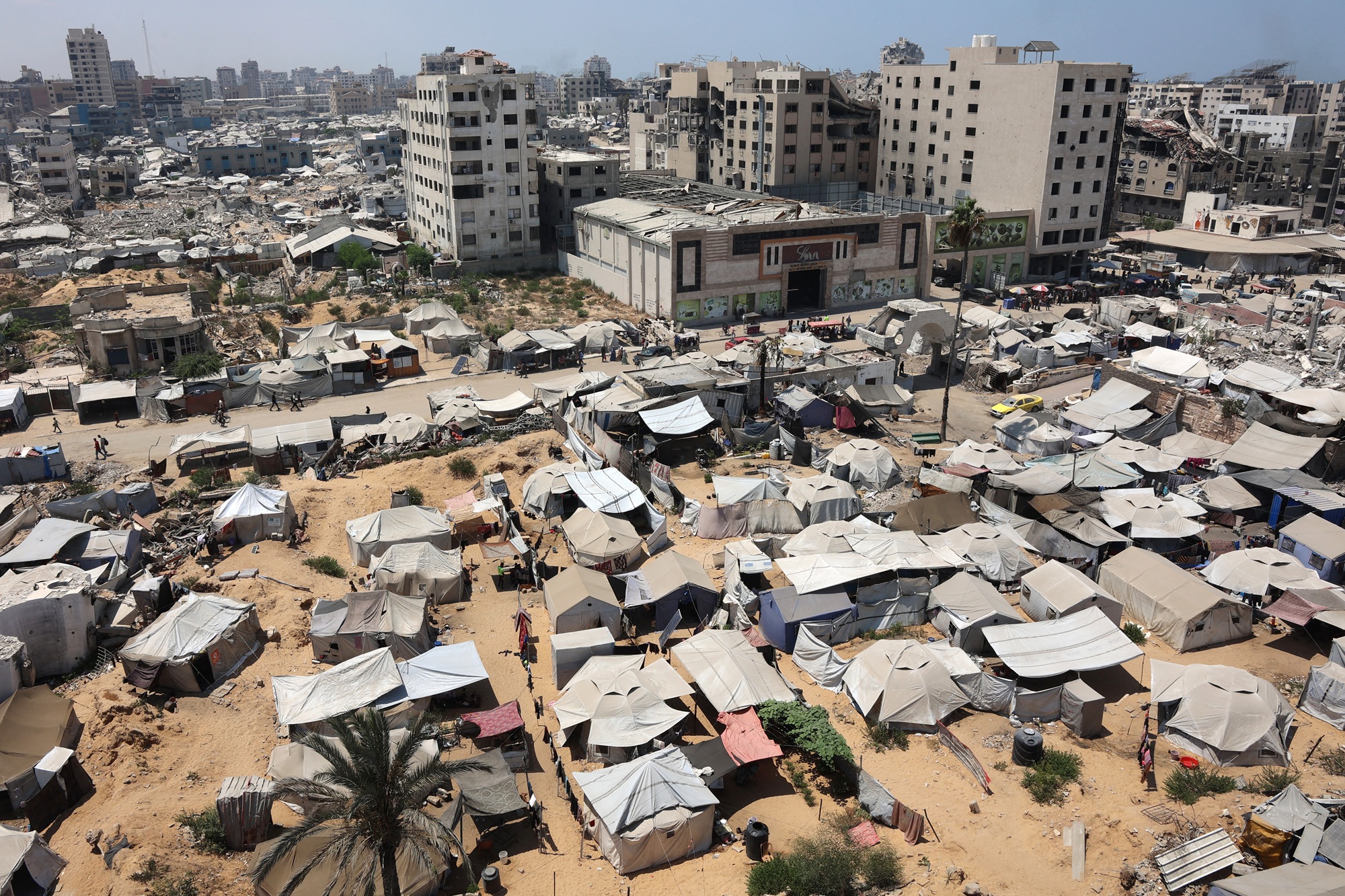
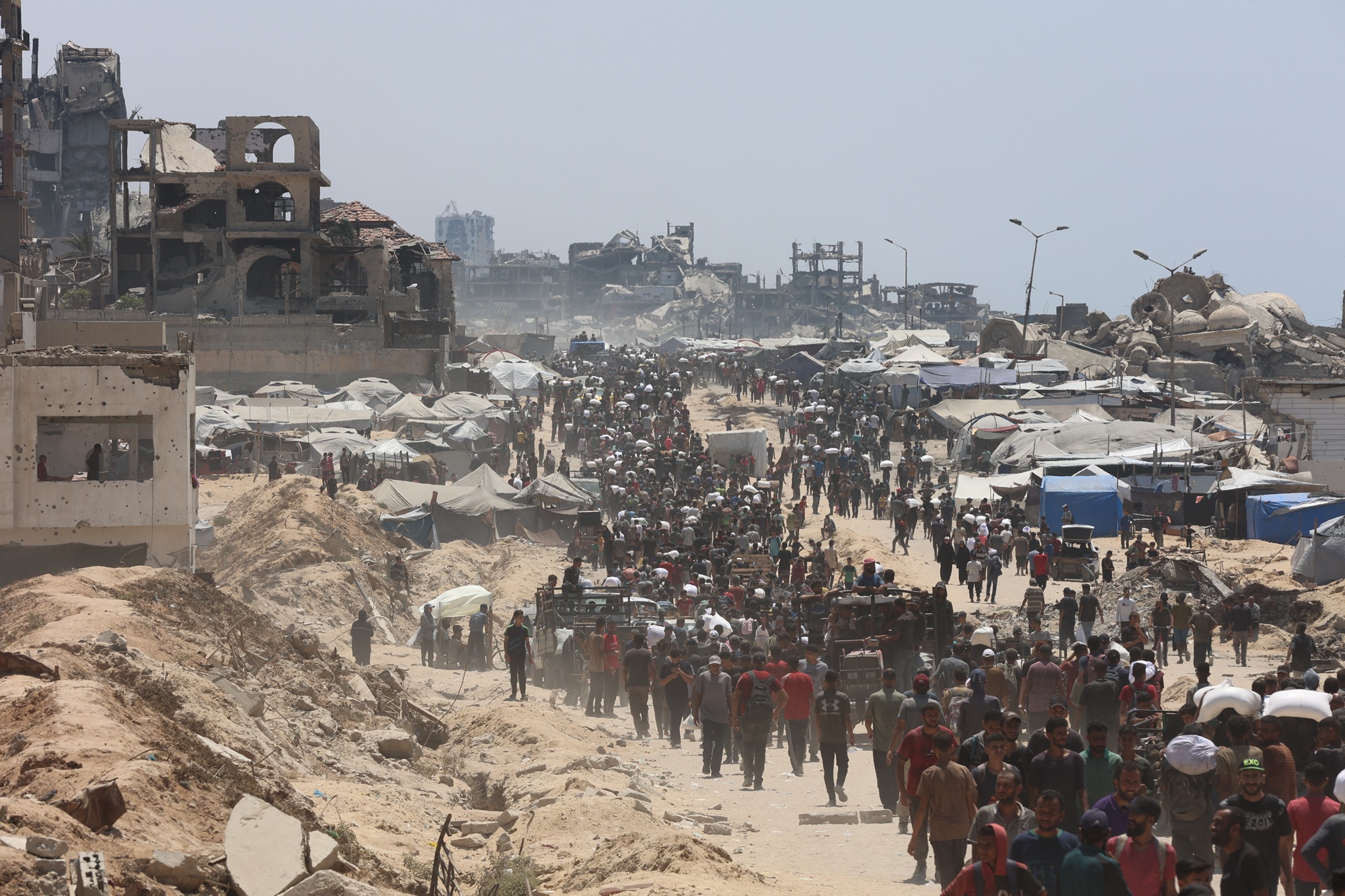
"caption": "Tents and housing of displaced Palestinians in Gaza City on Aug. 18, 2025. Nearly two weeks ago, three injured Palestinian children arrived in San Francisco from Gaza for lifesaving medical care. Now, that lifeline is at risk — after the U.S. State Department suspended visitor visas for people from Gaza, putting the entire program in jeopardy.\r\n\r\n\r\n",
"credit": "Omar Al-Qattaa/AFP via Getty Images",
"altTag": null,
"description": null,
"imgSizes": {
"thumbnail": {
"file": "https://cdn.kqed.org/wp-content/uploads/sites/10/2025/08/GazaGetty-160x107.jpg",
"width": 160,
"height": 107,
"mimeType": "image/jpeg"
},
"1536x1536": {
"file": "https://cdn.kqed.org/wp-content/uploads/sites/10/2025/08/GazaGetty-1536x1024.jpg",
"width": 1536,
"height": 1024,
"mimeType": "image/jpeg"
},
"post-thumbnail": {
"file": "https://cdn.kqed.org/wp-content/uploads/sites/10/2025/08/GazaGetty-672x372.jpg",
"width": 672,
"height": 372,
"mimeType": "image/jpeg"
},
"twentyfourteen-full-width": {
"file": "https://cdn.kqed.org/wp-content/uploads/sites/10/2025/08/GazaGetty-1038x576.jpg",
"width": 1038,
"height": 576,
"mimeType": "image/jpeg"
},
"kqedFullSize": {
"file": "https://cdn.kqed.org/wp-content/uploads/sites/10/2025/08/GazaGetty.jpg",
"width": 2000,
"height": 1333
}
},
"isLoading": false,
"fetchFailed": false
},
"news_12051204": {
"type": "attachments",
"id": "news_12051204",
"meta": {
"index": "attachments_1716263798",
"site": "news",
"id": "12051204",
"found": true
},
"title": "250806-PALESTINIANCHILDREN-05-KQED",
"publishDate": 1754524592,
"status": "inherit",
"parent": 0,
"modified": 1754524683,
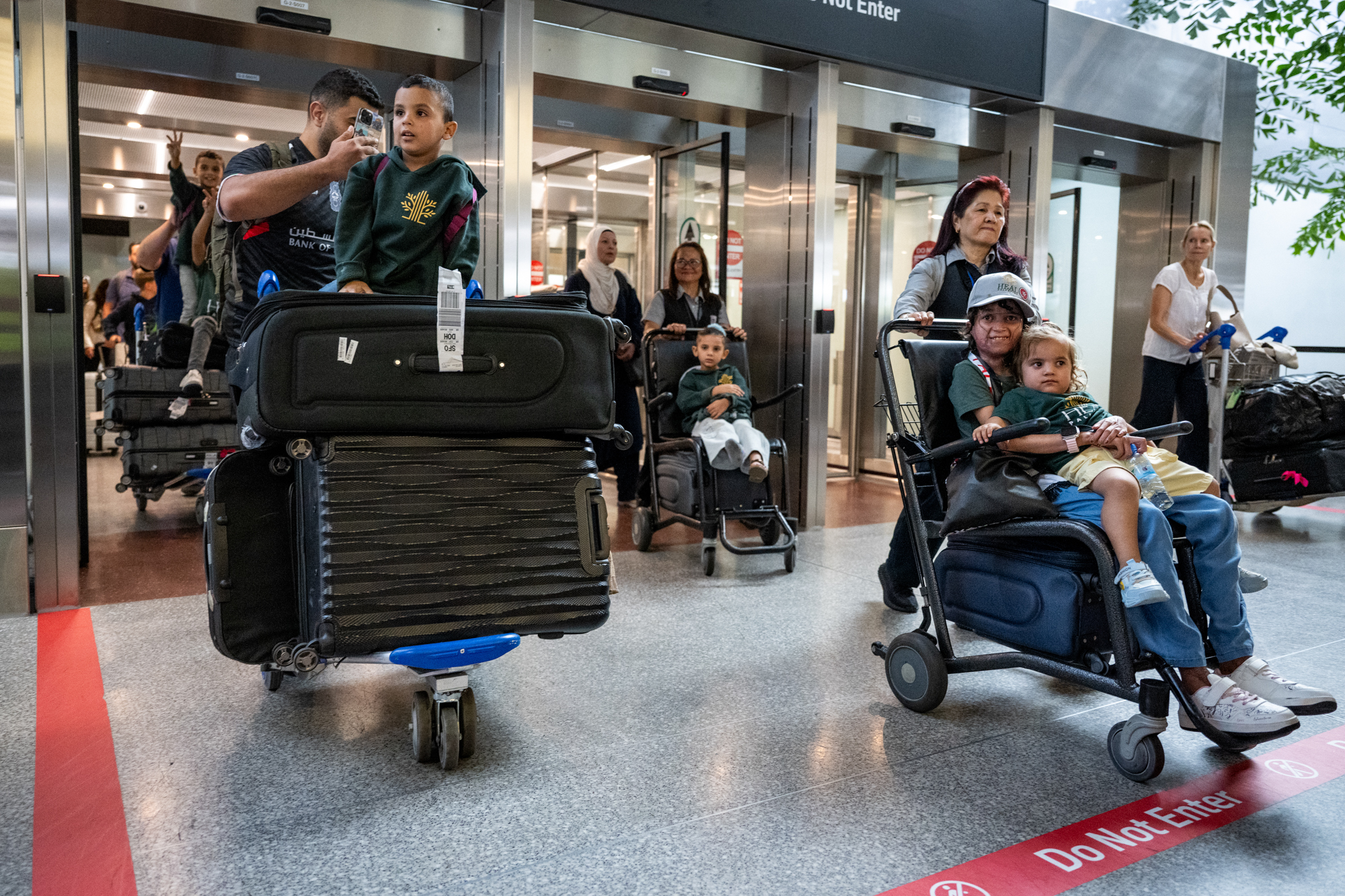
"caption": "Injured Palestinian children from Gaza arrive at San Francisco International Airport on Aug. 6, 2025, to begin lifesaving medical care, in an effort led by the humanitarian nonprofit HEAL Palestine.",
"credit": "Beth LaBerge/KQED",
"altTag": null,
"description": null,
"imgSizes": {
"thumbnail": {
"file": "https://cdn.kqed.org/wp-content/uploads/sites/10/2025/08/250806-PALESTINIANCHILDREN-05-KQED-160x107.jpg",
"width": 160,
"height": 107,
"mimeType": "image/jpeg"
},
"kqedFullSize": {
"file": "https://cdn.kqed.org/wp-content/uploads/sites/10/2025/08/250806-PALESTINIANCHILDREN-05-KQED.jpg",
"width": 2000,
"height": 1333
}
},
"isLoading": false,
"fetchFailed": false
},
"news_12043850": {
"type": "attachments",
"id": "news_12043850",
"meta": {
"index": "attachments_1716263798",
"site": "news",
"id": "12043850",
"found": true
},
"title": "The Jerusalem Coffee House in Oakland on June 11, 2025.",
"publishDate": 1749681005,
"status": "inherit",
"parent": 0,
"modified": 1749681089,
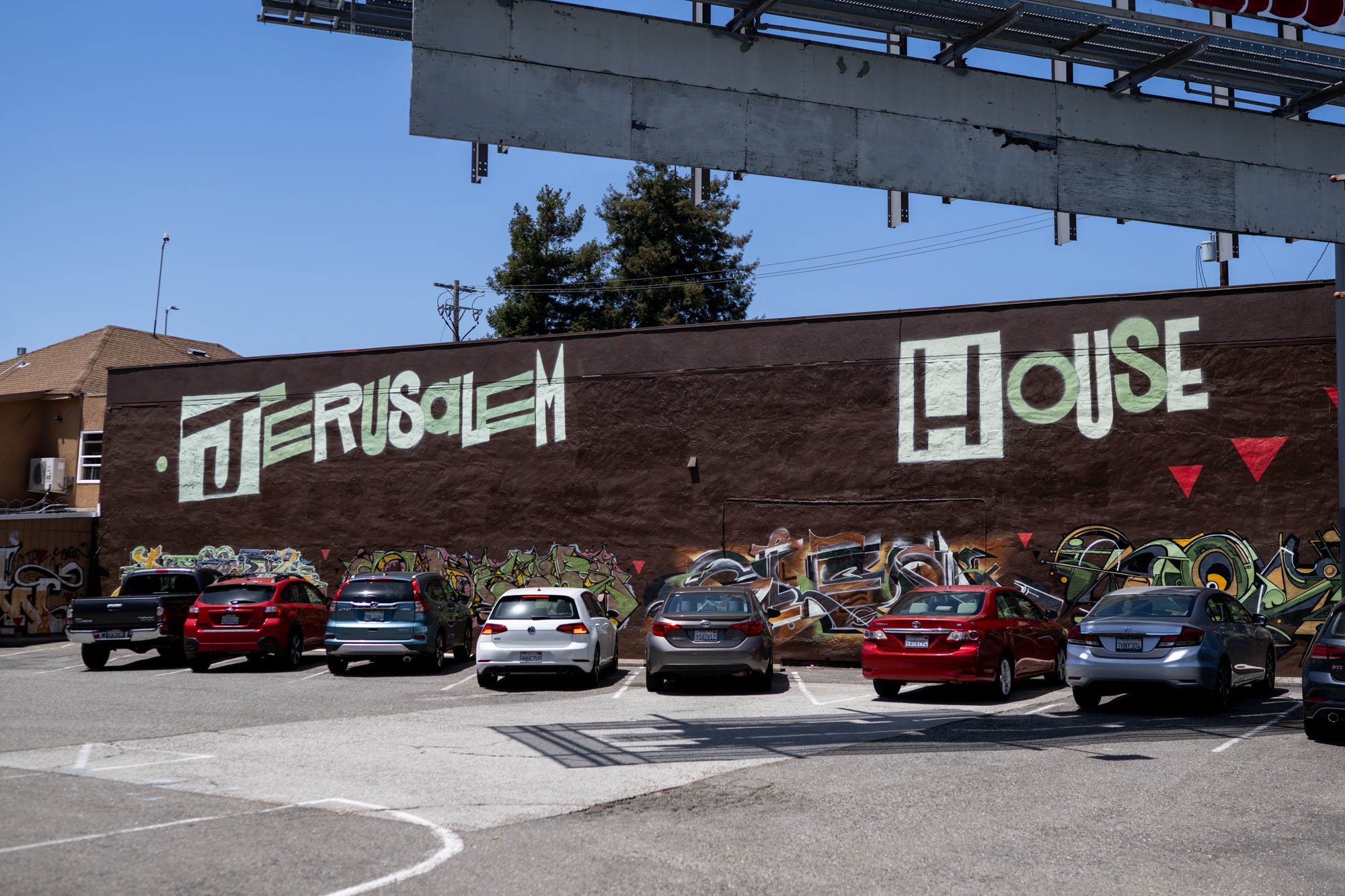
"caption": "The Jerusalem Coffee House in Oakland on June 11, 2025.",
"credit": "Beth LaBerge/KQED",
"altTag": null,
"description": null,
"imgSizes": {
"thumbnail": {
"file": "https://cdn.kqed.org/wp-content/uploads/sites/10/2025/06/250611-OAKLANDCOFFEESHOP-02-BL-KQED-160x107.jpg",
"width": 160,
"height": 107,
"mimeType": "image/jpeg"
},
"1536x1536": {
"file": "https://cdn.kqed.org/wp-content/uploads/sites/10/2025/06/250611-OAKLANDCOFFEESHOP-02-BL-KQED-1536x1024.jpg",
"width": 1536,
"height": 1024,
"mimeType": "image/jpeg"
},
"post-thumbnail": {
"file": "https://cdn.kqed.org/wp-content/uploads/sites/10/2025/06/250611-OAKLANDCOFFEESHOP-02-BL-KQED-672x372.jpg",
"width": 672,
"height": 372,
"mimeType": "image/jpeg"
},
"twentyfourteen-full-width": {
"file": "https://cdn.kqed.org/wp-content/uploads/sites/10/2025/06/250611-OAKLANDCOFFEESHOP-02-BL-KQED-1038x576.jpg",
"width": 1038,
"height": 576,
"mimeType": "image/jpeg"
},
"kqedFullSize": {
"file": "https://cdn.kqed.org/wp-content/uploads/sites/10/2025/06/250611-OAKLANDCOFFEESHOP-02-BL-KQED.jpg",
"width": 2000,
"height": 1333
}
},
"isLoading": false,
"fetchFailed": false
},
"news_12044081": {
"type": "attachments",
"id": "news_12044081",
"meta": {
"index": "attachments_1716263798",
"site": "news",
"id": "12044081",
"found": true
},
"title": "PalestinianDetainees4",
"publishDate": 1749773773,
"status": "inherit",
"parent": 12043918,
"modified": 1753827585,
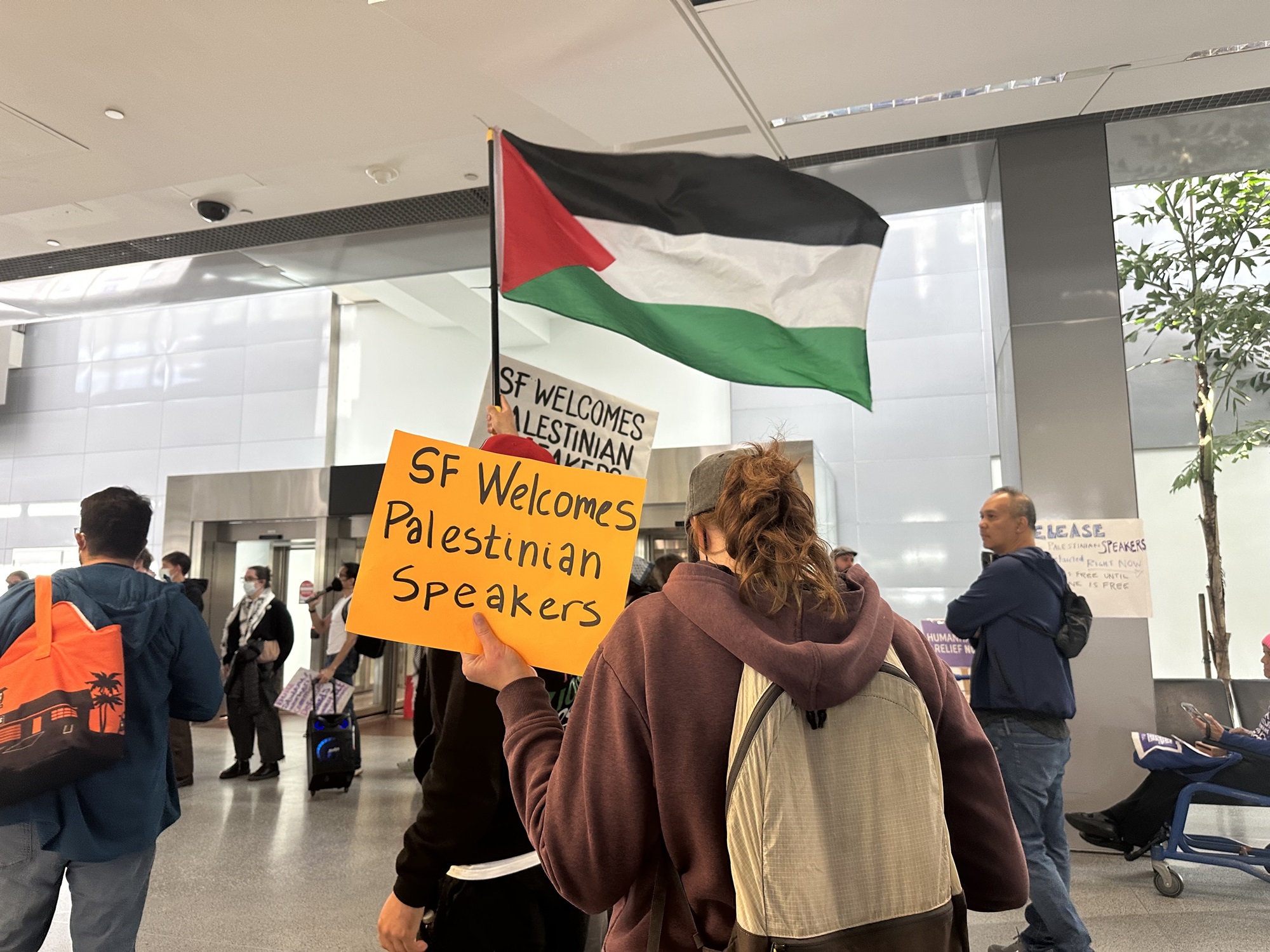
"caption": "Religious community members and supporters gathered at San Francisco International Airport on June 12, 2025, to protest Customs and Border Patrol agents’ detention of two Palestinian visitors, who had visas to the U.S. The visitors' sponsor confirmed the two men were sent back home.",
"credit": "Katie DeBenedetti/KQED",
"altTag": null,
"description": null,
"imgSizes": {
"thumbnail": {
"file": "https://cdn.kqed.org/wp-content/uploads/sites/10/2025/06/PalestinianDetainees4-160x120.jpg",
"width": 160,
"height": 120,
"mimeType": "image/jpeg"
},
"1536x1536": {
"file": "https://cdn.kqed.org/wp-content/uploads/sites/10/2025/06/PalestinianDetainees4-1536x1152.jpg",
"width": 1536,
"height": 1152,
"mimeType": "image/jpeg"
},
"post-thumbnail": {
"file": "https://cdn.kqed.org/wp-content/uploads/sites/10/2025/06/PalestinianDetainees4-672x372.jpg",
"width": 672,
"height": 372,
"mimeType": "image/jpeg"
},
"twentyfourteen-full-width": {
"file": "https://cdn.kqed.org/wp-content/uploads/sites/10/2025/06/PalestinianDetainees4-1038x576.jpg",
"width": 1038,
"height": 576,
"mimeType": "image/jpeg"
},
"kqedFullSize": {
"file": "https://cdn.kqed.org/wp-content/uploads/sites/10/2025/06/PalestinianDetainees4.jpg",
"width": 2000,
"height": 1500
}
},
"isLoading": false,
"fetchFailed": false
},
"news_11950066": {
"type": "attachments",
"id": "news_11950066",
"meta": {
"index": "attachments_1716263798",
"site": "news",
"id": "11950066",
"found": true
},
"title": "RS19451_GettyImages-143309520-qut",
"publishDate": 1684445501,
"status": "inherit",
"parent": 11949956,
"modified": 1753820977,
"caption": "Students sit around the Bruin Bear statue during lunchtime on the campus of UCLA on April 23, 2012, in Los Angeles, California. ",
"credit": "Kevork Djansezian/Getty Images",
"altTag": "A large, bronze statue of a bear showing its teeth is displayed outdoors on a university campus. Six students in UCLA hooded sweatshirts and jeans walk around the statue on their way to class. One young woman sits on a tan, chunky bench writing on a notepad.",
"description": null,
"imgSizes": {
"medium": {
"file": "https://cdn.kqed.org/wp-content/uploads/sites/10/2023/05/RS19451_GettyImages-143309520-qut-800x538.jpg",
"width": 800,
"height": 538,
"mimeType": "image/jpeg"
},
"large": {
"file": "https://cdn.kqed.org/wp-content/uploads/sites/10/2023/05/RS19451_GettyImages-143309520-qut-1020x686.jpg",
"width": 1020,
"height": 686,
"mimeType": "image/jpeg"
},
"thumbnail": {
"file": "https://cdn.kqed.org/wp-content/uploads/sites/10/2023/05/RS19451_GettyImages-143309520-qut-160x108.jpg",
"width": 160,
"height": 108,
"mimeType": "image/jpeg"
},
"1536x1536": {
"file": "https://cdn.kqed.org/wp-content/uploads/sites/10/2023/05/RS19451_GettyImages-143309520-qut-1536x1033.jpg",
"width": 1536,
"height": 1033,
"mimeType": "image/jpeg"
},
"post-thumbnail": {
"file": "https://cdn.kqed.org/wp-content/uploads/sites/10/2023/05/RS19451_GettyImages-143309520-qut-672x372.jpg",
"width": 672,
"height": 372,
"mimeType": "image/jpeg"
},
"twentyfourteen-full-width": {
"file": "https://cdn.kqed.org/wp-content/uploads/sites/10/2023/05/RS19451_GettyImages-143309520-qut-1038x576.jpg",
"width": 1038,
"height": 576,
"mimeType": "image/jpeg"
},
"kqedFullSize": {
"file": "https://cdn.kqed.org/wp-content/uploads/sites/10/2023/05/RS19451_GettyImages-143309520-qut.jpg",
"width": 1920,
"height": 1291
}
},
"isLoading": false,
"fetchFailed": false
},
"news_12050066": {
"type": "attachments",
"id": "news_12050066",
"meta": {
"index": "attachments_1716263798",
"site": "news",
"id": "12050066",
"found": true
},
"title": "Thousands of starving Palestinians flock to Zakim area for aid in Gaza",
"publishDate": 1753743648,
"status": "inherit",
"parent": 12049575,
"modified": 1753743694,
"caption": "Thousands of Palestinians struggling with hunger in Gaza flock to the Zakim area in the north of the region to receive aid on July 22, 2025. ",
"credit": "Hamza Z. H. Qraiqea/Anadolu via Getty Images",
"altTag": null,
"description": null,
"imgSizes": {
"thumbnail": {
"file": "https://cdn.kqed.org/wp-content/uploads/sites/10/2025/07/GazaHumanitarianCrisisJuly2025Getty-160x107.jpg",
"width": 160,
"height": 107,
"mimeType": "image/jpeg"
},
"1536x1536": {
"file": "https://cdn.kqed.org/wp-content/uploads/sites/10/2025/07/GazaHumanitarianCrisisJuly2025Getty-1536x1024.jpg",
"width": 1536,
"height": 1024,
"mimeType": "image/jpeg"
},
"post-thumbnail": {
"file": "https://cdn.kqed.org/wp-content/uploads/sites/10/2025/07/GazaHumanitarianCrisisJuly2025Getty-672x372.jpg",
"width": 672,
"height": 372,
"mimeType": "image/jpeg"
},
"twentyfourteen-full-width": {
"file": "https://cdn.kqed.org/wp-content/uploads/sites/10/2025/07/GazaHumanitarianCrisisJuly2025Getty-1038x576.jpg",
"width": 1038,
"height": 576,
"mimeType": "image/jpeg"
},
"kqedFullSize": {
"file": "https://cdn.kqed.org/wp-content/uploads/sites/10/2025/07/GazaHumanitarianCrisisJuly2025Getty.jpg",
"width": 2000,
"height": 1333
}
},
"isLoading": false,
"fetchFailed": false
},
"news_12044487": {
"type": "attachments",
"id": "news_12044487",
"meta": {
"index": "attachments_1716263798",
"site": "news",
"id": "12044487",
"found": true
},
"title": "20250614_NOKINGSOAKLAND_GC-44-KQED",
"publishDate": 1749942874,
"status": "inherit",
"parent": 12060116,
"modified": 1760735403,
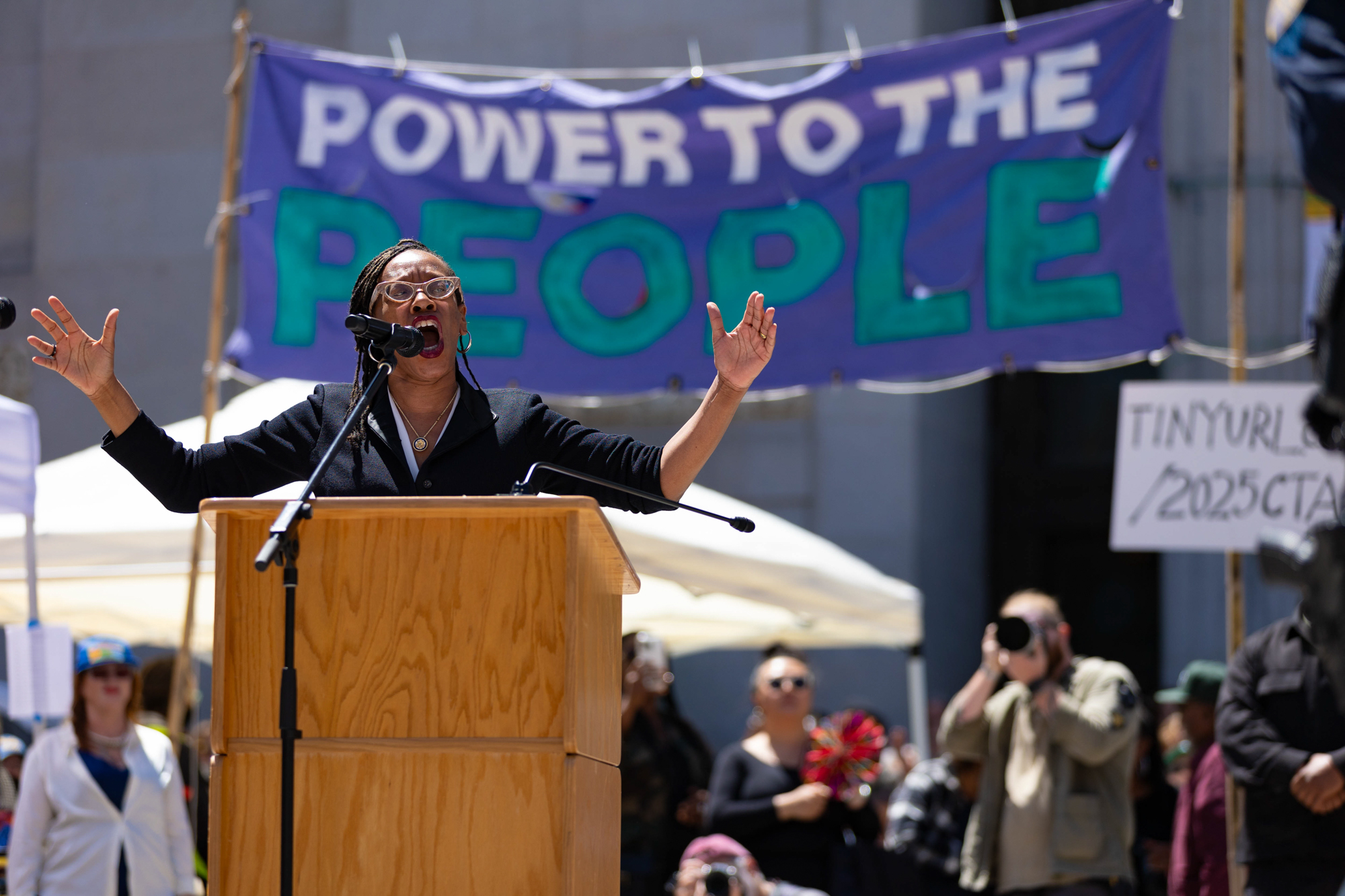
"caption": "U.S. Rep. Lateefah Simon addresses hundreds of protesters at Frank H. Ogawa Plaza during the No Kings protest in Oakland on June 14, 2025.",
"credit": "Gina Castro/KQED",
"altTag": null,
"description": null,
"imgSizes": {
"thumbnail": {
"file": "https://cdn.kqed.org/wp-content/uploads/sites/10/2025/06/20250614_NOKINGSOAKLAND_GC-44-KQED-160x107.jpg",
"width": 160,
"height": 107,
"mimeType": "image/jpeg"
},
"1536x1536": {
"file": "https://cdn.kqed.org/wp-content/uploads/sites/10/2025/06/20250614_NOKINGSOAKLAND_GC-44-KQED-1536x1024.jpg",
"width": 1536,
"height": 1024,
"mimeType": "image/jpeg"
},
"post-thumbnail": {
"file": "https://cdn.kqed.org/wp-content/uploads/sites/10/2025/06/20250614_NOKINGSOAKLAND_GC-44-KQED-672x372.jpg",
"width": 672,
"height": 372,
"mimeType": "image/jpeg"
},
"twentyfourteen-full-width": {
"file": "https://cdn.kqed.org/wp-content/uploads/sites/10/2025/06/20250614_NOKINGSOAKLAND_GC-44-KQED-1038x576.jpg",
"width": 1038,
"height": 576,
"mimeType": "image/jpeg"
},
"kqedFullSize": {
"file": "https://cdn.kqed.org/wp-content/uploads/sites/10/2025/06/20250614_NOKINGSOAKLAND_GC-44-KQED.jpg",
"width": 2000,
"height": 1333
}
},
"isLoading": false,
"fetchFailed": false
},
"news_12046875": {
"type": "attachments",
"id": "news_12046875",
"meta": {
"index": "attachments_1716263798",
"site": "news",
"id": "12046875",
"found": true
},
"title": "Rolla Alaydi sits on the beach in Pacific Grove on June 30, 2025.",
"publishDate": 1751484821,
"status": "inherit",
"parent": 0,
"modified": 1751484831,
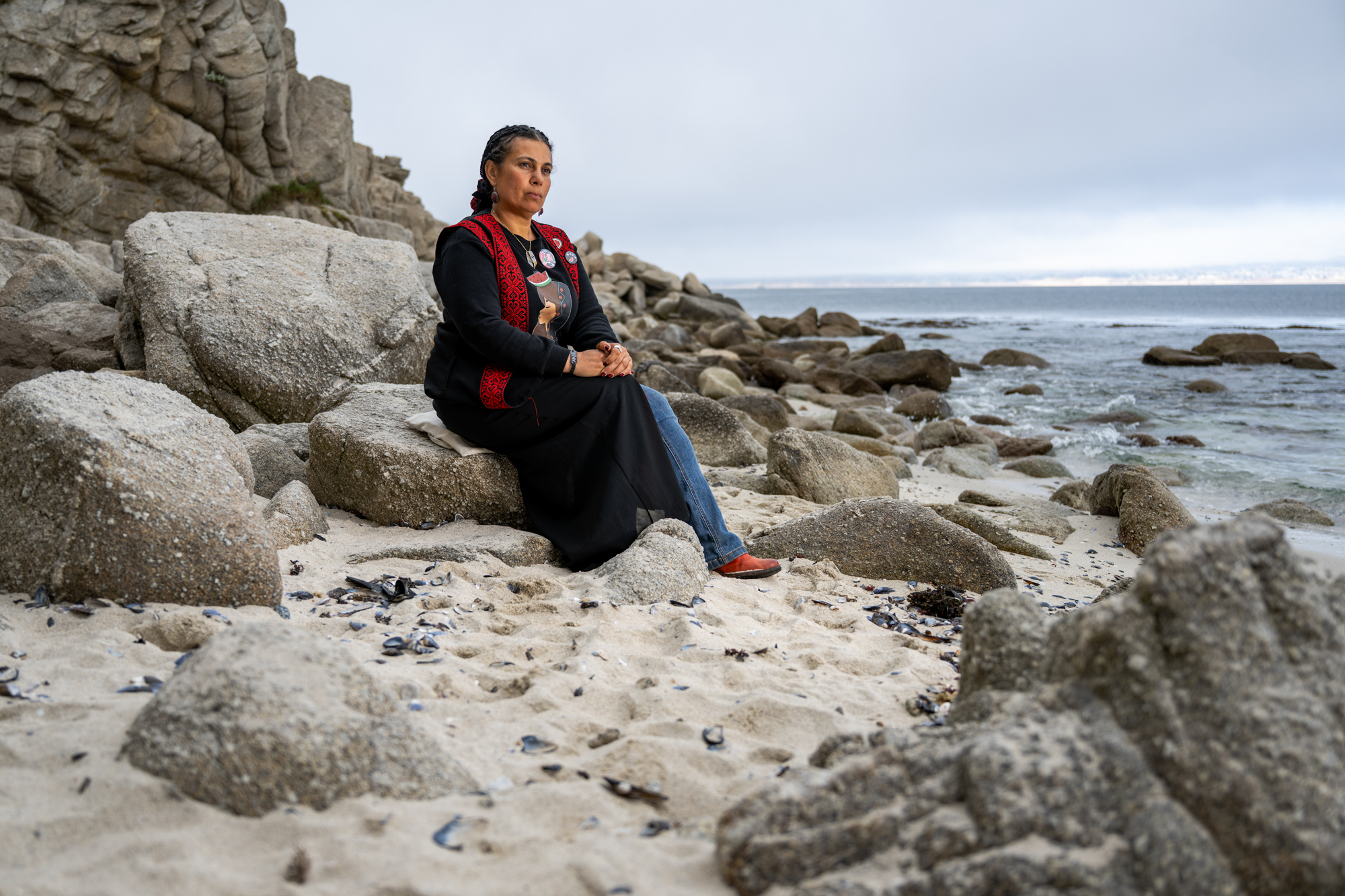
"caption": "Rolla Alaydi sits on the beach in Pacific Grove on June 30, 2025.",
"credit": "Beth LaBerge/KQED",
"altTag": null,
"description": null,
"imgSizes": {
"thumbnail": {
"file": "https://cdn.kqed.org/wp-content/uploads/sites/10/2025/07/250630-HUMANITARIANPAROLEDEEPDIVE-13-BL-KQED-160x107.jpg",
"width": 160,
"height": 107,
"mimeType": "image/jpeg"
},
"1536x1536": {
"file": "https://cdn.kqed.org/wp-content/uploads/sites/10/2025/07/250630-HUMANITARIANPAROLEDEEPDIVE-13-BL-KQED-1536x1024.jpg",
"width": 1536,
"height": 1024,
"mimeType": "image/jpeg"
},
"post-thumbnail": {
"file": "https://cdn.kqed.org/wp-content/uploads/sites/10/2025/07/250630-HUMANITARIANPAROLEDEEPDIVE-13-BL-KQED-672x372.jpg",
"width": 672,
"height": 372,
"mimeType": "image/jpeg"
},
"twentyfourteen-full-width": {
"file": "https://cdn.kqed.org/wp-content/uploads/sites/10/2025/07/250630-HUMANITARIANPAROLEDEEPDIVE-13-BL-KQED-1038x576.jpg",
"width": 1038,
"height": 576,
"mimeType": "image/jpeg"
},
"kqedFullSize": {
"file": "https://cdn.kqed.org/wp-content/uploads/sites/10/2025/07/250630-HUMANITARIANPAROLEDEEPDIVE-13-BL-KQED.jpg",
"width": 2000,
"height": 1333
}
},
"isLoading": false,
"fetchFailed": false
},
"news_12000971": {
"type": "attachments",
"id": "news_12000971",
"meta": {
"index": "attachments_1716263798",
"site": "news",
"id": "12000971",
"found": true
},
"title": "UC Berkeley Chancellor Rich Lyons in his office on campus on Aug. 20, 2024.",
"publishDate": 1724185101,
"status": "inherit",
"parent": 0,
"modified": 1724192309,
"caption": "UC Berkeley Chancellor Rich Lyons in his office on campus in Berkeley on Aug. 20, 2024.",
"credit": "Martin do Nascimento/KQED",
"altTag": null,
"description": null,
"imgSizes": {
"medium": {
"file": "https://cdn.kqed.org/wp-content/uploads/sites/10/2024/08/240820-UCB-CHANCELLOR-LYONS-MD-03-KQED-800x533.jpg",
"width": 800,
"height": 533,
"mimeType": "image/jpeg"
},
"large": {
"file": "https://cdn.kqed.org/wp-content/uploads/sites/10/2024/08/240820-UCB-CHANCELLOR-LYONS-MD-03-KQED-1020x680.jpg",
"width": 1020,
"height": 680,
"mimeType": "image/jpeg"
},
"thumbnail": {
"file": "https://cdn.kqed.org/wp-content/uploads/sites/10/2024/08/240820-UCB-CHANCELLOR-LYONS-MD-03-KQED-160x107.jpg",
"width": 160,
"height": 107,
"mimeType": "image/jpeg"
},
"1536x1536": {
"file": "https://cdn.kqed.org/wp-content/uploads/sites/10/2024/08/240820-UCB-CHANCELLOR-LYONS-MD-03-KQED-1536x1024.jpg",
"width": 1536,
"height": 1024,
"mimeType": "image/jpeg"
},
"post-thumbnail": {
"file": "https://cdn.kqed.org/wp-content/uploads/sites/10/2024/08/240820-UCB-CHANCELLOR-LYONS-MD-03-KQED-672x372.jpg",
"width": 672,
"height": 372,
"mimeType": "image/jpeg"
},
"twentyfourteen-full-width": {
"file": "https://cdn.kqed.org/wp-content/uploads/sites/10/2024/08/240820-UCB-CHANCELLOR-LYONS-MD-03-KQED-1038x576.jpg",
"width": 1038,
"height": 576,
"mimeType": "image/jpeg"
},
"full-width": {
"file": "https://cdn.kqed.org/wp-content/uploads/sites/10/2024/08/240820-UCB-CHANCELLOR-LYONS-MD-03-KQED-1920x1280.jpg",
"width": 1920,
"height": 1280,
"mimeType": "image/jpeg"
},
"kqedFullSize": {
"file": "https://cdn.kqed.org/wp-content/uploads/sites/10/2024/08/240820-UCB-CHANCELLOR-LYONS-MD-03-KQED.jpg",
"width": 2000,
"height": 1333
}
},
"isLoading": false,
"fetchFailed": false
},
"news_12008663": {
"type": "attachments",
"id": "news_12008663",
"meta": {
"index": "attachments_1716263798",
"site": "news",
"id": "12008663",
"found": true
},
"title": "241008-UCB CAMPUS WALKOUT-MD-09-KQED",
"publishDate": 1728431201,
"status": "inherit",
"parent": 12032046,
"modified": 1742415507,
"caption": "A walkout and rally for Gaza and Lebanon at the University of California, Berkeley, on Oct. 8, 2024.",
"credit": "Martin do Nascimento/KQED",
"altTag": null,
"description": null,
"imgSizes": {
"medium": {
"file": "https://cdn.kqed.org/wp-content/uploads/sites/10/2024/10/241008-UCB-CAMPUS-WALKOUT-MD-09-KQED-800x533.jpg",
"width": 800,
"height": 533,
"mimeType": "image/jpeg"
},
"large": {
"file": "https://cdn.kqed.org/wp-content/uploads/sites/10/2024/10/241008-UCB-CAMPUS-WALKOUT-MD-09-KQED-1020x680.jpg",
"width": 1020,
"height": 680,
"mimeType": "image/jpeg"
},
"thumbnail": {
"file": "https://cdn.kqed.org/wp-content/uploads/sites/10/2024/10/241008-UCB-CAMPUS-WALKOUT-MD-09-KQED-160x107.jpg",
"width": 160,
"height": 107,
"mimeType": "image/jpeg"
},
"1536x1536": {
"file": "https://cdn.kqed.org/wp-content/uploads/sites/10/2024/10/241008-UCB-CAMPUS-WALKOUT-MD-09-KQED-1536x1024.jpg",
"width": 1536,
"height": 1024,
"mimeType": "image/jpeg"
},
"post-thumbnail": {
"file": "https://cdn.kqed.org/wp-content/uploads/sites/10/2024/10/241008-UCB-CAMPUS-WALKOUT-MD-09-KQED-672x372.jpg",
"width": 672,
"height": 372,
"mimeType": "image/jpeg"
},
"twentyfourteen-full-width": {
"file": "https://cdn.kqed.org/wp-content/uploads/sites/10/2024/10/241008-UCB-CAMPUS-WALKOUT-MD-09-KQED-1038x576.jpg",
"width": 1038,
"height": 576,
"mimeType": "image/jpeg"
},
"full-width": {
"file": "https://cdn.kqed.org/wp-content/uploads/sites/10/2024/10/241008-UCB-CAMPUS-WALKOUT-MD-09-KQED-1920x1280.jpg",
"width": 1920,
"height": 1280,
"mimeType": "image/jpeg"
},
"kqedFullSize": {
"file": "https://cdn.kqed.org/wp-content/uploads/sites/10/2024/10/241008-UCB-CAMPUS-WALKOUT-MD-09-KQED.jpg",
"width": 2000,
"height": 1333
}
},
"isLoading": false,
"fetchFailed": false
},
"news_12044029": {
"type": "attachments",
"id": "news_12044029",
"meta": {
"index": "attachments_1716263798",
"site": "news",
"id": "12044029",
"found": true
},
"title": "PalestinianDetainees1",
"publishDate": 1749761378,
"status": "inherit",
"parent": 12043918,
"modified": 1749761433,
"caption": "SF Supervisor Bilal Mahmood.",
"credit": "Juan Carlos Lara/KQED",
"altTag": null,
"description": null,
"imgSizes": {
"thumbnail": {
"file": "https://cdn.kqed.org/wp-content/uploads/sites/10/2025/06/PalestinianDetainees1-160x120.jpg",
"width": 160,
"height": 120,
"mimeType": "image/jpeg"
},
"1536x1536": {
"file": "https://cdn.kqed.org/wp-content/uploads/sites/10/2025/06/PalestinianDetainees1-1536x1152.jpg",
"width": 1536,
"height": 1152,
"mimeType": "image/jpeg"
},
"post-thumbnail": {
"file": "https://cdn.kqed.org/wp-content/uploads/sites/10/2025/06/PalestinianDetainees1-672x372.jpg",
"width": 672,
"height": 372,
"mimeType": "image/jpeg"
},
"twentyfourteen-full-width": {
"file": "https://cdn.kqed.org/wp-content/uploads/sites/10/2025/06/PalestinianDetainees1-1038x576.jpg",
"width": 1038,
"height": 576,
"mimeType": "image/jpeg"
},
"kqedFullSize": {
"file": "https://cdn.kqed.org/wp-content/uploads/sites/10/2025/06/PalestinianDetainees1.jpg",
"width": 2000,
"height": 1500
}
},
"isLoading": false,
"fetchFailed": false
},
"news_12043504": {
"type": "attachments",
"id": "news_12043504",
"meta": {
"index": "attachments_1716263798",
"site": "news",
"id": "12043504",
"found": true
},
"title": "250609-SF IMMIGRATION PROTESTS-MD-18-KQED",
"publishDate": 1749533101,
"status": "inherit",
"parent": 0,
"modified": 1749533446,
"caption": "Carlos Camplis and other protestors rally in the Mission District in San Francisco in opposition to the Trump Administration's immigration policy and enforcement on June 9, 2025.",
"credit": "Martin do Nascimento/KQED",
"altTag": null,
"description": null,
"imgSizes": {
"thumbnail": {
"file": "https://cdn.kqed.org/wp-content/uploads/sites/10/2025/06/250609-SF-IMMIGRATION-PROTESTS-MD-18-KQED-160x107.jpg",
"width": 160,
"height": 107,
"mimeType": "image/jpeg"
},
"1536x1536": {
"file": "https://cdn.kqed.org/wp-content/uploads/sites/10/2025/06/250609-SF-IMMIGRATION-PROTESTS-MD-18-KQED-1536x1025.jpg",
"width": 1536,
"height": 1025,
"mimeType": "image/jpeg"
},
"post-thumbnail": {
"file": "https://cdn.kqed.org/wp-content/uploads/sites/10/2025/06/250609-SF-IMMIGRATION-PROTESTS-MD-18-KQED-672x372.jpg",
"width": 672,
"height": 372,
"mimeType": "image/jpeg"
},
"twentyfourteen-full-width": {
"file": "https://cdn.kqed.org/wp-content/uploads/sites/10/2025/06/250609-SF-IMMIGRATION-PROTESTS-MD-18-KQED-1038x576.jpg",
"width": 1038,
"height": 576,
"mimeType": "image/jpeg"
},
"kqedFullSize": {
"file": "https://cdn.kqed.org/wp-content/uploads/sites/10/2025/06/250609-SF-IMMIGRATION-PROTESTS-MD-18-KQED.jpg",
"width": 2000,
"height": 1334
}
},
"isLoading": false,
"fetchFailed": false
}
},
"audioPlayerReducer": {
"postId": "stream_live",
"isPaused": true,
"isPlaying": false,
"pfsActive": false,
"pledgeModalIsOpen": true,
"playerDrawerIsOpen": false,
"liveAudioPlayStartedAt": 0,
"liveAudioPlayContext": ""
},
"authorsReducer": {
"shossaini": {
"type": "authors",
"id": "3214",
"meta": {
"index": "authors_1716337520",
"id": "3214",
"found": true
},
"name": "Sara Hossaini",
"firstName": "Sara",
"lastName": "Hossaini",
"slug": "shossaini",
"email": "shossaini@kqed.org",
"display_author_email": true,
"staff_mastheads": [
"news"
],
"title": "KQED Reporter",
"bio": "Sara Hossaini came to general assignment reporting at KQED in 2013 after two winters reporting at Wyoming Public Radio. She holds a bachelor's degree in broadcast journalism from the University of Nebraska-Lincoln. Her radio romance began after a bitter breakup with documentary film (Ok, maybe it's still complicated). Her first simultaneous jobs in San Francisco were as Associate Producer on a PBS film series through the Center for Asian American Media and as a butler. She likes to trot, plot and make things with her hands.",
"avatar": "https://secure.gravatar.com/avatar/060e9f56b9554e17942e89f413242774?s=600&d=blank&r=g",
"twitter": "mshossaini",
"facebook": null,
"instagram": null,
"linkedin": null,
"sites": [
{
"site": "news",
"roles": [
"author"
]
},
{
"site": "stateofhealth",
"roles": [
"author"
]
}
],
"headData": {
"title": "Sara Hossaini | KQED",
"description": "KQED Reporter",
"ogImgSrc": "https://secure.gravatar.com/avatar/060e9f56b9554e17942e89f413242774?s=600&d=blank&r=g",
"twImgSrc": "https://secure.gravatar.com/avatar/060e9f56b9554e17942e89f413242774?s=600&d=blank&r=g"
},
"isLoading": false,
"link": "/author/shossaini"
},
"jlara": {
"type": "authors",
"id": "11761",
"meta": {
"index": "authors_1716337520",
"id": "11761",
"found": true
},
"name": "Juan Carlos Lara",
"firstName": "Juan Carlos",
"lastName": "Lara",
"slug": "jlara",
"email": "jlara@kqed.org",
"display_author_email": false,
"staff_mastheads": [],
"title": "KQED Contributor",
"bio": null,
"avatar": "https://secure.gravatar.com/avatar/19e2052b9b05657c5ff2af2121846e9c?s=600&d=blank&r=g",
"twitter": null,
"facebook": null,
"instagram": null,
"linkedin": null,
"sites": [
{
"site": "arts",
"roles": [
"editor"
]
},
{
"site": "news",
"roles": [
"editor"
]
},
{
"site": "forum",
"roles": [
"editor"
]
},
{
"site": "liveblog",
"roles": [
"contributor"
]
}
],
"headData": {
"title": "Juan Carlos Lara | KQED",
"description": "KQED Contributor",
"ogImgSrc": "https://secure.gravatar.com/avatar/19e2052b9b05657c5ff2af2121846e9c?s=600&d=blank&r=g",
"twImgSrc": "https://secure.gravatar.com/avatar/19e2052b9b05657c5ff2af2121846e9c?s=600&d=blank&r=g"
},
"isLoading": false,
"link": "/author/jlara"
},
"adahlstromeckman": {
"type": "authors",
"id": "11785",
"meta": {
"index": "authors_1716337520",
"id": "11785",
"found": true
},
"name": "Azul Dahlstrom-Eckman",
"firstName": "Azul",
"lastName": "Dahlstrom-Eckman",
"slug": "adahlstromeckman",
"email": "adahlstrom-eckman@kqed.org",
"display_author_email": true,
"staff_mastheads": [],
"title": "Reporter",
"bio": "Azul is a reporter for KQED focusing on transportation and features. He joined KQED in 2021 as an alumna of KALW's Audio Academy radio journalism training program.",
"avatar": "https://secure.gravatar.com/avatar/9cb750298435add7815a777f55bf1f46845c1386bb8452555c60a7b820b5aba3?s=600&d=blank&r=g",
"twitter": "@zuliemann",
"bluesky": "@azul415.bsky.social",
"facebook": null,
"instagram": null,
"linkedin": null,
"sites": [
{
"site": "arts",
"roles": [
"editor"
]
},
{
"site": "news",
"roles": [
"editor"
]
},
{
"site": "science",
"roles": [
"editor"
]
},
{
"site": "liveblog",
"roles": [
"author"
]
}
],
"headData": {
"title": "Azul Dahlstrom-Eckman | KQED",
"description": "Reporter",
"ogImgSrc": "https://secure.gravatar.com/avatar/9cb750298435add7815a777f55bf1f46845c1386bb8452555c60a7b820b5aba3?s=600&d=blank&r=g",
"twImgSrc": "https://secure.gravatar.com/avatar/9cb750298435add7815a777f55bf1f46845c1386bb8452555c60a7b820b5aba3?s=600&d=blank&r=g"
},
"isLoading": false,
"link": "/author/adahlstromeckman"
},
"nkhan": {
"type": "authors",
"id": "11867",
"meta": {
"index": "authors_1716337520",
"id": "11867",
"found": true
},
"name": "Nisa Khan",
"firstName": "Nisa",
"lastName": "Khan",
"slug": "nkhan",
"email": "nkhan@kqed.org",
"display_author_email": false,
"staff_mastheads": [],
"title": "KQED Contributor",
"bio": "Nisa Khan is a reporter for KQED's Audience News Desk. She was formerly a data reporter at Michigan Radio. She earned a Bachelor of Science in Information from the University of Michigan and a Master of Arts in Communication from Stanford University.",
"avatar": "https://secure.gravatar.com/avatar/8720459eef081ff64582b3506b124d58523e80e120704a0cbd9892533c914991?s=600&d=blank&r=g",
"twitter": "mnisakhan",
"bluesky": null,
"facebook": null,
"instagram": null,
"linkedin": null,
"sites": [
{
"site": "arts",
"roles": [
"editor"
]
},
{
"site": "news",
"roles": [
"editor"
]
},
{
"site": "science",
"roles": [
"editor",
"author"
]
},
{
"site": "forum",
"roles": [
"editor"
]
},
{
"site": "liveblog",
"roles": [
"contributor"
]
}
],
"headData": {
"title": "Nisa Khan | KQED",
"description": "KQED Contributor",
"ogImgSrc": "https://secure.gravatar.com/avatar/8720459eef081ff64582b3506b124d58523e80e120704a0cbd9892533c914991?s=600&d=blank&r=g",
"twImgSrc": "https://secure.gravatar.com/avatar/8720459eef081ff64582b3506b124d58523e80e120704a0cbd9892533c914991?s=600&d=blank&r=g"
},
"isLoading": false,
"link": "/author/nkhan"
},
"kdebenedetti": {
"type": "authors",
"id": "11913",
"meta": {
"index": "authors_1716337520",
"id": "11913",
"found": true
},
"name": "Katie DeBenedetti",
"firstName": "Katie",
"lastName": "DeBenedetti",
"slug": "kdebenedetti",
"email": "kdebenedetti@kqed.org",
"display_author_email": false,
"staff_mastheads": [
"news",
"science"
],
"title": "KQED Contributor",
"bio": "Katie DeBenedetti is a digital reporter covering daily news for the Express Desk. Prior to joining KQED as a culture reporting intern in January 2024, she covered education and city government for the Napa Valley Register.",
"avatar": "https://secure.gravatar.com/avatar/6e31073cb8f7e4214ab03f42771d0f45?s=600&d=blank&r=g",
"twitter": null,
"facebook": null,
"instagram": null,
"linkedin": null,
"sites": [
{
"site": "news",
"roles": [
"author"
]
},
{
"site": "science",
"roles": [
"author"
]
},
{
"site": "liveblog",
"roles": [
"author"
]
}
],
"headData": {
"title": "Katie DeBenedetti | KQED",
"description": "KQED Contributor",
"ogImgSrc": "https://secure.gravatar.com/avatar/6e31073cb8f7e4214ab03f42771d0f45?s=600&d=blank&r=g",
"twImgSrc": "https://secure.gravatar.com/avatar/6e31073cb8f7e4214ab03f42771d0f45?s=600&d=blank&r=g"
},
"isLoading": false,
"link": "/author/kdebenedetti"
},
"slim": {
"type": "authors",
"id": "11920",
"meta": {
"index": "authors_1716337520",
"id": "11920",
"found": true
},
"name": "Samantha Lim",
"firstName": "Samantha",
"lastName": "Lim",
"slug": "slim",
"email": "slim@KQED.org",
"display_author_email": false,
"staff_mastheads": [],
"title": "KQED Contributor",
"bio": null,
"avatar": "https://secure.gravatar.com/avatar/82e592e6c15fe1a04d385e8ad0fb0b4e?s=600&d=blank&r=g",
"twitter": null,
"facebook": null,
"instagram": null,
"linkedin": null,
"sites": [
{
"site": "news",
"roles": []
}
],
"headData": {
"title": "Samantha Lim | KQED",
"description": "KQED Contributor",
"ogImgSrc": "https://secure.gravatar.com/avatar/82e592e6c15fe1a04d385e8ad0fb0b4e?s=600&d=blank&r=g",
"twImgSrc": "https://secure.gravatar.com/avatar/82e592e6c15fe1a04d385e8ad0fb0b4e?s=600&d=blank&r=g"
},
"isLoading": false,
"link": "/author/slim"
},
"emanoukian": {
"type": "authors",
"id": "11925",
"meta": {
"index": "authors_1716337520",
"id": "11925",
"found": true
},
"name": "Elize Manoukian",
"firstName": "Elize",
"lastName": "Manoukian",
"slug": "emanoukian",
"email": "emanoukian@KQED.org",
"display_author_email": false,
"staff_mastheads": [
"news"
],
"title": "Digital News Editor",
"bio": "Elize Manoukian is an award-winning audio producer and Senior Editor on the Express Desk, KQED's digital news platform. Her work has appeared on KPFA, Interlochen Public Radio, Oregon Public Broadcast, the New York Daily News, LA Times and the San Diego Union-Tribune.",
"avatar": "https://secure.gravatar.com/avatar/4525f1a8e46ccb30933b32653d9772064cfefe3fa655eb45b3b3a80341f6bdad?s=600&d=blank&r=g",
"twitter": null,
"bluesky": null,
"facebook": null,
"instagram": null,
"linkedin": null,
"sites": [
{
"site": "arts",
"roles": [
"editor"
]
},
{
"site": "news",
"roles": [
"editor"
]
},
{
"site": "science",
"roles": [
"editor"
]
}
],
"headData": {
"title": "Elize Manoukian | KQED",
"description": "Digital News Editor",
"ogImgSrc": "https://secure.gravatar.com/avatar/4525f1a8e46ccb30933b32653d9772064cfefe3fa655eb45b3b3a80341f6bdad?s=600&d=blank&r=g",
"twImgSrc": "https://secure.gravatar.com/avatar/4525f1a8e46ccb30933b32653d9772064cfefe3fa655eb45b3b3a80341f6bdad?s=600&d=blank&r=g"
},
"isLoading": false,
"link": "/author/emanoukian"
},
"skennedy": {
"type": "authors",
"id": "11935",
"meta": {
"index": "authors_1716337520",
"id": "11935",
"found": true
},
"name": "Samantha Kennedy",
"firstName": "Samantha",
"lastName": "Kennedy",
"slug": "skennedy",
"email": "SKennedy@kqed.org",
"display_author_email": false,
"staff_mastheads": [],
"title": "KQED Contributor",
"bio": null,
"avatar": "https://secure.gravatar.com/avatar/adc7b14bf1e801793202a156ecc864d4ad505b0fd63162a2f3da0e5ba57222d0?s=600&d=blank&r=g",
"twitter": null,
"bluesky": null,
"facebook": null,
"instagram": null,
"linkedin": null,
"sites": [
{
"site": "arts",
"roles": [
"author"
]
},
{
"site": "news",
"roles": [
"editor"
]
},
{
"site": "science",
"roles": [
"editor"
]
}
],
"headData": {
"title": "Samantha Kennedy | KQED",
"description": "KQED Contributor",
"ogImgSrc": "https://secure.gravatar.com/avatar/adc7b14bf1e801793202a156ecc864d4ad505b0fd63162a2f3da0e5ba57222d0?s=600&d=blank&r=g",
"twImgSrc": "https://secure.gravatar.com/avatar/adc7b14bf1e801793202a156ecc864d4ad505b0fd63162a2f3da0e5ba57222d0?s=600&d=blank&r=g"
},
"isLoading": false,
"link": "/author/skennedy"
}
},
"pagesReducer": {
"news_tag_gaza": {
"type": "terms",
"id": "news_6631",
"meta": {
"index": "terms_1716263798",
"site": "news",
"id": "6631",
"score": 9.304595
},
"featImg": null,
"name": "Gaza",
"description": null,
"taxonomy": "tag",
"headData": {
"twImgId": null,
"twTitle": null,
"ogTitle": null,
"ogImgId": null,
"twDescription": null,
"description": null,
"title": "Gaza Archives | KQED News",
"ogDescription": null
},
"ttid": 6655,
"slug": "gaza",
"isLoading": false,
"title": "Gaza",
"pageMeta": {
"site": "news",
"WpPageTemplate": "page-topic-editorial",
"currentPage": 4
},
"blocks": [
{
"blockName": "kqed/post-list",
"attrs": {
"layout": "cardArticle2",
"query": "posts/news?tag=gaza",
"seeMore": false,
"paginated": true,
"page": 4
}
},
{
"blockName": "kqed/ad"
}
]
}
},
"pfsSessionReducer": {},
"postsReducer": {
"stream_live": {
"type": "live",
"id": "stream_live",
"audioUrl": "https://streams.kqed.org/kqedradio",
"title": "Live Stream",
"excerpt": "Live Stream information currently unavailable.",
"link": "/radio",
"featImg": "",
"label": {
"name": "KQED Live",
"link": "/"
}
},
"stream_kqedNewscast": {
"type": "posts",
"id": "stream_kqedNewscast",
"audioUrl": "https://www.kqed.org/.stream/anon/radio/RDnews/newscast.mp3?_=1",
"title": "KQED Newscast",
"featImg": "",
"label": {
"name": "88.5 FM",
"link": "/"
}
},
"news_12052642": {
"type": "posts",
"id": "news_12052642",
"meta": {
"index": "posts_1716263798",
"site": "news",
"id": "12052642",
"score": null,
"sort": [
1755555794000
]
},
"guestAuthors": [],
"slug": "us-halts-humanitarian-medical-visas-used-to-bring-injured-kids-from-gaza-to-sf",
"title": "US Halts Humanitarian Medical Visas Used to Bring Injured Kids From Gaza to SF",
"publishDate": 1755555794,
"format": "standard",
"headTitle": "US Halts Humanitarian Medical Visas Used to Bring Injured Kids From Gaza to SF | KQED",
"labelTerm": {
"site": "news"
},
"content": "\u003cp>Nearly two weeks ago, \u003ca href=\"https://www.kqed.org/news/12050908/injured-palestinian-children-from-gaza-arrive-in-san-francisco-for-treatment\">three injured Palestinian children from Gaza\u003c/a> arrived in San Francisco for medical treatment.\u003c/p>\n\u003cp>Now, the program that brought them here is in jeopardy, after the U.S. State Department suspended visitor visas for people from Gaza.\u003c/p>\n\u003cp>The department said Saturday on the social media platform X that it would stop all visitor visas from Gaza to conduct “a full and thorough review of the process and procedures” used to issue temporary medical-humanitarian visas.\u003c/p>\n\u003cp>[ad fullwidth]\u003c/p>\n\u003cp>The decision has drawn condemnation from Bay Area advocates and officials, who say countless children awaiting lifesaving care are now stuck in limbo.\u003c/p>\n\u003cp>“It is outlandish beyond belief that in the Trump administration’s ongoing Israel-first policies and targeting of immigrants that they would then turn their attention to the most vulnerable children in the world,” Zahra Billoo, executive director of the Council on American-Islamic Relations, San Francisco Bay Area office, told KQED. “The only place left for these children to seek assistance is outside of Gaza.”\u003c/p>\n\u003cfigure id=\"attachment_12050066\" class=\"wp-caption aligncenter\" style=\"max-width: 2000px\">\u003cimg loading=\"lazy\" decoding=\"async\" class=\"size-full wp-image-12050066\" src=\"https://cdn.kqed.org/wp-content/uploads/sites/10/2025/07/GazaHumanitarianCrisisJuly2025Getty.jpg\" alt=\"\" width=\"2000\" height=\"1333\" srcset=\"https://cdn.kqed.org/wp-content/uploads/sites/10/2025/07/GazaHumanitarianCrisisJuly2025Getty.jpg 2000w, https://cdn.kqed.org/wp-content/uploads/sites/10/2025/07/GazaHumanitarianCrisisJuly2025Getty-160x107.jpg 160w, https://cdn.kqed.org/wp-content/uploads/sites/10/2025/07/GazaHumanitarianCrisisJuly2025Getty-1536x1024.jpg 1536w\" sizes=\"auto, (max-width: 2000px) 100vw, 2000px\">\u003cfigcaption class=\"wp-caption-text\">Thousands of Palestinians struggling with hunger in Gaza flock to the Zakim area in the north of the region to receive aid on July 22, 2025. \u003ccite>(Hamza Z. H. Qraiqea/Anadolu via Getty Images)\u003c/cite>\u003c/figcaption>\u003c/figure>\n\u003cp>The Ohio-based nonprofit Heal Palestine helped 11 injured children evacuate this month as part of the mission, the nonprofit said. Layan, 14, Ghazal, 6, and Anas, 8, flew into San Francisco International Airport at the beginning of the month with loved ones. The children were injured in three separate bombings, according to Heal Palestine.\u003c/p>\n\u003cp>Billoo said children and caregivers who leave Gaza already undergo a “rigorous vetting process,” which includes approval from both the Israeli and U.S. government.\u003c/p>\n\u003cp>“How many specifically are waiting to travel to the United States is unclear, but the number of children in need is in the tens of thousands,” Billoo said.\u003c/p>\n\u003cp>The department’s decision came less than a day after far-right activist and conspiracy theorist Laura Loomer falsely claimed on X that the children’s arrival — which is considered the largest single medical evacuation of injured children from Gaza to the country by organizers — that Heal Palestine was “mass importing GAZANS into the US.”\u003c/p>\n\u003cp>More than 62,000 Palestinians have been killed during the war between Israel and Hamas in Gaza, the region’s health ministry \u003ca href=\"https://www.pbs.org/newshour/world/more-than-62000-people-have-been-killed-in-gaza-war-says-palestinian-health-ministry\">said on Monday\u003c/a>. According to the United Nations Children’s Fund, more than 18,000 children have been killed in Gaza in the last 22 months.[aside postID=news_12051743 hero='https://cdn.kqed.org/wp-content/uploads/sites/10/2025/08/250811-ISRAELICONSULATE_00956_TV-KQED.jpg']In her post, Loomer accused one of the leaders of Heal Palestine of “propping up Palestinian NGOS that have been accused of having Islamic terror ties.”\u003c/p>\n\u003cp>Heal Palestine said it was “distressed” by the State Department’s decision.\u003c/p>\n\u003cp>“HEAL Palestine is an American humanitarian nonprofit organization delivering urgent aid and medical care to children in Palestine, including sponsoring and bringing severely injured children to the U.S. on temporary visas for essential medical treatment not available at home,” the nonprofit said in a statement. “This is a medical treatment program, not a refugee resettlement program.”\u003c/p>\n\u003cp>Dr. Mohammad Subeh, a Palestinian American emergency doctor based in the Bay Area who aided in the evacuation and volunteers with Heal Palestine, told KQED that he was bewildered by the department’s decision because of how much vetting happens before children are brought over.\u003c/p>\n\u003cp>“It made it seem that the State Department had no clue as to the current processes in place to actually approve or disapprove the visa issuance for these children and their guardians. It’s just not in line with reality,” Subeh said. “The most troubling thing is allowing the incitement of fear and hatred to control how we view these children in very dehumanizing terms.”\u003c/p>\n\u003cp>Subeh said that five children he treated in Gaza have since been evacuated, including some of the children who flew into SFO, but that more than 5,000 are still waiting for a higher level of care.\u003c/p>\n\u003cp>“The pause of the last 48 hours just halts any and all cases in the pipeline to potentially be evacuated,” Subeh continued. “It’s not an easy task to come here for this type of treatment. So, for all of those hundreds, if not thousands, who are already in the process of being vetted, all of those cases have come to a complete halt.”\u003c/p>\n\u003cp>Rep. Sam Liccardo, D-San José, said on X that each day “we halt visas for children in dire need of medical assistance is unconscionable and cruel.”\u003c/p>\n\u003cp>Loomer gave herself credit for the State Department’s announcement, celebrating her post as the reason the visas were halted.\u003c/p>\n\u003cp>“This is fantastic news,” Loomer wrote on X. “Hopefully, all GAZANS will be added to Trump’s travel ban.”\u003c/p>\n\u003cp>\u003cem>KQED’s María Fernanda Bernal contributed to this report. \u003c/em>\u003c/p>\n\u003cp>\u003c/p>\n",
"blocks": [],
"excerpt": "Advocates condemned the decision, which would prevent future medical evacuations of Palestinian children to the United States.",
"status": "publish",
"parent": 0,
"modified": 1755557146,
"stats": {
"hasAudio": false,
"hasVideo": false,
"hasChartOrMap": false,
"iframeSrcs": [],
"hasGoogleForm": false,
"hasGallery": false,
"hasHearkenModule": false,
"hasPolis": false,
"paragraphCount": 22,
"wordCount": 866
},
"headData": {
"title": "US Halts Humanitarian Medical Visas Used to Bring Injured Kids From Gaza to SF | KQED",
"description": "Advocates condemned the decision, which would prevent future medical evacuations of Palestinian children to the United States.",
"ogTitle": "",
"ogDescription": "",
"ogImgId": "",
"twTitle": "",
"twDescription": "",
"twImgId": "",
"schema": {
"@context": "https://schema.org",
"@type": "NewsArticle",
"headline": "US Halts Humanitarian Medical Visas Used to Bring Injured Kids From Gaza to SF",
"datePublished": "2025-08-18T15:23:14-07:00",
"dateModified": "2025-08-18T15:45:46-07:00",
"image": "https://cdn.kqed.org/wp-content/uploads/2020/02/KQED-OG-Image@1x.png",
"isAccessibleForFree": "True",
"publisher": {
"@type": "NewsMediaOrganization",
"@id": "https://www.kqed.org/#organization",
"name": "KQED",
"logo": "https://cdn.kqed.org/wp-content/uploads/2020/02/KQED-OG-Image@1x.png",
"url": "https://www.kqed.org",
"sameAs": [
"https://www.facebook.com/KQED",
"https://twitter.com/KQED",
"https://www.instagram.com/kqed/",
"https://www.tiktok.com/@kqedofficial",
"https://www.linkedin.com/company/kqed",
"https://www.youtube.com/channel/UCeC0IOo7i1P_61zVUWbJ4nw"
]
}
}
},
"primaryCategory": {
"termId": 8,
"slug": "news",
"name": "News"
},
"sticky": false,
"nprStoryId": "kqed-12052642",
"templateType": "standard",
"featuredImageType": "standard",
"excludeFromSiteSearch": "Include",
"articleAge": "0",
"path": "/news/12052642/us-halts-humanitarian-medical-visas-used-to-bring-injured-kids-from-gaza-to-sf",
"audioTrackLength": null,
"parsedContent": [
{
"type": "contentString",
"content": "\u003cdiv class=\"post-body\">\u003cp>\u003cp>Nearly two weeks ago, \u003ca href=\"https://www.kqed.org/news/12050908/injured-palestinian-children-from-gaza-arrive-in-san-francisco-for-treatment\">three injured Palestinian children from Gaza\u003c/a> arrived in San Francisco for medical treatment.\u003c/p>\n\u003cp>Now, the program that brought them here is in jeopardy, after the U.S. State Department suspended visitor visas for people from Gaza.\u003c/p>\n\u003cp>The department said Saturday on the social media platform X that it would stop all visitor visas from Gaza to conduct “a full and thorough review of the process and procedures” used to issue temporary medical-humanitarian visas.\u003c/p>\n\u003cp>\u003c/p>\u003c/div>",
"attributes": {
"named": {},
"numeric": []
}
},
{
"type": "component",
"content": "",
"name": "ad",
"attributes": {
"named": {
"label": "fullwidth"
},
"numeric": [
"fullwidth"
]
}
},
{
"type": "contentString",
"content": "\u003cdiv class=\"post-body\">\u003cp>\u003c/p>\n\u003cp>The decision has drawn condemnation from Bay Area advocates and officials, who say countless children awaiting lifesaving care are now stuck in limbo.\u003c/p>\n\u003cp>“It is outlandish beyond belief that in the Trump administration’s ongoing Israel-first policies and targeting of immigrants that they would then turn their attention to the most vulnerable children in the world,” Zahra Billoo, executive director of the Council on American-Islamic Relations, San Francisco Bay Area office, told KQED. “The only place left for these children to seek assistance is outside of Gaza.”\u003c/p>\n\u003cfigure id=\"attachment_12050066\" class=\"wp-caption aligncenter\" style=\"max-width: 2000px\">\u003cimg loading=\"lazy\" decoding=\"async\" class=\"size-full wp-image-12050066\" src=\"https://cdn.kqed.org/wp-content/uploads/sites/10/2025/07/GazaHumanitarianCrisisJuly2025Getty.jpg\" alt=\"\" width=\"2000\" height=\"1333\" srcset=\"https://cdn.kqed.org/wp-content/uploads/sites/10/2025/07/GazaHumanitarianCrisisJuly2025Getty.jpg 2000w, https://cdn.kqed.org/wp-content/uploads/sites/10/2025/07/GazaHumanitarianCrisisJuly2025Getty-160x107.jpg 160w, https://cdn.kqed.org/wp-content/uploads/sites/10/2025/07/GazaHumanitarianCrisisJuly2025Getty-1536x1024.jpg 1536w\" sizes=\"auto, (max-width: 2000px) 100vw, 2000px\">\u003cfigcaption class=\"wp-caption-text\">Thousands of Palestinians struggling with hunger in Gaza flock to the Zakim area in the north of the region to receive aid on July 22, 2025. \u003ccite>(Hamza Z. H. Qraiqea/Anadolu via Getty Images)\u003c/cite>\u003c/figcaption>\u003c/figure>\n\u003cp>The Ohio-based nonprofit Heal Palestine helped 11 injured children evacuate this month as part of the mission, the nonprofit said. Layan, 14, Ghazal, 6, and Anas, 8, flew into San Francisco International Airport at the beginning of the month with loved ones. The children were injured in three separate bombings, according to Heal Palestine.\u003c/p>\n\u003cp>Billoo said children and caregivers who leave Gaza already undergo a “rigorous vetting process,” which includes approval from both the Israeli and U.S. government.\u003c/p>\n\u003cp>“How many specifically are waiting to travel to the United States is unclear, but the number of children in need is in the tens of thousands,” Billoo said.\u003c/p>\n\u003cp>The department’s decision came less than a day after far-right activist and conspiracy theorist Laura Loomer falsely claimed on X that the children’s arrival — which is considered the largest single medical evacuation of injured children from Gaza to the country by organizers — that Heal Palestine was “mass importing GAZANS into the US.”\u003c/p>\n\u003cp>More than 62,000 Palestinians have been killed during the war between Israel and Hamas in Gaza, the region’s health ministry \u003ca href=\"https://www.pbs.org/newshour/world/more-than-62000-people-have-been-killed-in-gaza-war-says-palestinian-health-ministry\">said on Monday\u003c/a>. According to the United Nations Children’s Fund, more than 18,000 children have been killed in Gaza in the last 22 months.\u003c/p>\u003c/div>",
"attributes": {
"named": {},
"numeric": []
}
},
{
"type": "component",
"content": "",
"name": "aside",
"attributes": {
"named": {
"postid": "news_12051743",
"hero": "https://cdn.kqed.org/wp-content/uploads/sites/10/2025/08/250811-ISRAELICONSULATE_00956_TV-KQED.jpg",
"label": ""
},
"numeric": []
}
},
{
"type": "contentString",
"content": "\u003cdiv class=\"post-body\">\u003cp>In her post, Loomer accused one of the leaders of Heal Palestine of “propping up Palestinian NGOS that have been accused of having Islamic terror ties.”\u003c/p>\n\u003cp>Heal Palestine said it was “distressed” by the State Department’s decision.\u003c/p>\n\u003cp>“HEAL Palestine is an American humanitarian nonprofit organization delivering urgent aid and medical care to children in Palestine, including sponsoring and bringing severely injured children to the U.S. on temporary visas for essential medical treatment not available at home,” the nonprofit said in a statement. “This is a medical treatment program, not a refugee resettlement program.”\u003c/p>\n\u003cp>Dr. Mohammad Subeh, a Palestinian American emergency doctor based in the Bay Area who aided in the evacuation and volunteers with Heal Palestine, told KQED that he was bewildered by the department’s decision because of how much vetting happens before children are brought over.\u003c/p>\n\u003cp>“It made it seem that the State Department had no clue as to the current processes in place to actually approve or disapprove the visa issuance for these children and their guardians. It’s just not in line with reality,” Subeh said. “The most troubling thing is allowing the incitement of fear and hatred to control how we view these children in very dehumanizing terms.”\u003c/p>\n\u003cp>Subeh said that five children he treated in Gaza have since been evacuated, including some of the children who flew into SFO, but that more than 5,000 are still waiting for a higher level of care.\u003c/p>\n\u003cp>“The pause of the last 48 hours just halts any and all cases in the pipeline to potentially be evacuated,” Subeh continued. “It’s not an easy task to come here for this type of treatment. So, for all of those hundreds, if not thousands, who are already in the process of being vetted, all of those cases have come to a complete halt.”\u003c/p>\n\u003cp>Rep. Sam Liccardo, D-San José, said on X that each day “we halt visas for children in dire need of medical assistance is unconscionable and cruel.”\u003c/p>\n\u003cp>Loomer gave herself credit for the State Department’s announcement, celebrating her post as the reason the visas were halted.\u003c/p>\n\u003cp>“This is fantastic news,” Loomer wrote on X. “Hopefully, all GAZANS will be added to Trump’s travel ban.”\u003c/p>\n\u003cp>\u003cem>KQED’s María Fernanda Bernal contributed to this report. \u003c/em>\u003c/p>\n\u003cp>\u003c/p>\n\u003c/div>\u003c/p>",
"attributes": {
"named": {},
"numeric": []
}
}
],
"link": "/news/12052642/us-halts-humanitarian-medical-visas-used-to-bring-injured-kids-from-gaza-to-sf",
"authors": [
"11935"
],
"categories": [
"news_457",
"news_8",
"news_13"
],
"tags": [
"news_1323",
"news_34377",
"news_6631",
"news_18543",
"news_33333",
"news_29475",
"news_33338",
"news_33440",
"news_17968",
"news_38"
],
"featImg": "news_12052687",
"label": "news"
},
"news_12050908": {
"type": "posts",
"id": "news_12050908",
"meta": {
"index": "posts_1716263798",
"site": "news",
"id": "12050908",
"score": null,
"sort": [
1754568053000
]
},
"guestAuthors": [],
"slug": "injured-palestinian-children-from-gaza-arrive-in-san-francisco-for-treatment",
"title": "Injured Palestinian Children From Gaza Arrive in San Francisco for Treatment",
"publishDate": 1754568053,
"format": "standard",
"headTitle": "Injured Palestinian Children From Gaza Arrive in San Francisco for Treatment | KQED",
"labelTerm": {
"site": "news"
},
"content": "\u003cp>Two critically injured Palestinian children and their families arrived in the Bay Area on Wednesday for long-term treatment as part of what organizers call the largest single medical evacuation of injured children from \u003ca href=\"https://www.kqed.org/news/tag/gaza\">Gaza\u003c/a> to the United States.\u003c/p>\n\u003cp>Dozens of supporters — some wearing keffiyehs, others holding Palestinian flags or balloons — gathered at \u003ca href=\"https://www.kqed.org/news/tag/san-francisco-international-airport\">San Francisco International Airport\u003c/a>’s arrivals hall to welcome Ghazal, 6, Layan, 14, and their families following a monthslong evacuation effort from their homes or shelters in Gaza.\u003c/p>\n\u003cp>Ghazal was injured in an explosion after being displaced from her home in Rafah, a southern city where many Palestinians fled to avoid bombardments in the north. Layan was burned and hit with shrapnel in the bombing of a school.\u003c/p>\n\u003cp>[ad fullwidth]\u003c/p>\n\u003cp>A third child, Anas, 8, arrived at San Francisco International Airport on Tuesday with leg injuries from a bombing.\u003c/p>\n\u003cp>The three are part of the 11 children evacuated to cities across the country — including San José, Seattle and Dallas — that Heal Palestine, the group that arranged the evacuations, called the largest single medical evacuation of injured children from Gaza.\u003c/p>\n\u003cp>“As you can imagine, it’s been one block after the next,” Dr. Mohammad Subeh, a Palestinian American emergency room doctor in the South Bay who has taken two \u003ca href=\"https://www.kqed.org/news/11999445/south-bay-doctor-returns-to-gaza\">humanitarian trips to Gaza \u003c/a>to offer medical services, told KQED at the airport. “It’s really a miracle in and of itself that they’ve just arrived. We’ve been waiting for this day for a long, long time.”\u003c/p>\n\u003cfigure id=\"attachment_12051206\" class=\"wp-caption aligncenter\" style=\"max-width: 2000px\">\u003cimg loading=\"lazy\" decoding=\"async\" class=\"size-full wp-image-12051206\" src=\"https://cdn.kqed.org/wp-content/uploads/sites/10/2025/08/250806-PALESTINIANCHILDREN-15-KQED.jpg\" alt=\"\" width=\"2000\" height=\"1333\" srcset=\"https://cdn.kqed.org/wp-content/uploads/sites/10/2025/08/250806-PALESTINIANCHILDREN-15-KQED.jpg 2000w, https://cdn.kqed.org/wp-content/uploads/sites/10/2025/08/250806-PALESTINIANCHILDREN-15-KQED-160x107.jpg 160w, https://cdn.kqed.org/wp-content/uploads/sites/10/2025/08/250806-PALESTINIANCHILDREN-15-KQED-1536x1024.jpg 1536w\" sizes=\"auto, (max-width: 2000px) 100vw, 2000px\">\u003cfigcaption class=\"wp-caption-text\">Anas, 8, who sustained leg injuries in a bombing and arrived from Gaza a day earlier for medical treatment, holds a balloon at San Francisco International Airport on Aug. 6, 2025, while sitting next to Dr. Mohammad Subeh, a Palestinian American emergency room doctor. \u003ccite>(Beth LaBerge/KQED)\u003c/cite>\u003c/figcaption>\u003c/figure>\n\u003cp>The welcome group, which included Anas, held a large sign reading “Welcome Leyan, Anas, Ghazal,” trailed by two rows of keffiyehs that served as makeshift barriers for their supporters to crowd around.\u003c/p>\n\u003cp>Anas, who Subeh treated in Gaza immediately after his injury in February, flashed a toothy grin upon seeing the doctor.\u003c/p>\n\u003cp>“It feels like a dream that he’s here in front of me right now,” said Subeh, who crouched down to eye level with Anas as the boy leaned on his crutches. “It feels surreal.”\u003c/p>\n\u003cp>According to Subeh, after USAID funding cuts affected the hospital where he was working, Anas moved to a tent with his uncle. Subeh last saw him in July.[aside postID=news_12050131 hero='https://cdn.kqed.org/wp-content/uploads/sites/10/2025/06/PalestinianDetainees4.jpg']Subeh had initially notified advocates of the need to evacuate the children.\u003c/p>\n\u003cp>But the process to secure evacuations is lengthy, complicated and can be dangerous, said Dr. Zeena Salman, a pediatrician and co-founder of Heal Palestine.\u003c/p>\n\u003cp>“They may have to go to a different hospital that’s further away, they may have to be under bombardment to try and seek the evaluations that are necessary to get the right documentation to get approval from the local health ministry,” Salman told KQED.\u003c/p>\n\u003cp>Part of the evacuation process is having the children undergo nutrition assessments because “every child in Gaza now is facing malnutrition and starvation,” Salman said.\u003c/p>\n\u003cp>“This is a man-made starvation, particularly of children who are the most vulnerable because they’re growing, so they need that energy more than anyone else,” Salman said. “And we know when we do this to them, it can cause irreversible health damage.”\u003c/p>\n\u003cp>Subeh said that, especially in cases like Anas’, malnutrition would play a role in how well injuries heal.\u003c/p>\n\u003cfigure id=\"attachment_12051205\" class=\"wp-caption aligncenter\" style=\"max-width: 2000px\">\u003cimg loading=\"lazy\" decoding=\"async\" class=\"size-full wp-image-12051205\" src=\"https://cdn.kqed.org/wp-content/uploads/sites/10/2025/08/250806-PALESTINIANCHILDREN-12-KQED.jpg\" alt=\"\" width=\"2000\" height=\"1333\" srcset=\"https://cdn.kqed.org/wp-content/uploads/sites/10/2025/08/250806-PALESTINIANCHILDREN-12-KQED.jpg 2000w, https://cdn.kqed.org/wp-content/uploads/sites/10/2025/08/250806-PALESTINIANCHILDREN-12-KQED-160x107.jpg 160w, https://cdn.kqed.org/wp-content/uploads/sites/10/2025/08/250806-PALESTINIANCHILDREN-12-KQED-1536x1024.jpg 1536w\" sizes=\"auto, (max-width: 2000px) 100vw, 2000px\">\u003cfigcaption class=\"wp-caption-text\">Injured Palestinian children and their families from Gaza arrive at San Francisco International Airport on Aug. 6, 2025, to begin lifesaving medical care, in an effort led by the humanitarian nonprofit HEAL Palestine. \u003ccite>(Beth LaBerge/KQED)\u003c/cite>\u003c/figcaption>\u003c/figure>\n\u003cp>“Anas has half of his tibia — his shin bone — shattered. We have to do bone grafting, and how his body accepts those bone grafts is going to be based off of that fundamental nutritional health,” Subeh said.\u003c/p>\n\u003cp>Salman added that getting approval from the Israeli government is a major barrier, and at times, officials have only approved 10% of requests to leave Gaza. Those who are approved aren’t allowed to take anything with them.[aside postID=news_12049575 hero='https://cdn.kqed.org/wp-content/uploads/sites/10/2025/07/GazaHumanitarianCrisisJuly2025Getty.jpg']“We have children who are bilateral amputees — who’ve lost both of their legs — and had wheelchairs taken away from them at the checkpoint,” Salman said.\u003c/p>\n\u003cp>Though the journey is perilous, Salman said it is necessary because Gaza’s healthcare system has been destroyed in the last nearly two years of war.\u003c/p>\n\u003cp>“There’s multiple layers of obstruction that are happening, but the healthcare infrastructure is unlike anything we’ll ever see,” Subeh said. “I can’t imagine it getting worse, but every time I say that, something new happens.”\u003c/p>\n\u003cp>More than 18,000 children have been killed in Gaza in the last 22 months, an average of 28 children per day, according to the United Nations Children’s Fund.\u003c/p>\n\u003cp>Human rights and advocacy groups have heavily criticized the Israeli Defense Forces for what some, including former U.S. President Joe Biden, have described as indiscriminate bombing of Gaza.\u003c/p>\n\u003cp>A United Nations special committee investigating Israeli practices regarding conditions imposed upon the Palestinian people cited the use of heavy bombs and the use of starvation in a report last year, to conclude that Israel’s warfare in Gaza is consistent with the characteristics of \u003ca href=\"https://www.ohchr.org/en/press-releases/2024/11/un-special-committee-finds-israels-warfare-methods-gaza-consistent-genocide\">genocide\u003c/a>.\u003c/p>\n\u003cfigure id=\"attachment_12051203\" class=\"wp-caption aligncenter\" style=\"max-width: 2000px\">\u003cimg loading=\"lazy\" decoding=\"async\" class=\"size-full wp-image-12051203\" src=\"https://cdn.kqed.org/wp-content/uploads/sites/10/2025/08/250806-PALESTINIANCHILDREN-01-KQED.jpg\" alt=\"\" width=\"2000\" height=\"1333\" srcset=\"https://cdn.kqed.org/wp-content/uploads/sites/10/2025/08/250806-PALESTINIANCHILDREN-01-KQED.jpg 2000w, https://cdn.kqed.org/wp-content/uploads/sites/10/2025/08/250806-PALESTINIANCHILDREN-01-KQED-160x107.jpg 160w, https://cdn.kqed.org/wp-content/uploads/sites/10/2025/08/250806-PALESTINIANCHILDREN-01-KQED-1536x1024.jpg 1536w\" sizes=\"auto, (max-width: 2000px) 100vw, 2000px\">\u003cfigcaption class=\"wp-caption-text\">Anas, 8, who sustained leg injuries in a bombing and arrived from Gaza a day earlier for medical treatment, talks with a member of HEAL Palestine while waiting for other children to arrive at San Francisco International Airport on Aug. 6, 2025. \u003ccite>(Beth LaBerge/KQED)\u003c/cite>\u003c/figcaption>\u003c/figure>\n\u003cp>“Israel’s means and methods of warfare, including its indiscriminate bombing campaign, resulted in the widespread killing of civilians and mass destruction of civilian infrastructure, raising grave concerns of violations under international humanitarian law,” the committee wrote.\u003c/p>\n\u003cp>Israel has rejected claims of genocide and defended its actions, stating that civilians are given advanced notice to evacuate areas where they plan to conduct military operations, while also blaming Hamas for establishing itself in population centers.\u003c/p>\n\u003cp>But as Israeli offensive operations have swept the entirety of the Gaza Strip, many advocates say that Palestinians have nowhere to go.\u003c/p>\n\u003cp>When Layan, Ghazal and their families finally arrived at SFO, the crowd erupted in cheers.\u003c/p>\n\u003cp>Ghazal, the younger girl, apparently overwhelmed by the grand reception, began to cry. Volunteers asked the crowd to move back, and the girl was given a balloon.\u003c/p>\n\u003cp>Subeh greeted Layan, whom he had also treated in Gaza.\u003c/p>\n\u003cp>“I just can’t believe how much weight she’s lost. She’s 14 years old, malnourished, severe burns to her face and her body, it’s just astonishing,” Subeh said. “Layan’s mom was just telling me how hard it’s been to find a meal. She was just afraid Layan wouldn’t even make it.”\u003c/p>\n\u003cp>[ad floatright]\u003c/p>\n",
"blocks": [],
"excerpt": "The arrival of the three Palestinian children in San Francisco this week is part of the largest single medical evacuation of injured children from Gaza to the United States, advocates said. ",
"status": "publish",
"parent": 0,
"modified": 1754584609,
"stats": {
"hasAudio": false,
"hasVideo": false,
"hasChartOrMap": false,
"iframeSrcs": [],
"hasGoogleForm": false,
"hasGallery": false,
"hasHearkenModule": false,
"hasPolis": false,
"paragraphCount": 31,
"wordCount": 1239
},
"headData": {
"title": "Injured Palestinian Children From Gaza Arrive in San Francisco for Treatment | KQED",
"description": "The arrival of the three Palestinian children in San Francisco this week is part of the largest single medical evacuation of injured children from Gaza to the United States, advocates said. ",
"ogTitle": "",
"ogDescription": "",
"ogImgId": "",
"twTitle": "",
"twDescription": "",
"twImgId": "",
"schema": {
"@context": "https://schema.org",
"@type": "NewsArticle",
"headline": "Injured Palestinian Children From Gaza Arrive in San Francisco for Treatment",
"datePublished": "2025-08-07T05:00:53-07:00",
"dateModified": "2025-08-07T09:36:49-07:00",
"image": "https://cdn.kqed.org/wp-content/uploads/2020/02/KQED-OG-Image@1x.png",
"isAccessibleForFree": "True",
"publisher": {
"@type": "NewsMediaOrganization",
"@id": "https://www.kqed.org/#organization",
"name": "KQED",
"logo": "https://cdn.kqed.org/wp-content/uploads/2020/02/KQED-OG-Image@1x.png",
"url": "https://www.kqed.org",
"sameAs": [
"https://www.facebook.com/KQED",
"https://twitter.com/KQED",
"https://www.instagram.com/kqed/",
"https://www.tiktok.com/@kqedofficial",
"https://www.linkedin.com/company/kqed",
"https://www.youtube.com/channel/UCeC0IOo7i1P_61zVUWbJ4nw"
]
}
}
},
"primaryCategory": {
"termId": 8,
"slug": "news",
"name": "News"
},
"audioUrl": "https://traffic.omny.fm/d/clips/0af137ef-751e-4b19-a055-aaef00d2d578/ffca7e9f-6831-41c5-bcaf-aaef00f5a073/c9074e40-dd15-40a1-96ec-b332010b4396/audio.mp3",
"sticky": false,
"nprStoryId": "kqed-12050908",
"templateType": "standard",
"featuredImageType": "standard",
"excludeFromSiteSearch": "Include",
"articleAge": "0",
"path": "/news/12050908/injured-palestinian-children-from-gaza-arrive-in-san-francisco-for-treatment",
"audioTrackLength": null,
"parsedContent": [
{
"type": "contentString",
"content": "\u003cdiv class=\"post-body\">\u003cp>\u003cp>Two critically injured Palestinian children and their families arrived in the Bay Area on Wednesday for long-term treatment as part of what organizers call the largest single medical evacuation of injured children from \u003ca href=\"https://www.kqed.org/news/tag/gaza\">Gaza\u003c/a> to the United States.\u003c/p>\n\u003cp>Dozens of supporters — some wearing keffiyehs, others holding Palestinian flags or balloons — gathered at \u003ca href=\"https://www.kqed.org/news/tag/san-francisco-international-airport\">San Francisco International Airport\u003c/a>’s arrivals hall to welcome Ghazal, 6, Layan, 14, and their families following a monthslong evacuation effort from their homes or shelters in Gaza.\u003c/p>\n\u003cp>Ghazal was injured in an explosion after being displaced from her home in Rafah, a southern city where many Palestinians fled to avoid bombardments in the north. Layan was burned and hit with shrapnel in the bombing of a school.\u003c/p>\n\u003cp>\u003c/p>\u003c/div>",
"attributes": {
"named": {},
"numeric": []
}
},
{
"type": "component",
"content": "",
"name": "ad",
"attributes": {
"named": {
"label": "fullwidth"
},
"numeric": [
"fullwidth"
]
}
},
{
"type": "contentString",
"content": "\u003cdiv class=\"post-body\">\u003cp>\u003c/p>\n\u003cp>A third child, Anas, 8, arrived at San Francisco International Airport on Tuesday with leg injuries from a bombing.\u003c/p>\n\u003cp>The three are part of the 11 children evacuated to cities across the country — including San José, Seattle and Dallas — that Heal Palestine, the group that arranged the evacuations, called the largest single medical evacuation of injured children from Gaza.\u003c/p>\n\u003cp>“As you can imagine, it’s been one block after the next,” Dr. Mohammad Subeh, a Palestinian American emergency room doctor in the South Bay who has taken two \u003ca href=\"https://www.kqed.org/news/11999445/south-bay-doctor-returns-to-gaza\">humanitarian trips to Gaza \u003c/a>to offer medical services, told KQED at the airport. “It’s really a miracle in and of itself that they’ve just arrived. We’ve been waiting for this day for a long, long time.”\u003c/p>\n\u003cfigure id=\"attachment_12051206\" class=\"wp-caption aligncenter\" style=\"max-width: 2000px\">\u003cimg loading=\"lazy\" decoding=\"async\" class=\"size-full wp-image-12051206\" src=\"https://cdn.kqed.org/wp-content/uploads/sites/10/2025/08/250806-PALESTINIANCHILDREN-15-KQED.jpg\" alt=\"\" width=\"2000\" height=\"1333\" srcset=\"https://cdn.kqed.org/wp-content/uploads/sites/10/2025/08/250806-PALESTINIANCHILDREN-15-KQED.jpg 2000w, https://cdn.kqed.org/wp-content/uploads/sites/10/2025/08/250806-PALESTINIANCHILDREN-15-KQED-160x107.jpg 160w, https://cdn.kqed.org/wp-content/uploads/sites/10/2025/08/250806-PALESTINIANCHILDREN-15-KQED-1536x1024.jpg 1536w\" sizes=\"auto, (max-width: 2000px) 100vw, 2000px\">\u003cfigcaption class=\"wp-caption-text\">Anas, 8, who sustained leg injuries in a bombing and arrived from Gaza a day earlier for medical treatment, holds a balloon at San Francisco International Airport on Aug. 6, 2025, while sitting next to Dr. Mohammad Subeh, a Palestinian American emergency room doctor. \u003ccite>(Beth LaBerge/KQED)\u003c/cite>\u003c/figcaption>\u003c/figure>\n\u003cp>The welcome group, which included Anas, held a large sign reading “Welcome Leyan, Anas, Ghazal,” trailed by two rows of keffiyehs that served as makeshift barriers for their supporters to crowd around.\u003c/p>\n\u003cp>Anas, who Subeh treated in Gaza immediately after his injury in February, flashed a toothy grin upon seeing the doctor.\u003c/p>\n\u003cp>“It feels like a dream that he’s here in front of me right now,” said Subeh, who crouched down to eye level with Anas as the boy leaned on his crutches. “It feels surreal.”\u003c/p>\n\u003cp>According to Subeh, after USAID funding cuts affected the hospital where he was working, Anas moved to a tent with his uncle. Subeh last saw him in July.\u003c/p>\u003c/div>",
"attributes": {
"named": {},
"numeric": []
}
},
{
"type": "component",
"content": "",
"name": "aside",
"attributes": {
"named": {
"postid": "news_12050131",
"hero": "https://cdn.kqed.org/wp-content/uploads/sites/10/2025/06/PalestinianDetainees4.jpg",
"label": ""
},
"numeric": []
}
},
{
"type": "contentString",
"content": "\u003cdiv class=\"post-body\">\u003cp>Subeh had initially notified advocates of the need to evacuate the children.\u003c/p>\n\u003cp>But the process to secure evacuations is lengthy, complicated and can be dangerous, said Dr. Zeena Salman, a pediatrician and co-founder of Heal Palestine.\u003c/p>\n\u003cp>“They may have to go to a different hospital that’s further away, they may have to be under bombardment to try and seek the evaluations that are necessary to get the right documentation to get approval from the local health ministry,” Salman told KQED.\u003c/p>\n\u003cp>Part of the evacuation process is having the children undergo nutrition assessments because “every child in Gaza now is facing malnutrition and starvation,” Salman said.\u003c/p>\n\u003cp>“This is a man-made starvation, particularly of children who are the most vulnerable because they’re growing, so they need that energy more than anyone else,” Salman said. “And we know when we do this to them, it can cause irreversible health damage.”\u003c/p>\n\u003cp>Subeh said that, especially in cases like Anas’, malnutrition would play a role in how well injuries heal.\u003c/p>\n\u003cfigure id=\"attachment_12051205\" class=\"wp-caption aligncenter\" style=\"max-width: 2000px\">\u003cimg loading=\"lazy\" decoding=\"async\" class=\"size-full wp-image-12051205\" src=\"https://cdn.kqed.org/wp-content/uploads/sites/10/2025/08/250806-PALESTINIANCHILDREN-12-KQED.jpg\" alt=\"\" width=\"2000\" height=\"1333\" srcset=\"https://cdn.kqed.org/wp-content/uploads/sites/10/2025/08/250806-PALESTINIANCHILDREN-12-KQED.jpg 2000w, https://cdn.kqed.org/wp-content/uploads/sites/10/2025/08/250806-PALESTINIANCHILDREN-12-KQED-160x107.jpg 160w, https://cdn.kqed.org/wp-content/uploads/sites/10/2025/08/250806-PALESTINIANCHILDREN-12-KQED-1536x1024.jpg 1536w\" sizes=\"auto, (max-width: 2000px) 100vw, 2000px\">\u003cfigcaption class=\"wp-caption-text\">Injured Palestinian children and their families from Gaza arrive at San Francisco International Airport on Aug. 6, 2025, to begin lifesaving medical care, in an effort led by the humanitarian nonprofit HEAL Palestine. \u003ccite>(Beth LaBerge/KQED)\u003c/cite>\u003c/figcaption>\u003c/figure>\n\u003cp>“Anas has half of his tibia — his shin bone — shattered. We have to do bone grafting, and how his body accepts those bone grafts is going to be based off of that fundamental nutritional health,” Subeh said.\u003c/p>\n\u003cp>Salman added that getting approval from the Israeli government is a major barrier, and at times, officials have only approved 10% of requests to leave Gaza. Those who are approved aren’t allowed to take anything with them.\u003c/p>\u003c/div>",
"attributes": {
"named": {},
"numeric": []
}
},
{
"type": "component",
"content": "",
"name": "aside",
"attributes": {
"named": {
"postid": "news_12049575",
"hero": "https://cdn.kqed.org/wp-content/uploads/sites/10/2025/07/GazaHumanitarianCrisisJuly2025Getty.jpg",
"label": ""
},
"numeric": []
}
},
{
"type": "contentString",
"content": "\u003cdiv class=\"post-body\">\u003cp>“We have children who are bilateral amputees — who’ve lost both of their legs — and had wheelchairs taken away from them at the checkpoint,” Salman said.\u003c/p>\n\u003cp>Though the journey is perilous, Salman said it is necessary because Gaza’s healthcare system has been destroyed in the last nearly two years of war.\u003c/p>\n\u003cp>“There’s multiple layers of obstruction that are happening, but the healthcare infrastructure is unlike anything we’ll ever see,” Subeh said. “I can’t imagine it getting worse, but every time I say that, something new happens.”\u003c/p>\n\u003cp>More than 18,000 children have been killed in Gaza in the last 22 months, an average of 28 children per day, according to the United Nations Children’s Fund.\u003c/p>\n\u003cp>Human rights and advocacy groups have heavily criticized the Israeli Defense Forces for what some, including former U.S. President Joe Biden, have described as indiscriminate bombing of Gaza.\u003c/p>\n\u003cp>A United Nations special committee investigating Israeli practices regarding conditions imposed upon the Palestinian people cited the use of heavy bombs and the use of starvation in a report last year, to conclude that Israel’s warfare in Gaza is consistent with the characteristics of \u003ca href=\"https://www.ohchr.org/en/press-releases/2024/11/un-special-committee-finds-israels-warfare-methods-gaza-consistent-genocide\">genocide\u003c/a>.\u003c/p>\n\u003cfigure id=\"attachment_12051203\" class=\"wp-caption aligncenter\" style=\"max-width: 2000px\">\u003cimg loading=\"lazy\" decoding=\"async\" class=\"size-full wp-image-12051203\" src=\"https://cdn.kqed.org/wp-content/uploads/sites/10/2025/08/250806-PALESTINIANCHILDREN-01-KQED.jpg\" alt=\"\" width=\"2000\" height=\"1333\" srcset=\"https://cdn.kqed.org/wp-content/uploads/sites/10/2025/08/250806-PALESTINIANCHILDREN-01-KQED.jpg 2000w, https://cdn.kqed.org/wp-content/uploads/sites/10/2025/08/250806-PALESTINIANCHILDREN-01-KQED-160x107.jpg 160w, https://cdn.kqed.org/wp-content/uploads/sites/10/2025/08/250806-PALESTINIANCHILDREN-01-KQED-1536x1024.jpg 1536w\" sizes=\"auto, (max-width: 2000px) 100vw, 2000px\">\u003cfigcaption class=\"wp-caption-text\">Anas, 8, who sustained leg injuries in a bombing and arrived from Gaza a day earlier for medical treatment, talks with a member of HEAL Palestine while waiting for other children to arrive at San Francisco International Airport on Aug. 6, 2025. \u003ccite>(Beth LaBerge/KQED)\u003c/cite>\u003c/figcaption>\u003c/figure>\n\u003cp>“Israel’s means and methods of warfare, including its indiscriminate bombing campaign, resulted in the widespread killing of civilians and mass destruction of civilian infrastructure, raising grave concerns of violations under international humanitarian law,” the committee wrote.\u003c/p>\n\u003cp>Israel has rejected claims of genocide and defended its actions, stating that civilians are given advanced notice to evacuate areas where they plan to conduct military operations, while also blaming Hamas for establishing itself in population centers.\u003c/p>\n\u003cp>But as Israeli offensive operations have swept the entirety of the Gaza Strip, many advocates say that Palestinians have nowhere to go.\u003c/p>\n\u003cp>When Layan, Ghazal and their families finally arrived at SFO, the crowd erupted in cheers.\u003c/p>\n\u003cp>Ghazal, the younger girl, apparently overwhelmed by the grand reception, began to cry. Volunteers asked the crowd to move back, and the girl was given a balloon.\u003c/p>\n\u003cp>Subeh greeted Layan, whom he had also treated in Gaza.\u003c/p>\n\u003cp>“I just can’t believe how much weight she’s lost. She’s 14 years old, malnourished, severe burns to her face and her body, it’s just astonishing,” Subeh said. “Layan’s mom was just telling me how hard it’s been to find a meal. She was just afraid Layan wouldn’t even make it.”\u003c/p>\n\u003cp>\u003c/p>\u003c/div>",
"attributes": {
"named": {},
"numeric": []
}
},
{
"type": "component",
"content": "",
"name": "ad",
"attributes": {
"named": {
"label": "floatright"
},
"numeric": [
"floatright"
]
}
},
{
"type": "contentString",
"content": "\u003cdiv class=\"post-body\">\u003cp>\u003c/p>\n\u003c/div>\u003c/p>",
"attributes": {
"named": {},
"numeric": []
}
}
],
"link": "/news/12050908/injured-palestinian-children-from-gaza-arrive-in-san-francisco-for-treatment",
"authors": [
"11761",
"11935"
],
"categories": [
"news_31795",
"news_8",
"news_13"
],
"tags": [
"news_18538",
"news_2043",
"news_29886",
"news_27626",
"news_34377",
"news_6631",
"news_32406",
"news_33333",
"news_29475",
"news_33440",
"news_17968",
"news_38",
"news_2767",
"news_451"
],
"featImg": "news_12051204",
"label": "news"
},
"news_12050273": {
"type": "posts",
"id": "news_12050273",
"meta": {
"index": "posts_1716263798",
"site": "news",
"id": "12050273",
"score": null,
"sort": [
1753966855000
]
},
"guestAuthors": [],
"slug": "oaklands-jerusalem-coffee-house-owner-supporters-push-back-on-antisemitism-lawsuits",
"title": "Oakland’s Jerusalem Coffee House Owner, Supporters Push Back on Antisemitism Lawsuits",
"publishDate": 1753966855,
"format": "standard",
"headTitle": "Oakland’s Jerusalem Coffee House Owner, Supporters Push Back on Antisemitism Lawsuits | KQED",
"labelTerm": {
"site": "news"
},
"content": "\u003cp>At the quiet perimeter of Oakland’s Temescal District, about 100 community members on Wednesday came out in support of \u003ca href=\"https://www.kqed.org/news/12043803/feds-sue-jerusalem-coffee-an-oakland-cafe-that-allegedly-kicked-out-jewish-customers\">Jerusalem Coffee House\u003c/a>, a Palestinian-owned coffee shop facing three lawsuits over alleged antisemitism.\u003c/p>\n\u003cp>Owner Abdulrahim Harara stood at a morning press conference alongside rabbis, lawyers, patrons and other allies who said the legal campaign against him reflects a broader pattern. They accused pro-Israel groups and officials of using legal tactics to silence Palestinian voices in the U.S. under the guise of combating hate, all while ignoring or abetting an Israeli assault on Gaza so dire that even the strip’s only \u003cspan style=\"margin: 0px;padding: 0px\">remaining\u003ca href=\"https://www.ap.org/the-definitive-source/announcements/joint-statement-on-gaza-from-afp-ap-bbc-reuters/\" target=\"_blank\" rel=\"noopener\"> journalists\u003c/a>\u003c/span> are starving to death.\u003c/p>\n\u003cp>“We have been forced to be traumatized, to witness this genocide, and to not have our government do anything about it,” said U.S. Army veteran and street medic Ethos de Leon, “and in fact what they’re doing is attacking good people that run this coffee shop and provide community resources instead.”\u003c/p>\n\u003cp>[ad fullwidth]\u003c/p>\n\u003cp>In spring, two separate Jewish patrons filed civil suits claiming that Harara kicked them out for wearing caps emblazoned with the \u003ca href=\"https://brandeiscenter.com/wp-content/uploads/2025/03/MAN-KICKED-OUT-OF-OAKLAND-CAFE-FOR-BEING-JEWISH-SUES-OWNER-2.pdf\">Star of David,\u003c/a> one with the additional phrase \u003ca href=\"https://www.beneschlaw.com/resources/benesch-and-adl-sue-cafe-for-discriminating-against-jewish-customer.html\">“Am Yisrael Chai”\u003c/a> or “the people of Israel live”. Last month, the U.S. Department of Justice added its own \u003ca href=\"https://www.kqed.org/news/12043803/feds-sue-jerusalem-coffee-an-oakland-cafe-that-allegedly-kicked-out-jewish-customers\">claim\u003c/a>.\u003c/p>\n\u003cp>Groups like \u003ca href=\"https://www.jewishvoiceforpeace.org/\">Jewish Voice for Peace\u003c/a> leaped into action, sending out alerts to members, including Peter Truskier, an East Bay resident and descendant of Holocaust survivors from Poland.\u003c/p>\n\u003cfigure id=\"attachment_12043849\" class=\"wp-caption aligncenter\" style=\"max-width: 2000px\">\u003cimg loading=\"lazy\" decoding=\"async\" class=\"size-full wp-image-12043849\" src=\"https://cdn.kqed.org/wp-content/uploads/sites/10/2025/06/250611-OAKLANDCOFFEESHOP-01-BL-KQED.jpg\" alt=\"\" width=\"2000\" height=\"1333\" srcset=\"https://cdn.kqed.org/wp-content/uploads/sites/10/2025/06/250611-OAKLANDCOFFEESHOP-01-BL-KQED.jpg 2000w, https://cdn.kqed.org/wp-content/uploads/sites/10/2025/06/250611-OAKLANDCOFFEESHOP-01-BL-KQED-160x107.jpg 160w, https://cdn.kqed.org/wp-content/uploads/sites/10/2025/06/250611-OAKLANDCOFFEESHOP-01-BL-KQED-1536x1024.jpg 1536w\" sizes=\"auto, (max-width: 2000px) 100vw, 2000px\">\u003cfigcaption class=\"wp-caption-text\">The Jerusalem Coffee House in Oakland on June 11, 2025. \u003ccite>(Beth LaBerge/KQED)\u003c/cite>\u003c/figcaption>\u003c/figure>\n\u003cp>“Since then, I’ve become friends with Abdulrahim, and I have to say that there’s no antisemitism I’ve felt at this coffee house,” Truskier said. “In fact, I’ve felt nothing but welcome. It’s like coming to a family establishment. So the main thing that I want to say is that antisemitism and anti-Zionism are not the same thing.”\u003c/p>\n\u003cp>But the issue is not political, according to the New York-based attorney representing Jonathan Hirsch, one of the men suing Harara and the East Bay Community Space, which rents the space to the cafe.\u003c/p>\n\u003cp>“I’m confident that that’s exactly how they’re going to try to paint Mr. Hirsch,” Brandeis Center senior counsel Omer Wiczyk said. “That’s already what they’re trying to do is paint him as an activist who went there to cause a scene. Unfortunately for them, the evidence totally belies that claim.”[aside postID=news_12043803 hero='https://cdn.kqed.org/wp-content/uploads/sites/10/2025/06/250611-OAKLANDCOFFEESHOP-07-BL-KQED.jpg']Wiczyk said that far from being a provocateur hoping to lay a discrimination trap for Harara, Hirsch was simply looking for a bathroom for his child after getting a hot dog across the street when he went to Jerusalem Coffee House. He said the incident represents a basic violation of civil rights.\u003c/p>\n\u003cp>In a viral video of part of the October confrontation, Harara is seen telling Hirsch to leave because his hat is violent, not because he is Jewish.\u003c/p>\n\u003cp>“I’m not asking you to leave because of that,” Harara said. “Are you a Zionist? Then get out!”\u003c/p>\n\u003cp>Harara, whose family is from Gaza and maintains that Israel is committing genocide, told KQED last month he adamantly denies he was being antisemitic in either of the incidents.\u003c/p>\n\u003cp>In an adjacent space, used to host health care worker meetups and self-defense classes for Muslim women, Harara told the diverse crowd on Wednesday that “Zionist lobbying groups masquerading as civil rights organizations” are “terrified of our unity.”\u003c/p>\n\u003cp>“Death has crept into every crevice of life in Gaza, and yet despite the violence we have endured,” Harara said, “my heart remains faithfully tethered to a justice greater than anything the human mind can comprehend.”\u003c/p>\n\u003cp>\u003c/p>\n",
"blocks": [],
"excerpt": "Owner Abdulrahim Harara and others said the lawsuits — including one from the U.S. Department of Justice — reflect a broader pattern of trying to silence Palestinian voices.",
"status": "publish",
"parent": 0,
"modified": 1753982778,
"stats": {
"hasAudio": false,
"hasVideo": false,
"hasChartOrMap": false,
"iframeSrcs": [],
"hasGoogleForm": false,
"hasGallery": false,
"hasHearkenModule": false,
"hasPolis": false,
"paragraphCount": 15,
"wordCount": 676
},
"headData": {
"title": "Oakland’s Jerusalem Coffee House Owner, Supporters Push Back on Antisemitism Lawsuits | KQED",
"description": "Owner Abdulrahim Harara and others said the lawsuits — including one from the U.S. Department of Justice — reflect a broader pattern of trying to silence Palestinian voices.",
"ogTitle": "",
"ogDescription": "",
"ogImgId": "",
"twTitle": "",
"twDescription": "",
"twImgId": "",
"schema": {
"@context": "https://schema.org",
"@type": "NewsArticle",
"headline": "Oakland’s Jerusalem Coffee House Owner, Supporters Push Back on Antisemitism Lawsuits",
"datePublished": "2025-07-31T06:00:55-07:00",
"dateModified": "2025-07-31T10:26:18-07:00",
"image": "https://cdn.kqed.org/wp-content/uploads/2020/02/KQED-OG-Image@1x.png",
"isAccessibleForFree": "True",
"publisher": {
"@type": "NewsMediaOrganization",
"@id": "https://www.kqed.org/#organization",
"name": "KQED",
"logo": "https://cdn.kqed.org/wp-content/uploads/2020/02/KQED-OG-Image@1x.png",
"url": "https://www.kqed.org",
"sameAs": [
"https://www.facebook.com/KQED",
"https://twitter.com/KQED",
"https://www.instagram.com/kqed/",
"https://www.tiktok.com/@kqedofficial",
"https://www.linkedin.com/company/kqed",
"https://www.youtube.com/channel/UCeC0IOo7i1P_61zVUWbJ4nw"
]
}
}
},
"primaryCategory": {
"termId": 8,
"slug": "news",
"name": "News"
},
"audioUrl": "https://traffic.omny.fm/d/clips/0af137ef-751e-4b19-a055-aaef00d2d578/ffca7e9f-6831-41c5-bcaf-aaef00f5a073/d5fba037-652b-4229-b6d3-b32b011c5fc5/audio.mp3",
"sticky": false,
"nprStoryId": "kqed-12050273",
"templateType": "standard",
"featuredImageType": "standard",
"excludeFromSiteSearch": "Include",
"articleAge": "0",
"path": "/news/12050273/oaklands-jerusalem-coffee-house-owner-supporters-push-back-on-antisemitism-lawsuits",
"audioTrackLength": null,
"parsedContent": [
{
"type": "contentString",
"content": "\u003cdiv class=\"post-body\">\u003cp>\u003cp>At the quiet perimeter of Oakland’s Temescal District, about 100 community members on Wednesday came out in support of \u003ca href=\"https://www.kqed.org/news/12043803/feds-sue-jerusalem-coffee-an-oakland-cafe-that-allegedly-kicked-out-jewish-customers\">Jerusalem Coffee House\u003c/a>, a Palestinian-owned coffee shop facing three lawsuits over alleged antisemitism.\u003c/p>\n\u003cp>Owner Abdulrahim Harara stood at a morning press conference alongside rabbis, lawyers, patrons and other allies who said the legal campaign against him reflects a broader pattern. They accused pro-Israel groups and officials of using legal tactics to silence Palestinian voices in the U.S. under the guise of combating hate, all while ignoring or abetting an Israeli assault on Gaza so dire that even the strip’s only \u003cspan style=\"margin: 0px;padding: 0px\">remaining\u003ca href=\"https://www.ap.org/the-definitive-source/announcements/joint-statement-on-gaza-from-afp-ap-bbc-reuters/\" target=\"_blank\" rel=\"noopener\"> journalists\u003c/a>\u003c/span> are starving to death.\u003c/p>\n\u003cp>“We have been forced to be traumatized, to witness this genocide, and to not have our government do anything about it,” said U.S. Army veteran and street medic Ethos de Leon, “and in fact what they’re doing is attacking good people that run this coffee shop and provide community resources instead.”\u003c/p>\n\u003cp>\u003c/p>\u003c/div>",
"attributes": {
"named": {},
"numeric": []
}
},
{
"type": "component",
"content": "",
"name": "ad",
"attributes": {
"named": {
"label": "fullwidth"
},
"numeric": [
"fullwidth"
]
}
},
{
"type": "contentString",
"content": "\u003cdiv class=\"post-body\">\u003cp>\u003c/p>\n\u003cp>In spring, two separate Jewish patrons filed civil suits claiming that Harara kicked them out for wearing caps emblazoned with the \u003ca href=\"https://brandeiscenter.com/wp-content/uploads/2025/03/MAN-KICKED-OUT-OF-OAKLAND-CAFE-FOR-BEING-JEWISH-SUES-OWNER-2.pdf\">Star of David,\u003c/a> one with the additional phrase \u003ca href=\"https://www.beneschlaw.com/resources/benesch-and-adl-sue-cafe-for-discriminating-against-jewish-customer.html\">“Am Yisrael Chai”\u003c/a> or “the people of Israel live”. Last month, the U.S. Department of Justice added its own \u003ca href=\"https://www.kqed.org/news/12043803/feds-sue-jerusalem-coffee-an-oakland-cafe-that-allegedly-kicked-out-jewish-customers\">claim\u003c/a>.\u003c/p>\n\u003cp>Groups like \u003ca href=\"https://www.jewishvoiceforpeace.org/\">Jewish Voice for Peace\u003c/a> leaped into action, sending out alerts to members, including Peter Truskier, an East Bay resident and descendant of Holocaust survivors from Poland.\u003c/p>\n\u003cfigure id=\"attachment_12043849\" class=\"wp-caption aligncenter\" style=\"max-width: 2000px\">\u003cimg loading=\"lazy\" decoding=\"async\" class=\"size-full wp-image-12043849\" src=\"https://cdn.kqed.org/wp-content/uploads/sites/10/2025/06/250611-OAKLANDCOFFEESHOP-01-BL-KQED.jpg\" alt=\"\" width=\"2000\" height=\"1333\" srcset=\"https://cdn.kqed.org/wp-content/uploads/sites/10/2025/06/250611-OAKLANDCOFFEESHOP-01-BL-KQED.jpg 2000w, https://cdn.kqed.org/wp-content/uploads/sites/10/2025/06/250611-OAKLANDCOFFEESHOP-01-BL-KQED-160x107.jpg 160w, https://cdn.kqed.org/wp-content/uploads/sites/10/2025/06/250611-OAKLANDCOFFEESHOP-01-BL-KQED-1536x1024.jpg 1536w\" sizes=\"auto, (max-width: 2000px) 100vw, 2000px\">\u003cfigcaption class=\"wp-caption-text\">The Jerusalem Coffee House in Oakland on June 11, 2025. \u003ccite>(Beth LaBerge/KQED)\u003c/cite>\u003c/figcaption>\u003c/figure>\n\u003cp>“Since then, I’ve become friends with Abdulrahim, and I have to say that there’s no antisemitism I’ve felt at this coffee house,” Truskier said. “In fact, I’ve felt nothing but welcome. It’s like coming to a family establishment. So the main thing that I want to say is that antisemitism and anti-Zionism are not the same thing.”\u003c/p>\n\u003cp>But the issue is not political, according to the New York-based attorney representing Jonathan Hirsch, one of the men suing Harara and the East Bay Community Space, which rents the space to the cafe.\u003c/p>\n\u003cp>“I’m confident that that’s exactly how they’re going to try to paint Mr. Hirsch,” Brandeis Center senior counsel Omer Wiczyk said. “That’s already what they’re trying to do is paint him as an activist who went there to cause a scene. Unfortunately for them, the evidence totally belies that claim.”\u003c/p>\u003c/div>",
"attributes": {
"named": {},
"numeric": []
}
},
{
"type": "component",
"content": "",
"name": "aside",
"attributes": {
"named": {
"postid": "news_12043803",
"hero": "https://cdn.kqed.org/wp-content/uploads/sites/10/2025/06/250611-OAKLANDCOFFEESHOP-07-BL-KQED.jpg",
"label": ""
},
"numeric": []
}
},
{
"type": "contentString",
"content": "\u003cdiv class=\"post-body\">\u003cp>Wiczyk said that far from being a provocateur hoping to lay a discrimination trap for Harara, Hirsch was simply looking for a bathroom for his child after getting a hot dog across the street when he went to Jerusalem Coffee House. He said the incident represents a basic violation of civil rights.\u003c/p>\n\u003cp>In a viral video of part of the October confrontation, Harara is seen telling Hirsch to leave because his hat is violent, not because he is Jewish.\u003c/p>\n\u003cp>“I’m not asking you to leave because of that,” Harara said. “Are you a Zionist? Then get out!”\u003c/p>\n\u003cp>Harara, whose family is from Gaza and maintains that Israel is committing genocide, told KQED last month he adamantly denies he was being antisemitic in either of the incidents.\u003c/p>\n\u003cp>In an adjacent space, used to host health care worker meetups and self-defense classes for Muslim women, Harara told the diverse crowd on Wednesday that “Zionist lobbying groups masquerading as civil rights organizations” are “terrified of our unity.”\u003c/p>\n\u003cp>“Death has crept into every crevice of life in Gaza, and yet despite the violence we have endured,” Harara said, “my heart remains faithfully tethered to a justice greater than anything the human mind can comprehend.”\u003c/p>\n\u003cp>\u003c/p>\n\u003c/div>\u003c/p>",
"attributes": {
"named": {},
"numeric": []
}
}
],
"link": "/news/12050273/oaklands-jerusalem-coffee-house-owner-supporters-push-back-on-antisemitism-lawsuits",
"authors": [
"3214"
],
"categories": [
"news_28250",
"news_8",
"news_13"
],
"tags": [
"news_24276",
"news_1386",
"news_34215",
"news_1323",
"news_18352",
"news_27626",
"news_6631",
"news_1741",
"news_33333",
"news_34054",
"news_17968",
"news_20920"
],
"featImg": "news_12043850",
"label": "news"
},
"news_12050131": {
"type": "posts",
"id": "news_12050131",
"meta": {
"index": "posts_1716263798",
"site": "news",
"id": "12050131",
"score": null,
"sort": [
1753829903000
]
},
"guestAuthors": [],
"slug": "activists-mourn-palestinian-man-killed-in-west-bank-after-being-denied-entry-at-sfo",
"title": "Activists Mourn Palestinian Man Killed in West Bank After Being Denied Entry at SFO",
"publishDate": 1753829903,
"format": "standard",
"headTitle": "Activists Mourn Palestinian Man Killed in West Bank After Being Denied Entry at SFO | KQED",
"labelTerm": {
"site": "news"
},
"content": "\u003cp>Bay Area friends and allies are mourning the killing of a Palestinian human rights activist who \u003ca href=\"https://www.kqed.org/news/12043918/feds-detain-2-palestinian-men-at-sfo-in-us-to-speak-at-interfaith-gathering\">the United States\u003c/a> denied entry at San Francisco International Airport last month.\u003c/p>\n\u003cp>Awdah Al-Hathaleen was shot and killed Monday by an Israeli settler, according to Phil Weintraub, an organizer with the Palestinian Solidarity Committee at the Kehilla Community Synagogue in Piedmont, which sponsored Al-Hathaleen’s aborted visit.\u003c/p>\n\u003cp>“It’s unfathomable to process,” Weintraub told KQED. “Friend, father, brother, parent of three sons, teacher. He didn’t want to be an activist. It was thrust upon him in order to protect his community.”\u003c/p>\n\u003cp>[ad fullwidth]\u003c/p>\n\u003cp>Weintraub said witnesses identified Yinon Levi, a “well-known” Israeli settler, as the shooter. Footage posted on social media website \u003ca href=\"https://x.com/yuval_abraham/status/1949865010437505343\"> X\u003c/a> shows a man identified as Levi firing his handgun in different directions in front of a bulldozer, a tool and symbol of illegal settlement.\u003c/p>\n\u003cp>Levi was previously under sanctions from the European Union, the United Kingdom and the U.S. for his involvement in illegal and violent expulsion of Palestinians from their homes. The Biden-era U.S. sanctions were \u003ca href=\"https://www.axios.com/2025/01/24/trump-lifts-sanctions-israeli-settlers-west-bank\">lifted \u003c/a>by President Donald Trump earlier this year.\u003c/p>\n\u003cfigure id=\"attachment_12044080\" class=\"wp-caption aligncenter\" style=\"max-width: 2000px\">\u003cimg loading=\"lazy\" decoding=\"async\" class=\"wp-image-12044080 size-full\" src=\"https://cdn.kqed.org/wp-content/uploads/sites/10/2025/06/PalestinianDetainees3.jpg\" alt=\"\" width=\"2000\" height=\"1500\" srcset=\"https://cdn.kqed.org/wp-content/uploads/sites/10/2025/06/PalestinianDetainees3.jpg 2000w, https://cdn.kqed.org/wp-content/uploads/sites/10/2025/06/PalestinianDetainees3-160x120.jpg 160w, https://cdn.kqed.org/wp-content/uploads/sites/10/2025/06/PalestinianDetainees3-1536x1152.jpg 1536w\" sizes=\"auto, (max-width: 2000px) 100vw, 2000px\">\u003cfigcaption class=\"wp-caption-text\">Philip Weintraub at San Francisco International Airport on June 12, 2025. \u003ccite>(Katie DeBenedetti/KQED)\u003c/cite>\u003c/figcaption>\u003c/figure>\n\u003cp>Haaretz \u003ca href=\"https://www.haaretz.com/israel-news/2025-07-29/ty-article/.premium/israeli-court-releases-settler-who-fatally-shot-palestinian-in-west-bank-to-house-arrest/00000198-5605-dae7-abbb-df958a2c0000\">reported \u003c/a>that Israeli courts released Levi while police continue to investigate him for a potential manslaughter case.\u003c/p>\n\u003cp>Al-Hathaleen, a teacher from the southern West Bank village of Umm Al-Khair, captured footage used in \u003ca href=\"https://www.kqed.org/arts/13971802/no-other-land-review-palestinian-israeli-documentary-west-bank\">\u003cem>No Other Land\u003c/em>\u003c/a>, the 2025 Oscar winner for best documentary, which depicted clashes between residents and Israeli settlers in the occupied Palestinian territories. Al-Hathaleen and his cousin were invited to the U.S. by a coalition of groups in the Bay Area — who have supported the men’s work in their village — as part of an interfaith humanitarian mission.\u003c/p>\n\u003cp>Kehilla members had been meeting with Al-Hathaleen over Zoom for three years, Weintraub said, as part of the Face-to-Face Jewish-Palestinian Reparations Alliance, a group that sought to build connections between Israelis, Jews and Palestinians who oppose Israel’s occupation of the West Bank.[aside postID=news_12043918 hero='https://cdn.kqed.org/wp-content/uploads/sites/10/2025/06/PalestinianDetainees1.jpg']The trip was intended to “build bridges between cultures,” and “to raise summer camp funds to help give Palestinian children experiencing the unthinkable a semblance of a childhood back home,” according to a statement on Tuesday from San Francisco Supervisor Bilal Mahmood, who went to SFO with activists last month to oppose the men’s detainment.\u003c/p>\n\u003cp>When the two men landed at SFO, they were detained for hours and then sent back home by immigration authorities, supporters said.\u003c/p>\n\u003cp>“Awdah Hathaleen came to the U.S. to warn us about settler violence and land theft in the West Bank and the genocide unfolding in Gaza. … Instead of listening, our government silenced him,” Robert McCaw, government affairs director for the Council on American-Islamic Relations and its Bay Area office, said in a statement on Monday.\u003c/p>\n\u003cp>“Now he’s been killed by an Israeli settler,” McCaw continued. “We didn’t just turn him away. We sent him back to die.”\u003c/p>\n\u003cp>In a statement emailed to KQED on June 16, Customs and Border Patrol said the men “failed to establish they were admissible to the U.S.,” and then “withdrew their applications for admission and departed.”\u003c/p>\n\u003cfigure id=\"attachment_12043476\" class=\"wp-caption aligncenter\" style=\"max-width: 2000px\">\u003cimg loading=\"lazy\" decoding=\"async\" class=\"size-full wp-image-12043476\" src=\"https://cdn.kqed.org/wp-content/uploads/sites/10/2025/06/250609-SF-IMMIGRATION-PROTESTS-MD-01-KQED.jpg\" alt=\"\" width=\"2000\" height=\"1334\" srcset=\"https://cdn.kqed.org/wp-content/uploads/sites/10/2025/06/250609-SF-IMMIGRATION-PROTESTS-MD-01-KQED.jpg 2000w, https://cdn.kqed.org/wp-content/uploads/sites/10/2025/06/250609-SF-IMMIGRATION-PROTESTS-MD-01-KQED-160x107.jpg 160w, https://cdn.kqed.org/wp-content/uploads/sites/10/2025/06/250609-SF-IMMIGRATION-PROTESTS-MD-01-KQED-1536x1025.jpg 1536w\" sizes=\"auto, (max-width: 2000px) 100vw, 2000px\">\u003cfigcaption class=\"wp-caption-text\">San Francisco City Supervisor Bilal Mahmood speaks at a rally against the Trump administration’s travel bans in front of City Hall in San Francisco on June 9, 2025. \u003ccite>(Martin do Nascimento/KQED)\u003c/cite>\u003c/figcaption>\u003c/figure>\n\u003cp>A broad swath of Bay Area leaders, including Reps. John Garamendi, Jared Huffman, Ro Khanna, Sam Liccardo, Zoe Lofgren, Kevin Mullin, Speaker Emerita Nancy Pelosi, Lateefah Simon, Eric Swalwell, and Mike Thompson, issued a joint statement condemning the cousins’ denial of entry to the U.S. Protesters who gathered at the airport’s international arrivals hall were joined by Mahmood and fellow Supervisor Jackie Fielder.\u003c/p>\n\u003cp>Mahmood spoke out against Al-Hathaleen’s killing on Tuesday, condemning the murder and “the Israeli government’s occupation of Palestine.”\u003c/p>\n\u003cp>“We must call it what it is: a genocide of an entire population,” the supervisor said in a statement. “For Awdah and many like him, I am calling for this killing of innocent civilians to come to an end, and for peace to be promoted once more.”[aside postID=news_12049575 hero='https://cdn.kqed.org/wp-content/uploads/sites/10/2025/07/GazaHumanitarianCrisisJuly2025Getty.jpg']Al-Hathaleen’s family was refugees forced out of their homes as part of the \u003ca href=\"https://www.kqed.org/news/11978744/were-all-hurting-for-bay-area-muslim-leaders-gaza-is-ever-present-during-ramadan-2024\">creation of Israel in the late 1940s\u003c/a>, Weintraub said. In the years that followed, they purchased their home in Umm Al-Khair, a shepherding community with goats and olive trees.\u003c/p>\n\u003cp>In 1980, Israel set up a settlement, Carmel, right next to the village. These settlements are considered \u003ca href=\"http://news.bbc.co.uk/2/hi/middle_east/1682640.stm\">illegal \u003c/a>under international law, which Israel has disputed. Carmel has also drawn international \u003ca href=\"https://www.nytimes.com/2010/07/01/opinion/01kristof.html?_r=2\">criticism \u003c/a>for the stark disparities in living conditions between the village and the settlement.\u003c/p>\n\u003cp>“The situation was already bad before October 2023, but it escalated dramatically after,” Weintraub said. “We’re most fearful for the survival of the village — that was most important to Awdeh — the protection and safety of the residents of Umm Al-Khair.”\u003c/p>\n\u003cp>Weintraub fears that unconditional financial support from the U.S. to Israel — which continues its devastating war with Hamas in Gaza, despite widespread reports of starvation — allows settlers like Levi to continue the illegal settlement of Palestinian lands.\u003c/p>\n\u003cp>“The fear is that the situation is just going to get worse and worse in the West Bank — these folks can do what they want with impunity,” he said.\u003c/p>\n\u003cp>\u003cem>KQED’s \u003c/em>\u003ca href=\"https://www.kqed.org/author/carlysevern\">\u003cem>Carly Severn\u003c/em>\u003c/a>\u003cem> contributed to this report.\u003c/em>\u003c/p>\n\u003cp>\u003c/p>\n",
"blocks": [],
"excerpt": "Bay Area friends and allies said the killing of Awdah Al-Hathaleen in the occupied West Bank was “unfathomable.” Last month, he was denied entry to the U.S. on an interfaith humanitarian mission. ",
"status": "publish",
"parent": 0,
"modified": 1753831723,
"stats": {
"hasAudio": false,
"hasVideo": false,
"hasChartOrMap": false,
"iframeSrcs": [],
"hasGoogleForm": false,
"hasGallery": false,
"hasHearkenModule": false,
"hasPolis": false,
"paragraphCount": 22,
"wordCount": 1004
},
"headData": {
"title": "Activists Mourn Palestinian Man Killed in West Bank After Being Denied Entry at SFO | KQED",
"description": "Bay Area friends and allies said the killing of Awdah Al-Hathaleen in the occupied West Bank was “unfathomable.” Last month, he was denied entry to the U.S. on an interfaith humanitarian mission. ",
"ogTitle": "",
"ogDescription": "",
"ogImgId": "",
"twTitle": "",
"twDescription": "",
"twImgId": "",
"schema": {
"@context": "https://schema.org",
"@type": "NewsArticle",
"headline": "Activists Mourn Palestinian Man Killed in West Bank After Being Denied Entry at SFO",
"datePublished": "2025-07-29T15:58:23-07:00",
"dateModified": "2025-07-29T16:28:43-07:00",
"image": "https://cdn.kqed.org/wp-content/uploads/2020/02/KQED-OG-Image@1x.png",
"isAccessibleForFree": "True",
"publisher": {
"@type": "NewsMediaOrganization",
"@id": "https://www.kqed.org/#organization",
"name": "KQED",
"logo": "https://cdn.kqed.org/wp-content/uploads/2020/02/KQED-OG-Image@1x.png",
"url": "https://www.kqed.org",
"sameAs": [
"https://www.facebook.com/KQED",
"https://twitter.com/KQED",
"https://www.instagram.com/kqed/",
"https://www.tiktok.com/@kqedofficial",
"https://www.linkedin.com/company/kqed",
"https://www.youtube.com/channel/UCeC0IOo7i1P_61zVUWbJ4nw"
]
}
}
},
"primaryCategory": {
"termId": 8,
"slug": "news",
"name": "News"
},
"sticky": false,
"nprStoryId": "kqed-12050131",
"templateType": "standard",
"featuredImageType": "standard",
"excludeFromSiteSearch": "Include",
"articleAge": "0",
"path": "/news/12050131/activists-mourn-palestinian-man-killed-in-west-bank-after-being-denied-entry-at-sfo",
"audioTrackLength": null,
"parsedContent": [
{
"type": "contentString",
"content": "\u003cdiv class=\"post-body\">\u003cp>\u003cp>Bay Area friends and allies are mourning the killing of a Palestinian human rights activist who \u003ca href=\"https://www.kqed.org/news/12043918/feds-detain-2-palestinian-men-at-sfo-in-us-to-speak-at-interfaith-gathering\">the United States\u003c/a> denied entry at San Francisco International Airport last month.\u003c/p>\n\u003cp>Awdah Al-Hathaleen was shot and killed Monday by an Israeli settler, according to Phil Weintraub, an organizer with the Palestinian Solidarity Committee at the Kehilla Community Synagogue in Piedmont, which sponsored Al-Hathaleen’s aborted visit.\u003c/p>\n\u003cp>“It’s unfathomable to process,” Weintraub told KQED. “Friend, father, brother, parent of three sons, teacher. He didn’t want to be an activist. It was thrust upon him in order to protect his community.”\u003c/p>\n\u003cp>\u003c/p>\u003c/div>",
"attributes": {
"named": {},
"numeric": []
}
},
{
"type": "component",
"content": "",
"name": "ad",
"attributes": {
"named": {
"label": "fullwidth"
},
"numeric": [
"fullwidth"
]
}
},
{
"type": "contentString",
"content": "\u003cdiv class=\"post-body\">\u003cp>\u003c/p>\n\u003cp>Weintraub said witnesses identified Yinon Levi, a “well-known” Israeli settler, as the shooter. Footage posted on social media website \u003ca href=\"https://x.com/yuval_abraham/status/1949865010437505343\"> X\u003c/a> shows a man identified as Levi firing his handgun in different directions in front of a bulldozer, a tool and symbol of illegal settlement.\u003c/p>\n\u003cp>Levi was previously under sanctions from the European Union, the United Kingdom and the U.S. for his involvement in illegal and violent expulsion of Palestinians from their homes. The Biden-era U.S. sanctions were \u003ca href=\"https://www.axios.com/2025/01/24/trump-lifts-sanctions-israeli-settlers-west-bank\">lifted \u003c/a>by President Donald Trump earlier this year.\u003c/p>\n\u003cfigure id=\"attachment_12044080\" class=\"wp-caption aligncenter\" style=\"max-width: 2000px\">\u003cimg loading=\"lazy\" decoding=\"async\" class=\"wp-image-12044080 size-full\" src=\"https://cdn.kqed.org/wp-content/uploads/sites/10/2025/06/PalestinianDetainees3.jpg\" alt=\"\" width=\"2000\" height=\"1500\" srcset=\"https://cdn.kqed.org/wp-content/uploads/sites/10/2025/06/PalestinianDetainees3.jpg 2000w, https://cdn.kqed.org/wp-content/uploads/sites/10/2025/06/PalestinianDetainees3-160x120.jpg 160w, https://cdn.kqed.org/wp-content/uploads/sites/10/2025/06/PalestinianDetainees3-1536x1152.jpg 1536w\" sizes=\"auto, (max-width: 2000px) 100vw, 2000px\">\u003cfigcaption class=\"wp-caption-text\">Philip Weintraub at San Francisco International Airport on June 12, 2025. \u003ccite>(Katie DeBenedetti/KQED)\u003c/cite>\u003c/figcaption>\u003c/figure>\n\u003cp>Haaretz \u003ca href=\"https://www.haaretz.com/israel-news/2025-07-29/ty-article/.premium/israeli-court-releases-settler-who-fatally-shot-palestinian-in-west-bank-to-house-arrest/00000198-5605-dae7-abbb-df958a2c0000\">reported \u003c/a>that Israeli courts released Levi while police continue to investigate him for a potential manslaughter case.\u003c/p>\n\u003cp>Al-Hathaleen, a teacher from the southern West Bank village of Umm Al-Khair, captured footage used in \u003ca href=\"https://www.kqed.org/arts/13971802/no-other-land-review-palestinian-israeli-documentary-west-bank\">\u003cem>No Other Land\u003c/em>\u003c/a>, the 2025 Oscar winner for best documentary, which depicted clashes between residents and Israeli settlers in the occupied Palestinian territories. Al-Hathaleen and his cousin were invited to the U.S. by a coalition of groups in the Bay Area — who have supported the men’s work in their village — as part of an interfaith humanitarian mission.\u003c/p>\n\u003cp>Kehilla members had been meeting with Al-Hathaleen over Zoom for three years, Weintraub said, as part of the Face-to-Face Jewish-Palestinian Reparations Alliance, a group that sought to build connections between Israelis, Jews and Palestinians who oppose Israel’s occupation of the West Bank.\u003c/p>\u003c/div>",
"attributes": {
"named": {},
"numeric": []
}
},
{
"type": "component",
"content": "",
"name": "aside",
"attributes": {
"named": {
"postid": "news_12043918",
"hero": "https://cdn.kqed.org/wp-content/uploads/sites/10/2025/06/PalestinianDetainees1.jpg",
"label": ""
},
"numeric": []
}
},
{
"type": "contentString",
"content": "\u003cdiv class=\"post-body\">\u003cp>The trip was intended to “build bridges between cultures,” and “to raise summer camp funds to help give Palestinian children experiencing the unthinkable a semblance of a childhood back home,” according to a statement on Tuesday from San Francisco Supervisor Bilal Mahmood, who went to SFO with activists last month to oppose the men’s detainment.\u003c/p>\n\u003cp>When the two men landed at SFO, they were detained for hours and then sent back home by immigration authorities, supporters said.\u003c/p>\n\u003cp>“Awdah Hathaleen came to the U.S. to warn us about settler violence and land theft in the West Bank and the genocide unfolding in Gaza. … Instead of listening, our government silenced him,” Robert McCaw, government affairs director for the Council on American-Islamic Relations and its Bay Area office, said in a statement on Monday.\u003c/p>\n\u003cp>“Now he’s been killed by an Israeli settler,” McCaw continued. “We didn’t just turn him away. We sent him back to die.”\u003c/p>\n\u003cp>In a statement emailed to KQED on June 16, Customs and Border Patrol said the men “failed to establish they were admissible to the U.S.,” and then “withdrew their applications for admission and departed.”\u003c/p>\n\u003cfigure id=\"attachment_12043476\" class=\"wp-caption aligncenter\" style=\"max-width: 2000px\">\u003cimg loading=\"lazy\" decoding=\"async\" class=\"size-full wp-image-12043476\" src=\"https://cdn.kqed.org/wp-content/uploads/sites/10/2025/06/250609-SF-IMMIGRATION-PROTESTS-MD-01-KQED.jpg\" alt=\"\" width=\"2000\" height=\"1334\" srcset=\"https://cdn.kqed.org/wp-content/uploads/sites/10/2025/06/250609-SF-IMMIGRATION-PROTESTS-MD-01-KQED.jpg 2000w, https://cdn.kqed.org/wp-content/uploads/sites/10/2025/06/250609-SF-IMMIGRATION-PROTESTS-MD-01-KQED-160x107.jpg 160w, https://cdn.kqed.org/wp-content/uploads/sites/10/2025/06/250609-SF-IMMIGRATION-PROTESTS-MD-01-KQED-1536x1025.jpg 1536w\" sizes=\"auto, (max-width: 2000px) 100vw, 2000px\">\u003cfigcaption class=\"wp-caption-text\">San Francisco City Supervisor Bilal Mahmood speaks at a rally against the Trump administration’s travel bans in front of City Hall in San Francisco on June 9, 2025. \u003ccite>(Martin do Nascimento/KQED)\u003c/cite>\u003c/figcaption>\u003c/figure>\n\u003cp>A broad swath of Bay Area leaders, including Reps. John Garamendi, Jared Huffman, Ro Khanna, Sam Liccardo, Zoe Lofgren, Kevin Mullin, Speaker Emerita Nancy Pelosi, Lateefah Simon, Eric Swalwell, and Mike Thompson, issued a joint statement condemning the cousins’ denial of entry to the U.S. Protesters who gathered at the airport’s international arrivals hall were joined by Mahmood and fellow Supervisor Jackie Fielder.\u003c/p>\n\u003cp>Mahmood spoke out against Al-Hathaleen’s killing on Tuesday, condemning the murder and “the Israeli government’s occupation of Palestine.”\u003c/p>\n\u003cp>“We must call it what it is: a genocide of an entire population,” the supervisor said in a statement. “For Awdah and many like him, I am calling for this killing of innocent civilians to come to an end, and for peace to be promoted once more.”\u003c/p>\u003c/div>",
"attributes": {
"named": {},
"numeric": []
}
},
{
"type": "component",
"content": "",
"name": "aside",
"attributes": {
"named": {
"postid": "news_12049575",
"hero": "https://cdn.kqed.org/wp-content/uploads/sites/10/2025/07/GazaHumanitarianCrisisJuly2025Getty.jpg",
"label": ""
},
"numeric": []
}
},
{
"type": "contentString",
"content": "\u003cdiv class=\"post-body\">\u003cp>Al-Hathaleen’s family was refugees forced out of their homes as part of the \u003ca href=\"https://www.kqed.org/news/11978744/were-all-hurting-for-bay-area-muslim-leaders-gaza-is-ever-present-during-ramadan-2024\">creation of Israel in the late 1940s\u003c/a>, Weintraub said. In the years that followed, they purchased their home in Umm Al-Khair, a shepherding community with goats and olive trees.\u003c/p>\n\u003cp>In 1980, Israel set up a settlement, Carmel, right next to the village. These settlements are considered \u003ca href=\"http://news.bbc.co.uk/2/hi/middle_east/1682640.stm\">illegal \u003c/a>under international law, which Israel has disputed. Carmel has also drawn international \u003ca href=\"https://www.nytimes.com/2010/07/01/opinion/01kristof.html?_r=2\">criticism \u003c/a>for the stark disparities in living conditions between the village and the settlement.\u003c/p>\n\u003cp>“The situation was already bad before October 2023, but it escalated dramatically after,” Weintraub said. “We’re most fearful for the survival of the village — that was most important to Awdeh — the protection and safety of the residents of Umm Al-Khair.”\u003c/p>\n\u003cp>Weintraub fears that unconditional financial support from the U.S. to Israel — which continues its devastating war with Hamas in Gaza, despite widespread reports of starvation — allows settlers like Levi to continue the illegal settlement of Palestinian lands.\u003c/p>\n\u003cp>“The fear is that the situation is just going to get worse and worse in the West Bank — these folks can do what they want with impunity,” he said.\u003c/p>\n\u003cp>\u003cem>KQED’s \u003c/em>\u003ca href=\"https://www.kqed.org/author/carlysevern\">\u003cem>Carly Severn\u003c/em>\u003c/a>\u003cem> contributed to this report.\u003c/em>\u003c/p>\n\u003cp>\u003c/p>\n\u003c/div>\u003c/p>",
"attributes": {
"named": {},
"numeric": []
}
}
],
"link": "/news/12050131/activists-mourn-palestinian-man-killed-in-west-bank-after-being-denied-entry-at-sfo",
"authors": [
"11925"
],
"categories": [
"news_34167",
"news_8",
"news_13"
],
"tags": [
"news_1386",
"news_18538",
"news_34377",
"news_6631",
"news_33333",
"news_29475",
"news_33440",
"news_17968"
],
"featImg": "news_12044081",
"label": "news"
},
"news_12050114": {
"type": "posts",
"id": "news_12050114",
"meta": {
"index": "posts_1716263798",
"site": "news",
"id": "12050114",
"score": null,
"sort": [
1753820464000
]
},
"guestAuthors": [],
"slug": "ucla-settles-lawsuit-alleging-it-allowed-activists-to-create-jew-exclusion-zone",
"title": "UCLA Settles Lawsuit Alleging It Allowed Activists to Create ‘Jew Exclusion Zone’",
"publishDate": 1753820464,
"format": "standard",
"headTitle": "UCLA Settles Lawsuit Alleging It Allowed Activists to Create ‘Jew Exclusion Zone’ | KQED",
"labelTerm": {
"site": "news"
},
"content": "\u003cp>\u003cem>Updated 4:30 p.m. Tuesday\u003c/em>\u003c/p>\n\u003cp>UCLA on Tuesday agreed to put more than $2 million toward fighting antisemitism at the school to settle a lawsuit alleging it failed to prevent, and in some cases aided, antisemitic behavior during an on-campus \u003ca href=\"https://www.kqed.org/news/11984602/violence-breaks-out-at-ucla-encampment\">protest encampment\u003c/a> that sprang up last year in response to the Israel-Hamas war.\u003c/p>\n\u003cp>The complaint, filed by three Jewish UCLA students and a professor at UCLA Health, alleged that the school allowed activists who set up an encampment in the center of the UCLA campus between April 25, 2024, and May 2, 2024, to effectively block access to campus buildings and services for some students.\u003c/p>\n\u003cp>It goes on to say that activists enforced “what was effectively a ‘Jew Exclusion Zone’” by forcing people who wanted to pass through the encampment to “make a statement pledging their allegiance to the activists’ views” and “preventing those who refused to disavow Israel from passing through.” The complaint also said the University “facilitated the ‘Jew Exclusion Zone’” by ordering the UCLA police to “stand down and step aside, among other things.”\u003c/p>\n\u003cp>[ad fullwidth]\u003c/p>\n\u003cp>The complaint acknowledges this may have prevented a “pro-Israel Christian from entering the zone,” but said “given the centrality of Jerusalem to the Jewish faith, the practical effect was to deny the overwhelming majority of Jews access to the heart of campus.”\u003c/p>\n\u003cp>“We are pleased with the terms of today’s settlement. The injunction and other terms UCLA has agreed to demonstrate real progress in the fight against antisemitism,” the plaintiffs said in a statement.\u003c/p>\n\u003cp>As a result of the $6.4 million settlement, the University of California system and UCLA itself will contribute $2.33 million to eight organizations that combat antisemitism and support the UCLA Jewish community. An additional $320,000 will be distributed to UCLA’s ongoing Initiative to Combat Antisemitism, which the school announced in March. UCLA and the UC system are also on the hook for $3.6 million to be paid to the plaintiffs and their attorneys.\u003c/p>\n\u003cfigure id=\"attachment_11990710\" class=\"wp-caption aligncenter\" style=\"max-width: 1920px\">\u003cimg loading=\"lazy\" decoding=\"async\" class=\"size-full wp-image-11990710\" src=\"https://cdn.kqed.org/wp-content/uploads/sites/10/2024/06/GettyImages-143309512_qut.jpg\" alt=\"\" width=\"1920\" height=\"1188\" srcset=\"https://cdn.kqed.org/wp-content/uploads/sites/10/2024/06/GettyImages-143309512_qut.jpg 1920w, https://cdn.kqed.org/wp-content/uploads/sites/10/2024/06/GettyImages-143309512_qut-800x495.jpg 800w, https://cdn.kqed.org/wp-content/uploads/sites/10/2024/06/GettyImages-143309512_qut-1020x631.jpg 1020w, https://cdn.kqed.org/wp-content/uploads/sites/10/2024/06/GettyImages-143309512_qut-160x99.jpg 160w, https://cdn.kqed.org/wp-content/uploads/sites/10/2024/06/GettyImages-143309512_qut-1536x950.jpg 1536w\" sizes=\"auto, (max-width: 1920px) 100vw, 1920px\">\u003cfigcaption class=\"wp-caption-text\">A student walks near Royce Hall on the campus of UCLA on April 23, 2012, in Los Angeles. \u003ccite>(Kevork Djansezian/Getty Images)\u003c/cite>\u003c/figcaption>\u003c/figure>\n\u003cp>“We have been clear about where we have fallen short, and we are committed to doing better moving forward,” UC Board of Regents Chair Janet Reilly said in a press release. “Today’s settlement reflects a critically important goal that we share with the plaintiffs: to foster a safe, secure and inclusive environment for all members of our community and ensure that there is no room for antisemitism anywhere on campus.”\u003c/p>\n\u003cp>Jordan Varberg, an attorney at the Becket Fund for Religious Liberty, which represented the plaintiffs, called the agreement historic.\u003c/p>\n\u003cp>“We believe this is the largest private settlement in a campus antisemitism case since the uprise in antisemitism in 2023,” Varberg said.\u003c/p>\n\u003cp>As part of the settlement, the plaintiffs are asking the court for a permanent injunction, prohibiting UCLA from knowingly allowing or facilitating the exclusion of Jewish students, faculty, and/or staff from UCLA campus areas or programs. That order would also cover excluding people based on religious beliefs concerning the Jewish state of Israel.[aside postID=news_12049389 hero='https://cdn.kqed.org/wp-content/uploads/sites/10/2025/07/250723-WEST-CO-CO-ICE-MD-02-KQED.jpg']The settlement is pending court approval. But a filing on Tuesday by an attorney representing five professors and faculty members from UCLA could upend the settlement agreement.\u003c/p>\n\u003cp>Thomas Harvey, a civil rights attorney, filed a motion to intervene in the case on Tuesday.\u003c/p>\n\u003cp>According to Harvey, in order for Judge Mark Scarsi to grant the permanent injunction requested in the settlement agreement, he would need to reopen the case, which was dismissed in July when the parties entered into a settlement agreement.\u003c/p>\n\u003cp>Harvey’s clients dispute the plaintiffs’ claims that the encampment created a “Jew Exclusion Zone.”\u003c/p>\n\u003cp>“ There were Shabbat ceremonies. There was a seder ceremony that occurred in the encampment,” Harvey said. “Jewish faculty members and students were instrumental in creating the encampment. So the idea that this was a quote, ‘Jewish-exclusion zone’ was absurd on its face.”\u003c/p>\n\u003cp>Harvey said UCLA “refused to meet its duty to defend the case adequately.”\u003c/p>\n\u003cfigure id=\"attachment_12035711\" class=\"wp-caption aligncenter\" style=\"max-width: 2000px\">\u003cimg loading=\"lazy\" decoding=\"async\" class=\"size-full wp-image-12035711\" src=\"https://cdn.kqed.org/wp-content/uploads/sites/10/2025/04/UCLAProtestGetty.jpg\" alt=\"\" width=\"2000\" height=\"1333\" srcset=\"https://cdn.kqed.org/wp-content/uploads/sites/10/2025/04/UCLAProtestGetty.jpg 2000w, https://cdn.kqed.org/wp-content/uploads/sites/10/2025/04/UCLAProtestGetty-800x533.jpg 800w, https://cdn.kqed.org/wp-content/uploads/sites/10/2025/04/UCLAProtestGetty-1020x680.jpg 1020w, https://cdn.kqed.org/wp-content/uploads/sites/10/2025/04/UCLAProtestGetty-160x107.jpg 160w, https://cdn.kqed.org/wp-content/uploads/sites/10/2025/04/UCLAProtestGetty-1536x1024.jpg 1536w, https://cdn.kqed.org/wp-content/uploads/sites/10/2025/04/UCLAProtestGetty-1920x1280.jpg 1920w\" sizes=\"auto, (max-width: 2000px) 100vw, 2000px\">\u003cfigcaption class=\"wp-caption-text\">Pro-Palestine protesters attempt to block a counter-protester with an Israeli flag at UCLA on Tuesday, March 11, 2025, in Los Angeles, California. Attendees rallied to protest ICE’s detainment of Mahmoud Khalil, a Palestinian activist who led protests at Columbia University last year. \u003ccite>(Juliana Yamada/Los Angeles Times via Getty Images)\u003c/cite>\u003c/figcaption>\u003c/figure>\n\u003cp>“UCLA never challenged a single solitary claim made by the plaintiff. They didn’t do one deposition. They didn’t put on a witness, they did no discovery,” Harvey said. “It was never established under any evidentiary hearing that any of these things happened.”\u003c/p>\n\u003cp>The settlement agreement comes as institutions of higher education across the nation, including UC Berkeley, are under a \u003ca href=\"https://www.kqed.org/news/12034707/federal-antisemitism-investigations-california-higher-education-explained\">deluge of civil rights investigations\u003c/a> by the Trump administration into their responses to allegations of antisemitism on campus, after a 2023–24 school year marked by student protests and encampments against Israel’s war in Gaza.\u003c/p>\n\u003cp>Civil suits like the one against UCLA have also been filed against universities in the Bay Area. \u003ca href=\"https://brandeiscenter.com/stanford-university-sued-for-alleged-anti-semitism/\">Stanford is currently the defendant\u003c/a> in a lawsuit brought by a former postdoctoral researcher there who alleged their work was sabotaged by colleagues who discriminated against him because he is Israeli and Jewish.\u003c/p>\n\u003cp>Earlier this month, UC Berkeley Chancellor Rich Lyons testified \u003ca href=\"https://www.kqed.org/news/12047251/chancellor-lyons-to-testify-in-house-hearing-on-uc-berkeley-antisemitism-policies\">about his school’s response to antisemitism\u003c/a> on campus as part of a Trump administration task force announced earlier this year. In his testimony, Lyons acknowledged the fine line universities have to walk to allow free speech but prevent hate speech.\u003c/p>\n\u003cp>“In universities, there is a freedom to express one’s views — even if there’s some learning that needs to happen through that process,” Lyons said. “If somebody is expressing pro-Palestine views, that’s not necessarily antisemitism.”\u003c/p>\n\u003cp>Over the past school year, the UC system enacted a number of policy changes in response to the previous year’s protests and encampments, including prohibitions on encampments and restrictions on free movement, and reiterating a ban on student governments and other school entities \u003ca href=\"https://www.kqed.org/news/12046971/uc-caves-to-trump-pressure-and-bans-israel-boycotts\">boycotting any country\u003c/a>, including Israel.\u003c/p>\n\u003cp>[ad floatright]\u003c/p>\n",
"blocks": [],
"excerpt": "The university will put more than $2 million toward on-campus efforts to fight antisemitism. ",
"status": "publish",
"parent": 0,
"modified": 1753832188,
"stats": {
"hasAudio": false,
"hasVideo": false,
"hasChartOrMap": false,
"iframeSrcs": [],
"hasGoogleForm": false,
"hasGallery": false,
"hasHearkenModule": false,
"hasPolis": false,
"paragraphCount": 24,
"wordCount": 1103
},
"headData": {
"title": "UCLA Settles Lawsuit Alleging It Allowed Activists to Create ‘Jew Exclusion Zone’ | KQED",
"description": "The university will put more than $2 million toward on-campus efforts to fight antisemitism. ",
"ogTitle": "",
"ogDescription": "",
"ogImgId": "",
"twTitle": "",
"twDescription": "",
"twImgId": "",
"schema": {
"@context": "https://schema.org",
"@type": "NewsArticle",
"headline": "UCLA Settles Lawsuit Alleging It Allowed Activists to Create ‘Jew Exclusion Zone’",
"datePublished": "2025-07-29T13:21:04-07:00",
"dateModified": "2025-07-29T16:36:28-07:00",
"image": "https://cdn.kqed.org/wp-content/uploads/2020/02/KQED-OG-Image@1x.png",
"isAccessibleForFree": "True",
"publisher": {
"@type": "NewsMediaOrganization",
"@id": "https://www.kqed.org/#organization",
"name": "KQED",
"logo": "https://cdn.kqed.org/wp-content/uploads/2020/02/KQED-OG-Image@1x.png",
"url": "https://www.kqed.org",
"sameAs": [
"https://www.facebook.com/KQED",
"https://twitter.com/KQED",
"https://www.instagram.com/kqed/",
"https://www.tiktok.com/@kqedofficial",
"https://www.linkedin.com/company/kqed",
"https://www.youtube.com/channel/UCeC0IOo7i1P_61zVUWbJ4nw"
]
}
}
},
"primaryCategory": {
"termId": 8,
"slug": "news",
"name": "News"
},
"sticky": false,
"nprStoryId": "kqed-12050114",
"templateType": "standard",
"featuredImageType": "standard",
"excludeFromSiteSearch": "Include",
"articleAge": "0",
"path": "/news/12050114/ucla-settles-lawsuit-alleging-it-allowed-activists-to-create-jew-exclusion-zone",
"audioTrackLength": null,
"parsedContent": [
{
"type": "contentString",
"content": "\u003cdiv class=\"post-body\">\u003cp>\u003cp>\u003cem>Updated 4:30 p.m. Tuesday\u003c/em>\u003c/p>\n\u003cp>UCLA on Tuesday agreed to put more than $2 million toward fighting antisemitism at the school to settle a lawsuit alleging it failed to prevent, and in some cases aided, antisemitic behavior during an on-campus \u003ca href=\"https://www.kqed.org/news/11984602/violence-breaks-out-at-ucla-encampment\">protest encampment\u003c/a> that sprang up last year in response to the Israel-Hamas war.\u003c/p>\n\u003cp>The complaint, filed by three Jewish UCLA students and a professor at UCLA Health, alleged that the school allowed activists who set up an encampment in the center of the UCLA campus between April 25, 2024, and May 2, 2024, to effectively block access to campus buildings and services for some students.\u003c/p>\n\u003cp>It goes on to say that activists enforced “what was effectively a ‘Jew Exclusion Zone’” by forcing people who wanted to pass through the encampment to “make a statement pledging their allegiance to the activists’ views” and “preventing those who refused to disavow Israel from passing through.” The complaint also said the University “facilitated the ‘Jew Exclusion Zone’” by ordering the UCLA police to “stand down and step aside, among other things.”\u003c/p>\n\u003cp>\u003c/p>\u003c/div>",
"attributes": {
"named": {},
"numeric": []
}
},
{
"type": "component",
"content": "",
"name": "ad",
"attributes": {
"named": {
"label": "fullwidth"
},
"numeric": [
"fullwidth"
]
}
},
{
"type": "contentString",
"content": "\u003cdiv class=\"post-body\">\u003cp>\u003c/p>\n\u003cp>The complaint acknowledges this may have prevented a “pro-Israel Christian from entering the zone,” but said “given the centrality of Jerusalem to the Jewish faith, the practical effect was to deny the overwhelming majority of Jews access to the heart of campus.”\u003c/p>\n\u003cp>“We are pleased with the terms of today’s settlement. The injunction and other terms UCLA has agreed to demonstrate real progress in the fight against antisemitism,” the plaintiffs said in a statement.\u003c/p>\n\u003cp>As a result of the $6.4 million settlement, the University of California system and UCLA itself will contribute $2.33 million to eight organizations that combat antisemitism and support the UCLA Jewish community. An additional $320,000 will be distributed to UCLA’s ongoing Initiative to Combat Antisemitism, which the school announced in March. UCLA and the UC system are also on the hook for $3.6 million to be paid to the plaintiffs and their attorneys.\u003c/p>\n\u003cfigure id=\"attachment_11990710\" class=\"wp-caption aligncenter\" style=\"max-width: 1920px\">\u003cimg loading=\"lazy\" decoding=\"async\" class=\"size-full wp-image-11990710\" src=\"https://cdn.kqed.org/wp-content/uploads/sites/10/2024/06/GettyImages-143309512_qut.jpg\" alt=\"\" width=\"1920\" height=\"1188\" srcset=\"https://cdn.kqed.org/wp-content/uploads/sites/10/2024/06/GettyImages-143309512_qut.jpg 1920w, https://cdn.kqed.org/wp-content/uploads/sites/10/2024/06/GettyImages-143309512_qut-800x495.jpg 800w, https://cdn.kqed.org/wp-content/uploads/sites/10/2024/06/GettyImages-143309512_qut-1020x631.jpg 1020w, https://cdn.kqed.org/wp-content/uploads/sites/10/2024/06/GettyImages-143309512_qut-160x99.jpg 160w, https://cdn.kqed.org/wp-content/uploads/sites/10/2024/06/GettyImages-143309512_qut-1536x950.jpg 1536w\" sizes=\"auto, (max-width: 1920px) 100vw, 1920px\">\u003cfigcaption class=\"wp-caption-text\">A student walks near Royce Hall on the campus of UCLA on April 23, 2012, in Los Angeles. \u003ccite>(Kevork Djansezian/Getty Images)\u003c/cite>\u003c/figcaption>\u003c/figure>\n\u003cp>“We have been clear about where we have fallen short, and we are committed to doing better moving forward,” UC Board of Regents Chair Janet Reilly said in a press release. “Today’s settlement reflects a critically important goal that we share with the plaintiffs: to foster a safe, secure and inclusive environment for all members of our community and ensure that there is no room for antisemitism anywhere on campus.”\u003c/p>\n\u003cp>Jordan Varberg, an attorney at the Becket Fund for Religious Liberty, which represented the plaintiffs, called the agreement historic.\u003c/p>\n\u003cp>“We believe this is the largest private settlement in a campus antisemitism case since the uprise in antisemitism in 2023,” Varberg said.\u003c/p>\n\u003cp>As part of the settlement, the plaintiffs are asking the court for a permanent injunction, prohibiting UCLA from knowingly allowing or facilitating the exclusion of Jewish students, faculty, and/or staff from UCLA campus areas or programs. That order would also cover excluding people based on religious beliefs concerning the Jewish state of Israel.\u003c/p>\u003c/div>",
"attributes": {
"named": {},
"numeric": []
}
},
{
"type": "component",
"content": "",
"name": "aside",
"attributes": {
"named": {
"postid": "news_12049389",
"hero": "https://cdn.kqed.org/wp-content/uploads/sites/10/2025/07/250723-WEST-CO-CO-ICE-MD-02-KQED.jpg",
"label": ""
},
"numeric": []
}
},
{
"type": "contentString",
"content": "\u003cdiv class=\"post-body\">\u003cp>The settlement is pending court approval. But a filing on Tuesday by an attorney representing five professors and faculty members from UCLA could upend the settlement agreement.\u003c/p>\n\u003cp>Thomas Harvey, a civil rights attorney, filed a motion to intervene in the case on Tuesday.\u003c/p>\n\u003cp>According to Harvey, in order for Judge Mark Scarsi to grant the permanent injunction requested in the settlement agreement, he would need to reopen the case, which was dismissed in July when the parties entered into a settlement agreement.\u003c/p>\n\u003cp>Harvey’s clients dispute the plaintiffs’ claims that the encampment created a “Jew Exclusion Zone.”\u003c/p>\n\u003cp>“ There were Shabbat ceremonies. There was a seder ceremony that occurred in the encampment,” Harvey said. “Jewish faculty members and students were instrumental in creating the encampment. So the idea that this was a quote, ‘Jewish-exclusion zone’ was absurd on its face.”\u003c/p>\n\u003cp>Harvey said UCLA “refused to meet its duty to defend the case adequately.”\u003c/p>\n\u003cfigure id=\"attachment_12035711\" class=\"wp-caption aligncenter\" style=\"max-width: 2000px\">\u003cimg loading=\"lazy\" decoding=\"async\" class=\"size-full wp-image-12035711\" src=\"https://cdn.kqed.org/wp-content/uploads/sites/10/2025/04/UCLAProtestGetty.jpg\" alt=\"\" width=\"2000\" height=\"1333\" srcset=\"https://cdn.kqed.org/wp-content/uploads/sites/10/2025/04/UCLAProtestGetty.jpg 2000w, https://cdn.kqed.org/wp-content/uploads/sites/10/2025/04/UCLAProtestGetty-800x533.jpg 800w, https://cdn.kqed.org/wp-content/uploads/sites/10/2025/04/UCLAProtestGetty-1020x680.jpg 1020w, https://cdn.kqed.org/wp-content/uploads/sites/10/2025/04/UCLAProtestGetty-160x107.jpg 160w, https://cdn.kqed.org/wp-content/uploads/sites/10/2025/04/UCLAProtestGetty-1536x1024.jpg 1536w, https://cdn.kqed.org/wp-content/uploads/sites/10/2025/04/UCLAProtestGetty-1920x1280.jpg 1920w\" sizes=\"auto, (max-width: 2000px) 100vw, 2000px\">\u003cfigcaption class=\"wp-caption-text\">Pro-Palestine protesters attempt to block a counter-protester with an Israeli flag at UCLA on Tuesday, March 11, 2025, in Los Angeles, California. Attendees rallied to protest ICE’s detainment of Mahmoud Khalil, a Palestinian activist who led protests at Columbia University last year. \u003ccite>(Juliana Yamada/Los Angeles Times via Getty Images)\u003c/cite>\u003c/figcaption>\u003c/figure>\n\u003cp>“UCLA never challenged a single solitary claim made by the plaintiff. They didn’t do one deposition. They didn’t put on a witness, they did no discovery,” Harvey said. “It was never established under any evidentiary hearing that any of these things happened.”\u003c/p>\n\u003cp>The settlement agreement comes as institutions of higher education across the nation, including UC Berkeley, are under a \u003ca href=\"https://www.kqed.org/news/12034707/federal-antisemitism-investigations-california-higher-education-explained\">deluge of civil rights investigations\u003c/a> by the Trump administration into their responses to allegations of antisemitism on campus, after a 2023–24 school year marked by student protests and encampments against Israel’s war in Gaza.\u003c/p>\n\u003cp>Civil suits like the one against UCLA have also been filed against universities in the Bay Area. \u003ca href=\"https://brandeiscenter.com/stanford-university-sued-for-alleged-anti-semitism/\">Stanford is currently the defendant\u003c/a> in a lawsuit brought by a former postdoctoral researcher there who alleged their work was sabotaged by colleagues who discriminated against him because he is Israeli and Jewish.\u003c/p>\n\u003cp>Earlier this month, UC Berkeley Chancellor Rich Lyons testified \u003ca href=\"https://www.kqed.org/news/12047251/chancellor-lyons-to-testify-in-house-hearing-on-uc-berkeley-antisemitism-policies\">about his school’s response to antisemitism\u003c/a> on campus as part of a Trump administration task force announced earlier this year. In his testimony, Lyons acknowledged the fine line universities have to walk to allow free speech but prevent hate speech.\u003c/p>\n\u003cp>“In universities, there is a freedom to express one’s views — even if there’s some learning that needs to happen through that process,” Lyons said. “If somebody is expressing pro-Palestine views, that’s not necessarily antisemitism.”\u003c/p>\n\u003cp>Over the past school year, the UC system enacted a number of policy changes in response to the previous year’s protests and encampments, including prohibitions on encampments and restrictions on free movement, and reiterating a ban on student governments and other school entities \u003ca href=\"https://www.kqed.org/news/12046971/uc-caves-to-trump-pressure-and-bans-israel-boycotts\">boycotting any country\u003c/a>, including Israel.\u003c/p>\n\u003cp>\u003c/p>\u003c/div>",
"attributes": {
"named": {},
"numeric": []
}
},
{
"type": "component",
"content": "",
"name": "ad",
"attributes": {
"named": {
"label": "floatright"
},
"numeric": [
"floatright"
]
}
},
{
"type": "contentString",
"content": "\u003cdiv class=\"post-body\">\u003cp>\u003c/p>\n\u003c/div>\u003c/p>",
"attributes": {
"named": {},
"numeric": []
}
}
],
"link": "/news/12050114/ucla-settles-lawsuit-alleging-it-allowed-activists-to-create-jew-exclusion-zone",
"authors": [
"11785"
],
"categories": [
"news_31795",
"news_18540",
"news_8"
],
"tags": [
"news_24276",
"news_18538",
"news_33638",
"news_22960",
"news_20013",
"news_27626",
"news_6631",
"news_1741",
"news_33333",
"news_20310",
"news_21891",
"news_2792"
],
"featImg": "news_11950066",
"label": "news"
},
"news_12049575": {
"type": "posts",
"id": "news_12049575",
"meta": {
"index": "posts_1716263798",
"site": "news",
"id": "12049575",
"score": null,
"sort": [
1753744210000
]
},
"guestAuthors": [],
"slug": "bay-area-leaders-call-for-humanitarian-aid-in-gaza-as-global-criticism-of-israel-grows",
"title": "Bay Area Leaders Call for Humanitarian Aid in Gaza As Global Criticism of Israel Grows",
"publishDate": 1753744210,
"format": "standard",
"headTitle": "Bay Area Leaders Call for Humanitarian Aid in Gaza As Global Criticism of Israel Grows | KQED",
"labelTerm": {
"site": "news"
},
"content": "\u003cp>Bay Area leaders are calling for the immediate \u003ca href=\"https://www.kqed.org/news/12048993/bay-area-leaders-express-outrage-at-unacceptable-conditions-in-gaza\">delivery of humanitarian aid to Gaza\u003c/a> amid reports of mass starvation and Israel’s announcement that it will pause fighting for a few hours each day to allow for aid deliveries into Gaza’s most densely populated areas.\u003c/p>\n\u003cp>Rep. Mark DeSaulnier, D-Concord, described the situation in Gaza as “unacceptable by any standards of humanity,” adding that he is urging Israel to stop its military operations in the region before the humanitarian crisis worsens.\u003c/p>\n\u003cp>State leaders “are consistently trying to do everything we can,” DeSaulnier told KQED last week. “I have traditionally supported aid to Israel, but I no longer vote for any military aid that is offensive because … the approach by [Israeli Prime Minister Benjamin Netanyahu’s government], I do not in the least bit want to be part of.”\u003c/p>\n\u003cp>[ad fullwidth]\u003c/p>\n\u003cp>Nearly half a million people in Gaza are currently facing “catastrophic hunger,” and more than 2 million in the region are expected to experience crisis \u003ca href=\"https://www.kqed.org/news/11983361/bay-area-residents-to-join-gaza-aid-flotilla\">levels of acute food insecurity\u003c/a>, the World Food Programme \u003ca href=\"https://www.wfp.org/stories/photos-5-hunger-hotspots-where-famine-looming\">reported\u003c/a> last month. Even when humanitarian workers are given passage into Gaza, civilians seeking food and other forms of assistance have been \u003ca href=\"https://www.kqed.org/news/12048993/bay-area-leaders-express-outrage-at-unacceptable-conditions-in-gaza\">attacked by Israeli military forces\u003c/a>.\u003c/p>\n\u003cp>“Only a massive scale-up in food aid can stabilize the hunger catastrophe engulfing Gaza,” the United Nations’ World Food Programme wrote in a statement. “People are dying from lack of humanitarian assistance. Severe acute malnutrition is surging, and almost a third of families miss meals for days at a time. Without immediate care, many more lives will be at grave risk.”\u003c/p>\n\u003cfigure id=\"attachment_12050065\" class=\"wp-caption aligncenter\" style=\"max-width: 2000px\">\u003cimg loading=\"lazy\" decoding=\"async\" class=\"size-full wp-image-12050065\" src=\"https://cdn.kqed.org/wp-content/uploads/sites/10/2025/07/Mark-DeSaulnier-Getty.jpg\" alt=\"\" width=\"2000\" height=\"1333\" srcset=\"https://cdn.kqed.org/wp-content/uploads/sites/10/2025/07/Mark-DeSaulnier-Getty.jpg 2000w, https://cdn.kqed.org/wp-content/uploads/sites/10/2025/07/Mark-DeSaulnier-Getty-160x107.jpg 160w, https://cdn.kqed.org/wp-content/uploads/sites/10/2025/07/Mark-DeSaulnier-Getty-1536x1024.jpg 1536w\" sizes=\"auto, (max-width: 2000px) 100vw, 2000px\">\u003cfigcaption class=\"wp-caption-text\">Rep. Mark DeSaulnier, D-California, attends a House Oversight and Reform Committee hearing in Rayburn Building titled “The Trump Administration’s Response to the Drug Crisis, Part II,” on May 9, 2019. \u003ccite>(Tom Williams/CQ Roll Call)\u003c/cite>\u003c/figcaption>\u003c/figure>\n\u003cp>More than 5,000 children have been admitted to the hospital due to severe malnutrition this month, according to the \u003ca href=\"https://www.who.int/news/item/27-07-2025-malnutrition-rates-reach-alarming-levels-in-gaza--who-warns\">World Health Organization\u003c/a>, and more than a thousand people since May have died while trying to access food and other essential services.\u003c/p>\n\u003cp>The Israeli military \u003ca href=\"https://x.com/IDF/status/1949191514653118605\">has denied\u003c/a> that there is starvation in Gaza, claiming reports are part of a “false campaign promoted by Hamas.”\u003c/p>\n\u003cp>Some human rights organizers are skeptical of Israel’s announcement after months of blockade. Others are concerned that nothing short of an immediate ceasefire and unrestricted access to food and medical services will be enough to stop the crisis unfolding in the region.[aside postID=news_12048993 hero='https://cdn.kqed.org/wp-content/uploads/sites/10/2025/06/20250614_NOKINGSOAKLAND_GC-44-KQED.jpg']“It’s too little, too late,” Oussama Mokeddem, government affairs director of the Council on American-Islamic Relations’ California chapter, said about Israel’s announcement that it would allow for more aid distribution. “People have already died, and in large numbers. Why did we have to wait until so many people died such a cruel death to start talking about this?”\u003c/p>\n\u003cp>Mokeddem said the organization is also seeing conflicting reports about whether humanitarian workers and civilians are actually experiencing an increase in food distribution sites on the ground.\u003c/p>\n\u003cp>DeSaulnier was one of several state leaders to sign a resolution in the House of Representatives last month calling for the immediate delivery and disbursement of food and humanitarian aid to Palestinians in the region.\u003c/p>\n\u003cp>Rep. Samuel Liccardo, D-San José, who also signed the resolution, posted on the social media platform \u003ca href=\"https://x.com/sliccardo/status/1949140776274813085?s=46\">X\u003c/a> last week to criticize what he described as the United States’ “military support” of Israel’s actions in Gaza.\u003c/p>\n\u003cp>“We cannot walk away from this humanitarian disaster … or we will be morally complicit in the death of these starving children,” Liccardo wrote. “Yes, Hamas must release hostages to end this war, but the Israeli government must end this suffering — and we must demand it.”\u003c/p>\n\u003cfigure id=\"attachment_12009270\" class=\"wp-caption aligncenter\" style=\"max-width: 2000px\">\u003cimg loading=\"lazy\" decoding=\"async\" class=\"wp-image-12009270 size-full\" src=\"https://cdn.kqed.org/wp-content/uploads/sites/10/2024/10/241011-CONGRESSIONALDEBATENBC_COHEN-22-KQED.jpg\" alt=\"\" width=\"2000\" height=\"1334\" srcset=\"https://cdn.kqed.org/wp-content/uploads/sites/10/2024/10/241011-CONGRESSIONALDEBATENBC_COHEN-22-KQED.jpg 2000w, https://cdn.kqed.org/wp-content/uploads/sites/10/2024/10/241011-CONGRESSIONALDEBATENBC_COHEN-22-KQED-800x534.jpg 800w, https://cdn.kqed.org/wp-content/uploads/sites/10/2024/10/241011-CONGRESSIONALDEBATENBC_COHEN-22-KQED-1020x680.jpg 1020w, https://cdn.kqed.org/wp-content/uploads/sites/10/2024/10/241011-CONGRESSIONALDEBATENBC_COHEN-22-KQED-160x107.jpg 160w, https://cdn.kqed.org/wp-content/uploads/sites/10/2024/10/241011-CONGRESSIONALDEBATENBC_COHEN-22-KQED-1536x1025.jpg 1536w, https://cdn.kqed.org/wp-content/uploads/sites/10/2024/10/241011-CONGRESSIONALDEBATENBC_COHEN-22-KQED-1920x1281.jpg 1920w\" sizes=\"auto, (max-width: 2000px) 100vw, 2000px\">\u003cfigcaption class=\"wp-caption-text\">Former San José Mayor Sam Liccardo debates Assemblymember Evan Low at the NBC offices in San José, California, on Friday, Oct. 11, 2024. \u003ccite>(Camille Cohen for KQED/POOL)\u003c/cite>\u003c/figcaption>\u003c/figure>\n\u003cp>Speaker Emerita Nancy Pelosi also took to social media on Sunday to bring attention to the crisis in Gaza. Pelosi was one of the earliest cosigners of a letter sent to Secretary of State Marco Rubio this week that demands more transparency on the Gaza Humanitarian Foundation, a U.S. and Israel-backed nonprofit which her office alleges received millions of dollars in federal funding.\u003c/p>\n\u003cp>Officials are seeking more clarity on the foundation’s funders and what its oversight structure looks like, according to a spokesperson for Pelosi’s office. They’re also seeking more information on reported violence at GHF distribution sites.\u003c/p>\n\u003cp>“The humanitarian crisis and mass starvation in Gaza — particularly affecting children and infants — is a catastrophic moral emergency,” Pelosi posted to \u003ca href=\"https://x.com/speakerpelosi/status/1949603896764121132?s=46\">X\u003c/a>. “The United States must urgently press for an immediate and sustained ceasefire which ensures safe delivery of life-saving assistance to Palestinians.”\u003c/p>\n\u003cp>\u003c/p>\n",
"blocks": [],
"excerpt": "The trickle of aid Israel has allowed into the starved region is not enough, Bay Area advocates and politicians say. ",
"status": "publish",
"parent": 0,
"modified": 1753746631,
"stats": {
"hasAudio": false,
"hasVideo": false,
"hasChartOrMap": false,
"iframeSrcs": [],
"hasGoogleForm": false,
"hasGallery": false,
"hasHearkenModule": false,
"hasPolis": false,
"paragraphCount": 17,
"wordCount": 859
},
"headData": {
"title": "Bay Area Leaders Call for Humanitarian Aid in Gaza As Global Criticism of Israel Grows | KQED",
"description": "The trickle of aid Israel has allowed into the starved region is not enough, Bay Area advocates and politicians say. ",
"ogTitle": "",
"ogDescription": "",
"ogImgId": "",
"twTitle": "",
"twDescription": "",
"twImgId": "",
"schema": {
"@context": "https://schema.org",
"@type": "NewsArticle",
"headline": "Bay Area Leaders Call for Humanitarian Aid in Gaza As Global Criticism of Israel Grows",
"datePublished": "2025-07-28T16:10:10-07:00",
"dateModified": "2025-07-28T16:50:31-07:00",
"image": "https://cdn.kqed.org/wp-content/uploads/2020/02/KQED-OG-Image@1x.png",
"isAccessibleForFree": "True",
"publisher": {
"@type": "NewsMediaOrganization",
"@id": "https://www.kqed.org/#organization",
"name": "KQED",
"logo": "https://cdn.kqed.org/wp-content/uploads/2020/02/KQED-OG-Image@1x.png",
"url": "https://www.kqed.org",
"sameAs": [
"https://www.facebook.com/KQED",
"https://twitter.com/KQED",
"https://www.instagram.com/kqed/",
"https://www.tiktok.com/@kqedofficial",
"https://www.linkedin.com/company/kqed",
"https://www.youtube.com/channel/UCeC0IOo7i1P_61zVUWbJ4nw"
]
}
}
},
"primaryCategory": {
"termId": 8,
"slug": "news",
"name": "News"
},
"sticky": false,
"nprStoryId": "kqed-12049575",
"templateType": "standard",
"featuredImageType": "standard",
"excludeFromSiteSearch": "Include",
"articleAge": "0",
"path": "/news/12049575/bay-area-leaders-call-for-humanitarian-aid-in-gaza-as-global-criticism-of-israel-grows",
"audioTrackLength": null,
"parsedContent": [
{
"type": "contentString",
"content": "\u003cdiv class=\"post-body\">\u003cp>\u003cp>Bay Area leaders are calling for the immediate \u003ca href=\"https://www.kqed.org/news/12048993/bay-area-leaders-express-outrage-at-unacceptable-conditions-in-gaza\">delivery of humanitarian aid to Gaza\u003c/a> amid reports of mass starvation and Israel’s announcement that it will pause fighting for a few hours each day to allow for aid deliveries into Gaza’s most densely populated areas.\u003c/p>\n\u003cp>Rep. Mark DeSaulnier, D-Concord, described the situation in Gaza as “unacceptable by any standards of humanity,” adding that he is urging Israel to stop its military operations in the region before the humanitarian crisis worsens.\u003c/p>\n\u003cp>State leaders “are consistently trying to do everything we can,” DeSaulnier told KQED last week. “I have traditionally supported aid to Israel, but I no longer vote for any military aid that is offensive because … the approach by [Israeli Prime Minister Benjamin Netanyahu’s government], I do not in the least bit want to be part of.”\u003c/p>\n\u003cp>\u003c/p>\u003c/div>",
"attributes": {
"named": {},
"numeric": []
}
},
{
"type": "component",
"content": "",
"name": "ad",
"attributes": {
"named": {
"label": "fullwidth"
},
"numeric": [
"fullwidth"
]
}
},
{
"type": "contentString",
"content": "\u003cdiv class=\"post-body\">\u003cp>\u003c/p>\n\u003cp>Nearly half a million people in Gaza are currently facing “catastrophic hunger,” and more than 2 million in the region are expected to experience crisis \u003ca href=\"https://www.kqed.org/news/11983361/bay-area-residents-to-join-gaza-aid-flotilla\">levels of acute food insecurity\u003c/a>, the World Food Programme \u003ca href=\"https://www.wfp.org/stories/photos-5-hunger-hotspots-where-famine-looming\">reported\u003c/a> last month. Even when humanitarian workers are given passage into Gaza, civilians seeking food and other forms of assistance have been \u003ca href=\"https://www.kqed.org/news/12048993/bay-area-leaders-express-outrage-at-unacceptable-conditions-in-gaza\">attacked by Israeli military forces\u003c/a>.\u003c/p>\n\u003cp>“Only a massive scale-up in food aid can stabilize the hunger catastrophe engulfing Gaza,” the United Nations’ World Food Programme wrote in a statement. “People are dying from lack of humanitarian assistance. Severe acute malnutrition is surging, and almost a third of families miss meals for days at a time. Without immediate care, many more lives will be at grave risk.”\u003c/p>\n\u003cfigure id=\"attachment_12050065\" class=\"wp-caption aligncenter\" style=\"max-width: 2000px\">\u003cimg loading=\"lazy\" decoding=\"async\" class=\"size-full wp-image-12050065\" src=\"https://cdn.kqed.org/wp-content/uploads/sites/10/2025/07/Mark-DeSaulnier-Getty.jpg\" alt=\"\" width=\"2000\" height=\"1333\" srcset=\"https://cdn.kqed.org/wp-content/uploads/sites/10/2025/07/Mark-DeSaulnier-Getty.jpg 2000w, https://cdn.kqed.org/wp-content/uploads/sites/10/2025/07/Mark-DeSaulnier-Getty-160x107.jpg 160w, https://cdn.kqed.org/wp-content/uploads/sites/10/2025/07/Mark-DeSaulnier-Getty-1536x1024.jpg 1536w\" sizes=\"auto, (max-width: 2000px) 100vw, 2000px\">\u003cfigcaption class=\"wp-caption-text\">Rep. Mark DeSaulnier, D-California, attends a House Oversight and Reform Committee hearing in Rayburn Building titled “The Trump Administration’s Response to the Drug Crisis, Part II,” on May 9, 2019. \u003ccite>(Tom Williams/CQ Roll Call)\u003c/cite>\u003c/figcaption>\u003c/figure>\n\u003cp>More than 5,000 children have been admitted to the hospital due to severe malnutrition this month, according to the \u003ca href=\"https://www.who.int/news/item/27-07-2025-malnutrition-rates-reach-alarming-levels-in-gaza--who-warns\">World Health Organization\u003c/a>, and more than a thousand people since May have died while trying to access food and other essential services.\u003c/p>\n\u003cp>The Israeli military \u003ca href=\"https://x.com/IDF/status/1949191514653118605\">has denied\u003c/a> that there is starvation in Gaza, claiming reports are part of a “false campaign promoted by Hamas.”\u003c/p>\n\u003cp>Some human rights organizers are skeptical of Israel’s announcement after months of blockade. Others are concerned that nothing short of an immediate ceasefire and unrestricted access to food and medical services will be enough to stop the crisis unfolding in the region.\u003c/p>\u003c/div>",
"attributes": {
"named": {},
"numeric": []
}
},
{
"type": "component",
"content": "",
"name": "aside",
"attributes": {
"named": {
"postid": "news_12048993",
"hero": "https://cdn.kqed.org/wp-content/uploads/sites/10/2025/06/20250614_NOKINGSOAKLAND_GC-44-KQED.jpg",
"label": ""
},
"numeric": []
}
},
{
"type": "contentString",
"content": "\u003cdiv class=\"post-body\">\u003cp>“It’s too little, too late,” Oussama Mokeddem, government affairs director of the Council on American-Islamic Relations’ California chapter, said about Israel’s announcement that it would allow for more aid distribution. “People have already died, and in large numbers. Why did we have to wait until so many people died such a cruel death to start talking about this?”\u003c/p>\n\u003cp>Mokeddem said the organization is also seeing conflicting reports about whether humanitarian workers and civilians are actually experiencing an increase in food distribution sites on the ground.\u003c/p>\n\u003cp>DeSaulnier was one of several state leaders to sign a resolution in the House of Representatives last month calling for the immediate delivery and disbursement of food and humanitarian aid to Palestinians in the region.\u003c/p>\n\u003cp>Rep. Samuel Liccardo, D-San José, who also signed the resolution, posted on the social media platform \u003ca href=\"https://x.com/sliccardo/status/1949140776274813085?s=46\">X\u003c/a> last week to criticize what he described as the United States’ “military support” of Israel’s actions in Gaza.\u003c/p>\n\u003cp>“We cannot walk away from this humanitarian disaster … or we will be morally complicit in the death of these starving children,” Liccardo wrote. “Yes, Hamas must release hostages to end this war, but the Israeli government must end this suffering — and we must demand it.”\u003c/p>\n\u003cfigure id=\"attachment_12009270\" class=\"wp-caption aligncenter\" style=\"max-width: 2000px\">\u003cimg loading=\"lazy\" decoding=\"async\" class=\"wp-image-12009270 size-full\" src=\"https://cdn.kqed.org/wp-content/uploads/sites/10/2024/10/241011-CONGRESSIONALDEBATENBC_COHEN-22-KQED.jpg\" alt=\"\" width=\"2000\" height=\"1334\" srcset=\"https://cdn.kqed.org/wp-content/uploads/sites/10/2024/10/241011-CONGRESSIONALDEBATENBC_COHEN-22-KQED.jpg 2000w, https://cdn.kqed.org/wp-content/uploads/sites/10/2024/10/241011-CONGRESSIONALDEBATENBC_COHEN-22-KQED-800x534.jpg 800w, https://cdn.kqed.org/wp-content/uploads/sites/10/2024/10/241011-CONGRESSIONALDEBATENBC_COHEN-22-KQED-1020x680.jpg 1020w, https://cdn.kqed.org/wp-content/uploads/sites/10/2024/10/241011-CONGRESSIONALDEBATENBC_COHEN-22-KQED-160x107.jpg 160w, https://cdn.kqed.org/wp-content/uploads/sites/10/2024/10/241011-CONGRESSIONALDEBATENBC_COHEN-22-KQED-1536x1025.jpg 1536w, https://cdn.kqed.org/wp-content/uploads/sites/10/2024/10/241011-CONGRESSIONALDEBATENBC_COHEN-22-KQED-1920x1281.jpg 1920w\" sizes=\"auto, (max-width: 2000px) 100vw, 2000px\">\u003cfigcaption class=\"wp-caption-text\">Former San José Mayor Sam Liccardo debates Assemblymember Evan Low at the NBC offices in San José, California, on Friday, Oct. 11, 2024. \u003ccite>(Camille Cohen for KQED/POOL)\u003c/cite>\u003c/figcaption>\u003c/figure>\n\u003cp>Speaker Emerita Nancy Pelosi also took to social media on Sunday to bring attention to the crisis in Gaza. Pelosi was one of the earliest cosigners of a letter sent to Secretary of State Marco Rubio this week that demands more transparency on the Gaza Humanitarian Foundation, a U.S. and Israel-backed nonprofit which her office alleges received millions of dollars in federal funding.\u003c/p>\n\u003cp>Officials are seeking more clarity on the foundation’s funders and what its oversight structure looks like, according to a spokesperson for Pelosi’s office. They’re also seeking more information on reported violence at GHF distribution sites.\u003c/p>\n\u003cp>“The humanitarian crisis and mass starvation in Gaza — particularly affecting children and infants — is a catastrophic moral emergency,” Pelosi posted to \u003ca href=\"https://x.com/speakerpelosi/status/1949603896764121132?s=46\">X\u003c/a>. “The United States must urgently press for an immediate and sustained ceasefire which ensures safe delivery of life-saving assistance to Palestinians.”\u003c/p>\n\u003cp>\u003c/p>\n\u003c/div>\u003c/p>",
"attributes": {
"named": {},
"numeric": []
}
}
],
"link": "/news/12049575/bay-area-leaders-call-for-humanitarian-aid-in-gaza-as-global-criticism-of-israel-grows",
"authors": [
"11920"
],
"categories": [
"news_28250",
"news_8",
"news_13"
],
"tags": [
"news_1386",
"news_18538",
"news_34377",
"news_6631",
"news_33333",
"news_21729",
"news_17968"
],
"featImg": "news_12050066",
"label": "news"
},
"news_12048993": {
"type": "posts",
"id": "news_12048993",
"meta": {
"index": "posts_1716263798",
"site": "news",
"id": "12048993",
"score": null,
"sort": [
1753141041000
]
},
"guestAuthors": [],
"slug": "bay-area-leaders-express-outrage-at-unacceptable-conditions-in-gaza",
"title": "Bay Area Leaders Express Outrage at ‘Unacceptable’ Conditions in Gaza",
"publishDate": 1753141041,
"format": "standard",
"headTitle": "Bay Area Leaders Express Outrage at ‘Unacceptable’ Conditions in Gaza | KQED",
"labelTerm": {
"site": "news"
},
"content": "\u003cp>\u003cem>Updated July 24\u003c/em>\u003c/p>\n\u003cp>Local leaders and human rights organizations in the Bay Area are calling for an end to the violence in the \u003ca href=\"https://www.kqed.org/news/tag/israel-gaza-war\">Gaza Strip\u003c/a> and a stop to the United States’ funding of Israeli military operations after dozens of Palestinians were killed by Israeli forces last week while attempting to access food and other resources from humanitarian workers.\u003c/p>\n\u003cp>At least 94 Palestinians were killed while trying to get aid across Gaza, including at least 81 in the deadliest incident near the Israeli border in northern Gaza, according to a\u003ca href=\"https://www.npr.org/2025/07/20/nx-s1-5474123/100-killed-seeking-aid-gaza-palestinian\"> report by NPR\u003c/a> — although some advocates estimate that the number is closer to over 100.\u003c/p>\n\u003cp>U.S. Rep. Lateefah Simon of Oakland described Israel’s recent attack on aid seekers as “devastating, deplorable and unacceptable.” She said Congress needs to do more to end the bloodshed in Gaza, and that the United States has been complicit in the murder of tens of thousands of civilians.\u003c/p>\n\u003cp>“Gaza is all but leveled. The folks are sick and starving there,” Simon said. “We should be ashamed of ourselves. We should be looking at the photos. We should be listening to the cries of mothers. We should be looking at the region that has been in turmoil for years and years and decades and decades and realize that we cannot be complicit in an endless war.”\u003c/p>\n\u003cp>[ad fullwidth]\u003c/p>\n\u003cp>Trucks sent by the United Nations’ World Food Programme crossed the Israeli border of Zikim and entered northern Gaza on Sunday morning with bags of flour and other essential food supplies. As civilians approached the trucks, the Israeli military fired at the crowd with tanks, snipers and other weapons, the organization said in a statement.\u003c/p>\n\u003cp>“We are deeply concerned and saddened by this tragic incident resulting in the loss of countless lives,” the statement read. “These people were simply trying to access food to feed themselves and their families on the brink of starvation. This terrible incident underscores the increasingly dangerous conditions under which humanitarian operations are forced to be conducted in Gaza.”\u003c/p>\n\u003cp>In a statement to NPR, the Israel Defense Forces said its troops encountered thousands of Palestinians and “fired warning shots in order to remove an immediate threat posed to them.”\u003c/p>\n\u003cp>The Israeli military said it was examining the incident but that an “initial review suggests that the number of casualties reported does not align with the information held by the IDF.”\u003c/p>\n\u003cp>[aside postID=news_12047968 hero='https://cdn.kqed.org/wp-content/uploads/sites/10/2025/07/250630-HUMANITARIANPAROLEDEEPDIVE-13-BL-KQED.jpg']Hundreds of billions of dollars have been appropriated for defense and military spending through Congress, despite cuts being made to health care, education and other critical services across the country, Simon said, adding that she is committed to voting ‘no’ on every legislative move that funds warfare.\u003c/p>\n\u003cp>Lara Kiswani, executive director of the Arab Resource and Organizing Center in San Francisco, said Israel’s actions on Sunday are nothing new to organizers who have been working to send aid to Gaza, where Palestinians have endured months of severe famine. Tens of thousands of people have been killed by military forces and starvation, and the situation has only escalated over the last few months, she said.\u003c/p>\n\u003cp>The hunger in Gaza is a humanitarian crisis, according to the World Food Programme. Malnutrition is on the rise, and nearly one person in three goes days without food. An estimated 90,000 women and children are in urgent need of treatment due to starvation, and a single bag of flour costs over US$100, the organization reported.\u003c/p>\n\u003cp>Dozens of nonprofits and volunteer organizations across the world are working to get food and other essential resources into Gaza, but many of them are stopped from entering by the Israeli government, Kiswani said. The organizations that are allowed into Gaza, such as the World Food Programme, risk being attacked by military forces.\u003c/p>\n\u003cp>The World Food Programme said in a statement that Israeli authorities had assured organizers that humanitarian convoys would be allowed to conduct their operations without interference by armed forces or military groups.\u003c/p>\n\u003cp>“Israel is able to act with impunity, able to do whatever it wants. … It’s very clear that the intent here is starvation, ethnic cleansing and genocide,” Kiswani said. “The Israeli government will speak one way, but the actions and practices and policies on the ground reflect something very different.\u003c/p>\n\u003cp>“This is not the first time that people attempting to get aid and services have been shot at and killed. There is no safe place in Gaza.”\u003c/p>\n\u003cp>\u003c/p>\n",
"blocks": [],
"excerpt": "U.S. Rep. Lateefah Simon of Oakland called for an end to U.S.-backed Israeli violence in Gaza, where dozens of Palestinians in the grip of starvation have been killed while trying to reach humanitarian aid. ",
"status": "publish",
"parent": 0,
"modified": 1753375522,
"stats": {
"hasAudio": false,
"hasVideo": false,
"hasChartOrMap": false,
"iframeSrcs": [],
"hasGoogleForm": false,
"hasGallery": false,
"hasHearkenModule": false,
"hasPolis": false,
"paragraphCount": 18,
"wordCount": 782
},
"headData": {
"title": "Bay Area Leaders Express Outrage at ‘Unacceptable’ Conditions in Gaza | KQED",
"description": "U.S. Rep. Lateefah Simon of Oakland called for an end to U.S.-backed Israeli violence in Gaza, where dozens of Palestinians in the grip of starvation have been killed while trying to reach humanitarian aid. ",
"ogTitle": "",
"ogDescription": "",
"ogImgId": "",
"twTitle": "",
"twDescription": "",
"twImgId": "",
"schema": {
"@context": "https://schema.org",
"@type": "NewsArticle",
"headline": "Bay Area Leaders Express Outrage at ‘Unacceptable’ Conditions in Gaza",
"datePublished": "2025-07-21T16:37:21-07:00",
"dateModified": "2025-07-24T09:45:22-07:00",
"image": "https://cdn.kqed.org/wp-content/uploads/2020/02/KQED-OG-Image@1x.png",
"isAccessibleForFree": "True",
"publisher": {
"@type": "NewsMediaOrganization",
"@id": "https://www.kqed.org/#organization",
"name": "KQED",
"logo": "https://cdn.kqed.org/wp-content/uploads/2020/02/KQED-OG-Image@1x.png",
"url": "https://www.kqed.org",
"sameAs": [
"https://www.facebook.com/KQED",
"https://twitter.com/KQED",
"https://www.instagram.com/kqed/",
"https://www.tiktok.com/@kqedofficial",
"https://www.linkedin.com/company/kqed",
"https://www.youtube.com/channel/UCeC0IOo7i1P_61zVUWbJ4nw"
]
}
}
},
"primaryCategory": {
"termId": 8,
"slug": "news",
"name": "News"
},
"sticky": false,
"nprStoryId": "kqed-12048993",
"templateType": "standard",
"featuredImageType": "standard",
"excludeFromSiteSearch": "Include",
"articleAge": "0",
"path": "/news/12048993/bay-area-leaders-express-outrage-at-unacceptable-conditions-in-gaza",
"audioTrackLength": null,
"parsedContent": [
{
"type": "contentString",
"content": "\u003cdiv class=\"post-body\">\u003cp>\u003cp>\u003cem>Updated July 24\u003c/em>\u003c/p>\n\u003cp>Local leaders and human rights organizations in the Bay Area are calling for an end to the violence in the \u003ca href=\"https://www.kqed.org/news/tag/israel-gaza-war\">Gaza Strip\u003c/a> and a stop to the United States’ funding of Israeli military operations after dozens of Palestinians were killed by Israeli forces last week while attempting to access food and other resources from humanitarian workers.\u003c/p>\n\u003cp>At least 94 Palestinians were killed while trying to get aid across Gaza, including at least 81 in the deadliest incident near the Israeli border in northern Gaza, according to a\u003ca href=\"https://www.npr.org/2025/07/20/nx-s1-5474123/100-killed-seeking-aid-gaza-palestinian\"> report by NPR\u003c/a> — although some advocates estimate that the number is closer to over 100.\u003c/p>\n\u003cp>U.S. Rep. Lateefah Simon of Oakland described Israel’s recent attack on aid seekers as “devastating, deplorable and unacceptable.” She said Congress needs to do more to end the bloodshed in Gaza, and that the United States has been complicit in the murder of tens of thousands of civilians.\u003c/p>\n\u003cp>“Gaza is all but leveled. The folks are sick and starving there,” Simon said. “We should be ashamed of ourselves. We should be looking at the photos. We should be listening to the cries of mothers. We should be looking at the region that has been in turmoil for years and years and decades and decades and realize that we cannot be complicit in an endless war.”\u003c/p>\n\u003cp>\u003c/p>\u003c/div>",
"attributes": {
"named": {},
"numeric": []
}
},
{
"type": "component",
"content": "",
"name": "ad",
"attributes": {
"named": {
"label": "fullwidth"
},
"numeric": [
"fullwidth"
]
}
},
{
"type": "contentString",
"content": "\u003cdiv class=\"post-body\">\u003cp>\u003c/p>\n\u003cp>Trucks sent by the United Nations’ World Food Programme crossed the Israeli border of Zikim and entered northern Gaza on Sunday morning with bags of flour and other essential food supplies. As civilians approached the trucks, the Israeli military fired at the crowd with tanks, snipers and other weapons, the organization said in a statement.\u003c/p>\n\u003cp>“We are deeply concerned and saddened by this tragic incident resulting in the loss of countless lives,” the statement read. “These people were simply trying to access food to feed themselves and their families on the brink of starvation. This terrible incident underscores the increasingly dangerous conditions under which humanitarian operations are forced to be conducted in Gaza.”\u003c/p>\n\u003cp>In a statement to NPR, the Israel Defense Forces said its troops encountered thousands of Palestinians and “fired warning shots in order to remove an immediate threat posed to them.”\u003c/p>\n\u003cp>The Israeli military said it was examining the incident but that an “initial review suggests that the number of casualties reported does not align with the information held by the IDF.”\u003c/p>\n\u003cp>\u003c/p>\u003c/div>",
"attributes": {
"named": {},
"numeric": []
}
},
{
"type": "component",
"content": "",
"name": "aside",
"attributes": {
"named": {
"postid": "news_12047968",
"hero": "https://cdn.kqed.org/wp-content/uploads/sites/10/2025/07/250630-HUMANITARIANPAROLEDEEPDIVE-13-BL-KQED.jpg",
"label": ""
},
"numeric": []
}
},
{
"type": "contentString",
"content": "\u003cdiv class=\"post-body\">\u003cp>Hundreds of billions of dollars have been appropriated for defense and military spending through Congress, despite cuts being made to health care, education and other critical services across the country, Simon said, adding that she is committed to voting ‘no’ on every legislative move that funds warfare.\u003c/p>\n\u003cp>Lara Kiswani, executive director of the Arab Resource and Organizing Center in San Francisco, said Israel’s actions on Sunday are nothing new to organizers who have been working to send aid to Gaza, where Palestinians have endured months of severe famine. Tens of thousands of people have been killed by military forces and starvation, and the situation has only escalated over the last few months, she said.\u003c/p>\n\u003cp>The hunger in Gaza is a humanitarian crisis, according to the World Food Programme. Malnutrition is on the rise, and nearly one person in three goes days without food. An estimated 90,000 women and children are in urgent need of treatment due to starvation, and a single bag of flour costs over US$100, the organization reported.\u003c/p>\n\u003cp>Dozens of nonprofits and volunteer organizations across the world are working to get food and other essential resources into Gaza, but many of them are stopped from entering by the Israeli government, Kiswani said. The organizations that are allowed into Gaza, such as the World Food Programme, risk being attacked by military forces.\u003c/p>\n\u003cp>The World Food Programme said in a statement that Israeli authorities had assured organizers that humanitarian convoys would be allowed to conduct their operations without interference by armed forces or military groups.\u003c/p>\n\u003cp>“Israel is able to act with impunity, able to do whatever it wants. … It’s very clear that the intent here is starvation, ethnic cleansing and genocide,” Kiswani said. “The Israeli government will speak one way, but the actions and practices and policies on the ground reflect something very different.\u003c/p>\n\u003cp>“This is not the first time that people attempting to get aid and services have been shot at and killed. There is no safe place in Gaza.”\u003c/p>\n\u003cp>\u003c/p>\n\u003c/div>\u003c/p>",
"attributes": {
"named": {},
"numeric": []
}
}
],
"link": "/news/12048993/bay-area-leaders-express-outrage-at-unacceptable-conditions-in-gaza",
"authors": [
"11920"
],
"categories": [
"news_31795",
"news_28250",
"news_8",
"news_13"
],
"tags": [
"news_1386",
"news_18352",
"news_34377",
"news_6631",
"news_33333",
"news_28057",
"news_34054",
"news_33440",
"news_17968"
],
"featImg": "news_12044487",
"label": "news"
},
"news_12047968": {
"type": "posts",
"id": "news_12047968",
"meta": {
"index": "posts_1716263798",
"site": "news",
"id": "12047968",
"score": null,
"sort": [
1752667244000
]
},
"guestAuthors": [],
"slug": "a-death-sentence-us-denies-parole-for-gaza-family-of-california-resident",
"title": "‘A Death Sentence’: US Denies Parole for Gaza Family of California Resident",
"publishDate": 1752667244,
"format": "standard",
"headTitle": "‘A Death Sentence’: US Denies Parole for Gaza Family of California Resident | KQED",
"labelTerm": {
"site": "news"
},
"content": "\u003cp>With shaking hands, Rolla Alaydi flipped through the stack of papers she received in the mail in early June.\u003c/p>\n\u003cp>The names of her nieces — Haya, 6; Alma, 6; and Ola, 4 — topped each letter. What followed were nearly identical denials of humanitarian parole from the U.S. \u003ca href=\"https://www.kqed.org/news/tag/government\">government\u003c/a>.\u003c/p>\n\u003cp>“We carefully reviewed your application in accordance with the law, regulation, and USCIS policy and determined that parole is not warranted for the following reasons.”\u003c/p>\n\u003cp>[ad fullwidth]\u003c/p>\n\u003cp>“You have failed to establish, by a preponderance of the evidence, that there are urgent humanitarian reasons or significant public benefit reasons that would justify a favorable exercise of discretion to parole the beneficiary into the United States.”\u003c/p>\n\u003cp>“Based on the reason or reasons indicated above, your request for parole is denied.”\u003c/p>\n\u003cp>It has been more than a year of praying, waiting and watching her family starve through a phone screen. The sliver of hope Alaydi held — a chance of bringing her relatives to safety as war devastates Gaza — was erased by boilerplate rejection letters from U.S. immigration officials.\u003c/p>\n\u003cfigure id=\"attachment_12046870\" class=\"wp-caption aligncenter\" style=\"max-width: 2000px\">\u003cimg loading=\"lazy\" decoding=\"async\" class=\"size-full wp-image-12046870\" src=\"https://cdn.kqed.org/wp-content/uploads/sites/10/2025/07/250630-HUMANITARIANPAROLEDEEPDIVE-06-BL-KQED.jpg\" alt=\"\" width=\"2000\" height=\"1334\" srcset=\"https://cdn.kqed.org/wp-content/uploads/sites/10/2025/07/250630-HUMANITARIANPAROLEDEEPDIVE-06-BL-KQED.jpg 2000w, https://cdn.kqed.org/wp-content/uploads/sites/10/2025/07/250630-HUMANITARIANPAROLEDEEPDIVE-06-BL-KQED-160x107.jpg 160w, https://cdn.kqed.org/wp-content/uploads/sites/10/2025/07/250630-HUMANITARIANPAROLEDEEPDIVE-06-BL-KQED-1536x1025.jpg 1536w\" sizes=\"auto, (max-width: 2000px) 100vw, 2000px\">\u003cfigcaption class=\"wp-caption-text\">Rolla Alaydi looks over humanitarian parole paperwork for her family at a cafe in Pacific Grove on June 30, 2025. She is seeking a pathway for her relatives to join her in the United States amid ongoing conflict in Gaza. \u003ccite>(Beth LaBerge/KQED)\u003c/cite>\u003c/figcaption>\u003c/figure>\n\u003cp>“Failed to establish, by a preponderance of the evidence” was the response to applications that cost thousands of dollars in processing fees and included photos and medical records meant to document the Alaydi family’s life under what outlets such as \u003cem>New York Magazine \u003c/em>have described as “\u003ca href=\"https://nymag.com/intelligencer/article/israel-palestine-gaza-war-crimes-genocide.html\">Israel’s undeniable war crimes\u003c/a>.”\u003c/p>\n\u003cp>Now Alyadi, a Pacific Grove resident, said she is just waiting for her family’s death sentence.\u003c/p>\n\u003cp>“My family has become just names [on] paper,” she said. “They are denying their right to live.”\u003c/p>\n\u003ch2>The heart of a humanitarian crisis\u003c/h2>\n\u003cp>Alaydi, an American citizen who was born in a refugee camp in central Gaza and has lived in Northern California for nearly seven years, has been spent the past two years fighting for the survival of her 21 family members amid a siege that the United Nations, in late 2024, described as \u003ca href=\"https://www.ohchr.org/en/press-releases/2024/11/un-special-committee-finds-israels-warfare-methods-gaza-consistent-genocide\">“consistent with the characteristics of genocide.”\u003c/a>\u003c/p>\n\u003cp>The current 21-month-long military assault began after the Oct. 7, 2023, attack in southern Israel by Hamas-led militants, who killed \u003ca href=\"https://www.npr.org/2025/06/22/nx-s1-5441735/as-israel-recovers-the-bodies-of-three-more-hostages-how-many-are-still-in-gaza\">roughly 1,200 people and took about 251 hostages\u003c/a>, according to Israeli authorities. More than 100 hostages have since been released or rescued.\u003c/p>\n\u003cfigure id=\"attachment_12046871\" class=\"wp-caption aligncenter\" style=\"max-width: 2000px\">\u003cimg loading=\"lazy\" decoding=\"async\" class=\"size-full wp-image-12046871\" src=\"https://cdn.kqed.org/wp-content/uploads/sites/10/2025/07/250630-HUMANITARIANPAROLEDEEPDIVE-09-BL-KQED.jpg\" alt=\"\" width=\"2000\" height=\"1333\" srcset=\"https://cdn.kqed.org/wp-content/uploads/sites/10/2025/07/250630-HUMANITARIANPAROLEDEEPDIVE-09-BL-KQED.jpg 2000w, https://cdn.kqed.org/wp-content/uploads/sites/10/2025/07/250630-HUMANITARIANPAROLEDEEPDIVE-09-BL-KQED-160x107.jpg 160w, https://cdn.kqed.org/wp-content/uploads/sites/10/2025/07/250630-HUMANITARIANPAROLEDEEPDIVE-09-BL-KQED-1536x1024.jpg 1536w\" sizes=\"auto, (max-width: 2000px) 100vw, 2000px\">\u003cfigcaption class=\"wp-caption-text\">Rolla Alaydi looks at a photo of her family in Gaza sent to her through WhatsApp at a cafe in Pacific Grove on June 30, 2025. \u003ccite>(Beth LaBerge/KQED)\u003c/cite>\u003c/figcaption>\u003c/figure>\n\u003cp>The Israel Defense Forces have subsequently killed over \u003ca href=\"https://www.npr.org/2025/07/10/g-s1-76915/u-s-sanctions-united-nations-investigator-abuses-gaza\">57,000 Palestinians\u003c/a>, according to Gaza’s Health Ministry. A vast majority of Gaza’s 2.3 million residents have been displaced. The \u003ca href=\"https://www.kqed.org/news/11999445/south-bay-doctor-returns-to-gaza\">hospital system has collapsed\u003c/a>, offering little care for the wounded and sick, intensifying a humanitarian crisis. Food is \u003ca href=\"https://www.npr.org/2025/07/02/1255100730/a-dangerous-quest-for-food-in-gaza\">scarce\u003c/a>, and according to \u003ca href=\"https://www.youtube.com/watch?v=QheOoKFNpL8\">eyewitnesses\u003c/a> and the \u003ca href=\"https://www.haaretz.com/israel-news/2025-06-27/ty-article-magazine/.premium/idf-soldiers-ordered-to-shoot-deliberately-at-unarmed-gazans-waiting-for-humanitarian-aid/00000197-ad8e-de01-a39f-ffbe33780000\">Israeli newspaper \u003cem>Haaretz\u003c/em>\u003c/a>\u003cem>, \u003c/em>soldiers have fired on Palestinians gathering at aid distribution sites.\u003c/p>\n\u003cp>Around the world, members of the Palestinian diaspora have scrambled to help their loved ones in Gaza. For Palestinian Americans like Alaydi, humanitarian parole was a major route to temporarily bring family members out of crisis.\u003c/p>\n\u003ch2>The way out\u003c/h2>\n\u003cp>Humanitarian parole, registered through Form I-131, allows someone outside the U.S. to \u003ca href=\"https://www.kqed.org/news/11976509/california-palestinian-americans-seek-safety-for-loved-ones-in-gaza\">seek entry on urgent humanitarian grounds\u003c/a>, such as a medical emergency.\u003c/p>\n\u003cp>Filing a humanitarian parole application costs around \u003ca href=\"https://www.uscis.gov/feecalculator?topic_id=99067\">$630\u003c/a>. But it is not an immigration visa, said Alaydi’s lawyer, Maria Kari. People on humanitarian parole may stay in the United States for varying periods, but the U.S. Citizenship and Immigration Services said it is typically granted for \u003ca href=\"https://www.uscis.gov/humanitarian/humanitarian_parole#:~:text=The%20Immigration%20and%20Nationality%20Act,immigration%20status%2C%20whichever%20occurs%20first.\">no more than one year\u003c/a>.\u003c/p>\n\u003cfigure id=\"attachment_12046869\" class=\"wp-caption aligncenter\" style=\"max-width: 2000px\">\u003cimg loading=\"lazy\" decoding=\"async\" class=\"wp-image-12046869 size-full\" src=\"https://cdn.kqed.org/wp-content/uploads/sites/10/2025/07/250630-HUMANITARIANPAROLEDEEPDIVE-03-BL-KQED.jpg\" alt=\"\" width=\"2000\" height=\"1333\" srcset=\"https://cdn.kqed.org/wp-content/uploads/sites/10/2025/07/250630-HUMANITARIANPAROLEDEEPDIVE-03-BL-KQED.jpg 2000w, https://cdn.kqed.org/wp-content/uploads/sites/10/2025/07/250630-HUMANITARIANPAROLEDEEPDIVE-03-BL-KQED-160x107.jpg 160w, https://cdn.kqed.org/wp-content/uploads/sites/10/2025/07/250630-HUMANITARIANPAROLEDEEPDIVE-03-BL-KQED-1536x1024.jpg 1536w\" sizes=\"auto, (max-width: 2000px) 100vw, 2000px\">\u003cfigcaption class=\"wp-caption-text\">Rolla Alaydi looks over humanitarian parole paperwork for her family at a cafe in Pacific Grove on June 30, 2025. \u003ccite>(Beth LaBerge/KQED)\u003c/cite>\u003c/figcaption>\u003c/figure>\n\u003cp>It “allows you to escape a humanitarian emergency … and safely come to be in the U.S. for a brief period of time,” she said. “It exists to address the type of emergencies that we’re seeing in Gaza right now.”\u003c/p>\n\u003cp>For example, in 1975, \u003ca href=\"https://www.law.georgetown.edu/immigration-law-journal/wp-content/uploads/sites/19/2024/03/GT-GILJ230015.pdf\">around 130,000 people\u003c/a> were given humanitarian parole after the United States withdrew from Vietnam.\u003c/p>\n\u003cp>Processing times are lengthy. According to the \u003ca href=\"https://www.uscis.gov/humanitarian/humanitarian_parole#:~:text=The%20Immigration%20and%20Nationality%20Act,immigration%20status%2C%20whichever%20occurs%20first.\">USCIS website\u003c/a>, “petitioners should expect processing delays. It will take time for us to work through the unprecedented number of parole requests we have received since Fall 2021 and return to normal processing times.” In the fall of 2021, the U.S. \u003ca href=\"https://www.kqed.org/news/12040425/bay-area-afghans-allies-decry-trumps-end-of-tps-theyre-terrified\">withdrew from Afghanistan\u003c/a> and the Taliban took over its capital, Kabul.\u003c/p>\n\u003cp>USCIS data shows that 80% of I-131 applications in California’s service center take \u003ca href=\"https://egov.uscis.gov/processing-times/\">12 months to process\u003c/a>.[aside postID=news_12028230 hero='https://cdn.kqed.org/wp-content/uploads/sites/10/2025/02/Panetta1-1020x765.jpeg']That’s time that many Gazans don’t have. “These are emergency applications. You’re taking well over a year to even get us a decision on them,” Kari said.\u003c/p>\n\u003cp>Filing \u003ca href=\"https://www.kqed.org/news/11976509/california-palestinian-americans-seek-safety-for-loved-ones-in-gaza\">humanitarian parole applications has been the primary tactic\u003c/a> for lawyers supporting Palestinians in America — citizens and green card or visa holders — trying to assist families in Gaza, said Ban Al-Wardi. She is one of the lead attorneys on Project Immigration Justice for Palestinians, which is supported by the Bay Area’s Arab Resource and Organizing Center.\u003c/p>\n\u003cp>Al-Wardi said Project Immigration Justice for Palestinians is a coalition of over 400 legal volunteers that have filed around 2,000 cases over nearly two years. Volunteer attorneys have reported three approvals and about 17 denials, but the organization hopes to learn more about how USCIS has been processing the applications through a Freedom of Information Act request.\u003c/p>\n\u003cp>“We have only seen a very, very small amount of cases result in decisions,” she said. “And the majority of the decisions that we’re receiving are denials, but on a very blanket level basis.”\u003c/p>\n\u003cp>Al-Wardi’s clients got the same kind of letters Alaydi received: “This kind of language is really kind of indicative of how hollow the review of these cases has been … did not include USCIS even asking for additional evidence, or even citing specific reasons for the denial.”\u003c/p>\n\u003cp>Kari, who is part of the \u003ca href=\"https://acrlmich.org/gaza-family-project/\">Gaza Family Project\u003c/a> run by the Arab American Civil Rights League in Michigan, said she has seen almost 10 clients receive denials and anticipates “we will see blanket denials for all of these people.”\u003c/p>\n\u003cfigure id=\"attachment_12046872\" class=\"wp-caption aligncenter\" style=\"max-width: 2000px\">\u003cimg loading=\"lazy\" decoding=\"async\" class=\"size-full wp-image-12046872\" src=\"https://cdn.kqed.org/wp-content/uploads/sites/10/2025/07/250630-HUMANITARIANPAROLEDEEPDIVE-10-BL-KQED.jpg\" alt=\"\" width=\"2000\" height=\"1333\" srcset=\"https://cdn.kqed.org/wp-content/uploads/sites/10/2025/07/250630-HUMANITARIANPAROLEDEEPDIVE-10-BL-KQED.jpg 2000w, https://cdn.kqed.org/wp-content/uploads/sites/10/2025/07/250630-HUMANITARIANPAROLEDEEPDIVE-10-BL-KQED-160x107.jpg 160w, https://cdn.kqed.org/wp-content/uploads/sites/10/2025/07/250630-HUMANITARIANPAROLEDEEPDIVE-10-BL-KQED-1536x1024.jpg 1536w\" sizes=\"auto, (max-width: 2000px) 100vw, 2000px\">\u003cfigcaption class=\"wp-caption-text\">Rolla Alaydi wears a bracelet that says, “Free Alaydi” in Pacific Grove on June 30, 2025. \u003ccite>(Beth LaBerge/KQED)\u003c/cite>\u003c/figcaption>\u003c/figure>\n\u003cp>“There’s just no due process, no consideration of the dozens and dozens of pages that we have submitted to show why humanitarian parole in this institution was warranted,” Kari said. “I very rarely nowadays get to give good news to any of my clients.\u003c/p>\n\u003cp>“It’s an insult. It’s going to be a deadly consequence for Rolla’s family.”\u003c/p>\n\u003cp>The denials have left people like Alaydi devastated. She recalled talking with her niece, 6-year-old Alma, weeks earlier, promising her she would soon be safe — that she would be in school, have new friends and eat three meals a day.\u003c/p>\n\u003cp>“She said, ‘Oh, I already started learning some English — I love you and good morning in English,’” Alaydi said. “I’m just now afraid even to hear her voice. Before, I was comforting her that she will be in a good place. I don’t know what to tell them now.”\u003c/p>\n\u003cfigure id=\"attachment_12048222\" class=\"wp-caption aligncenter\" style=\"max-width: 2087px\">\u003cimg loading=\"lazy\" decoding=\"async\" class=\"size-full wp-image-12048222\" src=\"https://cdn.kqed.org/wp-content/uploads/sites/10/2025/07/HumanitarianParole.jpg\" alt=\"\" width=\"2087\" height=\"863\" srcset=\"https://cdn.kqed.org/wp-content/uploads/sites/10/2025/07/HumanitarianParole.jpg 2087w, https://cdn.kqed.org/wp-content/uploads/sites/10/2025/07/HumanitarianParole-2000x827.jpg 2000w, https://cdn.kqed.org/wp-content/uploads/sites/10/2025/07/HumanitarianParole-160x66.jpg 160w, https://cdn.kqed.org/wp-content/uploads/sites/10/2025/07/HumanitarianParole-1536x635.jpg 1536w, https://cdn.kqed.org/wp-content/uploads/sites/10/2025/07/HumanitarianParole-2048x847.jpg 2048w\" sizes=\"auto, (max-width: 2087px) 100vw, 2087px\">\u003cfigcaption class=\"wp-caption-text\">Rolla Alaydi’s 6-year-old niece, Alma, in May 2025. Alma has been in the midst of the siege on Gaza. \u003ccite>(Courtesy of Rolla Alaydi)\u003c/cite>\u003c/figcaption>\u003c/figure>\n\u003cp>Both Kari and Al-Wardi say the system has been historically difficult for Palestinians and Palestinian Americans to navigate — often due to a lack of “political will,” Al-Wardi said. Even before October 2023, Palestinians faced numerous barriers to leaving the region.\u003c/p>\n\u003cp>Lawyers working with clients at the start of the Gaza siege said assisting them was difficult, as it required coordination with multiple governments, including Israel and Egypt.\u003c/p>\n\u003cp>Some politicians have called for \u003ca href=\"https://www.booker.senate.gov/news/press/booker-colleagues-call-for-swift-action-to-assist-family-members-of-american-citizens-trapped-in-gaza\">the expansion of humanitarian parole\u003c/a> for Gazan relatives of U.S. citizens. However, when the siege of Gaza began during the Biden administration, many lawyers pointed out that a \u003ca href=\"https://www.kqed.org/news/11976509/california-palestinian-americans-seek-safety-for-loved-ones-in-gaza\">program was created for Ukrainians\u003c/a> amid Russia’s invasion, but no comparable support was offered for Palestinians. Under the Trump administration, Ukrainian refugees now face an \u003ca href=\"https://www.kqed.org/news/12030273/if-trump-revokes-ukrainian-refugees-legal-status-many-in-california-fear-deportation\">uncertain future in America\u003c/a>.\u003c/p>\n\u003cp>“It’s not a paperwork issue,” Al-Wardi said. “It’s not because we’re missing evidence, or we’re missing paperwork, or not all of the T’s were crossed and the I’s were dotted. It’s a very systemic, multi-president, multi-administration form of exclusion that we’ve seen historically against Palestinians and just immigrants from communities that are not white or European.”\u003c/p>\n\u003cfigure id=\"attachment_12048035\" class=\"wp-caption aligncenter\" style=\"max-width: 2000px\">\u003cimg loading=\"lazy\" decoding=\"async\" class=\"size-full wp-image-12048035\" src=\"https://cdn.kqed.org/wp-content/uploads/sites/10/2025/07/20231017-Gaza-Vigil-030-JY_qed.jpg\" alt=\"\" width=\"2000\" height=\"1333\" srcset=\"https://cdn.kqed.org/wp-content/uploads/sites/10/2025/07/20231017-Gaza-Vigil-030-JY_qed.jpg 2000w, https://cdn.kqed.org/wp-content/uploads/sites/10/2025/07/20231017-Gaza-Vigil-030-JY_qed-160x107.jpg 160w, https://cdn.kqed.org/wp-content/uploads/sites/10/2025/07/20231017-Gaza-Vigil-030-JY_qed-1536x1024.jpg 1536w\" sizes=\"auto, (max-width: 2000px) 100vw, 2000px\">\u003cfigcaption class=\"wp-caption-text\">An altar covered by a kufiyah, a Palestinian scarf, is seen at a candlelight vigil to honor lives lost in Gaza in the past week at Dolores Park in San Francisco on Oct. 17, 2023. Hundreds of members of the Palestinian community and pro-Palestine supporters gathered quickly to mourn after a hospital in Gaza was destroyed in an air strike, killing hundreds more Palestinians. \u003ccite>(Juliana Yamada/KQED)\u003c/cite>\u003c/figcaption>\u003c/figure>\n\u003cp>Another route was stopped in its tracks: the U.S. Refugee Admissions Program. Around the end of 2023, Kari said she and her colleagues found that some of their clients were getting referred to the refugee program, which gave “us a lot of hope.”\u003c/p>\n\u003cp>“When [President Donald] Trump won, we were hearing from the U.S. refugee offices in Egypt, ‘Hey, let’s get your clients’ interviews done before December.’ We were quickly prepping everybody,” she said.\u003c/p>\n\u003cp>In January, the Trump administration moved quickly to \u003ca href=\"https://www.whitehouse.gov/presidential-actions/2025/01/realigning-the-united-states-refugee-admissions-program/\">suspend USRAP\u003c/a>, which has existed since \u003ca href=\"https://www.rescue.org/article/trump-administration-suspends-refugee-resettlement\">the 1980 Refugee Act\u003c/a>.\u003c/p>\n\u003cp>“The program’s dead, everything has stopped,” Kari said. “The immigration system has been completely dismantled from the pipeline that begins overseas.\u003c/p>\n\u003cp>“We’re aware of the way ICE is operating in our cities … this administration’s taken a hammer and destroyed refugee admissions processing.”\u003c/p>\n\u003ch2>What’s next?\u003c/h2>\n\u003cp>Telling someone who received a denial that they’ve reached the end of the road — and shouldn’t spend hundreds more dollars to appeal — has been “just heartbreaking,” Kari said.\u003c/p>\n\u003cp>“Some of these families are starting to look at other countries and other ways to get their families to safety,” Kari said.\u003c/p>\n\u003cp>Al-Wardi said that she has told some families, “If we’re not gonna get an approval, we’re filing all of these and documenting these abuses and violations for accountability.”\u003c/p>\n\u003cfigure id=\"attachment_12048039\" class=\"wp-caption aligncenter\" style=\"max-width: 1999px\">\u003cimg loading=\"lazy\" decoding=\"async\" class=\"size-full wp-image-12048039\" src=\"https://cdn.kqed.org/wp-content/uploads/sites/10/2025/07/250630-HumanitarianParoleDeepDive-16-BL_qed.jpg\" alt=\"\" width=\"1999\" height=\"1333\" srcset=\"https://cdn.kqed.org/wp-content/uploads/sites/10/2025/07/250630-HumanitarianParoleDeepDive-16-BL_qed.jpg 1999w, https://cdn.kqed.org/wp-content/uploads/sites/10/2025/07/250630-HumanitarianParoleDeepDive-16-BL_qed-160x107.jpg 160w, https://cdn.kqed.org/wp-content/uploads/sites/10/2025/07/250630-HumanitarianParoleDeepDive-16-BL_qed-1536x1024.jpg 1536w\" sizes=\"auto, (max-width: 1999px) 100vw, 1999px\">\u003cfigcaption class=\"wp-caption-text\">Rolla Alaydi stands on the beach in Pacific Grove on June 30, 2025. \u003ccite>(Beth LaBerge/KQED)\u003c/cite>\u003c/figcaption>\u003c/figure>\n\u003cp>It’s “a huge project that’s going to just document and hold institutions accountable for their failures,” she said. “That’s valuable … I know that our clients [are] willing to be a part of that, but at the same time, devastated, because it doesn’t protect anybody that they love.”\u003c/p>\n\u003cp>During these times, communities have stepped up for their Palestinian neighbors and put pressure on their representatives. A \u003ca href=\"https://www.change.org/p/urge-jimmy-panetta-to-save-palestinian-constituents-families\">petition with over 1,000 signatures\u003c/a> urges \u003ca href=\"https://www.kqed.org/news/12028230/this-santa-cruz-congressman-received-more-than-250000-from-a-powerful-pro-israel-lobby\">Rep. Jimmy Panetta, \u003c/a>D-Santa Cruz, “to act with utmost swiftness and leverage his influence to advocate for a humanitarian evacuation from Gaza of the family of one of his constituents.” Al-Wardi explained that “congressional advocacy actually can really, really help” speed up case reviews or improve tracking.\u003c/p>\n\u003cp>Since October 2023, pro-Palestinian activism has swept \u003ca href=\"https://www.kqed.org/news/12007970/1-year-later-the-impact-of-oct-7-siege-of-gaza-on-life-in-the-bay-area\">the Bay Area and Northern California\u003c/a>. From college campuses to bridges to highways, residents and advocates have expressed their outrage at the United States’ financial and military support of Israel. Much of the heat has targeted congressional representatives who voted to fund Israel and accepted \u003ca href=\"https://www.kqed.org/news/12016915/aipac-spent-big-in-the-2024-election-how-did-the-money-show-up-in-californias-congressional-races\">donations from pro-Israel lobbyists\u003c/a>.[aside postID=news_11997602 hero='https://cdn.kqed.org/wp-content/uploads/sites/10/2024/07/20240623_GazaEvacuation_GC-39_qed-1020x680.jpg']Christine Hong of Santa Cruz organized the petition in support of Alaydi, a resident of Panetta’s district. Hong said she and fellow activist Sean Molloy will be accompanying Alaydi in a meeting with Panetta’s staff later this month.\u003c/p>\n\u003cp>“There’s such a desperation about everything that Rolla is going through,” Hong said. “She’s constantly having to appeal to figures, entities and the government of a perpetrator country,” that allies itself with Israel.\u003c/p>\n\u003cp>“Nobody should have to petition the government to prove that they’re human and deserving of life,” Molloy added.\u003c/p>\n\u003cp>In a statement to KQED, Panetta said he remains committed to advocating for constituents on federal issues and will continue pressing agencies for answers. “My heart continues to go out to Dr. Alyadi, and it is my hope that she appeals the Administration’s decision so that we can continue to fight on her behalf,” he said.\u003c/p>\n\u003cp>Panetta called humanitarian parole requests “some of the most complicated and restrictive immigration petitions under current U.S. policy,” especially in conflict zones like Gaza. He noted that USCIS is administratively backlogged and under-resourced — challenges worsened by the pandemic, the 2021 influx of Afghan allies seeking refuge, recent executive orders and USCIS workforce reductions. In May, Panetta joined more than 100 lawmakers to secure $700 million in funding to help USCIS address its case backlog.\u003c/p>\n\u003cp>In emails shared with KQED, Alaydi has been in contact with a caseworker from Panetta’s office. In a message sent on June 16, the caseworker wrote, “Per your request, below you will find USCIS’s response to our inquiry dated June 13, 2025. As we discussed, I encourage you to seek legal counsel to review the recent denial of I-131’s … filed in March 2024.”\u003c/p>\n\u003cp>Alaydi said she wants the chance to meet face-to-face with elected officials like Panetta and California’s senators to talk about her family. After a denial, an applicant has 33 days to consider an appeal.\u003c/p>\n\u003cp>“I’m not ready to give up,” she said. “I’m gonna try all the possible solutions.\u003c/p>\n\u003cp>“I’m overwhelmed. I am drained physically, emotionally, in all levels, and even financially. But I’m not ready to give up. I’m not gonna just sit and just watch them get bombed and starve.”\u003c/p>\n\u003cp>[ad floatright]\u003c/p>\n",
"blocks": [],
"excerpt": "A Palestinian American says U.S. immigration denials of humanitarian parole for her family trapped in Gaza could seal their fate, as Israel’s siege fuels a worsening humanitarian crisis.",
"status": "publish",
"parent": 0,
"modified": 1752667653,
"stats": {
"hasAudio": false,
"hasVideo": false,
"hasChartOrMap": false,
"iframeSrcs": [],
"hasGoogleForm": false,
"hasGallery": false,
"hasHearkenModule": false,
"hasPolis": false,
"paragraphCount": 53,
"wordCount": 2546
},
"headData": {
"title": "‘A Death Sentence’: US Denies Parole for Gaza Family of California Resident | KQED",
"description": "A Palestinian American says U.S. immigration denials of humanitarian parole for her family trapped in Gaza could seal their fate, as Israel’s siege fuels a worsening humanitarian crisis.",
"ogTitle": "",
"ogDescription": "",
"ogImgId": "",
"twTitle": "",
"twDescription": "",
"twImgId": "",
"schema": {
"@context": "https://schema.org",
"@type": "NewsArticle",
"headline": "‘A Death Sentence’: US Denies Parole for Gaza Family of California Resident",
"datePublished": "2025-07-16T05:00:44-07:00",
"dateModified": "2025-07-16T05:07:33-07:00",
"image": "https://cdn.kqed.org/wp-content/uploads/2020/02/KQED-OG-Image@1x.png",
"isAccessibleForFree": "True",
"publisher": {
"@type": "NewsMediaOrganization",
"@id": "https://www.kqed.org/#organization",
"name": "KQED",
"logo": "https://cdn.kqed.org/wp-content/uploads/2020/02/KQED-OG-Image@1x.png",
"url": "https://www.kqed.org",
"sameAs": [
"https://www.facebook.com/KQED",
"https://twitter.com/KQED",
"https://www.instagram.com/kqed/",
"https://www.tiktok.com/@kqedofficial",
"https://www.linkedin.com/company/kqed",
"https://www.youtube.com/channel/UCeC0IOo7i1P_61zVUWbJ4nw"
]
}
}
},
"primaryCategory": {
"termId": 8,
"slug": "news",
"name": "News"
},
"sticky": false,
"nprStoryId": "kqed-12047968",
"templateType": "standard",
"featuredImageType": "standard",
"excludeFromSiteSearch": "Include",
"articleAge": "0",
"path": "/news/12047968/a-death-sentence-us-denies-parole-for-gaza-family-of-california-resident",
"audioTrackLength": null,
"parsedContent": [
{
"type": "contentString",
"content": "\u003cdiv class=\"post-body\">\u003cp>\u003cp>With shaking hands, Rolla Alaydi flipped through the stack of papers she received in the mail in early June.\u003c/p>\n\u003cp>The names of her nieces — Haya, 6; Alma, 6; and Ola, 4 — topped each letter. What followed were nearly identical denials of humanitarian parole from the U.S. \u003ca href=\"https://www.kqed.org/news/tag/government\">government\u003c/a>.\u003c/p>\n\u003cp>“We carefully reviewed your application in accordance with the law, regulation, and USCIS policy and determined that parole is not warranted for the following reasons.”\u003c/p>\n\u003cp>\u003c/p>\u003c/div>",
"attributes": {
"named": {},
"numeric": []
}
},
{
"type": "component",
"content": "",
"name": "ad",
"attributes": {
"named": {
"label": "fullwidth"
},
"numeric": [
"fullwidth"
]
}
},
{
"type": "contentString",
"content": "\u003cdiv class=\"post-body\">\u003cp>\u003c/p>\n\u003cp>“You have failed to establish, by a preponderance of the evidence, that there are urgent humanitarian reasons or significant public benefit reasons that would justify a favorable exercise of discretion to parole the beneficiary into the United States.”\u003c/p>\n\u003cp>“Based on the reason or reasons indicated above, your request for parole is denied.”\u003c/p>\n\u003cp>It has been more than a year of praying, waiting and watching her family starve through a phone screen. The sliver of hope Alaydi held — a chance of bringing her relatives to safety as war devastates Gaza — was erased by boilerplate rejection letters from U.S. immigration officials.\u003c/p>\n\u003cfigure id=\"attachment_12046870\" class=\"wp-caption aligncenter\" style=\"max-width: 2000px\">\u003cimg loading=\"lazy\" decoding=\"async\" class=\"size-full wp-image-12046870\" src=\"https://cdn.kqed.org/wp-content/uploads/sites/10/2025/07/250630-HUMANITARIANPAROLEDEEPDIVE-06-BL-KQED.jpg\" alt=\"\" width=\"2000\" height=\"1334\" srcset=\"https://cdn.kqed.org/wp-content/uploads/sites/10/2025/07/250630-HUMANITARIANPAROLEDEEPDIVE-06-BL-KQED.jpg 2000w, https://cdn.kqed.org/wp-content/uploads/sites/10/2025/07/250630-HUMANITARIANPAROLEDEEPDIVE-06-BL-KQED-160x107.jpg 160w, https://cdn.kqed.org/wp-content/uploads/sites/10/2025/07/250630-HUMANITARIANPAROLEDEEPDIVE-06-BL-KQED-1536x1025.jpg 1536w\" sizes=\"auto, (max-width: 2000px) 100vw, 2000px\">\u003cfigcaption class=\"wp-caption-text\">Rolla Alaydi looks over humanitarian parole paperwork for her family at a cafe in Pacific Grove on June 30, 2025. She is seeking a pathway for her relatives to join her in the United States amid ongoing conflict in Gaza. \u003ccite>(Beth LaBerge/KQED)\u003c/cite>\u003c/figcaption>\u003c/figure>\n\u003cp>“Failed to establish, by a preponderance of the evidence” was the response to applications that cost thousands of dollars in processing fees and included photos and medical records meant to document the Alaydi family’s life under what outlets such as \u003cem>New York Magazine \u003c/em>have described as “\u003ca href=\"https://nymag.com/intelligencer/article/israel-palestine-gaza-war-crimes-genocide.html\">Israel’s undeniable war crimes\u003c/a>.”\u003c/p>\n\u003cp>Now Alyadi, a Pacific Grove resident, said she is just waiting for her family’s death sentence.\u003c/p>\n\u003cp>“My family has become just names [on] paper,” she said. “They are denying their right to live.”\u003c/p>\n\u003ch2>The heart of a humanitarian crisis\u003c/h2>\n\u003cp>Alaydi, an American citizen who was born in a refugee camp in central Gaza and has lived in Northern California for nearly seven years, has been spent the past two years fighting for the survival of her 21 family members amid a siege that the United Nations, in late 2024, described as \u003ca href=\"https://www.ohchr.org/en/press-releases/2024/11/un-special-committee-finds-israels-warfare-methods-gaza-consistent-genocide\">“consistent with the characteristics of genocide.”\u003c/a>\u003c/p>\n\u003cp>The current 21-month-long military assault began after the Oct. 7, 2023, attack in southern Israel by Hamas-led militants, who killed \u003ca href=\"https://www.npr.org/2025/06/22/nx-s1-5441735/as-israel-recovers-the-bodies-of-three-more-hostages-how-many-are-still-in-gaza\">roughly 1,200 people and took about 251 hostages\u003c/a>, according to Israeli authorities. More than 100 hostages have since been released or rescued.\u003c/p>\n\u003cfigure id=\"attachment_12046871\" class=\"wp-caption aligncenter\" style=\"max-width: 2000px\">\u003cimg loading=\"lazy\" decoding=\"async\" class=\"size-full wp-image-12046871\" src=\"https://cdn.kqed.org/wp-content/uploads/sites/10/2025/07/250630-HUMANITARIANPAROLEDEEPDIVE-09-BL-KQED.jpg\" alt=\"\" width=\"2000\" height=\"1333\" srcset=\"https://cdn.kqed.org/wp-content/uploads/sites/10/2025/07/250630-HUMANITARIANPAROLEDEEPDIVE-09-BL-KQED.jpg 2000w, https://cdn.kqed.org/wp-content/uploads/sites/10/2025/07/250630-HUMANITARIANPAROLEDEEPDIVE-09-BL-KQED-160x107.jpg 160w, https://cdn.kqed.org/wp-content/uploads/sites/10/2025/07/250630-HUMANITARIANPAROLEDEEPDIVE-09-BL-KQED-1536x1024.jpg 1536w\" sizes=\"auto, (max-width: 2000px) 100vw, 2000px\">\u003cfigcaption class=\"wp-caption-text\">Rolla Alaydi looks at a photo of her family in Gaza sent to her through WhatsApp at a cafe in Pacific Grove on June 30, 2025. \u003ccite>(Beth LaBerge/KQED)\u003c/cite>\u003c/figcaption>\u003c/figure>\n\u003cp>The Israel Defense Forces have subsequently killed over \u003ca href=\"https://www.npr.org/2025/07/10/g-s1-76915/u-s-sanctions-united-nations-investigator-abuses-gaza\">57,000 Palestinians\u003c/a>, according to Gaza’s Health Ministry. A vast majority of Gaza’s 2.3 million residents have been displaced. The \u003ca href=\"https://www.kqed.org/news/11999445/south-bay-doctor-returns-to-gaza\">hospital system has collapsed\u003c/a>, offering little care for the wounded and sick, intensifying a humanitarian crisis. Food is \u003ca href=\"https://www.npr.org/2025/07/02/1255100730/a-dangerous-quest-for-food-in-gaza\">scarce\u003c/a>, and according to \u003ca href=\"https://www.youtube.com/watch?v=QheOoKFNpL8\">eyewitnesses\u003c/a> and the \u003ca href=\"https://www.haaretz.com/israel-news/2025-06-27/ty-article-magazine/.premium/idf-soldiers-ordered-to-shoot-deliberately-at-unarmed-gazans-waiting-for-humanitarian-aid/00000197-ad8e-de01-a39f-ffbe33780000\">Israeli newspaper \u003cem>Haaretz\u003c/em>\u003c/a>\u003cem>, \u003c/em>soldiers have fired on Palestinians gathering at aid distribution sites.\u003c/p>\n\u003cp>Around the world, members of the Palestinian diaspora have scrambled to help their loved ones in Gaza. For Palestinian Americans like Alaydi, humanitarian parole was a major route to temporarily bring family members out of crisis.\u003c/p>\n\u003ch2>The way out\u003c/h2>\n\u003cp>Humanitarian parole, registered through Form I-131, allows someone outside the U.S. to \u003ca href=\"https://www.kqed.org/news/11976509/california-palestinian-americans-seek-safety-for-loved-ones-in-gaza\">seek entry on urgent humanitarian grounds\u003c/a>, such as a medical emergency.\u003c/p>\n\u003cp>Filing a humanitarian parole application costs around \u003ca href=\"https://www.uscis.gov/feecalculator?topic_id=99067\">$630\u003c/a>. But it is not an immigration visa, said Alaydi’s lawyer, Maria Kari. People on humanitarian parole may stay in the United States for varying periods, but the U.S. Citizenship and Immigration Services said it is typically granted for \u003ca href=\"https://www.uscis.gov/humanitarian/humanitarian_parole#:~:text=The%20Immigration%20and%20Nationality%20Act,immigration%20status%2C%20whichever%20occurs%20first.\">no more than one year\u003c/a>.\u003c/p>\n\u003cfigure id=\"attachment_12046869\" class=\"wp-caption aligncenter\" style=\"max-width: 2000px\">\u003cimg loading=\"lazy\" decoding=\"async\" class=\"wp-image-12046869 size-full\" src=\"https://cdn.kqed.org/wp-content/uploads/sites/10/2025/07/250630-HUMANITARIANPAROLEDEEPDIVE-03-BL-KQED.jpg\" alt=\"\" width=\"2000\" height=\"1333\" srcset=\"https://cdn.kqed.org/wp-content/uploads/sites/10/2025/07/250630-HUMANITARIANPAROLEDEEPDIVE-03-BL-KQED.jpg 2000w, https://cdn.kqed.org/wp-content/uploads/sites/10/2025/07/250630-HUMANITARIANPAROLEDEEPDIVE-03-BL-KQED-160x107.jpg 160w, https://cdn.kqed.org/wp-content/uploads/sites/10/2025/07/250630-HUMANITARIANPAROLEDEEPDIVE-03-BL-KQED-1536x1024.jpg 1536w\" sizes=\"auto, (max-width: 2000px) 100vw, 2000px\">\u003cfigcaption class=\"wp-caption-text\">Rolla Alaydi looks over humanitarian parole paperwork for her family at a cafe in Pacific Grove on June 30, 2025. \u003ccite>(Beth LaBerge/KQED)\u003c/cite>\u003c/figcaption>\u003c/figure>\n\u003cp>It “allows you to escape a humanitarian emergency … and safely come to be in the U.S. for a brief period of time,” she said. “It exists to address the type of emergencies that we’re seeing in Gaza right now.”\u003c/p>\n\u003cp>For example, in 1975, \u003ca href=\"https://www.law.georgetown.edu/immigration-law-journal/wp-content/uploads/sites/19/2024/03/GT-GILJ230015.pdf\">around 130,000 people\u003c/a> were given humanitarian parole after the United States withdrew from Vietnam.\u003c/p>\n\u003cp>Processing times are lengthy. According to the \u003ca href=\"https://www.uscis.gov/humanitarian/humanitarian_parole#:~:text=The%20Immigration%20and%20Nationality%20Act,immigration%20status%2C%20whichever%20occurs%20first.\">USCIS website\u003c/a>, “petitioners should expect processing delays. It will take time for us to work through the unprecedented number of parole requests we have received since Fall 2021 and return to normal processing times.” In the fall of 2021, the U.S. \u003ca href=\"https://www.kqed.org/news/12040425/bay-area-afghans-allies-decry-trumps-end-of-tps-theyre-terrified\">withdrew from Afghanistan\u003c/a> and the Taliban took over its capital, Kabul.\u003c/p>\n\u003cp>USCIS data shows that 80% of I-131 applications in California’s service center take \u003ca href=\"https://egov.uscis.gov/processing-times/\">12 months to process\u003c/a>.\u003c/p>\u003c/div>",
"attributes": {
"named": {},
"numeric": []
}
},
{
"type": "component",
"content": "",
"name": "aside",
"attributes": {
"named": {
"postid": "news_12028230",
"hero": "https://cdn.kqed.org/wp-content/uploads/sites/10/2025/02/Panetta1-1020x765.jpeg",
"label": ""
},
"numeric": []
}
},
{
"type": "contentString",
"content": "\u003cdiv class=\"post-body\">\u003cp>That’s time that many Gazans don’t have. “These are emergency applications. You’re taking well over a year to even get us a decision on them,” Kari said.\u003c/p>\n\u003cp>Filing \u003ca href=\"https://www.kqed.org/news/11976509/california-palestinian-americans-seek-safety-for-loved-ones-in-gaza\">humanitarian parole applications has been the primary tactic\u003c/a> for lawyers supporting Palestinians in America — citizens and green card or visa holders — trying to assist families in Gaza, said Ban Al-Wardi. She is one of the lead attorneys on Project Immigration Justice for Palestinians, which is supported by the Bay Area’s Arab Resource and Organizing Center.\u003c/p>\n\u003cp>Al-Wardi said Project Immigration Justice for Palestinians is a coalition of over 400 legal volunteers that have filed around 2,000 cases over nearly two years. Volunteer attorneys have reported three approvals and about 17 denials, but the organization hopes to learn more about how USCIS has been processing the applications through a Freedom of Information Act request.\u003c/p>\n\u003cp>“We have only seen a very, very small amount of cases result in decisions,” she said. “And the majority of the decisions that we’re receiving are denials, but on a very blanket level basis.”\u003c/p>\n\u003cp>Al-Wardi’s clients got the same kind of letters Alaydi received: “This kind of language is really kind of indicative of how hollow the review of these cases has been … did not include USCIS even asking for additional evidence, or even citing specific reasons for the denial.”\u003c/p>\n\u003cp>Kari, who is part of the \u003ca href=\"https://acrlmich.org/gaza-family-project/\">Gaza Family Project\u003c/a> run by the Arab American Civil Rights League in Michigan, said she has seen almost 10 clients receive denials and anticipates “we will see blanket denials for all of these people.”\u003c/p>\n\u003cfigure id=\"attachment_12046872\" class=\"wp-caption aligncenter\" style=\"max-width: 2000px\">\u003cimg loading=\"lazy\" decoding=\"async\" class=\"size-full wp-image-12046872\" src=\"https://cdn.kqed.org/wp-content/uploads/sites/10/2025/07/250630-HUMANITARIANPAROLEDEEPDIVE-10-BL-KQED.jpg\" alt=\"\" width=\"2000\" height=\"1333\" srcset=\"https://cdn.kqed.org/wp-content/uploads/sites/10/2025/07/250630-HUMANITARIANPAROLEDEEPDIVE-10-BL-KQED.jpg 2000w, https://cdn.kqed.org/wp-content/uploads/sites/10/2025/07/250630-HUMANITARIANPAROLEDEEPDIVE-10-BL-KQED-160x107.jpg 160w, https://cdn.kqed.org/wp-content/uploads/sites/10/2025/07/250630-HUMANITARIANPAROLEDEEPDIVE-10-BL-KQED-1536x1024.jpg 1536w\" sizes=\"auto, (max-width: 2000px) 100vw, 2000px\">\u003cfigcaption class=\"wp-caption-text\">Rolla Alaydi wears a bracelet that says, “Free Alaydi” in Pacific Grove on June 30, 2025. \u003ccite>(Beth LaBerge/KQED)\u003c/cite>\u003c/figcaption>\u003c/figure>\n\u003cp>“There’s just no due process, no consideration of the dozens and dozens of pages that we have submitted to show why humanitarian parole in this institution was warranted,” Kari said. “I very rarely nowadays get to give good news to any of my clients.\u003c/p>\n\u003cp>“It’s an insult. It’s going to be a deadly consequence for Rolla’s family.”\u003c/p>\n\u003cp>The denials have left people like Alaydi devastated. She recalled talking with her niece, 6-year-old Alma, weeks earlier, promising her she would soon be safe — that she would be in school, have new friends and eat three meals a day.\u003c/p>\n\u003cp>“She said, ‘Oh, I already started learning some English — I love you and good morning in English,’” Alaydi said. “I’m just now afraid even to hear her voice. Before, I was comforting her that she will be in a good place. I don’t know what to tell them now.”\u003c/p>\n\u003cfigure id=\"attachment_12048222\" class=\"wp-caption aligncenter\" style=\"max-width: 2087px\">\u003cimg loading=\"lazy\" decoding=\"async\" class=\"size-full wp-image-12048222\" src=\"https://cdn.kqed.org/wp-content/uploads/sites/10/2025/07/HumanitarianParole.jpg\" alt=\"\" width=\"2087\" height=\"863\" srcset=\"https://cdn.kqed.org/wp-content/uploads/sites/10/2025/07/HumanitarianParole.jpg 2087w, https://cdn.kqed.org/wp-content/uploads/sites/10/2025/07/HumanitarianParole-2000x827.jpg 2000w, https://cdn.kqed.org/wp-content/uploads/sites/10/2025/07/HumanitarianParole-160x66.jpg 160w, https://cdn.kqed.org/wp-content/uploads/sites/10/2025/07/HumanitarianParole-1536x635.jpg 1536w, https://cdn.kqed.org/wp-content/uploads/sites/10/2025/07/HumanitarianParole-2048x847.jpg 2048w\" sizes=\"auto, (max-width: 2087px) 100vw, 2087px\">\u003cfigcaption class=\"wp-caption-text\">Rolla Alaydi’s 6-year-old niece, Alma, in May 2025. Alma has been in the midst of the siege on Gaza. \u003ccite>(Courtesy of Rolla Alaydi)\u003c/cite>\u003c/figcaption>\u003c/figure>\n\u003cp>Both Kari and Al-Wardi say the system has been historically difficult for Palestinians and Palestinian Americans to navigate — often due to a lack of “political will,” Al-Wardi said. Even before October 2023, Palestinians faced numerous barriers to leaving the region.\u003c/p>\n\u003cp>Lawyers working with clients at the start of the Gaza siege said assisting them was difficult, as it required coordination with multiple governments, including Israel and Egypt.\u003c/p>\n\u003cp>Some politicians have called for \u003ca href=\"https://www.booker.senate.gov/news/press/booker-colleagues-call-for-swift-action-to-assist-family-members-of-american-citizens-trapped-in-gaza\">the expansion of humanitarian parole\u003c/a> for Gazan relatives of U.S. citizens. However, when the siege of Gaza began during the Biden administration, many lawyers pointed out that a \u003ca href=\"https://www.kqed.org/news/11976509/california-palestinian-americans-seek-safety-for-loved-ones-in-gaza\">program was created for Ukrainians\u003c/a> amid Russia’s invasion, but no comparable support was offered for Palestinians. Under the Trump administration, Ukrainian refugees now face an \u003ca href=\"https://www.kqed.org/news/12030273/if-trump-revokes-ukrainian-refugees-legal-status-many-in-california-fear-deportation\">uncertain future in America\u003c/a>.\u003c/p>\n\u003cp>“It’s not a paperwork issue,” Al-Wardi said. “It’s not because we’re missing evidence, or we’re missing paperwork, or not all of the T’s were crossed and the I’s were dotted. It’s a very systemic, multi-president, multi-administration form of exclusion that we’ve seen historically against Palestinians and just immigrants from communities that are not white or European.”\u003c/p>\n\u003cfigure id=\"attachment_12048035\" class=\"wp-caption aligncenter\" style=\"max-width: 2000px\">\u003cimg loading=\"lazy\" decoding=\"async\" class=\"size-full wp-image-12048035\" src=\"https://cdn.kqed.org/wp-content/uploads/sites/10/2025/07/20231017-Gaza-Vigil-030-JY_qed.jpg\" alt=\"\" width=\"2000\" height=\"1333\" srcset=\"https://cdn.kqed.org/wp-content/uploads/sites/10/2025/07/20231017-Gaza-Vigil-030-JY_qed.jpg 2000w, https://cdn.kqed.org/wp-content/uploads/sites/10/2025/07/20231017-Gaza-Vigil-030-JY_qed-160x107.jpg 160w, https://cdn.kqed.org/wp-content/uploads/sites/10/2025/07/20231017-Gaza-Vigil-030-JY_qed-1536x1024.jpg 1536w\" sizes=\"auto, (max-width: 2000px) 100vw, 2000px\">\u003cfigcaption class=\"wp-caption-text\">An altar covered by a kufiyah, a Palestinian scarf, is seen at a candlelight vigil to honor lives lost in Gaza in the past week at Dolores Park in San Francisco on Oct. 17, 2023. Hundreds of members of the Palestinian community and pro-Palestine supporters gathered quickly to mourn after a hospital in Gaza was destroyed in an air strike, killing hundreds more Palestinians. \u003ccite>(Juliana Yamada/KQED)\u003c/cite>\u003c/figcaption>\u003c/figure>\n\u003cp>Another route was stopped in its tracks: the U.S. Refugee Admissions Program. Around the end of 2023, Kari said she and her colleagues found that some of their clients were getting referred to the refugee program, which gave “us a lot of hope.”\u003c/p>\n\u003cp>“When [President Donald] Trump won, we were hearing from the U.S. refugee offices in Egypt, ‘Hey, let’s get your clients’ interviews done before December.’ We were quickly prepping everybody,” she said.\u003c/p>\n\u003cp>In January, the Trump administration moved quickly to \u003ca href=\"https://www.whitehouse.gov/presidential-actions/2025/01/realigning-the-united-states-refugee-admissions-program/\">suspend USRAP\u003c/a>, which has existed since \u003ca href=\"https://www.rescue.org/article/trump-administration-suspends-refugee-resettlement\">the 1980 Refugee Act\u003c/a>.\u003c/p>\n\u003cp>“The program’s dead, everything has stopped,” Kari said. “The immigration system has been completely dismantled from the pipeline that begins overseas.\u003c/p>\n\u003cp>“We’re aware of the way ICE is operating in our cities … this administration’s taken a hammer and destroyed refugee admissions processing.”\u003c/p>\n\u003ch2>What’s next?\u003c/h2>\n\u003cp>Telling someone who received a denial that they’ve reached the end of the road — and shouldn’t spend hundreds more dollars to appeal — has been “just heartbreaking,” Kari said.\u003c/p>\n\u003cp>“Some of these families are starting to look at other countries and other ways to get their families to safety,” Kari said.\u003c/p>\n\u003cp>Al-Wardi said that she has told some families, “If we’re not gonna get an approval, we’re filing all of these and documenting these abuses and violations for accountability.”\u003c/p>\n\u003cfigure id=\"attachment_12048039\" class=\"wp-caption aligncenter\" style=\"max-width: 1999px\">\u003cimg loading=\"lazy\" decoding=\"async\" class=\"size-full wp-image-12048039\" src=\"https://cdn.kqed.org/wp-content/uploads/sites/10/2025/07/250630-HumanitarianParoleDeepDive-16-BL_qed.jpg\" alt=\"\" width=\"1999\" height=\"1333\" srcset=\"https://cdn.kqed.org/wp-content/uploads/sites/10/2025/07/250630-HumanitarianParoleDeepDive-16-BL_qed.jpg 1999w, https://cdn.kqed.org/wp-content/uploads/sites/10/2025/07/250630-HumanitarianParoleDeepDive-16-BL_qed-160x107.jpg 160w, https://cdn.kqed.org/wp-content/uploads/sites/10/2025/07/250630-HumanitarianParoleDeepDive-16-BL_qed-1536x1024.jpg 1536w\" sizes=\"auto, (max-width: 1999px) 100vw, 1999px\">\u003cfigcaption class=\"wp-caption-text\">Rolla Alaydi stands on the beach in Pacific Grove on June 30, 2025. \u003ccite>(Beth LaBerge/KQED)\u003c/cite>\u003c/figcaption>\u003c/figure>\n\u003cp>It’s “a huge project that’s going to just document and hold institutions accountable for their failures,” she said. “That’s valuable … I know that our clients [are] willing to be a part of that, but at the same time, devastated, because it doesn’t protect anybody that they love.”\u003c/p>\n\u003cp>During these times, communities have stepped up for their Palestinian neighbors and put pressure on their representatives. A \u003ca href=\"https://www.change.org/p/urge-jimmy-panetta-to-save-palestinian-constituents-families\">petition with over 1,000 signatures\u003c/a> urges \u003ca href=\"https://www.kqed.org/news/12028230/this-santa-cruz-congressman-received-more-than-250000-from-a-powerful-pro-israel-lobby\">Rep. Jimmy Panetta, \u003c/a>D-Santa Cruz, “to act with utmost swiftness and leverage his influence to advocate for a humanitarian evacuation from Gaza of the family of one of his constituents.” Al-Wardi explained that “congressional advocacy actually can really, really help” speed up case reviews or improve tracking.\u003c/p>\n\u003cp>Since October 2023, pro-Palestinian activism has swept \u003ca href=\"https://www.kqed.org/news/12007970/1-year-later-the-impact-of-oct-7-siege-of-gaza-on-life-in-the-bay-area\">the Bay Area and Northern California\u003c/a>. From college campuses to bridges to highways, residents and advocates have expressed their outrage at the United States’ financial and military support of Israel. Much of the heat has targeted congressional representatives who voted to fund Israel and accepted \u003ca href=\"https://www.kqed.org/news/12016915/aipac-spent-big-in-the-2024-election-how-did-the-money-show-up-in-californias-congressional-races\">donations from pro-Israel lobbyists\u003c/a>.\u003c/p>\u003c/div>",
"attributes": {
"named": {},
"numeric": []
}
},
{
"type": "component",
"content": "",
"name": "aside",
"attributes": {
"named": {
"postid": "news_11997602",
"hero": "https://cdn.kqed.org/wp-content/uploads/sites/10/2024/07/20240623_GazaEvacuation_GC-39_qed-1020x680.jpg",
"label": ""
},
"numeric": []
}
},
{
"type": "contentString",
"content": "\u003cdiv class=\"post-body\">\u003cp>Christine Hong of Santa Cruz organized the petition in support of Alaydi, a resident of Panetta’s district. Hong said she and fellow activist Sean Molloy will be accompanying Alaydi in a meeting with Panetta’s staff later this month.\u003c/p>\n\u003cp>“There’s such a desperation about everything that Rolla is going through,” Hong said. “She’s constantly having to appeal to figures, entities and the government of a perpetrator country,” that allies itself with Israel.\u003c/p>\n\u003cp>“Nobody should have to petition the government to prove that they’re human and deserving of life,” Molloy added.\u003c/p>\n\u003cp>In a statement to KQED, Panetta said he remains committed to advocating for constituents on federal issues and will continue pressing agencies for answers. “My heart continues to go out to Dr. Alyadi, and it is my hope that she appeals the Administration’s decision so that we can continue to fight on her behalf,” he said.\u003c/p>\n\u003cp>Panetta called humanitarian parole requests “some of the most complicated and restrictive immigration petitions under current U.S. policy,” especially in conflict zones like Gaza. He noted that USCIS is administratively backlogged and under-resourced — challenges worsened by the pandemic, the 2021 influx of Afghan allies seeking refuge, recent executive orders and USCIS workforce reductions. In May, Panetta joined more than 100 lawmakers to secure $700 million in funding to help USCIS address its case backlog.\u003c/p>\n\u003cp>In emails shared with KQED, Alaydi has been in contact with a caseworker from Panetta’s office. In a message sent on June 16, the caseworker wrote, “Per your request, below you will find USCIS’s response to our inquiry dated June 13, 2025. As we discussed, I encourage you to seek legal counsel to review the recent denial of I-131’s … filed in March 2024.”\u003c/p>\n\u003cp>Alaydi said she wants the chance to meet face-to-face with elected officials like Panetta and California’s senators to talk about her family. After a denial, an applicant has 33 days to consider an appeal.\u003c/p>\n\u003cp>“I’m not ready to give up,” she said. “I’m gonna try all the possible solutions.\u003c/p>\n\u003cp>“I’m overwhelmed. I am drained physically, emotionally, in all levels, and even financially. But I’m not ready to give up. I’m not gonna just sit and just watch them get bombed and starve.”\u003c/p>\n\u003cp>\u003c/p>\u003c/div>",
"attributes": {
"named": {},
"numeric": []
}
},
{
"type": "component",
"content": "",
"name": "ad",
"attributes": {
"named": {
"label": "floatright"
},
"numeric": [
"floatright"
]
}
},
{
"type": "contentString",
"content": "\u003cdiv class=\"post-body\">\u003cp>\u003c/p>\n\u003c/div>\u003c/p>",
"attributes": {
"named": {},
"numeric": []
}
}
],
"link": "/news/12047968/a-death-sentence-us-denies-parole-for-gaza-family-of-california-resident",
"authors": [
"11867"
],
"categories": [
"news_31795",
"news_8",
"news_13"
],
"tags": [
"news_18538",
"news_1323",
"news_27626",
"news_34377",
"news_6631",
"news_32406",
"news_1741",
"news_33333",
"news_4084",
"news_33338",
"news_33439",
"news_33440",
"news_17968",
"news_19006"
],
"featImg": "news_12046875",
"label": "news"
},
"news_12047251": {
"type": "posts",
"id": "news_12047251",
"meta": {
"index": "posts_1716263798",
"site": "news",
"id": "12047251",
"score": null,
"sort": [
1752592817000
]
},
"guestAuthors": [],
"slug": "chancellor-lyons-to-testify-in-house-hearing-on-uc-berkeley-antisemitism-policies",
"title": "Chancellor Lyons Testified in House Hearing on UC Berkeley Antisemitism Policies",
"publishDate": 1752592817,
"format": "standard",
"headTitle": "Chancellor Lyons Testified in House Hearing on UC Berkeley Antisemitism Policies | KQED",
"labelTerm": {
"site": "news"
},
"content": "\u003cp>\u003cem>Updated 12:30 p.m. Tuesday\u003c/em>\u003c/p>\n\u003cp>It was \u003ca href=\"https://www.kqed.org/news/tag/uc-berkeley\">UC Berkeley\u003c/a> Chancellor Rich Lyons’ turn in the hot seat on Capitol Hill Tuesday, as he testified on the school’s efforts to prevent \u003ca href=\"https://www.kqed.org/news/12034707/federal-antisemitism-investigations-california-higher-education-explained\">antisemitic discrimination and harassment\u003c/a> on campus.\u003c/p>\n\u003cp>Lyons appeared before the Committee on Education and Workforce, in a hearing titled: “Antisemitism in Higher Education: Examining the Role of Faculty, Funding, and Ideology.” The committee has held a number of hearings with university leaders since the Oct. 7, 2023, Hamas attack on Israel and the war in Gaza that followed. The interim president of Georgetown University and the Chancellor of the City University of New York also testified.\u003c/p>\n\u003cp>“This hearing will focus on the underlying factors instigating antisemitic upheaval and hatred on campus,” committee chair Rep. Tim Walberg, R-Michigan, said in a press release, “Until these factors — such as foreign funding and antisemitic student and faculty groups — are addressed, antisemitism will persist on college campuses.”\u003c/p>\n\u003cp>[ad fullwidth]\u003c/p>\n\u003cp>At the start of the meeting, Walberg identified a number of groups that he said “incite antisemitism on college campuses,” including faculty and student groups such as Students for Justice in Palestine, Faculty and Staff for Justice in Palestine, faculty unions and Middle East Studies centers, as well as DEI policies and funding sources from outside the United States.\u003c/p>\n\u003cp>Walberg said the hearing marked the “next phase” of the committee’s work.\u003c/p>\n\u003cp>Lyons was questioned by the committee on several issues, including collective bargaining with pro-Palestinian labor groups, foreign investments in the university, progressive leanings in higher education, doxxing and student safety. He was also repeatedly asked about Ussama Makdisi, a UC Berkeley history professor who was made the \u003ca href=\"https://www.kqed.org/news/12003861/uc-berkeley-launches-new-palestinian-studies-program-this-fall\">inaugural chair of Palestinian and Arab Studies\u003c/a>.\u003c/p>\n\u003cfigure id=\"attachment_12004344\" class=\"wp-caption aligncenter\" style=\"max-width: 2000px\">\u003cimg loading=\"lazy\" decoding=\"async\" class=\"size-full wp-image-12004344\" src=\"https://cdn.kqed.org/wp-content/uploads/sites/10/2024/09/UCBerkeleyMakdisi.jpg\" alt=\"\" width=\"2000\" height=\"1368\" srcset=\"https://cdn.kqed.org/wp-content/uploads/sites/10/2024/09/UCBerkeleyMakdisi.jpg 2000w, https://cdn.kqed.org/wp-content/uploads/sites/10/2024/09/UCBerkeleyMakdisi-800x547.jpg 800w, https://cdn.kqed.org/wp-content/uploads/sites/10/2024/09/UCBerkeleyMakdisi-1020x698.jpg 1020w, https://cdn.kqed.org/wp-content/uploads/sites/10/2024/09/UCBerkeleyMakdisi-160x109.jpg 160w, https://cdn.kqed.org/wp-content/uploads/sites/10/2024/09/UCBerkeleyMakdisi-1536x1051.jpg 1536w, https://cdn.kqed.org/wp-content/uploads/sites/10/2024/09/UCBerkeleyMakdisi-1920x1313.jpg 1920w\" sizes=\"auto, (max-width: 2000px) 100vw, 2000px\">\u003cfigcaption class=\"wp-caption-text\">UC Berkeley history professor Ussama Makdisi. \u003ccite>(Courtesy of Sofia Liashcheva via UC Berkeley)\u003c/cite>\u003c/figcaption>\u003c/figure>\n\u003cp>The hearing is part of a crusade by the Trump administration to root out what it describes as pervasive antisemitism at some of the top universities in the country. UC Berkeley now joins a list of schools that have appeared before the committee, which includes Columbia University and the University of Pennsylvania, both of whose presidents resigned after their hearings in December 2023.\u003c/p>\n\u003cp>During these and other hearings, the Republican House majority has also threatened to revoke federal funding if some schools don’t comply with requested reforms.\u003c/p>\n\u003cp>But it also comes at a time when institutions of higher education are under a flurry of investigations by the administration — not just for antisemitism, but also for race and sex based hiring practices, and other programs related to diversity, equity and inclusion. Critics of the administration see it as a thinly veiled attempt to exert influence on higher education and an attack on academic freedoms.[aside postID=news_12034707 hero='https://cdn.kqed.org/wp-content/uploads/sites/10/2024/10/241008-UCB-CAMPUS-WALKOUT-MD-04-KQED-1020x680.jpg']During the hearing, Rep. Andy Harris (R-Maryland) characterized diversity, equity and inclusion practices as fundamentally divisive. He questioned the chancellors about whether a practice that categorizes people on the basis of “oppressor or oppressed” makes college campuses safer for Jewish students. Similar language appeared in President Donald Trump’s executive order on so-called “radical indoctrination” in K-12 schools.\u003c/p>\n\u003cp>“ This whole crusade against antisemitism is a Trojan horse,” said Amanda Goldstein, a Jewish associate professor of English at UC Berkeley and a member of the group \u003ca href=\"https://speaklearnteach.org/2025/04/16/about-bff2l/\">Berkeley Faculty for the Freedom to Learn\u003c/a>. “ They feel threatened by our form of free inquiry and free thought, and they’re using antisemitism as a pretext to crack down on very many aspects of our legitimate and rigorous research and teaching.”\u003c/p>\n\u003cp>Goldstein said BFF2L formed in the spring in response to what she calls an escalation of the Trump administration’s attacks on higher education, including revoking student visas based on their perceived political views and making federal funding contingent on things like the “severe curtailment of faculty input and governance.”\u003c/p>\n\u003cp>A group of Jewish faculty members from UC Berkeley has penned an \u003ca href=\"https://docs.google.com/forms/d/e/1FAIpQLSfVjAp1A88aXlahHxCtKEqHvy2UQFH_zW7CUlP96dLvvkpTpQ/viewform\">open letter\u003c/a> to Lyons ahead of his testimony.\u003c/p>\n\u003cfigure id=\"attachment_12034299\" class=\"wp-caption aligncenter\" style=\"max-width: 2000px\">\u003cimg loading=\"lazy\" decoding=\"async\" class=\"size-full wp-image-12034299\" src=\"https://cdn.kqed.org/wp-content/uploads/sites/10/2025/04/DSC8380_qed.jpg\" alt=\"\" width=\"2000\" height=\"1333\" srcset=\"https://cdn.kqed.org/wp-content/uploads/sites/10/2025/04/DSC8380_qed.jpg 2000w, https://cdn.kqed.org/wp-content/uploads/sites/10/2025/04/DSC8380_qed-800x533.jpg 800w, https://cdn.kqed.org/wp-content/uploads/sites/10/2025/04/DSC8380_qed-1020x680.jpg 1020w, https://cdn.kqed.org/wp-content/uploads/sites/10/2025/04/DSC8380_qed-160x107.jpg 160w, https://cdn.kqed.org/wp-content/uploads/sites/10/2025/04/DSC8380_qed-1536x1024.jpg 1536w, https://cdn.kqed.org/wp-content/uploads/sites/10/2025/04/DSC8380_qed-1920x1280.jpg 1920w\" sizes=\"auto, (max-width: 2000px) 100vw, 2000px\">\u003cfigcaption class=\"wp-caption-text\">Students hold up homemade signs and shirts to protest against UC Berkeley during the 2024 commencement ceremony at the California Memorial Stadium in Berkeley, California, on May 11, 2024. \u003ccite>(Aryk Copley/KQED)\u003c/cite>\u003c/figcaption>\u003c/figure>\n\u003cp>“This letter does not dismiss the real challenges Jewish students, staff, and faculty have faced, including moments of unease and, at times, physical threats. Isolated incidents of hostile speech and even acts of violence have occurred,” the letter said. “However, as Jewish faculty who frequently engage with campus leadership and remain vigilant about the well-being of the Jewish campus community, we reject the claim that Berkeley is an antisemitic campus or that widespread antisemitism exists here.”\u003c/p>\n\u003cp>Goldstein called the previous hearings by the Committee on Education and Workforce a “bad-faith show trial.”\u003c/p>\n\u003cp>“We feel that that capitulation has not worked to protect the important work of education and research that we do in our universities, and we hope that our chancellor will continue to clearly and forcefully defend the research, teaching and scholarship that we do at UC Berkeley.”[aside postID=news_11985335 hero='https://cdn.kqed.org/wp-content/uploads/sites/10/2024/05/GettyImages-2152066925-1020x680.jpg']In a reflection of the tensions that have existed on college campuses since Oct. 7, 2023, the hearing was punctuated by multiple interruptions from pro-Palestinian protestors.\u003c/p>\n\u003cp>“Chancellor Lyon, you are complicit in the genocide of Palestinians. Free Palestine, free Palestine,” shouted one protester, who was quickly removed from the room. Another shouted, “You’re burning children alive.”\u003c/p>\n\u003cp>Some former Justice Department employees are alarmed at how the Trump administration is using its authority to extract concessions out of universities.\u003c/p>\n\u003cp>“Everything that the Trump administration is doing right now is subverting institutional norms,” said Jen Swedish, a former lawyer with the employment litigation section of the Civil Rights Division at the DOJ. “It’s weaponizing the department and in this situation, it’s using civil rights laws as a way to bully employers and other entities into doing what it wants them to do.”\u003c/p>\n\u003cp>Swedish pointed to a recent example: the Trump administration successfully \u003ca href=\"https://www.nytimes.com/2025/06/27/us/politics/uva-president-resigns-jim-ryan-trump.html\">demanded the resignation\u003c/a> of the president of the University of Virginia as a condition to settle a civil rights investigation into the school’s diversity practices.\u003c/p>\n\u003cp>“The idea of threatening a university president to resign as a way to settle a Title VII case is completely out of the norm,” Swedish said.\u003c/p>\n\u003cfigure id=\"attachment_12008656\" class=\"wp-caption aligncenter\" style=\"max-width: 2000px\">\u003cimg loading=\"lazy\" decoding=\"async\" class=\"size-full wp-image-12008656\" src=\"https://cdn.kqed.org/wp-content/uploads/sites/10/2024/10/241008-UCB-CAMPUS-WALKOUT-MD-02-KQED.jpg\" alt=\"\" width=\"2000\" height=\"1333\" srcset=\"https://cdn.kqed.org/wp-content/uploads/sites/10/2024/10/241008-UCB-CAMPUS-WALKOUT-MD-02-KQED.jpg 2000w, https://cdn.kqed.org/wp-content/uploads/sites/10/2024/10/241008-UCB-CAMPUS-WALKOUT-MD-02-KQED-800x533.jpg 800w, https://cdn.kqed.org/wp-content/uploads/sites/10/2024/10/241008-UCB-CAMPUS-WALKOUT-MD-02-KQED-1020x680.jpg 1020w, https://cdn.kqed.org/wp-content/uploads/sites/10/2024/10/241008-UCB-CAMPUS-WALKOUT-MD-02-KQED-160x107.jpg 160w, https://cdn.kqed.org/wp-content/uploads/sites/10/2024/10/241008-UCB-CAMPUS-WALKOUT-MD-02-KQED-1536x1024.jpg 1536w, https://cdn.kqed.org/wp-content/uploads/sites/10/2024/10/241008-UCB-CAMPUS-WALKOUT-MD-02-KQED-1920x1280.jpg 1920w\" sizes=\"auto, (max-width: 2000px) 100vw, 2000px\">\u003cfigcaption class=\"wp-caption-text\">Harry Singh (center), a pro-Israel student at Berkeley, counter-protests a walkout and rally for Gaza and Lebanon at the University of California, Berkeley on Oct. 8, 2024. \u003ccite>(Martin do Nascimento/KQED)\u003c/cite>\u003c/figcaption>\u003c/figure>\n\u003cp>The DOJ is currently investigating whether the UC system allowed an “\u003ca href=\"https://www.kqed.org/news/12029887/trump-doj-investigate-university-california-over-antisemitism-allegations\">antisemitic hostile work environment\u003c/a>” to exist for professors, staff and other employees, while UC Berkeley itself is one of 60 schools being \u003ca href=\"https://www.ed.gov/about/news/press-release/us-department-of-educations-office-civil-rights-sends-letters-60-universities-under-investigation-antisemitic-discrimination-and-harassment\">investigated\u003c/a> by the U.S. Department of Education for allegedly failing to “fulfill their obligations under Title VI of the Civil Rights Act to protect Jewish students on campus, including uninterrupted access to campus facilities and educational opportunities.”\u003c/p>\n\u003cp>Lyons is the second Berkeley education official to be called before the committee to testify about antisemitism in schools. In May 2024, Enikia Ford Morthel, the superintendent of the Berkeley Unified School District, \u003ca href=\"https://www.kqed.org/news/11985335/berkeley-schools-chief-rejects-allegations-of-pervasive-antisemitism-in-capitol-hill-testimony\">firmly denied accusations\u003c/a> that antisemitism had become “pervasive” in the district.\u003c/p>\n\u003cp>Lyons took the helm as chancellor of Berkeley just over a year ago in July 2024. He inherited a UC system that has beefed up rules \u003ca href=\"https://www.kqed.org/news/12000770/uc-president-orders-new-rules-on-encampments-masks-as-students-return-to-school\">preventing student encampments\u003c/a> and restricted how students can \u003ca href=\"https://www.kqed.org/news/12000859/uc-system-implements-new-rules-on-protests-encampments\">protest on campuses\u003c/a>.[aside postID=news_12047925 hero='https://cdn.kqed.org/wp-content/uploads/sites/10/2024/12/RobBontaSFAP-1020x680.jpg']“In universities, there is a freedom to express one’s views — even if there’s some learning that needs to happen through that process,” Lyons said during his testimony. “If somebody is expressing pro-Palestine views, that’s not necessarily antisemitism.”\u003c/p>\n\u003cp>Rep. Lisa McClain (R-Michigan) and several other representatives questioned Lyons on statements Makdisi had made regarding the Hamas attack on Israel. McClain said the professor previously described the attack as an act of “resistance” and said he could have been one of the people “who broke through on the siege.”\u003c/p>\n\u003cp>“It was a celebration of the terrorist attack on Oct. 7,” Lyons said after being questioned by McClain on the subject for several minutes. He also referred to Makdisi several times throughout the hearing as a “fine scholar,” and acknowledged the professor’s academic contributions to the university.\u003c/p>\n\u003cp>Since Oct. 7, 2023, university campuses across the Bay Area have become hotbeds for \u003ca href=\"https://www.kqed.org/news/11984203/pro-palestinian-protests-sweep-california-college-campuses-amid-israel-hamas-war\">student-led demonstrations\u003c/a> decrying Israel’s ongoing offensive in Gaza. During the 2023–24 school year, students led monthslong encampments calling for divestment from companies that supported Israel’s military, among other demands.\u003c/p>\n\u003cp>Jewish students and allies on those same campuses responded with \u003ca href=\"https://www.kqed.org/news/11978998/uc-berkeley-jewish-community-members-march-on-campus-amid-rising-tensions\">marches and demonstrations\u003c/a> of their own, claiming they felt unsafe at school due to outspoken activism against Israel and Israeli soldiers.\u003c/p>\n\u003cp>In his first month in office, Trump signed an executive order aimed at fighting antisemitism, particularly on college campuses. The administration’s DOJ formed a multi-agency task force to combat antisemitism shortly after.\u003c/p>\n\u003cfigure id=\"attachment_12008657\" class=\"wp-caption aligncenter\" style=\"max-width: 2000px\">\u003cimg loading=\"lazy\" decoding=\"async\" class=\"size-full wp-image-12008657\" src=\"https://cdn.kqed.org/wp-content/uploads/sites/10/2024/10/241008-UCB-CAMPUS-WALKOUT-MD-03-KQED.jpg\" alt=\"\" width=\"2000\" height=\"1333\" srcset=\"https://cdn.kqed.org/wp-content/uploads/sites/10/2024/10/241008-UCB-CAMPUS-WALKOUT-MD-03-KQED.jpg 2000w, https://cdn.kqed.org/wp-content/uploads/sites/10/2024/10/241008-UCB-CAMPUS-WALKOUT-MD-03-KQED-800x533.jpg 800w, https://cdn.kqed.org/wp-content/uploads/sites/10/2024/10/241008-UCB-CAMPUS-WALKOUT-MD-03-KQED-1020x680.jpg 1020w, https://cdn.kqed.org/wp-content/uploads/sites/10/2024/10/241008-UCB-CAMPUS-WALKOUT-MD-03-KQED-160x107.jpg 160w, https://cdn.kqed.org/wp-content/uploads/sites/10/2024/10/241008-UCB-CAMPUS-WALKOUT-MD-03-KQED-1536x1024.jpg 1536w, https://cdn.kqed.org/wp-content/uploads/sites/10/2024/10/241008-UCB-CAMPUS-WALKOUT-MD-03-KQED-1920x1280.jpg 1920w\" sizes=\"auto, (max-width: 2000px) 100vw, 2000px\">\u003cfigcaption class=\"wp-caption-text\">Students hold signs that read “No Votes for Genocide” at a walkout and rally for Gaza and Lebanon at the University of California, Berkeley on Oct. 8, 2024. \u003ccite>(Martin do Nascimento/KQED)\u003c/cite>\u003c/figcaption>\u003c/figure>\n\u003cp>While Lyon’s testimony isn’t explicitly linked to the multitude of investigations into the UC System and UC Berkeley itself, it certainly is related, according to Swedish.\u003c/p>\n\u003cp>Swedish said if the UC system is found to have engaged in a pattern or practice of workplace discrimination against Jewish employees, the DOJ would enter into a settlement agreement with the UC System “ to take certain measurable steps that we believe would prevent it from happening again.”\u003c/p>\n\u003cp>The crackdown on Harvard University may foreshadow other potential impacts upon the UC system or UC Berkeley itself.\u003c/p>\n\u003cp>On June 30, the DOJ’s joint antisemitism task force notified Harvard that its investigation found that the university was in “violent violation” of the Civil Rights Act for failing to adequately protect Jewish students from antisemitism on campus.” The task force said in a press release that “failure to institute adequate changes immediately will result in the loss of all federal financial resources.”\u003c/p>\n\u003cp>The Department of Justice does not currently have an open investigation into whether the UC system or UC Berkeley has violated Title VI of the Civil Rights Act by failing to prevent antisemitism on campus. But if it were to open one, “revocation of federal funds is a potential remedy,” according to Swedish.\u003c/p>\n\u003cp>UC Berkeley received $419 million in research funding from the federal government for the fiscal year that ended June 30, 2024, according to Assistant Vice Chancellor Dan Mogulof, a university spokesperson.\u003c/p>\n\u003cp>[ad floatright]\u003c/p>\n",
"blocks": [],
"excerpt": "UC Berkeley Chancellor Rich Lyons testified before Congress today as the university faces federal scrutiny over its handling of campus antisemitism and statements by a professor regarding the Hamas attack on Israel.",
"status": "publish",
"parent": 0,
"modified": 1754091559,
"stats": {
"hasAudio": false,
"hasVideo": false,
"hasChartOrMap": false,
"iframeSrcs": [],
"hasGoogleForm": false,
"hasGallery": false,
"hasHearkenModule": false,
"hasPolis": false,
"paragraphCount": 37,
"wordCount": 1901
},
"headData": {
"title": "Chancellor Lyons Testified in House Hearing on UC Berkeley Antisemitism Policies | KQED",
"description": "UC Berkeley Chancellor Rich Lyons testified before Congress today as the university faces federal scrutiny over its handling of campus antisemitism and statements by a professor regarding the Hamas attack on Israel.",
"ogTitle": "",
"ogDescription": "",
"ogImgId": "",
"twTitle": "",
"twDescription": "",
"twImgId": "",
"schema": {
"@context": "https://schema.org",
"@type": "NewsArticle",
"headline": "Chancellor Lyons Testified in House Hearing on UC Berkeley Antisemitism Policies",
"datePublished": "2025-07-15T08:20:17-07:00",
"dateModified": "2025-08-01T16:39:19-07:00",
"image": "https://cdn.kqed.org/wp-content/uploads/2020/02/KQED-OG-Image@1x.png",
"isAccessibleForFree": "True",
"publisher": {
"@type": "NewsMediaOrganization",
"@id": "https://www.kqed.org/#organization",
"name": "KQED",
"logo": "https://cdn.kqed.org/wp-content/uploads/2020/02/KQED-OG-Image@1x.png",
"url": "https://www.kqed.org",
"sameAs": [
"https://www.facebook.com/KQED",
"https://twitter.com/KQED",
"https://www.instagram.com/kqed/",
"https://www.tiktok.com/@kqedofficial",
"https://www.linkedin.com/company/kqed",
"https://www.youtube.com/channel/UCeC0IOo7i1P_61zVUWbJ4nw"
]
}
}
},
"primaryCategory": {
"termId": 8,
"slug": "news",
"name": "News"
},
"sticky": false,
"nprStoryId": "kqed-12047251",
"templateType": "standard",
"featuredImageType": "standard",
"excludeFromSiteSearch": "Include",
"articleAge": "0",
"path": "/news/12047251/chancellor-lyons-to-testify-in-house-hearing-on-uc-berkeley-antisemitism-policies",
"audioTrackLength": null,
"parsedContent": [
{
"type": "contentString",
"content": "\u003cdiv class=\"post-body\">\u003cp>\u003cp>\u003cem>Updated 12:30 p.m. Tuesday\u003c/em>\u003c/p>\n\u003cp>It was \u003ca href=\"https://www.kqed.org/news/tag/uc-berkeley\">UC Berkeley\u003c/a> Chancellor Rich Lyons’ turn in the hot seat on Capitol Hill Tuesday, as he testified on the school’s efforts to prevent \u003ca href=\"https://www.kqed.org/news/12034707/federal-antisemitism-investigations-california-higher-education-explained\">antisemitic discrimination and harassment\u003c/a> on campus.\u003c/p>\n\u003cp>Lyons appeared before the Committee on Education and Workforce, in a hearing titled: “Antisemitism in Higher Education: Examining the Role of Faculty, Funding, and Ideology.” The committee has held a number of hearings with university leaders since the Oct. 7, 2023, Hamas attack on Israel and the war in Gaza that followed. The interim president of Georgetown University and the Chancellor of the City University of New York also testified.\u003c/p>\n\u003cp>“This hearing will focus on the underlying factors instigating antisemitic upheaval and hatred on campus,” committee chair Rep. Tim Walberg, R-Michigan, said in a press release, “Until these factors — such as foreign funding and antisemitic student and faculty groups — are addressed, antisemitism will persist on college campuses.”\u003c/p>\n\u003cp>\u003c/p>\u003c/div>",
"attributes": {
"named": {},
"numeric": []
}
},
{
"type": "component",
"content": "",
"name": "ad",
"attributes": {
"named": {
"label": "fullwidth"
},
"numeric": [
"fullwidth"
]
}
},
{
"type": "contentString",
"content": "\u003cdiv class=\"post-body\">\u003cp>\u003c/p>\n\u003cp>At the start of the meeting, Walberg identified a number of groups that he said “incite antisemitism on college campuses,” including faculty and student groups such as Students for Justice in Palestine, Faculty and Staff for Justice in Palestine, faculty unions and Middle East Studies centers, as well as DEI policies and funding sources from outside the United States.\u003c/p>\n\u003cp>Walberg said the hearing marked the “next phase” of the committee’s work.\u003c/p>\n\u003cp>Lyons was questioned by the committee on several issues, including collective bargaining with pro-Palestinian labor groups, foreign investments in the university, progressive leanings in higher education, doxxing and student safety. He was also repeatedly asked about Ussama Makdisi, a UC Berkeley history professor who was made the \u003ca href=\"https://www.kqed.org/news/12003861/uc-berkeley-launches-new-palestinian-studies-program-this-fall\">inaugural chair of Palestinian and Arab Studies\u003c/a>.\u003c/p>\n\u003cfigure id=\"attachment_12004344\" class=\"wp-caption aligncenter\" style=\"max-width: 2000px\">\u003cimg loading=\"lazy\" decoding=\"async\" class=\"size-full wp-image-12004344\" src=\"https://cdn.kqed.org/wp-content/uploads/sites/10/2024/09/UCBerkeleyMakdisi.jpg\" alt=\"\" width=\"2000\" height=\"1368\" srcset=\"https://cdn.kqed.org/wp-content/uploads/sites/10/2024/09/UCBerkeleyMakdisi.jpg 2000w, https://cdn.kqed.org/wp-content/uploads/sites/10/2024/09/UCBerkeleyMakdisi-800x547.jpg 800w, https://cdn.kqed.org/wp-content/uploads/sites/10/2024/09/UCBerkeleyMakdisi-1020x698.jpg 1020w, https://cdn.kqed.org/wp-content/uploads/sites/10/2024/09/UCBerkeleyMakdisi-160x109.jpg 160w, https://cdn.kqed.org/wp-content/uploads/sites/10/2024/09/UCBerkeleyMakdisi-1536x1051.jpg 1536w, https://cdn.kqed.org/wp-content/uploads/sites/10/2024/09/UCBerkeleyMakdisi-1920x1313.jpg 1920w\" sizes=\"auto, (max-width: 2000px) 100vw, 2000px\">\u003cfigcaption class=\"wp-caption-text\">UC Berkeley history professor Ussama Makdisi. \u003ccite>(Courtesy of Sofia Liashcheva via UC Berkeley)\u003c/cite>\u003c/figcaption>\u003c/figure>\n\u003cp>The hearing is part of a crusade by the Trump administration to root out what it describes as pervasive antisemitism at some of the top universities in the country. UC Berkeley now joins a list of schools that have appeared before the committee, which includes Columbia University and the University of Pennsylvania, both of whose presidents resigned after their hearings in December 2023.\u003c/p>\n\u003cp>During these and other hearings, the Republican House majority has also threatened to revoke federal funding if some schools don’t comply with requested reforms.\u003c/p>\n\u003cp>But it also comes at a time when institutions of higher education are under a flurry of investigations by the administration — not just for antisemitism, but also for race and sex based hiring practices, and other programs related to diversity, equity and inclusion. Critics of the administration see it as a thinly veiled attempt to exert influence on higher education and an attack on academic freedoms.\u003c/p>\u003c/div>",
"attributes": {
"named": {},
"numeric": []
}
},
{
"type": "component",
"content": "",
"name": "aside",
"attributes": {
"named": {
"postid": "news_12034707",
"hero": "https://cdn.kqed.org/wp-content/uploads/sites/10/2024/10/241008-UCB-CAMPUS-WALKOUT-MD-04-KQED-1020x680.jpg",
"label": ""
},
"numeric": []
}
},
{
"type": "contentString",
"content": "\u003cdiv class=\"post-body\">\u003cp>During the hearing, Rep. Andy Harris (R-Maryland) characterized diversity, equity and inclusion practices as fundamentally divisive. He questioned the chancellors about whether a practice that categorizes people on the basis of “oppressor or oppressed” makes college campuses safer for Jewish students. Similar language appeared in President Donald Trump’s executive order on so-called “radical indoctrination” in K-12 schools.\u003c/p>\n\u003cp>“ This whole crusade against antisemitism is a Trojan horse,” said Amanda Goldstein, a Jewish associate professor of English at UC Berkeley and a member of the group \u003ca href=\"https://speaklearnteach.org/2025/04/16/about-bff2l/\">Berkeley Faculty for the Freedom to Learn\u003c/a>. “ They feel threatened by our form of free inquiry and free thought, and they’re using antisemitism as a pretext to crack down on very many aspects of our legitimate and rigorous research and teaching.”\u003c/p>\n\u003cp>Goldstein said BFF2L formed in the spring in response to what she calls an escalation of the Trump administration’s attacks on higher education, including revoking student visas based on their perceived political views and making federal funding contingent on things like the “severe curtailment of faculty input and governance.”\u003c/p>\n\u003cp>A group of Jewish faculty members from UC Berkeley has penned an \u003ca href=\"https://docs.google.com/forms/d/e/1FAIpQLSfVjAp1A88aXlahHxCtKEqHvy2UQFH_zW7CUlP96dLvvkpTpQ/viewform\">open letter\u003c/a> to Lyons ahead of his testimony.\u003c/p>\n\u003cfigure id=\"attachment_12034299\" class=\"wp-caption aligncenter\" style=\"max-width: 2000px\">\u003cimg loading=\"lazy\" decoding=\"async\" class=\"size-full wp-image-12034299\" src=\"https://cdn.kqed.org/wp-content/uploads/sites/10/2025/04/DSC8380_qed.jpg\" alt=\"\" width=\"2000\" height=\"1333\" srcset=\"https://cdn.kqed.org/wp-content/uploads/sites/10/2025/04/DSC8380_qed.jpg 2000w, https://cdn.kqed.org/wp-content/uploads/sites/10/2025/04/DSC8380_qed-800x533.jpg 800w, https://cdn.kqed.org/wp-content/uploads/sites/10/2025/04/DSC8380_qed-1020x680.jpg 1020w, https://cdn.kqed.org/wp-content/uploads/sites/10/2025/04/DSC8380_qed-160x107.jpg 160w, https://cdn.kqed.org/wp-content/uploads/sites/10/2025/04/DSC8380_qed-1536x1024.jpg 1536w, https://cdn.kqed.org/wp-content/uploads/sites/10/2025/04/DSC8380_qed-1920x1280.jpg 1920w\" sizes=\"auto, (max-width: 2000px) 100vw, 2000px\">\u003cfigcaption class=\"wp-caption-text\">Students hold up homemade signs and shirts to protest against UC Berkeley during the 2024 commencement ceremony at the California Memorial Stadium in Berkeley, California, on May 11, 2024. \u003ccite>(Aryk Copley/KQED)\u003c/cite>\u003c/figcaption>\u003c/figure>\n\u003cp>“This letter does not dismiss the real challenges Jewish students, staff, and faculty have faced, including moments of unease and, at times, physical threats. Isolated incidents of hostile speech and even acts of violence have occurred,” the letter said. “However, as Jewish faculty who frequently engage with campus leadership and remain vigilant about the well-being of the Jewish campus community, we reject the claim that Berkeley is an antisemitic campus or that widespread antisemitism exists here.”\u003c/p>\n\u003cp>Goldstein called the previous hearings by the Committee on Education and Workforce a “bad-faith show trial.”\u003c/p>\n\u003cp>“We feel that that capitulation has not worked to protect the important work of education and research that we do in our universities, and we hope that our chancellor will continue to clearly and forcefully defend the research, teaching and scholarship that we do at UC Berkeley.”\u003c/p>\u003c/div>",
"attributes": {
"named": {},
"numeric": []
}
},
{
"type": "component",
"content": "",
"name": "aside",
"attributes": {
"named": {
"postid": "news_11985335",
"hero": "https://cdn.kqed.org/wp-content/uploads/sites/10/2024/05/GettyImages-2152066925-1020x680.jpg",
"label": ""
},
"numeric": []
}
},
{
"type": "contentString",
"content": "\u003cdiv class=\"post-body\">\u003cp>In a reflection of the tensions that have existed on college campuses since Oct. 7, 2023, the hearing was punctuated by multiple interruptions from pro-Palestinian protestors.\u003c/p>\n\u003cp>“Chancellor Lyon, you are complicit in the genocide of Palestinians. Free Palestine, free Palestine,” shouted one protester, who was quickly removed from the room. Another shouted, “You’re burning children alive.”\u003c/p>\n\u003cp>Some former Justice Department employees are alarmed at how the Trump administration is using its authority to extract concessions out of universities.\u003c/p>\n\u003cp>“Everything that the Trump administration is doing right now is subverting institutional norms,” said Jen Swedish, a former lawyer with the employment litigation section of the Civil Rights Division at the DOJ. “It’s weaponizing the department and in this situation, it’s using civil rights laws as a way to bully employers and other entities into doing what it wants them to do.”\u003c/p>\n\u003cp>Swedish pointed to a recent example: the Trump administration successfully \u003ca href=\"https://www.nytimes.com/2025/06/27/us/politics/uva-president-resigns-jim-ryan-trump.html\">demanded the resignation\u003c/a> of the president of the University of Virginia as a condition to settle a civil rights investigation into the school’s diversity practices.\u003c/p>\n\u003cp>“The idea of threatening a university president to resign as a way to settle a Title VII case is completely out of the norm,” Swedish said.\u003c/p>\n\u003cfigure id=\"attachment_12008656\" class=\"wp-caption aligncenter\" style=\"max-width: 2000px\">\u003cimg loading=\"lazy\" decoding=\"async\" class=\"size-full wp-image-12008656\" src=\"https://cdn.kqed.org/wp-content/uploads/sites/10/2024/10/241008-UCB-CAMPUS-WALKOUT-MD-02-KQED.jpg\" alt=\"\" width=\"2000\" height=\"1333\" srcset=\"https://cdn.kqed.org/wp-content/uploads/sites/10/2024/10/241008-UCB-CAMPUS-WALKOUT-MD-02-KQED.jpg 2000w, https://cdn.kqed.org/wp-content/uploads/sites/10/2024/10/241008-UCB-CAMPUS-WALKOUT-MD-02-KQED-800x533.jpg 800w, https://cdn.kqed.org/wp-content/uploads/sites/10/2024/10/241008-UCB-CAMPUS-WALKOUT-MD-02-KQED-1020x680.jpg 1020w, https://cdn.kqed.org/wp-content/uploads/sites/10/2024/10/241008-UCB-CAMPUS-WALKOUT-MD-02-KQED-160x107.jpg 160w, https://cdn.kqed.org/wp-content/uploads/sites/10/2024/10/241008-UCB-CAMPUS-WALKOUT-MD-02-KQED-1536x1024.jpg 1536w, https://cdn.kqed.org/wp-content/uploads/sites/10/2024/10/241008-UCB-CAMPUS-WALKOUT-MD-02-KQED-1920x1280.jpg 1920w\" sizes=\"auto, (max-width: 2000px) 100vw, 2000px\">\u003cfigcaption class=\"wp-caption-text\">Harry Singh (center), a pro-Israel student at Berkeley, counter-protests a walkout and rally for Gaza and Lebanon at the University of California, Berkeley on Oct. 8, 2024. \u003ccite>(Martin do Nascimento/KQED)\u003c/cite>\u003c/figcaption>\u003c/figure>\n\u003cp>The DOJ is currently investigating whether the UC system allowed an “\u003ca href=\"https://www.kqed.org/news/12029887/trump-doj-investigate-university-california-over-antisemitism-allegations\">antisemitic hostile work environment\u003c/a>” to exist for professors, staff and other employees, while UC Berkeley itself is one of 60 schools being \u003ca href=\"https://www.ed.gov/about/news/press-release/us-department-of-educations-office-civil-rights-sends-letters-60-universities-under-investigation-antisemitic-discrimination-and-harassment\">investigated\u003c/a> by the U.S. Department of Education for allegedly failing to “fulfill their obligations under Title VI of the Civil Rights Act to protect Jewish students on campus, including uninterrupted access to campus facilities and educational opportunities.”\u003c/p>\n\u003cp>Lyons is the second Berkeley education official to be called before the committee to testify about antisemitism in schools. In May 2024, Enikia Ford Morthel, the superintendent of the Berkeley Unified School District, \u003ca href=\"https://www.kqed.org/news/11985335/berkeley-schools-chief-rejects-allegations-of-pervasive-antisemitism-in-capitol-hill-testimony\">firmly denied accusations\u003c/a> that antisemitism had become “pervasive” in the district.\u003c/p>\n\u003cp>Lyons took the helm as chancellor of Berkeley just over a year ago in July 2024. He inherited a UC system that has beefed up rules \u003ca href=\"https://www.kqed.org/news/12000770/uc-president-orders-new-rules-on-encampments-masks-as-students-return-to-school\">preventing student encampments\u003c/a> and restricted how students can \u003ca href=\"https://www.kqed.org/news/12000859/uc-system-implements-new-rules-on-protests-encampments\">protest on campuses\u003c/a>.\u003c/p>\u003c/div>",
"attributes": {
"named": {},
"numeric": []
}
},
{
"type": "component",
"content": "",
"name": "aside",
"attributes": {
"named": {
"postid": "news_12047925",
"hero": "https://cdn.kqed.org/wp-content/uploads/sites/10/2024/12/RobBontaSFAP-1020x680.jpg",
"label": ""
},
"numeric": []
}
},
{
"type": "contentString",
"content": "\u003cdiv class=\"post-body\">\u003cp>“In universities, there is a freedom to express one’s views — even if there’s some learning that needs to happen through that process,” Lyons said during his testimony. “If somebody is expressing pro-Palestine views, that’s not necessarily antisemitism.”\u003c/p>\n\u003cp>Rep. Lisa McClain (R-Michigan) and several other representatives questioned Lyons on statements Makdisi had made regarding the Hamas attack on Israel. McClain said the professor previously described the attack as an act of “resistance” and said he could have been one of the people “who broke through on the siege.”\u003c/p>\n\u003cp>“It was a celebration of the terrorist attack on Oct. 7,” Lyons said after being questioned by McClain on the subject for several minutes. He also referred to Makdisi several times throughout the hearing as a “fine scholar,” and acknowledged the professor’s academic contributions to the university.\u003c/p>\n\u003cp>Since Oct. 7, 2023, university campuses across the Bay Area have become hotbeds for \u003ca href=\"https://www.kqed.org/news/11984203/pro-palestinian-protests-sweep-california-college-campuses-amid-israel-hamas-war\">student-led demonstrations\u003c/a> decrying Israel’s ongoing offensive in Gaza. During the 2023–24 school year, students led monthslong encampments calling for divestment from companies that supported Israel’s military, among other demands.\u003c/p>\n\u003cp>Jewish students and allies on those same campuses responded with \u003ca href=\"https://www.kqed.org/news/11978998/uc-berkeley-jewish-community-members-march-on-campus-amid-rising-tensions\">marches and demonstrations\u003c/a> of their own, claiming they felt unsafe at school due to outspoken activism against Israel and Israeli soldiers.\u003c/p>\n\u003cp>In his first month in office, Trump signed an executive order aimed at fighting antisemitism, particularly on college campuses. The administration’s DOJ formed a multi-agency task force to combat antisemitism shortly after.\u003c/p>\n\u003cfigure id=\"attachment_12008657\" class=\"wp-caption aligncenter\" style=\"max-width: 2000px\">\u003cimg loading=\"lazy\" decoding=\"async\" class=\"size-full wp-image-12008657\" src=\"https://cdn.kqed.org/wp-content/uploads/sites/10/2024/10/241008-UCB-CAMPUS-WALKOUT-MD-03-KQED.jpg\" alt=\"\" width=\"2000\" height=\"1333\" srcset=\"https://cdn.kqed.org/wp-content/uploads/sites/10/2024/10/241008-UCB-CAMPUS-WALKOUT-MD-03-KQED.jpg 2000w, https://cdn.kqed.org/wp-content/uploads/sites/10/2024/10/241008-UCB-CAMPUS-WALKOUT-MD-03-KQED-800x533.jpg 800w, https://cdn.kqed.org/wp-content/uploads/sites/10/2024/10/241008-UCB-CAMPUS-WALKOUT-MD-03-KQED-1020x680.jpg 1020w, https://cdn.kqed.org/wp-content/uploads/sites/10/2024/10/241008-UCB-CAMPUS-WALKOUT-MD-03-KQED-160x107.jpg 160w, https://cdn.kqed.org/wp-content/uploads/sites/10/2024/10/241008-UCB-CAMPUS-WALKOUT-MD-03-KQED-1536x1024.jpg 1536w, https://cdn.kqed.org/wp-content/uploads/sites/10/2024/10/241008-UCB-CAMPUS-WALKOUT-MD-03-KQED-1920x1280.jpg 1920w\" sizes=\"auto, (max-width: 2000px) 100vw, 2000px\">\u003cfigcaption class=\"wp-caption-text\">Students hold signs that read “No Votes for Genocide” at a walkout and rally for Gaza and Lebanon at the University of California, Berkeley on Oct. 8, 2024. \u003ccite>(Martin do Nascimento/KQED)\u003c/cite>\u003c/figcaption>\u003c/figure>\n\u003cp>While Lyon’s testimony isn’t explicitly linked to the multitude of investigations into the UC System and UC Berkeley itself, it certainly is related, according to Swedish.\u003c/p>\n\u003cp>Swedish said if the UC system is found to have engaged in a pattern or practice of workplace discrimination against Jewish employees, the DOJ would enter into a settlement agreement with the UC System “ to take certain measurable steps that we believe would prevent it from happening again.”\u003c/p>\n\u003cp>The crackdown on Harvard University may foreshadow other potential impacts upon the UC system or UC Berkeley itself.\u003c/p>\n\u003cp>On June 30, the DOJ’s joint antisemitism task force notified Harvard that its investigation found that the university was in “violent violation” of the Civil Rights Act for failing to adequately protect Jewish students from antisemitism on campus.” The task force said in a press release that “failure to institute adequate changes immediately will result in the loss of all federal financial resources.”\u003c/p>\n\u003cp>The Department of Justice does not currently have an open investigation into whether the UC system or UC Berkeley has violated Title VI of the Civil Rights Act by failing to prevent antisemitism on campus. But if it were to open one, “revocation of federal funds is a potential remedy,” according to Swedish.\u003c/p>\n\u003cp>UC Berkeley received $419 million in research funding from the federal government for the fiscal year that ended June 30, 2024, according to Assistant Vice Chancellor Dan Mogulof, a university spokesperson.\u003c/p>\n\u003cp>\u003c/p>\u003c/div>",
"attributes": {
"named": {},
"numeric": []
}
},
{
"type": "component",
"content": "",
"name": "ad",
"attributes": {
"named": {
"label": "floatright"
},
"numeric": [
"floatright"
]
}
},
{
"type": "contentString",
"content": "\u003cdiv class=\"post-body\">\u003cp>\u003c/p>\n\u003c/div>\u003c/p>",
"attributes": {
"named": {},
"numeric": []
}
}
],
"link": "/news/12047251/chancellor-lyons-to-testify-in-house-hearing-on-uc-berkeley-antisemitism-policies",
"authors": [
"11785",
"11920"
],
"categories": [
"news_31795",
"news_18540",
"news_28250",
"news_8",
"news_13"
],
"tags": [
"news_24276",
"news_18538",
"news_4750",
"news_1323",
"news_20013",
"news_27626",
"news_34377",
"news_23960",
"news_18797",
"news_6631",
"news_1741",
"news_33333",
"news_17968",
"news_17597"
],
"featImg": "news_12000971",
"label": "news"
},
"news_12046971": {
"type": "posts",
"id": "news_12046971",
"meta": {
"index": "posts_1716263798",
"site": "news",
"id": "12046971",
"score": null,
"sort": [
1751574616000
]
},
"guestAuthors": [],
"slug": "uc-caves-to-trump-pressure-and-bans-israel-boycotts",
"title": "UC Caves to Trump Pressure and Bans Israel Boycotts",
"publishDate": 1751574616,
"format": "standard",
"headTitle": "UC Caves to Trump Pressure and Bans Israel Boycotts | KQED",
"labelTerm": {
"site": "news"
},
"content": "\u003cp>\u003ca href=\"https://www.kqed.org/news/tag/university-of-california\">University of California\u003c/a> student governments are banned from boycotting Israel, the university system told campus presidents on Wednesday in an apparent concession to the \u003ca href=\"https://www.kqed.org/news/tag/donald-trump\">Trump\u003c/a> administration’s effort to crack down on pro-Palestinian movements on university campuses.\u003c/p>\n\u003cp>UC President Michael Drake told chancellors in a letter that their campuses have an obligation to make financial decisions that are “grounded in sound business practices,” prohibiting them from boycotting companies based on associations with particular countries.\u003c/p>\n\u003cp>The letter applies to all countries, but comes after the U.S. Department of Health and Human Services and National Science Foundation sent notices to federal grantees in May with updated guidelines prohibiting recipients of new grants from engaging in boycotts of Israel.\u003c/p>\n\u003cp>[ad fullwidth]\u003c/p>\n\u003cp>Since the war in Gaza began in October 2023, UC student governments, including at Berkeley and Davis campuses, have been among \u003ca href=\"https://uscpr.org/activist-resource/boycott-divestment-and-sanctions/bdswins/\">dozens\u003c/a> of campus organizations at universities throughout the U.S. that have passed legislation boycotting Israeli companies and those that supply weapons or surveillance technology to the nation as part of the Boycott, Divestment and Sanctions movement.\u003c/p>\n\u003cp>The letter said existing UC policy prohibits these kinds of boycotts, since universities and their student governments are required to include competitive bidding in their financial and business decisions.\u003c/p>\n\u003cfigure id=\"attachment_12035711\" class=\"wp-caption aligncenter\" style=\"max-width: 2000px\">\u003cimg loading=\"lazy\" decoding=\"async\" class=\"size-full wp-image-12035711\" src=\"https://cdn.kqed.org/wp-content/uploads/sites/10/2025/04/UCLAProtestGetty.jpg\" alt=\"\" width=\"2000\" height=\"1333\" srcset=\"https://cdn.kqed.org/wp-content/uploads/sites/10/2025/04/UCLAProtestGetty.jpg 2000w, https://cdn.kqed.org/wp-content/uploads/sites/10/2025/04/UCLAProtestGetty-800x533.jpg 800w, https://cdn.kqed.org/wp-content/uploads/sites/10/2025/04/UCLAProtestGetty-1020x680.jpg 1020w, https://cdn.kqed.org/wp-content/uploads/sites/10/2025/04/UCLAProtestGetty-160x107.jpg 160w, https://cdn.kqed.org/wp-content/uploads/sites/10/2025/04/UCLAProtestGetty-1536x1024.jpg 1536w, https://cdn.kqed.org/wp-content/uploads/sites/10/2025/04/UCLAProtestGetty-1920x1280.jpg 1920w\" sizes=\"auto, (max-width: 2000px) 100vw, 2000px\">\u003cfigcaption class=\"wp-caption-text\">Pro-Palestine protesters attempt to block a counterprotester with an Israeli flag at UCLA on Tuesday, March 11, 2025, in Los Angeles. Attendees rallied to protest ICE’s detainment of Mahmoud Khalil, a Palestinian activist who led protests at Columbia University last year. \u003ccite>(Juliana Yamada/Los Angeles Times via Getty Images)\u003c/cite>\u003c/figcaption>\u003c/figure>\n\u003cp>“The right of individuals and groups to express their views on public matters is distinct from the responsibility of University entities to conduct their financial affairs in a manner consistent with University policy and applicable law,” Drake’s letter reads. “This letter reaffirms both.”\u003c/p>\n\u003cp>Abigail Verino, the president of the Associated Students of the University of California at UC Berkeley, said in a statement that her office was committed to upholding the decisions made by the student body. In May 2024, the organization passed legislation divesting from companies it said contribute to genocide in Gaza with little opposition.\u003c/p>\n\u003cp>The university has been at the forefront of pro-Palestinian student-activist movements, earning it a spot on the list of schools the Trump administration is \u003ca href=\"https://www.kqed.org/news/12034221/trump-administration-subpoenas-uc-faculty-information-antisemitism-investigation\">currently probing over claims of antisemitism\u003c/a>, along with Stanford, Columbia, Harvard and others. UC Berkeley Chancellor Rich Lyons is among three university chancellors who have been called to speak at a congressional committee hearing on antisemitism this month.[aside postID=news_12034707 hero='https://cdn.kqed.org/wp-content/uploads/sites/10/2024/10/241008-UCB-CAMPUS-WALKOUT-MD-04-KQED-1020x680.jpg']“We take seriously our responsibility to reflect student voices, especially when they concern matters of conscience and global justice,” Verino wrote in her email to KQED. “We’re navigating this moment thoughtfully and deliberately.”\u003c/p>\n\u003cp>Earlier this year, UC Davis suspended its law school’s student association after it passed legislation banning the use of student funds for businesses that are part of the BDS movement’s list of companies that fund Israel and vowing not to approve funding requests for events featuring speakers they say represent the Israeli government.\u003c/p>\n\u003cp>In March, the university took control of the law student association’s $40,000 annual budget over the new regulations.\u003c/p>\n\u003cp>Dov Baum, the director of corporate accountability for American Friends Service Committee, an organization supporting the university BDS movement, said the recent change to the grant eligibility policy represents a larger aim of the Trump administration to stifle free speech.\u003c/p>\n\u003cp>“I think we all see how the Trump administration is trying to crack down on universities, just like other authoritarian regimes are trying to crack down on locations where independent free thoughts can happen, and universities are one such place,” she said.\u003c/p>\n\u003cfigure id=\"attachment_12008670\" class=\"wp-caption aligncenter\" style=\"max-width: 2000px\">\u003cimg loading=\"lazy\" decoding=\"async\" class=\"size-full wp-image-12008670\" src=\"https://cdn.kqed.org/wp-content/uploads/sites/10/2024/10/241008-UCB-CAMPUS-WALKOUT-MD-11-KQED.jpg\" alt=\"\" width=\"2000\" height=\"1333\" srcset=\"https://cdn.kqed.org/wp-content/uploads/sites/10/2024/10/241008-UCB-CAMPUS-WALKOUT-MD-11-KQED.jpg 2000w, https://cdn.kqed.org/wp-content/uploads/sites/10/2024/10/241008-UCB-CAMPUS-WALKOUT-MD-11-KQED-800x533.jpg 800w, https://cdn.kqed.org/wp-content/uploads/sites/10/2024/10/241008-UCB-CAMPUS-WALKOUT-MD-11-KQED-1020x680.jpg 1020w, https://cdn.kqed.org/wp-content/uploads/sites/10/2024/10/241008-UCB-CAMPUS-WALKOUT-MD-11-KQED-160x107.jpg 160w, https://cdn.kqed.org/wp-content/uploads/sites/10/2024/10/241008-UCB-CAMPUS-WALKOUT-MD-11-KQED-1536x1024.jpg 1536w, https://cdn.kqed.org/wp-content/uploads/sites/10/2024/10/241008-UCB-CAMPUS-WALKOUT-MD-11-KQED-1920x1280.jpg 1920w\" sizes=\"auto, (max-width: 2000px) 100vw, 2000px\">\u003cfigcaption class=\"wp-caption-text\">A student holds a sign that reads “Divest” at a walkout and rally for Gaza and Lebanon at the University of California, Berkeley on Oct. 8, 2024. \u003ccite>(Martin do Nascimento/KQED)\u003c/cite>\u003c/figcaption>\u003c/figure>\n\u003cp>Baum said that the administration’s focus on activism that opposes Israel is especially effective, since BDS has been divisive, even among progressives.\u003c/p>\n\u003cp>“Historically in this country, there was a big movement of what we call PEPs — ‘progressives except Palestine.’ People who believe in human rights and equality and liberation, but somehow leave behind the Palestinians,” she said.\u003c/p>\n\u003cp>The new grant conditions from the National Science Foundation also warned that grants would not be provided to entities that operate any programs that promote diversity, equity and inclusion, but the letter from Drake does not discuss DEI efforts.\u003c/p>\n\u003cp>The university system had pulled back some diversity initiatives, including a requirement that applicants for faculty positions submit diversity statements, which \u003ca href=\"https://ucop.edu/communications/_files/2025-03-20-provost-ltr-re-diversity-statements.pdf\">the UC’s Board of Regents discontinued in March\u003c/a>, but its diversity statement and information, as well as the UC Office of the President’s \u003ca href=\"https://diversity.universityofcalifornia.edu/\">Equity, Diversity and Inclusion department\u003c/a> are still in place.\u003c/p>\n\u003cp>Baum said she understood that there was significant political pressure on universities to comply with the Trump administration, especially given their reliance on financial funding for research efforts. The UC received more than $4 billion — more than half of its total research budget — in research funding from federal agencies in 2024, according to university data.\u003c/p>\n\u003cp>“They are willing to compromise, especially when it comes to issues around Palestine. This is where, usually, progressives compromise, unfortunately,” she told KQED.\u003c/p>\n\u003cp>\u003c/p>\n",
"blocks": [],
"excerpt": "Since the war in Gaza began in October 2023, UC student governments have been among dozens of campus groups boycotting weapons manufacturers and Israeli companies.",
"status": "publish",
"parent": 0,
"modified": 1751574329,
"stats": {
"hasAudio": false,
"hasVideo": false,
"hasChartOrMap": false,
"iframeSrcs": [],
"hasGoogleForm": false,
"hasGallery": false,
"hasHearkenModule": false,
"hasPolis": false,
"paragraphCount": 20,
"wordCount": 931
},
"headData": {
"title": "UC Caves to Trump Pressure and Bans Israel Boycotts | KQED",
"description": "Since the war in Gaza began in October 2023, UC student governments have been among dozens of campus groups boycotting weapons manufacturers and Israeli companies.",
"ogTitle": "",
"ogDescription": "",
"ogImgId": "",
"twTitle": "",
"twDescription": "",
"twImgId": "",
"schema": {
"@context": "https://schema.org",
"@type": "NewsArticle",
"headline": "UC Caves to Trump Pressure and Bans Israel Boycotts",
"datePublished": "2025-07-03T13:30:16-07:00",
"dateModified": "2025-07-03T13:25:29-07:00",
"image": "https://cdn.kqed.org/wp-content/uploads/2020/02/KQED-OG-Image@1x.png",
"isAccessibleForFree": "True",
"publisher": {
"@type": "NewsMediaOrganization",
"@id": "https://www.kqed.org/#organization",
"name": "KQED",
"logo": "https://cdn.kqed.org/wp-content/uploads/2020/02/KQED-OG-Image@1x.png",
"url": "https://www.kqed.org",
"sameAs": [
"https://www.facebook.com/KQED",
"https://twitter.com/KQED",
"https://www.instagram.com/kqed/",
"https://www.tiktok.com/@kqedofficial",
"https://www.linkedin.com/company/kqed",
"https://www.youtube.com/channel/UCeC0IOo7i1P_61zVUWbJ4nw"
]
}
}
},
"primaryCategory": {
"termId": 8,
"slug": "news",
"name": "News"
},
"sticky": false,
"templateType": "standard",
"featuredImageType": "standard",
"excludeFromSiteSearch": "Include",
"articleAge": "0",
"path": "/news/12046971/uc-caves-to-trump-pressure-and-bans-israel-boycotts",
"audioTrackLength": null,
"parsedContent": [
{
"type": "contentString",
"content": "\u003cdiv class=\"post-body\">\u003cp>\u003cp>\u003ca href=\"https://www.kqed.org/news/tag/university-of-california\">University of California\u003c/a> student governments are banned from boycotting Israel, the university system told campus presidents on Wednesday in an apparent concession to the \u003ca href=\"https://www.kqed.org/news/tag/donald-trump\">Trump\u003c/a> administration’s effort to crack down on pro-Palestinian movements on university campuses.\u003c/p>\n\u003cp>UC President Michael Drake told chancellors in a letter that their campuses have an obligation to make financial decisions that are “grounded in sound business practices,” prohibiting them from boycotting companies based on associations with particular countries.\u003c/p>\n\u003cp>The letter applies to all countries, but comes after the U.S. Department of Health and Human Services and National Science Foundation sent notices to federal grantees in May with updated guidelines prohibiting recipients of new grants from engaging in boycotts of Israel.\u003c/p>\n\u003cp>\u003c/p>\u003c/div>",
"attributes": {
"named": {},
"numeric": []
}
},
{
"type": "component",
"content": "",
"name": "ad",
"attributes": {
"named": {
"label": "fullwidth"
},
"numeric": [
"fullwidth"
]
}
},
{
"type": "contentString",
"content": "\u003cdiv class=\"post-body\">\u003cp>\u003c/p>\n\u003cp>Since the war in Gaza began in October 2023, UC student governments, including at Berkeley and Davis campuses, have been among \u003ca href=\"https://uscpr.org/activist-resource/boycott-divestment-and-sanctions/bdswins/\">dozens\u003c/a> of campus organizations at universities throughout the U.S. that have passed legislation boycotting Israeli companies and those that supply weapons or surveillance technology to the nation as part of the Boycott, Divestment and Sanctions movement.\u003c/p>\n\u003cp>The letter said existing UC policy prohibits these kinds of boycotts, since universities and their student governments are required to include competitive bidding in their financial and business decisions.\u003c/p>\n\u003cfigure id=\"attachment_12035711\" class=\"wp-caption aligncenter\" style=\"max-width: 2000px\">\u003cimg loading=\"lazy\" decoding=\"async\" class=\"size-full wp-image-12035711\" src=\"https://cdn.kqed.org/wp-content/uploads/sites/10/2025/04/UCLAProtestGetty.jpg\" alt=\"\" width=\"2000\" height=\"1333\" srcset=\"https://cdn.kqed.org/wp-content/uploads/sites/10/2025/04/UCLAProtestGetty.jpg 2000w, https://cdn.kqed.org/wp-content/uploads/sites/10/2025/04/UCLAProtestGetty-800x533.jpg 800w, https://cdn.kqed.org/wp-content/uploads/sites/10/2025/04/UCLAProtestGetty-1020x680.jpg 1020w, https://cdn.kqed.org/wp-content/uploads/sites/10/2025/04/UCLAProtestGetty-160x107.jpg 160w, https://cdn.kqed.org/wp-content/uploads/sites/10/2025/04/UCLAProtestGetty-1536x1024.jpg 1536w, https://cdn.kqed.org/wp-content/uploads/sites/10/2025/04/UCLAProtestGetty-1920x1280.jpg 1920w\" sizes=\"auto, (max-width: 2000px) 100vw, 2000px\">\u003cfigcaption class=\"wp-caption-text\">Pro-Palestine protesters attempt to block a counterprotester with an Israeli flag at UCLA on Tuesday, March 11, 2025, in Los Angeles. Attendees rallied to protest ICE’s detainment of Mahmoud Khalil, a Palestinian activist who led protests at Columbia University last year. \u003ccite>(Juliana Yamada/Los Angeles Times via Getty Images)\u003c/cite>\u003c/figcaption>\u003c/figure>\n\u003cp>“The right of individuals and groups to express their views on public matters is distinct from the responsibility of University entities to conduct their financial affairs in a manner consistent with University policy and applicable law,” Drake’s letter reads. “This letter reaffirms both.”\u003c/p>\n\u003cp>Abigail Verino, the president of the Associated Students of the University of California at UC Berkeley, said in a statement that her office was committed to upholding the decisions made by the student body. In May 2024, the organization passed legislation divesting from companies it said contribute to genocide in Gaza with little opposition.\u003c/p>\n\u003cp>The university has been at the forefront of pro-Palestinian student-activist movements, earning it a spot on the list of schools the Trump administration is \u003ca href=\"https://www.kqed.org/news/12034221/trump-administration-subpoenas-uc-faculty-information-antisemitism-investigation\">currently probing over claims of antisemitism\u003c/a>, along with Stanford, Columbia, Harvard and others. UC Berkeley Chancellor Rich Lyons is among three university chancellors who have been called to speak at a congressional committee hearing on antisemitism this month.\u003c/p>\u003c/div>",
"attributes": {
"named": {},
"numeric": []
}
},
{
"type": "component",
"content": "",
"name": "aside",
"attributes": {
"named": {
"postid": "news_12034707",
"hero": "https://cdn.kqed.org/wp-content/uploads/sites/10/2024/10/241008-UCB-CAMPUS-WALKOUT-MD-04-KQED-1020x680.jpg",
"label": ""
},
"numeric": []
}
},
{
"type": "contentString",
"content": "\u003cdiv class=\"post-body\">\u003cp>“We take seriously our responsibility to reflect student voices, especially when they concern matters of conscience and global justice,” Verino wrote in her email to KQED. “We’re navigating this moment thoughtfully and deliberately.”\u003c/p>\n\u003cp>Earlier this year, UC Davis suspended its law school’s student association after it passed legislation banning the use of student funds for businesses that are part of the BDS movement’s list of companies that fund Israel and vowing not to approve funding requests for events featuring speakers they say represent the Israeli government.\u003c/p>\n\u003cp>In March, the university took control of the law student association’s $40,000 annual budget over the new regulations.\u003c/p>\n\u003cp>Dov Baum, the director of corporate accountability for American Friends Service Committee, an organization supporting the university BDS movement, said the recent change to the grant eligibility policy represents a larger aim of the Trump administration to stifle free speech.\u003c/p>\n\u003cp>“I think we all see how the Trump administration is trying to crack down on universities, just like other authoritarian regimes are trying to crack down on locations where independent free thoughts can happen, and universities are one such place,” she said.\u003c/p>\n\u003cfigure id=\"attachment_12008670\" class=\"wp-caption aligncenter\" style=\"max-width: 2000px\">\u003cimg loading=\"lazy\" decoding=\"async\" class=\"size-full wp-image-12008670\" src=\"https://cdn.kqed.org/wp-content/uploads/sites/10/2024/10/241008-UCB-CAMPUS-WALKOUT-MD-11-KQED.jpg\" alt=\"\" width=\"2000\" height=\"1333\" srcset=\"https://cdn.kqed.org/wp-content/uploads/sites/10/2024/10/241008-UCB-CAMPUS-WALKOUT-MD-11-KQED.jpg 2000w, https://cdn.kqed.org/wp-content/uploads/sites/10/2024/10/241008-UCB-CAMPUS-WALKOUT-MD-11-KQED-800x533.jpg 800w, https://cdn.kqed.org/wp-content/uploads/sites/10/2024/10/241008-UCB-CAMPUS-WALKOUT-MD-11-KQED-1020x680.jpg 1020w, https://cdn.kqed.org/wp-content/uploads/sites/10/2024/10/241008-UCB-CAMPUS-WALKOUT-MD-11-KQED-160x107.jpg 160w, https://cdn.kqed.org/wp-content/uploads/sites/10/2024/10/241008-UCB-CAMPUS-WALKOUT-MD-11-KQED-1536x1024.jpg 1536w, https://cdn.kqed.org/wp-content/uploads/sites/10/2024/10/241008-UCB-CAMPUS-WALKOUT-MD-11-KQED-1920x1280.jpg 1920w\" sizes=\"auto, (max-width: 2000px) 100vw, 2000px\">\u003cfigcaption class=\"wp-caption-text\">A student holds a sign that reads “Divest” at a walkout and rally for Gaza and Lebanon at the University of California, Berkeley on Oct. 8, 2024. \u003ccite>(Martin do Nascimento/KQED)\u003c/cite>\u003c/figcaption>\u003c/figure>\n\u003cp>Baum said that the administration’s focus on activism that opposes Israel is especially effective, since BDS has been divisive, even among progressives.\u003c/p>\n\u003cp>“Historically in this country, there was a big movement of what we call PEPs — ‘progressives except Palestine.’ People who believe in human rights and equality and liberation, but somehow leave behind the Palestinians,” she said.\u003c/p>\n\u003cp>The new grant conditions from the National Science Foundation also warned that grants would not be provided to entities that operate any programs that promote diversity, equity and inclusion, but the letter from Drake does not discuss DEI efforts.\u003c/p>\n\u003cp>The university system had pulled back some diversity initiatives, including a requirement that applicants for faculty positions submit diversity statements, which \u003ca href=\"https://ucop.edu/communications/_files/2025-03-20-provost-ltr-re-diversity-statements.pdf\">the UC’s Board of Regents discontinued in March\u003c/a>, but its diversity statement and information, as well as the UC Office of the President’s \u003ca href=\"https://diversity.universityofcalifornia.edu/\">Equity, Diversity and Inclusion department\u003c/a> are still in place.\u003c/p>\n\u003cp>Baum said she understood that there was significant political pressure on universities to comply with the Trump administration, especially given their reliance on financial funding for research efforts. The UC received more than $4 billion — more than half of its total research budget — in research funding from federal agencies in 2024, according to university data.\u003c/p>\n\u003cp>“They are willing to compromise, especially when it comes to issues around Palestine. This is where, usually, progressives compromise, unfortunately,” she told KQED.\u003c/p>\n\u003cp>\u003c/p>\n\u003c/div>\u003c/p>",
"attributes": {
"named": {},
"numeric": []
}
}
],
"link": "/news/12046971/uc-caves-to-trump-pressure-and-bans-israel-boycotts",
"authors": [
"11913"
],
"categories": [
"news_31795",
"news_18540",
"news_8",
"news_13"
],
"tags": [
"news_18538",
"news_20013",
"news_34377",
"news_6631",
"news_1741",
"news_33333",
"news_17968",
"news_33647",
"news_22646",
"news_206"
],
"featImg": "news_12008663",
"label": "news"
},
"news_12043918": {
"type": "posts",
"id": "news_12043918",
"meta": {
"index": "posts_1716263798",
"site": "news",
"id": "12043918",
"score": null,
"sort": [
1749761941000
]
},
"guestAuthors": [],
"slug": "feds-detain-2-palestinian-men-at-sfo-in-us-to-speak-at-interfaith-gathering",
"title": "Palestinian Speakers on a Flight Back to Jordan, After Feds Detain Them at SFO",
"publishDate": 1749761941,
"format": "standard",
"headTitle": "Palestinian Speakers on a Flight Back to Jordan, After Feds Detain Them at SFO | KQED",
"labelTerm": {
"site": "news"
},
"content": "\u003cp>\u003cem>Updated 11:30 a.m. Monday\u003c/em>\u003c/p>\n\u003cp>Denied entry, detained overnight and eventually sent back home: Two Palestinians from the West Bank, planning to attend a series of speaking events with Jewish synagogues and other places of worship in the Bay Area, as part of an interfaith humanitarian mission, instead found themselves tangled in an immigration system being sharply restricted by President \u003ca href=\"https://www.kqed.org/news/tag/donald-trump\">Donald Trump\u003c/a>.\u003c/p>\n\u003cp>The visitors’ sponsor, Philip Weintraub, of East Bay’s Kehilla Community Synagogue, confirmed to KQED that the two men were sent back home Thursday from \u003ca href=\"https://www.kqed.org/news/tag/san-francisco-international-airport\">San Francisco International Airport. \u003c/a>\u003c/p>\n\u003cp>“I am beyond heartbroken for my friends, our friends, who were trying to come here just for a humanitarian purpose — to thank us, to connect with us,” Weintraub said, standing in SFO’s international arrivals hall. “They were treated so cruelly.”\u003c/p>\n\u003cp>[ad fullwidth]\u003c/p>\n\u003cp>According to Supervisor Bilal Mahmood, who rushed to the airport on Wednesday and remained there overnight, the two men were invited to the U.S. by multiple faith organizations that have provided aid in their village, Masafer Yatta, in the occupied West Bank.\u003c/p>\n\u003cp>The men, who are cousins, have been coordinating relief efforts for their 200-person village and documenting the effects of decades-long Israeli occupation, according to Ben Linder, a member of the executive committee of J Street Silicon Valley, an organization that says it is pro-Israel and “working for Israeli-Palestinian peace,” and was set to host an event they planned to attend in the South Bay Thursday.\u003c/p>\n\u003cfigure id=\"attachment_12044081\" class=\"wp-caption aligncenter\" style=\"max-width: 2000px\">\u003cimg loading=\"lazy\" decoding=\"async\" class=\"wp-image-12044081 size-full\" src=\"https://cdn.kqed.org/wp-content/uploads/sites/10/2025/06/PalestinianDetainees4.jpg\" alt=\"\" width=\"2000\" height=\"1500\" srcset=\"https://cdn.kqed.org/wp-content/uploads/sites/10/2025/06/PalestinianDetainees4.jpg 2000w, https://cdn.kqed.org/wp-content/uploads/sites/10/2025/06/PalestinianDetainees4-160x120.jpg 160w, https://cdn.kqed.org/wp-content/uploads/sites/10/2025/06/PalestinianDetainees4-1536x1152.jpg 1536w\" sizes=\"auto, (max-width: 2000px) 100vw, 2000px\">\u003cfigcaption class=\"wp-caption-text\">A person holds a sign that reads “SF Welcomes Palestinian Speakers” at San Francisco International Airport on June 12, 2025, to protest Customs and Border Patrol agents’ detention of two Palestinian visitors, who had visas to the U.S. \u003ccite>(Katie DeBenedetti/KQED)\u003c/cite>\u003c/figcaption>\u003c/figure>\n\u003cp>“After an interview by CBP, the individuals failed to establish they were admissible to the U.S.,” a CBP spokesperson said in an emailed statement. “As such, they withdrew their applications for admission and departed the U.S.”\u003c/p>\n\u003cp>Zahra Billoo, executive director of the Council on American-Islamic Relations’ Bay Area chapter, said the incident raised in her mind the specter of \u003ca href=\"https://www.kqed.org/news/12032046/as-anxiety-mounts-possible-new-trump-travel-ban-community-leaders-speak-out\">the new travel ban\u003c/a>, which bars foreign nationals from more than a dozen countries from entering the U.S., based on their national origin — as well as recent escalations in immigration enforcement taking place across the state and country.[aside postID=news_12043582 hero='https://cdn.kqed.org/wp-content/uploads/sites/10/2025/06/250610-LEGAL-AID-HUNGER-STRIKE-MD-01-KQED.jpg']“At a time when the administration has shown a complete disregard for the rule of law as well as any decision-making by our courts, we need to be prepared that this will happen more frequently,” Billoo said.\u003c/p>\n\u003cp>Mahmood called the detention “an escalating indication of the constitutional crisis that we are facing in our country right now,” speaking outside the airport Thursday morning.\u003c/p>\n\u003cp>“Where even people on valid tourist visas, people who are here on interfaith missions and humanitarian causes, can be denied entry and [have] their voice be silenced,” he continued.\u003c/p>\n\u003cp>A crowd of about 36 protesters gathered at the airport Thursday, ringing bells and chanting, “Let them go — no deportation.” Some wore keffiyehs, a traditional Middle Eastern scarf that has become symbolic of Palestinians, and held signs like, “SF Welcomes Palestinian Speakers.”\u003c/p>\n\u003cp>Mahmood said that he and Weintraub, who leads the Jewish-Palestinian Reparations Alliance at Kehilla, first learned that the men had been detained from the San Francisco Public Defender’s office, after not hearing from them several hours after their flight from Doha, Qatar, was expected to land.\u003c/p>\n\u003cfigure id=\"attachment_12044080\" class=\"wp-caption aligncenter\" style=\"max-width: 2000px\">\u003cimg loading=\"lazy\" decoding=\"async\" class=\"wp-image-12044080 size-full\" src=\"https://cdn.kqed.org/wp-content/uploads/sites/10/2025/06/PalestinianDetainees3.jpg\" alt=\"\" width=\"2000\" height=\"1500\" srcset=\"https://cdn.kqed.org/wp-content/uploads/sites/10/2025/06/PalestinianDetainees3.jpg 2000w, https://cdn.kqed.org/wp-content/uploads/sites/10/2025/06/PalestinianDetainees3-160x120.jpg 160w, https://cdn.kqed.org/wp-content/uploads/sites/10/2025/06/PalestinianDetainees3-1536x1152.jpg 1536w\" sizes=\"auto, (max-width: 2000px) 100vw, 2000px\">\u003cfigcaption class=\"wp-caption-text\">Philip Weintraub speaks out at San Francisco International Airport on June 12, 2025, to protest Customs and Border Patrol agents’ detention of two Palestinian visitors, who had visas to the U.S. \u003ccite>(Katie DeBenedetti/KQED)\u003c/cite>\u003c/figcaption>\u003c/figure>\n\u003cp>“The reaction is [that] they’re deeply disappointed and outraged,” said Weintraub, who had been at the airport since Wednesday afternoon and was able to speak with the men once that evening. “That’s such a ridiculous decision, having no basis in reality. These are folks trying to share their village’s story and to thank us for supporting them and showing solidarity.”\u003c/p>\n\u003cp>The two men are Palestinian passport holders, reported the San Francisco Chronicle, which have long been recognized as travel documents by U.S. officials, though not as proof of citizenship. The U.S. does not recognize the Palestinian Authority, a governing body in the part of the Palestinian territories where the men are from, as a government, nor the territories as a state.\u003c/p>\n\u003cp>Masafer Yatta, the village where the men are from, was recently depicted in “No Other Land,” the Best Documentary Oscar winner in 2025, which captured clashes between residents and Israeli settlers.\u003c/p>\n\u003cp>Linder said the men were told they would be deported back to the West Bank, likely through Jordan, on Thursday. They were not given a reason for their revoked visas, he said, which sets a “terrible precedent.”\u003c/p>\n\u003cp>“People with valid tourist visas to the United States that can be arbitrarily denied entry because of their skin color, because of their last name … their Palestinian peoplehood, that is a huge precedent that may be very dangerous for anyone that doesn’t look like the current [Make America Great Again] regime,” he said.\u003c/p>\n\u003cp>\u003cem>KQED’s \u003c/em>\u003ca href=\"https://www.kqed.org/author/jlara\">\u003cem>Juan Carlos Lara\u003c/em>\u003c/a>\u003cem> and\u003c/em>\u003ca href=\"https://www.kqed.org/author/emanoukian\">\u003cem> Elize Manoukian\u003c/em>\u003c/a>\u003cem> contributed to this report. \u003c/em>\u003c/p>\n\u003cp>\u003cem>June 13: A previous version of this story named the two Palestinian men who were sent back home. Their names were removed after concerns were raised for their safety.\u003c/em>\u003c/p>\n\u003cp>\u003c/p>\n",
"blocks": [],
"excerpt": "Religious community members and Supervisor Bilal Mahmood protested Customs and Border Patrol agents’ refusal of entry to the visitors, who had visas to the U.S. ",
"status": "publish",
"parent": 0,
"modified": 1750098790,
"stats": {
"hasAudio": false,
"hasVideo": false,
"hasChartOrMap": false,
"iframeSrcs": [],
"hasGoogleForm": false,
"hasGallery": false,
"hasHearkenModule": false,
"hasPolis": false,
"paragraphCount": 21,
"wordCount": 972
},
"headData": {
"title": "Palestinian Speakers on a Flight Back to Jordan, After Feds Detain Them at SFO | KQED",
"description": "Religious community members and Supervisor Bilal Mahmood protested Customs and Border Patrol agents’ refusal of entry to the visitors, who had visas to the U.S. ",
"ogTitle": "",
"ogDescription": "",
"ogImgId": "",
"twTitle": "",
"twDescription": "",
"twImgId": "",
"schema": {
"@context": "https://schema.org",
"@type": "NewsArticle",
"headline": "Palestinian Speakers on a Flight Back to Jordan, After Feds Detain Them at SFO",
"datePublished": "2025-06-12T13:59:01-07:00",
"dateModified": "2025-06-16T11:33:10-07:00",
"image": "https://cdn.kqed.org/wp-content/uploads/2020/02/KQED-OG-Image@1x.png",
"isAccessibleForFree": "True",
"publisher": {
"@type": "NewsMediaOrganization",
"@id": "https://www.kqed.org/#organization",
"name": "KQED",
"logo": "https://cdn.kqed.org/wp-content/uploads/2020/02/KQED-OG-Image@1x.png",
"url": "https://www.kqed.org",
"sameAs": [
"https://www.facebook.com/KQED",
"https://twitter.com/KQED",
"https://www.instagram.com/kqed/",
"https://www.tiktok.com/@kqedofficial",
"https://www.linkedin.com/company/kqed",
"https://www.youtube.com/channel/UCeC0IOo7i1P_61zVUWbJ4nw"
]
}
}
},
"sticky": false,
"nprStoryId": "kqed-12043918",
"templateType": "standard",
"featuredImageType": "standard",
"excludeFromSiteSearch": "Include",
"articleAge": "0",
"path": "/news/12043918/feds-detain-2-palestinian-men-at-sfo-in-us-to-speak-at-interfaith-gathering",
"audioTrackLength": null,
"parsedContent": [
{
"type": "contentString",
"content": "\u003cdiv class=\"post-body\">\u003cp>\u003cp>\u003cem>Updated 11:30 a.m. Monday\u003c/em>\u003c/p>\n\u003cp>Denied entry, detained overnight and eventually sent back home: Two Palestinians from the West Bank, planning to attend a series of speaking events with Jewish synagogues and other places of worship in the Bay Area, as part of an interfaith humanitarian mission, instead found themselves tangled in an immigration system being sharply restricted by President \u003ca href=\"https://www.kqed.org/news/tag/donald-trump\">Donald Trump\u003c/a>.\u003c/p>\n\u003cp>The visitors’ sponsor, Philip Weintraub, of East Bay’s Kehilla Community Synagogue, confirmed to KQED that the two men were sent back home Thursday from \u003ca href=\"https://www.kqed.org/news/tag/san-francisco-international-airport\">San Francisco International Airport. \u003c/a>\u003c/p>\n\u003cp>“I am beyond heartbroken for my friends, our friends, who were trying to come here just for a humanitarian purpose — to thank us, to connect with us,” Weintraub said, standing in SFO’s international arrivals hall. “They were treated so cruelly.”\u003c/p>\n\u003cp>\u003c/p>\u003c/div>",
"attributes": {
"named": {},
"numeric": []
}
},
{
"type": "component",
"content": "",
"name": "ad",
"attributes": {
"named": {
"label": "fullwidth"
},
"numeric": [
"fullwidth"
]
}
},
{
"type": "contentString",
"content": "\u003cdiv class=\"post-body\">\u003cp>\u003c/p>\n\u003cp>According to Supervisor Bilal Mahmood, who rushed to the airport on Wednesday and remained there overnight, the two men were invited to the U.S. by multiple faith organizations that have provided aid in their village, Masafer Yatta, in the occupied West Bank.\u003c/p>\n\u003cp>The men, who are cousins, have been coordinating relief efforts for their 200-person village and documenting the effects of decades-long Israeli occupation, according to Ben Linder, a member of the executive committee of J Street Silicon Valley, an organization that says it is pro-Israel and “working for Israeli-Palestinian peace,” and was set to host an event they planned to attend in the South Bay Thursday.\u003c/p>\n\u003cfigure id=\"attachment_12044081\" class=\"wp-caption aligncenter\" style=\"max-width: 2000px\">\u003cimg loading=\"lazy\" decoding=\"async\" class=\"wp-image-12044081 size-full\" src=\"https://cdn.kqed.org/wp-content/uploads/sites/10/2025/06/PalestinianDetainees4.jpg\" alt=\"\" width=\"2000\" height=\"1500\" srcset=\"https://cdn.kqed.org/wp-content/uploads/sites/10/2025/06/PalestinianDetainees4.jpg 2000w, https://cdn.kqed.org/wp-content/uploads/sites/10/2025/06/PalestinianDetainees4-160x120.jpg 160w, https://cdn.kqed.org/wp-content/uploads/sites/10/2025/06/PalestinianDetainees4-1536x1152.jpg 1536w\" sizes=\"auto, (max-width: 2000px) 100vw, 2000px\">\u003cfigcaption class=\"wp-caption-text\">A person holds a sign that reads “SF Welcomes Palestinian Speakers” at San Francisco International Airport on June 12, 2025, to protest Customs and Border Patrol agents’ detention of two Palestinian visitors, who had visas to the U.S. \u003ccite>(Katie DeBenedetti/KQED)\u003c/cite>\u003c/figcaption>\u003c/figure>\n\u003cp>“After an interview by CBP, the individuals failed to establish they were admissible to the U.S.,” a CBP spokesperson said in an emailed statement. “As such, they withdrew their applications for admission and departed the U.S.”\u003c/p>\n\u003cp>Zahra Billoo, executive director of the Council on American-Islamic Relations’ Bay Area chapter, said the incident raised in her mind the specter of \u003ca href=\"https://www.kqed.org/news/12032046/as-anxiety-mounts-possible-new-trump-travel-ban-community-leaders-speak-out\">the new travel ban\u003c/a>, which bars foreign nationals from more than a dozen countries from entering the U.S., based on their national origin — as well as recent escalations in immigration enforcement taking place across the state and country.\u003c/p>\u003c/div>",
"attributes": {
"named": {},
"numeric": []
}
},
{
"type": "component",
"content": "",
"name": "aside",
"attributes": {
"named": {
"postid": "news_12043582",
"hero": "https://cdn.kqed.org/wp-content/uploads/sites/10/2025/06/250610-LEGAL-AID-HUNGER-STRIKE-MD-01-KQED.jpg",
"label": ""
},
"numeric": []
}
},
{
"type": "contentString",
"content": "\u003cdiv class=\"post-body\">\u003cp>“At a time when the administration has shown a complete disregard for the rule of law as well as any decision-making by our courts, we need to be prepared that this will happen more frequently,” Billoo said.\u003c/p>\n\u003cp>Mahmood called the detention “an escalating indication of the constitutional crisis that we are facing in our country right now,” speaking outside the airport Thursday morning.\u003c/p>\n\u003cp>“Where even people on valid tourist visas, people who are here on interfaith missions and humanitarian causes, can be denied entry and [have] their voice be silenced,” he continued.\u003c/p>\n\u003cp>A crowd of about 36 protesters gathered at the airport Thursday, ringing bells and chanting, “Let them go — no deportation.” Some wore keffiyehs, a traditional Middle Eastern scarf that has become symbolic of Palestinians, and held signs like, “SF Welcomes Palestinian Speakers.”\u003c/p>\n\u003cp>Mahmood said that he and Weintraub, who leads the Jewish-Palestinian Reparations Alliance at Kehilla, first learned that the men had been detained from the San Francisco Public Defender’s office, after not hearing from them several hours after their flight from Doha, Qatar, was expected to land.\u003c/p>\n\u003cfigure id=\"attachment_12044080\" class=\"wp-caption aligncenter\" style=\"max-width: 2000px\">\u003cimg loading=\"lazy\" decoding=\"async\" class=\"wp-image-12044080 size-full\" src=\"https://cdn.kqed.org/wp-content/uploads/sites/10/2025/06/PalestinianDetainees3.jpg\" alt=\"\" width=\"2000\" height=\"1500\" srcset=\"https://cdn.kqed.org/wp-content/uploads/sites/10/2025/06/PalestinianDetainees3.jpg 2000w, https://cdn.kqed.org/wp-content/uploads/sites/10/2025/06/PalestinianDetainees3-160x120.jpg 160w, https://cdn.kqed.org/wp-content/uploads/sites/10/2025/06/PalestinianDetainees3-1536x1152.jpg 1536w\" sizes=\"auto, (max-width: 2000px) 100vw, 2000px\">\u003cfigcaption class=\"wp-caption-text\">Philip Weintraub speaks out at San Francisco International Airport on June 12, 2025, to protest Customs and Border Patrol agents’ detention of two Palestinian visitors, who had visas to the U.S. \u003ccite>(Katie DeBenedetti/KQED)\u003c/cite>\u003c/figcaption>\u003c/figure>\n\u003cp>“The reaction is [that] they’re deeply disappointed and outraged,” said Weintraub, who had been at the airport since Wednesday afternoon and was able to speak with the men once that evening. “That’s such a ridiculous decision, having no basis in reality. These are folks trying to share their village’s story and to thank us for supporting them and showing solidarity.”\u003c/p>\n\u003cp>The two men are Palestinian passport holders, reported the San Francisco Chronicle, which have long been recognized as travel documents by U.S. officials, though not as proof of citizenship. The U.S. does not recognize the Palestinian Authority, a governing body in the part of the Palestinian territories where the men are from, as a government, nor the territories as a state.\u003c/p>\n\u003cp>Masafer Yatta, the village where the men are from, was recently depicted in “No Other Land,” the Best Documentary Oscar winner in 2025, which captured clashes between residents and Israeli settlers.\u003c/p>\n\u003cp>Linder said the men were told they would be deported back to the West Bank, likely through Jordan, on Thursday. They were not given a reason for their revoked visas, he said, which sets a “terrible precedent.”\u003c/p>\n\u003cp>“People with valid tourist visas to the United States that can be arbitrarily denied entry because of their skin color, because of their last name … their Palestinian peoplehood, that is a huge precedent that may be very dangerous for anyone that doesn’t look like the current [Make America Great Again] regime,” he said.\u003c/p>\n\u003cp>\u003cem>KQED’s \u003c/em>\u003ca href=\"https://www.kqed.org/author/jlara\">\u003cem>Juan Carlos Lara\u003c/em>\u003c/a>\u003cem> and\u003c/em>\u003ca href=\"https://www.kqed.org/author/emanoukian\">\u003cem> Elize Manoukian\u003c/em>\u003c/a>\u003cem> contributed to this report. \u003c/em>\u003c/p>\n\u003cp>\u003cem>June 13: A previous version of this story named the two Palestinian men who were sent back home. Their names were removed after concerns were raised for their safety.\u003c/em>\u003c/p>\n\u003cp>\u003c/p>\n\u003c/div>\u003c/p>",
"attributes": {
"named": {},
"numeric": []
}
}
],
"link": "/news/12043918/feds-detain-2-palestinian-men-at-sfo-in-us-to-speak-at-interfaith-gathering",
"authors": [
"11913"
],
"categories": [
"news_31795",
"news_1169",
"news_28250",
"news_8",
"news_13"
],
"tags": [
"news_34055",
"news_34377",
"news_6631",
"news_33333",
"news_33439",
"news_33440",
"news_17968",
"news_38",
"news_508",
"news_2767",
"news_451"
],
"featImg": "news_12044029",
"label": "news"
},
"news_11984807": {
"type": "posts",
"id": "news_11984807",
"meta": {
"index": "posts_1716263798",
"site": "news",
"id": "11984807",
"score": null,
"sort": [
1749736553000
]
},
"guestAuthors": [],
"slug": "protesters-rights-first-amendment-ice-protests-san-francisco-los-angeles-california-arrests",
"title": "What Are My Legal Rights When Protesting — and What Could I Be Arrested For?",
"publishDate": 1749736553,
"format": "standard",
"headTitle": "What Are My Legal Rights When Protesting — and What Could I Be Arrested For? | KQED",
"labelTerm": {
"site": "news"
},
"content": "\u003cp>As protests continue in Los Angeles against increased immigration enforcement by President Donald Trump’s administration,\u003ca href=\"https://www.kqed.org/news/12043653/hundreds-rally-in-oakland-to-protest-ice-raids-support-immigrant-communities\"> rallies are spreading in response across the Bay Area\u003c/a> — and \u003ca href=\"https://www.kut.org/politics/2025-06-11/texas-national-guard-anti-ice-trump-protests-no-kings-austin-tx-capitol\">now the country\u003c/a>.\u003c/p>\n\u003cp>The Trump administration has been attempting to crack down on the demonstrations by \u003ca href=\"https://www.kqed.org/news/12043314/california-to-sue-trump-for-sending-national-guard-troops-into-la-after-ice-protests\">deploying the National Guard\u003c/a> — and \u003ca href=\"https://www.reuters.com/world/us/marines-prepare-los-angeles-deployment-protests-spread-across-us-2025-06-12/\">promising to deploy Marines\u003c/a> — to southern California. In San Francisco, police officials said they’d arrested over 150 people — including six children — during \u003ca href=\"https://www.kqed.org/news/12043255/sf-protesters-denounce-ice-raids-and-trumps-national-guard-deployment-to-la\">protests in the city’s downtown this past weekend\u003c/a>.\u003c/p>\n\u003cfigure id=\"attachment_12043499\" class=\"wp-caption alignnone\" style=\"max-width: 2000px\">\u003cimg loading=\"lazy\" decoding=\"async\" class=\"size-full wp-image-12043499\" src=\"https://cdn.kqed.org/wp-content/uploads/sites/10/2025/06/250609-SF-IMMIGRATION-PROTESTS-MD-16-KQED.jpg\" alt=\"\" width=\"2000\" height=\"1334\" srcset=\"https://cdn.kqed.org/wp-content/uploads/sites/10/2025/06/250609-SF-IMMIGRATION-PROTESTS-MD-16-KQED.jpg 2000w, https://cdn.kqed.org/wp-content/uploads/sites/10/2025/06/250609-SF-IMMIGRATION-PROTESTS-MD-16-KQED-160x107.jpg 160w, https://cdn.kqed.org/wp-content/uploads/sites/10/2025/06/250609-SF-IMMIGRATION-PROTESTS-MD-16-KQED-1536x1025.jpg 1536w\" sizes=\"auto, (max-width: 2000px) 100vw, 2000px\">\u003cfigcaption class=\"wp-caption-text\">Emilia Rivera and other protestors march in the Mission District in San Francisco in opposition to the Trump Administration’s immigration policy and enforcement on June 9, 2025. \u003ccite>(Martin do Nascimento/KQED)\u003c/cite>\u003c/figcaption>\u003c/figure>\n\u003cp>The Bay Area has always been a hotbed of activism. In the past two years, pro-Palestinian protests have also had a strong presence in the region, with marches on streets, bridges and campuses.\u003c/p>\n\u003cp>“Lawful protests are, by design, meant to be visible and inconvenient,” ACLU Northern California’s legal director Shilpi Agarwal told KQED last year when District Attorney Brooke Jenkins announced \u003ca href=\"https://www.kqed.org/news/11983413/could-protesters-who-shut-down-golden-gate-bridge-be-charged-with-false-imprisonment\">possible felony charges against the protesters\u003c/a> who shut down the Golden Gate Bridge in support of Palestinians.\u003c/p>\n\u003cp>“Lawful protests often create roadblocks or shut down streets or create traffic.”\u003c/p>\n\u003cp>But “as the arrests and violence increase, people become fearful of what might happen to them even if they protest peacefully,” Margaret Russell, assistant law professor at Santa Clara University School, told KQED by email in 2024 following discussions with her students about \u003ca href=\"https://www.kqed.org/news/11984845/pro-palestinian-protests-on-california-college-campuses-what-are-students-demanding\">campus demonstrations in protest at Israel’s siege on Gaza\u003c/a> — and university \u003ca href=\"https://www.kqed.org/news/12005478/university-of-california-is-accused-of-trying-to-silence-faculty-speech-about-war-in-gaza\">leaders’ response to them.\u003c/a> “Will they get caught up in an altercation and be arrested? Their determination to speak up is ‘chilled’ or silenced.”\u003c/p>\n\u003cp>So if you choose to join a protest — about any issue you feel strongly about — what \u003cem>are\u003c/em> your legal rights in California? How much does the First Amendment protect protesters, and what can protesters be arrested for?\u003c/p>\n\u003cp>Keep reading for what to know about protesting and the law, or jump straight to:\u003c/p>\n\u003cul>\n\u003cli>\u003cstrong>\u003ca href=\"#what-is-first-amendment-protesting\">How much does the First Amendment protect me when protesting?\u003c/a>\u003c/strong>\u003c/li>\n\u003cli>\u003cstrong>\u003ca href=\"#can-i-be-arrested-at-protest\">What could I be arrested for at a protest?\u003c/a>\u003c/strong>\u003c/li>\n\u003cli>\u003cstrong>\u003ca href=\"#police-ask-for-id-or-disperse\">What happens if a police officer asks me to move or demands my I.D.?\u003c/a>\u003c/strong>\u003c/li>\n\u003cli>\u003cstrong>\u003ca href=\"#what-is-civil-disobedience\">When does lawful protest become ‘civil disobedience’?\u003c/a>\u003c/strong>\u003c/li>\n\u003c/ul>\n\u003cp>And remember: If you’re unable to join a rally or protest in person for whatever reason but want to make your stance on any issue known, you always have the option to \u003ca href=\"https://www.kqed.org/news/11967439/how-can-i-call-my-representative-a-step-by-step-guide-to-the-process\">contact your elected officials to express your opinions\u003c/a>. For more information on what “call your reps” actually means, how to do it, and what to expect as a result, read our explainer: \u003ca href=\"https://www.kqed.org/news/11967439/how-can-i-call-my-representative-a-step-by-step-guide-to-the-process\">How Can I Call My Representative? A Step-by-Step Guide to the Process\u003c/a>.\u003c/p>\n\u003cp>[ad fullwidth]\u003c/p>\n\u003ch2>Remind me: What is the First Amendment?\u003c/h2>\n\u003cp>The First Amendment of the United States Constitution protects five basic rights: freedom of religion, freedom of speech, freedom of the press, peaceful assembly and petitioning the government. (The \u003ca href=\"https://constitution.congress.gov/constitution/amendment-1/#:~:text=Congress%20shall%20make%20no%20law,for%20a%20redress%20of%20grievances.\">text in full\u003c/a> reads: “Congress shall make no law respecting an establishment of religion, or prohibiting the free exercise thereof; or abridging the freedom of speech, or of the press; or the right of the people peaceably to assemble, and to petition the Government for a redress of grievances.”)[aside postID='news_11821950,news_11871364,news_11955465,news_11967439' label='More Guides to Your Rights']\u003c/p>\n\u003cp>California also has its own expansive free speech provisions under \u003ca href=\"https://law.justia.com/constitution/california/article-i/section-2/#:~:text=SEC.,liberty%20of%20speech%20or%20press.\">Article 1, Section 2\u003c/a> of the state’s constitution that protect and reaffirm many of these rights.\u003c/p>\n\u003cp>The First Amendment also gives you the right to film police who are actively performing their duties, and bystander videos can provide important counternarratives to official accounts. Read our \u003ca href=\"https://www.kqed.org/news/11871364/recording-the-police-what-to-know-and-how-to-stay-safe-doing-it\">guide to filming encounters with the police safely and ethically\u003c/a> and where to share your footage.\u003c/p>\n\u003cp>“These rights are all really powerful, and they protect our democracy,” said Chessie Thacher, senior attorney with ACLU NorCal’s Democracy and Civic Engagement Program.\u003c/p>\n\u003ch2>\u003ca id=\"what-is-first-amendment-protesting\">\u003c/a>What \u003cem>doesn’t\u003c/em> the First Amendment cover during a protest?\u003c/h2>\n\u003cp>First Amendment rights are “not unlimited, and they depend on various factors,” stressed Thacher, including:\u003c/p>\n\u003cp>\u003cstrong>\u003cem>When\u003c/em> you’re speaking\u003c/strong>\u003c/p>\n\u003cp>Even in public spaces, the government can impose what is known as \u003ca href=\"https://www.kqed.org/news/11983413/could-protesters-who-shut-down-golden-gate-bridge-be-charged-with-false-imprisonment\">“time, place and manner restrictions” that dictate certain parameters to try to ensure safety.\u003c/a>\u003c/p>\n\u003cp>An example, Thacher said, is that the city can prevent people from using a loud bullhorn at 2 a.m. in a city square because people may be sleeping. But they can’t stop a person from using the same bullhorn at lunch hour the next day.\u003c/p>\n\u003cfigure id=\"attachment_12007722\" class=\"wp-caption alignnone\" style=\"max-width: 2000px\">\u003cimg loading=\"lazy\" decoding=\"async\" class=\"size-full wp-image-12007722\" src=\"https://cdn.kqed.org/wp-content/uploads/sites/10/2024/10/240425-STANFORDGAZAPROTEST-011-BL-KQED.jpg\" alt=\"\" width=\"2000\" height=\"1333\" srcset=\"https://cdn.kqed.org/wp-content/uploads/sites/10/2024/10/240425-STANFORDGAZAPROTEST-011-BL-KQED.jpg 2000w, https://cdn.kqed.org/wp-content/uploads/sites/10/2024/10/240425-STANFORDGAZAPROTEST-011-BL-KQED-800x533.jpg 800w, https://cdn.kqed.org/wp-content/uploads/sites/10/2024/10/240425-STANFORDGAZAPROTEST-011-BL-KQED-1020x680.jpg 1020w, https://cdn.kqed.org/wp-content/uploads/sites/10/2024/10/240425-STANFORDGAZAPROTEST-011-BL-KQED-160x107.jpg 160w, https://cdn.kqed.org/wp-content/uploads/sites/10/2024/10/240425-STANFORDGAZAPROTEST-011-BL-KQED-1536x1024.jpg 1536w, https://cdn.kqed.org/wp-content/uploads/sites/10/2024/10/240425-STANFORDGAZAPROTEST-011-BL-KQED-1920x1280.jpg 1920w\" sizes=\"auto, (max-width: 2000px) 100vw, 2000px\">\u003cfigcaption class=\"wp-caption-text\">Pro-Palestinian demonstrators march through the Stanford University campus in Stanford, Calif., on April 25, 2024, calling for the university to divest from Israel. The rally took place during Stanford’s Admit Weekend, a time for incoming students to tour the university. \u003ccite>(Beth LaBerge/KQED)\u003c/cite>\u003c/figcaption>\u003c/figure>\n\u003cp>\u003cstrong>\u003cem>Where\u003c/em> you’re speaking\u003c/strong>\u003c/p>\n\u003cp>You have a lot of protections in public spaces, like a park or a sidewalk. But if you are speaking at a private location — like someone’s backyard — “you don’t have many speech protections,” Thacher said.\u003c/p>\n\u003cp>The gray area: If you are speaking in a place that is “sort of public, like a school campus or a library,” then your rights to free speech “are somewhere in the middle,” she cautioned. “But even then, the government can’t punish you because they don’t like you.”\u003c/p>\n\u003cp>\u003cstrong>\u003cem>Who \u003c/em>is speaking\u003c/strong>\u003c/p>\n\u003cp>If you are speaking as a private citizen on your personal time about something of public concern, your speech is protected.\u003c/p>\n\u003cp>However, Thacher noted, that speech is “a lot less protected” if, for example, you work for the government — since someone may think you are speaking \u003cem>for \u003c/em>the government, and “the government has the right to decide its speech for itself,” she said. This can also happen when a teacher or a police officer is a speaker, and people may assume they are speaking on behalf of their workplace.\u003c/p>\n\u003ch2>What are some things people misunderstand about the First Amendment and protesting?\u003c/h2>\n\u003cp>Some misconceptions about the First Amendment, said Thacher, include:\u003c/p>\n\u003cp>\u003cstrong>It does not mean freedom from consequences\u003c/strong>\u003c/p>\n\u003cp>While the First Amendment prohibits the government from punishing you for your speech, “it doesn’t protect you from actions that a private employer might take because of your speech,” Thacher said. “It doesn’t protect you from receiving feedback from people about what you’re saying.”\u003c/p>\n\u003cp>\u003cstrong>It does not protect the \u003c/strong>\u003ca href=\"https://freeexpression.usc.edu/activism/hecklers-veto/\">\u003cstrong>“heckler’s veto”\u003c/strong>\u003c/a>\u003c/p>\n\u003cp>Under the First Amendment, within some boundaries, you don’t have the right to shut down another person’s right to speak. For example, this could include yelling louder than another speaker so that other people cannot hear them.\u003c/p>\n\u003cp>\u003cstrong>It does not protect against \u003c/strong>\u003ca href=\"https://pressbooks.pub/civillibertiescasesandmaterials/chapter/fighting-words-and-hate-speech/#:~:text=True%20threats%20involve%20speech%20that,a%20speaker%20against%20another%20individual.\">\u003cstrong>true threats\u003c/strong>\u003c/a>\u003cstrong>, incitement, fighting words or harassment.\u003c/strong>\u003c/p>\n\u003cp>The First Amendment also does not protect against \u003ca href=\"https://www.law.georgetown.edu/icap/wp-content/uploads/sites/32/2020/12/Law-enforcement-First-Amendment-Guidance.pdf\">“violent or unlawful conduct, even if the person engaging in it intends to express an idea.” \u003c/a>\u003c/p>\n\u003cfigure id=\"attachment_12043434\" class=\"wp-caption alignnone\" style=\"max-width: 2000px\">\u003cimg loading=\"lazy\" decoding=\"async\" class=\"size-full wp-image-12043434\" src=\"https://cdn.kqed.org/wp-content/uploads/sites/10/2025/06/250609-SEIUPROTESTS-17-BL-KQED.jpg\" alt=\"\" width=\"2000\" height=\"1333\" srcset=\"https://cdn.kqed.org/wp-content/uploads/sites/10/2025/06/250609-SEIUPROTESTS-17-BL-KQED.jpg 2000w, https://cdn.kqed.org/wp-content/uploads/sites/10/2025/06/250609-SEIUPROTESTS-17-BL-KQED-160x107.jpg 160w, https://cdn.kqed.org/wp-content/uploads/sites/10/2025/06/250609-SEIUPROTESTS-17-BL-KQED-1536x1024.jpg 1536w\" sizes=\"auto, (max-width: 2000px) 100vw, 2000px\">\u003cfigcaption class=\"wp-caption-text\">Demonstrators rally outside the California State Building in San Francisco on June 9, 2025, calling for the release of SEIU California President David Huerta. \u003ccite>(Beth LaBerge/KQED)\u003c/cite>\u003c/figcaption>\u003c/figure>\n\u003ch2>When you’re protesting, where are your rights strongest?\u003c/h2>\n\u003cp>The First Amendment, Thacher said, dates back to a time when locations like marketplaces were considered to be “the centerpiece of a community” — “so public spaces like town squares, sidewalks and other highly visible, publicly-owned property that are open to the public are where you have the most rights to free speech.”\u003c/p>\n\u003cp>The only thing people’s rights can be subjected to in public spaces is the reasonable “time, place and manner restrictions” mentioned above. Those restrictions also must be “content-neutral,” meaning it cannot be specific to your speech, Thacher said.\u003c/p>\n\u003cp>However, she added that it is a “totally different equation” if you are at someone’s house — since you are there at the invitation of the property owner, not the government.\u003c/p>\n\u003cp>Places where the public is invited at certain times, such as a public library or a public school cafeteria, are in-between spaces sometimes called a “limited public forum,” and “any restrictions of speech there must be viewpoint-neutral and reasonable in light of the forum’s purpose,” Thacher said.\u003c/p>\n\u003ch2>Can I legally attend a protest if I’m not a U.S. citizen?\u003c/h2>\n\u003cp>This is a question that’s only become more pressing against the backdrop of \u003ca href=\"https://www.kqed.org/news/12025647/what-to-do-if-you-encounter-ice\">high profile activity by U.S. Immigration and Customs Enforcement (ICE) agents\u003c/a> in recent months, spurred by President Trump’s promises to conduct mass deportations in his second term. \u003ca href=\"https://www.kqed.org/news/12043255/sf-protesters-denounce-ice-raids-and-trumps-national-guard-deployment-to-la\">June’s protests in Los Angeles \u003c/a>came as \u003ca href=\"https://x.com/ICEgov/status/1931472857554645294\">ICE announced the arrest of over 100 immigrants in the city over the previous week. \u003c/a>In the same period in San Francisco, \u003ca href=\"https://www.kqed.org/news/12042887/ice-arrests-15-people-in-san-francisco-including-a-child\">at least 15 people \u003c/a>were arrested following appearances at ICE check-ins, including a 3-year-old.\u003c/p>\n\u003cp>The \u003cem>technical\u003c/em> answer is: yes, you can attend a protest as a non-citizen. “As a general rule, people who are not citizens have the same First Amendment rights as citizens,” said attorney Carl Takei, the community safety program director at the \u003ca href=\"https://www.asianlawcaucus.org/get-help\">Asian Law Caucus\u003c/a>: a civil rights organization based in San Francisco that offers services to low-income, immigrant, and underserved Asian Americans and Pacific Islander communities.\u003c/p>\n\u003cp>The First Amendment of the United States Constitution is meant to \u003ca href=\"https://www.kqed.org/news/11984807/know-your-rights-california-protesters-legal-standing-under-the-first-amendment\">protect your five basic rights\u003c/a>, and whether you have a green card or no permanent legal status you are still protected by the Constitution. This includes your right to be part of a peaceful assembly, like a march or rally.\u003c/p>\n\u003cp>However, \u003ca href=\"https://www.kqed.org/news/12028351/what-happens-if-the-president-disobeys-the-courts-a-constitutional-crisis-experts-say\">judges have argued that many of the Trump administration’s plans and actions right now flatly go against the Constitution\u003c/a>. And legal scholars and immigration advocates have warned that \u003ca href=\"https://www.kqed.org/news/12042492/what-is-due-process-habeas-corpus-definition-courts-push-back-trump-moves-limit-this-right\">the president is testing his ability to challenge due process in the area of immigration particularly.\u003c/a>\u003c/p>\n\u003cfigure id=\"attachment_12043288\" class=\"wp-caption alignnone\" style=\"max-width: 2000px\">\u003cimg loading=\"lazy\" decoding=\"async\" class=\"size-full wp-image-12043288\" src=\"https://cdn.kqed.org/wp-content/uploads/sites/10/2025/06/GettyImages-2219258354-scaled-e1749490657607.jpg\" alt=\"\" width=\"2000\" height=\"1304\">\u003cfigcaption class=\"wp-caption-text\">California Highway Patrol (CHP) cars, some damaged, are lined up along the 101 freeway after officers cleared protesters from the area on June 8, 2025, in Los Angeles, California. Tensions in the city remain high after the Trump administration called in the National Guard against the wishes of city leaders following two days of clashes with police during a series of immigration raids. More protests are scheduled for today. \u003ccite>(Mario Tama/Getty Images)\u003c/cite>\u003c/figcaption>\u003c/figure>\n\u003cp>But what if you’re a non-citizen who’s determined to attend a protest right now? \u003ca href=\"https://www.kqed.org/news/12014436/undocumented-what-to-know-before-a-second-trump-term\">Undocumented people and green card holders have always faced additional risks\u003c/a> at a protest that citizens don’t, warned Takei — especially when law enforcement gets involved.\u003c/p>\n\u003cp>“A green card holder is required under federal law to carry evidence of their permanent resident status,” he explained. He adds that carrying a fake green card or identification and presenting that to law enforcement could make the situation a lot more difficult.\u003c/p>\n\u003cp>“If you’re stopped by the police, \u003ca href=\"https://www.aclu.org/know-your-rights/protesters-rights#:~:text=If%20you%20are%20under%20arrest,are%20not%20allowed%20to%20listen.\">you have the same rights as anyone else\u003c/a>,” Takei said. “You don’t need to consent to a search, answer questions or sign anything.” Even if the situation seems intimidating, Takei explains,\u003ca href=\"https://www.kqed.org/news/12025647/what-to-do-if-you-encounter-ice\"> you have the right to remain silent and not share personal information with law enforcement.\u003c/a>\u003c/p>\n\u003cp>And if you’re asked a question about your immigration status and debating whether to share false information or remain silent, “it’s better to remain silent,” said Takei.\u003c/p>\n\u003cp>But ultimately, if you’re set on protesting as a non-citizen, the most important thing you can do to protect yourself is to make a safety plan for yourself before going to a protest, he recommended. “Write out the contact information for resources, including an attorney or legal organization, and make sure that you’ve talked with friends or family about what to do if you are arrested or if anything goes wrong,” he explained.\u003c/p>\n\u003ch2>What does the law say about free speech on campuses?\u003c/h2>\n\u003cp>Legal experts have interpreted the First Amendment to mean that \u003ca href=\"https://stanfordmag.org/contents/what-the-law-says-about-campus-free-speech\">\u003cem>public \u003c/em>institutions are restricted from punishing speech\u003c/a>. However, California also has \u003ca href=\"https://leginfo.legislature.ca.gov/faces/codes_displaySection.xhtml?lawCode=EDC§ionNum=94367.\">Leonard’s Law\u003c/a> that \u003ca href=\"https://freeexpression.usc.edu/about-freedom-of-expression-at-usc/leonard-law/\">“prohibits private universities from making or enforcing a rule that subjects an enrolled student to disciplinary sanctions solely on the basis of speech protected by the First Amendment,” \u003c/a>according to the University of Southern California’s website.\u003c/p>\n\u003cp>Dan Mogulof, assistant vice chancellor of public affairs at UC Berkeley \u003ca href=\"https://www.kqed.org/forum/2010101905545/whats-next-for-pro-palestinian-campus-protests\">told KQED Forum in 2024 \u003c/a>that the University of California had changed its policy on responding to “non-violent political protests” after \u003ca href=\"https://www.dailydemocrat.com/2021/11/18/10-years-later-uc-davis-implements-change-following-pepper-spraying-incident/\">the 2012 Occupy Wall Street movement in which an officer pepper-sprayed a group of UC Davis protesters\u003c/a>. (UC Davis\u003ca href=\"https://www.sfgate.com/politics/joegarofoli/article/UC-Davis-pepper-spray-officer-awarded-38-000-4920773.php\"> settled a federal lawsuit\u003c/a> with the students, paying around $1 million to the affected protesters.)\u003c/p>\n\u003cp>“That policy requires us not to call in law enforcement preemptively, and only when there’s a clear, imminent threat to the campus, to life, safety and to the safety of the campus community,” Mogulof said.\u003c/p>\n\u003ch2>Is it legal to protest on the roads?\u003c/h2>\n\u003cp>Bridges and highways are considered open public spaces — and public forums — but they \u003cem>are\u003c/em> subject to safety and traffic issues.\u003c/p>\n\u003cp>“There can be civil disobedience. That could be a way of advocating for a cause, but it’s not protected First Amendment right to do that because the public and the government can have a compelling interest in making sure that those roadways and spaces are open and safe,” Thacher said.\u003c/p>\n\u003cp>However, she noted that in her opinion, “a lot of the times, the justification of public safety gets overused to punish protesters and speakers.”\u003c/p>\n\u003ch2>\u003ca id=\"can-i-be-arrested-at-protest\">\u003c/a>What can I \u003cem>actually\u003c/em> be arrested for at a protest?\u003c/h2>\n\u003cp>“If you are looking to exercise your right to free speech lawfully and peacefully, you should not be arrested,” Thacher said. “But sometimes things happen.”\u003c/p>\n\u003cp>People at protests may be arrested under suspicion of any crime, but here are some of the most common reasons:\u003c/p>\n\u003cul>\n\u003cli>Unlawful assembly\u003c/li>\n\u003cli>Failure to disperse\u003c/li>\n\u003cli>Disturbing the peace\u003c/li>\n\u003cli>Resisting arrest\u003c/li>\n\u003cli>Trespassing\u003c/li>\n\u003cli>Vandalism\u003c/li>\n\u003cli>Property destruction\u003c/li>\n\u003cli>Disruption to traffic and safety of vehicles\u003c/li>\n\u003c/ul>\n\u003cp>ACLU Northern California’s Agarwal said that while \u003ca href=\"https://www.aclunc.org/our-work/know-your-rights\">charges for protests can be nuanced\u003c/a>, at a basic level, if you are engaged in a protest and encounter police officers who then determine for “some reason” you have violated the “parameters” of the protest, there are usually three charging options available to officers:\u003c/p>\n\u003cul>\n\u003cli>An infraction: typically a ticket where you show your ID, get a citation and may have to appear in court, with no jail time. Usually, an infraction is just a fine to pay.\u003c/li>\n\u003cli>A misdemeanor: An offense that can be punishable by up to one year in jail, but people “rarely serve” jail time for low-level offenses, Agarwal said.\u003c/li>\n\u003cli>A felony: A more serious criminal charge that usually brings jail time, which can be more than one year in prison.\u003c/li>\n\u003c/ul>\n\u003cfigure id=\"attachment_12043481\" class=\"wp-caption alignnone\" style=\"max-width: 2000px\">\u003cimg loading=\"lazy\" decoding=\"async\" class=\"size-full wp-image-12043481\" src=\"https://cdn.kqed.org/wp-content/uploads/sites/10/2025/06/250609-SF-IMMIGRATION-PROTESTS-MD-06-KQED.jpg\" alt=\"\" width=\"2000\" height=\"1334\" srcset=\"https://cdn.kqed.org/wp-content/uploads/sites/10/2025/06/250609-SF-IMMIGRATION-PROTESTS-MD-06-KQED.jpg 2000w, https://cdn.kqed.org/wp-content/uploads/sites/10/2025/06/250609-SF-IMMIGRATION-PROTESTS-MD-06-KQED-160x107.jpg 160w, https://cdn.kqed.org/wp-content/uploads/sites/10/2025/06/250609-SF-IMMIGRATION-PROTESTS-MD-06-KQED-1536x1025.jpg 1536w\" sizes=\"auto, (max-width: 2000px) 100vw, 2000px\">\u003cfigcaption class=\"wp-caption-text\">Xan Joi and other protestors rally in the Mission District in San Francisco in opposition to the Trump Administration’s immigration policy and enforcement on June 9, 2025. \u003ccite>(Martin do Nascimento/KQED)\u003c/cite>\u003c/figcaption>\u003c/figure>\n\u003ch2>If I’m arrested at a protest, what happens next?\u003c/h2>\n\u003cp>What happens to a person after they’re arrested depends on the case, Thacher said.\u003c/p>\n\u003cp>A person could be given a citation to appear at a later court date or be given a ticket for an infraction. They may need to sign the ticket, saying there is no need to take them into custody because they promised to appear in court. But a person could also be taken into custody at the police department and booked into jail.\u003c/p>\n\u003cp>“If you are detained and the police say you’re not free to leave, you still don’t have to give a statement or submit or answer any questions,” said Rachel Lederman, an attorney with Partnership for Civil Justice Fund and with the Center for Protest Law and Litigation.\u003c/p>\n\u003cp>“If police are seeking to question you when you’re under arrest when you’re taken into the jail, you will have to answer some basic booking questions,” Lederman told KQED in \u003ca href=\"https://www.kqed.org/news/11955465/dolores-hill-bomb-legal-rights-spectator-onlooker\">2023 after San Francisco police arrested over a hundred people — most of whom were minors — at an annual “hill bomb” event\u003c/a>. “But you don’t have to answer questions about the incident that has led to your arrest.”\u003c/p>\n\u003cp>She said people may not want to give statements or interviews until they consult an attorney (also known as \u003ca href=\"https://www.justia.com/criminal/procedure/miranda-rights/right-to-silence/#:~:text=The%20Fifth%20Amendment%20states%20that,or%20shortly%20after%20an%20arrest.\">invoking your right to remain silent\u003c/a>).\u003c/p>\n\u003ch2>\u003ca id=\"police-ask-for-id-or-disperse\">\u003c/a>Can a police officer ask for my ID during a protest?\u003c/h2>\n\u003cp>Yes, although in California, if you are not being arrested you do not need to show your ID or give your name to a police officer when asked for it.\u003c/p>\n\u003cp>That said, “sometimes it’s a judgment call about whether that might arouse suspicion,” Lederman said. \u003ca href=\"https://www.aclu.org/know-your-rights/immigrants-rights#:~:text=You%20have%20the%20right%20to,against%20you%20in%20immigration%20court.\">Officers in California can’t also ask about your immigration status\u003c/a>.\u003c/p>\n\u003cp>In California, “non-drivers cannot be lawfully arrested solely for refusing to provide identification to a police officer,” Thacher said. But nonetheless, she warned, “we do know of instances where police officers make the arrest anyway.”\u003c/p>\n\u003cp>In short: Be aware of the possible risks if you choose not to show identification to a police officer.\u003c/p>\n\u003cfigure id=\"attachment_11984654\" class=\"wp-caption aligncenter\" style=\"max-width: 2000px\">\u003cimg loading=\"lazy\" decoding=\"async\" class=\"size-full wp-image-11984654\" src=\"https://cdn.kqed.org/wp-content/uploads/sites/10/2024/05/20240501_MAYDAYRALLY-25-GC-KQED.jpg\" alt=\"\" width=\"2000\" height=\"1333\" srcset=\"https://cdn.kqed.org/wp-content/uploads/sites/10/2024/05/20240501_MAYDAYRALLY-25-GC-KQED.jpg 2000w, https://cdn.kqed.org/wp-content/uploads/sites/10/2024/05/20240501_MAYDAYRALLY-25-GC-KQED-800x533.jpg 800w, https://cdn.kqed.org/wp-content/uploads/sites/10/2024/05/20240501_MAYDAYRALLY-25-GC-KQED-1020x680.jpg 1020w, https://cdn.kqed.org/wp-content/uploads/sites/10/2024/05/20240501_MAYDAYRALLY-25-GC-KQED-160x107.jpg 160w, https://cdn.kqed.org/wp-content/uploads/sites/10/2024/05/20240501_MAYDAYRALLY-25-GC-KQED-1536x1024.jpg 1536w, https://cdn.kqed.org/wp-content/uploads/sites/10/2024/05/20240501_MAYDAYRALLY-25-GC-KQED-1920x1280.jpg 1920w\" sizes=\"auto, (max-width: 2000px) 100vw, 2000px\">\u003cfigcaption class=\"wp-caption-text\">Jim Martinez, also known as the protest cheerleader, shouts at the May Day rally during International Worker’s Day in the Mission on Wednesday, May 1, 2024. \u003ccite>(Gina Castro/KQED)\u003c/cite>\u003c/figcaption>\u003c/figure>\n\u003ch2>What should I do if a police officer asks me to move during a protest?\u003c/h2>\n\u003cp>It depends, Thacher said. If this happens, she said that some things to bear in mind are:\u003c/p>\n\u003cul>\n\u003cli>Why is the officer asking you to leave, and how are they asking you to leave?\u003c/li>\n\u003cli>Do protesters have the ability to comply with the order, and can you do it reasonably without being put at risk of getting hurt?\u003c/li>\n\u003cli>Are they asking you to move but you don’t have time to move because it is such a packed crowd?\u003c/li>\n\u003c/ul>\n\u003cp>“The officers have the right to ask you to move in certain circumstances, like for public safety … [or] if there’s traffic violations starting to happen,” she said. But “the police can’t ask you to leave and then immediately turn around and arrest you.”\u003c/p>\n\u003cp>The California Penal Code states that \u003ca href=\"https://law.justia.com/codes/california/code-pen/part-1/title-11/section-409/#:~:text=Previous%20Next-,409.,is%20guilty%20of%20a%20misdemeanor.\">“[e]very person remaining present at the place of any riot, rout, or unlawful assembly, after the same has been lawfully warned to disperse … is guilty of a misdemeanor”\u003c/a> and that also \u003ca href=\"https://codes.findlaw.com/ca/penal-code/pen-sect-148/?DCMP=google:ppc:TRLNA:21219027752:697523562873:161386574133&HBX_PK=&sid=9061275&source=google~ppc&tsid=latlppc&gad_source=5&gclid=EAIaIQobChMI9oapzZDrhQMVfM7CBB2dhAdrEAAYASAAEgLSGvD_BwE\">anyone who “willfully resists, delays, or obstructs” an officer in the line of duty can be punished\u003c/a> by a fine and/or imprisonment.\u003c/p>\n\u003cp>Something else to bear in mind: One particularly controversial police tactic during protests is “kettling,” in which law enforcement blocks off exit routes to confine protesters within a closed-off space. When kettled, you can’t leave on your own or comply with an order to disperse — unless police reopen an exit. \u003ca href=\"https://www.vox.com/2020/6/6/21282509/george-floyd-protests-kettling-new-york-nypd\">Officers have been known to charge at or arrest protesters in these situations,\u003c/a> including during Black Lives Matter demonstrations in 2020.\u003c/p>\n\u003ch2>What should you do if you think a police officer violated your rights at a protest?\u003c/h2>\n\u003cp>\u003ca href=\"https://www.kqed.org/news/11871364/recording-the-police-what-to-know-and-how-to-stay-safe-doing-it\">You should take notes and record details\u003c/a> about encounters with police officers, advised Thacher — especially if you think your rights may have been violated, such as an officer calling people to disperse in a tightly packed crowd or kettle.\u003c/p>\n\u003cp>Some things to make note of include:\u003c/p>\n\u003cul>\n\u003cli>The time and date\u003c/li>\n\u003cli>The location\u003c/li>\n\u003cli>The officer’s badge numbers and names\u003c/li>\n\u003cli>Patrol car numbers\u003c/li>\n\u003cli>How often it was said \u003cem>where \u003c/em>you were directed to go.\u003c/li>\n\u003c/ul>\n\u003cp>“All of that stuff can be important when you’re trying to go back and understand what happened to you,” said Thacher.\u003c/p>\n\u003cp>If someone thinks their rights have been violated, they can take their notes and footage to a legal expert to understand the situation more. \u003ca href=\"https://www.kqed.org/news/12013522/free-legal-aid-in-the-bay-area-how-it-works-where-to-find-it\">See our list of where to find free or low-cost legal aid in the Bay Area.\u003c/a>\u003c/p>\n\u003cp>Russell, the Santa Clara University School assistant professor, said that if you are a student on a public or private college campus, file a grievance with the school’s relevant office and provide specific details of what happened. Russell said people should also contact their \u003ca href=\"https://www.aclunc.org/our-work/get-help\">local ACLU’s advice line\u003c/a> to provide details. If you can afford private legal counsel, groups like the \u003ca href=\"https://www.nlg.org/\">National Lawyers Guild\u003c/a> can specifically assist protesters.\u003c/p>\n\u003cp>“Think about what your goal is as a protester, and protect yourself accordingly,” said Russell, adding that reputable groups to learn about your rights include \u003ca href=\"https://www.aclunc.org/our-work/get-help\">your local ACLU chapter\u003c/a>, \u003ca href=\"https://www.amnesty.org/en/about-us/contact/\">Amnesty International\u003c/a> and \u003ca href=\"https://naacp.org/contact\">the NAACP.\u003c/a> “Educate yourself about civil disobedience and protest rights,” she urged.\u003c/p>\n\u003ch2>\u003ca id=\"what-is-civil-disobedience\">\u003c/a>When does lawful protest become ‘civil disobedience’?\u003c/h2>\n\u003cp>Civil disobedience is “the refusal to comply with lawful orders as a form of protest,” Thacher said. For example, when an officer calls for dispersal and people do not move, that is when it goes from protected speech to an act of civil disobedience. It is also \u003ca href=\"https://plato.stanford.edu/entries/civil-disobedience/\">non-violent\u003c/a> by its nature.\u003c/p>\n\u003cp>One of the most well-known examples of civil disobedience is the 1950s demonstrations by Martin Luther King Jr. during the civil rights movement, which frequently \u003ca href=\"https://www.politico.com/news/magazine/2022/02/26/history-tying-up-traffic-civil-rights-00011825\">involved blocking roads and highways\u003c/a>.\u003c/p>\n\u003cfigure id=\"attachment_11975873\" class=\"wp-caption aligncenter\" style=\"max-width: 2000px\">\u003cimg loading=\"lazy\" decoding=\"async\" class=\"size-full wp-image-11975873\" src=\"https://cdn.kqed.org/wp-content/uploads/sites/10/2024/02/240214-GOLDEN-GATE-BRIDGE-PROTEST-JCL-02-KQED.jpg\" alt=\"\" width=\"2000\" height=\"1333\" srcset=\"https://cdn.kqed.org/wp-content/uploads/sites/10/2024/02/240214-GOLDEN-GATE-BRIDGE-PROTEST-JCL-02-KQED.jpg 2000w, https://cdn.kqed.org/wp-content/uploads/sites/10/2024/02/240214-GOLDEN-GATE-BRIDGE-PROTEST-JCL-02-KQED-800x533.jpg 800w, https://cdn.kqed.org/wp-content/uploads/sites/10/2024/02/240214-GOLDEN-GATE-BRIDGE-PROTEST-JCL-02-KQED-1020x680.jpg 1020w, https://cdn.kqed.org/wp-content/uploads/sites/10/2024/02/240214-GOLDEN-GATE-BRIDGE-PROTEST-JCL-02-KQED-160x107.jpg 160w, https://cdn.kqed.org/wp-content/uploads/sites/10/2024/02/240214-GOLDEN-GATE-BRIDGE-PROTEST-JCL-02-KQED-1536x1024.jpg 1536w, https://cdn.kqed.org/wp-content/uploads/sites/10/2024/02/240214-GOLDEN-GATE-BRIDGE-PROTEST-JCL-02-KQED-1920x1280.jpg 1920w\" sizes=\"auto, (max-width: 2000px) 100vw, 2000px\">\u003cfigcaption class=\"wp-caption-text\">Protesters block traffic on the Golden Gate Bridge on Feb. 14, 2024. \u003ccite>(Juan Carlos Lara/KQED)\u003c/cite>\u003c/figcaption>\u003c/figure>\n\u003cp>“People can choose to practice civil disobedience as a peaceful form of political protest,” Thacher said. “They can mix that with other activities that are protected by the First Amendment, such as lawful assemblies.”\u003c/p>\n\u003cp>Seth Morrison from the Bay Area chapter of Jewish Voice for Peace told \u003ca href=\"https://www.kqed.org/news/11967439/how-can-i-call-my-representative-a-step-by-step-guide-to-the-process\">KQED in 2023\u003c/a> that he would advise would-be protesters contemplating civil disobedience to “consider it carefully and think about the pros and cons.”\u003c/p>\n\u003cp>“But if you and a good group of people are deeply committed to an issue — if you’ve done your research and if you have tried through normal channels and not gotten a response — civil disobedience is something you should think about,” said Morrison.\u003c/p>\n\u003cp>Thacher said that while the First Amendment \u003cem>may \u003c/em>not protect activities like blocking a bridge as the goal of the protest, this kind of action could be an effective act of civil disobedience nonetheless.\u003c/p>\n\u003cp>“A lot of times protests and civil disobedience can be put under the same umbrella of ‘civil unrest,’ and then everyone thinks it’s all the same thing,” she said.\u003c/p>\n\u003cp>“But protest and exercising your right to demonstrate and peacefully assemble is protected.”\u003c/p>\n\u003cp>\u003cem>A version of this story originally published on May 3, 2024. KQED’s \u003ca href=\"https://www.kqed.org/author/amadrigal\">Alexis Madrigal\u003c/a> and Carly Severn contributed to this story.\u003c/em>\u003c/p>\n\u003cp>[ad floatright]\u003c/p>\n",
"blocks": [],
"excerpt": "How does the First Amendment work? And what if police demand you move or provide ID? Here's your guide to the legalities of protest.",
"status": "publish",
"parent": 0,
"modified": 1749741896,
"stats": {
"hasAudio": false,
"hasVideo": false,
"hasChartOrMap": false,
"iframeSrcs": [],
"hasGoogleForm": false,
"hasGallery": false,
"hasHearkenModule": false,
"hasPolis": false,
"paragraphCount": 82,
"wordCount": 3956
},
"headData": {
"title": "What Are My Legal Rights When Protesting — and What Could I Be Arrested For? | KQED",
"description": "How does the First Amendment work? And what if police demand you move or provide ID? Here's your guide to the legalities of protest.",
"ogTitle": "",
"ogDescription": "",
"ogImgId": "",
"twTitle": "",
"twDescription": "",
"twImgId": "",
"schema": {
"@context": "https://schema.org",
"@type": "NewsArticle",
"headline": "What Are My Legal Rights When Protesting — and What Could I Be Arrested For?",
"datePublished": "2025-06-12T06:55:53-07:00",
"dateModified": "2025-06-12T08:24:56-07:00",
"image": "https://cdn.kqed.org/wp-content/uploads/2020/02/KQED-OG-Image@1x.png",
"isAccessibleForFree": "True",
"publisher": {
"@type": "NewsMediaOrganization",
"@id": "https://www.kqed.org/#organization",
"name": "KQED",
"logo": "https://cdn.kqed.org/wp-content/uploads/2020/02/KQED-OG-Image@1x.png",
"url": "https://www.kqed.org",
"sameAs": [
"https://www.facebook.com/KQED",
"https://twitter.com/KQED",
"https://www.instagram.com/kqed/",
"https://www.tiktok.com/@kqedofficial",
"https://www.linkedin.com/company/kqed",
"https://www.youtube.com/channel/UCeC0IOo7i1P_61zVUWbJ4nw"
]
}
}
},
"sticky": false,
"WpOldSlug": "know-your-rights-california-protesters-legal-standing-under-the-first-amendment",
"nprStoryId": "kqed-11984807",
"templateType": "standard",
"featuredImageType": "standard",
"excludeFromSiteSearch": "Include",
"articleAge": "0",
"path": "/news/11984807/protesters-rights-first-amendment-ice-protests-san-francisco-los-angeles-california-arrests",
"audioTrackLength": null,
"parsedContent": [
{
"type": "contentString",
"content": "\u003cdiv class=\"post-body\">\u003cp>\u003cp>As protests continue in Los Angeles against increased immigration enforcement by President Donald Trump’s administration,\u003ca href=\"https://www.kqed.org/news/12043653/hundreds-rally-in-oakland-to-protest-ice-raids-support-immigrant-communities\"> rallies are spreading in response across the Bay Area\u003c/a> — and \u003ca href=\"https://www.kut.org/politics/2025-06-11/texas-national-guard-anti-ice-trump-protests-no-kings-austin-tx-capitol\">now the country\u003c/a>.\u003c/p>\n\u003cp>The Trump administration has been attempting to crack down on the demonstrations by \u003ca href=\"https://www.kqed.org/news/12043314/california-to-sue-trump-for-sending-national-guard-troops-into-la-after-ice-protests\">deploying the National Guard\u003c/a> — and \u003ca href=\"https://www.reuters.com/world/us/marines-prepare-los-angeles-deployment-protests-spread-across-us-2025-06-12/\">promising to deploy Marines\u003c/a> — to southern California. In San Francisco, police officials said they’d arrested over 150 people — including six children — during \u003ca href=\"https://www.kqed.org/news/12043255/sf-protesters-denounce-ice-raids-and-trumps-national-guard-deployment-to-la\">protests in the city’s downtown this past weekend\u003c/a>.\u003c/p>\n\u003cfigure id=\"attachment_12043499\" class=\"wp-caption alignnone\" style=\"max-width: 2000px\">\u003cimg loading=\"lazy\" decoding=\"async\" class=\"size-full wp-image-12043499\" src=\"https://cdn.kqed.org/wp-content/uploads/sites/10/2025/06/250609-SF-IMMIGRATION-PROTESTS-MD-16-KQED.jpg\" alt=\"\" width=\"2000\" height=\"1334\" srcset=\"https://cdn.kqed.org/wp-content/uploads/sites/10/2025/06/250609-SF-IMMIGRATION-PROTESTS-MD-16-KQED.jpg 2000w, https://cdn.kqed.org/wp-content/uploads/sites/10/2025/06/250609-SF-IMMIGRATION-PROTESTS-MD-16-KQED-160x107.jpg 160w, https://cdn.kqed.org/wp-content/uploads/sites/10/2025/06/250609-SF-IMMIGRATION-PROTESTS-MD-16-KQED-1536x1025.jpg 1536w\" sizes=\"auto, (max-width: 2000px) 100vw, 2000px\">\u003cfigcaption class=\"wp-caption-text\">Emilia Rivera and other protestors march in the Mission District in San Francisco in opposition to the Trump Administration’s immigration policy and enforcement on June 9, 2025. \u003ccite>(Martin do Nascimento/KQED)\u003c/cite>\u003c/figcaption>\u003c/figure>\n\u003cp>The Bay Area has always been a hotbed of activism. In the past two years, pro-Palestinian protests have also had a strong presence in the region, with marches on streets, bridges and campuses.\u003c/p>\n\u003cp>“Lawful protests are, by design, meant to be visible and inconvenient,” ACLU Northern California’s legal director Shilpi Agarwal told KQED last year when District Attorney Brooke Jenkins announced \u003ca href=\"https://www.kqed.org/news/11983413/could-protesters-who-shut-down-golden-gate-bridge-be-charged-with-false-imprisonment\">possible felony charges against the protesters\u003c/a> who shut down the Golden Gate Bridge in support of Palestinians.\u003c/p>\n\u003cp>“Lawful protests often create roadblocks or shut down streets or create traffic.”\u003c/p>\n\u003cp>But “as the arrests and violence increase, people become fearful of what might happen to them even if they protest peacefully,” Margaret Russell, assistant law professor at Santa Clara University School, told KQED by email in 2024 following discussions with her students about \u003ca href=\"https://www.kqed.org/news/11984845/pro-palestinian-protests-on-california-college-campuses-what-are-students-demanding\">campus demonstrations in protest at Israel’s siege on Gaza\u003c/a> — and university \u003ca href=\"https://www.kqed.org/news/12005478/university-of-california-is-accused-of-trying-to-silence-faculty-speech-about-war-in-gaza\">leaders’ response to them.\u003c/a> “Will they get caught up in an altercation and be arrested? Their determination to speak up is ‘chilled’ or silenced.”\u003c/p>\n\u003cp>So if you choose to join a protest — about any issue you feel strongly about — what \u003cem>are\u003c/em> your legal rights in California? How much does the First Amendment protect protesters, and what can protesters be arrested for?\u003c/p>\n\u003cp>Keep reading for what to know about protesting and the law, or jump straight to:\u003c/p>\n\u003cul>\n\u003cli>\u003cstrong>\u003ca href=\"#what-is-first-amendment-protesting\">How much does the First Amendment protect me when protesting?\u003c/a>\u003c/strong>\u003c/li>\n\u003cli>\u003cstrong>\u003ca href=\"#can-i-be-arrested-at-protest\">What could I be arrested for at a protest?\u003c/a>\u003c/strong>\u003c/li>\n\u003cli>\u003cstrong>\u003ca href=\"#police-ask-for-id-or-disperse\">What happens if a police officer asks me to move or demands my I.D.?\u003c/a>\u003c/strong>\u003c/li>\n\u003cli>\u003cstrong>\u003ca href=\"#what-is-civil-disobedience\">When does lawful protest become ‘civil disobedience’?\u003c/a>\u003c/strong>\u003c/li>\n\u003c/ul>\n\u003cp>And remember: If you’re unable to join a rally or protest in person for whatever reason but want to make your stance on any issue known, you always have the option to \u003ca href=\"https://www.kqed.org/news/11967439/how-can-i-call-my-representative-a-step-by-step-guide-to-the-process\">contact your elected officials to express your opinions\u003c/a>. For more information on what “call your reps” actually means, how to do it, and what to expect as a result, read our explainer: \u003ca href=\"https://www.kqed.org/news/11967439/how-can-i-call-my-representative-a-step-by-step-guide-to-the-process\">How Can I Call My Representative? A Step-by-Step Guide to the Process\u003c/a>.\u003c/p>\n\u003cp>\u003c/p>\u003c/div>",
"attributes": {
"named": {},
"numeric": []
}
},
{
"type": "component",
"content": "",
"name": "ad",
"attributes": {
"named": {
"label": "fullwidth"
},
"numeric": [
"fullwidth"
]
}
},
{
"type": "contentString",
"content": "\u003cdiv class=\"post-body\">\u003cp>\u003c/p>\n\u003ch2>Remind me: What is the First Amendment?\u003c/h2>\n\u003cp>The First Amendment of the United States Constitution protects five basic rights: freedom of religion, freedom of speech, freedom of the press, peaceful assembly and petitioning the government. (The \u003ca href=\"https://constitution.congress.gov/constitution/amendment-1/#:~:text=Congress%20shall%20make%20no%20law,for%20a%20redress%20of%20grievances.\">text in full\u003c/a> reads: “Congress shall make no law respecting an establishment of religion, or prohibiting the free exercise thereof; or abridging the freedom of speech, or of the press; or the right of the people peaceably to assemble, and to petition the Government for a redress of grievances.”)\u003c/p>\u003c/div>",
"attributes": {
"named": {},
"numeric": []
}
},
{
"type": "component",
"content": "",
"name": "aside",
"attributes": {
"named": {
"postid": "news_11821950,news_11871364,news_11955465,news_11967439",
"label": "More Guides to Your Rights "
},
"numeric": []
}
},
{
"type": "contentString",
"content": "\u003cdiv class=\"post-body\">\u003cp>\u003c/p>\n\u003cp>California also has its own expansive free speech provisions under \u003ca href=\"https://law.justia.com/constitution/california/article-i/section-2/#:~:text=SEC.,liberty%20of%20speech%20or%20press.\">Article 1, Section 2\u003c/a> of the state’s constitution that protect and reaffirm many of these rights.\u003c/p>\n\u003cp>The First Amendment also gives you the right to film police who are actively performing their duties, and bystander videos can provide important counternarratives to official accounts. Read our \u003ca href=\"https://www.kqed.org/news/11871364/recording-the-police-what-to-know-and-how-to-stay-safe-doing-it\">guide to filming encounters with the police safely and ethically\u003c/a> and where to share your footage.\u003c/p>\n\u003cp>“These rights are all really powerful, and they protect our democracy,” said Chessie Thacher, senior attorney with ACLU NorCal’s Democracy and Civic Engagement Program.\u003c/p>\n\u003ch2>\u003ca id=\"what-is-first-amendment-protesting\">\u003c/a>What \u003cem>doesn’t\u003c/em> the First Amendment cover during a protest?\u003c/h2>\n\u003cp>First Amendment rights are “not unlimited, and they depend on various factors,” stressed Thacher, including:\u003c/p>\n\u003cp>\u003cstrong>\u003cem>When\u003c/em> you’re speaking\u003c/strong>\u003c/p>\n\u003cp>Even in public spaces, the government can impose what is known as \u003ca href=\"https://www.kqed.org/news/11983413/could-protesters-who-shut-down-golden-gate-bridge-be-charged-with-false-imprisonment\">“time, place and manner restrictions” that dictate certain parameters to try to ensure safety.\u003c/a>\u003c/p>\n\u003cp>An example, Thacher said, is that the city can prevent people from using a loud bullhorn at 2 a.m. in a city square because people may be sleeping. But they can’t stop a person from using the same bullhorn at lunch hour the next day.\u003c/p>\n\u003cfigure id=\"attachment_12007722\" class=\"wp-caption alignnone\" style=\"max-width: 2000px\">\u003cimg loading=\"lazy\" decoding=\"async\" class=\"size-full wp-image-12007722\" src=\"https://cdn.kqed.org/wp-content/uploads/sites/10/2024/10/240425-STANFORDGAZAPROTEST-011-BL-KQED.jpg\" alt=\"\" width=\"2000\" height=\"1333\" srcset=\"https://cdn.kqed.org/wp-content/uploads/sites/10/2024/10/240425-STANFORDGAZAPROTEST-011-BL-KQED.jpg 2000w, https://cdn.kqed.org/wp-content/uploads/sites/10/2024/10/240425-STANFORDGAZAPROTEST-011-BL-KQED-800x533.jpg 800w, https://cdn.kqed.org/wp-content/uploads/sites/10/2024/10/240425-STANFORDGAZAPROTEST-011-BL-KQED-1020x680.jpg 1020w, https://cdn.kqed.org/wp-content/uploads/sites/10/2024/10/240425-STANFORDGAZAPROTEST-011-BL-KQED-160x107.jpg 160w, https://cdn.kqed.org/wp-content/uploads/sites/10/2024/10/240425-STANFORDGAZAPROTEST-011-BL-KQED-1536x1024.jpg 1536w, https://cdn.kqed.org/wp-content/uploads/sites/10/2024/10/240425-STANFORDGAZAPROTEST-011-BL-KQED-1920x1280.jpg 1920w\" sizes=\"auto, (max-width: 2000px) 100vw, 2000px\">\u003cfigcaption class=\"wp-caption-text\">Pro-Palestinian demonstrators march through the Stanford University campus in Stanford, Calif., on April 25, 2024, calling for the university to divest from Israel. The rally took place during Stanford’s Admit Weekend, a time for incoming students to tour the university. \u003ccite>(Beth LaBerge/KQED)\u003c/cite>\u003c/figcaption>\u003c/figure>\n\u003cp>\u003cstrong>\u003cem>Where\u003c/em> you’re speaking\u003c/strong>\u003c/p>\n\u003cp>You have a lot of protections in public spaces, like a park or a sidewalk. But if you are speaking at a private location — like someone’s backyard — “you don’t have many speech protections,” Thacher said.\u003c/p>\n\u003cp>The gray area: If you are speaking in a place that is “sort of public, like a school campus or a library,” then your rights to free speech “are somewhere in the middle,” she cautioned. “But even then, the government can’t punish you because they don’t like you.”\u003c/p>\n\u003cp>\u003cstrong>\u003cem>Who \u003c/em>is speaking\u003c/strong>\u003c/p>\n\u003cp>If you are speaking as a private citizen on your personal time about something of public concern, your speech is protected.\u003c/p>\n\u003cp>However, Thacher noted, that speech is “a lot less protected” if, for example, you work for the government — since someone may think you are speaking \u003cem>for \u003c/em>the government, and “the government has the right to decide its speech for itself,” she said. This can also happen when a teacher or a police officer is a speaker, and people may assume they are speaking on behalf of their workplace.\u003c/p>\n\u003ch2>What are some things people misunderstand about the First Amendment and protesting?\u003c/h2>\n\u003cp>Some misconceptions about the First Amendment, said Thacher, include:\u003c/p>\n\u003cp>\u003cstrong>It does not mean freedom from consequences\u003c/strong>\u003c/p>\n\u003cp>While the First Amendment prohibits the government from punishing you for your speech, “it doesn’t protect you from actions that a private employer might take because of your speech,” Thacher said. “It doesn’t protect you from receiving feedback from people about what you’re saying.”\u003c/p>\n\u003cp>\u003cstrong>It does not protect the \u003c/strong>\u003ca href=\"https://freeexpression.usc.edu/activism/hecklers-veto/\">\u003cstrong>“heckler’s veto”\u003c/strong>\u003c/a>\u003c/p>\n\u003cp>Under the First Amendment, within some boundaries, you don’t have the right to shut down another person’s right to speak. For example, this could include yelling louder than another speaker so that other people cannot hear them.\u003c/p>\n\u003cp>\u003cstrong>It does not protect against \u003c/strong>\u003ca href=\"https://pressbooks.pub/civillibertiescasesandmaterials/chapter/fighting-words-and-hate-speech/#:~:text=True%20threats%20involve%20speech%20that,a%20speaker%20against%20another%20individual.\">\u003cstrong>true threats\u003c/strong>\u003c/a>\u003cstrong>, incitement, fighting words or harassment.\u003c/strong>\u003c/p>\n\u003cp>The First Amendment also does not protect against \u003ca href=\"https://www.law.georgetown.edu/icap/wp-content/uploads/sites/32/2020/12/Law-enforcement-First-Amendment-Guidance.pdf\">“violent or unlawful conduct, even if the person engaging in it intends to express an idea.” \u003c/a>\u003c/p>\n\u003cfigure id=\"attachment_12043434\" class=\"wp-caption alignnone\" style=\"max-width: 2000px\">\u003cimg loading=\"lazy\" decoding=\"async\" class=\"size-full wp-image-12043434\" src=\"https://cdn.kqed.org/wp-content/uploads/sites/10/2025/06/250609-SEIUPROTESTS-17-BL-KQED.jpg\" alt=\"\" width=\"2000\" height=\"1333\" srcset=\"https://cdn.kqed.org/wp-content/uploads/sites/10/2025/06/250609-SEIUPROTESTS-17-BL-KQED.jpg 2000w, https://cdn.kqed.org/wp-content/uploads/sites/10/2025/06/250609-SEIUPROTESTS-17-BL-KQED-160x107.jpg 160w, https://cdn.kqed.org/wp-content/uploads/sites/10/2025/06/250609-SEIUPROTESTS-17-BL-KQED-1536x1024.jpg 1536w\" sizes=\"auto, (max-width: 2000px) 100vw, 2000px\">\u003cfigcaption class=\"wp-caption-text\">Demonstrators rally outside the California State Building in San Francisco on June 9, 2025, calling for the release of SEIU California President David Huerta. \u003ccite>(Beth LaBerge/KQED)\u003c/cite>\u003c/figcaption>\u003c/figure>\n\u003ch2>When you’re protesting, where are your rights strongest?\u003c/h2>\n\u003cp>The First Amendment, Thacher said, dates back to a time when locations like marketplaces were considered to be “the centerpiece of a community” — “so public spaces like town squares, sidewalks and other highly visible, publicly-owned property that are open to the public are where you have the most rights to free speech.”\u003c/p>\n\u003cp>The only thing people’s rights can be subjected to in public spaces is the reasonable “time, place and manner restrictions” mentioned above. Those restrictions also must be “content-neutral,” meaning it cannot be specific to your speech, Thacher said.\u003c/p>\n\u003cp>However, she added that it is a “totally different equation” if you are at someone’s house — since you are there at the invitation of the property owner, not the government.\u003c/p>\n\u003cp>Places where the public is invited at certain times, such as a public library or a public school cafeteria, are in-between spaces sometimes called a “limited public forum,” and “any restrictions of speech there must be viewpoint-neutral and reasonable in light of the forum’s purpose,” Thacher said.\u003c/p>\n\u003ch2>Can I legally attend a protest if I’m not a U.S. citizen?\u003c/h2>\n\u003cp>This is a question that’s only become more pressing against the backdrop of \u003ca href=\"https://www.kqed.org/news/12025647/what-to-do-if-you-encounter-ice\">high profile activity by U.S. Immigration and Customs Enforcement (ICE) agents\u003c/a> in recent months, spurred by President Trump’s promises to conduct mass deportations in his second term. \u003ca href=\"https://www.kqed.org/news/12043255/sf-protesters-denounce-ice-raids-and-trumps-national-guard-deployment-to-la\">June’s protests in Los Angeles \u003c/a>came as \u003ca href=\"https://x.com/ICEgov/status/1931472857554645294\">ICE announced the arrest of over 100 immigrants in the city over the previous week. \u003c/a>In the same period in San Francisco, \u003ca href=\"https://www.kqed.org/news/12042887/ice-arrests-15-people-in-san-francisco-including-a-child\">at least 15 people \u003c/a>were arrested following appearances at ICE check-ins, including a 3-year-old.\u003c/p>\n\u003cp>The \u003cem>technical\u003c/em> answer is: yes, you can attend a protest as a non-citizen. “As a general rule, people who are not citizens have the same First Amendment rights as citizens,” said attorney Carl Takei, the community safety program director at the \u003ca href=\"https://www.asianlawcaucus.org/get-help\">Asian Law Caucus\u003c/a>: a civil rights organization based in San Francisco that offers services to low-income, immigrant, and underserved Asian Americans and Pacific Islander communities.\u003c/p>\n\u003cp>The First Amendment of the United States Constitution is meant to \u003ca href=\"https://www.kqed.org/news/11984807/know-your-rights-california-protesters-legal-standing-under-the-first-amendment\">protect your five basic rights\u003c/a>, and whether you have a green card or no permanent legal status you are still protected by the Constitution. This includes your right to be part of a peaceful assembly, like a march or rally.\u003c/p>\n\u003cp>However, \u003ca href=\"https://www.kqed.org/news/12028351/what-happens-if-the-president-disobeys-the-courts-a-constitutional-crisis-experts-say\">judges have argued that many of the Trump administration’s plans and actions right now flatly go against the Constitution\u003c/a>. And legal scholars and immigration advocates have warned that \u003ca href=\"https://www.kqed.org/news/12042492/what-is-due-process-habeas-corpus-definition-courts-push-back-trump-moves-limit-this-right\">the president is testing his ability to challenge due process in the area of immigration particularly.\u003c/a>\u003c/p>\n\u003cfigure id=\"attachment_12043288\" class=\"wp-caption alignnone\" style=\"max-width: 2000px\">\u003cimg loading=\"lazy\" decoding=\"async\" class=\"size-full wp-image-12043288\" src=\"https://cdn.kqed.org/wp-content/uploads/sites/10/2025/06/GettyImages-2219258354-scaled-e1749490657607.jpg\" alt=\"\" width=\"2000\" height=\"1304\">\u003cfigcaption class=\"wp-caption-text\">California Highway Patrol (CHP) cars, some damaged, are lined up along the 101 freeway after officers cleared protesters from the area on June 8, 2025, in Los Angeles, California. Tensions in the city remain high after the Trump administration called in the National Guard against the wishes of city leaders following two days of clashes with police during a series of immigration raids. More protests are scheduled for today. \u003ccite>(Mario Tama/Getty Images)\u003c/cite>\u003c/figcaption>\u003c/figure>\n\u003cp>But what if you’re a non-citizen who’s determined to attend a protest right now? \u003ca href=\"https://www.kqed.org/news/12014436/undocumented-what-to-know-before-a-second-trump-term\">Undocumented people and green card holders have always faced additional risks\u003c/a> at a protest that citizens don’t, warned Takei — especially when law enforcement gets involved.\u003c/p>\n\u003cp>“A green card holder is required under federal law to carry evidence of their permanent resident status,” he explained. He adds that carrying a fake green card or identification and presenting that to law enforcement could make the situation a lot more difficult.\u003c/p>\n\u003cp>“If you’re stopped by the police, \u003ca href=\"https://www.aclu.org/know-your-rights/protesters-rights#:~:text=If%20you%20are%20under%20arrest,are%20not%20allowed%20to%20listen.\">you have the same rights as anyone else\u003c/a>,” Takei said. “You don’t need to consent to a search, answer questions or sign anything.” Even if the situation seems intimidating, Takei explains,\u003ca href=\"https://www.kqed.org/news/12025647/what-to-do-if-you-encounter-ice\"> you have the right to remain silent and not share personal information with law enforcement.\u003c/a>\u003c/p>\n\u003cp>And if you’re asked a question about your immigration status and debating whether to share false information or remain silent, “it’s better to remain silent,” said Takei.\u003c/p>\n\u003cp>But ultimately, if you’re set on protesting as a non-citizen, the most important thing you can do to protect yourself is to make a safety plan for yourself before going to a protest, he recommended. “Write out the contact information for resources, including an attorney or legal organization, and make sure that you’ve talked with friends or family about what to do if you are arrested or if anything goes wrong,” he explained.\u003c/p>\n\u003ch2>What does the law say about free speech on campuses?\u003c/h2>\n\u003cp>Legal experts have interpreted the First Amendment to mean that \u003ca href=\"https://stanfordmag.org/contents/what-the-law-says-about-campus-free-speech\">\u003cem>public \u003c/em>institutions are restricted from punishing speech\u003c/a>. However, California also has \u003ca href=\"https://leginfo.legislature.ca.gov/faces/codes_displaySection.xhtml?lawCode=EDC§ionNum=94367.\">Leonard’s Law\u003c/a> that \u003ca href=\"https://freeexpression.usc.edu/about-freedom-of-expression-at-usc/leonard-law/\">“prohibits private universities from making or enforcing a rule that subjects an enrolled student to disciplinary sanctions solely on the basis of speech protected by the First Amendment,” \u003c/a>according to the University of Southern California’s website.\u003c/p>\n\u003cp>Dan Mogulof, assistant vice chancellor of public affairs at UC Berkeley \u003ca href=\"https://www.kqed.org/forum/2010101905545/whats-next-for-pro-palestinian-campus-protests\">told KQED Forum in 2024 \u003c/a>that the University of California had changed its policy on responding to “non-violent political protests” after \u003ca href=\"https://www.dailydemocrat.com/2021/11/18/10-years-later-uc-davis-implements-change-following-pepper-spraying-incident/\">the 2012 Occupy Wall Street movement in which an officer pepper-sprayed a group of UC Davis protesters\u003c/a>. (UC Davis\u003ca href=\"https://www.sfgate.com/politics/joegarofoli/article/UC-Davis-pepper-spray-officer-awarded-38-000-4920773.php\"> settled a federal lawsuit\u003c/a> with the students, paying around $1 million to the affected protesters.)\u003c/p>\n\u003cp>“That policy requires us not to call in law enforcement preemptively, and only when there’s a clear, imminent threat to the campus, to life, safety and to the safety of the campus community,” Mogulof said.\u003c/p>\n\u003ch2>Is it legal to protest on the roads?\u003c/h2>\n\u003cp>Bridges and highways are considered open public spaces — and public forums — but they \u003cem>are\u003c/em> subject to safety and traffic issues.\u003c/p>\n\u003cp>“There can be civil disobedience. That could be a way of advocating for a cause, but it’s not protected First Amendment right to do that because the public and the government can have a compelling interest in making sure that those roadways and spaces are open and safe,” Thacher said.\u003c/p>\n\u003cp>However, she noted that in her opinion, “a lot of the times, the justification of public safety gets overused to punish protesters and speakers.”\u003c/p>\n\u003ch2>\u003ca id=\"can-i-be-arrested-at-protest\">\u003c/a>What can I \u003cem>actually\u003c/em> be arrested for at a protest?\u003c/h2>\n\u003cp>“If you are looking to exercise your right to free speech lawfully and peacefully, you should not be arrested,” Thacher said. “But sometimes things happen.”\u003c/p>\n\u003cp>People at protests may be arrested under suspicion of any crime, but here are some of the most common reasons:\u003c/p>\n\u003cul>\n\u003cli>Unlawful assembly\u003c/li>\n\u003cli>Failure to disperse\u003c/li>\n\u003cli>Disturbing the peace\u003c/li>\n\u003cli>Resisting arrest\u003c/li>\n\u003cli>Trespassing\u003c/li>\n\u003cli>Vandalism\u003c/li>\n\u003cli>Property destruction\u003c/li>\n\u003cli>Disruption to traffic and safety of vehicles\u003c/li>\n\u003c/ul>\n\u003cp>ACLU Northern California’s Agarwal said that while \u003ca href=\"https://www.aclunc.org/our-work/know-your-rights\">charges for protests can be nuanced\u003c/a>, at a basic level, if you are engaged in a protest and encounter police officers who then determine for “some reason” you have violated the “parameters” of the protest, there are usually three charging options available to officers:\u003c/p>\n\u003cul>\n\u003cli>An infraction: typically a ticket where you show your ID, get a citation and may have to appear in court, with no jail time. Usually, an infraction is just a fine to pay.\u003c/li>\n\u003cli>A misdemeanor: An offense that can be punishable by up to one year in jail, but people “rarely serve” jail time for low-level offenses, Agarwal said.\u003c/li>\n\u003cli>A felony: A more serious criminal charge that usually brings jail time, which can be more than one year in prison.\u003c/li>\n\u003c/ul>\n\u003cfigure id=\"attachment_12043481\" class=\"wp-caption alignnone\" style=\"max-width: 2000px\">\u003cimg loading=\"lazy\" decoding=\"async\" class=\"size-full wp-image-12043481\" src=\"https://cdn.kqed.org/wp-content/uploads/sites/10/2025/06/250609-SF-IMMIGRATION-PROTESTS-MD-06-KQED.jpg\" alt=\"\" width=\"2000\" height=\"1334\" srcset=\"https://cdn.kqed.org/wp-content/uploads/sites/10/2025/06/250609-SF-IMMIGRATION-PROTESTS-MD-06-KQED.jpg 2000w, https://cdn.kqed.org/wp-content/uploads/sites/10/2025/06/250609-SF-IMMIGRATION-PROTESTS-MD-06-KQED-160x107.jpg 160w, https://cdn.kqed.org/wp-content/uploads/sites/10/2025/06/250609-SF-IMMIGRATION-PROTESTS-MD-06-KQED-1536x1025.jpg 1536w\" sizes=\"auto, (max-width: 2000px) 100vw, 2000px\">\u003cfigcaption class=\"wp-caption-text\">Xan Joi and other protestors rally in the Mission District in San Francisco in opposition to the Trump Administration’s immigration policy and enforcement on June 9, 2025. \u003ccite>(Martin do Nascimento/KQED)\u003c/cite>\u003c/figcaption>\u003c/figure>\n\u003ch2>If I’m arrested at a protest, what happens next?\u003c/h2>\n\u003cp>What happens to a person after they’re arrested depends on the case, Thacher said.\u003c/p>\n\u003cp>A person could be given a citation to appear at a later court date or be given a ticket for an infraction. They may need to sign the ticket, saying there is no need to take them into custody because they promised to appear in court. But a person could also be taken into custody at the police department and booked into jail.\u003c/p>\n\u003cp>“If you are detained and the police say you’re not free to leave, you still don’t have to give a statement or submit or answer any questions,” said Rachel Lederman, an attorney with Partnership for Civil Justice Fund and with the Center for Protest Law and Litigation.\u003c/p>\n\u003cp>“If police are seeking to question you when you’re under arrest when you’re taken into the jail, you will have to answer some basic booking questions,” Lederman told KQED in \u003ca href=\"https://www.kqed.org/news/11955465/dolores-hill-bomb-legal-rights-spectator-onlooker\">2023 after San Francisco police arrested over a hundred people — most of whom were minors — at an annual “hill bomb” event\u003c/a>. “But you don’t have to answer questions about the incident that has led to your arrest.”\u003c/p>\n\u003cp>She said people may not want to give statements or interviews until they consult an attorney (also known as \u003ca href=\"https://www.justia.com/criminal/procedure/miranda-rights/right-to-silence/#:~:text=The%20Fifth%20Amendment%20states%20that,or%20shortly%20after%20an%20arrest.\">invoking your right to remain silent\u003c/a>).\u003c/p>\n\u003ch2>\u003ca id=\"police-ask-for-id-or-disperse\">\u003c/a>Can a police officer ask for my ID during a protest?\u003c/h2>\n\u003cp>Yes, although in California, if you are not being arrested you do not need to show your ID or give your name to a police officer when asked for it.\u003c/p>\n\u003cp>That said, “sometimes it’s a judgment call about whether that might arouse suspicion,” Lederman said. \u003ca href=\"https://www.aclu.org/know-your-rights/immigrants-rights#:~:text=You%20have%20the%20right%20to,against%20you%20in%20immigration%20court.\">Officers in California can’t also ask about your immigration status\u003c/a>.\u003c/p>\n\u003cp>In California, “non-drivers cannot be lawfully arrested solely for refusing to provide identification to a police officer,” Thacher said. But nonetheless, she warned, “we do know of instances where police officers make the arrest anyway.”\u003c/p>\n\u003cp>In short: Be aware of the possible risks if you choose not to show identification to a police officer.\u003c/p>\n\u003cfigure id=\"attachment_11984654\" class=\"wp-caption aligncenter\" style=\"max-width: 2000px\">\u003cimg loading=\"lazy\" decoding=\"async\" class=\"size-full wp-image-11984654\" src=\"https://cdn.kqed.org/wp-content/uploads/sites/10/2024/05/20240501_MAYDAYRALLY-25-GC-KQED.jpg\" alt=\"\" width=\"2000\" height=\"1333\" srcset=\"https://cdn.kqed.org/wp-content/uploads/sites/10/2024/05/20240501_MAYDAYRALLY-25-GC-KQED.jpg 2000w, https://cdn.kqed.org/wp-content/uploads/sites/10/2024/05/20240501_MAYDAYRALLY-25-GC-KQED-800x533.jpg 800w, https://cdn.kqed.org/wp-content/uploads/sites/10/2024/05/20240501_MAYDAYRALLY-25-GC-KQED-1020x680.jpg 1020w, https://cdn.kqed.org/wp-content/uploads/sites/10/2024/05/20240501_MAYDAYRALLY-25-GC-KQED-160x107.jpg 160w, https://cdn.kqed.org/wp-content/uploads/sites/10/2024/05/20240501_MAYDAYRALLY-25-GC-KQED-1536x1024.jpg 1536w, https://cdn.kqed.org/wp-content/uploads/sites/10/2024/05/20240501_MAYDAYRALLY-25-GC-KQED-1920x1280.jpg 1920w\" sizes=\"auto, (max-width: 2000px) 100vw, 2000px\">\u003cfigcaption class=\"wp-caption-text\">Jim Martinez, also known as the protest cheerleader, shouts at the May Day rally during International Worker’s Day in the Mission on Wednesday, May 1, 2024. \u003ccite>(Gina Castro/KQED)\u003c/cite>\u003c/figcaption>\u003c/figure>\n\u003ch2>What should I do if a police officer asks me to move during a protest?\u003c/h2>\n\u003cp>It depends, Thacher said. If this happens, she said that some things to bear in mind are:\u003c/p>\n\u003cul>\n\u003cli>Why is the officer asking you to leave, and how are they asking you to leave?\u003c/li>\n\u003cli>Do protesters have the ability to comply with the order, and can you do it reasonably without being put at risk of getting hurt?\u003c/li>\n\u003cli>Are they asking you to move but you don’t have time to move because it is such a packed crowd?\u003c/li>\n\u003c/ul>\n\u003cp>“The officers have the right to ask you to move in certain circumstances, like for public safety … [or] if there’s traffic violations starting to happen,” she said. But “the police can’t ask you to leave and then immediately turn around and arrest you.”\u003c/p>\n\u003cp>The California Penal Code states that \u003ca href=\"https://law.justia.com/codes/california/code-pen/part-1/title-11/section-409/#:~:text=Previous%20Next-,409.,is%20guilty%20of%20a%20misdemeanor.\">“[e]very person remaining present at the place of any riot, rout, or unlawful assembly, after the same has been lawfully warned to disperse … is guilty of a misdemeanor”\u003c/a> and that also \u003ca href=\"https://codes.findlaw.com/ca/penal-code/pen-sect-148/?DCMP=google:ppc:TRLNA:21219027752:697523562873:161386574133&HBX_PK=&sid=9061275&source=google~ppc&tsid=latlppc&gad_source=5&gclid=EAIaIQobChMI9oapzZDrhQMVfM7CBB2dhAdrEAAYASAAEgLSGvD_BwE\">anyone who “willfully resists, delays, or obstructs” an officer in the line of duty can be punished\u003c/a> by a fine and/or imprisonment.\u003c/p>\n\u003cp>Something else to bear in mind: One particularly controversial police tactic during protests is “kettling,” in which law enforcement blocks off exit routes to confine protesters within a closed-off space. When kettled, you can’t leave on your own or comply with an order to disperse — unless police reopen an exit. \u003ca href=\"https://www.vox.com/2020/6/6/21282509/george-floyd-protests-kettling-new-york-nypd\">Officers have been known to charge at or arrest protesters in these situations,\u003c/a> including during Black Lives Matter demonstrations in 2020.\u003c/p>\n\u003ch2>What should you do if you think a police officer violated your rights at a protest?\u003c/h2>\n\u003cp>\u003ca href=\"https://www.kqed.org/news/11871364/recording-the-police-what-to-know-and-how-to-stay-safe-doing-it\">You should take notes and record details\u003c/a> about encounters with police officers, advised Thacher — especially if you think your rights may have been violated, such as an officer calling people to disperse in a tightly packed crowd or kettle.\u003c/p>\n\u003cp>Some things to make note of include:\u003c/p>\n\u003cul>\n\u003cli>The time and date\u003c/li>\n\u003cli>The location\u003c/li>\n\u003cli>The officer’s badge numbers and names\u003c/li>\n\u003cli>Patrol car numbers\u003c/li>\n\u003cli>How often it was said \u003cem>where \u003c/em>you were directed to go.\u003c/li>\n\u003c/ul>\n\u003cp>“All of that stuff can be important when you’re trying to go back and understand what happened to you,” said Thacher.\u003c/p>\n\u003cp>If someone thinks their rights have been violated, they can take their notes and footage to a legal expert to understand the situation more. \u003ca href=\"https://www.kqed.org/news/12013522/free-legal-aid-in-the-bay-area-how-it-works-where-to-find-it\">See our list of where to find free or low-cost legal aid in the Bay Area.\u003c/a>\u003c/p>\n\u003cp>Russell, the Santa Clara University School assistant professor, said that if you are a student on a public or private college campus, file a grievance with the school’s relevant office and provide specific details of what happened. Russell said people should also contact their \u003ca href=\"https://www.aclunc.org/our-work/get-help\">local ACLU’s advice line\u003c/a> to provide details. If you can afford private legal counsel, groups like the \u003ca href=\"https://www.nlg.org/\">National Lawyers Guild\u003c/a> can specifically assist protesters.\u003c/p>\n\u003cp>“Think about what your goal is as a protester, and protect yourself accordingly,” said Russell, adding that reputable groups to learn about your rights include \u003ca href=\"https://www.aclunc.org/our-work/get-help\">your local ACLU chapter\u003c/a>, \u003ca href=\"https://www.amnesty.org/en/about-us/contact/\">Amnesty International\u003c/a> and \u003ca href=\"https://naacp.org/contact\">the NAACP.\u003c/a> “Educate yourself about civil disobedience and protest rights,” she urged.\u003c/p>\n\u003ch2>\u003ca id=\"what-is-civil-disobedience\">\u003c/a>When does lawful protest become ‘civil disobedience’?\u003c/h2>\n\u003cp>Civil disobedience is “the refusal to comply with lawful orders as a form of protest,” Thacher said. For example, when an officer calls for dispersal and people do not move, that is when it goes from protected speech to an act of civil disobedience. It is also \u003ca href=\"https://plato.stanford.edu/entries/civil-disobedience/\">non-violent\u003c/a> by its nature.\u003c/p>\n\u003cp>One of the most well-known examples of civil disobedience is the 1950s demonstrations by Martin Luther King Jr. during the civil rights movement, which frequently \u003ca href=\"https://www.politico.com/news/magazine/2022/02/26/history-tying-up-traffic-civil-rights-00011825\">involved blocking roads and highways\u003c/a>.\u003c/p>\n\u003cfigure id=\"attachment_11975873\" class=\"wp-caption aligncenter\" style=\"max-width: 2000px\">\u003cimg loading=\"lazy\" decoding=\"async\" class=\"size-full wp-image-11975873\" src=\"https://cdn.kqed.org/wp-content/uploads/sites/10/2024/02/240214-GOLDEN-GATE-BRIDGE-PROTEST-JCL-02-KQED.jpg\" alt=\"\" width=\"2000\" height=\"1333\" srcset=\"https://cdn.kqed.org/wp-content/uploads/sites/10/2024/02/240214-GOLDEN-GATE-BRIDGE-PROTEST-JCL-02-KQED.jpg 2000w, https://cdn.kqed.org/wp-content/uploads/sites/10/2024/02/240214-GOLDEN-GATE-BRIDGE-PROTEST-JCL-02-KQED-800x533.jpg 800w, https://cdn.kqed.org/wp-content/uploads/sites/10/2024/02/240214-GOLDEN-GATE-BRIDGE-PROTEST-JCL-02-KQED-1020x680.jpg 1020w, https://cdn.kqed.org/wp-content/uploads/sites/10/2024/02/240214-GOLDEN-GATE-BRIDGE-PROTEST-JCL-02-KQED-160x107.jpg 160w, https://cdn.kqed.org/wp-content/uploads/sites/10/2024/02/240214-GOLDEN-GATE-BRIDGE-PROTEST-JCL-02-KQED-1536x1024.jpg 1536w, https://cdn.kqed.org/wp-content/uploads/sites/10/2024/02/240214-GOLDEN-GATE-BRIDGE-PROTEST-JCL-02-KQED-1920x1280.jpg 1920w\" sizes=\"auto, (max-width: 2000px) 100vw, 2000px\">\u003cfigcaption class=\"wp-caption-text\">Protesters block traffic on the Golden Gate Bridge on Feb. 14, 2024. \u003ccite>(Juan Carlos Lara/KQED)\u003c/cite>\u003c/figcaption>\u003c/figure>\n\u003cp>“People can choose to practice civil disobedience as a peaceful form of political protest,” Thacher said. “They can mix that with other activities that are protected by the First Amendment, such as lawful assemblies.”\u003c/p>\n\u003cp>Seth Morrison from the Bay Area chapter of Jewish Voice for Peace told \u003ca href=\"https://www.kqed.org/news/11967439/how-can-i-call-my-representative-a-step-by-step-guide-to-the-process\">KQED in 2023\u003c/a> that he would advise would-be protesters contemplating civil disobedience to “consider it carefully and think about the pros and cons.”\u003c/p>\n\u003cp>“But if you and a good group of people are deeply committed to an issue — if you’ve done your research and if you have tried through normal channels and not gotten a response — civil disobedience is something you should think about,” said Morrison.\u003c/p>\n\u003cp>Thacher said that while the First Amendment \u003cem>may \u003c/em>not protect activities like blocking a bridge as the goal of the protest, this kind of action could be an effective act of civil disobedience nonetheless.\u003c/p>\n\u003cp>“A lot of times protests and civil disobedience can be put under the same umbrella of ‘civil unrest,’ and then everyone thinks it’s all the same thing,” she said.\u003c/p>\n\u003cp>“But protest and exercising your right to demonstrate and peacefully assemble is protected.”\u003c/p>\n\u003cp>\u003cem>A version of this story originally published on May 3, 2024. KQED’s \u003ca href=\"https://www.kqed.org/author/amadrigal\">Alexis Madrigal\u003c/a> and Carly Severn contributed to this story.\u003c/em>\u003c/p>\n\u003cp>\u003c/p>\u003c/div>",
"attributes": {
"named": {},
"numeric": []
}
},
{
"type": "component",
"content": "",
"name": "ad",
"attributes": {
"named": {
"label": "floatright"
},
"numeric": [
"floatright"
]
}
},
{
"type": "contentString",
"content": "\u003cdiv class=\"post-body\">\u003cp>\u003c/p>\n\u003c/div>\u003c/p>",
"attributes": {
"named": {},
"numeric": []
}
}
],
"link": "/news/11984807/protesters-rights-first-amendment-ice-protests-san-francisco-los-angeles-california-arrests",
"authors": [
"11867"
],
"categories": [
"news_31795",
"news_34168",
"news_8"
],
"tags": [
"news_32707",
"news_18538",
"news_4750",
"news_23960",
"news_6631",
"news_745"
],
"featImg": "news_12043504",
"label": "news"
}
},
"podcastsReducer": {
"isFetching": false,
"fetchFailed": false,
"hasFetched": false,
"podcasts": {}
},
"radioProgramsReducer": {
"isFetching": false,
"fetchFailed": false,
"hasFetched": false,
"radioPrograms": {}
},
"radioSearchSegmentsReducer": {},
"programsReducer": {
"all-things-considered": {
"id": "all-things-considered",
"title": "All Things Considered",
"info": "Every weekday, \u003cem>All Things Considered\u003c/em> hosts Robert Siegel, Audie Cornish, Ari Shapiro, and Kelly McEvers present the program's trademark mix of news, interviews, commentaries, reviews, and offbeat features. Michel Martin hosts on the weekends.",
"airtime": "MON-FRI 1pm-2pm, 4:30pm-6:30pm\u003cbr />SAT-SUN 5pm-6pm",
"imageSrc": "https://cdn.kqed.org/wp-content/uploads/2024/04/All-Things-Considered-Podcast-Tile-360x360-1.jpg",
"officialWebsiteLink": "https://www.npr.org/programs/all-things-considered/",
"meta": {
"site": "news",
"source": "npr"
},
"link": "/radio/program/all-things-considered"
},
"american-suburb-podcast": {
"id": "american-suburb-podcast",
"title": "American Suburb: The Podcast",
"tagline": "The flip side of gentrification, told through one town",
"info": "Gentrification is changing cities across America, forcing people from neighborhoods they have long called home. Call them the displaced. Now those priced out of the Bay Area are looking for a better life in an unlikely place. American Suburb follows this migration to one California town along the Delta, 45 miles from San Francisco. But is this once sleepy suburb ready for them?",
"imageSrc": "https://cdn.kqed.org/wp-content/uploads/2024/04/American-Suburb-Podcast-Tile-703x703-1.jpg",
"officialWebsiteLink": "/news/series/american-suburb-podcast",
"meta": {
"site": "news",
"source": "kqed",
"order": 19
},
"link": "/news/series/american-suburb-podcast/",
"subscribe": {
"npr": "https://rpb3r.app.goo.gl/RBrW",
"apple": "https://itunes.apple.com/WebObjects/MZStore.woa/wa/viewPodcast?mt=2&id=1287748328",
"tuneIn": "https://tunein.com/radio/American-Suburb-p1086805/",
"rss": "https://ww2.kqed.org/news/series/american-suburb-podcast/feed/podcast",
"google": "https://podcasts.google.com/feed/aHR0cHM6Ly9mZWVkcy5tZWdhcGhvbmUuZm0vS1FJTkMzMDExODgxNjA5"
}
},
"baycurious": {
"id": "baycurious",
"title": "Bay Curious",
"tagline": "Exploring the Bay Area, one question at a time",
"info": "KQED’s new podcast, Bay Curious, gets to the bottom of the mysteries — both profound and peculiar — that give the Bay Area its unique identity. And we’ll do it with your help! You ask the questions. You decide what Bay Curious investigates. And you join us on the journey to find the answers.",
"imageSrc": "https://cdn.kqed.org/wp-content/uploads/2024/04/Bay-Curious-Podcast-Tile-703x703-1.jpg",
"imageAlt": "KQED Bay Curious",
"officialWebsiteLink": "/news/series/baycurious",
"meta": {
"site": "news",
"source": "kqed",
"order": 3
},
"link": "/podcasts/baycurious",
"subscribe": {
"apple": "https://podcasts.apple.com/us/podcast/bay-curious/id1172473406",
"npr": "https://www.npr.org/podcasts/500557090/bay-curious",
"rss": "https://ww2.kqed.org/news/category/bay-curious-podcast/feed/podcast",
"amazon": "https://music.amazon.com/podcasts/9a90d476-aa04-455d-9a4c-0871ed6216d4/bay-curious",
"stitcher": "https://www.stitcher.com/podcast/kqed/bay-curious",
"spotify": "https://open.spotify.com/show/6O76IdmhixfijmhTZLIJ8k"
}
},
"bbc-world-service": {
"id": "bbc-world-service",
"title": "BBC World Service",
"info": "The day's top stories from BBC News compiled twice daily in the week, once at weekends.",
"airtime": "MON-FRI 9pm-10pm, TUE-FRI 1am-2am",
"imageSrc": "https://cdn.kqed.org/wp-content/uploads/2024/04/BBC-World-Service-Podcast-Tile-360x360-1.jpg",
"officialWebsiteLink": "https://www.bbc.co.uk/sounds/play/live:bbc_world_service",
"meta": {
"site": "news",
"source": "BBC World Service"
},
"link": "/radio/program/bbc-world-service",
"subscribe": {
"apple": "https://itunes.apple.com/us/podcast/global-news-podcast/id135067274?mt=2",
"tuneIn": "https://tunein.com/radio/BBC-World-Service-p455581/",
"rss": "https://podcasts.files.bbci.co.uk/p02nq0gn.rss"
}
},
"californiareport": {
"id": "californiareport",
"title": "The California Report",
"tagline": "California, day by day",
"info": "KQED’s statewide radio news program providing daily coverage of issues, trends and public policy decisions.",
"imageSrc": "https://cdn.kqed.org/wp-content/uploads/2024/04/The-California-Report-Podcast-Tile-703x703-1.jpg",
"imageAlt": "KQED The California Report",
"officialWebsiteLink": "/californiareport",
"meta": {
"site": "news",
"source": "kqed",
"order": 8
},
"link": "/californiareport",
"subscribe": {
"apple": "https://podcasts.apple.com/us/podcast/kqeds-the-california-report/id79681292",
"amazon": "https://music.amazon.com/podcasts/26099305-72af-4542-9dde-ac1807fe36d5/kqed-s-the-california-report",
"npr": "https://www.npr.org/podcasts/432285393/the-california-report",
"stitcher": "https://www.stitcher.com/podcast/kqedfm-kqeds-the-california-report-podcast-8838",
"rss": "https://ww2.kqed.org/news/tag/tcram/feed/podcast"
}
},
"californiareportmagazine": {
"id": "californiareportmagazine",
"title": "The California Report Magazine",
"tagline": "Your state, your stories",
"info": "Every week, The California Report Magazine takes you on a road trip for the ears: to visit the places and meet the people who make California unique. The in-depth storytelling podcast from the California Report.",
"airtime": "FRI 4:30pm-5pm, 6:30pm-7pm, 11pm-11:30pm",
"imageSrc": "https://cdn.kqed.org/wp-content/uploads/2024/04/The-California-Report-Magazine-Podcast-Tile-703x703-1.jpg",
"imageAlt": "KQED The California Report Magazine",
"officialWebsiteLink": "/californiareportmagazine",
"meta": {
"site": "news",
"source": "kqed",
"order": 10
},
"link": "/californiareportmagazine",
"subscribe": {
"apple": "https://podcasts.apple.com/us/podcast/the-california-report-magazine/id1314750545",
"google": "https://podcasts.google.com/feed/aHR0cHM6Ly9mZWVkcy5tZWdhcGhvbmUuZm0vS1FJTkM3NjkwNjk1OTAz",
"npr": "https://www.npr.org/podcasts/564733126/the-california-report-magazine",
"stitcher": "https://www.stitcher.com/podcast/kqed/the-california-report-magazine",
"rss": "https://ww2.kqed.org/news/tag/tcrmag/feed/podcast"
}
},
"city-arts": {
"id": "city-arts",
"title": "City Arts & Lectures",
"info": "A one-hour radio program to hear celebrated writers, artists and thinkers address contemporary ideas and values, often discussing the creative process. Please note: tapes or transcripts are not available",
"imageSrc": "https://ww2.kqed.org/radio/wp-content/uploads/sites/50/2018/05/cityartsandlecture-300x300.jpg",
"officialWebsiteLink": "https://www.cityarts.net/",
"airtime": "SUN 1pm-2pm, TUE 10pm, WED 1am",
"meta": {
"site": "news",
"source": "City Arts & Lectures"
},
"link": "https://www.cityarts.net",
"subscribe": {
"tuneIn": "https://tunein.com/radio/City-Arts-and-Lectures-p692/",
"rss": "https://www.cityarts.net/feed/"
}
},
"closealltabs": {
"id": "closealltabs",
"title": "Close All Tabs",
"tagline": "Your irreverent guide to the trends redefining our world",
"info": "Close All Tabs breaks down how digital culture shapes our world through thoughtful insights and irreverent humor.",
"imageSrc": "https://cdn.kqed.org/wp-content/uploads/2025/02/CAT_2_Tile-scaled.jpg",
"imageAlt": "KQED Close All Tabs",
"officialWebsiteLink": "/podcasts/closealltabs",
"meta": {
"site": "news",
"source": "kqed",
"order": 1
},
"link": "/podcasts/closealltabs",
"subscribe": {
"apple": "https://podcasts.apple.com/us/podcast/close-all-tabs/id214663465",
"rss": "https://feeds.megaphone.fm/KQINC6993880386",
"amazon": "https://music.amazon.com/podcasts/92d9d4ac-67a3-4eed-b10a-fb45d45b1ef2/close-all-tabs",
"spotify": "https://open.spotify.com/show/6LAJFHnGK1pYXYzv6SIol6?si=deb0cae19813417c"
}
},
"code-switch-life-kit": {
"id": "code-switch-life-kit",
"title": "Code Switch / Life Kit",
"info": "\u003cem>Code Switch\u003c/em>, which listeners will hear in the first part of the hour, has fearless and much-needed conversations about race. Hosted by journalists of color, the show tackles the subject of race head-on, exploring how it impacts every part of society — from politics and pop culture to history, sports and more.\u003cbr />\u003cbr />\u003cem>Life Kit\u003c/em>, which will be in the second part of the hour, guides you through spaces and feelings no one prepares you for — from finances to mental health, from workplace microaggressions to imposter syndrome, from relationships to parenting. The show features experts with real world experience and shares their knowledge. Because everyone needs a little help being human.\u003cbr />\u003cbr />\u003ca href=\"https://www.npr.org/podcasts/510312/codeswitch\">\u003cem>Code Switch\u003c/em> offical site and podcast\u003c/a>\u003cbr />\u003ca href=\"https://www.npr.org/lifekit\">\u003cem>Life Kit\u003c/em> offical site and podcast\u003c/a>\u003cbr />",
"airtime": "SUN 9pm-10pm",
"imageSrc": "https://cdn.kqed.org/wp-content/uploads/2024/04/Code-Switch-Life-Kit-Podcast-Tile-360x360-1.jpg",
"meta": {
"site": "radio",
"source": "npr"
},
"link": "/radio/program/code-switch-life-kit",
"subscribe": {
"apple": "https://podcasts.apple.com/podcast/1112190608?mt=2&at=11l79Y&ct=nprdirectory",
"google": "https://podcasts.google.com/feed/aHR0cHM6Ly93d3cubnByLm9yZy9yc3MvcG9kY2FzdC5waHA_aWQ9NTEwMzEy",
"spotify": "https://open.spotify.com/show/3bExJ9JQpkwNhoHvaIIuyV",
"rss": "https://feeds.npr.org/510312/podcast.xml"
}
},
"commonwealth-club": {
"id": "commonwealth-club",
"title": "Commonwealth Club of California Podcast",
"info": "The Commonwealth Club of California is the nation's oldest and largest public affairs forum. As a non-partisan forum, The Club brings to the public airwaves diverse viewpoints on important topics. The Club's weekly radio broadcast - the oldest in the U.S., dating back to 1924 - is carried across the nation on public radio stations and is now podcasting. Our website archive features audio of our recent programs, as well as selected speeches from our long and distinguished history. This podcast feed is usually updated twice a week and is always un-edited.",
"airtime": "THU 10pm, FRI 1am",
"imageSrc": "https://cdn.kqed.org/wp-content/uploads/2024/04/Commonwealth-Club-Podcast-Tile-360x360-1.jpg",
"officialWebsiteLink": "https://www.commonwealthclub.org/podcasts",
"meta": {
"site": "news",
"source": "Commonwealth Club of California"
},
"link": "/radio/program/commonwealth-club",
"subscribe": {
"apple": "https://itunes.apple.com/us/podcast/commonwealth-club-of-california-podcast/id976334034?mt=2",
"google": "https://podcasts.google.com/feed/aHR0cDovL3d3dy5jb21tb253ZWFsdGhjbHViLm9yZy9hdWRpby9wb2RjYXN0L3dlZWtseS54bWw",
"tuneIn": "https://tunein.com/radio/Commonwealth-Club-of-California-p1060/"
}
},
"forum": {
"id": "forum",
"title": "Forum",
"tagline": "The conversation starts here",
"info": "KQED’s live call-in program discussing local, state, national and international issues, as well as in-depth interviews.",
"airtime": "MON-FRI 9am-11am, 10pm-11pm",
"imageSrc": "https://cdn.kqed.org/wp-content/uploads/2024/04/Forum-Podcast-Tile-703x703-1.jpg",
"imageAlt": "KQED Forum with Mina Kim and Alexis Madrigal",
"officialWebsiteLink": "/forum",
"meta": {
"site": "news",
"source": "kqed",
"order": 9
},
"link": "/forum",
"subscribe": {
"apple": "https://podcasts.apple.com/us/podcast/kqeds-forum/id73329719",
"google": "https://podcasts.google.com/feed/aHR0cHM6Ly9mZWVkcy5tZWdhcGhvbmUuZm0vS1FJTkM5NTU3MzgxNjMz",
"npr": "https://www.npr.org/podcasts/432307980/forum",
"stitcher": "https://www.stitcher.com/podcast/kqedfm-kqeds-forum-podcast",
"rss": "https://feeds.megaphone.fm/KQINC9557381633"
}
},
"freakonomics-radio": {
"id": "freakonomics-radio",
"title": "Freakonomics Radio",
"info": "Freakonomics Radio is a one-hour award-winning podcast and public-radio project hosted by Stephen Dubner, with co-author Steve Levitt as a regular guest. It is produced in partnership with WNYC.",
"imageSrc": "https://ww2.kqed.org/news/wp-content/uploads/sites/10/2018/05/freakonomicsRadio.png",
"officialWebsiteLink": "http://freakonomics.com/",
"airtime": "SUN 1am-2am, SAT 3pm-4pm",
"meta": {
"site": "radio",
"source": "WNYC"
},
"link": "/radio/program/freakonomics-radio",
"subscribe": {
"npr": "https://rpb3r.app.goo.gl/4s8b",
"apple": "https://itunes.apple.com/us/podcast/freakonomics-radio/id354668519",
"tuneIn": "https://tunein.com/podcasts/WNYC-Podcasts/Freakonomics-Radio-p272293/",
"rss": "https://feeds.feedburner.com/freakonomicsradio"
}
},
"fresh-air": {
"id": "fresh-air",
"title": "Fresh Air",
"info": "Hosted by Terry Gross, \u003cem>Fresh Air from WHYY\u003c/em> is the Peabody Award-winning weekday magazine of contemporary arts and issues. One of public radio's most popular programs, Fresh Air features intimate conversations with today's biggest luminaries.",
"airtime": "MON-FRI 7pm-8pm",
"imageSrc": "https://cdn.kqed.org/wp-content/uploads/2024/04/Fresh-Air-Podcast-Tile-360x360-1.jpg",
"officialWebsiteLink": "https://www.npr.org/programs/fresh-air/",
"meta": {
"site": "radio",
"source": "npr"
},
"link": "/radio/program/fresh-air",
"subscribe": {
"npr": "https://rpb3r.app.goo.gl/4s8b",
"apple": "https://itunes.apple.com/WebObjects/MZStore.woa/wa/viewPodcast?s=143441&mt=2&id=214089682&at=11l79Y&ct=nprdirectory",
"tuneIn": "https://tunein.com/radio/Fresh-Air-p17/",
"rss": "https://feeds.npr.org/381444908/podcast.xml"
}
},
"here-and-now": {
"id": "here-and-now",
"title": "Here & Now",
"info": "A live production of NPR and WBUR Boston, in collaboration with stations across the country, Here & Now reflects the fluid world of news as it's happening in the middle of the day, with timely, in-depth news, interviews and conversation. Hosted by Robin Young, Jeremy Hobson and Tonya Mosley.",
"airtime": "MON-THU 11am-12pm",
"imageSrc": "https://cdn.kqed.org/wp-content/uploads/2024/04/Here-And-Now-Podcast-Tile-360x360-1.jpg",
"officialWebsiteLink": "http://www.wbur.org/hereandnow",
"meta": {
"site": "news",
"source": "npr"
},
"link": "/radio/program/here-and-now",
"subsdcribe": {
"apple": "https://itunes.apple.com/WebObjects/MZStore.woa/wa/viewPodcast?mt=2&id=426698661",
"tuneIn": "https://tunein.com/radio/Here--Now-p211/",
"rss": "https://feeds.npr.org/510051/podcast.xml"
}
},
"hidden-brain": {
"id": "hidden-brain",
"title": "Hidden Brain",
"info": "Shankar Vedantam uses science and storytelling to reveal the unconscious patterns that drive human behavior, shape our choices and direct our relationships.",
"imageSrc": "https://ww2.kqed.org/radio/wp-content/uploads/sites/50/2018/05/hiddenbrain.jpg",
"officialWebsiteLink": "https://www.npr.org/series/423302056/hidden-brain",
"airtime": "SUN 7pm-8pm",
"meta": {
"site": "news",
"source": "NPR"
},
"link": "/radio/program/hidden-brain",
"subscribe": {
"apple": "https://itunes.apple.com/us/podcast/hidden-brain/id1028908750?mt=2",
"tuneIn": "https://tunein.com/podcasts/Science-Podcasts/Hidden-Brain-p787503/",
"rss": "https://feeds.npr.org/510308/podcast.xml"
}
},
"how-i-built-this": {
"id": "how-i-built-this",
"title": "How I Built This with Guy Raz",
"info": "Guy Raz dives into the stories behind some of the world's best known companies. How I Built This weaves a narrative journey about innovators, entrepreneurs and idealists—and the movements they built.",
"imageSrc": "https://ww2.kqed.org/news/wp-content/uploads/sites/10/2018/05/howIBuiltThis.png",
"officialWebsiteLink": "https://www.npr.org/podcasts/510313/how-i-built-this",
"airtime": "SUN 7:30pm-8pm",
"meta": {
"site": "news",
"source": "npr"
},
"link": "/radio/program/how-i-built-this",
"subscribe": {
"npr": "https://rpb3r.app.goo.gl/3zxy",
"apple": "https://itunes.apple.com/us/podcast/how-i-built-this-with-guy-raz/id1150510297?mt=2",
"tuneIn": "https://tunein.com/podcasts/Arts--Culture-Podcasts/How-I-Built-This-p910896/",
"rss": "https://feeds.npr.org/510313/podcast.xml"
}
},
"hyphenacion": {
"id": "hyphenacion",
"title": "Hyphenación",
"tagline": "Where conversation and cultura meet",
"info": "What kind of no sabo word is Hyphenación? For us, it’s about living within a hyphenation. Like being a third-gen Mexican-American from the Texas border now living that Bay Area Chicano life. Like Xorje! Each week we bring together a couple of hyphenated Latinos to talk all about personal life choices: family, careers, relationships, belonging … everything is on the table. ",
"imageSrc": "https://cdn.kqed.org/wp-content/uploads/2025/03/Hyphenacion_FinalAssets_PodcastTile.png",
"imageAlt": "KQED Hyphenación",
"officialWebsiteLink": "/podcasts/hyphenacion",
"meta": {
"site": "news",
"source": "kqed",
"order": 15
},
"link": "/podcasts/hyphenacion",
"subscribe": {
"apple": "https://podcasts.apple.com/us/podcast/hyphenaci%C3%B3n/id1191591838",
"spotify": "https://open.spotify.com/show/2p3Fifq96nw9BPcmFdIq0o?si=39209f7b25774f38",
"youtube": "https://www.youtube.com/c/kqedarts",
"amazon": "https://music.amazon.com/podcasts/6c3dd23c-93fb-4aab-97ba-1725fa6315f1/hyphenaci%C3%B3n",
"rss": "https://feeds.megaphone.fm/KQINC2275451163"
}
},
"jerrybrown": {
"id": "jerrybrown",
"title": "The Political Mind of Jerry Brown",
"tagline": "Lessons from a lifetime in politics",
"info": "The Political Mind of Jerry Brown brings listeners the wisdom of the former Governor, Mayor, and presidential candidate. Scott Shafer interviewed Brown for more than 40 hours, covering the former governor's life and half-century in the political game – and Brown has some lessons he'd like to share. ",
"imageSrc": "https://cdn.kqed.org/wp-content/uploads/2024/04/The-Political-Mind-of-Jerry-Brown-Podcast-Tile-703x703-1.jpg",
"imageAlt": "KQED The Political Mind of Jerry Brown",
"officialWebsiteLink": "/podcasts/jerrybrown",
"meta": {
"site": "news",
"source": "kqed",
"order": 18
},
"link": "/podcasts/jerrybrown",
"subscribe": {
"npr": "https://www.npr.org/podcasts/790253322/the-political-mind-of-jerry-brown",
"apple": "https://itunes.apple.com/us/podcast/id1492194549",
"rss": "https://ww2.kqed.org/news/series/jerrybrown/feed/podcast/",
"tuneIn": "http://tun.in/pjGcK",
"stitcher": "https://www.stitcher.com/podcast/kqed/the-political-mind-of-jerry-brown",
"spotify": "https://open.spotify.com/show/54C1dmuyFyKMFttY6X2j6r?si=K8SgRCoISNK6ZbjpXrX5-w",
"amazon": "https://music.amazon.com/podcasts/44420f75-3b0e-4301-ab3b-16da6b09e543/the-political-mind-of-jerry-brown"
}
},
"latino-usa": {
"id": "latino-usa",
"title": "Latino USA",
"airtime": "MON 1am-2am, SUN 6pm-7pm",
"info": "Latino USA, the radio journal of news and culture, is the only national, English-language radio program produced from a Latino perspective.",
"imageSrc": "https://ww2.kqed.org/radio/wp-content/uploads/sites/50/2018/04/latinoUsa.jpg",
"officialWebsiteLink": "http://latinousa.org/",
"meta": {
"site": "news",
"source": "npr"
},
"link": "/radio/program/latino-usa",
"subscribe": {
"npr": "https://rpb3r.app.goo.gl/xtTd",
"apple": "https://itunes.apple.com/WebObjects/MZStore.woa/wa/viewPodcast?s=143441&mt=2&id=79681317&at=11l79Y&ct=nprdirectory",
"tuneIn": "https://tunein.com/radio/Latino-USA-p621/",
"rss": "https://feeds.npr.org/510016/podcast.xml"
}
},
"marketplace": {
"id": "marketplace",
"title": "Marketplace",
"info": "Our flagship program, helmed by Kai Ryssdal, examines what the day in money delivered, through stories, conversations, newsworthy numbers and more. Updated Monday through Friday at about 3:30 p.m. PT.",
"airtime": "MON-FRI 4pm-4:30pm, MON-WED 6:30pm-7pm",
"imageSrc": "https://cdn.kqed.org/wp-content/uploads/2024/04/Marketplace-Podcast-Tile-360x360-1.jpg",
"officialWebsiteLink": "https://www.marketplace.org/",
"meta": {
"site": "news",
"source": "American Public Media"
},
"link": "/radio/program/marketplace",
"subscribe": {
"apple": "https://itunes.apple.com/WebObjects/MZStore.woa/wa/viewPodcast?s=143441&mt=2&id=201853034&at=11l79Y&ct=nprdirectory",
"tuneIn": "https://tunein.com/radio/APM-Marketplace-p88/",
"rss": "https://feeds.publicradio.org/public_feeds/marketplace-pm/rss/rss"
}
},
"masters-of-scale": {
"id": "masters-of-scale",
"title": "Masters of Scale",
"info": "Masters of Scale is an original podcast in which LinkedIn co-founder and Greylock Partner Reid Hoffman sets out to describe and prove theories that explain how great entrepreneurs take their companies from zero to a gazillion in ingenious fashion.",
"airtime": "Every other Wednesday June 12 through October 16 at 8pm (repeats Thursdays at 2am)",
"imageSrc": "https://cdn.kqed.org/wp-content/uploads/2024/04/Masters-of-Scale-Podcast-Tile-360x360-1.jpg",
"officialWebsiteLink": "https://mastersofscale.com/",
"meta": {
"site": "radio",
"source": "WaitWhat"
},
"link": "/radio/program/masters-of-scale",
"subscribe": {
"apple": "http://mastersofscale.app.link/",
"rss": "https://rss.art19.com/masters-of-scale"
}
},
"mindshift": {
"id": "mindshift",
"title": "MindShift",
"tagline": "A podcast about the future of learning and how we raise our kids",
"info": "The MindShift podcast explores the innovations in education that are shaping how kids learn. Hosts Ki Sung and Katrina Schwartz introduce listeners to educators, researchers, parents and students who are developing effective ways to improve how kids learn. We cover topics like how fed-up administrators are developing surprising tactics to deal with classroom disruptions; how listening to podcasts are helping kids develop reading skills; the consequences of overparenting; and why interdisciplinary learning can engage students on all ends of the traditional achievement spectrum. This podcast is part of the MindShift education site, a division of KQED News. KQED is an NPR/PBS member station based in San Francisco. You can also visit the MindShift website for episodes and supplemental blog posts or tweet us \u003ca href=\"https://twitter.com/MindShiftKQED\">@MindShiftKQED\u003c/a> or visit us at \u003ca href=\"/mindshift\">MindShift.KQED.org\u003c/a>",
"imageSrc": "https://cdn.kqed.org/wp-content/uploads/2024/04/Mindshift-Podcast-Tile-703x703-1.jpg",
"imageAlt": "KQED MindShift: How We Will Learn",
"officialWebsiteLink": "/mindshift/",
"meta": {
"site": "news",
"source": "kqed",
"order": 12
},
"link": "/podcasts/mindshift",
"subscribe": {
"apple": "https://podcasts.apple.com/us/podcast/mindshift-podcast/id1078765985",
"google": "https://podcasts.google.com/feed/aHR0cHM6Ly9mZWVkcy5tZWdhcGhvbmUuZm0vS1FJTkM1NzY0NjAwNDI5",
"npr": "https://www.npr.org/podcasts/464615685/mind-shift-podcast",
"stitcher": "https://www.stitcher.com/podcast/kqed/stories-teachers-share",
"spotify": "https://open.spotify.com/show/0MxSpNYZKNprFLCl7eEtyx"
}
},
"morning-edition": {
"id": "morning-edition",
"title": "Morning Edition",
"info": "\u003cem>Morning Edition\u003c/em> takes listeners around the country and the world with multi-faceted stories and commentaries every weekday. Hosts Steve Inskeep, David Greene and Rachel Martin bring you the latest breaking news and features to prepare you for the day.",
"airtime": "MON-FRI 3am-9am",
"imageSrc": "https://cdn.kqed.org/wp-content/uploads/2024/04/Morning-Edition-Podcast-Tile-360x360-1.jpg",
"officialWebsiteLink": "https://www.npr.org/programs/morning-edition/",
"meta": {
"site": "news",
"source": "npr"
},
"link": "/radio/program/morning-edition"
},
"onourwatch": {
"id": "onourwatch",
"title": "On Our Watch",
"tagline": "Deeply-reported investigative journalism",
"info": "For decades, the process for how police police themselves has been inconsistent – if not opaque. In some states, like California, these proceedings were completely hidden. After a new police transparency law unsealed scores of internal affairs files, our reporters set out to examine these cases and the shadow world of police discipline. On Our Watch brings listeners into the rooms where officers are questioned and witnesses are interrogated to find out who this system is really protecting. Is it the officers, or the public they've sworn to serve?",
"imageSrc": "https://cdn.kqed.org/wp-content/uploads/2024/04/On-Our-Watch-Podcast-Tile-703x703-1.jpg",
"imageAlt": "On Our Watch from NPR and KQED",
"officialWebsiteLink": "/podcasts/onourwatch",
"meta": {
"site": "news",
"source": "kqed",
"order": 11
},
"link": "/podcasts/onourwatch",
"subscribe": {
"apple": "https://podcasts.apple.com/podcast/id1567098962",
"google": "https://podcasts.google.com/feed/aHR0cHM6Ly9mZWVkcy5ucHIub3JnLzUxMDM2MC9wb2RjYXN0LnhtbD9zYz1nb29nbGVwb2RjYXN0cw",
"npr": "https://rpb3r.app.goo.gl/onourwatch",
"spotify": "https://open.spotify.com/show/0OLWoyizopu6tY1XiuX70x",
"tuneIn": "https://tunein.com/radio/On-Our-Watch-p1436229/",
"stitcher": "https://www.stitcher.com/show/on-our-watch",
"rss": "https://feeds.npr.org/510360/podcast.xml"
}
},
"on-the-media": {
"id": "on-the-media",
"title": "On The Media",
"info": "Our weekly podcast explores how the media 'sausage' is made, casts an incisive eye on fluctuations in the marketplace of ideas, and examines threats to the freedom of information and expression in America and abroad. For one hour a week, the show tries to lift the veil from the process of \"making media,\" especially news media, because it's through that lens that we see the world and the world sees us",
"airtime": "SUN 2pm-3pm, MON 12am-1am",
"imageSrc": "https://ww2.kqed.org/radio/wp-content/uploads/sites/50/2018/04/onTheMedia.png",
"officialWebsiteLink": "https://www.wnycstudios.org/shows/otm",
"meta": {
"site": "news",
"source": "wnyc"
},
"link": "/radio/program/on-the-media",
"subscribe": {
"apple": "https://itunes.apple.com/us/podcast/on-the-media/id73330715?mt=2",
"tuneIn": "https://tunein.com/radio/On-the-Media-p69/",
"rss": "http://feeds.wnyc.org/onthemedia"
}
},
"pbs-newshour": {
"id": "pbs-newshour",
"title": "PBS NewsHour",
"info": "Analysis, background reports and updates from the PBS NewsHour putting today's news in context.",
"airtime": "MON-FRI 3pm-4pm",
"imageSrc": "https://cdn.kqed.org/wp-content/uploads/2024/04/PBS-News-Hour-Podcast-Tile-360x360-1.jpg",
"officialWebsiteLink": "https://www.pbs.org/newshour/",
"meta": {
"site": "news",
"source": "pbs"
},
"link": "/radio/program/pbs-newshour",
"subscribe": {
"apple": "https://itunes.apple.com/us/podcast/pbs-newshour-full-show/id394432287?mt=2",
"tuneIn": "https://tunein.com/radio/PBS-NewsHour---Full-Show-p425698/",
"rss": "https://www.pbs.org/newshour/feeds/rss/podcasts/show"
}
},
"perspectives": {
"id": "perspectives",
"title": "Perspectives",
"tagline": "KQED's series of daily listener commentaries since 1991",
"info": "KQED's series of daily listener commentaries since 1991.",
"imageSrc": "https://cdn.kqed.org/wp-content/uploads/2025/01/Perspectives_Tile_Final.jpg",
"imageAlt": "KQED Perspectives",
"officialWebsiteLink": "/perspectives/",
"meta": {
"site": "radio",
"source": "kqed",
"order": 14
},
"link": "/perspectives",
"subscribe": {
"apple": "https://podcasts.apple.com/us/podcast/id73801135",
"npr": "https://www.npr.org/podcasts/432309616/perspectives",
"rss": "https://ww2.kqed.org/perspectives/category/perspectives/feed/",
"google": "https://podcasts.google.com/feed/aHR0cHM6Ly93dzIua3FlZC5vcmcvcGVyc3BlY3RpdmVzL2NhdGVnb3J5L3BlcnNwZWN0aXZlcy9mZWVkLw"
}
},
"planet-money": {
"id": "planet-money",
"title": "Planet Money",
"info": "The economy explained. Imagine you could call up a friend and say, Meet me at the bar and tell me what's going on with the economy. Now imagine that's actually a fun evening.",
"airtime": "SUN 3pm-4pm",
"imageSrc": "https://ww2.kqed.org/radio/wp-content/uploads/sites/50/2018/04/planetmoney.jpg",
"officialWebsiteLink": "https://www.npr.org/sections/money/",
"meta": {
"site": "news",
"source": "npr"
},
"link": "/radio/program/planet-money",
"subscribe": {
"npr": "https://rpb3r.app.goo.gl/M4f5",
"apple": "https://itunes.apple.com/us/podcast/planet-money/id290783428?mt=2",
"tuneIn": "https://tunein.com/podcasts/Business--Economics-Podcasts/Planet-Money-p164680/",
"rss": "https://feeds.npr.org/510289/podcast.xml"
}
},
"politicalbreakdown": {
"id": "politicalbreakdown",
"title": "Political Breakdown",
"tagline": "Politics from a personal perspective",
"info": "Political Breakdown is a new series that explores the political intersection of California and the nation. Each week hosts Scott Shafer and Marisa Lagos are joined with a new special guest to unpack politics -- with personality — and offer an insider’s glimpse at how politics happens.",
"airtime": "THU 6:30pm-7pm",
"imageSrc": "https://cdn.kqed.org/wp-content/uploads/2024/04/Political-Breakdown-2024-Podcast-Tile-703x703-1.jpg",
"imageAlt": "KQED Political Breakdown",
"officialWebsiteLink": "/podcasts/politicalbreakdown",
"meta": {
"site": "radio",
"source": "kqed",
"order": 5
},
"link": "/podcasts/politicalbreakdown",
"subscribe": {
"apple": "https://podcasts.apple.com/us/podcast/political-breakdown/id1327641087",
"amazon": "https://music.amazon.com/podcasts/e0c2d153-ad36-4c8d-901d-f1da6a724824/political-breakdown",
"npr": "https://www.npr.org/podcasts/572155894/political-breakdown",
"stitcher": "https://www.stitcher.com/podcast/kqed/political-breakdown",
"spotify": "https://open.spotify.com/show/07RVyIjIdk2WDuVehvBMoN",
"rss": "https://ww2.kqed.org/news/tag/political-breakdown/feed/podcast"
}
},
"possible": {
"id": "possible",
"title": "Possible",
"info": "Possible is hosted by entrepreneur Reid Hoffman and writer Aria Finger. Together in Possible, Hoffman and Finger lead enlightening discussions about building a brighter collective future. The show features interviews with visionary guests like Trevor Noah, Sam Altman and Janette Sadik-Khan. Possible paints an optimistic portrait of the world we can create through science, policy, business, art and our shared humanity. It asks: What if everything goes right for once? How can we get there? Each episode also includes a short fiction story generated by advanced AI GPT-4, serving as a thought-provoking springboard to speculate how humanity could leverage technology for good.",
"airtime": "SUN 2pm",
"imageSrc": "https://cdn.kqed.org/wp-content/uploads/2024/04/Possible-Podcast-Tile-360x360-1.jpg",
"officialWebsiteLink": "https://www.possible.fm/",
"meta": {
"site": "news",
"source": "Possible"
},
"link": "/radio/program/possible",
"subscribe": {
"apple": "https://podcasts.apple.com/us/podcast/possible/id1677184070",
"spotify": "https://open.spotify.com/show/730YpdUSNlMyPQwNnyjp4k"
}
},
"pri-the-world": {
"id": "pri-the-world",
"title": "PRI's The World: Latest Edition",
"info": "Each weekday, host Marco Werman and his team of producers bring you the world's most interesting stories in an hour of radio that reminds us just how small our planet really is.",
"airtime": "MON-FRI 2pm-3pm",
"imageSrc": "https://cdn.kqed.org/wp-content/uploads/2024/04/The-World-Podcast-Tile-360x360-1.jpg",
"officialWebsiteLink": "https://www.pri.org/programs/the-world",
"meta": {
"site": "news",
"source": "PRI"
},
"link": "/radio/program/pri-the-world",
"subscribe": {
"apple": "https://itunes.apple.com/us/podcast/pris-the-world-latest-edition/id278196007?mt=2",
"tuneIn": "https://tunein.com/podcasts/News--Politics-Podcasts/PRIs-The-World-p24/",
"rss": "http://feeds.feedburner.com/pri/theworld"
}
},
"radiolab": {
"id": "radiolab",
"title": "Radiolab",
"info": "A two-time Peabody Award-winner, Radiolab is an investigation told through sounds and stories, and centered around one big idea. In the Radiolab world, information sounds like music and science and culture collide. Hosted by Jad Abumrad and Robert Krulwich, the show is designed for listeners who demand skepticism, but appreciate wonder. WNYC Studios is the producer of other leading podcasts including Freakonomics Radio, Death, Sex & Money, On the Media and many more.",
"airtime": "SUN 12am-1am, SAT 2pm-3pm",
"imageSrc": "https://ww2.kqed.org/radio/wp-content/uploads/sites/50/2018/04/radiolab1400.png",
"officialWebsiteLink": "https://www.wnycstudios.org/shows/radiolab/",
"meta": {
"site": "science",
"source": "WNYC"
},
"link": "/radio/program/radiolab",
"subscribe": {
"apple": "https://itunes.apple.com/us/podcast/radiolab/id152249110?mt=2",
"tuneIn": "https://tunein.com/radio/RadioLab-p68032/",
"rss": "https://feeds.wnyc.org/radiolab"
}
},
"reveal": {
"id": "reveal",
"title": "Reveal",
"info": "Created by The Center for Investigative Reporting and PRX, Reveal is public radios first one-hour weekly radio show and podcast dedicated to investigative reporting. Credible, fact based and without a partisan agenda, Reveal combines the power and artistry of driveway moment storytelling with data-rich reporting on critically important issues. The result is stories that inform and inspire, arming our listeners with information to right injustices, hold the powerful accountable and improve lives.Reveal is hosted by Al Letson and showcases the award-winning work of CIR and newsrooms large and small across the nation. In a radio and podcast market crowded with choices, Reveal focuses on important and often surprising stories that illuminate the world for our listeners.",
"airtime": "SAT 4pm-5pm",
"imageSrc": "https://ww2.kqed.org/radio/wp-content/uploads/sites/50/2018/04/reveal300px.png",
"officialWebsiteLink": "https://www.revealnews.org/episodes/",
"meta": {
"site": "news",
"source": "npr"
},
"link": "/radio/program/reveal",
"subscribe": {
"apple": "https://itunes.apple.com/us/podcast/reveal/id886009669",
"tuneIn": "https://tunein.com/radio/Reveal-p679597/",
"rss": "http://feeds.revealradio.org/revealpodcast"
}
},
"rightnowish": {
"id": "rightnowish",
"title": "Rightnowish",
"tagline": "Art is where you find it",
"info": "Rightnowish digs into life in the Bay Area right now… ish. Journalist Pendarvis Harshaw takes us to galleries painted on the sides of liquor stores in West Oakland. We'll dance in warehouses in the Bayview, make smoothies with kids in South Berkeley, and listen to classical music in a 1984 Cutlass Supreme in Richmond. Every week, Pen talks to movers and shakers about how the Bay Area shapes what they create, and how they shape the place we call home.",
"imageSrc": "https://cdn.kqed.org/wp-content/uploads/2024/04/Rightnowish-Podcast-Tile-500x500-1.jpg",
"imageAlt": "KQED Rightnowish with Pendarvis Harshaw",
"officialWebsiteLink": "/podcasts/rightnowish",
"meta": {
"site": "arts",
"source": "kqed",
"order": 16
},
"link": "/podcasts/rightnowish",
"subscribe": {
"npr": "https://www.npr.org/podcasts/721590300/rightnowish",
"rss": "https://ww2.kqed.org/arts/programs/rightnowish/feed/podcast",
"apple": "https://podcasts.apple.com/us/podcast/rightnowish/id1482187648",
"stitcher": "https://www.stitcher.com/podcast/kqed/rightnowish",
"google": "https://podcasts.google.com/feed/aHR0cHM6Ly9mZWVkcy5tZWdhcGhvbmUuZm0vS1FJTkMxMjU5MTY3NDc4",
"spotify": "https://open.spotify.com/show/7kEJuafTzTVan7B78ttz1I"
}
},
"science-friday": {
"id": "science-friday",
"title": "Science Friday",
"info": "Science Friday is a weekly science talk show, broadcast live over public radio stations nationwide. Each week, the show focuses on science topics that are in the news and tries to bring an educated, balanced discussion to bear on the scientific issues at hand. Panels of expert guests join host Ira Flatow, a veteran science journalist, to discuss science and to take questions from listeners during the call-in portion of the program.",
"airtime": "FRI 11am-1pm",
"imageSrc": "https://cdn.kqed.org/wp-content/uploads/2024/04/Science-Friday-Podcast-Tile-360x360-1.jpg",
"officialWebsiteLink": "https://www.wnycstudios.org/shows/science-friday",
"meta": {
"site": "news",
"source": "npr"
},
"link": "/radio/program/science-friday",
"subscribe": {
"apple": "https://itunes.apple.com/WebObjects/MZStore.woa/wa/viewPodcast?s=143441&mt=2&id=73329284&at=11l79Y&ct=nprdirectory",
"tuneIn": "https://tunein.com/radio/Science-Friday-p394/",
"rss": "http://feeds.wnyc.org/science-friday"
}
},
"snap-judgment": {
"id": "snap-judgment",
"title": "Snap Judgment",
"tagline": "Real stories with killer beats",
"info": "The Snap Judgment radio show and podcast mixes real stories with killer beats to produce cinematic, dramatic radio. Snap's musical brand of storytelling dares listeners to see the world through the eyes of another. This is storytelling... with a BEAT!! Snap first aired on public radio stations nationwide in July 2010. Today, Snap Judgment airs on over 450 public radio stations and is brought to the airwaves by KQED & PRX.",
"airtime": "SAT 1pm-2pm, 9pm-10pm",
"imageSrc": "https://cdn.kqed.org/wp-content/uploads/2024/05/Snap-Judgment-Podcast-Tile-703x703-1.jpg",
"imageAlt": "KQED Snap Judgment",
"officialWebsiteLink": "https://snapjudgment.org",
"meta": {
"site": "arts",
"source": "kqed",
"order": 4
},
"link": "https://snapjudgment.org",
"subscribe": {
"apple": "https://podcasts.apple.com/us/podcast/snap-judgment/id283657561",
"npr": "https://www.npr.org/podcasts/449018144/snap-judgment",
"stitcher": "https://www.pandora.com/podcast/snap-judgment/PC:241?source=stitcher-sunset",
"spotify": "https://open.spotify.com/show/3Cct7ZWmxHNAtLgBTqjC5v",
"rss": "https://snap.feed.snapjudgment.org/"
}
},
"soldout": {
"id": "soldout",
"title": "SOLD OUT: Rethinking Housing in America",
"tagline": "A new future for housing",
"info": "Sold Out: Rethinking Housing in America",
"imageSrc": "https://cdn.kqed.org/wp-content/uploads/2024/04/Sold-Out-Podcast-Tile-703x703-1.jpg",
"imageAlt": "KQED Sold Out: Rethinking Housing in America",
"officialWebsiteLink": "/podcasts/soldout",
"meta": {
"site": "news",
"source": "kqed",
"order": 13
},
"link": "/podcasts/soldout",
"subscribe": {
"npr": "https://www.npr.org/podcasts/911586047/s-o-l-d-o-u-t-a-new-future-for-housing",
"apple": "https://podcasts.apple.com/us/podcast/introducing-sold-out-rethinking-housing-in-america/id1531354937",
"rss": "https://feeds.megaphone.fm/soldout",
"spotify": "https://open.spotify.com/show/38dTBSk2ISFoPiyYNoKn1X",
"stitcher": "https://www.stitcher.com/podcast/kqed/sold-out-rethinking-housing-in-america",
"tunein": "https://tunein.com/radio/SOLD-OUT-Rethinking-Housing-in-America-p1365871/"
}
},
"spooked": {
"id": "spooked",
"title": "Spooked",
"tagline": "True-life supernatural stories",
"info": "",
"imageSrc": "https://cdn.kqed.org/wp-content/uploads/2024/10/Spooked-Podcast-Tile-703x703-1.jpg",
"imageAlt": "KQED Spooked",
"officialWebsiteLink": "https://spookedpodcast.org/",
"meta": {
"site": "news",
"source": "kqed",
"order": 7
},
"link": "https://spookedpodcast.org/",
"subscribe": {
"apple": "https://podcasts.apple.com/us/podcast/spooked/id1279361017",
"npr": "https://www.npr.org/podcasts/549547848/snap-judgment-presents-spooked",
"spotify": "https://open.spotify.com/show/76571Rfl3m7PLJQZKQIGCT",
"rss": "https://feeds.simplecast.com/TBotaapn"
}
},
"tech-nation": {
"id": "tech-nation",
"title": "Tech Nation Radio Podcast",
"info": "Tech Nation is a weekly public radio program, hosted by Dr. Moira Gunn. Founded in 1993, it has grown from a simple interview show to a multi-faceted production, featuring conversations with noted technology and science leaders, and a weekly science and technology-related commentary.",
"airtime": "FRI 10pm",
"imageSrc": "https://cdn.kqed.org/wp-content/uploads/2024/04/Tech-Nation-Radio-Podcast-Tile-360x360-1.jpg",
"officialWebsiteLink": "http://technation.podomatic.com/",
"meta": {
"site": "science",
"source": "Tech Nation Media"
},
"link": "/radio/program/tech-nation",
"subscribe": {
"rss": "https://technation.podomatic.com/rss2.xml"
}
},
"ted-radio-hour": {
"id": "ted-radio-hour",
"title": "TED Radio Hour",
"info": "The TED Radio Hour is a journey through fascinating ideas, astonishing inventions, fresh approaches to old problems, and new ways to think and create.",
"airtime": "SUN 3pm-4pm, SAT 10pm-11pm",
"imageSrc": "https://ww2.kqed.org/radio/wp-content/uploads/sites/50/2018/04/tedRadioHour.jpg",
"officialWebsiteLink": "https://www.npr.org/programs/ted-radio-hour/?showDate=2018-06-22",
"meta": {
"site": "news",
"source": "npr"
},
"link": "/radio/program/ted-radio-hour",
"subscribe": {
"npr": "https://rpb3r.app.goo.gl/8vsS",
"apple": "https://itunes.apple.com/WebObjects/MZStore.woa/wa/viewPodcast?s=143441&mt=2&id=523121474&at=11l79Y&ct=nprdirectory",
"tuneIn": "https://tunein.com/radio/TED-Radio-Hour-p418021/",
"rss": "https://feeds.npr.org/510298/podcast.xml"
}
},
"thebay": {
"id": "thebay",
"title": "The Bay",
"tagline": "Local news to keep you rooted",
"info": "Host Devin Katayama walks you through the biggest story of the day with reporters and newsmakers.",
"imageSrc": "https://cdn.kqed.org/wp-content/uploads/2024/04/The-Bay-Podcast-Tile-703x703-1.jpg",
"imageAlt": "KQED The Bay",
"officialWebsiteLink": "/podcasts/thebay",
"meta": {
"site": "radio",
"source": "kqed",
"order": 2
},
"link": "/podcasts/thebay",
"subscribe": {
"apple": "https://podcasts.apple.com/us/podcast/the-bay/id1350043452",
"amazon": "https://music.amazon.com/podcasts/d800ea4c-7a2c-42f2-b861-edaf78a5db0b/the-bay",
"npr": "https://www.npr.org/podcasts/586725995/the-bay",
"stitcher": "https://www.stitcher.com/podcast/kqed/the-bay",
"spotify": "https://open.spotify.com/show/4BIKBKIujizLHlIlBNaAqQ",
"rss": "https://feeds.megaphone.fm/KQINC8259786327"
}
},
"thelatest": {
"id": "thelatest",
"title": "The Latest",
"tagline": "Trusted local news in real time",
"info": "",
"imageSrc": "https://cdn.kqed.org/wp-content/uploads/2025/05/The-Latest-2025-Podcast-Tile-703x703-1.jpg",
"imageAlt": "KQED The Latest",
"officialWebsiteLink": "/thelatest",
"meta": {
"site": "news",
"source": "kqed",
"order": 6
},
"link": "/thelatest",
"subscribe": {
"apple": "https://podcasts.apple.com/us/podcast/the-latest-from-kqed/id1197721799",
"npr": "https://www.npr.org/podcasts/1257949365/the-latest-from-k-q-e-d",
"spotify": "https://open.spotify.com/show/5KIIXMgM9GTi5AepwOYvIZ?si=bd3053fec7244dba",
"rss": "https://feeds.megaphone.fm/KQINC9137121918"
}
},
"theleap": {
"id": "theleap",
"title": "The Leap",
"tagline": "What if you closed your eyes, and jumped?",
"info": "Stories about people making dramatic, risky changes, told by award-winning public radio reporter Judy Campbell.",
"imageSrc": "https://cdn.kqed.org/wp-content/uploads/2024/04/The-Leap-Podcast-Tile-703x703-1.jpg",
"imageAlt": "KQED The Leap",
"officialWebsiteLink": "/podcasts/theleap",
"meta": {
"site": "news",
"source": "kqed",
"order": 17
},
"link": "/podcasts/theleap",
"subscribe": {
"apple": "https://podcasts.apple.com/us/podcast/the-leap/id1046668171",
"npr": "https://www.npr.org/podcasts/447248267/the-leap",
"stitcher": "https://www.stitcher.com/podcast/kqed/the-leap",
"spotify": "https://open.spotify.com/show/3sSlVHHzU0ytLwuGs1SD1U",
"rss": "https://ww2.kqed.org/news/programs/the-leap/feed/podcast"
}
},
"the-moth-radio-hour": {
"id": "the-moth-radio-hour",
"title": "The Moth Radio Hour",
"info": "Since its launch in 1997, The Moth has presented thousands of true stories, told live and without notes, to standing-room-only crowds worldwide. Moth storytellers stand alone, under a spotlight, with only a microphone and a roomful of strangers. The storyteller and the audience embark on a high-wire act of shared experience which is both terrifying and exhilarating. Since 2008, The Moth podcast has featured many of our favorite stories told live on Moth stages around the country. For information on all of our programs and live events, visit themoth.org.",
"airtime": "SAT 8pm-9pm and SUN 11am-12pm",
"imageSrc": "https://ww2.kqed.org/radio/wp-content/uploads/sites/50/2018/04/theMoth.jpg",
"officialWebsiteLink": "https://themoth.org/",
"meta": {
"site": "arts",
"source": "prx"
},
"link": "/radio/program/the-moth-radio-hour",
"subscribe": {
"apple": "https://itunes.apple.com/us/podcast/the-moth-podcast/id275699983?mt=2",
"tuneIn": "https://tunein.com/radio/The-Moth-p273888/",
"rss": "http://feeds.themoth.org/themothpodcast"
}
},
"the-new-yorker-radio-hour": {
"id": "the-new-yorker-radio-hour",
"title": "The New Yorker Radio Hour",
"info": "The New Yorker Radio Hour is a weekly program presented by the magazine's editor, David Remnick, and produced by WNYC Studios and The New Yorker. Each episode features a diverse mix of interviews, profiles, storytelling, and an occasional burst of humor inspired by the magazine, and shaped by its writers, artists, and editors. This isn't a radio version of a magazine, but something all its own, reflecting the rich possibilities of audio storytelling and conversation. Theme music for the show was composed and performed by Merrill Garbus of tUnE-YArDs.",
"airtime": "SAT 10am-11am",
"imageSrc": "https://cdn.kqed.org/wp-content/uploads/2024/04/The-New-Yorker-Podcast-Tile-360x360-1.jpg",
"officialWebsiteLink": "https://www.wnycstudios.org/shows/tnyradiohour",
"meta": {
"site": "arts",
"source": "WNYC"
},
"link": "/radio/program/the-new-yorker-radio-hour",
"subscribe": {
"apple": "https://itunes.apple.com/us/podcast/id1050430296",
"tuneIn": "https://tunein.com/podcasts/WNYC-Podcasts/New-Yorker-Radio-Hour-p803804/",
"rss": "https://feeds.feedburner.com/newyorkerradiohour"
}
},
"the-sam-sanders-show": {
"id": "the-sam-sanders-show",
"title": "The Sam Sanders Show",
"info": "One of public radio's most dynamic voices, Sam Sanders helped launch The NPR Politics Podcast and hosted NPR's hit show It's Been A Minute. Now, the award-winning host returns with something brand new, The Sam Sanders Show. Every week, Sam Sanders and friends dig into the culture that shapes our lives: what's driving the biggest trends, how artists really think, and even the memes you can't stop scrolling past. Sam is beloved for his way of unpacking the world and bringing you up close to fresh currents and engaging conversations. The Sam Sanders Show is smart, funny and always a good time.",
"airtime": "FRI 12-1pm AND SAT 11am-12pm",
"imageSrc": "https://cdn.kqed.org/wp-content/uploads/2025/11/The-Sam-Sanders-Show-Podcast-Tile-400x400-1.jpg",
"officialWebsiteLink": "https://www.kcrw.com/shows/the-sam-sanders-show/latest",
"meta": {
"site": "arts",
"source": "KCRW"
},
"link": "https://www.kcrw.com/shows/the-sam-sanders-show/latest",
"subscribe": {
"rss": "https://feed.cdnstream1.com/zjb/feed/download/ac/28/59/ac28594c-e1d0-4231-8728-61865cdc80e8.xml"
}
},
"the-splendid-table": {
"id": "the-splendid-table",
"title": "The Splendid Table",
"info": "\u003cem>The Splendid Table\u003c/em> hosts our nation's conversations about cooking, sustainability and food culture.",
"imageSrc": "https://cdn.kqed.org/wp-content/uploads/2024/04/The-Splendid-Table-Podcast-Tile-360x360-1.jpg",
"officialWebsiteLink": "https://www.splendidtable.org/",
"airtime": "SUN 10-11 pm",
"meta": {
"site": "radio",
"source": "npr"
},
"link": "/radio/program/the-splendid-table"
},
"this-american-life": {
"id": "this-american-life",
"title": "This American Life",
"info": "This American Life is a weekly public radio show, heard by 2.2 million people on more than 500 stations. Another 2.5 million people download the weekly podcast. It is hosted by Ira Glass, produced in collaboration with Chicago Public Media, delivered to stations by PRX The Public Radio Exchange, and has won all of the major broadcasting awards.",
"airtime": "SAT 12pm-1pm, 7pm-8pm",
"imageSrc": "https://ww2.kqed.org/radio/wp-content/uploads/sites/50/2018/04/thisAmericanLife.png",
"officialWebsiteLink": "https://www.thisamericanlife.org/",
"meta": {
"site": "news",
"source": "wbez"
},
"link": "/radio/program/this-american-life",
"subscribe": {
"apple": "https://itunes.apple.com/WebObjects/MZStore.woa/wa/viewPodcast?s=143441&mt=2&id=201671138&at=11l79Y&ct=nprdirectory",
"rss": "https://www.thisamericanlife.org/podcast/rss.xml"
}
},
"tinydeskradio": {
"id": "tinydeskradio",
"title": "Tiny Desk Radio",
"info": "We're bringing the best of Tiny Desk to the airwaves, only on public radio.",
"airtime": "SUN 8pm and SAT 9pm",
"imageSrc": "https://cdn.kqed.org/wp-content/uploads/2025/04/300x300-For-Member-Station-Logo-Tiny-Desk-Radio-@2x.png",
"officialWebsiteLink": "https://www.npr.org/series/g-s1-52030/tiny-desk-radio",
"meta": {
"site": "news",
"source": "npr"
},
"link": "/radio/program/tinydeskradio",
"subscribe": {
"rss": "https://feeds.npr.org/g-s1-52030/rss.xml"
}
},
"wait-wait-dont-tell-me": {
"id": "wait-wait-dont-tell-me",
"title": "Wait Wait... Don't Tell Me!",
"info": "Peter Sagal and Bill Kurtis host the weekly NPR News quiz show alongside some of the best and brightest news and entertainment personalities.",
"airtime": "SUN 10am-11am, SAT 11am-12pm, SAT 6pm-7pm",
"imageSrc": "https://cdn.kqed.org/wp-content/uploads/2024/04/Wait-Wait-Podcast-Tile-300x300-1.jpg",
"officialWebsiteLink": "https://www.npr.org/programs/wait-wait-dont-tell-me/",
"meta": {
"site": "news",
"source": "npr"
},
"link": "/radio/program/wait-wait-dont-tell-me",
"subscribe": {
"npr": "https://rpb3r.app.goo.gl/Xogv",
"apple": "https://itunes.apple.com/WebObjects/MZStore.woa/wa/viewPodcast?s=143441&mt=2&id=121493804&at=11l79Y&ct=nprdirectory",
"tuneIn": "https://tunein.com/radio/Wait-Wait-Dont-Tell-Me-p46/",
"rss": "https://feeds.npr.org/344098539/podcast.xml"
}
},
"weekend-edition-saturday": {
"id": "weekend-edition-saturday",
"title": "Weekend Edition Saturday",
"info": "Weekend Edition Saturday wraps up the week's news and offers a mix of analysis and features on a wide range of topics, including arts, sports, entertainment, and human interest stories. The two-hour program is hosted by NPR's Peabody Award-winning Scott Simon.",
"airtime": "SAT 5am-10am",
"imageSrc": "https://cdn.kqed.org/wp-content/uploads/2024/04/Weekend-Edition-Podcast-Tile-360x360-1.jpg",
"officialWebsiteLink": "https://www.npr.org/programs/weekend-edition-saturday/",
"meta": {
"site": "news",
"source": "npr"
},
"link": "/radio/program/weekend-edition-saturday"
},
"weekend-edition-sunday": {
"id": "weekend-edition-sunday",
"title": "Weekend Edition Sunday",
"info": "Weekend Edition Sunday features interviews with newsmakers, artists, scientists, politicians, musicians, writers, theologians and historians. The program has covered news events from Nelson Mandela's 1990 release from a South African prison to the capture of Saddam Hussein.",
"airtime": "SUN 5am-10am",
"imageSrc": "https://cdn.kqed.org/wp-content/uploads/2024/04/Weekend-Edition-Podcast-Tile-360x360-1.jpg",
"officialWebsiteLink": "https://www.npr.org/programs/weekend-edition-sunday/",
"meta": {
"site": "news",
"source": "npr"
},
"link": "/radio/program/weekend-edition-sunday"
}
},
"racesReducer": {},
"racesGenElectionReducer": {},
"racesGenElection2026Reducer": {},
"radioSchedulesReducer": {},
"listsReducer": {
"posts/news?tag=gaza": {
"isFetching": false,
"latestQuery": {
"from": 36,
"size": 12
},
"vitalsOnly": false,
"totalRequested": 12,
"isLoading": false,
"isLoadingMore": true,
"total": {
"value": 188,
"relation": "eq"
},
"items": [
"news_12052642",
"news_12050908",
"news_12050273",
"news_12050131",
"news_12050114",
"news_12049575",
"news_12048993",
"news_12047968",
"news_12047251",
"news_12046971",
"news_12043918",
"news_11984807"
],
"complete": true
}
},
"recallGuideReducer": {
"intros": {},
"policy": {},
"candidates": {}
},
"savedArticleReducer": {
"articles": [],
"status": {}
},
"newslettersReducer": {
"isFetching": false,
"fetchFailed": false,
"hasFetched": false,
"newsletters": {},
"isSubscribing": false,
"isUnsubscribing": false,
"subscribedNewsletters": {}
},
"termsReducer": {
"about": {
"name": "About",
"type": "terms",
"id": "about",
"slug": "about",
"link": "/about",
"taxonomy": "site"
},
"arts": {
"name": "Arts & Culture",
"grouping": [
"arts",
"pop",
"trulyca"
],
"description": "KQED Arts provides daily in-depth coverage of the Bay Area's music, art, film, performing arts, literature and arts news, as well as cultural commentary and criticism.",
"type": "terms",
"id": "arts",
"slug": "arts",
"link": "/arts",
"taxonomy": "site"
},
"artschool": {
"name": "Art School",
"parent": "arts",
"type": "terms",
"id": "artschool",
"slug": "artschool",
"link": "/artschool",
"taxonomy": "site"
},
"bayareabites": {
"name": "KQED food",
"grouping": [
"food",
"bayareabites",
"checkplease"
],
"parent": "food",
"type": "terms",
"id": "bayareabites",
"slug": "bayareabites",
"link": "/food",
"taxonomy": "site"
},
"bayareahiphop": {
"name": "Bay Area Hiphop",
"type": "terms",
"id": "bayareahiphop",
"slug": "bayareahiphop",
"link": "/bayareahiphop",
"taxonomy": "site"
},
"campaign21": {
"name": "Campaign 21",
"type": "terms",
"id": "campaign21",
"slug": "campaign21",
"link": "/campaign21",
"taxonomy": "site"
},
"careers": {
"name": "Careers",
"type": "terms",
"id": "careers",
"slug": "careers",
"link": "/careers",
"taxonomy": "site"
},
"checkplease": {
"name": "KQED food",
"grouping": [
"food",
"bayareabites",
"checkplease"
],
"parent": "food",
"type": "terms",
"id": "checkplease",
"slug": "checkplease",
"link": "/food",
"taxonomy": "site"
},
"education": {
"name": "Education",
"grouping": [
"education"
],
"type": "terms",
"id": "education",
"slug": "education",
"link": "/education",
"taxonomy": "site"
},
"elections": {
"name": "Elections",
"type": "terms",
"id": "elections",
"slug": "elections",
"link": "/elections",
"taxonomy": "site"
},
"events": {
"name": "Events",
"type": "terms",
"id": "events",
"slug": "events",
"link": "/events",
"taxonomy": "site"
},
"event": {
"name": "Event",
"alias": "events",
"type": "terms",
"id": "event",
"slug": "event",
"link": "/event",
"taxonomy": "site"
},
"filmschoolshorts": {
"name": "Film School Shorts",
"type": "terms",
"id": "filmschoolshorts",
"slug": "filmschoolshorts",
"link": "/filmschoolshorts",
"taxonomy": "site"
},
"food": {
"name": "KQED food",
"grouping": [
"food",
"bayareabites",
"checkplease"
],
"type": "terms",
"id": "food",
"slug": "food",
"link": "/food",
"taxonomy": "site"
},
"forum": {
"name": "Forum",
"relatedContentQuery": "posts/forum?",
"parent": "news",
"type": "terms",
"id": "forum",
"slug": "forum",
"link": "/forum",
"taxonomy": "site"
},
"futureofyou": {
"name": "Future of You",
"grouping": [
"science",
"futureofyou"
],
"parent": "science",
"type": "terms",
"id": "futureofyou",
"slug": "futureofyou",
"link": "/futureofyou",
"taxonomy": "site"
},
"jpepinheart": {
"name": "KQED food",
"relatedContentQuery": "posts/food,bayareabites,checkplease",
"parent": "food",
"type": "terms",
"id": "jpepinheart",
"slug": "jpepinheart",
"link": "/food",
"taxonomy": "site"
},
"liveblog": {
"name": "Live Blog",
"type": "terms",
"id": "liveblog",
"slug": "liveblog",
"link": "/liveblog",
"taxonomy": "site"
},
"livetv": {
"name": "Live TV",
"parent": "tv",
"type": "terms",
"id": "livetv",
"slug": "livetv",
"link": "/livetv",
"taxonomy": "site"
},
"lowdown": {
"name": "The Lowdown",
"relatedContentQuery": "posts/lowdown?",
"parent": "news",
"type": "terms",
"id": "lowdown",
"slug": "lowdown",
"link": "/lowdown",
"taxonomy": "site"
},
"mindshift": {
"name": "Mindshift",
"parent": "news",
"description": "MindShift explores the future of education by highlighting the innovative – and sometimes counterintuitive – ways educators and parents are helping all children succeed.",
"type": "terms",
"id": "mindshift",
"slug": "mindshift",
"link": "/mindshift",
"taxonomy": "site"
},
"news": {
"name": "News",
"grouping": [
"news",
"forum"
],
"type": "terms",
"id": "news",
"slug": "news",
"link": "/news",
"taxonomy": "site"
},
"newsletters": {
"name": "newsletters",
"type": "terms",
"id": "newsletters",
"slug": "newsletters",
"link": "/newsletters",
"taxonomy": "site"
},
"perspectives": {
"name": "Perspectives",
"parent": "radio",
"type": "terms",
"id": "perspectives",
"slug": "perspectives",
"link": "/perspectives",
"taxonomy": "site"
},
"podcasts": {
"name": "Podcasts",
"type": "terms",
"id": "podcasts",
"slug": "podcasts",
"link": "/podcasts",
"taxonomy": "site"
},
"pop": {
"name": "Pop",
"parent": "arts",
"type": "terms",
"id": "pop",
"slug": "pop",
"link": "/pop",
"taxonomy": "site"
},
"pressroom": {
"name": "Pressroom",
"type": "terms",
"id": "pressroom",
"slug": "pressroom",
"link": "/pressroom",
"taxonomy": "site"
},
"quest": {
"name": "Quest",
"parent": "science",
"type": "terms",
"id": "quest",
"slug": "quest",
"link": "/quest",
"taxonomy": "site"
},
"radio": {
"name": "Radio",
"grouping": [
"forum",
"perspectives"
],
"description": "Listen to KQED Public Radio – home of Forum and The California Report – on 88.5 FM in San Francisco, 89.3 FM in Sacramento, 88.3 FM in Santa Rosa and 88.1 FM in Martinez.",
"type": "terms",
"id": "radio",
"slug": "radio",
"link": "/radio",
"taxonomy": "site"
},
"root": {
"name": "KQED",
"image": "https://ww2.kqed.org/app/uploads/2020/02/KQED-OG-Image@1x.png",
"imageWidth": 1200,
"imageHeight": 630,
"headData": {
"title": "KQED | News, Radio, Podcasts, TV | Public Media for Northern California",
"description": "KQED provides public radio, television, and independent reporting on issues that matter to the Bay Area. We’re the NPR and PBS member station for Northern California."
},
"type": "terms",
"id": "root",
"slug": "root",
"link": "/root",
"taxonomy": "site"
},
"science": {
"name": "Science",
"grouping": [
"science",
"futureofyou"
],
"description": "KQED Science brings you award-winning science and environment coverage from the Bay Area and beyond.",
"type": "terms",
"id": "science",
"slug": "science",
"link": "/science",
"taxonomy": "site"
},
"stateofhealth": {
"name": "State of Health",
"parent": "science",
"type": "terms",
"id": "stateofhealth",
"slug": "stateofhealth",
"link": "/stateofhealth",
"taxonomy": "site"
},
"support": {
"name": "Support",
"type": "terms",
"id": "support",
"slug": "support",
"link": "/support",
"taxonomy": "site"
},
"thedolist": {
"name": "The Do List",
"parent": "arts",
"type": "terms",
"id": "thedolist",
"slug": "thedolist",
"link": "/thedolist",
"taxonomy": "site"
},
"trulyca": {
"name": "Truly CA",
"grouping": [
"arts",
"pop",
"trulyca"
],
"parent": "arts",
"type": "terms",
"id": "trulyca",
"slug": "trulyca",
"link": "/trulyca",
"taxonomy": "site"
},
"tv": {
"name": "TV",
"type": "terms",
"id": "tv",
"slug": "tv",
"link": "/tv",
"taxonomy": "site"
},
"voterguide": {
"name": "Voter Guide",
"parent": "elections",
"alias": "elections",
"type": "terms",
"id": "voterguide",
"slug": "voterguide",
"link": "/voterguide",
"taxonomy": "site"
},
"guiaelectoral": {
"name": "Guia Electoral",
"parent": "elections",
"alias": "elections",
"type": "terms",
"id": "guiaelectoral",
"slug": "guiaelectoral",
"link": "/guiaelectoral",
"taxonomy": "site"
},
"news_tag_gaza": {
"isLoading": true
},
"news_6631": {
"type": "terms",
"id": "news_6631",
"meta": {
"index": "terms_1716263798",
"site": "news",
"id": "6631",
"found": true
},
"relationships": {},
"featImg": null,
"name": "Gaza",
"description": null,
"taxonomy": "tag",
"headData": {
"twImgId": null,
"twTitle": null,
"ogTitle": null,
"ogImgId": null,
"twDescription": null,
"description": null,
"title": "Gaza Archives | KQED News",
"ogDescription": null
},
"ttid": 6655,
"slug": "gaza",
"isLoading": false,
"link": "/news/tag/gaza"
},
"news_457": {
"type": "terms",
"id": "news_457",
"meta": {
"index": "terms_1716263798",
"site": "news",
"id": "457",
"found": true
},
"relationships": {},
"featImg": null,
"name": "Health",
"description": null,
"taxonomy": "category",
"headData": {
"twImgId": null,
"twTitle": null,
"ogTitle": null,
"ogImgId": null,
"twDescription": null,
"description": null,
"title": "Health Archives | KQED News",
"ogDescription": null
},
"ttid": 16998,
"slug": "health",
"isLoading": false,
"link": "/news/category/health"
},
"news_8": {
"type": "terms",
"id": "news_8",
"meta": {
"index": "terms_1716263798",
"site": "news",
"id": "8",
"found": true
},
"relationships": {},
"featImg": null,
"name": "News",
"description": null,
"taxonomy": "category",
"headData": {
"twImgId": null,
"twTitle": null,
"ogTitle": null,
"ogImgId": null,
"twDescription": null,
"description": null,
"title": "News Archives | KQED News",
"ogDescription": null
},
"ttid": 8,
"slug": "news",
"isLoading": false,
"link": "/news/category/news"
},
"news_13": {
"type": "terms",
"id": "news_13",
"meta": {
"index": "terms_1716263798",
"site": "news",
"id": "13",
"found": true
},
"relationships": {},
"name": "Politics",
"slug": "politics",
"taxonomy": "category",
"description": null,
"featImg": null,
"headData": {
"title": "Politics | KQED News",
"description": null,
"ogTitle": null,
"ogDescription": null,
"ogImgId": null,
"twTitle": null,
"twDescription": null,
"twImgId": null
},
"ttid": 13,
"isLoading": false,
"link": "/news/category/politics"
},
"news_1323": {
"type": "terms",
"id": "news_1323",
"meta": {
"index": "terms_1716263798",
"site": "news",
"id": "1323",
"found": true
},
"relationships": {},
"featImg": null,
"name": "Donald Trump",
"description": null,
"taxonomy": "tag",
"headData": {
"twImgId": null,
"twTitle": null,
"ogTitle": null,
"ogImgId": null,
"twDescription": null,
"description": null,
"title": "Donald Trump Archives | KQED News",
"ogDescription": null
},
"ttid": 1335,
"slug": "donald-trump",
"isLoading": false,
"link": "/news/tag/donald-trump"
},
"news_34377": {
"type": "terms",
"id": "news_34377",
"meta": {
"index": "terms_1716263798",
"site": "news",
"id": "34377",
"found": true
},
"relationships": {},
"name": "featured-politics",
"slug": "featured-politics",
"taxonomy": "tag",
"description": null,
"featImg": null,
"headData": {
"title": "featured-politics Archives | KQED News",
"description": null,
"ogTitle": null,
"ogDescription": null,
"ogImgId": null,
"twTitle": null,
"twDescription": null,
"twImgId": null
},
"ttid": 34394,
"isLoading": false,
"link": "/news/tag/featured-politics"
},
"news_18543": {
"type": "terms",
"id": "news_18543",
"meta": {
"index": "terms_1716263798",
"site": "news",
"id": "18543",
"found": true
},
"relationships": {},
"featImg": null,
"name": "Health",
"description": null,
"taxonomy": "tag",
"headData": {
"twImgId": null,
"twTitle": null,
"ogTitle": null,
"ogImgId": null,
"twDescription": null,
"description": null,
"title": "Health Archives | KQED News",
"ogDescription": null
},
"ttid": 466,
"slug": "health",
"isLoading": false,
"link": "/news/tag/health"
},
"news_33333": {
"type": "terms",
"id": "news_33333",
"meta": {
"index": "terms_1716263798",
"site": "news",
"id": "33333",
"found": true
},
"relationships": {},
"featImg": null,
"name": "Israel-Hamas War",
"description": null,
"taxonomy": "tag",
"headData": {
"twImgId": null,
"twTitle": null,
"ogTitle": null,
"ogImgId": null,
"twDescription": null,
"description": null,
"title": "Israel-Hamas War Archives | KQED News",
"ogDescription": null
},
"ttid": 33350,
"slug": "israel-hamas-war",
"isLoading": false,
"link": "/news/tag/israel-hamas-war"
},
"news_29475": {
"type": "terms",
"id": "news_29475",
"meta": {
"index": "terms_1716263798",
"site": "news",
"id": "29475",
"found": true
},
"relationships": {},
"featImg": null,
"name": "palestine",
"description": null,
"taxonomy": "tag",
"headData": {
"twImgId": null,
"twTitle": null,
"ogTitle": null,
"ogImgId": null,
"twDescription": null,
"description": null,
"title": "palestine Archives | KQED News",
"ogDescription": null
},
"ttid": 29492,
"slug": "palestine",
"isLoading": false,
"link": "/news/tag/palestine"
},
"news_33338": {
"type": "terms",
"id": "news_33338",
"meta": {
"index": "terms_1716263798",
"site": "news",
"id": "33338",
"found": true
},
"relationships": {},
"featImg": null,
"name": "Palestinian",
"description": null,
"taxonomy": "tag",
"headData": {
"twImgId": null,
"twTitle": null,
"ogTitle": null,
"ogImgId": null,
"twDescription": null,
"description": null,
"title": "Palestinian Archives | KQED News",
"ogDescription": null
},
"ttid": 33355,
"slug": "palestinian",
"isLoading": false,
"link": "/news/tag/palestinian"
},
"news_33440": {
"type": "terms",
"id": "news_33440",
"meta": {
"index": "terms_1716263798",
"site": "news",
"id": "33440",
"found": true
},
"relationships": {},
"featImg": null,
"name": "Palestinians",
"description": null,
"taxonomy": "tag",
"headData": {
"twImgId": null,
"twTitle": null,
"ogTitle": null,
"ogImgId": null,
"twDescription": null,
"description": null,
"title": "Palestinians Archives | KQED News",
"ogDescription": null
},
"ttid": 33457,
"slug": "palestinians",
"isLoading": false,
"link": "/news/tag/palestinians"
},
"news_17968": {
"type": "terms",
"id": "news_17968",
"meta": {
"index": "terms_1716263798",
"site": "news",
"id": "17968",
"found": true
},
"relationships": {},
"name": "Politics",
"slug": "politics",
"taxonomy": "tag",
"description": null,
"featImg": null,
"headData": {
"title": "Politics | KQED News",
"description": null,
"ogTitle": null,
"ogDescription": null,
"ogImgId": null,
"twTitle": null,
"twDescription": null,
"twImgId": null
},
"ttid": 18002,
"isLoading": false,
"link": "/news/tag/politics"
},
"news_38": {
"type": "terms",
"id": "news_38",
"meta": {
"index": "terms_1716263798",
"site": "news",
"id": "38",
"found": true
},
"relationships": {},
"featImg": null,
"name": "San Francisco",
"description": null,
"taxonomy": "tag",
"headData": {
"twImgId": null,
"twTitle": null,
"ogTitle": null,
"ogImgId": null,
"twDescription": null,
"description": null,
"title": "San Francisco Archives | KQED News",
"ogDescription": null
},
"ttid": 58,
"slug": "san-francisco",
"isLoading": false,
"link": "/news/tag/san-francisco"
},
"news_33747": {
"type": "terms",
"id": "news_33747",
"meta": {
"index": "terms_1716263798",
"site": "news",
"id": "33747",
"found": true
},
"relationships": {},
"featImg": null,
"name": "Health",
"description": null,
"taxonomy": "interest",
"headData": {
"twImgId": null,
"twTitle": null,
"ogTitle": null,
"ogImgId": null,
"twDescription": null,
"description": null,
"title": "Health Archives | KQED News",
"ogDescription": null
},
"ttid": 33764,
"slug": "health",
"isLoading": false,
"link": "/news/interest/health"
},
"news_33734": {
"type": "terms",
"id": "news_33734",
"meta": {
"index": "terms_1716263798",
"site": "news",
"id": "33734",
"found": true
},
"relationships": {},
"featImg": null,
"name": "Local Politics",
"description": null,
"taxonomy": "interest",
"headData": {
"twImgId": null,
"twTitle": null,
"ogTitle": null,
"ogImgId": null,
"twDescription": null,
"description": null,
"title": "Local Politics Archives | KQED News",
"ogDescription": null
},
"ttid": 33751,
"slug": "local-politics",
"isLoading": false,
"link": "/news/interest/local-politics"
},
"news_33733": {
"type": "terms",
"id": "news_33733",
"meta": {
"index": "terms_1716263798",
"site": "news",
"id": "33733",
"found": true
},
"relationships": {},
"featImg": null,
"name": "News",
"description": null,
"taxonomy": "interest",
"headData": {
"twImgId": null,
"twTitle": null,
"ogTitle": null,
"ogImgId": null,
"twDescription": null,
"description": null,
"title": "News Archives | KQED News",
"ogDescription": null
},
"ttid": 33750,
"slug": "news",
"isLoading": false,
"link": "/news/interest/news"
},
"news_31795": {
"type": "terms",
"id": "news_31795",
"meta": {
"index": "terms_1716263798",
"site": "news",
"id": "31795",
"found": true
},
"relationships": {},
"featImg": null,
"name": "California",
"description": null,
"taxonomy": "category",
"headData": {
"twImgId": null,
"twTitle": null,
"ogTitle": null,
"ogImgId": null,
"twDescription": null,
"description": null,
"title": "California Archives | KQED News",
"ogDescription": null
},
"ttid": 31812,
"slug": "california",
"isLoading": false,
"link": "/news/category/california"
},
"news_18538": {
"type": "terms",
"id": "news_18538",
"meta": {
"index": "terms_1716263798",
"site": "news",
"id": "18538",
"found": true
},
"relationships": {},
"featImg": null,
"name": "California",
"description": null,
"taxonomy": "tag",
"headData": {
"twImgId": null,
"twTitle": null,
"ogTitle": null,
"ogImgId": null,
"twDescription": null,
"description": null,
"title": "California Archives | KQED News",
"ogDescription": null
},
"ttid": 31,
"slug": "california",
"isLoading": false,
"link": "/news/tag/california"
},
"news_2043": {
"type": "terms",
"id": "news_2043",
"meta": {
"index": "terms_1716263798",
"site": "news",
"id": "2043",
"found": true
},
"relationships": {},
"featImg": null,
"name": "children",
"description": null,
"taxonomy": "tag",
"headData": {
"twImgId": null,
"twTitle": null,
"ogTitle": null,
"ogImgId": null,
"twDescription": null,
"description": null,
"title": "children Archives | KQED News",
"ogDescription": null
},
"ttid": 2058,
"slug": "children",
"isLoading": false,
"link": "/news/tag/children"
},
"news_29886": {
"type": "terms",
"id": "news_29886",
"meta": {
"index": "terms_1716263798",
"site": "news",
"id": "29886",
"found": true
},
"relationships": {},
"featImg": null,
"name": "children's health",
"description": null,
"taxonomy": "tag",
"headData": {
"twImgId": null,
"twTitle": null,
"ogTitle": null,
"ogImgId": null,
"twDescription": null,
"description": null,
"title": "children's health Archives | KQED News",
"ogDescription": null
},
"ttid": 29903,
"slug": "childrens-health",
"isLoading": false,
"link": "/news/tag/childrens-health"
},
"news_27626": {
"type": "terms",
"id": "news_27626",
"meta": {
"index": "terms_1716263798",
"site": "news",
"id": "27626",
"found": true
},
"relationships": {},
"featImg": null,
"name": "featured-news",
"description": null,
"taxonomy": "tag",
"headData": {
"twImgId": null,
"twTitle": null,
"ogTitle": null,
"ogImgId": null,
"twDescription": null,
"description": null,
"title": "featured-news Archives | KQED News",
"ogDescription": null
},
"ttid": 27643,
"slug": "featured-news",
"isLoading": false,
"link": "/news/tag/featured-news"
},
"news_32406": {
"type": "terms",
"id": "news_32406",
"meta": {
"index": "terms_1716263798",
"site": "news",
"id": "32406",
"found": true
},
"relationships": {},
"featImg": null,
"name": "humanitarian aid",
"description": null,
"taxonomy": "tag",
"headData": {
"twImgId": null,
"twTitle": null,
"ogTitle": null,
"ogImgId": null,
"twDescription": null,
"description": null,
"title": "humanitarian aid Archives | KQED News",
"ogDescription": null
},
"ttid": 32423,
"slug": "humanitarian-aid",
"isLoading": false,
"link": "/news/tag/humanitarian-aid"
},
"news_2767": {
"type": "terms",
"id": "news_2767",
"meta": {
"index": "terms_1716263798",
"site": "news",
"id": "2767",
"found": true
},
"relationships": {},
"featImg": null,
"name": "San Francisco international Airport",
"description": null,
"taxonomy": "tag",
"headData": {
"twImgId": null,
"twTitle": null,
"ogTitle": null,
"ogImgId": null,
"twDescription": null,
"description": null,
"title": "San Francisco international Airport Archives | KQED News",
"ogDescription": null
},
"ttid": 2785,
"slug": "san-francisco-international-airport",
"isLoading": false,
"link": "/news/tag/san-francisco-international-airport"
},
"news_451": {
"type": "terms",
"id": "news_451",
"meta": {
"index": "terms_1716263798",
"site": "news",
"id": "451",
"found": true
},
"relationships": {},
"featImg": null,
"name": "SFO",
"description": null,
"taxonomy": "tag",
"headData": {
"twImgId": null,
"twTitle": null,
"ogTitle": null,
"ogImgId": null,
"twDescription": null,
"description": null,
"title": "SFO Archives | KQED News",
"ogDescription": null
},
"ttid": 460,
"slug": "sfo",
"isLoading": false,
"link": "/news/tag/sfo"
},
"news_33729": {
"type": "terms",
"id": "news_33729",
"meta": {
"index": "terms_1716263798",
"site": "news",
"id": "33729",
"found": true
},
"relationships": {},
"featImg": null,
"name": "San Francisco",
"description": null,
"taxonomy": "interest",
"headData": {
"twImgId": null,
"twTitle": null,
"ogTitle": null,
"ogImgId": null,
"twDescription": null,
"description": null,
"title": "San Francisco Archives | KQED News",
"ogDescription": null
},
"ttid": 33746,
"slug": "san-francisco",
"isLoading": false,
"link": "/news/interest/san-francisco"
},
"news_28250": {
"type": "terms",
"id": "news_28250",
"meta": {
"index": "terms_1716263798",
"site": "news",
"id": "28250",
"found": true
},
"relationships": {},
"featImg": null,
"name": "Local",
"description": null,
"taxonomy": "category",
"headData": {
"twImgId": null,
"twTitle": null,
"ogTitle": null,
"ogImgId": null,
"twDescription": null,
"description": null,
"title": "Local Archives | KQED News",
"ogDescription": null
},
"ttid": 28267,
"slug": "local",
"isLoading": false,
"link": "/news/category/local"
},
"news_24276": {
"type": "terms",
"id": "news_24276",
"meta": {
"index": "terms_1716263798",
"site": "news",
"id": "24276",
"found": true
},
"relationships": {},
"featImg": null,
"name": "Anti-Semitism",
"description": null,
"taxonomy": "tag",
"headData": {
"twImgId": null,
"twTitle": null,
"ogTitle": null,
"ogImgId": null,
"twDescription": null,
"description": null,
"title": "Anti-Semitism Archives | KQED News",
"ogDescription": null
},
"ttid": 24293,
"slug": "anti-semitism",
"isLoading": false,
"link": "/news/tag/anti-semitism"
},
"news_1386": {
"type": "terms",
"id": "news_1386",
"meta": {
"index": "terms_1716263798",
"site": "news",
"id": "1386",
"found": true
},
"relationships": {},
"featImg": null,
"name": "Bay Area",
"description": null,
"taxonomy": "tag",
"headData": {
"twImgId": null,
"twTitle": null,
"ogTitle": null,
"ogImgId": null,
"twDescription": null,
"description": null,
"title": "Bay Area Archives | KQED News",
"ogDescription": null
},
"ttid": 1398,
"slug": "bay-area",
"isLoading": false,
"link": "/news/tag/bay-area"
},
"news_34215": {
"type": "terms",
"id": "news_34215",
"meta": {
"index": "terms_1716263798",
"site": "news",
"id": "34215",
"found": true
},
"relationships": {},
"name": "coffee",
"slug": "coffee",
"taxonomy": "tag",
"description": null,
"featImg": null,
"headData": {
"title": "coffee Archives | KQED News",
"description": null,
"ogTitle": null,
"ogDescription": null,
"ogImgId": null,
"twTitle": null,
"twDescription": null,
"twImgId": null
},
"ttid": 34232,
"isLoading": false,
"link": "/news/tag/coffee"
},
"news_18352": {
"type": "terms",
"id": "news_18352",
"meta": {
"index": "terms_1716263798",
"site": "news",
"id": "18352",
"found": true
},
"relationships": {},
"featImg": null,
"name": "East Bay",
"description": null,
"taxonomy": "tag",
"headData": {
"twImgId": null,
"twTitle": null,
"ogTitle": null,
"ogImgId": null,
"twDescription": null,
"description": null,
"title": "East Bay Archives | KQED News",
"ogDescription": null
},
"ttid": 18386,
"slug": "east-bay",
"isLoading": false,
"link": "/news/tag/east-bay"
},
"news_1741": {
"type": "terms",
"id": "news_1741",
"meta": {
"index": "terms_1716263798",
"site": "news",
"id": "1741",
"found": true
},
"relationships": {},
"featImg": null,
"name": "Israel",
"description": null,
"taxonomy": "tag",
"headData": {
"twImgId": null,
"twTitle": null,
"ogTitle": null,
"ogImgId": null,
"twDescription": null,
"description": null,
"title": "Israel Archives | KQED News",
"ogDescription": null
},
"ttid": 1753,
"slug": "israel",
"isLoading": false,
"link": "/news/tag/israel"
},
"news_34054": {
"type": "terms",
"id": "news_34054",
"meta": {
"index": "terms_1716263798",
"site": "news",
"id": "34054",
"found": true
},
"relationships": {},
"featImg": null,
"name": "oakland",
"description": null,
"taxonomy": "tag",
"headData": {
"twImgId": null,
"twTitle": null,
"ogTitle": null,
"ogImgId": null,
"twDescription": null,
"description": null,
"title": "oakland Archives | KQED News",
"ogDescription": null
},
"ttid": 34071,
"slug": "oakland",
"isLoading": false,
"link": "/news/tag/oakland"
},
"news_20920": {
"type": "terms",
"id": "news_20920",
"meta": {
"index": "terms_1716263798",
"site": "news",
"id": "20920",
"found": true
},
"relationships": {},
"featImg": null,
"name": "small business",
"description": null,
"taxonomy": "tag",
"headData": {
"twImgId": null,
"twTitle": null,
"ogTitle": null,
"ogImgId": null,
"twDescription": null,
"description": null,
"title": "small business Archives | KQED News",
"ogDescription": null
},
"ttid": 20937,
"slug": "small-business",
"isLoading": false,
"link": "/news/tag/small-business"
},
"news_33730": {
"type": "terms",
"id": "news_33730",
"meta": {
"index": "terms_1716263798",
"site": "news",
"id": "33730",
"found": true
},
"relationships": {},
"featImg": null,
"name": "Oakland",
"description": null,
"taxonomy": "interest",
"headData": {
"twImgId": null,
"twTitle": null,
"ogTitle": null,
"ogImgId": null,
"twDescription": null,
"description": null,
"title": "Oakland Archives | KQED News",
"ogDescription": null
},
"ttid": 33747,
"slug": "oakland",
"isLoading": false,
"link": "/news/interest/oakland"
},
"news_34167": {
"type": "terms",
"id": "news_34167",
"meta": {
"index": "terms_1716263798",
"site": "news",
"id": "34167",
"found": true
},
"relationships": {},
"name": "Criminal Justice",
"slug": "criminal-justice",
"taxonomy": "category",
"description": null,
"featImg": null,
"headData": {
"title": "Criminal Justice Archives | KQED News",
"description": null,
"ogTitle": null,
"ogDescription": null,
"ogImgId": null,
"twTitle": null,
"twDescription": null,
"twImgId": null
},
"ttid": 34184,
"isLoading": false,
"link": "/news/category/criminal-justice"
},
"news_33738": {
"type": "terms",
"id": "news_33738",
"meta": {
"index": "terms_1716263798",
"site": "news",
"id": "33738",
"found": true
},
"relationships": {},
"featImg": null,
"name": "California",
"description": null,
"taxonomy": "interest",
"headData": {
"twImgId": null,
"twTitle": null,
"ogTitle": null,
"ogImgId": null,
"twDescription": null,
"description": null,
"title": "California Archives | KQED News",
"ogDescription": null
},
"ttid": 33755,
"slug": "california",
"isLoading": false,
"link": "/news/interest/california"
},
"news_18540": {
"type": "terms",
"id": "news_18540",
"meta": {
"index": "terms_1716263798",
"site": "news",
"id": "18540",
"found": true
},
"relationships": {},
"featImg": null,
"name": "Education",
"description": null,
"taxonomy": "category",
"headData": {
"twImgId": null,
"twTitle": null,
"ogTitle": null,
"ogImgId": null,
"twDescription": null,
"description": null,
"title": "Education Archives | KQED News",
"ogDescription": null
},
"ttid": 2595,
"slug": "education",
"isLoading": false,
"link": "/news/category/education"
},
"news_33638": {
"type": "terms",
"id": "news_33638",
"meta": {
"index": "terms_1716263798",
"site": "news",
"id": "33638",
"found": true
},
"relationships": {},
"featImg": null,
"name": "california colleges",
"description": null,
"taxonomy": "tag",
"headData": {
"twImgId": null,
"twTitle": null,
"ogTitle": null,
"ogImgId": null,
"twDescription": null,
"description": null,
"title": "california colleges Archives | KQED News",
"ogDescription": null
},
"ttid": 33655,
"slug": "california-colleges",
"isLoading": false,
"link": "/news/tag/california-colleges"
},
"news_22960": {
"type": "terms",
"id": "news_22960",
"meta": {
"index": "terms_1716263798",
"site": "news",
"id": "22960",
"found": true
},
"relationships": {},
"featImg": null,
"name": "community",
"description": null,
"taxonomy": "tag",
"headData": {
"twImgId": null,
"twTitle": null,
"ogTitle": null,
"ogImgId": null,
"twDescription": null,
"description": null,
"title": "community Archives | KQED News",
"ogDescription": null
},
"ttid": 22977,
"slug": "community",
"isLoading": false,
"link": "/news/tag/community"
},
"news_20013": {
"type": "terms",
"id": "news_20013",
"meta": {
"index": "terms_1716263798",
"site": "news",
"id": "20013",
"found": true
},
"relationships": {},
"featImg": null,
"name": "education",
"description": null,
"taxonomy": "tag",
"headData": {
"twImgId": null,
"twTitle": null,
"ogTitle": null,
"ogImgId": null,
"twDescription": null,
"description": null,
"title": "education Archives | KQED News",
"ogDescription": null
},
"ttid": 20030,
"slug": "education",
"isLoading": false,
"link": "/news/tag/education"
},
"news_20310": {
"type": "terms",
"id": "news_20310",
"meta": {
"index": "terms_1716263798",
"site": "news",
"id": "20310",
"found": true
},
"relationships": {},
"featImg": null,
"name": "Jewish",
"description": null,
"taxonomy": "tag",
"headData": {
"twImgId": null,
"twTitle": null,
"ogTitle": null,
"ogImgId": null,
"twDescription": null,
"description": null,
"title": "Jewish Archives | KQED News",
"ogDescription": null
},
"ttid": 20327,
"slug": "jewish",
"isLoading": false,
"link": "/news/tag/jewish"
},
"news_21891": {
"type": "terms",
"id": "news_21891",
"meta": {
"index": "terms_1716263798",
"site": "news",
"id": "21891",
"found": true
},
"relationships": {},
"featImg": null,
"name": "lawsuits",
"description": null,
"taxonomy": "tag",
"headData": {
"twImgId": null,
"twTitle": null,
"ogTitle": null,
"ogImgId": null,
"twDescription": null,
"description": null,
"title": "lawsuits Archives | KQED News",
"ogDescription": null
},
"ttid": 21908,
"slug": "lawsuits",
"isLoading": false,
"link": "/news/tag/lawsuits"
},
"news_2792": {
"type": "terms",
"id": "news_2792",
"meta": {
"index": "terms_1716263798",
"site": "news",
"id": "2792",
"found": true
},
"relationships": {},
"featImg": null,
"name": "UCLA",
"description": null,
"taxonomy": "tag",
"headData": {
"twImgId": null,
"twTitle": null,
"ogTitle": null,
"ogImgId": null,
"twDescription": null,
"description": null,
"title": "UCLA Archives | KQED News",
"ogDescription": null
},
"ttid": 2810,
"slug": "ucla",
"isLoading": false,
"link": "/news/tag/ucla"
},
"news_33746": {
"type": "terms",
"id": "news_33746",
"meta": {
"index": "terms_1716263798",
"site": "news",
"id": "33746",
"found": true
},
"relationships": {},
"featImg": null,
"name": "Education",
"description": null,
"taxonomy": "interest",
"headData": {
"twImgId": null,
"twTitle": null,
"ogTitle": null,
"ogImgId": null,
"twDescription": null,
"description": null,
"title": "Education Archives | KQED News",
"ogDescription": null
},
"ttid": 33763,
"slug": "education",
"isLoading": false,
"link": "/news/interest/education"
},
"news_21729": {
"type": "terms",
"id": "news_21729",
"meta": {
"index": "terms_1716263798",
"site": "news",
"id": "21729",
"found": true
},
"relationships": {},
"featImg": null,
"name": "Mark DeSaulnier",
"description": null,
"taxonomy": "tag",
"headData": {
"twImgId": null,
"twTitle": null,
"ogTitle": null,
"ogImgId": null,
"twDescription": null,
"description": null,
"title": "Mark DeSaulnier Archives | KQED News",
"ogDescription": null
},
"ttid": 21746,
"slug": "mark-desaulnier",
"isLoading": false,
"link": "/news/tag/mark-desaulnier"
},
"news_28057": {
"type": "terms",
"id": "news_28057",
"meta": {
"index": "terms_1716263798",
"site": "news",
"id": "28057",
"found": true
},
"relationships": {},
"featImg": null,
"name": "Lateefah Simon",
"description": null,
"taxonomy": "tag",
"headData": {
"twImgId": null,
"twTitle": null,
"ogTitle": null,
"ogImgId": null,
"twDescription": null,
"description": null,
"title": "Lateefah Simon Archives | KQED News",
"ogDescription": null
},
"ttid": 28074,
"slug": "lateefah-simon",
"isLoading": false,
"link": "/news/tag/lateefah-simon"
},
"news_4084": {
"type": "terms",
"id": "news_4084",
"meta": {
"index": "terms_1716263798",
"site": "news",
"id": "4084",
"found": true
},
"relationships": {},
"featImg": null,
"name": "Monterey County",
"description": null,
"taxonomy": "tag",
"headData": {
"twImgId": null,
"twTitle": null,
"ogTitle": null,
"ogImgId": null,
"twDescription": null,
"description": null,
"title": "Monterey County Archives | KQED News",
"ogDescription": null
},
"ttid": 4103,
"slug": "monterey-county",
"isLoading": false,
"link": "/news/tag/monterey-county"
},
"news_33439": {
"type": "terms",
"id": "news_33439",
"meta": {
"index": "terms_1716263798",
"site": "news",
"id": "33439",
"found": true
},
"relationships": {},
"featImg": null,
"name": "Palestinian-Americans",
"description": null,
"taxonomy": "tag",
"headData": {
"twImgId": null,
"twTitle": null,
"ogTitle": null,
"ogImgId": null,
"twDescription": null,
"description": null,
"title": "Palestinian-Americans Archives | KQED News",
"ogDescription": null
},
"ttid": 33456,
"slug": "palestinian-americans",
"isLoading": false,
"link": "/news/tag/palestinian-americans"
},
"news_19006": {
"type": "terms",
"id": "news_19006",
"meta": {
"index": "terms_1716263798",
"site": "news",
"id": "19006",
"found": true
},
"relationships": {},
"featImg": null,
"name": "refugees",
"description": null,
"taxonomy": "tag",
"headData": {
"twImgId": null,
"twTitle": null,
"ogTitle": null,
"ogImgId": null,
"twDescription": null,
"description": null,
"title": "refugees Archives | KQED News",
"ogDescription": null
},
"ttid": 19023,
"slug": "refugees",
"isLoading": false,
"link": "/news/tag/refugees"
},
"news_4750": {
"type": "terms",
"id": "news_4750",
"meta": {
"index": "terms_1716263798",
"site": "news",
"id": "4750",
"found": true
},
"relationships": {},
"featImg": null,
"name": "civil rights",
"description": null,
"taxonomy": "tag",
"headData": {
"twImgId": null,
"twTitle": null,
"ogTitle": null,
"ogImgId": null,
"twDescription": null,
"description": null,
"title": "civil rights Archives | KQED News",
"ogDescription": null
},
"ttid": 4769,
"slug": "civil-rights",
"isLoading": false,
"link": "/news/tag/civil-rights"
},
"news_23960": {
"type": "terms",
"id": "news_23960",
"meta": {
"index": "terms_1716263798",
"site": "news",
"id": "23960",
"found": true
},
"relationships": {},
"featImg": null,
"name": "First Amendment",
"description": null,
"taxonomy": "tag",
"headData": {
"twImgId": null,
"twTitle": null,
"ogTitle": null,
"ogImgId": null,
"twDescription": null,
"description": null,
"title": "First Amendment Archives | KQED News",
"ogDescription": null
},
"ttid": 23977,
"slug": "first-amendment",
"isLoading": false,
"link": "/news/tag/first-amendment"
},
"news_18797": {
"type": "terms",
"id": "news_18797",
"meta": {
"index": "terms_1716263798",
"site": "news",
"id": "18797",
"found": true
},
"relationships": {},
"featImg": null,
"name": "free speech",
"description": null,
"taxonomy": "tag",
"headData": {
"twImgId": null,
"twTitle": null,
"ogTitle": null,
"ogImgId": null,
"twDescription": null,
"description": null,
"title": "free speech Archives | KQED News",
"ogDescription": null
},
"ttid": 18814,
"slug": "free-speech",
"isLoading": false,
"link": "/news/tag/free-speech"
},
"news_17597": {
"type": "terms",
"id": "news_17597",
"meta": {
"index": "terms_1716263798",
"site": "news",
"id": "17597",
"found": true
},
"relationships": {},
"featImg": null,
"name": "UC Berkeley",
"description": null,
"taxonomy": "tag",
"headData": {
"twImgId": null,
"twTitle": null,
"ogTitle": null,
"ogImgId": null,
"twDescription": null,
"description": null,
"title": "UC Berkeley Archives | KQED News",
"ogDescription": null
},
"ttid": 17631,
"slug": "uc-berkeley",
"isLoading": false,
"link": "/news/tag/uc-berkeley"
},
"news_33647": {
"type": "terms",
"id": "news_33647",
"meta": {
"index": "terms_1716263798",
"site": "news",
"id": "33647",
"found": true
},
"relationships": {},
"featImg": null,
"name": "pro-palestinian protest",
"description": null,
"taxonomy": "tag",
"headData": {
"twImgId": null,
"twTitle": null,
"ogTitle": null,
"ogImgId": null,
"twDescription": null,
"description": null,
"title": "pro-palestinian protest Archives | KQED News",
"ogDescription": null
},
"ttid": 33664,
"slug": "pro-palestinian-protest",
"isLoading": false,
"link": "/news/tag/pro-palestinian-protest"
},
"news_22646": {
"type": "terms",
"id": "news_22646",
"meta": {
"index": "terms_1716263798",
"site": "news",
"id": "22646",
"found": true
},
"relationships": {},
"featImg": null,
"name": "student activism",
"description": null,
"taxonomy": "tag",
"headData": {
"twImgId": null,
"twTitle": null,
"ogTitle": null,
"ogImgId": null,
"twDescription": null,
"description": null,
"title": "student activism Archives | KQED News",
"ogDescription": null
},
"ttid": 22663,
"slug": "student-activism",
"isLoading": false,
"link": "/news/tag/student-activism"
},
"news_206": {
"type": "terms",
"id": "news_206",
"meta": {
"index": "terms_1716263798",
"site": "news",
"id": "206",
"found": true
},
"relationships": {},
"featImg": null,
"name": "University of California",
"description": null,
"taxonomy": "tag",
"headData": {
"twImgId": null,
"twTitle": null,
"ogTitle": null,
"ogImgId": null,
"twDescription": null,
"description": null,
"title": "University of California Archives | KQED News",
"ogDescription": null
},
"ttid": 214,
"slug": "university-of-california",
"isLoading": false,
"link": "/news/tag/university-of-california"
},
"news_1169": {
"type": "terms",
"id": "news_1169",
"meta": {
"index": "terms_1716263798",
"site": "news",
"id": "1169",
"found": true
},
"relationships": {},
"featImg": null,
"name": "Immigration",
"description": null,
"taxonomy": "category",
"headData": {
"twImgId": null,
"twTitle": null,
"ogTitle": null,
"ogImgId": null,
"twDescription": null,
"description": null,
"title": "Immigration Archives | KQED News",
"ogDescription": null
},
"ttid": 1180,
"slug": "immigration",
"isLoading": false,
"link": "/news/category/immigration"
},
"news_34055": {
"type": "terms",
"id": "news_34055",
"meta": {
"index": "terms_1716263798",
"site": "news",
"id": "34055",
"found": true
},
"relationships": {},
"name": "Daniel Lurie",
"slug": "daniel-lurie",
"taxonomy": "tag",
"description": null,
"featImg": null,
"headData": {
"title": "Daniel Lurie | KQED News",
"description": null,
"ogTitle": null,
"ogDescription": null,
"ogImgId": null,
"twTitle": null,
"twDescription": null,
"twImgId": null
},
"ttid": 34072,
"isLoading": false,
"link": "/news/tag/daniel-lurie"
},
"news_508": {
"type": "terms",
"id": "news_508",
"meta": {
"index": "terms_1716263798",
"site": "news",
"id": "508",
"found": true
},
"relationships": {},
"featImg": null,
"name": "San Francisco Airport",
"description": null,
"taxonomy": "tag",
"headData": {
"twImgId": null,
"twTitle": null,
"ogTitle": null,
"ogImgId": null,
"twDescription": null,
"description": null,
"title": "San Francisco Airport Archives | KQED News",
"ogDescription": null
},
"ttid": 517,
"slug": "san-francisco-airport",
"isLoading": false,
"link": "/news/tag/san-francisco-airport"
},
"news_33748": {
"type": "terms",
"id": "news_33748",
"meta": {
"index": "terms_1716263798",
"site": "news",
"id": "33748",
"found": true
},
"relationships": {},
"featImg": null,
"name": "Immigration",
"description": null,
"taxonomy": "interest",
"headData": {
"twImgId": null,
"twTitle": null,
"ogTitle": null,
"ogImgId": null,
"twDescription": null,
"description": null,
"title": "Immigration Archives | KQED News",
"ogDescription": null
},
"ttid": 33765,
"slug": "immigration",
"isLoading": false,
"link": "/news/interest/immigration"
},
"news_34168": {
"type": "terms",
"id": "news_34168",
"meta": {
"index": "terms_1716263798",
"site": "news",
"id": "34168",
"found": true
},
"relationships": {},
"name": "Guides and Explainers",
"slug": "guides-and-explainers",
"taxonomy": "category",
"description": null,
"featImg": null,
"headData": {
"title": "Guides and Explainers Archives | KQED News",
"description": null,
"ogTitle": null,
"ogDescription": null,
"ogImgId": null,
"twTitle": null,
"twDescription": null,
"twImgId": null
},
"ttid": 34185,
"isLoading": false,
"link": "/news/category/guides-and-explainers"
},
"news_32707": {
"type": "terms",
"id": "news_32707",
"meta": {
"index": "terms_1716263798",
"site": "news",
"id": "32707",
"found": true
},
"relationships": {},
"featImg": null,
"name": "audience-news",
"description": null,
"taxonomy": "tag",
"headData": {
"twImgId": null,
"twTitle": null,
"ogTitle": null,
"ogImgId": null,
"twDescription": null,
"description": null,
"title": "audience-news Archives | KQED News",
"ogDescription": null
},
"ttid": 32724,
"slug": "audience-news",
"isLoading": false,
"link": "/news/tag/audience-news"
},
"news_745": {
"type": "terms",
"id": "news_745",
"meta": {
"index": "terms_1716263798",
"site": "news",
"id": "745",
"found": true
},
"relationships": {},
"featImg": null,
"name": "protests",
"description": null,
"taxonomy": "tag",
"headData": {
"twImgId": null,
"twTitle": null,
"ogTitle": null,
"ogImgId": null,
"twDescription": null,
"description": null,
"title": "protests Archives | KQED News",
"ogDescription": null
},
"ttid": 754,
"slug": "protests",
"isLoading": false,
"link": "/news/tag/protests"
}
},
"userPermissionsReducer": {
"wpLoggedIn": false
},
"eventsReducer": {},
"fssReducer": {},
"tvDailyScheduleReducer": {},
"tvWeeklyScheduleReducer": {},
"tvPrimetimeScheduleReducer": {},
"tvMonthlyScheduleReducer": {},
"userAccountReducer": {
"user": {
"email": null,
"emailStatus": "EMAIL_UNVALIDATED",
"loggedStatus": "LOGGED_OUT",
"loggingChecked": false,
"articles": [],
"firstName": null,
"lastName": null,
"phoneNumber": null,
"fetchingMembership": false,
"membershipError": false,
"memberships": [
{
"id": null,
"startDate": null,
"firstName": null,
"lastName": null,
"familyNumber": null,
"memberNumber": null,
"memberSince": null,
"expirationDate": null,
"pfsEligible": false,
"isSustaining": false,
"membershipLevel": "Prospect",
"membershipStatus": "Non Member",
"lastGiftDate": null,
"renewalDate": null,
"lastDonationAmount": null
}
]
},
"authModal": {
"isOpen": false,
"view": "LANDING_VIEW"
},
"error": null
},
"youthMediaReducer": {},
"checkPleaseReducer": {
"filterData": {
"region": {
"key": "Restaurant Region",
"filters": [
"Any Region"
]
},
"cuisine": {
"key": "Restaurant Cuisine",
"filters": [
"Any Cuisine"
]
}
},
"restaurantDataById": {},
"restaurantIdsSorted": [],
"error": null
},
"userAgentReducer": {
"userAgent": "Mozilla/5.0 AppleWebKit/537.36 (KHTML, like Gecko; compatible; ClaudeBot/1.0; +claudebot@anthropic.com)",
"isBot": true
},
"requestOutcomesReducer": {
"notFound": []
}
}