North Bay Fire InvestigationNorth Bay Fire Investigation
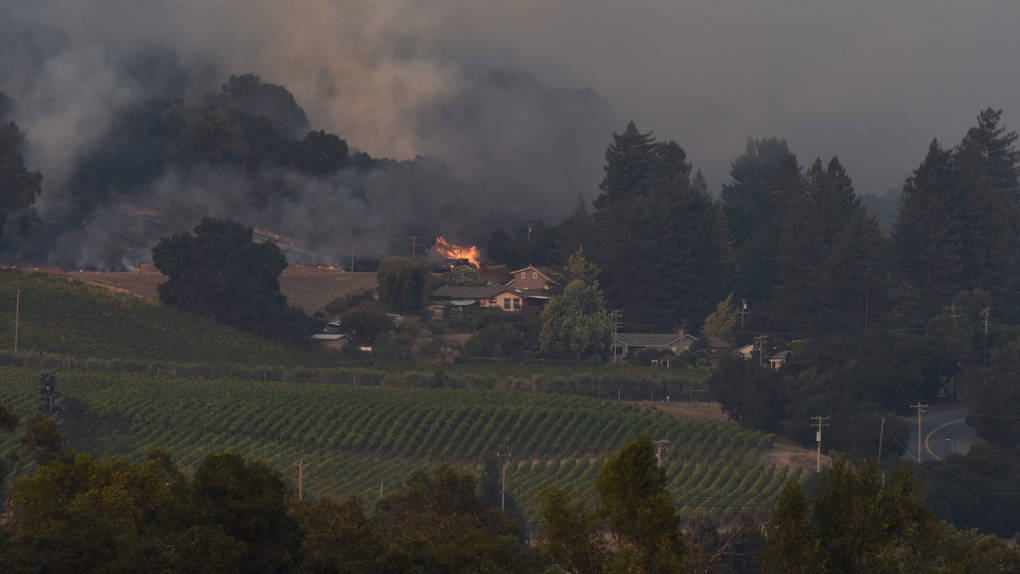
A five-month KQED investigation into what happened that first night of the fires in October reveals communication failures, system breakdowns and delays in evacuation orders.
Cal Fire Releases Cause of a Dozen More October Fires: Nearly All Tied to PG&E
Cal Fire Says PG&E Power Lines Caused Fires in Butte, Nevada Counties
The North Bay Fires Were Six Months Ago. What's Actually Changed?
'My World Was Burning': The North Bay Fires and What Went Wrong
Lessons from the North Bay Fires
What Can California's Emergency Responders Learn From the North Bay Fires?
MAP: Where the North Bay Fires Burned and Who Was Called to Evacuate
North Bay Fires Expose Serious Faults with Sonoma County, State Alert Systems
Finding a Way Through the Flames When 911 Can't Help
Why Emergency Response Was Already Overwhelmed When Wildfires Hit
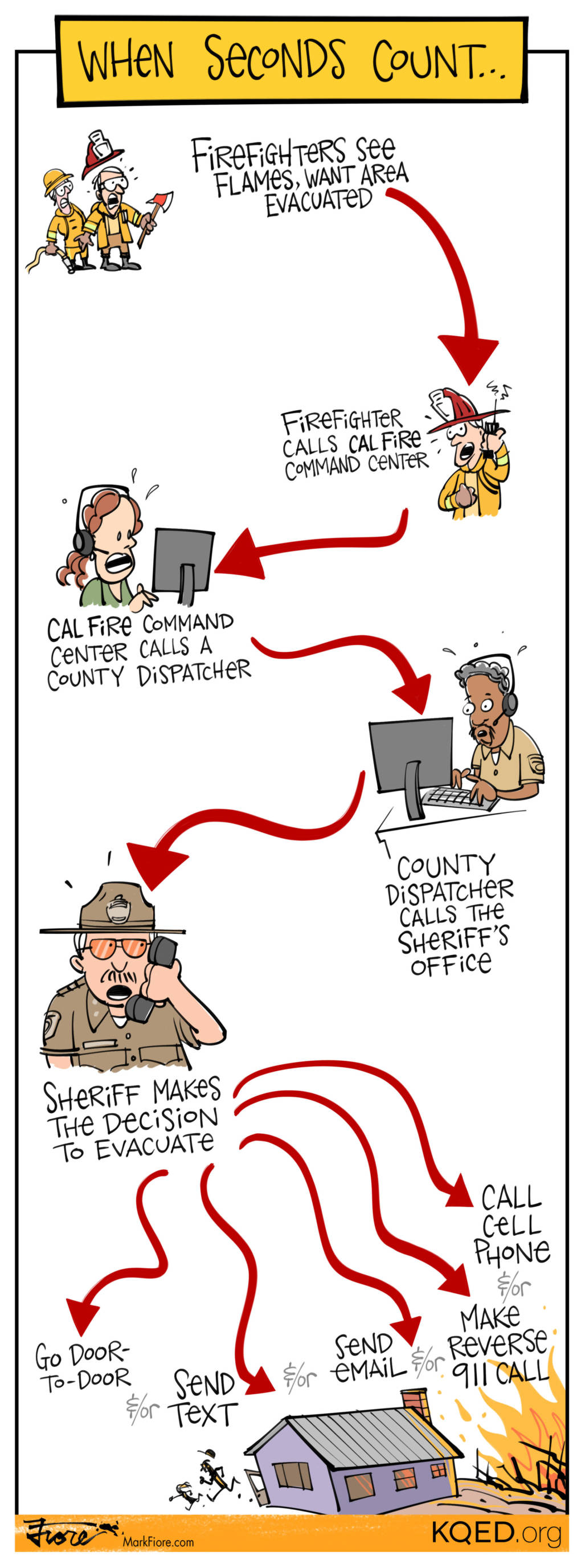
The North Bay Fires' Frantic Game of Telephone
Inside the CHP Helicopter That Rescued 26 People From the Atlas Peak Fire
window.__IS_SSR__=true
window.__INITIAL_STATE__={
"attachmentsReducer": {
"audio_0": {
"type": "attachments",
"id": "audio_0",
"imgSizes": {
"kqedFullSize": {
"file": "https://ww2.kqed.org/news/wp-content/themes/KQED-unified/img/audio_bgs/background0.jpg"
}
}
},
"audio_1": {
"type": "attachments",
"id": "audio_1",
"imgSizes": {
"kqedFullSize": {
"file": "https://ww2.kqed.org/news/wp-content/themes/KQED-unified/img/audio_bgs/background1.jpg"
}
}
},
"audio_2": {
"type": "attachments",
"id": "audio_2",
"imgSizes": {
"kqedFullSize": {
"file": "https://ww2.kqed.org/news/wp-content/themes/KQED-unified/img/audio_bgs/background2.jpg"
}
}
},
"audio_3": {
"type": "attachments",
"id": "audio_3",
"imgSizes": {
"kqedFullSize": {
"file": "https://ww2.kqed.org/news/wp-content/themes/KQED-unified/img/audio_bgs/background3.jpg"
}
}
},
"audio_4": {
"type": "attachments",
"id": "audio_4",
"imgSizes": {
"kqedFullSize": {
"file": "https://ww2.kqed.org/news/wp-content/themes/KQED-unified/img/audio_bgs/background4.jpg"
}
}
},
"placeholder": {
"type": "attachments",
"id": "placeholder",
"imgSizes": {
"thumbnail": {
"file": "https://cdn.kqed.org/wp-content/uploads/2024/12/KQED-Default-Image-816638274-2000x1333-1-160x107.jpg",
"width": 160,
"height": 107,
"mimeType": "image/jpeg"
},
"medium": {
"file": "https://cdn.kqed.org/wp-content/uploads/2024/12/KQED-Default-Image-816638274-2000x1333-1-800x533.jpg",
"width": 800,
"height": 533,
"mimeType": "image/jpeg"
},
"medium_large": {
"file": "https://cdn.kqed.org/wp-content/uploads/2024/12/KQED-Default-Image-816638274-2000x1333-1-768x512.jpg",
"width": 768,
"height": 512,
"mimeType": "image/jpeg"
},
"large": {
"file": "https://cdn.kqed.org/wp-content/uploads/2024/12/KQED-Default-Image-816638274-2000x1333-1-1020x680.jpg",
"width": 1020,
"height": 680,
"mimeType": "image/jpeg"
},
"1536x1536": {
"file": "https://cdn.kqed.org/wp-content/uploads/2024/12/KQED-Default-Image-816638274-2000x1333-1-1536x1024.jpg",
"width": 1536,
"height": 1024,
"mimeType": "image/jpeg"
},
"fd-lrg": {
"file": "https://cdn.kqed.org/wp-content/uploads/2024/12/KQED-Default-Image-816638274-2000x1333-1-1536x1024.jpg",
"width": 1536,
"height": 1024,
"mimeType": "image/jpeg"
},
"fd-med": {
"file": "https://cdn.kqed.org/wp-content/uploads/2024/12/KQED-Default-Image-816638274-2000x1333-1-1020x680.jpg",
"width": 1020,
"height": 680,
"mimeType": "image/jpeg"
},
"fd-sm": {
"file": "https://cdn.kqed.org/wp-content/uploads/2024/12/KQED-Default-Image-816638274-2000x1333-1-800x533.jpg",
"width": 800,
"height": 533,
"mimeType": "image/jpeg"
},
"post-thumbnail": {
"file": "https://cdn.kqed.org/wp-content/uploads/2024/12/KQED-Default-Image-816638274-2000x1333-1-672x372.jpg",
"width": 672,
"height": 372,
"mimeType": "image/jpeg"
},
"twentyfourteen-full-width": {
"file": "https://cdn.kqed.org/wp-content/uploads/2024/12/KQED-Default-Image-816638274-2000x1333-1-1038x576.jpg",
"width": 1038,
"height": 576,
"mimeType": "image/jpeg"
},
"xxsmall": {
"file": "https://cdn.kqed.org/wp-content/uploads/2024/12/KQED-Default-Image-816638274-2000x1333-1-160x107.jpg",
"width": 160,
"height": 107,
"mimeType": "image/jpeg"
},
"xsmall": {
"file": "https://cdn.kqed.org/wp-content/uploads/2024/12/KQED-Default-Image-816638274-2000x1333-1-672x372.jpg",
"width": 672,
"height": 372,
"mimeType": "image/jpeg"
},
"small": {
"file": "https://cdn.kqed.org/wp-content/uploads/2024/12/KQED-Default-Image-816638274-2000x1333-1-672x372.jpg",
"width": 672,
"height": 372,
"mimeType": "image/jpeg"
},
"xlarge": {
"file": "https://cdn.kqed.org/wp-content/uploads/2024/12/KQED-Default-Image-816638274-2000x1333-1-1020x680.jpg",
"width": 1020,
"height": 680,
"mimeType": "image/jpeg"
},
"full-width": {
"file": "https://cdn.kqed.org/wp-content/uploads/2024/12/KQED-Default-Image-816638274-2000x1333-1-1920x1280.jpg",
"width": 1920,
"height": 1280,
"mimeType": "image/jpeg"
},
"guest-author-32": {
"file": "https://cdn.kqed.org/wp-content/uploads/2025/01/KQED-Default-Image-816638274-1333x1333-1-160x160.jpg",
"width": 32,
"height": 32,
"mimeType": "image/jpeg"
},
"guest-author-50": {
"file": "https://cdn.kqed.org/wp-content/uploads/2025/01/KQED-Default-Image-816638274-1333x1333-1-160x160.jpg",
"width": 50,
"height": 50,
"mimeType": "image/jpeg"
},
"guest-author-64": {
"file": "https://cdn.kqed.org/wp-content/uploads/2025/01/KQED-Default-Image-816638274-1333x1333-1-160x160.jpg",
"width": 64,
"height": 64,
"mimeType": "image/jpeg"
},
"guest-author-96": {
"file": "https://cdn.kqed.org/wp-content/uploads/2025/01/KQED-Default-Image-816638274-1333x1333-1-160x160.jpg",
"width": 96,
"height": 96,
"mimeType": "image/jpeg"
},
"guest-author-128": {
"file": "https://cdn.kqed.org/wp-content/uploads/2025/01/KQED-Default-Image-816638274-1333x1333-1-160x160.jpg",
"width": 128,
"height": 128,
"mimeType": "image/jpeg"
},
"detail": {
"file": "https://cdn.kqed.org/wp-content/uploads/2025/01/KQED-Default-Image-816638274-1333x1333-1-160x160.jpg",
"width": 160,
"height": 160,
"mimeType": "image/jpeg"
},
"kqedFullSize": {
"file": "https://cdn.kqed.org/wp-content/uploads/2024/12/KQED-Default-Image-816638274-2000x1333-1.jpg",
"width": 2000,
"height": 1333
}
}
},
"news_11673822": {
"type": "attachments",
"id": "news_11673822",
"meta": {
"index": "attachments_1716263798",
"site": "news",
"id": "11673822",
"found": true
},
"parent": 11673398,
"imgSizes": {
"small": {
"file": "https://ww2.kqed.org/app/uploads/sites/10/2018/06/GettyImages-861017202-520x347.jpg",
"width": 520,
"mimeType": "image/jpeg",
"height": 347
},
"twentyfourteen-full-width": {
"file": "https://ww2.kqed.org/app/uploads/sites/10/2018/06/GettyImages-861017202-1038x576.jpg",
"width": 1038,
"mimeType": "image/jpeg",
"height": 576
},
"thumbnail": {
"file": "https://ww2.kqed.org/app/uploads/sites/10/2018/06/GettyImages-861017202-160x107.jpg",
"width": 160,
"mimeType": "image/jpeg",
"height": 107
},
"fd-sm": {
"file": "https://ww2.kqed.org/app/uploads/sites/10/2018/06/GettyImages-861017202-960x640.jpg",
"width": 960,
"mimeType": "image/jpeg",
"height": 640
},
"post-thumbnail": {
"file": "https://ww2.kqed.org/app/uploads/sites/10/2018/06/GettyImages-861017202-672x372.jpg",
"width": 672,
"mimeType": "image/jpeg",
"height": 372
},
"xsmall": {
"file": "https://ww2.kqed.org/app/uploads/sites/10/2018/06/GettyImages-861017202-375x250.jpg",
"width": 375,
"mimeType": "image/jpeg",
"height": 250
},
"kqedFullSize": {
"file": "https://ww2.kqed.org/app/uploads/sites/10/2018/06/GettyImages-861017202-e1528509530912.jpg",
"width": 1920,
"height": 1280
},
"large": {
"file": "https://ww2.kqed.org/app/uploads/sites/10/2018/06/GettyImages-861017202-1020x680.jpg",
"width": 1020,
"mimeType": "image/jpeg",
"height": 680
},
"xlarge": {
"file": "https://ww2.kqed.org/app/uploads/sites/10/2018/06/GettyImages-861017202-1180x787.jpg",
"width": 1180,
"mimeType": "image/jpeg",
"height": 787
},
"complete_open_graph": {
"file": "https://ww2.kqed.org/app/uploads/sites/10/2018/06/GettyImages-861017202-1200x800.jpg",
"width": 1200,
"mimeType": "image/jpeg",
"height": 800
},
"guest-author-50": {
"file": "https://ww2.kqed.org/app/uploads/sites/10/2018/06/GettyImages-861017202-50x50.jpg",
"width": 50,
"mimeType": "image/jpeg",
"height": 50
},
"guest-author-96": {
"file": "https://ww2.kqed.org/app/uploads/sites/10/2018/06/GettyImages-861017202-96x96.jpg",
"width": 96,
"mimeType": "image/jpeg",
"height": 96
},
"medium": {
"file": "https://ww2.kqed.org/app/uploads/sites/10/2018/06/GettyImages-861017202-800x533.jpg",
"width": 800,
"mimeType": "image/jpeg",
"height": 533
},
"guest-author-64": {
"file": "https://ww2.kqed.org/app/uploads/sites/10/2018/06/GettyImages-861017202-64x64.jpg",
"width": 64,
"mimeType": "image/jpeg",
"height": 64
},
"guest-author-32": {
"file": "https://ww2.kqed.org/app/uploads/sites/10/2018/06/GettyImages-861017202-32x32.jpg",
"width": 32,
"mimeType": "image/jpeg",
"height": 32
},
"fd-lrg": {
"file": "https://ww2.kqed.org/app/uploads/sites/10/2018/06/GettyImages-861017202-1920x1280.jpg",
"width": 1920,
"mimeType": "image/jpeg",
"height": 1280
},
"fd-med": {
"file": "https://ww2.kqed.org/app/uploads/sites/10/2018/06/GettyImages-861017202-1180x787.jpg",
"width": 1180,
"mimeType": "image/jpeg",
"height": 787
},
"full-width": {
"file": "https://ww2.kqed.org/app/uploads/sites/10/2018/06/GettyImages-861017202-1920x1280.jpg",
"width": 1920,
"mimeType": "image/jpeg",
"height": 1280
},
"detail": {
"file": "https://ww2.kqed.org/app/uploads/sites/10/2018/06/GettyImages-861017202-150x150.jpg",
"width": 150,
"mimeType": "image/jpeg",
"height": 150
},
"guest-author-128": {
"file": "https://ww2.kqed.org/app/uploads/sites/10/2018/06/GettyImages-861017202-128x128.jpg",
"width": 128,
"mimeType": "image/jpeg",
"height": 128
},
"xxsmall": {
"file": "https://ww2.kqed.org/app/uploads/sites/10/2018/06/GettyImages-861017202-240x160.jpg",
"width": 240,
"mimeType": "image/jpeg",
"height": 160
}
},
"publishDate": 1528509444,
"modified": 1528509520,
"caption": " A downed power line and the remains of a home and a car are seen in Santa Rosa's Larkfield-Wikiup neighborhood after last October's Tubbs Fire.",
"description": null,
"title": "Multiple Wildfires Continue To Ravage California Wine Country",
"credit": "Elijah Novelage/Getty Images",
"status": "inherit",
"isLoading": false,
"fetchFailed": false
},
"news_11670818": {
"type": "attachments",
"id": "news_11670818",
"meta": {
"index": "attachments_1716263798",
"site": "news",
"id": "11670818",
"found": true
},
"parent": 11670763,
"imgSizes": {
"small": {
"file": "https://ww2.kqed.org/app/uploads/sites/10/2018/05/GettyImages-860726910-520x345.jpg",
"width": 520,
"mimeType": "image/jpeg",
"height": 345
},
"twentyfourteen-full-width": {
"file": "https://ww2.kqed.org/app/uploads/sites/10/2018/05/GettyImages-860726910-1038x576.jpg",
"width": 1038,
"mimeType": "image/jpeg",
"height": 576
},
"thumbnail": {
"file": "https://ww2.kqed.org/app/uploads/sites/10/2018/05/GettyImages-860726910-160x106.jpg",
"width": 160,
"mimeType": "image/jpeg",
"height": 106
},
"fd-sm": {
"file": "https://ww2.kqed.org/app/uploads/sites/10/2018/05/GettyImages-860726910-960x638.jpg",
"width": 960,
"mimeType": "image/jpeg",
"height": 638
},
"post-thumbnail": {
"file": "https://ww2.kqed.org/app/uploads/sites/10/2018/05/GettyImages-860726910-672x372.jpg",
"width": 672,
"mimeType": "image/jpeg",
"height": 372
},
"xsmall": {
"file": "https://ww2.kqed.org/app/uploads/sites/10/2018/05/GettyImages-860726910-375x249.jpg",
"width": 375,
"mimeType": "image/jpeg",
"height": 249
},
"kqedFullSize": {
"file": "https://ww2.kqed.org/app/uploads/sites/10/2018/05/GettyImages-860726910.jpg",
"width": 3000,
"height": 1993
},
"large": {
"file": "https://ww2.kqed.org/app/uploads/sites/10/2018/05/GettyImages-860726910-1020x678.jpg",
"width": 1020,
"mimeType": "image/jpeg",
"height": 678
},
"xlarge": {
"file": "https://ww2.kqed.org/app/uploads/sites/10/2018/05/GettyImages-860726910-1180x784.jpg",
"width": 1180,
"mimeType": "image/jpeg",
"height": 784
},
"complete_open_graph": {
"file": "https://ww2.kqed.org/app/uploads/sites/10/2018/05/GettyImages-860726910-1200x797.jpg",
"width": 1200,
"mimeType": "image/jpeg",
"height": 797
},
"guest-author-50": {
"file": "https://ww2.kqed.org/app/uploads/sites/10/2018/05/GettyImages-860726910-50x50.jpg",
"width": 50,
"mimeType": "image/jpeg",
"height": 50
},
"guest-author-96": {
"file": "https://ww2.kqed.org/app/uploads/sites/10/2018/05/GettyImages-860726910-96x96.jpg",
"width": 96,
"mimeType": "image/jpeg",
"height": 96
},
"medium": {
"file": "https://ww2.kqed.org/app/uploads/sites/10/2018/05/GettyImages-860726910-800x531.jpg",
"width": 800,
"mimeType": "image/jpeg",
"height": 531
},
"guest-author-64": {
"file": "https://ww2.kqed.org/app/uploads/sites/10/2018/05/GettyImages-860726910-64x64.jpg",
"width": 64,
"mimeType": "image/jpeg",
"height": 64
},
"guest-author-32": {
"file": "https://ww2.kqed.org/app/uploads/sites/10/2018/05/GettyImages-860726910-32x32.jpg",
"width": 32,
"mimeType": "image/jpeg",
"height": 32
},
"fd-lrg": {
"file": "https://ww2.kqed.org/app/uploads/sites/10/2018/05/GettyImages-860726910-1920x1276.jpg",
"width": 1920,
"mimeType": "image/jpeg",
"height": 1276
},
"fd-med": {
"file": "https://ww2.kqed.org/app/uploads/sites/10/2018/05/GettyImages-860726910-1180x784.jpg",
"width": 1180,
"mimeType": "image/jpeg",
"height": 784
},
"full-width": {
"file": "https://ww2.kqed.org/app/uploads/sites/10/2018/05/GettyImages-860726910-1920x1276.jpg",
"width": 1920,
"mimeType": "image/jpeg",
"height": 1276
},
"detail": {
"file": "https://ww2.kqed.org/app/uploads/sites/10/2018/05/GettyImages-860726910-150x150.jpg",
"width": 150,
"mimeType": "image/jpeg",
"height": 150
},
"guest-author-128": {
"file": "https://ww2.kqed.org/app/uploads/sites/10/2018/05/GettyImages-860726910-128x128.jpg",
"width": 128,
"mimeType": "image/jpeg",
"height": 128
},
"xxsmall": {
"file": "https://ww2.kqed.org/app/uploads/sites/10/2018/05/GettyImages-860726910-240x159.jpg",
"width": 240,
"mimeType": "image/jpeg",
"height": 159
}
},
"publishDate": 1527284511,
"modified": 1527289673,
"caption": "Cal Fire firefighter Trevor Smith battles the Tubbs Fire on Oct. 12, 2017, near Calistoga, California. Cal Fire hasn't yet determined the cause of this fire, but says four fires that started the same week were sparked by PG&E power lines. ",
"description": null,
"title": "Multiple Wildfires Destroy Homes, Threaten California Wine Country",
"credit": "Justin Sullivan/Getty Images",
"status": "inherit",
"isLoading": false,
"fetchFailed": false
},
"news_11660425": {
"type": "attachments",
"id": "news_11660425",
"meta": {
"index": "attachments_1716263798",
"site": "news",
"id": "11660425",
"found": true
},
"parent": 11660014,
"imgSizes": {
"small": {
"file": "https://ww2.kqed.org/app/uploads/sites/10/2018/04/RS30320_GettyImages-873734618-qut-520x347.jpg",
"width": 520,
"mimeType": "image/jpeg",
"height": 347
},
"twentyfourteen-full-width": {
"file": "https://ww2.kqed.org/app/uploads/sites/10/2018/04/RS30320_GettyImages-873734618-qut-1038x576.jpg",
"width": 1038,
"mimeType": "image/jpeg",
"height": 576
},
"thumbnail": {
"file": "https://ww2.kqed.org/app/uploads/sites/10/2018/04/RS30320_GettyImages-873734618-qut-160x107.jpg",
"width": 160,
"mimeType": "image/jpeg",
"height": 107
},
"fd-sm": {
"file": "https://ww2.kqed.org/app/uploads/sites/10/2018/04/RS30320_GettyImages-873734618-qut-960x640.jpg",
"width": 960,
"mimeType": "image/jpeg",
"height": 640
},
"post-thumbnail": {
"file": "https://ww2.kqed.org/app/uploads/sites/10/2018/04/RS30320_GettyImages-873734618-qut-672x372.jpg",
"width": 672,
"mimeType": "image/jpeg",
"height": 372
},
"xsmall": {
"file": "https://ww2.kqed.org/app/uploads/sites/10/2018/04/RS30320_GettyImages-873734618-qut-375x250.jpg",
"width": 375,
"mimeType": "image/jpeg",
"height": 250
},
"kqedFullSize": {
"file": "https://ww2.kqed.org/app/uploads/sites/10/2018/04/RS30320_GettyImages-873734618-qut.jpg",
"width": 1920,
"height": 1280
},
"large": {
"file": "https://ww2.kqed.org/app/uploads/sites/10/2018/04/RS30320_GettyImages-873734618-qut-1020x680.jpg",
"width": 1020,
"mimeType": "image/jpeg",
"height": 680
},
"xlarge": {
"file": "https://ww2.kqed.org/app/uploads/sites/10/2018/04/RS30320_GettyImages-873734618-qut-1180x787.jpg",
"width": 1180,
"mimeType": "image/jpeg",
"height": 787
},
"guest-author-50": {
"file": "https://ww2.kqed.org/app/uploads/sites/10/2018/04/RS30320_GettyImages-873734618-qut-50x50.jpg",
"width": 50,
"mimeType": "image/jpeg",
"height": 50
},
"guest-author-96": {
"file": "https://ww2.kqed.org/app/uploads/sites/10/2018/04/RS30320_GettyImages-873734618-qut-96x96.jpg",
"width": 96,
"mimeType": "image/jpeg",
"height": 96
},
"medium": {
"file": "https://ww2.kqed.org/app/uploads/sites/10/2018/04/RS30320_GettyImages-873734618-qut-800x533.jpg",
"width": 800,
"mimeType": "image/jpeg",
"height": 533
},
"guest-author-64": {
"file": "https://ww2.kqed.org/app/uploads/sites/10/2018/04/RS30320_GettyImages-873734618-qut-64x64.jpg",
"width": 64,
"mimeType": "image/jpeg",
"height": 64
},
"guest-author-32": {
"file": "https://ww2.kqed.org/app/uploads/sites/10/2018/04/RS30320_GettyImages-873734618-qut-32x32.jpg",
"width": 32,
"mimeType": "image/jpeg",
"height": 32
},
"fd-lrg": {
"file": "https://ww2.kqed.org/app/uploads/sites/10/2018/04/RS30320_GettyImages-873734618-qut-1920x1280.jpg",
"width": 1920,
"mimeType": "image/jpeg",
"height": 1280
},
"fd-med": {
"file": "https://ww2.kqed.org/app/uploads/sites/10/2018/04/RS30320_GettyImages-873734618-qut-1180x787.jpg",
"width": 1180,
"mimeType": "image/jpeg",
"height": 787
},
"full-width": {
"file": "https://ww2.kqed.org/app/uploads/sites/10/2018/04/RS30320_GettyImages-873734618-qut-1920x1280.jpg",
"width": 1920,
"mimeType": "image/jpeg",
"height": 1280
},
"detail": {
"file": "https://ww2.kqed.org/app/uploads/sites/10/2018/04/RS30320_GettyImages-873734618-qut-150x150.jpg",
"width": 150,
"mimeType": "image/jpeg",
"height": 150
},
"guest-author-128": {
"file": "https://ww2.kqed.org/app/uploads/sites/10/2018/04/RS30320_GettyImages-873734618-qut-128x128.jpg",
"width": 128,
"mimeType": "image/jpeg",
"height": 128
},
"xxsmall": {
"file": "https://ww2.kqed.org/app/uploads/sites/10/2018/04/RS30320_GettyImages-873734618-qut-240x160.jpg",
"width": 240,
"mimeType": "image/jpeg",
"height": 160
}
},
"publishDate": 1523053157,
"modified": 1523056540,
"caption": "A sign is posted on a tree in front of a burned home in Coffey Park. Six months after the Northern California fires, many residents are still waiting to find out whether they can rebuild.",
"description": null,
"title": "Work Crews Continue To Clean Up Neighborhoods Devastated By Last Month's Wild Fires",
"credit": "Justin Sullivan/Getty Images",
"status": "inherit",
"isLoading": false,
"fetchFailed": false
},
"news_11654344": {
"type": "attachments",
"id": "news_11654344",
"meta": {
"index": "attachments_1716263798",
"site": "news",
"id": "11654344",
"found": true
},
"parent": 11654027,
"imgSizes": {
"small": {
"file": "https://ww2.kqed.org/app/uploads/sites/10/2018/03/RS29606_GettyImages-859290826-qut-520x349.jpg",
"width": 520,
"mimeType": "image/jpeg",
"height": 349
},
"twentyfourteen-full-width": {
"file": "https://ww2.kqed.org/app/uploads/sites/10/2018/03/RS29606_GettyImages-859290826-qut-1038x576.jpg",
"width": 1038,
"mimeType": "image/jpeg",
"height": 576
},
"thumbnail": {
"file": "https://ww2.kqed.org/app/uploads/sites/10/2018/03/RS29606_GettyImages-859290826-qut-160x107.jpg",
"width": 160,
"mimeType": "image/jpeg",
"height": 107
},
"fd-sm": {
"file": "https://ww2.kqed.org/app/uploads/sites/10/2018/03/RS29606_GettyImages-859290826-qut-960x645.jpg",
"width": 960,
"mimeType": "image/jpeg",
"height": 645
},
"post-thumbnail": {
"file": "https://ww2.kqed.org/app/uploads/sites/10/2018/03/RS29606_GettyImages-859290826-qut-672x372.jpg",
"width": 672,
"mimeType": "image/jpeg",
"height": 372
},
"xsmall": {
"file": "https://ww2.kqed.org/app/uploads/sites/10/2018/03/RS29606_GettyImages-859290826-qut-375x252.jpg",
"width": 375,
"mimeType": "image/jpeg",
"height": 252
},
"kqedFullSize": {
"file": "https://ww2.kqed.org/app/uploads/sites/10/2018/03/RS29606_GettyImages-859290826-qut.jpg",
"width": 1920,
"height": 1289
},
"large": {
"file": "https://ww2.kqed.org/app/uploads/sites/10/2018/03/RS29606_GettyImages-859290826-qut-1020x685.jpg",
"width": 1020,
"mimeType": "image/jpeg",
"height": 685
},
"xlarge": {
"file": "https://ww2.kqed.org/app/uploads/sites/10/2018/03/RS29606_GettyImages-859290826-qut-1180x792.jpg",
"width": 1180,
"mimeType": "image/jpeg",
"height": 792
},
"guest-author-50": {
"file": "https://ww2.kqed.org/app/uploads/sites/10/2018/03/RS29606_GettyImages-859290826-qut-50x50.jpg",
"width": 50,
"mimeType": "image/jpeg",
"height": 50
},
"guest-author-96": {
"file": "https://ww2.kqed.org/app/uploads/sites/10/2018/03/RS29606_GettyImages-859290826-qut-96x96.jpg",
"width": 96,
"mimeType": "image/jpeg",
"height": 96
},
"medium": {
"file": "https://ww2.kqed.org/app/uploads/sites/10/2018/03/RS29606_GettyImages-859290826-qut-800x537.jpg",
"width": 800,
"mimeType": "image/jpeg",
"height": 537
},
"guest-author-64": {
"file": "https://ww2.kqed.org/app/uploads/sites/10/2018/03/RS29606_GettyImages-859290826-qut-64x64.jpg",
"width": 64,
"mimeType": "image/jpeg",
"height": 64
},
"guest-author-32": {
"file": "https://ww2.kqed.org/app/uploads/sites/10/2018/03/RS29606_GettyImages-859290826-qut-32x32.jpg",
"width": 32,
"mimeType": "image/jpeg",
"height": 32
},
"fd-lrg": {
"file": "https://ww2.kqed.org/app/uploads/sites/10/2018/03/RS29606_GettyImages-859290826-qut-1920x1289.jpg",
"width": 1920,
"mimeType": "image/jpeg",
"height": 1289
},
"fd-med": {
"file": "https://ww2.kqed.org/app/uploads/sites/10/2018/03/RS29606_GettyImages-859290826-qut-1180x792.jpg",
"width": 1180,
"mimeType": "image/jpeg",
"height": 792
},
"full-width": {
"file": "https://ww2.kqed.org/app/uploads/sites/10/2018/03/RS29606_GettyImages-859290826-qut-1920x1289.jpg",
"width": 1920,
"mimeType": "image/jpeg",
"height": 1289
},
"detail": {
"file": "https://ww2.kqed.org/app/uploads/sites/10/2018/03/RS29606_GettyImages-859290826-qut-150x150.jpg",
"width": 150,
"mimeType": "image/jpeg",
"height": 150
},
"guest-author-128": {
"file": "https://ww2.kqed.org/app/uploads/sites/10/2018/03/RS29606_GettyImages-859290826-qut-128x128.jpg",
"width": 128,
"mimeType": "image/jpeg",
"height": 128
},
"xxsmall": {
"file": "https://ww2.kqed.org/app/uploads/sites/10/2018/03/RS29606_GettyImages-859290826-qut-240x161.jpg",
"width": 240,
"mimeType": "image/jpeg",
"height": 161
}
},
"publishDate": 1520442024,
"modified": 1520442100,
"caption": "Flames ravage a home in the Napa wine region in California on Oct. 9, 2017.",
"description": null,
"title": "US-WILDFIRES-CALIFORNIA",
"credit": "Josh Edelson/AFP/Getty Images",
"status": "inherit",
"isLoading": false,
"fetchFailed": false
},
"news_11654941": {
"type": "attachments",
"id": "news_11654941",
"meta": {
"index": "attachments_1716263798",
"site": "news",
"id": "11654941",
"found": true
},
"parent": 11654938,
"imgSizes": {
"small": {
"file": "https://ww2.kqed.org/app/uploads/sites/10/2018/03/NR520_FIRES_WEB_MARQ-520x293.jpg",
"width": 520,
"mimeType": "image/jpeg",
"height": 293
},
"twentyfourteen-full-width": {
"file": "https://ww2.kqed.org/app/uploads/sites/10/2018/03/NR520_FIRES_WEB_MARQ-1038x576.jpg",
"width": 1038,
"mimeType": "image/jpeg",
"height": 576
},
"thumbnail": {
"file": "https://ww2.kqed.org/app/uploads/sites/10/2018/03/NR520_FIRES_WEB_MARQ-160x90.jpg",
"width": 160,
"mimeType": "image/jpeg",
"height": 90
},
"fd-sm": {
"file": "https://ww2.kqed.org/app/uploads/sites/10/2018/03/NR520_FIRES_WEB_MARQ-960x540.jpg",
"width": 960,
"mimeType": "image/jpeg",
"height": 540
},
"post-thumbnail": {
"file": "https://ww2.kqed.org/app/uploads/sites/10/2018/03/NR520_FIRES_WEB_MARQ-672x372.jpg",
"width": 672,
"mimeType": "image/jpeg",
"height": 372
},
"xsmall": {
"file": "https://ww2.kqed.org/app/uploads/sites/10/2018/03/NR520_FIRES_WEB_MARQ-375x211.jpg",
"width": 375,
"mimeType": "image/jpeg",
"height": 211
},
"kqedFullSize": {
"file": "https://ww2.kqed.org/app/uploads/sites/10/2018/03/NR520_FIRES_WEB_MARQ.jpg",
"width": 1280,
"height": 720
},
"large": {
"file": "https://ww2.kqed.org/app/uploads/sites/10/2018/03/NR520_FIRES_WEB_MARQ-1020x574.jpg",
"width": 1020,
"mimeType": "image/jpeg",
"height": 574
},
"xlarge": {
"file": "https://ww2.kqed.org/app/uploads/sites/10/2018/03/NR520_FIRES_WEB_MARQ-1180x664.jpg",
"width": 1180,
"mimeType": "image/jpeg",
"height": 664
},
"guest-author-50": {
"file": "https://ww2.kqed.org/app/uploads/sites/10/2018/03/NR520_FIRES_WEB_MARQ-50x50.jpg",
"width": 50,
"mimeType": "image/jpeg",
"height": 50
},
"guest-author-96": {
"file": "https://ww2.kqed.org/app/uploads/sites/10/2018/03/NR520_FIRES_WEB_MARQ-96x96.jpg",
"width": 96,
"mimeType": "image/jpeg",
"height": 96
},
"medium": {
"file": "https://ww2.kqed.org/app/uploads/sites/10/2018/03/NR520_FIRES_WEB_MARQ-800x450.jpg",
"width": 800,
"mimeType": "image/jpeg",
"height": 450
},
"guest-author-64": {
"file": "https://ww2.kqed.org/app/uploads/sites/10/2018/03/NR520_FIRES_WEB_MARQ-64x64.jpg",
"width": 64,
"mimeType": "image/jpeg",
"height": 64
},
"guest-author-32": {
"file": "https://ww2.kqed.org/app/uploads/sites/10/2018/03/NR520_FIRES_WEB_MARQ-32x32.jpg",
"width": 32,
"mimeType": "image/jpeg",
"height": 32
},
"fd-med": {
"file": "https://ww2.kqed.org/app/uploads/sites/10/2018/03/NR520_FIRES_WEB_MARQ-1180x664.jpg",
"width": 1180,
"mimeType": "image/jpeg",
"height": 664
},
"detail": {
"file": "https://ww2.kqed.org/app/uploads/sites/10/2018/03/NR520_FIRES_WEB_MARQ-150x150.jpg",
"width": 150,
"mimeType": "image/jpeg",
"height": 150
},
"guest-author-128": {
"file": "https://ww2.kqed.org/app/uploads/sites/10/2018/03/NR520_FIRES_WEB_MARQ-128x128.jpg",
"width": 128,
"mimeType": "image/jpeg",
"height": 128
},
"xxsmall": {
"file": "https://ww2.kqed.org/app/uploads/sites/10/2018/03/NR520_FIRES_WEB_MARQ-240x135.jpg",
"width": 240,
"mimeType": "image/jpeg",
"height": 135
}
},
"publishDate": 1520643170,
"modified": 1520643170,
"caption": null,
"description": null,
"title": "NR520_FIRES_WEB_MARQ",
"credit": null,
"status": "inherit",
"isLoading": false,
"fetchFailed": false
},
"news_11654771": {
"type": "attachments",
"id": "news_11654771",
"meta": {
"index": "attachments_1716263798",
"site": "news",
"id": "11654771",
"found": true
},
"parent": 11654762,
"imgSizes": {
"small": {
"file": "https://ww2.kqed.org/app/uploads/sites/10/2018/03/RS27582_GettyImages-860729390-qut-520x344.jpg",
"width": 520,
"mimeType": "image/jpeg",
"height": 344
},
"twentyfourteen-full-width": {
"file": "https://ww2.kqed.org/app/uploads/sites/10/2018/03/RS27582_GettyImages-860729390-qut-1038x576.jpg",
"width": 1038,
"mimeType": "image/jpeg",
"height": 576
},
"thumbnail": {
"file": "https://ww2.kqed.org/app/uploads/sites/10/2018/03/RS27582_GettyImages-860729390-qut-160x106.jpg",
"width": 160,
"mimeType": "image/jpeg",
"height": 106
},
"fd-sm": {
"file": "https://ww2.kqed.org/app/uploads/sites/10/2018/03/RS27582_GettyImages-860729390-qut-960x635.jpg",
"width": 960,
"mimeType": "image/jpeg",
"height": 635
},
"post-thumbnail": {
"file": "https://ww2.kqed.org/app/uploads/sites/10/2018/03/RS27582_GettyImages-860729390-qut-672x372.jpg",
"width": 672,
"mimeType": "image/jpeg",
"height": 372
},
"xsmall": {
"file": "https://ww2.kqed.org/app/uploads/sites/10/2018/03/RS27582_GettyImages-860729390-qut-375x248.jpg",
"width": 375,
"mimeType": "image/jpeg",
"height": 248
},
"kqedFullSize": {
"file": "https://ww2.kqed.org/app/uploads/sites/10/2018/03/RS27582_GettyImages-860729390-qut.jpg",
"width": 1920,
"height": 1269
},
"large": {
"file": "https://ww2.kqed.org/app/uploads/sites/10/2018/03/RS27582_GettyImages-860729390-qut-1020x674.jpg",
"width": 1020,
"mimeType": "image/jpeg",
"height": 674
},
"xlarge": {
"file": "https://ww2.kqed.org/app/uploads/sites/10/2018/03/RS27582_GettyImages-860729390-qut-1180x780.jpg",
"width": 1180,
"mimeType": "image/jpeg",
"height": 780
},
"guest-author-50": {
"file": "https://ww2.kqed.org/app/uploads/sites/10/2018/03/RS27582_GettyImages-860729390-qut-50x50.jpg",
"width": 50,
"mimeType": "image/jpeg",
"height": 50
},
"guest-author-96": {
"file": "https://ww2.kqed.org/app/uploads/sites/10/2018/03/RS27582_GettyImages-860729390-qut-96x96.jpg",
"width": 96,
"mimeType": "image/jpeg",
"height": 96
},
"medium": {
"file": "https://ww2.kqed.org/app/uploads/sites/10/2018/03/RS27582_GettyImages-860729390-qut-800x529.jpg",
"width": 800,
"mimeType": "image/jpeg",
"height": 529
},
"guest-author-64": {
"file": "https://ww2.kqed.org/app/uploads/sites/10/2018/03/RS27582_GettyImages-860729390-qut-64x64.jpg",
"width": 64,
"mimeType": "image/jpeg",
"height": 64
},
"guest-author-32": {
"file": "https://ww2.kqed.org/app/uploads/sites/10/2018/03/RS27582_GettyImages-860729390-qut-32x32.jpg",
"width": 32,
"mimeType": "image/jpeg",
"height": 32
},
"fd-lrg": {
"file": "https://ww2.kqed.org/app/uploads/sites/10/2018/03/RS27582_GettyImages-860729390-qut-1920x1269.jpg",
"width": 1920,
"mimeType": "image/jpeg",
"height": 1269
},
"fd-med": {
"file": "https://ww2.kqed.org/app/uploads/sites/10/2018/03/RS27582_GettyImages-860729390-qut-1180x780.jpg",
"width": 1180,
"mimeType": "image/jpeg",
"height": 780
},
"full-width": {
"file": "https://ww2.kqed.org/app/uploads/sites/10/2018/03/RS27582_GettyImages-860729390-qut-1920x1269.jpg",
"width": 1920,
"mimeType": "image/jpeg",
"height": 1269
},
"detail": {
"file": "https://ww2.kqed.org/app/uploads/sites/10/2018/03/RS27582_GettyImages-860729390-qut-150x150.jpg",
"width": 150,
"mimeType": "image/jpeg",
"height": 150
},
"guest-author-128": {
"file": "https://ww2.kqed.org/app/uploads/sites/10/2018/03/RS27582_GettyImages-860729390-qut-128x128.jpg",
"width": 128,
"mimeType": "image/jpeg",
"height": 128
},
"xxsmall": {
"file": "https://ww2.kqed.org/app/uploads/sites/10/2018/03/RS27582_GettyImages-860729390-qut-240x159.jpg",
"width": 240,
"mimeType": "image/jpeg",
"height": 159
}
},
"publishDate": 1520626680,
"modified": 1520645998,
"caption": "A firefighter monitors a firing operation while battling the Tubbs Fire on Oct. 12, 2017, near Calistoga.",
"description": "A firefighter monitors a firing operation while battling the Tubbs Fire on October 12, 2017 near Calistoga.",
"title": "A firefighter monitors a firing operation while battling the Tubbs Fire on October 12, 2017 near Calistoga.",
"credit": "Justin Sullivan/Getty Images",
"status": "inherit",
"isLoading": false,
"fetchFailed": false
},
"news_11654674": {
"type": "attachments",
"id": "news_11654674",
"meta": {
"index": "attachments_1716263798",
"site": "news",
"id": "11654674",
"found": true
},
"parent": 11654667,
"imgSizes": {
"small": {
"file": "https://ww2.kqed.org/app/uploads/sites/10/2018/03/MapFeaturedImg-520x377.jpg",
"width": 520,
"mimeType": "image/jpeg",
"height": 377
},
"twentyfourteen-full-width": {
"file": "https://ww2.kqed.org/app/uploads/sites/10/2018/03/MapFeaturedImg-1038x576.jpg",
"width": 1038,
"mimeType": "image/jpeg",
"height": 576
},
"thumbnail": {
"file": "https://ww2.kqed.org/app/uploads/sites/10/2018/03/MapFeaturedImg-160x116.jpg",
"width": 160,
"mimeType": "image/jpeg",
"height": 116
},
"fd-sm": {
"file": "https://ww2.kqed.org/app/uploads/sites/10/2018/03/MapFeaturedImg-960x696.jpg",
"width": 960,
"mimeType": "image/jpeg",
"height": 696
},
"post-thumbnail": {
"file": "https://ww2.kqed.org/app/uploads/sites/10/2018/03/MapFeaturedImg-672x372.jpg",
"width": 672,
"mimeType": "image/jpeg",
"height": 372
},
"xsmall": {
"file": "https://ww2.kqed.org/app/uploads/sites/10/2018/03/MapFeaturedImg-375x272.jpg",
"width": 375,
"mimeType": "image/jpeg",
"height": 272
},
"kqedFullSize": {
"file": "https://ww2.kqed.org/app/uploads/sites/10/2018/03/MapFeaturedImg.jpg",
"width": 1920,
"height": 1392
},
"large": {
"file": "https://ww2.kqed.org/app/uploads/sites/10/2018/03/MapFeaturedImg-1020x740.jpg",
"width": 1020,
"mimeType": "image/jpeg",
"height": 740
},
"xlarge": {
"file": "https://ww2.kqed.org/app/uploads/sites/10/2018/03/MapFeaturedImg-1180x856.jpg",
"width": 1180,
"mimeType": "image/jpeg",
"height": 856
},
"guest-author-50": {
"file": "https://ww2.kqed.org/app/uploads/sites/10/2018/03/MapFeaturedImg-50x50.jpg",
"width": 50,
"mimeType": "image/jpeg",
"height": 50
},
"guest-author-96": {
"file": "https://ww2.kqed.org/app/uploads/sites/10/2018/03/MapFeaturedImg-96x96.jpg",
"width": 96,
"mimeType": "image/jpeg",
"height": 96
},
"medium": {
"file": "https://ww2.kqed.org/app/uploads/sites/10/2018/03/MapFeaturedImg-800x580.jpg",
"width": 800,
"mimeType": "image/jpeg",
"height": 580
},
"guest-author-64": {
"file": "https://ww2.kqed.org/app/uploads/sites/10/2018/03/MapFeaturedImg-64x64.jpg",
"width": 64,
"mimeType": "image/jpeg",
"height": 64
},
"guest-author-32": {
"file": "https://ww2.kqed.org/app/uploads/sites/10/2018/03/MapFeaturedImg-32x32.jpg",
"width": 32,
"mimeType": "image/jpeg",
"height": 32
},
"fd-lrg": {
"file": "https://ww2.kqed.org/app/uploads/sites/10/2018/03/MapFeaturedImg-1920x1392.jpg",
"width": 1920,
"mimeType": "image/jpeg",
"height": 1392
},
"fd-med": {
"file": "https://ww2.kqed.org/app/uploads/sites/10/2018/03/MapFeaturedImg-1180x856.jpg",
"width": 1180,
"mimeType": "image/jpeg",
"height": 856
},
"full-width": {
"file": "https://ww2.kqed.org/app/uploads/sites/10/2018/03/MapFeaturedImg-1920x1392.jpg",
"width": 1920,
"mimeType": "image/jpeg",
"height": 1392
},
"detail": {
"file": "https://ww2.kqed.org/app/uploads/sites/10/2018/03/MapFeaturedImg-150x150.jpg",
"width": 150,
"mimeType": "image/jpeg",
"height": 150
},
"guest-author-128": {
"file": "https://ww2.kqed.org/app/uploads/sites/10/2018/03/MapFeaturedImg-128x128.jpg",
"width": 128,
"mimeType": "image/jpeg",
"height": 128
},
"xxsmall": {
"file": "https://ww2.kqed.org/app/uploads/sites/10/2018/03/MapFeaturedImg-240x174.jpg",
"width": 240,
"mimeType": "image/jpeg",
"height": 174
}
},
"publishDate": 1520553486,
"modified": 1520553486,
"caption": null,
"description": null,
"title": "MapFeaturedImg",
"credit": null,
"status": "inherit",
"isLoading": false,
"fetchFailed": false
},
"forum_2010101864211": {
"type": "attachments",
"id": "forum_2010101864211",
"meta": {
"index": "attachments_1716263798",
"site": "forum",
"id": "2010101864211",
"found": true
},
"parent": 2010101864205,
"imgSizes": {
"small": {
"file": "https://ww2.kqed.org/app/uploads/sites/43/2018/03/tubbs-fire-for-web-520x293.jpg",
"width": 520,
"mimeType": "image/jpeg",
"height": 293
},
"twentyfourteen-full-width": {
"file": "https://ww2.kqed.org/app/uploads/sites/43/2018/03/tubbs-fire-for-web-1038x576.jpg",
"width": 1038,
"mimeType": "image/jpeg",
"height": 576
},
"thumbnail": {
"file": "https://ww2.kqed.org/app/uploads/sites/43/2018/03/tubbs-fire-for-web-160x90.jpg",
"width": 160,
"mimeType": "image/jpeg",
"height": 90
},
"fd-sm": {
"file": "https://ww2.kqed.org/app/uploads/sites/43/2018/03/tubbs-fire-for-web-960x540.jpg",
"width": 960,
"mimeType": "image/jpeg",
"height": 540
},
"post-thumbnail": {
"file": "https://ww2.kqed.org/app/uploads/sites/43/2018/03/tubbs-fire-for-web-672x372.jpg",
"width": 672,
"mimeType": "image/jpeg",
"height": 372
},
"xsmall": {
"file": "https://ww2.kqed.org/app/uploads/sites/43/2018/03/tubbs-fire-for-web-375x211.jpg",
"width": 375,
"mimeType": "image/jpeg",
"height": 211
},
"kqedFullSize": {
"file": "https://ww2.kqed.org/app/uploads/sites/43/2018/03/tubbs-fire-for-web.jpg",
"width": 1920,
"height": 1080
},
"large": {
"file": "https://ww2.kqed.org/app/uploads/sites/43/2018/03/tubbs-fire-for-web-1020x574.jpg",
"width": 1020,
"mimeType": "image/jpeg",
"height": 574
},
"xlarge": {
"file": "https://ww2.kqed.org/app/uploads/sites/43/2018/03/tubbs-fire-for-web-1180x664.jpg",
"width": 1180,
"mimeType": "image/jpeg",
"height": 664
},
"guest-author-50": {
"file": "https://ww2.kqed.org/app/uploads/sites/43/2018/03/tubbs-fire-for-web-50x50.jpg",
"width": 50,
"mimeType": "image/jpeg",
"height": 50
},
"guest-author-96": {
"file": "https://ww2.kqed.org/app/uploads/sites/43/2018/03/tubbs-fire-for-web-96x96.jpg",
"width": 96,
"mimeType": "image/jpeg",
"height": 96
},
"medium": {
"file": "https://ww2.kqed.org/app/uploads/sites/43/2018/03/tubbs-fire-for-web-800x450.jpg",
"width": 800,
"mimeType": "image/jpeg",
"height": 450
},
"guest-author-64": {
"file": "https://ww2.kqed.org/app/uploads/sites/43/2018/03/tubbs-fire-for-web-64x64.jpg",
"width": 64,
"mimeType": "image/jpeg",
"height": 64
},
"guest-author-32": {
"file": "https://ww2.kqed.org/app/uploads/sites/43/2018/03/tubbs-fire-for-web-32x32.jpg",
"width": 32,
"mimeType": "image/jpeg",
"height": 32
},
"fd-lrg": {
"file": "https://ww2.kqed.org/app/uploads/sites/43/2018/03/tubbs-fire-for-web-1920x1080.jpg",
"width": 1920,
"mimeType": "image/jpeg",
"height": 1080
},
"fd-med": {
"file": "https://ww2.kqed.org/app/uploads/sites/43/2018/03/tubbs-fire-for-web-1180x664.jpg",
"width": 1180,
"mimeType": "image/jpeg",
"height": 664
},
"full-width": {
"file": "https://ww2.kqed.org/app/uploads/sites/43/2018/03/tubbs-fire-for-web-1920x1080.jpg",
"width": 1920,
"mimeType": "image/jpeg",
"height": 1080
},
"detail": {
"file": "https://ww2.kqed.org/app/uploads/sites/43/2018/03/tubbs-fire-for-web-150x150.jpg",
"width": 150,
"mimeType": "image/jpeg",
"height": 150
},
"medium_large": {
"file": "https://ww2.kqed.org/app/uploads/sites/43/2018/03/tubbs-fire-for-web-768x432.jpg",
"width": 768,
"mimeType": "image/jpeg",
"height": 432
},
"guest-author-128": {
"file": "https://ww2.kqed.org/app/uploads/sites/43/2018/03/tubbs-fire-for-web-128x128.jpg",
"width": 128,
"mimeType": "image/jpeg",
"height": 128
},
"xxsmall": {
"file": "https://ww2.kqed.org/app/uploads/sites/43/2018/03/tubbs-fire-for-web-240x135.jpg",
"width": 240,
"mimeType": "image/jpeg",
"height": 135
}
},
"publishDate": 1520467852,
"modified": 1597182382,
"caption": "A vineyard in Santa Rosa, California, burns on October 11, 2017 ",
"description": "A vineyard in Santa Rosa, California, burns on October 11, 2017",
"title": "tubbs-fire-for-web",
"credit": "Photo: Robyn Beck/AFP/Getty Images",
"status": "inherit",
"isLoading": false,
"fetchFailed": false
},
"news_11654507": {
"type": "attachments",
"id": "news_11654507",
"meta": {
"index": "attachments_1716263798",
"site": "news",
"id": "11654507",
"found": true
},
"parent": 11654427,
"imgSizes": {
"small": {
"file": "https://ww2.kqed.org/app/uploads/sites/10/2018/03/RS29511_IMG_3162-qut-520x347.jpg",
"width": 520,
"mimeType": "image/jpeg",
"height": 347
},
"twentyfourteen-full-width": {
"file": "https://ww2.kqed.org/app/uploads/sites/10/2018/03/RS29511_IMG_3162-qut-1038x576.jpg",
"width": 1038,
"mimeType": "image/jpeg",
"height": 576
},
"thumbnail": {
"file": "https://ww2.kqed.org/app/uploads/sites/10/2018/03/RS29511_IMG_3162-qut-160x107.jpg",
"width": 160,
"mimeType": "image/jpeg",
"height": 107
},
"fd-sm": {
"file": "https://ww2.kqed.org/app/uploads/sites/10/2018/03/RS29511_IMG_3162-qut-960x640.jpg",
"width": 960,
"mimeType": "image/jpeg",
"height": 640
},
"post-thumbnail": {
"file": "https://ww2.kqed.org/app/uploads/sites/10/2018/03/RS29511_IMG_3162-qut-672x372.jpg",
"width": 672,
"mimeType": "image/jpeg",
"height": 372
},
"xsmall": {
"file": "https://ww2.kqed.org/app/uploads/sites/10/2018/03/RS29511_IMG_3162-qut-375x250.jpg",
"width": 375,
"mimeType": "image/jpeg",
"height": 250
},
"kqedFullSize": {
"file": "https://ww2.kqed.org/app/uploads/sites/10/2018/03/RS29511_IMG_3162-qut.jpg",
"width": 1920,
"height": 1280
},
"large": {
"file": "https://ww2.kqed.org/app/uploads/sites/10/2018/03/RS29511_IMG_3162-qut-1020x680.jpg",
"width": 1020,
"mimeType": "image/jpeg",
"height": 680
},
"xlarge": {
"file": "https://ww2.kqed.org/app/uploads/sites/10/2018/03/RS29511_IMG_3162-qut-1180x787.jpg",
"width": 1180,
"mimeType": "image/jpeg",
"height": 787
},
"guest-author-50": {
"file": "https://ww2.kqed.org/app/uploads/sites/10/2018/03/RS29511_IMG_3162-qut-50x50.jpg",
"width": 50,
"mimeType": "image/jpeg",
"height": 50
},
"guest-author-96": {
"file": "https://ww2.kqed.org/app/uploads/sites/10/2018/03/RS29511_IMG_3162-qut-96x96.jpg",
"width": 96,
"mimeType": "image/jpeg",
"height": 96
},
"medium": {
"file": "https://ww2.kqed.org/app/uploads/sites/10/2018/03/RS29511_IMG_3162-qut-800x533.jpg",
"width": 800,
"mimeType": "image/jpeg",
"height": 533
},
"guest-author-64": {
"file": "https://ww2.kqed.org/app/uploads/sites/10/2018/03/RS29511_IMG_3162-qut-64x64.jpg",
"width": 64,
"mimeType": "image/jpeg",
"height": 64
},
"guest-author-32": {
"file": "https://ww2.kqed.org/app/uploads/sites/10/2018/03/RS29511_IMG_3162-qut-32x32.jpg",
"width": 32,
"mimeType": "image/jpeg",
"height": 32
},
"fd-lrg": {
"file": "https://ww2.kqed.org/app/uploads/sites/10/2018/03/RS29511_IMG_3162-qut-1920x1280.jpg",
"width": 1920,
"mimeType": "image/jpeg",
"height": 1280
},
"fd-med": {
"file": "https://ww2.kqed.org/app/uploads/sites/10/2018/03/RS29511_IMG_3162-qut-1180x787.jpg",
"width": 1180,
"mimeType": "image/jpeg",
"height": 787
},
"full-width": {
"file": "https://ww2.kqed.org/app/uploads/sites/10/2018/03/RS29511_IMG_3162-qut-1920x1280.jpg",
"width": 1920,
"mimeType": "image/jpeg",
"height": 1280
},
"detail": {
"file": "https://ww2.kqed.org/app/uploads/sites/10/2018/03/RS29511_IMG_3162-qut-150x150.jpg",
"width": 150,
"mimeType": "image/jpeg",
"height": 150
},
"guest-author-128": {
"file": "https://ww2.kqed.org/app/uploads/sites/10/2018/03/RS29511_IMG_3162-qut-128x128.jpg",
"width": 128,
"mimeType": "image/jpeg",
"height": 128
},
"xxsmall": {
"file": "https://ww2.kqed.org/app/uploads/sites/10/2018/03/RS29511_IMG_3162-qut-240x160.jpg",
"width": 240,
"mimeType": "image/jpeg",
"height": 160
}
},
"publishDate": 1520473731,
"modified": 1520530000,
"caption": "Adrian and Elly Diaz lost their Redwood Valley home in the wildfires that began on Oct. 8, 2017.",
"description": "Adrian and Elly Diaz lost their Redwood Valley home in the wildfires that began on Oct. 8, 2017.",
"title": "RS29511_IMG_3162-qut",
"credit": "Marisa Lagos/KQED",
"status": "inherit",
"isLoading": false,
"fetchFailed": false
},
"news_11654300": {
"type": "attachments",
"id": "news_11654300",
"meta": {
"index": "attachments_1716263798",
"site": "news",
"id": "11654300",
"found": true
},
"parent": 11654203,
"imgSizes": {
"small": {
"file": "https://ww2.kqed.org/app/uploads/sites/10/2018/03/GettyImages-861403538-520x347.jpg",
"width": 520,
"mimeType": "image/jpeg",
"height": 347
},
"twentyfourteen-full-width": {
"file": "https://ww2.kqed.org/app/uploads/sites/10/2018/03/GettyImages-861403538-1038x576.jpg",
"width": 1038,
"mimeType": "image/jpeg",
"height": 576
},
"thumbnail": {
"file": "https://ww2.kqed.org/app/uploads/sites/10/2018/03/GettyImages-861403538-160x107.jpg",
"width": 160,
"mimeType": "image/jpeg",
"height": 107
},
"fd-sm": {
"file": "https://ww2.kqed.org/app/uploads/sites/10/2018/03/GettyImages-861403538-960x640.jpg",
"width": 960,
"mimeType": "image/jpeg",
"height": 640
},
"post-thumbnail": {
"file": "https://ww2.kqed.org/app/uploads/sites/10/2018/03/GettyImages-861403538-672x372.jpg",
"width": 672,
"mimeType": "image/jpeg",
"height": 372
},
"xsmall": {
"file": "https://ww2.kqed.org/app/uploads/sites/10/2018/03/GettyImages-861403538-375x250.jpg",
"width": 375,
"mimeType": "image/jpeg",
"height": 250
},
"kqedFullSize": {
"file": "https://ww2.kqed.org/app/uploads/sites/10/2018/03/GettyImages-861403538-e1520386219290.jpg",
"width": 1920,
"height": 1280
},
"large": {
"file": "https://ww2.kqed.org/app/uploads/sites/10/2018/03/GettyImages-861403538-1020x680.jpg",
"width": 1020,
"mimeType": "image/jpeg",
"height": 680
},
"xlarge": {
"file": "https://ww2.kqed.org/app/uploads/sites/10/2018/03/GettyImages-861403538-1180x787.jpg",
"width": 1180,
"mimeType": "image/jpeg",
"height": 787
},
"guest-author-50": {
"file": "https://ww2.kqed.org/app/uploads/sites/10/2018/03/GettyImages-861403538-50x50.jpg",
"width": 50,
"mimeType": "image/jpeg",
"height": 50
},
"guest-author-96": {
"file": "https://ww2.kqed.org/app/uploads/sites/10/2018/03/GettyImages-861403538-96x96.jpg",
"width": 96,
"mimeType": "image/jpeg",
"height": 96
},
"medium": {
"file": "https://ww2.kqed.org/app/uploads/sites/10/2018/03/GettyImages-861403538-800x533.jpg",
"width": 800,
"mimeType": "image/jpeg",
"height": 533
},
"guest-author-64": {
"file": "https://ww2.kqed.org/app/uploads/sites/10/2018/03/GettyImages-861403538-64x64.jpg",
"width": 64,
"mimeType": "image/jpeg",
"height": 64
},
"guest-author-32": {
"file": "https://ww2.kqed.org/app/uploads/sites/10/2018/03/GettyImages-861403538-32x32.jpg",
"width": 32,
"mimeType": "image/jpeg",
"height": 32
},
"fd-lrg": {
"file": "https://ww2.kqed.org/app/uploads/sites/10/2018/03/GettyImages-861403538-1920x1280.jpg",
"width": 1920,
"mimeType": "image/jpeg",
"height": 1280
},
"fd-med": {
"file": "https://ww2.kqed.org/app/uploads/sites/10/2018/03/GettyImages-861403538-1180x787.jpg",
"width": 1180,
"mimeType": "image/jpeg",
"height": 787
},
"full-width": {
"file": "https://ww2.kqed.org/app/uploads/sites/10/2018/03/GettyImages-861403538-1920x1280.jpg",
"width": 1920,
"mimeType": "image/jpeg",
"height": 1280
},
"detail": {
"file": "https://ww2.kqed.org/app/uploads/sites/10/2018/03/GettyImages-861403538-150x150.jpg",
"width": 150,
"mimeType": "image/jpeg",
"height": 150
},
"guest-author-128": {
"file": "https://ww2.kqed.org/app/uploads/sites/10/2018/03/GettyImages-861403538-128x128.jpg",
"width": 128,
"mimeType": "image/jpeg",
"height": 128
},
"xxsmall": {
"file": "https://ww2.kqed.org/app/uploads/sites/10/2018/03/GettyImages-861403538-240x160.jpg",
"width": 240,
"mimeType": "image/jpeg",
"height": 160
}
},
"publishDate": 1520386133,
"modified": 1520386190,
"caption": "Pacific Gas and Electric Company crews work in Santa Rosa, California on October 12, 2017.",
"description": null,
"title": "Multiple Wildfires Continue To Ravage Through California Wine Country",
"credit": "David McNew/Getty Images",
"status": "inherit",
"isLoading": false,
"fetchFailed": false
},
"news_11654272": {
"type": "attachments",
"id": "news_11654272",
"meta": {
"index": "attachments_1716263798",
"site": "news",
"id": "11654272",
"found": true
},
"parent": 11654270,
"imgSizes": {
"small": {
"file": "https://ww2.kqed.org/app/uploads/sites/10/2018/03/seconds_030618_final-520x1403.jpg",
"width": 520,
"mimeType": "image/jpeg",
"height": 1403
},
"twentyfourteen-full-width": {
"file": "https://ww2.kqed.org/app/uploads/sites/10/2018/03/seconds_030618_final-1038x576.jpg",
"width": 1038,
"mimeType": "image/jpeg",
"height": 576
},
"thumbnail": {
"file": "https://ww2.kqed.org/app/uploads/sites/10/2018/03/seconds_030618_final-160x432.jpg",
"width": 160,
"mimeType": "image/jpeg",
"height": 432
},
"fd-sm": {
"file": "https://ww2.kqed.org/app/uploads/sites/10/2018/03/seconds_030618_final-960x2591.jpg",
"width": 960,
"mimeType": "image/jpeg",
"height": 2591
},
"post-thumbnail": {
"file": "https://ww2.kqed.org/app/uploads/sites/10/2018/03/seconds_030618_final-672x372.jpg",
"width": 672,
"mimeType": "image/jpeg",
"height": 372
},
"xsmall": {
"file": "https://ww2.kqed.org/app/uploads/sites/10/2018/03/seconds_030618_final-375x1012.jpg",
"width": 375,
"mimeType": "image/jpeg",
"height": 1012
},
"kqedFullSize": {
"file": "https://ww2.kqed.org/app/uploads/sites/10/2018/03/seconds_030618_final.jpg",
"width": 1920,
"height": 5181
},
"large": {
"file": "https://ww2.kqed.org/app/uploads/sites/10/2018/03/seconds_030618_final-1020x2752.jpg",
"width": 1020,
"mimeType": "image/jpeg",
"height": 2752
},
"xlarge": {
"file": "https://ww2.kqed.org/app/uploads/sites/10/2018/03/seconds_030618_final-1180x3184.jpg",
"width": 1180,
"mimeType": "image/jpeg",
"height": 3184
},
"guest-author-50": {
"file": "https://ww2.kqed.org/app/uploads/sites/10/2018/03/seconds_030618_final-50x50.jpg",
"width": 50,
"mimeType": "image/jpeg",
"height": 50
},
"guest-author-96": {
"file": "https://ww2.kqed.org/app/uploads/sites/10/2018/03/seconds_030618_final-96x96.jpg",
"width": 96,
"mimeType": "image/jpeg",
"height": 96
},
"medium": {
"file": "https://ww2.kqed.org/app/uploads/sites/10/2018/03/seconds_030618_final-800x2159.jpg",
"width": 800,
"mimeType": "image/jpeg",
"height": 2159
},
"guest-author-64": {
"file": "https://ww2.kqed.org/app/uploads/sites/10/2018/03/seconds_030618_final-64x64.jpg",
"width": 64,
"mimeType": "image/jpeg",
"height": 64
},
"guest-author-32": {
"file": "https://ww2.kqed.org/app/uploads/sites/10/2018/03/seconds_030618_final-32x32.jpg",
"width": 32,
"mimeType": "image/jpeg",
"height": 32
},
"fd-lrg": {
"file": "https://ww2.kqed.org/app/uploads/sites/10/2018/03/seconds_030618_final-1920x5181.jpg",
"width": 1920,
"mimeType": "image/jpeg",
"height": 5181
},
"fd-med": {
"file": "https://ww2.kqed.org/app/uploads/sites/10/2018/03/seconds_030618_final-1180x3184.jpg",
"width": 1180,
"mimeType": "image/jpeg",
"height": 3184
},
"full-width": {
"file": "https://ww2.kqed.org/app/uploads/sites/10/2018/03/seconds_030618_final-1920x5181.jpg",
"width": 1920,
"mimeType": "image/jpeg",
"height": 5181
},
"detail": {
"file": "https://ww2.kqed.org/app/uploads/sites/10/2018/03/seconds_030618_final-150x150.jpg",
"width": 150,
"mimeType": "image/jpeg",
"height": 150
},
"guest-author-128": {
"file": "https://ww2.kqed.org/app/uploads/sites/10/2018/03/seconds_030618_final-128x128.jpg",
"width": 128,
"mimeType": "image/jpeg",
"height": 128
},
"xxsmall": {
"file": "https://ww2.kqed.org/app/uploads/sites/10/2018/03/seconds_030618_final-240x648.jpg",
"width": 240,
"mimeType": "image/jpeg",
"height": 648
}
},
"publishDate": 1520382060,
"modified": 1520382083,
"caption": null,
"description": null,
"title": "seconds_030618_final",
"credit": null,
"status": "inherit",
"isLoading": false,
"fetchFailed": false
},
"news_11654377": {
"type": "attachments",
"id": "news_11654377",
"meta": {
"index": "attachments_1716263798",
"site": "news",
"id": "11654377",
"found": true
},
"parent": 11653959,
"imgSizes": {
"small": {
"file": "https://ww2.kqed.org/app/uploads/sites/10/2018/03/RS29609_alt_699-520x292.png",
"width": 520,
"mimeType": "image/png",
"height": 292
},
"twentyfourteen-full-width": {
"file": "https://ww2.kqed.org/app/uploads/sites/10/2018/03/RS29609_alt_699-1038x576.png",
"width": 1038,
"mimeType": "image/png",
"height": 576
},
"thumbnail": {
"file": "https://ww2.kqed.org/app/uploads/sites/10/2018/03/RS29609_alt_699-160x90.png",
"width": 160,
"mimeType": "image/png",
"height": 90
},
"fd-sm": {
"file": "https://ww2.kqed.org/app/uploads/sites/10/2018/03/RS29609_alt_699-960x540.png",
"width": 960,
"mimeType": "image/png",
"height": 540
},
"post-thumbnail": {
"file": "https://ww2.kqed.org/app/uploads/sites/10/2018/03/RS29609_alt_699-672x372.png",
"width": 672,
"mimeType": "image/png",
"height": 372
},
"xsmall": {
"file": "https://ww2.kqed.org/app/uploads/sites/10/2018/03/RS29609_alt_699-375x211.png",
"width": 375,
"mimeType": "image/png",
"height": 211
},
"kqedFullSize": {
"file": "https://ww2.kqed.org/app/uploads/sites/10/2018/03/RS29609_alt_699-e1520451584149.png",
"width": 1920,
"height": 1079
},
"large": {
"file": "https://ww2.kqed.org/app/uploads/sites/10/2018/03/RS29609_alt_699-1020x573.png",
"width": 1020,
"mimeType": "image/png",
"height": 573
},
"xlarge": {
"file": "https://ww2.kqed.org/app/uploads/sites/10/2018/03/RS29609_alt_699-1180x663.png",
"width": 1180,
"mimeType": "image/png",
"height": 663
},
"guest-author-50": {
"file": "https://ww2.kqed.org/app/uploads/sites/10/2018/03/RS29609_alt_699-50x50.png",
"width": 50,
"mimeType": "image/png",
"height": 50
},
"guest-author-96": {
"file": "https://ww2.kqed.org/app/uploads/sites/10/2018/03/RS29609_alt_699-96x96.png",
"width": 96,
"mimeType": "image/png",
"height": 96
},
"medium": {
"file": "https://ww2.kqed.org/app/uploads/sites/10/2018/03/RS29609_alt_699-800x450.png",
"width": 800,
"mimeType": "image/png",
"height": 450
},
"guest-author-64": {
"file": "https://ww2.kqed.org/app/uploads/sites/10/2018/03/RS29609_alt_699-64x64.png",
"width": 64,
"mimeType": "image/png",
"height": 64
},
"guest-author-32": {
"file": "https://ww2.kqed.org/app/uploads/sites/10/2018/03/RS29609_alt_699-32x32.png",
"width": 32,
"mimeType": "image/png",
"height": 32
},
"fd-lrg": {
"file": "https://ww2.kqed.org/app/uploads/sites/10/2018/03/RS29609_alt_699-1920x1079.png",
"width": 1920,
"mimeType": "image/png",
"height": 1079
},
"fd-med": {
"file": "https://ww2.kqed.org/app/uploads/sites/10/2018/03/RS29609_alt_699-1180x663.png",
"width": 1180,
"mimeType": "image/png",
"height": 663
},
"full-width": {
"file": "https://ww2.kqed.org/app/uploads/sites/10/2018/03/RS29609_alt_699-1920x1079.png",
"width": 1920,
"mimeType": "image/png",
"height": 1079
},
"detail": {
"file": "https://ww2.kqed.org/app/uploads/sites/10/2018/03/RS29609_alt_699-150x150.png",
"width": 150,
"mimeType": "image/png",
"height": 150
},
"guest-author-128": {
"file": "https://ww2.kqed.org/app/uploads/sites/10/2018/03/RS29609_alt_699-128x128.png",
"width": 128,
"mimeType": "image/png",
"height": 128
},
"xxsmall": {
"file": "https://ww2.kqed.org/app/uploads/sites/10/2018/03/RS29609_alt_699-240x135.png",
"width": 240,
"mimeType": "image/png",
"height": 135
}
},
"publishDate": 1520451522,
"modified": 1520451575,
"caption": "California Highway Patrol pilot Pete Gavitte (pictured) and his flight officer, Whitney Lowe, rescued 26 people off of Atlas Peak in Napa County on the night of Oct. 8, 2017.",
"description": "California Highway Patrol pilot Pete Gavitte (pictured) and his flight officer, Whitney Lowe, rescued 26 people off of Atlas Peak in Napa County on the night of Oct. 8, 2017.",
"title": "RS29609_alt_699",
"credit": null,
"status": "inherit",
"isLoading": false,
"fetchFailed": false
}
},
"audioPlayerReducer": {
"postId": "stream_live",
"isPaused": true,
"isPlaying": false,
"pfsActive": false,
"pledgeModalIsOpen": true,
"playerDrawerIsOpen": false,
"liveAudioPlayStartedAt": 0,
"liveAudioPlayContext": ""
},
"authorsReducer": {
"byline_news_11654203": {
"type": "authors",
"id": "byline_news_11654203",
"meta": {
"override": true
},
"slug": "byline_news_11654203",
"name": "Lisa Pickoff-White",
"isLoading": false
},
"lisapickoffwhite-2": {
"type": "authors",
"id": "199",
"meta": {
"index": "authors_1716337520",
"id": "199",
"found": true
},
"name": "Lisa Pickoff-White",
"firstName": "Lisa",
"lastName": "Pickoff-White",
"slug": "lisapickoffwhite-2",
"email": "lpickoffwhite@kqed.org",
"display_author_email": false,
"staff_mastheads": [
"news"
],
"title": "Data Journalist, Senior Producer",
"bio": "Lisa Pickoff-White is KQED's data reporter. Lisa specializes in simplifying complex topics and bringing them to life through compelling visuals, including photography and data visualizations. She previously has worked at the Center for Investigative Reporting and other national outlets. Her work has been honored with awards from the Online News Association, Investigative Reporters and Editors, the Society of Professional Journalists and SXSW Interactive. \u003cstrong> \u003c/strong>",
"avatar": "https://secure.gravatar.com/avatar/5513c5f3967df792aa65bee2501e84d6?s=600&d=blank&r=g",
"twitter": "pickoffwhite",
"facebook": null,
"instagram": null,
"linkedin": null,
"sites": [
{
"site": "",
"roles": [
"editor"
]
},
{
"site": "arts",
"roles": []
},
{
"site": "news",
"roles": [
"administrator"
]
},
{
"site": "about",
"roles": [
"editor"
]
},
{
"site": "stateofhealth",
"roles": [
"administrator"
]
},
{
"site": "science",
"roles": [
"editor"
]
},
{
"site": "quest",
"roles": [
"editor"
]
},
{
"site": "forum",
"roles": [
"editor"
]
}
],
"headData": {
"title": "Lisa Pickoff-White | KQED",
"description": "Data Journalist, Senior Producer",
"ogImgSrc": "https://secure.gravatar.com/avatar/5513c5f3967df792aa65bee2501e84d6?s=600&d=blank&r=g",
"twImgSrc": "https://secure.gravatar.com/avatar/5513c5f3967df792aa65bee2501e84d6?s=600&d=blank&r=g"
},
"isLoading": false,
"link": "/author/lisapickoffwhite-2"
},
"kqed": {
"type": "authors",
"id": "236",
"meta": {
"index": "authors_1716337520",
"id": "236",
"found": true
},
"name": "KQED News Staff",
"firstName": "KQED News Staff",
"lastName": null,
"slug": "kqed",
"email": "faq@kqed.org",
"display_author_email": false,
"staff_mastheads": [],
"title": null,
"bio": null,
"avatar": "https://secure.gravatar.com/avatar/ef0e801a68c4c54afa9180db14084167?s=600&d=blank&r=g",
"twitter": null,
"facebook": null,
"instagram": null,
"linkedin": null,
"sites": [
{
"site": "arts",
"roles": [
"contributor"
]
},
{
"site": "news",
"roles": [
"editor"
]
},
{
"site": "futureofyou",
"roles": [
"author"
]
}
],
"headData": {
"title": "KQED News Staff | KQED",
"description": null,
"ogImgSrc": "https://secure.gravatar.com/avatar/ef0e801a68c4c54afa9180db14084167?s=600&d=blank&r=g",
"twImgSrc": "https://secure.gravatar.com/avatar/ef0e801a68c4c54afa9180db14084167?s=600&d=blank&r=g"
},
"isLoading": false,
"link": "/author/kqed"
},
"aemslie": {
"type": "authors",
"id": "3206",
"meta": {
"index": "authors_1716337520",
"id": "3206",
"found": true
},
"name": "Alex Emslie",
"firstName": "Alex",
"lastName": "Emslie",
"slug": "aemslie",
"email": "aemslie@kqed.org",
"display_author_email": true,
"staff_mastheads": [
"news"
],
"title": "KQED Senior Editor",
"bio": "Alex Emslie is senior editor of talent and development at KQED, where he manages dozens of early career journalists and oversees news department internships.\r\n\r\nHe is a former carpenter and proud graduate of City College of San Francisco and San Francisco State University, where he studied journalism and criminal justice before joining KQED in 2013.\r\n\r\nAlex produced investigative journalism focused on \u003ca href=\"https://www.kqed.org/news/11667594/the-trials-of-marvin-mutch-video\">criminal justice\u003c/a> and policing for most of a decade. He has broken major stories about \u003ca href=\"https://www.kqed.org/news/135682/amid-a-series-of-vallejo-police-shootings-one-officers-name-stands-out\">police use of deadly force\u003c/a>, \u003ca href=\"https://www.kqed.org/news/10454955/racist-texts-prompt-sfpd-internal-investigation\">officer misconduct\u003c/a> and \u003ca href=\"https://www.kqed.org/news/11712239/terrorist-or-troll-judge-to-weigh-whether-oakland-man-really-intended-to-attack-bay-area\">other\u003c/a> \u003ca href=\"https://www.kqed.org/news/11221414/hayward-paid-159000-to-husband-of-retired-police-chief-documents-show\">high\u003c/a>-\u003ca href=\"https://www.kqed.org/news/10622762/the-forgotten-tracking-two-homicides-in-san-francisco-public-housing\">profile\u003c/a> \u003ca href=\"https://www.kqed.org/news/11624516/federal-agency-promoted-ranger-just-months-after-his-gun-was-stolen-and-used-in-steinle-killing\">cases\u003c/a>. He co-founded the \u003ca href=\"https://projects.scpr.org/california-reporting-project/\">California Reporting Project\u003c/a> in 2019 to obtain and report on previously confidential police internal investigations. The effort produced well over 100 original stories and changed the course of multiple criminal cases.\r\n\r\nHis work has been recognized with numerous journalism awards, including a national Edward R. Murrow award for several years of \u003ca href=\"https://www.kqed.org/news/11688481/sfpd-officers-in-mario-woods-case-recount-shooting-in-newly-filed-depositions\">reporting\u003c/a> on the San Francisco Police shooting of Mario Woods. His \u003ca href=\"https://www.kqed.org/news/147854/half-of-those-killed-by-san-francisco-police-are-mentally-ill\">reporting\u003c/a> on police killings of people in psychiatric crisis was cited in amicus briefs before the U.S. Supreme Court.\r\n\r\nAlex now enjoys mentoring the next generation of journalists at KQED.",
"avatar": "https://secure.gravatar.com/avatar/e691e65209f20e9da202bd730ead5663?s=600&d=blank&r=g",
"twitter": "SFNewsReporter",
"facebook": null,
"instagram": null,
"linkedin": null,
"sites": [
{
"site": "arts",
"roles": [
"editor"
]
},
{
"site": "news",
"roles": [
"editor"
]
},
{
"site": "mindshift",
"roles": [
"editor"
]
},
{
"site": "stateofhealth",
"roles": [
"editor"
]
},
{
"site": "science",
"roles": [
"administrator"
]
}
],
"headData": {
"title": "Alex Emslie | KQED",
"description": "KQED Senior Editor",
"ogImgSrc": "https://secure.gravatar.com/avatar/e691e65209f20e9da202bd730ead5663?s=600&d=blank&r=g",
"twImgSrc": "https://secure.gravatar.com/avatar/e691e65209f20e9da202bd730ead5663?s=600&d=blank&r=g"
},
"isLoading": false,
"link": "/author/aemslie"
},
"markfiore": {
"type": "authors",
"id": "3236",
"meta": {
"index": "authors_1716337520",
"id": "3236",
"found": true
},
"name": "Mark Fiore",
"firstName": "Mark",
"lastName": "Fiore",
"slug": "markfiore",
"email": "mark@markfiore.com",
"display_author_email": false,
"staff_mastheads": [
"news"
],
"title": "KQED News Cartoonist",
"bio": "\u003ca href=\"http://www.MarkFiore.com\">MarkFiore.com\u003c/a> | \u003ca href=\"https://twitter.com/markfiore\">Follow on Twitter\u003c/a> | \u003ca href=\"https://www.facebook.com/pages/Mark-Fiore-Animated-Political-Cartoons/94451707396?ref=bookmarks\">Facebook\u003c/a> | \u003ca href=\"mailto:mark@markfiore.com\">email\u003c/a>\r\n\r\nPulitzer Prize-winner, Mark Fiore, who the Wall Street Journal has called “the undisputed guru of the form,” creates animated political cartoons in San Francisco, where his work has been featured regularly on the San Francisco Chronicle’s web site, SFGate.com. His work has appeared on Newsweek.com, Slate.com, CBSNews.com, MotherJones.com, DailyKos.com and NPR’s web site. Fiore’s political animation has appeared on CNN, Frontline, Bill Moyers Journal, Salon.com and cable and broadcast outlets across the globe.\r\n\r\nBeginning his professional life by drawing traditional political cartoons for newspapers, Fiore’s work appeared in publications ranging from the Washington Post to the Los Angeles Times. In the late 1990s, he began to experiment with animating political cartoons and, after a short stint at the San Jose Mercury News as their staff cartoonist, Fiore devoted all his energies to animation.\r\nGrowing up in California, Fiore also spent a good portion of his life in the backwoods of Idaho. It was this combination that shaped him politically. Mark majored in political science at Colorado College, where, in a perfect send-off for a cartoonist, he received his diploma in 1991 as commencement speaker Dick Cheney smiled approvingly.\r\nMark Fiore was awarded the Pulitzer Prize for political cartooning in 2010, a Robert F. Kennedy Journalism Award in 2004 and has twice received an Online Journalism Award for commentary from the Online News Association (2002, 2008). Fiore has received two awards for his work in new media from the National Cartoonists Society (2001, 2002), and in 2006 received The James Madison Freedom of Information Award from The Society of Professional Journalists.",
"avatar": "https://secure.gravatar.com/avatar/fc4e2a612b15b67bad0c6f0e1db4ca9b?s=600&d=blank&r=g",
"twitter": "MarkFiore",
"facebook": null,
"instagram": "https://www.instagram.com/markfiore/?hl=en",
"linkedin": null,
"sites": [
{
"site": "arts",
"roles": [
"contributor"
]
},
{
"site": "news",
"roles": [
"editor"
]
},
{
"site": "futureofyou",
"roles": [
"editor"
]
},
{
"site": "science",
"roles": [
"editor"
]
}
],
"headData": {
"title": "Mark Fiore | KQED",
"description": "KQED News Cartoonist",
"ogImgSrc": "https://secure.gravatar.com/avatar/fc4e2a612b15b67bad0c6f0e1db4ca9b?s=600&d=blank&r=g",
"twImgSrc": "https://secure.gravatar.com/avatar/fc4e2a612b15b67bad0c6f0e1db4ca9b?s=600&d=blank&r=g"
},
"isLoading": false,
"link": "/author/markfiore"
},
"mlagos": {
"type": "authors",
"id": "3239",
"meta": {
"index": "authors_1716337520",
"id": "3239",
"found": true
},
"name": "Marisa Lagos",
"firstName": "Marisa",
"lastName": "Lagos",
"slug": "mlagos",
"email": "mlagos@kqed.org",
"display_author_email": false,
"staff_mastheads": [
"news"
],
"title": "KQED Contributor",
"bio": "Marisa Lagos is a correspondent for KQED’s California Politics and Government Desk and co-hosts the award-winning show and podcast, Political Breakdown. At KQED, Lagos also conducts reporting, analysis and investigations into state, local and national politics for radio, TV, online and onstage. In 2022, she and co-host, Scott Shafer, moderated the only gubernatorial debate in California. In 2020, the \u003ci>Washington Post\u003c/i> named her one of the top political journalists in California; she was nominated for a Peabody and won several other awards for her work investigating the 2017 California wildfires. She has worked at the \u003ci>San Francisco Chronicle\u003c/i>, \u003ci>San Francisco Examiner\u003c/i> and \u003ci>Los Angeles Times\u003c/i>. A UC Santa Barbara graduate, she lives in San Francisco with her two sons and husband.",
"avatar": "https://secure.gravatar.com/avatar/a261a0d3696fc066871ef96b85b5e7d2?s=600&d=blank&r=g",
"twitter": "@mlagos",
"facebook": null,
"instagram": null,
"linkedin": null,
"sites": [
{
"site": "arts",
"roles": [
"author"
]
},
{
"site": "news",
"roles": [
"editor"
]
},
{
"site": "science",
"roles": [
"editor"
]
},
{
"site": "forum",
"roles": [
"author"
]
},
{
"site": "liveblog",
"roles": [
"author"
]
}
],
"headData": {
"title": "Marisa Lagos | KQED",
"description": "KQED Contributor",
"ogImgSrc": "https://secure.gravatar.com/avatar/a261a0d3696fc066871ef96b85b5e7d2?s=600&d=blank&r=g",
"twImgSrc": "https://secure.gravatar.com/avatar/a261a0d3696fc066871ef96b85b5e7d2?s=600&d=blank&r=g"
},
"isLoading": false,
"link": "/author/mlagos"
},
"slewis": {
"type": "authors",
"id": "8676",
"meta": {
"index": "authors_1716337520",
"id": "8676",
"found": true
},
"name": "Sukey Lewis",
"firstName": "Sukey",
"lastName": "Lewis",
"slug": "slewis",
"email": "slewis@kqed.org",
"display_author_email": true,
"staff_mastheads": [
"news"
],
"title": "KQED Contributor",
"bio": "Sukey Lewis is a criminal justice reporter and host of \u003cem>On Our Watch\u003c/em>, a new podcast from NPR and KQED about the shadow world of police discipline. In 2018, she co-founded the California Reporting Project, a coalition of newsrooms across the state focused on obtaining previously sealed internal affairs records from law enforcement. In addition to her reporting on police accountability, Sukey has investigated the bail bonds industry, California's wildfires and the high cost of prison phone calls. Sukey earned a master's degree in journalism from the University of California at Berkeley. Send news tips to slewis@kqed.org.",
"avatar": "https://secure.gravatar.com/avatar/03fd6b21024f99d8b0a1966654586de7?s=600&d=blank&r=g",
"twitter": "SukeyLewis",
"facebook": null,
"instagram": null,
"linkedin": null,
"sites": [
{
"site": "news",
"roles": [
"author",
"edit_others_posts"
]
}
],
"headData": {
"title": "Sukey Lewis | KQED",
"description": "KQED Contributor",
"ogImgSrc": "https://secure.gravatar.com/avatar/03fd6b21024f99d8b0a1966654586de7?s=600&d=blank&r=g",
"twImgSrc": "https://secure.gravatar.com/avatar/03fd6b21024f99d8b0a1966654586de7?s=600&d=blank&r=g"
},
"isLoading": false,
"link": "/author/slewis"
},
"mkrasny": {
"type": "authors",
"id": "11247",
"meta": {
"index": "authors_1716337520",
"id": "11247",
"found": true
},
"name": "Michael Krasny",
"firstName": "Michael",
"lastName": "Krasny",
"slug": "mkrasny",
"email": "mkrasny@kqed.org",
"display_author_email": false,
"staff_mastheads": [],
"title": "KQED Contributor",
"bio": "Michael Krasny was the former host of the program, Forum. He was with ABC in both radio and television and migrated to public broadcasting in 1993. He was a Professor of English at San Francisco State University and also taught at Stanford, the University of San Francisco and the University of California, as well as in the Fulbright International Institutes. A veteran interviewer for the nationally broadcast City Arts and Lectures, he is the author of a number of books, including “Off Mike: A Memoir of Talk Radio and Literary Life” (Stanford University Press) “Spiritual Envy” (New World); “Sound Ideas” (with M.E. Sokolik/ McGraw-Hill); “Let There Be Laughter” (Harper-Collins) as well as the twenty-four lecture series in DVD, audio and book, “Short Story Masterpieces” (The Teaching Company). He has interviewed many of the world’s leading political, cultural, literary, science and technology figures, as well as major figures from the world of entertainment. He is the recipient of many awards and honors including the S.Y. Agnon Medal for Intellectual Achievement; The Eugene Block Award for Human Rights Journalism; the James Madison Freedom of Information Award; the Excellence in Journalism Award from the National Lesbian and Gay Journalists Association; Career Achievement Award from the Society of Professional Journalists and an award from the Radio and Television News Directors Association. He holds a B.A. (cum laude) and M.A. from Ohio University and a PhD from the University of Wisconsin.",
"avatar": "https://secure.gravatar.com/avatar/243c9ef51f3b90a42850d3a766d24865?s=600&d=blank&r=g",
"twitter": null,
"facebook": null,
"instagram": null,
"linkedin": null,
"sites": [
{
"site": "forum",
"roles": [
"subscriber"
]
}
],
"headData": {
"title": "Michael Krasny | KQED",
"description": "KQED Contributor",
"ogImgSrc": "https://secure.gravatar.com/avatar/243c9ef51f3b90a42850d3a766d24865?s=600&d=blank&r=g",
"twImgSrc": "https://secure.gravatar.com/avatar/243c9ef51f3b90a42850d3a766d24865?s=600&d=blank&r=g"
},
"isLoading": false,
"link": "/author/mkrasny"
},
"jeremysiegel": {
"type": "authors",
"id": "11258",
"meta": {
"index": "authors_1716337520",
"id": "11258",
"found": true
},
"name": "Jeremy Siegel",
"firstName": "Jeremy",
"lastName": "Siegel",
"slug": "jeremysiegel",
"email": "jsiegel@kqed.org",
"display_author_email": false,
"staff_mastheads": [],
"title": "KQED Contributor",
"bio": "Jeremy Siegel is is the weekend afternoon news anchor for KQED. His reporting can be heard on KQED News, Morning Edition, All Things Considered and The California Report. Jeremy's coverage of the Camp Fire in Butte County won the 2019 Society of Professional Journalists, Northern California Chapter, Excellence in Journalism Award for Breaking News. Jeremy grew up in Cincinnati, Ohio, and graduated from UC Berkeley.",
"avatar": "https://secure.gravatar.com/avatar/3921a64ceb9ed5d0ba47d9ae9782f1ab?s=600&d=blank&r=g",
"twitter": "jersiegel",
"facebook": null,
"instagram": null,
"linkedin": null,
"sites": [
{
"site": "arts",
"roles": []
},
{
"site": "news",
"roles": [
"subscriber"
]
},
{
"site": "science",
"roles": []
}
],
"headData": {
"title": "Jeremy Siegel | KQED",
"description": "KQED Contributor",
"ogImgSrc": "https://secure.gravatar.com/avatar/3921a64ceb9ed5d0ba47d9ae9782f1ab?s=600&d=blank&r=g",
"twImgSrc": "https://secure.gravatar.com/avatar/3921a64ceb9ed5d0ba47d9ae9782f1ab?s=600&d=blank&r=g"
},
"isLoading": false,
"link": "/author/jeremysiegel"
}
},
"pagesReducer": {
"news_tag_fire-investigation": {
"type": "terms",
"id": "news_22673",
"meta": {
"index": "terms_1716263798",
"site": "news",
"id": "22673",
"score": 10.403352
},
"featImg": null,
"name": "North Bay Fire Investigation",
"description": "A five-month KQED investigation into what happened that first night of the fires in October reveals communication failures, system breakdowns and delays in evacuation orders.",
"taxonomy": "tag",
"headData": {
"twImgId": null,
"twTitle": null,
"ogTitle": null,
"ogImgId": null,
"twDescription": null,
"description": "A five-month KQED investigation into what happened that first night of the fires in October reveals communication failures, system breakdowns and delays in evacuation orders.",
"title": "North Bay Fire Investigation Archives | KQED News",
"ogDescription": null
},
"ttid": 22690,
"slug": "fire-investigation",
"isLoading": false,
"title": "North Bay Fire Investigation",
"pageMeta": {
"site": "news",
"WpPageTemplate": "page-topic-editorial",
"currentPage": 2
},
"blocks": [
{
"blockName": "kqed/company-paragraph",
"content": "A five-month KQED investigation into what happened that first night of the fires in October reveals communication failures, system breakdowns and delays in evacuation orders."
},
{
"blockName": "kqed/post-list",
"attrs": {
"layout": "cardArticle2",
"query": "posts/news?tag=fire-investigation",
"seeMore": false,
"paginated": true,
"page": 2
}
},
{
"blockName": "kqed/ad"
}
]
}
},
"pfsSessionReducer": {},
"postsReducer": {
"stream_live": {
"type": "live",
"id": "stream_live",
"audioUrl": "https://streams.kqed.org/kqedradio",
"title": "Live Stream",
"excerpt": "Live Stream information currently unavailable.",
"link": "/radio",
"featImg": "",
"label": {
"name": "KQED Live",
"link": "/"
}
},
"stream_kqedNewscast": {
"type": "posts",
"id": "stream_kqedNewscast",
"audioUrl": "https://www.kqed.org/.stream/anon/radio/RDnews/newscast.mp3?_=1",
"title": "KQED Newscast",
"featImg": "",
"label": {
"name": "88.5 FM",
"link": "/"
}
},
"news_11673398": {
"type": "posts",
"id": "news_11673398",
"meta": {
"index": "posts_1716263798",
"site": "news",
"id": "11673398",
"score": null,
"sort": [
1528499245000
]
},
"guestAuthors": [],
"slug": "cal-fire-release-cause-of-a-dozen-more-october-fires-nearly-all-connected-to-pge",
"title": "Cal Fire Releases Cause of a Dozen More October Fires: Nearly All Tied to PG&E",
"publishDate": 1528499245,
"format": "image",
"headTitle": "Cal Fire Releases Cause of a Dozen More October Fires: Nearly All Tied to PG&E | KQED",
"labelTerm": {
"term": 72,
"site": "news"
},
"content": "\u003cp>PG&E equipment was implicated in two of the biggest, deadliest fires that swept through Northern California last October, Cal Fire said Friday: The Redwood Fire in Mendocino County, which killed nine people, and the Atlas Fire in Napa County, which killed six.\u003c/p>\n\u003cp>In the case of the Atlas Fire, as well as seven others, the state fire agency said that PG&E may have violated state law and referred the case to local prosecutors for review.\u003c/p>\n\u003cp>In all, Cal Fire released its findings Friday on 12 of the more than 170 fires starting last Oct. 8 as hot, dry winds roared through much of Northern California. The agency’s investigators found that all but one were connected to PG&E electrical lines, power poles or other equipment. In the lone case where PG&E was not cited, a power line was also the cause, but Cal Fire did not immediately say who owns that line.\u003c/p>\n\u003cp>The cause has not yet been announced for the blaze that caused the greatest loss of life and the most extensive property damage — the Tubbs Fire, which ignited near Calistoga and raced across the hills into Santa Rosa. That blaze killed 22 people and destroyed more than 5,000 homes.\u003c/p>\n\u003cp>State Sen. Jerry Hill, D-San Mateo, said the findings — combined with \u003ca href=\"https://www.kqed.org/news/11670763/cal-fire-says-pge-power-lines-caused-fires-in-butte-nevada-counties\" target=\"_blank\" rel=\"noopener\">investigations released\u003c/a> two weeks ago blaming PG&E for four other fires — refutes the utility’s recent arguments that a “new normal” created by climate change is to blame for such devastating disasters.\u003c/p>\n\u003cp>[ad fullwidth]\u003c/p>\n\u003cp>“It doesn’t come as a big surprise, but I think we have to be clear … these fires are not started by a new normal. They are caused by negligence by PG&E,” Hill said.\u003c/p>\n\u003cp>The Cal Fire findings raise questions about the future of PG&E, the state’s largest utility. But in a statement, PG&E repeated its assertion that “years of drought, extreme heat and 129 million dead trees have created a ‘new normal’ for our state that requires comprehensive new solutions.”\u003c/p>\n\u003cp>“Extreme weather is increasing the number of large wildfires and the length of the wildfire season in California,” the statement said. “The loss of life, homes and businesses in these extraordinary wildfires is simply heartbreaking, and we remain focused on helping communities recover and rebuild. We look forward to the opportunity to carefully review the Cal Fire reports to understand the agency’s perspectives. Based on the information we have so far, we continue to believe our overall programs met our state’s high standards.”\u003c/p>\n\u003cp>But John Fiske, a lawyer for the counties of Mendocino, Napa and Sonoma in their litigation against PG&E, said Friday’s findings prove the opposite.\u003c/p>\n\u003cp>“Today, Cal Fire confirmed what we’ve known, that PG&E has systemic management deficiencies that fail to recognize the serious nature of wildfire prevention,” he said in a statement. “So far, 16 of 16 North Bay fires have been found caused by PG&E, 11 of which have been referred to District Attorneys. It is time for the executives at PG&E to get serious about rebuilding these communities and preventing further disasters.”\u003c/p>\n\u003cp>Fiske blamed PG&E for all 16 fires investigated so far, but in one case — the Nuns Fire — Cal Fire said it was a power line, but didn¹t specify who owns that line.\u003c/p>\n\u003cp>Here’s the fire agency’s summary of the dozen determinations announced Friday:\u003c/p>\n\u003cul>\n\u003cli>\u003cstrong>The Redwood Fire,\u003c/strong> in Mendocino County, started the evening of Oct. 8 and burned a total of 36,523 acres, destroying 543 structures. There were nine civilian fatalities and no injuries to firefighters. Cal Fire has determined the fire started in two locations and was caused by trees or parts of trees falling onto PG&E power lines.\u003c/li>\n\u003cli>\u003cstrong>The Atlas Fire,\u003c/strong> in Napa County, started the evening of Oct. 8 and burned a total of 51,624 acres, destroying 783 structures. There were six civilian fatalities. Cal Fire investigators determined the fire started in two locations. At one location, it was determined a large limb broke from a tree and came into contact with a PG&E power line. At the second location, investigators determined a tree fell into the same line.\u003c/li>\n\u003cli>\u003cstrong>The Norrbom, Adobe, Partrick, Pythian\u003c/strong> and \u003cstrong>Nuns\u003c/strong> fires were part of a series of fires that merged in Sonoma and Napa counties. These fires started in the late-night hours of Oct. 8 and burned a combined total of 56,556 acres, destroying 1,355 structures. There were three civilian fatalities. Cal Fire said four of five of those fires were connected to PG&E equipment. The Nuns Fire was said to have been caused by the broken top of a tree coming into contact with a power line, but PG&E was not named.\u003c/li>\n\u003cli>\u003cstrong>The Sulphur Fire,\u003c/strong> in Lake County, started the evening of Oct. 8 and burned a total of 2,207 acres, destroying 162 structures. There were no injuries. Cal Fire investigators determined the fire was caused by the failure of a PG&E-owned power pole, resulting in power lines and equipment coming in contact with the ground.\u003c/li>\n\u003cli>\u003cstrong>The Cherokee Fire,\u003c/strong> in Butte County, started the evening of Oct. 8 and burned a total of 8,417 acres, destroying six structures. There were no injuries. Cal Fire investigators have determined the cause of the fire was a result of tree limbs coming into contact with PG&E power lines.\u003c/li>\n\u003cli>\u003cstrong>The 37 Fire,\u003c/strong> in Sonoma County, started the evening of Oct. 9 and burned a total of 1,660 acres, destroying three structures. There were no injuries. Cal Fire investigators have determined the cause of the fire was electrical and was associated with the PG&E distribution lines in the area.\u003c/li>\n\u003cli>\u003cstrong>The Blue Fire,\u003c/strong> in Humboldt County, started the afternoon of Oct. 8 and burned a total of 20 acres. There were no injuries. Cal Fire investigators have determined a PG&E power line conductor separated from a connector, causing the conductor to fall to the ground, starting the fire.\u003c/li>\n\u003cli>\u003cstrong>The Pocket Fire,\u003c/strong> in Sonoma County, started the early morning hours of Oct. 9 and burned a total of 17,357 acres, destroying 6 structures. There were no injuries. Cal Fire has determined the fire was caused by the top of an oak tree breaking and coming into contact with PG&E power lines.\u003c/li>\n\u003c/ul>\n\u003cp>Cal Fire will hand over its findings to the California Public Utilities Commission, which regulates electric and gas utilities in California. The CPUC will be charged with determining if PG&E was out of compliance with CPUC rules and regulations and should be subject to fines and other action.\u003c/p>\n\u003cp>There will also be criminal investigations into the company’s actions before the fires.\u003c/p>\n\u003cp>Bill Brockley, an assistant district attorney in Sonoma County, said the criminal investigations into the fires are sprawling, and Sonoma County prosecutors are coordinating with Napa and Lake counties and the state Attorney General’s Office.\u003c/p>\n\u003cp>“This is the first fire that I’ve ever had an experience with that’s this size,” Brockley said. “Some of the fires started and ended in different counties, so that’s why we’re all working together and coordinating our efforts.”\u003c/p>\n\u003cp>CPUC said its investigations into PG&E’s role in the fires is ongoing and could result in extensive penalties.\u003c/p>\n\u003cp>Regardless of future determinations by the CPUC and law enforcement, civil lawsuits, insurance claims and political fallout all also pose major financial threats to PG&E.\u003c/p>\n\u003cp>The utility is facing more than 100 suits from fire survivors and government agencies blaming it for the blazes. Insurance claims for the fire are around $10 billion, more than 10 times the amount of liability insurance that PG&E carries.\u003c/p>\n\u003cp>One of the attorneys litigating the cases against the utility says monetary penalties are just part of the remedy he seeks.\u003c/p>\n\u003cp>Frank Pitre, co-counsel in 150 lawsuits, said Cal Fire’s report is “an indictment of the failure of PG&E’s risk management practices.”\u003c/p>\n\u003cp>“You need a team of experts to go in and make recommendations on how to change the culture at PG&E so the same thing doesn’t happen again,” Pitre said. “That’s what I want.”\u003c/p>\n\u003cp>There’s also a battle going on in Sacramento over whether lawmakers should change a long-standing state law that allows a utility to be held financially responsible for damage it causes — even if it complied with state regulations. PG&E executives have been vocal about their desire to amend that law, arguing that climate change has altered the risks inherent in the utility industry and that holding the company liable could force it out of business.\u003c/p>\n\u003cp>Hill, the state senator, has threatened to push legislation that would break up PG&E. He said Friday that the option remains “on the table.”\u003c/p>\n\u003cp>Hill has been a fierce critic of PG&E since the utility’s gas lines blew up a neighborhood in his Bay Area district in 2010, killing eight people and leveling 38 homes. Subsequent investigations, including by federal regulators, revealed that the explosion was the result of PG&E’s inadequate maintenance and record keeping and that state regulators at the CPUC hadn’t properly supervised the utility. PG&E was ultimately convicted of six felony counts, and paid more than $1 billion in fines, lawsuit settlements and refunds to customers.\u003c/p>\n\u003cp>[ad floatright]\u003c/p>\n\u003cp>Last month, Cal Fire determined that four fires in Butte and Nevada counties that were part of the same fire siege \u003ca href=\"https://www.kqed.org/news/11670763/cal-fire-says-pge-power-lines-caused-fires-in-butte-nevada-counties\">were caused by PG&E equipment\u003c/a>. In three of those blazes, Cal Fire said, the utility may have violated state law; the cases were referred to local prosecutors for review.\u003c/p>\n\n",
"blocks": [],
"excerpt": "Fire investigators say company equipment was involved in starting 11 of 12 fires -- including blazes that killed 18 people. ",
"status": "publish",
"parent": 0,
"modified": 1722634571,
"stats": {
"hasAudio": false,
"hasVideo": false,
"hasChartOrMap": false,
"iframeSrcs": [],
"hasGoogleForm": false,
"hasGallery": false,
"hasHearkenModule": false,
"hasPolis": false,
"paragraphCount": 28,
"wordCount": 1714
},
"headData": {
"title": "Cal Fire Releases Cause of a Dozen More October Fires: Nearly All Tied to PG&E | KQED",
"description": "Fire investigators say company equipment was involved in starting 11 of 12 fires -- including blazes that killed 18 people. ",
"ogTitle": "",
"ogDescription": "",
"ogImgId": "",
"twTitle": "",
"twDescription": "",
"twImgId": "",
"schema": {
"@context": "https://schema.org",
"@type": "NewsArticle",
"headline": "Cal Fire Releases Cause of a Dozen More October Fires: Nearly All Tied to PG&E",
"datePublished": "2018-06-08T16:07:25-07:00",
"dateModified": "2024-08-02T14:36:11-07:00",
"image": "https://cdn.kqed.org/wp-content/uploads/2020/02/KQED-OG-Image@1x.png",
"isAccessibleForFree": "True",
"publisher": {
"@type": "NewsMediaOrganization",
"@id": "https://www.kqed.org/#organization",
"name": "KQED",
"logo": "https://cdn.kqed.org/wp-content/uploads/2020/02/KQED-OG-Image@1x.png",
"url": "https://www.kqed.org",
"sameAs": [
"https://www.facebook.com/KQED",
"https://twitter.com/KQED",
"https://www.instagram.com/kqed/",
"https://www.tiktok.com/@kqedofficial",
"https://www.linkedin.com/company/kqed",
"https://www.youtube.com/channel/UCeC0IOo7i1P_61zVUWbJ4nw"
]
}
}
},
"audioUrl": "https://www.kqed.org/.stream/anon/radio/RDnews/2018/06/PGEWildfireConnection.mp3",
"sticky": false,
"path": "/news/11673398/cal-fire-release-cause-of-a-dozen-more-october-fires-nearly-all-connected-to-pge",
"audioDuration": 272000,
"audioTrackLength": null,
"parsedContent": [
{
"type": "contentString",
"content": "\u003cdiv class=\"post-body\">\u003cp>\u003cp>PG&E equipment was implicated in two of the biggest, deadliest fires that swept through Northern California last October, Cal Fire said Friday: The Redwood Fire in Mendocino County, which killed nine people, and the Atlas Fire in Napa County, which killed six.\u003c/p>\n\u003cp>In the case of the Atlas Fire, as well as seven others, the state fire agency said that PG&E may have violated state law and referred the case to local prosecutors for review.\u003c/p>\n\u003cp>In all, Cal Fire released its findings Friday on 12 of the more than 170 fires starting last Oct. 8 as hot, dry winds roared through much of Northern California. The agency’s investigators found that all but one were connected to PG&E electrical lines, power poles or other equipment. In the lone case where PG&E was not cited, a power line was also the cause, but Cal Fire did not immediately say who owns that line.\u003c/p>\n\u003cp>The cause has not yet been announced for the blaze that caused the greatest loss of life and the most extensive property damage — the Tubbs Fire, which ignited near Calistoga and raced across the hills into Santa Rosa. That blaze killed 22 people and destroyed more than 5,000 homes.\u003c/p>\n\u003cp>State Sen. Jerry Hill, D-San Mateo, said the findings — combined with \u003ca href=\"https://www.kqed.org/news/11670763/cal-fire-says-pge-power-lines-caused-fires-in-butte-nevada-counties\" target=\"_blank\" rel=\"noopener\">investigations released\u003c/a> two weeks ago blaming PG&E for four other fires — refutes the utility’s recent arguments that a “new normal” created by climate change is to blame for such devastating disasters.\u003c/p>\n\u003cp>\u003c/p>\u003c/div>",
"attributes": {
"named": {},
"numeric": []
}
},
{
"type": "component",
"content": "",
"name": "ad",
"attributes": {
"named": {
"label": "fullwidth"
},
"numeric": [
"fullwidth"
]
}
},
{
"type": "contentString",
"content": "\u003cdiv class=\"post-body\">\u003cp>\u003c/p>\n\u003cp>“It doesn’t come as a big surprise, but I think we have to be clear … these fires are not started by a new normal. They are caused by negligence by PG&E,” Hill said.\u003c/p>\n\u003cp>The Cal Fire findings raise questions about the future of PG&E, the state’s largest utility. But in a statement, PG&E repeated its assertion that “years of drought, extreme heat and 129 million dead trees have created a ‘new normal’ for our state that requires comprehensive new solutions.”\u003c/p>\n\u003cp>“Extreme weather is increasing the number of large wildfires and the length of the wildfire season in California,” the statement said. “The loss of life, homes and businesses in these extraordinary wildfires is simply heartbreaking, and we remain focused on helping communities recover and rebuild. We look forward to the opportunity to carefully review the Cal Fire reports to understand the agency’s perspectives. Based on the information we have so far, we continue to believe our overall programs met our state’s high standards.”\u003c/p>\n\u003cp>But John Fiske, a lawyer for the counties of Mendocino, Napa and Sonoma in their litigation against PG&E, said Friday’s findings prove the opposite.\u003c/p>\n\u003cp>“Today, Cal Fire confirmed what we’ve known, that PG&E has systemic management deficiencies that fail to recognize the serious nature of wildfire prevention,” he said in a statement. “So far, 16 of 16 North Bay fires have been found caused by PG&E, 11 of which have been referred to District Attorneys. It is time for the executives at PG&E to get serious about rebuilding these communities and preventing further disasters.”\u003c/p>\n\u003cp>Fiske blamed PG&E for all 16 fires investigated so far, but in one case — the Nuns Fire — Cal Fire said it was a power line, but didn¹t specify who owns that line.\u003c/p>\n\u003cp>Here’s the fire agency’s summary of the dozen determinations announced Friday:\u003c/p>\n\u003cul>\n\u003cli>\u003cstrong>The Redwood Fire,\u003c/strong> in Mendocino County, started the evening of Oct. 8 and burned a total of 36,523 acres, destroying 543 structures. There were nine civilian fatalities and no injuries to firefighters. Cal Fire has determined the fire started in two locations and was caused by trees or parts of trees falling onto PG&E power lines.\u003c/li>\n\u003cli>\u003cstrong>The Atlas Fire,\u003c/strong> in Napa County, started the evening of Oct. 8 and burned a total of 51,624 acres, destroying 783 structures. There were six civilian fatalities. Cal Fire investigators determined the fire started in two locations. At one location, it was determined a large limb broke from a tree and came into contact with a PG&E power line. At the second location, investigators determined a tree fell into the same line.\u003c/li>\n\u003cli>\u003cstrong>The Norrbom, Adobe, Partrick, Pythian\u003c/strong> and \u003cstrong>Nuns\u003c/strong> fires were part of a series of fires that merged in Sonoma and Napa counties. These fires started in the late-night hours of Oct. 8 and burned a combined total of 56,556 acres, destroying 1,355 structures. There were three civilian fatalities. Cal Fire said four of five of those fires were connected to PG&E equipment. The Nuns Fire was said to have been caused by the broken top of a tree coming into contact with a power line, but PG&E was not named.\u003c/li>\n\u003cli>\u003cstrong>The Sulphur Fire,\u003c/strong> in Lake County, started the evening of Oct. 8 and burned a total of 2,207 acres, destroying 162 structures. There were no injuries. Cal Fire investigators determined the fire was caused by the failure of a PG&E-owned power pole, resulting in power lines and equipment coming in contact with the ground.\u003c/li>\n\u003cli>\u003cstrong>The Cherokee Fire,\u003c/strong> in Butte County, started the evening of Oct. 8 and burned a total of 8,417 acres, destroying six structures. There were no injuries. Cal Fire investigators have determined the cause of the fire was a result of tree limbs coming into contact with PG&E power lines.\u003c/li>\n\u003cli>\u003cstrong>The 37 Fire,\u003c/strong> in Sonoma County, started the evening of Oct. 9 and burned a total of 1,660 acres, destroying three structures. There were no injuries. Cal Fire investigators have determined the cause of the fire was electrical and was associated with the PG&E distribution lines in the area.\u003c/li>\n\u003cli>\u003cstrong>The Blue Fire,\u003c/strong> in Humboldt County, started the afternoon of Oct. 8 and burned a total of 20 acres. There were no injuries. Cal Fire investigators have determined a PG&E power line conductor separated from a connector, causing the conductor to fall to the ground, starting the fire.\u003c/li>\n\u003cli>\u003cstrong>The Pocket Fire,\u003c/strong> in Sonoma County, started the early morning hours of Oct. 9 and burned a total of 17,357 acres, destroying 6 structures. There were no injuries. Cal Fire has determined the fire was caused by the top of an oak tree breaking and coming into contact with PG&E power lines.\u003c/li>\n\u003c/ul>\n\u003cp>Cal Fire will hand over its findings to the California Public Utilities Commission, which regulates electric and gas utilities in California. The CPUC will be charged with determining if PG&E was out of compliance with CPUC rules and regulations and should be subject to fines and other action.\u003c/p>\n\u003cp>There will also be criminal investigations into the company’s actions before the fires.\u003c/p>\n\u003cp>Bill Brockley, an assistant district attorney in Sonoma County, said the criminal investigations into the fires are sprawling, and Sonoma County prosecutors are coordinating with Napa and Lake counties and the state Attorney General’s Office.\u003c/p>\n\u003cp>“This is the first fire that I’ve ever had an experience with that’s this size,” Brockley said. “Some of the fires started and ended in different counties, so that’s why we’re all working together and coordinating our efforts.”\u003c/p>\n\u003cp>CPUC said its investigations into PG&E’s role in the fires is ongoing and could result in extensive penalties.\u003c/p>\n\u003cp>Regardless of future determinations by the CPUC and law enforcement, civil lawsuits, insurance claims and political fallout all also pose major financial threats to PG&E.\u003c/p>\n\u003cp>The utility is facing more than 100 suits from fire survivors and government agencies blaming it for the blazes. Insurance claims for the fire are around $10 billion, more than 10 times the amount of liability insurance that PG&E carries.\u003c/p>\n\u003cp>One of the attorneys litigating the cases against the utility says monetary penalties are just part of the remedy he seeks.\u003c/p>\n\u003cp>Frank Pitre, co-counsel in 150 lawsuits, said Cal Fire’s report is “an indictment of the failure of PG&E’s risk management practices.”\u003c/p>\n\u003cp>“You need a team of experts to go in and make recommendations on how to change the culture at PG&E so the same thing doesn’t happen again,” Pitre said. “That’s what I want.”\u003c/p>\n\u003cp>There’s also a battle going on in Sacramento over whether lawmakers should change a long-standing state law that allows a utility to be held financially responsible for damage it causes — even if it complied with state regulations. PG&E executives have been vocal about their desire to amend that law, arguing that climate change has altered the risks inherent in the utility industry and that holding the company liable could force it out of business.\u003c/p>\n\u003cp>Hill, the state senator, has threatened to push legislation that would break up PG&E. He said Friday that the option remains “on the table.”\u003c/p>\n\u003cp>Hill has been a fierce critic of PG&E since the utility’s gas lines blew up a neighborhood in his Bay Area district in 2010, killing eight people and leveling 38 homes. Subsequent investigations, including by federal regulators, revealed that the explosion was the result of PG&E’s inadequate maintenance and record keeping and that state regulators at the CPUC hadn’t properly supervised the utility. PG&E was ultimately convicted of six felony counts, and paid more than $1 billion in fines, lawsuit settlements and refunds to customers.\u003c/p>\n\u003cp>\u003c/p>\u003c/div>",
"attributes": {
"named": {},
"numeric": []
}
},
{
"type": "component",
"content": "",
"name": "ad",
"attributes": {
"named": {
"label": "floatright"
},
"numeric": [
"floatright"
]
}
},
{
"type": "contentString",
"content": "\u003cdiv class=\"post-body\">\u003cp>\u003c/p>\n\u003cp>Last month, Cal Fire determined that four fires in Butte and Nevada counties that were part of the same fire siege \u003ca href=\"https://www.kqed.org/news/11670763/cal-fire-says-pge-power-lines-caused-fires-in-butte-nevada-counties\">were caused by PG&E equipment\u003c/a>. In three of those blazes, Cal Fire said, the utility may have violated state law; the cases were referred to local prosecutors for review.\u003c/p>\n\n\u003c/div>\u003c/p>",
"attributes": {
"named": {},
"numeric": []
}
}
],
"link": "/news/11673398/cal-fire-release-cause-of-a-dozen-more-october-fires-nearly-all-connected-to-pge",
"authors": [
"3239"
],
"programs": [
"news_72"
],
"categories": [
"news_19906",
"news_6188",
"news_8",
"news_13"
],
"tags": [
"news_19542",
"news_6565",
"news_22673",
"news_140",
"news_17041",
"news_21760",
"news_4463"
],
"featImg": "news_11673822",
"label": "news_72"
},
"news_11670763": {
"type": "posts",
"id": "news_11670763",
"meta": {
"index": "posts_1716263798",
"site": "news",
"id": "11670763",
"score": null,
"sort": [
1527284823000
]
},
"guestAuthors": [],
"slug": "cal-fire-says-pge-power-lines-caused-fires-in-butte-nevada-counties",
"title": "Cal Fire Says PG&E Power Lines Caused Fires in Butte, Nevada Counties",
"publishDate": 1527284823,
"format": "standard",
"headTitle": "Cal Fire Says PG&E Power Lines Caused Fires in Butte, Nevada Counties | KQED",
"labelTerm": {
"term": 72,
"site": "news"
},
"content": "\u003cp>\u003cem>Updated Friday, 5:30 p.m.\u003c/em>\u003c/p>\n\u003cp>State fire investigators have determined that \u003ca href=\"http://files.constantcontact.com/fac05d5d601/84b67f87-60c5-489b-ac2c-bc1c33dfd067.pdf\" target=\"_blank\" rel=\"noopener\">four wildfires in Nevada and Butte counties last October were sparked by Pacific Gas & Electric power lines\u003c/a> coming into contact with trees, and that in three of the cases, the utility may have violated state law.\u003c/p>\n\u003cp>The fires are among more than 170 that broke out last October around Northern California, burning more than 245,000 acres and hundreds of homes. The most devastating fires occurred in Napa, Sonoma and Mendocino counties; the cause of those deadly blazes remain under investigation. A \u003ca href=\"https://www.kqed.org/news/tag/fire-investigation\" target=\"_blank\" rel=\"noopener\">probe into the first night of those fires\u003c/a> by KQED News found that \u003ca href=\"https://www.kqed.org/news/11654027/my-world-was-burning-the-north-bay-fires-and-what-went-wrong\" target=\"_blank\" rel=\"noopener\">PG&E equipment appears to have sparked many smaller fires\u003c/a> that broke out at the same time in those counties.\u003c/p>\n\u003cp>Cal Fire, the state’s firefighting agency, said in a written statement Friday that the findings in the four fires in Butte and Nevada counties came after “extensive and thorough investigations,” and that three of the blazes are being referred to county prosecutors for review.\u003c/p>\n\u003cp>Under state law, \u003ca href=\"http://leginfo.legislature.ca.gov/faces/codes_displaySection.xhtml?sectionNum=4293&lawCode=PRC\" target=\"_blank\" rel=\"noopener\">utilities are required\u003c/a> to keep vegetation a certain distance away from power lines.\u003c/p>\n\u003cp>[ad fullwidth]\u003c/p>\n\u003cp>Those three fires are:\u003c/p>\n\u003cul>\n\u003cli>The McCourtney Fire, which destroyed 13 structures and burned 76 acres in Nevada County. Cal Fire determined that the fire that started the evening of Oct. 8 was cause by a tree falling into PG&E power lines and found evidence that the utility did not remove a tree from near the power line.\u003c/li>\n\u003cli>The Lobo Fire, which destroyed 47 structures and burned 821 acres in Nevada County. Cal Fire determined that the fire that started the evening of Oct. 8 was caused by a tree coming into contact with PG&E power lines and found evidence that there was not enough clearance between trees and the PG&E lines.\u003c/li>\n\u003cli>The Honey Fire, which destroyed 76 acres in Butte County. Cal Fire determined that the Oct. 9 fire was caused when an oak tree branch touched PG&E power lines, and found evidence that there was not enough clearance between trees and the PG&E lines.\u003c/li>\n\u003c/ul>\n\u003cp>The largest of the four fires — the La Porte Fire in Butte County — was also caused by tree branches falling into PG&E power lines, but Cal Fire investigators did not find any violations of state law.\u003c/p>\n\u003cp>Cal Fire spokesman Scott McLean said that these fires all broke out the same night as the devastating blazes in Napa, Sonoma and Mendocino counties and were all fueled by the same dry conditions and extreme windstorms.\u003c/p>\n\u003cp>PG&E declined an interview request but responded with a written statement that referenced a “new normal” driven by “years of drought, extreme heat and 129 million dead trees.”\u003c/p>\n\u003cp>“Based on the information we have so far, we believe our overall programs met our state’s high standards,” the statement says. PG&E increased vegetation maintenance and monitoring of it’s over 2 million utility poles in the years of drought since 2014, according to the statement.\u003c/p>\n\u003cp>The utility giant also referenced its ongoing legal and legislative fight to remove some of its liability for property damage stemming from wildfires started by its transmission lines.\u003c/p>\n\u003cp>Current law “means PG&E could be liable for property damages and attorneys’ fees even if we followed established inspection and safety rules,” the statement says.\u003c/p>\n\u003cp>State Senator Jerry Hill of San Mateo, a frequent critic of utilities, pushed back against PG&E’s reference to a “new normal.”\u003c/p>\n\u003cp>“What the investigation found is clearly the old normal,” he said. “In three cases, there was vegetation that investigators deemed too close to PG&E power lines: trees that should have been maintained but were not.”\u003c/p>\n\u003cp>“If PG&E is ultimately found to be negligent or didn’t properly maintain vegetation or its infrastructure, then PG&E should pay,” Hill added. “This is why we shouldn’t be rushing special interest reforms through the Legislature that seek to limit utility liability or shift cost burdens from utilities to consumers.”\u003c/p>\n\u003cp>The Nevada County District Attorney’s Office confirmed it received two investigations from Cal Fire.\u003c/p>\n\u003cp>Butte County District Attorney Michael Ramsey said his office is reviewing Cal Fire’s report on the Honey Fire and will later determine whether to file charges.\u003c/p>\n\u003cp>“This is not unlike a series of fires that we had where there was a failure of maintenance around the power lines in the early 2000s,” Ramsey said, adding that it was disheartening to learn that the same failure may have happened again. “We’ve dealt with PG&E in a very similar type situation. So, once again, into the breach.”\u003c/p>\n\u003cp>The state monitored PG&E’s vegetation maintenance around power lines for several years as a result of the previous case, Ramsey said.\u003c/p>\n\u003cp>“We put into place some additional safeguards at that time that maybe have been forgotten at this point,” he said. “Of course, we can’t put corporations in jail. What we do is fine them. We’re not as interested in that as much as putting in place those safeguards that we had once before.”\u003c/p>\n\u003cp>\u003c/p>\n\u003cp>\u003cem>Raquel Dillon of KQED News contributed to this report.\u003c/em>\u003c/p>\n\n",
"blocks": [],
"excerpt": "Cal Fire investigators said PG&E power lines sparked four October 2017 fires and referred three of the incidents to prosecutors. ",
"status": "publish",
"parent": 0,
"modified": 1722634577,
"stats": {
"hasAudio": false,
"hasVideo": false,
"hasChartOrMap": false,
"iframeSrcs": [],
"hasGoogleForm": false,
"hasGallery": false,
"hasHearkenModule": false,
"hasPolis": false,
"paragraphCount": 23,
"wordCount": 919
},
"headData": {
"title": "Cal Fire Says PG&E Power Lines Caused Fires in Butte, Nevada Counties | KQED",
"description": "Cal Fire investigators said PG&E power lines sparked four October 2017 fires and referred three of the incidents to prosecutors. ",
"ogTitle": "",
"ogDescription": "",
"ogImgId": "",
"twTitle": "",
"twDescription": "",
"twImgId": "",
"schema": {
"@context": "https://schema.org",
"@type": "NewsArticle",
"headline": "Cal Fire Says PG&E Power Lines Caused Fires in Butte, Nevada Counties",
"datePublished": "2018-05-25T14:47:03-07:00",
"dateModified": "2024-08-02T14:36:17-07:00",
"image": "https://cdn.kqed.org/wp-content/uploads/2020/02/KQED-OG-Image@1x.png",
"isAccessibleForFree": "True",
"publisher": {
"@type": "NewsMediaOrganization",
"@id": "https://www.kqed.org/#organization",
"name": "KQED",
"logo": "https://cdn.kqed.org/wp-content/uploads/2020/02/KQED-OG-Image@1x.png",
"url": "https://www.kqed.org",
"sameAs": [
"https://www.facebook.com/KQED",
"https://twitter.com/KQED",
"https://www.instagram.com/kqed/",
"https://www.tiktok.com/@kqedofficial",
"https://www.linkedin.com/company/kqed",
"https://www.youtube.com/channel/UCeC0IOo7i1P_61zVUWbJ4nw"
]
}
}
},
"sticky": false,
"path": "/news/11670763/cal-fire-says-pge-power-lines-caused-fires-in-butte-nevada-counties",
"audioTrackLength": null,
"parsedContent": [
{
"type": "contentString",
"content": "\u003cdiv class=\"post-body\">\u003cp>\u003cp>\u003cem>Updated Friday, 5:30 p.m.\u003c/em>\u003c/p>\n\u003cp>State fire investigators have determined that \u003ca href=\"http://files.constantcontact.com/fac05d5d601/84b67f87-60c5-489b-ac2c-bc1c33dfd067.pdf\" target=\"_blank\" rel=\"noopener\">four wildfires in Nevada and Butte counties last October were sparked by Pacific Gas & Electric power lines\u003c/a> coming into contact with trees, and that in three of the cases, the utility may have violated state law.\u003c/p>\n\u003cp>The fires are among more than 170 that broke out last October around Northern California, burning more than 245,000 acres and hundreds of homes. The most devastating fires occurred in Napa, Sonoma and Mendocino counties; the cause of those deadly blazes remain under investigation. A \u003ca href=\"https://www.kqed.org/news/tag/fire-investigation\" target=\"_blank\" rel=\"noopener\">probe into the first night of those fires\u003c/a> by KQED News found that \u003ca href=\"https://www.kqed.org/news/11654027/my-world-was-burning-the-north-bay-fires-and-what-went-wrong\" target=\"_blank\" rel=\"noopener\">PG&E equipment appears to have sparked many smaller fires\u003c/a> that broke out at the same time in those counties.\u003c/p>\n\u003cp>Cal Fire, the state’s firefighting agency, said in a written statement Friday that the findings in the four fires in Butte and Nevada counties came after “extensive and thorough investigations,” and that three of the blazes are being referred to county prosecutors for review.\u003c/p>\n\u003cp>Under state law, \u003ca href=\"http://leginfo.legislature.ca.gov/faces/codes_displaySection.xhtml?sectionNum=4293&lawCode=PRC\" target=\"_blank\" rel=\"noopener\">utilities are required\u003c/a> to keep vegetation a certain distance away from power lines.\u003c/p>\n\u003cp>\u003c/p>\u003c/div>",
"attributes": {
"named": {},
"numeric": []
}
},
{
"type": "component",
"content": "",
"name": "ad",
"attributes": {
"named": {
"label": "fullwidth"
},
"numeric": [
"fullwidth"
]
}
},
{
"type": "contentString",
"content": "\u003cdiv class=\"post-body\">\u003cp>\u003c/p>\n\u003cp>Those three fires are:\u003c/p>\n\u003cul>\n\u003cli>The McCourtney Fire, which destroyed 13 structures and burned 76 acres in Nevada County. Cal Fire determined that the fire that started the evening of Oct. 8 was cause by a tree falling into PG&E power lines and found evidence that the utility did not remove a tree from near the power line.\u003c/li>\n\u003cli>The Lobo Fire, which destroyed 47 structures and burned 821 acres in Nevada County. Cal Fire determined that the fire that started the evening of Oct. 8 was caused by a tree coming into contact with PG&E power lines and found evidence that there was not enough clearance between trees and the PG&E lines.\u003c/li>\n\u003cli>The Honey Fire, which destroyed 76 acres in Butte County. Cal Fire determined that the Oct. 9 fire was caused when an oak tree branch touched PG&E power lines, and found evidence that there was not enough clearance between trees and the PG&E lines.\u003c/li>\n\u003c/ul>\n\u003cp>The largest of the four fires — the La Porte Fire in Butte County — was also caused by tree branches falling into PG&E power lines, but Cal Fire investigators did not find any violations of state law.\u003c/p>\n\u003cp>Cal Fire spokesman Scott McLean said that these fires all broke out the same night as the devastating blazes in Napa, Sonoma and Mendocino counties and were all fueled by the same dry conditions and extreme windstorms.\u003c/p>\n\u003cp>PG&E declined an interview request but responded with a written statement that referenced a “new normal” driven by “years of drought, extreme heat and 129 million dead trees.”\u003c/p>\n\u003cp>“Based on the information we have so far, we believe our overall programs met our state’s high standards,” the statement says. PG&E increased vegetation maintenance and monitoring of it’s over 2 million utility poles in the years of drought since 2014, according to the statement.\u003c/p>\n\u003cp>The utility giant also referenced its ongoing legal and legislative fight to remove some of its liability for property damage stemming from wildfires started by its transmission lines.\u003c/p>\n\u003cp>Current law “means PG&E could be liable for property damages and attorneys’ fees even if we followed established inspection and safety rules,” the statement says.\u003c/p>\n\u003cp>State Senator Jerry Hill of San Mateo, a frequent critic of utilities, pushed back against PG&E’s reference to a “new normal.”\u003c/p>\n\u003cp>“What the investigation found is clearly the old normal,” he said. “In three cases, there was vegetation that investigators deemed too close to PG&E power lines: trees that should have been maintained but were not.”\u003c/p>\n\u003cp>“If PG&E is ultimately found to be negligent or didn’t properly maintain vegetation or its infrastructure, then PG&E should pay,” Hill added. “This is why we shouldn’t be rushing special interest reforms through the Legislature that seek to limit utility liability or shift cost burdens from utilities to consumers.”\u003c/p>\n\u003cp>The Nevada County District Attorney’s Office confirmed it received two investigations from Cal Fire.\u003c/p>\n\u003cp>Butte County District Attorney Michael Ramsey said his office is reviewing Cal Fire’s report on the Honey Fire and will later determine whether to file charges.\u003c/p>\n\u003cp>“This is not unlike a series of fires that we had where there was a failure of maintenance around the power lines in the early 2000s,” Ramsey said, adding that it was disheartening to learn that the same failure may have happened again. “We’ve dealt with PG&E in a very similar type situation. So, once again, into the breach.”\u003c/p>\n\u003cp>The state monitored PG&E’s vegetation maintenance around power lines for several years as a result of the previous case, Ramsey said.\u003c/p>\n\u003cp>“We put into place some additional safeguards at that time that maybe have been forgotten at this point,” he said. “Of course, we can’t put corporations in jail. What we do is fine them. We’re not as interested in that as much as putting in place those safeguards that we had once before.”\u003c/p>\n\u003cp>\u003c/p>\n\u003cp>\u003cem>Raquel Dillon of KQED News contributed to this report.\u003c/em>\u003c/p>\n\n\u003c/div>\u003c/p>",
"attributes": {
"named": {},
"numeric": []
}
}
],
"link": "/news/11670763/cal-fire-says-pge-power-lines-caused-fires-in-butte-nevada-counties",
"authors": [
"3239",
"11258",
"3206"
],
"programs": [
"news_6944",
"news_72"
],
"categories": [
"news_19906",
"news_6188",
"news_8",
"news_13"
],
"tags": [
"news_6383",
"news_19542",
"news_22673",
"news_1092",
"news_140",
"news_17041",
"news_4463"
],
"featImg": "news_11670818",
"label": "news_72"
},
"news_11660014": {
"type": "posts",
"id": "news_11660014",
"meta": {
"index": "posts_1716263798",
"site": "news",
"id": "11660014",
"score": null,
"sort": [
1523203240000
]
},
"guestAuthors": [],
"slug": "the-north-bay-fires-were-six-months-ago-whats-actually-changed",
"title": "The North Bay Fires Were Six Months Ago. What's Actually Changed?",
"publishDate": 1523203240,
"format": "audio",
"headTitle": "The North Bay Fires Were Six Months Ago. What’s Actually Changed? | KQED",
"labelTerm": {
"term": 72,
"site": "news"
},
"content": "\u003cp>Six months after California’s deadliest fires, officials at all levels of government are working to make changes to prevent the next fire from being so catastrophic.\u003c/p>\n\u003cp>Among those developments: Changes to 911 scripts, emergency alert systems and electrical shutdown procedures. Additionally, a host of other potential improvements are winding their way through local governments, regulatory agencies and the state Legislature.\u003c/p>\n\u003cp>A \u003cstrong>\u003ca href=\"https://www.kqed.org/news/11654027/my-world-was-burning-the-north-bay-fires-and-what-went-wrong\" target=\"_blank\" rel=\"noopener\">five-month KQED investigation\u003c/a>\u003c/strong> of what happened that first night of the North Bay fires, which erupted on Oct. 8, found a series of failures and missteps by both local and state officials. Our review of thousands of 911 and dispatch calls, along with dozens of interviews, revealed large systemic problems with the state’s emergency response procedures.\u003c/p>\n\u003cp>The review shows that even with homes burning and lives on the line, first responders and decision-makers remained hamstrung by those problematic procedures and policies. They struggled to adapt as quickly as the fires were moving.\u003c/p>\n\u003cp>Also, early on, electrical problems sucked resources and delayed emergency response. The power issues also delayed fire crews, who had to wait for utility workers to power down live lines.\u003c/p>\n\u003cp>[ad fullwidth]\u003c/p>\n\u003cp>Cal Fire is still investigating the official cause of the fires.\u003c/p>\n\u003cp>Some of the problems KQED uncovered — the potential for electrical fires, the shortcomings of alerts — were well-known before the fires began, and changes were already underway, or being considered, at the state and federal level to fix them.\u003c/p>\n\u003cp>\u003cstrong>Federal Changes Improve Emergency Alerts\u003c/strong>\u003c/p>\n\u003cp>One of the biggest challenges California officials faced during the October wildfires was how to communicate with people in the paths of the blazes. One option is what’s known as wireless emergency alerts that override cellphones in a specific geographic area, and send out a message that you can’t ignore.\u003c/p>\n\u003caside class=\"alignright\">\n\u003ch3>Read More From KQED’s North Bay Fire Investigation\u003c/h3>\n\u003cul>\n\u003cli>\u003ca href=\"https://www.kqed.org/news/11654027/my-world-was-burning-the-north-bay-fires-and-what-went-wrong\" target=\"_blank\" rel=\"noopener\">Full Investigation, ‘My World Was Burning’: The North Bay Fires and What Went Wrong\u003c/a>\u003c/li>\n\u003cli>\u003ca href=\"https://www.kqed.org/news/11654203/why-emergency-response-was-already-overwhelmed-when-wildfires-hit\" target=\"_blank\" rel=\"noopener\">Why Emergency Response Was Already Overwhelmed When Wildfires Hit\u003c/a>\u003c/li>\n\u003cli>\u003ca href=\"https://www.kqed.org/news/11654427/finding-a-way-through-the-flames-when-911-cant-help\" target=\"_blank\" rel=\"noopener\">Finding a Way Through the Flames When 911 Can’t Help\u003c/a>\u003c/li>\n\u003cli>\u003ca href=\"https://www.kqed.org/news/tag/fire-investigation\" target=\"_blank\" rel=\"noopener\">Follow All the Stories\u003c/a>\u003c/li>\n\u003c/ul>\n\u003c/aside>\n\u003cp>During the October fires, county officials did not use those wireless emergency alerts in Sonoma, Napa or Mendocino counties. Chris Helgren, former emergency manager for Sonoma County Fire and Emergency Services, defended his decision not to use the alerts, saying that they were too geographically broad and too short.\u003c/p>\n\u003cp>This winter \u003ca href=\"https://www.kqed.org/news/11647045\" target=\"_blank\" rel=\"noopener\">the Federal Communications Commission passed new rules\u003c/a> to make those alerts, like Amber Alerts, more effective.\u003c/p>\n\u003cp>The new rules require wireless providers to deliver emergency alerts to a more geographically precise area than before, up to one-tenth of a mile from the target area. And they allow the messages to run to 140 characters, up from 90.\u003c/p>\n\u003cp>\u003cstrong>Examining a State Standard for Emergency Alerts\u003c/strong>\u003c/p>\n\u003cp>California officials are also looking at ways to streamline the emergency alerts throughout the state. Currently, each county in California chooses how it sends out emergency alerts.\u003c/p>\n\u003cp>Some counties can’t even use wireless emergency alerts. Napa County, for example, is waiting for federal approval to use the system.\u003c/p>\n\u003cp>State Sen. Mark McGuire (D-Healdsburg) introduced \u003ca href=\"https://leginfo.legislature.ca.gov/faces/billTextClient.xhtml?bill_id=201720180SB833\" target=\"_blank\" rel=\"noopener\">legislation\u003c/a> that would create a statewide standard for warnings and emergency alerts.\u003c/p>\n\u003cp>“We can’t just rely on cellphone technology or landline phone technology. We need to deploy to multiple communication mediums,” he said.\u003c/p>\n\u003cp>This would also help residents in one part of California know what to expect if they’re in another part of California when disaster strikes, said Mark Ghilarducci, who directs the governor’s Office of Emergency Services.\u003c/p>\n\u003cp>“If I’m used to what we do in Sacramento County, but I’m visiting Santa Barbara County when there’s an emergency, I know that there’s going to be some consistency in the way I’m going to get messaging,” he said.\u003c/p>\n\u003cp>\u003cstrong>Local Governments Examine Their Emergency Response\u003c/strong>\u003c/p>\n\u003cp>Some counties are also working to change how their agencies respond to disasters. For example, 911 operators in Sonoma County received new training in what to tell residents trapped by a fire.\u003c/p>\n\u003cp>And more people in the county are also now empowered to order evacuations. The county is also updating emergency operations plans and considering whether to reorganize the emergency services division from the administrator to the sheriff.\u003c/p>\n\u003cp>“What we’ve seen from the North Bay firestorm [is that] there are emergency managers that were going off of 2-year-old protocols that had been enhanced and changed, but they didn’t know because they hadn’t had the training,” McGuire said.\u003c/p>\n\u003cp>In Napa County, officials are looking at how they can better communicate about evacuation plans with people who live in hazardous zones.\u003c/p>\n\u003cfigure id=\"attachment_11660347\" class=\"wp-caption aligncenter\" style=\"max-width: 800px\">\u003ca href=\"https://ww2.kqed.org/news/wp-content/uploads/sites/10/2018/04/RS30321_GettyImages-860975008-qut.jpg\">\u003cimg loading=\"lazy\" decoding=\"async\" class=\"size-medium wp-image-11660347\" src=\"https://ww2.kqed.org/news/wp-content/uploads/sites/10/2018/04/RS30321_GettyImages-860975008-qut-800x533.jpg\" alt=\"\" width=\"800\" height=\"533\" srcset=\"https://cdn.kqed.org/wp-content/uploads/sites/10/2018/04/RS30321_GettyImages-860975008-qut-800x533.jpg 800w, https://cdn.kqed.org/wp-content/uploads/sites/10/2018/04/RS30321_GettyImages-860975008-qut-160x107.jpg 160w, https://cdn.kqed.org/wp-content/uploads/sites/10/2018/04/RS30321_GettyImages-860975008-qut-1020x680.jpg 1020w, https://cdn.kqed.org/wp-content/uploads/sites/10/2018/04/RS30321_GettyImages-860975008-qut.jpg 1920w, https://cdn.kqed.org/wp-content/uploads/sites/10/2018/04/RS30321_GettyImages-860975008-qut-1180x787.jpg 1180w, https://cdn.kqed.org/wp-content/uploads/sites/10/2018/04/RS30321_GettyImages-860975008-qut-960x640.jpg 960w, https://cdn.kqed.org/wp-content/uploads/sites/10/2018/04/RS30321_GettyImages-860975008-qut-240x160.jpg 240w, https://cdn.kqed.org/wp-content/uploads/sites/10/2018/04/RS30321_GettyImages-860975008-qut-375x250.jpg 375w, https://cdn.kqed.org/wp-content/uploads/sites/10/2018/04/RS30321_GettyImages-860975008-qut-520x347.jpg 520w\" sizes=\"(max-width: 800px) 100vw, 800px\">\u003c/a>\u003cfigcaption class=\"wp-caption-text\">PG&E workers work to repair power lines in the Coffey Park neighborhood following the damage caused by the Tubbs Fire. \u003ccite>(Elijah Nouvelage/Getty Images)\u003c/cite>\u003c/figcaption>\u003c/figure>\n\u003cp>\u003cstrong>Changes to the Electrical System\u003c/strong>\u003c/p>\n\u003cp>Pacific Gas and Electric Co. officials said they’re already working with state officials to create an official procedure so that firefighters can ask the utility to shut down parts of their electric grid before extreme weather events.\u003c/p>\n\u003cp>Last summer, San Diego Gas and Electric began a similar program. Cal Fire Director Ken Pimlott says that utilities can now target very specific areas.\u003c/p>\n\u003cp>“It’s literally almost block by block, it’s address by address, and over the course of a number of days based on weather,” Pimlott said. “They’re able to look at 100 customers at a time almost.”\u003c/p>\n\u003cp>PG&E says it is also installing more weather stations, building a new command center and hiring private firefighters to prepare for future fire seasons.\u003c/p>\n\u003cp>The state’s utility regulator, the California Public Utilities Commission, also \u003ca href=\"https://www.kqed.org/news/11627778/lawmaker-why-is-it-taking-years-to-map-fire-hazards-from-utilities\" target=\"_blank\" rel=\"noopener\">approved new maps this winter\u003c/a> that hold utilities to higher safety standards in special areas with more hazardous conditions, like thick vegetation and strong winds that make fires more dangerous.\u003c/p>\n\u003cp>Meanwhile, state officials \u003ca href=\"https://www.kqed.org/news/11658022\" target=\"_blank\" rel=\"noopener\">are deciding whether utilities should be held liable\u003c/a> if their equipment starts a fire, even if they’re not found negligent. And whether utilities should be able to pass those costs onto ratepayers.\u003c/p>\n\u003cp>In a memo issued in March, Gov. Jerry Brown’s office said it was willing to consider changes to California’s liability law. Utilities say that with climate change they’re not able to absorb costs from increasing disasters.\u003c/p>\n\u003cp>But this month legislators are considering \u003ca href=\"https://leginfo.legislature.ca.gov/faces/billTextClient.xhtml?bill_id=201720180SB819\" target=\"_blank\" rel=\"noopener\">whether to ban utilities from passing on costs to ratepayers\u003c/a> when they are found negligent.\u003c/p>\n\u003cp>“If a corporation, a private corporation, is found negligent, ratepayers should not have to be able to pay for their negligence. That is a double whammy for individuals who are already suffering deeply and having to rebuild their home,” McGuire said.\u003c/p>\n\u003cfigure id=\"attachment_11660343\" class=\"wp-caption aligncenter\" style=\"max-width: 800px\">\u003ca href=\"https://ww2.kqed.org/news/wp-content/uploads/sites/10/2018/04/RS30322_GettyImages-861821222-qut.jpg\">\u003cimg loading=\"lazy\" decoding=\"async\" class=\"size-medium wp-image-11660343\" src=\"https://ww2.kqed.org/news/wp-content/uploads/sites/10/2018/04/RS30322_GettyImages-861821222-qut-800x533.jpg\" alt=\"\" width=\"800\" height=\"533\" srcset=\"https://cdn.kqed.org/wp-content/uploads/sites/10/2018/04/RS30322_GettyImages-861821222-qut-800x533.jpg 800w, https://cdn.kqed.org/wp-content/uploads/sites/10/2018/04/RS30322_GettyImages-861821222-qut-160x107.jpg 160w, https://cdn.kqed.org/wp-content/uploads/sites/10/2018/04/RS30322_GettyImages-861821222-qut-1020x680.jpg 1020w, https://cdn.kqed.org/wp-content/uploads/sites/10/2018/04/RS30322_GettyImages-861821222-qut.jpg 1920w, https://cdn.kqed.org/wp-content/uploads/sites/10/2018/04/RS30322_GettyImages-861821222-qut-1180x787.jpg 1180w, https://cdn.kqed.org/wp-content/uploads/sites/10/2018/04/RS30322_GettyImages-861821222-qut-960x640.jpg 960w, https://cdn.kqed.org/wp-content/uploads/sites/10/2018/04/RS30322_GettyImages-861821222-qut-240x160.jpg 240w, https://cdn.kqed.org/wp-content/uploads/sites/10/2018/04/RS30322_GettyImages-861821222-qut-375x250.jpg 375w, https://cdn.kqed.org/wp-content/uploads/sites/10/2018/04/RS30322_GettyImages-861821222-qut-520x347.jpg 520w\" sizes=\"(max-width: 800px) 100vw, 800px\">\u003c/a>\u003cfigcaption class=\"wp-caption-text\">State firefighters are asking for more money to permanently staff centers year-round, including ones that manage air tankers. \u003ccite>(David McNew/Getty Images)\u003c/cite>\u003c/figcaption>\u003c/figure>\n\u003cp>\u003cstrong>Firefighters and Emergency Responders Request More Resources\u003c/strong>\u003c/p>\n\u003cp>Preventing fires from starting is key, said Cal Fire Director Pimlott.\u003c/p>\n\u003cp>Fire chiefs throughout California are asking for $100 million to improve the state’s mutual aid system. That money would go toward hiring more firefighters and modernizing equipment. That would allow Cal Fire and local fire chiefs to deploy staff to areas where fires could burn out of control to prevent those fires from turning into disastrous blazes, Pimlott said.\u003c/p>\n\u003cp>Cal Fire is also asking for permanent funding to staff up facilities throughout the state year-round, such as the bases that deploy air tankers.\u003c/p>\n\u003cp>“Some of these things need to be permanent ongoing funding and support because that’s the new norm,” Pimlott said.\u003c/p>\n\u003cp>Several Western state senators are also sponsoring legislation that would allow the Forest Service to use emergency funds for firefighting, while protecting funding for prevention work like clearing brush and dead trees.\u003c/p>\n\u003cp>Firefighters, emergency responders and local governments all need funding to improve their ability to handle disasters — because with climate change, more disasters will happen, said Ghilarducci, California’s head of emergency services.\u003c/p>\n\u003cp>[ad floatright]\u003c/p>\n\u003cp>“We had three catastrophic events simultaneously in California that we were trying to manage. You had fires in Southern California, the mud flows in Santa Barbara, you had the fires in Northern California,” he said. “California’s a nation state. It’s huge. A lot of people, a lot of things going on. We need to have all of us being at a level where we can depend on each other.”\u003c/p>\n\n",
"blocks": [],
"excerpt": "Officials at all levels of government are already making changes to emergency alert systems and electrical shutdown procedures.",
"status": "publish",
"parent": 0,
"modified": 1722635674,
"stats": {
"hasAudio": false,
"hasVideo": false,
"hasChartOrMap": false,
"iframeSrcs": [],
"hasGoogleForm": false,
"hasGallery": false,
"hasHearkenModule": false,
"hasPolis": false,
"paragraphCount": 44,
"wordCount": 1447
},
"headData": {
"title": "The North Bay Fires Were Six Months Ago. What's Actually Changed? | KQED",
"description": "Officials at all levels of government are already making changes to emergency alert systems and electrical shutdown procedures.",
"ogTitle": "",
"ogDescription": "",
"ogImgId": "",
"twTitle": "",
"twDescription": "",
"twImgId": "",
"schema": {
"@context": "https://schema.org",
"@type": "NewsArticle",
"headline": "The North Bay Fires Were Six Months Ago. What's Actually Changed?",
"datePublished": "2018-04-08T09:00:40-07:00",
"dateModified": "2024-08-02T14:54:34-07:00",
"image": "https://cdn.kqed.org/wp-content/uploads/2020/02/KQED-OG-Image@1x.png",
"isAccessibleForFree": "True",
"publisher": {
"@type": "NewsMediaOrganization",
"@id": "https://www.kqed.org/#organization",
"name": "KQED",
"logo": "https://cdn.kqed.org/wp-content/uploads/2020/02/KQED-OG-Image@1x.png",
"url": "https://www.kqed.org",
"sameAs": [
"https://www.facebook.com/KQED",
"https://twitter.com/KQED",
"https://www.instagram.com/kqed/",
"https://www.tiktok.com/@kqedofficial",
"https://www.linkedin.com/company/kqed",
"https://www.youtube.com/channel/UCeC0IOo7i1P_61zVUWbJ4nw"
]
}
}
},
"audioUrl": "https://www.kqed.org/.stream/anon/radio/RDnews/2018/04/firespecialweb.mp3",
"sticky": false,
"path": "/news/11660014/the-north-bay-fires-were-six-months-ago-whats-actually-changed",
"audioTrackLength": null,
"parsedContent": [
{
"type": "contentString",
"content": "\u003cdiv class=\"post-body\">\u003cp>\u003cp>Six months after California’s deadliest fires, officials at all levels of government are working to make changes to prevent the next fire from being so catastrophic.\u003c/p>\n\u003cp>Among those developments: Changes to 911 scripts, emergency alert systems and electrical shutdown procedures. Additionally, a host of other potential improvements are winding their way through local governments, regulatory agencies and the state Legislature.\u003c/p>\n\u003cp>A \u003cstrong>\u003ca href=\"https://www.kqed.org/news/11654027/my-world-was-burning-the-north-bay-fires-and-what-went-wrong\" target=\"_blank\" rel=\"noopener\">five-month KQED investigation\u003c/a>\u003c/strong> of what happened that first night of the North Bay fires, which erupted on Oct. 8, found a series of failures and missteps by both local and state officials. Our review of thousands of 911 and dispatch calls, along with dozens of interviews, revealed large systemic problems with the state’s emergency response procedures.\u003c/p>\n\u003cp>The review shows that even with homes burning and lives on the line, first responders and decision-makers remained hamstrung by those problematic procedures and policies. They struggled to adapt as quickly as the fires were moving.\u003c/p>\n\u003cp>Also, early on, electrical problems sucked resources and delayed emergency response. The power issues also delayed fire crews, who had to wait for utility workers to power down live lines.\u003c/p>\n\u003cp>\u003c/p>\u003c/div>",
"attributes": {
"named": {},
"numeric": []
}
},
{
"type": "component",
"content": "",
"name": "ad",
"attributes": {
"named": {
"label": "fullwidth"
},
"numeric": [
"fullwidth"
]
}
},
{
"type": "contentString",
"content": "\u003cdiv class=\"post-body\">\u003cp>\u003c/p>\n\u003cp>Cal Fire is still investigating the official cause of the fires.\u003c/p>\n\u003cp>Some of the problems KQED uncovered — the potential for electrical fires, the shortcomings of alerts — were well-known before the fires began, and changes were already underway, or being considered, at the state and federal level to fix them.\u003c/p>\n\u003cp>\u003cstrong>Federal Changes Improve Emergency Alerts\u003c/strong>\u003c/p>\n\u003cp>One of the biggest challenges California officials faced during the October wildfires was how to communicate with people in the paths of the blazes. One option is what’s known as wireless emergency alerts that override cellphones in a specific geographic area, and send out a message that you can’t ignore.\u003c/p>\n\u003caside class=\"alignright\">\n\u003ch3>Read More From KQED’s North Bay Fire Investigation\u003c/h3>\n\u003cul>\n\u003cli>\u003ca href=\"https://www.kqed.org/news/11654027/my-world-was-burning-the-north-bay-fires-and-what-went-wrong\" target=\"_blank\" rel=\"noopener\">Full Investigation, ‘My World Was Burning’: The North Bay Fires and What Went Wrong\u003c/a>\u003c/li>\n\u003cli>\u003ca href=\"https://www.kqed.org/news/11654203/why-emergency-response-was-already-overwhelmed-when-wildfires-hit\" target=\"_blank\" rel=\"noopener\">Why Emergency Response Was Already Overwhelmed When Wildfires Hit\u003c/a>\u003c/li>\n\u003cli>\u003ca href=\"https://www.kqed.org/news/11654427/finding-a-way-through-the-flames-when-911-cant-help\" target=\"_blank\" rel=\"noopener\">Finding a Way Through the Flames When 911 Can’t Help\u003c/a>\u003c/li>\n\u003cli>\u003ca href=\"https://www.kqed.org/news/tag/fire-investigation\" target=\"_blank\" rel=\"noopener\">Follow All the Stories\u003c/a>\u003c/li>\n\u003c/ul>\n\u003c/aside>\n\u003cp>During the October fires, county officials did not use those wireless emergency alerts in Sonoma, Napa or Mendocino counties. Chris Helgren, former emergency manager for Sonoma County Fire and Emergency Services, defended his decision not to use the alerts, saying that they were too geographically broad and too short.\u003c/p>\n\u003cp>This winter \u003ca href=\"https://www.kqed.org/news/11647045\" target=\"_blank\" rel=\"noopener\">the Federal Communications Commission passed new rules\u003c/a> to make those alerts, like Amber Alerts, more effective.\u003c/p>\n\u003cp>The new rules require wireless providers to deliver emergency alerts to a more geographically precise area than before, up to one-tenth of a mile from the target area. And they allow the messages to run to 140 characters, up from 90.\u003c/p>\n\u003cp>\u003cstrong>Examining a State Standard for Emergency Alerts\u003c/strong>\u003c/p>\n\u003cp>California officials are also looking at ways to streamline the emergency alerts throughout the state. Currently, each county in California chooses how it sends out emergency alerts.\u003c/p>\n\u003cp>Some counties can’t even use wireless emergency alerts. Napa County, for example, is waiting for federal approval to use the system.\u003c/p>\n\u003cp>State Sen. Mark McGuire (D-Healdsburg) introduced \u003ca href=\"https://leginfo.legislature.ca.gov/faces/billTextClient.xhtml?bill_id=201720180SB833\" target=\"_blank\" rel=\"noopener\">legislation\u003c/a> that would create a statewide standard for warnings and emergency alerts.\u003c/p>\n\u003cp>“We can’t just rely on cellphone technology or landline phone technology. We need to deploy to multiple communication mediums,” he said.\u003c/p>\n\u003cp>This would also help residents in one part of California know what to expect if they’re in another part of California when disaster strikes, said Mark Ghilarducci, who directs the governor’s Office of Emergency Services.\u003c/p>\n\u003cp>“If I’m used to what we do in Sacramento County, but I’m visiting Santa Barbara County when there’s an emergency, I know that there’s going to be some consistency in the way I’m going to get messaging,” he said.\u003c/p>\n\u003cp>\u003cstrong>Local Governments Examine Their Emergency Response\u003c/strong>\u003c/p>\n\u003cp>Some counties are also working to change how their agencies respond to disasters. For example, 911 operators in Sonoma County received new training in what to tell residents trapped by a fire.\u003c/p>\n\u003cp>And more people in the county are also now empowered to order evacuations. The county is also updating emergency operations plans and considering whether to reorganize the emergency services division from the administrator to the sheriff.\u003c/p>\n\u003cp>“What we’ve seen from the North Bay firestorm [is that] there are emergency managers that were going off of 2-year-old protocols that had been enhanced and changed, but they didn’t know because they hadn’t had the training,” McGuire said.\u003c/p>\n\u003cp>In Napa County, officials are looking at how they can better communicate about evacuation plans with people who live in hazardous zones.\u003c/p>\n\u003cfigure id=\"attachment_11660347\" class=\"wp-caption aligncenter\" style=\"max-width: 800px\">\u003ca href=\"https://ww2.kqed.org/news/wp-content/uploads/sites/10/2018/04/RS30321_GettyImages-860975008-qut.jpg\">\u003cimg loading=\"lazy\" decoding=\"async\" class=\"size-medium wp-image-11660347\" src=\"https://ww2.kqed.org/news/wp-content/uploads/sites/10/2018/04/RS30321_GettyImages-860975008-qut-800x533.jpg\" alt=\"\" width=\"800\" height=\"533\" srcset=\"https://cdn.kqed.org/wp-content/uploads/sites/10/2018/04/RS30321_GettyImages-860975008-qut-800x533.jpg 800w, https://cdn.kqed.org/wp-content/uploads/sites/10/2018/04/RS30321_GettyImages-860975008-qut-160x107.jpg 160w, https://cdn.kqed.org/wp-content/uploads/sites/10/2018/04/RS30321_GettyImages-860975008-qut-1020x680.jpg 1020w, https://cdn.kqed.org/wp-content/uploads/sites/10/2018/04/RS30321_GettyImages-860975008-qut.jpg 1920w, https://cdn.kqed.org/wp-content/uploads/sites/10/2018/04/RS30321_GettyImages-860975008-qut-1180x787.jpg 1180w, https://cdn.kqed.org/wp-content/uploads/sites/10/2018/04/RS30321_GettyImages-860975008-qut-960x640.jpg 960w, https://cdn.kqed.org/wp-content/uploads/sites/10/2018/04/RS30321_GettyImages-860975008-qut-240x160.jpg 240w, https://cdn.kqed.org/wp-content/uploads/sites/10/2018/04/RS30321_GettyImages-860975008-qut-375x250.jpg 375w, https://cdn.kqed.org/wp-content/uploads/sites/10/2018/04/RS30321_GettyImages-860975008-qut-520x347.jpg 520w\" sizes=\"(max-width: 800px) 100vw, 800px\">\u003c/a>\u003cfigcaption class=\"wp-caption-text\">PG&E workers work to repair power lines in the Coffey Park neighborhood following the damage caused by the Tubbs Fire. \u003ccite>(Elijah Nouvelage/Getty Images)\u003c/cite>\u003c/figcaption>\u003c/figure>\n\u003cp>\u003cstrong>Changes to the Electrical System\u003c/strong>\u003c/p>\n\u003cp>Pacific Gas and Electric Co. officials said they’re already working with state officials to create an official procedure so that firefighters can ask the utility to shut down parts of their electric grid before extreme weather events.\u003c/p>\n\u003cp>Last summer, San Diego Gas and Electric began a similar program. Cal Fire Director Ken Pimlott says that utilities can now target very specific areas.\u003c/p>\n\u003cp>“It’s literally almost block by block, it’s address by address, and over the course of a number of days based on weather,” Pimlott said. “They’re able to look at 100 customers at a time almost.”\u003c/p>\n\u003cp>PG&E says it is also installing more weather stations, building a new command center and hiring private firefighters to prepare for future fire seasons.\u003c/p>\n\u003cp>The state’s utility regulator, the California Public Utilities Commission, also \u003ca href=\"https://www.kqed.org/news/11627778/lawmaker-why-is-it-taking-years-to-map-fire-hazards-from-utilities\" target=\"_blank\" rel=\"noopener\">approved new maps this winter\u003c/a> that hold utilities to higher safety standards in special areas with more hazardous conditions, like thick vegetation and strong winds that make fires more dangerous.\u003c/p>\n\u003cp>Meanwhile, state officials \u003ca href=\"https://www.kqed.org/news/11658022\" target=\"_blank\" rel=\"noopener\">are deciding whether utilities should be held liable\u003c/a> if their equipment starts a fire, even if they’re not found negligent. And whether utilities should be able to pass those costs onto ratepayers.\u003c/p>\n\u003cp>In a memo issued in March, Gov. Jerry Brown’s office said it was willing to consider changes to California’s liability law. Utilities say that with climate change they’re not able to absorb costs from increasing disasters.\u003c/p>\n\u003cp>But this month legislators are considering \u003ca href=\"https://leginfo.legislature.ca.gov/faces/billTextClient.xhtml?bill_id=201720180SB819\" target=\"_blank\" rel=\"noopener\">whether to ban utilities from passing on costs to ratepayers\u003c/a> when they are found negligent.\u003c/p>\n\u003cp>“If a corporation, a private corporation, is found negligent, ratepayers should not have to be able to pay for their negligence. That is a double whammy for individuals who are already suffering deeply and having to rebuild their home,” McGuire said.\u003c/p>\n\u003cfigure id=\"attachment_11660343\" class=\"wp-caption aligncenter\" style=\"max-width: 800px\">\u003ca href=\"https://ww2.kqed.org/news/wp-content/uploads/sites/10/2018/04/RS30322_GettyImages-861821222-qut.jpg\">\u003cimg loading=\"lazy\" decoding=\"async\" class=\"size-medium wp-image-11660343\" src=\"https://ww2.kqed.org/news/wp-content/uploads/sites/10/2018/04/RS30322_GettyImages-861821222-qut-800x533.jpg\" alt=\"\" width=\"800\" height=\"533\" srcset=\"https://cdn.kqed.org/wp-content/uploads/sites/10/2018/04/RS30322_GettyImages-861821222-qut-800x533.jpg 800w, https://cdn.kqed.org/wp-content/uploads/sites/10/2018/04/RS30322_GettyImages-861821222-qut-160x107.jpg 160w, https://cdn.kqed.org/wp-content/uploads/sites/10/2018/04/RS30322_GettyImages-861821222-qut-1020x680.jpg 1020w, https://cdn.kqed.org/wp-content/uploads/sites/10/2018/04/RS30322_GettyImages-861821222-qut.jpg 1920w, https://cdn.kqed.org/wp-content/uploads/sites/10/2018/04/RS30322_GettyImages-861821222-qut-1180x787.jpg 1180w, https://cdn.kqed.org/wp-content/uploads/sites/10/2018/04/RS30322_GettyImages-861821222-qut-960x640.jpg 960w, https://cdn.kqed.org/wp-content/uploads/sites/10/2018/04/RS30322_GettyImages-861821222-qut-240x160.jpg 240w, https://cdn.kqed.org/wp-content/uploads/sites/10/2018/04/RS30322_GettyImages-861821222-qut-375x250.jpg 375w, https://cdn.kqed.org/wp-content/uploads/sites/10/2018/04/RS30322_GettyImages-861821222-qut-520x347.jpg 520w\" sizes=\"(max-width: 800px) 100vw, 800px\">\u003c/a>\u003cfigcaption class=\"wp-caption-text\">State firefighters are asking for more money to permanently staff centers year-round, including ones that manage air tankers. \u003ccite>(David McNew/Getty Images)\u003c/cite>\u003c/figcaption>\u003c/figure>\n\u003cp>\u003cstrong>Firefighters and Emergency Responders Request More Resources\u003c/strong>\u003c/p>\n\u003cp>Preventing fires from starting is key, said Cal Fire Director Pimlott.\u003c/p>\n\u003cp>Fire chiefs throughout California are asking for $100 million to improve the state’s mutual aid system. That money would go toward hiring more firefighters and modernizing equipment. That would allow Cal Fire and local fire chiefs to deploy staff to areas where fires could burn out of control to prevent those fires from turning into disastrous blazes, Pimlott said.\u003c/p>\n\u003cp>Cal Fire is also asking for permanent funding to staff up facilities throughout the state year-round, such as the bases that deploy air tankers.\u003c/p>\n\u003cp>“Some of these things need to be permanent ongoing funding and support because that’s the new norm,” Pimlott said.\u003c/p>\n\u003cp>Several Western state senators are also sponsoring legislation that would allow the Forest Service to use emergency funds for firefighting, while protecting funding for prevention work like clearing brush and dead trees.\u003c/p>\n\u003cp>Firefighters, emergency responders and local governments all need funding to improve their ability to handle disasters — because with climate change, more disasters will happen, said Ghilarducci, California’s head of emergency services.\u003c/p>\n\u003cp>\u003c/p>\u003c/div>",
"attributes": {
"named": {},
"numeric": []
}
},
{
"type": "component",
"content": "",
"name": "ad",
"attributes": {
"named": {
"label": "floatright"
},
"numeric": [
"floatright"
]
}
},
{
"type": "contentString",
"content": "\u003cdiv class=\"post-body\">\u003cp>\u003c/p>\n\u003cp>“We had three catastrophic events simultaneously in California that we were trying to manage. You had fires in Southern California, the mud flows in Santa Barbara, you had the fires in Northern California,” he said. “California’s a nation state. It’s huge. A lot of people, a lot of things going on. We need to have all of us being at a level where we can depend on each other.”\u003c/p>\n\n\u003c/div>\u003c/p>",
"attributes": {
"named": {},
"numeric": []
}
}
],
"link": "/news/11660014/the-north-bay-fires-were-six-months-ago-whats-actually-changed",
"authors": [
"199",
"3239",
"8676"
],
"programs": [
"news_6944",
"news_72"
],
"categories": [
"news_8",
"news_13"
],
"tags": [
"news_19542",
"news_22673",
"news_4463"
],
"featImg": "news_11660425",
"label": "news_72"
},
"news_11654027": {
"type": "posts",
"id": "news_11654027",
"meta": {
"index": "posts_1716263798",
"site": "news",
"id": "11654027",
"score": null,
"sort": [
1520643337000
]
},
"guestAuthors": [],
"slug": "my-world-was-burning-the-north-bay-fires-and-what-went-wrong",
"title": "'My World Was Burning': The North Bay Fires and What Went Wrong",
"publishDate": 1520643337,
"format": "audio",
"headTitle": "‘My World Was Burning’: The North Bay Fires and What Went Wrong | KQED",
"labelTerm": {
"term": 72,
"site": "news"
},
"content": "\u003cp>[dropcap]N[/dropcap]apa County Fire Chief Barry Biermann wasn’t scheduled to work until Monday morning, but he decided to head in Sunday, Oct. 8, just in case.\u003c/p>\n\u003cp>He knew that conditions in Napa’s wine country, known for its Mediterranean climate and valleys of vineyards, were ripe for a fire: There was a high wind advisory, it was an unusually warm day, and there was plenty of dried-out brush and grass that late in the year.\u003c/p>\n\u003cp>By the time Biermann got into work, many of his fire crews were already tied up at small blazes. So when a call came in just before 10 p.m. reporting a fire in a neighborhood above the Silverado Country Club, Biermann decided to head up to Atlas Peak.\u003c/p>\n\u003cp>He quickly recognized that the Atlas Peak blaze was no small brush fire — residents could already be trapped — so he called Cal Fire, the state firefighting agency, for help: He wanted 50 engines, 12 bulldozers and 16 hand crews.\u003c/p>\n\u003cp>Biermann soon learned he wasn’t the only fire chief asking for help. This fire wasn’t even the biggest threat facing Cal Fire that night — another blaze had started about 30 miles north.\u003c/p>\n\u003cp>[ad fullwidth]\u003c/p>\n\u003cp>“Someone came up on the radio and said, ‘Hey did you hear that?’ And I said, ‘No, what?’ And they said, ‘Within two hours that fire that started in Calistoga’s going to be in the city of Santa Rosa’. And I was like, ‘My gosh,’ ” he said.\u003c/p>\n\u003cp>[vimeo 258335788 w=2000 h=600]\u003c/p>\n\u003cp>Those blazes — the Atlas Peak and Tubbs fires — were two of dozens that would break out Oct. 8, ultimately killing 44 people and damaging or destroying 21,000 homes.\u003c/p>\n\u003cp>A five-month KQED investigation of what happened that first night of the fires found a series of failures and missteps by both local and state officials that go well beyond previously documented evacuation delays: Our review of thousands of 911 and dispatch calls, along with dozens of interviews, has revealed large systemic problems with the state’s emergency response procedures.\u003c/p>\n\u003cp>The review shows that even with homes burning and lives on the line, first responders and decision-makers remained hamstrung by those problematic procedures and policies. They struggled to adapt as quickly as the fires were moving.\u003c/p>\n\u003cp>Among our findings:\u003c/p>\n\u003cul>\n\u003cli>Electrical problems sucked resources and delayed emergency response: The fires started early; many were caused by downed power lines, which overwhelmed the electrical grid and lit new blazes. These electrical problems sucked firefighting resources to smaller blazes, leaving first responders short-staffed when the larger fires broke out later. The power issues also delayed fire crews, who had to wait for utility workers to power down live lines.\u003c/li>\n\u003cli>Communication among first responders broke down: Inconsistencies, in the technology and terminology used by different jurisdictions to tell people to evacuate, caused confusion and delayed alerts to the public.\u003c/li>\n\u003cli>911 centers were overwhelmed: 911 operators were juggling dozens of calls at once and were often unable to answer calls from people in danger. When fire victims did get through, dispatchers didn’t know what to tell them about the safest way to flee the flames.\u003c/li>\n\u003c/ul>\n\u003cp>California has one of the most \u003ca href=\"http://www.lao.ca.gov/Publications/Report/3558\" target=\"_blank\" rel=\"noopener\">well-funded\u003c/a> and advanced emergency response systems in the nation.\u003c/p>\n\u003cp>But some of the problems we uncovered — the potential for electrical fires, the shortcomings of alerts — were well-known before the fires began, and changes were already underway, or being considered, at the state and federal level to fix them. Authorities certainly knew that conditions were perfect for fire, and that these ferocious blazes are the new normal in California: About half of the state’s worst recorded wildfires occurred in just the last decade.\u003c/p>\n\u003cp>Even so, many officials defend the decisions made that first night, including Mark Ghilarducci, who directs the governor’s Office of Emergency Services.\u003c/p>\n\u003cp>“The events as (they) unfolded on that evening presented extreme challenges,” he said in a recent interview. “I wouldn’t call it failures — I would call it, you know, cascading challenges that occur.”\u003c/p>\n\u003cp>Yet he acknowledged that state and local officials are working to make changes.\u003c/p>\n\u003cp>Residents who lost family members, pets, homes — or remain traumatized from fleeing the fires — aren’t interested in excuses.\u003c/p>\n\u003cp>Jason Meek and his elderly parents got no warning to evacuate — from neighbors or authorities. Their home in the hills above Santa Rosa is gone, and they almost died trying to drive out of flames that were at their front door by the time they woke up a little before 2 a.m. — nearly four hours after Biermann heard that the fire was heading toward Santa Rosa.\u003c/p>\n\u003cp>Meek finds it remarkable that no one bothered to warn his family about this fire.\u003c/p>\n\u003cp>“Like we get all these text messages from CNN and Washington Post, or, you know, all the media that’s telling us what’s going on, on a minute-by-minute basis, in the world. But here — my world was burning and I heard nothing,” he said.\u003c/p>\n\u003cp>“We deserved to know that there was a fire.”\u003c/p>\n\u003cfigure id=\"attachment_11654171\" class=\"wp-caption aligncenter\" style=\"max-width: 800px\">\u003cimg loading=\"lazy\" decoding=\"async\" class=\"size-medium wp-image-11654171\" src=\"https://ww2.kqed.org/news/wp-content/uploads/sites/10/2018/03/meek-800x448.jpg\" alt=\"Jason Meek sifts through the remains of his home in Sonoma County.\" width=\"800\" height=\"448\" srcset=\"https://cdn.kqed.org/wp-content/uploads/sites/10/2018/03/meek-800x448.jpg 800w, https://cdn.kqed.org/wp-content/uploads/sites/10/2018/03/meek-160x90.jpg 160w, https://cdn.kqed.org/wp-content/uploads/sites/10/2018/03/meek-1020x571.jpg 1020w, https://cdn.kqed.org/wp-content/uploads/sites/10/2018/03/meek-1180x661.jpg 1180w, https://cdn.kqed.org/wp-content/uploads/sites/10/2018/03/meek-960x538.jpg 960w, https://cdn.kqed.org/wp-content/uploads/sites/10/2018/03/meek-240x134.jpg 240w, https://cdn.kqed.org/wp-content/uploads/sites/10/2018/03/meek-375x210.jpg 375w, https://cdn.kqed.org/wp-content/uploads/sites/10/2018/03/meek-520x291.jpg 520w, https://cdn.kqed.org/wp-content/uploads/sites/10/2018/03/meek.jpg 1489w\" sizes=\"(max-width: 800px) 100vw, 800px\">\u003cfigcaption class=\"wp-caption-text\">Jason Meek sifts through the remains of his home in Sonoma County. \u003ccite>(Lisa Pickoff-White/KQED)\u003c/cite>\u003c/figcaption>\u003c/figure>\n\u003ch2>Electrical Problems Exacerbated Fires\u003c/h2>\n\u003cp>Cal Fire is still investigating the official cause of the wildfires that sparked that night. But in a series of \u003ca href=\"https://projects.kqed.org/news/11624344/couple-sues-pge-accusing-utility-of-negligence-that-sparked-north-bay-fires\" target=\"_blank\" rel=\"noopener\">lawsuits\u003c/a>, thousands of fire survivors, along with the counties of Napa, Mendocino and Sonoma, already are blaming PG&E, California’s largest utility, for causing the fires.\u003c/p>\n\u003cp>Even if Cal Fire finds that PG&E equipment did not cause the biggest fires, KQED’s review showed the utility’s equipment played a big role in slowing fire response.\u003c/p>\n\u003cp>KQED’s review of dispatch tape and 911 calls found that people started reporting electrical problems by 4 p.m. Callers reported high winds knocking down power lines, sparking fires. In other instances, they reported explosions.\u003c/p>\n\u003cp>Between 7 and 10 p.m. dispatchers in Napa and Sonoma counties discussed electrical fires, transformers blowing and power lines arcing more than 40 times. Sonoma County dispatchers also received dozens of calls about electrical incidents.\u003c/p>\n\u003cfigure id=\"attachment_11654159\" class=\"wp-caption alignright\" style=\"max-width: 800px\">\u003cimg loading=\"lazy\" decoding=\"async\" class=\"wp-image-11654159 size-medium\" src=\"https://ww2.kqed.org/news/wp-content/uploads/sites/10/2018/03/RS28986_dispatch7-qut-800x533.jpg\" alt=\"Cal Fire Captain Leah Simmons-Davis moves magnets on a map representing fire fighters. On the night of October 8 Cal Fire staff ran out of magnets for fires and fire crews and had to start using post-its.\" width=\"800\" height=\"533\" srcset=\"https://cdn.kqed.org/wp-content/uploads/sites/10/2018/03/RS28986_dispatch7-qut-800x533.jpg 800w, https://cdn.kqed.org/wp-content/uploads/sites/10/2018/03/RS28986_dispatch7-qut-160x107.jpg 160w, https://cdn.kqed.org/wp-content/uploads/sites/10/2018/03/RS28986_dispatch7-qut-1020x680.jpg 1020w, https://cdn.kqed.org/wp-content/uploads/sites/10/2018/03/RS28986_dispatch7-qut.jpg 1920w, https://cdn.kqed.org/wp-content/uploads/sites/10/2018/03/RS28986_dispatch7-qut-1180x787.jpg 1180w, https://cdn.kqed.org/wp-content/uploads/sites/10/2018/03/RS28986_dispatch7-qut-960x640.jpg 960w, https://cdn.kqed.org/wp-content/uploads/sites/10/2018/03/RS28986_dispatch7-qut-240x160.jpg 240w, https://cdn.kqed.org/wp-content/uploads/sites/10/2018/03/RS28986_dispatch7-qut-375x250.jpg 375w, https://cdn.kqed.org/wp-content/uploads/sites/10/2018/03/RS28986_dispatch7-qut-520x347.jpg 520w\" sizes=\"(max-width: 800px) 100vw, 800px\">\u003cfigcaption class=\"wp-caption-text\">Cal Fire Capt. Leah Simmons-Davis moves magnets on a map representing firefighters. On the night of Oct. 8, Cal Fire staff ran out of magnets for fires, so crews had to start using Post-its. \u003ccite>(Lisa Pickoff-White/KQED)\u003c/cite>\u003c/figcaption>\u003c/figure>\n\u003cp>These calls drained fire resources: Cal Fire Unit Chief Anale Burlew said officials were so busy taking calls and responding to dozens of fires — many of them electrical — that it slowed their ability to ask for desperately needed resources from neighboring counties.\u003c/p>\n\u003cp>Burlew said that every time an electrical incident is reported, it is rated top priority because it’s such a threat to the lives of first responders and the public.\u003c/p>\n\u003cp>The profusion of early fires also overwhelmed dispatch centers, not only preventing the public from reaching 911 but also hurting authorities’ ability to talk to one another.\u003c/p>\n\u003cp>By 10 p.m. a dispatcher in Napa County trying to connect to Cal Fire reported getting a busy signal. At the same time, a dispatcher in Sonoma County trying to connect to Napa County also got a busy signal.\u003c/p>\n\u003cp>“We’re totally inundated,” a Sonoma County Fire employee said to a Sonoma County dispatcher over the phone, “I can’t even count. I wanna say there’s like 30 calls pending right now.”\u003c/p>\n\u003cp>Aaron Abbott, executive director of Redcom, the fire and medical dispatch center for Sonoma County, said his crews were working as hard as they could.\u003c/p>\n\u003cp>But, he said, “everybody in the entire region was absolutely overwhelmed.”\u003c/p>\n\u003cp>Things got worse before they got better: The Redcom dispatch center itself, located on the northern side of Santa Rosa, lost power as the wildfires chewed through the electrical grid. Redcom transitioned to a backup generator, but lost its air-conditioning system. The room filled with hot smoke, making it difficult for dispatchers to work. And, as the fire marched down the hills toward Santa Rosa, Abbott had to weigh more than once if he needed to evacuate the 911 call center.\u003c/p>\n\u003cp>“It was very difficult on the dispatchers because they were not only handling a high-call-volume emergency, but they were also having to endure some not-so-good conditions inside the dispatch center,” Abbott said.\u003c/p>\n\u003ch2>Downed Power Lines Stall Rescuers\u003c/h2>\n\u003cp>Out where the fires were burning, electrical problems were also hampering first responders’ ability to keep people safe.\u003c/p>\n\u003cp>At 10:30 p.m. firefighters responded to reports of an explosion and power lines down across Highway 101 in Windsor, 9 miles north of Santa Rosa, and fire on both sides.\u003c/p>\n\u003cp>“We’re going to fight the one on the southbound side because there’s no power lines,” the firefighter said on the phone. “The northbound one’s going to burn a while till PG&E gets out there.”\u003c/p>\n\u003cp>Yet many of these challenges could likely have been avoided by doing something that’s common practice in many other parts of the U.S. and even other regions of California: Shutting off the power during a natural disaster.\u003c/p>\n\u003cp>It’s normal procedure in Southern and Eastern states where hurricanes occur. And Cal Fire asked one Southern California utility — \u003ca href=\"https://ww2.kqed.org/science/2017/11/09/should-pge-shut-off-power-during-windstorms-to-prevent-fires/\" target=\"_blank\" rel=\"noopener\">San Diego Gas & Electric\u003c/a> — to shut off power more than a dozen times in 2017 to prevent fires from starting during windy conditions.\u003c/p>\n\u003cp>But officials in Northern California said they did not consider asking PG&E to shut down power before or during these fires, even as reports of electrical problems continued to flood in.\u003c/p>\n\u003cp>“That is not something that we have historically done,” Burlew said.\u003c/p>\n\u003cfigure id=\"attachment_11654169\" class=\"wp-caption aligncenter\" style=\"max-width: 800px\">\u003cimg loading=\"lazy\" decoding=\"async\" class=\"wp-image-11654169 size-medium\" src=\"https://ww2.kqed.org/news/wp-content/uploads/sites/10/2018/03/GettyImages-860798724-800x533.jpg\" alt=\"Wildfire creeps through the forest, down the south side of Dry Creek Canyon, at the Partrick Fire. It would take three weeks to contain the fires.\" width=\"800\" height=\"533\">\u003cfigcaption class=\"wp-caption-text\">Wildfire creeps through the forest, down the south side of Dry Creek Canyon, at the Partrick Fire in Napa County. It would take three weeks to contain the North Bay fires. \u003ccite>(David McNew/Getty Images)\u003c/cite>\u003c/figcaption>\u003c/figure>\n\u003cp>In the wake of these deadly wildfires, that procedure may change.\u003c/p>\n\u003cp>Ghilarducci, the state’s Office of Emergency Services director, said his office is working with all of the state’s utilities to mitigate fire risk. And as PG&E faces the prospect of losing \u003ca href=\"http://www.insurance.ca.gov/0400-news/0100-press-releases/2017/release135-17.cfm\" target=\"_blank\" rel=\"noopener\">billions of dollars\u003c/a> to lawsuits, the utility appears to be on board.\u003c/p>\n\u003cp>“Given the changing conditions related to climate change and the new normal we are all witnessing,” said PG&E spokeswoman Erin Garvey, “we have reached a determination as a company that there may be times in the future when we will need to consider proactive de-energization of certain electric lines in advance of weather events.”\u003c/p>\n\u003cp>Garvey added that the utility has historically relied on Cal Fire asking it to shut down lines. But she said PG&E is in the process of talking to state regulators and elected officials about how to deal with the issue moving forward.\u003c/p>\n\u003cp>However, Garvey said de-energizing lines is not a panacea and there are risks to shutting down power. For example, she noted that a shutdown could affect the ability of first responders to communicate, disrupt operations of critical facilities such as hospitals, hinder efforts to convey evacuation orders and cut power to people using medical life support equipment.\u003c/p>\n\u003ch2>Communication Failures Among Authorities\u003c/h2>\n\u003cp>But electrical problems weren’t the only avoidable challenges facing first responders: KQED discovered numerous communication problems between public officials that night.\u003c/p>\n\u003cp>At 10:30 p.m., as the Tubbs Fire was beginning to explode, a Cal Fire employee called a Napa County operator.\u003c/p>\n\u003cp>“I need you guys to send out a reverse 911 so we can tell them [residents in the area] to evacuate,” a Cal Fire employee asked a Napa County operator.\u003c/p>\n\u003cp>“OK, I’m just not, I’m sorry I’m not familiar with what a reverse 911 is,” the operator responded. “I’m sorry.”\u003c/p>\n\u003caside class=\"alignright\">\n\u003ch3>Read More From KQED’s North Bay Fire Investigation\u003c/h3>\n\u003cul>\n\u003cli>\u003ca href=\"https://www.kqed.org/news/11653959/inside-the-chp-helicopter-that-rescued-dozens-from-the-atlas-peak-fire\" target=\"_blank\" rel=\"noopener\">Inside the CHP Helicopter That Rescued 26 People From the Atlas Peak Fire\u003c/a>\u003c/li>\n\u003cli>\u003ca href=\"https://www.kqed.org/news/11654203/why-emergency-response-was-already-overwhelmed-when-wildfires-hit\" target=\"_blank\" rel=\"noopener\">Why Emergency Response Was Already Overwhelmed When Wildfires Hit\u003c/a>\u003c/li>\n\u003cli>\u003ca href=\"https://www.kqed.org/news/11654427/finding-a-way-through-the-flames-when-911-cant-help\" target=\"_blank\" rel=\"noopener\">Finding a Way Through the Flames When 911 Can’t Help\u003c/a>\u003c/li>\n\u003cli>\u003ca href=\"https://www.kqed.org/news/11654667/map-where-the-north-bay-fires-burned-and-who-was-called-to-evacuate%20target=\" _blank>MAP: Where the North Bay Fires Burned and Who Was Called to Evacuate\u003c/a>\u003c/li>\n\u003cli>\u003ca href=\"https://www.kqed.org/news/tag/fire-investigation\" target=\"_blank\" rel=\"noopener\">Follow All the Stories\u003c/a>\u003c/li>\n\u003c/ul>\n\u003c/aside>\n\u003cp>The Napa County operator didn’t know what Cal Fire was talking about because each of California’s 58 counties uses different technologies to alert people. Some call landlines in small designated areas that emergency officials want to target for evacuations; others send text and email messages to anyone who signed up ahead of time. The text and email alerts also can go out to targeted areas, like ZIP codes.\u003c/p>\n\u003cp>Even though the reverse 911 request came in from Cal Fire at 10:30 p.m, Napa County didn’t send its first alert to residents until more than an hour later, through an opt-in system that sends out texts and emails. It didn’t call home phones about evacuations until 1:38 p.m. the following day.\u003c/p>\n\u003cp>OES Director Ghilarducci said this patchwork quilt of technologies is a problem.\u003c/p>\n\u003cp>“That’s why the WEA, the wireless emergency alert system, was put in place,” Ghilarducci said.\u003c/p>\n\u003cp>The Wireless Emergency Alert system takes over your cellphone with a loud shrill noise — like an Amber Alert. But Napa County didn’t even have access to the technology — it is still waiting for approval from the federal government. And Sonoma County officials opted not to use it.\u003c/p>\n\u003cp>In an interview with KQED, Chris Helgren, the former emergency manager for Sonoma County Fire and Emergency Services, said the county avoided WEA because they worried too many people would evacuate, clogging roads and leaving people stranded in traffic as the fire approached.\u003c/p>\n\u003cp>Helgren also said the alert system doesn’t allow officials to target a small enough geographic area and limits messages to 90 characters — and there’s no way for the county to know who received them. Federal officials are working to change some of those shortcomings.\u003c/p>\n\u003cp>But Helgren was \u003ca href=\"http://www.pressdemocrat.com/news/8023746-181/sonoma-county-emergency-official-reassigned\" target=\"_blank\" rel=\"noopener\">reassigned\u003c/a> in February after a report by Ghilarducci’s agency found significant problems with Sonoma County’s response to the blazes — echoing many of the issues identified by KQED. Helgren’s employment status and level of employment have not changed.\u003c/p>\n\u003cfigure id=\"attachment_11654173\" class=\"wp-caption aligncenter\" style=\"max-width: 800px\">\u003cimg loading=\"lazy\" decoding=\"async\" class=\"wp-image-11654173 size-medium\" src=\"https://ww2.kqed.org/news/wp-content/uploads/sites/10/2018/03/RS29025_GettyImages-860323902-qut-800x600.jpg\" alt=\"Fire damage is seen from the air in the Coffey Park neighborhood October 11, 2017, in Santa Rosa.\" width=\"800\" height=\"600\" srcset=\"https://cdn.kqed.org/wp-content/uploads/sites/10/2018/03/RS29025_GettyImages-860323902-qut-800x600.jpg 800w, https://cdn.kqed.org/wp-content/uploads/sites/10/2018/03/RS29025_GettyImages-860323902-qut-160x120.jpg 160w, https://cdn.kqed.org/wp-content/uploads/sites/10/2018/03/RS29025_GettyImages-860323902-qut-1020x764.jpg 1020w, https://cdn.kqed.org/wp-content/uploads/sites/10/2018/03/RS29025_GettyImages-860323902-qut.jpg 1920w, https://cdn.kqed.org/wp-content/uploads/sites/10/2018/03/RS29025_GettyImages-860323902-qut-1180x884.jpg 1180w, https://cdn.kqed.org/wp-content/uploads/sites/10/2018/03/RS29025_GettyImages-860323902-qut-960x720.jpg 960w, https://cdn.kqed.org/wp-content/uploads/sites/10/2018/03/RS29025_GettyImages-860323902-qut-240x180.jpg 240w, https://cdn.kqed.org/wp-content/uploads/sites/10/2018/03/RS29025_GettyImages-860323902-qut-375x281.jpg 375w, https://cdn.kqed.org/wp-content/uploads/sites/10/2018/03/RS29025_GettyImages-860323902-qut-520x390.jpg 520w\" sizes=\"(max-width: 800px) 100vw, 800px\">\u003cfigcaption class=\"wp-caption-text\">Fire damage is seen from the air in the Coffey Park neighborhood of Santa Rosa on Oct. 11, 2017. \u003ccite>(Elijah Nouvelage/AFP/Getty Image)\u003c/cite>\u003c/figcaption>\u003c/figure>\n\u003cp>In general, Ghilarducci said, local officials tend to be overly cautious about warning people.\u003c/p>\n\u003cp>“There’s always obstacles that they throw out in front of them,” he said. “ ‘Oh, it’s going to cause panic. Oh, it’s going to be traffic. Oh, it may not get to the exact streets we’re talking about. It may actually be broader than we want to do.’ I think that, you know, you can’t let perfect get in the way of good enough.”\u003c/p>\n\u003cp>This is a lesson already being put into practice. When wildfires struck Southern California in December, Ghilarducci’s agency decided to notify residents using the WEA system. No residents died in that fire.\u003c/p>\n\u003ch2>Officials Repeatedly Alerted the Public Too Late\u003c/h2>\n\u003cp>For many survivors, the most glaring problem that night was the lack of communication about when to evacuate and where to go.\u003c/p>\n\u003cp>While many officials defended their decisions, saying the fire was moving too fast to get everyone out of harm’s way, KQED \u003ca href=\"https://ww2.kqed.org/news/2018/01/25/north-bay-fires-what-took-authorities-so-long-to-warn-people/\" target=\"_blank\" rel=\"noopener\">found\u003c/a> significant delays between the time that first responders recognized the need to warn residents and when officials actually sent out those alerts.\u003c/p>\n\u003cp>In addition to the Napa County delays, there were also large gaps between when firefighters asked Sonoma County to start evacuating people and when those calls went out.\u003c/p>\n\u003cp>It took a full hour for Sonoma County to send alerts to about 2,000 residents on their home phones. Thirty minutes earlier, Sonoma County officials did send out wireless text and email alerts to any county residents who had previously opted into that system — but those can be more broadly targeted, so they may not have reached the right people. County officials don’t actually know how many people in the paths of the fires received those alerts.\u003c/p>\n\u003cp>And by that time, many people’s cellphones weren’t working anyway because so many cell towers had been taken down by the fires.\u003c/p>\n\u003cp>Some of these delays appear to be connected to California’s procedure for ordering evacuations: Firefighters can’t tell people to leave their homes; they can only recommend that law enforcement order an evacuation.\u003c/p>\n\u003cp>So that night, when firefighters on the ground saw a fire barreling toward homes, they had to call the Cal Fire command center. Someone there then called a county dispatcher, who let the sheriff’s office know. Finally, the sheriff would decide whether to evacuate.\u003c/p>\n\u003cp>Sheriff’s deputies were out going door to door, but they would not make it to every house. And in Sonoma County, the Emergency Operations Center, which can also send out alerts, wasn’t set up until hours after the blazes broke out.\u003c/p>\n\u003cp>The Sonoma County sheriff declined to be interviewed by KQED.\u003c/p>\n\u003cp>That meant people like Jason Meek and his parents never got a warning — even though first responders knew for hours that the fire was headed toward his neighborhood and others nearby.\u003c/p>\n\u003cp>In other cases, authorities seemed to be so focused on urban fires they failed to recognize or communicate that rural areas also needed evacuation orders.\u003c/p>\n\u003cp>At 12 a.m. a Redcom dispatcher asked Cal Fire if the Kenwood area of Sonoma County needed to be evacuated.\u003c/p>\n\u003cp>“We didn’t get any reports for evacuations there,” Cal Fire Capt. Jeff Hoag said.\u003c/p>\n\u003cp>“ ‘Cause I have two people, I have two people stuck on Chateau St. Jean’s [a winery in Kenwood],” the dispatcher replied.\u003c/p>\n\u003cp>[ad floatright]\u003c/p>\n\u003cp>Redcom already had received about 50 calls about fires in Kenwood. But evacuation alerts to Kenwood residents didn’t go out until 3:18 a.m.\u003c/p>\n\u003cdiv>\n\u003cdiv class=\"chart-hed\" style=\"background-color: #000;color: #dcdcdc;padding: 20px 20px 10px 20px;margin-bottom: 16px;font-family: Lato, serif;font-size: 12pt\">\n\u003ch4>Where the Fires Burned and Who Was Called to Evacuate\u003c/h4>\n\u003cp>Sonoma County officials sent more than 20,000 reverse 911 calls on the first night of the fires to warn residents to evacuate. But an analysis of thousands of 911 calls and radio traffic between dispatchers and first responders shows that evacuations were requested long before the SoCo Alerts were actually sent. The map does not include opt-in text and email alerts sent by Sonoma County and Napa County officials.\u003c/p>\n\u003cp>\u003ciframe src=\"https://apps.revealnews.org/wine-country-fires/hourly.html\" width=\"100%\" height=\"800\">\u003c/iframe>\u003c/p>\n\u003ch5>*It is unknown at what time people died or were critically injured on that night.\u003c/h5>\n\u003ch6>Sources: Sonoma and Napa counties, Cal Fire, cities of Santa Rosa, Napa and American Canyon\u003c/h6>\n\u003ch6>Graphic by Alexandra Kanik and Lisa Pickoff-White. Research by Peter Arcuni, Ingrid Becker, Sonja Hutson, Marisa Lagos, Sukey Lewis, Lisa Pickoff-White and Vinnee Tong\u003c/h6>\n\u003c/div>\n\u003cp>Another pattern emerged in our review of 911 calls: 911 operators couldn’t give people clear directions on which way to flee. Adrian Diaz lives in Redwood Valley, a Mendocino County town about 70 miles north of Santa Rosa. Nine people died and 546 buildings were destroyed in Redwood Valley — including Diaz’s home.\u003c/p>\n\u003cp>He was awakened around 1 a.m. by a neighbor as a huge, fast-moving fire rushed toward his home. While his wife piled their three boys into a car, he called 911 from their home phone. He got disconnected, so he called back from his cellphone to ask which way to evacuate.\u003c/p>\n\u003cp>“They didn’t tell me it was an evacuation,” he said. “They just said exit whichever way you feel is the safest. And I was like, OK, well, I don’t know — because I didn’t know if it was worse north or worse south.”\u003c/p>\n\u003cp>Two hours later, someone else in Redwood Valley called 911 and asked the operator where to evacuate. The operator said she didn’t know.\u003c/p>\n\u003cp>“You would have to look at where the fire is and not go that way. I can’t really direct you,” she said. “I can’t picture where you are. You’re going to have to use your common sense.”\u003c/p>\n\u003ch2>Changes are Coming\u003c/h2>\n\u003cp>These cracks in California’s emergency response system raise broader questions about how prepared any of us are for a disaster.\u003c/p>\n\u003cp>In 2017, natural disasters cost the United States \u003ca href=\"https://www.ncdc.noaa.gov/billions/\" target=\"_blank\" rel=\"noopener\">more than $300 billion\u003c/a>, according to the National Centers for Environmental Information — shattering the record set in 2005 by nearly $100 billion.\u003c/p>\n\u003cp>As the climate changes and more severe weather patterns become the new normal here in California and across the country, lessons from this fire can be applied to emergency response systems in hurricane-prone areas, tornado country and flood plains.\u003c/p>\n\u003cp>And while state and local officials are still investigating both the causes of and responses to the October fire siege, some changes are already being made.\u003c/p>\n\u003cp>Ghilarducci’s office recently came out with an initial review of Sonoma County’s response that confirms many of KQED’s findings: Communication systems broke down and emergency responders weren’t properly trained.\u003c/p>\n\u003cp>The review also found that the county’s processes for issuing alerts and warnings were “uncoordinated, and included gaps, overlaps and redundancies.” And it concluded that Sonoma County officials should have used the Wireless Emergency Alert system — those Amber-type alerts that take over your cellphone.\u003c/p>\n\u003cp>The Office of Emergency Services is still conducting a wider review of the response that night, and Cal Fire continues to investigate the causes of the fires.\u003c/p>\n\u003cfigure id=\"attachment_11654167\" class=\"wp-caption aligncenter\" style=\"max-width: 800px\">\u003cimg loading=\"lazy\" decoding=\"async\" class=\"wp-image-11654167 size-medium\" src=\"https://ww2.kqed.org/news/wp-content/uploads/sites/10/2018/03/RS29506_IMG_3088-qut-800x533.jpg\" alt=\"Adrian and Elly Diaz lost their home in the October Northern California fires. They look through the remains of their home on December 10, 2017.\" width=\"800\" height=\"533\" srcset=\"https://cdn.kqed.org/wp-content/uploads/sites/10/2018/03/RS29506_IMG_3088-qut-800x533.jpg 800w, https://cdn.kqed.org/wp-content/uploads/sites/10/2018/03/RS29506_IMG_3088-qut-160x107.jpg 160w, https://cdn.kqed.org/wp-content/uploads/sites/10/2018/03/RS29506_IMG_3088-qut-1020x680.jpg 1020w, https://cdn.kqed.org/wp-content/uploads/sites/10/2018/03/RS29506_IMG_3088-qut.jpg 1920w, https://cdn.kqed.org/wp-content/uploads/sites/10/2018/03/RS29506_IMG_3088-qut-1180x787.jpg 1180w, https://cdn.kqed.org/wp-content/uploads/sites/10/2018/03/RS29506_IMG_3088-qut-960x640.jpg 960w, https://cdn.kqed.org/wp-content/uploads/sites/10/2018/03/RS29506_IMG_3088-qut-240x160.jpg 240w, https://cdn.kqed.org/wp-content/uploads/sites/10/2018/03/RS29506_IMG_3088-qut-375x250.jpg 375w, https://cdn.kqed.org/wp-content/uploads/sites/10/2018/03/RS29506_IMG_3088-qut-520x347.jpg 520w\" sizes=\"(max-width: 800px) 100vw, 800px\">\u003cfigcaption class=\"wp-caption-text\">Adrian and Elly Diaz lost their Mendocino County home in the October Northern California fires. They look through the remains of their Redwood Valley house on Dec. 10, 2017. \u003ccite>(Marisa Lagos/KQED News)\u003c/cite>\u003c/figcaption>\u003c/figure>\n\u003cp>But not everyone is waiting for those reviews to start making changes. A slew of state legislation has been introduced to fix some of the problems the North Bay fires revealed, including \u003ca href=\"https://leginfo.legislature.ca.gov/faces/billTextClient.xhtml?bill_id=201720180SB833\" target=\"_blank\" rel=\"noopener\">a bill to create one standard\u003c/a> for sending evacuation alerts across all 58 California counties.\u003c/p>\n\u003cp>In Washington, D.C., the Federal Communications Commission is \u003ca href=\"https://www.kqed.org/news/11647045/pointing-to-north-bay-fires-fcc-votes-for-improved-wireless-alerts\" target=\"_blank\" rel=\"noopener\">working on improving that WEA technology\u003c/a>. Statewide, utilities and state officials are working on policies so the \u003ca href=\"https://www.kqed.org/science/1917641/should-pge-shut-off-power-during-windstorms-to-prevent-fires\" target=\"_blank\" rel=\"noopener\">power grid can be powered down\u003c/a> more quickly next time.\u003c/p>\n\u003cp>And in Sonoma County, local dispatchers are \u003ca href=\"http://www.pressdemocrat.com/news/7992399-181/sonoma-countys-911-dispatchers-write\" target=\"_blank\" rel=\"noopener\">already being trained\u003c/a> in what to tell people trapped by wildfires.\u003c/p>\n\u003cp>Ghilarducci argued that in addition to government improving its procedures, individuals across the United States also need to understand the risks of where they live — and be prepared to take care of their families when a disaster hits.\u003c/p>\n\u003cp>“If you live in a disaster-prone state like California … you may be in earthquake country, or you may be in fire country. You may be in a flood area,” he said. “You need to have a plan.”\u003c/p>\n\u003cp>\u003cem>KQED reporters Peter Arcuni and Sonja Hutson contributed to this report.\u003c/em>\u003c/p>\n\u003c/div>\n\n",
"blocks": [],
"excerpt": "A five-month KQED investigation into what happened the first night of the October conflagration finds communication failures, system breakdowns and delays in evacuation orders.",
"status": "publish",
"parent": 0,
"modified": 1722634621,
"stats": {
"hasAudio": false,
"hasVideo": true,
"hasChartOrMap": true,
"iframeSrcs": [
"https://apps.revealnews.org/wine-country-fires/hourly.html"
],
"hasGoogleForm": false,
"hasGallery": false,
"hasHearkenModule": false,
"hasPolis": false,
"paragraphCount": 98,
"wordCount": 3954
},
"headData": {
"title": "'My World Was Burning': The North Bay Fires and What Went Wrong | KQED",
"description": "A five-month KQED investigation into what happened the first night of the October conflagration finds communication failures, system breakdowns and delays in evacuation orders.",
"ogTitle": "",
"ogDescription": "",
"ogImgId": "",
"twTitle": "",
"twDescription": "",
"twImgId": "",
"schema": {
"@context": "https://schema.org",
"@type": "NewsArticle",
"headline": "'My World Was Burning': The North Bay Fires and What Went Wrong",
"datePublished": "2018-03-09T16:55:37-08:00",
"dateModified": "2024-08-02T14:37:01-07:00",
"image": "https://cdn.kqed.org/wp-content/uploads/2020/02/KQED-OG-Image@1x.png",
"isAccessibleForFree": "True",
"publisher": {
"@type": "NewsMediaOrganization",
"@id": "https://www.kqed.org/#organization",
"name": "KQED",
"logo": "https://cdn.kqed.org/wp-content/uploads/2020/02/KQED-OG-Image@1x.png",
"url": "https://www.kqed.org",
"sameAs": [
"https://www.facebook.com/KQED",
"https://twitter.com/KQED",
"https://www.instagram.com/kqed/",
"https://www.tiktok.com/@kqedofficial",
"https://www.linkedin.com/company/kqed",
"https://www.youtube.com/channel/UCeC0IOo7i1P_61zVUWbJ4nw"
]
}
}
},
"audioUrl": "https://www.kqed.org/.stream/anon/radio/tcrmag/2018/03/TCRPM20180309.mp3",
"sticky": false,
"path": "/news/11654027/my-world-was-burning-the-north-bay-fires-and-what-went-wrong",
"audioTrackLength": null,
"parsedContent": [
{
"type": "contentString",
"content": "\u003cdiv class=\"post-body\">\u003cp>\u003cp>\u003c/p>\u003cp>\u003cspan class=\"utils-parseShortcode-shortcodes-__dropcapShortcode__dropcap\">N\u003c/span>\u003c/p>\u003cp>apa County Fire Chief Barry Biermann wasn’t scheduled to work until Monday morning, but he decided to head in Sunday, Oct. 8, just in case.\u003c/p>\n\u003cp>He knew that conditions in Napa’s wine country, known for its Mediterranean climate and valleys of vineyards, were ripe for a fire: There was a high wind advisory, it was an unusually warm day, and there was plenty of dried-out brush and grass that late in the year.\u003c/p>\n\u003cp>By the time Biermann got into work, many of his fire crews were already tied up at small blazes. So when a call came in just before 10 p.m. reporting a fire in a neighborhood above the Silverado Country Club, Biermann decided to head up to Atlas Peak.\u003c/p>\n\u003cp>He quickly recognized that the Atlas Peak blaze was no small brush fire — residents could already be trapped — so he called Cal Fire, the state firefighting agency, for help: He wanted 50 engines, 12 bulldozers and 16 hand crews.\u003c/p>\n\u003cp>Biermann soon learned he wasn’t the only fire chief asking for help. This fire wasn’t even the biggest threat facing Cal Fire that night — another blaze had started about 30 miles north.\u003c/p>\n\u003cp>\u003c/p>\u003c/div>",
"attributes": {
"named": {},
"numeric": []
}
},
{
"type": "component",
"content": "",
"name": "ad",
"attributes": {
"named": {
"label": "fullwidth"
},
"numeric": [
"fullwidth"
]
}
},
{
"type": "contentString",
"content": "\u003cdiv class=\"post-body\">\u003cp>\u003c/p>\n\u003cp>“Someone came up on the radio and said, ‘Hey did you hear that?’ And I said, ‘No, what?’ And they said, ‘Within two hours that fire that started in Calistoga’s going to be in the city of Santa Rosa’. And I was like, ‘My gosh,’ ” he said.\u003c/p>\n\u003cp>\u003c/p>\u003c/div>",
"attributes": {
"named": {},
"numeric": []
}
},
{
"type": "component",
"content": "",
"name": "vimeo",
"attributes": {
"named": {
"w": "2000",
"h": "600",
"label": "258335788"
},
"numeric": [
"258335788"
]
}
},
{
"type": "contentString",
"content": "\u003cdiv class=\"post-body\">\u003cp>\u003c/p>\n\u003cp>Those blazes — the Atlas Peak and Tubbs fires — were two of dozens that would break out Oct. 8, ultimately killing 44 people and damaging or destroying 21,000 homes.\u003c/p>\n\u003cp>A five-month KQED investigation of what happened that first night of the fires found a series of failures and missteps by both local and state officials that go well beyond previously documented evacuation delays: Our review of thousands of 911 and dispatch calls, along with dozens of interviews, has revealed large systemic problems with the state’s emergency response procedures.\u003c/p>\n\u003cp>The review shows that even with homes burning and lives on the line, first responders and decision-makers remained hamstrung by those problematic procedures and policies. They struggled to adapt as quickly as the fires were moving.\u003c/p>\n\u003cp>Among our findings:\u003c/p>\n\u003cul>\n\u003cli>Electrical problems sucked resources and delayed emergency response: The fires started early; many were caused by downed power lines, which overwhelmed the electrical grid and lit new blazes. These electrical problems sucked firefighting resources to smaller blazes, leaving first responders short-staffed when the larger fires broke out later. The power issues also delayed fire crews, who had to wait for utility workers to power down live lines.\u003c/li>\n\u003cli>Communication among first responders broke down: Inconsistencies, in the technology and terminology used by different jurisdictions to tell people to evacuate, caused confusion and delayed alerts to the public.\u003c/li>\n\u003cli>911 centers were overwhelmed: 911 operators were juggling dozens of calls at once and were often unable to answer calls from people in danger. When fire victims did get through, dispatchers didn’t know what to tell them about the safest way to flee the flames.\u003c/li>\n\u003c/ul>\n\u003cp>California has one of the most \u003ca href=\"http://www.lao.ca.gov/Publications/Report/3558\" target=\"_blank\" rel=\"noopener\">well-funded\u003c/a> and advanced emergency response systems in the nation.\u003c/p>\n\u003cp>But some of the problems we uncovered — the potential for electrical fires, the shortcomings of alerts — were well-known before the fires began, and changes were already underway, or being considered, at the state and federal level to fix them. Authorities certainly knew that conditions were perfect for fire, and that these ferocious blazes are the new normal in California: About half of the state’s worst recorded wildfires occurred in just the last decade.\u003c/p>\n\u003cp>Even so, many officials defend the decisions made that first night, including Mark Ghilarducci, who directs the governor’s Office of Emergency Services.\u003c/p>\n\u003cp>“The events as (they) unfolded on that evening presented extreme challenges,” he said in a recent interview. “I wouldn’t call it failures — I would call it, you know, cascading challenges that occur.”\u003c/p>\n\u003cp>Yet he acknowledged that state and local officials are working to make changes.\u003c/p>\n\u003cp>Residents who lost family members, pets, homes — or remain traumatized from fleeing the fires — aren’t interested in excuses.\u003c/p>\n\u003cp>Jason Meek and his elderly parents got no warning to evacuate — from neighbors or authorities. Their home in the hills above Santa Rosa is gone, and they almost died trying to drive out of flames that were at their front door by the time they woke up a little before 2 a.m. — nearly four hours after Biermann heard that the fire was heading toward Santa Rosa.\u003c/p>\n\u003cp>Meek finds it remarkable that no one bothered to warn his family about this fire.\u003c/p>\n\u003cp>“Like we get all these text messages from CNN and Washington Post, or, you know, all the media that’s telling us what’s going on, on a minute-by-minute basis, in the world. But here — my world was burning and I heard nothing,” he said.\u003c/p>\n\u003cp>“We deserved to know that there was a fire.”\u003c/p>\n\u003cfigure id=\"attachment_11654171\" class=\"wp-caption aligncenter\" style=\"max-width: 800px\">\u003cimg loading=\"lazy\" decoding=\"async\" class=\"size-medium wp-image-11654171\" src=\"https://ww2.kqed.org/news/wp-content/uploads/sites/10/2018/03/meek-800x448.jpg\" alt=\"Jason Meek sifts through the remains of his home in Sonoma County.\" width=\"800\" height=\"448\" srcset=\"https://cdn.kqed.org/wp-content/uploads/sites/10/2018/03/meek-800x448.jpg 800w, https://cdn.kqed.org/wp-content/uploads/sites/10/2018/03/meek-160x90.jpg 160w, https://cdn.kqed.org/wp-content/uploads/sites/10/2018/03/meek-1020x571.jpg 1020w, https://cdn.kqed.org/wp-content/uploads/sites/10/2018/03/meek-1180x661.jpg 1180w, https://cdn.kqed.org/wp-content/uploads/sites/10/2018/03/meek-960x538.jpg 960w, https://cdn.kqed.org/wp-content/uploads/sites/10/2018/03/meek-240x134.jpg 240w, https://cdn.kqed.org/wp-content/uploads/sites/10/2018/03/meek-375x210.jpg 375w, https://cdn.kqed.org/wp-content/uploads/sites/10/2018/03/meek-520x291.jpg 520w, https://cdn.kqed.org/wp-content/uploads/sites/10/2018/03/meek.jpg 1489w\" sizes=\"(max-width: 800px) 100vw, 800px\">\u003cfigcaption class=\"wp-caption-text\">Jason Meek sifts through the remains of his home in Sonoma County. \u003ccite>(Lisa Pickoff-White/KQED)\u003c/cite>\u003c/figcaption>\u003c/figure>\n\u003ch2>Electrical Problems Exacerbated Fires\u003c/h2>\n\u003cp>Cal Fire is still investigating the official cause of the wildfires that sparked that night. But in a series of \u003ca href=\"https://projects.kqed.org/news/11624344/couple-sues-pge-accusing-utility-of-negligence-that-sparked-north-bay-fires\" target=\"_blank\" rel=\"noopener\">lawsuits\u003c/a>, thousands of fire survivors, along with the counties of Napa, Mendocino and Sonoma, already are blaming PG&E, California’s largest utility, for causing the fires.\u003c/p>\n\u003cp>Even if Cal Fire finds that PG&E equipment did not cause the biggest fires, KQED’s review showed the utility’s equipment played a big role in slowing fire response.\u003c/p>\n\u003cp>KQED’s review of dispatch tape and 911 calls found that people started reporting electrical problems by 4 p.m. Callers reported high winds knocking down power lines, sparking fires. In other instances, they reported explosions.\u003c/p>\n\u003cp>Between 7 and 10 p.m. dispatchers in Napa and Sonoma counties discussed electrical fires, transformers blowing and power lines arcing more than 40 times. Sonoma County dispatchers also received dozens of calls about electrical incidents.\u003c/p>\n\u003cfigure id=\"attachment_11654159\" class=\"wp-caption alignright\" style=\"max-width: 800px\">\u003cimg loading=\"lazy\" decoding=\"async\" class=\"wp-image-11654159 size-medium\" src=\"https://ww2.kqed.org/news/wp-content/uploads/sites/10/2018/03/RS28986_dispatch7-qut-800x533.jpg\" alt=\"Cal Fire Captain Leah Simmons-Davis moves magnets on a map representing fire fighters. On the night of October 8 Cal Fire staff ran out of magnets for fires and fire crews and had to start using post-its.\" width=\"800\" height=\"533\" srcset=\"https://cdn.kqed.org/wp-content/uploads/sites/10/2018/03/RS28986_dispatch7-qut-800x533.jpg 800w, https://cdn.kqed.org/wp-content/uploads/sites/10/2018/03/RS28986_dispatch7-qut-160x107.jpg 160w, https://cdn.kqed.org/wp-content/uploads/sites/10/2018/03/RS28986_dispatch7-qut-1020x680.jpg 1020w, https://cdn.kqed.org/wp-content/uploads/sites/10/2018/03/RS28986_dispatch7-qut.jpg 1920w, https://cdn.kqed.org/wp-content/uploads/sites/10/2018/03/RS28986_dispatch7-qut-1180x787.jpg 1180w, https://cdn.kqed.org/wp-content/uploads/sites/10/2018/03/RS28986_dispatch7-qut-960x640.jpg 960w, https://cdn.kqed.org/wp-content/uploads/sites/10/2018/03/RS28986_dispatch7-qut-240x160.jpg 240w, https://cdn.kqed.org/wp-content/uploads/sites/10/2018/03/RS28986_dispatch7-qut-375x250.jpg 375w, https://cdn.kqed.org/wp-content/uploads/sites/10/2018/03/RS28986_dispatch7-qut-520x347.jpg 520w\" sizes=\"(max-width: 800px) 100vw, 800px\">\u003cfigcaption class=\"wp-caption-text\">Cal Fire Capt. Leah Simmons-Davis moves magnets on a map representing firefighters. On the night of Oct. 8, Cal Fire staff ran out of magnets for fires, so crews had to start using Post-its. \u003ccite>(Lisa Pickoff-White/KQED)\u003c/cite>\u003c/figcaption>\u003c/figure>\n\u003cp>These calls drained fire resources: Cal Fire Unit Chief Anale Burlew said officials were so busy taking calls and responding to dozens of fires — many of them electrical — that it slowed their ability to ask for desperately needed resources from neighboring counties.\u003c/p>\n\u003cp>Burlew said that every time an electrical incident is reported, it is rated top priority because it’s such a threat to the lives of first responders and the public.\u003c/p>\n\u003cp>The profusion of early fires also overwhelmed dispatch centers, not only preventing the public from reaching 911 but also hurting authorities’ ability to talk to one another.\u003c/p>\n\u003cp>By 10 p.m. a dispatcher in Napa County trying to connect to Cal Fire reported getting a busy signal. At the same time, a dispatcher in Sonoma County trying to connect to Napa County also got a busy signal.\u003c/p>\n\u003cp>“We’re totally inundated,” a Sonoma County Fire employee said to a Sonoma County dispatcher over the phone, “I can’t even count. I wanna say there’s like 30 calls pending right now.”\u003c/p>\n\u003cp>Aaron Abbott, executive director of Redcom, the fire and medical dispatch center for Sonoma County, said his crews were working as hard as they could.\u003c/p>\n\u003cp>But, he said, “everybody in the entire region was absolutely overwhelmed.”\u003c/p>\n\u003cp>Things got worse before they got better: The Redcom dispatch center itself, located on the northern side of Santa Rosa, lost power as the wildfires chewed through the electrical grid. Redcom transitioned to a backup generator, but lost its air-conditioning system. The room filled with hot smoke, making it difficult for dispatchers to work. And, as the fire marched down the hills toward Santa Rosa, Abbott had to weigh more than once if he needed to evacuate the 911 call center.\u003c/p>\n\u003cp>“It was very difficult on the dispatchers because they were not only handling a high-call-volume emergency, but they were also having to endure some not-so-good conditions inside the dispatch center,” Abbott said.\u003c/p>\n\u003ch2>Downed Power Lines Stall Rescuers\u003c/h2>\n\u003cp>Out where the fires were burning, electrical problems were also hampering first responders’ ability to keep people safe.\u003c/p>\n\u003cp>At 10:30 p.m. firefighters responded to reports of an explosion and power lines down across Highway 101 in Windsor, 9 miles north of Santa Rosa, and fire on both sides.\u003c/p>\n\u003cp>“We’re going to fight the one on the southbound side because there’s no power lines,” the firefighter said on the phone. “The northbound one’s going to burn a while till PG&E gets out there.”\u003c/p>\n\u003cp>Yet many of these challenges could likely have been avoided by doing something that’s common practice in many other parts of the U.S. and even other regions of California: Shutting off the power during a natural disaster.\u003c/p>\n\u003cp>It’s normal procedure in Southern and Eastern states where hurricanes occur. And Cal Fire asked one Southern California utility — \u003ca href=\"https://ww2.kqed.org/science/2017/11/09/should-pge-shut-off-power-during-windstorms-to-prevent-fires/\" target=\"_blank\" rel=\"noopener\">San Diego Gas & Electric\u003c/a> — to shut off power more than a dozen times in 2017 to prevent fires from starting during windy conditions.\u003c/p>\n\u003cp>But officials in Northern California said they did not consider asking PG&E to shut down power before or during these fires, even as reports of electrical problems continued to flood in.\u003c/p>\n\u003cp>“That is not something that we have historically done,” Burlew said.\u003c/p>\n\u003cfigure id=\"attachment_11654169\" class=\"wp-caption aligncenter\" style=\"max-width: 800px\">\u003cimg loading=\"lazy\" decoding=\"async\" class=\"wp-image-11654169 size-medium\" src=\"https://ww2.kqed.org/news/wp-content/uploads/sites/10/2018/03/GettyImages-860798724-800x533.jpg\" alt=\"Wildfire creeps through the forest, down the south side of Dry Creek Canyon, at the Partrick Fire. It would take three weeks to contain the fires.\" width=\"800\" height=\"533\">\u003cfigcaption class=\"wp-caption-text\">Wildfire creeps through the forest, down the south side of Dry Creek Canyon, at the Partrick Fire in Napa County. It would take three weeks to contain the North Bay fires. \u003ccite>(David McNew/Getty Images)\u003c/cite>\u003c/figcaption>\u003c/figure>\n\u003cp>In the wake of these deadly wildfires, that procedure may change.\u003c/p>\n\u003cp>Ghilarducci, the state’s Office of Emergency Services director, said his office is working with all of the state’s utilities to mitigate fire risk. And as PG&E faces the prospect of losing \u003ca href=\"http://www.insurance.ca.gov/0400-news/0100-press-releases/2017/release135-17.cfm\" target=\"_blank\" rel=\"noopener\">billions of dollars\u003c/a> to lawsuits, the utility appears to be on board.\u003c/p>\n\u003cp>“Given the changing conditions related to climate change and the new normal we are all witnessing,” said PG&E spokeswoman Erin Garvey, “we have reached a determination as a company that there may be times in the future when we will need to consider proactive de-energization of certain electric lines in advance of weather events.”\u003c/p>\n\u003cp>Garvey added that the utility has historically relied on Cal Fire asking it to shut down lines. But she said PG&E is in the process of talking to state regulators and elected officials about how to deal with the issue moving forward.\u003c/p>\n\u003cp>However, Garvey said de-energizing lines is not a panacea and there are risks to shutting down power. For example, she noted that a shutdown could affect the ability of first responders to communicate, disrupt operations of critical facilities such as hospitals, hinder efforts to convey evacuation orders and cut power to people using medical life support equipment.\u003c/p>\n\u003ch2>Communication Failures Among Authorities\u003c/h2>\n\u003cp>But electrical problems weren’t the only avoidable challenges facing first responders: KQED discovered numerous communication problems between public officials that night.\u003c/p>\n\u003cp>At 10:30 p.m., as the Tubbs Fire was beginning to explode, a Cal Fire employee called a Napa County operator.\u003c/p>\n\u003cp>“I need you guys to send out a reverse 911 so we can tell them [residents in the area] to evacuate,” a Cal Fire employee asked a Napa County operator.\u003c/p>\n\u003cp>“OK, I’m just not, I’m sorry I’m not familiar with what a reverse 911 is,” the operator responded. “I’m sorry.”\u003c/p>\n\u003caside class=\"alignright\">\n\u003ch3>Read More From KQED’s North Bay Fire Investigation\u003c/h3>\n\u003cul>\n\u003cli>\u003ca href=\"https://www.kqed.org/news/11653959/inside-the-chp-helicopter-that-rescued-dozens-from-the-atlas-peak-fire\" target=\"_blank\" rel=\"noopener\">Inside the CHP Helicopter That Rescued 26 People From the Atlas Peak Fire\u003c/a>\u003c/li>\n\u003cli>\u003ca href=\"https://www.kqed.org/news/11654203/why-emergency-response-was-already-overwhelmed-when-wildfires-hit\" target=\"_blank\" rel=\"noopener\">Why Emergency Response Was Already Overwhelmed When Wildfires Hit\u003c/a>\u003c/li>\n\u003cli>\u003ca href=\"https://www.kqed.org/news/11654427/finding-a-way-through-the-flames-when-911-cant-help\" target=\"_blank\" rel=\"noopener\">Finding a Way Through the Flames When 911 Can’t Help\u003c/a>\u003c/li>\n\u003cli>\u003ca href=\"https://www.kqed.org/news/11654667/map-where-the-north-bay-fires-burned-and-who-was-called-to-evacuate%20target=\" _blank>MAP: Where the North Bay Fires Burned and Who Was Called to Evacuate\u003c/a>\u003c/li>\n\u003cli>\u003ca href=\"https://www.kqed.org/news/tag/fire-investigation\" target=\"_blank\" rel=\"noopener\">Follow All the Stories\u003c/a>\u003c/li>\n\u003c/ul>\n\u003c/aside>\n\u003cp>The Napa County operator didn’t know what Cal Fire was talking about because each of California’s 58 counties uses different technologies to alert people. Some call landlines in small designated areas that emergency officials want to target for evacuations; others send text and email messages to anyone who signed up ahead of time. The text and email alerts also can go out to targeted areas, like ZIP codes.\u003c/p>\n\u003cp>Even though the reverse 911 request came in from Cal Fire at 10:30 p.m, Napa County didn’t send its first alert to residents until more than an hour later, through an opt-in system that sends out texts and emails. It didn’t call home phones about evacuations until 1:38 p.m. the following day.\u003c/p>\n\u003cp>OES Director Ghilarducci said this patchwork quilt of technologies is a problem.\u003c/p>\n\u003cp>“That’s why the WEA, the wireless emergency alert system, was put in place,” Ghilarducci said.\u003c/p>\n\u003cp>The Wireless Emergency Alert system takes over your cellphone with a loud shrill noise — like an Amber Alert. But Napa County didn’t even have access to the technology — it is still waiting for approval from the federal government. And Sonoma County officials opted not to use it.\u003c/p>\n\u003cp>In an interview with KQED, Chris Helgren, the former emergency manager for Sonoma County Fire and Emergency Services, said the county avoided WEA because they worried too many people would evacuate, clogging roads and leaving people stranded in traffic as the fire approached.\u003c/p>\n\u003cp>Helgren also said the alert system doesn’t allow officials to target a small enough geographic area and limits messages to 90 characters — and there’s no way for the county to know who received them. Federal officials are working to change some of those shortcomings.\u003c/p>\n\u003cp>But Helgren was \u003ca href=\"http://www.pressdemocrat.com/news/8023746-181/sonoma-county-emergency-official-reassigned\" target=\"_blank\" rel=\"noopener\">reassigned\u003c/a> in February after a report by Ghilarducci’s agency found significant problems with Sonoma County’s response to the blazes — echoing many of the issues identified by KQED. Helgren’s employment status and level of employment have not changed.\u003c/p>\n\u003cfigure id=\"attachment_11654173\" class=\"wp-caption aligncenter\" style=\"max-width: 800px\">\u003cimg loading=\"lazy\" decoding=\"async\" class=\"wp-image-11654173 size-medium\" src=\"https://ww2.kqed.org/news/wp-content/uploads/sites/10/2018/03/RS29025_GettyImages-860323902-qut-800x600.jpg\" alt=\"Fire damage is seen from the air in the Coffey Park neighborhood October 11, 2017, in Santa Rosa.\" width=\"800\" height=\"600\" srcset=\"https://cdn.kqed.org/wp-content/uploads/sites/10/2018/03/RS29025_GettyImages-860323902-qut-800x600.jpg 800w, https://cdn.kqed.org/wp-content/uploads/sites/10/2018/03/RS29025_GettyImages-860323902-qut-160x120.jpg 160w, https://cdn.kqed.org/wp-content/uploads/sites/10/2018/03/RS29025_GettyImages-860323902-qut-1020x764.jpg 1020w, https://cdn.kqed.org/wp-content/uploads/sites/10/2018/03/RS29025_GettyImages-860323902-qut.jpg 1920w, https://cdn.kqed.org/wp-content/uploads/sites/10/2018/03/RS29025_GettyImages-860323902-qut-1180x884.jpg 1180w, https://cdn.kqed.org/wp-content/uploads/sites/10/2018/03/RS29025_GettyImages-860323902-qut-960x720.jpg 960w, https://cdn.kqed.org/wp-content/uploads/sites/10/2018/03/RS29025_GettyImages-860323902-qut-240x180.jpg 240w, https://cdn.kqed.org/wp-content/uploads/sites/10/2018/03/RS29025_GettyImages-860323902-qut-375x281.jpg 375w, https://cdn.kqed.org/wp-content/uploads/sites/10/2018/03/RS29025_GettyImages-860323902-qut-520x390.jpg 520w\" sizes=\"(max-width: 800px) 100vw, 800px\">\u003cfigcaption class=\"wp-caption-text\">Fire damage is seen from the air in the Coffey Park neighborhood of Santa Rosa on Oct. 11, 2017. \u003ccite>(Elijah Nouvelage/AFP/Getty Image)\u003c/cite>\u003c/figcaption>\u003c/figure>\n\u003cp>In general, Ghilarducci said, local officials tend to be overly cautious about warning people.\u003c/p>\n\u003cp>“There’s always obstacles that they throw out in front of them,” he said. “ ‘Oh, it’s going to cause panic. Oh, it’s going to be traffic. Oh, it may not get to the exact streets we’re talking about. It may actually be broader than we want to do.’ I think that, you know, you can’t let perfect get in the way of good enough.”\u003c/p>\n\u003cp>This is a lesson already being put into practice. When wildfires struck Southern California in December, Ghilarducci’s agency decided to notify residents using the WEA system. No residents died in that fire.\u003c/p>\n\u003ch2>Officials Repeatedly Alerted the Public Too Late\u003c/h2>\n\u003cp>For many survivors, the most glaring problem that night was the lack of communication about when to evacuate and where to go.\u003c/p>\n\u003cp>While many officials defended their decisions, saying the fire was moving too fast to get everyone out of harm’s way, KQED \u003ca href=\"https://ww2.kqed.org/news/2018/01/25/north-bay-fires-what-took-authorities-so-long-to-warn-people/\" target=\"_blank\" rel=\"noopener\">found\u003c/a> significant delays between the time that first responders recognized the need to warn residents and when officials actually sent out those alerts.\u003c/p>\n\u003cp>In addition to the Napa County delays, there were also large gaps between when firefighters asked Sonoma County to start evacuating people and when those calls went out.\u003c/p>\n\u003cp>It took a full hour for Sonoma County to send alerts to about 2,000 residents on their home phones. Thirty minutes earlier, Sonoma County officials did send out wireless text and email alerts to any county residents who had previously opted into that system — but those can be more broadly targeted, so they may not have reached the right people. County officials don’t actually know how many people in the paths of the fires received those alerts.\u003c/p>\n\u003cp>And by that time, many people’s cellphones weren’t working anyway because so many cell towers had been taken down by the fires.\u003c/p>\n\u003cp>Some of these delays appear to be connected to California’s procedure for ordering evacuations: Firefighters can’t tell people to leave their homes; they can only recommend that law enforcement order an evacuation.\u003c/p>\n\u003cp>So that night, when firefighters on the ground saw a fire barreling toward homes, they had to call the Cal Fire command center. Someone there then called a county dispatcher, who let the sheriff’s office know. Finally, the sheriff would decide whether to evacuate.\u003c/p>\n\u003cp>Sheriff’s deputies were out going door to door, but they would not make it to every house. And in Sonoma County, the Emergency Operations Center, which can also send out alerts, wasn’t set up until hours after the blazes broke out.\u003c/p>\n\u003cp>The Sonoma County sheriff declined to be interviewed by KQED.\u003c/p>\n\u003cp>That meant people like Jason Meek and his parents never got a warning — even though first responders knew for hours that the fire was headed toward his neighborhood and others nearby.\u003c/p>\n\u003cp>In other cases, authorities seemed to be so focused on urban fires they failed to recognize or communicate that rural areas also needed evacuation orders.\u003c/p>\n\u003cp>At 12 a.m. a Redcom dispatcher asked Cal Fire if the Kenwood area of Sonoma County needed to be evacuated.\u003c/p>\n\u003cp>“We didn’t get any reports for evacuations there,” Cal Fire Capt. Jeff Hoag said.\u003c/p>\n\u003cp>“ ‘Cause I have two people, I have two people stuck on Chateau St. Jean’s [a winery in Kenwood],” the dispatcher replied.\u003c/p>\n\u003cp>\u003c/p>\u003c/div>",
"attributes": {
"named": {},
"numeric": []
}
},
{
"type": "component",
"content": "",
"name": "ad",
"attributes": {
"named": {
"label": "floatright"
},
"numeric": [
"floatright"
]
}
},
{
"type": "contentString",
"content": "\u003cdiv class=\"post-body\">\u003cp>\u003c/p>\n\u003cp>Redcom already had received about 50 calls about fires in Kenwood. But evacuation alerts to Kenwood residents didn’t go out until 3:18 a.m.\u003c/p>\n\u003cdiv>\n\u003cdiv class=\"chart-hed\" style=\"background-color: #000;color: #dcdcdc;padding: 20px 20px 10px 20px;margin-bottom: 16px;font-family: Lato, serif;font-size: 12pt\">\n\u003ch4>Where the Fires Burned and Who Was Called to Evacuate\u003c/h4>\n\u003cp>Sonoma County officials sent more than 20,000 reverse 911 calls on the first night of the fires to warn residents to evacuate. But an analysis of thousands of 911 calls and radio traffic between dispatchers and first responders shows that evacuations were requested long before the SoCo Alerts were actually sent. The map does not include opt-in text and email alerts sent by Sonoma County and Napa County officials.\u003c/p>\n\u003cp>\u003ciframe src=\"https://apps.revealnews.org/wine-country-fires/hourly.html\" width=\"100%\" height=\"800\">\u003c/iframe>\u003c/p>\n\u003ch5>*It is unknown at what time people died or were critically injured on that night.\u003c/h5>\n\u003ch6>Sources: Sonoma and Napa counties, Cal Fire, cities of Santa Rosa, Napa and American Canyon\u003c/h6>\n\u003ch6>Graphic by Alexandra Kanik and Lisa Pickoff-White. Research by Peter Arcuni, Ingrid Becker, Sonja Hutson, Marisa Lagos, Sukey Lewis, Lisa Pickoff-White and Vinnee Tong\u003c/h6>\n\u003c/div>\n\u003cp>Another pattern emerged in our review of 911 calls: 911 operators couldn’t give people clear directions on which way to flee. Adrian Diaz lives in Redwood Valley, a Mendocino County town about 70 miles north of Santa Rosa. Nine people died and 546 buildings were destroyed in Redwood Valley — including Diaz’s home.\u003c/p>\n\u003cp>He was awakened around 1 a.m. by a neighbor as a huge, fast-moving fire rushed toward his home. While his wife piled their three boys into a car, he called 911 from their home phone. He got disconnected, so he called back from his cellphone to ask which way to evacuate.\u003c/p>\n\u003cp>“They didn’t tell me it was an evacuation,” he said. “They just said exit whichever way you feel is the safest. And I was like, OK, well, I don’t know — because I didn’t know if it was worse north or worse south.”\u003c/p>\n\u003cp>Two hours later, someone else in Redwood Valley called 911 and asked the operator where to evacuate. The operator said she didn’t know.\u003c/p>\n\u003cp>“You would have to look at where the fire is and not go that way. I can’t really direct you,” she said. “I can’t picture where you are. You’re going to have to use your common sense.”\u003c/p>\n\u003ch2>Changes are Coming\u003c/h2>\n\u003cp>These cracks in California’s emergency response system raise broader questions about how prepared any of us are for a disaster.\u003c/p>\n\u003cp>In 2017, natural disasters cost the United States \u003ca href=\"https://www.ncdc.noaa.gov/billions/\" target=\"_blank\" rel=\"noopener\">more than $300 billion\u003c/a>, according to the National Centers for Environmental Information — shattering the record set in 2005 by nearly $100 billion.\u003c/p>\n\u003cp>As the climate changes and more severe weather patterns become the new normal here in California and across the country, lessons from this fire can be applied to emergency response systems in hurricane-prone areas, tornado country and flood plains.\u003c/p>\n\u003cp>And while state and local officials are still investigating both the causes of and responses to the October fire siege, some changes are already being made.\u003c/p>\n\u003cp>Ghilarducci’s office recently came out with an initial review of Sonoma County’s response that confirms many of KQED’s findings: Communication systems broke down and emergency responders weren’t properly trained.\u003c/p>\n\u003cp>The review also found that the county’s processes for issuing alerts and warnings were “uncoordinated, and included gaps, overlaps and redundancies.” And it concluded that Sonoma County officials should have used the Wireless Emergency Alert system — those Amber-type alerts that take over your cellphone.\u003c/p>\n\u003cp>The Office of Emergency Services is still conducting a wider review of the response that night, and Cal Fire continues to investigate the causes of the fires.\u003c/p>\n\u003cfigure id=\"attachment_11654167\" class=\"wp-caption aligncenter\" style=\"max-width: 800px\">\u003cimg loading=\"lazy\" decoding=\"async\" class=\"wp-image-11654167 size-medium\" src=\"https://ww2.kqed.org/news/wp-content/uploads/sites/10/2018/03/RS29506_IMG_3088-qut-800x533.jpg\" alt=\"Adrian and Elly Diaz lost their home in the October Northern California fires. They look through the remains of their home on December 10, 2017.\" width=\"800\" height=\"533\" srcset=\"https://cdn.kqed.org/wp-content/uploads/sites/10/2018/03/RS29506_IMG_3088-qut-800x533.jpg 800w, https://cdn.kqed.org/wp-content/uploads/sites/10/2018/03/RS29506_IMG_3088-qut-160x107.jpg 160w, https://cdn.kqed.org/wp-content/uploads/sites/10/2018/03/RS29506_IMG_3088-qut-1020x680.jpg 1020w, https://cdn.kqed.org/wp-content/uploads/sites/10/2018/03/RS29506_IMG_3088-qut.jpg 1920w, https://cdn.kqed.org/wp-content/uploads/sites/10/2018/03/RS29506_IMG_3088-qut-1180x787.jpg 1180w, https://cdn.kqed.org/wp-content/uploads/sites/10/2018/03/RS29506_IMG_3088-qut-960x640.jpg 960w, https://cdn.kqed.org/wp-content/uploads/sites/10/2018/03/RS29506_IMG_3088-qut-240x160.jpg 240w, https://cdn.kqed.org/wp-content/uploads/sites/10/2018/03/RS29506_IMG_3088-qut-375x250.jpg 375w, https://cdn.kqed.org/wp-content/uploads/sites/10/2018/03/RS29506_IMG_3088-qut-520x347.jpg 520w\" sizes=\"(max-width: 800px) 100vw, 800px\">\u003cfigcaption class=\"wp-caption-text\">Adrian and Elly Diaz lost their Mendocino County home in the October Northern California fires. They look through the remains of their Redwood Valley house on Dec. 10, 2017. \u003ccite>(Marisa Lagos/KQED News)\u003c/cite>\u003c/figcaption>\u003c/figure>\n\u003cp>But not everyone is waiting for those reviews to start making changes. A slew of state legislation has been introduced to fix some of the problems the North Bay fires revealed, including \u003ca href=\"https://leginfo.legislature.ca.gov/faces/billTextClient.xhtml?bill_id=201720180SB833\" target=\"_blank\" rel=\"noopener\">a bill to create one standard\u003c/a> for sending evacuation alerts across all 58 California counties.\u003c/p>\n\u003cp>In Washington, D.C., the Federal Communications Commission is \u003ca href=\"https://www.kqed.org/news/11647045/pointing-to-north-bay-fires-fcc-votes-for-improved-wireless-alerts\" target=\"_blank\" rel=\"noopener\">working on improving that WEA technology\u003c/a>. Statewide, utilities and state officials are working on policies so the \u003ca href=\"https://www.kqed.org/science/1917641/should-pge-shut-off-power-during-windstorms-to-prevent-fires\" target=\"_blank\" rel=\"noopener\">power grid can be powered down\u003c/a> more quickly next time.\u003c/p>\n\u003cp>And in Sonoma County, local dispatchers are \u003ca href=\"http://www.pressdemocrat.com/news/7992399-181/sonoma-countys-911-dispatchers-write\" target=\"_blank\" rel=\"noopener\">already being trained\u003c/a> in what to tell people trapped by wildfires.\u003c/p>\n\u003cp>Ghilarducci argued that in addition to government improving its procedures, individuals across the United States also need to understand the risks of where they live — and be prepared to take care of their families when a disaster hits.\u003c/p>\n\u003cp>“If you live in a disaster-prone state like California … you may be in earthquake country, or you may be in fire country. You may be in a flood area,” he said. “You need to have a plan.”\u003c/p>\n\u003cp>\u003cem>KQED reporters Peter Arcuni and Sonja Hutson contributed to this report.\u003c/em>\u003c/p>\n\u003c/div>\n\n\u003c/div>\u003c/p>",
"attributes": {
"named": {},
"numeric": []
}
}
],
"link": "/news/11654027/my-world-was-burning-the-north-bay-fires-and-what-went-wrong",
"authors": [
"8676",
"3239",
"199"
],
"programs": [
"news_6944",
"news_72"
],
"categories": [
"news_6188",
"news_8",
"news_13"
],
"tags": [
"news_22673",
"news_17286",
"news_4463"
],
"featImg": "news_11654344",
"label": "news_72"
},
"news_11654938": {
"type": "posts",
"id": "news_11654938",
"meta": {
"index": "posts_1716263798",
"site": "news",
"id": "11654938",
"score": null,
"sort": [
1520643193000
]
},
"parent": 0,
"labelTerm": {
"site": "news",
"term": 7052
},
"blocks": [],
"publishDate": 1520643193,
"format": "video",
"disqusTitle": "Lessons from the North Bay Fires",
"title": "Lessons from the North Bay Fires",
"headTitle": "KQED Newsroom | KQED News",
"content": "\u003cp>\u003cspan style=\"font-weight: 400\">A five-month KQED investigation into missteps made during last fall’s North Bay wildfires found widespread failures in the state and local emergency response systems. In some cases, alerts telling residents to evacuate didn’t go out until it was too late, while electrical fires and downed power lines added to the challenges of fighting the fires.\u003c/span>\u003c/p>\n\u003cp>\u003cspan style=\"font-weight: 400\">Guests:\u003c/span>\u003c/p>\n\u003cul>\n\u003cli style=\"font-weight: 400\">\u003cspan style=\"font-weight: 400\">Marisa Lagos, KQED politics and government reporter\u003c/span>\u003c/li>\n\u003cli style=\"font-weight: 400\">\u003cspan style=\"font-weight: 400\">Sukey Lewis, KQED criminal justice reporter\u003c/span>\u003c/li>\n\u003c/ul>\n\u003cp>[ad fullwidth]\u003c/p>\u003cp>\u003c/p>\n",
"disqusIdentifier": "11654938 https://ww2.kqed.org/news/?p=11654938",
"disqusUrl": "https://ww2.kqed.org/news/2018/03/09/lessons-from-the-north-bay-fires/",
"stats": {
"hasVideo": false,
"hasChartOrMap": false,
"hasAudio": false,
"hasPolis": false,
"wordCount": 76,
"hasGoogleForm": false,
"hasGallery": false,
"hasHearkenModule": false,
"iframeSrcs": [],
"paragraphCount": 4
},
"modified": 1521076231,
"excerpt": "A five-month KQED investigation into missteps made during last fall’s North Bay wildfires found widespread failures in the state and local emergency response systems.",
"headData": {
"twImgId": "",
"twTitle": "",
"ogTitle": "",
"ogImgId": "",
"twDescription": "",
"description": "A five-month KQED investigation into missteps made during last fall’s North Bay wildfires found widespread failures in the state and local emergency response systems.",
"title": "Lessons from the North Bay Fires | KQED",
"ogDescription": "",
"schema": {
"@context": "https://schema.org",
"@type": "NewsArticle",
"headline": "Lessons from the North Bay Fires",
"datePublished": "2018-03-09T16:53:13-08:00",
"dateModified": "2018-03-14T18:10:31-07:00",
"image": "https://cdn.kqed.org/wp-content/uploads/2020/02/KQED-OG-Image@1x.png",
"isAccessibleForFree": "True",
"publisher": {
"@type": "NewsMediaOrganization",
"@id": "https://www.kqed.org/#organization",
"name": "KQED",
"logo": "https://cdn.kqed.org/wp-content/uploads/2020/02/KQED-OG-Image@1x.png",
"url": "https://www.kqed.org",
"sameAs": [
"https://www.facebook.com/KQED",
"https://twitter.com/KQED",
"https://www.instagram.com/kqed/",
"https://www.tiktok.com/@kqedofficial",
"https://www.linkedin.com/company/kqed",
"https://www.youtube.com/channel/UCeC0IOo7i1P_61zVUWbJ4nw"
]
}
}
},
"guestAuthors": [],
"slug": "lessons-from-the-north-bay-fires",
"status": "publish",
"videoEmbed": "https://youtu.be/cz7wzJCcqws",
"path": "/news/11654938/lessons-from-the-north-bay-fires",
"audioTrackLength": null,
"parsedContent": [
{
"type": "contentString",
"content": "\u003cdiv class=\"post-body\">\u003cp>\u003cp>\u003cspan style=\"font-weight: 400\">A five-month KQED investigation into missteps made during last fall’s North Bay wildfires found widespread failures in the state and local emergency response systems. In some cases, alerts telling residents to evacuate didn’t go out until it was too late, while electrical fires and downed power lines added to the challenges of fighting the fires.\u003c/span>\u003c/p>\n\u003cp>\u003cspan style=\"font-weight: 400\">Guests:\u003c/span>\u003c/p>\n\u003cul>\n\u003cli style=\"font-weight: 400\">\u003cspan style=\"font-weight: 400\">Marisa Lagos, KQED politics and government reporter\u003c/span>\u003c/li>\n\u003cli style=\"font-weight: 400\">\u003cspan style=\"font-weight: 400\">Sukey Lewis, KQED criminal justice reporter\u003c/span>\u003c/li>\n\u003c/ul>\n\u003cp>\u003c/p>\u003c/div>",
"attributes": {
"named": {},
"numeric": []
}
},
{
"type": "component",
"content": "",
"name": "ad",
"attributes": {
"named": {
"label": "fullwidth"
},
"numeric": [
"fullwidth"
]
}
},
{
"type": "contentString",
"content": "\u003cdiv class=\"post-body\">\u003cp>\u003c/p>\u003cp>\u003c/p>\n\u003c/div>\u003c/p>",
"attributes": {
"named": {},
"numeric": []
}
}
],
"link": "/news/11654938/lessons-from-the-north-bay-fires",
"authors": [
"236"
],
"programs": [
"news_7052"
],
"categories": [
"news_8"
],
"tags": [
"news_20052",
"news_22673"
],
"featImg": "news_11654941",
"label": "news_7052"
},
"news_11654762": {
"type": "posts",
"id": "news_11654762",
"meta": {
"index": "posts_1716263798",
"site": "news",
"id": "11654762",
"score": null,
"sort": [
1520635894000
]
},
"guestAuthors": [],
"slug": "what-can-californias-emergency-responders-learn-from-the-north-bay-fires",
"title": "What Can California's Emergency Responders Learn From the North Bay Fires?",
"publishDate": 1520635894,
"format": "audio",
"headTitle": "What Can California’s Emergency Responders Learn From the North Bay Fires? | KQED",
"labelTerm": {
"term": 72,
"site": "news"
},
"content": "\u003cp>We are fewer than 60 days from the start of the 2018 fire season, and we have still not recovered from the fires that destroyed large parts of California in 2017.\u003c/p>\n\u003caside class=\"alignright\">\n\u003ch3>Read More From KQED’s North Bay Fire Investigation\u003c/h3>\n\u003cul>\n\u003cli>\u003ca href=\"https://www.kqed.org/news/11654027/my-world-was-burning-the-north-bay-fires-and-what-went-wrong\" target=\"_blank\" rel=\"noopener\">‘My World Was Burning’: The North Bay Fires and What Went Wrong\u003c/a>\u003c/li>\n\u003cli>\u003ca href=\"https://www.kqed.org/news/tag/fire-investigation\" target=\"_blank\" rel=\"noopener\">Follow All the Stories\u003c/a>\u003c/li>\n\u003c/ul>\n\u003c/aside>\n\u003cp>We’re also still trying to learn from those fires. In Northern California, more than 40 people died. A team of KQED reporters have been investigating what happened the first night of those fires — Oct. 8, 2017 — in Sonoma, Napa and Mendocino counties.\u003c/p>\n\u003cp>Marisa Lagos and Lisa Pickoff-White join The California Report’s John Sepulvado to talk about some of their findings, and what might change for California’s emergency response systems:\u003c/p>\n\u003cp>[audio src=\"https://www.kqed.org/.stream/anon/radio/tcr/2018/03/TCRAM20180309Podcast.mp3\" Image=\"https://ww2.kqed.org/news/wp-content/uploads/sites/10/2018/03/RS27582_GettyImages-860729390-qut-1180x780.jpg\" Title=\"What Can California's Emergency Responders Learn From the North Bay Wildfires?\" program=\"The California Report\"]\u003c/p>\n\u003cp>[ad fullwidth]\u003c/p>\u003cp>\u003c/p>\n",
"blocks": [],
"excerpt": "The large number of fires that broke out on Oct. 8, 2017, overwhelmed California's emergency response systems.",
"status": "publish",
"parent": 0,
"modified": 1722634629,
"stats": {
"hasAudio": true,
"hasVideo": false,
"hasChartOrMap": false,
"iframeSrcs": [],
"hasGoogleForm": false,
"hasGallery": false,
"hasHearkenModule": false,
"hasPolis": false,
"paragraphCount": 5,
"wordCount": 188
},
"headData": {
"title": "What Can California's Emergency Responders Learn From the North Bay Fires? | KQED",
"description": "The large number of fires that broke out on Oct. 8, 2017, overwhelmed California's emergency response systems.",
"ogTitle": "",
"ogDescription": "",
"ogImgId": "",
"twTitle": "",
"twDescription": "",
"twImgId": "",
"schema": {
"@context": "https://schema.org",
"@type": "NewsArticle",
"headline": "What Can California's Emergency Responders Learn From the North Bay Fires?",
"datePublished": "2018-03-09T14:51:34-08:00",
"dateModified": "2024-08-02T14:37:09-07:00",
"image": "https://cdn.kqed.org/wp-content/uploads/2020/02/KQED-OG-Image@1x.png",
"isAccessibleForFree": "True",
"publisher": {
"@type": "NewsMediaOrganization",
"@id": "https://www.kqed.org/#organization",
"name": "KQED",
"logo": "https://cdn.kqed.org/wp-content/uploads/2020/02/KQED-OG-Image@1x.png",
"url": "https://www.kqed.org",
"sameAs": [
"https://www.facebook.com/KQED",
"https://twitter.com/KQED",
"https://www.instagram.com/kqed/",
"https://www.tiktok.com/@kqedofficial",
"https://www.linkedin.com/company/kqed",
"https://www.youtube.com/channel/UCeC0IOo7i1P_61zVUWbJ4nw"
]
}
}
},
"audioUrl": "https://www.kqed.org/.stream/anon/radio/tcr/2018/03/TCRAM20180309Podcast.mp3",
"sticky": false,
"path": "/news/11654762/what-can-californias-emergency-responders-learn-from-the-north-bay-fires",
"audioDuration": 464000,
"audioTrackLength": null,
"parsedContent": [
{
"type": "contentString",
"content": "\u003cdiv class=\"post-body\">\u003cp>\u003cp>We are fewer than 60 days from the start of the 2018 fire season, and we have still not recovered from the fires that destroyed large parts of California in 2017.\u003c/p>\n\u003caside class=\"alignright\">\n\u003ch3>Read More From KQED’s North Bay Fire Investigation\u003c/h3>\n\u003cul>\n\u003cli>\u003ca href=\"https://www.kqed.org/news/11654027/my-world-was-burning-the-north-bay-fires-and-what-went-wrong\" target=\"_blank\" rel=\"noopener\">‘My World Was Burning’: The North Bay Fires and What Went Wrong\u003c/a>\u003c/li>\n\u003cli>\u003ca href=\"https://www.kqed.org/news/tag/fire-investigation\" target=\"_blank\" rel=\"noopener\">Follow All the Stories\u003c/a>\u003c/li>\n\u003c/ul>\n\u003c/aside>\n\u003cp>We’re also still trying to learn from those fires. In Northern California, more than 40 people died. A team of KQED reporters have been investigating what happened the first night of those fires — Oct. 8, 2017 — in Sonoma, Napa and Mendocino counties.\u003c/p>\n\u003cp>Marisa Lagos and Lisa Pickoff-White join The California Report’s John Sepulvado to talk about some of their findings, and what might change for California’s emergency response systems:\u003c/p>\n\u003cp>\u003c/p>\u003c/div>",
"attributes": {
"named": {},
"numeric": []
}
},
{
"type": "component",
"content": "",
"name": "audio",
"attributes": {
"named": {
"src": "https://www.kqed.org/.stream/anon/radio/tcr/2018/03/TCRAM20180309Podcast.mp3",
"image": "https://ww2.kqed.org/news/wp-content/uploads/sites/10/2018/03/RS27582_GettyImages-860729390-qut-1180x780.jpg",
"title": "What Can California's Emergency Responders Learn From the North Bay Wildfires?",
"program": "The California Report",
"label": ""
},
"numeric": []
}
},
{
"type": "contentString",
"content": "\u003cdiv class=\"post-body\">\u003cp>\u003c/p>\n\u003cp>\u003c/p>\u003c/div>",
"attributes": {
"named": {},
"numeric": []
}
},
{
"type": "component",
"content": "",
"name": "ad",
"attributes": {
"named": {
"label": "fullwidth"
},
"numeric": [
"fullwidth"
]
}
},
{
"type": "contentString",
"content": "\u003cdiv class=\"post-body\">\u003cp>\u003c/p>\u003cp>\u003c/p>\n\u003c/div>\u003c/p>",
"attributes": {
"named": {},
"numeric": []
}
}
],
"link": "/news/11654762/what-can-californias-emergency-responders-learn-from-the-north-bay-fires",
"authors": [
"199",
"3239"
],
"programs": [
"news_72"
],
"categories": [
"news_19906",
"news_8"
],
"tags": [
"news_22673",
"news_17286",
"news_4463"
],
"featImg": "news_11654771",
"label": "news_72"
},
"news_11654667": {
"type": "posts",
"id": "news_11654667",
"meta": {
"index": "posts_1716263798",
"site": "news",
"id": "11654667",
"score": null,
"sort": [
1520554190000
]
},
"guestAuthors": [],
"slug": "map-where-the-north-bay-fires-burned-and-who-was-called-to-evacuate",
"title": "MAP: Where the North Bay Fires Burned and Who Was Called to Evacuate",
"publishDate": 1520554190,
"format": "standard",
"headTitle": "MAP: Where the North Bay Fires Burned and Who Was Called to Evacuate | KQED",
"labelTerm": {
"term": 72,
"site": "news"
},
"content": "\u003cp>A five-month KQED investigation of what happened on Oct. 8, 2017, the first night of the Northern California fires, found a series of failures and missteps by both state and local officials that go well beyond previously documented evacuation delays. The fires would end up killing 44 people.\u003c/p>\n\u003cp>Our review of thousands of 911 and dispatch calls, along with dozens of interviews, has revealed large systemic problems with the state’s emergency response procedures. \u003c/p>\n\u003caside class=\"alignright\">\n\u003ch3>\u003ca href=\"https://www.kqed.org/news/11654027/my-world-was-burning-the-north-bay-fires-and-what-went-wrong\">‘My World Was Burning’: The North Bay Fires and What Went Wrong\u003c/a>\u003c/h3>\n\u003cfigure>\u003ca href=\"https://www.kqed.org/news/11654027/my-world-was-burning-the-north-bay-fires-and-what-went-wrong\">\u003cimg decoding=\"async\" src=\"https://ww2.kqed.org/news/wp-content/uploads/sites/10/2018/03/RS29606_GettyImages-859290826-qut-1920x1289.jpg\" alt=\"\">\u003c/a>\u003c/figure>\n\u003c/aside>\n\u003cp>The review shows that even with homes burning and lives on the line, first responders and decision-makers remained hamstrung by those problematic procedures and policies. They struggled to adapt as quickly as the fires were moving.\u003c/p>\n\u003cp>One of the major issues centered around timely evacuation orders. Sonoma County officials sent more than 20,000 reverse 911 calls on the first night of the fires to warn residents to evacuate. \u003c/p>\n\u003cp>But our analysis of those calls and radio traffic between dispatchers and first responders — as seen in the map below — shows that evacuations were requested before the SoCo Alerts were actually sent. \u003c/p>\n\u003cp>[ad fullwidth]\u003c/p>\n\u003cp>\u003c/p>\n\u003cp>The map does not include opt-in text and email alerts sent by Sonoma County and Napa County officials. Napa County also has a system that can send reverse 911s called Nixle Dial. However, they did not utilize it until 1:38 p.m. on Oct. 9.\u003c/p>\n\u003cdiv>\n\u003cdiv class=\"chart-hed\" style=\"background-color: #000;color: #dcdcdc;padding: 20px 20px 10px 20px;margin-bottom: 16px;font-family: Lato, serif;font-size: 12pt\">\n\u003ch4>Where the Fires Burned and Who Was Called to Evacuate\u003c/h4>\n\u003cp>Sonoma County officials sent more than 20,000 reverse 911 calls on the first night of the fires to warn residents to evacuate. But an analysis of thousands of 911 calls and radio traffic between dispatchers and first responders shows that evacuations were requested long before the SoCo Alerts were actually sent. The map does not include opt-in text and email alerts sent by Sonoma County and Napa County officials.\u003c/p>\n\u003cp>\u003ciframe src=\"https://apps.revealnews.org/wine-country-fires/hourly.html\" width=\"100%\" height=\"800\">\u003c/iframe>\u003c/p>\n\u003ch5>*It is unknown at what time people died or were critically injured on that night.\u003c/h5>\n\u003ch6>Sources: Sonoma and Napa counties, Cal Fire, cities of Santa Rosa, Napa and American Canyon\u003c/h6>\n\u003ch6>Graphic by Alexandra Kanik and Lisa Pickoff-White. Research by Peter Arcuni, Ingrid Becker, Sonja Hutson, Marisa Lagos, Sukey Lewis, Lisa Pickoff-White and Vinnee Tong\u003c/h6>\n\u003c/div>\n\u003c/div>\n",
"blocks": [],
"excerpt": "A KQED investigation found lag time between when fires broke out and when residents were told to evacuate.",
"status": "publish",
"parent": 0,
"modified": 1722634635,
"stats": {
"hasAudio": false,
"hasVideo": false,
"hasChartOrMap": true,
"iframeSrcs": [
"https://apps.revealnews.org/wine-country-fires/hourly.html"
],
"hasGoogleForm": false,
"hasGallery": false,
"hasHearkenModule": false,
"hasPolis": false,
"paragraphCount": 10,
"wordCount": 380
},
"headData": {
"title": "MAP: Where the North Bay Fires Burned and Who Was Called to Evacuate | KQED",
"description": "A KQED investigation found lag time between when fires broke out and when residents were told to evacuate.",
"ogTitle": "",
"ogDescription": "",
"ogImgId": "",
"twTitle": "",
"twDescription": "",
"twImgId": "",
"schema": {
"@context": "https://schema.org",
"@type": "NewsArticle",
"headline": "MAP: Where the North Bay Fires Burned and Who Was Called to Evacuate",
"datePublished": "2018-03-08T16:09:50-08:00",
"dateModified": "2024-08-02T14:37:15-07:00",
"image": "https://cdn.kqed.org/wp-content/uploads/2020/02/KQED-OG-Image@1x.png",
"isAccessibleForFree": "True",
"publisher": {
"@type": "NewsMediaOrganization",
"@id": "https://www.kqed.org/#organization",
"name": "KQED",
"logo": "https://cdn.kqed.org/wp-content/uploads/2020/02/KQED-OG-Image@1x.png",
"url": "https://www.kqed.org",
"sameAs": [
"https://www.facebook.com/KQED",
"https://twitter.com/KQED",
"https://www.instagram.com/kqed/",
"https://www.tiktok.com/@kqedofficial",
"https://www.linkedin.com/company/kqed",
"https://www.youtube.com/channel/UCeC0IOo7i1P_61zVUWbJ4nw"
]
}
}
},
"sticky": false,
"path": "/news/11654667/map-where-the-north-bay-fires-burned-and-who-was-called-to-evacuate",
"audioTrackLength": null,
"parsedContent": [
{
"type": "contentString",
"content": "\u003cdiv class=\"post-body\">\u003cp>\u003cp>A five-month KQED investigation of what happened on Oct. 8, 2017, the first night of the Northern California fires, found a series of failures and missteps by both state and local officials that go well beyond previously documented evacuation delays. The fires would end up killing 44 people.\u003c/p>\n\u003cp>Our review of thousands of 911 and dispatch calls, along with dozens of interviews, has revealed large systemic problems with the state’s emergency response procedures. \u003c/p>\n\u003caside class=\"alignright\">\n\u003ch3>\u003ca href=\"https://www.kqed.org/news/11654027/my-world-was-burning-the-north-bay-fires-and-what-went-wrong\">‘My World Was Burning’: The North Bay Fires and What Went Wrong\u003c/a>\u003c/h3>\n\u003cfigure>\u003ca href=\"https://www.kqed.org/news/11654027/my-world-was-burning-the-north-bay-fires-and-what-went-wrong\">\u003cimg decoding=\"async\" src=\"https://ww2.kqed.org/news/wp-content/uploads/sites/10/2018/03/RS29606_GettyImages-859290826-qut-1920x1289.jpg\" alt=\"\">\u003c/a>\u003c/figure>\n\u003c/aside>\n\u003cp>The review shows that even with homes burning and lives on the line, first responders and decision-makers remained hamstrung by those problematic procedures and policies. They struggled to adapt as quickly as the fires were moving.\u003c/p>\n\u003cp>One of the major issues centered around timely evacuation orders. Sonoma County officials sent more than 20,000 reverse 911 calls on the first night of the fires to warn residents to evacuate. \u003c/p>\n\u003cp>But our analysis of those calls and radio traffic between dispatchers and first responders — as seen in the map below — shows that evacuations were requested before the SoCo Alerts were actually sent. \u003c/p>\n\u003cp>\u003c/p>\u003c/div>",
"attributes": {
"named": {},
"numeric": []
}
},
{
"type": "component",
"content": "",
"name": "ad",
"attributes": {
"named": {
"label": "fullwidth"
},
"numeric": [
"fullwidth"
]
}
},
{
"type": "contentString",
"content": "\u003cdiv class=\"post-body\">\u003cp>\u003c/p>\n\u003cp>\u003c/p>\n\u003cp>The map does not include opt-in text and email alerts sent by Sonoma County and Napa County officials. Napa County also has a system that can send reverse 911s called Nixle Dial. However, they did not utilize it until 1:38 p.m. on Oct. 9.\u003c/p>\n\u003cdiv>\n\u003cdiv class=\"chart-hed\" style=\"background-color: #000;color: #dcdcdc;padding: 20px 20px 10px 20px;margin-bottom: 16px;font-family: Lato, serif;font-size: 12pt\">\n\u003ch4>Where the Fires Burned and Who Was Called to Evacuate\u003c/h4>\n\u003cp>Sonoma County officials sent more than 20,000 reverse 911 calls on the first night of the fires to warn residents to evacuate. But an analysis of thousands of 911 calls and radio traffic between dispatchers and first responders shows that evacuations were requested long before the SoCo Alerts were actually sent. The map does not include opt-in text and email alerts sent by Sonoma County and Napa County officials.\u003c/p>\n\u003cp>\u003ciframe src=\"https://apps.revealnews.org/wine-country-fires/hourly.html\" width=\"100%\" height=\"800\">\u003c/iframe>\u003c/p>\n\u003ch5>*It is unknown at what time people died or were critically injured on that night.\u003c/h5>\n\u003ch6>Sources: Sonoma and Napa counties, Cal Fire, cities of Santa Rosa, Napa and American Canyon\u003c/h6>\n\u003ch6>Graphic by Alexandra Kanik and Lisa Pickoff-White. Research by Peter Arcuni, Ingrid Becker, Sonja Hutson, Marisa Lagos, Sukey Lewis, Lisa Pickoff-White and Vinnee Tong\u003c/h6>\n\u003c/div>\n\u003c/div>\n\u003c/div>\u003c/p>",
"attributes": {
"named": {},
"numeric": []
}
}
],
"link": "/news/11654667/map-where-the-north-bay-fires-burned-and-who-was-called-to-evacuate",
"authors": [
"199"
],
"programs": [
"news_6944",
"news_72"
],
"categories": [
"news_19906",
"news_457",
"news_8",
"news_13"
],
"tags": [
"news_22673",
"news_17286",
"news_4463"
],
"featImg": "news_11654674",
"label": "news_72"
},
"forum_2010101864205": {
"type": "posts",
"id": "forum_2010101864205",
"meta": {
"index": "posts_1716263798",
"site": "forum",
"id": "2010101864205",
"score": null,
"sort": [
1520532000000
]
},
"parent": 0,
"labelTerm": {
"site": "forum",
"term": 3
},
"blocks": [],
"publishDate": 1520463944,
"format": "audio",
"title": "North Bay Fires Expose Serious Faults with Sonoma County, State Alert Systems",
"headTitle": "North Bay Fires Expose Serious Faults with Sonoma County, State Alert Systems | KQED",
"content": "\u003cp>As fires consumed the North Bay last fall, it became clear that California’s emergency response system was ill-equipped to handle calamities of such magnitude. \u003ca href=\"https://www.kqed.org/news/tag/fire-investigation\" target=\"_blank\" rel=\"noopener\">KQED has conducted a five month long investigation\u003c/a> into what caused the muddled communication and delayed evacuations. We’ll discuss KQED’s findings, shortcomings of current disaster response protocol and potential solutions. And we’ll hear about a recent \u003ca href=\"https://www.kqed.org/news/11652293/report-as-wildfires-raced-through-sonoma-warnings-were-slowed-by-confusion-poor-coordination\" target=\"_blank\" rel=\"noopener\">California Office of Emergency Services report\u003c/a> stating that Sonoma County’s technical alert systems were poorly coordinated and lacked “situational awareness.”\u003c/p>\n\u003cp>\u003cstrong>Guests:\u003cbr>\nMarisa Lagos\u003c/strong>, reporter, KQED’s California Politics and Government Desk\u003cbr>\n\u003cstrong>Sukey Lewis\u003c/strong>, reporter, KQED\u003cbr>\n\u003cstrong>James Gore\u003c/strong>, chair of the board of supervisors, Sonoma County\u003cbr>\n\u003cstrong>Jason Meek\u003c/strong>, survivor of the North Bay fires\u003c/p>\n\u003cul>\n\u003cli>\u003ca href=\"https://www.eventbrite.com/e/forum-on-the-road-santa-rosa-tickets-42584724056\">Join Forum for a Discussion about Fire Recovery in Santa Rosa on April 6\u003c/a>\u003c/li>\n\u003cli>\u003ca href=\"https://www.kqed.org/news/tag/fire-investigation\" target=\"_blank\" rel=\"noopener\">Read the KQED Investigation\u003c/a>\u003c/li>\n\u003cli>\u003ca href=\"https://www.documentcloud.org/documents/4388831-Cal-OES-Public-Alert-and-Warning-Program.html\" target=\"_blank\" rel=\"noopener\">Read the Cal OES Report\u003c/a>\u003c/li>\n\u003c/ul>\n\u003cp>[ad fullwidth]\u003c/p>\u003cp>\u003c/p>\n",
"stats": {
"hasVideo": false,
"hasChartOrMap": false,
"hasAudio": false,
"hasPolis": false,
"wordCount": 153,
"hasGoogleForm": false,
"hasGallery": false,
"hasHearkenModule": false,
"iframeSrcs": [],
"paragraphCount": 4
},
"modified": 1704431382,
"excerpt": "As fires consumed the North Bay last fall, it became clear that California’s emergency response system was ill-equipped to handle calamities of such magnitude. KQED has conducted a five month long investigation into what caused the muddled communication and delayed evacuations. We’ll discuss KQED’s findings, shortcomings of current disaster response protocol and potential solutions. And we’ll hear about a recent California Office of Emergency Services report stating that Sonoma County’s technical alert systems were poorly coordinated and lacked “situational awareness.”",
"headData": {
"twImgId": "",
"twTitle": "",
"ogTitle": "",
"ogImgId": "",
"twDescription": "",
"description": "As fires consumed the North Bay last fall, it became clear that California’s emergency response system was ill-equipped to handle calamities of such magnitude. KQED has conducted a five month long investigation into what caused the muddled communication and delayed evacuations. We’ll discuss KQED’s findings, shortcomings of current disaster response protocol and potential solutions. And we’ll hear about a recent California Office of Emergency Services report stating that Sonoma County’s technical alert systems were poorly coordinated and lacked “situational awareness.”",
"title": "North Bay Fires Expose Serious Faults with Sonoma County, State Alert Systems | KQED",
"ogDescription": "",
"schema": {
"@context": "https://schema.org",
"@type": "Article",
"headline": "North Bay Fires Expose Serious Faults with Sonoma County, State Alert Systems",
"datePublished": "2018-03-07T15:05:44-08:00",
"dateModified": "2024-01-04T21:09:42-08:00",
"image": "https://cdn.kqed.org/wp-content/uploads/2020/02/KQED-OG-Image@1x.png"
}
},
"guestAuthors": [],
"slug": "north-bay-fires-expose-serious-faults-with-sonoma-county-state-alert-systems",
"status": "publish",
"audioUrl": "https://www.kqed.org/.stream/anon/radio/forum/2018/03/Forum20180308b.mp3",
"airdate": 1520532000,
"sticky": false,
"path": "/forum/2010101864205/north-bay-fires-expose-serious-faults-with-sonoma-county-state-alert-systems",
"audioDuration": 3134000,
"audioTrackLength": null,
"parsedContent": [
{
"type": "contentString",
"content": "\u003cdiv class=\"post-body\">\u003cp>\u003cp>As fires consumed the North Bay last fall, it became clear that California’s emergency response system was ill-equipped to handle calamities of such magnitude. \u003ca href=\"https://www.kqed.org/news/tag/fire-investigation\" target=\"_blank\" rel=\"noopener\">KQED has conducted a five month long investigation\u003c/a> into what caused the muddled communication and delayed evacuations. We’ll discuss KQED’s findings, shortcomings of current disaster response protocol and potential solutions. And we’ll hear about a recent \u003ca href=\"https://www.kqed.org/news/11652293/report-as-wildfires-raced-through-sonoma-warnings-were-slowed-by-confusion-poor-coordination\" target=\"_blank\" rel=\"noopener\">California Office of Emergency Services report\u003c/a> stating that Sonoma County’s technical alert systems were poorly coordinated and lacked “situational awareness.”\u003c/p>\n\u003cp>\u003cstrong>Guests:\u003cbr>\nMarisa Lagos\u003c/strong>, reporter, KQED’s California Politics and Government Desk\u003cbr>\n\u003cstrong>Sukey Lewis\u003c/strong>, reporter, KQED\u003cbr>\n\u003cstrong>James Gore\u003c/strong>, chair of the board of supervisors, Sonoma County\u003cbr>\n\u003cstrong>Jason Meek\u003c/strong>, survivor of the North Bay fires\u003c/p>\n\u003cul>\n\u003cli>\u003ca href=\"https://www.eventbrite.com/e/forum-on-the-road-santa-rosa-tickets-42584724056\">Join Forum for a Discussion about Fire Recovery in Santa Rosa on April 6\u003c/a>\u003c/li>\n\u003cli>\u003ca href=\"https://www.kqed.org/news/tag/fire-investigation\" target=\"_blank\" rel=\"noopener\">Read the KQED Investigation\u003c/a>\u003c/li>\n\u003cli>\u003ca href=\"https://www.documentcloud.org/documents/4388831-Cal-OES-Public-Alert-and-Warning-Program.html\" target=\"_blank\" rel=\"noopener\">Read the Cal OES Report\u003c/a>\u003c/li>\n\u003c/ul>\n\u003cp>\u003c/p>\u003c/div>",
"attributes": {
"named": {},
"numeric": []
}
},
{
"type": "component",
"content": "",
"name": "ad",
"attributes": {
"named": {
"label": "fullwidth"
},
"numeric": [
"fullwidth"
]
}
},
{
"type": "contentString",
"content": "\u003cdiv class=\"post-body\">\u003cp>\u003c/p>\u003cp>\u003c/p>\n\u003c/div>\u003c/p>",
"attributes": {
"named": {},
"numeric": []
}
}
],
"link": "/forum/2010101864205/north-bay-fires-expose-serious-faults-with-sonoma-county-state-alert-systems",
"authors": [
"11247"
],
"programs": [
"forum_3"
],
"categories": [
"forum_1623"
],
"tags": [
"forum_8",
"forum_17",
"forum_599",
"forum_601",
"forum_600"
],
"featImg": "forum_2010101864211",
"label": "forum_3"
},
"news_11654427": {
"type": "posts",
"id": "news_11654427",
"meta": {
"index": "posts_1716263798",
"site": "news",
"id": "11654427",
"score": null,
"sort": [
1520530515000
]
},
"guestAuthors": [],
"slug": "finding-a-way-through-the-flames-when-911-cant-help",
"title": "Finding a Way Through the Flames When 911 Can't Help",
"publishDate": 1520530515,
"format": "audio",
"headTitle": "Finding a Way Through the Flames When 911 Can’t Help | KQED",
"labelTerm": {
"term": 72,
"site": "news"
},
"content": "\u003cp>As fires broke out all over Napa, Sonoma and Mendocino counties on Oct. 8, hundreds of people in the path of the fires called 911 with urgent questions. Should we evacuate? Which way should we turn to stay out of the fire’s path?\u003c/p>\n\u003cp>A KQED investigation surveyed thousands of 911 calls from that night and found that, in many cases, 911 operators could not give people clear directions on which way to flee.\u003c/p>\n\u003cfigure id=\"attachment_11654532\" class=\"wp-caption aligncenter\" style=\"max-width: 1920px\">\u003ca href=\"https://ww2.kqed.org/news/wp-content/uploads/sites/10/2018/03/RS29773_IMG_3110-qut.jpg\">\u003cimg loading=\"lazy\" decoding=\"async\" class=\"size-full wp-image-11654532\" src=\"https://ww2.kqed.org/news/wp-content/uploads/sites/10/2018/03/RS29773_IMG_3110-qut.jpg\" alt=\"\" width=\"1920\" height=\"1280\" srcset=\"https://cdn.kqed.org/wp-content/uploads/sites/10/2018/03/RS29773_IMG_3110-qut.jpg 1920w, https://cdn.kqed.org/wp-content/uploads/sites/10/2018/03/RS29773_IMG_3110-qut-160x107.jpg 160w, https://cdn.kqed.org/wp-content/uploads/sites/10/2018/03/RS29773_IMG_3110-qut-800x533.jpg 800w, https://cdn.kqed.org/wp-content/uploads/sites/10/2018/03/RS29773_IMG_3110-qut-1020x680.jpg 1020w, https://cdn.kqed.org/wp-content/uploads/sites/10/2018/03/RS29773_IMG_3110-qut-1180x787.jpg 1180w, https://cdn.kqed.org/wp-content/uploads/sites/10/2018/03/RS29773_IMG_3110-qut-960x640.jpg 960w, https://cdn.kqed.org/wp-content/uploads/sites/10/2018/03/RS29773_IMG_3110-qut-240x160.jpg 240w, https://cdn.kqed.org/wp-content/uploads/sites/10/2018/03/RS29773_IMG_3110-qut-375x250.jpg 375w, https://cdn.kqed.org/wp-content/uploads/sites/10/2018/03/RS29773_IMG_3110-qut-520x347.jpg 520w\" sizes=\"(max-width: 1920px) 100vw, 1920px\">\u003c/a>\u003cfigcaption class=\"wp-caption-text\">Elly Diaz stands near the remains of her home in Mendocino County’s Redwood Valley. She and her husband, Adrian, and their three boys fled the Northern California wildfire siege that began Oct. 8, 2017. \u003ccite>(Marisa Lagos/KQED)\u003c/cite>\u003c/figcaption>\u003c/figure>\n\u003cp>Adrian Diaz lives with his family in Redwood Valley in Mendocino County. A neighbor awakened them around 1 a.m. as the fire rushed toward their homes. He called 911 from their home phone, while his wife and three kids prepared to flee. He got disconnected so he called back from his cellphone.\u003c/p>\n\u003cp>“They didn’t tell me it was an evacuation,” he said. “They just said exit whichever way you feel is the safest. And I was like, OK, well, I don’t know — because I didn’t know if it was worse north or worse south.”\u003c/p>\n\u003cfigure id=\"attachment_11654511\" class=\"wp-caption aligncenter\" style=\"max-width: 1920px\">\u003ca href=\"https://ww2.kqed.org/news/wp-content/uploads/sites/10/2018/03/RS29510_IMG_3161-qut.jpg\">\u003cimg loading=\"lazy\" decoding=\"async\" class=\"size-full wp-image-11654511\" src=\"https://ww2.kqed.org/news/wp-content/uploads/sites/10/2018/03/RS29510_IMG_3161-qut.jpg\" alt=\"\" width=\"1920\" height=\"1280\" srcset=\"https://cdn.kqed.org/wp-content/uploads/sites/10/2018/03/RS29510_IMG_3161-qut.jpg 1920w, https://cdn.kqed.org/wp-content/uploads/sites/10/2018/03/RS29510_IMG_3161-qut-160x107.jpg 160w, https://cdn.kqed.org/wp-content/uploads/sites/10/2018/03/RS29510_IMG_3161-qut-800x533.jpg 800w, https://cdn.kqed.org/wp-content/uploads/sites/10/2018/03/RS29510_IMG_3161-qut-1020x680.jpg 1020w, https://cdn.kqed.org/wp-content/uploads/sites/10/2018/03/RS29510_IMG_3161-qut-1180x787.jpg 1180w, https://cdn.kqed.org/wp-content/uploads/sites/10/2018/03/RS29510_IMG_3161-qut-960x640.jpg 960w, https://cdn.kqed.org/wp-content/uploads/sites/10/2018/03/RS29510_IMG_3161-qut-240x160.jpg 240w, https://cdn.kqed.org/wp-content/uploads/sites/10/2018/03/RS29510_IMG_3161-qut-375x250.jpg 375w, https://cdn.kqed.org/wp-content/uploads/sites/10/2018/03/RS29510_IMG_3161-qut-520x347.jpg 520w\" sizes=\"(max-width: 1920px) 100vw, 1920px\">\u003c/a>\u003cfigcaption class=\"wp-caption-text\">Adrian and Elly Diaz sort through the remains of their home in Redwood Valley. \u003ccite>(Marisa Lagos/KQED)\u003c/cite>\u003c/figcaption>\u003c/figure>\n\u003cp>Two hours later, someone else in Redwood Valley called 911 and asked the operator where to evacuate. The operator said she didn’t know.\u003c/p>\n\u003cp>[ad fullwidth]\u003c/p>\n\u003cp>“You would have to look at where the fire is and not go that way. I can’t really direct you,” she said. “I can’t picture where you are. You’re going to have to use your common sense.”\u003c/p>\n\u003cp>The 911 calls showed that operators across California were doing what they could to help people, but the number of fires and the speed with which they spread strained the operators’ ability to help.\u003c/p>\n\u003cp>“You could have a hundred dispatchers on that night and you’re still going to be overwhelmed,” said Mark Ghilarducci, director of the governor’s Office of Emergency Services. “I think the thing we need to continue to reinforce is that if you live in a disaster-prone state like California, you need to have a plan. … Empower yourself and your family.”\u003c/p>\n\u003cp>\u003c/p>\n\u003cp>His agency is conducting a review of how the emergency system handled those October fires, which could lead to changes at the state and county level. Already, Sonoma County is retraining its 911 staff on how to help people in a fire’s path.\u003c/p>\n\n",
"blocks": [],
"excerpt": "During the height of the fires, 911 operators often couldn't give people clear directions on which way to flee.",
"status": "publish",
"parent": 0,
"modified": 1722634645,
"stats": {
"hasAudio": false,
"hasVideo": false,
"hasChartOrMap": false,
"iframeSrcs": [],
"hasGoogleForm": false,
"hasGallery": false,
"hasHearkenModule": false,
"hasPolis": false,
"paragraphCount": 11,
"wordCount": 460
},
"headData": {
"title": "Finding a Way Through the Flames When 911 Can't Help | KQED",
"description": "During the height of the fires, 911 operators often couldn't give people clear directions on which way to flee.",
"ogTitle": "",
"ogDescription": "",
"ogImgId": "",
"twTitle": "",
"twDescription": "",
"twImgId": "",
"schema": {
"@context": "https://schema.org",
"@type": "NewsArticle",
"headline": "Finding a Way Through the Flames When 911 Can't Help",
"datePublished": "2018-03-08T09:35:15-08:00",
"dateModified": "2024-08-02T14:37:25-07:00",
"image": "https://cdn.kqed.org/wp-content/uploads/2020/02/KQED-OG-Image@1x.png",
"isAccessibleForFree": "True",
"publisher": {
"@type": "NewsMediaOrganization",
"@id": "https://www.kqed.org/#organization",
"name": "KQED",
"logo": "https://cdn.kqed.org/wp-content/uploads/2020/02/KQED-OG-Image@1x.png",
"url": "https://www.kqed.org",
"sameAs": [
"https://www.facebook.com/KQED",
"https://twitter.com/KQED",
"https://www.instagram.com/kqed/",
"https://www.tiktok.com/@kqedofficial",
"https://www.linkedin.com/company/kqed",
"https://www.youtube.com/channel/UCeC0IOo7i1P_61zVUWbJ4nw"
]
}
}
},
"audioUrl": "https://www.kqed.org/.stream/anon/radio/RDnews/2018/03/Lagos911Sonoma.mp3",
"sticky": false,
"path": "/news/11654427/finding-a-way-through-the-flames-when-911-cant-help",
"audioTrackLength": null,
"parsedContent": [
{
"type": "contentString",
"content": "\u003cdiv class=\"post-body\">\u003cp>\u003cp>As fires broke out all over Napa, Sonoma and Mendocino counties on Oct. 8, hundreds of people in the path of the fires called 911 with urgent questions. Should we evacuate? Which way should we turn to stay out of the fire’s path?\u003c/p>\n\u003cp>A KQED investigation surveyed thousands of 911 calls from that night and found that, in many cases, 911 operators could not give people clear directions on which way to flee.\u003c/p>\n\u003cfigure id=\"attachment_11654532\" class=\"wp-caption aligncenter\" style=\"max-width: 1920px\">\u003ca href=\"https://ww2.kqed.org/news/wp-content/uploads/sites/10/2018/03/RS29773_IMG_3110-qut.jpg\">\u003cimg loading=\"lazy\" decoding=\"async\" class=\"size-full wp-image-11654532\" src=\"https://ww2.kqed.org/news/wp-content/uploads/sites/10/2018/03/RS29773_IMG_3110-qut.jpg\" alt=\"\" width=\"1920\" height=\"1280\" srcset=\"https://cdn.kqed.org/wp-content/uploads/sites/10/2018/03/RS29773_IMG_3110-qut.jpg 1920w, https://cdn.kqed.org/wp-content/uploads/sites/10/2018/03/RS29773_IMG_3110-qut-160x107.jpg 160w, https://cdn.kqed.org/wp-content/uploads/sites/10/2018/03/RS29773_IMG_3110-qut-800x533.jpg 800w, https://cdn.kqed.org/wp-content/uploads/sites/10/2018/03/RS29773_IMG_3110-qut-1020x680.jpg 1020w, https://cdn.kqed.org/wp-content/uploads/sites/10/2018/03/RS29773_IMG_3110-qut-1180x787.jpg 1180w, https://cdn.kqed.org/wp-content/uploads/sites/10/2018/03/RS29773_IMG_3110-qut-960x640.jpg 960w, https://cdn.kqed.org/wp-content/uploads/sites/10/2018/03/RS29773_IMG_3110-qut-240x160.jpg 240w, https://cdn.kqed.org/wp-content/uploads/sites/10/2018/03/RS29773_IMG_3110-qut-375x250.jpg 375w, https://cdn.kqed.org/wp-content/uploads/sites/10/2018/03/RS29773_IMG_3110-qut-520x347.jpg 520w\" sizes=\"(max-width: 1920px) 100vw, 1920px\">\u003c/a>\u003cfigcaption class=\"wp-caption-text\">Elly Diaz stands near the remains of her home in Mendocino County’s Redwood Valley. She and her husband, Adrian, and their three boys fled the Northern California wildfire siege that began Oct. 8, 2017. \u003ccite>(Marisa Lagos/KQED)\u003c/cite>\u003c/figcaption>\u003c/figure>\n\u003cp>Adrian Diaz lives with his family in Redwood Valley in Mendocino County. A neighbor awakened them around 1 a.m. as the fire rushed toward their homes. He called 911 from their home phone, while his wife and three kids prepared to flee. He got disconnected so he called back from his cellphone.\u003c/p>\n\u003cp>“They didn’t tell me it was an evacuation,” he said. “They just said exit whichever way you feel is the safest. And I was like, OK, well, I don’t know — because I didn’t know if it was worse north or worse south.”\u003c/p>\n\u003cfigure id=\"attachment_11654511\" class=\"wp-caption aligncenter\" style=\"max-width: 1920px\">\u003ca href=\"https://ww2.kqed.org/news/wp-content/uploads/sites/10/2018/03/RS29510_IMG_3161-qut.jpg\">\u003cimg loading=\"lazy\" decoding=\"async\" class=\"size-full wp-image-11654511\" src=\"https://ww2.kqed.org/news/wp-content/uploads/sites/10/2018/03/RS29510_IMG_3161-qut.jpg\" alt=\"\" width=\"1920\" height=\"1280\" srcset=\"https://cdn.kqed.org/wp-content/uploads/sites/10/2018/03/RS29510_IMG_3161-qut.jpg 1920w, https://cdn.kqed.org/wp-content/uploads/sites/10/2018/03/RS29510_IMG_3161-qut-160x107.jpg 160w, https://cdn.kqed.org/wp-content/uploads/sites/10/2018/03/RS29510_IMG_3161-qut-800x533.jpg 800w, https://cdn.kqed.org/wp-content/uploads/sites/10/2018/03/RS29510_IMG_3161-qut-1020x680.jpg 1020w, https://cdn.kqed.org/wp-content/uploads/sites/10/2018/03/RS29510_IMG_3161-qut-1180x787.jpg 1180w, https://cdn.kqed.org/wp-content/uploads/sites/10/2018/03/RS29510_IMG_3161-qut-960x640.jpg 960w, https://cdn.kqed.org/wp-content/uploads/sites/10/2018/03/RS29510_IMG_3161-qut-240x160.jpg 240w, https://cdn.kqed.org/wp-content/uploads/sites/10/2018/03/RS29510_IMG_3161-qut-375x250.jpg 375w, https://cdn.kqed.org/wp-content/uploads/sites/10/2018/03/RS29510_IMG_3161-qut-520x347.jpg 520w\" sizes=\"(max-width: 1920px) 100vw, 1920px\">\u003c/a>\u003cfigcaption class=\"wp-caption-text\">Adrian and Elly Diaz sort through the remains of their home in Redwood Valley. \u003ccite>(Marisa Lagos/KQED)\u003c/cite>\u003c/figcaption>\u003c/figure>\n\u003cp>Two hours later, someone else in Redwood Valley called 911 and asked the operator where to evacuate. The operator said she didn’t know.\u003c/p>\n\u003cp>\u003c/p>\u003c/div>",
"attributes": {
"named": {},
"numeric": []
}
},
{
"type": "component",
"content": "",
"name": "ad",
"attributes": {
"named": {
"label": "fullwidth"
},
"numeric": [
"fullwidth"
]
}
},
{
"type": "contentString",
"content": "\u003cdiv class=\"post-body\">\u003cp>\u003c/p>\n\u003cp>“You would have to look at where the fire is and not go that way. I can’t really direct you,” she said. “I can’t picture where you are. You’re going to have to use your common sense.”\u003c/p>\n\u003cp>The 911 calls showed that operators across California were doing what they could to help people, but the number of fires and the speed with which they spread strained the operators’ ability to help.\u003c/p>\n\u003cp>“You could have a hundred dispatchers on that night and you’re still going to be overwhelmed,” said Mark Ghilarducci, director of the governor’s Office of Emergency Services. “I think the thing we need to continue to reinforce is that if you live in a disaster-prone state like California, you need to have a plan. … Empower yourself and your family.”\u003c/p>\n\u003cp>\u003c/p>\n\u003cp>His agency is conducting a review of how the emergency system handled those October fires, which could lead to changes at the state and county level. Already, Sonoma County is retraining its 911 staff on how to help people in a fire’s path.\u003c/p>\n\n\u003c/div>\u003c/p>",
"attributes": {
"named": {},
"numeric": []
}
}
],
"link": "/news/11654427/finding-a-way-through-the-flames-when-911-cant-help",
"authors": [
"3239"
],
"programs": [
"news_6944",
"news_72"
],
"categories": [
"news_8"
],
"tags": [
"news_22673",
"news_17041",
"news_4463"
],
"featImg": "news_11654507",
"label": "news_72"
},
"news_11654203": {
"type": "posts",
"id": "news_11654203",
"meta": {
"index": "posts_1716263798",
"site": "news",
"id": "11654203",
"score": null,
"sort": [
1520431213000
]
},
"guestAuthors": [],
"slug": "why-emergency-response-was-already-overwhelmed-when-wildfires-hit",
"title": "Why Emergency Response Was Already Overwhelmed When Wildfires Hit",
"publishDate": 1520431213,
"format": "audio",
"headTitle": "Why Emergency Response Was Already Overwhelmed When Wildfires Hit | KQED",
"labelTerm": {
"term": 72,
"site": "news"
},
"content": "\u003cp>A KQED review of thousands of 911 and dispatch calls from Oct. 8 found that first responders in Napa and Sonoma counties began responding to electrical incidents just before 4 p.m. As winds picked up, dispatchers discussed electrical problems more than 40 times between 7 and 10 p.m. At the same time, Sonoma County operators fielded dozens of 911 calls about sparking power lines and exploding transformers.\u003c/p>\n\u003cp>One unidentified woman called Sonoma County’s 911 about an explosion at 9:22 p.m.\u003c/p>\n\u003caside class=\"alignright\">\n\u003ch3>Read More From KQED’s North Bay Fire Investigation\u003c/h3>\n\u003cul>\n\u003cli>\u003ca href=\"https://www.kqed.org/news/11654027/my-world-was-burning-the-north-bay-fires-and-what-went-wrong\" target=\"_blank\" rel=\"noopener\">‘My World Was Burning’: The North Bay Fires and What Went Wrong\u003c/a>\u003c/li>\n\u003cli>\u003ca href=\"https://www.kqed.org/news/11653959/inside-the-chp-helicopter-that-rescued-dozens-from-the-atlas-peak-fire\" target=\"_blank\" rel=\"noopener\">Inside the CHP Helicopter That Rescued 26 People From the Atlas Peak Fire\u003c/a>\u003c/li>\n\u003cli>\u003ca href=\"https://www.kqed.org/news/tag/fire-investigation\" target=\"_blank\" rel=\"noopener\">Follow All the Stories\u003c/a>\u003c/li>\n\u003c/ul>\n\u003c/aside>\n\u003cp>“A transformer blew, a PG&E transformer, and it lit up a whole window,” she said. “It looks like a house is on fire at the end … people are running down that way.”\u003c/p>\n\u003cp>Cal Fire still hasn’t confirmed the cause of all the fires. But KQED’s investigation found that these electrical problems sucked firefighting resources, leaving first responders short-staffed when larger fires broke out later. The power issues also delayed fire crews, who had to wait for utility workers to power down live lines.\u003c/p>\n\u003cp>The profusion of early fires also overwhelmed dispatch centers, not only preventing the public from reaching 911, but also hurting authorities’ ability to talk to one another.\u003c/p>\n\u003cp>[ad fullwidth]\u003c/p>\n\u003cp>Officials in Northern California said they did not consider asking PG&E to shut down power before or during these fires, even as reports of electrical problems continued to flood in.\u003c/p>\n\u003cp>However, that may change later this year, according to state officials and PG&E statements.\u003c/p>\n\u003cp>\u003c/p>\n\u003cp>“Given the changing conditions related to climate change and the new normal we are all witnessing,” said PG&E spokeswoman Erin Garvey, “we have reached a determination as a company that there may be times in the future when we will need to consider proactive de-energization of certain electric lines in advance of weather events.”\u003c/p>\n\n",
"blocks": [],
"excerpt": "A review of 911 calls and dispatch channels shows that electrical problems began the afternoon of Oct. 8, leaving first responders short-staffed.",
"status": "publish",
"parent": 0,
"modified": 1722634652,
"stats": {
"hasAudio": false,
"hasVideo": false,
"hasChartOrMap": false,
"iframeSrcs": [],
"hasGoogleForm": false,
"hasGallery": false,
"hasHearkenModule": false,
"hasPolis": false,
"paragraphCount": 10,
"wordCount": 361
},
"headData": {
"title": "Why Emergency Response Was Already Overwhelmed When Wildfires Hit | KQED",
"description": "A review of 911 calls and dispatch channels shows that electrical problems began the afternoon of Oct. 8, leaving first responders short-staffed.",
"ogTitle": "",
"ogDescription": "",
"ogImgId": "",
"twTitle": "",
"twDescription": "",
"twImgId": "",
"schema": {
"@context": "https://schema.org",
"@type": "NewsArticle",
"headline": "Why Emergency Response Was Already Overwhelmed When Wildfires Hit",
"datePublished": "2018-03-07T06:00:13-08:00",
"dateModified": "2024-08-02T14:37:32-07:00",
"image": "https://cdn.kqed.org/wp-content/uploads/2020/02/KQED-OG-Image@1x.png",
"isAccessibleForFree": "True",
"publisher": {
"@type": "NewsMediaOrganization",
"@id": "https://www.kqed.org/#organization",
"name": "KQED",
"logo": "https://cdn.kqed.org/wp-content/uploads/2020/02/KQED-OG-Image@1x.png",
"url": "https://www.kqed.org",
"sameAs": [
"https://www.facebook.com/KQED",
"https://twitter.com/KQED",
"https://www.instagram.com/kqed/",
"https://www.tiktok.com/@kqedofficial",
"https://www.linkedin.com/company/kqed",
"https://www.youtube.com/channel/UCeC0IOo7i1P_61zVUWbJ4nw"
]
}
}
},
"audioUrl": "https://www.kqed.org/.stream/anon/radio/RDnews/2018/03/PickoffWhite911FireCalls.mp3",
"sticky": false,
"nprByline": "Lisa Pickoff-White",
"path": "/news/11654203/why-emergency-response-was-already-overwhelmed-when-wildfires-hit",
"audioTrackLength": null,
"parsedContent": [
{
"type": "contentString",
"content": "\u003cdiv class=\"post-body\">\u003cp>\u003cp>A KQED review of thousands of 911 and dispatch calls from Oct. 8 found that first responders in Napa and Sonoma counties began responding to electrical incidents just before 4 p.m. As winds picked up, dispatchers discussed electrical problems more than 40 times between 7 and 10 p.m. At the same time, Sonoma County operators fielded dozens of 911 calls about sparking power lines and exploding transformers.\u003c/p>\n\u003cp>One unidentified woman called Sonoma County’s 911 about an explosion at 9:22 p.m.\u003c/p>\n\u003caside class=\"alignright\">\n\u003ch3>Read More From KQED’s North Bay Fire Investigation\u003c/h3>\n\u003cul>\n\u003cli>\u003ca href=\"https://www.kqed.org/news/11654027/my-world-was-burning-the-north-bay-fires-and-what-went-wrong\" target=\"_blank\" rel=\"noopener\">‘My World Was Burning’: The North Bay Fires and What Went Wrong\u003c/a>\u003c/li>\n\u003cli>\u003ca href=\"https://www.kqed.org/news/11653959/inside-the-chp-helicopter-that-rescued-dozens-from-the-atlas-peak-fire\" target=\"_blank\" rel=\"noopener\">Inside the CHP Helicopter That Rescued 26 People From the Atlas Peak Fire\u003c/a>\u003c/li>\n\u003cli>\u003ca href=\"https://www.kqed.org/news/tag/fire-investigation\" target=\"_blank\" rel=\"noopener\">Follow All the Stories\u003c/a>\u003c/li>\n\u003c/ul>\n\u003c/aside>\n\u003cp>“A transformer blew, a PG&E transformer, and it lit up a whole window,” she said. “It looks like a house is on fire at the end … people are running down that way.”\u003c/p>\n\u003cp>Cal Fire still hasn’t confirmed the cause of all the fires. But KQED’s investigation found that these electrical problems sucked firefighting resources, leaving first responders short-staffed when larger fires broke out later. The power issues also delayed fire crews, who had to wait for utility workers to power down live lines.\u003c/p>\n\u003cp>The profusion of early fires also overwhelmed dispatch centers, not only preventing the public from reaching 911, but also hurting authorities’ ability to talk to one another.\u003c/p>\n\u003cp>\u003c/p>\u003c/div>",
"attributes": {
"named": {},
"numeric": []
}
},
{
"type": "component",
"content": "",
"name": "ad",
"attributes": {
"named": {
"label": "fullwidth"
},
"numeric": [
"fullwidth"
]
}
},
{
"type": "contentString",
"content": "\u003cdiv class=\"post-body\">\u003cp>\u003c/p>\n\u003cp>Officials in Northern California said they did not consider asking PG&E to shut down power before or during these fires, even as reports of electrical problems continued to flood in.\u003c/p>\n\u003cp>However, that may change later this year, according to state officials and PG&E statements.\u003c/p>\n\u003cp>\u003c/p>\n\u003cp>“Given the changing conditions related to climate change and the new normal we are all witnessing,” said PG&E spokeswoman Erin Garvey, “we have reached a determination as a company that there may be times in the future when we will need to consider proactive de-energization of certain electric lines in advance of weather events.”\u003c/p>\n\n\u003c/div>\u003c/p>",
"attributes": {
"named": {},
"numeric": []
}
}
],
"link": "/news/11654203/why-emergency-response-was-already-overwhelmed-when-wildfires-hit",
"authors": [
"byline_news_11654203"
],
"programs": [
"news_6944",
"news_72"
],
"categories": [
"news_8",
"news_13"
],
"tags": [
"news_22673",
"news_140",
"news_4463"
],
"featImg": "news_11654300",
"label": "news_72"
},
"news_11654270": {
"type": "posts",
"id": "news_11654270",
"meta": {
"index": "posts_1716263798",
"site": "news",
"id": "11654270",
"score": null,
"sort": [
1520382970000
]
},
"guestAuthors": [],
"slug": "the-north-bay-fires-frantic-game-of-telephone",
"title": "The North Bay Fires' Frantic Game of Telephone",
"publishDate": 1520382970,
"format": "standard",
"headTitle": "The North Bay Fires’ Frantic Game of Telephone | KQED",
"labelTerm": {
"term": 18515,
"site": "news"
},
"content": "\u003cp>In California, firefighters can’t tell people to leave their homes, they can only recommend that law enforcement order an evacuation.\u003c/p>\n\u003cp>On \u003ca href=\"http://bit.ly/fireinvestigationstory\">the night of Oct. 8\u003c/a>, that turned into a game of telephone.\u003c/p>\n\u003cp>A “patchwork quilt of technologies” and procedures for ordering evacuations contributed to communication failures during the North Bay fires.\u003c/p>\n\u003cp>[ad fullwidth]\u003c/p>\u003cp>\u003c/p>\n",
"blocks": [],
"excerpt": "In California, firefighters can’t tell people to leave their homes; they can only recommend that law enforcement order an evacuation.",
"status": "publish",
"parent": 0,
"modified": 1722635723,
"stats": {
"hasAudio": false,
"hasVideo": false,
"hasChartOrMap": false,
"iframeSrcs": [],
"hasGoogleForm": false,
"hasGallery": false,
"hasHearkenModule": false,
"hasPolis": false,
"paragraphCount": 5,
"wordCount": 58
},
"headData": {
"title": "The North Bay Fires' Frantic Game of Telephone | KQED",
"description": "In California, firefighters can’t tell people to leave their homes; they can only recommend that law enforcement order an evacuation.",
"ogTitle": "",
"ogDescription": "",
"ogImgId": "",
"twTitle": "",
"twDescription": "",
"twImgId": "",
"schema": {
"@context": "https://schema.org",
"@type": "NewsArticle",
"headline": "The North Bay Fires' Frantic Game of Telephone",
"datePublished": "2018-03-06T16:36:10-08:00",
"dateModified": "2024-08-02T14:55:23-07:00",
"image": "https://cdn.kqed.org/wp-content/uploads/2020/02/KQED-OG-Image@1x.png",
"isAccessibleForFree": "True",
"publisher": {
"@type": "NewsMediaOrganization",
"@id": "https://www.kqed.org/#organization",
"name": "KQED",
"logo": "https://cdn.kqed.org/wp-content/uploads/2020/02/KQED-OG-Image@1x.png",
"url": "https://www.kqed.org",
"sameAs": [
"https://www.facebook.com/KQED",
"https://twitter.com/KQED",
"https://www.instagram.com/kqed/",
"https://www.tiktok.com/@kqedofficial",
"https://www.linkedin.com/company/kqed",
"https://www.youtube.com/channel/UCeC0IOo7i1P_61zVUWbJ4nw"
]
}
}
},
"sticky": false,
"path": "/news/11654270/the-north-bay-fires-frantic-game-of-telephone",
"audioTrackLength": null,
"parsedContent": [
{
"type": "contentString",
"content": "\u003cdiv class=\"post-body\">\u003cp>\u003cp>In California, firefighters can’t tell people to leave their homes, they can only recommend that law enforcement order an evacuation.\u003c/p>\n\u003cp>On \u003ca href=\"http://bit.ly/fireinvestigationstory\">the night of Oct. 8\u003c/a>, that turned into a game of telephone.\u003c/p>\n\u003cp>A “patchwork quilt of technologies” and procedures for ordering evacuations contributed to communication failures during the North Bay fires.\u003c/p>\n\u003cp>\u003c/p>\u003c/div>",
"attributes": {
"named": {},
"numeric": []
}
},
{
"type": "component",
"content": "",
"name": "ad",
"attributes": {
"named": {
"label": "fullwidth"
},
"numeric": [
"fullwidth"
]
}
},
{
"type": "contentString",
"content": "\u003cdiv class=\"post-body\">\u003cp>\u003c/p>\u003cp>\u003c/p>\n\u003c/div>\u003c/p>",
"attributes": {
"named": {},
"numeric": []
}
}
],
"link": "/news/11654270/the-north-bay-fires-frantic-game-of-telephone",
"authors": [
"3236"
],
"series": [
"news_18515"
],
"categories": [
"news_19906",
"news_6266",
"news_8"
],
"tags": [
"news_20023",
"news_20150",
"news_20949",
"news_21763",
"news_22673",
"news_474",
"news_4463"
],
"featImg": "news_11654272",
"label": "news_18515"
},
"news_11653959": {
"type": "posts",
"id": "news_11653959",
"meta": {
"index": "posts_1716263798",
"site": "news",
"id": "11653959",
"score": null,
"sort": [
1520345133000
]
},
"guestAuthors": [],
"slug": "inside-the-chp-helicopter-that-rescued-dozens-from-the-atlas-peak-fire",
"title": "Inside the CHP Helicopter That Rescued 26 People From the Atlas Peak Fire",
"publishDate": 1520345133,
"format": "audio",
"headTitle": "Inside the CHP Helicopter That Rescued 26 People From the Atlas Peak Fire | KQED",
"labelTerm": {},
"content": "\u003cp>California Highway Patrol pilot Pete Gavitte and his flight officer, Whitney Lowe, were flying their helicopter over the North Bay on the night of Oct. 8, 2017, when they heard chatter on their radio about a fire growing on Atlas Peak.\u003c/p>\n\u003cp>Within minutes they were over the Napa County fire. “I had night vision goggles on and just said, ‘Holy cow.’ Looked like a nuke had gone off, you know, on the mountains up there,” Gavitte recalled. “Huge smoke plume, huge orange glow.”\u003c/p>\n\u003cp>They saw a long line of cars trapped on a road blocked by downed trees and power lines. The officers landed their helicopter in a field on the peak and began ferrying people to safety.\u003c/p>\n\u003cp>They returned again and again, even as powerful winds hammered their helicopter. By the end of the night, Gavitte and Lowe would fly 26 people off Atlas Peak, and 42 total would be rescued with help from another helicopter.\u003cbr>\n[vimeo 258335788 w=2000 h=600]\u003c/p>\n\u003caside class=\"aligncenter\">\n\u003ch3>Read More From KQED’s North Bay Fire Investigation\u003c/h3>\n\u003cul>\n\u003cli>\u003ca href=\"https://www.kqed.org/news/11654027/my-world-was-burning-the-north-bay-fires-and-what-went-wrong\" target=\"_blank\" rel=\"noopener\">‘My World Was Burning’: The North Bay Fires and What Went Wrong\u003c/a>\u003c/li>\n\u003cli>\u003ca href=\"https://www.kqed.org/news/tag/north-bay-fires\" target=\"_blank\" rel=\"noopener\">Follow All the Stories\u003c/a>\u003c/li>\n\u003c/ul>\n\u003c/aside>\n\u003cp>[ad fullwidth]\u003c/p>\u003cp>\u003c/p>\n",
"blocks": [],
"excerpt": "While systems broke down during the fires on the night of Oct. 8, many individuals acted heroically.",
"status": "publish",
"parent": 0,
"modified": 1722634663,
"stats": {
"hasAudio": false,
"hasVideo": true,
"hasChartOrMap": false,
"iframeSrcs": [],
"hasGoogleForm": false,
"hasGallery": false,
"hasHearkenModule": false,
"hasPolis": false,
"paragraphCount": 6,
"wordCount": 200
},
"headData": {
"title": "Inside the CHP Helicopter That Rescued 26 People From the Atlas Peak Fire | KQED",
"description": "While systems broke down during the fires on the night of Oct. 8, many individuals acted heroically.",
"ogTitle": "",
"ogDescription": "",
"ogImgId": "",
"twTitle": "",
"twDescription": "",
"twImgId": "",
"schema": {
"@context": "https://schema.org",
"@type": "NewsArticle",
"headline": "Inside the CHP Helicopter That Rescued 26 People From the Atlas Peak Fire",
"datePublished": "2018-03-06T06:05:33-08:00",
"dateModified": "2024-08-02T14:37:43-07:00",
"image": "https://cdn.kqed.org/wp-content/uploads/2020/02/KQED-OG-Image@1x.png",
"isAccessibleForFree": "True",
"publisher": {
"@type": "NewsMediaOrganization",
"@id": "https://www.kqed.org/#organization",
"name": "KQED",
"logo": "https://cdn.kqed.org/wp-content/uploads/2020/02/KQED-OG-Image@1x.png",
"url": "https://www.kqed.org",
"sameAs": [
"https://www.facebook.com/KQED",
"https://twitter.com/KQED",
"https://www.instagram.com/kqed/",
"https://www.tiktok.com/@kqedofficial",
"https://www.linkedin.com/company/kqed",
"https://www.youtube.com/channel/UCeC0IOo7i1P_61zVUWbJ4nw"
]
}
}
},
"videoEmbed": "https://vimeo.com/258335788",
"source": "North Bay Fire Investigation",
"audioUrl": "https://www.kqed.org/.stream/anon/radio/RDnews/2018/03/LewisAtlasPeakFireRescue.mp3",
"sticky": false,
"path": "/news/11653959/inside-the-chp-helicopter-that-rescued-dozens-from-the-atlas-peak-fire",
"audioTrackLength": null,
"parsedContent": [
{
"type": "contentString",
"content": "\u003cdiv class=\"post-body\">\u003cp>\u003cp>California Highway Patrol pilot Pete Gavitte and his flight officer, Whitney Lowe, were flying their helicopter over the North Bay on the night of Oct. 8, 2017, when they heard chatter on their radio about a fire growing on Atlas Peak.\u003c/p>\n\u003cp>Within minutes they were over the Napa County fire. “I had night vision goggles on and just said, ‘Holy cow.’ Looked like a nuke had gone off, you know, on the mountains up there,” Gavitte recalled. “Huge smoke plume, huge orange glow.”\u003c/p>\n\u003cp>They saw a long line of cars trapped on a road blocked by downed trees and power lines. The officers landed their helicopter in a field on the peak and began ferrying people to safety.\u003c/p>\n\u003cp>They returned again and again, even as powerful winds hammered their helicopter. By the end of the night, Gavitte and Lowe would fly 26 people off Atlas Peak, and 42 total would be rescued with help from another helicopter.\u003cbr>\n\u003c/p>\u003c/div>",
"attributes": {
"named": {},
"numeric": []
}
},
{
"type": "component",
"content": "",
"name": "vimeo",
"attributes": {
"named": {
"w": "2000",
"h": "600",
"label": "258335788"
},
"numeric": [
"258335788"
]
}
},
{
"type": "contentString",
"content": "\u003cdiv class=\"post-body\">\u003cp>\u003c/p>\n\u003caside class=\"aligncenter\">\n\u003ch3>Read More From KQED’s North Bay Fire Investigation\u003c/h3>\n\u003cul>\n\u003cli>\u003ca href=\"https://www.kqed.org/news/11654027/my-world-was-burning-the-north-bay-fires-and-what-went-wrong\" target=\"_blank\" rel=\"noopener\">‘My World Was Burning’: The North Bay Fires and What Went Wrong\u003c/a>\u003c/li>\n\u003cli>\u003ca href=\"https://www.kqed.org/news/tag/north-bay-fires\" target=\"_blank\" rel=\"noopener\">Follow All the Stories\u003c/a>\u003c/li>\n\u003c/ul>\n\u003c/aside>\n\u003cp>\u003c/p>\u003c/div>",
"attributes": {
"named": {},
"numeric": []
}
},
{
"type": "component",
"content": "",
"name": "ad",
"attributes": {
"named": {
"label": "fullwidth"
},
"numeric": [
"fullwidth"
]
}
},
{
"type": "contentString",
"content": "\u003cdiv class=\"post-body\">\u003cp>\u003c/p>\u003cp>\u003c/p>\n\u003c/div>\u003c/p>",
"attributes": {
"named": {},
"numeric": []
}
}
],
"link": "/news/11653959/inside-the-chp-helicopter-that-rescued-dozens-from-the-atlas-peak-fire",
"authors": [
"8676"
],
"programs": [
"news_6944",
"news_72"
],
"categories": [
"news_19906",
"news_8"
],
"tags": [
"news_21546",
"news_20023",
"news_22673",
"news_150",
"news_4463"
],
"featImg": "news_11654377",
"label": "source_news_11653959"
}
},
"podcastsReducer": {
"isFetching": false,
"fetchFailed": false,
"hasFetched": false,
"podcasts": {}
},
"radioProgramsReducer": {
"isFetching": false,
"fetchFailed": false,
"hasFetched": false,
"radioPrograms": {}
},
"radioSearchSegmentsReducer": {},
"programsReducer": {
"all-things-considered": {
"id": "all-things-considered",
"title": "All Things Considered",
"info": "Every weekday, \u003cem>All Things Considered\u003c/em> hosts Robert Siegel, Audie Cornish, Ari Shapiro, and Kelly McEvers present the program's trademark mix of news, interviews, commentaries, reviews, and offbeat features. Michel Martin hosts on the weekends.",
"airtime": "MON-FRI 1pm-2pm, 4:30pm-6:30pm\u003cbr />SAT-SUN 5pm-6pm",
"imageSrc": "https://cdn.kqed.org/wp-content/uploads/2024/04/All-Things-Considered-Podcast-Tile-360x360-1.jpg",
"officialWebsiteLink": "https://www.npr.org/programs/all-things-considered/",
"meta": {
"site": "news",
"source": "npr"
},
"link": "/radio/program/all-things-considered"
},
"american-suburb-podcast": {
"id": "american-suburb-podcast",
"title": "American Suburb: The Podcast",
"tagline": "The flip side of gentrification, told through one town",
"info": "Gentrification is changing cities across America, forcing people from neighborhoods they have long called home. Call them the displaced. Now those priced out of the Bay Area are looking for a better life in an unlikely place. American Suburb follows this migration to one California town along the Delta, 45 miles from San Francisco. But is this once sleepy suburb ready for them?",
"imageSrc": "https://cdn.kqed.org/wp-content/uploads/2024/04/American-Suburb-Podcast-Tile-703x703-1.jpg",
"officialWebsiteLink": "/news/series/american-suburb-podcast",
"meta": {
"site": "news",
"source": "kqed",
"order": 19
},
"link": "/news/series/american-suburb-podcast/",
"subscribe": {
"npr": "https://rpb3r.app.goo.gl/RBrW",
"apple": "https://itunes.apple.com/WebObjects/MZStore.woa/wa/viewPodcast?mt=2&id=1287748328",
"tuneIn": "https://tunein.com/radio/American-Suburb-p1086805/",
"rss": "https://ww2.kqed.org/news/series/american-suburb-podcast/feed/podcast",
"google": "https://podcasts.google.com/feed/aHR0cHM6Ly9mZWVkcy5tZWdhcGhvbmUuZm0vS1FJTkMzMDExODgxNjA5"
}
},
"baycurious": {
"id": "baycurious",
"title": "Bay Curious",
"tagline": "Exploring the Bay Area, one question at a time",
"info": "KQED’s new podcast, Bay Curious, gets to the bottom of the mysteries — both profound and peculiar — that give the Bay Area its unique identity. And we’ll do it with your help! You ask the questions. You decide what Bay Curious investigates. And you join us on the journey to find the answers.",
"imageSrc": "https://cdn.kqed.org/wp-content/uploads/2024/04/Bay-Curious-Podcast-Tile-703x703-1.jpg",
"imageAlt": "KQED Bay Curious",
"officialWebsiteLink": "/news/series/baycurious",
"meta": {
"site": "news",
"source": "kqed",
"order": 3
},
"link": "/podcasts/baycurious",
"subscribe": {
"apple": "https://podcasts.apple.com/us/podcast/bay-curious/id1172473406",
"npr": "https://www.npr.org/podcasts/500557090/bay-curious",
"rss": "https://ww2.kqed.org/news/category/bay-curious-podcast/feed/podcast",
"amazon": "https://music.amazon.com/podcasts/9a90d476-aa04-455d-9a4c-0871ed6216d4/bay-curious",
"stitcher": "https://www.stitcher.com/podcast/kqed/bay-curious",
"spotify": "https://open.spotify.com/show/6O76IdmhixfijmhTZLIJ8k"
}
},
"bbc-world-service": {
"id": "bbc-world-service",
"title": "BBC World Service",
"info": "The day's top stories from BBC News compiled twice daily in the week, once at weekends.",
"airtime": "MON-FRI 9pm-10pm, TUE-FRI 1am-2am",
"imageSrc": "https://cdn.kqed.org/wp-content/uploads/2024/04/BBC-World-Service-Podcast-Tile-360x360-1.jpg",
"officialWebsiteLink": "https://www.bbc.co.uk/sounds/play/live:bbc_world_service",
"meta": {
"site": "news",
"source": "BBC World Service"
},
"link": "/radio/program/bbc-world-service",
"subscribe": {
"apple": "https://itunes.apple.com/us/podcast/global-news-podcast/id135067274?mt=2",
"tuneIn": "https://tunein.com/radio/BBC-World-Service-p455581/",
"rss": "https://podcasts.files.bbci.co.uk/p02nq0gn.rss"
}
},
"californiareport": {
"id": "californiareport",
"title": "The California Report",
"tagline": "California, day by day",
"info": "KQED’s statewide radio news program providing daily coverage of issues, trends and public policy decisions.",
"imageSrc": "https://cdn.kqed.org/wp-content/uploads/2024/04/The-California-Report-Podcast-Tile-703x703-1.jpg",
"imageAlt": "KQED The California Report",
"officialWebsiteLink": "/californiareport",
"meta": {
"site": "news",
"source": "kqed",
"order": 8
},
"link": "/californiareport",
"subscribe": {
"apple": "https://podcasts.apple.com/us/podcast/kqeds-the-california-report/id79681292",
"amazon": "https://music.amazon.com/podcasts/26099305-72af-4542-9dde-ac1807fe36d5/kqed-s-the-california-report",
"npr": "https://www.npr.org/podcasts/432285393/the-california-report",
"stitcher": "https://www.stitcher.com/podcast/kqedfm-kqeds-the-california-report-podcast-8838",
"rss": "https://ww2.kqed.org/news/tag/tcram/feed/podcast"
}
},
"californiareportmagazine": {
"id": "californiareportmagazine",
"title": "The California Report Magazine",
"tagline": "Your state, your stories",
"info": "Every week, The California Report Magazine takes you on a road trip for the ears: to visit the places and meet the people who make California unique. The in-depth storytelling podcast from the California Report.",
"airtime": "FRI 4:30pm-5pm, 6:30pm-7pm, 11pm-11:30pm",
"imageSrc": "https://cdn.kqed.org/wp-content/uploads/2024/04/The-California-Report-Magazine-Podcast-Tile-703x703-1.jpg",
"imageAlt": "KQED The California Report Magazine",
"officialWebsiteLink": "/californiareportmagazine",
"meta": {
"site": "news",
"source": "kqed",
"order": 10
},
"link": "/californiareportmagazine",
"subscribe": {
"apple": "https://podcasts.apple.com/us/podcast/the-california-report-magazine/id1314750545",
"google": "https://podcasts.google.com/feed/aHR0cHM6Ly9mZWVkcy5tZWdhcGhvbmUuZm0vS1FJTkM3NjkwNjk1OTAz",
"npr": "https://www.npr.org/podcasts/564733126/the-california-report-magazine",
"stitcher": "https://www.stitcher.com/podcast/kqed/the-california-report-magazine",
"rss": "https://ww2.kqed.org/news/tag/tcrmag/feed/podcast"
}
},
"city-arts": {
"id": "city-arts",
"title": "City Arts & Lectures",
"info": "A one-hour radio program to hear celebrated writers, artists and thinkers address contemporary ideas and values, often discussing the creative process. Please note: tapes or transcripts are not available",
"imageSrc": "https://ww2.kqed.org/radio/wp-content/uploads/sites/50/2018/05/cityartsandlecture-300x300.jpg",
"officialWebsiteLink": "https://www.cityarts.net/",
"airtime": "SUN 1pm-2pm, TUE 10pm, WED 1am",
"meta": {
"site": "news",
"source": "City Arts & Lectures"
},
"link": "https://www.cityarts.net",
"subscribe": {
"tuneIn": "https://tunein.com/radio/City-Arts-and-Lectures-p692/",
"rss": "https://www.cityarts.net/feed/"
}
},
"closealltabs": {
"id": "closealltabs",
"title": "Close All Tabs",
"tagline": "Your irreverent guide to the trends redefining our world",
"info": "Close All Tabs breaks down how digital culture shapes our world through thoughtful insights and irreverent humor.",
"imageSrc": "https://cdn.kqed.org/wp-content/uploads/2025/02/CAT_2_Tile-scaled.jpg",
"imageAlt": "KQED Close All Tabs",
"officialWebsiteLink": "/podcasts/closealltabs",
"meta": {
"site": "news",
"source": "kqed",
"order": 1
},
"link": "/podcasts/closealltabs",
"subscribe": {
"apple": "https://podcasts.apple.com/us/podcast/close-all-tabs/id214663465",
"rss": "https://feeds.megaphone.fm/KQINC6993880386",
"amazon": "https://music.amazon.com/podcasts/92d9d4ac-67a3-4eed-b10a-fb45d45b1ef2/close-all-tabs",
"spotify": "https://open.spotify.com/show/6LAJFHnGK1pYXYzv6SIol6?si=deb0cae19813417c"
}
},
"code-switch-life-kit": {
"id": "code-switch-life-kit",
"title": "Code Switch / Life Kit",
"info": "\u003cem>Code Switch\u003c/em>, which listeners will hear in the first part of the hour, has fearless and much-needed conversations about race. Hosted by journalists of color, the show tackles the subject of race head-on, exploring how it impacts every part of society — from politics and pop culture to history, sports and more.\u003cbr />\u003cbr />\u003cem>Life Kit\u003c/em>, which will be in the second part of the hour, guides you through spaces and feelings no one prepares you for — from finances to mental health, from workplace microaggressions to imposter syndrome, from relationships to parenting. The show features experts with real world experience and shares their knowledge. Because everyone needs a little help being human.\u003cbr />\u003cbr />\u003ca href=\"https://www.npr.org/podcasts/510312/codeswitch\">\u003cem>Code Switch\u003c/em> offical site and podcast\u003c/a>\u003cbr />\u003ca href=\"https://www.npr.org/lifekit\">\u003cem>Life Kit\u003c/em> offical site and podcast\u003c/a>\u003cbr />",
"airtime": "SUN 9pm-10pm",
"imageSrc": "https://cdn.kqed.org/wp-content/uploads/2024/04/Code-Switch-Life-Kit-Podcast-Tile-360x360-1.jpg",
"meta": {
"site": "radio",
"source": "npr"
},
"link": "/radio/program/code-switch-life-kit",
"subscribe": {
"apple": "https://podcasts.apple.com/podcast/1112190608?mt=2&at=11l79Y&ct=nprdirectory",
"google": "https://podcasts.google.com/feed/aHR0cHM6Ly93d3cubnByLm9yZy9yc3MvcG9kY2FzdC5waHA_aWQ9NTEwMzEy",
"spotify": "https://open.spotify.com/show/3bExJ9JQpkwNhoHvaIIuyV",
"rss": "https://feeds.npr.org/510312/podcast.xml"
}
},
"commonwealth-club": {
"id": "commonwealth-club",
"title": "Commonwealth Club of California Podcast",
"info": "The Commonwealth Club of California is the nation's oldest and largest public affairs forum. As a non-partisan forum, The Club brings to the public airwaves diverse viewpoints on important topics. The Club's weekly radio broadcast - the oldest in the U.S., dating back to 1924 - is carried across the nation on public radio stations and is now podcasting. Our website archive features audio of our recent programs, as well as selected speeches from our long and distinguished history. This podcast feed is usually updated twice a week and is always un-edited.",
"airtime": "THU 10pm, FRI 1am",
"imageSrc": "https://cdn.kqed.org/wp-content/uploads/2024/04/Commonwealth-Club-Podcast-Tile-360x360-1.jpg",
"officialWebsiteLink": "https://www.commonwealthclub.org/podcasts",
"meta": {
"site": "news",
"source": "Commonwealth Club of California"
},
"link": "/radio/program/commonwealth-club",
"subscribe": {
"apple": "https://itunes.apple.com/us/podcast/commonwealth-club-of-california-podcast/id976334034?mt=2",
"google": "https://podcasts.google.com/feed/aHR0cDovL3d3dy5jb21tb253ZWFsdGhjbHViLm9yZy9hdWRpby9wb2RjYXN0L3dlZWtseS54bWw",
"tuneIn": "https://tunein.com/radio/Commonwealth-Club-of-California-p1060/"
}
},
"forum": {
"id": "forum",
"title": "Forum",
"tagline": "The conversation starts here",
"info": "KQED’s live call-in program discussing local, state, national and international issues, as well as in-depth interviews.",
"airtime": "MON-FRI 9am-11am, 10pm-11pm",
"imageSrc": "https://cdn.kqed.org/wp-content/uploads/2024/04/Forum-Podcast-Tile-703x703-1.jpg",
"imageAlt": "KQED Forum with Mina Kim and Alexis Madrigal",
"officialWebsiteLink": "/forum",
"meta": {
"site": "news",
"source": "kqed",
"order": 9
},
"link": "/forum",
"subscribe": {
"apple": "https://podcasts.apple.com/us/podcast/kqeds-forum/id73329719",
"google": "https://podcasts.google.com/feed/aHR0cHM6Ly9mZWVkcy5tZWdhcGhvbmUuZm0vS1FJTkM5NTU3MzgxNjMz",
"npr": "https://www.npr.org/podcasts/432307980/forum",
"stitcher": "https://www.stitcher.com/podcast/kqedfm-kqeds-forum-podcast",
"rss": "https://feeds.megaphone.fm/KQINC9557381633"
}
},
"freakonomics-radio": {
"id": "freakonomics-radio",
"title": "Freakonomics Radio",
"info": "Freakonomics Radio is a one-hour award-winning podcast and public-radio project hosted by Stephen Dubner, with co-author Steve Levitt as a regular guest. It is produced in partnership with WNYC.",
"imageSrc": "https://ww2.kqed.org/news/wp-content/uploads/sites/10/2018/05/freakonomicsRadio.png",
"officialWebsiteLink": "http://freakonomics.com/",
"airtime": "SUN 1am-2am, SAT 3pm-4pm",
"meta": {
"site": "radio",
"source": "WNYC"
},
"link": "/radio/program/freakonomics-radio",
"subscribe": {
"npr": "https://rpb3r.app.goo.gl/4s8b",
"apple": "https://itunes.apple.com/us/podcast/freakonomics-radio/id354668519",
"tuneIn": "https://tunein.com/podcasts/WNYC-Podcasts/Freakonomics-Radio-p272293/",
"rss": "https://feeds.feedburner.com/freakonomicsradio"
}
},
"fresh-air": {
"id": "fresh-air",
"title": "Fresh Air",
"info": "Hosted by Terry Gross, \u003cem>Fresh Air from WHYY\u003c/em> is the Peabody Award-winning weekday magazine of contemporary arts and issues. One of public radio's most popular programs, Fresh Air features intimate conversations with today's biggest luminaries.",
"airtime": "MON-FRI 7pm-8pm",
"imageSrc": "https://cdn.kqed.org/wp-content/uploads/2024/04/Fresh-Air-Podcast-Tile-360x360-1.jpg",
"officialWebsiteLink": "https://www.npr.org/programs/fresh-air/",
"meta": {
"site": "radio",
"source": "npr"
},
"link": "/radio/program/fresh-air",
"subscribe": {
"npr": "https://rpb3r.app.goo.gl/4s8b",
"apple": "https://itunes.apple.com/WebObjects/MZStore.woa/wa/viewPodcast?s=143441&mt=2&id=214089682&at=11l79Y&ct=nprdirectory",
"tuneIn": "https://tunein.com/radio/Fresh-Air-p17/",
"rss": "https://feeds.npr.org/381444908/podcast.xml"
}
},
"here-and-now": {
"id": "here-and-now",
"title": "Here & Now",
"info": "A live production of NPR and WBUR Boston, in collaboration with stations across the country, Here & Now reflects the fluid world of news as it's happening in the middle of the day, with timely, in-depth news, interviews and conversation. Hosted by Robin Young, Jeremy Hobson and Tonya Mosley.",
"airtime": "MON-THU 11am-12pm",
"imageSrc": "https://cdn.kqed.org/wp-content/uploads/2024/04/Here-And-Now-Podcast-Tile-360x360-1.jpg",
"officialWebsiteLink": "http://www.wbur.org/hereandnow",
"meta": {
"site": "news",
"source": "npr"
},
"link": "/radio/program/here-and-now",
"subsdcribe": {
"apple": "https://itunes.apple.com/WebObjects/MZStore.woa/wa/viewPodcast?mt=2&id=426698661",
"tuneIn": "https://tunein.com/radio/Here--Now-p211/",
"rss": "https://feeds.npr.org/510051/podcast.xml"
}
},
"hidden-brain": {
"id": "hidden-brain",
"title": "Hidden Brain",
"info": "Shankar Vedantam uses science and storytelling to reveal the unconscious patterns that drive human behavior, shape our choices and direct our relationships.",
"imageSrc": "https://ww2.kqed.org/radio/wp-content/uploads/sites/50/2018/05/hiddenbrain.jpg",
"officialWebsiteLink": "https://www.npr.org/series/423302056/hidden-brain",
"airtime": "SUN 7pm-8pm",
"meta": {
"site": "news",
"source": "NPR"
},
"link": "/radio/program/hidden-brain",
"subscribe": {
"apple": "https://itunes.apple.com/us/podcast/hidden-brain/id1028908750?mt=2",
"tuneIn": "https://tunein.com/podcasts/Science-Podcasts/Hidden-Brain-p787503/",
"rss": "https://feeds.npr.org/510308/podcast.xml"
}
},
"how-i-built-this": {
"id": "how-i-built-this",
"title": "How I Built This with Guy Raz",
"info": "Guy Raz dives into the stories behind some of the world's best known companies. How I Built This weaves a narrative journey about innovators, entrepreneurs and idealists—and the movements they built.",
"imageSrc": "https://ww2.kqed.org/news/wp-content/uploads/sites/10/2018/05/howIBuiltThis.png",
"officialWebsiteLink": "https://www.npr.org/podcasts/510313/how-i-built-this",
"airtime": "SUN 7:30pm-8pm",
"meta": {
"site": "news",
"source": "npr"
},
"link": "/radio/program/how-i-built-this",
"subscribe": {
"npr": "https://rpb3r.app.goo.gl/3zxy",
"apple": "https://itunes.apple.com/us/podcast/how-i-built-this-with-guy-raz/id1150510297?mt=2",
"tuneIn": "https://tunein.com/podcasts/Arts--Culture-Podcasts/How-I-Built-This-p910896/",
"rss": "https://feeds.npr.org/510313/podcast.xml"
}
},
"hyphenacion": {
"id": "hyphenacion",
"title": "Hyphenación",
"tagline": "Where conversation and cultura meet",
"info": "What kind of no sabo word is Hyphenación? For us, it’s about living within a hyphenation. Like being a third-gen Mexican-American from the Texas border now living that Bay Area Chicano life. Like Xorje! Each week we bring together a couple of hyphenated Latinos to talk all about personal life choices: family, careers, relationships, belonging … everything is on the table. ",
"imageSrc": "https://cdn.kqed.org/wp-content/uploads/2025/03/Hyphenacion_FinalAssets_PodcastTile.png",
"imageAlt": "KQED Hyphenación",
"officialWebsiteLink": "/podcasts/hyphenacion",
"meta": {
"site": "news",
"source": "kqed",
"order": 15
},
"link": "/podcasts/hyphenacion",
"subscribe": {
"apple": "https://podcasts.apple.com/us/podcast/hyphenaci%C3%B3n/id1191591838",
"spotify": "https://open.spotify.com/show/2p3Fifq96nw9BPcmFdIq0o?si=39209f7b25774f38",
"youtube": "https://www.youtube.com/c/kqedarts",
"amazon": "https://music.amazon.com/podcasts/6c3dd23c-93fb-4aab-97ba-1725fa6315f1/hyphenaci%C3%B3n",
"rss": "https://feeds.megaphone.fm/KQINC2275451163"
}
},
"jerrybrown": {
"id": "jerrybrown",
"title": "The Political Mind of Jerry Brown",
"tagline": "Lessons from a lifetime in politics",
"info": "The Political Mind of Jerry Brown brings listeners the wisdom of the former Governor, Mayor, and presidential candidate. Scott Shafer interviewed Brown for more than 40 hours, covering the former governor's life and half-century in the political game – and Brown has some lessons he'd like to share. ",
"imageSrc": "https://cdn.kqed.org/wp-content/uploads/2024/04/The-Political-Mind-of-Jerry-Brown-Podcast-Tile-703x703-1.jpg",
"imageAlt": "KQED The Political Mind of Jerry Brown",
"officialWebsiteLink": "/podcasts/jerrybrown",
"meta": {
"site": "news",
"source": "kqed",
"order": 18
},
"link": "/podcasts/jerrybrown",
"subscribe": {
"npr": "https://www.npr.org/podcasts/790253322/the-political-mind-of-jerry-brown",
"apple": "https://itunes.apple.com/us/podcast/id1492194549",
"rss": "https://ww2.kqed.org/news/series/jerrybrown/feed/podcast/",
"tuneIn": "http://tun.in/pjGcK",
"stitcher": "https://www.stitcher.com/podcast/kqed/the-political-mind-of-jerry-brown",
"spotify": "https://open.spotify.com/show/54C1dmuyFyKMFttY6X2j6r?si=K8SgRCoISNK6ZbjpXrX5-w",
"amazon": "https://music.amazon.com/podcasts/44420f75-3b0e-4301-ab3b-16da6b09e543/the-political-mind-of-jerry-brown"
}
},
"latino-usa": {
"id": "latino-usa",
"title": "Latino USA",
"airtime": "MON 1am-2am, SUN 6pm-7pm",
"info": "Latino USA, the radio journal of news and culture, is the only national, English-language radio program produced from a Latino perspective.",
"imageSrc": "https://ww2.kqed.org/radio/wp-content/uploads/sites/50/2018/04/latinoUsa.jpg",
"officialWebsiteLink": "http://latinousa.org/",
"meta": {
"site": "news",
"source": "npr"
},
"link": "/radio/program/latino-usa",
"subscribe": {
"npr": "https://rpb3r.app.goo.gl/xtTd",
"apple": "https://itunes.apple.com/WebObjects/MZStore.woa/wa/viewPodcast?s=143441&mt=2&id=79681317&at=11l79Y&ct=nprdirectory",
"tuneIn": "https://tunein.com/radio/Latino-USA-p621/",
"rss": "https://feeds.npr.org/510016/podcast.xml"
}
},
"marketplace": {
"id": "marketplace",
"title": "Marketplace",
"info": "Our flagship program, helmed by Kai Ryssdal, examines what the day in money delivered, through stories, conversations, newsworthy numbers and more. Updated Monday through Friday at about 3:30 p.m. PT.",
"airtime": "MON-FRI 4pm-4:30pm, MON-WED 6:30pm-7pm",
"imageSrc": "https://cdn.kqed.org/wp-content/uploads/2024/04/Marketplace-Podcast-Tile-360x360-1.jpg",
"officialWebsiteLink": "https://www.marketplace.org/",
"meta": {
"site": "news",
"source": "American Public Media"
},
"link": "/radio/program/marketplace",
"subscribe": {
"apple": "https://itunes.apple.com/WebObjects/MZStore.woa/wa/viewPodcast?s=143441&mt=2&id=201853034&at=11l79Y&ct=nprdirectory",
"tuneIn": "https://tunein.com/radio/APM-Marketplace-p88/",
"rss": "https://feeds.publicradio.org/public_feeds/marketplace-pm/rss/rss"
}
},
"masters-of-scale": {
"id": "masters-of-scale",
"title": "Masters of Scale",
"info": "Masters of Scale is an original podcast in which LinkedIn co-founder and Greylock Partner Reid Hoffman sets out to describe and prove theories that explain how great entrepreneurs take their companies from zero to a gazillion in ingenious fashion.",
"airtime": "Every other Wednesday June 12 through October 16 at 8pm (repeats Thursdays at 2am)",
"imageSrc": "https://cdn.kqed.org/wp-content/uploads/2024/04/Masters-of-Scale-Podcast-Tile-360x360-1.jpg",
"officialWebsiteLink": "https://mastersofscale.com/",
"meta": {
"site": "radio",
"source": "WaitWhat"
},
"link": "/radio/program/masters-of-scale",
"subscribe": {
"apple": "http://mastersofscale.app.link/",
"rss": "https://rss.art19.com/masters-of-scale"
}
},
"mindshift": {
"id": "mindshift",
"title": "MindShift",
"tagline": "A podcast about the future of learning and how we raise our kids",
"info": "The MindShift podcast explores the innovations in education that are shaping how kids learn. Hosts Ki Sung and Katrina Schwartz introduce listeners to educators, researchers, parents and students who are developing effective ways to improve how kids learn. We cover topics like how fed-up administrators are developing surprising tactics to deal with classroom disruptions; how listening to podcasts are helping kids develop reading skills; the consequences of overparenting; and why interdisciplinary learning can engage students on all ends of the traditional achievement spectrum. This podcast is part of the MindShift education site, a division of KQED News. KQED is an NPR/PBS member station based in San Francisco. You can also visit the MindShift website for episodes and supplemental blog posts or tweet us \u003ca href=\"https://twitter.com/MindShiftKQED\">@MindShiftKQED\u003c/a> or visit us at \u003ca href=\"/mindshift\">MindShift.KQED.org\u003c/a>",
"imageSrc": "https://cdn.kqed.org/wp-content/uploads/2024/04/Mindshift-Podcast-Tile-703x703-1.jpg",
"imageAlt": "KQED MindShift: How We Will Learn",
"officialWebsiteLink": "/mindshift/",
"meta": {
"site": "news",
"source": "kqed",
"order": 12
},
"link": "/podcasts/mindshift",
"subscribe": {
"apple": "https://podcasts.apple.com/us/podcast/mindshift-podcast/id1078765985",
"google": "https://podcasts.google.com/feed/aHR0cHM6Ly9mZWVkcy5tZWdhcGhvbmUuZm0vS1FJTkM1NzY0NjAwNDI5",
"npr": "https://www.npr.org/podcasts/464615685/mind-shift-podcast",
"stitcher": "https://www.stitcher.com/podcast/kqed/stories-teachers-share",
"spotify": "https://open.spotify.com/show/0MxSpNYZKNprFLCl7eEtyx"
}
},
"morning-edition": {
"id": "morning-edition",
"title": "Morning Edition",
"info": "\u003cem>Morning Edition\u003c/em> takes listeners around the country and the world with multi-faceted stories and commentaries every weekday. Hosts Steve Inskeep, David Greene and Rachel Martin bring you the latest breaking news and features to prepare you for the day.",
"airtime": "MON-FRI 3am-9am",
"imageSrc": "https://cdn.kqed.org/wp-content/uploads/2024/04/Morning-Edition-Podcast-Tile-360x360-1.jpg",
"officialWebsiteLink": "https://www.npr.org/programs/morning-edition/",
"meta": {
"site": "news",
"source": "npr"
},
"link": "/radio/program/morning-edition"
},
"onourwatch": {
"id": "onourwatch",
"title": "On Our Watch",
"tagline": "Deeply-reported investigative journalism",
"info": "For decades, the process for how police police themselves has been inconsistent – if not opaque. In some states, like California, these proceedings were completely hidden. After a new police transparency law unsealed scores of internal affairs files, our reporters set out to examine these cases and the shadow world of police discipline. On Our Watch brings listeners into the rooms where officers are questioned and witnesses are interrogated to find out who this system is really protecting. Is it the officers, or the public they've sworn to serve?",
"imageSrc": "https://cdn.kqed.org/wp-content/uploads/2024/04/On-Our-Watch-Podcast-Tile-703x703-1.jpg",
"imageAlt": "On Our Watch from NPR and KQED",
"officialWebsiteLink": "/podcasts/onourwatch",
"meta": {
"site": "news",
"source": "kqed",
"order": 11
},
"link": "/podcasts/onourwatch",
"subscribe": {
"apple": "https://podcasts.apple.com/podcast/id1567098962",
"google": "https://podcasts.google.com/feed/aHR0cHM6Ly9mZWVkcy5ucHIub3JnLzUxMDM2MC9wb2RjYXN0LnhtbD9zYz1nb29nbGVwb2RjYXN0cw",
"npr": "https://rpb3r.app.goo.gl/onourwatch",
"spotify": "https://open.spotify.com/show/0OLWoyizopu6tY1XiuX70x",
"tuneIn": "https://tunein.com/radio/On-Our-Watch-p1436229/",
"stitcher": "https://www.stitcher.com/show/on-our-watch",
"rss": "https://feeds.npr.org/510360/podcast.xml"
}
},
"on-the-media": {
"id": "on-the-media",
"title": "On The Media",
"info": "Our weekly podcast explores how the media 'sausage' is made, casts an incisive eye on fluctuations in the marketplace of ideas, and examines threats to the freedom of information and expression in America and abroad. For one hour a week, the show tries to lift the veil from the process of \"making media,\" especially news media, because it's through that lens that we see the world and the world sees us",
"airtime": "SUN 2pm-3pm, MON 12am-1am",
"imageSrc": "https://ww2.kqed.org/radio/wp-content/uploads/sites/50/2018/04/onTheMedia.png",
"officialWebsiteLink": "https://www.wnycstudios.org/shows/otm",
"meta": {
"site": "news",
"source": "wnyc"
},
"link": "/radio/program/on-the-media",
"subscribe": {
"apple": "https://itunes.apple.com/us/podcast/on-the-media/id73330715?mt=2",
"tuneIn": "https://tunein.com/radio/On-the-Media-p69/",
"rss": "http://feeds.wnyc.org/onthemedia"
}
},
"pbs-newshour": {
"id": "pbs-newshour",
"title": "PBS NewsHour",
"info": "Analysis, background reports and updates from the PBS NewsHour putting today's news in context.",
"airtime": "MON-FRI 3pm-4pm",
"imageSrc": "https://cdn.kqed.org/wp-content/uploads/2024/04/PBS-News-Hour-Podcast-Tile-360x360-1.jpg",
"officialWebsiteLink": "https://www.pbs.org/newshour/",
"meta": {
"site": "news",
"source": "pbs"
},
"link": "/radio/program/pbs-newshour",
"subscribe": {
"apple": "https://itunes.apple.com/us/podcast/pbs-newshour-full-show/id394432287?mt=2",
"tuneIn": "https://tunein.com/radio/PBS-NewsHour---Full-Show-p425698/",
"rss": "https://www.pbs.org/newshour/feeds/rss/podcasts/show"
}
},
"perspectives": {
"id": "perspectives",
"title": "Perspectives",
"tagline": "KQED's series of daily listener commentaries since 1991",
"info": "KQED's series of daily listener commentaries since 1991.",
"imageSrc": "https://cdn.kqed.org/wp-content/uploads/2025/01/Perspectives_Tile_Final.jpg",
"imageAlt": "KQED Perspectives",
"officialWebsiteLink": "/perspectives/",
"meta": {
"site": "radio",
"source": "kqed",
"order": 14
},
"link": "/perspectives",
"subscribe": {
"apple": "https://podcasts.apple.com/us/podcast/id73801135",
"npr": "https://www.npr.org/podcasts/432309616/perspectives",
"rss": "https://ww2.kqed.org/perspectives/category/perspectives/feed/",
"google": "https://podcasts.google.com/feed/aHR0cHM6Ly93dzIua3FlZC5vcmcvcGVyc3BlY3RpdmVzL2NhdGVnb3J5L3BlcnNwZWN0aXZlcy9mZWVkLw"
}
},
"planet-money": {
"id": "planet-money",
"title": "Planet Money",
"info": "The economy explained. Imagine you could call up a friend and say, Meet me at the bar and tell me what's going on with the economy. Now imagine that's actually a fun evening.",
"airtime": "SUN 3pm-4pm",
"imageSrc": "https://ww2.kqed.org/radio/wp-content/uploads/sites/50/2018/04/planetmoney.jpg",
"officialWebsiteLink": "https://www.npr.org/sections/money/",
"meta": {
"site": "news",
"source": "npr"
},
"link": "/radio/program/planet-money",
"subscribe": {
"npr": "https://rpb3r.app.goo.gl/M4f5",
"apple": "https://itunes.apple.com/us/podcast/planet-money/id290783428?mt=2",
"tuneIn": "https://tunein.com/podcasts/Business--Economics-Podcasts/Planet-Money-p164680/",
"rss": "https://feeds.npr.org/510289/podcast.xml"
}
},
"politicalbreakdown": {
"id": "politicalbreakdown",
"title": "Political Breakdown",
"tagline": "Politics from a personal perspective",
"info": "Political Breakdown is a new series that explores the political intersection of California and the nation. Each week hosts Scott Shafer and Marisa Lagos are joined with a new special guest to unpack politics -- with personality — and offer an insider’s glimpse at how politics happens.",
"airtime": "THU 6:30pm-7pm",
"imageSrc": "https://cdn.kqed.org/wp-content/uploads/2024/04/Political-Breakdown-2024-Podcast-Tile-703x703-1.jpg",
"imageAlt": "KQED Political Breakdown",
"officialWebsiteLink": "/podcasts/politicalbreakdown",
"meta": {
"site": "radio",
"source": "kqed",
"order": 5
},
"link": "/podcasts/politicalbreakdown",
"subscribe": {
"apple": "https://podcasts.apple.com/us/podcast/political-breakdown/id1327641087",
"amazon": "https://music.amazon.com/podcasts/e0c2d153-ad36-4c8d-901d-f1da6a724824/political-breakdown",
"npr": "https://www.npr.org/podcasts/572155894/political-breakdown",
"stitcher": "https://www.stitcher.com/podcast/kqed/political-breakdown",
"spotify": "https://open.spotify.com/show/07RVyIjIdk2WDuVehvBMoN",
"rss": "https://ww2.kqed.org/news/tag/political-breakdown/feed/podcast"
}
},
"possible": {
"id": "possible",
"title": "Possible",
"info": "Possible is hosted by entrepreneur Reid Hoffman and writer Aria Finger. Together in Possible, Hoffman and Finger lead enlightening discussions about building a brighter collective future. The show features interviews with visionary guests like Trevor Noah, Sam Altman and Janette Sadik-Khan. Possible paints an optimistic portrait of the world we can create through science, policy, business, art and our shared humanity. It asks: What if everything goes right for once? How can we get there? Each episode also includes a short fiction story generated by advanced AI GPT-4, serving as a thought-provoking springboard to speculate how humanity could leverage technology for good.",
"airtime": "SUN 2pm",
"imageSrc": "https://cdn.kqed.org/wp-content/uploads/2024/04/Possible-Podcast-Tile-360x360-1.jpg",
"officialWebsiteLink": "https://www.possible.fm/",
"meta": {
"site": "news",
"source": "Possible"
},
"link": "/radio/program/possible",
"subscribe": {
"apple": "https://podcasts.apple.com/us/podcast/possible/id1677184070",
"spotify": "https://open.spotify.com/show/730YpdUSNlMyPQwNnyjp4k"
}
},
"pri-the-world": {
"id": "pri-the-world",
"title": "PRI's The World: Latest Edition",
"info": "Each weekday, host Marco Werman and his team of producers bring you the world's most interesting stories in an hour of radio that reminds us just how small our planet really is.",
"airtime": "MON-FRI 2pm-3pm",
"imageSrc": "https://cdn.kqed.org/wp-content/uploads/2024/04/The-World-Podcast-Tile-360x360-1.jpg",
"officialWebsiteLink": "https://www.pri.org/programs/the-world",
"meta": {
"site": "news",
"source": "PRI"
},
"link": "/radio/program/pri-the-world",
"subscribe": {
"apple": "https://itunes.apple.com/us/podcast/pris-the-world-latest-edition/id278196007?mt=2",
"tuneIn": "https://tunein.com/podcasts/News--Politics-Podcasts/PRIs-The-World-p24/",
"rss": "http://feeds.feedburner.com/pri/theworld"
}
},
"radiolab": {
"id": "radiolab",
"title": "Radiolab",
"info": "A two-time Peabody Award-winner, Radiolab is an investigation told through sounds and stories, and centered around one big idea. In the Radiolab world, information sounds like music and science and culture collide. Hosted by Jad Abumrad and Robert Krulwich, the show is designed for listeners who demand skepticism, but appreciate wonder. WNYC Studios is the producer of other leading podcasts including Freakonomics Radio, Death, Sex & Money, On the Media and many more.",
"airtime": "SUN 12am-1am, SAT 2pm-3pm",
"imageSrc": "https://ww2.kqed.org/radio/wp-content/uploads/sites/50/2018/04/radiolab1400.png",
"officialWebsiteLink": "https://www.wnycstudios.org/shows/radiolab/",
"meta": {
"site": "science",
"source": "WNYC"
},
"link": "/radio/program/radiolab",
"subscribe": {
"apple": "https://itunes.apple.com/us/podcast/radiolab/id152249110?mt=2",
"tuneIn": "https://tunein.com/radio/RadioLab-p68032/",
"rss": "https://feeds.wnyc.org/radiolab"
}
},
"reveal": {
"id": "reveal",
"title": "Reveal",
"info": "Created by The Center for Investigative Reporting and PRX, Reveal is public radios first one-hour weekly radio show and podcast dedicated to investigative reporting. Credible, fact based and without a partisan agenda, Reveal combines the power and artistry of driveway moment storytelling with data-rich reporting on critically important issues. The result is stories that inform and inspire, arming our listeners with information to right injustices, hold the powerful accountable and improve lives.Reveal is hosted by Al Letson and showcases the award-winning work of CIR and newsrooms large and small across the nation. In a radio and podcast market crowded with choices, Reveal focuses on important and often surprising stories that illuminate the world for our listeners.",
"airtime": "SAT 4pm-5pm",
"imageSrc": "https://ww2.kqed.org/radio/wp-content/uploads/sites/50/2018/04/reveal300px.png",
"officialWebsiteLink": "https://www.revealnews.org/episodes/",
"meta": {
"site": "news",
"source": "npr"
},
"link": "/radio/program/reveal",
"subscribe": {
"apple": "https://itunes.apple.com/us/podcast/reveal/id886009669",
"tuneIn": "https://tunein.com/radio/Reveal-p679597/",
"rss": "http://feeds.revealradio.org/revealpodcast"
}
},
"rightnowish": {
"id": "rightnowish",
"title": "Rightnowish",
"tagline": "Art is where you find it",
"info": "Rightnowish digs into life in the Bay Area right now… ish. Journalist Pendarvis Harshaw takes us to galleries painted on the sides of liquor stores in West Oakland. We'll dance in warehouses in the Bayview, make smoothies with kids in South Berkeley, and listen to classical music in a 1984 Cutlass Supreme in Richmond. Every week, Pen talks to movers and shakers about how the Bay Area shapes what they create, and how they shape the place we call home.",
"imageSrc": "https://cdn.kqed.org/wp-content/uploads/2024/04/Rightnowish-Podcast-Tile-500x500-1.jpg",
"imageAlt": "KQED Rightnowish with Pendarvis Harshaw",
"officialWebsiteLink": "/podcasts/rightnowish",
"meta": {
"site": "arts",
"source": "kqed",
"order": 16
},
"link": "/podcasts/rightnowish",
"subscribe": {
"npr": "https://www.npr.org/podcasts/721590300/rightnowish",
"rss": "https://ww2.kqed.org/arts/programs/rightnowish/feed/podcast",
"apple": "https://podcasts.apple.com/us/podcast/rightnowish/id1482187648",
"stitcher": "https://www.stitcher.com/podcast/kqed/rightnowish",
"google": "https://podcasts.google.com/feed/aHR0cHM6Ly9mZWVkcy5tZWdhcGhvbmUuZm0vS1FJTkMxMjU5MTY3NDc4",
"spotify": "https://open.spotify.com/show/7kEJuafTzTVan7B78ttz1I"
}
},
"science-friday": {
"id": "science-friday",
"title": "Science Friday",
"info": "Science Friday is a weekly science talk show, broadcast live over public radio stations nationwide. Each week, the show focuses on science topics that are in the news and tries to bring an educated, balanced discussion to bear on the scientific issues at hand. Panels of expert guests join host Ira Flatow, a veteran science journalist, to discuss science and to take questions from listeners during the call-in portion of the program.",
"airtime": "FRI 11am-1pm",
"imageSrc": "https://cdn.kqed.org/wp-content/uploads/2024/04/Science-Friday-Podcast-Tile-360x360-1.jpg",
"officialWebsiteLink": "https://www.wnycstudios.org/shows/science-friday",
"meta": {
"site": "news",
"source": "npr"
},
"link": "/radio/program/science-friday",
"subscribe": {
"apple": "https://itunes.apple.com/WebObjects/MZStore.woa/wa/viewPodcast?s=143441&mt=2&id=73329284&at=11l79Y&ct=nprdirectory",
"tuneIn": "https://tunein.com/radio/Science-Friday-p394/",
"rss": "http://feeds.wnyc.org/science-friday"
}
},
"snap-judgment": {
"id": "snap-judgment",
"title": "Snap Judgment",
"tagline": "Real stories with killer beats",
"info": "The Snap Judgment radio show and podcast mixes real stories with killer beats to produce cinematic, dramatic radio. Snap's musical brand of storytelling dares listeners to see the world through the eyes of another. This is storytelling... with a BEAT!! Snap first aired on public radio stations nationwide in July 2010. Today, Snap Judgment airs on over 450 public radio stations and is brought to the airwaves by KQED & PRX.",
"airtime": "SAT 1pm-2pm, 9pm-10pm",
"imageSrc": "https://cdn.kqed.org/wp-content/uploads/2024/05/Snap-Judgment-Podcast-Tile-703x703-1.jpg",
"imageAlt": "KQED Snap Judgment",
"officialWebsiteLink": "https://snapjudgment.org",
"meta": {
"site": "arts",
"source": "kqed",
"order": 4
},
"link": "https://snapjudgment.org",
"subscribe": {
"apple": "https://podcasts.apple.com/us/podcast/snap-judgment/id283657561",
"npr": "https://www.npr.org/podcasts/449018144/snap-judgment",
"stitcher": "https://www.pandora.com/podcast/snap-judgment/PC:241?source=stitcher-sunset",
"spotify": "https://open.spotify.com/show/3Cct7ZWmxHNAtLgBTqjC5v",
"rss": "https://snap.feed.snapjudgment.org/"
}
},
"soldout": {
"id": "soldout",
"title": "SOLD OUT: Rethinking Housing in America",
"tagline": "A new future for housing",
"info": "Sold Out: Rethinking Housing in America",
"imageSrc": "https://cdn.kqed.org/wp-content/uploads/2024/04/Sold-Out-Podcast-Tile-703x703-1.jpg",
"imageAlt": "KQED Sold Out: Rethinking Housing in America",
"officialWebsiteLink": "/podcasts/soldout",
"meta": {
"site": "news",
"source": "kqed",
"order": 13
},
"link": "/podcasts/soldout",
"subscribe": {
"npr": "https://www.npr.org/podcasts/911586047/s-o-l-d-o-u-t-a-new-future-for-housing",
"apple": "https://podcasts.apple.com/us/podcast/introducing-sold-out-rethinking-housing-in-america/id1531354937",
"rss": "https://feeds.megaphone.fm/soldout",
"spotify": "https://open.spotify.com/show/38dTBSk2ISFoPiyYNoKn1X",
"stitcher": "https://www.stitcher.com/podcast/kqed/sold-out-rethinking-housing-in-america",
"tunein": "https://tunein.com/radio/SOLD-OUT-Rethinking-Housing-in-America-p1365871/"
}
},
"spooked": {
"id": "spooked",
"title": "Spooked",
"tagline": "True-life supernatural stories",
"info": "",
"imageSrc": "https://cdn.kqed.org/wp-content/uploads/2024/10/Spooked-Podcast-Tile-703x703-1.jpg",
"imageAlt": "KQED Spooked",
"officialWebsiteLink": "https://spookedpodcast.org/",
"meta": {
"site": "news",
"source": "kqed",
"order": 7
},
"link": "https://spookedpodcast.org/",
"subscribe": {
"apple": "https://podcasts.apple.com/us/podcast/spooked/id1279361017",
"npr": "https://www.npr.org/podcasts/549547848/snap-judgment-presents-spooked",
"spotify": "https://open.spotify.com/show/76571Rfl3m7PLJQZKQIGCT",
"rss": "https://feeds.simplecast.com/TBotaapn"
}
},
"tech-nation": {
"id": "tech-nation",
"title": "Tech Nation Radio Podcast",
"info": "Tech Nation is a weekly public radio program, hosted by Dr. Moira Gunn. Founded in 1993, it has grown from a simple interview show to a multi-faceted production, featuring conversations with noted technology and science leaders, and a weekly science and technology-related commentary.",
"airtime": "FRI 10pm",
"imageSrc": "https://cdn.kqed.org/wp-content/uploads/2024/04/Tech-Nation-Radio-Podcast-Tile-360x360-1.jpg",
"officialWebsiteLink": "http://technation.podomatic.com/",
"meta": {
"site": "science",
"source": "Tech Nation Media"
},
"link": "/radio/program/tech-nation",
"subscribe": {
"rss": "https://technation.podomatic.com/rss2.xml"
}
},
"ted-radio-hour": {
"id": "ted-radio-hour",
"title": "TED Radio Hour",
"info": "The TED Radio Hour is a journey through fascinating ideas, astonishing inventions, fresh approaches to old problems, and new ways to think and create.",
"airtime": "SUN 3pm-4pm, SAT 10pm-11pm",
"imageSrc": "https://ww2.kqed.org/radio/wp-content/uploads/sites/50/2018/04/tedRadioHour.jpg",
"officialWebsiteLink": "https://www.npr.org/programs/ted-radio-hour/?showDate=2018-06-22",
"meta": {
"site": "news",
"source": "npr"
},
"link": "/radio/program/ted-radio-hour",
"subscribe": {
"npr": "https://rpb3r.app.goo.gl/8vsS",
"apple": "https://itunes.apple.com/WebObjects/MZStore.woa/wa/viewPodcast?s=143441&mt=2&id=523121474&at=11l79Y&ct=nprdirectory",
"tuneIn": "https://tunein.com/radio/TED-Radio-Hour-p418021/",
"rss": "https://feeds.npr.org/510298/podcast.xml"
}
},
"thebay": {
"id": "thebay",
"title": "The Bay",
"tagline": "Local news to keep you rooted",
"info": "Host Devin Katayama walks you through the biggest story of the day with reporters and newsmakers.",
"imageSrc": "https://cdn.kqed.org/wp-content/uploads/2024/04/The-Bay-Podcast-Tile-703x703-1.jpg",
"imageAlt": "KQED The Bay",
"officialWebsiteLink": "/podcasts/thebay",
"meta": {
"site": "radio",
"source": "kqed",
"order": 2
},
"link": "/podcasts/thebay",
"subscribe": {
"apple": "https://podcasts.apple.com/us/podcast/the-bay/id1350043452",
"amazon": "https://music.amazon.com/podcasts/d800ea4c-7a2c-42f2-b861-edaf78a5db0b/the-bay",
"npr": "https://www.npr.org/podcasts/586725995/the-bay",
"stitcher": "https://www.stitcher.com/podcast/kqed/the-bay",
"spotify": "https://open.spotify.com/show/4BIKBKIujizLHlIlBNaAqQ",
"rss": "https://feeds.megaphone.fm/KQINC8259786327"
}
},
"thelatest": {
"id": "thelatest",
"title": "The Latest",
"tagline": "Trusted local news in real time",
"info": "",
"imageSrc": "https://cdn.kqed.org/wp-content/uploads/2025/05/The-Latest-2025-Podcast-Tile-703x703-1.jpg",
"imageAlt": "KQED The Latest",
"officialWebsiteLink": "/thelatest",
"meta": {
"site": "news",
"source": "kqed",
"order": 6
},
"link": "/thelatest",
"subscribe": {
"apple": "https://podcasts.apple.com/us/podcast/the-latest-from-kqed/id1197721799",
"npr": "https://www.npr.org/podcasts/1257949365/the-latest-from-k-q-e-d",
"spotify": "https://open.spotify.com/show/5KIIXMgM9GTi5AepwOYvIZ?si=bd3053fec7244dba",
"rss": "https://feeds.megaphone.fm/KQINC9137121918"
}
},
"theleap": {
"id": "theleap",
"title": "The Leap",
"tagline": "What if you closed your eyes, and jumped?",
"info": "Stories about people making dramatic, risky changes, told by award-winning public radio reporter Judy Campbell.",
"imageSrc": "https://cdn.kqed.org/wp-content/uploads/2024/04/The-Leap-Podcast-Tile-703x703-1.jpg",
"imageAlt": "KQED The Leap",
"officialWebsiteLink": "/podcasts/theleap",
"meta": {
"site": "news",
"source": "kqed",
"order": 17
},
"link": "/podcasts/theleap",
"subscribe": {
"apple": "https://podcasts.apple.com/us/podcast/the-leap/id1046668171",
"npr": "https://www.npr.org/podcasts/447248267/the-leap",
"stitcher": "https://www.stitcher.com/podcast/kqed/the-leap",
"spotify": "https://open.spotify.com/show/3sSlVHHzU0ytLwuGs1SD1U",
"rss": "https://ww2.kqed.org/news/programs/the-leap/feed/podcast"
}
},
"the-moth-radio-hour": {
"id": "the-moth-radio-hour",
"title": "The Moth Radio Hour",
"info": "Since its launch in 1997, The Moth has presented thousands of true stories, told live and without notes, to standing-room-only crowds worldwide. Moth storytellers stand alone, under a spotlight, with only a microphone and a roomful of strangers. The storyteller and the audience embark on a high-wire act of shared experience which is both terrifying and exhilarating. Since 2008, The Moth podcast has featured many of our favorite stories told live on Moth stages around the country. For information on all of our programs and live events, visit themoth.org.",
"airtime": "SAT 8pm-9pm and SUN 11am-12pm",
"imageSrc": "https://ww2.kqed.org/radio/wp-content/uploads/sites/50/2018/04/theMoth.jpg",
"officialWebsiteLink": "https://themoth.org/",
"meta": {
"site": "arts",
"source": "prx"
},
"link": "/radio/program/the-moth-radio-hour",
"subscribe": {
"apple": "https://itunes.apple.com/us/podcast/the-moth-podcast/id275699983?mt=2",
"tuneIn": "https://tunein.com/radio/The-Moth-p273888/",
"rss": "http://feeds.themoth.org/themothpodcast"
}
},
"the-new-yorker-radio-hour": {
"id": "the-new-yorker-radio-hour",
"title": "The New Yorker Radio Hour",
"info": "The New Yorker Radio Hour is a weekly program presented by the magazine's editor, David Remnick, and produced by WNYC Studios and The New Yorker. Each episode features a diverse mix of interviews, profiles, storytelling, and an occasional burst of humor inspired by the magazine, and shaped by its writers, artists, and editors. This isn't a radio version of a magazine, but something all its own, reflecting the rich possibilities of audio storytelling and conversation. Theme music for the show was composed and performed by Merrill Garbus of tUnE-YArDs.",
"airtime": "SAT 10am-11am",
"imageSrc": "https://cdn.kqed.org/wp-content/uploads/2024/04/The-New-Yorker-Podcast-Tile-360x360-1.jpg",
"officialWebsiteLink": "https://www.wnycstudios.org/shows/tnyradiohour",
"meta": {
"site": "arts",
"source": "WNYC"
},
"link": "/radio/program/the-new-yorker-radio-hour",
"subscribe": {
"apple": "https://itunes.apple.com/us/podcast/id1050430296",
"tuneIn": "https://tunein.com/podcasts/WNYC-Podcasts/New-Yorker-Radio-Hour-p803804/",
"rss": "https://feeds.feedburner.com/newyorkerradiohour"
}
},
"the-sam-sanders-show": {
"id": "the-sam-sanders-show",
"title": "The Sam Sanders Show",
"info": "One of public radio's most dynamic voices, Sam Sanders helped launch The NPR Politics Podcast and hosted NPR's hit show It's Been A Minute. Now, the award-winning host returns with something brand new, The Sam Sanders Show. Every week, Sam Sanders and friends dig into the culture that shapes our lives: what's driving the biggest trends, how artists really think, and even the memes you can't stop scrolling past. Sam is beloved for his way of unpacking the world and bringing you up close to fresh currents and engaging conversations. The Sam Sanders Show is smart, funny and always a good time.",
"airtime": "FRI 12-1pm AND SAT 11am-12pm",
"imageSrc": "https://cdn.kqed.org/wp-content/uploads/2025/11/The-Sam-Sanders-Show-Podcast-Tile-400x400-1.jpg",
"officialWebsiteLink": "https://www.kcrw.com/shows/the-sam-sanders-show/latest",
"meta": {
"site": "arts",
"source": "KCRW"
},
"link": "https://www.kcrw.com/shows/the-sam-sanders-show/latest",
"subscribe": {
"rss": "https://feed.cdnstream1.com/zjb/feed/download/ac/28/59/ac28594c-e1d0-4231-8728-61865cdc80e8.xml"
}
},
"the-splendid-table": {
"id": "the-splendid-table",
"title": "The Splendid Table",
"info": "\u003cem>The Splendid Table\u003c/em> hosts our nation's conversations about cooking, sustainability and food culture.",
"imageSrc": "https://cdn.kqed.org/wp-content/uploads/2024/04/The-Splendid-Table-Podcast-Tile-360x360-1.jpg",
"officialWebsiteLink": "https://www.splendidtable.org/",
"airtime": "SUN 10-11 pm",
"meta": {
"site": "radio",
"source": "npr"
},
"link": "/radio/program/the-splendid-table"
},
"this-american-life": {
"id": "this-american-life",
"title": "This American Life",
"info": "This American Life is a weekly public radio show, heard by 2.2 million people on more than 500 stations. Another 2.5 million people download the weekly podcast. It is hosted by Ira Glass, produced in collaboration with Chicago Public Media, delivered to stations by PRX The Public Radio Exchange, and has won all of the major broadcasting awards.",
"airtime": "SAT 12pm-1pm, 7pm-8pm",
"imageSrc": "https://ww2.kqed.org/radio/wp-content/uploads/sites/50/2018/04/thisAmericanLife.png",
"officialWebsiteLink": "https://www.thisamericanlife.org/",
"meta": {
"site": "news",
"source": "wbez"
},
"link": "/radio/program/this-american-life",
"subscribe": {
"apple": "https://itunes.apple.com/WebObjects/MZStore.woa/wa/viewPodcast?s=143441&mt=2&id=201671138&at=11l79Y&ct=nprdirectory",
"rss": "https://www.thisamericanlife.org/podcast/rss.xml"
}
},
"tinydeskradio": {
"id": "tinydeskradio",
"title": "Tiny Desk Radio",
"info": "We're bringing the best of Tiny Desk to the airwaves, only on public radio.",
"airtime": "SUN 8pm and SAT 9pm",
"imageSrc": "https://cdn.kqed.org/wp-content/uploads/2025/04/300x300-For-Member-Station-Logo-Tiny-Desk-Radio-@2x.png",
"officialWebsiteLink": "https://www.npr.org/series/g-s1-52030/tiny-desk-radio",
"meta": {
"site": "news",
"source": "npr"
},
"link": "/radio/program/tinydeskradio",
"subscribe": {
"rss": "https://feeds.npr.org/g-s1-52030/rss.xml"
}
},
"wait-wait-dont-tell-me": {
"id": "wait-wait-dont-tell-me",
"title": "Wait Wait... Don't Tell Me!",
"info": "Peter Sagal and Bill Kurtis host the weekly NPR News quiz show alongside some of the best and brightest news and entertainment personalities.",
"airtime": "SUN 10am-11am, SAT 11am-12pm, SAT 6pm-7pm",
"imageSrc": "https://cdn.kqed.org/wp-content/uploads/2024/04/Wait-Wait-Podcast-Tile-300x300-1.jpg",
"officialWebsiteLink": "https://www.npr.org/programs/wait-wait-dont-tell-me/",
"meta": {
"site": "news",
"source": "npr"
},
"link": "/radio/program/wait-wait-dont-tell-me",
"subscribe": {
"npr": "https://rpb3r.app.goo.gl/Xogv",
"apple": "https://itunes.apple.com/WebObjects/MZStore.woa/wa/viewPodcast?s=143441&mt=2&id=121493804&at=11l79Y&ct=nprdirectory",
"tuneIn": "https://tunein.com/radio/Wait-Wait-Dont-Tell-Me-p46/",
"rss": "https://feeds.npr.org/344098539/podcast.xml"
}
},
"weekend-edition-saturday": {
"id": "weekend-edition-saturday",
"title": "Weekend Edition Saturday",
"info": "Weekend Edition Saturday wraps up the week's news and offers a mix of analysis and features on a wide range of topics, including arts, sports, entertainment, and human interest stories. The two-hour program is hosted by NPR's Peabody Award-winning Scott Simon.",
"airtime": "SAT 5am-10am",
"imageSrc": "https://cdn.kqed.org/wp-content/uploads/2024/04/Weekend-Edition-Podcast-Tile-360x360-1.jpg",
"officialWebsiteLink": "https://www.npr.org/programs/weekend-edition-saturday/",
"meta": {
"site": "news",
"source": "npr"
},
"link": "/radio/program/weekend-edition-saturday"
},
"weekend-edition-sunday": {
"id": "weekend-edition-sunday",
"title": "Weekend Edition Sunday",
"info": "Weekend Edition Sunday features interviews with newsmakers, artists, scientists, politicians, musicians, writers, theologians and historians. The program has covered news events from Nelson Mandela's 1990 release from a South African prison to the capture of Saddam Hussein.",
"airtime": "SUN 5am-10am",
"imageSrc": "https://cdn.kqed.org/wp-content/uploads/2024/04/Weekend-Edition-Podcast-Tile-360x360-1.jpg",
"officialWebsiteLink": "https://www.npr.org/programs/weekend-edition-sunday/",
"meta": {
"site": "news",
"source": "npr"
},
"link": "/radio/program/weekend-edition-sunday"
}
},
"racesReducer": {},
"racesGenElectionReducer": {},
"racesGenElection2026Reducer": {},
"radioSchedulesReducer": {},
"listsReducer": {
"posts/news?tag=fire-investigation": {
"isFetching": false,
"latestQuery": {
"from": 12,
"size": 12
},
"vitalsOnly": false,
"totalRequested": 12,
"isLoading": false,
"isLoadingMore": true,
"total": {
"value": 25,
"relation": "eq"
},
"items": [
"news_11673398",
"news_11670763",
"news_11660014",
"news_11654027",
"news_11654938",
"news_11654762",
"news_11654667",
"forum_2010101864205",
"news_11654427",
"news_11654203",
"news_11654270",
"news_11653959"
],
"complete": true
}
},
"recallGuideReducer": {
"intros": {},
"policy": {},
"candidates": {}
},
"savedArticleReducer": {
"articles": [],
"status": {}
},
"newslettersReducer": {
"isFetching": false,
"fetchFailed": false,
"hasFetched": false,
"newsletters": {},
"isSubscribing": false,
"isUnsubscribing": false,
"subscribedNewsletters": {}
},
"termsReducer": {
"about": {
"name": "About",
"type": "terms",
"id": "about",
"slug": "about",
"link": "/about",
"taxonomy": "site"
},
"arts": {
"name": "Arts & Culture",
"grouping": [
"arts",
"pop",
"trulyca"
],
"description": "KQED Arts provides daily in-depth coverage of the Bay Area's music, art, film, performing arts, literature and arts news, as well as cultural commentary and criticism.",
"type": "terms",
"id": "arts",
"slug": "arts",
"link": "/arts",
"taxonomy": "site"
},
"artschool": {
"name": "Art School",
"parent": "arts",
"type": "terms",
"id": "artschool",
"slug": "artschool",
"link": "/artschool",
"taxonomy": "site"
},
"bayareabites": {
"name": "KQED food",
"grouping": [
"food",
"bayareabites",
"checkplease"
],
"parent": "food",
"type": "terms",
"id": "bayareabites",
"slug": "bayareabites",
"link": "/food",
"taxonomy": "site"
},
"bayareahiphop": {
"name": "Bay Area Hiphop",
"type": "terms",
"id": "bayareahiphop",
"slug": "bayareahiphop",
"link": "/bayareahiphop",
"taxonomy": "site"
},
"campaign21": {
"name": "Campaign 21",
"type": "terms",
"id": "campaign21",
"slug": "campaign21",
"link": "/campaign21",
"taxonomy": "site"
},
"careers": {
"name": "Careers",
"type": "terms",
"id": "careers",
"slug": "careers",
"link": "/careers",
"taxonomy": "site"
},
"checkplease": {
"name": "KQED food",
"grouping": [
"food",
"bayareabites",
"checkplease"
],
"parent": "food",
"type": "terms",
"id": "checkplease",
"slug": "checkplease",
"link": "/food",
"taxonomy": "site"
},
"education": {
"name": "Education",
"grouping": [
"education"
],
"type": "terms",
"id": "education",
"slug": "education",
"link": "/education",
"taxonomy": "site"
},
"elections": {
"name": "Elections",
"type": "terms",
"id": "elections",
"slug": "elections",
"link": "/elections",
"taxonomy": "site"
},
"events": {
"name": "Events",
"type": "terms",
"id": "events",
"slug": "events",
"link": "/events",
"taxonomy": "site"
},
"event": {
"name": "Event",
"alias": "events",
"type": "terms",
"id": "event",
"slug": "event",
"link": "/event",
"taxonomy": "site"
},
"filmschoolshorts": {
"name": "Film School Shorts",
"type": "terms",
"id": "filmschoolshorts",
"slug": "filmschoolshorts",
"link": "/filmschoolshorts",
"taxonomy": "site"
},
"food": {
"name": "KQED food",
"grouping": [
"food",
"bayareabites",
"checkplease"
],
"type": "terms",
"id": "food",
"slug": "food",
"link": "/food",
"taxonomy": "site"
},
"forum": {
"name": "Forum",
"relatedContentQuery": "posts/forum?",
"parent": "news",
"type": "terms",
"id": "forum",
"slug": "forum",
"link": "/forum",
"taxonomy": "site"
},
"futureofyou": {
"name": "Future of You",
"grouping": [
"science",
"futureofyou"
],
"parent": "science",
"type": "terms",
"id": "futureofyou",
"slug": "futureofyou",
"link": "/futureofyou",
"taxonomy": "site"
},
"jpepinheart": {
"name": "KQED food",
"relatedContentQuery": "posts/food,bayareabites,checkplease",
"parent": "food",
"type": "terms",
"id": "jpepinheart",
"slug": "jpepinheart",
"link": "/food",
"taxonomy": "site"
},
"liveblog": {
"name": "Live Blog",
"type": "terms",
"id": "liveblog",
"slug": "liveblog",
"link": "/liveblog",
"taxonomy": "site"
},
"livetv": {
"name": "Live TV",
"parent": "tv",
"type": "terms",
"id": "livetv",
"slug": "livetv",
"link": "/livetv",
"taxonomy": "site"
},
"lowdown": {
"name": "The Lowdown",
"relatedContentQuery": "posts/lowdown?",
"parent": "news",
"type": "terms",
"id": "lowdown",
"slug": "lowdown",
"link": "/lowdown",
"taxonomy": "site"
},
"mindshift": {
"name": "Mindshift",
"parent": "news",
"description": "MindShift explores the future of education by highlighting the innovative – and sometimes counterintuitive – ways educators and parents are helping all children succeed.",
"type": "terms",
"id": "mindshift",
"slug": "mindshift",
"link": "/mindshift",
"taxonomy": "site"
},
"news": {
"name": "News",
"grouping": [
"news",
"forum"
],
"type": "terms",
"id": "news",
"slug": "news",
"link": "/news",
"taxonomy": "site"
},
"newsletters": {
"name": "newsletters",
"type": "terms",
"id": "newsletters",
"slug": "newsletters",
"link": "/newsletters",
"taxonomy": "site"
},
"perspectives": {
"name": "Perspectives",
"parent": "radio",
"type": "terms",
"id": "perspectives",
"slug": "perspectives",
"link": "/perspectives",
"taxonomy": "site"
},
"podcasts": {
"name": "Podcasts",
"type": "terms",
"id": "podcasts",
"slug": "podcasts",
"link": "/podcasts",
"taxonomy": "site"
},
"pop": {
"name": "Pop",
"parent": "arts",
"type": "terms",
"id": "pop",
"slug": "pop",
"link": "/pop",
"taxonomy": "site"
},
"pressroom": {
"name": "Pressroom",
"type": "terms",
"id": "pressroom",
"slug": "pressroom",
"link": "/pressroom",
"taxonomy": "site"
},
"quest": {
"name": "Quest",
"parent": "science",
"type": "terms",
"id": "quest",
"slug": "quest",
"link": "/quest",
"taxonomy": "site"
},
"radio": {
"name": "Radio",
"grouping": [
"forum",
"perspectives"
],
"description": "Listen to KQED Public Radio – home of Forum and The California Report – on 88.5 FM in San Francisco, 89.3 FM in Sacramento, 88.3 FM in Santa Rosa and 88.1 FM in Martinez.",
"type": "terms",
"id": "radio",
"slug": "radio",
"link": "/radio",
"taxonomy": "site"
},
"root": {
"name": "KQED",
"image": "https://ww2.kqed.org/app/uploads/2020/02/KQED-OG-Image@1x.png",
"imageWidth": 1200,
"imageHeight": 630,
"headData": {
"title": "KQED | News, Radio, Podcasts, TV | Public Media for Northern California",
"description": "KQED provides public radio, television, and independent reporting on issues that matter to the Bay Area. We’re the NPR and PBS member station for Northern California."
},
"type": "terms",
"id": "root",
"slug": "root",
"link": "/root",
"taxonomy": "site"
},
"science": {
"name": "Science",
"grouping": [
"science",
"futureofyou"
],
"description": "KQED Science brings you award-winning science and environment coverage from the Bay Area and beyond.",
"type": "terms",
"id": "science",
"slug": "science",
"link": "/science",
"taxonomy": "site"
},
"stateofhealth": {
"name": "State of Health",
"parent": "science",
"type": "terms",
"id": "stateofhealth",
"slug": "stateofhealth",
"link": "/stateofhealth",
"taxonomy": "site"
},
"support": {
"name": "Support",
"type": "terms",
"id": "support",
"slug": "support",
"link": "/support",
"taxonomy": "site"
},
"thedolist": {
"name": "The Do List",
"parent": "arts",
"type": "terms",
"id": "thedolist",
"slug": "thedolist",
"link": "/thedolist",
"taxonomy": "site"
},
"trulyca": {
"name": "Truly CA",
"grouping": [
"arts",
"pop",
"trulyca"
],
"parent": "arts",
"type": "terms",
"id": "trulyca",
"slug": "trulyca",
"link": "/trulyca",
"taxonomy": "site"
},
"tv": {
"name": "TV",
"type": "terms",
"id": "tv",
"slug": "tv",
"link": "/tv",
"taxonomy": "site"
},
"voterguide": {
"name": "Voter Guide",
"parent": "elections",
"alias": "elections",
"type": "terms",
"id": "voterguide",
"slug": "voterguide",
"link": "/voterguide",
"taxonomy": "site"
},
"guiaelectoral": {
"name": "Guia Electoral",
"parent": "elections",
"alias": "elections",
"type": "terms",
"id": "guiaelectoral",
"slug": "guiaelectoral",
"link": "/guiaelectoral",
"taxonomy": "site"
},
"news_tag_fire-investigation": {
"isLoading": true
},
"news_22673": {
"type": "terms",
"id": "news_22673",
"meta": {
"index": "terms_1716263798",
"site": "news",
"id": "22673",
"found": true
},
"relationships": {},
"featImg": null,
"name": "North Bay Fire Investigation",
"description": "A five-month KQED investigation into what happened that first night of the fires in October reveals communication failures, system breakdowns and delays in evacuation orders.",
"taxonomy": "tag",
"headData": {
"twImgId": null,
"twTitle": null,
"ogTitle": null,
"ogImgId": null,
"twDescription": null,
"description": "A five-month KQED investigation into what happened that first night of the fires in October reveals communication failures, system breakdowns and delays in evacuation orders.",
"title": "North Bay Fire Investigation Archives | KQED News",
"ogDescription": null
},
"ttid": 22690,
"slug": "fire-investigation",
"isLoading": false,
"link": "/news/tag/fire-investigation"
},
"source_news_11653959": {
"type": "terms",
"id": "source_news_11653959",
"meta": {
"override": true
},
"name": "North Bay Fire Investigation",
"isLoading": false
},
"news_72": {
"type": "terms",
"id": "news_72",
"meta": {
"index": "terms_1716263798",
"site": "news",
"id": "72",
"found": true
},
"relationships": {},
"featImg": "https://ww2.kqed.org/app/uploads/sites/10/2014/10/TCR-2-Logo-Web-Banners-03.png",
"name": "The California Report",
"description": null,
"taxonomy": "program",
"headData": {
"twImgId": null,
"twTitle": null,
"ogTitle": null,
"ogImgId": null,
"twDescription": null,
"description": null,
"title": "The California Report Archives | KQED News",
"ogDescription": null
},
"ttid": 6969,
"slug": "the-california-report",
"isLoading": false,
"link": "/news/program/the-california-report"
},
"news_19906": {
"type": "terms",
"id": "news_19906",
"meta": {
"index": "terms_1716263798",
"site": "news",
"id": "19906",
"found": true
},
"relationships": {},
"featImg": null,
"name": "Environment",
"description": null,
"taxonomy": "category",
"headData": {
"twImgId": null,
"twTitle": null,
"ogTitle": null,
"ogImgId": null,
"twDescription": null,
"description": null,
"title": "Environment Archives | KQED News",
"ogDescription": null
},
"ttid": 19923,
"slug": "environment",
"isLoading": false,
"link": "/news/category/environment"
},
"news_6188": {
"type": "terms",
"id": "news_6188",
"meta": {
"index": "terms_1716263798",
"site": "news",
"id": "6188",
"found": true
},
"relationships": {},
"featImg": null,
"name": "Law and Justice",
"description": null,
"taxonomy": "category",
"headData": {
"twImgId": null,
"twTitle": null,
"ogTitle": null,
"ogImgId": null,
"twDescription": null,
"description": null,
"title": "Law and Justice Archives | KQED News",
"ogDescription": null
},
"ttid": 6212,
"slug": "law-and-justice",
"isLoading": false,
"link": "/news/category/law-and-justice"
},
"news_8": {
"type": "terms",
"id": "news_8",
"meta": {
"index": "terms_1716263798",
"site": "news",
"id": "8",
"found": true
},
"relationships": {},
"featImg": null,
"name": "News",
"description": null,
"taxonomy": "category",
"headData": {
"twImgId": null,
"twTitle": null,
"ogTitle": null,
"ogImgId": null,
"twDescription": null,
"description": null,
"title": "News Archives | KQED News",
"ogDescription": null
},
"ttid": 8,
"slug": "news",
"isLoading": false,
"link": "/news/category/news"
},
"news_13": {
"type": "terms",
"id": "news_13",
"meta": {
"index": "terms_1716263798",
"site": "news",
"id": "13",
"found": true
},
"relationships": {},
"name": "Politics",
"slug": "politics",
"taxonomy": "category",
"description": null,
"featImg": null,
"headData": {
"title": "Politics | KQED News",
"description": null,
"ogTitle": null,
"ogDescription": null,
"ogImgId": null,
"twTitle": null,
"twDescription": null,
"twImgId": null
},
"ttid": 13,
"isLoading": false,
"link": "/news/category/politics"
},
"news_19542": {
"type": "terms",
"id": "news_19542",
"meta": {
"index": "terms_1716263798",
"site": "news",
"id": "19542",
"found": true
},
"relationships": {},
"featImg": null,
"name": "featured",
"description": null,
"taxonomy": "tag",
"headData": {
"twImgId": null,
"twTitle": null,
"ogTitle": null,
"ogImgId": null,
"twDescription": null,
"description": null,
"title": "featured Archives | KQED News",
"ogDescription": null
},
"ttid": 19559,
"slug": "featured",
"isLoading": false,
"link": "/news/tag/featured"
},
"news_6565": {
"type": "terms",
"id": "news_6565",
"meta": {
"index": "terms_1716263798",
"site": "news",
"id": "6565",
"found": true
},
"relationships": {},
"featImg": null,
"name": "Napa County",
"description": null,
"taxonomy": "tag",
"headData": {
"twImgId": null,
"twTitle": null,
"ogTitle": null,
"ogImgId": null,
"twDescription": null,
"description": null,
"title": "Napa County Archives | KQED News",
"ogDescription": null
},
"ttid": 6589,
"slug": "napa-county",
"isLoading": false,
"link": "/news/tag/napa-county"
},
"news_140": {
"type": "terms",
"id": "news_140",
"meta": {
"index": "terms_1716263798",
"site": "news",
"id": "140",
"found": true
},
"relationships": {},
"featImg": null,
"name": "PG&E",
"description": null,
"taxonomy": "tag",
"headData": {
"twImgId": null,
"twTitle": null,
"ogTitle": null,
"ogImgId": null,
"twDescription": null,
"description": null,
"title": "PG&E Archives | KQED News",
"ogDescription": null
},
"ttid": 144,
"slug": "pge",
"isLoading": false,
"link": "/news/tag/pge"
},
"news_17041": {
"type": "terms",
"id": "news_17041",
"meta": {
"index": "terms_1716263798",
"site": "news",
"id": "17041",
"found": true
},
"relationships": {},
"featImg": null,
"name": "the-california-report-featured",
"description": null,
"taxonomy": "tag",
"headData": {
"twImgId": null,
"twTitle": null,
"ogTitle": null,
"ogImgId": null,
"twDescription": null,
"description": null,
"title": "the-california-report-featured Archives | KQED News",
"ogDescription": null
},
"ttid": 17067,
"slug": "the-california-report-featured",
"isLoading": false,
"link": "/news/tag/the-california-report-featured"
},
"news_21760": {
"type": "terms",
"id": "news_21760",
"meta": {
"index": "terms_1716263798",
"site": "news",
"id": "21760",
"found": true
},
"relationships": {},
"featImg": null,
"name": "Tubbs Fire",
"description": null,
"taxonomy": "tag",
"headData": {
"twImgId": null,
"twTitle": null,
"ogTitle": null,
"ogImgId": null,
"twDescription": null,
"description": null,
"title": "Tubbs Fire Archives | KQED News",
"ogDescription": null
},
"ttid": 21777,
"slug": "tubbs-fire",
"isLoading": false,
"link": "/news/tag/tubbs-fire"
},
"news_4463": {
"type": "terms",
"id": "news_4463",
"meta": {
"index": "terms_1716263798",
"site": "news",
"id": "4463",
"found": true
},
"relationships": {},
"featImg": null,
"name": "wildfires",
"description": null,
"taxonomy": "tag",
"headData": {
"twImgId": null,
"twTitle": null,
"ogTitle": null,
"ogImgId": null,
"twDescription": null,
"description": null,
"title": "wildfires Archives | KQED News",
"ogDescription": null
},
"ttid": 4482,
"slug": "wildfires",
"isLoading": false,
"link": "/news/tag/wildfires"
},
"news_6944": {
"type": "terms",
"id": "news_6944",
"meta": {
"index": "terms_1716263798",
"site": "news",
"id": "6944",
"found": true
},
"relationships": {},
"featImg": "https://ww2.kqed.org/app/uploads/sites/10/2014/10/News-Fix-Logo-Web-Banners-04.png",
"name": "News Fix",
"description": null,
"taxonomy": "program",
"headData": {
"twImgId": null,
"twTitle": null,
"ogTitle": null,
"ogImgId": null,
"twDescription": null,
"description": "The News Fix is a daily news podcast from KQED that breaks down the latest headlines and provides in-depth analysis of the stories that matter to the Bay Area.",
"title": "News Fix - Daily Dose of Bay Area News | KQED",
"ogDescription": null
},
"ttid": 6968,
"slug": "news-fix",
"isLoading": false,
"link": "/news/program/news-fix"
},
"news_6383": {
"type": "terms",
"id": "news_6383",
"meta": {
"index": "terms_1716263798",
"site": "news",
"id": "6383",
"found": true
},
"relationships": {},
"featImg": null,
"name": "Cal Fire",
"description": null,
"taxonomy": "tag",
"headData": {
"twImgId": null,
"twTitle": null,
"ogTitle": null,
"ogImgId": null,
"twDescription": null,
"description": null,
"title": "Cal Fire Archives | KQED News",
"ogDescription": null
},
"ttid": 6407,
"slug": "cal-fire",
"isLoading": false,
"link": "/news/tag/cal-fire"
},
"news_1092": {
"type": "terms",
"id": "news_1092",
"meta": {
"index": "terms_1716263798",
"site": "news",
"id": "1092",
"found": true
},
"relationships": {},
"featImg": null,
"name": "pacific gas and electric",
"description": null,
"taxonomy": "tag",
"headData": {
"twImgId": null,
"twTitle": null,
"ogTitle": null,
"ogImgId": null,
"twDescription": null,
"description": null,
"title": "pacific gas and electric Archives | KQED News",
"ogDescription": null
},
"ttid": 1103,
"slug": "pacific-gas-and-electric",
"isLoading": false,
"link": "/news/tag/pacific-gas-and-electric"
},
"news_17286": {
"type": "terms",
"id": "news_17286",
"meta": {
"index": "terms_1716263798",
"site": "news",
"id": "17286",
"found": true
},
"relationships": {},
"featImg": null,
"name": "tcr",
"description": null,
"taxonomy": "tag",
"headData": {
"twImgId": null,
"twTitle": null,
"ogTitle": null,
"ogImgId": null,
"twDescription": null,
"description": null,
"title": "tcr Archives | KQED News",
"ogDescription": null
},
"ttid": 17318,
"slug": "tcr",
"isLoading": false,
"link": "/news/tag/tcr"
},
"news_7052": {
"type": "terms",
"id": "news_7052",
"meta": {
"index": "terms_1716263798",
"site": "news",
"id": "7052",
"found": true
},
"relationships": {
"ogImgId": {
"data": {
"type": "attachments",
"id": "news_117396"
}
}
},
"featImg": "https://ww2.kqed.org/app/uploads/sites/10/2014/10/KQED-Newsroom-Logo-Web-Banners-051.png",
"name": "KQED Newsroom",
"description": null,
"taxonomy": "program",
"headData": {
"twImgId": null,
"twTitle": null,
"ogTitle": "KQED Newsroom",
"ogImgId": "news_117396",
"twDescription": null,
"description": "KQED Newsroom airs every Friday on KQED-9",
"title": "KQED Newsroom | KQED Arts",
"ogDescription": "KQED Newsroom is our weekly show highlighting the issues that matter most to the people of Northern California."
},
"ttid": 7078,
"slug": "kqed-newsroom",
"isLoading": false,
"link": "/news/program/kqed-newsroom"
},
"news_20052": {
"type": "terms",
"id": "news_20052",
"meta": {
"index": "terms_1716263798",
"site": "news",
"id": "20052",
"found": true
},
"relationships": {},
"featImg": null,
"name": "KQED Newsroom Segments",
"description": null,
"taxonomy": "tag",
"headData": {
"twImgId": null,
"twTitle": null,
"ogTitle": null,
"ogImgId": null,
"twDescription": null,
"description": null,
"title": "KQED Newsroom Segments Archives | KQED News",
"ogDescription": null
},
"ttid": 20069,
"slug": "kqed-newsroom-video",
"isLoading": false,
"link": "/news/tag/kqed-newsroom-video"
},
"news_457": {
"type": "terms",
"id": "news_457",
"meta": {
"index": "terms_1716263798",
"site": "news",
"id": "457",
"found": true
},
"relationships": {},
"featImg": null,
"name": "Health",
"description": null,
"taxonomy": "category",
"headData": {
"twImgId": null,
"twTitle": null,
"ogTitle": null,
"ogImgId": null,
"twDescription": null,
"description": null,
"title": "Health Archives | KQED News",
"ogDescription": null
},
"ttid": 16998,
"slug": "health",
"isLoading": false,
"link": "/news/category/health"
},
"forum_3": {
"type": "terms",
"id": "forum_3",
"meta": {
"index": "terms_1716263798",
"site": "forum",
"id": "3",
"found": true
},
"relationships": {},
"featImg": null,
"name": "Forum",
"description": "\u003cp>\u003cem>Forum\u003c/em> finds the most interesting stories about where we live and who we are, and charts where our region and world are headed. Hosts Mina Kim and Alexis Madrigal invite communities in the Bay Area and California to engage in meaningful conversation in a two-hour live show that informs and challenges listeners with big ideas and different viewpoints.\u003c/p>\r\n\u003cp>At 9 a.m., Alexis gives the mic to the Bay Area, from San Rafael to San Jose, and at 10 a.m. with Mina, the perspective widens to all of California.Want to call/submit your comments during our live \u003cem>Forum\u003c/em> program Mon-Fri, 9am-11am? We'd love to hear from you! Please dial 866.SF.FORUM or \u003cstrong>(866) 733-6786\u003c/strong>, email \u003ca href=\"mailto:forum@kqed.org\" target=\"_blank\" rel=\"noreferrer noopener\">forum@kqed.org\u003c/a>, \u003ca href=\"https://twitter.com/search?q=%40kqedforum\" target=\"_blank\" rel=\"noreferrer noopener\">tweet\u003c/a>, or post on \u003ca href=\"https://www.facebook.com/KQEDForum/\" target=\"_blank\" rel=\"noreferrer noopener\">Facebook\u003c/a>.\u003c/p>",
"taxonomy": "program",
"headData": {
"twImgId": null,
"twTitle": null,
"ogTitle": null,
"ogImgId": null,
"twDescription": null,
"description": "Forum finds the most interesting stories about where we live and who we are, and charts where our region and world are headed. Hosts Mina Kim and Alexis Madrigal invite communities in the Bay Area and California to engage in meaningful conversation in a two-hour live show that informs and challenges listeners with big ideas and different viewpoints. At 9 a.m., Alexis gives the mic to the Bay Area, from San Rafael to San Jose, and at 10 a.m. with Mina, the perspective widens to all of California.Want to call/submit your comments during our live Forum program Mon-Fri, 9am-11am? We'd love to hear from you! Please dial 866.SF.FORUM or (866) 733-6786, email forum@kqed.org, tweet, or post on Facebook.",
"title": "Forum Archives | KQED Arts",
"ogDescription": null
},
"ttid": 3,
"slug": "forum",
"isLoading": false,
"link": "/forum/program/forum"
},
"forum_1623": {
"type": "terms",
"id": "forum_1623",
"meta": {
"index": "terms_1716263798",
"site": "forum",
"id": "1623",
"found": true
},
"relationships": {},
"featImg": null,
"name": "Podcast",
"description": null,
"taxonomy": "category",
"headData": {
"twImgId": null,
"twTitle": null,
"ogTitle": null,
"ogImgId": null,
"twDescription": null,
"description": null,
"title": "Podcast Archives - KQED Forum",
"ogDescription": null
},
"ttid": 1623,
"slug": "podcast",
"isLoading": false,
"link": "/forum/category/podcast"
},
"forum_8": {
"type": "terms",
"id": "forum_8",
"meta": {
"index": "terms_1716263798",
"site": "forum",
"id": "8",
"found": true
},
"relationships": {},
"featImg": null,
"name": "Bay Area News",
"description": null,
"taxonomy": "tag",
"headData": {
"twImgId": null,
"twTitle": null,
"ogTitle": null,
"ogImgId": null,
"twDescription": null,
"description": null,
"title": "Bay Area News Archives - KQED Forum",
"ogDescription": null
},
"ttid": 8,
"slug": "bay-area-news",
"isLoading": false,
"link": "/forum/tag/bay-area-news"
},
"forum_17": {
"type": "terms",
"id": "forum_17",
"meta": {
"index": "terms_1716263798",
"site": "forum",
"id": "17",
"found": true
},
"relationships": {},
"featImg": null,
"name": "California News",
"description": null,
"taxonomy": "tag",
"headData": {
"twImgId": null,
"twTitle": null,
"ogTitle": null,
"ogImgId": null,
"twDescription": null,
"description": null,
"title": "California News Archives | KQED Forum",
"ogDescription": null
},
"ttid": 17,
"slug": "california-news",
"isLoading": false,
"link": "/forum/tag/california-news"
},
"forum_599": {
"type": "terms",
"id": "forum_599",
"meta": {
"index": "terms_1716263798",
"site": "forum",
"id": "599",
"found": true
},
"relationships": {},
"featImg": null,
"name": "fire investigation; North Bay fires",
"description": null,
"taxonomy": "tag",
"headData": {
"twImgId": null,
"twTitle": null,
"ogTitle": null,
"ogImgId": null,
"twDescription": null,
"description": null,
"title": "fire investigation; North Bay fires Archives | KQED Forum",
"ogDescription": null
},
"ttid": 599,
"slug": "fire-investigation-north-bay-fires",
"isLoading": false,
"link": "/forum/tag/fire-investigation-north-bay-fires"
},
"forum_601": {
"type": "terms",
"id": "forum_601",
"meta": {
"index": "terms_1716263798",
"site": "forum",
"id": "601",
"found": true
},
"relationships": {},
"featImg": null,
"name": "North Bay Fire Investigation",
"description": null,
"taxonomy": "tag",
"headData": {
"twImgId": null,
"twTitle": null,
"ogTitle": null,
"ogImgId": null,
"twDescription": null,
"description": null,
"title": "North Bay Fire Investigation Archives | KQED Forum",
"ogDescription": null
},
"ttid": 601,
"slug": "north-bay-fire-investigation",
"isLoading": false,
"link": "/forum/tag/north-bay-fire-investigation"
},
"forum_600": {
"type": "terms",
"id": "forum_600",
"meta": {
"index": "terms_1716263798",
"site": "forum",
"id": "600",
"found": true
},
"relationships": {},
"featImg": null,
"name": "Sonoma Fires",
"description": null,
"taxonomy": "tag",
"headData": {
"twImgId": null,
"twTitle": null,
"ogTitle": null,
"ogImgId": null,
"twDescription": null,
"description": null,
"title": "Sonoma Fires Archives | KQED Forum",
"ogDescription": null
},
"ttid": 600,
"slug": "sonoma-fires",
"isLoading": false,
"link": "/forum/tag/sonoma-fires"
},
"news_18515": {
"type": "terms",
"id": "news_18515",
"meta": {
"index": "terms_1716263798",
"site": "news",
"id": "18515",
"found": true
},
"relationships": {},
"featImg": "https://ww2.kqed.org/app/uploads/sites/10/2015/09/DrawnBayHeader.jpg",
"name": "Mark Fiore: Drawn to the Bay",
"description": "\"Mark Fiore: Drawn to the Bay\" is a look at the Bay Area through the eyes of a longtime local cartoonist. Sometimes current, sometimes quirky, always interesting and engaging, you can find Drawn to the Bay here and on KQED’s Facebook, Twitter and Instagram feeds Monday through Friday. Mark Fiore is a Pulitzer Prize-winning political animator and cartoonist who hatched in California before the Intertubes were even invented.\r\n",
"taxonomy": "series",
"headData": {
"twImgId": null,
"twTitle": null,
"ogTitle": null,
"ogImgId": null,
"twDescription": null,
"description": "\"Mark Fiore: Drawn to the Bay\" is a look at the Bay Area through the eyes of a longtime local cartoonist. Sometimes current, sometimes quirky, always interesting and engaging, you can find Drawn to the Bay here and on KQED’s Facebook, Twitter and Instagram feeds Monday through Friday. Mark Fiore is a Pulitzer Prize-winning political animator and cartoonist who hatched in California before the Intertubes were even invented.",
"title": "Mark Fiore: Drawn to the Bay Archives | KQED News",
"ogDescription": null
},
"ttid": 18549,
"slug": "mark-fiore-drawn-to-the-bay",
"isLoading": false,
"link": "/news/series/mark-fiore-drawn-to-the-bay"
},
"news_6266": {
"type": "terms",
"id": "news_6266",
"meta": {
"index": "terms_1716263798",
"site": "news",
"id": "6266",
"found": true
},
"relationships": {},
"featImg": null,
"name": "Housing",
"description": null,
"taxonomy": "category",
"headData": {
"twImgId": null,
"twTitle": null,
"ogTitle": null,
"ogImgId": null,
"twDescription": null,
"description": null,
"title": "Housing Archives | KQED News",
"ogDescription": null
},
"ttid": 6290,
"slug": "housing",
"isLoading": false,
"link": "/news/category/housing"
},
"news_20023": {
"type": "terms",
"id": "news_20023",
"meta": {
"index": "terms_1716263798",
"site": "news",
"id": "20023",
"found": true
},
"relationships": {},
"featImg": null,
"name": "environment",
"description": null,
"taxonomy": "tag",
"headData": {
"twImgId": null,
"twTitle": null,
"ogTitle": null,
"ogImgId": null,
"twDescription": null,
"description": null,
"title": "environment Archives | KQED News",
"ogDescription": null
},
"ttid": 20040,
"slug": "environment",
"isLoading": false,
"link": "/news/tag/environment"
},
"news_20150": {
"type": "terms",
"id": "news_20150",
"meta": {
"index": "terms_1716263798",
"site": "news",
"id": "20150",
"found": true
},
"relationships": {},
"featImg": null,
"name": "exclude",
"description": null,
"taxonomy": "tag",
"headData": {
"twImgId": null,
"twTitle": null,
"ogTitle": null,
"ogImgId": null,
"twDescription": null,
"description": null,
"title": "exclude Archives | KQED News",
"ogDescription": null
},
"ttid": 20167,
"slug": "exclude",
"isLoading": false,
"link": "/news/tag/exclude"
},
"news_20949": {
"type": "terms",
"id": "news_20949",
"meta": {
"index": "terms_1716263798",
"site": "news",
"id": "20949",
"found": true
},
"relationships": {},
"featImg": null,
"name": "mark-fiore-drawn-to-the-bay-featured",
"description": null,
"taxonomy": "tag",
"headData": {
"twImgId": null,
"twTitle": null,
"ogTitle": null,
"ogImgId": null,
"twDescription": null,
"description": null,
"title": "mark-fiore-drawn-to-the-bay-featured Archives | KQED News",
"ogDescription": null
},
"ttid": 20966,
"slug": "mark-fiore-drawn-to-the-bay-featured",
"isLoading": false,
"link": "/news/tag/mark-fiore-drawn-to-the-bay-featured"
},
"news_21763": {
"type": "terms",
"id": "news_21763",
"meta": {
"index": "terms_1716263798",
"site": "news",
"id": "21763",
"found": true
},
"relationships": {},
"featImg": null,
"name": "Napa fire",
"description": null,
"taxonomy": "tag",
"headData": {
"twImgId": null,
"twTitle": null,
"ogTitle": null,
"ogImgId": null,
"twDescription": null,
"description": null,
"title": "Napa fire Archives | KQED News",
"ogDescription": null
},
"ttid": 21780,
"slug": "napa-fire",
"isLoading": false,
"link": "/news/tag/napa-fire"
},
"news_474": {
"type": "terms",
"id": "news_474",
"meta": {
"index": "terms_1716263798",
"site": "news",
"id": "474",
"found": true
},
"relationships": {},
"featImg": null,
"name": "Santa Rosa",
"description": null,
"taxonomy": "tag",
"headData": {
"twImgId": null,
"twTitle": null,
"ogTitle": null,
"ogImgId": null,
"twDescription": null,
"description": null,
"title": "Santa Rosa Archives | KQED News",
"ogDescription": null
},
"ttid": 483,
"slug": "santa-rosa",
"isLoading": false,
"link": "/news/tag/santa-rosa"
},
"news_21546": {
"type": "terms",
"id": "news_21546",
"meta": {
"index": "terms_1716263798",
"site": "news",
"id": "21546",
"found": true
},
"relationships": {},
"featImg": null,
"name": "California Highway Patrol",
"description": null,
"taxonomy": "tag",
"headData": {
"twImgId": null,
"twTitle": null,
"ogTitle": null,
"ogImgId": null,
"twDescription": null,
"description": null,
"title": "California Highway Patrol Archives | KQED News",
"ogDescription": null
},
"ttid": 21563,
"slug": "california-highway-patrol",
"isLoading": false,
"link": "/news/tag/california-highway-patrol"
},
"news_150": {
"type": "terms",
"id": "news_150",
"meta": {
"index": "terms_1716263798",
"site": "news",
"id": "150",
"found": true
},
"relationships": {},
"featImg": null,
"name": "video",
"description": null,
"taxonomy": "tag",
"headData": {
"twImgId": null,
"twTitle": null,
"ogTitle": null,
"ogImgId": null,
"twDescription": null,
"description": null,
"title": "video Archives | KQED News",
"ogDescription": null
},
"ttid": 157,
"slug": "video",
"isLoading": false,
"link": "/news/tag/video"
}
},
"userPermissionsReducer": {
"wpLoggedIn": false
},
"eventsReducer": {},
"fssReducer": {},
"tvDailyScheduleReducer": {},
"tvWeeklyScheduleReducer": {},
"tvPrimetimeScheduleReducer": {},
"tvMonthlyScheduleReducer": {},
"userAccountReducer": {
"user": {
"email": null,
"emailStatus": "EMAIL_UNVALIDATED",
"loggedStatus": "LOGGED_OUT",
"loggingChecked": false,
"articles": [],
"firstName": null,
"lastName": null,
"phoneNumber": null,
"fetchingMembership": false,
"membershipError": false,
"memberships": [
{
"id": null,
"startDate": null,
"firstName": null,
"lastName": null,
"familyNumber": null,
"memberNumber": null,
"memberSince": null,
"expirationDate": null,
"pfsEligible": false,
"isSustaining": false,
"membershipLevel": "Prospect",
"membershipStatus": "Non Member",
"lastGiftDate": null,
"renewalDate": null,
"lastDonationAmount": null
}
]
},
"authModal": {
"isOpen": false,
"view": "LANDING_VIEW"
},
"error": null
},
"youthMediaReducer": {},
"checkPleaseReducer": {
"filterData": {
"region": {
"key": "Restaurant Region",
"filters": [
"Any Region"
]
},
"cuisine": {
"key": "Restaurant Cuisine",
"filters": [
"Any Cuisine"
]
}
},
"restaurantDataById": {},
"restaurantIdsSorted": [],
"error": null
},
"userAgentReducer": {
"userAgent": "Mozilla/5.0 AppleWebKit/537.36 (KHTML, like Gecko; compatible; ClaudeBot/1.0; +claudebot@anthropic.com)",
"isBot": true
},
"requestOutcomesReducer": {
"notFound": []
}
}