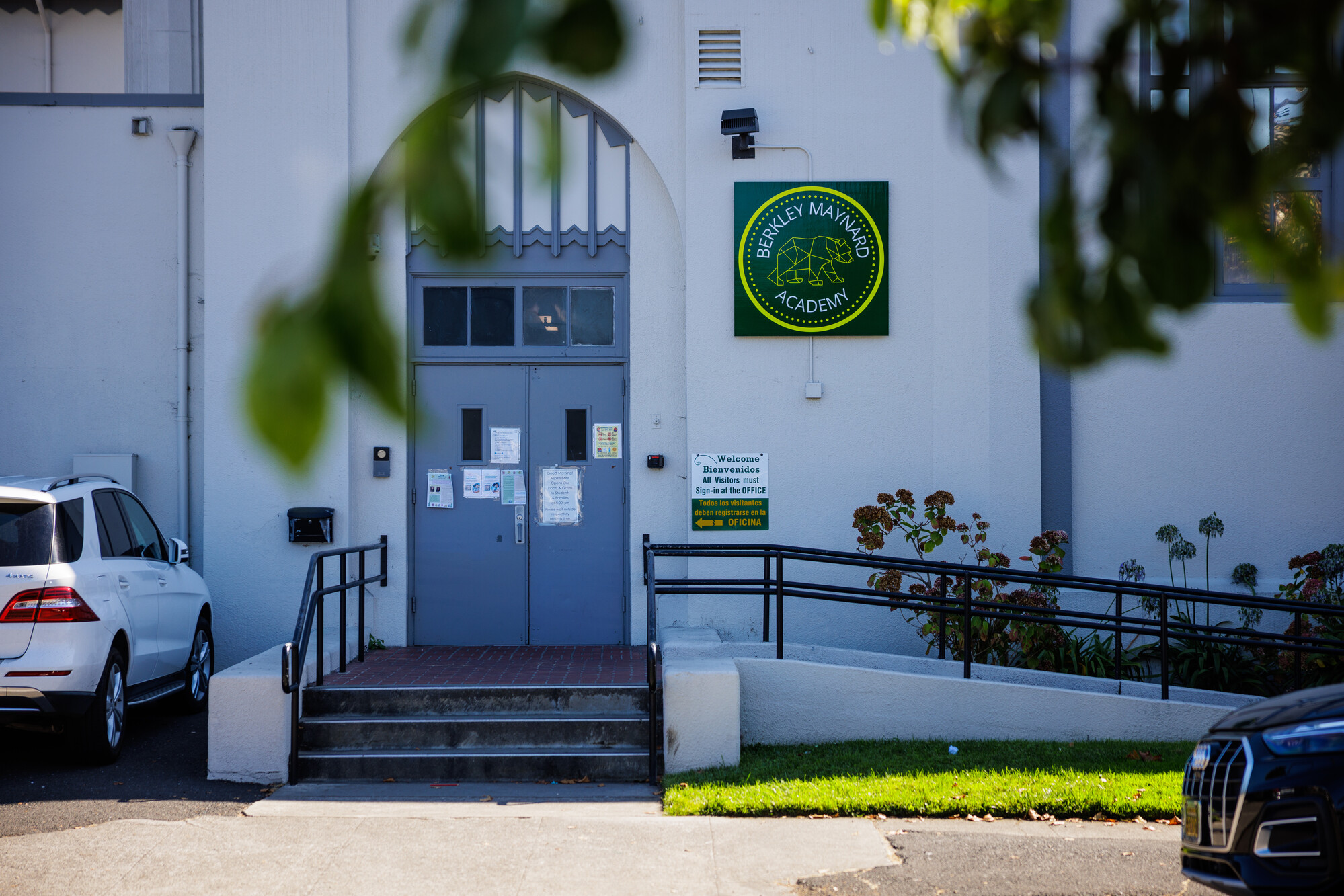
window.__IS_SSR__=true
window.__INITIAL_STATE__={
"attachmentsReducer": {
"audio_0": {
"type": "attachments",
"id": "audio_0",
"imgSizes": {
"kqedFullSize": {
"file": "https://ww2.kqed.org/news/wp-content/themes/KQED-unified/img/audio_bgs/background0.jpg"
}
}
},
"audio_1": {
"type": "attachments",
"id": "audio_1",
"imgSizes": {
"kqedFullSize": {
"file": "https://ww2.kqed.org/news/wp-content/themes/KQED-unified/img/audio_bgs/background1.jpg"
}
}
},
"audio_2": {
"type": "attachments",
"id": "audio_2",
"imgSizes": {
"kqedFullSize": {
"file": "https://ww2.kqed.org/news/wp-content/themes/KQED-unified/img/audio_bgs/background2.jpg"
}
}
},
"audio_3": {
"type": "attachments",
"id": "audio_3",
"imgSizes": {
"kqedFullSize": {
"file": "https://ww2.kqed.org/news/wp-content/themes/KQED-unified/img/audio_bgs/background3.jpg"
}
}
},
"audio_4": {
"type": "attachments",
"id": "audio_4",
"imgSizes": {
"kqedFullSize": {
"file": "https://ww2.kqed.org/news/wp-content/themes/KQED-unified/img/audio_bgs/background4.jpg"
}
}
},
"placeholder": {
"type": "attachments",
"id": "placeholder",
"imgSizes": {
"thumbnail": {
"file": "https://cdn.kqed.org/wp-content/uploads/2024/12/KQED-Default-Image-816638274-2000x1333-1-160x107.jpg",
"width": 160,
"height": 107,
"mimeType": "image/jpeg"
},
"medium": {
"file": "https://cdn.kqed.org/wp-content/uploads/2024/12/KQED-Default-Image-816638274-2000x1333-1-800x533.jpg",
"width": 800,
"height": 533,
"mimeType": "image/jpeg"
},
"medium_large": {
"file": "https://cdn.kqed.org/wp-content/uploads/2024/12/KQED-Default-Image-816638274-2000x1333-1-768x512.jpg",
"width": 768,
"height": 512,
"mimeType": "image/jpeg"
},
"large": {
"file": "https://cdn.kqed.org/wp-content/uploads/2024/12/KQED-Default-Image-816638274-2000x1333-1-1020x680.jpg",
"width": 1020,
"height": 680,
"mimeType": "image/jpeg"
},
"1536x1536": {
"file": "https://cdn.kqed.org/wp-content/uploads/2024/12/KQED-Default-Image-816638274-2000x1333-1-1536x1024.jpg",
"width": 1536,
"height": 1024,
"mimeType": "image/jpeg"
},
"fd-lrg": {
"file": "https://cdn.kqed.org/wp-content/uploads/2024/12/KQED-Default-Image-816638274-2000x1333-1-1536x1024.jpg",
"width": 1536,
"height": 1024,
"mimeType": "image/jpeg"
},
"fd-med": {
"file": "https://cdn.kqed.org/wp-content/uploads/2024/12/KQED-Default-Image-816638274-2000x1333-1-1020x680.jpg",
"width": 1020,
"height": 680,
"mimeType": "image/jpeg"
},
"fd-sm": {
"file": "https://cdn.kqed.org/wp-content/uploads/2024/12/KQED-Default-Image-816638274-2000x1333-1-800x533.jpg",
"width": 800,
"height": 533,
"mimeType": "image/jpeg"
},
"post-thumbnail": {
"file": "https://cdn.kqed.org/wp-content/uploads/2024/12/KQED-Default-Image-816638274-2000x1333-1-672x372.jpg",
"width": 672,
"height": 372,
"mimeType": "image/jpeg"
},
"twentyfourteen-full-width": {
"file": "https://cdn.kqed.org/wp-content/uploads/2024/12/KQED-Default-Image-816638274-2000x1333-1-1038x576.jpg",
"width": 1038,
"height": 576,
"mimeType": "image/jpeg"
},
"xxsmall": {
"file": "https://cdn.kqed.org/wp-content/uploads/2024/12/KQED-Default-Image-816638274-2000x1333-1-160x107.jpg",
"width": 160,
"height": 107,
"mimeType": "image/jpeg"
},
"xsmall": {
"file": "https://cdn.kqed.org/wp-content/uploads/2024/12/KQED-Default-Image-816638274-2000x1333-1-672x372.jpg",
"width": 672,
"height": 372,
"mimeType": "image/jpeg"
},
"small": {
"file": "https://cdn.kqed.org/wp-content/uploads/2024/12/KQED-Default-Image-816638274-2000x1333-1-672x372.jpg",
"width": 672,
"height": 372,
"mimeType": "image/jpeg"
},
"xlarge": {
"file": "https://cdn.kqed.org/wp-content/uploads/2024/12/KQED-Default-Image-816638274-2000x1333-1-1020x680.jpg",
"width": 1020,
"height": 680,
"mimeType": "image/jpeg"
},
"full-width": {
"file": "https://cdn.kqed.org/wp-content/uploads/2024/12/KQED-Default-Image-816638274-2000x1333-1-1920x1280.jpg",
"width": 1920,
"height": 1280,
"mimeType": "image/jpeg"
},
"guest-author-32": {
"file": "https://cdn.kqed.org/wp-content/uploads/2025/01/KQED-Default-Image-816638274-1333x1333-1-160x160.jpg",
"width": 32,
"height": 32,
"mimeType": "image/jpeg"
},
"guest-author-50": {
"file": "https://cdn.kqed.org/wp-content/uploads/2025/01/KQED-Default-Image-816638274-1333x1333-1-160x160.jpg",
"width": 50,
"height": 50,
"mimeType": "image/jpeg"
},
"guest-author-64": {
"file": "https://cdn.kqed.org/wp-content/uploads/2025/01/KQED-Default-Image-816638274-1333x1333-1-160x160.jpg",
"width": 64,
"height": 64,
"mimeType": "image/jpeg"
},
"guest-author-96": {
"file": "https://cdn.kqed.org/wp-content/uploads/2025/01/KQED-Default-Image-816638274-1333x1333-1-160x160.jpg",
"width": 96,
"height": 96,
"mimeType": "image/jpeg"
},
"guest-author-128": {
"file": "https://cdn.kqed.org/wp-content/uploads/2025/01/KQED-Default-Image-816638274-1333x1333-1-160x160.jpg",
"width": 128,
"height": 128,
"mimeType": "image/jpeg"
},
"detail": {
"file": "https://cdn.kqed.org/wp-content/uploads/2025/01/KQED-Default-Image-816638274-1333x1333-1-160x160.jpg",
"width": 160,
"height": 160,
"mimeType": "image/jpeg"
},
"kqedFullSize": {
"file": "https://cdn.kqed.org/wp-content/uploads/2024/12/KQED-Default-Image-816638274-2000x1333-1.jpg",
"width": 2000,
"height": 1333
}
}
},
"news_12057402": {
"type": "attachments",
"id": "news_12057402",
"meta": {
"index": "attachments_1716263798",
"site": "news",
"id": "12057402",
"found": true
},
"title": "Aspire Berkeley Maynard Academy in Oakland on Sept. 23, 2025.",
"publishDate": 1758736173,
"status": "inherit",
"parent": 12057191,
"modified": 1780614326,
"caption": "Aspire Berkley Maynard Academy in Oakland on Sept. 23, 2025. Teachers at Aspire said they feared retaliation for raising concerns about insufficient student services.",
"credit": "Martin do Nascimento/KQED",
"altTag": null,
"description": null,
"imgSizes": {
"thumbnail": {
"file": "https://cdn.kqed.org/wp-content/uploads/sites/10/2025/09/250923-ASPIRE-SAFETY-CONDITIONS-MD-01_qed-160x107.jpg",
"width": 160,
"height": 107,
"mimeType": "image/jpeg"
},
"1536x1536": {
"file": "https://cdn.kqed.org/wp-content/uploads/sites/10/2025/09/250923-ASPIRE-SAFETY-CONDITIONS-MD-01_qed-1536x1024.jpg",
"width": 1536,
"height": 1024,
"mimeType": "image/jpeg"
},
"post-thumbnail": {
"file": "https://cdn.kqed.org/wp-content/uploads/sites/10/2025/09/250923-ASPIRE-SAFETY-CONDITIONS-MD-01_qed-672x372.jpg",
"width": 672,
"height": 372,
"mimeType": "image/jpeg"
},
"twentyfourteen-full-width": {
"file": "https://cdn.kqed.org/wp-content/uploads/sites/10/2025/09/250923-ASPIRE-SAFETY-CONDITIONS-MD-01_qed-1038x576.jpg",
"width": 1038,
"height": 576,
"mimeType": "image/jpeg"
},
"kqedFullSize": {
"file": "https://cdn.kqed.org/wp-content/uploads/sites/10/2025/09/250923-ASPIRE-SAFETY-CONDITIONS-MD-01_qed.jpg",
"width": 1999,
"height": 1333
}
},
"isLoading": false,
"fetchFailed": false
},
"news_12057550": {
"type": "attachments",
"id": "news_12057550",
"meta": {
"index": "attachments_1716263798",
"site": "news",
"id": "12057550",
"found": true
},
"title": "Iris Velasco at her home in Oakland on Sept. 24, 2025.",
"publishDate": 1758758582,
"status": "inherit",
"parent": 12086323,
"modified": 1780698510,
"caption": "Iris Velasco at her home in Oakland on Sept. 24, 2025.",
"credit": "Martin do Nascimento/KQED",
"altTag": null,
"description": null,
"imgSizes": {
"thumbnail": {
"file": "https://cdn.kqed.org/wp-content/uploads/sites/10/2025/09/250924-ASPIRE-SAFETY-CONDITIONS-MD-03_qed-160x107.jpg",
"width": 160,
"height": 107,
"mimeType": "image/jpeg"
},
"1536x1536": {
"file": "https://cdn.kqed.org/wp-content/uploads/sites/10/2025/09/250924-ASPIRE-SAFETY-CONDITIONS-MD-03_qed-1536x1025.jpg",
"width": 1536,
"height": 1025,
"mimeType": "image/jpeg"
},
"post-thumbnail": {
"file": "https://cdn.kqed.org/wp-content/uploads/sites/10/2025/09/250924-ASPIRE-SAFETY-CONDITIONS-MD-03_qed-672x372.jpg",
"width": 672,
"height": 372,
"mimeType": "image/jpeg"
},
"twentyfourteen-full-width": {
"file": "https://cdn.kqed.org/wp-content/uploads/sites/10/2025/09/250924-ASPIRE-SAFETY-CONDITIONS-MD-03_qed-1038x576.jpg",
"width": 1038,
"height": 576,
"mimeType": "image/jpeg"
},
"kqedFullSize": {
"file": "https://cdn.kqed.org/wp-content/uploads/sites/10/2025/09/250924-ASPIRE-SAFETY-CONDITIONS-MD-03_qed.jpg",
"width": 1998,
"height": 1333
}
},
"isLoading": false,
"fetchFailed": false
},
"news_12040621": {
"type": "attachments",
"id": "news_12040621",
"meta": {
"index": "attachments_1716263798",
"site": "news",
"id": "12040621",
"found": true
},
"title": "02172023_ksuzuki_tkprogress 010_qed (1)",
"publishDate": 1747435252,
"status": "inherit",
"parent": 12040597,
"modified": 1747437174,
"caption": "About 100 teachers and staff at Santa Clara County’s first charter school received layoff notices in late April, as the school prepares to shutter its three remaining schools at the end of the school year due to financial strain and declining enrollment.",
"credit": "Kori Suzuki/KQED",
"altTag": null,
"description": null,
"imgSizes": {
"medium": {
"file": "https://cdn.kqed.org/wp-content/uploads/sites/10/2025/05/02172023_ksuzuki_tkprogress-010_qed-1-800x532.jpg",
"width": 800,
"height": 532,
"mimeType": "image/jpeg"
},
"large": {
"file": "https://cdn.kqed.org/wp-content/uploads/sites/10/2025/05/02172023_ksuzuki_tkprogress-010_qed-1-1020x679.jpg",
"width": 1020,
"height": 679,
"mimeType": "image/jpeg"
},
"thumbnail": {
"file": "https://cdn.kqed.org/wp-content/uploads/sites/10/2025/05/02172023_ksuzuki_tkprogress-010_qed-1-160x106.jpg",
"width": 160,
"height": 106,
"mimeType": "image/jpeg"
},
"1536x1536": {
"file": "https://cdn.kqed.org/wp-content/uploads/sites/10/2025/05/02172023_ksuzuki_tkprogress-010_qed-1-1536x1022.jpg",
"width": 1536,
"height": 1022,
"mimeType": "image/jpeg"
},
"post-thumbnail": {
"file": "https://cdn.kqed.org/wp-content/uploads/sites/10/2025/05/02172023_ksuzuki_tkprogress-010_qed-1-672x372.jpg",
"width": 672,
"height": 372,
"mimeType": "image/jpeg"
},
"twentyfourteen-full-width": {
"file": "https://cdn.kqed.org/wp-content/uploads/sites/10/2025/05/02172023_ksuzuki_tkprogress-010_qed-1-1038x576.jpg",
"width": 1038,
"height": 576,
"mimeType": "image/jpeg"
},
"full-width": {
"file": "https://cdn.kqed.org/wp-content/uploads/sites/10/2025/05/02172023_ksuzuki_tkprogress-010_qed-1-1920x1278.jpg",
"width": 1920,
"height": 1278,
"mimeType": "image/jpeg"
},
"kqedFullSize": {
"file": "https://cdn.kqed.org/wp-content/uploads/sites/10/2025/05/02172023_ksuzuki_tkprogress-010_qed-1.jpg",
"width": 2000,
"height": 1331
}
},
"isLoading": false,
"fetchFailed": false
},
"news_11990270": {
"type": "attachments",
"id": "news_11990270",
"meta": {
"index": "attachments_1716263798",
"site": "news",
"id": "11990270",
"found": true
},
"title": "From Berkeley to San Francisco",
"publishDate": 1718314724,
"status": "inherit",
"parent": 11990243,
"modified": 1718315980,
"caption": "A view of San Francisco Bay from Berkeley Hill. Five Bay Area counties — San Francisco, San Mateo, Napa, Marin and Santa Clara — stand to lose millions from their budgets this year due to an obscure legal dispute with the state, and they argue it will have a big impact on county services. ",
"credit": "Sean Duan/Getty Images",
"altTag": null,
"description": null,
"imgSizes": {
"medium": {
"file": "https://cdn.kqed.org/wp-content/uploads/sites/10/2024/06/GettyImages-140849679-800x533.jpg",
"width": 800,
"height": 533,
"mimeType": "image/jpeg"
},
"large": {
"file": "https://cdn.kqed.org/wp-content/uploads/sites/10/2024/06/GettyImages-140849679-1020x680.jpg",
"width": 1020,
"height": 680,
"mimeType": "image/jpeg"
},
"thumbnail": {
"file": "https://cdn.kqed.org/wp-content/uploads/sites/10/2024/06/GettyImages-140849679-160x107.jpg",
"width": 160,
"height": 107,
"mimeType": "image/jpeg"
},
"1536x1536": {
"file": "https://cdn.kqed.org/wp-content/uploads/sites/10/2024/06/GettyImages-140849679-1536x1024.jpg",
"width": 1536,
"height": 1024,
"mimeType": "image/jpeg"
},
"2048x2048": {
"file": "https://cdn.kqed.org/wp-content/uploads/sites/10/2024/06/GettyImages-140849679-2048x1365.jpg",
"width": 2048,
"height": 1365,
"mimeType": "image/jpeg"
},
"post-thumbnail": {
"file": "https://cdn.kqed.org/wp-content/uploads/sites/10/2024/06/GettyImages-140849679-672x372.jpg",
"width": 672,
"height": 372,
"mimeType": "image/jpeg"
},
"twentyfourteen-full-width": {
"file": "https://cdn.kqed.org/wp-content/uploads/sites/10/2024/06/GettyImages-140849679-1038x576.jpg",
"width": 1038,
"height": 576,
"mimeType": "image/jpeg"
},
"full-width": {
"file": "https://cdn.kqed.org/wp-content/uploads/sites/10/2024/06/GettyImages-140849679-1920x1280.jpg",
"width": 1920,
"height": 1280,
"mimeType": "image/jpeg"
},
"kqedFullSize": {
"file": "https://cdn.kqed.org/wp-content/uploads/sites/10/2024/06/GettyImages-140849679.jpg",
"width": 2121,
"height": 1414
}
},
"isLoading": false,
"fetchFailed": false
},
"news_11953430": {
"type": "attachments",
"id": "news_11953430",
"meta": {
"index": "attachments_1716263798",
"site": "news",
"id": "11953430",
"found": true
},
"parent": 11953408,
"imgSizes": {
"twentyfourteen-full-width": {
"file": "https://ww2.kqed.org/app/uploads/sites/10/2023/06/Rocketship-1920x1200-1-1038x576.jpg",
"width": 1038,
"mimeType": "image/jpeg",
"height": 576
},
"thumbnail": {
"file": "https://ww2.kqed.org/app/uploads/sites/10/2023/06/Rocketship-1920x1200-1-160x100.jpg",
"width": 160,
"mimeType": "image/jpeg",
"height": 100
},
"post-thumbnail": {
"file": "https://ww2.kqed.org/app/uploads/sites/10/2023/06/Rocketship-1920x1200-1-672x372.jpg",
"width": 672,
"mimeType": "image/jpeg",
"height": 372
},
"kqedFullSize": {
"file": "https://ww2.kqed.org/app/uploads/sites/10/2023/06/Rocketship-1920x1200-1.jpg",
"width": 1920,
"height": 1200
},
"large": {
"file": "https://ww2.kqed.org/app/uploads/sites/10/2023/06/Rocketship-1920x1200-1-1020x638.jpg",
"width": 1020,
"mimeType": "image/jpeg",
"height": 638
},
"1536x1536": {
"file": "https://ww2.kqed.org/app/uploads/sites/10/2023/06/Rocketship-1920x1200-1-1536x960.jpg",
"width": 1536,
"mimeType": "image/jpeg",
"height": 960
},
"medium": {
"file": "https://ww2.kqed.org/app/uploads/sites/10/2023/06/Rocketship-1920x1200-1-800x500.jpg",
"width": 800,
"mimeType": "image/jpeg",
"height": 500
}
},
"publishDate": 1687286317,
"modified": 1687296884,
"caption": "A student at Rocketship Public Schools in San José works on a math problem.",
"description": null,
"title": "Rocketship-1920x1200",
"credit": "Andrew Reed/EdSource",
"status": "inherit",
"altTag": "A girl with glasses holding a yellow pen marking up a paper.",
"isLoading": false,
"fetchFailed": false
},
"news_11946503": {
"type": "attachments",
"id": "news_11946503",
"meta": {
"index": "attachments_1716263798",
"site": "news",
"id": "11946503",
"found": true
},
"parent": 0,
"imgSizes": {
"twentyfourteen-full-width": {
"file": "https://ww2.kqed.org/app/uploads/sites/10/2023/04/RS6260_76754171-1038x576.jpg",
"width": 1038,
"mimeType": "image/jpeg",
"height": 576
},
"thumbnail": {
"file": "https://ww2.kqed.org/app/uploads/sites/10/2023/04/RS6260_76754171-160x107.jpg",
"width": 160,
"mimeType": "image/jpeg",
"height": 107
},
"post-thumbnail": {
"file": "https://ww2.kqed.org/app/uploads/sites/10/2023/04/RS6260_76754171-672x372.jpg",
"width": 672,
"mimeType": "image/jpeg",
"height": 372
},
"kqedFullSize": {
"file": "https://ww2.kqed.org/app/uploads/sites/10/2023/04/RS6260_76754171.jpg",
"width": 1920,
"height": 1280
},
"large": {
"file": "https://ww2.kqed.org/app/uploads/sites/10/2023/04/RS6260_76754171-1020x680.jpg",
"width": 1020,
"mimeType": "image/jpeg",
"height": 680
},
"1536x1536": {
"file": "https://ww2.kqed.org/app/uploads/sites/10/2023/04/RS6260_76754171-1536x1024.jpg",
"width": 1536,
"mimeType": "image/jpeg",
"height": 1024
},
"medium": {
"file": "https://ww2.kqed.org/app/uploads/sites/10/2023/04/RS6260_76754171-800x533.jpg",
"width": 800,
"mimeType": "image/jpeg",
"height": 533
}
},
"publishDate": 1681329479,
"modified": 1681329594,
"caption": "TK",
"description": null,
"title": "RS6260_76754171",
"credit": "Creatas/Getty Images",
"status": "inherit",
"altTag": "A small child's hand is raised in a classroom setting and is seen in focus. Blurred students are pictured behind the raised hand.",
"isLoading": false,
"fetchFailed": false
},
"news_11922199": {
"type": "attachments",
"id": "news_11922199",
"meta": {
"index": "attachments_1716263798",
"site": "news",
"id": "11922199",
"found": true
},
"parent": 11922183,
"imgSizes": {
"twentyfourteen-full-width": {
"file": "https://ww2.kqed.org/app/uploads/sites/10/2022/08/Oakland-First-day-of-School-1038x576.jpg",
"width": 1038,
"mimeType": "image/jpeg",
"height": 576
},
"thumbnail": {
"file": "https://ww2.kqed.org/app/uploads/sites/10/2022/08/Oakland-First-day-of-School-160x105.jpg",
"width": 160,
"mimeType": "image/jpeg",
"height": 105
},
"post-thumbnail": {
"file": "https://ww2.kqed.org/app/uploads/sites/10/2022/08/Oakland-First-day-of-School-672x372.jpg",
"width": 672,
"mimeType": "image/jpeg",
"height": 372
},
"kqedFullSize": {
"file": "https://ww2.kqed.org/app/uploads/sites/10/2022/08/Oakland-First-day-of-School.jpg",
"width": 1980,
"height": 1302
},
"large": {
"file": "https://ww2.kqed.org/app/uploads/sites/10/2022/08/Oakland-First-day-of-School-1020x671.jpg",
"width": 1020,
"mimeType": "image/jpeg",
"height": 671
},
"1536x1536": {
"file": "https://ww2.kqed.org/app/uploads/sites/10/2022/08/Oakland-First-day-of-School-1536x1010.jpg",
"width": 1536,
"mimeType": "image/jpeg",
"height": 1010
},
"full-width": {
"file": "https://ww2.kqed.org/app/uploads/sites/10/2022/08/Oakland-First-day-of-School-1920x1263.jpg",
"width": 1920,
"mimeType": "image/jpeg",
"height": 1263
},
"medium": {
"file": "https://ww2.kqed.org/app/uploads/sites/10/2022/08/Oakland-First-day-of-School-800x526.jpg",
"width": 800,
"mimeType": "image/jpeg",
"height": 526
}
},
"publishDate": 1660167606,
"modified": 1660167719,
"caption": "Jameela Jackson snaps a photo of her son Shadeede, a third grader, at Markham Elementary in Oakland Unified on Monday.",
"description": "Jameela Jackson snaps a photo of her son Shadeede, a third grader, at Markham Elementary in Oakland Unified on Monday.",
"title": "Oakland First day of School",
"credit": "Andrew Reed/EdSource",
"status": "inherit",
"altTag": "Jameela Jackson snaps a photo of her son Shadeede, a third grader, at Markham Elementary in Oakland Unified on Monday.",
"isLoading": false,
"fetchFailed": false
},
"news_11912200": {
"type": "attachments",
"id": "news_11912200",
"meta": {
"index": "attachments_1716263798",
"site": "news",
"id": "11912200",
"found": true
},
"parent": 11912196,
"imgSizes": {
"twentyfourteen-full-width": {
"file": "https://ww2.kqed.org/app/uploads/sites/10/2022/04/GettyImages-1234785471-1038x576.jpg",
"width": 1038,
"mimeType": "image/jpeg",
"height": 576
},
"thumbnail": {
"file": "https://ww2.kqed.org/app/uploads/sites/10/2022/04/GettyImages-1234785471-160x105.jpg",
"width": 160,
"mimeType": "image/jpeg",
"height": 105
},
"post-thumbnail": {
"file": "https://ww2.kqed.org/app/uploads/sites/10/2022/04/GettyImages-1234785471-672x372.jpg",
"width": 672,
"mimeType": "image/jpeg",
"height": 372
},
"kqedFullSize": {
"file": "https://ww2.kqed.org/app/uploads/sites/10/2022/04/GettyImages-1234785471-scaled.jpg",
"width": 2560,
"height": 1684
},
"2048x2048": {
"file": "https://ww2.kqed.org/app/uploads/sites/10/2022/04/GettyImages-1234785471-2048x1347.jpg",
"width": 2048,
"mimeType": "image/jpeg",
"height": 1347
},
"large": {
"file": "https://ww2.kqed.org/app/uploads/sites/10/2022/04/GettyImages-1234785471-1020x671.jpg",
"width": 1020,
"mimeType": "image/jpeg",
"height": 671
},
"1536x1536": {
"file": "https://ww2.kqed.org/app/uploads/sites/10/2022/04/GettyImages-1234785471-1536x1010.jpg",
"width": 1536,
"mimeType": "image/jpeg",
"height": 1010
},
"full-width": {
"file": "https://ww2.kqed.org/app/uploads/sites/10/2022/04/GettyImages-1234785471-1920x1263.jpg",
"width": 1920,
"mimeType": "image/jpeg",
"height": 1263
},
"medium": {
"file": "https://ww2.kqed.org/app/uploads/sites/10/2022/04/GettyImages-1234785471-800x526.jpg",
"width": 800,
"mimeType": "image/jpeg",
"height": 526
}
},
"publishDate": 1650930435,
"modified": 1650930572,
"caption": "Charter Oak students cheer on their team against St. Joseph in the first half of a prep football game at Charter Oak High School in Covina in August 2021. ",
"description": "Charter Oak students cheer on their team against St. Joseph in the first half of a prep football game at Charter Oak High School in Covina in August 2021. ",
"title": "charter schools",
"credit": "Keith Birmingham/MediaNews Group/Pasadena Star-News via Getty Images",
"status": "inherit",
"altTag": "A group of young teens dressed mostly in bright blue or yellow smile, laugh, and reach their arms out to cheer their football team.",
"isLoading": false,
"fetchFailed": false
},
"news_11780130": {
"type": "attachments",
"id": "news_11780130",
"meta": {
"index": "attachments_1716263798",
"site": "news",
"id": "11780130",
"found": true
},
"parent": 11780040,
"imgSizes": {
"apple_news_ca_landscape_5_5": {
"file": "https://ww2.kqed.org/app/uploads/sites/10/2019/10/RS146_IMG_0236-1044x783.jpg",
"width": 1044,
"mimeType": "image/jpeg",
"height": 783
},
"apple_news_ca_square_4_0": {
"file": "https://ww2.kqed.org/app/uploads/sites/10/2019/10/RS146_IMG_0236-470x470.jpg",
"width": 470,
"mimeType": "image/jpeg",
"height": 470
},
"twentyfourteen-full-width": {
"file": "https://ww2.kqed.org/app/uploads/sites/10/2019/10/RS146_IMG_0236-1038x576.jpg",
"width": 1038,
"mimeType": "image/jpeg",
"height": 576
},
"thumbnail": {
"file": "https://ww2.kqed.org/app/uploads/sites/10/2019/10/RS146_IMG_0236-160x120.jpg",
"width": 160,
"mimeType": "image/jpeg",
"height": 120
},
"post-thumbnail": {
"file": "https://ww2.kqed.org/app/uploads/sites/10/2019/10/RS146_IMG_0236-672x372.jpg",
"width": 672,
"mimeType": "image/jpeg",
"height": 372
},
"kqedFullSize": {
"file": "https://ww2.kqed.org/app/uploads/sites/10/2019/10/RS146_IMG_0236-e1589418765561.jpg",
"width": 1920,
"height": 1440
},
"apple_news_ca_landscape_4_7": {
"file": "https://ww2.kqed.org/app/uploads/sites/10/2019/10/RS146_IMG_0236-632x474.jpg",
"width": 632,
"mimeType": "image/jpeg",
"height": 474
},
"large": {
"file": "https://ww2.kqed.org/app/uploads/sites/10/2019/10/RS146_IMG_0236-1020x765.jpg",
"width": 1020,
"mimeType": "image/jpeg",
"height": 765
},
"complete_open_graph": {
"file": "https://ww2.kqed.org/app/uploads/sites/10/2019/10/RS146_IMG_0236-1200x900.jpg",
"width": 1200,
"mimeType": "image/jpeg",
"height": 900
},
"apple_news_ca_landscape_4_0": {
"file": "https://ww2.kqed.org/app/uploads/sites/10/2019/10/RS146_IMG_0236-536x402.jpg",
"width": 536,
"mimeType": "image/jpeg",
"height": 402
},
"apple_news_ca_portrait_12_9": {
"file": "https://ww2.kqed.org/app/uploads/sites/10/2019/10/RS146_IMG_0236-1122x1496.jpg",
"width": 1122,
"mimeType": "image/jpeg",
"height": 1496
},
"medium": {
"file": "https://ww2.kqed.org/app/uploads/sites/10/2019/10/RS146_IMG_0236-800x600.jpg",
"width": 800,
"mimeType": "image/jpeg",
"height": 600
},
"apple_news_ca_portrait_4_0": {
"file": "https://ww2.kqed.org/app/uploads/sites/10/2019/10/RS146_IMG_0236-354x472.jpg",
"width": 354,
"mimeType": "image/jpeg",
"height": 472
},
"apple_news_ca_portrait_9_7": {
"file": "https://ww2.kqed.org/app/uploads/sites/10/2019/10/RS146_IMG_0236-840x1120.jpg",
"width": 840,
"mimeType": "image/jpeg",
"height": 1120
},
"apple_news_ca_landscape_12_9": {
"file": "https://ww2.kqed.org/app/uploads/sites/10/2019/10/RS146_IMG_0236-1832x1374.jpg",
"width": 1832,
"mimeType": "image/jpeg",
"height": 1374
},
"apple_news_ca_square_9_7": {
"file": "https://ww2.kqed.org/app/uploads/sites/10/2019/10/RS146_IMG_0236-1104x1104.jpg",
"width": 1104,
"mimeType": "image/jpeg",
"height": 1104
},
"apple_news_ca_portrait_4_7": {
"file": "https://ww2.kqed.org/app/uploads/sites/10/2019/10/RS146_IMG_0236-414x552.jpg",
"width": 414,
"mimeType": "image/jpeg",
"height": 552
},
"apple_news_ca_square_12_9": {
"file": "https://ww2.kqed.org/app/uploads/sites/10/2019/10/RS146_IMG_0236-1472x1472.jpg",
"width": 1472,
"mimeType": "image/jpeg",
"height": 1472
},
"apple_news_ca_portrait_5_5": {
"file": "https://ww2.kqed.org/app/uploads/sites/10/2019/10/RS146_IMG_0236-687x916.jpg",
"width": 687,
"mimeType": "image/jpeg",
"height": 916
},
"full-width": {
"file": "https://ww2.kqed.org/app/uploads/sites/10/2019/10/RS146_IMG_0236-1920x1440.jpg",
"width": 1920,
"mimeType": "image/jpeg",
"height": 1440
},
"apple_news_ca_square_4_7": {
"file": "https://ww2.kqed.org/app/uploads/sites/10/2019/10/RS146_IMG_0236-550x550.jpg",
"width": 550,
"mimeType": "image/jpeg",
"height": 550
},
"apple_news_ca_landscape_9_7": {
"file": "https://ww2.kqed.org/app/uploads/sites/10/2019/10/RS146_IMG_0236-1376x1032.jpg",
"width": 1376,
"mimeType": "image/jpeg",
"height": 1032
},
"apple_news_ca_square_5_5": {
"file": "https://ww2.kqed.org/app/uploads/sites/10/2019/10/RS146_IMG_0236-912x912.jpg",
"width": 912,
"mimeType": "image/jpeg",
"height": 912
}
},
"publishDate": 1571155990,
"modified": 1622641554,
"caption": null,
"description": "The state Capitol in Sacramento. ",
"title": "RS146_IMG_0236",
"credit": "Craig Miller/KQED",
"status": "inherit",
"altTag": null,
"isLoading": false,
"fetchFailed": false
},
"news_11778072": {
"type": "attachments",
"id": "news_11778072",
"meta": {
"index": "attachments_1716263798",
"site": "news",
"id": "11778072",
"found": true
},
"parent": 11777982,
"imgSizes": {
"apple_news_ca_landscape_5_5": {
"file": "https://ww2.kqed.org/app/uploads/sites/10/2019/10/iStock-1031377826-1044x783.jpg",
"width": 1044,
"mimeType": "image/jpeg",
"height": 783
},
"apple_news_ca_square_4_0": {
"file": "https://ww2.kqed.org/app/uploads/sites/10/2019/10/iStock-1031377826-470x470.jpg",
"width": 470,
"mimeType": "image/jpeg",
"height": 470
},
"twentyfourteen-full-width": {
"file": "https://ww2.kqed.org/app/uploads/sites/10/2019/10/iStock-1031377826-1038x576.jpg",
"width": 1038,
"mimeType": "image/jpeg",
"height": 576
},
"thumbnail": {
"file": "https://ww2.kqed.org/app/uploads/sites/10/2019/10/iStock-1031377826-160x107.jpg",
"width": 160,
"mimeType": "image/jpeg",
"height": 107
},
"post-thumbnail": {
"file": "https://ww2.kqed.org/app/uploads/sites/10/2019/10/iStock-1031377826-672x372.jpg",
"width": 672,
"mimeType": "image/jpeg",
"height": 372
},
"kqedFullSize": {
"file": "https://ww2.kqed.org/app/uploads/sites/10/2019/10/iStock-1031377826-e1570144336782.jpg",
"width": 1920,
"height": 1280
},
"apple_news_ca_landscape_4_7": {
"file": "https://ww2.kqed.org/app/uploads/sites/10/2019/10/iStock-1031377826-632x474.jpg",
"width": 632,
"mimeType": "image/jpeg",
"height": 474
},
"large": {
"file": "https://ww2.kqed.org/app/uploads/sites/10/2019/10/iStock-1031377826-1020x680.jpg",
"width": 1020,
"mimeType": "image/jpeg",
"height": 680
},
"complete_open_graph": {
"file": "https://ww2.kqed.org/app/uploads/sites/10/2019/10/iStock-1031377826-1200x800.jpg",
"width": 1200,
"mimeType": "image/jpeg",
"height": 800
},
"apple_news_ca_landscape_4_0": {
"file": "https://ww2.kqed.org/app/uploads/sites/10/2019/10/iStock-1031377826-536x402.jpg",
"width": 536,
"mimeType": "image/jpeg",
"height": 402
},
"apple_news_ca_portrait_12_9": {
"file": "https://ww2.kqed.org/app/uploads/sites/10/2019/10/iStock-1031377826-1122x1414.jpg",
"width": 1122,
"mimeType": "image/jpeg",
"height": 1414
},
"medium": {
"file": "https://ww2.kqed.org/app/uploads/sites/10/2019/10/iStock-1031377826-800x533.jpg",
"width": 800,
"mimeType": "image/jpeg",
"height": 533
},
"apple_news_ca_portrait_4_0": {
"file": "https://ww2.kqed.org/app/uploads/sites/10/2019/10/iStock-1031377826-354x472.jpg",
"width": 354,
"mimeType": "image/jpeg",
"height": 472
},
"apple_news_ca_portrait_9_7": {
"file": "https://ww2.kqed.org/app/uploads/sites/10/2019/10/iStock-1031377826-840x1120.jpg",
"width": 840,
"mimeType": "image/jpeg",
"height": 1120
},
"apple_news_ca_landscape_12_9": {
"file": "https://ww2.kqed.org/app/uploads/sites/10/2019/10/iStock-1031377826-1832x1374.jpg",
"width": 1832,
"mimeType": "image/jpeg",
"height": 1374
},
"apple_news_ca_square_9_7": {
"file": "https://ww2.kqed.org/app/uploads/sites/10/2019/10/iStock-1031377826-1104x1104.jpg",
"width": 1104,
"mimeType": "image/jpeg",
"height": 1104
},
"apple_news_ca_portrait_4_7": {
"file": "https://ww2.kqed.org/app/uploads/sites/10/2019/10/iStock-1031377826-414x552.jpg",
"width": 414,
"mimeType": "image/jpeg",
"height": 552
},
"apple_news_ca_square_12_9": {
"file": "https://ww2.kqed.org/app/uploads/sites/10/2019/10/iStock-1031377826-1472x1414.jpg",
"width": 1472,
"mimeType": "image/jpeg",
"height": 1414
},
"apple_news_ca_portrait_5_5": {
"file": "https://ww2.kqed.org/app/uploads/sites/10/2019/10/iStock-1031377826-687x916.jpg",
"width": 687,
"mimeType": "image/jpeg",
"height": 916
},
"full-width": {
"file": "https://ww2.kqed.org/app/uploads/sites/10/2019/10/iStock-1031377826-1920x1280.jpg",
"width": 1920,
"mimeType": "image/jpeg",
"height": 1280
},
"apple_news_ca_square_4_7": {
"file": "https://ww2.kqed.org/app/uploads/sites/10/2019/10/iStock-1031377826-550x550.jpg",
"width": 550,
"mimeType": "image/jpeg",
"height": 550
},
"apple_news_ca_landscape_9_7": {
"file": "https://ww2.kqed.org/app/uploads/sites/10/2019/10/iStock-1031377826-1376x1032.jpg",
"width": 1376,
"mimeType": "image/jpeg",
"height": 1032
},
"apple_news_ca_square_5_5": {
"file": "https://ww2.kqed.org/app/uploads/sites/10/2019/10/iStock-1031377826-912x912.jpg",
"width": 912,
"mimeType": "image/jpeg",
"height": 912
}
},
"publishDate": 1570144246,
"modified": 1570144534,
"caption": "A new set of education laws will significantly impact some of California's charter schools and usher in other noticeable changes throughout all of the state's K-12 schools. ",
"description": null,
"title": "Elementary school kids raising hands to teacher, back view",
"credit": "iStock",
"status": "inherit",
"isLoading": false,
"fetchFailed": false
},
"news_11771111": {
"type": "attachments",
"id": "news_11771111",
"meta": {
"index": "attachments_1716263798",
"site": "news",
"id": "11771111",
"found": true
},
"parent": 11770999,
"imgSizes": {
"apple_news_ca_landscape_5_5": {
"file": "https://ww2.kqed.org/app/uploads/sites/10/2019/08/08292019_oakland-teachers-strike-qut-1044x783.jpg",
"width": 1044,
"mimeType": "image/jpeg",
"height": 783
},
"apple_news_ca_square_4_0": {
"file": "https://ww2.kqed.org/app/uploads/sites/10/2019/08/08292019_oakland-teachers-strike-qut-470x470.jpg",
"width": 470,
"mimeType": "image/jpeg",
"height": 470
},
"twentyfourteen-full-width": {
"file": "https://ww2.kqed.org/app/uploads/sites/10/2019/08/08292019_oakland-teachers-strike-qut-1038x576.jpg",
"width": 1038,
"mimeType": "image/jpeg",
"height": 576
},
"thumbnail": {
"file": "https://ww2.kqed.org/app/uploads/sites/10/2019/08/08292019_oakland-teachers-strike-qut-160x107.jpg",
"width": 160,
"mimeType": "image/jpeg",
"height": 107
},
"post-thumbnail": {
"file": "https://ww2.kqed.org/app/uploads/sites/10/2019/08/08292019_oakland-teachers-strike-qut-672x372.jpg",
"width": 672,
"mimeType": "image/jpeg",
"height": 372
},
"kqedFullSize": {
"file": "https://ww2.kqed.org/app/uploads/sites/10/2019/08/08292019_oakland-teachers-strike-qut.jpg",
"width": 1920,
"height": 1280
},
"apple_news_ca_landscape_4_7": {
"file": "https://ww2.kqed.org/app/uploads/sites/10/2019/08/08292019_oakland-teachers-strike-qut-632x474.jpg",
"width": 632,
"mimeType": "image/jpeg",
"height": 474
},
"large": {
"file": "https://ww2.kqed.org/app/uploads/sites/10/2019/08/08292019_oakland-teachers-strike-qut-1020x680.jpg",
"width": 1020,
"mimeType": "image/jpeg",
"height": 680
},
"complete_open_graph": {
"file": "https://ww2.kqed.org/app/uploads/sites/10/2019/08/08292019_oakland-teachers-strike-qut-1200x800.jpg",
"width": 1200,
"mimeType": "image/jpeg",
"height": 800
},
"apple_news_ca_landscape_4_0": {
"file": "https://ww2.kqed.org/app/uploads/sites/10/2019/08/08292019_oakland-teachers-strike-qut-536x402.jpg",
"width": 536,
"mimeType": "image/jpeg",
"height": 402
},
"apple_news_ca_portrait_12_9": {
"file": "https://ww2.kqed.org/app/uploads/sites/10/2019/08/08292019_oakland-teachers-strike-qut-1122x1280.jpg",
"width": 1122,
"mimeType": "image/jpeg",
"height": 1280
},
"medium": {
"file": "https://ww2.kqed.org/app/uploads/sites/10/2019/08/08292019_oakland-teachers-strike-qut-800x533.jpg",
"width": 800,
"mimeType": "image/jpeg",
"height": 533
},
"apple_news_ca_portrait_4_0": {
"file": "https://ww2.kqed.org/app/uploads/sites/10/2019/08/08292019_oakland-teachers-strike-qut-354x472.jpg",
"width": 354,
"mimeType": "image/jpeg",
"height": 472
},
"apple_news_ca_portrait_9_7": {
"file": "https://ww2.kqed.org/app/uploads/sites/10/2019/08/08292019_oakland-teachers-strike-qut-840x1120.jpg",
"width": 840,
"mimeType": "image/jpeg",
"height": 1120
},
"apple_news_ca_landscape_12_9": {
"file": "https://ww2.kqed.org/app/uploads/sites/10/2019/08/08292019_oakland-teachers-strike-qut-1832x1280.jpg",
"width": 1832,
"mimeType": "image/jpeg",
"height": 1280
},
"apple_news_ca_square_9_7": {
"file": "https://ww2.kqed.org/app/uploads/sites/10/2019/08/08292019_oakland-teachers-strike-qut-1104x1104.jpg",
"width": 1104,
"mimeType": "image/jpeg",
"height": 1104
},
"apple_news_ca_portrait_4_7": {
"file": "https://ww2.kqed.org/app/uploads/sites/10/2019/08/08292019_oakland-teachers-strike-qut-414x552.jpg",
"width": 414,
"mimeType": "image/jpeg",
"height": 552
},
"apple_news_ca_square_12_9": {
"file": "https://ww2.kqed.org/app/uploads/sites/10/2019/08/08292019_oakland-teachers-strike-qut-1472x1280.jpg",
"width": 1472,
"mimeType": "image/jpeg",
"height": 1280
},
"apple_news_ca_portrait_5_5": {
"file": "https://ww2.kqed.org/app/uploads/sites/10/2019/08/08292019_oakland-teachers-strike-qut-687x916.jpg",
"width": 687,
"mimeType": "image/jpeg",
"height": 916
},
"full-width": {
"file": "https://ww2.kqed.org/app/uploads/sites/10/2019/08/08292019_oakland-teachers-strike-qut-1920x1280.jpg",
"width": 1920,
"mimeType": "image/jpeg",
"height": 1280
},
"apple_news_ca_square_4_7": {
"file": "https://ww2.kqed.org/app/uploads/sites/10/2019/08/08292019_oakland-teachers-strike-qut-550x550.jpg",
"width": 550,
"mimeType": "image/jpeg",
"height": 550
},
"apple_news_ca_landscape_9_7": {
"file": "https://ww2.kqed.org/app/uploads/sites/10/2019/08/08292019_oakland-teachers-strike-qut-1376x1032.jpg",
"width": 1376,
"mimeType": "image/jpeg",
"height": 1032
},
"apple_news_ca_square_5_5": {
"file": "https://ww2.kqed.org/app/uploads/sites/10/2019/08/08292019_oakland-teachers-strike-qut-912x912.jpg",
"width": 912,
"mimeType": "image/jpeg",
"height": 912
}
},
"publishDate": 1567115932,
"modified": 1567116806,
"caption": "Oakland Unified School District students, teachers and parent carry signs as they march to the Oakland Unified School District headquarters during a strike on Feb. 21, 2019, in Oakland. ",
"description": "Oakland Unified School District students, teachers and parent carry signs as they march to the Oakland Unified School District headquarters on Feb. 21, 2019, in Oakland. ",
"title": "Oakland Teachers Go On Strike",
"credit": "Justin Sullivan/Getty Images",
"status": "inherit",
"isLoading": false,
"fetchFailed": false
},
"news_11461632": {
"type": "attachments",
"id": "news_11461632",
"meta": {
"index": "attachments_1716263798",
"site": "news",
"id": "11461632",
"found": true
},
"parent": 11461330,
"imgSizes": {
"small": {
"file": "https://ww2.kqed.org/app/uploads/sites/10/2017/05/RS25385_Stokes-4-qut-520x347.jpg",
"width": 520,
"mimeType": "image/jpeg",
"height": 347
},
"twentyfourteen-full-width": {
"file": "https://ww2.kqed.org/app/uploads/sites/10/2017/05/RS25385_Stokes-4-qut-1038x576.jpg",
"width": 1038,
"mimeType": "image/jpeg",
"height": 576
},
"thumbnail": {
"file": "https://ww2.kqed.org/app/uploads/sites/10/2017/05/RS25385_Stokes-4-qut-160x107.jpg",
"width": 160,
"mimeType": "image/jpeg",
"height": 107
},
"fd-sm": {
"file": "https://ww2.kqed.org/app/uploads/sites/10/2017/05/RS25385_Stokes-4-qut-960x640.jpg",
"width": 960,
"mimeType": "image/jpeg",
"height": 640
},
"post-thumbnail": {
"file": "https://ww2.kqed.org/app/uploads/sites/10/2017/05/RS25385_Stokes-4-qut-672x372.jpg",
"width": 672,
"mimeType": "image/jpeg",
"height": 372
},
"xsmall": {
"file": "https://ww2.kqed.org/app/uploads/sites/10/2017/05/RS25385_Stokes-4-qut-375x250.jpg",
"width": 375,
"mimeType": "image/jpeg",
"height": 250
},
"kqedFullSize": {
"file": "https://ww2.kqed.org/app/uploads/sites/10/2017/05/RS25385_Stokes-4-qut.jpg",
"width": 1920,
"height": 1280
},
"large": {
"file": "https://ww2.kqed.org/app/uploads/sites/10/2017/05/RS25385_Stokes-4-qut-1020x680.jpg",
"width": 1020,
"mimeType": "image/jpeg",
"height": 680
},
"xlarge": {
"file": "https://ww2.kqed.org/app/uploads/sites/10/2017/05/RS25385_Stokes-4-qut-1180x787.jpg",
"width": 1180,
"mimeType": "image/jpeg",
"height": 787
},
"guest-author-50": {
"file": "https://ww2.kqed.org/app/uploads/sites/10/2017/05/RS25385_Stokes-4-qut-50x50.jpg",
"width": 50,
"mimeType": "image/jpeg",
"height": 50
},
"guest-author-96": {
"file": "https://ww2.kqed.org/app/uploads/sites/10/2017/05/RS25385_Stokes-4-qut-96x96.jpg",
"width": 96,
"mimeType": "image/jpeg",
"height": 96
},
"medium": {
"file": "https://ww2.kqed.org/app/uploads/sites/10/2017/05/RS25385_Stokes-4-qut-800x533.jpg",
"width": 800,
"mimeType": "image/jpeg",
"height": 533
},
"guest-author-64": {
"file": "https://ww2.kqed.org/app/uploads/sites/10/2017/05/RS25385_Stokes-4-qut-64x64.jpg",
"width": 64,
"mimeType": "image/jpeg",
"height": 64
},
"guest-author-32": {
"file": "https://ww2.kqed.org/app/uploads/sites/10/2017/05/RS25385_Stokes-4-qut-32x32.jpg",
"width": 32,
"mimeType": "image/jpeg",
"height": 32
},
"fd-lrg": {
"file": "https://ww2.kqed.org/app/uploads/sites/10/2017/05/RS25385_Stokes-4-qut-1920x1280.jpg",
"width": 1920,
"mimeType": "image/jpeg",
"height": 1280
},
"fd-med": {
"file": "https://ww2.kqed.org/app/uploads/sites/10/2017/05/RS25385_Stokes-4-qut-1180x787.jpg",
"width": 1180,
"mimeType": "image/jpeg",
"height": 787
},
"full-width": {
"file": "https://ww2.kqed.org/app/uploads/sites/10/2017/05/RS25385_Stokes-4-qut-1920x1280.jpg",
"width": 1920,
"mimeType": "image/jpeg",
"height": 1280
},
"detail": {
"file": "https://ww2.kqed.org/app/uploads/sites/10/2017/05/RS25385_Stokes-4-qut-150x150.jpg",
"width": 150,
"mimeType": "image/jpeg",
"height": 150
},
"guest-author-128": {
"file": "https://ww2.kqed.org/app/uploads/sites/10/2017/05/RS25385_Stokes-4-qut-128x128.jpg",
"width": 128,
"mimeType": "image/jpeg",
"height": 128
},
"xxsmall": {
"file": "https://ww2.kqed.org/app/uploads/sites/10/2017/05/RS25385_Stokes-4-qut-240x160.jpg",
"width": 240,
"mimeType": "image/jpeg",
"height": 160
}
},
"publishDate": 1494978485,
"modified": 1562690617,
"caption": "Andrew Osterhaus, a teacher at Ánimo Florence-Firestone Middle School in South Los Angeles, introduces a lesson in his science class. The campus is operated by Green Dot Public Schools, the leading charter school operator in L.A. ",
"description": "Andrew Osterhaus, a science teacher at Ánimo Florence-Firestone Middle School in South Los Angeles, a charter school.",
"title": "RS25385_Stokes-4-qut",
"credit": "Kyle Stokes/KPCC",
"status": "inherit",
"isLoading": false,
"fetchFailed": false
}
},
"audioPlayerReducer": {
"postId": "stream_live",
"isPaused": true,
"isPlaying": false,
"pfsActive": false,
"pledgeModalIsOpen": true,
"playerDrawerIsOpen": false,
"liveAudioPlayStartedAt": 0,
"liveAudioPlayContext": ""
},
"authorsReducer": {
"byline_news_11953408": {
"type": "authors",
"id": "byline_news_11953408",
"meta": {
"override": true
},
"slug": "byline_news_11953408",
"name": "\u003ca href=\"https://edsource.org/author/jfensterwald\">John Fensterwald\u003c/a>",
"isLoading": false
},
"byline_news_11946471": {
"type": "authors",
"id": "byline_news_11946471",
"meta": {
"override": true
},
"slug": "byline_news_11946471",
"name": "\u003ca href=\"https://twitter.com/sophieadanna\">Sophie Austin\u003c/a>\u003cbr> The Associated Press",
"isLoading": false
},
"byline_news_11922183": {
"type": "authors",
"id": "byline_news_11922183",
"meta": {
"override": true
},
"slug": "byline_news_11922183",
"name": "Diana Lambert",
"isLoading": false
},
"byline_news_11912196": {
"type": "authors",
"id": "byline_news_11912196",
"meta": {
"override": true
},
"slug": "byline_news_11912196",
"name": "John Fensterwald ",
"isLoading": false
},
"byline_news_11777982": {
"type": "authors",
"id": "byline_news_11777982",
"meta": {
"override": true
},
"slug": "byline_news_11777982",
"name": "\u003ca href=\"https://calmatters.org/author/ricardo-cano/\">Ricardo Cano\u003c/a>\u003cbr>CalMatters",
"isLoading": false
},
"byline_news_11770999": {
"type": "authors",
"id": "byline_news_11770999",
"meta": {
"override": true
},
"slug": "byline_news_11770999",
"name": "\u003cstrong>Ricardo Cano\u003c/strong>",
"isLoading": false
},
"byline_news_11759850": {
"type": "authors",
"id": "byline_news_11759850",
"meta": {
"override": true
},
"slug": "byline_news_11759850",
"name": "\u003ca href=\"https://calmatters.org/articles/author/ricardo-cano/\">Ricardo Cano\u003c/a>",
"isLoading": false
},
"jeremysiegel": {
"type": "authors",
"id": "11258",
"meta": {
"index": "authors_1716337520",
"id": "11258",
"found": true
},
"name": "Jeremy Siegel",
"firstName": "Jeremy",
"lastName": "Siegel",
"slug": "jeremysiegel",
"email": "jsiegel@kqed.org",
"display_author_email": false,
"staff_mastheads": [],
"title": "KQED Contributor",
"bio": "Jeremy Siegel is is the weekend afternoon news anchor for KQED. His reporting can be heard on KQED News, Morning Edition, All Things Considered and The California Report. Jeremy's coverage of the Camp Fire in Butte County won the 2019 Society of Professional Journalists, Northern California Chapter, Excellence in Journalism Award for Breaking News. Jeremy grew up in Cincinnati, Ohio, and graduated from UC Berkeley.",
"avatar": "https://secure.gravatar.com/avatar/3921a64ceb9ed5d0ba47d9ae9782f1ab?s=600&d=blank&r=g",
"twitter": "jersiegel",
"facebook": null,
"instagram": null,
"linkedin": null,
"sites": [
{
"site": "arts",
"roles": []
},
{
"site": "news",
"roles": [
"subscriber"
]
},
{
"site": "science",
"roles": []
}
],
"headData": {
"title": "Jeremy Siegel | KQED",
"description": "KQED Contributor",
"ogImgSrc": "https://secure.gravatar.com/avatar/3921a64ceb9ed5d0ba47d9ae9782f1ab?s=600&d=blank&r=g",
"twImgSrc": "https://secure.gravatar.com/avatar/3921a64ceb9ed5d0ba47d9ae9782f1ab?s=600&d=blank&r=g"
},
"isLoading": false,
"link": "/author/jeremysiegel"
},
"hmcdede": {
"type": "authors",
"id": "11635",
"meta": {
"index": "authors_1716337520",
"id": "11635",
"found": true
},
"name": "Holly McDede",
"firstName": "Holly",
"lastName": "McDede",
"slug": "hmcdede",
"email": "hmcdede@KQED.org",
"display_author_email": false,
"staff_mastheads": [],
"title": "KQED Contributor",
"bio": null,
"avatar": "https://secure.gravatar.com/avatar/999d9bf31bb3a2f0511932d99526cb3e?s=600&d=blank&r=g",
"twitter": null,
"facebook": null,
"instagram": null,
"linkedin": null,
"sites": [
{
"site": "arts",
"roles": [
"editor"
]
},
{
"site": "news",
"roles": [
"edit_others_posts",
"editor"
]
},
{
"site": "science",
"roles": [
"editor"
]
},
{
"site": "forum",
"roles": [
"editor"
]
},
{
"site": "perspectives",
"roles": [
"administrator"
]
}
],
"headData": {
"title": "Holly McDede | KQED",
"description": "KQED Contributor",
"ogImgSrc": "https://secure.gravatar.com/avatar/999d9bf31bb3a2f0511932d99526cb3e?s=600&d=blank&r=g",
"twImgSrc": "https://secure.gravatar.com/avatar/999d9bf31bb3a2f0511932d99526cb3e?s=600&d=blank&r=g"
},
"isLoading": false,
"link": "/author/hmcdede"
},
"kdebenedetti": {
"type": "authors",
"id": "11913",
"meta": {
"index": "authors_1716337520",
"id": "11913",
"found": true
},
"name": "Katie DeBenedetti",
"firstName": "Katie",
"lastName": "DeBenedetti",
"slug": "kdebenedetti",
"email": "kdebenedetti@kqed.org",
"display_author_email": false,
"staff_mastheads": [
"news",
"science"
],
"title": "KQED Contributor",
"bio": "Katie DeBenedetti is a digital reporter covering daily news for the Express Desk. Prior to joining KQED as a culture reporting intern in January 2024, she covered education and city government for the Napa Valley Register.",
"avatar": "https://secure.gravatar.com/avatar/6e31073cb8f7e4214ab03f42771d0f45?s=600&d=blank&r=g",
"twitter": null,
"facebook": null,
"instagram": null,
"linkedin": null,
"sites": [
{
"site": "news",
"roles": [
"author"
]
},
{
"site": "science",
"roles": [
"author"
]
},
{
"site": "liveblog",
"roles": [
"author"
]
}
],
"headData": {
"title": "Katie DeBenedetti | KQED",
"description": "KQED Contributor",
"ogImgSrc": "https://secure.gravatar.com/avatar/6e31073cb8f7e4214ab03f42771d0f45?s=600&d=blank&r=g",
"twImgSrc": "https://secure.gravatar.com/avatar/6e31073cb8f7e4214ab03f42771d0f45?s=600&d=blank&r=g"
},
"isLoading": false,
"link": "/author/kdebenedetti"
},
"bkrans": {
"type": "authors",
"id": "11923",
"meta": {
"index": "authors_1716337520",
"id": "11923",
"found": true
},
"name": "Brian Krans",
"firstName": "Brian",
"lastName": "Krans",
"slug": "bkrans",
"email": "bkrans@kqed.org",
"display_author_email": false,
"staff_mastheads": [
"news"
],
"title": "KQED Contributing Reporter",
"bio": "Brian Krans is an award-winning local news and investigative reporter who has been proudly working as a general assignment reporter for KQED since August 2023. He lives in Richmond, where he also reports on air pollution for Richmondside. He is also a founding member of the Vallejo Sun.",
"avatar": "https://secure.gravatar.com/avatar/d1014d604089314a94807d2c4f2d3e06?s=600&d=blank&r=g",
"twitter": "citizenkrans",
"facebook": null,
"instagram": null,
"linkedin": null,
"sites": [
{
"site": "news",
"roles": [
"editor"
]
}
],
"headData": {
"title": "Brian Krans | KQED",
"description": "KQED Contributing Reporter",
"ogImgSrc": "https://secure.gravatar.com/avatar/d1014d604089314a94807d2c4f2d3e06?s=600&d=blank&r=g",
"twImgSrc": "https://secure.gravatar.com/avatar/d1014d604089314a94807d2c4f2d3e06?s=600&d=blank&r=g"
},
"isLoading": false,
"link": "/author/bkrans"
}
},
"pagesReducer": {
"news_tag_charter-schools": {
"type": "terms",
"id": "news_19655",
"meta": {
"index": "terms_1716263798",
"site": "news",
"id": "19655",
"score": 9.892363
},
"featImg": null,
"name": "charter schools",
"description": null,
"taxonomy": "tag",
"headData": {
"twImgId": null,
"twTitle": null,
"ogTitle": null,
"ogImgId": null,
"twDescription": null,
"description": null,
"title": "charter schools Archives | KQED News",
"ogDescription": null
},
"ttid": 19672,
"slug": "charter-schools",
"isLoading": false,
"title": "charter schools",
"pageMeta": {
"site": "news",
"WpPageTemplate": "page-topic-editorial",
"currentPage": 1
},
"blocks": [
{
"blockName": "kqed/post-list",
"attrs": {
"layout": "cardArticle2",
"query": "posts/news?tag=charter-schools",
"seeMore": false,
"paginated": true,
"page": 1
}
},
{
"blockName": "kqed/ad"
}
]
}
},
"pfsSessionReducer": {},
"postsReducer": {
"stream_live": {
"type": "live",
"id": "stream_live",
"audioUrl": "https://streams.kqed.org/kqedradio",
"title": "Live Stream",
"excerpt": "Live Stream information currently unavailable.",
"link": "/radio",
"featImg": "",
"label": {
"name": "KQED Live",
"link": "/"
}
},
"stream_kqedNewscast": {
"type": "posts",
"id": "stream_kqedNewscast",
"audioUrl": "https://www.kqed.org/.stream/anon/radio/RDnews/newscast.mp3?_=1",
"title": "KQED Newscast",
"featImg": "",
"label": {
"name": "88.5 FM",
"link": "/"
}
},
"news_12086323": {
"type": "posts",
"id": "news_12086323",
"meta": {
"index": "posts_1716263798",
"site": "news",
"id": "12086323",
"score": null,
"sort": [
1780923631000
]
},
"guestAuthors": [],
"slug": "inside-the-rapid-decline-of-berkley-maynard-academy-in-north-oakland",
"title": "Inside the Rapid Decline of Berkley Maynard Academy in North Oakland",
"publishDate": 1780923631,
"format": "standard",
"headTitle": "Inside the Rapid Decline of Berkley Maynard Academy in North Oakland | KQED",
"labelTerm": {
"site": "news"
},
"content": "\u003cp>\u003ca href=\"https://www.kqed.org/news/12057191/whistleblower-suits-allege-unsafe-unstable-conditions-at-oaklands-berkley-maynard-academy\">Berkley Maynard Academy\u003c/a>, a charter school in North Oakland serving predominantly Black students, is shutting down.\u003c/p>\n\u003cp>Students’ final class on Tuesday marks a dramatic downfall for a school that teachers, until recently, considered a “crown jewel” of Aspire charter schools.\u003c/p>\n\u003cp>Since opening more than two decades ago, generations of children have attended the school, which serves students from transitional kindergarten through eighth grade, with parents commuting from cities like Antioch and Vallejo to drop off their kids on the way to work.\u003c/p>\n\u003cp>[ad fullwidth]\u003c/p>\n\u003cp>Nearly 60% of Berkley Maynard students are Black, the largest percentage of any Bay Area Aspire school.\u003c/p>\n\u003cp>In just two years, Aspire leadership made a series of staffing decisions that fractured that entrenched school community, leading to high teacher turnover and unsafe conditions on campus, according to interviews with nearly two dozen former school staff members, current employees and family members of students.\u003c/p>\n\u003cp>Teachers said they feared retaliation for raising concerns about insufficient student services. Many quit, and substitutes filled classrooms, former staff said.\u003c/p>\n\u003cp>And then families started leaving.\u003c/p>\n\u003cfigure id=\"attachment_12057571\" class=\"wp-caption aligncenter\" style=\"max-width: 2000px\">\u003cimg loading=\"lazy\" decoding=\"async\" class=\"size-full wp-image-12057571\" src=\"https://cdn.kqed.org/wp-content/uploads/sites/10/2025/09/250923-ASPIRE-SAFETY-CONDITIONS-MD-02-KQED-1.jpg\" alt=\"\" width=\"2000\" height=\"1334\" srcset=\"https://cdn.kqed.org/wp-content/uploads/sites/10/2025/09/250923-ASPIRE-SAFETY-CONDITIONS-MD-02-KQED-1.jpg 2000w, https://cdn.kqed.org/wp-content/uploads/sites/10/2025/09/250923-ASPIRE-SAFETY-CONDITIONS-MD-02-KQED-1-160x107.jpg 160w, https://cdn.kqed.org/wp-content/uploads/sites/10/2025/09/250923-ASPIRE-SAFETY-CONDITIONS-MD-02-KQED-1-1536x1025.jpg 1536w\" sizes=\"auto, (max-width: 2000px) 100vw, 2000px\">\u003cfigcaption class=\"wp-caption-text\">Aspire Berkley Maynard Academy in Oakland on Sept. 23, 2025. \u003ccite>(Martin do Nascimento/KQED)\u003c/cite>\u003c/figcaption>\u003c/figure>\n\u003cp>“They’re wondering why, because they’re not listening to the community,” said C’erah King-Polk, a Berkley Maynard alum whose siblings attend the school. She’s never gone a year without a sibling at the school. “They’re literally playing with a child’s future. Now you displaced so many kids.”\u003c/p>\n\u003cp>Only an estimated 225 students, or about half of those who enrolled this school year, planned to return, said Jenna Ogier-Marangella, acting Aspire Bay Area executive director, during a recent board of directors meeting.\u003c/p>\n\u003cp>Ogier-Marangella spent the past few months at Berkley Maynard’s campus, and said that staff and families told her they were “incredibly displeased with the quality of programming that we have been delivering the past two years.”\u003c/p>\n\u003cp>After announcing the closure in early May, school officials hosted an enrollment fair, but few participated, Ogier-Marangella said, suggesting those families had already found other schools and the number planning to return was even lower.\u003c/p>\n\u003cp>There was no “fiscally responsible” way forward, Ogier-Marangella said. She did not respond to requests for comment.\u003c/p>\n\u003cp>An Aspire spokesperson said in a written statement that, like schools across California, its enrollment and financial challenges are driven by changing student demographics and broader shifts in K-12 education.\u003c/p>\n\u003ch2>Why staff and families left the school\u003c/h2>\n\u003cp>Oakland charter schools are \u003ca href=\"https://resources.finalsite.net/images/v1773093367/ousdorg/f4cdl90laoyc2nsxr2od/FastFacts2025-26_final.pdf\">seeing enrollment drops\u003c/a>, but families, teachers and staff who spoke with KQED blame Berkley Maynard’s exodus on choices by school leadership.\u003c/p>\n\u003cp>“How can a school that was thriving all of a sudden get to where it is now in two years?” said Melinee Stewart, a former teacher at Berkley Maynard. “That’s not a school issue, that’s not a parent issue, that’s an administrative issue.”\u003c/p>\n\u003cp>Stewart and others interviewed by KQED said 2024 marked the start of Berkley Maynard’s unraveling. That fall, Javier Cabra Walteros, then-executive director of Aspire’s nine Bay Area schools, served as the school’s interim principal.\u003c/p>\n\u003cfigure id=\"attachment_12057550\" class=\"wp-caption aligncenter\" style=\"max-width: 1998px\">\u003cimg loading=\"lazy\" decoding=\"async\" class=\"size-full wp-image-12057550\" src=\"https://cdn.kqed.org/wp-content/uploads/sites/10/2025/09/250924-ASPIRE-SAFETY-CONDITIONS-MD-03_qed.jpg\" alt=\"\" width=\"1998\" height=\"1333\" srcset=\"https://cdn.kqed.org/wp-content/uploads/sites/10/2025/09/250924-ASPIRE-SAFETY-CONDITIONS-MD-03_qed.jpg 1998w, https://cdn.kqed.org/wp-content/uploads/sites/10/2025/09/250924-ASPIRE-SAFETY-CONDITIONS-MD-03_qed-160x107.jpg 160w, https://cdn.kqed.org/wp-content/uploads/sites/10/2025/09/250924-ASPIRE-SAFETY-CONDITIONS-MD-03_qed-1536x1025.jpg 1536w\" sizes=\"auto, (max-width: 1998px) 100vw, 1998px\">\u003cfigcaption class=\"wp-caption-text\">Iris Velasco at her home in Oakland on Sept. 24, 2025. \u003ccite>(Martin do Nascimento/KQED)\u003c/cite>\u003c/figcaption>\u003c/figure>\n\u003cp>Months into the school year, Assistant Principal Iris Velasco was abruptly fired. Teachers wore black the next day in protest. Velasco later filed a whistleblower lawsuit, alleging she was retaliated against for raising the alarm that the school was failing to provide legally mandated services for students with disabilities. A teacher, Maryann Doudna, filed a similar complaint, alleging she had no choice but to leave when administrators ignored her pleas for help.\u003c/p>\n\u003cp>In a previous statement, an Aspire spokesperson said the organization “vehemently denies the egregious allegations made by these former employees.” Aspire hired a permanent principal. By the fall of 2025, Aspire had brought on yet another principal, who previously worked at an Aspire school that is closing as part of a merger with another campus.\u003c/p>\n\u003cp>“We were like, ‘What?’ We didn’t even interview this person. Where did this person come from?’” said Deana Lundy, a parent of a fifth grader. Lundy said that experience reflected a pattern of school officials not communicating with families or making decisions based on what they needed.[aside postID=news_12086091 hero='https://cdn.kqed.org/wp-content/uploads/sites/10/2026/06/CA-Teacher-Discipline-Holly.jpg']“The community is just as important as teachers, as test scores. If you don’t have families, you don’t have a school,” Lundy said. “There were teachers who were well-qualified to be principals, who were down to support the community. But they let those teachers go.”\u003c/p>\n\u003cp>Lundy said this school year was a “whole entire mess” where some classes lacked permanent teachers, and students faced no repercussions for fighting or bullying. Students stopped learning, she said.\u003c/p>\n\u003cp>Before the closure was announced, Lundy had already decided her son would leave Berkley Maynard. Having attended school on the same campus as a child, she chose Berkley Maynard for her son when he started kindergarten during the pandemic.\u003c/p>\n\u003cp>“No one will get to experience the BMA that I experienced,” Lundy said. “The community of students and families will be forever lost.”\u003c/p>\n\u003cp>In a statement, an Aspire spokesperson said the organization’s established processes for hiring school leadership include participation from regional leaders, staff, students and families. The spokesperson said Aspire communicated the decision to close as soon as leadership “became aware of the enrollment data and financial realities.”\u003c/p>\n\u003cp>“For nearly three decades, we have partnered with families to provide high-quality public school options, and we will continue making thoughtful, responsible decisions that put scholars first,” the spokesperson wrote.\u003c/p>\n\u003cp>Teachers and parents had little time to prepare for the news. Aspire informed teachers of plans to close on May 1, months after \u003ca href=\"https://www.ousd.org/enroll\">open enrollment for students had ended.\u003c/a>\u003c/p>\n\u003cp>“I’m still angry,” said Monica Franco, the Berkley Maynard business manager. “If you have to close, you have to close. Got it. I understand. However, you let people know this is happening so people can figure out what they’re going to do with their lives.”\u003c/p>\n\u003cfigure id=\"attachment_12086449\" class=\"wp-caption aligncenter\" style=\"max-width: 1980px\">\u003cimg loading=\"lazy\" decoding=\"async\" class=\"size-full wp-image-12086449\" src=\"https://cdn.kqed.org/wp-content/uploads/sites/10/2026/06/GettyImages-1408498187.jpg\" alt=\"\" width=\"1980\" height=\"1391\" srcset=\"https://cdn.kqed.org/wp-content/uploads/sites/10/2026/06/GettyImages-1408498187.jpg 1980w, https://cdn.kqed.org/wp-content/uploads/sites/10/2026/06/GettyImages-1408498187-160x112.jpg 160w, https://cdn.kqed.org/wp-content/uploads/sites/10/2026/06/GettyImages-1408498187-1536x1079.jpg 1536w\" sizes=\"auto, (max-width: 1980px) 100vw, 1980px\">\u003cfigcaption class=\"wp-caption-text\">Chalk art decorates pavement outside of an old bus operating as a preschool at the Aspire Monarch Academy school in Oakland, California, on Wednesday, Nov. 18, 2015. \u003ccite>(Paul Chinn/The San Francisco Chronicle via Getty Images)\u003c/cite>\u003c/figcaption>\u003c/figure>\n\u003cp>Franco helped start the school, and said when Berkley Maynard opened, founding staff went to churches, knocked on doors and stopped by daycares to spread the word. They asked the families of \u003ca href=\"https://www.kut.org/life-arts/2025-02-18/the-life-and-legacy-of-robert-c-maynard\">Robert C. Maynard\u003c/a> and \u003ca href=\"https://www.latimes.com/archives/la-xpm-2001-dec-31-me-19319-story.html\">Thomas L. Berkley\u003c/a>, two Black newspaper publishers in Oakland, for permission to name the school after them both.\u003c/p>\n\u003cp>Franco said she never thought of leaving, even when conditions got tough. The school is her home.\u003c/p>\n\u003cp>“There’s a saying that rats are the first to get out of a boat when it’s sinking,” Franco said. “I wanted to make sure my kids were gonna be okay.”\u003c/p>\n\u003cp>She said school officials asked administrators to stay on longer, but she plans to leave on her own terms — when the students and teachers do.\u003c/p>\n\u003cp>“They are my family. They are my people,” Franco said. “I’m leaving with them.”\u003c/p>\n\u003ch2>As Berkley Maynard closes, Aspire turns to its surviving schools\u003c/h2>\n\u003cp>Berkley Maynard is not the only Aspire school in trouble. Last year, the Oakland Unified school board voted against renewing the charter for Golden State College Preparatory Academy. An Aspire spokesperson said the organization is currently appealing that decision.\u003c/p>\n\u003cp>In an effort to address a $1.1 million deficit, nine positions with Aspire’s Bay Area regional office were eliminated, according to a May email sent by Ogier-Marangella to staff.\u003c/p>\n\u003cfigure id=\"attachment_12037997\" class=\"wp-caption aligncenter\" style=\"max-width: 2000px\">\u003cimg loading=\"lazy\" decoding=\"async\" class=\"size-full wp-image-12037997\" src=\"https://cdn.kqed.org/wp-content/uploads/sites/10/2025/04/250428-OUSD-OFFICE-FILE-MD-01-KQED.jpg\" alt=\"\" width=\"2000\" height=\"1333\" srcset=\"https://cdn.kqed.org/wp-content/uploads/sites/10/2025/04/250428-OUSD-OFFICE-FILE-MD-01-KQED.jpg 2000w, https://cdn.kqed.org/wp-content/uploads/sites/10/2025/04/250428-OUSD-OFFICE-FILE-MD-01-KQED-800x533.jpg 800w, https://cdn.kqed.org/wp-content/uploads/sites/10/2025/04/250428-OUSD-OFFICE-FILE-MD-01-KQED-1020x680.jpg 1020w, https://cdn.kqed.org/wp-content/uploads/sites/10/2025/04/250428-OUSD-OFFICE-FILE-MD-01-KQED-160x107.jpg 160w, https://cdn.kqed.org/wp-content/uploads/sites/10/2025/04/250428-OUSD-OFFICE-FILE-MD-01-KQED-1536x1024.jpg 1536w, https://cdn.kqed.org/wp-content/uploads/sites/10/2025/04/250428-OUSD-OFFICE-FILE-MD-01-KQED-1920x1280.jpg 1920w\" sizes=\"auto, (max-width: 2000px) 100vw, 2000px\">\u003cfigcaption class=\"wp-caption-text\">The Oakland Unified School District Offices in Oakland on April 28, 2025. \u003ccite>(Martin do Nascimento/KQED)\u003c/cite>\u003c/figcaption>\u003c/figure>\n\u003cp>An Aspire spokesperson said the organization also created five new roles and encouraged impacted employees to apply based on their qualifications, adding that the staffing changes were made to align resources with organizational needs while continuing to support students, schools and staff.\u003c/p>\n\u003cp>The eliminated positions include those in student services, academics, external affairs and hiring, said Aspire employees who spoke to KQED on the condition of anonymity due to fear of retaliation.\u003c/p>\n\u003cp>The employees said that five out of nine people being laid off are Black and also lead the region’s pro-Black and anti-racist school programming initiative.\u003c/p>\n\u003cp>“All nine people are people that are vocal and speak up for families and for students,” one employee said. “A growing number of us would like for leaders to either figure out how to better serve students, families and teachers — or go.”\u003c/p>\n\u003cp>Now Berkley Maynard educators are preparing to say goodbye to their students. Families and alums are organizing a block party this evening to celebrate the school’s legacy.\u003c/p>\n\u003cp>One longtime Berkley Maynard teacher said the end of the school year is always hard, but this year the emotion is “turned up to a thousand.”\u003c/p>\n\u003cfigure id=\"attachment_12039588\" class=\"wp-caption aligncenter\" style=\"max-width: 2000px\">\u003cimg loading=\"lazy\" decoding=\"async\" class=\"size-full wp-image-12039588\" src=\"https://cdn.kqed.org/wp-content/uploads/sites/10/2025/05/101023_AI-College-Toby-Reed_LA_CM_05-copy.jpg\" alt=\"\" width=\"2000\" height=\"1333\" srcset=\"https://cdn.kqed.org/wp-content/uploads/sites/10/2025/05/101023_AI-College-Toby-Reed_LA_CM_05-copy.jpg 2000w, https://cdn.kqed.org/wp-content/uploads/sites/10/2025/05/101023_AI-College-Toby-Reed_LA_CM_05-copy-800x533.jpg 800w, https://cdn.kqed.org/wp-content/uploads/sites/10/2025/05/101023_AI-College-Toby-Reed_LA_CM_05-copy-1020x680.jpg 1020w, https://cdn.kqed.org/wp-content/uploads/sites/10/2025/05/101023_AI-College-Toby-Reed_LA_CM_05-copy-160x107.jpg 160w, https://cdn.kqed.org/wp-content/uploads/sites/10/2025/05/101023_AI-College-Toby-Reed_LA_CM_05-copy-1536x1024.jpg 1536w, https://cdn.kqed.org/wp-content/uploads/sites/10/2025/05/101023_AI-College-Toby-Reed_LA_CM_05-copy-1920x1280.jpg 1920w\" sizes=\"auto, (max-width: 2000px) 100vw, 2000px\">\u003cfigcaption class=\"wp-caption-text\">A student walks down a hallway at Fremont High School in Oakland on Oct. 10, 2023. \u003ccite>(Laure Andrillon for Cal Matters)\u003c/cite>\u003c/figcaption>\u003c/figure>\n\u003cp>As her students will disperse to schools across the Bay Area, she won’t get to see them grow up and reach their potential in the same way, but she said her students will thrive anywhere.\u003c/p>\n\u003cp>Students told her they’re sad they won’t get the chance to stop by her classroom and wave, as the older kids do. Some asked why the school was closing.\u003c/p>\n\u003cp>“‘It’s not any kids’ fault,’” the teacher said she explained to her students. “‘Grown-ups didn’t do a good job, and we had to close the school.’”\u003c/p>\n\u003cp>[ad floatright]\u003c/p>\n",
"blocks": [],
"excerpt": "Teachers, parents and staff say leadership turnover, staffing decisions and declining enrollment fueled the collapse of the North Oakland charter school.",
"status": "publish",
"parent": 0,
"modified": 1780938092,
"stats": {
"hasAudio": false,
"hasVideo": false,
"hasChartOrMap": false,
"iframeSrcs": [],
"hasGoogleForm": false,
"hasGallery": false,
"hasHearkenModule": false,
"hasPolis": false,
"paragraphCount": 44,
"wordCount": 1706
},
"headData": {
"title": "Inside the Rapid Decline of Berkley Maynard Academy in North Oakland | KQED",
"description": "Teachers, parents and staff say leadership turnover, staffing decisions and declining enrollment fueled the collapse of the North Oakland charter school.",
"ogTitle": "",
"ogDescription": "",
"ogImgId": "",
"twTitle": "",
"twDescription": "",
"twImgId": "",
"schema": {
"@context": "https://schema.org",
"@type": "NewsArticle",
"headline": "Inside the Rapid Decline of Berkley Maynard Academy in North Oakland",
"datePublished": "2026-06-08T06:00:31-07:00",
"dateModified": "2026-06-08T10:01:32-07:00",
"image": "https://cdn.kqed.org/wp-content/uploads/2020/02/KQED-OG-Image@1x.png",
"isAccessibleForFree": "True",
"publisher": {
"@type": "NewsMediaOrganization",
"@id": "https://www.kqed.org/#organization",
"name": "KQED",
"logo": "https://cdn.kqed.org/wp-content/uploads/2020/02/KQED-OG-Image@1x.png",
"url": "https://www.kqed.org",
"sameAs": [
"https://www.facebook.com/KQED",
"https://twitter.com/KQED",
"https://www.instagram.com/kqed/",
"https://www.tiktok.com/@kqedofficial",
"https://www.linkedin.com/company/kqed",
"https://www.youtube.com/channel/UCeC0IOo7i1P_61zVUWbJ4nw"
]
}
}
},
"primaryCategory": {
"termId": 18540,
"slug": "education",
"name": "Education"
},
"sticky": false,
"nprStoryId": "kqed-12086323",
"templateType": "standard",
"featuredImageType": "standard",
"excludeFromSiteSearch": "Include",
"articleAge": "0",
"path": "/news/12086323/inside-the-rapid-decline-of-berkley-maynard-academy-in-north-oakland",
"audioTrackLength": null,
"parsedContent": [
{
"type": "contentString",
"content": "\u003cdiv class=\"post-body\">\u003cp>\u003cp>\u003ca href=\"https://www.kqed.org/news/12057191/whistleblower-suits-allege-unsafe-unstable-conditions-at-oaklands-berkley-maynard-academy\">Berkley Maynard Academy\u003c/a>, a charter school in North Oakland serving predominantly Black students, is shutting down.\u003c/p>\n\u003cp>Students’ final class on Tuesday marks a dramatic downfall for a school that teachers, until recently, considered a “crown jewel” of Aspire charter schools.\u003c/p>\n\u003cp>Since opening more than two decades ago, generations of children have attended the school, which serves students from transitional kindergarten through eighth grade, with parents commuting from cities like Antioch and Vallejo to drop off their kids on the way to work.\u003c/p>\n\u003cp>\u003c/p>\u003c/div>",
"attributes": {
"named": {},
"numeric": []
}
},
{
"type": "component",
"content": "",
"name": "ad",
"attributes": {
"named": {
"label": "fullwidth"
},
"numeric": [
"fullwidth"
]
}
},
{
"type": "contentString",
"content": "\u003cdiv class=\"post-body\">\u003cp>\u003c/p>\n\u003cp>Nearly 60% of Berkley Maynard students are Black, the largest percentage of any Bay Area Aspire school.\u003c/p>\n\u003cp>In just two years, Aspire leadership made a series of staffing decisions that fractured that entrenched school community, leading to high teacher turnover and unsafe conditions on campus, according to interviews with nearly two dozen former school staff members, current employees and family members of students.\u003c/p>\n\u003cp>Teachers said they feared retaliation for raising concerns about insufficient student services. Many quit, and substitutes filled classrooms, former staff said.\u003c/p>\n\u003cp>And then families started leaving.\u003c/p>\n\u003cfigure id=\"attachment_12057571\" class=\"wp-caption aligncenter\" style=\"max-width: 2000px\">\u003cimg loading=\"lazy\" decoding=\"async\" class=\"size-full wp-image-12057571\" src=\"https://cdn.kqed.org/wp-content/uploads/sites/10/2025/09/250923-ASPIRE-SAFETY-CONDITIONS-MD-02-KQED-1.jpg\" alt=\"\" width=\"2000\" height=\"1334\" srcset=\"https://cdn.kqed.org/wp-content/uploads/sites/10/2025/09/250923-ASPIRE-SAFETY-CONDITIONS-MD-02-KQED-1.jpg 2000w, https://cdn.kqed.org/wp-content/uploads/sites/10/2025/09/250923-ASPIRE-SAFETY-CONDITIONS-MD-02-KQED-1-160x107.jpg 160w, https://cdn.kqed.org/wp-content/uploads/sites/10/2025/09/250923-ASPIRE-SAFETY-CONDITIONS-MD-02-KQED-1-1536x1025.jpg 1536w\" sizes=\"auto, (max-width: 2000px) 100vw, 2000px\">\u003cfigcaption class=\"wp-caption-text\">Aspire Berkley Maynard Academy in Oakland on Sept. 23, 2025. \u003ccite>(Martin do Nascimento/KQED)\u003c/cite>\u003c/figcaption>\u003c/figure>\n\u003cp>“They’re wondering why, because they’re not listening to the community,” said C’erah King-Polk, a Berkley Maynard alum whose siblings attend the school. She’s never gone a year without a sibling at the school. “They’re literally playing with a child’s future. Now you displaced so many kids.”\u003c/p>\n\u003cp>Only an estimated 225 students, or about half of those who enrolled this school year, planned to return, said Jenna Ogier-Marangella, acting Aspire Bay Area executive director, during a recent board of directors meeting.\u003c/p>\n\u003cp>Ogier-Marangella spent the past few months at Berkley Maynard’s campus, and said that staff and families told her they were “incredibly displeased with the quality of programming that we have been delivering the past two years.”\u003c/p>\n\u003cp>After announcing the closure in early May, school officials hosted an enrollment fair, but few participated, Ogier-Marangella said, suggesting those families had already found other schools and the number planning to return was even lower.\u003c/p>\n\u003cp>There was no “fiscally responsible” way forward, Ogier-Marangella said. She did not respond to requests for comment.\u003c/p>\n\u003cp>An Aspire spokesperson said in a written statement that, like schools across California, its enrollment and financial challenges are driven by changing student demographics and broader shifts in K-12 education.\u003c/p>\n\u003ch2>Why staff and families left the school\u003c/h2>\n\u003cp>Oakland charter schools are \u003ca href=\"https://resources.finalsite.net/images/v1773093367/ousdorg/f4cdl90laoyc2nsxr2od/FastFacts2025-26_final.pdf\">seeing enrollment drops\u003c/a>, but families, teachers and staff who spoke with KQED blame Berkley Maynard’s exodus on choices by school leadership.\u003c/p>\n\u003cp>“How can a school that was thriving all of a sudden get to where it is now in two years?” said Melinee Stewart, a former teacher at Berkley Maynard. “That’s not a school issue, that’s not a parent issue, that’s an administrative issue.”\u003c/p>\n\u003cp>Stewart and others interviewed by KQED said 2024 marked the start of Berkley Maynard’s unraveling. That fall, Javier Cabra Walteros, then-executive director of Aspire’s nine Bay Area schools, served as the school’s interim principal.\u003c/p>\n\u003cfigure id=\"attachment_12057550\" class=\"wp-caption aligncenter\" style=\"max-width: 1998px\">\u003cimg loading=\"lazy\" decoding=\"async\" class=\"size-full wp-image-12057550\" src=\"https://cdn.kqed.org/wp-content/uploads/sites/10/2025/09/250924-ASPIRE-SAFETY-CONDITIONS-MD-03_qed.jpg\" alt=\"\" width=\"1998\" height=\"1333\" srcset=\"https://cdn.kqed.org/wp-content/uploads/sites/10/2025/09/250924-ASPIRE-SAFETY-CONDITIONS-MD-03_qed.jpg 1998w, https://cdn.kqed.org/wp-content/uploads/sites/10/2025/09/250924-ASPIRE-SAFETY-CONDITIONS-MD-03_qed-160x107.jpg 160w, https://cdn.kqed.org/wp-content/uploads/sites/10/2025/09/250924-ASPIRE-SAFETY-CONDITIONS-MD-03_qed-1536x1025.jpg 1536w\" sizes=\"auto, (max-width: 1998px) 100vw, 1998px\">\u003cfigcaption class=\"wp-caption-text\">Iris Velasco at her home in Oakland on Sept. 24, 2025. \u003ccite>(Martin do Nascimento/KQED)\u003c/cite>\u003c/figcaption>\u003c/figure>\n\u003cp>Months into the school year, Assistant Principal Iris Velasco was abruptly fired. Teachers wore black the next day in protest. Velasco later filed a whistleblower lawsuit, alleging she was retaliated against for raising the alarm that the school was failing to provide legally mandated services for students with disabilities. A teacher, Maryann Doudna, filed a similar complaint, alleging she had no choice but to leave when administrators ignored her pleas for help.\u003c/p>\n\u003cp>In a previous statement, an Aspire spokesperson said the organization “vehemently denies the egregious allegations made by these former employees.” Aspire hired a permanent principal. By the fall of 2025, Aspire had brought on yet another principal, who previously worked at an Aspire school that is closing as part of a merger with another campus.\u003c/p>\n\u003cp>“We were like, ‘What?’ We didn’t even interview this person. Where did this person come from?’” said Deana Lundy, a parent of a fifth grader. Lundy said that experience reflected a pattern of school officials not communicating with families or making decisions based on what they needed.\u003c/p>\u003c/div>",
"attributes": {
"named": {},
"numeric": []
}
},
{
"type": "component",
"content": "",
"name": "aside",
"attributes": {
"named": {
"postid": "news_12086091",
"hero": "https://cdn.kqed.org/wp-content/uploads/sites/10/2026/06/CA-Teacher-Discipline-Holly.jpg",
"label": ""
},
"numeric": []
}
},
{
"type": "contentString",
"content": "\u003cdiv class=\"post-body\">\u003cp>“The community is just as important as teachers, as test scores. If you don’t have families, you don’t have a school,” Lundy said. “There were teachers who were well-qualified to be principals, who were down to support the community. But they let those teachers go.”\u003c/p>\n\u003cp>Lundy said this school year was a “whole entire mess” where some classes lacked permanent teachers, and students faced no repercussions for fighting or bullying. Students stopped learning, she said.\u003c/p>\n\u003cp>Before the closure was announced, Lundy had already decided her son would leave Berkley Maynard. Having attended school on the same campus as a child, she chose Berkley Maynard for her son when he started kindergarten during the pandemic.\u003c/p>\n\u003cp>“No one will get to experience the BMA that I experienced,” Lundy said. “The community of students and families will be forever lost.”\u003c/p>\n\u003cp>In a statement, an Aspire spokesperson said the organization’s established processes for hiring school leadership include participation from regional leaders, staff, students and families. The spokesperson said Aspire communicated the decision to close as soon as leadership “became aware of the enrollment data and financial realities.”\u003c/p>\n\u003cp>“For nearly three decades, we have partnered with families to provide high-quality public school options, and we will continue making thoughtful, responsible decisions that put scholars first,” the spokesperson wrote.\u003c/p>\n\u003cp>Teachers and parents had little time to prepare for the news. Aspire informed teachers of plans to close on May 1, months after \u003ca href=\"https://www.ousd.org/enroll\">open enrollment for students had ended.\u003c/a>\u003c/p>\n\u003cp>“I’m still angry,” said Monica Franco, the Berkley Maynard business manager. “If you have to close, you have to close. Got it. I understand. However, you let people know this is happening so people can figure out what they’re going to do with their lives.”\u003c/p>\n\u003cfigure id=\"attachment_12086449\" class=\"wp-caption aligncenter\" style=\"max-width: 1980px\">\u003cimg loading=\"lazy\" decoding=\"async\" class=\"size-full wp-image-12086449\" src=\"https://cdn.kqed.org/wp-content/uploads/sites/10/2026/06/GettyImages-1408498187.jpg\" alt=\"\" width=\"1980\" height=\"1391\" srcset=\"https://cdn.kqed.org/wp-content/uploads/sites/10/2026/06/GettyImages-1408498187.jpg 1980w, https://cdn.kqed.org/wp-content/uploads/sites/10/2026/06/GettyImages-1408498187-160x112.jpg 160w, https://cdn.kqed.org/wp-content/uploads/sites/10/2026/06/GettyImages-1408498187-1536x1079.jpg 1536w\" sizes=\"auto, (max-width: 1980px) 100vw, 1980px\">\u003cfigcaption class=\"wp-caption-text\">Chalk art decorates pavement outside of an old bus operating as a preschool at the Aspire Monarch Academy school in Oakland, California, on Wednesday, Nov. 18, 2015. \u003ccite>(Paul Chinn/The San Francisco Chronicle via Getty Images)\u003c/cite>\u003c/figcaption>\u003c/figure>\n\u003cp>Franco helped start the school, and said when Berkley Maynard opened, founding staff went to churches, knocked on doors and stopped by daycares to spread the word. They asked the families of \u003ca href=\"https://www.kut.org/life-arts/2025-02-18/the-life-and-legacy-of-robert-c-maynard\">Robert C. Maynard\u003c/a> and \u003ca href=\"https://www.latimes.com/archives/la-xpm-2001-dec-31-me-19319-story.html\">Thomas L. Berkley\u003c/a>, two Black newspaper publishers in Oakland, for permission to name the school after them both.\u003c/p>\n\u003cp>Franco said she never thought of leaving, even when conditions got tough. The school is her home.\u003c/p>\n\u003cp>“There’s a saying that rats are the first to get out of a boat when it’s sinking,” Franco said. “I wanted to make sure my kids were gonna be okay.”\u003c/p>\n\u003cp>She said school officials asked administrators to stay on longer, but she plans to leave on her own terms — when the students and teachers do.\u003c/p>\n\u003cp>“They are my family. They are my people,” Franco said. “I’m leaving with them.”\u003c/p>\n\u003ch2>As Berkley Maynard closes, Aspire turns to its surviving schools\u003c/h2>\n\u003cp>Berkley Maynard is not the only Aspire school in trouble. Last year, the Oakland Unified school board voted against renewing the charter for Golden State College Preparatory Academy. An Aspire spokesperson said the organization is currently appealing that decision.\u003c/p>\n\u003cp>In an effort to address a $1.1 million deficit, nine positions with Aspire’s Bay Area regional office were eliminated, according to a May email sent by Ogier-Marangella to staff.\u003c/p>\n\u003cfigure id=\"attachment_12037997\" class=\"wp-caption aligncenter\" style=\"max-width: 2000px\">\u003cimg loading=\"lazy\" decoding=\"async\" class=\"size-full wp-image-12037997\" src=\"https://cdn.kqed.org/wp-content/uploads/sites/10/2025/04/250428-OUSD-OFFICE-FILE-MD-01-KQED.jpg\" alt=\"\" width=\"2000\" height=\"1333\" srcset=\"https://cdn.kqed.org/wp-content/uploads/sites/10/2025/04/250428-OUSD-OFFICE-FILE-MD-01-KQED.jpg 2000w, https://cdn.kqed.org/wp-content/uploads/sites/10/2025/04/250428-OUSD-OFFICE-FILE-MD-01-KQED-800x533.jpg 800w, https://cdn.kqed.org/wp-content/uploads/sites/10/2025/04/250428-OUSD-OFFICE-FILE-MD-01-KQED-1020x680.jpg 1020w, https://cdn.kqed.org/wp-content/uploads/sites/10/2025/04/250428-OUSD-OFFICE-FILE-MD-01-KQED-160x107.jpg 160w, https://cdn.kqed.org/wp-content/uploads/sites/10/2025/04/250428-OUSD-OFFICE-FILE-MD-01-KQED-1536x1024.jpg 1536w, https://cdn.kqed.org/wp-content/uploads/sites/10/2025/04/250428-OUSD-OFFICE-FILE-MD-01-KQED-1920x1280.jpg 1920w\" sizes=\"auto, (max-width: 2000px) 100vw, 2000px\">\u003cfigcaption class=\"wp-caption-text\">The Oakland Unified School District Offices in Oakland on April 28, 2025. \u003ccite>(Martin do Nascimento/KQED)\u003c/cite>\u003c/figcaption>\u003c/figure>\n\u003cp>An Aspire spokesperson said the organization also created five new roles and encouraged impacted employees to apply based on their qualifications, adding that the staffing changes were made to align resources with organizational needs while continuing to support students, schools and staff.\u003c/p>\n\u003cp>The eliminated positions include those in student services, academics, external affairs and hiring, said Aspire employees who spoke to KQED on the condition of anonymity due to fear of retaliation.\u003c/p>\n\u003cp>The employees said that five out of nine people being laid off are Black and also lead the region’s pro-Black and anti-racist school programming initiative.\u003c/p>\n\u003cp>“All nine people are people that are vocal and speak up for families and for students,” one employee said. “A growing number of us would like for leaders to either figure out how to better serve students, families and teachers — or go.”\u003c/p>\n\u003cp>Now Berkley Maynard educators are preparing to say goodbye to their students. Families and alums are organizing a block party this evening to celebrate the school’s legacy.\u003c/p>\n\u003cp>One longtime Berkley Maynard teacher said the end of the school year is always hard, but this year the emotion is “turned up to a thousand.”\u003c/p>\n\u003cfigure id=\"attachment_12039588\" class=\"wp-caption aligncenter\" style=\"max-width: 2000px\">\u003cimg loading=\"lazy\" decoding=\"async\" class=\"size-full wp-image-12039588\" src=\"https://cdn.kqed.org/wp-content/uploads/sites/10/2025/05/101023_AI-College-Toby-Reed_LA_CM_05-copy.jpg\" alt=\"\" width=\"2000\" height=\"1333\" srcset=\"https://cdn.kqed.org/wp-content/uploads/sites/10/2025/05/101023_AI-College-Toby-Reed_LA_CM_05-copy.jpg 2000w, https://cdn.kqed.org/wp-content/uploads/sites/10/2025/05/101023_AI-College-Toby-Reed_LA_CM_05-copy-800x533.jpg 800w, https://cdn.kqed.org/wp-content/uploads/sites/10/2025/05/101023_AI-College-Toby-Reed_LA_CM_05-copy-1020x680.jpg 1020w, https://cdn.kqed.org/wp-content/uploads/sites/10/2025/05/101023_AI-College-Toby-Reed_LA_CM_05-copy-160x107.jpg 160w, https://cdn.kqed.org/wp-content/uploads/sites/10/2025/05/101023_AI-College-Toby-Reed_LA_CM_05-copy-1536x1024.jpg 1536w, https://cdn.kqed.org/wp-content/uploads/sites/10/2025/05/101023_AI-College-Toby-Reed_LA_CM_05-copy-1920x1280.jpg 1920w\" sizes=\"auto, (max-width: 2000px) 100vw, 2000px\">\u003cfigcaption class=\"wp-caption-text\">A student walks down a hallway at Fremont High School in Oakland on Oct. 10, 2023. \u003ccite>(Laure Andrillon for Cal Matters)\u003c/cite>\u003c/figcaption>\u003c/figure>\n\u003cp>As her students will disperse to schools across the Bay Area, she won’t get to see them grow up and reach their potential in the same way, but she said her students will thrive anywhere.\u003c/p>\n\u003cp>Students told her they’re sad they won’t get the chance to stop by her classroom and wave, as the older kids do. Some asked why the school was closing.\u003c/p>\n\u003cp>“‘It’s not any kids’ fault,’” the teacher said she explained to her students. “‘Grown-ups didn’t do a good job, and we had to close the school.’”\u003c/p>\n\u003cp>\u003c/p>\u003c/div>",
"attributes": {
"named": {},
"numeric": []
}
},
{
"type": "component",
"content": "",
"name": "ad",
"attributes": {
"named": {
"label": "floatright"
},
"numeric": [
"floatright"
]
}
},
{
"type": "contentString",
"content": "\u003cdiv class=\"post-body\">\u003cp>\u003c/p>\n\u003c/div>\u003c/p>",
"attributes": {
"named": {},
"numeric": []
}
}
],
"link": "/news/12086323/inside-the-rapid-decline-of-berkley-maynard-academy-in-north-oakland",
"authors": [
"11635"
],
"categories": [
"news_18540",
"news_28250",
"news_8"
],
"tags": [
"news_19655",
"news_20013",
"news_27626",
"news_34054",
"news_24524",
"news_3457"
],
"featImg": "news_12057402",
"label": "news"
},
"news_12057191": {
"type": "posts",
"id": "news_12057191",
"meta": {
"index": "posts_1716263798",
"site": "news",
"id": "12057191",
"score": null,
"sort": [
1768489234000
]
},
"guestAuthors": [],
"slug": "whistleblower-suits-allege-unsafe-unstable-conditions-at-oaklands-berkley-maynard-academy",
"title": "‘Our School Felt Sick’: Former Staff Allege Turmoil at Berkley Maynard Academy",
"publishDate": 1768489234,
"format": "standard",
"headTitle": "‘Our School Felt Sick’: Former Staff Allege Turmoil at Berkley Maynard Academy | KQED",
"labelTerm": {
"site": "news"
},
"content": "\u003cp>C’erah King-Polk was among the first elementary school students to attend Berkley Maynard Academy, or BMA, when the North \u003ca href=\"https://www.kqed.org/news/tag/oakland\">Oakland\u003c/a> charter school opened in 2005.\u003c/p>\n\u003cp>The school felt like home, and teachers and classmates were like family. King-Polk met her best friend at BMA, still keeps in touch with her fourth-grade teacher, and she later returned to work at BMA as an after-school educator and substitute.\u003c/p>\n\u003cp>“You ride with BMA, you die with BMA,” said King-Polk, who worked at BMA until 2024. “I was one of those students who gave my teachers a hard time, but I grew to realize the teachers I had were the ones who really cared about my education.”\u003c/p>\n\u003cp>[ad fullwidth]\u003c/p>\n\u003cp>BMA is part of Aspire Public Schools, an organization of California charter schools founded to address inequities in education and prepare underserved students for success. Generations of families were drawn in by the school’s mission of inclusion and support for students with disabilities.\u003c/p>\n\u003cp>But beginning in the 2024-25 school year, King-Polk, as well as former staff at the school, say support systems rapidly unraveled. The former employees allege students with Individualized Education Programs — legally binding written documents outlining the services each student with a disability is entitled to — were not receiving sufficient support.\u003c/p>\n\u003cp>King-Polk said her younger siblings felt the changes too: her sister told her she wasn’t learning in class and her brother, who has an IEP, wasn’t consistently receiving the services he needed.\u003c/p>\n\u003cfigure id=\"attachment_12057402\" class=\"wp-caption aligncenter\" style=\"max-width: 1999px\">\u003cimg loading=\"lazy\" decoding=\"async\" class=\"size-full wp-image-12057402\" src=\"https://cdn.kqed.org/wp-content/uploads/sites/10/2025/09/250923-ASPIRE-SAFETY-CONDITIONS-MD-01_qed.jpg\" alt=\"\" width=\"1999\" height=\"1333\" srcset=\"https://cdn.kqed.org/wp-content/uploads/sites/10/2025/09/250923-ASPIRE-SAFETY-CONDITIONS-MD-01_qed.jpg 1999w, https://cdn.kqed.org/wp-content/uploads/sites/10/2025/09/250923-ASPIRE-SAFETY-CONDITIONS-MD-01_qed-160x107.jpg 160w, https://cdn.kqed.org/wp-content/uploads/sites/10/2025/09/250923-ASPIRE-SAFETY-CONDITIONS-MD-01_qed-1536x1024.jpg 1536w\" sizes=\"auto, (max-width: 1999px) 100vw, 1999px\">\u003cfigcaption class=\"wp-caption-text\">Aspire Berkeley Maynard Academy in Oakland on Sept. 23, 2025. \u003ccite>(Martin do Nascimento/KQED)\u003c/cite>\u003c/figcaption>\u003c/figure>\n\u003cp>“I don’t know where the ball was dropped. But I know it was dropped,” King-Polk, 28, said. “There were so many ‘wants’ that nobody really paid attention to the ‘needs.’”\u003c/p>\n\u003cp>In an emailed statement, Javier Cabra Walteros, executive director for Aspire Public Schools in the Bay Area, said students, especially those with IEPs, remain the organization’s top priority. He wrote that while staffing in special education roles is a nationwide challenge, Aspire is “proud of our teammates who commit every day to providing a high-quality, equitable education to all students.”\u003c/p>\n\u003cp>A total of 14 former or current educators at BMA who spoke with KQED described a culture on campus where those who raised concerns about students with disabilities were ignored, dismissed or blamed. Some asked not to be named, citing fears of retaliation or jeopardizing future employment, and said that without needed support to learn, students would become disruptive or violent in class, or in some instances, leave their classrooms or the campus.\u003c/p>\n\u003cp>The former assistant principal, who former colleagues described as a strong advocate for students with disabilities, was abruptly terminated midyear in 2024. Months later, a wave of educators decided to leave, finding the working environment unsustainable.[aside postID=news_12053938 hero='https://cdn.kqed.org/wp-content/uploads/sites/10/2025/08/20230608_ksuzuki_adelanteschool-172_qed.jpg']Now, two former employees — ex-assistant principal Iris Velasco (identified in court filings as Iris Velasco Wilkes) and former teacher Maryann Doudna — are suing Aspire Public Schools. They allege they were retaliated against for raising concerns about support for students with disabilities. They want justice for teachers and students, and say Aspire failed to live up to its mission.\u003c/p>\n\u003cp>“I needed to do something to still try to advocate for those students even though I wasn’t going to be there to do it as their teacher,” Doudna said. “No kid should have to go through what a lot of these kids went through.”\u003c/p>\n\u003cp>In response to questions regarding the complaints, an Aspire Public Schools spokesperson wrote in an email that the organization “vehemently denies the egregious allegations made by these former employees.”\u003c/p>\n\u003cp>A spokesperson for Aspire Public Schools said in a written statement that the organization could not comment on the specifics of pending litigation. The spokesperson said the California Department of Education found Aspire to be “broadly in compliance” with state and federal laws related to students with disabilities, and that an outside law firm determined all formal complaints alleging discrimination, harassment and retaliation were unsubstantiated and did not recommend any corrective action.\u003c/p>\n\u003cp>“It’s concerning that NPR is presenting a partial view of this issue based on allegations, some from anonymous sources, that we have proven to be false,” the spokesperson said. “This important topic deserves fair, informed reporting that reflects the full context of how public education and special education policies operate in schools at the systemic level, not assumptions and misconceptions that overlook the complexity of serving every student well.”\u003c/p>\n\u003cp>Velasco filed a complaint with the California Department of Education, which records show found the school “in compliance” on five of the seven allegations and “out of compliance” on two.\u003c/p>\n\u003ch2>The school where ‘people wanted to stay’\u003c/h2>\n\u003cp>Until recently, BMA had a reputation as a jewel among Aspire campuses. Velasco became an assistant principal at BMA in 2023, drawn by the school’s strong reputation and long-serving principal, Jay Stack. She believed her experience in special education would be an asset.\u003c/p>\n\u003cp>“BMA is somewhere everyone wanted to be,” Velasco said. “And once you’re there, people wanted to stay.”\u003c/p>\n\u003cp>By the end of the 2023-24 school year, Stack was leaving after nearly two decades with BMA. The community braced for change. But once the hiring process began, former teachers said their perspectives on who should next lead their school were overlooked.\u003c/p>\n\u003cfigure id=\"attachment_12057571\" class=\"wp-caption aligncenter\" style=\"max-width: 2000px\">\u003cimg loading=\"lazy\" decoding=\"async\" class=\"size-full wp-image-12057571\" src=\"https://cdn.kqed.org/wp-content/uploads/sites/10/2025/09/250923-ASPIRE-SAFETY-CONDITIONS-MD-02-KQED-1.jpg\" alt=\"\" width=\"2000\" height=\"1334\" srcset=\"https://cdn.kqed.org/wp-content/uploads/sites/10/2025/09/250923-ASPIRE-SAFETY-CONDITIONS-MD-02-KQED-1.jpg 2000w, https://cdn.kqed.org/wp-content/uploads/sites/10/2025/09/250923-ASPIRE-SAFETY-CONDITIONS-MD-02-KQED-1-160x107.jpg 160w, https://cdn.kqed.org/wp-content/uploads/sites/10/2025/09/250923-ASPIRE-SAFETY-CONDITIONS-MD-02-KQED-1-1536x1025.jpg 1536w\" sizes=\"auto, (max-width: 2000px) 100vw, 2000px\">\u003cfigcaption class=\"wp-caption-text\">Aspire Berkeley Maynard Academy in Oakland on Sept. 23, 2025. \u003ccite>(Martin do Nascimento/KQED)\u003c/cite>\u003c/figcaption>\u003c/figure>\n\u003cp>In a statement, a spokesperson for Aspire said the organization “maintains a consistent hiring process that aligns with Aspire’s mission and values” and that there are “verifiable examples of where BMA staff provided feedback about the process, and that feedback was incorporated immediately and/or in future hiring processes.”\u003c/p>\n\u003cp>The principal who was initially hired to replace Stack did not last long: Daron Frazier left the school after allegedly making derogatory social media posts. The posts, reviewed by KQED, include tweets “Why do white people feel the need to speak to me AT ALL” and “White people couldn’t find the mind your got damn business button if that shit was on their forehead.”\u003c/p>\n\u003cp>In an emailed statement, Frazier said BMA employees were not privy to confidential information regarding his separation, and the allegations are false.\u003c/p>\n\u003cp>“I wish the community nothing but the best and I pray for the success of the current leaders of BMA,” Frazier wrote.\u003c/p>\n\u003cp>After Frazier left, Cabra Walteros, executive director of Aspire Public Schools Bay Area, stepped in as BMA’s interim principal.\u003c/p>\n\u003cp>Velasco said she had concerns early on. She alleges the school began seeing students with more moderate to extensive needs, but lacked staff and resources to provide the legally mandated services.\u003c/p>\n\u003cp>Without needed support, students wandered from classrooms or left campus, she said. Velasco recalled finding a kindergarten student who required a one-to-one aide but hadn’t been assigned one, crying in the middle of campus.\u003c/p>\n\u003cp>“I went to try to console him, and he just folded and really shut down,” Velasco said.\u003c/p>\n\u003cp>Velasco said the health of a school can often be measured by its special education department.\u003c/p>\n\u003cp>“Our school felt sick,” Velasco said.\u003c/p>\n\u003cp>Velasco alleges that she repeatedly raised concerns with administrators, but was met with hostility.\u003c/p>\n\u003cp>Of Aspire campuses in the Bay Area, BMA has the largest Black student population, according to a review of demographic data from Aspire’s website and Ed-Data.\u003c/p>\n\u003cp>“BMA just happens to be our Blackest school, and for them to do wrong by our school with the most Black scholars is just particularly egregious,” Velasco said. “There were conscious choices made. I don’t want that message to get lost.”\u003c/p>\n\u003cp>An Aspire Public Schools spokesperson declined to comment on specifics in pending litigation.\u003c/p>\n\u003cp>The spokesperson said Aspire’s regional team meets weekly with BMA to provide coaching for teachers and leaders, as well as targeted support in special education, student services and operations.\u003c/p>\n\u003cp>Aspire’s spokesperson also noted that the organization provides extensive data to the California Department of Education, and that Oakland Unified has the authority to review complaints, “ensuring multiple layers of oversight and accountability.”\u003c/p>\n\u003ch2>Protesting an administrator’s firing\u003c/h2>\n\u003cp>In October 2024, Velasco filed a complaint with Aspire’s human resources department, alleging whistleblower retaliation for reporting several issues at the school, including alleged violations of the Individuals with Disabilities Education Act.\u003c/p>\n\u003cp>Weeks later, she learned the complaint was deemed unsubstantiated, according to her lawsuit.\u003c/p>\n\u003cp>Just over an hour later, she was terminated, a sequence she alleges was retaliatory.\u003c/p>\n\u003cp>“All of those folks who made the decision to terminate me saw firsthand how much that hurt students. They saw firsthand students crying, the families were asking questions, teachers were asking questions,” Velasco said. “I still cannot fathom that the decision was made to release me when there was clearly such a need for support. I was never told why.”[aside postID=news_12068035 hero='https://cdn.kqed.org/wp-content/uploads/sites/10/2025/12/251205-OUSDVIOLENCEINTERRUPTER-12-BL-KQED.jpg']The day after Velasco’s firing, teachers wore black in protest.\u003c/p>\n\u003cp>“She was a huge advocate for special ed students at our school,” said Lili Kuchar, a former reading interventionist at BMA who considers Velasco a whistleblower. “You fire the person who knows what they are doing? It made no sense.”\u003c/p>\n\u003cp>Former and current educators said Velasco’s firing left them afraid of speaking out or raising concerns. Students asked about the missing administrator who checked in on them.\u003c/p>\n\u003cp>“A lot of the kids were like, ‘Where is she?’ They thought she died. We’re talking about kids with trauma. She didn’t get to say goodbye to anybody,” Kuchar said.\u003c/p>\n\u003cp>Aspire said it upholds a comprehensive anti-retaliation policy and anyone who believes they are subject to or have witnessed retaliation is encouraged to report it to the organization’s HR department.\u003c/p>\n\u003cp>“As it relates to these claims, an independent law firm conducted an extensive investigation and determined that all formal complaints made to Aspire alleging discrimination, harassment, and retaliation were unsubstantiated and did not recommend any corrective actions,” an Aspire spokesperson wrote.\u003c/p>\n\u003ch2>The difficult choice to leave\u003c/h2>\n\u003cp>Doudna, the teacher who is suing Aspire, alleges in her lawsuit that during the 2024-25 school year, she also saw how lapses in IEP support made the campus less safe. One of her students, who she said wasn’t receiving mandated services, began hitting classmates and screaming.\u003c/p>\n\u003cp>“When you are not feeling safe in your classroom, it’s hard to learn,” Doudna said. “And after a certain point in the year, there had been so much damage done that the support the student did receive — it still wasn’t the full services the student was entitled to.”\u003c/p>\n\u003cfigure id=\"attachment_12057570\" class=\"wp-caption aligncenter\" style=\"max-width: 2000px\">\u003cimg loading=\"lazy\" decoding=\"async\" class=\"size-full wp-image-12057570\" src=\"https://cdn.kqed.org/wp-content/uploads/sites/10/2025/09/250923-ASPIRE-SAFETY-CONDITIONS-MD-06-KQED-1.jpg\" alt=\"\" width=\"2000\" height=\"1334\" srcset=\"https://cdn.kqed.org/wp-content/uploads/sites/10/2025/09/250923-ASPIRE-SAFETY-CONDITIONS-MD-06-KQED-1.jpg 2000w, https://cdn.kqed.org/wp-content/uploads/sites/10/2025/09/250923-ASPIRE-SAFETY-CONDITIONS-MD-06-KQED-1-160x107.jpg 160w, https://cdn.kqed.org/wp-content/uploads/sites/10/2025/09/250923-ASPIRE-SAFETY-CONDITIONS-MD-06-KQED-1-1536x1025.jpg 1536w\" sizes=\"auto, (max-width: 2000px) 100vw, 2000px\">\u003cfigcaption class=\"wp-caption-text\">Maryann Doudna outside her home in Oakland on Sept. 24, 2025. \u003ccite>(Martin do Nascimento/KQED)\u003c/cite>\u003c/figcaption>\u003c/figure>\n\u003cp>She alleges that the more she raised concerns, the less support she received from administrators.\u003c/p>\n\u003cp>“I was ignored,” Doudna said. “There would be fights in class. I would reach out to different administrators for support, and no one would come.”\u003c/p>\n\u003cp>An Aspire spokesperson declined to comment, citing pending litigation.\u003c/p>\n\u003cp>By the end of the school year, she felt she could no longer keep students safe and made the painful decision to leave the school she had planned to retire from, a choice many of her colleagues also made.\u003c/p>\n\u003cp>“It makes me sick that the students in our community were not getting what they deserved. That’s why I felt like I had to be such a squeaky wheel,” Doudna said. “My squeaky wheel is no longer there to squeak. And I think that’s what they wanted.”\u003c/p>\n\u003ch2>‘What can we do to make this better?’\u003c/h2>\n\u003cp>Several former educators who left BMA earlier this school year — and those who work there still — said the climate has continued to deteriorate. Some said that with so many staff leaving, substitutes are filling in the gaps, but without the training or support they need.\u003c/p>\n\u003cp>As of January, Aspire’s website shows BMA is looking to hire positions including elementary teachers, an instructional aide and a principal.\u003c/p>\n\u003cp>One former BMA educator said she left this school year because the job was unsustainable. She said she did not trust administrators to address student behavior or protect teachers.\u003c/p>\n\u003cp>“It was like nothing I have ever experienced before,” she said. “It was kind of like you were thrown in the woods and you just have to survive.”[aside postID=news_12055955 hero='https://cdn.kqed.org/wp-content/uploads/sites/10/2025/09/250909-BERRYESSAUNIONCLOSURES_03248_TV-KQED.jpg']Parents are noticing the instability. One parent has also complained to Oakland Unified’s Office of Charter Schools this school year, records show, alleging that her daughter has “not received any IEP services since the start of the school year.”\u003c/p>\n\u003cp>“When the parent spoke with the principal, she was allegedly informed that the school does not have a Special Education coordinator. The parent believes the lack of a SpEd lead is preventing her daughter from accessing required services,” a summary of the complaint reads.\u003c/p>\n\u003cp>Aspire said its schools are supported either by on-site SPED coordinators or by regional teams responsible for overseeing processes and coordinating services for students with disabilities.\u003c/p>\n\u003cp>Alexander Asefaw pulled his fifth-grade son out of BMA this school year. In previous years, his son returned from BMA animated and excited. The family knew the teachers, and the teachers seemed happy. But Asefaw said much of the familiar staff were gone this year, and his son came home describing fights.\u003c/p>\n\u003cp>Asefaw had enough when he said another student threatened his son.\u003c/p>\n\u003cp>“It’s kind of like you’re sending your kids to do UFC or wrestling instead of getting an education,” he said.\u003c/p>\n\u003cp>King-Polk said the turnover has been devastating for her siblings and that the school needs to give teachers and families a reason to stay.\u003c/p>\n\u003cp>“My little sister didn’t even want to go back to BMA this year. Her thing is, ‘Why am I going to go back when I’m not going to learn anything?’” King-Polk said. “I understand there’s a teacher shortage. The school I care about is BMA. So what can we do to make this better?”\u003c/p>\n\u003cp>[ad floatright]\u003c/p>\n",
"blocks": [],
"excerpt": "Former staff at Berkley Maynard Academy allege the school failed to meet the needs of students with disabilities, saying Aspire Public Schools ignored Individualized Education Program requirements, created unsafe classrooms and retaliated against staff who raised concerns.",
"status": "publish",
"parent": 0,
"modified": 1768502052,
"stats": {
"hasAudio": false,
"hasVideo": false,
"hasChartOrMap": false,
"iframeSrcs": [],
"hasGoogleForm": false,
"hasGallery": false,
"hasHearkenModule": false,
"hasPolis": false,
"paragraphCount": 63,
"wordCount": 2528
},
"headData": {
"title": "‘Our School Felt Sick’: Former Staff Allege Turmoil at Berkley Maynard Academy | KQED",
"description": "Former staff at Berkley Maynard Academy allege the school failed to meet the needs of students with disabilities, saying Aspire Public Schools ignored Individualized Education Program requirements, created unsafe classrooms and retaliated against staff who raised concerns.",
"ogTitle": "",
"ogDescription": "",
"ogImgId": "",
"twTitle": "",
"twDescription": "",
"twImgId": "",
"schema": {
"@context": "https://schema.org",
"@type": "NewsArticle",
"headline": "‘Our School Felt Sick’: Former Staff Allege Turmoil at Berkley Maynard Academy",
"datePublished": "2026-01-15T07:00:34-08:00",
"dateModified": "2026-01-15T10:34:12-08:00",
"image": "https://cdn.kqed.org/wp-content/uploads/2020/02/KQED-OG-Image@1x.png",
"isAccessibleForFree": "True",
"publisher": {
"@type": "NewsMediaOrganization",
"@id": "https://www.kqed.org/#organization",
"name": "KQED",
"logo": "https://cdn.kqed.org/wp-content/uploads/2020/02/KQED-OG-Image@1x.png",
"url": "https://www.kqed.org",
"sameAs": [
"https://www.facebook.com/KQED",
"https://twitter.com/KQED",
"https://www.instagram.com/kqed/",
"https://www.tiktok.com/@kqedofficial",
"https://www.linkedin.com/company/kqed",
"https://www.youtube.com/channel/UCeC0IOo7i1P_61zVUWbJ4nw"
]
}
}
},
"primaryCategory": {
"termId": 18540,
"slug": "education",
"name": "Education"
},
"audioUrl": "https://traffic.omny.fm/d/clips/0af137ef-751e-4b19-a055-aaef00d2d578/ffca7e9f-6831-41c5-bcaf-aaef00f5a073/3ac0a5a4-26f2-4906-ba65-b3d301226d5c/audio.mp3",
"sticky": false,
"nprStoryId": "kqed-12057191",
"templateType": "standard",
"featuredImageType": "standard",
"excludeFromSiteSearch": "Include",
"articleAge": "0",
"path": "/news/12057191/whistleblower-suits-allege-unsafe-unstable-conditions-at-oaklands-berkley-maynard-academy",
"audioTrackLength": null,
"parsedContent": [
{
"type": "contentString",
"content": "\u003cdiv class=\"post-body\">\u003cp>\u003cp>C’erah King-Polk was among the first elementary school students to attend Berkley Maynard Academy, or BMA, when the North \u003ca href=\"https://www.kqed.org/news/tag/oakland\">Oakland\u003c/a> charter school opened in 2005.\u003c/p>\n\u003cp>The school felt like home, and teachers and classmates were like family. King-Polk met her best friend at BMA, still keeps in touch with her fourth-grade teacher, and she later returned to work at BMA as an after-school educator and substitute.\u003c/p>\n\u003cp>“You ride with BMA, you die with BMA,” said King-Polk, who worked at BMA until 2024. “I was one of those students who gave my teachers a hard time, but I grew to realize the teachers I had were the ones who really cared about my education.”\u003c/p>\n\u003cp>\u003c/p>\u003c/div>",
"attributes": {
"named": {},
"numeric": []
}
},
{
"type": "component",
"content": "",
"name": "ad",
"attributes": {
"named": {
"label": "fullwidth"
},
"numeric": [
"fullwidth"
]
}
},
{
"type": "contentString",
"content": "\u003cdiv class=\"post-body\">\u003cp>\u003c/p>\n\u003cp>BMA is part of Aspire Public Schools, an organization of California charter schools founded to address inequities in education and prepare underserved students for success. Generations of families were drawn in by the school’s mission of inclusion and support for students with disabilities.\u003c/p>\n\u003cp>But beginning in the 2024-25 school year, King-Polk, as well as former staff at the school, say support systems rapidly unraveled. The former employees allege students with Individualized Education Programs — legally binding written documents outlining the services each student with a disability is entitled to — were not receiving sufficient support.\u003c/p>\n\u003cp>King-Polk said her younger siblings felt the changes too: her sister told her she wasn’t learning in class and her brother, who has an IEP, wasn’t consistently receiving the services he needed.\u003c/p>\n\u003cfigure id=\"attachment_12057402\" class=\"wp-caption aligncenter\" style=\"max-width: 1999px\">\u003cimg loading=\"lazy\" decoding=\"async\" class=\"size-full wp-image-12057402\" src=\"https://cdn.kqed.org/wp-content/uploads/sites/10/2025/09/250923-ASPIRE-SAFETY-CONDITIONS-MD-01_qed.jpg\" alt=\"\" width=\"1999\" height=\"1333\" srcset=\"https://cdn.kqed.org/wp-content/uploads/sites/10/2025/09/250923-ASPIRE-SAFETY-CONDITIONS-MD-01_qed.jpg 1999w, https://cdn.kqed.org/wp-content/uploads/sites/10/2025/09/250923-ASPIRE-SAFETY-CONDITIONS-MD-01_qed-160x107.jpg 160w, https://cdn.kqed.org/wp-content/uploads/sites/10/2025/09/250923-ASPIRE-SAFETY-CONDITIONS-MD-01_qed-1536x1024.jpg 1536w\" sizes=\"auto, (max-width: 1999px) 100vw, 1999px\">\u003cfigcaption class=\"wp-caption-text\">Aspire Berkeley Maynard Academy in Oakland on Sept. 23, 2025. \u003ccite>(Martin do Nascimento/KQED)\u003c/cite>\u003c/figcaption>\u003c/figure>\n\u003cp>“I don’t know where the ball was dropped. But I know it was dropped,” King-Polk, 28, said. “There were so many ‘wants’ that nobody really paid attention to the ‘needs.’”\u003c/p>\n\u003cp>In an emailed statement, Javier Cabra Walteros, executive director for Aspire Public Schools in the Bay Area, said students, especially those with IEPs, remain the organization’s top priority. He wrote that while staffing in special education roles is a nationwide challenge, Aspire is “proud of our teammates who commit every day to providing a high-quality, equitable education to all students.”\u003c/p>\n\u003cp>A total of 14 former or current educators at BMA who spoke with KQED described a culture on campus where those who raised concerns about students with disabilities were ignored, dismissed or blamed. Some asked not to be named, citing fears of retaliation or jeopardizing future employment, and said that without needed support to learn, students would become disruptive or violent in class, or in some instances, leave their classrooms or the campus.\u003c/p>\n\u003cp>The former assistant principal, who former colleagues described as a strong advocate for students with disabilities, was abruptly terminated midyear in 2024. Months later, a wave of educators decided to leave, finding the working environment unsustainable.\u003c/p>\u003c/div>",
"attributes": {
"named": {},
"numeric": []
}
},
{
"type": "component",
"content": "",
"name": "aside",
"attributes": {
"named": {
"postid": "news_12053938",
"hero": "https://cdn.kqed.org/wp-content/uploads/sites/10/2025/08/20230608_ksuzuki_adelanteschool-172_qed.jpg",
"label": ""
},
"numeric": []
}
},
{
"type": "contentString",
"content": "\u003cdiv class=\"post-body\">\u003cp>Now, two former employees — ex-assistant principal Iris Velasco (identified in court filings as Iris Velasco Wilkes) and former teacher Maryann Doudna — are suing Aspire Public Schools. They allege they were retaliated against for raising concerns about support for students with disabilities. They want justice for teachers and students, and say Aspire failed to live up to its mission.\u003c/p>\n\u003cp>“I needed to do something to still try to advocate for those students even though I wasn’t going to be there to do it as their teacher,” Doudna said. “No kid should have to go through what a lot of these kids went through.”\u003c/p>\n\u003cp>In response to questions regarding the complaints, an Aspire Public Schools spokesperson wrote in an email that the organization “vehemently denies the egregious allegations made by these former employees.”\u003c/p>\n\u003cp>A spokesperson for Aspire Public Schools said in a written statement that the organization could not comment on the specifics of pending litigation. The spokesperson said the California Department of Education found Aspire to be “broadly in compliance” with state and federal laws related to students with disabilities, and that an outside law firm determined all formal complaints alleging discrimination, harassment and retaliation were unsubstantiated and did not recommend any corrective action.\u003c/p>\n\u003cp>“It’s concerning that NPR is presenting a partial view of this issue based on allegations, some from anonymous sources, that we have proven to be false,” the spokesperson said. “This important topic deserves fair, informed reporting that reflects the full context of how public education and special education policies operate in schools at the systemic level, not assumptions and misconceptions that overlook the complexity of serving every student well.”\u003c/p>\n\u003cp>Velasco filed a complaint with the California Department of Education, which records show found the school “in compliance” on five of the seven allegations and “out of compliance” on two.\u003c/p>\n\u003ch2>The school where ‘people wanted to stay’\u003c/h2>\n\u003cp>Until recently, BMA had a reputation as a jewel among Aspire campuses. Velasco became an assistant principal at BMA in 2023, drawn by the school’s strong reputation and long-serving principal, Jay Stack. She believed her experience in special education would be an asset.\u003c/p>\n\u003cp>“BMA is somewhere everyone wanted to be,” Velasco said. “And once you’re there, people wanted to stay.”\u003c/p>\n\u003cp>By the end of the 2023-24 school year, Stack was leaving after nearly two decades with BMA. The community braced for change. But once the hiring process began, former teachers said their perspectives on who should next lead their school were overlooked.\u003c/p>\n\u003cfigure id=\"attachment_12057571\" class=\"wp-caption aligncenter\" style=\"max-width: 2000px\">\u003cimg loading=\"lazy\" decoding=\"async\" class=\"size-full wp-image-12057571\" src=\"https://cdn.kqed.org/wp-content/uploads/sites/10/2025/09/250923-ASPIRE-SAFETY-CONDITIONS-MD-02-KQED-1.jpg\" alt=\"\" width=\"2000\" height=\"1334\" srcset=\"https://cdn.kqed.org/wp-content/uploads/sites/10/2025/09/250923-ASPIRE-SAFETY-CONDITIONS-MD-02-KQED-1.jpg 2000w, https://cdn.kqed.org/wp-content/uploads/sites/10/2025/09/250923-ASPIRE-SAFETY-CONDITIONS-MD-02-KQED-1-160x107.jpg 160w, https://cdn.kqed.org/wp-content/uploads/sites/10/2025/09/250923-ASPIRE-SAFETY-CONDITIONS-MD-02-KQED-1-1536x1025.jpg 1536w\" sizes=\"auto, (max-width: 2000px) 100vw, 2000px\">\u003cfigcaption class=\"wp-caption-text\">Aspire Berkeley Maynard Academy in Oakland on Sept. 23, 2025. \u003ccite>(Martin do Nascimento/KQED)\u003c/cite>\u003c/figcaption>\u003c/figure>\n\u003cp>In a statement, a spokesperson for Aspire said the organization “maintains a consistent hiring process that aligns with Aspire’s mission and values” and that there are “verifiable examples of where BMA staff provided feedback about the process, and that feedback was incorporated immediately and/or in future hiring processes.”\u003c/p>\n\u003cp>The principal who was initially hired to replace Stack did not last long: Daron Frazier left the school after allegedly making derogatory social media posts. The posts, reviewed by KQED, include tweets “Why do white people feel the need to speak to me AT ALL” and “White people couldn’t find the mind your got damn business button if that shit was on their forehead.”\u003c/p>\n\u003cp>In an emailed statement, Frazier said BMA employees were not privy to confidential information regarding his separation, and the allegations are false.\u003c/p>\n\u003cp>“I wish the community nothing but the best and I pray for the success of the current leaders of BMA,” Frazier wrote.\u003c/p>\n\u003cp>After Frazier left, Cabra Walteros, executive director of Aspire Public Schools Bay Area, stepped in as BMA’s interim principal.\u003c/p>\n\u003cp>Velasco said she had concerns early on. She alleges the school began seeing students with more moderate to extensive needs, but lacked staff and resources to provide the legally mandated services.\u003c/p>\n\u003cp>Without needed support, students wandered from classrooms or left campus, she said. Velasco recalled finding a kindergarten student who required a one-to-one aide but hadn’t been assigned one, crying in the middle of campus.\u003c/p>\n\u003cp>“I went to try to console him, and he just folded and really shut down,” Velasco said.\u003c/p>\n\u003cp>Velasco said the health of a school can often be measured by its special education department.\u003c/p>\n\u003cp>“Our school felt sick,” Velasco said.\u003c/p>\n\u003cp>Velasco alleges that she repeatedly raised concerns with administrators, but was met with hostility.\u003c/p>\n\u003cp>Of Aspire campuses in the Bay Area, BMA has the largest Black student population, according to a review of demographic data from Aspire’s website and Ed-Data.\u003c/p>\n\u003cp>“BMA just happens to be our Blackest school, and for them to do wrong by our school with the most Black scholars is just particularly egregious,” Velasco said. “There were conscious choices made. I don’t want that message to get lost.”\u003c/p>\n\u003cp>An Aspire Public Schools spokesperson declined to comment on specifics in pending litigation.\u003c/p>\n\u003cp>The spokesperson said Aspire’s regional team meets weekly with BMA to provide coaching for teachers and leaders, as well as targeted support in special education, student services and operations.\u003c/p>\n\u003cp>Aspire’s spokesperson also noted that the organization provides extensive data to the California Department of Education, and that Oakland Unified has the authority to review complaints, “ensuring multiple layers of oversight and accountability.”\u003c/p>\n\u003ch2>Protesting an administrator’s firing\u003c/h2>\n\u003cp>In October 2024, Velasco filed a complaint with Aspire’s human resources department, alleging whistleblower retaliation for reporting several issues at the school, including alleged violations of the Individuals with Disabilities Education Act.\u003c/p>\n\u003cp>Weeks later, she learned the complaint was deemed unsubstantiated, according to her lawsuit.\u003c/p>\n\u003cp>Just over an hour later, she was terminated, a sequence she alleges was retaliatory.\u003c/p>\n\u003cp>“All of those folks who made the decision to terminate me saw firsthand how much that hurt students. They saw firsthand students crying, the families were asking questions, teachers were asking questions,” Velasco said. “I still cannot fathom that the decision was made to release me when there was clearly such a need for support. I was never told why.”\u003c/p>\u003c/div>",
"attributes": {
"named": {},
"numeric": []
}
},
{
"type": "component",
"content": "",
"name": "aside",
"attributes": {
"named": {
"postid": "news_12068035",
"hero": "https://cdn.kqed.org/wp-content/uploads/sites/10/2025/12/251205-OUSDVIOLENCEINTERRUPTER-12-BL-KQED.jpg",
"label": ""
},
"numeric": []
}
},
{
"type": "contentString",
"content": "\u003cdiv class=\"post-body\">\u003cp>The day after Velasco’s firing, teachers wore black in protest.\u003c/p>\n\u003cp>“She was a huge advocate for special ed students at our school,” said Lili Kuchar, a former reading interventionist at BMA who considers Velasco a whistleblower. “You fire the person who knows what they are doing? It made no sense.”\u003c/p>\n\u003cp>Former and current educators said Velasco’s firing left them afraid of speaking out or raising concerns. Students asked about the missing administrator who checked in on them.\u003c/p>\n\u003cp>“A lot of the kids were like, ‘Where is she?’ They thought she died. We’re talking about kids with trauma. She didn’t get to say goodbye to anybody,” Kuchar said.\u003c/p>\n\u003cp>Aspire said it upholds a comprehensive anti-retaliation policy and anyone who believes they are subject to or have witnessed retaliation is encouraged to report it to the organization’s HR department.\u003c/p>\n\u003cp>“As it relates to these claims, an independent law firm conducted an extensive investigation and determined that all formal complaints made to Aspire alleging discrimination, harassment, and retaliation were unsubstantiated and did not recommend any corrective actions,” an Aspire spokesperson wrote.\u003c/p>\n\u003ch2>The difficult choice to leave\u003c/h2>\n\u003cp>Doudna, the teacher who is suing Aspire, alleges in her lawsuit that during the 2024-25 school year, she also saw how lapses in IEP support made the campus less safe. One of her students, who she said wasn’t receiving mandated services, began hitting classmates and screaming.\u003c/p>\n\u003cp>“When you are not feeling safe in your classroom, it’s hard to learn,” Doudna said. “And after a certain point in the year, there had been so much damage done that the support the student did receive — it still wasn’t the full services the student was entitled to.”\u003c/p>\n\u003cfigure id=\"attachment_12057570\" class=\"wp-caption aligncenter\" style=\"max-width: 2000px\">\u003cimg loading=\"lazy\" decoding=\"async\" class=\"size-full wp-image-12057570\" src=\"https://cdn.kqed.org/wp-content/uploads/sites/10/2025/09/250923-ASPIRE-SAFETY-CONDITIONS-MD-06-KQED-1.jpg\" alt=\"\" width=\"2000\" height=\"1334\" srcset=\"https://cdn.kqed.org/wp-content/uploads/sites/10/2025/09/250923-ASPIRE-SAFETY-CONDITIONS-MD-06-KQED-1.jpg 2000w, https://cdn.kqed.org/wp-content/uploads/sites/10/2025/09/250923-ASPIRE-SAFETY-CONDITIONS-MD-06-KQED-1-160x107.jpg 160w, https://cdn.kqed.org/wp-content/uploads/sites/10/2025/09/250923-ASPIRE-SAFETY-CONDITIONS-MD-06-KQED-1-1536x1025.jpg 1536w\" sizes=\"auto, (max-width: 2000px) 100vw, 2000px\">\u003cfigcaption class=\"wp-caption-text\">Maryann Doudna outside her home in Oakland on Sept. 24, 2025. \u003ccite>(Martin do Nascimento/KQED)\u003c/cite>\u003c/figcaption>\u003c/figure>\n\u003cp>She alleges that the more she raised concerns, the less support she received from administrators.\u003c/p>\n\u003cp>“I was ignored,” Doudna said. “There would be fights in class. I would reach out to different administrators for support, and no one would come.”\u003c/p>\n\u003cp>An Aspire spokesperson declined to comment, citing pending litigation.\u003c/p>\n\u003cp>By the end of the school year, she felt she could no longer keep students safe and made the painful decision to leave the school she had planned to retire from, a choice many of her colleagues also made.\u003c/p>\n\u003cp>“It makes me sick that the students in our community were not getting what they deserved. That’s why I felt like I had to be such a squeaky wheel,” Doudna said. “My squeaky wheel is no longer there to squeak. And I think that’s what they wanted.”\u003c/p>\n\u003ch2>‘What can we do to make this better?’\u003c/h2>\n\u003cp>Several former educators who left BMA earlier this school year — and those who work there still — said the climate has continued to deteriorate. Some said that with so many staff leaving, substitutes are filling in the gaps, but without the training or support they need.\u003c/p>\n\u003cp>As of January, Aspire’s website shows BMA is looking to hire positions including elementary teachers, an instructional aide and a principal.\u003c/p>\n\u003cp>One former BMA educator said she left this school year because the job was unsustainable. She said she did not trust administrators to address student behavior or protect teachers.\u003c/p>\n\u003cp>“It was like nothing I have ever experienced before,” she said. “It was kind of like you were thrown in the woods and you just have to survive.”\u003c/p>\u003c/div>",
"attributes": {
"named": {},
"numeric": []
}
},
{
"type": "component",
"content": "",
"name": "aside",
"attributes": {
"named": {
"postid": "news_12055955",
"hero": "https://cdn.kqed.org/wp-content/uploads/sites/10/2025/09/250909-BERRYESSAUNIONCLOSURES_03248_TV-KQED.jpg",
"label": ""
},
"numeric": []
}
},
{
"type": "contentString",
"content": "\u003cdiv class=\"post-body\">\u003cp>Parents are noticing the instability. One parent has also complained to Oakland Unified’s Office of Charter Schools this school year, records show, alleging that her daughter has “not received any IEP services since the start of the school year.”\u003c/p>\n\u003cp>“When the parent spoke with the principal, she was allegedly informed that the school does not have a Special Education coordinator. The parent believes the lack of a SpEd lead is preventing her daughter from accessing required services,” a summary of the complaint reads.\u003c/p>\n\u003cp>Aspire said its schools are supported either by on-site SPED coordinators or by regional teams responsible for overseeing processes and coordinating services for students with disabilities.\u003c/p>\n\u003cp>Alexander Asefaw pulled his fifth-grade son out of BMA this school year. In previous years, his son returned from BMA animated and excited. The family knew the teachers, and the teachers seemed happy. But Asefaw said much of the familiar staff were gone this year, and his son came home describing fights.\u003c/p>\n\u003cp>Asefaw had enough when he said another student threatened his son.\u003c/p>\n\u003cp>“It’s kind of like you’re sending your kids to do UFC or wrestling instead of getting an education,” he said.\u003c/p>\n\u003cp>King-Polk said the turnover has been devastating for her siblings and that the school needs to give teachers and families a reason to stay.\u003c/p>\n\u003cp>“My little sister didn’t even want to go back to BMA this year. Her thing is, ‘Why am I going to go back when I’m not going to learn anything?’” King-Polk said. “I understand there’s a teacher shortage. The school I care about is BMA. So what can we do to make this better?”\u003c/p>\n\u003cp>\u003c/p>\u003c/div>",
"attributes": {
"named": {},
"numeric": []
}
},
{
"type": "component",
"content": "",
"name": "ad",
"attributes": {
"named": {
"label": "floatright"
},
"numeric": [
"floatright"
]
}
},
{
"type": "contentString",
"content": "\u003cdiv class=\"post-body\">\u003cp>\u003c/p>\n\u003c/div>\u003c/p>",
"attributes": {
"named": {},
"numeric": []
}
}
],
"link": "/news/12057191/whistleblower-suits-allege-unsafe-unstable-conditions-at-oaklands-berkley-maynard-academy",
"authors": [
"11635"
],
"categories": [
"news_31795",
"news_18540",
"news_6188",
"news_28250",
"news_8"
],
"tags": [
"news_19655",
"news_25262",
"news_20013",
"news_27626",
"news_19954",
"news_21891",
"news_34054",
"news_22456"
],
"featImg": "news_12057550",
"label": "news"
},
"news_12040597": {
"type": "posts",
"id": "news_12040597",
"meta": {
"index": "posts_1716263798",
"site": "news",
"id": "12040597",
"score": null,
"sort": [
1747684929000
]
},
"guestAuthors": [],
"slug": "santa-clara-countys-first-charter-school-close-all-campuses-laying-off-100-staff",
"title": "Santa Clara County’s First Charter School to Close All Campuses, Laying Off 100 Staff",
"publishDate": 1747684929,
"format": "standard",
"headTitle": "Santa Clara County’s First Charter School to Close All Campuses, Laying Off 100 Staff | KQED",
"labelTerm": {
"site": "news"
},
"content": "\u003cp>\u003cem>Updated 1:02 p.m. Monday\u003c/em>\u003c/p>\n\u003cp>About 100 teachers and staff at \u003ca href=\"https://www.kqed.org/news/tag/santa-clara-county\">Santa Clara County’s\u003c/a> first charter school received layoff notices in late April, as the school prepares to shutter its three remaining schools at the end of the school year due to financial strain and declining enrollment.\u003c/p>\n\u003cp>Sal Williams, an English teacher at Downtown College Preparatory’s El Primero Middle School, one of the three schools, said that while the educators are likely to find other jobs, the closure of the schools after nearly 25 years is heartbreaking for the Alum Rock and Downtown San José communities.\u003c/p>\n\u003cp>“DCP has been such a wonderful gift to both this side of San José, as well as the Alum Rock community. It’s offered a lot of underrepresented students a chance to thrive,” he told KQED. “It’s been really great both to see how it helps the immediate community, but also the larger community of teachers as well as students, and I think it’s just going to be a huge, huge loss.”\u003c/p>\n\u003cp>[ad fullwidth]\u003c/p>\n\u003cp>Downtown College Prep announced in January that it would close its two middle schools and one high school in June due to decreasing enrollment at its campuses and in San José’s public schools. The decision came less than a year after DCP abruptly closed its Alum Rock High School last spring, giving families just a few months’ notice.\u003c/p>\n\u003cp>“DCP is a fantastic organization and was the original charter school in San José, and it is with great sadness that we’re in this position,” Valerie Royaltey-Quandt, DCP’s interim executive director, said Monday. “And we know that there are a lot of other schools in this situation in our area.”\u003c/p>\n\u003cp>DCP has a budget deficit of $4.5 million, according to public documents.\u003c/p>\n\u003cp>“The organization has taken significant steps to mitigate the situation over the last 12–18 months, including the closure of one high school, staff reductions and discussions with debt holders,” the school’s board wrote in a message shared with the school community in January.\u003c/p>\n\u003cfigure id=\"attachment_12007683\" class=\"wp-caption aligncenter\" style=\"max-width: 2000px\">\u003cimg loading=\"lazy\" decoding=\"async\" class=\"wp-image-12007683 size-full\" src=\"https://cdn.kqed.org/wp-content/uploads/sites/10/2024/10/GettyImages-1792528853.jpg\" alt=\"\" width=\"2000\" height=\"1334\" srcset=\"https://cdn.kqed.org/wp-content/uploads/sites/10/2024/10/GettyImages-1792528853.jpg 2000w, https://cdn.kqed.org/wp-content/uploads/sites/10/2024/10/GettyImages-1792528853-800x534.jpg 800w, https://cdn.kqed.org/wp-content/uploads/sites/10/2024/10/GettyImages-1792528853-1020x680.jpg 1020w, https://cdn.kqed.org/wp-content/uploads/sites/10/2024/10/GettyImages-1792528853-160x107.jpg 160w, https://cdn.kqed.org/wp-content/uploads/sites/10/2024/10/GettyImages-1792528853-1536x1025.jpg 1536w, https://cdn.kqed.org/wp-content/uploads/sites/10/2024/10/GettyImages-1792528853-1920x1281.jpg 1920w\" sizes=\"auto, (max-width: 2000px) 100vw, 2000px\">\u003cfigcaption class=\"wp-caption-text\">Downtown College Prep will close its two middle schools and one high school in June, citing declining enrollment and a $4.5 million budget deficit — less than a year after abruptly shutting its Alum Rock campus. \u003ccite>(Getty Images)\u003c/cite>\u003c/figcaption>\u003c/figure>\n\u003cp>“Unfortunately, with the current limited financial resources and considering the overall trend of lower enrollment in San José, the board made the extremely difficult decision to close all three schools at the end of the 2024–2025 school year,” the message continued.\u003c/p>\n\u003cp>The three schools serve about 950 students in grades 5 through 12. More than 90% of each campus identify as Hispanic or Latino and more than 80% of students qualify as low-income. At its peak, DCP had about 1,600 students, Royaltey-Quandt said.\u003c/p>\n\u003cp>Williams, who also serves as the president of the school’s teachers union, said DCP was unique in San José, offering students who don’t traditionally have access to small learning environments the chance to foster closer relationships with classmates and teachers.[aside postID=news_12033787 hero='https://cdn.kqed.org/wp-content/uploads/sites/10/2025/04/250401-REGIONALMED-JG-1_qed-1020x680.jpg']“It just helps to personalize education,” he said. “Being in such a small setting, you really get to see these students as people and connect with them that way. That’s just how I like to be as an educator, but I think students really respond to it that their teachers and educators and staff members and admin — everyone knows them as people first.”\u003c/p>\n\u003cp>It’s especially devastating, Williams said, for teachers and students who transferred into El Primero High School from Alum Rock High this year.\u003c/p>\n\u003cp>“We were able to absorb some of the teachers and some of the students and for them to have to go through this again… I teach juniors and seniors, so I have some students who have lost two schools in the span of their high school career,” he said.\u003c/p>\n\u003cp>About 850 students will need to find new schools, which Royaltey-Quandt said the school has been supporting heavily.\u003c/p>\n\u003cp>“We started having planning meetings with parents, with students through our curriculum advisory program. We had a very large high school and middle school fair and invited all of our local charter schools and private schools, and we had a good turnout for that,” she said.\u003c/p>\n\u003cp>DCP officials have also been working with local public school districts to verify that transfers of student records are going smoothly, and sending families surveys as well as checking in with parents directly about every two weeks to offer support.\u003c/p>\n\u003cp>The schools struggled financially since at least the COVID-19 pandemic. Shortly after employees unionized in 2020 — a rare feat for charter staff — they began to raise concerns about some of DCP’s funding.\u003c/p>\n\u003cp>As members began trying to track DCP’s finances, Williams said they started to think more and more that, “It doesn’t seem like we’re operating in the green.”\u003c/p>\n\u003cfigure id=\"attachment_12009621\" class=\"wp-caption aligncenter\" style=\"max-width: 2000px\">\u003cimg loading=\"lazy\" decoding=\"async\" class=\"wp-image-12009621 size-full\" src=\"https://cdn.kqed.org/wp-content/uploads/sites/10/2024/10/SchoolLockers.jpg\" alt=\"\" width=\"2000\" height=\"1251\" srcset=\"https://cdn.kqed.org/wp-content/uploads/sites/10/2024/10/SchoolLockers.jpg 2000w, https://cdn.kqed.org/wp-content/uploads/sites/10/2024/10/SchoolLockers-800x500.jpg 800w, https://cdn.kqed.org/wp-content/uploads/sites/10/2024/10/SchoolLockers-1020x638.jpg 1020w, https://cdn.kqed.org/wp-content/uploads/sites/10/2024/10/SchoolLockers-160x100.jpg 160w, https://cdn.kqed.org/wp-content/uploads/sites/10/2024/10/SchoolLockers-1536x961.jpg 1536w, https://cdn.kqed.org/wp-content/uploads/sites/10/2024/10/SchoolLockers-1920x1201.jpg 1920w\" sizes=\"auto, (max-width: 2000px) 100vw, 2000px\">\u003cfigcaption class=\"wp-caption-text\">The closure of Downtown College Preparatory’s El Primero Middle School marks a heartbreaking loss for the Alum Rock and Downtown San José communities, especially for students and staff who recently transferred from Alum Rock High. \u003ccite>(Getty Images)\u003c/cite>\u003c/figcaption>\u003c/figure>\n\u003cp>“It kind of came to a head last year … that the organization had a huge fiscal deficit,” he told KQED.\u003c/p>\n\u003cp>Last March, the union passed a vote of no confidence in Pete Settelmeyer, the CEO at the time, citing fiscal mismanagement and the abrupt Alum Rock High closure. Settelmeyer resigned months later, and Royaltey-Quandt later took his place.\u003c/p>\n\u003cp>In addition to dwindling enrollment-based funding, DCP has struggled to make up for its reliance on one-time COVID-19 relief funding and the $30 million it owes on bonds used for major construction the school began in 2015.[aside postID=news_12037680 hero='https://cdn.kqed.org/wp-content/uploads/sites/10/2025/04/20240403_BETTYDUONG_GC-12-KQED-1020x680.jpg']“What really sank our organization are these crazy bonds they took out in order to move two schools, including the one I’m working at, into the old Southern Lumber site… and then renovate what we’ve called the ‘Super Gym,’ a gymnasium over at the Alum Rock site,” Williams said.\u003c/p>\n\u003cp>DCP made a deal with the San José Unified School District 10 years ago to lease a 3.4-acre property on Monterey Road, which now houses its administrative offices along with El Camino Middle School and El Primero High School, for just $1 per year.\u003c/p>\n\u003cp>The school was issued $34 million in bonds to significantly renovate the property, according to board documents.\u003c/p>\n\u003cp>“The expectation and the budgeting forecasting at that time was that DCP would continue to stabilize and even increase in enrollment,” Royaltey-Quandt said. “And of course, we know in this area, especially post-COVID, our school-age students have been in decline. So all of those factors really contributed to us not being able to pay what we needed to on the debt owed regarding the bond.”\u003c/p>\n\u003cp>She said that with the coming closures of all DCP schools, the organization will be in default on its bonds, and the bondholders will likely sell the property to cover the remaining debt.\u003c/p>\n\u003cp>“Taking out huge bonds on buildings that we can’t pay for, I mean, I’m not a real estate person, but it’s not a business move I would ever make,” Williams said.\u003c/p>\n\u003cp>Williams told KQED the closures signal a need to reevaluate the charter system.\u003c/p>\n\u003cp>“We need to take a little bit of a closer look at how charter schools are run, because this is something that you just don’t see in the traditional public school,” he said.\u003c/p>\n\u003cp>\u003cem>KQED’s \u003c/em>\u003ca href=\"https://www.kqed.org/author/jgeha\">\u003cem>Joseph Geha\u003c/em>\u003c/a>\u003cem> contributed to this report.\u003c/em>\u003c/p>\n\u003cp>[ad floatright]\u003c/p>\n",
"blocks": [],
"excerpt": "After nearly 25 Years, Downtown College Preparatory is set to close, leaving 950 students in limbo.\r\n",
"status": "publish",
"parent": 0,
"modified": 1747684985,
"stats": {
"hasAudio": false,
"hasVideo": false,
"hasChartOrMap": false,
"iframeSrcs": [],
"hasGoogleForm": false,
"hasGallery": false,
"hasHearkenModule": false,
"hasPolis": false,
"paragraphCount": 31,
"wordCount": 1380
},
"headData": {
"title": "Santa Clara County’s First Charter School to Close All Campuses, Laying Off 100 Staff | KQED",
"description": "After nearly 25 Years, Downtown College Preparatory is set to close, leaving 950 students in limbo.\r\n",
"ogTitle": "",
"ogDescription": "",
"ogImgId": "",
"twTitle": "",
"twDescription": "",
"twImgId": "",
"schema": {
"@context": "https://schema.org",
"@type": "NewsArticle",
"headline": "Santa Clara County’s First Charter School to Close All Campuses, Laying Off 100 Staff",
"datePublished": "2025-05-19T13:02:09-07:00",
"dateModified": "2025-05-19T13:03:05-07:00",
"image": "https://cdn.kqed.org/wp-content/uploads/2020/02/KQED-OG-Image@1x.png",
"isAccessibleForFree": "True",
"publisher": {
"@type": "NewsMediaOrganization",
"@id": "https://www.kqed.org/#organization",
"name": "KQED",
"logo": "https://cdn.kqed.org/wp-content/uploads/2020/02/KQED-OG-Image@1x.png",
"url": "https://www.kqed.org",
"sameAs": [
"https://www.facebook.com/KQED",
"https://twitter.com/KQED",
"https://www.instagram.com/kqed/",
"https://www.tiktok.com/@kqedofficial",
"https://www.linkedin.com/company/kqed",
"https://www.youtube.com/channel/UCeC0IOo7i1P_61zVUWbJ4nw"
]
}
}
},
"sticky": false,
"nprStoryId": "kqed-12040597",
"templateType": "standard",
"featuredImageType": "standard",
"excludeFromSiteSearch": "Include",
"articleAge": "0",
"path": "/news/12040597/santa-clara-countys-first-charter-school-close-all-campuses-laying-off-100-staff",
"audioTrackLength": null,
"parsedContent": [
{
"type": "contentString",
"content": "\u003cdiv class=\"post-body\">\u003cp>\u003cp>\u003cem>Updated 1:02 p.m. Monday\u003c/em>\u003c/p>\n\u003cp>About 100 teachers and staff at \u003ca href=\"https://www.kqed.org/news/tag/santa-clara-county\">Santa Clara County’s\u003c/a> first charter school received layoff notices in late April, as the school prepares to shutter its three remaining schools at the end of the school year due to financial strain and declining enrollment.\u003c/p>\n\u003cp>Sal Williams, an English teacher at Downtown College Preparatory’s El Primero Middle School, one of the three schools, said that while the educators are likely to find other jobs, the closure of the schools after nearly 25 years is heartbreaking for the Alum Rock and Downtown San José communities.\u003c/p>\n\u003cp>“DCP has been such a wonderful gift to both this side of San José, as well as the Alum Rock community. It’s offered a lot of underrepresented students a chance to thrive,” he told KQED. “It’s been really great both to see how it helps the immediate community, but also the larger community of teachers as well as students, and I think it’s just going to be a huge, huge loss.”\u003c/p>\n\u003cp>\u003c/p>\u003c/div>",
"attributes": {
"named": {},
"numeric": []
}
},
{
"type": "component",
"content": "",
"name": "ad",
"attributes": {
"named": {
"label": "fullwidth"
},
"numeric": [
"fullwidth"
]
}
},
{
"type": "contentString",
"content": "\u003cdiv class=\"post-body\">\u003cp>\u003c/p>\n\u003cp>Downtown College Prep announced in January that it would close its two middle schools and one high school in June due to decreasing enrollment at its campuses and in San José’s public schools. The decision came less than a year after DCP abruptly closed its Alum Rock High School last spring, giving families just a few months’ notice.\u003c/p>\n\u003cp>“DCP is a fantastic organization and was the original charter school in San José, and it is with great sadness that we’re in this position,” Valerie Royaltey-Quandt, DCP’s interim executive director, said Monday. “And we know that there are a lot of other schools in this situation in our area.”\u003c/p>\n\u003cp>DCP has a budget deficit of $4.5 million, according to public documents.\u003c/p>\n\u003cp>“The organization has taken significant steps to mitigate the situation over the last 12–18 months, including the closure of one high school, staff reductions and discussions with debt holders,” the school’s board wrote in a message shared with the school community in January.\u003c/p>\n\u003cfigure id=\"attachment_12007683\" class=\"wp-caption aligncenter\" style=\"max-width: 2000px\">\u003cimg loading=\"lazy\" decoding=\"async\" class=\"wp-image-12007683 size-full\" src=\"https://cdn.kqed.org/wp-content/uploads/sites/10/2024/10/GettyImages-1792528853.jpg\" alt=\"\" width=\"2000\" height=\"1334\" srcset=\"https://cdn.kqed.org/wp-content/uploads/sites/10/2024/10/GettyImages-1792528853.jpg 2000w, https://cdn.kqed.org/wp-content/uploads/sites/10/2024/10/GettyImages-1792528853-800x534.jpg 800w, https://cdn.kqed.org/wp-content/uploads/sites/10/2024/10/GettyImages-1792528853-1020x680.jpg 1020w, https://cdn.kqed.org/wp-content/uploads/sites/10/2024/10/GettyImages-1792528853-160x107.jpg 160w, https://cdn.kqed.org/wp-content/uploads/sites/10/2024/10/GettyImages-1792528853-1536x1025.jpg 1536w, https://cdn.kqed.org/wp-content/uploads/sites/10/2024/10/GettyImages-1792528853-1920x1281.jpg 1920w\" sizes=\"auto, (max-width: 2000px) 100vw, 2000px\">\u003cfigcaption class=\"wp-caption-text\">Downtown College Prep will close its two middle schools and one high school in June, citing declining enrollment and a $4.5 million budget deficit — less than a year after abruptly shutting its Alum Rock campus. \u003ccite>(Getty Images)\u003c/cite>\u003c/figcaption>\u003c/figure>\n\u003cp>“Unfortunately, with the current limited financial resources and considering the overall trend of lower enrollment in San José, the board made the extremely difficult decision to close all three schools at the end of the 2024–2025 school year,” the message continued.\u003c/p>\n\u003cp>The three schools serve about 950 students in grades 5 through 12. More than 90% of each campus identify as Hispanic or Latino and more than 80% of students qualify as low-income. At its peak, DCP had about 1,600 students, Royaltey-Quandt said.\u003c/p>\n\u003cp>Williams, who also serves as the president of the school’s teachers union, said DCP was unique in San José, offering students who don’t traditionally have access to small learning environments the chance to foster closer relationships with classmates and teachers.\u003c/p>\u003c/div>",
"attributes": {
"named": {},
"numeric": []
}
},
{
"type": "component",
"content": "",
"name": "aside",
"attributes": {
"named": {
"postid": "news_12033787",
"hero": "https://cdn.kqed.org/wp-content/uploads/sites/10/2025/04/250401-REGIONALMED-JG-1_qed-1020x680.jpg",
"label": ""
},
"numeric": []
}
},
{
"type": "contentString",
"content": "\u003cdiv class=\"post-body\">\u003cp>“It just helps to personalize education,” he said. “Being in such a small setting, you really get to see these students as people and connect with them that way. That’s just how I like to be as an educator, but I think students really respond to it that their teachers and educators and staff members and admin — everyone knows them as people first.”\u003c/p>\n\u003cp>It’s especially devastating, Williams said, for teachers and students who transferred into El Primero High School from Alum Rock High this year.\u003c/p>\n\u003cp>“We were able to absorb some of the teachers and some of the students and for them to have to go through this again… I teach juniors and seniors, so I have some students who have lost two schools in the span of their high school career,” he said.\u003c/p>\n\u003cp>About 850 students will need to find new schools, which Royaltey-Quandt said the school has been supporting heavily.\u003c/p>\n\u003cp>“We started having planning meetings with parents, with students through our curriculum advisory program. We had a very large high school and middle school fair and invited all of our local charter schools and private schools, and we had a good turnout for that,” she said.\u003c/p>\n\u003cp>DCP officials have also been working with local public school districts to verify that transfers of student records are going smoothly, and sending families surveys as well as checking in with parents directly about every two weeks to offer support.\u003c/p>\n\u003cp>The schools struggled financially since at least the COVID-19 pandemic. Shortly after employees unionized in 2020 — a rare feat for charter staff — they began to raise concerns about some of DCP’s funding.\u003c/p>\n\u003cp>As members began trying to track DCP’s finances, Williams said they started to think more and more that, “It doesn’t seem like we’re operating in the green.”\u003c/p>\n\u003cfigure id=\"attachment_12009621\" class=\"wp-caption aligncenter\" style=\"max-width: 2000px\">\u003cimg loading=\"lazy\" decoding=\"async\" class=\"wp-image-12009621 size-full\" src=\"https://cdn.kqed.org/wp-content/uploads/sites/10/2024/10/SchoolLockers.jpg\" alt=\"\" width=\"2000\" height=\"1251\" srcset=\"https://cdn.kqed.org/wp-content/uploads/sites/10/2024/10/SchoolLockers.jpg 2000w, https://cdn.kqed.org/wp-content/uploads/sites/10/2024/10/SchoolLockers-800x500.jpg 800w, https://cdn.kqed.org/wp-content/uploads/sites/10/2024/10/SchoolLockers-1020x638.jpg 1020w, https://cdn.kqed.org/wp-content/uploads/sites/10/2024/10/SchoolLockers-160x100.jpg 160w, https://cdn.kqed.org/wp-content/uploads/sites/10/2024/10/SchoolLockers-1536x961.jpg 1536w, https://cdn.kqed.org/wp-content/uploads/sites/10/2024/10/SchoolLockers-1920x1201.jpg 1920w\" sizes=\"auto, (max-width: 2000px) 100vw, 2000px\">\u003cfigcaption class=\"wp-caption-text\">The closure of Downtown College Preparatory’s El Primero Middle School marks a heartbreaking loss for the Alum Rock and Downtown San José communities, especially for students and staff who recently transferred from Alum Rock High. \u003ccite>(Getty Images)\u003c/cite>\u003c/figcaption>\u003c/figure>\n\u003cp>“It kind of came to a head last year … that the organization had a huge fiscal deficit,” he told KQED.\u003c/p>\n\u003cp>Last March, the union passed a vote of no confidence in Pete Settelmeyer, the CEO at the time, citing fiscal mismanagement and the abrupt Alum Rock High closure. Settelmeyer resigned months later, and Royaltey-Quandt later took his place.\u003c/p>\n\u003cp>In addition to dwindling enrollment-based funding, DCP has struggled to make up for its reliance on one-time COVID-19 relief funding and the $30 million it owes on bonds used for major construction the school began in 2015.\u003c/p>\u003c/div>",
"attributes": {
"named": {},
"numeric": []
}
},
{
"type": "component",
"content": "",
"name": "aside",
"attributes": {
"named": {
"postid": "news_12037680",
"hero": "https://cdn.kqed.org/wp-content/uploads/sites/10/2025/04/20240403_BETTYDUONG_GC-12-KQED-1020x680.jpg",
"label": ""
},
"numeric": []
}
},
{
"type": "contentString",
"content": "\u003cdiv class=\"post-body\">\u003cp>“What really sank our organization are these crazy bonds they took out in order to move two schools, including the one I’m working at, into the old Southern Lumber site… and then renovate what we’ve called the ‘Super Gym,’ a gymnasium over at the Alum Rock site,” Williams said.\u003c/p>\n\u003cp>DCP made a deal with the San José Unified School District 10 years ago to lease a 3.4-acre property on Monterey Road, which now houses its administrative offices along with El Camino Middle School and El Primero High School, for just $1 per year.\u003c/p>\n\u003cp>The school was issued $34 million in bonds to significantly renovate the property, according to board documents.\u003c/p>\n\u003cp>“The expectation and the budgeting forecasting at that time was that DCP would continue to stabilize and even increase in enrollment,” Royaltey-Quandt said. “And of course, we know in this area, especially post-COVID, our school-age students have been in decline. So all of those factors really contributed to us not being able to pay what we needed to on the debt owed regarding the bond.”\u003c/p>\n\u003cp>She said that with the coming closures of all DCP schools, the organization will be in default on its bonds, and the bondholders will likely sell the property to cover the remaining debt.\u003c/p>\n\u003cp>“Taking out huge bonds on buildings that we can’t pay for, I mean, I’m not a real estate person, but it’s not a business move I would ever make,” Williams said.\u003c/p>\n\u003cp>Williams told KQED the closures signal a need to reevaluate the charter system.\u003c/p>\n\u003cp>“We need to take a little bit of a closer look at how charter schools are run, because this is something that you just don’t see in the traditional public school,” he said.\u003c/p>\n\u003cp>\u003cem>KQED’s \u003c/em>\u003ca href=\"https://www.kqed.org/author/jgeha\">\u003cem>Joseph Geha\u003c/em>\u003c/a>\u003cem> contributed to this report.\u003c/em>\u003c/p>\n\u003cp>\u003c/p>\u003c/div>",
"attributes": {
"named": {},
"numeric": []
}
},
{
"type": "component",
"content": "",
"name": "ad",
"attributes": {
"named": {
"label": "floatright"
},
"numeric": [
"floatright"
]
}
},
{
"type": "contentString",
"content": "\u003cdiv class=\"post-body\">\u003cp>\u003c/p>\n\u003c/div>\u003c/p>",
"attributes": {
"named": {},
"numeric": []
}
}
],
"link": "/news/12040597/santa-clara-countys-first-charter-school-close-all-campuses-laying-off-100-staff",
"authors": [
"11913"
],
"categories": [
"news_18540",
"news_34551",
"news_28250",
"news_8"
],
"tags": [
"news_1386",
"news_19655",
"news_20013",
"news_27626",
"news_4922",
"news_19904",
"news_5841",
"news_18541",
"news_24524",
"news_21285",
"news_2044"
],
"featImg": "news_12040621",
"label": "news"
},
"news_11990243": {
"type": "posts",
"id": "news_11990243",
"meta": {
"index": "posts_1716263798",
"site": "news",
"id": "11990243",
"score": null,
"sort": [
1718314235000
]
},
"guestAuthors": [],
"slug": "why-some-bay-area-counties-may-lose-millions-over-an-obscure-legal-fight-with-the-state",
"title": "Why Some Bay Area Counties May Lose Millions Over an Obscure Legal Fight With the State",
"publishDate": 1718314235,
"format": "standard",
"headTitle": "Why Some Bay Area Counties May Lose Millions Over an Obscure Legal Fight With the State | KQED",
"labelTerm": {
"site": "news"
},
"content": "\u003cp>\u003cspan style=\"font-weight: 400;\">Five Bay Area counties could lose a collective $180 million annually if lawmakers pass the governor’s current budget proposal. \u003c/span>\u003c/p>\n\u003cp>\u003cspan style=\"font-weight: 400;\">The money is at the center of an ongoing battle between the state and counties with some of the highest property taxes in the state. \u003c/span>\u003c/p>\n\u003cp>\u003cspan style=\"font-weight: 400;\">San Francisco, Marin, San Mateo, Napa and Santa Clara are the only five counties in California that generate more property taxes than their obligations to the Educational Revenue Augmentation Fund, which is used to meet funding mandates for public schools across the state. The leftovers are called “excess ERAF.”\u003c/span>\u003c/p>\n\u003cp>[ad fullwidth]\u003c/p>\n\u003cp>\u003cspan style=\"font-weight: 400;\">For years, the state Department of Finance has said those counties are miscalculating the amount they owe to the fund by omitting kids in charter schools from their daily attendance counts. The state uses those figures to determine how much money it allocates to school districts. \u003c/span>\u003c/p>\n\u003cp>\u003cspan style=\"font-weight: 400;\">The counties thought recent lawsuits had settled the issue in their favor. However, under the governor’s current budget, charter schools would be counted for ERAF funding, which would essentially remove the excess property tax revenue that the counties use in their general funds. \u003c/span>\u003c/p>\n\u003cp>\u003cspan style=\"font-weight: 400;\">“For more than 30 years, these revenues have been directed to fund K–12 schools, but charter schools have been recently left out of the equation,” H.D. Palmer, a spokesperson for the state Department of Finance, said. “This proposal would ensure that all local educational agencies receive these funds.”\u003c/span>\u003c/p>\n\u003cp>\u003cspan style=\"font-weight: 400;\">In February, Matthew Hymel, then-Marin County executive, wrote \u003c/span>\u003ca href=\"https://www.marincounty.gov/departments/executive/budget-and-priority-setting/legislative-support-and-advocacy/legislative-3\">\u003cspan style=\"font-weight: 400;\">a letter to state lawmakers\u003c/span>\u003c/a>\u003cspan style=\"font-weight: 400;\"> calling the move unconstitutional, saying it would cost the county $1.1 million per year, affecting some 65 governmental entities.\u003c/span>\u003c/p>\n\u003cp>\u003cspan style=\"font-weight: 400;\">“This is the latest in a series of attempts by the State Department of Finance (DOF) to take constitutionally protected funds from local governments for State use at the expense of local health and safety programs and services,” Hymel’s statement reads.\u003c/span>\u003c/p>\n\u003cp>\u003cspan style=\"font-weight: 400;\">More than $47 million is at stake in Santa Clara County, between the county and its cities. County Executive James Williams argues that the governor’s proposal goes against a \u003c/span>\u003ca href=\"http://www.leginfo.ca.gov/pub/03-04/bill/sen/sb_0001-0050/sca_4_cfa_20040729_111134_asm_floor.html\">\u003cspan style=\"font-weight: 400;\">2004 constitutional amendment\u003c/span>\u003c/a>\u003cspan style=\"font-weight: 400;\"> passed by voters that precludes state lawmakers from enacting new “ERAF shifts” to take property tax money away from local governments.\u003c/span>\u003c/p>\n\u003cp>\u003cspan style=\"font-weight: 400;\">“There should be no more grab of local government money, and that’s why we’re urging the legislature to reject this,” Williams said. \u003c/span>\u003c/p>\n\u003cp>\u003cspan style=\"font-weight: 400;\">Michelle Allersma, director of budget and analysis in the San Francisco Controller’s Office, said San Francisco alone risks losing $43 million a year, which it uses to pay for basic services. It began using excess ERAF in the 2016–17 budget year.\u003c/span>\u003c/p>\n\u003cp>\u003cspan style=\"font-weight: 400;\">“We’re still kind of pulling ourselves out of the kind of pandemic aftermath,” Allersma said. “We’re still working on building back our local economy, so $43 million is objectively just an incredibly large number for us to backfill.” \u003c/span>\u003c/p>\n\u003cp>\u003cspan style=\"font-weight: 400;\">Williams said the dispute goes back to 1988 when California voters passed \u003c/span>\u003ca href=\"https://lao.ca.gov/2005/prop_98_primer/prop_98_primer_020805.htm#:~:text=Generally%2C%20Proposition%2098%20provides%20K,and%20local%20property%20tax%20revenues.\">\u003cspan style=\"font-weight: 400;\">Proposition 98\u003c/span>\u003c/a>\u003cspan style=\"font-weight: 400;\">, which guarantees funding for K–14 schools through a combination of money from the state’s general fund and local property taxes, creating ERAF. Property taxes fill those funding buckets first. If the counties don’t supply enough, the state’s general fund fills the rest. \u003c/span>\u003c/p>\n\u003cp>\u003cspan style=\"font-weight: 400;\">The Bay Area counties at issue have five of the six highest property taxes per resident in the state. That means their share of the buckets gets filled, and the leftover flows back into the counties to fund other services, like public health and safety. \u003c/span>\u003c/p>\n\u003cp>\u003cspan style=\"font-weight: 400;\">“The specific change that they’re proposing is to add another bucket: charter schools,” Williams said. “Today, that bucket gets filled by the state general fund. Instead, the Department of Finance wants that bucket to get filled by ERAF.” \u003c/span>\u003c/p>\n\u003cp>\u003cspan style=\"font-weight: 400;\">The Department of Finance previously tried to make that change through a directive from the state controller. That ended up with all interested parties in court. \u003c/span>\u003c/p>\n\u003cp>\u003cspan style=\"font-weight: 400;\">A \u003c/span>\u003ca href=\"https://lao.ca.gov/Publications/Report/4193\">\u003cspan style=\"font-weight: 400;\">2020 report from the Legislative Analyst’s Office\u003c/span>\u003c/a>\u003cspan style=\"font-weight: 400;\"> said the five counties were calculating their ERAF “in ways that seem contrary to state law and shift too much property tax revenue from schools to other agencies” to the tune of roughly $170 million per year. They anticipated that the amount would rise every year as property taxes increase.\u003c/span>\u003c/p>\n\u003cp>\u003cspan style=\"font-weight: 400;\">At the time, the Department of Finance said ERAF funding calculations should include charter school daily attendance numbers. In response, \u003c/span>\u003ca href=\"https://casetext.com/statute/california-codes/california-revenue-and-taxation-code/division-1-property-taxation/part-05-implementation-of-article-xiiia-of-the-california-constitution/chapter-6-allocation-of-property-tax-revenue/article-3-revenue-allocation-shifts-for-education/section-972-modifications-for-certain-fiscal-years\">\u003cspan style=\"font-weight: 400;\">state lawmakers compromised\u003c/span>\u003c/a>\u003cspan style=\"font-weight: 400;\"> with the five Bay Area counties, holding them harmless for past years so long as they followed guidance from the state controller. The Legislature passed the 2020–21 budget, assuming counties would meet the higher Proposition 98 guarantee by counting charter schools.\u003c/span>\u003c/p>\n\u003cp>\u003cspan style=\"font-weight: 400;\">However, \u003c/span>\u003ca href=\"https://www.sco.ca.gov/Files-ARD-Local/sco_eraf_guidance.pdf\">\u003cspan style=\"font-weight: 400;\">the controller’s guidance (PDF)\u003c/span>\u003c/a>\u003cspan style=\"font-weight: 400;\">, issued in February 2021, omitted charter schools from the definition of a school district in terms of ERAF funding “because they do not directly receive property tax revenue.” \u003c/span>\u003c/p>\n\u003cp>[aside label=\"Related Stories\" postID=\"news_11986893,news_11981977,news_11985798\"]\u003cspan style=\"font-weight: 400;\">The California School Boards Association (CSBA) objected, \u003c/span>\u003ca href=\"https://publications.csba.org/reports/ela/2022-annual-report/school-funding-educational-revenue-augmentation-fund/\">\u003cspan style=\"font-weight: 400;\">arguing in a lawsuit\u003c/span>\u003c/a>\u003cspan style=\"font-weight: 400;\"> against the state controller that the guidance was unlawful, violating the California constitution’s minimum funding guarantee because charter schools should not be excluded from daily attendance-based funding or minimum property tax funding, with local funding being “passed through” a school district to the charter school. They estimated that nearly $1 billion was lost to excess ERAF at that time. \u003c/span>\u003c/p>\n\u003cp>\u003cspan style=\"font-weight: 400;\">Three of the five counties — Marin, San Francisco and Santa Clara — intervened in the case. \u003c/span>\u003c/p>\n\u003cp>\u003cspan style=\"font-weight: 400;\">In June 2022, a judge found the controller’s guidance was within the law. The CSBA appealed, and local governments that use excess ERAF funding closely watched the case, with some even \u003c/span>\u003ca href=\"https://www.milpitas.gov/DocumentCenter/View/3397/FY23-24-Proposed-Budget-20230425-FINAL\">\u003cspan style=\"font-weight: 400;\">budgeting for legal bills in the case\u003c/span>\u003c/a>\u003cspan style=\"font-weight: 400;\">. Last July, an \u003c/span>\u003ca href=\"https://casetext.com/case/cal-sch-bds-assn-v-cohen\">\u003cspan style=\"font-weight: 400;\">appellate court ruled\u003c/span>\u003c/a>\u003cspan style=\"font-weight: 400;\"> in the controller’s and counties’ favor, essentially putting the issue to rest.\u003c/span>\u003c/p>\n\u003cp>\u003cspan style=\"font-weight: 400;\">Or so they thought, until the release of the governor’s current budget proposal.\u003c/span>\u003c/p>\n\u003cp>\u003cspan style=\"font-weight: 400;\">“To explicitly address charter schools and their interaction with existing ERAF distribution statutes, the Budget proposes statutory changes to clarify that charter schools are eligible to receive ERAF,” \u003c/span>\u003ca href=\"https://ebudget.ca.gov/2024-25/pdf/BudgetSummary/FullBudgetSummary.pdf\">\u003cspan style=\"font-weight: 400;\">the budget states (PDF)\u003c/span>\u003c/a>\u003cspan style=\"font-weight: 400;\">. \u003c/span>\u003c/p>\n\u003cp>\u003cspan style=\"font-weight: 400;\">While the governor’s budget proposes counting charter school kids, the legislative version of the budget doesn’t. \u003c/span>\u003c/p>\n\u003cp>\u003cspan style=\"font-weight: 400;\">Even if the governor’s proposal makes it into the final budget, counties would still have another year before the change takes effect.\u003c/span>\u003c/p>\n\u003cp>\u003cspan style=\"font-weight: 400;\">“The worst case scenario is that they agree on it, and it goes into effect on July 1, 2025,” Allersma said. “If it goes into effect, it would be at least out one year.”\u003c/span>\u003c/p>\n\u003cp>\u003cspan style=\"font-weight: 400;\">State lawmakers are \u003c/span>\u003ca href=\"https://dof.ca.gov/budget/californias-budget-process/\">\u003cspan style=\"font-weight: 400;\">required to vote\u003c/span>\u003c/a>\u003cspan style=\"font-weight: 400;\"> on the budget by June 15.\u003c/span>\u003c/p>\n\u003cp>[ad floatright]\u003c/p>\n",
"blocks": [],
"excerpt": "The governor’s proposed budget could cost five Bay Area counties up to $180 million annually in legal tussle over property taxes.",
"status": "publish",
"parent": 0,
"modified": 1724431529,
"stats": {
"hasAudio": false,
"hasVideo": false,
"hasChartOrMap": false,
"iframeSrcs": [],
"hasGoogleForm": false,
"hasGallery": false,
"hasHearkenModule": false,
"hasPolis": false,
"paragraphCount": 30,
"wordCount": 1165
},
"headData": {
"title": "Why Some Bay Area Counties May Lose Millions Over an Obscure Legal Fight With the State | KQED",
"description": "The governor’s proposed budget could cost five Bay Area counties up to $180 million annually in legal tussle over property taxes.",
"ogTitle": "",
"ogDescription": "",
"ogImgId": "",
"twTitle": "",
"twDescription": "",
"twImgId": "",
"schema": {
"@context": "https://schema.org",
"@type": "NewsArticle",
"headline": "Why Some Bay Area Counties May Lose Millions Over an Obscure Legal Fight With the State",
"datePublished": "2024-06-13T14:30:35-07:00",
"dateModified": "2024-08-23T09:45:29-07:00",
"image": "https://cdn.kqed.org/wp-content/uploads/2020/02/KQED-OG-Image@1x.png",
"isAccessibleForFree": "True",
"publisher": {
"@type": "NewsMediaOrganization",
"@id": "https://www.kqed.org/#organization",
"name": "KQED",
"logo": "https://cdn.kqed.org/wp-content/uploads/2020/02/KQED-OG-Image@1x.png",
"url": "https://www.kqed.org",
"sameAs": [
"https://www.facebook.com/KQED",
"https://twitter.com/KQED",
"https://www.instagram.com/kqed/",
"https://www.tiktok.com/@kqedofficial",
"https://www.linkedin.com/company/kqed",
"https://www.youtube.com/channel/UCeC0IOo7i1P_61zVUWbJ4nw"
]
}
}
},
"sticky": false,
"nprStoryId": "kqed-11990243",
"excludeFromSiteSearch": "Include",
"showOnAuthorArchivePages": "No",
"articleAge": "0",
"path": "/news/11990243/why-some-bay-area-counties-may-lose-millions-over-an-obscure-legal-fight-with-the-state",
"audioTrackLength": null,
"parsedContent": [
{
"type": "contentString",
"content": "\u003cdiv class=\"post-body\">\u003cp>\u003cp>\u003cspan style=\"font-weight: 400;\">Five Bay Area counties could lose a collective $180 million annually if lawmakers pass the governor’s current budget proposal. \u003c/span>\u003c/p>\n\u003cp>\u003cspan style=\"font-weight: 400;\">The money is at the center of an ongoing battle between the state and counties with some of the highest property taxes in the state. \u003c/span>\u003c/p>\n\u003cp>\u003cspan style=\"font-weight: 400;\">San Francisco, Marin, San Mateo, Napa and Santa Clara are the only five counties in California that generate more property taxes than their obligations to the Educational Revenue Augmentation Fund, which is used to meet funding mandates for public schools across the state. The leftovers are called “excess ERAF.”\u003c/span>\u003c/p>\n\u003cp>\u003c/p>\u003c/div>",
"attributes": {
"named": {},
"numeric": []
}
},
{
"type": "component",
"content": "",
"name": "ad",
"attributes": {
"named": {
"label": "fullwidth"
},
"numeric": [
"fullwidth"
]
}
},
{
"type": "contentString",
"content": "\u003cdiv class=\"post-body\">\u003cp>\u003c/p>\n\u003cp>\u003cspan style=\"font-weight: 400;\">For years, the state Department of Finance has said those counties are miscalculating the amount they owe to the fund by omitting kids in charter schools from their daily attendance counts. The state uses those figures to determine how much money it allocates to school districts. \u003c/span>\u003c/p>\n\u003cp>\u003cspan style=\"font-weight: 400;\">The counties thought recent lawsuits had settled the issue in their favor. However, under the governor’s current budget, charter schools would be counted for ERAF funding, which would essentially remove the excess property tax revenue that the counties use in their general funds. \u003c/span>\u003c/p>\n\u003cp>\u003cspan style=\"font-weight: 400;\">“For more than 30 years, these revenues have been directed to fund K–12 schools, but charter schools have been recently left out of the equation,” H.D. Palmer, a spokesperson for the state Department of Finance, said. “This proposal would ensure that all local educational agencies receive these funds.”\u003c/span>\u003c/p>\n\u003cp>\u003cspan style=\"font-weight: 400;\">In February, Matthew Hymel, then-Marin County executive, wrote \u003c/span>\u003ca href=\"https://www.marincounty.gov/departments/executive/budget-and-priority-setting/legislative-support-and-advocacy/legislative-3\">\u003cspan style=\"font-weight: 400;\">a letter to state lawmakers\u003c/span>\u003c/a>\u003cspan style=\"font-weight: 400;\"> calling the move unconstitutional, saying it would cost the county $1.1 million per year, affecting some 65 governmental entities.\u003c/span>\u003c/p>\n\u003cp>\u003cspan style=\"font-weight: 400;\">“This is the latest in a series of attempts by the State Department of Finance (DOF) to take constitutionally protected funds from local governments for State use at the expense of local health and safety programs and services,” Hymel’s statement reads.\u003c/span>\u003c/p>\n\u003cp>\u003cspan style=\"font-weight: 400;\">More than $47 million is at stake in Santa Clara County, between the county and its cities. County Executive James Williams argues that the governor’s proposal goes against a \u003c/span>\u003ca href=\"http://www.leginfo.ca.gov/pub/03-04/bill/sen/sb_0001-0050/sca_4_cfa_20040729_111134_asm_floor.html\">\u003cspan style=\"font-weight: 400;\">2004 constitutional amendment\u003c/span>\u003c/a>\u003cspan style=\"font-weight: 400;\"> passed by voters that precludes state lawmakers from enacting new “ERAF shifts” to take property tax money away from local governments.\u003c/span>\u003c/p>\n\u003cp>\u003cspan style=\"font-weight: 400;\">“There should be no more grab of local government money, and that’s why we’re urging the legislature to reject this,” Williams said. \u003c/span>\u003c/p>\n\u003cp>\u003cspan style=\"font-weight: 400;\">Michelle Allersma, director of budget and analysis in the San Francisco Controller’s Office, said San Francisco alone risks losing $43 million a year, which it uses to pay for basic services. It began using excess ERAF in the 2016–17 budget year.\u003c/span>\u003c/p>\n\u003cp>\u003cspan style=\"font-weight: 400;\">“We’re still kind of pulling ourselves out of the kind of pandemic aftermath,” Allersma said. “We’re still working on building back our local economy, so $43 million is objectively just an incredibly large number for us to backfill.” \u003c/span>\u003c/p>\n\u003cp>\u003cspan style=\"font-weight: 400;\">Williams said the dispute goes back to 1988 when California voters passed \u003c/span>\u003ca href=\"https://lao.ca.gov/2005/prop_98_primer/prop_98_primer_020805.htm#:~:text=Generally%2C%20Proposition%2098%20provides%20K,and%20local%20property%20tax%20revenues.\">\u003cspan style=\"font-weight: 400;\">Proposition 98\u003c/span>\u003c/a>\u003cspan style=\"font-weight: 400;\">, which guarantees funding for K–14 schools through a combination of money from the state’s general fund and local property taxes, creating ERAF. Property taxes fill those funding buckets first. If the counties don’t supply enough, the state’s general fund fills the rest. \u003c/span>\u003c/p>\n\u003cp>\u003cspan style=\"font-weight: 400;\">The Bay Area counties at issue have five of the six highest property taxes per resident in the state. That means their share of the buckets gets filled, and the leftover flows back into the counties to fund other services, like public health and safety. \u003c/span>\u003c/p>\n\u003cp>\u003cspan style=\"font-weight: 400;\">“The specific change that they’re proposing is to add another bucket: charter schools,” Williams said. “Today, that bucket gets filled by the state general fund. Instead, the Department of Finance wants that bucket to get filled by ERAF.” \u003c/span>\u003c/p>\n\u003cp>\u003cspan style=\"font-weight: 400;\">The Department of Finance previously tried to make that change through a directive from the state controller. That ended up with all interested parties in court. \u003c/span>\u003c/p>\n\u003cp>\u003cspan style=\"font-weight: 400;\">A \u003c/span>\u003ca href=\"https://lao.ca.gov/Publications/Report/4193\">\u003cspan style=\"font-weight: 400;\">2020 report from the Legislative Analyst’s Office\u003c/span>\u003c/a>\u003cspan style=\"font-weight: 400;\"> said the five counties were calculating their ERAF “in ways that seem contrary to state law and shift too much property tax revenue from schools to other agencies” to the tune of roughly $170 million per year. They anticipated that the amount would rise every year as property taxes increase.\u003c/span>\u003c/p>\n\u003cp>\u003cspan style=\"font-weight: 400;\">At the time, the Department of Finance said ERAF funding calculations should include charter school daily attendance numbers. In response, \u003c/span>\u003ca href=\"https://casetext.com/statute/california-codes/california-revenue-and-taxation-code/division-1-property-taxation/part-05-implementation-of-article-xiiia-of-the-california-constitution/chapter-6-allocation-of-property-tax-revenue/article-3-revenue-allocation-shifts-for-education/section-972-modifications-for-certain-fiscal-years\">\u003cspan style=\"font-weight: 400;\">state lawmakers compromised\u003c/span>\u003c/a>\u003cspan style=\"font-weight: 400;\"> with the five Bay Area counties, holding them harmless for past years so long as they followed guidance from the state controller. The Legislature passed the 2020–21 budget, assuming counties would meet the higher Proposition 98 guarantee by counting charter schools.\u003c/span>\u003c/p>\n\u003cp>\u003cspan style=\"font-weight: 400;\">However, \u003c/span>\u003ca href=\"https://www.sco.ca.gov/Files-ARD-Local/sco_eraf_guidance.pdf\">\u003cspan style=\"font-weight: 400;\">the controller’s guidance (PDF)\u003c/span>\u003c/a>\u003cspan style=\"font-weight: 400;\">, issued in February 2021, omitted charter schools from the definition of a school district in terms of ERAF funding “because they do not directly receive property tax revenue.” \u003c/span>\u003c/p>\n\u003cp>\u003c/p>\u003c/div>",
"attributes": {
"named": {},
"numeric": []
}
},
{
"type": "component",
"content": "",
"name": "aside",
"attributes": {
"named": {
"label": "Related Stories ",
"postid": "news_11986893,news_11981977,news_11985798"
},
"numeric": []
}
},
{
"type": "contentString",
"content": "\u003cdiv class=\"post-body\">\u003cp>\u003cspan style=\"font-weight: 400;\">The California School Boards Association (CSBA) objected, \u003c/span>\u003ca href=\"https://publications.csba.org/reports/ela/2022-annual-report/school-funding-educational-revenue-augmentation-fund/\">\u003cspan style=\"font-weight: 400;\">arguing in a lawsuit\u003c/span>\u003c/a>\u003cspan style=\"font-weight: 400;\"> against the state controller that the guidance was unlawful, violating the California constitution’s minimum funding guarantee because charter schools should not be excluded from daily attendance-based funding or minimum property tax funding, with local funding being “passed through” a school district to the charter school. They estimated that nearly $1 billion was lost to excess ERAF at that time. \u003c/span>\u003c/p>\n\u003cp>\u003cspan style=\"font-weight: 400;\">Three of the five counties — Marin, San Francisco and Santa Clara — intervened in the case. \u003c/span>\u003c/p>\n\u003cp>\u003cspan style=\"font-weight: 400;\">In June 2022, a judge found the controller’s guidance was within the law. The CSBA appealed, and local governments that use excess ERAF funding closely watched the case, with some even \u003c/span>\u003ca href=\"https://www.milpitas.gov/DocumentCenter/View/3397/FY23-24-Proposed-Budget-20230425-FINAL\">\u003cspan style=\"font-weight: 400;\">budgeting for legal bills in the case\u003c/span>\u003c/a>\u003cspan style=\"font-weight: 400;\">. Last July, an \u003c/span>\u003ca href=\"https://casetext.com/case/cal-sch-bds-assn-v-cohen\">\u003cspan style=\"font-weight: 400;\">appellate court ruled\u003c/span>\u003c/a>\u003cspan style=\"font-weight: 400;\"> in the controller’s and counties’ favor, essentially putting the issue to rest.\u003c/span>\u003c/p>\n\u003cp>\u003cspan style=\"font-weight: 400;\">Or so they thought, until the release of the governor’s current budget proposal.\u003c/span>\u003c/p>\n\u003cp>\u003cspan style=\"font-weight: 400;\">“To explicitly address charter schools and their interaction with existing ERAF distribution statutes, the Budget proposes statutory changes to clarify that charter schools are eligible to receive ERAF,” \u003c/span>\u003ca href=\"https://ebudget.ca.gov/2024-25/pdf/BudgetSummary/FullBudgetSummary.pdf\">\u003cspan style=\"font-weight: 400;\">the budget states (PDF)\u003c/span>\u003c/a>\u003cspan style=\"font-weight: 400;\">. \u003c/span>\u003c/p>\n\u003cp>\u003cspan style=\"font-weight: 400;\">While the governor’s budget proposes counting charter school kids, the legislative version of the budget doesn’t. \u003c/span>\u003c/p>\n\u003cp>\u003cspan style=\"font-weight: 400;\">Even if the governor’s proposal makes it into the final budget, counties would still have another year before the change takes effect.\u003c/span>\u003c/p>\n\u003cp>\u003cspan style=\"font-weight: 400;\">“The worst case scenario is that they agree on it, and it goes into effect on July 1, 2025,” Allersma said. “If it goes into effect, it would be at least out one year.”\u003c/span>\u003c/p>\n\u003cp>\u003cspan style=\"font-weight: 400;\">State lawmakers are \u003c/span>\u003ca href=\"https://dof.ca.gov/budget/californias-budget-process/\">\u003cspan style=\"font-weight: 400;\">required to vote\u003c/span>\u003c/a>\u003cspan style=\"font-weight: 400;\"> on the budget by June 15.\u003c/span>\u003c/p>\n\u003cp>\u003c/p>\u003c/div>",
"attributes": {
"named": {},
"numeric": []
}
},
{
"type": "component",
"content": "",
"name": "ad",
"attributes": {
"named": {
"label": "floatright"
},
"numeric": [
"floatright"
]
}
},
{
"type": "contentString",
"content": "\u003cdiv class=\"post-body\">\u003cp>\u003c/p>\n\u003c/div>\u003c/p>",
"attributes": {
"named": {},
"numeric": []
}
}
],
"link": "/news/11990243/why-some-bay-area-counties-may-lose-millions-over-an-obscure-legal-fight-with-the-state",
"authors": [
"11923"
],
"categories": [
"news_31795",
"news_1758",
"news_18540",
"news_28250",
"news_8"
],
"tags": [
"news_402",
"news_30911",
"news_19655",
"news_20013",
"news_16"
],
"featImg": "news_11990270",
"label": "news"
},
"news_11953408": {
"type": "posts",
"id": "news_11953408",
"meta": {
"index": "posts_1716263798",
"site": "news",
"id": "11953408",
"score": null,
"sort": [
1687297436000
]
},
"guestAuthors": [],
"slug": "charter-schools-show-gains-in-reading-math-for-black-hispanic-students",
"title": "Charter Schools Show Gains in Reading, Math for Black, Hispanic Students",
"publishDate": 1687297436,
"format": "standard",
"headTitle": "Charter Schools Show Gains in Reading, Math for Black, Hispanic Students | KQED",
"labelTerm": {},
"content": "\u003cp>Charter school students in California significantly outperformed similar students in nearby traditional public schools in reading and scored about the same in math, according to a comprehensive study of pre-pandemic test results of charter schools nationwide, released earlier this month.\u003c/p>\n\u003cp>The gap between California charter and district schools in reading achievement has widened since the first report 14 years ago by the Center for Research on Education Outcomes at Stanford University. There has been steady progress in math as well; charter schools’ scores were significantly behind in the first study in 2009.\u003cbr>\n\u003c!-- iframe plugin v.4.3 wordpress.org/plugins/iframe/ -->\u003cbr>\n\u003ciframe loading=\"lazy\" src=\"https://datawrapper.dwcdn.net/5z9Z1/\" width=\"1000\" height=\"250\" scrolling=\"yes\" class=\"iframe-class\" frameborder=\"0\">\u003c/iframe>\u003cbr>\nThis was particularly true when the difference in test scores was translated into learning gains or losses for multisite charter management organizations operating in California. For example, when compared with similar students in district schools, students in Los Angeles-based \u003ca class=\"external\" href=\"https://www.laalliance.org/\">Alliance College-Ready Public Schools\u003c/a> gained the equivalent of 107 days in additional learning, about 40% of a year. Students in Bay Area-based \u003ca class=\"external\" href=\"https://www.rocketshipschools.org/\">Rocketship Public Schools\u003c/a> gained three-quarters of a year in additional learning days in math, based on CREDO’s methodology.\u003cbr>\n\u003c!-- iframe plugin v.4.3 wordpress.org/plugins/iframe/ -->\u003cbr>\n\u003ciframe loading=\"lazy\" src=\"https://datawrapper.dwcdn.net/PP0UM/\" width=\"1000\" height=\"250\" scrolling=\"yes\" class=\"iframe-class\" frameborder=\"0\">\u003c/iframe>\u003cbr>\nCREDO designated 32 California charter management organizations as “gap-busters,” whose average achievement exceeded the state average, and whose historically marginalized students showed growth that was strong or stronger than their non-marginalized peers in the same schools; 22 CMOs excelled in both math and reading, including\u003ca class=\"external\" href=\"https://www.acecharter.org/\"> ACE Charter Schools\u003c/a> in San José, \u003ca class=\"external\" href=\"https://paralosninos.org/education-community/\">Para Los Niños\u003c/a> in Los Angeles and \u003ca class=\"external\" href=\"https://kingchavez.org/\">King-Chavez Neighborhood of Schools\u003c/a> in San Diego.\u003c/p>\n\u003cp>Charter schools are independently run public schools. Managed by nonprofit boards of trustees, they are not bound by some requirements of the state education code while being held to many of the same accountability, teacher credentialing and testing mandates.\u003c/p>\n\u003cp>About 1 in 9 California public school students — 685,000 out of 5.85 million students — attended one of about 1,300 charter schools in 2022-23. Although California has the largest number of charter schools and students in the nation, CREDO found their performance gains, relative to similar district school students, were smaller than charter students in a dozen of the 29 states covered by the study, plus Washington, D.C., and New York City. Charter school students in a dozen states also outperformed their peers in math; in California, the difference was not significant. The differential was biggest in Massachusetts, Illinois, Rhode Island and New York state charter schools.\u003c/p>\n\u003cp>Charter school and similar district students in all other states performed about the same, except for one state where charter school students performed worse in reading (Oregon) and three states where they performed worse in math (Oregon, South Carolina and Ohio).\u003c/p>\n\u003ch2>Progress over time\u003c/h2>\n\u003cp>CREDO’s report, released earlier this month, is its third tracking charter school students since 2009. The latest covered 2014–2019 and included four years of test results.\u003c/p>\n\u003cp>“Between the 2009 and 2023 studies, against a backdrop of flat performance for the nation, the trend of learning gains for students enrolled in charter schools is both large and positive,” the report said.\u003cbr>\n\u003c!-- iframe plugin v.4.3 wordpress.org/plugins/iframe/ -->\u003cbr>\n\u003ciframe loading=\"lazy\" src=\"https://datawrapper.dwcdn.net/2EyOp/\" width=\"1000\" height=\"250\" scrolling=\"yes\" class=\"iframe-class\" frameborder=\"0\">\u003c/iframe>\u003cbr>\nAs in its past studies, CREDO’s analysis found wide differences in which students benefited from attending a charter school in California.\u003c/p>\n\u003cp>Black and Hispanic students and students from lower-income families excelled relative to similar students in typical district schools in reading and math, while white students and especially students with disabilities did significantly worse in both math and reading than their peers. English language learners in California charter schools did slightly better than district school peers in reading but significantly better in math.\u003c/p>\n\u003cp>“We are pleased to see that California’s charter schools are performing particularly well with historically underserved students and improving over time,” said Elizabeth Robitaille, chief schools officer for the California Charter Schools Association.[ad fullwidth]\u003c/p>\n\u003cp>Compared with charter management organizations, students attending homegrown, standalone charter schools showed more modest results, doing significantly better, though to a smaller degree, than similar students in traditional public schools in reading and about the same in math. Granada Hills Charter High School, a popular charter school in Los Angeles, is also the nation’s largest charter school, with 4,600 students.\u003c/p>\n\u003cp>As centrally run organizations, CMOs usually have uniform curriculums and instructional practices, and share a common educational philosophy as well as administrative costs. CMOs like \u003ca class=\"external\" href=\"https://aspirepublicschools.org/\">Aspire Public Schools\u003c/a>, \u003ca class=\"external\" href=\"https://www.kipp.org/\">KIPP\u003c/a>, and \u003ca class=\"external\" href=\"https://greendot.org/\">Green Dot Public Schools\u003c/a> have located mainly in urban areas and targeted underachieving students of color from lower-income families. In California, CMOs comprise 38% of charter school students — about the same proportion of students as the nation. (California Charter Schools Association’s data put the number of students closer to 50%.)\u003c/p>\n\u003cp>Nationally, CMOs “are producing much of the learning gains we observed,” the report said. The ability of CMOs to scale up their success “puts dozens of CMOs at the forefront of efforts to provide education that is both equitable and effective in moving student achievement.”\u003c/p>\n\u003cp>In California, however, some charter management organizationss have \u003ca class=\"external\" href=\"https://sanjosespotlight.com/parents-want-to-stop-santa-clara-county-sunnyvale-charter-school-closure-summit-denali/\">scaled back their operations\u003c/a> or shifted their growth to the Inland Empire and other states because of declining student enrollment in urban areas, a difficulty hiring teachers and stiff resistance from authorizing school districts to further charter school expansions.\u003c/p>\n\u003cp>Eric Premack, founder and CEO of the Charter Schools Development Center in Sacramento, which advises primarily standalone charter schools, said he disagrees with CREDO’s “unstated assumption that test scores are everything.”[pullquote size='medium' align='right' citation=\"Eric Premack, founder and CEO, Charter Schools Development Center\"]‘Many (other) charter schools, however, are formed by folks who hate standardized testing and aren’t particularly concerned about their scores. Thus, the generally high relative scores are all the more remarkable.’[/pullquote]“Many charter schools, especially CMO-managed ones, care a lot about test scores and focus on instructional methods designed to boost them,” he said. “Many (other) charter schools, however, are formed by folks who hate standardized testing and aren’t particularly concerned about their scores. Thus, the generally high relative scores are all the more remarkable.”\u003c/p>\n\u003cp>Robitaille had a different take, saying, “We’ve done reports looking at ways charter schools support students’ socioemotional needs and redefine college and career readiness. Test scores are not the only determining factor of effectiveness, but certainly are important.”\u003c/p>\n\u003cp>Other studies of academic performance have compared test scores of charter schools and neighboring schools or compared charter school students with those students who were denied admission through a lottery. For its comparison, CREDO paired more than 1.8 million charter school students with “virtual twins” — students with similar racial, ethnic, income, grade and other student characteristics at district schools that charter school students would have attended. CREDO said that more than 80% of tested public school students were included in its data set.\u003c/p>\n\u003cp>“As a former researcher/methodologist,” Premack said, “I appreciate their novel approach. The ‘virtual twin’ methodology is creative and presumably helps to significantly reduce the potential for selection bias and other comparability issues.”\u003c/p>\n\u003cp>Critics in California and other states have discounted comparisons, charging that charter schools weed out poor-performing students or discourage low-performing students from enrolling. CREDO said if there were cherry-picking, then charter school students would show higher academic performance when they enroll. By following students’ growth over time, CREDO’s analysis “found the opposite is true: charter schools enroll students who are disproportionately lower achieving than the students in their former traditional public school,” it said.\u003c/p>\n\u003cp>Then, by measuring individual students’ growth over time — a method of accountability that California has not yet adopted, unlike most states — CREDO is providing “critical information to help us understand the relative effectiveness of schools in helping students grow,” Robitaille said.\u003c/p>\n\u003ch2>Losses and gains in days of learning\u003c/h2>\n\u003cp>CREDO converted the differences in scores on standardized test scores between charter and district school students in each state into gained or lost days of learning, based on a 180-day school year.\u003c/p>\n\u003cp>Nationally, charter school students outpaced their peers in district schools by 16 additional learning days in reading and six days in math in this year’s report.\u003c/p>\n\u003cp>California charter schools outpaced their peers in district schools by 11 days in reading and four days in math; the latter gain was not statistically significant, CREDO said.\u003c/p>\n\u003cp>Hispanic students in California charter schools showed the largest growth, relative to district school peers. Special education students showed the most learning loss.\u003c/p>\n\u003cp>California CMOs showed 19 days of additional learning in reading; standalone charter schools achieved seven extra learning days. CMOs’ 10 days of growth in math were not statistically significant, CREDO said; nor was the one day of extra learning by standalone charter schools.\u003c/p>\n\u003cp>\u003cimg loading=\"lazy\" decoding=\"async\" class=\"aligncenter size-full wp-image-11953429\" src=\"https://ww2.kqed.org/app/uploads/sites/10/2023/06/academic-growth-by-ethnicity-v4.jpg\" alt=\"Showing the growth and decline in learning days of charter schools students in California by race. \" width=\"1020\" height=\"748\" srcset=\"https://cdn.kqed.org/wp-content/uploads/sites/10/2023/06/academic-growth-by-ethnicity-v4.jpg 1020w, https://cdn.kqed.org/wp-content/uploads/sites/10/2023/06/academic-growth-by-ethnicity-v4-800x587.jpg 800w, https://cdn.kqed.org/wp-content/uploads/sites/10/2023/06/academic-growth-by-ethnicity-v4-160x117.jpg 160w\" sizes=\"(max-width: 1020px) 100vw, 1020px\">\u003c/p>\n\u003cp>Macke Raymond, CREDO’s founder and director, suggested that how charter schools are authorized in states could be one factor in variations of performance. In California, school districts are charged with approving charter schools and overseeing their performance. Until \u003ca href=\"https://edsource.org/2019/new-era-for-charter-schools-newsom-signs-bill-with-compromises-he-negotiated/618099\">Gov. Gavin Newsom revised the approval and renewal process through legislation in 2019\u003c/a>, the State Board of Education heard all appeals of denials. In other states, like Massachusetts, the state or other entities besides districts, such as universities, play a more active role in working with and holding charters accountable.\u003c/p>\n\u003cp>“I was surprised when I looked at California’s results. There is still a proportion that is doing worse than the local district school option,” Raymond said. “That says to me that authorizers are not doing their job or are cognizant of low-performing schools and choose not to act.” [aside label=\"More On Charter Schools\" tag=\"charter-schools\"]In its initial 2009 study, CREDO found that charter school students nationally did significantly worse than their virtual twins in district schools in both reading (six fewer days of learning) and math (17 days behind). The only bright spots in California then were significant growth in reading for Black students and positive gains in both reading and math for English learners.\u003c/p>\n\u003cp>By the second study, in 2013, charter school students nationwide were doing nearly as well in math and exceeded their district school peers in reading. The positive trend continued in the latest study.\u003c/p>\n\u003cp>The one area of severe poor performance was in online charter schools, which constituted 6% of charter schools nationally before Covid and a tiny proportion in California; seventy-three percent of the 214 online schools in the study did worse in reading and 90% did worse in math. Students in those schools had the equivalent of 58 fewer days of learning in reading and 124 fewer days in math — enough to lower the overall growth of charter school students nationwide by six learning days in math and reading.\u003c/p>\n\u003cp>CREDO did not break out the data for California online charter schools. But previous EdSource articles \u003ca href=\"https://edsource.org/2015/online-charter-school-students-learning-less-than-peers-study-finds/89662\">pointed to poor performance during the years of the study\u003c/a> by students at the two largest online operations — K12, which is operated by California Virtual Academies, and California Connections Academy.\u003c/p>\n\u003cp>\u003cem>\u003ca href=\"https://edsource.org/2023/california-charter-school-students-outperform-district-school-twins-in-national-study/692573\">This story was originally published by EdSource.\u003c/a>\u003c/em>\u003c/p>\n\u003cp>[ad floatright]\u003c/p>\n",
"blocks": [],
"excerpt": "A national study that first looked at charter school students 14 years ago now finds they are now outperforming similar students at traditional public schools in reading and math.",
"status": "publish",
"parent": 0,
"modified": 1721122709,
"stats": {
"hasAudio": false,
"hasVideo": false,
"hasChartOrMap": true,
"iframeSrcs": [
"https://datawrapper.dwcdn.net/5z9Z1/",
"https://datawrapper.dwcdn.net/PP0UM/",
"https://datawrapper.dwcdn.net/2EyOp/"
],
"hasGoogleForm": false,
"hasGallery": false,
"hasHearkenModule": false,
"hasPolis": false,
"paragraphCount": 32,
"wordCount": 1902
},
"headData": {
"title": "Charter Schools Show Gains in Reading, Math for Black, Hispanic Students | KQED",
"description": "A national study that first looked at charter school students 14 years ago now finds they are now outperforming similar students at traditional public schools in reading and math.",
"ogTitle": "",
"ogDescription": "",
"ogImgId": "",
"twTitle": "",
"twDescription": "",
"twImgId": "",
"schema": {
"@context": "https://schema.org",
"@type": "NewsArticle",
"headline": "Charter Schools Show Gains in Reading, Math for Black, Hispanic Students",
"datePublished": "2023-06-20T14:43:56-07:00",
"dateModified": "2024-07-16T02:38:29-07:00",
"image": "https://cdn.kqed.org/wp-content/uploads/2020/02/KQED-OG-Image@1x.png",
"isAccessibleForFree": "True",
"publisher": {
"@type": "NewsMediaOrganization",
"@id": "https://www.kqed.org/#organization",
"name": "KQED",
"logo": "https://cdn.kqed.org/wp-content/uploads/2020/02/KQED-OG-Image@1x.png",
"url": "https://www.kqed.org",
"sameAs": [
"https://www.facebook.com/KQED",
"https://twitter.com/KQED",
"https://www.instagram.com/kqed/",
"https://www.tiktok.com/@kqedofficial",
"https://www.linkedin.com/company/kqed",
"https://www.youtube.com/channel/UCeC0IOo7i1P_61zVUWbJ4nw"
]
}
}
},
"source": "EdSource",
"sourceUrl": "https://edsource.org/",
"sticky": false,
"nprByline": "\u003ca href=\"https://edsource.org/author/jfensterwald\">John Fensterwald\u003c/a>",
"excludeFromSiteSearch": "Include",
"showOnAuthorArchivePages": "No",
"articleAge": "0",
"path": "/news/11953408/charter-schools-show-gains-in-reading-math-for-black-hispanic-students",
"audioTrackLength": null,
"parsedContent": [
{
"type": "contentString",
"content": "\u003cdiv class=\"post-body\">\u003cp>\u003cp>Charter school students in California significantly outperformed similar students in nearby traditional public schools in reading and scored about the same in math, according to a comprehensive study of pre-pandemic test results of charter schools nationwide, released earlier this month.\u003c/p>\n\u003cp>The gap between California charter and district schools in reading achievement has widened since the first report 14 years ago by the Center for Research on Education Outcomes at Stanford University. There has been steady progress in math as well; charter schools’ scores were significantly behind in the first study in 2009.\u003cbr>\n\u003c!-- iframe plugin v.4.3 wordpress.org/plugins/iframe/ -->\u003cbr>\n\u003ciframe loading=\"lazy\" src=\"https://datawrapper.dwcdn.net/5z9Z1/\" width=\"1000\" height=\"250\" scrolling=\"yes\" class=\"iframe-class\" frameborder=\"0\">\u003c/iframe>\u003cbr>\nThis was particularly true when the difference in test scores was translated into learning gains or losses for multisite charter management organizations operating in California. For example, when compared with similar students in district schools, students in Los Angeles-based \u003ca class=\"external\" href=\"https://www.laalliance.org/\">Alliance College-Ready Public Schools\u003c/a> gained the equivalent of 107 days in additional learning, about 40% of a year. Students in Bay Area-based \u003ca class=\"external\" href=\"https://www.rocketshipschools.org/\">Rocketship Public Schools\u003c/a> gained three-quarters of a year in additional learning days in math, based on CREDO’s methodology.\u003cbr>\n\u003c!-- iframe plugin v.4.3 wordpress.org/plugins/iframe/ -->\u003cbr>\n\u003ciframe loading=\"lazy\" src=\"https://datawrapper.dwcdn.net/PP0UM/\" width=\"1000\" height=\"250\" scrolling=\"yes\" class=\"iframe-class\" frameborder=\"0\">\u003c/iframe>\u003cbr>\nCREDO designated 32 California charter management organizations as “gap-busters,” whose average achievement exceeded the state average, and whose historically marginalized students showed growth that was strong or stronger than their non-marginalized peers in the same schools; 22 CMOs excelled in both math and reading, including\u003ca class=\"external\" href=\"https://www.acecharter.org/\"> ACE Charter Schools\u003c/a> in San José, \u003ca class=\"external\" href=\"https://paralosninos.org/education-community/\">Para Los Niños\u003c/a> in Los Angeles and \u003ca class=\"external\" href=\"https://kingchavez.org/\">King-Chavez Neighborhood of Schools\u003c/a> in San Diego.\u003c/p>\n\u003cp>Charter schools are independently run public schools. Managed by nonprofit boards of trustees, they are not bound by some requirements of the state education code while being held to many of the same accountability, teacher credentialing and testing mandates.\u003c/p>\n\u003cp>About 1 in 9 California public school students — 685,000 out of 5.85 million students — attended one of about 1,300 charter schools in 2022-23. Although California has the largest number of charter schools and students in the nation, CREDO found their performance gains, relative to similar district school students, were smaller than charter students in a dozen of the 29 states covered by the study, plus Washington, D.C., and New York City. Charter school students in a dozen states also outperformed their peers in math; in California, the difference was not significant. The differential was biggest in Massachusetts, Illinois, Rhode Island and New York state charter schools.\u003c/p>\n\u003cp>Charter school and similar district students in all other states performed about the same, except for one state where charter school students performed worse in reading (Oregon) and three states where they performed worse in math (Oregon, South Carolina and Ohio).\u003c/p>\n\u003ch2>Progress over time\u003c/h2>\n\u003cp>CREDO’s report, released earlier this month, is its third tracking charter school students since 2009. The latest covered 2014–2019 and included four years of test results.\u003c/p>\n\u003cp>“Between the 2009 and 2023 studies, against a backdrop of flat performance for the nation, the trend of learning gains for students enrolled in charter schools is both large and positive,” the report said.\u003cbr>\n\u003c!-- iframe plugin v.4.3 wordpress.org/plugins/iframe/ -->\u003cbr>\n\u003ciframe loading=\"lazy\" src=\"https://datawrapper.dwcdn.net/2EyOp/\" width=\"1000\" height=\"250\" scrolling=\"yes\" class=\"iframe-class\" frameborder=\"0\">\u003c/iframe>\u003cbr>\nAs in its past studies, CREDO’s analysis found wide differences in which students benefited from attending a charter school in California.\u003c/p>\n\u003cp>Black and Hispanic students and students from lower-income families excelled relative to similar students in typical district schools in reading and math, while white students and especially students with disabilities did significantly worse in both math and reading than their peers. English language learners in California charter schools did slightly better than district school peers in reading but significantly better in math.\u003c/p>\n\u003cp>“We are pleased to see that California’s charter schools are performing particularly well with historically underserved students and improving over time,” said Elizabeth Robitaille, chief schools officer for the California Charter Schools Association.\u003c/p>\u003c/div>",
"attributes": {
"named": {},
"numeric": []
}
},
{
"type": "component",
"content": "",
"name": "ad",
"attributes": {
"named": {
"label": "fullwidth"
},
"numeric": [
"fullwidth"
]
}
},
{
"type": "contentString",
"content": "\u003cdiv class=\"post-body\">\u003cp>\u003c/p>\n\u003cp>Compared with charter management organizations, students attending homegrown, standalone charter schools showed more modest results, doing significantly better, though to a smaller degree, than similar students in traditional public schools in reading and about the same in math. Granada Hills Charter High School, a popular charter school in Los Angeles, is also the nation’s largest charter school, with 4,600 students.\u003c/p>\n\u003cp>As centrally run organizations, CMOs usually have uniform curriculums and instructional practices, and share a common educational philosophy as well as administrative costs. CMOs like \u003ca class=\"external\" href=\"https://aspirepublicschools.org/\">Aspire Public Schools\u003c/a>, \u003ca class=\"external\" href=\"https://www.kipp.org/\">KIPP\u003c/a>, and \u003ca class=\"external\" href=\"https://greendot.org/\">Green Dot Public Schools\u003c/a> have located mainly in urban areas and targeted underachieving students of color from lower-income families. In California, CMOs comprise 38% of charter school students — about the same proportion of students as the nation. (California Charter Schools Association’s data put the number of students closer to 50%.)\u003c/p>\n\u003cp>Nationally, CMOs “are producing much of the learning gains we observed,” the report said. The ability of CMOs to scale up their success “puts dozens of CMOs at the forefront of efforts to provide education that is both equitable and effective in moving student achievement.”\u003c/p>\n\u003cp>In California, however, some charter management organizationss have \u003ca class=\"external\" href=\"https://sanjosespotlight.com/parents-want-to-stop-santa-clara-county-sunnyvale-charter-school-closure-summit-denali/\">scaled back their operations\u003c/a> or shifted their growth to the Inland Empire and other states because of declining student enrollment in urban areas, a difficulty hiring teachers and stiff resistance from authorizing school districts to further charter school expansions.\u003c/p>\n\u003cp>Eric Premack, founder and CEO of the Charter Schools Development Center in Sacramento, which advises primarily standalone charter schools, said he disagrees with CREDO’s “unstated assumption that test scores are everything.”\u003c/p>\u003c/div>",
"attributes": {
"named": {},
"numeric": []
}
},
{
"type": "component",
"content": "‘Many (other) charter schools, however, are formed by folks who hate standardized testing and aren’t particularly concerned about their scores. Thus, the generally high relative scores are all the more remarkable.’",
"name": "pullquote",
"attributes": {
"named": {
"size": "medium",
"align": "right",
"citation": "Eric Premack, founder and CEO, Charter Schools Development Center",
"label": ""
},
"numeric": []
}
},
{
"type": "contentString",
"content": "\u003cdiv class=\"post-body\">\u003cp>“Many charter schools, especially CMO-managed ones, care a lot about test scores and focus on instructional methods designed to boost them,” he said. “Many (other) charter schools, however, are formed by folks who hate standardized testing and aren’t particularly concerned about their scores. Thus, the generally high relative scores are all the more remarkable.”\u003c/p>\n\u003cp>Robitaille had a different take, saying, “We’ve done reports looking at ways charter schools support students’ socioemotional needs and redefine college and career readiness. Test scores are not the only determining factor of effectiveness, but certainly are important.”\u003c/p>\n\u003cp>Other studies of academic performance have compared test scores of charter schools and neighboring schools or compared charter school students with those students who were denied admission through a lottery. For its comparison, CREDO paired more than 1.8 million charter school students with “virtual twins” — students with similar racial, ethnic, income, grade and other student characteristics at district schools that charter school students would have attended. CREDO said that more than 80% of tested public school students were included in its data set.\u003c/p>\n\u003cp>“As a former researcher/methodologist,” Premack said, “I appreciate their novel approach. The ‘virtual twin’ methodology is creative and presumably helps to significantly reduce the potential for selection bias and other comparability issues.”\u003c/p>\n\u003cp>Critics in California and other states have discounted comparisons, charging that charter schools weed out poor-performing students or discourage low-performing students from enrolling. CREDO said if there were cherry-picking, then charter school students would show higher academic performance when they enroll. By following students’ growth over time, CREDO’s analysis “found the opposite is true: charter schools enroll students who are disproportionately lower achieving than the students in their former traditional public school,” it said.\u003c/p>\n\u003cp>Then, by measuring individual students’ growth over time — a method of accountability that California has not yet adopted, unlike most states — CREDO is providing “critical information to help us understand the relative effectiveness of schools in helping students grow,” Robitaille said.\u003c/p>\n\u003ch2>Losses and gains in days of learning\u003c/h2>\n\u003cp>CREDO converted the differences in scores on standardized test scores between charter and district school students in each state into gained or lost days of learning, based on a 180-day school year.\u003c/p>\n\u003cp>Nationally, charter school students outpaced their peers in district schools by 16 additional learning days in reading and six days in math in this year’s report.\u003c/p>\n\u003cp>California charter schools outpaced their peers in district schools by 11 days in reading and four days in math; the latter gain was not statistically significant, CREDO said.\u003c/p>\n\u003cp>Hispanic students in California charter schools showed the largest growth, relative to district school peers. Special education students showed the most learning loss.\u003c/p>\n\u003cp>California CMOs showed 19 days of additional learning in reading; standalone charter schools achieved seven extra learning days. CMOs’ 10 days of growth in math were not statistically significant, CREDO said; nor was the one day of extra learning by standalone charter schools.\u003c/p>\n\u003cp>\u003cimg loading=\"lazy\" decoding=\"async\" class=\"aligncenter size-full wp-image-11953429\" src=\"https://ww2.kqed.org/app/uploads/sites/10/2023/06/academic-growth-by-ethnicity-v4.jpg\" alt=\"Showing the growth and decline in learning days of charter schools students in California by race. \" width=\"1020\" height=\"748\" srcset=\"https://cdn.kqed.org/wp-content/uploads/sites/10/2023/06/academic-growth-by-ethnicity-v4.jpg 1020w, https://cdn.kqed.org/wp-content/uploads/sites/10/2023/06/academic-growth-by-ethnicity-v4-800x587.jpg 800w, https://cdn.kqed.org/wp-content/uploads/sites/10/2023/06/academic-growth-by-ethnicity-v4-160x117.jpg 160w\" sizes=\"(max-width: 1020px) 100vw, 1020px\">\u003c/p>\n\u003cp>Macke Raymond, CREDO’s founder and director, suggested that how charter schools are authorized in states could be one factor in variations of performance. In California, school districts are charged with approving charter schools and overseeing their performance. Until \u003ca href=\"https://edsource.org/2019/new-era-for-charter-schools-newsom-signs-bill-with-compromises-he-negotiated/618099\">Gov. Gavin Newsom revised the approval and renewal process through legislation in 2019\u003c/a>, the State Board of Education heard all appeals of denials. In other states, like Massachusetts, the state or other entities besides districts, such as universities, play a more active role in working with and holding charters accountable.\u003c/p>\n\u003cp>“I was surprised when I looked at California’s results. There is still a proportion that is doing worse than the local district school option,” Raymond said. “That says to me that authorizers are not doing their job or are cognizant of low-performing schools and choose not to act.” \u003c/p>\u003c/div>",
"attributes": {
"named": {},
"numeric": []
}
},
{
"type": "component",
"content": "",
"name": "aside",
"attributes": {
"named": {
"label": "More On Charter Schools ",
"tag": "charter-schools"
},
"numeric": []
}
},
{
"type": "contentString",
"content": "\u003cdiv class=\"post-body\">\u003cp>In its initial 2009 study, CREDO found that charter school students nationally did significantly worse than their virtual twins in district schools in both reading (six fewer days of learning) and math (17 days behind). The only bright spots in California then were significant growth in reading for Black students and positive gains in both reading and math for English learners.\u003c/p>\n\u003cp>By the second study, in 2013, charter school students nationwide were doing nearly as well in math and exceeded their district school peers in reading. The positive trend continued in the latest study.\u003c/p>\n\u003cp>The one area of severe poor performance was in online charter schools, which constituted 6% of charter schools nationally before Covid and a tiny proportion in California; seventy-three percent of the 214 online schools in the study did worse in reading and 90% did worse in math. Students in those schools had the equivalent of 58 fewer days of learning in reading and 124 fewer days in math — enough to lower the overall growth of charter school students nationwide by six learning days in math and reading.\u003c/p>\n\u003cp>CREDO did not break out the data for California online charter schools. But previous EdSource articles \u003ca href=\"https://edsource.org/2015/online-charter-school-students-learning-less-than-peers-study-finds/89662\">pointed to poor performance during the years of the study\u003c/a> by students at the two largest online operations — K12, which is operated by California Virtual Academies, and California Connections Academy.\u003c/p>\n\u003cp>\u003cem>\u003ca href=\"https://edsource.org/2023/california-charter-school-students-outperform-district-school-twins-in-national-study/692573\">This story was originally published by EdSource.\u003c/a>\u003c/em>\u003c/p>\n\u003cp>\u003c/p>\u003c/div>",
"attributes": {
"named": {},
"numeric": []
}
},
{
"type": "component",
"content": "",
"name": "ad",
"attributes": {
"named": {
"label": "floatright"
},
"numeric": [
"floatright"
]
}
},
{
"type": "contentString",
"content": "\u003cdiv class=\"post-body\">\u003cp>\u003c/p>\n\u003c/div>\u003c/p>",
"attributes": {
"named": {},
"numeric": []
}
}
],
"link": "/news/11953408/charter-schools-show-gains-in-reading-math-for-black-hispanic-students",
"authors": [
"byline_news_11953408"
],
"categories": [
"news_18540",
"news_8"
],
"tags": [
"news_30911",
"news_19655",
"news_20013"
],
"featImg": "news_11953430",
"label": "source_news_11953408"
},
"news_11946471": {
"type": "posts",
"id": "news_11946471",
"meta": {
"index": "posts_1716263798",
"site": "news",
"id": "11946471",
"score": null,
"sort": [
1681341472000
]
},
"guestAuthors": [],
"slug": "as-california-weighs-300-million-proposal-to-improve-outcomes-for-black-students-advocates-say-its-not-enough",
"title": "California Weighs $300 Million Proposal to Improve Outcomes for Black Students. Advocates Say It’s Not Enough",
"publishDate": 1681341472,
"format": "standard",
"headTitle": "California Weighs $300 Million Proposal to Improve Outcomes for Black Students. Advocates Say It’s Not Enough | KQED",
"labelTerm": {
"site": "news"
},
"content": "\u003cp>The California Legislature is weighing a proposal by Gov. Gavin Newsom to set aside $300 million for lower-income schools, but some education advocates say it won’t do enough to improve educational outcomes for Black students.\u003c/p>\n\u003cp>Assemblymember Akilah Weber, a Democrat from San Diego, introduced a bill last year aimed at ensuring more education money reaches \u003ca href=\"https://www.kqed.org/news/11942006/reversal-of-oakland-school-closures-renews-hope-of-reparations-for-black-students\">Black students\u003c/a>. But she pulled the bill after conversations with Newsom, citing concerns that it could violate the state or U.S. Constitution because it focused on one specific racial group, even though it didn’t specifically use the word “Black.”\u003c/p>\n\u003cp>Weber and other members of the Legislative Black Caucus worked with the Democratic governor to instead come up with a new approach that targets money toward schools with higher concentrations of students who qualify for free lunch under a federal program.\u003c/p>\n\u003cp>[ad fullwidth]\u003c/p>\n\u003cp>Weber called the proposal and guidelines to hold districts accountable for using money to improve student outcomes “game changers for closing persistent opportunity and outcome gaps in California.”\u003c/p>\n\u003cp>“This proposal is exactly what our state needs to work toward repairing the longstanding harms of inequity in education and ensuring our schools are more fair and accessible for all students,” she said in a statement.\u003c/p>\n\u003cp>While Newsom’s proposal is racking up support from Weber and other lawmakers, some advocates who backed Weber’s bill from last year say California must come up with a more focused solution to benefit Black students.\u003c/p>\n\u003cfigure id=\"attachment_11946479\" class=\"wp-caption aligncenter\" style=\"max-width: 1920px\">\u003cimg loading=\"lazy\" decoding=\"async\" class=\"wp-image-11946479 size-full\" src=\"https://ww2.kqed.org/app/uploads/sites/10/2023/04/RS63819_003_KQED_TonyGreenClassBishopODowd_03222023-qut.jpg\" alt=\"Dozens of black and white as well as colorful posters depict Black historical figures with inspirational quotes. These line the wall of a classroom where desks are neatly in rows.\" width=\"1920\" height=\"1280\" srcset=\"https://cdn.kqed.org/wp-content/uploads/sites/10/2023/04/RS63819_003_KQED_TonyGreenClassBishopODowd_03222023-qut.jpg 1920w, https://cdn.kqed.org/wp-content/uploads/sites/10/2023/04/RS63819_003_KQED_TonyGreenClassBishopODowd_03222023-qut-800x533.jpg 800w, https://cdn.kqed.org/wp-content/uploads/sites/10/2023/04/RS63819_003_KQED_TonyGreenClassBishopODowd_03222023-qut-1020x680.jpg 1020w, https://cdn.kqed.org/wp-content/uploads/sites/10/2023/04/RS63819_003_KQED_TonyGreenClassBishopODowd_03222023-qut-160x107.jpg 160w, https://cdn.kqed.org/wp-content/uploads/sites/10/2023/04/RS63819_003_KQED_TonyGreenClassBishopODowd_03222023-qut-1536x1024.jpg 1536w\" sizes=\"auto, (max-width: 1920px) 100vw, 1920px\">\u003cfigcaption class=\"wp-caption-text\">Posters hang on a wall inside Tony Green’s African American studies class at Bishop O’Dowd High School in Oakland on March 22, 2023. Bishop O’Dowd is among 60 schools in the US currently piloting the College Board AP African American Studies curriculum, which covers early African societies, the slave trade and the history of resistance and resilience in the US. \u003ccite>(Beth LaBerge/KQED)\u003c/cite>\u003c/figcaption>\u003c/figure>\n\u003cp>They are concerned about the stark disparity between Black students’ academic performance and that of their peers. The Black in School Coalition, which backed Weber’s prior bill, led a rally of thousands of advocates and students outside the Capitol on Tuesday following a legislative hearing on the new proposal.\u003c/p>\n\u003cp>The coalition wants the $300 million to be targeted at schools with a large portion of students who perform poorly on at least two of the following indicators outlined by the Department of Education: academic performance, chronic absenteeism, college or career advancement, English learner progress, graduation rate and suspension rate.\u003c/p>\n\u003cp>“For 10 years, we’ve had a funding formula that has done nothing in particular for Black students, and it’s time for that to change,” said Margaret Fortune, CEO for a network of charter schools aimed at closing the achievement gap for Black students.\u003c/p>\n\u003cp>[aside postID=news_11944699 hero='https://ww2.kqed.org/app/uploads/sites/10/2023/03/IMG_5241-1-1020x765.jpg']\u003c/p>\n\u003cp>Fortune was referring to what is known as the local control funding formula, which dictates how school districts are funded.\u003c/p>\n\u003cp>The educator previously brought the issue to the state’s Reparations Task Force, a group studying how the state can atone for the legacy of slavery and policies that have discriminated against African Americans.\u003c/p>\n\u003cp>About 70% of Black students failed to meet state testing standards for English language arts in the 2021–2022 school year, compared with less than 40% of white students, according to state data. About 84% of Black students didn’t meet math standards, compared with about 50% of white students.\u003c/p>\n\u003cp>Under Newsom’s proposal, the money would go to elementary and middle schools with at least 90% of students qualifying for free meals under the program, and high schools with at least 85% of students qualifying for free meals.\u003c/p>\n\u003cp>“Governor Newsom’s proposal is a monumental shift in California’s longstanding fight to close persistent achievement gaps and deliver on the promise of an equitable education for all students,” Izzy Gardon, spokesperson from Newsom, said in a statement.\u003c/p>\n\u003cp>Students from majority-Black districts would also benefit from the accountability portion of Newsom’s budget proposal, which requires districts to implement strategies to improve academic outcomes, Gardon said.\u003c/p>\n\u003cfigure id=\"attachment_11946510\" class=\"wp-caption aligncenter\" style=\"max-width: 1920px\">\u003cimg loading=\"lazy\" decoding=\"async\" class=\"size-full wp-image-11946510\" src=\"https://ww2.kqed.org/app/uploads/sites/10/2023/04/RS47111_042_SanFrancisco_LowellBSURally_02052021-qut.jpg\" alt=\"Two students stand outdoors on a cement staircase with their backs to the camera and their hands raised in the air amid a crowd of other students and educators protesting at a high school campus.\" width=\"1920\" height=\"1280\" srcset=\"https://cdn.kqed.org/wp-content/uploads/sites/10/2023/04/RS47111_042_SanFrancisco_LowellBSURally_02052021-qut.jpg 1920w, https://cdn.kqed.org/wp-content/uploads/sites/10/2023/04/RS47111_042_SanFrancisco_LowellBSURally_02052021-qut-800x533.jpg 800w, https://cdn.kqed.org/wp-content/uploads/sites/10/2023/04/RS47111_042_SanFrancisco_LowellBSURally_02052021-qut-1020x680.jpg 1020w, https://cdn.kqed.org/wp-content/uploads/sites/10/2023/04/RS47111_042_SanFrancisco_LowellBSURally_02052021-qut-160x107.jpg 160w, https://cdn.kqed.org/wp-content/uploads/sites/10/2023/04/RS47111_042_SanFrancisco_LowellBSURally_02052021-qut-1536x1024.jpg 1536w\" sizes=\"auto, (max-width: 1920px) 100vw, 1920px\">\u003cfigcaption class=\"wp-caption-text\">Hundreds of students and supporters gathered in front of Lowell High School in San Francisco for a Black Students Matter rally held by the Lowell Black Student Union on Feb. 5, 2021, in response to recent racist incidents at the school. \u003ccite>(Beth LaBerge/KQED)\u003c/cite>\u003c/figcaption>\u003c/figure>\n\u003cp>The proposal as it was originally written gives wide latitude to schools on how to spend the money but would require them to report how funds are used to the state.\u003c/p>\n\u003cp>Less than 26% of Black students attend a school that would qualify under the plan, CalMatters reported.\u003c/p>\n\u003cp>Tinsae Birhanu, a student and health ambassador for Black Students of California United, said the state needs to do more to improve outcomes for Black students, including making sure the makeup of teachers is more diverse and combating high expulsion rates.\u003c/p>\n\u003cp>“Our education system should be nothing less than what we deserve,” Birhanu said.\u003c/p>\n\u003cp>At the budget subcommittee hearing, Assemblymember Kevin McCarty, a Democrat representing Sacramento suburbs and the committee’s chair, expressed his support for the proposal but noted that increasing funding for schools isn’t a cure-all for ending academic disparities.[pullquote size=\"medium\" align=\"right\" citation=\"Tinsae Birhanu, student, health ambassador, Black Students of California United\"]‘Our education system should be nothing less than what we deserve.’[/pullquote]“So much of these are outside of the classroom,” he said.\u003c/p>\n\u003cp>He noted other factors that contribute to poorer performance from students, including coming from a family that has experienced intergenerational poverty and is living in an under-resourced neighborhood.\u003c/p>\n\u003cp>Assemblymember Al Muratsuchi, a Democrat who represents the Los Angeles suburbs, questioned the Newsom administration during the hearing about how funding would be used to specifically benefit students and improve their performance in schools, such as by hiring literary coaches or tutors.\u003c/p>\n\u003cp>Representatives from Newsom’s administration didn’t have clear answers. Department of Finance officials said the proposal aims to ensure transparency in how the money is spent.\u003c/p>\n\u003cp>Newsom’s administration released its initial budget proposal in January. As the administration continues to testify before budget subcommittees, they can make changes to the language in the budget. They have until May to continue making changes, and the Legislature must pass a budget by June 15.\u003c/p>\n\u003cp>[ad floatright]\u003c/p>\n",
"blocks": [],
"excerpt": "Gov. Gavin Newsom's $300 million proposal for lower-income schools also promises to improve educational outcomes for Black students. It's being weighed by the California Legislature, but advocates say it's not enough.",
"status": "publish",
"parent": 0,
"modified": 1740612989,
"stats": {
"hasAudio": false,
"hasVideo": false,
"hasChartOrMap": false,
"iframeSrcs": [],
"hasGoogleForm": false,
"hasGallery": false,
"hasHearkenModule": false,
"hasPolis": false,
"paragraphCount": 27,
"wordCount": 1093
},
"headData": {
"title": "California Weighs $300 Million Proposal to Improve Outcomes for Black Students. Advocates Say It’s Not Enough | KQED",
"description": "Gov. Gavin Newsom's $300 million proposal for lower-income schools also promises to improve educational outcomes for Black students. It's being weighed by the California Legislature, but advocates say it's not enough.",
"ogTitle": "",
"ogDescription": "",
"ogImgId": "",
"twTitle": "",
"twDescription": "",
"twImgId": "",
"schema": {
"@context": "https://schema.org",
"@type": "NewsArticle",
"headline": "California Weighs $300 Million Proposal to Improve Outcomes for Black Students. Advocates Say It’s Not Enough",
"datePublished": "2023-04-12T16:17:52-07:00",
"dateModified": "2025-02-26T15:36:29-08:00",
"image": "https://cdn.kqed.org/wp-content/uploads/2020/02/KQED-OG-Image@1x.png",
"isAccessibleForFree": "True",
"publisher": {
"@type": "NewsMediaOrganization",
"@id": "https://www.kqed.org/#organization",
"name": "KQED",
"logo": "https://cdn.kqed.org/wp-content/uploads/2020/02/KQED-OG-Image@1x.png",
"url": "https://www.kqed.org",
"sameAs": [
"https://www.facebook.com/KQED",
"https://twitter.com/KQED",
"https://www.instagram.com/kqed/",
"https://www.tiktok.com/@kqedofficial",
"https://www.linkedin.com/company/kqed",
"https://www.youtube.com/channel/UCeC0IOo7i1P_61zVUWbJ4nw"
]
}
}
},
"sticky": false,
"nprByline": "\u003ca href=\"https://twitter.com/sophieadanna\">Sophie Austin\u003c/a>\u003cbr> The Associated Press",
"excludeFromSiteSearch": "Include",
"showOnAuthorArchivePages": "No",
"articleAge": "0",
"path": "/news/11946471/as-california-weighs-300-million-proposal-to-improve-outcomes-for-black-students-advocates-say-its-not-enough",
"audioTrackLength": null,
"parsedContent": [
{
"type": "contentString",
"content": "\u003cdiv class=\"post-body\">\u003cp>\u003cp>The California Legislature is weighing a proposal by Gov. Gavin Newsom to set aside $300 million for lower-income schools, but some education advocates say it won’t do enough to improve educational outcomes for Black students.\u003c/p>\n\u003cp>Assemblymember Akilah Weber, a Democrat from San Diego, introduced a bill last year aimed at ensuring more education money reaches \u003ca href=\"https://www.kqed.org/news/11942006/reversal-of-oakland-school-closures-renews-hope-of-reparations-for-black-students\">Black students\u003c/a>. But she pulled the bill after conversations with Newsom, citing concerns that it could violate the state or U.S. Constitution because it focused on one specific racial group, even though it didn’t specifically use the word “Black.”\u003c/p>\n\u003cp>Weber and other members of the Legislative Black Caucus worked with the Democratic governor to instead come up with a new approach that targets money toward schools with higher concentrations of students who qualify for free lunch under a federal program.\u003c/p>\n\u003cp>\u003c/p>\u003c/div>",
"attributes": {
"named": {},
"numeric": []
}
},
{
"type": "component",
"content": "",
"name": "ad",
"attributes": {
"named": {
"label": "fullwidth"
},
"numeric": [
"fullwidth"
]
}
},
{
"type": "contentString",
"content": "\u003cdiv class=\"post-body\">\u003cp>\u003c/p>\n\u003cp>Weber called the proposal and guidelines to hold districts accountable for using money to improve student outcomes “game changers for closing persistent opportunity and outcome gaps in California.”\u003c/p>\n\u003cp>“This proposal is exactly what our state needs to work toward repairing the longstanding harms of inequity in education and ensuring our schools are more fair and accessible for all students,” she said in a statement.\u003c/p>\n\u003cp>While Newsom’s proposal is racking up support from Weber and other lawmakers, some advocates who backed Weber’s bill from last year say California must come up with a more focused solution to benefit Black students.\u003c/p>\n\u003cfigure id=\"attachment_11946479\" class=\"wp-caption aligncenter\" style=\"max-width: 1920px\">\u003cimg loading=\"lazy\" decoding=\"async\" class=\"wp-image-11946479 size-full\" src=\"https://ww2.kqed.org/app/uploads/sites/10/2023/04/RS63819_003_KQED_TonyGreenClassBishopODowd_03222023-qut.jpg\" alt=\"Dozens of black and white as well as colorful posters depict Black historical figures with inspirational quotes. These line the wall of a classroom where desks are neatly in rows.\" width=\"1920\" height=\"1280\" srcset=\"https://cdn.kqed.org/wp-content/uploads/sites/10/2023/04/RS63819_003_KQED_TonyGreenClassBishopODowd_03222023-qut.jpg 1920w, https://cdn.kqed.org/wp-content/uploads/sites/10/2023/04/RS63819_003_KQED_TonyGreenClassBishopODowd_03222023-qut-800x533.jpg 800w, https://cdn.kqed.org/wp-content/uploads/sites/10/2023/04/RS63819_003_KQED_TonyGreenClassBishopODowd_03222023-qut-1020x680.jpg 1020w, https://cdn.kqed.org/wp-content/uploads/sites/10/2023/04/RS63819_003_KQED_TonyGreenClassBishopODowd_03222023-qut-160x107.jpg 160w, https://cdn.kqed.org/wp-content/uploads/sites/10/2023/04/RS63819_003_KQED_TonyGreenClassBishopODowd_03222023-qut-1536x1024.jpg 1536w\" sizes=\"auto, (max-width: 1920px) 100vw, 1920px\">\u003cfigcaption class=\"wp-caption-text\">Posters hang on a wall inside Tony Green’s African American studies class at Bishop O’Dowd High School in Oakland on March 22, 2023. Bishop O’Dowd is among 60 schools in the US currently piloting the College Board AP African American Studies curriculum, which covers early African societies, the slave trade and the history of resistance and resilience in the US. \u003ccite>(Beth LaBerge/KQED)\u003c/cite>\u003c/figcaption>\u003c/figure>\n\u003cp>They are concerned about the stark disparity between Black students’ academic performance and that of their peers. The Black in School Coalition, which backed Weber’s prior bill, led a rally of thousands of advocates and students outside the Capitol on Tuesday following a legislative hearing on the new proposal.\u003c/p>\n\u003cp>The coalition wants the $300 million to be targeted at schools with a large portion of students who perform poorly on at least two of the following indicators outlined by the Department of Education: academic performance, chronic absenteeism, college or career advancement, English learner progress, graduation rate and suspension rate.\u003c/p>\n\u003cp>“For 10 years, we’ve had a funding formula that has done nothing in particular for Black students, and it’s time for that to change,” said Margaret Fortune, CEO for a network of charter schools aimed at closing the achievement gap for Black students.\u003c/p>\n\u003cp>\u003c/p>\u003c/div>",
"attributes": {
"named": {},
"numeric": []
}
},
{
"type": "component",
"content": "",
"name": "aside",
"attributes": {
"named": {
"postid": "news_11944699",
"hero": "https://ww2.kqed.org/app/uploads/sites/10/2023/03/IMG_5241-1-1020x765.jpg",
"label": ""
},
"numeric": []
}
},
{
"type": "contentString",
"content": "\u003cdiv class=\"post-body\">\u003cp>\u003c/p>\n\u003cp>Fortune was referring to what is known as the local control funding formula, which dictates how school districts are funded.\u003c/p>\n\u003cp>The educator previously brought the issue to the state’s Reparations Task Force, a group studying how the state can atone for the legacy of slavery and policies that have discriminated against African Americans.\u003c/p>\n\u003cp>About 70% of Black students failed to meet state testing standards for English language arts in the 2021–2022 school year, compared with less than 40% of white students, according to state data. About 84% of Black students didn’t meet math standards, compared with about 50% of white students.\u003c/p>\n\u003cp>Under Newsom’s proposal, the money would go to elementary and middle schools with at least 90% of students qualifying for free meals under the program, and high schools with at least 85% of students qualifying for free meals.\u003c/p>\n\u003cp>“Governor Newsom’s proposal is a monumental shift in California’s longstanding fight to close persistent achievement gaps and deliver on the promise of an equitable education for all students,” Izzy Gardon, spokesperson from Newsom, said in a statement.\u003c/p>\n\u003cp>Students from majority-Black districts would also benefit from the accountability portion of Newsom’s budget proposal, which requires districts to implement strategies to improve academic outcomes, Gardon said.\u003c/p>\n\u003cfigure id=\"attachment_11946510\" class=\"wp-caption aligncenter\" style=\"max-width: 1920px\">\u003cimg loading=\"lazy\" decoding=\"async\" class=\"size-full wp-image-11946510\" src=\"https://ww2.kqed.org/app/uploads/sites/10/2023/04/RS47111_042_SanFrancisco_LowellBSURally_02052021-qut.jpg\" alt=\"Two students stand outdoors on a cement staircase with their backs to the camera and their hands raised in the air amid a crowd of other students and educators protesting at a high school campus.\" width=\"1920\" height=\"1280\" srcset=\"https://cdn.kqed.org/wp-content/uploads/sites/10/2023/04/RS47111_042_SanFrancisco_LowellBSURally_02052021-qut.jpg 1920w, https://cdn.kqed.org/wp-content/uploads/sites/10/2023/04/RS47111_042_SanFrancisco_LowellBSURally_02052021-qut-800x533.jpg 800w, https://cdn.kqed.org/wp-content/uploads/sites/10/2023/04/RS47111_042_SanFrancisco_LowellBSURally_02052021-qut-1020x680.jpg 1020w, https://cdn.kqed.org/wp-content/uploads/sites/10/2023/04/RS47111_042_SanFrancisco_LowellBSURally_02052021-qut-160x107.jpg 160w, https://cdn.kqed.org/wp-content/uploads/sites/10/2023/04/RS47111_042_SanFrancisco_LowellBSURally_02052021-qut-1536x1024.jpg 1536w\" sizes=\"auto, (max-width: 1920px) 100vw, 1920px\">\u003cfigcaption class=\"wp-caption-text\">Hundreds of students and supporters gathered in front of Lowell High School in San Francisco for a Black Students Matter rally held by the Lowell Black Student Union on Feb. 5, 2021, in response to recent racist incidents at the school. \u003ccite>(Beth LaBerge/KQED)\u003c/cite>\u003c/figcaption>\u003c/figure>\n\u003cp>The proposal as it was originally written gives wide latitude to schools on how to spend the money but would require them to report how funds are used to the state.\u003c/p>\n\u003cp>Less than 26% of Black students attend a school that would qualify under the plan, CalMatters reported.\u003c/p>\n\u003cp>Tinsae Birhanu, a student and health ambassador for Black Students of California United, said the state needs to do more to improve outcomes for Black students, including making sure the makeup of teachers is more diverse and combating high expulsion rates.\u003c/p>\n\u003cp>“Our education system should be nothing less than what we deserve,” Birhanu said.\u003c/p>\n\u003cp>At the budget subcommittee hearing, Assemblymember Kevin McCarty, a Democrat representing Sacramento suburbs and the committee’s chair, expressed his support for the proposal but noted that increasing funding for schools isn’t a cure-all for ending academic disparities.\u003c/p>\u003c/div>",
"attributes": {
"named": {},
"numeric": []
}
},
{
"type": "component",
"content": "‘Our education system should be nothing less than what we deserve.’",
"name": "pullquote",
"attributes": {
"named": {
"size": "medium",
"align": "right",
"citation": "Tinsae Birhanu, student, health ambassador, Black Students of California United",
"label": ""
},
"numeric": []
}
},
{
"type": "contentString",
"content": "\u003cdiv class=\"post-body\">\u003cp>“So much of these are outside of the classroom,” he said.\u003c/p>\n\u003cp>He noted other factors that contribute to poorer performance from students, including coming from a family that has experienced intergenerational poverty and is living in an under-resourced neighborhood.\u003c/p>\n\u003cp>Assemblymember Al Muratsuchi, a Democrat who represents the Los Angeles suburbs, questioned the Newsom administration during the hearing about how funding would be used to specifically benefit students and improve their performance in schools, such as by hiring literary coaches or tutors.\u003c/p>\n\u003cp>Representatives from Newsom’s administration didn’t have clear answers. Department of Finance officials said the proposal aims to ensure transparency in how the money is spent.\u003c/p>\n\u003cp>Newsom’s administration released its initial budget proposal in January. As the administration continues to testify before budget subcommittees, they can make changes to the language in the budget. They have until May to continue making changes, and the Legislature must pass a budget by June 15.\u003c/p>\n\u003cp>\u003c/p>\u003c/div>",
"attributes": {
"named": {},
"numeric": []
}
},
{
"type": "component",
"content": "",
"name": "ad",
"attributes": {
"named": {
"label": "floatright"
},
"numeric": [
"floatright"
]
}
},
{
"type": "contentString",
"content": "\u003cdiv class=\"post-body\">\u003cp>\u003c/p>\n\u003c/div>\u003c/p>",
"attributes": {
"named": {},
"numeric": []
}
}
],
"link": "/news/11946471/as-california-weighs-300-million-proposal-to-improve-outcomes-for-black-students-advocates-say-its-not-enough",
"authors": [
"byline_news_11946471"
],
"categories": [
"news_18540",
"news_8"
],
"tags": [
"news_28272",
"news_18538",
"news_25612",
"news_31933",
"news_19655",
"news_20013",
"news_30211",
"news_3457"
],
"featImg": "news_11946503",
"label": "news"
},
"news_11922183": {
"type": "posts",
"id": "news_11922183",
"meta": {
"index": "posts_1716263798",
"site": "news",
"id": "11922183",
"score": null,
"sort": [
1660174551000
]
},
"guestAuthors": [],
"slug": "whats-new-this-school-year-changing-covid-protocols-universal-tk-later-start-times-and-more",
"title": "What’s New This School Year? Changing COVID Protocols, Universal TK, Later Start Times and More",
"publishDate": 1660174551,
"format": "standard",
"headTitle": "What’s New This School Year? Changing COVID Protocols, Universal TK, Later Start Times and More | KQED",
"labelTerm": {},
"content": "\u003cp>Later start times for middle and high school students, the expansion of transitional kindergarten, more after-school programs and the opening of more community schools are just some changes students and staff in California will have to adjust to this school year, while still dealing with COVID-19 safety protocols and persistent staff shortages.\u003c/p>\n\u003cp>Despite the challenges, educators seem confident that the experience of the last two years and increased resources will help them navigate another year of COVID-19, as well as new state programs.\u003c/p>\n\u003cp>“I am looking forward to another year of in-person instruction,” said Corey Willenberg, superintendent of Oroville Union High School District in Butte County. “We are going to offer kids and families a fantastic education despite the hurdles we are facing.”\u003c/p>\n\u003cp>COVID-19 uncertainty and testing protocols top the list of concerns of California school administrators this school year, said Naj Alikhan, senior director of communications for the Association of California School Administrators. Other concerns include teacher shortages, the social-emotional health of students and staff and the implementation of later start times for middle and high school students, he said.\u003c/p>\n\u003ch2>Districts relax COVID protocols\u003c/h2>\n\u003cp>\u003ca href=\"https://www.cdph.ca.gov/Programs/CID/DCDC/Pages/COVID-19/K-12-Guidance-2022-23-School-Year.aspx\">COVID-19 protocols\u003c/a> have changed tremendously from the beginning of the pandemic in the spring of 2020. This year, mask mandates and social distancing are mostly a thing of the past. Regular surveillance testing has made way for at-home tests provided by schools during times of high transmission, as well as testing at school sites as needed.\u003c/p>\n\u003cp>[ad fullwidth]\u003c/p>\n\u003cp>State COVID-19 guidance recommends masking but leaves it up to districts and county health departments to determine whether to require it.\u003c/p>\n\u003cp>Los Angeles Unified, which kept its indoor masking requirement after the \u003ca href=\"https://edsource.org/2022/end-of-school-mask-mandate-brings-relief-lingering-concerns/668768\">state lifted mandatory masking rules\u003c/a> in schools last spring, will not require masks this school year, nor will it require a weekly COVID test in order to enter campuses. Only students or staff exhibiting symptoms or those who are in close contact with someone who tests positive will be required to test, using an at-home antigen test. The district is distributing the tests to students and staff to use within 48 hours of the first day of school and again before the second week.\u003c/p>\n\u003cp>LAUSD Superintendent Alberto Carvalho said the district is relaxing COVID-19 protocols because of declining infection rates, but it also is ramping up disinfection of high-touch surfaces, hiring more custodians, increasing ventilation and upgrading air filtration systems.\u003c/p>\n\u003cp>Sacramento City Unified and San Diego Unified, which both mandated masking over the summer because of high COVID-19 rates, haven’t yet decided if masks will be required this school year. The districts, some of the last to start the school year, are watching \u003ca href=\"https://www.cdc.gov/coronavirus/2019-ncov/science/community-levels.html#anchor_1646419198998\">community infection rates\u003c/a>.\u003c/p>\n\u003cp>Oakland Unified, following the guidance of public health officials, began school Monday with no mask requirement.\u003c/p>\n\u003cfigure id=\"attachment_11922201\" class=\"wp-caption alignnone\" style=\"max-width: 800px\">\u003cimg loading=\"lazy\" decoding=\"async\" class=\"size-medium wp-image-11922201\" src=\"https://ww2.kqed.org/app/uploads/sites/10/2022/08/okland-first-day1-1-1200x750-1-800x500.jpg\" alt=\"Students arrive for the first day of school at Markham Elementary in Oakland Unified on Monday.\" width=\"800\" height=\"500\" srcset=\"https://cdn.kqed.org/wp-content/uploads/sites/10/2022/08/okland-first-day1-1-1200x750-1-800x500.jpg 800w, https://cdn.kqed.org/wp-content/uploads/sites/10/2022/08/okland-first-day1-1-1200x750-1-1020x638.jpg 1020w, https://cdn.kqed.org/wp-content/uploads/sites/10/2022/08/okland-first-day1-1-1200x750-1-160x100.jpg 160w, https://cdn.kqed.org/wp-content/uploads/sites/10/2022/08/okland-first-day1-1-1200x750-1.jpg 1200w\" sizes=\"(max-width: 800px) 100vw, 800px\">\u003cfigcaption class=\"wp-caption-text\">Students arrive for the first day of school at Markham Elementary in Oakland Unified on Monday. \u003ccite>(Andrew Reed/EdSource)\u003c/cite>\u003c/figcaption>\u003c/figure>\n\u003cp>Masking has been a contentious issue at most school districts, with families on both sides of the issue. .\u003c/p>\n\u003cp>“To kind of strike a balance, we have made mitigation efforts as prevalent as possible and as easily accessible as possible,” said Sailaja Suresh, Oakland Unified’s senior director of strategic projects, during a webinar last week. “But if it’s not a mandate that we do things like mask, we are just going to continue to strongly recommend and provide access to the mitigation measures.”\u003c/p>\n\u003cp>Tammy Yahud isn’t happy that Eagle Peak Montessori, a charter school her two sons attend in Walnut Creek, has \u003ca href=\"https://www.smore.com/ezhvr-welcome-back-newsletter?ref=email\">opted to require masks indoors\u003c/a> for another school year. Yahud says masking is impacting her children’s mental health and making it more difficult for one child, who is in speech therapy.\u003c/p>\n\u003cp>She doesn’t understand why the school continues to have a mask mandate when other schools do not.\u003c/p>\n\u003cp>“It is time of progress,” Yahud said. “We have medicine. We have approved vaccine. We have treatment. We have made progress. We are moving forward, so the school has to move forward.”\u003c/p>\n\u003cp>A school newsletter said the board’s decision was informed by a committee of health professionals and teachers.\u003c/p>\n\u003cp>The \u003ca href=\"https://www.cdph.ca.gov/Programs/OPA/Pages/NR22-073.aspx#:~:text=The%20State%20of%20California%20announced,California's%20Health%20and%20Safety%20Code.\">state of California\u003c/a> and individual districts such as Los Angeles Unified, Oakland Unified and San Diego Unified have also put vaccine mandates for students on hold, although \u003ca href=\"https://www.cdph.ca.gov/Programs/CID/DCDC/Pages/COVID-19/Order-of-the-State-Public-Health-Officer-Vaccine-Verification-for-Workers-in-Schools.aspx\">state law requires all school workers\u003c/a>, including teachers, be fully vaccinated or to undergo a weekly COVID-19 screening.\u003c/p>\n\u003cp>Sacramento City Unified still has a vaccine mandate for students but hasn’t enforced it, said Brian Heap, the district’s chief communications officer.\u003c/p>\n\u003ch2>Monkeypox is the latest concern\u003c/h2>\n\u003cp>If COVID-19 weren’t enough, families have a new virus to worry about this year: monkeypox. The virus is spread through close skin-to-skin contact and through contaminated materials like cups, utensils, clothing and towels.\u003c/p>\n\u003cp>Symptoms include swollen lymph nodes, chills, exhaustion, headache, muscle aches, fever and a rash or lesions.\u003c/p>\n\u003cp>At least five children in the United States, including one in Long Beach, have been reported to have the virus. This month, both California Gov. Gavin Newsom and President Joe Biden have declared monkeypox a \u003ca href=\"https://www.cdph.ca.gov/Programs/OPA/Pages/NR22-119.aspx\">public health emergency.\u003c/a>[pullquote align=\"left\" size=\"medium\" citation=\"E. Toby Boyd, president of the California Teachers Association\"]‘There are so many things. Not knowing if you are ill, if you are going to be able to get a substitute to cover your classroom.’[/pullquote]Dr. Dean Blumberg, chief of pediatric infectious diseases at UC Davis Medical Center, says the risk of a child contracting the disease is low and that schools should already have health policies in place that exclude students with certain rashes and other infectious diseases from activities where there is direct contact with other students.\u003c/p>\n\u003cp>But districts are taking precautions.\u003c/p>\n\u003cp>“The biggest concern for us is sports, like wrestling or gymnastics where kids are on padding on the floors,” said Richard Barrera, San Diego Unified School District trustee. “So, what our facilities folks are doing right now, are going in and taking a look at places kids could potentially be exposed to a situation like monkeypox.”\u003c/p>\n\u003ch2>\u003cstrong>Schools will continue to focus on mental health\u003c/strong>\u003c/h2>\n\u003cp>School districts are making the mental health of students and teachers a priority. Districts will be able to put a greater emphasis on mental health this year because they no longer have to deal with online learning options or as many unknowns about COVID, Barrera said.\u003c/p>\n\u003cp>The biggest challenge for educators this school year is mental fatigue, said E. Toby Boyd, president of the California Teachers Association.\u003c/p>\n\u003cp>“We are still not out of this COVID situation, where we have to mitigate all these circumstances,” he said. “The inability to actually teach truth about what is going on in our history. There are so many things. Not knowing if you are ill, if you are going to be able to get a substitute to cover your classroom.”\u003c/p>\n\u003ch2>Staff shortages loom large\u003c/h2>\n\u003cp>[aside label=\"Related Stories\" tag=\"teacher-shortage\"]School districts are expected to struggle with staff shortages again this year. Bus drivers, paraprofessionals, substitutes and teachers continue to be in short supply even though districts have stepped up efforts to recruit and retain them.\u003c/p>\n\u003cp>San Diego Unified and \u003ca href=\"https://www.sfusd.edu/about-sfusd/sfusd-news/current-news-sfusd/sfusd-expands-recruitment-efforts-educators-other-staff-positions\">San Francisco Unified\u003c/a> were among the many districts that offered signing bonuses to lure teachers to their districts.\u003c/p>\n\u003cp>But sometimes bonuses aren’t enough. Oroville Union High School District has been advertising for a special education teacher for severely handicapped students since April. Superintendent Willenberg expects that students in that class will start the year with a substitute teacher, who isn’t likely to have all the training needed to work with severely handicapped children.\u003c/p>\n\u003cp>The district, which serves 2,700 students, still needs three special-education teachers, two English teachers and four special-education paraeducators before school starts Aug. 16.\u003c/p>\n\u003cp>Willenberg has asked outside agencies that work in special education to send teachers to the district in exchange for a finder’s fee. But even that isn’t working.\u003c/p>\n\u003cp>The high school district, like \u003ca href=\"https://edsource.org/2022/severe-driver-shortage-leaves-some-california-kids-waiting-at-the-school-bus-stop/668139\">many others in the state\u003c/a>, has been unable to find enough bus drivers with the required Class B license. So, instead, it has had to hire drivers with standard Class C licenses to drive a “huge” van fleet to pick up students 10 at a time, instead of the 55 or more that fit in a bus.\u003c/p>\n\u003cp>The shortage impacts families in the entire area, as the high school district also provides home-to-school transportation for an elementary school district within its boundaries. As a result, the high school district has had to cut back on providing transportation for athletic events and other activities.\u003c/p>\n\u003cp>Willenberg said he expects more retirements to make the bus driver shortage even worse this school year.\u003c/p>\n\u003ch2>Older students will start the school day later\u003c/h2>\n\u003cp>State-mandated later-start times in California will make providing home-to-school bus transportation even more complicated, say administrators. The \u003ca href=\"https://leginfo.legislature.ca.gov/faces/billVotesClient.xhtml?bill_id=201920200SB328\">legislation\u003c/a> requires middle schools to begin no earlier than 8 a.m. and high schools to start regular classes at 8:30 a.m. or later.\u003c/p>\n\u003cp>Richard Nguyen, 15, an incoming junior at Bolsa Grande High School in Garden Grove, is thrilled that school will start at 8:30 a.m., instead of 7:55 a.m. this school year. He knows he needs more sleep, but says he will use the time to study and do homework.\u003c/p>\n\u003cp>“We are all really sleep-deprived,” he said of teenagers. “But that’s 35 more minutes to do homework. I have a rigorous schedule.”\u003c/p>\n\u003ch2>Full slate of new programs\u003c/h2>\n\u003cp>\u003ca href=\"https://edsource.org/2022/californias-new-budget-includes-historic-funding-for-education/674998\">Record state funding for K-12\u003c/a> education and federal COVID relief money are making new programs like universal transitional kindergarten, after-school extended learning and the expansion of community schools possible this school year.\u003c/p>\n\u003cp>“The budget this year was extremely helpful for educators,” Boyd said. “We have more money going into the classroom to hopefully lower class sizes and to retain and recruit teachers. There is the transitional kindergarten expansion. Community schools are going to be very impactful for our communities.”\u003c/p>\n\u003cp>The state also is investing $4.1 billion in community schools, which will take an integrated approach to their students’ academic, health and social-emotional needs by making connections with government and community services and by building trusting relationships with students and families.\u003c/p>\n\u003cp>San Diego Unified has an ambitious plan to open five community schools each year beginning this school year. The district will continue the process until all the district schools with 80% or more of its students eligible for free and reduced-priced lunch are community schools. Eventually, the district will have upward of 50 community schools, Barrera said.\u003c/p>\n\u003cp>State and federal dollars aimed at learning loss also are allowing districts to offer more extensive after-school programs. San Diego is extending its summer enrichment program, known as Level Up SD, to an after-school enrichment program this year. It is working with community nonprofits to offer classes in marine science, robotics, dance, theater and the arts, among other things.\u003c/p>\n\u003cp>Oroville Union High School District has formed a partnership with the Boys and Girls Club of the North Valley to offer extended learning opportunities for its students.\u003c/p>\n\u003cp>“This is an example of trying to find ways to get things done,” Willenberg said.\u003c/p>\n\u003ch2>Universal transitional kindergarten is rolled out\u003c/h2>\n\u003cp>[pullquote align=\"left\" size=\"medium\" citation=\"Marceline Marques, operations support officer for San Diego Unified\"]‘Reaction to universal transitional kindergarten was overwhelmingly positive. So many families applied that we have more applications than seats available.’[/pullquote]This also is the first year of a three-year rollout of \u003ca href=\"https://edsource.org/2021/universal-transitional-kindergarten-quick-guide/662318\">universal transitional kindergarten\u003c/a>, which will allow every 4-year-old child in the state to be enrolled by 2025-26. Students who turn age 5 between Sept. 2 and Feb. 2 are eligible to attend this school year, although some districts are enrolling even younger students.\u003c/p>\n\u003cp>The student-to-teacher ratio will be 12-to-1 this year, and transition to 10-to-1 in 2025-26. That’s half the size of the current transitional kindergarten but larger than Head Start, which generally has an 8-to-1 ratio.\u003c/p>\n\u003cp>San Diego Unified was one of the early implementers of universal kindergarten with nearly 56 school sites last year. This year it expanded its program to almost every elementary school, adding about 700 seats, said Marceline Marques, operations support officer for the school district.\u003c/p>\n\u003cp>The district will enroll any child who turns age 4 by the end of the school year, Barrera said. He is hopeful that the additional enrollment generated by universal transitional kindergarten will help staunch declining enrollment in the district, which has had a 0.5% decline annually over the last five or six years.\u003c/p>\n\u003cp>“Reaction to universal transitional kindergarten was overwhelmingly positive,” Marques said. “So many families applied that we have more applications than seats available. We were determined to increase the number of classrooms in the district to accommodate everyone who applied, as well as to have seats available to families who move into the district.”\u003c/p>\n\u003cp>Universal transitional kindergarten, which replaces transitional kindergarten, offers a more play-based, developmental-based curriculum, Marques said. But literacy, math, science, social studies, art and physical education components are also taught, she said.\u003c/p>\n\u003cp>“It’s a wonderful program for our students to be prepared before they move into kindergarten,” Marques said. “That piece is super exciting, we are really excited about it.”\u003c/p>\n\u003cp>[ad floatright]\u003c/p>\n\u003cp>\u003ca href=\"https://edsource.org/2022/whats-new-this-school-year-changing-covid-protocols-universal-tk-later-start-times-and-more/676502\">This story was originally published in EdSource with contributions from Edsource reporter Kate Sequeira.\u003c/a>\u003c/p>\n\n",
"blocks": [],
"excerpt": "Later start times for middle and high school students, the expansion of transitional kindergarten and more after-school programs are just some of the changes students and staff in California will have to adjust to this school year.",
"status": "publish",
"parent": 0,
"modified": 1721130386,
"stats": {
"hasAudio": false,
"hasVideo": false,
"hasChartOrMap": false,
"iframeSrcs": [],
"hasGoogleForm": false,
"hasGallery": false,
"hasHearkenModule": false,
"hasPolis": false,
"paragraphCount": 54,
"wordCount": 2316
},
"headData": {
"title": "What’s New This School Year? Changing COVID Protocols, Universal TK, Later Start Times and More | KQED",
"description": "Later start times for middle and high school students, the expansion of transitional kindergarten and more after-school programs are just some of the changes students and staff in California will have to adjust to this school year.",
"ogTitle": "",
"ogDescription": "",
"ogImgId": "",
"twTitle": "",
"twDescription": "",
"twImgId": "",
"schema": {
"@context": "https://schema.org",
"@type": "NewsArticle",
"headline": "What’s New This School Year? Changing COVID Protocols, Universal TK, Later Start Times and More",
"datePublished": "2022-08-10T16:35:51-07:00",
"dateModified": "2024-07-16T04:46:26-07:00",
"image": "https://cdn.kqed.org/wp-content/uploads/2020/02/KQED-OG-Image@1x.png",
"isAccessibleForFree": "True",
"publisher": {
"@type": "NewsMediaOrganization",
"@id": "https://www.kqed.org/#organization",
"name": "KQED",
"logo": "https://cdn.kqed.org/wp-content/uploads/2020/02/KQED-OG-Image@1x.png",
"url": "https://www.kqed.org",
"sameAs": [
"https://www.facebook.com/KQED",
"https://twitter.com/KQED",
"https://www.instagram.com/kqed/",
"https://www.tiktok.com/@kqedofficial",
"https://www.linkedin.com/company/kqed",
"https://www.youtube.com/channel/UCeC0IOo7i1P_61zVUWbJ4nw"
]
}
}
},
"source": "Edsource",
"sourceUrl": "https://edsource.org/",
"sticky": false,
"nprByline": "Diana Lambert",
"excludeFromSiteSearch": "Include",
"showOnAuthorArchivePages": "No",
"path": "/news/11922183/whats-new-this-school-year-changing-covid-protocols-universal-tk-later-start-times-and-more",
"audioTrackLength": null,
"parsedContent": [
{
"type": "contentString",
"content": "\u003cdiv class=\"post-body\">\u003cp>\u003cp>Later start times for middle and high school students, the expansion of transitional kindergarten, more after-school programs and the opening of more community schools are just some changes students and staff in California will have to adjust to this school year, while still dealing with COVID-19 safety protocols and persistent staff shortages.\u003c/p>\n\u003cp>Despite the challenges, educators seem confident that the experience of the last two years and increased resources will help them navigate another year of COVID-19, as well as new state programs.\u003c/p>\n\u003cp>“I am looking forward to another year of in-person instruction,” said Corey Willenberg, superintendent of Oroville Union High School District in Butte County. “We are going to offer kids and families a fantastic education despite the hurdles we are facing.”\u003c/p>\n\u003cp>COVID-19 uncertainty and testing protocols top the list of concerns of California school administrators this school year, said Naj Alikhan, senior director of communications for the Association of California School Administrators. Other concerns include teacher shortages, the social-emotional health of students and staff and the implementation of later start times for middle and high school students, he said.\u003c/p>\n\u003ch2>Districts relax COVID protocols\u003c/h2>\n\u003cp>\u003ca href=\"https://www.cdph.ca.gov/Programs/CID/DCDC/Pages/COVID-19/K-12-Guidance-2022-23-School-Year.aspx\">COVID-19 protocols\u003c/a> have changed tremendously from the beginning of the pandemic in the spring of 2020. This year, mask mandates and social distancing are mostly a thing of the past. Regular surveillance testing has made way for at-home tests provided by schools during times of high transmission, as well as testing at school sites as needed.\u003c/p>\n\u003cp>\u003c/p>\u003c/div>",
"attributes": {
"named": {},
"numeric": []
}
},
{
"type": "component",
"content": "",
"name": "ad",
"attributes": {
"named": {
"label": "fullwidth"
},
"numeric": [
"fullwidth"
]
}
},
{
"type": "contentString",
"content": "\u003cdiv class=\"post-body\">\u003cp>\u003c/p>\n\u003cp>State COVID-19 guidance recommends masking but leaves it up to districts and county health departments to determine whether to require it.\u003c/p>\n\u003cp>Los Angeles Unified, which kept its indoor masking requirement after the \u003ca href=\"https://edsource.org/2022/end-of-school-mask-mandate-brings-relief-lingering-concerns/668768\">state lifted mandatory masking rules\u003c/a> in schools last spring, will not require masks this school year, nor will it require a weekly COVID test in order to enter campuses. Only students or staff exhibiting symptoms or those who are in close contact with someone who tests positive will be required to test, using an at-home antigen test. The district is distributing the tests to students and staff to use within 48 hours of the first day of school and again before the second week.\u003c/p>\n\u003cp>LAUSD Superintendent Alberto Carvalho said the district is relaxing COVID-19 protocols because of declining infection rates, but it also is ramping up disinfection of high-touch surfaces, hiring more custodians, increasing ventilation and upgrading air filtration systems.\u003c/p>\n\u003cp>Sacramento City Unified and San Diego Unified, which both mandated masking over the summer because of high COVID-19 rates, haven’t yet decided if masks will be required this school year. The districts, some of the last to start the school year, are watching \u003ca href=\"https://www.cdc.gov/coronavirus/2019-ncov/science/community-levels.html#anchor_1646419198998\">community infection rates\u003c/a>.\u003c/p>\n\u003cp>Oakland Unified, following the guidance of public health officials, began school Monday with no mask requirement.\u003c/p>\n\u003cfigure id=\"attachment_11922201\" class=\"wp-caption alignnone\" style=\"max-width: 800px\">\u003cimg loading=\"lazy\" decoding=\"async\" class=\"size-medium wp-image-11922201\" src=\"https://ww2.kqed.org/app/uploads/sites/10/2022/08/okland-first-day1-1-1200x750-1-800x500.jpg\" alt=\"Students arrive for the first day of school at Markham Elementary in Oakland Unified on Monday.\" width=\"800\" height=\"500\" srcset=\"https://cdn.kqed.org/wp-content/uploads/sites/10/2022/08/okland-first-day1-1-1200x750-1-800x500.jpg 800w, https://cdn.kqed.org/wp-content/uploads/sites/10/2022/08/okland-first-day1-1-1200x750-1-1020x638.jpg 1020w, https://cdn.kqed.org/wp-content/uploads/sites/10/2022/08/okland-first-day1-1-1200x750-1-160x100.jpg 160w, https://cdn.kqed.org/wp-content/uploads/sites/10/2022/08/okland-first-day1-1-1200x750-1.jpg 1200w\" sizes=\"(max-width: 800px) 100vw, 800px\">\u003cfigcaption class=\"wp-caption-text\">Students arrive for the first day of school at Markham Elementary in Oakland Unified on Monday. \u003ccite>(Andrew Reed/EdSource)\u003c/cite>\u003c/figcaption>\u003c/figure>\n\u003cp>Masking has been a contentious issue at most school districts, with families on both sides of the issue. .\u003c/p>\n\u003cp>“To kind of strike a balance, we have made mitigation efforts as prevalent as possible and as easily accessible as possible,” said Sailaja Suresh, Oakland Unified’s senior director of strategic projects, during a webinar last week. “But if it’s not a mandate that we do things like mask, we are just going to continue to strongly recommend and provide access to the mitigation measures.”\u003c/p>\n\u003cp>Tammy Yahud isn’t happy that Eagle Peak Montessori, a charter school her two sons attend in Walnut Creek, has \u003ca href=\"https://www.smore.com/ezhvr-welcome-back-newsletter?ref=email\">opted to require masks indoors\u003c/a> for another school year. Yahud says masking is impacting her children’s mental health and making it more difficult for one child, who is in speech therapy.\u003c/p>\n\u003cp>She doesn’t understand why the school continues to have a mask mandate when other schools do not.\u003c/p>\n\u003cp>“It is time of progress,” Yahud said. “We have medicine. We have approved vaccine. We have treatment. We have made progress. We are moving forward, so the school has to move forward.”\u003c/p>\n\u003cp>A school newsletter said the board’s decision was informed by a committee of health professionals and teachers.\u003c/p>\n\u003cp>The \u003ca href=\"https://www.cdph.ca.gov/Programs/OPA/Pages/NR22-073.aspx#:~:text=The%20State%20of%20California%20announced,California's%20Health%20and%20Safety%20Code.\">state of California\u003c/a> and individual districts such as Los Angeles Unified, Oakland Unified and San Diego Unified have also put vaccine mandates for students on hold, although \u003ca href=\"https://www.cdph.ca.gov/Programs/CID/DCDC/Pages/COVID-19/Order-of-the-State-Public-Health-Officer-Vaccine-Verification-for-Workers-in-Schools.aspx\">state law requires all school workers\u003c/a>, including teachers, be fully vaccinated or to undergo a weekly COVID-19 screening.\u003c/p>\n\u003cp>Sacramento City Unified still has a vaccine mandate for students but hasn’t enforced it, said Brian Heap, the district’s chief communications officer.\u003c/p>\n\u003ch2>Monkeypox is the latest concern\u003c/h2>\n\u003cp>If COVID-19 weren’t enough, families have a new virus to worry about this year: monkeypox. The virus is spread through close skin-to-skin contact and through contaminated materials like cups, utensils, clothing and towels.\u003c/p>\n\u003cp>Symptoms include swollen lymph nodes, chills, exhaustion, headache, muscle aches, fever and a rash or lesions.\u003c/p>\n\u003cp>At least five children in the United States, including one in Long Beach, have been reported to have the virus. This month, both California Gov. Gavin Newsom and President Joe Biden have declared monkeypox a \u003ca href=\"https://www.cdph.ca.gov/Programs/OPA/Pages/NR22-119.aspx\">public health emergency.\u003c/a>\u003c/p>\u003c/div>",
"attributes": {
"named": {},
"numeric": []
}
},
{
"type": "component",
"content": "‘There are so many things. Not knowing if you are ill, if you are going to be able to get a substitute to cover your classroom.’",
"name": "pullquote",
"attributes": {
"named": {
"align": "left",
"size": "medium",
"citation": "E. Toby Boyd, president of the California Teachers Association",
"label": ""
},
"numeric": []
}
},
{
"type": "contentString",
"content": "\u003cdiv class=\"post-body\">\u003cp>Dr. Dean Blumberg, chief of pediatric infectious diseases at UC Davis Medical Center, says the risk of a child contracting the disease is low and that schools should already have health policies in place that exclude students with certain rashes and other infectious diseases from activities where there is direct contact with other students.\u003c/p>\n\u003cp>But districts are taking precautions.\u003c/p>\n\u003cp>“The biggest concern for us is sports, like wrestling or gymnastics where kids are on padding on the floors,” said Richard Barrera, San Diego Unified School District trustee. “So, what our facilities folks are doing right now, are going in and taking a look at places kids could potentially be exposed to a situation like monkeypox.”\u003c/p>\n\u003ch2>\u003cstrong>Schools will continue to focus on mental health\u003c/strong>\u003c/h2>\n\u003cp>School districts are making the mental health of students and teachers a priority. Districts will be able to put a greater emphasis on mental health this year because they no longer have to deal with online learning options or as many unknowns about COVID, Barrera said.\u003c/p>\n\u003cp>The biggest challenge for educators this school year is mental fatigue, said E. Toby Boyd, president of the California Teachers Association.\u003c/p>\n\u003cp>“We are still not out of this COVID situation, where we have to mitigate all these circumstances,” he said. “The inability to actually teach truth about what is going on in our history. There are so many things. Not knowing if you are ill, if you are going to be able to get a substitute to cover your classroom.”\u003c/p>\n\u003ch2>Staff shortages loom large\u003c/h2>\n\u003cp>\u003c/p>\u003c/div>",
"attributes": {
"named": {},
"numeric": []
}
},
{
"type": "component",
"content": "",
"name": "aside",
"attributes": {
"named": {
"label": "Related Stories ",
"tag": "teacher-shortage"
},
"numeric": []
}
},
{
"type": "contentString",
"content": "\u003cdiv class=\"post-body\">\u003cp>School districts are expected to struggle with staff shortages again this year. Bus drivers, paraprofessionals, substitutes and teachers continue to be in short supply even though districts have stepped up efforts to recruit and retain them.\u003c/p>\n\u003cp>San Diego Unified and \u003ca href=\"https://www.sfusd.edu/about-sfusd/sfusd-news/current-news-sfusd/sfusd-expands-recruitment-efforts-educators-other-staff-positions\">San Francisco Unified\u003c/a> were among the many districts that offered signing bonuses to lure teachers to their districts.\u003c/p>\n\u003cp>But sometimes bonuses aren’t enough. Oroville Union High School District has been advertising for a special education teacher for severely handicapped students since April. Superintendent Willenberg expects that students in that class will start the year with a substitute teacher, who isn’t likely to have all the training needed to work with severely handicapped children.\u003c/p>\n\u003cp>The district, which serves 2,700 students, still needs three special-education teachers, two English teachers and four special-education paraeducators before school starts Aug. 16.\u003c/p>\n\u003cp>Willenberg has asked outside agencies that work in special education to send teachers to the district in exchange for a finder’s fee. But even that isn’t working.\u003c/p>\n\u003cp>The high school district, like \u003ca href=\"https://edsource.org/2022/severe-driver-shortage-leaves-some-california-kids-waiting-at-the-school-bus-stop/668139\">many others in the state\u003c/a>, has been unable to find enough bus drivers with the required Class B license. So, instead, it has had to hire drivers with standard Class C licenses to drive a “huge” van fleet to pick up students 10 at a time, instead of the 55 or more that fit in a bus.\u003c/p>\n\u003cp>The shortage impacts families in the entire area, as the high school district also provides home-to-school transportation for an elementary school district within its boundaries. As a result, the high school district has had to cut back on providing transportation for athletic events and other activities.\u003c/p>\n\u003cp>Willenberg said he expects more retirements to make the bus driver shortage even worse this school year.\u003c/p>\n\u003ch2>Older students will start the school day later\u003c/h2>\n\u003cp>State-mandated later-start times in California will make providing home-to-school bus transportation even more complicated, say administrators. The \u003ca href=\"https://leginfo.legislature.ca.gov/faces/billVotesClient.xhtml?bill_id=201920200SB328\">legislation\u003c/a> requires middle schools to begin no earlier than 8 a.m. and high schools to start regular classes at 8:30 a.m. or later.\u003c/p>\n\u003cp>Richard Nguyen, 15, an incoming junior at Bolsa Grande High School in Garden Grove, is thrilled that school will start at 8:30 a.m., instead of 7:55 a.m. this school year. He knows he needs more sleep, but says he will use the time to study and do homework.\u003c/p>\n\u003cp>“We are all really sleep-deprived,” he said of teenagers. “But that’s 35 more minutes to do homework. I have a rigorous schedule.”\u003c/p>\n\u003ch2>Full slate of new programs\u003c/h2>\n\u003cp>\u003ca href=\"https://edsource.org/2022/californias-new-budget-includes-historic-funding-for-education/674998\">Record state funding for K-12\u003c/a> education and federal COVID relief money are making new programs like universal transitional kindergarten, after-school extended learning and the expansion of community schools possible this school year.\u003c/p>\n\u003cp>“The budget this year was extremely helpful for educators,” Boyd said. “We have more money going into the classroom to hopefully lower class sizes and to retain and recruit teachers. There is the transitional kindergarten expansion. Community schools are going to be very impactful for our communities.”\u003c/p>\n\u003cp>The state also is investing $4.1 billion in community schools, which will take an integrated approach to their students’ academic, health and social-emotional needs by making connections with government and community services and by building trusting relationships with students and families.\u003c/p>\n\u003cp>San Diego Unified has an ambitious plan to open five community schools each year beginning this school year. The district will continue the process until all the district schools with 80% or more of its students eligible for free and reduced-priced lunch are community schools. Eventually, the district will have upward of 50 community schools, Barrera said.\u003c/p>\n\u003cp>State and federal dollars aimed at learning loss also are allowing districts to offer more extensive after-school programs. San Diego is extending its summer enrichment program, known as Level Up SD, to an after-school enrichment program this year. It is working with community nonprofits to offer classes in marine science, robotics, dance, theater and the arts, among other things.\u003c/p>\n\u003cp>Oroville Union High School District has formed a partnership with the Boys and Girls Club of the North Valley to offer extended learning opportunities for its students.\u003c/p>\n\u003cp>“This is an example of trying to find ways to get things done,” Willenberg said.\u003c/p>\n\u003ch2>Universal transitional kindergarten is rolled out\u003c/h2>\n\u003cp>\u003c/p>\u003c/div>",
"attributes": {
"named": {},
"numeric": []
}
},
{
"type": "component",
"content": "‘Reaction to universal transitional kindergarten was overwhelmingly positive. So many families applied that we have more applications than seats available.’",
"name": "pullquote",
"attributes": {
"named": {
"align": "left",
"size": "medium",
"citation": "Marceline Marques, operations support officer for San Diego Unified",
"label": ""
},
"numeric": []
}
},
{
"type": "contentString",
"content": "\u003cdiv class=\"post-body\">\u003cp>This also is the first year of a three-year rollout of \u003ca href=\"https://edsource.org/2021/universal-transitional-kindergarten-quick-guide/662318\">universal transitional kindergarten\u003c/a>, which will allow every 4-year-old child in the state to be enrolled by 2025-26. Students who turn age 5 between Sept. 2 and Feb. 2 are eligible to attend this school year, although some districts are enrolling even younger students.\u003c/p>\n\u003cp>The student-to-teacher ratio will be 12-to-1 this year, and transition to 10-to-1 in 2025-26. That’s half the size of the current transitional kindergarten but larger than Head Start, which generally has an 8-to-1 ratio.\u003c/p>\n\u003cp>San Diego Unified was one of the early implementers of universal kindergarten with nearly 56 school sites last year. This year it expanded its program to almost every elementary school, adding about 700 seats, said Marceline Marques, operations support officer for the school district.\u003c/p>\n\u003cp>The district will enroll any child who turns age 4 by the end of the school year, Barrera said. He is hopeful that the additional enrollment generated by universal transitional kindergarten will help staunch declining enrollment in the district, which has had a 0.5% decline annually over the last five or six years.\u003c/p>\n\u003cp>“Reaction to universal transitional kindergarten was overwhelmingly positive,” Marques said. “So many families applied that we have more applications than seats available. We were determined to increase the number of classrooms in the district to accommodate everyone who applied, as well as to have seats available to families who move into the district.”\u003c/p>\n\u003cp>Universal transitional kindergarten, which replaces transitional kindergarten, offers a more play-based, developmental-based curriculum, Marques said. But literacy, math, science, social studies, art and physical education components are also taught, she said.\u003c/p>\n\u003cp>“It’s a wonderful program for our students to be prepared before they move into kindergarten,” Marques said. “That piece is super exciting, we are really excited about it.”\u003c/p>\n\u003cp>\u003c/p>\u003c/div>",
"attributes": {
"named": {},
"numeric": []
}
},
{
"type": "component",
"content": "",
"name": "ad",
"attributes": {
"named": {
"label": "floatright"
},
"numeric": [
"floatright"
]
}
},
{
"type": "contentString",
"content": "\u003cdiv class=\"post-body\">\u003cp>\u003c/p>\n\u003cp>\u003ca href=\"https://edsource.org/2022/whats-new-this-school-year-changing-covid-protocols-universal-tk-later-start-times-and-more/676502\">This story was originally published in EdSource with contributions from Edsource reporter Kate Sequeira.\u003c/a>\u003c/p>\n\n\u003c/div>\u003c/p>",
"attributes": {
"named": {},
"numeric": []
}
}
],
"link": "/news/11922183/whats-new-this-school-year-changing-covid-protocols-universal-tk-later-start-times-and-more",
"authors": [
"byline_news_11922183"
],
"categories": [
"news_18540",
"news_8"
],
"tags": [
"news_30911",
"news_19655",
"news_20013",
"news_27626",
"news_29575",
"news_1826",
"news_3946",
"news_18434"
],
"featImg": "news_11922199",
"label": "source_news_11922183"
},
"news_11912196": {
"type": "posts",
"id": "news_11912196",
"meta": {
"index": "posts_1716263798",
"site": "news",
"id": "11912196",
"score": null,
"sort": [
1651072369000
]
},
"guestAuthors": [],
"slug": "charter-schools-examine-the-future-amid-teacher-shortage-and-declining-enrollment",
"title": "Charter Schools Examine the Future Amid Teacher Shortage and Declining Enrollment",
"publishDate": 1651072369,
"format": "standard",
"headTitle": "Charter Schools Examine the Future Amid Teacher Shortage and Declining Enrollment | KQED",
"labelTerm": {},
"content": "\u003cp>Charter school enrollment in California declined this year for the first time after three decades of steady and, in some years, staggering growth. Does this signify a pandemic blip, retrenchment or an inflection point for charter schools?\u003c/p>\n\u003cp>Not since the first charter school opened in 1994 in San Carlos, south of San Francisco, has charter school enrollment fallen year over year.\u003c/p>\n\u003cp>This was to have been a year of school recovery, but instead has been turbulent, buffeted by waves of COVID infections. Charter school leaders say they have been consumed with keeping schools open, and have put off thinking about growing again. They and districts face the same headwinds: an immediate teacher and staff shortage, rising chronic absences, huge questions about enrollment next year and long-term projections of a double-digit decline statewide over the next decade.\u003c/p>\n\u003cp>But charter schools say they also face potential legal roadblocks, anti-charter antagonism, and financial burdens, including uncertainty over how much funding they’ll receive this year under a state budget that left them vulnerable to funding cuts. All of that gives them pause about expanding.\u003c/p>\n\u003cp>“If I’m a charter management organization, and I’m struggling with 30% turnover in teachers, fluctuating enrollment, and I’m dedicating resources that I don’t even have any idea if I’m going to be reimbursed by the state, why would I be thinking about fighting a political fight to get a charter petition into LAUSD?” said Myrna Castrejón, president and CEO of the California Charter Schools Association.\u003c/p>\n\u003cfigure id=\"attachment_11912218\" class=\"wp-caption aligncenter\" style=\"max-width: 800px\">\u003ca href=\"https://ww2.kqed.org/app/uploads/sites/10/2022/04/GettyImages-1027443678-scaled.jpg\">\u003cimg loading=\"lazy\" decoding=\"async\" class=\"size-medium wp-image-11912218\" src=\"https://ww2.kqed.org/app/uploads/sites/10/2022/04/GettyImages-1027443678-800x611.jpg\" alt=\"A middle-school-aged girl with brown skin and black hair smiles as she holds in her arms and tucked under her chin three yellow softballs and an assortment of small stuffed animals in yellow blue, green and purple. She's wearing a black sweater over a red shirt. She's standing next to a large blow-up slide in purple and yellow. This is a charity event for her school, Backpack Middle School.\" width=\"800\" height=\"611\" srcset=\"https://cdn.kqed.org/wp-content/uploads/sites/10/2022/04/GettyImages-1027443678-800x611.jpg 800w, https://cdn.kqed.org/wp-content/uploads/sites/10/2022/04/GettyImages-1027443678-1020x779.jpg 1020w, https://cdn.kqed.org/wp-content/uploads/sites/10/2022/04/GettyImages-1027443678-160x122.jpg 160w, https://cdn.kqed.org/wp-content/uploads/sites/10/2022/04/GettyImages-1027443678-1536x1174.jpg 1536w, https://cdn.kqed.org/wp-content/uploads/sites/10/2022/04/GettyImages-1027443678-2048x1565.jpg 2048w, https://cdn.kqed.org/wp-content/uploads/sites/10/2022/04/GettyImages-1027443678-1920x1467.jpg 1920w\" sizes=\"(max-width: 800px) 100vw, 800px\">\u003c/a>\u003cfigcaption class=\"wp-caption-text\">A student enjoys carnival games during the Vera Bradley/Blessings in a Backpack middle school charity event at Vista Charter Public School in September 2018 in Los Angeles. \u003ccite>(Rachel Murray/Getty Images for Vera Bradley)\u003c/cite>\u003c/figcaption>\u003c/figure>\n\u003cp>About 1 in 9 of California’s 5.9 million public school students attends a charter school, which are public schools freed from some regulations imposed on traditional school districts. Independent, nonprofit boards run most of them, with some under the control of school districts that set them up.\u003c/p>\n\u003cp>In 2020-21, the first full year of the pandemic, total enrollment statewide fell 4.4% while charter school enrollment actually increased 3.4%. But this year, enrollment in TK-12 school districts and charter schools both fell 1.8%: by 110,000 students in district schools, and by 12,600 in charter schools, as measured as of Census Day last October.\u003c/p>\n\u003cp>Exclude all virtual charter schools, a small subset of charter schools, and enrollment in classroom-based charter schools, the most common form, fell 2.9%, exceeding district schools’ one-year decline, according to an EdSource analysis.\u003c/p>\n\u003cp>The parallel enrollment drop wasn’t coincidental. COVID-19 has been a storm that has upended district and charter schools alike, said Castrejón. The pandemic “supercharged these broader demographic trends — the crashing birth rate, the negative rate of immigration, the transfer [of families] into rural and suburban areas, the political dissatisfaction in red areas where people are leaving for Texas, Arizona or Idaho,” she said.\u003c/p>\n\u003cp>And, she said, COVID has produced a “multiverse” of education options that affect schools and districts: Enrollment in private schools is up, as are parents’ applications for homeschooling. There are emerging forms like small, private homeschools in pods and through church co-ops that are hard to quantify. And there are hybrid charter schools combining independent study at home with classroom learning at schools like \u003ca class=\"external\" href=\"https://classicalacademy.com/\" target=\"_blank\" rel=\"noopener noreferrer\">The Classical Academies\u003c/a> in northern San Diego County.\u003c/p>\n\u003cp>Charter school enrollment declined the most this year in the areas that for decades have been the strongholds of charter schools: the Bay Area, down 3.6%, and Los Angeles County and the San Diego area, both down 3.1%. Those, too, are the regions with the largest drops in overall school enrollment.\u003c/p>\n\u003cfigure id=\"attachment_11912199\" class=\"wp-caption aligncenter\" style=\"max-width: 800px\">\u003ca href=\"https://ww2.kqed.org/app/uploads/sites/10/2022/04/GettyImages-1298841505-scaled.jpg\">\u003cimg loading=\"lazy\" decoding=\"async\" class=\"size-medium wp-image-11912199\" src=\"https://ww2.kqed.org/app/uploads/sites/10/2022/04/GettyImages-1298841505-800x544.jpg\" alt=\"A teacher and student with wide smiles give each other a big hug in an office with a calendar, whiteboard and paper notes covering the walls. The teacher has black skin and is wearing a black and white dress in a graphic print. The student, almost as tall as her teacher, has black skin and is wearing a black sweatshirt and pants with white stripes down the side. \" width=\"800\" height=\"544\" srcset=\"https://cdn.kqed.org/wp-content/uploads/sites/10/2022/04/GettyImages-1298841505-800x544.jpg 800w, https://cdn.kqed.org/wp-content/uploads/sites/10/2022/04/GettyImages-1298841505-1020x694.jpg 1020w, https://cdn.kqed.org/wp-content/uploads/sites/10/2022/04/GettyImages-1298841505-160x109.jpg 160w, https://cdn.kqed.org/wp-content/uploads/sites/10/2022/04/GettyImages-1298841505-1536x1045.jpg 1536w, https://cdn.kqed.org/wp-content/uploads/sites/10/2022/04/GettyImages-1298841505-2048x1394.jpg 2048w, https://cdn.kqed.org/wp-content/uploads/sites/10/2022/04/GettyImages-1298841505-1920x1307.jpg 1920w\" sizes=\"(max-width: 800px) 100vw, 800px\">\u003c/a>\u003cfigcaption class=\"wp-caption-text\">Student Danesha Johnson (left) gets a big hug from workforce development director Aubria Lamendola at the Life Learning Academy charter school on Treasure Island in San Francisco in March 2018. The school was breaking ground on a dormitory that week to house more students. \u003ccite>(Paul Chinn/San Francisco Chronicle via Getty Images)\u003c/cite>\u003c/figcaption>\u003c/figure>\n\u003cp>“From 2003 through 2017, we worked with our philanthropic partners to encourage and fund charters that targeted neighborhoods with crowded, academically failing schools,” said Caprice Young, the founding head of the charter schools association that led two Los Angeles-based groups of charter schools and consults for education nonprofits and schools.\u003c/p>\n\u003cp>“Those neighborhoods are disproportionately inner-city and facilities-based, so the larger demographic trends impact the charter movement more than the traditional schools,” Young said, referring to many charter schools’ concentration in lower-income neighborhoods with declining enrollment. \u003ca href=\"https://www.datawrapper.de/_/2iTVf/\">Click here to see California charter school enrollment since 2009-2010.\u003c/a>\u003c/p>\n\u003cp>For two decades, that strategy worked in the Bay Area and Los Angeles. Led by charter management organizations — including \u003ca href=\"https://aspirepublicschools.org/\">Aspire\u003c/a>, \u003ca href=\"https://www.kipp.org/\">Kipp\u003c/a>, \u003ca href=\"https://www.laalliance.org/\">Alliance College-Ready Public Schools\u003c/a> in Los Angeles and \u003ca href=\"https://www.rocketshipschools.org/\">Rocketship\u003c/a> in the Bay Area — charter schools grew by a dozen to more than three dozen schools annually before leveling out in 2018 with 188 schools in the Bay Area and 373 in Los Angeles County, mainly Los Angeles Unified. It is the nation’s second-largest school district and contains the nation’s largest concentration of charter schools.\u003c/p>\n\u003cp>But in Los Angeles Unified, charter enrollment mushroomed as enrollment in the district’s schools steadily fell, creating tensions over shared facilities and \u003ca href=\"https://edsource.org/2020/charter-school-politics-still-in-play-in-la-unified-school-board-elections/624275\">epic election battles to establish a pro- or anti-charter majority\u003c/a> on the seven-member district board. In 2009-2010, there were 61,000 charter school students and 618,000 students in district schools. By last year, charter school enrollment had more than doubled, to its peak of 114,431, while district enrollment had fallen to 456,964. In LAUSD, 1 in 5 public school students attended a charter.\u003c/p>\n\u003cp>Then COVID took its toll. This year, enrollment at charter schools in Los Angeles fell 1.7%, compared with 5.7% at district schools.\u003c/p>\n\u003ch2>Inequitable funding\u003c/h2>\n\u003cp>This year, school districts are being held financially harmless for a second year, because of COVID’s havoc on drops in enrollment and attendance. They are receiving the pre-pandemic level of funding. But charter schools are not; they are returning to funding based on the average daily attendance, as in the past. And with attendance down anywhere from 8% to 10% this year, they’re anticipating a commensurate cut in funding.\u003c/p>\n\u003cp>Eric Premack, executive director and founder of the Charter Schools Development Center in Sacramento, said charter schools had no notice last June that the budget legislation extending financial protection to districts wouldn’t apply to them. Charter leaders are hoping to get this fixed retroactively in May when Gov. Gavin Newsom delivers his revised budget plan for 2022-23.\u003c/p>\n\u003cp>[ad fullwidth]\u003c/p>\n\u003cp>“If we don’t get it fixed, it will be an enormous hit for charter schools with a psychological impact. Can you afford to take growth risks when you just lost a big chunk or all of your budget reserves?” he said.\u003c/p>\n\u003cp>In addition, the Legislature has put a three-year moratorium on new non-classroom-based charter schools, while it figures out how to distinguish legitimate programs from poor-performing programs and frauds, like\u003ca class=\"external\" href=\"https://www.sandiegouniontribune.com/news/education/story/2021-09-10/a3-charter-school-fraud-ringleader-sentenced-to-4-years-in-prison-fined-18-75-million#:~:text=Three%20of%20those%20schools%20were,of%20dollars%20for%20personal%20use.\" target=\"_blank\" rel=\"noopener noreferrer\"> the former A3 charter chain\u003c/a> in San Diego County.\u003c/p>\n\u003cp>Topping off worries is a new but largely untried charter governance and accountability law, \u003ca class=\"external\" href=\"https://leginfo.legislature.ca.gov/faces/billTextClient.xhtml?bill_id=201920200AB1505\" target=\"_blank\" rel=\"noopener noreferrer\">Assembly Bill 1505\u003c/a>, which was passed into law in September 2019, six months before COVID shut down all schools and cut short plans for new charter schools. Newsom sold it as a reasonable compromise on charter school growth. Premack and other critics see it as a signal for abuse. Its most contested provision allows school boards to consider a new charter school petition’s financial impact on a district as a factor in approval or denial.\u003c/p>\n\u003cp>Castrejón points to the law’s guardrails and said it’s too soon to judge. Premack said that in an era of declining enrollment, districts will use fiscal impact as a cudgel.\u003c/p>\n\u003cp>Beth Hunkapiller, a founder of the San Carlos Charter Learning Center and now the chair of Aspire Public Schools’ board of trustees, foresees problems. “Yes, the table is tilted by AB 1505. It wrote into law the presumption that the existence of charter schools has fiscal impact on district schools,” she said.\u003c/p>\n\u003ch2>Follow the migration\u003c/h2>\n\u003cp>Outside the Bay Area and Los Angeles, there is room to grow, and there are alternatives to the traditional brick-and-mortar charter schools. Since 2000, except for last year and the Great Recession of 2009, school enrollment has grown steadily in San Bernardino and Riverside counties — which make up the Inland Empire — the Central Valley, and Sacramento and surrounding cities.\u003c/p>\n\u003cp>“California’s urban centers have failed to build housing, so people are fleeing inland and to other states to raise families,” Young of Los Angeles observed.\u003c/p>\n\u003cp>The number of charter schools in the Inland Empire has increased from 45 in 2009 to 81 this year. In the northern San Joaquin Valley, which includes Stockton, the number has more than doubled, from 45 to 92. From the Sacramento region north to the Oregon border, the number has jumped from 110 to 167. \u003ca href=\"https://www.datawrapper.de/_/ywl84/\">Click here to see the number of charter schools by region since 2009-2010.\u003c/a>\u003c/p>\n\u003cp>Rocketship Public Schools, an elementary charter school network with most of its 13 California schools in lower-income San José neighborhoods, saw an overall enrollment plunge of 5.5%, the first drop since it started in 2008. But enrollment in its two newest schools, in Concord and Antioch, to the east in Contra Costa County, grew significantly this year.\u003c/p>\n\u003cp>Aspire Public Schools, with nearly 17,000 students, now has 16 of its 36 schools in Sacramento, Modesto and Stockton, more than in the Bay Area and Los Angeles. It has received approvals for two new schools in Stockton and, after drawn-out negotiations, the ability to expand existing schools in new facilities in Sacramento and Stockton.\u003c/p>\n\u003cp>But Tony Solina, Aspire’s Central Valley superintendent, is not optimistic in the current environment that new schools could be approved. Aspire will identify schools with long waiting lists as areas to expand, but there’s an anti-charter sentiment even in districts that were favorably inclined to support charter schools.\u003c/p>\n\u003cp>“School board members are under pressure to deny charters,” Solina said.\u003c/p>\n\u003ch2>What do families want?\u003c/h2>\n\u003cp>Population shifts have led some foundations like the \u003ca class=\"external\" href=\"https://www.siliconschools.com/\" target=\"_blank\" rel=\"noopener noreferrer\">Silicon Schools fund\u003c/a>, which underwrites start-up and other costs of innovative schools serving lower-income students, to revise their plans.\u003c/p>\n\u003cp>“We’re now supporting schools in Bakersfield, Stockton, Fresno, Sacramento, which is very different than how our foundation looked 10 years ago,” said Brian Greenberg, Silicon Schools CEO. “Once we opened our minds to look, we found the truth, which is that talent is equally distributed.”\u003c/p>\n\u003cp>Greenberg said that the emergence from COVID offers a moment of opportunity.\u003c/p>\n\u003cp>“What if teachers want a little more flexibility of how they use time during the day? What if parents want some more flexibility of how kids are coming to school or what they’re doing during the school day?” he asked. “We’re much more interested in finding more innovative solutions that work better for kids and families.”\u003c/p>\n\u003cp>He pointed to two charter schools, one that opened this year in Fresno and another that will open in 2023-2024 in Sacramento, as examples of new models grounded in community support. The former is \u003ca class=\"external\" href=\"https://www.goldencharteracademy.org/gca-news/gca-news-january-2021-rps33-hl94z-yf6r6-fm26s-hs472-xdr7g\" target=\"_blank\" rel=\"noopener noreferrer\">Golden Charter Academy\u003c/a>, a TK-8 school founded by retired NFL defensive back Robert Golden, who has returned to his hometown of Fresno. The school is partnering with Fresno Chaffee Zoo, with plans to relocate next to it, so that students can learn firsthand about wildlife habitats and the environment.\u003c/p>\n\u003cp>The other, which received approval this month as a countywide charter in Sacramento County, will be a high school early college program built around a single industry sector, construction trades. With partnerships with Caltrans, the building trades union and some of the largest building contractors in Sacramento, \u003ca class=\"external\" href=\"https://capcca.org/\" target=\"_blank\" rel=\"noopener noreferrer\">Capital College & Career Academy\u003c/a> will start with career exploration and foundational academic courses the first two years, with opportunities as juniors and seniors for internships, dual-enrollment courses in community colleges and courses at Sacramento State.\u003c/p>\n\u003cp>Students will have credits toward a four-year degree in engineering or design or training to enter an apprenticeship in a building trade, said founder Kevin Dobson, who’s currently a principal at Natomas Charter School. The new school “will bridge the gap between K to 12 and post-secondary options. This really grew out of frustration that kids were really going unserved, often being forced to choose college or career at the expense of the other.”\u003c/p>\n\u003cp>Rose Braxton says her fifth grader, who has a learning disability, is looking forward to enrolling four years from now. “I don’t see her struggle with hands-on learning. She likes building things and is a more visual learner,” she said. “They have community support. Kevin has a heart for reaching youth.”\u003c/p>\n\u003cp>Don Shalvey has a long view on charter schools, as a former teacher and principal, school district superintendent, founder and CEO of Aspire Public Schools and former deputy director overseeing education for the Bill and Melinda Gates Foundation. Now he’s the executive director of \u003ca class=\"external\" href=\"https://sjaplus.org/\" target=\"_blank\" rel=\"noopener noreferrer\">San Joaquin A+\u003c/a>, a nonprofit organization in the San Joaquin Valley, where he has lived for 50 years, seeding efforts to prepare students for a changing workplace. (Shalvey is one of 13 members of EdSource’s board of directors, who have no influence or oversight on content. Editorial decisions remain under the sole control of the EdSource newsroom.)\u003c/p>\n\u003cp>Like Greenberg, he agrees that families moving east into the Central Valley will insist on new school models, including pod schools, independent study programs and schools with flexible schedules.\u003c/p>\n\u003cp>The “crazy notion of war between charters and districts” is tangential to them, he said, and “distorts that parents expect schools to provide a brighter future for kids.”\u003c/p>\n\u003cp>San Joaquin A+ supports the \u003ca class=\"external\" href=\"https://valleyrobotics.lodiusd.net/\" target=\"_blank\" rel=\"noopener noreferrer\">Valley Robotics Academy\u003c/a>, an independent school within Lodi Unified that partners with the agriculture industry to train students in complex technical, mechanical and engineering skills. And San Joaquin A+ works with charter schools and county offices of education.\u003c/p>\n\u003cp>“In the 1990s and early 2000s, charter schools were small schools, personalized and safe. That’s what parents wanted,” Shalvey said. Aspire identified neighborhoods where Black and Latino students were underserved and “did the common thing uncommonly well,” preparing students for college on the same dollar as district schools.\u003c/p>\n\u003cp>“That’s still important but not the singular thing a school district should do,” he said. “Some charter management organizations must change their model. The menu for school choice is no longer as narrow as it was.”\u003c/p>\n\u003cp>[ad floatright]\u003c/p>\n",
"blocks": [],
"excerpt": "After three decades of steady and, in some years, staggering growth, charter school enrollments are dropping. Is this a pandemic blip or does it signify a long-term trend?",
"status": "publish",
"parent": 0,
"modified": 1721133111,
"stats": {
"hasAudio": false,
"hasVideo": false,
"hasChartOrMap": false,
"iframeSrcs": [],
"hasGoogleForm": false,
"hasGallery": false,
"hasHearkenModule": false,
"hasPolis": false,
"paragraphCount": 46,
"wordCount": 2554
},
"headData": {
"title": "Charter Schools Examine the Future Amid Teacher Shortage and Declining Enrollment | KQED",
"description": "After three decades of steady and, in some years, staggering growth, charter school enrollments are dropping. Is this a pandemic blip or does it signify a long-term trend?",
"ogTitle": "",
"ogDescription": "",
"ogImgId": "",
"twTitle": "",
"twDescription": "",
"twImgId": "",
"schema": {
"@context": "https://schema.org",
"@type": "NewsArticle",
"headline": "Charter Schools Examine the Future Amid Teacher Shortage and Declining Enrollment",
"datePublished": "2022-04-27T08:12:49-07:00",
"dateModified": "2024-07-16T05:31:51-07:00",
"image": "https://cdn.kqed.org/wp-content/uploads/2020/02/KQED-OG-Image@1x.png",
"isAccessibleForFree": "True",
"publisher": {
"@type": "NewsMediaOrganization",
"@id": "https://www.kqed.org/#organization",
"name": "KQED",
"logo": "https://cdn.kqed.org/wp-content/uploads/2020/02/KQED-OG-Image@1x.png",
"url": "https://www.kqed.org",
"sameAs": [
"https://www.facebook.com/KQED",
"https://twitter.com/KQED",
"https://www.instagram.com/kqed/",
"https://www.tiktok.com/@kqedofficial",
"https://www.linkedin.com/company/kqed",
"https://www.youtube.com/channel/UCeC0IOo7i1P_61zVUWbJ4nw"
]
}
}
},
"source": "EdSource",
"sourceUrl": "https://edsource.org",
"sticky": false,
"nprByline": "John Fensterwald ",
"excludeFromSiteSearch": "Include",
"showOnAuthorArchivePages": "No",
"path": "/news/11912196/charter-schools-examine-the-future-amid-teacher-shortage-and-declining-enrollment",
"audioTrackLength": null,
"parsedContent": [
{
"type": "contentString",
"content": "\u003cdiv class=\"post-body\">\u003cp>\u003cp>Charter school enrollment in California declined this year for the first time after three decades of steady and, in some years, staggering growth. Does this signify a pandemic blip, retrenchment or an inflection point for charter schools?\u003c/p>\n\u003cp>Not since the first charter school opened in 1994 in San Carlos, south of San Francisco, has charter school enrollment fallen year over year.\u003c/p>\n\u003cp>This was to have been a year of school recovery, but instead has been turbulent, buffeted by waves of COVID infections. Charter school leaders say they have been consumed with keeping schools open, and have put off thinking about growing again. They and districts face the same headwinds: an immediate teacher and staff shortage, rising chronic absences, huge questions about enrollment next year and long-term projections of a double-digit decline statewide over the next decade.\u003c/p>\n\u003cp>But charter schools say they also face potential legal roadblocks, anti-charter antagonism, and financial burdens, including uncertainty over how much funding they’ll receive this year under a state budget that left them vulnerable to funding cuts. All of that gives them pause about expanding.\u003c/p>\n\u003cp>“If I’m a charter management organization, and I’m struggling with 30% turnover in teachers, fluctuating enrollment, and I’m dedicating resources that I don’t even have any idea if I’m going to be reimbursed by the state, why would I be thinking about fighting a political fight to get a charter petition into LAUSD?” said Myrna Castrejón, president and CEO of the California Charter Schools Association.\u003c/p>\n\u003cfigure id=\"attachment_11912218\" class=\"wp-caption aligncenter\" style=\"max-width: 800px\">\u003ca href=\"https://ww2.kqed.org/app/uploads/sites/10/2022/04/GettyImages-1027443678-scaled.jpg\">\u003cimg loading=\"lazy\" decoding=\"async\" class=\"size-medium wp-image-11912218\" src=\"https://ww2.kqed.org/app/uploads/sites/10/2022/04/GettyImages-1027443678-800x611.jpg\" alt=\"A middle-school-aged girl with brown skin and black hair smiles as she holds in her arms and tucked under her chin three yellow softballs and an assortment of small stuffed animals in yellow blue, green and purple. She's wearing a black sweater over a red shirt. She's standing next to a large blow-up slide in purple and yellow. This is a charity event for her school, Backpack Middle School.\" width=\"800\" height=\"611\" srcset=\"https://cdn.kqed.org/wp-content/uploads/sites/10/2022/04/GettyImages-1027443678-800x611.jpg 800w, https://cdn.kqed.org/wp-content/uploads/sites/10/2022/04/GettyImages-1027443678-1020x779.jpg 1020w, https://cdn.kqed.org/wp-content/uploads/sites/10/2022/04/GettyImages-1027443678-160x122.jpg 160w, https://cdn.kqed.org/wp-content/uploads/sites/10/2022/04/GettyImages-1027443678-1536x1174.jpg 1536w, https://cdn.kqed.org/wp-content/uploads/sites/10/2022/04/GettyImages-1027443678-2048x1565.jpg 2048w, https://cdn.kqed.org/wp-content/uploads/sites/10/2022/04/GettyImages-1027443678-1920x1467.jpg 1920w\" sizes=\"(max-width: 800px) 100vw, 800px\">\u003c/a>\u003cfigcaption class=\"wp-caption-text\">A student enjoys carnival games during the Vera Bradley/Blessings in a Backpack middle school charity event at Vista Charter Public School in September 2018 in Los Angeles. \u003ccite>(Rachel Murray/Getty Images for Vera Bradley)\u003c/cite>\u003c/figcaption>\u003c/figure>\n\u003cp>About 1 in 9 of California’s 5.9 million public school students attends a charter school, which are public schools freed from some regulations imposed on traditional school districts. Independent, nonprofit boards run most of them, with some under the control of school districts that set them up.\u003c/p>\n\u003cp>In 2020-21, the first full year of the pandemic, total enrollment statewide fell 4.4% while charter school enrollment actually increased 3.4%. But this year, enrollment in TK-12 school districts and charter schools both fell 1.8%: by 110,000 students in district schools, and by 12,600 in charter schools, as measured as of Census Day last October.\u003c/p>\n\u003cp>Exclude all virtual charter schools, a small subset of charter schools, and enrollment in classroom-based charter schools, the most common form, fell 2.9%, exceeding district schools’ one-year decline, according to an EdSource analysis.\u003c/p>\n\u003cp>The parallel enrollment drop wasn’t coincidental. COVID-19 has been a storm that has upended district and charter schools alike, said Castrejón. The pandemic “supercharged these broader demographic trends — the crashing birth rate, the negative rate of immigration, the transfer [of families] into rural and suburban areas, the political dissatisfaction in red areas where people are leaving for Texas, Arizona or Idaho,” she said.\u003c/p>\n\u003cp>And, she said, COVID has produced a “multiverse” of education options that affect schools and districts: Enrollment in private schools is up, as are parents’ applications for homeschooling. There are emerging forms like small, private homeschools in pods and through church co-ops that are hard to quantify. And there are hybrid charter schools combining independent study at home with classroom learning at schools like \u003ca class=\"external\" href=\"https://classicalacademy.com/\" target=\"_blank\" rel=\"noopener noreferrer\">The Classical Academies\u003c/a> in northern San Diego County.\u003c/p>\n\u003cp>Charter school enrollment declined the most this year in the areas that for decades have been the strongholds of charter schools: the Bay Area, down 3.6%, and Los Angeles County and the San Diego area, both down 3.1%. Those, too, are the regions with the largest drops in overall school enrollment.\u003c/p>\n\u003cfigure id=\"attachment_11912199\" class=\"wp-caption aligncenter\" style=\"max-width: 800px\">\u003ca href=\"https://ww2.kqed.org/app/uploads/sites/10/2022/04/GettyImages-1298841505-scaled.jpg\">\u003cimg loading=\"lazy\" decoding=\"async\" class=\"size-medium wp-image-11912199\" src=\"https://ww2.kqed.org/app/uploads/sites/10/2022/04/GettyImages-1298841505-800x544.jpg\" alt=\"A teacher and student with wide smiles give each other a big hug in an office with a calendar, whiteboard and paper notes covering the walls. The teacher has black skin and is wearing a black and white dress in a graphic print. The student, almost as tall as her teacher, has black skin and is wearing a black sweatshirt and pants with white stripes down the side. \" width=\"800\" height=\"544\" srcset=\"https://cdn.kqed.org/wp-content/uploads/sites/10/2022/04/GettyImages-1298841505-800x544.jpg 800w, https://cdn.kqed.org/wp-content/uploads/sites/10/2022/04/GettyImages-1298841505-1020x694.jpg 1020w, https://cdn.kqed.org/wp-content/uploads/sites/10/2022/04/GettyImages-1298841505-160x109.jpg 160w, https://cdn.kqed.org/wp-content/uploads/sites/10/2022/04/GettyImages-1298841505-1536x1045.jpg 1536w, https://cdn.kqed.org/wp-content/uploads/sites/10/2022/04/GettyImages-1298841505-2048x1394.jpg 2048w, https://cdn.kqed.org/wp-content/uploads/sites/10/2022/04/GettyImages-1298841505-1920x1307.jpg 1920w\" sizes=\"(max-width: 800px) 100vw, 800px\">\u003c/a>\u003cfigcaption class=\"wp-caption-text\">Student Danesha Johnson (left) gets a big hug from workforce development director Aubria Lamendola at the Life Learning Academy charter school on Treasure Island in San Francisco in March 2018. The school was breaking ground on a dormitory that week to house more students. \u003ccite>(Paul Chinn/San Francisco Chronicle via Getty Images)\u003c/cite>\u003c/figcaption>\u003c/figure>\n\u003cp>“From 2003 through 2017, we worked with our philanthropic partners to encourage and fund charters that targeted neighborhoods with crowded, academically failing schools,” said Caprice Young, the founding head of the charter schools association that led two Los Angeles-based groups of charter schools and consults for education nonprofits and schools.\u003c/p>\n\u003cp>“Those neighborhoods are disproportionately inner-city and facilities-based, so the larger demographic trends impact the charter movement more than the traditional schools,” Young said, referring to many charter schools’ concentration in lower-income neighborhoods with declining enrollment. \u003ca href=\"https://www.datawrapper.de/_/2iTVf/\">Click here to see California charter school enrollment since 2009-2010.\u003c/a>\u003c/p>\n\u003cp>For two decades, that strategy worked in the Bay Area and Los Angeles. Led by charter management organizations — including \u003ca href=\"https://aspirepublicschools.org/\">Aspire\u003c/a>, \u003ca href=\"https://www.kipp.org/\">Kipp\u003c/a>, \u003ca href=\"https://www.laalliance.org/\">Alliance College-Ready Public Schools\u003c/a> in Los Angeles and \u003ca href=\"https://www.rocketshipschools.org/\">Rocketship\u003c/a> in the Bay Area — charter schools grew by a dozen to more than three dozen schools annually before leveling out in 2018 with 188 schools in the Bay Area and 373 in Los Angeles County, mainly Los Angeles Unified. It is the nation’s second-largest school district and contains the nation’s largest concentration of charter schools.\u003c/p>\n\u003cp>But in Los Angeles Unified, charter enrollment mushroomed as enrollment in the district’s schools steadily fell, creating tensions over shared facilities and \u003ca href=\"https://edsource.org/2020/charter-school-politics-still-in-play-in-la-unified-school-board-elections/624275\">epic election battles to establish a pro- or anti-charter majority\u003c/a> on the seven-member district board. In 2009-2010, there were 61,000 charter school students and 618,000 students in district schools. By last year, charter school enrollment had more than doubled, to its peak of 114,431, while district enrollment had fallen to 456,964. In LAUSD, 1 in 5 public school students attended a charter.\u003c/p>\n\u003cp>Then COVID took its toll. This year, enrollment at charter schools in Los Angeles fell 1.7%, compared with 5.7% at district schools.\u003c/p>\n\u003ch2>Inequitable funding\u003c/h2>\n\u003cp>This year, school districts are being held financially harmless for a second year, because of COVID’s havoc on drops in enrollment and attendance. They are receiving the pre-pandemic level of funding. But charter schools are not; they are returning to funding based on the average daily attendance, as in the past. And with attendance down anywhere from 8% to 10% this year, they’re anticipating a commensurate cut in funding.\u003c/p>\n\u003cp>Eric Premack, executive director and founder of the Charter Schools Development Center in Sacramento, said charter schools had no notice last June that the budget legislation extending financial protection to districts wouldn’t apply to them. Charter leaders are hoping to get this fixed retroactively in May when Gov. Gavin Newsom delivers his revised budget plan for 2022-23.\u003c/p>\n\u003cp>\u003c/p>\u003c/div>",
"attributes": {
"named": {},
"numeric": []
}
},
{
"type": "component",
"content": "",
"name": "ad",
"attributes": {
"named": {
"label": "fullwidth"
},
"numeric": [
"fullwidth"
]
}
},
{
"type": "contentString",
"content": "\u003cdiv class=\"post-body\">\u003cp>\u003c/p>\n\u003cp>“If we don’t get it fixed, it will be an enormous hit for charter schools with a psychological impact. Can you afford to take growth risks when you just lost a big chunk or all of your budget reserves?” he said.\u003c/p>\n\u003cp>In addition, the Legislature has put a three-year moratorium on new non-classroom-based charter schools, while it figures out how to distinguish legitimate programs from poor-performing programs and frauds, like\u003ca class=\"external\" href=\"https://www.sandiegouniontribune.com/news/education/story/2021-09-10/a3-charter-school-fraud-ringleader-sentenced-to-4-years-in-prison-fined-18-75-million#:~:text=Three%20of%20those%20schools%20were,of%20dollars%20for%20personal%20use.\" target=\"_blank\" rel=\"noopener noreferrer\"> the former A3 charter chain\u003c/a> in San Diego County.\u003c/p>\n\u003cp>Topping off worries is a new but largely untried charter governance and accountability law, \u003ca class=\"external\" href=\"https://leginfo.legislature.ca.gov/faces/billTextClient.xhtml?bill_id=201920200AB1505\" target=\"_blank\" rel=\"noopener noreferrer\">Assembly Bill 1505\u003c/a>, which was passed into law in September 2019, six months before COVID shut down all schools and cut short plans for new charter schools. Newsom sold it as a reasonable compromise on charter school growth. Premack and other critics see it as a signal for abuse. Its most contested provision allows school boards to consider a new charter school petition’s financial impact on a district as a factor in approval or denial.\u003c/p>\n\u003cp>Castrejón points to the law’s guardrails and said it’s too soon to judge. Premack said that in an era of declining enrollment, districts will use fiscal impact as a cudgel.\u003c/p>\n\u003cp>Beth Hunkapiller, a founder of the San Carlos Charter Learning Center and now the chair of Aspire Public Schools’ board of trustees, foresees problems. “Yes, the table is tilted by AB 1505. It wrote into law the presumption that the existence of charter schools has fiscal impact on district schools,” she said.\u003c/p>\n\u003ch2>Follow the migration\u003c/h2>\n\u003cp>Outside the Bay Area and Los Angeles, there is room to grow, and there are alternatives to the traditional brick-and-mortar charter schools. Since 2000, except for last year and the Great Recession of 2009, school enrollment has grown steadily in San Bernardino and Riverside counties — which make up the Inland Empire — the Central Valley, and Sacramento and surrounding cities.\u003c/p>\n\u003cp>“California’s urban centers have failed to build housing, so people are fleeing inland and to other states to raise families,” Young of Los Angeles observed.\u003c/p>\n\u003cp>The number of charter schools in the Inland Empire has increased from 45 in 2009 to 81 this year. In the northern San Joaquin Valley, which includes Stockton, the number has more than doubled, from 45 to 92. From the Sacramento region north to the Oregon border, the number has jumped from 110 to 167. \u003ca href=\"https://www.datawrapper.de/_/ywl84/\">Click here to see the number of charter schools by region since 2009-2010.\u003c/a>\u003c/p>\n\u003cp>Rocketship Public Schools, an elementary charter school network with most of its 13 California schools in lower-income San José neighborhoods, saw an overall enrollment plunge of 5.5%, the first drop since it started in 2008. But enrollment in its two newest schools, in Concord and Antioch, to the east in Contra Costa County, grew significantly this year.\u003c/p>\n\u003cp>Aspire Public Schools, with nearly 17,000 students, now has 16 of its 36 schools in Sacramento, Modesto and Stockton, more than in the Bay Area and Los Angeles. It has received approvals for two new schools in Stockton and, after drawn-out negotiations, the ability to expand existing schools in new facilities in Sacramento and Stockton.\u003c/p>\n\u003cp>But Tony Solina, Aspire’s Central Valley superintendent, is not optimistic in the current environment that new schools could be approved. Aspire will identify schools with long waiting lists as areas to expand, but there’s an anti-charter sentiment even in districts that were favorably inclined to support charter schools.\u003c/p>\n\u003cp>“School board members are under pressure to deny charters,” Solina said.\u003c/p>\n\u003ch2>What do families want?\u003c/h2>\n\u003cp>Population shifts have led some foundations like the \u003ca class=\"external\" href=\"https://www.siliconschools.com/\" target=\"_blank\" rel=\"noopener noreferrer\">Silicon Schools fund\u003c/a>, which underwrites start-up and other costs of innovative schools serving lower-income students, to revise their plans.\u003c/p>\n\u003cp>“We’re now supporting schools in Bakersfield, Stockton, Fresno, Sacramento, which is very different than how our foundation looked 10 years ago,” said Brian Greenberg, Silicon Schools CEO. “Once we opened our minds to look, we found the truth, which is that talent is equally distributed.”\u003c/p>\n\u003cp>Greenberg said that the emergence from COVID offers a moment of opportunity.\u003c/p>\n\u003cp>“What if teachers want a little more flexibility of how they use time during the day? What if parents want some more flexibility of how kids are coming to school or what they’re doing during the school day?” he asked. “We’re much more interested in finding more innovative solutions that work better for kids and families.”\u003c/p>\n\u003cp>He pointed to two charter schools, one that opened this year in Fresno and another that will open in 2023-2024 in Sacramento, as examples of new models grounded in community support. The former is \u003ca class=\"external\" href=\"https://www.goldencharteracademy.org/gca-news/gca-news-january-2021-rps33-hl94z-yf6r6-fm26s-hs472-xdr7g\" target=\"_blank\" rel=\"noopener noreferrer\">Golden Charter Academy\u003c/a>, a TK-8 school founded by retired NFL defensive back Robert Golden, who has returned to his hometown of Fresno. The school is partnering with Fresno Chaffee Zoo, with plans to relocate next to it, so that students can learn firsthand about wildlife habitats and the environment.\u003c/p>\n\u003cp>The other, which received approval this month as a countywide charter in Sacramento County, will be a high school early college program built around a single industry sector, construction trades. With partnerships with Caltrans, the building trades union and some of the largest building contractors in Sacramento, \u003ca class=\"external\" href=\"https://capcca.org/\" target=\"_blank\" rel=\"noopener noreferrer\">Capital College & Career Academy\u003c/a> will start with career exploration and foundational academic courses the first two years, with opportunities as juniors and seniors for internships, dual-enrollment courses in community colleges and courses at Sacramento State.\u003c/p>\n\u003cp>Students will have credits toward a four-year degree in engineering or design or training to enter an apprenticeship in a building trade, said founder Kevin Dobson, who’s currently a principal at Natomas Charter School. The new school “will bridge the gap between K to 12 and post-secondary options. This really grew out of frustration that kids were really going unserved, often being forced to choose college or career at the expense of the other.”\u003c/p>\n\u003cp>Rose Braxton says her fifth grader, who has a learning disability, is looking forward to enrolling four years from now. “I don’t see her struggle with hands-on learning. She likes building things and is a more visual learner,” she said. “They have community support. Kevin has a heart for reaching youth.”\u003c/p>\n\u003cp>Don Shalvey has a long view on charter schools, as a former teacher and principal, school district superintendent, founder and CEO of Aspire Public Schools and former deputy director overseeing education for the Bill and Melinda Gates Foundation. Now he’s the executive director of \u003ca class=\"external\" href=\"https://sjaplus.org/\" target=\"_blank\" rel=\"noopener noreferrer\">San Joaquin A+\u003c/a>, a nonprofit organization in the San Joaquin Valley, where he has lived for 50 years, seeding efforts to prepare students for a changing workplace. (Shalvey is one of 13 members of EdSource’s board of directors, who have no influence or oversight on content. Editorial decisions remain under the sole control of the EdSource newsroom.)\u003c/p>\n\u003cp>Like Greenberg, he agrees that families moving east into the Central Valley will insist on new school models, including pod schools, independent study programs and schools with flexible schedules.\u003c/p>\n\u003cp>The “crazy notion of war between charters and districts” is tangential to them, he said, and “distorts that parents expect schools to provide a brighter future for kids.”\u003c/p>\n\u003cp>San Joaquin A+ supports the \u003ca class=\"external\" href=\"https://valleyrobotics.lodiusd.net/\" target=\"_blank\" rel=\"noopener noreferrer\">Valley Robotics Academy\u003c/a>, an independent school within Lodi Unified that partners with the agriculture industry to train students in complex technical, mechanical and engineering skills. And San Joaquin A+ works with charter schools and county offices of education.\u003c/p>\n\u003cp>“In the 1990s and early 2000s, charter schools were small schools, personalized and safe. That’s what parents wanted,” Shalvey said. Aspire identified neighborhoods where Black and Latino students were underserved and “did the common thing uncommonly well,” preparing students for college on the same dollar as district schools.\u003c/p>\n\u003cp>“That’s still important but not the singular thing a school district should do,” he said. “Some charter management organizations must change their model. The menu for school choice is no longer as narrow as it was.”\u003c/p>\n\u003cp>\u003c/p>\u003c/div>",
"attributes": {
"named": {},
"numeric": []
}
},
{
"type": "component",
"content": "",
"name": "ad",
"attributes": {
"named": {
"label": "floatright"
},
"numeric": [
"floatright"
]
}
},
{
"type": "contentString",
"content": "\u003cdiv class=\"post-body\">\u003cp>\u003c/p>\n\u003c/div>\u003c/p>",
"attributes": {
"named": {},
"numeric": []
}
}
],
"link": "/news/11912196/charter-schools-examine-the-future-amid-teacher-shortage-and-declining-enrollment",
"authors": [
"byline_news_11912196"
],
"categories": [
"news_18540",
"news_8"
],
"tags": [
"news_19655",
"news_20013"
],
"featImg": "news_11912200",
"label": "source_news_11912196"
},
"news_11792227": {
"type": "posts",
"id": "news_11792227",
"meta": {
"index": "posts_1716263798",
"site": "news",
"id": "11792227",
"score": null,
"sort": [
1577719816000
]
},
"guestAuthors": [],
"slug": "from-gig-worker-protections-to-a-rent-increase-cap-californias-new-state-laws",
"title": "From Gig Worker Protections to a Rent Increase Cap: California's New State Laws",
"publishDate": 1577719816,
"format": "standard",
"headTitle": "From Gig Worker Protections to a Rent Increase Cap: California’s New State Laws | KQED",
"labelTerm": {
"term": 72,
"site": "news"
},
"content": "\u003cp>New year. New laws. Hundreds of them, ranging from a first-in-the-nation ban on the sale of new fur products, to measures aimed at easing the state’s extreme housing crunch and protecting private information online.\u003c/p>\n\u003cp>Here are some highlights of the new laws taking effect in California in 2020:\u003c/p>\n\u003ch3>\u003cstrong>Housing\u003c/strong>\u003c/h3>\n\u003cp>[aside label=\"Stories about CA's new rent cap law\" tag=\"ab-1482\"]\u003c/p>\n\u003cp>\u003cstrong>Rent Increase Cap: \u003c/strong> AB 1482 will limit annual rent increases by 5% plus inflation and require that landlords provide a “just cause” when evicting tenants who have been renting for a year or more.\u003c/p>\n\u003cp>\u003cstrong>Housing Crisis Act of 2019: \u003c/strong>Aimed at promoting higher density, SB 330 will prohibit local governments from down-zoning by either placing a moratorium on development or lowering the number of housing units permitted. It will also speed up the permitting process for development. The provision sunsets after five years.\u003c/p>\n\u003cp>\u003cstrong>Streamlining In-Law Units: \u003c/strong>AB 68 will make it easier for property owners to build Accessory Dwelling Units, commonly known as in-law units or granny flats.\u003c/p>\n\u003ch3>\u003cstrong>Health\u003c/strong>\u003c/h3>\n\u003cp>\u003cstrong>Health Care for Undocumented Immigrants:\u003c/strong> SB 104 will allow some undocumented young adults to receive health insurance through the state’s Medicaid program. The law is the first of its kind in the U.S.\u003c/p>\n\u003cp>\u003cstrong>Kaiser Transparency: \u003c/strong>SB 343 will require Kaiser Permanente to share more information on revenue and expenses at its facilities.\u003c/p>\n\u003ch3>Workplace\u003c/h3>\n\u003cp>[aside label=\"Stories about AB 5\" tag=\"independent-contractors\"]\u003c/p>\n\u003cp>\u003cstrong>Independent Worker Status: \u003c/strong>AB 5 aims to extend benefits and labor protections to workers in California’s “gig economy” by requiring companies to reclassify some workers as employees rather than independent contractors. Critics say the law could hurt workers outside of the gig economy, such as truck drivers and freelance reporters.\u003c/p>\n\u003cp>\u003cstrong>Hairstyle Discrimination:\u003c/strong> SB 188 bans racial discrimination in schools and workplaces for a person’s natural hairstyle. It’s the first law of its kind in the U.S.\u003c/p>\n\u003cp>\u003cstrong>Sexual Harassment Training: \u003c/strong>SB 1343, signed in 2018, requires that companies with at least five employees provide sexual harassment training to all employees.\u003c/p>\n\u003cp>\u003cstrong>Lactation Rooms:\u003c/strong> SB 142 expands protections for nursing mothers at work and requires employers to provide private lactation spaces that are not bathrooms.\u003c/p>\n\u003ch3>\u003cstrong>Policing\u003c/strong>\u003c/h3>\n\u003cp>[aside label=\"Related Stories\" tag=\"use-of-force\"]\u003c/p>\n\u003cp>\u003cstrong>Rape Kit Testing:\u003c/strong> SB 22 requires prompt testing of newly collected rape kits. Under the measure, new rape kits must be submitted for testing within 20 days and tested with 120 days.\u003c/p>\n\u003cp>\u003cstrong>Use of Force:\u003c/strong> SB 230 requires agencies to maintain a policy providing guidelines on the use of force. That policy must also include de-escalation techniques and other alternatives to force, in addition to specific guidelines for when deadly force can be used.\u003c/p>\n\u003cp>\u003cstrong>Facial Recognition:\u003c/strong> AB 1215 places a three-year ban on the use of facial recognition technology on body cameras by the state and local law enforcement agencies.\u003c/p>\n\u003ch3>Education\u003c/h3>\n\u003cp>\u003cstrong>Charter Schools:\u003c/strong> AB 1505 overhauls how the state authorizes charter schools. It will allow school districts to consider the impact to the community and the neighborhood schools when reviewing applications for new or expanded charter schools. It also requires charter school teachers to be credentialed.\u003c/p>\n\u003cp>\u003cstrong>Suspensions:\u003c/strong> SB 419 bans public and charter schools from suspending students in grades 4-8 for disruptive behavior. Existing law already prohibited suspending students in kindergarten and grades 1-3 for such behavior.\u003c/p>\n\u003ch3>Privacy\u003c/h3>\n\u003cp>[aside label=\"Related Stories\" tag=\"california-consumer-privacy-act\"]\u003c/p>\n\u003cp>\u003cstrong>Data Privacy Online: \u003c/strong>AB 325, known as the California Consumer Privacy Act, regulates data collection by companies like Facebook and Google. The measure aims to give Californians more control over their data by allowing them to see what personal information is being collected and prevent the sale of it.\u003c/p>\n\u003ch3>Wildfires\u003c/h3>\n\u003cp>\u003cstrong>Wildfire Warning Center: \u003c/strong>SB 209 establishes a wildfire warning center to better predict weather conditions and share information around the state.\u003c/p>\n\u003cp>\u003cstrong>Power Shutoffs: \u003c/strong>SB 167 requires that investor-owned utilities draft plans to lessen the negative effects of preemptive power outages aimed at preventing electric equipment from sparking fires.\u003c/p>\n\u003cp>\u003cstrong>Emergency Plans:\u003c/strong> SB 160 mandates that counties include “cultural competence” into emergency plans. It’s partially a response to elderly and non-English-speaking residents who missed emergency alerts during the state’s recent wildfires.\u003c/p>\n\u003ch3>Criminal Justice\u003c/h3>\n\u003cp>[aside label=\"Stories related to private prisons\" tag=\"private-prisons\"]\u003c/p>\n\u003cp>\u003cstrong>Child Sexual Abuse:\u003c/strong> AB 218 extends the statute of limitations for childhood sexual assault victims, allowing adults to report their abuse up until the age of 40.\u003c/p>\n\u003cp>\u003cstrong>Domestic Violence:\u003c/strong> SB 273 extends the statute of limitations for domestic violence to 5 years.\u003c/p>\n\u003cp>\u003cstrong>Private Prisons:\u003c/strong> AB 32 prohibits the state from entering into or renewing contracts with for-profit prison companies. The measure also phases out private facilities by 2028.\u003c/p>\n\u003ch3>Animal Welfare\u003c/h3>\n\u003cp>\u003cstrong>Fur Ban:\u003c/strong> AB 44 prohibits the sale and production of new fur products in California. The law is the first of its kind in the nation.\u003c/p>\n\u003cp>\u003cstrong>Circus Animals:\u003c/strong> SB 313 bans the use of wild animals in circus acts, including bears, elephants, tigers and monkeys.\u003c/p>\n\u003ch3>Environment\u003c/h3>\n\u003cp>\u003cstrong>Recycling Centers:\u003c/strong> AB 54 will bring temporary relief to cities feeling the bite from the sudden closure of recycling centers across the state. The measure provides $10 million for recycling centers and gives grocers a reprieve from paying some recycling fees.\u003c/p>\n\u003cp>\u003cstrong>Smoking in Parks: \u003c/strong>SB 8 prohibits smoking at state parks and beaches.\u003c/p>\n\u003cp>[ad fullwidth]\u003c/p>\n\u003cp>\u003c/p>\n",
"blocks": [],
"excerpt": "New laws range from a ban on the sale of new fur products to measures aimed at easing the housing crisis.",
"status": "publish",
"parent": 0,
"modified": 1725922957,
"stats": {
"hasAudio": false,
"hasVideo": false,
"hasChartOrMap": false,
"iframeSrcs": [],
"hasGoogleForm": false,
"hasGallery": false,
"hasHearkenModule": false,
"hasPolis": false,
"paragraphCount": 34,
"wordCount": 906
},
"headData": {
"title": "From Gig Worker Protections to a Rent Increase Cap: California's New State Laws | KQED",
"description": "New laws range from a ban on the sale of new fur products to measures aimed at easing the housing crisis.",
"ogTitle": "",
"ogDescription": "",
"ogImgId": "",
"twTitle": "",
"twDescription": "",
"twImgId": "",
"schema": {
"@context": "https://schema.org",
"@type": "NewsArticle",
"headline": "From Gig Worker Protections to a Rent Increase Cap: California's New State Laws",
"datePublished": "2019-12-30T07:30:16-08:00",
"dateModified": "2024-09-09T16:02:37-07:00",
"image": "https://cdn.kqed.org/wp-content/uploads/2020/02/KQED-OG-Image@1x.png",
"isAccessibleForFree": "True",
"publisher": {
"@type": "NewsMediaOrganization",
"@id": "https://www.kqed.org/#organization",
"name": "KQED",
"logo": "https://cdn.kqed.org/wp-content/uploads/2020/02/KQED-OG-Image@1x.png",
"url": "https://www.kqed.org",
"sameAs": [
"https://www.facebook.com/KQED",
"https://twitter.com/KQED",
"https://www.instagram.com/kqed/",
"https://www.tiktok.com/@kqedofficial",
"https://www.linkedin.com/company/kqed",
"https://www.youtube.com/channel/UCeC0IOo7i1P_61zVUWbJ4nw"
]
}
}
},
"sticky": false,
"path": "/news/11792227/from-gig-worker-protections-to-a-rent-increase-cap-californias-new-state-laws",
"audioTrackLength": null,
"parsedContent": [
{
"type": "contentString",
"content": "\u003cdiv class=\"post-body\">\u003cp>\u003cp>New year. New laws. Hundreds of them, ranging from a first-in-the-nation ban on the sale of new fur products, to measures aimed at easing the state’s extreme housing crunch and protecting private information online.\u003c/p>\n\u003cp>Here are some highlights of the new laws taking effect in California in 2020:\u003c/p>\n\u003ch3>\u003cstrong>Housing\u003c/strong>\u003c/h3>\n\u003cp>\u003c/p>\u003c/div>",
"attributes": {
"named": {},
"numeric": []
}
},
{
"type": "component",
"content": "",
"name": "aside",
"attributes": {
"named": {
"label": "Stories about CA's new rent cap law ",
"tag": "ab-1482"
},
"numeric": []
}
},
{
"type": "contentString",
"content": "\u003cdiv class=\"post-body\">\u003cp>\u003c/p>\n\u003cp>\u003cstrong>Rent Increase Cap: \u003c/strong> AB 1482 will limit annual rent increases by 5% plus inflation and require that landlords provide a “just cause” when evicting tenants who have been renting for a year or more.\u003c/p>\n\u003cp>\u003cstrong>Housing Crisis Act of 2019: \u003c/strong>Aimed at promoting higher density, SB 330 will prohibit local governments from down-zoning by either placing a moratorium on development or lowering the number of housing units permitted. It will also speed up the permitting process for development. The provision sunsets after five years.\u003c/p>\n\u003cp>\u003cstrong>Streamlining In-Law Units: \u003c/strong>AB 68 will make it easier for property owners to build Accessory Dwelling Units, commonly known as in-law units or granny flats.\u003c/p>\n\u003ch3>\u003cstrong>Health\u003c/strong>\u003c/h3>\n\u003cp>\u003cstrong>Health Care for Undocumented Immigrants:\u003c/strong> SB 104 will allow some undocumented young adults to receive health insurance through the state’s Medicaid program. The law is the first of its kind in the U.S.\u003c/p>\n\u003cp>\u003cstrong>Kaiser Transparency: \u003c/strong>SB 343 will require Kaiser Permanente to share more information on revenue and expenses at its facilities.\u003c/p>\n\u003ch3>Workplace\u003c/h3>\n\u003cp>\u003c/p>\u003c/div>",
"attributes": {
"named": {},
"numeric": []
}
},
{
"type": "component",
"content": "",
"name": "aside",
"attributes": {
"named": {
"label": "Stories about AB 5 ",
"tag": "independent-contractors"
},
"numeric": []
}
},
{
"type": "contentString",
"content": "\u003cdiv class=\"post-body\">\u003cp>\u003c/p>\n\u003cp>\u003cstrong>Independent Worker Status: \u003c/strong>AB 5 aims to extend benefits and labor protections to workers in California’s “gig economy” by requiring companies to reclassify some workers as employees rather than independent contractors. Critics say the law could hurt workers outside of the gig economy, such as truck drivers and freelance reporters.\u003c/p>\n\u003cp>\u003cstrong>Hairstyle Discrimination:\u003c/strong> SB 188 bans racial discrimination in schools and workplaces for a person’s natural hairstyle. It’s the first law of its kind in the U.S.\u003c/p>\n\u003cp>\u003cstrong>Sexual Harassment Training: \u003c/strong>SB 1343, signed in 2018, requires that companies with at least five employees provide sexual harassment training to all employees.\u003c/p>\n\u003cp>\u003cstrong>Lactation Rooms:\u003c/strong> SB 142 expands protections for nursing mothers at work and requires employers to provide private lactation spaces that are not bathrooms.\u003c/p>\n\u003ch3>\u003cstrong>Policing\u003c/strong>\u003c/h3>\n\u003cp>\u003c/p>\u003c/div>",
"attributes": {
"named": {},
"numeric": []
}
},
{
"type": "component",
"content": "",
"name": "aside",
"attributes": {
"named": {
"label": "Related Stories ",
"tag": "use-of-force"
},
"numeric": []
}
},
{
"type": "contentString",
"content": "\u003cdiv class=\"post-body\">\u003cp>\u003c/p>\n\u003cp>\u003cstrong>Rape Kit Testing:\u003c/strong> SB 22 requires prompt testing of newly collected rape kits. Under the measure, new rape kits must be submitted for testing within 20 days and tested with 120 days.\u003c/p>\n\u003cp>\u003cstrong>Use of Force:\u003c/strong> SB 230 requires agencies to maintain a policy providing guidelines on the use of force. That policy must also include de-escalation techniques and other alternatives to force, in addition to specific guidelines for when deadly force can be used.\u003c/p>\n\u003cp>\u003cstrong>Facial Recognition:\u003c/strong> AB 1215 places a three-year ban on the use of facial recognition technology on body cameras by the state and local law enforcement agencies.\u003c/p>\n\u003ch3>Education\u003c/h3>\n\u003cp>\u003cstrong>Charter Schools:\u003c/strong> AB 1505 overhauls how the state authorizes charter schools. It will allow school districts to consider the impact to the community and the neighborhood schools when reviewing applications for new or expanded charter schools. It also requires charter school teachers to be credentialed.\u003c/p>\n\u003cp>\u003cstrong>Suspensions:\u003c/strong> SB 419 bans public and charter schools from suspending students in grades 4-8 for disruptive behavior. Existing law already prohibited suspending students in kindergarten and grades 1-3 for such behavior.\u003c/p>\n\u003ch3>Privacy\u003c/h3>\n\u003cp>\u003c/p>\u003c/div>",
"attributes": {
"named": {},
"numeric": []
}
},
{
"type": "component",
"content": "",
"name": "aside",
"attributes": {
"named": {
"label": "Related Stories ",
"tag": "california-consumer-privacy-act"
},
"numeric": []
}
},
{
"type": "contentString",
"content": "\u003cdiv class=\"post-body\">\u003cp>\u003c/p>\n\u003cp>\u003cstrong>Data Privacy Online: \u003c/strong>AB 325, known as the California Consumer Privacy Act, regulates data collection by companies like Facebook and Google. The measure aims to give Californians more control over their data by allowing them to see what personal information is being collected and prevent the sale of it.\u003c/p>\n\u003ch3>Wildfires\u003c/h3>\n\u003cp>\u003cstrong>Wildfire Warning Center: \u003c/strong>SB 209 establishes a wildfire warning center to better predict weather conditions and share information around the state.\u003c/p>\n\u003cp>\u003cstrong>Power Shutoffs: \u003c/strong>SB 167 requires that investor-owned utilities draft plans to lessen the negative effects of preemptive power outages aimed at preventing electric equipment from sparking fires.\u003c/p>\n\u003cp>\u003cstrong>Emergency Plans:\u003c/strong> SB 160 mandates that counties include “cultural competence” into emergency plans. It’s partially a response to elderly and non-English-speaking residents who missed emergency alerts during the state’s recent wildfires.\u003c/p>\n\u003ch3>Criminal Justice\u003c/h3>\n\u003cp>\u003c/p>\u003c/div>",
"attributes": {
"named": {},
"numeric": []
}
},
{
"type": "component",
"content": "",
"name": "aside",
"attributes": {
"named": {
"label": "Stories related to private prisons ",
"tag": "private-prisons"
},
"numeric": []
}
},
{
"type": "contentString",
"content": "\u003cdiv class=\"post-body\">\u003cp>\u003c/p>\n\u003cp>\u003cstrong>Child Sexual Abuse:\u003c/strong> AB 218 extends the statute of limitations for childhood sexual assault victims, allowing adults to report their abuse up until the age of 40.\u003c/p>\n\u003cp>\u003cstrong>Domestic Violence:\u003c/strong> SB 273 extends the statute of limitations for domestic violence to 5 years.\u003c/p>\n\u003cp>\u003cstrong>Private Prisons:\u003c/strong> AB 32 prohibits the state from entering into or renewing contracts with for-profit prison companies. The measure also phases out private facilities by 2028.\u003c/p>\n\u003ch3>Animal Welfare\u003c/h3>\n\u003cp>\u003cstrong>Fur Ban:\u003c/strong> AB 44 prohibits the sale and production of new fur products in California. The law is the first of its kind in the nation.\u003c/p>\n\u003cp>\u003cstrong>Circus Animals:\u003c/strong> SB 313 bans the use of wild animals in circus acts, including bears, elephants, tigers and monkeys.\u003c/p>\n\u003ch3>Environment\u003c/h3>\n\u003cp>\u003cstrong>Recycling Centers:\u003c/strong> AB 54 will bring temporary relief to cities feeling the bite from the sudden closure of recycling centers across the state. The measure provides $10 million for recycling centers and gives grocers a reprieve from paying some recycling fees.\u003c/p>\n\u003cp>\u003cstrong>Smoking in Parks: \u003c/strong>SB 8 prohibits smoking at state parks and beaches.\u003c/p>\n\u003cp>\u003c/p>\u003c/div>",
"attributes": {
"named": {},
"numeric": []
}
},
{
"type": "component",
"content": "",
"name": "ad",
"attributes": {
"named": {
"label": "fullwidth"
},
"numeric": [
"fullwidth"
]
}
},
{
"type": "contentString",
"content": "\u003cdiv class=\"post-body\">\u003cp>\u003c/p>\n\u003cp>\u003c/p>\n\u003c/div>\u003c/p>",
"attributes": {
"named": {},
"numeric": []
}
}
],
"link": "/news/11792227/from-gig-worker-protections-to-a-rent-increase-cap-californias-new-state-laws",
"authors": [
"11258"
],
"programs": [
"news_72"
],
"categories": [
"news_6266",
"news_8",
"news_13"
],
"tags": [
"news_26117",
"news_18538",
"news_22845",
"news_22307",
"news_2704",
"news_19655",
"news_17759",
"news_23800",
"news_19542",
"news_17994",
"news_26585",
"news_1775",
"news_24862",
"news_17968",
"news_26802",
"news_2728",
"news_244",
"news_25418",
"news_4463"
],
"featImg": "news_11780130",
"label": "news_72"
},
"news_11777982": {
"type": "posts",
"id": "news_11777982",
"meta": {
"index": "posts_1716263798",
"site": "news",
"id": "11777982",
"score": null,
"sort": [
1570144747000
]
},
"guestAuthors": [],
"slug": "californias-ed-laws-are-changing-heres-a-roundup-of-new-charter-school-rules-and-other-fresh-k-12-legislation",
"title": "A Roundup of California’s New Charter School Rules and Other Fresh K-12 Legislation",
"publishDate": 1570144747,
"format": "standard",
"headTitle": "A Roundup of California’s New Charter School Rules and Other Fresh K-12 Legislation | KQED",
"labelTerm": {},
"content": "\u003cp>The most significant \u003ca href=\"https://calmatters.org/education/k-12-education/2019/08/charter-school-deal-california-newsom-teachers-unions/\" target=\"_blank\" rel=\"noopener\">set of revisions\u003c/a> to the state’s charter-school law in more than two decades was signed Thursday by Gov. Gavin Newsom, putting new curbs on a segment of public schools that has rapidly expanded over time, particularly in big cities.\u003cbr>\n\u003ca href=\"https://calmatters.org/education/2019/05/charter-school-bills-california-assembly-ab1505-odonnell/\" target=\"_blank\" rel=\"noopener\">Painstakingly negotiated\u003c/a> for months by lawmakers, charter school advocates and organized labor, the new laws are expected to make it easier for local school boards to deny new charters and for high-performing charter schools to stay open. Charter schools, which serve roughly 600,000 California kids, will have to operate within the boundaries of their authorizing districts, and charter school teachers will have new \u003ca href=\"https://calmatters.org/education/k-12-education/2019/07/teacher-credentials-come-in-for-tough-grading-as-ca-rethinks-charter-school-rules/\" target=\"_blank\" rel=\"noopener\">credentialing requirements\u003c/a>.\u003c/p>\n\u003cp>[aside label=\"related education coverage\" tag=\"charter-schools\"]Charter schools have long been \u003ca href=\"https://calmatters.org/education/2019/04/charter-schools-california-ppic-poll/\" target=\"_blank\" rel=\"noopener\">a flashpoint \u003c/a>between school reformers and unions \u003ca href=\"https://calmatters.org/education/2019/02/california-charter-school-data-enrollment-cost-teachers-unions/\" target=\"_blank\" rel=\"noopener\">anxious to slow the growth \u003c/a>of the largely non-unionized educational sector. The legislation seeks to address school \u003ca href=\"https://calmatters.org/education/2019/06/tighter-charter-school-regulations-local-control-report-newsom-task-force/\" target=\"_blank\" rel=\"noopener\">quality and oversight issues \u003c/a>that have cropped up as the number of California charter schools has skyrocketed to \u003ca href=\"https://www.cde.ca.gov/sp/ch/cefcharterschools.asp\" target=\"_blank\" rel=\"noopener\">some 1,300\u003c/a>.\u003c/p>\n\u003cp>The new laws were celebrated by Newsom and state Superintendent of Public Instruction Tony Thurmond, who in the 2018 election both beat back rivals heavily backed by wealthy pro-charter donors. Portrayed as a \u003ca href=\"https://calmatters.org/education/k-12-education/2019/08/charter-school-deal-california-newsom-teachers-unions/\" target=\"_blank\" rel=\"noopener\">compromise\u003c/a> by the California Charter Schools Association President and CEO Myrna Castrejón. \u003ca href=\"https://calmatters.org/education/2019/04/charter-schools-california-teachers-unions-bills/\" target=\"_blank\" rel=\"noopener\">More restrictive charter proposals\u003c/a> – including a statewide charter cap – \u003ca href=\"https://calmatters.org/explainers/death-watch-the-bill-killer-is-in-the-house/\" target=\"_blank\" rel=\"noopener\">stalled early in the session\u003c/a>.\u003c/p>\n\u003cp>“I’m lovin’ this,” Newsom said as he signed the bill. He added, however, that he was “not naive” in assuming the charter debate is over.\u003c/p>\n\u003cp>Though the highly publicized charter school clash got most of the attention, hundreds of other proposals were introduced this year with potential impact on K-12 education at large. Only a fraction made it to Newsom’s desk, as with most legislation. High-profile bills to lower local parcel tax thresholds and prohibit schools from hiring teachers through third-party programs such as Teach For America, for instance, \u003ca href=\"https://calmatters.org/explainers/death-watch-the-bill-killer-is-in-the-house/\" target=\"_blank\" rel=\"noopener\">fell short of passage\u003c/a>.\u003c/p>\n\u003cp>It’s still unclear if Newsom will sign or veto a number of measures that cleared the Legislature — he has until Oct. 13 to act. Big proposals that have yet to be decided would \u003ca href=\"https://calmatters.org/education/2019/04/school-start-teach-america-california-bills-brown-newsom/\" target=\"_blank\" rel=\"noopener\">push back school start times\u003c/a> for California middle and high schools, put a $15 billion \u003ca href=\"https://calmatters.org/education/2018/10/california-school-bonds-favor-richer-communities/\" target=\"_blank\" rel=\"noopener\">state bond for education\u003c/a> on the March 2020 ballot and enhance paid maternity leave protections for teachers.\u003c/p>\n\u003cp>\u003ca href=\"https://calmatters.org/education/2019/04/charter-schools-california-far-flung-loophole-acton-newhall/\" target=\"_blank\" rel=\"noopener\">A second charter school bill\u003c/a> that would close a loophole some small districts have exploited to authorize charters far outside their district boundaries also awaits the governor’s signature.\u003c/p>\n\u003cp>More bills, however, have already been signed and enacted. Here are some of the most notable new California education laws affecting the state’s K-12 and early childhood classrooms.\u003c/p>\n\u003cp>\u003cem>Check back at \u003c/em>\u003ca href=\"http://calmatters.org/\" target=\"_blank\" rel=\"noopener\">\u003cem>CalMatters.org\u003c/em>\u003c/a>\u003cem> for updates on our running tally leading up to the Oct. 13 deadline.\u003c/em>\u003c/p>\n\u003cp>\u003cstrong>California’s charter school overhaul\u003c/strong>\u003c/p>\n\u003cp>The laws:\u003ca href=\"https://leginfo.legislature.ca.gov/faces/billNavClient.xhtml?bill_id=201920200AB1505\" target=\"_blank\" rel=\"noopener\"> Assembly Bill 1505\u003c/a> by Assemblyman Patrick O’Donnell, Democrat from Long Beach, \u003ca href=\"https://leginfo.legislature.ca.gov/faces/billStatusClient.xhtml?bill_id=201920200AB1507\" target=\"_blank\" rel=\"noopener\">Assembly Bill 1507\u003c/a> by Assemblywoman Christy Smith, Democrat from Santa Clarita, and\u003ca href=\"https://leginfo.legislature.ca.gov/faces/billNavClient.xhtml?bill_id=201920200SB126\" target=\"_blank\" rel=\"noopener\"> Senate Bill 126\u003c/a> by Sen. Connie Leyva, Democrat from Chino.\u003c/p>\n\u003cp>After months of negotiations and heated debate, new rules are coming for California’s sector of publicly funded, independently operated charter schools. All charter teachers will be required to hold a\u003ca href=\"https://calmatters.org/education/k-12-education/2019/07/teacher-credentials-come-in-for-tough-grading-as-ca-rethinks-charter-school-rules/\" target=\"_blank\" rel=\"noopener\"> state teaching credential\u003c/a>, and local school boards have broader discretion in approving or denying charters, though charters can still appeal to counties and the state.\u003c/p>\n\u003cp>Charter schools also will be required to follow the same \u003ca href=\"https://www.sacbee.com/news/politics-government/capitol-alert/article227316349.html\" target=\"_blank\" rel=\"noopener\">open-meeting laws \u003c/a>as school districts under a proposal that was among the first bills Newsom signed as governor. And a loophole that had allowed so-called \u003ca href=\"https://calmatters.org/education/2019/04/charter-schools-california-far-flung-loophole-acton-newhall/\" target=\"_blank\" rel=\"noopener\">“far-flung charters”\u003c/a> to operate far from the often-tiny school districts that had authorized and were being paid to oversee them will close.\u003c/p>\n\u003cp>[ad fullwidth]\u003c/p>\n\u003cp>\u003cstrong>No more willful defiance suspensions\u003c/strong>\u003c/p>\n\u003cp>The law: \u003ca href=\"https://leginfo.legislature.ca.gov/faces/billNavClient.xhtml?bill_id=201920200SB419\" target=\"_blank\" rel=\"noopener\">SB 419\u003c/a> by Sen. Nancy Skinner, Democrat from Berkeley.\u003c/p>\n\u003cp>Largely cheered by civil rights groups, the law permanently bans California public schools from suspending students in first through fifth grades for willful defiance — a justification for suspension and expulsion that supporters of the bill characterize as too subjective and disproportionately imposed on black and LGBTQ students.\u003c/p>\n\u003cp>Once implemented in the 2020-21 school year, the ban on willful defiance suspensions will be temporarily extended to students in sixth through eighth grade through 2025. The initial version of the bill had called for including high school students in the temporary ban on willful defiance suspensions, but was amended before Newsom signed the bill.\u003c/p>\n\u003cp>Some large California districts, including Los Angeles, San Francisco and Oakland, already prohibit willful defiance suspensions to some degree. And suspension rates for California schools have already gone down significantly in recent years after the state began to implement suspension curbs in 2015.\u003c/p>\n\u003cp>\u003cstrong>Limiting contact in youth football\u003c/strong>\u003c/p>\n\u003cp>The law:\u003ca href=\"https://leginfo.legislature.ca.gov/faces/billNavClient.xhtml?bill_id=201920200AB1\"> AB 1\u003c/a> by Assemblyman Jim Cooper, Democrat from Elk Grove.\u003c/p>\n\u003cp>Youth football programs in California now are now limited to two full-contact practices per week amid an ongoing public debate over football safety and mounting concerns that have helped lead to significant\u003ca href=\"https://calmatters.org/education/2019/01/california-high-school-football-participation-drops/\"> dips in participation\u003c/a> at the high school level.\u003c/p>\n\u003cp>After successfully lobbying against a previous proposal that youth football advocates deemed too extreme because it would have outright banned tackle football at the youth level, a coalition of coaches and parents went on the offensive and mobilized behind the current legislation.\u003c/p>\n\u003cp>\u003cstrong>Unionizing childcare workers\u003c/strong>\u003c/p>\n\u003cp>The law:\u003ca href=\"https://leginfo.legislature.ca.gov/faces/billNavClient.xhtml?bill_id=201920200AB378\"> AB 378\u003c/a> by Assemblywoman Monique Limón, Democrat from Santa Barbara.\u003c/p>\n\u003cp>Providers for children who receive state-subsidized care will now have the right to organize a union and bargain with the state. Advocates cheered the move because they believe it will help \u003ca href=\"https://calmatters.org/education/k-12-education/2019/07/early-childhood-education-california-preschool-teachers-pay/\">improve pay and working conditions\u003c/a> for a profession that largely employs women of color who are often not paid living wages .\u003c/p>\n\u003cp>Advocates point to this oft-cited research point as reason for more investments in preschool teachers and child care providers: More than half of California’s early childhood workforce relies on public assistance.\u003cbr>\n[ad fullwidth]\u003c/p>\n\u003cp>\u003cstrong>Resources on domestic violence, sexual harassment \u003c/strong>\u003c/p>\n\u003cp>The laws:\u003ca href=\"https://leginfo.legislature.ca.gov/faces/billNavClient.xhtml?bill_id=201920200SB316\" target=\"_blank\" rel=\"noopener\"> SB 316\u003c/a> by Sen. Susan Rubio, Democrat from West Covina, and\u003ca href=\"https://leginfo.legislature.ca.gov/faces/billNavClient.xhtml?bill_id=201920200AB543\" target=\"_blank\" rel=\"noopener\"> AB 543\u003c/a> by Assemblywoman Christy Smith, Democrat from Santa Clarita.\u003c/p>\n\u003cp>Starting in October 2020, California high schools will be required to include the phone number for the national domestic violence hotline on the ID cards of all students in grades 7 through 12. This follows another new law implemented this year that requires schools to include the suicide prevention hotline phone number on all student IDs for the same grade levels.\u003c/p>\n\u003cp>A separate new law, AB 543, will also require public high schools in the state to “prominently and conspicuously display” a poster of that district’s sexual harassment policy — including steps for reporting sexual harassment accusations — in every restroom and locker room at a school site.\u003c/p>\n\u003cp>\u003cstrong>Stability for migrant students\u003c/strong>\u003c/p>\n\u003cp>The law:\u003ca href=\"https://leginfo.legislature.ca.gov/faces/billNavClient.xhtml?bill_id=201920200AB1319\"> AB 1319\u003c/a> by Assemblyman Joaquin Arambula, Democrat from Fresno.\u003c/p>\n\u003cp>California’s 100,000-plus migrant students will now be allowed to keep attending their “school of origin,” as opposed to having to enroll in a new school in the event that their families move to a different residence during the school year.\u003c/p>\n\u003cp>Though school districts aren’t obligated to provide transportation under AB 1319, supporters of the new law say the provision is needed to help bring stability to a student demographic that research shows is more susceptible to mobility and its ensuing academic hardships.\u003c/p>\n\u003cp>\u003cstrong>More time for ethnic studies\u003c/strong>\u003c/p>\n\u003cp>The law:\u003ca href=\"https://leginfo.legislature.ca.gov/faces/billNavClient.xhtml?bill_id=201920200AB114\" target=\"_blank\" rel=\"noopener\"> AB 114\u003c/a>, a clean-up budget trailer bill.\u003c/p>\n\u003cp>Less a new law than a technical change to an existing one, AB 114 is nonetheless significant because it effectively\u003ca href=\"https://calmatters.org/education/k-12-education/2019/09/california-delay-school-ethnic-studies-plan-more-voices/\"> pushes back the state’s timeline\u003c/a> for adopting a model curriculum for ethnic studies by one year.\u003c/p>\n\u003cp>The deadline for the State Board of Education to adopt an ethnic studies curriculum under a 2016 law had been this spring. But state leaders, including the governor, supported the move to solicit more feedback following a wave of public criticism that a draft of the curriculum was anti-Semitic and too politically correct.\u003c/p>\n\u003cp>\u003cstrong>Clamping down on students’ smartphone use\u003c/strong>\u003c/p>\n\u003cp>The law:\u003ca href=\"https://leginfo.legislature.ca.gov/faces/billNavClient.xhtml?bill_id=201920200AB272\"> AB 272\u003c/a> by Assemblyman Al Muratsuchi, Democrat from Torrance.\u003c/p>\n\u003cp>Local school boards will now be allowed to ban or limit students’ use of smartphones while at school except under emergencies or specific circumstances, such as medical reasons. Though educators and experts note that smartphone use can be disruptive to classroom instruction, most of the state’s districts already have policies that address smartphones, according to the California School Boards Association.\u003c/p>\n\u003cp>\u003cem>\u003ca href=\"http://calmatters.org/\">CalMatters.org\u003c/a> is a nonprofit, nonpartisan media venture explaining California policies and politics.\u003c/em>\u003c/p>\n\u003cp>[ad floatright]\u003c/p>\n",
"blocks": [],
"excerpt": "Tough new charter school regulations have been signed by Gov. Gavin Newsom, as expected, but other big K-12 proposals are TBD, including a statewide bond measure, maternity leave for teachers and a later morning bell.",
"status": "publish",
"parent": 0,
"modified": 1721122713,
"stats": {
"hasAudio": false,
"hasVideo": false,
"hasChartOrMap": false,
"iframeSrcs": [],
"hasGoogleForm": false,
"hasGallery": false,
"hasHearkenModule": false,
"hasPolis": false,
"paragraphCount": 44,
"wordCount": 1526
},
"headData": {
"title": "A Roundup of California’s New Charter School Rules and Other Fresh K-12 Legislation | KQED",
"description": "Tough new charter school regulations have been signed by Gov. Gavin Newsom, as expected, but other big K-12 proposals are TBD, including a statewide bond measure, maternity leave for teachers and a later morning bell.",
"ogTitle": "",
"ogDescription": "",
"ogImgId": "",
"twTitle": "",
"twDescription": "",
"twImgId": "",
"schema": {
"@context": "https://schema.org",
"@type": "NewsArticle",
"headline": "A Roundup of California’s New Charter School Rules and Other Fresh K-12 Legislation",
"datePublished": "2019-10-03T16:19:07-07:00",
"dateModified": "2024-07-16T02:38:33-07:00",
"image": "https://cdn.kqed.org/wp-content/uploads/2020/02/KQED-OG-Image@1x.png",
"isAccessibleForFree": "True",
"publisher": {
"@type": "NewsMediaOrganization",
"@id": "https://www.kqed.org/#organization",
"name": "KQED",
"logo": "https://cdn.kqed.org/wp-content/uploads/2020/02/KQED-OG-Image@1x.png",
"url": "https://www.kqed.org",
"sameAs": [
"https://www.facebook.com/KQED",
"https://twitter.com/KQED",
"https://www.instagram.com/kqed/",
"https://www.tiktok.com/@kqedofficial",
"https://www.linkedin.com/company/kqed",
"https://www.youtube.com/channel/UCeC0IOo7i1P_61zVUWbJ4nw"
]
}
}
},
"source": "CalMatters",
"sourceUrl": "https://calmatters.org/",
"audioUrl": "https://www.kqed.org/.stream/anon/radio/tcr/2019/10/McEvoyCharterSchools.mp3",
"sticky": false,
"nprByline": "\u003ca href=\"https://calmatters.org/author/ricardo-cano/\">Ricardo Cano\u003c/a>\u003cbr>CalMatters",
"audioTrackLength": 88,
"path": "/news/11777982/californias-ed-laws-are-changing-heres-a-roundup-of-new-charter-school-rules-and-other-fresh-k-12-legislation",
"audioDuration": 88000,
"parsedContent": [
{
"type": "contentString",
"content": "\u003cdiv class=\"post-body\">\u003cp>\u003cp>The most significant \u003ca href=\"https://calmatters.org/education/k-12-education/2019/08/charter-school-deal-california-newsom-teachers-unions/\" target=\"_blank\" rel=\"noopener\">set of revisions\u003c/a> to the state’s charter-school law in more than two decades was signed Thursday by Gov. Gavin Newsom, putting new curbs on a segment of public schools that has rapidly expanded over time, particularly in big cities.\u003cbr>\n\u003ca href=\"https://calmatters.org/education/2019/05/charter-school-bills-california-assembly-ab1505-odonnell/\" target=\"_blank\" rel=\"noopener\">Painstakingly negotiated\u003c/a> for months by lawmakers, charter school advocates and organized labor, the new laws are expected to make it easier for local school boards to deny new charters and for high-performing charter schools to stay open. Charter schools, which serve roughly 600,000 California kids, will have to operate within the boundaries of their authorizing districts, and charter school teachers will have new \u003ca href=\"https://calmatters.org/education/k-12-education/2019/07/teacher-credentials-come-in-for-tough-grading-as-ca-rethinks-charter-school-rules/\" target=\"_blank\" rel=\"noopener\">credentialing requirements\u003c/a>.\u003c/p>\n\u003cp>\u003c/p>\u003c/div>",
"attributes": {
"named": {},
"numeric": []
}
},
{
"type": "component",
"content": "",
"name": "aside",
"attributes": {
"named": {
"label": "related education coverage ",
"tag": "charter-schools"
},
"numeric": []
}
},
{
"type": "contentString",
"content": "\u003cdiv class=\"post-body\">\u003cp>Charter schools have long been \u003ca href=\"https://calmatters.org/education/2019/04/charter-schools-california-ppic-poll/\" target=\"_blank\" rel=\"noopener\">a flashpoint \u003c/a>between school reformers and unions \u003ca href=\"https://calmatters.org/education/2019/02/california-charter-school-data-enrollment-cost-teachers-unions/\" target=\"_blank\" rel=\"noopener\">anxious to slow the growth \u003c/a>of the largely non-unionized educational sector. The legislation seeks to address school \u003ca href=\"https://calmatters.org/education/2019/06/tighter-charter-school-regulations-local-control-report-newsom-task-force/\" target=\"_blank\" rel=\"noopener\">quality and oversight issues \u003c/a>that have cropped up as the number of California charter schools has skyrocketed to \u003ca href=\"https://www.cde.ca.gov/sp/ch/cefcharterschools.asp\" target=\"_blank\" rel=\"noopener\">some 1,300\u003c/a>.\u003c/p>\n\u003cp>The new laws were celebrated by Newsom and state Superintendent of Public Instruction Tony Thurmond, who in the 2018 election both beat back rivals heavily backed by wealthy pro-charter donors. Portrayed as a \u003ca href=\"https://calmatters.org/education/k-12-education/2019/08/charter-school-deal-california-newsom-teachers-unions/\" target=\"_blank\" rel=\"noopener\">compromise\u003c/a> by the California Charter Schools Association President and CEO Myrna Castrejón. \u003ca href=\"https://calmatters.org/education/2019/04/charter-schools-california-teachers-unions-bills/\" target=\"_blank\" rel=\"noopener\">More restrictive charter proposals\u003c/a> – including a statewide charter cap – \u003ca href=\"https://calmatters.org/explainers/death-watch-the-bill-killer-is-in-the-house/\" target=\"_blank\" rel=\"noopener\">stalled early in the session\u003c/a>.\u003c/p>\n\u003cp>“I’m lovin’ this,” Newsom said as he signed the bill. He added, however, that he was “not naive” in assuming the charter debate is over.\u003c/p>\n\u003cp>Though the highly publicized charter school clash got most of the attention, hundreds of other proposals were introduced this year with potential impact on K-12 education at large. Only a fraction made it to Newsom’s desk, as with most legislation. High-profile bills to lower local parcel tax thresholds and prohibit schools from hiring teachers through third-party programs such as Teach For America, for instance, \u003ca href=\"https://calmatters.org/explainers/death-watch-the-bill-killer-is-in-the-house/\" target=\"_blank\" rel=\"noopener\">fell short of passage\u003c/a>.\u003c/p>\n\u003cp>It’s still unclear if Newsom will sign or veto a number of measures that cleared the Legislature — he has until Oct. 13 to act. Big proposals that have yet to be decided would \u003ca href=\"https://calmatters.org/education/2019/04/school-start-teach-america-california-bills-brown-newsom/\" target=\"_blank\" rel=\"noopener\">push back school start times\u003c/a> for California middle and high schools, put a $15 billion \u003ca href=\"https://calmatters.org/education/2018/10/california-school-bonds-favor-richer-communities/\" target=\"_blank\" rel=\"noopener\">state bond for education\u003c/a> on the March 2020 ballot and enhance paid maternity leave protections for teachers.\u003c/p>\n\u003cp>\u003ca href=\"https://calmatters.org/education/2019/04/charter-schools-california-far-flung-loophole-acton-newhall/\" target=\"_blank\" rel=\"noopener\">A second charter school bill\u003c/a> that would close a loophole some small districts have exploited to authorize charters far outside their district boundaries also awaits the governor’s signature.\u003c/p>\n\u003cp>More bills, however, have already been signed and enacted. Here are some of the most notable new California education laws affecting the state’s K-12 and early childhood classrooms.\u003c/p>\n\u003cp>\u003cem>Check back at \u003c/em>\u003ca href=\"http://calmatters.org/\" target=\"_blank\" rel=\"noopener\">\u003cem>CalMatters.org\u003c/em>\u003c/a>\u003cem> for updates on our running tally leading up to the Oct. 13 deadline.\u003c/em>\u003c/p>\n\u003cp>\u003cstrong>California’s charter school overhaul\u003c/strong>\u003c/p>\n\u003cp>The laws:\u003ca href=\"https://leginfo.legislature.ca.gov/faces/billNavClient.xhtml?bill_id=201920200AB1505\" target=\"_blank\" rel=\"noopener\"> Assembly Bill 1505\u003c/a> by Assemblyman Patrick O’Donnell, Democrat from Long Beach, \u003ca href=\"https://leginfo.legislature.ca.gov/faces/billStatusClient.xhtml?bill_id=201920200AB1507\" target=\"_blank\" rel=\"noopener\">Assembly Bill 1507\u003c/a> by Assemblywoman Christy Smith, Democrat from Santa Clarita, and\u003ca href=\"https://leginfo.legislature.ca.gov/faces/billNavClient.xhtml?bill_id=201920200SB126\" target=\"_blank\" rel=\"noopener\"> Senate Bill 126\u003c/a> by Sen. Connie Leyva, Democrat from Chino.\u003c/p>\n\u003cp>After months of negotiations and heated debate, new rules are coming for California’s sector of publicly funded, independently operated charter schools. All charter teachers will be required to hold a\u003ca href=\"https://calmatters.org/education/k-12-education/2019/07/teacher-credentials-come-in-for-tough-grading-as-ca-rethinks-charter-school-rules/\" target=\"_blank\" rel=\"noopener\"> state teaching credential\u003c/a>, and local school boards have broader discretion in approving or denying charters, though charters can still appeal to counties and the state.\u003c/p>\n\u003cp>Charter schools also will be required to follow the same \u003ca href=\"https://www.sacbee.com/news/politics-government/capitol-alert/article227316349.html\" target=\"_blank\" rel=\"noopener\">open-meeting laws \u003c/a>as school districts under a proposal that was among the first bills Newsom signed as governor. And a loophole that had allowed so-called \u003ca href=\"https://calmatters.org/education/2019/04/charter-schools-california-far-flung-loophole-acton-newhall/\" target=\"_blank\" rel=\"noopener\">“far-flung charters”\u003c/a> to operate far from the often-tiny school districts that had authorized and were being paid to oversee them will close.\u003c/p>\n\u003cp>\u003c/p>\u003c/div>",
"attributes": {
"named": {},
"numeric": []
}
},
{
"type": "component",
"content": "",
"name": "ad",
"attributes": {
"named": {
"label": "fullwidth"
},
"numeric": [
"fullwidth"
]
}
},
{
"type": "contentString",
"content": "\u003cdiv class=\"post-body\">\u003cp>\u003c/p>\n\u003cp>\u003cstrong>No more willful defiance suspensions\u003c/strong>\u003c/p>\n\u003cp>The law: \u003ca href=\"https://leginfo.legislature.ca.gov/faces/billNavClient.xhtml?bill_id=201920200SB419\" target=\"_blank\" rel=\"noopener\">SB 419\u003c/a> by Sen. Nancy Skinner, Democrat from Berkeley.\u003c/p>\n\u003cp>Largely cheered by civil rights groups, the law permanently bans California public schools from suspending students in first through fifth grades for willful defiance — a justification for suspension and expulsion that supporters of the bill characterize as too subjective and disproportionately imposed on black and LGBTQ students.\u003c/p>\n\u003cp>Once implemented in the 2020-21 school year, the ban on willful defiance suspensions will be temporarily extended to students in sixth through eighth grade through 2025. The initial version of the bill had called for including high school students in the temporary ban on willful defiance suspensions, but was amended before Newsom signed the bill.\u003c/p>\n\u003cp>Some large California districts, including Los Angeles, San Francisco and Oakland, already prohibit willful defiance suspensions to some degree. And suspension rates for California schools have already gone down significantly in recent years after the state began to implement suspension curbs in 2015.\u003c/p>\n\u003cp>\u003cstrong>Limiting contact in youth football\u003c/strong>\u003c/p>\n\u003cp>The law:\u003ca href=\"https://leginfo.legislature.ca.gov/faces/billNavClient.xhtml?bill_id=201920200AB1\"> AB 1\u003c/a> by Assemblyman Jim Cooper, Democrat from Elk Grove.\u003c/p>\n\u003cp>Youth football programs in California now are now limited to two full-contact practices per week amid an ongoing public debate over football safety and mounting concerns that have helped lead to significant\u003ca href=\"https://calmatters.org/education/2019/01/california-high-school-football-participation-drops/\"> dips in participation\u003c/a> at the high school level.\u003c/p>\n\u003cp>After successfully lobbying against a previous proposal that youth football advocates deemed too extreme because it would have outright banned tackle football at the youth level, a coalition of coaches and parents went on the offensive and mobilized behind the current legislation.\u003c/p>\n\u003cp>\u003cstrong>Unionizing childcare workers\u003c/strong>\u003c/p>\n\u003cp>The law:\u003ca href=\"https://leginfo.legislature.ca.gov/faces/billNavClient.xhtml?bill_id=201920200AB378\"> AB 378\u003c/a> by Assemblywoman Monique Limón, Democrat from Santa Barbara.\u003c/p>\n\u003cp>Providers for children who receive state-subsidized care will now have the right to organize a union and bargain with the state. Advocates cheered the move because they believe it will help \u003ca href=\"https://calmatters.org/education/k-12-education/2019/07/early-childhood-education-california-preschool-teachers-pay/\">improve pay and working conditions\u003c/a> for a profession that largely employs women of color who are often not paid living wages .\u003c/p>\n\u003cp>Advocates point to this oft-cited research point as reason for more investments in preschool teachers and child care providers: More than half of California’s early childhood workforce relies on public assistance.\u003cbr>\n\u003c/p>\u003c/div>",
"attributes": {
"named": {},
"numeric": []
}
},
{
"type": "component",
"content": "",
"name": "ad",
"attributes": {
"named": {
"label": "fullwidth"
},
"numeric": [
"fullwidth"
]
}
},
{
"type": "contentString",
"content": "\u003cdiv class=\"post-body\">\u003cp>\u003c/p>\n\u003cp>\u003cstrong>Resources on domestic violence, sexual harassment \u003c/strong>\u003c/p>\n\u003cp>The laws:\u003ca href=\"https://leginfo.legislature.ca.gov/faces/billNavClient.xhtml?bill_id=201920200SB316\" target=\"_blank\" rel=\"noopener\"> SB 316\u003c/a> by Sen. Susan Rubio, Democrat from West Covina, and\u003ca href=\"https://leginfo.legislature.ca.gov/faces/billNavClient.xhtml?bill_id=201920200AB543\" target=\"_blank\" rel=\"noopener\"> AB 543\u003c/a> by Assemblywoman Christy Smith, Democrat from Santa Clarita.\u003c/p>\n\u003cp>Starting in October 2020, California high schools will be required to include the phone number for the national domestic violence hotline on the ID cards of all students in grades 7 through 12. This follows another new law implemented this year that requires schools to include the suicide prevention hotline phone number on all student IDs for the same grade levels.\u003c/p>\n\u003cp>A separate new law, AB 543, will also require public high schools in the state to “prominently and conspicuously display” a poster of that district’s sexual harassment policy — including steps for reporting sexual harassment accusations — in every restroom and locker room at a school site.\u003c/p>\n\u003cp>\u003cstrong>Stability for migrant students\u003c/strong>\u003c/p>\n\u003cp>The law:\u003ca href=\"https://leginfo.legislature.ca.gov/faces/billNavClient.xhtml?bill_id=201920200AB1319\"> AB 1319\u003c/a> by Assemblyman Joaquin Arambula, Democrat from Fresno.\u003c/p>\n\u003cp>California’s 100,000-plus migrant students will now be allowed to keep attending their “school of origin,” as opposed to having to enroll in a new school in the event that their families move to a different residence during the school year.\u003c/p>\n\u003cp>Though school districts aren’t obligated to provide transportation under AB 1319, supporters of the new law say the provision is needed to help bring stability to a student demographic that research shows is more susceptible to mobility and its ensuing academic hardships.\u003c/p>\n\u003cp>\u003cstrong>More time for ethnic studies\u003c/strong>\u003c/p>\n\u003cp>The law:\u003ca href=\"https://leginfo.legislature.ca.gov/faces/billNavClient.xhtml?bill_id=201920200AB114\" target=\"_blank\" rel=\"noopener\"> AB 114\u003c/a>, a clean-up budget trailer bill.\u003c/p>\n\u003cp>Less a new law than a technical change to an existing one, AB 114 is nonetheless significant because it effectively\u003ca href=\"https://calmatters.org/education/k-12-education/2019/09/california-delay-school-ethnic-studies-plan-more-voices/\"> pushes back the state’s timeline\u003c/a> for adopting a model curriculum for ethnic studies by one year.\u003c/p>\n\u003cp>The deadline for the State Board of Education to adopt an ethnic studies curriculum under a 2016 law had been this spring. But state leaders, including the governor, supported the move to solicit more feedback following a wave of public criticism that a draft of the curriculum was anti-Semitic and too politically correct.\u003c/p>\n\u003cp>\u003cstrong>Clamping down on students’ smartphone use\u003c/strong>\u003c/p>\n\u003cp>The law:\u003ca href=\"https://leginfo.legislature.ca.gov/faces/billNavClient.xhtml?bill_id=201920200AB272\"> AB 272\u003c/a> by Assemblyman Al Muratsuchi, Democrat from Torrance.\u003c/p>\n\u003cp>Local school boards will now be allowed to ban or limit students’ use of smartphones while at school except under emergencies or specific circumstances, such as medical reasons. Though educators and experts note that smartphone use can be disruptive to classroom instruction, most of the state’s districts already have policies that address smartphones, according to the California School Boards Association.\u003c/p>\n\u003cp>\u003cem>\u003ca href=\"http://calmatters.org/\">CalMatters.org\u003c/a> is a nonprofit, nonpartisan media venture explaining California policies and politics.\u003c/em>\u003c/p>\n\u003cp>\u003c/p>\u003c/div>",
"attributes": {
"named": {},
"numeric": []
}
},
{
"type": "component",
"content": "",
"name": "ad",
"attributes": {
"named": {
"label": "floatright"
},
"numeric": [
"floatright"
]
}
},
{
"type": "contentString",
"content": "\u003cdiv class=\"post-body\">\u003cp>\u003c/p>\n\u003c/div>\u003c/p>",
"attributes": {
"named": {},
"numeric": []
}
}
],
"link": "/news/11777982/californias-ed-laws-are-changing-heres-a-roundup-of-new-charter-school-rules-and-other-fresh-k-12-legislation",
"authors": [
"byline_news_11777982"
],
"categories": [
"news_18540",
"news_8",
"news_13"
],
"tags": [
"news_25612",
"news_19655",
"news_20013",
"news_26060",
"news_16"
],
"featImg": "news_11778072",
"label": "source_news_11777982"
},
"news_11770999": {
"type": "posts",
"id": "news_11770999",
"meta": {
"index": "posts_1716263798",
"site": "news",
"id": "11770999",
"score": null,
"sort": [
1567120362000
]
},
"guestAuthors": [],
"slug": "charter-schools-unions-call-a-truce-as-newsom-brokers-deal-on-contentious-bill",
"title": "Charter Schools, Unions Call a Truce as Newsom Brokers Deal on Contentious Bill",
"publishDate": 1567120362,
"format": "audio",
"headTitle": "Charter Schools, Unions Call a Truce as Newsom Brokers Deal on Contentious Bill | KQED",
"labelTerm": {},
"content": "\u003cp>Gov. Gavin Newsom brokered an agreement Wednesday on a high-profile charter-school regulation proposal at the center of this year’s contentious battle between teachers unions and charter advocates, removing a key hurdle for its passage this session.\u003c/p>\n\u003cp>The compromise on \u003ca href=\"https://leginfo.legislature.ca.gov/faces/billNavClient.xhtml?bill_id=201920200AB1505\" target=\"_blank\" rel=\"noopener\">Assembly Bill 1505\u003c/a> comes after months of lobbying by the state’s two most influential education interest groups and several impassioned hearings over sweeping proposed changes to how the publicly funded, independently managed schools operate in California.\u003c/p>\n\u003cp>Initiated in the early 1990s as a way to bring innovation into California’s K-12 school system, charter schools have sharply grown over the years, \u003ca href=\"https://calmatters.org/education/2019/02/california-charter-school-data-enrollment-cost-teachers-unions/\" target=\"_blank\" rel=\"noopener\">primarily\u003c/a> in the state’s urban school systems, and have become a flashpoint for unions, which contend they draw enrollment away from traditional public schools — depriving them of critical funding and resources.\u003c/p>\n\u003cp>[pullquote size='medium' align='right' citation='Democratic Assemblyman Patrick O’Donnell']‘This bill is good for kids and for California taxpayers but there is more work to be done to ensure bad actors are held accountable.’[/pullquote]In a joint statement, Newsom and Senate and Assembly leaders characterized the deal on AB 1505 as one that “significantly reforms the Charter Schools Act to address long-standing challenges for both school districts and charter schools.”\u003c/p>\n\u003cp>“This agreement focuses on the needs of our students,” the statement from the Governor’s Office read. “It increases accountability for all charter schools, allows high-quality charter schools to thrive, and ensures that the fiscal and community impacts of charter schools on school districts are carefully considered.”\u003c/p>\n\u003cp>[ad fullwidth]\u003c/p>\n\u003cp>Under the latest iteration of AB 1505, which lawmakers are expected to vote on in the two weeks remaining before the end of the legislative session, local school boards would have more discretion over approving new charter schools, including the ability to factor in a new charter’s impact on a district’s finances — a criterion that districts were not allowed to consider for prior charters.\u003c/p>\n\u003cp>All charter school teachers also would be required to hold some sort of state credential along with a background check, though uncredentialed charter teachers leading “non-core” classes would have five years to meet that requirement.\u003c/p>\n\u003cp>The state would also impose a two-year moratorium on non-classroom based and online charter schools under the proposal. But a pathway toward appeals to county and state boards for charters denied by local school boards would remain in place.\u003c/p>\n\u003cp>Unions representing teachers and classified school employees celebrated the agreement, touting it as “significant progress on behalf of our students.” The California Teachers Association, which backed Newsom during the election, spent $4.3 million this year lobbying for more restrictions on charter schools.\u003c/p>\n\u003cp>“All along, our goals have included ensuring locally elected school board members have the discretion to make decisions to meet the needs of local students … and holding all taxpayer-funded public schools to the same high standards,” the CTA and a coalition of unions said in a joint statement.\u003c/p>\n\u003cp>[aside tag='public-schools' label='Coverage of Public Schools']The California Charter Schools Association removed its opposition — formally shifting to a “neutral” position — to AB 1505 after the group said it secured “significant protections” for charter schools, including some preservation of appeals to counties and the state, as well as granting high-performing charters a fast track toward renewal.\u003c/p>\n\u003cp>“For 25 years, California’s charter public school movement has relentlessly run towards the greatest challenges in public education,” Myrna Castrejón, president and CEO of the state’s charter association, said in a statement.\u003c/p>\n\u003cp>“Far too many of our most vulnerable students have been underserved by our current public school system, which is exactly why we’ve engaged in thoughtful conversations and shown a willingness to compromise on this important legislation.”\u003c/p>\n\u003cp>News of the agreement marked a striking departure from previous sessions in which teachers unions and charter advocates bitterly fought the opposing sides’ proposals to a legislative stalemate.\u003c/p>\n\u003cp>[pullquote size='medium' align='right' citation='Myrna Castrejón, of the California Charter Schools Association']‘Far too many of our most vulnerable students have been underserved by our current public school system …’[/pullquote]But Newsom, who won office amid heavy opposition from deep-pocketed charter supporters, signified soon after he took office in January that he planned to play an active role in mediating California’s charter school debate.\u003c/p>\n\u003cp>One of the first bills Newsom signed this year, Senate Bill 126, requires charters to adhere to the same public-records and open-meeting laws as traditional district schools — a proposal that had previously passed but was vetoed by Gov. Jerry Brown. Legislators fast-tracked the bill partly in response to the large Los Angeles teachers’ strike in January that amplified the debate over charter school restrictions.\u003c/p>\n\u003cp>“The goal over the next few months is to work to address a number of these vexing issues that frankly need to be addressed. It’s long overdue to have these conversations,” Newsom said in March after signing SB 126.\u003c/p>\n\u003cp>[aside tag='charter-schools' label='Coverage of Charter Schools']The original version of AB 1505 called for granting local school districts sole power over authorizing charter schools in California, granting wide latitude to school boards over charter approvals and removing appeals to the county and state boards altogether.\u003c/p>\n\u003cp>The bill was introduced as the centerpiece of a package of charter restriction bills by Democratic legislators, and immediately set off an intense public debate. Charter advocates, including the state charter association, decried the original proposal as “poisonous” and an existential threat to charters in California. Teachers unions and supporters of the legislation said the accountability proposals were “commonsense” reforms that were long overdue.\u003c/p>\n\u003cp>AB 1505 gradually has been amended as it has cleared each successive legislative hurdle, but it became clear it would become the vehicle for a consensus revision after it cleared the Assembly in a narrow and dramatic floor vote. Another charter regulation bill, AB 1507, which would prohibit school districts from authorizing charters outside of their geographic boundaries, also remains active.\u003c/p>\n\u003cp>Democratic Assemblyman Patrick O’Donnell, chair of the Assembly’s education panel and author of AB 1505, said the agreement “represents a step in the right direction to reform our state’s outdated charter school laws that have been in place since 1992.”\u003c/p>\n\u003cp>[ad floatright]\u003c/p>\n\u003cp>“This bill is good for kids and for California taxpayers but there is more work to be done to ensure bad actors are held accountable,” he said Wednesday evening in a statement.\u003c/p>\n\n",
"blocks": [],
"excerpt": "The compromise comes after several impassioned hearings over sweeping proposed changes to how the publicly funded, independently managed schools operate in California.",
"status": "publish",
"parent": 0,
"modified": 1721122728,
"stats": {
"hasAudio": false,
"hasVideo": false,
"hasChartOrMap": false,
"iframeSrcs": [],
"hasGoogleForm": false,
"hasGallery": false,
"hasHearkenModule": false,
"hasPolis": false,
"paragraphCount": 24,
"wordCount": 1143
},
"headData": {
"title": "Charter Schools, Unions Call a Truce as Newsom Brokers Deal on Contentious Bill | KQED",
"description": "The compromise comes after several impassioned hearings over sweeping proposed changes to how the publicly funded, independently managed schools operate in California.",
"ogTitle": "",
"ogDescription": "",
"ogImgId": "",
"twTitle": "",
"twDescription": "",
"twImgId": "",
"schema": {
"@context": "https://schema.org",
"@type": "NewsArticle",
"headline": "Charter Schools, Unions Call a Truce as Newsom Brokers Deal on Contentious Bill",
"datePublished": "2019-08-29T16:12:42-07:00",
"dateModified": "2024-07-16T02:38:48-07:00",
"image": "https://cdn.kqed.org/wp-content/uploads/2020/02/KQED-OG-Image@1x.png",
"isAccessibleForFree": "True",
"publisher": {
"@type": "NewsMediaOrganization",
"@id": "https://www.kqed.org/#organization",
"name": "KQED",
"logo": "https://cdn.kqed.org/wp-content/uploads/2020/02/KQED-OG-Image@1x.png",
"url": "https://www.kqed.org",
"sameAs": [
"https://www.facebook.com/KQED",
"https://twitter.com/KQED",
"https://www.instagram.com/kqed/",
"https://www.tiktok.com/@kqedofficial",
"https://www.linkedin.com/company/kqed",
"https://www.youtube.com/channel/UCeC0IOo7i1P_61zVUWbJ4nw"
]
}
}
},
"source": "CalMatters",
"sourceUrl": "https://calmatters.org/",
"audioUrl": "https://www.kqed.org/.stream/anon/radio/tcr/2019/08/2wayCharterSchoolDeal.mp3",
"sticky": false,
"nprByline": "\u003cstrong>Ricardo Cano\u003c/strong>",
"audioTrackLength": 166,
"path": "/news/11770999/charter-schools-unions-call-a-truce-as-newsom-brokers-deal-on-contentious-bill",
"parsedContent": [
{
"type": "contentString",
"content": "\u003cdiv class=\"post-body\">\u003cp>\u003cp>Gov. Gavin Newsom brokered an agreement Wednesday on a high-profile charter-school regulation proposal at the center of this year’s contentious battle between teachers unions and charter advocates, removing a key hurdle for its passage this session.\u003c/p>\n\u003cp>The compromise on \u003ca href=\"https://leginfo.legislature.ca.gov/faces/billNavClient.xhtml?bill_id=201920200AB1505\" target=\"_blank\" rel=\"noopener\">Assembly Bill 1505\u003c/a> comes after months of lobbying by the state’s two most influential education interest groups and several impassioned hearings over sweeping proposed changes to how the publicly funded, independently managed schools operate in California.\u003c/p>\n\u003cp>Initiated in the early 1990s as a way to bring innovation into California’s K-12 school system, charter schools have sharply grown over the years, \u003ca href=\"https://calmatters.org/education/2019/02/california-charter-school-data-enrollment-cost-teachers-unions/\" target=\"_blank\" rel=\"noopener\">primarily\u003c/a> in the state’s urban school systems, and have become a flashpoint for unions, which contend they draw enrollment away from traditional public schools — depriving them of critical funding and resources.\u003c/p>\n\u003cp>\u003c/p>\u003c/div>",
"attributes": {
"named": {},
"numeric": []
}
},
{
"type": "component",
"content": "‘This bill is good for kids and for California taxpayers but there is more work to be done to ensure bad actors are held accountable.’",
"name": "pullquote",
"attributes": {
"named": {
"size": "medium",
"align": "right",
"citation": "Democratic Assemblyman Patrick O’Donnell",
"label": ""
},
"numeric": []
}
},
{
"type": "contentString",
"content": "\u003cdiv class=\"post-body\">\u003cp>In a joint statement, Newsom and Senate and Assembly leaders characterized the deal on AB 1505 as one that “significantly reforms the Charter Schools Act to address long-standing challenges for both school districts and charter schools.”\u003c/p>\n\u003cp>“This agreement focuses on the needs of our students,” the statement from the Governor’s Office read. “It increases accountability for all charter schools, allows high-quality charter schools to thrive, and ensures that the fiscal and community impacts of charter schools on school districts are carefully considered.”\u003c/p>\n\u003cp>\u003c/p>\u003c/div>",
"attributes": {
"named": {},
"numeric": []
}
},
{
"type": "component",
"content": "",
"name": "ad",
"attributes": {
"named": {
"label": "fullwidth"
},
"numeric": [
"fullwidth"
]
}
},
{
"type": "contentString",
"content": "\u003cdiv class=\"post-body\">\u003cp>\u003c/p>\n\u003cp>Under the latest iteration of AB 1505, which lawmakers are expected to vote on in the two weeks remaining before the end of the legislative session, local school boards would have more discretion over approving new charter schools, including the ability to factor in a new charter’s impact on a district’s finances — a criterion that districts were not allowed to consider for prior charters.\u003c/p>\n\u003cp>All charter school teachers also would be required to hold some sort of state credential along with a background check, though uncredentialed charter teachers leading “non-core” classes would have five years to meet that requirement.\u003c/p>\n\u003cp>The state would also impose a two-year moratorium on non-classroom based and online charter schools under the proposal. But a pathway toward appeals to county and state boards for charters denied by local school boards would remain in place.\u003c/p>\n\u003cp>Unions representing teachers and classified school employees celebrated the agreement, touting it as “significant progress on behalf of our students.” The California Teachers Association, which backed Newsom during the election, spent $4.3 million this year lobbying for more restrictions on charter schools.\u003c/p>\n\u003cp>“All along, our goals have included ensuring locally elected school board members have the discretion to make decisions to meet the needs of local students … and holding all taxpayer-funded public schools to the same high standards,” the CTA and a coalition of unions said in a joint statement.\u003c/p>\n\u003cp>\u003c/p>\u003c/div>",
"attributes": {
"named": {},
"numeric": []
}
},
{
"type": "component",
"content": "",
"name": "aside",
"attributes": {
"named": {
"tag": "public-schools",
"label": "Coverage of Public Schools "
},
"numeric": []
}
},
{
"type": "contentString",
"content": "\u003cdiv class=\"post-body\">\u003cp>The California Charter Schools Association removed its opposition — formally shifting to a “neutral” position — to AB 1505 after the group said it secured “significant protections” for charter schools, including some preservation of appeals to counties and the state, as well as granting high-performing charters a fast track toward renewal.\u003c/p>\n\u003cp>“For 25 years, California’s charter public school movement has relentlessly run towards the greatest challenges in public education,” Myrna Castrejón, president and CEO of the state’s charter association, said in a statement.\u003c/p>\n\u003cp>“Far too many of our most vulnerable students have been underserved by our current public school system, which is exactly why we’ve engaged in thoughtful conversations and shown a willingness to compromise on this important legislation.”\u003c/p>\n\u003cp>News of the agreement marked a striking departure from previous sessions in which teachers unions and charter advocates bitterly fought the opposing sides’ proposals to a legislative stalemate.\u003c/p>\n\u003cp>\u003c/p>\u003c/div>",
"attributes": {
"named": {},
"numeric": []
}
},
{
"type": "component",
"content": "‘Far too many of our most vulnerable students have been underserved by our current public school system …’",
"name": "pullquote",
"attributes": {
"named": {
"size": "medium",
"align": "right",
"citation": "Myrna Castrejón, of the California Charter Schools Association",
"label": ""
},
"numeric": []
}
},
{
"type": "contentString",
"content": "\u003cdiv class=\"post-body\">\u003cp>But Newsom, who won office amid heavy opposition from deep-pocketed charter supporters, signified soon after he took office in January that he planned to play an active role in mediating California’s charter school debate.\u003c/p>\n\u003cp>One of the first bills Newsom signed this year, Senate Bill 126, requires charters to adhere to the same public-records and open-meeting laws as traditional district schools — a proposal that had previously passed but was vetoed by Gov. Jerry Brown. Legislators fast-tracked the bill partly in response to the large Los Angeles teachers’ strike in January that amplified the debate over charter school restrictions.\u003c/p>\n\u003cp>“The goal over the next few months is to work to address a number of these vexing issues that frankly need to be addressed. It’s long overdue to have these conversations,” Newsom said in March after signing SB 126.\u003c/p>\n\u003cp>\u003c/p>\u003c/div>",
"attributes": {
"named": {},
"numeric": []
}
},
{
"type": "component",
"content": "",
"name": "aside",
"attributes": {
"named": {
"tag": "charter-schools",
"label": "Coverage of Charter Schools "
},
"numeric": []
}
},
{
"type": "contentString",
"content": "\u003cdiv class=\"post-body\">\u003cp>The original version of AB 1505 called for granting local school districts sole power over authorizing charter schools in California, granting wide latitude to school boards over charter approvals and removing appeals to the county and state boards altogether.\u003c/p>\n\u003cp>The bill was introduced as the centerpiece of a package of charter restriction bills by Democratic legislators, and immediately set off an intense public debate. Charter advocates, including the state charter association, decried the original proposal as “poisonous” and an existential threat to charters in California. Teachers unions and supporters of the legislation said the accountability proposals were “commonsense” reforms that were long overdue.\u003c/p>\n\u003cp>AB 1505 gradually has been amended as it has cleared each successive legislative hurdle, but it became clear it would become the vehicle for a consensus revision after it cleared the Assembly in a narrow and dramatic floor vote. Another charter regulation bill, AB 1507, which would prohibit school districts from authorizing charters outside of their geographic boundaries, also remains active.\u003c/p>\n\u003cp>Democratic Assemblyman Patrick O’Donnell, chair of the Assembly’s education panel and author of AB 1505, said the agreement “represents a step in the right direction to reform our state’s outdated charter school laws that have been in place since 1992.”\u003c/p>\n\u003cp>\u003c/p>\u003c/div>",
"attributes": {
"named": {},
"numeric": []
}
},
{
"type": "component",
"content": "",
"name": "ad",
"attributes": {
"named": {
"label": "floatright"
},
"numeric": [
"floatright"
]
}
},
{
"type": "contentString",
"content": "\u003cdiv class=\"post-body\">\u003cp>\u003c/p>\n\u003cp>“This bill is good for kids and for California taxpayers but there is more work to be done to ensure bad actors are held accountable,” he said Wednesday evening in a statement.\u003c/p>\n\n\u003c/div>\u003c/p>",
"attributes": {
"named": {},
"numeric": []
}
}
],
"link": "/news/11770999/charter-schools-unions-call-a-truce-as-newsom-brokers-deal-on-contentious-bill",
"authors": [
"byline_news_11770999"
],
"programs": [
"news_72"
],
"categories": [
"news_18540",
"news_8"
],
"tags": [
"news_18286",
"news_19655",
"news_20013",
"news_16",
"news_17968",
"news_20516"
],
"featImg": "news_11771111",
"label": "source_news_11770999"
},
"news_11759850": {
"type": "posts",
"id": "news_11759850",
"meta": {
"index": "posts_1716263798",
"site": "news",
"id": "11759850",
"score": null,
"sort": [
1562692261000
]
},
"guestAuthors": [],
"slug": "lawmakers-consider-tougher-teacher-credentialing-requirements-for-ca-charter-schools",
"title": "Lawmakers Consider Stricter Teacher Credentialing Requirements for CA Charter Schools",
"publishDate": 1562692261,
"format": "standard",
"headTitle": "Lawmakers Consider Stricter Teacher Credentialing Requirements for CA Charter Schools | KQED",
"labelTerm": {},
"content": "\u003cp>Heather Williams knew as a kid that she wanted to be a piano teacher. She earned her music degree with a piano emphasis from Brigham Young University and spent decades honing her craft.\u003c/p>\n\u003cp>Today, she not only runs her own academy near Sacramento, offering private lessons with a special certification in the Suzuki Method of instruction, but also teaches in public schools, even though she does not have a state teaching credential.\u003c/p>\n\u003cp>How? Via a loophole that lets charter schools skip some of the credentialing requirements of teachers in traditional public school classrooms. The exception has allowed Williams to offer music instruction to homeschool charter students and to group classes in brick-and-mortar charters such as the Sacramento-based California Montessori Project network.\u003c/p>\n\u003cp>Proponents say it encourages enrichment in the state’s privately run sector of the public school system. In recent months, however, that loophole, like many other state rules that apply to charters, has drawn legislative attention. And influential lawmakers say it could be on its way out.\u003c/p>\n\u003cp>[aside label=\"Related Stories\" tag=\"charter-schools\"]\u003c/p>\n\u003cp>Although most teachers in traditional public schools in California are required to obtain a teaching credential, state law grants charter schools “flexibility” in credentialing requirements for teachers of classes outside of the “core” subjects of math, reading, science and social studies, as well as “college prep” courses such as Advanced Placement.\u003c/p>\n\u003cp>Charter advocates and local school officials say the ability to expand limited applicant pools to include, say, professional artists, helps ensure a breadth of course offerings in areas such as dance, theater and music.\u003c/p>\n\u003cp>But charter school critics say the exception has been abused, and that standards need to be clarified to ensure that every student attending California public schools has a fully prepared and trained teacher. They point to new data showing some charters have high proportions of teachers who don’t meet state credentialing standards, even for some required core courses.\u003c/p>\n\u003cp>“When I entered the chair of the Assembly Education Committee, I assumed all school districts and charter schools believed that it was imperative that they have a credentialed teacher in their classrooms. And unfortunately, that’s not the case,” said Democratic Assemblyman Patrick O’Donnell of Long Beach, who heads the Assembly’s education panel.\u003c/p>\n\u003cp>“It’s about kids,” O’Donnell said. “The goal here is to ensure that every student attending a California school funded with public money has a qualified teacher in the classroom.”\u003c/p>\n\u003cp>To do that, O’Donnell introduced legislation toughening credentialing standards, part of a high-profile push to more closely regulate California’s 1,300 charter schools. The effort has focused most publicly on sweeping governance changes that could curb the growth of charters. But a key piece of legislation also includes a proposal to change who is allowed to teach in charters, which are mostly staffed by non-union employees.\u003c/p>\n\u003cp>\u003ca href=\"https://leginfo.legislature.ca.gov/faces/billNavClient.xhtml?bill_id=201920200AB1505\" target=\"_blank\" rel=\"noopener\">Assembly Bill 1505,\u003c/a> which \u003ca href=\"https://calmatters.org/articles/blog/charter-school-bills-california-assembly-ab1505-odonnell/\" target=\"_blank\" rel=\"noopener\">narrowly passed the Assembly in May\u003c/a>, would require that all California public school teachers hired after Jan. 1, 2020, whether district or charter, hold the proper credentials for the classes that they are teaching. If passed, the proposal would also affect how the state tracks teachers whose credentials don’t match the specific classes they’re assigned to.\u003c/p>\n\u003cp>Though the proposed language essentially grandfathers in teachers currently leading non-core classes in charters, some charter advocates and local school officials oppose the effort, saying it goes against the state’s intent that charter schools be innovative in their curriculum and instruction. They note that charter teachers already comply with many aspects of the credentialing process, such as fingerprinting and background checks.\u003c/p>\n\u003cp>Charter arts teachers, meanwhile, say that in their fields, credentialing mandates can rule out good teachers.\u003c/p>\n\u003cp>Williams, the piano teacher, says she is as qualified to teach music as someone who is credentialed through the state, “if not more, because my experience compounds on top of my training and education.”\u003c/p>\n\u003cp>“I would love to continue teaching music in the charter schools because I’m good at it and I love it, and I’d be very sad if I was limited because I don’t have those credentials,” she said. “But what I do have is 30 years of teaching experience. What I do have is a long life of experience, and with my [academy] already up and running, I wouldn’t have time to go and get my credentials at this point.”\u003c/p>\n\u003cp>In California, appropriately credentialed teachers have obtained a college degree, completed a formal training program, proved mastery over the subject matter they’re teaching and have finished or are in the process of completing professional development specifically aimed at rookie teachers.\u003c/p>\n\u003cp>Carlos Marquez, the chief lobbyist for the California Charter Schools Association, said it’s “not unusual” for charters to hire teachers who are not credentialed but have specific professional expertise, such as artists, professional dancers or actors with Broadway experience.\u003c/p>\n\u003cp>Fernando Aguilar, principal of Creative Arts K-8, a San Francisco charter school, said the flexibility in current law has allowed his school to staff teachers in arts, theater, dance, music and visual arts — subjects he said don’t always fully align with the state’s credentialing structure. For example, he said, a person with professional experience as a dancer would be required to hold a credential in physical education under the traditional requirements.\u003c/p>\n\u003cp>Aguilar said he tries to hire teachers who have the appropriate credentials, and provides rigorous professional development for teachers who do not. Creative Arts K-8, he noted, has been recognized by the state for its arts programs as well as its efforts to narrow the achievement gap with the help of the credentialing flexibility.\u003c/p>\n\u003cp>“If you are able to prove that this is working for students, that they are being able to thrive in a situation like this, then I wonder why you want to stop that or hinder that at this point,” he said.\u003c/p>\n\u003cp>\u003c!-- iframe plugin v.4.3 wordpress.org/plugins/iframe/ -->\u003cbr>\n\u003ciframe loading=\"lazy\" id=\"datawrapper-chart-bPbYB\" style=\"width: 0; min-width: 100% !important;\" title=\"Map: Map: Where Are Students Attending Charter Schools?\" src=\"//datawrapper.dwcdn.net/bPbYB/7/\" height=\"400\" frameborder=\"0\" scrolling=\"no\" aria-describedby=\"The majority of California's charter school student population is concentrated in Los Angeles, San Diego and Bay Area counties. Hover through the counties on each map for more information on their charter school growth.\" width=\"100%\" class=\"iframe-class\">\u003c/iframe>\u003c/p>\n\u003cp>If the state were to remove the credentialing flexibility for non-core charter teachers, Aguilar added, “my concern would be, are we going to be able to run the same innovative programs at this high level moving forward?”\u003c/p>\n\u003cp>But Kathy Warren, a high school English teacher in the Novato School District, said professional expertise alone, even for teachers of non-core subjects, is not enough to successfully navigate “a very complex and oftentimes brutal profession.”\u003c/p>\n\u003cp>“Just because someone can wake up in the middle of the night and get an artistic inspiration and create a Van Gogh, doesn’t mean that he or she can then turn around into a classroom and successfully get kids to create the same level of mastery,” Warren said.\u003c/p>\n\u003cp>Whether California continues to allow flexibility in teacher credentialing requirements at charters will impact how the state counts misassignments — say, an English-credentialed high school teacher who is teaching math, or a teacher leading a special education classroom without the proper training.\u003c/p>\n\u003cp>Currently, the state annually examines such mismatches for only the lowest-performing schools, while monitoring the majority of district schools’ misassignments on four-year cycles — and not monitoring charter schools for this at all.\u003c/p>\n\u003cp>O’Donnell points to data from this monitoring program in arguing for stronger credentialing requirements at charters. \u003ca href=\"https://leginfo.legislature.ca.gov/faces/billAnalysisClient.xhtml?bill_id=201920200AB1219\" target=\"_blank\" rel=\"noopener\">An analysis \u003c/a>of the misassignment bill, \u003ca href=\"https://leginfo.legislature.ca.gov/faces/billTextClient.xhtml?bill_id=201920200AB1219\" target=\"_blank\" rel=\"noopener\">AB 1219\u003c/a>, included data showing that in one unnamed district, 53% of charter teachers leading “core” classes were misassigned.\u003c/p>\n\u003cp>Of those misassigned charter teachers, about half held an Adult Education Teaching Credential, which only requires a high school diploma.\u003c/p>\n\u003cp>Collected by the state’s Commission on Teacher Credentialing, the data represented only that one district’s charters. But O’Donnell believes charter schools have altogether misinterpreted the state’s credentialing exception.\u003c/p>\n\u003cp>Too many charters, he said, are “trying to get around something that might take some time and might take up some resources, but ultimately is in the best interest of child safety and student learning.”\u003c/p>\n\u003cp>A \u003ca href=\"https://www.ctc.ca.gov/docs/default-source/commission/reports/am-2015-2017.pdf?sfvrsn=2\">report\u003c/a> by the commission, which regulates teacher certification statewide, last year found a 16% increase in teacher misassignments in 2016-17 over the previous school year — with special education making up the largest share. Even so, misassignments accounted for less than 3% of the pool of nearly 70,000 teachers checked.\u003c/p>\n\u003cp>Michele Perrault, the commission’s director for the division of administrative services, said wherever the debate lands, these numbers matter.\u003c/p>\n\u003cp>“The idea is that every student in California classrooms should have a teacher who’s properly assigned, that is fully ready to meet their child’s needs the day they walk into that classroom,” Perrault said.\u003c/p>\n\u003cp>“Does that mean somebody who is not fully credentialed properly can’t do that? No. But the chances are if they are fully credentialed versus walking in without anything, they’re obviously going to have more tools in their belt.”\u003c/p>\n\u003cp>\u003cem>CALmatters.org is a nonprofit, nonpartisan media venture explaining California policies and politics.\u003c/em>\u003c/p>\n\u003cp>[ad fullwidth]\u003c/p>\n\u003cp>[ad floatright]\u003c/p>\n",
"blocks": [],
"excerpt": "State lawmakers are considering whether to hold California charter school teachers to the same credentialing standards as teachers in traditional public schools.",
"status": "publish",
"parent": 0,
"modified": 1721120750,
"stats": {
"hasAudio": false,
"hasVideo": false,
"hasChartOrMap": true,
"iframeSrcs": [
"//datawrapper.dwcdn.net/bPbYB/7/"
],
"hasGoogleForm": false,
"hasGallery": false,
"hasHearkenModule": false,
"hasPolis": false,
"paragraphCount": 38,
"wordCount": 1560
},
"headData": {
"title": "Lawmakers Consider Stricter Teacher Credentialing Requirements for CA Charter Schools | KQED",
"description": "State lawmakers are considering whether to hold California charter school teachers to the same credentialing standards as teachers in traditional public schools.",
"ogTitle": "",
"ogDescription": "",
"ogImgId": "",
"twTitle": "",
"twDescription": "",
"twImgId": "",
"schema": {
"@context": "https://schema.org",
"@type": "NewsArticle",
"headline": "Lawmakers Consider Stricter Teacher Credentialing Requirements for CA Charter Schools",
"datePublished": "2019-07-09T10:11:01-07:00",
"dateModified": "2024-07-16T02:05:50-07:00",
"image": "https://cdn.kqed.org/wp-content/uploads/2020/02/KQED-OG-Image@1x.png",
"isAccessibleForFree": "True",
"publisher": {
"@type": "NewsMediaOrganization",
"@id": "https://www.kqed.org/#organization",
"name": "KQED",
"logo": "https://cdn.kqed.org/wp-content/uploads/2020/02/KQED-OG-Image@1x.png",
"url": "https://www.kqed.org",
"sameAs": [
"https://www.facebook.com/KQED",
"https://twitter.com/KQED",
"https://www.instagram.com/kqed/",
"https://www.tiktok.com/@kqedofficial",
"https://www.linkedin.com/company/kqed",
"https://www.youtube.com/channel/UCeC0IOo7i1P_61zVUWbJ4nw"
]
}
}
},
"source": "CALmatters",
"sourceUrl": "https://calmatters.org/",
"sticky": false,
"nprByline": "\u003ca href=\"https://calmatters.org/articles/author/ricardo-cano/\">Ricardo Cano\u003c/a>",
"path": "/news/11759850/lawmakers-consider-tougher-teacher-credentialing-requirements-for-ca-charter-schools",
"audioTrackLength": null,
"parsedContent": [
{
"type": "contentString",
"content": "\u003cdiv class=\"post-body\">\u003cp>\u003cp>Heather Williams knew as a kid that she wanted to be a piano teacher. She earned her music degree with a piano emphasis from Brigham Young University and spent decades honing her craft.\u003c/p>\n\u003cp>Today, she not only runs her own academy near Sacramento, offering private lessons with a special certification in the Suzuki Method of instruction, but also teaches in public schools, even though she does not have a state teaching credential.\u003c/p>\n\u003cp>How? Via a loophole that lets charter schools skip some of the credentialing requirements of teachers in traditional public school classrooms. The exception has allowed Williams to offer music instruction to homeschool charter students and to group classes in brick-and-mortar charters such as the Sacramento-based California Montessori Project network.\u003c/p>\n\u003cp>Proponents say it encourages enrichment in the state’s privately run sector of the public school system. In recent months, however, that loophole, like many other state rules that apply to charters, has drawn legislative attention. And influential lawmakers say it could be on its way out.\u003c/p>\n\u003cp>\u003c/p>\u003c/div>",
"attributes": {
"named": {},
"numeric": []
}
},
{
"type": "component",
"content": "",
"name": "aside",
"attributes": {
"named": {
"label": "Related Stories ",
"tag": "charter-schools"
},
"numeric": []
}
},
{
"type": "contentString",
"content": "\u003cdiv class=\"post-body\">\u003cp>\u003c/p>\n\u003cp>Although most teachers in traditional public schools in California are required to obtain a teaching credential, state law grants charter schools “flexibility” in credentialing requirements for teachers of classes outside of the “core” subjects of math, reading, science and social studies, as well as “college prep” courses such as Advanced Placement.\u003c/p>\n\u003cp>Charter advocates and local school officials say the ability to expand limited applicant pools to include, say, professional artists, helps ensure a breadth of course offerings in areas such as dance, theater and music.\u003c/p>\n\u003cp>But charter school critics say the exception has been abused, and that standards need to be clarified to ensure that every student attending California public schools has a fully prepared and trained teacher. They point to new data showing some charters have high proportions of teachers who don’t meet state credentialing standards, even for some required core courses.\u003c/p>\n\u003cp>“When I entered the chair of the Assembly Education Committee, I assumed all school districts and charter schools believed that it was imperative that they have a credentialed teacher in their classrooms. And unfortunately, that’s not the case,” said Democratic Assemblyman Patrick O’Donnell of Long Beach, who heads the Assembly’s education panel.\u003c/p>\n\u003cp>“It’s about kids,” O’Donnell said. “The goal here is to ensure that every student attending a California school funded with public money has a qualified teacher in the classroom.”\u003c/p>\n\u003cp>To do that, O’Donnell introduced legislation toughening credentialing standards, part of a high-profile push to more closely regulate California’s 1,300 charter schools. The effort has focused most publicly on sweeping governance changes that could curb the growth of charters. But a key piece of legislation also includes a proposal to change who is allowed to teach in charters, which are mostly staffed by non-union employees.\u003c/p>\n\u003cp>\u003ca href=\"https://leginfo.legislature.ca.gov/faces/billNavClient.xhtml?bill_id=201920200AB1505\" target=\"_blank\" rel=\"noopener\">Assembly Bill 1505,\u003c/a> which \u003ca href=\"https://calmatters.org/articles/blog/charter-school-bills-california-assembly-ab1505-odonnell/\" target=\"_blank\" rel=\"noopener\">narrowly passed the Assembly in May\u003c/a>, would require that all California public school teachers hired after Jan. 1, 2020, whether district or charter, hold the proper credentials for the classes that they are teaching. If passed, the proposal would also affect how the state tracks teachers whose credentials don’t match the specific classes they’re assigned to.\u003c/p>\n\u003cp>Though the proposed language essentially grandfathers in teachers currently leading non-core classes in charters, some charter advocates and local school officials oppose the effort, saying it goes against the state’s intent that charter schools be innovative in their curriculum and instruction. They note that charter teachers already comply with many aspects of the credentialing process, such as fingerprinting and background checks.\u003c/p>\n\u003cp>Charter arts teachers, meanwhile, say that in their fields, credentialing mandates can rule out good teachers.\u003c/p>\n\u003cp>Williams, the piano teacher, says she is as qualified to teach music as someone who is credentialed through the state, “if not more, because my experience compounds on top of my training and education.”\u003c/p>\n\u003cp>“I would love to continue teaching music in the charter schools because I’m good at it and I love it, and I’d be very sad if I was limited because I don’t have those credentials,” she said. “But what I do have is 30 years of teaching experience. What I do have is a long life of experience, and with my [academy] already up and running, I wouldn’t have time to go and get my credentials at this point.”\u003c/p>\n\u003cp>In California, appropriately credentialed teachers have obtained a college degree, completed a formal training program, proved mastery over the subject matter they’re teaching and have finished or are in the process of completing professional development specifically aimed at rookie teachers.\u003c/p>\n\u003cp>Carlos Marquez, the chief lobbyist for the California Charter Schools Association, said it’s “not unusual” for charters to hire teachers who are not credentialed but have specific professional expertise, such as artists, professional dancers or actors with Broadway experience.\u003c/p>\n\u003cp>Fernando Aguilar, principal of Creative Arts K-8, a San Francisco charter school, said the flexibility in current law has allowed his school to staff teachers in arts, theater, dance, music and visual arts — subjects he said don’t always fully align with the state’s credentialing structure. For example, he said, a person with professional experience as a dancer would be required to hold a credential in physical education under the traditional requirements.\u003c/p>\n\u003cp>Aguilar said he tries to hire teachers who have the appropriate credentials, and provides rigorous professional development for teachers who do not. Creative Arts K-8, he noted, has been recognized by the state for its arts programs as well as its efforts to narrow the achievement gap with the help of the credentialing flexibility.\u003c/p>\n\u003cp>“If you are able to prove that this is working for students, that they are being able to thrive in a situation like this, then I wonder why you want to stop that or hinder that at this point,” he said.\u003c/p>\n\u003cp>\u003c!-- iframe plugin v.4.3 wordpress.org/plugins/iframe/ -->\u003cbr>\n\u003ciframe loading=\"lazy\" id=\"datawrapper-chart-bPbYB\" style=\"width: 0; min-width: 100% !important;\" title=\"Map: Map: Where Are Students Attending Charter Schools?\" src=\"//datawrapper.dwcdn.net/bPbYB/7/\" height=\"400\" frameborder=\"0\" scrolling=\"no\" aria-describedby=\"The majority of California's charter school student population is concentrated in Los Angeles, San Diego and Bay Area counties. Hover through the counties on each map for more information on their charter school growth.\" width=\"100%\" class=\"iframe-class\">\u003c/iframe>\u003c/p>\n\u003cp>If the state were to remove the credentialing flexibility for non-core charter teachers, Aguilar added, “my concern would be, are we going to be able to run the same innovative programs at this high level moving forward?”\u003c/p>\n\u003cp>But Kathy Warren, a high school English teacher in the Novato School District, said professional expertise alone, even for teachers of non-core subjects, is not enough to successfully navigate “a very complex and oftentimes brutal profession.”\u003c/p>\n\u003cp>“Just because someone can wake up in the middle of the night and get an artistic inspiration and create a Van Gogh, doesn’t mean that he or she can then turn around into a classroom and successfully get kids to create the same level of mastery,” Warren said.\u003c/p>\n\u003cp>Whether California continues to allow flexibility in teacher credentialing requirements at charters will impact how the state counts misassignments — say, an English-credentialed high school teacher who is teaching math, or a teacher leading a special education classroom without the proper training.\u003c/p>\n\u003cp>Currently, the state annually examines such mismatches for only the lowest-performing schools, while monitoring the majority of district schools’ misassignments on four-year cycles — and not monitoring charter schools for this at all.\u003c/p>\n\u003cp>O’Donnell points to data from this monitoring program in arguing for stronger credentialing requirements at charters. \u003ca href=\"https://leginfo.legislature.ca.gov/faces/billAnalysisClient.xhtml?bill_id=201920200AB1219\" target=\"_blank\" rel=\"noopener\">An analysis \u003c/a>of the misassignment bill, \u003ca href=\"https://leginfo.legislature.ca.gov/faces/billTextClient.xhtml?bill_id=201920200AB1219\" target=\"_blank\" rel=\"noopener\">AB 1219\u003c/a>, included data showing that in one unnamed district, 53% of charter teachers leading “core” classes were misassigned.\u003c/p>\n\u003cp>Of those misassigned charter teachers, about half held an Adult Education Teaching Credential, which only requires a high school diploma.\u003c/p>\n\u003cp>Collected by the state’s Commission on Teacher Credentialing, the data represented only that one district’s charters. But O’Donnell believes charter schools have altogether misinterpreted the state’s credentialing exception.\u003c/p>\n\u003cp>Too many charters, he said, are “trying to get around something that might take some time and might take up some resources, but ultimately is in the best interest of child safety and student learning.”\u003c/p>\n\u003cp>A \u003ca href=\"https://www.ctc.ca.gov/docs/default-source/commission/reports/am-2015-2017.pdf?sfvrsn=2\">report\u003c/a> by the commission, which regulates teacher certification statewide, last year found a 16% increase in teacher misassignments in 2016-17 over the previous school year — with special education making up the largest share. Even so, misassignments accounted for less than 3% of the pool of nearly 70,000 teachers checked.\u003c/p>\n\u003cp>Michele Perrault, the commission’s director for the division of administrative services, said wherever the debate lands, these numbers matter.\u003c/p>\n\u003cp>“The idea is that every student in California classrooms should have a teacher who’s properly assigned, that is fully ready to meet their child’s needs the day they walk into that classroom,” Perrault said.\u003c/p>\n\u003cp>“Does that mean somebody who is not fully credentialed properly can’t do that? No. But the chances are if they are fully credentialed versus walking in without anything, they’re obviously going to have more tools in their belt.”\u003c/p>\n\u003cp>\u003cem>CALmatters.org is a nonprofit, nonpartisan media venture explaining California policies and politics.\u003c/em>\u003c/p>\n\u003cp>\u003c/p>\u003c/div>",
"attributes": {
"named": {},
"numeric": []
}
},
{
"type": "component",
"content": "",
"name": "ad",
"attributes": {
"named": {
"label": "fullwidth"
},
"numeric": [
"fullwidth"
]
}
},
{
"type": "contentString",
"content": "\u003cdiv class=\"post-body\">\u003cp>\u003c/p>\n\u003cp>\u003c/p>\u003c/div>",
"attributes": {
"named": {},
"numeric": []
}
},
{
"type": "component",
"content": "",
"name": "ad",
"attributes": {
"named": {
"label": "floatright"
},
"numeric": [
"floatright"
]
}
},
{
"type": "contentString",
"content": "\u003cdiv class=\"post-body\">\u003cp>\u003c/p>\n\u003c/div>\u003c/p>",
"attributes": {
"named": {},
"numeric": []
}
}
],
"link": "/news/11759850/lawmakers-consider-tougher-teacher-credentialing-requirements-for-ca-charter-schools",
"authors": [
"byline_news_11759850"
],
"categories": [
"news_18540",
"news_8",
"news_13"
],
"tags": [
"news_25439",
"news_19655",
"news_20013"
],
"featImg": "news_11461632",
"label": "source_news_11759850"
}
},
"podcastsReducer": {
"isFetching": false,
"fetchFailed": false,
"hasFetched": false,
"podcasts": {}
},
"radioProgramsReducer": {
"isFetching": false,
"fetchFailed": false,
"hasFetched": false,
"radioPrograms": {}
},
"radioSearchSegmentsReducer": {},
"programsReducer": {
"all-things-considered": {
"id": "all-things-considered",
"title": "All Things Considered",
"info": "Every weekday, \u003cem>All Things Considered\u003c/em> hosts Robert Siegel, Audie Cornish, Ari Shapiro, and Kelly McEvers present the program's trademark mix of news, interviews, commentaries, reviews, and offbeat features. Michel Martin hosts on the weekends.",
"airtime": "MON-FRI 1pm-2pm, 4:30pm-6:30pm\u003cbr />SAT-SUN 5pm-6pm",
"imageSrc": "https://cdn.kqed.org/wp-content/uploads/2024/04/All-Things-Considered-Podcast-Tile-360x360-1.jpg",
"officialWebsiteLink": "https://www.npr.org/programs/all-things-considered/",
"meta": {
"site": "news",
"source": "npr"
},
"link": "/radio/program/all-things-considered"
},
"american-suburb-podcast": {
"id": "american-suburb-podcast",
"title": "American Suburb: The Podcast",
"tagline": "The flip side of gentrification, told through one town",
"info": "Gentrification is changing cities across America, forcing people from neighborhoods they have long called home. Call them the displaced. Now those priced out of the Bay Area are looking for a better life in an unlikely place. American Suburb follows this migration to one California town along the Delta, 45 miles from San Francisco. But is this once sleepy suburb ready for them?",
"imageSrc": "https://cdn.kqed.org/wp-content/uploads/2024/04/American-Suburb-Podcast-Tile-703x703-1.jpg",
"officialWebsiteLink": "/news/series/american-suburb-podcast",
"meta": {
"site": "news",
"source": "kqed",
"order": 19
},
"link": "/news/series/american-suburb-podcast/",
"subscribe": {
"npr": "https://rpb3r.app.goo.gl/RBrW",
"apple": "https://itunes.apple.com/WebObjects/MZStore.woa/wa/viewPodcast?mt=2&id=1287748328",
"tuneIn": "https://tunein.com/radio/American-Suburb-p1086805/",
"rss": "https://ww2.kqed.org/news/series/american-suburb-podcast/feed/podcast",
"google": "https://podcasts.google.com/feed/aHR0cHM6Ly9mZWVkcy5tZWdhcGhvbmUuZm0vS1FJTkMzMDExODgxNjA5"
}
},
"baycurious": {
"id": "baycurious",
"title": "Bay Curious",
"tagline": "Exploring the Bay Area, one question at a time",
"info": "KQED’s new podcast, Bay Curious, gets to the bottom of the mysteries — both profound and peculiar — that give the Bay Area its unique identity. And we’ll do it with your help! You ask the questions. You decide what Bay Curious investigates. And you join us on the journey to find the answers.",
"imageSrc": "https://cdn.kqed.org/wp-content/uploads/2024/04/Bay-Curious-Podcast-Tile-703x703-1.jpg",
"imageAlt": "KQED Bay Curious",
"officialWebsiteLink": "/news/series/baycurious",
"meta": {
"site": "news",
"source": "kqed",
"order": 3
},
"link": "/podcasts/baycurious",
"subscribe": {
"apple": "https://podcasts.apple.com/us/podcast/bay-curious/id1172473406",
"npr": "https://www.npr.org/podcasts/500557090/bay-curious",
"rss": "https://ww2.kqed.org/news/category/bay-curious-podcast/feed/podcast",
"amazon": "https://music.amazon.com/podcasts/9a90d476-aa04-455d-9a4c-0871ed6216d4/bay-curious",
"stitcher": "https://www.stitcher.com/podcast/kqed/bay-curious",
"spotify": "https://open.spotify.com/show/6O76IdmhixfijmhTZLIJ8k"
}
},
"bbc-world-service": {
"id": "bbc-world-service",
"title": "BBC World Service",
"info": "The day's top stories from BBC News compiled twice daily in the week, once at weekends.",
"airtime": "MON-FRI 9pm-10pm, TUE-FRI 1am-2am",
"imageSrc": "https://cdn.kqed.org/wp-content/uploads/2024/04/BBC-World-Service-Podcast-Tile-360x360-1.jpg",
"officialWebsiteLink": "https://www.bbc.co.uk/sounds/play/live:bbc_world_service",
"meta": {
"site": "news",
"source": "BBC World Service"
},
"link": "/radio/program/bbc-world-service",
"subscribe": {
"apple": "https://itunes.apple.com/us/podcast/global-news-podcast/id135067274?mt=2",
"tuneIn": "https://tunein.com/radio/BBC-World-Service-p455581/",
"rss": "https://podcasts.files.bbci.co.uk/p02nq0gn.rss"
}
},
"californiareport": {
"id": "californiareport",
"title": "The California Report",
"tagline": "California, day by day",
"info": "KQED’s statewide radio news program providing daily coverage of issues, trends and public policy decisions.",
"imageSrc": "https://cdn.kqed.org/wp-content/uploads/2024/04/The-California-Report-Podcast-Tile-703x703-1.jpg",
"imageAlt": "KQED The California Report",
"officialWebsiteLink": "/californiareport",
"meta": {
"site": "news",
"source": "kqed",
"order": 8
},
"link": "/californiareport",
"subscribe": {
"apple": "https://podcasts.apple.com/us/podcast/kqeds-the-california-report/id79681292",
"amazon": "https://music.amazon.com/podcasts/26099305-72af-4542-9dde-ac1807fe36d5/kqed-s-the-california-report",
"npr": "https://www.npr.org/podcasts/432285393/the-california-report",
"stitcher": "https://www.stitcher.com/podcast/kqedfm-kqeds-the-california-report-podcast-8838",
"rss": "https://ww2.kqed.org/news/tag/tcram/feed/podcast"
}
},
"californiareportmagazine": {
"id": "californiareportmagazine",
"title": "The California Report Magazine",
"tagline": "Your state, your stories",
"info": "Every week, The California Report Magazine takes you on a road trip for the ears: to visit the places and meet the people who make California unique. The in-depth storytelling podcast from the California Report.",
"airtime": "FRI 4:30pm-5pm, 6:30pm-7pm, 11pm-11:30pm",
"imageSrc": "https://cdn.kqed.org/wp-content/uploads/2024/04/The-California-Report-Magazine-Podcast-Tile-703x703-1.jpg",
"imageAlt": "KQED The California Report Magazine",
"officialWebsiteLink": "/californiareportmagazine",
"meta": {
"site": "news",
"source": "kqed",
"order": 10
},
"link": "/californiareportmagazine",
"subscribe": {
"apple": "https://podcasts.apple.com/us/podcast/the-california-report-magazine/id1314750545",
"google": "https://podcasts.google.com/feed/aHR0cHM6Ly9mZWVkcy5tZWdhcGhvbmUuZm0vS1FJTkM3NjkwNjk1OTAz",
"npr": "https://www.npr.org/podcasts/564733126/the-california-report-magazine",
"stitcher": "https://www.stitcher.com/podcast/kqed/the-california-report-magazine",
"rss": "https://ww2.kqed.org/news/tag/tcrmag/feed/podcast"
}
},
"city-arts": {
"id": "city-arts",
"title": "City Arts & Lectures",
"info": "A one-hour radio program to hear celebrated writers, artists and thinkers address contemporary ideas and values, often discussing the creative process. Please note: tapes or transcripts are not available",
"imageSrc": "https://ww2.kqed.org/radio/wp-content/uploads/sites/50/2018/05/cityartsandlecture-300x300.jpg",
"officialWebsiteLink": "https://www.cityarts.net/",
"airtime": "SUN 1pm-2pm, TUE 10pm, WED 1am",
"meta": {
"site": "news",
"source": "City Arts & Lectures"
},
"link": "https://www.cityarts.net",
"subscribe": {
"tuneIn": "https://tunein.com/radio/City-Arts-and-Lectures-p692/",
"rss": "https://www.cityarts.net/feed/"
}
},
"closealltabs": {
"id": "closealltabs",
"title": "Close All Tabs",
"tagline": "Your irreverent guide to the trends redefining our world",
"info": "Close All Tabs breaks down how digital culture shapes our world through thoughtful insights and irreverent humor.",
"imageSrc": "https://cdn.kqed.org/wp-content/uploads/2025/02/CAT_2_Tile-scaled.jpg",
"imageAlt": "KQED Close All Tabs",
"officialWebsiteLink": "/podcasts/closealltabs",
"meta": {
"site": "news",
"source": "kqed",
"order": 1
},
"link": "/podcasts/closealltabs",
"subscribe": {
"apple": "https://podcasts.apple.com/us/podcast/close-all-tabs/id214663465",
"rss": "https://feeds.megaphone.fm/KQINC6993880386",
"amazon": "https://music.amazon.com/podcasts/92d9d4ac-67a3-4eed-b10a-fb45d45b1ef2/close-all-tabs",
"spotify": "https://open.spotify.com/show/6LAJFHnGK1pYXYzv6SIol6?si=deb0cae19813417c"
}
},
"code-switch-life-kit": {
"id": "code-switch-life-kit",
"title": "Code Switch / Life Kit",
"info": "\u003cem>Code Switch\u003c/em>, which listeners will hear in the first part of the hour, has fearless and much-needed conversations about race. Hosted by journalists of color, the show tackles the subject of race head-on, exploring how it impacts every part of society — from politics and pop culture to history, sports and more.\u003cbr />\u003cbr />\u003cem>Life Kit\u003c/em>, which will be in the second part of the hour, guides you through spaces and feelings no one prepares you for — from finances to mental health, from workplace microaggressions to imposter syndrome, from relationships to parenting. The show features experts with real world experience and shares their knowledge. Because everyone needs a little help being human.\u003cbr />\u003cbr />\u003ca href=\"https://www.npr.org/podcasts/510312/codeswitch\">\u003cem>Code Switch\u003c/em> offical site and podcast\u003c/a>\u003cbr />\u003ca href=\"https://www.npr.org/lifekit\">\u003cem>Life Kit\u003c/em> offical site and podcast\u003c/a>\u003cbr />",
"airtime": "SUN 9pm-10pm",
"imageSrc": "https://cdn.kqed.org/wp-content/uploads/2024/04/Code-Switch-Life-Kit-Podcast-Tile-360x360-1.jpg",
"meta": {
"site": "radio",
"source": "npr"
},
"link": "/radio/program/code-switch-life-kit",
"subscribe": {
"apple": "https://podcasts.apple.com/podcast/1112190608?mt=2&at=11l79Y&ct=nprdirectory",
"google": "https://podcasts.google.com/feed/aHR0cHM6Ly93d3cubnByLm9yZy9yc3MvcG9kY2FzdC5waHA_aWQ9NTEwMzEy",
"spotify": "https://open.spotify.com/show/3bExJ9JQpkwNhoHvaIIuyV",
"rss": "https://feeds.npr.org/510312/podcast.xml"
}
},
"commonwealth-club": {
"id": "commonwealth-club",
"title": "Commonwealth Club of California Podcast",
"info": "The Commonwealth Club of California is the nation's oldest and largest public affairs forum. As a non-partisan forum, The Club brings to the public airwaves diverse viewpoints on important topics. The Club's weekly radio broadcast - the oldest in the U.S., dating back to 1924 - is carried across the nation on public radio stations and is now podcasting. Our website archive features audio of our recent programs, as well as selected speeches from our long and distinguished history. This podcast feed is usually updated twice a week and is always un-edited.",
"airtime": "THU 10pm, FRI 1am",
"imageSrc": "https://cdn.kqed.org/wp-content/uploads/2024/04/Commonwealth-Club-Podcast-Tile-360x360-1.jpg",
"officialWebsiteLink": "https://www.commonwealthclub.org/podcasts",
"meta": {
"site": "news",
"source": "Commonwealth Club of California"
},
"link": "/radio/program/commonwealth-club",
"subscribe": {
"apple": "https://itunes.apple.com/us/podcast/commonwealth-club-of-california-podcast/id976334034?mt=2",
"google": "https://podcasts.google.com/feed/aHR0cDovL3d3dy5jb21tb253ZWFsdGhjbHViLm9yZy9hdWRpby9wb2RjYXN0L3dlZWtseS54bWw",
"tuneIn": "https://tunein.com/radio/Commonwealth-Club-of-California-p1060/"
}
},
"forum": {
"id": "forum",
"title": "Forum",
"tagline": "The conversation starts here",
"info": "KQED’s live call-in program discussing local, state, national and international issues, as well as in-depth interviews.",
"airtime": "MON-FRI 9am-11am, 10pm-11pm",
"imageSrc": "https://cdn.kqed.org/wp-content/uploads/2024/04/Forum-Podcast-Tile-703x703-1.jpg",
"imageAlt": "KQED Forum with Mina Kim and Alexis Madrigal",
"officialWebsiteLink": "/forum",
"meta": {
"site": "news",
"source": "kqed",
"order": 9
},
"link": "/forum",
"subscribe": {
"apple": "https://podcasts.apple.com/us/podcast/kqeds-forum/id73329719",
"google": "https://podcasts.google.com/feed/aHR0cHM6Ly9mZWVkcy5tZWdhcGhvbmUuZm0vS1FJTkM5NTU3MzgxNjMz",
"npr": "https://www.npr.org/podcasts/432307980/forum",
"stitcher": "https://www.stitcher.com/podcast/kqedfm-kqeds-forum-podcast",
"rss": "https://feeds.megaphone.fm/KQINC9557381633"
}
},
"freakonomics-radio": {
"id": "freakonomics-radio",
"title": "Freakonomics Radio",
"info": "Freakonomics Radio is a one-hour award-winning podcast and public-radio project hosted by Stephen Dubner, with co-author Steve Levitt as a regular guest. It is produced in partnership with WNYC.",
"imageSrc": "https://ww2.kqed.org/news/wp-content/uploads/sites/10/2018/05/freakonomicsRadio.png",
"officialWebsiteLink": "http://freakonomics.com/",
"airtime": "SUN 1am-2am, SAT 3pm-4pm",
"meta": {
"site": "radio",
"source": "WNYC"
},
"link": "/radio/program/freakonomics-radio",
"subscribe": {
"npr": "https://rpb3r.app.goo.gl/4s8b",
"apple": "https://itunes.apple.com/us/podcast/freakonomics-radio/id354668519",
"tuneIn": "https://tunein.com/podcasts/WNYC-Podcasts/Freakonomics-Radio-p272293/",
"rss": "https://feeds.feedburner.com/freakonomicsradio"
}
},
"fresh-air": {
"id": "fresh-air",
"title": "Fresh Air",
"info": "Hosted by Terry Gross, \u003cem>Fresh Air from WHYY\u003c/em> is the Peabody Award-winning weekday magazine of contemporary arts and issues. One of public radio's most popular programs, Fresh Air features intimate conversations with today's biggest luminaries.",
"airtime": "MON-FRI 7pm-8pm",
"imageSrc": "https://cdn.kqed.org/wp-content/uploads/2024/04/Fresh-Air-Podcast-Tile-360x360-1.jpg",
"officialWebsiteLink": "https://www.npr.org/programs/fresh-air/",
"meta": {
"site": "radio",
"source": "npr"
},
"link": "/radio/program/fresh-air",
"subscribe": {
"npr": "https://rpb3r.app.goo.gl/4s8b",
"apple": "https://itunes.apple.com/WebObjects/MZStore.woa/wa/viewPodcast?s=143441&mt=2&id=214089682&at=11l79Y&ct=nprdirectory",
"tuneIn": "https://tunein.com/radio/Fresh-Air-p17/",
"rss": "https://feeds.npr.org/381444908/podcast.xml"
}
},
"here-and-now": {
"id": "here-and-now",
"title": "Here & Now",
"info": "A live production of NPR and WBUR Boston, in collaboration with stations across the country, Here & Now reflects the fluid world of news as it's happening in the middle of the day, with timely, in-depth news, interviews and conversation. Hosted by Robin Young, Jeremy Hobson and Tonya Mosley.",
"airtime": "MON-THU 11am-12pm",
"imageSrc": "https://cdn.kqed.org/wp-content/uploads/2024/04/Here-And-Now-Podcast-Tile-360x360-1.jpg",
"officialWebsiteLink": "http://www.wbur.org/hereandnow",
"meta": {
"site": "news",
"source": "npr"
},
"link": "/radio/program/here-and-now",
"subsdcribe": {
"apple": "https://itunes.apple.com/WebObjects/MZStore.woa/wa/viewPodcast?mt=2&id=426698661",
"tuneIn": "https://tunein.com/radio/Here--Now-p211/",
"rss": "https://feeds.npr.org/510051/podcast.xml"
}
},
"hidden-brain": {
"id": "hidden-brain",
"title": "Hidden Brain",
"info": "Shankar Vedantam uses science and storytelling to reveal the unconscious patterns that drive human behavior, shape our choices and direct our relationships.",
"imageSrc": "https://ww2.kqed.org/radio/wp-content/uploads/sites/50/2018/05/hiddenbrain.jpg",
"officialWebsiteLink": "https://www.npr.org/series/423302056/hidden-brain",
"airtime": "SUN 7pm-8pm",
"meta": {
"site": "news",
"source": "NPR"
},
"link": "/radio/program/hidden-brain",
"subscribe": {
"apple": "https://itunes.apple.com/us/podcast/hidden-brain/id1028908750?mt=2",
"tuneIn": "https://tunein.com/podcasts/Science-Podcasts/Hidden-Brain-p787503/",
"rss": "https://feeds.npr.org/510308/podcast.xml"
}
},
"how-i-built-this": {
"id": "how-i-built-this",
"title": "How I Built This with Guy Raz",
"info": "Guy Raz dives into the stories behind some of the world's best known companies. How I Built This weaves a narrative journey about innovators, entrepreneurs and idealists—and the movements they built.",
"imageSrc": "https://ww2.kqed.org/news/wp-content/uploads/sites/10/2018/05/howIBuiltThis.png",
"officialWebsiteLink": "https://www.npr.org/podcasts/510313/how-i-built-this",
"airtime": "SUN 7:30pm-8pm",
"meta": {
"site": "news",
"source": "npr"
},
"link": "/radio/program/how-i-built-this",
"subscribe": {
"npr": "https://rpb3r.app.goo.gl/3zxy",
"apple": "https://itunes.apple.com/us/podcast/how-i-built-this-with-guy-raz/id1150510297?mt=2",
"tuneIn": "https://tunein.com/podcasts/Arts--Culture-Podcasts/How-I-Built-This-p910896/",
"rss": "https://feeds.npr.org/510313/podcast.xml"
}
},
"hyphenacion": {
"id": "hyphenacion",
"title": "Hyphenación",
"tagline": "Where conversation and cultura meet",
"info": "What kind of no sabo word is Hyphenación? For us, it’s about living within a hyphenation. Like being a third-gen Mexican-American from the Texas border now living that Bay Area Chicano life. Like Xorje! Each week we bring together a couple of hyphenated Latinos to talk all about personal life choices: family, careers, relationships, belonging … everything is on the table. ",
"imageSrc": "https://cdn.kqed.org/wp-content/uploads/2025/03/Hyphenacion_FinalAssets_PodcastTile.png",
"imageAlt": "KQED Hyphenación",
"officialWebsiteLink": "/podcasts/hyphenacion",
"meta": {
"site": "news",
"source": "kqed",
"order": 15
},
"link": "/podcasts/hyphenacion",
"subscribe": {
"apple": "https://podcasts.apple.com/us/podcast/hyphenaci%C3%B3n/id1191591838",
"spotify": "https://open.spotify.com/show/2p3Fifq96nw9BPcmFdIq0o?si=39209f7b25774f38",
"youtube": "https://www.youtube.com/c/kqedarts",
"amazon": "https://music.amazon.com/podcasts/6c3dd23c-93fb-4aab-97ba-1725fa6315f1/hyphenaci%C3%B3n",
"rss": "https://feeds.megaphone.fm/KQINC2275451163"
}
},
"jerrybrown": {
"id": "jerrybrown",
"title": "The Political Mind of Jerry Brown",
"tagline": "Lessons from a lifetime in politics",
"info": "The Political Mind of Jerry Brown brings listeners the wisdom of the former Governor, Mayor, and presidential candidate. Scott Shafer interviewed Brown for more than 40 hours, covering the former governor's life and half-century in the political game – and Brown has some lessons he'd like to share. ",
"imageSrc": "https://cdn.kqed.org/wp-content/uploads/2024/04/The-Political-Mind-of-Jerry-Brown-Podcast-Tile-703x703-1.jpg",
"imageAlt": "KQED The Political Mind of Jerry Brown",
"officialWebsiteLink": "/podcasts/jerrybrown",
"meta": {
"site": "news",
"source": "kqed",
"order": 18
},
"link": "/podcasts/jerrybrown",
"subscribe": {
"npr": "https://www.npr.org/podcasts/790253322/the-political-mind-of-jerry-brown",
"apple": "https://itunes.apple.com/us/podcast/id1492194549",
"rss": "https://ww2.kqed.org/news/series/jerrybrown/feed/podcast/",
"tuneIn": "http://tun.in/pjGcK",
"stitcher": "https://www.stitcher.com/podcast/kqed/the-political-mind-of-jerry-brown",
"spotify": "https://open.spotify.com/show/54C1dmuyFyKMFttY6X2j6r?si=K8SgRCoISNK6ZbjpXrX5-w",
"amazon": "https://music.amazon.com/podcasts/44420f75-3b0e-4301-ab3b-16da6b09e543/the-political-mind-of-jerry-brown"
}
},
"latino-usa": {
"id": "latino-usa",
"title": "Latino USA",
"airtime": "MON 1am-2am, SUN 6pm-7pm",
"info": "Latino USA, the radio journal of news and culture, is the only national, English-language radio program produced from a Latino perspective.",
"imageSrc": "https://ww2.kqed.org/radio/wp-content/uploads/sites/50/2018/04/latinoUsa.jpg",
"officialWebsiteLink": "http://latinousa.org/",
"meta": {
"site": "news",
"source": "npr"
},
"link": "/radio/program/latino-usa",
"subscribe": {
"npr": "https://rpb3r.app.goo.gl/xtTd",
"apple": "https://itunes.apple.com/WebObjects/MZStore.woa/wa/viewPodcast?s=143441&mt=2&id=79681317&at=11l79Y&ct=nprdirectory",
"tuneIn": "https://tunein.com/radio/Latino-USA-p621/",
"rss": "https://feeds.npr.org/510016/podcast.xml"
}
},
"marketplace": {
"id": "marketplace",
"title": "Marketplace",
"info": "Our flagship program, helmed by Kai Ryssdal, examines what the day in money delivered, through stories, conversations, newsworthy numbers and more. Updated Monday through Friday at about 3:30 p.m. PT.",
"airtime": "MON-FRI 4pm-4:30pm, MON-WED 6:30pm-7pm",
"imageSrc": "https://cdn.kqed.org/wp-content/uploads/2024/04/Marketplace-Podcast-Tile-360x360-1.jpg",
"officialWebsiteLink": "https://www.marketplace.org/",
"meta": {
"site": "news",
"source": "American Public Media"
},
"link": "/radio/program/marketplace",
"subscribe": {
"apple": "https://itunes.apple.com/WebObjects/MZStore.woa/wa/viewPodcast?s=143441&mt=2&id=201853034&at=11l79Y&ct=nprdirectory",
"tuneIn": "https://tunein.com/radio/APM-Marketplace-p88/",
"rss": "https://feeds.publicradio.org/public_feeds/marketplace-pm/rss/rss"
}
},
"masters-of-scale": {
"id": "masters-of-scale",
"title": "Masters of Scale",
"info": "Masters of Scale is an original podcast in which LinkedIn co-founder and Greylock Partner Reid Hoffman sets out to describe and prove theories that explain how great entrepreneurs take their companies from zero to a gazillion in ingenious fashion.",
"airtime": "Every other Wednesday June 12 through October 16 at 8pm (repeats Thursdays at 2am)",
"imageSrc": "https://cdn.kqed.org/wp-content/uploads/2024/04/Masters-of-Scale-Podcast-Tile-360x360-1.jpg",
"officialWebsiteLink": "https://mastersofscale.com/",
"meta": {
"site": "radio",
"source": "WaitWhat"
},
"link": "/radio/program/masters-of-scale",
"subscribe": {
"apple": "http://mastersofscale.app.link/",
"rss": "https://rss.art19.com/masters-of-scale"
}
},
"mindshift": {
"id": "mindshift",
"title": "MindShift",
"tagline": "A podcast about the future of learning and how we raise our kids",
"info": "The MindShift podcast explores the innovations in education that are shaping how kids learn. Hosts Ki Sung and Katrina Schwartz introduce listeners to educators, researchers, parents and students who are developing effective ways to improve how kids learn. We cover topics like how fed-up administrators are developing surprising tactics to deal with classroom disruptions; how listening to podcasts are helping kids develop reading skills; the consequences of overparenting; and why interdisciplinary learning can engage students on all ends of the traditional achievement spectrum. This podcast is part of the MindShift education site, a division of KQED News. KQED is an NPR/PBS member station based in San Francisco. You can also visit the MindShift website for episodes and supplemental blog posts or tweet us \u003ca href=\"https://twitter.com/MindShiftKQED\">@MindShiftKQED\u003c/a> or visit us at \u003ca href=\"/mindshift\">MindShift.KQED.org\u003c/a>",
"imageSrc": "https://cdn.kqed.org/wp-content/uploads/2024/04/Mindshift-Podcast-Tile-703x703-1.jpg",
"imageAlt": "KQED MindShift: How We Will Learn",
"officialWebsiteLink": "/mindshift/",
"meta": {
"site": "news",
"source": "kqed",
"order": 12
},
"link": "/podcasts/mindshift",
"subscribe": {
"apple": "https://podcasts.apple.com/us/podcast/mindshift-podcast/id1078765985",
"google": "https://podcasts.google.com/feed/aHR0cHM6Ly9mZWVkcy5tZWdhcGhvbmUuZm0vS1FJTkM1NzY0NjAwNDI5",
"npr": "https://www.npr.org/podcasts/464615685/mind-shift-podcast",
"stitcher": "https://www.stitcher.com/podcast/kqed/stories-teachers-share",
"spotify": "https://open.spotify.com/show/0MxSpNYZKNprFLCl7eEtyx"
}
},
"morning-edition": {
"id": "morning-edition",
"title": "Morning Edition",
"info": "\u003cem>Morning Edition\u003c/em> takes listeners around the country and the world with multi-faceted stories and commentaries every weekday. Hosts Steve Inskeep, David Greene and Rachel Martin bring you the latest breaking news and features to prepare you for the day.",
"airtime": "MON-FRI 3am-9am",
"imageSrc": "https://cdn.kqed.org/wp-content/uploads/2024/04/Morning-Edition-Podcast-Tile-360x360-1.jpg",
"officialWebsiteLink": "https://www.npr.org/programs/morning-edition/",
"meta": {
"site": "news",
"source": "npr"
},
"link": "/radio/program/morning-edition"
},
"onourwatch": {
"id": "onourwatch",
"title": "On Our Watch",
"tagline": "Deeply-reported investigative journalism",
"info": "For decades, the process for how police police themselves has been inconsistent – if not opaque. In some states, like California, these proceedings were completely hidden. After a new police transparency law unsealed scores of internal affairs files, our reporters set out to examine these cases and the shadow world of police discipline. On Our Watch brings listeners into the rooms where officers are questioned and witnesses are interrogated to find out who this system is really protecting. Is it the officers, or the public they've sworn to serve?",
"imageSrc": "https://cdn.kqed.org/wp-content/uploads/2024/04/On-Our-Watch-Podcast-Tile-703x703-1.jpg",
"imageAlt": "On Our Watch from NPR and KQED",
"officialWebsiteLink": "/podcasts/onourwatch",
"meta": {
"site": "news",
"source": "kqed",
"order": 11
},
"link": "/podcasts/onourwatch",
"subscribe": {
"apple": "https://podcasts.apple.com/podcast/id1567098962",
"google": "https://podcasts.google.com/feed/aHR0cHM6Ly9mZWVkcy5ucHIub3JnLzUxMDM2MC9wb2RjYXN0LnhtbD9zYz1nb29nbGVwb2RjYXN0cw",
"npr": "https://rpb3r.app.goo.gl/onourwatch",
"spotify": "https://open.spotify.com/show/0OLWoyizopu6tY1XiuX70x",
"tuneIn": "https://tunein.com/radio/On-Our-Watch-p1436229/",
"stitcher": "https://www.stitcher.com/show/on-our-watch",
"rss": "https://feeds.npr.org/510360/podcast.xml"
}
},
"on-the-media": {
"id": "on-the-media",
"title": "On The Media",
"info": "Our weekly podcast explores how the media 'sausage' is made, casts an incisive eye on fluctuations in the marketplace of ideas, and examines threats to the freedom of information and expression in America and abroad. For one hour a week, the show tries to lift the veil from the process of \"making media,\" especially news media, because it's through that lens that we see the world and the world sees us",
"airtime": "SUN 2pm-3pm, MON 12am-1am",
"imageSrc": "https://ww2.kqed.org/radio/wp-content/uploads/sites/50/2018/04/onTheMedia.png",
"officialWebsiteLink": "https://www.wnycstudios.org/shows/otm",
"meta": {
"site": "news",
"source": "wnyc"
},
"link": "/radio/program/on-the-media",
"subscribe": {
"apple": "https://itunes.apple.com/us/podcast/on-the-media/id73330715?mt=2",
"tuneIn": "https://tunein.com/radio/On-the-Media-p69/",
"rss": "http://feeds.wnyc.org/onthemedia"
}
},
"pbs-newshour": {
"id": "pbs-newshour",
"title": "PBS NewsHour",
"info": "Analysis, background reports and updates from the PBS NewsHour putting today's news in context.",
"airtime": "MON-FRI 3pm-4pm",
"imageSrc": "https://cdn.kqed.org/wp-content/uploads/2024/04/PBS-News-Hour-Podcast-Tile-360x360-1.jpg",
"officialWebsiteLink": "https://www.pbs.org/newshour/",
"meta": {
"site": "news",
"source": "pbs"
},
"link": "/radio/program/pbs-newshour",
"subscribe": {
"apple": "https://itunes.apple.com/us/podcast/pbs-newshour-full-show/id394432287?mt=2",
"tuneIn": "https://tunein.com/radio/PBS-NewsHour---Full-Show-p425698/",
"rss": "https://www.pbs.org/newshour/feeds/rss/podcasts/show"
}
},
"perspectives": {
"id": "perspectives",
"title": "Perspectives",
"tagline": "KQED's series of daily listener commentaries since 1991",
"info": "KQED's series of daily listener commentaries since 1991.",
"imageSrc": "https://cdn.kqed.org/wp-content/uploads/2025/01/Perspectives_Tile_Final.jpg",
"imageAlt": "KQED Perspectives",
"officialWebsiteLink": "/perspectives/",
"meta": {
"site": "radio",
"source": "kqed",
"order": 14
},
"link": "/perspectives",
"subscribe": {
"apple": "https://podcasts.apple.com/us/podcast/id73801135",
"npr": "https://www.npr.org/podcasts/432309616/perspectives",
"rss": "https://ww2.kqed.org/perspectives/category/perspectives/feed/",
"google": "https://podcasts.google.com/feed/aHR0cHM6Ly93dzIua3FlZC5vcmcvcGVyc3BlY3RpdmVzL2NhdGVnb3J5L3BlcnNwZWN0aXZlcy9mZWVkLw"
}
},
"planet-money": {
"id": "planet-money",
"title": "Planet Money",
"info": "The economy explained. Imagine you could call up a friend and say, Meet me at the bar and tell me what's going on with the economy. Now imagine that's actually a fun evening.",
"airtime": "SUN 3pm-4pm",
"imageSrc": "https://ww2.kqed.org/radio/wp-content/uploads/sites/50/2018/04/planetmoney.jpg",
"officialWebsiteLink": "https://www.npr.org/sections/money/",
"meta": {
"site": "news",
"source": "npr"
},
"link": "/radio/program/planet-money",
"subscribe": {
"npr": "https://rpb3r.app.goo.gl/M4f5",
"apple": "https://itunes.apple.com/us/podcast/planet-money/id290783428?mt=2",
"tuneIn": "https://tunein.com/podcasts/Business--Economics-Podcasts/Planet-Money-p164680/",
"rss": "https://feeds.npr.org/510289/podcast.xml"
}
},
"politicalbreakdown": {
"id": "politicalbreakdown",
"title": "Political Breakdown",
"tagline": "Politics from a personal perspective",
"info": "Political Breakdown is a new series that explores the political intersection of California and the nation. Each week hosts Scott Shafer and Marisa Lagos are joined with a new special guest to unpack politics -- with personality — and offer an insider’s glimpse at how politics happens.",
"airtime": "THU 6:30pm-7pm",
"imageSrc": "https://cdn.kqed.org/wp-content/uploads/2024/04/Political-Breakdown-2024-Podcast-Tile-703x703-1.jpg",
"imageAlt": "KQED Political Breakdown",
"officialWebsiteLink": "/podcasts/politicalbreakdown",
"meta": {
"site": "radio",
"source": "kqed",
"order": 5
},
"link": "/podcasts/politicalbreakdown",
"subscribe": {
"apple": "https://podcasts.apple.com/us/podcast/political-breakdown/id1327641087",
"amazon": "https://music.amazon.com/podcasts/e0c2d153-ad36-4c8d-901d-f1da6a724824/political-breakdown",
"npr": "https://www.npr.org/podcasts/572155894/political-breakdown",
"stitcher": "https://www.stitcher.com/podcast/kqed/political-breakdown",
"spotify": "https://open.spotify.com/show/07RVyIjIdk2WDuVehvBMoN",
"rss": "https://ww2.kqed.org/news/tag/political-breakdown/feed/podcast"
}
},
"possible": {
"id": "possible",
"title": "Possible",
"info": "Possible is hosted by entrepreneur Reid Hoffman and writer Aria Finger. Together in Possible, Hoffman and Finger lead enlightening discussions about building a brighter collective future. The show features interviews with visionary guests like Trevor Noah, Sam Altman and Janette Sadik-Khan. Possible paints an optimistic portrait of the world we can create through science, policy, business, art and our shared humanity. It asks: What if everything goes right for once? How can we get there? Each episode also includes a short fiction story generated by advanced AI GPT-4, serving as a thought-provoking springboard to speculate how humanity could leverage technology for good.",
"airtime": "SUN 2pm",
"imageSrc": "https://cdn.kqed.org/wp-content/uploads/2024/04/Possible-Podcast-Tile-360x360-1.jpg",
"officialWebsiteLink": "https://www.possible.fm/",
"meta": {
"site": "news",
"source": "Possible"
},
"link": "/radio/program/possible",
"subscribe": {
"apple": "https://podcasts.apple.com/us/podcast/possible/id1677184070",
"spotify": "https://open.spotify.com/show/730YpdUSNlMyPQwNnyjp4k"
}
},
"pri-the-world": {
"id": "pri-the-world",
"title": "PRI's The World: Latest Edition",
"info": "Each weekday, host Marco Werman and his team of producers bring you the world's most interesting stories in an hour of radio that reminds us just how small our planet really is.",
"airtime": "MON-FRI 2pm-3pm",
"imageSrc": "https://cdn.kqed.org/wp-content/uploads/2024/04/The-World-Podcast-Tile-360x360-1.jpg",
"officialWebsiteLink": "https://www.pri.org/programs/the-world",
"meta": {
"site": "news",
"source": "PRI"
},
"link": "/radio/program/pri-the-world",
"subscribe": {
"apple": "https://itunes.apple.com/us/podcast/pris-the-world-latest-edition/id278196007?mt=2",
"tuneIn": "https://tunein.com/podcasts/News--Politics-Podcasts/PRIs-The-World-p24/",
"rss": "http://feeds.feedburner.com/pri/theworld"
}
},
"radiolab": {
"id": "radiolab",
"title": "Radiolab",
"info": "A two-time Peabody Award-winner, Radiolab is an investigation told through sounds and stories, and centered around one big idea. In the Radiolab world, information sounds like music and science and culture collide. Hosted by Jad Abumrad and Robert Krulwich, the show is designed for listeners who demand skepticism, but appreciate wonder. WNYC Studios is the producer of other leading podcasts including Freakonomics Radio, Death, Sex & Money, On the Media and many more.",
"airtime": "SUN 12am-1am, SAT 2pm-3pm",
"imageSrc": "https://ww2.kqed.org/radio/wp-content/uploads/sites/50/2018/04/radiolab1400.png",
"officialWebsiteLink": "https://www.wnycstudios.org/shows/radiolab/",
"meta": {
"site": "science",
"source": "WNYC"
},
"link": "/radio/program/radiolab",
"subscribe": {
"apple": "https://itunes.apple.com/us/podcast/radiolab/id152249110?mt=2",
"tuneIn": "https://tunein.com/radio/RadioLab-p68032/",
"rss": "https://feeds.wnyc.org/radiolab"
}
},
"reveal": {
"id": "reveal",
"title": "Reveal",
"info": "Created by The Center for Investigative Reporting and PRX, Reveal is public radios first one-hour weekly radio show and podcast dedicated to investigative reporting. Credible, fact based and without a partisan agenda, Reveal combines the power and artistry of driveway moment storytelling with data-rich reporting on critically important issues. The result is stories that inform and inspire, arming our listeners with information to right injustices, hold the powerful accountable and improve lives.Reveal is hosted by Al Letson and showcases the award-winning work of CIR and newsrooms large and small across the nation. In a radio and podcast market crowded with choices, Reveal focuses on important and often surprising stories that illuminate the world for our listeners.",
"airtime": "SAT 4pm-5pm",
"imageSrc": "https://ww2.kqed.org/radio/wp-content/uploads/sites/50/2018/04/reveal300px.png",
"officialWebsiteLink": "https://www.revealnews.org/episodes/",
"meta": {
"site": "news",
"source": "npr"
},
"link": "/radio/program/reveal",
"subscribe": {
"apple": "https://itunes.apple.com/us/podcast/reveal/id886009669",
"tuneIn": "https://tunein.com/radio/Reveal-p679597/",
"rss": "http://feeds.revealradio.org/revealpodcast"
}
},
"rightnowish": {
"id": "rightnowish",
"title": "Rightnowish",
"tagline": "Art is where you find it",
"info": "Rightnowish digs into life in the Bay Area right now… ish. Journalist Pendarvis Harshaw takes us to galleries painted on the sides of liquor stores in West Oakland. We'll dance in warehouses in the Bayview, make smoothies with kids in South Berkeley, and listen to classical music in a 1984 Cutlass Supreme in Richmond. Every week, Pen talks to movers and shakers about how the Bay Area shapes what they create, and how they shape the place we call home.",
"imageSrc": "https://cdn.kqed.org/wp-content/uploads/2024/04/Rightnowish-Podcast-Tile-500x500-1.jpg",
"imageAlt": "KQED Rightnowish with Pendarvis Harshaw",
"officialWebsiteLink": "/podcasts/rightnowish",
"meta": {
"site": "arts",
"source": "kqed",
"order": 16
},
"link": "/podcasts/rightnowish",
"subscribe": {
"npr": "https://www.npr.org/podcasts/721590300/rightnowish",
"rss": "https://ww2.kqed.org/arts/programs/rightnowish/feed/podcast",
"apple": "https://podcasts.apple.com/us/podcast/rightnowish/id1482187648",
"stitcher": "https://www.stitcher.com/podcast/kqed/rightnowish",
"google": "https://podcasts.google.com/feed/aHR0cHM6Ly9mZWVkcy5tZWdhcGhvbmUuZm0vS1FJTkMxMjU5MTY3NDc4",
"spotify": "https://open.spotify.com/show/7kEJuafTzTVan7B78ttz1I"
}
},
"science-friday": {
"id": "science-friday",
"title": "Science Friday",
"info": "Science Friday is a weekly science talk show, broadcast live over public radio stations nationwide. Each week, the show focuses on science topics that are in the news and tries to bring an educated, balanced discussion to bear on the scientific issues at hand. Panels of expert guests join host Ira Flatow, a veteran science journalist, to discuss science and to take questions from listeners during the call-in portion of the program.",
"airtime": "FRI 11am-1pm",
"imageSrc": "https://cdn.kqed.org/wp-content/uploads/2024/04/Science-Friday-Podcast-Tile-360x360-1.jpg",
"officialWebsiteLink": "https://www.wnycstudios.org/shows/science-friday",
"meta": {
"site": "news",
"source": "npr"
},
"link": "/radio/program/science-friday",
"subscribe": {
"apple": "https://itunes.apple.com/WebObjects/MZStore.woa/wa/viewPodcast?s=143441&mt=2&id=73329284&at=11l79Y&ct=nprdirectory",
"tuneIn": "https://tunein.com/radio/Science-Friday-p394/",
"rss": "http://feeds.wnyc.org/science-friday"
}
},
"snap-judgment": {
"id": "snap-judgment",
"title": "Snap Judgment",
"tagline": "Real stories with killer beats",
"info": "The Snap Judgment radio show and podcast mixes real stories with killer beats to produce cinematic, dramatic radio. Snap's musical brand of storytelling dares listeners to see the world through the eyes of another. This is storytelling... with a BEAT!! Snap first aired on public radio stations nationwide in July 2010. Today, Snap Judgment airs on over 450 public radio stations and is brought to the airwaves by KQED & PRX.",
"airtime": "SAT 1pm-2pm, 9pm-10pm",
"imageSrc": "https://cdn.kqed.org/wp-content/uploads/2024/05/Snap-Judgment-Podcast-Tile-703x703-1.jpg",
"imageAlt": "KQED Snap Judgment",
"officialWebsiteLink": "https://snapjudgment.org",
"meta": {
"site": "arts",
"source": "kqed",
"order": 4
},
"link": "https://snapjudgment.org",
"subscribe": {
"apple": "https://podcasts.apple.com/us/podcast/snap-judgment/id283657561",
"npr": "https://www.npr.org/podcasts/449018144/snap-judgment",
"stitcher": "https://www.pandora.com/podcast/snap-judgment/PC:241?source=stitcher-sunset",
"spotify": "https://open.spotify.com/show/3Cct7ZWmxHNAtLgBTqjC5v",
"rss": "https://snap.feed.snapjudgment.org/"
}
},
"soldout": {
"id": "soldout",
"title": "SOLD OUT: Rethinking Housing in America",
"tagline": "A new future for housing",
"info": "Sold Out: Rethinking Housing in America",
"imageSrc": "https://cdn.kqed.org/wp-content/uploads/2024/04/Sold-Out-Podcast-Tile-703x703-1.jpg",
"imageAlt": "KQED Sold Out: Rethinking Housing in America",
"officialWebsiteLink": "/podcasts/soldout",
"meta": {
"site": "news",
"source": "kqed",
"order": 13
},
"link": "/podcasts/soldout",
"subscribe": {
"npr": "https://www.npr.org/podcasts/911586047/s-o-l-d-o-u-t-a-new-future-for-housing",
"apple": "https://podcasts.apple.com/us/podcast/introducing-sold-out-rethinking-housing-in-america/id1531354937",
"rss": "https://feeds.megaphone.fm/soldout",
"spotify": "https://open.spotify.com/show/38dTBSk2ISFoPiyYNoKn1X",
"stitcher": "https://www.stitcher.com/podcast/kqed/sold-out-rethinking-housing-in-america",
"tunein": "https://tunein.com/radio/SOLD-OUT-Rethinking-Housing-in-America-p1365871/"
}
},
"spooked": {
"id": "spooked",
"title": "Spooked",
"tagline": "True-life supernatural stories",
"info": "",
"imageSrc": "https://cdn.kqed.org/wp-content/uploads/2024/10/Spooked-Podcast-Tile-703x703-1.jpg",
"imageAlt": "KQED Spooked",
"officialWebsiteLink": "https://spookedpodcast.org/",
"meta": {
"site": "news",
"source": "kqed",
"order": 7
},
"link": "https://spookedpodcast.org/",
"subscribe": {
"apple": "https://podcasts.apple.com/us/podcast/spooked/id1279361017",
"npr": "https://www.npr.org/podcasts/549547848/snap-judgment-presents-spooked",
"spotify": "https://open.spotify.com/show/76571Rfl3m7PLJQZKQIGCT",
"rss": "https://feeds.simplecast.com/TBotaapn"
}
},
"tech-nation": {
"id": "tech-nation",
"title": "Tech Nation Radio Podcast",
"info": "Tech Nation is a weekly public radio program, hosted by Dr. Moira Gunn. Founded in 1993, it has grown from a simple interview show to a multi-faceted production, featuring conversations with noted technology and science leaders, and a weekly science and technology-related commentary.",
"airtime": "FRI 10pm",
"imageSrc": "https://cdn.kqed.org/wp-content/uploads/2024/04/Tech-Nation-Radio-Podcast-Tile-360x360-1.jpg",
"officialWebsiteLink": "http://technation.podomatic.com/",
"meta": {
"site": "science",
"source": "Tech Nation Media"
},
"link": "/radio/program/tech-nation",
"subscribe": {
"rss": "https://technation.podomatic.com/rss2.xml"
}
},
"ted-radio-hour": {
"id": "ted-radio-hour",
"title": "TED Radio Hour",
"info": "The TED Radio Hour is a journey through fascinating ideas, astonishing inventions, fresh approaches to old problems, and new ways to think and create.",
"airtime": "SUN 3pm-4pm, SAT 10pm-11pm",
"imageSrc": "https://ww2.kqed.org/radio/wp-content/uploads/sites/50/2018/04/tedRadioHour.jpg",
"officialWebsiteLink": "https://www.npr.org/programs/ted-radio-hour/?showDate=2018-06-22",
"meta": {
"site": "news",
"source": "npr"
},
"link": "/radio/program/ted-radio-hour",
"subscribe": {
"npr": "https://rpb3r.app.goo.gl/8vsS",
"apple": "https://itunes.apple.com/WebObjects/MZStore.woa/wa/viewPodcast?s=143441&mt=2&id=523121474&at=11l79Y&ct=nprdirectory",
"tuneIn": "https://tunein.com/radio/TED-Radio-Hour-p418021/",
"rss": "https://feeds.npr.org/510298/podcast.xml"
}
},
"thebay": {
"id": "thebay",
"title": "The Bay",
"tagline": "Local news to keep you rooted",
"info": "Host Devin Katayama walks you through the biggest story of the day with reporters and newsmakers.",
"imageSrc": "https://cdn.kqed.org/wp-content/uploads/2024/04/The-Bay-Podcast-Tile-703x703-1.jpg",
"imageAlt": "KQED The Bay",
"officialWebsiteLink": "/podcasts/thebay",
"meta": {
"site": "radio",
"source": "kqed",
"order": 2
},
"link": "/podcasts/thebay",
"subscribe": {
"apple": "https://podcasts.apple.com/us/podcast/the-bay/id1350043452",
"amazon": "https://music.amazon.com/podcasts/d800ea4c-7a2c-42f2-b861-edaf78a5db0b/the-bay",
"npr": "https://www.npr.org/podcasts/586725995/the-bay",
"stitcher": "https://www.stitcher.com/podcast/kqed/the-bay",
"spotify": "https://open.spotify.com/show/4BIKBKIujizLHlIlBNaAqQ",
"rss": "https://feeds.megaphone.fm/KQINC8259786327"
}
},
"thelatest": {
"id": "thelatest",
"title": "The Latest",
"tagline": "Trusted local news in real time",
"info": "",
"imageSrc": "https://cdn.kqed.org/wp-content/uploads/2025/05/The-Latest-2025-Podcast-Tile-703x703-1.jpg",
"imageAlt": "KQED The Latest",
"officialWebsiteLink": "/thelatest",
"meta": {
"site": "news",
"source": "kqed",
"order": 6
},
"link": "/thelatest",
"subscribe": {
"apple": "https://podcasts.apple.com/us/podcast/the-latest-from-kqed/id1197721799",
"npr": "https://www.npr.org/podcasts/1257949365/the-latest-from-k-q-e-d",
"spotify": "https://open.spotify.com/show/5KIIXMgM9GTi5AepwOYvIZ?si=bd3053fec7244dba",
"rss": "https://feeds.megaphone.fm/KQINC9137121918"
}
},
"theleap": {
"id": "theleap",
"title": "The Leap",
"tagline": "What if you closed your eyes, and jumped?",
"info": "Stories about people making dramatic, risky changes, told by award-winning public radio reporter Judy Campbell.",
"imageSrc": "https://cdn.kqed.org/wp-content/uploads/2024/04/The-Leap-Podcast-Tile-703x703-1.jpg",
"imageAlt": "KQED The Leap",
"officialWebsiteLink": "/podcasts/theleap",
"meta": {
"site": "news",
"source": "kqed",
"order": 17
},
"link": "/podcasts/theleap",
"subscribe": {
"apple": "https://podcasts.apple.com/us/podcast/the-leap/id1046668171",
"npr": "https://www.npr.org/podcasts/447248267/the-leap",
"stitcher": "https://www.stitcher.com/podcast/kqed/the-leap",
"spotify": "https://open.spotify.com/show/3sSlVHHzU0ytLwuGs1SD1U",
"rss": "https://ww2.kqed.org/news/programs/the-leap/feed/podcast"
}
},
"the-moth-radio-hour": {
"id": "the-moth-radio-hour",
"title": "The Moth Radio Hour",
"info": "Since its launch in 1997, The Moth has presented thousands of true stories, told live and without notes, to standing-room-only crowds worldwide. Moth storytellers stand alone, under a spotlight, with only a microphone and a roomful of strangers. The storyteller and the audience embark on a high-wire act of shared experience which is both terrifying and exhilarating. Since 2008, The Moth podcast has featured many of our favorite stories told live on Moth stages around the country. For information on all of our programs and live events, visit themoth.org.",
"airtime": "SAT 8pm-9pm and SUN 11am-12pm",
"imageSrc": "https://ww2.kqed.org/radio/wp-content/uploads/sites/50/2018/04/theMoth.jpg",
"officialWebsiteLink": "https://themoth.org/",
"meta": {
"site": "arts",
"source": "prx"
},
"link": "/radio/program/the-moth-radio-hour",
"subscribe": {
"apple": "https://itunes.apple.com/us/podcast/the-moth-podcast/id275699983?mt=2",
"tuneIn": "https://tunein.com/radio/The-Moth-p273888/",
"rss": "http://feeds.themoth.org/themothpodcast"
}
},
"the-new-yorker-radio-hour": {
"id": "the-new-yorker-radio-hour",
"title": "The New Yorker Radio Hour",
"info": "The New Yorker Radio Hour is a weekly program presented by the magazine's editor, David Remnick, and produced by WNYC Studios and The New Yorker. Each episode features a diverse mix of interviews, profiles, storytelling, and an occasional burst of humor inspired by the magazine, and shaped by its writers, artists, and editors. This isn't a radio version of a magazine, but something all its own, reflecting the rich possibilities of audio storytelling and conversation. Theme music for the show was composed and performed by Merrill Garbus of tUnE-YArDs.",
"airtime": "SAT 10am-11am",
"imageSrc": "https://cdn.kqed.org/wp-content/uploads/2024/04/The-New-Yorker-Podcast-Tile-360x360-1.jpg",
"officialWebsiteLink": "https://www.wnycstudios.org/shows/tnyradiohour",
"meta": {
"site": "arts",
"source": "WNYC"
},
"link": "/radio/program/the-new-yorker-radio-hour",
"subscribe": {
"apple": "https://itunes.apple.com/us/podcast/id1050430296",
"tuneIn": "https://tunein.com/podcasts/WNYC-Podcasts/New-Yorker-Radio-Hour-p803804/",
"rss": "https://feeds.feedburner.com/newyorkerradiohour"
}
},
"the-sam-sanders-show": {
"id": "the-sam-sanders-show",
"title": "The Sam Sanders Show",
"info": "One of public radio's most dynamic voices, Sam Sanders helped launch The NPR Politics Podcast and hosted NPR's hit show It's Been A Minute. Now, the award-winning host returns with something brand new, The Sam Sanders Show. Every week, Sam Sanders and friends dig into the culture that shapes our lives: what's driving the biggest trends, how artists really think, and even the memes you can't stop scrolling past. Sam is beloved for his way of unpacking the world and bringing you up close to fresh currents and engaging conversations. The Sam Sanders Show is smart, funny and always a good time.",
"airtime": "FRI 12-1pm AND SAT 11am-12pm",
"imageSrc": "https://cdn.kqed.org/wp-content/uploads/2025/11/The-Sam-Sanders-Show-Podcast-Tile-400x400-1.jpg",
"officialWebsiteLink": "https://www.kcrw.com/shows/the-sam-sanders-show/latest",
"meta": {
"site": "arts",
"source": "KCRW"
},
"link": "https://www.kcrw.com/shows/the-sam-sanders-show/latest",
"subscribe": {
"rss": "https://feed.cdnstream1.com/zjb/feed/download/ac/28/59/ac28594c-e1d0-4231-8728-61865cdc80e8.xml"
}
},
"the-splendid-table": {
"id": "the-splendid-table",
"title": "The Splendid Table",
"info": "\u003cem>The Splendid Table\u003c/em> hosts our nation's conversations about cooking, sustainability and food culture.",
"imageSrc": "https://cdn.kqed.org/wp-content/uploads/2024/04/The-Splendid-Table-Podcast-Tile-360x360-1.jpg",
"officialWebsiteLink": "https://www.splendidtable.org/",
"airtime": "SUN 10-11 pm",
"meta": {
"site": "radio",
"source": "npr"
},
"link": "/radio/program/the-splendid-table"
},
"this-american-life": {
"id": "this-american-life",
"title": "This American Life",
"info": "This American Life is a weekly public radio show, heard by 2.2 million people on more than 500 stations. Another 2.5 million people download the weekly podcast. It is hosted by Ira Glass, produced in collaboration with Chicago Public Media, delivered to stations by PRX The Public Radio Exchange, and has won all of the major broadcasting awards.",
"airtime": "SAT 12pm-1pm, 7pm-8pm",
"imageSrc": "https://ww2.kqed.org/radio/wp-content/uploads/sites/50/2018/04/thisAmericanLife.png",
"officialWebsiteLink": "https://www.thisamericanlife.org/",
"meta": {
"site": "news",
"source": "wbez"
},
"link": "/radio/program/this-american-life",
"subscribe": {
"apple": "https://itunes.apple.com/WebObjects/MZStore.woa/wa/viewPodcast?s=143441&mt=2&id=201671138&at=11l79Y&ct=nprdirectory",
"rss": "https://www.thisamericanlife.org/podcast/rss.xml"
}
},
"tinydeskradio": {
"id": "tinydeskradio",
"title": "Tiny Desk Radio",
"info": "We're bringing the best of Tiny Desk to the airwaves, only on public radio.",
"airtime": "SUN 8pm and SAT 9pm",
"imageSrc": "https://cdn.kqed.org/wp-content/uploads/2025/04/300x300-For-Member-Station-Logo-Tiny-Desk-Radio-@2x.png",
"officialWebsiteLink": "https://www.npr.org/series/g-s1-52030/tiny-desk-radio",
"meta": {
"site": "news",
"source": "npr"
},
"link": "/radio/program/tinydeskradio",
"subscribe": {
"rss": "https://feeds.npr.org/g-s1-52030/rss.xml"
}
},
"wait-wait-dont-tell-me": {
"id": "wait-wait-dont-tell-me",
"title": "Wait Wait... Don't Tell Me!",
"info": "Peter Sagal and Bill Kurtis host the weekly NPR News quiz show alongside some of the best and brightest news and entertainment personalities.",
"airtime": "SUN 10am-11am, SAT 11am-12pm, SAT 6pm-7pm",
"imageSrc": "https://cdn.kqed.org/wp-content/uploads/2024/04/Wait-Wait-Podcast-Tile-300x300-1.jpg",
"officialWebsiteLink": "https://www.npr.org/programs/wait-wait-dont-tell-me/",
"meta": {
"site": "news",
"source": "npr"
},
"link": "/radio/program/wait-wait-dont-tell-me",
"subscribe": {
"npr": "https://rpb3r.app.goo.gl/Xogv",
"apple": "https://itunes.apple.com/WebObjects/MZStore.woa/wa/viewPodcast?s=143441&mt=2&id=121493804&at=11l79Y&ct=nprdirectory",
"tuneIn": "https://tunein.com/radio/Wait-Wait-Dont-Tell-Me-p46/",
"rss": "https://feeds.npr.org/344098539/podcast.xml"
}
},
"weekend-edition-saturday": {
"id": "weekend-edition-saturday",
"title": "Weekend Edition Saturday",
"info": "Weekend Edition Saturday wraps up the week's news and offers a mix of analysis and features on a wide range of topics, including arts, sports, entertainment, and human interest stories. The two-hour program is hosted by NPR's Peabody Award-winning Scott Simon.",
"airtime": "SAT 5am-10am",
"imageSrc": "https://cdn.kqed.org/wp-content/uploads/2024/04/Weekend-Edition-Podcast-Tile-360x360-1.jpg",
"officialWebsiteLink": "https://www.npr.org/programs/weekend-edition-saturday/",
"meta": {
"site": "news",
"source": "npr"
},
"link": "/radio/program/weekend-edition-saturday"
},
"weekend-edition-sunday": {
"id": "weekend-edition-sunday",
"title": "Weekend Edition Sunday",
"info": "Weekend Edition Sunday features interviews with newsmakers, artists, scientists, politicians, musicians, writers, theologians and historians. The program has covered news events from Nelson Mandela's 1990 release from a South African prison to the capture of Saddam Hussein.",
"airtime": "SUN 5am-10am",
"imageSrc": "https://cdn.kqed.org/wp-content/uploads/2024/04/Weekend-Edition-Podcast-Tile-360x360-1.jpg",
"officialWebsiteLink": "https://www.npr.org/programs/weekend-edition-sunday/",
"meta": {
"site": "news",
"source": "npr"
},
"link": "/radio/program/weekend-edition-sunday"
}
},
"racesReducer": {},
"racesGenElectionReducer": {},
"racesGenElection2026Reducer": {},
"radioSchedulesReducer": {},
"listsReducer": {
"posts/news?tag=charter-schools": {
"isFetching": false,
"latestQuery": {
"from": 0,
"size": 12
},
"vitalsOnly": false,
"totalRequested": 12,
"isLoading": false,
"isLoadingMore": true,
"total": {
"value": 31,
"relation": "eq"
},
"items": [
"news_12086323",
"news_12057191",
"news_12040597",
"news_11990243",
"news_11953408",
"news_11946471",
"news_11922183",
"news_11912196",
"news_11792227",
"news_11777982",
"news_11770999",
"news_11759850"
],
"complete": true
}
},
"recallGuideReducer": {
"intros": {},
"policy": {},
"candidates": {}
},
"savedArticleReducer": {
"articles": [],
"status": {}
},
"newslettersReducer": {
"isFetching": false,
"fetchFailed": false,
"hasFetched": false,
"newsletters": {},
"isSubscribing": false,
"isUnsubscribing": false,
"subscribedNewsletters": {}
},
"termsReducer": {
"about": {
"name": "About",
"type": "terms",
"id": "about",
"slug": "about",
"link": "/about",
"taxonomy": "site"
},
"arts": {
"name": "Arts & Culture",
"grouping": [
"arts",
"pop",
"trulyca"
],
"description": "KQED Arts provides daily in-depth coverage of the Bay Area's music, art, film, performing arts, literature and arts news, as well as cultural commentary and criticism.",
"type": "terms",
"id": "arts",
"slug": "arts",
"link": "/arts",
"taxonomy": "site"
},
"artschool": {
"name": "Art School",
"parent": "arts",
"type": "terms",
"id": "artschool",
"slug": "artschool",
"link": "/artschool",
"taxonomy": "site"
},
"bayareabites": {
"name": "KQED food",
"grouping": [
"food",
"bayareabites",
"checkplease"
],
"parent": "food",
"type": "terms",
"id": "bayareabites",
"slug": "bayareabites",
"link": "/food",
"taxonomy": "site"
},
"bayareahiphop": {
"name": "Bay Area Hiphop",
"type": "terms",
"id": "bayareahiphop",
"slug": "bayareahiphop",
"link": "/bayareahiphop",
"taxonomy": "site"
},
"campaign21": {
"name": "Campaign 21",
"type": "terms",
"id": "campaign21",
"slug": "campaign21",
"link": "/campaign21",
"taxonomy": "site"
},
"careers": {
"name": "Careers",
"type": "terms",
"id": "careers",
"slug": "careers",
"link": "/careers",
"taxonomy": "site"
},
"checkplease": {
"name": "KQED food",
"grouping": [
"food",
"bayareabites",
"checkplease"
],
"parent": "food",
"type": "terms",
"id": "checkplease",
"slug": "checkplease",
"link": "/food",
"taxonomy": "site"
},
"education": {
"name": "Education",
"grouping": [
"education"
],
"type": "terms",
"id": "education",
"slug": "education",
"link": "/education",
"taxonomy": "site"
},
"elections": {
"name": "Elections",
"type": "terms",
"id": "elections",
"slug": "elections",
"link": "/elections",
"taxonomy": "site"
},
"events": {
"name": "Events",
"type": "terms",
"id": "events",
"slug": "events",
"link": "/events",
"taxonomy": "site"
},
"event": {
"name": "Event",
"alias": "events",
"type": "terms",
"id": "event",
"slug": "event",
"link": "/event",
"taxonomy": "site"
},
"filmschoolshorts": {
"name": "Film School Shorts",
"type": "terms",
"id": "filmschoolshorts",
"slug": "filmschoolshorts",
"link": "/filmschoolshorts",
"taxonomy": "site"
},
"food": {
"name": "KQED food",
"grouping": [
"food",
"bayareabites",
"checkplease"
],
"type": "terms",
"id": "food",
"slug": "food",
"link": "/food",
"taxonomy": "site"
},
"forum": {
"name": "Forum",
"relatedContentQuery": "posts/forum?",
"parent": "news",
"type": "terms",
"id": "forum",
"slug": "forum",
"link": "/forum",
"taxonomy": "site"
},
"futureofyou": {
"name": "Future of You",
"grouping": [
"science",
"futureofyou"
],
"parent": "science",
"type": "terms",
"id": "futureofyou",
"slug": "futureofyou",
"link": "/futureofyou",
"taxonomy": "site"
},
"jpepinheart": {
"name": "KQED food",
"relatedContentQuery": "posts/food,bayareabites,checkplease",
"parent": "food",
"type": "terms",
"id": "jpepinheart",
"slug": "jpepinheart",
"link": "/food",
"taxonomy": "site"
},
"liveblog": {
"name": "Live Blog",
"type": "terms",
"id": "liveblog",
"slug": "liveblog",
"link": "/liveblog",
"taxonomy": "site"
},
"livetv": {
"name": "Live TV",
"parent": "tv",
"type": "terms",
"id": "livetv",
"slug": "livetv",
"link": "/livetv",
"taxonomy": "site"
},
"lowdown": {
"name": "The Lowdown",
"relatedContentQuery": "posts/lowdown?",
"parent": "news",
"type": "terms",
"id": "lowdown",
"slug": "lowdown",
"link": "/lowdown",
"taxonomy": "site"
},
"mindshift": {
"name": "Mindshift",
"parent": "news",
"description": "MindShift explores the future of education by highlighting the innovative – and sometimes counterintuitive – ways educators and parents are helping all children succeed.",
"type": "terms",
"id": "mindshift",
"slug": "mindshift",
"link": "/mindshift",
"taxonomy": "site"
},
"news": {
"name": "News",
"grouping": [
"news",
"forum"
],
"type": "terms",
"id": "news",
"slug": "news",
"link": "/news",
"taxonomy": "site"
},
"newsletters": {
"name": "newsletters",
"type": "terms",
"id": "newsletters",
"slug": "newsletters",
"link": "/newsletters",
"taxonomy": "site"
},
"perspectives": {
"name": "Perspectives",
"parent": "radio",
"type": "terms",
"id": "perspectives",
"slug": "perspectives",
"link": "/perspectives",
"taxonomy": "site"
},
"podcasts": {
"name": "Podcasts",
"type": "terms",
"id": "podcasts",
"slug": "podcasts",
"link": "/podcasts",
"taxonomy": "site"
},
"pop": {
"name": "Pop",
"parent": "arts",
"type": "terms",
"id": "pop",
"slug": "pop",
"link": "/pop",
"taxonomy": "site"
},
"pressroom": {
"name": "Pressroom",
"type": "terms",
"id": "pressroom",
"slug": "pressroom",
"link": "/pressroom",
"taxonomy": "site"
},
"quest": {
"name": "Quest",
"parent": "science",
"type": "terms",
"id": "quest",
"slug": "quest",
"link": "/quest",
"taxonomy": "site"
},
"radio": {
"name": "Radio",
"grouping": [
"forum",
"perspectives"
],
"description": "Listen to KQED Public Radio – home of Forum and The California Report – on 88.5 FM in San Francisco, 89.3 FM in Sacramento, 88.3 FM in Santa Rosa and 88.1 FM in Martinez.",
"type": "terms",
"id": "radio",
"slug": "radio",
"link": "/radio",
"taxonomy": "site"
},
"root": {
"name": "KQED",
"image": "https://ww2.kqed.org/app/uploads/2020/02/KQED-OG-Image@1x.png",
"imageWidth": 1200,
"imageHeight": 630,
"headData": {
"title": "KQED | News, Radio, Podcasts, TV | Public Media for Northern California",
"description": "KQED provides public radio, television, and independent reporting on issues that matter to the Bay Area. We’re the NPR and PBS member station for Northern California."
},
"type": "terms",
"id": "root",
"slug": "root",
"link": "/root",
"taxonomy": "site"
},
"science": {
"name": "Science",
"grouping": [
"science",
"futureofyou"
],
"description": "KQED Science brings you award-winning science and environment coverage from the Bay Area and beyond.",
"type": "terms",
"id": "science",
"slug": "science",
"link": "/science",
"taxonomy": "site"
},
"stateofhealth": {
"name": "State of Health",
"parent": "science",
"type": "terms",
"id": "stateofhealth",
"slug": "stateofhealth",
"link": "/stateofhealth",
"taxonomy": "site"
},
"support": {
"name": "Support",
"type": "terms",
"id": "support",
"slug": "support",
"link": "/support",
"taxonomy": "site"
},
"thedolist": {
"name": "The Do List",
"parent": "arts",
"type": "terms",
"id": "thedolist",
"slug": "thedolist",
"link": "/thedolist",
"taxonomy": "site"
},
"trulyca": {
"name": "Truly CA",
"grouping": [
"arts",
"pop",
"trulyca"
],
"parent": "arts",
"type": "terms",
"id": "trulyca",
"slug": "trulyca",
"link": "/trulyca",
"taxonomy": "site"
},
"tv": {
"name": "TV",
"type": "terms",
"id": "tv",
"slug": "tv",
"link": "/tv",
"taxonomy": "site"
},
"voterguide": {
"name": "Voter Guide",
"parent": "elections",
"alias": "elections",
"type": "terms",
"id": "voterguide",
"slug": "voterguide",
"link": "/voterguide",
"taxonomy": "site"
},
"guiaelectoral": {
"name": "Guia Electoral",
"parent": "elections",
"alias": "elections",
"type": "terms",
"id": "guiaelectoral",
"slug": "guiaelectoral",
"link": "/guiaelectoral",
"taxonomy": "site"
},
"news_tag_charter-schools": {
"isLoading": true
},
"news_19655": {
"type": "terms",
"id": "news_19655",
"meta": {
"index": "terms_1716263798",
"site": "news",
"id": "19655",
"found": true
},
"relationships": {},
"featImg": null,
"name": "charter schools",
"description": null,
"taxonomy": "tag",
"headData": {
"twImgId": null,
"twTitle": null,
"ogTitle": null,
"ogImgId": null,
"twDescription": null,
"description": null,
"title": "charter schools Archives | KQED News",
"ogDescription": null
},
"ttid": 19672,
"slug": "charter-schools",
"isLoading": false,
"link": "/news/tag/charter-schools"
},
"source_news_11953408": {
"type": "terms",
"id": "source_news_11953408",
"meta": {
"override": true
},
"name": "EdSource",
"link": "https://edsource.org/",
"isLoading": false
},
"source_news_11922183": {
"type": "terms",
"id": "source_news_11922183",
"meta": {
"override": true
},
"name": "Edsource",
"link": "https://edsource.org/",
"isLoading": false
},
"source_news_11912196": {
"type": "terms",
"id": "source_news_11912196",
"meta": {
"override": true
},
"name": "EdSource",
"link": "https://edsource.org",
"isLoading": false
},
"source_news_11777982": {
"type": "terms",
"id": "source_news_11777982",
"meta": {
"override": true
},
"name": "CalMatters",
"link": "https://calmatters.org/",
"isLoading": false
},
"source_news_11770999": {
"type": "terms",
"id": "source_news_11770999",
"meta": {
"override": true
},
"name": "CalMatters",
"link": "https://calmatters.org/",
"isLoading": false
},
"source_news_11759850": {
"type": "terms",
"id": "source_news_11759850",
"meta": {
"override": true
},
"name": "CALmatters",
"link": "https://calmatters.org/",
"isLoading": false
},
"news_18540": {
"type": "terms",
"id": "news_18540",
"meta": {
"index": "terms_1716263798",
"site": "news",
"id": "18540",
"found": true
},
"relationships": {},
"featImg": null,
"name": "Education",
"description": null,
"taxonomy": "category",
"headData": {
"twImgId": null,
"twTitle": null,
"ogTitle": null,
"ogImgId": null,
"twDescription": null,
"description": null,
"title": "Education Archives | KQED News",
"ogDescription": null
},
"ttid": 2595,
"slug": "education",
"isLoading": false,
"link": "/news/category/education"
},
"news_28250": {
"type": "terms",
"id": "news_28250",
"meta": {
"index": "terms_1716263798",
"site": "news",
"id": "28250",
"found": true
},
"relationships": {},
"featImg": null,
"name": "Local",
"description": null,
"taxonomy": "category",
"headData": {
"twImgId": null,
"twTitle": null,
"ogTitle": null,
"ogImgId": null,
"twDescription": null,
"description": null,
"title": "Local Archives | KQED News",
"ogDescription": null
},
"ttid": 28267,
"slug": "local",
"isLoading": false,
"link": "/news/category/local"
},
"news_8": {
"type": "terms",
"id": "news_8",
"meta": {
"index": "terms_1716263798",
"site": "news",
"id": "8",
"found": true
},
"relationships": {},
"featImg": null,
"name": "News",
"description": null,
"taxonomy": "category",
"headData": {
"twImgId": null,
"twTitle": null,
"ogTitle": null,
"ogImgId": null,
"twDescription": null,
"description": null,
"title": "News Archives | KQED News",
"ogDescription": null
},
"ttid": 8,
"slug": "news",
"isLoading": false,
"link": "/news/category/news"
},
"news_20013": {
"type": "terms",
"id": "news_20013",
"meta": {
"index": "terms_1716263798",
"site": "news",
"id": "20013",
"found": true
},
"relationships": {},
"featImg": null,
"name": "education",
"description": null,
"taxonomy": "tag",
"headData": {
"twImgId": null,
"twTitle": null,
"ogTitle": null,
"ogImgId": null,
"twDescription": null,
"description": null,
"title": "education Archives | KQED News",
"ogDescription": null
},
"ttid": 20030,
"slug": "education",
"isLoading": false,
"link": "/news/tag/education"
},
"news_27626": {
"type": "terms",
"id": "news_27626",
"meta": {
"index": "terms_1716263798",
"site": "news",
"id": "27626",
"found": true
},
"relationships": {},
"featImg": null,
"name": "featured-news",
"description": null,
"taxonomy": "tag",
"headData": {
"twImgId": null,
"twTitle": null,
"ogTitle": null,
"ogImgId": null,
"twDescription": null,
"description": null,
"title": "featured-news Archives | KQED News",
"ogDescription": null
},
"ttid": 27643,
"slug": "featured-news",
"isLoading": false,
"link": "/news/tag/featured-news"
},
"news_34054": {
"type": "terms",
"id": "news_34054",
"meta": {
"index": "terms_1716263798",
"site": "news",
"id": "34054",
"found": true
},
"relationships": {},
"featImg": null,
"name": "oakland",
"description": null,
"taxonomy": "tag",
"headData": {
"twImgId": null,
"twTitle": null,
"ogTitle": null,
"ogImgId": null,
"twDescription": null,
"description": null,
"title": "oakland Archives | KQED News",
"ogDescription": null
},
"ttid": 34071,
"slug": "oakland",
"isLoading": false,
"link": "/news/tag/oakland"
},
"news_24524": {
"type": "terms",
"id": "news_24524",
"meta": {
"index": "terms_1716263798",
"site": "news",
"id": "24524",
"found": true
},
"relationships": {},
"featImg": null,
"name": "school closures",
"description": null,
"taxonomy": "tag",
"headData": {
"twImgId": null,
"twTitle": null,
"ogTitle": null,
"ogImgId": null,
"twDescription": null,
"description": null,
"title": "school closures Archives | KQED News",
"ogDescription": null
},
"ttid": 24541,
"slug": "school-closures",
"isLoading": false,
"link": "/news/tag/school-closures"
},
"news_3457": {
"type": "terms",
"id": "news_3457",
"meta": {
"index": "terms_1716263798",
"site": "news",
"id": "3457",
"found": true
},
"relationships": {},
"name": "Students",
"slug": "students",
"taxonomy": "tag",
"description": null,
"featImg": null,
"headData": {
"title": "Students | KQED News",
"description": null,
"ogTitle": null,
"ogDescription": null,
"ogImgId": null,
"twTitle": null,
"twDescription": null,
"twImgId": null
},
"ttid": 3475,
"isLoading": false,
"link": "/news/tag/students"
},
"news_33746": {
"type": "terms",
"id": "news_33746",
"meta": {
"index": "terms_1716263798",
"site": "news",
"id": "33746",
"found": true
},
"relationships": {},
"featImg": null,
"name": "Education",
"description": null,
"taxonomy": "interest",
"headData": {
"twImgId": null,
"twTitle": null,
"ogTitle": null,
"ogImgId": null,
"twDescription": null,
"description": null,
"title": "Education Archives | KQED News",
"ogDescription": null
},
"ttid": 33763,
"slug": "education",
"isLoading": false,
"link": "/news/interest/education"
},
"news_33733": {
"type": "terms",
"id": "news_33733",
"meta": {
"index": "terms_1716263798",
"site": "news",
"id": "33733",
"found": true
},
"relationships": {},
"featImg": null,
"name": "News",
"description": null,
"taxonomy": "interest",
"headData": {
"twImgId": null,
"twTitle": null,
"ogTitle": null,
"ogImgId": null,
"twDescription": null,
"description": null,
"title": "News Archives | KQED News",
"ogDescription": null
},
"ttid": 33750,
"slug": "news",
"isLoading": false,
"link": "/news/interest/news"
},
"news_33730": {
"type": "terms",
"id": "news_33730",
"meta": {
"index": "terms_1716263798",
"site": "news",
"id": "33730",
"found": true
},
"relationships": {},
"featImg": null,
"name": "Oakland",
"description": null,
"taxonomy": "interest",
"headData": {
"twImgId": null,
"twTitle": null,
"ogTitle": null,
"ogImgId": null,
"twDescription": null,
"description": null,
"title": "Oakland Archives | KQED News",
"ogDescription": null
},
"ttid": 33747,
"slug": "oakland",
"isLoading": false,
"link": "/news/interest/oakland"
},
"news_31795": {
"type": "terms",
"id": "news_31795",
"meta": {
"index": "terms_1716263798",
"site": "news",
"id": "31795",
"found": true
},
"relationships": {},
"featImg": null,
"name": "California",
"description": null,
"taxonomy": "category",
"headData": {
"twImgId": null,
"twTitle": null,
"ogTitle": null,
"ogImgId": null,
"twDescription": null,
"description": null,
"title": "California Archives | KQED News",
"ogDescription": null
},
"ttid": 31812,
"slug": "california",
"isLoading": false,
"link": "/news/category/california"
},
"news_6188": {
"type": "terms",
"id": "news_6188",
"meta": {
"index": "terms_1716263798",
"site": "news",
"id": "6188",
"found": true
},
"relationships": {},
"featImg": null,
"name": "Law and Justice",
"description": null,
"taxonomy": "category",
"headData": {
"twImgId": null,
"twTitle": null,
"ogTitle": null,
"ogImgId": null,
"twDescription": null,
"description": null,
"title": "Law and Justice Archives | KQED News",
"ogDescription": null
},
"ttid": 6212,
"slug": "law-and-justice",
"isLoading": false,
"link": "/news/category/law-and-justice"
},
"news_25262": {
"type": "terms",
"id": "news_25262",
"meta": {
"index": "terms_1716263798",
"site": "news",
"id": "25262",
"found": true
},
"relationships": {},
"featImg": null,
"name": "disability rights",
"description": null,
"taxonomy": "tag",
"headData": {
"twImgId": null,
"twTitle": null,
"ogTitle": null,
"ogImgId": null,
"twDescription": null,
"description": null,
"title": "disability rights Archives | KQED News",
"ogDescription": null
},
"ttid": 25279,
"slug": "disability-rights",
"isLoading": false,
"link": "/news/tag/disability-rights"
},
"news_19954": {
"type": "terms",
"id": "news_19954",
"meta": {
"index": "terms_1716263798",
"site": "news",
"id": "19954",
"found": true
},
"relationships": {},
"featImg": null,
"name": "Law and Justice",
"description": null,
"taxonomy": "tag",
"headData": {
"twImgId": null,
"twTitle": null,
"ogTitle": null,
"ogImgId": null,
"twDescription": null,
"description": null,
"title": "Law and Justice Archives | KQED News",
"ogDescription": null
},
"ttid": 19971,
"slug": "law-and-justice",
"isLoading": false,
"link": "/news/tag/law-and-justice"
},
"news_21891": {
"type": "terms",
"id": "news_21891",
"meta": {
"index": "terms_1716263798",
"site": "news",
"id": "21891",
"found": true
},
"relationships": {},
"featImg": null,
"name": "lawsuits",
"description": null,
"taxonomy": "tag",
"headData": {
"twImgId": null,
"twTitle": null,
"ogTitle": null,
"ogImgId": null,
"twDescription": null,
"description": null,
"title": "lawsuits Archives | KQED News",
"ogDescription": null
},
"ttid": 21908,
"slug": "lawsuits",
"isLoading": false,
"link": "/news/tag/lawsuits"
},
"news_22456": {
"type": "terms",
"id": "news_22456",
"meta": {
"index": "terms_1716263798",
"site": "news",
"id": "22456",
"found": true
},
"relationships": {},
"featImg": null,
"name": "public safety",
"description": null,
"taxonomy": "tag",
"headData": {
"twImgId": null,
"twTitle": null,
"ogTitle": null,
"ogImgId": null,
"twDescription": null,
"description": null,
"title": "public safety Archives | KQED News",
"ogDescription": null
},
"ttid": 22473,
"slug": "public-safety",
"isLoading": false,
"link": "/news/tag/public-safety"
},
"news_34551": {
"type": "terms",
"id": "news_34551",
"meta": {
"index": "terms_1716263798",
"site": "news",
"id": "34551",
"found": true
},
"relationships": {},
"name": "Labor",
"slug": "labor",
"taxonomy": "category",
"description": "We examine worker safety, workplace regulation, employment trends and union organizing.",
"featImg": null,
"headData": {
"title": "Labor | KQED News",
"description": "We examine worker safety, workplace regulation, employment trends and union organizing.",
"ogTitle": null,
"ogDescription": null,
"ogImgId": null,
"twTitle": null,
"twDescription": null,
"twImgId": null
},
"ttid": 34568,
"isLoading": false,
"link": "/news/category/labor"
},
"news_1386": {
"type": "terms",
"id": "news_1386",
"meta": {
"index": "terms_1716263798",
"site": "news",
"id": "1386",
"found": true
},
"relationships": {},
"featImg": null,
"name": "Bay Area",
"description": null,
"taxonomy": "tag",
"headData": {
"twImgId": null,
"twTitle": null,
"ogTitle": null,
"ogImgId": null,
"twDescription": null,
"description": null,
"title": "Bay Area Archives | KQED News",
"ogDescription": null
},
"ttid": 1398,
"slug": "bay-area",
"isLoading": false,
"link": "/news/tag/bay-area"
},
"news_4922": {
"type": "terms",
"id": "news_4922",
"meta": {
"index": "terms_1716263798",
"site": "news",
"id": "4922",
"found": true
},
"relationships": {},
"featImg": null,
"name": "high school",
"description": null,
"taxonomy": "tag",
"headData": {
"twImgId": null,
"twTitle": null,
"ogTitle": null,
"ogImgId": null,
"twDescription": null,
"description": null,
"title": "high school Archives | KQED News",
"ogDescription": null
},
"ttid": 4941,
"slug": "high-school",
"isLoading": false,
"link": "/news/tag/high-school"
},
"news_19904": {
"type": "terms",
"id": "news_19904",
"meta": {
"index": "terms_1716263798",
"site": "news",
"id": "19904",
"found": true
},
"relationships": {},
"name": "Labor",
"slug": "labor",
"taxonomy": "tag",
"description": null,
"featImg": null,
"headData": {
"title": "Labor | KQED News",
"description": null,
"ogTitle": null,
"ogDescription": null,
"ogImgId": null,
"twTitle": null,
"twDescription": null,
"twImgId": null
},
"ttid": 19921,
"isLoading": false,
"link": "/news/tag/labor"
},
"news_5841": {
"type": "terms",
"id": "news_5841",
"meta": {
"index": "terms_1716263798",
"site": "news",
"id": "5841",
"found": true
},
"relationships": {},
"featImg": null,
"name": "middle schools",
"description": null,
"taxonomy": "tag",
"headData": {
"twImgId": null,
"twTitle": null,
"ogTitle": null,
"ogImgId": null,
"twDescription": null,
"description": null,
"title": "middle schools Archives | KQED News",
"ogDescription": null
},
"ttid": 5865,
"slug": "middle-schools",
"isLoading": false,
"link": "/news/tag/middle-schools"
},
"news_18541": {
"type": "terms",
"id": "news_18541",
"meta": {
"index": "terms_1716263798",
"site": "news",
"id": "18541",
"found": true
},
"relationships": {},
"featImg": null,
"name": "San Jose",
"description": null,
"taxonomy": "tag",
"headData": {
"twImgId": null,
"twTitle": null,
"ogTitle": null,
"ogImgId": null,
"twDescription": null,
"description": null,
"title": "San Jose Archives | KQED News",
"ogDescription": null
},
"ttid": 91,
"slug": "san-jose",
"isLoading": false,
"link": "/news/tag/san-jose"
},
"news_21285": {
"type": "terms",
"id": "news_21285",
"meta": {
"index": "terms_1716263798",
"site": "news",
"id": "21285",
"found": true
},
"relationships": {},
"featImg": null,
"name": "South Bay",
"description": null,
"taxonomy": "tag",
"headData": {
"twImgId": null,
"twTitle": null,
"ogTitle": null,
"ogImgId": null,
"twDescription": null,
"description": null,
"title": "South Bay Archives | KQED News",
"ogDescription": null
},
"ttid": 21302,
"slug": "south-bay",
"isLoading": false,
"link": "/news/tag/south-bay"
},
"news_2044": {
"type": "terms",
"id": "news_2044",
"meta": {
"index": "terms_1716263798",
"site": "news",
"id": "2044",
"found": true
},
"relationships": {},
"featImg": null,
"name": "teachers",
"description": null,
"taxonomy": "tag",
"headData": {
"twImgId": null,
"twTitle": null,
"ogTitle": null,
"ogImgId": null,
"twDescription": null,
"description": null,
"title": "teachers Archives | KQED News",
"ogDescription": null
},
"ttid": 2059,
"slug": "teachers",
"isLoading": false,
"link": "/news/tag/teachers"
},
"news_33731": {
"type": "terms",
"id": "news_33731",
"meta": {
"index": "terms_1716263798",
"site": "news",
"id": "33731",
"found": true
},
"relationships": {},
"featImg": null,
"name": "South Bay",
"description": null,
"taxonomy": "interest",
"headData": {
"twImgId": null,
"twTitle": null,
"ogTitle": null,
"ogImgId": null,
"twDescription": null,
"description": null,
"title": "South Bay Archives | KQED News",
"ogDescription": null
},
"ttid": 33748,
"slug": "south-bay",
"isLoading": false,
"link": "/news/interest/south-bay"
},
"news_1758": {
"type": "terms",
"id": "news_1758",
"meta": {
"index": "terms_1716263798",
"site": "news",
"id": "1758",
"found": true
},
"relationships": {},
"featImg": null,
"name": "Economy",
"description": null,
"taxonomy": "category",
"headData": {
"twImgId": null,
"twTitle": null,
"ogTitle": null,
"ogImgId": null,
"twDescription": null,
"description": "Full coverage of the economy",
"title": "Economy Archives | KQED News",
"ogDescription": null
},
"ttid": 2648,
"slug": "economy",
"isLoading": false,
"link": "/news/category/economy"
},
"news_402": {
"type": "terms",
"id": "news_402",
"meta": {
"index": "terms_1716263798",
"site": "news",
"id": "402",
"found": true
},
"relationships": {},
"featImg": null,
"name": "California budget",
"description": null,
"taxonomy": "tag",
"headData": {
"twImgId": null,
"twTitle": null,
"ogTitle": null,
"ogImgId": null,
"twDescription": null,
"description": null,
"title": "California budget Archives | KQED News",
"ogDescription": null
},
"ttid": 410,
"slug": "california-budget",
"isLoading": false,
"link": "/news/tag/california-budget"
},
"news_30911": {
"type": "terms",
"id": "news_30911",
"meta": {
"index": "terms_1716263798",
"site": "news",
"id": "30911",
"found": true
},
"relationships": {},
"featImg": null,
"name": "california schools",
"description": null,
"taxonomy": "tag",
"headData": {
"twImgId": null,
"twTitle": null,
"ogTitle": null,
"ogImgId": null,
"twDescription": null,
"description": null,
"title": "california schools Archives | KQED News",
"ogDescription": null
},
"ttid": 30928,
"slug": "california-schools",
"isLoading": false,
"link": "/news/tag/california-schools"
},
"news_16": {
"type": "terms",
"id": "news_16",
"meta": {
"index": "terms_1716263798",
"site": "news",
"id": "16",
"found": true
},
"relationships": {},
"featImg": null,
"name": "Gavin Newsom",
"description": null,
"taxonomy": "tag",
"headData": {
"twImgId": null,
"twTitle": null,
"ogTitle": null,
"ogImgId": null,
"twDescription": null,
"description": null,
"title": "Gavin Newsom Archives | KQED News",
"ogDescription": null
},
"ttid": 16,
"slug": "gavin-newsom",
"isLoading": false,
"link": "/news/tag/gavin-newsom"
},
"news_33738": {
"type": "terms",
"id": "news_33738",
"meta": {
"index": "terms_1716263798",
"site": "news",
"id": "33738",
"found": true
},
"relationships": {},
"featImg": null,
"name": "California",
"description": null,
"taxonomy": "interest",
"headData": {
"twImgId": null,
"twTitle": null,
"ogTitle": null,
"ogImgId": null,
"twDescription": null,
"description": null,
"title": "California Archives | KQED News",
"ogDescription": null
},
"ttid": 33755,
"slug": "california",
"isLoading": false,
"link": "/news/interest/california"
},
"news_28272": {
"type": "terms",
"id": "news_28272",
"meta": {
"index": "terms_1716263798",
"site": "news",
"id": "28272",
"found": true
},
"relationships": {},
"featImg": null,
"name": "black californians",
"description": null,
"taxonomy": "tag",
"headData": {
"twImgId": null,
"twTitle": null,
"ogTitle": null,
"ogImgId": null,
"twDescription": null,
"description": null,
"title": "black californians Archives | KQED News",
"ogDescription": null
},
"ttid": 28289,
"slug": "black-californians",
"isLoading": false,
"link": "/news/tag/black-californians"
},
"news_18538": {
"type": "terms",
"id": "news_18538",
"meta": {
"index": "terms_1716263798",
"site": "news",
"id": "18538",
"found": true
},
"relationships": {},
"featImg": null,
"name": "California",
"description": null,
"taxonomy": "tag",
"headData": {
"twImgId": null,
"twTitle": null,
"ogTitle": null,
"ogImgId": null,
"twDescription": null,
"description": null,
"title": "California Archives | KQED News",
"ogDescription": null
},
"ttid": 31,
"slug": "california",
"isLoading": false,
"link": "/news/tag/california"
},
"news_25612": {
"type": "terms",
"id": "news_25612",
"meta": {
"index": "terms_1716263798",
"site": "news",
"id": "25612",
"found": true
},
"relationships": {},
"featImg": null,
"name": "California Department of Education",
"description": null,
"taxonomy": "tag",
"headData": {
"twImgId": null,
"twTitle": null,
"ogTitle": null,
"ogImgId": null,
"twDescription": null,
"description": null,
"title": "California Department of Education Archives | KQED News",
"ogDescription": null
},
"ttid": 25629,
"slug": "california-department-of-education",
"isLoading": false,
"link": "/news/tag/california-department-of-education"
},
"news_31933": {
"type": "terms",
"id": "news_31933",
"meta": {
"index": "terms_1716263798",
"site": "news",
"id": "31933",
"found": true
},
"relationships": {},
"featImg": null,
"name": "California education",
"description": null,
"taxonomy": "tag",
"headData": {
"twImgId": null,
"twTitle": null,
"ogTitle": null,
"ogImgId": null,
"twDescription": null,
"description": null,
"title": "California education Archives | KQED News",
"ogDescription": null
},
"ttid": 31950,
"slug": "california-education",
"isLoading": false,
"link": "/news/tag/california-education"
},
"news_30211": {
"type": "terms",
"id": "news_30211",
"meta": {
"index": "terms_1716263798",
"site": "news",
"id": "30211",
"found": true
},
"relationships": {},
"featImg": null,
"name": "education equity",
"description": null,
"taxonomy": "tag",
"headData": {
"twImgId": null,
"twTitle": null,
"ogTitle": null,
"ogImgId": null,
"twDescription": null,
"description": null,
"title": "education equity Archives | KQED News",
"ogDescription": null
},
"ttid": 30228,
"slug": "education-equity",
"isLoading": false,
"link": "/news/tag/education-equity"
},
"news_29575": {
"type": "terms",
"id": "news_29575",
"meta": {
"index": "terms_1716263798",
"site": "news",
"id": "29575",
"found": true
},
"relationships": {},
"featImg": null,
"name": "mask mandates",
"description": null,
"taxonomy": "tag",
"headData": {
"twImgId": null,
"twTitle": null,
"ogTitle": null,
"ogImgId": null,
"twDescription": null,
"description": null,
"title": "mask mandates Archives | KQED News",
"ogDescription": null
},
"ttid": 29592,
"slug": "mask-mandates",
"isLoading": false,
"link": "/news/tag/mask-mandates"
},
"news_1826": {
"type": "terms",
"id": "news_1826",
"meta": {
"index": "terms_1716263798",
"site": "news",
"id": "1826",
"found": true
},
"relationships": {},
"featImg": null,
"name": "Oakland Unified School District",
"description": null,
"taxonomy": "tag",
"headData": {
"twImgId": null,
"twTitle": null,
"ogTitle": null,
"ogImgId": null,
"twDescription": null,
"description": null,
"title": "Oakland Unified School District Archives | KQED News",
"ogDescription": null
},
"ttid": 1841,
"slug": "oakland-unified-school-district",
"isLoading": false,
"link": "/news/tag/oakland-unified-school-district"
},
"news_3946": {
"type": "terms",
"id": "news_3946",
"meta": {
"index": "terms_1716263798",
"site": "news",
"id": "3946",
"found": true
},
"relationships": {},
"featImg": null,
"name": "San Francisco Unified School District",
"description": null,
"taxonomy": "tag",
"headData": {
"twImgId": null,
"twTitle": null,
"ogTitle": null,
"ogImgId": null,
"twDescription": null,
"description": null,
"title": "San Francisco Unified School District Archives | KQED News",
"ogDescription": null
},
"ttid": 3965,
"slug": "san-francisco-unified-school-district",
"isLoading": false,
"link": "/news/tag/san-francisco-unified-school-district"
},
"news_18434": {
"type": "terms",
"id": "news_18434",
"meta": {
"index": "terms_1716263798",
"site": "news",
"id": "18434",
"found": true
},
"relationships": {},
"featImg": null,
"name": "teacher shortage",
"description": null,
"taxonomy": "tag",
"headData": {
"twImgId": null,
"twTitle": null,
"ogTitle": null,
"ogImgId": null,
"twDescription": null,
"description": null,
"title": "teacher shortage Archives | KQED News",
"ogDescription": null
},
"ttid": 18468,
"slug": "teacher-shortage",
"isLoading": false,
"link": "/news/tag/teacher-shortage"
},
"news_72": {
"type": "terms",
"id": "news_72",
"meta": {
"index": "terms_1716263798",
"site": "news",
"id": "72",
"found": true
},
"relationships": {},
"featImg": "https://ww2.kqed.org/app/uploads/sites/10/2014/10/TCR-2-Logo-Web-Banners-03.png",
"name": "The California Report",
"description": null,
"taxonomy": "program",
"headData": {
"twImgId": null,
"twTitle": null,
"ogTitle": null,
"ogImgId": null,
"twDescription": null,
"description": null,
"title": "The California Report Archives | KQED News",
"ogDescription": null
},
"ttid": 6969,
"slug": "the-california-report",
"isLoading": false,
"link": "/news/program/the-california-report"
},
"news_6266": {
"type": "terms",
"id": "news_6266",
"meta": {
"index": "terms_1716263798",
"site": "news",
"id": "6266",
"found": true
},
"relationships": {},
"featImg": null,
"name": "Housing",
"description": null,
"taxonomy": "category",
"headData": {
"twImgId": null,
"twTitle": null,
"ogTitle": null,
"ogImgId": null,
"twDescription": null,
"description": null,
"title": "Housing Archives | KQED News",
"ogDescription": null
},
"ttid": 6290,
"slug": "housing",
"isLoading": false,
"link": "/news/category/housing"
},
"news_13": {
"type": "terms",
"id": "news_13",
"meta": {
"index": "terms_1716263798",
"site": "news",
"id": "13",
"found": true
},
"relationships": {},
"name": "Politics",
"slug": "politics",
"taxonomy": "category",
"description": null,
"featImg": null,
"headData": {
"title": "Politics | KQED News",
"description": null,
"ogTitle": null,
"ogDescription": null,
"ogImgId": null,
"twTitle": null,
"twDescription": null,
"twImgId": null
},
"ttid": 13,
"isLoading": false,
"link": "/news/category/politics"
},
"news_26117": {
"type": "terms",
"id": "news_26117",
"meta": {
"index": "terms_1716263798",
"site": "news",
"id": "26117",
"found": true
},
"relationships": {},
"name": "AB 5",
"slug": "ab-5",
"taxonomy": "tag",
"description": null,
"featImg": null,
"headData": {
"title": "AB 5 | KQED News",
"description": null,
"ogTitle": null,
"ogDescription": null,
"ogImgId": null,
"twTitle": null,
"twDescription": null,
"twImgId": null,
"metaRobotsNoIndex": "noindex"
},
"ttid": 26134,
"isLoading": false,
"link": "/news/tag/ab-5"
},
"news_22845": {
"type": "terms",
"id": "news_22845",
"meta": {
"index": "terms_1716263798",
"site": "news",
"id": "22845",
"found": true
},
"relationships": {},
"featImg": null,
"name": "California Consumer Privacy Act",
"description": null,
"taxonomy": "tag",
"headData": {
"twImgId": null,
"twTitle": null,
"ogTitle": null,
"ogImgId": null,
"twDescription": null,
"description": null,
"title": "California Consumer Privacy Act Archives | KQED News",
"ogDescription": null
},
"ttid": 22862,
"slug": "california-consumer-privacy-act",
"isLoading": false,
"link": "/news/tag/california-consumer-privacy-act"
},
"news_22307": {
"type": "terms",
"id": "news_22307",
"meta": {
"index": "terms_1716263798",
"site": "news",
"id": "22307",
"found": true
},
"relationships": {},
"featImg": null,
"name": "california laws",
"description": null,
"taxonomy": "tag",
"headData": {
"twImgId": null,
"twTitle": null,
"ogTitle": null,
"ogImgId": null,
"twDescription": null,
"description": null,
"title": "california laws Archives | KQED News",
"ogDescription": null
},
"ttid": 22324,
"slug": "california-laws",
"isLoading": false,
"link": "/news/tag/california-laws"
},
"news_2704": {
"type": "terms",
"id": "news_2704",
"meta": {
"index": "terms_1716263798",
"site": "news",
"id": "2704",
"found": true
},
"relationships": {},
"featImg": null,
"name": "California Legislature",
"description": null,
"taxonomy": "tag",
"headData": {
"twImgId": null,
"twTitle": null,
"ogTitle": null,
"ogImgId": null,
"twDescription": null,
"description": null,
"title": "California Legislature Archives | KQED News",
"ogDescription": null
},
"ttid": 2722,
"slug": "california-legislature",
"isLoading": false,
"link": "/news/tag/california-legislature"
},
"news_17759": {
"type": "terms",
"id": "news_17759",
"meta": {
"index": "terms_1716263798",
"site": "news",
"id": "17759",
"found": true
},
"relationships": {},
"featImg": null,
"name": "domestic violence",
"description": null,
"taxonomy": "tag",
"headData": {
"twImgId": null,
"twTitle": null,
"ogTitle": null,
"ogImgId": null,
"twDescription": null,
"description": null,
"title": "domestic violence Archives | KQED News",
"ogDescription": null
},
"ttid": 17793,
"slug": "domestic-violence",
"isLoading": false,
"link": "/news/tag/domestic-violence"
},
"news_23800": {
"type": "terms",
"id": "news_23800",
"meta": {
"index": "terms_1716263798",
"site": "news",
"id": "23800",
"found": true
},
"relationships": {},
"featImg": null,
"name": "facial recognition",
"description": null,
"taxonomy": "tag",
"headData": {
"twImgId": null,
"twTitle": null,
"ogTitle": null,
"ogImgId": null,
"twDescription": null,
"description": null,
"title": "facial recognition Archives | KQED News",
"ogDescription": null
},
"ttid": 23817,
"slug": "facial-recognition",
"isLoading": false,
"link": "/news/tag/facial-recognition"
},
"news_19542": {
"type": "terms",
"id": "news_19542",
"meta": {
"index": "terms_1716263798",
"site": "news",
"id": "19542",
"found": true
},
"relationships": {},
"featImg": null,
"name": "featured",
"description": null,
"taxonomy": "tag",
"headData": {
"twImgId": null,
"twTitle": null,
"ogTitle": null,
"ogImgId": null,
"twDescription": null,
"description": null,
"title": "featured Archives | KQED News",
"ogDescription": null
},
"ttid": 19559,
"slug": "featured",
"isLoading": false,
"link": "/news/tag/featured"
},
"news_17994": {
"type": "terms",
"id": "news_17994",
"meta": {
"index": "terms_1716263798",
"site": "news",
"id": "17994",
"found": true
},
"relationships": {},
"featImg": null,
"name": "gig economy",
"description": null,
"taxonomy": "tag",
"headData": {
"twImgId": null,
"twTitle": null,
"ogTitle": null,
"ogImgId": null,
"twDescription": null,
"description": null,
"title": "gig economy Archives | KQED News",
"ogDescription": null
},
"ttid": 18028,
"slug": "gig-economy",
"isLoading": false,
"link": "/news/tag/gig-economy"
},
"news_26585": {
"type": "terms",
"id": "news_26585",
"meta": {
"index": "terms_1716263798",
"site": "news",
"id": "26585",
"found": true
},
"relationships": {},
"featImg": null,
"name": "gig workers",
"description": null,
"taxonomy": "tag",
"headData": {
"twImgId": null,
"twTitle": null,
"ogTitle": null,
"ogImgId": null,
"twDescription": null,
"description": null,
"title": "gig workers Archives | KQED News",
"ogDescription": null
},
"ttid": 26602,
"slug": "gig-workers",
"isLoading": false,
"link": "/news/tag/gig-workers"
},
"news_1775": {
"type": "terms",
"id": "news_1775",
"meta": {
"index": "terms_1716263798",
"site": "news",
"id": "1775",
"found": true
},
"relationships": {},
"featImg": null,
"name": "housing",
"description": null,
"taxonomy": "tag",
"headData": {
"twImgId": null,
"twTitle": null,
"ogTitle": null,
"ogImgId": null,
"twDescription": null,
"description": null,
"title": "housing Archives | KQED News",
"ogDescription": null
},
"ttid": 1790,
"slug": "housing",
"isLoading": false,
"link": "/news/tag/housing"
},
"news_24862": {
"type": "terms",
"id": "news_24862",
"meta": {
"index": "terms_1716263798",
"site": "news",
"id": "24862",
"found": true
},
"relationships": {},
"featImg": null,
"name": "independent contractors",
"description": null,
"taxonomy": "tag",
"headData": {
"twImgId": null,
"twTitle": null,
"ogTitle": null,
"ogImgId": null,
"twDescription": null,
"description": null,
"title": "independent contractors Archives | KQED News",
"ogDescription": null
},
"ttid": 24879,
"slug": "independent-contractors",
"isLoading": false,
"link": "/news/tag/independent-contractors"
},
"news_17968": {
"type": "terms",
"id": "news_17968",
"meta": {
"index": "terms_1716263798",
"site": "news",
"id": "17968",
"found": true
},
"relationships": {},
"name": "Politics",
"slug": "politics",
"taxonomy": "tag",
"description": null,
"featImg": null,
"headData": {
"title": "Politics | KQED News",
"description": null,
"ogTitle": null,
"ogDescription": null,
"ogImgId": null,
"twTitle": null,
"twDescription": null,
"twImgId": null
},
"ttid": 18002,
"isLoading": false,
"link": "/news/tag/politics"
},
"news_26802": {
"type": "terms",
"id": "news_26802",
"meta": {
"index": "terms_1716263798",
"site": "news",
"id": "26802",
"found": true
},
"relationships": {},
"featImg": null,
"name": "power shutoffs",
"description": null,
"taxonomy": "tag",
"headData": {
"twImgId": null,
"twTitle": null,
"ogTitle": null,
"ogImgId": null,
"twDescription": null,
"description": null,
"title": "power shutoffs Archives | KQED News",
"ogDescription": null
},
"ttid": 26819,
"slug": "power-shutoffs",
"isLoading": false,
"link": "/news/tag/power-shutoffs"
},
"news_2728": {
"type": "terms",
"id": "news_2728",
"meta": {
"index": "terms_1716263798",
"site": "news",
"id": "2728",
"found": true
},
"relationships": {},
"featImg": null,
"name": "private prisons",
"description": null,
"taxonomy": "tag",
"headData": {
"twImgId": null,
"twTitle": null,
"ogTitle": null,
"ogImgId": null,
"twDescription": null,
"description": null,
"title": "private prisons Archives | KQED News",
"ogDescription": null
},
"ttid": 2746,
"slug": "private-prisons",
"isLoading": false,
"link": "/news/tag/private-prisons"
},
"news_244": {
"type": "terms",
"id": "news_244",
"meta": {
"index": "terms_1716263798",
"site": "news",
"id": "244",
"found": true
},
"relationships": {},
"featImg": null,
"name": "undocumented immigrants",
"description": null,
"taxonomy": "tag",
"headData": {
"twImgId": null,
"twTitle": null,
"ogTitle": null,
"ogImgId": null,
"twDescription": null,
"description": null,
"title": "undocumented immigrants Archives | KQED News",
"ogDescription": null
},
"ttid": 252,
"slug": "undocumented-immigrants",
"isLoading": false,
"link": "/news/tag/undocumented-immigrants"
},
"news_25418": {
"type": "terms",
"id": "news_25418",
"meta": {
"index": "terms_1716263798",
"site": "news",
"id": "25418",
"found": true
},
"relationships": {},
"featImg": null,
"name": "Use of Force",
"description": null,
"taxonomy": "tag",
"headData": {
"twImgId": null,
"twTitle": null,
"ogTitle": null,
"ogImgId": null,
"twDescription": null,
"description": null,
"title": "Use of Force Archives | KQED News",
"ogDescription": null
},
"ttid": 25435,
"slug": "use-of-force",
"isLoading": false,
"link": "/news/tag/use-of-force"
},
"news_4463": {
"type": "terms",
"id": "news_4463",
"meta": {
"index": "terms_1716263798",
"site": "news",
"id": "4463",
"found": true
},
"relationships": {},
"featImg": null,
"name": "wildfires",
"description": null,
"taxonomy": "tag",
"headData": {
"twImgId": null,
"twTitle": null,
"ogTitle": null,
"ogImgId": null,
"twDescription": null,
"description": null,
"title": "wildfires Archives | KQED News",
"ogDescription": null
},
"ttid": 4482,
"slug": "wildfires",
"isLoading": false,
"link": "/news/tag/wildfires"
},
"news_26060": {
"type": "terms",
"id": "news_26060",
"meta": {
"index": "terms_1716263798",
"site": "news",
"id": "26060",
"found": true
},
"relationships": {},
"featImg": null,
"name": "education policy",
"description": null,
"taxonomy": "tag",
"headData": {
"twImgId": null,
"twTitle": null,
"ogTitle": null,
"ogImgId": null,
"twDescription": null,
"description": null,
"title": "education policy Archives | KQED News",
"ogDescription": null
},
"ttid": 26077,
"slug": "education-policy",
"isLoading": false,
"link": "/news/tag/education-policy"
},
"news_18286": {
"type": "terms",
"id": "news_18286",
"meta": {
"index": "terms_1716263798",
"site": "news",
"id": "18286",
"found": true
},
"relationships": {},
"featImg": null,
"name": "California Teachers Association",
"description": null,
"taxonomy": "tag",
"headData": {
"twImgId": null,
"twTitle": null,
"ogTitle": null,
"ogImgId": null,
"twDescription": null,
"description": null,
"title": "California Teachers Association Archives | KQED News",
"ogDescription": null
},
"ttid": 18320,
"slug": "california-teachers-association",
"isLoading": false,
"link": "/news/tag/california-teachers-association"
},
"news_20516": {
"type": "terms",
"id": "news_20516",
"meta": {
"index": "terms_1716263798",
"site": "news",
"id": "20516",
"found": true
},
"relationships": {},
"featImg": null,
"name": "public schools",
"description": null,
"taxonomy": "tag",
"headData": {
"twImgId": null,
"twTitle": null,
"ogTitle": null,
"ogImgId": null,
"twDescription": null,
"description": null,
"title": "public schools Archives | KQED News",
"ogDescription": null
},
"ttid": 20533,
"slug": "public-schools",
"isLoading": false,
"link": "/news/tag/public-schools"
},
"news_25439": {
"type": "terms",
"id": "news_25439",
"meta": {
"index": "terms_1716263798",
"site": "news",
"id": "25439",
"found": true
},
"relationships": {},
"name": "Assemblyman Patrick O'Donnell",
"slug": "assemblyman-patrick-odonnell",
"taxonomy": "tag",
"description": null,
"featImg": null,
"headData": {
"title": "Assemblyman Patrick O'Donnell | KQED News",
"description": null,
"ogTitle": null,
"ogDescription": null,
"ogImgId": null,
"twTitle": null,
"twDescription": null,
"twImgId": null,
"metaRobotsNoIndex": "noindex"
},
"ttid": 25456,
"isLoading": false,
"link": "/news/tag/assemblyman-patrick-odonnell"
}
},
"userPermissionsReducer": {
"wpLoggedIn": false
},
"eventsReducer": {},
"fssReducer": {},
"tvDailyScheduleReducer": {},
"tvWeeklyScheduleReducer": {},
"tvPrimetimeScheduleReducer": {},
"tvMonthlyScheduleReducer": {},
"userAccountReducer": {
"user": {
"email": null,
"emailStatus": "EMAIL_UNVALIDATED",
"loggedStatus": "LOGGED_OUT",
"loggingChecked": false,
"articles": [],
"firstName": null,
"lastName": null,
"phoneNumber": null,
"fetchingMembership": false,
"membershipError": false,
"memberships": [
{
"id": null,
"startDate": null,
"firstName": null,
"lastName": null,
"familyNumber": null,
"memberNumber": null,
"memberSince": null,
"expirationDate": null,
"pfsEligible": false,
"isSustaining": false,
"membershipLevel": "Prospect",
"membershipStatus": "Non Member",
"lastGiftDate": null,
"renewalDate": null,
"lastDonationAmount": null
}
]
},
"authModal": {
"isOpen": false,
"view": "LANDING_VIEW"
},
"error": null
},
"youthMediaReducer": {},
"checkPleaseReducer": {
"filterData": {
"region": {
"key": "Restaurant Region",
"filters": [
"Any Region"
]
},
"cuisine": {
"key": "Restaurant Cuisine",
"filters": [
"Any Cuisine"
]
}
},
"restaurantDataById": {},
"restaurantIdsSorted": [],
"error": null
},
"userAgentReducer": {
"userAgent": "Mozilla/5.0 AppleWebKit/537.36 (KHTML, like Gecko; compatible; ClaudeBot/1.0; +claudebot@anthropic.com)",
"isBot": true
},
"requestOutcomesReducer": {
"notFound": []
}
}