window.__IS_SSR__=true
window.__INITIAL_STATE__={
"attachmentsReducer": {
"audio_0": {
"type": "attachments",
"id": "audio_0",
"imgSizes": {
"kqedFullSize": {
"file": "https://ww2.kqed.org/news/wp-content/themes/KQED-unified/img/audio_bgs/background0.jpg"
}
}
},
"audio_1": {
"type": "attachments",
"id": "audio_1",
"imgSizes": {
"kqedFullSize": {
"file": "https://ww2.kqed.org/news/wp-content/themes/KQED-unified/img/audio_bgs/background1.jpg"
}
}
},
"audio_2": {
"type": "attachments",
"id": "audio_2",
"imgSizes": {
"kqedFullSize": {
"file": "https://ww2.kqed.org/news/wp-content/themes/KQED-unified/img/audio_bgs/background2.jpg"
}
}
},
"audio_3": {
"type": "attachments",
"id": "audio_3",
"imgSizes": {
"kqedFullSize": {
"file": "https://ww2.kqed.org/news/wp-content/themes/KQED-unified/img/audio_bgs/background3.jpg"
}
}
},
"audio_4": {
"type": "attachments",
"id": "audio_4",
"imgSizes": {
"kqedFullSize": {
"file": "https://ww2.kqed.org/news/wp-content/themes/KQED-unified/img/audio_bgs/background4.jpg"
}
}
},
"placeholder": {
"type": "attachments",
"id": "placeholder",
"imgSizes": {
"thumbnail": {
"file": "https://cdn.kqed.org/wp-content/uploads/2024/12/KQED-Default-Image-816638274-2000x1333-1-160x107.jpg",
"width": 160,
"height": 107,
"mimeType": "image/jpeg"
},
"medium": {
"file": "https://cdn.kqed.org/wp-content/uploads/2024/12/KQED-Default-Image-816638274-2000x1333-1-800x533.jpg",
"width": 800,
"height": 533,
"mimeType": "image/jpeg"
},
"medium_large": {
"file": "https://cdn.kqed.org/wp-content/uploads/2024/12/KQED-Default-Image-816638274-2000x1333-1-768x512.jpg",
"width": 768,
"height": 512,
"mimeType": "image/jpeg"
},
"large": {
"file": "https://cdn.kqed.org/wp-content/uploads/2024/12/KQED-Default-Image-816638274-2000x1333-1-1020x680.jpg",
"width": 1020,
"height": 680,
"mimeType": "image/jpeg"
},
"1536x1536": {
"file": "https://cdn.kqed.org/wp-content/uploads/2024/12/KQED-Default-Image-816638274-2000x1333-1-1536x1024.jpg",
"width": 1536,
"height": 1024,
"mimeType": "image/jpeg"
},
"fd-lrg": {
"file": "https://cdn.kqed.org/wp-content/uploads/2024/12/KQED-Default-Image-816638274-2000x1333-1-1536x1024.jpg",
"width": 1536,
"height": 1024,
"mimeType": "image/jpeg"
},
"fd-med": {
"file": "https://cdn.kqed.org/wp-content/uploads/2024/12/KQED-Default-Image-816638274-2000x1333-1-1020x680.jpg",
"width": 1020,
"height": 680,
"mimeType": "image/jpeg"
},
"fd-sm": {
"file": "https://cdn.kqed.org/wp-content/uploads/2024/12/KQED-Default-Image-816638274-2000x1333-1-800x533.jpg",
"width": 800,
"height": 533,
"mimeType": "image/jpeg"
},
"post-thumbnail": {
"file": "https://cdn.kqed.org/wp-content/uploads/2024/12/KQED-Default-Image-816638274-2000x1333-1-672x372.jpg",
"width": 672,
"height": 372,
"mimeType": "image/jpeg"
},
"twentyfourteen-full-width": {
"file": "https://cdn.kqed.org/wp-content/uploads/2024/12/KQED-Default-Image-816638274-2000x1333-1-1038x576.jpg",
"width": 1038,
"height": 576,
"mimeType": "image/jpeg"
},
"xxsmall": {
"file": "https://cdn.kqed.org/wp-content/uploads/2024/12/KQED-Default-Image-816638274-2000x1333-1-160x107.jpg",
"width": 160,
"height": 107,
"mimeType": "image/jpeg"
},
"xsmall": {
"file": "https://cdn.kqed.org/wp-content/uploads/2024/12/KQED-Default-Image-816638274-2000x1333-1-672x372.jpg",
"width": 672,
"height": 372,
"mimeType": "image/jpeg"
},
"small": {
"file": "https://cdn.kqed.org/wp-content/uploads/2024/12/KQED-Default-Image-816638274-2000x1333-1-672x372.jpg",
"width": 672,
"height": 372,
"mimeType": "image/jpeg"
},
"xlarge": {
"file": "https://cdn.kqed.org/wp-content/uploads/2024/12/KQED-Default-Image-816638274-2000x1333-1-1020x680.jpg",
"width": 1020,
"height": 680,
"mimeType": "image/jpeg"
},
"full-width": {
"file": "https://cdn.kqed.org/wp-content/uploads/2024/12/KQED-Default-Image-816638274-2000x1333-1-1920x1280.jpg",
"width": 1920,
"height": 1280,
"mimeType": "image/jpeg"
},
"guest-author-32": {
"file": "https://cdn.kqed.org/wp-content/uploads/2025/01/KQED-Default-Image-816638274-1333x1333-1-160x160.jpg",
"width": 32,
"height": 32,
"mimeType": "image/jpeg"
},
"guest-author-50": {
"file": "https://cdn.kqed.org/wp-content/uploads/2025/01/KQED-Default-Image-816638274-1333x1333-1-160x160.jpg",
"width": 50,
"height": 50,
"mimeType": "image/jpeg"
},
"guest-author-64": {
"file": "https://cdn.kqed.org/wp-content/uploads/2025/01/KQED-Default-Image-816638274-1333x1333-1-160x160.jpg",
"width": 64,
"height": 64,
"mimeType": "image/jpeg"
},
"guest-author-96": {
"file": "https://cdn.kqed.org/wp-content/uploads/2025/01/KQED-Default-Image-816638274-1333x1333-1-160x160.jpg",
"width": 96,
"height": 96,
"mimeType": "image/jpeg"
},
"guest-author-128": {
"file": "https://cdn.kqed.org/wp-content/uploads/2025/01/KQED-Default-Image-816638274-1333x1333-1-160x160.jpg",
"width": 128,
"height": 128,
"mimeType": "image/jpeg"
},
"detail": {
"file": "https://cdn.kqed.org/wp-content/uploads/2025/01/KQED-Default-Image-816638274-1333x1333-1-160x160.jpg",
"width": 160,
"height": 160,
"mimeType": "image/jpeg"
},
"kqedFullSize": {
"file": "https://cdn.kqed.org/wp-content/uploads/2024/12/KQED-Default-Image-816638274-2000x1333-1.jpg",
"width": 2000,
"height": 1333
}
}
},
"news_11977565": {
"type": "attachments",
"id": "news_11977565",
"meta": {
"index": "attachments_1716263798",
"site": "news",
"id": "11977565",
"found": true
},
"title": "snow-forecast-weather-tahoe",
"publishDate": 1709219114,
"status": "inherit",
"parent": 11977564,
"modified": 1738267690,
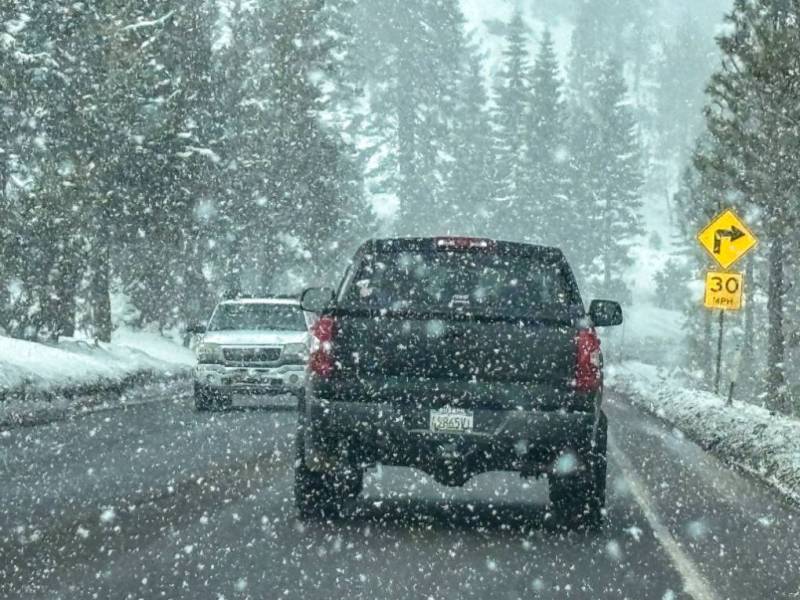
"caption": "A fast-moving storm drops several inches of fresh snow along Highway 50 near Echo Summit on Feb. 8, 2024, in South Lake Tahoe. ",
"credit": "George Rose/Getty Images",
"altTag": "A view of a black truck driving along a snowy road.",
"description": null,
"imgSizes": {
"medium": {
"file": "https://cdn.kqed.org/wp-content/uploads/sites/10/2024/02/GettyImages-2013486739-1020x765-1-800x600.jpg",
"width": 800,
"height": 600,
"mimeType": "image/jpeg"
},
"thumbnail": {
"file": "https://cdn.kqed.org/wp-content/uploads/sites/10/2024/02/GettyImages-2013486739-1020x765-1-160x120.jpg",
"width": 160,
"height": 120,
"mimeType": "image/jpeg"
},
"post-thumbnail": {
"file": "https://cdn.kqed.org/wp-content/uploads/sites/10/2024/02/GettyImages-2013486739-1020x765-1-672x372.jpg",
"width": 672,
"height": 372,
"mimeType": "image/jpeg"
},
"twentyfourteen-full-width": {
"file": "https://cdn.kqed.org/wp-content/uploads/sites/10/2024/02/GettyImages-2013486739-1020x765-1-1020x576.jpg",
"width": 1020,
"height": 576,
"mimeType": "image/jpeg"
},
"kqedFullSize": {
"file": "https://cdn.kqed.org/wp-content/uploads/sites/10/2024/02/GettyImages-2013486739-1020x765-1.jpg",
"width": 1020,
"height": 765
}
},
"fetchFailed": false,
"isLoading": false
},
"news_12051481": {
"type": "attachments",
"id": "news_12051481",
"meta": {
"index": "attachments_1716263798",
"site": "news",
"id": "12051481",
"found": true
},
"title": "Cars drive along the 580 freeway in Oakland on Aug. 8, 2025.",
"publishDate": 1754677890,
"status": "inherit",
"parent": 12051292,
"modified": 1754696299,
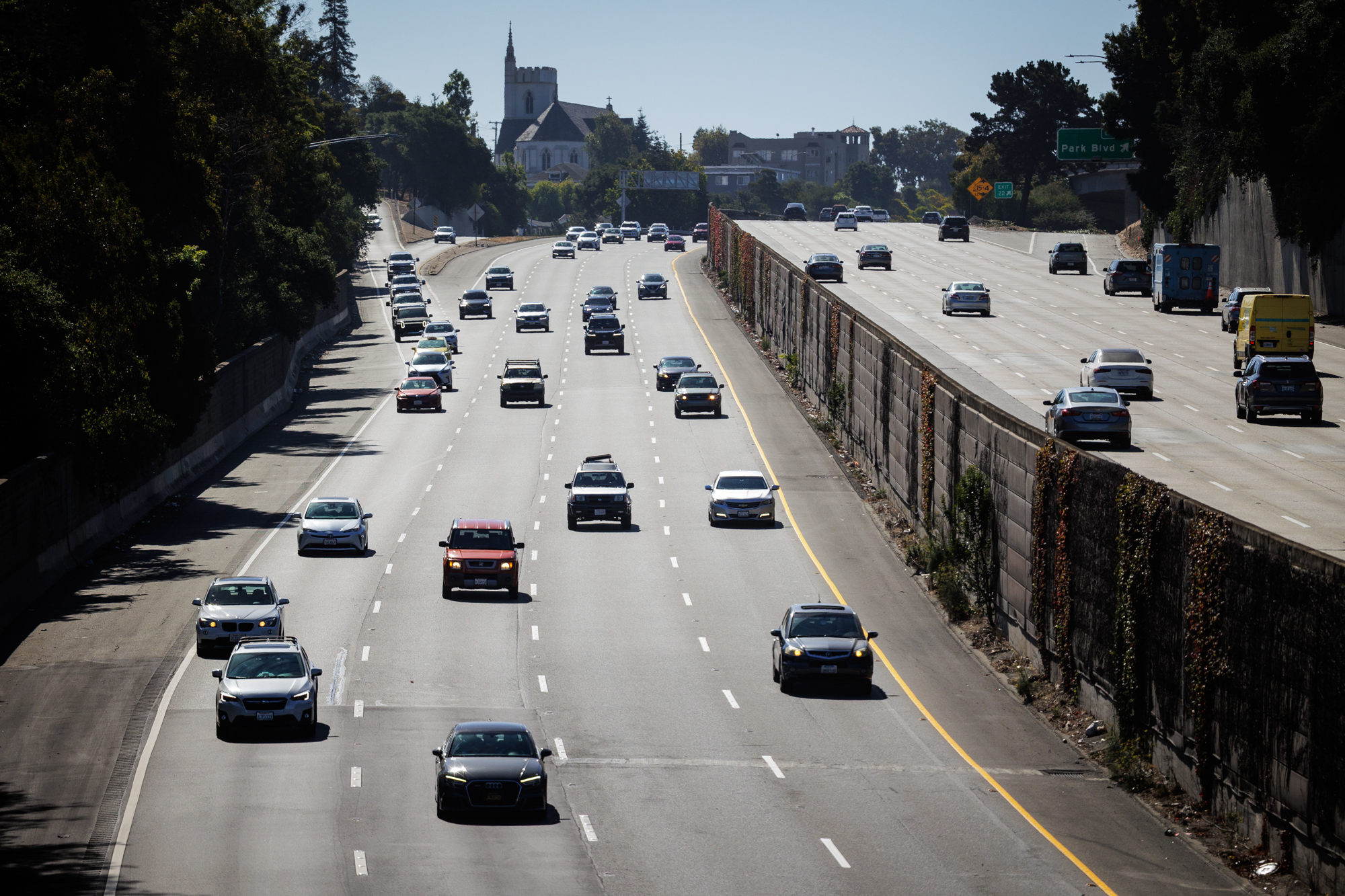
"caption": "Cars drive along the 580 freeway in Oakland on Aug. 8, 2025.",
"credit": "Martin do Nascimento/KQED",
"altTag": null,
"description": null,
"imgSizes": {
"thumbnail": {
"file": "https://cdn.kqed.org/wp-content/uploads/sites/10/2025/08/250808-CASUAL-CARPOOL-MD-03-KQED-160x107.jpg",
"width": 160,
"height": 107,
"mimeType": "image/jpeg"
},
"1536x1536": {
"file": "https://cdn.kqed.org/wp-content/uploads/sites/10/2025/08/250808-CASUAL-CARPOOL-MD-03-KQED-1536x1024.jpg",
"width": 1536,
"height": 1024,
"mimeType": "image/jpeg"
},
"post-thumbnail": {
"file": "https://cdn.kqed.org/wp-content/uploads/sites/10/2025/08/250808-CASUAL-CARPOOL-MD-03-KQED-672x372.jpg",
"width": 672,
"height": 372,
"mimeType": "image/jpeg"
},
"twentyfourteen-full-width": {
"file": "https://cdn.kqed.org/wp-content/uploads/sites/10/2025/08/250808-CASUAL-CARPOOL-MD-03-KQED-1038x576.jpg",
"width": 1038,
"height": 576,
"mimeType": "image/jpeg"
},
"kqedFullSize": {
"file": "https://cdn.kqed.org/wp-content/uploads/sites/10/2025/08/250808-CASUAL-CARPOOL-MD-03-KQED.jpg",
"width": 2000,
"height": 1333
}
},
"fetchFailed": false,
"isLoading": false
},
"news_12039980": {
"type": "attachments",
"id": "news_12039980",
"meta": {
"index": "attachments_1716263798",
"site": "news",
"id": "12039980",
"found": true
},
"title": "250513-GREAT MALL OF MILPITAS-ARCHIVAL-1-KQED",
"publishDate": 1747179409,
"status": "inherit",
"parent": 0,
"modified": 1747251594,
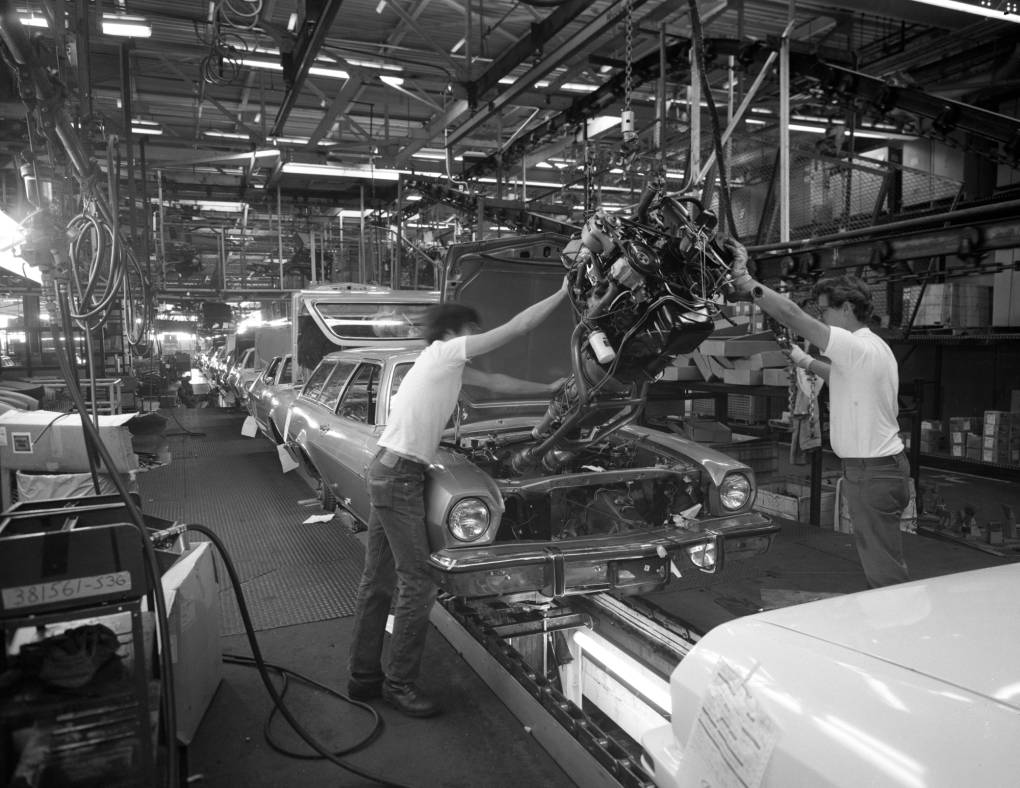
"caption": "Workers on the assembly line at the San Jose Assembly Plant, 1974. ",
"credit": "Courtesy of the Ford Motor Company",
"altTag": null,
"description": null,
"imgSizes": {
"medium": {
"file": "https://cdn.kqed.org/wp-content/uploads/sites/10/2025/05/250513-GREAT-MALL-OF-MILPITAS-ARCHIVAL-1-KQED-800x618.jpg",
"width": 800,
"height": 618,
"mimeType": "image/jpeg"
},
"large": {
"file": "https://cdn.kqed.org/wp-content/uploads/sites/10/2025/05/250513-GREAT-MALL-OF-MILPITAS-ARCHIVAL-1-KQED-1020x788.jpg",
"width": 1020,
"height": 788,
"mimeType": "image/jpeg"
},
"thumbnail": {
"file": "https://cdn.kqed.org/wp-content/uploads/sites/10/2025/05/250513-GREAT-MALL-OF-MILPITAS-ARCHIVAL-1-KQED-160x124.jpg",
"width": 160,
"height": 124,
"mimeType": "image/jpeg"
},
"1536x1536": {
"file": "https://cdn.kqed.org/wp-content/uploads/sites/10/2025/05/250513-GREAT-MALL-OF-MILPITAS-ARCHIVAL-1-KQED-1536x1187.jpg",
"width": 1536,
"height": 1187,
"mimeType": "image/jpeg"
},
"post-thumbnail": {
"file": "https://cdn.kqed.org/wp-content/uploads/sites/10/2025/05/250513-GREAT-MALL-OF-MILPITAS-ARCHIVAL-1-KQED-672x372.jpg",
"width": 672,
"height": 372,
"mimeType": "image/jpeg"
},
"twentyfourteen-full-width": {
"file": "https://cdn.kqed.org/wp-content/uploads/sites/10/2025/05/250513-GREAT-MALL-OF-MILPITAS-ARCHIVAL-1-KQED-1038x576.jpg",
"width": 1038,
"height": 576,
"mimeType": "image/jpeg"
},
"full-width": {
"file": "https://cdn.kqed.org/wp-content/uploads/sites/10/2025/05/250513-GREAT-MALL-OF-MILPITAS-ARCHIVAL-1-KQED-1920x1483.jpg",
"width": 1920,
"height": 1483,
"mimeType": "image/jpeg"
},
"kqedFullSize": {
"file": "https://cdn.kqed.org/wp-content/uploads/sites/10/2025/05/250513-GREAT-MALL-OF-MILPITAS-ARCHIVAL-1-KQED.jpg",
"width": 2000,
"height": 1545
}
},
"fetchFailed": false,
"isLoading": false
},
"news_12038393": {
"type": "attachments",
"id": "news_12038393",
"meta": {
"index": "attachments_1716263798",
"site": "news",
"id": "12038393",
"found": true
},
"title": "October Heat Wave Brings Temperatures Close To Triple Digits Around Los Angeles",
"publishDate": 1746121585,
"status": "inherit",
"parent": 12038392,
"modified": 1746121593,
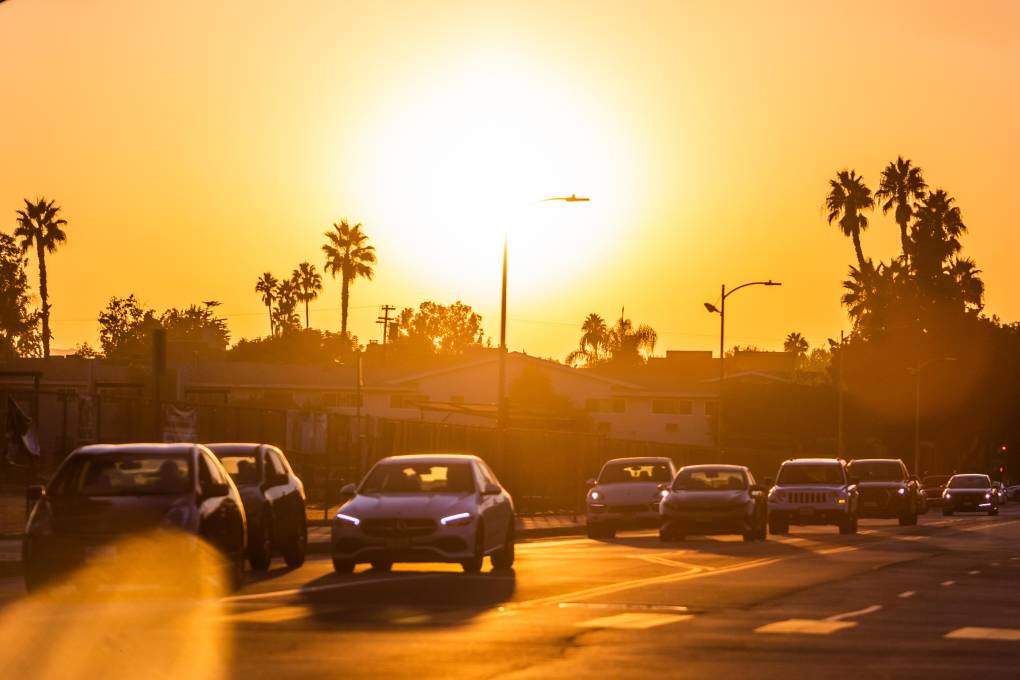
"caption": "Vehicles drive along the 101 Freeway in Los Angeles, Calif., during a heat wave in October 2024. California has ambitious rules requiring automakers to phase out gas-powered vehicles (except for plug-in hybrids), to combat air pollution and climate change. The Trump administration has vowed to overturn California's stringent standards.",
"credit": null,
"altTag": null,
"description": "SHERMAN OAKS, CALIFORNIA - OCTOBER 3: A view shows vehicles passing along the 101 Freeway in Studio City, seen from the Mulholland Drive on October 3, 2024 in Los Angeles, California. A heatwave is continuing to bring temperatures above 100 dreeges and an increased fire threat to Southern California. (Photo by Apu Gomes/Getty Images)",
"imgSizes": {
"medium": {
"file": "https://cdn.kqed.org/wp-content/uploads/sites/10/2025/05/gettyimages-2175702824-800x533.jpeg",
"width": 800,
"height": 533,
"mimeType": "image/jpeg"
},
"large": {
"file": "https://cdn.kqed.org/wp-content/uploads/sites/10/2025/05/gettyimages-2175702824-1020x680.jpeg",
"width": 1020,
"height": 680,
"mimeType": "image/jpeg"
},
"thumbnail": {
"file": "https://cdn.kqed.org/wp-content/uploads/sites/10/2025/05/gettyimages-2175702824-160x107.jpeg",
"width": 160,
"height": 107,
"mimeType": "image/jpeg"
},
"1536x1536": {
"file": "https://cdn.kqed.org/wp-content/uploads/sites/10/2025/05/gettyimages-2175702824-1536x1024.jpeg",
"width": 1536,
"height": 1024,
"mimeType": "image/jpeg"
},
"2048x2048": {
"file": "https://cdn.kqed.org/wp-content/uploads/sites/10/2025/05/gettyimages-2175702824-2048x1365.jpeg",
"width": 2048,
"height": 1365,
"mimeType": "image/jpeg"
},
"post-thumbnail": {
"file": "https://cdn.kqed.org/wp-content/uploads/sites/10/2025/05/gettyimages-2175702824-672x372.jpeg",
"width": 672,
"height": 372,
"mimeType": "image/jpeg"
},
"twentyfourteen-full-width": {
"file": "https://cdn.kqed.org/wp-content/uploads/sites/10/2025/05/gettyimages-2175702824-1038x576.jpeg",
"width": 1038,
"height": 576,
"mimeType": "image/jpeg"
},
"full-width": {
"file": "https://cdn.kqed.org/wp-content/uploads/sites/10/2025/05/gettyimages-2175702824-1920x1280.jpeg",
"width": 1920,
"height": 1280,
"mimeType": "image/jpeg"
},
"kqedFullSize": {
"file": "https://cdn.kqed.org/wp-content/uploads/sites/10/2025/05/gettyimages-2175702824-scaled.jpeg",
"width": 2560,
"height": 1707
}
},
"fetchFailed": false,
"isLoading": false
},
"news_12005911": {
"type": "attachments",
"id": "news_12005911",
"meta": {
"index": "attachments_1716263798",
"site": "news",
"id": "12005911",
"found": true
},
"title": "022523_Roeding-Highway99-Parkway-LV_CM_23",
"publishDate": 1727111871,
"status": "inherit",
"parent": 12005909,
"modified": 1727112020,
"caption": "Traffic traveling down Highway 99 near Parkway Drive in Fresno on Feb. 25, 2023. The newly appointed committee wants to give money to the City of Fresno for a pedestrian bridge that would cross Highway 99 and connect Parkway Drive and Roeding Park. ",
"credit": "Larry Valenzuela, CalMatters/CatchLight Local",
"altTag": "Cars drive on a highway.",
"description": null,
"imgSizes": {
"medium": {
"file": "https://cdn.kqed.org/wp-content/uploads/sites/10/2024/09/022523_Roeding-Highway99-Parkway-LV_CM_23-800x533.jpg",
"width": 800,
"height": 533,
"mimeType": "image/jpeg"
},
"large": {
"file": "https://cdn.kqed.org/wp-content/uploads/sites/10/2024/09/022523_Roeding-Highway99-Parkway-LV_CM_23-1020x680.jpg",
"width": 1020,
"height": 680,
"mimeType": "image/jpeg"
},
"thumbnail": {
"file": "https://cdn.kqed.org/wp-content/uploads/sites/10/2024/09/022523_Roeding-Highway99-Parkway-LV_CM_23-160x107.jpg",
"width": 160,
"height": 107,
"mimeType": "image/jpeg"
},
"1536x1536": {
"file": "https://cdn.kqed.org/wp-content/uploads/sites/10/2024/09/022523_Roeding-Highway99-Parkway-LV_CM_23-1536x1024.jpg",
"width": 1536,
"height": 1024,
"mimeType": "image/jpeg"
},
"post-thumbnail": {
"file": "https://cdn.kqed.org/wp-content/uploads/sites/10/2024/09/022523_Roeding-Highway99-Parkway-LV_CM_23-672x372.jpg",
"width": 672,
"height": 372,
"mimeType": "image/jpeg"
},
"twentyfourteen-full-width": {
"file": "https://cdn.kqed.org/wp-content/uploads/sites/10/2024/09/022523_Roeding-Highway99-Parkway-LV_CM_23-1038x576.jpg",
"width": 1038,
"height": 576,
"mimeType": "image/jpeg"
},
"full-width": {
"file": "https://cdn.kqed.org/wp-content/uploads/sites/10/2024/09/022523_Roeding-Highway99-Parkway-LV_CM_23-1920x1280.jpg",
"width": 1920,
"height": 1280,
"mimeType": "image/jpeg"
},
"kqedFullSize": {
"file": "https://cdn.kqed.org/wp-content/uploads/sites/10/2024/09/022523_Roeding-Highway99-Parkway-LV_CM_23.jpg",
"width": 2000,
"height": 1333
}
},
"fetchFailed": false,
"isLoading": false
},
"news_11980049": {
"type": "attachments",
"id": "news_11980049",
"meta": {
"index": "attachments_1716263798",
"site": "news",
"id": "11980049",
"found": true
},
"parent": 11980045,
"imgSizes": {
"twentyfourteen-full-width": {
"file": "https://cdn.kqed.org/wp-content/uploads/sites/10/2024/03/GettyImages-1715481411-1024x576.jpg",
"width": 1024,
"mimeType": "image/jpeg",
"height": 576
},
"thumbnail": {
"file": "https://cdn.kqed.org/wp-content/uploads/sites/10/2024/03/GettyImages-1715481411-160x107.jpg",
"width": 160,
"mimeType": "image/jpeg",
"height": 107
},
"post-thumbnail": {
"file": "https://cdn.kqed.org/wp-content/uploads/sites/10/2024/03/GettyImages-1715481411-672x372.jpg",
"width": 672,
"mimeType": "image/jpeg",
"height": 372
},
"kqedFullSize": {
"file": "https://cdn.kqed.org/wp-content/uploads/sites/10/2024/03/GettyImages-1715481411.jpg",
"width": 1024,
"height": 683
},
"large": {
"file": "https://cdn.kqed.org/wp-content/uploads/sites/10/2024/03/GettyImages-1715481411-1020x680.jpg",
"width": 1020,
"mimeType": "image/jpeg",
"height": 680
},
"medium": {
"file": "https://cdn.kqed.org/wp-content/uploads/sites/10/2024/03/GettyImages-1715481411-800x534.jpg",
"width": 800,
"mimeType": "image/jpeg",
"height": 534
}
},
"publishDate": 1710891865,
"modified": 1710891961,
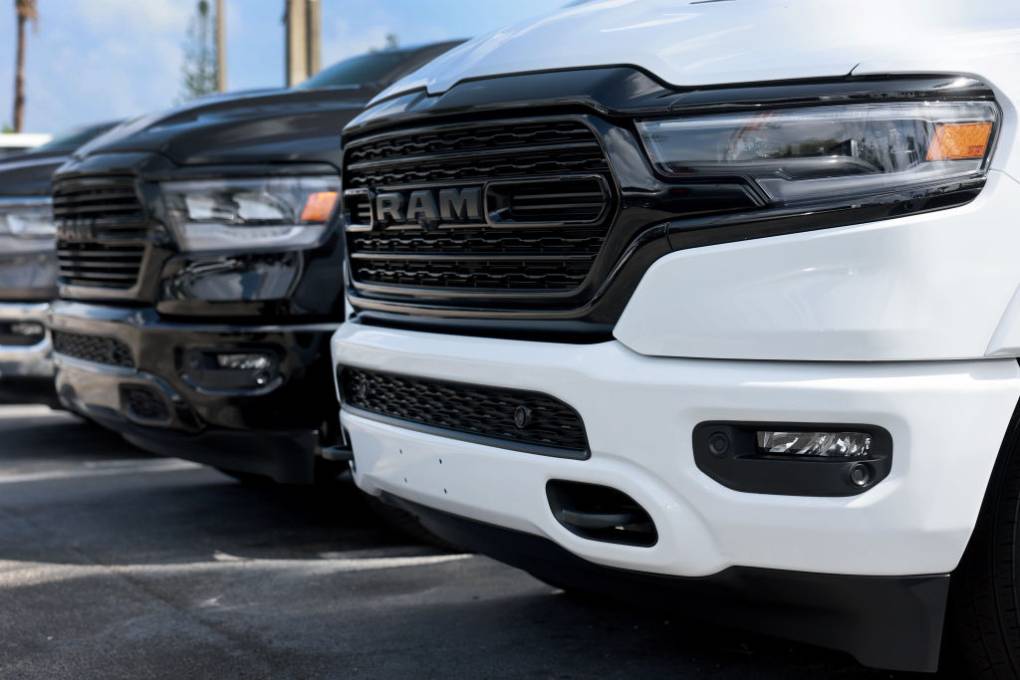
"caption": "New Ram vehicles sit on a Dodge Chrysler-Jeep Ram dealership's lot on Oct. 3, 2023 in Miami, Florida.",
"description": null,
"title": "U.S. Auto Sales Continue To Rise Despite UAW Strike And Higher Interest Rates",
"credit": "Joe Raedle/Getty Images",
"status": "inherit",
"altTag": null,
"fetchFailed": false,
"isLoading": false
},
"news_11974849": {
"type": "attachments",
"id": "news_11974849",
"meta": {
"index": "attachments_1716263798",
"site": "news",
"id": "11974849",
"found": true
},
"parent": 11974827,
"imgSizes": {
"twentyfourteen-full-width": {
"file": "https://cdn.kqed.org/wp-content/uploads/sites/10/2024/02/GettyImages-498439801-1024x576.jpg",
"width": 1024,
"mimeType": "image/jpeg",
"height": 576
},
"thumbnail": {
"file": "https://cdn.kqed.org/wp-content/uploads/sites/10/2024/02/GettyImages-498439801-160x107.jpg",
"width": 160,
"mimeType": "image/jpeg",
"height": 107
},
"post-thumbnail": {
"file": "https://cdn.kqed.org/wp-content/uploads/sites/10/2024/02/GettyImages-498439801-672x372.jpg",
"width": 672,
"mimeType": "image/jpeg",
"height": 372
},
"kqedFullSize": {
"file": "https://cdn.kqed.org/wp-content/uploads/sites/10/2024/02/GettyImages-498439801.jpg",
"width": 1024,
"height": 683
},
"large": {
"file": "https://cdn.kqed.org/wp-content/uploads/sites/10/2024/02/GettyImages-498439801-1020x680.jpg",
"width": 1020,
"mimeType": "image/jpeg",
"height": 680
},
"medium": {
"file": "https://cdn.kqed.org/wp-content/uploads/sites/10/2024/02/GettyImages-498439801-800x534.jpg",
"width": 800,
"mimeType": "image/jpeg",
"height": 534
}
},
"publishDate": 1707248747,
"modified": 1707264530,
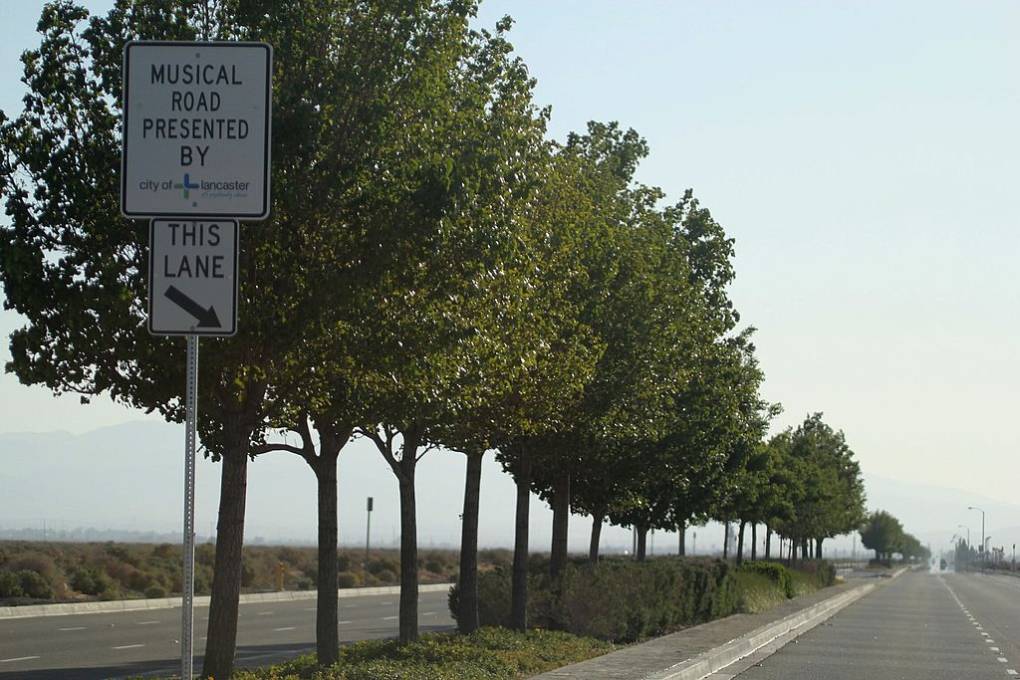
"caption": "Located on West Avenue in Lancaster, the musical road is one of only three such attractions in the world; the other two being in Japan and Korea. Driven at 50 mph, you hear part of \"William Tell Overture.\" ",
"description": null,
"title": "Roadside Attractions",
"credit": "Lynne Gilbert via Moment Mobile/Getty Images",
"status": "inherit",
"altTag": "A stretch of road with trees lined up on one side and a sign that reads \"Musical Road Presented by city of Lancaster.\"",
"fetchFailed": false,
"isLoading": false
},
"news_11972274": {
"type": "attachments",
"id": "news_11972274",
"meta": {
"index": "attachments_1716263798",
"site": "news",
"id": "11972274",
"found": true
},
"parent": 11972271,
"imgSizes": {
"twentyfourteen-full-width": {
"file": "https://cdn.kqed.org/wp-content/uploads/sites/10/2024/01/AP24010688739461-1038x576.jpg",
"width": 1038,
"mimeType": "image/jpeg",
"height": 576
},
"thumbnail": {
"file": "https://cdn.kqed.org/wp-content/uploads/sites/10/2024/01/AP24010688739461-160x107.jpg",
"width": 160,
"mimeType": "image/jpeg",
"height": 107
},
"post-thumbnail": {
"file": "https://cdn.kqed.org/wp-content/uploads/sites/10/2024/01/AP24010688739461-672x372.jpg",
"width": 672,
"mimeType": "image/jpeg",
"height": 372
},
"kqedFullSize": {
"file": "https://cdn.kqed.org/wp-content/uploads/sites/10/2024/01/AP24010688739461-scaled.jpg",
"width": 2560,
"height": 1708
},
"2048x2048": {
"file": "https://cdn.kqed.org/wp-content/uploads/sites/10/2024/01/AP24010688739461-2048x1366.jpg",
"width": 2048,
"mimeType": "image/jpeg",
"height": 1366
},
"large": {
"file": "https://cdn.kqed.org/wp-content/uploads/sites/10/2024/01/AP24010688739461-1020x680.jpg",
"width": 1020,
"mimeType": "image/jpeg",
"height": 680
},
"1536x1536": {
"file": "https://cdn.kqed.org/wp-content/uploads/sites/10/2024/01/AP24010688739461-1536x1025.jpg",
"width": 1536,
"mimeType": "image/jpeg",
"height": 1025
},
"full-width": {
"file": "https://cdn.kqed.org/wp-content/uploads/sites/10/2024/01/AP24010688739461-1920x1281.jpg",
"width": 1920,
"mimeType": "image/jpeg",
"height": 1281
},
"medium": {
"file": "https://cdn.kqed.org/wp-content/uploads/sites/10/2024/01/AP24010688739461-800x534.jpg",
"width": 800,
"mimeType": "image/jpeg",
"height": 534
}
},
"publishDate": 1704931940,
"modified": 1704935365,
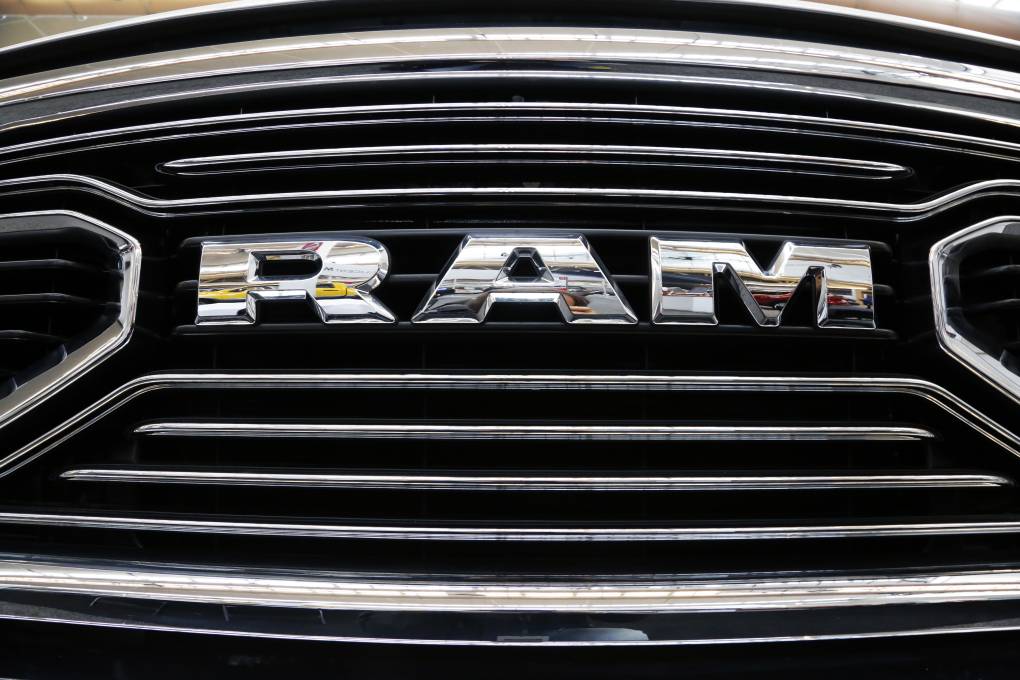
"caption": "This grill of a Ram truck is on display at the Pittsburgh Auto Show on Feb. 15, 2018. The Department of Justice released new details of a settlement with engine manufacturer Cummins Inc. on Wednesday, Jan. 10, 2024, that includes a mandatory recall of 600,000 Ram trucks and that the company remedy environmental damage it caused when it illegally installed emissions control software in several thousand vehicles, skirting emissions testing. ",
"description": null,
"title": "Ram Truck Recall",
"credit": "Gene J. Puskar/The Associated Press",
"status": "inherit",
"altTag": "A close-up image of the grill of a Ram truck.",
"fetchFailed": false,
"isLoading": false
},
"news_11931292": {
"type": "attachments",
"id": "news_11931292",
"meta": {
"index": "attachments_1716263798",
"site": "news",
"id": "11931292",
"found": true
},
"parent": 11931287,
"imgSizes": {
"twentyfourteen-full-width": {
"file": "https://ww2.kqed.org/app/uploads/sites/10/2022/11/GettyImages-174798960-1038x576.jpg",
"width": 1038,
"mimeType": "image/jpeg",
"height": 576
},
"thumbnail": {
"file": "https://ww2.kqed.org/app/uploads/sites/10/2022/11/GettyImages-174798960-160x107.jpg",
"width": 160,
"mimeType": "image/jpeg",
"height": 107
},
"post-thumbnail": {
"file": "https://ww2.kqed.org/app/uploads/sites/10/2022/11/GettyImages-174798960-672x372.jpg",
"width": 672,
"mimeType": "image/jpeg",
"height": 372
},
"kqedFullSize": {
"file": "https://ww2.kqed.org/app/uploads/sites/10/2022/11/GettyImages-174798960.jpg",
"width": 2121,
"height": 1414
},
"2048x2048": {
"file": "https://ww2.kqed.org/app/uploads/sites/10/2022/11/GettyImages-174798960-2048x1365.jpg",
"width": 2048,
"mimeType": "image/jpeg",
"height": 1365
},
"large": {
"file": "https://ww2.kqed.org/app/uploads/sites/10/2022/11/GettyImages-174798960-1020x680.jpg",
"width": 1020,
"mimeType": "image/jpeg",
"height": 680
},
"1536x1536": {
"file": "https://ww2.kqed.org/app/uploads/sites/10/2022/11/GettyImages-174798960-1536x1024.jpg",
"width": 1536,
"mimeType": "image/jpeg",
"height": 1024
},
"full-width": {
"file": "https://ww2.kqed.org/app/uploads/sites/10/2022/11/GettyImages-174798960-1920x1280.jpg",
"width": 1920,
"mimeType": "image/jpeg",
"height": 1280
},
"medium": {
"file": "https://ww2.kqed.org/app/uploads/sites/10/2022/11/GettyImages-174798960-800x533.jpg",
"width": 800,
"mimeType": "image/jpeg",
"height": 533
}
},
"publishDate": 1667696163,
"modified": 1667696395,
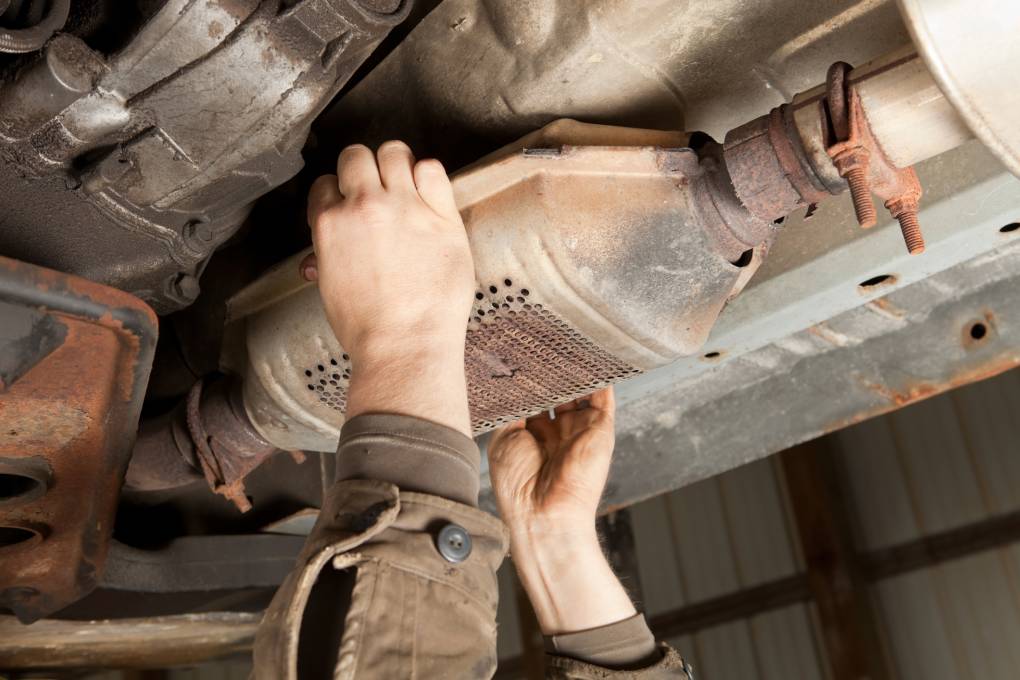
"caption": "Catalytic converters reduce pollutants by oxidizing carbon monoxide and hydrocarbons, and they contain precious metals like platinum or palladium which makes them a target for theft.",
"description": null,
"title": "Catalytic Converter Removal at a Salvage Yard",
"credit": "BanksPhotos/Getty Images",
"status": "inherit",
"altTag": "A pair of hands removing a catalytic converter.",
"fetchFailed": false,
"isLoading": false
}
},
"audioPlayerReducer": {
"postId": "stream_live",
"isPaused": true,
"isPlaying": false,
"pfsActive": false,
"pledgeModalIsOpen": true,
"playerDrawerIsOpen": false
},
"authorsReducer": {
"byline_news_12038392": {
"type": "authors",
"id": "byline_news_12038392",
"meta": {
"override": true
},
"slug": "byline_news_12038392",
"name": "Camila Domonoske, NPR",
"isLoading": false
},
"byline_news_12005909": {
"type": "authors",
"id": "byline_news_12005909",
"meta": {
"override": true
},
"slug": "byline_news_12005909",
"name": "\u003ca href=\"https://calmatters.org/author/ryan-sabalow\">Ryan Sabalow, \u003c/a>CalMatters",
"isLoading": false
},
"byline_news_11980045": {
"type": "authors",
"id": "byline_news_11980045",
"meta": {
"override": true
},
"slug": "byline_news_11980045",
"name": "Sophie Austin\u003cbr>Associated Press",
"isLoading": false
},
"byline_news_11974827": {
"type": "authors",
"id": "byline_news_11974827",
"meta": {
"override": true
},
"slug": "byline_news_11974827",
"name": "Clare Wiley",
"isLoading": false
},
"byline_news_11972271": {
"type": "authors",
"id": "byline_news_11972271",
"meta": {
"override": true
},
"slug": "byline_news_11972271",
"name": "Alexa St. John and Tom Krisher\u003cbr>The Associated Press",
"isLoading": false
},
"byline_news_11931287": {
"type": "authors",
"id": "byline_news_11931287",
"meta": {
"override": true
},
"slug": "byline_news_11931287",
"name": "\u003ca href=\"https://www.npr.org/people/348743421/becky-sullivan\">Becky Sullivan\u003c/a>",
"isLoading": false
},
"danbrekke": {
"type": "authors",
"id": "222",
"meta": {
"index": "authors_1716337520",
"id": "222",
"found": true
},
"name": "Dan Brekke",
"firstName": "Dan",
"lastName": "Brekke",
"slug": "danbrekke",
"email": "dbrekke@kqed.org",
"display_author_email": true,
"staff_mastheads": [
"news",
"science"
],
"title": "KQED Editor and Reporter",
"bio": "Dan Brekke is a reporter and editor for KQED News, responsible for coverage of topics ranging from California water issues to the Bay Area's transportation challenges. In a newsroom career that began in Chicago in 1972, Dan has worked for \u003cem>The San Francisco Examiner,\u003c/em> Wired and TechTV and has been published in The New York Times, The New York Times Magazine, Business 2.0, Salon and elsewhere.\r\n\r\nSince joining KQED in 2007, Dan has reported, edited and produced both radio and online features and breaking news pieces. He has shared as both editor and reporter in four Society of Professional Journalists Norcal Excellence in Journalism awards and one Edward R. Murrow regional award. He was chosen for a spring 2017 residency at the Mesa Refuge to advance his research on California salmon.\r\n\r\nEmail Dan at: \u003ca href=\"mailto:dbrekke@kqed.org\">dbrekke@kqed.org\u003c/a>\r\n\r\n\u003cstrong>Twitter:\u003c/strong> \u003ca href=\"https://twitter.com/danbrekke\" rel=\"noopener noreferrer\">twitter.com/danbrekke\u003c/a>\r\n\u003cstrong>Facebook:\u003c/strong> \u003ca href=\"https://www.facebook.com/danbrekke\" rel=\"noopener noreferrer\">www.facebook.com/danbrekke\u003c/a>\r\n\u003cstrong>LinkedIn:\u003c/strong> \u003ca href=\"https://www.linkedin.com/in/danbrekke\" rel=\"noopener noreferrer\">www.linkedin.com/in/danbrekke\u003c/a>",
"avatar": "https://secure.gravatar.com/avatar/c8126230345efca3f7aa89b1a402be45?s=600&d=mm&r=g",
"twitter": "danbrekke",
"facebook": null,
"instagram": "https://www.instagram.com/dan.brekke/",
"linkedin": "https://www.linkedin.com/in/danbrekke/",
"sites": [
{
"site": "news",
"roles": [
"administrator",
"create_posts"
]
},
{
"site": "stateofhealth",
"roles": [
"editor"
]
},
{
"site": "science",
"roles": [
"editor"
]
},
{
"site": "quest",
"roles": [
"contributor"
]
},
{
"site": "food",
"roles": [
"contributor"
]
},
{
"site": "forum",
"roles": [
"contributor"
]
},
{
"site": "liveblog",
"roles": [
"editor"
]
}
],
"headData": {
"title": "Dan Brekke | KQED",
"description": "KQED Editor and Reporter",
"ogImgSrc": "https://secure.gravatar.com/avatar/c8126230345efca3f7aa89b1a402be45?s=600&d=mm&r=g",
"twImgSrc": "https://secure.gravatar.com/avatar/c8126230345efca3f7aa89b1a402be45?s=600&d=mm&r=g"
},
"isLoading": false,
"link": "/author/danbrekke"
},
"carlysevern": {
"type": "authors",
"id": "3243",
"meta": {
"index": "authors_1716337520",
"id": "3243",
"found": true
},
"name": "Carly Severn",
"firstName": "Carly",
"lastName": "Severn",
"slug": "carlysevern",
"email": "csevern@kqed.org",
"display_author_email": false,
"staff_mastheads": [
"news"
],
"title": "Senior Editor, Audience News ",
"bio": "Carly is KQED's Senior Editor of Audience News on the Digital News team, and has reported for the California Report Magazine, Bay Curious and KQED Arts. She's formerly the host of \u003ca href=\"http://ww2.kqed.org/pop/category/the-cooler/\" rel=\"noopener noreferrer\">The Cooler\u003c/a> podcast.",
"avatar": "https://secure.gravatar.com/avatar/2d8d6765f186e64c798cf7f0c8088a41?s=600&d=blank&r=g",
"twitter": "teacupinthebay",
"facebook": null,
"instagram": null,
"linkedin": null,
"sites": [
{
"site": "",
"roles": [
"editor"
]
},
{
"site": "arts",
"roles": [
"editor"
]
},
{
"site": "news",
"roles": [
"administrator"
]
},
{
"site": "pop",
"roles": [
"editor"
]
},
{
"site": "futureofyou",
"roles": [
"editor"
]
},
{
"site": "about",
"roles": [
"administrator"
]
},
{
"site": "mindshift",
"roles": [
"editor"
]
},
{
"site": "bayareabites",
"roles": [
"editor"
]
},
{
"site": "stateofhealth",
"roles": [
"editor"
]
},
{
"site": "science",
"roles": [
"editor"
]
},
{
"site": "food",
"roles": [
"contributor"
]
},
{
"site": "forum",
"roles": [
"editor"
]
},
{
"site": "perspectives",
"roles": [
"administrator"
]
},
{
"site": "liveblog",
"roles": [
"editor"
]
}
],
"headData": {
"title": "Carly Severn | KQED",
"description": "Senior Editor, Audience News ",
"ogImgSrc": "https://secure.gravatar.com/avatar/2d8d6765f186e64c798cf7f0c8088a41?s=600&d=blank&r=g",
"twImgSrc": "https://secure.gravatar.com/avatar/2d8d6765f186e64c798cf7f0c8088a41?s=600&d=blank&r=g"
},
"isLoading": false,
"link": "/author/carlysevern"
},
"ecruzguevarra": {
"type": "authors",
"id": "8654",
"meta": {
"index": "authors_1716337520",
"id": "8654",
"found": true
},
"name": "Ericka Cruz Guevarra",
"firstName": "Ericka",
"lastName": "Cruz Guevarra",
"slug": "ecruzguevarra",
"email": "ecruzguevarra@kqed.org",
"display_author_email": true,
"staff_mastheads": [
"news"
],
"title": "Producer, The Bay Podcast",
"bio": "Ericka Cruz Guevarra is host of \u003ca href=\"https://www.kqed.org/podcasts/thebay\">\u003cem>The Bay\u003c/em>\u003c/a> podcast at KQED. Before host, she was the show’s producer. Her work in that capacity includes a three-part reported series on policing in Vallejo, which won a 2020 excellence in journalism award from the Society of Professional Journalists. Ericka has worked as a breaking news reporter at Oregon Public Broadcasting, helped produce the Code Switch podcast, and was KQED’s inaugural Raul Ramirez Diversity Fund intern. She’s also an alumna of NPR’s Next Generation Radio program. Send her an email if you have strong feelings about whether Fairfield and Suisun City are the Bay. Ericka is represented by SAG-AFTRA.",
"avatar": "https://secure.gravatar.com/avatar/25e5ab8d3d53fad2dcc7bb2b5c506b1a?s=600&d=blank&r=g",
"twitter": "NotoriousECG",
"facebook": null,
"instagram": null,
"linkedin": null,
"sites": [
{
"site": "arts",
"roles": [
"subscriber"
]
},
{
"site": "news",
"roles": [
"editor",
"manage_categories"
]
},
{
"site": "futureofyou",
"roles": [
"subscriber"
]
},
{
"site": "stateofhealth",
"roles": [
"subscriber"
]
},
{
"site": "science",
"roles": [
"editor"
]
},
{
"site": "forum",
"roles": [
"subscriber"
]
}
],
"headData": {
"title": "Ericka Cruz Guevarra | KQED",
"description": "Producer, The Bay Podcast",
"ogImgSrc": "https://secure.gravatar.com/avatar/25e5ab8d3d53fad2dcc7bb2b5c506b1a?s=600&d=blank&r=g",
"twImgSrc": "https://secure.gravatar.com/avatar/25e5ab8d3d53fad2dcc7bb2b5c506b1a?s=600&d=blank&r=g"
},
"isLoading": false,
"link": "/author/ecruzguevarra"
},
"amontecillo": {
"type": "authors",
"id": "11649",
"meta": {
"index": "authors_1716337520",
"id": "11649",
"found": true
},
"name": "Alan Montecillo",
"firstName": "Alan",
"lastName": "Montecillo",
"slug": "amontecillo",
"email": "amontecillo@kqed.org",
"display_author_email": false,
"staff_mastheads": [
"news"
],
"title": "KQED Contributor",
"bio": "Alan Montecillo is the senior editor of \u003cem>\u003ca href=\"http://kqed.org/thebay\">The Bay\u003c/a>, \u003c/em> KQED's local news podcast. Before moving to the Bay Area, he worked as a senior talk show producer for WILL in Champaign-Urbana, Illinois and at Oregon Public Broadcasting in Portland, Oregon. He has won journalism awards from the Society of Professional Journalists Northern California, the Public Media Journalists Association, The Signal Awards, and has also received a regional Edward R. Murrow award. Alan is a Filipino American from Hong Kong and a graduate of Reed College.",
"avatar": "https://secure.gravatar.com/avatar/d5e4e7a76481969ccba76f4e2b5ccabc?s=600&d=blank&r=g",
"twitter": "alanmontecillo",
"facebook": null,
"instagram": null,
"linkedin": null,
"sites": [
{
"site": "",
"roles": [
"editor"
]
},
{
"site": "news",
"roles": [
"editor",
"manage_categories"
]
}
],
"headData": {
"title": "Alan Montecillo | KQED",
"description": "KQED Contributor",
"ogImgSrc": "https://secure.gravatar.com/avatar/d5e4e7a76481969ccba76f4e2b5ccabc?s=600&d=blank&r=g",
"twImgSrc": "https://secure.gravatar.com/avatar/d5e4e7a76481969ccba76f4e2b5ccabc?s=600&d=blank&r=g"
},
"isLoading": false,
"link": "/author/amontecillo"
},
"jessicakariisa": {
"type": "authors",
"id": "11831",
"meta": {
"index": "authors_1716337520",
"id": "11831",
"found": true
},
"name": "Jessica Kariisa",
"firstName": "Jessica",
"lastName": "Kariisa",
"slug": "jessicakariisa",
"email": "jkariisa@kqed.org",
"display_author_email": false,
"staff_mastheads": [
"news"
],
"title": "Producer, The Bay",
"bio": "Jessica Kariisa is the producer of The Bay. She first joined KQED as an intern for The California Report Magazine, after which she became an on-call producer. She reported a Bay Curious episode on the use of rap lyrics in criminal trials which won a Society of Professional Journalists award in 2023 for Excellence in Features Journalism and the 2023 Signal Award for Best Conversation Starter. She’s worked on podcasts for Snap Judgment and American Public Media. Before embarking on her audio career, she was a music journalist.\r\n\r\nJessica Kariisa is represented by SAG-AFTRA.",
"avatar": "https://secure.gravatar.com/avatar/4afd355fd24f5515aeab77fd6c72b671?s=600&d=blank&r=g",
"twitter": null,
"facebook": null,
"instagram": null,
"linkedin": null,
"sites": [
{
"site": "arts",
"roles": [
"author"
]
},
{
"site": "news",
"roles": [
"editor",
"manage_categories"
]
}
],
"headData": {
"title": "Jessica Kariisa | KQED",
"description": "Producer, The Bay",
"ogImgSrc": "https://secure.gravatar.com/avatar/4afd355fd24f5515aeab77fd6c72b671?s=600&d=blank&r=g",
"twImgSrc": "https://secure.gravatar.com/avatar/4afd355fd24f5515aeab77fd6c72b671?s=600&d=blank&r=g"
},
"isLoading": false,
"link": "/author/jessicakariisa"
},
"gglueck": {
"type": "authors",
"id": "11946",
"meta": {
"index": "authors_1716337520",
"id": "11946",
"found": true
},
"name": "Gabriela Glueck",
"firstName": "Gabriela",
"lastName": "Glueck",
"slug": "gglueck",
"email": "gglueck@kqed.org",
"display_author_email": false,
"staff_mastheads": [
"news"
],
"title": "KQED Contributor",
"bio": null,
"avatar": "https://secure.gravatar.com/avatar/097b777fe1ad90e753bb1882b1ae01f3?s=600&d=blank&r=g",
"twitter": null,
"facebook": null,
"instagram": null,
"linkedin": null,
"sites": [
{
"site": "news",
"roles": [
"editor"
]
}
],
"headData": {
"title": "Gabriela Glueck | KQED",
"description": "KQED Contributor",
"ogImgSrc": "https://secure.gravatar.com/avatar/097b777fe1ad90e753bb1882b1ae01f3?s=600&d=blank&r=g",
"twImgSrc": "https://secure.gravatar.com/avatar/097b777fe1ad90e753bb1882b1ae01f3?s=600&d=blank&r=g"
},
"isLoading": false,
"link": "/author/gglueck"
},
"sarahwright": {
"type": "authors",
"id": "11956",
"meta": {
"index": "authors_1716337520",
"id": "11956",
"found": true
},
"name": "Sarah Wright",
"firstName": "Sarah",
"lastName": "Wright",
"slug": "sarahwright",
"email": "swright@kqed.org",
"display_author_email": true,
"staff_mastheads": [],
"title": "Outdoors Engagement Reporter",
"bio": "Sarah Wright is KQED's Outdoors Engagement Reporter. Originally from Lake Tahoe, she completed a thru-hike of the Pacific Crest Trail in 2019 and was a U.S. Fulbright Program grantee to Argentina in 2023. Her journalism has appeared in The Guardian, The San Francisco Standard, The Palo Alto Weekly and the Half Moon Bay Review.",
"avatar": "https://secure.gravatar.com/avatar/585b7a53f459b86d1d3ca1561541ab4b?s=600&d=blank&r=g",
"twitter": null,
"bluesky": null,
"facebook": null,
"instagram": null,
"linkedin": null,
"sites": [
{
"site": "arts",
"roles": [
"editor"
]
},
{
"site": "news",
"roles": [
"editor"
]
},
{
"site": "science",
"roles": [
"contributor",
"author"
]
},
{
"site": "forum",
"roles": [
"editor"
]
}
],
"headData": {
"title": "Sarah Wright | KQED",
"description": "Outdoors Engagement Reporter",
"ogImgSrc": "https://secure.gravatar.com/avatar/585b7a53f459b86d1d3ca1561541ab4b?s=600&d=blank&r=g",
"twImgSrc": "https://secure.gravatar.com/avatar/585b7a53f459b86d1d3ca1561541ab4b?s=600&d=blank&r=g"
},
"isLoading": false,
"link": "/author/sarahwright"
}
},
"breakingNewsReducer": {},
"pagesReducer": {},
"postsReducer": {
"stream_live": {
"type": "live",
"id": "stream_live",
"audioUrl": "https://streams.kqed.org/kqedradio",
"title": "Live Stream",
"excerpt": "Live Stream information currently unavailable.",
"link": "/radio",
"featImg": "",
"label": {
"name": "KQED Live",
"link": "/"
}
},
"stream_kqedNewscast": {
"type": "posts",
"id": "stream_kqedNewscast",
"audioUrl": "https://www.kqed.org/.stream/anon/radio/RDnews/newscast.mp3?_=1",
"title": "KQED Newscast",
"featImg": "",
"label": {
"name": "88.5 FM",
"link": "/"
}
},
"news_11937204": {
"type": "posts",
"id": "news_11937204",
"meta": {
"index": "posts_1716263798",
"site": "news",
"id": "11937204",
"score": null,
"sort": [
1766431596000
]
},
"guestAuthors": [],
"slug": "lake-tahoe-weather-forecast-road-conditions-snow-chains",
"title": "Lake Tahoe Travel: Weather, Road Conditions & Snow Chain Rules",
"publishDate": 1766431596,
"format": "image",
"headTitle": "Lake Tahoe Travel: Weather, Road Conditions & Snow Chain Rules | KQED",
"labelTerm": {
"site": "news"
},
"content": "\u003cp>The \u003ca href=\"https://www.kqed.org/news/tag/lake-tahoe\">Lake Tahoe\u003c/a> region is one of the most beautiful places on earth, especially in winter. It’s no wonder that so many of us in the Bay Area want to drive up there at this time of year.\u003c/p>\n\u003cp>But if you are planning on heading up to Tahoe this week or next to enjoy the snow, it’s important to stay up-to-date with the weather, as the National Weather Service issued a \u003ca href=\"https://forecast.weather.gov/showsigwx.php?warnzone=CAZ072&warncounty=CAC017&firewxzone=CAZ272&local_place1=South%20Lake%20Tahoe%20CA&product1=Winter+Storm+Watch&lat=38.9481&lon=-119.968\">winter storm watch\u003c/a> expected to last through Friday morning that could affect your travel plans.\u003c/p>\n\u003cp>The National Weather Service’s Sacramento office says that areas at and above 8,000 feet — including at Donner Summit near the Donner Pass area of I-80 — up to 10 inches of snow could accumulate on Monday alone. The NWS is also forecasting gusts of ridgetop wind up to 100 miles per hour and 1 to 2 feet of snow accumulation at lake level and 2 to 4 feet at high elevations by Friday morning.\u003c/p>\n\u003cp>[ad fullwidth]\u003c/p>\n\u003cp>Most importantly, the NWS is warning that now through Tuesday afternoon is the best window for safe travel.\u003c/p>\n\u003cp>https://x.com/NWSSacramento/status/2003169874047275083\u003c/p>\n\u003cp>This type of weather can increase the chances of slick and snow-covered roads, \u003ca href=\"#chaincontroltahoe\">chain control \u003c/a>and downed tree branches. Conditions like these in the Sierra have not only frequently caused travel delays and road closures in the past but also impacted operations at Tahoe ski resorts (for example, high winds causing lift closures.) After heavy snowfall, it may also take many hours for roads to be plowed and for \u003ca href=\"#chaincontroltahoe\">chain control to be lifted\u003c/a>, making travel potentially slow and difficult even after an active storm window has passed.\u003c/p>\n\u003cp>Jump straight to \u003ca href=\"#snowroadclosures\">where to find the up-to-date snow forecasts and road closures\u003c/a> in Tahoe, \u003ca href=\"#chaincontroltahoe\">details on chain control\u003c/a> and \u003ca href=\"#canceltahoe\">advice for canceling or rescheduling a Tahoe trip.\u003c/a>\u003c/p>\n\u003cfigure id=\"attachment_11937340\" class=\"wp-caption alignnone\" style=\"max-width: 1920px\">\u003cimg loading=\"lazy\" decoding=\"async\" class=\"size-full wp-image-11937340\" src=\"https://cdn.kqed.org/wp-content/uploads/sites/10/2023/01/RS61931_GettyImages-1244621387-qut.jpg\" alt=\"Snow blanked road with a Hazardous Conditions Ahead sign.\" width=\"1920\" height=\"1280\" srcset=\"https://cdn.kqed.org/wp-content/uploads/sites/10/2023/01/RS61931_GettyImages-1244621387-qut.jpg 1920w, https://cdn.kqed.org/wp-content/uploads/sites/10/2023/01/RS61931_GettyImages-1244621387-qut-800x533.jpg 800w, https://cdn.kqed.org/wp-content/uploads/sites/10/2023/01/RS61931_GettyImages-1244621387-qut-1020x680.jpg 1020w, https://cdn.kqed.org/wp-content/uploads/sites/10/2023/01/RS61931_GettyImages-1244621387-qut-160x107.jpg 160w, https://cdn.kqed.org/wp-content/uploads/sites/10/2023/01/RS61931_GettyImages-1244621387-qut-1536x1024.jpg 1536w\" sizes=\"auto, (max-width: 1920px) 100vw, 1920px\">\u003cfigcaption class=\"wp-caption-text\">Snow blankets South Lake Tahoe on Nov. 8, 2022, with a winter storm warning in effect for Lake Tahoe and the Nevada mountains. \u003ccite>(Tayfun Coskun/Anadolu Agency via Getty Images)\u003c/cite>\u003c/figcaption>\u003c/figure>\n\u003cp>Even without weather events like this in the forecast, traveling in the mountains of Tahoe in winter is a serious business at the best of times — especially if you’ve never lived somewhere with frequent snowfall and don’t have a ton of experience with winter driving just yet. And nobody wants their trip marked by delays, car trouble, road closures or even a serious accident on these winter roads.\u003c/p>\n\u003cp>If you’re hoping to drive to the Lake Tahoe region this winter — \u003cem>after\u003c/em> this latest storm, that is — and want to make sure you’re as prepared as possible for a safe journey, keep reading for our guide on what to know about traveling to Tahoe.\u003c/p>\n\u003cp>\u003cstrong>Jump straight to:\u003c/strong>\u003c/p>\n\u003cul>\n\u003cli>\u003cstrong>\u003ca href=\"#snowroadclosures\">Most accurate ways to monitor snow forecasts and road closures\u003c/a>\u003c/strong>\u003c/li>\n\u003cli>\u003cstrong>\u003ca href=\"#canceltahoe\">When should I cancel my Tahoe trip?\u003c/a>\u003c/strong>\u003c/li>\n\u003cli>\u003cstrong>\u003ca href=\"#chaincontroltahoe\">Does chain control apply to me?\u003c/a>\u003c/strong>\u003c/li>\n\u003cli>\u003cstrong>\u003ca href=\"#rentalcarchains\">What to know about rental cars and chains in Tahoe\u003c/a>\u003c/strong>\u003c/li>\n\u003cli>\u003cstrong>\u003ca href=\"#safetodrivetahoe\">How to be a safer driver on winter mountain roads\u003c/a>\u003c/strong>\u003c/li>\n\u003c/ul>\n\u003ch2>Why it’s so important to know how to drive safely to Tahoe\u003c/h2>\n\u003cp>\u003ca href=\"https://dot.ca.gov/travel/winter-driving-tips\">Caltrans’ own winter driving guidance\u003c/a> articulates just how variable winter mountain driving can be, noting that it can be “a pleasant adventure or it can be frustrating, tiring and sometimes even hazardous.” This is not an exaggeration, and driving to and around Tahoe during the winter should always be something you truly come prepared for, rather than hoping for the best.\u003c/p>\n\u003cp>Most folks in the Tahoe region completely understand why people from out of town want to visit this beautiful part of California in winter, says Steve Nelson, public information officer for Caltrans District 3, which covers the region. But “the No. 1 problem by far,” he says, “is that motorists head out the door without being prepared for the conditions.”\u003c/p>\n\u003cfigure id=\"attachment_11937339\" class=\"wp-caption alignnone\" style=\"max-width: 1920px\">\u003cimg loading=\"lazy\" decoding=\"async\" class=\"wp-image-11937339 size-full\" src=\"https://ww2.kqed.org/app/uploads/sites/10/2023/01/RS61930_GettyImages-1244621487-qut.jpg\" alt=\"A mostly white photo, of a two-lane road covered in white and gray snow, penned in by snowy embankments on both sides with conifers, and an orange truck with bright yellow headlights clearing the road on the left side, facing the camera.\" width=\"1920\" height=\"1280\" srcset=\"https://cdn.kqed.org/wp-content/uploads/sites/10/2023/01/RS61930_GettyImages-1244621487-qut.jpg 1920w, https://cdn.kqed.org/wp-content/uploads/sites/10/2023/01/RS61930_GettyImages-1244621487-qut-800x533.jpg 800w, https://cdn.kqed.org/wp-content/uploads/sites/10/2023/01/RS61930_GettyImages-1244621487-qut-1020x680.jpg 1020w, https://cdn.kqed.org/wp-content/uploads/sites/10/2023/01/RS61930_GettyImages-1244621487-qut-160x107.jpg 160w, https://cdn.kqed.org/wp-content/uploads/sites/10/2023/01/RS61930_GettyImages-1244621487-qut-1536x1024.jpg 1536w\" sizes=\"auto, (max-width: 1920px) 100vw, 1920px\">\u003cfigcaption class=\"wp-caption-text\">A snowplow is seen as snow blankets Route 237 in Stateline, Nevada, on Nov. 8, 2022. \u003ccite>(Tayfun Coskun/Anadolu Agency via Getty Images)\u003c/cite>\u003c/figcaption>\u003c/figure>\n\u003cp>And a storm in the Tahoe area is no joke, especially on roads at such high elevation — well over 7,000 feet on both the Donner Pass on Interstate 80 and Echo Summit on Highway 50. “And when you’re talking about 4 to 6 feet of snow, and people that have never driven in it before, it can get pretty, pretty gnarly,” says Nelson.\u003c/p>\n\u003ch2>\u003ca id=\"snowroadclosures\">\u003c/a>How to check the weather and road conditions\u003c/h2>\n\u003cp>Weather predictions can evolve and change on a dime, and a storm can suddenly switch gears and arrive sooner (or later) than first forecast.\u003c/p>\n\u003cp>This is why it’s important not just to \u003cem>keep\u003c/em> checking the weather forecast for the area of Tahoe you’re visiting, but to make sure you’re getting information that’s as reliable as possible. During periods of extreme weather, officials will urge you not to travel for any nonessential reasons, and stay off the roads whenever possible. You should always heed these advisories.\u003c/p>\n\u003cp>\u003cstrong>Trust the experts (not a quick Google search)\u003c/strong>\u003c/p>\n\u003cp>The National Weather Service’s Reno office offers \u003ca href=\"https://forecast.weather.gov/MapClick.php?zoneid=CAZ072\">an online Lake Tahoe weather report\u003c/a> you can consult. The National Weather Service’s presences on X, formerly known as Twitter, are also frequently updated sources of information about Tahoe weather, and you don’t have to have an X account to see their tweets. Check:\u003c/p>\n\u003cul>\n\u003cli>\u003ca href=\"https://twitter.com/NWSSacramento\">@NWSSacramento on X \u003c/a>\u003c/li>\n\u003cli>\u003ca href=\"https://twitter.com/NWSReno\">@NWSReno on X\u003c/a>\u003c/li>\n\u003c/ul>\n\u003cp>Caltrans’ X accounts also provide frequent forecasts, warnings and updates specifically geared to road travel. Check:\u003c/p>\n\u003cul>\n\u003cli>\u003ca href=\"https://twitter.com/CaltransDist3\">@CaltransDist3 on X \u003c/a>(serving Butte, Colusa, El Dorado, Glenn, Nevada, Placer, Sacramento, Sierra, Sutter, Yolo and Yuba counties)\u003c/li>\n\u003cli>\u003ca href=\"https://twitter.com/CaltransDist10\">@CaltransDist10 on X\u003c/a> (serving Alpine, Amador, Calaveras, Mariposa, Merced, San Joaquin, Stanislaus and Tuolumne counties)\u003c/li>\n\u003c/ul>\n\u003cp>Nelson says that while these X accounts are very frequently updated and get a lot of inquiries from the public, drivers need to remember that they’re “not a 24/7 resource” and should be realistic about using these accounts as a source of real-time help. (“A lot of times we’ll get messages in the middle of the night saying, ‘Hey, can I get up to Tahoe?,’ and we’re not monitoring [X] at three in the morning,” says Nelson.)\u003c/p>\n\u003cp>https://twitter.com/CaltransDist3/status/1611459599516991488\u003c/p>\n\u003cp>California Highway Patrol Truckee provides updates on road travel around the I-80 corridor \u003ca href=\"https://twitter.com/CHP_Truckee\">on X (@CHP_Truckee\u003c/a>) and\u003ca href=\"https://www.instagram.com/chp_truckee/?hl=en\"> on Instagram (@chp_truckee)\u003c/a>.\u003c/p>\n\u003cp>The Department of Transportation also makes their network of road cameras available for you to monitor road conditions in real time. \u003ca href=\"https://cwwp2.dot.ca.gov/vm/iframemap.htm\">Use the map to find the area you want, and click/tap on the camera icons to open the live road cam.\u003c/a>\u003c/p>\n\u003cp>You can find subscription-only weather forecasting services as well, like \u003ca href=\"https://opensnow.com/\">Open Snow\u003c/a> (which offers a free seven-day trial). These paid services often promise to give a greater degree of granularity around forecasts and longer-range predictions.\u003c/p>\n\u003cp>If you’re heading up to Tahoe for winter sports, consider also checking the website and social media of any resort you’re hoping to visit, as they will almost certainly be featuring weather reports and predictions. For example, Heavenly in South Lake Tahoe has an X account (\u003ca href=\"https://twitter.com/hvconditions?lang=en\">@HVconditions\u003c/a>), which gives status reports on mountain operations and weather forecasts — with a focus on when there’s a risk of wind holds for chairlifts and terrain closures.\u003c/p>\n\u003cp>Remember: A resort warning you that weather might affect their operations is a good sign it’s the kind of weather you should take seriously when it comes to travel.\u003c/p>\n\u003cp>\u003cstrong>Use Caltrans’ QuickMap \u003c/strong>\u003c/p>\n\u003cp>Nelson says that the best way to stay on top of current road conditions in the Tahoe area is to use \u003ca href=\"https://quickmap.dot.ca.gov/\">Caltrans’ own QuickMap site\u003c/a>, or \u003ca href=\"https://quickmap.dot.ca.gov/QM/app.htm\">the QuickMap app (available on the App Store and Google Play)\u003c/a>. If you prefer not to download the app, you can view a \u003ca href=\"http://quickmap.dot.ca.gov/mindex.html\">mobile-friendly version of the QuickMap website\u003c/a> (and even add a shortcut to your mobile home screen).\u003c/p>\n\u003cp>This map uses Caltrans’ own data to show you the latest road conditions and travel information, so you can be prepared ahead of time.\u003c/p>\n\u003cfigure id=\"attachment_11937375\" class=\"wp-caption alignnone\" style=\"max-width: 1920px\">\u003cimg loading=\"lazy\" decoding=\"async\" class=\"wp-image-11937375 size-full\" src=\"https://ww2.kqed.org/app/uploads/sites/10/2023/01/QuickMap.jpg\" alt='A screenshot of a graphical interface, with light green indicated earth, some blue indicating waterways, and a yellow line across it clustered with icons, as well as a blue-and-red award-shaped sign saying \"80\" to indicate the highway number.' width=\"1920\" height=\"1280\" srcset=\"https://cdn.kqed.org/wp-content/uploads/sites/10/2023/01/QuickMap.jpg 1920w, https://cdn.kqed.org/wp-content/uploads/sites/10/2023/01/QuickMap-800x533.jpg 800w, https://cdn.kqed.org/wp-content/uploads/sites/10/2023/01/QuickMap-1020x680.jpg 1020w, https://cdn.kqed.org/wp-content/uploads/sites/10/2023/01/QuickMap-160x107.jpg 160w, https://cdn.kqed.org/wp-content/uploads/sites/10/2023/01/QuickMap-1536x1024.jpg 1536w\" sizes=\"auto, (max-width: 1920px) 100vw, 1920px\">\u003cfigcaption class=\"wp-caption-text\">Caltrans’ QuickMap app, showing chain controls, snowplows and more. \u003ccite>(Courtesy Caltrans)\u003c/cite>\u003c/figcaption>\u003c/figure>\n\u003cp>When first using QuickMap, be sure to hit “Options” on either the website or the app, and select all the options you want to see on the map, including:\u003c/p>\n\u003cul>\n\u003cli>Full closures\u003c/li>\n\u003cli>CHP incidents\u003c/li>\n\u003cli>Highway information\u003c/li>\n\u003cli>Chain controls\u003c/li>\n\u003cli>Snowplows\u003c/li>\n\u003c/ul>\n\u003cp>Once you’ve done this, you’ll be able to either select the location “Tahoe” under “Locations,” or swipe and zoom over to your desired area on the map, just as you would using Google Maps. You can then tap on the icons you see on the map, to learn more about what they mean. This is especially important when it comes to chain controls, which often apply to different kinds of vehicles.\u003c/p>\n\u003cp>Use QuickMap before setting off on your travels and — if it’s safe to do so — during your journey, as conditions and chain requirements can develop fast in the Tahoe area. Don’t let warm, sunny and dry conditions in the Bay Area lull you into a false sense of security about the weather you’ll encounter up in the mountains.\u003c/p>\n\u003cp>\u003ca id=\"canceltahoe\">\u003c/a>\u003cstrong>Know when it’s safe to travel — and be prepared to delay a trip\u003c/strong>\u003c/p>\n\u003cp>It’s always frustrating when plans change. But delaying, postponing or even canceling a trip to Tahoe is often the safest thing to do when weather means you’ll be battling hazardous conditions to get there.\u003c/p>\n\u003cp>Nelson says that during the fierce storms over the New Year of 2023, “it was nonstop” for Caltrans and the California Highway Patrol, rescuing stranded motorists on Interstate 80 and Highway 50. He notes that often, it’s the fact that people have travel plans they don’t want to cancel or lose money on that convinces folks to attempt the drive to Tahoe despite bad weather, with little to no winter driving experience.\u003c/p>\n\u003cp>“They desperately want to get up to Tahoe and they don’t really care what’s going on outside,” he says. “So that’s when we run into problems.”\u003c/p>\n\u003cp>Remember, even if you’re secure in your own mountain driving abilities, not everyone on the road is — and bad weather can mean accidents between vehicles that can cause traffic jams, delays and even road closures. This is just another reason to consider delaying or canceling a planned Tahoe trip because of weather: Do you \u003cem>really\u003c/em> want to be stuck on I-80 for seven hours? At the least, you might consider delaying your travel until weather passes to have a better chance of a smoother journey.\u003c/p>\n\u003cfigure id=\"attachment_11937335\" class=\"wp-caption alignnone\" style=\"max-width: 800px\">\u003cimg loading=\"lazy\" decoding=\"async\" class=\"size-medium wp-image-11937335\" src=\"https://ww2.kqed.org/app/uploads/sites/10/2023/01/TAHOEDRIVING-800x533.jpg\" alt=\"A photo of a road taken from inside a car, with banks of snow on either side, one car up ahead and a bright blue sky and pine trees.\" width=\"800\" height=\"533\" srcset=\"https://cdn.kqed.org/wp-content/uploads/sites/10/2023/01/TAHOEDRIVING-800x533.jpg 800w, https://cdn.kqed.org/wp-content/uploads/sites/10/2023/01/TAHOEDRIVING-1020x680.jpg 1020w, https://cdn.kqed.org/wp-content/uploads/sites/10/2023/01/TAHOEDRIVING-160x107.jpg 160w, https://cdn.kqed.org/wp-content/uploads/sites/10/2023/01/TAHOEDRIVING-1536x1024.jpg 1536w, https://cdn.kqed.org/wp-content/uploads/sites/10/2023/01/TAHOEDRIVING.jpg 1920w\" sizes=\"auto, (max-width: 800px) 100vw, 800px\">\u003cfigcaption class=\"wp-caption-text\">Driving to Tahoe in winter is serious business, with weather and road conditions that can change quickly. \u003ccite>(Courtesy of Gabe Farthing)\u003c/cite>\u003c/figcaption>\u003c/figure>\n\u003cp>If you’re traveling to Tahoe for winter sports, remember, too, that just because it’s snowing, or has recently snowed, a ski resort is not necessarily operational and does not necessarily have all their terrain open. High winds frequently mean that resort chairlifts can be placed on wind hold or closed for the day, especially on the upper mountain. Sometimes, strong storms mean loss of power to the resorts, and equipment like chairlifts can get iced over and become nonoperational. In short: You could battle the worst weather and road conditions to make it to the resort of your choice, only to find that the resort isn’t even \u003cem>able\u003c/em> to open.\u003c/p>\n\u003cp>If the worst happens, and you realize you need to change your trip, don’t assume you’ll lose all your money from postponing. While hotels and ski resorts often won’t let you outright \u003cem>cancel\u003c/em> your prepaid purchases due to weather, you might find you can change the date itself free of charge.\u003c/p>\n\u003cp>Consider calling the hotel or resort directly, being prepared to be patient and courteous (and mindful that you might be one of many folks making the same call) and ask them what’s possible.\u003c/p>\n\u003ch2>\u003ca id=\"chaincontroltahoe\">\u003c/a>Chain control: Do I have the right vehicle for Tahoe?\u003c/h2>\n\u003cp>\u003cstrong>Know exactly what ‘chain control’ means\u003c/strong>\u003c/p>\n\u003cp>Chain control is a reality of traveling to and around the Tahoe region, and you shouldn’t travel to Tahoe without knowing about it.\u003c/p>\n\u003cp>“Chains” is a catchall term for a traction device that’s fitted onto the tires of a vehicle’s drive wheels and gives that vehicle more traction on snowy and icy roads. These can look like link-type chains, or what’s called alternative traction devices (ATD), which can include cable chains, textile snow chains, wheel-hub-attached chains and automatic tire chains.\u003c/p>\n\u003cp>Different kinds of chains are best for different types of vehicles, and you can purchase your own chains for your vehicle or rent them for your trip. \u003ca href=\"https://dot.ca.gov/-/media/dot-media/documents/chainrequire-a11y.pdf\">Read more about the kinds of chains you can use on your vehicle (PDF).\u003c/a>\u003c/p>\n\u003cp>\u003ca href=\"https://dot.ca.gov/travel/winter-driving-tips/chain-controls\">California has three levels of chain requirements (“R”)\u003c/a>. R1 applies to the heaviest vehicles, like trucks. R2 is the chain requirement that applies most to drivers of passenger cars headed up to Tahoe. (R3 chain control requires chains on \u003cem>all\u003c/em> vehicles, even those with AWD and snow tires, although it’s more likely a road would be closed outright before R3 chain controls were implemented.)\u003c/p>\n\u003cp>\u003cstrong>How do I know if I need chains?\u003c/strong>\u003c/p>\n\u003cp>R2 chain control means that unless your vehicle has all-wheel drive (AWD, also known as four-wheel drive) and snow-tread tires on all four wheels, you need to use chains on your vehicle.\u003c/p>\n\u003cp>This means that if you have AWD but no snow-tread tires, you need to install chains on your car in a chain control area.\u003c/p>\n\u003cp>Less commonly, if you have snow-tread tires but no AWD, you also need to use chains.\u003c/p>\n\u003cp>Caltrans says that you’ll usually have “about a mile” between “Chains Required” signs and any chain control checkpoint to install your chains. You can be cited and fined by the California Highway Patrol for not observing chain controls in Tahoe. \u003ca href=\"https://dot.ca.gov/travel/winter-driving-tips/chain-controls\">Read more from Caltrans about chain control requirements.\u003c/a>\u003c/p>\n\u003cp>\u003cstrong>Don’t assume your AWD vehicle has the right tires\u003c/strong>\u003c/p>\n\u003cp>“All-wheel drive is useless if you don’t have the right tires,” says Nelson. So how do you know whether your vehicle has snow-tread tires?\u003c/p>\n\u003cp>They’ll say “mud and snow” on the tires themselves, usually marked as “M + S.” You might also see a snowflake symbol on the sidewall.\u003c/p>\n\u003cfigure id=\"attachment_11937287\" class=\"wp-caption alignnone\" style=\"max-width: 1920px\">\u003cimg loading=\"lazy\" decoding=\"async\" class=\"size-full wp-image-11937287\" src=\"https://ww2.kqed.org/app/uploads/sites/10/2023/01/M-and-S-tires.jpg\" alt=\"A closeup photo of a car tire, with markings on it.\" width=\"1920\" height=\"1280\" srcset=\"https://cdn.kqed.org/wp-content/uploads/sites/10/2023/01/M-and-S-tires.jpg 1920w, https://cdn.kqed.org/wp-content/uploads/sites/10/2023/01/M-and-S-tires-800x533.jpg 800w, https://cdn.kqed.org/wp-content/uploads/sites/10/2023/01/M-and-S-tires-1020x680.jpg 1020w, https://cdn.kqed.org/wp-content/uploads/sites/10/2023/01/M-and-S-tires-160x107.jpg 160w, https://cdn.kqed.org/wp-content/uploads/sites/10/2023/01/M-and-S-tires-1536x1024.jpg 1536w\" sizes=\"auto, (max-width: 1920px) 100vw, 1920px\">\u003cfigcaption class=\"wp-caption-text\">Wondering if your car has snow-tread tires? Look for ‘M + S’ and the snowflake icon on your tire’s sidewall. \u003ccite>(Carly Severn/KQED)\u003c/cite>\u003c/figcaption>\u003c/figure>\n\u003cp>\u003cstrong>Even if you have AWD and snow-tread tires, you should still carry chains\u003c/strong>\u003c/p>\n\u003cp>Caltrans makes it clear: Even if you’re driving an AWD vehicle, you must still \u003cem>carry\u003c/em> chains in chain control areas. This is because \u003ca href=\"https://dot.ca.gov/travel/winter-driving-tips/chain-controls\">the highest R3 chain control requirement technically requires all vehicles, regardless of AWD or tires, to use chains\u003c/a>.\u003c/p>\n\u003cp>You may be asked to show these chains in your vehicle at a checkpoint. For that reason, it’s a good idea to have them clearly visible in your car so a Caltrans worker can see they’re present.\u003c/p>\n\u003cp>\u003ca id=\"rentalcarchains\">\u003c/a>\u003cstrong>Rental cars might not let you use chains\u003c/strong>\u003c/p>\n\u003cp>It’s totally understandable to want to rent a vehicle to travel up to Tahoe — maybe you’re flying into a nearby airport like Sacramento or Reno, or you need a car that carries a larger party for your trip.\u003c/p>\n\u003cp>But there’s one thing you absolutely must know about: Many rental car companies will not allow you to fit chains or other traction devices on the tires of your rental car. And if you’ve rented a car that doesn’t have mud and snow tires — even if it has AWD — and you hit an area where R2 chain control is in effect, a Caltrans chains checkpoint \u003cem>will\u003c/em> make you turn around.\u003c/p>\n\u003cp>This is something that happens “pretty frequently,” confirms Nelson, who says he and his Caltrans colleagues see drivers of rental cars without mud and snow tires “basically pleading, begging” to be allowed through a Tahoe chain control checkpoint without chains.\u003c/p>\n\u003cp>“It’s not going to matter,” says Nelson. “We’re going to turn them around, because it’s a safety factor for us.”\u003c/p>\n\u003cp>Always check directly with your rental car company about their chain installation policy. Some rental companies will also let you filter results for cars on their site by whether they have mud and snow tires, before you book.\u003c/p>\n\u003cp>\u003cstrong>How do I know whether chain control is in effect where I’m traveling?\u003c/strong>\u003c/p>\n\u003cp>If chain control is in effect in an area, you’ll see signs on the road indicating this. They’ll either look like permanent black signs on the side of the road, flipped around so they’re facing oncoming traffic, or illuminated signs over the highway. On lower-elevation areas of roads like I-80, Highway 50 and Highway 88, you may also see illuminated road signs giving you the heads-up about chain controls up ahead.\u003c/p>\n\u003cp>You can see chain control areas marked on \u003ca href=\"https://quickmap.dot.ca.gov/\">Caltrans’ QuickMap site or app\u003c/a>, or call the Caltrans Highway Information Network at (800) 427-7623.\u003c/p>\n\u003cp>Certain roads may also have a Caltrans checkpoint at the start of a chain control area, staffed by Caltrans workers. At these checkpoints, Caltrans staff will manually verify whether you have the required vehicle and tires to go through the checkpoint.\u003c/p>\n\u003cp>If you don’t have AWD and snow-tread tires, they’ll ask you to pull over or turn around to install chains on your vehicle. If you aren’t carrying chains, you \u003cem>will\u003c/em> be asked to turn around and leave the area the way you came.\u003c/p>\n\u003cp>Even if there’s no checkpoint, or road authority staff present in a chain control area, you still need to pull over safely and install your chains, if your vehicle needs them. You might hit a checkpoint further up the road, or have a Caltrans staffer or California Highway Patrol officer pull you over if you don’t have chains in a chain control area, where you can be fined.\u003c/p>\n\u003cp>Whether you’re having someone fit your chains for you, or installing them yourself, you must only pull over to the right and fit your chains in an area where it’s safe, which will almost certainly be in a designated chain installation area off the side of the road. You must not block the road to fit your chains, or risk your safety (or that of others) when installing your chains. \u003cstrong>\u003ca href=\"#chaincontroltahoe\">Jump to more information about installing chains in chain control areas. \u003c/a>\u003c/strong>\u003c/p>\n\u003cp>https://twitter.com/CaltransDist3/status/1611399433434042371\u003c/p>\n\u003cp>\u003cstrong>How do I know which chains I should buy or rent for my vehicle?\u003c/strong>\u003c/p>\n\u003cp>Check your vehicle’s manual for any information about which chain-style traction devices are recommended (or even prohibited, as with certain vehicles). The exact chains or other traction devices you buy will also depend on your tires’ size. You can find your tire size on the sidewall of your tires, which will start with a “P.”\u003c/p>\n\u003cp>You can also find \u003ca href=\"https://www.etrailer.com/faq-snow-tire-chain-comparison.aspx\">guides like this online with advice on buying and fitting snow chains\u003c/a>.\u003c/p>\n\u003cp>You can buy chains up in the Tahoe region, and in fact you’ll see several businesses along major entry roads to the Lake Tahoe area advertising their chains. Buying chains in Tahoe when you need them might well be more expensive than purchasing them back in the Bay Area, especially during periods of strong weather and frequent chain control.\u003c/p>\n\u003cp>\u003cstrong>Option 1 for chain installation: Pay someone to fit your chains for you\u003c/strong>\u003c/p>\n\u003cp>At chain control checkpoints, you’ll very often see chain installers who can do it for you — for a price.\u003c/p>\n\u003cp>These installers aren’t Caltrans employees, says Nelson, but they’re contracted and permitted through the agency. A usual price for this would be $40 to install chains, and $20 to remove them at the point where chain control ends, but “sometimes they’ll raise their rates depending on the need,” advises Nelson.\u003c/p>\n\u003cp>Caltrans makes clear that these independent chain installers are not allowed to sell or rent chains to you — only fit or remove ones you already have. The agency also recommends that if you pay an installer to fit your chains, you should get a receipt and “jot the installer’s badge number on it,” which they say “may help with any misunderstandings later.”\u003c/p>\n\u003cp>But remember, not all areas where chain control is in effect will have contracted installers on hand to fit your chains for you. That’s why it’s a good idea to opt for the second option …\u003c/p>\n\u003cp>\u003cstrong>Option 2 for chain installation: Learn how to do it yourself (recommended)\u003c/strong>\u003c/p>\n\u003cp>“If you can [fit your chains] yourself, you’re going to save some time and some money,” says Nelson.\u003c/p>\n\u003cp>You can find \u003ca href=\"https://www.youtube.com/results?search_query=how+to+fit+snow+chains\">many YouTube video tutorials that demonstrate how to install your vehicle’s chains\u003c/a>. Installing chains is definitely easier with more than two people on hand, but it’s a very useful skill to know how to do it solo, too.\u003c/p>\n\u003cp>If you’ve never installed chains before, you \u003cem>will\u003c/em> find it tricky and time-consuming the first few times you practice. This is why it’s a really good idea to do several of these “practice rounds” at home on your own street or driveway. “You definitely don’t want your first time putting chains on to be actually up on the mountain,” warns Nelson.\u003c/p>\n\u003cp>Remember, you could very well find yourself installing chains for real at a chain control checkpoint in the dark, or when it’s very cold, or actively snowing or raining. Consider packing a headlamp (or a flashlight for someone else to hold), and fingerless gloves to allow you to maneuver the chain links.\u003c/p>\n\u003cp>For true realism, also consider practicing installing your chains at home at night, or even when it’s raining — because that could well be the environment in which you’re doing this for real in the mountains, at much higher elevation and in the freezing cold.\u003c/p>\n\u003cfigure id=\"attachment_11937341\" class=\"wp-caption alignnone\" style=\"max-width: 1920px\">\u003cimg loading=\"lazy\" decoding=\"async\" class=\"wp-image-11937341 size-full\" src=\"https://ww2.kqed.org/app/uploads/sites/10/2023/01/RS61932_GettyImages-1244611410-qut.jpg\" alt=\"A peachy pink sky, with a low, blue line of clouds, taken from the side of a snowy road overlooking a valley full of conifers and snow.\" width=\"1920\" height=\"1280\" srcset=\"https://cdn.kqed.org/wp-content/uploads/sites/10/2023/01/RS61932_GettyImages-1244611410-qut.jpg 1920w, https://cdn.kqed.org/wp-content/uploads/sites/10/2023/01/RS61932_GettyImages-1244611410-qut-800x533.jpg 800w, https://cdn.kqed.org/wp-content/uploads/sites/10/2023/01/RS61932_GettyImages-1244611410-qut-1020x680.jpg 1020w, https://cdn.kqed.org/wp-content/uploads/sites/10/2023/01/RS61932_GettyImages-1244611410-qut-160x107.jpg 160w, https://cdn.kqed.org/wp-content/uploads/sites/10/2023/01/RS61932_GettyImages-1244611410-qut-1536x1024.jpg 1536w\" sizes=\"auto, (max-width: 1920px) 100vw, 1920px\">\u003cfigcaption class=\"wp-caption-text\">Sunrise view as snow blankets South Lake Tahoe on Nov. 8, 2022. \u003ccite>(Tayfun Coskun/Anadolu Agency via Getty Images)\u003c/cite>\u003c/figcaption>\u003c/figure>\n\u003ch2>\u003ca id=\"safetodrivetahoe\">\u003c/a>Advice for safer driving in Tahoe in the winter\u003c/h2>\n\u003cp>\u003cstrong>Preparing yourself and your vehicle for a winter journey\u003c/strong>\u003c/p>\n\u003cp>You’ll need to prepare more for a winter journey in Tahoe than you usually would for travel outside the mountains. In addition to making sure your vehicle’s in good working order (brakes, wipers, heater, etc.), you’ll need to carry chains (see above).\u003c/p>\n\u003cp>Make sure you also have as much fuel as possible at all times. Not only could gas become more expensive as you approach the mountains, but you could be delayed or even held on the road, which will burn up the fuel in your tank. Gaining elevation as you ascend into the mountains will also use more gas. Running out of gas at the best of times is no fun — running out of gas at 7,000 feet of elevation in a freezing blizzard is way worse.\u003c/p>\n\u003cp>Since winter travel brings with it the possibility of delays, or even being stuck on a road when it’s closed due to weather, it’s also a good idea to have the following items in your car:\u003c/p>\n\u003cul>\n\u003cli>Food and water\u003c/li>\n\u003cli>Warm blankets\u003c/li>\n\u003cli>Extra clothing\u003c/li>\n\u003cli>A shovel, in case you need to dig your vehicle out of snow\u003c/li>\n\u003cli>An ice scraper\u003c/li>\n\u003c/ul>\n\u003cp>[ad fullwidth]\u003c/p>\n\u003cp>\u003cstrong>Don’t always follow Google Maps and co.\u003c/strong>\u003c/p>\n\u003cp>Strong weather can mean more traffic, and navigation apps like Google Maps, Apple Maps and Waze can sometimes suggest alternative routes to save you time, or “shortcuts.”\u003c/p>\n\u003cp>In the mountains, and especially during or just after bad weather, you should be very wary of taking these shortcuts. That’s because your navigation app very well might not account for weather or road conditions on the side roads it’s recommending, and you could find yourself on a steep, unplowed road that’s not safe for your particular vehicle to drive in winter conditions.\u003c/p>\n\u003cp>If in doubt, stick to the main, plowed roads, even if there’s traffic.\u003c/p>\n\u003cp>\u003cstrong>Take it slow\u003c/strong>\u003c/p>\n\u003cp>You’ll see the words “Ice and snow, take it slow” on road signs in Tahoe, and you should heed the advice — especially in areas with chain control, which is in effect for a reason.\u003c/p>\n\u003cp>“It is tricky driving in snow and ice, but I’ll tell you, if people actually drove the speed limit in chain controls, they’d have no issues on Interstate 80,” says Nelson. “It’s 30 miles an hour. And on Highway 50, it’s 25 miles an hour in chain checkpoint areas.”\u003c/p>\n\u003cp>If you adhere to the speed limits, says Nelson, “then you’re fine. It’s the people that still try to drive 55, 60 miles an hour in snow. That’s when problems start.”\u003c/p>\n\u003cp>Leave far more braking distance between you and the car ahead than you normally would. If cars behind you are clearly trying to go much faster than you, that’s their issue. Pull over only when it’s safe to do so, and let them pass.\u003c/p>\n\u003cfigure id=\"attachment_11933784\" class=\"wp-caption alignnone\" style=\"max-width: 1920px\">\u003cimg loading=\"lazy\" decoding=\"async\" class=\"size-full wp-image-11933784\" src=\"https://ww2.kqed.org/app/uploads/sites/10/2022/12/Tahoe-screenshot.png\" alt=\"A screenshot of trucks driving through the snowy conditions on the road.\" width=\"1920\" height=\"1230\" srcset=\"https://cdn.kqed.org/wp-content/uploads/sites/10/2022/12/Tahoe-screenshot.png 1920w, https://cdn.kqed.org/wp-content/uploads/sites/10/2022/12/Tahoe-screenshot-800x513.png 800w, https://cdn.kqed.org/wp-content/uploads/sites/10/2022/12/Tahoe-screenshot-1020x653.png 1020w, https://cdn.kqed.org/wp-content/uploads/sites/10/2022/12/Tahoe-screenshot-160x103.png 160w, https://cdn.kqed.org/wp-content/uploads/sites/10/2022/12/Tahoe-screenshot-1536x984.png 1536w\" sizes=\"auto, (max-width: 1920px) 100vw, 1920px\">\u003cfigcaption class=\"wp-caption-text\">A screenshot of trucks driving through the snowy conditions on Interstate 80 at Donner Summit on Dec. 1, 2022. \u003ccite>(Courtesy of Caltrans)\u003c/cite>\u003c/figcaption>\u003c/figure>\n\u003cp>\u003cstrong>Know how to drive safer on winter mountain roads\u003c/strong>\u003c/p>\n\u003cp>\u003ca href=\"https://dot.ca.gov/travel/winter-driving-tips\">Caltrans has a list of winter driving tips\u003c/a> you’d be wise to read before making your journey to Tahoe.\u003c/p>\n\u003cp>In addition to taking it slow and steady, be aware of the risk of ice in areas of the road that are shaded by the sun — and also on \u003ca href=\"https://www.forbes.com/sites/marshallshepherd/2017/12/19/the-science-of-why-bridges-ice-before-roads/?sh=194a49857cd0\">bridges, which freeze faster that the road before and after them\u003c/a> owing to the air underneath.\u003c/p>\n\u003cp>\u003ca href=\"https://www.youtube.com/watch?v=ssgAWdMfqz0\">Watch for the flashing amber lights of snow removal equipment\u003c/a> on the road, such as snowplows or salt brine trucks, and give them a wide berth.\u003c/p>\n\u003cp>Know what you’d do if your vehicle did hit a patch of ice and go into a skid. There are \u003ca href=\"https://www.youtube.com/results?search_query=how+to+get+out+of+skid\">many video tutorials online demonstrating how to control and correct a skid\u003c/a>. It’s a good idea to watch a few of them so you can see what the advice for correcting a skid — \u003ca href=\"https://www.aarp.org/auto/driver-safety/the-car-skids-what-you-should-do/\">take your feet off the pedals and turn into the direction you want to go\u003c/a> — looks like in action.\u003c/p>\n\u003cp>\u003cstrong>Remember, when you finally reach the Tahoe area …\u003c/strong>\u003c/p>\n\u003cp>… you might be glad you brought the shovel mentioned above if you wake up at your hotel or accommodation to find your car has accumulated several feet of snow overnight. (Hotels will often provide shovels, too, but they’ll be shared among many guests trying to do the same thing.)\u003c/p>\n\u003cp>Be sure to brush as much of the snow off the top of your vehicle as you can before leaving a parking lot. If you don’t, a large sheet of snow can later fall off your car — either blocking your own windshield, or falling onto the road (or the car) behind you and causing a potential hazard to other motorists. Caltrans suggests you could even bring a broom in your car for this purpose, if snow is forecast during your stay. At the very least, it’s a courtesy to your fellow motorists — at the most, you’ll avoid causing a potentially serious accident.\u003c/p>\n\u003cp>\u003cstrong>Finally, remember: You don’t have to \u003cem>drive\u003c/em> to go to Tahoe\u003c/strong>\u003c/p>\n\u003cp>If all of this advice about winter driving is making you reconsider driving up to Tahoe, but you still really want to visit the mountains, you should know there are several public and private options for traveling to Tahoe other than driving.\u003c/p>\n\u003cp>These include:\u003c/p>\n\u003cul>\n\u003cli>\u003ca href=\"https://shop.sportsbasement.com/products/sbskibus\">The Sports Basement Ski Bus\u003c/a>\u003c/li>\n\u003cli>\u003ca href=\"https://www.tahoeskitrips.net/browse-trips/teen-family\">Tahoe Ski Bus\u003c/a>\u003c/li>\n\u003cli>\u003ca href=\"https://www.amtrak.com/stations/tru\">Amtrak to Truckee\u003c/a>\u003c/li>\n\u003cli>\u003ca href=\"https://www.greyhound.com/en-us/bus-stations-in-truckee\">Greyhound to Truckee\u003c/a>\u003c/li>\n\u003c/ul>\n\u003cp>Several hotels offer shuttles (sometimes free, sometimes paid) to the resorts, and many resorts also offer shuttles to different locations and parking lots.\u003c/p>\n\u003cp>\u003cem>An earlier version of this story was originally published on Nov. 22.\u003c/em>\u003c/p>\n\u003cp>[ad floatright]\u003c/p>\n",
"blocks": [],
"excerpt": "Winter mountain travel in Tahoe is a serious business, especially if you don't have a ton of experience. From chain control to weather forecasts and road conditions, here's what to know about safe Tahoe travel from the Bay Area.",
"status": "publish",
"parent": 0,
"modified": 1766431863,
"stats": {
"hasAudio": false,
"hasVideo": false,
"hasChartOrMap": false,
"iframeSrcs": [],
"hasGoogleForm": false,
"hasGallery": false,
"hasHearkenModule": false,
"hasPolis": false,
"paragraphCount": 110,
"wordCount": 4877
},
"headData": {
"title": "Snowy Tahoe Trip: Chain Control & Winter Driving Tips | KQED",
"description": "Traveling to Tahoe this winter? Get essential advice on chain control, snow forecasts, road closures, and how to stay safe while driving in the mountains.",
"ogTitle": "",
"ogDescription": "",
"ogImgId": "",
"twTitle": "",
"twDescription": "",
"twImgId": "",
"socialTitle": "Snowy Tahoe Trip: Chain Control & Winter Driving Tips | KQED",
"socialDescription": "Traveling to Tahoe this winter? Get essential advice on chain control, snow forecasts, road closures, and how to stay safe while driving in the mountains.",
"schema": {
"@context": "https://schema.org",
"@type": "NewsArticle",
"headline": "Lake Tahoe Travel: Weather, Road Conditions & Snow Chain Rules",
"datePublished": "2025-12-22T11:26:36-08:00",
"dateModified": "2025-12-22T11:31:03-08:00",
"image": "https://cdn.kqed.org/wp-content/uploads/2020/02/KQED-OG-Image@1x.png",
"isAccessibleForFree": "True",
"publisher": {
"@type": "NewsMediaOrganization",
"@id": "https://www.kqed.org/#organization",
"name": "KQED",
"logo": "https://cdn.kqed.org/wp-content/uploads/2020/02/KQED-OG-Image@1x.png",
"url": "https://www.kqed.org",
"sameAs": [
"https://www.facebook.com/KQED",
"https://twitter.com/KQED",
"https://www.instagram.com/kqed/",
"https://www.tiktok.com/@kqedofficial",
"https://www.linkedin.com/company/kqed",
"https://www.youtube.com/channel/UCeC0IOo7i1P_61zVUWbJ4nw"
]
}
}
},
"primaryCategory": {
"termId": 34165,
"slug": "climate",
"name": "Climate"
},
"sticky": false,
"templateType": "standard",
"featuredImageType": "standard",
"excludeFromSiteSearch": "Include",
"articleAge": "0",
"path": "/news/11937204/lake-tahoe-weather-forecast-road-conditions-snow-chains",
"audioTrackLength": null,
"parsedContent": [
{
"type": "contentString",
"content": "\u003cdiv class=\"post-body\">\u003cp>\u003cp>The \u003ca href=\"https://www.kqed.org/news/tag/lake-tahoe\">Lake Tahoe\u003c/a> region is one of the most beautiful places on earth, especially in winter. It’s no wonder that so many of us in the Bay Area want to drive up there at this time of year.\u003c/p>\n\u003cp>But if you are planning on heading up to Tahoe this week or next to enjoy the snow, it’s important to stay up-to-date with the weather, as the National Weather Service issued a \u003ca href=\"https://forecast.weather.gov/showsigwx.php?warnzone=CAZ072&warncounty=CAC017&firewxzone=CAZ272&local_place1=South%20Lake%20Tahoe%20CA&product1=Winter+Storm+Watch&lat=38.9481&lon=-119.968\">winter storm watch\u003c/a> expected to last through Friday morning that could affect your travel plans.\u003c/p>\n\u003cp>The National Weather Service’s Sacramento office says that areas at and above 8,000 feet — including at Donner Summit near the Donner Pass area of I-80 — up to 10 inches of snow could accumulate on Monday alone. The NWS is also forecasting gusts of ridgetop wind up to 100 miles per hour and 1 to 2 feet of snow accumulation at lake level and 2 to 4 feet at high elevations by Friday morning.\u003c/p>\n\u003cp>\u003c/p>\u003c/div>",
"attributes": {
"named": {},
"numeric": []
}
},
{
"type": "component",
"content": "",
"name": "ad",
"attributes": {
"named": {
"label": "fullwidth"
},
"numeric": [
"fullwidth"
]
}
},
{
"type": "contentString",
"content": "\u003cdiv class=\"post-body\">\u003cp>\u003c/p>\n\u003cp>Most importantly, the NWS is warning that now through Tuesday afternoon is the best window for safe travel.\u003c/p>\u003c/p>\u003c/div>",
"attributes": {
"named": {},
"numeric": []
}
},
{
"type": "component",
"content": "",
"name": "singleTwitterStatus",
"attributes": {
"named": {
"id": "2003169874047275083"
},
"numeric": []
}
},
{
"type": "contentString",
"content": "\u003cdiv class=\"post-body\">\u003cp>\n\u003cp>This type of weather can increase the chances of slick and snow-covered roads, \u003ca href=\"#chaincontroltahoe\">chain control \u003c/a>and downed tree branches. Conditions like these in the Sierra have not only frequently caused travel delays and road closures in the past but also impacted operations at Tahoe ski resorts (for example, high winds causing lift closures.) After heavy snowfall, it may also take many hours for roads to be plowed and for \u003ca href=\"#chaincontroltahoe\">chain control to be lifted\u003c/a>, making travel potentially slow and difficult even after an active storm window has passed.\u003c/p>\n\u003cp>Jump straight to \u003ca href=\"#snowroadclosures\">where to find the up-to-date snow forecasts and road closures\u003c/a> in Tahoe, \u003ca href=\"#chaincontroltahoe\">details on chain control\u003c/a> and \u003ca href=\"#canceltahoe\">advice for canceling or rescheduling a Tahoe trip.\u003c/a>\u003c/p>\n\u003cfigure id=\"attachment_11937340\" class=\"wp-caption alignnone\" style=\"max-width: 1920px\">\u003cimg loading=\"lazy\" decoding=\"async\" class=\"size-full wp-image-11937340\" src=\"https://cdn.kqed.org/wp-content/uploads/sites/10/2023/01/RS61931_GettyImages-1244621387-qut.jpg\" alt=\"Snow blanked road with a Hazardous Conditions Ahead sign.\" width=\"1920\" height=\"1280\" srcset=\"https://cdn.kqed.org/wp-content/uploads/sites/10/2023/01/RS61931_GettyImages-1244621387-qut.jpg 1920w, https://cdn.kqed.org/wp-content/uploads/sites/10/2023/01/RS61931_GettyImages-1244621387-qut-800x533.jpg 800w, https://cdn.kqed.org/wp-content/uploads/sites/10/2023/01/RS61931_GettyImages-1244621387-qut-1020x680.jpg 1020w, https://cdn.kqed.org/wp-content/uploads/sites/10/2023/01/RS61931_GettyImages-1244621387-qut-160x107.jpg 160w, https://cdn.kqed.org/wp-content/uploads/sites/10/2023/01/RS61931_GettyImages-1244621387-qut-1536x1024.jpg 1536w\" sizes=\"auto, (max-width: 1920px) 100vw, 1920px\">\u003cfigcaption class=\"wp-caption-text\">Snow blankets South Lake Tahoe on Nov. 8, 2022, with a winter storm warning in effect for Lake Tahoe and the Nevada mountains. \u003ccite>(Tayfun Coskun/Anadolu Agency via Getty Images)\u003c/cite>\u003c/figcaption>\u003c/figure>\n\u003cp>Even without weather events like this in the forecast, traveling in the mountains of Tahoe in winter is a serious business at the best of times — especially if you’ve never lived somewhere with frequent snowfall and don’t have a ton of experience with winter driving just yet. And nobody wants their trip marked by delays, car trouble, road closures or even a serious accident on these winter roads.\u003c/p>\n\u003cp>If you’re hoping to drive to the Lake Tahoe region this winter — \u003cem>after\u003c/em> this latest storm, that is — and want to make sure you’re as prepared as possible for a safe journey, keep reading for our guide on what to know about traveling to Tahoe.\u003c/p>\n\u003cp>\u003cstrong>Jump straight to:\u003c/strong>\u003c/p>\n\u003cul>\n\u003cli>\u003cstrong>\u003ca href=\"#snowroadclosures\">Most accurate ways to monitor snow forecasts and road closures\u003c/a>\u003c/strong>\u003c/li>\n\u003cli>\u003cstrong>\u003ca href=\"#canceltahoe\">When should I cancel my Tahoe trip?\u003c/a>\u003c/strong>\u003c/li>\n\u003cli>\u003cstrong>\u003ca href=\"#chaincontroltahoe\">Does chain control apply to me?\u003c/a>\u003c/strong>\u003c/li>\n\u003cli>\u003cstrong>\u003ca href=\"#rentalcarchains\">What to know about rental cars and chains in Tahoe\u003c/a>\u003c/strong>\u003c/li>\n\u003cli>\u003cstrong>\u003ca href=\"#safetodrivetahoe\">How to be a safer driver on winter mountain roads\u003c/a>\u003c/strong>\u003c/li>\n\u003c/ul>\n\u003ch2>Why it’s so important to know how to drive safely to Tahoe\u003c/h2>\n\u003cp>\u003ca href=\"https://dot.ca.gov/travel/winter-driving-tips\">Caltrans’ own winter driving guidance\u003c/a> articulates just how variable winter mountain driving can be, noting that it can be “a pleasant adventure or it can be frustrating, tiring and sometimes even hazardous.” This is not an exaggeration, and driving to and around Tahoe during the winter should always be something you truly come prepared for, rather than hoping for the best.\u003c/p>\n\u003cp>Most folks in the Tahoe region completely understand why people from out of town want to visit this beautiful part of California in winter, says Steve Nelson, public information officer for Caltrans District 3, which covers the region. But “the No. 1 problem by far,” he says, “is that motorists head out the door without being prepared for the conditions.”\u003c/p>\n\u003cfigure id=\"attachment_11937339\" class=\"wp-caption alignnone\" style=\"max-width: 1920px\">\u003cimg loading=\"lazy\" decoding=\"async\" class=\"wp-image-11937339 size-full\" src=\"https://ww2.kqed.org/app/uploads/sites/10/2023/01/RS61930_GettyImages-1244621487-qut.jpg\" alt=\"A mostly white photo, of a two-lane road covered in white and gray snow, penned in by snowy embankments on both sides with conifers, and an orange truck with bright yellow headlights clearing the road on the left side, facing the camera.\" width=\"1920\" height=\"1280\" srcset=\"https://cdn.kqed.org/wp-content/uploads/sites/10/2023/01/RS61930_GettyImages-1244621487-qut.jpg 1920w, https://cdn.kqed.org/wp-content/uploads/sites/10/2023/01/RS61930_GettyImages-1244621487-qut-800x533.jpg 800w, https://cdn.kqed.org/wp-content/uploads/sites/10/2023/01/RS61930_GettyImages-1244621487-qut-1020x680.jpg 1020w, https://cdn.kqed.org/wp-content/uploads/sites/10/2023/01/RS61930_GettyImages-1244621487-qut-160x107.jpg 160w, https://cdn.kqed.org/wp-content/uploads/sites/10/2023/01/RS61930_GettyImages-1244621487-qut-1536x1024.jpg 1536w\" sizes=\"auto, (max-width: 1920px) 100vw, 1920px\">\u003cfigcaption class=\"wp-caption-text\">A snowplow is seen as snow blankets Route 237 in Stateline, Nevada, on Nov. 8, 2022. \u003ccite>(Tayfun Coskun/Anadolu Agency via Getty Images)\u003c/cite>\u003c/figcaption>\u003c/figure>\n\u003cp>And a storm in the Tahoe area is no joke, especially on roads at such high elevation — well over 7,000 feet on both the Donner Pass on Interstate 80 and Echo Summit on Highway 50. “And when you’re talking about 4 to 6 feet of snow, and people that have never driven in it before, it can get pretty, pretty gnarly,” says Nelson.\u003c/p>\n\u003ch2>\u003ca id=\"snowroadclosures\">\u003c/a>How to check the weather and road conditions\u003c/h2>\n\u003cp>Weather predictions can evolve and change on a dime, and a storm can suddenly switch gears and arrive sooner (or later) than first forecast.\u003c/p>\n\u003cp>This is why it’s important not just to \u003cem>keep\u003c/em> checking the weather forecast for the area of Tahoe you’re visiting, but to make sure you’re getting information that’s as reliable as possible. During periods of extreme weather, officials will urge you not to travel for any nonessential reasons, and stay off the roads whenever possible. You should always heed these advisories.\u003c/p>\n\u003cp>\u003cstrong>Trust the experts (not a quick Google search)\u003c/strong>\u003c/p>\n\u003cp>The National Weather Service’s Reno office offers \u003ca href=\"https://forecast.weather.gov/MapClick.php?zoneid=CAZ072\">an online Lake Tahoe weather report\u003c/a> you can consult. The National Weather Service’s presences on X, formerly known as Twitter, are also frequently updated sources of information about Tahoe weather, and you don’t have to have an X account to see their tweets. Check:\u003c/p>\n\u003cul>\n\u003cli>\u003ca href=\"https://twitter.com/NWSSacramento\">@NWSSacramento on X \u003c/a>\u003c/li>\n\u003cli>\u003ca href=\"https://twitter.com/NWSReno\">@NWSReno on X\u003c/a>\u003c/li>\n\u003c/ul>\n\u003cp>Caltrans’ X accounts also provide frequent forecasts, warnings and updates specifically geared to road travel. Check:\u003c/p>\n\u003cul>\n\u003cli>\u003ca href=\"https://twitter.com/CaltransDist3\">@CaltransDist3 on X \u003c/a>(serving Butte, Colusa, El Dorado, Glenn, Nevada, Placer, Sacramento, Sierra, Sutter, Yolo and Yuba counties)\u003c/li>\n\u003cli>\u003ca href=\"https://twitter.com/CaltransDist10\">@CaltransDist10 on X\u003c/a> (serving Alpine, Amador, Calaveras, Mariposa, Merced, San Joaquin, Stanislaus and Tuolumne counties)\u003c/li>\n\u003c/ul>\n\u003cp>Nelson says that while these X accounts are very frequently updated and get a lot of inquiries from the public, drivers need to remember that they’re “not a 24/7 resource” and should be realistic about using these accounts as a source of real-time help. (“A lot of times we’ll get messages in the middle of the night saying, ‘Hey, can I get up to Tahoe?,’ and we’re not monitoring [X] at three in the morning,” says Nelson.)\u003c/p>\u003c/p>\u003c/div>",
"attributes": {
"named": {},
"numeric": []
}
},
{
"type": "component",
"content": "",
"name": "singleTwitterStatus",
"attributes": {
"named": {
"id": "1611459599516991488"
},
"numeric": []
}
},
{
"type": "contentString",
"content": "\u003cdiv class=\"post-body\">\u003cp>\n\u003cp>California Highway Patrol Truckee provides updates on road travel around the I-80 corridor \u003ca href=\"https://twitter.com/CHP_Truckee\">on X (@CHP_Truckee\u003c/a>) and\u003ca href=\"https://www.instagram.com/chp_truckee/?hl=en\"> on Instagram (@chp_truckee)\u003c/a>.\u003c/p>\n\u003cp>The Department of Transportation also makes their network of road cameras available for you to monitor road conditions in real time. \u003ca href=\"https://cwwp2.dot.ca.gov/vm/iframemap.htm\">Use the map to find the area you want, and click/tap on the camera icons to open the live road cam.\u003c/a>\u003c/p>\n\u003cp>You can find subscription-only weather forecasting services as well, like \u003ca href=\"https://opensnow.com/\">Open Snow\u003c/a> (which offers a free seven-day trial). These paid services often promise to give a greater degree of granularity around forecasts and longer-range predictions.\u003c/p>\n\u003cp>If you’re heading up to Tahoe for winter sports, consider also checking the website and social media of any resort you’re hoping to visit, as they will almost certainly be featuring weather reports and predictions. For example, Heavenly in South Lake Tahoe has an X account (\u003ca href=\"https://twitter.com/hvconditions?lang=en\">@HVconditions\u003c/a>), which gives status reports on mountain operations and weather forecasts — with a focus on when there’s a risk of wind holds for chairlifts and terrain closures.\u003c/p>\n\u003cp>Remember: A resort warning you that weather might affect their operations is a good sign it’s the kind of weather you should take seriously when it comes to travel.\u003c/p>\n\u003cp>\u003cstrong>Use Caltrans’ QuickMap \u003c/strong>\u003c/p>\n\u003cp>Nelson says that the best way to stay on top of current road conditions in the Tahoe area is to use \u003ca href=\"https://quickmap.dot.ca.gov/\">Caltrans’ own QuickMap site\u003c/a>, or \u003ca href=\"https://quickmap.dot.ca.gov/QM/app.htm\">the QuickMap app (available on the App Store and Google Play)\u003c/a>. If you prefer not to download the app, you can view a \u003ca href=\"http://quickmap.dot.ca.gov/mindex.html\">mobile-friendly version of the QuickMap website\u003c/a> (and even add a shortcut to your mobile home screen).\u003c/p>\n\u003cp>This map uses Caltrans’ own data to show you the latest road conditions and travel information, so you can be prepared ahead of time.\u003c/p>\n\u003cfigure id=\"attachment_11937375\" class=\"wp-caption alignnone\" style=\"max-width: 1920px\">\u003cimg loading=\"lazy\" decoding=\"async\" class=\"wp-image-11937375 size-full\" src=\"https://ww2.kqed.org/app/uploads/sites/10/2023/01/QuickMap.jpg\" alt='A screenshot of a graphical interface, with light green indicated earth, some blue indicating waterways, and a yellow line across it clustered with icons, as well as a blue-and-red award-shaped sign saying \"80\" to indicate the highway number.' width=\"1920\" height=\"1280\" srcset=\"https://cdn.kqed.org/wp-content/uploads/sites/10/2023/01/QuickMap.jpg 1920w, https://cdn.kqed.org/wp-content/uploads/sites/10/2023/01/QuickMap-800x533.jpg 800w, https://cdn.kqed.org/wp-content/uploads/sites/10/2023/01/QuickMap-1020x680.jpg 1020w, https://cdn.kqed.org/wp-content/uploads/sites/10/2023/01/QuickMap-160x107.jpg 160w, https://cdn.kqed.org/wp-content/uploads/sites/10/2023/01/QuickMap-1536x1024.jpg 1536w\" sizes=\"auto, (max-width: 1920px) 100vw, 1920px\">\u003cfigcaption class=\"wp-caption-text\">Caltrans’ QuickMap app, showing chain controls, snowplows and more. \u003ccite>(Courtesy Caltrans)\u003c/cite>\u003c/figcaption>\u003c/figure>\n\u003cp>When first using QuickMap, be sure to hit “Options” on either the website or the app, and select all the options you want to see on the map, including:\u003c/p>\n\u003cul>\n\u003cli>Full closures\u003c/li>\n\u003cli>CHP incidents\u003c/li>\n\u003cli>Highway information\u003c/li>\n\u003cli>Chain controls\u003c/li>\n\u003cli>Snowplows\u003c/li>\n\u003c/ul>\n\u003cp>Once you’ve done this, you’ll be able to either select the location “Tahoe” under “Locations,” or swipe and zoom over to your desired area on the map, just as you would using Google Maps. You can then tap on the icons you see on the map, to learn more about what they mean. This is especially important when it comes to chain controls, which often apply to different kinds of vehicles.\u003c/p>\n\u003cp>Use QuickMap before setting off on your travels and — if it’s safe to do so — during your journey, as conditions and chain requirements can develop fast in the Tahoe area. Don’t let warm, sunny and dry conditions in the Bay Area lull you into a false sense of security about the weather you’ll encounter up in the mountains.\u003c/p>\n\u003cp>\u003ca id=\"canceltahoe\">\u003c/a>\u003cstrong>Know when it’s safe to travel — and be prepared to delay a trip\u003c/strong>\u003c/p>\n\u003cp>It’s always frustrating when plans change. But delaying, postponing or even canceling a trip to Tahoe is often the safest thing to do when weather means you’ll be battling hazardous conditions to get there.\u003c/p>\n\u003cp>Nelson says that during the fierce storms over the New Year of 2023, “it was nonstop” for Caltrans and the California Highway Patrol, rescuing stranded motorists on Interstate 80 and Highway 50. He notes that often, it’s the fact that people have travel plans they don’t want to cancel or lose money on that convinces folks to attempt the drive to Tahoe despite bad weather, with little to no winter driving experience.\u003c/p>\n\u003cp>“They desperately want to get up to Tahoe and they don’t really care what’s going on outside,” he says. “So that’s when we run into problems.”\u003c/p>\n\u003cp>Remember, even if you’re secure in your own mountain driving abilities, not everyone on the road is — and bad weather can mean accidents between vehicles that can cause traffic jams, delays and even road closures. This is just another reason to consider delaying or canceling a planned Tahoe trip because of weather: Do you \u003cem>really\u003c/em> want to be stuck on I-80 for seven hours? At the least, you might consider delaying your travel until weather passes to have a better chance of a smoother journey.\u003c/p>\n\u003cfigure id=\"attachment_11937335\" class=\"wp-caption alignnone\" style=\"max-width: 800px\">\u003cimg loading=\"lazy\" decoding=\"async\" class=\"size-medium wp-image-11937335\" src=\"https://ww2.kqed.org/app/uploads/sites/10/2023/01/TAHOEDRIVING-800x533.jpg\" alt=\"A photo of a road taken from inside a car, with banks of snow on either side, one car up ahead and a bright blue sky and pine trees.\" width=\"800\" height=\"533\" srcset=\"https://cdn.kqed.org/wp-content/uploads/sites/10/2023/01/TAHOEDRIVING-800x533.jpg 800w, https://cdn.kqed.org/wp-content/uploads/sites/10/2023/01/TAHOEDRIVING-1020x680.jpg 1020w, https://cdn.kqed.org/wp-content/uploads/sites/10/2023/01/TAHOEDRIVING-160x107.jpg 160w, https://cdn.kqed.org/wp-content/uploads/sites/10/2023/01/TAHOEDRIVING-1536x1024.jpg 1536w, https://cdn.kqed.org/wp-content/uploads/sites/10/2023/01/TAHOEDRIVING.jpg 1920w\" sizes=\"auto, (max-width: 800px) 100vw, 800px\">\u003cfigcaption class=\"wp-caption-text\">Driving to Tahoe in winter is serious business, with weather and road conditions that can change quickly. \u003ccite>(Courtesy of Gabe Farthing)\u003c/cite>\u003c/figcaption>\u003c/figure>\n\u003cp>If you’re traveling to Tahoe for winter sports, remember, too, that just because it’s snowing, or has recently snowed, a ski resort is not necessarily operational and does not necessarily have all their terrain open. High winds frequently mean that resort chairlifts can be placed on wind hold or closed for the day, especially on the upper mountain. Sometimes, strong storms mean loss of power to the resorts, and equipment like chairlifts can get iced over and become nonoperational. In short: You could battle the worst weather and road conditions to make it to the resort of your choice, only to find that the resort isn’t even \u003cem>able\u003c/em> to open.\u003c/p>\n\u003cp>If the worst happens, and you realize you need to change your trip, don’t assume you’ll lose all your money from postponing. While hotels and ski resorts often won’t let you outright \u003cem>cancel\u003c/em> your prepaid purchases due to weather, you might find you can change the date itself free of charge.\u003c/p>\n\u003cp>Consider calling the hotel or resort directly, being prepared to be patient and courteous (and mindful that you might be one of many folks making the same call) and ask them what’s possible.\u003c/p>\n\u003ch2>\u003ca id=\"chaincontroltahoe\">\u003c/a>Chain control: Do I have the right vehicle for Tahoe?\u003c/h2>\n\u003cp>\u003cstrong>Know exactly what ‘chain control’ means\u003c/strong>\u003c/p>\n\u003cp>Chain control is a reality of traveling to and around the Tahoe region, and you shouldn’t travel to Tahoe without knowing about it.\u003c/p>\n\u003cp>“Chains” is a catchall term for a traction device that’s fitted onto the tires of a vehicle’s drive wheels and gives that vehicle more traction on snowy and icy roads. These can look like link-type chains, or what’s called alternative traction devices (ATD), which can include cable chains, textile snow chains, wheel-hub-attached chains and automatic tire chains.\u003c/p>\n\u003cp>Different kinds of chains are best for different types of vehicles, and you can purchase your own chains for your vehicle or rent them for your trip. \u003ca href=\"https://dot.ca.gov/-/media/dot-media/documents/chainrequire-a11y.pdf\">Read more about the kinds of chains you can use on your vehicle (PDF).\u003c/a>\u003c/p>\n\u003cp>\u003ca href=\"https://dot.ca.gov/travel/winter-driving-tips/chain-controls\">California has three levels of chain requirements (“R”)\u003c/a>. R1 applies to the heaviest vehicles, like trucks. R2 is the chain requirement that applies most to drivers of passenger cars headed up to Tahoe. (R3 chain control requires chains on \u003cem>all\u003c/em> vehicles, even those with AWD and snow tires, although it’s more likely a road would be closed outright before R3 chain controls were implemented.)\u003c/p>\n\u003cp>\u003cstrong>How do I know if I need chains?\u003c/strong>\u003c/p>\n\u003cp>R2 chain control means that unless your vehicle has all-wheel drive (AWD, also known as four-wheel drive) and snow-tread tires on all four wheels, you need to use chains on your vehicle.\u003c/p>\n\u003cp>This means that if you have AWD but no snow-tread tires, you need to install chains on your car in a chain control area.\u003c/p>\n\u003cp>Less commonly, if you have snow-tread tires but no AWD, you also need to use chains.\u003c/p>\n\u003cp>Caltrans says that you’ll usually have “about a mile” between “Chains Required” signs and any chain control checkpoint to install your chains. You can be cited and fined by the California Highway Patrol for not observing chain controls in Tahoe. \u003ca href=\"https://dot.ca.gov/travel/winter-driving-tips/chain-controls\">Read more from Caltrans about chain control requirements.\u003c/a>\u003c/p>\n\u003cp>\u003cstrong>Don’t assume your AWD vehicle has the right tires\u003c/strong>\u003c/p>\n\u003cp>“All-wheel drive is useless if you don’t have the right tires,” says Nelson. So how do you know whether your vehicle has snow-tread tires?\u003c/p>\n\u003cp>They’ll say “mud and snow” on the tires themselves, usually marked as “M + S.” You might also see a snowflake symbol on the sidewall.\u003c/p>\n\u003cfigure id=\"attachment_11937287\" class=\"wp-caption alignnone\" style=\"max-width: 1920px\">\u003cimg loading=\"lazy\" decoding=\"async\" class=\"size-full wp-image-11937287\" src=\"https://ww2.kqed.org/app/uploads/sites/10/2023/01/M-and-S-tires.jpg\" alt=\"A closeup photo of a car tire, with markings on it.\" width=\"1920\" height=\"1280\" srcset=\"https://cdn.kqed.org/wp-content/uploads/sites/10/2023/01/M-and-S-tires.jpg 1920w, https://cdn.kqed.org/wp-content/uploads/sites/10/2023/01/M-and-S-tires-800x533.jpg 800w, https://cdn.kqed.org/wp-content/uploads/sites/10/2023/01/M-and-S-tires-1020x680.jpg 1020w, https://cdn.kqed.org/wp-content/uploads/sites/10/2023/01/M-and-S-tires-160x107.jpg 160w, https://cdn.kqed.org/wp-content/uploads/sites/10/2023/01/M-and-S-tires-1536x1024.jpg 1536w\" sizes=\"auto, (max-width: 1920px) 100vw, 1920px\">\u003cfigcaption class=\"wp-caption-text\">Wondering if your car has snow-tread tires? Look for ‘M + S’ and the snowflake icon on your tire’s sidewall. \u003ccite>(Carly Severn/KQED)\u003c/cite>\u003c/figcaption>\u003c/figure>\n\u003cp>\u003cstrong>Even if you have AWD and snow-tread tires, you should still carry chains\u003c/strong>\u003c/p>\n\u003cp>Caltrans makes it clear: Even if you’re driving an AWD vehicle, you must still \u003cem>carry\u003c/em> chains in chain control areas. This is because \u003ca href=\"https://dot.ca.gov/travel/winter-driving-tips/chain-controls\">the highest R3 chain control requirement technically requires all vehicles, regardless of AWD or tires, to use chains\u003c/a>.\u003c/p>\n\u003cp>You may be asked to show these chains in your vehicle at a checkpoint. For that reason, it’s a good idea to have them clearly visible in your car so a Caltrans worker can see they’re present.\u003c/p>\n\u003cp>\u003ca id=\"rentalcarchains\">\u003c/a>\u003cstrong>Rental cars might not let you use chains\u003c/strong>\u003c/p>\n\u003cp>It’s totally understandable to want to rent a vehicle to travel up to Tahoe — maybe you’re flying into a nearby airport like Sacramento or Reno, or you need a car that carries a larger party for your trip.\u003c/p>\n\u003cp>But there’s one thing you absolutely must know about: Many rental car companies will not allow you to fit chains or other traction devices on the tires of your rental car. And if you’ve rented a car that doesn’t have mud and snow tires — even if it has AWD — and you hit an area where R2 chain control is in effect, a Caltrans chains checkpoint \u003cem>will\u003c/em> make you turn around.\u003c/p>\n\u003cp>This is something that happens “pretty frequently,” confirms Nelson, who says he and his Caltrans colleagues see drivers of rental cars without mud and snow tires “basically pleading, begging” to be allowed through a Tahoe chain control checkpoint without chains.\u003c/p>\n\u003cp>“It’s not going to matter,” says Nelson. “We’re going to turn them around, because it’s a safety factor for us.”\u003c/p>\n\u003cp>Always check directly with your rental car company about their chain installation policy. Some rental companies will also let you filter results for cars on their site by whether they have mud and snow tires, before you book.\u003c/p>\n\u003cp>\u003cstrong>How do I know whether chain control is in effect where I’m traveling?\u003c/strong>\u003c/p>\n\u003cp>If chain control is in effect in an area, you’ll see signs on the road indicating this. They’ll either look like permanent black signs on the side of the road, flipped around so they’re facing oncoming traffic, or illuminated signs over the highway. On lower-elevation areas of roads like I-80, Highway 50 and Highway 88, you may also see illuminated road signs giving you the heads-up about chain controls up ahead.\u003c/p>\n\u003cp>You can see chain control areas marked on \u003ca href=\"https://quickmap.dot.ca.gov/\">Caltrans’ QuickMap site or app\u003c/a>, or call the Caltrans Highway Information Network at (800) 427-7623.\u003c/p>\n\u003cp>Certain roads may also have a Caltrans checkpoint at the start of a chain control area, staffed by Caltrans workers. At these checkpoints, Caltrans staff will manually verify whether you have the required vehicle and tires to go through the checkpoint.\u003c/p>\n\u003cp>If you don’t have AWD and snow-tread tires, they’ll ask you to pull over or turn around to install chains on your vehicle. If you aren’t carrying chains, you \u003cem>will\u003c/em> be asked to turn around and leave the area the way you came.\u003c/p>\n\u003cp>Even if there’s no checkpoint, or road authority staff present in a chain control area, you still need to pull over safely and install your chains, if your vehicle needs them. You might hit a checkpoint further up the road, or have a Caltrans staffer or California Highway Patrol officer pull you over if you don’t have chains in a chain control area, where you can be fined.\u003c/p>\n\u003cp>Whether you’re having someone fit your chains for you, or installing them yourself, you must only pull over to the right and fit your chains in an area where it’s safe, which will almost certainly be in a designated chain installation area off the side of the road. You must not block the road to fit your chains, or risk your safety (or that of others) when installing your chains. \u003cstrong>\u003ca href=\"#chaincontroltahoe\">Jump to more information about installing chains in chain control areas. \u003c/a>\u003c/strong>\u003c/p>\u003c/p>\u003c/div>",
"attributes": {
"named": {},
"numeric": []
}
},
{
"type": "component",
"content": "",
"name": "singleTwitterStatus",
"attributes": {
"named": {
"id": "1611399433434042371"
},
"numeric": []
}
},
{
"type": "contentString",
"content": "\u003cdiv class=\"post-body\">\u003cp>\n\u003cp>\u003cstrong>How do I know which chains I should buy or rent for my vehicle?\u003c/strong>\u003c/p>\n\u003cp>Check your vehicle’s manual for any information about which chain-style traction devices are recommended (or even prohibited, as with certain vehicles). The exact chains or other traction devices you buy will also depend on your tires’ size. You can find your tire size on the sidewall of your tires, which will start with a “P.”\u003c/p>\n\u003cp>You can also find \u003ca href=\"https://www.etrailer.com/faq-snow-tire-chain-comparison.aspx\">guides like this online with advice on buying and fitting snow chains\u003c/a>.\u003c/p>\n\u003cp>You can buy chains up in the Tahoe region, and in fact you’ll see several businesses along major entry roads to the Lake Tahoe area advertising their chains. Buying chains in Tahoe when you need them might well be more expensive than purchasing them back in the Bay Area, especially during periods of strong weather and frequent chain control.\u003c/p>\n\u003cp>\u003cstrong>Option 1 for chain installation: Pay someone to fit your chains for you\u003c/strong>\u003c/p>\n\u003cp>At chain control checkpoints, you’ll very often see chain installers who can do it for you — for a price.\u003c/p>\n\u003cp>These installers aren’t Caltrans employees, says Nelson, but they’re contracted and permitted through the agency. A usual price for this would be $40 to install chains, and $20 to remove them at the point where chain control ends, but “sometimes they’ll raise their rates depending on the need,” advises Nelson.\u003c/p>\n\u003cp>Caltrans makes clear that these independent chain installers are not allowed to sell or rent chains to you — only fit or remove ones you already have. The agency also recommends that if you pay an installer to fit your chains, you should get a receipt and “jot the installer’s badge number on it,” which they say “may help with any misunderstandings later.”\u003c/p>\n\u003cp>But remember, not all areas where chain control is in effect will have contracted installers on hand to fit your chains for you. That’s why it’s a good idea to opt for the second option …\u003c/p>\n\u003cp>\u003cstrong>Option 2 for chain installation: Learn how to do it yourself (recommended)\u003c/strong>\u003c/p>\n\u003cp>“If you can [fit your chains] yourself, you’re going to save some time and some money,” says Nelson.\u003c/p>\n\u003cp>You can find \u003ca href=\"https://www.youtube.com/results?search_query=how+to+fit+snow+chains\">many YouTube video tutorials that demonstrate how to install your vehicle’s chains\u003c/a>. Installing chains is definitely easier with more than two people on hand, but it’s a very useful skill to know how to do it solo, too.\u003c/p>\n\u003cp>If you’ve never installed chains before, you \u003cem>will\u003c/em> find it tricky and time-consuming the first few times you practice. This is why it’s a really good idea to do several of these “practice rounds” at home on your own street or driveway. “You definitely don’t want your first time putting chains on to be actually up on the mountain,” warns Nelson.\u003c/p>\n\u003cp>Remember, you could very well find yourself installing chains for real at a chain control checkpoint in the dark, or when it’s very cold, or actively snowing or raining. Consider packing a headlamp (or a flashlight for someone else to hold), and fingerless gloves to allow you to maneuver the chain links.\u003c/p>\n\u003cp>For true realism, also consider practicing installing your chains at home at night, or even when it’s raining — because that could well be the environment in which you’re doing this for real in the mountains, at much higher elevation and in the freezing cold.\u003c/p>\n\u003cfigure id=\"attachment_11937341\" class=\"wp-caption alignnone\" style=\"max-width: 1920px\">\u003cimg loading=\"lazy\" decoding=\"async\" class=\"wp-image-11937341 size-full\" src=\"https://ww2.kqed.org/app/uploads/sites/10/2023/01/RS61932_GettyImages-1244611410-qut.jpg\" alt=\"A peachy pink sky, with a low, blue line of clouds, taken from the side of a snowy road overlooking a valley full of conifers and snow.\" width=\"1920\" height=\"1280\" srcset=\"https://cdn.kqed.org/wp-content/uploads/sites/10/2023/01/RS61932_GettyImages-1244611410-qut.jpg 1920w, https://cdn.kqed.org/wp-content/uploads/sites/10/2023/01/RS61932_GettyImages-1244611410-qut-800x533.jpg 800w, https://cdn.kqed.org/wp-content/uploads/sites/10/2023/01/RS61932_GettyImages-1244611410-qut-1020x680.jpg 1020w, https://cdn.kqed.org/wp-content/uploads/sites/10/2023/01/RS61932_GettyImages-1244611410-qut-160x107.jpg 160w, https://cdn.kqed.org/wp-content/uploads/sites/10/2023/01/RS61932_GettyImages-1244611410-qut-1536x1024.jpg 1536w\" sizes=\"auto, (max-width: 1920px) 100vw, 1920px\">\u003cfigcaption class=\"wp-caption-text\">Sunrise view as snow blankets South Lake Tahoe on Nov. 8, 2022. \u003ccite>(Tayfun Coskun/Anadolu Agency via Getty Images)\u003c/cite>\u003c/figcaption>\u003c/figure>\n\u003ch2>\u003ca id=\"safetodrivetahoe\">\u003c/a>Advice for safer driving in Tahoe in the winter\u003c/h2>\n\u003cp>\u003cstrong>Preparing yourself and your vehicle for a winter journey\u003c/strong>\u003c/p>\n\u003cp>You’ll need to prepare more for a winter journey in Tahoe than you usually would for travel outside the mountains. In addition to making sure your vehicle’s in good working order (brakes, wipers, heater, etc.), you’ll need to carry chains (see above).\u003c/p>\n\u003cp>Make sure you also have as much fuel as possible at all times. Not only could gas become more expensive as you approach the mountains, but you could be delayed or even held on the road, which will burn up the fuel in your tank. Gaining elevation as you ascend into the mountains will also use more gas. Running out of gas at the best of times is no fun — running out of gas at 7,000 feet of elevation in a freezing blizzard is way worse.\u003c/p>\n\u003cp>Since winter travel brings with it the possibility of delays, or even being stuck on a road when it’s closed due to weather, it’s also a good idea to have the following items in your car:\u003c/p>\n\u003cul>\n\u003cli>Food and water\u003c/li>\n\u003cli>Warm blankets\u003c/li>\n\u003cli>Extra clothing\u003c/li>\n\u003cli>A shovel, in case you need to dig your vehicle out of snow\u003c/li>\n\u003cli>An ice scraper\u003c/li>\n\u003c/ul>\n\u003cp>\u003c/p>\u003c/div>",
"attributes": {
"named": {},
"numeric": []
}
},
{
"type": "component",
"content": "",
"name": "ad",
"attributes": {
"named": {
"label": "fullwidth"
},
"numeric": [
"fullwidth"
]
}
},
{
"type": "contentString",
"content": "\u003cdiv class=\"post-body\">\u003cp>\u003c/p>\n\u003cp>\u003cstrong>Don’t always follow Google Maps and co.\u003c/strong>\u003c/p>\n\u003cp>Strong weather can mean more traffic, and navigation apps like Google Maps, Apple Maps and Waze can sometimes suggest alternative routes to save you time, or “shortcuts.”\u003c/p>\n\u003cp>In the mountains, and especially during or just after bad weather, you should be very wary of taking these shortcuts. That’s because your navigation app very well might not account for weather or road conditions on the side roads it’s recommending, and you could find yourself on a steep, unplowed road that’s not safe for your particular vehicle to drive in winter conditions.\u003c/p>\n\u003cp>If in doubt, stick to the main, plowed roads, even if there’s traffic.\u003c/p>\n\u003cp>\u003cstrong>Take it slow\u003c/strong>\u003c/p>\n\u003cp>You’ll see the words “Ice and snow, take it slow” on road signs in Tahoe, and you should heed the advice — especially in areas with chain control, which is in effect for a reason.\u003c/p>\n\u003cp>“It is tricky driving in snow and ice, but I’ll tell you, if people actually drove the speed limit in chain controls, they’d have no issues on Interstate 80,” says Nelson. “It’s 30 miles an hour. And on Highway 50, it’s 25 miles an hour in chain checkpoint areas.”\u003c/p>\n\u003cp>If you adhere to the speed limits, says Nelson, “then you’re fine. It’s the people that still try to drive 55, 60 miles an hour in snow. That’s when problems start.”\u003c/p>\n\u003cp>Leave far more braking distance between you and the car ahead than you normally would. If cars behind you are clearly trying to go much faster than you, that’s their issue. Pull over only when it’s safe to do so, and let them pass.\u003c/p>\n\u003cfigure id=\"attachment_11933784\" class=\"wp-caption alignnone\" style=\"max-width: 1920px\">\u003cimg loading=\"lazy\" decoding=\"async\" class=\"size-full wp-image-11933784\" src=\"https://ww2.kqed.org/app/uploads/sites/10/2022/12/Tahoe-screenshot.png\" alt=\"A screenshot of trucks driving through the snowy conditions on the road.\" width=\"1920\" height=\"1230\" srcset=\"https://cdn.kqed.org/wp-content/uploads/sites/10/2022/12/Tahoe-screenshot.png 1920w, https://cdn.kqed.org/wp-content/uploads/sites/10/2022/12/Tahoe-screenshot-800x513.png 800w, https://cdn.kqed.org/wp-content/uploads/sites/10/2022/12/Tahoe-screenshot-1020x653.png 1020w, https://cdn.kqed.org/wp-content/uploads/sites/10/2022/12/Tahoe-screenshot-160x103.png 160w, https://cdn.kqed.org/wp-content/uploads/sites/10/2022/12/Tahoe-screenshot-1536x984.png 1536w\" sizes=\"auto, (max-width: 1920px) 100vw, 1920px\">\u003cfigcaption class=\"wp-caption-text\">A screenshot of trucks driving through the snowy conditions on Interstate 80 at Donner Summit on Dec. 1, 2022. \u003ccite>(Courtesy of Caltrans)\u003c/cite>\u003c/figcaption>\u003c/figure>\n\u003cp>\u003cstrong>Know how to drive safer on winter mountain roads\u003c/strong>\u003c/p>\n\u003cp>\u003ca href=\"https://dot.ca.gov/travel/winter-driving-tips\">Caltrans has a list of winter driving tips\u003c/a> you’d be wise to read before making your journey to Tahoe.\u003c/p>\n\u003cp>In addition to taking it slow and steady, be aware of the risk of ice in areas of the road that are shaded by the sun — and also on \u003ca href=\"https://www.forbes.com/sites/marshallshepherd/2017/12/19/the-science-of-why-bridges-ice-before-roads/?sh=194a49857cd0\">bridges, which freeze faster that the road before and after them\u003c/a> owing to the air underneath.\u003c/p>\n\u003cp>\u003ca href=\"https://www.youtube.com/watch?v=ssgAWdMfqz0\">Watch for the flashing amber lights of snow removal equipment\u003c/a> on the road, such as snowplows or salt brine trucks, and give them a wide berth.\u003c/p>\n\u003cp>Know what you’d do if your vehicle did hit a patch of ice and go into a skid. There are \u003ca href=\"https://www.youtube.com/results?search_query=how+to+get+out+of+skid\">many video tutorials online demonstrating how to control and correct a skid\u003c/a>. It’s a good idea to watch a few of them so you can see what the advice for correcting a skid — \u003ca href=\"https://www.aarp.org/auto/driver-safety/the-car-skids-what-you-should-do/\">take your feet off the pedals and turn into the direction you want to go\u003c/a> — looks like in action.\u003c/p>\n\u003cp>\u003cstrong>Remember, when you finally reach the Tahoe area …\u003c/strong>\u003c/p>\n\u003cp>… you might be glad you brought the shovel mentioned above if you wake up at your hotel or accommodation to find your car has accumulated several feet of snow overnight. (Hotels will often provide shovels, too, but they’ll be shared among many guests trying to do the same thing.)\u003c/p>\n\u003cp>Be sure to brush as much of the snow off the top of your vehicle as you can before leaving a parking lot. If you don’t, a large sheet of snow can later fall off your car — either blocking your own windshield, or falling onto the road (or the car) behind you and causing a potential hazard to other motorists. Caltrans suggests you could even bring a broom in your car for this purpose, if snow is forecast during your stay. At the very least, it’s a courtesy to your fellow motorists — at the most, you’ll avoid causing a potentially serious accident.\u003c/p>\n\u003cp>\u003cstrong>Finally, remember: You don’t have to \u003cem>drive\u003c/em> to go to Tahoe\u003c/strong>\u003c/p>\n\u003cp>If all of this advice about winter driving is making you reconsider driving up to Tahoe, but you still really want to visit the mountains, you should know there are several public and private options for traveling to Tahoe other than driving.\u003c/p>\n\u003cp>These include:\u003c/p>\n\u003cul>\n\u003cli>\u003ca href=\"https://shop.sportsbasement.com/products/sbskibus\">The Sports Basement Ski Bus\u003c/a>\u003c/li>\n\u003cli>\u003ca href=\"https://www.tahoeskitrips.net/browse-trips/teen-family\">Tahoe Ski Bus\u003c/a>\u003c/li>\n\u003cli>\u003ca href=\"https://www.amtrak.com/stations/tru\">Amtrak to Truckee\u003c/a>\u003c/li>\n\u003cli>\u003ca href=\"https://www.greyhound.com/en-us/bus-stations-in-truckee\">Greyhound to Truckee\u003c/a>\u003c/li>\n\u003c/ul>\n\u003cp>Several hotels offer shuttles (sometimes free, sometimes paid) to the resorts, and many resorts also offer shuttles to different locations and parking lots.\u003c/p>\n\u003cp>\u003cem>An earlier version of this story was originally published on Nov. 22.\u003c/em>\u003c/p>\n\u003cp>\u003c/p>\u003c/div>",
"attributes": {
"named": {},
"numeric": []
}
},
{
"type": "component",
"content": "",
"name": "ad",
"attributes": {
"named": {
"label": "floatright"
},
"numeric": [
"floatright"
]
}
},
{
"type": "contentString",
"content": "\u003cdiv class=\"post-body\">\u003cp>\u003c/p>\n\u003c/div>\u003c/p>",
"attributes": {
"named": {},
"numeric": []
}
}
],
"link": "/news/11937204/lake-tahoe-weather-forecast-road-conditions-snow-chains",
"authors": [
"3243",
"11956"
],
"categories": [
"news_31795",
"news_34165",
"news_19906",
"news_8"
],
"tags": [
"news_20061",
"news_32707",
"news_943",
"news_1202",
"news_1430",
"news_466",
"news_29871",
"news_3"
],
"featImg": "news_11977565",
"label": "news"
},
"news_12052422": {
"type": "posts",
"id": "news_12052422",
"meta": {
"index": "posts_1716263798",
"site": "news",
"id": "12052422",
"score": null,
"sort": [
1755511217000
]
},
"guestAuthors": [],
"slug": "the-relaunch-of-casual-carpool",
"title": "The Relaunch of Casual Carpool",
"publishDate": 1755511217,
"format": "audio",
"headTitle": "The Relaunch of Casual Carpool | KQED",
"labelTerm": {},
"content": "\u003cp>Before the pandemic, casual carpool was a completely organic system of pickup spots and patient passengers looking for a quick, comfortable way to head into San Francisco.\u003c/p>\n\u003cp>Casual carpool collapsed when the pandemic hit. \u003ca href=\"https://sfcasualcarpool.my.canva.site/casualcarpool\">But now it’s been relaunched.\u003c/a>\u003c/p>\n\u003cp>\u003cem>\u003ci>Some members of the KQED podcast team are represented by The Screen Actors Guild, American Federation of Television and Radio Artists. San Francisco Northern California Local.\u003c/i>\u003c/em>\u003c/p>\n\u003cp>\u003c!-- iframe plugin v.4.3 wordpress.org/plugins/iframe/ -->\u003cbr>\n\u003ciframe loading=\"lazy\" frameborder=\"0\" height=\"200\" scrolling=\"no\" src=\"https://playlist.megaphone.fm?e=KQINC5435571911\" width=\"100%\" class=\"iframe-class\">\u003c/iframe>\u003c/p>\n\u003cdiv>\u003cem>This is a computer-generated transcript. While our team has reviewed it, there may be errors.\u003c/em>\u003c/div>\n\n\u003cdiv>\u003c/div>\n\u003cdiv>\n\u003cp>\u003cstrong>Ericka Cruz Guevarra \u003c/strong>[00:00:00] I’m Ericka Cruz-Guevarra and welcome to The Bay, local news to keep you rooted. So back in the before times, you could stand in a designated pickup spot at more than a dozen places around the Bay Area and hop into a stranger’s car, zooming towards San Francisco in the carpool lane. Casual carpool was this completely normal and organic system of strangers carpooling with other strangers. Sometimes things got weird.\u003c/p>\n\u003cp>\u003cstrong>Jahan Sagafi \u003c/strong>[00:00:34] I got into a car and the woman who was driving had her bird loose in the car. The bird cage was next to me in the back. There was bird sort of mess all over the place and I immediately got out and said I’m not riding in this car.\u003c/p>\n\u003cp>\u003cstrong>Ericka Cruz Guevarra \u003c/strong>[00:00:52] But for the most part, casual carpool was just a faster and more comfortable way of getting into the city. Until, of course, the pandemic.\u003c/p>\n\u003cp>\u003cstrong>Camille Bermudez \u003c/strong>[00:01:03] Just as we were told five years ago to stay home, we’re also now being told five year later, hey, time to start coming back into the office. And so that is part of why we think now is the perfect time to bring casual carpool back.\u003c/p>\n\u003cp>\u003cstrong>Ericka Cruz Guevarra \u003c/strong>[00:01:18] Casual carpool is making a comeback, but it’s gonna depend on how many strangers decide to do the thing again. Today, the woman who is resurrecting casual carpool and how it’s going so far. So Dan, you went to the casual carpool pickup spot in Oakland on Tuesday for the relaunch. Can you set the scene for me? What did it look like?\u003c/p>\n\u003cp>\u003cstrong>Dan Brekke \u003c/strong>[00:01:50] Yeah, so I got to the garage around seven o’clock, which in traditional casual carpool times was a little on the early side.\u003c/p>\n\u003cp>\u003cstrong>Ericka Cruz Guevarra \u003c/strong>[00:01:59] Dan Brekke is a transportation editor for KQED.\u003c/p>\n\u003cp>\u003cstrong>Dan Brekke \u003c/strong>[00:02:05] Where this casual carpool spot is, is in a parking garage directly under the MacArthur Freeway. It’s not a cheerful spot, right? It’s kind of dingy, but it was one of the original casual carpool spots before the pandemic happened in 2020. I saw the organizer of this relaunch of the carpool, Camille Bermudez, putting up these silver balloons near the corner of Lake Park and Lake Shore to advertise the fact that there was something going on there.\u003c/p>\n\u003cp>\u003cstrong>Dan Brekke \u003c/strong>[00:02:46] I saw a few people waiting in the garage and it turned out most of them were news people. There was one car waiting, and she was waiting for riders to go into the city with her. She had a limited amount of time to wait. And so after, I don’t know, 10, 15 minutes maybe, she left. Then we’re getting to around 8 o’clock. Riders were appearing, getting in the cars, and they were taking off. Getting close to 8.30 now. There was 1 car waiting. There was a passenger in the back seat and a driver.\u003c/p>\n\u003cp>\u003cstrong>Dan Brekke \u003c/strong>[00:03:21] I’m a reporter from KQED. If I ride along with you, can I interview you too? Yeah?\u003c/p>\n\u003cp>\u003cstrong>Dan Brekke \u003c/strong>[00:03:30] And so I jumped in with them and we rode over to the city together just like old times.\u003c/p>\n\u003cp>\u003cstrong>Jahan Sagafi \u003c/strong>[00:03:36] She’s listening to KQED right now.\u003c/p>\n\u003cp>\u003cstrong>Dan Brekke \u003c/strong>[00:03:39] It’s a great station.\u003c/p>\n\u003cp>\u003cstrong>Jahan Sagafi \u003c/strong>[00:03:41] It is!\u003c/p>\n\u003cp>\u003cstrong>Ericka Cruz Guevarra \u003c/strong>[00:03:46] Yeah I want to ask you about the folks that you hopped in the car with. Who did you meet?\u003c/p>\n\u003cp>\u003cstrong>Dan Brekke \u003c/strong>[00:03:52] So the people who picked me up turned out to be long time casual carpoolers and real fans.\u003c/p>\n\u003cp>\u003cstrong>Jahan Sagafi \u003c/strong>[00:03:58] I mean, it seemed like a quintessentially Bay Area thing.\u003c/p>\n\u003cp>\u003cstrong>Dan Brekke \u003c/strong>[00:04:01] I met Jahan Sagafi.\u003c/p>\n\u003cp>\u003cstrong>Jahan Sagafi \u003c/strong>[00:04:04] I was trying to do the math in my head, having done it from 2009 until the pandemic, I probably rode casual carpool, you know, 1,500 times.\u003c/p>\n\u003cp>\u003cstrong>Dan Brekke \u003c/strong>[00:04:12] And Melissa Abad.\u003c/p>\n\u003cp>\u003cstrong>Dan Brekke \u003c/strong>[00:04:14] Did you ever drive casual carpool in the past?\u003c/p>\n\u003cp>\u003cstrong>Melissa Abad \u003c/strong>[00:04:18] I did. I drove it quite a bit. I’ve always worked in the Presidio.\u003c/p>\n\u003cp>\u003cstrong>Dan Brekke \u003c/strong>[00:04:24] Melissa was the driver and Jahan was the rider and I would say they were both really committed and for both of them something that impressed me was that they’re really into it sort of as an aspect of community.\u003c/p>\n\u003cp>\u003cstrong>Jahan Sagafi \u003c/strong>[00:04:41] And not just a community of people who already know each other and are loyal to each other, but people who don’t know each can pull together for that one moment and help each other out. I think that’s very Bay Area.\u003c/p>\n\u003cp>\u003cstrong>Melissa Abad \u003c/strong>[00:04:54] There’s also some nice conversation. I have some very memorable conversations over the years and there’s nothing I’ve never felt unsafe or it’s always been a great experience.\u003c/p>\n\u003cp>\u003cstrong>Ericka Cruz Guevarra \u003c/strong>[00:05:07] Why not just take transit?\u003c/p>\n\u003cp>\u003cstrong>Dan Brekke \u003c/strong>[00:05:10] The advantages, sort of efficiency things that people talk about, are just too good. For instance, you usually don’t have to wait long for a ride. Sometimes you’re getting a ride in a really nice car. It’s cheaper for everybody, right? Because the driver in a carpool is only paying half the toll and the riders may pay nothing. And the time savings is huge. On a bad day at the Bay Bridge toll plaza, You’re saving… you know, 20, 30 minutes probably. Look, I think the main thing is comfort. I mean, people are choosing to ride in a private car that’s not crowded. Maybe somebody has some nice music on, maybe they have KQED, and it’s quiet if they want it to be, and they can talk to these strangers they’re riding with if that’s part of the ride too.\u003c/p>\n\u003cp>\u003cstrong>Ericka Cruz Guevarra \u003c/strong>[00:06:23] As someone who does try and use public transit when I can, I totally get the appeal of casual carpool. I mean, we’re talking about comfort. You always get a seat. You’re not dealing with big crowds on a BART train. But of course it went away because of the pandemic, but we’re taking now because of this relaunch. And I want to ask you more about the person behind it. Camille Bermudez. I mean what is her story and why is she so invested in making casual carpooling a thing again?\u003c/p>\n\u003cp>\u003cstrong>Dan Brekke \u003c/strong>[00:06:57] So Camille is a long time East Bay resident. She used to take the carpool with her father when she was a teenager. She went to high school in San Francisco. Her father worked on the Embarcadero downtown and she would ride in.\u003c/p>\n\u003cp>\u003cstrong>Camille Bermudez \u003c/strong>[00:07:14] It is very much something that brings neighborhoods together, or can bring neighborhoods together.\u003c/p>\n\u003cp>\u003cstrong>Dan Brekke \u003c/strong>[00:07:22] You know, she used it before the pandemic, and then for her and everybody else, it went away. And it’s never left her mind that, you know, this is something that should come back.\u003c/p>\n\u003cp>\u003cstrong>Camille Bermudez \u003c/strong>[00:07:34] When I did move to Alameda, knowing that I had maybe more limited options, I was looking for casual carpool and that’s when I really felt this is something that’s missing from our system.\u003c/p>\n\u003cp>\u003cstrong>Dan Brekke \u003c/strong>[00:07:46] You know, Camille, she is very, very determined and driven. I got this feeling every time I talked to her. And when we were out at the Lake Park Avenue Garage the other day, I mean, you can hear it in her voice. You can hear this really high-level energy in most of her exchanges.\u003c/p>\n\u003cp>\u003cstrong>Ericka Cruz Guevarra \u003c/strong>[00:08:10] As part of her determination around getting this thing together, I know she did this whole survey. What did her survey find exactly?\u003c/p>\n\u003cp>\u003cstrong>Dan Brekke \u003c/strong>[00:08:19] Well, what she was trying to find out was a general level of interest. And so she was asking people about their experience with it, whether they’d like to go back to it, where they would like to ride from, what time of day. She wanted to see what was viable for a relaunch. And I think where she started was, I want this thing to come back completely this summer. And she’s got reasons for thinking that’s possible. There are two main reasons. One is the fact that there are more return to work mandates.\u003c/p>\n\u003cp>\u003cstrong>Camille Bermudez \u003c/strong>[00:08:56] Just as we were told five years ago to stay home, we’re also now being told five years later, hey, time to start coming back into the office. And so that is part of why we-\u003c/p>\n\u003cp>\u003cstrong>Dan Brekke \u003c/strong>[00:09:05] The other thing that she sees happening, and this is also very real, is that people who have electric vehicles or other zero emission vehicles and have been able to drive in the carpool lanes solo, because they have that little sticker that we’ve all seen, they’re gonna lose that privileged access at the end of September. So if they wanna still drive in a carpool lane and not cheat, they are gonna have to get on board maybe with doing real carpooling to get in those carpool lines. So she thinks those two things will really persuade a lot of people to get back to casual carpooling. Within a few weeks of really looking at the data, she told me, well, we’re going to narrow our focus to three stations. One in Berkeley, one in Emeryville, one in Oakland, the Lake Park Avenue stop. And then by the time we actually got to her designated launch day, August 12, That was down to one. She felt like the numbers she saw in her survey really only supported the official relaunch of one site, the Lake Park Avenue site.\u003c/p>\n\u003cp>\u003cstrong>Ericka Cruz Guevarra \u003c/strong>[00:10:14] Could casual carpool take away from public transit? I mean, we know BART and Muni and all these other agencies are already struggling. Could casual carpool make it worse, somehow?\u003c/p>\n\u003cp>\u003cstrong>Dan Brekke \u003c/strong>[00:10:25] There is money that goes into the agencies from every rider, right? I mean, that is true. But if you think practically about how this works, I mean there were never that many people who used casual carpool. There was one pretty thorough study done before casual car pooling ended in 2020 that showed that Bay Area-wide there were about 6,000 people who might use it. Now that 6,000 people probably split between three or four different transit agencies. So yes, there is a cost. But if you think about how those same people are getting back home, the vast majority of them are riding transit. So it’s like you’re losing half of your transit revenue from a very small number of riders. Now, we’ll see what happens going forward. I mean, if this thing takes off and there’s mass adoption, maybe that’s something to think about.\u003c/p>\n\u003cp>\u003cstrong>Ericka Cruz Guevarra \u003c/strong>[00:11:19] I mean, what do you make of the return of the casual carpool this week? Was it a success? Like, is casual car pool coming back? Is it safe to say?\u003c/p>\n\u003cp>\u003cstrong>Dan Brekke \u003c/strong>[00:11:29] It’s a little too early to say exactly how it’s going to play out. I mean, we’re not talking big numbers. It’s like they’ve had half a dozen carpools per day. People’s commute habits have changed dramatically since March, 2020. And what we’re expecting them to do is to reverse some choices they’ve made since the pandemic started. And I’m not so sure it’s easy to do. Camille’s goal is to get more pickup spots up and running. And she imagines all 20 plus of them going full time, just like they were in the before times by a year from now. I think that could happen, but I think if it does, it’s gonna take some heavy lifting from other volunteers. Camille can’t do it all by herself. I mean, that’s just more than one person can do.\u003c/p>\n\u003cp>\u003cstrong>Ericka Cruz Guevarra \u003c/strong>[00:12:23] And that’s not the point, right? The whole system relies on many people buying it.\u003c/p>\n\u003cp>\u003cstrong>Dan Brekke \u003c/strong>[00:12:27] Exactly. There’s some kind of magic element of, like people were telling me the other morning, of, you know, community and a cooperative spirit to do this. And maybe that’s a place where you look at that and you have some optimism. Because I think people do want more of that. And to the extent that casual carpool is a community endeavor, people helping people. One person used the term mutual aid when we were talking about it. I think that may offer grounds for thinking that this could be a thing going forward.\u003c/p>\n\u003c/div>\n\u003cp>[ad fullwidth]\u003c/p>\u003cp>[ad floatright]\u003c/p>\n",
"blocks": [],
"excerpt": null,
"status": "publish",
"parent": 0,
"modified": 1755550850,
"stats": {
"hasAudio": true,
"hasVideo": false,
"hasChartOrMap": false,
"iframeSrcs": [],
"hasGoogleForm": false,
"hasGallery": false,
"hasHearkenModule": false,
"hasPolis": false,
"paragraphCount": 49,
"wordCount": 2400
},
"headData": {
"title": "The Relaunch of Casual Carpool | KQED",
"description": "Before the pandemic, casual carpool was a completely organic system of pickup spots and patient passengers looking for a quick, comfortable way to head into San Francisco. Casual carpool collapsed when the pandemic hit. But now it’s been relaunched. Some members of the KQED podcast team are represented by The Screen Actors Guild, American Federation of Television and Radio Artists. San Francisco Northern California Local. This is a computer-generated transcript. While our team has reviewed it, there may be errors. Ericka Cruz Guevarra I'm Ericka Cruz-Guevarra and welcome to The Bay, local news to keep you rooted. So back",
"ogTitle": "",
"ogDescription": "",
"ogImgId": "",
"twTitle": "",
"twDescription": "",
"twImgId": "",
"schema": {
"@context": "https://schema.org",
"@type": "NewsArticle",
"headline": "The Relaunch of Casual Carpool",
"datePublished": "2025-08-18T03:00:17-07:00",
"dateModified": "2025-08-18T14:00:50-07:00",
"image": "https://cdn.kqed.org/wp-content/uploads/2020/02/KQED-OG-Image@1x.png",
"isAccessibleForFree": "True",
"publisher": {
"@type": "NewsMediaOrganization",
"@id": "https://www.kqed.org/#organization",
"name": "KQED",
"logo": "https://cdn.kqed.org/wp-content/uploads/2020/02/KQED-OG-Image@1x.png",
"url": "https://www.kqed.org",
"sameAs": [
"https://www.facebook.com/KQED",
"https://twitter.com/KQED",
"https://www.instagram.com/kqed/",
"https://www.tiktok.com/@kqedofficial",
"https://www.linkedin.com/company/kqed",
"https://www.youtube.com/channel/UCeC0IOo7i1P_61zVUWbJ4nw"
]
}
}
},
"source": "The Bay",
"sourceUrl": "https://www.kqed.org/podcasts/thebay",
"audioUrl": "https://www.podtrac.com/pts/redirect.mp3/chrt.fm/track/G6C7C3/traffic.megaphone.fm/KQINC5435571911.mp3?updated=1755367725",
"sticky": false,
"nprStoryId": "kqed-12052422",
"templateType": "standard",
"featuredImageType": "standard",
"excludeFromSiteSearch": "Include",
"articleAge": "0",
"path": "/news/12052422/the-relaunch-of-casual-carpool",
"audioTrackLength": null,
"parsedContent": [
{
"type": "contentString",
"content": "\u003cdiv class=\"post-body\">\u003cp>\u003cp>Before the pandemic, casual carpool was a completely organic system of pickup spots and patient passengers looking for a quick, comfortable way to head into San Francisco.\u003c/p>\n\u003cp>Casual carpool collapsed when the pandemic hit. \u003ca href=\"https://sfcasualcarpool.my.canva.site/casualcarpool\">But now it’s been relaunched.\u003c/a>\u003c/p>\n\u003cp>\u003cem>\u003ci>Some members of the KQED podcast team are represented by The Screen Actors Guild, American Federation of Television and Radio Artists. San Francisco Northern California Local.\u003c/i>\u003c/em>\u003c/p>\n\u003cp>\u003c!-- iframe plugin v.4.3 wordpress.org/plugins/iframe/ -->\u003cbr>\n\u003ciframe loading=\"lazy\" frameborder=\"0\" height=\"200\" scrolling=\"no\" src=\"https://playlist.megaphone.fm?e=KQINC5435571911\" width=\"100%\" class=\"iframe-class\">\u003c/iframe>\u003c/p>\n\u003cdiv>\u003cem>This is a computer-generated transcript. While our team has reviewed it, there may be errors.\u003c/em>\u003c/div>\n\n\u003cdiv>\u003c/div>\n\u003cdiv>\n\u003cp>\u003cstrong>Ericka Cruz Guevarra \u003c/strong>[00:00:00] I’m Ericka Cruz-Guevarra and welcome to The Bay, local news to keep you rooted. So back in the before times, you could stand in a designated pickup spot at more than a dozen places around the Bay Area and hop into a stranger’s car, zooming towards San Francisco in the carpool lane. Casual carpool was this completely normal and organic system of strangers carpooling with other strangers. Sometimes things got weird.\u003c/p>\n\u003cp>\u003cstrong>Jahan Sagafi \u003c/strong>[00:00:34] I got into a car and the woman who was driving had her bird loose in the car. The bird cage was next to me in the back. There was bird sort of mess all over the place and I immediately got out and said I’m not riding in this car.\u003c/p>\n\u003cp>\u003cstrong>Ericka Cruz Guevarra \u003c/strong>[00:00:52] But for the most part, casual carpool was just a faster and more comfortable way of getting into the city. Until, of course, the pandemic.\u003c/p>\n\u003cp>\u003cstrong>Camille Bermudez \u003c/strong>[00:01:03] Just as we were told five years ago to stay home, we’re also now being told five year later, hey, time to start coming back into the office. And so that is part of why we think now is the perfect time to bring casual carpool back.\u003c/p>\n\u003cp>\u003cstrong>Ericka Cruz Guevarra \u003c/strong>[00:01:18] Casual carpool is making a comeback, but it’s gonna depend on how many strangers decide to do the thing again. Today, the woman who is resurrecting casual carpool and how it’s going so far. So Dan, you went to the casual carpool pickup spot in Oakland on Tuesday for the relaunch. Can you set the scene for me? What did it look like?\u003c/p>\n\u003cp>\u003cstrong>Dan Brekke \u003c/strong>[00:01:50] Yeah, so I got to the garage around seven o’clock, which in traditional casual carpool times was a little on the early side.\u003c/p>\n\u003cp>\u003cstrong>Ericka Cruz Guevarra \u003c/strong>[00:01:59] Dan Brekke is a transportation editor for KQED.\u003c/p>\n\u003cp>\u003cstrong>Dan Brekke \u003c/strong>[00:02:05] Where this casual carpool spot is, is in a parking garage directly under the MacArthur Freeway. It’s not a cheerful spot, right? It’s kind of dingy, but it was one of the original casual carpool spots before the pandemic happened in 2020. I saw the organizer of this relaunch of the carpool, Camille Bermudez, putting up these silver balloons near the corner of Lake Park and Lake Shore to advertise the fact that there was something going on there.\u003c/p>\n\u003cp>\u003cstrong>Dan Brekke \u003c/strong>[00:02:46] I saw a few people waiting in the garage and it turned out most of them were news people. There was one car waiting, and she was waiting for riders to go into the city with her. She had a limited amount of time to wait. And so after, I don’t know, 10, 15 minutes maybe, she left. Then we’re getting to around 8 o’clock. Riders were appearing, getting in the cars, and they were taking off. Getting close to 8.30 now. There was 1 car waiting. There was a passenger in the back seat and a driver.\u003c/p>\n\u003cp>\u003cstrong>Dan Brekke \u003c/strong>[00:03:21] I’m a reporter from KQED. If I ride along with you, can I interview you too? Yeah?\u003c/p>\n\u003cp>\u003cstrong>Dan Brekke \u003c/strong>[00:03:30] And so I jumped in with them and we rode over to the city together just like old times.\u003c/p>\n\u003cp>\u003cstrong>Jahan Sagafi \u003c/strong>[00:03:36] She’s listening to KQED right now.\u003c/p>\n\u003cp>\u003cstrong>Dan Brekke \u003c/strong>[00:03:39] It’s a great station.\u003c/p>\n\u003cp>\u003cstrong>Jahan Sagafi \u003c/strong>[00:03:41] It is!\u003c/p>\n\u003cp>\u003cstrong>Ericka Cruz Guevarra \u003c/strong>[00:03:46] Yeah I want to ask you about the folks that you hopped in the car with. Who did you meet?\u003c/p>\n\u003cp>\u003cstrong>Dan Brekke \u003c/strong>[00:03:52] So the people who picked me up turned out to be long time casual carpoolers and real fans.\u003c/p>\n\u003cp>\u003cstrong>Jahan Sagafi \u003c/strong>[00:03:58] I mean, it seemed like a quintessentially Bay Area thing.\u003c/p>\n\u003cp>\u003cstrong>Dan Brekke \u003c/strong>[00:04:01] I met Jahan Sagafi.\u003c/p>\n\u003cp>\u003cstrong>Jahan Sagafi \u003c/strong>[00:04:04] I was trying to do the math in my head, having done it from 2009 until the pandemic, I probably rode casual carpool, you know, 1,500 times.\u003c/p>\n\u003cp>\u003cstrong>Dan Brekke \u003c/strong>[00:04:12] And Melissa Abad.\u003c/p>\n\u003cp>\u003cstrong>Dan Brekke \u003c/strong>[00:04:14] Did you ever drive casual carpool in the past?\u003c/p>\n\u003cp>\u003cstrong>Melissa Abad \u003c/strong>[00:04:18] I did. I drove it quite a bit. I’ve always worked in the Presidio.\u003c/p>\n\u003cp>\u003cstrong>Dan Brekke \u003c/strong>[00:04:24] Melissa was the driver and Jahan was the rider and I would say they were both really committed and for both of them something that impressed me was that they’re really into it sort of as an aspect of community.\u003c/p>\n\u003cp>\u003cstrong>Jahan Sagafi \u003c/strong>[00:04:41] And not just a community of people who already know each other and are loyal to each other, but people who don’t know each can pull together for that one moment and help each other out. I think that’s very Bay Area.\u003c/p>\n\u003cp>\u003cstrong>Melissa Abad \u003c/strong>[00:04:54] There’s also some nice conversation. I have some very memorable conversations over the years and there’s nothing I’ve never felt unsafe or it’s always been a great experience.\u003c/p>\n\u003cp>\u003cstrong>Ericka Cruz Guevarra \u003c/strong>[00:05:07] Why not just take transit?\u003c/p>\n\u003cp>\u003cstrong>Dan Brekke \u003c/strong>[00:05:10] The advantages, sort of efficiency things that people talk about, are just too good. For instance, you usually don’t have to wait long for a ride. Sometimes you’re getting a ride in a really nice car. It’s cheaper for everybody, right? Because the driver in a carpool is only paying half the toll and the riders may pay nothing. And the time savings is huge. On a bad day at the Bay Bridge toll plaza, You’re saving… you know, 20, 30 minutes probably. Look, I think the main thing is comfort. I mean, people are choosing to ride in a private car that’s not crowded. Maybe somebody has some nice music on, maybe they have KQED, and it’s quiet if they want it to be, and they can talk to these strangers they’re riding with if that’s part of the ride too.\u003c/p>\n\u003cp>\u003cstrong>Ericka Cruz Guevarra \u003c/strong>[00:06:23] As someone who does try and use public transit when I can, I totally get the appeal of casual carpool. I mean, we’re talking about comfort. You always get a seat. You’re not dealing with big crowds on a BART train. But of course it went away because of the pandemic, but we’re taking now because of this relaunch. And I want to ask you more about the person behind it. Camille Bermudez. I mean what is her story and why is she so invested in making casual carpooling a thing again?\u003c/p>\n\u003cp>\u003cstrong>Dan Brekke \u003c/strong>[00:06:57] So Camille is a long time East Bay resident. She used to take the carpool with her father when she was a teenager. She went to high school in San Francisco. Her father worked on the Embarcadero downtown and she would ride in.\u003c/p>\n\u003cp>\u003cstrong>Camille Bermudez \u003c/strong>[00:07:14] It is very much something that brings neighborhoods together, or can bring neighborhoods together.\u003c/p>\n\u003cp>\u003cstrong>Dan Brekke \u003c/strong>[00:07:22] You know, she used it before the pandemic, and then for her and everybody else, it went away. And it’s never left her mind that, you know, this is something that should come back.\u003c/p>\n\u003cp>\u003cstrong>Camille Bermudez \u003c/strong>[00:07:34] When I did move to Alameda, knowing that I had maybe more limited options, I was looking for casual carpool and that’s when I really felt this is something that’s missing from our system.\u003c/p>\n\u003cp>\u003cstrong>Dan Brekke \u003c/strong>[00:07:46] You know, Camille, she is very, very determined and driven. I got this feeling every time I talked to her. And when we were out at the Lake Park Avenue Garage the other day, I mean, you can hear it in her voice. You can hear this really high-level energy in most of her exchanges.\u003c/p>\n\u003cp>\u003cstrong>Ericka Cruz Guevarra \u003c/strong>[00:08:10] As part of her determination around getting this thing together, I know she did this whole survey. What did her survey find exactly?\u003c/p>\n\u003cp>\u003cstrong>Dan Brekke \u003c/strong>[00:08:19] Well, what she was trying to find out was a general level of interest. And so she was asking people about their experience with it, whether they’d like to go back to it, where they would like to ride from, what time of day. She wanted to see what was viable for a relaunch. And I think where she started was, I want this thing to come back completely this summer. And she’s got reasons for thinking that’s possible. There are two main reasons. One is the fact that there are more return to work mandates.\u003c/p>\n\u003cp>\u003cstrong>Camille Bermudez \u003c/strong>[00:08:56] Just as we were told five years ago to stay home, we’re also now being told five years later, hey, time to start coming back into the office. And so that is part of why we-\u003c/p>\n\u003cp>\u003cstrong>Dan Brekke \u003c/strong>[00:09:05] The other thing that she sees happening, and this is also very real, is that people who have electric vehicles or other zero emission vehicles and have been able to drive in the carpool lanes solo, because they have that little sticker that we’ve all seen, they’re gonna lose that privileged access at the end of September. So if they wanna still drive in a carpool lane and not cheat, they are gonna have to get on board maybe with doing real carpooling to get in those carpool lines. So she thinks those two things will really persuade a lot of people to get back to casual carpooling. Within a few weeks of really looking at the data, she told me, well, we’re going to narrow our focus to three stations. One in Berkeley, one in Emeryville, one in Oakland, the Lake Park Avenue stop. And then by the time we actually got to her designated launch day, August 12, That was down to one. She felt like the numbers she saw in her survey really only supported the official relaunch of one site, the Lake Park Avenue site.\u003c/p>\n\u003cp>\u003cstrong>Ericka Cruz Guevarra \u003c/strong>[00:10:14] Could casual carpool take away from public transit? I mean, we know BART and Muni and all these other agencies are already struggling. Could casual carpool make it worse, somehow?\u003c/p>\n\u003cp>\u003cstrong>Dan Brekke \u003c/strong>[00:10:25] There is money that goes into the agencies from every rider, right? I mean, that is true. But if you think practically about how this works, I mean there were never that many people who used casual carpool. There was one pretty thorough study done before casual car pooling ended in 2020 that showed that Bay Area-wide there were about 6,000 people who might use it. Now that 6,000 people probably split between three or four different transit agencies. So yes, there is a cost. But if you think about how those same people are getting back home, the vast majority of them are riding transit. So it’s like you’re losing half of your transit revenue from a very small number of riders. Now, we’ll see what happens going forward. I mean, if this thing takes off and there’s mass adoption, maybe that’s something to think about.\u003c/p>\n\u003cp>\u003cstrong>Ericka Cruz Guevarra \u003c/strong>[00:11:19] I mean, what do you make of the return of the casual carpool this week? Was it a success? Like, is casual car pool coming back? Is it safe to say?\u003c/p>\n\u003cp>\u003cstrong>Dan Brekke \u003c/strong>[00:11:29] It’s a little too early to say exactly how it’s going to play out. I mean, we’re not talking big numbers. It’s like they’ve had half a dozen carpools per day. People’s commute habits have changed dramatically since March, 2020. And what we’re expecting them to do is to reverse some choices they’ve made since the pandemic started. And I’m not so sure it’s easy to do. Camille’s goal is to get more pickup spots up and running. And she imagines all 20 plus of them going full time, just like they were in the before times by a year from now. I think that could happen, but I think if it does, it’s gonna take some heavy lifting from other volunteers. Camille can’t do it all by herself. I mean, that’s just more than one person can do.\u003c/p>\n\u003cp>\u003cstrong>Ericka Cruz Guevarra \u003c/strong>[00:12:23] And that’s not the point, right? The whole system relies on many people buying it.\u003c/p>\n\u003cp>\u003cstrong>Dan Brekke \u003c/strong>[00:12:27] Exactly. There’s some kind of magic element of, like people were telling me the other morning, of, you know, community and a cooperative spirit to do this. And maybe that’s a place where you look at that and you have some optimism. Because I think people do want more of that. And to the extent that casual carpool is a community endeavor, people helping people. One person used the term mutual aid when we were talking about it. I think that may offer grounds for thinking that this could be a thing going forward.\u003c/p>\n\u003c/div>\n\u003cp>\u003c/p>\u003c/div>",
"attributes": {
"named": {},
"numeric": []
}
},
{
"type": "component",
"content": "",
"name": "ad",
"attributes": {
"named": {
"label": "fullwidth"
},
"numeric": [
"fullwidth"
]
}
},
{
"type": "contentString",
"content": "\u003cdiv class=\"post-body\">\u003cp>\u003c/p>\u003cp>\u003c/p>\u003c/div>",
"attributes": {
"named": {},
"numeric": []
}
},
{
"type": "component",
"content": "",
"name": "ad",
"attributes": {
"named": {
"label": "floatright"
},
"numeric": [
"floatright"
]
}
},
{
"type": "contentString",
"content": "\u003cdiv class=\"post-body\">\u003cp>\u003c/p>\n\u003c/div>\u003c/p>",
"attributes": {
"named": {},
"numeric": []
}
}
],
"link": "/news/12052422/the-relaunch-of-casual-carpool",
"authors": [
"8654",
"222",
"11831",
"11649"
],
"categories": [
"news_8"
],
"tags": [
"news_231",
"news_1202",
"news_33812",
"news_34054",
"news_38",
"news_22598",
"news_92",
"news_20517"
],
"featImg": "news_12051481",
"label": "source_news_12052422"
},
"news_12040058": {
"type": "posts",
"id": "news_12040058",
"meta": {
"index": "posts_1716263798",
"site": "news",
"id": "12040058",
"score": null,
"sort": [
1747303236000
]
},
"guestAuthors": [],
"slug": "how-a-ford-factory-in-milpitas-changed-the-face-of-a-town",
"title": "How a Ford Factory in Milpitas Changed the Face of a Town",
"publishDate": 1747303236,
"format": "standard",
"headTitle": "How a Ford Factory in Milpitas Changed the Face of a Town | KQED",
"labelTerm": {
"term": 33523,
"site": "news"
},
"content": "\u003cp>\u003cem>\u003ca href=\"#A\">View the full episode transcript.\u003c/a>\u003c/em>\u003c/p>\n\u003cp>For Karl Cortese, the Great Mall of Milpitas is much more than just a mall. He’s come here often over the years, to go shopping with his wife or spend time at the Dave and Buster’s with his grandkids. But each time he visits, he can’t help but remember the place as it used to be.\u003c/p>\n\u003cp>[baycuriousbug]\u003c/p>\n\u003cp>Back in Karl’s day, the building was home to a massive Ford factory. Officially known as the San José Assembly Plant, the factory opened its doors in 1955. Karl started working there in 1968 and spent 15 years on the assembly line. For him, the mall’s shipping center offers the best window into the building’s industrial past. “There was that old green color and white letters and … the floor was all concrete,” Karl said. If you peek inside these days, not much has changed.\u003c/p>\n\u003cfigure id=\"attachment_12040150\" class=\"wp-caption aligncenter\" style=\"max-width: 1000px\">\u003cimg loading=\"lazy\" decoding=\"async\" class=\"size-full wp-image-12040150\" src=\"https://cdn.kqed.org/wp-content/uploads/sites/10/2025/05/FordInterior-copy.jpg\" alt=\"\" width=\"1000\" height=\"750\" srcset=\"https://cdn.kqed.org/wp-content/uploads/sites/10/2025/05/FordInterior-copy.jpg 1000w, https://cdn.kqed.org/wp-content/uploads/sites/10/2025/05/FordInterior-copy-800x600.jpg 800w, https://cdn.kqed.org/wp-content/uploads/sites/10/2025/05/FordInterior-copy-160x120.jpg 160w\" sizes=\"auto, (max-width: 1000px) 100vw, 1000px\">\u003cfigcaption class=\"wp-caption-text\">The green walls at Ford’s San José Assembly Plant are still part of the Great Mall today. \u003ccite>(The Milpitas Beat, courtesy of the Sabin family)\u003c/cite>\u003c/figcaption>\u003c/figure>\n\u003cp>Nowadays, the only other way a visitor might know this building used to manufacture Ford cars is a small — and easy-to-overlook — display case of Ford-era memorabilia. For the most part, mall goers seem unaware of the factory’s history and its importance to the surrounding area.\u003c/p>\n\u003cp>The Ford plant put Milpitas on the map, forever changing what had been a sleepy agricultural town into a thriving city. The factory’s opening also sparked historic social change: the creation of one of the first integrated neighborhoods in America.\u003c/p>\n\u003cfigure id=\"attachment_12039976\" class=\"wp-caption aligncenter\" style=\"max-width: 2000px\">\u003cimg loading=\"lazy\" decoding=\"async\" class=\"size-full wp-image-12039976\" src=\"https://cdn.kqed.org/wp-content/uploads/sites/10/2025/05/250429-GREATMALLMILPITAS-02-BL-KQED.jpg\" alt=\"\" width=\"2000\" height=\"1333\" srcset=\"https://cdn.kqed.org/wp-content/uploads/sites/10/2025/05/250429-GREATMALLMILPITAS-02-BL-KQED.jpg 2000w, https://cdn.kqed.org/wp-content/uploads/sites/10/2025/05/250429-GREATMALLMILPITAS-02-BL-KQED-800x533.jpg 800w, https://cdn.kqed.org/wp-content/uploads/sites/10/2025/05/250429-GREATMALLMILPITAS-02-BL-KQED-1020x680.jpg 1020w, https://cdn.kqed.org/wp-content/uploads/sites/10/2025/05/250429-GREATMALLMILPITAS-02-BL-KQED-160x107.jpg 160w, https://cdn.kqed.org/wp-content/uploads/sites/10/2025/05/250429-GREATMALLMILPITAS-02-BL-KQED-1536x1024.jpg 1536w, https://cdn.kqed.org/wp-content/uploads/sites/10/2025/05/250429-GREATMALLMILPITAS-02-BL-KQED-1920x1280.jpg 1920w\" sizes=\"auto, (max-width: 2000px) 100vw, 2000px\">\u003cfigcaption class=\"wp-caption-text\">Karl Cortese, a former employee at the Ford Motor Company’s San José Assembly Plant, stands outside the Great Mall in Milpitas on April 29, 2025. \u003ccite>(Beth LaBerge/KQED)\u003c/cite>\u003c/figcaption>\u003c/figure>\n\u003ch2>Moving to Milpitas\u003c/h2>\n\u003cp>Before Ford opened its Milpitas plant, \u003ca href=\"https://www.nps.gov/places/ford-motor-company-assembly-plant.htm\">the automaker had already been operating in Richmond for decades\u003c/a>. During World War II, the so-called “Richmond Tank Depot” helped produce jeeps, tanks, and other military vehicles. After the war ended, the American economy began to boom and demand for American cars increased. The outdated Richmond factory struggled to meet demand. Ford needed to expand.\u003c/p>\n\u003cp>In 1950s California, Milpitas was a great option. The agricultural town offered expansive acreage at an affordable price. According to historian Herbert Ruffin II, Milpitas “was just a place that you drive through [and] you see nothing but cornfields.” Ruffin spent part of his childhood in Milpitas, a town so agriculturally rooted its name literally means “little cornfield.”\u003c/p>\n\u003cp>[ad fullwidth]\u003c/p>\n\u003cp>After staving off annexation from San José, Milpitas was officially incorporated in 1954. According to Herbert, “San José wanted Milpitas real bad, primarily because they wanted … the tax money that came from that [Ford] plant.”\u003c/p>\n\u003cp>When the Ford factory opened in 1955, just a year later, it called Milpitas home.\u003c/p>\n\u003ch2>Working at the San José Assembly Plant\u003c/h2>\n\u003cp>David McFeely grew up in Milpitas, with the Ford factory in the background. “On a clear summer night, when sound really carries, you could hear the switch engines moving all the freight cars in and out of the Ford plant,” McFeely said.\u003c/p>\n\u003cp>For a high school graduate on the job hunt, Ford was a great option. It offered some of the highest pay in the Santa Clara Valley. McFeely’s plan was to stay short-term and save up money to go to college. So, he joined the factory’s part-time replacement program. When he finally got the chance to peek behind the curtain, he was in awe.\u003c/p>\n\u003cp>“I mean for a technical mind, it was like being a kid in a candy store,” he said.\u003c/p>\n\u003cfigure id=\"attachment_12039982\" class=\"wp-caption aligncenter\" style=\"max-width: 2000px\">\u003cimg loading=\"lazy\" decoding=\"async\" class=\"size-full wp-image-12039982\" src=\"https://cdn.kqed.org/wp-content/uploads/sites/10/2025/05/250513-GREAT-MALL-OF-MILPITAS-ARCHIVAL-3-KQED.jpg\" alt=\"\" width=\"2000\" height=\"1545\" srcset=\"https://cdn.kqed.org/wp-content/uploads/sites/10/2025/05/250513-GREAT-MALL-OF-MILPITAS-ARCHIVAL-3-KQED.jpg 2000w, https://cdn.kqed.org/wp-content/uploads/sites/10/2025/05/250513-GREAT-MALL-OF-MILPITAS-ARCHIVAL-3-KQED-800x618.jpg 800w, https://cdn.kqed.org/wp-content/uploads/sites/10/2025/05/250513-GREAT-MALL-OF-MILPITAS-ARCHIVAL-3-KQED-1020x788.jpg 1020w, https://cdn.kqed.org/wp-content/uploads/sites/10/2025/05/250513-GREAT-MALL-OF-MILPITAS-ARCHIVAL-3-KQED-160x124.jpg 160w, https://cdn.kqed.org/wp-content/uploads/sites/10/2025/05/250513-GREAT-MALL-OF-MILPITAS-ARCHIVAL-3-KQED-1536x1187.jpg 1536w, https://cdn.kqed.org/wp-content/uploads/sites/10/2025/05/250513-GREAT-MALL-OF-MILPITAS-ARCHIVAL-3-KQED-1920x1483.jpg 1920w\" sizes=\"auto, (max-width: 2000px) 100vw, 2000px\">\u003cfigcaption class=\"wp-caption-text\">Vehicle frames on the assembly line at the San José Assembly Plant, 1974. \u003ccite>(Courtesy of the Ford Motor Company)\u003c/cite>\u003c/figcaption>\u003c/figure>\n\u003cp>The Milpitas operation was responsible for making some iconic Ford models — the Mustang, F-series pickups, Pintos, and Falcons. The 1.4 million square-foot factory served as Ford’s West Coast production outpost. At its peak, the plant employed nearly 6,000 workers and operated at a rate of 55 cars and 22 trucks per hour.\u003c/p>\n\u003cp>“God knows how they were able to do this,” McFeely said. “But the logistical coordination was fascinating.”\u003c/p>\n\u003cp>The expansive factory was a network of assembly lines. There was the paint department, the trim department, the chassis department, the repair hole, just to name a few. Workers were assigned a station and task to repeat ad nauseam. Former Ford worker John Wilcoxson said that “[the work] could get boring at times, but … you kind of had to make your own fun.” He remembered causing a stir when he smuggled headphones into the factory to provide a soundtrack to the monotonous, repetitive work.\u003c/p>\n\u003cp>“It was just sort of some nice background noise, instead of the constant clash of metal and things going on around me,” Wilcoxson said.\u003c/p>\n\u003cfigure id=\"attachment_12039981\" class=\"wp-caption aligncenter\" style=\"max-width: 2000px\">\u003cimg loading=\"lazy\" decoding=\"async\" class=\"size-full wp-image-12039981\" src=\"https://cdn.kqed.org/wp-content/uploads/sites/10/2025/05/250513-GREAT-MALL-OF-MILPITAS-ARCHIVAL-2-KQED.jpg\" alt=\"\" width=\"2000\" height=\"1545\" srcset=\"https://cdn.kqed.org/wp-content/uploads/sites/10/2025/05/250513-GREAT-MALL-OF-MILPITAS-ARCHIVAL-2-KQED.jpg 2000w, https://cdn.kqed.org/wp-content/uploads/sites/10/2025/05/250513-GREAT-MALL-OF-MILPITAS-ARCHIVAL-2-KQED-800x618.jpg 800w, https://cdn.kqed.org/wp-content/uploads/sites/10/2025/05/250513-GREAT-MALL-OF-MILPITAS-ARCHIVAL-2-KQED-1020x788.jpg 1020w, https://cdn.kqed.org/wp-content/uploads/sites/10/2025/05/250513-GREAT-MALL-OF-MILPITAS-ARCHIVAL-2-KQED-160x124.jpg 160w, https://cdn.kqed.org/wp-content/uploads/sites/10/2025/05/250513-GREAT-MALL-OF-MILPITAS-ARCHIVAL-2-KQED-1536x1187.jpg 1536w, https://cdn.kqed.org/wp-content/uploads/sites/10/2025/05/250513-GREAT-MALL-OF-MILPITAS-ARCHIVAL-2-KQED-1920x1483.jpg 1920w\" sizes=\"auto, (max-width: 2000px) 100vw, 2000px\">\u003cfigcaption class=\"wp-caption-text\">An inside look at the San José Assembly Plant, 1974. \u003ccite>(Courtesy of the Ford Motor Company)\u003c/cite>\u003c/figcaption>\u003c/figure>\n\u003cp>Former workers remember a strong community around the plant. There was a company softball team where different departments competed against one another and during the holiday season, workers barbecued on the blacksmith’s forge.\u003c/p>\n\u003cp>Many workers lived in a nearby neighborhood called Sunnyhills, which Ford’s local union built to accommodate an influx of workers to Milpitas. There was even a Ford Union Hall in the development. But the most remarkable thing about the neighborhood was its diversity. In 1956, when it opened, Sunnyhills was one of the first planned integrated neighborhoods in America.\u003c/p>\n\u003ch2>The Story of Sunnyhills\u003c/h2>\n\u003cp>https://www.youtube.com/watch?v=S5QKBKrNKGo\u003c/p>\n\u003cp>When Ford shut down its Richmond plant to relocate to Milpitas, many workers opted to continue at the new location. But Milpitas lacked housing, particularly for African American workers who were barred from buying or renting homes in the surrounding towns. Historian Herbert Ruffin II says many of these workers first tried commuting from Richmond by car.\u003c/p>\n\u003cp>“There [was] no BART, there [was] no Caltrain, there [was] none of that,” he said.\u003c/p>\n\u003cp>But it was a long commute, over 40 miles. Ford’s union leaders were determined to find a solution to this housing problem.\u003c/p>\n\u003cp>Leading the charge was\u003ca href=\"https://www.blackpast.org/african-american-history/ben-gross-1921/\"> an African American worker by the name of Ben Gross\u003c/a>. Gross was born and raised in Arkansas, lived under Jim Crow laws, and picked cotton during the Great Depression. After leaving the army, he joined Ford and quickly became an active union member. In 1950, he was the first African American elected to the Local 560s bargaining committee.\u003c/p>\n\u003cp>“Gross believed that he worked on the same lines as everybody, African Americans, and that they should be afforded the same type of treatments,” Ruffin said.\u003c/p>\n\u003cp>In 1954, Gross was appointed to the union’s special housing subcommittee tasked with finding a plot of land to build an integrated housing development. The project \u003ca href=\"https://www.habitatebsv.org/blog/milpitas-fair-housing-history\">met its fair share of setbacks\u003c/a> along the way.\u003c/p>\n\u003cp>“At every point in time as this is being developed … [there were always] these barriers that would be thrown out there,” Ruffin said. “You can’t build this here because of sewage. You can’t do this because of this. You can’t do this because of that.”\u003c/p>\n\u003cp>Despite obstacles, Gross and local union members were able to find some old ranch land for a housing development. With funding and additional support from a handful of Quaker-affiliated organizations, they started to build. When it was completed, it was one of the first integrated neighborhoods in the country, and it helped diversify Milpitas’ population, which had previously been majority white.\u003c/p>\n\u003cp>“When it did open … it was a big deal … it was plastered all over newspapers,” Ruffin said.\u003c/p>\n\u003cp>Gross was eventually elected mayor of Milpitas. He was one of the first African Americans to hold that office in the state of California. Reflecting on his legacy, Gross was quoted in \u003cem>The Peninsula Times Tribune\u003c/em>:\u003c/p>\n\u003cp>“A citizens’ group said they wanted to change the city’s name … I told them we should change its image instead. We sat down and developed a master plan that brought Milpitas from a small farm community to the thriving city it is today. It’s a city on the move.”\u003c/p>\n\u003ch2>The Ford Factory Closes\u003c/h2>\n\u003cp>Ford changed the face of Milpitas, but the golden age of American cars wouldn’t last forever.\u003c/p>\n\u003cfigure id=\"attachment_12040154\" class=\"wp-caption aligncenter\" style=\"max-width: 1000px\">\u003cimg loading=\"lazy\" decoding=\"async\" class=\"size-full wp-image-12040154\" src=\"https://cdn.kqed.org/wp-content/uploads/sites/10/2025/05/LastFordCar-copy.jpg\" alt=\"\" width=\"1000\" height=\"750\" srcset=\"https://cdn.kqed.org/wp-content/uploads/sites/10/2025/05/LastFordCar-copy.jpg 1000w, https://cdn.kqed.org/wp-content/uploads/sites/10/2025/05/LastFordCar-copy-800x600.jpg 800w, https://cdn.kqed.org/wp-content/uploads/sites/10/2025/05/LastFordCar-copy-160x120.jpg 160w\" sizes=\"auto, (max-width: 1000px) 100vw, 1000px\">\u003cfigcaption class=\"wp-caption-text\">One of the last Ford cars built at the San José Assembly Plant before the factory closed in 1983. \u003ccite>(The Milpitas Beat, courtesy of the Sabin family)\u003c/cite>\u003c/figcaption>\u003c/figure>\n\u003cp>“It was the late [19]70s, and all the different auto manufacturers, they were producing more cars than they were selling,” Wilcoxson remembered. The \u003ca href=\"https://history.state.gov/milestones/1969-1976/oil-embargo\">1973 oil crisis spelled disaster\u003c/a> for big American cars. “Everything kind of shut back the amount of cars people were buying.” And Japanese automakers started gaining market share with their smaller, more fuel-efficient cars.\u003c/p>\n\u003cp>Ford eventually closed the Milpitas operation in 1983.\u003c/p>\n\u003cp>“They had a manager’s meeting that the plant was going to be closing, that they were completely shutting it down and moving production to the Midwest,” Wilcoxson recalled.\u003c/p>\n\u003cp>Those who stayed until the end helped to pack up the plant, stripping it of anything valuable.\u003c/p>\n\u003cp>“They were literally having a yard sale in the parking lot of tool benches, air guns,” Wilcoxson said.\u003c/p>\n\u003ch2>Becoming the Great Mall of Milpitas\u003c/h2>\n\u003cp>After the factory closed in 1983, Milpitas’ economy took a hit. Thousands of high-paying jobs were gone. Soon enough, however, the 1980s and ’90s Silicon Valley boom brought new opportunities to the area, but not in manufacturing. The factory itself sat vacant for nearly ten years before it would be transformed into the mall it is today.\u003c/p>\n\u003cp>In 1994, the Great Mall of Milpitas celebrated its grand opening.\u003c/p>\n\u003cfigure id=\"attachment_12040155\" class=\"wp-caption aligncenter\" style=\"max-width: 1600px\">\u003cimg loading=\"lazy\" decoding=\"async\" class=\"size-full wp-image-12040155\" src=\"https://cdn.kqed.org/wp-content/uploads/sites/10/2025/05/250429-GreatMallofMilpitas-24-BL-copy.jpg\" alt=\"\" width=\"1600\" height=\"1067\" srcset=\"https://cdn.kqed.org/wp-content/uploads/sites/10/2025/05/250429-GreatMallofMilpitas-24-BL-copy.jpg 1600w, https://cdn.kqed.org/wp-content/uploads/sites/10/2025/05/250429-GreatMallofMilpitas-24-BL-copy-800x534.jpg 800w, https://cdn.kqed.org/wp-content/uploads/sites/10/2025/05/250429-GreatMallofMilpitas-24-BL-copy-1020x680.jpg 1020w, https://cdn.kqed.org/wp-content/uploads/sites/10/2025/05/250429-GreatMallofMilpitas-24-BL-copy-160x107.jpg 160w, https://cdn.kqed.org/wp-content/uploads/sites/10/2025/05/250429-GreatMallofMilpitas-24-BL-copy-1536x1024.jpg 1536w\" sizes=\"auto, (max-width: 1600px) 100vw, 1600px\">\u003cfigcaption class=\"wp-caption-text\">The Great Mall of Milpitas holds a secret history. \u003ccite>(Beth LaBerge/KQED)\u003c/cite>\u003c/figcaption>\u003c/figure>\n\u003cp>The grand opening was an exciting event, tying up traffic on the nearby freeways and bringing shoppers out to marvel at the massive retail space. There was even an old Ford car on display, a nod to the building’s prior use.\u003c/p>\n\u003cp>Visit the Great Mall today, and it’s much harder to see remnants of the past. The high ceilings crisscrossed with industrial beams are one tell, and the shipping area’s green paint is yet another. But standing in the food court, it’s hard to imagine Mustangs rolling off an assembly line. That doesn’t mean you shouldn’t close your eyes and try.\u003c/p>\n\u003cp>[baycuriousquestion]\u003c/p>\n\u003ch2>\u003ca id=\"A\">\u003c/a>Episode Transcript\u003c/h2>\n\u003cp>\u003cem>This is a computer-generated transcript. While our team has reviewed it, there may be errors.\u003c/em>\u003c/p>\n\u003cp>\u003cstrong>Katrina Schwartz: \u003c/strong>Post World War II America was a time of economic opportunity and people wanted cars.\u003c/p>\n\u003cp>\u003cstrong>Advertisement:\u003c/strong> Mustang, the original, America’s favorite sports car. With three new models.\u003c/p>\n\u003cp>\u003cstrong>Katrina Schwartz: \u003c/strong>Imagine the open road, cruising with the windows down, radio blaring. The epitome of freedom. That’s the image Ford was selling.\u003c/p>\n\u003cp>\u003cstrong>Advertisement: \u003c/strong>Falcon 1966, low, lean, long hooded.\u003c/p>\n\u003cp>\u003cstrong>Katrina Schwartz: \u003c/strong>At the start of the 1960s Ford had cornered nearly a third of the U.S. car market. Many of those vehicles were manufactured in the Midwest, but Ford automobiles were so popular the company had expanded manufacturing nationwide. Ford had outposts in Edgewater, New Jersey, Seattle, Washington, Dallas, Texas, just to name a few.\u003c/p>\n\u003cp>\u003cstrong>Advertisement: \u003c/strong>You’re ahead in a Ford, all the way!\u003c/p>\n\u003cp>\u003cstrong>Katrina Schwartz: \u003c/strong>Many of these factories have since closed but some of this history is still hidden in plain sight. You might have even stepped foot in an old Ford factory without knowing it. Take the Great Mall of Milpitas in the San Francisco Bay Area, for instance.\u003cem> \u003c/em>\u003c/p>\n\u003cp>\u003cstrong>Bob Marsden:\u003c/strong> This is Bob Marsden, reporting from the Ford Motor Company assembly plant at Milpitas.\u003c/p>\n\u003cp>\u003cstrong>Katrina Schwartz: \u003c/strong>That’s right. The Great Mall of Milpitas used to be an enormous Ford factory.\u003c/p>\n\u003cp>\u003cstrong>Bob Marsden: \u003c/strong>This particular facility which employees 3,000 is the West Coast plant for Mustang and light truck assemblage.\u003c/p>\n\u003cp>\u003cstrong>Katrina Schwartz: \u003c/strong>The plant first opened seventy years ago, on May 17th, 1955. At the time, it was one of the largest automotive assembly plants on the West Coast. It represented thousands of good jobs and brought social change to what had been a small, agricultural community. But visit the mall today and there isn’t much left to mark this history. Bay Curious listener Brandon Choy only knows about it because he saw a plaque once that mentioned the old Ford factory.\u003c/p>\n\u003cp>\u003cstrong>Brandon Choy:\u003c/strong> I was just wondering what the story behind this former Ford plant is and how it eventually became the Great Mall?\u003c/p>\n\u003cp>\u003cstrong>Katrina Schwartz: \u003c/strong>This week on Bay Curious, we dive into the history of the Ford factory that put Milpitas on the map. We’ll hear from former Ford workers about life at the factory and then we’ll explore how the plant changed Milpitas itself, transforming a quiet agricultural town into a bustling city, a city with one of the first integrated neighborhoods in America. I’m Katrina Schwartz. Stay with us.\u003c/p>\n\u003cp>\u003cstrong>Katrina Schwartz:\u003c/strong> The Ford factory opened in Milpitas in 1955. To help us understand its history and how it became the Great Mall of Milpitas, we sent Bay Curious producer Gabriela Glueck to the Mall to meet up with someone who used to work there when it was a Ford plant.\u003c/p>\n\u003cp>\u003cstrong>Gabriela Glueck:\u003c/strong> Standing inside of the Great Mall today, it feels like any other American mall. But it’s got kind of an unusual shape. It’s a rough oval with a band of stores around the outside and a hidden open space in the middle where trucks can drive in shipments. It’s this secret inner area Karl Cortese is most excited to show me.\u003c/p>\n\u003cp>\u003cstrong>Karl Cortese: \u003c/strong>I just kind of know where everything is at.\u003c/p>\n\u003cp>\u003cstrong>Gabriela Glueck: \u003c/strong>Karl started working in this building back in 1968 when it was a Ford plant. He spent 15 years sweating on the assembly line.\u003cstrong> \u003c/strong>\u003c/p>\n\u003cp>\u003cstrong>Karl Cortese: \u003c/strong>There wasn’t any air conditioning. So I remember that very well, because I used to take it all the way down to my underwear and then put my coveralls on and that’s all I had to wear, because it was so hot in here, so noisy and everything else. So I put up with it like I said for a long time, but it’s okay.\u003c/p>\n\u003cp>\u003cstrong>Gabriela Glueck: \u003c/strong>Walking through the Great Mall with Karl is a strange experience. Where I see a food court, he sees an assembly line.\u003c/p>\n\u003cp>\u003cstrong>Karl Cortese: \u003c/strong>I could tell you small parts here, upholstery was here, trim was over here, chassis was over here.\u003c/p>\n\u003cp>\u003cstrong>Gabriela Glueck: \u003c/strong>It’s like he can still hear the clanging metal, the chatter of workers, the sounds of nonstop progress.\u003c/p>\n\u003cp>\u003cstrong>Advertisement: \u003c/strong>They’re rolling and they’re moving fast. They’re the new Ford trucks 460 with certified economy. And they’re coming off the assembly lines and onto the highways, heading for Ford dealers all over America.\u003c/p>\n\u003cp>\u003cstrong>Gabriela Glueck: \u003c/strong>Talking with Karl got me wondering why Ford decided to build a factory in Milpitas at all. The answer is actually pretty simple. In the 1950s, Milpitas was largely agricultural land. The name Milpitas means “little cornfield” and after World War II, Ford was looking to expand. Ford had already been operating for decades in Richmond, California. During the war, the factory there manufactured tanks.\u003c/p>\n\u003cp>But post-war, the Richmond plant was just too small and outdated. So in 1955, Ford packed up its boxes and moved to Milpitas, quite the upgrade. The new factory was roughly three times as big. 1,414,000 square feet to be exact. That’s nearly 25 football fields dedicated to making as many cars as humanly possible. I spoke with a handful of men who worked at the Milpitas Ford Factory about their jobs.\u003c/p>\n\u003cp>\u003cstrong>Karl Cortese: \u003c/strong>I put the back hinges on for the three doors and things like that, and the station wagons.\u003c/p>\n\u003cp>\u003cstrong>Don Conley:\u003c/strong> So I was putting in the glass, the side glass, the quarter glass windshield and back glass, wherever they needed me.\u003c/p>\n\u003cp>\u003cstrong>Leo Cozzo: \u003c/strong>I worked in the Mustang, putting the pin stripes on and big emblems and louvers and stuff like that.\u003c/p>\n\u003cp>\u003cstrong>John Wilcoxson: \u003c/strong>I also worked in the repair hole at the end of the production line on cars that had missing parts, damaged parts, that sort of thing.\u003c/p>\n\u003cp>\u003cstrong>Gabriela Glueck: \u003c/strong>Each worker was assigned a station and a task, to repeat, repeat, repeat. One former worker told me it was a job that could turn young bodies into old ones real fast. They worked on all sorts of models, the F-series pickups, the Mustangs, the Falcons and the Pintos.\u003c/p>\n\u003cp>\u003cstrong>Pinto Advertisement:\u003c/strong> The new little car from Ford, moves with a tough little engine that’s not only frisky but thrifty.\u003c/p>\n\u003cp>\u003cstrong>Gabriela Glueck: \u003c/strong>But outside of the factory walls a problem was brewing: a housing problem. When Ford relocated to Milpitas, many Richmond workers came with it, including many of the plant’s African American employees. They needed a place to live.\u003c/p>\n\u003cp>\u003cstrong>Herbert Ruffin II: \u003c/strong>And they’re looking around, and they’re like, you know, okay, so what’s down there? And so how are we going to keep our jobs going back and forth? There is no BART, there is no CalTrain, there is none of that.\u003c/p>\n\u003cp>\u003cstrong>Gabriela Glueck: \u003c/strong>That’s Herbert Ruffin II. He’s an Associate Professor of African American studies at Syracuse University. He also spent part of his childhood in Milpitas. He says an African American worker named Ben Gross was a key player in solving this housing crisis.\u003c/p>\n\u003cp>Gross was born and raised in Arkansas, lived under Jim Crow laws, and picked cotton during the Great Depression. He joined the army, then joined Ford. He quickly became involved in union politics with the Local 560, a branch of the United Auto Workers Union.\u003c/p>\n\u003cp>\u003cstrong>Herbert Ruffin II:\u003c/strong> Gross believed that he worked on the same lines as everybody, African Americans, and that they should be afforded the same type of treatments.\u003c/p>\n\u003cp>\u003cstrong>Gabriela Glueck: \u003c/strong>Top of mind was housing for Black workers who were barred from buying or renting homes in many towns nearby. Gross was appointed to a special housing subcommittee, tasked with finding a plot of land to build an integrated community. But prior to Ford’s move, Milpitas had been almost entirely white. And not everyone was thrilled at the prospect of change.\u003c/p>\n\u003cp>\u003cstrong>Herbert Ruffin II:\u003c/strong> But at every point in time as this is being developed, there were always like these, these barriers that would be thrown out there. Well, you can’t build this here because of sewage. You can’t do this because of this. You can’t do this because of that, that, that, you know.\u003c/p>\n\u003cp>\u003cstrong>Gabriela Glueck: \u003c/strong>Despite obstacles, Gross and local union members were able to find some old ranch land for a housing development. It would become one of the first integrated neighborhoods in America. And with funding and additional support from a handful of Quaker affiliated organizations, they started to build.\u003c/p>\n\u003cp>\u003cstrong>Herbert Ruffin II: \u003c/strong>When it did open it, and it was a big deal, you know, it was plastered all over newspapers.\u003c/p>\n\u003cp>\u003cstrong>Gabriela Glueck: \u003c/strong>Called Sunnyhills, it opened in 1956, just a year after the factory. Soon families like John Wilcoxson’s started moving in.\u003c/p>\n\u003cp>\u003cstrong>John Wilcoxson: \u003c/strong>We had a Black family on one side of us, a Hispanic family on the other side, and we had a Polish family on the backside of our fence.\u003c/p>\n\u003cp>\u003cstrong>Gabriela Glueck: \u003c/strong>John is white and was young enough that he didn’t realize there was anything special about such a diverse community.\u003c/p>\n\u003cp>\u003cstrong>John Wilcoxson:\u003c/strong> And we knew all of them going in, and my father worked with them. All knew him by name, and it was just something that I grew up with, and I thought was normal everywhere.\u003c/p>\n\u003cp>\u003cstrong>Gabriela Glueck: \u003c/strong>The Union Hall was at the entrance to the neighborhood and pretty much everyone who lived there worked at Ford. John told me there was a real community feel to the place. From the Fourth of July parties to the potlucks.\u003c/p>\n\u003cp>Neighbors also came together on more somber occasions, like the assassination of Dr. Martin Luther King Jr. In its wake, the Sunnyhills United Methodist Church held a mourning event, with an open conversation about race.\u003c/p>\n\u003cp>\u003cstrong>John Wilcoxson:\u003c/strong> And it wasn’t until I was older and actually we were moving away that my parents told me that – and this is when the ‘65 riots were starting – that not everybody lived in a nice community like we had been in.\u003c/p>\n\u003cp>\u003cstrong>Gabriela Glueck: \u003c/strong>Ben Gross, the man responsible for getting Sunnyhills built, was eventually elected Mayor of Milpitas. He was one of the first African Americans to hold that office in the state of California. Reflecting on his legacy in Milpitas, Gross was quoted in \u003cem>The Peninsula Times Tribune\u003c/em> saying that when:\u003c/p>\n\u003cp>\u003cstrong>Ben Gross:\u003c/strong> A citizens’ group said they wanted to change the city’s name, I told them we should change its image instead. We sat down and developed a master plan that brought Milpitas from a small farm community to the thriving city it is today. It’s a city on the move.\u003c/p>\n\u003cp>\u003cstrong>Gabriela Glueck: \u003c/strong>Ford was a big part of this “city on the move.” And many neighborhood kids like John, who grew up in Sunnyhills, ended up working at the factory.\u003c/p>\n\u003cp>\u003cstrong>John Wilcoxson: \u003c/strong>Going into Ford, it was not something I originally had planned on doing, but it was sort of a natural event once it kind of came about.\u003c/p>\n\u003cp>\u003cstrong>Gabriela Glueck: \u003c/strong>For many, working at the Ford plant was a pathway to the middle class, they could buy a home, have a family, and a guaranteed retirement. But all that was threatened when American automobile sales started slowing. John remembers it all too well.\u003c/p>\n\u003cp>\u003cstrong>John Wilcoxson:\u003c/strong> Well it was the late ’70s, and everybody, all the different auto manufacturers, they were producing more cars than they were selling.\u003c/p>\n\u003cp>\u003cstrong>Gabriela Glueck: \u003c/strong>It was a real rough patch for the American car industry.\u003c/p>\n\u003cp>\u003cstrong>John Wilcoxson: \u003c/strong>There was the oil crisis, everything kind of shut back the amount of cars people were buying.\u003c/p>\n\u003cp>\u003cstrong>Gabriela Glueck: \u003c/strong>He remembers seeing last year’s models lined up in the factory lot, Ford had made more than they could sell. It was evidence of a changing tide. In 1983, the factory closed its doors, thousands of well-paid jobs were gone. But this was the hey-day of Silicon Valley and tech companies were bringing a new kind of job to the area. The factory itself lay vacant for a while — nearly 10 years — until it would get the chance to fulfill its second destiny.\u003c/p>\n\u003cp>\u003cstrong>KGO-TV: \u003c/strong>A huge commercial venture that’s opened up hundreds of jobs in Milpitas tied up traffic on the Montague expressway today and sent thousands of people into a shopping frenzy.\u003c/p>\n\u003cp>\u003cstrong>Gabriela Glueck: \u003c/strong>In 1990s America, a massive indoor space like that could only really become one thing.\u003c/p>\n\u003cp>\u003cstrong>KGO-TV:\u003c/strong> And with that, the Great Mall opened its doors today, offering the promise of an economic boom.\u003c/p>\n\u003cp>\u003cstrong>Gabriela Glueck: \u003c/strong>Local TV station KGO was there to cover the mall’s 1994 opening.\u003c/p>\n\u003cp>\u003cstrong>KGO-TV:\u003c/strong> Built on the site of the old Ford Motor Company plant, this monster outlet mall is expected to generate 350 million dollars worth of annual sales.\u003c/p>\n\u003cp>\u003cstrong>Gabriela Glueck: \u003c/strong>It was a festive occasion, people milling around, exploring all the new stores. The footage is grainy, but you can still make out what looks like an old-school Ford car on the floor. A small history exhibit commemorating the factory. These days, that car and the exhibit are no more. But traces of the past still linger, if you know where to look.\u003c/p>\n\u003cp>\u003cstrong>Katrina Schwartz: \u003c/strong>That was Bay Curious producer Gabriela Glueck.\u003c/p>\n\u003cp>\u003cstrong>Brandon Choy: \u003c/strong>Bay Curious is produced in San Francisco at member-supported KQED.\u003c/p>\n\u003cp>\u003cstrong>Katrina Schwartz: \u003c/strong>Our show is made by: Gabriela Glueck, Christopher Beale, and me, Katrina Schwartz. With extra support from Alana Walker, Maha Sanad, Katie Springer, Jen Chien, Holly Kernan, and everyone on team KQED. Thanks for listening. Have a great week!\u003c/p>\n\u003cp>[ad floatright]\u003c/p>\n",
"blocks": [],
"excerpt": "The Great Mall of Milpitas was once a Ford Factory, and it put Milpitas on the map, transforming it from a sleepy rural town to a thriving city. ",
"status": "publish",
"parent": 0,
"modified": 1747410050,
"stats": {
"hasAudio": false,
"hasVideo": true,
"hasChartOrMap": false,
"iframeSrcs": [],
"hasGoogleForm": false,
"hasGallery": false,
"hasHearkenModule": true,
"hasPolis": false,
"paragraphCount": 108,
"wordCount": 4170
},
"headData": {
"title": "How a Ford Factory in Milpitas Changed the Face of a Town | KQED",
"description": "The Great Mall of Milpitas was once a Ford Factory, and it put Milpitas on the map, transforming it from a sleepy rural town to a thriving city. ",
"ogTitle": "",
"ogDescription": "",
"ogImgId": "",
"twTitle": "",
"twDescription": "",
"twImgId": "",
"schema": {
"@context": "https://schema.org",
"@type": "NewsArticle",
"headline": "How a Ford Factory in Milpitas Changed the Face of a Town",
"datePublished": "2025-05-15T03:00:36-07:00",
"dateModified": "2025-05-16T08:40:50-07:00",
"image": "https://cdn.kqed.org/wp-content/uploads/2020/02/KQED-OG-Image@1x.png",
"isAccessibleForFree": "True",
"publisher": {
"@type": "NewsMediaOrganization",
"@id": "https://www.kqed.org/#organization",
"name": "KQED",
"logo": "https://cdn.kqed.org/wp-content/uploads/2020/02/KQED-OG-Image@1x.png",
"url": "https://www.kqed.org",
"sameAs": [
"https://www.facebook.com/KQED",
"https://twitter.com/KQED",
"https://www.instagram.com/kqed/",
"https://www.tiktok.com/@kqedofficial",
"https://www.linkedin.com/company/kqed",
"https://www.youtube.com/channel/UCeC0IOo7i1P_61zVUWbJ4nw"
]
}
}
},
"audioUrl": "https://www.podtrac.com/pts/redirect.mp3/pdst.fm/e/chrt.fm/track/G6C7C3/traffic.megaphone.fm/KQINC4158440109.mp3?updated=1747267440",
"sticky": false,
"nprStoryId": "kqed-12040058",
"templateType": "standard",
"featuredImageType": "standard",
"excludeFromSiteSearch": "Include",
"showOnAuthorArchivePages": "No",
"articleAge": "0",
"path": "/news/12040058/how-a-ford-factory-in-milpitas-changed-the-face-of-a-town",
"audioTrackLength": null,
"parsedContent": [
{
"type": "contentString",
"content": "\u003cdiv class=\"post-body\">\u003cp>\u003cp>\u003cem>\u003ca href=\"#A\">View the full episode transcript.\u003c/a>\u003c/em>\u003c/p>\n\u003cp>For Karl Cortese, the Great Mall of Milpitas is much more than just a mall. He’s come here often over the years, to go shopping with his wife or spend time at the Dave and Buster’s with his grandkids. But each time he visits, he can’t help but remember the place as it used to be.\u003c/p>\n\u003cp>\u003c/p>\u003cp>\u003caside class=\"alignleft utils-parseShortcode-shortcodes-__bayCuriousPodcastShortcode__bayCurious\">\u003cimg src=https://cdn.kqed.org/wp-content/uploads/2023/02/bayCuriousLogo.png alt=\"Bay Curious Podcast\" loading=\"lazy\" />\n What do you wonder about the Bay Area, its culture or people that you want KQED to investigate?\n \u003ca href=\"/news/series/baycurious\">Ask Bay Curious.\u003c/a>\u003c/aside>\u003c/p>\u003cp>\u003c/p>\n\u003cp>Back in Karl’s day, the building was home to a massive Ford factory. Officially known as the San José Assembly Plant, the factory opened its doors in 1955. Karl started working there in 1968 and spent 15 years on the assembly line. For him, the mall’s shipping center offers the best window into the building’s industrial past. “There was that old green color and white letters and … the floor was all concrete,” Karl said. If you peek inside these days, not much has changed.\u003c/p>\n\u003cfigure id=\"attachment_12040150\" class=\"wp-caption aligncenter\" style=\"max-width: 1000px\">\u003cimg loading=\"lazy\" decoding=\"async\" class=\"size-full wp-image-12040150\" src=\"https://cdn.kqed.org/wp-content/uploads/sites/10/2025/05/FordInterior-copy.jpg\" alt=\"\" width=\"1000\" height=\"750\" srcset=\"https://cdn.kqed.org/wp-content/uploads/sites/10/2025/05/FordInterior-copy.jpg 1000w, https://cdn.kqed.org/wp-content/uploads/sites/10/2025/05/FordInterior-copy-800x600.jpg 800w, https://cdn.kqed.org/wp-content/uploads/sites/10/2025/05/FordInterior-copy-160x120.jpg 160w\" sizes=\"auto, (max-width: 1000px) 100vw, 1000px\">\u003cfigcaption class=\"wp-caption-text\">The green walls at Ford’s San José Assembly Plant are still part of the Great Mall today. \u003ccite>(The Milpitas Beat, courtesy of the Sabin family)\u003c/cite>\u003c/figcaption>\u003c/figure>\n\u003cp>Nowadays, the only other way a visitor might know this building used to manufacture Ford cars is a small — and easy-to-overlook — display case of Ford-era memorabilia. For the most part, mall goers seem unaware of the factory’s history and its importance to the surrounding area.\u003c/p>\n\u003cp>The Ford plant put Milpitas on the map, forever changing what had been a sleepy agricultural town into a thriving city. The factory’s opening also sparked historic social change: the creation of one of the first integrated neighborhoods in America.\u003c/p>\n\u003cfigure id=\"attachment_12039976\" class=\"wp-caption aligncenter\" style=\"max-width: 2000px\">\u003cimg loading=\"lazy\" decoding=\"async\" class=\"size-full wp-image-12039976\" src=\"https://cdn.kqed.org/wp-content/uploads/sites/10/2025/05/250429-GREATMALLMILPITAS-02-BL-KQED.jpg\" alt=\"\" width=\"2000\" height=\"1333\" srcset=\"https://cdn.kqed.org/wp-content/uploads/sites/10/2025/05/250429-GREATMALLMILPITAS-02-BL-KQED.jpg 2000w, https://cdn.kqed.org/wp-content/uploads/sites/10/2025/05/250429-GREATMALLMILPITAS-02-BL-KQED-800x533.jpg 800w, https://cdn.kqed.org/wp-content/uploads/sites/10/2025/05/250429-GREATMALLMILPITAS-02-BL-KQED-1020x680.jpg 1020w, https://cdn.kqed.org/wp-content/uploads/sites/10/2025/05/250429-GREATMALLMILPITAS-02-BL-KQED-160x107.jpg 160w, https://cdn.kqed.org/wp-content/uploads/sites/10/2025/05/250429-GREATMALLMILPITAS-02-BL-KQED-1536x1024.jpg 1536w, https://cdn.kqed.org/wp-content/uploads/sites/10/2025/05/250429-GREATMALLMILPITAS-02-BL-KQED-1920x1280.jpg 1920w\" sizes=\"auto, (max-width: 2000px) 100vw, 2000px\">\u003cfigcaption class=\"wp-caption-text\">Karl Cortese, a former employee at the Ford Motor Company’s San José Assembly Plant, stands outside the Great Mall in Milpitas on April 29, 2025. \u003ccite>(Beth LaBerge/KQED)\u003c/cite>\u003c/figcaption>\u003c/figure>\n\u003ch2>Moving to Milpitas\u003c/h2>\n\u003cp>Before Ford opened its Milpitas plant, \u003ca href=\"https://www.nps.gov/places/ford-motor-company-assembly-plant.htm\">the automaker had already been operating in Richmond for decades\u003c/a>. During World War II, the so-called “Richmond Tank Depot” helped produce jeeps, tanks, and other military vehicles. After the war ended, the American economy began to boom and demand for American cars increased. The outdated Richmond factory struggled to meet demand. Ford needed to expand.\u003c/p>\n\u003cp>In 1950s California, Milpitas was a great option. The agricultural town offered expansive acreage at an affordable price. According to historian Herbert Ruffin II, Milpitas “was just a place that you drive through [and] you see nothing but cornfields.” Ruffin spent part of his childhood in Milpitas, a town so agriculturally rooted its name literally means “little cornfield.”\u003c/p>\n\u003cp>\u003c/p>\u003c/div>",
"attributes": {
"named": {},
"numeric": []
}
},
{
"type": "component",
"content": "",
"name": "ad",
"attributes": {
"named": {
"label": "fullwidth"
},
"numeric": [
"fullwidth"
]
}
},
{
"type": "contentString",
"content": "\u003cdiv class=\"post-body\">\u003cp>\u003c/p>\n\u003cp>After staving off annexation from San José, Milpitas was officially incorporated in 1954. According to Herbert, “San José wanted Milpitas real bad, primarily because they wanted … the tax money that came from that [Ford] plant.”\u003c/p>\n\u003cp>When the Ford factory opened in 1955, just a year later, it called Milpitas home.\u003c/p>\n\u003ch2>Working at the San José Assembly Plant\u003c/h2>\n\u003cp>David McFeely grew up in Milpitas, with the Ford factory in the background. “On a clear summer night, when sound really carries, you could hear the switch engines moving all the freight cars in and out of the Ford plant,” McFeely said.\u003c/p>\n\u003cp>For a high school graduate on the job hunt, Ford was a great option. It offered some of the highest pay in the Santa Clara Valley. McFeely’s plan was to stay short-term and save up money to go to college. So, he joined the factory’s part-time replacement program. When he finally got the chance to peek behind the curtain, he was in awe.\u003c/p>\n\u003cp>“I mean for a technical mind, it was like being a kid in a candy store,” he said.\u003c/p>\n\u003cfigure id=\"attachment_12039982\" class=\"wp-caption aligncenter\" style=\"max-width: 2000px\">\u003cimg loading=\"lazy\" decoding=\"async\" class=\"size-full wp-image-12039982\" src=\"https://cdn.kqed.org/wp-content/uploads/sites/10/2025/05/250513-GREAT-MALL-OF-MILPITAS-ARCHIVAL-3-KQED.jpg\" alt=\"\" width=\"2000\" height=\"1545\" srcset=\"https://cdn.kqed.org/wp-content/uploads/sites/10/2025/05/250513-GREAT-MALL-OF-MILPITAS-ARCHIVAL-3-KQED.jpg 2000w, https://cdn.kqed.org/wp-content/uploads/sites/10/2025/05/250513-GREAT-MALL-OF-MILPITAS-ARCHIVAL-3-KQED-800x618.jpg 800w, https://cdn.kqed.org/wp-content/uploads/sites/10/2025/05/250513-GREAT-MALL-OF-MILPITAS-ARCHIVAL-3-KQED-1020x788.jpg 1020w, https://cdn.kqed.org/wp-content/uploads/sites/10/2025/05/250513-GREAT-MALL-OF-MILPITAS-ARCHIVAL-3-KQED-160x124.jpg 160w, https://cdn.kqed.org/wp-content/uploads/sites/10/2025/05/250513-GREAT-MALL-OF-MILPITAS-ARCHIVAL-3-KQED-1536x1187.jpg 1536w, https://cdn.kqed.org/wp-content/uploads/sites/10/2025/05/250513-GREAT-MALL-OF-MILPITAS-ARCHIVAL-3-KQED-1920x1483.jpg 1920w\" sizes=\"auto, (max-width: 2000px) 100vw, 2000px\">\u003cfigcaption class=\"wp-caption-text\">Vehicle frames on the assembly line at the San José Assembly Plant, 1974. \u003ccite>(Courtesy of the Ford Motor Company)\u003c/cite>\u003c/figcaption>\u003c/figure>\n\u003cp>The Milpitas operation was responsible for making some iconic Ford models — the Mustang, F-series pickups, Pintos, and Falcons. The 1.4 million square-foot factory served as Ford’s West Coast production outpost. At its peak, the plant employed nearly 6,000 workers and operated at a rate of 55 cars and 22 trucks per hour.\u003c/p>\n\u003cp>“God knows how they were able to do this,” McFeely said. “But the logistical coordination was fascinating.”\u003c/p>\n\u003cp>The expansive factory was a network of assembly lines. There was the paint department, the trim department, the chassis department, the repair hole, just to name a few. Workers were assigned a station and task to repeat ad nauseam. Former Ford worker John Wilcoxson said that “[the work] could get boring at times, but … you kind of had to make your own fun.” He remembered causing a stir when he smuggled headphones into the factory to provide a soundtrack to the monotonous, repetitive work.\u003c/p>\n\u003cp>“It was just sort of some nice background noise, instead of the constant clash of metal and things going on around me,” Wilcoxson said.\u003c/p>\n\u003cfigure id=\"attachment_12039981\" class=\"wp-caption aligncenter\" style=\"max-width: 2000px\">\u003cimg loading=\"lazy\" decoding=\"async\" class=\"size-full wp-image-12039981\" src=\"https://cdn.kqed.org/wp-content/uploads/sites/10/2025/05/250513-GREAT-MALL-OF-MILPITAS-ARCHIVAL-2-KQED.jpg\" alt=\"\" width=\"2000\" height=\"1545\" srcset=\"https://cdn.kqed.org/wp-content/uploads/sites/10/2025/05/250513-GREAT-MALL-OF-MILPITAS-ARCHIVAL-2-KQED.jpg 2000w, https://cdn.kqed.org/wp-content/uploads/sites/10/2025/05/250513-GREAT-MALL-OF-MILPITAS-ARCHIVAL-2-KQED-800x618.jpg 800w, https://cdn.kqed.org/wp-content/uploads/sites/10/2025/05/250513-GREAT-MALL-OF-MILPITAS-ARCHIVAL-2-KQED-1020x788.jpg 1020w, https://cdn.kqed.org/wp-content/uploads/sites/10/2025/05/250513-GREAT-MALL-OF-MILPITAS-ARCHIVAL-2-KQED-160x124.jpg 160w, https://cdn.kqed.org/wp-content/uploads/sites/10/2025/05/250513-GREAT-MALL-OF-MILPITAS-ARCHIVAL-2-KQED-1536x1187.jpg 1536w, https://cdn.kqed.org/wp-content/uploads/sites/10/2025/05/250513-GREAT-MALL-OF-MILPITAS-ARCHIVAL-2-KQED-1920x1483.jpg 1920w\" sizes=\"auto, (max-width: 2000px) 100vw, 2000px\">\u003cfigcaption class=\"wp-caption-text\">An inside look at the San José Assembly Plant, 1974. \u003ccite>(Courtesy of the Ford Motor Company)\u003c/cite>\u003c/figcaption>\u003c/figure>\n\u003cp>Former workers remember a strong community around the plant. There was a company softball team where different departments competed against one another and during the holiday season, workers barbecued on the blacksmith’s forge.\u003c/p>\n\u003cp>Many workers lived in a nearby neighborhood called Sunnyhills, which Ford’s local union built to accommodate an influx of workers to Milpitas. There was even a Ford Union Hall in the development. But the most remarkable thing about the neighborhood was its diversity. In 1956, when it opened, Sunnyhills was one of the first planned integrated neighborhoods in America.\u003c/p>\n\u003ch2>The Story of Sunnyhills\u003c/h2>\u003c/p>\u003cp>\u003cspan class='utils-parseShortcode-shortcodes-__youtubeShortcode__embedYoutube'>\n \u003cspan class='utils-parseShortcode-shortcodes-__youtubeShortcode__embedYoutubeInside'>\n \u003ciframe\n loading='lazy'\n class='utils-parseShortcode-shortcodes-__youtubeShortcode__youtubePlayer'\n type='text/html'\n src='//www.youtube.com/embed/S5QKBKrNKGo'\n title='//www.youtube.com/embed/S5QKBKrNKGo'\n allowfullscreen='true'\n style='border:0;'>\u003c/iframe>\n \u003c/span>\n \u003c/span>\u003c/p>\u003cp>\u003cp>When Ford shut down its Richmond plant to relocate to Milpitas, many workers opted to continue at the new location. But Milpitas lacked housing, particularly for African American workers who were barred from buying or renting homes in the surrounding towns. Historian Herbert Ruffin II says many of these workers first tried commuting from Richmond by car.\u003c/p>\n\u003cp>“There [was] no BART, there [was] no Caltrain, there [was] none of that,” he said.\u003c/p>\n\u003cp>But it was a long commute, over 40 miles. Ford’s union leaders were determined to find a solution to this housing problem.\u003c/p>\n\u003cp>Leading the charge was\u003ca href=\"https://www.blackpast.org/african-american-history/ben-gross-1921/\"> an African American worker by the name of Ben Gross\u003c/a>. Gross was born and raised in Arkansas, lived under Jim Crow laws, and picked cotton during the Great Depression. After leaving the army, he joined Ford and quickly became an active union member. In 1950, he was the first African American elected to the Local 560s bargaining committee.\u003c/p>\n\u003cp>“Gross believed that he worked on the same lines as everybody, African Americans, and that they should be afforded the same type of treatments,” Ruffin said.\u003c/p>\n\u003cp>In 1954, Gross was appointed to the union’s special housing subcommittee tasked with finding a plot of land to build an integrated housing development. The project \u003ca href=\"https://www.habitatebsv.org/blog/milpitas-fair-housing-history\">met its fair share of setbacks\u003c/a> along the way.\u003c/p>\n\u003cp>“At every point in time as this is being developed … [there were always] these barriers that would be thrown out there,” Ruffin said. “You can’t build this here because of sewage. You can’t do this because of this. You can’t do this because of that.”\u003c/p>\n\u003cp>Despite obstacles, Gross and local union members were able to find some old ranch land for a housing development. With funding and additional support from a handful of Quaker-affiliated organizations, they started to build. When it was completed, it was one of the first integrated neighborhoods in the country, and it helped diversify Milpitas’ population, which had previously been majority white.\u003c/p>\n\u003cp>“When it did open … it was a big deal … it was plastered all over newspapers,” Ruffin said.\u003c/p>\n\u003cp>Gross was eventually elected mayor of Milpitas. He was one of the first African Americans to hold that office in the state of California. Reflecting on his legacy, Gross was quoted in \u003cem>The Peninsula Times Tribune\u003c/em>:\u003c/p>\n\u003cp>“A citizens’ group said they wanted to change the city’s name … I told them we should change its image instead. We sat down and developed a master plan that brought Milpitas from a small farm community to the thriving city it is today. It’s a city on the move.”\u003c/p>\n\u003ch2>The Ford Factory Closes\u003c/h2>\n\u003cp>Ford changed the face of Milpitas, but the golden age of American cars wouldn’t last forever.\u003c/p>\n\u003cfigure id=\"attachment_12040154\" class=\"wp-caption aligncenter\" style=\"max-width: 1000px\">\u003cimg loading=\"lazy\" decoding=\"async\" class=\"size-full wp-image-12040154\" src=\"https://cdn.kqed.org/wp-content/uploads/sites/10/2025/05/LastFordCar-copy.jpg\" alt=\"\" width=\"1000\" height=\"750\" srcset=\"https://cdn.kqed.org/wp-content/uploads/sites/10/2025/05/LastFordCar-copy.jpg 1000w, https://cdn.kqed.org/wp-content/uploads/sites/10/2025/05/LastFordCar-copy-800x600.jpg 800w, https://cdn.kqed.org/wp-content/uploads/sites/10/2025/05/LastFordCar-copy-160x120.jpg 160w\" sizes=\"auto, (max-width: 1000px) 100vw, 1000px\">\u003cfigcaption class=\"wp-caption-text\">One of the last Ford cars built at the San José Assembly Plant before the factory closed in 1983. \u003ccite>(The Milpitas Beat, courtesy of the Sabin family)\u003c/cite>\u003c/figcaption>\u003c/figure>\n\u003cp>“It was the late [19]70s, and all the different auto manufacturers, they were producing more cars than they were selling,” Wilcoxson remembered. The \u003ca href=\"https://history.state.gov/milestones/1969-1976/oil-embargo\">1973 oil crisis spelled disaster\u003c/a> for big American cars. “Everything kind of shut back the amount of cars people were buying.” And Japanese automakers started gaining market share with their smaller, more fuel-efficient cars.\u003c/p>\n\u003cp>Ford eventually closed the Milpitas operation in 1983.\u003c/p>\n\u003cp>“They had a manager’s meeting that the plant was going to be closing, that they were completely shutting it down and moving production to the Midwest,” Wilcoxson recalled.\u003c/p>\n\u003cp>Those who stayed until the end helped to pack up the plant, stripping it of anything valuable.\u003c/p>\n\u003cp>“They were literally having a yard sale in the parking lot of tool benches, air guns,” Wilcoxson said.\u003c/p>\n\u003ch2>Becoming the Great Mall of Milpitas\u003c/h2>\n\u003cp>After the factory closed in 1983, Milpitas’ economy took a hit. Thousands of high-paying jobs were gone. Soon enough, however, the 1980s and ’90s Silicon Valley boom brought new opportunities to the area, but not in manufacturing. The factory itself sat vacant for nearly ten years before it would be transformed into the mall it is today.\u003c/p>\n\u003cp>In 1994, the Great Mall of Milpitas celebrated its grand opening.\u003c/p>\n\u003cfigure id=\"attachment_12040155\" class=\"wp-caption aligncenter\" style=\"max-width: 1600px\">\u003cimg loading=\"lazy\" decoding=\"async\" class=\"size-full wp-image-12040155\" src=\"https://cdn.kqed.org/wp-content/uploads/sites/10/2025/05/250429-GreatMallofMilpitas-24-BL-copy.jpg\" alt=\"\" width=\"1600\" height=\"1067\" srcset=\"https://cdn.kqed.org/wp-content/uploads/sites/10/2025/05/250429-GreatMallofMilpitas-24-BL-copy.jpg 1600w, https://cdn.kqed.org/wp-content/uploads/sites/10/2025/05/250429-GreatMallofMilpitas-24-BL-copy-800x534.jpg 800w, https://cdn.kqed.org/wp-content/uploads/sites/10/2025/05/250429-GreatMallofMilpitas-24-BL-copy-1020x680.jpg 1020w, https://cdn.kqed.org/wp-content/uploads/sites/10/2025/05/250429-GreatMallofMilpitas-24-BL-copy-160x107.jpg 160w, https://cdn.kqed.org/wp-content/uploads/sites/10/2025/05/250429-GreatMallofMilpitas-24-BL-copy-1536x1024.jpg 1536w\" sizes=\"auto, (max-width: 1600px) 100vw, 1600px\">\u003cfigcaption class=\"wp-caption-text\">The Great Mall of Milpitas holds a secret history. \u003ccite>(Beth LaBerge/KQED)\u003c/cite>\u003c/figcaption>\u003c/figure>\n\u003cp>The grand opening was an exciting event, tying up traffic on the nearby freeways and bringing shoppers out to marvel at the massive retail space. There was even an old Ford car on display, a nod to the building’s prior use.\u003c/p>\n\u003cp>Visit the Great Mall today, and it’s much harder to see remnants of the past. The high ceilings crisscrossed with industrial beams are one tell, and the shipping area’s green paint is yet another. But standing in the food court, it’s hard to imagine Mustangs rolling off an assembly line. That doesn’t mean you shouldn’t close your eyes and try.\u003c/p>\n\u003cp>\u003c/p>\u003c/div>",
"attributes": {
"named": {},
"numeric": []
}
},
{
"type": "component",
"content": "",
"name": "baycuriousquestion",
"attributes": {
"named": {
"label": ""
},
"numeric": []
}
},
{
"type": "contentString",
"content": "\u003cdiv class=\"post-body\">\u003cp>\u003c/p>\n\u003ch2>\u003ca id=\"A\">\u003c/a>Episode Transcript\u003c/h2>\n\u003cp>\u003cem>This is a computer-generated transcript. While our team has reviewed it, there may be errors.\u003c/em>\u003c/p>\n\u003cp>\u003cstrong>Katrina Schwartz: \u003c/strong>Post World War II America was a time of economic opportunity and people wanted cars.\u003c/p>\n\u003cp>\u003cstrong>Advertisement:\u003c/strong> Mustang, the original, America’s favorite sports car. With three new models.\u003c/p>\n\u003cp>\u003cstrong>Katrina Schwartz: \u003c/strong>Imagine the open road, cruising with the windows down, radio blaring. The epitome of freedom. That’s the image Ford was selling.\u003c/p>\n\u003cp>\u003cstrong>Advertisement: \u003c/strong>Falcon 1966, low, lean, long hooded.\u003c/p>\n\u003cp>\u003cstrong>Katrina Schwartz: \u003c/strong>At the start of the 1960s Ford had cornered nearly a third of the U.S. car market. Many of those vehicles were manufactured in the Midwest, but Ford automobiles were so popular the company had expanded manufacturing nationwide. Ford had outposts in Edgewater, New Jersey, Seattle, Washington, Dallas, Texas, just to name a few.\u003c/p>\n\u003cp>\u003cstrong>Advertisement: \u003c/strong>You’re ahead in a Ford, all the way!\u003c/p>\n\u003cp>\u003cstrong>Katrina Schwartz: \u003c/strong>Many of these factories have since closed but some of this history is still hidden in plain sight. You might have even stepped foot in an old Ford factory without knowing it. Take the Great Mall of Milpitas in the San Francisco Bay Area, for instance.\u003cem> \u003c/em>\u003c/p>\n\u003cp>\u003cstrong>Bob Marsden:\u003c/strong> This is Bob Marsden, reporting from the Ford Motor Company assembly plant at Milpitas.\u003c/p>\n\u003cp>\u003cstrong>Katrina Schwartz: \u003c/strong>That’s right. The Great Mall of Milpitas used to be an enormous Ford factory.\u003c/p>\n\u003cp>\u003cstrong>Bob Marsden: \u003c/strong>This particular facility which employees 3,000 is the West Coast plant for Mustang and light truck assemblage.\u003c/p>\n\u003cp>\u003cstrong>Katrina Schwartz: \u003c/strong>The plant first opened seventy years ago, on May 17th, 1955. At the time, it was one of the largest automotive assembly plants on the West Coast. It represented thousands of good jobs and brought social change to what had been a small, agricultural community. But visit the mall today and there isn’t much left to mark this history. Bay Curious listener Brandon Choy only knows about it because he saw a plaque once that mentioned the old Ford factory.\u003c/p>\n\u003cp>\u003cstrong>Brandon Choy:\u003c/strong> I was just wondering what the story behind this former Ford plant is and how it eventually became the Great Mall?\u003c/p>\n\u003cp>\u003cstrong>Katrina Schwartz: \u003c/strong>This week on Bay Curious, we dive into the history of the Ford factory that put Milpitas on the map. We’ll hear from former Ford workers about life at the factory and then we’ll explore how the plant changed Milpitas itself, transforming a quiet agricultural town into a bustling city, a city with one of the first integrated neighborhoods in America. I’m Katrina Schwartz. Stay with us.\u003c/p>\n\u003cp>\u003cstrong>Katrina Schwartz:\u003c/strong> The Ford factory opened in Milpitas in 1955. To help us understand its history and how it became the Great Mall of Milpitas, we sent Bay Curious producer Gabriela Glueck to the Mall to meet up with someone who used to work there when it was a Ford plant.\u003c/p>\n\u003cp>\u003cstrong>Gabriela Glueck:\u003c/strong> Standing inside of the Great Mall today, it feels like any other American mall. But it’s got kind of an unusual shape. It’s a rough oval with a band of stores around the outside and a hidden open space in the middle where trucks can drive in shipments. It’s this secret inner area Karl Cortese is most excited to show me.\u003c/p>\n\u003cp>\u003cstrong>Karl Cortese: \u003c/strong>I just kind of know where everything is at.\u003c/p>\n\u003cp>\u003cstrong>Gabriela Glueck: \u003c/strong>Karl started working in this building back in 1968 when it was a Ford plant. He spent 15 years sweating on the assembly line.\u003cstrong> \u003c/strong>\u003c/p>\n\u003cp>\u003cstrong>Karl Cortese: \u003c/strong>There wasn’t any air conditioning. So I remember that very well, because I used to take it all the way down to my underwear and then put my coveralls on and that’s all I had to wear, because it was so hot in here, so noisy and everything else. So I put up with it like I said for a long time, but it’s okay.\u003c/p>\n\u003cp>\u003cstrong>Gabriela Glueck: \u003c/strong>Walking through the Great Mall with Karl is a strange experience. Where I see a food court, he sees an assembly line.\u003c/p>\n\u003cp>\u003cstrong>Karl Cortese: \u003c/strong>I could tell you small parts here, upholstery was here, trim was over here, chassis was over here.\u003c/p>\n\u003cp>\u003cstrong>Gabriela Glueck: \u003c/strong>It’s like he can still hear the clanging metal, the chatter of workers, the sounds of nonstop progress.\u003c/p>\n\u003cp>\u003cstrong>Advertisement: \u003c/strong>They’re rolling and they’re moving fast. They’re the new Ford trucks 460 with certified economy. And they’re coming off the assembly lines and onto the highways, heading for Ford dealers all over America.\u003c/p>\n\u003cp>\u003cstrong>Gabriela Glueck: \u003c/strong>Talking with Karl got me wondering why Ford decided to build a factory in Milpitas at all. The answer is actually pretty simple. In the 1950s, Milpitas was largely agricultural land. The name Milpitas means “little cornfield” and after World War II, Ford was looking to expand. Ford had already been operating for decades in Richmond, California. During the war, the factory there manufactured tanks.\u003c/p>\n\u003cp>But post-war, the Richmond plant was just too small and outdated. So in 1955, Ford packed up its boxes and moved to Milpitas, quite the upgrade. The new factory was roughly three times as big. 1,414,000 square feet to be exact. That’s nearly 25 football fields dedicated to making as many cars as humanly possible. I spoke with a handful of men who worked at the Milpitas Ford Factory about their jobs.\u003c/p>\n\u003cp>\u003cstrong>Karl Cortese: \u003c/strong>I put the back hinges on for the three doors and things like that, and the station wagons.\u003c/p>\n\u003cp>\u003cstrong>Don Conley:\u003c/strong> So I was putting in the glass, the side glass, the quarter glass windshield and back glass, wherever they needed me.\u003c/p>\n\u003cp>\u003cstrong>Leo Cozzo: \u003c/strong>I worked in the Mustang, putting the pin stripes on and big emblems and louvers and stuff like that.\u003c/p>\n\u003cp>\u003cstrong>John Wilcoxson: \u003c/strong>I also worked in the repair hole at the end of the production line on cars that had missing parts, damaged parts, that sort of thing.\u003c/p>\n\u003cp>\u003cstrong>Gabriela Glueck: \u003c/strong>Each worker was assigned a station and a task, to repeat, repeat, repeat. One former worker told me it was a job that could turn young bodies into old ones real fast. They worked on all sorts of models, the F-series pickups, the Mustangs, the Falcons and the Pintos.\u003c/p>\n\u003cp>\u003cstrong>Pinto Advertisement:\u003c/strong> The new little car from Ford, moves with a tough little engine that’s not only frisky but thrifty.\u003c/p>\n\u003cp>\u003cstrong>Gabriela Glueck: \u003c/strong>But outside of the factory walls a problem was brewing: a housing problem. When Ford relocated to Milpitas, many Richmond workers came with it, including many of the plant’s African American employees. They needed a place to live.\u003c/p>\n\u003cp>\u003cstrong>Herbert Ruffin II: \u003c/strong>And they’re looking around, and they’re like, you know, okay, so what’s down there? And so how are we going to keep our jobs going back and forth? There is no BART, there is no CalTrain, there is none of that.\u003c/p>\n\u003cp>\u003cstrong>Gabriela Glueck: \u003c/strong>That’s Herbert Ruffin II. He’s an Associate Professor of African American studies at Syracuse University. He also spent part of his childhood in Milpitas. He says an African American worker named Ben Gross was a key player in solving this housing crisis.\u003c/p>\n\u003cp>Gross was born and raised in Arkansas, lived under Jim Crow laws, and picked cotton during the Great Depression. He joined the army, then joined Ford. He quickly became involved in union politics with the Local 560, a branch of the United Auto Workers Union.\u003c/p>\n\u003cp>\u003cstrong>Herbert Ruffin II:\u003c/strong> Gross believed that he worked on the same lines as everybody, African Americans, and that they should be afforded the same type of treatments.\u003c/p>\n\u003cp>\u003cstrong>Gabriela Glueck: \u003c/strong>Top of mind was housing for Black workers who were barred from buying or renting homes in many towns nearby. Gross was appointed to a special housing subcommittee, tasked with finding a plot of land to build an integrated community. But prior to Ford’s move, Milpitas had been almost entirely white. And not everyone was thrilled at the prospect of change.\u003c/p>\n\u003cp>\u003cstrong>Herbert Ruffin II:\u003c/strong> But at every point in time as this is being developed, there were always like these, these barriers that would be thrown out there. Well, you can’t build this here because of sewage. You can’t do this because of this. You can’t do this because of that, that, that, you know.\u003c/p>\n\u003cp>\u003cstrong>Gabriela Glueck: \u003c/strong>Despite obstacles, Gross and local union members were able to find some old ranch land for a housing development. It would become one of the first integrated neighborhoods in America. And with funding and additional support from a handful of Quaker affiliated organizations, they started to build.\u003c/p>\n\u003cp>\u003cstrong>Herbert Ruffin II: \u003c/strong>When it did open it, and it was a big deal, you know, it was plastered all over newspapers.\u003c/p>\n\u003cp>\u003cstrong>Gabriela Glueck: \u003c/strong>Called Sunnyhills, it opened in 1956, just a year after the factory. Soon families like John Wilcoxson’s started moving in.\u003c/p>\n\u003cp>\u003cstrong>John Wilcoxson: \u003c/strong>We had a Black family on one side of us, a Hispanic family on the other side, and we had a Polish family on the backside of our fence.\u003c/p>\n\u003cp>\u003cstrong>Gabriela Glueck: \u003c/strong>John is white and was young enough that he didn’t realize there was anything special about such a diverse community.\u003c/p>\n\u003cp>\u003cstrong>John Wilcoxson:\u003c/strong> And we knew all of them going in, and my father worked with them. All knew him by name, and it was just something that I grew up with, and I thought was normal everywhere.\u003c/p>\n\u003cp>\u003cstrong>Gabriela Glueck: \u003c/strong>The Union Hall was at the entrance to the neighborhood and pretty much everyone who lived there worked at Ford. John told me there was a real community feel to the place. From the Fourth of July parties to the potlucks.\u003c/p>\n\u003cp>Neighbors also came together on more somber occasions, like the assassination of Dr. Martin Luther King Jr. In its wake, the Sunnyhills United Methodist Church held a mourning event, with an open conversation about race.\u003c/p>\n\u003cp>\u003cstrong>John Wilcoxson:\u003c/strong> And it wasn’t until I was older and actually we were moving away that my parents told me that – and this is when the ‘65 riots were starting – that not everybody lived in a nice community like we had been in.\u003c/p>\n\u003cp>\u003cstrong>Gabriela Glueck: \u003c/strong>Ben Gross, the man responsible for getting Sunnyhills built, was eventually elected Mayor of Milpitas. He was one of the first African Americans to hold that office in the state of California. Reflecting on his legacy in Milpitas, Gross was quoted in \u003cem>The Peninsula Times Tribune\u003c/em> saying that when:\u003c/p>\n\u003cp>\u003cstrong>Ben Gross:\u003c/strong> A citizens’ group said they wanted to change the city’s name, I told them we should change its image instead. We sat down and developed a master plan that brought Milpitas from a small farm community to the thriving city it is today. It’s a city on the move.\u003c/p>\n\u003cp>\u003cstrong>Gabriela Glueck: \u003c/strong>Ford was a big part of this “city on the move.” And many neighborhood kids like John, who grew up in Sunnyhills, ended up working at the factory.\u003c/p>\n\u003cp>\u003cstrong>John Wilcoxson: \u003c/strong>Going into Ford, it was not something I originally had planned on doing, but it was sort of a natural event once it kind of came about.\u003c/p>\n\u003cp>\u003cstrong>Gabriela Glueck: \u003c/strong>For many, working at the Ford plant was a pathway to the middle class, they could buy a home, have a family, and a guaranteed retirement. But all that was threatened when American automobile sales started slowing. John remembers it all too well.\u003c/p>\n\u003cp>\u003cstrong>John Wilcoxson:\u003c/strong> Well it was the late ’70s, and everybody, all the different auto manufacturers, they were producing more cars than they were selling.\u003c/p>\n\u003cp>\u003cstrong>Gabriela Glueck: \u003c/strong>It was a real rough patch for the American car industry.\u003c/p>\n\u003cp>\u003cstrong>John Wilcoxson: \u003c/strong>There was the oil crisis, everything kind of shut back the amount of cars people were buying.\u003c/p>\n\u003cp>\u003cstrong>Gabriela Glueck: \u003c/strong>He remembers seeing last year’s models lined up in the factory lot, Ford had made more than they could sell. It was evidence of a changing tide. In 1983, the factory closed its doors, thousands of well-paid jobs were gone. But this was the hey-day of Silicon Valley and tech companies were bringing a new kind of job to the area. The factory itself lay vacant for a while — nearly 10 years — until it would get the chance to fulfill its second destiny.\u003c/p>\n\u003cp>\u003cstrong>KGO-TV: \u003c/strong>A huge commercial venture that’s opened up hundreds of jobs in Milpitas tied up traffic on the Montague expressway today and sent thousands of people into a shopping frenzy.\u003c/p>\n\u003cp>\u003cstrong>Gabriela Glueck: \u003c/strong>In 1990s America, a massive indoor space like that could only really become one thing.\u003c/p>\n\u003cp>\u003cstrong>KGO-TV:\u003c/strong> And with that, the Great Mall opened its doors today, offering the promise of an economic boom.\u003c/p>\n\u003cp>\u003cstrong>Gabriela Glueck: \u003c/strong>Local TV station KGO was there to cover the mall’s 1994 opening.\u003c/p>\n\u003cp>\u003cstrong>KGO-TV:\u003c/strong> Built on the site of the old Ford Motor Company plant, this monster outlet mall is expected to generate 350 million dollars worth of annual sales.\u003c/p>\n\u003cp>\u003cstrong>Gabriela Glueck: \u003c/strong>It was a festive occasion, people milling around, exploring all the new stores. The footage is grainy, but you can still make out what looks like an old-school Ford car on the floor. A small history exhibit commemorating the factory. These days, that car and the exhibit are no more. But traces of the past still linger, if you know where to look.\u003c/p>\n\u003cp>\u003cstrong>Katrina Schwartz: \u003c/strong>That was Bay Curious producer Gabriela Glueck.\u003c/p>\n\u003cp>\u003cstrong>Brandon Choy: \u003c/strong>Bay Curious is produced in San Francisco at member-supported KQED.\u003c/p>\n\u003cp>\u003cstrong>Katrina Schwartz: \u003c/strong>Our show is made by: Gabriela Glueck, Christopher Beale, and me, Katrina Schwartz. With extra support from Alana Walker, Maha Sanad, Katie Springer, Jen Chien, Holly Kernan, and everyone on team KQED. Thanks for listening. Have a great week!\u003c/p>\n\u003cp>\u003c/p>\u003c/div>",
"attributes": {
"named": {},
"numeric": []
}
},
{
"type": "component",
"content": "",
"name": "ad",
"attributes": {
"named": {
"label": "floatright"
},
"numeric": [
"floatright"
]
}
},
{
"type": "contentString",
"content": "\u003cdiv class=\"post-body\">\u003cp>\u003c/p>\n\u003c/div>\u003c/p>",
"attributes": {
"named": {},
"numeric": []
}
}
],
"link": "/news/12040058/how-a-ford-factory-in-milpitas-changed-the-face-of-a-town",
"authors": [
"11946"
],
"programs": [
"news_33523"
],
"series": [
"news_17986"
],
"categories": [
"news_34551",
"news_8",
"news_1397"
],
"tags": [
"news_34681",
"news_18426",
"news_30652",
"news_1202",
"news_22797"
],
"featImg": "news_12039980",
"label": "news_33523"
},
"news_12038392": {
"type": "posts",
"id": "news_12038392",
"meta": {
"index": "posts_1716263798",
"site": "news",
"id": "12038392",
"score": null,
"sort": [
1746123224000
]
},
"guestAuthors": [],
"slug": "the-house-strikes-a-blow-against-california-in-a-fight-over-evs",
"title": "The House Strikes a Blow Against California in a Fight Over EVs",
"publishDate": 1746123224,
"format": "standard",
"headTitle": "The House Strikes a Blow Against California in a Fight Over EVs | KQED",
"labelTerm": {
"term": 253,
"site": "news"
},
"content": "\u003cp>The U.S. House of Representatives has voted to undo three federal waivers that let\u003ca href=\"https://www.kqed.org/news/tag/california\"> California\u003c/a> set strict vehicle \u003ca href=\"https://www.kqed.org/news/tag/pollution\">pollution\u003c/a> standards. On Wednesday, the House voted against two waivers involving heavy trucking, and on Thursday, it voted to reverse a state rule that would require all new vehicles in the state to be zero-emission by 2035.\u003c/p>\n\u003cp>Two nonpartisan government entities have advised Congress that it can’t actually reverse those waivers through the mechanism it’s using. The Senate now needs to decide whether to follow that guidance — or follow the House.\u003c/p>\n\u003cp>California’s standards have been described by supporters as ambitious, and by critics as unrealistic. Beginning with model year 2026, the state requires 35% of new cars sold by any given automaker to be zero-emission. Currently, about 25% of new cars sold in California are electric; the national average is closer to 10%.\u003c/p>\n\u003cp>[ad fullwidth]\u003c/p>\n\u003cp>These rules are not something automakers can brush off or overlook. California is a huge state and a major auto market. Other states can’t set their own standards, but they can opt to follow California’s, and about a dozen have adopted its zero-emission rule. The result is that more than 30% of the U.S. auto market is governed by California’s policies.\u003c/p>\n\u003cp>“California’s waiver has a massive impact,” Stephanie Brinley, the associate director of AutoIntelligence at S&P Global Mobility, wrote in a report in January 2025.\u003c/p>\n\u003cfigure id=\"attachment_12032226\" class=\"wp-caption aligncenter\" style=\"max-width: 2000px\">\u003cimg loading=\"lazy\" decoding=\"async\" class=\"size-full wp-image-12032226\" src=\"https://cdn.kqed.org/wp-content/uploads/sites/10/2025/03/IMG_6860_qed.jpg\" alt=\"\" width=\"2000\" height=\"1333\" srcset=\"https://cdn.kqed.org/wp-content/uploads/sites/10/2025/03/IMG_6860_qed.jpg 2000w, https://cdn.kqed.org/wp-content/uploads/sites/10/2025/03/IMG_6860_qed-800x533.jpg 800w, https://cdn.kqed.org/wp-content/uploads/sites/10/2025/03/IMG_6860_qed-1020x680.jpg 1020w, https://cdn.kqed.org/wp-content/uploads/sites/10/2025/03/IMG_6860_qed-160x107.jpg 160w, https://cdn.kqed.org/wp-content/uploads/sites/10/2025/03/IMG_6860_qed-1536x1024.jpg 1536w, https://cdn.kqed.org/wp-content/uploads/sites/10/2025/03/IMG_6860_qed-1920x1280.jpg 1920w\" sizes=\"auto, (max-width: 2000px) 100vw, 2000px\">\u003cfigcaption class=\"wp-caption-text\">Traffic on Interstate 550 in Oakland flowing with cars, but without large diesel trucks, which are prohibited from driving on this interstate. \u003ccite>(Joyce Tsai/KQED)\u003c/cite>\u003c/figcaption>\u003c/figure>\n\u003cp>The Alliance for Automotive Innovation, a trade group representing automakers, had pushed hard for Congress to step in and overrule California because they argue that consumer demand for EVs is not strong enough to support California’s targets. John Bozzella, the trade group’s president, has warned that meeting the requirements \u003ca href=\"https://www.autosinnovate.org/posts/papers-reports/December%202024%20Memo%20-%20California%20and%20states%20with%20EV%20sales%20requirements.pdf\" target=\"_blank\" rel=\"noopener\">\u003cu>would “take a miracle”\u003c/u>\u003c/a> and said in a statement Wednesday that “thousands of American auto jobs and millions of units of U.S. auto production are at stake.”\u003c/p>\n\u003cp>Environmental groups such as the Union of Concerned Scientists argue that flexibilities built into the rules make them \u003ca href=\"https://blog.ucs.org/dave-reichmuth/what-the-auto-industry-isnt-telling-you-about-californias-clean-vehicle-rules/\" target=\"_blank\" rel=\"noopener\">\u003cu>more achievable than they seem\u003c/u>\u003c/a>. And they say stricter regulations are important for protecting public health and the climate.\u003c/p>\n\u003cp>“This vote is an unprecedented and reckless attack on states’ legal authority to address the vehicle pollution causing asthma, lung disease and heart conditions,” Kathy Harris, Director of Clean Vehicles at the Natural Resources Defense Council, wrote in a statement.\u003c/p>\n\u003cp>Here’s how we got here, and what’s next.\u003c/p>\n\u003ch2>What is a ‘California waiver’?\u003c/h2>\n\u003cp>Picture Los Angeles in the 1940s and ’50s. Beautiful beaches, palm trees and picturesque homes — that were impossible to see behind a thick haze. That choking smog was fueled by air pollution from cars and industry, which became trapped mid-air by mountains and wind patterns.\u003c/p>\n\u003cp>Facing this unusually severe problem, the state began regulating air pollution well before the federal government did. As a result, California has a unique privilege: It, alone among U.S. states, can impose its own emissions standards that are stricter than the nation’s.\u003c/p>\n\u003cp>Each time California wants to add a new, stricter rule, it has to obtain a waiver from the EPA. It’s done that more than 75 times.[aside postID=news_12037646 hero='https://cdn.kqed.org/wp-content/uploads/sites/10/2025/04/230928-EAGLE-ROCK-SETTLE-MD-09_qed-1020x680.jpg']Today, the House voted to rescind the waiver that let California issue its zero-emission rule for passenger cars, along with two more that allow California to set rules for heavy trucks. One rule would require more heavy trucks to be electric, while the other would require new diesel vehicles to become cleaner.\u003c/p>\n\u003cp>Those three California rules aren’t \u003cem>just \u003c/em>about reducing smog. Cars and trucks are a major source of carbon dioxide emissions that are warming the planet. Increasingly, California has become a \u003ca href=\"https://www.npr.org/2015/11/24/456650555/california-an-environmental-leader-eyes-a-key-role-in-climate-talks\" target=\"_blank\" rel=\"noopener\">\u003cu>global leader\u003c/u>\u003c/a> in reducing the carbon emissions that fuel climate change, and zero-emission vehicles are a key part of those climate policies.\u003c/p>\n\u003cp>California’s climate-minded vehicle regulations, far more aggressive than the federal standards and explicitly designed to fight climate change, have long \u003ca href=\"https://rollcall.com/factbase/trump/transcript/donald-trump-speech-political-rally-green-bay-wisconsin-april-2-2024/#85\" target=\"_blank\" rel=\"noopener\">\u003cu>outraged\u003c/u>\u003c/a> President Trump and his \u003ca href=\"https://www.governing.com/resilience/a-blow-against-californias-ev-tyranny\" target=\"_blank\" rel=\"noopener\">\u003cu>allies\u003c/u>\u003c/a>. Trump has dismissed climate concerns and \u003ca href=\"https://www.npr.org/2025/02/01/nx-s1-5273496/trump-biden-climate-change-energy-fossil-fuels-paris-agreement\" target=\"_blank\" rel=\"noopener\">\u003cu>prioritized the domestic fossil fuel industry\u003c/u>\u003c/a>, and \u003ca href=\"https://www.npr.org/2025/03/12/nx-s1-5326354/trump-epa-environmental-rules-rollback-deregulation\" target=\"_blank\" rel=\"noopener\">\u003cu>opposes regulations\u003c/u>\u003c/a> that he describes as limiting consumer choice.\u003c/p>\n\u003cp>The Trump administration is working to eliminate a number of the Biden administration’s pro-EV policies, from \u003ca href=\"https://www.npr.org/2025/02/07/nx-s1-5289922/trump-transportation-department-ev-charging-halt\" target=\"_blank\" rel=\"noopener\">\u003cu>freezing EV charger funding\u003c/u>\u003c/a> to \u003ca href=\"https://www.npr.org/2025/01/30/nx-s1-5272749/donald-trump-ev-electric-vehicles-subsidies-auto-industry\" target=\"_blank\" rel=\"noopener\">\u003cu>reconsidering federal vehicle standards\u003c/u>\u003c/a>.\u003c/p>\n\u003cp>But even if the administration eases federal standards, California’s tougher rules still push the auto industry to move aggressively toward EVs. That’s why reversing these waivers is a key part of the Trump administration’s broader deregulation plan.\u003c/p>\n\u003ch2>Wait, didn’t this happen before?\u003c/h2>\n\u003cp>Yes. During the first Trump presidency, the federal government revoked a waiver that allowed California to set its own vehicle standards. That had never been done before, and triggered years of litigation.\u003c/p>\n\u003cp>It also split the auto industry. Some companies that had already made costly investments based on existing rules, and that were looking for some consistency among flip-flopping policies, sided with California. They agreed to follow the state’s rules regardless of whether they were legally required to. Others sided with the Trump administration. The whole situation was messy, chaotic and, ultimately, temporary.\u003c/p>\n\u003cp>When Biden took office, the waiver was reinstated. Over the next few years, California made its rules even stricter, requiring a new waiver to be granted — the one on passenger vehicles that the House just voted to nix.\u003c/p>\n\u003ch2>What’s different this time?\u003c/h2>\n\u003cp>The new Trump administration is now trying a different tactic to eliminate these waivers.\u003c/p>\n\u003cp>The EPA grants them. In the first Trump term, it was also the EPA that revoked the passenger vehicle waiver. As soon as Biden was in office, the EPA just issued the waiver again. That flip-flopping could, hypothetically, continue with each new administration, unless something changes.\u003c/p>\n\u003cfigure id=\"attachment_12035189\" class=\"wp-caption aligncenter\" style=\"max-width: 1600px\">\u003cimg loading=\"lazy\" decoding=\"async\" class=\"size-full wp-image-12035189\" src=\"https://cdn.kqed.org/wp-content/uploads/sites/10/2025/04/npr.brightspotcdn-copy-6.jpg\" alt=\"\" width=\"1600\" height=\"1044\" srcset=\"https://cdn.kqed.org/wp-content/uploads/sites/10/2025/04/npr.brightspotcdn-copy-6.jpg 1600w, https://cdn.kqed.org/wp-content/uploads/sites/10/2025/04/npr.brightspotcdn-copy-6-800x522.jpg 800w, https://cdn.kqed.org/wp-content/uploads/sites/10/2025/04/npr.brightspotcdn-copy-6-1020x666.jpg 1020w, https://cdn.kqed.org/wp-content/uploads/sites/10/2025/04/npr.brightspotcdn-copy-6-160x104.jpg 160w, https://cdn.kqed.org/wp-content/uploads/sites/10/2025/04/npr.brightspotcdn-copy-6-1536x1002.jpg 1536w\" sizes=\"auto, (max-width: 1600px) 100vw, 1600px\">\u003cfigcaption class=\"wp-caption-text\">President Trump answers a reporter’s question in the Oval Office on Monday. \u003ccite>(Kevin Dietsch/Getty Images)\u003c/cite>\u003c/figcaption>\u003c/figure>\n\u003cp>This time, Congress is attempting to use the Congressional Review Act to reverse the EPA’s decision to grant these waivers in the first place. It’s a little bit like pressing an “undo” button, wiping the waivers out of existence.\u003c/p>\n\u003cp>It’s only an option within a narrow window of time — and it only works if the president’s party controls Congress. (Trump used this tool heavily in his \u003ca href=\"https://www.npr.org/2017/04/09/523064408/republicans-are-using-an-obscure-law-to-repeal-some-obama-era-regulations\" target=\"_blank\" rel=\"noopener\">\u003cu>first administration\u003c/u>\u003c/a>.) Significantly, rules that are reversed under the CRA \u003ca href=\"https://www.congress.gov/crs-product/R43992\" target=\"_blank\" rel=\"noopener\">\u003cu>may not be reissued\u003c/u>\u003c/a> in “substantially the same form” unless Congress passes a new law authorizing that specific rule.\u003c/p>\n\u003cp>The Congressional Review Act also states that actions taken under it are not subject to judicial review, meaning that courts can’t overturn Congress’ decision. But if the California waiver is in fact revoked under the CRA, expect legal challenges anyway.\u003c/p>\n\u003cp>“It’s guaranteed,” says Christopher “Smitty” Smith, an environmental lawyer in California. “And that’s something I’m willing to state: It’s \u003cem>guaranteed \u003c/em>to result in litigation.”\u003c/p>\n\u003ch2>What’s next?\u003c/h2>\n\u003cp>Now, the Senate has a decision to make.\u003c/p>\n\u003cp>The Government Accountability Office, a federal agency, believes the waiver is \u003ca href=\"https://www.gao.gov/products/b-337179\" target=\"_blank\" rel=\"noopener\">\u003cu>not actually eligible\u003c/u>\u003c/a> for this kind of reversal. So does the Senate parliamentarian, a sort of referee over what Congress can and can’t do according to its own rules. \u003ca href=\"https://www.schiff.senate.gov/news/press-releases/statement-whitehouse-padilla-schiff-on-senate-parliamentarian-reaffirming-californias-clean-air-act-waivers-not-subject-to-cra/\" target=\"_blank\" rel=\"noopener\">\u003cu>Three Democratic senators\u003c/u>\u003c/a> say the parliamentarian “reaffirmed” in early April that the waiver is not subject to the Congressional Review Act.\u003c/p>\n\u003cp>The parliamentarian is not elected, and while her rulings hold significant weight in the Senate, they are not binding.\u003c/p>\n\u003cp>But overruling the parliamentarian violates long-held Senate norms — the same norms that keep the filibuster in place.\u003c/p>\n\u003cp>Reports \u003ca href=\"https://www.eenews.net/articles/senators-weigh-next-move-on-california-clean-car-rules/\" target=\"_blank\" rel=\"noopener\">\u003cu>indicate\u003c/u>\u003c/a> that some Republican senators have been weighing whether eliminating the California rules justifies breaking that norm.\u003c/p>\n\u003cp>Lobbying on this issue has been intense, with traditional automakers and the oil industry pushing hard for Congress to eliminate the rules, and public health groups like the American Lung Association joining environmental and EV groups to defend California’s policies.\u003c/p>\n\u003cp>[ad floatright]\u003c/p>\n",
"blocks": [],
"excerpt": "California, which has the unique ability to set vehicle standards, has set ambitious rules requiring all new cars to be zero-emission by 2035. The fate of those rules is now up to the Senate.",
"status": "publish",
"parent": 0,
"modified": 1746123224,
"stats": {
"hasAudio": false,
"hasVideo": false,
"hasChartOrMap": false,
"iframeSrcs": [],
"hasGoogleForm": false,
"hasGallery": false,
"hasHearkenModule": false,
"hasPolis": false,
"paragraphCount": 33,
"wordCount": 1428
},
"headData": {
"title": "The House Strikes a Blow Against California in a Fight Over EVs | KQED",
"description": "California, which has the unique ability to set vehicle standards, has set ambitious rules requiring all new cars to be zero-emission by 2035. The fate of those rules is now up to the Senate.",
"ogTitle": "",
"ogDescription": "",
"ogImgId": "",
"twTitle": "",
"twDescription": "",
"twImgId": "",
"schema": {
"@context": "https://schema.org",
"@type": "NewsArticle",
"headline": "The House Strikes a Blow Against California in a Fight Over EVs",
"datePublished": "2025-05-01T11:13:44-07:00",
"dateModified": "2025-05-01T11:13:44-07:00",
"image": "https://cdn.kqed.org/wp-content/uploads/2020/02/KQED-OG-Image@1x.png",
"isAccessibleForFree": "True",
"publisher": {
"@type": "NewsMediaOrganization",
"@id": "https://www.kqed.org/#organization",
"name": "KQED",
"logo": "https://cdn.kqed.org/wp-content/uploads/2020/02/KQED-OG-Image@1x.png",
"url": "https://www.kqed.org",
"sameAs": [
"https://www.facebook.com/KQED",
"https://twitter.com/KQED",
"https://www.instagram.com/kqed/",
"https://www.tiktok.com/@kqedofficial",
"https://www.linkedin.com/company/kqed",
"https://www.youtube.com/channel/UCeC0IOo7i1P_61zVUWbJ4nw"
]
}
}
},
"sticky": false,
"nprByline": "Camila Domonoske, NPR",
"nprStoryId": "nx-s1-5330912",
"nprHtmlLink": "https://www.npr.org/2025/04/30/nx-s1-5330912/california-emissions-waiver-ev-mandate",
"nprRetrievedStory": "1",
"nprPubDate": "2025-05-01T04:34:55.509-04:00",
"nprStoryDate": "2025-05-01T04:34:55.509-04:00",
"nprLastModifiedDate": "2025-05-01T13:31:33.552-04:00",
"nprAudio": "https://ondemand.npr.org/anon.npr-mp3/npr/me/2025/05/20250501_me_the_house_strikes_a_blow_against_california_in_a_fight_over_evs.mp3?size=3566490&d=222853&e=nx-s1-5330912",
"templateType": "standard",
"featuredImageType": "standard",
"excludeFromSiteSearch": "Include",
"showOnAuthorArchivePages": "No",
"articleAge": "0",
"path": "/news/12038392/the-house-strikes-a-blow-against-california-in-a-fight-over-evs",
"audioUrl": "https://ondemand.npr.org/anon.npr-mp3/npr/me/2025/05/20250501_me_the_house_strikes_a_blow_against_california_in_a_fight_over_evs.mp3?size=3566490&d=222853&e=nx-s1-5330912",
"audioTrackLength": null,
"parsedContent": [
{
"type": "contentString",
"content": "\u003cdiv class=\"post-body\">\u003cp>\u003cp>The U.S. House of Representatives has voted to undo three federal waivers that let\u003ca href=\"https://www.kqed.org/news/tag/california\"> California\u003c/a> set strict vehicle \u003ca href=\"https://www.kqed.org/news/tag/pollution\">pollution\u003c/a> standards. On Wednesday, the House voted against two waivers involving heavy trucking, and on Thursday, it voted to reverse a state rule that would require all new vehicles in the state to be zero-emission by 2035.\u003c/p>\n\u003cp>Two nonpartisan government entities have advised Congress that it can’t actually reverse those waivers through the mechanism it’s using. The Senate now needs to decide whether to follow that guidance — or follow the House.\u003c/p>\n\u003cp>California’s standards have been described by supporters as ambitious, and by critics as unrealistic. Beginning with model year 2026, the state requires 35% of new cars sold by any given automaker to be zero-emission. Currently, about 25% of new cars sold in California are electric; the national average is closer to 10%.\u003c/p>\n\u003cp>\u003c/p>\u003c/div>",
"attributes": {
"named": {},
"numeric": []
}
},
{
"type": "component",
"content": "",
"name": "ad",
"attributes": {
"named": {
"label": "fullwidth"
},
"numeric": [
"fullwidth"
]
}
},
{
"type": "contentString",
"content": "\u003cdiv class=\"post-body\">\u003cp>\u003c/p>\n\u003cp>These rules are not something automakers can brush off or overlook. California is a huge state and a major auto market. Other states can’t set their own standards, but they can opt to follow California’s, and about a dozen have adopted its zero-emission rule. The result is that more than 30% of the U.S. auto market is governed by California’s policies.\u003c/p>\n\u003cp>“California’s waiver has a massive impact,” Stephanie Brinley, the associate director of AutoIntelligence at S&P Global Mobility, wrote in a report in January 2025.\u003c/p>\n\u003cfigure id=\"attachment_12032226\" class=\"wp-caption aligncenter\" style=\"max-width: 2000px\">\u003cimg loading=\"lazy\" decoding=\"async\" class=\"size-full wp-image-12032226\" src=\"https://cdn.kqed.org/wp-content/uploads/sites/10/2025/03/IMG_6860_qed.jpg\" alt=\"\" width=\"2000\" height=\"1333\" srcset=\"https://cdn.kqed.org/wp-content/uploads/sites/10/2025/03/IMG_6860_qed.jpg 2000w, https://cdn.kqed.org/wp-content/uploads/sites/10/2025/03/IMG_6860_qed-800x533.jpg 800w, https://cdn.kqed.org/wp-content/uploads/sites/10/2025/03/IMG_6860_qed-1020x680.jpg 1020w, https://cdn.kqed.org/wp-content/uploads/sites/10/2025/03/IMG_6860_qed-160x107.jpg 160w, https://cdn.kqed.org/wp-content/uploads/sites/10/2025/03/IMG_6860_qed-1536x1024.jpg 1536w, https://cdn.kqed.org/wp-content/uploads/sites/10/2025/03/IMG_6860_qed-1920x1280.jpg 1920w\" sizes=\"auto, (max-width: 2000px) 100vw, 2000px\">\u003cfigcaption class=\"wp-caption-text\">Traffic on Interstate 550 in Oakland flowing with cars, but without large diesel trucks, which are prohibited from driving on this interstate. \u003ccite>(Joyce Tsai/KQED)\u003c/cite>\u003c/figcaption>\u003c/figure>\n\u003cp>The Alliance for Automotive Innovation, a trade group representing automakers, had pushed hard for Congress to step in and overrule California because they argue that consumer demand for EVs is not strong enough to support California’s targets. John Bozzella, the trade group’s president, has warned that meeting the requirements \u003ca href=\"https://www.autosinnovate.org/posts/papers-reports/December%202024%20Memo%20-%20California%20and%20states%20with%20EV%20sales%20requirements.pdf\" target=\"_blank\" rel=\"noopener\">\u003cu>would “take a miracle”\u003c/u>\u003c/a> and said in a statement Wednesday that “thousands of American auto jobs and millions of units of U.S. auto production are at stake.”\u003c/p>\n\u003cp>Environmental groups such as the Union of Concerned Scientists argue that flexibilities built into the rules make them \u003ca href=\"https://blog.ucs.org/dave-reichmuth/what-the-auto-industry-isnt-telling-you-about-californias-clean-vehicle-rules/\" target=\"_blank\" rel=\"noopener\">\u003cu>more achievable than they seem\u003c/u>\u003c/a>. And they say stricter regulations are important for protecting public health and the climate.\u003c/p>\n\u003cp>“This vote is an unprecedented and reckless attack on states’ legal authority to address the vehicle pollution causing asthma, lung disease and heart conditions,” Kathy Harris, Director of Clean Vehicles at the Natural Resources Defense Council, wrote in a statement.\u003c/p>\n\u003cp>Here’s how we got here, and what’s next.\u003c/p>\n\u003ch2>What is a ‘California waiver’?\u003c/h2>\n\u003cp>Picture Los Angeles in the 1940s and ’50s. Beautiful beaches, palm trees and picturesque homes — that were impossible to see behind a thick haze. That choking smog was fueled by air pollution from cars and industry, which became trapped mid-air by mountains and wind patterns.\u003c/p>\n\u003cp>Facing this unusually severe problem, the state began regulating air pollution well before the federal government did. As a result, California has a unique privilege: It, alone among U.S. states, can impose its own emissions standards that are stricter than the nation’s.\u003c/p>\n\u003cp>Each time California wants to add a new, stricter rule, it has to obtain a waiver from the EPA. It’s done that more than 75 times.\u003c/p>\u003c/div>",
"attributes": {
"named": {},
"numeric": []
}
},
{
"type": "component",
"content": "",
"name": "aside",
"attributes": {
"named": {
"postid": "news_12037646",
"hero": "https://cdn.kqed.org/wp-content/uploads/sites/10/2025/04/230928-EAGLE-ROCK-SETTLE-MD-09_qed-1020x680.jpg",
"label": ""
},
"numeric": []
}
},
{
"type": "contentString",
"content": "\u003cdiv class=\"post-body\">\u003cp>Today, the House voted to rescind the waiver that let California issue its zero-emission rule for passenger cars, along with two more that allow California to set rules for heavy trucks. One rule would require more heavy trucks to be electric, while the other would require new diesel vehicles to become cleaner.\u003c/p>\n\u003cp>Those three California rules aren’t \u003cem>just \u003c/em>about reducing smog. Cars and trucks are a major source of carbon dioxide emissions that are warming the planet. Increasingly, California has become a \u003ca href=\"https://www.npr.org/2015/11/24/456650555/california-an-environmental-leader-eyes-a-key-role-in-climate-talks\" target=\"_blank\" rel=\"noopener\">\u003cu>global leader\u003c/u>\u003c/a> in reducing the carbon emissions that fuel climate change, and zero-emission vehicles are a key part of those climate policies.\u003c/p>\n\u003cp>California’s climate-minded vehicle regulations, far more aggressive than the federal standards and explicitly designed to fight climate change, have long \u003ca href=\"https://rollcall.com/factbase/trump/transcript/donald-trump-speech-political-rally-green-bay-wisconsin-april-2-2024/#85\" target=\"_blank\" rel=\"noopener\">\u003cu>outraged\u003c/u>\u003c/a> President Trump and his \u003ca href=\"https://www.governing.com/resilience/a-blow-against-californias-ev-tyranny\" target=\"_blank\" rel=\"noopener\">\u003cu>allies\u003c/u>\u003c/a>. Trump has dismissed climate concerns and \u003ca href=\"https://www.npr.org/2025/02/01/nx-s1-5273496/trump-biden-climate-change-energy-fossil-fuels-paris-agreement\" target=\"_blank\" rel=\"noopener\">\u003cu>prioritized the domestic fossil fuel industry\u003c/u>\u003c/a>, and \u003ca href=\"https://www.npr.org/2025/03/12/nx-s1-5326354/trump-epa-environmental-rules-rollback-deregulation\" target=\"_blank\" rel=\"noopener\">\u003cu>opposes regulations\u003c/u>\u003c/a> that he describes as limiting consumer choice.\u003c/p>\n\u003cp>The Trump administration is working to eliminate a number of the Biden administration’s pro-EV policies, from \u003ca href=\"https://www.npr.org/2025/02/07/nx-s1-5289922/trump-transportation-department-ev-charging-halt\" target=\"_blank\" rel=\"noopener\">\u003cu>freezing EV charger funding\u003c/u>\u003c/a> to \u003ca href=\"https://www.npr.org/2025/01/30/nx-s1-5272749/donald-trump-ev-electric-vehicles-subsidies-auto-industry\" target=\"_blank\" rel=\"noopener\">\u003cu>reconsidering federal vehicle standards\u003c/u>\u003c/a>.\u003c/p>\n\u003cp>But even if the administration eases federal standards, California’s tougher rules still push the auto industry to move aggressively toward EVs. That’s why reversing these waivers is a key part of the Trump administration’s broader deregulation plan.\u003c/p>\n\u003ch2>Wait, didn’t this happen before?\u003c/h2>\n\u003cp>Yes. During the first Trump presidency, the federal government revoked a waiver that allowed California to set its own vehicle standards. That had never been done before, and triggered years of litigation.\u003c/p>\n\u003cp>It also split the auto industry. Some companies that had already made costly investments based on existing rules, and that were looking for some consistency among flip-flopping policies, sided with California. They agreed to follow the state’s rules regardless of whether they were legally required to. Others sided with the Trump administration. The whole situation was messy, chaotic and, ultimately, temporary.\u003c/p>\n\u003cp>When Biden took office, the waiver was reinstated. Over the next few years, California made its rules even stricter, requiring a new waiver to be granted — the one on passenger vehicles that the House just voted to nix.\u003c/p>\n\u003ch2>What’s different this time?\u003c/h2>\n\u003cp>The new Trump administration is now trying a different tactic to eliminate these waivers.\u003c/p>\n\u003cp>The EPA grants them. In the first Trump term, it was also the EPA that revoked the passenger vehicle waiver. As soon as Biden was in office, the EPA just issued the waiver again. That flip-flopping could, hypothetically, continue with each new administration, unless something changes.\u003c/p>\n\u003cfigure id=\"attachment_12035189\" class=\"wp-caption aligncenter\" style=\"max-width: 1600px\">\u003cimg loading=\"lazy\" decoding=\"async\" class=\"size-full wp-image-12035189\" src=\"https://cdn.kqed.org/wp-content/uploads/sites/10/2025/04/npr.brightspotcdn-copy-6.jpg\" alt=\"\" width=\"1600\" height=\"1044\" srcset=\"https://cdn.kqed.org/wp-content/uploads/sites/10/2025/04/npr.brightspotcdn-copy-6.jpg 1600w, https://cdn.kqed.org/wp-content/uploads/sites/10/2025/04/npr.brightspotcdn-copy-6-800x522.jpg 800w, https://cdn.kqed.org/wp-content/uploads/sites/10/2025/04/npr.brightspotcdn-copy-6-1020x666.jpg 1020w, https://cdn.kqed.org/wp-content/uploads/sites/10/2025/04/npr.brightspotcdn-copy-6-160x104.jpg 160w, https://cdn.kqed.org/wp-content/uploads/sites/10/2025/04/npr.brightspotcdn-copy-6-1536x1002.jpg 1536w\" sizes=\"auto, (max-width: 1600px) 100vw, 1600px\">\u003cfigcaption class=\"wp-caption-text\">President Trump answers a reporter’s question in the Oval Office on Monday. \u003ccite>(Kevin Dietsch/Getty Images)\u003c/cite>\u003c/figcaption>\u003c/figure>\n\u003cp>This time, Congress is attempting to use the Congressional Review Act to reverse the EPA’s decision to grant these waivers in the first place. It’s a little bit like pressing an “undo” button, wiping the waivers out of existence.\u003c/p>\n\u003cp>It’s only an option within a narrow window of time — and it only works if the president’s party controls Congress. (Trump used this tool heavily in his \u003ca href=\"https://www.npr.org/2017/04/09/523064408/republicans-are-using-an-obscure-law-to-repeal-some-obama-era-regulations\" target=\"_blank\" rel=\"noopener\">\u003cu>first administration\u003c/u>\u003c/a>.) Significantly, rules that are reversed under the CRA \u003ca href=\"https://www.congress.gov/crs-product/R43992\" target=\"_blank\" rel=\"noopener\">\u003cu>may not be reissued\u003c/u>\u003c/a> in “substantially the same form” unless Congress passes a new law authorizing that specific rule.\u003c/p>\n\u003cp>The Congressional Review Act also states that actions taken under it are not subject to judicial review, meaning that courts can’t overturn Congress’ decision. But if the California waiver is in fact revoked under the CRA, expect legal challenges anyway.\u003c/p>\n\u003cp>“It’s guaranteed,” says Christopher “Smitty” Smith, an environmental lawyer in California. “And that’s something I’m willing to state: It’s \u003cem>guaranteed \u003c/em>to result in litigation.”\u003c/p>\n\u003ch2>What’s next?\u003c/h2>\n\u003cp>Now, the Senate has a decision to make.\u003c/p>\n\u003cp>The Government Accountability Office, a federal agency, believes the waiver is \u003ca href=\"https://www.gao.gov/products/b-337179\" target=\"_blank\" rel=\"noopener\">\u003cu>not actually eligible\u003c/u>\u003c/a> for this kind of reversal. So does the Senate parliamentarian, a sort of referee over what Congress can and can’t do according to its own rules. \u003ca href=\"https://www.schiff.senate.gov/news/press-releases/statement-whitehouse-padilla-schiff-on-senate-parliamentarian-reaffirming-californias-clean-air-act-waivers-not-subject-to-cra/\" target=\"_blank\" rel=\"noopener\">\u003cu>Three Democratic senators\u003c/u>\u003c/a> say the parliamentarian “reaffirmed” in early April that the waiver is not subject to the Congressional Review Act.\u003c/p>\n\u003cp>The parliamentarian is not elected, and while her rulings hold significant weight in the Senate, they are not binding.\u003c/p>\n\u003cp>But overruling the parliamentarian violates long-held Senate norms — the same norms that keep the filibuster in place.\u003c/p>\n\u003cp>Reports \u003ca href=\"https://www.eenews.net/articles/senators-weigh-next-move-on-california-clean-car-rules/\" target=\"_blank\" rel=\"noopener\">\u003cu>indicate\u003c/u>\u003c/a> that some Republican senators have been weighing whether eliminating the California rules justifies breaking that norm.\u003c/p>\n\u003cp>Lobbying on this issue has been intense, with traditional automakers and the oil industry pushing hard for Congress to eliminate the rules, and public health groups like the American Lung Association joining environmental and EV groups to defend California’s policies.\u003c/p>\n\u003cp>\u003c/p>\u003c/div>",
"attributes": {
"named": {},
"numeric": []
}
},
{
"type": "component",
"content": "",
"name": "ad",
"attributes": {
"named": {
"label": "floatright"
},
"numeric": [
"floatright"
]
}
},
{
"type": "contentString",
"content": "\u003cdiv class=\"post-body\">\u003cp>\u003c/p>\n\u003c/div>\u003c/p>",
"attributes": {
"named": {},
"numeric": []
}
}
],
"link": "/news/12038392/the-house-strikes-a-blow-against-california-in-a-fight-over-evs",
"authors": [
"byline_news_12038392"
],
"categories": [
"news_34165",
"news_8",
"news_13"
],
"tags": [
"news_2036",
"news_18538",
"news_1202",
"news_20149",
"news_1323",
"news_35396",
"news_20023",
"news_21506",
"news_35397",
"news_17968"
],
"affiliates": [
"news_253"
],
"featImg": "news_12038393",
"label": "news_253"
},
"news_12005909": {
"type": "posts",
"id": "news_12005909",
"meta": {
"index": "posts_1716263798",
"site": "news",
"id": "12005909",
"score": null,
"sort": [
1727118029000
]
},
"guestAuthors": [],
"slug": "critics-slam-weakened-california-lemon-car-law-after-secret-lobbyist-negotiations",
"title": "Critics Slam Weakened California Lemon Car Law After Secret Lobbyist Negotiations",
"publishDate": 1727118029,
"format": "standard",
"headTitle": "Critics Slam Weakened California Lemon Car Law After Secret Lobbyist Negotiations | KQED",
"labelTerm": {
"term": 18481,
"site": "news"
},
"content": "\u003cp>Californians, for the past 54 years, have relied on the state’s “lemon law” to fight back against car makers that sell them defective vehicles.\u003c/p>\n\u003cp>Now, critics say Californians’ ability to recoup their money after buying a clunker could become more difficult due to a hastily passed bill that lobbyists representing U.S. auto manufacturers and powerful attorneys groups drafted in secret.\u003c/p>\n\u003cp>Gov. Gavin Newsom hasn’t signed or vetoed \u003ca href=\"https://digitaldemocracy.calmatters.org/bills/ca_202320240ab1755?slug=CA_202320240AB1755\">Assembly Bill 1755\u003c/a>. His spokesperson, Brandon Richards, on Friday, said, “The measure will be evaluated on its merits” before Newsom’s Sept. 30 bill-signing deadline.\u003c/p>\n\u003cp>However, how the bill came to end up on his desk is the latest example of how influential lobbying groups write laws impacting millions of Californians \u003ca href=\"https://calmatters.org/politics/2024/09/california-secret-negotiations-public-transparency/\">behind closed doors\u003c/a> — and how the measures are often passed with little time for public input or legislative debate.\u003c/p>\n\u003cp>“There wasn’t a single person who represents the people of California who knew about this and was a part of those conversations — for months,” Democratic San Ramon Assemblymember \u003ca href=\"https://digitaldemocracy.calmatters.org/legislators/rebecca-bauer-kahan-165035\">Rebecca Bauer-Kahan\u003c/a> \u003ca href=\"https://digitaldemocracy.calmatters.org/hearings/258325?t=113&f=27f415691a3d4ffbbf92104f9edfdf67\">told her colleagues\u003c/a> on the Assembly Judiciary Committee last month in the final days of the legislative session.\u003c/p>\n\u003cp>[ad fullwidth]\u003c/p>\n\u003cp>“They dropped this in our lap, and they expect us to buy an argument related to the urgency that feels, to be honest, not real. And we’re supposed to move this in a week’s time.”\u003c/p>\n\u003cp>The bill seeks to address a massive uptick in lemon law lawsuits clogging the state’s court system, but it started out earlier in the session as a measure dealing with child support.\u003c/p>\n\u003cfigure id=\"attachment_12005912\" class=\"wp-caption aligncenter\" style=\"max-width: 2000px\">\u003ca href=\"https://cdn.kqed.org/wp-content/uploads/sites/10/2024/09/042924-State-Capitol-Session-MG-CM-19.jpg\">\u003cimg loading=\"lazy\" decoding=\"async\" class=\"size-full wp-image-12005912\" src=\"https://cdn.kqed.org/wp-content/uploads/sites/10/2024/09/042924-State-Capitol-Session-MG-CM-19.jpg\" alt=\"A white woman wearing glasses and blue jacket stands in front of a podium with a microphone around other people.\" width=\"2000\" height=\"1333\" srcset=\"https://cdn.kqed.org/wp-content/uploads/sites/10/2024/09/042924-State-Capitol-Session-MG-CM-19.jpg 2000w, https://cdn.kqed.org/wp-content/uploads/sites/10/2024/09/042924-State-Capitol-Session-MG-CM-19-800x533.jpg 800w, https://cdn.kqed.org/wp-content/uploads/sites/10/2024/09/042924-State-Capitol-Session-MG-CM-19-1020x680.jpg 1020w, https://cdn.kqed.org/wp-content/uploads/sites/10/2024/09/042924-State-Capitol-Session-MG-CM-19-160x107.jpg 160w, https://cdn.kqed.org/wp-content/uploads/sites/10/2024/09/042924-State-Capitol-Session-MG-CM-19-1536x1024.jpg 1536w, https://cdn.kqed.org/wp-content/uploads/sites/10/2024/09/042924-State-Capitol-Session-MG-CM-19-1920x1280.jpg 1920w\" sizes=\"(max-width: 2000px) 100vw, 2000px\">\u003c/a>\u003cfigcaption class=\"wp-caption-text\">Assemblymember Rebecca Bauer-Kahan speaks in support of SCR 135, which would designate May 6, 2024, as California Holocaust Memorial Day, on the Assembly floor at the state Capitol in Sacramento on April 29, 2024. \u003ccite>(Miguel Gutierrez Jr./CalMatters)\u003c/cite>\u003c/figcaption>\u003c/figure>\n\u003cp>Then, on Aug. 20, with less than two weeks left in the session, the bill was stripped through the secretive “gut-and-amend” process. Its language was replaced with a 4,200-word bill that seeks to reform how lemon law disputes are resolved. The bill is so complicated its legislative analysis, which lawmakers should read to fully understand a measure’s consequences, was more than 10,000 words.\u003c/p>\n\u003cp>Former Los Angeles Democratic Assemblymember Mike Gatto said it’s unlikely that lawmakers actually read all that in those final chaotic days of the session with hundreds of other consequential bills still pending.\u003c/p>\n\u003cp>“Unfortunately, when the Legislature makes complex policy like that with great haste, it increases the reliance on non-elected personnel,” Gatto said. “And it increases the reliance on special interest groups who tell the legislators what the legislation contains. It’s very hard during that chaotic last week of session to, you know, be able to review things of great length like that.”\u003c/p>\n\u003cp>Downey Democratic Assemblymember \u003ca href=\"https://digitaldemocracy.calmatters.org/legislators/blanca-pacheco-165430\">Blanca Pacheco\u003c/a>, an attorney, told her Judiciary Committee colleagues she wasn’t comfortable voting for the bill because she wasn’t sure what it would do.\u003c/p>\n\u003cp>“I want to make sure that consumers are protected as well,” \u003ca href=\"https://digitaldemocracy.calmatters.org/hearings/258325?t=538&f=27f415691a3d4ffbbf92104f9edfdf67\">she said\u003c/a>. “Those are our constituents. And so that is what we really should be caring about. And I don’t know if consumers are really protected.”\u003c/p>\n\u003ch3>Lawmakers acknowledge secret negotiations\u003c/h3>\n\u003cp>The bill by two Democrats, Santa Ana Sen. \u003ca href=\"https://digitaldemocracy.calmatters.org/legislators/thomas-umberg-165043\">Tom Umberg\u003c/a> and San Jose Assemblymember \u003ca href=\"https://digitaldemocracy.calmatters.org/legislators/ash-kalra-100938\">Ash Kalra\u003c/a>, nonetheless easily passed the Assembly committee, as well as the full Assembly and Senate.\u003c/p>\n\u003cp>Umberg’s office declined to answer CalMatters’ questions about the bill. Kalra’s office replied to an interview request with an emailed statement.\u003c/p>\n\u003cp>“AB 1755 went through the full legislative process with two robust committee hearings, consideration of amendments and all procedural steps,” Kalra said. “Despite concerns over process, the vast majority of members in both houses concluded this was a better policy for consumers, and we could build upon the policy framework in subsequent years.”\u003c/p>\n\u003cp>Kalra acknowledged in his testimony that the measure was a product of negotiations between the groups behind the bill.\u003c/p>\n\u003cp>“AB 1755 represents a compromise between the consumer attorneys, (civil) defense attorneys, and some auto manufacturers, most notably General Motors,” Kalra \u003ca href=\"https://digitaldemocracy.calmatters.org/hearings/258325?t=155&f=d5d5e7534efe84ddc8b755c17e8567a7\">told the Assembly Judiciary Committee\u003c/a>.\u003c/p>\n\u003cp>\u003cspan style=\"margin: 0px;padding: 0px\">Opposing the bill were Tesla and foreign auto companies, including Volkswagen and Toyota, as well as consumer groups such as the Consumer Federation of America, the Center for Auto Safety, and Consumers For Auto Reliability and Safety, according to \u003ca href=\"https://digitaldemocracy.calmatters.org/\" target=\"_blank\" rel=\"noopener\">the Digital Democracy database\u003c/a>.\u003c/span>\u003c/p>\n\u003cp>Sen. \u003ca href=\"https://digitaldemocracy.calmatters.org/legislators/roger-niello-165442\">Roger Niello\u003c/a>, a Republican whose family owns car dealerships in the Sacramento area, said he was troubled that the bill split groups that are typically aligned on legislation.\u003c/p>\n\u003cp>“My concern about this bill is the process by which it was developed,” Niello \u003ca href=\"https://digitaldemocracy.calmatters.org/hearings/258323?t=489&f=fe04c4948aba1ade4929b21a525fc8cd\">told his colleagues\u003c/a> on the Senate floor. “And all you have to look at to question that is the support and opposition. This is very unusual. We don’t see this very often. … We have people, organizations from similar sources with opposite views on this. There’s something wrong with that.”\u003c/p>\n\u003cfigure id=\"attachment_12005913\" class=\"wp-caption aligncenter\" style=\"max-width: 2000px\">\u003ca href=\"https://cdn.kqed.org/wp-content/uploads/sites/10/2024/09/061323-ACA-5-Marriage-Equality_SN_CM_009-3.jpg\">\u003cimg loading=\"lazy\" decoding=\"async\" class=\"size-full wp-image-12005913\" src=\"https://cdn.kqed.org/wp-content/uploads/sites/10/2024/09/061323-ACA-5-Marriage-Equality_SN_CM_009-3.jpg\" alt=\"A man wearing a suit sits at a table with a microphone, laptop and name placard in front of him.\" width=\"2000\" height=\"1333\" srcset=\"https://cdn.kqed.org/wp-content/uploads/sites/10/2024/09/061323-ACA-5-Marriage-Equality_SN_CM_009-3.jpg 2000w, https://cdn.kqed.org/wp-content/uploads/sites/10/2024/09/061323-ACA-5-Marriage-Equality_SN_CM_009-3-800x533.jpg 800w, https://cdn.kqed.org/wp-content/uploads/sites/10/2024/09/061323-ACA-5-Marriage-Equality_SN_CM_009-3-1020x680.jpg 1020w, https://cdn.kqed.org/wp-content/uploads/sites/10/2024/09/061323-ACA-5-Marriage-Equality_SN_CM_009-3-160x107.jpg 160w, https://cdn.kqed.org/wp-content/uploads/sites/10/2024/09/061323-ACA-5-Marriage-Equality_SN_CM_009-3-1536x1024.jpg 1536w, https://cdn.kqed.org/wp-content/uploads/sites/10/2024/09/061323-ACA-5-Marriage-Equality_SN_CM_009-3-1920x1280.jpg 1920w\" sizes=\"(max-width: 2000px) 100vw, 2000px\">\u003c/a>\u003cfigcaption class=\"wp-caption-text\">Assemblymember Ash Kalra at the state Capitol in Sacramento on June 13, 2023. \u003ccite>(Semantha Norris/CalMatters)\u003c/cite>\u003c/figcaption>\u003c/figure>\n\u003cp>The alliances were unpredictable. Consumer attorneys fed up with clogged courts backed the bill, while consumer advocates opposed it. And while U.S. carmakers lobbied for it, foreign automakers argued it didn’t go far enough and was too friendly toward trial attorneys.\u003c/p>\n\u003cp>As Kalra and Umberg pitched their bill to lawmakers in those frantic, waning days of the session, they said AB 1755 would address a growing backlog of lemon law cases that have been increasingly causing havoc in the state’s civil court system.\u003c/p>\n\u003cp>The number of lemon law cases in California courts climbed from nearly 15,000 filings in 2022 to more than 22,000 last year. In Los Angeles County, nearly 10% of all civil filings are now lemon law cases, according to the bill’s analysis.\u003c/p>\n\u003cp>The growing caseload is driven by a handful of aggressive law firms that file most of the suits, according to the \u003ca href=\"https://www.ocregister.com/2024/07/17/californias-lemon-law-a-sweet-deal-for-lawyers-sour-for-consumers/\">Civil Justice Association of California\u003c/a>. The association wasn’t listed as having a position on the bill in the \u003ca href=\"https://digitaldemocracy.calmatters.org/\">Digital Democracy database\u003c/a>.\u003c/p>\n\u003cp>“What it does is it reduces the number of filings, which I think logically would lead you to believe that it also reduces the amount of money spent on lawyers,” Umberg \u003ca href=\"https://digitaldemocracy.calmatters.org/hearings/258323?t=286&f=fe04c4948aba1ade4929b21a525fc8cd\">told the Senate last month\u003c/a>.\u003c/p>\n\u003cp>The California Judges Association also supported the bill.\u003c/p>\n\u003ch3>Will lemon law bill make it harder for vehicle owners?\u003c/h3>\n\u003cp>Under the proposed law, starting next year, auto companies and car buyers would be required to try to settle their disputes through mediation before beginning the “discovery” process that takes place after a lawsuit is filed.\u003c/p>\n\u003cp>Discovery is when the parties in a lawsuit gather evidence from each other that they think they’ll need to prove their case. The proposed law also sets rules for what evidence can be requested. One of the reasons the courts are so backlogged from lemon law cases is due to tedious discovery hearings, the bill’s advocates say.\u003c/p>\n\u003cp>It also would shorten the window during which a consumer can sue over a detective vehicle.\u003c/p>\n\u003cp>Umberg, a former federal prosecutor, and Kalra, a former public defender and law professor, told their colleagues that consumers would still be able to get their money back from a defective car. They argued that California’s lemon law, which Gov. Ronald Reagan signed in 1970, still would be stronger than that of any other state.\u003c/p>\n\u003cp>But Rosemary Shahan, president of \u003ca href=\"https://www.carconsumers.org/\">Consumers for Auto Reliability and Safety\u003c/a>, said the bill would harm car owners stuck with a lemon vehicle in several ways.\u003c/p>\n\u003cp>It would limit the amount of “negative equity” refunds consumers could get for their defective car, and it would shorten the period in which consumers can use the lemon law to just six years, even when their warranty lasts longer, she said.\u003c/p>\n\u003cp>“This is a big deal for folks who pay extra for a vehicle with a warranty from the manufacturer in order to avoid getting hit with a large unexpected repair bill,” she said in an email.\u003c/p>\n\u003cfigure id=\"attachment_12005914\" class=\"wp-caption aligncenter\" style=\"max-width: 2000px\">\u003ca href=\"https://cdn.kqed.org/wp-content/uploads/sites/10/2024/09/092024-Senate-Judiciary-FG-05.jpg\">\u003cimg loading=\"lazy\" decoding=\"async\" class=\"size-full wp-image-12005914\" src=\"https://cdn.kqed.org/wp-content/uploads/sites/10/2024/09/092024-Senate-Judiciary-FG-05.jpg\" alt=\"A white man wearing a suit stands at a podium with a microphone.\" width=\"2000\" height=\"1355\" srcset=\"https://cdn.kqed.org/wp-content/uploads/sites/10/2024/09/092024-Senate-Judiciary-FG-05.jpg 2000w, https://cdn.kqed.org/wp-content/uploads/sites/10/2024/09/092024-Senate-Judiciary-FG-05-800x542.jpg 800w, https://cdn.kqed.org/wp-content/uploads/sites/10/2024/09/092024-Senate-Judiciary-FG-05-1020x691.jpg 1020w, https://cdn.kqed.org/wp-content/uploads/sites/10/2024/09/092024-Senate-Judiciary-FG-05-160x108.jpg 160w, https://cdn.kqed.org/wp-content/uploads/sites/10/2024/09/092024-Senate-Judiciary-FG-05-1536x1041.jpg 1536w, https://cdn.kqed.org/wp-content/uploads/sites/10/2024/09/092024-Senate-Judiciary-FG-05-1920x1301.jpg 1920w\" sizes=\"(max-width: 2000px) 100vw, 2000px\">\u003c/a>\u003cfigcaption class=\"wp-caption-text\">California State Senator Thomas Umberg speaks before the Senate Judiciary Committee about SB1338, the Community Assistance, Recovery, and Empowerment (CARE) Court Program, on April 26, 2022, in Sacramento. \u003ccite>(Fred Greaves/CalMatters)\u003c/cite>\u003c/figcaption>\u003c/figure>\n\u003cp>The bill also would require that consumers notify their manufacturer in writing that their car is a lemon instead of just taking it into a dealer for repairs and starting the process of getting their money back there, she said.\u003c/p>\n\u003cp>It also would limit the amount of time a consumer can file a lemon lawsuit from four years after a claim is filed to just a year from the expiration of a vehicle’s warranty, she said.\u003c/p>\n\u003cp>“This would make it easier for unscrupulous auto manufacturers to get away with doing cheap ‘Band-Aid’ type repairs — instead of fixing the underlying problem — until the warranty expires,” leaving consumers on the hook for a massive bill, she said.\u003c/p>\n\u003cp>The bill’s supporters include General Motors, Stellantis (formerly Chrysler) and Ford Motor Company, as well as RV manufacturers.\u003c/p>\n\u003cp>Combined, Ford and GM have given sitting lawmakers at least $1.5 million since 2015, according to the Digital Democracy database.\u003c/p>\n\u003cp>The Consumer Attorneys of California has given at least $2.2 million during the same period.\u003c/p>\n\u003cp>The bill “addresses urgent procedural problems with how lemon law cases are handled in the state of California while keeping our lemon law the strongest in the nation,” Nancy Drabble, a lobbyist for Consumer Attorneys of California, \u003ca href=\"https://digitaldemocracy.calmatters.org/hearings/258325?t=624&f=d5d5e7534efe84ddc8b755c17e8567a7\">told lawmakers last month\u003c/a>.\u003c/p>\n\u003cp>She argued that the proposed revision would be an improvement for car buyers since it would shorten the window that auto companies must respond to a consumer complaint to just 30 days, and it would require car companies to fix a defective car or replace it within 30 days after that.\u003c/p>\n\u003cp>“I think you will see an increase in buybacks of vehicles within that 60-day period, which will not even have a lawsuit filed,” lobbyist Michael Belote \u003ca href=\"https://digitaldemocracy.calmatters.org/hearings/258325?t=803&f=d5d5e7534efe84ddc8b755c17e8567a7\">told lawmakers\u003c/a>, saying he represented GM.\u003c/p>\n\u003ch3>‘Transparency suffers’ when lawmakers rush\u003c/h3>\n\u003cp>In an interview on Friday, Belote said his lobbying firm also represents other parties involved in the negotiations, and he was speaking to CalMatters on those groups’ behalf — and not GM’s.\u003c/p>\n\u003cp>Belote said he rejects “the premise that it watered down the lemon law.”\u003c/p>\n\u003cp>He said the law itself wouldn’t change. All the bill does, he said, is set clear rules for consumers and for auto companies that will reduce time-consuming court hearings, cut down on plaintiffs’ attorney fees and speed up the process of resolving disputes.\u003c/p>\n\u003cp>“There is a strong reason to believe that this will get consumers what they need more quickly,” he said, “And what they need … is a car to get to work and get their kids to school.”[aside postID=\"news_12005433,news_12003239\" label=\"Related Stories\"]\u003c/p>\n\u003cp>But why the rush? Why not wait until January, when lawmakers reconvene for the new two-year session — when they could fully vet and debate the bill?\u003c/p>\n\u003cp>One reason was proponents had threatened to take their case to voters. Belote and Shahan said that as part of their proposed ballot initiative, the groups threatened to put a 20% cap on the fees lawyers could collect from lemon law cases, creating a financial incentive for the attorneys’ groups to negotiate with the car makers.\u003c/p>\n\u003cp>Belote also disputed the suggestion that lawmakers didn’t know what they were voting on.\u003c/p>\n\u003cp>“There was an enormous lobbying campaign on both sides that hit, I believe, every member of the Legislature repeatedly in a very short time,” he said. “There was, you know, really a tsunami of information for legislators who had lots of questions that were answered.”\u003c/p>\n\u003cp>Regardless of whether lawmakers fully grasped the issue, any time complicated legislation such as AB 1755 gets rushed through at the last minute, it harms the Legislature’s credibility and makes it harder for voters to trust their elected leaders, said Gatto, the former lawmaker.\u003c/p>\n\u003cp>[ad floatright]\u003c/p>\n\u003cp>“Transparency suffers,” he said, “And all the different stakeholders that keep the Legislature honest, whether it’s the electorate or the media, it makes it a lot harder for us to do our jobs.”\u003c/p>\n\n",
"blocks": [],
"excerpt": "A bill awaiting Gov. Gavin Newsom’s signature may make it harder for consumers to get refunds for defective cars under the state’s lemon law. The Legislature hastily passed the complicated bill, which auto manufacturers and attorneys drafted in secret. Did lawmakers even have time to read it?",
"status": "publish",
"parent": 0,
"modified": 1728601003,
"stats": {
"hasAudio": false,
"hasVideo": false,
"hasChartOrMap": false,
"iframeSrcs": [],
"hasGoogleForm": false,
"hasGallery": false,
"hasHearkenModule": false,
"hasPolis": false,
"paragraphCount": 54,
"wordCount": 2137
},
"headData": {
"title": "Critics Slam Weakened California Lemon Car Law After Secret Lobbyist Negotiations | KQED",
"description": "A bill awaiting Gov. Gavin Newsom’s signature may make it harder for consumers to get refunds for defective cars under the state’s lemon law. The Legislature hastily passed the complicated bill, which auto manufacturers and attorneys drafted in secret. Did lawmakers even have time to read it?",
"ogTitle": "",
"ogDescription": "",
"ogImgId": "",
"twTitle": "",
"twDescription": "",
"twImgId": "",
"schema": {
"@context": "https://schema.org",
"@type": "NewsArticle",
"headline": "Critics Slam Weakened California Lemon Car Law After Secret Lobbyist Negotiations",
"datePublished": "2024-09-23T12:00:29-07:00",
"dateModified": "2024-10-10T15:56:43-07:00",
"image": "https://cdn.kqed.org/wp-content/uploads/2020/02/KQED-OG-Image@1x.png",
"isAccessibleForFree": "True",
"publisher": {
"@type": "NewsMediaOrganization",
"@id": "https://www.kqed.org/#organization",
"name": "KQED",
"logo": "https://cdn.kqed.org/wp-content/uploads/2020/02/KQED-OG-Image@1x.png",
"url": "https://www.kqed.org",
"sameAs": [
"https://www.facebook.com/KQED",
"https://twitter.com/KQED",
"https://www.instagram.com/kqed/",
"https://www.tiktok.com/@kqedofficial",
"https://www.linkedin.com/company/kqed",
"https://www.youtube.com/channel/UCeC0IOo7i1P_61zVUWbJ4nw"
]
}
}
},
"sticky": false,
"nprByline": "\u003ca href=\"https://calmatters.org/author/ryan-sabalow\">Ryan Sabalow, \u003c/a>CalMatters",
"nprStoryId": "kqed-12005909",
"excludeFromSiteSearch": "Include",
"showOnAuthorArchivePages": "No",
"articleAge": "0",
"path": "/news/12005909/critics-slam-weakened-california-lemon-car-law-after-secret-lobbyist-negotiations",
"audioTrackLength": null,
"parsedContent": [
{
"type": "contentString",
"content": "\u003cdiv class=\"post-body\">\u003cp>\u003cp>Californians, for the past 54 years, have relied on the state’s “lemon law” to fight back against car makers that sell them defective vehicles.\u003c/p>\n\u003cp>Now, critics say Californians’ ability to recoup their money after buying a clunker could become more difficult due to a hastily passed bill that lobbyists representing U.S. auto manufacturers and powerful attorneys groups drafted in secret.\u003c/p>\n\u003cp>Gov. Gavin Newsom hasn’t signed or vetoed \u003ca href=\"https://digitaldemocracy.calmatters.org/bills/ca_202320240ab1755?slug=CA_202320240AB1755\">Assembly Bill 1755\u003c/a>. His spokesperson, Brandon Richards, on Friday, said, “The measure will be evaluated on its merits” before Newsom’s Sept. 30 bill-signing deadline.\u003c/p>\n\u003cp>However, how the bill came to end up on his desk is the latest example of how influential lobbying groups write laws impacting millions of Californians \u003ca href=\"https://calmatters.org/politics/2024/09/california-secret-negotiations-public-transparency/\">behind closed doors\u003c/a> — and how the measures are often passed with little time for public input or legislative debate.\u003c/p>\n\u003cp>“There wasn’t a single person who represents the people of California who knew about this and was a part of those conversations — for months,” Democratic San Ramon Assemblymember \u003ca href=\"https://digitaldemocracy.calmatters.org/legislators/rebecca-bauer-kahan-165035\">Rebecca Bauer-Kahan\u003c/a> \u003ca href=\"https://digitaldemocracy.calmatters.org/hearings/258325?t=113&f=27f415691a3d4ffbbf92104f9edfdf67\">told her colleagues\u003c/a> on the Assembly Judiciary Committee last month in the final days of the legislative session.\u003c/p>\n\u003cp>\u003c/p>\u003c/div>",
"attributes": {
"named": {},
"numeric": []
}
},
{
"type": "component",
"content": "",
"name": "ad",
"attributes": {
"named": {
"label": "fullwidth"
},
"numeric": [
"fullwidth"
]
}
},
{
"type": "contentString",
"content": "\u003cdiv class=\"post-body\">\u003cp>\u003c/p>\n\u003cp>“They dropped this in our lap, and they expect us to buy an argument related to the urgency that feels, to be honest, not real. And we’re supposed to move this in a week’s time.”\u003c/p>\n\u003cp>The bill seeks to address a massive uptick in lemon law lawsuits clogging the state’s court system, but it started out earlier in the session as a measure dealing with child support.\u003c/p>\n\u003cfigure id=\"attachment_12005912\" class=\"wp-caption aligncenter\" style=\"max-width: 2000px\">\u003ca href=\"https://cdn.kqed.org/wp-content/uploads/sites/10/2024/09/042924-State-Capitol-Session-MG-CM-19.jpg\">\u003cimg loading=\"lazy\" decoding=\"async\" class=\"size-full wp-image-12005912\" src=\"https://cdn.kqed.org/wp-content/uploads/sites/10/2024/09/042924-State-Capitol-Session-MG-CM-19.jpg\" alt=\"A white woman wearing glasses and blue jacket stands in front of a podium with a microphone around other people.\" width=\"2000\" height=\"1333\" srcset=\"https://cdn.kqed.org/wp-content/uploads/sites/10/2024/09/042924-State-Capitol-Session-MG-CM-19.jpg 2000w, https://cdn.kqed.org/wp-content/uploads/sites/10/2024/09/042924-State-Capitol-Session-MG-CM-19-800x533.jpg 800w, https://cdn.kqed.org/wp-content/uploads/sites/10/2024/09/042924-State-Capitol-Session-MG-CM-19-1020x680.jpg 1020w, https://cdn.kqed.org/wp-content/uploads/sites/10/2024/09/042924-State-Capitol-Session-MG-CM-19-160x107.jpg 160w, https://cdn.kqed.org/wp-content/uploads/sites/10/2024/09/042924-State-Capitol-Session-MG-CM-19-1536x1024.jpg 1536w, https://cdn.kqed.org/wp-content/uploads/sites/10/2024/09/042924-State-Capitol-Session-MG-CM-19-1920x1280.jpg 1920w\" sizes=\"(max-width: 2000px) 100vw, 2000px\">\u003c/a>\u003cfigcaption class=\"wp-caption-text\">Assemblymember Rebecca Bauer-Kahan speaks in support of SCR 135, which would designate May 6, 2024, as California Holocaust Memorial Day, on the Assembly floor at the state Capitol in Sacramento on April 29, 2024. \u003ccite>(Miguel Gutierrez Jr./CalMatters)\u003c/cite>\u003c/figcaption>\u003c/figure>\n\u003cp>Then, on Aug. 20, with less than two weeks left in the session, the bill was stripped through the secretive “gut-and-amend” process. Its language was replaced with a 4,200-word bill that seeks to reform how lemon law disputes are resolved. The bill is so complicated its legislative analysis, which lawmakers should read to fully understand a measure’s consequences, was more than 10,000 words.\u003c/p>\n\u003cp>Former Los Angeles Democratic Assemblymember Mike Gatto said it’s unlikely that lawmakers actually read all that in those final chaotic days of the session with hundreds of other consequential bills still pending.\u003c/p>\n\u003cp>“Unfortunately, when the Legislature makes complex policy like that with great haste, it increases the reliance on non-elected personnel,” Gatto said. “And it increases the reliance on special interest groups who tell the legislators what the legislation contains. It’s very hard during that chaotic last week of session to, you know, be able to review things of great length like that.”\u003c/p>\n\u003cp>Downey Democratic Assemblymember \u003ca href=\"https://digitaldemocracy.calmatters.org/legislators/blanca-pacheco-165430\">Blanca Pacheco\u003c/a>, an attorney, told her Judiciary Committee colleagues she wasn’t comfortable voting for the bill because she wasn’t sure what it would do.\u003c/p>\n\u003cp>“I want to make sure that consumers are protected as well,” \u003ca href=\"https://digitaldemocracy.calmatters.org/hearings/258325?t=538&f=27f415691a3d4ffbbf92104f9edfdf67\">she said\u003c/a>. “Those are our constituents. And so that is what we really should be caring about. And I don’t know if consumers are really protected.”\u003c/p>\n\u003ch3>Lawmakers acknowledge secret negotiations\u003c/h3>\n\u003cp>The bill by two Democrats, Santa Ana Sen. \u003ca href=\"https://digitaldemocracy.calmatters.org/legislators/thomas-umberg-165043\">Tom Umberg\u003c/a> and San Jose Assemblymember \u003ca href=\"https://digitaldemocracy.calmatters.org/legislators/ash-kalra-100938\">Ash Kalra\u003c/a>, nonetheless easily passed the Assembly committee, as well as the full Assembly and Senate.\u003c/p>\n\u003cp>Umberg’s office declined to answer CalMatters’ questions about the bill. Kalra’s office replied to an interview request with an emailed statement.\u003c/p>\n\u003cp>“AB 1755 went through the full legislative process with two robust committee hearings, consideration of amendments and all procedural steps,” Kalra said. “Despite concerns over process, the vast majority of members in both houses concluded this was a better policy for consumers, and we could build upon the policy framework in subsequent years.”\u003c/p>\n\u003cp>Kalra acknowledged in his testimony that the measure was a product of negotiations between the groups behind the bill.\u003c/p>\n\u003cp>“AB 1755 represents a compromise between the consumer attorneys, (civil) defense attorneys, and some auto manufacturers, most notably General Motors,” Kalra \u003ca href=\"https://digitaldemocracy.calmatters.org/hearings/258325?t=155&f=d5d5e7534efe84ddc8b755c17e8567a7\">told the Assembly Judiciary Committee\u003c/a>.\u003c/p>\n\u003cp>\u003cspan style=\"margin: 0px;padding: 0px\">Opposing the bill were Tesla and foreign auto companies, including Volkswagen and Toyota, as well as consumer groups such as the Consumer Federation of America, the Center for Auto Safety, and Consumers For Auto Reliability and Safety, according to \u003ca href=\"https://digitaldemocracy.calmatters.org/\" target=\"_blank\" rel=\"noopener\">the Digital Democracy database\u003c/a>.\u003c/span>\u003c/p>\n\u003cp>Sen. \u003ca href=\"https://digitaldemocracy.calmatters.org/legislators/roger-niello-165442\">Roger Niello\u003c/a>, a Republican whose family owns car dealerships in the Sacramento area, said he was troubled that the bill split groups that are typically aligned on legislation.\u003c/p>\n\u003cp>“My concern about this bill is the process by which it was developed,” Niello \u003ca href=\"https://digitaldemocracy.calmatters.org/hearings/258323?t=489&f=fe04c4948aba1ade4929b21a525fc8cd\">told his colleagues\u003c/a> on the Senate floor. “And all you have to look at to question that is the support and opposition. This is very unusual. We don’t see this very often. … We have people, organizations from similar sources with opposite views on this. There’s something wrong with that.”\u003c/p>\n\u003cfigure id=\"attachment_12005913\" class=\"wp-caption aligncenter\" style=\"max-width: 2000px\">\u003ca href=\"https://cdn.kqed.org/wp-content/uploads/sites/10/2024/09/061323-ACA-5-Marriage-Equality_SN_CM_009-3.jpg\">\u003cimg loading=\"lazy\" decoding=\"async\" class=\"size-full wp-image-12005913\" src=\"https://cdn.kqed.org/wp-content/uploads/sites/10/2024/09/061323-ACA-5-Marriage-Equality_SN_CM_009-3.jpg\" alt=\"A man wearing a suit sits at a table with a microphone, laptop and name placard in front of him.\" width=\"2000\" height=\"1333\" srcset=\"https://cdn.kqed.org/wp-content/uploads/sites/10/2024/09/061323-ACA-5-Marriage-Equality_SN_CM_009-3.jpg 2000w, https://cdn.kqed.org/wp-content/uploads/sites/10/2024/09/061323-ACA-5-Marriage-Equality_SN_CM_009-3-800x533.jpg 800w, https://cdn.kqed.org/wp-content/uploads/sites/10/2024/09/061323-ACA-5-Marriage-Equality_SN_CM_009-3-1020x680.jpg 1020w, https://cdn.kqed.org/wp-content/uploads/sites/10/2024/09/061323-ACA-5-Marriage-Equality_SN_CM_009-3-160x107.jpg 160w, https://cdn.kqed.org/wp-content/uploads/sites/10/2024/09/061323-ACA-5-Marriage-Equality_SN_CM_009-3-1536x1024.jpg 1536w, https://cdn.kqed.org/wp-content/uploads/sites/10/2024/09/061323-ACA-5-Marriage-Equality_SN_CM_009-3-1920x1280.jpg 1920w\" sizes=\"(max-width: 2000px) 100vw, 2000px\">\u003c/a>\u003cfigcaption class=\"wp-caption-text\">Assemblymember Ash Kalra at the state Capitol in Sacramento on June 13, 2023. \u003ccite>(Semantha Norris/CalMatters)\u003c/cite>\u003c/figcaption>\u003c/figure>\n\u003cp>The alliances were unpredictable. Consumer attorneys fed up with clogged courts backed the bill, while consumer advocates opposed it. And while U.S. carmakers lobbied for it, foreign automakers argued it didn’t go far enough and was too friendly toward trial attorneys.\u003c/p>\n\u003cp>As Kalra and Umberg pitched their bill to lawmakers in those frantic, waning days of the session, they said AB 1755 would address a growing backlog of lemon law cases that have been increasingly causing havoc in the state’s civil court system.\u003c/p>\n\u003cp>The number of lemon law cases in California courts climbed from nearly 15,000 filings in 2022 to more than 22,000 last year. In Los Angeles County, nearly 10% of all civil filings are now lemon law cases, according to the bill’s analysis.\u003c/p>\n\u003cp>The growing caseload is driven by a handful of aggressive law firms that file most of the suits, according to the \u003ca href=\"https://www.ocregister.com/2024/07/17/californias-lemon-law-a-sweet-deal-for-lawyers-sour-for-consumers/\">Civil Justice Association of California\u003c/a>. The association wasn’t listed as having a position on the bill in the \u003ca href=\"https://digitaldemocracy.calmatters.org/\">Digital Democracy database\u003c/a>.\u003c/p>\n\u003cp>“What it does is it reduces the number of filings, which I think logically would lead you to believe that it also reduces the amount of money spent on lawyers,” Umberg \u003ca href=\"https://digitaldemocracy.calmatters.org/hearings/258323?t=286&f=fe04c4948aba1ade4929b21a525fc8cd\">told the Senate last month\u003c/a>.\u003c/p>\n\u003cp>The California Judges Association also supported the bill.\u003c/p>\n\u003ch3>Will lemon law bill make it harder for vehicle owners?\u003c/h3>\n\u003cp>Under the proposed law, starting next year, auto companies and car buyers would be required to try to settle their disputes through mediation before beginning the “discovery” process that takes place after a lawsuit is filed.\u003c/p>\n\u003cp>Discovery is when the parties in a lawsuit gather evidence from each other that they think they’ll need to prove their case. The proposed law also sets rules for what evidence can be requested. One of the reasons the courts are so backlogged from lemon law cases is due to tedious discovery hearings, the bill’s advocates say.\u003c/p>\n\u003cp>It also would shorten the window during which a consumer can sue over a detective vehicle.\u003c/p>\n\u003cp>Umberg, a former federal prosecutor, and Kalra, a former public defender and law professor, told their colleagues that consumers would still be able to get their money back from a defective car. They argued that California’s lemon law, which Gov. Ronald Reagan signed in 1970, still would be stronger than that of any other state.\u003c/p>\n\u003cp>But Rosemary Shahan, president of \u003ca href=\"https://www.carconsumers.org/\">Consumers for Auto Reliability and Safety\u003c/a>, said the bill would harm car owners stuck with a lemon vehicle in several ways.\u003c/p>\n\u003cp>It would limit the amount of “negative equity” refunds consumers could get for their defective car, and it would shorten the period in which consumers can use the lemon law to just six years, even when their warranty lasts longer, she said.\u003c/p>\n\u003cp>“This is a big deal for folks who pay extra for a vehicle with a warranty from the manufacturer in order to avoid getting hit with a large unexpected repair bill,” she said in an email.\u003c/p>\n\u003cfigure id=\"attachment_12005914\" class=\"wp-caption aligncenter\" style=\"max-width: 2000px\">\u003ca href=\"https://cdn.kqed.org/wp-content/uploads/sites/10/2024/09/092024-Senate-Judiciary-FG-05.jpg\">\u003cimg loading=\"lazy\" decoding=\"async\" class=\"size-full wp-image-12005914\" src=\"https://cdn.kqed.org/wp-content/uploads/sites/10/2024/09/092024-Senate-Judiciary-FG-05.jpg\" alt=\"A white man wearing a suit stands at a podium with a microphone.\" width=\"2000\" height=\"1355\" srcset=\"https://cdn.kqed.org/wp-content/uploads/sites/10/2024/09/092024-Senate-Judiciary-FG-05.jpg 2000w, https://cdn.kqed.org/wp-content/uploads/sites/10/2024/09/092024-Senate-Judiciary-FG-05-800x542.jpg 800w, https://cdn.kqed.org/wp-content/uploads/sites/10/2024/09/092024-Senate-Judiciary-FG-05-1020x691.jpg 1020w, https://cdn.kqed.org/wp-content/uploads/sites/10/2024/09/092024-Senate-Judiciary-FG-05-160x108.jpg 160w, https://cdn.kqed.org/wp-content/uploads/sites/10/2024/09/092024-Senate-Judiciary-FG-05-1536x1041.jpg 1536w, https://cdn.kqed.org/wp-content/uploads/sites/10/2024/09/092024-Senate-Judiciary-FG-05-1920x1301.jpg 1920w\" sizes=\"(max-width: 2000px) 100vw, 2000px\">\u003c/a>\u003cfigcaption class=\"wp-caption-text\">California State Senator Thomas Umberg speaks before the Senate Judiciary Committee about SB1338, the Community Assistance, Recovery, and Empowerment (CARE) Court Program, on April 26, 2022, in Sacramento. \u003ccite>(Fred Greaves/CalMatters)\u003c/cite>\u003c/figcaption>\u003c/figure>\n\u003cp>The bill also would require that consumers notify their manufacturer in writing that their car is a lemon instead of just taking it into a dealer for repairs and starting the process of getting their money back there, she said.\u003c/p>\n\u003cp>It also would limit the amount of time a consumer can file a lemon lawsuit from four years after a claim is filed to just a year from the expiration of a vehicle’s warranty, she said.\u003c/p>\n\u003cp>“This would make it easier for unscrupulous auto manufacturers to get away with doing cheap ‘Band-Aid’ type repairs — instead of fixing the underlying problem — until the warranty expires,” leaving consumers on the hook for a massive bill, she said.\u003c/p>\n\u003cp>The bill’s supporters include General Motors, Stellantis (formerly Chrysler) and Ford Motor Company, as well as RV manufacturers.\u003c/p>\n\u003cp>Combined, Ford and GM have given sitting lawmakers at least $1.5 million since 2015, according to the Digital Democracy database.\u003c/p>\n\u003cp>The Consumer Attorneys of California has given at least $2.2 million during the same period.\u003c/p>\n\u003cp>The bill “addresses urgent procedural problems with how lemon law cases are handled in the state of California while keeping our lemon law the strongest in the nation,” Nancy Drabble, a lobbyist for Consumer Attorneys of California, \u003ca href=\"https://digitaldemocracy.calmatters.org/hearings/258325?t=624&f=d5d5e7534efe84ddc8b755c17e8567a7\">told lawmakers last month\u003c/a>.\u003c/p>\n\u003cp>She argued that the proposed revision would be an improvement for car buyers since it would shorten the window that auto companies must respond to a consumer complaint to just 30 days, and it would require car companies to fix a defective car or replace it within 30 days after that.\u003c/p>\n\u003cp>“I think you will see an increase in buybacks of vehicles within that 60-day period, which will not even have a lawsuit filed,” lobbyist Michael Belote \u003ca href=\"https://digitaldemocracy.calmatters.org/hearings/258325?t=803&f=d5d5e7534efe84ddc8b755c17e8567a7\">told lawmakers\u003c/a>, saying he represented GM.\u003c/p>\n\u003ch3>‘Transparency suffers’ when lawmakers rush\u003c/h3>\n\u003cp>In an interview on Friday, Belote said his lobbying firm also represents other parties involved in the negotiations, and he was speaking to CalMatters on those groups’ behalf — and not GM’s.\u003c/p>\n\u003cp>Belote said he rejects “the premise that it watered down the lemon law.”\u003c/p>\n\u003cp>He said the law itself wouldn’t change. All the bill does, he said, is set clear rules for consumers and for auto companies that will reduce time-consuming court hearings, cut down on plaintiffs’ attorney fees and speed up the process of resolving disputes.\u003c/p>\n\u003cp>“There is a strong reason to believe that this will get consumers what they need more quickly,” he said, “And what they need … is a car to get to work and get their kids to school.”\u003c/p>\u003c/div>",
"attributes": {
"named": {},
"numeric": []
}
},
{
"type": "component",
"content": "",
"name": "aside",
"attributes": {
"named": {
"postid": "news_12005433,news_12003239",
"label": "Related Stories "
},
"numeric": []
}
},
{
"type": "contentString",
"content": "\u003cdiv class=\"post-body\">\u003cp>\u003c/p>\n\u003cp>But why the rush? Why not wait until January, when lawmakers reconvene for the new two-year session — when they could fully vet and debate the bill?\u003c/p>\n\u003cp>One reason was proponents had threatened to take their case to voters. Belote and Shahan said that as part of their proposed ballot initiative, the groups threatened to put a 20% cap on the fees lawyers could collect from lemon law cases, creating a financial incentive for the attorneys’ groups to negotiate with the car makers.\u003c/p>\n\u003cp>Belote also disputed the suggestion that lawmakers didn’t know what they were voting on.\u003c/p>\n\u003cp>“There was an enormous lobbying campaign on both sides that hit, I believe, every member of the Legislature repeatedly in a very short time,” he said. “There was, you know, really a tsunami of information for legislators who had lots of questions that were answered.”\u003c/p>\n\u003cp>Regardless of whether lawmakers fully grasped the issue, any time complicated legislation such as AB 1755 gets rushed through at the last minute, it harms the Legislature’s credibility and makes it harder for voters to trust their elected leaders, said Gatto, the former lawmaker.\u003c/p>\n\u003cp>\u003c/p>\u003c/div>",
"attributes": {
"named": {},
"numeric": []
}
},
{
"type": "component",
"content": "",
"name": "ad",
"attributes": {
"named": {
"label": "floatright"
},
"numeric": [
"floatright"
]
}
},
{
"type": "contentString",
"content": "\u003cdiv class=\"post-body\">\u003cp>\u003c/p>\n\u003cp>“Transparency suffers,” he said, “And all the different stakeholders that keep the Legislature honest, whether it’s the electorate or the media, it makes it a lot harder for us to do our jobs.”\u003c/p>\n\n\u003c/div>\u003c/p>",
"attributes": {
"named": {},
"numeric": []
}
}
],
"link": "/news/12005909/critics-slam-weakened-california-lemon-car-law-after-secret-lobbyist-negotiations",
"authors": [
"byline_news_12005909"
],
"categories": [
"news_8",
"news_13"
],
"tags": [
"news_34558",
"news_1202",
"news_2960",
"news_17968"
],
"affiliates": [
"news_18481"
],
"featImg": "news_12005911",
"label": "news_18481"
},
"news_11980045": {
"type": "posts",
"id": "news_11980045",
"meta": {
"index": "posts_1716263798",
"site": "news",
"id": "11980045",
"score": null,
"sort": [
1710893303000
]
},
"parent": 0,
"labelTerm": {
"site": "news"
},
"blocks": [],
"publishDate": 1710893303,
"format": "standard",
"title": "Automotive Giant Stellantis Agrees to Follow Strict California Emissions Standards",
"headTitle": "Automotive Giant Stellantis Agrees to Follow Strict California Emissions Standards | KQED",
"content": "\u003cp>Stellantis, one of the largest automakers in the world, agreed Tuesday to comply with California’s vehicle emissions standards that are the toughest in the nation and require zero-emission and plug-in hybrid vehicles to make up 68% of new light-duty vehicle sales by 2030.\u003c/p>\n\u003cp>The move by the company that makes vehicles for Chrysler, Dodge and Jeep was seen as a boost to Democratic Gov. Gavin Newsom’s ambitious policies to curtail global warming. The Biden administration restored the state’s authority to set its own tailpipe pollution standards for cars in 2022 after former President Donald Trump’s decision to \u003ca href=\"https://apnews.com/article/cf37ab14d4194ba199b4b98e3b31848a\">revoke California’s authority to set its own limits on auto emissions\u003c/a>. It was one of Trump’s most high-profile actions to roll back environmental rules he considered overly burdensome on businesses.\u003c/p>\n\u003cp>[pullquote align=\"right\" size=\"medium\" citation=\"Liane Randolph, chair, California Air Resources Board\"]‘This really allows for industry to have certainty in how they are going to work with government to achieve that zero-emission future.’[/pullquote]Stellantis now joins four big automakers — Ford, Honda, Volkswagen and BMW — that agreed to follow California’s rules in 2019. The Trump administration then launched an antitrust investigation of those companies, but eventually closed it after \u003ca href=\"https://apnews.com/administration-ends-antitrust-probe-of-4-automakers-calif-d5ea7c6f9ba89262b72378198d91e983\">failing to find any wrongdoing\u003c/a>.\u003c/p>\n\u003cp>Stellantis CEO Carlos Tavares called Tuesday’s agreement “a win-win solution that is good for the customer and good for the planet” in a statement.\u003c/p>\n\u003cp>Newsom’s office said Stellantis will avoid adding up to 12 million metric tons of greenhouse gas emissions through 2026, which is equivalent to emissions from more than 2.3 million vehicles annually.\u003c/p>\n\u003cp>The company also agreed to spend $4 million on installing electric vehicle chargers in parks and rural areas in California, Newsom’s office said, while Stellantis will spend another $6 million on charging infrastructure in other states that choose to adopt California’s rules.\u003c/p>\n\u003cp>[ad fullwidth]\u003c/p>\n\u003cp>“We are all in — enthusiastically committed to this transition,” Newsom said. “This is about jobs. This is about economic growth. This is about dominating one of the next great economic sectors.”\u003c/p>\n\u003cp>Since the 1970s, the federal government has allowed California to set its own rules for how much pollution can come from cars and trucks. These rules are tougher than the federal standards because California has the most cars on the road and struggles to meet air quality standards.\u003c/p>\n\u003cp>[aside label=\"Related Stories\" postID=\"news_11972271,news_11979516,science_1991185\"]California has been aggressive in trying to eliminate pollution from gas-powered cars and trucks, though the Biden administration has not yet granted it authority to enforce its ban on the sale of new gas-powered cars by 2035.\u003c/p>\n\u003cp>State regulators approved rules to phase out the sale of new fossil fuel-powered \u003ca href=\"https://apnews.com/article/technology-california-air-resources-board-climate-and-environment-dc75c11280f85a8ab134cf392497be68\">cars\u003c/a>, \u003ca href=\"https://apnews.com/article/california-truck-drayage-emissions-climate-change-ab703c7f6274e35d408e020c7a1a823e\">trucks\u003c/a>, \u003ca href=\"https://apnews.com/article/california-rail-train-emissions-climate-change-1b3e39ea4731422bc630a07c08c6a826\">trains\u003c/a> and \u003ca href=\"https://apnews.com/article/business-gavin-newsom-california-pollution-environment-and-nature-a0110d773785d920558134c0009ba694\">lawn equipment\u003c/a>. The railroad industry has \u003ca href=\"https://apnews.com/article/california-railroad-trains-lawsuit-emissions-locomotives-139ef09e80173b25b1abfb800bf98205\">sued to block new rules\u003c/a> they say would force the premature retirement of about 25,000 diesel-powered locomotives. But some auto makers have pledged to \u003ca href=\"https://apnews.com/article/california-trucks-zero-emission-gas-powered-6457fb67bf50af7e354dcfe511adc197\">voluntarily follow California’s new rules\u003c/a>, avoiding lawsuits that could potentially delay their implementation.\u003c/p>\n\u003cp>California Air Resources Board Chair Liane Randolph said the deals between the state and automakers to cut emissions will help the auto industry prepare for a transition away from gas-powered vehicles.\u003c/p>\n\u003cp>“This really allows for industry to have certainty in how they are going to work with government to achieve that zero-emission future,” she said.\u003c/p>\n\u003cp>\u003cem>Associated Press writer Adam Beam contributed to this report.\u003c/em>\u003c/p>\n\u003cp>\u003cem>Austin is a corps member for The Associated Press/Report for America Statehouse News Initiative. \u003ca href=\"https://www.reportforamerica.org/\">Report for America\u003c/a> is a nonprofit national service program that places journalists in local newsrooms to report on undercovered issues. Follow Austin on X, the platform formerly known as Twitter: @sophieadanna\u003c/em>\u003c/p>\n\u003cp>\u003c/p>\n",
"stats": {
"hasVideo": false,
"hasChartOrMap": false,
"hasAudio": false,
"hasPolis": false,
"wordCount": 658,
"hasGoogleForm": false,
"hasGallery": false,
"hasHearkenModule": false,
"iframeSrcs": [],
"paragraphCount": 16
},
"modified": 1710893303,
"excerpt": "The maker of Dodge, Jeep and Ram made a deal with California to cut greenhouse gas emission from cars as the state transitions away from gas-powered vehicles.",
"headData": {
"twImgId": "",
"twTitle": "",
"ogTitle": "",
"ogImgId": "",
"twDescription": "",
"description": "The maker of Dodge, Jeep and Ram made a deal with California to cut greenhouse gas emission from cars as the state transitions away from gas-powered vehicles.",
"title": "Automotive Giant Stellantis Agrees to Follow Strict California Emissions Standards | KQED",
"ogDescription": "",
"schema": {
"@context": "https://schema.org",
"@type": "NewsArticle",
"headline": "Automotive Giant Stellantis Agrees to Follow Strict California Emissions Standards",
"datePublished": "2024-03-19T17:08:23-07:00",
"dateModified": "2024-03-19T17:08:23-07:00",
"image": "https://cdn.kqed.org/wp-content/uploads/2020/02/KQED-OG-Image@1x.png",
"isAccessibleForFree": "True",
"publisher": {
"@type": "NewsMediaOrganization",
"@id": "https://www.kqed.org/#organization",
"name": "KQED",
"logo": "https://cdn.kqed.org/wp-content/uploads/2020/02/KQED-OG-Image@1x.png",
"url": "https://www.kqed.org",
"sameAs": [
"https://www.facebook.com/KQED",
"https://twitter.com/KQED",
"https://www.instagram.com/kqed/",
"https://www.tiktok.com/@kqedofficial",
"https://www.linkedin.com/company/kqed",
"https://www.youtube.com/channel/UCeC0IOo7i1P_61zVUWbJ4nw"
]
}
}
},
"guestAuthors": [],
"slug": "automotive-giant-stellantis-agrees-to-follow-strict-california-emissions-standards",
"status": "publish",
"nprByline": "Sophie Austin\u003cbr>Associated Press",
"excludeFromSiteSearch": "Include",
"sticky": false,
"showOnAuthorArchivePages": "No",
"articleAge": "0",
"path": "/news/11980045/automotive-giant-stellantis-agrees-to-follow-strict-california-emissions-standards",
"audioTrackLength": null,
"parsedContent": [
{
"type": "contentString",
"content": "\u003cdiv class=\"post-body\">\u003cp>\u003cp>Stellantis, one of the largest automakers in the world, agreed Tuesday to comply with California’s vehicle emissions standards that are the toughest in the nation and require zero-emission and plug-in hybrid vehicles to make up 68% of new light-duty vehicle sales by 2030.\u003c/p>\n\u003cp>The move by the company that makes vehicles for Chrysler, Dodge and Jeep was seen as a boost to Democratic Gov. Gavin Newsom’s ambitious policies to curtail global warming. The Biden administration restored the state’s authority to set its own tailpipe pollution standards for cars in 2022 after former President Donald Trump’s decision to \u003ca href=\"https://apnews.com/article/cf37ab14d4194ba199b4b98e3b31848a\">revoke California’s authority to set its own limits on auto emissions\u003c/a>. It was one of Trump’s most high-profile actions to roll back environmental rules he considered overly burdensome on businesses.\u003c/p>\n\u003cp>\u003c/p>\u003c/div>",
"attributes": {
"named": {},
"numeric": []
}
},
{
"type": "component",
"content": "‘This really allows for industry to have certainty in how they are going to work with government to achieve that zero-emission future.’",
"name": "pullquote",
"attributes": {
"named": {
"align": "right",
"size": "medium",
"citation": "Liane Randolph, chair, California Air Resources Board",
"label": ""
},
"numeric": []
}
},
{
"type": "contentString",
"content": "\u003cdiv class=\"post-body\">\u003cp>Stellantis now joins four big automakers — Ford, Honda, Volkswagen and BMW — that agreed to follow California’s rules in 2019. The Trump administration then launched an antitrust investigation of those companies, but eventually closed it after \u003ca href=\"https://apnews.com/administration-ends-antitrust-probe-of-4-automakers-calif-d5ea7c6f9ba89262b72378198d91e983\">failing to find any wrongdoing\u003c/a>.\u003c/p>\n\u003cp>Stellantis CEO Carlos Tavares called Tuesday’s agreement “a win-win solution that is good for the customer and good for the planet” in a statement.\u003c/p>\n\u003cp>Newsom’s office said Stellantis will avoid adding up to 12 million metric tons of greenhouse gas emissions through 2026, which is equivalent to emissions from more than 2.3 million vehicles annually.\u003c/p>\n\u003cp>The company also agreed to spend $4 million on installing electric vehicle chargers in parks and rural areas in California, Newsom’s office said, while Stellantis will spend another $6 million on charging infrastructure in other states that choose to adopt California’s rules.\u003c/p>\n\u003cp>\u003c/p>\u003c/div>",
"attributes": {
"named": {},
"numeric": []
}
},
{
"type": "component",
"content": "",
"name": "ad",
"attributes": {
"named": {
"label": "fullwidth"
},
"numeric": [
"fullwidth"
]
}
},
{
"type": "contentString",
"content": "\u003cdiv class=\"post-body\">\u003cp>\u003c/p>\n\u003cp>“We are all in — enthusiastically committed to this transition,” Newsom said. “This is about jobs. This is about economic growth. This is about dominating one of the next great economic sectors.”\u003c/p>\n\u003cp>Since the 1970s, the federal government has allowed California to set its own rules for how much pollution can come from cars and trucks. These rules are tougher than the federal standards because California has the most cars on the road and struggles to meet air quality standards.\u003c/p>\n\u003cp>\u003c/p>\u003c/div>",
"attributes": {
"named": {},
"numeric": []
}
},
{
"type": "component",
"content": "",
"name": "aside",
"attributes": {
"named": {
"label": "Related Stories ",
"postid": "news_11972271,news_11979516,science_1991185"
},
"numeric": []
}
},
{
"type": "contentString",
"content": "\u003cdiv class=\"post-body\">\u003cp>California has been aggressive in trying to eliminate pollution from gas-powered cars and trucks, though the Biden administration has not yet granted it authority to enforce its ban on the sale of new gas-powered cars by 2035.\u003c/p>\n\u003cp>State regulators approved rules to phase out the sale of new fossil fuel-powered \u003ca href=\"https://apnews.com/article/technology-california-air-resources-board-climate-and-environment-dc75c11280f85a8ab134cf392497be68\">cars\u003c/a>, \u003ca href=\"https://apnews.com/article/california-truck-drayage-emissions-climate-change-ab703c7f6274e35d408e020c7a1a823e\">trucks\u003c/a>, \u003ca href=\"https://apnews.com/article/california-rail-train-emissions-climate-change-1b3e39ea4731422bc630a07c08c6a826\">trains\u003c/a> and \u003ca href=\"https://apnews.com/article/business-gavin-newsom-california-pollution-environment-and-nature-a0110d773785d920558134c0009ba694\">lawn equipment\u003c/a>. The railroad industry has \u003ca href=\"https://apnews.com/article/california-railroad-trains-lawsuit-emissions-locomotives-139ef09e80173b25b1abfb800bf98205\">sued to block new rules\u003c/a> they say would force the premature retirement of about 25,000 diesel-powered locomotives. But some auto makers have pledged to \u003ca href=\"https://apnews.com/article/california-trucks-zero-emission-gas-powered-6457fb67bf50af7e354dcfe511adc197\">voluntarily follow California’s new rules\u003c/a>, avoiding lawsuits that could potentially delay their implementation.\u003c/p>\n\u003cp>California Air Resources Board Chair Liane Randolph said the deals between the state and automakers to cut emissions will help the auto industry prepare for a transition away from gas-powered vehicles.\u003c/p>\n\u003cp>“This really allows for industry to have certainty in how they are going to work with government to achieve that zero-emission future,” she said.\u003c/p>\n\u003cp>\u003cem>Associated Press writer Adam Beam contributed to this report.\u003c/em>\u003c/p>\n\u003cp>\u003cem>Austin is a corps member for The Associated Press/Report for America Statehouse News Initiative. \u003ca href=\"https://www.reportforamerica.org/\">Report for America\u003c/a> is a nonprofit national service program that places journalists in local newsrooms to report on undercovered issues. Follow Austin on X, the platform formerly known as Twitter: @sophieadanna\u003c/em>\u003c/p>\n\u003cp>\u003c/p>\n\u003c/div>\u003c/p>",
"attributes": {
"named": {},
"numeric": []
}
}
],
"link": "/news/11980045/automotive-giant-stellantis-agrees-to-follow-strict-california-emissions-standards",
"authors": [
"byline_news_11980045"
],
"categories": [
"news_31795",
"news_8",
"news_356",
"news_1397"
],
"tags": [
"news_1202",
"news_33917"
],
"featImg": "news_11980049",
"label": "news"
},
"news_11974827": {
"type": "posts",
"id": "news_11974827",
"meta": {
"index": "posts_1716263798",
"site": "news",
"id": "11974827",
"score": null,
"sort": [
1707492648000
]
},
"parent": 0,
"labelTerm": {
"site": "news",
"term": 26731
},
"blocks": [],
"publishDate": 1707492648,
"format": "standard",
"title": "This Stretch of the Mojave Desert Plays the 'Lone Ranger' Theme",
"headTitle": "This Stretch of the Mojave Desert Plays the ‘Lone Ranger’ Theme | KQED",
"content": "\u003cp>There isn’t a lot in Antelope Valley, to the west of Lancaster, California. This patch of the western Mojave Desert, about an hour north of Los Angeles, is desolate. There’s practically nothing for miles except for a few clusters of RVs and a tiny airfield with an old-school diner in the lobby. But it does have one attraction that draws in-the-know travelers — the Musical Road of Lancaster.\u003c/p>\n\u003cp>Locals are bemused by the quirky attraction but also a little proud.\u003c/p>\n\u003cp>[pullquote size=\"medium\" align=\"right\" citation=\"David Simmons-Duffin, physicist\"]‘I remember I was in my parents’ kitchen, and the commercial came on the TV. I was intrigued because I’d had some experience with these rumble strips on the road before.’[/pullquote]“I think it’s kind of cool to have this whimsical thing out there,” said Colin Delaney, a librarian at Lancaster Library. “It’s just a fun little thing.”\u003c/p>\n\u003cp>“[My family] would make up spooky stories like if you went backwards on it, something would happen,” said a woman named Marlene, who works at Lancaster’s Museum of Art and History. “One time when my brother started driving, he did go backwards on it. It sounded a little odd, I’m not going to lie. It sounded a little scary.”\u003c/p>\n\u003cp>Grooves have been cut in a quarter-mile stretch of highway next to some abandoned warehouses so that when cars drive over it, a tune rings out. It’s supposed to be the “William Tell Overture” by the Italian composer Gioachino Rossini, probably best known as the theme to The Lone Ranger. Drivers have to go 55 mph to hear the song, which is recognizable, although the notes sound flat.\u003c/p>\n\u003cp>[ad fullwidth]\u003c/p>\n\u003cp>Sandra is a waitress at Foxy’s Landing & Restaurant, that old-school diner.\u003c/p>\n\u003cp>“Back in 2011, when I moved out here with my friends, they took me on that road,” she said. “We went over it, and it was pretty cool.” Then she added, “I feel like we could have a little better tone.”\u003c/p>\n\u003cp>This novelty was built by the car company Honda back in 2008 as part of a TV commercial for the Civic.\u003c/p>\n\u003cp>https://youtu.be/sJFGacuxcSM\u003c/p>\n\u003cp>At first, the distinctive sound didn’t go down well with some Lancaster residents. People who lived nearby said it was a scratchy sound, like a high-pitched drone or whining. One person said it was like an orchestra that’s constantly out of tune.\u003c/p>\n\u003cp>Honda originally built the road in a much more populated area on Avenue K in downtown Lancaster. However, \u003ca href=\"http://news.bbc.co.uk/2/hi/americas/7627713.stm\">according to news reports at the time\u003c/a>, the noise complaints were so bad that the city spent $35,000 to remove and relocate the road to its current location outside of town.\u003c/p>\n\u003ch2>How does it work?\u003c/h2>\n\u003cp>Physicist David Simmons-Duffin remembers hearing the Honda commercial for the first time. He was in graduate school, home for the holidays, visiting his parents.\u003c/p>\n\u003cp>“I remember I was in my parents’ kitchen, and the commercial came on the TV,” he said. “I was intrigued because I’d had some experience with these rumble strips on the road before.”\u003c/p>\n\u003cp>The concept reminded Simmons-Duffin of a childhood memory.\u003c/p>\n\u003cp>“When I was a kid, we used to drive to a park in Canada. On the roads, they would have these rumble strips before the stop signs, and my dad would experiment with trying to play music by going different speeds over the rumble strips. We would talk about how fast we needed to go to make different kinds of musical scales. It didn’t come out right a lot of the time, but sometimes he got the timing just right, and then we would all cheer in the car.”\u003c/p>\n\u003cp>Years later, sitting in his parents’ kitchen watching Honda try to replicate the effect in their commercial, Simmons-Duffin was disappointed.\u003c/p>\n\u003cp>“It sounded so terrible,” he said.\u003c/p>\n\u003cp>Simmons-Duffin, who is now a professor at Caltech, decided to use his computer to make a simulation of the road.\u003c/p>\n\u003cp>“I was able to reproduce the terrible music from the commercial,” he said. “It was a neat challenge, using my own ears and a little bit of mathematics to do the detective work and figure out what had happened.”\u003c/p>\n\u003cp>The musical road works on a basic principle: as a car drives over grooves cut into the asphalt, it vibrates.\u003c/p>\n\u003cp>“There’s a very simple formula for the frequency that you get from the note when a car drives over a rumble strip,” Simmons-Duffin said. “It’s basically the velocity of the car divided by the distance between the grooves.”\u003c/p>\n\u003cp>So, in order to make a melody, the grooves in the road need to be precise distances apart.\u003c/p>\n\u003cp>“If you listen to the notes in the musical road, you can kind of tell that none of the grooves are close enough together to make the right melody,” he said.\u003c/p>\n\u003cp>He speculates that the workers who cut the grooves didn’t factor in the width of the grooves themselves. Neither Honda nor the city of Lancaster responded to requests for comment.\u003c/p>\n\u003cp>\u003c/p>\n\u003cp>Even though it’s not the perfect rendition of the “William Tell Overture,” it’s still a fun reason to visit Lancaster. After all, it’s not every day that the road you’re driving on plays music for you.\u003c/p>\n\n",
"stats": {
"hasVideo": false,
"hasChartOrMap": false,
"hasAudio": false,
"hasPolis": false,
"wordCount": 956,
"hasGoogleForm": false,
"hasGallery": false,
"hasHearkenModule": false,
"iframeSrcs": [],
"paragraphCount": 26
},
"modified": 1707354861,
"excerpt": "In a desolate part of the Mojave Desert is a stretch of road that will play the theme to the 'Lone Ranger' when you drive over it.",
"headData": {
"twImgId": "",
"twTitle": "",
"ogTitle": "",
"ogImgId": "",
"twDescription": "",
"description": "In a desolate part of the Mojave Desert is a stretch of road that will play the theme to the 'Lone Ranger' when you drive over it.",
"title": "This Stretch of the Mojave Desert Plays the 'Lone Ranger' Theme | KQED",
"ogDescription": "",
"schema": {
"@context": "https://schema.org",
"@type": "NewsArticle",
"headline": "This Stretch of the Mojave Desert Plays the 'Lone Ranger' Theme",
"datePublished": "2024-02-09T07:30:48-08:00",
"dateModified": "2024-02-07T17:14:21-08:00",
"image": "https://cdn.kqed.org/wp-content/uploads/2020/02/KQED-OG-Image@1x.png",
"isAccessibleForFree": "True",
"publisher": {
"@type": "NewsMediaOrganization",
"@id": "https://www.kqed.org/#organization",
"name": "KQED",
"logo": "https://cdn.kqed.org/wp-content/uploads/2020/02/KQED-OG-Image@1x.png",
"url": "https://www.kqed.org",
"sameAs": [
"https://www.facebook.com/KQED",
"https://twitter.com/KQED",
"https://www.instagram.com/kqed/",
"https://www.tiktok.com/@kqedofficial",
"https://www.linkedin.com/company/kqed",
"https://www.youtube.com/channel/UCeC0IOo7i1P_61zVUWbJ4nw"
]
}
}
},
"guestAuthors": [],
"slug": "this-stretch-of-the-mojave-desert-plays-the-lone-ranger-theme",
"status": "publish",
"audioUrl": "https://traffic.omny.fm/d/clips/0af137ef-751e-4b19-a055-aaef00d2d578/ffca7e9f-6831-4[…]f-aaef00f5a073/e7ed870d-8266-4aa8-b772-b10e017a79f0/audio.mp3",
"nprByline": "Clare Wiley",
"excludeFromSiteSearch": "Include",
"sticky": false,
"showOnAuthorArchivePages": "No",
"articleAge": "0",
"path": "/news/11974827/this-stretch-of-the-mojave-desert-plays-the-lone-ranger-theme",
"audioTrackLength": null,
"parsedContent": [
{
"type": "contentString",
"content": "\u003cdiv class=\"post-body\">\u003cp>\u003cp>There isn’t a lot in Antelope Valley, to the west of Lancaster, California. This patch of the western Mojave Desert, about an hour north of Los Angeles, is desolate. There’s practically nothing for miles except for a few clusters of RVs and a tiny airfield with an old-school diner in the lobby. But it does have one attraction that draws in-the-know travelers — the Musical Road of Lancaster.\u003c/p>\n\u003cp>Locals are bemused by the quirky attraction but also a little proud.\u003c/p>\n\u003cp>\u003c/p>\u003c/div>",
"attributes": {
"named": {},
"numeric": []
}
},
{
"type": "component",
"content": "‘I remember I was in my parents’ kitchen, and the commercial came on the TV. I was intrigued because I’d had some experience with these rumble strips on the road before.’",
"name": "pullquote",
"attributes": {
"named": {
"size": "medium",
"align": "right",
"citation": "David Simmons-Duffin, physicist",
"label": ""
},
"numeric": []
}
},
{
"type": "contentString",
"content": "\u003cdiv class=\"post-body\">\u003cp>“I think it’s kind of cool to have this whimsical thing out there,” said Colin Delaney, a librarian at Lancaster Library. “It’s just a fun little thing.”\u003c/p>\n\u003cp>“[My family] would make up spooky stories like if you went backwards on it, something would happen,” said a woman named Marlene, who works at Lancaster’s Museum of Art and History. “One time when my brother started driving, he did go backwards on it. It sounded a little odd, I’m not going to lie. It sounded a little scary.”\u003c/p>\n\u003cp>Grooves have been cut in a quarter-mile stretch of highway next to some abandoned warehouses so that when cars drive over it, a tune rings out. It’s supposed to be the “William Tell Overture” by the Italian composer Gioachino Rossini, probably best known as the theme to The Lone Ranger. Drivers have to go 55 mph to hear the song, which is recognizable, although the notes sound flat.\u003c/p>\n\u003cp>\u003c/p>\u003c/div>",
"attributes": {
"named": {},
"numeric": []
}
},
{
"type": "component",
"content": "",
"name": "ad",
"attributes": {
"named": {
"label": "fullwidth"
},
"numeric": [
"fullwidth"
]
}
},
{
"type": "contentString",
"content": "\u003cdiv class=\"post-body\">\u003cp>\u003c/p>\n\u003cp>Sandra is a waitress at Foxy’s Landing & Restaurant, that old-school diner.\u003c/p>\n\u003cp>“Back in 2011, when I moved out here with my friends, they took me on that road,” she said. “We went over it, and it was pretty cool.” Then she added, “I feel like we could have a little better tone.”\u003c/p>\n\u003cp>This novelty was built by the car company Honda back in 2008 as part of a TV commercial for the Civic.\u003c/p>\u003c/p>\u003cp>\u003cspan class='utils-parseShortcode-shortcodes-__youtubeShortcode__embedYoutube'>\n \u003cspan class='utils-parseShortcode-shortcodes-__youtubeShortcode__embedYoutubeInside'>\n \u003ciframe\n loading='lazy'\n class='utils-parseShortcode-shortcodes-__youtubeShortcode__youtubePlayer'\n type='text/html'\n src='//www.youtube.com/embed/sJFGacuxcSM'\n title='//www.youtube.com/embed/sJFGacuxcSM'\n allowfullscreen='true'\n style='border:0;'>\u003c/iframe>\n \u003c/span>\n \u003c/span>\u003c/p>\u003cp>\u003cp>At first, the distinctive sound didn’t go down well with some Lancaster residents. People who lived nearby said it was a scratchy sound, like a high-pitched drone or whining. One person said it was like an orchestra that’s constantly out of tune.\u003c/p>\n\u003cp>Honda originally built the road in a much more populated area on Avenue K in downtown Lancaster. However, \u003ca href=\"http://news.bbc.co.uk/2/hi/americas/7627713.stm\">according to news reports at the time\u003c/a>, the noise complaints were so bad that the city spent $35,000 to remove and relocate the road to its current location outside of town.\u003c/p>\n\u003ch2>How does it work?\u003c/h2>\n\u003cp>Physicist David Simmons-Duffin remembers hearing the Honda commercial for the first time. He was in graduate school, home for the holidays, visiting his parents.\u003c/p>\n\u003cp>“I remember I was in my parents’ kitchen, and the commercial came on the TV,” he said. “I was intrigued because I’d had some experience with these rumble strips on the road before.”\u003c/p>\n\u003cp>The concept reminded Simmons-Duffin of a childhood memory.\u003c/p>\n\u003cp>“When I was a kid, we used to drive to a park in Canada. On the roads, they would have these rumble strips before the stop signs, and my dad would experiment with trying to play music by going different speeds over the rumble strips. We would talk about how fast we needed to go to make different kinds of musical scales. It didn’t come out right a lot of the time, but sometimes he got the timing just right, and then we would all cheer in the car.”\u003c/p>\n\u003cp>Years later, sitting in his parents’ kitchen watching Honda try to replicate the effect in their commercial, Simmons-Duffin was disappointed.\u003c/p>\n\u003cp>“It sounded so terrible,” he said.\u003c/p>\n\u003cp>Simmons-Duffin, who is now a professor at Caltech, decided to use his computer to make a simulation of the road.\u003c/p>\n\u003cp>“I was able to reproduce the terrible music from the commercial,” he said. “It was a neat challenge, using my own ears and a little bit of mathematics to do the detective work and figure out what had happened.”\u003c/p>\n\u003cp>The musical road works on a basic principle: as a car drives over grooves cut into the asphalt, it vibrates.\u003c/p>\n\u003cp>“There’s a very simple formula for the frequency that you get from the note when a car drives over a rumble strip,” Simmons-Duffin said. “It’s basically the velocity of the car divided by the distance between the grooves.”\u003c/p>\n\u003cp>So, in order to make a melody, the grooves in the road need to be precise distances apart.\u003c/p>\n\u003cp>“If you listen to the notes in the musical road, you can kind of tell that none of the grooves are close enough together to make the right melody,” he said.\u003c/p>\n\u003cp>He speculates that the workers who cut the grooves didn’t factor in the width of the grooves themselves. Neither Honda nor the city of Lancaster responded to requests for comment.\u003c/p>\n\u003cp>\u003c/p>\n\u003cp>Even though it’s not the perfect rendition of the “William Tell Overture,” it’s still a fun reason to visit Lancaster. After all, it’s not every day that the road you’re driving on plays music for you.\u003c/p>\n\n\u003c/div>\u003c/p>",
"attributes": {
"named": {},
"numeric": []
}
}
],
"link": "/news/11974827/this-stretch-of-the-mojave-desert-plays-the-lone-ranger-theme",
"authors": [
"byline_news_11974827"
],
"programs": [
"news_72",
"news_26731"
],
"series": [
"news_29825"
],
"categories": [
"news_8"
],
"tags": [
"news_1202",
"news_27626",
"news_19623",
"news_20732",
"news_1425"
],
"featImg": "news_11974849",
"label": "news_26731"
},
"news_11972271": {
"type": "posts",
"id": "news_11972271",
"meta": {
"index": "posts_1716263798",
"site": "news",
"id": "11972271",
"score": null,
"sort": [
1704934824000
]
},
"parent": 0,
"labelTerm": {
"site": "news"
},
"blocks": [],
"publishDate": 1704934824,
"format": "standard",
"title": "Engine Maker Cummins Faces $2 Billion Fine for Emissions Cheating Scandal",
"headTitle": "Engine Maker Cummins Faces $2 Billion Fine for Emissions Cheating Scandal | KQED",
"content": "\u003cp>Engine maker Cummins Inc. will recall 600,000 Ram trucks as part of a settlement with federal and California authorities that also requires the company to remedy environmental damage caused by illegal software that let it skirt diesel emissions tests.\u003c/p>\n\u003cp>[pullquote size=\"medium\" align=\"right\" citation=\"Jacqueline Klopp, director, Center for Sustainable Urban Development, Columbia Climate School\"]‘We increasingly are finding that the public health impacts from emissions from cars are really devastating, and it is one of our biggest sources also of emissions leading to climate change.’[/pullquote]New details of the settlement, reached in December, were released Wednesday. Cummins had already agreed to a \u003ca href=\"https://apnews.com/article/cummins-doj-settlement-engine-emissions-claims-b80708c6ebe8eb7e7a3684db0837e209\">$1.675 billion civil penalty\u003c/a> to settle claims — the largest ever secured under the Clean Air Act — plus $325 million for pollution remedies.\u003c/p>\n\u003cp>That brings Cummins’ total penalty to more than $2 billion, which officials from the Justice Department, Environmental Protection Agency, California Air Resources Board and the California Attorney General called “landmark” in a call with reporters on Wednesday.\u003c/p>\n\u003cp>“Let this settlement be a lesson: We won’t let greedy corporations cheat their way to success and run over the health and wellbeing of consumers and our environment along the way,” California Attorney General Rob Bonta said.\u003c/p>\n\u003cp>Over the course of a decade, hundreds of thousands of Ram 2500 and 3500 heavy-duty pickup trucks — manufactured by Stellantis — had Cummins diesel engines equipped with software that limited nitrogen oxide pollution during emissions tests but allowed higher pollution during normal operations, the governments alleged.\u003c/p>\n\u003cp>[ad fullwidth]\u003c/p>\n\u003cp>In all, about 630,000 pickups from the 2013 through 2019 model years were equipped with the so-called “defeat devices” and will be recalled. Roughly 330,000 more trucks from 2019 through 2023 had emissions control software that wasn’t properly reported to authorities, but the government said those didn’t disable emissions controls. Officials could not estimate how many recalled trucks remain on the road.\u003c/p>\n\u003cp>Stellantis deferred comment on the case to Cummins, which has denied allegations made by the government and is not admitting liability, according to court documents.\u003c/p>\n\u003cp>The engine maker said in a statement that Wednesday’s actions do not involve any more financial commitments than those announced in December. “We are looking forward to obtaining certainty as we conclude this lengthy matter and continue to deliver on our mission of powering a more prosperous world,” the statement said.\u003c/p>\n\u003cp>Cummins also said the engines that were cited but are not being recalled did not exceed emissions limits. Punishment for the unreported software is included in the penalty, the company said.\u003c/p>\n\u003cp>[aside postID=\"news_11964447,news_11964317\" label=\"Related Stories\"]As part of the settlement, Cummins will make up for smog-forming pollution that resulted from its actions.\u003c/p>\n\u003cp>Preliminary estimates suggested its emissions bypass produced “thousands of tons of excess emissions of nitrogen oxides,” U.S. Attorney General Merrick B. Garland previously said in a prepared statement.\u003c/p>\n\u003cp>The Clean Air Act, a federal law enacted in 1963 to reduce and control air pollution nationwide, requires car and engine manufacturers to comply with emission limits to protect the environment and human health.\u003c/p>\n\u003cp>The transportation sector is responsible for about one-third of U.S. greenhouse gas emissions, much of which stems from light-duty vehicles. Limits aim to curb the amount of emissions from burning gasoline and diesel fuel, including carbon dioxide and other problematic pollutants.\u003c/p>\n\u003cp>“We increasingly are finding that the public health impacts from emissions from cars are really devastating, and it is one of our biggest sources also of emissions leading to climate change,” said Jacqueline Klopp, director of the Center for Sustainable Urban Development at the Columbia Climate School.\u003c/p>\n\u003cp>“To the extent that vehicle manufacturers are trying to evade our emission standards that are our biggest tool for protecting us from these public health impacts and climate change, these kinds of fines for evasion are hopefully a very important deterrent,” she added. “There are profound justice and equity issues around air pollution produced by transport emissions.”\u003c/p>\n\u003cp>Diesel exhaust is harmful to human health; it’s a carcinogen. Long-term exposure to ozone-creating nitrogen oxides can cause health issues like respiratory infections, lung disease, and asthma.\u003c/p>\n\u003cp>Officials said Wednesday it was not lost on them that the Cummins settlement follows several other notable emissions cheating cases involving the auto industry in recent years.\u003c/p>\n\u003cp>Wednesday’s details come seven years after German automaker Volkswagen agreed to plead guilty to criminal felony counts following investigations into its use of similar defeat devices, a massive emissions scandal known as \u003ca href=\"https://apnews.com/general-news-2414a620e73448ff9d32cf335cdaa165\">Dieselgate\u003c/a>.\u003c/p>\n\u003cp>The company installed software in certain model year 2009–2015 diesel vehicles across its brands, circumventing emissions standards and emitting up to \u003ca href=\"https://www.epa.gov/vw/learn-about-volkswagen-violations#:~:text=The%20notice%20alleges%20that%20Volkswagen,pollution%20than%20emissions%20standards%20allow.\">40 times more pollution than those standards allow\u003c/a>. Volkswagen said \u003ca href=\"https://apnews.com/general-news-ddf0666c3f1e4917ace434ca94951423\">11 million vehicles\u003c/a> across the globe were equipped with the pollution controls.\u003c/p>\n\u003cp>In 2017, the automaker agreed to pay a $2.8 billion criminal penalty and $1.5 billion in separate civil resolutions.\u003c/p>\n\u003cp>Fiat Chrysler saw \u003ca href=\"https://www.epa.gov/archive/epa/newsreleases/civil-settlements-united-states-and-california-fiat-chrysler-settle-allegations.html\">similar consequences\u003c/a> in 2019 for failing to disclose defeat devices used to make vehicle emission control systems function differently during emission testing. More than 100,000 EcoDiesel Ram 1500 and Jeep Grand Cherokee vehicles were sold in the U.S. with the unauthorized software.\u003c/p>\n\u003cp>The automaker agreed to pay a $305 million civil penalty to settle the claims of cheating emission tests in 2019.\u003c/p>\n\u003cp>In 2020, Daimler, the auto parent of Mercedes-Benz, \u003ca href=\"https://www.epa.gov/enforcement/daimler-ag-and-mercedes-benz-usa-llc-clean-air-act-civil-settlement\">agreed to a $857 million civil penalty\u003c/a> due to its disclosure failures and claims over its violations of the Clean Air Act.\u003c/p>\n\u003cp>\u003c/p>\n\u003cp>“There’s a lot of sunk money into diesel engines and people making profits off of diesel engines,” Columbia’s Klopp said. “Unless you give them a really big fine and a really big deterrent, they’re willing to pay the fines to get those profits. That’s really sad because it puts the profits before the health of our communities.”\u003c/p>\n\n",
"stats": {
"hasVideo": false,
"hasChartOrMap": false,
"hasAudio": false,
"hasPolis": false,
"wordCount": 1016,
"hasGoogleForm": false,
"hasGallery": false,
"hasHearkenModule": false,
"iframeSrcs": [],
"paragraphCount": 26
},
"modified": 1704938535,
"excerpt": "The company will recall 600,000 Ram trucks as part of a settlement with federal and California authorities as well as remedying environmental damage caused by illegal software that let it skirt diesel emissions tests.",
"headData": {
"twImgId": "",
"twTitle": "",
"ogTitle": "",
"ogImgId": "",
"twDescription": "",
"description": "The company will recall 600,000 Ram trucks as part of a settlement with federal and California authorities as well as remedying environmental damage caused by illegal software that let it skirt diesel emissions tests.",
"title": "Engine Maker Cummins Faces $2 Billion Fine for Emissions Cheating Scandal | KQED",
"ogDescription": "",
"schema": {
"@context": "https://schema.org",
"@type": "NewsArticle",
"headline": "Engine Maker Cummins Faces $2 Billion Fine for Emissions Cheating Scandal",
"datePublished": "2024-01-10T17:00:24-08:00",
"dateModified": "2024-01-10T18:02:15-08:00",
"image": "https://cdn.kqed.org/wp-content/uploads/2020/02/KQED-OG-Image@1x.png",
"isAccessibleForFree": "True",
"publisher": {
"@type": "NewsMediaOrganization",
"@id": "https://www.kqed.org/#organization",
"name": "KQED",
"logo": "https://cdn.kqed.org/wp-content/uploads/2020/02/KQED-OG-Image@1x.png",
"url": "https://www.kqed.org",
"sameAs": [
"https://www.facebook.com/KQED",
"https://twitter.com/KQED",
"https://www.instagram.com/kqed/",
"https://www.tiktok.com/@kqedofficial",
"https://www.linkedin.com/company/kqed",
"https://www.youtube.com/channel/UCeC0IOo7i1P_61zVUWbJ4nw"
]
}
}
},
"guestAuthors": [],
"slug": "engine-maker-cummins-faces-2-billion-fine-for-emissions-cheating-scandal",
"status": "publish",
"nprByline": "Alexa St. John and Tom Krisher\u003cbr>The Associated Press",
"excludeFromSiteSearch": "Include",
"sticky": false,
"showOnAuthorArchivePages": "No",
"articleAge": "0",
"path": "/news/11972271/engine-maker-cummins-faces-2-billion-fine-for-emissions-cheating-scandal",
"audioTrackLength": null,
"parsedContent": [
{
"type": "contentString",
"content": "\u003cdiv class=\"post-body\">\u003cp>\u003cp>Engine maker Cummins Inc. will recall 600,000 Ram trucks as part of a settlement with federal and California authorities that also requires the company to remedy environmental damage caused by illegal software that let it skirt diesel emissions tests.\u003c/p>\n\u003cp>\u003c/p>\u003c/div>",
"attributes": {
"named": {},
"numeric": []
}
},
{
"type": "component",
"content": "‘We increasingly are finding that the public health impacts from emissions from cars are really devastating, and it is one of our biggest sources also of emissions leading to climate change.’",
"name": "pullquote",
"attributes": {
"named": {
"size": "medium",
"align": "right",
"citation": "Jacqueline Klopp, director, Center for Sustainable Urban Development, Columbia Climate School",
"label": ""
},
"numeric": []
}
},
{
"type": "contentString",
"content": "\u003cdiv class=\"post-body\">\u003cp>New details of the settlement, reached in December, were released Wednesday. Cummins had already agreed to a \u003ca href=\"https://apnews.com/article/cummins-doj-settlement-engine-emissions-claims-b80708c6ebe8eb7e7a3684db0837e209\">$1.675 billion civil penalty\u003c/a> to settle claims — the largest ever secured under the Clean Air Act — plus $325 million for pollution remedies.\u003c/p>\n\u003cp>That brings Cummins’ total penalty to more than $2 billion, which officials from the Justice Department, Environmental Protection Agency, California Air Resources Board and the California Attorney General called “landmark” in a call with reporters on Wednesday.\u003c/p>\n\u003cp>“Let this settlement be a lesson: We won’t let greedy corporations cheat their way to success and run over the health and wellbeing of consumers and our environment along the way,” California Attorney General Rob Bonta said.\u003c/p>\n\u003cp>Over the course of a decade, hundreds of thousands of Ram 2500 and 3500 heavy-duty pickup trucks — manufactured by Stellantis — had Cummins diesel engines equipped with software that limited nitrogen oxide pollution during emissions tests but allowed higher pollution during normal operations, the governments alleged.\u003c/p>\n\u003cp>\u003c/p>\u003c/div>",
"attributes": {
"named": {},
"numeric": []
}
},
{
"type": "component",
"content": "",
"name": "ad",
"attributes": {
"named": {
"label": "fullwidth"
},
"numeric": [
"fullwidth"
]
}
},
{
"type": "contentString",
"content": "\u003cdiv class=\"post-body\">\u003cp>\u003c/p>\n\u003cp>In all, about 630,000 pickups from the 2013 through 2019 model years were equipped with the so-called “defeat devices” and will be recalled. Roughly 330,000 more trucks from 2019 through 2023 had emissions control software that wasn’t properly reported to authorities, but the government said those didn’t disable emissions controls. Officials could not estimate how many recalled trucks remain on the road.\u003c/p>\n\u003cp>Stellantis deferred comment on the case to Cummins, which has denied allegations made by the government and is not admitting liability, according to court documents.\u003c/p>\n\u003cp>The engine maker said in a statement that Wednesday’s actions do not involve any more financial commitments than those announced in December. “We are looking forward to obtaining certainty as we conclude this lengthy matter and continue to deliver on our mission of powering a more prosperous world,” the statement said.\u003c/p>\n\u003cp>Cummins also said the engines that were cited but are not being recalled did not exceed emissions limits. Punishment for the unreported software is included in the penalty, the company said.\u003c/p>\n\u003cp>\u003c/p>\u003c/div>",
"attributes": {
"named": {},
"numeric": []
}
},
{
"type": "component",
"content": "",
"name": "aside",
"attributes": {
"named": {
"postid": "news_11964447,news_11964317",
"label": "Related Stories "
},
"numeric": []
}
},
{
"type": "contentString",
"content": "\u003cdiv class=\"post-body\">\u003cp>As part of the settlement, Cummins will make up for smog-forming pollution that resulted from its actions.\u003c/p>\n\u003cp>Preliminary estimates suggested its emissions bypass produced “thousands of tons of excess emissions of nitrogen oxides,” U.S. Attorney General Merrick B. Garland previously said in a prepared statement.\u003c/p>\n\u003cp>The Clean Air Act, a federal law enacted in 1963 to reduce and control air pollution nationwide, requires car and engine manufacturers to comply with emission limits to protect the environment and human health.\u003c/p>\n\u003cp>The transportation sector is responsible for about one-third of U.S. greenhouse gas emissions, much of which stems from light-duty vehicles. Limits aim to curb the amount of emissions from burning gasoline and diesel fuel, including carbon dioxide and other problematic pollutants.\u003c/p>\n\u003cp>“We increasingly are finding that the public health impacts from emissions from cars are really devastating, and it is one of our biggest sources also of emissions leading to climate change,” said Jacqueline Klopp, director of the Center for Sustainable Urban Development at the Columbia Climate School.\u003c/p>\n\u003cp>“To the extent that vehicle manufacturers are trying to evade our emission standards that are our biggest tool for protecting us from these public health impacts and climate change, these kinds of fines for evasion are hopefully a very important deterrent,” she added. “There are profound justice and equity issues around air pollution produced by transport emissions.”\u003c/p>\n\u003cp>Diesel exhaust is harmful to human health; it’s a carcinogen. Long-term exposure to ozone-creating nitrogen oxides can cause health issues like respiratory infections, lung disease, and asthma.\u003c/p>\n\u003cp>Officials said Wednesday it was not lost on them that the Cummins settlement follows several other notable emissions cheating cases involving the auto industry in recent years.\u003c/p>\n\u003cp>Wednesday’s details come seven years after German automaker Volkswagen agreed to plead guilty to criminal felony counts following investigations into its use of similar defeat devices, a massive emissions scandal known as \u003ca href=\"https://apnews.com/general-news-2414a620e73448ff9d32cf335cdaa165\">Dieselgate\u003c/a>.\u003c/p>\n\u003cp>The company installed software in certain model year 2009–2015 diesel vehicles across its brands, circumventing emissions standards and emitting up to \u003ca href=\"https://www.epa.gov/vw/learn-about-volkswagen-violations#:~:text=The%20notice%20alleges%20that%20Volkswagen,pollution%20than%20emissions%20standards%20allow.\">40 times more pollution than those standards allow\u003c/a>. Volkswagen said \u003ca href=\"https://apnews.com/general-news-ddf0666c3f1e4917ace434ca94951423\">11 million vehicles\u003c/a> across the globe were equipped with the pollution controls.\u003c/p>\n\u003cp>In 2017, the automaker agreed to pay a $2.8 billion criminal penalty and $1.5 billion in separate civil resolutions.\u003c/p>\n\u003cp>Fiat Chrysler saw \u003ca href=\"https://www.epa.gov/archive/epa/newsreleases/civil-settlements-united-states-and-california-fiat-chrysler-settle-allegations.html\">similar consequences\u003c/a> in 2019 for failing to disclose defeat devices used to make vehicle emission control systems function differently during emission testing. More than 100,000 EcoDiesel Ram 1500 and Jeep Grand Cherokee vehicles were sold in the U.S. with the unauthorized software.\u003c/p>\n\u003cp>The automaker agreed to pay a $305 million civil penalty to settle the claims of cheating emission tests in 2019.\u003c/p>\n\u003cp>In 2020, Daimler, the auto parent of Mercedes-Benz, \u003ca href=\"https://www.epa.gov/enforcement/daimler-ag-and-mercedes-benz-usa-llc-clean-air-act-civil-settlement\">agreed to a $857 million civil penalty\u003c/a> due to its disclosure failures and claims over its violations of the Clean Air Act.\u003c/p>\n\u003cp>\u003c/p>\n\u003cp>“There’s a lot of sunk money into diesel engines and people making profits off of diesel engines,” Columbia’s Klopp said. “Unless you give them a really big fine and a really big deterrent, they’re willing to pay the fines to get those profits. That’s really sad because it puts the profits before the health of our communities.”\u003c/p>\n\n\u003c/div>\u003c/p>",
"attributes": {
"named": {},
"numeric": []
}
}
],
"link": "/news/11972271/engine-maker-cummins-faces-2-billion-fine-for-emissions-cheating-scandal",
"authors": [
"byline_news_11972271"
],
"categories": [
"news_8"
],
"tags": [
"news_2036",
"news_1202"
],
"featImg": "news_11972274",
"label": "news"
},
"news_11931287": {
"type": "posts",
"id": "news_11931287",
"meta": {
"index": "posts_1716263798",
"site": "news",
"id": "11931287",
"score": null,
"sort": [
1667779214000
]
},
"guestAuthors": [],
"slug": "how-to-protect-your-car-from-catalytic-converter-theft-and-what-to-do-if-it-happens",
"title": "How to Protect Your Car From Catalytic Converter Theft, and What to Do if It Happens",
"publishDate": 1667779214,
"format": "standard",
"headTitle": "How to Protect Your Car From Catalytic Converter Theft, and What to Do if It Happens | KQED",
"labelTerm": {
"term": 253,
"site": "news"
},
"content": "\u003cp>How can car owners protect themselves from the wave of catalytic converter theft that has swept the country?\u003c/p>\n\u003cp>Claims for stolen catalytic converters doubled in the year ending June 2022, \u003ca href=\"https://newsroom.statefarm.com/continued-surge-in-catalytic-converter-theft/\">according to State Farm\u003c/a>, the largest auto insurer in the U.S., whose customers reported more than 43,200 stolen converters that year.\u003c/p>\n\u003cp>And since 2019, converter theft has risen 1,215%, \u003ca href=\"https://www.nicb.org/news/blog/rise-vehicle-theft\">according to the National Insurance Crime Bureau\u003c/a>, an industry group that tracks insurance-related crimes.\u003c/p>\n\u003cp>On Wednesday, \u003ca href=\"https://www.npr.org/2022/11/03/1133788485/catalytic-converters-theft-ring-federal-fbi\">the Department of Justice announced the arrest of 21 people\u003c/a> in connection with a crime ring accused of making $545 million by trafficking stolen catalytic converters.\u003c/p>\n\u003cp>Catalytic converters — which helps a car clean its exhaust — have become a target for theft in large part because of the price of precious metals, like palladium and platinum, that are used in the parts.\u003c/p>\n\u003cp>And, crucially, their location on the exterior of a car’s underside makes them easy to steal, David Glawe of the NCIB \u003ca href=\"https://www.wbur.org/hereandnow/2022/04/22/catalytic-converters-cars-theft\">told NPR earlier this year\u003c/a>.\u003c/p>\n\u003cp>Stealing a converter takes just a few minutes and a battery-operated saw. “You slide under the car, slice through your exhaust system, and you’re in and out usually within 30 seconds to a minute,” Glawe said.\u003c/p>\n\u003cp>Especially at risk are cars with enough tire clearance for a thief to easily slide underneath, like SUVs and pickup trucks. Hybrids are also attractive targets because their converters contain even more precious metals.[pullquote align=\"right\" size=\"medium\" citation=\"Todd Foreman, director of law enforcement outreach, Institute of Scrap Recycling Industries\"]‘It’s happening because people go to the hospital and either park and visit, or they’re in the hospital for a long period of time, and their car sits there.’[/pullquote]Replacing a stolen converter can cost thousands. Here are some precautions you can take:\u003c/p>\n\u003ch2>How can I protect my car from catalytic converter theft?\u003c/h2>\n\u003cp>Insurance companies, mechanics and police departments have recommended a wide range of anti-theft measures designed to deter a would-be thief. “It’s a holistic approach,” said Glawe.\u003c/p>\n\u003cp>The simplest solution is to keep your car away from public access when you’re not using it. If you have access to a garage, keep your car there. Those without a garage should try to park their car in a well-lit area, or somewhere you can install a security camera.\u003c/p>\n\u003cp>But even a garage might not be enough to protect your car. Public parking spots of all kinds have become a target for daytime theft, the Institute of Scrap Recycling Industries, a recycling industry trade group, has warned.\u003c/p>\n\u003cp>“[At] hospitals, it’s happening because people go to the hospital and either park and visit, or they’re in the hospital for a long period of time, and their car sits there,” said Todd Foreman, the group’s director of law enforcement outreach. “It’s happening to big trucks, to churches.”\u003c/p>\n\u003cp>Some cities have hosted workshops in which car owners can get their vehicle identification numbers engraved on their catalytic converter for free — an indication to would-be buyers that the converter has been stolen.\u003c/p>\n\u003cp>Foreman also recommends painting your converter with brightly colored, high-temperature paint, which can put off a thief who’d have to scrape it all off before selling. “If they climb under a car and see it’s spray-painted,” he said, “they know they’re more likely to be caught stealing those catalytic converters.”\u003c/p>\n\u003cp>Other solutions might cost a bit of money: Owners can attach alarm systems that are triggered by the vibration of a thief’s saw. Other, more expensive anti-theft devices are designed to make a converter more cumbersome to remove. Mechanics can also weld on metal plates or rebar to shield the converter.\u003c/p>\n\u003ch2>What should I do if it’s been stolen?\u003c/h2>\n\u003cp>If your converter has been stolen, you’re likely to notice right away: Without the converter, your car will be much noisier than usual.\u003c/p>\n\u003cp>Most cars will run without a catalytic converter, though it’s inadvisable to do so for longer than necessary. Because the purpose of a catalytic converter is to reduce harmful emissions, cars without one will pollute much more heavily than an intact car, and you could fail an emissions inspection in states that require them.\u003c/p>\n\u003cp>When thieves use a saw to remove a catalytic converter, they can also cause damage to nearby parts of your car, like the alternator or fuel lines. It’s best to get your car checked out by a mechanic as soon as possible.\u003c/p>\n\u003cp>And check your car insurance. Comprehensive coverage on an auto insurance policy will cover damage to your car that occurs outside of a collision — including theft.\u003c/p>\n\u003cp>[ad fullwidth]\u003c/p>\n\u003cp>\u003c/p>\n",
"blocks": [],
"excerpt": "A wave of catalytic converter theft is sweeping the US, and California is the state that's been hardest hit.",
"status": "publish",
"parent": 0,
"modified": 1721135211,
"stats": {
"hasAudio": false,
"hasVideo": false,
"hasChartOrMap": false,
"iframeSrcs": [],
"hasGoogleForm": false,
"hasGallery": false,
"hasHearkenModule": false,
"hasPolis": false,
"paragraphCount": 21,
"wordCount": 826
},
"headData": {
"title": "How to Protect Your Car From Catalytic Converter Theft, and What to Do if It Happens | KQED",
"description": "A wave of catalytic converter theft is sweeping the US, and California is the state that's been hardest hit.",
"ogTitle": "",
"ogDescription": "",
"ogImgId": "",
"twTitle": "",
"twDescription": "",
"twImgId": "",
"schema": {
"@context": "https://schema.org",
"@type": "NewsArticle",
"headline": "How to Protect Your Car From Catalytic Converter Theft, and What to Do if It Happens",
"datePublished": "2022-11-06T16:00:14-08:00",
"dateModified": "2024-07-16T06:06:51-07:00",
"image": "https://cdn.kqed.org/wp-content/uploads/2020/02/KQED-OG-Image@1x.png",
"isAccessibleForFree": "True",
"publisher": {
"@type": "NewsMediaOrganization",
"@id": "https://www.kqed.org/#organization",
"name": "KQED",
"logo": "https://cdn.kqed.org/wp-content/uploads/2020/02/KQED-OG-Image@1x.png",
"url": "https://www.kqed.org",
"sameAs": [
"https://www.facebook.com/KQED",
"https://twitter.com/KQED",
"https://www.instagram.com/kqed/",
"https://www.tiktok.com/@kqedofficial",
"https://www.linkedin.com/company/kqed",
"https://www.youtube.com/channel/UCeC0IOo7i1P_61zVUWbJ4nw"
]
}
}
},
"sticky": false,
"nprByline": "\u003ca href=\"https://www.npr.org/people/348743421/becky-sullivan\">Becky Sullivan\u003c/a>",
"excludeFromSiteSearch": "Include",
"showOnAuthorArchivePages": "No",
"path": "/news/11931287/how-to-protect-your-car-from-catalytic-converter-theft-and-what-to-do-if-it-happens",
"audioTrackLength": null,
"parsedContent": [
{
"type": "contentString",
"content": "\u003cdiv class=\"post-body\">\u003cp>\u003cp>How can car owners protect themselves from the wave of catalytic converter theft that has swept the country?\u003c/p>\n\u003cp>Claims for stolen catalytic converters doubled in the year ending June 2022, \u003ca href=\"https://newsroom.statefarm.com/continued-surge-in-catalytic-converter-theft/\">according to State Farm\u003c/a>, the largest auto insurer in the U.S., whose customers reported more than 43,200 stolen converters that year.\u003c/p>\n\u003cp>And since 2019, converter theft has risen 1,215%, \u003ca href=\"https://www.nicb.org/news/blog/rise-vehicle-theft\">according to the National Insurance Crime Bureau\u003c/a>, an industry group that tracks insurance-related crimes.\u003c/p>\n\u003cp>On Wednesday, \u003ca href=\"https://www.npr.org/2022/11/03/1133788485/catalytic-converters-theft-ring-federal-fbi\">the Department of Justice announced the arrest of 21 people\u003c/a> in connection with a crime ring accused of making $545 million by trafficking stolen catalytic converters.\u003c/p>\n\u003cp>Catalytic converters — which helps a car clean its exhaust — have become a target for theft in large part because of the price of precious metals, like palladium and platinum, that are used in the parts.\u003c/p>\n\u003cp>And, crucially, their location on the exterior of a car’s underside makes them easy to steal, David Glawe of the NCIB \u003ca href=\"https://www.wbur.org/hereandnow/2022/04/22/catalytic-converters-cars-theft\">told NPR earlier this year\u003c/a>.\u003c/p>\n\u003cp>Stealing a converter takes just a few minutes and a battery-operated saw. “You slide under the car, slice through your exhaust system, and you’re in and out usually within 30 seconds to a minute,” Glawe said.\u003c/p>\n\u003cp>Especially at risk are cars with enough tire clearance for a thief to easily slide underneath, like SUVs and pickup trucks. Hybrids are also attractive targets because their converters contain even more precious metals.\u003c/p>\u003c/div>",
"attributes": {
"named": {},
"numeric": []
}
},
{
"type": "component",
"content": "‘It’s happening because people go to the hospital and either park and visit, or they’re in the hospital for a long period of time, and their car sits there.’",
"name": "pullquote",
"attributes": {
"named": {
"align": "right",
"size": "medium",
"citation": "Todd Foreman, director of law enforcement outreach, Institute of Scrap Recycling Industries",
"label": ""
},
"numeric": []
}
},
{
"type": "contentString",
"content": "\u003cdiv class=\"post-body\">\u003cp>Replacing a stolen converter can cost thousands. Here are some precautions you can take:\u003c/p>\n\u003ch2>How can I protect my car from catalytic converter theft?\u003c/h2>\n\u003cp>Insurance companies, mechanics and police departments have recommended a wide range of anti-theft measures designed to deter a would-be thief. “It’s a holistic approach,” said Glawe.\u003c/p>\n\u003cp>The simplest solution is to keep your car away from public access when you’re not using it. If you have access to a garage, keep your car there. Those without a garage should try to park their car in a well-lit area, or somewhere you can install a security camera.\u003c/p>\n\u003cp>But even a garage might not be enough to protect your car. Public parking spots of all kinds have become a target for daytime theft, the Institute of Scrap Recycling Industries, a recycling industry trade group, has warned.\u003c/p>\n\u003cp>“[At] hospitals, it’s happening because people go to the hospital and either park and visit, or they’re in the hospital for a long period of time, and their car sits there,” said Todd Foreman, the group’s director of law enforcement outreach. “It’s happening to big trucks, to churches.”\u003c/p>\n\u003cp>Some cities have hosted workshops in which car owners can get their vehicle identification numbers engraved on their catalytic converter for free — an indication to would-be buyers that the converter has been stolen.\u003c/p>\n\u003cp>Foreman also recommends painting your converter with brightly colored, high-temperature paint, which can put off a thief who’d have to scrape it all off before selling. “If they climb under a car and see it’s spray-painted,” he said, “they know they’re more likely to be caught stealing those catalytic converters.”\u003c/p>\n\u003cp>Other solutions might cost a bit of money: Owners can attach alarm systems that are triggered by the vibration of a thief’s saw. Other, more expensive anti-theft devices are designed to make a converter more cumbersome to remove. Mechanics can also weld on metal plates or rebar to shield the converter.\u003c/p>\n\u003ch2>What should I do if it’s been stolen?\u003c/h2>\n\u003cp>If your converter has been stolen, you’re likely to notice right away: Without the converter, your car will be much noisier than usual.\u003c/p>\n\u003cp>Most cars will run without a catalytic converter, though it’s inadvisable to do so for longer than necessary. Because the purpose of a catalytic converter is to reduce harmful emissions, cars without one will pollute much more heavily than an intact car, and you could fail an emissions inspection in states that require them.\u003c/p>\n\u003cp>When thieves use a saw to remove a catalytic converter, they can also cause damage to nearby parts of your car, like the alternator or fuel lines. It’s best to get your car checked out by a mechanic as soon as possible.\u003c/p>\n\u003cp>And check your car insurance. Comprehensive coverage on an auto insurance policy will cover damage to your car that occurs outside of a collision — including theft.\u003c/p>\n\u003cp>\u003c/p>\u003c/div>",
"attributes": {
"named": {},
"numeric": []
}
},
{
"type": "component",
"content": "",
"name": "ad",
"attributes": {
"named": {
"label": "fullwidth"
},
"numeric": [
"fullwidth"
]
}
},
{
"type": "contentString",
"content": "\u003cdiv class=\"post-body\">\u003cp>\u003c/p>\n\u003cp>\u003c/p>\n\u003c/div>\u003c/p>",
"attributes": {
"named": {},
"numeric": []
}
}
],
"link": "/news/11931287/how-to-protect-your-car-from-catalytic-converter-theft-and-what-to-do-if-it-happens",
"authors": [
"byline_news_11931287"
],
"categories": [
"news_8"
],
"tags": [
"news_1202",
"news_27626",
"news_18159",
"news_4500",
"news_20517"
],
"affiliates": [
"news_253"
],
"featImg": "news_11931292",
"label": "news_253"
}
},
"programsReducer": {
"all-things-considered": {
"id": "all-things-considered",
"title": "All Things Considered",
"info": "Every weekday, \u003cem>All Things Considered\u003c/em> hosts Robert Siegel, Audie Cornish, Ari Shapiro, and Kelly McEvers present the program's trademark mix of news, interviews, commentaries, reviews, and offbeat features. Michel Martin hosts on the weekends.",
"airtime": "MON-FRI 1pm-2pm, 4:30pm-6:30pm\u003cbr />SAT-SUN 5pm-6pm",
"imageSrc": "https://cdn.kqed.org/wp-content/uploads/2024/04/All-Things-Considered-Podcast-Tile-360x360-1.jpg",
"officialWebsiteLink": "https://www.npr.org/programs/all-things-considered/",
"meta": {
"site": "news",
"source": "npr"
},
"link": "/radio/program/all-things-considered"
},
"american-suburb-podcast": {
"id": "american-suburb-podcast",
"title": "American Suburb: The Podcast",
"tagline": "The flip side of gentrification, told through one town",
"info": "Gentrification is changing cities across America, forcing people from neighborhoods they have long called home. Call them the displaced. Now those priced out of the Bay Area are looking for a better life in an unlikely place. American Suburb follows this migration to one California town along the Delta, 45 miles from San Francisco. But is this once sleepy suburb ready for them?",
"imageSrc": "https://cdn.kqed.org/wp-content/uploads/2024/04/American-Suburb-Podcast-Tile-703x703-1.jpg",
"officialWebsiteLink": "/news/series/american-suburb-podcast",
"meta": {
"site": "news",
"source": "kqed",
"order": 19
},
"link": "/news/series/american-suburb-podcast/",
"subscribe": {
"npr": "https://rpb3r.app.goo.gl/RBrW",
"apple": "https://itunes.apple.com/WebObjects/MZStore.woa/wa/viewPodcast?mt=2&id=1287748328",
"tuneIn": "https://tunein.com/radio/American-Suburb-p1086805/",
"rss": "https://ww2.kqed.org/news/series/american-suburb-podcast/feed/podcast",
"google": "https://podcasts.google.com/feed/aHR0cHM6Ly9mZWVkcy5tZWdhcGhvbmUuZm0vS1FJTkMzMDExODgxNjA5"
}
},
"baycurious": {
"id": "baycurious",
"title": "Bay Curious",
"tagline": "Exploring the Bay Area, one question at a time",
"info": "KQED’s new podcast, Bay Curious, gets to the bottom of the mysteries — both profound and peculiar — that give the Bay Area its unique identity. And we’ll do it with your help! You ask the questions. You decide what Bay Curious investigates. And you join us on the journey to find the answers.",
"imageSrc": "https://cdn.kqed.org/wp-content/uploads/2024/04/Bay-Curious-Podcast-Tile-703x703-1.jpg",
"imageAlt": "\"KQED Bay Curious",
"officialWebsiteLink": "/news/series/baycurious",
"meta": {
"site": "news",
"source": "kqed",
"order": 3
},
"link": "/podcasts/baycurious",
"subscribe": {
"apple": "https://podcasts.apple.com/us/podcast/bay-curious/id1172473406",
"npr": "https://www.npr.org/podcasts/500557090/bay-curious",
"rss": "https://ww2.kqed.org/news/category/bay-curious-podcast/feed/podcast",
"google": "https://podcasts.google.com/feed/aHR0cHM6Ly93dzIua3FlZC5vcmcvbmV3cy9jYXRlZ29yeS9iYXktY3VyaW91cy1wb2RjYXN0L2ZlZWQvcG9kY2FzdA",
"stitcher": "https://www.stitcher.com/podcast/kqed/bay-curious",
"spotify": "https://open.spotify.com/show/6O76IdmhixfijmhTZLIJ8k"
}
},
"bbc-world-service": {
"id": "bbc-world-service",
"title": "BBC World Service",
"info": "The day's top stories from BBC News compiled twice daily in the week, once at weekends.",
"airtime": "MON-FRI 9pm-10pm, TUE-FRI 1am-2am",
"imageSrc": "https://cdn.kqed.org/wp-content/uploads/2024/04/BBC-World-Service-Podcast-Tile-360x360-1.jpg",
"officialWebsiteLink": "https://www.bbc.co.uk/sounds/play/live:bbc_world_service",
"meta": {
"site": "news",
"source": "BBC World Service"
},
"link": "/radio/program/bbc-world-service",
"subscribe": {
"apple": "https://itunes.apple.com/us/podcast/global-news-podcast/id135067274?mt=2",
"tuneIn": "https://tunein.com/radio/BBC-World-Service-p455581/",
"rss": "https://podcasts.files.bbci.co.uk/p02nq0gn.rss"
}
},
"californiareport": {
"id": "californiareport",
"title": "The California Report",
"tagline": "California, day by day",
"info": "KQED’s statewide radio news program providing daily coverage of issues, trends and public policy decisions.",
"imageSrc": "https://cdn.kqed.org/wp-content/uploads/2024/04/The-California-Report-Podcast-Tile-703x703-1.jpg",
"imageAlt": "KQED The California Report",
"officialWebsiteLink": "/californiareport",
"meta": {
"site": "news",
"source": "kqed",
"order": 8
},
"link": "/californiareport",
"subscribe": {
"apple": "https://podcasts.apple.com/us/podcast/kqeds-the-california-report/id79681292",
"google": "https://podcasts.google.com/feed/aHR0cHM6Ly9mZWVkcy5tZWdhcGhvbmUuZm0vS1FJTkM1MDAyODE4NTgz",
"npr": "https://www.npr.org/podcasts/432285393/the-california-report",
"stitcher": "https://www.stitcher.com/podcast/kqedfm-kqeds-the-california-report-podcast-8838",
"rss": "https://ww2.kqed.org/news/tag/tcram/feed/podcast"
}
},
"californiareportmagazine": {
"id": "californiareportmagazine",
"title": "The California Report Magazine",
"tagline": "Your state, your stories",
"info": "Every week, The California Report Magazine takes you on a road trip for the ears: to visit the places and meet the people who make California unique. The in-depth storytelling podcast from the California Report.",
"airtime": "FRI 4:30pm-5pm, 6:30pm-7pm, 11pm-11:30pm",
"imageSrc": "https://cdn.kqed.org/wp-content/uploads/2024/04/The-California-Report-Magazine-Podcast-Tile-703x703-1.jpg",
"imageAlt": "KQED The California Report Magazine",
"officialWebsiteLink": "/californiareportmagazine",
"meta": {
"site": "news",
"source": "kqed",
"order": 10
},
"link": "/californiareportmagazine",
"subscribe": {
"apple": "https://podcasts.apple.com/us/podcast/the-california-report-magazine/id1314750545",
"google": "https://podcasts.google.com/feed/aHR0cHM6Ly9mZWVkcy5tZWdhcGhvbmUuZm0vS1FJTkM3NjkwNjk1OTAz",
"npr": "https://www.npr.org/podcasts/564733126/the-california-report-magazine",
"stitcher": "https://www.stitcher.com/podcast/kqed/the-california-report-magazine",
"rss": "https://ww2.kqed.org/news/tag/tcrmag/feed/podcast"
}
},
"city-arts": {
"id": "city-arts",
"title": "City Arts & Lectures",
"info": "A one-hour radio program to hear celebrated writers, artists and thinkers address contemporary ideas and values, often discussing the creative process. Please note: tapes or transcripts are not available",
"imageSrc": "https://ww2.kqed.org/radio/wp-content/uploads/sites/50/2018/05/cityartsandlecture-300x300.jpg",
"officialWebsiteLink": "https://www.cityarts.net/",
"airtime": "SUN 1pm-2pm, TUE 10pm, WED 1am",
"meta": {
"site": "news",
"source": "City Arts & Lectures"
},
"link": "https://www.cityarts.net",
"subscribe": {
"tuneIn": "https://tunein.com/radio/City-Arts-and-Lectures-p692/",
"rss": "https://www.cityarts.net/feed/"
}
},
"closealltabs": {
"id": "closealltabs",
"title": "Close All Tabs",
"tagline": "Your irreverent guide to the trends redefining our world",
"info": "Close All Tabs breaks down how digital culture shapes our world through thoughtful insights and irreverent humor.",
"imageSrc": "https://cdn.kqed.org/wp-content/uploads/2025/02/CAT_2_Tile-scaled.jpg",
"imageAlt": "\"KQED Close All Tabs",
"officialWebsiteLink": "/podcasts/closealltabs",
"meta": {
"site": "news",
"source": "kqed",
"order": 1
},
"link": "/podcasts/closealltabs",
"subscribe": {
"apple": "https://podcasts.apple.com/us/podcast/close-all-tabs/id214663465",
"rss": "https://feeds.megaphone.fm/KQINC6993880386",
"amazon": "https://music.amazon.com/podcasts/92d9d4ac-67a3-4eed-b10a-fb45d45b1ef2/close-all-tabs",
"spotify": "https://open.spotify.com/show/6LAJFHnGK1pYXYzv6SIol6?si=deb0cae19813417c"
}
},
"code-switch-life-kit": {
"id": "code-switch-life-kit",
"title": "Code Switch / Life Kit",
"info": "\u003cem>Code Switch\u003c/em>, which listeners will hear in the first part of the hour, has fearless and much-needed conversations about race. Hosted by journalists of color, the show tackles the subject of race head-on, exploring how it impacts every part of society — from politics and pop culture to history, sports and more.\u003cbr />\u003cbr />\u003cem>Life Kit\u003c/em>, which will be in the second part of the hour, guides you through spaces and feelings no one prepares you for — from finances to mental health, from workplace microaggressions to imposter syndrome, from relationships to parenting. The show features experts with real world experience and shares their knowledge. Because everyone needs a little help being human.\u003cbr />\u003cbr />\u003ca href=\"https://www.npr.org/podcasts/510312/codeswitch\">\u003cem>Code Switch\u003c/em> offical site and podcast\u003c/a>\u003cbr />\u003ca href=\"https://www.npr.org/lifekit\">\u003cem>Life Kit\u003c/em> offical site and podcast\u003c/a>\u003cbr />",
"airtime": "SUN 9pm-10pm",
"imageSrc": "https://cdn.kqed.org/wp-content/uploads/2024/04/Code-Switch-Life-Kit-Podcast-Tile-360x360-1.jpg",
"meta": {
"site": "radio",
"source": "npr"
},
"link": "/radio/program/code-switch-life-kit",
"subscribe": {
"apple": "https://podcasts.apple.com/podcast/1112190608?mt=2&at=11l79Y&ct=nprdirectory",
"google": "https://podcasts.google.com/feed/aHR0cHM6Ly93d3cubnByLm9yZy9yc3MvcG9kY2FzdC5waHA_aWQ9NTEwMzEy",
"spotify": "https://open.spotify.com/show/3bExJ9JQpkwNhoHvaIIuyV",
"rss": "https://feeds.npr.org/510312/podcast.xml"
}
},
"commonwealth-club": {
"id": "commonwealth-club",
"title": "Commonwealth Club of California Podcast",
"info": "The Commonwealth Club of California is the nation's oldest and largest public affairs forum. As a non-partisan forum, The Club brings to the public airwaves diverse viewpoints on important topics. The Club's weekly radio broadcast - the oldest in the U.S., dating back to 1924 - is carried across the nation on public radio stations and is now podcasting. Our website archive features audio of our recent programs, as well as selected speeches from our long and distinguished history. This podcast feed is usually updated twice a week and is always un-edited.",
"airtime": "THU 10pm, FRI 1am",
"imageSrc": "https://cdn.kqed.org/wp-content/uploads/2024/04/Commonwealth-Club-Podcast-Tile-360x360-1.jpg",
"officialWebsiteLink": "https://www.commonwealthclub.org/podcasts",
"meta": {
"site": "news",
"source": "Commonwealth Club of California"
},
"link": "/radio/program/commonwealth-club",
"subscribe": {
"apple": "https://itunes.apple.com/us/podcast/commonwealth-club-of-california-podcast/id976334034?mt=2",
"google": "https://podcasts.google.com/feed/aHR0cDovL3d3dy5jb21tb253ZWFsdGhjbHViLm9yZy9hdWRpby9wb2RjYXN0L3dlZWtseS54bWw",
"tuneIn": "https://tunein.com/radio/Commonwealth-Club-of-California-p1060/"
}
},
"forum": {
"id": "forum",
"title": "Forum",
"tagline": "The conversation starts here",
"info": "KQED’s live call-in program discussing local, state, national and international issues, as well as in-depth interviews.",
"airtime": "MON-FRI 9am-11am, 10pm-11pm",
"imageSrc": "https://cdn.kqed.org/wp-content/uploads/2024/04/Forum-Podcast-Tile-703x703-1.jpg",
"imageAlt": "KQED Forum with Mina Kim and Alexis Madrigal",
"officialWebsiteLink": "/forum",
"meta": {
"site": "news",
"source": "kqed",
"order": 9
},
"link": "/forum",
"subscribe": {
"apple": "https://podcasts.apple.com/us/podcast/kqeds-forum/id73329719",
"google": "https://podcasts.google.com/feed/aHR0cHM6Ly9mZWVkcy5tZWdhcGhvbmUuZm0vS1FJTkM5NTU3MzgxNjMz",
"npr": "https://www.npr.org/podcasts/432307980/forum",
"stitcher": "https://www.stitcher.com/podcast/kqedfm-kqeds-forum-podcast",
"rss": "https://feeds.megaphone.fm/KQINC9557381633"
}
},
"freakonomics-radio": {
"id": "freakonomics-radio",
"title": "Freakonomics Radio",
"info": "Freakonomics Radio is a one-hour award-winning podcast and public-radio project hosted by Stephen Dubner, with co-author Steve Levitt as a regular guest. It is produced in partnership with WNYC.",
"imageSrc": "https://ww2.kqed.org/news/wp-content/uploads/sites/10/2018/05/freakonomicsRadio.png",
"officialWebsiteLink": "http://freakonomics.com/",
"airtime": "SUN 1am-2am, SAT 3pm-4pm",
"meta": {
"site": "radio",
"source": "WNYC"
},
"link": "/radio/program/freakonomics-radio",
"subscribe": {
"npr": "https://rpb3r.app.goo.gl/4s8b",
"apple": "https://itunes.apple.com/us/podcast/freakonomics-radio/id354668519",
"tuneIn": "https://tunein.com/podcasts/WNYC-Podcasts/Freakonomics-Radio-p272293/",
"rss": "https://feeds.feedburner.com/freakonomicsradio"
}
},
"fresh-air": {
"id": "fresh-air",
"title": "Fresh Air",
"info": "Hosted by Terry Gross, \u003cem>Fresh Air from WHYY\u003c/em> is the Peabody Award-winning weekday magazine of contemporary arts and issues. One of public radio's most popular programs, Fresh Air features intimate conversations with today's biggest luminaries.",
"airtime": "MON-FRI 7pm-8pm",
"imageSrc": "https://cdn.kqed.org/wp-content/uploads/2024/04/Fresh-Air-Podcast-Tile-360x360-1.jpg",
"officialWebsiteLink": "https://www.npr.org/programs/fresh-air/",
"meta": {
"site": "radio",
"source": "npr"
},
"link": "/radio/program/fresh-air",
"subscribe": {
"npr": "https://rpb3r.app.goo.gl/4s8b",
"apple": "https://itunes.apple.com/WebObjects/MZStore.woa/wa/viewPodcast?s=143441&mt=2&id=214089682&at=11l79Y&ct=nprdirectory",
"tuneIn": "https://tunein.com/radio/Fresh-Air-p17/",
"rss": "https://feeds.npr.org/381444908/podcast.xml"
}
},
"here-and-now": {
"id": "here-and-now",
"title": "Here & Now",
"info": "A live production of NPR and WBUR Boston, in collaboration with stations across the country, Here & Now reflects the fluid world of news as it's happening in the middle of the day, with timely, in-depth news, interviews and conversation. Hosted by Robin Young, Jeremy Hobson and Tonya Mosley.",
"airtime": "MON-THU 11am-12pm",
"imageSrc": "https://cdn.kqed.org/wp-content/uploads/2024/04/Here-And-Now-Podcast-Tile-360x360-1.jpg",
"officialWebsiteLink": "http://www.wbur.org/hereandnow",
"meta": {
"site": "news",
"source": "npr"
},
"link": "/radio/program/here-and-now",
"subsdcribe": {
"apple": "https://itunes.apple.com/WebObjects/MZStore.woa/wa/viewPodcast?mt=2&id=426698661",
"tuneIn": "https://tunein.com/radio/Here--Now-p211/",
"rss": "https://feeds.npr.org/510051/podcast.xml"
}
},
"hidden-brain": {
"id": "hidden-brain",
"title": "Hidden Brain",
"info": "Shankar Vedantam uses science and storytelling to reveal the unconscious patterns that drive human behavior, shape our choices and direct our relationships.",
"imageSrc": "https://ww2.kqed.org/radio/wp-content/uploads/sites/50/2018/05/hiddenbrain.jpg",
"officialWebsiteLink": "https://www.npr.org/series/423302056/hidden-brain",
"airtime": "SUN 7pm-8pm",
"meta": {
"site": "news",
"source": "NPR"
},
"link": "/radio/program/hidden-brain",
"subscribe": {
"apple": "https://itunes.apple.com/us/podcast/hidden-brain/id1028908750?mt=2",
"tuneIn": "https://tunein.com/podcasts/Science-Podcasts/Hidden-Brain-p787503/",
"rss": "https://feeds.npr.org/510308/podcast.xml"
}
},
"how-i-built-this": {
"id": "how-i-built-this",
"title": "How I Built This with Guy Raz",
"info": "Guy Raz dives into the stories behind some of the world's best known companies. How I Built This weaves a narrative journey about innovators, entrepreneurs and idealists—and the movements they built.",
"imageSrc": "https://ww2.kqed.org/news/wp-content/uploads/sites/10/2018/05/howIBuiltThis.png",
"officialWebsiteLink": "https://www.npr.org/podcasts/510313/how-i-built-this",
"airtime": "SUN 7:30pm-8pm",
"meta": {
"site": "news",
"source": "npr"
},
"link": "/radio/program/how-i-built-this",
"subscribe": {
"npr": "https://rpb3r.app.goo.gl/3zxy",
"apple": "https://itunes.apple.com/us/podcast/how-i-built-this-with-guy-raz/id1150510297?mt=2",
"tuneIn": "https://tunein.com/podcasts/Arts--Culture-Podcasts/How-I-Built-This-p910896/",
"rss": "https://feeds.npr.org/510313/podcast.xml"
}
},
"hyphenacion": {
"id": "hyphenacion",
"title": "Hyphenación",
"tagline": "Where conversation and cultura meet",
"info": "What kind of no sabo word is Hyphenación? For us, it’s about living within a hyphenation. Like being a third-gen Mexican-American from the Texas border now living that Bay Area Chicano life. Like Xorje! Each week we bring together a couple of hyphenated Latinos to talk all about personal life choices: family, careers, relationships, belonging … everything is on the table. ",
"imageSrc": "https://cdn.kqed.org/wp-content/uploads/2025/03/Hyphenacion_FinalAssets_PodcastTile.png",
"imageAlt": "KQED Hyphenación",
"officialWebsiteLink": "/podcasts/hyphenacion",
"meta": {
"site": "news",
"source": "kqed",
"order": 15
},
"link": "/podcasts/hyphenacion",
"subscribe": {
"apple": "https://podcasts.apple.com/us/podcast/hyphenaci%C3%B3n/id1191591838",
"spotify": "https://open.spotify.com/show/2p3Fifq96nw9BPcmFdIq0o?si=39209f7b25774f38",
"youtube": "https://www.youtube.com/c/kqedarts",
"amazon": "https://music.amazon.com/podcasts/6c3dd23c-93fb-4aab-97ba-1725fa6315f1/hyphenaci%C3%B3n",
"rss": "https://feeds.megaphone.fm/KQINC2275451163"
}
},
"jerrybrown": {
"id": "jerrybrown",
"title": "The Political Mind of Jerry Brown",
"tagline": "Lessons from a lifetime in politics",
"info": "The Political Mind of Jerry Brown brings listeners the wisdom of the former Governor, Mayor, and presidential candidate. Scott Shafer interviewed Brown for more than 40 hours, covering the former governor's life and half-century in the political game – and Brown has some lessons he'd like to share. ",
"imageSrc": "https://cdn.kqed.org/wp-content/uploads/2024/04/The-Political-Mind-of-Jerry-Brown-Podcast-Tile-703x703-1.jpg",
"imageAlt": "KQED The Political Mind of Jerry Brown",
"officialWebsiteLink": "/podcasts/jerrybrown",
"meta": {
"site": "news",
"source": "kqed",
"order": 18
},
"link": "/podcasts/jerrybrown",
"subscribe": {
"npr": "https://www.npr.org/podcasts/790253322/the-political-mind-of-jerry-brown",
"apple": "https://itunes.apple.com/us/podcast/id1492194549",
"rss": "https://ww2.kqed.org/news/series/jerrybrown/feed/podcast/",
"tuneIn": "http://tun.in/pjGcK",
"stitcher": "https://www.stitcher.com/podcast/kqed/the-political-mind-of-jerry-brown",
"spotify": "https://open.spotify.com/show/54C1dmuyFyKMFttY6X2j6r?si=K8SgRCoISNK6ZbjpXrX5-w",
"google": "https://podcasts.google.com/feed/aHR0cHM6Ly93dzIua3FlZC5vcmcvbmV3cy9zZXJpZXMvamVycnlicm93bi9mZWVkL3BvZGNhc3Qv"
}
},
"latino-usa": {
"id": "latino-usa",
"title": "Latino USA",
"airtime": "MON 1am-2am, SUN 6pm-7pm",
"info": "Latino USA, the radio journal of news and culture, is the only national, English-language radio program produced from a Latino perspective.",
"imageSrc": "https://ww2.kqed.org/radio/wp-content/uploads/sites/50/2018/04/latinoUsa.jpg",
"officialWebsiteLink": "http://latinousa.org/",
"meta": {
"site": "news",
"source": "npr"
},
"link": "/radio/program/latino-usa",
"subscribe": {
"npr": "https://rpb3r.app.goo.gl/xtTd",
"apple": "https://itunes.apple.com/WebObjects/MZStore.woa/wa/viewPodcast?s=143441&mt=2&id=79681317&at=11l79Y&ct=nprdirectory",
"tuneIn": "https://tunein.com/radio/Latino-USA-p621/",
"rss": "https://feeds.npr.org/510016/podcast.xml"
}
},
"marketplace": {
"id": "marketplace",
"title": "Marketplace",
"info": "Our flagship program, helmed by Kai Ryssdal, examines what the day in money delivered, through stories, conversations, newsworthy numbers and more. Updated Monday through Friday at about 3:30 p.m. PT.",
"airtime": "MON-FRI 4pm-4:30pm, MON-WED 6:30pm-7pm",
"imageSrc": "https://cdn.kqed.org/wp-content/uploads/2024/04/Marketplace-Podcast-Tile-360x360-1.jpg",
"officialWebsiteLink": "https://www.marketplace.org/",
"meta": {
"site": "news",
"source": "American Public Media"
},
"link": "/radio/program/marketplace",
"subscribe": {
"apple": "https://itunes.apple.com/WebObjects/MZStore.woa/wa/viewPodcast?s=143441&mt=2&id=201853034&at=11l79Y&ct=nprdirectory",
"tuneIn": "https://tunein.com/radio/APM-Marketplace-p88/",
"rss": "https://feeds.publicradio.org/public_feeds/marketplace-pm/rss/rss"
}
},
"masters-of-scale": {
"id": "masters-of-scale",
"title": "Masters of Scale",
"info": "Masters of Scale is an original podcast in which LinkedIn co-founder and Greylock Partner Reid Hoffman sets out to describe and prove theories that explain how great entrepreneurs take their companies from zero to a gazillion in ingenious fashion.",
"airtime": "Every other Wednesday June 12 through October 16 at 8pm (repeats Thursdays at 2am)",
"imageSrc": "https://cdn.kqed.org/wp-content/uploads/2024/04/Masters-of-Scale-Podcast-Tile-360x360-1.jpg",
"officialWebsiteLink": "https://mastersofscale.com/",
"meta": {
"site": "radio",
"source": "WaitWhat"
},
"link": "/radio/program/masters-of-scale",
"subscribe": {
"apple": "http://mastersofscale.app.link/",
"rss": "https://rss.art19.com/masters-of-scale"
}
},
"mindshift": {
"id": "mindshift",
"title": "MindShift",
"tagline": "A podcast about the future of learning and how we raise our kids",
"info": "The MindShift podcast explores the innovations in education that are shaping how kids learn. Hosts Ki Sung and Katrina Schwartz introduce listeners to educators, researchers, parents and students who are developing effective ways to improve how kids learn. We cover topics like how fed-up administrators are developing surprising tactics to deal with classroom disruptions; how listening to podcasts are helping kids develop reading skills; the consequences of overparenting; and why interdisciplinary learning can engage students on all ends of the traditional achievement spectrum. This podcast is part of the MindShift education site, a division of KQED News. KQED is an NPR/PBS member station based in San Francisco. You can also visit the MindShift website for episodes and supplemental blog posts or tweet us \u003ca href=\"https://twitter.com/MindShiftKQED\">@MindShiftKQED\u003c/a> or visit us at \u003ca href=\"/mindshift\">MindShift.KQED.org\u003c/a>",
"imageSrc": "https://cdn.kqed.org/wp-content/uploads/2024/04/Mindshift-Podcast-Tile-703x703-1.jpg",
"imageAlt": "KQED MindShift: How We Will Learn",
"officialWebsiteLink": "/mindshift/",
"meta": {
"site": "news",
"source": "kqed",
"order": 12
},
"link": "/podcasts/mindshift",
"subscribe": {
"apple": "https://podcasts.apple.com/us/podcast/mindshift-podcast/id1078765985",
"google": "https://podcasts.google.com/feed/aHR0cHM6Ly9mZWVkcy5tZWdhcGhvbmUuZm0vS1FJTkM1NzY0NjAwNDI5",
"npr": "https://www.npr.org/podcasts/464615685/mind-shift-podcast",
"stitcher": "https://www.stitcher.com/podcast/kqed/stories-teachers-share",
"spotify": "https://open.spotify.com/show/0MxSpNYZKNprFLCl7eEtyx"
}
},
"morning-edition": {
"id": "morning-edition",
"title": "Morning Edition",
"info": "\u003cem>Morning Edition\u003c/em> takes listeners around the country and the world with multi-faceted stories and commentaries every weekday. Hosts Steve Inskeep, David Greene and Rachel Martin bring you the latest breaking news and features to prepare you for the day.",
"airtime": "MON-FRI 3am-9am",
"imageSrc": "https://cdn.kqed.org/wp-content/uploads/2024/04/Morning-Edition-Podcast-Tile-360x360-1.jpg",
"officialWebsiteLink": "https://www.npr.org/programs/morning-edition/",
"meta": {
"site": "news",
"source": "npr"
},
"link": "/radio/program/morning-edition"
},
"onourwatch": {
"id": "onourwatch",
"title": "On Our Watch",
"tagline": "Deeply-reported investigative journalism",
"info": "For decades, the process for how police police themselves has been inconsistent – if not opaque. In some states, like California, these proceedings were completely hidden. After a new police transparency law unsealed scores of internal affairs files, our reporters set out to examine these cases and the shadow world of police discipline. On Our Watch brings listeners into the rooms where officers are questioned and witnesses are interrogated to find out who this system is really protecting. Is it the officers, or the public they've sworn to serve?",
"imageSrc": "https://cdn.kqed.org/wp-content/uploads/2024/04/On-Our-Watch-Podcast-Tile-703x703-1.jpg",
"imageAlt": "On Our Watch from NPR and KQED",
"officialWebsiteLink": "/podcasts/onourwatch",
"meta": {
"site": "news",
"source": "kqed",
"order": 11
},
"link": "/podcasts/onourwatch",
"subscribe": {
"apple": "https://podcasts.apple.com/podcast/id1567098962",
"google": "https://podcasts.google.com/feed/aHR0cHM6Ly9mZWVkcy5ucHIub3JnLzUxMDM2MC9wb2RjYXN0LnhtbD9zYz1nb29nbGVwb2RjYXN0cw",
"npr": "https://rpb3r.app.goo.gl/onourwatch",
"spotify": "https://open.spotify.com/show/0OLWoyizopu6tY1XiuX70x",
"tuneIn": "https://tunein.com/radio/On-Our-Watch-p1436229/",
"stitcher": "https://www.stitcher.com/show/on-our-watch",
"rss": "https://feeds.npr.org/510360/podcast.xml"
}
},
"on-the-media": {
"id": "on-the-media",
"title": "On The Media",
"info": "Our weekly podcast explores how the media 'sausage' is made, casts an incisive eye on fluctuations in the marketplace of ideas, and examines threats to the freedom of information and expression in America and abroad. For one hour a week, the show tries to lift the veil from the process of \"making media,\" especially news media, because it's through that lens that we see the world and the world sees us",
"airtime": "SUN 2pm-3pm, MON 12am-1am",
"imageSrc": "https://ww2.kqed.org/radio/wp-content/uploads/sites/50/2018/04/onTheMedia.png",
"officialWebsiteLink": "https://www.wnycstudios.org/shows/otm",
"meta": {
"site": "news",
"source": "wnyc"
},
"link": "/radio/program/on-the-media",
"subscribe": {
"apple": "https://itunes.apple.com/us/podcast/on-the-media/id73330715?mt=2",
"tuneIn": "https://tunein.com/radio/On-the-Media-p69/",
"rss": "http://feeds.wnyc.org/onthemedia"
}
},
"pbs-newshour": {
"id": "pbs-newshour",
"title": "PBS NewsHour",
"info": "Analysis, background reports and updates from the PBS NewsHour putting today's news in context.",
"airtime": "MON-FRI 3pm-4pm",
"imageSrc": "https://cdn.kqed.org/wp-content/uploads/2024/04/PBS-News-Hour-Podcast-Tile-360x360-1.jpg",
"officialWebsiteLink": "https://www.pbs.org/newshour/",
"meta": {
"site": "news",
"source": "pbs"
},
"link": "/radio/program/pbs-newshour",
"subscribe": {
"apple": "https://itunes.apple.com/us/podcast/pbs-newshour-full-show/id394432287?mt=2",
"tuneIn": "https://tunein.com/radio/PBS-NewsHour---Full-Show-p425698/",
"rss": "https://www.pbs.org/newshour/feeds/rss/podcasts/show"
}
},
"perspectives": {
"id": "perspectives",
"title": "Perspectives",
"tagline": "KQED's series of daily listener commentaries since 1991",
"info": "KQED's series of daily listener commentaries since 1991.",
"imageSrc": "https://cdn.kqed.org/wp-content/uploads/2025/01/Perspectives_Tile_Final.jpg",
"officialWebsiteLink": "/perspectives/",
"meta": {
"site": "radio",
"source": "kqed",
"order": 14
},
"link": "/perspectives",
"subscribe": {
"apple": "https://podcasts.apple.com/us/podcast/id73801135",
"npr": "https://www.npr.org/podcasts/432309616/perspectives",
"rss": "https://ww2.kqed.org/perspectives/category/perspectives/feed/",
"google": "https://podcasts.google.com/feed/aHR0cHM6Ly93dzIua3FlZC5vcmcvcGVyc3BlY3RpdmVzL2NhdGVnb3J5L3BlcnNwZWN0aXZlcy9mZWVkLw"
}
},
"planet-money": {
"id": "planet-money",
"title": "Planet Money",
"info": "The economy explained. Imagine you could call up a friend and say, Meet me at the bar and tell me what's going on with the economy. Now imagine that's actually a fun evening.",
"airtime": "SUN 3pm-4pm",
"imageSrc": "https://ww2.kqed.org/radio/wp-content/uploads/sites/50/2018/04/planetmoney.jpg",
"officialWebsiteLink": "https://www.npr.org/sections/money/",
"meta": {
"site": "news",
"source": "npr"
},
"link": "/radio/program/planet-money",
"subscribe": {
"npr": "https://rpb3r.app.goo.gl/M4f5",
"apple": "https://itunes.apple.com/us/podcast/planet-money/id290783428?mt=2",
"tuneIn": "https://tunein.com/podcasts/Business--Economics-Podcasts/Planet-Money-p164680/",
"rss": "https://feeds.npr.org/510289/podcast.xml"
}
},
"politicalbreakdown": {
"id": "politicalbreakdown",
"title": "Political Breakdown",
"tagline": "Politics from a personal perspective",
"info": "Political Breakdown is a new series that explores the political intersection of California and the nation. Each week hosts Scott Shafer and Marisa Lagos are joined with a new special guest to unpack politics -- with personality — and offer an insider’s glimpse at how politics happens.",
"airtime": "THU 6:30pm-7pm",
"imageSrc": "https://cdn.kqed.org/wp-content/uploads/2024/04/Political-Breakdown-2024-Podcast-Tile-703x703-1.jpg",
"imageAlt": "KQED Political Breakdown",
"officialWebsiteLink": "/podcasts/politicalbreakdown",
"meta": {
"site": "radio",
"source": "kqed",
"order": 5
},
"link": "/podcasts/politicalbreakdown",
"subscribe": {
"apple": "https://podcasts.apple.com/us/podcast/political-breakdown/id1327641087",
"google": "https://podcasts.google.com/feed/aHR0cHM6Ly9mZWVkcy5tZWdhcGhvbmUuZm0vS1FJTkM5Nzk2MzI2MTEx",
"npr": "https://www.npr.org/podcasts/572155894/political-breakdown",
"stitcher": "https://www.stitcher.com/podcast/kqed/political-breakdown",
"spotify": "https://open.spotify.com/show/07RVyIjIdk2WDuVehvBMoN",
"rss": "https://ww2.kqed.org/news/tag/political-breakdown/feed/podcast"
}
},
"possible": {
"id": "possible",
"title": "Possible",
"info": "Possible is hosted by entrepreneur Reid Hoffman and writer Aria Finger. Together in Possible, Hoffman and Finger lead enlightening discussions about building a brighter collective future. The show features interviews with visionary guests like Trevor Noah, Sam Altman and Janette Sadik-Khan. Possible paints an optimistic portrait of the world we can create through science, policy, business, art and our shared humanity. It asks: What if everything goes right for once? How can we get there? Each episode also includes a short fiction story generated by advanced AI GPT-4, serving as a thought-provoking springboard to speculate how humanity could leverage technology for good.",
"airtime": "SUN 2pm",
"imageSrc": "https://cdn.kqed.org/wp-content/uploads/2024/04/Possible-Podcast-Tile-360x360-1.jpg",
"officialWebsiteLink": "https://www.possible.fm/",
"meta": {
"site": "news",
"source": "Possible"
},
"link": "/radio/program/possible",
"subscribe": {
"apple": "https://podcasts.apple.com/us/podcast/possible/id1677184070",
"spotify": "https://open.spotify.com/show/730YpdUSNlMyPQwNnyjp4k"
}
},
"pri-the-world": {
"id": "pri-the-world",
"title": "PRI's The World: Latest Edition",
"info": "Each weekday, host Marco Werman and his team of producers bring you the world's most interesting stories in an hour of radio that reminds us just how small our planet really is.",
"airtime": "MON-FRI 2pm-3pm",
"imageSrc": "https://cdn.kqed.org/wp-content/uploads/2024/04/The-World-Podcast-Tile-360x360-1.jpg",
"officialWebsiteLink": "https://www.pri.org/programs/the-world",
"meta": {
"site": "news",
"source": "PRI"
},
"link": "/radio/program/pri-the-world",
"subscribe": {
"apple": "https://itunes.apple.com/us/podcast/pris-the-world-latest-edition/id278196007?mt=2",
"tuneIn": "https://tunein.com/podcasts/News--Politics-Podcasts/PRIs-The-World-p24/",
"rss": "http://feeds.feedburner.com/pri/theworld"
}
},
"radiolab": {
"id": "radiolab",
"title": "Radiolab",
"info": "A two-time Peabody Award-winner, Radiolab is an investigation told through sounds and stories, and centered around one big idea. In the Radiolab world, information sounds like music and science and culture collide. Hosted by Jad Abumrad and Robert Krulwich, the show is designed for listeners who demand skepticism, but appreciate wonder. WNYC Studios is the producer of other leading podcasts including Freakonomics Radio, Death, Sex & Money, On the Media and many more.",
"airtime": "SUN 12am-1am, SAT 2pm-3pm",
"imageSrc": "https://ww2.kqed.org/radio/wp-content/uploads/sites/50/2018/04/radiolab1400.png",
"officialWebsiteLink": "https://www.wnycstudios.org/shows/radiolab/",
"meta": {
"site": "science",
"source": "WNYC"
},
"link": "/radio/program/radiolab",
"subscribe": {
"apple": "https://itunes.apple.com/us/podcast/radiolab/id152249110?mt=2",
"tuneIn": "https://tunein.com/radio/RadioLab-p68032/",
"rss": "https://feeds.wnyc.org/radiolab"
}
},
"reveal": {
"id": "reveal",
"title": "Reveal",
"info": "Created by The Center for Investigative Reporting and PRX, Reveal is public radios first one-hour weekly radio show and podcast dedicated to investigative reporting. Credible, fact based and without a partisan agenda, Reveal combines the power and artistry of driveway moment storytelling with data-rich reporting on critically important issues. The result is stories that inform and inspire, arming our listeners with information to right injustices, hold the powerful accountable and improve lives.Reveal is hosted by Al Letson and showcases the award-winning work of CIR and newsrooms large and small across the nation. In a radio and podcast market crowded with choices, Reveal focuses on important and often surprising stories that illuminate the world for our listeners.",
"airtime": "SAT 4pm-5pm",
"imageSrc": "https://ww2.kqed.org/radio/wp-content/uploads/sites/50/2018/04/reveal300px.png",
"officialWebsiteLink": "https://www.revealnews.org/episodes/",
"meta": {
"site": "news",
"source": "npr"
},
"link": "/radio/program/reveal",
"subscribe": {
"apple": "https://itunes.apple.com/us/podcast/reveal/id886009669",
"tuneIn": "https://tunein.com/radio/Reveal-p679597/",
"rss": "http://feeds.revealradio.org/revealpodcast"
}
},
"rightnowish": {
"id": "rightnowish",
"title": "Rightnowish",
"tagline": "Art is where you find it",
"info": "Rightnowish digs into life in the Bay Area right now… ish. Journalist Pendarvis Harshaw takes us to galleries painted on the sides of liquor stores in West Oakland. We'll dance in warehouses in the Bayview, make smoothies with kids in South Berkeley, and listen to classical music in a 1984 Cutlass Supreme in Richmond. Every week, Pen talks to movers and shakers about how the Bay Area shapes what they create, and how they shape the place we call home.",
"imageSrc": "https://cdn.kqed.org/wp-content/uploads/2024/04/Rightnowish-Podcast-Tile-500x500-1.jpg",
"imageAlt": "KQED Rightnowish with Pendarvis Harshaw",
"officialWebsiteLink": "/podcasts/rightnowish",
"meta": {
"site": "arts",
"source": "kqed",
"order": 16
},
"link": "/podcasts/rightnowish",
"subscribe": {
"npr": "https://www.npr.org/podcasts/721590300/rightnowish",
"rss": "https://ww2.kqed.org/arts/programs/rightnowish/feed/podcast",
"apple": "https://podcasts.apple.com/us/podcast/rightnowish/id1482187648",
"stitcher": "https://www.stitcher.com/podcast/kqed/rightnowish",
"google": "https://podcasts.google.com/feed/aHR0cHM6Ly9mZWVkcy5tZWdhcGhvbmUuZm0vS1FJTkMxMjU5MTY3NDc4",
"spotify": "https://open.spotify.com/show/7kEJuafTzTVan7B78ttz1I"
}
},
"science-friday": {
"id": "science-friday",
"title": "Science Friday",
"info": "Science Friday is a weekly science talk show, broadcast live over public radio stations nationwide. Each week, the show focuses on science topics that are in the news and tries to bring an educated, balanced discussion to bear on the scientific issues at hand. Panels of expert guests join host Ira Flatow, a veteran science journalist, to discuss science and to take questions from listeners during the call-in portion of the program.",
"airtime": "FRI 11am-1pm",
"imageSrc": "https://cdn.kqed.org/wp-content/uploads/2024/04/Science-Friday-Podcast-Tile-360x360-1.jpg",
"officialWebsiteLink": "https://www.wnycstudios.org/shows/science-friday",
"meta": {
"site": "news",
"source": "npr"
},
"link": "/radio/program/science-friday",
"subscribe": {
"apple": "https://itunes.apple.com/WebObjects/MZStore.woa/wa/viewPodcast?s=143441&mt=2&id=73329284&at=11l79Y&ct=nprdirectory",
"tuneIn": "https://tunein.com/radio/Science-Friday-p394/",
"rss": "http://feeds.wnyc.org/science-friday"
}
},
"snap-judgment": {
"id": "snap-judgment",
"title": "Snap Judgment",
"tagline": "Real stories with killer beats",
"info": "The Snap Judgment radio show and podcast mixes real stories with killer beats to produce cinematic, dramatic radio. Snap's musical brand of storytelling dares listeners to see the world through the eyes of another. This is storytelling... with a BEAT!! Snap first aired on public radio stations nationwide in July 2010. Today, Snap Judgment airs on over 450 public radio stations and is brought to the airwaves by KQED & PRX.",
"airtime": "SAT 1pm-2pm, 9pm-10pm",
"imageSrc": "https://cdn.kqed.org/wp-content/uploads/2024/05/Snap-Judgment-Podcast-Tile-703x703-1.jpg",
"officialWebsiteLink": "https://snapjudgment.org",
"meta": {
"site": "arts",
"source": "kqed",
"order": 4
},
"link": "https://snapjudgment.org",
"subscribe": {
"apple": "https://podcasts.apple.com/us/podcast/snap-judgment/id283657561",
"npr": "https://www.npr.org/podcasts/449018144/snap-judgment",
"stitcher": "https://www.pandora.com/podcast/snap-judgment/PC:241?source=stitcher-sunset",
"spotify": "https://open.spotify.com/show/3Cct7ZWmxHNAtLgBTqjC5v",
"rss": "https://snap.feed.snapjudgment.org/"
}
},
"soldout": {
"id": "soldout",
"title": "SOLD OUT: Rethinking Housing in America",
"tagline": "A new future for housing",
"info": "Sold Out: Rethinking Housing in America",
"imageSrc": "https://cdn.kqed.org/wp-content/uploads/2024/04/Sold-Out-Podcast-Tile-703x703-1.jpg",
"imageAlt": "KQED Sold Out: Rethinking Housing in America",
"officialWebsiteLink": "/podcasts/soldout",
"meta": {
"site": "news",
"source": "kqed",
"order": 13
},
"link": "/podcasts/soldout",
"subscribe": {
"npr": "https://www.npr.org/podcasts/911586047/s-o-l-d-o-u-t-a-new-future-for-housing",
"apple": "https://podcasts.apple.com/us/podcast/introducing-sold-out-rethinking-housing-in-america/id1531354937",
"rss": "https://feeds.megaphone.fm/soldout",
"spotify": "https://open.spotify.com/show/38dTBSk2ISFoPiyYNoKn1X",
"stitcher": "https://www.stitcher.com/podcast/kqed/sold-out-rethinking-housing-in-america",
"tunein": "https://tunein.com/radio/SOLD-OUT-Rethinking-Housing-in-America-p1365871/",
"google": "https://podcasts.google.com/feed/aHR0cHM6Ly9mZWVkcy5tZWdhcGhvbmUuZm0vc29sZG91dA"
}
},
"spooked": {
"id": "spooked",
"title": "Spooked",
"tagline": "True-life supernatural stories",
"info": "",
"imageSrc": "https://cdn.kqed.org/wp-content/uploads/2024/10/Spooked-Podcast-Tile-703x703-1.jpg",
"imageAlt": "",
"officialWebsiteLink": "https://spookedpodcast.org/",
"meta": {
"site": "news",
"source": "kqed",
"order": 7
},
"link": "https://spookedpodcast.org/",
"subscribe": {
"apple": "https://podcasts.apple.com/us/podcast/spooked/id1279361017",
"npr": "https://www.npr.org/podcasts/549547848/snap-judgment-presents-spooked",
"spotify": "https://open.spotify.com/show/76571Rfl3m7PLJQZKQIGCT",
"rss": "https://feeds.simplecast.com/TBotaapn"
}
},
"tech-nation": {
"id": "tech-nation",
"title": "Tech Nation Radio Podcast",
"info": "Tech Nation is a weekly public radio program, hosted by Dr. Moira Gunn. Founded in 1993, it has grown from a simple interview show to a multi-faceted production, featuring conversations with noted technology and science leaders, and a weekly science and technology-related commentary.",
"airtime": "FRI 10pm",
"imageSrc": "https://cdn.kqed.org/wp-content/uploads/2024/04/Tech-Nation-Radio-Podcast-Tile-360x360-1.jpg",
"officialWebsiteLink": "http://technation.podomatic.com/",
"meta": {
"site": "science",
"source": "Tech Nation Media"
},
"link": "/radio/program/tech-nation",
"subscribe": {
"rss": "https://technation.podomatic.com/rss2.xml"
}
},
"ted-radio-hour": {
"id": "ted-radio-hour",
"title": "TED Radio Hour",
"info": "The TED Radio Hour is a journey through fascinating ideas, astonishing inventions, fresh approaches to old problems, and new ways to think and create.",
"airtime": "SUN 3pm-4pm, SAT 10pm-11pm",
"imageSrc": "https://ww2.kqed.org/radio/wp-content/uploads/sites/50/2018/04/tedRadioHour.jpg",
"officialWebsiteLink": "https://www.npr.org/programs/ted-radio-hour/?showDate=2018-06-22",
"meta": {
"site": "news",
"source": "npr"
},
"link": "/radio/program/ted-radio-hour",
"subscribe": {
"npr": "https://rpb3r.app.goo.gl/8vsS",
"apple": "https://itunes.apple.com/WebObjects/MZStore.woa/wa/viewPodcast?s=143441&mt=2&id=523121474&at=11l79Y&ct=nprdirectory",
"tuneIn": "https://tunein.com/radio/TED-Radio-Hour-p418021/",
"rss": "https://feeds.npr.org/510298/podcast.xml"
}
},
"thebay": {
"id": "thebay",
"title": "The Bay",
"tagline": "Local news to keep you rooted",
"info": "Host Devin Katayama walks you through the biggest story of the day with reporters and newsmakers.",
"imageSrc": "https://cdn.kqed.org/wp-content/uploads/2024/04/The-Bay-Podcast-Tile-703x703-1.jpg",
"imageAlt": "KQED The Bay",
"officialWebsiteLink": "/podcasts/thebay",
"meta": {
"site": "radio",
"source": "kqed",
"order": 2
},
"link": "/podcasts/thebay",
"subscribe": {
"apple": "https://podcasts.apple.com/us/podcast/the-bay/id1350043452",
"google": "https://podcasts.google.com/feed/aHR0cHM6Ly9mZWVkcy5tZWdhcGhvbmUuZm0vS1FJTkM4MjU5Nzg2MzI3",
"npr": "https://www.npr.org/podcasts/586725995/the-bay",
"stitcher": "https://www.stitcher.com/podcast/kqed/the-bay",
"spotify": "https://open.spotify.com/show/4BIKBKIujizLHlIlBNaAqQ",
"rss": "https://feeds.megaphone.fm/KQINC8259786327"
}
},
"thelatest": {
"id": "thelatest",
"title": "The Latest",
"tagline": "Trusted local news in real time",
"info": "",
"imageSrc": "https://cdn.kqed.org/wp-content/uploads/2025/05/The-Latest-2025-Podcast-Tile-703x703-1.jpg",
"imageAlt": "KQED The Latest",
"officialWebsiteLink": "/thelatest",
"meta": {
"site": "news",
"source": "kqed",
"order": 6
},
"link": "/thelatest",
"subscribe": {
"apple": "https://podcasts.apple.com/us/podcast/the-latest-from-kqed/id1197721799",
"npr": "https://www.npr.org/podcasts/1257949365/the-latest-from-k-q-e-d",
"spotify": "https://open.spotify.com/show/5KIIXMgM9GTi5AepwOYvIZ?si=bd3053fec7244dba",
"rss": "https://feeds.megaphone.fm/KQINC9137121918"
}
},
"theleap": {
"id": "theleap",
"title": "The Leap",
"tagline": "What if you closed your eyes, and jumped?",
"info": "Stories about people making dramatic, risky changes, told by award-winning public radio reporter Judy Campbell.",
"imageSrc": "https://cdn.kqed.org/wp-content/uploads/2024/04/The-Leap-Podcast-Tile-703x703-1.jpg",
"imageAlt": "KQED The Leap",
"officialWebsiteLink": "/podcasts/theleap",
"meta": {
"site": "news",
"source": "kqed",
"order": 17
},
"link": "/podcasts/theleap",
"subscribe": {
"apple": "https://podcasts.apple.com/us/podcast/the-leap/id1046668171",
"google": "https://podcasts.google.com/feed/aHR0cHM6Ly9mZWVkcy5tZWdhcGhvbmUuZm0vS1FJTkM0NTcwODQ2MjY2",
"npr": "https://www.npr.org/podcasts/447248267/the-leap",
"stitcher": "https://www.stitcher.com/podcast/kqed/the-leap",
"spotify": "https://open.spotify.com/show/3sSlVHHzU0ytLwuGs1SD1U",
"rss": "https://ww2.kqed.org/news/programs/the-leap/feed/podcast"
}
},
"the-moth-radio-hour": {
"id": "the-moth-radio-hour",
"title": "The Moth Radio Hour",
"info": "Since its launch in 1997, The Moth has presented thousands of true stories, told live and without notes, to standing-room-only crowds worldwide. Moth storytellers stand alone, under a spotlight, with only a microphone and a roomful of strangers. The storyteller and the audience embark on a high-wire act of shared experience which is both terrifying and exhilarating. Since 2008, The Moth podcast has featured many of our favorite stories told live on Moth stages around the country. For information on all of our programs and live events, visit themoth.org.",
"airtime": "SAT 8pm-9pm and SUN 11am-12pm",
"imageSrc": "https://ww2.kqed.org/radio/wp-content/uploads/sites/50/2018/04/theMoth.jpg",
"officialWebsiteLink": "https://themoth.org/",
"meta": {
"site": "arts",
"source": "prx"
},
"link": "/radio/program/the-moth-radio-hour",
"subscribe": {
"apple": "https://itunes.apple.com/us/podcast/the-moth-podcast/id275699983?mt=2",
"tuneIn": "https://tunein.com/radio/The-Moth-p273888/",
"rss": "http://feeds.themoth.org/themothpodcast"
}
},
"the-new-yorker-radio-hour": {
"id": "the-new-yorker-radio-hour",
"title": "The New Yorker Radio Hour",
"info": "The New Yorker Radio Hour is a weekly program presented by the magazine's editor, David Remnick, and produced by WNYC Studios and The New Yorker. Each episode features a diverse mix of interviews, profiles, storytelling, and an occasional burst of humor inspired by the magazine, and shaped by its writers, artists, and editors. This isn't a radio version of a magazine, but something all its own, reflecting the rich possibilities of audio storytelling and conversation. Theme music for the show was composed and performed by Merrill Garbus of tUnE-YArDs.",
"airtime": "SAT 10am-11am",
"imageSrc": "https://cdn.kqed.org/wp-content/uploads/2024/04/The-New-Yorker-Podcast-Tile-360x360-1.jpg",
"officialWebsiteLink": "https://www.wnycstudios.org/shows/tnyradiohour",
"meta": {
"site": "arts",
"source": "WNYC"
},
"link": "/radio/program/the-new-yorker-radio-hour",
"subscribe": {
"apple": "https://itunes.apple.com/us/podcast/id1050430296",
"tuneIn": "https://tunein.com/podcasts/WNYC-Podcasts/New-Yorker-Radio-Hour-p803804/",
"rss": "https://feeds.feedburner.com/newyorkerradiohour"
}
},
"the-sam-sanders-show": {
"id": "the-sam-sanders-show",
"title": "The Sam Sanders Show",
"info": "One of public radio's most dynamic voices, Sam Sanders helped launch The NPR Politics Podcast and hosted NPR's hit show It's Been A Minute. Now, the award-winning host returns with something brand new, The Sam Sanders Show. Every week, Sam Sanders and friends dig into the culture that shapes our lives: what's driving the biggest trends, how artists really think, and even the memes you can't stop scrolling past. Sam is beloved for his way of unpacking the world and bringing you up close to fresh currents and engaging conversations. The Sam Sanders Show is smart, funny and always a good time.",
"airtime": "FRI 12-1pm AND SAT 11am-12pm",
"imageSrc": "https://cdn.kqed.org/wp-content/uploads/2025/11/The-Sam-Sanders-Show-Podcast-Tile-400x400-1.jpg",
"officialWebsiteLink": "https://www.kcrw.com/shows/the-sam-sanders-show/latest",
"meta": {
"site": "arts",
"source": "KCRW"
},
"link": "https://www.kcrw.com/shows/the-sam-sanders-show/latest",
"subscribe": {
"rss": "https://feed.cdnstream1.com/zjb/feed/download/ac/28/59/ac28594c-e1d0-4231-8728-61865cdc80e8.xml"
}
},
"the-splendid-table": {
"id": "the-splendid-table",
"title": "The Splendid Table",
"info": "\u003cem>The Splendid Table\u003c/em> hosts our nation's conversations about cooking, sustainability and food culture.",
"imageSrc": "https://cdn.kqed.org/wp-content/uploads/2024/04/The-Splendid-Table-Podcast-Tile-360x360-1.jpg",
"officialWebsiteLink": "https://www.splendidtable.org/",
"airtime": "SUN 10-11 pm",
"meta": {
"site": "radio",
"source": "npr"
},
"link": "/radio/program/the-splendid-table"
},
"this-american-life": {
"id": "this-american-life",
"title": "This American Life",
"info": "This American Life is a weekly public radio show, heard by 2.2 million people on more than 500 stations. Another 2.5 million people download the weekly podcast. It is hosted by Ira Glass, produced in collaboration with Chicago Public Media, delivered to stations by PRX The Public Radio Exchange, and has won all of the major broadcasting awards.",
"airtime": "SAT 12pm-1pm, 7pm-8pm",
"imageSrc": "https://ww2.kqed.org/radio/wp-content/uploads/sites/50/2018/04/thisAmericanLife.png",
"officialWebsiteLink": "https://www.thisamericanlife.org/",
"meta": {
"site": "news",
"source": "wbez"
},
"link": "/radio/program/this-american-life",
"subscribe": {
"apple": "https://itunes.apple.com/WebObjects/MZStore.woa/wa/viewPodcast?s=143441&mt=2&id=201671138&at=11l79Y&ct=nprdirectory",
"rss": "https://www.thisamericanlife.org/podcast/rss.xml"
}
},
"tinydeskradio": {
"id": "tinydeskradio",
"title": "Tiny Desk Radio",
"info": "We're bringing the best of Tiny Desk to the airwaves, only on public radio.",
"airtime": "SUN 8pm and SAT 9pm",
"imageSrc": "https://cdn.kqed.org/wp-content/uploads/2025/04/300x300-For-Member-Station-Logo-Tiny-Desk-Radio-@2x.png",
"officialWebsiteLink": "https://www.npr.org/series/g-s1-52030/tiny-desk-radio",
"meta": {
"site": "news",
"source": "npr"
},
"link": "/radio/program/tinydeskradio",
"subscribe": {
"rss": "https://feeds.npr.org/g-s1-52030/rss.xml"
}
},
"wait-wait-dont-tell-me": {
"id": "wait-wait-dont-tell-me",
"title": "Wait Wait... Don't Tell Me!",
"info": "Peter Sagal and Bill Kurtis host the weekly NPR News quiz show alongside some of the best and brightest news and entertainment personalities.",
"airtime": "SUN 10am-11am, SAT 11am-12pm, SAT 6pm-7pm",
"imageSrc": "https://cdn.kqed.org/wp-content/uploads/2024/04/Wait-Wait-Podcast-Tile-300x300-1.jpg",
"officialWebsiteLink": "https://www.npr.org/programs/wait-wait-dont-tell-me/",
"meta": {
"site": "news",
"source": "npr"
},
"link": "/radio/program/wait-wait-dont-tell-me",
"subscribe": {
"npr": "https://rpb3r.app.goo.gl/Xogv",
"apple": "https://itunes.apple.com/WebObjects/MZStore.woa/wa/viewPodcast?s=143441&mt=2&id=121493804&at=11l79Y&ct=nprdirectory",
"tuneIn": "https://tunein.com/radio/Wait-Wait-Dont-Tell-Me-p46/",
"rss": "https://feeds.npr.org/344098539/podcast.xml"
}
},
"weekend-edition-saturday": {
"id": "weekend-edition-saturday",
"title": "Weekend Edition Saturday",
"info": "Weekend Edition Saturday wraps up the week's news and offers a mix of analysis and features on a wide range of topics, including arts, sports, entertainment, and human interest stories. The two-hour program is hosted by NPR's Peabody Award-winning Scott Simon.",
"airtime": "SAT 5am-10am",
"imageSrc": "https://cdn.kqed.org/wp-content/uploads/2024/04/Weekend-Edition-Podcast-Tile-360x360-1.jpg",
"officialWebsiteLink": "https://www.npr.org/programs/weekend-edition-saturday/",
"meta": {
"site": "news",
"source": "npr"
},
"link": "/radio/program/weekend-edition-saturday"
},
"weekend-edition-sunday": {
"id": "weekend-edition-sunday",
"title": "Weekend Edition Sunday",
"info": "Weekend Edition Sunday features interviews with newsmakers, artists, scientists, politicians, musicians, writers, theologians and historians. The program has covered news events from Nelson Mandela's 1990 release from a South African prison to the capture of Saddam Hussein.",
"airtime": "SUN 5am-10am",
"imageSrc": "https://cdn.kqed.org/wp-content/uploads/2024/04/Weekend-Edition-Podcast-Tile-360x360-1.jpg",
"officialWebsiteLink": "https://www.npr.org/programs/weekend-edition-sunday/",
"meta": {
"site": "news",
"source": "npr"
},
"link": "/radio/program/weekend-edition-sunday"
}
},
"racesReducer": {},
"racesGenElectionReducer": {},
"radioSchedulesReducer": {},
"listsReducer": {
"posts/news?tag=cars": {
"isFetching": false,
"latestQuery": {
"from": 0,
"postsToRender": 9
},
"tag": null,
"vitalsOnly": true,
"totalRequested": 9,
"isLoading": false,
"isLoadingMore": true,
"total": {
"value": 20,
"relation": "eq"
},
"items": [
"news_11937204",
"news_12052422",
"news_12040058",
"news_12038392",
"news_12005909",
"news_11980045",
"news_11974827",
"news_11972271",
"news_11931287"
]
}
},
"recallGuideReducer": {
"intros": {},
"policy": {},
"candidates": {}
},
"savedArticleReducer": {
"articles": [],
"status": {}
},
"pfsSessionReducer": {},
"subscriptionsReducer": {},
"termsReducer": {
"about": {
"name": "About",
"type": "terms",
"id": "about",
"slug": "about",
"link": "/about",
"taxonomy": "site"
},
"arts": {
"name": "Arts & Culture",
"grouping": [
"arts",
"pop",
"trulyca"
],
"description": "KQED Arts provides daily in-depth coverage of the Bay Area's music, art, film, performing arts, literature and arts news, as well as cultural commentary and criticism.",
"type": "terms",
"id": "arts",
"slug": "arts",
"link": "/arts",
"taxonomy": "site"
},
"artschool": {
"name": "Art School",
"parent": "arts",
"type": "terms",
"id": "artschool",
"slug": "artschool",
"link": "/artschool",
"taxonomy": "site"
},
"bayareabites": {
"name": "KQED food",
"grouping": [
"food",
"bayareabites",
"checkplease"
],
"parent": "food",
"type": "terms",
"id": "bayareabites",
"slug": "bayareabites",
"link": "/food",
"taxonomy": "site"
},
"bayareahiphop": {
"name": "Bay Area Hiphop",
"type": "terms",
"id": "bayareahiphop",
"slug": "bayareahiphop",
"link": "/bayareahiphop",
"taxonomy": "site"
},
"campaign21": {
"name": "Campaign 21",
"type": "terms",
"id": "campaign21",
"slug": "campaign21",
"link": "/campaign21",
"taxonomy": "site"
},
"checkplease": {
"name": "KQED food",
"grouping": [
"food",
"bayareabites",
"checkplease"
],
"parent": "food",
"type": "terms",
"id": "checkplease",
"slug": "checkplease",
"link": "/food",
"taxonomy": "site"
},
"education": {
"name": "Education",
"grouping": [
"education"
],
"type": "terms",
"id": "education",
"slug": "education",
"link": "/education",
"taxonomy": "site"
},
"elections": {
"name": "Elections",
"type": "terms",
"id": "elections",
"slug": "elections",
"link": "/elections",
"taxonomy": "site"
},
"events": {
"name": "Events",
"type": "terms",
"id": "events",
"slug": "events",
"link": "/events",
"taxonomy": "site"
},
"event": {
"name": "Event",
"alias": "events",
"type": "terms",
"id": "event",
"slug": "event",
"link": "/event",
"taxonomy": "site"
},
"filmschoolshorts": {
"name": "Film School Shorts",
"type": "terms",
"id": "filmschoolshorts",
"slug": "filmschoolshorts",
"link": "/filmschoolshorts",
"taxonomy": "site"
},
"food": {
"name": "KQED food",
"grouping": [
"food",
"bayareabites",
"checkplease"
],
"type": "terms",
"id": "food",
"slug": "food",
"link": "/food",
"taxonomy": "site"
},
"forum": {
"name": "Forum",
"relatedContentQuery": "posts/forum?",
"parent": "news",
"type": "terms",
"id": "forum",
"slug": "forum",
"link": "/forum",
"taxonomy": "site"
},
"futureofyou": {
"name": "Future of You",
"grouping": [
"science",
"futureofyou"
],
"parent": "science",
"type": "terms",
"id": "futureofyou",
"slug": "futureofyou",
"link": "/futureofyou",
"taxonomy": "site"
},
"jpepinheart": {
"name": "KQED food",
"relatedContentQuery": "posts/food,bayareabites,checkplease",
"parent": "food",
"type": "terms",
"id": "jpepinheart",
"slug": "jpepinheart",
"link": "/food",
"taxonomy": "site"
},
"liveblog": {
"name": "Live Blog",
"type": "terms",
"id": "liveblog",
"slug": "liveblog",
"link": "/liveblog",
"taxonomy": "site"
},
"livetv": {
"name": "Live TV",
"parent": "tv",
"type": "terms",
"id": "livetv",
"slug": "livetv",
"link": "/livetv",
"taxonomy": "site"
},
"lowdown": {
"name": "The Lowdown",
"relatedContentQuery": "posts/lowdown?",
"parent": "news",
"type": "terms",
"id": "lowdown",
"slug": "lowdown",
"link": "/lowdown",
"taxonomy": "site"
},
"mindshift": {
"name": "Mindshift",
"parent": "news",
"description": "MindShift explores the future of education by highlighting the innovative – and sometimes counterintuitive – ways educators and parents are helping all children succeed.",
"type": "terms",
"id": "mindshift",
"slug": "mindshift",
"link": "/mindshift",
"taxonomy": "site"
},
"news": {
"name": "News",
"grouping": [
"news",
"forum"
],
"type": "terms",
"id": "news",
"slug": "news",
"link": "/news",
"taxonomy": "site"
},
"perspectives": {
"name": "Perspectives",
"parent": "radio",
"type": "terms",
"id": "perspectives",
"slug": "perspectives",
"link": "/perspectives",
"taxonomy": "site"
},
"podcasts": {
"name": "Podcasts",
"type": "terms",
"id": "podcasts",
"slug": "podcasts",
"link": "/podcasts",
"taxonomy": "site"
},
"pop": {
"name": "Pop",
"parent": "arts",
"type": "terms",
"id": "pop",
"slug": "pop",
"link": "/pop",
"taxonomy": "site"
},
"pressroom": {
"name": "Pressroom",
"type": "terms",
"id": "pressroom",
"slug": "pressroom",
"link": "/pressroom",
"taxonomy": "site"
},
"quest": {
"name": "Quest",
"parent": "science",
"type": "terms",
"id": "quest",
"slug": "quest",
"link": "/quest",
"taxonomy": "site"
},
"radio": {
"name": "Radio",
"grouping": [
"forum",
"perspectives"
],
"description": "Listen to KQED Public Radio – home of Forum and The California Report – on 88.5 FM in San Francisco, 89.3 FM in Sacramento, 88.3 FM in Santa Rosa and 88.1 FM in Martinez.",
"type": "terms",
"id": "radio",
"slug": "radio",
"link": "/radio",
"taxonomy": "site"
},
"root": {
"name": "KQED",
"image": "https://ww2.kqed.org/app/uploads/2020/02/KQED-OG-Image@1x.png",
"imageWidth": 1200,
"imageHeight": 630,
"headData": {
"title": "KQED | News, Radio, Podcasts, TV | Public Media for Northern California",
"description": "KQED provides public radio, television, and independent reporting on issues that matter to the Bay Area. We’re the NPR and PBS member station for Northern California."
},
"type": "terms",
"id": "root",
"slug": "root",
"link": "/root",
"taxonomy": "site"
},
"science": {
"name": "Science",
"grouping": [
"science",
"futureofyou"
],
"description": "KQED Science brings you award-winning science and environment coverage from the Bay Area and beyond.",
"type": "terms",
"id": "science",
"slug": "science",
"link": "/science",
"taxonomy": "site"
},
"stateofhealth": {
"name": "State of Health",
"parent": "science",
"type": "terms",
"id": "stateofhealth",
"slug": "stateofhealth",
"link": "/stateofhealth",
"taxonomy": "site"
},
"support": {
"name": "Support",
"type": "terms",
"id": "support",
"slug": "support",
"link": "/support",
"taxonomy": "site"
},
"thedolist": {
"name": "The Do List",
"parent": "arts",
"type": "terms",
"id": "thedolist",
"slug": "thedolist",
"link": "/thedolist",
"taxonomy": "site"
},
"trulyca": {
"name": "Truly CA",
"grouping": [
"arts",
"pop",
"trulyca"
],
"parent": "arts",
"type": "terms",
"id": "trulyca",
"slug": "trulyca",
"link": "/trulyca",
"taxonomy": "site"
},
"tv": {
"name": "TV",
"type": "terms",
"id": "tv",
"slug": "tv",
"link": "/tv",
"taxonomy": "site"
},
"voterguide": {
"name": "Voter Guide",
"parent": "elections",
"alias": "elections",
"type": "terms",
"id": "voterguide",
"slug": "voterguide",
"link": "/voterguide",
"taxonomy": "site"
},
"guiaelectoral": {
"name": "Guia Electoral",
"parent": "elections",
"alias": "elections",
"type": "terms",
"id": "guiaelectoral",
"slug": "guiaelectoral",
"link": "/guiaelectoral",
"taxonomy": "site"
},
"news_1202": {
"type": "terms",
"id": "news_1202",
"meta": {
"index": "terms_1716263798",
"site": "news",
"id": "1202",
"found": true
},
"relationships": {},
"featImg": null,
"name": "cars",
"description": null,
"taxonomy": "tag",
"headData": {
"twImgId": null,
"twTitle": null,
"ogTitle": null,
"ogImgId": null,
"twDescription": null,
"description": null,
"title": "cars Archives | KQED News",
"ogDescription": null,
"imageData": {
"ogImageSize": {
"file": "https://cdn.kqed.org/wp-content/uploads/2020/02/KQED-OG-Image@1x.png",
"width": 1200,
"height": 630
},
"twImageSize": {
"file": "https://cdn.kqed.org/wp-content/uploads/2020/02/KQED-OG-Image@1x.png"
},
"twitterCard": "summary_large_image"
}
},
"ttid": 1214,
"slug": "cars",
"isLoading": false,
"link": "/news/tag/cars"
},
"source_news_12052422": {
"type": "terms",
"id": "source_news_12052422",
"meta": {
"override": true
},
"name": "The Bay",
"link": "https://www.kqed.org/podcasts/thebay",
"isLoading": false
},
"news_31795": {
"type": "terms",
"id": "news_31795",
"meta": {
"index": "terms_1716263798",
"site": "news",
"id": "31795",
"found": true
},
"relationships": {},
"featImg": null,
"name": "California",
"description": null,
"taxonomy": "category",
"headData": {
"twImgId": null,
"twTitle": null,
"ogTitle": null,
"ogImgId": null,
"twDescription": null,
"description": null,
"title": "California Archives | KQED News",
"ogDescription": null
},
"ttid": 31812,
"slug": "california",
"isLoading": false,
"link": "/news/category/california"
},
"news_34165": {
"type": "terms",
"id": "news_34165",
"meta": {
"index": "terms_1716263798",
"site": "news",
"id": "34165",
"found": true
},
"relationships": {},
"name": "Climate",
"slug": "climate",
"taxonomy": "category",
"description": null,
"featImg": null,
"headData": {
"title": "Climate Archives | KQED News",
"description": null,
"ogTitle": null,
"ogDescription": null,
"ogImgId": null,
"twTitle": null,
"twDescription": null,
"twImgId": null
},
"ttid": 34182,
"isLoading": false,
"link": "/news/category/climate"
},
"news_19906": {
"type": "terms",
"id": "news_19906",
"meta": {
"index": "terms_1716263798",
"site": "news",
"id": "19906",
"found": true
},
"relationships": {},
"featImg": null,
"name": "Environment",
"description": null,
"taxonomy": "category",
"headData": {
"twImgId": null,
"twTitle": null,
"ogTitle": null,
"ogImgId": null,
"twDescription": null,
"description": null,
"title": "Environment Archives | KQED News",
"ogDescription": null
},
"ttid": 19923,
"slug": "environment",
"isLoading": false,
"link": "/news/category/environment"
},
"news_8": {
"type": "terms",
"id": "news_8",
"meta": {
"index": "terms_1716263798",
"site": "news",
"id": "8",
"found": true
},
"relationships": {},
"featImg": null,
"name": "News",
"description": null,
"taxonomy": "category",
"headData": {
"twImgId": null,
"twTitle": null,
"ogTitle": null,
"ogImgId": null,
"twDescription": null,
"description": null,
"title": "News Archives | KQED News",
"ogDescription": null
},
"ttid": 8,
"slug": "news",
"isLoading": false,
"link": "/news/category/news"
},
"news_20061": {
"type": "terms",
"id": "news_20061",
"meta": {
"index": "terms_1716263798",
"site": "news",
"id": "20061",
"found": true
},
"relationships": {},
"featImg": null,
"name": "Atmospheric River",
"description": null,
"taxonomy": "tag",
"headData": {
"twImgId": null,
"twTitle": null,
"ogTitle": null,
"ogImgId": null,
"twDescription": null,
"description": null,
"title": "Atmospheric River Archives | KQED News",
"ogDescription": null
},
"ttid": 20078,
"slug": "atmospheric-river",
"isLoading": false,
"link": "/news/tag/atmospheric-river"
},
"news_32707": {
"type": "terms",
"id": "news_32707",
"meta": {
"index": "terms_1716263798",
"site": "news",
"id": "32707",
"found": true
},
"relationships": {},
"featImg": null,
"name": "audience-news",
"description": null,
"taxonomy": "tag",
"headData": {
"twImgId": null,
"twTitle": null,
"ogTitle": null,
"ogImgId": null,
"twDescription": null,
"description": null,
"title": "audience-news Archives | KQED News",
"ogDescription": null
},
"ttid": 32724,
"slug": "audience-news",
"isLoading": false,
"link": "/news/tag/audience-news"
},
"news_943": {
"type": "terms",
"id": "news_943",
"meta": {
"index": "terms_1716263798",
"site": "news",
"id": "943",
"found": true
},
"relationships": {},
"featImg": null,
"name": "Caltrans",
"description": null,
"taxonomy": "tag",
"headData": {
"twImgId": null,
"twTitle": null,
"ogTitle": null,
"ogImgId": null,
"twDescription": null,
"description": null,
"title": "Caltrans Archives | KQED News",
"ogDescription": null
},
"ttid": 953,
"slug": "caltrans",
"isLoading": false,
"link": "/news/tag/caltrans"
},
"news_1430": {
"type": "terms",
"id": "news_1430",
"meta": {
"index": "terms_1716263798",
"site": "news",
"id": "1430",
"found": true
},
"relationships": {},
"featImg": null,
"name": "Lake Tahoe",
"description": null,
"taxonomy": "tag",
"headData": {
"twImgId": null,
"twTitle": null,
"ogTitle": null,
"ogImgId": null,
"twDescription": null,
"description": null,
"title": "Lake Tahoe Archives | KQED News",
"ogDescription": null
},
"ttid": 1442,
"slug": "lake-tahoe",
"isLoading": false,
"link": "/news/tag/lake-tahoe"
},
"news_466": {
"type": "terms",
"id": "news_466",
"meta": {
"index": "terms_1716263798",
"site": "news",
"id": "466",
"found": true
},
"relationships": {},
"featImg": null,
"name": "snow",
"description": null,
"taxonomy": "tag",
"headData": {
"twImgId": null,
"twTitle": null,
"ogTitle": null,
"ogImgId": null,
"twDescription": null,
"description": null,
"title": "snow Archives | KQED News",
"ogDescription": null
},
"ttid": 475,
"slug": "snow",
"isLoading": false,
"link": "/news/tag/snow"
},
"news_29871": {
"type": "terms",
"id": "news_29871",
"meta": {
"index": "terms_1716263798",
"site": "news",
"id": "29871",
"found": true
},
"relationships": {},
"featImg": null,
"name": "tahoe",
"description": null,
"taxonomy": "tag",
"headData": {
"twImgId": null,
"twTitle": null,
"ogTitle": null,
"ogImgId": null,
"twDescription": null,
"description": null,
"title": "tahoe Archives | KQED News",
"ogDescription": null
},
"ttid": 29888,
"slug": "tahoe",
"isLoading": false,
"link": "/news/tag/tahoe"
},
"news_3": {
"type": "terms",
"id": "news_3",
"meta": {
"index": "terms_1716263798",
"site": "news",
"id": "3",
"found": true
},
"relationships": {},
"featImg": null,
"name": "weather",
"description": null,
"taxonomy": "tag",
"headData": {
"twImgId": null,
"twTitle": null,
"ogTitle": null,
"ogImgId": null,
"twDescription": null,
"description": null,
"title": "weather Archives | KQED News",
"ogDescription": null
},
"ttid": 3,
"slug": "weather",
"isLoading": false,
"link": "/news/tag/weather"
},
"news_33738": {
"type": "terms",
"id": "news_33738",
"meta": {
"index": "terms_1716263798",
"site": "news",
"id": "33738",
"found": true
},
"relationships": {},
"featImg": null,
"name": "California",
"description": null,
"taxonomy": "interest",
"headData": {
"twImgId": null,
"twTitle": null,
"ogTitle": null,
"ogImgId": null,
"twDescription": null,
"description": null,
"title": "California Archives | KQED News",
"ogDescription": null
},
"ttid": 33755,
"slug": "california",
"isLoading": false,
"link": "/news/interest/california"
},
"news_33750": {
"type": "terms",
"id": "news_33750",
"meta": {
"index": "terms_1716263798",
"site": "news",
"id": "33750",
"found": true
},
"relationships": {},
"featImg": null,
"name": "Climate",
"description": null,
"taxonomy": "interest",
"headData": {
"twImgId": null,
"twTitle": null,
"ogTitle": null,
"ogImgId": null,
"twDescription": null,
"description": null,
"title": "Climate Archives | KQED News",
"ogDescription": null
},
"ttid": 33767,
"slug": "climate",
"isLoading": false,
"link": "/news/interest/climate"
},
"news_33733": {
"type": "terms",
"id": "news_33733",
"meta": {
"index": "terms_1716263798",
"site": "news",
"id": "33733",
"found": true
},
"relationships": {},
"featImg": null,
"name": "News",
"description": null,
"taxonomy": "interest",
"headData": {
"twImgId": null,
"twTitle": null,
"ogTitle": null,
"ogImgId": null,
"twDescription": null,
"description": null,
"title": "News Archives | KQED News",
"ogDescription": null
},
"ttid": 33750,
"slug": "news",
"isLoading": false,
"link": "/news/interest/news"
},
"news_231": {
"type": "terms",
"id": "news_231",
"meta": {
"index": "terms_1716263798",
"site": "news",
"id": "231",
"found": true
},
"relationships": {},
"featImg": null,
"name": "Bay Bridge",
"description": null,
"taxonomy": "tag",
"headData": {
"twImgId": null,
"twTitle": null,
"ogTitle": null,
"ogImgId": null,
"twDescription": null,
"description": null,
"title": "Bay Bridge Archives | KQED News",
"ogDescription": null
},
"ttid": 239,
"slug": "bay-bridge",
"isLoading": false,
"link": "/news/tag/bay-bridge"
},
"news_33812": {
"type": "terms",
"id": "news_33812",
"meta": {
"index": "terms_1716263798",
"site": "news",
"id": "33812",
"found": true
},
"relationships": {},
"featImg": null,
"name": "Interests",
"description": null,
"taxonomy": "tag",
"headData": {
"twImgId": null,
"twTitle": null,
"ogTitle": null,
"ogImgId": null,
"twDescription": null,
"description": null,
"title": "Interests Archives | KQED News",
"ogDescription": null
},
"ttid": 33829,
"slug": "interests",
"isLoading": false,
"link": "/news/tag/interests"
},
"news_34054": {
"type": "terms",
"id": "news_34054",
"meta": {
"index": "terms_1716263798",
"site": "news",
"id": "34054",
"found": true
},
"relationships": {},
"featImg": null,
"name": "oakland",
"description": null,
"taxonomy": "tag",
"headData": {
"twImgId": null,
"twTitle": null,
"ogTitle": null,
"ogImgId": null,
"twDescription": null,
"description": null,
"title": "oakland Archives | KQED News",
"ogDescription": null
},
"ttid": 34071,
"slug": "oakland",
"isLoading": false,
"link": "/news/tag/oakland"
},
"news_38": {
"type": "terms",
"id": "news_38",
"meta": {
"index": "terms_1716263798",
"site": "news",
"id": "38",
"found": true
},
"relationships": {},
"featImg": null,
"name": "San Francisco",
"description": null,
"taxonomy": "tag",
"headData": {
"twImgId": null,
"twTitle": null,
"ogTitle": null,
"ogImgId": null,
"twDescription": null,
"description": null,
"title": "San Francisco Archives | KQED News",
"ogDescription": null
},
"ttid": 58,
"slug": "san-francisco",
"isLoading": false,
"link": "/news/tag/san-francisco"
},
"news_22598": {
"type": "terms",
"id": "news_22598",
"meta": {
"index": "terms_1716263798",
"site": "news",
"id": "22598",
"found": true
},
"relationships": {},
"featImg": null,
"name": "The Bay",
"description": "\u003cimg class=\"alignnone size-medium wp-image-11638190\" src=\"https://ww2.kqed.org/news/wp-content/uploads/sites/10/2018/02/TheBay_1200x6301.png\" alt=\"\" />\r\n\u003cbr/>\r\n\r\nEvery good story starts local. So that’s where we start. \u003ci>The Bay\u003c/i> is storytelling for daily news. KQED host Devin Katayama talks with reporters to help us make sense of what’s happening in the Bay Area. One story. One conversation. One idea.\r\n\r\n\u003cstrong>Subscribe to The Bay:\u003c/strong>\r\n\r\n\u003ca href=\"https://itunes.apple.com/us/podcast/the-bay/id1350043452?mt=2\">\u003cimg src=\"https://ww2.kqed.org/news/wp-content/uploads/sites/10/2018/01/Listen_on_Apple_Podcasts_sRGB_US-e1515635079510.png\" />\u003c/a>",
"taxonomy": "tag",
"headData": {
"twImgId": null,
"twTitle": null,
"ogTitle": null,
"ogImgId": null,
"twDescription": null,
"description": "Every good story starts local. So that’s where we start. The Bay is storytelling for daily news. KQED host Devin Katayama talks with reporters to help us make sense of what’s happening in the Bay Area. One story. One conversation. One idea. Subscribe to The Bay:",
"title": "The Bay Archives | KQED News",
"ogDescription": null
},
"ttid": 22615,
"slug": "the-bay",
"isLoading": false,
"link": "/news/tag/the-bay"
},
"news_92": {
"type": "terms",
"id": "news_92",
"meta": {
"index": "terms_1716263798",
"site": "news",
"id": "92",
"found": true
},
"relationships": {},
"featImg": null,
"name": "traffic",
"description": null,
"taxonomy": "tag",
"headData": {
"twImgId": null,
"twTitle": null,
"ogTitle": null,
"ogImgId": null,
"twDescription": null,
"description": null,
"title": "traffic Archives | KQED News",
"ogDescription": null
},
"ttid": 95,
"slug": "traffic",
"isLoading": false,
"link": "/news/tag/traffic"
},
"news_20517": {
"type": "terms",
"id": "news_20517",
"meta": {
"index": "terms_1716263798",
"site": "news",
"id": "20517",
"found": true
},
"relationships": {},
"featImg": null,
"name": "transportation",
"description": null,
"taxonomy": "tag",
"headData": {
"twImgId": null,
"twTitle": null,
"ogTitle": null,
"ogImgId": null,
"twDescription": null,
"description": null,
"title": "transportation Archives | KQED News",
"ogDescription": null
},
"ttid": 20534,
"slug": "transportation",
"isLoading": false,
"link": "/news/tag/transportation"
},
"news_33523": {
"type": "terms",
"id": "news_33523",
"meta": {
"index": "terms_1716263798",
"site": "news",
"id": "33523",
"found": true
},
"relationships": {},
"featImg": null,
"name": "Bay Curious",
"description": null,
"taxonomy": "program",
"headData": {
"twImgId": null,
"twTitle": null,
"ogTitle": null,
"ogImgId": null,
"twDescription": null,
"description": null,
"title": "Bay Curious Archives | KQED News",
"ogDescription": null
},
"ttid": 33540,
"slug": "bay-curious",
"isLoading": false,
"link": "/news/program/bay-curious"
},
"news_17986": {
"type": "terms",
"id": "news_17986",
"meta": {
"index": "terms_1716263798",
"site": "news",
"id": "17986",
"found": true
},
"relationships": {},
"featImg": "https://ww2.kqed.org/app/uploads/sites/10/2016/11/BayCuriousLogoFinal01-e1493662037229.png",
"name": "Bay Curious",
"description": "\u003ch2>A podcast exploring the Bay Area one question at a time\u003c/h2>\r\n\r\n\u003caside>\r\n\u003cdiv style=\"width: 100%; padding-right: 20px;\">\r\n\r\nKQED’s \u003cstrong>Bay Curious\u003c/strong> gets to the bottom of the mysteries — both profound and peculiar — that give the Bay Area its unique identity. And we’ll do it with your help! You ask the questions. You decide what Bay Curious investigates. And you join us on the journey to find the answers.\r\n\u003cbr />\r\n\u003cspan class=\"alignleft\">\u003ca href=\"https://itunes.apple.com/us/podcast/id1172473406\">\u003cimg width=\"75px\" src=\"https://ww2.kqed.org/news/wp-content/uploads/sites/10/2016/11/DownloadOniTunes_100x100.png\">\u003c/a> \u003ca href=\"https://goo.gl/app/playmusic?ibi=com.google.PlayMusic&isi=691797987&ius=googleplaymusic&link=https://play.google.com/music/m/Ipi2mc5aqfen4nr2daayiziiyuy?t%3DBay_Curious\">\u003cimg width=\"75px\" src=\"https://ww2.kqed.org/news/wp-content/uploads/sites/10/2016/11/Google_Play_100x100.png\">\u003c/a>\u003c/span>\u003c/div>\r\n\u003c/aside> \r\n\u003ch2>What's your question?\u003c/h2>\r\n\u003cdiv id=\"huxq6\" class=\"curiosity-module\" data-pym-src=\"//modules.wearehearken.com/kqed/curiosity_modules/133\">\u003c/div>\r\n\u003cscript src=\"//assets.wearehearken.com/production/thirdparty/p.m.js\">\u003c/script>\r\n\u003ch2>Bay Curious monthly newsletter\u003c/h2>\r\nWe're launching it soon! \u003ca href=\"https://docs.google.com/forms/d/e/1FAIpQLSdEtzbyNbSQkRHCCAkKhoGiAl3Bd0zWxhk0ZseJ1KH_o_ZDjQ/viewform\" target=\"_blank\">Sign up\u003c/a> so you don't miss it when it drops.\r\n",
"taxonomy": "series",
"headData": {
"twImgId": null,
"twTitle": null,
"ogTitle": null,
"ogImgId": null,
"twDescription": null,
"description": "A podcast exploring the Bay Area one question at a time KQED’s Bay Curious gets to the bottom of the mysteries — both profound and peculiar — that give the Bay Area its unique identity. And we’ll do it with your help! You ask the questions. You decide what Bay Curious investigates. And you join us on the journey to find the answers. What's your question? Bay Curious monthly newsletter We're launching it soon! Sign up so you don't miss it when it drops.",
"title": "Bay Curious Archives | KQED News",
"ogDescription": null
},
"ttid": 18020,
"slug": "baycurious",
"isLoading": false,
"link": "/news/series/baycurious"
},
"news_34551": {
"type": "terms",
"id": "news_34551",
"meta": {
"index": "terms_1716263798",
"site": "news",
"id": "34551",
"found": true
},
"relationships": {},
"name": "Labor",
"slug": "labor",
"taxonomy": "category",
"description": "We examine worker safety, workplace regulation, employment trends and union organizing.",
"featImg": null,
"headData": {
"title": "Labor | KQED News",
"description": "We examine worker safety, workplace regulation, employment trends and union organizing.",
"ogTitle": null,
"ogDescription": null,
"ogImgId": null,
"twTitle": null,
"twDescription": null,
"twImgId": null
},
"ttid": 34568,
"isLoading": false,
"link": "/news/category/labor"
},
"news_1397": {
"type": "terms",
"id": "news_1397",
"meta": {
"index": "terms_1716263798",
"site": "news",
"id": "1397",
"found": true
},
"relationships": {},
"featImg": null,
"name": "Transportation",
"description": null,
"taxonomy": "category",
"headData": {
"twImgId": null,
"twTitle": null,
"ogTitle": null,
"ogImgId": null,
"twDescription": null,
"description": null,
"title": "Transportation Archives | KQED News",
"ogDescription": null
},
"ttid": 1409,
"slug": "transportation",
"isLoading": false,
"link": "/news/category/transportation"
},
"news_34681": {
"type": "terms",
"id": "news_34681",
"meta": {
"index": "terms_1716263798",
"site": "news",
"id": "34681",
"found": true
},
"relationships": {},
"name": "automobiles",
"slug": "automobiles",
"taxonomy": "tag",
"description": null,
"featImg": null,
"headData": {
"title": "automobiles | KQED News",
"description": null,
"ogTitle": null,
"ogDescription": null,
"ogImgId": null,
"twTitle": null,
"twDescription": null,
"twImgId": null
},
"ttid": 34698,
"isLoading": false,
"link": "/news/tag/automobiles"
},
"news_18426": {
"type": "terms",
"id": "news_18426",
"meta": {
"index": "terms_1716263798",
"site": "news",
"id": "18426",
"found": true
},
"relationships": {},
"featImg": null,
"name": "Bay Curious",
"description": null,
"taxonomy": "tag",
"headData": {
"twImgId": null,
"twTitle": null,
"ogTitle": null,
"ogImgId": null,
"twDescription": null,
"description": null,
"title": "Bay Curious Archives | KQED News",
"ogDescription": null
},
"ttid": 18460,
"slug": "bay-curious",
"isLoading": false,
"link": "/news/tag/bay-curious"
},
"news_30652": {
"type": "terms",
"id": "news_30652",
"meta": {
"index": "terms_1716263798",
"site": "news",
"id": "30652",
"found": true
},
"relationships": {},
"featImg": null,
"name": "california-reparations",
"description": null,
"taxonomy": "tag",
"headData": {
"twImgId": null,
"twTitle": null,
"ogTitle": null,
"ogImgId": null,
"twDescription": null,
"description": null,
"title": "california-reparations Archives | KQED News",
"ogDescription": null
},
"ttid": 30669,
"slug": "california-reparations",
"isLoading": false,
"link": "/news/tag/california-reparations"
},
"news_22797": {
"type": "terms",
"id": "news_22797",
"meta": {
"index": "terms_1716263798",
"site": "news",
"id": "22797",
"found": true
},
"relationships": {},
"featImg": null,
"name": "Milpitas",
"description": null,
"taxonomy": "tag",
"headData": {
"twImgId": null,
"twTitle": null,
"ogTitle": null,
"ogImgId": null,
"twDescription": null,
"description": null,
"title": "Milpitas Archives | KQED News",
"ogDescription": null
},
"ttid": 22814,
"slug": "milpitas",
"isLoading": false,
"link": "/news/tag/milpitas"
},
"news_33731": {
"type": "terms",
"id": "news_33731",
"meta": {
"index": "terms_1716263798",
"site": "news",
"id": "33731",
"found": true
},
"relationships": {},
"featImg": null,
"name": "South Bay",
"description": null,
"taxonomy": "interest",
"headData": {
"twImgId": null,
"twTitle": null,
"ogTitle": null,
"ogImgId": null,
"twDescription": null,
"description": null,
"title": "South Bay Archives | KQED News",
"ogDescription": null
},
"ttid": 33748,
"slug": "south-bay",
"isLoading": false,
"link": "/news/interest/south-bay"
},
"news_13": {
"type": "terms",
"id": "news_13",
"meta": {
"index": "terms_1716263798",
"site": "news",
"id": "13",
"found": true
},
"relationships": {},
"name": "Politics",
"slug": "politics",
"taxonomy": "category",
"description": null,
"featImg": null,
"headData": {
"title": "Politics | KQED News",
"description": null,
"ogTitle": null,
"ogDescription": null,
"ogImgId": null,
"twTitle": null,
"twDescription": null,
"twImgId": null
},
"ttid": 13,
"isLoading": false,
"link": "/news/category/politics"
},
"news_2036": {
"type": "terms",
"id": "news_2036",
"meta": {
"index": "terms_1716263798",
"site": "news",
"id": "2036",
"found": true
},
"relationships": {},
"featImg": null,
"name": "air pollution",
"description": null,
"taxonomy": "tag",
"headData": {
"twImgId": null,
"twTitle": null,
"ogTitle": null,
"ogImgId": null,
"twDescription": null,
"description": null,
"title": "air pollution Archives | KQED News",
"ogDescription": null
},
"ttid": 2051,
"slug": "air-pollution",
"isLoading": false,
"link": "/news/tag/air-pollution"
},
"news_18538": {
"type": "terms",
"id": "news_18538",
"meta": {
"index": "terms_1716263798",
"site": "news",
"id": "18538",
"found": true
},
"relationships": {},
"featImg": null,
"name": "California",
"description": null,
"taxonomy": "tag",
"headData": {
"twImgId": null,
"twTitle": null,
"ogTitle": null,
"ogImgId": null,
"twDescription": null,
"description": null,
"title": "California Archives | KQED News",
"ogDescription": null
},
"ttid": 31,
"slug": "california",
"isLoading": false,
"link": "/news/tag/california"
},
"news_20149": {
"type": "terms",
"id": "news_20149",
"meta": {
"index": "terms_1716263798",
"site": "news",
"id": "20149",
"found": true
},
"relationships": {},
"featImg": null,
"name": "Congress",
"description": null,
"taxonomy": "tag",
"headData": {
"twImgId": null,
"twTitle": null,
"ogTitle": null,
"ogImgId": null,
"twDescription": null,
"description": null,
"title": "Congress Archives | KQED News",
"ogDescription": null
},
"ttid": 20166,
"slug": "congress",
"isLoading": false,
"link": "/news/tag/congress"
},
"news_1323": {
"type": "terms",
"id": "news_1323",
"meta": {
"index": "terms_1716263798",
"site": "news",
"id": "1323",
"found": true
},
"relationships": {},
"featImg": null,
"name": "Donald Trump",
"description": null,
"taxonomy": "tag",
"headData": {
"twImgId": null,
"twTitle": null,
"ogTitle": null,
"ogImgId": null,
"twDescription": null,
"description": null,
"title": "Donald Trump Archives | KQED News",
"ogDescription": null
},
"ttid": 1335,
"slug": "donald-trump",
"isLoading": false,
"link": "/news/tag/donald-trump"
},
"news_35396": {
"type": "terms",
"id": "news_35396",
"meta": {
"index": "terms_1716263798",
"site": "news",
"id": "35396",
"found": true
},
"relationships": {},
"name": "emissions standards",
"slug": "emissions-standards",
"taxonomy": "tag",
"description": null,
"featImg": null,
"headData": {
"title": "emissions standards | KQED News",
"description": null,
"ogTitle": null,
"ogDescription": null,
"ogImgId": null,
"twTitle": null,
"twDescription": null,
"twImgId": null
},
"ttid": 35413,
"isLoading": false,
"link": "/news/tag/emissions-standards"
},
"news_20023": {
"type": "terms",
"id": "news_20023",
"meta": {
"index": "terms_1716263798",
"site": "news",
"id": "20023",
"found": true
},
"relationships": {},
"featImg": null,
"name": "environment",
"description": null,
"taxonomy": "tag",
"headData": {
"twImgId": null,
"twTitle": null,
"ogTitle": null,
"ogImgId": null,
"twDescription": null,
"description": null,
"title": "environment Archives | KQED News",
"ogDescription": null
},
"ttid": 20040,
"slug": "environment",
"isLoading": false,
"link": "/news/tag/environment"
},
"news_21506": {
"type": "terms",
"id": "news_21506",
"meta": {
"index": "terms_1716263798",
"site": "news",
"id": "21506",
"found": true
},
"relationships": {},
"featImg": null,
"name": "Environmental Protection Agency",
"description": null,
"taxonomy": "tag",
"headData": {
"twImgId": null,
"twTitle": null,
"ogTitle": null,
"ogImgId": null,
"twDescription": null,
"description": null,
"title": "Environmental Protection Agency Archives | KQED News",
"ogDescription": null
},
"ttid": 21523,
"slug": "environmental-protection-agency",
"isLoading": false,
"link": "/news/tag/environmental-protection-agency"
},
"news_35397": {
"type": "terms",
"id": "news_35397",
"meta": {
"index": "terms_1716263798",
"site": "news",
"id": "35397",
"found": true
},
"relationships": {},
"name": "federal government",
"slug": "federal-government",
"taxonomy": "tag",
"description": null,
"featImg": null,
"headData": {
"title": "federal government | KQED News",
"description": null,
"ogTitle": null,
"ogDescription": null,
"ogImgId": null,
"twTitle": null,
"twDescription": null,
"twImgId": null
},
"ttid": 35414,
"isLoading": false,
"link": "/news/tag/federal-government"
},
"news_17968": {
"type": "terms",
"id": "news_17968",
"meta": {
"index": "terms_1716263798",
"site": "news",
"id": "17968",
"found": true
},
"relationships": {},
"name": "Politics",
"slug": "politics",
"taxonomy": "tag",
"description": null,
"featImg": null,
"headData": {
"title": "Politics | KQED News",
"description": null,
"ogTitle": null,
"ogDescription": null,
"ogImgId": null,
"twTitle": null,
"twDescription": null,
"twImgId": null
},
"ttid": 18002,
"isLoading": false,
"link": "/news/tag/politics"
},
"news_253": {
"type": "terms",
"id": "news_253",
"meta": {
"index": "terms_1716263798",
"site": "news",
"id": "253",
"found": true
},
"relationships": {},
"featImg": null,
"name": "NPR",
"description": null,
"taxonomy": "affiliate",
"headData": {
"twImgId": null,
"twTitle": null,
"ogTitle": null,
"ogImgId": null,
"twDescription": null,
"description": "KQED is the NPR station for the Bay Area, providing award-winning news, programming, and community engagement.",
"title": "NPR Archives - Get the Latest News and Reports from California | KQED",
"ogDescription": null
},
"ttid": 7083,
"slug": "npr",
"isLoading": false,
"link": "/news/affiliate/npr"
},
"news_34558": {
"type": "terms",
"id": "news_34558",
"meta": {
"index": "terms_1716263798",
"site": "news",
"id": "34558",
"found": true
},
"relationships": {},
"name": "auto",
"slug": "auto",
"taxonomy": "tag",
"description": null,
"featImg": null,
"headData": {
"title": "auto | KQED News",
"description": null,
"ogTitle": null,
"ogDescription": null,
"ogImgId": null,
"twTitle": null,
"twDescription": null,
"twImgId": null,
"metaRobotsNoIndex": "noindex"
},
"ttid": 34575,
"isLoading": false,
"link": "/news/tag/auto"
},
"news_2960": {
"type": "terms",
"id": "news_2960",
"meta": {
"index": "terms_1716263798",
"site": "news",
"id": "2960",
"found": true
},
"relationships": {},
"featImg": null,
"name": "legislation",
"description": null,
"taxonomy": "tag",
"headData": {
"twImgId": null,
"twTitle": null,
"ogTitle": null,
"ogImgId": null,
"twDescription": null,
"description": null,
"title": "legislation Archives | KQED News",
"ogDescription": null
},
"ttid": 2978,
"slug": "legislation",
"isLoading": false,
"link": "/news/tag/legislation"
},
"news_18481": {
"type": "terms",
"id": "news_18481",
"meta": {
"index": "terms_1716263798",
"site": "news",
"id": "18481",
"found": true
},
"relationships": {},
"featImg": null,
"name": "CALmatters",
"description": null,
"taxonomy": "affiliate",
"headData": {
"twImgId": null,
"twTitle": null,
"ogTitle": null,
"ogImgId": null,
"twDescription": null,
"description": null,
"title": "CALmatters Archives | KQED Arts",
"ogDescription": null
},
"ttid": 18515,
"slug": "calmatters",
"isLoading": false,
"link": "/news/affiliate/calmatters"
},
"news_356": {
"type": "terms",
"id": "news_356",
"meta": {
"index": "terms_1716263798",
"site": "news",
"id": "356",
"found": true
},
"relationships": {},
"featImg": null,
"name": "Science",
"description": null,
"taxonomy": "category",
"headData": {
"twImgId": null,
"twTitle": null,
"ogTitle": null,
"ogImgId": null,
"twDescription": null,
"description": null,
"title": "Science Archives | KQED News",
"ogDescription": null
},
"ttid": 364,
"slug": "science",
"isLoading": false,
"link": "/news/category/science"
},
"news_33737": {
"type": "terms",
"id": "news_33737",
"meta": {
"index": "terms_1716263798",
"site": "news",
"id": "33737",
"found": true
},
"relationships": {},
"featImg": null,
"name": "Science",
"description": null,
"taxonomy": "interest",
"headData": {
"twImgId": null,
"twTitle": null,
"ogTitle": null,
"ogImgId": null,
"twDescription": null,
"description": null,
"title": "Science Archives | KQED News",
"ogDescription": null
},
"ttid": 33754,
"slug": "science",
"isLoading": false,
"link": "/news/interest/science"
},
"news_33732": {
"type": "terms",
"id": "news_33732",
"meta": {
"index": "terms_1716263798",
"site": "news",
"id": "33732",
"found": true
},
"relationships": {},
"featImg": null,
"name": "Technology",
"description": null,
"taxonomy": "interest",
"headData": {
"twImgId": null,
"twTitle": null,
"ogTitle": null,
"ogImgId": null,
"twDescription": null,
"description": null,
"title": "Technology Archives | KQED News",
"ogDescription": null
},
"ttid": 33749,
"slug": "technology",
"isLoading": false,
"link": "/news/interest/technology"
},
"news_72": {
"type": "terms",
"id": "news_72",
"meta": {
"index": "terms_1716263798",
"site": "news",
"id": "72",
"found": true
},
"relationships": {},
"featImg": "https://ww2.kqed.org/app/uploads/sites/10/2014/10/TCR-2-Logo-Web-Banners-03.png",
"name": "The California Report",
"description": null,
"taxonomy": "program",
"headData": {
"twImgId": null,
"twTitle": null,
"ogTitle": null,
"ogImgId": null,
"twDescription": null,
"description": null,
"title": "The California Report Archives | KQED News",
"ogDescription": null
},
"ttid": 6969,
"slug": "the-california-report",
"isLoading": false,
"link": "/news/program/the-california-report"
},
"news_26731": {
"type": "terms",
"id": "news_26731",
"meta": {
"index": "terms_1716263798",
"site": "news",
"id": "26731",
"found": true
},
"relationships": {},
"featImg": null,
"name": "The California Report Magazine",
"description": null,
"taxonomy": "program",
"headData": {
"twImgId": null,
"twTitle": null,
"ogTitle": null,
"ogImgId": null,
"twDescription": null,
"description": null,
"title": "The California Report Magazine Archives | KQED News",
"ogDescription": null
},
"ttid": 26748,
"slug": "the-california-report-magazine",
"isLoading": false,
"link": "/news/program/the-california-report-magazine"
},
"news_29825": {
"type": "terms",
"id": "news_29825",
"meta": {
"index": "terms_1716263798",
"site": "news",
"id": "29825",
"found": true
},
"relationships": {},
"featImg": null,
"name": "Hidden Gems",
"description": null,
"taxonomy": "series",
"headData": {
"twImgId": null,
"twTitle": null,
"ogTitle": null,
"ogImgId": null,
"twDescription": null,
"description": null,
"title": "Hidden Gems Archives | KQED News",
"ogDescription": null
},
"ttid": 29842,
"slug": "hidden-gems",
"isLoading": false,
"link": "/news/series/hidden-gems"
},
"news_27626": {
"type": "terms",
"id": "news_27626",
"meta": {
"index": "terms_1716263798",
"site": "news",
"id": "27626",
"found": true
},
"relationships": {},
"featImg": null,
"name": "featured-news",
"description": null,
"taxonomy": "tag",
"headData": {
"twImgId": null,
"twTitle": null,
"ogTitle": null,
"ogImgId": null,
"twDescription": null,
"description": null,
"title": "featured-news Archives | KQED News",
"ogDescription": null
},
"ttid": 27643,
"slug": "featured-news",
"isLoading": false,
"link": "/news/tag/featured-news"
},
"news_19623": {
"type": "terms",
"id": "news_19623",
"meta": {
"index": "terms_1716263798",
"site": "news",
"id": "19623",
"found": true
},
"relationships": {},
"featImg": "https://ww2.kqed.org/app/uploads/sites/10/2016/07/Ten-Commandments.jpg",
"name": "Hidden Gems",
"description": "A roller skating rink in a church, a Prohibition-era bowling alley, and a movie set tucked into dunes along the Central Coast. We’ve put together a list of hidden gems in California. ",
"taxonomy": "tag",
"headData": {
"twImgId": null,
"twTitle": null,
"ogTitle": null,
"ogImgId": null,
"twDescription": null,
"description": "A roller skating rink in a church, a Prohibition-era bowling alley, and a movie set tucked into dunes along the Central Coast. We’ve put together a list of hidden gems in California.",
"title": "Hidden Gems Archives | KQED News",
"ogDescription": null
},
"ttid": 19640,
"slug": "hidden-gems",
"isLoading": false,
"link": "/news/tag/hidden-gems"
},
"news_20732": {
"type": "terms",
"id": "news_20732",
"meta": {
"index": "terms_1716263798",
"site": "news",
"id": "20732",
"found": true
},
"relationships": {},
"featImg": null,
"name": "Mojave Desert",
"description": null,
"taxonomy": "tag",
"headData": {
"twImgId": null,
"twTitle": null,
"ogTitle": null,
"ogImgId": null,
"twDescription": null,
"description": null,
"title": "Mojave Desert Archives | KQED News",
"ogDescription": null
},
"ttid": 20749,
"slug": "mojave-desert",
"isLoading": false,
"link": "/news/tag/mojave-desert"
},
"news_1425": {
"type": "terms",
"id": "news_1425",
"meta": {
"index": "terms_1716263798",
"site": "news",
"id": "1425",
"found": true
},
"relationships": {},
"featImg": null,
"name": "music",
"description": null,
"taxonomy": "tag",
"headData": {
"twImgId": null,
"twTitle": null,
"ogTitle": null,
"ogImgId": null,
"twDescription": null,
"description": null,
"title": "music Archives | KQED News",
"ogDescription": null
},
"ttid": 1437,
"slug": "music",
"isLoading": false,
"link": "/news/tag/music"
},
"news_18159": {
"type": "terms",
"id": "news_18159",
"meta": {
"index": "terms_1716263798",
"site": "news",
"id": "18159",
"found": true
},
"relationships": {},
"featImg": null,
"name": "insurance",
"description": null,
"taxonomy": "tag",
"headData": {
"twImgId": null,
"twTitle": null,
"ogTitle": null,
"ogImgId": null,
"twDescription": null,
"description": null,
"title": "insurance Archives | KQED News",
"ogDescription": null
},
"ttid": 18193,
"slug": "insurance",
"isLoading": false,
"link": "/news/tag/insurance"
},
"news_4500": {
"type": "terms",
"id": "news_4500",
"meta": {
"index": "terms_1716263798",
"site": "news",
"id": "4500",
"found": true
},
"relationships": {},
"featImg": null,
"name": "theft",
"description": null,
"taxonomy": "tag",
"headData": {
"twImgId": null,
"twTitle": null,
"ogTitle": null,
"ogImgId": null,
"twDescription": null,
"description": null,
"title": "theft Archives | KQED News",
"ogDescription": null
},
"ttid": 4519,
"slug": "theft",
"isLoading": false,
"link": "/news/tag/theft"
}
},
"userAgentReducer": {
"userAgent": "Mozilla/5.0 AppleWebKit/537.36 (KHTML, like Gecko; compatible; ClaudeBot/1.0; +claudebot@anthropic.com)",
"isBot": true
},
"userPermissionsReducer": {
"wpLoggedIn": false
},
"localStorageReducer": {},
"browserHistoryReducer": [],
"eventsReducer": {},
"fssReducer": {},
"tvDailyScheduleReducer": {},
"tvWeeklyScheduleReducer": {},
"tvPrimetimeScheduleReducer": {},
"tvMonthlyScheduleReducer": {},
"userAccountReducer": {
"user": {
"email": null,
"emailStatus": "EMAIL_UNVALIDATED",
"loggedStatus": "LOGGED_OUT",
"loggingChecked": false,
"articles": [],
"firstName": null,
"lastName": null,
"phoneNumber": null,
"fetchingMembership": false,
"membershipError": false,
"memberships": [
{
"id": null,
"startDate": null,
"firstName": null,
"lastName": null,
"familyNumber": null,
"memberNumber": null,
"memberSince": null,
"expirationDate": null,
"pfsEligible": false,
"isSustaining": false,
"membershipLevel": "Prospect",
"membershipStatus": "Non Member",
"lastGiftDate": null,
"renewalDate": null,
"lastDonationAmount": null
}
]
},
"authModal": {
"isOpen": false,
"view": "LANDING_VIEW"
},
"error": null
},
"youthMediaReducer": {},
"checkPleaseReducer": {
"filterData": {
"region": {
"key": "Restaurant Region",
"filters": [
"Any Region"
]
},
"cuisine": {
"key": "Restaurant Cuisine",
"filters": [
"Any Cuisine"
]
}
},
"restaurantDataById": {},
"restaurantIdsSorted": [],
"error": null
},
"location": {
"pathname": "/news/tag/cars",
"previousPathname": "/"
}
}