window.__IS_SSR__=true
window.__INITIAL_STATE__={
"attachmentsReducer": {
"audio_0": {
"type": "attachments",
"id": "audio_0",
"imgSizes": {
"kqedFullSize": {
"file": "https://ww2.kqed.org/news/wp-content/themes/KQED-unified/img/audio_bgs/background0.jpg"
}
}
},
"audio_1": {
"type": "attachments",
"id": "audio_1",
"imgSizes": {
"kqedFullSize": {
"file": "https://ww2.kqed.org/news/wp-content/themes/KQED-unified/img/audio_bgs/background1.jpg"
}
}
},
"audio_2": {
"type": "attachments",
"id": "audio_2",
"imgSizes": {
"kqedFullSize": {
"file": "https://ww2.kqed.org/news/wp-content/themes/KQED-unified/img/audio_bgs/background2.jpg"
}
}
},
"audio_3": {
"type": "attachments",
"id": "audio_3",
"imgSizes": {
"kqedFullSize": {
"file": "https://ww2.kqed.org/news/wp-content/themes/KQED-unified/img/audio_bgs/background3.jpg"
}
}
},
"audio_4": {
"type": "attachments",
"id": "audio_4",
"imgSizes": {
"kqedFullSize": {
"file": "https://ww2.kqed.org/news/wp-content/themes/KQED-unified/img/audio_bgs/background4.jpg"
}
}
},
"placeholder": {
"type": "attachments",
"id": "placeholder",
"imgSizes": {
"thumbnail": {
"file": "https://cdn.kqed.org/wp-content/uploads/2024/12/KQED-Default-Image-816638274-2000x1333-1-160x107.jpg",
"width": 160,
"height": 107,
"mimeType": "image/jpeg"
},
"medium": {
"file": "https://cdn.kqed.org/wp-content/uploads/2024/12/KQED-Default-Image-816638274-2000x1333-1-800x533.jpg",
"width": 800,
"height": 533,
"mimeType": "image/jpeg"
},
"medium_large": {
"file": "https://cdn.kqed.org/wp-content/uploads/2024/12/KQED-Default-Image-816638274-2000x1333-1-768x512.jpg",
"width": 768,
"height": 512,
"mimeType": "image/jpeg"
},
"large": {
"file": "https://cdn.kqed.org/wp-content/uploads/2024/12/KQED-Default-Image-816638274-2000x1333-1-1020x680.jpg",
"width": 1020,
"height": 680,
"mimeType": "image/jpeg"
},
"1536x1536": {
"file": "https://cdn.kqed.org/wp-content/uploads/2024/12/KQED-Default-Image-816638274-2000x1333-1-1536x1024.jpg",
"width": 1536,
"height": 1024,
"mimeType": "image/jpeg"
},
"fd-lrg": {
"file": "https://cdn.kqed.org/wp-content/uploads/2024/12/KQED-Default-Image-816638274-2000x1333-1-1536x1024.jpg",
"width": 1536,
"height": 1024,
"mimeType": "image/jpeg"
},
"fd-med": {
"file": "https://cdn.kqed.org/wp-content/uploads/2024/12/KQED-Default-Image-816638274-2000x1333-1-1020x680.jpg",
"width": 1020,
"height": 680,
"mimeType": "image/jpeg"
},
"fd-sm": {
"file": "https://cdn.kqed.org/wp-content/uploads/2024/12/KQED-Default-Image-816638274-2000x1333-1-800x533.jpg",
"width": 800,
"height": 533,
"mimeType": "image/jpeg"
},
"post-thumbnail": {
"file": "https://cdn.kqed.org/wp-content/uploads/2024/12/KQED-Default-Image-816638274-2000x1333-1-672x372.jpg",
"width": 672,
"height": 372,
"mimeType": "image/jpeg"
},
"twentyfourteen-full-width": {
"file": "https://cdn.kqed.org/wp-content/uploads/2024/12/KQED-Default-Image-816638274-2000x1333-1-1038x576.jpg",
"width": 1038,
"height": 576,
"mimeType": "image/jpeg"
},
"xxsmall": {
"file": "https://cdn.kqed.org/wp-content/uploads/2024/12/KQED-Default-Image-816638274-2000x1333-1-160x107.jpg",
"width": 160,
"height": 107,
"mimeType": "image/jpeg"
},
"xsmall": {
"file": "https://cdn.kqed.org/wp-content/uploads/2024/12/KQED-Default-Image-816638274-2000x1333-1-672x372.jpg",
"width": 672,
"height": 372,
"mimeType": "image/jpeg"
},
"small": {
"file": "https://cdn.kqed.org/wp-content/uploads/2024/12/KQED-Default-Image-816638274-2000x1333-1-672x372.jpg",
"width": 672,
"height": 372,
"mimeType": "image/jpeg"
},
"xlarge": {
"file": "https://cdn.kqed.org/wp-content/uploads/2024/12/KQED-Default-Image-816638274-2000x1333-1-1020x680.jpg",
"width": 1020,
"height": 680,
"mimeType": "image/jpeg"
},
"full-width": {
"file": "https://cdn.kqed.org/wp-content/uploads/2024/12/KQED-Default-Image-816638274-2000x1333-1-1920x1280.jpg",
"width": 1920,
"height": 1280,
"mimeType": "image/jpeg"
},
"guest-author-32": {
"file": "https://cdn.kqed.org/wp-content/uploads/2025/01/KQED-Default-Image-816638274-1333x1333-1-160x160.jpg",
"width": 32,
"height": 32,
"mimeType": "image/jpeg"
},
"guest-author-50": {
"file": "https://cdn.kqed.org/wp-content/uploads/2025/01/KQED-Default-Image-816638274-1333x1333-1-160x160.jpg",
"width": 50,
"height": 50,
"mimeType": "image/jpeg"
},
"guest-author-64": {
"file": "https://cdn.kqed.org/wp-content/uploads/2025/01/KQED-Default-Image-816638274-1333x1333-1-160x160.jpg",
"width": 64,
"height": 64,
"mimeType": "image/jpeg"
},
"guest-author-96": {
"file": "https://cdn.kqed.org/wp-content/uploads/2025/01/KQED-Default-Image-816638274-1333x1333-1-160x160.jpg",
"width": 96,
"height": 96,
"mimeType": "image/jpeg"
},
"guest-author-128": {
"file": "https://cdn.kqed.org/wp-content/uploads/2025/01/KQED-Default-Image-816638274-1333x1333-1-160x160.jpg",
"width": 128,
"height": 128,
"mimeType": "image/jpeg"
},
"detail": {
"file": "https://cdn.kqed.org/wp-content/uploads/2025/01/KQED-Default-Image-816638274-1333x1333-1-160x160.jpg",
"width": 160,
"height": 160,
"mimeType": "image/jpeg"
},
"kqedFullSize": {
"file": "https://cdn.kqed.org/wp-content/uploads/2024/12/KQED-Default-Image-816638274-2000x1333-1.jpg",
"width": 2000,
"height": 1333
}
}
},
"news_11676905": {
"type": "attachments",
"id": "news_11676905",
"meta": {
"index": "attachments_1716263798",
"site": "news",
"id": "11676905",
"found": true
},
"title": "2017 Streamy Awards - Inside",
"publishDate": 1529876432,
"status": "inherit",
"parent": 11676881,
"modified": 1742862528,
"caption": "23andMe, the South San Francisco genetic testing company, has filed for Chapter 11 bankruptcy protection as CEO Anne Wojcicki steps down. Meanwhile, California Attorney General Rob Bonta urges customers to delete their data. ",
"credit": "Matt Winkelmeyer/Getty Images for dick clark productions",
"altTag": null,
"description": "23andMe CEO Anne Wojcicki said the company would offer the use of its genetic testing services amid concerns that immigration officials lacked the records necessary to connect parents with their children.",
"imgSizes": {
"thumbnail": {
"file": "https://cdn.kqed.org/wp-content/uploads/sites/10/2018/06/GettyImages-854491752-160x118.jpg",
"width": 160,
"height": 118,
"mimeType": "image/jpeg"
},
"medium": {
"file": "https://cdn.kqed.org/wp-content/uploads/sites/10/2018/06/GettyImages-854491752-800x588.jpg",
"width": 800,
"height": 588,
"mimeType": "image/jpeg"
},
"large": {
"file": "https://cdn.kqed.org/wp-content/uploads/sites/10/2018/06/GettyImages-854491752-1020x749.jpg",
"width": 1020,
"height": 749,
"mimeType": "image/jpeg"
},
"complete_open_graph": {
"file": "https://cdn.kqed.org/wp-content/uploads/sites/10/2018/06/GettyImages-854491752-1200x882.jpg",
"width": 1200,
"height": 882,
"mimeType": "image/jpeg"
},
"fd-lrg": {
"file": "https://cdn.kqed.org/wp-content/uploads/sites/10/2018/06/GettyImages-854491752-1920x1411.jpg",
"width": 1920,
"height": 1411,
"mimeType": "image/jpeg"
},
"fd-med": {
"file": "https://cdn.kqed.org/wp-content/uploads/sites/10/2018/06/GettyImages-854491752-1180x867.jpg",
"width": 1180,
"height": 867,
"mimeType": "image/jpeg"
},
"fd-sm": {
"file": "https://cdn.kqed.org/wp-content/uploads/sites/10/2018/06/GettyImages-854491752-960x705.jpg",
"width": 960,
"height": 705,
"mimeType": "image/jpeg"
},
"post-thumbnail": {
"file": "https://cdn.kqed.org/wp-content/uploads/sites/10/2018/06/GettyImages-854491752-672x372.jpg",
"width": 672,
"height": 372,
"mimeType": "image/jpeg"
},
"twentyfourteen-full-width": {
"file": "https://cdn.kqed.org/wp-content/uploads/sites/10/2018/06/GettyImages-854491752-1038x576.jpg",
"width": 1038,
"height": 576,
"mimeType": "image/jpeg"
},
"xxsmall": {
"file": "https://cdn.kqed.org/wp-content/uploads/sites/10/2018/06/GettyImages-854491752-240x176.jpg",
"width": 240,
"height": 176,
"mimeType": "image/jpeg"
},
"xsmall": {
"file": "https://cdn.kqed.org/wp-content/uploads/sites/10/2018/06/GettyImages-854491752-375x276.jpg",
"width": 375,
"height": 276,
"mimeType": "image/jpeg"
},
"small": {
"file": "https://cdn.kqed.org/wp-content/uploads/sites/10/2018/06/GettyImages-854491752-520x382.jpg",
"width": 520,
"height": 382,
"mimeType": "image/jpeg"
},
"xlarge": {
"file": "https://cdn.kqed.org/wp-content/uploads/sites/10/2018/06/GettyImages-854491752-1180x867.jpg",
"width": 1180,
"height": 867,
"mimeType": "image/jpeg"
},
"full-width": {
"file": "https://cdn.kqed.org/wp-content/uploads/sites/10/2018/06/GettyImages-854491752-1920x1411.jpg",
"width": 1920,
"height": 1411,
"mimeType": "image/jpeg"
},
"guest-author-32": {
"file": "https://cdn.kqed.org/wp-content/uploads/sites/10/2018/06/GettyImages-854491752-32x32.jpg",
"width": 32,
"height": 32,
"mimeType": "image/jpeg"
},
"guest-author-50": {
"file": "https://cdn.kqed.org/wp-content/uploads/sites/10/2018/06/GettyImages-854491752-50x50.jpg",
"width": 50,
"height": 50,
"mimeType": "image/jpeg"
},
"guest-author-64": {
"file": "https://cdn.kqed.org/wp-content/uploads/sites/10/2018/06/GettyImages-854491752-64x64.jpg",
"width": 64,
"height": 64,
"mimeType": "image/jpeg"
},
"guest-author-96": {
"file": "https://cdn.kqed.org/wp-content/uploads/sites/10/2018/06/GettyImages-854491752-96x96.jpg",
"width": 96,
"height": 96,
"mimeType": "image/jpeg"
},
"guest-author-128": {
"file": "https://cdn.kqed.org/wp-content/uploads/sites/10/2018/06/GettyImages-854491752-128x128.jpg",
"width": 128,
"height": 128,
"mimeType": "image/jpeg"
},
"detail": {
"file": "https://cdn.kqed.org/wp-content/uploads/sites/10/2018/06/GettyImages-854491752-150x150.jpg",
"width": 150,
"height": 150,
"mimeType": "image/jpeg"
},
"kqedFullSize": {
"file": "https://cdn.kqed.org/wp-content/uploads/sites/10/2018/06/GettyImages-854491752-e1529876490584.jpg",
"width": 1920,
"height": 1411
}
},
"isLoading": false,
"fetchFailed": false
},
"news_12029630": {
"type": "attachments",
"id": "news_12029630",
"meta": {
"index": "attachments_1716263798",
"site": "news",
"id": "12029630",
"found": true
},
"title": "20250227_TRANSGENDERSELFDEFENSE_GC-23-KQED",
"publishDate": 1741117440,
"status": "inherit",
"parent": 0,
"modified": 1741117644,
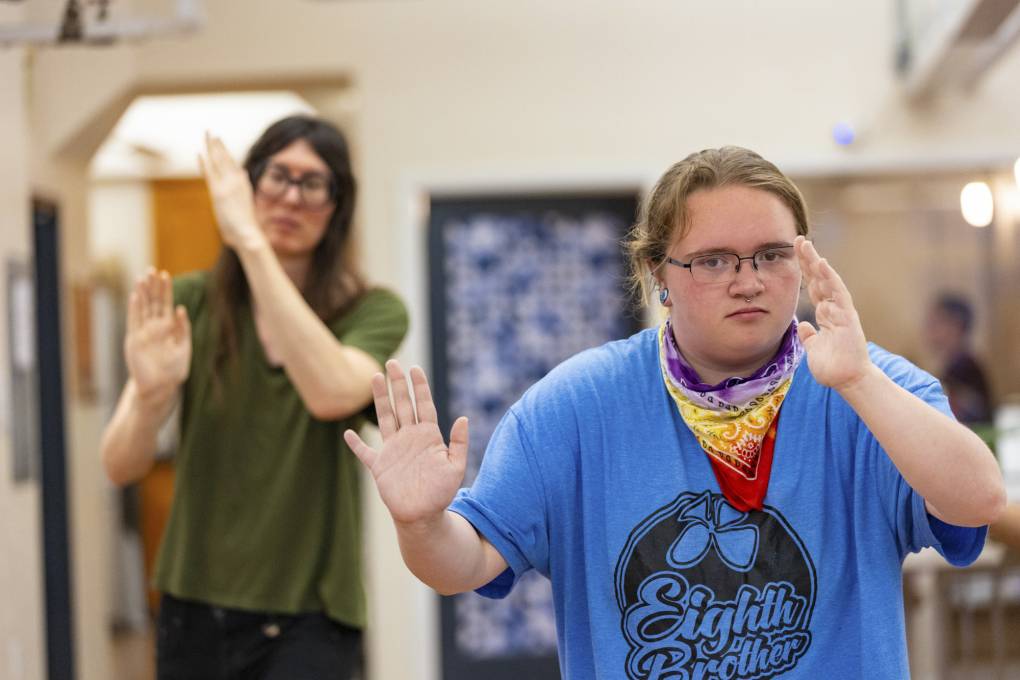
"caption": "Moss O’Neal, right, practices a technique during a self-defense training for transgender and gender nonconforming (TGNC) community members, at the Transgender District office, in San Francisco on Feb. 27, 2025. The training was organized by The Transgender District and Lyric SF.",
"credit": "Gina Castro/KQED",
"altTag": null,
"description": null,
"imgSizes": {
"medium": {
"file": "https://cdn.kqed.org/wp-content/uploads/sites/10/2025/03/20250227_TRANSGENDERSELFDEFENSE_GC-23-KQED-800x533.jpg",
"width": 800,
"height": 533,
"mimeType": "image/jpeg"
},
"large": {
"file": "https://cdn.kqed.org/wp-content/uploads/sites/10/2025/03/20250227_TRANSGENDERSELFDEFENSE_GC-23-KQED-1020x680.jpg",
"width": 1020,
"height": 680,
"mimeType": "image/jpeg"
},
"thumbnail": {
"file": "https://cdn.kqed.org/wp-content/uploads/sites/10/2025/03/20250227_TRANSGENDERSELFDEFENSE_GC-23-KQED-160x107.jpg",
"width": 160,
"height": 107,
"mimeType": "image/jpeg"
},
"1536x1536": {
"file": "https://cdn.kqed.org/wp-content/uploads/sites/10/2025/03/20250227_TRANSGENDERSELFDEFENSE_GC-23-KQED-1536x1024.jpg",
"width": 1536,
"height": 1024,
"mimeType": "image/jpeg"
},
"post-thumbnail": {
"file": "https://cdn.kqed.org/wp-content/uploads/sites/10/2025/03/20250227_TRANSGENDERSELFDEFENSE_GC-23-KQED-672x372.jpg",
"width": 672,
"height": 372,
"mimeType": "image/jpeg"
},
"twentyfourteen-full-width": {
"file": "https://cdn.kqed.org/wp-content/uploads/sites/10/2025/03/20250227_TRANSGENDERSELFDEFENSE_GC-23-KQED-1038x576.jpg",
"width": 1038,
"height": 576,
"mimeType": "image/jpeg"
},
"full-width": {
"file": "https://cdn.kqed.org/wp-content/uploads/sites/10/2025/03/20250227_TRANSGENDERSELFDEFENSE_GC-23-KQED-1920x1280.jpg",
"width": 1920,
"height": 1280,
"mimeType": "image/jpeg"
},
"kqedFullSize": {
"file": "https://cdn.kqed.org/wp-content/uploads/sites/10/2025/03/20250227_TRANSGENDERSELFDEFENSE_GC-23-KQED.jpg",
"width": 2000,
"height": 1333
}
},
"isLoading": false,
"fetchFailed": false
},
"news_12032770": {
"type": "attachments",
"id": "news_12032770",
"meta": {
"index": "attachments_1716263798",
"site": "news",
"id": "12032770",
"found": true
},
"title": "20240324_SANTACLARAMEDICALSTRIKE_GC-9-KQED",
"publishDate": 1742842164,
"status": "inherit",
"parent": 0,
"modified": 1742850154,
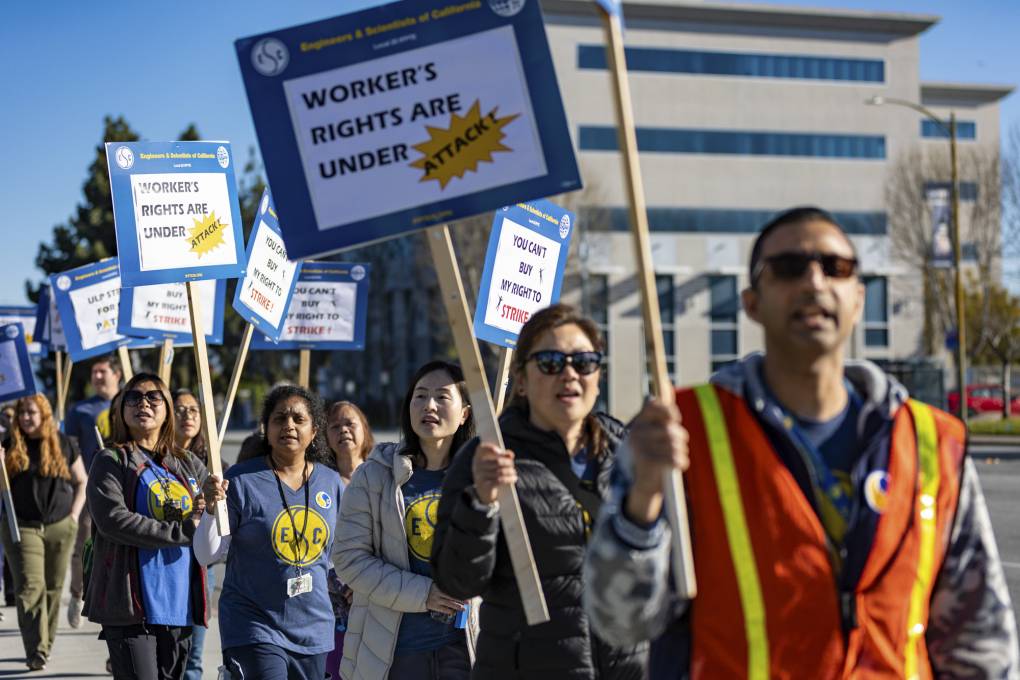
"caption": "Dozens of Santa Clara County medical workers, represented by the Engineers and Scientists California Local 20, join a strike over what they call “bad faith” negotiating by the county during contract talks at the Santa Clara Valley Medical Center in San José on March 24, 2025.",
"credit": "Gina Castro/KQED",
"altTag": null,
"description": null,
"imgSizes": {
"medium": {
"file": "https://cdn.kqed.org/wp-content/uploads/sites/10/2025/03/20240324_SANTACLARAMEDICALSTRIKE_GC-9-KQED-800x533.jpg",
"width": 800,
"height": 533,
"mimeType": "image/jpeg"
},
"large": {
"file": "https://cdn.kqed.org/wp-content/uploads/sites/10/2025/03/20240324_SANTACLARAMEDICALSTRIKE_GC-9-KQED-1020x680.jpg",
"width": 1020,
"height": 680,
"mimeType": "image/jpeg"
},
"thumbnail": {
"file": "https://cdn.kqed.org/wp-content/uploads/sites/10/2025/03/20240324_SANTACLARAMEDICALSTRIKE_GC-9-KQED-160x107.jpg",
"width": 160,
"height": 107,
"mimeType": "image/jpeg"
},
"1536x1536": {
"file": "https://cdn.kqed.org/wp-content/uploads/sites/10/2025/03/20240324_SANTACLARAMEDICALSTRIKE_GC-9-KQED-1536x1024.jpg",
"width": 1536,
"height": 1024,
"mimeType": "image/jpeg"
},
"post-thumbnail": {
"file": "https://cdn.kqed.org/wp-content/uploads/sites/10/2025/03/20240324_SANTACLARAMEDICALSTRIKE_GC-9-KQED-672x372.jpg",
"width": 672,
"height": 372,
"mimeType": "image/jpeg"
},
"twentyfourteen-full-width": {
"file": "https://cdn.kqed.org/wp-content/uploads/sites/10/2025/03/20240324_SANTACLARAMEDICALSTRIKE_GC-9-KQED-1038x576.jpg",
"width": 1038,
"height": 576,
"mimeType": "image/jpeg"
},
"full-width": {
"file": "https://cdn.kqed.org/wp-content/uploads/sites/10/2025/03/20240324_SANTACLARAMEDICALSTRIKE_GC-9-KQED-1920x1280.jpg",
"width": 1920,
"height": 1280,
"mimeType": "image/jpeg"
},
"kqedFullSize": {
"file": "https://cdn.kqed.org/wp-content/uploads/sites/10/2025/03/20240324_SANTACLARAMEDICALSTRIKE_GC-9-KQED.jpg",
"width": 2000,
"height": 1333
}
},
"isLoading": false,
"fetchFailed": false
},
"news_12032747": {
"type": "attachments",
"id": "news_12032747",
"meta": {
"index": "attachments_1716263798",
"site": "news",
"id": "12032747",
"found": true
},
"title": "heatwave",
"publishDate": 1742838898,
"status": "inherit",
"parent": 12032741,
"modified": 1742838936,
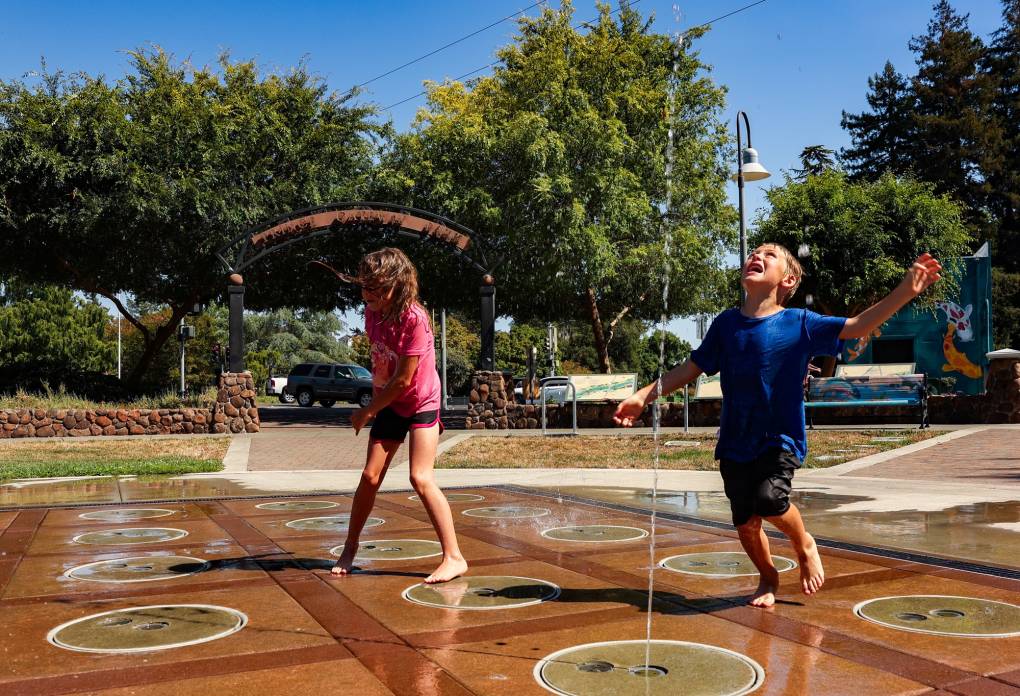
"caption": "Siblings enjoy the spray grounds at Prince Gateway Park in Santa Rosa as the temperature reached 100 degrees on July 11, 2024.",
"credit": "Gina Castro/KQED",
"altTag": null,
"description": null,
"imgSizes": {
"medium": {
"file": "https://cdn.kqed.org/wp-content/uploads/sites/10/2025/03/heatwave-800x546.jpg",
"width": 800,
"height": 546,
"mimeType": "image/jpeg"
},
"large": {
"file": "https://cdn.kqed.org/wp-content/uploads/sites/10/2025/03/heatwave-1020x696.jpg",
"width": 1020,
"height": 696,
"mimeType": "image/jpeg"
},
"thumbnail": {
"file": "https://cdn.kqed.org/wp-content/uploads/sites/10/2025/03/heatwave-160x109.jpg",
"width": 160,
"height": 109,
"mimeType": "image/jpeg"
},
"1536x1536": {
"file": "https://cdn.kqed.org/wp-content/uploads/sites/10/2025/03/heatwave-1536x1048.jpg",
"width": 1536,
"height": 1048,
"mimeType": "image/jpeg"
},
"post-thumbnail": {
"file": "https://cdn.kqed.org/wp-content/uploads/sites/10/2025/03/heatwave-672x372.jpg",
"width": 672,
"height": 372,
"mimeType": "image/jpeg"
},
"twentyfourteen-full-width": {
"file": "https://cdn.kqed.org/wp-content/uploads/sites/10/2025/03/heatwave-1038x576.jpg",
"width": 1038,
"height": 576,
"mimeType": "image/jpeg"
},
"full-width": {
"file": "https://cdn.kqed.org/wp-content/uploads/sites/10/2025/03/heatwave-1920x1309.jpg",
"width": 1920,
"height": 1309,
"mimeType": "image/jpeg"
},
"kqedFullSize": {
"file": "https://cdn.kqed.org/wp-content/uploads/sites/10/2025/03/heatwave.jpg",
"width": 2000,
"height": 1364
}
},
"isLoading": false,
"fetchFailed": false
},
"news_12033027": {
"type": "attachments",
"id": "news_12033027",
"meta": {
"index": "attachments_1716263798",
"site": "news",
"id": "12033027",
"found": true
},
"title": "250323-DEM-TOWN-HALLS-MD-21-KQED-5",
"publishDate": 1742942254,
"status": "inherit",
"parent": 0,
"modified": 1742942310,
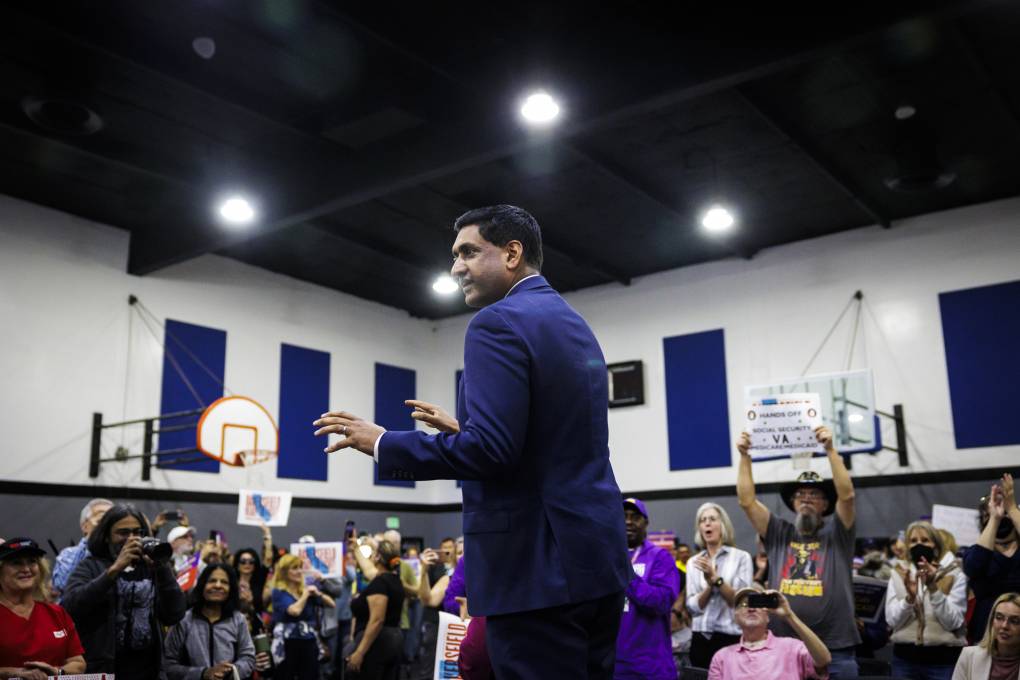
"caption": "Rep. Ro Khanna holds a town hall meeting at the MLK Community Center in Bakersfield on March 23, 2025, the first of three town hall events Khanna was set to hold in Republican-held congressional districts across the state.",
"credit": "Martin do Nascimento/KQED",
"altTag": null,
"description": null,
"imgSizes": {
"medium": {
"file": "https://cdn.kqed.org/wp-content/uploads/sites/10/2025/03/250323-DEM-TOWN-HALLS-MD-21-KQED-5-800x533.jpg",
"width": 800,
"height": 533,
"mimeType": "image/jpeg"
},
"large": {
"file": "https://cdn.kqed.org/wp-content/uploads/sites/10/2025/03/250323-DEM-TOWN-HALLS-MD-21-KQED-5-1020x680.jpg",
"width": 1020,
"height": 680,
"mimeType": "image/jpeg"
},
"thumbnail": {
"file": "https://cdn.kqed.org/wp-content/uploads/sites/10/2025/03/250323-DEM-TOWN-HALLS-MD-21-KQED-5-160x107.jpg",
"width": 160,
"height": 107,
"mimeType": "image/jpeg"
},
"1536x1536": {
"file": "https://cdn.kqed.org/wp-content/uploads/sites/10/2025/03/250323-DEM-TOWN-HALLS-MD-21-KQED-5-1536x1024.jpg",
"width": 1536,
"height": 1024,
"mimeType": "image/jpeg"
},
"post-thumbnail": {
"file": "https://cdn.kqed.org/wp-content/uploads/sites/10/2025/03/250323-DEM-TOWN-HALLS-MD-21-KQED-5-672x372.jpg",
"width": 672,
"height": 372,
"mimeType": "image/jpeg"
},
"twentyfourteen-full-width": {
"file": "https://cdn.kqed.org/wp-content/uploads/sites/10/2025/03/250323-DEM-TOWN-HALLS-MD-21-KQED-5-1038x576.jpg",
"width": 1038,
"height": 576,
"mimeType": "image/jpeg"
},
"full-width": {
"file": "https://cdn.kqed.org/wp-content/uploads/sites/10/2025/03/250323-DEM-TOWN-HALLS-MD-21-KQED-5-1920x1280.jpg",
"width": 1920,
"height": 1280,
"mimeType": "image/jpeg"
},
"kqedFullSize": {
"file": "https://cdn.kqed.org/wp-content/uploads/sites/10/2025/03/250323-DEM-TOWN-HALLS-MD-21-KQED-5.jpg",
"width": 2000,
"height": 1333
}
},
"isLoading": false,
"fetchFailed": false
},
"news_12032219": {
"type": "attachments",
"id": "news_12032219",
"meta": {
"index": "attachments_1716263798",
"site": "news",
"id": "12032219",
"found": true
},
"title": "SemiTrucksInterstate880",
"publishDate": 1742489152,
"status": "inherit",
"parent": 12032217,
"modified": 1742585667,
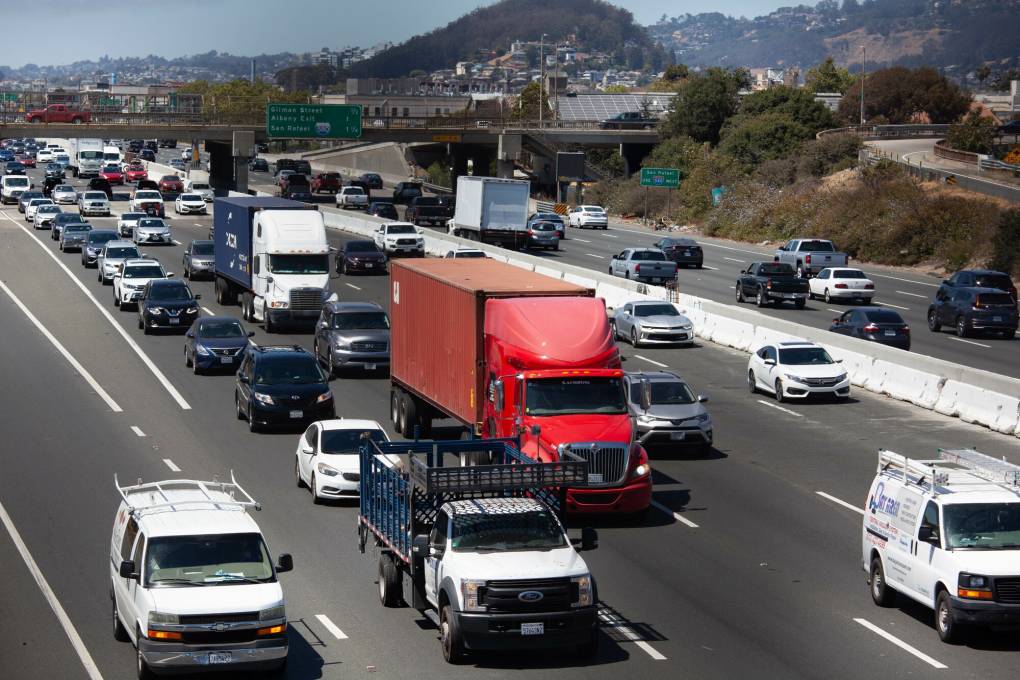
"caption": "Traffic on Interstate 880 toward Oakland was jam-packed with cars and diesel trucks midafternoon on Monday, June 28, 2021.",
"credit": "Joyce Tsai/KQED",
"altTag": null,
"description": null,
"imgSizes": {
"medium": {
"file": "https://cdn.kqed.org/wp-content/uploads/sites/10/2025/03/SemiTrucksInterstate880-800x533.jpg",
"width": 800,
"height": 533,
"mimeType": "image/jpeg"
},
"large": {
"file": "https://cdn.kqed.org/wp-content/uploads/sites/10/2025/03/SemiTrucksInterstate880-1020x680.jpg",
"width": 1020,
"height": 680,
"mimeType": "image/jpeg"
},
"thumbnail": {
"file": "https://cdn.kqed.org/wp-content/uploads/sites/10/2025/03/SemiTrucksInterstate880-160x107.jpg",
"width": 160,
"height": 107,
"mimeType": "image/jpeg"
},
"1536x1536": {
"file": "https://cdn.kqed.org/wp-content/uploads/sites/10/2025/03/SemiTrucksInterstate880-1536x1024.jpg",
"width": 1536,
"height": 1024,
"mimeType": "image/jpeg"
},
"post-thumbnail": {
"file": "https://cdn.kqed.org/wp-content/uploads/sites/10/2025/03/SemiTrucksInterstate880-672x372.jpg",
"width": 672,
"height": 372,
"mimeType": "image/jpeg"
},
"twentyfourteen-full-width": {
"file": "https://cdn.kqed.org/wp-content/uploads/sites/10/2025/03/SemiTrucksInterstate880-1038x576.jpg",
"width": 1038,
"height": 576,
"mimeType": "image/jpeg"
},
"full-width": {
"file": "https://cdn.kqed.org/wp-content/uploads/sites/10/2025/03/SemiTrucksInterstate880-1920x1280.jpg",
"width": 1920,
"height": 1280,
"mimeType": "image/jpeg"
},
"kqedFullSize": {
"file": "https://cdn.kqed.org/wp-content/uploads/sites/10/2025/03/SemiTrucksInterstate880.jpg",
"width": 2000,
"height": 1333
}
},
"isLoading": false,
"fetchFailed": false
},
"news_12032511": {
"type": "attachments",
"id": "news_12032511",
"meta": {
"index": "attachments_1716263798",
"site": "news",
"id": "12032511",
"found": true
},
"title": "250320-JAPANESEAMERICANSDENOUNCE-03-BL-KQED",
"publishDate": 1742590682,
"status": "inherit",
"parent": 0,
"modified": 1742590695,
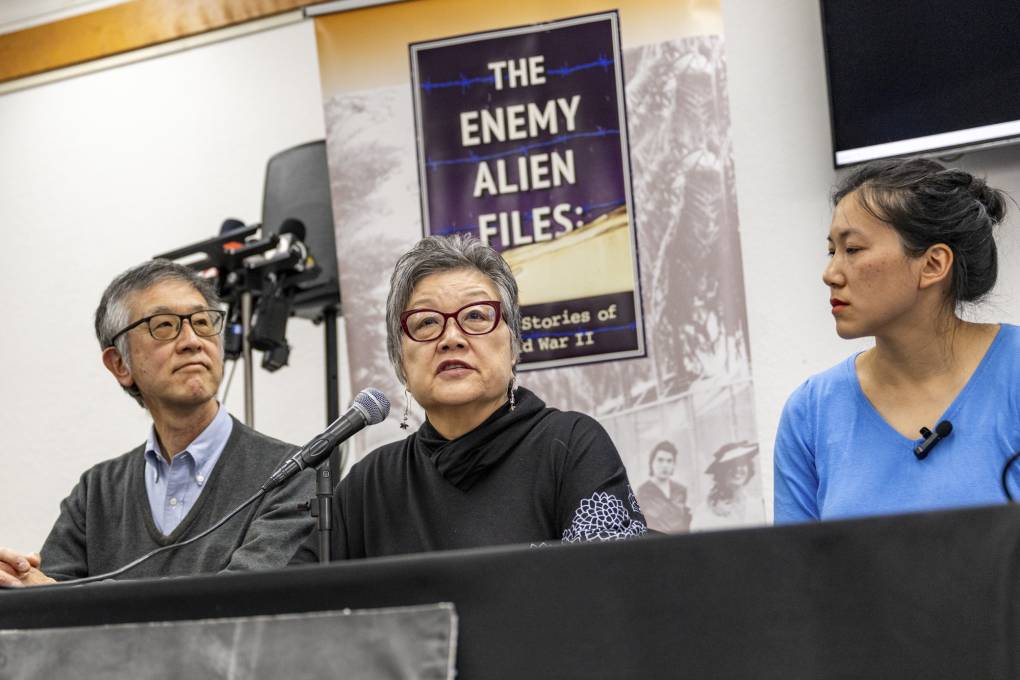
"caption": "Joyce Nakamura, from the Japanese American Citizens League, speaks at the Japanese Cultural and Community Center in San Francisco on March 20, 2025, during a press conference condemning the use of the Alien Enemies Act to target immigrants.",
"credit": "Beth LaBerge/KQED",
"altTag": null,
"description": null,
"imgSizes": {
"medium": {
"file": "https://cdn.kqed.org/wp-content/uploads/sites/10/2025/03/250320-JAPANESEAMERICANSDENOUNCE-03-BL-KQED-800x533.jpg",
"width": 800,
"height": 533,
"mimeType": "image/jpeg"
},
"large": {
"file": "https://cdn.kqed.org/wp-content/uploads/sites/10/2025/03/250320-JAPANESEAMERICANSDENOUNCE-03-BL-KQED-1020x680.jpg",
"width": 1020,
"height": 680,
"mimeType": "image/jpeg"
},
"thumbnail": {
"file": "https://cdn.kqed.org/wp-content/uploads/sites/10/2025/03/250320-JAPANESEAMERICANSDENOUNCE-03-BL-KQED-160x107.jpg",
"width": 160,
"height": 107,
"mimeType": "image/jpeg"
},
"1536x1536": {
"file": "https://cdn.kqed.org/wp-content/uploads/sites/10/2025/03/250320-JAPANESEAMERICANSDENOUNCE-03-BL-KQED-1536x1024.jpg",
"width": 1536,
"height": 1024,
"mimeType": "image/jpeg"
},
"post-thumbnail": {
"file": "https://cdn.kqed.org/wp-content/uploads/sites/10/2025/03/250320-JAPANESEAMERICANSDENOUNCE-03-BL-KQED-672x372.jpg",
"width": 672,
"height": 372,
"mimeType": "image/jpeg"
},
"twentyfourteen-full-width": {
"file": "https://cdn.kqed.org/wp-content/uploads/sites/10/2025/03/250320-JAPANESEAMERICANSDENOUNCE-03-BL-KQED-1038x576.jpg",
"width": 1038,
"height": 576,
"mimeType": "image/jpeg"
},
"full-width": {
"file": "https://cdn.kqed.org/wp-content/uploads/sites/10/2025/03/250320-JAPANESEAMERICANSDENOUNCE-03-BL-KQED-1920x1280.jpg",
"width": 1920,
"height": 1280,
"mimeType": "image/jpeg"
},
"kqedFullSize": {
"file": "https://cdn.kqed.org/wp-content/uploads/sites/10/2025/03/250320-JAPANESEAMERICANSDENOUNCE-03-BL-KQED.jpg",
"width": 2000,
"height": 1333
}
},
"isLoading": false,
"fetchFailed": false
},
"news_12031930": {
"type": "attachments",
"id": "news_12031930",
"meta": {
"index": "attachments_1716263798",
"site": "news",
"id": "12031930",
"found": true
},
"title": "250318-FCI DUBLIN-VB-1A-KQED",
"publishDate": 1742336665,
"status": "inherit",
"parent": 0,
"modified": 1742337962,
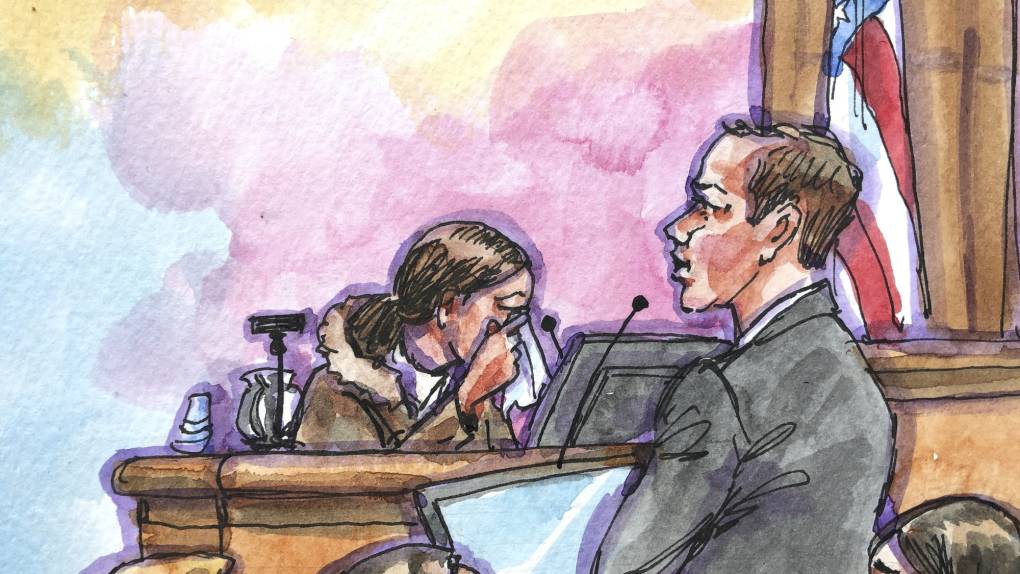
"caption": "A courtroom sketch of a witness crying while giving testimony in the trial of former FCI Dublin correctional officer Darrell Wayne Smith in Oakland on March 18, 2025.",
"credit": "Vicki Behringer for KQED",
"altTag": null,
"description": null,
"imgSizes": {
"medium": {
"file": "https://cdn.kqed.org/wp-content/uploads/sites/10/2025/03/250318-FCI-DUBLIN-VB-1A-KQED-800x450.jpg",
"width": 800,
"height": 450,
"mimeType": "image/jpeg"
},
"large": {
"file": "https://cdn.kqed.org/wp-content/uploads/sites/10/2025/03/250318-FCI-DUBLIN-VB-1A-KQED-1020x574.jpg",
"width": 1020,
"height": 574,
"mimeType": "image/jpeg"
},
"thumbnail": {
"file": "https://cdn.kqed.org/wp-content/uploads/sites/10/2025/03/250318-FCI-DUBLIN-VB-1A-KQED-160x90.jpg",
"width": 160,
"height": 90,
"mimeType": "image/jpeg"
},
"1536x1536": {
"file": "https://cdn.kqed.org/wp-content/uploads/sites/10/2025/03/250318-FCI-DUBLIN-VB-1A-KQED-1536x864.jpg",
"width": 1536,
"height": 864,
"mimeType": "image/jpeg"
},
"post-thumbnail": {
"file": "https://cdn.kqed.org/wp-content/uploads/sites/10/2025/03/250318-FCI-DUBLIN-VB-1A-KQED-672x372.jpg",
"width": 672,
"height": 372,
"mimeType": "image/jpeg"
},
"twentyfourteen-full-width": {
"file": "https://cdn.kqed.org/wp-content/uploads/sites/10/2025/03/250318-FCI-DUBLIN-VB-1A-KQED-1038x576.jpg",
"width": 1038,
"height": 576,
"mimeType": "image/jpeg"
},
"full-width": {
"file": "https://cdn.kqed.org/wp-content/uploads/sites/10/2025/03/250318-FCI-DUBLIN-VB-1A-KQED-1920x1080.jpg",
"width": 1920,
"height": 1080,
"mimeType": "image/jpeg"
},
"kqedFullSize": {
"file": "https://cdn.kqed.org/wp-content/uploads/sites/10/2025/03/250318-FCI-DUBLIN-VB-1A-KQED.jpg",
"width": 2000,
"height": 1125
}
},
"isLoading": false,
"fetchFailed": false
},
"news_12017830": {
"type": "attachments",
"id": "news_12017830",
"meta": {
"index": "attachments_1716263798",
"site": "news",
"id": "12017830",
"found": true
},
"title": "20241211_RichmondBridgeBike_GC-14",
"publishDate": 1733963589,
"status": "inherit",
"parent": 0,
"modified": 1742600769,
"caption": "Cyclists ride on the Richmond-San Rafael Bridge Trail, a roughly 6-mile bicycle and pedestrian path, located on the upper deck of the bridge, on Dec. 11, 2024.",
"credit": "Gina Castro/KQED",
"altTag": null,
"description": null,
"imgSizes": {
"medium": {
"file": "https://cdn.kqed.org/wp-content/uploads/sites/10/2024/12/20241211_RichmondBridgeBike_GC-14-800x533.jpg",
"width": 800,
"height": 533,
"mimeType": "image/jpeg"
},
"large": {
"file": "https://cdn.kqed.org/wp-content/uploads/sites/10/2024/12/20241211_RichmondBridgeBike_GC-14-1020x679.jpg",
"width": 1020,
"height": 679,
"mimeType": "image/jpeg"
},
"thumbnail": {
"file": "https://cdn.kqed.org/wp-content/uploads/sites/10/2024/12/20241211_RichmondBridgeBike_GC-14-160x107.jpg",
"width": 160,
"height": 107,
"mimeType": "image/jpeg"
},
"1536x1536": {
"file": "https://cdn.kqed.org/wp-content/uploads/sites/10/2024/12/20241211_RichmondBridgeBike_GC-14-1536x1023.jpg",
"width": 1536,
"height": 1023,
"mimeType": "image/jpeg"
},
"post-thumbnail": {
"file": "https://cdn.kqed.org/wp-content/uploads/sites/10/2024/12/20241211_RichmondBridgeBike_GC-14-672x372.jpg",
"width": 672,
"height": 372,
"mimeType": "image/jpeg"
},
"twentyfourteen-full-width": {
"file": "https://cdn.kqed.org/wp-content/uploads/sites/10/2024/12/20241211_RichmondBridgeBike_GC-14-1038x576.jpg",
"width": 1038,
"height": 576,
"mimeType": "image/jpeg"
},
"full-width": {
"file": "https://cdn.kqed.org/wp-content/uploads/sites/10/2024/12/20241211_RichmondBridgeBike_GC-14-1920x1279.jpg",
"width": 1920,
"height": 1279,
"mimeType": "image/jpeg"
},
"kqedFullSize": {
"file": "https://cdn.kqed.org/wp-content/uploads/sites/10/2024/12/20241211_RichmondBridgeBike_GC-14.jpg",
"width": 2000,
"height": 1332
}
},
"isLoading": false,
"fetchFailed": false
},
"news_12032262": {
"type": "attachments",
"id": "news_12032262",
"meta": {
"index": "attachments_1716263798",
"site": "news",
"id": "12032262",
"found": true
},
"title": "REI Sign",
"publishDate": 1742496205,
"status": "inherit",
"parent": 12032259,
"modified": 1742496290,
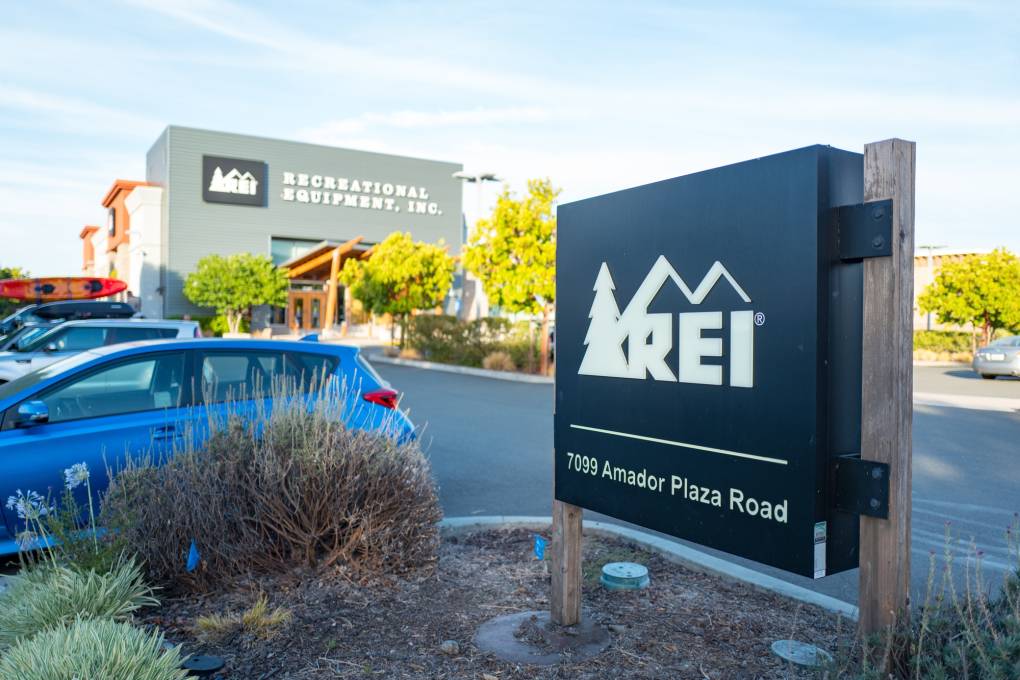
"caption": "The Recreational Equipment Incorporated (REI) outdoor clothing store in Dublin, California, July 23, 2018. ",
"credit": "Smith Collection/Gado/Getty Images",
"altTag": null,
"description": null,
"imgSizes": {
"medium": {
"file": "https://cdn.kqed.org/wp-content/uploads/sites/10/2025/03/REIDublinGetty-800x533.jpg",
"width": 800,
"height": 533,
"mimeType": "image/jpeg"
},
"large": {
"file": "https://cdn.kqed.org/wp-content/uploads/sites/10/2025/03/REIDublinGetty-1020x680.jpg",
"width": 1020,
"height": 680,
"mimeType": "image/jpeg"
},
"thumbnail": {
"file": "https://cdn.kqed.org/wp-content/uploads/sites/10/2025/03/REIDublinGetty-160x107.jpg",
"width": 160,
"height": 107,
"mimeType": "image/jpeg"
},
"1536x1536": {
"file": "https://cdn.kqed.org/wp-content/uploads/sites/10/2025/03/REIDublinGetty-1536x1024.jpg",
"width": 1536,
"height": 1024,
"mimeType": "image/jpeg"
},
"post-thumbnail": {
"file": "https://cdn.kqed.org/wp-content/uploads/sites/10/2025/03/REIDublinGetty-672x372.jpg",
"width": 672,
"height": 372,
"mimeType": "image/jpeg"
},
"twentyfourteen-full-width": {
"file": "https://cdn.kqed.org/wp-content/uploads/sites/10/2025/03/REIDublinGetty-1038x576.jpg",
"width": 1038,
"height": 576,
"mimeType": "image/jpeg"
},
"full-width": {
"file": "https://cdn.kqed.org/wp-content/uploads/sites/10/2025/03/REIDublinGetty-1920x1280.jpg",
"width": 1920,
"height": 1280,
"mimeType": "image/jpeg"
},
"kqedFullSize": {
"file": "https://cdn.kqed.org/wp-content/uploads/sites/10/2025/03/REIDublinGetty.jpg",
"width": 2000,
"height": 1333
}
},
"isLoading": false,
"fetchFailed": false
},
"news_12031404": {
"type": "attachments",
"id": "news_12031404",
"meta": {
"index": "attachments_1716263798",
"site": "news",
"id": "12031404",
"found": true
},
"title": "Inheriting_Ep 9_Nicole Salaver Portrait_KQED Photo 2 by Samanta Helou Hernandez_LAist",
"publishDate": 1741975368,
"status": "inherit",
"parent": 12031401,
"modified": 1741975630,
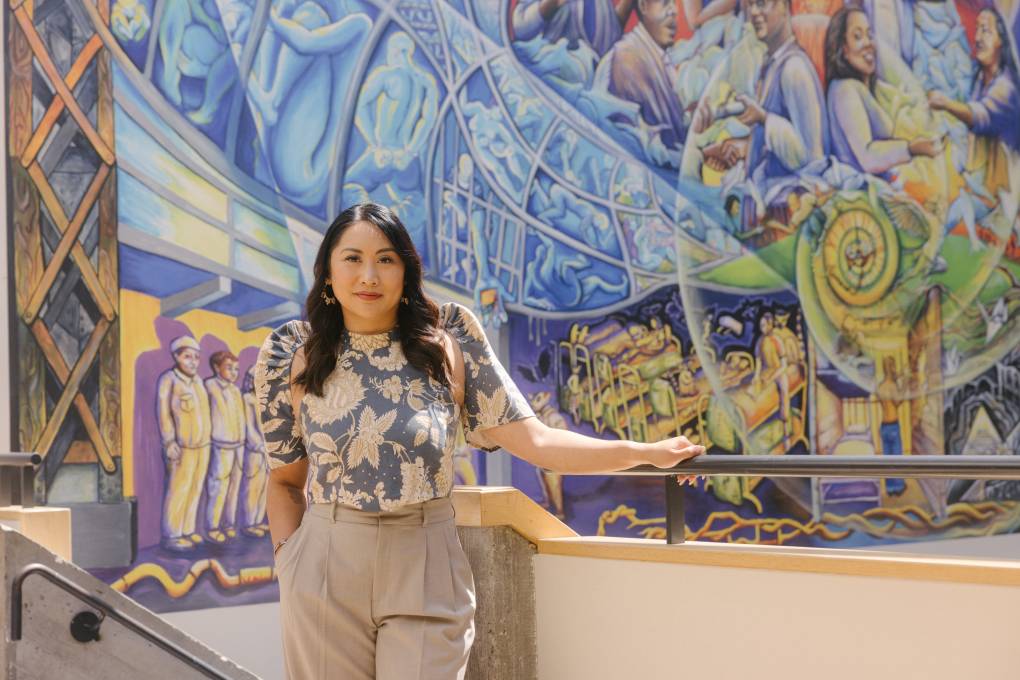
"caption": "Nicole Salaver stands in front of a mural at San Francisco State University.",
"credit": "Samanta Helou Hernandez/LAist",
"altTag": null,
"description": null,
"imgSizes": {
"medium": {
"file": "https://cdn.kqed.org/wp-content/uploads/sites/10/2025/03/Inheriting_Ep-9_Nicole-Salaver-Portrait_KQED-Photo-2-by-Samanta-Helou-Hernandez_LAist-800x534.jpg",
"width": 800,
"height": 534,
"mimeType": "image/jpeg"
},
"large": {
"file": "https://cdn.kqed.org/wp-content/uploads/sites/10/2025/03/Inheriting_Ep-9_Nicole-Salaver-Portrait_KQED-Photo-2-by-Samanta-Helou-Hernandez_LAist-1020x680.jpg",
"width": 1020,
"height": 680,
"mimeType": "image/jpeg"
},
"thumbnail": {
"file": "https://cdn.kqed.org/wp-content/uploads/sites/10/2025/03/Inheriting_Ep-9_Nicole-Salaver-Portrait_KQED-Photo-2-by-Samanta-Helou-Hernandez_LAist-160x107.jpg",
"width": 160,
"height": 107,
"mimeType": "image/jpeg"
},
"1536x1536": {
"file": "https://cdn.kqed.org/wp-content/uploads/sites/10/2025/03/Inheriting_Ep-9_Nicole-Salaver-Portrait_KQED-Photo-2-by-Samanta-Helou-Hernandez_LAist-1536x1025.jpg",
"width": 1536,
"height": 1025,
"mimeType": "image/jpeg"
},
"2048x2048": {
"file": "https://cdn.kqed.org/wp-content/uploads/sites/10/2025/03/Inheriting_Ep-9_Nicole-Salaver-Portrait_KQED-Photo-2-by-Samanta-Helou-Hernandez_LAist-2048x1366.jpg",
"width": 2048,
"height": 1366,
"mimeType": "image/jpeg"
},
"post-thumbnail": {
"file": "https://cdn.kqed.org/wp-content/uploads/sites/10/2025/03/Inheriting_Ep-9_Nicole-Salaver-Portrait_KQED-Photo-2-by-Samanta-Helou-Hernandez_LAist-672x372.jpg",
"width": 672,
"height": 372,
"mimeType": "image/jpeg"
},
"twentyfourteen-full-width": {
"file": "https://cdn.kqed.org/wp-content/uploads/sites/10/2025/03/Inheriting_Ep-9_Nicole-Salaver-Portrait_KQED-Photo-2-by-Samanta-Helou-Hernandez_LAist-1038x576.jpg",
"width": 1038,
"height": 576,
"mimeType": "image/jpeg"
},
"full-width": {
"file": "https://cdn.kqed.org/wp-content/uploads/sites/10/2025/03/Inheriting_Ep-9_Nicole-Salaver-Portrait_KQED-Photo-2-by-Samanta-Helou-Hernandez_LAist-1920x1281.jpg",
"width": 1920,
"height": 1281,
"mimeType": "image/jpeg"
},
"kqedFullSize": {
"file": "https://cdn.kqed.org/wp-content/uploads/sites/10/2025/03/Inheriting_Ep-9_Nicole-Salaver-Portrait_KQED-Photo-2-by-Samanta-Helou-Hernandez_LAist-scaled.jpg",
"width": 2560,
"height": 1708
}
},
"isLoading": false,
"fetchFailed": false
},
"news_12032407": {
"type": "attachments",
"id": "news_12032407",
"meta": {
"index": "attachments_1716263798",
"site": "news",
"id": "12032407",
"found": true
},
"title": "University of California labor unions on strike",
"publishDate": 1742519313,
"status": "inherit",
"parent": 12032232,
"modified": 1742576600,
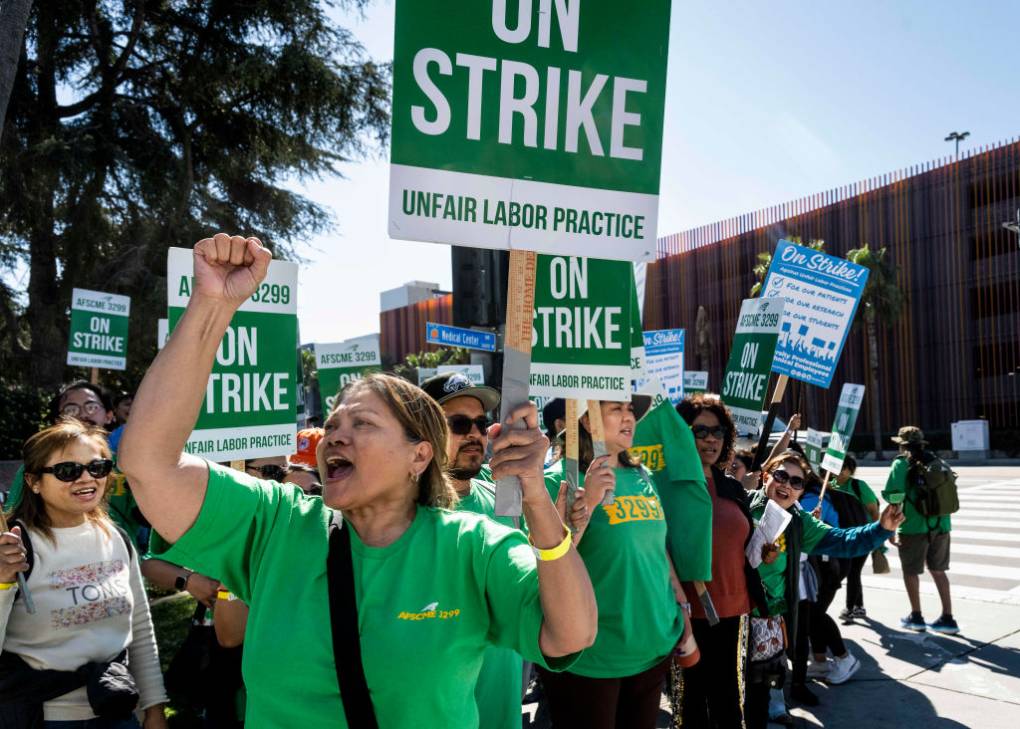
"caption": "Members of University Professional and Technical Employees-CWA Local 9119 and AFSCME Local 3299 protest on West Chapman Avenue in front of UC Irvine Medical Center in Orange, California, on Feb. 26, 2025. AFSCME Local 3299 President Liz Perlman said Wednesday, 'It's the weight at the top that's crushing the system,' blaming the UC top brass for the hiring freeze.",
"credit": "Paul Bersebach/MediaNews Group/Orange County Register via Getty Images",
"altTag": null,
"description": null,
"imgSizes": {
"medium": {
"file": "https://cdn.kqed.org/wp-content/uploads/sites/10/2025/03/GettyImages-2201544551-800x572.jpg",
"width": 800,
"height": 572,
"mimeType": "image/jpeg"
},
"large": {
"file": "https://cdn.kqed.org/wp-content/uploads/sites/10/2025/03/GettyImages-2201544551-1020x729.jpg",
"width": 1020,
"height": 729,
"mimeType": "image/jpeg"
},
"thumbnail": {
"file": "https://cdn.kqed.org/wp-content/uploads/sites/10/2025/03/GettyImages-2201544551-160x114.jpg",
"width": 160,
"height": 114,
"mimeType": "image/jpeg"
},
"post-thumbnail": {
"file": "https://cdn.kqed.org/wp-content/uploads/sites/10/2025/03/GettyImages-2201544551-672x372.jpg",
"width": 672,
"height": 372,
"mimeType": "image/jpeg"
},
"twentyfourteen-full-width": {
"file": "https://cdn.kqed.org/wp-content/uploads/sites/10/2025/03/GettyImages-2201544551-1024x576.jpg",
"width": 1024,
"height": 576,
"mimeType": "image/jpeg"
},
"kqedFullSize": {
"file": "https://cdn.kqed.org/wp-content/uploads/sites/10/2025/03/GettyImages-2201544551.jpg",
"width": 1024,
"height": 732
}
},
"isLoading": false,
"fetchFailed": false
}
},
"audioPlayerReducer": {
"postId": "stream_live",
"isPaused": true,
"isPlaying": false,
"pfsActive": false,
"pledgeModalIsOpen": true,
"playerDrawerIsOpen": false,
"liveAudioPlayStartedAt": 0,
"liveAudioPlayContext": ""
},
"authorsReducer": {
"gmarzorati": {
"type": "authors",
"id": "227",
"meta": {
"index": "authors_1716337520",
"id": "227",
"found": true
},
"name": "Guy Marzorati",
"firstName": "Guy",
"lastName": "Marzorati",
"slug": "gmarzorati",
"email": "gmarzorati@KQED.org",
"display_author_email": true,
"staff_mastheads": [
"news"
],
"title": "Correspondent",
"bio": "Guy Marzorati is a correspondent on KQED's California Politics and Government Desk, based in San Jose. A graduate of Santa Clara University, Guy joined KQED in 2013. He reports on state and local politics and produces KQED's digital voter guide.",
"avatar": "https://secure.gravatar.com/avatar/e7038b8dbfd55b104369b76b1cd0b9de?s=600&d=blank&r=g",
"twitter": "guymarzorati",
"facebook": null,
"instagram": null,
"linkedin": null,
"sites": [
{
"site": "",
"roles": [
"editor"
]
},
{
"site": "news",
"roles": [
"editor"
]
},
{
"site": "science",
"roles": [
"editor"
]
},
{
"site": "forum",
"roles": [
"editor"
]
},
{
"site": "elections",
"roles": [
"editor"
]
},
{
"site": "liveblog",
"roles": [
"editor"
]
}
],
"headData": {
"title": "Guy Marzorati | KQED",
"description": "Correspondent",
"ogImgSrc": "https://secure.gravatar.com/avatar/e7038b8dbfd55b104369b76b1cd0b9de?s=600&d=blank&r=g",
"twImgSrc": "https://secure.gravatar.com/avatar/e7038b8dbfd55b104369b76b1cd0b9de?s=600&d=blank&r=g"
},
"isLoading": false,
"link": "/author/gmarzorati"
},
"kqed": {
"type": "authors",
"id": "236",
"meta": {
"index": "authors_1716337520",
"id": "236",
"found": true
},
"name": "KQED News Staff",
"firstName": "KQED News Staff",
"lastName": null,
"slug": "kqed",
"email": "faq@kqed.org",
"display_author_email": false,
"staff_mastheads": [],
"title": null,
"bio": null,
"avatar": "https://secure.gravatar.com/avatar/ef0e801a68c4c54afa9180db14084167?s=600&d=blank&r=g",
"twitter": null,
"facebook": null,
"instagram": null,
"linkedin": null,
"sites": [
{
"site": "arts",
"roles": [
"contributor"
]
},
{
"site": "news",
"roles": [
"editor"
]
},
{
"site": "futureofyou",
"roles": [
"author"
]
}
],
"headData": {
"title": "KQED News Staff | KQED",
"description": null,
"ogImgSrc": "https://secure.gravatar.com/avatar/ef0e801a68c4c54afa9180db14084167?s=600&d=blank&r=g",
"twImgSrc": "https://secure.gravatar.com/avatar/ef0e801a68c4c54afa9180db14084167?s=600&d=blank&r=g"
},
"isLoading": false,
"link": "/author/kqed"
},
"matthewgreen": {
"type": "authors",
"id": "1263",
"meta": {
"index": "authors_1716337520",
"id": "1263",
"found": true
},
"name": "Matthew Green",
"firstName": "Matthew",
"lastName": "Green",
"slug": "matthewgreen",
"email": "mgreen@kqed.org",
"display_author_email": false,
"staff_mastheads": [],
"title": "KQED Editor/Reporter",
"bio": "Matthew Green is a digital media producer for KQED News. He previously produced \u003ca href=\"http://www.kqed.org/lowdown\">The Lowdown\u003c/a>, KQED’s multimedia news education blog. Matthew's written for numerous Bay Area publications, including the Oakland Tribune and San Francisco Chronicle. He also taught journalism classes at Fremont High School in East Oakland.\r\n\r\nEmail: mgreen@kqed.org; Twitter: @MGreenKQED",
"avatar": "https://secure.gravatar.com/avatar/3bf498d1267ca02c8494f33d8cfc575e?s=600&d=blank&r=g",
"twitter": "MGreenKQED",
"facebook": null,
"instagram": null,
"linkedin": null,
"sites": [
{
"site": "news",
"roles": []
},
{
"site": "lowdown",
"roles": []
},
{
"site": "science",
"roles": []
},
{
"site": "education",
"roles": []
},
{
"site": "quest",
"roles": []
},
{
"site": "liveblog",
"roles": []
}
],
"headData": {
"title": "Matthew Green | KQED",
"description": "KQED Editor/Reporter",
"ogImgSrc": "https://secure.gravatar.com/avatar/3bf498d1267ca02c8494f33d8cfc575e?s=600&d=blank&r=g",
"twImgSrc": "https://secure.gravatar.com/avatar/3bf498d1267ca02c8494f33d8cfc575e?s=600&d=blank&r=g"
},
"isLoading": false,
"link": "/author/matthewgreen"
},
"clei": {
"type": "authors",
"id": "8617",
"meta": {
"index": "authors_1716337520",
"id": "8617",
"found": true
},
"name": "Cecilia Lei",
"firstName": "Cecilia",
"lastName": "Lei",
"slug": "clei",
"email": "clei@KQED.org",
"display_author_email": false,
"staff_mastheads": [],
"title": "KQED Contributor",
"bio": "Cecilia Lei is an on-call host and producer for KQED News and Podcasts. Previously, she was the executive producer and host of the San Francisco Chronicle's daily news podcast, 'Fifth and Mission'. Cecilia is a graduate of UC Berkeley’s Graduate School of Journalism and the former president of the Asian American Journalists Association San Francisco Bay Area chapter.",
"avatar": "https://secure.gravatar.com/avatar/40975f1f88fccf628ee537bf6ffc2af8?s=600&d=blank&r=g",
"twitter": null,
"facebook": null,
"instagram": null,
"linkedin": null,
"sites": [
{
"site": "arts",
"roles": [
"contributor"
]
},
{
"site": "news",
"roles": [
"author",
"read_private_posts"
]
},
{
"site": "about",
"roles": [
"editor"
]
}
],
"headData": {
"title": "Cecilia Lei | KQED",
"description": "KQED Contributor",
"ogImgSrc": "https://secure.gravatar.com/avatar/40975f1f88fccf628ee537bf6ffc2af8?s=600&d=blank&r=g",
"twImgSrc": "https://secure.gravatar.com/avatar/40975f1f88fccf628ee537bf6ffc2af8?s=600&d=blank&r=g"
},
"isLoading": false,
"link": "/author/clei"
},
"lklivans": {
"type": "authors",
"id": "8648",
"meta": {
"index": "authors_1716337520",
"id": "8648",
"found": true
},
"name": "Laura Klivans",
"firstName": "Laura",
"lastName": "Klivans",
"slug": "lklivans",
"email": "lklivans@kqed.org",
"display_author_email": true,
"staff_mastheads": [
"news",
"science"
],
"title": "Reporter",
"bio": "Laura Klivans is an award-winning science reporter for KQED News, where she covers climate change with an eye on both groundbreaking progress and gaps in action. She is the former host of KQED's blockbuster video series about tiny, amazing animals, \u003cem>Deep Look\u003c/em>. Her work reaches national audiences through NPR, \u003cem>Here & Now, \u003c/em>PRI, and other major outlets. \r\n\r\nLaura’s won five Northern California Area Emmy Awards for Deep Look and First Place in the Greater Bay Area Journalism Awards for a podcast exploring how one Oakland neighborhood teamed up to reduce planet-heating pollution.\r\n\r\nBeyond her reporting, she hosts and moderates events. In the past, she taught audio storytelling at the UC Berkeley Graduate School of Journalism, led international education programs, worked with immigrants and refugees along the Thai-Burmese border, taught high schoolers sex ed, and was an actress. \r\n\r\nShe's a former UC Berkeley Human Rights Fellow, USC Center for Health Journalism's California Fellow and Coro Fellow in Public Affairs. Laura has a master’s in journalism from UC Berkeley, a master’s in education from Harvard, and an undergraduate degree from Northwestern University.\r\n\r\nShe loves trying to riddle the meaning out of vanity license plates.",
"avatar": "https://secure.gravatar.com/avatar/af8e757bb8ce7b7fee6160ba66e37327?s=600&d=blank&r=g",
"twitter": "lauraklivans",
"facebook": null,
"instagram": null,
"linkedin": null,
"sites": [
{
"site": "news",
"roles": [
"editor"
]
},
{
"site": "stateofhealth",
"roles": [
"contributor",
"editor"
]
},
{
"site": "science",
"roles": [
"editor"
]
},
{
"site": "forum",
"roles": [
"editor"
]
}
],
"headData": {
"title": "Laura Klivans | KQED",
"description": "Reporter",
"ogImgSrc": "https://secure.gravatar.com/avatar/af8e757bb8ce7b7fee6160ba66e37327?s=600&d=blank&r=g",
"twImgSrc": "https://secure.gravatar.com/avatar/af8e757bb8ce7b7fee6160ba66e37327?s=600&d=blank&r=g"
},
"isLoading": false,
"link": "/author/lklivans"
},
"fjhabvala": {
"type": "authors",
"id": "8659",
"meta": {
"index": "authors_1716337520",
"id": "8659",
"found": true
},
"name": "Farida Jhabvala Romero",
"firstName": "Farida",
"lastName": "Jhabvala Romero",
"slug": "fjhabvala",
"email": "fjhabvala@kqed.org",
"display_author_email": true,
"staff_mastheads": [
"news"
],
"title": "KQED Contributor",
"bio": "Farida Jhabvala Romero is a Labor Correspondent for KQED. She previously covered immigration. Farida was \u003ca href=\"https://www.ccnma.org/2022-most-influential-latina-journalists\">named\u003c/a> one of the 10 Most Influential Latina Journalists in California in 2022 by the California Chicano News Media Association. Her work has won awards from the Society of Professional Journalists (Northern California), as well as a national and regional Edward M. Murrow Award for the collaborative reporting projects “Dangerous Air” and “Graying California.” Before joining KQED, Farida worked as a producer at Radio Bilingüe, a national public radio network. Farida earned her master’s degree in journalism from Stanford University.",
"avatar": "https://secure.gravatar.com/avatar/f9f022d4e2609741874222a1e9d41f48fea74011aa7c615eef91d9a50c944ebe?s=600&d=blank&r=g",
"twitter": "FaridaJhabvala",
"bluesky": null,
"facebook": null,
"instagram": null,
"linkedin": "https://www.linkedin.com/in/faridajhabvala/",
"sites": [
{
"site": "news",
"roles": [
"editor"
]
},
{
"site": "stateofhealth",
"roles": [
"author"
]
},
{
"site": "liveblog",
"roles": [
"author"
]
}
],
"headData": {
"title": "Farida Jhabvala Romero | KQED",
"description": "KQED Contributor",
"ogImgSrc": "https://secure.gravatar.com/avatar/f9f022d4e2609741874222a1e9d41f48fea74011aa7c615eef91d9a50c944ebe?s=600&d=blank&r=g",
"twImgSrc": "https://secure.gravatar.com/avatar/f9f022d4e2609741874222a1e9d41f48fea74011aa7c615eef91d9a50c944ebe?s=600&d=blank&r=g"
},
"isLoading": false,
"link": "/author/fjhabvala"
},
"btaylor": {
"type": "authors",
"id": "11365",
"meta": {
"index": "authors_1716337520",
"id": "11365",
"found": true
},
"name": "Bianca Taylor",
"firstName": "Bianca",
"lastName": "Taylor",
"slug": "btaylor",
"email": "btaylor@KQED.org",
"display_author_email": false,
"staff_mastheads": [
"news"
],
"title": "Host and Producer ",
"bio": "Bianca Taylor is a news producer and host of KQED's The Latest podcast.\r\n\r\nHer work with KQED has been honored by the Society of Professional Journalists NorCal, the Webby's, the Regional Murrow Awards, and ONA. She has also worked with NPR, the BBC World Service, and the Washington Post Creative Group.\r\n\r\nBianca is represented by SAG-AFTRA.",
"avatar": "https://secure.gravatar.com/avatar/6b9d3f6552dd10470c5d1c2e58cfe717?s=600&d=blank&r=g",
"twitter": "SoundsLkeBianca",
"facebook": null,
"instagram": null,
"linkedin": null,
"sites": [
{
"site": "arts",
"roles": [
"editor"
]
},
{
"site": "news",
"roles": [
"edit_others_posts",
"editor"
]
},
{
"site": "pop",
"roles": [
"editor"
]
},
{
"site": "bayareabites",
"roles": [
"author"
]
},
{
"site": "science",
"roles": [
"editor"
]
},
{
"site": "forum",
"roles": [
"editor"
]
},
{
"site": "radio",
"roles": [
"editor"
]
},
{
"site": "podcasts",
"roles": [
"editor"
]
}
],
"headData": {
"title": "Bianca Taylor | KQED",
"description": "Host and Producer ",
"ogImgSrc": "https://secure.gravatar.com/avatar/6b9d3f6552dd10470c5d1c2e58cfe717?s=600&d=blank&r=g",
"twImgSrc": "https://secure.gravatar.com/avatar/6b9d3f6552dd10470c5d1c2e58cfe717?s=600&d=blank&r=g"
},
"isLoading": false,
"link": "/author/btaylor"
},
"jgeha": {
"type": "authors",
"id": "11906",
"meta": {
"index": "authors_1716337520",
"id": "11906",
"found": true
},
"name": "Joseph Geha",
"firstName": "Joseph",
"lastName": "Geha",
"slug": "jgeha",
"email": "jgeha@kqed.org",
"display_author_email": false,
"staff_mastheads": [
"news",
"science"
],
"title": "KQED Contributor",
"bio": null,
"avatar": "https://secure.gravatar.com/avatar/ea84d2b6dd93d6369d453edf19dd583f117cd1759d2d9c9c92f9de77017354fe?s=600&d=blank&r=g",
"twitter": null,
"bluesky": null,
"facebook": null,
"instagram": null,
"linkedin": null,
"sites": [
{
"site": "news",
"roles": [
"editor"
]
},
{
"site": "liveblog",
"roles": [
"author"
]
}
],
"headData": {
"title": "Joseph Geha | KQED",
"description": "KQED Contributor",
"ogImgSrc": "https://secure.gravatar.com/avatar/ea84d2b6dd93d6369d453edf19dd583f117cd1759d2d9c9c92f9de77017354fe?s=600&d=blank&r=g",
"twImgSrc": "https://secure.gravatar.com/avatar/ea84d2b6dd93d6369d453edf19dd583f117cd1759d2d9c9c92f9de77017354fe?s=600&d=blank&r=g"
},
"isLoading": false,
"link": "/author/jgeha"
},
"kdebenedetti": {
"type": "authors",
"id": "11913",
"meta": {
"index": "authors_1716337520",
"id": "11913",
"found": true
},
"name": "Katie DeBenedetti",
"firstName": "Katie",
"lastName": "DeBenedetti",
"slug": "kdebenedetti",
"email": "kdebenedetti@kqed.org",
"display_author_email": false,
"staff_mastheads": [
"news",
"science"
],
"title": "KQED Contributor",
"bio": "Katie DeBenedetti is a digital reporter covering daily news for the Express Desk. Prior to joining KQED as a culture reporting intern in January 2024, she covered education and city government for the Napa Valley Register.",
"avatar": "https://secure.gravatar.com/avatar/6e31073cb8f7e4214ab03f42771d0f45?s=600&d=blank&r=g",
"twitter": null,
"facebook": null,
"instagram": null,
"linkedin": null,
"sites": [
{
"site": "news",
"roles": [
"author"
]
},
{
"site": "science",
"roles": [
"author"
]
},
{
"site": "liveblog",
"roles": [
"author"
]
}
],
"headData": {
"title": "Katie DeBenedetti | KQED",
"description": "KQED Contributor",
"ogImgSrc": "https://secure.gravatar.com/avatar/6e31073cb8f7e4214ab03f42771d0f45?s=600&d=blank&r=g",
"twImgSrc": "https://secure.gravatar.com/avatar/6e31073cb8f7e4214ab03f42771d0f45?s=600&d=blank&r=g"
},
"isLoading": false,
"link": "/author/kdebenedetti"
}
},
"pagesReducer": {
"news_tag_california": {
"type": "terms",
"id": "news_18538",
"meta": {
"index": "terms_1716263798",
"site": "news",
"id": "18538",
"score": 6.845124
},
"featImg": null,
"name": "California",
"description": null,
"taxonomy": "tag",
"headData": {
"twImgId": null,
"twTitle": null,
"ogTitle": null,
"ogImgId": null,
"twDescription": null,
"description": null,
"title": "California Archives | KQED News",
"ogDescription": null
},
"ttid": 31,
"slug": "california",
"isLoading": false,
"title": "California",
"pageMeta": {
"site": "news",
"WpPageTemplate": "page-topic-editorial",
"currentPage": 98
},
"blocks": [
{
"blockName": "kqed/post-list",
"attrs": {
"layout": "cardArticle2",
"query": "posts/news?tag=california",
"seeMore": false,
"paginated": true,
"page": 98
}
},
{
"blockName": "kqed/ad"
}
]
}
},
"pfsSessionReducer": {},
"postsReducer": {
"stream_live": {
"type": "live",
"id": "stream_live",
"audioUrl": "https://streams.kqed.org/kqedradio",
"title": "Live Stream",
"excerpt": "Live Stream information currently unavailable.",
"link": "/radio",
"featImg": "",
"label": {
"name": "KQED Live",
"link": "/"
}
},
"stream_kqedNewscast": {
"type": "posts",
"id": "stream_kqedNewscast",
"audioUrl": "https://www.kqed.org/.stream/anon/radio/RDnews/newscast.mp3?_=1",
"title": "KQED Newscast",
"featImg": "",
"label": {
"name": "88.5 FM",
"link": "/"
}
},
"news_12032768": {
"type": "posts",
"id": "news_12032768",
"meta": {
"index": "posts_1716263798",
"site": "news",
"id": "12032768",
"score": null,
"sort": [
1742904001000
]
},
"guestAuthors": [],
"slug": "whats-next-23andme-bankruptcy-filing-raises-questions-data-security",
"title": "What’s Next for 23andMe? Bankruptcy Filing Raises Questions About Data Security",
"publishDate": 1742904001,
"format": "standard",
"headTitle": "What’s Next for 23andMe? Bankruptcy Filing Raises Questions About Data Security | KQED",
"labelTerm": {
"site": "news"
},
"content": "\u003cp>\u003ca href=\"https://www.kqed.org/pop/104710/how-dna-tests-like-23andme-are-exposing-family-secrets\">23andMe\u003c/a>, the South San Francisco-based biotech giant that pioneered at-home genetic testing, filed for Chapter 11 bankruptcy, stoking privacy concerns for many of its more than 15 million customers.\u003c/p>\n\u003cp>The company \u003ca href=\"https://www.globenewswire.com/news-release/2025/03/24/3047517/0/en/23andMe-Initiates-Voluntary-Chapter-11-Process-to-Maximize-Stakeholder-Value-Through-Court-Supervised-Sale-Process.html\">announced\u003c/a> Sunday that it plans to sell “substantially all of its assets” through a court-approved reorganization plan and said its CEO, Anne Wojcicki, who co-founded the company nearly two decades ago, is stepping down effective immediately but will remain on the company’s board.\u003c/p>\n\u003cp>As the company’s bankruptcy filing appeared imminent last week, California Attorney General Rob Bonta \u003ca href=\"https://oag.ca.gov/news/press-releases/attorney-general-bonta-urgently-issues-consumer-alert-23andme-customers\">issued a consumer alert\u003c/a> informing the company’s roughly 1.7 million customers in California of their right to delete the trove of genetic information collected about them.\u003c/p>\n\u003cp>[ad fullwidth]\u003c/p>\n\u003cp>“I want to remind people of their rights given this moment,” Bonta told KQED on Monday, a day after the company submitted its filing in a Missouri bankruptcy court. “They may not have the same guardrails and protections in place for privacy … as they do now.”\u003c/p>\n\u003cp>Bonta said he’s not going as far as telling customers to delete their data but that, as a 23andMe customer himself, he’s already begun the process of deleting his own data.\u003c/p>\n\u003cfigure id=\"attachment_11959336\" class=\"wp-caption aligncenter\" style=\"max-width: 2000px\">\u003cimg loading=\"lazy\" decoding=\"async\" class=\"size-full wp-image-11959336\" src=\"https://cdn.kqed.org/wp-content/uploads/sites/10/2023/08/230828-ROB-BONTA-AP-MJS-KQED.jpg\" alt=\"California's Attorney General Rob Bonta speaks into a microphone.\" width=\"2000\" height=\"1333\" srcset=\"https://cdn.kqed.org/wp-content/uploads/sites/10/2023/08/230828-ROB-BONTA-AP-MJS-KQED.jpg 2000w, https://cdn.kqed.org/wp-content/uploads/sites/10/2023/08/230828-ROB-BONTA-AP-MJS-KQED-800x533.jpg 800w, https://cdn.kqed.org/wp-content/uploads/sites/10/2023/08/230828-ROB-BONTA-AP-MJS-KQED-1020x680.jpg 1020w, https://cdn.kqed.org/wp-content/uploads/sites/10/2023/08/230828-ROB-BONTA-AP-MJS-KQED-160x107.jpg 160w, https://cdn.kqed.org/wp-content/uploads/sites/10/2023/08/230828-ROB-BONTA-AP-MJS-KQED-1536x1024.jpg 1536w, https://cdn.kqed.org/wp-content/uploads/sites/10/2023/08/230828-ROB-BONTA-AP-MJS-KQED-1920x1280.jpg 1920w\" sizes=\"auto, (max-width: 2000px) 100vw, 2000px\">\u003cfigcaption class=\"wp-caption-text\">California Attorney General Rob Bonta fields questions during a press conference on Monday, Aug. 28, 2023, in Los Angeles. \u003ccite>(Marcio Jose Sanchez/AP Photo)\u003c/cite>\u003c/figcaption>\u003c/figure>\n\u003cp>“It’s totally their decision about how they value their private data, what kind of risk they want to take on and are willing to absorb,” he said. “So that’s up to them, but I’m just reminding them of their unique rights here in California.”\u003c/p>\n\u003cp>The bankruptcy filing marks a striking reversal of fortune for the company, which just four years ago had a \u003ca href=\"https://finance.yahoo.com/news/23andmes-journey-dna-testing-pioneer-171858532.html\">market value of $6 billion\u003c/a> but has since struggled to contain mounting financial and operational challenges.\u003c/p>\n\u003cul>\n\u003cli>\u003cstrong>\u003ca href=\"#Todeletegeneticdatafrom23andMe\">Skip to a step-by-step guide on how to delete your 23andMe data\u003c/a> \u003c/strong>\u003c/li>\n\u003c/ul>\n\u003cp>Since it went public in 2021, 23andMe has struggled to find a profitable business model, which was made more challenging after a massive data breach in 2023 that spooked investors and customers.\u003c/p>\n\u003cp>“I’m concerned because of the past conduct of 23andMe,” Bonta said. “Even when they were operating at full capacity, having a massive data breach that affected half of their customers — seven million customers, 850,000 Californians — that’s a red flag, that’s a concern.”\u003c/p>\n\u003cp>Beyond the “inherent injury” in someone’s privacy being violated, breached data could be used by scammers in nefarious ways, including identity theft, someone posing as a relative and asking for money or targeting individuals based on their race or ethnicity.[aside postID=pop_104710 hero='https://ww2.kqed.org/app/uploads/sites/12/2018/07/dna-kit-23andme-ancestry-family-secret-1180x664.jpg']Founded in 2006, the company is best known for its saliva-based DNA mail-in testing kits that quickly drew millions of customers eager to learn more about their ancestry. More recently, the company delved further into health research and drug development.\u003c/p>\n\u003cp>But amid ongoing financial woes, the company announced in November that it was laying off more than 200 employees — about 40% of its workforce — and would discontinue its therapeutics division.\u003c/p>\n\u003cp>Shares of the company have shed nearly all their value since last spring and plunged even farther after Sunday’s bankruptcy filing, trading at less than $1 as of midday Monday.\u003c/p>\n\u003cp>In recent securities filings, 23andMe continued to warn about its “ability to continue as a going concern.” In its Chapter 11 bankruptcy filing, the company reported total debts of nearly $215 million as of the end of last year.\u003c/p>\n\u003cp>In a statement on Sunday, Board Chair Mark Jensen said the court-supervised bankruptcy process was “the best path forward to maximize the value of the business.”\u003c/p>\n\u003cfigure id=\"attachment_11676897\" class=\"wp-caption aligncenter\" style=\"max-width: 1600px\">\u003cimg loading=\"lazy\" decoding=\"async\" class=\"wp-image-11676897 size-full\" src=\"https://cdn.kqed.org/wp-content/uploads/sites/10/2018/06/RS10205_3129766406_3f62c12d6a_o.jpg\" alt=\"\" width=\"1600\" height=\"1066\" srcset=\"https://cdn.kqed.org/wp-content/uploads/sites/10/2018/06/RS10205_3129766406_3f62c12d6a_o.jpg 1600w, https://cdn.kqed.org/wp-content/uploads/sites/10/2018/06/RS10205_3129766406_3f62c12d6a_o-160x107.jpg 160w, https://cdn.kqed.org/wp-content/uploads/sites/10/2018/06/RS10205_3129766406_3f62c12d6a_o-800x533.jpg 800w, https://cdn.kqed.org/wp-content/uploads/sites/10/2018/06/RS10205_3129766406_3f62c12d6a_o-1020x680.jpg 1020w, https://cdn.kqed.org/wp-content/uploads/sites/10/2018/06/RS10205_3129766406_3f62c12d6a_o-1200x800.jpg 1200w, https://cdn.kqed.org/wp-content/uploads/sites/10/2018/06/RS10205_3129766406_3f62c12d6a_o-1180x786.jpg 1180w, https://cdn.kqed.org/wp-content/uploads/sites/10/2018/06/RS10205_3129766406_3f62c12d6a_o-960x640.jpg 960w, https://cdn.kqed.org/wp-content/uploads/sites/10/2018/06/RS10205_3129766406_3f62c12d6a_o-240x160.jpg 240w, https://cdn.kqed.org/wp-content/uploads/sites/10/2018/06/RS10205_3129766406_3f62c12d6a_o-375x250.jpg 375w, https://cdn.kqed.org/wp-content/uploads/sites/10/2018/06/RS10205_3129766406_3f62c12d6a_o-520x346.jpg 520w\" sizes=\"auto, (max-width: 1600px) 100vw, 1600px\">\u003cfigcaption class=\"wp-caption-text\">23andMe, the South San Francisco-based company that pioneered at-home genetic testing, holds a trove of sensitive genetic data on its 15 million customers. \u003ccite>(Hong Chang Bum/Flickr)\u003c/cite>\u003c/figcaption>\u003c/figure>\n\u003cp>The company said it expects to continue regular business operations during the bankruptcy process but is also seeking court approval to reject lease contracts, including for properties in San Francisco and Sunnyvale, in an effort to reduce expenses.\u003c/p>\n\u003cp>The company assured customers that its bankruptcy filing will not change the way it stores or protects data.\u003c/p>\n\u003cp>23andMe “is committed to continuing to safeguard customer data and being transparent about the management of user data going forward,” Jensen added.\u003c/p>\n\u003cp>John Bringardner of Debtwire notes that a prospective buyer of 23andMe will have to comply with regulatory approvals that ensure “customer data won’t end up in unscrupulous hands.”\u003c/p>\n\u003cp>“Personal data collected by 23andme has always been at risk,” Bringardner wrote in an email on Monday, referencing the 2023 data breach.[aside postID=news_12030969 hero='https://cdn.kqed.org/wp-content/uploads/sites/10/2025/03/Honda-1020x765.jpg']Litigation spanning from the aftermath of the breach helped drive up liabilities, eventually contributing to the bankruptcy, he said. Last year, 23andMe agreed to pay $30 million in cash to settle a class-action lawsuit accusing it of failing to protect customers whose personal information was exposed in this breach.\u003c/p>\n\u003cp>On Sunday, the company said it plans to use the bankruptcy proceedings to “resolve all outstanding legal liabilities” stemming from the 2023 incident.\u003c/p>\n\u003cp>Hank Greely, a Stanford law professor, said it’s quite likely that customer data will be compromised as the company goes through bankruptcy and ultimately sells its assets. But in most cases, he doesn’t think the consequences will be all that significant.\u003c/p>\n\u003cp>“There is the non-concrete side of privacy violations. Even though it might not hurt me in any way, if somebody posted on the internet a photo of me sitting on the toilet, I would be more than annoyed,” he said. “There’s a violation of the privacy side to this. But the actual concrete applications, I think, of having the kind of genetic information that 23andMe has … are likely to be relatively small.”\u003c/p>\n\u003cp>Greely said there are few privacy protections in place when customer data is sold from one company to another, as is expected to happen during a bankruptcy proceeding. The privacy agreement between 23andMe and its customers, he said, only holds weight if the company continues to own the data.\u003c/p>\n\u003cp>But “if their assets get sold to a different company, the different company doesn’t necessarily have to follow the agreement,” he said, adding, in this case, the asset could be worth more if there are few privacy protections in place.\u003c/p>\n\u003cp>“And the asset being worth more is something bankruptcy courts are supposed to try to achieve,” he said.\u003c/p>\n\u003ch2>\u003ca id=\"Todeletegeneticdatafrom23andMe\">\u003c/a>To delete genetic data from 23andMe\u003c/h2>\n\u003col>\n\u003cli>Log into your 23andMe account on their website.\u003c/li>\n\u003cli>Go to the “Settings” section of your profile.\u003c/li>\n\u003cli>Scroll to a section labeled “23andMe Data” at the bottom of the page.\u003c/li>\n\u003cli>Click “View” next to “23andMe Data.”\u003c/li>\n\u003cli>Download your data: If you want a copy of your genetic data for personal storage, choose the option to download it to your device before proceeding.\u003c/li>\n\u003cli>Scroll to the “Delete Data” section.\u003c/li>\n\u003cli>Click “Permanently Delete Data.”\u003c/li>\n\u003c/ol>\n\u003cp>Confirm your request: You’ll receive an email from 23andMe; follow the link in the email to confirm your deletion request.\u003c/p>\n\u003ch2>To destroy your 23andMe test sample:\u003c/h2>\n\u003cp>If you previously opted to have your saliva sample and DNA stored by 23andMe but want to change that preference, you can do so from your account settings page under “Preferences.”\u003c/p>\n\u003ch2>To revoke permission for your genetic data to be used for research:\u003c/h2>\n\u003cp>If you previously consented to 23andMe and third-party researchers to use your genetic data and sample for research, you may withdraw consent from the account settings page under “Research and Product Consents.”\u003c/p>\n\u003cp>Under the \u003ca href=\"https://leginfo.legislature.ca.gov/faces/billTextClient.xhtml?bill_id=202120220SB41\">Genetic Information Privacy Act\u003c/a>, California consumers can delete their account and genetic data and have their biological sample destroyed. In addition, GIPA permits California consumers to revoke consent that they provided a genetic testing company to collect, use and disclose genetic data, as well as to store biological samples after the initial testing has been completed.\u003c/p>\n\u003cp>The \u003ca href=\"https://oag.ca.gov/privacy/ccpa\">Consumer Protection Act\u003c/a> also vests California consumers with the right to delete personal information, including genetic data, from businesses that collect personal information from the consumer.\u003c/p>\n\u003cp>\u003cem>This story includes reporting from the Associated Press\u003c/em>.\u003c/p>\n\u003cp>[ad floatright]\u003c/p>\n",
"blocks": [],
"excerpt": "The South San Francisco-based company, which pioneered at-home genetic testing, holds a trove of sensitive genetic data on its 15 million customers. ",
"status": "publish",
"parent": 0,
"modified": 1742864247,
"stats": {
"hasAudio": false,
"hasVideo": false,
"hasChartOrMap": false,
"iframeSrcs": [],
"hasGoogleForm": false,
"hasGallery": false,
"hasHearkenModule": false,
"hasPolis": false,
"paragraphCount": 33,
"wordCount": 1460
},
"headData": {
"title": "What’s Next for 23andMe? Bankruptcy Filing Raises Questions About Data Security | KQED",
"description": "The South San Francisco-based company, which pioneered at-home genetic testing, holds a trove of sensitive genetic data on its 15 million customers. ",
"ogTitle": "",
"ogDescription": "",
"ogImgId": "",
"twTitle": "",
"twDescription": "",
"twImgId": "",
"schema": {
"@context": "https://schema.org",
"@type": "NewsArticle",
"headline": "What’s Next for 23andMe? Bankruptcy Filing Raises Questions About Data Security",
"datePublished": "2025-03-25T05:00:01-07:00",
"dateModified": "2025-03-24T17:57:27-07:00",
"image": "https://cdn.kqed.org/wp-content/uploads/2020/02/KQED-OG-Image@1x.png",
"isAccessibleForFree": "True",
"publisher": {
"@type": "NewsMediaOrganization",
"@id": "https://www.kqed.org/#organization",
"name": "KQED",
"logo": "https://cdn.kqed.org/wp-content/uploads/2020/02/KQED-OG-Image@1x.png",
"url": "https://www.kqed.org",
"sameAs": [
"https://www.facebook.com/KQED",
"https://twitter.com/KQED",
"https://www.instagram.com/kqed/",
"https://www.tiktok.com/@kqedofficial",
"https://www.linkedin.com/company/kqed",
"https://www.youtube.com/channel/UCeC0IOo7i1P_61zVUWbJ4nw"
]
}
}
},
"sticky": false,
"templateType": "standard",
"featuredImageType": "standard",
"excludeFromSiteSearch": "Include",
"articleAge": "0",
"path": "/news/12032768/whats-next-23andme-bankruptcy-filing-raises-questions-data-security",
"audioTrackLength": null,
"parsedContent": [
{
"type": "contentString",
"content": "\u003cdiv class=\"post-body\">\u003cp>\u003cp>\u003ca href=\"https://www.kqed.org/pop/104710/how-dna-tests-like-23andme-are-exposing-family-secrets\">23andMe\u003c/a>, the South San Francisco-based biotech giant that pioneered at-home genetic testing, filed for Chapter 11 bankruptcy, stoking privacy concerns for many of its more than 15 million customers.\u003c/p>\n\u003cp>The company \u003ca href=\"https://www.globenewswire.com/news-release/2025/03/24/3047517/0/en/23andMe-Initiates-Voluntary-Chapter-11-Process-to-Maximize-Stakeholder-Value-Through-Court-Supervised-Sale-Process.html\">announced\u003c/a> Sunday that it plans to sell “substantially all of its assets” through a court-approved reorganization plan and said its CEO, Anne Wojcicki, who co-founded the company nearly two decades ago, is stepping down effective immediately but will remain on the company’s board.\u003c/p>\n\u003cp>As the company’s bankruptcy filing appeared imminent last week, California Attorney General Rob Bonta \u003ca href=\"https://oag.ca.gov/news/press-releases/attorney-general-bonta-urgently-issues-consumer-alert-23andme-customers\">issued a consumer alert\u003c/a> informing the company’s roughly 1.7 million customers in California of their right to delete the trove of genetic information collected about them.\u003c/p>\n\u003cp>\u003c/p>\u003c/div>",
"attributes": {
"named": {},
"numeric": []
}
},
{
"type": "component",
"content": "",
"name": "ad",
"attributes": {
"named": {
"label": "fullwidth"
},
"numeric": [
"fullwidth"
]
}
},
{
"type": "contentString",
"content": "\u003cdiv class=\"post-body\">\u003cp>\u003c/p>\n\u003cp>“I want to remind people of their rights given this moment,” Bonta told KQED on Monday, a day after the company submitted its filing in a Missouri bankruptcy court. “They may not have the same guardrails and protections in place for privacy … as they do now.”\u003c/p>\n\u003cp>Bonta said he’s not going as far as telling customers to delete their data but that, as a 23andMe customer himself, he’s already begun the process of deleting his own data.\u003c/p>\n\u003cfigure id=\"attachment_11959336\" class=\"wp-caption aligncenter\" style=\"max-width: 2000px\">\u003cimg loading=\"lazy\" decoding=\"async\" class=\"size-full wp-image-11959336\" src=\"https://cdn.kqed.org/wp-content/uploads/sites/10/2023/08/230828-ROB-BONTA-AP-MJS-KQED.jpg\" alt=\"California's Attorney General Rob Bonta speaks into a microphone.\" width=\"2000\" height=\"1333\" srcset=\"https://cdn.kqed.org/wp-content/uploads/sites/10/2023/08/230828-ROB-BONTA-AP-MJS-KQED.jpg 2000w, https://cdn.kqed.org/wp-content/uploads/sites/10/2023/08/230828-ROB-BONTA-AP-MJS-KQED-800x533.jpg 800w, https://cdn.kqed.org/wp-content/uploads/sites/10/2023/08/230828-ROB-BONTA-AP-MJS-KQED-1020x680.jpg 1020w, https://cdn.kqed.org/wp-content/uploads/sites/10/2023/08/230828-ROB-BONTA-AP-MJS-KQED-160x107.jpg 160w, https://cdn.kqed.org/wp-content/uploads/sites/10/2023/08/230828-ROB-BONTA-AP-MJS-KQED-1536x1024.jpg 1536w, https://cdn.kqed.org/wp-content/uploads/sites/10/2023/08/230828-ROB-BONTA-AP-MJS-KQED-1920x1280.jpg 1920w\" sizes=\"auto, (max-width: 2000px) 100vw, 2000px\">\u003cfigcaption class=\"wp-caption-text\">California Attorney General Rob Bonta fields questions during a press conference on Monday, Aug. 28, 2023, in Los Angeles. \u003ccite>(Marcio Jose Sanchez/AP Photo)\u003c/cite>\u003c/figcaption>\u003c/figure>\n\u003cp>“It’s totally their decision about how they value their private data, what kind of risk they want to take on and are willing to absorb,” he said. “So that’s up to them, but I’m just reminding them of their unique rights here in California.”\u003c/p>\n\u003cp>The bankruptcy filing marks a striking reversal of fortune for the company, which just four years ago had a \u003ca href=\"https://finance.yahoo.com/news/23andmes-journey-dna-testing-pioneer-171858532.html\">market value of $6 billion\u003c/a> but has since struggled to contain mounting financial and operational challenges.\u003c/p>\n\u003cul>\n\u003cli>\u003cstrong>\u003ca href=\"#Todeletegeneticdatafrom23andMe\">Skip to a step-by-step guide on how to delete your 23andMe data\u003c/a> \u003c/strong>\u003c/li>\n\u003c/ul>\n\u003cp>Since it went public in 2021, 23andMe has struggled to find a profitable business model, which was made more challenging after a massive data breach in 2023 that spooked investors and customers.\u003c/p>\n\u003cp>“I’m concerned because of the past conduct of 23andMe,” Bonta said. “Even when they were operating at full capacity, having a massive data breach that affected half of their customers — seven million customers, 850,000 Californians — that’s a red flag, that’s a concern.”\u003c/p>\n\u003cp>Beyond the “inherent injury” in someone’s privacy being violated, breached data could be used by scammers in nefarious ways, including identity theft, someone posing as a relative and asking for money or targeting individuals based on their race or ethnicity.\u003c/p>\u003c/div>",
"attributes": {
"named": {},
"numeric": []
}
},
{
"type": "component",
"content": "",
"name": "aside",
"attributes": {
"named": {
"postid": "pop_104710",
"hero": "https://ww2.kqed.org/app/uploads/sites/12/2018/07/dna-kit-23andme-ancestry-family-secret-1180x664.jpg",
"label": ""
},
"numeric": []
}
},
{
"type": "contentString",
"content": "\u003cdiv class=\"post-body\">\u003cp>Founded in 2006, the company is best known for its saliva-based DNA mail-in testing kits that quickly drew millions of customers eager to learn more about their ancestry. More recently, the company delved further into health research and drug development.\u003c/p>\n\u003cp>But amid ongoing financial woes, the company announced in November that it was laying off more than 200 employees — about 40% of its workforce — and would discontinue its therapeutics division.\u003c/p>\n\u003cp>Shares of the company have shed nearly all their value since last spring and plunged even farther after Sunday’s bankruptcy filing, trading at less than $1 as of midday Monday.\u003c/p>\n\u003cp>In recent securities filings, 23andMe continued to warn about its “ability to continue as a going concern.” In its Chapter 11 bankruptcy filing, the company reported total debts of nearly $215 million as of the end of last year.\u003c/p>\n\u003cp>In a statement on Sunday, Board Chair Mark Jensen said the court-supervised bankruptcy process was “the best path forward to maximize the value of the business.”\u003c/p>\n\u003cfigure id=\"attachment_11676897\" class=\"wp-caption aligncenter\" style=\"max-width: 1600px\">\u003cimg loading=\"lazy\" decoding=\"async\" class=\"wp-image-11676897 size-full\" src=\"https://cdn.kqed.org/wp-content/uploads/sites/10/2018/06/RS10205_3129766406_3f62c12d6a_o.jpg\" alt=\"\" width=\"1600\" height=\"1066\" srcset=\"https://cdn.kqed.org/wp-content/uploads/sites/10/2018/06/RS10205_3129766406_3f62c12d6a_o.jpg 1600w, https://cdn.kqed.org/wp-content/uploads/sites/10/2018/06/RS10205_3129766406_3f62c12d6a_o-160x107.jpg 160w, https://cdn.kqed.org/wp-content/uploads/sites/10/2018/06/RS10205_3129766406_3f62c12d6a_o-800x533.jpg 800w, https://cdn.kqed.org/wp-content/uploads/sites/10/2018/06/RS10205_3129766406_3f62c12d6a_o-1020x680.jpg 1020w, https://cdn.kqed.org/wp-content/uploads/sites/10/2018/06/RS10205_3129766406_3f62c12d6a_o-1200x800.jpg 1200w, https://cdn.kqed.org/wp-content/uploads/sites/10/2018/06/RS10205_3129766406_3f62c12d6a_o-1180x786.jpg 1180w, https://cdn.kqed.org/wp-content/uploads/sites/10/2018/06/RS10205_3129766406_3f62c12d6a_o-960x640.jpg 960w, https://cdn.kqed.org/wp-content/uploads/sites/10/2018/06/RS10205_3129766406_3f62c12d6a_o-240x160.jpg 240w, https://cdn.kqed.org/wp-content/uploads/sites/10/2018/06/RS10205_3129766406_3f62c12d6a_o-375x250.jpg 375w, https://cdn.kqed.org/wp-content/uploads/sites/10/2018/06/RS10205_3129766406_3f62c12d6a_o-520x346.jpg 520w\" sizes=\"auto, (max-width: 1600px) 100vw, 1600px\">\u003cfigcaption class=\"wp-caption-text\">23andMe, the South San Francisco-based company that pioneered at-home genetic testing, holds a trove of sensitive genetic data on its 15 million customers. \u003ccite>(Hong Chang Bum/Flickr)\u003c/cite>\u003c/figcaption>\u003c/figure>\n\u003cp>The company said it expects to continue regular business operations during the bankruptcy process but is also seeking court approval to reject lease contracts, including for properties in San Francisco and Sunnyvale, in an effort to reduce expenses.\u003c/p>\n\u003cp>The company assured customers that its bankruptcy filing will not change the way it stores or protects data.\u003c/p>\n\u003cp>23andMe “is committed to continuing to safeguard customer data and being transparent about the management of user data going forward,” Jensen added.\u003c/p>\n\u003cp>John Bringardner of Debtwire notes that a prospective buyer of 23andMe will have to comply with regulatory approvals that ensure “customer data won’t end up in unscrupulous hands.”\u003c/p>\n\u003cp>“Personal data collected by 23andme has always been at risk,” Bringardner wrote in an email on Monday, referencing the 2023 data breach.\u003c/p>\u003c/div>",
"attributes": {
"named": {},
"numeric": []
}
},
{
"type": "component",
"content": "",
"name": "aside",
"attributes": {
"named": {
"postid": "news_12030969",
"hero": "https://cdn.kqed.org/wp-content/uploads/sites/10/2025/03/Honda-1020x765.jpg",
"label": ""
},
"numeric": []
}
},
{
"type": "contentString",
"content": "\u003cdiv class=\"post-body\">\u003cp>Litigation spanning from the aftermath of the breach helped drive up liabilities, eventually contributing to the bankruptcy, he said. Last year, 23andMe agreed to pay $30 million in cash to settle a class-action lawsuit accusing it of failing to protect customers whose personal information was exposed in this breach.\u003c/p>\n\u003cp>On Sunday, the company said it plans to use the bankruptcy proceedings to “resolve all outstanding legal liabilities” stemming from the 2023 incident.\u003c/p>\n\u003cp>Hank Greely, a Stanford law professor, said it’s quite likely that customer data will be compromised as the company goes through bankruptcy and ultimately sells its assets. But in most cases, he doesn’t think the consequences will be all that significant.\u003c/p>\n\u003cp>“There is the non-concrete side of privacy violations. Even though it might not hurt me in any way, if somebody posted on the internet a photo of me sitting on the toilet, I would be more than annoyed,” he said. “There’s a violation of the privacy side to this. But the actual concrete applications, I think, of having the kind of genetic information that 23andMe has … are likely to be relatively small.”\u003c/p>\n\u003cp>Greely said there are few privacy protections in place when customer data is sold from one company to another, as is expected to happen during a bankruptcy proceeding. The privacy agreement between 23andMe and its customers, he said, only holds weight if the company continues to own the data.\u003c/p>\n\u003cp>But “if their assets get sold to a different company, the different company doesn’t necessarily have to follow the agreement,” he said, adding, in this case, the asset could be worth more if there are few privacy protections in place.\u003c/p>\n\u003cp>“And the asset being worth more is something bankruptcy courts are supposed to try to achieve,” he said.\u003c/p>\n\u003ch2>\u003ca id=\"Todeletegeneticdatafrom23andMe\">\u003c/a>To delete genetic data from 23andMe\u003c/h2>\n\u003col>\n\u003cli>Log into your 23andMe account on their website.\u003c/li>\n\u003cli>Go to the “Settings” section of your profile.\u003c/li>\n\u003cli>Scroll to a section labeled “23andMe Data” at the bottom of the page.\u003c/li>\n\u003cli>Click “View” next to “23andMe Data.”\u003c/li>\n\u003cli>Download your data: If you want a copy of your genetic data for personal storage, choose the option to download it to your device before proceeding.\u003c/li>\n\u003cli>Scroll to the “Delete Data” section.\u003c/li>\n\u003cli>Click “Permanently Delete Data.”\u003c/li>\n\u003c/ol>\n\u003cp>Confirm your request: You’ll receive an email from 23andMe; follow the link in the email to confirm your deletion request.\u003c/p>\n\u003ch2>To destroy your 23andMe test sample:\u003c/h2>\n\u003cp>If you previously opted to have your saliva sample and DNA stored by 23andMe but want to change that preference, you can do so from your account settings page under “Preferences.”\u003c/p>\n\u003ch2>To revoke permission for your genetic data to be used for research:\u003c/h2>\n\u003cp>If you previously consented to 23andMe and third-party researchers to use your genetic data and sample for research, you may withdraw consent from the account settings page under “Research and Product Consents.”\u003c/p>\n\u003cp>Under the \u003ca href=\"https://leginfo.legislature.ca.gov/faces/billTextClient.xhtml?bill_id=202120220SB41\">Genetic Information Privacy Act\u003c/a>, California consumers can delete their account and genetic data and have their biological sample destroyed. In addition, GIPA permits California consumers to revoke consent that they provided a genetic testing company to collect, use and disclose genetic data, as well as to store biological samples after the initial testing has been completed.\u003c/p>\n\u003cp>The \u003ca href=\"https://oag.ca.gov/privacy/ccpa\">Consumer Protection Act\u003c/a> also vests California consumers with the right to delete personal information, including genetic data, from businesses that collect personal information from the consumer.\u003c/p>\n\u003cp>\u003cem>This story includes reporting from the Associated Press\u003c/em>.\u003c/p>\n\u003cp>\u003c/p>\u003c/div>",
"attributes": {
"named": {},
"numeric": []
}
},
{
"type": "component",
"content": "",
"name": "ad",
"attributes": {
"named": {
"label": "floatright"
},
"numeric": [
"floatright"
]
}
},
{
"type": "contentString",
"content": "\u003cdiv class=\"post-body\">\u003cp>\u003c/p>\n\u003c/div>\u003c/p>",
"attributes": {
"named": {},
"numeric": []
}
}
],
"link": "/news/12032768/whats-next-23andme-bankruptcy-filing-raises-questions-data-security",
"authors": [
"1263"
],
"categories": [
"news_8",
"news_356",
"news_248"
],
"tags": [
"news_35194",
"news_32707",
"news_2632",
"news_18538",
"news_22844",
"news_2331",
"news_28199",
"news_18543",
"news_1859",
"news_3187",
"news_1460",
"news_1631"
],
"featImg": "news_11676905",
"label": "news"
},
"news_12032731": {
"type": "posts",
"id": "news_12032731",
"meta": {
"index": "posts_1716263798",
"site": "news",
"id": "12032731",
"score": null,
"sort": [
1742900404000
]
},
"guestAuthors": [],
"slug": "amid-rising-threats-transgender-community-builds-bonds-san-francisco-self-defense-class",
"title": "Amid Rising Threats, Transgender Community Builds Bonds at This SF Self-Defense Class",
"publishDate": 1742900404,
"format": "standard",
"headTitle": "Amid Rising Threats, Transgender Community Builds Bonds at This SF Self-Defense Class | KQED",
"labelTerm": {
"site": "news"
},
"content": "\u003cp>\u003cem>Updated 11:15 a.m. Tuesday\u003c/em>\u003c/p>\n\u003cp>Alexis Jimenez said a stalker came to her house and knocked on her door years ago.\u003c/p>\n\u003cp>“[It was] kind of scary,” she recalled. “After that incident, I thought about scenarios of what could have happened and whether or not I’m prepared to defend myself in those situations.”\u003c/p>\n\u003cp>Jimenez, who had taken a few years of taekwondo, wanted to gain new skills, so she registered for free self-defense training offered by \u003ca href=\"https://www.kqed.org/arts/13901451/the-worlds-first-transgender-district-creates-a-support-system-in-san-francisco\">the Transgender District\u003c/a>, a nonprofit in San Francisco’s Tenderloin neighborhood founded by and for trans women.\u003c/p>\n\u003cp>[ad fullwidth]\u003c/p>\n\u003cp>Carolina Osoria, program associate with the Transgender District, helped launch the inaugural training with support from the city’s \u003ca href=\"https://www.sf.gov/departments--city-administrator--office-transgender-initiatives\">Office of Transgender Initiatives and\u003c/a> the nonprofit \u003ca href=\"https://lyric.org/\">LYRIC SF. \u003c/a>She said the goal of the class is to empower trans people during the second \u003ca href=\"https://www.kqed.org/news/tag/donald-trump\">Trump administration\u003c/a>.\u003c/p>\n\u003cp>“Trans people are really resilient,” she said. “I hope that’s a facet we’re able to feed into because there’s a lot that’s trying to diminish us.”\u003c/p>\n\u003cfigure id=\"attachment_12029628\" class=\"wp-caption aligncenter\" style=\"max-width: 2000px\">\u003cimg loading=\"lazy\" decoding=\"async\" class=\"size-full wp-image-12029628\" src=\"https://cdn.kqed.org/wp-content/uploads/sites/10/2025/03/20250227_TRANSGENDERSELFDEFENSE_GC-2-KQED.jpg\" alt=\"\" width=\"2000\" height=\"1370\" srcset=\"https://cdn.kqed.org/wp-content/uploads/sites/10/2025/03/20250227_TRANSGENDERSELFDEFENSE_GC-2-KQED.jpg 2000w, https://cdn.kqed.org/wp-content/uploads/sites/10/2025/03/20250227_TRANSGENDERSELFDEFENSE_GC-2-KQED-800x548.jpg 800w, https://cdn.kqed.org/wp-content/uploads/sites/10/2025/03/20250227_TRANSGENDERSELFDEFENSE_GC-2-KQED-1020x699.jpg 1020w, https://cdn.kqed.org/wp-content/uploads/sites/10/2025/03/20250227_TRANSGENDERSELFDEFENSE_GC-2-KQED-160x110.jpg 160w, https://cdn.kqed.org/wp-content/uploads/sites/10/2025/03/20250227_TRANSGENDERSELFDEFENSE_GC-2-KQED-1536x1052.jpg 1536w, https://cdn.kqed.org/wp-content/uploads/sites/10/2025/03/20250227_TRANSGENDERSELFDEFENSE_GC-2-KQED-1920x1315.jpg 1920w\" sizes=\"auto, (max-width: 2000px) 100vw, 2000px\">\u003cfigcaption class=\"wp-caption-text\">Carolina Osoria, program associate at The Transgender District, poses for a portrait at the office in San Francisco on Feb. 27, 2025. \u003ccite>(Gina Castro/KQED)\u003c/cite>\u003c/figcaption>\u003c/figure>\n\u003cul>\n\u003cli>\u003cstrong>\u003ca href=\"#WhereLGBTQ+peoplecanfindself-defenseclassesintheBayArea\">Where LGBTQ+ people can find self-defense classes in the Bay Area\u003c/a> \u003c/strong>\u003c/li>\n\u003c/ul>\n\u003cp>President Donald Trump has issued several executive orders targeting the gender-expansive community, including \u003ca href=\"https://www.npr.org/sections/shots-health-news/2025/02/10/nx-s1-5292390/trump-transgender-gender-affirming-care-hospital\">defunding gender-affirming medical care\u003c/a> for transgender youth and \u003ca href=\"https://www.kqed.org/news/12023321/trumps-binary-gender-mandate-leaves-trans-californians-facing-mounting-risks\">banning trans, intersex, and nonbinary people from using the X gender marker on their passports\u003c/a>. There are legal challenges to these efforts, but Osoria said the federal actions have had an impact already, creating a climate of fear even in a \u003ca href=\"https://www.kqed.org/news/11989910/san-francisco-declares-itself-a-transgender-sanctuary-city\">transgender sanctuary city\u003c/a> like San Francisco.\u003c/p>\n\u003cp>“This time, it just feels a little bit worse,” she added. “The landscape he’s creating is very much rooted in violence.”\u003c/p>\n\u003cp>Research shows that trans women of color disproportionately bear the brunt of violence. According to a \u003ca href=\"https://pmc.ncbi.nlm.nih.gov/articles/PMC8173924/\">2021 study, \u003c/a>more than half of the physically violent crimes reported by trans women in the Bay Area were committed against Black and Latina trans women.\u003c/p>\n\u003cfigure id=\"attachment_12029632\" class=\"wp-caption aligncenter\" style=\"max-width: 2000px\">\u003cimg loading=\"lazy\" decoding=\"async\" class=\"wp-image-12029632 size-full\" src=\"https://cdn.kqed.org/wp-content/uploads/sites/10/2025/03/20250227_TRANSGENDERSELFDEFENSE_GC-32-KQED.jpg\" alt=\"\" width=\"2000\" height=\"1333\" srcset=\"https://cdn.kqed.org/wp-content/uploads/sites/10/2025/03/20250227_TRANSGENDERSELFDEFENSE_GC-32-KQED.jpg 2000w, https://cdn.kqed.org/wp-content/uploads/sites/10/2025/03/20250227_TRANSGENDERSELFDEFENSE_GC-32-KQED-800x533.jpg 800w, https://cdn.kqed.org/wp-content/uploads/sites/10/2025/03/20250227_TRANSGENDERSELFDEFENSE_GC-32-KQED-1020x680.jpg 1020w, https://cdn.kqed.org/wp-content/uploads/sites/10/2025/03/20250227_TRANSGENDERSELFDEFENSE_GC-32-KQED-160x107.jpg 160w, https://cdn.kqed.org/wp-content/uploads/sites/10/2025/03/20250227_TRANSGENDERSELFDEFENSE_GC-32-KQED-1536x1024.jpg 1536w, https://cdn.kqed.org/wp-content/uploads/sites/10/2025/03/20250227_TRANSGENDERSELFDEFENSE_GC-32-KQED-1920x1280.jpg 1920w\" sizes=\"auto, (max-width: 2000px) 100vw, 2000px\">\u003cfigcaption class=\"wp-caption-text\">Training instructor Joseph Bautista, center, demonstrates how to do a move to Skyler, left, and Moss O’Neal, right, during a self-defense training for transgender and gender nonconforming (TGNC) community members, at the Transgender District office, in San Francisco on Feb. 27, 2025. \u003ccite>(Gina Castro/KQED)\u003c/cite>\u003c/figcaption>\u003c/figure>\n\u003cp>That’s why Osoria said it’s important the self-defense class take place in the Tenderloin, where the majority of the neighborhood’s trans population is Black trans women.\u003c/p>\n\u003cp>“If we’re able to help Black trans women … feel empowered and we are able to guide them through resistance, we’ll be helping all folks,” she said.[aside postID=news_12029428 hero='https://cdn.kqed.org/wp-content/uploads/sites/10/2025/03/250226-NAMEGENDERMARKERS-12-BL-KQED-1020x680.jpg']The self-defense training, held in February at the Transgender District office on Market Street, drew around a dozen participants.\u003c/p>\n\u003cp>Martial arts instructor Joseph Bautista of \u003ca href=\"https://www.selfdefenseforthepeople.com/\">Self Defense for the People\u003c/a> ran partnered drills and gave lessons that touched on how to be aware of one’s surroundings, how to verbally de-escalate a situation, and, if things get physical, how to safely slap and push away attackers.\u003c/p>\n\u003cp>“Hopefully, you never have to use [it], but like insurance, it’s better to have it and not need it than to need it and not have it,” Bautista told the class.\u003c/p>\n\u003cp>Participants ran through scenarios, like practicing how to escape from being choked and how to use a ballpoint pen as a weapon. But people were also having fun. Laughter and squeals echoed through the room as people cheered on their partners to push harder, slap swiftly and repeat moves.\u003c/p>\n\u003cp>“I thought it was really good. I had a lot more fun interactions than I was expecting,” said Moss O’Neal, who was flushed and smiling after the two-hour training.\u003c/p>\n\u003cfigure id=\"attachment_12029633\" class=\"wp-caption aligncenter\" style=\"max-width: 2000px\">\u003cimg loading=\"lazy\" decoding=\"async\" class=\"wp-image-12029633 size-full\" src=\"https://cdn.kqed.org/wp-content/uploads/sites/10/2025/03/20250227_TRANSGENDERSELFDEFENSE_GC-35-KQED.jpg\" alt=\"\" width=\"2000\" height=\"1333\" srcset=\"https://cdn.kqed.org/wp-content/uploads/sites/10/2025/03/20250227_TRANSGENDERSELFDEFENSE_GC-35-KQED.jpg 2000w, https://cdn.kqed.org/wp-content/uploads/sites/10/2025/03/20250227_TRANSGENDERSELFDEFENSE_GC-35-KQED-800x533.jpg 800w, https://cdn.kqed.org/wp-content/uploads/sites/10/2025/03/20250227_TRANSGENDERSELFDEFENSE_GC-35-KQED-1020x680.jpg 1020w, https://cdn.kqed.org/wp-content/uploads/sites/10/2025/03/20250227_TRANSGENDERSELFDEFENSE_GC-35-KQED-160x107.jpg 160w, https://cdn.kqed.org/wp-content/uploads/sites/10/2025/03/20250227_TRANSGENDERSELFDEFENSE_GC-35-KQED-1536x1024.jpg 1536w, https://cdn.kqed.org/wp-content/uploads/sites/10/2025/03/20250227_TRANSGENDERSELFDEFENSE_GC-35-KQED-1920x1280.jpg 1920w\" sizes=\"auto, (max-width: 2000px) 100vw, 2000px\">\u003cfigcaption class=\"wp-caption-text\">Instructor Joseph Bautista, left, demonstrates a move with Cherry Javier, right, during self-defense training for transgender and gender nonconforming (TGNC) community members, at the Transgender District office, in San Francisco on Feb. 27, 2025. \u003ccite>(Gina Castro/KQED)\u003c/cite>\u003c/figcaption>\u003c/figure>\n\u003cp>O’Neal said he was interested in the class because he has been in situations where he wished he had known how to defend himself.\u003c/p>\n\u003cp>“[Now] I feel a lot more confident about walking home,” he said.\u003c/p>\n\u003cp>O’Neal also came hoping to find more queer community. After the training, he and some participants stuck around to hang out and eat pizza.\u003c/p>\n\u003cp>Spots for the self-defense class sold out just days after it was announced, so the Transgender District said it \u003ca href=\"https://transgenderdistrictsf.com/events\">plans to organize another training soon\u003c/a>.\u003c/p>\n\u003cp>“With everything going on, folks have kind of felt jolted and afraid,” Osoria said. “And the remedy to fear is being in power with other folks.”\u003c/p>\n\u003cfigure id=\"attachment_12029631\" class=\"wp-caption aligncenter\" style=\"max-width: 2000px\">\u003cimg loading=\"lazy\" decoding=\"async\" class=\"size-full wp-image-12029631\" src=\"https://cdn.kqed.org/wp-content/uploads/sites/10/2025/03/20250227_TRANSGENDERSELFDEFENSE_GC-24-KQED.jpg\" alt=\"\" width=\"2000\" height=\"1335\" srcset=\"https://cdn.kqed.org/wp-content/uploads/sites/10/2025/03/20250227_TRANSGENDERSELFDEFENSE_GC-24-KQED.jpg 2000w, https://cdn.kqed.org/wp-content/uploads/sites/10/2025/03/20250227_TRANSGENDERSELFDEFENSE_GC-24-KQED-800x534.jpg 800w, https://cdn.kqed.org/wp-content/uploads/sites/10/2025/03/20250227_TRANSGENDERSELFDEFENSE_GC-24-KQED-1020x681.jpg 1020w, https://cdn.kqed.org/wp-content/uploads/sites/10/2025/03/20250227_TRANSGENDERSELFDEFENSE_GC-24-KQED-160x107.jpg 160w, https://cdn.kqed.org/wp-content/uploads/sites/10/2025/03/20250227_TRANSGENDERSELFDEFENSE_GC-24-KQED-1536x1025.jpg 1536w, https://cdn.kqed.org/wp-content/uploads/sites/10/2025/03/20250227_TRANSGENDERSELFDEFENSE_GC-24-KQED-1920x1282.jpg 1920w\" sizes=\"auto, (max-width: 2000px) 100vw, 2000px\">\u003cfigcaption class=\"wp-caption-text\">Laurel Motosua, left, and Kai Rendon, right, practice moves during a self-defense training for transgender and gender nonconforming (TGNC) community members, at the Transgender District office, in San Francisco on Feb. 27, 2025. \u003ccite>(Gina Castro/KQED)\u003c/cite>\u003c/figcaption>\u003c/figure>\n\u003ch2>\u003ca id=\"WhereLGBTQ+peoplecanfindself-defenseclassesintheBayArea\">\u003c/a>Where LGBTQ+ people can find self-defense classes in the Bay Area\u003c/h2>\n\u003cp>Organizations offering regular or occasional self-defense classes that are inclusive of, or specifically geared toward, LGBTQ+ communities in the Bay Area include the following:\u003c/p>\n\u003cul>\n\u003cli>\u003ca href=\"https://transgenderdistrictsf.com/events\">The Transgender District\u003c/a>\u003c/li>\n\u003cli>\u003ca href=\"https://www.impactbayarea.org/lgbtq_course\">Impact Bay Area\u003c/a>\u003c/li>\n\u003cli>\u003ca href=\"https://misfitcombat.com/program-queercombat/\">Misfit Combat\u003c/a>\u003c/li>\n\u003cli>\u003ca href=\"https://www.instagram.com/transfighters/\">Trans Fighters\u003c/a>\u003c/li>\n\u003cli>\u003ca href=\"https://www.fourelementsfitness.com/\">Four Elements Fitness\u003c/a>\u003c/li>\n\u003c/ul>\n\u003cp>\u003c/p>\n",
"blocks": [],
"excerpt": "San Francisco advocates offer new self-defense training for transgender and gender-expansive communities in an effort to increase feelings of safety and solidarity. ",
"status": "publish",
"parent": 0,
"modified": 1742926621,
"stats": {
"hasAudio": false,
"hasVideo": false,
"hasChartOrMap": false,
"iframeSrcs": [],
"hasGoogleForm": false,
"hasGallery": false,
"hasHearkenModule": false,
"hasPolis": false,
"paragraphCount": 23,
"wordCount": 934
},
"headData": {
"title": "Amid Rising Threats, Transgender Community Builds Bonds at This SF Self-Defense Class | KQED",
"description": "San Francisco advocates offer new self-defense training for transgender and gender-expansive communities in an effort to increase feelings of safety and solidarity. ",
"ogTitle": "",
"ogDescription": "",
"ogImgId": "",
"twTitle": "",
"twDescription": "",
"twImgId": "",
"schema": {
"@context": "https://schema.org",
"@type": "NewsArticle",
"headline": "Amid Rising Threats, Transgender Community Builds Bonds at This SF Self-Defense Class",
"datePublished": "2025-03-25T04:00:04-07:00",
"dateModified": "2025-03-25T11:17:01-07:00",
"image": "https://cdn.kqed.org/wp-content/uploads/2020/02/KQED-OG-Image@1x.png",
"isAccessibleForFree": "True",
"publisher": {
"@type": "NewsMediaOrganization",
"@id": "https://www.kqed.org/#organization",
"name": "KQED",
"logo": "https://cdn.kqed.org/wp-content/uploads/2020/02/KQED-OG-Image@1x.png",
"url": "https://www.kqed.org",
"sameAs": [
"https://www.facebook.com/KQED",
"https://twitter.com/KQED",
"https://www.instagram.com/kqed/",
"https://www.tiktok.com/@kqedofficial",
"https://www.linkedin.com/company/kqed",
"https://www.youtube.com/channel/UCeC0IOo7i1P_61zVUWbJ4nw"
]
}
}
},
"audioUrl": "https://traffic.omny.fm/d/clips/0af137ef-751e-4b19-a055-aaef00d2d578/ffca7e9f-6831-41c5-bcaf-aaef00f5a073/48eba6f5-2ea2-43a0-8db7-b2ab010bca06/audio.mp3",
"sticky": false,
"nprStoryId": "kqed-12032731",
"templateType": "standard",
"featuredImageType": "standard",
"excludeFromSiteSearch": "Include",
"articleAge": "0",
"path": "/news/12032731/amid-rising-threats-transgender-community-builds-bonds-san-francisco-self-defense-class",
"audioTrackLength": null,
"parsedContent": [
{
"type": "contentString",
"content": "\u003cdiv class=\"post-body\">\u003cp>\u003cp>\u003cem>Updated 11:15 a.m. Tuesday\u003c/em>\u003c/p>\n\u003cp>Alexis Jimenez said a stalker came to her house and knocked on her door years ago.\u003c/p>\n\u003cp>“[It was] kind of scary,” she recalled. “After that incident, I thought about scenarios of what could have happened and whether or not I’m prepared to defend myself in those situations.”\u003c/p>\n\u003cp>Jimenez, who had taken a few years of taekwondo, wanted to gain new skills, so she registered for free self-defense training offered by \u003ca href=\"https://www.kqed.org/arts/13901451/the-worlds-first-transgender-district-creates-a-support-system-in-san-francisco\">the Transgender District\u003c/a>, a nonprofit in San Francisco’s Tenderloin neighborhood founded by and for trans women.\u003c/p>\n\u003cp>\u003c/p>\u003c/div>",
"attributes": {
"named": {},
"numeric": []
}
},
{
"type": "component",
"content": "",
"name": "ad",
"attributes": {
"named": {
"label": "fullwidth"
},
"numeric": [
"fullwidth"
]
}
},
{
"type": "contentString",
"content": "\u003cdiv class=\"post-body\">\u003cp>\u003c/p>\n\u003cp>Carolina Osoria, program associate with the Transgender District, helped launch the inaugural training with support from the city’s \u003ca href=\"https://www.sf.gov/departments--city-administrator--office-transgender-initiatives\">Office of Transgender Initiatives and\u003c/a> the nonprofit \u003ca href=\"https://lyric.org/\">LYRIC SF. \u003c/a>She said the goal of the class is to empower trans people during the second \u003ca href=\"https://www.kqed.org/news/tag/donald-trump\">Trump administration\u003c/a>.\u003c/p>\n\u003cp>“Trans people are really resilient,” she said. “I hope that’s a facet we’re able to feed into because there’s a lot that’s trying to diminish us.”\u003c/p>\n\u003cfigure id=\"attachment_12029628\" class=\"wp-caption aligncenter\" style=\"max-width: 2000px\">\u003cimg loading=\"lazy\" decoding=\"async\" class=\"size-full wp-image-12029628\" src=\"https://cdn.kqed.org/wp-content/uploads/sites/10/2025/03/20250227_TRANSGENDERSELFDEFENSE_GC-2-KQED.jpg\" alt=\"\" width=\"2000\" height=\"1370\" srcset=\"https://cdn.kqed.org/wp-content/uploads/sites/10/2025/03/20250227_TRANSGENDERSELFDEFENSE_GC-2-KQED.jpg 2000w, https://cdn.kqed.org/wp-content/uploads/sites/10/2025/03/20250227_TRANSGENDERSELFDEFENSE_GC-2-KQED-800x548.jpg 800w, https://cdn.kqed.org/wp-content/uploads/sites/10/2025/03/20250227_TRANSGENDERSELFDEFENSE_GC-2-KQED-1020x699.jpg 1020w, https://cdn.kqed.org/wp-content/uploads/sites/10/2025/03/20250227_TRANSGENDERSELFDEFENSE_GC-2-KQED-160x110.jpg 160w, https://cdn.kqed.org/wp-content/uploads/sites/10/2025/03/20250227_TRANSGENDERSELFDEFENSE_GC-2-KQED-1536x1052.jpg 1536w, https://cdn.kqed.org/wp-content/uploads/sites/10/2025/03/20250227_TRANSGENDERSELFDEFENSE_GC-2-KQED-1920x1315.jpg 1920w\" sizes=\"auto, (max-width: 2000px) 100vw, 2000px\">\u003cfigcaption class=\"wp-caption-text\">Carolina Osoria, program associate at The Transgender District, poses for a portrait at the office in San Francisco on Feb. 27, 2025. \u003ccite>(Gina Castro/KQED)\u003c/cite>\u003c/figcaption>\u003c/figure>\n\u003cul>\n\u003cli>\u003cstrong>\u003ca href=\"#WhereLGBTQ+peoplecanfindself-defenseclassesintheBayArea\">Where LGBTQ+ people can find self-defense classes in the Bay Area\u003c/a> \u003c/strong>\u003c/li>\n\u003c/ul>\n\u003cp>President Donald Trump has issued several executive orders targeting the gender-expansive community, including \u003ca href=\"https://www.npr.org/sections/shots-health-news/2025/02/10/nx-s1-5292390/trump-transgender-gender-affirming-care-hospital\">defunding gender-affirming medical care\u003c/a> for transgender youth and \u003ca href=\"https://www.kqed.org/news/12023321/trumps-binary-gender-mandate-leaves-trans-californians-facing-mounting-risks\">banning trans, intersex, and nonbinary people from using the X gender marker on their passports\u003c/a>. There are legal challenges to these efforts, but Osoria said the federal actions have had an impact already, creating a climate of fear even in a \u003ca href=\"https://www.kqed.org/news/11989910/san-francisco-declares-itself-a-transgender-sanctuary-city\">transgender sanctuary city\u003c/a> like San Francisco.\u003c/p>\n\u003cp>“This time, it just feels a little bit worse,” she added. “The landscape he’s creating is very much rooted in violence.”\u003c/p>\n\u003cp>Research shows that trans women of color disproportionately bear the brunt of violence. According to a \u003ca href=\"https://pmc.ncbi.nlm.nih.gov/articles/PMC8173924/\">2021 study, \u003c/a>more than half of the physically violent crimes reported by trans women in the Bay Area were committed against Black and Latina trans women.\u003c/p>\n\u003cfigure id=\"attachment_12029632\" class=\"wp-caption aligncenter\" style=\"max-width: 2000px\">\u003cimg loading=\"lazy\" decoding=\"async\" class=\"wp-image-12029632 size-full\" src=\"https://cdn.kqed.org/wp-content/uploads/sites/10/2025/03/20250227_TRANSGENDERSELFDEFENSE_GC-32-KQED.jpg\" alt=\"\" width=\"2000\" height=\"1333\" srcset=\"https://cdn.kqed.org/wp-content/uploads/sites/10/2025/03/20250227_TRANSGENDERSELFDEFENSE_GC-32-KQED.jpg 2000w, https://cdn.kqed.org/wp-content/uploads/sites/10/2025/03/20250227_TRANSGENDERSELFDEFENSE_GC-32-KQED-800x533.jpg 800w, https://cdn.kqed.org/wp-content/uploads/sites/10/2025/03/20250227_TRANSGENDERSELFDEFENSE_GC-32-KQED-1020x680.jpg 1020w, https://cdn.kqed.org/wp-content/uploads/sites/10/2025/03/20250227_TRANSGENDERSELFDEFENSE_GC-32-KQED-160x107.jpg 160w, https://cdn.kqed.org/wp-content/uploads/sites/10/2025/03/20250227_TRANSGENDERSELFDEFENSE_GC-32-KQED-1536x1024.jpg 1536w, https://cdn.kqed.org/wp-content/uploads/sites/10/2025/03/20250227_TRANSGENDERSELFDEFENSE_GC-32-KQED-1920x1280.jpg 1920w\" sizes=\"auto, (max-width: 2000px) 100vw, 2000px\">\u003cfigcaption class=\"wp-caption-text\">Training instructor Joseph Bautista, center, demonstrates how to do a move to Skyler, left, and Moss O’Neal, right, during a self-defense training for transgender and gender nonconforming (TGNC) community members, at the Transgender District office, in San Francisco on Feb. 27, 2025. \u003ccite>(Gina Castro/KQED)\u003c/cite>\u003c/figcaption>\u003c/figure>\n\u003cp>That’s why Osoria said it’s important the self-defense class take place in the Tenderloin, where the majority of the neighborhood’s trans population is Black trans women.\u003c/p>\n\u003cp>“If we’re able to help Black trans women … feel empowered and we are able to guide them through resistance, we’ll be helping all folks,” she said.\u003c/p>\u003c/div>",
"attributes": {
"named": {},
"numeric": []
}
},
{
"type": "component",
"content": "",
"name": "aside",
"attributes": {
"named": {
"postid": "news_12029428",
"hero": "https://cdn.kqed.org/wp-content/uploads/sites/10/2025/03/250226-NAMEGENDERMARKERS-12-BL-KQED-1020x680.jpg",
"label": ""
},
"numeric": []
}
},
{
"type": "contentString",
"content": "\u003cdiv class=\"post-body\">\u003cp>The self-defense training, held in February at the Transgender District office on Market Street, drew around a dozen participants.\u003c/p>\n\u003cp>Martial arts instructor Joseph Bautista of \u003ca href=\"https://www.selfdefenseforthepeople.com/\">Self Defense for the People\u003c/a> ran partnered drills and gave lessons that touched on how to be aware of one’s surroundings, how to verbally de-escalate a situation, and, if things get physical, how to safely slap and push away attackers.\u003c/p>\n\u003cp>“Hopefully, you never have to use [it], but like insurance, it’s better to have it and not need it than to need it and not have it,” Bautista told the class.\u003c/p>\n\u003cp>Participants ran through scenarios, like practicing how to escape from being choked and how to use a ballpoint pen as a weapon. But people were also having fun. Laughter and squeals echoed through the room as people cheered on their partners to push harder, slap swiftly and repeat moves.\u003c/p>\n\u003cp>“I thought it was really good. I had a lot more fun interactions than I was expecting,” said Moss O’Neal, who was flushed and smiling after the two-hour training.\u003c/p>\n\u003cfigure id=\"attachment_12029633\" class=\"wp-caption aligncenter\" style=\"max-width: 2000px\">\u003cimg loading=\"lazy\" decoding=\"async\" class=\"wp-image-12029633 size-full\" src=\"https://cdn.kqed.org/wp-content/uploads/sites/10/2025/03/20250227_TRANSGENDERSELFDEFENSE_GC-35-KQED.jpg\" alt=\"\" width=\"2000\" height=\"1333\" srcset=\"https://cdn.kqed.org/wp-content/uploads/sites/10/2025/03/20250227_TRANSGENDERSELFDEFENSE_GC-35-KQED.jpg 2000w, https://cdn.kqed.org/wp-content/uploads/sites/10/2025/03/20250227_TRANSGENDERSELFDEFENSE_GC-35-KQED-800x533.jpg 800w, https://cdn.kqed.org/wp-content/uploads/sites/10/2025/03/20250227_TRANSGENDERSELFDEFENSE_GC-35-KQED-1020x680.jpg 1020w, https://cdn.kqed.org/wp-content/uploads/sites/10/2025/03/20250227_TRANSGENDERSELFDEFENSE_GC-35-KQED-160x107.jpg 160w, https://cdn.kqed.org/wp-content/uploads/sites/10/2025/03/20250227_TRANSGENDERSELFDEFENSE_GC-35-KQED-1536x1024.jpg 1536w, https://cdn.kqed.org/wp-content/uploads/sites/10/2025/03/20250227_TRANSGENDERSELFDEFENSE_GC-35-KQED-1920x1280.jpg 1920w\" sizes=\"auto, (max-width: 2000px) 100vw, 2000px\">\u003cfigcaption class=\"wp-caption-text\">Instructor Joseph Bautista, left, demonstrates a move with Cherry Javier, right, during self-defense training for transgender and gender nonconforming (TGNC) community members, at the Transgender District office, in San Francisco on Feb. 27, 2025. \u003ccite>(Gina Castro/KQED)\u003c/cite>\u003c/figcaption>\u003c/figure>\n\u003cp>O’Neal said he was interested in the class because he has been in situations where he wished he had known how to defend himself.\u003c/p>\n\u003cp>“[Now] I feel a lot more confident about walking home,” he said.\u003c/p>\n\u003cp>O’Neal also came hoping to find more queer community. After the training, he and some participants stuck around to hang out and eat pizza.\u003c/p>\n\u003cp>Spots for the self-defense class sold out just days after it was announced, so the Transgender District said it \u003ca href=\"https://transgenderdistrictsf.com/events\">plans to organize another training soon\u003c/a>.\u003c/p>\n\u003cp>“With everything going on, folks have kind of felt jolted and afraid,” Osoria said. “And the remedy to fear is being in power with other folks.”\u003c/p>\n\u003cfigure id=\"attachment_12029631\" class=\"wp-caption aligncenter\" style=\"max-width: 2000px\">\u003cimg loading=\"lazy\" decoding=\"async\" class=\"size-full wp-image-12029631\" src=\"https://cdn.kqed.org/wp-content/uploads/sites/10/2025/03/20250227_TRANSGENDERSELFDEFENSE_GC-24-KQED.jpg\" alt=\"\" width=\"2000\" height=\"1335\" srcset=\"https://cdn.kqed.org/wp-content/uploads/sites/10/2025/03/20250227_TRANSGENDERSELFDEFENSE_GC-24-KQED.jpg 2000w, https://cdn.kqed.org/wp-content/uploads/sites/10/2025/03/20250227_TRANSGENDERSELFDEFENSE_GC-24-KQED-800x534.jpg 800w, https://cdn.kqed.org/wp-content/uploads/sites/10/2025/03/20250227_TRANSGENDERSELFDEFENSE_GC-24-KQED-1020x681.jpg 1020w, https://cdn.kqed.org/wp-content/uploads/sites/10/2025/03/20250227_TRANSGENDERSELFDEFENSE_GC-24-KQED-160x107.jpg 160w, https://cdn.kqed.org/wp-content/uploads/sites/10/2025/03/20250227_TRANSGENDERSELFDEFENSE_GC-24-KQED-1536x1025.jpg 1536w, https://cdn.kqed.org/wp-content/uploads/sites/10/2025/03/20250227_TRANSGENDERSELFDEFENSE_GC-24-KQED-1920x1282.jpg 1920w\" sizes=\"auto, (max-width: 2000px) 100vw, 2000px\">\u003cfigcaption class=\"wp-caption-text\">Laurel Motosua, left, and Kai Rendon, right, practice moves during a self-defense training for transgender and gender nonconforming (TGNC) community members, at the Transgender District office, in San Francisco on Feb. 27, 2025. \u003ccite>(Gina Castro/KQED)\u003c/cite>\u003c/figcaption>\u003c/figure>\n\u003ch2>\u003ca id=\"WhereLGBTQ+peoplecanfindself-defenseclassesintheBayArea\">\u003c/a>Where LGBTQ+ people can find self-defense classes in the Bay Area\u003c/h2>\n\u003cp>Organizations offering regular or occasional self-defense classes that are inclusive of, or specifically geared toward, LGBTQ+ communities in the Bay Area include the following:\u003c/p>\n\u003cul>\n\u003cli>\u003ca href=\"https://transgenderdistrictsf.com/events\">The Transgender District\u003c/a>\u003c/li>\n\u003cli>\u003ca href=\"https://www.impactbayarea.org/lgbtq_course\">Impact Bay Area\u003c/a>\u003c/li>\n\u003cli>\u003ca href=\"https://misfitcombat.com/program-queercombat/\">Misfit Combat\u003c/a>\u003c/li>\n\u003cli>\u003ca href=\"https://www.instagram.com/transfighters/\">Trans Fighters\u003c/a>\u003c/li>\n\u003cli>\u003ca href=\"https://www.fourelementsfitness.com/\">Four Elements Fitness\u003c/a>\u003c/li>\n\u003c/ul>\n\u003cp>\u003c/p>\n\u003c/div>\u003c/p>",
"attributes": {
"named": {},
"numeric": []
}
}
],
"link": "/news/12032731/amid-rising-threats-transgender-community-builds-bonds-san-francisco-self-defense-class",
"authors": [
"11365"
],
"categories": [
"news_31795",
"news_28250",
"news_8"
],
"tags": [
"news_32707",
"news_18538",
"news_27626",
"news_20004",
"news_20003",
"news_19345",
"news_22456",
"news_38",
"news_2486"
],
"featImg": "news_12029630",
"label": "news"
},
"news_12032727": {
"type": "posts",
"id": "news_12032727",
"meta": {
"index": "posts_1716263798",
"site": "news",
"id": "12032727",
"score": null,
"sort": [
1742850009000
]
},
"guestAuthors": [],
"slug": "santa-clara-county-medical-workers-begin-3-day-strike",
"title": "Santa Clara County Medical Workers Begin 3-Day Strike",
"publishDate": 1742850009,
"format": "standard",
"headTitle": "Santa Clara County Medical Workers Begin 3-Day Strike | KQED",
"labelTerm": {
"site": "news"
},
"content": "\u003cp>After months of negotiations over a new contract \u003ca href=\"https://www.kqed.org/news/12031392/south-bay-public-medical-workers-planning-strike-over-contract-talks\">failed to produce a deal\u003c/a>, a group of Santa Clara County medical workers began a three-day strike on Monday.\u003c/p>\n\u003cp>Dozens of employees of the county’s hospital and public health system started picketing outside of Valley Medical Center in San José early Monday morning, chanting and waving signs as traffic whizzed by on Bascom Avenue, with some drivers offering up honks of support.\u003c/p>\n\u003cp>The workers are part of a group of roughly 200 striking clinical lab scientists, microbiologists and medical lab technicians represented by the Engineers and Scientists of California Local 20. The union’s members work at the Santa Clara County-run Valley Medical Center and O’Connor Hospital in San José, as well as St. Louise Regional Hospital in Gilroy and county public health labs.\u003c/p>\n\u003cp>[ad fullwidth]\u003c/p>\n\u003cp>“I’m proud that we’ve come together to fight for our rights,” Jenny Gargarita, a clinical laboratory scientist, said Monday while picketing outside the hospital. She said her group doesn’t feel seen or heard and is disappointed negotiations have reached this point.\u003c/p>\n\u003cp>“I was really hoping that our union and the county could come to a fair agreement,” she said.\u003c/p>\n\u003cfigure id=\"attachment_12032772\" class=\"wp-caption aligncenter\" style=\"max-width: 2000px\">\u003cimg loading=\"lazy\" decoding=\"async\" class=\"size-full wp-image-12032772\" src=\"https://cdn.kqed.org/wp-content/uploads/sites/10/2025/03/20240324_SANTACLARAMEDICALSTRIKE_GC-17-KQED.jpg\" alt=\"\" width=\"2000\" height=\"1333\" srcset=\"https://cdn.kqed.org/wp-content/uploads/sites/10/2025/03/20240324_SANTACLARAMEDICALSTRIKE_GC-17-KQED.jpg 2000w, https://cdn.kqed.org/wp-content/uploads/sites/10/2025/03/20240324_SANTACLARAMEDICALSTRIKE_GC-17-KQED-800x533.jpg 800w, https://cdn.kqed.org/wp-content/uploads/sites/10/2025/03/20240324_SANTACLARAMEDICALSTRIKE_GC-17-KQED-1020x680.jpg 1020w, https://cdn.kqed.org/wp-content/uploads/sites/10/2025/03/20240324_SANTACLARAMEDICALSTRIKE_GC-17-KQED-160x107.jpg 160w, https://cdn.kqed.org/wp-content/uploads/sites/10/2025/03/20240324_SANTACLARAMEDICALSTRIKE_GC-17-KQED-1536x1024.jpg 1536w, https://cdn.kqed.org/wp-content/uploads/sites/10/2025/03/20240324_SANTACLARAMEDICALSTRIKE_GC-17-KQED-1920x1280.jpg 1920w\" sizes=\"auto, (max-width: 2000px) 100vw, 2000px\">\u003cfigcaption class=\"wp-caption-text\">Jenny Gargarita, a clinical lab scientist, poses for a photo at the Santa Clara Valley Medical Center in San José on March 24, 2025. \u003ccite>(Gina Castro/KQED)\u003c/cite>\u003c/figcaption>\u003c/figure>\n\u003cp>Union leaders said they are holding the unfair labor practice strike because the county is negotiating in “bad faith” during months-long talks that began in July. Their previous contract expired in September.\u003c/p>\n\u003cp>“These are dedicated public servants who provide critical, laboratory-related services primarily for our hospital system. And we look forward to being able to reach an agreement with them,” County Executive James Williams said Monday.\u003c/p>\n\u003cp>The county and union have agreed to many items of the contract so far, but the two parties are divided over two key issues, including whether the union will be allowed to hold any future “sympathy strikes” in solidarity with other unions that might go on strike.\u003c/p>\n\u003cp>Union officials said the county wants to strip that right from them and has proposed a broader array of “management rights” that workers are worried would allow the county to shift workers from one location to another without their input.\u003c/p>\n\u003cfigure id=\"attachment_12032774\" class=\"wp-caption aligncenter\" style=\"max-width: 2000px\">\u003cimg loading=\"lazy\" decoding=\"async\" class=\"wp-image-12032774 size-full\" src=\"https://cdn.kqed.org/wp-content/uploads/sites/10/2025/03/20240324_SANTACLARAMEDICALSTRIKE_GC-35-KQED.jpg\" alt=\"\" width=\"2000\" height=\"1333\" srcset=\"https://cdn.kqed.org/wp-content/uploads/sites/10/2025/03/20240324_SANTACLARAMEDICALSTRIKE_GC-35-KQED.jpg 2000w, https://cdn.kqed.org/wp-content/uploads/sites/10/2025/03/20240324_SANTACLARAMEDICALSTRIKE_GC-35-KQED-800x533.jpg 800w, https://cdn.kqed.org/wp-content/uploads/sites/10/2025/03/20240324_SANTACLARAMEDICALSTRIKE_GC-35-KQED-1020x680.jpg 1020w, https://cdn.kqed.org/wp-content/uploads/sites/10/2025/03/20240324_SANTACLARAMEDICALSTRIKE_GC-35-KQED-160x107.jpg 160w, https://cdn.kqed.org/wp-content/uploads/sites/10/2025/03/20240324_SANTACLARAMEDICALSTRIKE_GC-35-KQED-1536x1024.jpg 1536w, https://cdn.kqed.org/wp-content/uploads/sites/10/2025/03/20240324_SANTACLARAMEDICALSTRIKE_GC-35-KQED-1920x1280.jpg 1920w\" sizes=\"auto, (max-width: 2000px) 100vw, 2000px\">\u003cfigcaption class=\"wp-caption-text\">Roughly 200 lab techs and other medical workers in the South Bay began a three-day strike over stalled contract negotiations at the Santa Clara Valley Medical Center in San José on March 24, 2025. \u003ccite>(Gina Castro/KQED)\u003c/cite>\u003c/figcaption>\u003c/figure>\n\u003cp>“The county has not been clear about what their intentions are with management rights,” Loan Yumul, a nuclear medicine technologist, said Monday. “And our concern is being transferred from one facility to the next and not having proper training or different equipment … So if we’re unfamiliar with it, it could be a detriment to our patients.”\u003c/p>\n\u003cp>Williams said the county has “not made a proposal to float or shift staff from one facility to another” and that his team welcomes the union’s engagement on any specific concerns they have over the language being proposed.\u003c/p>\n\u003cp>“All we’re seeking is very routine standard management rights and no-strikes language that ESC itself has agreed to with many, many, other public and private hospital systems,” Williams said Monday.[aside postID=news_12032652 hero='https://cdn.kqed.org/wp-content/uploads/sites/10/2025/03/20250311_VTAStrikeDay2_GC-6_qed-1020x680.jpg']“Our hospitals provide essential life-saving services and it’s vital that we have assurance that when entering into a contract with our labor partner that we know that there’s going to be labor peace for the duration of that contract,” Williams said.\u003c/p>\n\u003cp>The latest public offer from the county is from December, which was rejected by the union. It included a total 15.85% wage increase for the union members over a four-year contract term, with 5% in the first year, followed by 4% in the second year, and 3% in each of the last two years.\u003c/p>\n\u003cp>Jay Sandhu, a clinical laboratory scientist and a part of the union’s negotiating team, said the county has tied its current wage increase proposals to the proposed changes about strikes and management rights, pushing the union into its first strike.\u003c/p>\n\u003cp>“We’ve been going back and forth, back and forth with the county. And we just want to have a fair negotiation,” Sandhu said.\u003c/p>\n\u003cp>The union and the county have, as recently as last week, been in confidential mediation for the ongoing negotiations, but both Williams and union representatives said Monday they are waiting for the other side to restart negotiations.\u003c/p>\n\u003cfigure id=\"attachment_12032773\" class=\"wp-caption aligncenter\" style=\"max-width: 2000px\">\u003cimg loading=\"lazy\" decoding=\"async\" class=\"size-full wp-image-12032773\" src=\"https://cdn.kqed.org/wp-content/uploads/sites/10/2025/03/20240324_SANTACLARAMEDICALSTRIKE_GC-20-KQED.jpg\" alt=\"\" width=\"2000\" height=\"1333\" srcset=\"https://cdn.kqed.org/wp-content/uploads/sites/10/2025/03/20240324_SANTACLARAMEDICALSTRIKE_GC-20-KQED.jpg 2000w, https://cdn.kqed.org/wp-content/uploads/sites/10/2025/03/20240324_SANTACLARAMEDICALSTRIKE_GC-20-KQED-800x533.jpg 800w, https://cdn.kqed.org/wp-content/uploads/sites/10/2025/03/20240324_SANTACLARAMEDICALSTRIKE_GC-20-KQED-1020x680.jpg 1020w, https://cdn.kqed.org/wp-content/uploads/sites/10/2025/03/20240324_SANTACLARAMEDICALSTRIKE_GC-20-KQED-160x107.jpg 160w, https://cdn.kqed.org/wp-content/uploads/sites/10/2025/03/20240324_SANTACLARAMEDICALSTRIKE_GC-20-KQED-1536x1024.jpg 1536w, https://cdn.kqed.org/wp-content/uploads/sites/10/2025/03/20240324_SANTACLARAMEDICALSTRIKE_GC-20-KQED-1920x1280.jpg 1920w\" sizes=\"auto, (max-width: 2000px) 100vw, 2000px\">\u003cfigcaption class=\"wp-caption-text\">The Santa Clara Valley Medical Center campus in San José on March 24, 2025. \u003ccite>(Gina Castro/KQED)\u003c/cite>\u003c/figcaption>\u003c/figure>\n\u003cp>The first day of the strike for county medical workers also marked the beginning of the \u003ca href=\"https://www.kqed.org/news/12030951/vta-strike-underscores-silicon-valleys-widening-income-inequality\">third straight week of a strike by transit workers\u003c/a> employed by the Santa Clara Valley Transportation Authority over stalled contract negotiations.\u003c/p>\n\u003cp>Williams declined to comment on whether the VTA strike has affected the way his team is handling negotiations with the medical workers group, noting that union and labor negotiation situations are unique.\u003c/p>\n\u003cp>Sandhu said he hopes the strike his union is holding right now will help the county see how crucial employees like him are to the overall health care system.\u003c/p>\n\u003cp>“We may be a small group,” Sandhu said, “but what we do touches every aspect of patient care.”\u003c/p>\n\u003cp>\u003c/p>\n",
"blocks": [],
"excerpt": "Roughly 200 lab techs and other medical workers in the South Bay began a three-day strike on Monday morning over stalled contract negotiations. ",
"status": "publish",
"parent": 0,
"modified": 1742851367,
"stats": {
"hasAudio": false,
"hasVideo": false,
"hasChartOrMap": false,
"iframeSrcs": [],
"hasGoogleForm": false,
"hasGallery": false,
"hasHearkenModule": false,
"hasPolis": false,
"paragraphCount": 22,
"wordCount": 949
},
"headData": {
"title": "Santa Clara County Medical Workers Begin 3-Day Strike | KQED",
"description": "Roughly 200 lab techs and other medical workers in the South Bay began a three-day strike on Monday morning over stalled contract negotiations. ",
"ogTitle": "",
"ogDescription": "",
"ogImgId": "",
"twTitle": "",
"twDescription": "",
"twImgId": "",
"schema": {
"@context": "https://schema.org",
"@type": "NewsArticle",
"headline": "Santa Clara County Medical Workers Begin 3-Day Strike",
"datePublished": "2025-03-24T14:00:09-07:00",
"dateModified": "2025-03-24T14:22:47-07:00",
"image": "https://cdn.kqed.org/wp-content/uploads/2020/02/KQED-OG-Image@1x.png",
"isAccessibleForFree": "True",
"publisher": {
"@type": "NewsMediaOrganization",
"@id": "https://www.kqed.org/#organization",
"name": "KQED",
"logo": "https://cdn.kqed.org/wp-content/uploads/2020/02/KQED-OG-Image@1x.png",
"url": "https://www.kqed.org",
"sameAs": [
"https://www.facebook.com/KQED",
"https://twitter.com/KQED",
"https://www.instagram.com/kqed/",
"https://www.tiktok.com/@kqedofficial",
"https://www.linkedin.com/company/kqed",
"https://www.youtube.com/channel/UCeC0IOo7i1P_61zVUWbJ4nw"
]
}
}
},
"sticky": false,
"nprStoryId": "kqed-12032727",
"templateType": "standard",
"featuredImageType": "standard",
"excludeFromSiteSearch": "Include",
"articleAge": "0",
"path": "/news/12032727/santa-clara-county-medical-workers-begin-3-day-strike",
"audioTrackLength": null,
"parsedContent": [
{
"type": "contentString",
"content": "\u003cdiv class=\"post-body\">\u003cp>\u003cp>After months of negotiations over a new contract \u003ca href=\"https://www.kqed.org/news/12031392/south-bay-public-medical-workers-planning-strike-over-contract-talks\">failed to produce a deal\u003c/a>, a group of Santa Clara County medical workers began a three-day strike on Monday.\u003c/p>\n\u003cp>Dozens of employees of the county’s hospital and public health system started picketing outside of Valley Medical Center in San José early Monday morning, chanting and waving signs as traffic whizzed by on Bascom Avenue, with some drivers offering up honks of support.\u003c/p>\n\u003cp>The workers are part of a group of roughly 200 striking clinical lab scientists, microbiologists and medical lab technicians represented by the Engineers and Scientists of California Local 20. The union’s members work at the Santa Clara County-run Valley Medical Center and O’Connor Hospital in San José, as well as St. Louise Regional Hospital in Gilroy and county public health labs.\u003c/p>\n\u003cp>\u003c/p>\u003c/div>",
"attributes": {
"named": {},
"numeric": []
}
},
{
"type": "component",
"content": "",
"name": "ad",
"attributes": {
"named": {
"label": "fullwidth"
},
"numeric": [
"fullwidth"
]
}
},
{
"type": "contentString",
"content": "\u003cdiv class=\"post-body\">\u003cp>\u003c/p>\n\u003cp>“I’m proud that we’ve come together to fight for our rights,” Jenny Gargarita, a clinical laboratory scientist, said Monday while picketing outside the hospital. She said her group doesn’t feel seen or heard and is disappointed negotiations have reached this point.\u003c/p>\n\u003cp>“I was really hoping that our union and the county could come to a fair agreement,” she said.\u003c/p>\n\u003cfigure id=\"attachment_12032772\" class=\"wp-caption aligncenter\" style=\"max-width: 2000px\">\u003cimg loading=\"lazy\" decoding=\"async\" class=\"size-full wp-image-12032772\" src=\"https://cdn.kqed.org/wp-content/uploads/sites/10/2025/03/20240324_SANTACLARAMEDICALSTRIKE_GC-17-KQED.jpg\" alt=\"\" width=\"2000\" height=\"1333\" srcset=\"https://cdn.kqed.org/wp-content/uploads/sites/10/2025/03/20240324_SANTACLARAMEDICALSTRIKE_GC-17-KQED.jpg 2000w, https://cdn.kqed.org/wp-content/uploads/sites/10/2025/03/20240324_SANTACLARAMEDICALSTRIKE_GC-17-KQED-800x533.jpg 800w, https://cdn.kqed.org/wp-content/uploads/sites/10/2025/03/20240324_SANTACLARAMEDICALSTRIKE_GC-17-KQED-1020x680.jpg 1020w, https://cdn.kqed.org/wp-content/uploads/sites/10/2025/03/20240324_SANTACLARAMEDICALSTRIKE_GC-17-KQED-160x107.jpg 160w, https://cdn.kqed.org/wp-content/uploads/sites/10/2025/03/20240324_SANTACLARAMEDICALSTRIKE_GC-17-KQED-1536x1024.jpg 1536w, https://cdn.kqed.org/wp-content/uploads/sites/10/2025/03/20240324_SANTACLARAMEDICALSTRIKE_GC-17-KQED-1920x1280.jpg 1920w\" sizes=\"auto, (max-width: 2000px) 100vw, 2000px\">\u003cfigcaption class=\"wp-caption-text\">Jenny Gargarita, a clinical lab scientist, poses for a photo at the Santa Clara Valley Medical Center in San José on March 24, 2025. \u003ccite>(Gina Castro/KQED)\u003c/cite>\u003c/figcaption>\u003c/figure>\n\u003cp>Union leaders said they are holding the unfair labor practice strike because the county is negotiating in “bad faith” during months-long talks that began in July. Their previous contract expired in September.\u003c/p>\n\u003cp>“These are dedicated public servants who provide critical, laboratory-related services primarily for our hospital system. And we look forward to being able to reach an agreement with them,” County Executive James Williams said Monday.\u003c/p>\n\u003cp>The county and union have agreed to many items of the contract so far, but the two parties are divided over two key issues, including whether the union will be allowed to hold any future “sympathy strikes” in solidarity with other unions that might go on strike.\u003c/p>\n\u003cp>Union officials said the county wants to strip that right from them and has proposed a broader array of “management rights” that workers are worried would allow the county to shift workers from one location to another without their input.\u003c/p>\n\u003cfigure id=\"attachment_12032774\" class=\"wp-caption aligncenter\" style=\"max-width: 2000px\">\u003cimg loading=\"lazy\" decoding=\"async\" class=\"wp-image-12032774 size-full\" src=\"https://cdn.kqed.org/wp-content/uploads/sites/10/2025/03/20240324_SANTACLARAMEDICALSTRIKE_GC-35-KQED.jpg\" alt=\"\" width=\"2000\" height=\"1333\" srcset=\"https://cdn.kqed.org/wp-content/uploads/sites/10/2025/03/20240324_SANTACLARAMEDICALSTRIKE_GC-35-KQED.jpg 2000w, https://cdn.kqed.org/wp-content/uploads/sites/10/2025/03/20240324_SANTACLARAMEDICALSTRIKE_GC-35-KQED-800x533.jpg 800w, https://cdn.kqed.org/wp-content/uploads/sites/10/2025/03/20240324_SANTACLARAMEDICALSTRIKE_GC-35-KQED-1020x680.jpg 1020w, https://cdn.kqed.org/wp-content/uploads/sites/10/2025/03/20240324_SANTACLARAMEDICALSTRIKE_GC-35-KQED-160x107.jpg 160w, https://cdn.kqed.org/wp-content/uploads/sites/10/2025/03/20240324_SANTACLARAMEDICALSTRIKE_GC-35-KQED-1536x1024.jpg 1536w, https://cdn.kqed.org/wp-content/uploads/sites/10/2025/03/20240324_SANTACLARAMEDICALSTRIKE_GC-35-KQED-1920x1280.jpg 1920w\" sizes=\"auto, (max-width: 2000px) 100vw, 2000px\">\u003cfigcaption class=\"wp-caption-text\">Roughly 200 lab techs and other medical workers in the South Bay began a three-day strike over stalled contract negotiations at the Santa Clara Valley Medical Center in San José on March 24, 2025. \u003ccite>(Gina Castro/KQED)\u003c/cite>\u003c/figcaption>\u003c/figure>\n\u003cp>“The county has not been clear about what their intentions are with management rights,” Loan Yumul, a nuclear medicine technologist, said Monday. “And our concern is being transferred from one facility to the next and not having proper training or different equipment … So if we’re unfamiliar with it, it could be a detriment to our patients.”\u003c/p>\n\u003cp>Williams said the county has “not made a proposal to float or shift staff from one facility to another” and that his team welcomes the union’s engagement on any specific concerns they have over the language being proposed.\u003c/p>\n\u003cp>“All we’re seeking is very routine standard management rights and no-strikes language that ESC itself has agreed to with many, many, other public and private hospital systems,” Williams said Monday.\u003c/p>\u003c/div>",
"attributes": {
"named": {},
"numeric": []
}
},
{
"type": "component",
"content": "",
"name": "aside",
"attributes": {
"named": {
"postid": "news_12032652",
"hero": "https://cdn.kqed.org/wp-content/uploads/sites/10/2025/03/20250311_VTAStrikeDay2_GC-6_qed-1020x680.jpg",
"label": ""
},
"numeric": []
}
},
{
"type": "contentString",
"content": "\u003cdiv class=\"post-body\">\u003cp>“Our hospitals provide essential life-saving services and it’s vital that we have assurance that when entering into a contract with our labor partner that we know that there’s going to be labor peace for the duration of that contract,” Williams said.\u003c/p>\n\u003cp>The latest public offer from the county is from December, which was rejected by the union. It included a total 15.85% wage increase for the union members over a four-year contract term, with 5% in the first year, followed by 4% in the second year, and 3% in each of the last two years.\u003c/p>\n\u003cp>Jay Sandhu, a clinical laboratory scientist and a part of the union’s negotiating team, said the county has tied its current wage increase proposals to the proposed changes about strikes and management rights, pushing the union into its first strike.\u003c/p>\n\u003cp>“We’ve been going back and forth, back and forth with the county. And we just want to have a fair negotiation,” Sandhu said.\u003c/p>\n\u003cp>The union and the county have, as recently as last week, been in confidential mediation for the ongoing negotiations, but both Williams and union representatives said Monday they are waiting for the other side to restart negotiations.\u003c/p>\n\u003cfigure id=\"attachment_12032773\" class=\"wp-caption aligncenter\" style=\"max-width: 2000px\">\u003cimg loading=\"lazy\" decoding=\"async\" class=\"size-full wp-image-12032773\" src=\"https://cdn.kqed.org/wp-content/uploads/sites/10/2025/03/20240324_SANTACLARAMEDICALSTRIKE_GC-20-KQED.jpg\" alt=\"\" width=\"2000\" height=\"1333\" srcset=\"https://cdn.kqed.org/wp-content/uploads/sites/10/2025/03/20240324_SANTACLARAMEDICALSTRIKE_GC-20-KQED.jpg 2000w, https://cdn.kqed.org/wp-content/uploads/sites/10/2025/03/20240324_SANTACLARAMEDICALSTRIKE_GC-20-KQED-800x533.jpg 800w, https://cdn.kqed.org/wp-content/uploads/sites/10/2025/03/20240324_SANTACLARAMEDICALSTRIKE_GC-20-KQED-1020x680.jpg 1020w, https://cdn.kqed.org/wp-content/uploads/sites/10/2025/03/20240324_SANTACLARAMEDICALSTRIKE_GC-20-KQED-160x107.jpg 160w, https://cdn.kqed.org/wp-content/uploads/sites/10/2025/03/20240324_SANTACLARAMEDICALSTRIKE_GC-20-KQED-1536x1024.jpg 1536w, https://cdn.kqed.org/wp-content/uploads/sites/10/2025/03/20240324_SANTACLARAMEDICALSTRIKE_GC-20-KQED-1920x1280.jpg 1920w\" sizes=\"auto, (max-width: 2000px) 100vw, 2000px\">\u003cfigcaption class=\"wp-caption-text\">The Santa Clara Valley Medical Center campus in San José on March 24, 2025. \u003ccite>(Gina Castro/KQED)\u003c/cite>\u003c/figcaption>\u003c/figure>\n\u003cp>The first day of the strike for county medical workers also marked the beginning of the \u003ca href=\"https://www.kqed.org/news/12030951/vta-strike-underscores-silicon-valleys-widening-income-inequality\">third straight week of a strike by transit workers\u003c/a> employed by the Santa Clara Valley Transportation Authority over stalled contract negotiations.\u003c/p>\n\u003cp>Williams declined to comment on whether the VTA strike has affected the way his team is handling negotiations with the medical workers group, noting that union and labor negotiation situations are unique.\u003c/p>\n\u003cp>Sandhu said he hopes the strike his union is holding right now will help the county see how crucial employees like him are to the overall health care system.\u003c/p>\n\u003cp>“We may be a small group,” Sandhu said, “but what we do touches every aspect of patient care.”\u003c/p>\n\u003cp>\u003c/p>\n\u003c/div>\u003c/p>",
"attributes": {
"named": {},
"numeric": []
}
}
],
"link": "/news/12032727/santa-clara-county-medical-workers-begin-3-day-strike",
"authors": [
"11906"
],
"categories": [
"news_31795",
"news_34551",
"news_8"
],
"tags": [
"news_18538",
"news_28199",
"news_19904",
"news_24590",
"news_20482",
"news_18188",
"news_3187",
"news_21285"
],
"featImg": "news_12032770",
"label": "news"
},
"news_12032741": {
"type": "posts",
"id": "news_12032741",
"meta": {
"index": "posts_1716263798",
"site": "news",
"id": "12032741",
"score": null,
"sort": [
1742839191000
]
},
"guestAuthors": [],
"slug": "enjoy-sun-bay-area-brief-spring-heat-wave-another-chance-rain",
"title": "Enjoy the Sun, Bay Area. After Brief Spring Heat Wave Comes Another Chance of Rain",
"publishDate": 1742839191,
"format": "standard",
"headTitle": "Enjoy the Sun, Bay Area. After Brief Spring Heat Wave Comes Another Chance of Rain | KQED",
"labelTerm": {
"site": "news"
},
"content": "\u003cp>In the Bay Area, it’s time to bring short sleeves and sandals out of storage — but don’t \u003ca href=\"https://www.kqed.org/news/12031151/cold-bay-area-storm-could-dust-mount-diablo-with-snow-drop-hail-some-parts\">put your raincoats away\u003c/a> just yet.\u003c/p>\n\u003cp>Some parts of the region could hit record-high daily temperatures on Monday and Tuesday during a brief spring heat wave, bringing highs in the 70s and low 80s to much of the Bay Area. The weather service has issued a minor heat warning for particularly sensitive populations.\u003c/p>\n\u003cp>Oakland is expected to push toward 80 degrees on Monday, handily beating its former record of 75 degrees for the calendar date. Other locales will rival records from the 1920s, but those long-standing highs are likely to stay in place, said Brayden Murdock, a meteorologist at the \u003ca href=\"https://www.kqed.org/news/tag/national-weather-service\">National Weather Service\u003c/a>’s Bay Area office.\u003c/p>\n\u003cp>[ad fullwidth]\u003c/p>\n\u003cp>If you blink, you could miss the summer-like weather. Mild temperatures and even chances for rain will return by the end of the workweek and span the rest of the forecast period, according to the weather service.\u003c/p>\n\u003cp>“As Wednesday comes through, a cold front starts to arrive, and we’re actually going to have some chances for a drizzle, maybe some light rain finally accumulating later into the day,” Murdock said. “Compared to seeing the 80s across the board for today and tomorrow for a good portion of the region? Yeah, Wednesday is going to feel quite different.”[aside postID=science_1992036 hero='https://cdn.kqed.org/wp-content/uploads/sites/35/2024/03/iStock-501441083-1020x680.jpg']It will be a good time to store up some sunshine since the yo-yoing weather patterns that indicate \u003ca href=\"https://www.kqed.org/news/12031578/bay-area-set-for-sunny-spring-weekend-first-another-chance-rain\">spring in the Bay Area\u003c/a> will be on full display this week.\u003c/p>\n\u003cp>“We kind of call this the ‘shoulder’ season where you start seeing that mix of more summer-like patterns versus more winter-like patterns,” Murdock said. “There’s a lot more uneven heating and cooling as you go into the spring months.”\u003c/p>\n\u003cp>After midweek, current forecasts show a return to average seasonal temperatures — mostly in the high 50s and low 60s — spanning at least until the end of the month. Some weather models also predict a significant storm system during the first few days of April.\u003c/p>\n\u003cp>Murdock said that the longer forecast is pretty uncertain, especially given the transitional time of year. But weather suited to shorts and sandals, at least, will only last a few days, so be sure to enjoy some time in the sun before winds and rain clouds whisk it away.\u003c/p>\n\u003cp>\u003c/p>\n",
"blocks": [],
"excerpt": "As summer-like weather sweeps across Northern California, some places could hit record-high daily temperatures on Monday and Tuesday before a cold front arrives.",
"status": "publish",
"parent": 0,
"modified": 1742840719,
"stats": {
"hasAudio": false,
"hasVideo": false,
"hasChartOrMap": false,
"iframeSrcs": [],
"hasGoogleForm": false,
"hasGallery": false,
"hasHearkenModule": false,
"hasPolis": false,
"paragraphCount": 10,
"wordCount": 432
},
"headData": {
"title": "Enjoy the Sun, Bay Area. After Brief Spring Heat Wave Comes Another Chance of Rain | KQED",
"description": "As summer-like weather sweeps across Northern California, some places could hit record-high daily temperatures on Monday and Tuesday before a cold front arrives.",
"ogTitle": "",
"ogDescription": "",
"ogImgId": "",
"twTitle": "",
"twDescription": "",
"twImgId": "",
"schema": {
"@context": "https://schema.org",
"@type": "NewsArticle",
"headline": "Enjoy the Sun, Bay Area. After Brief Spring Heat Wave Comes Another Chance of Rain",
"datePublished": "2025-03-24T10:59:51-07:00",
"dateModified": "2025-03-24T11:25:19-07:00",
"image": "https://cdn.kqed.org/wp-content/uploads/2020/02/KQED-OG-Image@1x.png",
"isAccessibleForFree": "True",
"publisher": {
"@type": "NewsMediaOrganization",
"@id": "https://www.kqed.org/#organization",
"name": "KQED",
"logo": "https://cdn.kqed.org/wp-content/uploads/2020/02/KQED-OG-Image@1x.png",
"url": "https://www.kqed.org",
"sameAs": [
"https://www.facebook.com/KQED",
"https://twitter.com/KQED",
"https://www.instagram.com/kqed/",
"https://www.tiktok.com/@kqedofficial",
"https://www.linkedin.com/company/kqed",
"https://www.youtube.com/channel/UCeC0IOo7i1P_61zVUWbJ4nw"
]
}
}
},
"sticky": false,
"nprStoryId": "kqed-12032741",
"templateType": "standard",
"featuredImageType": "standard",
"excludeFromSiteSearch": "Include",
"articleAge": "0",
"path": "/news/12032741/enjoy-sun-bay-area-brief-spring-heat-wave-another-chance-rain",
"audioTrackLength": null,
"parsedContent": [
{
"type": "contentString",
"content": "\u003cdiv class=\"post-body\">\u003cp>\u003cp>In the Bay Area, it’s time to bring short sleeves and sandals out of storage — but don’t \u003ca href=\"https://www.kqed.org/news/12031151/cold-bay-area-storm-could-dust-mount-diablo-with-snow-drop-hail-some-parts\">put your raincoats away\u003c/a> just yet.\u003c/p>\n\u003cp>Some parts of the region could hit record-high daily temperatures on Monday and Tuesday during a brief spring heat wave, bringing highs in the 70s and low 80s to much of the Bay Area. The weather service has issued a minor heat warning for particularly sensitive populations.\u003c/p>\n\u003cp>Oakland is expected to push toward 80 degrees on Monday, handily beating its former record of 75 degrees for the calendar date. Other locales will rival records from the 1920s, but those long-standing highs are likely to stay in place, said Brayden Murdock, a meteorologist at the \u003ca href=\"https://www.kqed.org/news/tag/national-weather-service\">National Weather Service\u003c/a>’s Bay Area office.\u003c/p>\n\u003cp>\u003c/p>\u003c/div>",
"attributes": {
"named": {},
"numeric": []
}
},
{
"type": "component",
"content": "",
"name": "ad",
"attributes": {
"named": {
"label": "fullwidth"
},
"numeric": [
"fullwidth"
]
}
},
{
"type": "contentString",
"content": "\u003cdiv class=\"post-body\">\u003cp>\u003c/p>\n\u003cp>If you blink, you could miss the summer-like weather. Mild temperatures and even chances for rain will return by the end of the workweek and span the rest of the forecast period, according to the weather service.\u003c/p>\n\u003cp>“As Wednesday comes through, a cold front starts to arrive, and we’re actually going to have some chances for a drizzle, maybe some light rain finally accumulating later into the day,” Murdock said. “Compared to seeing the 80s across the board for today and tomorrow for a good portion of the region? Yeah, Wednesday is going to feel quite different.”\u003c/p>\u003c/div>",
"attributes": {
"named": {},
"numeric": []
}
},
{
"type": "component",
"content": "",
"name": "aside",
"attributes": {
"named": {
"postid": "science_1992036",
"hero": "https://cdn.kqed.org/wp-content/uploads/sites/35/2024/03/iStock-501441083-1020x680.jpg",
"label": ""
},
"numeric": []
}
},
{
"type": "contentString",
"content": "\u003cdiv class=\"post-body\">\u003cp>It will be a good time to store up some sunshine since the yo-yoing weather patterns that indicate \u003ca href=\"https://www.kqed.org/news/12031578/bay-area-set-for-sunny-spring-weekend-first-another-chance-rain\">spring in the Bay Area\u003c/a> will be on full display this week.\u003c/p>\n\u003cp>“We kind of call this the ‘shoulder’ season where you start seeing that mix of more summer-like patterns versus more winter-like patterns,” Murdock said. “There’s a lot more uneven heating and cooling as you go into the spring months.”\u003c/p>\n\u003cp>After midweek, current forecasts show a return to average seasonal temperatures — mostly in the high 50s and low 60s — spanning at least until the end of the month. Some weather models also predict a significant storm system during the first few days of April.\u003c/p>\n\u003cp>Murdock said that the longer forecast is pretty uncertain, especially given the transitional time of year. But weather suited to shorts and sandals, at least, will only last a few days, so be sure to enjoy some time in the sun before winds and rain clouds whisk it away.\u003c/p>\n\u003cp>\u003c/p>\n\u003c/div>\u003c/p>",
"attributes": {
"named": {},
"numeric": []
}
}
],
"link": "/news/12032741/enjoy-sun-bay-area-brief-spring-heat-wave-another-chance-rain",
"authors": [
"11913"
],
"categories": [
"news_31795",
"news_34165",
"news_8"
],
"tags": [
"news_1386",
"news_34945",
"news_18538",
"news_19204",
"news_18352",
"news_2929",
"news_18578",
"news_461",
"news_34054",
"news_38"
],
"featImg": "news_12032747",
"label": "news"
},
"news_12032718": {
"type": "posts",
"id": "news_12032718",
"meta": {
"index": "posts_1716263798",
"site": "news",
"id": "12032718",
"score": null,
"sort": [
1742833334000
]
},
"guestAuthors": [],
"slug": "frustrated-democrats-push-wartime-leaders-bakersfield-town-hall",
"title": "Frustrated Democrats Push for ‘Wartime Leaders’ at Bakersfield Town Hall",
"publishDate": 1742833334,
"format": "standard",
"headTitle": "Frustrated Democrats Push for ‘Wartime Leaders’ at Bakersfield Town Hall | KQED",
"labelTerm": {
"site": "news"
},
"content": "\u003cp>BAKERSFIELD — Erlinda Carrillo is already exhausted by the first two months of \u003ca href=\"https://www.kqed.org/news/tag/donald-trump\">President Donald Trump’s\u003c/a> second term.\u003c/p>\n\u003cp>Her daughter lost her job at a scientific research institute after the Trump administration canceled its government contract. She’s worried layoffs at the Department of Veterans Affairs will \u003ca href=\"https://www.kqed.org/news/12031166/federal-judge-in-sf-orders-trump-administration-to-reverse-mass-firings-at-6-agencies\">affect care for her brother\u003c/a>, a Vietnam War veteran. And she’s concerned about her Social Security benefits \u003ca href=\"https://www.npr.org/2025/03/22/nx-s1-5320263/social-security-administration-changes-identity-office\">amid cost-cutting\u003c/a> at the Social Security Administration.\u003c/p>\n\u003cp>“I’m tired of all of the backlash that we’re actually getting due to Donald Trump,” she said.\u003c/p>\n\u003cp>[ad fullwidth]\u003c/p>\n\u003cp>Carillo and her husband, Mitch, went looking for inspiration in the gym of a Bakersfield community center, \u003ca href=\"https://www.kqed.org/news/12032453/rep-ro-khanna-on-how-democrats-should-fight-back\">where Rep. Ro Khanna\u003c/a> held a town hall meeting on Sunday — hundreds of miles from his Silicon Valley district.\u003c/p>\n\u003cp>It was part of a day-long barnstorming tour of meetings in three districts represented by California Republicans for Khanna, a Democrat. Khanna mocked Republicans for not holding in-person town halls and denounced the GOP budget framework that could set the table for cuts to Medicaid.\u003c/p>\n\u003cfigure id=\"attachment_12032694\" class=\"wp-caption aligncenter\" style=\"max-width: 2000px\">\u003cimg loading=\"lazy\" decoding=\"async\" class=\"wp-image-12032694 size-full\" src=\"https://cdn.kqed.org/wp-content/uploads/sites/10/2025/03/250323-DEM-TOWN-HALLS-MD-12-KQED-1.jpg\" alt=\"\" width=\"2000\" height=\"1333\" srcset=\"https://cdn.kqed.org/wp-content/uploads/sites/10/2025/03/250323-DEM-TOWN-HALLS-MD-12-KQED-1.jpg 2000w, https://cdn.kqed.org/wp-content/uploads/sites/10/2025/03/250323-DEM-TOWN-HALLS-MD-12-KQED-1-800x533.jpg 800w, https://cdn.kqed.org/wp-content/uploads/sites/10/2025/03/250323-DEM-TOWN-HALLS-MD-12-KQED-1-1020x680.jpg 1020w, https://cdn.kqed.org/wp-content/uploads/sites/10/2025/03/250323-DEM-TOWN-HALLS-MD-12-KQED-1-160x107.jpg 160w, https://cdn.kqed.org/wp-content/uploads/sites/10/2025/03/250323-DEM-TOWN-HALLS-MD-12-KQED-1-1536x1024.jpg 1536w, https://cdn.kqed.org/wp-content/uploads/sites/10/2025/03/250323-DEM-TOWN-HALLS-MD-12-KQED-1-1920x1280.jpg 1920w\" sizes=\"auto, (max-width: 2000px) 100vw, 2000px\">\u003cfigcaption class=\"wp-caption-text\">Audrey Chavez (center) listens at a town hall meeting with Rep. Ro Khanna at the MLK Community Center in Bakersfield on March 23, 2025. \u003ccite>(Martin do Nascimento/KQED)\u003c/cite>\u003c/figcaption>\u003c/figure>\n\u003cp>He also got a taste of the rising frustration among Democratic voters who have criticized party leaders for lacking vitality and vision in their response to Trump.\u003c/p>\n\u003cp>Dispirited Democrats made up much of the crowd in Bakersfield. They \u003ca href=\"https://www.npr.org/2025/03/13/nx-s1-5327600/house-democrats-outrage-spending\">reserved particular criticism\u003c/a> for Senate Minority Leader Chuck Schumer, who led nine Democrats in voting for a Republican-authored budget resolution to avoid a government shutdown earlier this month.\u003c/p>\n\u003cp>“When is the Democratic Party going to set aside its peacetime leaders and bring up some wartime leaders?” Darren Bly asked Khanna. “Because that’s what we need.”[aside postID=news_12032453 hero='https://cdn.kqed.org/wp-content/uploads/sites/10/2024/01/GettyImages-1394023104-1020x680.jpg']Khanna reiterated his stance that the party’s “old guard needs to step aside,” and said, “If the party is letting us down, it’s time to rebuild the party.”\u003c/p>\n\u003cp>“If you are not fighting and marching and organizing, then you don’t understand the moment,” he continued. “We need Democratic leaders who are going to be with the people in the fight.”\u003c/p>\n\u003cp>A \u003ca href=\"https://www.documentcloud.org/documents/25597409-nbc-march-2025-poll/?q=stick&mode=document#document/p16\">recent NBC poll\u003c/a> found that 20% of Democratic voters have negative views of the party. Unlike in 2017, when most Democratic voters hoped their party would pursue compromise and consensus in Congress, the survey found 65% of Democratic voters want House Democrats to stick to their positions, even if it leads to gridlock in Washington.\u003c/p>\n\u003cp>“That’s what we want to see,” said Mitch Carillo, pointing to Khanna as he paced the makeshift stage answering questions. “They were mentioning the old guard in the Democratic Party, and they’ve done some really great things, but it’s time to step aside and let’s let this younger generation come in and see what they can do.”\u003c/p>\n\u003cp>“Because the Republicans aren’t playing fair, they’re not playing by the rule book, I mean, whatever it takes to win, they’ll do,” Carillo added. “The Democrats don’t have an answer for that. I think people like Ro Khanna do have an answer.”\u003c/p>\n\u003cfigure id=\"attachment_12032696\" class=\"wp-caption aligncenter\" style=\"max-width: 2000px\">\u003cimg loading=\"lazy\" decoding=\"async\" class=\"size-full wp-image-12032696\" src=\"https://cdn.kqed.org/wp-content/uploads/sites/10/2025/03/250323-DEM-TOWN-HALLS-MD-14-KQED-1.jpg\" alt=\"\" width=\"2000\" height=\"1333\" srcset=\"https://cdn.kqed.org/wp-content/uploads/sites/10/2025/03/250323-DEM-TOWN-HALLS-MD-14-KQED-1.jpg 2000w, https://cdn.kqed.org/wp-content/uploads/sites/10/2025/03/250323-DEM-TOWN-HALLS-MD-14-KQED-1-800x533.jpg 800w, https://cdn.kqed.org/wp-content/uploads/sites/10/2025/03/250323-DEM-TOWN-HALLS-MD-14-KQED-1-1020x680.jpg 1020w, https://cdn.kqed.org/wp-content/uploads/sites/10/2025/03/250323-DEM-TOWN-HALLS-MD-14-KQED-1-160x107.jpg 160w, https://cdn.kqed.org/wp-content/uploads/sites/10/2025/03/250323-DEM-TOWN-HALLS-MD-14-KQED-1-1536x1024.jpg 1536w, https://cdn.kqed.org/wp-content/uploads/sites/10/2025/03/250323-DEM-TOWN-HALLS-MD-14-KQED-1-1920x1280.jpg 1920w\" sizes=\"auto, (max-width: 2000px) 100vw, 2000px\">\u003cfigcaption class=\"wp-caption-text\">(From center right) Connie Wright, Sally MacGuire and Ali Ramirez applaud and cheer at a town hall meeting with Rep. Ro Khanna at the MLK Community Center in Bakersfield on March 23, 2025. \u003ccite>(Martin do Nascimento/KQED)\u003c/cite>\u003c/figcaption>\u003c/figure>\n\u003cp>In the short-term, Khanna is hoping strategic organizing efforts can strong-arm the Republican votes needed to block potential cuts to Medicaid, which covers health care for Americans with low incomes, disabilities or who live in nursing homes. His choice of the 22nd District was no accident: Two-thirds of residents receive health coverage through Medicaid, according to the California Budget & Policy Center.\u003c/p>\n\u003cp>“We need three Republicans — three Republicans — to prevent the cuts to Medicaid,” Khanna told the crowd on Sunday.\u003c/p>\n\u003cp>The district’s representative, David Valadao, said in a speech on the House floor last month that he has heard from many constituents “who tell me the only way they can afford health care is through programs like Medicaid.”\u003c/p>\n\u003cp>“I will not support a final reconciliation bill that risks leaving them behind,” he said.\u003c/p>\n\u003cfigure id=\"attachment_12032695\" class=\"wp-caption aligncenter\" style=\"max-width: 2000px\">\u003cimg loading=\"lazy\" decoding=\"async\" class=\"wp-image-12032695 size-full\" src=\"https://cdn.kqed.org/wp-content/uploads/sites/10/2025/03/250323-DEM-TOWN-HALLS-MD-13-KQED-1.jpg\" alt=\"\" width=\"2000\" height=\"1333\" srcset=\"https://cdn.kqed.org/wp-content/uploads/sites/10/2025/03/250323-DEM-TOWN-HALLS-MD-13-KQED-1.jpg 2000w, https://cdn.kqed.org/wp-content/uploads/sites/10/2025/03/250323-DEM-TOWN-HALLS-MD-13-KQED-1-800x533.jpg 800w, https://cdn.kqed.org/wp-content/uploads/sites/10/2025/03/250323-DEM-TOWN-HALLS-MD-13-KQED-1-1020x680.jpg 1020w, https://cdn.kqed.org/wp-content/uploads/sites/10/2025/03/250323-DEM-TOWN-HALLS-MD-13-KQED-1-160x107.jpg 160w, https://cdn.kqed.org/wp-content/uploads/sites/10/2025/03/250323-DEM-TOWN-HALLS-MD-13-KQED-1-1536x1024.jpg 1536w, https://cdn.kqed.org/wp-content/uploads/sites/10/2025/03/250323-DEM-TOWN-HALLS-MD-13-KQED-1-1920x1280.jpg 1920w\" sizes=\"auto, (max-width: 2000px) 100vw, 2000px\">\u003cfigcaption class=\"wp-caption-text\">Dawna Sodders-Simpson holds a sign at a town hall meeting with Rep. Ro Khanna at the MLK Community Center in Bakersfield on March 23, 2025. \u003ccite>(Martin do Nascimento/KQED)\u003c/cite>\u003c/figcaption>\u003c/figure>\n\u003cp>As part of a budget roadmap that will allow the party to renew their 2017 tax cut law, Republicans set a target of $880 billion in cuts to programs under the House Committee on Energy and Commerce. An \u003ca href=\"https://www.cbo.gov/system/files/2025-03/61235-Boyle-Pallone.pdf\">analysis released\u003c/a> by the nonpartisan Congressional Budget Office found that it would be impossible for Republicans to achieve that benchmark without cutting Medicaid, which accounts for $8.2 trillion of the $8.8 trillion in spending under that committee’s jurisdiction.\u003c/p>\n\u003cp>Russell Paul, a doctor in Bakersfield, said it would be heartbreaking if cuts led to patients being unable to afford care.\u003c/p>\n\u003cp>Paul, who was invited to the town hall by a coworker, heaped his own share of criticism on the Democratic Party.\u003c/p>\n\u003cp>“When we get young people like [Alexandria Ocasio-Cortez] or very progressive people like Bernie Sanders speaking truth to power, we try to marginalize them so we seem more mainstream,” he said. “This is sort of my start in becoming more active and trying to push back against what’s going on in our country.”\u003c/p>\n\u003cp>\u003c/p>\n",
"blocks": [],
"excerpt": "Khanna barnstormed through three districts represented by California Republicans on Sunday, getting a taste of the rising frustration among Democratic voters. ",
"status": "publish",
"parent": 0,
"modified": 1744822710,
"stats": {
"hasAudio": false,
"hasVideo": false,
"hasChartOrMap": false,
"iframeSrcs": [],
"hasGoogleForm": false,
"hasGallery": false,
"hasHearkenModule": false,
"hasPolis": false,
"paragraphCount": 22,
"wordCount": 981
},
"headData": {
"title": "Frustrated Democrats Push for ‘Wartime Leaders’ at Bakersfield Town Hall | KQED",
"description": "Khanna barnstormed through three districts represented by California Republicans on Sunday, getting a taste of the rising frustration among Democratic voters. ",
"ogTitle": "",
"ogDescription": "",
"ogImgId": "",
"twTitle": "",
"twDescription": "",
"twImgId": "",
"schema": {
"@context": "https://schema.org",
"@type": "NewsArticle",
"headline": "Frustrated Democrats Push for ‘Wartime Leaders’ at Bakersfield Town Hall",
"datePublished": "2025-03-24T09:22:14-07:00",
"dateModified": "2025-04-16T09:58:30-07:00",
"image": "https://cdn.kqed.org/wp-content/uploads/2020/02/KQED-OG-Image@1x.png",
"isAccessibleForFree": "True",
"publisher": {
"@type": "NewsMediaOrganization",
"@id": "https://www.kqed.org/#organization",
"name": "KQED",
"logo": "https://cdn.kqed.org/wp-content/uploads/2020/02/KQED-OG-Image@1x.png",
"url": "https://www.kqed.org",
"sameAs": [
"https://www.facebook.com/KQED",
"https://twitter.com/KQED",
"https://www.instagram.com/kqed/",
"https://www.tiktok.com/@kqedofficial",
"https://www.linkedin.com/company/kqed",
"https://www.youtube.com/channel/UCeC0IOo7i1P_61zVUWbJ4nw"
]
}
}
},
"audioUrl": "https://traffic.omny.fm/d/clips/0af137ef-751e-4b19-a055-aaef00d2d578/ffca7e9f-6831-41c5-bcaf-aaef00f5a073/705b898b-3a42-4bdd-b39e-b2aa010aff7a/audio.mp3",
"sticky": false,
"nprStoryId": "kqed-12032718",
"templateType": "standard",
"featuredImageType": "standard",
"excludeFromSiteSearch": "Include",
"articleAge": "0",
"path": "/news/12032718/frustrated-democrats-push-wartime-leaders-bakersfield-town-hall",
"audioTrackLength": null,
"parsedContent": [
{
"type": "contentString",
"content": "\u003cdiv class=\"post-body\">\u003cp>\u003cp>BAKERSFIELD — Erlinda Carrillo is already exhausted by the first two months of \u003ca href=\"https://www.kqed.org/news/tag/donald-trump\">President Donald Trump’s\u003c/a> second term.\u003c/p>\n\u003cp>Her daughter lost her job at a scientific research institute after the Trump administration canceled its government contract. She’s worried layoffs at the Department of Veterans Affairs will \u003ca href=\"https://www.kqed.org/news/12031166/federal-judge-in-sf-orders-trump-administration-to-reverse-mass-firings-at-6-agencies\">affect care for her brother\u003c/a>, a Vietnam War veteran. And she’s concerned about her Social Security benefits \u003ca href=\"https://www.npr.org/2025/03/22/nx-s1-5320263/social-security-administration-changes-identity-office\">amid cost-cutting\u003c/a> at the Social Security Administration.\u003c/p>\n\u003cp>“I’m tired of all of the backlash that we’re actually getting due to Donald Trump,” she said.\u003c/p>\n\u003cp>\u003c/p>\u003c/div>",
"attributes": {
"named": {},
"numeric": []
}
},
{
"type": "component",
"content": "",
"name": "ad",
"attributes": {
"named": {
"label": "fullwidth"
},
"numeric": [
"fullwidth"
]
}
},
{
"type": "contentString",
"content": "\u003cdiv class=\"post-body\">\u003cp>\u003c/p>\n\u003cp>Carillo and her husband, Mitch, went looking for inspiration in the gym of a Bakersfield community center, \u003ca href=\"https://www.kqed.org/news/12032453/rep-ro-khanna-on-how-democrats-should-fight-back\">where Rep. Ro Khanna\u003c/a> held a town hall meeting on Sunday — hundreds of miles from his Silicon Valley district.\u003c/p>\n\u003cp>It was part of a day-long barnstorming tour of meetings in three districts represented by California Republicans for Khanna, a Democrat. Khanna mocked Republicans for not holding in-person town halls and denounced the GOP budget framework that could set the table for cuts to Medicaid.\u003c/p>\n\u003cfigure id=\"attachment_12032694\" class=\"wp-caption aligncenter\" style=\"max-width: 2000px\">\u003cimg loading=\"lazy\" decoding=\"async\" class=\"wp-image-12032694 size-full\" src=\"https://cdn.kqed.org/wp-content/uploads/sites/10/2025/03/250323-DEM-TOWN-HALLS-MD-12-KQED-1.jpg\" alt=\"\" width=\"2000\" height=\"1333\" srcset=\"https://cdn.kqed.org/wp-content/uploads/sites/10/2025/03/250323-DEM-TOWN-HALLS-MD-12-KQED-1.jpg 2000w, https://cdn.kqed.org/wp-content/uploads/sites/10/2025/03/250323-DEM-TOWN-HALLS-MD-12-KQED-1-800x533.jpg 800w, https://cdn.kqed.org/wp-content/uploads/sites/10/2025/03/250323-DEM-TOWN-HALLS-MD-12-KQED-1-1020x680.jpg 1020w, https://cdn.kqed.org/wp-content/uploads/sites/10/2025/03/250323-DEM-TOWN-HALLS-MD-12-KQED-1-160x107.jpg 160w, https://cdn.kqed.org/wp-content/uploads/sites/10/2025/03/250323-DEM-TOWN-HALLS-MD-12-KQED-1-1536x1024.jpg 1536w, https://cdn.kqed.org/wp-content/uploads/sites/10/2025/03/250323-DEM-TOWN-HALLS-MD-12-KQED-1-1920x1280.jpg 1920w\" sizes=\"auto, (max-width: 2000px) 100vw, 2000px\">\u003cfigcaption class=\"wp-caption-text\">Audrey Chavez (center) listens at a town hall meeting with Rep. Ro Khanna at the MLK Community Center in Bakersfield on March 23, 2025. \u003ccite>(Martin do Nascimento/KQED)\u003c/cite>\u003c/figcaption>\u003c/figure>\n\u003cp>He also got a taste of the rising frustration among Democratic voters who have criticized party leaders for lacking vitality and vision in their response to Trump.\u003c/p>\n\u003cp>Dispirited Democrats made up much of the crowd in Bakersfield. They \u003ca href=\"https://www.npr.org/2025/03/13/nx-s1-5327600/house-democrats-outrage-spending\">reserved particular criticism\u003c/a> for Senate Minority Leader Chuck Schumer, who led nine Democrats in voting for a Republican-authored budget resolution to avoid a government shutdown earlier this month.\u003c/p>\n\u003cp>“When is the Democratic Party going to set aside its peacetime leaders and bring up some wartime leaders?” Darren Bly asked Khanna. “Because that’s what we need.”\u003c/p>\u003c/div>",
"attributes": {
"named": {},
"numeric": []
}
},
{
"type": "component",
"content": "",
"name": "aside",
"attributes": {
"named": {
"postid": "news_12032453",
"hero": "https://cdn.kqed.org/wp-content/uploads/sites/10/2024/01/GettyImages-1394023104-1020x680.jpg",
"label": ""
},
"numeric": []
}
},
{
"type": "contentString",
"content": "\u003cdiv class=\"post-body\">\u003cp>Khanna reiterated his stance that the party’s “old guard needs to step aside,” and said, “If the party is letting us down, it’s time to rebuild the party.”\u003c/p>\n\u003cp>“If you are not fighting and marching and organizing, then you don’t understand the moment,” he continued. “We need Democratic leaders who are going to be with the people in the fight.”\u003c/p>\n\u003cp>A \u003ca href=\"https://www.documentcloud.org/documents/25597409-nbc-march-2025-poll/?q=stick&mode=document#document/p16\">recent NBC poll\u003c/a> found that 20% of Democratic voters have negative views of the party. Unlike in 2017, when most Democratic voters hoped their party would pursue compromise and consensus in Congress, the survey found 65% of Democratic voters want House Democrats to stick to their positions, even if it leads to gridlock in Washington.\u003c/p>\n\u003cp>“That’s what we want to see,” said Mitch Carillo, pointing to Khanna as he paced the makeshift stage answering questions. “They were mentioning the old guard in the Democratic Party, and they’ve done some really great things, but it’s time to step aside and let’s let this younger generation come in and see what they can do.”\u003c/p>\n\u003cp>“Because the Republicans aren’t playing fair, they’re not playing by the rule book, I mean, whatever it takes to win, they’ll do,” Carillo added. “The Democrats don’t have an answer for that. I think people like Ro Khanna do have an answer.”\u003c/p>\n\u003cfigure id=\"attachment_12032696\" class=\"wp-caption aligncenter\" style=\"max-width: 2000px\">\u003cimg loading=\"lazy\" decoding=\"async\" class=\"size-full wp-image-12032696\" src=\"https://cdn.kqed.org/wp-content/uploads/sites/10/2025/03/250323-DEM-TOWN-HALLS-MD-14-KQED-1.jpg\" alt=\"\" width=\"2000\" height=\"1333\" srcset=\"https://cdn.kqed.org/wp-content/uploads/sites/10/2025/03/250323-DEM-TOWN-HALLS-MD-14-KQED-1.jpg 2000w, https://cdn.kqed.org/wp-content/uploads/sites/10/2025/03/250323-DEM-TOWN-HALLS-MD-14-KQED-1-800x533.jpg 800w, https://cdn.kqed.org/wp-content/uploads/sites/10/2025/03/250323-DEM-TOWN-HALLS-MD-14-KQED-1-1020x680.jpg 1020w, https://cdn.kqed.org/wp-content/uploads/sites/10/2025/03/250323-DEM-TOWN-HALLS-MD-14-KQED-1-160x107.jpg 160w, https://cdn.kqed.org/wp-content/uploads/sites/10/2025/03/250323-DEM-TOWN-HALLS-MD-14-KQED-1-1536x1024.jpg 1536w, https://cdn.kqed.org/wp-content/uploads/sites/10/2025/03/250323-DEM-TOWN-HALLS-MD-14-KQED-1-1920x1280.jpg 1920w\" sizes=\"auto, (max-width: 2000px) 100vw, 2000px\">\u003cfigcaption class=\"wp-caption-text\">(From center right) Connie Wright, Sally MacGuire and Ali Ramirez applaud and cheer at a town hall meeting with Rep. Ro Khanna at the MLK Community Center in Bakersfield on March 23, 2025. \u003ccite>(Martin do Nascimento/KQED)\u003c/cite>\u003c/figcaption>\u003c/figure>\n\u003cp>In the short-term, Khanna is hoping strategic organizing efforts can strong-arm the Republican votes needed to block potential cuts to Medicaid, which covers health care for Americans with low incomes, disabilities or who live in nursing homes. His choice of the 22nd District was no accident: Two-thirds of residents receive health coverage through Medicaid, according to the California Budget & Policy Center.\u003c/p>\n\u003cp>“We need three Republicans — three Republicans — to prevent the cuts to Medicaid,” Khanna told the crowd on Sunday.\u003c/p>\n\u003cp>The district’s representative, David Valadao, said in a speech on the House floor last month that he has heard from many constituents “who tell me the only way they can afford health care is through programs like Medicaid.”\u003c/p>\n\u003cp>“I will not support a final reconciliation bill that risks leaving them behind,” he said.\u003c/p>\n\u003cfigure id=\"attachment_12032695\" class=\"wp-caption aligncenter\" style=\"max-width: 2000px\">\u003cimg loading=\"lazy\" decoding=\"async\" class=\"wp-image-12032695 size-full\" src=\"https://cdn.kqed.org/wp-content/uploads/sites/10/2025/03/250323-DEM-TOWN-HALLS-MD-13-KQED-1.jpg\" alt=\"\" width=\"2000\" height=\"1333\" srcset=\"https://cdn.kqed.org/wp-content/uploads/sites/10/2025/03/250323-DEM-TOWN-HALLS-MD-13-KQED-1.jpg 2000w, https://cdn.kqed.org/wp-content/uploads/sites/10/2025/03/250323-DEM-TOWN-HALLS-MD-13-KQED-1-800x533.jpg 800w, https://cdn.kqed.org/wp-content/uploads/sites/10/2025/03/250323-DEM-TOWN-HALLS-MD-13-KQED-1-1020x680.jpg 1020w, https://cdn.kqed.org/wp-content/uploads/sites/10/2025/03/250323-DEM-TOWN-HALLS-MD-13-KQED-1-160x107.jpg 160w, https://cdn.kqed.org/wp-content/uploads/sites/10/2025/03/250323-DEM-TOWN-HALLS-MD-13-KQED-1-1536x1024.jpg 1536w, https://cdn.kqed.org/wp-content/uploads/sites/10/2025/03/250323-DEM-TOWN-HALLS-MD-13-KQED-1-1920x1280.jpg 1920w\" sizes=\"auto, (max-width: 2000px) 100vw, 2000px\">\u003cfigcaption class=\"wp-caption-text\">Dawna Sodders-Simpson holds a sign at a town hall meeting with Rep. Ro Khanna at the MLK Community Center in Bakersfield on March 23, 2025. \u003ccite>(Martin do Nascimento/KQED)\u003c/cite>\u003c/figcaption>\u003c/figure>\n\u003cp>As part of a budget roadmap that will allow the party to renew their 2017 tax cut law, Republicans set a target of $880 billion in cuts to programs under the House Committee on Energy and Commerce. An \u003ca href=\"https://www.cbo.gov/system/files/2025-03/61235-Boyle-Pallone.pdf\">analysis released\u003c/a> by the nonpartisan Congressional Budget Office found that it would be impossible for Republicans to achieve that benchmark without cutting Medicaid, which accounts for $8.2 trillion of the $8.8 trillion in spending under that committee’s jurisdiction.\u003c/p>\n\u003cp>Russell Paul, a doctor in Bakersfield, said it would be heartbreaking if cuts led to patients being unable to afford care.\u003c/p>\n\u003cp>Paul, who was invited to the town hall by a coworker, heaped his own share of criticism on the Democratic Party.\u003c/p>\n\u003cp>“When we get young people like [Alexandria Ocasio-Cortez] or very progressive people like Bernie Sanders speaking truth to power, we try to marginalize them so we seem more mainstream,” he said. “This is sort of my start in becoming more active and trying to push back against what’s going on in our country.”\u003c/p>\n\u003cp>\u003c/p>\n\u003c/div>\u003c/p>",
"attributes": {
"named": {},
"numeric": []
}
}
],
"link": "/news/12032718/frustrated-democrats-push-wartime-leaders-bakersfield-town-hall",
"authors": [
"227"
],
"categories": [
"news_31795",
"news_8",
"news_13"
],
"tags": [
"news_5563",
"news_18538",
"news_20251",
"news_176",
"news_1323",
"news_34377",
"news_18543",
"news_35118",
"news_20666",
"news_2672",
"news_17968",
"news_6238"
],
"featImg": "news_12033027",
"label": "news"
},
"news_12032217": {
"type": "posts",
"id": "news_12032217",
"meta": {
"index": "posts_1716263798",
"site": "news",
"id": "12032217",
"score": null,
"sort": [
1742738443000
]
},
"guestAuthors": [],
"slug": "caltrans-launches-long-awaited-study-on-i-580-truck-ban-and-pollution-impact",
"title": "Caltrans Launches Long-Awaited Study on I-580 Truck Ban and Pollution Impact",
"publishDate": 1742738443,
"format": "standard",
"headTitle": "Caltrans Launches Long-Awaited Study on I-580 Truck Ban and Pollution Impact | KQED",
"labelTerm": {
"site": "news"
},
"content": "\u003cp>After years of controversy surrounding a \u003ca href=\"https://www.kqed.org/news/11879641/trucks-are-banned-on-oaklands-i-580-these-sixth-graders-wondered-why\">large truck ban on Interstate 580\u003c/a>, a long-awaited Caltrans study on the ban’s impacts is finally underway.\u003c/p>\n\u003cp>For more than 70 years, trucks weighing more than 9,000 pounds, with the exception of passenger buses and paratransit vehicles, have not been permitted on a section of I-580 that runs along the base of the East Bay Hills in Oakland and San Leandro.\u003c/p>\n\u003cp>As a result, large trucks nearly exclusively drive through — and pollute — neighborhoods along Interstate 880, a parallel highway running through Oakland and San Leandro’s flatlands.\u003c/p>\n\u003cp>[ad fullwidth]\u003c/p>\n\u003cp>Residents along the I-880 corridor in East Oakland experience some of the highest \u003ca href=\"https://acphd-web-media.s3-us-west-2.amazonaws.com/media/data-reports/city-county-regional/docs/maps2016.pdf\">rates (PDF)\u003c/a> of asthma hospitalizations in Alameda County, according to the county’s public health department. In addition to the diesel exhaust, the communities are also near several stationary sources of pollution, such as the Port of Oakland.\u003c/p>\n\u003cp>Caltrans told KQED there is no structural safety reason preventing trucks from using I-580 and that “the freeway was designed to be safe for all vehicular traffic.”\u003c/p>\n\u003cfigure id=\"attachment_12032220\" class=\"wp-caption aligncenter\" style=\"max-width: 1999px\">\u003ca href=\"https://cdn.kqed.org/wp-content/uploads/sites/10/2025/03/IMG_6476-2_qed.jpg\">\u003cimg loading=\"lazy\" decoding=\"async\" class=\"size-full wp-image-12032220\" src=\"https://cdn.kqed.org/wp-content/uploads/sites/10/2025/03/IMG_6476-2_qed.jpg\" alt=\"\" width=\"1999\" height=\"1333\" srcset=\"https://cdn.kqed.org/wp-content/uploads/sites/10/2025/03/IMG_6476-2_qed.jpg 1999w, https://cdn.kqed.org/wp-content/uploads/sites/10/2025/03/IMG_6476-2_qed-800x533.jpg 800w, https://cdn.kqed.org/wp-content/uploads/sites/10/2025/03/IMG_6476-2_qed-1020x680.jpg 1020w, https://cdn.kqed.org/wp-content/uploads/sites/10/2025/03/IMG_6476-2_qed-160x107.jpg 160w, https://cdn.kqed.org/wp-content/uploads/sites/10/2025/03/IMG_6476-2_qed-1536x1024.jpg 1536w, https://cdn.kqed.org/wp-content/uploads/sites/10/2025/03/IMG_6476-2_qed-1920x1280.jpg 1920w\" sizes=\"auto, (max-width: 1999px) 100vw, 1999px\">\u003c/a>\u003cfigcaption class=\"wp-caption-text\">Traffic on Interstate 880 toward Oakland flowing with cars and diesel trucks midafternoon on Monday, June 28, 2021. Big trucks like this one are banned on the I-580 freeway. \u003ccite>(Joyce Tsai/KQED)\u003c/cite>\u003c/figcaption>\u003c/figure>\n\u003cp>According to Caltrans’ website, \u003ca href=\"https://dot.ca.gov/caltrans-near-me/district-4/d4-projects/d4-580-truck-access-study\">the goal of the study\u003c/a> is to understand how allowing trucks like big rigs on I-580 would impact “safety, efficiency, reliability and traffic speed along the I-880 and I-580 corridors” and how such a change would impact health equity.\u003c/p>\n\u003cp>Depending on the results of the study, the agency might “find common ground for its potential repeal” and “alleviate disproportionate health impacts for underserved communities of color within the study area.”\u003c/p>\n\u003cp>Caltrans presented the study plan to the Bay Area Air District this week.\u003c/p>\n\u003cp>“When I first even learned of this disparity — this truck ban on 580 — I was surprised,” said Vicki Veenker, an air district board member and vice mayor of Palo Alto. “I did not know it existed, and it just seems to create such an imbalanced situation.”\u003c/p>\n\u003cp>[aside postID=news_11879641 hero='https://ww2.kqed.org/app/uploads/sites/10/2021/07/trucks-1020x574.jpg']\u003c/p>\n\u003cp>Board member and San Leandro Mayor Juan Gonzalez III cautioned the group not to have blinders on while considering the study.\u003c/p>\n\u003cp>“I don’t want to see us … try to attribute all variations due to air quality on the highway when there are many other factors that go into that,” he said, noting that employment and diet are also linked to health.\u003c/p>\n\u003cp>He also said there is more infrastructure for large trucks, such as warehouses, around I-880 in San Leandro.\u003c/p>\n\u003cp>Former Oakland teacher Patrick Messac called into the meeting. In 2021, his sixth-grade class helped reignite the debate over the ban.\u003c/p>\n\u003cp>“My students were in sixth grade when district staff said that there was going to be a study, and now they are in high school,” he said during public comment. “I just really want to encourage the district to move forward with haste and intention.”\u003c/p>\n\u003cfigure id=\"attachment_11879652\" class=\"wp-caption aligncenter\" style=\"max-width: 1920px\">\u003ca href=\"https://cdn.kqed.org/wp-content/uploads/sites/10/2021/06/Messac-w-student-1920.jpg\">\u003cimg loading=\"lazy\" decoding=\"async\" class=\"size-full wp-image-11879652\" src=\"https://cdn.kqed.org/wp-content/uploads/sites/10/2021/06/Messac-w-student-1920.jpg\" alt=\"Sixth grade science teacher Patrick Messac helps a student with his microscope.\" width=\"1920\" height=\"1080\" srcset=\"https://cdn.kqed.org/wp-content/uploads/sites/10/2021/06/Messac-w-student-1920.jpg 1920w, https://cdn.kqed.org/wp-content/uploads/sites/10/2021/06/Messac-w-student-1920-800x450.jpg 800w, https://cdn.kqed.org/wp-content/uploads/sites/10/2021/06/Messac-w-student-1920-1020x574.jpg 1020w, https://cdn.kqed.org/wp-content/uploads/sites/10/2021/06/Messac-w-student-1920-160x90.jpg 160w, https://cdn.kqed.org/wp-content/uploads/sites/10/2021/06/Messac-w-student-1920-1536x864.jpg 1536w\" sizes=\"auto, (max-width: 1920px) 100vw, 1920px\">\u003c/a>\u003cfigcaption class=\"wp-caption-text\">Former 6th-grade science teacher Patrick Messac helps a student with his microscope at Life Academy of Health and Bioscience in East Oakland. In 2021, Messac and his 6th-grade class helped reignite the debate over the large truck ban. \u003ccite>(Laura Klivans/KQED)\u003c/cite>\u003c/figcaption>\u003c/figure>\n\u003cp>In 2021, Caltrans told KQED it would seek to undertake this study by 2023. At the Bay Area Air District meeting, the agency said the study would be complete by 2026.\u003c/p>\n\u003cp>Proponents of the ban cite the higher number of people and sensitive sites, such as schools, along I-580 and argue the restriction should remain in place. Removing it, they say, will simply spread more pollution throughout the East Bay.\u003c/p>\n\u003cp>Opponents argue the ban, which became state law in 2000 and would require action by the state Legislature to be overturned, is a clear example of environmental racism and overburdens lower-income communities of color that live along I-880.\u003c/p>\n\u003cp>The public can follow the study and weigh in on the \u003ca href=\"https://dot.ca.gov/caltrans-near-me/district-4/d4-projects/d4-580-truck-access-study\">Caltrans website\u003c/a>.\u003c/p>\n\u003cp>\u003c/p>\n",
"blocks": [],
"excerpt": "The study on the decades-old ban on trucks on Interstate 580 in Oakland and San Leandro is expected to be completed next year.",
"status": "publish",
"parent": 0,
"modified": 1742695568,
"stats": {
"hasAudio": false,
"hasVideo": false,
"hasChartOrMap": false,
"iframeSrcs": [],
"hasGoogleForm": false,
"hasGallery": false,
"hasHearkenModule": false,
"hasPolis": false,
"paragraphCount": 21,
"wordCount": 708
},
"headData": {
"title": "Caltrans Launches Long-Awaited Study on I-580 Truck Ban and Pollution Impact | KQED",
"description": "The study on the decades-old ban on trucks on Interstate 580 in Oakland and San Leandro is expected to be completed next year.",
"ogTitle": "",
"ogDescription": "",
"ogImgId": "",
"twTitle": "",
"twDescription": "",
"twImgId": "",
"schema": {
"@context": "https://schema.org",
"@type": "NewsArticle",
"headline": "Caltrans Launches Long-Awaited Study on I-580 Truck Ban and Pollution Impact",
"datePublished": "2025-03-23T07:00:43-07:00",
"dateModified": "2025-03-22T19:06:08-07:00",
"image": "https://cdn.kqed.org/wp-content/uploads/2020/02/KQED-OG-Image@1x.png",
"isAccessibleForFree": "True",
"publisher": {
"@type": "NewsMediaOrganization",
"@id": "https://www.kqed.org/#organization",
"name": "KQED",
"logo": "https://cdn.kqed.org/wp-content/uploads/2020/02/KQED-OG-Image@1x.png",
"url": "https://www.kqed.org",
"sameAs": [
"https://www.facebook.com/KQED",
"https://twitter.com/KQED",
"https://www.instagram.com/kqed/",
"https://www.tiktok.com/@kqedofficial",
"https://www.linkedin.com/company/kqed",
"https://www.youtube.com/channel/UCeC0IOo7i1P_61zVUWbJ4nw"
]
}
}
},
"sticky": false,
"templateType": "standard",
"featuredImageType": "standard",
"excludeFromSiteSearch": "Include",
"articleAge": "0",
"path": "/news/12032217/caltrans-launches-long-awaited-study-on-i-580-truck-ban-and-pollution-impact",
"audioTrackLength": null,
"parsedContent": [
{
"type": "contentString",
"content": "\u003cdiv class=\"post-body\">\u003cp>\u003cp>After years of controversy surrounding a \u003ca href=\"https://www.kqed.org/news/11879641/trucks-are-banned-on-oaklands-i-580-these-sixth-graders-wondered-why\">large truck ban on Interstate 580\u003c/a>, a long-awaited Caltrans study on the ban’s impacts is finally underway.\u003c/p>\n\u003cp>For more than 70 years, trucks weighing more than 9,000 pounds, with the exception of passenger buses and paratransit vehicles, have not been permitted on a section of I-580 that runs along the base of the East Bay Hills in Oakland and San Leandro.\u003c/p>\n\u003cp>As a result, large trucks nearly exclusively drive through — and pollute — neighborhoods along Interstate 880, a parallel highway running through Oakland and San Leandro’s flatlands.\u003c/p>\n\u003cp>\u003c/p>\u003c/div>",
"attributes": {
"named": {},
"numeric": []
}
},
{
"type": "component",
"content": "",
"name": "ad",
"attributes": {
"named": {
"label": "fullwidth"
},
"numeric": [
"fullwidth"
]
}
},
{
"type": "contentString",
"content": "\u003cdiv class=\"post-body\">\u003cp>\u003c/p>\n\u003cp>Residents along the I-880 corridor in East Oakland experience some of the highest \u003ca href=\"https://acphd-web-media.s3-us-west-2.amazonaws.com/media/data-reports/city-county-regional/docs/maps2016.pdf\">rates (PDF)\u003c/a> of asthma hospitalizations in Alameda County, according to the county’s public health department. In addition to the diesel exhaust, the communities are also near several stationary sources of pollution, such as the Port of Oakland.\u003c/p>\n\u003cp>Caltrans told KQED there is no structural safety reason preventing trucks from using I-580 and that “the freeway was designed to be safe for all vehicular traffic.”\u003c/p>\n\u003cfigure id=\"attachment_12032220\" class=\"wp-caption aligncenter\" style=\"max-width: 1999px\">\u003ca href=\"https://cdn.kqed.org/wp-content/uploads/sites/10/2025/03/IMG_6476-2_qed.jpg\">\u003cimg loading=\"lazy\" decoding=\"async\" class=\"size-full wp-image-12032220\" src=\"https://cdn.kqed.org/wp-content/uploads/sites/10/2025/03/IMG_6476-2_qed.jpg\" alt=\"\" width=\"1999\" height=\"1333\" srcset=\"https://cdn.kqed.org/wp-content/uploads/sites/10/2025/03/IMG_6476-2_qed.jpg 1999w, https://cdn.kqed.org/wp-content/uploads/sites/10/2025/03/IMG_6476-2_qed-800x533.jpg 800w, https://cdn.kqed.org/wp-content/uploads/sites/10/2025/03/IMG_6476-2_qed-1020x680.jpg 1020w, https://cdn.kqed.org/wp-content/uploads/sites/10/2025/03/IMG_6476-2_qed-160x107.jpg 160w, https://cdn.kqed.org/wp-content/uploads/sites/10/2025/03/IMG_6476-2_qed-1536x1024.jpg 1536w, https://cdn.kqed.org/wp-content/uploads/sites/10/2025/03/IMG_6476-2_qed-1920x1280.jpg 1920w\" sizes=\"auto, (max-width: 1999px) 100vw, 1999px\">\u003c/a>\u003cfigcaption class=\"wp-caption-text\">Traffic on Interstate 880 toward Oakland flowing with cars and diesel trucks midafternoon on Monday, June 28, 2021. Big trucks like this one are banned on the I-580 freeway. \u003ccite>(Joyce Tsai/KQED)\u003c/cite>\u003c/figcaption>\u003c/figure>\n\u003cp>According to Caltrans’ website, \u003ca href=\"https://dot.ca.gov/caltrans-near-me/district-4/d4-projects/d4-580-truck-access-study\">the goal of the study\u003c/a> is to understand how allowing trucks like big rigs on I-580 would impact “safety, efficiency, reliability and traffic speed along the I-880 and I-580 corridors” and how such a change would impact health equity.\u003c/p>\n\u003cp>Depending on the results of the study, the agency might “find common ground for its potential repeal” and “alleviate disproportionate health impacts for underserved communities of color within the study area.”\u003c/p>\n\u003cp>Caltrans presented the study plan to the Bay Area Air District this week.\u003c/p>\n\u003cp>“When I first even learned of this disparity — this truck ban on 580 — I was surprised,” said Vicki Veenker, an air district board member and vice mayor of Palo Alto. “I did not know it existed, and it just seems to create such an imbalanced situation.”\u003c/p>\n\u003cp>\u003c/p>\u003c/div>",
"attributes": {
"named": {},
"numeric": []
}
},
{
"type": "component",
"content": "",
"name": "aside",
"attributes": {
"named": {
"postid": "news_11879641",
"hero": "https://ww2.kqed.org/app/uploads/sites/10/2021/07/trucks-1020x574.jpg",
"label": ""
},
"numeric": []
}
},
{
"type": "contentString",
"content": "\u003cdiv class=\"post-body\">\u003cp>\u003c/p>\n\u003cp>Board member and San Leandro Mayor Juan Gonzalez III cautioned the group not to have blinders on while considering the study.\u003c/p>\n\u003cp>“I don’t want to see us … try to attribute all variations due to air quality on the highway when there are many other factors that go into that,” he said, noting that employment and diet are also linked to health.\u003c/p>\n\u003cp>He also said there is more infrastructure for large trucks, such as warehouses, around I-880 in San Leandro.\u003c/p>\n\u003cp>Former Oakland teacher Patrick Messac called into the meeting. In 2021, his sixth-grade class helped reignite the debate over the ban.\u003c/p>\n\u003cp>“My students were in sixth grade when district staff said that there was going to be a study, and now they are in high school,” he said during public comment. “I just really want to encourage the district to move forward with haste and intention.”\u003c/p>\n\u003cfigure id=\"attachment_11879652\" class=\"wp-caption aligncenter\" style=\"max-width: 1920px\">\u003ca href=\"https://cdn.kqed.org/wp-content/uploads/sites/10/2021/06/Messac-w-student-1920.jpg\">\u003cimg loading=\"lazy\" decoding=\"async\" class=\"size-full wp-image-11879652\" src=\"https://cdn.kqed.org/wp-content/uploads/sites/10/2021/06/Messac-w-student-1920.jpg\" alt=\"Sixth grade science teacher Patrick Messac helps a student with his microscope.\" width=\"1920\" height=\"1080\" srcset=\"https://cdn.kqed.org/wp-content/uploads/sites/10/2021/06/Messac-w-student-1920.jpg 1920w, https://cdn.kqed.org/wp-content/uploads/sites/10/2021/06/Messac-w-student-1920-800x450.jpg 800w, https://cdn.kqed.org/wp-content/uploads/sites/10/2021/06/Messac-w-student-1920-1020x574.jpg 1020w, https://cdn.kqed.org/wp-content/uploads/sites/10/2021/06/Messac-w-student-1920-160x90.jpg 160w, https://cdn.kqed.org/wp-content/uploads/sites/10/2021/06/Messac-w-student-1920-1536x864.jpg 1536w\" sizes=\"auto, (max-width: 1920px) 100vw, 1920px\">\u003c/a>\u003cfigcaption class=\"wp-caption-text\">Former 6th-grade science teacher Patrick Messac helps a student with his microscope at Life Academy of Health and Bioscience in East Oakland. In 2021, Messac and his 6th-grade class helped reignite the debate over the large truck ban. \u003ccite>(Laura Klivans/KQED)\u003c/cite>\u003c/figcaption>\u003c/figure>\n\u003cp>In 2021, Caltrans told KQED it would seek to undertake this study by 2023. At the Bay Area Air District meeting, the agency said the study would be complete by 2026.\u003c/p>\n\u003cp>Proponents of the ban cite the higher number of people and sensitive sites, such as schools, along I-580 and argue the restriction should remain in place. Removing it, they say, will simply spread more pollution throughout the East Bay.\u003c/p>\n\u003cp>Opponents argue the ban, which became state law in 2000 and would require action by the state Legislature to be overturned, is a clear example of environmental racism and overburdens lower-income communities of color that live along I-880.\u003c/p>\n\u003cp>The public can follow the study and weigh in on the \u003ca href=\"https://dot.ca.gov/caltrans-near-me/district-4/d4-projects/d4-580-truck-access-study\">Caltrans website\u003c/a>.\u003c/p>\n\u003cp>\u003c/p>\n\u003c/div>\u003c/p>",
"attributes": {
"named": {},
"numeric": []
}
}
],
"link": "/news/12032217/caltrans-launches-long-awaited-study-on-i-580-truck-ban-and-pollution-impact",
"authors": [
"8648"
],
"categories": [
"news_457",
"news_8",
"news_1397"
],
"tags": [
"news_2036",
"news_1386",
"news_18538",
"news_943",
"news_27626",
"news_28199",
"news_3807",
"news_20517"
],
"featImg": "news_12032219",
"label": "news"
},
"news_12032263": {
"type": "posts",
"id": "news_12032263",
"meta": {
"index": "posts_1716263798",
"site": "news",
"id": "12032263",
"score": null,
"sort": [
1742670034000
]
},
"guestAuthors": [],
"slug": "bay-area-japanese-americans-condemn-trumps-use-of-alien-enemies-act",
"title": "Bay Area Japanese Americans Condemn Trump’s Use of Alien Enemies Act",
"publishDate": 1742670034,
"format": "standard",
"headTitle": "Bay Area Japanese Americans Condemn Trump’s Use of Alien Enemies Act | KQED",
"labelTerm": {
"site": "news"
},
"content": "\u003cp>More than 70 passionate community members, activists and organizational leaders gathered at the Japanese Cultural Community Center of Northern California in San Francisco’s Japantown to rebuke the use of the Alien Enemies Act of 1798 by \u003ca href=\"https://www.kqed.org/news/tag/donald-trump\">President Donald Trump\u003c/a>.\u003c/p>\n\u003cp>The room buzzed with a sense of urgency after Trump invoked the centuries-old law to \u003ca href=\"https://www.npr.org/2025/03/16/g-s1-54154/alien-enemies-el-salvador-trump\">deport more than 200 people\u003c/a> with alleged ties to a notorious Venezuelan gang last week.\u003c/p>\n\u003cp>For many at the cultural center on Thursday, the Trump administration’s immigration crackdown carried troubling echoes of history. The last time the Alien Enemies Act was invoked was 84 years ago, after the bombing of Pearl Harbor. The act, which led to the detention of Japanese, German and Italian nationals, was the precursor to the incarceration of over 120,000 people with Japanese ancestry during World War II.\u003c/p>\n\u003cp>[ad fullwidth]\u003c/p>\n\u003cp>It authorized then-President Franklin D. Roosevelt to detain any Japanese national who was suspected of sabotage or espionage and allowed the FBI to raid Japanese homes and businesses.\u003c/p>\n\u003cp>“In 1941, our religious leaders, our community leaders, our school teachers were branded criminals,” Jon Osaki, executive director of the Japanese Community Youth Council, said at the event. “We need to make sure that those who are targeted in this country right now know that there are people who support them and are looking out for them.”\u003c/p>\n\u003cp>In the weeks leading up to Trump’s inauguration, many \u003ca href=\"https://www.kqed.org/news/12021919/bay-area-japanese-americans-draw-on-wwii-trauma-resist-deportation-threats\">Bay Area Japanese American community members had been on edge\u003c/a>, fearing he would follow through on his campaign promise to resurrect the dormant law — which has been used only three times during wartime — as a tool for mass deportation.\u003c/p>\n\u003cfigure id=\"attachment_12032501\" class=\"wp-caption aligncenter\" style=\"max-width: 2000px\">\u003cimg loading=\"lazy\" decoding=\"async\" class=\"size-full wp-image-12032501\" src=\"https://cdn.kqed.org/wp-content/uploads/sites/10/2025/03/250320-JAPANESEAMERICANSDENOUNCE-09-BL-KQED.jpg\" alt=\"\" width=\"2000\" height=\"1333\" srcset=\"https://cdn.kqed.org/wp-content/uploads/sites/10/2025/03/250320-JAPANESEAMERICANSDENOUNCE-09-BL-KQED.jpg 2000w, https://cdn.kqed.org/wp-content/uploads/sites/10/2025/03/250320-JAPANESEAMERICANSDENOUNCE-09-BL-KQED-800x533.jpg 800w, https://cdn.kqed.org/wp-content/uploads/sites/10/2025/03/250320-JAPANESEAMERICANSDENOUNCE-09-BL-KQED-1020x680.jpg 1020w, https://cdn.kqed.org/wp-content/uploads/sites/10/2025/03/250320-JAPANESEAMERICANSDENOUNCE-09-BL-KQED-160x107.jpg 160w, https://cdn.kqed.org/wp-content/uploads/sites/10/2025/03/250320-JAPANESEAMERICANSDENOUNCE-09-BL-KQED-1536x1024.jpg 1536w, https://cdn.kqed.org/wp-content/uploads/sites/10/2025/03/250320-JAPANESEAMERICANSDENOUNCE-09-BL-KQED-1920x1280.jpg 1920w\" sizes=\"auto, (max-width: 2000px) 100vw, 2000px\">\u003cfigcaption class=\"wp-caption-text\">Annie Lee (center), from Chinese for Affirmative Action, speaks at the Japanese Cultural and Community Center. \u003ccite>(Beth LaBerge/KQED)\u003c/cite>\u003c/figcaption>\u003c/figure>\n\u003cp>A week ago, those fears became reality. Trump invoked the Alien Enemies Act to justify removing alleged Venezuelan gang members, likening them to a foreign invasion despite \u003ca href=\"https://www.npr.org/2025/03/15/nx-s1-5246028/trump-alien-enemies-act-tren-de-aragua-deportation\">a federal court order\u003c/a> to halt the deportations and the use of wartime powers.\u003c/p>\n\u003cp>Now, Japanese American community members say the stakes couldn’t be any clearer.\u003c/p>\n\u003cp>“We’re no longer in the place where we’re bracing,” Carl Takei of the Asian Law Caucus, told KQED. “This is the point where fundamental aspects of our freedoms are very clearly at risk.”[aside postID=news_12021919 hero='https://cdn.kqed.org/wp-content/uploads/sites/10/2025/01/20250115_JapaneseAmericanActivism_GC-47-1020x680.jpg']A panel that included representatives from social justice organizations such as Tsuru for Solidarity, Chinese for Affirmative Action and the San Francisco Labor Council drew parallels between Trump’s anti-immigration policies and the injustices Japanese Americans endured years ago.\u003c/p>\n\u003cp>Some audience members were moved to tears. Others cheered as speakers urged people to take action.\u003c/p>\n\u003cp>Mano Raju, one of the panelists and San Francisco’s Public Defender, underscored the troubling scope of Trump’s power grab. By invoking the Alien Enemies Act, he asserted, Trump had effectively stripped immigrants of their right to due process — critical protections for anyone accused of criminal activity.\u003c/p>\n\u003cp>“Some of the people — who were essentially kidnapped by the U.S. government and shipped off to El Salvador in violation of a federal court order — have pending civil court dates in order to obtain their immigration status,” Raju said.\u003c/p>\n\u003cp>Having represented individuals accused of gang affiliation, Raju called the mass deportations without a day in court “terrifying and outrageous.”\u003c/p>\n\u003cp>“If I were representing any of those individuals, I would actually be digging deep to understand the dynamics of who they are, and I bet you a lot of times we’re going to find that these allegations against them are actually not true,” Raju told KQED.\u003c/p>\n\u003cfigure id=\"attachment_12032493\" class=\"wp-caption aligncenter\" style=\"max-width: 2000px\">\u003cimg loading=\"lazy\" decoding=\"async\" class=\"size-full wp-image-12032493\" src=\"https://cdn.kqed.org/wp-content/uploads/sites/10/2025/03/250320-JAPANESEAMERICANSDENOUNCE-01-BL-KQED.jpg\" alt=\"\" width=\"2000\" height=\"1333\" srcset=\"https://cdn.kqed.org/wp-content/uploads/sites/10/2025/03/250320-JAPANESEAMERICANSDENOUNCE-01-BL-KQED.jpg 2000w, https://cdn.kqed.org/wp-content/uploads/sites/10/2025/03/250320-JAPANESEAMERICANSDENOUNCE-01-BL-KQED-800x533.jpg 800w, https://cdn.kqed.org/wp-content/uploads/sites/10/2025/03/250320-JAPANESEAMERICANSDENOUNCE-01-BL-KQED-1020x680.jpg 1020w, https://cdn.kqed.org/wp-content/uploads/sites/10/2025/03/250320-JAPANESEAMERICANSDENOUNCE-01-BL-KQED-160x107.jpg 160w, https://cdn.kqed.org/wp-content/uploads/sites/10/2025/03/250320-JAPANESEAMERICANSDENOUNCE-01-BL-KQED-1536x1024.jpg 1536w, https://cdn.kqed.org/wp-content/uploads/sites/10/2025/03/250320-JAPANESEAMERICANSDENOUNCE-01-BL-KQED-1920x1280.jpg 1920w\" sizes=\"auto, (max-width: 2000px) 100vw, 2000px\">\u003cfigcaption class=\"wp-caption-text\">San Francisco Public Defender Mano Raju speaking at the Japanese Cultural and Community Center. \u003ccite>(Beth LaBerge/KQED)\u003c/cite>\u003c/figcaption>\u003c/figure>\n\u003cp>Takei noted the chilling similarities between the deportations and the targeting of Japanese immigrants during World War II.\u003c/p>\n\u003cp>“These initial roundups of Japanese immigrants who were not U.S. citizens were based on very thin evidence,” said Takei, who shared how the FBI targeted his great-grandfather for speaking to civilian ship captains who were mistaken for Japanese naval officials.\u003c/p>\n\u003cp>Takei said last weekend’s deportations could be the first step in a dangerous progression that mirrors the blueprint of the gradual expansion of arrests and detentions during World War II.\u003c/p>\n\u003cp>“The first stage is the one that looks very much like what is happening right now — that is the roundups of the Issei (immigrant) generation on the basis of the Alien Enemies invocation, and the phase that came after that was a much bigger roundup of everybody, citizens and noncitizens alike,” he said.\u003c/p>\n\u003cfigure id=\"attachment_12032498\" class=\"wp-caption aligncenter\" style=\"max-width: 2000px\">\u003cimg loading=\"lazy\" decoding=\"async\" class=\"size-full wp-image-12032498\" src=\"https://cdn.kqed.org/wp-content/uploads/sites/10/2025/03/250320-JAPANESEAMERICANSDENOUNCE-22-BL-KQED.jpg\" alt=\"\" width=\"2000\" height=\"1333\" srcset=\"https://cdn.kqed.org/wp-content/uploads/sites/10/2025/03/250320-JAPANESEAMERICANSDENOUNCE-22-BL-KQED.jpg 2000w, https://cdn.kqed.org/wp-content/uploads/sites/10/2025/03/250320-JAPANESEAMERICANSDENOUNCE-22-BL-KQED-800x533.jpg 800w, https://cdn.kqed.org/wp-content/uploads/sites/10/2025/03/250320-JAPANESEAMERICANSDENOUNCE-22-BL-KQED-1020x680.jpg 1020w, https://cdn.kqed.org/wp-content/uploads/sites/10/2025/03/250320-JAPANESEAMERICANSDENOUNCE-22-BL-KQED-160x107.jpg 160w, https://cdn.kqed.org/wp-content/uploads/sites/10/2025/03/250320-JAPANESEAMERICANSDENOUNCE-22-BL-KQED-1536x1024.jpg 1536w, https://cdn.kqed.org/wp-content/uploads/sites/10/2025/03/250320-JAPANESEAMERICANSDENOUNCE-22-BL-KQED-1920x1280.jpg 1920w\" sizes=\"auto, (max-width: 2000px) 100vw, 2000px\">\u003cfigcaption class=\"wp-caption-text\">The Japanese Cultural and Community Center. \u003ccite>(Beth LaBerge/KQED)\u003c/cite>\u003c/figcaption>\u003c/figure>\n\u003cp>That second phase came when Roosevelt issued Executive Order 9066. A majority of the Japanese people sent to prison camps were American citizens.\u003c/p>\n\u003cp>“Knowing that progression took place during World War II is one of the reasons why Japanese Americans are so angered and afraid by what is going on right now,” said Takei, who warned that if the invocation of the Alien Enemies Act stands in the courts, the implications could be serious for other immigrant groups since it blurs the line between state and non-state actors who can be deemed an invasive enemy of the U.S.\u003c/p>\n\u003cp>Derrlyn Tom, a resident of San Francisco’s Mission District, said she attended the meeting because she wants to be an ally to vulnerable immigrant groups. She said that sense of responsibility came from her time as a science teacher at Mission High School, where she taught for over 25 years, and the majority of the student population was Latino. Many students were refugees and had minimal connections or access to resources.\u003c/p>\n\u003cfigure id=\"attachment_12032495\" class=\"wp-caption aligncenter\" style=\"max-width: 2000px\">\u003cimg loading=\"lazy\" decoding=\"async\" class=\"size-full wp-image-12032495\" src=\"https://cdn.kqed.org/wp-content/uploads/sites/10/2025/03/250320-JAPANESEAMERICANSDENOUNCE-05-BL-KQED.jpg\" alt=\"\" width=\"2000\" height=\"1333\" srcset=\"https://cdn.kqed.org/wp-content/uploads/sites/10/2025/03/250320-JAPANESEAMERICANSDENOUNCE-05-BL-KQED.jpg 2000w, https://cdn.kqed.org/wp-content/uploads/sites/10/2025/03/250320-JAPANESEAMERICANSDENOUNCE-05-BL-KQED-800x533.jpg 800w, https://cdn.kqed.org/wp-content/uploads/sites/10/2025/03/250320-JAPANESEAMERICANSDENOUNCE-05-BL-KQED-1020x680.jpg 1020w, https://cdn.kqed.org/wp-content/uploads/sites/10/2025/03/250320-JAPANESEAMERICANSDENOUNCE-05-BL-KQED-160x107.jpg 160w, https://cdn.kqed.org/wp-content/uploads/sites/10/2025/03/250320-JAPANESEAMERICANSDENOUNCE-05-BL-KQED-1536x1024.jpg 1536w, https://cdn.kqed.org/wp-content/uploads/sites/10/2025/03/250320-JAPANESEAMERICANSDENOUNCE-05-BL-KQED-1920x1280.jpg 1920w\" sizes=\"auto, (max-width: 2000px) 100vw, 2000px\">\u003cfigcaption class=\"wp-caption-text\">Attendees clap for speaker Joyce Nakamura. \u003ccite>(Beth LaBerge/KQED)\u003c/cite>\u003c/figcaption>\u003c/figure>\n\u003cp>Tom told KQED that she also attended to connect more deeply with her Japanese heritage by witnessing how the Japanese American community was mobilizing on behalf of others.\u003c/p>\n\u003cp>“I feel it’s an honor to just be here, to see that this is happening,” Tom, 67, said. “I feel like I can and should be proud of this.”\u003c/p>\n\u003cp>Rev. Deborah Lee of the Interfaith Movement for Human Integrity emphasized that Japanese Americans speaking up now will be crucial to resisting the Trump administration’s efforts to upend the nation’s immigration system.\u003c/p>\n\u003cp>“Their history is a marker on the U.S. It’s one of the few times the United States has ever \u003ca href=\"https://www.kqed.org/news/11906015/how-japanese-americans-in-the-bay-area-are-carrying-forward-the-legacy-of-reparations\">admitted doing wrong and apologized\u003c/a>,” Lee said. “It’s so powerful to see the way they’re using their experience. Each community in the United States has some piece of the story.”\u003c/p>\n\u003cfigure id=\"attachment_12032497\" class=\"wp-caption aligncenter\" style=\"max-width: 2000px\">\u003cimg loading=\"lazy\" decoding=\"async\" class=\"size-full wp-image-12032497\" src=\"https://cdn.kqed.org/wp-content/uploads/sites/10/2025/03/250320-JAPANESEAMERICANSDENOUNCE-18-BL-KQED.jpg\" alt=\"\" width=\"2000\" height=\"1333\" srcset=\"https://cdn.kqed.org/wp-content/uploads/sites/10/2025/03/250320-JAPANESEAMERICANSDENOUNCE-18-BL-KQED.jpg 2000w, https://cdn.kqed.org/wp-content/uploads/sites/10/2025/03/250320-JAPANESEAMERICANSDENOUNCE-18-BL-KQED-800x533.jpg 800w, https://cdn.kqed.org/wp-content/uploads/sites/10/2025/03/250320-JAPANESEAMERICANSDENOUNCE-18-BL-KQED-1020x680.jpg 1020w, https://cdn.kqed.org/wp-content/uploads/sites/10/2025/03/250320-JAPANESEAMERICANSDENOUNCE-18-BL-KQED-160x107.jpg 160w, https://cdn.kqed.org/wp-content/uploads/sites/10/2025/03/250320-JAPANESEAMERICANSDENOUNCE-18-BL-KQED-1536x1024.jpg 1536w, https://cdn.kqed.org/wp-content/uploads/sites/10/2025/03/250320-JAPANESEAMERICANSDENOUNCE-18-BL-KQED-1920x1280.jpg 1920w\" sizes=\"auto, (max-width: 2000px) 100vw, 2000px\">\u003cfigcaption class=\"wp-caption-text\">Derrlyn Tom (right) speaks with friends at the Japanese Cultural and Community Center. \u003ccite>(Beth LaBerge/KQED)\u003c/cite>\u003c/figcaption>\u003c/figure>\n\u003cp>Satsuki Ina, co-founder of Tsuru for Solidarity, a group that seeks to eliminate detention centers, said Trump’s use of the Alien Enemies Act should be a last-straw moment for Japanese Americans, a wake-up call to speak out on behalf of others facing the same fate their families once did — and to be the kind of allies that the Japanese community needed and did not have during World War II.\u003c/p>\n\u003cp>In recent weeks, she said, Japanese American community members, including elderly survivors of World War II incarceration, have increasingly stepped forward to resist Trump’s immigration policies. Some have joined her group and are participating in know-your-rights training to take action, such as serving as witnesses to Immigration and Customs Enforcement raids.\u003c/p>\n\u003cp>Her co-founder, Mike Ishii, echoed that call to resistance, emphasizing that standing up against injustice is a long-standing tradition in the Japanese American community.\u003c/p>\n\u003cp>“This moment may feel especially fraught with anxiety, but our community has risen to the occasion many times,” he said. “We are strong, powerful, loving and resilient people. And you should not make us angry. Because when our righteous indignation is activated, we become a force to be reckoned with.”\u003c/p>\n\u003cp>[ad floatright]\u003c/p>\n",
"blocks": [],
"excerpt": "Japanese Americans, including elderly survivors of World War II incarceration, are stepping forward to resist Trump’s immigration policies.",
"status": "publish",
"parent": 0,
"modified": 1742775535,
"stats": {
"hasAudio": false,
"hasVideo": false,
"hasChartOrMap": false,
"iframeSrcs": [],
"hasGoogleForm": false,
"hasGallery": false,
"hasHearkenModule": false,
"hasPolis": false,
"paragraphCount": 31,
"wordCount": 1391
},
"headData": {
"title": "Bay Area Japanese Americans Condemn Trump’s Use of Alien Enemies Act | KQED",
"description": "Japanese Americans, including elderly survivors of World War II incarceration, are stepping forward to resist Trump’s immigration policies.",
"ogTitle": "",
"ogDescription": "",
"ogImgId": "",
"twTitle": "",
"twDescription": "",
"twImgId": "",
"schema": {
"@context": "https://schema.org",
"@type": "NewsArticle",
"headline": "Bay Area Japanese Americans Condemn Trump’s Use of Alien Enemies Act",
"datePublished": "2025-03-22T12:00:34-07:00",
"dateModified": "2025-03-23T17:18:55-07:00",
"image": "https://cdn.kqed.org/wp-content/uploads/2020/02/KQED-OG-Image@1x.png",
"isAccessibleForFree": "True",
"publisher": {
"@type": "NewsMediaOrganization",
"@id": "https://www.kqed.org/#organization",
"name": "KQED",
"logo": "https://cdn.kqed.org/wp-content/uploads/2020/02/KQED-OG-Image@1x.png",
"url": "https://www.kqed.org",
"sameAs": [
"https://www.facebook.com/KQED",
"https://twitter.com/KQED",
"https://www.instagram.com/kqed/",
"https://www.tiktok.com/@kqedofficial",
"https://www.linkedin.com/company/kqed",
"https://www.youtube.com/channel/UCeC0IOo7i1P_61zVUWbJ4nw"
]
}
}
},
"sticky": false,
"nprStoryId": "kqed-12032263",
"templateType": "standard",
"featuredImageType": "standard",
"excludeFromSiteSearch": "Include",
"articleAge": "0",
"path": "/news/12032263/bay-area-japanese-americans-condemn-trumps-use-of-alien-enemies-act",
"audioTrackLength": null,
"parsedContent": [
{
"type": "contentString",
"content": "\u003cdiv class=\"post-body\">\u003cp>\u003cp>More than 70 passionate community members, activists and organizational leaders gathered at the Japanese Cultural Community Center of Northern California in San Francisco’s Japantown to rebuke the use of the Alien Enemies Act of 1798 by \u003ca href=\"https://www.kqed.org/news/tag/donald-trump\">President Donald Trump\u003c/a>.\u003c/p>\n\u003cp>The room buzzed with a sense of urgency after Trump invoked the centuries-old law to \u003ca href=\"https://www.npr.org/2025/03/16/g-s1-54154/alien-enemies-el-salvador-trump\">deport more than 200 people\u003c/a> with alleged ties to a notorious Venezuelan gang last week.\u003c/p>\n\u003cp>For many at the cultural center on Thursday, the Trump administration’s immigration crackdown carried troubling echoes of history. The last time the Alien Enemies Act was invoked was 84 years ago, after the bombing of Pearl Harbor. The act, which led to the detention of Japanese, German and Italian nationals, was the precursor to the incarceration of over 120,000 people with Japanese ancestry during World War II.\u003c/p>\n\u003cp>\u003c/p>\u003c/div>",
"attributes": {
"named": {},
"numeric": []
}
},
{
"type": "component",
"content": "",
"name": "ad",
"attributes": {
"named": {
"label": "fullwidth"
},
"numeric": [
"fullwidth"
]
}
},
{
"type": "contentString",
"content": "\u003cdiv class=\"post-body\">\u003cp>\u003c/p>\n\u003cp>It authorized then-President Franklin D. Roosevelt to detain any Japanese national who was suspected of sabotage or espionage and allowed the FBI to raid Japanese homes and businesses.\u003c/p>\n\u003cp>“In 1941, our religious leaders, our community leaders, our school teachers were branded criminals,” Jon Osaki, executive director of the Japanese Community Youth Council, said at the event. “We need to make sure that those who are targeted in this country right now know that there are people who support them and are looking out for them.”\u003c/p>\n\u003cp>In the weeks leading up to Trump’s inauguration, many \u003ca href=\"https://www.kqed.org/news/12021919/bay-area-japanese-americans-draw-on-wwii-trauma-resist-deportation-threats\">Bay Area Japanese American community members had been on edge\u003c/a>, fearing he would follow through on his campaign promise to resurrect the dormant law — which has been used only three times during wartime — as a tool for mass deportation.\u003c/p>\n\u003cfigure id=\"attachment_12032501\" class=\"wp-caption aligncenter\" style=\"max-width: 2000px\">\u003cimg loading=\"lazy\" decoding=\"async\" class=\"size-full wp-image-12032501\" src=\"https://cdn.kqed.org/wp-content/uploads/sites/10/2025/03/250320-JAPANESEAMERICANSDENOUNCE-09-BL-KQED.jpg\" alt=\"\" width=\"2000\" height=\"1333\" srcset=\"https://cdn.kqed.org/wp-content/uploads/sites/10/2025/03/250320-JAPANESEAMERICANSDENOUNCE-09-BL-KQED.jpg 2000w, https://cdn.kqed.org/wp-content/uploads/sites/10/2025/03/250320-JAPANESEAMERICANSDENOUNCE-09-BL-KQED-800x533.jpg 800w, https://cdn.kqed.org/wp-content/uploads/sites/10/2025/03/250320-JAPANESEAMERICANSDENOUNCE-09-BL-KQED-1020x680.jpg 1020w, https://cdn.kqed.org/wp-content/uploads/sites/10/2025/03/250320-JAPANESEAMERICANSDENOUNCE-09-BL-KQED-160x107.jpg 160w, https://cdn.kqed.org/wp-content/uploads/sites/10/2025/03/250320-JAPANESEAMERICANSDENOUNCE-09-BL-KQED-1536x1024.jpg 1536w, https://cdn.kqed.org/wp-content/uploads/sites/10/2025/03/250320-JAPANESEAMERICANSDENOUNCE-09-BL-KQED-1920x1280.jpg 1920w\" sizes=\"auto, (max-width: 2000px) 100vw, 2000px\">\u003cfigcaption class=\"wp-caption-text\">Annie Lee (center), from Chinese for Affirmative Action, speaks at the Japanese Cultural and Community Center. \u003ccite>(Beth LaBerge/KQED)\u003c/cite>\u003c/figcaption>\u003c/figure>\n\u003cp>A week ago, those fears became reality. Trump invoked the Alien Enemies Act to justify removing alleged Venezuelan gang members, likening them to a foreign invasion despite \u003ca href=\"https://www.npr.org/2025/03/15/nx-s1-5246028/trump-alien-enemies-act-tren-de-aragua-deportation\">a federal court order\u003c/a> to halt the deportations and the use of wartime powers.\u003c/p>\n\u003cp>Now, Japanese American community members say the stakes couldn’t be any clearer.\u003c/p>\n\u003cp>“We’re no longer in the place where we’re bracing,” Carl Takei of the Asian Law Caucus, told KQED. “This is the point where fundamental aspects of our freedoms are very clearly at risk.”\u003c/p>\u003c/div>",
"attributes": {
"named": {},
"numeric": []
}
},
{
"type": "component",
"content": "",
"name": "aside",
"attributes": {
"named": {
"postid": "news_12021919",
"hero": "https://cdn.kqed.org/wp-content/uploads/sites/10/2025/01/20250115_JapaneseAmericanActivism_GC-47-1020x680.jpg",
"label": ""
},
"numeric": []
}
},
{
"type": "contentString",
"content": "\u003cdiv class=\"post-body\">\u003cp>A panel that included representatives from social justice organizations such as Tsuru for Solidarity, Chinese for Affirmative Action and the San Francisco Labor Council drew parallels between Trump’s anti-immigration policies and the injustices Japanese Americans endured years ago.\u003c/p>\n\u003cp>Some audience members were moved to tears. Others cheered as speakers urged people to take action.\u003c/p>\n\u003cp>Mano Raju, one of the panelists and San Francisco’s Public Defender, underscored the troubling scope of Trump’s power grab. By invoking the Alien Enemies Act, he asserted, Trump had effectively stripped immigrants of their right to due process — critical protections for anyone accused of criminal activity.\u003c/p>\n\u003cp>“Some of the people — who were essentially kidnapped by the U.S. government and shipped off to El Salvador in violation of a federal court order — have pending civil court dates in order to obtain their immigration status,” Raju said.\u003c/p>\n\u003cp>Having represented individuals accused of gang affiliation, Raju called the mass deportations without a day in court “terrifying and outrageous.”\u003c/p>\n\u003cp>“If I were representing any of those individuals, I would actually be digging deep to understand the dynamics of who they are, and I bet you a lot of times we’re going to find that these allegations against them are actually not true,” Raju told KQED.\u003c/p>\n\u003cfigure id=\"attachment_12032493\" class=\"wp-caption aligncenter\" style=\"max-width: 2000px\">\u003cimg loading=\"lazy\" decoding=\"async\" class=\"size-full wp-image-12032493\" src=\"https://cdn.kqed.org/wp-content/uploads/sites/10/2025/03/250320-JAPANESEAMERICANSDENOUNCE-01-BL-KQED.jpg\" alt=\"\" width=\"2000\" height=\"1333\" srcset=\"https://cdn.kqed.org/wp-content/uploads/sites/10/2025/03/250320-JAPANESEAMERICANSDENOUNCE-01-BL-KQED.jpg 2000w, https://cdn.kqed.org/wp-content/uploads/sites/10/2025/03/250320-JAPANESEAMERICANSDENOUNCE-01-BL-KQED-800x533.jpg 800w, https://cdn.kqed.org/wp-content/uploads/sites/10/2025/03/250320-JAPANESEAMERICANSDENOUNCE-01-BL-KQED-1020x680.jpg 1020w, https://cdn.kqed.org/wp-content/uploads/sites/10/2025/03/250320-JAPANESEAMERICANSDENOUNCE-01-BL-KQED-160x107.jpg 160w, https://cdn.kqed.org/wp-content/uploads/sites/10/2025/03/250320-JAPANESEAMERICANSDENOUNCE-01-BL-KQED-1536x1024.jpg 1536w, https://cdn.kqed.org/wp-content/uploads/sites/10/2025/03/250320-JAPANESEAMERICANSDENOUNCE-01-BL-KQED-1920x1280.jpg 1920w\" sizes=\"auto, (max-width: 2000px) 100vw, 2000px\">\u003cfigcaption class=\"wp-caption-text\">San Francisco Public Defender Mano Raju speaking at the Japanese Cultural and Community Center. \u003ccite>(Beth LaBerge/KQED)\u003c/cite>\u003c/figcaption>\u003c/figure>\n\u003cp>Takei noted the chilling similarities between the deportations and the targeting of Japanese immigrants during World War II.\u003c/p>\n\u003cp>“These initial roundups of Japanese immigrants who were not U.S. citizens were based on very thin evidence,” said Takei, who shared how the FBI targeted his great-grandfather for speaking to civilian ship captains who were mistaken for Japanese naval officials.\u003c/p>\n\u003cp>Takei said last weekend’s deportations could be the first step in a dangerous progression that mirrors the blueprint of the gradual expansion of arrests and detentions during World War II.\u003c/p>\n\u003cp>“The first stage is the one that looks very much like what is happening right now — that is the roundups of the Issei (immigrant) generation on the basis of the Alien Enemies invocation, and the phase that came after that was a much bigger roundup of everybody, citizens and noncitizens alike,” he said.\u003c/p>\n\u003cfigure id=\"attachment_12032498\" class=\"wp-caption aligncenter\" style=\"max-width: 2000px\">\u003cimg loading=\"lazy\" decoding=\"async\" class=\"size-full wp-image-12032498\" src=\"https://cdn.kqed.org/wp-content/uploads/sites/10/2025/03/250320-JAPANESEAMERICANSDENOUNCE-22-BL-KQED.jpg\" alt=\"\" width=\"2000\" height=\"1333\" srcset=\"https://cdn.kqed.org/wp-content/uploads/sites/10/2025/03/250320-JAPANESEAMERICANSDENOUNCE-22-BL-KQED.jpg 2000w, https://cdn.kqed.org/wp-content/uploads/sites/10/2025/03/250320-JAPANESEAMERICANSDENOUNCE-22-BL-KQED-800x533.jpg 800w, https://cdn.kqed.org/wp-content/uploads/sites/10/2025/03/250320-JAPANESEAMERICANSDENOUNCE-22-BL-KQED-1020x680.jpg 1020w, https://cdn.kqed.org/wp-content/uploads/sites/10/2025/03/250320-JAPANESEAMERICANSDENOUNCE-22-BL-KQED-160x107.jpg 160w, https://cdn.kqed.org/wp-content/uploads/sites/10/2025/03/250320-JAPANESEAMERICANSDENOUNCE-22-BL-KQED-1536x1024.jpg 1536w, https://cdn.kqed.org/wp-content/uploads/sites/10/2025/03/250320-JAPANESEAMERICANSDENOUNCE-22-BL-KQED-1920x1280.jpg 1920w\" sizes=\"auto, (max-width: 2000px) 100vw, 2000px\">\u003cfigcaption class=\"wp-caption-text\">The Japanese Cultural and Community Center. \u003ccite>(Beth LaBerge/KQED)\u003c/cite>\u003c/figcaption>\u003c/figure>\n\u003cp>That second phase came when Roosevelt issued Executive Order 9066. A majority of the Japanese people sent to prison camps were American citizens.\u003c/p>\n\u003cp>“Knowing that progression took place during World War II is one of the reasons why Japanese Americans are so angered and afraid by what is going on right now,” said Takei, who warned that if the invocation of the Alien Enemies Act stands in the courts, the implications could be serious for other immigrant groups since it blurs the line between state and non-state actors who can be deemed an invasive enemy of the U.S.\u003c/p>\n\u003cp>Derrlyn Tom, a resident of San Francisco’s Mission District, said she attended the meeting because she wants to be an ally to vulnerable immigrant groups. She said that sense of responsibility came from her time as a science teacher at Mission High School, where she taught for over 25 years, and the majority of the student population was Latino. Many students were refugees and had minimal connections or access to resources.\u003c/p>\n\u003cfigure id=\"attachment_12032495\" class=\"wp-caption aligncenter\" style=\"max-width: 2000px\">\u003cimg loading=\"lazy\" decoding=\"async\" class=\"size-full wp-image-12032495\" src=\"https://cdn.kqed.org/wp-content/uploads/sites/10/2025/03/250320-JAPANESEAMERICANSDENOUNCE-05-BL-KQED.jpg\" alt=\"\" width=\"2000\" height=\"1333\" srcset=\"https://cdn.kqed.org/wp-content/uploads/sites/10/2025/03/250320-JAPANESEAMERICANSDENOUNCE-05-BL-KQED.jpg 2000w, https://cdn.kqed.org/wp-content/uploads/sites/10/2025/03/250320-JAPANESEAMERICANSDENOUNCE-05-BL-KQED-800x533.jpg 800w, https://cdn.kqed.org/wp-content/uploads/sites/10/2025/03/250320-JAPANESEAMERICANSDENOUNCE-05-BL-KQED-1020x680.jpg 1020w, https://cdn.kqed.org/wp-content/uploads/sites/10/2025/03/250320-JAPANESEAMERICANSDENOUNCE-05-BL-KQED-160x107.jpg 160w, https://cdn.kqed.org/wp-content/uploads/sites/10/2025/03/250320-JAPANESEAMERICANSDENOUNCE-05-BL-KQED-1536x1024.jpg 1536w, https://cdn.kqed.org/wp-content/uploads/sites/10/2025/03/250320-JAPANESEAMERICANSDENOUNCE-05-BL-KQED-1920x1280.jpg 1920w\" sizes=\"auto, (max-width: 2000px) 100vw, 2000px\">\u003cfigcaption class=\"wp-caption-text\">Attendees clap for speaker Joyce Nakamura. \u003ccite>(Beth LaBerge/KQED)\u003c/cite>\u003c/figcaption>\u003c/figure>\n\u003cp>Tom told KQED that she also attended to connect more deeply with her Japanese heritage by witnessing how the Japanese American community was mobilizing on behalf of others.\u003c/p>\n\u003cp>“I feel it’s an honor to just be here, to see that this is happening,” Tom, 67, said. “I feel like I can and should be proud of this.”\u003c/p>\n\u003cp>Rev. Deborah Lee of the Interfaith Movement for Human Integrity emphasized that Japanese Americans speaking up now will be crucial to resisting the Trump administration’s efforts to upend the nation’s immigration system.\u003c/p>\n\u003cp>“Their history is a marker on the U.S. It’s one of the few times the United States has ever \u003ca href=\"https://www.kqed.org/news/11906015/how-japanese-americans-in-the-bay-area-are-carrying-forward-the-legacy-of-reparations\">admitted doing wrong and apologized\u003c/a>,” Lee said. “It’s so powerful to see the way they’re using their experience. Each community in the United States has some piece of the story.”\u003c/p>\n\u003cfigure id=\"attachment_12032497\" class=\"wp-caption aligncenter\" style=\"max-width: 2000px\">\u003cimg loading=\"lazy\" decoding=\"async\" class=\"size-full wp-image-12032497\" src=\"https://cdn.kqed.org/wp-content/uploads/sites/10/2025/03/250320-JAPANESEAMERICANSDENOUNCE-18-BL-KQED.jpg\" alt=\"\" width=\"2000\" height=\"1333\" srcset=\"https://cdn.kqed.org/wp-content/uploads/sites/10/2025/03/250320-JAPANESEAMERICANSDENOUNCE-18-BL-KQED.jpg 2000w, https://cdn.kqed.org/wp-content/uploads/sites/10/2025/03/250320-JAPANESEAMERICANSDENOUNCE-18-BL-KQED-800x533.jpg 800w, https://cdn.kqed.org/wp-content/uploads/sites/10/2025/03/250320-JAPANESEAMERICANSDENOUNCE-18-BL-KQED-1020x680.jpg 1020w, https://cdn.kqed.org/wp-content/uploads/sites/10/2025/03/250320-JAPANESEAMERICANSDENOUNCE-18-BL-KQED-160x107.jpg 160w, https://cdn.kqed.org/wp-content/uploads/sites/10/2025/03/250320-JAPANESEAMERICANSDENOUNCE-18-BL-KQED-1536x1024.jpg 1536w, https://cdn.kqed.org/wp-content/uploads/sites/10/2025/03/250320-JAPANESEAMERICANSDENOUNCE-18-BL-KQED-1920x1280.jpg 1920w\" sizes=\"auto, (max-width: 2000px) 100vw, 2000px\">\u003cfigcaption class=\"wp-caption-text\">Derrlyn Tom (right) speaks with friends at the Japanese Cultural and Community Center. \u003ccite>(Beth LaBerge/KQED)\u003c/cite>\u003c/figcaption>\u003c/figure>\n\u003cp>Satsuki Ina, co-founder of Tsuru for Solidarity, a group that seeks to eliminate detention centers, said Trump’s use of the Alien Enemies Act should be a last-straw moment for Japanese Americans, a wake-up call to speak out on behalf of others facing the same fate their families once did — and to be the kind of allies that the Japanese community needed and did not have during World War II.\u003c/p>\n\u003cp>In recent weeks, she said, Japanese American community members, including elderly survivors of World War II incarceration, have increasingly stepped forward to resist Trump’s immigration policies. Some have joined her group and are participating in know-your-rights training to take action, such as serving as witnesses to Immigration and Customs Enforcement raids.\u003c/p>\n\u003cp>Her co-founder, Mike Ishii, echoed that call to resistance, emphasizing that standing up against injustice is a long-standing tradition in the Japanese American community.\u003c/p>\n\u003cp>“This moment may feel especially fraught with anxiety, but our community has risen to the occasion many times,” he said. “We are strong, powerful, loving and resilient people. And you should not make us angry. Because when our righteous indignation is activated, we become a force to be reckoned with.”\u003c/p>\n\u003cp>\u003c/p>\u003c/div>",
"attributes": {
"named": {},
"numeric": []
}
},
{
"type": "component",
"content": "",
"name": "ad",
"attributes": {
"named": {
"label": "floatright"
},
"numeric": [
"floatright"
]
}
},
{
"type": "contentString",
"content": "\u003cdiv class=\"post-body\">\u003cp>\u003c/p>\n\u003c/div>\u003c/p>",
"attributes": {
"named": {},
"numeric": []
}
}
],
"link": "/news/12032263/bay-area-japanese-americans-condemn-trumps-use-of-alien-enemies-act",
"authors": [
"8617"
],
"categories": [
"news_31795",
"news_1169",
"news_8",
"news_13"
],
"tags": [
"news_18538",
"news_1323",
"news_20466",
"news_33935",
"news_27626",
"news_34377",
"news_20202",
"news_6431",
"news_17856",
"news_2267",
"news_23056",
"news_17968",
"news_38",
"news_20529"
],
"featImg": "news_12032511",
"label": "news"
},
"news_12032044": {
"type": "posts",
"id": "news_12032044",
"meta": {
"index": "posts_1716263798",
"site": "news",
"id": "12032044",
"score": null,
"sort": [
1742648402000
]
},
"guestAuthors": [],
"slug": "in-court-women-detail-abuse-east-bay-federal-prison-officer",
"title": "In Court, Women Detail Abuse by East Bay Federal Prison Officer: ‘It Finished Me’",
"publishDate": 1742648402,
"format": "standard",
"headTitle": "In Court, Women Detail Abuse by East Bay Federal Prison Officer: ‘It Finished Me’ | KQED",
"labelTerm": {
"site": "news"
},
"content": "\u003cp>\u003cem>Warning: This story contains graphic language and descriptions of sexual violence.\u003c/em>\u003c/p>\n\u003cp>\u003ca href=\"https://www.kqed.org/news/12031367/for-years-abuse-plagued-an-east-bay-prison-dubbed-the-rape-club-one-trial-remains\">Darrell Wayne Smith\u003c/a> had a reputation as a correctional officer at \u003ca href=\"https://www.kqed.org/news/tag/fci-dublin\">FCI Dublin\u003c/a>.\u003c/p>\n\u003cp>Women incarcerated at the East Bay federal prison said he patrolled housing units wearing a cowboy hat and boots, often leaving his shirts unbuttoned with nothing underneath. When he wasn’t making rounds, they said, he sat back in his chair at the officer’s desk, kicking his feet up and leering at women as they walked by.\u003c/p>\n\u003cp>He made passing sexual comments and locked women in cells when they broke the rules, ordering them to flash him to get out or to be awarded special privileges, women testified in federal court in Oakland this week. Whenever new women arrived at the prison, they said they were warned about Smith.\u003c/p>\n\u003cp>[ad fullwidth]\u003c/p>\n\u003cp>“Officers were known for several things, but he was the officer that walked around with his shirt open, kind of cowboy style, not professional at all,” said one woman, who remembers learning his nickname, “Dirty Dick Smith,” soon after she arrived at Dublin in 2017.\u003c/p>\n\u003cp>“He carried himself in a different way than other officers,” she said. “He was always talking to the girls in inappropriate ways or trying to get with all the girls. Kind of flirtatious.”\u003c/p>\n\u003cp>“I heard rumors about him,” another woman told the jury. “But I never thought I was going to go through things like that.”\u003c/p>\n\u003cfigure id=\"attachment_12031936\" class=\"wp-caption aligncenter\" style=\"max-width: 2000px\">\u003cimg loading=\"lazy\" decoding=\"async\" class=\"size-full wp-image-12031936\" src=\"https://cdn.kqed.org/wp-content/uploads/sites/10/2025/03/250318-FCI-DUBLIN-VB-3A-KQED.jpg\" alt=\"\" width=\"2000\" height=\"1125\" srcset=\"https://cdn.kqed.org/wp-content/uploads/sites/10/2025/03/250318-FCI-DUBLIN-VB-3A-KQED.jpg 2000w, https://cdn.kqed.org/wp-content/uploads/sites/10/2025/03/250318-FCI-DUBLIN-VB-3A-KQED-800x450.jpg 800w, https://cdn.kqed.org/wp-content/uploads/sites/10/2025/03/250318-FCI-DUBLIN-VB-3A-KQED-1020x574.jpg 1020w, https://cdn.kqed.org/wp-content/uploads/sites/10/2025/03/250318-FCI-DUBLIN-VB-3A-KQED-160x90.jpg 160w, https://cdn.kqed.org/wp-content/uploads/sites/10/2025/03/250318-FCI-DUBLIN-VB-3A-KQED-1536x864.jpg 1536w, https://cdn.kqed.org/wp-content/uploads/sites/10/2025/03/250318-FCI-DUBLIN-VB-3A-KQED-1920x1080.jpg 1920w\" sizes=\"auto, (max-width: 2000px) 100vw, 2000px\">\u003cfigcaption class=\"wp-caption-text\">A courtroom sketch of a witness giving testimony under questioning by Assistant U.S. Attorney Sailaja Paidipaty in the trial of former FCI Dublin correctional officer Darrell Wayne Smith in Oakland on March 18, 2025. \u003ccite>(Vicki Behringer for KQED)\u003c/cite>\u003c/figcaption>\u003c/figure>\n\u003cp>They are among eight women who have testified that Smith’s harassment went much further. Although they used their first names in court, KQED does not identify survivors of sexual assault.\u003c/p>\n\u003cp>Smith is charged with 15 counts of sexual abuse and related crimes against five women who were incarcerated at FCI Dublin between 2016 and 2021. The low-security women’s prison was \u003ca href=\"https://www.kqed.org/news/11982973/feds-abruptly-close-east-bay-womens-prison-following-sexual-abuse-scandals\">shut down last year\u003c/a> after a sprawling federal investigation revealed a culture of abuse, retaliation and cover-ups.\u003c/p>\n\u003cp>Eight officers were charged in the fallout. Smith, whose \u003ca href=\"https://www.kqed.org/news/12031584/east-bay-prison-sex-abuse-trial-opens-account-guards-ultimate-control\">trial began Monday\u003c/a> and will continue next week, is the \u003ca href=\"https://www.kqed.org/news/12031367/for-years-abuse-plagued-an-east-bay-prison-dubbed-the-rape-club-one-trial-remains\">last to be tried\u003c/a>.\u003c/p>\n\u003cp>Three women named in Smith’s case have testified against him so far. This is what they say they endured under his watch.\u003c/p>\n\u003ch2>‘He thought it was a joke’\u003c/h2>\n\u003cp>The first woman who took the stand on Monday, wrapped in an oversized black coat with her long dark hair pulled tightly into a bun, recalled meeting Smith while picking up her mail. She had just arrived at FCI Dublin and said he tried to connect with her about her Native heritage and told her about his home in Florida and his marital problems.\u003c/p>\n\u003cp>Soon, she said, he began to invite her to the small desk and office that formed the officer’s station at the center of the housing unit, where he would ask her invasive questions about her sexuality and told her he liked small breasts. One day, he called her over as he was locking up at the end of his shift.\u003c/p>\n\u003cfigure id=\"attachment_12031934\" class=\"wp-caption aligncenter\" style=\"max-width: 2000px\">\u003cimg loading=\"lazy\" decoding=\"async\" class=\"size-full wp-image-12031934\" src=\"https://cdn.kqed.org/wp-content/uploads/sites/10/2025/03/250318-FCI-DUBLIN-VB-2B-KQED.jpg\" alt=\"\" width=\"2000\" height=\"1310\" srcset=\"https://cdn.kqed.org/wp-content/uploads/sites/10/2025/03/250318-FCI-DUBLIN-VB-2B-KQED.jpg 2000w, https://cdn.kqed.org/wp-content/uploads/sites/10/2025/03/250318-FCI-DUBLIN-VB-2B-KQED-800x524.jpg 800w, https://cdn.kqed.org/wp-content/uploads/sites/10/2025/03/250318-FCI-DUBLIN-VB-2B-KQED-1020x668.jpg 1020w, https://cdn.kqed.org/wp-content/uploads/sites/10/2025/03/250318-FCI-DUBLIN-VB-2B-KQED-160x105.jpg 160w, https://cdn.kqed.org/wp-content/uploads/sites/10/2025/03/250318-FCI-DUBLIN-VB-2B-KQED-1536x1006.jpg 1536w, https://cdn.kqed.org/wp-content/uploads/sites/10/2025/03/250318-FCI-DUBLIN-VB-2B-KQED-1920x1258.jpg 1920w\" sizes=\"auto, (max-width: 2000px) 100vw, 2000px\">\u003cfigcaption class=\"wp-caption-text\">A courtroom sketch of former FCI Dublin correctional officer Darrell Wayne Smith watching as a witness gives testimony against him in federal court in Oakland on March 18, 2025. \u003ccite>(Vicki Behringer for KQED)\u003c/cite>\u003c/figcaption>\u003c/figure>\n\u003cp>Looking down at a clipboard in his hands, he asked her quietly what she might need when she was released, she said.\u003c/p>\n\u003cp>“I said a job, I said a car,” the woman testified. “He said he’d get one for me if I’d be with him at night,” gesturing toward his groin as he responded.\u003c/p>\n\u003cp>The woman said she shook her head and walked away, upset, but Smith’s actions only escalated. He started to comment on her feet when she wore slides to the shower, tried to touch her, and came into her cell when she was alone.\u003c/p>\n\u003cp>In early 2020, the woman said, she was beading on her bed when Smith showed up in her doorway. He ordered her to grab a stack of books on top of her white metal storage locker across the cell.[aside postID=news_12031584 hero='https://cdn.kqed.org/wp-content/uploads/sites/10/2025/03/GettyImages-1181905632_qed-1020x680.jpg']“When I reached up, he took off one of my socks and he pointed to my foot. He said, ‘That’s nice,’ and I stood there,” she said. “Then he cupped my butt underneath and in between my legs.”\u003c/p>\n\u003cp>Over the next year, the woman said, Smith kissed her, stuck his fingers into her vagina and anus on multiple occasions, and once forced her to touch his penis. She started asking to be transferred to a different prison.\u003c/p>\n\u003cp>“I just wanted a change,” she told attorneys when they questioned why.\u003c/p>\n\u003cp>The final time Smith assaulted her, she said, was in the spring of 2021. She was kneeling, facing out to the window at the back of her cell, when he rushed in and stuck his hands down her pants, touching her buttocks, she said.\u003c/p>\n\u003cp>“He laughed and walked away. He thought it was a joke, and I was playing with him,” she testified.\u003c/p>\n\u003cp>Later that day, she said, he came back. She was standing with her back to the closed door, mixing instant coffee into hot water at her locker.\u003c/p>\n\u003cfigure id=\"attachment_12002795\" class=\"wp-caption aligncenter\" style=\"max-width: 2000px\">\u003cimg loading=\"lazy\" decoding=\"async\" class=\"size-full wp-image-12002795\" src=\"https://cdn.kqed.org/wp-content/uploads/sites/10/2024/09/240408-FCIDublin-009-BL_qed.jpg\" alt=\"\" width=\"2000\" height=\"1333\" srcset=\"https://cdn.kqed.org/wp-content/uploads/sites/10/2024/09/240408-FCIDublin-009-BL_qed.jpg 2000w, https://cdn.kqed.org/wp-content/uploads/sites/10/2024/09/240408-FCIDublin-009-BL_qed-800x533.jpg 800w, https://cdn.kqed.org/wp-content/uploads/sites/10/2024/09/240408-FCIDublin-009-BL_qed-1020x680.jpg 1020w, https://cdn.kqed.org/wp-content/uploads/sites/10/2024/09/240408-FCIDublin-009-BL_qed-160x107.jpg 160w, https://cdn.kqed.org/wp-content/uploads/sites/10/2024/09/240408-FCIDublin-009-BL_qed-1536x1024.jpg 1536w, https://cdn.kqed.org/wp-content/uploads/sites/10/2024/09/240408-FCIDublin-009-BL_qed-1920x1280.jpg 1920w\" sizes=\"auto, (max-width: 2000px) 100vw, 2000px\">\u003cfigcaption class=\"wp-caption-text\">The Federal Correctional Institution, Dublin, a prison for women, in Dublin on April 8, 2024. \u003ccite>(Beth LaBerge/KQED)\u003c/cite>\u003c/figcaption>\u003c/figure>\n\u003cp>“He came in very fast. He had my arm with his arm, and at the same time, he was trying to put his hands down my pants,” she said.\u003c/p>\n\u003cp>She swatted and tried to push him off, but Smith backed her against a wall, she said. Pinning her by her wrist, she said, Smith reached into her pants and inserted his finger into her anus.\u003c/p>\n\u003cp>“I just kept trying to fight him off of me,” she testified through tears, looking down as Smith sat across the courtroom. “I was scared, and it brought back flashbacks of other times I had been assaulted.”\u003c/p>\n\u003cp>When Smith left her room, she said, she heard another woman in the hallway ask him what he had been doing.\u003c/p>\n\u003cp>“He said, ‘I’m trying to help her get transferred,’” the woman said, wiping her nose with a tissue.\u003c/p>\n\u003cp>After that, Smith continued to harass her but did not touch her again, she said.\u003c/p>\n\u003cp>For months, she feared she would be sent to a solitary housing unit or face a retaliatory investigation if she reported him, but she eventually did so in March 2022. Shortly after, she was transferred to a facility in Minnesota. Two weeks ago, she was released to a reentry center, multiple years before her sentence was set to end, after being granted compassionate release because of the abuse she endured at Dublin.\u003c/p>\n\u003ch2>‘That was his unit’\u003c/h2>\n\u003cp>The second woman who Smith is charged with abusing said her interactions with him started when she was moved to Housing Unit C during the pandemic.\u003c/p>\n\u003cp>“That was his unit,” she said Tuesday, looking out toward Smith, who sat next to his defense team in a blue button-down shirt. “He bid for the unit and worked doubles. I think he got a lot of attention from that unit, and he liked it.”\u003c/p>\n\u003cfigure id=\"attachment_12031931\" class=\"wp-caption aligncenter\" style=\"max-width: 2000px\">\u003cimg loading=\"lazy\" decoding=\"async\" class=\"size-full wp-image-12031931\" src=\"https://cdn.kqed.org/wp-content/uploads/sites/10/2025/03/250318-FCI-DUBLIN-VB-1B-KQED.jpg\" alt=\"\" width=\"2000\" height=\"1125\" srcset=\"https://cdn.kqed.org/wp-content/uploads/sites/10/2025/03/250318-FCI-DUBLIN-VB-1B-KQED.jpg 2000w, https://cdn.kqed.org/wp-content/uploads/sites/10/2025/03/250318-FCI-DUBLIN-VB-1B-KQED-800x450.jpg 800w, https://cdn.kqed.org/wp-content/uploads/sites/10/2025/03/250318-FCI-DUBLIN-VB-1B-KQED-1020x574.jpg 1020w, https://cdn.kqed.org/wp-content/uploads/sites/10/2025/03/250318-FCI-DUBLIN-VB-1B-KQED-160x90.jpg 160w, https://cdn.kqed.org/wp-content/uploads/sites/10/2025/03/250318-FCI-DUBLIN-VB-1B-KQED-1536x864.jpg 1536w, https://cdn.kqed.org/wp-content/uploads/sites/10/2025/03/250318-FCI-DUBLIN-VB-1B-KQED-1920x1080.jpg 1920w\" sizes=\"auto, (max-width: 2000px) 100vw, 2000px\">\u003cfigcaption class=\"wp-caption-text\">A courtroom sketch of former FCI Dublin correctional officer Darrell Wayne Smith, right, watching as a witness cries while giving testimony against him on March 18, 2025. \u003ccite>(Vicki Behringer for KQED)\u003c/cite>\u003c/figcaption>\u003c/figure>\n\u003cp>She said Smith started coming by her cell for a few minutes every now and then while she was reading in bed or making food by her locker.\u003c/p>\n\u003cp>“He would comment about my body if he thought I looked nice,” she said. “He told me I had the nicest ass he had ever seen.”\u003c/p>\n\u003cp>The woman told Smith that she was dating another woman in the unit, thinking it would get him to stop pursuing her. She said Smith responded by asking if he could watch them have sex.\u003c/p>\n\u003cp>A few months after she had moved into Housing Unit C, the woman said she went to the officer’s station to confront Smith.\u003c/p>\n\u003cp>“I told him to leave me alone and said he was causing problems in my relationships,” she told the court. He dismissed her, and she went back upstairs to her room.\u003c/p>\n\u003cfigure id=\"attachment_11972312\" class=\"wp-caption aligncenter\" style=\"max-width: 2000px\">\u003cimg loading=\"lazy\" decoding=\"async\" class=\"size-full wp-image-11972312\" src=\"https://cdn.kqed.org/wp-content/uploads/sites/10/2024/01/240111-FCI-DUBLIN-MD-01-KQED.jpg\" alt=\"FCI Dublin Women's Prison in Dublin on Aug. 16, 2023.\" width=\"2000\" height=\"1333\" srcset=\"https://cdn.kqed.org/wp-content/uploads/sites/10/2024/01/240111-FCI-DUBLIN-MD-01-KQED.jpg 2000w, https://cdn.kqed.org/wp-content/uploads/sites/10/2024/01/240111-FCI-DUBLIN-MD-01-KQED-800x533.jpg 800w, https://cdn.kqed.org/wp-content/uploads/sites/10/2024/01/240111-FCI-DUBLIN-MD-01-KQED-1020x680.jpg 1020w, https://cdn.kqed.org/wp-content/uploads/sites/10/2024/01/240111-FCI-DUBLIN-MD-01-KQED-160x107.jpg 160w, https://cdn.kqed.org/wp-content/uploads/sites/10/2024/01/240111-FCI-DUBLIN-MD-01-KQED-1536x1024.jpg 1536w, https://cdn.kqed.org/wp-content/uploads/sites/10/2024/01/240111-FCI-DUBLIN-MD-01-KQED-1920x1280.jpg 1920w\" sizes=\"auto, (max-width: 2000px) 100vw, 2000px\">\u003cfigcaption class=\"wp-caption-text\">Federal Correctional Institution Dublin, a women’s prison in the East Bay, on Aug. 16, 2023. \u003ccite>(Martin do Nascimento/KQED)\u003c/cite>\u003c/figcaption>\u003c/figure>\n\u003cp>“I didn’t even make it to the back of the cell before he was in the room, closing the door behind him,” she said.\u003c/p>\n\u003cp>She said she had just walked past the room’s toilet and was standing in front of the lockers squeezed into the corner opposite her bed when “he told me to take my clothes off.”\u003c/p>\n\u003cp>He said, “to lean over the locker. He put his fingers inside me,” she said. “I felt violated. I was in pain because he was rough. It didn’t feel like a sexual thing, it was an ‘I run shit’ thing … ‘This is my house, and I am going to do what I want.’”\u003c/p>\n\u003cp>The woman said Smith pulled back after that. Sometimes, he would stand in her way, forcing her to brush up against him when she passed, she said, but he left her mostly alone.\u003c/p>\n\u003cp>“I was really relieved and hoping that would be the end of it,” she said.\u003c/p>\n\u003cp>But one morning, in the fall or winter of 2020, she said, she was starting the early load on her new job as a laundry orderly for her unit when Smith came into the room behind her.\u003c/p>\n\u003cp>“He told me to bend over, and he again put his fingers in my vagina,” she said.\u003c/p>\n\u003cp>The job was one of the few positions that gave women permission to leave their cells during COVID-19 restrictions. Every morning, she would roll out of bed just after 4 a.m. and drag the first load of dirty uniforms down the dark hallway to the laundry room. She said she would be half-asleep as she started the washing machine and stumbled back to her cell.\u003c/p>\n\u003cp>Over the next few months, the woman said, Smith followed her into the laundry room again.\u003c/p>\n\u003cp>“I felt like, ‘When is this going to end?’” she said. “Before he even did it [the second time], I thought he was going to. I heard his keys coming down the hall, and he just said, ‘Bend over.’ It was almost like a routine.”\u003c/p>\n\u003cp>The woman said that after the two incidents in the laundry room, she wasn’t assaulted by Smith again. She filed a Prison Rape Elimination Act report against him at the end of 2022 and was released from prison in May, 18 months early, through a compassionate release agreement based on her abuse.\u003c/p>\n\u003ch2>‘I felt like I couldn’t do anything’\u003c/h2>\n\u003cp>The third of Smith’s victims who testified this week was also transferred to Housing Unit C in the early days of the pandemic.\u003c/p>\n\u003cp>“He said, ‘Welcome to my unit,’” the woman recalled.\u003c/p>\n\u003cp>“He started being nice to me, getting close to me, talking to me at the balcony outside my room,” she said. “I heard rumors about him. I never thought I was going to go through things like that, but he made me uncomfortable.”\u003c/p>\n\u003cfigure id=\"attachment_12031939\" class=\"wp-caption aligncenter\" style=\"max-width: 2000px\">\u003cimg loading=\"lazy\" decoding=\"async\" class=\"size-full wp-image-12031939\" src=\"https://cdn.kqed.org/wp-content/uploads/sites/10/2025/03/250318-FCI-DUBLIN-VB-1-KQED-1.jpg\" alt=\"\" width=\"2000\" height=\"1222\" srcset=\"https://cdn.kqed.org/wp-content/uploads/sites/10/2025/03/250318-FCI-DUBLIN-VB-1-KQED-1.jpg 2000w, https://cdn.kqed.org/wp-content/uploads/sites/10/2025/03/250318-FCI-DUBLIN-VB-1-KQED-1-800x489.jpg 800w, https://cdn.kqed.org/wp-content/uploads/sites/10/2025/03/250318-FCI-DUBLIN-VB-1-KQED-1-1020x623.jpg 1020w, https://cdn.kqed.org/wp-content/uploads/sites/10/2025/03/250318-FCI-DUBLIN-VB-1-KQED-1-160x98.jpg 160w, https://cdn.kqed.org/wp-content/uploads/sites/10/2025/03/250318-FCI-DUBLIN-VB-1-KQED-1-1536x938.jpg 1536w, https://cdn.kqed.org/wp-content/uploads/sites/10/2025/03/250318-FCI-DUBLIN-VB-1-KQED-1-1920x1173.jpg 1920w\" sizes=\"auto, (max-width: 2000px) 100vw, 2000px\">\u003cfigcaption class=\"wp-caption-text\">A courtroom sketch shows former FCI Dublin correctional officer Darrell Wayne Smith, right, listen as a witness testifies in federal court in Oakland on March 18, 2025. Assistant U.S. Attorney Andrew Paulson is questioning her, and District Judge Yvonne Gonzalez Rogers sits on the bench. \u003ccite>(Vicki Behringer for KQED)\u003c/cite>\u003c/figcaption>\u003c/figure>\n\u003cp>He started calling her over to the officer’s station, where he would tell her about his trips to Tijuana and ask about her family, she said. He told her he was attracted to Hispanic women with long hair, like her.\u003c/p>\n\u003cp>If she was lying on her bed when she was supposed to line up for a count or have gotten up for the day, she said Smith would come in her room and spank her, saying she needed to “get ready for him.”\u003c/p>\n\u003cp>He began to call her his girlfriend, she said.\u003c/p>\n\u003cp>“I said he was crazy and that I didn’t want to be part of it, I was not his girlfriend,” she told the jury. “He said I would come around.”\u003c/p>\n\u003cp>Smith started withholding mail her husband had sent, she said, shaking the physical letters over her head while he motioned for her to lift up her shirt. On multiple occasions, he would pull back her shower curtain and stare.[aside postID=news_12031908 hero='https://cdn.kqed.org/wp-content/uploads/sites/10/2025/03/250303-ANTIOCHPOLICE-01-BL-KQED-1020x680.jpg']“He would touch me, spank me, rub my back when I was sleeping,” she testified. “He told me to get up and look pretty for [him].”\u003c/p>\n\u003cp>She said he told her that if she didn’t cooperate, he would take away her mail or her telephone and commissary privileges. Once, he ripped up a letter of hers in front of her, she said.\u003c/p>\n\u003cp>Then, in September 2020, he came by her cell in the evening. He told her that if she met him in the laundry room after curfew, he would give her a cellphone to call her children.\u003c/p>\n\u003cp>“He told me to walk in, and he started touching me,” she said. “I started pushing him away and saying I just wanted to see my kids. He said I needed to earn it. I wasn’t ready for that.”\u003c/p>\n\u003cp>The woman said Smith assaulted her three times in the laundry room, sticking his fingers into her anus and vagina and exposing his penis.\u003c/p>\n\u003cp>“I just closed my eyes and just lost it,” she said. “I felt so disgusted, I felt powerless. I wanted to defend myself. I wanted to do something, and I felt like I couldn’t do anything. Who was I going to ask for help, who was I going to tell?”\u003c/p>\n\u003cp>The last time Smith assaulted her was in the winter of 2020, she said. This time, he told her to go to the janitor’s closet, which was down the dark, sterile hallway from the laundry room she had grown accustomed to meeting him in.\u003c/p>\n\u003cp>She said that she knew “he wanted more.”\u003c/p>\n\u003cp>“He didn’t want to finger me or play with me or just interact with me no more,” she said. “He wanted to hurt me by getting what he wanted, to use me, to have sex with me.”\u003c/p>\n\u003cp>Smith waited for her at the entrance to the hallway that led to the closet and followed behind her, walking slowly in his jeans and cowboy boots, she said.\u003c/p>\n\u003cp>“He just walked toward me and told me to turn around. I wanted to push him away, but I guess he was tired of me, my actions, my mouth,” she said.\u003c/p>\n\u003cfigure id=\"attachment_11997597\" class=\"wp-caption aligncenter\" style=\"max-width: 2000px\">\u003cimg loading=\"lazy\" decoding=\"async\" class=\"size-full wp-image-11997597\" src=\"https://cdn.kqed.org/wp-content/uploads/sites/10/2024/07/240408-FCIDublin-012-BL_qed.jpg\" alt=\"\" width=\"2000\" height=\"1333\" srcset=\"https://cdn.kqed.org/wp-content/uploads/sites/10/2024/07/240408-FCIDublin-012-BL_qed.jpg 2000w, https://cdn.kqed.org/wp-content/uploads/sites/10/2024/07/240408-FCIDublin-012-BL_qed-800x533.jpg 800w, https://cdn.kqed.org/wp-content/uploads/sites/10/2024/07/240408-FCIDublin-012-BL_qed-1020x680.jpg 1020w, https://cdn.kqed.org/wp-content/uploads/sites/10/2024/07/240408-FCIDublin-012-BL_qed-160x107.jpg 160w, https://cdn.kqed.org/wp-content/uploads/sites/10/2024/07/240408-FCIDublin-012-BL_qed-1536x1024.jpg 1536w, https://cdn.kqed.org/wp-content/uploads/sites/10/2024/07/240408-FCIDublin-012-BL_qed-1920x1280.jpg 1920w\" sizes=\"auto, (max-width: 2000px) 100vw, 2000px\">\u003cfigcaption class=\"wp-caption-text\">A sign for the Federal Correctional Institution, Dublin, a prison for women, in Dublin on April 8, 2024. \u003ccite>(Beth LaBerge/KQED)\u003c/cite>\u003c/figcaption>\u003c/figure>\n\u003cp>Backed into a wall of tall black lockers, she said, she turned around and bent over. He forced her to have sex with him.\u003c/p>\n\u003cp>“I was nothing,” she said quietly in court, pausing as she spoke. “I had no say. I couldn’t defend myself toward somebody who was there to do right for us. Instead of helping, he had done all the wrongs and really hurt me, really damaged me and showed me that I had no way of getting out of it.”\u003c/p>\n\u003cp>The woman said that after that, Smith moved on to a new “girlfriend” but continued to harass her. She reported his abuse in December 2022.\u003c/p>\n\u003cp>She said she remained in Dublin until it was abruptly shuttered last April, when she was transferred to a federal prison in Florida. She was also party to a civil suit that was \u003ca href=\"https://www.kqed.org/news/12018828/prison-sex-abuse-survivor-speaks-on-fci-dublins-cultural-rot-after-record-settlement\">settled in December\u003c/a> and has had her sentence shortened by seven years as part of a compassionate release deal. Smith’s defense pointed out that she was undocumented when she was arrested and will likely be granted a U-visa — which is set aside for victims of certain crimes — for aiding the government in Smith’s trial.\u003c/p>\n\u003cp>Still, she said, Smith’s “abuse broke me, it finished me.”\u003c/p>\n\u003cp>“There’s no money, there’s no visa that would change anything. Not even me looking at my kids would change the damage that he cost me,” she said. “It is more painful than anything, and I don’t think I can recover from it.”\u003c/p>\n\u003cp>[ad floatright]\u003c/p>\n",
"blocks": [],
"excerpt": "Three women named in the case against former FCI Dublin officer Darrell Wayne Smith have testified against him so far. This is what they say they endured under his watch.",
"status": "publish",
"parent": 0,
"modified": 1742604901,
"stats": {
"hasAudio": false,
"hasVideo": false,
"hasChartOrMap": false,
"iframeSrcs": [],
"hasGoogleForm": false,
"hasGallery": false,
"hasHearkenModule": false,
"hasPolis": false,
"paragraphCount": 73,
"wordCount": 2942
},
"headData": {
"title": "In Court, Women Detail Abuse by East Bay Federal Prison Officer: ‘It Finished Me’ | KQED",
"description": "Three women named in the case against former FCI Dublin officer Darrell Wayne Smith have testified against him so far. This is what they say they endured under his watch.",
"ogTitle": "",
"ogDescription": "",
"ogImgId": "",
"twTitle": "",
"twDescription": "",
"twImgId": "",
"schema": {
"@context": "https://schema.org",
"@type": "NewsArticle",
"headline": "In Court, Women Detail Abuse by East Bay Federal Prison Officer: ‘It Finished Me’",
"datePublished": "2025-03-22T06:00:02-07:00",
"dateModified": "2025-03-21T17:55:01-07:00",
"image": "https://cdn.kqed.org/wp-content/uploads/2020/02/KQED-OG-Image@1x.png",
"isAccessibleForFree": "True",
"publisher": {
"@type": "NewsMediaOrganization",
"@id": "https://www.kqed.org/#organization",
"name": "KQED",
"logo": "https://cdn.kqed.org/wp-content/uploads/2020/02/KQED-OG-Image@1x.png",
"url": "https://www.kqed.org",
"sameAs": [
"https://www.facebook.com/KQED",
"https://twitter.com/KQED",
"https://www.instagram.com/kqed/",
"https://www.tiktok.com/@kqedofficial",
"https://www.linkedin.com/company/kqed",
"https://www.youtube.com/channel/UCeC0IOo7i1P_61zVUWbJ4nw"
]
}
}
},
"sticky": false,
"templateType": "standard",
"featuredImageType": "standard",
"excludeFromSiteSearch": "Include",
"articleAge": "0",
"path": "/news/12032044/in-court-women-detail-abuse-east-bay-federal-prison-officer",
"audioTrackLength": null,
"parsedContent": [
{
"type": "contentString",
"content": "\u003cdiv class=\"post-body\">\u003cp>\u003cp>\u003cem>Warning: This story contains graphic language and descriptions of sexual violence.\u003c/em>\u003c/p>\n\u003cp>\u003ca href=\"https://www.kqed.org/news/12031367/for-years-abuse-plagued-an-east-bay-prison-dubbed-the-rape-club-one-trial-remains\">Darrell Wayne Smith\u003c/a> had a reputation as a correctional officer at \u003ca href=\"https://www.kqed.org/news/tag/fci-dublin\">FCI Dublin\u003c/a>.\u003c/p>\n\u003cp>Women incarcerated at the East Bay federal prison said he patrolled housing units wearing a cowboy hat and boots, often leaving his shirts unbuttoned with nothing underneath. When he wasn’t making rounds, they said, he sat back in his chair at the officer’s desk, kicking his feet up and leering at women as they walked by.\u003c/p>\n\u003cp>He made passing sexual comments and locked women in cells when they broke the rules, ordering them to flash him to get out or to be awarded special privileges, women testified in federal court in Oakland this week. Whenever new women arrived at the prison, they said they were warned about Smith.\u003c/p>\n\u003cp>\u003c/p>\u003c/div>",
"attributes": {
"named": {},
"numeric": []
}
},
{
"type": "component",
"content": "",
"name": "ad",
"attributes": {
"named": {
"label": "fullwidth"
},
"numeric": [
"fullwidth"
]
}
},
{
"type": "contentString",
"content": "\u003cdiv class=\"post-body\">\u003cp>\u003c/p>\n\u003cp>“Officers were known for several things, but he was the officer that walked around with his shirt open, kind of cowboy style, not professional at all,” said one woman, who remembers learning his nickname, “Dirty Dick Smith,” soon after she arrived at Dublin in 2017.\u003c/p>\n\u003cp>“He carried himself in a different way than other officers,” she said. “He was always talking to the girls in inappropriate ways or trying to get with all the girls. Kind of flirtatious.”\u003c/p>\n\u003cp>“I heard rumors about him,” another woman told the jury. “But I never thought I was going to go through things like that.”\u003c/p>\n\u003cfigure id=\"attachment_12031936\" class=\"wp-caption aligncenter\" style=\"max-width: 2000px\">\u003cimg loading=\"lazy\" decoding=\"async\" class=\"size-full wp-image-12031936\" src=\"https://cdn.kqed.org/wp-content/uploads/sites/10/2025/03/250318-FCI-DUBLIN-VB-3A-KQED.jpg\" alt=\"\" width=\"2000\" height=\"1125\" srcset=\"https://cdn.kqed.org/wp-content/uploads/sites/10/2025/03/250318-FCI-DUBLIN-VB-3A-KQED.jpg 2000w, https://cdn.kqed.org/wp-content/uploads/sites/10/2025/03/250318-FCI-DUBLIN-VB-3A-KQED-800x450.jpg 800w, https://cdn.kqed.org/wp-content/uploads/sites/10/2025/03/250318-FCI-DUBLIN-VB-3A-KQED-1020x574.jpg 1020w, https://cdn.kqed.org/wp-content/uploads/sites/10/2025/03/250318-FCI-DUBLIN-VB-3A-KQED-160x90.jpg 160w, https://cdn.kqed.org/wp-content/uploads/sites/10/2025/03/250318-FCI-DUBLIN-VB-3A-KQED-1536x864.jpg 1536w, https://cdn.kqed.org/wp-content/uploads/sites/10/2025/03/250318-FCI-DUBLIN-VB-3A-KQED-1920x1080.jpg 1920w\" sizes=\"auto, (max-width: 2000px) 100vw, 2000px\">\u003cfigcaption class=\"wp-caption-text\">A courtroom sketch of a witness giving testimony under questioning by Assistant U.S. Attorney Sailaja Paidipaty in the trial of former FCI Dublin correctional officer Darrell Wayne Smith in Oakland on March 18, 2025. \u003ccite>(Vicki Behringer for KQED)\u003c/cite>\u003c/figcaption>\u003c/figure>\n\u003cp>They are among eight women who have testified that Smith’s harassment went much further. Although they used their first names in court, KQED does not identify survivors of sexual assault.\u003c/p>\n\u003cp>Smith is charged with 15 counts of sexual abuse and related crimes against five women who were incarcerated at FCI Dublin between 2016 and 2021. The low-security women’s prison was \u003ca href=\"https://www.kqed.org/news/11982973/feds-abruptly-close-east-bay-womens-prison-following-sexual-abuse-scandals\">shut down last year\u003c/a> after a sprawling federal investigation revealed a culture of abuse, retaliation and cover-ups.\u003c/p>\n\u003cp>Eight officers were charged in the fallout. Smith, whose \u003ca href=\"https://www.kqed.org/news/12031584/east-bay-prison-sex-abuse-trial-opens-account-guards-ultimate-control\">trial began Monday\u003c/a> and will continue next week, is the \u003ca href=\"https://www.kqed.org/news/12031367/for-years-abuse-plagued-an-east-bay-prison-dubbed-the-rape-club-one-trial-remains\">last to be tried\u003c/a>.\u003c/p>\n\u003cp>Three women named in Smith’s case have testified against him so far. This is what they say they endured under his watch.\u003c/p>\n\u003ch2>‘He thought it was a joke’\u003c/h2>\n\u003cp>The first woman who took the stand on Monday, wrapped in an oversized black coat with her long dark hair pulled tightly into a bun, recalled meeting Smith while picking up her mail. She had just arrived at FCI Dublin and said he tried to connect with her about her Native heritage and told her about his home in Florida and his marital problems.\u003c/p>\n\u003cp>Soon, she said, he began to invite her to the small desk and office that formed the officer’s station at the center of the housing unit, where he would ask her invasive questions about her sexuality and told her he liked small breasts. One day, he called her over as he was locking up at the end of his shift.\u003c/p>\n\u003cfigure id=\"attachment_12031934\" class=\"wp-caption aligncenter\" style=\"max-width: 2000px\">\u003cimg loading=\"lazy\" decoding=\"async\" class=\"size-full wp-image-12031934\" src=\"https://cdn.kqed.org/wp-content/uploads/sites/10/2025/03/250318-FCI-DUBLIN-VB-2B-KQED.jpg\" alt=\"\" width=\"2000\" height=\"1310\" srcset=\"https://cdn.kqed.org/wp-content/uploads/sites/10/2025/03/250318-FCI-DUBLIN-VB-2B-KQED.jpg 2000w, https://cdn.kqed.org/wp-content/uploads/sites/10/2025/03/250318-FCI-DUBLIN-VB-2B-KQED-800x524.jpg 800w, https://cdn.kqed.org/wp-content/uploads/sites/10/2025/03/250318-FCI-DUBLIN-VB-2B-KQED-1020x668.jpg 1020w, https://cdn.kqed.org/wp-content/uploads/sites/10/2025/03/250318-FCI-DUBLIN-VB-2B-KQED-160x105.jpg 160w, https://cdn.kqed.org/wp-content/uploads/sites/10/2025/03/250318-FCI-DUBLIN-VB-2B-KQED-1536x1006.jpg 1536w, https://cdn.kqed.org/wp-content/uploads/sites/10/2025/03/250318-FCI-DUBLIN-VB-2B-KQED-1920x1258.jpg 1920w\" sizes=\"auto, (max-width: 2000px) 100vw, 2000px\">\u003cfigcaption class=\"wp-caption-text\">A courtroom sketch of former FCI Dublin correctional officer Darrell Wayne Smith watching as a witness gives testimony against him in federal court in Oakland on March 18, 2025. \u003ccite>(Vicki Behringer for KQED)\u003c/cite>\u003c/figcaption>\u003c/figure>\n\u003cp>Looking down at a clipboard in his hands, he asked her quietly what she might need when she was released, she said.\u003c/p>\n\u003cp>“I said a job, I said a car,” the woman testified. “He said he’d get one for me if I’d be with him at night,” gesturing toward his groin as he responded.\u003c/p>\n\u003cp>The woman said she shook her head and walked away, upset, but Smith’s actions only escalated. He started to comment on her feet when she wore slides to the shower, tried to touch her, and came into her cell when she was alone.\u003c/p>\n\u003cp>In early 2020, the woman said, she was beading on her bed when Smith showed up in her doorway. He ordered her to grab a stack of books on top of her white metal storage locker across the cell.\u003c/p>\u003c/div>",
"attributes": {
"named": {},
"numeric": []
}
},
{
"type": "component",
"content": "",
"name": "aside",
"attributes": {
"named": {
"postid": "news_12031584",
"hero": "https://cdn.kqed.org/wp-content/uploads/sites/10/2025/03/GettyImages-1181905632_qed-1020x680.jpg",
"label": ""
},
"numeric": []
}
},
{
"type": "contentString",
"content": "\u003cdiv class=\"post-body\">\u003cp>“When I reached up, he took off one of my socks and he pointed to my foot. He said, ‘That’s nice,’ and I stood there,” she said. “Then he cupped my butt underneath and in between my legs.”\u003c/p>\n\u003cp>Over the next year, the woman said, Smith kissed her, stuck his fingers into her vagina and anus on multiple occasions, and once forced her to touch his penis. She started asking to be transferred to a different prison.\u003c/p>\n\u003cp>“I just wanted a change,” she told attorneys when they questioned why.\u003c/p>\n\u003cp>The final time Smith assaulted her, she said, was in the spring of 2021. She was kneeling, facing out to the window at the back of her cell, when he rushed in and stuck his hands down her pants, touching her buttocks, she said.\u003c/p>\n\u003cp>“He laughed and walked away. He thought it was a joke, and I was playing with him,” she testified.\u003c/p>\n\u003cp>Later that day, she said, he came back. She was standing with her back to the closed door, mixing instant coffee into hot water at her locker.\u003c/p>\n\u003cfigure id=\"attachment_12002795\" class=\"wp-caption aligncenter\" style=\"max-width: 2000px\">\u003cimg loading=\"lazy\" decoding=\"async\" class=\"size-full wp-image-12002795\" src=\"https://cdn.kqed.org/wp-content/uploads/sites/10/2024/09/240408-FCIDublin-009-BL_qed.jpg\" alt=\"\" width=\"2000\" height=\"1333\" srcset=\"https://cdn.kqed.org/wp-content/uploads/sites/10/2024/09/240408-FCIDublin-009-BL_qed.jpg 2000w, https://cdn.kqed.org/wp-content/uploads/sites/10/2024/09/240408-FCIDublin-009-BL_qed-800x533.jpg 800w, https://cdn.kqed.org/wp-content/uploads/sites/10/2024/09/240408-FCIDublin-009-BL_qed-1020x680.jpg 1020w, https://cdn.kqed.org/wp-content/uploads/sites/10/2024/09/240408-FCIDublin-009-BL_qed-160x107.jpg 160w, https://cdn.kqed.org/wp-content/uploads/sites/10/2024/09/240408-FCIDublin-009-BL_qed-1536x1024.jpg 1536w, https://cdn.kqed.org/wp-content/uploads/sites/10/2024/09/240408-FCIDublin-009-BL_qed-1920x1280.jpg 1920w\" sizes=\"auto, (max-width: 2000px) 100vw, 2000px\">\u003cfigcaption class=\"wp-caption-text\">The Federal Correctional Institution, Dublin, a prison for women, in Dublin on April 8, 2024. \u003ccite>(Beth LaBerge/KQED)\u003c/cite>\u003c/figcaption>\u003c/figure>\n\u003cp>“He came in very fast. He had my arm with his arm, and at the same time, he was trying to put his hands down my pants,” she said.\u003c/p>\n\u003cp>She swatted and tried to push him off, but Smith backed her against a wall, she said. Pinning her by her wrist, she said, Smith reached into her pants and inserted his finger into her anus.\u003c/p>\n\u003cp>“I just kept trying to fight him off of me,” she testified through tears, looking down as Smith sat across the courtroom. “I was scared, and it brought back flashbacks of other times I had been assaulted.”\u003c/p>\n\u003cp>When Smith left her room, she said, she heard another woman in the hallway ask him what he had been doing.\u003c/p>\n\u003cp>“He said, ‘I’m trying to help her get transferred,’” the woman said, wiping her nose with a tissue.\u003c/p>\n\u003cp>After that, Smith continued to harass her but did not touch her again, she said.\u003c/p>\n\u003cp>For months, she feared she would be sent to a solitary housing unit or face a retaliatory investigation if she reported him, but she eventually did so in March 2022. Shortly after, she was transferred to a facility in Minnesota. Two weeks ago, she was released to a reentry center, multiple years before her sentence was set to end, after being granted compassionate release because of the abuse she endured at Dublin.\u003c/p>\n\u003ch2>‘That was his unit’\u003c/h2>\n\u003cp>The second woman who Smith is charged with abusing said her interactions with him started when she was moved to Housing Unit C during the pandemic.\u003c/p>\n\u003cp>“That was his unit,” she said Tuesday, looking out toward Smith, who sat next to his defense team in a blue button-down shirt. “He bid for the unit and worked doubles. I think he got a lot of attention from that unit, and he liked it.”\u003c/p>\n\u003cfigure id=\"attachment_12031931\" class=\"wp-caption aligncenter\" style=\"max-width: 2000px\">\u003cimg loading=\"lazy\" decoding=\"async\" class=\"size-full wp-image-12031931\" src=\"https://cdn.kqed.org/wp-content/uploads/sites/10/2025/03/250318-FCI-DUBLIN-VB-1B-KQED.jpg\" alt=\"\" width=\"2000\" height=\"1125\" srcset=\"https://cdn.kqed.org/wp-content/uploads/sites/10/2025/03/250318-FCI-DUBLIN-VB-1B-KQED.jpg 2000w, https://cdn.kqed.org/wp-content/uploads/sites/10/2025/03/250318-FCI-DUBLIN-VB-1B-KQED-800x450.jpg 800w, https://cdn.kqed.org/wp-content/uploads/sites/10/2025/03/250318-FCI-DUBLIN-VB-1B-KQED-1020x574.jpg 1020w, https://cdn.kqed.org/wp-content/uploads/sites/10/2025/03/250318-FCI-DUBLIN-VB-1B-KQED-160x90.jpg 160w, https://cdn.kqed.org/wp-content/uploads/sites/10/2025/03/250318-FCI-DUBLIN-VB-1B-KQED-1536x864.jpg 1536w, https://cdn.kqed.org/wp-content/uploads/sites/10/2025/03/250318-FCI-DUBLIN-VB-1B-KQED-1920x1080.jpg 1920w\" sizes=\"auto, (max-width: 2000px) 100vw, 2000px\">\u003cfigcaption class=\"wp-caption-text\">A courtroom sketch of former FCI Dublin correctional officer Darrell Wayne Smith, right, watching as a witness cries while giving testimony against him on March 18, 2025. \u003ccite>(Vicki Behringer for KQED)\u003c/cite>\u003c/figcaption>\u003c/figure>\n\u003cp>She said Smith started coming by her cell for a few minutes every now and then while she was reading in bed or making food by her locker.\u003c/p>\n\u003cp>“He would comment about my body if he thought I looked nice,” she said. “He told me I had the nicest ass he had ever seen.”\u003c/p>\n\u003cp>The woman told Smith that she was dating another woman in the unit, thinking it would get him to stop pursuing her. She said Smith responded by asking if he could watch them have sex.\u003c/p>\n\u003cp>A few months after she had moved into Housing Unit C, the woman said she went to the officer’s station to confront Smith.\u003c/p>\n\u003cp>“I told him to leave me alone and said he was causing problems in my relationships,” she told the court. He dismissed her, and she went back upstairs to her room.\u003c/p>\n\u003cfigure id=\"attachment_11972312\" class=\"wp-caption aligncenter\" style=\"max-width: 2000px\">\u003cimg loading=\"lazy\" decoding=\"async\" class=\"size-full wp-image-11972312\" src=\"https://cdn.kqed.org/wp-content/uploads/sites/10/2024/01/240111-FCI-DUBLIN-MD-01-KQED.jpg\" alt=\"FCI Dublin Women's Prison in Dublin on Aug. 16, 2023.\" width=\"2000\" height=\"1333\" srcset=\"https://cdn.kqed.org/wp-content/uploads/sites/10/2024/01/240111-FCI-DUBLIN-MD-01-KQED.jpg 2000w, https://cdn.kqed.org/wp-content/uploads/sites/10/2024/01/240111-FCI-DUBLIN-MD-01-KQED-800x533.jpg 800w, https://cdn.kqed.org/wp-content/uploads/sites/10/2024/01/240111-FCI-DUBLIN-MD-01-KQED-1020x680.jpg 1020w, https://cdn.kqed.org/wp-content/uploads/sites/10/2024/01/240111-FCI-DUBLIN-MD-01-KQED-160x107.jpg 160w, https://cdn.kqed.org/wp-content/uploads/sites/10/2024/01/240111-FCI-DUBLIN-MD-01-KQED-1536x1024.jpg 1536w, https://cdn.kqed.org/wp-content/uploads/sites/10/2024/01/240111-FCI-DUBLIN-MD-01-KQED-1920x1280.jpg 1920w\" sizes=\"auto, (max-width: 2000px) 100vw, 2000px\">\u003cfigcaption class=\"wp-caption-text\">Federal Correctional Institution Dublin, a women’s prison in the East Bay, on Aug. 16, 2023. \u003ccite>(Martin do Nascimento/KQED)\u003c/cite>\u003c/figcaption>\u003c/figure>\n\u003cp>“I didn’t even make it to the back of the cell before he was in the room, closing the door behind him,” she said.\u003c/p>\n\u003cp>She said she had just walked past the room’s toilet and was standing in front of the lockers squeezed into the corner opposite her bed when “he told me to take my clothes off.”\u003c/p>\n\u003cp>He said, “to lean over the locker. He put his fingers inside me,” she said. “I felt violated. I was in pain because he was rough. It didn’t feel like a sexual thing, it was an ‘I run shit’ thing … ‘This is my house, and I am going to do what I want.’”\u003c/p>\n\u003cp>The woman said Smith pulled back after that. Sometimes, he would stand in her way, forcing her to brush up against him when she passed, she said, but he left her mostly alone.\u003c/p>\n\u003cp>“I was really relieved and hoping that would be the end of it,” she said.\u003c/p>\n\u003cp>But one morning, in the fall or winter of 2020, she said, she was starting the early load on her new job as a laundry orderly for her unit when Smith came into the room behind her.\u003c/p>\n\u003cp>“He told me to bend over, and he again put his fingers in my vagina,” she said.\u003c/p>\n\u003cp>The job was one of the few positions that gave women permission to leave their cells during COVID-19 restrictions. Every morning, she would roll out of bed just after 4 a.m. and drag the first load of dirty uniforms down the dark hallway to the laundry room. She said she would be half-asleep as she started the washing machine and stumbled back to her cell.\u003c/p>\n\u003cp>Over the next few months, the woman said, Smith followed her into the laundry room again.\u003c/p>\n\u003cp>“I felt like, ‘When is this going to end?’” she said. “Before he even did it [the second time], I thought he was going to. I heard his keys coming down the hall, and he just said, ‘Bend over.’ It was almost like a routine.”\u003c/p>\n\u003cp>The woman said that after the two incidents in the laundry room, she wasn’t assaulted by Smith again. She filed a Prison Rape Elimination Act report against him at the end of 2022 and was released from prison in May, 18 months early, through a compassionate release agreement based on her abuse.\u003c/p>\n\u003ch2>‘I felt like I couldn’t do anything’\u003c/h2>\n\u003cp>The third of Smith’s victims who testified this week was also transferred to Housing Unit C in the early days of the pandemic.\u003c/p>\n\u003cp>“He said, ‘Welcome to my unit,’” the woman recalled.\u003c/p>\n\u003cp>“He started being nice to me, getting close to me, talking to me at the balcony outside my room,” she said. “I heard rumors about him. I never thought I was going to go through things like that, but he made me uncomfortable.”\u003c/p>\n\u003cfigure id=\"attachment_12031939\" class=\"wp-caption aligncenter\" style=\"max-width: 2000px\">\u003cimg loading=\"lazy\" decoding=\"async\" class=\"size-full wp-image-12031939\" src=\"https://cdn.kqed.org/wp-content/uploads/sites/10/2025/03/250318-FCI-DUBLIN-VB-1-KQED-1.jpg\" alt=\"\" width=\"2000\" height=\"1222\" srcset=\"https://cdn.kqed.org/wp-content/uploads/sites/10/2025/03/250318-FCI-DUBLIN-VB-1-KQED-1.jpg 2000w, https://cdn.kqed.org/wp-content/uploads/sites/10/2025/03/250318-FCI-DUBLIN-VB-1-KQED-1-800x489.jpg 800w, https://cdn.kqed.org/wp-content/uploads/sites/10/2025/03/250318-FCI-DUBLIN-VB-1-KQED-1-1020x623.jpg 1020w, https://cdn.kqed.org/wp-content/uploads/sites/10/2025/03/250318-FCI-DUBLIN-VB-1-KQED-1-160x98.jpg 160w, https://cdn.kqed.org/wp-content/uploads/sites/10/2025/03/250318-FCI-DUBLIN-VB-1-KQED-1-1536x938.jpg 1536w, https://cdn.kqed.org/wp-content/uploads/sites/10/2025/03/250318-FCI-DUBLIN-VB-1-KQED-1-1920x1173.jpg 1920w\" sizes=\"auto, (max-width: 2000px) 100vw, 2000px\">\u003cfigcaption class=\"wp-caption-text\">A courtroom sketch shows former FCI Dublin correctional officer Darrell Wayne Smith, right, listen as a witness testifies in federal court in Oakland on March 18, 2025. Assistant U.S. Attorney Andrew Paulson is questioning her, and District Judge Yvonne Gonzalez Rogers sits on the bench. \u003ccite>(Vicki Behringer for KQED)\u003c/cite>\u003c/figcaption>\u003c/figure>\n\u003cp>He started calling her over to the officer’s station, where he would tell her about his trips to Tijuana and ask about her family, she said. He told her he was attracted to Hispanic women with long hair, like her.\u003c/p>\n\u003cp>If she was lying on her bed when she was supposed to line up for a count or have gotten up for the day, she said Smith would come in her room and spank her, saying she needed to “get ready for him.”\u003c/p>\n\u003cp>He began to call her his girlfriend, she said.\u003c/p>\n\u003cp>“I said he was crazy and that I didn’t want to be part of it, I was not his girlfriend,” she told the jury. “He said I would come around.”\u003c/p>\n\u003cp>Smith started withholding mail her husband had sent, she said, shaking the physical letters over her head while he motioned for her to lift up her shirt. On multiple occasions, he would pull back her shower curtain and stare.\u003c/p>\u003c/div>",
"attributes": {
"named": {},
"numeric": []
}
},
{
"type": "component",
"content": "",
"name": "aside",
"attributes": {
"named": {
"postid": "news_12031908",
"hero": "https://cdn.kqed.org/wp-content/uploads/sites/10/2025/03/250303-ANTIOCHPOLICE-01-BL-KQED-1020x680.jpg",
"label": ""
},
"numeric": []
}
},
{
"type": "contentString",
"content": "\u003cdiv class=\"post-body\">\u003cp>“He would touch me, spank me, rub my back when I was sleeping,” she testified. “He told me to get up and look pretty for [him].”\u003c/p>\n\u003cp>She said he told her that if she didn’t cooperate, he would take away her mail or her telephone and commissary privileges. Once, he ripped up a letter of hers in front of her, she said.\u003c/p>\n\u003cp>Then, in September 2020, he came by her cell in the evening. He told her that if she met him in the laundry room after curfew, he would give her a cellphone to call her children.\u003c/p>\n\u003cp>“He told me to walk in, and he started touching me,” she said. “I started pushing him away and saying I just wanted to see my kids. He said I needed to earn it. I wasn’t ready for that.”\u003c/p>\n\u003cp>The woman said Smith assaulted her three times in the laundry room, sticking his fingers into her anus and vagina and exposing his penis.\u003c/p>\n\u003cp>“I just closed my eyes and just lost it,” she said. “I felt so disgusted, I felt powerless. I wanted to defend myself. I wanted to do something, and I felt like I couldn’t do anything. Who was I going to ask for help, who was I going to tell?”\u003c/p>\n\u003cp>The last time Smith assaulted her was in the winter of 2020, she said. This time, he told her to go to the janitor’s closet, which was down the dark, sterile hallway from the laundry room she had grown accustomed to meeting him in.\u003c/p>\n\u003cp>She said that she knew “he wanted more.”\u003c/p>\n\u003cp>“He didn’t want to finger me or play with me or just interact with me no more,” she said. “He wanted to hurt me by getting what he wanted, to use me, to have sex with me.”\u003c/p>\n\u003cp>Smith waited for her at the entrance to the hallway that led to the closet and followed behind her, walking slowly in his jeans and cowboy boots, she said.\u003c/p>\n\u003cp>“He just walked toward me and told me to turn around. I wanted to push him away, but I guess he was tired of me, my actions, my mouth,” she said.\u003c/p>\n\u003cfigure id=\"attachment_11997597\" class=\"wp-caption aligncenter\" style=\"max-width: 2000px\">\u003cimg loading=\"lazy\" decoding=\"async\" class=\"size-full wp-image-11997597\" src=\"https://cdn.kqed.org/wp-content/uploads/sites/10/2024/07/240408-FCIDublin-012-BL_qed.jpg\" alt=\"\" width=\"2000\" height=\"1333\" srcset=\"https://cdn.kqed.org/wp-content/uploads/sites/10/2024/07/240408-FCIDublin-012-BL_qed.jpg 2000w, https://cdn.kqed.org/wp-content/uploads/sites/10/2024/07/240408-FCIDublin-012-BL_qed-800x533.jpg 800w, https://cdn.kqed.org/wp-content/uploads/sites/10/2024/07/240408-FCIDublin-012-BL_qed-1020x680.jpg 1020w, https://cdn.kqed.org/wp-content/uploads/sites/10/2024/07/240408-FCIDublin-012-BL_qed-160x107.jpg 160w, https://cdn.kqed.org/wp-content/uploads/sites/10/2024/07/240408-FCIDublin-012-BL_qed-1536x1024.jpg 1536w, https://cdn.kqed.org/wp-content/uploads/sites/10/2024/07/240408-FCIDublin-012-BL_qed-1920x1280.jpg 1920w\" sizes=\"auto, (max-width: 2000px) 100vw, 2000px\">\u003cfigcaption class=\"wp-caption-text\">A sign for the Federal Correctional Institution, Dublin, a prison for women, in Dublin on April 8, 2024. \u003ccite>(Beth LaBerge/KQED)\u003c/cite>\u003c/figcaption>\u003c/figure>\n\u003cp>Backed into a wall of tall black lockers, she said, she turned around and bent over. He forced her to have sex with him.\u003c/p>\n\u003cp>“I was nothing,” she said quietly in court, pausing as she spoke. “I had no say. I couldn’t defend myself toward somebody who was there to do right for us. Instead of helping, he had done all the wrongs and really hurt me, really damaged me and showed me that I had no way of getting out of it.”\u003c/p>\n\u003cp>The woman said that after that, Smith moved on to a new “girlfriend” but continued to harass her. She reported his abuse in December 2022.\u003c/p>\n\u003cp>She said she remained in Dublin until it was abruptly shuttered last April, when she was transferred to a federal prison in Florida. She was also party to a civil suit that was \u003ca href=\"https://www.kqed.org/news/12018828/prison-sex-abuse-survivor-speaks-on-fci-dublins-cultural-rot-after-record-settlement\">settled in December\u003c/a> and has had her sentence shortened by seven years as part of a compassionate release deal. Smith’s defense pointed out that she was undocumented when she was arrested and will likely be granted a U-visa — which is set aside for victims of certain crimes — for aiding the government in Smith’s trial.\u003c/p>\n\u003cp>Still, she said, Smith’s “abuse broke me, it finished me.”\u003c/p>\n\u003cp>“There’s no money, there’s no visa that would change anything. Not even me looking at my kids would change the damage that he cost me,” she said. “It is more painful than anything, and I don’t think I can recover from it.”\u003c/p>\n\u003cp>\u003c/p>\u003c/div>",
"attributes": {
"named": {},
"numeric": []
}
},
{
"type": "component",
"content": "",
"name": "ad",
"attributes": {
"named": {
"label": "floatright"
},
"numeric": [
"floatright"
]
}
},
{
"type": "contentString",
"content": "\u003cdiv class=\"post-body\">\u003cp>\u003c/p>\n\u003c/div>\u003c/p>",
"attributes": {
"named": {},
"numeric": []
}
}
],
"link": "/news/12032044/in-court-women-detail-abuse-east-bay-federal-prison-officer",
"authors": [
"11913"
],
"categories": [
"news_31795",
"news_34167",
"news_8"
],
"tags": [
"news_18538",
"news_616",
"news_17725",
"news_3543",
"news_18352",
"news_33723",
"news_27626",
"news_33888",
"news_19954",
"news_1305",
"news_4435",
"news_2700",
"news_1527",
"news_2838",
"news_1917"
],
"featImg": "news_12031930",
"label": "news"
},
"news_12032537": {
"type": "posts",
"id": "news_12032537",
"meta": {
"index": "posts_1716263798",
"site": "news",
"id": "12032537",
"score": null,
"sort": [
1742599332000
]
},
"guestAuthors": [],
"slug": "6-bay-area-bridges-flagged-as-vulnerable-to-collapse-ntsb-report-finds",
"title": "These 6 Bay Area Bridges Could Be Vulnerable to Collapse If Hit By Large Ship, Report Finds",
"publishDate": 1742599332,
"format": "standard",
"headTitle": "These 6 Bay Area Bridges Could Be Vulnerable to Collapse If Hit By Large Ship, Report Finds | KQED",
"labelTerm": {
"site": "news"
},
"content": "\u003cp style=\"text-align: left\">Federal transportation safety officials named six major \u003ca href=\"https://www.kqed.org/news/tag/bay-area\">Bay Area\u003c/a> bridges that could be vulnerable to collapse if hit by a large container ship.\u003c/p>\n\u003cp>The \u003ca href=\"https://www.kqed.org/news/tag/golden-gate-bridge\">Golden Gate\u003c/a>, Richmond-San Rafael, Carquinez, Benicia-Martinez, Antioch and San Mateo-Hayward bridges are among a list of 68 older spans in 19 states that “have an unknown level of risk of collapse from a vessel collision,” according to a \u003ca href=\"https://www.ntsb.gov/investigations/AccidentReports/Reports/MIR2510.pdf\">new report\u003c/a> from the National Transportation Safety Board.\u003c/p>\n\u003cp>The agency’s findings are part of an investigation into the \u003ca href=\"https://www.cbsnews.com/baltimore/news/who-is-missing-in-baltimores-francis-scott-key-bridge-collapse-what-we-know-about-those-unaccounted-for/\">collapse of the Francis Scott Key Bridge\u003c/a> in Baltimore last year after a malfunctioning cargo ship slammed into the bridge’s support column. The collision killed six construction workers.\u003c/p>\n\u003cp>[ad fullwidth]\u003c/p>\n\u003cp>In the report, NTSB investigators blamed Maryland transportation officials for failing to complete a recommended vulnerability assessment that would have shown the bridge was at significant risk of collapse from a ship strike.\u003c/p>\n\u003cp>NTSB Chair Jennifer Homendy told reporters on Thursday that the disaster “could have been prevented.”\u003c/p>\n\u003cfigure id=\"attachment_11704847\" class=\"wp-caption aligncenter\" style=\"max-width: 1920px\">\u003ca href=\"https://cdn.kqed.org/wp-content/uploads/sites/10/2018/11/beniciabridge131231.jpg\">\u003cimg loading=\"lazy\" decoding=\"async\" class=\"size-full wp-image-11704847\" src=\"https://cdn.kqed.org/wp-content/uploads/sites/10/2018/11/beniciabridge131231.jpg\" alt=\"\" width=\"1920\" height=\"1275\" srcset=\"https://cdn.kqed.org/wp-content/uploads/sites/10/2018/11/beniciabridge131231.jpg 1920w, https://cdn.kqed.org/wp-content/uploads/sites/10/2018/11/beniciabridge131231-160x106.jpg 160w, https://cdn.kqed.org/wp-content/uploads/sites/10/2018/11/beniciabridge131231-800x531.jpg 800w, https://cdn.kqed.org/wp-content/uploads/sites/10/2018/11/beniciabridge131231-1020x677.jpg 1020w, https://cdn.kqed.org/wp-content/uploads/sites/10/2018/11/beniciabridge131231-1200x797.jpg 1200w, https://cdn.kqed.org/wp-content/uploads/sites/10/2018/11/beniciabridge131231-1180x784.jpg 1180w, https://cdn.kqed.org/wp-content/uploads/sites/10/2018/11/beniciabridge131231-960x638.jpg 960w, https://cdn.kqed.org/wp-content/uploads/sites/10/2018/11/beniciabridge131231-240x159.jpg 240w, https://cdn.kqed.org/wp-content/uploads/sites/10/2018/11/beniciabridge131231-375x249.jpg 375w, https://cdn.kqed.org/wp-content/uploads/sites/10/2018/11/beniciabridge131231-520x345.jpg 520w\" sizes=\"auto, (max-width: 1920px) 100vw, 1920px\">\u003c/a>\u003cfigcaption class=\"wp-caption-text\">The Benicia Bridge and Suisun Bay, viewed from Franklin Ridge in Carquinez Strait Regional Shoreline. \u003ccite>(Dan Brekke/KQED)\u003c/cite>\u003c/figcaption>\u003c/figure>\n\u003cp>Had they done the assessment, they “would have been able to proactively identify strategies to reduce the risk of a collapse and loss of lives associated with a vessel collision with the bridge,” she said. “There’s no excuse.”\u003c/p>\n\u003cp>In light of the findings, the agency is urging state and local authorities overseeing the 68 named bridges to “develop and implement a comprehensive risk reduction plan.”\u003c/p>\n\u003cp>The NTSB’s report targets large bridges constructed before 1991, when the American Association of State Highway and Transportation Officials developed a vulnerability assessment calculation for new bridges. The agency, however, emphasized that it was not suggesting the bridges “are certain to collapse.”\u003c/p>\n\u003cp>However, Homendy emphasized that standard container ships today are substantially larger than they were when many of these bridges were built.\u003c/p>\n\u003cp>[aside postID=news_11749629 hero='https://ww2.kqed.org/app/uploads/sites/10/2019/05/aad-1447-1020x824.jpg']\u003c/p>\n\u003cp>“These bridge owners need to be looking at recent vessel traffic,” she said. “Vessels have gotten bigger, heavier. At one point in the 1950s, we had vessels that had just 800 containers on them. Now we’re talking 24,000 containers.”\u003c/p>\n\u003cp>Caltrans said it is reviewing the NTSB’s safety recommendations but noted that all state-owned bridges — including five of the Bay Area spans listed in the report — are regularly inspected and have been seismically retrofitted “to the highest national standards.”\u003c/p>\n\u003cp>“California’s bridges are safe for travel, and Caltrans has installed fender systems on all major bridges, further protecting bridge piers from the unlikely and rare event of being struck by marine traffic,” the agency said in a statement on Friday.\u003c/p>\n\u003cp>The Golden Gate Bridge, Highway and Transportation District, which owns the Golden Gate Bridge, responded similarly to NTSB’s recommendations, saying it was in full compliance with all state and federal regulations.\u003c/p>\n\u003cp>“The Golden Gate Bridge has one of the most robust ship collision protection systems of any bridge on the West Coast,” the district said in a statement. But “in light of the tragic Francis Scott Key Bridge collapse,” the district recently commissioned an assessment of the bridge’s south tower fender system’s capacity to withstand a ship collision.\u003c/p>\n\u003cfigure id=\"attachment_11938559\" class=\"wp-caption aligncenter\" style=\"max-width: 1024px\">\u003ca href=\"https://cdn.kqed.org/wp-content/uploads/sites/10/2023/01/GettyImages-1456821940.jpg\">\u003cimg loading=\"lazy\" decoding=\"async\" class=\"size-full wp-image-11938559\" src=\"https://cdn.kqed.org/wp-content/uploads/sites/10/2023/01/GettyImages-1456821940.jpg\" alt=\"Several people dressed in raincoats and holding umbrellas stand behind the Golden Gate Bridge.\" width=\"1024\" height=\"696\" srcset=\"https://cdn.kqed.org/wp-content/uploads/sites/10/2023/01/GettyImages-1456821940.jpg 1024w, https://cdn.kqed.org/wp-content/uploads/sites/10/2023/01/GettyImages-1456821940-800x544.jpg 800w, https://cdn.kqed.org/wp-content/uploads/sites/10/2023/01/GettyImages-1456821940-1020x693.jpg 1020w, https://cdn.kqed.org/wp-content/uploads/sites/10/2023/01/GettyImages-1456821940-160x109.jpg 160w\" sizes=\"auto, (max-width: 1024px) 100vw, 1024px\">\u003c/a>\u003cfigcaption class=\"wp-caption-text\">People look at the Golden Gate Bridge at a vista point during a rainfall on Jan. 15, 2023, in Sausalito. \u003ccite>(Liu Guanguan/China News Service/VCG via Getty Images)\u003c/cite>\u003c/figcaption>\u003c/figure>\n\u003cp>Absent from the NTSB’s report is the San Francisco-Oakland Bay Bridge, which survived two major ship collisions, in \u003ca href=\"https://www.kron4.com/news/bay-area/the-day-a-cargo-ship-crashed-into-sf-bay-bridge/\">2007\u003c/a> and \u003ca href=\"https://www.sfgate.com/bayarea/article/Ship-s-pilot-blamed-for-bridge-crash-4410899.php\">2013\u003c/a>, but was protected in part by its fenders.\u003c/p>\n\u003cp>“The real key, as I see it, is assessing probabilities of risk,” said John Goodwin, a spokesperson for the Metropolitan Transportation Commission, which oversees the Bay Area’s toll authority.\u003c/p>\n\u003cp>California, and the Bay Area in particular, has a lot of old bridges, Goodwin added, noting that Caltrans and local districts are conducting a multi-billion dollar, 10-year campaign “to keep every one of those structures in tip-top shape for decades to come.”\u003c/p>\n\u003cp>“This is a comprehensive assessment of what is needed to keep these bridges going really in perpetuity.”\u003c/p>\n\u003cp>\u003cem>KQED’s \u003c/em>\u003ca href=\"https://www.kqed.org/author/jlara\">\u003cem>Juan Carlos Lara\u003c/em>\u003c/a>\u003cem> contributed reporting to this story\u003c/em>.\u003c/p>\n\u003cp>\u003c/p>\n",
"blocks": [],
"excerpt": "Transportation officials said six Bay Area Bridges should conduct a vulnerability assessment to determine their risk of collapse if hit by a large container ship. ",
"status": "publish",
"parent": 0,
"modified": 1742604828,
"stats": {
"hasAudio": false,
"hasVideo": false,
"hasChartOrMap": false,
"iframeSrcs": [],
"hasGoogleForm": false,
"hasGallery": false,
"hasHearkenModule": false,
"hasPolis": false,
"paragraphCount": 21,
"wordCount": 750
},
"headData": {
"title": "These 6 Bay Area Bridges Could Be Vulnerable to Collapse If Hit By Large Ship, Report Finds | KQED",
"description": "Transportation officials said six Bay Area Bridges should conduct a vulnerability assessment to determine their risk of collapse if hit by a large container ship. ",
"ogTitle": "",
"ogDescription": "",
"ogImgId": "",
"twTitle": "",
"twDescription": "",
"twImgId": "",
"schema": {
"@context": "https://schema.org",
"@type": "NewsArticle",
"headline": "These 6 Bay Area Bridges Could Be Vulnerable to Collapse If Hit By Large Ship, Report Finds",
"datePublished": "2025-03-21T16:22:12-07:00",
"dateModified": "2025-03-21T17:53:48-07:00",
"image": "https://cdn.kqed.org/wp-content/uploads/2020/02/KQED-OG-Image@1x.png",
"isAccessibleForFree": "True",
"publisher": {
"@type": "NewsMediaOrganization",
"@id": "https://www.kqed.org/#organization",
"name": "KQED",
"logo": "https://cdn.kqed.org/wp-content/uploads/2020/02/KQED-OG-Image@1x.png",
"url": "https://www.kqed.org",
"sameAs": [
"https://www.facebook.com/KQED",
"https://twitter.com/KQED",
"https://www.instagram.com/kqed/",
"https://www.tiktok.com/@kqedofficial",
"https://www.linkedin.com/company/kqed",
"https://www.youtube.com/channel/UCeC0IOo7i1P_61zVUWbJ4nw"
]
}
}
},
"sticky": false,
"nprStoryId": "kqed-12032537",
"templateType": "standard",
"featuredImageType": "standard",
"excludeFromSiteSearch": "Include",
"articleAge": "0",
"path": "/news/12032537/6-bay-area-bridges-flagged-as-vulnerable-to-collapse-ntsb-report-finds",
"audioTrackLength": null,
"parsedContent": [
{
"type": "contentString",
"content": "\u003cdiv class=\"post-body\">\u003cp>\u003cp style=\"text-align: left\">Federal transportation safety officials named six major \u003ca href=\"https://www.kqed.org/news/tag/bay-area\">Bay Area\u003c/a> bridges that could be vulnerable to collapse if hit by a large container ship.\u003c/p>\n\u003cp>The \u003ca href=\"https://www.kqed.org/news/tag/golden-gate-bridge\">Golden Gate\u003c/a>, Richmond-San Rafael, Carquinez, Benicia-Martinez, Antioch and San Mateo-Hayward bridges are among a list of 68 older spans in 19 states that “have an unknown level of risk of collapse from a vessel collision,” according to a \u003ca href=\"https://www.ntsb.gov/investigations/AccidentReports/Reports/MIR2510.pdf\">new report\u003c/a> from the National Transportation Safety Board.\u003c/p>\n\u003cp>The agency’s findings are part of an investigation into the \u003ca href=\"https://www.cbsnews.com/baltimore/news/who-is-missing-in-baltimores-francis-scott-key-bridge-collapse-what-we-know-about-those-unaccounted-for/\">collapse of the Francis Scott Key Bridge\u003c/a> in Baltimore last year after a malfunctioning cargo ship slammed into the bridge’s support column. The collision killed six construction workers.\u003c/p>\n\u003cp>\u003c/p>\u003c/div>",
"attributes": {
"named": {},
"numeric": []
}
},
{
"type": "component",
"content": "",
"name": "ad",
"attributes": {
"named": {
"label": "fullwidth"
},
"numeric": [
"fullwidth"
]
}
},
{
"type": "contentString",
"content": "\u003cdiv class=\"post-body\">\u003cp>\u003c/p>\n\u003cp>In the report, NTSB investigators blamed Maryland transportation officials for failing to complete a recommended vulnerability assessment that would have shown the bridge was at significant risk of collapse from a ship strike.\u003c/p>\n\u003cp>NTSB Chair Jennifer Homendy told reporters on Thursday that the disaster “could have been prevented.”\u003c/p>\n\u003cfigure id=\"attachment_11704847\" class=\"wp-caption aligncenter\" style=\"max-width: 1920px\">\u003ca href=\"https://cdn.kqed.org/wp-content/uploads/sites/10/2018/11/beniciabridge131231.jpg\">\u003cimg loading=\"lazy\" decoding=\"async\" class=\"size-full wp-image-11704847\" src=\"https://cdn.kqed.org/wp-content/uploads/sites/10/2018/11/beniciabridge131231.jpg\" alt=\"\" width=\"1920\" height=\"1275\" srcset=\"https://cdn.kqed.org/wp-content/uploads/sites/10/2018/11/beniciabridge131231.jpg 1920w, https://cdn.kqed.org/wp-content/uploads/sites/10/2018/11/beniciabridge131231-160x106.jpg 160w, https://cdn.kqed.org/wp-content/uploads/sites/10/2018/11/beniciabridge131231-800x531.jpg 800w, https://cdn.kqed.org/wp-content/uploads/sites/10/2018/11/beniciabridge131231-1020x677.jpg 1020w, https://cdn.kqed.org/wp-content/uploads/sites/10/2018/11/beniciabridge131231-1200x797.jpg 1200w, https://cdn.kqed.org/wp-content/uploads/sites/10/2018/11/beniciabridge131231-1180x784.jpg 1180w, https://cdn.kqed.org/wp-content/uploads/sites/10/2018/11/beniciabridge131231-960x638.jpg 960w, https://cdn.kqed.org/wp-content/uploads/sites/10/2018/11/beniciabridge131231-240x159.jpg 240w, https://cdn.kqed.org/wp-content/uploads/sites/10/2018/11/beniciabridge131231-375x249.jpg 375w, https://cdn.kqed.org/wp-content/uploads/sites/10/2018/11/beniciabridge131231-520x345.jpg 520w\" sizes=\"auto, (max-width: 1920px) 100vw, 1920px\">\u003c/a>\u003cfigcaption class=\"wp-caption-text\">The Benicia Bridge and Suisun Bay, viewed from Franklin Ridge in Carquinez Strait Regional Shoreline. \u003ccite>(Dan Brekke/KQED)\u003c/cite>\u003c/figcaption>\u003c/figure>\n\u003cp>Had they done the assessment, they “would have been able to proactively identify strategies to reduce the risk of a collapse and loss of lives associated with a vessel collision with the bridge,” she said. “There’s no excuse.”\u003c/p>\n\u003cp>In light of the findings, the agency is urging state and local authorities overseeing the 68 named bridges to “develop and implement a comprehensive risk reduction plan.”\u003c/p>\n\u003cp>The NTSB’s report targets large bridges constructed before 1991, when the American Association of State Highway and Transportation Officials developed a vulnerability assessment calculation for new bridges. The agency, however, emphasized that it was not suggesting the bridges “are certain to collapse.”\u003c/p>\n\u003cp>However, Homendy emphasized that standard container ships today are substantially larger than they were when many of these bridges were built.\u003c/p>\n\u003cp>\u003c/p>\u003c/div>",
"attributes": {
"named": {},
"numeric": []
}
},
{
"type": "component",
"content": "",
"name": "aside",
"attributes": {
"named": {
"postid": "news_11749629",
"hero": "https://ww2.kqed.org/app/uploads/sites/10/2019/05/aad-1447-1020x824.jpg",
"label": ""
},
"numeric": []
}
},
{
"type": "contentString",
"content": "\u003cdiv class=\"post-body\">\u003cp>\u003c/p>\n\u003cp>“These bridge owners need to be looking at recent vessel traffic,” she said. “Vessels have gotten bigger, heavier. At one point in the 1950s, we had vessels that had just 800 containers on them. Now we’re talking 24,000 containers.”\u003c/p>\n\u003cp>Caltrans said it is reviewing the NTSB’s safety recommendations but noted that all state-owned bridges — including five of the Bay Area spans listed in the report — are regularly inspected and have been seismically retrofitted “to the highest national standards.”\u003c/p>\n\u003cp>“California’s bridges are safe for travel, and Caltrans has installed fender systems on all major bridges, further protecting bridge piers from the unlikely and rare event of being struck by marine traffic,” the agency said in a statement on Friday.\u003c/p>\n\u003cp>The Golden Gate Bridge, Highway and Transportation District, which owns the Golden Gate Bridge, responded similarly to NTSB’s recommendations, saying it was in full compliance with all state and federal regulations.\u003c/p>\n\u003cp>“The Golden Gate Bridge has one of the most robust ship collision protection systems of any bridge on the West Coast,” the district said in a statement. But “in light of the tragic Francis Scott Key Bridge collapse,” the district recently commissioned an assessment of the bridge’s south tower fender system’s capacity to withstand a ship collision.\u003c/p>\n\u003cfigure id=\"attachment_11938559\" class=\"wp-caption aligncenter\" style=\"max-width: 1024px\">\u003ca href=\"https://cdn.kqed.org/wp-content/uploads/sites/10/2023/01/GettyImages-1456821940.jpg\">\u003cimg loading=\"lazy\" decoding=\"async\" class=\"size-full wp-image-11938559\" src=\"https://cdn.kqed.org/wp-content/uploads/sites/10/2023/01/GettyImages-1456821940.jpg\" alt=\"Several people dressed in raincoats and holding umbrellas stand behind the Golden Gate Bridge.\" width=\"1024\" height=\"696\" srcset=\"https://cdn.kqed.org/wp-content/uploads/sites/10/2023/01/GettyImages-1456821940.jpg 1024w, https://cdn.kqed.org/wp-content/uploads/sites/10/2023/01/GettyImages-1456821940-800x544.jpg 800w, https://cdn.kqed.org/wp-content/uploads/sites/10/2023/01/GettyImages-1456821940-1020x693.jpg 1020w, https://cdn.kqed.org/wp-content/uploads/sites/10/2023/01/GettyImages-1456821940-160x109.jpg 160w\" sizes=\"auto, (max-width: 1024px) 100vw, 1024px\">\u003c/a>\u003cfigcaption class=\"wp-caption-text\">People look at the Golden Gate Bridge at a vista point during a rainfall on Jan. 15, 2023, in Sausalito. \u003ccite>(Liu Guanguan/China News Service/VCG via Getty Images)\u003c/cite>\u003c/figcaption>\u003c/figure>\n\u003cp>Absent from the NTSB’s report is the San Francisco-Oakland Bay Bridge, which survived two major ship collisions, in \u003ca href=\"https://www.kron4.com/news/bay-area/the-day-a-cargo-ship-crashed-into-sf-bay-bridge/\">2007\u003c/a> and \u003ca href=\"https://www.sfgate.com/bayarea/article/Ship-s-pilot-blamed-for-bridge-crash-4410899.php\">2013\u003c/a>, but was protected in part by its fenders.\u003c/p>\n\u003cp>“The real key, as I see it, is assessing probabilities of risk,” said John Goodwin, a spokesperson for the Metropolitan Transportation Commission, which oversees the Bay Area’s toll authority.\u003c/p>\n\u003cp>California, and the Bay Area in particular, has a lot of old bridges, Goodwin added, noting that Caltrans and local districts are conducting a multi-billion dollar, 10-year campaign “to keep every one of those structures in tip-top shape for decades to come.”\u003c/p>\n\u003cp>“This is a comprehensive assessment of what is needed to keep these bridges going really in perpetuity.”\u003c/p>\n\u003cp>\u003cem>KQED’s \u003c/em>\u003ca href=\"https://www.kqed.org/author/jlara\">\u003cem>Juan Carlos Lara\u003c/em>\u003c/a>\u003cem> contributed reporting to this story\u003c/em>.\u003c/p>\n\u003cp>\u003c/p>\n\u003c/div>\u003c/p>",
"attributes": {
"named": {},
"numeric": []
}
}
],
"link": "/news/12032537/6-bay-area-bridges-flagged-as-vulnerable-to-collapse-ntsb-report-finds",
"authors": [
"1263"
],
"categories": [
"news_31795",
"news_8",
"news_1397"
],
"tags": [
"news_1386",
"news_231",
"news_18538",
"news_1276",
"news_17996",
"news_20517"
],
"featImg": "news_12017830",
"label": "news"
},
"news_12032259": {
"type": "posts",
"id": "news_12032259",
"meta": {
"index": "posts_1716263798",
"site": "news",
"id": "12032259",
"score": null,
"sort": [
1742587760000
]
},
"guestAuthors": [],
"slug": "rei-punished-unionized-workers-in-berkeley-by-holding-back-raises-labor-board-alleges",
"title": "REI Punished Unionized Workers in Berkeley by Holding Back Raises, Labor Board Alleges",
"publishDate": 1742587760,
"format": "standard",
"headTitle": "REI Punished Unionized Workers in Berkeley by Holding Back Raises, Labor Board Alleges | KQED",
"labelTerm": {
"site": "news"
},
"content": "\u003cp>National Labor Relations Board investigators allege that outdoor equipment retailer REI illegally excluded unionized employees in \u003ca href=\"https://www.kqed.org/news/tag/berkeley\">Berkeley\u003c/a> and elsewhere from pay increases and bonuses given to non-unionized workers, according to a new complaint.\u003c/p>\n\u003cp>The complaint, issued Wednesday by the NLRB’s regional director in Oakland, means investigators have found enough evidence to support charges that REI withheld those benefits from hundreds of employees at nine stores to discourage union membership. For years, the company has regularly rewarded workers with annual merit raises and bonuses.\u003c/p>\n\u003cp>“It’s vindication, vindication that the workers deserve this pay,” said Jim Araby, who directs strategic campaigns for United Food and Commercial Workers Local 5, which represents REI employees in Berkeley. “It is a violation of the status quo to not give a benefit to workers just because they organized, where all the other workers in the REI co-op have received this.”\u003c/p>\n\u003cp>[ad fullwidth]\u003c/p>\n\u003cp>By law, employers are \u003ca href=\"https://www.kqed.org/news/11940014/inside-the-long-uphill-battle-to-unionize-workers-at-one-bay-area-nonprofit\">prohibited from retaliating against workers\u003c/a> for coming together to try to improve job conditions and from unilaterally changing the terms of employment while bargaining with a union for an initial contract. Of the 11 REI stores that have unionized since 2022, not one has reached a labor contract with the retailer, which operates more than 180 stores in the U.S. and has more than 16,000 employees.\u003c/p>\n\u003cp>A company spokesperson said REI will continue to bargain in good faith with the stores now represented by UFCW locals. The NLRB complaint covers the first two locations that successfully unionized in New York City and Berkeley, plus seven others.\u003c/p>\n\u003cp>“Federal law requires us to bargain in good faith on all aspects of the employment agreement, including pay and benefits, rather than making unilateral changes. We’re actively negotiating these topics with the union, so no pay changes have been implemented — there’s nothing to ‘withhold,’” the spokesperson wrote in an email.\u003c/p>\n\u003cp>[aside postID=news_12031623 hero='https://cdn.kqed.org/wp-content/uploads/sites/10/2025/03/20250311_VTAStrikeDay2_GC-7_qed-1020x680.jpg']\u003c/p>\n\u003cp>A hearing before an NLRB administrative law judge is scheduled to begin Dec. 9 unless the company settles the case before then.\u003c/p>\n\u003cp>The complaint comes after REI, which brands itself as a consumer co-op, has faced dozens of accusations of unfair labor practices during contract negotiations that workers say have moved at a glacial pace.\u003c/p>\n\u003cp>In 2023, REI hired the law firm Morgan Lewis to represent the company in bargaining and against charges of unfair labor practices before the NLRB. Morgan Lewis is also representing SpaceX in a separate case \u003ca href=\"https://www.kqed.org/forum/2010101907450/lawsuits-against-national-labor-relations-board-could-cloud-future-of-organized-labor\">challenging the constitutionality of the 90-year-old agency in federal court\u003c/a>.\u003c/p>\n\u003cp>The REI complaint also comes at a tumultuous time for the NLRB. Last month, President Trump — himself a one-time Morgan Lewis client — \u003ca href=\"https://www.npr.org/2025/01/28/nx-s1-5277103/nlrb-trump-wilcox-abruzzo-democrats-labor\">fired Democratic board member Gwynne Wilcox\u003c/a> before her term had expired, giving him three vacant seats to fill on the five-member board, which essentially functions as a panel of appeals judges for workers’ complaints.\u003c/p>\n\u003cp>After Wilcox sued, a federal judge reinstated her on March 6, finding that the president didn’t have the authority to remove her without cause. The administration appealed that ruling.\u003c/p>\n\u003cp>Trump’s actions and the barrage of litigation by employers threatening the agency’s existence could make it more challenging for workers to assert their rights to organize, according to Wilma Liebman, who chaired the NLRB during President Obama’s administration.\u003c/p>\n\u003cp>[aside postID=news_12032232 hero='https://cdn.kqed.org/wp-content/uploads/sites/10/2025/03/GettyImages-2201544551-1020x729.jpg']\u003c/p>\n\u003cp>“It’s a very volatile period in the law and in government that, I think, doesn’t bode well for the enforcement of workers’ rights,” said Liebman, an adjunct law professor at New York University who also served on the NLRB under Presidents Bush and Clinton. “Hopefully, the system works well enough that a case like this [on REI] can proceed.”\u003c/p>\n\u003cp>Samuel Wirt, who works at the REI Berkeley store helping customers select camping and climbing gear, said he hopes the complaint by the agency’s investigators pressures the company to live up to its co-op values.\u003c/p>\n\u003cp>Unionized employees are asking customer members to reject candidates to REI’s board, which oversees executive decisions, in protest, Wirt said. The company’s board election, which started earlier this month, ends May 1.\u003c/p>\n\u003cp>“If they’re not interested in doing the right thing by us, then we’re going to make them do the right thing by us,” said Wirt, 35, a bargaining committee member. “It’s our place as workers to assert that we’re worth something.”\u003c/p>\n\u003cp>\u003c/p>\n",
"blocks": [],
"excerpt": "National Labor Relations Board investigators allege REI illegally excluded employees in Berkeley and eight other unionized stores from merit raises and bonuses.",
"status": "publish",
"parent": 0,
"modified": 1742695730,
"stats": {
"hasAudio": false,
"hasVideo": false,
"hasChartOrMap": false,
"iframeSrcs": [],
"hasGoogleForm": false,
"hasGallery": false,
"hasHearkenModule": false,
"hasPolis": false,
"paragraphCount": 20,
"wordCount": 799
},
"headData": {
"title": "REI Punished Unionized Workers in Berkeley by Holding Back Raises, Labor Board Alleges | KQED",
"description": "National Labor Relations Board investigators allege REI illegally excluded employees in Berkeley and eight other unionized stores from merit raises and bonuses.",
"ogTitle": "",
"ogDescription": "",
"ogImgId": "",
"twTitle": "",
"twDescription": "",
"twImgId": "",
"schema": {
"@context": "https://schema.org",
"@type": "NewsArticle",
"headline": "REI Punished Unionized Workers in Berkeley by Holding Back Raises, Labor Board Alleges",
"datePublished": "2025-03-21T13:09:20-07:00",
"dateModified": "2025-03-22T19:08:50-07:00",
"image": "https://cdn.kqed.org/wp-content/uploads/2020/02/KQED-OG-Image@1x.png",
"isAccessibleForFree": "True",
"publisher": {
"@type": "NewsMediaOrganization",
"@id": "https://www.kqed.org/#organization",
"name": "KQED",
"logo": "https://cdn.kqed.org/wp-content/uploads/2020/02/KQED-OG-Image@1x.png",
"url": "https://www.kqed.org",
"sameAs": [
"https://www.facebook.com/KQED",
"https://twitter.com/KQED",
"https://www.instagram.com/kqed/",
"https://www.tiktok.com/@kqedofficial",
"https://www.linkedin.com/company/kqed",
"https://www.youtube.com/channel/UCeC0IOo7i1P_61zVUWbJ4nw"
]
}
}
},
"sticky": false,
"nprStoryId": "kqed-12032259",
"templateType": "standard",
"featuredImageType": "standard",
"excludeFromSiteSearch": "Include",
"articleAge": "0",
"path": "/news/12032259/rei-punished-unionized-workers-in-berkeley-by-holding-back-raises-labor-board-alleges",
"audioTrackLength": null,
"parsedContent": [
{
"type": "contentString",
"content": "\u003cdiv class=\"post-body\">\u003cp>\u003cp>National Labor Relations Board investigators allege that outdoor equipment retailer REI illegally excluded unionized employees in \u003ca href=\"https://www.kqed.org/news/tag/berkeley\">Berkeley\u003c/a> and elsewhere from pay increases and bonuses given to non-unionized workers, according to a new complaint.\u003c/p>\n\u003cp>The complaint, issued Wednesday by the NLRB’s regional director in Oakland, means investigators have found enough evidence to support charges that REI withheld those benefits from hundreds of employees at nine stores to discourage union membership. For years, the company has regularly rewarded workers with annual merit raises and bonuses.\u003c/p>\n\u003cp>“It’s vindication, vindication that the workers deserve this pay,” said Jim Araby, who directs strategic campaigns for United Food and Commercial Workers Local 5, which represents REI employees in Berkeley. “It is a violation of the status quo to not give a benefit to workers just because they organized, where all the other workers in the REI co-op have received this.”\u003c/p>\n\u003cp>\u003c/p>\u003c/div>",
"attributes": {
"named": {},
"numeric": []
}
},
{
"type": "component",
"content": "",
"name": "ad",
"attributes": {
"named": {
"label": "fullwidth"
},
"numeric": [
"fullwidth"
]
}
},
{
"type": "contentString",
"content": "\u003cdiv class=\"post-body\">\u003cp>\u003c/p>\n\u003cp>By law, employers are \u003ca href=\"https://www.kqed.org/news/11940014/inside-the-long-uphill-battle-to-unionize-workers-at-one-bay-area-nonprofit\">prohibited from retaliating against workers\u003c/a> for coming together to try to improve job conditions and from unilaterally changing the terms of employment while bargaining with a union for an initial contract. Of the 11 REI stores that have unionized since 2022, not one has reached a labor contract with the retailer, which operates more than 180 stores in the U.S. and has more than 16,000 employees.\u003c/p>\n\u003cp>A company spokesperson said REI will continue to bargain in good faith with the stores now represented by UFCW locals. The NLRB complaint covers the first two locations that successfully unionized in New York City and Berkeley, plus seven others.\u003c/p>\n\u003cp>“Federal law requires us to bargain in good faith on all aspects of the employment agreement, including pay and benefits, rather than making unilateral changes. We’re actively negotiating these topics with the union, so no pay changes have been implemented — there’s nothing to ‘withhold,’” the spokesperson wrote in an email.\u003c/p>\n\u003cp>\u003c/p>\u003c/div>",
"attributes": {
"named": {},
"numeric": []
}
},
{
"type": "component",
"content": "",
"name": "aside",
"attributes": {
"named": {
"postid": "news_12031623",
"hero": "https://cdn.kqed.org/wp-content/uploads/sites/10/2025/03/20250311_VTAStrikeDay2_GC-7_qed-1020x680.jpg",
"label": ""
},
"numeric": []
}
},
{
"type": "contentString",
"content": "\u003cdiv class=\"post-body\">\u003cp>\u003c/p>\n\u003cp>A hearing before an NLRB administrative law judge is scheduled to begin Dec. 9 unless the company settles the case before then.\u003c/p>\n\u003cp>The complaint comes after REI, which brands itself as a consumer co-op, has faced dozens of accusations of unfair labor practices during contract negotiations that workers say have moved at a glacial pace.\u003c/p>\n\u003cp>In 2023, REI hired the law firm Morgan Lewis to represent the company in bargaining and against charges of unfair labor practices before the NLRB. Morgan Lewis is also representing SpaceX in a separate case \u003ca href=\"https://www.kqed.org/forum/2010101907450/lawsuits-against-national-labor-relations-board-could-cloud-future-of-organized-labor\">challenging the constitutionality of the 90-year-old agency in federal court\u003c/a>.\u003c/p>\n\u003cp>The REI complaint also comes at a tumultuous time for the NLRB. Last month, President Trump — himself a one-time Morgan Lewis client — \u003ca href=\"https://www.npr.org/2025/01/28/nx-s1-5277103/nlrb-trump-wilcox-abruzzo-democrats-labor\">fired Democratic board member Gwynne Wilcox\u003c/a> before her term had expired, giving him three vacant seats to fill on the five-member board, which essentially functions as a panel of appeals judges for workers’ complaints.\u003c/p>\n\u003cp>After Wilcox sued, a federal judge reinstated her on March 6, finding that the president didn’t have the authority to remove her without cause. The administration appealed that ruling.\u003c/p>\n\u003cp>Trump’s actions and the barrage of litigation by employers threatening the agency’s existence could make it more challenging for workers to assert their rights to organize, according to Wilma Liebman, who chaired the NLRB during President Obama’s administration.\u003c/p>\n\u003cp>\u003c/p>\u003c/div>",
"attributes": {
"named": {},
"numeric": []
}
},
{
"type": "component",
"content": "",
"name": "aside",
"attributes": {
"named": {
"postid": "news_12032232",
"hero": "https://cdn.kqed.org/wp-content/uploads/sites/10/2025/03/GettyImages-2201544551-1020x729.jpg",
"label": ""
},
"numeric": []
}
},
{
"type": "contentString",
"content": "\u003cdiv class=\"post-body\">\u003cp>\u003c/p>\n\u003cp>“It’s a very volatile period in the law and in government that, I think, doesn’t bode well for the enforcement of workers’ rights,” said Liebman, an adjunct law professor at New York University who also served on the NLRB under Presidents Bush and Clinton. “Hopefully, the system works well enough that a case like this [on REI] can proceed.”\u003c/p>\n\u003cp>Samuel Wirt, who works at the REI Berkeley store helping customers select camping and climbing gear, said he hopes the complaint by the agency’s investigators pressures the company to live up to its co-op values.\u003c/p>\n\u003cp>Unionized employees are asking customer members to reject candidates to REI’s board, which oversees executive decisions, in protest, Wirt said. The company’s board election, which started earlier this month, ends May 1.\u003c/p>\n\u003cp>“If they’re not interested in doing the right thing by us, then we’re going to make them do the right thing by us,” said Wirt, 35, a bargaining committee member. “It’s our place as workers to assert that we’re worth something.”\u003c/p>\n\u003cp>\u003c/p>\n\u003c/div>\u003c/p>",
"attributes": {
"named": {},
"numeric": []
}
}
],
"link": "/news/12032259/rei-punished-unionized-workers-in-berkeley-by-holding-back-raises-labor-board-alleges",
"authors": [
"8659"
],
"categories": [
"news_31795",
"news_34551",
"news_8"
],
"tags": [
"news_129",
"news_18538",
"news_18352",
"news_19904",
"news_20482",
"news_34054"
],
"featImg": "news_12032262",
"label": "news"
},
"news_12031401": {
"type": "posts",
"id": "news_12031401",
"meta": {
"index": "posts_1716263798",
"site": "news",
"id": "12031401",
"score": null,
"sort": [
1742580040000
]
},
"guestAuthors": [],
"slug": "inheriting-nicole-and-the-third-world-liberation-front",
"title": "Inheriting: Nicole and the Third World Liberation Front",
"publishDate": 1742580040,
"format": "standard",
"headTitle": "Inheriting: Nicole and the Third World Liberation Front | KQED",
"labelTerm": {},
"content": "\u003cp>\u003cem>\u003ca href=\"http://itunes.apple.com/us/podcast/the-california-report-magazine/id1314750545?mt=2\" target=\"_blank\" rel=\"noopener noreferrer\">Listen to this and more in-depth storytelling by subscribing to The California Report Magazine podcast.\u003c/a>\u003c/em>\u003c/p>\n\u003cp>\u003cimg loading=\"lazy\" decoding=\"async\" class=\" wp-image-12031405 aligncenter\" src=\"https://cdn.kqed.org/wp-content/uploads/sites/10/2025/03/Rectangle-Inheriting-Tile-Art-by-Christina-Chung_LAist-800x450.png\" alt=\"\" width=\"426\" height=\"239\" srcset=\"https://cdn.kqed.org/wp-content/uploads/sites/10/2025/03/Rectangle-Inheriting-Tile-Art-by-Christina-Chung_LAist-800x450.png 800w, https://cdn.kqed.org/wp-content/uploads/sites/10/2025/03/Rectangle-Inheriting-Tile-Art-by-Christina-Chung_LAist-1020x574.png 1020w, https://cdn.kqed.org/wp-content/uploads/sites/10/2025/03/Rectangle-Inheriting-Tile-Art-by-Christina-Chung_LAist-160x90.png 160w, https://cdn.kqed.org/wp-content/uploads/sites/10/2025/03/Rectangle-Inheriting-Tile-Art-by-Christina-Chung_LAist-1536x864.png 1536w, https://cdn.kqed.org/wp-content/uploads/sites/10/2025/03/Rectangle-Inheriting-Tile-Art-by-Christina-Chung_LAist.png 1920w\" sizes=\"auto, (max-width: 426px) 100vw, 426px\">\u003c/p>\n\u003cp>This month marks the anniversary of the resolution of a landmark student strike at San Francisco State, on March 21, 1969. Patrick Salaver helped organize the protests, demanding the university better reflect and support students of color and admit more non-white students. The protests also led to the creation of the nation’s first-ever college of ethnic studies – a template for colleges and universities across the country. Salaver’s niece Nicole didn’t didn’t know about her uncle’s activism until she went to San Francisco State in the early 2000s. She was shocked to see his name in one of her textbooks, and now, she wants the world to know his story.\u003c/p>\n\u003cp>Today’s show is an excerpt from \u003ca href=\"https://laist.com/Inheriting\" target=\"_blank\" rel=\"noopener noreferrer\">Inheriting\u003c/a>, a podcast from our friends at LAist Studios and the NPR Network. The show, hosted by Emily Kwong, is centered on the stories of Asian American and Pacific Islander families. It explores how one event in history can ripple through generations.\u003c/p>\n\u003cp> \u003c/p>\n\u003cp>[ad fullwidth]\u003c/p>\n\u003cp>\u003c/p>\n",
"blocks": [],
"excerpt": "A tiny lab in the Tahoe National Forest houses scientists that measure California's snow. Plus, the San Diego band Al Akhbar is both preserving and reinventing their Middle Eastern musical traditions.",
"status": "publish",
"parent": 0,
"modified": 1742334793,
"stats": {
"hasAudio": false,
"hasVideo": false,
"hasChartOrMap": false,
"iframeSrcs": [],
"hasGoogleForm": false,
"hasGallery": false,
"hasHearkenModule": false,
"hasPolis": false,
"paragraphCount": 6,
"wordCount": 191
},
"headData": {
"title": "Inheriting: Nicole and the Third World Liberation Front | KQED",
"description": "A tiny lab in the Tahoe National Forest houses scientists that measure California's snow. Plus, the San Diego band Al Akhbar is both preserving and reinventing their Middle Eastern musical traditions.",
"ogTitle": "",
"ogDescription": "",
"ogImgId": "",
"twTitle": "",
"twDescription": "",
"twImgId": "",
"schema": {
"@context": "https://schema.org",
"@type": "NewsArticle",
"headline": "Inheriting: Nicole and the Third World Liberation Front",
"datePublished": "2025-03-21T11:00:40-07:00",
"dateModified": "2025-03-18T14:53:13-07:00",
"image": "https://cdn.kqed.org/wp-content/uploads/2020/02/KQED-OG-Image@1x.png",
"isAccessibleForFree": "True",
"publisher": {
"@type": "NewsMediaOrganization",
"@id": "https://www.kqed.org/#organization",
"name": "KQED",
"logo": "https://cdn.kqed.org/wp-content/uploads/2020/02/KQED-OG-Image@1x.png",
"url": "https://www.kqed.org",
"sameAs": [
"https://www.facebook.com/KQED",
"https://twitter.com/KQED",
"https://www.instagram.com/kqed/",
"https://www.tiktok.com/@kqedofficial",
"https://www.linkedin.com/company/kqed",
"https://www.youtube.com/channel/UCeC0IOo7i1P_61zVUWbJ4nw"
]
}
}
},
"source": "The California Report Magazine",
"sourceUrl": "https://www.kqed.org/news/tag/tcrmag/ ",
"audioUrl": "https://www.podtrac.com/pts/redirect.mp3/chrt.fm/track/G6C7C3/traffic.megaphone.fm/KQINC2914709609.mp3?updated=1741907500",
"sticky": false,
"templateType": "standard",
"featuredImageType": "standard",
"excludeFromSiteSearch": "Include",
"articleAge": "0",
"path": "/news/12031401/inheriting-nicole-and-the-third-world-liberation-front",
"audioTrackLength": null,
"parsedContent": [
{
"type": "contentString",
"content": "\u003cdiv class=\"post-body\">\u003cp>\u003cp>\u003cem>\u003ca href=\"http://itunes.apple.com/us/podcast/the-california-report-magazine/id1314750545?mt=2\" target=\"_blank\" rel=\"noopener noreferrer\">Listen to this and more in-depth storytelling by subscribing to The California Report Magazine podcast.\u003c/a>\u003c/em>\u003c/p>\n\u003cp>\u003cimg loading=\"lazy\" decoding=\"async\" class=\" wp-image-12031405 aligncenter\" src=\"https://cdn.kqed.org/wp-content/uploads/sites/10/2025/03/Rectangle-Inheriting-Tile-Art-by-Christina-Chung_LAist-800x450.png\" alt=\"\" width=\"426\" height=\"239\" srcset=\"https://cdn.kqed.org/wp-content/uploads/sites/10/2025/03/Rectangle-Inheriting-Tile-Art-by-Christina-Chung_LAist-800x450.png 800w, https://cdn.kqed.org/wp-content/uploads/sites/10/2025/03/Rectangle-Inheriting-Tile-Art-by-Christina-Chung_LAist-1020x574.png 1020w, https://cdn.kqed.org/wp-content/uploads/sites/10/2025/03/Rectangle-Inheriting-Tile-Art-by-Christina-Chung_LAist-160x90.png 160w, https://cdn.kqed.org/wp-content/uploads/sites/10/2025/03/Rectangle-Inheriting-Tile-Art-by-Christina-Chung_LAist-1536x864.png 1536w, https://cdn.kqed.org/wp-content/uploads/sites/10/2025/03/Rectangle-Inheriting-Tile-Art-by-Christina-Chung_LAist.png 1920w\" sizes=\"auto, (max-width: 426px) 100vw, 426px\">\u003c/p>\n\u003cp>This month marks the anniversary of the resolution of a landmark student strike at San Francisco State, on March 21, 1969. Patrick Salaver helped organize the protests, demanding the university better reflect and support students of color and admit more non-white students. The protests also led to the creation of the nation’s first-ever college of ethnic studies – a template for colleges and universities across the country. Salaver’s niece Nicole didn’t didn’t know about her uncle’s activism until she went to San Francisco State in the early 2000s. She was shocked to see his name in one of her textbooks, and now, she wants the world to know his story.\u003c/p>\n\u003cp>Today’s show is an excerpt from \u003ca href=\"https://laist.com/Inheriting\" target=\"_blank\" rel=\"noopener noreferrer\">Inheriting\u003c/a>, a podcast from our friends at LAist Studios and the NPR Network. The show, hosted by Emily Kwong, is centered on the stories of Asian American and Pacific Islander families. It explores how one event in history can ripple through generations.\u003c/p>\n\u003cp> \u003c/p>\n\u003cp>\u003c/p>\u003c/div>",
"attributes": {
"named": {},
"numeric": []
}
},
{
"type": "component",
"content": "",
"name": "ad",
"attributes": {
"named": {
"label": "fullwidth"
},
"numeric": [
"fullwidth"
]
}
},
{
"type": "contentString",
"content": "\u003cdiv class=\"post-body\">\u003cp>\u003c/p>\n\u003cp>\u003c/p>\n\u003c/div>\u003c/p>",
"attributes": {
"named": {},
"numeric": []
}
}
],
"link": "/news/12031401/inheriting-nicole-and-the-third-world-liberation-front",
"authors": [
"236"
],
"programs": [
"news_72",
"news_26731"
],
"categories": [
"news_31795",
"news_33520"
],
"tags": [
"news_18538"
],
"featImg": "news_12031404",
"label": "source_news_12031401"
},
"news_12032232": {
"type": "posts",
"id": "news_12032232",
"meta": {
"index": "posts_1716263798",
"site": "news",
"id": "12032232",
"score": null,
"sort": [
1742562022000
]
},
"guestAuthors": [],
"slug": "head-of-ucs-largest-union-blasts-top-brass-for-hiring-freeze-amid-massive-vacancy-crisis",
"title": "Head of UC’s Largest Union Blasts Top Brass for Hiring Freeze Amid ‘Massive Vacancy Crisis’",
"publishDate": 1742562022,
"format": "standard",
"headTitle": "Head of UC’s Largest Union Blasts Top Brass for Hiring Freeze Amid ‘Massive Vacancy Crisis’ | KQED",
"labelTerm": {
"site": "news"
},
"content": "\u003cp>\u003cem>Updated 9:45 a.m. Friday\u003c/em>\u003c/p>\n\u003cp>The head of the University of California’s largest workers union slammed UC leaders a day after the administration announced a \u003ca href=\"https://www.latimes.com/california/story/2025-03-19/university-of-california-hiring-freeze-budget-trump-funding-cuts\">systemwide hiring freeze\u003c/a>.\u003c/p>\n\u003cp>“It’s the weight at the top that’s crushing the system, said Liz Perlman, executive director of the American Federation of State, County and Municipal Employees, Local 3299, which represents more than 37,000 UC service and patient care workers across the system’s 10 universities and five of its medical centers.\u003c/p>\n\u003cp>UC officials said on Wednesday the move was necessary to prevent layoffs and downsizing amid proposed state budget cuts — \u003ca href=\"https://edsource.org/2025/uc-csu-face-cuts-under-newsoms-proposed-budget/724947\">of nearly 8%\u003c/a> — and unprecedented threats from the Trump administration to slash hundreds of millions of dollars in medical and science research funding.\u003c/p>\n\u003cp>Calling the hiring freeze “disappointing but not surprising,” Perlman said UC has had a de facto hiring freeze in place since the start of the pandemic, with administrators consistently prioritizing executive staffing — increasing their ranks by more than 40% — instead of filling crucial frontline roles.\u003c/p>\n\u003cp>[ad fullwidth]\u003c/p>\n\u003cp>“There’s been a massive vacancy crisis of frontline staff,” she said, noting that 13,000 of her union’s members have left their jobs over the last four years as a result of not receiving competitive wages and dealing with increasingly overwhelming workloads.\u003c/p>\n\u003cp>UC’s top brass “has essentially starved the people at the bottom, who then, all of a sudden, are the ones who need to tighten their belts,” said Perlman, whose union has been without a contract since July and last month \u003ca href=\"https://www.kqed.org/news/12028446/tens-of-thousands-uc-workers-strike-disrupting-campuses-hospitals-labs\">staged a two-day strike\u003c/a> across the system.\u003c/p>\n\u003cp>The hiring freeze puts thousands of job openings in limbo across the UC system, \u003ca href=\"https://ucop.edu/institutional-research-academic-planning/_files/uc-facts-at-a-glance.pdf\">which employs\u003c/a> roughly 26,000 faculty, 48,000 academic workers and 192,000 staff members.\u003c/p>\n\u003cp>\u003ca href=\"https://ucnet.universityofcalifornia.edu/employee-news/president-drake-on-the-university-of-california-financial-outlook/\">In a letter\u003c/a> explaining the decision, UC President Michael V. Drake said higher education is in a “time of great uncertainty” and that the freeze would affect nearly every corner of the vast university system — including its top ranks. Drake said he and chancellors were preparing for “significant financial challenges ahead.”\u003c/p>\n\u003cp>Drake also said all UC institutions should implement “cost-saving measures,” such as delaying maintenance and reducing business travel – and directed them to “prepare financial strategies and workforce management plans” to address potential shortfalls.\u003c/p>\n\u003cp>[aside postID=news_12030313 hero='https://cdn.kqed.org/wp-content/uploads/sites/10/2025/03/250307-BERKELEY-SCIENCE-PROTEST-MD-08-KQED-1020x680.jpg']But Perlman said UC leaders aren’t taking responsibility for the questionable decisions they’ve been making for years.\u003c/p>\n\u003cp>“I understand that what’s happening at the federal level is serious,” she said. “But what’s been happening at the university for decades is a longstanding crisis of priorities.”\u003c/p>\n\u003cp>And despite UC claiming to be in a particularly precarious financial position, Perlman argued that the system continues to be profitable.\u003c/p>\n\u003cp>\u003cstrong>“\u003c/strong>They’ve had record student enrollment. They have record numbers of patient beds — 95% are filled across the system,” she said.\u003c/p>\n\u003cp>In response, Stett Holbrook, a UC spokesperson, said the university system has been negotiating a new contract with AFSCME for 15 months and offered two different proposals that included wage increases, health care subsidies and expanded sick leave — which the union rejected.\u003c/p>\n\u003cp>Holbrook also challenged Perlman’s assertion of a staffing crisis within her ranks.\u003c/p>\n\u003cp>“Data that UC has routinely shared with the union shows that over the last three years, AFSCME headcount actually increased, while the number of AFSCME-represented UC employees leaving UC is flattening,” he said in an email to KQED.\u003c/p>\n\u003cp>However, he added that UC, like many higher education institutions across the country, is “facing unprecedented financial challenges at both the state and federal level.” The hiring freeze, he said, is a key “preventive budget-saving measure.”\u003c/p>\n\u003cp>\u003cem>KQED’s Juan Carlos Lara contributed to this report.\u003c/em>\u003c/p>\n\u003cp>\u003c/p>\n",
"blocks": [],
"excerpt": "University of California leaders announced on Wednesday the sweeping hiring freeze, calling it a necessary step to prevent layoffs and downsizing amid proposed state budget cuts and unprecedented threats from the Trump administration to slash hundreds of millions of dollars in medical and science research funding.",
"status": "publish",
"parent": 0,
"modified": 1742580793,
"stats": {
"hasAudio": false,
"hasVideo": false,
"hasChartOrMap": false,
"iframeSrcs": [],
"hasGoogleForm": false,
"hasGallery": false,
"hasHearkenModule": false,
"hasPolis": false,
"paragraphCount": 21,
"wordCount": 683
},
"headData": {
"title": "Head of UC’s Largest Union Blasts Top Brass for Hiring Freeze Amid ‘Massive Vacancy Crisis’ | KQED",
"description": "University of California leaders announced on Wednesday the sweeping hiring freeze, calling it a necessary step to prevent layoffs and downsizing amid proposed state budget cuts and unprecedented threats from the Trump administration to slash hundreds of millions of dollars in medical and science research funding.",
"ogTitle": "",
"ogDescription": "",
"ogImgId": "",
"twTitle": "",
"twDescription": "",
"twImgId": "",
"schema": {
"@context": "https://schema.org",
"@type": "NewsArticle",
"headline": "Head of UC’s Largest Union Blasts Top Brass for Hiring Freeze Amid ‘Massive Vacancy Crisis’",
"datePublished": "2025-03-21T06:00:22-07:00",
"dateModified": "2025-03-21T11:13:13-07:00",
"image": "https://cdn.kqed.org/wp-content/uploads/2020/02/KQED-OG-Image@1x.png",
"isAccessibleForFree": "True",
"publisher": {
"@type": "NewsMediaOrganization",
"@id": "https://www.kqed.org/#organization",
"name": "KQED",
"logo": "https://cdn.kqed.org/wp-content/uploads/2020/02/KQED-OG-Image@1x.png",
"url": "https://www.kqed.org",
"sameAs": [
"https://www.facebook.com/KQED",
"https://twitter.com/KQED",
"https://www.instagram.com/kqed/",
"https://www.tiktok.com/@kqedofficial",
"https://www.linkedin.com/company/kqed",
"https://www.youtube.com/channel/UCeC0IOo7i1P_61zVUWbJ4nw"
]
}
}
},
"audioUrl": "https://traffic.omny.fm/d/clips/0af137ef-751e-4b19-a055-aaef00d2d578/ffca7e9f-6831-41c5-bcaf-aaef00f5a073/858cdd4d-adf3-412e-a409-b2a600fef49f/audio.mp3",
"sticky": false,
"nprStoryId": "kqed-12032232",
"templateType": "standard",
"featuredImageType": "standard",
"excludeFromSiteSearch": "Include",
"articleAge": "0",
"path": "/news/12032232/head-of-ucs-largest-union-blasts-top-brass-for-hiring-freeze-amid-massive-vacancy-crisis",
"audioTrackLength": null,
"parsedContent": [
{
"type": "contentString",
"content": "\u003cdiv class=\"post-body\">\u003cp>\u003cp>\u003cem>Updated 9:45 a.m. Friday\u003c/em>\u003c/p>\n\u003cp>The head of the University of California’s largest workers union slammed UC leaders a day after the administration announced a \u003ca href=\"https://www.latimes.com/california/story/2025-03-19/university-of-california-hiring-freeze-budget-trump-funding-cuts\">systemwide hiring freeze\u003c/a>.\u003c/p>\n\u003cp>“It’s the weight at the top that’s crushing the system, said Liz Perlman, executive director of the American Federation of State, County and Municipal Employees, Local 3299, which represents more than 37,000 UC service and patient care workers across the system’s 10 universities and five of its medical centers.\u003c/p>\n\u003cp>UC officials said on Wednesday the move was necessary to prevent layoffs and downsizing amid proposed state budget cuts — \u003ca href=\"https://edsource.org/2025/uc-csu-face-cuts-under-newsoms-proposed-budget/724947\">of nearly 8%\u003c/a> — and unprecedented threats from the Trump administration to slash hundreds of millions of dollars in medical and science research funding.\u003c/p>\n\u003cp>Calling the hiring freeze “disappointing but not surprising,” Perlman said UC has had a de facto hiring freeze in place since the start of the pandemic, with administrators consistently prioritizing executive staffing — increasing their ranks by more than 40% — instead of filling crucial frontline roles.\u003c/p>\n\u003cp>\u003c/p>\u003c/div>",
"attributes": {
"named": {},
"numeric": []
}
},
{
"type": "component",
"content": "",
"name": "ad",
"attributes": {
"named": {
"label": "fullwidth"
},
"numeric": [
"fullwidth"
]
}
},
{
"type": "contentString",
"content": "\u003cdiv class=\"post-body\">\u003cp>\u003c/p>\n\u003cp>“There’s been a massive vacancy crisis of frontline staff,” she said, noting that 13,000 of her union’s members have left their jobs over the last four years as a result of not receiving competitive wages and dealing with increasingly overwhelming workloads.\u003c/p>\n\u003cp>UC’s top brass “has essentially starved the people at the bottom, who then, all of a sudden, are the ones who need to tighten their belts,” said Perlman, whose union has been without a contract since July and last month \u003ca href=\"https://www.kqed.org/news/12028446/tens-of-thousands-uc-workers-strike-disrupting-campuses-hospitals-labs\">staged a two-day strike\u003c/a> across the system.\u003c/p>\n\u003cp>The hiring freeze puts thousands of job openings in limbo across the UC system, \u003ca href=\"https://ucop.edu/institutional-research-academic-planning/_files/uc-facts-at-a-glance.pdf\">which employs\u003c/a> roughly 26,000 faculty, 48,000 academic workers and 192,000 staff members.\u003c/p>\n\u003cp>\u003ca href=\"https://ucnet.universityofcalifornia.edu/employee-news/president-drake-on-the-university-of-california-financial-outlook/\">In a letter\u003c/a> explaining the decision, UC President Michael V. Drake said higher education is in a “time of great uncertainty” and that the freeze would affect nearly every corner of the vast university system — including its top ranks. Drake said he and chancellors were preparing for “significant financial challenges ahead.”\u003c/p>\n\u003cp>Drake also said all UC institutions should implement “cost-saving measures,” such as delaying maintenance and reducing business travel – and directed them to “prepare financial strategies and workforce management plans” to address potential shortfalls.\u003c/p>\n\u003cp>\u003c/p>\u003c/div>",
"attributes": {
"named": {},
"numeric": []
}
},
{
"type": "component",
"content": "",
"name": "aside",
"attributes": {
"named": {
"postid": "news_12030313",
"hero": "https://cdn.kqed.org/wp-content/uploads/sites/10/2025/03/250307-BERKELEY-SCIENCE-PROTEST-MD-08-KQED-1020x680.jpg",
"label": ""
},
"numeric": []
}
},
{
"type": "contentString",
"content": "\u003cdiv class=\"post-body\">\u003cp>But Perlman said UC leaders aren’t taking responsibility for the questionable decisions they’ve been making for years.\u003c/p>\n\u003cp>“I understand that what’s happening at the federal level is serious,” she said. “But what’s been happening at the university for decades is a longstanding crisis of priorities.”\u003c/p>\n\u003cp>And despite UC claiming to be in a particularly precarious financial position, Perlman argued that the system continues to be profitable.\u003c/p>\n\u003cp>\u003cstrong>“\u003c/strong>They’ve had record student enrollment. They have record numbers of patient beds — 95% are filled across the system,” she said.\u003c/p>\n\u003cp>In response, Stett Holbrook, a UC spokesperson, said the university system has been negotiating a new contract with AFSCME for 15 months and offered two different proposals that included wage increases, health care subsidies and expanded sick leave — which the union rejected.\u003c/p>\n\u003cp>Holbrook also challenged Perlman’s assertion of a staffing crisis within her ranks.\u003c/p>\n\u003cp>“Data that UC has routinely shared with the union shows that over the last three years, AFSCME headcount actually increased, while the number of AFSCME-represented UC employees leaving UC is flattening,” he said in an email to KQED.\u003c/p>\n\u003cp>However, he added that UC, like many higher education institutions across the country, is “facing unprecedented financial challenges at both the state and federal level.” The hiring freeze, he said, is a key “preventive budget-saving measure.”\u003c/p>\n\u003cp>\u003cem>KQED’s Juan Carlos Lara contributed to this report.\u003c/em>\u003c/p>\n\u003cp>\u003c/p>\n\u003c/div>\u003c/p>",
"attributes": {
"named": {},
"numeric": []
}
}
],
"link": "/news/12032232/head-of-ucs-largest-union-blasts-top-brass-for-hiring-freeze-amid-massive-vacancy-crisis",
"authors": [
"1263"
],
"categories": [
"news_31795",
"news_18540",
"news_8"
],
"tags": [
"news_18538",
"news_1323",
"news_20013",
"news_20466",
"news_34377",
"news_35063",
"news_34927",
"news_35113",
"news_19904",
"news_17968",
"news_21567",
"news_206"
],
"featImg": "news_12032407",
"label": "news"
}
},
"podcastsReducer": {
"isFetching": false,
"fetchFailed": false,
"hasFetched": false,
"podcasts": {}
},
"radioProgramsReducer": {
"isFetching": false,
"fetchFailed": false,
"hasFetched": false,
"radioPrograms": {}
},
"programsReducer": {
"all-things-considered": {
"id": "all-things-considered",
"title": "All Things Considered",
"info": "Every weekday, \u003cem>All Things Considered\u003c/em> hosts Robert Siegel, Audie Cornish, Ari Shapiro, and Kelly McEvers present the program's trademark mix of news, interviews, commentaries, reviews, and offbeat features. Michel Martin hosts on the weekends.",
"airtime": "MON-FRI 1pm-2pm, 4:30pm-6:30pm\u003cbr />SAT-SUN 5pm-6pm",
"imageSrc": "https://cdn.kqed.org/wp-content/uploads/2024/04/All-Things-Considered-Podcast-Tile-360x360-1.jpg",
"officialWebsiteLink": "https://www.npr.org/programs/all-things-considered/",
"meta": {
"site": "news",
"source": "npr"
},
"link": "/radio/program/all-things-considered"
},
"american-suburb-podcast": {
"id": "american-suburb-podcast",
"title": "American Suburb: The Podcast",
"tagline": "The flip side of gentrification, told through one town",
"info": "Gentrification is changing cities across America, forcing people from neighborhoods they have long called home. Call them the displaced. Now those priced out of the Bay Area are looking for a better life in an unlikely place. American Suburb follows this migration to one California town along the Delta, 45 miles from San Francisco. But is this once sleepy suburb ready for them?",
"imageSrc": "https://cdn.kqed.org/wp-content/uploads/2024/04/American-Suburb-Podcast-Tile-703x703-1.jpg",
"officialWebsiteLink": "/news/series/american-suburb-podcast",
"meta": {
"site": "news",
"source": "kqed",
"order": 19
},
"link": "/news/series/american-suburb-podcast/",
"subscribe": {
"npr": "https://rpb3r.app.goo.gl/RBrW",
"apple": "https://itunes.apple.com/WebObjects/MZStore.woa/wa/viewPodcast?mt=2&id=1287748328",
"tuneIn": "https://tunein.com/radio/American-Suburb-p1086805/",
"rss": "https://ww2.kqed.org/news/series/american-suburb-podcast/feed/podcast",
"google": "https://podcasts.google.com/feed/aHR0cHM6Ly9mZWVkcy5tZWdhcGhvbmUuZm0vS1FJTkMzMDExODgxNjA5"
}
},
"baycurious": {
"id": "baycurious",
"title": "Bay Curious",
"tagline": "Exploring the Bay Area, one question at a time",
"info": "KQED’s new podcast, Bay Curious, gets to the bottom of the mysteries — both profound and peculiar — that give the Bay Area its unique identity. And we’ll do it with your help! You ask the questions. You decide what Bay Curious investigates. And you join us on the journey to find the answers.",
"imageSrc": "https://cdn.kqed.org/wp-content/uploads/2024/04/Bay-Curious-Podcast-Tile-703x703-1.jpg",
"imageAlt": "KQED Bay Curious",
"officialWebsiteLink": "/news/series/baycurious",
"meta": {
"site": "news",
"source": "kqed",
"order": 3
},
"link": "/podcasts/baycurious",
"subscribe": {
"apple": "https://podcasts.apple.com/us/podcast/bay-curious/id1172473406",
"npr": "https://www.npr.org/podcasts/500557090/bay-curious",
"rss": "https://ww2.kqed.org/news/category/bay-curious-podcast/feed/podcast",
"amazon": "https://music.amazon.com/podcasts/9a90d476-aa04-455d-9a4c-0871ed6216d4/bay-curious",
"stitcher": "https://www.stitcher.com/podcast/kqed/bay-curious",
"spotify": "https://open.spotify.com/show/6O76IdmhixfijmhTZLIJ8k"
}
},
"bbc-world-service": {
"id": "bbc-world-service",
"title": "BBC World Service",
"info": "The day's top stories from BBC News compiled twice daily in the week, once at weekends.",
"airtime": "MON-FRI 9pm-10pm, TUE-FRI 1am-2am",
"imageSrc": "https://cdn.kqed.org/wp-content/uploads/2024/04/BBC-World-Service-Podcast-Tile-360x360-1.jpg",
"officialWebsiteLink": "https://www.bbc.co.uk/sounds/play/live:bbc_world_service",
"meta": {
"site": "news",
"source": "BBC World Service"
},
"link": "/radio/program/bbc-world-service",
"subscribe": {
"apple": "https://itunes.apple.com/us/podcast/global-news-podcast/id135067274?mt=2",
"tuneIn": "https://tunein.com/radio/BBC-World-Service-p455581/",
"rss": "https://podcasts.files.bbci.co.uk/p02nq0gn.rss"
}
},
"californiareport": {
"id": "californiareport",
"title": "The California Report",
"tagline": "California, day by day",
"info": "KQED’s statewide radio news program providing daily coverage of issues, trends and public policy decisions.",
"imageSrc": "https://cdn.kqed.org/wp-content/uploads/2024/04/The-California-Report-Podcast-Tile-703x703-1.jpg",
"imageAlt": "KQED The California Report",
"officialWebsiteLink": "/californiareport",
"meta": {
"site": "news",
"source": "kqed",
"order": 8
},
"link": "/californiareport",
"subscribe": {
"apple": "https://podcasts.apple.com/us/podcast/kqeds-the-california-report/id79681292",
"amazon": "https://music.amazon.com/podcasts/26099305-72af-4542-9dde-ac1807fe36d5/kqed-s-the-california-report",
"npr": "https://www.npr.org/podcasts/432285393/the-california-report",
"stitcher": "https://www.stitcher.com/podcast/kqedfm-kqeds-the-california-report-podcast-8838",
"rss": "https://ww2.kqed.org/news/tag/tcram/feed/podcast"
}
},
"californiareportmagazine": {
"id": "californiareportmagazine",
"title": "The California Report Magazine",
"tagline": "Your state, your stories",
"info": "Every week, The California Report Magazine takes you on a road trip for the ears: to visit the places and meet the people who make California unique. The in-depth storytelling podcast from the California Report.",
"airtime": "FRI 4:30pm-5pm, 6:30pm-7pm, 11pm-11:30pm",
"imageSrc": "https://cdn.kqed.org/wp-content/uploads/2024/04/The-California-Report-Magazine-Podcast-Tile-703x703-1.jpg",
"imageAlt": "KQED The California Report Magazine",
"officialWebsiteLink": "/californiareportmagazine",
"meta": {
"site": "news",
"source": "kqed",
"order": 10
},
"link": "/californiareportmagazine",
"subscribe": {
"apple": "https://podcasts.apple.com/us/podcast/the-california-report-magazine/id1314750545",
"google": "https://podcasts.google.com/feed/aHR0cHM6Ly9mZWVkcy5tZWdhcGhvbmUuZm0vS1FJTkM3NjkwNjk1OTAz",
"npr": "https://www.npr.org/podcasts/564733126/the-california-report-magazine",
"stitcher": "https://www.stitcher.com/podcast/kqed/the-california-report-magazine",
"rss": "https://ww2.kqed.org/news/tag/tcrmag/feed/podcast"
}
},
"city-arts": {
"id": "city-arts",
"title": "City Arts & Lectures",
"info": "A one-hour radio program to hear celebrated writers, artists and thinkers address contemporary ideas and values, often discussing the creative process. Please note: tapes or transcripts are not available",
"imageSrc": "https://ww2.kqed.org/radio/wp-content/uploads/sites/50/2018/05/cityartsandlecture-300x300.jpg",
"officialWebsiteLink": "https://www.cityarts.net/",
"airtime": "SUN 1pm-2pm, TUE 10pm, WED 1am",
"meta": {
"site": "news",
"source": "City Arts & Lectures"
},
"link": "https://www.cityarts.net",
"subscribe": {
"tuneIn": "https://tunein.com/radio/City-Arts-and-Lectures-p692/",
"rss": "https://www.cityarts.net/feed/"
}
},
"closealltabs": {
"id": "closealltabs",
"title": "Close All Tabs",
"tagline": "Your irreverent guide to the trends redefining our world",
"info": "Close All Tabs breaks down how digital culture shapes our world through thoughtful insights and irreverent humor.",
"imageSrc": "https://cdn.kqed.org/wp-content/uploads/2025/02/CAT_2_Tile-scaled.jpg",
"imageAlt": "KQED Close All Tabs",
"officialWebsiteLink": "/podcasts/closealltabs",
"meta": {
"site": "news",
"source": "kqed",
"order": 1
},
"link": "/podcasts/closealltabs",
"subscribe": {
"apple": "https://podcasts.apple.com/us/podcast/close-all-tabs/id214663465",
"rss": "https://feeds.megaphone.fm/KQINC6993880386",
"amazon": "https://music.amazon.com/podcasts/92d9d4ac-67a3-4eed-b10a-fb45d45b1ef2/close-all-tabs",
"spotify": "https://open.spotify.com/show/6LAJFHnGK1pYXYzv6SIol6?si=deb0cae19813417c"
}
},
"code-switch-life-kit": {
"id": "code-switch-life-kit",
"title": "Code Switch / Life Kit",
"info": "\u003cem>Code Switch\u003c/em>, which listeners will hear in the first part of the hour, has fearless and much-needed conversations about race. Hosted by journalists of color, the show tackles the subject of race head-on, exploring how it impacts every part of society — from politics and pop culture to history, sports and more.\u003cbr />\u003cbr />\u003cem>Life Kit\u003c/em>, which will be in the second part of the hour, guides you through spaces and feelings no one prepares you for — from finances to mental health, from workplace microaggressions to imposter syndrome, from relationships to parenting. The show features experts with real world experience and shares their knowledge. Because everyone needs a little help being human.\u003cbr />\u003cbr />\u003ca href=\"https://www.npr.org/podcasts/510312/codeswitch\">\u003cem>Code Switch\u003c/em> offical site and podcast\u003c/a>\u003cbr />\u003ca href=\"https://www.npr.org/lifekit\">\u003cem>Life Kit\u003c/em> offical site and podcast\u003c/a>\u003cbr />",
"airtime": "SUN 9pm-10pm",
"imageSrc": "https://cdn.kqed.org/wp-content/uploads/2024/04/Code-Switch-Life-Kit-Podcast-Tile-360x360-1.jpg",
"meta": {
"site": "radio",
"source": "npr"
},
"link": "/radio/program/code-switch-life-kit",
"subscribe": {
"apple": "https://podcasts.apple.com/podcast/1112190608?mt=2&at=11l79Y&ct=nprdirectory",
"google": "https://podcasts.google.com/feed/aHR0cHM6Ly93d3cubnByLm9yZy9yc3MvcG9kY2FzdC5waHA_aWQ9NTEwMzEy",
"spotify": "https://open.spotify.com/show/3bExJ9JQpkwNhoHvaIIuyV",
"rss": "https://feeds.npr.org/510312/podcast.xml"
}
},
"commonwealth-club": {
"id": "commonwealth-club",
"title": "Commonwealth Club of California Podcast",
"info": "The Commonwealth Club of California is the nation's oldest and largest public affairs forum. As a non-partisan forum, The Club brings to the public airwaves diverse viewpoints on important topics. The Club's weekly radio broadcast - the oldest in the U.S., dating back to 1924 - is carried across the nation on public radio stations and is now podcasting. Our website archive features audio of our recent programs, as well as selected speeches from our long and distinguished history. This podcast feed is usually updated twice a week and is always un-edited.",
"airtime": "THU 10pm, FRI 1am",
"imageSrc": "https://cdn.kqed.org/wp-content/uploads/2024/04/Commonwealth-Club-Podcast-Tile-360x360-1.jpg",
"officialWebsiteLink": "https://www.commonwealthclub.org/podcasts",
"meta": {
"site": "news",
"source": "Commonwealth Club of California"
},
"link": "/radio/program/commonwealth-club",
"subscribe": {
"apple": "https://itunes.apple.com/us/podcast/commonwealth-club-of-california-podcast/id976334034?mt=2",
"google": "https://podcasts.google.com/feed/aHR0cDovL3d3dy5jb21tb253ZWFsdGhjbHViLm9yZy9hdWRpby9wb2RjYXN0L3dlZWtseS54bWw",
"tuneIn": "https://tunein.com/radio/Commonwealth-Club-of-California-p1060/"
}
},
"forum": {
"id": "forum",
"title": "Forum",
"tagline": "The conversation starts here",
"info": "KQED’s live call-in program discussing local, state, national and international issues, as well as in-depth interviews.",
"airtime": "MON-FRI 9am-11am, 10pm-11pm",
"imageSrc": "https://cdn.kqed.org/wp-content/uploads/2024/04/Forum-Podcast-Tile-703x703-1.jpg",
"imageAlt": "KQED Forum with Mina Kim and Alexis Madrigal",
"officialWebsiteLink": "/forum",
"meta": {
"site": "news",
"source": "kqed",
"order": 9
},
"link": "/forum",
"subscribe": {
"apple": "https://podcasts.apple.com/us/podcast/kqeds-forum/id73329719",
"google": "https://podcasts.google.com/feed/aHR0cHM6Ly9mZWVkcy5tZWdhcGhvbmUuZm0vS1FJTkM5NTU3MzgxNjMz",
"npr": "https://www.npr.org/podcasts/432307980/forum",
"stitcher": "https://www.stitcher.com/podcast/kqedfm-kqeds-forum-podcast",
"rss": "https://feeds.megaphone.fm/KQINC9557381633"
}
},
"freakonomics-radio": {
"id": "freakonomics-radio",
"title": "Freakonomics Radio",
"info": "Freakonomics Radio is a one-hour award-winning podcast and public-radio project hosted by Stephen Dubner, with co-author Steve Levitt as a regular guest. It is produced in partnership with WNYC.",
"imageSrc": "https://ww2.kqed.org/news/wp-content/uploads/sites/10/2018/05/freakonomicsRadio.png",
"officialWebsiteLink": "http://freakonomics.com/",
"airtime": "SUN 1am-2am, SAT 3pm-4pm",
"meta": {
"site": "radio",
"source": "WNYC"
},
"link": "/radio/program/freakonomics-radio",
"subscribe": {
"npr": "https://rpb3r.app.goo.gl/4s8b",
"apple": "https://itunes.apple.com/us/podcast/freakonomics-radio/id354668519",
"tuneIn": "https://tunein.com/podcasts/WNYC-Podcasts/Freakonomics-Radio-p272293/",
"rss": "https://feeds.feedburner.com/freakonomicsradio"
}
},
"fresh-air": {
"id": "fresh-air",
"title": "Fresh Air",
"info": "Hosted by Terry Gross, \u003cem>Fresh Air from WHYY\u003c/em> is the Peabody Award-winning weekday magazine of contemporary arts and issues. One of public radio's most popular programs, Fresh Air features intimate conversations with today's biggest luminaries.",
"airtime": "MON-FRI 7pm-8pm",
"imageSrc": "https://cdn.kqed.org/wp-content/uploads/2024/04/Fresh-Air-Podcast-Tile-360x360-1.jpg",
"officialWebsiteLink": "https://www.npr.org/programs/fresh-air/",
"meta": {
"site": "radio",
"source": "npr"
},
"link": "/radio/program/fresh-air",
"subscribe": {
"npr": "https://rpb3r.app.goo.gl/4s8b",
"apple": "https://itunes.apple.com/WebObjects/MZStore.woa/wa/viewPodcast?s=143441&mt=2&id=214089682&at=11l79Y&ct=nprdirectory",
"tuneIn": "https://tunein.com/radio/Fresh-Air-p17/",
"rss": "https://feeds.npr.org/381444908/podcast.xml"
}
},
"here-and-now": {
"id": "here-and-now",
"title": "Here & Now",
"info": "A live production of NPR and WBUR Boston, in collaboration with stations across the country, Here & Now reflects the fluid world of news as it's happening in the middle of the day, with timely, in-depth news, interviews and conversation. Hosted by Robin Young, Jeremy Hobson and Tonya Mosley.",
"airtime": "MON-THU 11am-12pm",
"imageSrc": "https://cdn.kqed.org/wp-content/uploads/2024/04/Here-And-Now-Podcast-Tile-360x360-1.jpg",
"officialWebsiteLink": "http://www.wbur.org/hereandnow",
"meta": {
"site": "news",
"source": "npr"
},
"link": "/radio/program/here-and-now",
"subsdcribe": {
"apple": "https://itunes.apple.com/WebObjects/MZStore.woa/wa/viewPodcast?mt=2&id=426698661",
"tuneIn": "https://tunein.com/radio/Here--Now-p211/",
"rss": "https://feeds.npr.org/510051/podcast.xml"
}
},
"hidden-brain": {
"id": "hidden-brain",
"title": "Hidden Brain",
"info": "Shankar Vedantam uses science and storytelling to reveal the unconscious patterns that drive human behavior, shape our choices and direct our relationships.",
"imageSrc": "https://ww2.kqed.org/radio/wp-content/uploads/sites/50/2018/05/hiddenbrain.jpg",
"officialWebsiteLink": "https://www.npr.org/series/423302056/hidden-brain",
"airtime": "SUN 7pm-8pm",
"meta": {
"site": "news",
"source": "NPR"
},
"link": "/radio/program/hidden-brain",
"subscribe": {
"apple": "https://itunes.apple.com/us/podcast/hidden-brain/id1028908750?mt=2",
"tuneIn": "https://tunein.com/podcasts/Science-Podcasts/Hidden-Brain-p787503/",
"rss": "https://feeds.npr.org/510308/podcast.xml"
}
},
"how-i-built-this": {
"id": "how-i-built-this",
"title": "How I Built This with Guy Raz",
"info": "Guy Raz dives into the stories behind some of the world's best known companies. How I Built This weaves a narrative journey about innovators, entrepreneurs and idealists—and the movements they built.",
"imageSrc": "https://ww2.kqed.org/news/wp-content/uploads/sites/10/2018/05/howIBuiltThis.png",
"officialWebsiteLink": "https://www.npr.org/podcasts/510313/how-i-built-this",
"airtime": "SUN 7:30pm-8pm",
"meta": {
"site": "news",
"source": "npr"
},
"link": "/radio/program/how-i-built-this",
"subscribe": {
"npr": "https://rpb3r.app.goo.gl/3zxy",
"apple": "https://itunes.apple.com/us/podcast/how-i-built-this-with-guy-raz/id1150510297?mt=2",
"tuneIn": "https://tunein.com/podcasts/Arts--Culture-Podcasts/How-I-Built-This-p910896/",
"rss": "https://feeds.npr.org/510313/podcast.xml"
}
},
"hyphenacion": {
"id": "hyphenacion",
"title": "Hyphenación",
"tagline": "Where conversation and cultura meet",
"info": "What kind of no sabo word is Hyphenación? For us, it’s about living within a hyphenation. Like being a third-gen Mexican-American from the Texas border now living that Bay Area Chicano life. Like Xorje! Each week we bring together a couple of hyphenated Latinos to talk all about personal life choices: family, careers, relationships, belonging … everything is on the table. ",
"imageSrc": "https://cdn.kqed.org/wp-content/uploads/2025/03/Hyphenacion_FinalAssets_PodcastTile.png",
"imageAlt": "KQED Hyphenación",
"officialWebsiteLink": "/podcasts/hyphenacion",
"meta": {
"site": "news",
"source": "kqed",
"order": 15
},
"link": "/podcasts/hyphenacion",
"subscribe": {
"apple": "https://podcasts.apple.com/us/podcast/hyphenaci%C3%B3n/id1191591838",
"spotify": "https://open.spotify.com/show/2p3Fifq96nw9BPcmFdIq0o?si=39209f7b25774f38",
"youtube": "https://www.youtube.com/c/kqedarts",
"amazon": "https://music.amazon.com/podcasts/6c3dd23c-93fb-4aab-97ba-1725fa6315f1/hyphenaci%C3%B3n",
"rss": "https://feeds.megaphone.fm/KQINC2275451163"
}
},
"jerrybrown": {
"id": "jerrybrown",
"title": "The Political Mind of Jerry Brown",
"tagline": "Lessons from a lifetime in politics",
"info": "The Political Mind of Jerry Brown brings listeners the wisdom of the former Governor, Mayor, and presidential candidate. Scott Shafer interviewed Brown for more than 40 hours, covering the former governor's life and half-century in the political game – and Brown has some lessons he'd like to share. ",
"imageSrc": "https://cdn.kqed.org/wp-content/uploads/2024/04/The-Political-Mind-of-Jerry-Brown-Podcast-Tile-703x703-1.jpg",
"imageAlt": "KQED The Political Mind of Jerry Brown",
"officialWebsiteLink": "/podcasts/jerrybrown",
"meta": {
"site": "news",
"source": "kqed",
"order": 18
},
"link": "/podcasts/jerrybrown",
"subscribe": {
"npr": "https://www.npr.org/podcasts/790253322/the-political-mind-of-jerry-brown",
"apple": "https://itunes.apple.com/us/podcast/id1492194549",
"rss": "https://ww2.kqed.org/news/series/jerrybrown/feed/podcast/",
"tuneIn": "http://tun.in/pjGcK",
"stitcher": "https://www.stitcher.com/podcast/kqed/the-political-mind-of-jerry-brown",
"spotify": "https://open.spotify.com/show/54C1dmuyFyKMFttY6X2j6r?si=K8SgRCoISNK6ZbjpXrX5-w",
"amazon": "https://music.amazon.com/podcasts/44420f75-3b0e-4301-ab3b-16da6b09e543/the-political-mind-of-jerry-brown"
}
},
"latino-usa": {
"id": "latino-usa",
"title": "Latino USA",
"airtime": "MON 1am-2am, SUN 6pm-7pm",
"info": "Latino USA, the radio journal of news and culture, is the only national, English-language radio program produced from a Latino perspective.",
"imageSrc": "https://ww2.kqed.org/radio/wp-content/uploads/sites/50/2018/04/latinoUsa.jpg",
"officialWebsiteLink": "http://latinousa.org/",
"meta": {
"site": "news",
"source": "npr"
},
"link": "/radio/program/latino-usa",
"subscribe": {
"npr": "https://rpb3r.app.goo.gl/xtTd",
"apple": "https://itunes.apple.com/WebObjects/MZStore.woa/wa/viewPodcast?s=143441&mt=2&id=79681317&at=11l79Y&ct=nprdirectory",
"tuneIn": "https://tunein.com/radio/Latino-USA-p621/",
"rss": "https://feeds.npr.org/510016/podcast.xml"
}
},
"marketplace": {
"id": "marketplace",
"title": "Marketplace",
"info": "Our flagship program, helmed by Kai Ryssdal, examines what the day in money delivered, through stories, conversations, newsworthy numbers and more. Updated Monday through Friday at about 3:30 p.m. PT.",
"airtime": "MON-FRI 4pm-4:30pm, MON-WED 6:30pm-7pm",
"imageSrc": "https://cdn.kqed.org/wp-content/uploads/2024/04/Marketplace-Podcast-Tile-360x360-1.jpg",
"officialWebsiteLink": "https://www.marketplace.org/",
"meta": {
"site": "news",
"source": "American Public Media"
},
"link": "/radio/program/marketplace",
"subscribe": {
"apple": "https://itunes.apple.com/WebObjects/MZStore.woa/wa/viewPodcast?s=143441&mt=2&id=201853034&at=11l79Y&ct=nprdirectory",
"tuneIn": "https://tunein.com/radio/APM-Marketplace-p88/",
"rss": "https://feeds.publicradio.org/public_feeds/marketplace-pm/rss/rss"
}
},
"masters-of-scale": {
"id": "masters-of-scale",
"title": "Masters of Scale",
"info": "Masters of Scale is an original podcast in which LinkedIn co-founder and Greylock Partner Reid Hoffman sets out to describe and prove theories that explain how great entrepreneurs take their companies from zero to a gazillion in ingenious fashion.",
"airtime": "Every other Wednesday June 12 through October 16 at 8pm (repeats Thursdays at 2am)",
"imageSrc": "https://cdn.kqed.org/wp-content/uploads/2024/04/Masters-of-Scale-Podcast-Tile-360x360-1.jpg",
"officialWebsiteLink": "https://mastersofscale.com/",
"meta": {
"site": "radio",
"source": "WaitWhat"
},
"link": "/radio/program/masters-of-scale",
"subscribe": {
"apple": "http://mastersofscale.app.link/",
"rss": "https://rss.art19.com/masters-of-scale"
}
},
"mindshift": {
"id": "mindshift",
"title": "MindShift",
"tagline": "A podcast about the future of learning and how we raise our kids",
"info": "The MindShift podcast explores the innovations in education that are shaping how kids learn. Hosts Ki Sung and Katrina Schwartz introduce listeners to educators, researchers, parents and students who are developing effective ways to improve how kids learn. We cover topics like how fed-up administrators are developing surprising tactics to deal with classroom disruptions; how listening to podcasts are helping kids develop reading skills; the consequences of overparenting; and why interdisciplinary learning can engage students on all ends of the traditional achievement spectrum. This podcast is part of the MindShift education site, a division of KQED News. KQED is an NPR/PBS member station based in San Francisco. You can also visit the MindShift website for episodes and supplemental blog posts or tweet us \u003ca href=\"https://twitter.com/MindShiftKQED\">@MindShiftKQED\u003c/a> or visit us at \u003ca href=\"/mindshift\">MindShift.KQED.org\u003c/a>",
"imageSrc": "https://cdn.kqed.org/wp-content/uploads/2024/04/Mindshift-Podcast-Tile-703x703-1.jpg",
"imageAlt": "KQED MindShift: How We Will Learn",
"officialWebsiteLink": "/mindshift/",
"meta": {
"site": "news",
"source": "kqed",
"order": 12
},
"link": "/podcasts/mindshift",
"subscribe": {
"apple": "https://podcasts.apple.com/us/podcast/mindshift-podcast/id1078765985",
"google": "https://podcasts.google.com/feed/aHR0cHM6Ly9mZWVkcy5tZWdhcGhvbmUuZm0vS1FJTkM1NzY0NjAwNDI5",
"npr": "https://www.npr.org/podcasts/464615685/mind-shift-podcast",
"stitcher": "https://www.stitcher.com/podcast/kqed/stories-teachers-share",
"spotify": "https://open.spotify.com/show/0MxSpNYZKNprFLCl7eEtyx"
}
},
"morning-edition": {
"id": "morning-edition",
"title": "Morning Edition",
"info": "\u003cem>Morning Edition\u003c/em> takes listeners around the country and the world with multi-faceted stories and commentaries every weekday. Hosts Steve Inskeep, David Greene and Rachel Martin bring you the latest breaking news and features to prepare you for the day.",
"airtime": "MON-FRI 3am-9am",
"imageSrc": "https://cdn.kqed.org/wp-content/uploads/2024/04/Morning-Edition-Podcast-Tile-360x360-1.jpg",
"officialWebsiteLink": "https://www.npr.org/programs/morning-edition/",
"meta": {
"site": "news",
"source": "npr"
},
"link": "/radio/program/morning-edition"
},
"onourwatch": {
"id": "onourwatch",
"title": "On Our Watch",
"tagline": "Deeply-reported investigative journalism",
"info": "For decades, the process for how police police themselves has been inconsistent – if not opaque. In some states, like California, these proceedings were completely hidden. After a new police transparency law unsealed scores of internal affairs files, our reporters set out to examine these cases and the shadow world of police discipline. On Our Watch brings listeners into the rooms where officers are questioned and witnesses are interrogated to find out who this system is really protecting. Is it the officers, or the public they've sworn to serve?",
"imageSrc": "https://cdn.kqed.org/wp-content/uploads/2024/04/On-Our-Watch-Podcast-Tile-703x703-1.jpg",
"imageAlt": "On Our Watch from NPR and KQED",
"officialWebsiteLink": "/podcasts/onourwatch",
"meta": {
"site": "news",
"source": "kqed",
"order": 11
},
"link": "/podcasts/onourwatch",
"subscribe": {
"apple": "https://podcasts.apple.com/podcast/id1567098962",
"google": "https://podcasts.google.com/feed/aHR0cHM6Ly9mZWVkcy5ucHIub3JnLzUxMDM2MC9wb2RjYXN0LnhtbD9zYz1nb29nbGVwb2RjYXN0cw",
"npr": "https://rpb3r.app.goo.gl/onourwatch",
"spotify": "https://open.spotify.com/show/0OLWoyizopu6tY1XiuX70x",
"tuneIn": "https://tunein.com/radio/On-Our-Watch-p1436229/",
"stitcher": "https://www.stitcher.com/show/on-our-watch",
"rss": "https://feeds.npr.org/510360/podcast.xml"
}
},
"on-the-media": {
"id": "on-the-media",
"title": "On The Media",
"info": "Our weekly podcast explores how the media 'sausage' is made, casts an incisive eye on fluctuations in the marketplace of ideas, and examines threats to the freedom of information and expression in America and abroad. For one hour a week, the show tries to lift the veil from the process of \"making media,\" especially news media, because it's through that lens that we see the world and the world sees us",
"airtime": "SUN 2pm-3pm, MON 12am-1am",
"imageSrc": "https://ww2.kqed.org/radio/wp-content/uploads/sites/50/2018/04/onTheMedia.png",
"officialWebsiteLink": "https://www.wnycstudios.org/shows/otm",
"meta": {
"site": "news",
"source": "wnyc"
},
"link": "/radio/program/on-the-media",
"subscribe": {
"apple": "https://itunes.apple.com/us/podcast/on-the-media/id73330715?mt=2",
"tuneIn": "https://tunein.com/radio/On-the-Media-p69/",
"rss": "http://feeds.wnyc.org/onthemedia"
}
},
"pbs-newshour": {
"id": "pbs-newshour",
"title": "PBS NewsHour",
"info": "Analysis, background reports and updates from the PBS NewsHour putting today's news in context.",
"airtime": "MON-FRI 3pm-4pm",
"imageSrc": "https://cdn.kqed.org/wp-content/uploads/2024/04/PBS-News-Hour-Podcast-Tile-360x360-1.jpg",
"officialWebsiteLink": "https://www.pbs.org/newshour/",
"meta": {
"site": "news",
"source": "pbs"
},
"link": "/radio/program/pbs-newshour",
"subscribe": {
"apple": "https://itunes.apple.com/us/podcast/pbs-newshour-full-show/id394432287?mt=2",
"tuneIn": "https://tunein.com/radio/PBS-NewsHour---Full-Show-p425698/",
"rss": "https://www.pbs.org/newshour/feeds/rss/podcasts/show"
}
},
"perspectives": {
"id": "perspectives",
"title": "Perspectives",
"tagline": "KQED's series of daily listener commentaries since 1991",
"info": "KQED's series of daily listener commentaries since 1991.",
"imageSrc": "https://cdn.kqed.org/wp-content/uploads/2025/01/Perspectives_Tile_Final.jpg",
"imageAlt": "KQED Perspectives",
"officialWebsiteLink": "/perspectives/",
"meta": {
"site": "radio",
"source": "kqed",
"order": 14
},
"link": "/perspectives",
"subscribe": {
"apple": "https://podcasts.apple.com/us/podcast/id73801135",
"npr": "https://www.npr.org/podcasts/432309616/perspectives",
"rss": "https://ww2.kqed.org/perspectives/category/perspectives/feed/",
"google": "https://podcasts.google.com/feed/aHR0cHM6Ly93dzIua3FlZC5vcmcvcGVyc3BlY3RpdmVzL2NhdGVnb3J5L3BlcnNwZWN0aXZlcy9mZWVkLw"
}
},
"planet-money": {
"id": "planet-money",
"title": "Planet Money",
"info": "The economy explained. Imagine you could call up a friend and say, Meet me at the bar and tell me what's going on with the economy. Now imagine that's actually a fun evening.",
"airtime": "SUN 3pm-4pm",
"imageSrc": "https://ww2.kqed.org/radio/wp-content/uploads/sites/50/2018/04/planetmoney.jpg",
"officialWebsiteLink": "https://www.npr.org/sections/money/",
"meta": {
"site": "news",
"source": "npr"
},
"link": "/radio/program/planet-money",
"subscribe": {
"npr": "https://rpb3r.app.goo.gl/M4f5",
"apple": "https://itunes.apple.com/us/podcast/planet-money/id290783428?mt=2",
"tuneIn": "https://tunein.com/podcasts/Business--Economics-Podcasts/Planet-Money-p164680/",
"rss": "https://feeds.npr.org/510289/podcast.xml"
}
},
"politicalbreakdown": {
"id": "politicalbreakdown",
"title": "Political Breakdown",
"tagline": "Politics from a personal perspective",
"info": "Political Breakdown is a new series that explores the political intersection of California and the nation. Each week hosts Scott Shafer and Marisa Lagos are joined with a new special guest to unpack politics -- with personality — and offer an insider’s glimpse at how politics happens.",
"airtime": "THU 6:30pm-7pm",
"imageSrc": "https://cdn.kqed.org/wp-content/uploads/2024/04/Political-Breakdown-2024-Podcast-Tile-703x703-1.jpg",
"imageAlt": "KQED Political Breakdown",
"officialWebsiteLink": "/podcasts/politicalbreakdown",
"meta": {
"site": "radio",
"source": "kqed",
"order": 5
},
"link": "/podcasts/politicalbreakdown",
"subscribe": {
"apple": "https://podcasts.apple.com/us/podcast/political-breakdown/id1327641087",
"amazon": "https://music.amazon.com/podcasts/e0c2d153-ad36-4c8d-901d-f1da6a724824/political-breakdown",
"npr": "https://www.npr.org/podcasts/572155894/political-breakdown",
"stitcher": "https://www.stitcher.com/podcast/kqed/political-breakdown",
"spotify": "https://open.spotify.com/show/07RVyIjIdk2WDuVehvBMoN",
"rss": "https://ww2.kqed.org/news/tag/political-breakdown/feed/podcast"
}
},
"possible": {
"id": "possible",
"title": "Possible",
"info": "Possible is hosted by entrepreneur Reid Hoffman and writer Aria Finger. Together in Possible, Hoffman and Finger lead enlightening discussions about building a brighter collective future. The show features interviews with visionary guests like Trevor Noah, Sam Altman and Janette Sadik-Khan. Possible paints an optimistic portrait of the world we can create through science, policy, business, art and our shared humanity. It asks: What if everything goes right for once? How can we get there? Each episode also includes a short fiction story generated by advanced AI GPT-4, serving as a thought-provoking springboard to speculate how humanity could leverage technology for good.",
"airtime": "SUN 2pm",
"imageSrc": "https://cdn.kqed.org/wp-content/uploads/2024/04/Possible-Podcast-Tile-360x360-1.jpg",
"officialWebsiteLink": "https://www.possible.fm/",
"meta": {
"site": "news",
"source": "Possible"
},
"link": "/radio/program/possible",
"subscribe": {
"apple": "https://podcasts.apple.com/us/podcast/possible/id1677184070",
"spotify": "https://open.spotify.com/show/730YpdUSNlMyPQwNnyjp4k"
}
},
"pri-the-world": {
"id": "pri-the-world",
"title": "PRI's The World: Latest Edition",
"info": "Each weekday, host Marco Werman and his team of producers bring you the world's most interesting stories in an hour of radio that reminds us just how small our planet really is.",
"airtime": "MON-FRI 2pm-3pm",
"imageSrc": "https://cdn.kqed.org/wp-content/uploads/2024/04/The-World-Podcast-Tile-360x360-1.jpg",
"officialWebsiteLink": "https://www.pri.org/programs/the-world",
"meta": {
"site": "news",
"source": "PRI"
},
"link": "/radio/program/pri-the-world",
"subscribe": {
"apple": "https://itunes.apple.com/us/podcast/pris-the-world-latest-edition/id278196007?mt=2",
"tuneIn": "https://tunein.com/podcasts/News--Politics-Podcasts/PRIs-The-World-p24/",
"rss": "http://feeds.feedburner.com/pri/theworld"
}
},
"radiolab": {
"id": "radiolab",
"title": "Radiolab",
"info": "A two-time Peabody Award-winner, Radiolab is an investigation told through sounds and stories, and centered around one big idea. In the Radiolab world, information sounds like music and science and culture collide. Hosted by Jad Abumrad and Robert Krulwich, the show is designed for listeners who demand skepticism, but appreciate wonder. WNYC Studios is the producer of other leading podcasts including Freakonomics Radio, Death, Sex & Money, On the Media and many more.",
"airtime": "SUN 12am-1am, SAT 2pm-3pm",
"imageSrc": "https://ww2.kqed.org/radio/wp-content/uploads/sites/50/2018/04/radiolab1400.png",
"officialWebsiteLink": "https://www.wnycstudios.org/shows/radiolab/",
"meta": {
"site": "science",
"source": "WNYC"
},
"link": "/radio/program/radiolab",
"subscribe": {
"apple": "https://itunes.apple.com/us/podcast/radiolab/id152249110?mt=2",
"tuneIn": "https://tunein.com/radio/RadioLab-p68032/",
"rss": "https://feeds.wnyc.org/radiolab"
}
},
"reveal": {
"id": "reveal",
"title": "Reveal",
"info": "Created by The Center for Investigative Reporting and PRX, Reveal is public radios first one-hour weekly radio show and podcast dedicated to investigative reporting. Credible, fact based and without a partisan agenda, Reveal combines the power and artistry of driveway moment storytelling with data-rich reporting on critically important issues. The result is stories that inform and inspire, arming our listeners with information to right injustices, hold the powerful accountable and improve lives.Reveal is hosted by Al Letson and showcases the award-winning work of CIR and newsrooms large and small across the nation. In a radio and podcast market crowded with choices, Reveal focuses on important and often surprising stories that illuminate the world for our listeners.",
"airtime": "SAT 4pm-5pm",
"imageSrc": "https://ww2.kqed.org/radio/wp-content/uploads/sites/50/2018/04/reveal300px.png",
"officialWebsiteLink": "https://www.revealnews.org/episodes/",
"meta": {
"site": "news",
"source": "npr"
},
"link": "/radio/program/reveal",
"subscribe": {
"apple": "https://itunes.apple.com/us/podcast/reveal/id886009669",
"tuneIn": "https://tunein.com/radio/Reveal-p679597/",
"rss": "http://feeds.revealradio.org/revealpodcast"
}
},
"rightnowish": {
"id": "rightnowish",
"title": "Rightnowish",
"tagline": "Art is where you find it",
"info": "Rightnowish digs into life in the Bay Area right now… ish. Journalist Pendarvis Harshaw takes us to galleries painted on the sides of liquor stores in West Oakland. We'll dance in warehouses in the Bayview, make smoothies with kids in South Berkeley, and listen to classical music in a 1984 Cutlass Supreme in Richmond. Every week, Pen talks to movers and shakers about how the Bay Area shapes what they create, and how they shape the place we call home.",
"imageSrc": "https://cdn.kqed.org/wp-content/uploads/2024/04/Rightnowish-Podcast-Tile-500x500-1.jpg",
"imageAlt": "KQED Rightnowish with Pendarvis Harshaw",
"officialWebsiteLink": "/podcasts/rightnowish",
"meta": {
"site": "arts",
"source": "kqed",
"order": 16
},
"link": "/podcasts/rightnowish",
"subscribe": {
"npr": "https://www.npr.org/podcasts/721590300/rightnowish",
"rss": "https://ww2.kqed.org/arts/programs/rightnowish/feed/podcast",
"apple": "https://podcasts.apple.com/us/podcast/rightnowish/id1482187648",
"stitcher": "https://www.stitcher.com/podcast/kqed/rightnowish",
"google": "https://podcasts.google.com/feed/aHR0cHM6Ly9mZWVkcy5tZWdhcGhvbmUuZm0vS1FJTkMxMjU5MTY3NDc4",
"spotify": "https://open.spotify.com/show/7kEJuafTzTVan7B78ttz1I"
}
},
"science-friday": {
"id": "science-friday",
"title": "Science Friday",
"info": "Science Friday is a weekly science talk show, broadcast live over public radio stations nationwide. Each week, the show focuses on science topics that are in the news and tries to bring an educated, balanced discussion to bear on the scientific issues at hand. Panels of expert guests join host Ira Flatow, a veteran science journalist, to discuss science and to take questions from listeners during the call-in portion of the program.",
"airtime": "FRI 11am-1pm",
"imageSrc": "https://cdn.kqed.org/wp-content/uploads/2024/04/Science-Friday-Podcast-Tile-360x360-1.jpg",
"officialWebsiteLink": "https://www.wnycstudios.org/shows/science-friday",
"meta": {
"site": "news",
"source": "npr"
},
"link": "/radio/program/science-friday",
"subscribe": {
"apple": "https://itunes.apple.com/WebObjects/MZStore.woa/wa/viewPodcast?s=143441&mt=2&id=73329284&at=11l79Y&ct=nprdirectory",
"tuneIn": "https://tunein.com/radio/Science-Friday-p394/",
"rss": "http://feeds.wnyc.org/science-friday"
}
},
"snap-judgment": {
"id": "snap-judgment",
"title": "Snap Judgment",
"tagline": "Real stories with killer beats",
"info": "The Snap Judgment radio show and podcast mixes real stories with killer beats to produce cinematic, dramatic radio. Snap's musical brand of storytelling dares listeners to see the world through the eyes of another. This is storytelling... with a BEAT!! Snap first aired on public radio stations nationwide in July 2010. Today, Snap Judgment airs on over 450 public radio stations and is brought to the airwaves by KQED & PRX.",
"airtime": "SAT 1pm-2pm, 9pm-10pm",
"imageSrc": "https://cdn.kqed.org/wp-content/uploads/2024/05/Snap-Judgment-Podcast-Tile-703x703-1.jpg",
"imageAlt": "KQED Snap Judgment",
"officialWebsiteLink": "https://snapjudgment.org",
"meta": {
"site": "arts",
"source": "kqed",
"order": 4
},
"link": "https://snapjudgment.org",
"subscribe": {
"apple": "https://podcasts.apple.com/us/podcast/snap-judgment/id283657561",
"npr": "https://www.npr.org/podcasts/449018144/snap-judgment",
"stitcher": "https://www.pandora.com/podcast/snap-judgment/PC:241?source=stitcher-sunset",
"spotify": "https://open.spotify.com/show/3Cct7ZWmxHNAtLgBTqjC5v",
"rss": "https://snap.feed.snapjudgment.org/"
}
},
"soldout": {
"id": "soldout",
"title": "SOLD OUT: Rethinking Housing in America",
"tagline": "A new future for housing",
"info": "Sold Out: Rethinking Housing in America",
"imageSrc": "https://cdn.kqed.org/wp-content/uploads/2024/04/Sold-Out-Podcast-Tile-703x703-1.jpg",
"imageAlt": "KQED Sold Out: Rethinking Housing in America",
"officialWebsiteLink": "/podcasts/soldout",
"meta": {
"site": "news",
"source": "kqed",
"order": 13
},
"link": "/podcasts/soldout",
"subscribe": {
"npr": "https://www.npr.org/podcasts/911586047/s-o-l-d-o-u-t-a-new-future-for-housing",
"apple": "https://podcasts.apple.com/us/podcast/introducing-sold-out-rethinking-housing-in-america/id1531354937",
"rss": "https://feeds.megaphone.fm/soldout",
"spotify": "https://open.spotify.com/show/38dTBSk2ISFoPiyYNoKn1X",
"stitcher": "https://www.stitcher.com/podcast/kqed/sold-out-rethinking-housing-in-america",
"tunein": "https://tunein.com/radio/SOLD-OUT-Rethinking-Housing-in-America-p1365871/"
}
},
"spooked": {
"id": "spooked",
"title": "Spooked",
"tagline": "True-life supernatural stories",
"info": "",
"imageSrc": "https://cdn.kqed.org/wp-content/uploads/2024/10/Spooked-Podcast-Tile-703x703-1.jpg",
"imageAlt": "KQED Spooked",
"officialWebsiteLink": "https://spookedpodcast.org/",
"meta": {
"site": "news",
"source": "kqed",
"order": 7
},
"link": "https://spookedpodcast.org/",
"subscribe": {
"apple": "https://podcasts.apple.com/us/podcast/spooked/id1279361017",
"npr": "https://www.npr.org/podcasts/549547848/snap-judgment-presents-spooked",
"spotify": "https://open.spotify.com/show/76571Rfl3m7PLJQZKQIGCT",
"rss": "https://feeds.simplecast.com/TBotaapn"
}
},
"tech-nation": {
"id": "tech-nation",
"title": "Tech Nation Radio Podcast",
"info": "Tech Nation is a weekly public radio program, hosted by Dr. Moira Gunn. Founded in 1993, it has grown from a simple interview show to a multi-faceted production, featuring conversations with noted technology and science leaders, and a weekly science and technology-related commentary.",
"airtime": "FRI 10pm",
"imageSrc": "https://cdn.kqed.org/wp-content/uploads/2024/04/Tech-Nation-Radio-Podcast-Tile-360x360-1.jpg",
"officialWebsiteLink": "http://technation.podomatic.com/",
"meta": {
"site": "science",
"source": "Tech Nation Media"
},
"link": "/radio/program/tech-nation",
"subscribe": {
"rss": "https://technation.podomatic.com/rss2.xml"
}
},
"ted-radio-hour": {
"id": "ted-radio-hour",
"title": "TED Radio Hour",
"info": "The TED Radio Hour is a journey through fascinating ideas, astonishing inventions, fresh approaches to old problems, and new ways to think and create.",
"airtime": "SUN 3pm-4pm, SAT 10pm-11pm",
"imageSrc": "https://ww2.kqed.org/radio/wp-content/uploads/sites/50/2018/04/tedRadioHour.jpg",
"officialWebsiteLink": "https://www.npr.org/programs/ted-radio-hour/?showDate=2018-06-22",
"meta": {
"site": "news",
"source": "npr"
},
"link": "/radio/program/ted-radio-hour",
"subscribe": {
"npr": "https://rpb3r.app.goo.gl/8vsS",
"apple": "https://itunes.apple.com/WebObjects/MZStore.woa/wa/viewPodcast?s=143441&mt=2&id=523121474&at=11l79Y&ct=nprdirectory",
"tuneIn": "https://tunein.com/radio/TED-Radio-Hour-p418021/",
"rss": "https://feeds.npr.org/510298/podcast.xml"
}
},
"thebay": {
"id": "thebay",
"title": "The Bay",
"tagline": "Local news to keep you rooted",
"info": "Host Devin Katayama walks you through the biggest story of the day with reporters and newsmakers.",
"imageSrc": "https://cdn.kqed.org/wp-content/uploads/2024/04/The-Bay-Podcast-Tile-703x703-1.jpg",
"imageAlt": "KQED The Bay",
"officialWebsiteLink": "/podcasts/thebay",
"meta": {
"site": "radio",
"source": "kqed",
"order": 2
},
"link": "/podcasts/thebay",
"subscribe": {
"apple": "https://podcasts.apple.com/us/podcast/the-bay/id1350043452",
"amazon": "https://music.amazon.com/podcasts/d800ea4c-7a2c-42f2-b861-edaf78a5db0b/the-bay",
"npr": "https://www.npr.org/podcasts/586725995/the-bay",
"stitcher": "https://www.stitcher.com/podcast/kqed/the-bay",
"spotify": "https://open.spotify.com/show/4BIKBKIujizLHlIlBNaAqQ",
"rss": "https://feeds.megaphone.fm/KQINC8259786327"
}
},
"thelatest": {
"id": "thelatest",
"title": "The Latest",
"tagline": "Trusted local news in real time",
"info": "",
"imageSrc": "https://cdn.kqed.org/wp-content/uploads/2025/05/The-Latest-2025-Podcast-Tile-703x703-1.jpg",
"imageAlt": "KQED The Latest",
"officialWebsiteLink": "/thelatest",
"meta": {
"site": "news",
"source": "kqed",
"order": 6
},
"link": "/thelatest",
"subscribe": {
"apple": "https://podcasts.apple.com/us/podcast/the-latest-from-kqed/id1197721799",
"npr": "https://www.npr.org/podcasts/1257949365/the-latest-from-k-q-e-d",
"spotify": "https://open.spotify.com/show/5KIIXMgM9GTi5AepwOYvIZ?si=bd3053fec7244dba",
"rss": "https://feeds.megaphone.fm/KQINC9137121918"
}
},
"theleap": {
"id": "theleap",
"title": "The Leap",
"tagline": "What if you closed your eyes, and jumped?",
"info": "Stories about people making dramatic, risky changes, told by award-winning public radio reporter Judy Campbell.",
"imageSrc": "https://cdn.kqed.org/wp-content/uploads/2024/04/The-Leap-Podcast-Tile-703x703-1.jpg",
"imageAlt": "KQED The Leap",
"officialWebsiteLink": "/podcasts/theleap",
"meta": {
"site": "news",
"source": "kqed",
"order": 17
},
"link": "/podcasts/theleap",
"subscribe": {
"apple": "https://podcasts.apple.com/us/podcast/the-leap/id1046668171",
"npr": "https://www.npr.org/podcasts/447248267/the-leap",
"stitcher": "https://www.stitcher.com/podcast/kqed/the-leap",
"spotify": "https://open.spotify.com/show/3sSlVHHzU0ytLwuGs1SD1U",
"rss": "https://ww2.kqed.org/news/programs/the-leap/feed/podcast"
}
},
"the-moth-radio-hour": {
"id": "the-moth-radio-hour",
"title": "The Moth Radio Hour",
"info": "Since its launch in 1997, The Moth has presented thousands of true stories, told live and without notes, to standing-room-only crowds worldwide. Moth storytellers stand alone, under a spotlight, with only a microphone and a roomful of strangers. The storyteller and the audience embark on a high-wire act of shared experience which is both terrifying and exhilarating. Since 2008, The Moth podcast has featured many of our favorite stories told live on Moth stages around the country. For information on all of our programs and live events, visit themoth.org.",
"airtime": "SAT 8pm-9pm and SUN 11am-12pm",
"imageSrc": "https://ww2.kqed.org/radio/wp-content/uploads/sites/50/2018/04/theMoth.jpg",
"officialWebsiteLink": "https://themoth.org/",
"meta": {
"site": "arts",
"source": "prx"
},
"link": "/radio/program/the-moth-radio-hour",
"subscribe": {
"apple": "https://itunes.apple.com/us/podcast/the-moth-podcast/id275699983?mt=2",
"tuneIn": "https://tunein.com/radio/The-Moth-p273888/",
"rss": "http://feeds.themoth.org/themothpodcast"
}
},
"the-new-yorker-radio-hour": {
"id": "the-new-yorker-radio-hour",
"title": "The New Yorker Radio Hour",
"info": "The New Yorker Radio Hour is a weekly program presented by the magazine's editor, David Remnick, and produced by WNYC Studios and The New Yorker. Each episode features a diverse mix of interviews, profiles, storytelling, and an occasional burst of humor inspired by the magazine, and shaped by its writers, artists, and editors. This isn't a radio version of a magazine, but something all its own, reflecting the rich possibilities of audio storytelling and conversation. Theme music for the show was composed and performed by Merrill Garbus of tUnE-YArDs.",
"airtime": "SAT 10am-11am",
"imageSrc": "https://cdn.kqed.org/wp-content/uploads/2024/04/The-New-Yorker-Podcast-Tile-360x360-1.jpg",
"officialWebsiteLink": "https://www.wnycstudios.org/shows/tnyradiohour",
"meta": {
"site": "arts",
"source": "WNYC"
},
"link": "/radio/program/the-new-yorker-radio-hour",
"subscribe": {
"apple": "https://itunes.apple.com/us/podcast/id1050430296",
"tuneIn": "https://tunein.com/podcasts/WNYC-Podcasts/New-Yorker-Radio-Hour-p803804/",
"rss": "https://feeds.feedburner.com/newyorkerradiohour"
}
},
"the-sam-sanders-show": {
"id": "the-sam-sanders-show",
"title": "The Sam Sanders Show",
"info": "One of public radio's most dynamic voices, Sam Sanders helped launch The NPR Politics Podcast and hosted NPR's hit show It's Been A Minute. Now, the award-winning host returns with something brand new, The Sam Sanders Show. Every week, Sam Sanders and friends dig into the culture that shapes our lives: what's driving the biggest trends, how artists really think, and even the memes you can't stop scrolling past. Sam is beloved for his way of unpacking the world and bringing you up close to fresh currents and engaging conversations. The Sam Sanders Show is smart, funny and always a good time.",
"airtime": "FRI 12-1pm AND SAT 11am-12pm",
"imageSrc": "https://cdn.kqed.org/wp-content/uploads/2025/11/The-Sam-Sanders-Show-Podcast-Tile-400x400-1.jpg",
"officialWebsiteLink": "https://www.kcrw.com/shows/the-sam-sanders-show/latest",
"meta": {
"site": "arts",
"source": "KCRW"
},
"link": "https://www.kcrw.com/shows/the-sam-sanders-show/latest",
"subscribe": {
"rss": "https://feed.cdnstream1.com/zjb/feed/download/ac/28/59/ac28594c-e1d0-4231-8728-61865cdc80e8.xml"
}
},
"the-splendid-table": {
"id": "the-splendid-table",
"title": "The Splendid Table",
"info": "\u003cem>The Splendid Table\u003c/em> hosts our nation's conversations about cooking, sustainability and food culture.",
"imageSrc": "https://cdn.kqed.org/wp-content/uploads/2024/04/The-Splendid-Table-Podcast-Tile-360x360-1.jpg",
"officialWebsiteLink": "https://www.splendidtable.org/",
"airtime": "SUN 10-11 pm",
"meta": {
"site": "radio",
"source": "npr"
},
"link": "/radio/program/the-splendid-table"
},
"this-american-life": {
"id": "this-american-life",
"title": "This American Life",
"info": "This American Life is a weekly public radio show, heard by 2.2 million people on more than 500 stations. Another 2.5 million people download the weekly podcast. It is hosted by Ira Glass, produced in collaboration with Chicago Public Media, delivered to stations by PRX The Public Radio Exchange, and has won all of the major broadcasting awards.",
"airtime": "SAT 12pm-1pm, 7pm-8pm",
"imageSrc": "https://ww2.kqed.org/radio/wp-content/uploads/sites/50/2018/04/thisAmericanLife.png",
"officialWebsiteLink": "https://www.thisamericanlife.org/",
"meta": {
"site": "news",
"source": "wbez"
},
"link": "/radio/program/this-american-life",
"subscribe": {
"apple": "https://itunes.apple.com/WebObjects/MZStore.woa/wa/viewPodcast?s=143441&mt=2&id=201671138&at=11l79Y&ct=nprdirectory",
"rss": "https://www.thisamericanlife.org/podcast/rss.xml"
}
},
"tinydeskradio": {
"id": "tinydeskradio",
"title": "Tiny Desk Radio",
"info": "We're bringing the best of Tiny Desk to the airwaves, only on public radio.",
"airtime": "SUN 8pm and SAT 9pm",
"imageSrc": "https://cdn.kqed.org/wp-content/uploads/2025/04/300x300-For-Member-Station-Logo-Tiny-Desk-Radio-@2x.png",
"officialWebsiteLink": "https://www.npr.org/series/g-s1-52030/tiny-desk-radio",
"meta": {
"site": "news",
"source": "npr"
},
"link": "/radio/program/tinydeskradio",
"subscribe": {
"rss": "https://feeds.npr.org/g-s1-52030/rss.xml"
}
},
"wait-wait-dont-tell-me": {
"id": "wait-wait-dont-tell-me",
"title": "Wait Wait... Don't Tell Me!",
"info": "Peter Sagal and Bill Kurtis host the weekly NPR News quiz show alongside some of the best and brightest news and entertainment personalities.",
"airtime": "SUN 10am-11am, SAT 11am-12pm, SAT 6pm-7pm",
"imageSrc": "https://cdn.kqed.org/wp-content/uploads/2024/04/Wait-Wait-Podcast-Tile-300x300-1.jpg",
"officialWebsiteLink": "https://www.npr.org/programs/wait-wait-dont-tell-me/",
"meta": {
"site": "news",
"source": "npr"
},
"link": "/radio/program/wait-wait-dont-tell-me",
"subscribe": {
"npr": "https://rpb3r.app.goo.gl/Xogv",
"apple": "https://itunes.apple.com/WebObjects/MZStore.woa/wa/viewPodcast?s=143441&mt=2&id=121493804&at=11l79Y&ct=nprdirectory",
"tuneIn": "https://tunein.com/radio/Wait-Wait-Dont-Tell-Me-p46/",
"rss": "https://feeds.npr.org/344098539/podcast.xml"
}
},
"weekend-edition-saturday": {
"id": "weekend-edition-saturday",
"title": "Weekend Edition Saturday",
"info": "Weekend Edition Saturday wraps up the week's news and offers a mix of analysis and features on a wide range of topics, including arts, sports, entertainment, and human interest stories. The two-hour program is hosted by NPR's Peabody Award-winning Scott Simon.",
"airtime": "SAT 5am-10am",
"imageSrc": "https://cdn.kqed.org/wp-content/uploads/2024/04/Weekend-Edition-Podcast-Tile-360x360-1.jpg",
"officialWebsiteLink": "https://www.npr.org/programs/weekend-edition-saturday/",
"meta": {
"site": "news",
"source": "npr"
},
"link": "/radio/program/weekend-edition-saturday"
},
"weekend-edition-sunday": {
"id": "weekend-edition-sunday",
"title": "Weekend Edition Sunday",
"info": "Weekend Edition Sunday features interviews with newsmakers, artists, scientists, politicians, musicians, writers, theologians and historians. The program has covered news events from Nelson Mandela's 1990 release from a South African prison to the capture of Saddam Hussein.",
"airtime": "SUN 5am-10am",
"imageSrc": "https://cdn.kqed.org/wp-content/uploads/2024/04/Weekend-Edition-Podcast-Tile-360x360-1.jpg",
"officialWebsiteLink": "https://www.npr.org/programs/weekend-edition-sunday/",
"meta": {
"site": "news",
"source": "npr"
},
"link": "/radio/program/weekend-edition-sunday"
}
},
"racesReducer": {},
"racesGenElectionReducer": {},
"racesGenElection2026Reducer": {},
"radioSchedulesReducer": {},
"listsReducer": {
"posts/news?tag=california": {
"isFetching": false,
"latestQuery": {
"from": 1164,
"size": 12
},
"vitalsOnly": false,
"totalRequested": 12,
"isLoading": false,
"isLoadingMore": true,
"total": {
"value": 2773,
"relation": "eq"
},
"items": [
"news_12032768",
"news_12032731",
"news_12032727",
"news_12032741",
"news_12032718",
"news_12032217",
"news_12032263",
"news_12032044",
"news_12032537",
"news_12032259",
"news_12031401",
"news_12032232"
],
"complete": true
}
},
"recallGuideReducer": {
"intros": {},
"policy": {},
"candidates": {}
},
"savedArticleReducer": {
"articles": [],
"status": {}
},
"newslettersReducer": {
"isFetching": false,
"fetchFailed": false,
"hasFetched": false,
"newsletters": {},
"isSubscribing": false,
"isUnsubscribing": false,
"subscribedNewsletters": {}
},
"termsReducer": {
"about": {
"name": "About",
"type": "terms",
"id": "about",
"slug": "about",
"link": "/about",
"taxonomy": "site"
},
"arts": {
"name": "Arts & Culture",
"grouping": [
"arts",
"pop",
"trulyca"
],
"description": "KQED Arts provides daily in-depth coverage of the Bay Area's music, art, film, performing arts, literature and arts news, as well as cultural commentary and criticism.",
"type": "terms",
"id": "arts",
"slug": "arts",
"link": "/arts",
"taxonomy": "site"
},
"artschool": {
"name": "Art School",
"parent": "arts",
"type": "terms",
"id": "artschool",
"slug": "artschool",
"link": "/artschool",
"taxonomy": "site"
},
"bayareabites": {
"name": "KQED food",
"grouping": [
"food",
"bayareabites",
"checkplease"
],
"parent": "food",
"type": "terms",
"id": "bayareabites",
"slug": "bayareabites",
"link": "/food",
"taxonomy": "site"
},
"bayareahiphop": {
"name": "Bay Area Hiphop",
"type": "terms",
"id": "bayareahiphop",
"slug": "bayareahiphop",
"link": "/bayareahiphop",
"taxonomy": "site"
},
"campaign21": {
"name": "Campaign 21",
"type": "terms",
"id": "campaign21",
"slug": "campaign21",
"link": "/campaign21",
"taxonomy": "site"
},
"careers": {
"name": "Careers",
"type": "terms",
"id": "careers",
"slug": "careers",
"link": "/careers",
"taxonomy": "site"
},
"checkplease": {
"name": "KQED food",
"grouping": [
"food",
"bayareabites",
"checkplease"
],
"parent": "food",
"type": "terms",
"id": "checkplease",
"slug": "checkplease",
"link": "/food",
"taxonomy": "site"
},
"education": {
"name": "Education",
"grouping": [
"education"
],
"type": "terms",
"id": "education",
"slug": "education",
"link": "/education",
"taxonomy": "site"
},
"elections": {
"name": "Elections",
"type": "terms",
"id": "elections",
"slug": "elections",
"link": "/elections",
"taxonomy": "site"
},
"events": {
"name": "Events",
"type": "terms",
"id": "events",
"slug": "events",
"link": "/events",
"taxonomy": "site"
},
"event": {
"name": "Event",
"alias": "events",
"type": "terms",
"id": "event",
"slug": "event",
"link": "/event",
"taxonomy": "site"
},
"filmschoolshorts": {
"name": "Film School Shorts",
"type": "terms",
"id": "filmschoolshorts",
"slug": "filmschoolshorts",
"link": "/filmschoolshorts",
"taxonomy": "site"
},
"food": {
"name": "KQED food",
"grouping": [
"food",
"bayareabites",
"checkplease"
],
"type": "terms",
"id": "food",
"slug": "food",
"link": "/food",
"taxonomy": "site"
},
"forum": {
"name": "Forum",
"relatedContentQuery": "posts/forum?",
"parent": "news",
"type": "terms",
"id": "forum",
"slug": "forum",
"link": "/forum",
"taxonomy": "site"
},
"futureofyou": {
"name": "Future of You",
"grouping": [
"science",
"futureofyou"
],
"parent": "science",
"type": "terms",
"id": "futureofyou",
"slug": "futureofyou",
"link": "/futureofyou",
"taxonomy": "site"
},
"jpepinheart": {
"name": "KQED food",
"relatedContentQuery": "posts/food,bayareabites,checkplease",
"parent": "food",
"type": "terms",
"id": "jpepinheart",
"slug": "jpepinheart",
"link": "/food",
"taxonomy": "site"
},
"liveblog": {
"name": "Live Blog",
"type": "terms",
"id": "liveblog",
"slug": "liveblog",
"link": "/liveblog",
"taxonomy": "site"
},
"livetv": {
"name": "Live TV",
"parent": "tv",
"type": "terms",
"id": "livetv",
"slug": "livetv",
"link": "/livetv",
"taxonomy": "site"
},
"lowdown": {
"name": "The Lowdown",
"relatedContentQuery": "posts/lowdown?",
"parent": "news",
"type": "terms",
"id": "lowdown",
"slug": "lowdown",
"link": "/lowdown",
"taxonomy": "site"
},
"mindshift": {
"name": "Mindshift",
"parent": "news",
"description": "MindShift explores the future of education by highlighting the innovative – and sometimes counterintuitive – ways educators and parents are helping all children succeed.",
"type": "terms",
"id": "mindshift",
"slug": "mindshift",
"link": "/mindshift",
"taxonomy": "site"
},
"news": {
"name": "News",
"grouping": [
"news",
"forum"
],
"type": "terms",
"id": "news",
"slug": "news",
"link": "/news",
"taxonomy": "site"
},
"newsletters": {
"name": "newsletters",
"type": "terms",
"id": "newsletters",
"slug": "newsletters",
"link": "/newsletters",
"taxonomy": "site"
},
"perspectives": {
"name": "Perspectives",
"parent": "radio",
"type": "terms",
"id": "perspectives",
"slug": "perspectives",
"link": "/perspectives",
"taxonomy": "site"
},
"podcasts": {
"name": "Podcasts",
"type": "terms",
"id": "podcasts",
"slug": "podcasts",
"link": "/podcasts",
"taxonomy": "site"
},
"pop": {
"name": "Pop",
"parent": "arts",
"type": "terms",
"id": "pop",
"slug": "pop",
"link": "/pop",
"taxonomy": "site"
},
"pressroom": {
"name": "Pressroom",
"type": "terms",
"id": "pressroom",
"slug": "pressroom",
"link": "/pressroom",
"taxonomy": "site"
},
"quest": {
"name": "Quest",
"parent": "science",
"type": "terms",
"id": "quest",
"slug": "quest",
"link": "/quest",
"taxonomy": "site"
},
"radio": {
"name": "Radio",
"grouping": [
"forum",
"perspectives"
],
"description": "Listen to KQED Public Radio – home of Forum and The California Report – on 88.5 FM in San Francisco, 89.3 FM in Sacramento, 88.3 FM in Santa Rosa and 88.1 FM in Martinez.",
"type": "terms",
"id": "radio",
"slug": "radio",
"link": "/radio",
"taxonomy": "site"
},
"root": {
"name": "KQED",
"image": "https://ww2.kqed.org/app/uploads/2020/02/KQED-OG-Image@1x.png",
"imageWidth": 1200,
"imageHeight": 630,
"headData": {
"title": "KQED | News, Radio, Podcasts, TV | Public Media for Northern California",
"description": "KQED provides public radio, television, and independent reporting on issues that matter to the Bay Area. We’re the NPR and PBS member station for Northern California."
},
"type": "terms",
"id": "root",
"slug": "root",
"link": "/root",
"taxonomy": "site"
},
"science": {
"name": "Science",
"grouping": [
"science",
"futureofyou"
],
"description": "KQED Science brings you award-winning science and environment coverage from the Bay Area and beyond.",
"type": "terms",
"id": "science",
"slug": "science",
"link": "/science",
"taxonomy": "site"
},
"stateofhealth": {
"name": "State of Health",
"parent": "science",
"type": "terms",
"id": "stateofhealth",
"slug": "stateofhealth",
"link": "/stateofhealth",
"taxonomy": "site"
},
"support": {
"name": "Support",
"type": "terms",
"id": "support",
"slug": "support",
"link": "/support",
"taxonomy": "site"
},
"thedolist": {
"name": "The Do List",
"parent": "arts",
"type": "terms",
"id": "thedolist",
"slug": "thedolist",
"link": "/thedolist",
"taxonomy": "site"
},
"trulyca": {
"name": "Truly CA",
"grouping": [
"arts",
"pop",
"trulyca"
],
"parent": "arts",
"type": "terms",
"id": "trulyca",
"slug": "trulyca",
"link": "/trulyca",
"taxonomy": "site"
},
"tv": {
"name": "TV",
"type": "terms",
"id": "tv",
"slug": "tv",
"link": "/tv",
"taxonomy": "site"
},
"voterguide": {
"name": "Voter Guide",
"parent": "elections",
"alias": "elections",
"type": "terms",
"id": "voterguide",
"slug": "voterguide",
"link": "/voterguide",
"taxonomy": "site"
},
"guiaelectoral": {
"name": "Guia Electoral",
"parent": "elections",
"alias": "elections",
"type": "terms",
"id": "guiaelectoral",
"slug": "guiaelectoral",
"link": "/guiaelectoral",
"taxonomy": "site"
},
"news_tag_california": {
"isLoading": true
},
"news_18538": {
"type": "terms",
"id": "news_18538",
"meta": {
"index": "terms_1716263798",
"site": "news",
"id": "18538",
"found": true
},
"relationships": {},
"featImg": null,
"name": "California",
"description": null,
"taxonomy": "tag",
"headData": {
"twImgId": null,
"twTitle": null,
"ogTitle": null,
"ogImgId": null,
"twDescription": null,
"description": null,
"title": "California Archives | KQED News",
"ogDescription": null
},
"ttid": 31,
"slug": "california",
"isLoading": false,
"link": "/news/tag/california"
},
"source_news_12031401": {
"type": "terms",
"id": "source_news_12031401",
"meta": {
"override": true
},
"name": "The California Report Magazine",
"link": "https://www.kqed.org/news/tag/tcrmag/ ",
"isLoading": false
},
"news_8": {
"type": "terms",
"id": "news_8",
"meta": {
"index": "terms_1716263798",
"site": "news",
"id": "8",
"found": true
},
"relationships": {},
"featImg": null,
"name": "News",
"description": null,
"taxonomy": "category",
"headData": {
"twImgId": null,
"twTitle": null,
"ogTitle": null,
"ogImgId": null,
"twDescription": null,
"description": null,
"title": "News Archives | KQED News",
"ogDescription": null
},
"ttid": 8,
"slug": "news",
"isLoading": false,
"link": "/news/category/news"
},
"news_356": {
"type": "terms",
"id": "news_356",
"meta": {
"index": "terms_1716263798",
"site": "news",
"id": "356",
"found": true
},
"relationships": {},
"featImg": null,
"name": "Science",
"description": null,
"taxonomy": "category",
"headData": {
"twImgId": null,
"twTitle": null,
"ogTitle": null,
"ogImgId": null,
"twDescription": null,
"description": null,
"title": "Science Archives | KQED News",
"ogDescription": null
},
"ttid": 364,
"slug": "science",
"isLoading": false,
"link": "/news/category/science"
},
"news_248": {
"type": "terms",
"id": "news_248",
"meta": {
"index": "terms_1716263798",
"site": "news",
"id": "248",
"found": true
},
"relationships": {},
"featImg": null,
"name": "Technology",
"description": null,
"taxonomy": "category",
"headData": {
"twImgId": null,
"twTitle": null,
"ogTitle": null,
"ogImgId": null,
"twDescription": null,
"description": null,
"title": "Technology Archives | KQED News",
"ogDescription": null
},
"ttid": 256,
"slug": "technology",
"isLoading": false,
"link": "/news/category/technology"
},
"news_35194": {
"type": "terms",
"id": "news_35194",
"meta": {
"index": "terms_1716263798",
"site": "news",
"id": "35194",
"found": true
},
"relationships": {},
"name": "23andMe",
"slug": "23andme",
"taxonomy": "tag",
"description": null,
"featImg": null,
"headData": {
"title": "23andMe | KQED News",
"description": null,
"ogTitle": null,
"ogDescription": null,
"ogImgId": null,
"twTitle": null,
"twDescription": null,
"twImgId": null
},
"ttid": 35211,
"isLoading": false,
"link": "/news/tag/23andme"
},
"news_32707": {
"type": "terms",
"id": "news_32707",
"meta": {
"index": "terms_1716263798",
"site": "news",
"id": "32707",
"found": true
},
"relationships": {},
"featImg": null,
"name": "audience-news",
"description": null,
"taxonomy": "tag",
"headData": {
"twImgId": null,
"twTitle": null,
"ogTitle": null,
"ogImgId": null,
"twDescription": null,
"description": null,
"title": "audience-news Archives | KQED News",
"ogDescription": null
},
"ttid": 32724,
"slug": "audience-news",
"isLoading": false,
"link": "/news/tag/audience-news"
},
"news_2632": {
"type": "terms",
"id": "news_2632",
"meta": {
"index": "terms_1716263798",
"site": "news",
"id": "2632",
"found": true
},
"relationships": {},
"featImg": null,
"name": "bankruptcy",
"description": null,
"taxonomy": "tag",
"headData": {
"twImgId": null,
"twTitle": null,
"ogTitle": null,
"ogImgId": null,
"twDescription": null,
"description": null,
"title": "bankruptcy Archives | KQED News",
"ogDescription": null
},
"ttid": 2649,
"slug": "bankruptcy",
"isLoading": false,
"link": "/news/tag/bankruptcy"
},
"news_22844": {
"type": "terms",
"id": "news_22844",
"meta": {
"index": "terms_1716263798",
"site": "news",
"id": "22844",
"found": true
},
"relationships": {},
"featImg": null,
"name": "Data Privacy",
"description": null,
"taxonomy": "tag",
"headData": {
"twImgId": null,
"twTitle": null,
"ogTitle": null,
"ogImgId": null,
"twDescription": null,
"description": null,
"title": "Data Privacy Archives | KQED News",
"ogDescription": null
},
"ttid": 22861,
"slug": "data-privacy",
"isLoading": false,
"link": "/news/tag/data-privacy"
},
"news_2331": {
"type": "terms",
"id": "news_2331",
"meta": {
"index": "terms_1716263798",
"site": "news",
"id": "2331",
"found": true
},
"relationships": {},
"featImg": null,
"name": "DNA",
"description": null,
"taxonomy": "tag",
"headData": {
"twImgId": null,
"twTitle": null,
"ogTitle": null,
"ogImgId": null,
"twDescription": null,
"description": null,
"title": "DNA Archives | KQED News",
"ogDescription": null
},
"ttid": 2346,
"slug": "dna",
"isLoading": false,
"link": "/news/tag/dna"
},
"news_28199": {
"type": "terms",
"id": "news_28199",
"meta": {
"index": "terms_1716263798",
"site": "news",
"id": "28199",
"found": true
},
"relationships": {},
"featImg": null,
"name": "featured-science",
"description": null,
"taxonomy": "tag",
"headData": {
"twImgId": null,
"twTitle": null,
"ogTitle": null,
"ogImgId": null,
"twDescription": null,
"description": null,
"title": "featured-science Archives | KQED News",
"ogDescription": null
},
"ttid": 28216,
"slug": "featured-science",
"isLoading": false,
"link": "/news/tag/featured-science"
},
"news_18543": {
"type": "terms",
"id": "news_18543",
"meta": {
"index": "terms_1716263798",
"site": "news",
"id": "18543",
"found": true
},
"relationships": {},
"featImg": null,
"name": "Health",
"description": null,
"taxonomy": "tag",
"headData": {
"twImgId": null,
"twTitle": null,
"ogTitle": null,
"ogImgId": null,
"twDescription": null,
"description": null,
"title": "Health Archives | KQED News",
"ogDescription": null
},
"ttid": 466,
"slug": "health",
"isLoading": false,
"link": "/news/tag/health"
},
"news_1859": {
"type": "terms",
"id": "news_1859",
"meta": {
"index": "terms_1716263798",
"site": "news",
"id": "1859",
"found": true
},
"relationships": {},
"featImg": null,
"name": "privacy",
"description": null,
"taxonomy": "tag",
"headData": {
"twImgId": null,
"twTitle": null,
"ogTitle": null,
"ogImgId": null,
"twDescription": null,
"description": null,
"title": "privacy Archives | KQED News",
"ogDescription": null
},
"ttid": 1874,
"slug": "privacy",
"isLoading": false,
"link": "/news/tag/privacy"
},
"news_3187": {
"type": "terms",
"id": "news_3187",
"meta": {
"index": "terms_1716263798",
"site": "news",
"id": "3187",
"found": true
},
"relationships": {},
"featImg": null,
"name": "science",
"description": null,
"taxonomy": "tag",
"headData": {
"twImgId": null,
"twTitle": null,
"ogTitle": null,
"ogImgId": null,
"twDescription": null,
"description": null,
"title": "science Archives | KQED News",
"ogDescription": null
},
"ttid": 3205,
"slug": "science-2",
"isLoading": false,
"link": "/news/tag/science-2"
},
"news_1460": {
"type": "terms",
"id": "news_1460",
"meta": {
"index": "terms_1716263798",
"site": "news",
"id": "1460",
"found": true
},
"relationships": {},
"featImg": null,
"name": "South San Francisco",
"description": null,
"taxonomy": "tag",
"headData": {
"twImgId": null,
"twTitle": null,
"ogTitle": null,
"ogImgId": null,
"twDescription": null,
"description": null,
"title": "South San Francisco Archives | KQED News",
"ogDescription": null
},
"ttid": 1472,
"slug": "south-san-francisco",
"isLoading": false,
"link": "/news/tag/south-san-francisco"
},
"news_1631": {
"type": "terms",
"id": "news_1631",
"meta": {
"index": "terms_1716263798",
"site": "news",
"id": "1631",
"found": true
},
"relationships": {},
"name": "Technology",
"slug": "technology",
"taxonomy": "tag",
"description": null,
"featImg": null,
"headData": {
"title": "Technology | KQED News",
"description": null,
"ogTitle": null,
"ogDescription": null,
"ogImgId": null,
"twTitle": null,
"twDescription": null,
"twImgId": null
},
"ttid": 1643,
"isLoading": false,
"link": "/news/tag/technology"
},
"news_33733": {
"type": "terms",
"id": "news_33733",
"meta": {
"index": "terms_1716263798",
"site": "news",
"id": "33733",
"found": true
},
"relationships": {},
"featImg": null,
"name": "News",
"description": null,
"taxonomy": "interest",
"headData": {
"twImgId": null,
"twTitle": null,
"ogTitle": null,
"ogImgId": null,
"twDescription": null,
"description": null,
"title": "News Archives | KQED News",
"ogDescription": null
},
"ttid": 33750,
"slug": "news",
"isLoading": false,
"link": "/news/interest/news"
},
"news_33737": {
"type": "terms",
"id": "news_33737",
"meta": {
"index": "terms_1716263798",
"site": "news",
"id": "33737",
"found": true
},
"relationships": {},
"featImg": null,
"name": "Science",
"description": null,
"taxonomy": "interest",
"headData": {
"twImgId": null,
"twTitle": null,
"ogTitle": null,
"ogImgId": null,
"twDescription": null,
"description": null,
"title": "Science Archives | KQED News",
"ogDescription": null
},
"ttid": 33754,
"slug": "science",
"isLoading": false,
"link": "/news/interest/science"
},
"news_33732": {
"type": "terms",
"id": "news_33732",
"meta": {
"index": "terms_1716263798",
"site": "news",
"id": "33732",
"found": true
},
"relationships": {},
"featImg": null,
"name": "Technology",
"description": null,
"taxonomy": "interest",
"headData": {
"twImgId": null,
"twTitle": null,
"ogTitle": null,
"ogImgId": null,
"twDescription": null,
"description": null,
"title": "Technology Archives | KQED News",
"ogDescription": null
},
"ttid": 33749,
"slug": "technology",
"isLoading": false,
"link": "/news/interest/technology"
},
"news_31795": {
"type": "terms",
"id": "news_31795",
"meta": {
"index": "terms_1716263798",
"site": "news",
"id": "31795",
"found": true
},
"relationships": {},
"featImg": null,
"name": "California",
"description": null,
"taxonomy": "category",
"headData": {
"twImgId": null,
"twTitle": null,
"ogTitle": null,
"ogImgId": null,
"twDescription": null,
"description": null,
"title": "California Archives | KQED News",
"ogDescription": null
},
"ttid": 31812,
"slug": "california",
"isLoading": false,
"link": "/news/category/california"
},
"news_28250": {
"type": "terms",
"id": "news_28250",
"meta": {
"index": "terms_1716263798",
"site": "news",
"id": "28250",
"found": true
},
"relationships": {},
"featImg": null,
"name": "Local",
"description": null,
"taxonomy": "category",
"headData": {
"twImgId": null,
"twTitle": null,
"ogTitle": null,
"ogImgId": null,
"twDescription": null,
"description": null,
"title": "Local Archives | KQED News",
"ogDescription": null
},
"ttid": 28267,
"slug": "local",
"isLoading": false,
"link": "/news/category/local"
},
"news_27626": {
"type": "terms",
"id": "news_27626",
"meta": {
"index": "terms_1716263798",
"site": "news",
"id": "27626",
"found": true
},
"relationships": {},
"featImg": null,
"name": "featured-news",
"description": null,
"taxonomy": "tag",
"headData": {
"twImgId": null,
"twTitle": null,
"ogTitle": null,
"ogImgId": null,
"twDescription": null,
"description": null,
"title": "featured-news Archives | KQED News",
"ogDescription": null
},
"ttid": 27643,
"slug": "featured-news",
"isLoading": false,
"link": "/news/tag/featured-news"
},
"news_20004": {
"type": "terms",
"id": "news_20004",
"meta": {
"index": "terms_1716263798",
"site": "news",
"id": "20004",
"found": true
},
"relationships": {},
"featImg": null,
"name": "LGBTQ",
"description": null,
"taxonomy": "tag",
"headData": {
"twImgId": null,
"twTitle": null,
"ogTitle": null,
"ogImgId": null,
"twDescription": null,
"description": null,
"title": "LGBTQ Archives | KQED News",
"ogDescription": null
},
"ttid": 20021,
"slug": "lgbtq",
"isLoading": false,
"link": "/news/tag/lgbtq"
},
"news_20003": {
"type": "terms",
"id": "news_20003",
"meta": {
"index": "terms_1716263798",
"site": "news",
"id": "20003",
"found": true
},
"relationships": {},
"featImg": null,
"name": "LGBTQ community",
"description": null,
"taxonomy": "tag",
"headData": {
"twImgId": null,
"twTitle": null,
"ogTitle": null,
"ogImgId": null,
"twDescription": null,
"description": null,
"title": "LGBTQ community Archives | KQED News",
"ogDescription": null
},
"ttid": 20020,
"slug": "lgbtq-community",
"isLoading": false,
"link": "/news/tag/lgbtq-community"
},
"news_19345": {
"type": "terms",
"id": "news_19345",
"meta": {
"index": "terms_1716263798",
"site": "news",
"id": "19345",
"found": true
},
"relationships": {},
"featImg": null,
"name": "LGBTQ rights",
"description": null,
"taxonomy": "tag",
"headData": {
"twImgId": null,
"twTitle": null,
"ogTitle": null,
"ogImgId": null,
"twDescription": null,
"description": null,
"title": "LGBTQ rights Archives | KQED News",
"ogDescription": null
},
"ttid": 19362,
"slug": "lgbtq-rights",
"isLoading": false,
"link": "/news/tag/lgbtq-rights"
},
"news_22456": {
"type": "terms",
"id": "news_22456",
"meta": {
"index": "terms_1716263798",
"site": "news",
"id": "22456",
"found": true
},
"relationships": {},
"featImg": null,
"name": "public safety",
"description": null,
"taxonomy": "tag",
"headData": {
"twImgId": null,
"twTitle": null,
"ogTitle": null,
"ogImgId": null,
"twDescription": null,
"description": null,
"title": "public safety Archives | KQED News",
"ogDescription": null
},
"ttid": 22473,
"slug": "public-safety",
"isLoading": false,
"link": "/news/tag/public-safety"
},
"news_38": {
"type": "terms",
"id": "news_38",
"meta": {
"index": "terms_1716263798",
"site": "news",
"id": "38",
"found": true
},
"relationships": {},
"featImg": null,
"name": "San Francisco",
"description": null,
"taxonomy": "tag",
"headData": {
"twImgId": null,
"twTitle": null,
"ogTitle": null,
"ogImgId": null,
"twDescription": null,
"description": null,
"title": "San Francisco Archives | KQED News",
"ogDescription": null
},
"ttid": 58,
"slug": "san-francisco",
"isLoading": false,
"link": "/news/tag/san-francisco"
},
"news_2486": {
"type": "terms",
"id": "news_2486",
"meta": {
"index": "terms_1716263798",
"site": "news",
"id": "2486",
"found": true
},
"relationships": {},
"featImg": null,
"name": "transgender",
"description": null,
"taxonomy": "tag",
"headData": {
"twImgId": null,
"twTitle": null,
"ogTitle": null,
"ogImgId": null,
"twDescription": null,
"description": null,
"title": "transgender Archives | KQED News",
"ogDescription": null
},
"ttid": 2501,
"slug": "transgender",
"isLoading": false,
"link": "/news/tag/transgender"
},
"news_33738": {
"type": "terms",
"id": "news_33738",
"meta": {
"index": "terms_1716263798",
"site": "news",
"id": "33738",
"found": true
},
"relationships": {},
"featImg": null,
"name": "California",
"description": null,
"taxonomy": "interest",
"headData": {
"twImgId": null,
"twTitle": null,
"ogTitle": null,
"ogImgId": null,
"twDescription": null,
"description": null,
"title": "California Archives | KQED News",
"ogDescription": null
},
"ttid": 33755,
"slug": "california",
"isLoading": false,
"link": "/news/interest/california"
},
"news_33729": {
"type": "terms",
"id": "news_33729",
"meta": {
"index": "terms_1716263798",
"site": "news",
"id": "33729",
"found": true
},
"relationships": {},
"featImg": null,
"name": "San Francisco",
"description": null,
"taxonomy": "interest",
"headData": {
"twImgId": null,
"twTitle": null,
"ogTitle": null,
"ogImgId": null,
"twDescription": null,
"description": null,
"title": "San Francisco Archives | KQED News",
"ogDescription": null
},
"ttid": 33746,
"slug": "san-francisco",
"isLoading": false,
"link": "/news/interest/san-francisco"
},
"news_34551": {
"type": "terms",
"id": "news_34551",
"meta": {
"index": "terms_1716263798",
"site": "news",
"id": "34551",
"found": true
},
"relationships": {},
"name": "Labor",
"slug": "labor",
"taxonomy": "category",
"description": "We examine worker safety, workplace regulation, employment trends and union organizing.",
"featImg": null,
"headData": {
"title": "Labor | KQED News",
"description": "We examine worker safety, workplace regulation, employment trends and union organizing.",
"ogTitle": null,
"ogDescription": null,
"ogImgId": null,
"twTitle": null,
"twDescription": null,
"twImgId": null
},
"ttid": 34568,
"isLoading": false,
"link": "/news/category/labor"
},
"news_19904": {
"type": "terms",
"id": "news_19904",
"meta": {
"index": "terms_1716263798",
"site": "news",
"id": "19904",
"found": true
},
"relationships": {},
"name": "Labor",
"slug": "labor",
"taxonomy": "tag",
"description": null,
"featImg": null,
"headData": {
"title": "Labor | KQED News",
"description": null,
"ogTitle": null,
"ogDescription": null,
"ogImgId": null,
"twTitle": null,
"twDescription": null,
"twImgId": null
},
"ttid": 19921,
"isLoading": false,
"link": "/news/tag/labor"
},
"news_24590": {
"type": "terms",
"id": "news_24590",
"meta": {
"index": "terms_1716263798",
"site": "news",
"id": "24590",
"found": true
},
"relationships": {},
"featImg": null,
"name": "labor strikes",
"description": null,
"taxonomy": "tag",
"headData": {
"twImgId": null,
"twTitle": null,
"ogTitle": null,
"ogImgId": null,
"twDescription": null,
"description": null,
"title": "labor strikes Archives | KQED News",
"ogDescription": null
},
"ttid": 24607,
"slug": "labor-strikes",
"isLoading": false,
"link": "/news/tag/labor-strikes"
},
"news_20482": {
"type": "terms",
"id": "news_20482",
"meta": {
"index": "terms_1716263798",
"site": "news",
"id": "20482",
"found": true
},
"relationships": {},
"featImg": null,
"name": "labor unions",
"description": null,
"taxonomy": "tag",
"headData": {
"twImgId": null,
"twTitle": null,
"ogTitle": null,
"ogImgId": null,
"twDescription": null,
"description": null,
"title": "labor unions Archives | KQED News",
"ogDescription": null
},
"ttid": 20499,
"slug": "labor-unions",
"isLoading": false,
"link": "/news/tag/labor-unions"
},
"news_18188": {
"type": "terms",
"id": "news_18188",
"meta": {
"index": "terms_1716263798",
"site": "news",
"id": "18188",
"found": true
},
"relationships": {},
"featImg": null,
"name": "Santa Clara County",
"description": null,
"taxonomy": "tag",
"headData": {
"twImgId": null,
"twTitle": null,
"ogTitle": null,
"ogImgId": null,
"twDescription": null,
"description": null,
"title": "Santa Clara County Archives | KQED News",
"ogDescription": null
},
"ttid": 18222,
"slug": "santa-clara-county",
"isLoading": false,
"link": "/news/tag/santa-clara-county"
},
"news_21285": {
"type": "terms",
"id": "news_21285",
"meta": {
"index": "terms_1716263798",
"site": "news",
"id": "21285",
"found": true
},
"relationships": {},
"featImg": null,
"name": "South Bay",
"description": null,
"taxonomy": "tag",
"headData": {
"twImgId": null,
"twTitle": null,
"ogTitle": null,
"ogImgId": null,
"twDescription": null,
"description": null,
"title": "South Bay Archives | KQED News",
"ogDescription": null
},
"ttid": 21302,
"slug": "south-bay",
"isLoading": false,
"link": "/news/tag/south-bay"
},
"news_34165": {
"type": "terms",
"id": "news_34165",
"meta": {
"index": "terms_1716263798",
"site": "news",
"id": "34165",
"found": true
},
"relationships": {},
"name": "Climate",
"slug": "climate",
"taxonomy": "category",
"description": null,
"featImg": null,
"headData": {
"title": "Climate Archives | KQED News",
"description": null,
"ogTitle": null,
"ogDescription": null,
"ogImgId": null,
"twTitle": null,
"twDescription": null,
"twImgId": null
},
"ttid": 34182,
"isLoading": false,
"link": "/news/category/climate"
},
"news_1386": {
"type": "terms",
"id": "news_1386",
"meta": {
"index": "terms_1716263798",
"site": "news",
"id": "1386",
"found": true
},
"relationships": {},
"featImg": null,
"name": "Bay Area",
"description": null,
"taxonomy": "tag",
"headData": {
"twImgId": null,
"twTitle": null,
"ogTitle": null,
"ogImgId": null,
"twDescription": null,
"description": null,
"title": "Bay Area Archives | KQED News",
"ogDescription": null
},
"ttid": 1398,
"slug": "bay-area",
"isLoading": false,
"link": "/news/tag/bay-area"
},
"news_34945": {
"type": "terms",
"id": "news_34945",
"meta": {
"index": "terms_1716263798",
"site": "news",
"id": "34945",
"found": true
},
"relationships": {},
"name": "bay area weather",
"slug": "bay-area-weather",
"taxonomy": "tag",
"description": null,
"featImg": null,
"headData": {
"title": "bay area weather | KQED News",
"description": null,
"ogTitle": null,
"ogDescription": null,
"ogImgId": null,
"twTitle": null,
"twDescription": null,
"twImgId": null
},
"ttid": 34962,
"isLoading": false,
"link": "/news/tag/bay-area-weather"
},
"news_19204": {
"type": "terms",
"id": "news_19204",
"meta": {
"index": "terms_1716263798",
"site": "news",
"id": "19204",
"found": true
},
"relationships": {},
"featImg": null,
"name": "climate",
"description": null,
"taxonomy": "tag",
"headData": {
"twImgId": null,
"twTitle": null,
"ogTitle": null,
"ogImgId": null,
"twDescription": null,
"description": null,
"title": "climate Archives | KQED News",
"ogDescription": null
},
"ttid": 19221,
"slug": "climate",
"isLoading": false,
"link": "/news/tag/climate"
},
"news_18352": {
"type": "terms",
"id": "news_18352",
"meta": {
"index": "terms_1716263798",
"site": "news",
"id": "18352",
"found": true
},
"relationships": {},
"featImg": null,
"name": "East Bay",
"description": null,
"taxonomy": "tag",
"headData": {
"twImgId": null,
"twTitle": null,
"ogTitle": null,
"ogImgId": null,
"twDescription": null,
"description": null,
"title": "East Bay Archives | KQED News",
"ogDescription": null
},
"ttid": 18386,
"slug": "east-bay",
"isLoading": false,
"link": "/news/tag/east-bay"
},
"news_2929": {
"type": "terms",
"id": "news_2929",
"meta": {
"index": "terms_1716263798",
"site": "news",
"id": "2929",
"found": true
},
"relationships": {},
"featImg": null,
"name": "heat",
"description": null,
"taxonomy": "tag",
"headData": {
"twImgId": null,
"twTitle": null,
"ogTitle": null,
"ogImgId": null,
"twDescription": null,
"description": null,
"title": "heat Archives | KQED News",
"ogDescription": null
},
"ttid": 2947,
"slug": "heat",
"isLoading": false,
"link": "/news/tag/heat"
},
"news_18578": {
"type": "terms",
"id": "news_18578",
"meta": {
"index": "terms_1716263798",
"site": "news",
"id": "18578",
"found": true
},
"relationships": {},
"featImg": null,
"name": "heat wave",
"description": null,
"taxonomy": "tag",
"headData": {
"twImgId": null,
"twTitle": null,
"ogTitle": null,
"ogImgId": null,
"twDescription": null,
"description": null,
"title": "heat wave Archives | KQED News",
"ogDescription": null
},
"ttid": 18595,
"slug": "heat-wave",
"isLoading": false,
"link": "/news/tag/heat-wave"
},
"news_461": {
"type": "terms",
"id": "news_461",
"meta": {
"index": "terms_1716263798",
"site": "news",
"id": "461",
"found": true
},
"relationships": {},
"featImg": null,
"name": "National Weather Service",
"description": null,
"taxonomy": "tag",
"headData": {
"twImgId": null,
"twTitle": null,
"ogTitle": null,
"ogImgId": null,
"twDescription": null,
"description": null,
"title": "National Weather Service Archives | KQED News",
"ogDescription": null
},
"ttid": 470,
"slug": "national-weather-service",
"isLoading": false,
"link": "/news/tag/national-weather-service"
},
"news_34054": {
"type": "terms",
"id": "news_34054",
"meta": {
"index": "terms_1716263798",
"site": "news",
"id": "34054",
"found": true
},
"relationships": {},
"featImg": null,
"name": "oakland",
"description": null,
"taxonomy": "tag",
"headData": {
"twImgId": null,
"twTitle": null,
"ogTitle": null,
"ogImgId": null,
"twDescription": null,
"description": null,
"title": "oakland Archives | KQED News",
"ogDescription": null
},
"ttid": 34071,
"slug": "oakland",
"isLoading": false,
"link": "/news/tag/oakland"
},
"news_33750": {
"type": "terms",
"id": "news_33750",
"meta": {
"index": "terms_1716263798",
"site": "news",
"id": "33750",
"found": true
},
"relationships": {},
"featImg": null,
"name": "Climate",
"description": null,
"taxonomy": "interest",
"headData": {
"twImgId": null,
"twTitle": null,
"ogTitle": null,
"ogImgId": null,
"twDescription": null,
"description": null,
"title": "Climate Archives | KQED News",
"ogDescription": null
},
"ttid": 33767,
"slug": "climate",
"isLoading": false,
"link": "/news/interest/climate"
},
"news_13": {
"type": "terms",
"id": "news_13",
"meta": {
"index": "terms_1716263798",
"site": "news",
"id": "13",
"found": true
},
"relationships": {},
"name": "Politics",
"slug": "politics",
"taxonomy": "category",
"description": null,
"featImg": null,
"headData": {
"title": "Politics | KQED News",
"description": null,
"ogTitle": null,
"ogDescription": null,
"ogImgId": null,
"twTitle": null,
"twDescription": null,
"twImgId": null
},
"ttid": 13,
"isLoading": false,
"link": "/news/category/politics"
},
"news_5563": {
"type": "terms",
"id": "news_5563",
"meta": {
"index": "terms_1716263798",
"site": "news",
"id": "5563",
"found": true
},
"relationships": {},
"featImg": null,
"name": "Bakersfield",
"description": null,
"taxonomy": "tag",
"headData": {
"twImgId": null,
"twTitle": null,
"ogTitle": null,
"ogImgId": null,
"twDescription": null,
"description": null,
"title": "Bakersfield Archives | KQED News",
"ogDescription": null
},
"ttid": 5587,
"slug": "bakersfield",
"isLoading": false,
"link": "/news/tag/bakersfield"
},
"news_20251": {
"type": "terms",
"id": "news_20251",
"meta": {
"index": "terms_1716263798",
"site": "news",
"id": "20251",
"found": true
},
"relationships": {},
"featImg": null,
"name": "California Democrats",
"description": null,
"taxonomy": "tag",
"headData": {
"twImgId": null,
"twTitle": null,
"ogTitle": null,
"ogImgId": null,
"twDescription": null,
"description": null,
"title": "California Democrats Archives | KQED News",
"ogDescription": null
},
"ttid": 20268,
"slug": "california-democrats",
"isLoading": false,
"link": "/news/tag/california-democrats"
},
"news_176": {
"type": "terms",
"id": "news_176",
"meta": {
"index": "terms_1716263798",
"site": "news",
"id": "176",
"found": true
},
"relationships": {},
"featImg": null,
"name": "Democrats",
"description": null,
"taxonomy": "tag",
"headData": {
"twImgId": null,
"twTitle": null,
"ogTitle": null,
"ogImgId": null,
"twDescription": null,
"description": null,
"title": "Democrats Archives | KQED News",
"ogDescription": null
},
"ttid": 183,
"slug": "democrats",
"isLoading": false,
"link": "/news/tag/democrats"
},
"news_1323": {
"type": "terms",
"id": "news_1323",
"meta": {
"index": "terms_1716263798",
"site": "news",
"id": "1323",
"found": true
},
"relationships": {},
"featImg": null,
"name": "Donald Trump",
"description": null,
"taxonomy": "tag",
"headData": {
"twImgId": null,
"twTitle": null,
"ogTitle": null,
"ogImgId": null,
"twDescription": null,
"description": null,
"title": "Donald Trump Archives | KQED News",
"ogDescription": null
},
"ttid": 1335,
"slug": "donald-trump",
"isLoading": false,
"link": "/news/tag/donald-trump"
},
"news_34377": {
"type": "terms",
"id": "news_34377",
"meta": {
"index": "terms_1716263798",
"site": "news",
"id": "34377",
"found": true
},
"relationships": {},
"name": "featured-politics",
"slug": "featured-politics",
"taxonomy": "tag",
"description": null,
"featImg": null,
"headData": {
"title": "featured-politics Archives | KQED News",
"description": null,
"ogTitle": null,
"ogDescription": null,
"ogImgId": null,
"twTitle": null,
"twDescription": null,
"twImgId": null
},
"ttid": 34394,
"isLoading": false,
"link": "/news/tag/featured-politics"
},
"news_35118": {
"type": "terms",
"id": "news_35118",
"meta": {
"index": "terms_1716263798",
"site": "news",
"id": "35118",
"found": true
},
"relationships": {},
"name": "health care",
"slug": "health-care",
"taxonomy": "tag",
"description": null,
"featImg": null,
"headData": {
"title": "health care | KQED News",
"description": null,
"ogTitle": null,
"ogDescription": null,
"ogImgId": null,
"twTitle": null,
"twDescription": null,
"twImgId": null
},
"ttid": 35135,
"isLoading": false,
"link": "/news/tag/health-care"
},
"news_20666": {
"type": "terms",
"id": "news_20666",
"meta": {
"index": "terms_1716263798",
"site": "news",
"id": "20666",
"found": true
},
"relationships": {},
"featImg": null,
"name": "Medicaid",
"description": null,
"taxonomy": "tag",
"headData": {
"twImgId": null,
"twTitle": null,
"ogTitle": null,
"ogImgId": null,
"twDescription": null,
"description": null,
"title": "Medicaid Archives | KQED News",
"ogDescription": null
},
"ttid": 20683,
"slug": "medicaid",
"isLoading": false,
"link": "/news/tag/medicaid"
},
"news_2672": {
"type": "terms",
"id": "news_2672",
"meta": {
"index": "terms_1716263798",
"site": "news",
"id": "2672",
"found": true
},
"relationships": {},
"featImg": null,
"name": "Photography",
"description": "Witness the Bay Area through captivating images and compelling narratives. Explore the latest visually-driven storytelling by KQED and immerse yourself in the heart of our community.",
"taxonomy": "tag",
"headData": {
"twImgId": null,
"twTitle": null,
"ogTitle": null,
"ogImgId": null,
"twDescription": null,
"description": "Witness the Bay Area through captivating images and compelling narratives. Explore the latest visually-driven storytelling by KQED and immerse yourself in the heart of our community.",
"title": "Photography Archives | KQED News",
"ogDescription": null
},
"ttid": 2689,
"slug": "photography",
"isLoading": false,
"link": "/news/tag/photography"
},
"news_17968": {
"type": "terms",
"id": "news_17968",
"meta": {
"index": "terms_1716263798",
"site": "news",
"id": "17968",
"found": true
},
"relationships": {},
"name": "Politics",
"slug": "politics",
"taxonomy": "tag",
"description": null,
"featImg": null,
"headData": {
"title": "Politics | KQED News",
"description": null,
"ogTitle": null,
"ogDescription": null,
"ogImgId": null,
"twTitle": null,
"twDescription": null,
"twImgId": null
},
"ttid": 18002,
"isLoading": false,
"link": "/news/tag/politics"
},
"news_6238": {
"type": "terms",
"id": "news_6238",
"meta": {
"index": "terms_1716263798",
"site": "news",
"id": "6238",
"found": true
},
"relationships": {},
"featImg": null,
"name": "Ro Khanna",
"description": null,
"taxonomy": "tag",
"headData": {
"twImgId": null,
"twTitle": null,
"ogTitle": null,
"ogImgId": null,
"twDescription": null,
"description": null,
"title": "Ro Khanna Archives | KQED News",
"ogDescription": null
},
"ttid": 6262,
"slug": "ro-khanna",
"isLoading": false,
"link": "/news/tag/ro-khanna"
},
"news_33734": {
"type": "terms",
"id": "news_33734",
"meta": {
"index": "terms_1716263798",
"site": "news",
"id": "33734",
"found": true
},
"relationships": {},
"featImg": null,
"name": "Local Politics",
"description": null,
"taxonomy": "interest",
"headData": {
"twImgId": null,
"twTitle": null,
"ogTitle": null,
"ogImgId": null,
"twDescription": null,
"description": null,
"title": "Local Politics Archives | KQED News",
"ogDescription": null
},
"ttid": 33751,
"slug": "local-politics",
"isLoading": false,
"link": "/news/interest/local-politics"
},
"news_457": {
"type": "terms",
"id": "news_457",
"meta": {
"index": "terms_1716263798",
"site": "news",
"id": "457",
"found": true
},
"relationships": {},
"featImg": null,
"name": "Health",
"description": null,
"taxonomy": "category",
"headData": {
"twImgId": null,
"twTitle": null,
"ogTitle": null,
"ogImgId": null,
"twDescription": null,
"description": null,
"title": "Health Archives | KQED News",
"ogDescription": null
},
"ttid": 16998,
"slug": "health",
"isLoading": false,
"link": "/news/category/health"
},
"news_1397": {
"type": "terms",
"id": "news_1397",
"meta": {
"index": "terms_1716263798",
"site": "news",
"id": "1397",
"found": true
},
"relationships": {},
"featImg": null,
"name": "Transportation",
"description": null,
"taxonomy": "category",
"headData": {
"twImgId": null,
"twTitle": null,
"ogTitle": null,
"ogImgId": null,
"twDescription": null,
"description": null,
"title": "Transportation Archives | KQED News",
"ogDescription": null
},
"ttid": 1409,
"slug": "transportation",
"isLoading": false,
"link": "/news/category/transportation"
},
"news_2036": {
"type": "terms",
"id": "news_2036",
"meta": {
"index": "terms_1716263798",
"site": "news",
"id": "2036",
"found": true
},
"relationships": {},
"featImg": null,
"name": "air pollution",
"description": null,
"taxonomy": "tag",
"headData": {
"twImgId": null,
"twTitle": null,
"ogTitle": null,
"ogImgId": null,
"twDescription": null,
"description": null,
"title": "air pollution Archives | KQED News",
"ogDescription": null
},
"ttid": 2051,
"slug": "air-pollution",
"isLoading": false,
"link": "/news/tag/air-pollution"
},
"news_943": {
"type": "terms",
"id": "news_943",
"meta": {
"index": "terms_1716263798",
"site": "news",
"id": "943",
"found": true
},
"relationships": {},
"featImg": null,
"name": "Caltrans",
"description": null,
"taxonomy": "tag",
"headData": {
"twImgId": null,
"twTitle": null,
"ogTitle": null,
"ogImgId": null,
"twDescription": null,
"description": null,
"title": "Caltrans Archives | KQED News",
"ogDescription": null
},
"ttid": 953,
"slug": "caltrans",
"isLoading": false,
"link": "/news/tag/caltrans"
},
"news_3807": {
"type": "terms",
"id": "news_3807",
"meta": {
"index": "terms_1716263798",
"site": "news",
"id": "3807",
"found": true
},
"relationships": {},
"featImg": null,
"name": "Interstate 880",
"description": null,
"taxonomy": "tag",
"headData": {
"twImgId": null,
"twTitle": null,
"ogTitle": null,
"ogImgId": null,
"twDescription": null,
"description": null,
"title": "Interstate 880 Archives | KQED News",
"ogDescription": null
},
"ttid": 3826,
"slug": "interstate-880",
"isLoading": false,
"link": "/news/tag/interstate-880"
},
"news_20517": {
"type": "terms",
"id": "news_20517",
"meta": {
"index": "terms_1716263798",
"site": "news",
"id": "20517",
"found": true
},
"relationships": {},
"featImg": null,
"name": "transportation",
"description": null,
"taxonomy": "tag",
"headData": {
"twImgId": null,
"twTitle": null,
"ogTitle": null,
"ogImgId": null,
"twDescription": null,
"description": null,
"title": "transportation Archives | KQED News",
"ogDescription": null
},
"ttid": 20534,
"slug": "transportation",
"isLoading": false,
"link": "/news/tag/transportation"
},
"news_33747": {
"type": "terms",
"id": "news_33747",
"meta": {
"index": "terms_1716263798",
"site": "news",
"id": "33747",
"found": true
},
"relationships": {},
"featImg": null,
"name": "Health",
"description": null,
"taxonomy": "interest",
"headData": {
"twImgId": null,
"twTitle": null,
"ogTitle": null,
"ogImgId": null,
"twDescription": null,
"description": null,
"title": "Health Archives | KQED News",
"ogDescription": null
},
"ttid": 33764,
"slug": "health",
"isLoading": false,
"link": "/news/interest/health"
},
"news_1169": {
"type": "terms",
"id": "news_1169",
"meta": {
"index": "terms_1716263798",
"site": "news",
"id": "1169",
"found": true
},
"relationships": {},
"featImg": null,
"name": "Immigration",
"description": null,
"taxonomy": "category",
"headData": {
"twImgId": null,
"twTitle": null,
"ogTitle": null,
"ogImgId": null,
"twDescription": null,
"description": null,
"title": "Immigration Archives | KQED News",
"ogDescription": null
},
"ttid": 1180,
"slug": "immigration",
"isLoading": false,
"link": "/news/category/immigration"
},
"news_20466": {
"type": "terms",
"id": "news_20466",
"meta": {
"index": "terms_1716263798",
"site": "news",
"id": "20466",
"found": true
},
"relationships": {},
"featImg": null,
"name": "Executive Order",
"description": null,
"taxonomy": "tag",
"headData": {
"twImgId": null,
"twTitle": null,
"ogTitle": null,
"ogImgId": null,
"twDescription": null,
"description": null,
"title": "Executive Order Archives | KQED News",
"ogDescription": null
},
"ttid": 20483,
"slug": "executive-order",
"isLoading": false,
"link": "/news/tag/executive-order"
},
"news_33935": {
"type": "terms",
"id": "news_33935",
"meta": {
"index": "terms_1716263798",
"site": "news",
"id": "33935",
"found": true
},
"relationships": {},
"featImg": null,
"name": "featured-california-reparations",
"description": null,
"taxonomy": "tag",
"headData": {
"twImgId": null,
"twTitle": null,
"ogTitle": null,
"ogImgId": null,
"twDescription": null,
"description": null,
"title": "featured-california-reparations Archives | KQED News",
"ogDescription": null
},
"ttid": 33952,
"slug": "featured-california-reparations",
"isLoading": false,
"link": "/news/tag/featured-california-reparations"
},
"news_20202": {
"type": "terms",
"id": "news_20202",
"meta": {
"index": "terms_1716263798",
"site": "news",
"id": "20202",
"found": true
},
"relationships": {},
"featImg": null,
"name": "immigration",
"description": null,
"taxonomy": "tag",
"headData": {
"twImgId": null,
"twTitle": null,
"ogTitle": null,
"ogImgId": null,
"twDescription": null,
"description": null,
"title": "immigration Archives | KQED News",
"ogDescription": null
},
"ttid": 20219,
"slug": "immigration",
"isLoading": false,
"link": "/news/tag/immigration"
},
"news_6431": {
"type": "terms",
"id": "news_6431",
"meta": {
"index": "terms_1716263798",
"site": "news",
"id": "6431",
"found": true
},
"relationships": {},
"featImg": null,
"name": "Japanese American internment",
"description": null,
"taxonomy": "tag",
"headData": {
"twImgId": null,
"twTitle": null,
"ogTitle": null,
"ogImgId": null,
"twDescription": null,
"description": null,
"title": "Japanese American internment Archives | KQED News",
"ogDescription": null
},
"ttid": 6455,
"slug": "japanese-american-internment",
"isLoading": false,
"link": "/news/tag/japanese-american-internment"
},
"news_17856": {
"type": "terms",
"id": "news_17856",
"meta": {
"index": "terms_1716263798",
"site": "news",
"id": "17856",
"found": true
},
"relationships": {},
"featImg": null,
"name": "Japanese Americans",
"description": null,
"taxonomy": "tag",
"headData": {
"twImgId": null,
"twTitle": null,
"ogTitle": null,
"ogImgId": null,
"twDescription": null,
"description": null,
"title": "Japanese Americans Archives | KQED News",
"ogDescription": null
},
"ttid": 17890,
"slug": "japanese-americans",
"isLoading": false,
"link": "/news/tag/japanese-americans"
},
"news_2267": {
"type": "terms",
"id": "news_2267",
"meta": {
"index": "terms_1716263798",
"site": "news",
"id": "2267",
"found": true
},
"relationships": {},
"featImg": null,
"name": "Japanese internment",
"description": null,
"taxonomy": "tag",
"headData": {
"twImgId": null,
"twTitle": null,
"ogTitle": null,
"ogImgId": null,
"twDescription": null,
"description": null,
"title": "Japanese internment Archives | KQED News",
"ogDescription": null
},
"ttid": 2282,
"slug": "japanese-internment",
"isLoading": false,
"link": "/news/tag/japanese-internment"
},
"news_23056": {
"type": "terms",
"id": "news_23056",
"meta": {
"index": "terms_1716263798",
"site": "news",
"id": "23056",
"found": true
},
"relationships": {},
"featImg": null,
"name": "japantown",
"description": null,
"taxonomy": "tag",
"headData": {
"twImgId": null,
"twTitle": null,
"ogTitle": null,
"ogImgId": null,
"twDescription": null,
"description": null,
"title": "japantown Archives | KQED News",
"ogDescription": null
},
"ttid": 23073,
"slug": "japantown",
"isLoading": false,
"link": "/news/tag/japantown"
},
"news_20529": {
"type": "terms",
"id": "news_20529",
"meta": {
"index": "terms_1716263798",
"site": "news",
"id": "20529",
"found": true
},
"relationships": {},
"featImg": null,
"name": "U.S. Immigration and Customs Enforcement",
"description": null,
"taxonomy": "tag",
"headData": {
"twImgId": null,
"twTitle": null,
"ogTitle": null,
"ogImgId": null,
"twDescription": null,
"description": null,
"title": "U.S. Immigration and Customs Enforcement Archives | KQED News",
"ogDescription": null
},
"ttid": 20546,
"slug": "u-s-immigration-and-customs-enforcement",
"isLoading": false,
"link": "/news/tag/u-s-immigration-and-customs-enforcement"
},
"news_33748": {
"type": "terms",
"id": "news_33748",
"meta": {
"index": "terms_1716263798",
"site": "news",
"id": "33748",
"found": true
},
"relationships": {},
"featImg": null,
"name": "Immigration",
"description": null,
"taxonomy": "interest",
"headData": {
"twImgId": null,
"twTitle": null,
"ogTitle": null,
"ogImgId": null,
"twDescription": null,
"description": null,
"title": "Immigration Archives | KQED News",
"ogDescription": null
},
"ttid": 33765,
"slug": "immigration",
"isLoading": false,
"link": "/news/interest/immigration"
},
"news_34167": {
"type": "terms",
"id": "news_34167",
"meta": {
"index": "terms_1716263798",
"site": "news",
"id": "34167",
"found": true
},
"relationships": {},
"name": "Criminal Justice",
"slug": "criminal-justice",
"taxonomy": "category",
"description": null,
"featImg": null,
"headData": {
"title": "Criminal Justice Archives | KQED News",
"description": null,
"ogTitle": null,
"ogDescription": null,
"ogImgId": null,
"twTitle": null,
"twDescription": null,
"twImgId": null
},
"ttid": 34184,
"isLoading": false,
"link": "/news/category/criminal-justice"
},
"news_616": {
"type": "terms",
"id": "news_616",
"meta": {
"index": "terms_1716263798",
"site": "news",
"id": "616",
"found": true
},
"relationships": {},
"featImg": null,
"name": "California prisons",
"description": null,
"taxonomy": "tag",
"headData": {
"twImgId": null,
"twTitle": null,
"ogTitle": null,
"ogImgId": null,
"twDescription": null,
"description": null,
"title": "California prisons Archives | KQED News",
"ogDescription": null
},
"ttid": 625,
"slug": "california-prisons",
"isLoading": false,
"link": "/news/tag/california-prisons"
},
"news_17725": {
"type": "terms",
"id": "news_17725",
"meta": {
"index": "terms_1716263798",
"site": "news",
"id": "17725",
"found": true
},
"relationships": {},
"featImg": null,
"name": "criminal justice",
"description": null,
"taxonomy": "tag",
"headData": {
"twImgId": null,
"twTitle": null,
"ogTitle": null,
"ogImgId": null,
"twDescription": null,
"description": null,
"title": "criminal justice Archives | KQED News",
"ogDescription": null
},
"ttid": 17759,
"slug": "criminal-justice",
"isLoading": false,
"link": "/news/tag/criminal-justice"
},
"news_3543": {
"type": "terms",
"id": "news_3543",
"meta": {
"index": "terms_1716263798",
"site": "news",
"id": "3543",
"found": true
},
"relationships": {},
"featImg": null,
"name": "Dublin",
"description": null,
"taxonomy": "tag",
"headData": {
"twImgId": null,
"twTitle": null,
"ogTitle": null,
"ogImgId": null,
"twDescription": null,
"description": null,
"title": "Dublin Archives | KQED News",
"ogDescription": null
},
"ttid": 3561,
"slug": "dublin",
"isLoading": false,
"link": "/news/tag/dublin"
},
"news_33723": {
"type": "terms",
"id": "news_33723",
"meta": {
"index": "terms_1716263798",
"site": "news",
"id": "33723",
"found": true
},
"relationships": {},
"featImg": null,
"name": "fci dublin",
"description": null,
"taxonomy": "tag",
"headData": {
"twImgId": null,
"twTitle": null,
"ogTitle": null,
"ogImgId": null,
"twDescription": null,
"description": null,
"title": "fci dublin Archives | KQED News",
"ogDescription": null
},
"ttid": 33740,
"slug": "fci-dublin",
"isLoading": false,
"link": "/news/tag/fci-dublin"
},
"news_33888": {
"type": "terms",
"id": "news_33888",
"meta": {
"index": "terms_1716263798",
"site": "news",
"id": "33888",
"found": true
},
"relationships": {},
"featImg": null,
"name": "Federal Correctional Institution in Dublin",
"description": null,
"taxonomy": "tag",
"headData": {
"twImgId": null,
"twTitle": null,
"ogTitle": null,
"ogImgId": null,
"twDescription": null,
"description": null,
"title": "Federal Correctional Institution in Dublin Archives | KQED News",
"ogDescription": null
},
"ttid": 33905,
"slug": "federal-correctional-institution-in-dublin",
"isLoading": false,
"link": "/news/tag/federal-correctional-institution-in-dublin"
},
"news_19954": {
"type": "terms",
"id": "news_19954",
"meta": {
"index": "terms_1716263798",
"site": "news",
"id": "19954",
"found": true
},
"relationships": {},
"featImg": null,
"name": "Law and Justice",
"description": null,
"taxonomy": "tag",
"headData": {
"twImgId": null,
"twTitle": null,
"ogTitle": null,
"ogImgId": null,
"twDescription": null,
"description": null,
"title": "Law and Justice Archives | KQED News",
"ogDescription": null
},
"ttid": 19971,
"slug": "law-and-justice",
"isLoading": false,
"link": "/news/tag/law-and-justice"
},
"news_1305": {
"type": "terms",
"id": "news_1305",
"meta": {
"index": "terms_1716263798",
"site": "news",
"id": "1305",
"found": true
},
"relationships": {},
"featImg": null,
"name": "prison guards",
"description": null,
"taxonomy": "tag",
"headData": {
"twImgId": null,
"twTitle": null,
"ogTitle": null,
"ogImgId": null,
"twDescription": null,
"description": null,
"title": "prison guards Archives | KQED News",
"ogDescription": null
},
"ttid": 1317,
"slug": "prison-guards",
"isLoading": false,
"link": "/news/tag/prison-guards"
},
"news_4435": {
"type": "terms",
"id": "news_4435",
"meta": {
"index": "terms_1716263798",
"site": "news",
"id": "4435",
"found": true
},
"relationships": {},
"featImg": null,
"name": "Rape",
"description": null,
"taxonomy": "tag",
"headData": {
"twImgId": null,
"twTitle": null,
"ogTitle": null,
"ogImgId": null,
"twDescription": null,
"description": null,
"title": "Rape Archives | KQED News",
"ogDescription": null
},
"ttid": 4454,
"slug": "rape",
"isLoading": false,
"link": "/news/tag/rape"
},
"news_2700": {
"type": "terms",
"id": "news_2700",
"meta": {
"index": "terms_1716263798",
"site": "news",
"id": "2700",
"found": true
},
"relationships": {},
"featImg": null,
"name": "sexual abuse",
"description": null,
"taxonomy": "tag",
"headData": {
"twImgId": null,
"twTitle": null,
"ogTitle": null,
"ogImgId": null,
"twDescription": null,
"description": null,
"title": "sexual abuse Archives | KQED News",
"ogDescription": null
},
"ttid": 2718,
"slug": "sexual-abuse",
"isLoading": false,
"link": "/news/tag/sexual-abuse"
},
"news_1527": {
"type": "terms",
"id": "news_1527",
"meta": {
"index": "terms_1716263798",
"site": "news",
"id": "1527",
"found": true
},
"relationships": {},
"featImg": null,
"name": "sexual assault",
"description": null,
"taxonomy": "tag",
"headData": {
"twImgId": null,
"twTitle": null,
"ogTitle": null,
"ogImgId": null,
"twDescription": null,
"description": null,
"title": "sexual assault Archives | KQED News",
"ogDescription": null
},
"ttid": 1539,
"slug": "sexual-assault",
"isLoading": false,
"link": "/news/tag/sexual-assault"
},
"news_2838": {
"type": "terms",
"id": "news_2838",
"meta": {
"index": "terms_1716263798",
"site": "news",
"id": "2838",
"found": true
},
"relationships": {},
"featImg": null,
"name": "sexual harassment",
"description": null,
"taxonomy": "tag",
"headData": {
"twImgId": null,
"twTitle": null,
"ogTitle": null,
"ogImgId": null,
"twDescription": null,
"description": null,
"title": "sexual harassment Archives | KQED News",
"ogDescription": null
},
"ttid": 2856,
"slug": "sexual-harassment",
"isLoading": false,
"link": "/news/tag/sexual-harassment"
},
"news_1917": {
"type": "terms",
"id": "news_1917",
"meta": {
"index": "terms_1716263798",
"site": "news",
"id": "1917",
"found": true
},
"relationships": {},
"featImg": null,
"name": "women's rights",
"description": null,
"taxonomy": "tag",
"headData": {
"twImgId": null,
"twTitle": null,
"ogTitle": null,
"ogImgId": null,
"twDescription": null,
"description": null,
"title": "women's rights Archives | KQED News",
"ogDescription": null
},
"ttid": 1932,
"slug": "womens-rights",
"isLoading": false,
"link": "/news/tag/womens-rights"
},
"news_33745": {
"type": "terms",
"id": "news_33745",
"meta": {
"index": "terms_1716263798",
"site": "news",
"id": "33745",
"found": true
},
"relationships": {},
"featImg": null,
"name": "Criminal Justice",
"description": null,
"taxonomy": "interest",
"headData": {
"twImgId": null,
"twTitle": null,
"ogTitle": null,
"ogImgId": null,
"twDescription": null,
"description": null,
"title": "Criminal Justice Archives | KQED News",
"ogDescription": null
},
"ttid": 33762,
"slug": "criminal-justice",
"isLoading": false,
"link": "/news/interest/criminal-justice"
},
"news_33741": {
"type": "terms",
"id": "news_33741",
"meta": {
"index": "terms_1716263798",
"site": "news",
"id": "33741",
"found": true
},
"relationships": {},
"featImg": null,
"name": "East Bay",
"description": null,
"taxonomy": "interest",
"headData": {
"twImgId": null,
"twTitle": null,
"ogTitle": null,
"ogImgId": null,
"twDescription": null,
"description": null,
"title": "East Bay Archives | KQED News",
"ogDescription": null
},
"ttid": 33758,
"slug": "east-bay",
"isLoading": false,
"link": "/news/interest/east-bay"
},
"news_231": {
"type": "terms",
"id": "news_231",
"meta": {
"index": "terms_1716263798",
"site": "news",
"id": "231",
"found": true
},
"relationships": {},
"featImg": null,
"name": "Bay Bridge",
"description": null,
"taxonomy": "tag",
"headData": {
"twImgId": null,
"twTitle": null,
"ogTitle": null,
"ogImgId": null,
"twDescription": null,
"description": null,
"title": "Bay Bridge Archives | KQED News",
"ogDescription": null
},
"ttid": 239,
"slug": "bay-bridge",
"isLoading": false,
"link": "/news/tag/bay-bridge"
},
"news_1276": {
"type": "terms",
"id": "news_1276",
"meta": {
"index": "terms_1716263798",
"site": "news",
"id": "1276",
"found": true
},
"relationships": {},
"featImg": null,
"name": "Golden Gate Bridge",
"description": null,
"taxonomy": "tag",
"headData": {
"twImgId": null,
"twTitle": null,
"ogTitle": null,
"ogImgId": null,
"twDescription": null,
"description": null,
"title": "Golden Gate Bridge Archives | KQED News",
"ogDescription": null
},
"ttid": 1288,
"slug": "golden-gate-bridge",
"isLoading": false,
"link": "/news/tag/golden-gate-bridge"
},
"news_17996": {
"type": "terms",
"id": "news_17996",
"meta": {
"index": "terms_1716263798",
"site": "news",
"id": "17996",
"found": true
},
"relationships": {},
"featImg": null,
"name": "News",
"description": null,
"taxonomy": "tag",
"headData": {
"twImgId": null,
"twTitle": null,
"ogTitle": null,
"ogImgId": null,
"twDescription": null,
"description": null,
"title": "News Archives | KQED News",
"ogDescription": null
},
"ttid": 18030,
"slug": "news",
"isLoading": false,
"link": "/news/tag/news"
},
"news_129": {
"type": "terms",
"id": "news_129",
"meta": {
"index": "terms_1716263798",
"site": "news",
"id": "129",
"found": true
},
"relationships": {},
"featImg": null,
"name": "Berkeley",
"description": null,
"taxonomy": "tag",
"headData": {
"twImgId": null,
"twTitle": null,
"ogTitle": null,
"ogImgId": null,
"twDescription": null,
"description": null,
"title": "Berkeley Archives | KQED News",
"ogDescription": null
},
"ttid": 133,
"slug": "berkeley",
"isLoading": false,
"link": "/news/tag/berkeley"
},
"news_33730": {
"type": "terms",
"id": "news_33730",
"meta": {
"index": "terms_1716263798",
"site": "news",
"id": "33730",
"found": true
},
"relationships": {},
"featImg": null,
"name": "Oakland",
"description": null,
"taxonomy": "interest",
"headData": {
"twImgId": null,
"twTitle": null,
"ogTitle": null,
"ogImgId": null,
"twDescription": null,
"description": null,
"title": "Oakland Archives | KQED News",
"ogDescription": null
},
"ttid": 33747,
"slug": "oakland",
"isLoading": false,
"link": "/news/interest/oakland"
},
"news_72": {
"type": "terms",
"id": "news_72",
"meta": {
"index": "terms_1716263798",
"site": "news",
"id": "72",
"found": true
},
"relationships": {},
"featImg": "https://ww2.kqed.org/app/uploads/sites/10/2014/10/TCR-2-Logo-Web-Banners-03.png",
"name": "The California Report",
"description": null,
"taxonomy": "program",
"headData": {
"twImgId": null,
"twTitle": null,
"ogTitle": null,
"ogImgId": null,
"twDescription": null,
"description": null,
"title": "The California Report Archives | KQED News",
"ogDescription": null
},
"ttid": 6969,
"slug": "the-california-report",
"isLoading": false,
"link": "/news/program/the-california-report"
},
"news_26731": {
"type": "terms",
"id": "news_26731",
"meta": {
"index": "terms_1716263798",
"site": "news",
"id": "26731",
"found": true
},
"relationships": {},
"featImg": null,
"name": "The California Report Magazine",
"description": null,
"taxonomy": "program",
"headData": {
"twImgId": null,
"twTitle": null,
"ogTitle": null,
"ogImgId": null,
"twDescription": null,
"description": null,
"title": "The California Report Magazine Archives | KQED News",
"ogDescription": null
},
"ttid": 26748,
"slug": "the-california-report-magazine",
"isLoading": false,
"link": "/news/program/the-california-report-magazine"
},
"news_33520": {
"type": "terms",
"id": "news_33520",
"meta": {
"index": "terms_1716263798",
"site": "news",
"id": "33520",
"found": true
},
"relationships": {},
"featImg": null,
"name": "Podcast",
"description": null,
"taxonomy": "category",
"headData": {
"twImgId": null,
"twTitle": null,
"ogTitle": null,
"ogImgId": null,
"twDescription": null,
"description": null,
"title": "Podcast Archives | KQED News",
"ogDescription": null
},
"ttid": 33537,
"slug": "podcast",
"isLoading": false,
"link": "/news/category/podcast"
},
"news_18540": {
"type": "terms",
"id": "news_18540",
"meta": {
"index": "terms_1716263798",
"site": "news",
"id": "18540",
"found": true
},
"relationships": {},
"featImg": null,
"name": "Education",
"description": null,
"taxonomy": "category",
"headData": {
"twImgId": null,
"twTitle": null,
"ogTitle": null,
"ogImgId": null,
"twDescription": null,
"description": null,
"title": "Education Archives | KQED News",
"ogDescription": null
},
"ttid": 2595,
"slug": "education",
"isLoading": false,
"link": "/news/category/education"
},
"news_20013": {
"type": "terms",
"id": "news_20013",
"meta": {
"index": "terms_1716263798",
"site": "news",
"id": "20013",
"found": true
},
"relationships": {},
"featImg": null,
"name": "education",
"description": null,
"taxonomy": "tag",
"headData": {
"twImgId": null,
"twTitle": null,
"ogTitle": null,
"ogImgId": null,
"twDescription": null,
"description": null,
"title": "education Archives | KQED News",
"ogDescription": null
},
"ttid": 20030,
"slug": "education",
"isLoading": false,
"link": "/news/tag/education"
},
"news_35063": {
"type": "terms",
"id": "news_35063",
"meta": {
"index": "terms_1716263798",
"site": "news",
"id": "35063",
"found": true
},
"relationships": {},
"name": "federal funding",
"slug": "federal-funding",
"taxonomy": "tag",
"description": null,
"featImg": null,
"headData": {
"title": "federal funding | KQED News",
"description": null,
"ogTitle": null,
"ogDescription": null,
"ogImgId": null,
"twTitle": null,
"twDescription": null,
"twImgId": null
},
"ttid": 35080,
"isLoading": false,
"link": "/news/tag/federal-funding"
},
"news_34927": {
"type": "terms",
"id": "news_34927",
"meta": {
"index": "terms_1716263798",
"site": "news",
"id": "34927",
"found": true
},
"relationships": {},
"name": "federal funds",
"slug": "federal-funds",
"taxonomy": "tag",
"description": null,
"featImg": null,
"headData": {
"title": "federal funds | KQED News",
"description": null,
"ogTitle": null,
"ogDescription": null,
"ogImgId": null,
"twTitle": null,
"twDescription": null,
"twImgId": null
},
"ttid": 34944,
"isLoading": false,
"link": "/news/tag/federal-funds"
},
"news_35113": {
"type": "terms",
"id": "news_35113",
"meta": {
"index": "terms_1716263798",
"site": "news",
"id": "35113",
"found": true
},
"relationships": {},
"name": "hiring freeze",
"slug": "hiring-freeze",
"taxonomy": "tag",
"description": null,
"featImg": null,
"headData": {
"title": "hiring freeze | KQED News",
"description": null,
"ogTitle": null,
"ogDescription": null,
"ogImgId": null,
"twTitle": null,
"twDescription": null,
"twImgId": null
},
"ttid": 35130,
"isLoading": false,
"link": "/news/tag/hiring-freeze"
},
"news_21567": {
"type": "terms",
"id": "news_21567",
"meta": {
"index": "terms_1716263798",
"site": "news",
"id": "21567",
"found": true
},
"relationships": {},
"featImg": null,
"name": "U.S. Department of Education",
"description": null,
"taxonomy": "tag",
"headData": {
"twImgId": null,
"twTitle": null,
"ogTitle": null,
"ogImgId": null,
"twDescription": null,
"description": null,
"title": "U.S. Department of Education Archives | KQED News",
"ogDescription": null
},
"ttid": 21584,
"slug": "u-s-department-of-education",
"isLoading": false,
"link": "/news/tag/u-s-department-of-education"
},
"news_206": {
"type": "terms",
"id": "news_206",
"meta": {
"index": "terms_1716263798",
"site": "news",
"id": "206",
"found": true
},
"relationships": {},
"featImg": null,
"name": "University of California",
"description": null,
"taxonomy": "tag",
"headData": {
"twImgId": null,
"twTitle": null,
"ogTitle": null,
"ogImgId": null,
"twDescription": null,
"description": null,
"title": "University of California Archives | KQED News",
"ogDescription": null
},
"ttid": 214,
"slug": "university-of-california",
"isLoading": false,
"link": "/news/tag/university-of-california"
},
"news_33746": {
"type": "terms",
"id": "news_33746",
"meta": {
"index": "terms_1716263798",
"site": "news",
"id": "33746",
"found": true
},
"relationships": {},
"featImg": null,
"name": "Education",
"description": null,
"taxonomy": "interest",
"headData": {
"twImgId": null,
"twTitle": null,
"ogTitle": null,
"ogImgId": null,
"twDescription": null,
"description": null,
"title": "Education Archives | KQED News",
"ogDescription": null
},
"ttid": 33763,
"slug": "education",
"isLoading": false,
"link": "/news/interest/education"
}
},
"userPermissionsReducer": {
"wpLoggedIn": false
},
"eventsReducer": {},
"fssReducer": {},
"tvDailyScheduleReducer": {},
"tvWeeklyScheduleReducer": {},
"tvPrimetimeScheduleReducer": {},
"tvMonthlyScheduleReducer": {},
"userAccountReducer": {
"user": {
"email": null,
"emailStatus": "EMAIL_UNVALIDATED",
"loggedStatus": "LOGGED_OUT",
"loggingChecked": false,
"articles": [],
"firstName": null,
"lastName": null,
"phoneNumber": null,
"fetchingMembership": false,
"membershipError": false,
"memberships": [
{
"id": null,
"startDate": null,
"firstName": null,
"lastName": null,
"familyNumber": null,
"memberNumber": null,
"memberSince": null,
"expirationDate": null,
"pfsEligible": false,
"isSustaining": false,
"membershipLevel": "Prospect",
"membershipStatus": "Non Member",
"lastGiftDate": null,
"renewalDate": null,
"lastDonationAmount": null
}
]
},
"authModal": {
"isOpen": false,
"view": "LANDING_VIEW"
},
"error": null
},
"youthMediaReducer": {},
"checkPleaseReducer": {
"filterData": {
"region": {
"key": "Restaurant Region",
"filters": [
"Any Region"
]
},
"cuisine": {
"key": "Restaurant Cuisine",
"filters": [
"Any Cuisine"
]
}
},
"restaurantDataById": {},
"restaurantIdsSorted": [],
"error": null
},
"userAgentReducer": {
"userAgent": "Mozilla/5.0 AppleWebKit/537.36 (KHTML, like Gecko; compatible; ClaudeBot/1.0; +claudebot@anthropic.com)",
"isBot": true
}
}