window.__IS_SSR__=true
window.__INITIAL_STATE__={
"attachmentsReducer": {
"audio_0": {
"type": "attachments",
"id": "audio_0",
"imgSizes": {
"kqedFullSize": {
"file": "https://ww2.kqed.org/news/wp-content/themes/KQED-unified/img/audio_bgs/background0.jpg"
}
}
},
"audio_1": {
"type": "attachments",
"id": "audio_1",
"imgSizes": {
"kqedFullSize": {
"file": "https://ww2.kqed.org/news/wp-content/themes/KQED-unified/img/audio_bgs/background1.jpg"
}
}
},
"audio_2": {
"type": "attachments",
"id": "audio_2",
"imgSizes": {
"kqedFullSize": {
"file": "https://ww2.kqed.org/news/wp-content/themes/KQED-unified/img/audio_bgs/background2.jpg"
}
}
},
"audio_3": {
"type": "attachments",
"id": "audio_3",
"imgSizes": {
"kqedFullSize": {
"file": "https://ww2.kqed.org/news/wp-content/themes/KQED-unified/img/audio_bgs/background3.jpg"
}
}
},
"audio_4": {
"type": "attachments",
"id": "audio_4",
"imgSizes": {
"kqedFullSize": {
"file": "https://ww2.kqed.org/news/wp-content/themes/KQED-unified/img/audio_bgs/background4.jpg"
}
}
},
"placeholder": {
"type": "attachments",
"id": "placeholder",
"imgSizes": {
"thumbnail": {
"file": "https://cdn.kqed.org/wp-content/uploads/2024/12/KQED-Default-Image-816638274-2000x1333-1-160x107.jpg",
"width": 160,
"height": 107,
"mimeType": "image/jpeg"
},
"medium": {
"file": "https://cdn.kqed.org/wp-content/uploads/2024/12/KQED-Default-Image-816638274-2000x1333-1-800x533.jpg",
"width": 800,
"height": 533,
"mimeType": "image/jpeg"
},
"medium_large": {
"file": "https://cdn.kqed.org/wp-content/uploads/2024/12/KQED-Default-Image-816638274-2000x1333-1-768x512.jpg",
"width": 768,
"height": 512,
"mimeType": "image/jpeg"
},
"large": {
"file": "https://cdn.kqed.org/wp-content/uploads/2024/12/KQED-Default-Image-816638274-2000x1333-1-1020x680.jpg",
"width": 1020,
"height": 680,
"mimeType": "image/jpeg"
},
"1536x1536": {
"file": "https://cdn.kqed.org/wp-content/uploads/2024/12/KQED-Default-Image-816638274-2000x1333-1-1536x1024.jpg",
"width": 1536,
"height": 1024,
"mimeType": "image/jpeg"
},
"fd-lrg": {
"file": "https://cdn.kqed.org/wp-content/uploads/2024/12/KQED-Default-Image-816638274-2000x1333-1-1536x1024.jpg",
"width": 1536,
"height": 1024,
"mimeType": "image/jpeg"
},
"fd-med": {
"file": "https://cdn.kqed.org/wp-content/uploads/2024/12/KQED-Default-Image-816638274-2000x1333-1-1020x680.jpg",
"width": 1020,
"height": 680,
"mimeType": "image/jpeg"
},
"fd-sm": {
"file": "https://cdn.kqed.org/wp-content/uploads/2024/12/KQED-Default-Image-816638274-2000x1333-1-800x533.jpg",
"width": 800,
"height": 533,
"mimeType": "image/jpeg"
},
"post-thumbnail": {
"file": "https://cdn.kqed.org/wp-content/uploads/2024/12/KQED-Default-Image-816638274-2000x1333-1-672x372.jpg",
"width": 672,
"height": 372,
"mimeType": "image/jpeg"
},
"twentyfourteen-full-width": {
"file": "https://cdn.kqed.org/wp-content/uploads/2024/12/KQED-Default-Image-816638274-2000x1333-1-1038x576.jpg",
"width": 1038,
"height": 576,
"mimeType": "image/jpeg"
},
"xxsmall": {
"file": "https://cdn.kqed.org/wp-content/uploads/2024/12/KQED-Default-Image-816638274-2000x1333-1-160x107.jpg",
"width": 160,
"height": 107,
"mimeType": "image/jpeg"
},
"xsmall": {
"file": "https://cdn.kqed.org/wp-content/uploads/2024/12/KQED-Default-Image-816638274-2000x1333-1-672x372.jpg",
"width": 672,
"height": 372,
"mimeType": "image/jpeg"
},
"small": {
"file": "https://cdn.kqed.org/wp-content/uploads/2024/12/KQED-Default-Image-816638274-2000x1333-1-672x372.jpg",
"width": 672,
"height": 372,
"mimeType": "image/jpeg"
},
"xlarge": {
"file": "https://cdn.kqed.org/wp-content/uploads/2024/12/KQED-Default-Image-816638274-2000x1333-1-1020x680.jpg",
"width": 1020,
"height": 680,
"mimeType": "image/jpeg"
},
"full-width": {
"file": "https://cdn.kqed.org/wp-content/uploads/2024/12/KQED-Default-Image-816638274-2000x1333-1-1920x1280.jpg",
"width": 1920,
"height": 1280,
"mimeType": "image/jpeg"
},
"guest-author-32": {
"file": "https://cdn.kqed.org/wp-content/uploads/2025/01/KQED-Default-Image-816638274-1333x1333-1-160x160.jpg",
"width": 32,
"height": 32,
"mimeType": "image/jpeg"
},
"guest-author-50": {
"file": "https://cdn.kqed.org/wp-content/uploads/2025/01/KQED-Default-Image-816638274-1333x1333-1-160x160.jpg",
"width": 50,
"height": 50,
"mimeType": "image/jpeg"
},
"guest-author-64": {
"file": "https://cdn.kqed.org/wp-content/uploads/2025/01/KQED-Default-Image-816638274-1333x1333-1-160x160.jpg",
"width": 64,
"height": 64,
"mimeType": "image/jpeg"
},
"guest-author-96": {
"file": "https://cdn.kqed.org/wp-content/uploads/2025/01/KQED-Default-Image-816638274-1333x1333-1-160x160.jpg",
"width": 96,
"height": 96,
"mimeType": "image/jpeg"
},
"guest-author-128": {
"file": "https://cdn.kqed.org/wp-content/uploads/2025/01/KQED-Default-Image-816638274-1333x1333-1-160x160.jpg",
"width": 128,
"height": 128,
"mimeType": "image/jpeg"
},
"detail": {
"file": "https://cdn.kqed.org/wp-content/uploads/2025/01/KQED-Default-Image-816638274-1333x1333-1-160x160.jpg",
"width": 160,
"height": 160,
"mimeType": "image/jpeg"
},
"kqedFullSize": {
"file": "https://cdn.kqed.org/wp-content/uploads/2024/12/KQED-Default-Image-816638274-2000x1333-1.jpg",
"width": 2000,
"height": 1333
}
}
},
"news_11931936": {
"type": "attachments",
"id": "news_11931936",
"meta": {
"index": "attachments_1716263798",
"site": "news",
"id": "11931936",
"found": true
},
"title": "Shot from above of a team of professional workers installing solar panels system on a roof.",
"publishDate": 1668118033,
"status": "inherit",
"parent": 11931931,
"modified": 1744392016,
"caption": "California has the nation's largest rooftop solar market, with panels on about 1.5 million homes, according to the California Public Utilities Commission.",
"credit": "ArtistGNDphotography/Getty Images",
"altTag": "Workers install solar panels on a red rooftop.",
"description": null,
"imgSizes": {
"medium": {
"file": "https://cdn.kqed.org/wp-content/uploads/sites/10/2022/11/GettyImages-1419732479-800x533.jpg",
"width": 800,
"height": 533,
"mimeType": "image/jpeg"
},
"large": {
"file": "https://cdn.kqed.org/wp-content/uploads/sites/10/2022/11/GettyImages-1419732479-1020x680.jpg",
"width": 1020,
"height": 680,
"mimeType": "image/jpeg"
},
"thumbnail": {
"file": "https://cdn.kqed.org/wp-content/uploads/sites/10/2022/11/GettyImages-1419732479-160x107.jpg",
"width": 160,
"height": 107,
"mimeType": "image/jpeg"
},
"1536x1536": {
"file": "https://cdn.kqed.org/wp-content/uploads/sites/10/2022/11/GettyImages-1419732479-1536x1023.jpg",
"width": 1536,
"height": 1023,
"mimeType": "image/jpeg"
},
"2048x2048": {
"file": "https://cdn.kqed.org/wp-content/uploads/sites/10/2022/11/GettyImages-1419732479-2048x1364.jpg",
"width": 2048,
"height": 1364,
"mimeType": "image/jpeg"
},
"post-thumbnail": {
"file": "https://cdn.kqed.org/wp-content/uploads/sites/10/2022/11/GettyImages-1419732479-672x372.jpg",
"width": 672,
"height": 372,
"mimeType": "image/jpeg"
},
"twentyfourteen-full-width": {
"file": "https://cdn.kqed.org/wp-content/uploads/sites/10/2022/11/GettyImages-1419732479-1038x576.jpg",
"width": 1038,
"height": 576,
"mimeType": "image/jpeg"
},
"full-width": {
"file": "https://cdn.kqed.org/wp-content/uploads/sites/10/2022/11/GettyImages-1419732479-1920x1279.jpg",
"width": 1920,
"height": 1279,
"mimeType": "image/jpeg"
},
"kqedFullSize": {
"file": "https://cdn.kqed.org/wp-content/uploads/sites/10/2022/11/GettyImages-1419732479.jpg",
"width": 2121,
"height": 1413
}
},
"isLoading": false,
"fetchFailed": false
},
"news_12034001": {
"type": "attachments",
"id": "news_12034001",
"meta": {
"index": "attachments_1716263798",
"site": "news",
"id": "12034001",
"found": true
},
"title": "Qualified 2024",
"publishDate": 1743528708,
"status": "inherit",
"parent": 0,
"modified": 1744055562,
"caption": "Brittianna Robinson survived sexual abuse and trafficking and now serves on the Los Angeles County Youth Commission. She advocates for other survivors of commercial child sexual exploitation and those going through the juvenile justice system. ",
"credit": "Kim Alexis Photography",
"altTag": null,
"description": null,
"imgSizes": {
"medium": {
"file": "https://cdn.kqed.org/wp-content/uploads/sites/10/2025/04/230401-Brittianna-Robinson-04-KQED-800x533.jpg",
"width": 800,
"height": 533,
"mimeType": "image/jpeg"
},
"large": {
"file": "https://cdn.kqed.org/wp-content/uploads/sites/10/2025/04/230401-Brittianna-Robinson-04-KQED-1020x680.jpg",
"width": 1020,
"height": 680,
"mimeType": "image/jpeg"
},
"thumbnail": {
"file": "https://cdn.kqed.org/wp-content/uploads/sites/10/2025/04/230401-Brittianna-Robinson-04-KQED-160x107.jpg",
"width": 160,
"height": 107,
"mimeType": "image/jpeg"
},
"1536x1536": {
"file": "https://cdn.kqed.org/wp-content/uploads/sites/10/2025/04/230401-Brittianna-Robinson-04-KQED-1536x1024.jpg",
"width": 1536,
"height": 1024,
"mimeType": "image/jpeg"
},
"post-thumbnail": {
"file": "https://cdn.kqed.org/wp-content/uploads/sites/10/2025/04/230401-Brittianna-Robinson-04-KQED-672x372.jpg",
"width": 672,
"height": 372,
"mimeType": "image/jpeg"
},
"twentyfourteen-full-width": {
"file": "https://cdn.kqed.org/wp-content/uploads/sites/10/2025/04/230401-Brittianna-Robinson-04-KQED-1038x576.jpg",
"width": 1038,
"height": 576,
"mimeType": "image/jpeg"
},
"full-width": {
"file": "https://cdn.kqed.org/wp-content/uploads/sites/10/2025/04/230401-Brittianna-Robinson-04-KQED-1920x1280.jpg",
"width": 1920,
"height": 1280,
"mimeType": "image/jpeg"
},
"kqedFullSize": {
"file": "https://cdn.kqed.org/wp-content/uploads/sites/10/2025/04/230401-Brittianna-Robinson-04-KQED.jpg",
"width": 2000,
"height": 1333
}
},
"isLoading": false,
"fetchFailed": false
},
"news_12035557": {
"type": "attachments",
"id": "news_12035557",
"meta": {
"index": "attachments_1716263798",
"site": "news",
"id": "12035557",
"found": true
},
"title": "SantaBarbaraOilPlatform",
"publishDate": 1744328578,
"status": "inherit",
"parent": 12035274,
"modified": 1744328616,
"caption": "An oil platform near Santa Barbara on March 11, 2010.",
"credit": "Molly Samuel/KQED",
"altTag": null,
"description": null,
"imgSizes": {
"medium": {
"file": "https://cdn.kqed.org/wp-content/uploads/sites/10/2025/04/SantaBarbaraOilPlatform-800x600.jpg",
"width": 800,
"height": 600,
"mimeType": "image/jpeg"
},
"large": {
"file": "https://cdn.kqed.org/wp-content/uploads/sites/10/2025/04/SantaBarbaraOilPlatform-1020x765.jpg",
"width": 1020,
"height": 765,
"mimeType": "image/jpeg"
},
"thumbnail": {
"file": "https://cdn.kqed.org/wp-content/uploads/sites/10/2025/04/SantaBarbaraOilPlatform-160x120.jpg",
"width": 160,
"height": 120,
"mimeType": "image/jpeg"
},
"1536x1536": {
"file": "https://cdn.kqed.org/wp-content/uploads/sites/10/2025/04/SantaBarbaraOilPlatform-1536x1152.jpg",
"width": 1536,
"height": 1152,
"mimeType": "image/jpeg"
},
"post-thumbnail": {
"file": "https://cdn.kqed.org/wp-content/uploads/sites/10/2025/04/SantaBarbaraOilPlatform-672x372.jpg",
"width": 672,
"height": 372,
"mimeType": "image/jpeg"
},
"twentyfourteen-full-width": {
"file": "https://cdn.kqed.org/wp-content/uploads/sites/10/2025/04/SantaBarbaraOilPlatform-1038x576.jpg",
"width": 1038,
"height": 576,
"mimeType": "image/jpeg"
},
"full-width": {
"file": "https://cdn.kqed.org/wp-content/uploads/sites/10/2025/04/SantaBarbaraOilPlatform-1920x1440.jpg",
"width": 1920,
"height": 1440,
"mimeType": "image/jpeg"
},
"kqedFullSize": {
"file": "https://cdn.kqed.org/wp-content/uploads/sites/10/2025/04/SantaBarbaraOilPlatform.jpg",
"width": 2000,
"height": 1500
}
},
"isLoading": false,
"fetchFailed": false
},
"news_12034871": {
"type": "attachments",
"id": "news_12034871",
"meta": {
"index": "attachments_1716263798",
"site": "news",
"id": "12034871",
"found": true
},
"title": "250408-CAL TECH TESTING-113-ZS-KQED",
"publishDate": 1744131826,
"status": "inherit",
"parent": 0,
"modified": 1744306420,
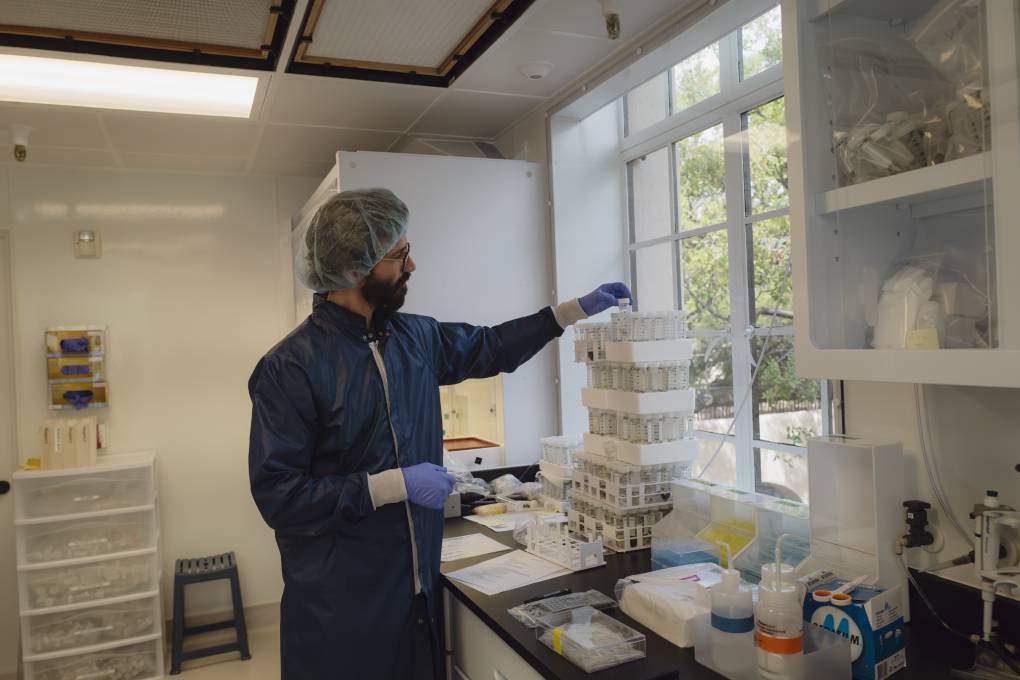
"caption": "Professor François Tissot has collected dozens of samples from the Eaton Fire in Altadena for his research on understanding the potential harms of living amid environmental contamination.",
"credit": "Zaydee Sanchez for KQED",
"altTag": null,
"description": null,
"imgSizes": {
"medium": {
"file": "https://cdn.kqed.org/wp-content/uploads/sites/10/2025/04/250408-CAL-TECH-TESTING-113-ZS-KQED-800x533.jpg",
"width": 800,
"height": 533,
"mimeType": "image/jpeg"
},
"large": {
"file": "https://cdn.kqed.org/wp-content/uploads/sites/10/2025/04/250408-CAL-TECH-TESTING-113-ZS-KQED-1020x680.jpg",
"width": 1020,
"height": 680,
"mimeType": "image/jpeg"
},
"thumbnail": {
"file": "https://cdn.kqed.org/wp-content/uploads/sites/10/2025/04/250408-CAL-TECH-TESTING-113-ZS-KQED-160x107.jpg",
"width": 160,
"height": 107,
"mimeType": "image/jpeg"
},
"1536x1536": {
"file": "https://cdn.kqed.org/wp-content/uploads/sites/10/2025/04/250408-CAL-TECH-TESTING-113-ZS-KQED-1536x1024.jpg",
"width": 1536,
"height": 1024,
"mimeType": "image/jpeg"
},
"post-thumbnail": {
"file": "https://cdn.kqed.org/wp-content/uploads/sites/10/2025/04/250408-CAL-TECH-TESTING-113-ZS-KQED-672x372.jpg",
"width": 672,
"height": 372,
"mimeType": "image/jpeg"
},
"twentyfourteen-full-width": {
"file": "https://cdn.kqed.org/wp-content/uploads/sites/10/2025/04/250408-CAL-TECH-TESTING-113-ZS-KQED-1038x576.jpg",
"width": 1038,
"height": 576,
"mimeType": "image/jpeg"
},
"full-width": {
"file": "https://cdn.kqed.org/wp-content/uploads/sites/10/2025/04/250408-CAL-TECH-TESTING-113-ZS-KQED-1920x1280.jpg",
"width": 1920,
"height": 1280,
"mimeType": "image/jpeg"
},
"kqedFullSize": {
"file": "https://cdn.kqed.org/wp-content/uploads/sites/10/2025/04/250408-CAL-TECH-TESTING-113-ZS-KQED.jpg",
"width": 2000,
"height": 1333
}
},
"isLoading": false,
"fetchFailed": false
},
"news_11667757": {
"type": "attachments",
"id": "news_11667757",
"meta": {
"index": "attachments_1716263798",
"site": "news",
"id": "11667757",
"found": true
},
"title": "17306665486_9d1bff4693_k",
"publishDate": 1526054732,
"status": "inherit",
"parent": 11667618,
"modified": 1526054791,
"caption": "A Goodwill store",
"credit": "Mike Mozart/Flickr",
"altTag": null,
"description": "A Goodwill store",
"imgSizes": {
"thumbnail": {
"file": "https://cdn.kqed.org/wp-content/uploads/sites/10/2018/05/17306665486_9d1bff4693_k-160x107.jpg",
"width": 160,
"height": 107,
"mimeType": "image/jpeg"
},
"medium": {
"file": "https://cdn.kqed.org/wp-content/uploads/sites/10/2018/05/17306665486_9d1bff4693_k-800x534.jpg",
"width": 800,
"height": 534,
"mimeType": "image/jpeg"
},
"large": {
"file": "https://cdn.kqed.org/wp-content/uploads/sites/10/2018/05/17306665486_9d1bff4693_k-1020x680.jpg",
"width": 1020,
"height": 680,
"mimeType": "image/jpeg"
},
"complete_open_graph": {
"file": "https://cdn.kqed.org/wp-content/uploads/sites/10/2018/05/17306665486_9d1bff4693_k-1200x800.jpg",
"width": 1200,
"height": 800,
"mimeType": "image/jpeg"
},
"fd-lrg": {
"file": "https://cdn.kqed.org/wp-content/uploads/sites/10/2018/05/17306665486_9d1bff4693_k-1920x1281.jpg",
"width": 1920,
"height": 1281,
"mimeType": "image/jpeg"
},
"fd-med": {
"file": "https://cdn.kqed.org/wp-content/uploads/sites/10/2018/05/17306665486_9d1bff4693_k-1180x787.jpg",
"width": 1180,
"height": 787,
"mimeType": "image/jpeg"
},
"fd-sm": {
"file": "https://cdn.kqed.org/wp-content/uploads/sites/10/2018/05/17306665486_9d1bff4693_k-960x640.jpg",
"width": 960,
"height": 640,
"mimeType": "image/jpeg"
},
"post-thumbnail": {
"file": "https://cdn.kqed.org/wp-content/uploads/sites/10/2018/05/17306665486_9d1bff4693_k-672x372.jpg",
"width": 672,
"height": 372,
"mimeType": "image/jpeg"
},
"twentyfourteen-full-width": {
"file": "https://cdn.kqed.org/wp-content/uploads/sites/10/2018/05/17306665486_9d1bff4693_k-1038x576.jpg",
"width": 1038,
"height": 576,
"mimeType": "image/jpeg"
},
"xxsmall": {
"file": "https://cdn.kqed.org/wp-content/uploads/sites/10/2018/05/17306665486_9d1bff4693_k-240x160.jpg",
"width": 240,
"height": 160,
"mimeType": "image/jpeg"
},
"xsmall": {
"file": "https://cdn.kqed.org/wp-content/uploads/sites/10/2018/05/17306665486_9d1bff4693_k-375x250.jpg",
"width": 375,
"height": 250,
"mimeType": "image/jpeg"
},
"small": {
"file": "https://cdn.kqed.org/wp-content/uploads/sites/10/2018/05/17306665486_9d1bff4693_k-520x347.jpg",
"width": 520,
"height": 347,
"mimeType": "image/jpeg"
},
"xlarge": {
"file": "https://cdn.kqed.org/wp-content/uploads/sites/10/2018/05/17306665486_9d1bff4693_k-1180x787.jpg",
"width": 1180,
"height": 787,
"mimeType": "image/jpeg"
},
"full-width": {
"file": "https://cdn.kqed.org/wp-content/uploads/sites/10/2018/05/17306665486_9d1bff4693_k-1920x1281.jpg",
"width": 1920,
"height": 1281,
"mimeType": "image/jpeg"
},
"guest-author-32": {
"file": "https://cdn.kqed.org/wp-content/uploads/sites/10/2018/05/17306665486_9d1bff4693_k-32x32.jpg",
"width": 32,
"height": 32,
"mimeType": "image/jpeg"
},
"guest-author-50": {
"file": "https://cdn.kqed.org/wp-content/uploads/sites/10/2018/05/17306665486_9d1bff4693_k-50x50.jpg",
"width": 50,
"height": 50,
"mimeType": "image/jpeg"
},
"guest-author-64": {
"file": "https://cdn.kqed.org/wp-content/uploads/sites/10/2018/05/17306665486_9d1bff4693_k-64x64.jpg",
"width": 64,
"height": 64,
"mimeType": "image/jpeg"
},
"guest-author-96": {
"file": "https://cdn.kqed.org/wp-content/uploads/sites/10/2018/05/17306665486_9d1bff4693_k-96x96.jpg",
"width": 96,
"height": 96,
"mimeType": "image/jpeg"
},
"guest-author-128": {
"file": "https://cdn.kqed.org/wp-content/uploads/sites/10/2018/05/17306665486_9d1bff4693_k-128x128.jpg",
"width": 128,
"height": 128,
"mimeType": "image/jpeg"
},
"detail": {
"file": "https://cdn.kqed.org/wp-content/uploads/sites/10/2018/05/17306665486_9d1bff4693_k-150x150.jpg",
"width": 150,
"height": 150,
"mimeType": "image/jpeg"
},
"kqedFullSize": {
"file": "https://cdn.kqed.org/wp-content/uploads/sites/10/2018/05/17306665486_9d1bff4693_k-e1744242245311.jpg",
"width": 2000,
"height": 1334
}
},
"isLoading": false,
"fetchFailed": false
},
"news_12034706": {
"type": "attachments",
"id": "news_12034706",
"meta": {
"index": "attachments_1716263798",
"site": "news",
"id": "12034706",
"found": true
},
"title": "250319-UCBerkeleyProtest-14-BL_qed",
"publishDate": 1744042874,
"status": "inherit",
"parent": 12034703,
"modified": 1744042951,
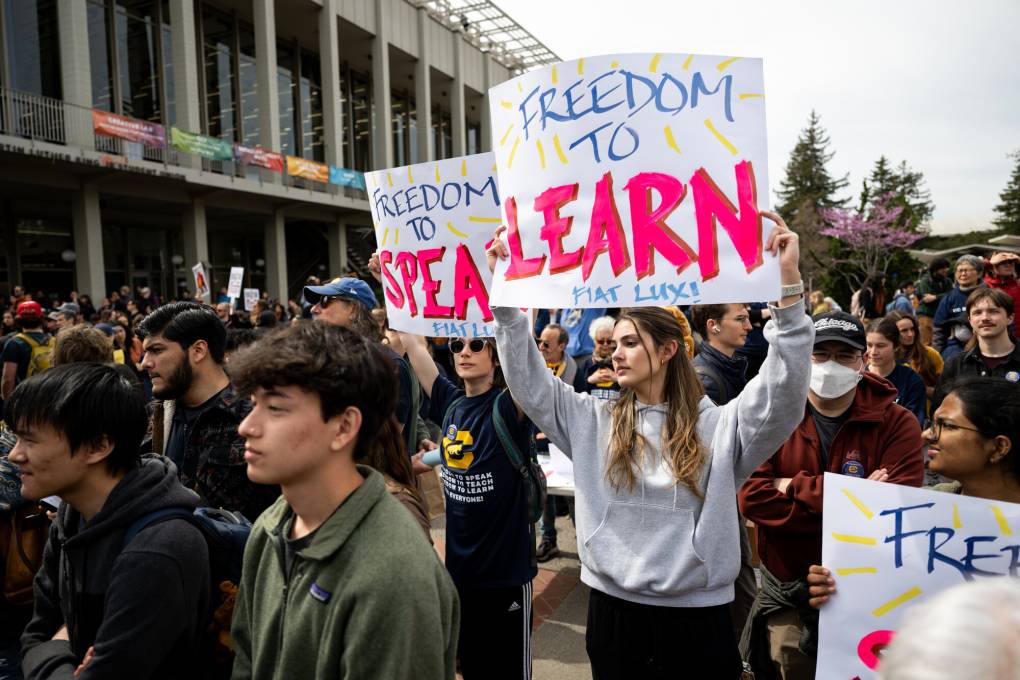
"caption": "Students attend a rally in Sproul Plaza at UC Berkeley on March 19, 2025, to protest the Trump administration's scrutiny of campus protests and curriculum nationwide. The demonstration comes amid broader concerns over federal funding cuts and actions perceived as threats to academic freedom.",
"credit": "Beth LaBerge/KQED",
"altTag": null,
"description": null,
"imgSizes": {
"medium": {
"file": "https://cdn.kqed.org/wp-content/uploads/sites/10/2025/04/250319-UCBerkeleyProtest-14-BL_qed-800x533.jpg",
"width": 800,
"height": 533,
"mimeType": "image/jpeg"
},
"large": {
"file": "https://cdn.kqed.org/wp-content/uploads/sites/10/2025/04/250319-UCBerkeleyProtest-14-BL_qed-1020x680.jpg",
"width": 1020,
"height": 680,
"mimeType": "image/jpeg"
},
"thumbnail": {
"file": "https://cdn.kqed.org/wp-content/uploads/sites/10/2025/04/250319-UCBerkeleyProtest-14-BL_qed-160x107.jpg",
"width": 160,
"height": 107,
"mimeType": "image/jpeg"
},
"1536x1536": {
"file": "https://cdn.kqed.org/wp-content/uploads/sites/10/2025/04/250319-UCBerkeleyProtest-14-BL_qed-1536x1024.jpg",
"width": 1536,
"height": 1024,
"mimeType": "image/jpeg"
},
"post-thumbnail": {
"file": "https://cdn.kqed.org/wp-content/uploads/sites/10/2025/04/250319-UCBerkeleyProtest-14-BL_qed-672x372.jpg",
"width": 672,
"height": 372,
"mimeType": "image/jpeg"
},
"twentyfourteen-full-width": {
"file": "https://cdn.kqed.org/wp-content/uploads/sites/10/2025/04/250319-UCBerkeleyProtest-14-BL_qed-1038x576.jpg",
"width": 1038,
"height": 576,
"mimeType": "image/jpeg"
},
"full-width": {
"file": "https://cdn.kqed.org/wp-content/uploads/sites/10/2025/04/250319-UCBerkeleyProtest-14-BL_qed-1920x1280.jpg",
"width": 1920,
"height": 1280,
"mimeType": "image/jpeg"
},
"kqedFullSize": {
"file": "https://cdn.kqed.org/wp-content/uploads/sites/10/2025/04/250319-UCBerkeleyProtest-14-BL_qed.jpg",
"width": 2000,
"height": 1333
}
},
"isLoading": false,
"fetchFailed": false
},
"news_12033001": {
"type": "attachments",
"id": "news_12033001",
"meta": {
"index": "attachments_1716263798",
"site": "news",
"id": "12033001",
"found": true
},
"title": "20250325_TEACHERS-FOR-TK_DMB_00048-KQED",
"publishDate": 1742939381,
"status": "inherit",
"parent": 0,
"modified": 1744242147,
"caption": "Angelica Cardenas, of Hayward, poses for a portrait with one of her favorite children's books in the library on the Cal State University East Bay campus in Hayward on March 25, 2025. Cardenas received her Master's degree in Early Childhood Education from Cal State East Bay.",
"credit": "David M. Barreda/KQED",
"altTag": null,
"description": null,
"imgSizes": {
"medium": {
"file": "https://cdn.kqed.org/wp-content/uploads/sites/10/2025/03/20250325_TEACHERS-FOR-TK_DMB_00048-KQED-800x533.jpg",
"width": 800,
"height": 533,
"mimeType": "image/jpeg"
},
"large": {
"file": "https://cdn.kqed.org/wp-content/uploads/sites/10/2025/03/20250325_TEACHERS-FOR-TK_DMB_00048-KQED-1020x680.jpg",
"width": 1020,
"height": 680,
"mimeType": "image/jpeg"
},
"thumbnail": {
"file": "https://cdn.kqed.org/wp-content/uploads/sites/10/2025/03/20250325_TEACHERS-FOR-TK_DMB_00048-KQED-160x107.jpg",
"width": 160,
"height": 107,
"mimeType": "image/jpeg"
},
"1536x1536": {
"file": "https://cdn.kqed.org/wp-content/uploads/sites/10/2025/03/20250325_TEACHERS-FOR-TK_DMB_00048-KQED-1536x1024.jpg",
"width": 1536,
"height": 1024,
"mimeType": "image/jpeg"
},
"post-thumbnail": {
"file": "https://cdn.kqed.org/wp-content/uploads/sites/10/2025/03/20250325_TEACHERS-FOR-TK_DMB_00048-KQED-672x372.jpg",
"width": 672,
"height": 372,
"mimeType": "image/jpeg"
},
"twentyfourteen-full-width": {
"file": "https://cdn.kqed.org/wp-content/uploads/sites/10/2025/03/20250325_TEACHERS-FOR-TK_DMB_00048-KQED-1038x576.jpg",
"width": 1038,
"height": 576,
"mimeType": "image/jpeg"
},
"full-width": {
"file": "https://cdn.kqed.org/wp-content/uploads/sites/10/2025/03/20250325_TEACHERS-FOR-TK_DMB_00048-KQED-1920x1280.jpg",
"width": 1920,
"height": 1280,
"mimeType": "image/jpeg"
},
"kqedFullSize": {
"file": "https://cdn.kqed.org/wp-content/uploads/sites/10/2025/03/20250325_TEACHERS-FOR-TK_DMB_00048-KQED.jpg",
"width": 2000,
"height": 1333
}
},
"isLoading": false,
"fetchFailed": false
},
"news_12011384": {
"type": "attachments",
"id": "news_12011384",
"meta": {
"index": "attachments_1716263798",
"site": "news",
"id": "12011384",
"found": true
},
"title": "241022-Prop36-07-BL_qed",
"publishDate": 1730148180,
"status": "inherit",
"parent": 12011368,
"modified": 1744239494,
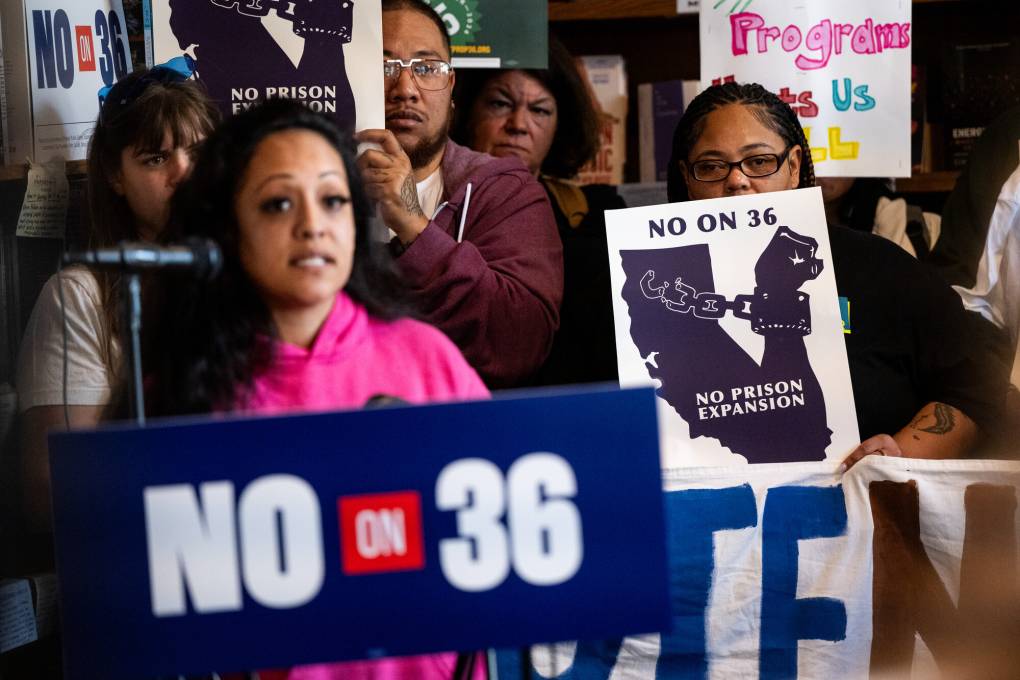
"caption": "Opponents of Proposition 36 hold signs at a rally in a San Francisco bookstore on Oct. 22, 2024.",
"credit": "Beth LaBerge/KQED",
"altTag": null,
"description": null,
"imgSizes": {
"medium": {
"file": "https://cdn.kqed.org/wp-content/uploads/sites/10/2024/10/241022-Prop36-07-BL_qed-800x533.jpg",
"width": 800,
"height": 533,
"mimeType": "image/jpeg"
},
"large": {
"file": "https://cdn.kqed.org/wp-content/uploads/sites/10/2024/10/241022-Prop36-07-BL_qed-1020x680.jpg",
"width": 1020,
"height": 680,
"mimeType": "image/jpeg"
},
"thumbnail": {
"file": "https://cdn.kqed.org/wp-content/uploads/sites/10/2024/10/241022-Prop36-07-BL_qed-160x107.jpg",
"width": 160,
"height": 107,
"mimeType": "image/jpeg"
},
"1536x1536": {
"file": "https://cdn.kqed.org/wp-content/uploads/sites/10/2024/10/241022-Prop36-07-BL_qed-1536x1024.jpg",
"width": 1536,
"height": 1024,
"mimeType": "image/jpeg"
},
"post-thumbnail": {
"file": "https://cdn.kqed.org/wp-content/uploads/sites/10/2024/10/241022-Prop36-07-BL_qed-672x372.jpg",
"width": 672,
"height": 372,
"mimeType": "image/jpeg"
},
"twentyfourteen-full-width": {
"file": "https://cdn.kqed.org/wp-content/uploads/sites/10/2024/10/241022-Prop36-07-BL_qed-1038x576.jpg",
"width": 1038,
"height": 576,
"mimeType": "image/jpeg"
},
"full-width": {
"file": "https://cdn.kqed.org/wp-content/uploads/sites/10/2024/10/241022-Prop36-07-BL_qed-1920x1280.jpg",
"width": 1920,
"height": 1280,
"mimeType": "image/jpeg"
},
"kqedFullSize": {
"file": "https://cdn.kqed.org/wp-content/uploads/sites/10/2024/10/241022-Prop36-07-BL_qed.jpg",
"width": 2000,
"height": 1333
}
},
"isLoading": false,
"fetchFailed": false
},
"news_11635686": {
"type": "attachments",
"id": "news_11635686",
"meta": {
"index": "attachments_1716263798",
"site": "news",
"id": "11635686",
"found": true
},
"title": "RS26222_IMG_2896-qut",
"publishDate": 1512690025,
"status": "inherit",
"parent": 11635537,
"modified": 1744151791,
"caption": "OUSD Superintendent Kyla Johnson-Trammell attends a leadership event at La Escuelita Elementary School before the start of the 2017–2018 school year. She says millions of dollars in budget cuts are necessary for the district's fiscal solvency. ",
"credit": "Devin Katayama/KQED",
"altTag": null,
"description": null,
"imgSizes": {
"thumbnail": {
"file": "https://cdn.kqed.org/wp-content/uploads/sites/10/2017/12/RS26222_IMG_2896-qut-160x107.jpg",
"width": 160,
"height": 107,
"mimeType": "image/jpeg"
},
"medium": {
"file": "https://cdn.kqed.org/wp-content/uploads/sites/10/2017/12/RS26222_IMG_2896-qut-800x533.jpg",
"width": 800,
"height": 533,
"mimeType": "image/jpeg"
},
"large": {
"file": "https://cdn.kqed.org/wp-content/uploads/sites/10/2017/12/RS26222_IMG_2896-qut-1020x680.jpg",
"width": 1020,
"height": 680,
"mimeType": "image/jpeg"
},
"fd-lrg": {
"file": "https://cdn.kqed.org/wp-content/uploads/sites/10/2017/12/RS26222_IMG_2896-qut-1920x1280.jpg",
"width": 1920,
"height": 1280,
"mimeType": "image/jpeg"
},
"fd-med": {
"file": "https://cdn.kqed.org/wp-content/uploads/sites/10/2017/12/RS26222_IMG_2896-qut-1180x787.jpg",
"width": 1180,
"height": 787,
"mimeType": "image/jpeg"
},
"fd-sm": {
"file": "https://cdn.kqed.org/wp-content/uploads/sites/10/2017/12/RS26222_IMG_2896-qut-960x640.jpg",
"width": 960,
"height": 640,
"mimeType": "image/jpeg"
},
"post-thumbnail": {
"file": "https://cdn.kqed.org/wp-content/uploads/sites/10/2017/12/RS26222_IMG_2896-qut-672x372.jpg",
"width": 672,
"height": 372,
"mimeType": "image/jpeg"
},
"twentyfourteen-full-width": {
"file": "https://cdn.kqed.org/wp-content/uploads/sites/10/2017/12/RS26222_IMG_2896-qut-1038x576.jpg",
"width": 1038,
"height": 576,
"mimeType": "image/jpeg"
},
"xxsmall": {
"file": "https://cdn.kqed.org/wp-content/uploads/sites/10/2017/12/RS26222_IMG_2896-qut-240x160.jpg",
"width": 240,
"height": 160,
"mimeType": "image/jpeg"
},
"xsmall": {
"file": "https://cdn.kqed.org/wp-content/uploads/sites/10/2017/12/RS26222_IMG_2896-qut-375x250.jpg",
"width": 375,
"height": 250,
"mimeType": "image/jpeg"
},
"small": {
"file": "https://cdn.kqed.org/wp-content/uploads/sites/10/2017/12/RS26222_IMG_2896-qut-520x347.jpg",
"width": 520,
"height": 347,
"mimeType": "image/jpeg"
},
"xlarge": {
"file": "https://cdn.kqed.org/wp-content/uploads/sites/10/2017/12/RS26222_IMG_2896-qut-1180x787.jpg",
"width": 1180,
"height": 787,
"mimeType": "image/jpeg"
},
"full-width": {
"file": "https://cdn.kqed.org/wp-content/uploads/sites/10/2017/12/RS26222_IMG_2896-qut-1920x1280.jpg",
"width": 1920,
"height": 1280,
"mimeType": "image/jpeg"
},
"guest-author-32": {
"file": "https://cdn.kqed.org/wp-content/uploads/sites/10/2017/12/RS26222_IMG_2896-qut-32x32.jpg",
"width": 32,
"height": 32,
"mimeType": "image/jpeg"
},
"guest-author-50": {
"file": "https://cdn.kqed.org/wp-content/uploads/sites/10/2017/12/RS26222_IMG_2896-qut-50x50.jpg",
"width": 50,
"height": 50,
"mimeType": "image/jpeg"
},
"guest-author-64": {
"file": "https://cdn.kqed.org/wp-content/uploads/sites/10/2017/12/RS26222_IMG_2896-qut-64x64.jpg",
"width": 64,
"height": 64,
"mimeType": "image/jpeg"
},
"guest-author-96": {
"file": "https://cdn.kqed.org/wp-content/uploads/sites/10/2017/12/RS26222_IMG_2896-qut-96x96.jpg",
"width": 96,
"height": 96,
"mimeType": "image/jpeg"
},
"guest-author-128": {
"file": "https://cdn.kqed.org/wp-content/uploads/sites/10/2017/12/RS26222_IMG_2896-qut-128x128.jpg",
"width": 128,
"height": 128,
"mimeType": "image/jpeg"
},
"detail": {
"file": "https://cdn.kqed.org/wp-content/uploads/sites/10/2017/12/RS26222_IMG_2896-qut-150x150.jpg",
"width": 150,
"height": 150,
"mimeType": "image/jpeg"
},
"kqedFullSize": {
"file": "https://cdn.kqed.org/wp-content/uploads/sites/10/2017/12/RS26222_IMG_2896-qut.jpg",
"width": 1920,
"height": 1280
}
},
"isLoading": false,
"fetchFailed": false
},
"news_12024990": {
"type": "attachments",
"id": "news_12024990",
"meta": {
"index": "attachments_1716263798",
"site": "news",
"id": "12024990",
"found": true
},
"title": "20250130_SSUTownHall_GC-12",
"publishDate": 1738284655,
"status": "inherit",
"parent": 0,
"modified": 1744225932,
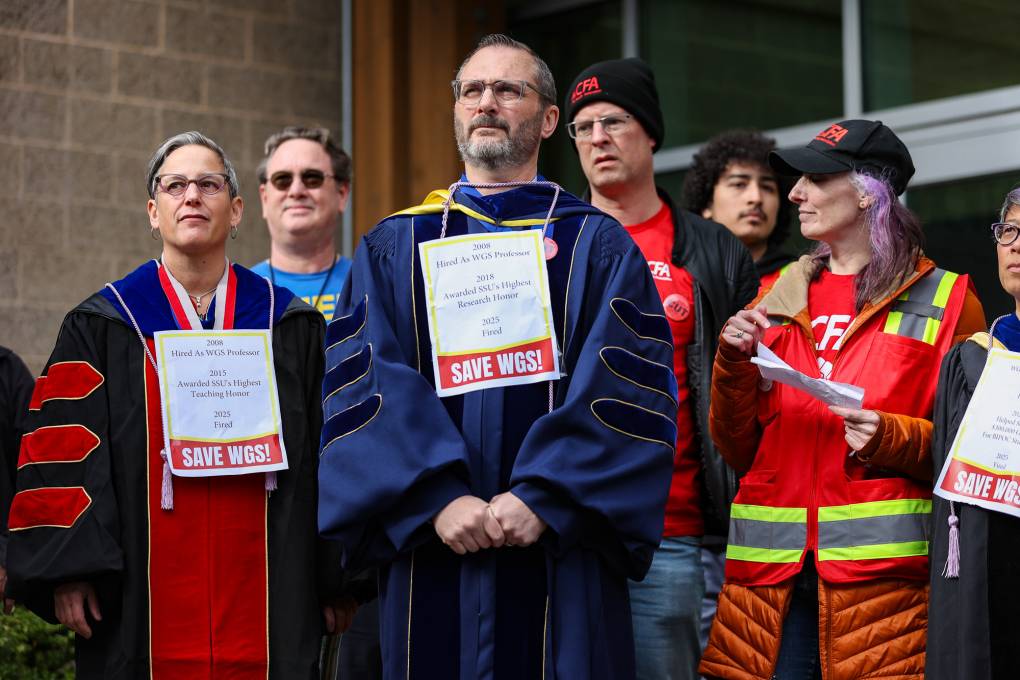
"caption": "Women and Gender Studies faculty, Lena McQuade, left, and Don Romesburg, center, attend a rally and virtual town hall wearing signs protesting the school’s budget cuts, at Sonoma State’s Seawolf Plaza in Rohnert Park, California, on Jan 30, 2025.",
"credit": "Gina Castro/KQED",
"altTag": null,
"description": null,
"imgSizes": {
"medium": {
"file": "https://cdn.kqed.org/wp-content/uploads/sites/10/2025/01/20250130_SSUTownHall_GC-12-800x533.jpg",
"width": 800,
"height": 533,
"mimeType": "image/jpeg"
},
"large": {
"file": "https://cdn.kqed.org/wp-content/uploads/sites/10/2025/01/20250130_SSUTownHall_GC-12-1020x680.jpg",
"width": 1020,
"height": 680,
"mimeType": "image/jpeg"
},
"thumbnail": {
"file": "https://cdn.kqed.org/wp-content/uploads/sites/10/2025/01/20250130_SSUTownHall_GC-12-160x107.jpg",
"width": 160,
"height": 107,
"mimeType": "image/jpeg"
},
"1536x1536": {
"file": "https://cdn.kqed.org/wp-content/uploads/sites/10/2025/01/20250130_SSUTownHall_GC-12-1536x1024.jpg",
"width": 1536,
"height": 1024,
"mimeType": "image/jpeg"
},
"post-thumbnail": {
"file": "https://cdn.kqed.org/wp-content/uploads/sites/10/2025/01/20250130_SSUTownHall_GC-12-672x372.jpg",
"width": 672,
"height": 372,
"mimeType": "image/jpeg"
},
"twentyfourteen-full-width": {
"file": "https://cdn.kqed.org/wp-content/uploads/sites/10/2025/01/20250130_SSUTownHall_GC-12-1038x576.jpg",
"width": 1038,
"height": 576,
"mimeType": "image/jpeg"
},
"full-width": {
"file": "https://cdn.kqed.org/wp-content/uploads/sites/10/2025/01/20250130_SSUTownHall_GC-12-1920x1280.jpg",
"width": 1920,
"height": 1280,
"mimeType": "image/jpeg"
},
"kqedFullSize": {
"file": "https://cdn.kqed.org/wp-content/uploads/sites/10/2025/01/20250130_SSUTownHall_GC-12.jpg",
"width": 2000,
"height": 1333
}
},
"isLoading": false,
"fetchFailed": false
},
"news_12034929": {
"type": "attachments",
"id": "news_12034929",
"meta": {
"index": "attachments_1716263798",
"site": "news",
"id": "12034929",
"found": true
},
"title": "022525-Evident-Border-Trip-EM-CM-01 copy",
"publishDate": 1744144102,
"status": "inherit",
"parent": 12034926,
"modified": 1744144127,
"caption": "Sergeant Gregory Bovino during an interview at El Centro Border Patrol headquarters on Feb. 25, 2025. ",
"credit": "Kevin Clancy/CalMatters and Evident Media",
"altTag": null,
"description": null,
"imgSizes": {
"medium": {
"file": "https://cdn.kqed.org/wp-content/uploads/sites/10/2025/04/022525-Evident-Border-Trip-EM-CM-01-copy-800x533.jpg",
"width": 800,
"height": 533,
"mimeType": "image/jpeg"
},
"large": {
"file": "https://cdn.kqed.org/wp-content/uploads/sites/10/2025/04/022525-Evident-Border-Trip-EM-CM-01-copy-1020x680.jpg",
"width": 1020,
"height": 680,
"mimeType": "image/jpeg"
},
"thumbnail": {
"file": "https://cdn.kqed.org/wp-content/uploads/sites/10/2025/04/022525-Evident-Border-Trip-EM-CM-01-copy-160x107.jpg",
"width": 160,
"height": 107,
"mimeType": "image/jpeg"
},
"1536x1536": {
"file": "https://cdn.kqed.org/wp-content/uploads/sites/10/2025/04/022525-Evident-Border-Trip-EM-CM-01-copy-1536x1024.jpg",
"width": 1536,
"height": 1024,
"mimeType": "image/jpeg"
},
"post-thumbnail": {
"file": "https://cdn.kqed.org/wp-content/uploads/sites/10/2025/04/022525-Evident-Border-Trip-EM-CM-01-copy-672x372.jpg",
"width": 672,
"height": 372,
"mimeType": "image/jpeg"
},
"twentyfourteen-full-width": {
"file": "https://cdn.kqed.org/wp-content/uploads/sites/10/2025/04/022525-Evident-Border-Trip-EM-CM-01-copy-1038x576.jpg",
"width": 1038,
"height": 576,
"mimeType": "image/jpeg"
},
"full-width": {
"file": "https://cdn.kqed.org/wp-content/uploads/sites/10/2025/04/022525-Evident-Border-Trip-EM-CM-01-copy-1920x1280.jpg",
"width": 1920,
"height": 1280,
"mimeType": "image/jpeg"
},
"kqedFullSize": {
"file": "https://cdn.kqed.org/wp-content/uploads/sites/10/2025/04/022525-Evident-Border-Trip-EM-CM-01-copy.jpg",
"width": 2000,
"height": 1333
}
},
"isLoading": false,
"fetchFailed": false
},
"news_11944379": {
"type": "attachments",
"id": "news_11944379",
"meta": {
"index": "attachments_1716263798",
"site": "news",
"id": "11944379",
"found": true
},
"title": "RS16535_IMG_0443.JPG",
"publishDate": 1679513384,
"status": "inherit",
"parent": 11944344,
"modified": 1744144959,
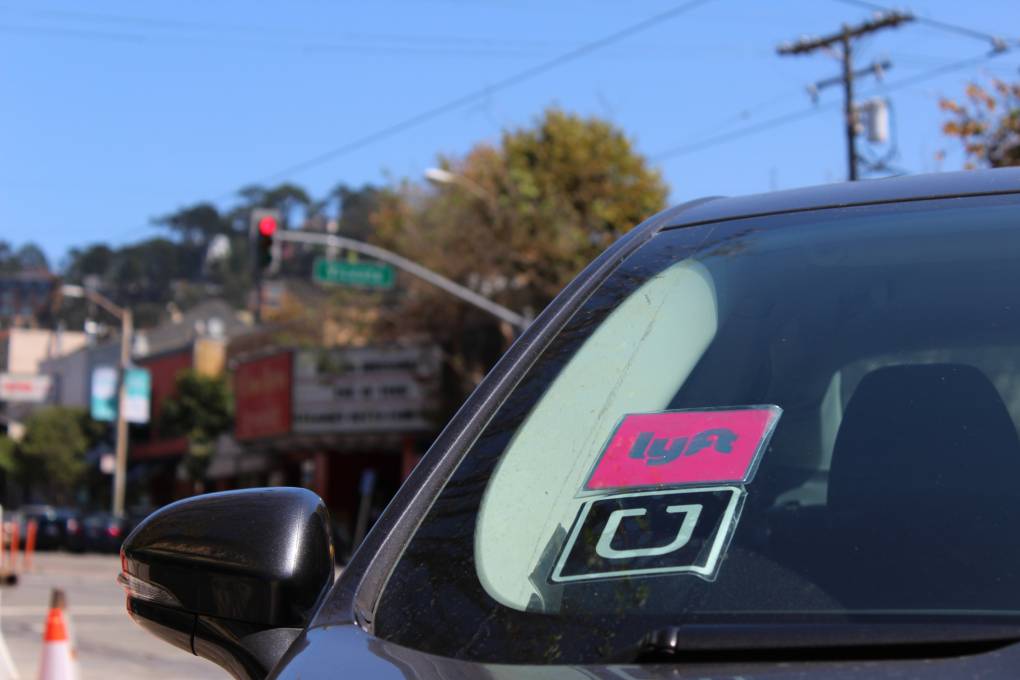
"caption": "Proposition 22 allows gig companies such as Uber, Lyft and the like to classify their drivers as independent contractors rather than employees. ",
"credit": "Ericka Cruz Guevarra/KQED",
"altTag": "A closeup shot of a black vehicle with a pink Lyft sticker and a black and white Uber sticker on the left side of its windshield. The vehicle sits idle, waiting to pick up a customer.",
"description": null,
"imgSizes": {
"medium": {
"file": "https://cdn.kqed.org/wp-content/uploads/sites/10/2023/03/RS16535_IMG_0443.JPG-800x533.jpg",
"width": 800,
"height": 533,
"mimeType": "image/jpeg"
},
"large": {
"file": "https://cdn.kqed.org/wp-content/uploads/sites/10/2023/03/RS16535_IMG_0443.JPG-1020x680.jpg",
"width": 1020,
"height": 680,
"mimeType": "image/jpeg"
},
"thumbnail": {
"file": "https://cdn.kqed.org/wp-content/uploads/sites/10/2023/03/RS16535_IMG_0443.JPG-160x107.jpg",
"width": 160,
"height": 107,
"mimeType": "image/jpeg"
},
"1536x1536": {
"file": "https://cdn.kqed.org/wp-content/uploads/sites/10/2023/03/RS16535_IMG_0443.JPG-1536x1024.jpg",
"width": 1536,
"height": 1024,
"mimeType": "image/jpeg"
},
"2048x2048": {
"file": "https://cdn.kqed.org/wp-content/uploads/sites/10/2023/03/RS16535_IMG_0443.JPG-2048x1365.jpg",
"width": 2048,
"height": 1365,
"mimeType": "image/jpeg"
},
"post-thumbnail": {
"file": "https://cdn.kqed.org/wp-content/uploads/sites/10/2023/03/RS16535_IMG_0443.JPG-672x372.jpg",
"width": 672,
"height": 372,
"mimeType": "image/jpeg"
},
"twentyfourteen-full-width": {
"file": "https://cdn.kqed.org/wp-content/uploads/sites/10/2023/03/RS16535_IMG_0443.JPG-1038x576.jpg",
"width": 1038,
"height": 576,
"mimeType": "image/jpeg"
},
"full-width": {
"file": "https://cdn.kqed.org/wp-content/uploads/sites/10/2023/03/RS16535_IMG_0443.JPG-1920x1280.jpg",
"width": 1920,
"height": 1280,
"mimeType": "image/jpeg"
},
"kqedFullSize": {
"file": "https://cdn.kqed.org/wp-content/uploads/sites/10/2023/03/RS16535_IMG_0443.JPG-scaled-e1764810192572.jpg",
"width": 2000,
"height": 1334
}
},
"isLoading": false,
"fetchFailed": false
}
},
"audioPlayerReducer": {
"postId": "stream_live",
"isPaused": true,
"isPlaying": false,
"pfsActive": false,
"pledgeModalIsOpen": true,
"playerDrawerIsOpen": false,
"liveAudioPlayStartedAt": 0,
"liveAudioPlayContext": ""
},
"authorsReducer": {
"byline_news_12033209": {
"type": "authors",
"id": "byline_news_12033209",
"meta": {
"override": true
},
"slug": "byline_news_12033209",
"name": "\u003ca href=\"https://www.kqed.org/author/daisynguyen\" target=\"_blank\" rel=\"noopener noreferrer\">Daisy Nguyen\u003c/a> and \u003ca href=\"https://www.kqed.org/author/ellyyu\" target=\"_blank\" rel=\"noopener noreferrer\">Elly Yu\u003c/a>",
"isLoading": false
},
"byline_news_12034926": {
"type": "authors",
"id": "byline_news_12034926",
"meta": {
"override": true
},
"slug": "byline_news_12034926",
"name": "\u003ca href=\"https://calmatters.org/author/sergio-olmos/\">Sergio Olmos\u003c/a> and \u003ca href=\"https://calmatters.org/author/wendy-fry/\">Wendy Fry\u003c/a>, CalMatters",
"isLoading": false
},
"sracho": {
"type": "authors",
"id": "107",
"meta": {
"index": "authors_1716337520",
"id": "107",
"found": true
},
"name": "Suzie Racho",
"firstName": "Suzie",
"lastName": "Racho",
"slug": "sracho",
"email": "SRacho@KQED.org",
"display_author_email": false,
"staff_mastheads": [
"news"
],
"title": "KQED Contributor",
"bio": "Suzie Racho is a correspondent-producer with \u003cem>The California Report Magazine\u003c/em>\u003cem>. S\u003c/em>he has also worked with several other KQED productions, including Bay Curious, Truth Be Told, The Do List and KQED News.\r\n\r\nSuzie came to KQED in 1996 after receiving a BA in journalism from San Francisco State University and spending several years working in the music industry. As part of \u003cem>The California Report\u003c/em> team, her work has been recognized by the Society for Professional Journalists, National Federation of Community Broadcasters and Public Radio News Directors Incorporated, among others. She was recognized with a national Gracie Award in 2019. She spends her free time baking, listening to K-pop and rooting for the Giants and Valkyries.",
"avatar": "https://secure.gravatar.com/avatar/842e457a9830b0f3c1ce3ab70ed3518d616d1e25e315c6292eab8cd611d98601?s=600&d=blank&r=g",
"twitter": null,
"bluesky": null,
"facebook": null,
"instagram": null,
"linkedin": null,
"sites": [
{
"site": "arts",
"roles": [
"editor"
]
},
{
"site": "news",
"roles": [
"editor"
]
}
],
"headData": {
"title": "Suzie Racho | KQED",
"description": "KQED Contributor",
"ogImgSrc": "https://secure.gravatar.com/avatar/842e457a9830b0f3c1ce3ab70ed3518d616d1e25e315c6292eab8cd611d98601?s=600&d=blank&r=g",
"twImgSrc": "https://secure.gravatar.com/avatar/842e457a9830b0f3c1ce3ab70ed3518d616d1e25e315c6292eab8cd611d98601?s=600&d=blank&r=g"
},
"isLoading": false,
"link": "/author/sracho"
},
"mlagos": {
"type": "authors",
"id": "3239",
"meta": {
"index": "authors_1716337520",
"id": "3239",
"found": true
},
"name": "Marisa Lagos",
"firstName": "Marisa",
"lastName": "Lagos",
"slug": "mlagos",
"email": "mlagos@kqed.org",
"display_author_email": false,
"staff_mastheads": [
"news"
],
"title": "KQED Contributor",
"bio": "Marisa Lagos is a correspondent for KQED’s California Politics and Government Desk and co-hosts the award-winning show and podcast, Political Breakdown. At KQED, Lagos also conducts reporting, analysis and investigations into state, local and national politics for radio, TV, online and onstage. In 2022, she and co-host, Scott Shafer, moderated the only gubernatorial debate in California. In 2020, the \u003ci>Washington Post\u003c/i> named her one of the top political journalists in California; she was nominated for a Peabody and won several other awards for her work investigating the 2017 California wildfires. She has worked at the \u003ci>San Francisco Chronicle\u003c/i>, \u003ci>San Francisco Examiner\u003c/i> and \u003ci>Los Angeles Times\u003c/i>. A UC Santa Barbara graduate, she lives in San Francisco with her two sons and husband.",
"avatar": "https://secure.gravatar.com/avatar/a261a0d3696fc066871ef96b85b5e7d2?s=600&d=blank&r=g",
"twitter": "@mlagos",
"facebook": null,
"instagram": null,
"linkedin": null,
"sites": [
{
"site": "arts",
"roles": [
"author"
]
},
{
"site": "news",
"roles": [
"editor"
]
},
{
"site": "science",
"roles": [
"editor"
]
},
{
"site": "forum",
"roles": [
"author"
]
},
{
"site": "liveblog",
"roles": [
"author"
]
}
],
"headData": {
"title": "Marisa Lagos | KQED",
"description": "KQED Contributor",
"ogImgSrc": "https://secure.gravatar.com/avatar/a261a0d3696fc066871ef96b85b5e7d2?s=600&d=blank&r=g",
"twImgSrc": "https://secure.gravatar.com/avatar/a261a0d3696fc066871ef96b85b5e7d2?s=600&d=blank&r=g"
},
"isLoading": false,
"link": "/author/mlagos"
},
"lklivans": {
"type": "authors",
"id": "8648",
"meta": {
"index": "authors_1716337520",
"id": "8648",
"found": true
},
"name": "Laura Klivans",
"firstName": "Laura",
"lastName": "Klivans",
"slug": "lklivans",
"email": "lklivans@kqed.org",
"display_author_email": true,
"staff_mastheads": [
"news",
"science"
],
"title": "Reporter",
"bio": "Laura Klivans is an award-winning science reporter for KQED News, where she covers climate change with an eye on both groundbreaking progress and gaps in action. She is the former host of KQED's blockbuster video series about tiny, amazing animals, \u003cem>Deep Look\u003c/em>. Her work reaches national audiences through NPR, \u003cem>Here & Now, \u003c/em>PRI, and other major outlets. \r\n\r\nLaura’s won five Northern California Area Emmy Awards for Deep Look and First Place in the Greater Bay Area Journalism Awards for a podcast exploring how one Oakland neighborhood teamed up to reduce planet-heating pollution.\r\n\r\nBeyond her reporting, she hosts and moderates events. In the past, she taught audio storytelling at the UC Berkeley Graduate School of Journalism, led international education programs, worked with immigrants and refugees along the Thai-Burmese border, taught high schoolers sex ed, and was an actress. \r\n\r\nShe's a former UC Berkeley Human Rights Fellow, USC Center for Health Journalism's California Fellow and Coro Fellow in Public Affairs. Laura has a master’s in journalism from UC Berkeley, a master’s in education from Harvard, and an undergraduate degree from Northwestern University.\r\n\r\nShe loves trying to riddle the meaning out of vanity license plates.",
"avatar": "https://secure.gravatar.com/avatar/af8e757bb8ce7b7fee6160ba66e37327?s=600&d=blank&r=g",
"twitter": "lauraklivans",
"facebook": null,
"instagram": null,
"linkedin": null,
"sites": [
{
"site": "news",
"roles": [
"editor"
]
},
{
"site": "stateofhealth",
"roles": [
"contributor",
"editor"
]
},
{
"site": "science",
"roles": [
"editor"
]
},
{
"site": "forum",
"roles": [
"editor"
]
}
],
"headData": {
"title": "Laura Klivans | KQED",
"description": "Reporter",
"ogImgSrc": "https://secure.gravatar.com/avatar/af8e757bb8ce7b7fee6160ba66e37327?s=600&d=blank&r=g",
"twImgSrc": "https://secure.gravatar.com/avatar/af8e757bb8ce7b7fee6160ba66e37327?s=600&d=blank&r=g"
},
"isLoading": false,
"link": "/author/lklivans"
},
"fjhabvala": {
"type": "authors",
"id": "8659",
"meta": {
"index": "authors_1716337520",
"id": "8659",
"found": true
},
"name": "Farida Jhabvala Romero",
"firstName": "Farida",
"lastName": "Jhabvala Romero",
"slug": "fjhabvala",
"email": "fjhabvala@kqed.org",
"display_author_email": true,
"staff_mastheads": [
"news"
],
"title": "KQED Contributor",
"bio": "Farida Jhabvala Romero is a Labor Correspondent for KQED. She previously covered immigration. Farida was \u003ca href=\"https://www.ccnma.org/2022-most-influential-latina-journalists\">named\u003c/a> one of the 10 Most Influential Latina Journalists in California in 2022 by the California Chicano News Media Association. Her work has won awards from the Society of Professional Journalists (Northern California), as well as a national and regional Edward M. Murrow Award for the collaborative reporting projects “Dangerous Air” and “Graying California.” Before joining KQED, Farida worked as a producer at Radio Bilingüe, a national public radio network. Farida earned her master’s degree in journalism from Stanford University.",
"avatar": "https://secure.gravatar.com/avatar/f9f022d4e2609741874222a1e9d41f48fea74011aa7c615eef91d9a50c944ebe?s=600&d=blank&r=g",
"twitter": "FaridaJhabvala",
"bluesky": null,
"facebook": null,
"instagram": null,
"linkedin": "https://www.linkedin.com/in/faridajhabvala/",
"sites": [
{
"site": "news",
"roles": [
"editor"
]
},
{
"site": "stateofhealth",
"roles": [
"author"
]
},
{
"site": "liveblog",
"roles": [
"author"
]
}
],
"headData": {
"title": "Farida Jhabvala Romero | KQED",
"description": "KQED Contributor",
"ogImgSrc": "https://secure.gravatar.com/avatar/f9f022d4e2609741874222a1e9d41f48fea74011aa7c615eef91d9a50c944ebe?s=600&d=blank&r=g",
"twImgSrc": "https://secure.gravatar.com/avatar/f9f022d4e2609741874222a1e9d41f48fea74011aa7c615eef91d9a50c944ebe?s=600&d=blank&r=g"
},
"isLoading": false,
"link": "/author/fjhabvala"
},
"cchamplin": {
"type": "authors",
"id": "11408",
"meta": {
"index": "authors_1716337520",
"id": "11408",
"found": true
},
"name": "Caroline Champlin",
"firstName": null,
"lastName": null,
"slug": "cchamplin",
"email": "cchamplin@kqed.org",
"display_author_email": false,
"staff_mastheads": [],
"title": null,
"bio": null,
"avatar": "https://secure.gravatar.com/avatar/78d8654d3fedda8393a51d63c1042215?s=600&d=blank&r=g",
"twitter": null,
"facebook": null,
"instagram": null,
"linkedin": null,
"sites": [
{
"site": "news",
"roles": [
"author",
"edit_others_posts"
]
}
],
"headData": {
"title": "Caroline Champlin | KQED",
"description": null,
"ogImgSrc": "https://secure.gravatar.com/avatar/78d8654d3fedda8393a51d63c1042215?s=600&d=blank&r=g",
"twImgSrc": "https://secure.gravatar.com/avatar/78d8654d3fedda8393a51d63c1042215?s=600&d=blank&r=g"
},
"isLoading": false,
"link": "/author/cchamplin"
},
"eromero": {
"type": "authors",
"id": "11746",
"meta": {
"index": "authors_1716337520",
"id": "11746",
"found": true
},
"name": "Ezra David Romero",
"firstName": "Ezra David",
"lastName": "Romero",
"slug": "eromero",
"email": "eromero@kqed.org",
"display_author_email": true,
"staff_mastheads": [
"news",
"science"
],
"title": "Climate Reporter",
"bio": "Ezra David Romero is a climate reporter for KQED News. He covers the absence and excess of water in the Bay Area — think sea level rise, flooding and drought. For nearly a decade he’s covered how warming temperatures are altering the lives of Californians. He’s reported on farmers worried their pistachio trees aren’t getting enough sleep, families desperate for water, scientists studying dying giant sequoias, and alongside firefighters containing wildfires. His work has appeared on local stations across California and nationally on public radio shows like Morning Edition, Here and Now, All Things Considered and Science Friday. ",
"avatar": "https://secure.gravatar.com/avatar/9c15bb8bab267e058708a9eeaeef16bf?s=600&d=blank&r=g",
"twitter": "ezraromero",
"bluesky": null,
"facebook": null,
"instagram": null,
"linkedin": null,
"sites": [
{
"site": "arts",
"roles": [
"editor"
]
},
{
"site": "news",
"roles": [
"editor"
]
},
{
"site": "science",
"roles": [
"editor"
]
},
{
"site": "liveblog",
"roles": [
"author"
]
}
],
"headData": {
"title": "Ezra David Romero | KQED",
"description": "Climate Reporter",
"ogImgSrc": "https://secure.gravatar.com/avatar/9c15bb8bab267e058708a9eeaeef16bf?s=600&d=blank&r=g",
"twImgSrc": "https://secure.gravatar.com/avatar/9c15bb8bab267e058708a9eeaeef16bf?s=600&d=blank&r=g"
},
"isLoading": false,
"link": "/author/eromero"
},
"nkhan": {
"type": "authors",
"id": "11867",
"meta": {
"index": "authors_1716337520",
"id": "11867",
"found": true
},
"name": "Nisa Khan",
"firstName": "Nisa",
"lastName": "Khan",
"slug": "nkhan",
"email": "nkhan@kqed.org",
"display_author_email": false,
"staff_mastheads": [],
"title": "KQED Contributor",
"bio": "Nisa Khan is a reporter for KQED's Audience News Desk. She was formerly a data reporter at Michigan Radio. She earned a Bachelor of Science in Information from the University of Michigan and a Master of Arts in Communication from Stanford University.",
"avatar": "https://secure.gravatar.com/avatar/a3bf1efcfbe7658d13a434cc54d0b2e3?s=600&d=blank&r=g",
"twitter": "mnisakhan",
"bluesky": null,
"facebook": null,
"instagram": null,
"linkedin": null,
"sites": [
{
"site": "arts",
"roles": [
"editor"
]
},
{
"site": "news",
"roles": [
"editor"
]
},
{
"site": "science",
"roles": [
"editor",
"author"
]
},
{
"site": "forum",
"roles": [
"editor"
]
},
{
"site": "liveblog",
"roles": [
"contributor"
]
}
],
"headData": {
"title": "Nisa Khan | KQED",
"description": "KQED Contributor",
"ogImgSrc": "https://secure.gravatar.com/avatar/a3bf1efcfbe7658d13a434cc54d0b2e3?s=600&d=blank&r=g",
"twImgSrc": "https://secure.gravatar.com/avatar/a3bf1efcfbe7658d13a434cc54d0b2e3?s=600&d=blank&r=g"
},
"isLoading": false,
"link": "/author/nkhan"
},
"kdebenedetti": {
"type": "authors",
"id": "11913",
"meta": {
"index": "authors_1716337520",
"id": "11913",
"found": true
},
"name": "Katie DeBenedetti",
"firstName": "Katie",
"lastName": "DeBenedetti",
"slug": "kdebenedetti",
"email": "kdebenedetti@kqed.org",
"display_author_email": false,
"staff_mastheads": [
"news",
"science"
],
"title": "KQED Contributor",
"bio": "Katie DeBenedetti is a digital reporter covering daily news for the Express Desk. Prior to joining KQED as a culture reporting intern in January 2024, she covered education and city government for the Napa Valley Register.",
"avatar": "https://secure.gravatar.com/avatar/6e31073cb8f7e4214ab03f42771d0f45?s=600&d=blank&r=g",
"twitter": null,
"facebook": null,
"instagram": null,
"linkedin": null,
"sites": [
{
"site": "news",
"roles": [
"author"
]
},
{
"site": "science",
"roles": [
"author"
]
},
{
"site": "liveblog",
"roles": [
"author"
]
}
],
"headData": {
"title": "Katie DeBenedetti | KQED",
"description": "KQED Contributor",
"ogImgSrc": "https://secure.gravatar.com/avatar/6e31073cb8f7e4214ab03f42771d0f45?s=600&d=blank&r=g",
"twImgSrc": "https://secure.gravatar.com/avatar/6e31073cb8f7e4214ab03f42771d0f45?s=600&d=blank&r=g"
},
"isLoading": false,
"link": "/author/kdebenedetti"
},
"slim": {
"type": "authors",
"id": "11920",
"meta": {
"index": "authors_1716337520",
"id": "11920",
"found": true
},
"name": "Samantha Lim",
"firstName": "Samantha",
"lastName": "Lim",
"slug": "slim",
"email": "slim@KQED.org",
"display_author_email": false,
"staff_mastheads": [],
"title": "KQED Contributor",
"bio": null,
"avatar": "https://secure.gravatar.com/avatar/82e592e6c15fe1a04d385e8ad0fb0b4e?s=600&d=blank&r=g",
"twitter": null,
"facebook": null,
"instagram": null,
"linkedin": null,
"sites": [
{
"site": "news",
"roles": []
}
],
"headData": {
"title": "Samantha Lim | KQED",
"description": "KQED Contributor",
"ogImgSrc": "https://secure.gravatar.com/avatar/82e592e6c15fe1a04d385e8ad0fb0b4e?s=600&d=blank&r=g",
"twImgSrc": "https://secure.gravatar.com/avatar/82e592e6c15fe1a04d385e8ad0fb0b4e?s=600&d=blank&r=g"
},
"isLoading": false,
"link": "/author/slim"
}
},
"pagesReducer": {
"news_tag_california": {
"type": "terms",
"id": "news_18538",
"meta": {
"index": "terms_1716263798",
"site": "news",
"id": "18538",
"score": 6.8457103
},
"featImg": null,
"name": "California",
"description": null,
"taxonomy": "tag",
"headData": {
"twImgId": null,
"twTitle": null,
"ogTitle": null,
"ogImgId": null,
"twDescription": null,
"description": null,
"title": "California Archives | KQED News",
"ogDescription": null
},
"ttid": 31,
"slug": "california",
"isLoading": false,
"title": "California",
"pageMeta": {
"site": "news",
"WpPageTemplate": "page-topic-editorial",
"currentPage": 94
},
"blocks": [
{
"blockName": "kqed/post-list",
"attrs": {
"layout": "cardArticle2",
"query": "posts/news?tag=california",
"seeMore": false,
"paginated": true,
"page": 94
}
},
{
"blockName": "kqed/ad"
}
]
}
},
"pfsSessionReducer": {},
"postsReducer": {
"stream_live": {
"type": "live",
"id": "stream_live",
"audioUrl": "https://streams.kqed.org/kqedradio",
"title": "Live Stream",
"excerpt": "Live Stream information currently unavailable.",
"link": "/radio",
"featImg": "",
"label": {
"name": "KQED Live",
"link": "/"
}
},
"stream_kqedNewscast": {
"type": "posts",
"id": "stream_kqedNewscast",
"audioUrl": "https://www.kqed.org/.stream/anon/radio/RDnews/newscast.mp3?_=1",
"title": "KQED Newscast",
"featImg": "",
"label": {
"name": "88.5 FM",
"link": "/"
}
},
"news_12035455": {
"type": "posts",
"id": "news_12035455",
"meta": {
"index": "posts_1716263798",
"site": "news",
"id": "12035455",
"score": null,
"sort": [
1744387227000
]
},
"guestAuthors": [],
"slug": "california-bill-to-cut-solar-incentives-prompts-fierce-debate",
"title": "California Bill to Cut Solar Incentives Prompts Fierce Debate",
"publishDate": 1744387227,
"format": "standard",
"headTitle": "California Bill to Cut Solar Incentives Prompts Fierce Debate | KQED",
"labelTerm": {
"site": "news"
},
"content": "\u003cp>Fighting about rooftop solar in \u003ca href=\"https://www.kqed.org/news/tag/california\">California\u003c/a> never seems to get old.\u003c/p>\n\u003cp>Kicking off the latest conflict is legislation that would reduce the benefits that longtime solar customers receive for extra electricity they produce and export to the grid. While the bill hasn’t had a hearing yet, it’s already garnering strong support and fiery opposition.\u003c/p>\n\u003cp>The \u003ca href=\"https://leginfo.legislature.ca.gov/faces/billNavClient.xhtml?bill_id=202520260AB942\">legislation\u003c/a> would apply to customers, both commercial and residential, who installed solar before April 2023. It would cut the time period in which they get certain credits from 20 years to 10 and bring their remaining rates in line with those of newer solar customers.\u003c/p>\n\u003cp>[ad fullwidth]\u003c/p>\n\u003cp>Los Angeles Assemblymember Lisa Calderon, D-Whittier, introduced the legislation, saying it would reduce energy costs for non-solar customers by adjusting unequitable rooftop solar subsidies.\u003c/p>\n\u003cp>Calderon and others argue that older deals for solar incentives overcompensate customers and, therefore, shift costs of maintaining the energy grid — which solar customers also use — onto people without the panels.\u003c/p>\n\u003cp>“This outdated formula shifted \u003ca href=\"https://www.publicadvocates.cpuc.ca.gov/-/media/cal-advocates-website/files/press-room/reports-and-analyses/240822-public-advocates-office-2024-nem-cost-shift-fact-sheet.pdf\">$8.5 billion\u003c/a> to non-solar customers’ bills last year alone, with ratepayers in my district paying on average of $230 a year as a result of these solar subsidies,” Calderon said in a statement to KQED.\u003c/p>\n\u003cp>Calderon noted that the California Public Utilities Commission had already reduced subsidies for new solar installations in 2023.[aside postID=science_1996563 hero='https://cdn.kqed.org/wp-content/uploads/sites/10/2025/04/250321-VirtualPowerPlant-14-BL_qed.jpg']\u003c/p>\n\u003cp>“It’s time to do the same for legacy customers,” she said.\u003c/p>\n\u003cp>The legislation echoes \u003ca href=\"https://www.publicadvocates.cpuc.ca.gov/-/media/cal-advocates-website/files/press-room/reports-and-analyses/240822-public-advocates-office-2024-nem-cost-shift-fact-sheet.pdf\">research\u003c/a> by the state’s consumer-focused Public Advocates Office, which suggested cutting legacy solar payback rates to bring down the state’s soaring electricity prices.\u003c/p>\n\u003cp>UC Berkeley energy economist Severin Borenstein agrees with the bill’s underlying idea.\u003c/p>\n\u003cp>“I think that many legislators have now realized that one cause of the high electricity prices is the cost shift from solar owners to other ratepayers, and that is particularly for customers who put in solar before April 2023,” Borenstein said.\u003c/p>\n\u003cp>That was the date when the California Public Utilities Commission slashed compensation that new solar customers would get for sending energy from their panels to the grids back to the grid, which resulted in plummeting rooftop solar installations.\u003c/p>\n\u003cp>“I think for most customers who have had their systems for at least 10 years, they have saved far more than the initial cost of the system,” Borenstein said.\u003c/p>\n\u003cp>Investor-owned utilities Pacific Gas & Electric, Southern California Edison, and San Diego Gas & Electric, along with environmental group Natural Resources Defense Council and even The Utility Reform Network, a group that often clashes with large utilities, agree with these arguments. However, none of them have officially backed Calderon’s legislation.\u003c/p>\n\u003cfigure id=\"attachment_12035600\" class=\"wp-caption aligncenter\" style=\"max-width: 2000px\">\u003cimg loading=\"lazy\" decoding=\"async\" class=\"size-full wp-image-12035600\" src=\"https://cdn.kqed.org/wp-content/uploads/sites/10/2025/04/250321-VIRTUALPOWERPLANT-20-BL-KQED.jpg\" alt=\"\" width=\"2000\" height=\"1333\" srcset=\"https://cdn.kqed.org/wp-content/uploads/sites/10/2025/04/250321-VIRTUALPOWERPLANT-20-BL-KQED.jpg 2000w, https://cdn.kqed.org/wp-content/uploads/sites/10/2025/04/250321-VIRTUALPOWERPLANT-20-BL-KQED-800x533.jpg 800w, https://cdn.kqed.org/wp-content/uploads/sites/10/2025/04/250321-VIRTUALPOWERPLANT-20-BL-KQED-1020x680.jpg 1020w, https://cdn.kqed.org/wp-content/uploads/sites/10/2025/04/250321-VIRTUALPOWERPLANT-20-BL-KQED-160x107.jpg 160w, https://cdn.kqed.org/wp-content/uploads/sites/10/2025/04/250321-VIRTUALPOWERPLANT-20-BL-KQED-1536x1024.jpg 1536w, https://cdn.kqed.org/wp-content/uploads/sites/10/2025/04/250321-VIRTUALPOWERPLANT-20-BL-KQED-1920x1280.jpg 1920w\" sizes=\"auto, (max-width: 2000px) 100vw, 2000px\">\u003cfigcaption class=\"wp-caption-text\">An aerial view of a home in Richmond on March 21, 2025. \u003ccite>(Beth LaBerge/KQED)\u003c/cite>\u003c/figcaption>\u003c/figure>\n\u003cp>Rooftop solar advocates are balking at the proposal, which would upend contracts that homeowners, schools, and businesses signed years ago, as part of an effort to help Californians increase solar adoption.\u003c/p>\n\u003cp>“These are customers who did the right thing at the encouragement of the state,” said Brad Heavner, who directs the California Solar and Storage Association. “These customers should be thanked and not punished.”\u003c/p>\n\u003cp>Heavner called the legislation bad policy and pointed out that Assemblymember Calderon worked for more than \u003ca href=\"https://www.linkedin.com/in/lisacalderon/\">two decades\u003c/a> for Southern California Edison, which is backing the changes.\u003c/p>\n\u003cp>Rev. Ambrose Carroll, who founded Green The Church, an organization that helps install solar on Black churches, also opposes the bill.\u003c/p>\n\u003cp>“We believe that AB 942 is a blatant and unprecedented attempt to retroactively rewrite over two million rooftop and community solar contracts, agreements entered into under good faith under clear long-standing state rules, before April 2023,” said Carroll.\u003c/p>\n\u003cp>Carroll said wealthy homeowners are not the only ones who have installed solar panels and that the reduction in payments could be a financial setback for some.\u003c/p>\n\u003cp>“We’ve been trying to make sure that medium income folks and to a degree low income folks have also signed on and were taking advantage of that,” Carroll said, adding that changing the incentives feels like a “move backwards.”\u003c/p>\n\u003cp>The bill could affect nearly two million solar customers across California and is scheduled for its first hearing in the state Legislature at the end of this month.\u003c/p>\n\u003cp>\u003c/p>\n",
"blocks": [],
"excerpt": "Consumer advocates and large utilities say reforming solar incentives will reduce electricity bills for people without rooftop panels. Solar advocates say the proposal punishes early adopters.",
"status": "publish",
"parent": 0,
"modified": 1744394120,
"stats": {
"hasAudio": false,
"hasVideo": false,
"hasChartOrMap": false,
"iframeSrcs": [],
"hasGoogleForm": false,
"hasGallery": false,
"hasHearkenModule": false,
"hasPolis": false,
"paragraphCount": 24,
"wordCount": 744
},
"headData": {
"title": "California Bill to Cut Solar Incentives Prompts Fierce Debate | KQED",
"description": "Consumer advocates and large utilities say reforming solar incentives will reduce electricity bills for people without rooftop panels. Solar advocates say the proposal punishes early adopters.",
"ogTitle": "",
"ogDescription": "",
"ogImgId": "",
"twTitle": "",
"twDescription": "",
"twImgId": "",
"schema": {
"@context": "https://schema.org",
"@type": "NewsArticle",
"headline": "California Bill to Cut Solar Incentives Prompts Fierce Debate",
"datePublished": "2025-04-11T09:00:27-07:00",
"dateModified": "2025-04-11T10:55:20-07:00",
"image": "https://cdn.kqed.org/wp-content/uploads/2020/02/KQED-OG-Image@1x.png",
"isAccessibleForFree": "True",
"publisher": {
"@type": "NewsMediaOrganization",
"@id": "https://www.kqed.org/#organization",
"name": "KQED",
"logo": "https://cdn.kqed.org/wp-content/uploads/2020/02/KQED-OG-Image@1x.png",
"url": "https://www.kqed.org",
"sameAs": [
"https://www.facebook.com/KQED",
"https://twitter.com/KQED",
"https://www.instagram.com/kqed/",
"https://www.tiktok.com/@kqedofficial",
"https://www.linkedin.com/company/kqed",
"https://www.youtube.com/channel/UCeC0IOo7i1P_61zVUWbJ4nw"
]
}
}
},
"sticky": false,
"nprStoryId": "kqed-12035455",
"templateType": "standard",
"featuredImageType": "standard",
"excludeFromSiteSearch": "Include",
"articleAge": "0",
"path": "/news/12035455/california-bill-to-cut-solar-incentives-prompts-fierce-debate",
"audioTrackLength": null,
"parsedContent": [
{
"type": "contentString",
"content": "\u003cdiv class=\"post-body\">\u003cp>\u003cp>Fighting about rooftop solar in \u003ca href=\"https://www.kqed.org/news/tag/california\">California\u003c/a> never seems to get old.\u003c/p>\n\u003cp>Kicking off the latest conflict is legislation that would reduce the benefits that longtime solar customers receive for extra electricity they produce and export to the grid. While the bill hasn’t had a hearing yet, it’s already garnering strong support and fiery opposition.\u003c/p>\n\u003cp>The \u003ca href=\"https://leginfo.legislature.ca.gov/faces/billNavClient.xhtml?bill_id=202520260AB942\">legislation\u003c/a> would apply to customers, both commercial and residential, who installed solar before April 2023. It would cut the time period in which they get certain credits from 20 years to 10 and bring their remaining rates in line with those of newer solar customers.\u003c/p>\n\u003cp>\u003c/p>\u003c/div>",
"attributes": {
"named": {},
"numeric": []
}
},
{
"type": "component",
"content": "",
"name": "ad",
"attributes": {
"named": {
"label": "fullwidth"
},
"numeric": [
"fullwidth"
]
}
},
{
"type": "contentString",
"content": "\u003cdiv class=\"post-body\">\u003cp>\u003c/p>\n\u003cp>Los Angeles Assemblymember Lisa Calderon, D-Whittier, introduced the legislation, saying it would reduce energy costs for non-solar customers by adjusting unequitable rooftop solar subsidies.\u003c/p>\n\u003cp>Calderon and others argue that older deals for solar incentives overcompensate customers and, therefore, shift costs of maintaining the energy grid — which solar customers also use — onto people without the panels.\u003c/p>\n\u003cp>“This outdated formula shifted \u003ca href=\"https://www.publicadvocates.cpuc.ca.gov/-/media/cal-advocates-website/files/press-room/reports-and-analyses/240822-public-advocates-office-2024-nem-cost-shift-fact-sheet.pdf\">$8.5 billion\u003c/a> to non-solar customers’ bills last year alone, with ratepayers in my district paying on average of $230 a year as a result of these solar subsidies,” Calderon said in a statement to KQED.\u003c/p>\n\u003cp>Calderon noted that the California Public Utilities Commission had already reduced subsidies for new solar installations in 2023.\u003c/p>\u003c/div>",
"attributes": {
"named": {},
"numeric": []
}
},
{
"type": "component",
"content": "",
"name": "aside",
"attributes": {
"named": {
"postid": "science_1996563",
"hero": "https://cdn.kqed.org/wp-content/uploads/sites/10/2025/04/250321-VirtualPowerPlant-14-BL_qed.jpg",
"label": ""
},
"numeric": []
}
},
{
"type": "contentString",
"content": "\u003cdiv class=\"post-body\">\u003cp>\u003c/p>\n\u003cp>“It’s time to do the same for legacy customers,” she said.\u003c/p>\n\u003cp>The legislation echoes \u003ca href=\"https://www.publicadvocates.cpuc.ca.gov/-/media/cal-advocates-website/files/press-room/reports-and-analyses/240822-public-advocates-office-2024-nem-cost-shift-fact-sheet.pdf\">research\u003c/a> by the state’s consumer-focused Public Advocates Office, which suggested cutting legacy solar payback rates to bring down the state’s soaring electricity prices.\u003c/p>\n\u003cp>UC Berkeley energy economist Severin Borenstein agrees with the bill’s underlying idea.\u003c/p>\n\u003cp>“I think that many legislators have now realized that one cause of the high electricity prices is the cost shift from solar owners to other ratepayers, and that is particularly for customers who put in solar before April 2023,” Borenstein said.\u003c/p>\n\u003cp>That was the date when the California Public Utilities Commission slashed compensation that new solar customers would get for sending energy from their panels to the grids back to the grid, which resulted in plummeting rooftop solar installations.\u003c/p>\n\u003cp>“I think for most customers who have had their systems for at least 10 years, they have saved far more than the initial cost of the system,” Borenstein said.\u003c/p>\n\u003cp>Investor-owned utilities Pacific Gas & Electric, Southern California Edison, and San Diego Gas & Electric, along with environmental group Natural Resources Defense Council and even The Utility Reform Network, a group that often clashes with large utilities, agree with these arguments. However, none of them have officially backed Calderon’s legislation.\u003c/p>\n\u003cfigure id=\"attachment_12035600\" class=\"wp-caption aligncenter\" style=\"max-width: 2000px\">\u003cimg loading=\"lazy\" decoding=\"async\" class=\"size-full wp-image-12035600\" src=\"https://cdn.kqed.org/wp-content/uploads/sites/10/2025/04/250321-VIRTUALPOWERPLANT-20-BL-KQED.jpg\" alt=\"\" width=\"2000\" height=\"1333\" srcset=\"https://cdn.kqed.org/wp-content/uploads/sites/10/2025/04/250321-VIRTUALPOWERPLANT-20-BL-KQED.jpg 2000w, https://cdn.kqed.org/wp-content/uploads/sites/10/2025/04/250321-VIRTUALPOWERPLANT-20-BL-KQED-800x533.jpg 800w, https://cdn.kqed.org/wp-content/uploads/sites/10/2025/04/250321-VIRTUALPOWERPLANT-20-BL-KQED-1020x680.jpg 1020w, https://cdn.kqed.org/wp-content/uploads/sites/10/2025/04/250321-VIRTUALPOWERPLANT-20-BL-KQED-160x107.jpg 160w, https://cdn.kqed.org/wp-content/uploads/sites/10/2025/04/250321-VIRTUALPOWERPLANT-20-BL-KQED-1536x1024.jpg 1536w, https://cdn.kqed.org/wp-content/uploads/sites/10/2025/04/250321-VIRTUALPOWERPLANT-20-BL-KQED-1920x1280.jpg 1920w\" sizes=\"auto, (max-width: 2000px) 100vw, 2000px\">\u003cfigcaption class=\"wp-caption-text\">An aerial view of a home in Richmond on March 21, 2025. \u003ccite>(Beth LaBerge/KQED)\u003c/cite>\u003c/figcaption>\u003c/figure>\n\u003cp>Rooftop solar advocates are balking at the proposal, which would upend contracts that homeowners, schools, and businesses signed years ago, as part of an effort to help Californians increase solar adoption.\u003c/p>\n\u003cp>“These are customers who did the right thing at the encouragement of the state,” said Brad Heavner, who directs the California Solar and Storage Association. “These customers should be thanked and not punished.”\u003c/p>\n\u003cp>Heavner called the legislation bad policy and pointed out that Assemblymember Calderon worked for more than \u003ca href=\"https://www.linkedin.com/in/lisacalderon/\">two decades\u003c/a> for Southern California Edison, which is backing the changes.\u003c/p>\n\u003cp>Rev. Ambrose Carroll, who founded Green The Church, an organization that helps install solar on Black churches, also opposes the bill.\u003c/p>\n\u003cp>“We believe that AB 942 is a blatant and unprecedented attempt to retroactively rewrite over two million rooftop and community solar contracts, agreements entered into under good faith under clear long-standing state rules, before April 2023,” said Carroll.\u003c/p>\n\u003cp>Carroll said wealthy homeowners are not the only ones who have installed solar panels and that the reduction in payments could be a financial setback for some.\u003c/p>\n\u003cp>“We’ve been trying to make sure that medium income folks and to a degree low income folks have also signed on and were taking advantage of that,” Carroll said, adding that changing the incentives feels like a “move backwards.”\u003c/p>\n\u003cp>The bill could affect nearly two million solar customers across California and is scheduled for its first hearing in the state Legislature at the end of this month.\u003c/p>\n\u003cp>\u003c/p>\n\u003c/div>\u003c/p>",
"attributes": {
"named": {},
"numeric": []
}
}
],
"link": "/news/12035455/california-bill-to-cut-solar-incentives-prompts-fierce-debate",
"authors": [
"8648"
],
"categories": [
"news_31795",
"news_8",
"news_356"
],
"tags": [
"news_18538",
"news_28199",
"news_4695"
],
"featImg": "news_11931936",
"label": "news"
},
"news_12035436": {
"type": "posts",
"id": "news_12035436",
"meta": {
"index": "posts_1716263798",
"site": "news",
"id": "12035436",
"score": null,
"sort": [
1744387205000
]
},
"guestAuthors": [],
"slug": "los-angeles-county-youth-commissioner-child-sexual-abuse-survivor-fights-for-change",
"title": "‘You’re Not Alone’: An LA County Youth Commissioner and Child Sexual Abuse Survivor Fights for Change",
"publishDate": 1744387205,
"format": "standard",
"headTitle": "‘You’re Not Alone’: An LA County Youth Commissioner and Child Sexual Abuse Survivor Fights for Change | KQED",
"labelTerm": {
"term": 26731,
"site": "news"
},
"content": "\u003cp>Twenty-five-year-old Brittianna Robinson experienced sexual abuse and trafficking as a child. She found herself in and out of group homes and the \u003ca href=\"https://www.kqed.org/forum/2010101908853/juvenile-incarceration-declined-by-77-did-public-policy-do-something-right\">juvenile justice system\u003c/a> in \u003ca href=\"https://www.kqed.org/news/tag/los-angeles-county\">Los Angeles \u003c/a>throughout her teens. She credits her faith in God and support from mentors and her church for helping her find a path forward.\u003c/p>\n\u003cp>Today, Brittianna uses her lived experience to help other commercially sexually exploited children (CSEC) as an advocate on the \u003ca href=\"https://youthcommission.lacounty.gov/\">Los Angeles County Youth Commission\u003c/a>. She recently wrote an \u003ca href=\"https://medium.com/ncyl-news/the-power-of-lived-experience-my-journey-from-child-trafficking-survivor-to-fighting-for-change-6f84805c58e0\">essay\u003c/a> about her experience for the National Center for Youth Law.\u003c/p>\n\u003cp>Robinson spoke with \u003ca href=\"https://www.kqed.org/californiareportmagazine\">The California Report Magazine\u003c/a> host Sasha Khokha as part of a series on Californians and resilience.\u003c/p>\n\u003cp>[ad fullwidth]\u003c/p>\n\u003cp>\u003cem>Below are excerpts from their conversation, edited for brevity and clarity. For the full interview, listen to the audio linked at the top of this story.\u003c/em>\u003c/p>\n\u003ch2>On becoming an advocate for others in the juvenile justice system and commercially sexually exploited children:\u003c/h2>\n\u003cp>Like so many other young people, I was sexually assaulted by a family member at a young age, so it was easier to fall victim to exploitation. And unfortunately, this is not uncommon. Through my advocacy, speaking with youth in juvenile halls, I hear so many stories that are so similar to mine. And I think that’s what helps me continue to do this work because I found the strength, the self-love and the forgiveness for myself.\u003c/p>\n\u003ch2>On the importance of having a mentor:\u003c/h2>\n\u003cp>My family dynamics are pretty rocky. Having a support system from outsiders and my church family has helped propel me forward. One person is Jessica Midkiff [a trafficking survivor and advocate].\u003c/p>\n\u003cp>[aside postID=news_12030626 hero='https://cdn.kqed.org/wp-content/uploads/sites/10/2025/03/20250312_Alicia-Portnoy_JB_00003-1020x680.jpg']\u003c/p>\n\u003cp>I go to a group home. Now she’s coming to speak to that group home. And I just told her, ‘You know, your story reminds me so much of myself. I wanna be like you when I get older.’\u003c/p>\n\u003cp>And she looked at me and she said, ‘No, Brittianna, you’re going to be better than me.’ And ever since then, she and I have been like big sister, little sister. She’s been the main person that gave me the role model as to what an advocate and what someone who uses their pain to help others looks like.\u003c/p>\n\u003ch2>On the message she wants to share with other survivors and those in the juvenile justice system:\u003c/h2>\n\u003cp>You’re not alone. Exactly what you feel [right now], I felt it.\u003c/p>\n\u003cp>No matter how ugly it may look right now, whatever your situation is, it will get better. You have to keep swimming, just like Dory in “Finding Nemo,” you must keep swimming because the moment you stop swimming, you could potentially drown.\u003c/p>\n\u003ch2>On her new passion — cooking — and where she finds culinary inspiration:\u003c/h2>\n\u003cp>My nana would prepare the best dinners. Unfortunately, she passed when I was 10. When I started going into group homes and juvenile halls, that passion for cooking followed. I recall being in group homes, and I’m like, ‘Who made the mac and cheese? Can I make it next time?’\u003c/p>\n\u003cfigure id=\"attachment_12033998\" class=\"wp-caption alignright\" style=\"max-width: 800px\">\u003ca href=\"https://cdn.kqed.org/wp-content/uploads/sites/10/2025/04/230401-Brittianna-Robinson-01-KQED.jpg\">\u003cimg loading=\"lazy\" decoding=\"async\" class=\"size-medium wp-image-12033998\" src=\"https://cdn.kqed.org/wp-content/uploads/sites/10/2025/04/230401-Brittianna-Robinson-01-KQED-800x1067.jpg\" alt=\"\" width=\"800\" height=\"1067\" srcset=\"https://cdn.kqed.org/wp-content/uploads/sites/10/2025/04/230401-Brittianna-Robinson-01-KQED-800x1067.jpg 800w, https://cdn.kqed.org/wp-content/uploads/sites/10/2025/04/230401-Brittianna-Robinson-01-KQED-1020x1360.jpg 1020w, https://cdn.kqed.org/wp-content/uploads/sites/10/2025/04/230401-Brittianna-Robinson-01-KQED-160x213.jpg 160w, https://cdn.kqed.org/wp-content/uploads/sites/10/2025/04/230401-Brittianna-Robinson-01-KQED-1152x1536.jpg 1152w, https://cdn.kqed.org/wp-content/uploads/sites/10/2025/04/230401-Brittianna-Robinson-01-KQED.jpg 1500w\" sizes=\"auto, (max-width: 800px) 100vw, 800px\">\u003c/a>\u003cfigcaption class=\"wp-caption-text\">Brittianna Robinson and Jessica T. in the kitchen of a girls group home. The pair perpared a meal for residents on Christmas Eve 2024. \u003ccite>(Courtesy of Brittianna Robinson)\u003c/cite>\u003c/figcaption>\u003c/figure>\n\u003cp>The staff, the youth — everyone liked it. Every group home I was in, everybody liked my food. And then, a little after COVID, I got laid off from my job, similar to so many others. And I started selling plates from my transitional living apartment.\u003c/p>\n\u003cp>It was very much unprofessional, but I learned from that, and it gave me the motivation to pursue a higher education. I enrolled myself into culinary arts and restaurant management at Los Angeles Trade Tech College. That was by far the best decision I think I’ve ever kind of made. This is my first time going to a regular school setting. because from 13-17, I was incarcerated. My school setting wasn’t like everyone else’s.\u003c/p>\n\u003cp>But by absorbing the knowledge from these amazing chefs that have cooked all over the world, it just heightened my dream for what my culinary gifts can actually turn into.\u003c/p>\n\u003cp>I do have an LLC, Nana’s Secret, which provides catering and food services to Los Angeles County. Primarily, what I would like to do with Nana’s Secret is cooking classes for systematically impacted youth. This is my way of tying in my advocacy with my culinary endeavors, and I’m just so excited to be able to bring both of my worlds into one.\u003c/p>\n\u003ch2>On finding resilience and strength:\u003c/h2>\n\u003cp>You have to find the joy in the goodness and the little things, or else the bad things will just completely wear and tear you down. There’s a lot of girls that I know that are not here anymore. That’s really just a harsh reality. And it’s hard to understand that I’m representing a population that a lot of girls just don’t make it through. But I was blessed enough to make it through.\u003c/p>\n\u003cp>It’s all a mind thing. Our mind is so powerful. I just want to encourage everyone to step out of your comfort zone because there’s no growth there. It wasn’t until I [decided] I wanted better for myself that better things started coming to me.\u003c/p>\n\u003cp>I want that for everyone else. There’s going to be ups, there’s going to be downs, but if you do not lay down, you will see the fruit.\u003c/p>\n\u003cp>\u003c/p>\n",
"blocks": [],
"excerpt": "As a teen in Los Angeles, Brittianna Robinson survived sexual abuse and trafficking and now advocates for other survivors of commercial child sexual exploitation and those going through the juvenile justice system. ",
"status": "publish",
"parent": 0,
"modified": 1765928269,
"stats": {
"hasAudio": false,
"hasVideo": false,
"hasChartOrMap": false,
"iframeSrcs": [],
"hasGoogleForm": false,
"hasGallery": false,
"hasHearkenModule": false,
"hasPolis": false,
"paragraphCount": 21,
"wordCount": 969
},
"headData": {
"title": "‘You’re Not Alone’: An LA County Youth Commissioner and Child Sexual Abuse Survivor Fights for Change | KQED",
"description": "As a teen in Los Angeles, Brittianna Robinson survived sexual abuse and trafficking and now advocates for other survivors of commercial child sexual exploitation and those going through the juvenile justice system. ",
"ogTitle": "",
"ogDescription": "",
"ogImgId": "",
"twTitle": "",
"twDescription": "",
"twImgId": "",
"schema": {
"@context": "https://schema.org",
"@type": "NewsArticle",
"headline": "‘You’re Not Alone’: An LA County Youth Commissioner and Child Sexual Abuse Survivor Fights for Change",
"datePublished": "2025-04-11T09:00:05-07:00",
"dateModified": "2025-12-16T15:37:49-08:00",
"image": "https://cdn.kqed.org/wp-content/uploads/2020/02/KQED-OG-Image@1x.png",
"isAccessibleForFree": "True",
"publisher": {
"@type": "NewsMediaOrganization",
"@id": "https://www.kqed.org/#organization",
"name": "KQED",
"logo": "https://cdn.kqed.org/wp-content/uploads/2020/02/KQED-OG-Image@1x.png",
"url": "https://www.kqed.org",
"sameAs": [
"https://www.facebook.com/KQED",
"https://twitter.com/KQED",
"https://www.instagram.com/kqed/",
"https://www.tiktok.com/@kqedofficial",
"https://www.linkedin.com/company/kqed",
"https://www.youtube.com/channel/UCeC0IOo7i1P_61zVUWbJ4nw"
]
}
}
},
"primaryCategory": {
"termId": 8,
"slug": "news",
"name": "News"
},
"audioUrl": "https://traffic.omny.fm/d/clips/0af137ef-751e-4b19-a055-aaef00d2d578/ffca7e9f-6831-41c5-bcaf-aaef00f5a073/b9d8d83f-5774-45e3-bc95-b2b901735c4b/audio.mp3",
"sticky": false,
"WpOldSlug": "the-eaton-fire-hit-caltech-scientists-close-to-home-now-theyre-studying-the-toxic-aftermath-2",
"nprStoryId": "kqed-12035436",
"templateType": "standard",
"featuredImageType": "standard",
"excludeFromSiteSearch": "Include",
"showOnAuthorArchivePages": "No",
"articleAge": "0",
"path": "/news/12035436/los-angeles-county-youth-commissioner-child-sexual-abuse-survivor-fights-for-change",
"audioTrackLength": null,
"parsedContent": [
{
"type": "contentString",
"content": "\u003cdiv class=\"post-body\">\u003cp>\u003cp>Twenty-five-year-old Brittianna Robinson experienced sexual abuse and trafficking as a child. She found herself in and out of group homes and the \u003ca href=\"https://www.kqed.org/forum/2010101908853/juvenile-incarceration-declined-by-77-did-public-policy-do-something-right\">juvenile justice system\u003c/a> in \u003ca href=\"https://www.kqed.org/news/tag/los-angeles-county\">Los Angeles \u003c/a>throughout her teens. She credits her faith in God and support from mentors and her church for helping her find a path forward.\u003c/p>\n\u003cp>Today, Brittianna uses her lived experience to help other commercially sexually exploited children (CSEC) as an advocate on the \u003ca href=\"https://youthcommission.lacounty.gov/\">Los Angeles County Youth Commission\u003c/a>. She recently wrote an \u003ca href=\"https://medium.com/ncyl-news/the-power-of-lived-experience-my-journey-from-child-trafficking-survivor-to-fighting-for-change-6f84805c58e0\">essay\u003c/a> about her experience for the National Center for Youth Law.\u003c/p>\n\u003cp>Robinson spoke with \u003ca href=\"https://www.kqed.org/californiareportmagazine\">The California Report Magazine\u003c/a> host Sasha Khokha as part of a series on Californians and resilience.\u003c/p>\n\u003cp>\u003c/p>\u003c/div>",
"attributes": {
"named": {},
"numeric": []
}
},
{
"type": "component",
"content": "",
"name": "ad",
"attributes": {
"named": {
"label": "fullwidth"
},
"numeric": [
"fullwidth"
]
}
},
{
"type": "contentString",
"content": "\u003cdiv class=\"post-body\">\u003cp>\u003c/p>\n\u003cp>\u003cem>Below are excerpts from their conversation, edited for brevity and clarity. For the full interview, listen to the audio linked at the top of this story.\u003c/em>\u003c/p>\n\u003ch2>On becoming an advocate for others in the juvenile justice system and commercially sexually exploited children:\u003c/h2>\n\u003cp>Like so many other young people, I was sexually assaulted by a family member at a young age, so it was easier to fall victim to exploitation. And unfortunately, this is not uncommon. Through my advocacy, speaking with youth in juvenile halls, I hear so many stories that are so similar to mine. And I think that’s what helps me continue to do this work because I found the strength, the self-love and the forgiveness for myself.\u003c/p>\n\u003ch2>On the importance of having a mentor:\u003c/h2>\n\u003cp>My family dynamics are pretty rocky. Having a support system from outsiders and my church family has helped propel me forward. One person is Jessica Midkiff [a trafficking survivor and advocate].\u003c/p>\n\u003cp>\u003c/p>\u003c/div>",
"attributes": {
"named": {},
"numeric": []
}
},
{
"type": "component",
"content": "",
"name": "aside",
"attributes": {
"named": {
"postid": "news_12030626",
"hero": "https://cdn.kqed.org/wp-content/uploads/sites/10/2025/03/20250312_Alicia-Portnoy_JB_00003-1020x680.jpg",
"label": ""
},
"numeric": []
}
},
{
"type": "contentString",
"content": "\u003cdiv class=\"post-body\">\u003cp>\u003c/p>\n\u003cp>I go to a group home. Now she’s coming to speak to that group home. And I just told her, ‘You know, your story reminds me so much of myself. I wanna be like you when I get older.’\u003c/p>\n\u003cp>And she looked at me and she said, ‘No, Brittianna, you’re going to be better than me.’ And ever since then, she and I have been like big sister, little sister. She’s been the main person that gave me the role model as to what an advocate and what someone who uses their pain to help others looks like.\u003c/p>\n\u003ch2>On the message she wants to share with other survivors and those in the juvenile justice system:\u003c/h2>\n\u003cp>You’re not alone. Exactly what you feel [right now], I felt it.\u003c/p>\n\u003cp>No matter how ugly it may look right now, whatever your situation is, it will get better. You have to keep swimming, just like Dory in “Finding Nemo,” you must keep swimming because the moment you stop swimming, you could potentially drown.\u003c/p>\n\u003ch2>On her new passion — cooking — and where she finds culinary inspiration:\u003c/h2>\n\u003cp>My nana would prepare the best dinners. Unfortunately, she passed when I was 10. When I started going into group homes and juvenile halls, that passion for cooking followed. I recall being in group homes, and I’m like, ‘Who made the mac and cheese? Can I make it next time?’\u003c/p>\n\u003cfigure id=\"attachment_12033998\" class=\"wp-caption alignright\" style=\"max-width: 800px\">\u003ca href=\"https://cdn.kqed.org/wp-content/uploads/sites/10/2025/04/230401-Brittianna-Robinson-01-KQED.jpg\">\u003cimg loading=\"lazy\" decoding=\"async\" class=\"size-medium wp-image-12033998\" src=\"https://cdn.kqed.org/wp-content/uploads/sites/10/2025/04/230401-Brittianna-Robinson-01-KQED-800x1067.jpg\" alt=\"\" width=\"800\" height=\"1067\" srcset=\"https://cdn.kqed.org/wp-content/uploads/sites/10/2025/04/230401-Brittianna-Robinson-01-KQED-800x1067.jpg 800w, https://cdn.kqed.org/wp-content/uploads/sites/10/2025/04/230401-Brittianna-Robinson-01-KQED-1020x1360.jpg 1020w, https://cdn.kqed.org/wp-content/uploads/sites/10/2025/04/230401-Brittianna-Robinson-01-KQED-160x213.jpg 160w, https://cdn.kqed.org/wp-content/uploads/sites/10/2025/04/230401-Brittianna-Robinson-01-KQED-1152x1536.jpg 1152w, https://cdn.kqed.org/wp-content/uploads/sites/10/2025/04/230401-Brittianna-Robinson-01-KQED.jpg 1500w\" sizes=\"auto, (max-width: 800px) 100vw, 800px\">\u003c/a>\u003cfigcaption class=\"wp-caption-text\">Brittianna Robinson and Jessica T. in the kitchen of a girls group home. The pair perpared a meal for residents on Christmas Eve 2024. \u003ccite>(Courtesy of Brittianna Robinson)\u003c/cite>\u003c/figcaption>\u003c/figure>\n\u003cp>The staff, the youth — everyone liked it. Every group home I was in, everybody liked my food. And then, a little after COVID, I got laid off from my job, similar to so many others. And I started selling plates from my transitional living apartment.\u003c/p>\n\u003cp>It was very much unprofessional, but I learned from that, and it gave me the motivation to pursue a higher education. I enrolled myself into culinary arts and restaurant management at Los Angeles Trade Tech College. That was by far the best decision I think I’ve ever kind of made. This is my first time going to a regular school setting. because from 13-17, I was incarcerated. My school setting wasn’t like everyone else’s.\u003c/p>\n\u003cp>But by absorbing the knowledge from these amazing chefs that have cooked all over the world, it just heightened my dream for what my culinary gifts can actually turn into.\u003c/p>\n\u003cp>I do have an LLC, Nana’s Secret, which provides catering and food services to Los Angeles County. Primarily, what I would like to do with Nana’s Secret is cooking classes for systematically impacted youth. This is my way of tying in my advocacy with my culinary endeavors, and I’m just so excited to be able to bring both of my worlds into one.\u003c/p>\n\u003ch2>On finding resilience and strength:\u003c/h2>\n\u003cp>You have to find the joy in the goodness and the little things, or else the bad things will just completely wear and tear you down. There’s a lot of girls that I know that are not here anymore. That’s really just a harsh reality. And it’s hard to understand that I’m representing a population that a lot of girls just don’t make it through. But I was blessed enough to make it through.\u003c/p>\n\u003cp>It’s all a mind thing. Our mind is so powerful. I just want to encourage everyone to step out of your comfort zone because there’s no growth there. It wasn’t until I [decided] I wanted better for myself that better things started coming to me.\u003c/p>\n\u003cp>I want that for everyone else. There’s going to be ups, there’s going to be downs, but if you do not lay down, you will see the fruit.\u003c/p>\n\u003cp>\u003c/p>\n\u003c/div>\u003c/p>",
"attributes": {
"named": {},
"numeric": []
}
}
],
"link": "/news/12035436/los-angeles-county-youth-commissioner-child-sexual-abuse-survivor-fights-for-change",
"authors": [
"107"
],
"programs": [
"news_72",
"news_26731"
],
"categories": [
"news_8",
"news_356",
"news_34018"
],
"tags": [
"news_18538",
"news_17725",
"news_685",
"news_4",
"news_17996",
"news_35872",
"news_20851",
"news_30162"
],
"featImg": "news_12034001",
"label": "news_26731"
},
"news_12035274": {
"type": "posts",
"id": "news_12035274",
"meta": {
"index": "posts_1716263798",
"site": "news",
"id": "12035274",
"score": null,
"sort": [
1744384814000
]
},
"guestAuthors": [],
"slug": "the-future-of-oil-drilling-off-californias-coast-could-be-at-stake-in-a-hearing-today",
"title": "California Just Protected Its Coast by Fining a Texas Oil Company $18 Million",
"publishDate": 1744384814,
"format": "standard",
"headTitle": "California Just Protected Its Coast by Fining a Texas Oil Company $18 Million | KQED",
"labelTerm": {
"site": "news"
},
"content": "\u003cp>\u003cem>Updated 4:28 p.m. Thursday\u003c/em>\u003c/p>\n\u003cp>The \u003ca href=\"https://www.kqed.org/news/12000709/push-to-build-more-homes-on-california-coast-stifled-after-lawmakers-derail-housing-bills\">California Coastal Commission\u003c/a> voted Thursday to fine a Texas-based oil company $18.2 million for what officials say is unpermitted construction on a dormant offshore drilling operation, a landmark decision that could affect future coastal oil projects in the state.\u003c/p>\n\u003cp>“If you want to go out and try to supersede the people of the state of California, we’re going to stand up for ourselves,” said Justin Cummings, chair of the commission. “I believe this action will demonstrate to folks that we take these matters extremely seriously.”\u003c/p>\n\u003cp>At issue is oil company Sable Offshore’s intent to resurrect oil production off the Gaviota Coast on the so-called Santa Ynez Unit, nearly a decade after \u003ca href=\"https://www.kqed.org/news/10532669/crews-struggle-to-clean-up-oil-spill-near-santa-barbara\">a section of corroded pipe ruptured\u003c/a> there, spilling more than 100,000 gallons of oil in the waters off Santa Barbara County.\u003c/p>\n\u003cp>[ad fullwidth]\u003c/p>\n\u003cp>Over the past year, Sable began restoring the pipelines responsible for the 2015 spill — which occurred under different ownership — over demands from the Coastal Commission to halt construction.\u003c/p>\n\u003cp>The area where the company would eventually pump oil once again is within federal waters. However, to get the oil back onshore, the company must send it through a pipeline jutting through state waters and onto land, which is why the commission is involved.\u003c/p>\n\u003cp>In \u003ca href=\"https://documents.coastal.ca.gov/reports/2025/4/Th8.1-Th8.3/Th8.1-Th8.3-4-2025-report.pdf\">a report\u003c/a> issued ahead of Thursday’s hearing in Santa Barbara, the commission staff recommended a $14.9 million administrative penalty against Sable, a cease and desist order to halt construction activity until the company complies with permitting laws and a restoration order to remedy negative environmental impacts from the work.\u003c/p>\n\u003cfigure id=\"attachment_10536991\" class=\"wp-caption aligncenter\" style=\"max-width: 1920px\">\u003cimg loading=\"lazy\" decoding=\"async\" class=\"size-full wp-image-10536991\" src=\"https://cdn.kqed.org/wp-content/uploads/sites/10/2015/05/4740295661-e1432675744436.jpg\" alt=\"Oil surrounds the feet of local resident Morgan Miller as he patrols the beach for oiled wildlife on May 19, 2015. north of Goleta, California.\" width=\"1920\" height=\"1281\">\u003cfigcaption class=\"wp-caption-text\">Oil surrounds the feet of a resident as he patrols the beach for oiled wildlife on May 19, 2015, north of Goleta, California. \u003ccite>(David McNew/Getty Images)\u003c/cite>\u003c/figcaption>\u003c/figure>\n\u003cp>At the hearing, the commission passed all staff recommendations but raised the fine to the maximum amount. If the company aligns itself with its permitting process, it will reduce the fine back to the original amount.\u003c/p>\n\u003cp>“Sable’s refusal to comply is a refusal to follow the law; their refusal, in a very real sense, is a subversion of the will of the people of the state of California,” said Commissioner Meagan Harmon, who represents the south central coast.\u003c/p>\n\u003cp>“I don’t think anyone wants to stop repairs that are going to keep us safe, but they have to be done in the right way,” she added.\u003c/p>\n\u003cp>At Thursday’s hearing in Santa Barbara, opponents to the staff findings were given the first opportunity to address the commission. A number of people and Sable staff defended the company’s reputation, bringing “well-paying jobs” to the region and described the commission’s decision as unnecessary jurisdictional overreach.\u003c/p>\n\u003cp>“How much of our taxpayer dollars are going to be continued to be wasted by the commission staff fighting the very local agencies that they delegated jurisdiction to?” said Trent Fontenot with Sable. “This continuing power grab must stop and stop wasting taxpayer money.”\u003c/p>\n\u003cfigure id=\"attachment_10543893\" class=\"wp-caption aligncenter\" style=\"max-width: 1920px\">\u003cimg loading=\"lazy\" decoding=\"async\" class=\"size-full wp-image-10543893\" src=\"https://cdn.kqed.org/wp-content/uploads/sites/10/2015/05/refugio-clean-up-2-boats.jpg\" alt=\"\" width=\"1920\" height=\"1281\" srcset=\"https://cdn.kqed.org/wp-content/uploads/sites/10/2015/05/refugio-clean-up-2-boats.jpg 1920w, https://cdn.kqed.org/wp-content/uploads/sites/10/2015/05/refugio-clean-up-2-boats-400x267.jpg 400w, https://cdn.kqed.org/wp-content/uploads/sites/10/2015/05/refugio-clean-up-2-boats-800x534.jpg 800w, https://cdn.kqed.org/wp-content/uploads/sites/10/2015/05/refugio-clean-up-2-boats-1440x961.jpg 1440w, https://cdn.kqed.org/wp-content/uploads/sites/10/2015/05/refugio-clean-up-2-boats-1180x787.jpg 1180w, https://cdn.kqed.org/wp-content/uploads/sites/10/2015/05/refugio-clean-up-2-boats-960x641.jpg 960w\" sizes=\"auto, (max-width: 1920px) 100vw, 1920px\">\u003cfigcaption class=\"wp-caption-text\">Coast Guard crews working on Santa Barbara oil spill near Refugio State Beach on May 19, 2015. \u003ccite>(Courtesy of U.S. Coast Guard Chief Petty Officer David Mosely)\u003c/cite>\u003c/figcaption>\u003c/figure>\n\u003cp>Hannah Beth-Jackson, former state senator for the Santa Barbara area who witnessed the 2015 oil spill, urged the commission to punish Sable for its “arrogance” to continue work without commission permission.\u003c/p>\n\u003cp>“This pipeline is significantly corroded,” she said. “All of these efforts that we’ve heard about remind me of the expression that you can’t put lipstick on a pig. This pipeline is a problem.”\u003c/p>\n\u003cp>Dozens of supporters of the commission’s decision packed the hearing, including students from Santa Barbara Middle School. Ninth grader Gus Larsen called Sable’s willingness to “gamble another huge oil spill disgusting.”\u003c/p>\n\u003cp>“Don’t just think about the money,” he said. “Think about the fish, the animals and think about the children, who might never get to see the beauty of Santa Barbara. Think about us.”\u003c/p>\n\u003cp>Sable officials said in a statement that the company is “dedicated to restarting project operations in a safe and efficient manner.” They added that “no California business should be forced to go through a protracted and arbitrary permitting process when it already has valid permits for the work it performed.”\u003c/p>\n\u003ch2>\u003cstrong>‘They’ll only stop if a court makes them’\u003c/strong>\u003c/h2>\n\u003cp>During an overflowing town hall to discuss the pipeline construction in mid-March, Cassidy Teufel, deputy director of the Coastal Commission, said the work is “very problematic” and occurred during bird nesting season as well as the breeding season for federally endangered species like steelhead salmon.\u003c/p>\n\u003cp>The commission alleged Sable started the work without its approval, refused to apply for a coastal development permit and ignored demands to stop its work — including two cease and desist orders in November and February.\u003c/p>\n\u003cp>“This is the first time in the agency’s history that we have had a party blatantly ignore a cease and desist order like this and refuse to submit a permanent application,” Teufel said. “Sable’s representatives have told us they’ll only stop if a court makes them.”\u003c/p>\n\u003cp>[aside postID=news_12014622 hero='https://cdn.kqed.org/wp-content/uploads/sites/10/2024/11/TrumpOilGasRegulationsAP-1020x680.jpg']\u003c/p>\n\u003cp>Teufel said the commission is working with the California attorney general’s office “to move in that direction.” He said the situation is complicated because the Santa Barbara County Planning Department’s position is that the “work is covered by a permit issued nearly 40 years ago,” though the commission disputes that claim.\u003c/p>\n\u003cp>Hundreds of people crowded the town hall, including at least one celebrity.\u003c/p>\n\u003cp>“I can smell a rat, and this project is a rat,” Santa Barbara resident and actor Julia Louis-Dreyfus said at the town hall. “If I violated a stop-work order on my own property, I would get arrested. But these guys from Texas get a pass?”\u003c/p>\n\u003cp>In its March 28 report, the \u003ca href=\"https://documents.coastal.ca.gov/reports/2025/4/Th8.1-Th8.3/Th8.1-Th8.3-4-2025-report.pdf\" target=\"_blank\" rel=\"noopener\">commission staff alleges (PDF)\u003c/a> that the company’s onshore and offshore activities violate the California Coastal Act and “have adversely impacted, and continue to adversely impact, coastal resources.”\u003c/p>\n\u003cp>In a letter sent Friday to the commission and posted on the company’s \u003ca href=\"https://sablecaliforniaenergy.com/coastalcommission/\">website,\u003c/a> Sable officials said they “vehemently” disagree with the commission’s report.\u003c/p>\n\u003cp>“Work on these existing facilities is substantially identical to work that has taken place here for the past 30 years, without a need for new Coastal Act authorizations,” Steve Rusch, vice president of environmental and governmental affairs, said in a \u003ca href=\"https://sableoffshore.com/news/news-details/2025/Sable-Offshore-Corp--Statement-on-Response-to-California-Coastal-Commission-/default.aspx\">statement\u003c/a>. “Commission staff continues to exaggerate the project’s impacts.”\u003c/p>\n\u003ch2>\u003cstrong>‘No one is above the law’\u003c/strong>\u003c/h2>\n\u003cp>For many along the Central Coast, the 2015 spill had worrying parallels to another offshore oil disaster nearly five decades earlier. That 1969 \u003ca href=\"https://www.kqed.org/news/11721584/how-californias-worst-oil-spill-turned-beaches-black-and-the-nation-green\">Santa Barbara oil spill\u003c/a> helped to ignite the modern environmental movement — leading to the first Earth Day — and create the \u003ca href=\"https://www.coastal.ca.gov/coastalvoices/IntroductionToCoastalAct.pdf\" target=\"_blank\" rel=\"noopener\">California Coastal Act (PDF)\u003c/a>.\u003c/p>\n\u003cp>Scientists and environmentalists say they worry that resurrecting oil production could result in another spill that harms life and livelihoods on the coast.\u003c/p>\n\u003cfigure id=\"attachment_10551819\" class=\"wp-caption aligncenter\" style=\"max-width: 1920px\">\u003cimg loading=\"lazy\" decoding=\"async\" class=\"size-full wp-image-10551819\" src=\"https://cdn.kqed.org/wp-content/uploads/sites/10/2015/06/GettyImages-475023982-e1433514086177.jpg\" alt=\"A surfer ignored a warning to stay out of the water in Manhattan Beach last week as much of coastline near Los Angeles was closed amid continuing cleanup efforts to remove an unidentified tarlike substance that began washing ashore after an oil spill near Santa Barbara.\" width=\"1920\" height=\"1186\">\u003cfigcaption class=\"wp-caption-text\">A surfer ignored a warning to stay out of the water in Manhattan Beach on June 5, 2015, as much of the coastline near Los Angeles was closed amid continuing cleanup efforts to remove an unidentified tarlike substance that began washing ashore after an oil spill near Santa Barbara. \u003ccite>(Frederic J. Brown/AFP-Getty Images)\u003c/cite>\u003c/figcaption>\u003c/figure>\n\u003cp>Linda Krop, chief counsel for the Environmental Defense Center, would like the state to take swift enforcement action against Sable to send a message that “no one is above the law.” She insists any movement on the project must include environmental review and formal public input.\u003c/p>\n\u003cp>“If Sable is allowed to violate the law and these orders, what message does that send to every other business in California?” Krop said. “If restarted, this would be the largest oil project in California and the biggest threat to the California coast.”\u003c/p>\n\u003cp>Dave Valentine, professor of microbiology and geochemistry at UC Santa Barbara\u003cem>, \u003c/em>said there have been four significant oil spills in the region over the last seven decades and that renewing the oil wells could establish production for nearly a century near critical habitats and beloved beaches.\u003c/p>\n\u003cp>“It’s not an ideal situation, especially if something goes wrong,” Valentine said. “The idea that production is going to resume and suddenly there’s going to be large volumes of oil flowing through this pipeline again is very concerning.”\u003c/p>\n\u003cp>Thursday’s vote could also have implications for the Coastal Commission’s authority over the state’s coastline at a time when the Trump administration is planning to \u003ca href=\"https://www.whitehouse.gov/presidential-actions/2025/01/unleashing-american-energy/\">open federal waters to more oil and gas production\u003c/a>.\u003c/p>\n\u003cp>“How well the Coastal Commission is able to push back and control the coastline in the interest of California is going to be important,” said Ronald Tjeerdema, an environmental toxicologist at UC Davis who has studied oil spills for more than three decades.\u003c/p>\n\u003cp>“If the commission can’t and the feds just sort of run over them, then that’s going to set a precedent that will impact California in the future and probably other coastal states where they’re looking to drill.”\u003c/p>\n\u003cp>[ad floatright]\u003c/p>\n",
"blocks": [],
"excerpt": "The California Coastal Commission on Thursday voted to fine a Texas-based oil company $18 million for allegedly restarting oil production off the Santa Barbara coast after a catastrophic 2015 spill. ",
"status": "publish",
"parent": 0,
"modified": 1744391320,
"stats": {
"hasAudio": false,
"hasVideo": false,
"hasChartOrMap": false,
"iframeSrcs": [],
"hasGoogleForm": false,
"hasGallery": false,
"hasHearkenModule": false,
"hasPolis": false,
"paragraphCount": 38,
"wordCount": 1624
},
"headData": {
"title": "California Just Protected Its Coast by Fining a Texas Oil Company $18 Million | KQED",
"description": "The California Coastal Commission on Thursday voted to fine a Texas-based oil company $18 million for allegedly restarting oil production off the Santa Barbara coast after a catastrophic 2015 spill. ",
"ogTitle": "",
"ogDescription": "",
"ogImgId": "",
"twTitle": "",
"twDescription": "",
"twImgId": "",
"schema": {
"@context": "https://schema.org",
"@type": "NewsArticle",
"headline": "California Just Protected Its Coast by Fining a Texas Oil Company $18 Million",
"datePublished": "2025-04-11T08:20:14-07:00",
"dateModified": "2025-04-11T10:08:40-07:00",
"image": "https://cdn.kqed.org/wp-content/uploads/2020/02/KQED-OG-Image@1x.png",
"isAccessibleForFree": "True",
"publisher": {
"@type": "NewsMediaOrganization",
"@id": "https://www.kqed.org/#organization",
"name": "KQED",
"logo": "https://cdn.kqed.org/wp-content/uploads/2020/02/KQED-OG-Image@1x.png",
"url": "https://www.kqed.org",
"sameAs": [
"https://www.facebook.com/KQED",
"https://twitter.com/KQED",
"https://www.instagram.com/kqed/",
"https://www.tiktok.com/@kqedofficial",
"https://www.linkedin.com/company/kqed",
"https://www.youtube.com/channel/UCeC0IOo7i1P_61zVUWbJ4nw"
]
}
}
},
"sticky": false,
"nprStoryId": "kqed-12035274",
"templateType": "standard",
"featuredImageType": "standard",
"excludeFromSiteSearch": "Include",
"articleAge": "0",
"path": "/news/12035274/the-future-of-oil-drilling-off-californias-coast-could-be-at-stake-in-a-hearing-today",
"audioTrackLength": null,
"parsedContent": [
{
"type": "contentString",
"content": "\u003cdiv class=\"post-body\">\u003cp>\u003cp>\u003cem>Updated 4:28 p.m. Thursday\u003c/em>\u003c/p>\n\u003cp>The \u003ca href=\"https://www.kqed.org/news/12000709/push-to-build-more-homes-on-california-coast-stifled-after-lawmakers-derail-housing-bills\">California Coastal Commission\u003c/a> voted Thursday to fine a Texas-based oil company $18.2 million for what officials say is unpermitted construction on a dormant offshore drilling operation, a landmark decision that could affect future coastal oil projects in the state.\u003c/p>\n\u003cp>“If you want to go out and try to supersede the people of the state of California, we’re going to stand up for ourselves,” said Justin Cummings, chair of the commission. “I believe this action will demonstrate to folks that we take these matters extremely seriously.”\u003c/p>\n\u003cp>At issue is oil company Sable Offshore’s intent to resurrect oil production off the Gaviota Coast on the so-called Santa Ynez Unit, nearly a decade after \u003ca href=\"https://www.kqed.org/news/10532669/crews-struggle-to-clean-up-oil-spill-near-santa-barbara\">a section of corroded pipe ruptured\u003c/a> there, spilling more than 100,000 gallons of oil in the waters off Santa Barbara County.\u003c/p>\n\u003cp>\u003c/p>\u003c/div>",
"attributes": {
"named": {},
"numeric": []
}
},
{
"type": "component",
"content": "",
"name": "ad",
"attributes": {
"named": {
"label": "fullwidth"
},
"numeric": [
"fullwidth"
]
}
},
{
"type": "contentString",
"content": "\u003cdiv class=\"post-body\">\u003cp>\u003c/p>\n\u003cp>Over the past year, Sable began restoring the pipelines responsible for the 2015 spill — which occurred under different ownership — over demands from the Coastal Commission to halt construction.\u003c/p>\n\u003cp>The area where the company would eventually pump oil once again is within federal waters. However, to get the oil back onshore, the company must send it through a pipeline jutting through state waters and onto land, which is why the commission is involved.\u003c/p>\n\u003cp>In \u003ca href=\"https://documents.coastal.ca.gov/reports/2025/4/Th8.1-Th8.3/Th8.1-Th8.3-4-2025-report.pdf\">a report\u003c/a> issued ahead of Thursday’s hearing in Santa Barbara, the commission staff recommended a $14.9 million administrative penalty against Sable, a cease and desist order to halt construction activity until the company complies with permitting laws and a restoration order to remedy negative environmental impacts from the work.\u003c/p>\n\u003cfigure id=\"attachment_10536991\" class=\"wp-caption aligncenter\" style=\"max-width: 1920px\">\u003cimg loading=\"lazy\" decoding=\"async\" class=\"size-full wp-image-10536991\" src=\"https://cdn.kqed.org/wp-content/uploads/sites/10/2015/05/4740295661-e1432675744436.jpg\" alt=\"Oil surrounds the feet of local resident Morgan Miller as he patrols the beach for oiled wildlife on May 19, 2015. north of Goleta, California.\" width=\"1920\" height=\"1281\">\u003cfigcaption class=\"wp-caption-text\">Oil surrounds the feet of a resident as he patrols the beach for oiled wildlife on May 19, 2015, north of Goleta, California. \u003ccite>(David McNew/Getty Images)\u003c/cite>\u003c/figcaption>\u003c/figure>\n\u003cp>At the hearing, the commission passed all staff recommendations but raised the fine to the maximum amount. If the company aligns itself with its permitting process, it will reduce the fine back to the original amount.\u003c/p>\n\u003cp>“Sable’s refusal to comply is a refusal to follow the law; their refusal, in a very real sense, is a subversion of the will of the people of the state of California,” said Commissioner Meagan Harmon, who represents the south central coast.\u003c/p>\n\u003cp>“I don’t think anyone wants to stop repairs that are going to keep us safe, but they have to be done in the right way,” she added.\u003c/p>\n\u003cp>At Thursday’s hearing in Santa Barbara, opponents to the staff findings were given the first opportunity to address the commission. A number of people and Sable staff defended the company’s reputation, bringing “well-paying jobs” to the region and described the commission’s decision as unnecessary jurisdictional overreach.\u003c/p>\n\u003cp>“How much of our taxpayer dollars are going to be continued to be wasted by the commission staff fighting the very local agencies that they delegated jurisdiction to?” said Trent Fontenot with Sable. “This continuing power grab must stop and stop wasting taxpayer money.”\u003c/p>\n\u003cfigure id=\"attachment_10543893\" class=\"wp-caption aligncenter\" style=\"max-width: 1920px\">\u003cimg loading=\"lazy\" decoding=\"async\" class=\"size-full wp-image-10543893\" src=\"https://cdn.kqed.org/wp-content/uploads/sites/10/2015/05/refugio-clean-up-2-boats.jpg\" alt=\"\" width=\"1920\" height=\"1281\" srcset=\"https://cdn.kqed.org/wp-content/uploads/sites/10/2015/05/refugio-clean-up-2-boats.jpg 1920w, https://cdn.kqed.org/wp-content/uploads/sites/10/2015/05/refugio-clean-up-2-boats-400x267.jpg 400w, https://cdn.kqed.org/wp-content/uploads/sites/10/2015/05/refugio-clean-up-2-boats-800x534.jpg 800w, https://cdn.kqed.org/wp-content/uploads/sites/10/2015/05/refugio-clean-up-2-boats-1440x961.jpg 1440w, https://cdn.kqed.org/wp-content/uploads/sites/10/2015/05/refugio-clean-up-2-boats-1180x787.jpg 1180w, https://cdn.kqed.org/wp-content/uploads/sites/10/2015/05/refugio-clean-up-2-boats-960x641.jpg 960w\" sizes=\"auto, (max-width: 1920px) 100vw, 1920px\">\u003cfigcaption class=\"wp-caption-text\">Coast Guard crews working on Santa Barbara oil spill near Refugio State Beach on May 19, 2015. \u003ccite>(Courtesy of U.S. Coast Guard Chief Petty Officer David Mosely)\u003c/cite>\u003c/figcaption>\u003c/figure>\n\u003cp>Hannah Beth-Jackson, former state senator for the Santa Barbara area who witnessed the 2015 oil spill, urged the commission to punish Sable for its “arrogance” to continue work without commission permission.\u003c/p>\n\u003cp>“This pipeline is significantly corroded,” she said. “All of these efforts that we’ve heard about remind me of the expression that you can’t put lipstick on a pig. This pipeline is a problem.”\u003c/p>\n\u003cp>Dozens of supporters of the commission’s decision packed the hearing, including students from Santa Barbara Middle School. Ninth grader Gus Larsen called Sable’s willingness to “gamble another huge oil spill disgusting.”\u003c/p>\n\u003cp>“Don’t just think about the money,” he said. “Think about the fish, the animals and think about the children, who might never get to see the beauty of Santa Barbara. Think about us.”\u003c/p>\n\u003cp>Sable officials said in a statement that the company is “dedicated to restarting project operations in a safe and efficient manner.” They added that “no California business should be forced to go through a protracted and arbitrary permitting process when it already has valid permits for the work it performed.”\u003c/p>\n\u003ch2>\u003cstrong>‘They’ll only stop if a court makes them’\u003c/strong>\u003c/h2>\n\u003cp>During an overflowing town hall to discuss the pipeline construction in mid-March, Cassidy Teufel, deputy director of the Coastal Commission, said the work is “very problematic” and occurred during bird nesting season as well as the breeding season for federally endangered species like steelhead salmon.\u003c/p>\n\u003cp>The commission alleged Sable started the work without its approval, refused to apply for a coastal development permit and ignored demands to stop its work — including two cease and desist orders in November and February.\u003c/p>\n\u003cp>“This is the first time in the agency’s history that we have had a party blatantly ignore a cease and desist order like this and refuse to submit a permanent application,” Teufel said. “Sable’s representatives have told us they’ll only stop if a court makes them.”\u003c/p>\n\u003cp>\u003c/p>\u003c/div>",
"attributes": {
"named": {},
"numeric": []
}
},
{
"type": "component",
"content": "",
"name": "aside",
"attributes": {
"named": {
"postid": "news_12014622",
"hero": "https://cdn.kqed.org/wp-content/uploads/sites/10/2024/11/TrumpOilGasRegulationsAP-1020x680.jpg",
"label": ""
},
"numeric": []
}
},
{
"type": "contentString",
"content": "\u003cdiv class=\"post-body\">\u003cp>\u003c/p>\n\u003cp>Teufel said the commission is working with the California attorney general’s office “to move in that direction.” He said the situation is complicated because the Santa Barbara County Planning Department’s position is that the “work is covered by a permit issued nearly 40 years ago,” though the commission disputes that claim.\u003c/p>\n\u003cp>Hundreds of people crowded the town hall, including at least one celebrity.\u003c/p>\n\u003cp>“I can smell a rat, and this project is a rat,” Santa Barbara resident and actor Julia Louis-Dreyfus said at the town hall. “If I violated a stop-work order on my own property, I would get arrested. But these guys from Texas get a pass?”\u003c/p>\n\u003cp>In its March 28 report, the \u003ca href=\"https://documents.coastal.ca.gov/reports/2025/4/Th8.1-Th8.3/Th8.1-Th8.3-4-2025-report.pdf\" target=\"_blank\" rel=\"noopener\">commission staff alleges (PDF)\u003c/a> that the company’s onshore and offshore activities violate the California Coastal Act and “have adversely impacted, and continue to adversely impact, coastal resources.”\u003c/p>\n\u003cp>In a letter sent Friday to the commission and posted on the company’s \u003ca href=\"https://sablecaliforniaenergy.com/coastalcommission/\">website,\u003c/a> Sable officials said they “vehemently” disagree with the commission’s report.\u003c/p>\n\u003cp>“Work on these existing facilities is substantially identical to work that has taken place here for the past 30 years, without a need for new Coastal Act authorizations,” Steve Rusch, vice president of environmental and governmental affairs, said in a \u003ca href=\"https://sableoffshore.com/news/news-details/2025/Sable-Offshore-Corp--Statement-on-Response-to-California-Coastal-Commission-/default.aspx\">statement\u003c/a>. “Commission staff continues to exaggerate the project’s impacts.”\u003c/p>\n\u003ch2>\u003cstrong>‘No one is above the law’\u003c/strong>\u003c/h2>\n\u003cp>For many along the Central Coast, the 2015 spill had worrying parallels to another offshore oil disaster nearly five decades earlier. That 1969 \u003ca href=\"https://www.kqed.org/news/11721584/how-californias-worst-oil-spill-turned-beaches-black-and-the-nation-green\">Santa Barbara oil spill\u003c/a> helped to ignite the modern environmental movement — leading to the first Earth Day — and create the \u003ca href=\"https://www.coastal.ca.gov/coastalvoices/IntroductionToCoastalAct.pdf\" target=\"_blank\" rel=\"noopener\">California Coastal Act (PDF)\u003c/a>.\u003c/p>\n\u003cp>Scientists and environmentalists say they worry that resurrecting oil production could result in another spill that harms life and livelihoods on the coast.\u003c/p>\n\u003cfigure id=\"attachment_10551819\" class=\"wp-caption aligncenter\" style=\"max-width: 1920px\">\u003cimg loading=\"lazy\" decoding=\"async\" class=\"size-full wp-image-10551819\" src=\"https://cdn.kqed.org/wp-content/uploads/sites/10/2015/06/GettyImages-475023982-e1433514086177.jpg\" alt=\"A surfer ignored a warning to stay out of the water in Manhattan Beach last week as much of coastline near Los Angeles was closed amid continuing cleanup efforts to remove an unidentified tarlike substance that began washing ashore after an oil spill near Santa Barbara.\" width=\"1920\" height=\"1186\">\u003cfigcaption class=\"wp-caption-text\">A surfer ignored a warning to stay out of the water in Manhattan Beach on June 5, 2015, as much of the coastline near Los Angeles was closed amid continuing cleanup efforts to remove an unidentified tarlike substance that began washing ashore after an oil spill near Santa Barbara. \u003ccite>(Frederic J. Brown/AFP-Getty Images)\u003c/cite>\u003c/figcaption>\u003c/figure>\n\u003cp>Linda Krop, chief counsel for the Environmental Defense Center, would like the state to take swift enforcement action against Sable to send a message that “no one is above the law.” She insists any movement on the project must include environmental review and formal public input.\u003c/p>\n\u003cp>“If Sable is allowed to violate the law and these orders, what message does that send to every other business in California?” Krop said. “If restarted, this would be the largest oil project in California and the biggest threat to the California coast.”\u003c/p>\n\u003cp>Dave Valentine, professor of microbiology and geochemistry at UC Santa Barbara\u003cem>, \u003c/em>said there have been four significant oil spills in the region over the last seven decades and that renewing the oil wells could establish production for nearly a century near critical habitats and beloved beaches.\u003c/p>\n\u003cp>“It’s not an ideal situation, especially if something goes wrong,” Valentine said. “The idea that production is going to resume and suddenly there’s going to be large volumes of oil flowing through this pipeline again is very concerning.”\u003c/p>\n\u003cp>Thursday’s vote could also have implications for the Coastal Commission’s authority over the state’s coastline at a time when the Trump administration is planning to \u003ca href=\"https://www.whitehouse.gov/presidential-actions/2025/01/unleashing-american-energy/\">open federal waters to more oil and gas production\u003c/a>.\u003c/p>\n\u003cp>“How well the Coastal Commission is able to push back and control the coastline in the interest of California is going to be important,” said Ronald Tjeerdema, an environmental toxicologist at UC Davis who has studied oil spills for more than three decades.\u003c/p>\n\u003cp>“If the commission can’t and the feds just sort of run over them, then that’s going to set a precedent that will impact California in the future and probably other coastal states where they’re looking to drill.”\u003c/p>\n\u003cp>\u003c/p>\u003c/div>",
"attributes": {
"named": {},
"numeric": []
}
},
{
"type": "component",
"content": "",
"name": "ad",
"attributes": {
"named": {
"label": "floatright"
},
"numeric": [
"floatright"
]
}
},
{
"type": "contentString",
"content": "\u003cdiv class=\"post-body\">\u003cp>\u003c/p>\n\u003c/div>\u003c/p>",
"attributes": {
"named": {},
"numeric": []
}
}
],
"link": "/news/12035274/the-future-of-oil-drilling-off-californias-coast-could-be-at-stake-in-a-hearing-today",
"authors": [
"11746"
],
"categories": [
"news_31795",
"news_34165",
"news_8",
"news_356"
],
"tags": [
"news_18538",
"news_28708",
"news_19204",
"news_255",
"news_28199",
"news_22317",
"news_17781"
],
"featImg": "news_12035557",
"label": "news"
},
"news_12035344": {
"type": "posts",
"id": "news_12035344",
"meta": {
"index": "posts_1716263798",
"site": "news",
"id": "12035344",
"score": null,
"sort": [
1744369230000
]
},
"guestAuthors": [],
"slug": "the-eaton-fire-hit-caltech-scientists-close-to-home-now-theyre-studying-the-toxic-aftermath",
"title": "The Eaton Fire Hit Caltech Scientists Close to Home. Now, They’re Studying the Toxic Aftermath",
"publishDate": 1744369230,
"format": "standard",
"headTitle": "The Eaton Fire Hit Caltech Scientists Close to Home. Now, They’re Studying the Toxic Aftermath | KQED",
"labelTerm": {
"term": 26731,
"site": "news"
},
"content": "\u003cp>As a geochemistry professor at Caltech in \u003ca href=\"https://www.kqed.org/news/12021777/reporters-notebook\">Pasadena\u003c/a>, Francois Tissot normally spends his time studying rocks formed at the beginning of the universe. But ever since \u003ca href=\"https://www.kqed.org/wildfires\">wildfires \u003c/a>tore through \u003ca href=\"https://www.kqed.org/news/tag/los-angeles-county\">Los Angeles\u003c/a> in January, burning thousands of homes, the Big Bang has taken a back seat in the professor’s life.\u003c/p>\n\u003cp>Tissot, an \u003ca href=\"https://www.kqed.org/news/12033286/in-fire-scarred-altadena-these-residents-refused-to-leave\">Altadena \u003c/a>resident, has dedicated much of his lab’s resources to studying the toxic aftermath of the Eaton fire. He’s spent the last few months testing the ash that blanketed surviving homes for harmful contaminants like lead, cadmium, and arsenic.\u003c/p>\n\u003cp>“We have all the equipment. We have all the expertise. We’re right there,” Tissot said. “If we didn’t do it, it would be criminal.”\u003c/p>\n\u003cp>[ad fullwidth]\u003c/p>\n\u003cp>A team of graduate students, led by Tissot, has visited the homes of over 50 people who volunteered to have their properties tested. The scientists swab surfaces with wet wipes and bring samples back to the lab for analysis. All the work is done in an ultra-clean room to ensure accuracy. It even requires a uniform: lab coat, hairnet and Crocs.\u003c/p>\n\u003cp>Dust from each sample gets dissolved in a vial and sucked up through a machine called a mass spectrometer, which spits out data on a spreadsheet. \u003ca href=\"https://scienceexchange.caltech.edu/topics/sustainability/ask-expert-sustainability/ask-expert-fires/francois-tissot-lead-water-soil-ash-eaton-fire/lead-dust-ash-water-eaton-fire-francois-tissot\">The results are a wake-up call.\u003c/a>\u003c/p>\n\u003cfigure id=\"attachment_12034870\" class=\"wp-caption aligncenter\" style=\"max-width: 2000px\">\u003ca href=\"https://cdn.kqed.org/wp-content/uploads/sites/10/2025/04/250408-CAL-TECH-TESTING-104-ZS-KQED.jpg\">\u003cimg loading=\"lazy\" decoding=\"async\" class=\"size-full wp-image-12034870\" src=\"https://cdn.kqed.org/wp-content/uploads/sites/10/2025/04/250408-CAL-TECH-TESTING-104-ZS-KQED.jpg\" alt=\"\" width=\"2000\" height=\"1333\" srcset=\"https://cdn.kqed.org/wp-content/uploads/sites/10/2025/04/250408-CAL-TECH-TESTING-104-ZS-KQED.jpg 2000w, https://cdn.kqed.org/wp-content/uploads/sites/10/2025/04/250408-CAL-TECH-TESTING-104-ZS-KQED-800x533.jpg 800w, https://cdn.kqed.org/wp-content/uploads/sites/10/2025/04/250408-CAL-TECH-TESTING-104-ZS-KQED-1020x680.jpg 1020w, https://cdn.kqed.org/wp-content/uploads/sites/10/2025/04/250408-CAL-TECH-TESTING-104-ZS-KQED-160x107.jpg 160w, https://cdn.kqed.org/wp-content/uploads/sites/10/2025/04/250408-CAL-TECH-TESTING-104-ZS-KQED-1536x1024.jpg 1536w, https://cdn.kqed.org/wp-content/uploads/sites/10/2025/04/250408-CAL-TECH-TESTING-104-ZS-KQED-1920x1280.jpg 1920w\" sizes=\"auto, (max-width: 2000px) 100vw, 2000px\">\u003c/a>\u003cfigcaption class=\"wp-caption-text\">Professor Francois Tissot holds samples taken from debris left by the Eaton Fire in Altadena, Calif., which are now being studied for the potential risks of living amid environmental contamination. Zaydee Sanchez for KQED \u003ccite>(Zaydee Sanchez for KQED)\u003c/cite>\u003c/figcaption>\u003c/figure>\n\u003cp>“The answer is there’s a lot of lead everywhere,” Tissot said.\u003c/p>\n\u003cp>Inside more than half of the homes tested, lead was detected at levels over the limits set by the Environmental Protection Agency. One home even had 30 times the limit. According to the Centers for Disease Control, there’s no safe level of lead exposure for children, and even small amounts can directly hinder children’s brain development.\u003c/p>\n\u003cp>The results from Caltech’s study are personally disturbing for Tissot—his own home was one of the first tested by the lab. It survived the fire, while the rest of his block was leveled. Since January, Francois has thrown himself into this project and is treating his house like any other testing site.\u003c/p>\n\u003cp>“Being in the house without having to do anything is so depressing,” Tissot said. “This project gives a sense of purpose.”\u003c/p>\n\u003ch2>Contamination close to home\u003c/h2>\n\u003cp>Tissot and his family have lived in faculty housing near campus since they evacuated during the Eaton fire in January. Outside his house in Altadena, Christmas lights are still up, and there’s a rotting box of subscription produce on the doorstep. It was eerily quiet as we drove down his empty street in March.\u003c/p>\n\u003cp>[aside postID=news_12034277 hero='https://cdn.kqed.org/wp-content/uploads/sites/10/2025/04/20250328_Zorthian-Ranch_SK_17-1020x680.jpg']\u003c/p>\n\u003cp>“It’s like two parallel worlds,” Tissots said, taking in the sight of his mid-century home. “I can remember exactly how it used to look and everything. Every time I visit, it’s like overprinting a nice memory with an image of devastation.”\u003c/p>\n\u003cp>At first glance, the house seemed okay, but closer inspection revealed the extent of the damage. What used to be astroturf is now a bubbly black puddle of plastic. The walls of the house cracked, plastic window frames melted, and the roof got so hot it dripped molten tar into the attic.\u003c/p>\n\u003cp>“So clearly the house has sustained a very intense thermal event. It went through hell,” Tissot said.\u003c/p>\n\u003cp>To add insult to injury, the place has been looted. But that’s actually the least of Tissot’s problems because, based on the tests conducted in his lab, the house is chemically compromised. Every room contains lead that is over the EPA limit. His youngest daughter’s room is especially bad.\u003c/p>\n\u003cp>“There is no cleaning her stuffed animals. There is no getting her clothes back,” Tissot said. “That room is completely contaminated.”\u003c/p>\n\u003cp>On top of the lead testing project and his usual geochemistry research, Francois is spending almost every day on the phone with his home insurance, struggling to get professional remediation services and follow-up lead testing covered. He’s been told that once cleaning is complete, it means the house is clean—no follow-up testing necessary.\u003c/p>\n\u003cfigure id=\"attachment_12034874\" class=\"wp-caption aligncenter\" style=\"max-width: 2000px\">\u003ca href=\"https://cdn.kqed.org/wp-content/uploads/sites/10/2025/04/250408-CAL-TECH-TESTING-144-ZS-KQED.jpg\">\u003cimg loading=\"lazy\" decoding=\"async\" class=\"size-full wp-image-12034874\" src=\"https://cdn.kqed.org/wp-content/uploads/sites/10/2025/04/250408-CAL-TECH-TESTING-144-ZS-KQED.jpg\" alt=\"\" width=\"2000\" height=\"1333\" srcset=\"https://cdn.kqed.org/wp-content/uploads/sites/10/2025/04/250408-CAL-TECH-TESTING-144-ZS-KQED.jpg 2000w, https://cdn.kqed.org/wp-content/uploads/sites/10/2025/04/250408-CAL-TECH-TESTING-144-ZS-KQED-800x533.jpg 800w, https://cdn.kqed.org/wp-content/uploads/sites/10/2025/04/250408-CAL-TECH-TESTING-144-ZS-KQED-1020x680.jpg 1020w, https://cdn.kqed.org/wp-content/uploads/sites/10/2025/04/250408-CAL-TECH-TESTING-144-ZS-KQED-160x107.jpg 160w, https://cdn.kqed.org/wp-content/uploads/sites/10/2025/04/250408-CAL-TECH-TESTING-144-ZS-KQED-1536x1024.jpg 1536w, https://cdn.kqed.org/wp-content/uploads/sites/10/2025/04/250408-CAL-TECH-TESTING-144-ZS-KQED-1920x1280.jpg 1920w\" sizes=\"auto, (max-width: 2000px) 100vw, 2000px\">\u003c/a>\u003cfigcaption class=\"wp-caption-text\">A board outlining the research project led by Professor Francois Tissot, in collaboration with graduate student Merrit McDowell, is displayed inside Tissot’s office at the California Institute of Technology in Pasadena, California, on April 4, 2025. Zaydee Sanchez for KQED \u003ccite>(Zaydee Sanchez for KQED)\u003c/cite>\u003c/figcaption>\u003c/figure>\n\u003cp>“As a scientist, that’s not sufficient,” Tissot said. “I’m not going to put my kids back in a house that they haven’t demonstrated is fully clean.”\u003c/p>\n\u003cp>Despite the ongoing frustration with his insurance, Tissot is committed to staying in Altadena, the place he’s called home for the last six years. He was drawn to the area because it reminded him of the French countryside where he grew up.\u003c/p>\n\u003cp>“You get bobcats and coyotes. There’s something very primal to being connected to nature that way, which I greatly enjoy,” he said.\u003c/p>\n\u003cp>If his home isn’t proven to be lead-free, Tissot said he is willing to demolish and rebuild.\u003c/p>\n\u003ch2>The results are in\u003c/h2>\n\u003cp>The map of homes tested by Caltech is a collection of red, orange, and yellow squares, representing homes with elevated levels of lead, and green squares, with minimal levels of the element.\u003c/p>\n\u003cp>Stephanie Chan’s house in Glendale — a 20-minute drive from the burn scar in Altadena — is an orange square. She has a four-year-old daughter and isn’t thrilled by the results, which indicated high levels of lead are present all over the house.\u003c/p>\n\u003cfigure id=\"attachment_12035420\" class=\"wp-caption aligncenter\" style=\"max-width: 2000px\">\u003ca href=\"https://cdn.kqed.org/wp-content/uploads/sites/10/2025/04/Lead-concentration-1-scaled-e1744312755484.jpg\">\u003cimg loading=\"lazy\" decoding=\"async\" class=\"size-full wp-image-12035420\" src=\"https://cdn.kqed.org/wp-content/uploads/sites/10/2025/04/Lead-concentration-1-scaled-e1744312755484.jpg\" alt=\"\" width=\"2000\" height=\"1430\">\u003c/a>\u003cfigcaption class=\"wp-caption-text\">In Altadena and Pasadena, Caltech scientists found a dangerous blanket of lead on most indoor surfaces that had been left undisturbed since the Eaton Fire in January. \u003ccite>(Courtesy of Caltech)\u003c/cite>\u003c/figcaption>\u003c/figure>\n\u003cp>“I’m more worried because I thought everything was okay,” Chan said. “But there hasn’t been any kind of guidance.”\u003c/p>\n\u003cp>Tissot met up with Chan to talk through the best course of action. According to the professor, because the extent of lead detected inside is less than in some other houses — and, under the EPA limit — Chan may be able to clean surfaces with a wet wipe rather than pay for professional remediation. \u003c/p>\n\u003cfigure id=\"attachment_12035423\" class=\"wp-caption aligncenter\" style=\"max-width: 2000px\">\u003ca href=\"https://cdn.kqed.org/wp-content/uploads/sites/10/2025/04/Lead-concentration-2-e1744312836350.png\">\u003cimg loading=\"lazy\" decoding=\"async\" class=\"size-full wp-image-12035423\" src=\"https://cdn.kqed.org/wp-content/uploads/sites/10/2025/04/Lead-concentration-2-e1744312836350.png\" alt=\"\" width=\"2000\" height=\"1389\">\u003c/a>\u003cfigcaption class=\"wp-caption-text\">Caltech scientists swabbed patio furniture, kid’s toys and tool sheds to determine the amount of lead coating outdoor surfaces in the Los Angeles area after the Eaton Fire. \u003ccite>(Courtesy of Caltech)\u003c/cite>\u003c/figcaption>\u003c/figure>\n\u003cp>But, Tissot admits, administering this kind of advice is outside of his expertise. So, he’s sharing his testing with Pasadena and L.A. County Departments of Public Health so they can issue official recommendations for addressing this invisible chemical danger.\u003c/p>\n\u003cp>In response to Caltech’s results, a spokesperson for the City of Pasadena shared a statement:\u003c/p>\n\u003cp>“These independent data collection efforts offer important pieces of the puzzle, valuable to the overall assessment of environmental conditions in Pasadena and throughout the region. We are tracking these studies closely and issuing relevant public health guidance when needed.”\u003c/p>\n\u003cp>They linked to a guide on “\u003ca href=\"https://www.cityofpasadena.net/eaton-fire/#returning-home-faqs\">Returning Home After a Fire\u003c/a>” and recommend that homeowners consult a remediation professional to determine individualized guidance. The L.A. County Department of Public Health directs residents to \u003ca href=\"http://publichealth.lacounty.gov/media/Wildfire/\">their own post-wildfire safety guide.\u003c/a>\u003c/p>\n\u003ch2>Altadena residents are mapping a “Toxic Soup”\u003c/h2>\n\u003cp>Scientists aren’t the only ones keeping tabs on lead in the community. A coalition of Altadena residents called Eaton Fire Residents United (EFRU) has published their own map visualizing the results of commercially conducted contaminant tests, some paid for by people’s insurance.\u003c/p>\n\u003cp>Altadena resident and data scientist Nicole Maccalla developed the map. She’s collaborating with Tissot to incorporate Caltech’s data and highlight the common theme between their findings.\u003c/p>\n\u003cp>“The story is there is widespread contamination, and it goes well beyond the burn zone, way further than just Pasadena,” Maccalla said. “I don’t think the public knows that.”\u003c/p>\n\u003cp>\u003c!-- iframe plugin v.4.3 wordpress.org/plugins/iframe/ -->\u003cbr>\n\u003ciframe loading=\"lazy\" src=\"https://www.google.com/maps/d/embed?mid=16rCPm17KBRKnxRTX37hf5DBeY7yy9Vw&ehbc=2E312F\" width=\"640\" height=\"480\" scrolling=\"yes\" class=\"iframe-class\" frameborder=\"0\">\u003c/iframe>\u003c/p>\n\u003cp>Every day, new residents are emailing EFRU to share their own testing results for the map. That’s keeping Maccalla busy, on top of dealing with her own house in Altadena, which is currently unliveable, a situation shared by many members of the group.\u003c/p>\n\u003cp>“I’m behind on everything in life right now,” Maccalla said. “We’re all juggling multiple things, plus trying to take care of our displaced families.”\u003c/p>\n\u003cp>[aside postID=news_12033286 hero='https://cdn.kqed.org/wp-content/uploads/sites/10/2025/03/20250312_Stay-Behinds_JB_00010-1020x680.jpg']\u003c/p>\n\u003cp>She’s proud of the community engagement represented by the project but is disappointed in what she feels is a lack of government response.\u003c/p>\n\u003cp>“This is not our day job,” Maccalla said. “I think it’s ridiculous that it’s not the public health department or the county or the state or insurance companies sharing information.”\u003c/p>\n\u003cp>Maccalla would like to see public health officials going door-to-door to ensure everyone is safe from toxic chemicals, including lead as well as other hazards, like asbestos. According to Maccalla, elders and non-English speakers are particularly vulnerable.\u003c/p>\n\u003cp>“Not everybody even knows you need to clean or what cleaning entails. We won’t know if cleaning works unless we test,” Maccalla said. “Why is this on individual residents? Why are we going to let our community sit under a toxic soup?”\u003c/p>\n\u003cp>The EFRU map is set to be updated on a weekly basis as more results come in.\u003c/p>\n\u003cfigure id=\"attachment_12034875\" class=\"wp-caption aligncenter\" style=\"max-width: 2000px\">\u003ca href=\"https://cdn.kqed.org/wp-content/uploads/sites/10/2025/04/250408-CAL-TECH-TESTING-149-ZS-KQED.jpg\">\u003cimg loading=\"lazy\" decoding=\"async\" class=\"size-full wp-image-12034875\" src=\"https://cdn.kqed.org/wp-content/uploads/sites/10/2025/04/250408-CAL-TECH-TESTING-149-ZS-KQED.jpg\" alt=\"\" width=\"2000\" height=\"1333\" srcset=\"https://cdn.kqed.org/wp-content/uploads/sites/10/2025/04/250408-CAL-TECH-TESTING-149-ZS-KQED.jpg 2000w, https://cdn.kqed.org/wp-content/uploads/sites/10/2025/04/250408-CAL-TECH-TESTING-149-ZS-KQED-800x533.jpg 800w, https://cdn.kqed.org/wp-content/uploads/sites/10/2025/04/250408-CAL-TECH-TESTING-149-ZS-KQED-1020x680.jpg 1020w, https://cdn.kqed.org/wp-content/uploads/sites/10/2025/04/250408-CAL-TECH-TESTING-149-ZS-KQED-160x107.jpg 160w, https://cdn.kqed.org/wp-content/uploads/sites/10/2025/04/250408-CAL-TECH-TESTING-149-ZS-KQED-1536x1024.jpg 1536w, https://cdn.kqed.org/wp-content/uploads/sites/10/2025/04/250408-CAL-TECH-TESTING-149-ZS-KQED-1920x1280.jpg 1920w\" sizes=\"auto, (max-width: 2000px) 100vw, 2000px\">\u003c/a>\u003cfigcaption class=\"wp-caption-text\">Postdoctoral researcher Theo Tacali works inside the Mass Spec Room, analyzing data from the project he leads at the California Institute of Technology in Pasadena, California, on April 4, 2025. Zaydee Sanchez for KQED \u003ccite>(Zaydee Sanchez for KQED)\u003c/cite>\u003c/figcaption>\u003c/figure>\n\u003cp>Caltech received over 400 requests from volunteers hoping to have their properties tested by the school. Tissot is still fielding regular emails from people asking for his help. While the Caltech study is at capacity, other universities, \u003ca href=\"https://publicexchange.usc.edu/la-wildfire-soil-testing/\">including USC\u003c/a>, are also collecting contamination samples. The L.A. County Department of Public Health is publishing the \u003ca href=\"http://publichealth.lacounty.gov/media/wildfire/post_fire_assessment_plan.htm\">results from these institutions’ efforts\u003c/a>.\u003c/p>\n\u003cp>At some point, Tissot’s team plans to retest the same 50 homes included in his study – once debris removal is complete – to track the extent of contamination over time. He’s prepared to spend the next several years studying and publicizing the results, no matter how uncomfortable they may be.\u003c/p>\n\u003cp>“Science is forcing yourself to always reevaluate what you think you know,” Tissot said. “I hope the data that we produce will be looked at very closely by the city, the state, and the appropriate response will be built from that.”\u003c/p>\n\u003cp>[ad floatright]\u003c/p>\n",
"blocks": [],
"excerpt": "In the aftermath of the Eaton Fire that raged across Los Angeles County in January, Caltech scientists came together as a community to support their colleagues and ask critical environmental research questions.",
"status": "publish",
"parent": 0,
"modified": 1744398341,
"stats": {
"hasAudio": false,
"hasVideo": false,
"hasChartOrMap": true,
"iframeSrcs": [
"https://www.google.com/maps/d/embed"
],
"hasGoogleForm": false,
"hasGallery": false,
"hasHearkenModule": false,
"hasPolis": false,
"paragraphCount": 46,
"wordCount": 1888
},
"headData": {
"title": "The Eaton Fire Hit Caltech Scientists Close to Home. Now, They’re Studying the Toxic Aftermath | KQED",
"description": "In the aftermath of the Eaton Fire that raged across Los Angeles County in January, Caltech scientists came together as a community to support their colleagues and ask critical environmental research questions.",
"ogTitle": "",
"ogDescription": "",
"ogImgId": "",
"twTitle": "",
"twDescription": "",
"twImgId": "",
"schema": {
"@context": "https://schema.org",
"@type": "NewsArticle",
"headline": "The Eaton Fire Hit Caltech Scientists Close to Home. Now, They’re Studying the Toxic Aftermath",
"datePublished": "2025-04-11T04:00:30-07:00",
"dateModified": "2025-04-11T12:05:41-07:00",
"image": "https://cdn.kqed.org/wp-content/uploads/2020/02/KQED-OG-Image@1x.png",
"isAccessibleForFree": "True",
"publisher": {
"@type": "NewsMediaOrganization",
"@id": "https://www.kqed.org/#organization",
"name": "KQED",
"logo": "https://cdn.kqed.org/wp-content/uploads/2020/02/KQED-OG-Image@1x.png",
"url": "https://www.kqed.org",
"sameAs": [
"https://www.facebook.com/KQED",
"https://twitter.com/KQED",
"https://www.instagram.com/kqed/",
"https://www.tiktok.com/@kqedofficial",
"https://www.linkedin.com/company/kqed",
"https://www.youtube.com/channel/UCeC0IOo7i1P_61zVUWbJ4nw"
]
}
}
},
"audioUrl": "https://traffic.omny.fm/d/clips/0af137ef-751e-4b19-a055-aaef00d2d578/ffca7e9f-6831-41c5-bcaf-aaef00f5a073/86283e23-5b80-4198-9bb1-b2b901735c4a/audio.mp3",
"sticky": false,
"nprStoryId": "kqed-12035344",
"templateType": "standard",
"featuredImageType": "standard",
"excludeFromSiteSearch": "Include",
"showOnAuthorArchivePages": "No",
"articleAge": "0",
"path": "/news/12035344/the-eaton-fire-hit-caltech-scientists-close-to-home-now-theyre-studying-the-toxic-aftermath",
"audioTrackLength": null,
"parsedContent": [
{
"type": "contentString",
"content": "\u003cdiv class=\"post-body\">\u003cp>\u003cp>As a geochemistry professor at Caltech in \u003ca href=\"https://www.kqed.org/news/12021777/reporters-notebook\">Pasadena\u003c/a>, Francois Tissot normally spends his time studying rocks formed at the beginning of the universe. But ever since \u003ca href=\"https://www.kqed.org/wildfires\">wildfires \u003c/a>tore through \u003ca href=\"https://www.kqed.org/news/tag/los-angeles-county\">Los Angeles\u003c/a> in January, burning thousands of homes, the Big Bang has taken a back seat in the professor’s life.\u003c/p>\n\u003cp>Tissot, an \u003ca href=\"https://www.kqed.org/news/12033286/in-fire-scarred-altadena-these-residents-refused-to-leave\">Altadena \u003c/a>resident, has dedicated much of his lab’s resources to studying the toxic aftermath of the Eaton fire. He’s spent the last few months testing the ash that blanketed surviving homes for harmful contaminants like lead, cadmium, and arsenic.\u003c/p>\n\u003cp>“We have all the equipment. We have all the expertise. We’re right there,” Tissot said. “If we didn’t do it, it would be criminal.”\u003c/p>\n\u003cp>\u003c/p>\u003c/div>",
"attributes": {
"named": {},
"numeric": []
}
},
{
"type": "component",
"content": "",
"name": "ad",
"attributes": {
"named": {
"label": "fullwidth"
},
"numeric": [
"fullwidth"
]
}
},
{
"type": "contentString",
"content": "\u003cdiv class=\"post-body\">\u003cp>\u003c/p>\n\u003cp>A team of graduate students, led by Tissot, has visited the homes of over 50 people who volunteered to have their properties tested. The scientists swab surfaces with wet wipes and bring samples back to the lab for analysis. All the work is done in an ultra-clean room to ensure accuracy. It even requires a uniform: lab coat, hairnet and Crocs.\u003c/p>\n\u003cp>Dust from each sample gets dissolved in a vial and sucked up through a machine called a mass spectrometer, which spits out data on a spreadsheet. \u003ca href=\"https://scienceexchange.caltech.edu/topics/sustainability/ask-expert-sustainability/ask-expert-fires/francois-tissot-lead-water-soil-ash-eaton-fire/lead-dust-ash-water-eaton-fire-francois-tissot\">The results are a wake-up call.\u003c/a>\u003c/p>\n\u003cfigure id=\"attachment_12034870\" class=\"wp-caption aligncenter\" style=\"max-width: 2000px\">\u003ca href=\"https://cdn.kqed.org/wp-content/uploads/sites/10/2025/04/250408-CAL-TECH-TESTING-104-ZS-KQED.jpg\">\u003cimg loading=\"lazy\" decoding=\"async\" class=\"size-full wp-image-12034870\" src=\"https://cdn.kqed.org/wp-content/uploads/sites/10/2025/04/250408-CAL-TECH-TESTING-104-ZS-KQED.jpg\" alt=\"\" width=\"2000\" height=\"1333\" srcset=\"https://cdn.kqed.org/wp-content/uploads/sites/10/2025/04/250408-CAL-TECH-TESTING-104-ZS-KQED.jpg 2000w, https://cdn.kqed.org/wp-content/uploads/sites/10/2025/04/250408-CAL-TECH-TESTING-104-ZS-KQED-800x533.jpg 800w, https://cdn.kqed.org/wp-content/uploads/sites/10/2025/04/250408-CAL-TECH-TESTING-104-ZS-KQED-1020x680.jpg 1020w, https://cdn.kqed.org/wp-content/uploads/sites/10/2025/04/250408-CAL-TECH-TESTING-104-ZS-KQED-160x107.jpg 160w, https://cdn.kqed.org/wp-content/uploads/sites/10/2025/04/250408-CAL-TECH-TESTING-104-ZS-KQED-1536x1024.jpg 1536w, https://cdn.kqed.org/wp-content/uploads/sites/10/2025/04/250408-CAL-TECH-TESTING-104-ZS-KQED-1920x1280.jpg 1920w\" sizes=\"auto, (max-width: 2000px) 100vw, 2000px\">\u003c/a>\u003cfigcaption class=\"wp-caption-text\">Professor Francois Tissot holds samples taken from debris left by the Eaton Fire in Altadena, Calif., which are now being studied for the potential risks of living amid environmental contamination. Zaydee Sanchez for KQED \u003ccite>(Zaydee Sanchez for KQED)\u003c/cite>\u003c/figcaption>\u003c/figure>\n\u003cp>“The answer is there’s a lot of lead everywhere,” Tissot said.\u003c/p>\n\u003cp>Inside more than half of the homes tested, lead was detected at levels over the limits set by the Environmental Protection Agency. One home even had 30 times the limit. According to the Centers for Disease Control, there’s no safe level of lead exposure for children, and even small amounts can directly hinder children’s brain development.\u003c/p>\n\u003cp>The results from Caltech’s study are personally disturbing for Tissot—his own home was one of the first tested by the lab. It survived the fire, while the rest of his block was leveled. Since January, Francois has thrown himself into this project and is treating his house like any other testing site.\u003c/p>\n\u003cp>“Being in the house without having to do anything is so depressing,” Tissot said. “This project gives a sense of purpose.”\u003c/p>\n\u003ch2>Contamination close to home\u003c/h2>\n\u003cp>Tissot and his family have lived in faculty housing near campus since they evacuated during the Eaton fire in January. Outside his house in Altadena, Christmas lights are still up, and there’s a rotting box of subscription produce on the doorstep. It was eerily quiet as we drove down his empty street in March.\u003c/p>\n\u003cp>\u003c/p>\u003c/div>",
"attributes": {
"named": {},
"numeric": []
}
},
{
"type": "component",
"content": "",
"name": "aside",
"attributes": {
"named": {
"postid": "news_12034277",
"hero": "https://cdn.kqed.org/wp-content/uploads/sites/10/2025/04/20250328_Zorthian-Ranch_SK_17-1020x680.jpg",
"label": ""
},
"numeric": []
}
},
{
"type": "contentString",
"content": "\u003cdiv class=\"post-body\">\u003cp>\u003c/p>\n\u003cp>“It’s like two parallel worlds,” Tissots said, taking in the sight of his mid-century home. “I can remember exactly how it used to look and everything. Every time I visit, it’s like overprinting a nice memory with an image of devastation.”\u003c/p>\n\u003cp>At first glance, the house seemed okay, but closer inspection revealed the extent of the damage. What used to be astroturf is now a bubbly black puddle of plastic. The walls of the house cracked, plastic window frames melted, and the roof got so hot it dripped molten tar into the attic.\u003c/p>\n\u003cp>“So clearly the house has sustained a very intense thermal event. It went through hell,” Tissot said.\u003c/p>\n\u003cp>To add insult to injury, the place has been looted. But that’s actually the least of Tissot’s problems because, based on the tests conducted in his lab, the house is chemically compromised. Every room contains lead that is over the EPA limit. His youngest daughter’s room is especially bad.\u003c/p>\n\u003cp>“There is no cleaning her stuffed animals. There is no getting her clothes back,” Tissot said. “That room is completely contaminated.”\u003c/p>\n\u003cp>On top of the lead testing project and his usual geochemistry research, Francois is spending almost every day on the phone with his home insurance, struggling to get professional remediation services and follow-up lead testing covered. He’s been told that once cleaning is complete, it means the house is clean—no follow-up testing necessary.\u003c/p>\n\u003cfigure id=\"attachment_12034874\" class=\"wp-caption aligncenter\" style=\"max-width: 2000px\">\u003ca href=\"https://cdn.kqed.org/wp-content/uploads/sites/10/2025/04/250408-CAL-TECH-TESTING-144-ZS-KQED.jpg\">\u003cimg loading=\"lazy\" decoding=\"async\" class=\"size-full wp-image-12034874\" src=\"https://cdn.kqed.org/wp-content/uploads/sites/10/2025/04/250408-CAL-TECH-TESTING-144-ZS-KQED.jpg\" alt=\"\" width=\"2000\" height=\"1333\" srcset=\"https://cdn.kqed.org/wp-content/uploads/sites/10/2025/04/250408-CAL-TECH-TESTING-144-ZS-KQED.jpg 2000w, https://cdn.kqed.org/wp-content/uploads/sites/10/2025/04/250408-CAL-TECH-TESTING-144-ZS-KQED-800x533.jpg 800w, https://cdn.kqed.org/wp-content/uploads/sites/10/2025/04/250408-CAL-TECH-TESTING-144-ZS-KQED-1020x680.jpg 1020w, https://cdn.kqed.org/wp-content/uploads/sites/10/2025/04/250408-CAL-TECH-TESTING-144-ZS-KQED-160x107.jpg 160w, https://cdn.kqed.org/wp-content/uploads/sites/10/2025/04/250408-CAL-TECH-TESTING-144-ZS-KQED-1536x1024.jpg 1536w, https://cdn.kqed.org/wp-content/uploads/sites/10/2025/04/250408-CAL-TECH-TESTING-144-ZS-KQED-1920x1280.jpg 1920w\" sizes=\"auto, (max-width: 2000px) 100vw, 2000px\">\u003c/a>\u003cfigcaption class=\"wp-caption-text\">A board outlining the research project led by Professor Francois Tissot, in collaboration with graduate student Merrit McDowell, is displayed inside Tissot’s office at the California Institute of Technology in Pasadena, California, on April 4, 2025. Zaydee Sanchez for KQED \u003ccite>(Zaydee Sanchez for KQED)\u003c/cite>\u003c/figcaption>\u003c/figure>\n\u003cp>“As a scientist, that’s not sufficient,” Tissot said. “I’m not going to put my kids back in a house that they haven’t demonstrated is fully clean.”\u003c/p>\n\u003cp>Despite the ongoing frustration with his insurance, Tissot is committed to staying in Altadena, the place he’s called home for the last six years. He was drawn to the area because it reminded him of the French countryside where he grew up.\u003c/p>\n\u003cp>“You get bobcats and coyotes. There’s something very primal to being connected to nature that way, which I greatly enjoy,” he said.\u003c/p>\n\u003cp>If his home isn’t proven to be lead-free, Tissot said he is willing to demolish and rebuild.\u003c/p>\n\u003ch2>The results are in\u003c/h2>\n\u003cp>The map of homes tested by Caltech is a collection of red, orange, and yellow squares, representing homes with elevated levels of lead, and green squares, with minimal levels of the element.\u003c/p>\n\u003cp>Stephanie Chan’s house in Glendale — a 20-minute drive from the burn scar in Altadena — is an orange square. She has a four-year-old daughter and isn’t thrilled by the results, which indicated high levels of lead are present all over the house.\u003c/p>\n\u003cfigure id=\"attachment_12035420\" class=\"wp-caption aligncenter\" style=\"max-width: 2000px\">\u003ca href=\"https://cdn.kqed.org/wp-content/uploads/sites/10/2025/04/Lead-concentration-1-scaled-e1744312755484.jpg\">\u003cimg loading=\"lazy\" decoding=\"async\" class=\"size-full wp-image-12035420\" src=\"https://cdn.kqed.org/wp-content/uploads/sites/10/2025/04/Lead-concentration-1-scaled-e1744312755484.jpg\" alt=\"\" width=\"2000\" height=\"1430\">\u003c/a>\u003cfigcaption class=\"wp-caption-text\">In Altadena and Pasadena, Caltech scientists found a dangerous blanket of lead on most indoor surfaces that had been left undisturbed since the Eaton Fire in January. \u003ccite>(Courtesy of Caltech)\u003c/cite>\u003c/figcaption>\u003c/figure>\n\u003cp>“I’m more worried because I thought everything was okay,” Chan said. “But there hasn’t been any kind of guidance.”\u003c/p>\n\u003cp>Tissot met up with Chan to talk through the best course of action. According to the professor, because the extent of lead detected inside is less than in some other houses — and, under the EPA limit — Chan may be able to clean surfaces with a wet wipe rather than pay for professional remediation. \u003c/p>\n\u003cfigure id=\"attachment_12035423\" class=\"wp-caption aligncenter\" style=\"max-width: 2000px\">\u003ca href=\"https://cdn.kqed.org/wp-content/uploads/sites/10/2025/04/Lead-concentration-2-e1744312836350.png\">\u003cimg loading=\"lazy\" decoding=\"async\" class=\"size-full wp-image-12035423\" src=\"https://cdn.kqed.org/wp-content/uploads/sites/10/2025/04/Lead-concentration-2-e1744312836350.png\" alt=\"\" width=\"2000\" height=\"1389\">\u003c/a>\u003cfigcaption class=\"wp-caption-text\">Caltech scientists swabbed patio furniture, kid’s toys and tool sheds to determine the amount of lead coating outdoor surfaces in the Los Angeles area after the Eaton Fire. \u003ccite>(Courtesy of Caltech)\u003c/cite>\u003c/figcaption>\u003c/figure>\n\u003cp>But, Tissot admits, administering this kind of advice is outside of his expertise. So, he’s sharing his testing with Pasadena and L.A. County Departments of Public Health so they can issue official recommendations for addressing this invisible chemical danger.\u003c/p>\n\u003cp>In response to Caltech’s results, a spokesperson for the City of Pasadena shared a statement:\u003c/p>\n\u003cp>“These independent data collection efforts offer important pieces of the puzzle, valuable to the overall assessment of environmental conditions in Pasadena and throughout the region. We are tracking these studies closely and issuing relevant public health guidance when needed.”\u003c/p>\n\u003cp>They linked to a guide on “\u003ca href=\"https://www.cityofpasadena.net/eaton-fire/#returning-home-faqs\">Returning Home After a Fire\u003c/a>” and recommend that homeowners consult a remediation professional to determine individualized guidance. The L.A. County Department of Public Health directs residents to \u003ca href=\"http://publichealth.lacounty.gov/media/Wildfire/\">their own post-wildfire safety guide.\u003c/a>\u003c/p>\n\u003ch2>Altadena residents are mapping a “Toxic Soup”\u003c/h2>\n\u003cp>Scientists aren’t the only ones keeping tabs on lead in the community. A coalition of Altadena residents called Eaton Fire Residents United (EFRU) has published their own map visualizing the results of commercially conducted contaminant tests, some paid for by people’s insurance.\u003c/p>\n\u003cp>Altadena resident and data scientist Nicole Maccalla developed the map. She’s collaborating with Tissot to incorporate Caltech’s data and highlight the common theme between their findings.\u003c/p>\n\u003cp>“The story is there is widespread contamination, and it goes well beyond the burn zone, way further than just Pasadena,” Maccalla said. “I don’t think the public knows that.”\u003c/p>\n\u003cp>\u003c!-- iframe plugin v.4.3 wordpress.org/plugins/iframe/ -->\u003cbr>\n\u003ciframe loading=\"lazy\" src=\"https://www.google.com/maps/d/embed?mid=16rCPm17KBRKnxRTX37hf5DBeY7yy9Vw&ehbc=2E312F\" width=\"640\" height=\"480\" scrolling=\"yes\" class=\"iframe-class\" frameborder=\"0\">\u003c/iframe>\u003c/p>\n\u003cp>Every day, new residents are emailing EFRU to share their own testing results for the map. That’s keeping Maccalla busy, on top of dealing with her own house in Altadena, which is currently unliveable, a situation shared by many members of the group.\u003c/p>\n\u003cp>“I’m behind on everything in life right now,” Maccalla said. “We’re all juggling multiple things, plus trying to take care of our displaced families.”\u003c/p>\n\u003cp>\u003c/p>\u003c/div>",
"attributes": {
"named": {},
"numeric": []
}
},
{
"type": "component",
"content": "",
"name": "aside",
"attributes": {
"named": {
"postid": "news_12033286",
"hero": "https://cdn.kqed.org/wp-content/uploads/sites/10/2025/03/20250312_Stay-Behinds_JB_00010-1020x680.jpg",
"label": ""
},
"numeric": []
}
},
{
"type": "contentString",
"content": "\u003cdiv class=\"post-body\">\u003cp>\u003c/p>\n\u003cp>She’s proud of the community engagement represented by the project but is disappointed in what she feels is a lack of government response.\u003c/p>\n\u003cp>“This is not our day job,” Maccalla said. “I think it’s ridiculous that it’s not the public health department or the county or the state or insurance companies sharing information.”\u003c/p>\n\u003cp>Maccalla would like to see public health officials going door-to-door to ensure everyone is safe from toxic chemicals, including lead as well as other hazards, like asbestos. According to Maccalla, elders and non-English speakers are particularly vulnerable.\u003c/p>\n\u003cp>“Not everybody even knows you need to clean or what cleaning entails. We won’t know if cleaning works unless we test,” Maccalla said. “Why is this on individual residents? Why are we going to let our community sit under a toxic soup?”\u003c/p>\n\u003cp>The EFRU map is set to be updated on a weekly basis as more results come in.\u003c/p>\n\u003cfigure id=\"attachment_12034875\" class=\"wp-caption aligncenter\" style=\"max-width: 2000px\">\u003ca href=\"https://cdn.kqed.org/wp-content/uploads/sites/10/2025/04/250408-CAL-TECH-TESTING-149-ZS-KQED.jpg\">\u003cimg loading=\"lazy\" decoding=\"async\" class=\"size-full wp-image-12034875\" src=\"https://cdn.kqed.org/wp-content/uploads/sites/10/2025/04/250408-CAL-TECH-TESTING-149-ZS-KQED.jpg\" alt=\"\" width=\"2000\" height=\"1333\" srcset=\"https://cdn.kqed.org/wp-content/uploads/sites/10/2025/04/250408-CAL-TECH-TESTING-149-ZS-KQED.jpg 2000w, https://cdn.kqed.org/wp-content/uploads/sites/10/2025/04/250408-CAL-TECH-TESTING-149-ZS-KQED-800x533.jpg 800w, https://cdn.kqed.org/wp-content/uploads/sites/10/2025/04/250408-CAL-TECH-TESTING-149-ZS-KQED-1020x680.jpg 1020w, https://cdn.kqed.org/wp-content/uploads/sites/10/2025/04/250408-CAL-TECH-TESTING-149-ZS-KQED-160x107.jpg 160w, https://cdn.kqed.org/wp-content/uploads/sites/10/2025/04/250408-CAL-TECH-TESTING-149-ZS-KQED-1536x1024.jpg 1536w, https://cdn.kqed.org/wp-content/uploads/sites/10/2025/04/250408-CAL-TECH-TESTING-149-ZS-KQED-1920x1280.jpg 1920w\" sizes=\"auto, (max-width: 2000px) 100vw, 2000px\">\u003c/a>\u003cfigcaption class=\"wp-caption-text\">Postdoctoral researcher Theo Tacali works inside the Mass Spec Room, analyzing data from the project he leads at the California Institute of Technology in Pasadena, California, on April 4, 2025. Zaydee Sanchez for KQED \u003ccite>(Zaydee Sanchez for KQED)\u003c/cite>\u003c/figcaption>\u003c/figure>\n\u003cp>Caltech received over 400 requests from volunteers hoping to have their properties tested by the school. Tissot is still fielding regular emails from people asking for his help. While the Caltech study is at capacity, other universities, \u003ca href=\"https://publicexchange.usc.edu/la-wildfire-soil-testing/\">including USC\u003c/a>, are also collecting contamination samples. The L.A. County Department of Public Health is publishing the \u003ca href=\"http://publichealth.lacounty.gov/media/wildfire/post_fire_assessment_plan.htm\">results from these institutions’ efforts\u003c/a>.\u003c/p>\n\u003cp>At some point, Tissot’s team plans to retest the same 50 homes included in his study – once debris removal is complete – to track the extent of contamination over time. He’s prepared to spend the next several years studying and publicizing the results, no matter how uncomfortable they may be.\u003c/p>\n\u003cp>“Science is forcing yourself to always reevaluate what you think you know,” Tissot said. “I hope the data that we produce will be looked at very closely by the city, the state, and the appropriate response will be built from that.”\u003c/p>\n\u003cp>\u003c/p>\u003c/div>",
"attributes": {
"named": {},
"numeric": []
}
},
{
"type": "component",
"content": "",
"name": "ad",
"attributes": {
"named": {
"label": "floatright"
},
"numeric": [
"floatright"
]
}
},
{
"type": "contentString",
"content": "\u003cdiv class=\"post-body\">\u003cp>\u003c/p>\n\u003c/div>\u003c/p>",
"attributes": {
"named": {},
"numeric": []
}
}
],
"link": "/news/12035344/the-eaton-fire-hit-caltech-scientists-close-to-home-now-theyre-studying-the-toxic-aftermath",
"authors": [
"11408"
],
"programs": [
"news_72",
"news_26731"
],
"categories": [
"news_8",
"news_356",
"news_34018"
],
"tags": [
"news_18538",
"news_19204",
"news_255",
"news_34878",
"news_27626",
"news_4",
"news_17996",
"news_2672",
"news_3187",
"news_20851",
"news_30162",
"news_4463"
],
"featImg": "news_12034871",
"label": "news_26731"
},
"news_12035299": {
"type": "posts",
"id": "news_12035299",
"meta": {
"index": "posts_1716263798",
"site": "news",
"id": "12035299",
"score": null,
"sort": [
1744320536000
]
},
"guestAuthors": [],
"slug": "bay-area-goodwill-could-soon-shutter-more-locations-after-2-closures-90-layoffs",
"title": "Bay Area Goodwill Could Soon Shutter More Locations After 2 Closures, 90 Layoffs",
"publishDate": 1744320536,
"format": "standard",
"headTitle": "Bay Area Goodwill Could Soon Shutter More Locations After 2 Closures, 90 Layoffs | KQED",
"labelTerm": {
"site": "news"
},
"content": "\u003cp>Goodwill is expected to close more Bay Area stores and \u003ca href=\"https://www.kqed.org/news/11760158/how-to-responsibly-purge-your-closet-in-the-bay-area\">donation centers\u003c/a> in the coming weeks after moving to permanently shut down two facilities and lay off dozens of employees.\u003c/p>\n\u003cp>The nonprofit’s training and career center in San Francisco and one of its Oakland retail stores are set to close on June 7, according to a notice that Goodwill San Francisco Bay sent to state employment officials this week. As a result, 18 employees at 750 Post St. in San Francisco and 72 at 1301 30th Ave. in Oakland will be let go.\u003c/p>\n\u003cp>In a letter sent to the California Employment Development Department, Mona Stone, the organization’s chief legal officer, said the facility closures are a result of changes in business operations.\u003c/p>\n\u003cp>[ad fullwidth]\u003c/p>\n\u003cp>“As Goodwill of the San Francisco Bay looks ahead, we have made some adjustments to our existing footprint and structure to better position the organization for future growth plans in the coming years,” Goodwill said in a statement to KQED.\u003c/p>\n\u003cp>The organization is looking to add larger and more efficient operational spaces, according to the statement. Other Bay Area locations that do not align with the new vision, including an Oakland warehouse, may also face closure soon, the statement continued.\u003c/p>\n\u003cfigure id=\"attachment_11760194\" class=\"wp-caption aligncenter\" style=\"max-width: 1920px\">\u003cimg loading=\"lazy\" decoding=\"async\" class=\"size-full wp-image-11760194\" src=\"https://cdn.kqed.org/wp-content/uploads/sites/10/2019/07/Clothes-6.jpg\" alt=\"\" width=\"1920\" height=\"1280\" srcset=\"https://cdn.kqed.org/wp-content/uploads/sites/10/2019/07/Clothes-6.jpg 1920w, https://cdn.kqed.org/wp-content/uploads/sites/10/2019/07/Clothes-6-160x107.jpg 160w, https://cdn.kqed.org/wp-content/uploads/sites/10/2019/07/Clothes-6-800x533.jpg 800w, https://cdn.kqed.org/wp-content/uploads/sites/10/2019/07/Clothes-6-1020x680.jpg 1020w, https://cdn.kqed.org/wp-content/uploads/sites/10/2019/07/Clothes-6-1200x800.jpg 1200w\" sizes=\"auto, (max-width: 1920px) 100vw, 1920px\">\u003cfigcaption class=\"wp-caption-text\">A worker sorts through clothing at Goodwill’s sorting facility in South San Francisco on July 10, 2019. \u003ccite>(Sarah Craig/KQED)\u003c/cite>\u003c/figcaption>\u003c/figure>\n\u003cp>It encouraged workers facing termination to apply for roles at other locations. There are about 10 Goodwill locations, including donation centers and career offices, scattered across San Francisco and a few more in the rest of the Bay Area. It is unknown which other locations may close or how many.\u003c/p>\n\u003cp>The layoffs announced this week will affect positions ranging from management and store supervision to retail and warehouse work and are expected to be permanent, according to the organization’s notice to state employment officials. Other employees will be able to continue in their positions either remotely or at nearby locations with no changes to pay or benefits, it said.\u003c/p>\n\u003cp>News of the closures follows a tumultuous year for the nonprofit’s Bay Area chapter.[aside postID=news_12034827 hero='https://cdn.kqed.org/wp-content/uploads/sites/10/2025/04/250407-TARIFFSBAYAREASMALLBIZ-05-BL_QED-KQED-1020x680.jpg']In 2024, Goodwill of the San Francisco Bay entered into an \u003ca href=\"https://www.linkedin.com/posts/tim-o%E2%80%99neal-474980238_goodwill-of-central-and-northern-arizona-activity-7236801820650565632-jSsW/\">operating partnership\u003c/a> with Goodwill of Northern and Central Arizona. The move was essentially an acquisition after Bay Area executives stepped down from their positions in favor of Arizona-based CEO Tim O’Neal, according to an \u003ca href=\"https://projects.propublica.org/nonprofits/display_audit/2024-06-GSAFAC-0000355807\">audit\u003c/a> published by ProPublica. Goodwill San Francisco, under former CEO William Rogers, also went through a merger in 2021 when it took over Goodwill East Bay.\u003c/p>\n\u003cp>“Goodwill effectively became a wholly-owned and controlled subsidiary of [Goodwill of Northern and Central Arizona],” the audit reads.\u003c/p>\n\u003cp>In an interview with the \u003ca href=\"https://www.bizjournals.com/sanfrancisco/news/2024/09/03/goodwill-az-md-monocacy-ceo-tim-oneal-sanfrancisco.html\">San Francisco Business Times\u003c/a> last year, O’Neal said the nonprofit planned to invest $7 million in the Bay Area’s network of retail stores and community service projects. He said they would open locations in suburban areas and shift away from smaller stores as part of the organization’s expansion.\u003c/p>\n\u003cp>Notice of the impending closures were sent to local workforce agencies, San Francisco Mayor Daniel Lurie, interim Oakland Mayor Kevin Jenkins and supervisors in Alameda and San Francisco counties.\u003c/p>\n\u003cfigure id=\"attachment_10908960\" class=\"wp-caption aligncenter\" style=\"max-width: 2000px\">\u003cimg loading=\"lazy\" decoding=\"async\" class=\"size-full wp-image-10908960\" src=\"https://cdn.kqed.org/wp-content/uploads/sites/10/2016/03/RS18844_shoppers-in-the-bins-e1744320417150.jpg\" alt=\"\" width=\"2000\" height=\"1126\">\u003cfigcaption class=\"wp-caption-text\">Goodwill employees sort through donations on March 25, 2016. \u003ccite>(Andrew Stelzer/KQED)\u003c/cite>\u003c/figcaption>\u003c/figure>\n\u003cp>“Goodwill has been an important workforce development partner, which is why this closure is so disappointing,” said San Francisco Supervisor Danny Sauter, whose district includes the Goodwill career center set to close. “I look forward to working with Goodwill to ensure their career training continues in other ways in San Francisco.”\u003c/p>\n\u003cp>According to its statement, Goodwill provided 3,600 individuals facing barriers to employment with career training last year. Its services are funded through a large network of used clothing and goods stores, and services are provided at dedicated locations.\u003c/p>\n\u003cp>Goodwill operates seven career centers in the Bay Area, including the one that’s set to close in June. The others may be consolidated in the near future.\u003c/p>\n\u003cp>“While we are reducing some operations today, these updates will better position [Goodwill San Francisco Bay] for future growth and continued service to our community in the region,” Goodwill’s statement read.\u003c/p>\n\u003cp>\u003c/p>\n",
"blocks": [],
"excerpt": "Goodwill San Francisco Bay is closing its training and career center in San Francisco and one of its Oakland retail stores in June. It comes after a tumultuous year for the nonprofit.",
"status": "publish",
"parent": 0,
"modified": 1744322595,
"stats": {
"hasAudio": false,
"hasVideo": false,
"hasChartOrMap": false,
"iframeSrcs": [],
"hasGoogleForm": false,
"hasGallery": false,
"hasHearkenModule": false,
"hasPolis": false,
"paragraphCount": 17,
"wordCount": 734
},
"headData": {
"title": "Bay Area Goodwill Could Soon Shutter More Locations After 2 Closures, 90 Layoffs | KQED",
"description": "Goodwill San Francisco Bay is closing its training and career center in San Francisco and one of its Oakland retail stores in June. It comes after a tumultuous year for the nonprofit.",
"ogTitle": "",
"ogDescription": "",
"ogImgId": "",
"twTitle": "",
"twDescription": "",
"twImgId": "",
"schema": {
"@context": "https://schema.org",
"@type": "NewsArticle",
"headline": "Bay Area Goodwill Could Soon Shutter More Locations After 2 Closures, 90 Layoffs",
"datePublished": "2025-04-10T14:28:56-07:00",
"dateModified": "2025-04-10T15:03:15-07:00",
"image": "https://cdn.kqed.org/wp-content/uploads/2020/02/KQED-OG-Image@1x.png",
"isAccessibleForFree": "True",
"publisher": {
"@type": "NewsMediaOrganization",
"@id": "https://www.kqed.org/#organization",
"name": "KQED",
"logo": "https://cdn.kqed.org/wp-content/uploads/2020/02/KQED-OG-Image@1x.png",
"url": "https://www.kqed.org",
"sameAs": [
"https://www.facebook.com/KQED",
"https://twitter.com/KQED",
"https://www.instagram.com/kqed/",
"https://www.tiktok.com/@kqedofficial",
"https://www.linkedin.com/company/kqed",
"https://www.youtube.com/channel/UCeC0IOo7i1P_61zVUWbJ4nw"
]
}
}
},
"sticky": false,
"nprStoryId": "kqed-12035299",
"templateType": "standard",
"featuredImageType": "standard",
"excludeFromSiteSearch": "Include",
"articleAge": "0",
"path": "/news/12035299/bay-area-goodwill-could-soon-shutter-more-locations-after-2-closures-90-layoffs",
"audioTrackLength": null,
"parsedContent": [
{
"type": "contentString",
"content": "\u003cdiv class=\"post-body\">\u003cp>\u003cp>Goodwill is expected to close more Bay Area stores and \u003ca href=\"https://www.kqed.org/news/11760158/how-to-responsibly-purge-your-closet-in-the-bay-area\">donation centers\u003c/a> in the coming weeks after moving to permanently shut down two facilities and lay off dozens of employees.\u003c/p>\n\u003cp>The nonprofit’s training and career center in San Francisco and one of its Oakland retail stores are set to close on June 7, according to a notice that Goodwill San Francisco Bay sent to state employment officials this week. As a result, 18 employees at 750 Post St. in San Francisco and 72 at 1301 30th Ave. in Oakland will be let go.\u003c/p>\n\u003cp>In a letter sent to the California Employment Development Department, Mona Stone, the organization’s chief legal officer, said the facility closures are a result of changes in business operations.\u003c/p>\n\u003cp>\u003c/p>\u003c/div>",
"attributes": {
"named": {},
"numeric": []
}
},
{
"type": "component",
"content": "",
"name": "ad",
"attributes": {
"named": {
"label": "fullwidth"
},
"numeric": [
"fullwidth"
]
}
},
{
"type": "contentString",
"content": "\u003cdiv class=\"post-body\">\u003cp>\u003c/p>\n\u003cp>“As Goodwill of the San Francisco Bay looks ahead, we have made some adjustments to our existing footprint and structure to better position the organization for future growth plans in the coming years,” Goodwill said in a statement to KQED.\u003c/p>\n\u003cp>The organization is looking to add larger and more efficient operational spaces, according to the statement. Other Bay Area locations that do not align with the new vision, including an Oakland warehouse, may also face closure soon, the statement continued.\u003c/p>\n\u003cfigure id=\"attachment_11760194\" class=\"wp-caption aligncenter\" style=\"max-width: 1920px\">\u003cimg loading=\"lazy\" decoding=\"async\" class=\"size-full wp-image-11760194\" src=\"https://cdn.kqed.org/wp-content/uploads/sites/10/2019/07/Clothes-6.jpg\" alt=\"\" width=\"1920\" height=\"1280\" srcset=\"https://cdn.kqed.org/wp-content/uploads/sites/10/2019/07/Clothes-6.jpg 1920w, https://cdn.kqed.org/wp-content/uploads/sites/10/2019/07/Clothes-6-160x107.jpg 160w, https://cdn.kqed.org/wp-content/uploads/sites/10/2019/07/Clothes-6-800x533.jpg 800w, https://cdn.kqed.org/wp-content/uploads/sites/10/2019/07/Clothes-6-1020x680.jpg 1020w, https://cdn.kqed.org/wp-content/uploads/sites/10/2019/07/Clothes-6-1200x800.jpg 1200w\" sizes=\"auto, (max-width: 1920px) 100vw, 1920px\">\u003cfigcaption class=\"wp-caption-text\">A worker sorts through clothing at Goodwill’s sorting facility in South San Francisco on July 10, 2019. \u003ccite>(Sarah Craig/KQED)\u003c/cite>\u003c/figcaption>\u003c/figure>\n\u003cp>It encouraged workers facing termination to apply for roles at other locations. There are about 10 Goodwill locations, including donation centers and career offices, scattered across San Francisco and a few more in the rest of the Bay Area. It is unknown which other locations may close or how many.\u003c/p>\n\u003cp>The layoffs announced this week will affect positions ranging from management and store supervision to retail and warehouse work and are expected to be permanent, according to the organization’s notice to state employment officials. Other employees will be able to continue in their positions either remotely or at nearby locations with no changes to pay or benefits, it said.\u003c/p>\n\u003cp>News of the closures follows a tumultuous year for the nonprofit’s Bay Area chapter.\u003c/p>\u003c/div>",
"attributes": {
"named": {},
"numeric": []
}
},
{
"type": "component",
"content": "",
"name": "aside",
"attributes": {
"named": {
"postid": "news_12034827",
"hero": "https://cdn.kqed.org/wp-content/uploads/sites/10/2025/04/250407-TARIFFSBAYAREASMALLBIZ-05-BL_QED-KQED-1020x680.jpg",
"label": ""
},
"numeric": []
}
},
{
"type": "contentString",
"content": "\u003cdiv class=\"post-body\">\u003cp>In 2024, Goodwill of the San Francisco Bay entered into an \u003ca href=\"https://www.linkedin.com/posts/tim-o%E2%80%99neal-474980238_goodwill-of-central-and-northern-arizona-activity-7236801820650565632-jSsW/\">operating partnership\u003c/a> with Goodwill of Northern and Central Arizona. The move was essentially an acquisition after Bay Area executives stepped down from their positions in favor of Arizona-based CEO Tim O’Neal, according to an \u003ca href=\"https://projects.propublica.org/nonprofits/display_audit/2024-06-GSAFAC-0000355807\">audit\u003c/a> published by ProPublica. Goodwill San Francisco, under former CEO William Rogers, also went through a merger in 2021 when it took over Goodwill East Bay.\u003c/p>\n\u003cp>“Goodwill effectively became a wholly-owned and controlled subsidiary of [Goodwill of Northern and Central Arizona],” the audit reads.\u003c/p>\n\u003cp>In an interview with the \u003ca href=\"https://www.bizjournals.com/sanfrancisco/news/2024/09/03/goodwill-az-md-monocacy-ceo-tim-oneal-sanfrancisco.html\">San Francisco Business Times\u003c/a> last year, O’Neal said the nonprofit planned to invest $7 million in the Bay Area’s network of retail stores and community service projects. He said they would open locations in suburban areas and shift away from smaller stores as part of the organization’s expansion.\u003c/p>\n\u003cp>Notice of the impending closures were sent to local workforce agencies, San Francisco Mayor Daniel Lurie, interim Oakland Mayor Kevin Jenkins and supervisors in Alameda and San Francisco counties.\u003c/p>\n\u003cfigure id=\"attachment_10908960\" class=\"wp-caption aligncenter\" style=\"max-width: 2000px\">\u003cimg loading=\"lazy\" decoding=\"async\" class=\"size-full wp-image-10908960\" src=\"https://cdn.kqed.org/wp-content/uploads/sites/10/2016/03/RS18844_shoppers-in-the-bins-e1744320417150.jpg\" alt=\"\" width=\"2000\" height=\"1126\">\u003cfigcaption class=\"wp-caption-text\">Goodwill employees sort through donations on March 25, 2016. \u003ccite>(Andrew Stelzer/KQED)\u003c/cite>\u003c/figcaption>\u003c/figure>\n\u003cp>“Goodwill has been an important workforce development partner, which is why this closure is so disappointing,” said San Francisco Supervisor Danny Sauter, whose district includes the Goodwill career center set to close. “I look forward to working with Goodwill to ensure their career training continues in other ways in San Francisco.”\u003c/p>\n\u003cp>According to its statement, Goodwill provided 3,600 individuals facing barriers to employment with career training last year. Its services are funded through a large network of used clothing and goods stores, and services are provided at dedicated locations.\u003c/p>\n\u003cp>Goodwill operates seven career centers in the Bay Area, including the one that’s set to close in June. The others may be consolidated in the near future.\u003c/p>\n\u003cp>“While we are reducing some operations today, these updates will better position [Goodwill San Francisco Bay] for future growth and continued service to our community in the region,” Goodwill’s statement read.\u003c/p>\n\u003cp>\u003c/p>\n\u003c/div>\u003c/p>",
"attributes": {
"named": {},
"numeric": []
}
}
],
"link": "/news/12035299/bay-area-goodwill-could-soon-shutter-more-locations-after-2-closures-90-layoffs",
"authors": [
"11920"
],
"categories": [
"news_31795",
"news_34551",
"news_8"
],
"tags": [
"news_1386",
"news_18538",
"news_18352",
"news_19904",
"news_352",
"news_34054",
"news_38"
],
"featImg": "news_11667757",
"label": "news"
},
"news_12034703": {
"type": "posts",
"id": "news_12034703",
"meta": {
"index": "posts_1716263798",
"site": "news",
"id": "12034703",
"score": null,
"sort": [
1744311637000
]
},
"guestAuthors": [],
"slug": "what-should-international-students-on-visas-and-green-cards-know-right-now",
"title": "What Should International Students on Visas and Green Cards Know Right Now?",
"publishDate": 1744311637,
"format": "standard",
"headTitle": "What Should International Students on Visas and Green Cards Know Right Now? | KQED",
"labelTerm": {
"site": "news"
},
"content": "\u003cp>\u003cem>Updated, 3 p.m. Thursday\u003c/em>\u003c/p>\n\u003cp>Advocates and attorneys are scrambling to provide guidance for international students at universities across California after the Trump administration \u003ca href=\"https://www.kqed.org/news/12034742/california-students-visa-cancellations-sue-trump-administration\">revoked at least 96 student visas\u003c/a> last week, following several high-profile detentions of \u003ca href=\"https://www.cnn.com/2025/03/31/us/what-we-know-college-activists-immigration-hnk/index.html\">college students and staff\u003c/a> by immigration authorities.\u003c/p>\n\u003cp>International students are being advised to get familiar with their legal rights, consider canceling any travel outside of the United States and pause their social media activity.\u003c/p>\n\u003cp>\u003ca href=\"https://www.kqed.org/news/12034703/what-should-international-students-on-visas-and-green-cards-know-right-now\">The federal government’s revocation of visas for students\u003c/a> at schools including Stanford, UC Davis, UC Berkeley, UCLA, UC San Diego and UC Irvine caught universities and students off guard. Some students have \u003ca href=\"https://www.kqed.org/news/12034742/california-students-visa-cancellations-sue-trump-administration\">responded by suing the federal government\u003c/a>.\u003c/p>\n\u003cp>[ad fullwidth]\u003c/p>\n\u003cp>“These actions create an uncertain and challenging environment for our campus community,” UC Berkeley Chancellor Richard Lyons said \u003ca href=\"https://news.berkeley.edu/2025/04/07/a-message-about-recent-federal-visa-program-updates/\">in a statement on Monday\u003c/a>. “Your university supports, without reservation, the right and ability of immigrant and international students, staff, and faculty to participate fully in the campus experience.”\u003c/p>\n\u003cp>The Trump administration said last month that since January, officials had revoked \u003ca href=\"https://www.nytimes.com/2025/03/28/us/politics/rubio-immigration-students-ozturk-chung-khalil.html\">around 300 visas\u003c/a>, including those of students, because of their foreign policy views or criminal history. The administration has taken major steps \u003ca href=\"https://www.cnn.com/2025/03/29/us/rumeysa-ozturk-tufts-university-arrest-saturday/index.html\">targeting international students who had engaged in pro-Palestinian protests\u003c/a> and advocacy during the wave of demonstrations that has \u003ca href=\"https://www.kqed.org/news/12007970/1-year-later-the-impact-of-oct-7-siege-of-gaza-on-life-in-the-bay-area\">swept college campuses since October 2023\u003c/a>.\u003c/p>\n\u003cp>Several international students \u003ca href=\"https://www.cnn.com/2025/03/31/us/what-we-know-college-activists-immigration-hnk/index.html\">have been detained\u003c/a> recently, with \u003ca href=\"https://www.kqed.org/news/12031867/israels-renewed-assault-gaza-draws-hundreds-streets-san-francisco\">Mahmoud Khalil\u003c/a>’s detention being one of the most high-profile cases. Khalil, a green card holder and pro-Palestinian organizer at Columbia University, was arrested by federal authorities and moved to an immigration detention center in Louisiana.\u003c/p>\n\u003cp>In some cases, the federal government claimed that the international students were taking part in “activities that are counter to our national interest, to our foreign policy.”\u003c/p>\n\u003cp>“We gave you a visa to come and study and get a degree, not to become a social activist that tears up our university campuses,” Secretary of State Marco Rubio \u003ca href=\"https://www.cbsnews.com/news/student-protesters-visas-green-cards-trump-ice-detentions-free-speech/\">said at a news conference in Guyana\u003c/a>, CBS reported. “And if we’ve given you a visa, and then you decide to do that, we’re going to take it away.”\u003c/p>\n\u003ch2>\u003cstrong>A chilling effect\u003c/strong>\u003c/h2>\n\u003cp>As legal teams have moved \u003ca href=\"https://www.aclu.org/news/free-speech/a-letter-from-palestinian-activist-mahmoud-khalil\">to support students\u003c/a>, pro-Palestinian advocacy groups say that the administration was “chilling speech” and curbing protest against the United States’ support of Israel \u003ca href=\"https://www.jewishvoiceforpeace.org/resource/zionism/\">by conflating criticism of Israel with antisemitism\u003c/a>.\u003c/p>\n\u003cp>[aside postID=news_12024332 hero='https://cdn.kqed.org/wp-content/uploads/sites/10/2025/01/GettyImages-2192874110-1020x680.png']\u003c/p>\n\u003cp>“It’s becoming a very insecure and strange time for this republic,” said Ramsey Judah, a lawyer with the Council on American-Islamic Relations (CAIR) in Los Angeles, who said that the chilling effect on speech was not confined to students or green card and visa holders.\u003c/p>\n\u003cp>“We’re seeing it across the board because people now are scared to speak up, not just on Palestine,” he said.\u003c/p>\n\u003cp>In \u003ca href=\"https://jcrc.org/blog/jcrc-statement-on-detentions-of-campus-protesters/\">a statement\u003c/a>, the Jewish Community Relations Council in the Bay Area said that despite disagreeing with the rhetoric of the campus protests, the group believes that it’s “incumbent upon law enforcement agencies to provide these protesters with transparency around their alleged violations and proper notice before commencing deportation proceedings.”\u003c/p>\n\u003cp>So, if you’re an international student on a green card or a visa, what should you know about this moment?\u003c/p>\n\u003cp>KQED spoke to Judah and other experts with advocacy groups about the guidance they provide to students, staff and faculty — particularly to students who have been active during pro-Palestinian protests over the past year and a half. Please bear in mind that this is not legal advice and advocates emphasize that students should consult with an immigration attorney about their individual situation. \u003cstrong>\u003ca href=\"#A\">(Jump straight to: Where can international students find legal advice?)\u003c/a>\u003c/strong>\u003c/p>\n\u003ch2>\u003cstrong>Should international students be traveling right now? \u003c/strong>\u003c/h2>\n\u003cp>Many schools are advising students, faculty and staff on \u003ca href=\"https://www.usatoday.com/story/travel/news/2025/03/19/international-students-travel-trump/82527462007/\">visas or green cards\u003c/a> to reconsider international travel amid the looming uncertainty of an \u003ca href=\"https://www.usatoday.com/story/news/world/2025/03/31/trump-travel-ban-visa-restrictions-delayed/82744274007/\">anticipated travel ban\u003c/a> that could target visitors from countries like Venezuela, Haiti and Pakistan.\u003c/p>\n\u003cp>UC Berkeley’s International Office \u003ca href=\"https://internationaloffice.berkeley.edu/home\">issued an advisory\u003c/a> stating that it “does not currently recommend” that international students “engage [in] international travel for personal or professional reasons” and that “current U.S. immigration policy is unpredictable and subject to rapid change.”\u003c/p>\n\u003cp>While acknowledging that “there have been no specific updates with respect to travel,” \u003ca href=\"https://internationaloffice.berkeley.edu/immigration/immigration-policy-changes-faq\">UC Berkeley told international students\u003c/a> that it was “possible that international travel could include additional risks including delays in visa appointments and processing times, increased likelihood of visa denials, and heightened screening upon reentry to the U.S.”[aside postID=news_12026817 hero='https://cdn.kqed.org/wp-content/uploads/sites/10/2025/02/GettyImages-2197914000-1020x680.jpg']“We actually are telling everybody not to travel, especially if you are a student, because they’ve been denying people’s entry,” Judah said. He specifically referenced \u003ca href=\"https://www.theguardian.com/us-news/2025/mar/19/canadian-detained-us-immigration-jasmine-mooney\">the case of a Canadian woman\u003c/a> who was detained for two weeks after attempting to process a U.S. work visa at the San Diego border.\u003c/p>\n\u003cp>And while American citizens cannot be \u003ca href=\"https://www.aclunc.org/our-work/know-your-rights/know-your-rights-us-airports-and-ports-entry\">denied reentry\u003c/a> into the U.S., Judah said that even they may need to reconsider visiting a country that appeared on \u003ca href=\"https://www.nytimes.com/2025/03/14/us/politics/trump-travel-ban.html\">the draft travel ban list\u003c/a> since it could “open you up to interrogations when you get back.”\u003c/p>\n\u003cp>Judah said CAIR has been preparing visa and green card holders on what they can potentially expect when they reenter the country, including having their laptops and cellphones unlocked and searched.\u003c/p>\n\u003cp>At the border or an airport, an officer needs “some sort of reasonable suspicion to look through your phone,” said Judah, but “reasonable suspicion is completely subjective. It really comes down to who the officer is.”\u003c/p>\n\u003cp>UC Berkeley is \u003ca href=\"https://internationaloffice.berkeley.edu/immigration/immigration-policy-changes-faq\">asking international students\u003c/a> to consider “leaving personal laptops and phones behind” if they do travel outside of the country, and if traveling with them, to “set all apps and social media accounts to private.”\u003c/p>\n\u003cp>NPR has \u003ca href=\"https://www.kqed.org/news/12033720/what-green-card-and-visa-holders-should-know-before-traveling-abroad\">an article diving deeper\u003c/a> on what visa and green card holders should know before traveling abroad. According to NPR, some immigration attorneys have been \u003ca href=\"https://www.kqed.org/news/12033720/what-green-card-and-visa-holders-should-know-before-traveling-abroad\">warning some green card holders to avoid leaving the country if they have a criminal record\u003c/a>, no matter how minor.\u003c/p>\n\u003cp>San Francisco-based attorney Ghassan Shamieh said that as of Wednesday, he was not aware of any reports of domestic flights being impacted by this new climate, but warned that “things can change at a moment’s notice.”\u003c/p>\n\u003cp>Shamieh, who has been consulting with students affected by the recent visa revocations, said students should be “monitoring trustworthy news sources,” and that “staying in touch with a trusted immigration attorney is going to be key for any student regardless of where they want to travel, how they want to travel or what they want to do.”\u003c/p>\n\u003cfigure id=\"attachment_12035376\" class=\"wp-caption aligncenter\" style=\"max-width: 2000px\">\u003cimg loading=\"lazy\" decoding=\"async\" class=\"size-full wp-image-12035376\" src=\"https://cdn.kqed.org/wp-content/uploads/sites/10/2025/04/2845795_qed.jpg\" alt=\"\" width=\"2000\" height=\"969\" srcset=\"https://cdn.kqed.org/wp-content/uploads/sites/10/2025/04/2845795_qed.jpg 2000w, https://cdn.kqed.org/wp-content/uploads/sites/10/2025/04/2845795_qed-800x388.jpg 800w, https://cdn.kqed.org/wp-content/uploads/sites/10/2025/04/2845795_qed-1020x494.jpg 1020w, https://cdn.kqed.org/wp-content/uploads/sites/10/2025/04/2845795_qed-160x78.jpg 160w, https://cdn.kqed.org/wp-content/uploads/sites/10/2025/04/2845795_qed-1536x744.jpg 1536w, https://cdn.kqed.org/wp-content/uploads/sites/10/2025/04/2845795_qed-1920x930.jpg 1920w\" sizes=\"auto, (max-width: 2000px) 100vw, 2000px\">\u003cfigcaption class=\"wp-caption-text\">A U.S. Customs and Border Protection agent stands watch as a crowd of overseas visitors to the U.S. wait in line to pass through Customs on Jan. 5, 2004, at JFK airport in New York City. \u003ccite>(Stephen Chernin/Getty Images)\u003c/cite>\u003c/figcaption>\u003c/figure>\n\u003ch2>\u003cstrong>Do California colleges work with immigration authorities? \u003c/strong>\u003c/h2>\n\u003cp>The Trump administration has made broad moves to pressure universities to follow \u003ca href=\"https://apnews.com/article/harvard-investigation-antisemitism-trump-2ee1a2a9df6d09d155dac7a4e39b186c\">federal demands\u003c/a>, including \u003ca href=\"https://www.cnn.com/2025/04/09/us/cornell-northwestern-federal-funding-freeze/index.html\">changes to diversity, equity and inclusion programs\u003c/a>.\u003c/p>\n\u003cp>Earlier this year, the U.S. Department of Justice stated its intent to investigate the University of California over \u003ca href=\"https://www.kqed.org/news/12029887/trump-doj-investigate-university-california-over-antisemitism-allegations\">antisemitism allegations\u003c/a>. The UC said \u003ca href=\"https://www.kqed.org/news/12029887/trump-doj-investigate-university-california-over-antisemitism-allegations\">in an early March statement\u003c/a> that it “is unwavering in its commitment to combating antisemitism and protecting everyone’s civil rights.”\u003c/p>\n\u003cp>While \u003ca href=\"https://calmatters.org/justice/2025/02/california-deportations-hit-people-with-deep-roots/\">U.S. Immigration and Customs Enforcement can still operate in California\u003c/a>, state law \u003ca href=\"https://www.aclusocal.org/en/know-your-rights/california-values-act-sb-54\">bars the use of state or local resources\u003c/a> to assist in federal immigration enforcement — except when the person being sought has been “\u003ca href=\"https://www.ilrc.org/sites/default/files/resources/sb54_advisory-gr-20180208.pdf\">convicted of a serious or violent state prison felony\u003c/a>.”[aside postID=news_12025647 hero='https://cdn.kqed.org/wp-content/uploads/sites/10/2025/01/GettyImages-1243312873-1020x680.jpg']This law also means that public schools, including public colleges and universities, cannot assist immigration officers and provide information about a student.\u003c/p>\n\u003cp>California universities have been encouraged by state Attorney General Rob Bonta to \u003ca href=\"https://oag.ca.gov/sites/all/files/agweb/pdfs/immigration/higher-education-guidance.pdf\">develop policies\u003c/a> that make campus areas private from search without a warrant, although this does not bar ICE from entering campus. Most schools are also \u003ca href=\"https://oag.ca.gov/sites/all/files/agweb/pdfs/immigration/higher-education-guidance.pdf\">required to let students know\u003c/a> that \u003ca href=\"https://www.kqed.org/news/12026817/ice-schools-and-children-what-families-should-know\">immigration authorities are on campus\u003c/a>.\u003c/p>\n\u003cp>In \u003ca href=\"https://oag.ca.gov/news/press-releases/response-increased-threats-california-immigrant-communities-attorney-general\">December\u003c/a>, Bonta rolled out \u003ca href=\"https://oag.ca.gov/sites/all/files/agweb/pdfs/immigration/higher-education-guidance.pdf\">guidance for schools and colleges to adopt\u003c/a> “in responding to immigration issues” and encouraged California residents \u003ca href=\"https://oag.ca.gov/contact/consumer-complaint-against-business-or-company\">to report any suspicions\u003c/a> that a school or its staff are assisting ICE to his office.\u003c/p>\n\u003cp>Despite California law, \u003ca href=\"https://www.cbsnews.com/boston/news/tufts-student-rumeysa-ozturk-arrested-ice-massachusetts/\">international students are still fearful\u003c/a> that \u003ca href=\"https://uk.news.yahoo.com/trump-asks-supreme-court-let-192827441.html\">immigration agents are ignoring due process. \u003c/a>\u003c/p>\n\u003cp>While a \u003ca href=\"https://www.aljazeera.com/news/2025/3/28/what-evidence-does-the-us-government-need-to-deport-green-card-holders\">green card can be revoked after certain serious criminal convictions\u003c/a>, international student and permanent resident Mahmoud Khalil was first detained \u003ca href=\"https://www.npr.org/2025/03/19/1239428600/columbia-mahmoud-khalil-law-arrest-international-students\">without a criminal charge\u003c/a>. The Trump administration said its decision to revoke Khalil’s green card was based on a provision of \u003ca href=\"https://www.aila.org/library/policy-brief-explaining-the-foreign-policy-ground-of-removability\">the Immigration and Nationality Act\u003c/a> related to foreign policy — a justification the American Immigration Lawyers Association called “\u003ca href=\"https://www.aila.org/library/policy-brief-explaining-the-foreign-policy-ground-of-removability\">obscure and constitutionally suspect\u003c/a>.”\u003c/p>\n\u003cp>“[To] see it happen based on free speech with no charges, no crime, no anything — that’s kind of a shock to everybody who works in immigration and even people inside of the government, because this is something that’s really unheard of,” Judah said.\u003c/p>\n\u003ch2>\u003cstrong>What documentation is important for international students right now? \u003c/strong>\u003c/h2>\n\u003cp>Attorney Shamieh said international students should immediately get in touch with their college campus’ international students office and make sure that team is checking their immigration status in the \u003ca href=\"https://www.ice.gov/sevis\">Student and Exchange Visitor Information System\u003c/a> (SEVIS) records regularly. Shamieh said some records have been \u003ca href=\"https://www.kqed.org/news/12034742/california-students-visa-cancellations-sue-trump-administration\">terminated without warning\u003c/a>.\u003c/p>\n\u003cp>Shamieh also advised that international students should check with an attorney before making any updates to immigration documents, like a visa renewal.\u003c/p>\n\u003cp>“It’s really risky to travel right now. So if there are opportunities to renew documents while staying here in the United States, I definitely recommend doing that,” Shamieh said. “Always with the caveat of consulting with an immigration attorney, because they’ll best be able to analyze your specific situation and guide you accordingly.”\u003c/p>\n\u003cp>Elif Koc, a student disciplinary legal fellow with CAIR-LA, said now would be a good time for students to “get your documents in order.”\u003c/p>\n\u003cp>Koc said students can make copies of passports or visas and make sure trusted people in their life have them on hand.\u003c/p>\n\u003cp>“Because if, God forbid, something like [detention] does happen, I think it’s helpful for your attorneys and whoever is assisting to have all of that information organized and ready to go,” she said.\u003c/p>\n\u003cp>Koc recommended that some students also consider asking for \u003ca href=\"https://manifestlaw.com/blog/immigration-letter-of-support-for-a-family-member/\">an immigration letter of support\u003c/a> from a professor they are close to or from an organization they are a part of. In case of a situation like \u003ca href=\"https://michiganimmigrant.org/sites/default/files/Writing%20letters%20for%20immigration%20purposes.pdf\">a possible deportation\u003c/a>, the letter — often addressed to an immigration judge — can detail the student’s role in the country, what they are studying and provide more perspective about them.\u003c/p>\n\u003cp>When it comes to accessing support, students, staff and faculty should connect with legal organizations as a way of “arming yourself with knowledge and preparing yourself,” Koc said. “There are lots of people who are extremely concerned with protecting free speech rights and your rights as a student.” \u003cstrong>\u003ca href=\"#A\">Jump straight to where international students can find legal support.\u003c/a>\u003c/strong>\u003c/p>\n\u003cp>Shamieh also advised that students have \u003ca href=\"https://www.kqed.org/news/12024332/ice-raids-in-california-how-to-sort-fact-from-rumor-online\">the numbers of Rapid Response Networks\u003c/a> and trusted attorneys readily available for themselves and their friends and family in case they need help navigating encounters with ICE.\u003c/p>\n\u003ch2>\u003cstrong>What should international students know about using social media right now?\u003c/strong>\u003c/h2>\n\u003cp>This week, \u003ca href=\"https://www.uscis.gov/newsroom/news-releases/dhs-to-begin-screening-aliens-social-media-activity-for-antisemitism\">the Department of Homeland Security announced\u003c/a> that it would immediately begin screening immigrants’ social media for “antisemitic activity” as “grounds for denying immigration benefit requests.” In early March, \u003ca href=\"https://www.axios.com/2025/03/06/state-department-ai-revoke-foreign-student-visas-hamas\">Axios reported\u003c/a> that the State Department would launch an AI program to review the social media of student visa holders and cancel visas of those who the federal government deems as “pro-Hamas.”\u003c/p>\n\u003cp>Despite the Consitution’s protection of free speech under \u003ca href=\"https://constitution.congress.gov/constitution/amendment-1/\">the First Amendment\u003c/a>, Koc said students who have taken part in any pro-Palestinian protests should consider limiting their posts on social media and setting their accounts to private if it is currently public.\u003c/p>\n\u003cp>Koc suggests that students consider what in their social media history “would make you an appealing target for the current administration.”\u003c/p>\n\u003cp>“Just being really cautious about what you’re saying and how it could be construed or how it could be manipulated is a really good practice,” she advised.\u003c/p>\n\u003cp>UC Berkeley also \u003ca href=\"https://internationaloffice.berkeley.edu/immigration/immigration-policy-changes-faq\">advises international students\u003c/a> to remove any content from their social media “related to political protests or statements that could be considered as somehow promoting unlawful, antisemitic, or terrorist support.”\u003c/p>\n\u003ch2>\u003cstrong>What about students who continue to protest right now? \u003c/strong>\u003c/h2>\n\u003cp>For future protests, Koc said it was vital for students to be aware of their campus’ code of conduct and student disciplinary process — and how these might change under the new administration.\u003c/p>\n\u003cp>Schools have been the subject of the federal government’s attention, especially after Columbia responded to President Donald Trump’s threat to withhold \u003ca href=\"https://www.nytimes.com/2025/03/21/nyregion/columbia-response-trump-demands.html\">$400 million of federal funding\u003c/a> by agreeing to overhaul policies, including banning \u003ca href=\"https://www.theguardian.com/us-news/2025/mar/21/columbia-university-funding-trump-demands\">face masks on campus\u003c/a>. The White House is also attempting to access the information of \u003ca href=\"https://ca.cair.com/press-release/cair-sfba-condemns-trump-administrations-demand-for-uc-berkeley-faculty-info-as-attack-on-academic-freedom-free-speech/\">UC Berkeley faculty who signed open letters\u003c/a> related to Gaza in 2023 and 2024.\u003c/p>\n\u003cfigure id=\"attachment_12035377\" class=\"wp-caption aligncenter\" style=\"max-width: 1999px\">\u003cimg loading=\"lazy\" decoding=\"async\" class=\"size-full wp-image-12035377\" src=\"https://cdn.kqed.org/wp-content/uploads/sites/10/2025/04/250307-BERKELEY-SCIENCE-PROTEST-MD-08_qed.jpg\" alt=\"\" width=\"1999\" height=\"1333\" srcset=\"https://cdn.kqed.org/wp-content/uploads/sites/10/2025/04/250307-BERKELEY-SCIENCE-PROTEST-MD-08_qed.jpg 1999w, https://cdn.kqed.org/wp-content/uploads/sites/10/2025/04/250307-BERKELEY-SCIENCE-PROTEST-MD-08_qed-800x533.jpg 800w, https://cdn.kqed.org/wp-content/uploads/sites/10/2025/04/250307-BERKELEY-SCIENCE-PROTEST-MD-08_qed-1020x680.jpg 1020w, https://cdn.kqed.org/wp-content/uploads/sites/10/2025/04/250307-BERKELEY-SCIENCE-PROTEST-MD-08_qed-160x107.jpg 160w, https://cdn.kqed.org/wp-content/uploads/sites/10/2025/04/250307-BERKELEY-SCIENCE-PROTEST-MD-08_qed-1536x1024.jpg 1536w, https://cdn.kqed.org/wp-content/uploads/sites/10/2025/04/250307-BERKELEY-SCIENCE-PROTEST-MD-08_qed-1920x1280.jpg 1920w\" sizes=\"auto, (max-width: 1999px) 100vw, 1999px\">\u003cfigcaption class=\"wp-caption-text\">A march through the UC Berkeley campus in association with the national Stand Up for Science day of action in Berkeley on March 7, 2025. \u003ccite>(Martin do Nascimento/KQED)\u003c/cite>\u003c/figcaption>\u003c/figure>\n\u003cp>Koc recommended that students, staff and faculty familiarize themselves with their school’s “\u003ca href=\"https://firstamendment.mtsu.edu/article/time-place-and-manner-restrictions/\">time, place and manner” restrictions,\u003c/a> which govern protesting. The restrictions are “\u003ca href=\"https://www.calstate.edu/csu-system/transparency-accountability/Pages/tpm-faqs.aspx\">content-neutral\u003c/a>,” meaning that the policies apply across all protests or demonstrations, regardless of the speaker’s message.\u003c/p>\n\u003cp>“When it comes to campus protests, individual public campuses, they can restrict where and when and how you speak,” Koc explained. “When it comes to amplified noise, maybe they’ll say you can’t stand outside a classroom and protest.”\u003c/p>\n\u003cp>KQED has guides on \u003ca href=\"https://www.kqed.org/news/11871364/recording-the-police-what-to-know-and-how-to-stay-safe-doing-it\">how to safely document interactions with police\u003c/a> and what to know when \u003ca href=\"https://www.kqed.org/news/11821950/how-to-safely-attend-a-protest-in-the-bay-area\">attending a rally in the Bay Area\u003c/a>.\u003c/p>\n\u003cp>Koc said she sees aspects of the federal government’s tactics against international students as an attempt to quell protesting and that U.S. citizens should not feel they should stop protesting. Nonetheless, international students on visas and green cards should consider “being really careful at this point” with their “level of participation” in protests right now, she advised. Visa holders, for example, could be forced to leave the United States if they are temporarily suspended from school.\u003c/p>\n\u003cp>For the time being, international students who wish to keep engaging in civil disobedience should “perhaps consider taking more of a removed role, even if no one is doing anything wrong,” Koc said. “Even as they’re following all their campuses’ rules and protesting in a completely legitimate way.”\u003c/p>\n\u003ch2>\u003cstrong>\u003ca id=\"A\">\u003c/a>Where can you find support from immigration experts and advocates?\u003c/strong>\u003c/h2>\n\u003cp>Shamieh said international students who are engaged with political activism or have a criminal history — even a minor one — should preemptively reach out to an attorney “to devise a plan.”\u003c/p>\n\u003cp>You can check with your university’s international students’ office on what support or guidance they are providing. If you are part of a union, your lawyer may also be able to provide assistance.\u003c/p>\n\u003cp>Other resources for immigration advice and advocacy include:\u003c/p>\n\u003cul>\n\u003cli>\u003ca href=\"https://www.aclunc.org/home\">American Civil Liberties Union, Northern California\u003c/a>\u003c/li>\n\u003cli>\u003ca href=\"https://law.stanford.edu/immigrants-rights-clinic/community-resources/\">Stanford’s Immigrants’ Rights Clinic\u003c/a>\u003c/li>\n\u003cli>\u003ca href=\"https://www.nilc.org/\">National Immigration Law Center\u003c/a>\u003c/li>\n\u003cli>\u003ca href=\"https://www.immigrationadvocates.org/nonprofit/legaldirectory/search?state=CA\">National Immigration Legal Services Directory\u003c/a>\u003c/li>\n\u003cli>\u003ca href=\"https://ccrjustice.org/\">Center for Constitutional Rights\u003c/a>\u003c/li>\n\u003cli>\u003ca href=\"https://palestinelegal.org/\">Palestine Legal\u003c/a>\u003c/li>\n\u003cli>\u003ca href=\"https://mlfa.org/apply-for-help/\">Muslim Legal Fund of America\u003c/a>\u003c/li>\n\u003cli>\u003ca href=\"https://www.law.berkeley.edu/experiential/pro-bono-program/slps/current-slps-projects/palestine-advocacy-legal-assistance-project/\">Palestine Advocacy Legal Assistance Project\u003c/a> from UC Berkeley\u003c/li>\n\u003cli>\u003ca href=\"https://www.araborganizing.org/page/immigration/\">Arab Resources and Organizing Center\u003c/a>\u003c/li>\n\u003cli>\u003ca href=\"https://www.thefire.org/defending-your-rights/legal-support/fire-legal-network\">Foundation for Individual Rights and Expression\u003c/a>\u003c/li>\n\u003cli>\u003ca href=\"https://www.asianlawcaucus.org/\">Asian Law Caucus\u003c/a>\u003c/li>\n\u003c/ul>\n\u003cp>You can also use the asylumadvocacy.org’s \u003ca href=\"https://help.asylumadvocacy.org/private-attorneys/\">database to look up a private immigration attorney\u003c/a>.\u003c/p>\n\u003cp>[ad floatright]\u003c/p>\n",
"blocks": [],
"excerpt": "Advocates and attorneys are advising international students to get familiar with their legal rights, consider canceling any travel outside of the United States and pause their social media activity.",
"status": "publish",
"parent": 0,
"modified": 1744324494,
"stats": {
"hasAudio": false,
"hasVideo": false,
"hasChartOrMap": false,
"iframeSrcs": [],
"hasGoogleForm": false,
"hasGallery": false,
"hasHearkenModule": false,
"hasPolis": false,
"paragraphCount": 61,
"wordCount": 2773
},
"headData": {
"title": "What Should International Students on Visas and Green Cards Know Right Now? | KQED",
"description": "Advocates and attorneys are advising international students to get familiar with their legal rights, consider canceling any travel outside of the United States and pause their social media activity.",
"ogTitle": "",
"ogDescription": "",
"ogImgId": "",
"twTitle": "",
"twDescription": "",
"twImgId": "",
"schema": {
"@context": "https://schema.org",
"@type": "NewsArticle",
"headline": "What Should International Students on Visas and Green Cards Know Right Now?",
"datePublished": "2025-04-10T12:00:37-07:00",
"dateModified": "2025-04-10T15:34:54-07:00",
"image": "https://cdn.kqed.org/wp-content/uploads/2020/02/KQED-OG-Image@1x.png",
"isAccessibleForFree": "True",
"publisher": {
"@type": "NewsMediaOrganization",
"@id": "https://www.kqed.org/#organization",
"name": "KQED",
"logo": "https://cdn.kqed.org/wp-content/uploads/2020/02/KQED-OG-Image@1x.png",
"url": "https://www.kqed.org",
"sameAs": [
"https://www.facebook.com/KQED",
"https://twitter.com/KQED",
"https://www.instagram.com/kqed/",
"https://www.tiktok.com/@kqedofficial",
"https://www.linkedin.com/company/kqed",
"https://www.youtube.com/channel/UCeC0IOo7i1P_61zVUWbJ4nw"
]
}
}
},
"sticky": false,
"nprStoryId": "kqed-12034703",
"templateType": "standard",
"featuredImageType": "standard",
"excludeFromSiteSearch": "Include",
"articleAge": "0",
"path": "/news/12034703/what-should-international-students-on-visas-and-green-cards-know-right-now",
"audioTrackLength": null,
"parsedContent": [
{
"type": "contentString",
"content": "\u003cdiv class=\"post-body\">\u003cp>\u003cp>\u003cem>Updated, 3 p.m. Thursday\u003c/em>\u003c/p>\n\u003cp>Advocates and attorneys are scrambling to provide guidance for international students at universities across California after the Trump administration \u003ca href=\"https://www.kqed.org/news/12034742/california-students-visa-cancellations-sue-trump-administration\">revoked at least 96 student visas\u003c/a> last week, following several high-profile detentions of \u003ca href=\"https://www.cnn.com/2025/03/31/us/what-we-know-college-activists-immigration-hnk/index.html\">college students and staff\u003c/a> by immigration authorities.\u003c/p>\n\u003cp>International students are being advised to get familiar with their legal rights, consider canceling any travel outside of the United States and pause their social media activity.\u003c/p>\n\u003cp>\u003ca href=\"https://www.kqed.org/news/12034703/what-should-international-students-on-visas-and-green-cards-know-right-now\">The federal government’s revocation of visas for students\u003c/a> at schools including Stanford, UC Davis, UC Berkeley, UCLA, UC San Diego and UC Irvine caught universities and students off guard. Some students have \u003ca href=\"https://www.kqed.org/news/12034742/california-students-visa-cancellations-sue-trump-administration\">responded by suing the federal government\u003c/a>.\u003c/p>\n\u003cp>\u003c/p>\u003c/div>",
"attributes": {
"named": {},
"numeric": []
}
},
{
"type": "component",
"content": "",
"name": "ad",
"attributes": {
"named": {
"label": "fullwidth"
},
"numeric": [
"fullwidth"
]
}
},
{
"type": "contentString",
"content": "\u003cdiv class=\"post-body\">\u003cp>\u003c/p>\n\u003cp>“These actions create an uncertain and challenging environment for our campus community,” UC Berkeley Chancellor Richard Lyons said \u003ca href=\"https://news.berkeley.edu/2025/04/07/a-message-about-recent-federal-visa-program-updates/\">in a statement on Monday\u003c/a>. “Your university supports, without reservation, the right and ability of immigrant and international students, staff, and faculty to participate fully in the campus experience.”\u003c/p>\n\u003cp>The Trump administration said last month that since January, officials had revoked \u003ca href=\"https://www.nytimes.com/2025/03/28/us/politics/rubio-immigration-students-ozturk-chung-khalil.html\">around 300 visas\u003c/a>, including those of students, because of their foreign policy views or criminal history. The administration has taken major steps \u003ca href=\"https://www.cnn.com/2025/03/29/us/rumeysa-ozturk-tufts-university-arrest-saturday/index.html\">targeting international students who had engaged in pro-Palestinian protests\u003c/a> and advocacy during the wave of demonstrations that has \u003ca href=\"https://www.kqed.org/news/12007970/1-year-later-the-impact-of-oct-7-siege-of-gaza-on-life-in-the-bay-area\">swept college campuses since October 2023\u003c/a>.\u003c/p>\n\u003cp>Several international students \u003ca href=\"https://www.cnn.com/2025/03/31/us/what-we-know-college-activists-immigration-hnk/index.html\">have been detained\u003c/a> recently, with \u003ca href=\"https://www.kqed.org/news/12031867/israels-renewed-assault-gaza-draws-hundreds-streets-san-francisco\">Mahmoud Khalil\u003c/a>’s detention being one of the most high-profile cases. Khalil, a green card holder and pro-Palestinian organizer at Columbia University, was arrested by federal authorities and moved to an immigration detention center in Louisiana.\u003c/p>\n\u003cp>In some cases, the federal government claimed that the international students were taking part in “activities that are counter to our national interest, to our foreign policy.”\u003c/p>\n\u003cp>“We gave you a visa to come and study and get a degree, not to become a social activist that tears up our university campuses,” Secretary of State Marco Rubio \u003ca href=\"https://www.cbsnews.com/news/student-protesters-visas-green-cards-trump-ice-detentions-free-speech/\">said at a news conference in Guyana\u003c/a>, CBS reported. “And if we’ve given you a visa, and then you decide to do that, we’re going to take it away.”\u003c/p>\n\u003ch2>\u003cstrong>A chilling effect\u003c/strong>\u003c/h2>\n\u003cp>As legal teams have moved \u003ca href=\"https://www.aclu.org/news/free-speech/a-letter-from-palestinian-activist-mahmoud-khalil\">to support students\u003c/a>, pro-Palestinian advocacy groups say that the administration was “chilling speech” and curbing protest against the United States’ support of Israel \u003ca href=\"https://www.jewishvoiceforpeace.org/resource/zionism/\">by conflating criticism of Israel with antisemitism\u003c/a>.\u003c/p>\n\u003cp>\u003c/p>\u003c/div>",
"attributes": {
"named": {},
"numeric": []
}
},
{
"type": "component",
"content": "",
"name": "aside",
"attributes": {
"named": {
"postid": "news_12024332",
"hero": "https://cdn.kqed.org/wp-content/uploads/sites/10/2025/01/GettyImages-2192874110-1020x680.png",
"label": ""
},
"numeric": []
}
},
{
"type": "contentString",
"content": "\u003cdiv class=\"post-body\">\u003cp>\u003c/p>\n\u003cp>“It’s becoming a very insecure and strange time for this republic,” said Ramsey Judah, a lawyer with the Council on American-Islamic Relations (CAIR) in Los Angeles, who said that the chilling effect on speech was not confined to students or green card and visa holders.\u003c/p>\n\u003cp>“We’re seeing it across the board because people now are scared to speak up, not just on Palestine,” he said.\u003c/p>\n\u003cp>In \u003ca href=\"https://jcrc.org/blog/jcrc-statement-on-detentions-of-campus-protesters/\">a statement\u003c/a>, the Jewish Community Relations Council in the Bay Area said that despite disagreeing with the rhetoric of the campus protests, the group believes that it’s “incumbent upon law enforcement agencies to provide these protesters with transparency around their alleged violations and proper notice before commencing deportation proceedings.”\u003c/p>\n\u003cp>So, if you’re an international student on a green card or a visa, what should you know about this moment?\u003c/p>\n\u003cp>KQED spoke to Judah and other experts with advocacy groups about the guidance they provide to students, staff and faculty — particularly to students who have been active during pro-Palestinian protests over the past year and a half. Please bear in mind that this is not legal advice and advocates emphasize that students should consult with an immigration attorney about their individual situation. \u003cstrong>\u003ca href=\"#A\">(Jump straight to: Where can international students find legal advice?)\u003c/a>\u003c/strong>\u003c/p>\n\u003ch2>\u003cstrong>Should international students be traveling right now? \u003c/strong>\u003c/h2>\n\u003cp>Many schools are advising students, faculty and staff on \u003ca href=\"https://www.usatoday.com/story/travel/news/2025/03/19/international-students-travel-trump/82527462007/\">visas or green cards\u003c/a> to reconsider international travel amid the looming uncertainty of an \u003ca href=\"https://www.usatoday.com/story/news/world/2025/03/31/trump-travel-ban-visa-restrictions-delayed/82744274007/\">anticipated travel ban\u003c/a> that could target visitors from countries like Venezuela, Haiti and Pakistan.\u003c/p>\n\u003cp>UC Berkeley’s International Office \u003ca href=\"https://internationaloffice.berkeley.edu/home\">issued an advisory\u003c/a> stating that it “does not currently recommend” that international students “engage [in] international travel for personal or professional reasons” and that “current U.S. immigration policy is unpredictable and subject to rapid change.”\u003c/p>\n\u003cp>While acknowledging that “there have been no specific updates with respect to travel,” \u003ca href=\"https://internationaloffice.berkeley.edu/immigration/immigration-policy-changes-faq\">UC Berkeley told international students\u003c/a> that it was “possible that international travel could include additional risks including delays in visa appointments and processing times, increased likelihood of visa denials, and heightened screening upon reentry to the U.S.”\u003c/p>\u003c/div>",
"attributes": {
"named": {},
"numeric": []
}
},
{
"type": "component",
"content": "",
"name": "aside",
"attributes": {
"named": {
"postid": "news_12026817",
"hero": "https://cdn.kqed.org/wp-content/uploads/sites/10/2025/02/GettyImages-2197914000-1020x680.jpg",
"label": ""
},
"numeric": []
}
},
{
"type": "contentString",
"content": "\u003cdiv class=\"post-body\">\u003cp>“We actually are telling everybody not to travel, especially if you are a student, because they’ve been denying people’s entry,” Judah said. He specifically referenced \u003ca href=\"https://www.theguardian.com/us-news/2025/mar/19/canadian-detained-us-immigration-jasmine-mooney\">the case of a Canadian woman\u003c/a> who was detained for two weeks after attempting to process a U.S. work visa at the San Diego border.\u003c/p>\n\u003cp>And while American citizens cannot be \u003ca href=\"https://www.aclunc.org/our-work/know-your-rights/know-your-rights-us-airports-and-ports-entry\">denied reentry\u003c/a> into the U.S., Judah said that even they may need to reconsider visiting a country that appeared on \u003ca href=\"https://www.nytimes.com/2025/03/14/us/politics/trump-travel-ban.html\">the draft travel ban list\u003c/a> since it could “open you up to interrogations when you get back.”\u003c/p>\n\u003cp>Judah said CAIR has been preparing visa and green card holders on what they can potentially expect when they reenter the country, including having their laptops and cellphones unlocked and searched.\u003c/p>\n\u003cp>At the border or an airport, an officer needs “some sort of reasonable suspicion to look through your phone,” said Judah, but “reasonable suspicion is completely subjective. It really comes down to who the officer is.”\u003c/p>\n\u003cp>UC Berkeley is \u003ca href=\"https://internationaloffice.berkeley.edu/immigration/immigration-policy-changes-faq\">asking international students\u003c/a> to consider “leaving personal laptops and phones behind” if they do travel outside of the country, and if traveling with them, to “set all apps and social media accounts to private.”\u003c/p>\n\u003cp>NPR has \u003ca href=\"https://www.kqed.org/news/12033720/what-green-card-and-visa-holders-should-know-before-traveling-abroad\">an article diving deeper\u003c/a> on what visa and green card holders should know before traveling abroad. According to NPR, some immigration attorneys have been \u003ca href=\"https://www.kqed.org/news/12033720/what-green-card-and-visa-holders-should-know-before-traveling-abroad\">warning some green card holders to avoid leaving the country if they have a criminal record\u003c/a>, no matter how minor.\u003c/p>\n\u003cp>San Francisco-based attorney Ghassan Shamieh said that as of Wednesday, he was not aware of any reports of domestic flights being impacted by this new climate, but warned that “things can change at a moment’s notice.”\u003c/p>\n\u003cp>Shamieh, who has been consulting with students affected by the recent visa revocations, said students should be “monitoring trustworthy news sources,” and that “staying in touch with a trusted immigration attorney is going to be key for any student regardless of where they want to travel, how they want to travel or what they want to do.”\u003c/p>\n\u003cfigure id=\"attachment_12035376\" class=\"wp-caption aligncenter\" style=\"max-width: 2000px\">\u003cimg loading=\"lazy\" decoding=\"async\" class=\"size-full wp-image-12035376\" src=\"https://cdn.kqed.org/wp-content/uploads/sites/10/2025/04/2845795_qed.jpg\" alt=\"\" width=\"2000\" height=\"969\" srcset=\"https://cdn.kqed.org/wp-content/uploads/sites/10/2025/04/2845795_qed.jpg 2000w, https://cdn.kqed.org/wp-content/uploads/sites/10/2025/04/2845795_qed-800x388.jpg 800w, https://cdn.kqed.org/wp-content/uploads/sites/10/2025/04/2845795_qed-1020x494.jpg 1020w, https://cdn.kqed.org/wp-content/uploads/sites/10/2025/04/2845795_qed-160x78.jpg 160w, https://cdn.kqed.org/wp-content/uploads/sites/10/2025/04/2845795_qed-1536x744.jpg 1536w, https://cdn.kqed.org/wp-content/uploads/sites/10/2025/04/2845795_qed-1920x930.jpg 1920w\" sizes=\"auto, (max-width: 2000px) 100vw, 2000px\">\u003cfigcaption class=\"wp-caption-text\">A U.S. Customs and Border Protection agent stands watch as a crowd of overseas visitors to the U.S. wait in line to pass through Customs on Jan. 5, 2004, at JFK airport in New York City. \u003ccite>(Stephen Chernin/Getty Images)\u003c/cite>\u003c/figcaption>\u003c/figure>\n\u003ch2>\u003cstrong>Do California colleges work with immigration authorities? \u003c/strong>\u003c/h2>\n\u003cp>The Trump administration has made broad moves to pressure universities to follow \u003ca href=\"https://apnews.com/article/harvard-investigation-antisemitism-trump-2ee1a2a9df6d09d155dac7a4e39b186c\">federal demands\u003c/a>, including \u003ca href=\"https://www.cnn.com/2025/04/09/us/cornell-northwestern-federal-funding-freeze/index.html\">changes to diversity, equity and inclusion programs\u003c/a>.\u003c/p>\n\u003cp>Earlier this year, the U.S. Department of Justice stated its intent to investigate the University of California over \u003ca href=\"https://www.kqed.org/news/12029887/trump-doj-investigate-university-california-over-antisemitism-allegations\">antisemitism allegations\u003c/a>. The UC said \u003ca href=\"https://www.kqed.org/news/12029887/trump-doj-investigate-university-california-over-antisemitism-allegations\">in an early March statement\u003c/a> that it “is unwavering in its commitment to combating antisemitism and protecting everyone’s civil rights.”\u003c/p>\n\u003cp>While \u003ca href=\"https://calmatters.org/justice/2025/02/california-deportations-hit-people-with-deep-roots/\">U.S. Immigration and Customs Enforcement can still operate in California\u003c/a>, state law \u003ca href=\"https://www.aclusocal.org/en/know-your-rights/california-values-act-sb-54\">bars the use of state or local resources\u003c/a> to assist in federal immigration enforcement — except when the person being sought has been “\u003ca href=\"https://www.ilrc.org/sites/default/files/resources/sb54_advisory-gr-20180208.pdf\">convicted of a serious or violent state prison felony\u003c/a>.”\u003c/p>\u003c/div>",
"attributes": {
"named": {},
"numeric": []
}
},
{
"type": "component",
"content": "",
"name": "aside",
"attributes": {
"named": {
"postid": "news_12025647",
"hero": "https://cdn.kqed.org/wp-content/uploads/sites/10/2025/01/GettyImages-1243312873-1020x680.jpg",
"label": ""
},
"numeric": []
}
},
{
"type": "contentString",
"content": "\u003cdiv class=\"post-body\">\u003cp>This law also means that public schools, including public colleges and universities, cannot assist immigration officers and provide information about a student.\u003c/p>\n\u003cp>California universities have been encouraged by state Attorney General Rob Bonta to \u003ca href=\"https://oag.ca.gov/sites/all/files/agweb/pdfs/immigration/higher-education-guidance.pdf\">develop policies\u003c/a> that make campus areas private from search without a warrant, although this does not bar ICE from entering campus. Most schools are also \u003ca href=\"https://oag.ca.gov/sites/all/files/agweb/pdfs/immigration/higher-education-guidance.pdf\">required to let students know\u003c/a> that \u003ca href=\"https://www.kqed.org/news/12026817/ice-schools-and-children-what-families-should-know\">immigration authorities are on campus\u003c/a>.\u003c/p>\n\u003cp>In \u003ca href=\"https://oag.ca.gov/news/press-releases/response-increased-threats-california-immigrant-communities-attorney-general\">December\u003c/a>, Bonta rolled out \u003ca href=\"https://oag.ca.gov/sites/all/files/agweb/pdfs/immigration/higher-education-guidance.pdf\">guidance for schools and colleges to adopt\u003c/a> “in responding to immigration issues” and encouraged California residents \u003ca href=\"https://oag.ca.gov/contact/consumer-complaint-against-business-or-company\">to report any suspicions\u003c/a> that a school or its staff are assisting ICE to his office.\u003c/p>\n\u003cp>Despite California law, \u003ca href=\"https://www.cbsnews.com/boston/news/tufts-student-rumeysa-ozturk-arrested-ice-massachusetts/\">international students are still fearful\u003c/a> that \u003ca href=\"https://uk.news.yahoo.com/trump-asks-supreme-court-let-192827441.html\">immigration agents are ignoring due process. \u003c/a>\u003c/p>\n\u003cp>While a \u003ca href=\"https://www.aljazeera.com/news/2025/3/28/what-evidence-does-the-us-government-need-to-deport-green-card-holders\">green card can be revoked after certain serious criminal convictions\u003c/a>, international student and permanent resident Mahmoud Khalil was first detained \u003ca href=\"https://www.npr.org/2025/03/19/1239428600/columbia-mahmoud-khalil-law-arrest-international-students\">without a criminal charge\u003c/a>. The Trump administration said its decision to revoke Khalil’s green card was based on a provision of \u003ca href=\"https://www.aila.org/library/policy-brief-explaining-the-foreign-policy-ground-of-removability\">the Immigration and Nationality Act\u003c/a> related to foreign policy — a justification the American Immigration Lawyers Association called “\u003ca href=\"https://www.aila.org/library/policy-brief-explaining-the-foreign-policy-ground-of-removability\">obscure and constitutionally suspect\u003c/a>.”\u003c/p>\n\u003cp>“[To] see it happen based on free speech with no charges, no crime, no anything — that’s kind of a shock to everybody who works in immigration and even people inside of the government, because this is something that’s really unheard of,” Judah said.\u003c/p>\n\u003ch2>\u003cstrong>What documentation is important for international students right now? \u003c/strong>\u003c/h2>\n\u003cp>Attorney Shamieh said international students should immediately get in touch with their college campus’ international students office and make sure that team is checking their immigration status in the \u003ca href=\"https://www.ice.gov/sevis\">Student and Exchange Visitor Information System\u003c/a> (SEVIS) records regularly. Shamieh said some records have been \u003ca href=\"https://www.kqed.org/news/12034742/california-students-visa-cancellations-sue-trump-administration\">terminated without warning\u003c/a>.\u003c/p>\n\u003cp>Shamieh also advised that international students should check with an attorney before making any updates to immigration documents, like a visa renewal.\u003c/p>\n\u003cp>“It’s really risky to travel right now. So if there are opportunities to renew documents while staying here in the United States, I definitely recommend doing that,” Shamieh said. “Always with the caveat of consulting with an immigration attorney, because they’ll best be able to analyze your specific situation and guide you accordingly.”\u003c/p>\n\u003cp>Elif Koc, a student disciplinary legal fellow with CAIR-LA, said now would be a good time for students to “get your documents in order.”\u003c/p>\n\u003cp>Koc said students can make copies of passports or visas and make sure trusted people in their life have them on hand.\u003c/p>\n\u003cp>“Because if, God forbid, something like [detention] does happen, I think it’s helpful for your attorneys and whoever is assisting to have all of that information organized and ready to go,” she said.\u003c/p>\n\u003cp>Koc recommended that some students also consider asking for \u003ca href=\"https://manifestlaw.com/blog/immigration-letter-of-support-for-a-family-member/\">an immigration letter of support\u003c/a> from a professor they are close to or from an organization they are a part of. In case of a situation like \u003ca href=\"https://michiganimmigrant.org/sites/default/files/Writing%20letters%20for%20immigration%20purposes.pdf\">a possible deportation\u003c/a>, the letter — often addressed to an immigration judge — can detail the student’s role in the country, what they are studying and provide more perspective about them.\u003c/p>\n\u003cp>When it comes to accessing support, students, staff and faculty should connect with legal organizations as a way of “arming yourself with knowledge and preparing yourself,” Koc said. “There are lots of people who are extremely concerned with protecting free speech rights and your rights as a student.” \u003cstrong>\u003ca href=\"#A\">Jump straight to where international students can find legal support.\u003c/a>\u003c/strong>\u003c/p>\n\u003cp>Shamieh also advised that students have \u003ca href=\"https://www.kqed.org/news/12024332/ice-raids-in-california-how-to-sort-fact-from-rumor-online\">the numbers of Rapid Response Networks\u003c/a> and trusted attorneys readily available for themselves and their friends and family in case they need help navigating encounters with ICE.\u003c/p>\n\u003ch2>\u003cstrong>What should international students know about using social media right now?\u003c/strong>\u003c/h2>\n\u003cp>This week, \u003ca href=\"https://www.uscis.gov/newsroom/news-releases/dhs-to-begin-screening-aliens-social-media-activity-for-antisemitism\">the Department of Homeland Security announced\u003c/a> that it would immediately begin screening immigrants’ social media for “antisemitic activity” as “grounds for denying immigration benefit requests.” In early March, \u003ca href=\"https://www.axios.com/2025/03/06/state-department-ai-revoke-foreign-student-visas-hamas\">Axios reported\u003c/a> that the State Department would launch an AI program to review the social media of student visa holders and cancel visas of those who the federal government deems as “pro-Hamas.”\u003c/p>\n\u003cp>Despite the Consitution’s protection of free speech under \u003ca href=\"https://constitution.congress.gov/constitution/amendment-1/\">the First Amendment\u003c/a>, Koc said students who have taken part in any pro-Palestinian protests should consider limiting their posts on social media and setting their accounts to private if it is currently public.\u003c/p>\n\u003cp>Koc suggests that students consider what in their social media history “would make you an appealing target for the current administration.”\u003c/p>\n\u003cp>“Just being really cautious about what you’re saying and how it could be construed or how it could be manipulated is a really good practice,” she advised.\u003c/p>\n\u003cp>UC Berkeley also \u003ca href=\"https://internationaloffice.berkeley.edu/immigration/immigration-policy-changes-faq\">advises international students\u003c/a> to remove any content from their social media “related to political protests or statements that could be considered as somehow promoting unlawful, antisemitic, or terrorist support.”\u003c/p>\n\u003ch2>\u003cstrong>What about students who continue to protest right now? \u003c/strong>\u003c/h2>\n\u003cp>For future protests, Koc said it was vital for students to be aware of their campus’ code of conduct and student disciplinary process — and how these might change under the new administration.\u003c/p>\n\u003cp>Schools have been the subject of the federal government’s attention, especially after Columbia responded to President Donald Trump’s threat to withhold \u003ca href=\"https://www.nytimes.com/2025/03/21/nyregion/columbia-response-trump-demands.html\">$400 million of federal funding\u003c/a> by agreeing to overhaul policies, including banning \u003ca href=\"https://www.theguardian.com/us-news/2025/mar/21/columbia-university-funding-trump-demands\">face masks on campus\u003c/a>. The White House is also attempting to access the information of \u003ca href=\"https://ca.cair.com/press-release/cair-sfba-condemns-trump-administrations-demand-for-uc-berkeley-faculty-info-as-attack-on-academic-freedom-free-speech/\">UC Berkeley faculty who signed open letters\u003c/a> related to Gaza in 2023 and 2024.\u003c/p>\n\u003cfigure id=\"attachment_12035377\" class=\"wp-caption aligncenter\" style=\"max-width: 1999px\">\u003cimg loading=\"lazy\" decoding=\"async\" class=\"size-full wp-image-12035377\" src=\"https://cdn.kqed.org/wp-content/uploads/sites/10/2025/04/250307-BERKELEY-SCIENCE-PROTEST-MD-08_qed.jpg\" alt=\"\" width=\"1999\" height=\"1333\" srcset=\"https://cdn.kqed.org/wp-content/uploads/sites/10/2025/04/250307-BERKELEY-SCIENCE-PROTEST-MD-08_qed.jpg 1999w, https://cdn.kqed.org/wp-content/uploads/sites/10/2025/04/250307-BERKELEY-SCIENCE-PROTEST-MD-08_qed-800x533.jpg 800w, https://cdn.kqed.org/wp-content/uploads/sites/10/2025/04/250307-BERKELEY-SCIENCE-PROTEST-MD-08_qed-1020x680.jpg 1020w, https://cdn.kqed.org/wp-content/uploads/sites/10/2025/04/250307-BERKELEY-SCIENCE-PROTEST-MD-08_qed-160x107.jpg 160w, https://cdn.kqed.org/wp-content/uploads/sites/10/2025/04/250307-BERKELEY-SCIENCE-PROTEST-MD-08_qed-1536x1024.jpg 1536w, https://cdn.kqed.org/wp-content/uploads/sites/10/2025/04/250307-BERKELEY-SCIENCE-PROTEST-MD-08_qed-1920x1280.jpg 1920w\" sizes=\"auto, (max-width: 1999px) 100vw, 1999px\">\u003cfigcaption class=\"wp-caption-text\">A march through the UC Berkeley campus in association with the national Stand Up for Science day of action in Berkeley on March 7, 2025. \u003ccite>(Martin do Nascimento/KQED)\u003c/cite>\u003c/figcaption>\u003c/figure>\n\u003cp>Koc recommended that students, staff and faculty familiarize themselves with their school’s “\u003ca href=\"https://firstamendment.mtsu.edu/article/time-place-and-manner-restrictions/\">time, place and manner” restrictions,\u003c/a> which govern protesting. The restrictions are “\u003ca href=\"https://www.calstate.edu/csu-system/transparency-accountability/Pages/tpm-faqs.aspx\">content-neutral\u003c/a>,” meaning that the policies apply across all protests or demonstrations, regardless of the speaker’s message.\u003c/p>\n\u003cp>“When it comes to campus protests, individual public campuses, they can restrict where and when and how you speak,” Koc explained. “When it comes to amplified noise, maybe they’ll say you can’t stand outside a classroom and protest.”\u003c/p>\n\u003cp>KQED has guides on \u003ca href=\"https://www.kqed.org/news/11871364/recording-the-police-what-to-know-and-how-to-stay-safe-doing-it\">how to safely document interactions with police\u003c/a> and what to know when \u003ca href=\"https://www.kqed.org/news/11821950/how-to-safely-attend-a-protest-in-the-bay-area\">attending a rally in the Bay Area\u003c/a>.\u003c/p>\n\u003cp>Koc said she sees aspects of the federal government’s tactics against international students as an attempt to quell protesting and that U.S. citizens should not feel they should stop protesting. Nonetheless, international students on visas and green cards should consider “being really careful at this point” with their “level of participation” in protests right now, she advised. Visa holders, for example, could be forced to leave the United States if they are temporarily suspended from school.\u003c/p>\n\u003cp>For the time being, international students who wish to keep engaging in civil disobedience should “perhaps consider taking more of a removed role, even if no one is doing anything wrong,” Koc said. “Even as they’re following all their campuses’ rules and protesting in a completely legitimate way.”\u003c/p>\n\u003ch2>\u003cstrong>\u003ca id=\"A\">\u003c/a>Where can you find support from immigration experts and advocates?\u003c/strong>\u003c/h2>\n\u003cp>Shamieh said international students who are engaged with political activism or have a criminal history — even a minor one — should preemptively reach out to an attorney “to devise a plan.”\u003c/p>\n\u003cp>You can check with your university’s international students’ office on what support or guidance they are providing. If you are part of a union, your lawyer may also be able to provide assistance.\u003c/p>\n\u003cp>Other resources for immigration advice and advocacy include:\u003c/p>\n\u003cul>\n\u003cli>\u003ca href=\"https://www.aclunc.org/home\">American Civil Liberties Union, Northern California\u003c/a>\u003c/li>\n\u003cli>\u003ca href=\"https://law.stanford.edu/immigrants-rights-clinic/community-resources/\">Stanford’s Immigrants’ Rights Clinic\u003c/a>\u003c/li>\n\u003cli>\u003ca href=\"https://www.nilc.org/\">National Immigration Law Center\u003c/a>\u003c/li>\n\u003cli>\u003ca href=\"https://www.immigrationadvocates.org/nonprofit/legaldirectory/search?state=CA\">National Immigration Legal Services Directory\u003c/a>\u003c/li>\n\u003cli>\u003ca href=\"https://ccrjustice.org/\">Center for Constitutional Rights\u003c/a>\u003c/li>\n\u003cli>\u003ca href=\"https://palestinelegal.org/\">Palestine Legal\u003c/a>\u003c/li>\n\u003cli>\u003ca href=\"https://mlfa.org/apply-for-help/\">Muslim Legal Fund of America\u003c/a>\u003c/li>\n\u003cli>\u003ca href=\"https://www.law.berkeley.edu/experiential/pro-bono-program/slps/current-slps-projects/palestine-advocacy-legal-assistance-project/\">Palestine Advocacy Legal Assistance Project\u003c/a> from UC Berkeley\u003c/li>\n\u003cli>\u003ca href=\"https://www.araborganizing.org/page/immigration/\">Arab Resources and Organizing Center\u003c/a>\u003c/li>\n\u003cli>\u003ca href=\"https://www.thefire.org/defending-your-rights/legal-support/fire-legal-network\">Foundation for Individual Rights and Expression\u003c/a>\u003c/li>\n\u003cli>\u003ca href=\"https://www.asianlawcaucus.org/\">Asian Law Caucus\u003c/a>\u003c/li>\n\u003c/ul>\n\u003cp>You can also use the asylumadvocacy.org’s \u003ca href=\"https://help.asylumadvocacy.org/private-attorneys/\">database to look up a private immigration attorney\u003c/a>.\u003c/p>\n\u003cp>\u003c/p>\u003c/div>",
"attributes": {
"named": {},
"numeric": []
}
},
{
"type": "component",
"content": "",
"name": "ad",
"attributes": {
"named": {
"label": "floatright"
},
"numeric": [
"floatright"
]
}
},
{
"type": "contentString",
"content": "\u003cdiv class=\"post-body\">\u003cp>\u003c/p>\n\u003c/div>\u003c/p>",
"attributes": {
"named": {},
"numeric": []
}
}
],
"link": "/news/12034703/what-should-international-students-on-visas-and-green-cards-know-right-now",
"authors": [
"11867"
],
"categories": [
"news_31795",
"news_18540",
"news_1169",
"news_8",
"news_13"
],
"tags": [
"news_32707",
"news_18538",
"news_1323",
"news_34377",
"news_20829",
"news_27924",
"news_20202",
"news_17968"
],
"featImg": "news_12034706",
"label": "news"
},
"news_12033209": {
"type": "posts",
"id": "news_12033209",
"meta": {
"index": "posts_1716263798",
"site": "news",
"id": "12033209",
"score": null,
"sort": [
1744293651000
]
},
"guestAuthors": [],
"slug": "california-needs-transitional-kindergarten-teachers-preschool-teachers-want-in",
"title": "California Needs Transitional Kindergarten Teachers. Preschool Teachers Want in",
"publishDate": 1744293651,
"format": "standard",
"headTitle": "California Needs Transitional Kindergarten Teachers. Preschool Teachers Want in | KQED",
"labelTerm": {
"site": "news"
},
"content": "\u003cp>When Humberto Estratalán’s daughter started transitional kindergarten last fall in the Coachella Valley city of La Quinta, he was surprised to hear she’d be in a combination class with kindergartners — with only one teacher.\u003c/p>\n\u003cp>He said the classroom held about 30 kids but had no dedicated aide to help the teacher manage them. His daughter would come home, deflated.\u003c/p>\n\u003cp>“She was struggling emotionally. We could tell she was just a little, not herself, not as happy to be at school,” Estratalán said. “She said, ‘Who do I go to when [the teacher] is busy?’”\u003c/p>\n\u003cp>[ad fullwidth]\u003c/p>\n\u003cp>The most upsetting moment was when he picked her up from school one day and noticed her sweatpants were inside out. He said when he asked the school about it, he was told his daughter had an accident and had been sent to an office to change by herself.\u003c/p>\n\u003cp>“Here we have a 4-year-old in the office restroom, sitting on the floor, naked, changing herself,” he said. “That was the last straw.”\u003c/p>\n\u003cp>Estratalán, who is an education policy advocate for the nonprofit UNITE-LA, said he knew that state rules require an adult for every 12 transitional kindergarten students. He complained to the Desert Sands Unified School District, and within two months, the school reassigned teachers from other grades and hired more staff to open up a new transitional kindergarten class with a teacher and aide, where he said his daughter is thriving.\u003c/p>\n\u003cfigure id=\"attachment_12035275\" class=\"wp-caption aligncenter\" style=\"max-width: 1999px\">\u003cimg loading=\"lazy\" decoding=\"async\" class=\"wp-image-12035275 size-full\" src=\"https://cdn.kqed.org/wp-content/uploads/sites/10/2025/04/240517-TKBilingualLearners-125-BL_qed.jpg\" alt=\"\" width=\"1999\" height=\"1333\" srcset=\"https://cdn.kqed.org/wp-content/uploads/sites/10/2025/04/240517-TKBilingualLearners-125-BL_qed.jpg 1999w, https://cdn.kqed.org/wp-content/uploads/sites/10/2025/04/240517-TKBilingualLearners-125-BL_qed-800x533.jpg 800w, https://cdn.kqed.org/wp-content/uploads/sites/10/2025/04/240517-TKBilingualLearners-125-BL_qed-1020x680.jpg 1020w, https://cdn.kqed.org/wp-content/uploads/sites/10/2025/04/240517-TKBilingualLearners-125-BL_qed-160x107.jpg 160w, https://cdn.kqed.org/wp-content/uploads/sites/10/2025/04/240517-TKBilingualLearners-125-BL_qed-1536x1024.jpg 1536w, https://cdn.kqed.org/wp-content/uploads/sites/10/2025/04/240517-TKBilingualLearners-125-BL_qed-1920x1280.jpg 1920w\" sizes=\"auto, (max-width: 1999px) 100vw, 1999px\">\u003cfigcaption class=\"wp-caption-text\">Bilingual exercises hang on a wall in a transitional kindergarten classroom in Oakland, California, on May 17, 2024. Beginning this fall, all California children who turn 4 by Sept. 1 will be eligible for transitional kindergarten, marking the final phase of the state’s four-year rollout of the expanded grade level. \u003ccite>(Beth LaBerge/KQED)\u003c/cite>\u003c/figcaption>\u003c/figure>\n\u003cp>The rough start of the year, however, highlights the staffing challenges some school districts face as they try to keep up with California’s rapid expansion of transitional kindergarten. The state needs a lot more teachers and aides to fill TK classrooms, but advocates say early childhood educators who have the experience and desire to step into those jobs are being deterred by the state’s credentialing system.\u003c/p>\n\u003cp>Starting this fall, any child who turns 4 by Sept. 1 can enroll in TK, marking the final phase of California’s four-year rollout of the new grade. A lot is riding on the success of universal TK: supporters hope that a year of learning through play will \u003ca href=\"https://www.gov.ca.gov/2021/10/05/governor-newsom-signs-early-childhood-legislation-highlights-transformative-investments-in-early-learning/#:~:text=%E2%80%9CEvery%20child%20deserves%20access%20to,Rivas%2C%20author%20of%20AB%201363.\">help give a boost to young kids who may not otherwise have access to preschool.\u003c/a> Districts facing declining enrollment hope that a surge of new students will improve their financial outlook.\u003c/p>\n\u003cp>Gov. Gavin Newsom, who made universal TK a focus of his education policy, is proposing to spend \u003ca href=\"https://ebudget.ca.gov/2025-26/pdf/BudgetSummary/TK-12Education.pdf\">$3.9 billion in the 2025–26 budget \u003c/a>to fully implement the program. Part of that money would go toward lowering the student to teacher staffing ratio from 12-to-1 to 10-to-1. School districts that don’t comply could face a fine or risk losing funding.[aside postID=news_12031802 hero='https://cdn.kqed.org/wp-content/uploads/sites/10/2025/03/TKSF-1020x765.jpg']\u003ca href=\"https://learningpolicyinstitute.org/media/3724/download?inline&file=California_Transitional_Kindergarten_Workforce_REPORT.pdf\">Researchers estimate\u003c/a> that California schools will need 11,900 teachers and at least 16,000 aides to keep TK expansion on track. But amid a shortage of teachers at all levels of public education, some school districts struggle to hire or retain those who have the skills to support the physical, social-emotional, and cognitive development of 4-year-olds, said Naj Alikhan, a spokesman for the Association of California School Administrators.\u003c/p>\n\u003cp>Rural or smaller school districts have a hard time finding a qualified teacher from their local pool of candidates.\u003c/p>\n\u003cp>Desert Sands Unified, where Estratalán’s daughter is enrolled, has hosted job fairs and offered financial incentives to entice teachers.\u003c/p>\n\u003cp>“We don’t have, you know, five universities like the Bay Area right around all these school districts, and it’s difficult,” said Dennis Zink, senior director of certificated personnel at the district.\u003c/p>\n\u003cp>To grow the workforce, the state introduced a new credential for teachers who want to specialize in TK through third grade.\u003c/p>\n\u003cp>But Alikhan said he’s heard anecdotally that not enough people are pursuing the PK–3 credential, and one reason may be the credential’s \u003ca href=\"https://drive.google.com/file/d/17_-_qQGLGSU60cOR_RcZPPQrvEOc2Tk5/view\">stringent requirements\u003c/a>.\u003c/p>\n\u003cfigure id=\"attachment_12035266\" class=\"wp-caption aligncenter\" style=\"max-width: 2000px\">\u003cimg loading=\"lazy\" decoding=\"async\" class=\"size-full wp-image-12035266\" src=\"https://cdn.kqed.org/wp-content/uploads/sites/10/2025/04/ECED-CREDENTIALS-10.jpg\" alt=\"\" width=\"2000\" height=\"1333\" srcset=\"https://cdn.kqed.org/wp-content/uploads/sites/10/2025/04/ECED-CREDENTIALS-10.jpg 2000w, https://cdn.kqed.org/wp-content/uploads/sites/10/2025/04/ECED-CREDENTIALS-10-800x533.jpg 800w, https://cdn.kqed.org/wp-content/uploads/sites/10/2025/04/ECED-CREDENTIALS-10-1020x680.jpg 1020w, https://cdn.kqed.org/wp-content/uploads/sites/10/2025/04/ECED-CREDENTIALS-10-160x107.jpg 160w, https://cdn.kqed.org/wp-content/uploads/sites/10/2025/04/ECED-CREDENTIALS-10-1536x1024.jpg 1536w, https://cdn.kqed.org/wp-content/uploads/sites/10/2025/04/ECED-CREDENTIALS-10-1920x1280.jpg 1920w\" sizes=\"auto, (max-width: 2000px) 100vw, 2000px\">\u003cfigcaption class=\"wp-caption-text\">Students in the early education credential program make mini-lesson plans during their lecture at Cal State Dominguez Hills on April 8, 2025. \u003ccite>(Julie Leopo/LAist)\u003c/cite>\u003c/figcaption>\u003c/figure>\n\u003cp>\u003cstrong>“\u003c/strong>Teachers may want to do it, but it’s the investment of time and investment of money that’s preventing some from moving forward with it,” he said.\u003cstrong> \u003c/strong>\u003c/p>\n\u003cp>Candidates must hold a bachelor’s degree, complete coursework in child development or early childhood education, pass the state’s teacher performance assessment and undergo up to 600 hours of training in classrooms — typically without pay.\u003c/p>\n\u003cp>Critics say those are tough barriers for at least \u003ca href=\"https://cscce.berkeley.edu/publications/data-snapshot/double-or-nothing-potential-tk-wages-for-californias-early-educators/\">17,000 early educators who already teach young kids and have a bachelor’s degree \u003c/a>but aren’t part of the state’s K–12 school system.\u003c/p>\n\u003cp>Angelica Cardenas, who has a master’s degree in early childhood education and 13 years of experience teaching 2- to 5-year-olds in Head Start and state preschool programs in the Bay Area, would still need a credential to teach TK.\u003c/p>\n\u003cfigure id=\"attachment_12033002\" class=\"wp-caption aligncenter\" style=\"max-width: 2000px\">\u003cimg loading=\"lazy\" decoding=\"async\" class=\"wp-image-12033002 size-full\" src=\"https://cdn.kqed.org/wp-content/uploads/sites/10/2025/03/20250325_TEACHERS-FOR-TK_DMB_00058-KQED.jpg\" alt=\"\" width=\"2000\" height=\"1333\" srcset=\"https://cdn.kqed.org/wp-content/uploads/sites/10/2025/03/20250325_TEACHERS-FOR-TK_DMB_00058-KQED.jpg 2000w, https://cdn.kqed.org/wp-content/uploads/sites/10/2025/03/20250325_TEACHERS-FOR-TK_DMB_00058-KQED-800x533.jpg 800w, https://cdn.kqed.org/wp-content/uploads/sites/10/2025/03/20250325_TEACHERS-FOR-TK_DMB_00058-KQED-1020x680.jpg 1020w, https://cdn.kqed.org/wp-content/uploads/sites/10/2025/03/20250325_TEACHERS-FOR-TK_DMB_00058-KQED-160x107.jpg 160w, https://cdn.kqed.org/wp-content/uploads/sites/10/2025/03/20250325_TEACHERS-FOR-TK_DMB_00058-KQED-1536x1024.jpg 1536w, https://cdn.kqed.org/wp-content/uploads/sites/10/2025/03/20250325_TEACHERS-FOR-TK_DMB_00058-KQED-1920x1280.jpg 1920w\" sizes=\"auto, (max-width: 2000px) 100vw, 2000px\">\u003cfigcaption class=\"wp-caption-text\">Angelica Cardenas of Hayward poses for a portrait on the Cal State University East Bay campus in Hayward, March 25, 2025. \u003ccite>(David M. Barreda/KQED)\u003c/cite>\u003c/figcaption>\u003c/figure>\n\u003cp>“People tell me ‘I think you’d be a really good TK teacher,’ and I would love to, but right now, I don’t know if I have the energy to go back to school,” Cardenas said.\u003c/p>\n\u003cp>The state’s credentialing program would also require her to jump through more hoops than a K–12 teacher at a private or public school with no experience teaching 4-year-olds.\u003c/p>\n\u003cp>For example, a preschool teacher with a bachelor’s degree and five years of work experience would still have to undergo classroom training to earn the credential. Those 600 hours amount to at least $10,000 in lost wages, according to researchers at the Center for the Study of Child Care Employment (CSCCE) at UC Berkeley and the California Budget and Policy Center.\u003c/p>\n\u003cp>By comparison, \u003ca href=\"https://www.ctc.ca.gov/credentials/leaflets/Single-Multiple-Subject-Credentials-(CL-834)\">private school\u003c/a> teachers, who are not required to hold a state-issued credential, can shift to TK without additional training or any experience teaching 4-year-olds. State law only requires them and K–12 public school teachers to complete six to eight classes of early childhood education or development.\u003c/p>\n\u003cp>Lea Austin, executive director of the CSCCE, argues that the separate pathways are inequitable for early educators, the majority of whom are women of color. A preschool teacher earns on average $17.66 per hour, which is less than half the salary of an elementary school teacher, according to an analysis of the most recent labor data for California workers.\u003c/p>\n\u003cp>“You can’t use your existing experience and education as evidence that you are a qualified teacher in the same way that anybody teaching kindergarten or older has the opportunity to do that,” Austin said.\u003c/p>\n\u003cfigure id=\"attachment_12035265\" class=\"wp-caption aligncenter\" style=\"max-width: 2000px\">\u003cimg loading=\"lazy\" decoding=\"async\" class=\"size-full wp-image-12035265\" src=\"https://cdn.kqed.org/wp-content/uploads/sites/10/2025/04/ECED-CREDENTIALS-1.jpg\" alt=\"\" width=\"2000\" height=\"1333\" srcset=\"https://cdn.kqed.org/wp-content/uploads/sites/10/2025/04/ECED-CREDENTIALS-1.jpg 2000w, https://cdn.kqed.org/wp-content/uploads/sites/10/2025/04/ECED-CREDENTIALS-1-800x533.jpg 800w, https://cdn.kqed.org/wp-content/uploads/sites/10/2025/04/ECED-CREDENTIALS-1-1020x680.jpg 1020w, https://cdn.kqed.org/wp-content/uploads/sites/10/2025/04/ECED-CREDENTIALS-1-160x107.jpg 160w, https://cdn.kqed.org/wp-content/uploads/sites/10/2025/04/ECED-CREDENTIALS-1-1536x1024.jpg 1536w, https://cdn.kqed.org/wp-content/uploads/sites/10/2025/04/ECED-CREDENTIALS-1-1920x1280.jpg 1920w\" sizes=\"auto, (max-width: 2000px) 100vw, 2000px\">\u003cfigcaption class=\"wp-caption-text\">Assistant professor Yoonjin Esther Nam-Huh teaches early literacy and language trainings at Cal State Dominguez Hills on April 8, 2025. \u003ccite>(Julie Leopo/LAist)\u003c/cite>\u003c/figcaption>\u003c/figure>\n\u003cp>Austin and other advocates have called on the state’s Commission on Teacher Credentialing to offer early educators the same pathway to teaching TK as private school teachers. She said if the state doesn’t improve access, it risks losing a valuable workforce.\u003c/p>\n\u003cp>“It just feels sad and wrong to be losing such experienced educators when there’s a clear need for them and when there should be opportunities for them,” Austin said.\u003c/p>\n\u003cp>Mary Vixie Sandy, director of the Commission, said that policy for private school teachers existed long before the PK–3 credential came along. She urged patience as teacher preparation programs train the first cohorts of PK–3 credential candidates to figure out what worked and what didn’t and consider changes in the future.\u003c/p>\n\u003cp>“We’re not trying to keep a workforce out, not at all. We most certainly want the workforce in,” she said.[aside postID=news_12027906 hero='https://cdn.kqed.org/wp-content/uploads/sites/10/2025/02/250213-HEADSTARTFUNDINGINTERRUPTION-03-BL-KQED-1020x680.jpg']The CTC allows teacher training programs to waive up to 400 hours of training depending on a person’s preschool classroom experience, but requires 200 hours to prepare candidates to teach up to third grade.\u003c/p>\n\u003cp>“The knowledge of someone whose complete experience has been with 3- and 4-year-olds may not be sufficient to be assigned to a third-grade classroom,” she said. “And if they have a credential that authorizes them to serve in those places, we have a fundamental obligation to the public to make sure the people we credential are prepared to do so.”\u003c/p>\n\u003cp>Cardenas, 38, considers herself a lifelong learner and said she would be willing to undergo more professional training, but she can’t afford to take time off work to pursue a credential, at least not without a scholarship or grant.\u003c/p>\n\u003cp>It takes one to two years to complete a teacher preparation program, and the CTC is giving these programs some leeway to waive prior coursework in child development or early childhood education.\u003c/p>\n\u003cp>The state has awarded \u003ca href=\"https://www.lao.ca.gov/Publications/Report/5012#:~:text=Many%20Teacher%20Recruitment%20Grants%20Are%20Targeted%20to,are%20EL/LI%20is%2055%20percent%20or%20greater.\">millions of dollars in grants\u003c/a> to support aspiring TK teachers willing to work in classrooms as they earn their credential. California State University, Dominguez Hills, is \u003ca href=\"https://news.csudh.edu/ballmer-group-gift/\">offering up to $15,000 grants to students pursuing the credential\u003c/a> as part of an effort to increase the early childhood education workforce. It’s also trying to make returning to school easier for preschool teachers who have an associate’s degree by giving them three years to complete their bachelor’s degree and PK–3 credential if they attend full-time.\u003c/p>\n\u003cfigure id=\"attachment_12007557\" class=\"wp-caption aligncenter\" style=\"max-width: 2000px\">\u003cimg loading=\"lazy\" decoding=\"async\" class=\"size-full wp-image-12007557\" src=\"https://cdn.kqed.org/wp-content/uploads/sites/10/2024/10/SanJoseStateUniversityGetty1.jpg\" alt=\"\" width=\"2000\" height=\"1124\" srcset=\"https://cdn.kqed.org/wp-content/uploads/sites/10/2024/10/SanJoseStateUniversityGetty1.jpg 2000w, https://cdn.kqed.org/wp-content/uploads/sites/10/2024/10/SanJoseStateUniversityGetty1-800x450.jpg 800w, https://cdn.kqed.org/wp-content/uploads/sites/10/2024/10/SanJoseStateUniversityGetty1-1020x573.jpg 1020w, https://cdn.kqed.org/wp-content/uploads/sites/10/2024/10/SanJoseStateUniversityGetty1-160x90.jpg 160w, https://cdn.kqed.org/wp-content/uploads/sites/10/2024/10/SanJoseStateUniversityGetty1-1536x863.jpg 1536w, https://cdn.kqed.org/wp-content/uploads/sites/10/2024/10/SanJoseStateUniversityGetty1-1920x1079.jpg 1920w\" sizes=\"auto, (max-width: 2000px) 100vw, 2000px\">\u003cfigcaption class=\"wp-caption-text\">San José State University’s Washington Square Hall located in downtown San José. \u003ccite>(Sundry Photography via Getty Images)\u003c/cite>\u003c/figcaption>\u003c/figure>\n\u003cp>San Jose State University offered to cover the full cost of tuition for up to 28 early educators who enrolled in its PK-3 credentialing program by April 1st, according to Maria Fusaro, a child and adolescent development professor at the university.\u003c/p>\n\u003cp>Fusaro said going through the program takes “a big commitment,” but it’s up to early educators to decide whether the effort is worth the reward of working in a K–12 setting.\u003c/p>\n\u003cp>A single mom of two boys, Cardenas said she’s attracted to the good salary, benefits and summer breaks that come with teaching in public schools. She said she was excited by the prospect of teaching TK when the state began expanding the grade.\u003c/p>\n\u003cp>She knows she has what it takes to teach 4-year-olds — the patience to see them through the potty training and other foundational skills so they’re ready for the next stage of learning.\u003c/p>\n\u003cp>“It saddens me that after all the years of education that I have, all the years of experience, I wouldn’t be able to teach TK even though that’s my jam,” she said.\u003c/p>\n\u003cp>[ad floatright]\u003c/p>\n",
"blocks": [],
"excerpt": "California needs a lot more teachers and aides to fill transitional kindergarten classrooms, but advocates say early childhood educators who have the experience and desire to step into those jobs are deterred by the state’s credentialing system. ",
"status": "publish",
"parent": 0,
"modified": 1744911689,
"stats": {
"hasAudio": false,
"hasVideo": false,
"hasChartOrMap": false,
"iframeSrcs": [],
"hasGoogleForm": false,
"hasGallery": false,
"hasHearkenModule": false,
"hasPolis": false,
"paragraphCount": 39,
"wordCount": 1954
},
"headData": {
"title": "California Needs Transitional Kindergarten Teachers. Preschool Teachers Want in | KQED",
"description": "California needs a lot more teachers and aides to fill transitional kindergarten classrooms, but advocates say early childhood educators who have the experience and desire to step into those jobs are deterred by the state’s credentialing system. ",
"ogTitle": "",
"ogDescription": "",
"ogImgId": "",
"twTitle": "",
"twDescription": "",
"twImgId": "",
"schema": {
"@context": "https://schema.org",
"@type": "NewsArticle",
"headline": "California Needs Transitional Kindergarten Teachers. Preschool Teachers Want in",
"datePublished": "2025-04-10T07:00:51-07:00",
"dateModified": "2025-04-17T10:41:29-07:00",
"image": "https://cdn.kqed.org/wp-content/uploads/2020/02/KQED-OG-Image@1x.png",
"isAccessibleForFree": "True",
"publisher": {
"@type": "NewsMediaOrganization",
"@id": "https://www.kqed.org/#organization",
"name": "KQED",
"logo": "https://cdn.kqed.org/wp-content/uploads/2020/02/KQED-OG-Image@1x.png",
"url": "https://www.kqed.org",
"sameAs": [
"https://www.facebook.com/KQED",
"https://twitter.com/KQED",
"https://www.instagram.com/kqed/",
"https://www.tiktok.com/@kqedofficial",
"https://www.linkedin.com/company/kqed",
"https://www.youtube.com/channel/UCeC0IOo7i1P_61zVUWbJ4nw"
]
}
}
},
"sticky": false,
"nprByline": "\u003ca href=\"https://www.kqed.org/author/daisynguyen\" target=\"_blank\" rel=\"noopener noreferrer\">Daisy Nguyen\u003c/a> and \u003ca href=\"https://www.kqed.org/author/ellyyu\" target=\"_blank\" rel=\"noopener noreferrer\">Elly Yu\u003c/a>",
"nprStoryId": "kqed-12033209",
"templateType": "standard",
"featuredImageType": "standard",
"excludeFromSiteSearch": "Include",
"showOnAuthorArchivePages": "No",
"articleAge": "0",
"path": "/news/12033209/california-needs-transitional-kindergarten-teachers-preschool-teachers-want-in",
"audioTrackLength": null,
"parsedContent": [
{
"type": "contentString",
"content": "\u003cdiv class=\"post-body\">\u003cp>\u003cp>When Humberto Estratalán’s daughter started transitional kindergarten last fall in the Coachella Valley city of La Quinta, he was surprised to hear she’d be in a combination class with kindergartners — with only one teacher.\u003c/p>\n\u003cp>He said the classroom held about 30 kids but had no dedicated aide to help the teacher manage them. His daughter would come home, deflated.\u003c/p>\n\u003cp>“She was struggling emotionally. We could tell she was just a little, not herself, not as happy to be at school,” Estratalán said. “She said, ‘Who do I go to when [the teacher] is busy?’”\u003c/p>\n\u003cp>\u003c/p>\u003c/div>",
"attributes": {
"named": {},
"numeric": []
}
},
{
"type": "component",
"content": "",
"name": "ad",
"attributes": {
"named": {
"label": "fullwidth"
},
"numeric": [
"fullwidth"
]
}
},
{
"type": "contentString",
"content": "\u003cdiv class=\"post-body\">\u003cp>\u003c/p>\n\u003cp>The most upsetting moment was when he picked her up from school one day and noticed her sweatpants were inside out. He said when he asked the school about it, he was told his daughter had an accident and had been sent to an office to change by herself.\u003c/p>\n\u003cp>“Here we have a 4-year-old in the office restroom, sitting on the floor, naked, changing herself,” he said. “That was the last straw.”\u003c/p>\n\u003cp>Estratalán, who is an education policy advocate for the nonprofit UNITE-LA, said he knew that state rules require an adult for every 12 transitional kindergarten students. He complained to the Desert Sands Unified School District, and within two months, the school reassigned teachers from other grades and hired more staff to open up a new transitional kindergarten class with a teacher and aide, where he said his daughter is thriving.\u003c/p>\n\u003cfigure id=\"attachment_12035275\" class=\"wp-caption aligncenter\" style=\"max-width: 1999px\">\u003cimg loading=\"lazy\" decoding=\"async\" class=\"wp-image-12035275 size-full\" src=\"https://cdn.kqed.org/wp-content/uploads/sites/10/2025/04/240517-TKBilingualLearners-125-BL_qed.jpg\" alt=\"\" width=\"1999\" height=\"1333\" srcset=\"https://cdn.kqed.org/wp-content/uploads/sites/10/2025/04/240517-TKBilingualLearners-125-BL_qed.jpg 1999w, https://cdn.kqed.org/wp-content/uploads/sites/10/2025/04/240517-TKBilingualLearners-125-BL_qed-800x533.jpg 800w, https://cdn.kqed.org/wp-content/uploads/sites/10/2025/04/240517-TKBilingualLearners-125-BL_qed-1020x680.jpg 1020w, https://cdn.kqed.org/wp-content/uploads/sites/10/2025/04/240517-TKBilingualLearners-125-BL_qed-160x107.jpg 160w, https://cdn.kqed.org/wp-content/uploads/sites/10/2025/04/240517-TKBilingualLearners-125-BL_qed-1536x1024.jpg 1536w, https://cdn.kqed.org/wp-content/uploads/sites/10/2025/04/240517-TKBilingualLearners-125-BL_qed-1920x1280.jpg 1920w\" sizes=\"auto, (max-width: 1999px) 100vw, 1999px\">\u003cfigcaption class=\"wp-caption-text\">Bilingual exercises hang on a wall in a transitional kindergarten classroom in Oakland, California, on May 17, 2024. Beginning this fall, all California children who turn 4 by Sept. 1 will be eligible for transitional kindergarten, marking the final phase of the state’s four-year rollout of the expanded grade level. \u003ccite>(Beth LaBerge/KQED)\u003c/cite>\u003c/figcaption>\u003c/figure>\n\u003cp>The rough start of the year, however, highlights the staffing challenges some school districts face as they try to keep up with California’s rapid expansion of transitional kindergarten. The state needs a lot more teachers and aides to fill TK classrooms, but advocates say early childhood educators who have the experience and desire to step into those jobs are being deterred by the state’s credentialing system.\u003c/p>\n\u003cp>Starting this fall, any child who turns 4 by Sept. 1 can enroll in TK, marking the final phase of California’s four-year rollout of the new grade. A lot is riding on the success of universal TK: supporters hope that a year of learning through play will \u003ca href=\"https://www.gov.ca.gov/2021/10/05/governor-newsom-signs-early-childhood-legislation-highlights-transformative-investments-in-early-learning/#:~:text=%E2%80%9CEvery%20child%20deserves%20access%20to,Rivas%2C%20author%20of%20AB%201363.\">help give a boost to young kids who may not otherwise have access to preschool.\u003c/a> Districts facing declining enrollment hope that a surge of new students will improve their financial outlook.\u003c/p>\n\u003cp>Gov. Gavin Newsom, who made universal TK a focus of his education policy, is proposing to spend \u003ca href=\"https://ebudget.ca.gov/2025-26/pdf/BudgetSummary/TK-12Education.pdf\">$3.9 billion in the 2025–26 budget \u003c/a>to fully implement the program. Part of that money would go toward lowering the student to teacher staffing ratio from 12-to-1 to 10-to-1. School districts that don’t comply could face a fine or risk losing funding.\u003c/p>\u003c/div>",
"attributes": {
"named": {},
"numeric": []
}
},
{
"type": "component",
"content": "",
"name": "aside",
"attributes": {
"named": {
"postid": "news_12031802",
"hero": "https://cdn.kqed.org/wp-content/uploads/sites/10/2025/03/TKSF-1020x765.jpg",
"label": ""
},
"numeric": []
}
},
{
"type": "contentString",
"content": "\u003cdiv class=\"post-body\">\u003cp>\u003ca href=\"https://learningpolicyinstitute.org/media/3724/download?inline&file=California_Transitional_Kindergarten_Workforce_REPORT.pdf\">Researchers estimate\u003c/a> that California schools will need 11,900 teachers and at least 16,000 aides to keep TK expansion on track. But amid a shortage of teachers at all levels of public education, some school districts struggle to hire or retain those who have the skills to support the physical, social-emotional, and cognitive development of 4-year-olds, said Naj Alikhan, a spokesman for the Association of California School Administrators.\u003c/p>\n\u003cp>Rural or smaller school districts have a hard time finding a qualified teacher from their local pool of candidates.\u003c/p>\n\u003cp>Desert Sands Unified, where Estratalán’s daughter is enrolled, has hosted job fairs and offered financial incentives to entice teachers.\u003c/p>\n\u003cp>“We don’t have, you know, five universities like the Bay Area right around all these school districts, and it’s difficult,” said Dennis Zink, senior director of certificated personnel at the district.\u003c/p>\n\u003cp>To grow the workforce, the state introduced a new credential for teachers who want to specialize in TK through third grade.\u003c/p>\n\u003cp>But Alikhan said he’s heard anecdotally that not enough people are pursuing the PK–3 credential, and one reason may be the credential’s \u003ca href=\"https://drive.google.com/file/d/17_-_qQGLGSU60cOR_RcZPPQrvEOc2Tk5/view\">stringent requirements\u003c/a>.\u003c/p>\n\u003cfigure id=\"attachment_12035266\" class=\"wp-caption aligncenter\" style=\"max-width: 2000px\">\u003cimg loading=\"lazy\" decoding=\"async\" class=\"size-full wp-image-12035266\" src=\"https://cdn.kqed.org/wp-content/uploads/sites/10/2025/04/ECED-CREDENTIALS-10.jpg\" alt=\"\" width=\"2000\" height=\"1333\" srcset=\"https://cdn.kqed.org/wp-content/uploads/sites/10/2025/04/ECED-CREDENTIALS-10.jpg 2000w, https://cdn.kqed.org/wp-content/uploads/sites/10/2025/04/ECED-CREDENTIALS-10-800x533.jpg 800w, https://cdn.kqed.org/wp-content/uploads/sites/10/2025/04/ECED-CREDENTIALS-10-1020x680.jpg 1020w, https://cdn.kqed.org/wp-content/uploads/sites/10/2025/04/ECED-CREDENTIALS-10-160x107.jpg 160w, https://cdn.kqed.org/wp-content/uploads/sites/10/2025/04/ECED-CREDENTIALS-10-1536x1024.jpg 1536w, https://cdn.kqed.org/wp-content/uploads/sites/10/2025/04/ECED-CREDENTIALS-10-1920x1280.jpg 1920w\" sizes=\"auto, (max-width: 2000px) 100vw, 2000px\">\u003cfigcaption class=\"wp-caption-text\">Students in the early education credential program make mini-lesson plans during their lecture at Cal State Dominguez Hills on April 8, 2025. \u003ccite>(Julie Leopo/LAist)\u003c/cite>\u003c/figcaption>\u003c/figure>\n\u003cp>\u003cstrong>“\u003c/strong>Teachers may want to do it, but it’s the investment of time and investment of money that’s preventing some from moving forward with it,” he said.\u003cstrong> \u003c/strong>\u003c/p>\n\u003cp>Candidates must hold a bachelor’s degree, complete coursework in child development or early childhood education, pass the state’s teacher performance assessment and undergo up to 600 hours of training in classrooms — typically without pay.\u003c/p>\n\u003cp>Critics say those are tough barriers for at least \u003ca href=\"https://cscce.berkeley.edu/publications/data-snapshot/double-or-nothing-potential-tk-wages-for-californias-early-educators/\">17,000 early educators who already teach young kids and have a bachelor’s degree \u003c/a>but aren’t part of the state’s K–12 school system.\u003c/p>\n\u003cp>Angelica Cardenas, who has a master’s degree in early childhood education and 13 years of experience teaching 2- to 5-year-olds in Head Start and state preschool programs in the Bay Area, would still need a credential to teach TK.\u003c/p>\n\u003cfigure id=\"attachment_12033002\" class=\"wp-caption aligncenter\" style=\"max-width: 2000px\">\u003cimg loading=\"lazy\" decoding=\"async\" class=\"wp-image-12033002 size-full\" src=\"https://cdn.kqed.org/wp-content/uploads/sites/10/2025/03/20250325_TEACHERS-FOR-TK_DMB_00058-KQED.jpg\" alt=\"\" width=\"2000\" height=\"1333\" srcset=\"https://cdn.kqed.org/wp-content/uploads/sites/10/2025/03/20250325_TEACHERS-FOR-TK_DMB_00058-KQED.jpg 2000w, https://cdn.kqed.org/wp-content/uploads/sites/10/2025/03/20250325_TEACHERS-FOR-TK_DMB_00058-KQED-800x533.jpg 800w, https://cdn.kqed.org/wp-content/uploads/sites/10/2025/03/20250325_TEACHERS-FOR-TK_DMB_00058-KQED-1020x680.jpg 1020w, https://cdn.kqed.org/wp-content/uploads/sites/10/2025/03/20250325_TEACHERS-FOR-TK_DMB_00058-KQED-160x107.jpg 160w, https://cdn.kqed.org/wp-content/uploads/sites/10/2025/03/20250325_TEACHERS-FOR-TK_DMB_00058-KQED-1536x1024.jpg 1536w, https://cdn.kqed.org/wp-content/uploads/sites/10/2025/03/20250325_TEACHERS-FOR-TK_DMB_00058-KQED-1920x1280.jpg 1920w\" sizes=\"auto, (max-width: 2000px) 100vw, 2000px\">\u003cfigcaption class=\"wp-caption-text\">Angelica Cardenas of Hayward poses for a portrait on the Cal State University East Bay campus in Hayward, March 25, 2025. \u003ccite>(David M. Barreda/KQED)\u003c/cite>\u003c/figcaption>\u003c/figure>\n\u003cp>“People tell me ‘I think you’d be a really good TK teacher,’ and I would love to, but right now, I don’t know if I have the energy to go back to school,” Cardenas said.\u003c/p>\n\u003cp>The state’s credentialing program would also require her to jump through more hoops than a K–12 teacher at a private or public school with no experience teaching 4-year-olds.\u003c/p>\n\u003cp>For example, a preschool teacher with a bachelor’s degree and five years of work experience would still have to undergo classroom training to earn the credential. Those 600 hours amount to at least $10,000 in lost wages, according to researchers at the Center for the Study of Child Care Employment (CSCCE) at UC Berkeley and the California Budget and Policy Center.\u003c/p>\n\u003cp>By comparison, \u003ca href=\"https://www.ctc.ca.gov/credentials/leaflets/Single-Multiple-Subject-Credentials-(CL-834)\">private school\u003c/a> teachers, who are not required to hold a state-issued credential, can shift to TK without additional training or any experience teaching 4-year-olds. State law only requires them and K–12 public school teachers to complete six to eight classes of early childhood education or development.\u003c/p>\n\u003cp>Lea Austin, executive director of the CSCCE, argues that the separate pathways are inequitable for early educators, the majority of whom are women of color. A preschool teacher earns on average $17.66 per hour, which is less than half the salary of an elementary school teacher, according to an analysis of the most recent labor data for California workers.\u003c/p>\n\u003cp>“You can’t use your existing experience and education as evidence that you are a qualified teacher in the same way that anybody teaching kindergarten or older has the opportunity to do that,” Austin said.\u003c/p>\n\u003cfigure id=\"attachment_12035265\" class=\"wp-caption aligncenter\" style=\"max-width: 2000px\">\u003cimg loading=\"lazy\" decoding=\"async\" class=\"size-full wp-image-12035265\" src=\"https://cdn.kqed.org/wp-content/uploads/sites/10/2025/04/ECED-CREDENTIALS-1.jpg\" alt=\"\" width=\"2000\" height=\"1333\" srcset=\"https://cdn.kqed.org/wp-content/uploads/sites/10/2025/04/ECED-CREDENTIALS-1.jpg 2000w, https://cdn.kqed.org/wp-content/uploads/sites/10/2025/04/ECED-CREDENTIALS-1-800x533.jpg 800w, https://cdn.kqed.org/wp-content/uploads/sites/10/2025/04/ECED-CREDENTIALS-1-1020x680.jpg 1020w, https://cdn.kqed.org/wp-content/uploads/sites/10/2025/04/ECED-CREDENTIALS-1-160x107.jpg 160w, https://cdn.kqed.org/wp-content/uploads/sites/10/2025/04/ECED-CREDENTIALS-1-1536x1024.jpg 1536w, https://cdn.kqed.org/wp-content/uploads/sites/10/2025/04/ECED-CREDENTIALS-1-1920x1280.jpg 1920w\" sizes=\"auto, (max-width: 2000px) 100vw, 2000px\">\u003cfigcaption class=\"wp-caption-text\">Assistant professor Yoonjin Esther Nam-Huh teaches early literacy and language trainings at Cal State Dominguez Hills on April 8, 2025. \u003ccite>(Julie Leopo/LAist)\u003c/cite>\u003c/figcaption>\u003c/figure>\n\u003cp>Austin and other advocates have called on the state’s Commission on Teacher Credentialing to offer early educators the same pathway to teaching TK as private school teachers. She said if the state doesn’t improve access, it risks losing a valuable workforce.\u003c/p>\n\u003cp>“It just feels sad and wrong to be losing such experienced educators when there’s a clear need for them and when there should be opportunities for them,” Austin said.\u003c/p>\n\u003cp>Mary Vixie Sandy, director of the Commission, said that policy for private school teachers existed long before the PK–3 credential came along. She urged patience as teacher preparation programs train the first cohorts of PK–3 credential candidates to figure out what worked and what didn’t and consider changes in the future.\u003c/p>\n\u003cp>“We’re not trying to keep a workforce out, not at all. We most certainly want the workforce in,” she said.\u003c/p>\u003c/div>",
"attributes": {
"named": {},
"numeric": []
}
},
{
"type": "component",
"content": "",
"name": "aside",
"attributes": {
"named": {
"postid": "news_12027906",
"hero": "https://cdn.kqed.org/wp-content/uploads/sites/10/2025/02/250213-HEADSTARTFUNDINGINTERRUPTION-03-BL-KQED-1020x680.jpg",
"label": ""
},
"numeric": []
}
},
{
"type": "contentString",
"content": "\u003cdiv class=\"post-body\">\u003cp>The CTC allows teacher training programs to waive up to 400 hours of training depending on a person’s preschool classroom experience, but requires 200 hours to prepare candidates to teach up to third grade.\u003c/p>\n\u003cp>“The knowledge of someone whose complete experience has been with 3- and 4-year-olds may not be sufficient to be assigned to a third-grade classroom,” she said. “And if they have a credential that authorizes them to serve in those places, we have a fundamental obligation to the public to make sure the people we credential are prepared to do so.”\u003c/p>\n\u003cp>Cardenas, 38, considers herself a lifelong learner and said she would be willing to undergo more professional training, but she can’t afford to take time off work to pursue a credential, at least not without a scholarship or grant.\u003c/p>\n\u003cp>It takes one to two years to complete a teacher preparation program, and the CTC is giving these programs some leeway to waive prior coursework in child development or early childhood education.\u003c/p>\n\u003cp>The state has awarded \u003ca href=\"https://www.lao.ca.gov/Publications/Report/5012#:~:text=Many%20Teacher%20Recruitment%20Grants%20Are%20Targeted%20to,are%20EL/LI%20is%2055%20percent%20or%20greater.\">millions of dollars in grants\u003c/a> to support aspiring TK teachers willing to work in classrooms as they earn their credential. California State University, Dominguez Hills, is \u003ca href=\"https://news.csudh.edu/ballmer-group-gift/\">offering up to $15,000 grants to students pursuing the credential\u003c/a> as part of an effort to increase the early childhood education workforce. It’s also trying to make returning to school easier for preschool teachers who have an associate’s degree by giving them three years to complete their bachelor’s degree and PK–3 credential if they attend full-time.\u003c/p>\n\u003cfigure id=\"attachment_12007557\" class=\"wp-caption aligncenter\" style=\"max-width: 2000px\">\u003cimg loading=\"lazy\" decoding=\"async\" class=\"size-full wp-image-12007557\" src=\"https://cdn.kqed.org/wp-content/uploads/sites/10/2024/10/SanJoseStateUniversityGetty1.jpg\" alt=\"\" width=\"2000\" height=\"1124\" srcset=\"https://cdn.kqed.org/wp-content/uploads/sites/10/2024/10/SanJoseStateUniversityGetty1.jpg 2000w, https://cdn.kqed.org/wp-content/uploads/sites/10/2024/10/SanJoseStateUniversityGetty1-800x450.jpg 800w, https://cdn.kqed.org/wp-content/uploads/sites/10/2024/10/SanJoseStateUniversityGetty1-1020x573.jpg 1020w, https://cdn.kqed.org/wp-content/uploads/sites/10/2024/10/SanJoseStateUniversityGetty1-160x90.jpg 160w, https://cdn.kqed.org/wp-content/uploads/sites/10/2024/10/SanJoseStateUniversityGetty1-1536x863.jpg 1536w, https://cdn.kqed.org/wp-content/uploads/sites/10/2024/10/SanJoseStateUniversityGetty1-1920x1079.jpg 1920w\" sizes=\"auto, (max-width: 2000px) 100vw, 2000px\">\u003cfigcaption class=\"wp-caption-text\">San José State University’s Washington Square Hall located in downtown San José. \u003ccite>(Sundry Photography via Getty Images)\u003c/cite>\u003c/figcaption>\u003c/figure>\n\u003cp>San Jose State University offered to cover the full cost of tuition for up to 28 early educators who enrolled in its PK-3 credentialing program by April 1st, according to Maria Fusaro, a child and adolescent development professor at the university.\u003c/p>\n\u003cp>Fusaro said going through the program takes “a big commitment,” but it’s up to early educators to decide whether the effort is worth the reward of working in a K–12 setting.\u003c/p>\n\u003cp>A single mom of two boys, Cardenas said she’s attracted to the good salary, benefits and summer breaks that come with teaching in public schools. She said she was excited by the prospect of teaching TK when the state began expanding the grade.\u003c/p>\n\u003cp>She knows she has what it takes to teach 4-year-olds — the patience to see them through the potty training and other foundational skills so they’re ready for the next stage of learning.\u003c/p>\n\u003cp>“It saddens me that after all the years of education that I have, all the years of experience, I wouldn’t be able to teach TK even though that’s my jam,” she said.\u003c/p>\n\u003cp>\u003c/p>\u003c/div>",
"attributes": {
"named": {},
"numeric": []
}
},
{
"type": "component",
"content": "",
"name": "ad",
"attributes": {
"named": {
"label": "floatright"
},
"numeric": [
"floatright"
]
}
},
{
"type": "contentString",
"content": "\u003cdiv class=\"post-body\">\u003cp>\u003c/p>\n\u003c/div>\u003c/p>",
"attributes": {
"named": {},
"numeric": []
}
}
],
"link": "/news/12033209/california-needs-transitional-kindergarten-teachers-preschool-teachers-want-in",
"authors": [
"byline_news_12033209"
],
"categories": [
"news_31795",
"news_18540",
"news_8"
],
"tags": [
"news_18538",
"news_32102",
"news_32928",
"news_29460",
"news_20013",
"news_27626",
"news_16",
"news_19904",
"news_2044",
"news_2252"
],
"featImg": "news_12033001",
"label": "news"
},
"news_12035165": {
"type": "posts",
"id": "news_12035165",
"meta": {
"index": "posts_1716263798",
"site": "news",
"id": "12035165",
"score": null,
"sort": [
1744239608000
]
},
"guestAuthors": [],
"slug": "california-officials-warn-prop-36-may-drain-resources-from-successful-community-programs",
"title": "California Officials Warn Proposition 36 May Drain Resources From Successful Community Programs",
"publishDate": 1744239608,
"format": "standard",
"headTitle": "California Officials Warn Proposition 36 May Drain Resources From Successful Community Programs | KQED",
"labelTerm": {
"site": "news"
},
"content": "\u003cp>Ever since voters \u003ca href=\"https://www.kqed.org/news/12012656/proposition-36-californias-newest-tough-on-crime-measure-appears-headed-for-victory\">overwhelmingly approved Proposition 36\u003c/a> last fall, there’s been a \u003ca href=\"https://www.kqed.org/news/12030919/californias-tough-on-crime-shift-hits-roadblock-who-will-pay-for-prop-36\">hot debate in Sacramento over how to pay\u003c/a> for the new drug and mental health treatment programs outlined in the tough-on-crime ballot measure.\u003c/p>\n\u003cp>Now, officials at one state agency say they have \u003ca href=\"https://www.bscc.ca.gov/wp-content/uploads/2025/04/Agenda-Item-C-Prop-47-Cohort-5-Request-for-Proposals-4.10.25-FINAL.pdf\">a pot of money available\u003c/a> to help fund the voter-approved initiative, even as they warn that the funding will dry up in future years — because of Proposition 36.\u003c/p>\n\u003cp>At issue are grant funds handed out by the Board of State and Community Corrections to cities, counties and community groups that run mental health, substance use treatment and diversion programs. The BSCC has \u003ca href=\"https://www.kqed.org/news/11986380/prop-47-has-saved-california-millions-these-are-the-programs-its-funded\">handed out nearly $500 million in grant money over the past decade to successful programs\u003c/a>.\u003c/p>\n\u003cp>[ad fullwidth]\u003c/p>\n\u003cp>That money comes from prison savings created by a previous ballot measure known as Proposition 47, which resulted in fewer shoplifters and drug users being sent to prison because it made those crimes misdemeanors.\u003c/p>\n\u003cp>However, Proposition 36 essentially reversed that by allowing prosecutors to charge repeat thieves and drug users with felonies. The initiative also offers offenders another path: People facing felony charges under Proposition 36 can get those charges dropped if they participate in treatment.\u003c/p>\n\u003cp>It’s those court-mandated treatment programs that the BSCC is offering to fund. The agency’s board is scheduled to vote Thursday morning on whether to release $127 million in new, competitive grants.\u003c/p>\n\u003cp>BSCC Executive Director Aaron Maguire said it makes sense to open up the grants to Proposition 36 programs because they fit with the intent of the grants.\u003c/p>\n\u003cp>“It is for substance use disorder treatment and mental health treatment for people who basically have been at one time involved, or are currently involved, in the criminal justice processes,” he said.\u003c/p>\n\u003cp>[aside postID=news_11986218 hero='https://cdn.kqed.org/wp-content/uploads/sites/10/2024/05/AP24135825405021-KQED-1020x680.jpg']\u003c/p>\n\u003cp>It’s a small win for supporters of Proposition 36, who have been pressuring Gov. Gavin Newsom and Democratic legislative leaders to fund the “court-mandated treatment” outlined in Proposition 36, so far with little success.\u003c/p>\n\u003cp>“It is a positive first step, but that’s all it is — the first step,” said Orange County Democratic state Sen. Tom Umberg, who backed Proposition 36 and has written several bills aimed at implementing and funding the measure.\u003c/p>\n\u003cp>Umberg is also asking legislative leaders to include $250 million in next year’s budget to help stand up the drug treatment programs outlined in Proposition 36.\u003c/p>\n\u003cp>Newsom and Democratic leaders opposed Proposition 36, which passed with more than 60% voter support.\u003c/p>\n\u003cp>“I want to make sure that the mandate that the voters issued is fulfilled,” Umberg said.\u003c/p>\n\u003cp>However, critics of Proposition 36 say that using Proposition 47 grant money to fund these court-mandated treatment programs will hurt, not help, public safety. Opponents of the ballot measure \u003ca href=\"https://www.kqed.org/news/12012013/can-tough-on-crime-prop-36-solve-theft-drug-use-and-homelessness-despite-no-new-funding\">warned from the beginning\u003c/a> that the initiative didn’t include funding to pay for the promises it was making and say it’s short-sighted to divert money from incredibly successful Proposition 47 programs, which have been \u003ca href=\"https://www.bscc.ca.gov/wp-content/uploads/2024/02/H-2-Proposition-47-Cohort-2-Final-Evaluation-Report-FINAL-1.pdf\">shown to reduce recidivism\u003c/a>.\u003c/p>\n\u003cp>Among those critics was the governor himself.\u003c/p>\n\u003cp>“As prison costs rise under Prop. 36’s tough-on-drugs approach, it’s ironic that the money saved by Prop. 47 is being used to cover Prop. 36’s costs,” Newsom said in a statement.\u003c/p>\n\u003cp>Anthony DiMartino of Californians for Safety and Justice, which wrote Proposition 47, told lawmakers in a hearing this week that opening up the grants to Proposition 36 programs will result in “significant cuts to effective community-based programs.”\u003c/p>\n\u003cp>He warned that this would happen as Proposition 47 grant funding decreased because as more people go to prison under Proposition 36, savings would go down.\u003c/p>\n\u003cp>That will pose counties with “an impossible choice,” DiMartino said, “by pitting a wide array of successful programs against treatment-mandated felony programs fighting for resources from the same shrinking funding source.”\u003c/p>\n\u003cp>\u003c/p>\n",
"blocks": [],
"excerpt": "One California agency, the Board of State and Community Corrections, says it may draw from a prison savings fund that is drying up because of Proposition 36.",
"status": "publish",
"parent": 0,
"modified": 1744314687,
"stats": {
"hasAudio": false,
"hasVideo": false,
"hasChartOrMap": false,
"iframeSrcs": [],
"hasGoogleForm": false,
"hasGallery": false,
"hasHearkenModule": false,
"hasPolis": false,
"paragraphCount": 22,
"wordCount": 687
},
"headData": {
"title": "California Officials Warn Proposition 36 May Drain Resources From Successful Community Programs | KQED",
"description": "One California agency, the Board of State and Community Corrections, says it may draw from a prison savings fund that is drying up because of Proposition 36.",
"ogTitle": "",
"ogDescription": "",
"ogImgId": "",
"twTitle": "",
"twDescription": "",
"twImgId": "",
"schema": {
"@context": "https://schema.org",
"@type": "NewsArticle",
"headline": "California Officials Warn Proposition 36 May Drain Resources From Successful Community Programs",
"datePublished": "2025-04-09T16:00:08-07:00",
"dateModified": "2025-04-10T12:51:27-07:00",
"image": "https://cdn.kqed.org/wp-content/uploads/2020/02/KQED-OG-Image@1x.png",
"isAccessibleForFree": "True",
"publisher": {
"@type": "NewsMediaOrganization",
"@id": "https://www.kqed.org/#organization",
"name": "KQED",
"logo": "https://cdn.kqed.org/wp-content/uploads/2020/02/KQED-OG-Image@1x.png",
"url": "https://www.kqed.org",
"sameAs": [
"https://www.facebook.com/KQED",
"https://twitter.com/KQED",
"https://www.instagram.com/kqed/",
"https://www.tiktok.com/@kqedofficial",
"https://www.linkedin.com/company/kqed",
"https://www.youtube.com/channel/UCeC0IOo7i1P_61zVUWbJ4nw"
]
}
}
},
"audioUrl": "https://traffic.omny.fm/d/clips/0af137ef-751e-4b19-a055-aaef00d2d578/ffca7e9f-6831-41c5-bcaf-aaef00f5a073/342e9a9f-42b1-441e-85a8-b2bb00fe39ab/audio.mp3",
"sticky": false,
"nprStoryId": "kqed-12035165",
"templateType": "standard",
"featuredImageType": "standard",
"excludeFromSiteSearch": "Include",
"articleAge": "0",
"path": "/news/12035165/california-officials-warn-prop-36-may-drain-resources-from-successful-community-programs",
"audioTrackLength": null,
"parsedContent": [
{
"type": "contentString",
"content": "\u003cdiv class=\"post-body\">\u003cp>\u003cp>Ever since voters \u003ca href=\"https://www.kqed.org/news/12012656/proposition-36-californias-newest-tough-on-crime-measure-appears-headed-for-victory\">overwhelmingly approved Proposition 36\u003c/a> last fall, there’s been a \u003ca href=\"https://www.kqed.org/news/12030919/californias-tough-on-crime-shift-hits-roadblock-who-will-pay-for-prop-36\">hot debate in Sacramento over how to pay\u003c/a> for the new drug and mental health treatment programs outlined in the tough-on-crime ballot measure.\u003c/p>\n\u003cp>Now, officials at one state agency say they have \u003ca href=\"https://www.bscc.ca.gov/wp-content/uploads/2025/04/Agenda-Item-C-Prop-47-Cohort-5-Request-for-Proposals-4.10.25-FINAL.pdf\">a pot of money available\u003c/a> to help fund the voter-approved initiative, even as they warn that the funding will dry up in future years — because of Proposition 36.\u003c/p>\n\u003cp>At issue are grant funds handed out by the Board of State and Community Corrections to cities, counties and community groups that run mental health, substance use treatment and diversion programs. The BSCC has \u003ca href=\"https://www.kqed.org/news/11986380/prop-47-has-saved-california-millions-these-are-the-programs-its-funded\">handed out nearly $500 million in grant money over the past decade to successful programs\u003c/a>.\u003c/p>\n\u003cp>\u003c/p>\u003c/div>",
"attributes": {
"named": {},
"numeric": []
}
},
{
"type": "component",
"content": "",
"name": "ad",
"attributes": {
"named": {
"label": "fullwidth"
},
"numeric": [
"fullwidth"
]
}
},
{
"type": "contentString",
"content": "\u003cdiv class=\"post-body\">\u003cp>\u003c/p>\n\u003cp>That money comes from prison savings created by a previous ballot measure known as Proposition 47, which resulted in fewer shoplifters and drug users being sent to prison because it made those crimes misdemeanors.\u003c/p>\n\u003cp>However, Proposition 36 essentially reversed that by allowing prosecutors to charge repeat thieves and drug users with felonies. The initiative also offers offenders another path: People facing felony charges under Proposition 36 can get those charges dropped if they participate in treatment.\u003c/p>\n\u003cp>It’s those court-mandated treatment programs that the BSCC is offering to fund. The agency’s board is scheduled to vote Thursday morning on whether to release $127 million in new, competitive grants.\u003c/p>\n\u003cp>BSCC Executive Director Aaron Maguire said it makes sense to open up the grants to Proposition 36 programs because they fit with the intent of the grants.\u003c/p>\n\u003cp>“It is for substance use disorder treatment and mental health treatment for people who basically have been at one time involved, or are currently involved, in the criminal justice processes,” he said.\u003c/p>\n\u003cp>\u003c/p>\u003c/div>",
"attributes": {
"named": {},
"numeric": []
}
},
{
"type": "component",
"content": "",
"name": "aside",
"attributes": {
"named": {
"postid": "news_11986218",
"hero": "https://cdn.kqed.org/wp-content/uploads/sites/10/2024/05/AP24135825405021-KQED-1020x680.jpg",
"label": ""
},
"numeric": []
}
},
{
"type": "contentString",
"content": "\u003cdiv class=\"post-body\">\u003cp>\u003c/p>\n\u003cp>It’s a small win for supporters of Proposition 36, who have been pressuring Gov. Gavin Newsom and Democratic legislative leaders to fund the “court-mandated treatment” outlined in Proposition 36, so far with little success.\u003c/p>\n\u003cp>“It is a positive first step, but that’s all it is — the first step,” said Orange County Democratic state Sen. Tom Umberg, who backed Proposition 36 and has written several bills aimed at implementing and funding the measure.\u003c/p>\n\u003cp>Umberg is also asking legislative leaders to include $250 million in next year’s budget to help stand up the drug treatment programs outlined in Proposition 36.\u003c/p>\n\u003cp>Newsom and Democratic leaders opposed Proposition 36, which passed with more than 60% voter support.\u003c/p>\n\u003cp>“I want to make sure that the mandate that the voters issued is fulfilled,” Umberg said.\u003c/p>\n\u003cp>However, critics of Proposition 36 say that using Proposition 47 grant money to fund these court-mandated treatment programs will hurt, not help, public safety. Opponents of the ballot measure \u003ca href=\"https://www.kqed.org/news/12012013/can-tough-on-crime-prop-36-solve-theft-drug-use-and-homelessness-despite-no-new-funding\">warned from the beginning\u003c/a> that the initiative didn’t include funding to pay for the promises it was making and say it’s short-sighted to divert money from incredibly successful Proposition 47 programs, which have been \u003ca href=\"https://www.bscc.ca.gov/wp-content/uploads/2024/02/H-2-Proposition-47-Cohort-2-Final-Evaluation-Report-FINAL-1.pdf\">shown to reduce recidivism\u003c/a>.\u003c/p>\n\u003cp>Among those critics was the governor himself.\u003c/p>\n\u003cp>“As prison costs rise under Prop. 36’s tough-on-drugs approach, it’s ironic that the money saved by Prop. 47 is being used to cover Prop. 36’s costs,” Newsom said in a statement.\u003c/p>\n\u003cp>Anthony DiMartino of Californians for Safety and Justice, which wrote Proposition 47, told lawmakers in a hearing this week that opening up the grants to Proposition 36 programs will result in “significant cuts to effective community-based programs.”\u003c/p>\n\u003cp>He warned that this would happen as Proposition 47 grant funding decreased because as more people go to prison under Proposition 36, savings would go down.\u003c/p>\n\u003cp>That will pose counties with “an impossible choice,” DiMartino said, “by pitting a wide array of successful programs against treatment-mandated felony programs fighting for resources from the same shrinking funding source.”\u003c/p>\n\u003cp>\u003c/p>\n\u003c/div>\u003c/p>",
"attributes": {
"named": {},
"numeric": []
}
}
],
"link": "/news/12035165/california-officials-warn-prop-36-may-drain-resources-from-successful-community-programs",
"authors": [
"3239"
],
"categories": [
"news_34167",
"news_1758",
"news_8",
"news_13"
],
"tags": [
"news_18538",
"news_616",
"news_25959",
"news_34377",
"news_2109",
"news_17968",
"news_3611",
"news_18502",
"news_19960",
"news_95"
],
"featImg": "news_12011384",
"label": "news"
},
"news_12035005": {
"type": "posts",
"id": "news_12035005",
"meta": {
"index": "posts_1716263798",
"site": "news",
"id": "12035005",
"score": null,
"sort": [
1744226346000
]
},
"guestAuthors": [],
"slug": "oakland-school-board-may-replace-superintendent-despite-contract-extension",
"title": "Oakland School Board Could Be Set to Push Longtime Superintendent Out Early",
"publishDate": 1744226346,
"format": "standard",
"headTitle": "Oakland School Board Could Be Set to Push Longtime Superintendent Out Early | KQED",
"labelTerm": {
"site": "news"
},
"content": "\u003cp>\u003ca href=\"https://www.kqed.org/news/tag/oakland-unified-school-district\">Oakland’s school board\u003c/a> could be considering a plan to hire a new interim superintendent at the end of the current school year, despite extending current Superintendent Kyla Johnson-Trammell’s contract through 2027 last August.\u003c/p>\n\u003cp>The move could push out Johnson-Trammell, according to board member Mike Hutchinson, who told KQED that during the board’s meeting Wednesday night, members plan to discuss changing the multi-year transition plan to make way for Johnson-Trammell’s successor.\u003c/p>\n\u003cp>“What the board now is trying to do is say, ‘Forget that plan, we want to try to bring in an outside interim superintendent starting on July 1,’” Hutchinson said.\u003c/p>\n\u003cp>[ad fullwidth]\u003c/p>\n\u003cp>Last August, OUSD gave Johnson-Trammell, whose tenure at the district is the longest in more than 50 years, a final three-year contract extension. It included one more year leading the district’s day-to-day operations, followed by two years during which she would begin transferring those duties to OUSD’s senior staff “to prepare for a transition to her successor.”\u003c/p>\n\u003cp>“The members of the district’s senior leadership team — a stable, strong group of leaders who know Oakland well — are expected to each take on additional responsibilities,” the contract reads.\u003c/p>\n\u003cfigure id=\"attachment_12029603\" class=\"wp-caption aligncenter\" style=\"max-width: 2000px\">\u003cimg loading=\"lazy\" decoding=\"async\" class=\"size-full wp-image-12029603\" src=\"https://cdn.kqed.org/wp-content/uploads/sites/10/2025/03/DSC06407_qed.jpg\" alt=\"\" width=\"2000\" height=\"1333\" srcset=\"https://cdn.kqed.org/wp-content/uploads/sites/10/2025/03/DSC06407_qed.jpg 2000w, https://cdn.kqed.org/wp-content/uploads/sites/10/2025/03/DSC06407_qed-800x533.jpg 800w, https://cdn.kqed.org/wp-content/uploads/sites/10/2025/03/DSC06407_qed-1020x680.jpg 1020w, https://cdn.kqed.org/wp-content/uploads/sites/10/2025/03/DSC06407_qed-160x107.jpg 160w, https://cdn.kqed.org/wp-content/uploads/sites/10/2025/03/DSC06407_qed-1536x1024.jpg 1536w, https://cdn.kqed.org/wp-content/uploads/sites/10/2025/03/DSC06407_qed-1920x1280.jpg 1920w\" sizes=\"auto, (max-width: 2000px) 100vw, 2000px\">\u003cfigcaption class=\"wp-caption-text\">Former Oakland School Board President Mike Hutchinson delivers a speech to the media with OUSD’s response to an ongoing teacher’s strike on May 4, 2023. \u003ccite>(Aryk Copley/KQED)\u003c/cite>\u003c/figcaption>\u003c/figure>\n\u003cp>Johnson-Trammell is expected to provide the board with an interim operations plan by August, outlining which members of her senior leadership team will take on specific tasks.\u003c/p>\n\u003cp>Hutchinson believes that hiring an interim superintendent would violate Johnson-Trammell’s contract and therefore allow her to leave the district while still being paid out. He called the move “disrespectful” and said it could have big financial and personnel costs.\u003c/p>\n\u003cp>“If our superintendent leaves, then also our chief business officer will leave and probably other senior staff,” he told KQED. “It would leave us in a situation with no leadership in place and probably no ability to bring in new leadership any time soon.”[aside postID=news_12034895 hero='https://cdn.kqed.org/wp-content/uploads/sites/10/2025/04/GettyImages-1321784533.jpg']The board’s closed session agenda for Wednesday’s meeting said it will be discussing a “public employment discipline/dismissal/release.”\u003c/p>\n\u003cp>Board President Jennifer Brouhard said she could not comment on what discussions were slated for closed session. Board member Rachel Latta declined to comment on specifics but said that the board would be “discussing the superintendent transition plan.” Other board members did not respond to requests for comment.\u003c/p>\n\u003cp>Johnson-Trammell could not be reached.\u003c/p>\n\u003cp>The Oakland NAACP released a statement Tuesday in advance of the meeting, saying it was “profoundly concerned and compelled to speak out” about the “potential premature removal of the current superintendent.”\u003c/p>\n\u003cp>The organization urged residents to contact Brouhard to voice support for Johnson-Trammell, saying any attempt to remove her would be “disruptive, unjust, and potentially politically motivated.”\u003c/p>\n\u003cp>The board and district leadership have been at odds over OUSD’s tenuous budget situation for much of the academic year. In December, Johnson-Trammell and Chief Business Officer Lisa Grant-Dawson warned that the board’s hesitance to make big cuts \u003ca href=\"https://www.kqed.org/news/12017719/oaklands-school-merger-plan-stalled-districts-huge-deficit-remains\">could be devastating financially\u003c/a>.\u003c/p>\n\u003cp>“We are a billion-dollar organization, which is why you have got to make billion-dollar organization decisions,” Grant-Dawson said at the board’s Dec. 11 meeting.\u003c/p>\n\u003cp>Still, the move to oust Johnson-Trammell appears to have come out of the blue. If the board does decide to take any action regarding her employment status at Wednesday’s meeting, it will be reported following a closed-door discussion.\u003c/p>\n\u003cp>\u003c/p>\n",
"blocks": [],
"excerpt": "Board member Mike Hutchinson told KQED that during the board’s meeting Wednesday night, members plan to discuss altering the transition plan for Superintendent Kyla Johnson-Trammell.",
"status": "publish",
"parent": 0,
"modified": 1744226384,
"stats": {
"hasAudio": false,
"hasVideo": false,
"hasChartOrMap": false,
"iframeSrcs": [],
"hasGoogleForm": false,
"hasGallery": false,
"hasHearkenModule": false,
"hasPolis": false,
"paragraphCount": 17,
"wordCount": 656
},
"headData": {
"title": "Oakland School Board Could Be Set to Push Longtime Superintendent Out Early | KQED",
"description": "Board member Mike Hutchinson told KQED that during the board’s meeting Wednesday night, members plan to discuss altering the transition plan for Superintendent Kyla Johnson-Trammell.",
"ogTitle": "",
"ogDescription": "",
"ogImgId": "",
"twTitle": "",
"twDescription": "",
"twImgId": "",
"schema": {
"@context": "https://schema.org",
"@type": "NewsArticle",
"headline": "Oakland School Board Could Be Set to Push Longtime Superintendent Out Early",
"datePublished": "2025-04-09T12:19:06-07:00",
"dateModified": "2025-04-09T12:19:44-07:00",
"image": "https://cdn.kqed.org/wp-content/uploads/2020/02/KQED-OG-Image@1x.png",
"isAccessibleForFree": "True",
"publisher": {
"@type": "NewsMediaOrganization",
"@id": "https://www.kqed.org/#organization",
"name": "KQED",
"logo": "https://cdn.kqed.org/wp-content/uploads/2020/02/KQED-OG-Image@1x.png",
"url": "https://www.kqed.org",
"sameAs": [
"https://www.facebook.com/KQED",
"https://twitter.com/KQED",
"https://www.instagram.com/kqed/",
"https://www.tiktok.com/@kqedofficial",
"https://www.linkedin.com/company/kqed",
"https://www.youtube.com/channel/UCeC0IOo7i1P_61zVUWbJ4nw"
]
}
}
},
"sticky": false,
"nprStoryId": "kqed-12035005",
"templateType": "standard",
"featuredImageType": "standard",
"excludeFromSiteSearch": "Include",
"articleAge": "0",
"path": "/news/12035005/oakland-school-board-may-replace-superintendent-despite-contract-extension",
"audioTrackLength": null,
"parsedContent": [
{
"type": "contentString",
"content": "\u003cdiv class=\"post-body\">\u003cp>\u003cp>\u003ca href=\"https://www.kqed.org/news/tag/oakland-unified-school-district\">Oakland’s school board\u003c/a> could be considering a plan to hire a new interim superintendent at the end of the current school year, despite extending current Superintendent Kyla Johnson-Trammell’s contract through 2027 last August.\u003c/p>\n\u003cp>The move could push out Johnson-Trammell, according to board member Mike Hutchinson, who told KQED that during the board’s meeting Wednesday night, members plan to discuss changing the multi-year transition plan to make way for Johnson-Trammell’s successor.\u003c/p>\n\u003cp>“What the board now is trying to do is say, ‘Forget that plan, we want to try to bring in an outside interim superintendent starting on July 1,’” Hutchinson said.\u003c/p>\n\u003cp>\u003c/p>\u003c/div>",
"attributes": {
"named": {},
"numeric": []
}
},
{
"type": "component",
"content": "",
"name": "ad",
"attributes": {
"named": {
"label": "fullwidth"
},
"numeric": [
"fullwidth"
]
}
},
{
"type": "contentString",
"content": "\u003cdiv class=\"post-body\">\u003cp>\u003c/p>\n\u003cp>Last August, OUSD gave Johnson-Trammell, whose tenure at the district is the longest in more than 50 years, a final three-year contract extension. It included one more year leading the district’s day-to-day operations, followed by two years during which she would begin transferring those duties to OUSD’s senior staff “to prepare for a transition to her successor.”\u003c/p>\n\u003cp>“The members of the district’s senior leadership team — a stable, strong group of leaders who know Oakland well — are expected to each take on additional responsibilities,” the contract reads.\u003c/p>\n\u003cfigure id=\"attachment_12029603\" class=\"wp-caption aligncenter\" style=\"max-width: 2000px\">\u003cimg loading=\"lazy\" decoding=\"async\" class=\"size-full wp-image-12029603\" src=\"https://cdn.kqed.org/wp-content/uploads/sites/10/2025/03/DSC06407_qed.jpg\" alt=\"\" width=\"2000\" height=\"1333\" srcset=\"https://cdn.kqed.org/wp-content/uploads/sites/10/2025/03/DSC06407_qed.jpg 2000w, https://cdn.kqed.org/wp-content/uploads/sites/10/2025/03/DSC06407_qed-800x533.jpg 800w, https://cdn.kqed.org/wp-content/uploads/sites/10/2025/03/DSC06407_qed-1020x680.jpg 1020w, https://cdn.kqed.org/wp-content/uploads/sites/10/2025/03/DSC06407_qed-160x107.jpg 160w, https://cdn.kqed.org/wp-content/uploads/sites/10/2025/03/DSC06407_qed-1536x1024.jpg 1536w, https://cdn.kqed.org/wp-content/uploads/sites/10/2025/03/DSC06407_qed-1920x1280.jpg 1920w\" sizes=\"auto, (max-width: 2000px) 100vw, 2000px\">\u003cfigcaption class=\"wp-caption-text\">Former Oakland School Board President Mike Hutchinson delivers a speech to the media with OUSD’s response to an ongoing teacher’s strike on May 4, 2023. \u003ccite>(Aryk Copley/KQED)\u003c/cite>\u003c/figcaption>\u003c/figure>\n\u003cp>Johnson-Trammell is expected to provide the board with an interim operations plan by August, outlining which members of her senior leadership team will take on specific tasks.\u003c/p>\n\u003cp>Hutchinson believes that hiring an interim superintendent would violate Johnson-Trammell’s contract and therefore allow her to leave the district while still being paid out. He called the move “disrespectful” and said it could have big financial and personnel costs.\u003c/p>\n\u003cp>“If our superintendent leaves, then also our chief business officer will leave and probably other senior staff,” he told KQED. “It would leave us in a situation with no leadership in place and probably no ability to bring in new leadership any time soon.”\u003c/p>\u003c/div>",
"attributes": {
"named": {},
"numeric": []
}
},
{
"type": "component",
"content": "",
"name": "aside",
"attributes": {
"named": {
"postid": "news_12034895",
"hero": "https://cdn.kqed.org/wp-content/uploads/sites/10/2025/04/GettyImages-1321784533.jpg",
"label": ""
},
"numeric": []
}
},
{
"type": "contentString",
"content": "\u003cdiv class=\"post-body\">\u003cp>The board’s closed session agenda for Wednesday’s meeting said it will be discussing a “public employment discipline/dismissal/release.”\u003c/p>\n\u003cp>Board President Jennifer Brouhard said she could not comment on what discussions were slated for closed session. Board member Rachel Latta declined to comment on specifics but said that the board would be “discussing the superintendent transition plan.” Other board members did not respond to requests for comment.\u003c/p>\n\u003cp>Johnson-Trammell could not be reached.\u003c/p>\n\u003cp>The Oakland NAACP released a statement Tuesday in advance of the meeting, saying it was “profoundly concerned and compelled to speak out” about the “potential premature removal of the current superintendent.”\u003c/p>\n\u003cp>The organization urged residents to contact Brouhard to voice support for Johnson-Trammell, saying any attempt to remove her would be “disruptive, unjust, and potentially politically motivated.”\u003c/p>\n\u003cp>The board and district leadership have been at odds over OUSD’s tenuous budget situation for much of the academic year. In December, Johnson-Trammell and Chief Business Officer Lisa Grant-Dawson warned that the board’s hesitance to make big cuts \u003ca href=\"https://www.kqed.org/news/12017719/oaklands-school-merger-plan-stalled-districts-huge-deficit-remains\">could be devastating financially\u003c/a>.\u003c/p>\n\u003cp>“We are a billion-dollar organization, which is why you have got to make billion-dollar organization decisions,” Grant-Dawson said at the board’s Dec. 11 meeting.\u003c/p>\n\u003cp>Still, the move to oust Johnson-Trammell appears to have come out of the blue. If the board does decide to take any action regarding her employment status at Wednesday’s meeting, it will be reported following a closed-door discussion.\u003c/p>\n\u003cp>\u003c/p>\n\u003c/div>\u003c/p>",
"attributes": {
"named": {},
"numeric": []
}
}
],
"link": "/news/12035005/oakland-school-board-may-replace-superintendent-despite-contract-extension",
"authors": [
"11913"
],
"categories": [
"news_31795",
"news_18540",
"news_8"
],
"tags": [
"news_1386",
"news_18538",
"news_18352",
"news_20013",
"news_27626",
"news_34054",
"news_3202",
"news_1826",
"news_3366"
],
"featImg": "news_11635686",
"label": "news"
},
"news_12034888": {
"type": "posts",
"id": "news_12034888",
"meta": {
"index": "posts_1716263798",
"site": "news",
"id": "12034888",
"score": null,
"sort": [
1744222264000
]
},
"guestAuthors": [],
"slug": "sonoma-state-charts-path-forward-after-huge-cuts-some-staff-are-skeptical",
"title": "Sonoma State Charts Its Path Forward After Huge Cuts. Some Staff Are Skeptical",
"publishDate": 1744222264,
"format": "standard",
"headTitle": "Sonoma State Charts Its Path Forward After Huge Cuts. Some Staff Are Skeptical | KQED",
"labelTerm": {
"site": "news"
},
"content": "\u003cp>Months after slashing dozens of academic and athletic programs, \u003ca href=\"https://www.kqed.org/news/tag/sonoma-state\">Sonoma State University\u003c/a> officials are planning to increase enrollment by shifting focus to what they call career-oriented degree tracks and emphasizing community engagement, but some staff say the proposal is at odds with the cuts the school made.\u003c/p>\n\u003cp>Sonoma State announced in January that it would cut all NCAA Division II athletics, more than 20 degree programs and six academic departments in the face of a $24 million budget deficit, prompting \u003ca href=\"https://www.kqed.org/news/12024772/angry-sonoma-state-university-community-protests-wide-cuts\">outrage from students and faculty\u003c/a>.\u003c/p>\n\u003cp>Interim President Emily Cutrer said at the time that the cuts, which will predominantly impact liberal arts departments, were necessary to offset declining enrollment and rising costs \u003ca href=\"https://www.kqed.org/news/12025961/sonoma-state-1st-csu-slash-programs-likely-wont-be-last\">across the CSU system\u003c/a>, which a reduction in state funding has exacerbated. Sonoma State’s enrollment has decreased by 38% since its peak in 2015, according to Cutrer.\u003c/p>\n\u003cp>[ad fullwidth]\u003c/p>\n\u003cp>“Our recent budget decisions now need to become investment decisions,” the school said in a statement outlining the new plan. “Those investments are going to help recruit students, retain them, prepare them for careers, connect them to on-campus and regional employment and business opportunities, and keep them in the North Bay.”\u003c/p>\n\u003cp>The new plan, dubbed “Bridge to the Future,” aims to increase enrollment by 20% in as few as five years, introduce four new career-oriented degree programs in the next three years and make huge gains in campus participation among students and surrounding neighborhoods.\u003c/p>\n\u003cfigure id=\"attachment_12034893\" class=\"wp-caption aligncenter\" style=\"max-width: 2000px\">\u003cimg loading=\"lazy\" decoding=\"async\" class=\"size-full wp-image-12034893\" src=\"https://cdn.kqed.org/wp-content/uploads/sites/10/2025/04/20250130_SSUTownHall_GC-38_qed.jpg\" alt=\"\" width=\"2000\" height=\"1333\" srcset=\"https://cdn.kqed.org/wp-content/uploads/sites/10/2025/04/20250130_SSUTownHall_GC-38_qed.jpg 2000w, https://cdn.kqed.org/wp-content/uploads/sites/10/2025/04/20250130_SSUTownHall_GC-38_qed-800x533.jpg 800w, https://cdn.kqed.org/wp-content/uploads/sites/10/2025/04/20250130_SSUTownHall_GC-38_qed-1020x680.jpg 1020w, https://cdn.kqed.org/wp-content/uploads/sites/10/2025/04/20250130_SSUTownHall_GC-38_qed-160x107.jpg 160w, https://cdn.kqed.org/wp-content/uploads/sites/10/2025/04/20250130_SSUTownHall_GC-38_qed-1536x1024.jpg 1536w, https://cdn.kqed.org/wp-content/uploads/sites/10/2025/04/20250130_SSUTownHall_GC-38_qed-1920x1280.jpg 1920w\" sizes=\"auto, (max-width: 2000px) 100vw, 2000px\">\u003cfigcaption class=\"wp-caption-text\">Hundreds of students, alumni and faculty gather for a rally and virtual town hall, protesting against the school’s budget cuts, at Sonoma State’s Seawolf Plaza, in Rohnert Park on Jan. 30, 2025. \u003ccite>(Gina Castro/KQED)\u003c/cite>\u003c/figcaption>\u003c/figure>\n\u003cp>The school said it plans to forge new dual and concurrent enrollment partnerships with high school districts and community colleges, create guaranteed and direct admissions pathways and increase marketing across the state.\u003c/p>\n\u003cp>It is also turning attention to the degree tracks that it offers, aiming to add at least four new “career-oriented” degree programs in the fields of health, clinical lab science, data science, computer engineering, business or social work.\u003c/p>\n\u003cp>Don Romesburg, the chair of the women and gender studies department, which is set to be cut, said that increasing trades-based degrees and cutting liberal arts ones doesn’t help \u003ca href=\"https://www.kqed.org/news/12025606/county-officials-urge-sonoma-state-to-rethink-huge-cuts-and-plan-for-universitys-future\">Sonoma State differentiate itself\u003c/a> with “unique” programs, as the plan states.[aside postID=news_12025961 hero='https://cdn.kqed.org/wp-content/uploads/sites/10/2025/01/20250130_SSUTownHall_GC-41-1020x680.jpg']“You could have basically picked these categories out of a hat of the buzzwords of careers today,” he said. “It’s very generic, this vision, and I don’t think it speaks to Sonoma State’s strengths, and I don’t think that it shows any particular innovative vision.”\u003c/p>\n\u003cp>He said that since finding out the women and gender studies department would be eliminated, alumni and professors have made a point to prove to the university that it is a career-focused program — especially for people who pursue social work in the region.\u003c/p>\n\u003cp>He believes this contributed to the university adding social work as a degree focus area, but is disappointed that women and gender studies courses won’t be a part of that program.\u003c/p>\n\u003cp>The campus plan is also focused on increasing school spirit and community “through a comprehensive array of clubs and organizations, campus events, club sports and recreational activities, artistic endeavors, and community service initiatives.”\u003c/p>\n\u003cp>Sonoma State said it will increase campus participation by 20% with an expanded weekly events calendar, revitalization work on its central outdoor plaza and development of a new outdoor park for working out and relaxing.\u003c/p>\n\u003cfigure id=\"attachment_12024031\" class=\"wp-caption aligncenter\" style=\"max-width: 2000px\">\u003cimg loading=\"lazy\" decoding=\"async\" class=\"size-full wp-image-12024031\" src=\"https://cdn.kqed.org/wp-content/uploads/sites/10/2025/01/20250123_SonomaStateFile_GC-42.jpg\" alt=\"\" width=\"2000\" height=\"1333\" srcset=\"https://cdn.kqed.org/wp-content/uploads/sites/10/2025/01/20250123_SonomaStateFile_GC-42.jpg 2000w, https://cdn.kqed.org/wp-content/uploads/sites/10/2025/01/20250123_SonomaStateFile_GC-42-800x533.jpg 800w, https://cdn.kqed.org/wp-content/uploads/sites/10/2025/01/20250123_SonomaStateFile_GC-42-1020x680.jpg 1020w, https://cdn.kqed.org/wp-content/uploads/sites/10/2025/01/20250123_SonomaStateFile_GC-42-160x107.jpg 160w, https://cdn.kqed.org/wp-content/uploads/sites/10/2025/01/20250123_SonomaStateFile_GC-42-1536x1024.jpg 1536w, https://cdn.kqed.org/wp-content/uploads/sites/10/2025/01/20250123_SonomaStateFile_GC-42-1920x1280.jpg 1920w\" sizes=\"auto, (max-width: 2000px) 100vw, 2000px\">\u003cfigcaption class=\"wp-caption-text\">The basketball courts, aka the Wolves Den, inside of Sonoma State’s gymnasium in Rohnert Park on Jan. 23, 2025. \u003ccite>(Gina Castro/KQED)\u003c/cite>\u003c/figcaption>\u003c/figure>\n\u003cp>Benjamin Ziemer, who heads “Save Seawolves Athletics,” a group launched in January to \u003ca href=\"https://www.kqed.org/news/12024572/sonoma-state-coaches-call-federal-investigation-elimination-athletics\">fight against the elimination of the school’s entire athletics department\u003c/a>, said the move will hurt efforts to improve community engagement.\u003c/p>\n\u003cp>“They’re going to cut [athletics], and then at the same time, they’re proposing a future plan that will build a campus environment, a college feel,” Ziemer told KQED. “It just doesn’t add up, and for us, it’s short-sighted. It’s reactive.”\u003c/p>\n\u003cp>The plan also hopes to increase revenue by renting out sporting fields and bringing back summer camps the school used to run for local kids. Ziemer said a lot of the student-athletes at the school worked those camps, and his brother Marcus, who is losing his job as the men’s head soccer coach, coordinated major tournaments.\u003c/p>\n\u003cfigure id=\"attachment_12024033\" class=\"wp-caption aligncenter\" style=\"max-width: 2000px\">\u003cimg loading=\"lazy\" decoding=\"async\" class=\"wp-image-12024033 size-full\" src=\"https://cdn.kqed.org/wp-content/uploads/sites/10/2025/01/20250123_SonomaStateFile_GC-44.jpg\" alt=\"\" width=\"2000\" height=\"1333\" srcset=\"https://cdn.kqed.org/wp-content/uploads/sites/10/2025/01/20250123_SonomaStateFile_GC-44.jpg 2000w, https://cdn.kqed.org/wp-content/uploads/sites/10/2025/01/20250123_SonomaStateFile_GC-44-800x533.jpg 800w, https://cdn.kqed.org/wp-content/uploads/sites/10/2025/01/20250123_SonomaStateFile_GC-44-1020x680.jpg 1020w, https://cdn.kqed.org/wp-content/uploads/sites/10/2025/01/20250123_SonomaStateFile_GC-44-160x107.jpg 160w, https://cdn.kqed.org/wp-content/uploads/sites/10/2025/01/20250123_SonomaStateFile_GC-44-1536x1024.jpg 1536w, https://cdn.kqed.org/wp-content/uploads/sites/10/2025/01/20250123_SonomaStateFile_GC-44-1920x1280.jpg 1920w\" sizes=\"auto, (max-width: 2000px) 100vw, 2000px\">\u003cfigcaption class=\"wp-caption-text\">Abbey Healy, left, and Carson Warfield, right, practice soccer at the soccer fields at Sonoma State University in Rohnert Park on Jan. 23, 2025. \u003ccite>(Gina Castro/KQED)\u003c/cite>\u003c/figcaption>\u003c/figure>\n\u003cp>“We had at one time one of the largest soccer tournaments, a six-a-side tournament, in the country,” Ziemer told KQED. “If you look at the camps and clinics, the number of players that come into the region to go to school and then stick around and get involved in coaching and mentoring and teaching — absolutely there’s a connection between the sporting community and athletics at Sonoma State.”\u003c/p>\n\u003cp>The “Bridge to the Future” plan also consolidates some administrative operations between Sonoma State, \u003ca href=\"https://www.kqed.org/news/12033333/as-cal-state-east-bay-slashes-budget-theater-students-push-to-save-their-program\">Cal State East Bay\u003c/a> and \u003ca href=\"https://www.kqed.org/news/12030322/sf-state-joins-wave-of-csu-campuses-making-deep-spending-cuts\">San Francisco State\u003c/a> to cut costs and reduce the cost per student on campus. But it comes with its own significant price tag: $10 million.\u003c/p>\n\u003cp>The school said some of that will be one-time money, but that “costs linked to the hiring of faculty and staff require recurring funding.”\u003c/p>\n\u003cp>“It’s hard to see this administration take an ax to so many programs that have worked incredibly well at Sonoma State, only to come around and say that now they need $10 million for these new ideas,” Romesburg said. “It seems like this administration has an agenda to remake the curriculum through its own priorities and not necessarily in consultation or consideration of what the faculty think.”\u003c/p>\n\u003cp>\u003c/p>\n",
"blocks": [],
"excerpt": "Sonoma State University officials hope to boost enrollment by focusing on “career-oriented” degree tracks and community engagement, but the proposal has drawn criticism.",
"status": "publish",
"parent": 0,
"modified": 1744226517,
"stats": {
"hasAudio": false,
"hasVideo": false,
"hasChartOrMap": false,
"iframeSrcs": [],
"hasGoogleForm": false,
"hasGallery": false,
"hasHearkenModule": false,
"hasPolis": false,
"paragraphCount": 21,
"wordCount": 1051
},
"headData": {
"title": "Sonoma State Charts Its Path Forward After Huge Cuts. Some Staff Are Skeptical | KQED",
"description": "Sonoma State University officials hope to boost enrollment by focusing on “career-oriented” degree tracks and community engagement, but the proposal has drawn criticism.",
"ogTitle": "",
"ogDescription": "",
"ogImgId": "",
"twTitle": "",
"twDescription": "",
"twImgId": "",
"schema": {
"@context": "https://schema.org",
"@type": "NewsArticle",
"headline": "Sonoma State Charts Its Path Forward After Huge Cuts. Some Staff Are Skeptical",
"datePublished": "2025-04-09T11:11:04-07:00",
"dateModified": "2025-04-09T12:21:57-07:00",
"image": "https://cdn.kqed.org/wp-content/uploads/2020/02/KQED-OG-Image@1x.png",
"isAccessibleForFree": "True",
"publisher": {
"@type": "NewsMediaOrganization",
"@id": "https://www.kqed.org/#organization",
"name": "KQED",
"logo": "https://cdn.kqed.org/wp-content/uploads/2020/02/KQED-OG-Image@1x.png",
"url": "https://www.kqed.org",
"sameAs": [
"https://www.facebook.com/KQED",
"https://twitter.com/KQED",
"https://www.instagram.com/kqed/",
"https://www.tiktok.com/@kqedofficial",
"https://www.linkedin.com/company/kqed",
"https://www.youtube.com/channel/UCeC0IOo7i1P_61zVUWbJ4nw"
]
}
}
},
"sticky": false,
"nprStoryId": "kqed-12034888",
"templateType": "standard",
"featuredImageType": "standard",
"excludeFromSiteSearch": "Include",
"articleAge": "0",
"path": "/news/12034888/sonoma-state-charts-path-forward-after-huge-cuts-some-staff-are-skeptical",
"audioTrackLength": null,
"parsedContent": [
{
"type": "contentString",
"content": "\u003cdiv class=\"post-body\">\u003cp>\u003cp>Months after slashing dozens of academic and athletic programs, \u003ca href=\"https://www.kqed.org/news/tag/sonoma-state\">Sonoma State University\u003c/a> officials are planning to increase enrollment by shifting focus to what they call career-oriented degree tracks and emphasizing community engagement, but some staff say the proposal is at odds with the cuts the school made.\u003c/p>\n\u003cp>Sonoma State announced in January that it would cut all NCAA Division II athletics, more than 20 degree programs and six academic departments in the face of a $24 million budget deficit, prompting \u003ca href=\"https://www.kqed.org/news/12024772/angry-sonoma-state-university-community-protests-wide-cuts\">outrage from students and faculty\u003c/a>.\u003c/p>\n\u003cp>Interim President Emily Cutrer said at the time that the cuts, which will predominantly impact liberal arts departments, were necessary to offset declining enrollment and rising costs \u003ca href=\"https://www.kqed.org/news/12025961/sonoma-state-1st-csu-slash-programs-likely-wont-be-last\">across the CSU system\u003c/a>, which a reduction in state funding has exacerbated. Sonoma State’s enrollment has decreased by 38% since its peak in 2015, according to Cutrer.\u003c/p>\n\u003cp>\u003c/p>\u003c/div>",
"attributes": {
"named": {},
"numeric": []
}
},
{
"type": "component",
"content": "",
"name": "ad",
"attributes": {
"named": {
"label": "fullwidth"
},
"numeric": [
"fullwidth"
]
}
},
{
"type": "contentString",
"content": "\u003cdiv class=\"post-body\">\u003cp>\u003c/p>\n\u003cp>“Our recent budget decisions now need to become investment decisions,” the school said in a statement outlining the new plan. “Those investments are going to help recruit students, retain them, prepare them for careers, connect them to on-campus and regional employment and business opportunities, and keep them in the North Bay.”\u003c/p>\n\u003cp>The new plan, dubbed “Bridge to the Future,” aims to increase enrollment by 20% in as few as five years, introduce four new career-oriented degree programs in the next three years and make huge gains in campus participation among students and surrounding neighborhoods.\u003c/p>\n\u003cfigure id=\"attachment_12034893\" class=\"wp-caption aligncenter\" style=\"max-width: 2000px\">\u003cimg loading=\"lazy\" decoding=\"async\" class=\"size-full wp-image-12034893\" src=\"https://cdn.kqed.org/wp-content/uploads/sites/10/2025/04/20250130_SSUTownHall_GC-38_qed.jpg\" alt=\"\" width=\"2000\" height=\"1333\" srcset=\"https://cdn.kqed.org/wp-content/uploads/sites/10/2025/04/20250130_SSUTownHall_GC-38_qed.jpg 2000w, https://cdn.kqed.org/wp-content/uploads/sites/10/2025/04/20250130_SSUTownHall_GC-38_qed-800x533.jpg 800w, https://cdn.kqed.org/wp-content/uploads/sites/10/2025/04/20250130_SSUTownHall_GC-38_qed-1020x680.jpg 1020w, https://cdn.kqed.org/wp-content/uploads/sites/10/2025/04/20250130_SSUTownHall_GC-38_qed-160x107.jpg 160w, https://cdn.kqed.org/wp-content/uploads/sites/10/2025/04/20250130_SSUTownHall_GC-38_qed-1536x1024.jpg 1536w, https://cdn.kqed.org/wp-content/uploads/sites/10/2025/04/20250130_SSUTownHall_GC-38_qed-1920x1280.jpg 1920w\" sizes=\"auto, (max-width: 2000px) 100vw, 2000px\">\u003cfigcaption class=\"wp-caption-text\">Hundreds of students, alumni and faculty gather for a rally and virtual town hall, protesting against the school’s budget cuts, at Sonoma State’s Seawolf Plaza, in Rohnert Park on Jan. 30, 2025. \u003ccite>(Gina Castro/KQED)\u003c/cite>\u003c/figcaption>\u003c/figure>\n\u003cp>The school said it plans to forge new dual and concurrent enrollment partnerships with high school districts and community colleges, create guaranteed and direct admissions pathways and increase marketing across the state.\u003c/p>\n\u003cp>It is also turning attention to the degree tracks that it offers, aiming to add at least four new “career-oriented” degree programs in the fields of health, clinical lab science, data science, computer engineering, business or social work.\u003c/p>\n\u003cp>Don Romesburg, the chair of the women and gender studies department, which is set to be cut, said that increasing trades-based degrees and cutting liberal arts ones doesn’t help \u003ca href=\"https://www.kqed.org/news/12025606/county-officials-urge-sonoma-state-to-rethink-huge-cuts-and-plan-for-universitys-future\">Sonoma State differentiate itself\u003c/a> with “unique” programs, as the plan states.\u003c/p>\u003c/div>",
"attributes": {
"named": {},
"numeric": []
}
},
{
"type": "component",
"content": "",
"name": "aside",
"attributes": {
"named": {
"postid": "news_12025961",
"hero": "https://cdn.kqed.org/wp-content/uploads/sites/10/2025/01/20250130_SSUTownHall_GC-41-1020x680.jpg",
"label": ""
},
"numeric": []
}
},
{
"type": "contentString",
"content": "\u003cdiv class=\"post-body\">\u003cp>“You could have basically picked these categories out of a hat of the buzzwords of careers today,” he said. “It’s very generic, this vision, and I don’t think it speaks to Sonoma State’s strengths, and I don’t think that it shows any particular innovative vision.”\u003c/p>\n\u003cp>He said that since finding out the women and gender studies department would be eliminated, alumni and professors have made a point to prove to the university that it is a career-focused program — especially for people who pursue social work in the region.\u003c/p>\n\u003cp>He believes this contributed to the university adding social work as a degree focus area, but is disappointed that women and gender studies courses won’t be a part of that program.\u003c/p>\n\u003cp>The campus plan is also focused on increasing school spirit and community “through a comprehensive array of clubs and organizations, campus events, club sports and recreational activities, artistic endeavors, and community service initiatives.”\u003c/p>\n\u003cp>Sonoma State said it will increase campus participation by 20% with an expanded weekly events calendar, revitalization work on its central outdoor plaza and development of a new outdoor park for working out and relaxing.\u003c/p>\n\u003cfigure id=\"attachment_12024031\" class=\"wp-caption aligncenter\" style=\"max-width: 2000px\">\u003cimg loading=\"lazy\" decoding=\"async\" class=\"size-full wp-image-12024031\" src=\"https://cdn.kqed.org/wp-content/uploads/sites/10/2025/01/20250123_SonomaStateFile_GC-42.jpg\" alt=\"\" width=\"2000\" height=\"1333\" srcset=\"https://cdn.kqed.org/wp-content/uploads/sites/10/2025/01/20250123_SonomaStateFile_GC-42.jpg 2000w, https://cdn.kqed.org/wp-content/uploads/sites/10/2025/01/20250123_SonomaStateFile_GC-42-800x533.jpg 800w, https://cdn.kqed.org/wp-content/uploads/sites/10/2025/01/20250123_SonomaStateFile_GC-42-1020x680.jpg 1020w, https://cdn.kqed.org/wp-content/uploads/sites/10/2025/01/20250123_SonomaStateFile_GC-42-160x107.jpg 160w, https://cdn.kqed.org/wp-content/uploads/sites/10/2025/01/20250123_SonomaStateFile_GC-42-1536x1024.jpg 1536w, https://cdn.kqed.org/wp-content/uploads/sites/10/2025/01/20250123_SonomaStateFile_GC-42-1920x1280.jpg 1920w\" sizes=\"auto, (max-width: 2000px) 100vw, 2000px\">\u003cfigcaption class=\"wp-caption-text\">The basketball courts, aka the Wolves Den, inside of Sonoma State’s gymnasium in Rohnert Park on Jan. 23, 2025. \u003ccite>(Gina Castro/KQED)\u003c/cite>\u003c/figcaption>\u003c/figure>\n\u003cp>Benjamin Ziemer, who heads “Save Seawolves Athletics,” a group launched in January to \u003ca href=\"https://www.kqed.org/news/12024572/sonoma-state-coaches-call-federal-investigation-elimination-athletics\">fight against the elimination of the school’s entire athletics department\u003c/a>, said the move will hurt efforts to improve community engagement.\u003c/p>\n\u003cp>“They’re going to cut [athletics], and then at the same time, they’re proposing a future plan that will build a campus environment, a college feel,” Ziemer told KQED. “It just doesn’t add up, and for us, it’s short-sighted. It’s reactive.”\u003c/p>\n\u003cp>The plan also hopes to increase revenue by renting out sporting fields and bringing back summer camps the school used to run for local kids. Ziemer said a lot of the student-athletes at the school worked those camps, and his brother Marcus, who is losing his job as the men’s head soccer coach, coordinated major tournaments.\u003c/p>\n\u003cfigure id=\"attachment_12024033\" class=\"wp-caption aligncenter\" style=\"max-width: 2000px\">\u003cimg loading=\"lazy\" decoding=\"async\" class=\"wp-image-12024033 size-full\" src=\"https://cdn.kqed.org/wp-content/uploads/sites/10/2025/01/20250123_SonomaStateFile_GC-44.jpg\" alt=\"\" width=\"2000\" height=\"1333\" srcset=\"https://cdn.kqed.org/wp-content/uploads/sites/10/2025/01/20250123_SonomaStateFile_GC-44.jpg 2000w, https://cdn.kqed.org/wp-content/uploads/sites/10/2025/01/20250123_SonomaStateFile_GC-44-800x533.jpg 800w, https://cdn.kqed.org/wp-content/uploads/sites/10/2025/01/20250123_SonomaStateFile_GC-44-1020x680.jpg 1020w, https://cdn.kqed.org/wp-content/uploads/sites/10/2025/01/20250123_SonomaStateFile_GC-44-160x107.jpg 160w, https://cdn.kqed.org/wp-content/uploads/sites/10/2025/01/20250123_SonomaStateFile_GC-44-1536x1024.jpg 1536w, https://cdn.kqed.org/wp-content/uploads/sites/10/2025/01/20250123_SonomaStateFile_GC-44-1920x1280.jpg 1920w\" sizes=\"auto, (max-width: 2000px) 100vw, 2000px\">\u003cfigcaption class=\"wp-caption-text\">Abbey Healy, left, and Carson Warfield, right, practice soccer at the soccer fields at Sonoma State University in Rohnert Park on Jan. 23, 2025. \u003ccite>(Gina Castro/KQED)\u003c/cite>\u003c/figcaption>\u003c/figure>\n\u003cp>“We had at one time one of the largest soccer tournaments, a six-a-side tournament, in the country,” Ziemer told KQED. “If you look at the camps and clinics, the number of players that come into the region to go to school and then stick around and get involved in coaching and mentoring and teaching — absolutely there’s a connection between the sporting community and athletics at Sonoma State.”\u003c/p>\n\u003cp>The “Bridge to the Future” plan also consolidates some administrative operations between Sonoma State, \u003ca href=\"https://www.kqed.org/news/12033333/as-cal-state-east-bay-slashes-budget-theater-students-push-to-save-their-program\">Cal State East Bay\u003c/a> and \u003ca href=\"https://www.kqed.org/news/12030322/sf-state-joins-wave-of-csu-campuses-making-deep-spending-cuts\">San Francisco State\u003c/a> to cut costs and reduce the cost per student on campus. But it comes with its own significant price tag: $10 million.\u003c/p>\n\u003cp>The school said some of that will be one-time money, but that “costs linked to the hiring of faculty and staff require recurring funding.”\u003c/p>\n\u003cp>“It’s hard to see this administration take an ax to so many programs that have worked incredibly well at Sonoma State, only to come around and say that now they need $10 million for these new ideas,” Romesburg said. “It seems like this administration has an agenda to remake the curriculum through its own priorities and not necessarily in consultation or consideration of what the faculty think.”\u003c/p>\n\u003cp>\u003c/p>\n\u003c/div>\u003c/p>",
"attributes": {
"named": {},
"numeric": []
}
}
],
"link": "/news/12034888/sonoma-state-charts-path-forward-after-huge-cuts-some-staff-are-skeptical",
"authors": [
"11913"
],
"categories": [
"news_18540",
"news_34551",
"news_8"
],
"tags": [
"news_1386",
"news_34186",
"news_18538",
"news_20013",
"news_6615",
"news_21766",
"news_4981",
"news_34058",
"news_34078",
"news_33765"
],
"featImg": "news_12024990",
"label": "news"
},
"news_12034926": {
"type": "posts",
"id": "news_12034926",
"meta": {
"index": "posts_1716263798",
"site": "news",
"id": "12034926",
"score": null,
"sort": [
1744144906000
]
},
"guestAuthors": [],
"slug": "border-patrol-said-it-targeted-known-criminals-in-kern-county-but-it-had-no-record-on-77-of-78-arrestees",
"title": "Border Patrol Said It Targeted Known Criminals in Kern County. But It Had No Record on 77 of 78 Arrestees",
"publishDate": 1744144906,
"format": "standard",
"headTitle": "Border Patrol Said It Targeted Known Criminals in Kern County. But It Had No Record on 77 of 78 Arrestees | KQED",
"labelTerm": {
"term": 18481,
"site": "news"
},
"content": "\u003cp>\u003cem>This story was originally published by \u003ca href=\"https://calmatters.org/\">CalMatters\u003c/a>. \u003ca href=\"https://calmatters.org/subscribe-to-calmatters/\">Sign up\u003c/a> for their newsletters.\u003c/em>\u003c/p>\n\u003cp>It was quiet on the border. A Border Patrol agent named James Lee was parked in the shade next to a 30-foot fence in Calexico. The windows of his SUV were rolled up, the engine making that noise when it’s idle for a long time while the air conditioning is running. “We haven’t had any crossing in the last few days,” Lee said.\u003c/p>\n\u003cp>At the height of illegal border crossings in 2023, Border Patrol encountered 3.2 million people. But now the southern border is desolate. Lee is one of around 1,000 agents in the El Centro sector, which has seen a 91% decrease in encounters compared to the same month last year. The decline in crossings that began during the Biden administration has accelerated in the first few months of the Trump administration. When we visited in late February, not a single person had been recorded trying to cross for more than half the week.\u003c/p>\n\u003cp>The man in charge of the El Centro sector, Gregory Bovino, once told congressional investigators, “I’ve always found that idle hands do the devil’s work.” On Jan. 7, the day after Congress certified Trump’s election victory, Bovino sent 65 of his agents into Kern County, six hours north of the border, to conduct a raid that has shaken immigrant communities and agricultural businesses across the state, and has set the stage for a legal battle over how the government carries out mass deportations.\u003c/p>\n\u003cp>https://www.youtube.com/watch?v=m93xbICwsSM&t=7s\u003c/p>\n\u003cp>Border Patrol said it arrested 78 people in what it called “Operation Return to Sender,” but provided few details. Most of the official information about the raid came from Bovino’s Facebook \u003ca href=\"https://www.facebook.com/USBorderPatrolElCentroSector/posts/pfbid02WDPRvfPFmX7kqLWSCwrS8ovzQqzgWb1gaDX21vR75EUfkRaenFea6FTJwUWwoW6Wl\">comments\u003c/a>. He posted \u003ca href=\"https://www.facebook.com/USBorderPatrolElCentroSector/posts/pfbid02WDPRvfPFmX7kqLWSCwrS8ovzQqzgWb1gaDX21vR75EUfkRaenFea6FTJwUWwoW6Wl\">blurred photos\u003c/a> of three Latino men alongside a photo of 33 lbs of marijuana in the trunk of a car. He wrote, “Here in the #PremierSector we go the extra mile — or 500 of them — to protect our nation and communities from bad people and bad things.”\u003c/p>\n\u003cp>On the day of the raids, Casey Creamer, CEO of California Citrus Mutual, an association of citrus growers around Bakersfield, heard that the Border Patrol was targeting criminal activity. He thought that might explain why the agents had come so far north. But the next day, he began to doubt the official narrative.\u003c/p>\n\u003cp>“It does not seem to be a targeted criminal activity just based on what growers are seeing and observing,” he said.\u003c/p>\n\u003cp>[ad fullwidth]\u003c/p>\n\u003cp>Creamer learned that agents detained people outside of a Home Depot and a convenience store frequented by farm workers in the morning on their way to the fields. They pulled over drivers on roads running between farms.\u003c/p>\n\u003cp>“I know for a fact they were stationed on growers’ property. Not public property, but actual growers’ property,” Creamer said.\u003c/p>\n\u003cp>Bovino said that his agents had a “predetermined list of targets,” many of whom had criminal records, before they set off for Kern County. “We did our homework,” he said.\u003c/p>\n\u003cp>But a CalMatters investigation, in partnership with \u003ca href=\"https://www.evidentmedia.org/\">Evident\u003c/a> and \u003ca href=\"https://www.bellingcat.com/\">Bellingcat\u003c/a>, found that Border Patrol officials misrepresented the very basics of their high-profile, large-scale immigration raid. Data obtained from U.S. Customs and Border Protection reveal that Border Patrol had no prior knowledge of criminal or immigration history for 77 of the 78 people arrested.\u003c/p>\n\u003cp>In a spreadsheet provided by the agency, under “Criminal History,” all but one entry contains the following passage: “Criminal and/or immigration history was not known prior to the encounter.”\u003c/p>\n\u003cp>***\u003c/p>\n\u003cp>Bovino sat down with CalMatters in February to talk about the Kern County operation.\u003c/p>\n\u003cp>A handful of armed agents stood as audience for the entire hour. They stayed quiet, listening to their boss tell a reporter what’s what.\u003c/p>\n\u003cp>Bovino stands out among the Border Patrol chiefs. The El Centro sector’s \u003ca href=\"https://www.facebook.com/USBorderPatrolElCentroSector/\">Facebook page\u003c/a> features staged photos of him in uniform, including including a closeup with an AR-15, and one on a white horse in the desert, cradling a shotgun. He has given his sector a brand: “the premier sector.” It’s similar to the way states have mottos on license plates that aren’t necessarily used by anybody else to describe that state.\u003c/p>\n\u003cp>“Twenty sectors in the U.S. Border Patrol, and we do call ourselves the premiere sector,” he said with a smile. “So please let those other chiefs know we said that.”\u003c/p>\n\u003cp>This area of the border is remote. But Bovino’s powers stretch far beyond the border. “Our area goes up through Central California, all the way to the Oregon border,” he said.\u003c/p>\n\u003cfigure id=\"attachment_12034932\" class=\"wp-caption aligncenter\" style=\"max-width: 2000px\">\u003cimg loading=\"lazy\" decoding=\"async\" class=\"size-full wp-image-12034932\" src=\"https://cdn.kqed.org/wp-content/uploads/sites/10/2025/04/022525-Evident-Border-Trip-EM-CM-16-1-copy.jpg\" alt=\"\" width=\"2000\" height=\"1333\" srcset=\"https://cdn.kqed.org/wp-content/uploads/sites/10/2025/04/022525-Evident-Border-Trip-EM-CM-16-1-copy.jpg 2000w, https://cdn.kqed.org/wp-content/uploads/sites/10/2025/04/022525-Evident-Border-Trip-EM-CM-16-1-copy-800x533.jpg 800w, https://cdn.kqed.org/wp-content/uploads/sites/10/2025/04/022525-Evident-Border-Trip-EM-CM-16-1-copy-1020x680.jpg 1020w, https://cdn.kqed.org/wp-content/uploads/sites/10/2025/04/022525-Evident-Border-Trip-EM-CM-16-1-copy-160x107.jpg 160w, https://cdn.kqed.org/wp-content/uploads/sites/10/2025/04/022525-Evident-Border-Trip-EM-CM-16-1-copy-1536x1024.jpg 1536w, https://cdn.kqed.org/wp-content/uploads/sites/10/2025/04/022525-Evident-Border-Trip-EM-CM-16-1-copy-1920x1280.jpg 1920w\" sizes=\"auto, (max-width: 2000px) 100vw, 2000px\">\u003cfigcaption class=\"wp-caption-text\">A view of the U.S. and Mexico border wall near Jacumba Wilderness Area on Feb. 25, 2025. \u003ccite>(Kevin Clancy/CalMatters and Evident Media)\u003c/cite>\u003c/figcaption>\u003c/figure>\n\u003cp>U.S. Customs and Border Protection has the authority to search vehicles and vessels without a warrant “within a reasonable distance from any external boundary” of the U.S., including the entire coastline. The federal government defines this distance as 100 miles.\u003c/p>\n\u003cp>Roughly two-thirds of the U.S. population, about 200 million people, live within this zone.\u003c/p>\n\u003cp>“Federal authority does not just reside at that line in the sand, as some people like to look at it on the border,” Bovino said. “A lot of bad things and bad people that come across that border. And it doesn’t just stay at the border. What comes across that border goes into Anytown, USA and into Ma’ and Pa’ America.”[aside postID=news_12029195 hero='https://cdn.kqed.org/wp-content/uploads/sites/10/2025/02/BakersfieldFarmworkersGetty-1020x680.jpg']Nationwide there are roughly four times more Border Patrol than ICE agents. In El Centro, there are five Border Patrol agents whose job it is to produce videos.\u003c/p>\n\u003cp>Their latest project is a series of fictionalized videos portraying migrants crossing the border as menaces with a bloodlust to commit crimes. Bovino shared the \u003ca href=\"https://x.com/USBPChiefELC/status/1894412561912672762\">first video\u003c/a> on social media with the caption: “Any town. Any neighborhood. Any family. When heartless criminals, sex offenders, and human traffickers illegally enter the United States and get away, they prey on our children, the most vulnerable members of our communities.”\u003c/p>\n\u003cp>In the video, two agents sit in their vehicle at night, listening to a news broadcast about an undocumented migrant charged with the rape and murder of a 64-year-old woman in Santa Maria. The news clip is from a real CBS report from 10 years ago. An agent shakes his head in disgust and turns off the radio, saying “Man, that’s the second one in less than a week. Things are getting out of hand.”\u003c/p>\n\u003cp>At that moment dispatch comes over the radio and tells the agents of a nearby vehicle that’s loaded with migrants. The agents are able to catch three of the men, but one gets away and sneaks into “Anytown, USA,” where he savagely murders an American citizen, taking the man’s cell phone and fleeing. The screen goes dark with the message: “Every apprehension matters. Do you know who got away?”\u003c/p>\n\u003cp>Bovino is proud of the videos, and rejected the idea that the fictional portrayals are, in fact, fictional. “Those fictionalized accounts that you’re talking about are really not fictionalized accounts. Let’s get that straight. Because thousands of American citizens every year die and/or are maimed, killed or raped,” he said. Less than 1% of the people Border Patrol agents encounter have a criminal conviction of any kind, according to agency data. By comparison around 8% of Americans have a felony conviction, according to one \u003ca href=\"https://link.springer.com/article/10.1007/s13524-017-0611-1\">study\u003c/a>.\u003c/p>\n\u003cp>Bovino likes to praise President Dwight Eisenhower, who led the largest deportation in American history, rounding up 1.3 million Mexicans and Mexican Americans in 1954. The first buses deporting migrants — in what was called “Operation Wetback” — rolled out of El Centro \u003ca href=\"https://www.jstor.org/stable/10.3138/j.ctt2ttpgc\">over 70 years ago\u003c/a>. In January, Bovino launched his own operation as “a \u003ca href=\"https://inewsource.org/2025/03/14/lawsuit-border-patrol-el-centro-chief-kern-county-operation/\">proof of concept\u003c/a>,” he has said, to show how Border Patrol could be used for mass deportations in the interior.\u003c/p>\n\u003cp>***\u003c/p>\n\u003cp>The El Centro sector denied requests for details on the 78 people arrested during “Operation Return to Sender.” CalMatters made the same request to Customs and Border Protection headquarters in Washington, D.C., which provided the data. It showed the Border Patrol had a record of criminal or immigration history on only one person. That person’s record showed that they had been ordered to be deported a year earlier.\u003c/p>\n\u003cp>The records directly contradict what Bovino told us in the interview. He maintained his agents went after specific targets, “many of which … were prior deports, already had immigration history, criminal history.”\u003c/p>\n\u003cp>We received the data after our interview with Bovino. We attempted to ask the Border Patrol follow-up questions, but the agency declined, citing “ongoing litigation.” Last month the ACLU \u003ca href=\"https://calmatters.org/justice/2025/02/border-patrol-sued-over-kern-county-raids/\">sued Border Patrol on behalf\u003c/a> of United Farm Workers, arguing that the agency detained people who looked Latino or like farm workers without reasonable suspicion they were doing anything unlawful, and then deprived them of due process by forcing them to sign self-deportation paperwork.\u003c/p>\n\u003cp>In our interview, Bovino also offered an expansive definition of who he considers “criminals.”\u003c/p>\n\u003cp>“Every single one of the 78 that we arrested were criminals. Eight U.S.C. 1325 — illegal entry into the United States,” he said, citing federal code for what is a misdemeanor offense.\u003c/p>\n\u003cp>If the Border Patrol did have a targeted list of people with criminal records, they didn’t arrest them. Regardless, Bovino didn’t see a difference between going after undocumented field workers or drug dealers: “If you’re an illegal alien, you’re getting it. A fentanyl dealer, you get it.”\u003c/p>\n\u003cp>Creamer, who represents the citrus growers, said he has a different definition of criminal activity.\u003c/p>\n\u003cp>He said the people who work in their operations have been there as long as 30 years — “ hard-working people that don’t deserve to be harassed.”\u003c/p>\n\u003cp>“If they’re targeting a rural operation like this, people that are getting up early in the morning to work, those aren’t drug dealers,” he said.\u003c/p>\n\u003cfigure id=\"attachment_12034935\" class=\"wp-caption aligncenter\" style=\"max-width: 2000px\">\u003cimg loading=\"lazy\" decoding=\"async\" class=\"size-full wp-image-12034935\" src=\"https://cdn.kqed.org/wp-content/uploads/sites/10/2025/04/032725-Evident-Bakersfield-EM-CM-12-copy.jpg\" alt=\"\" width=\"2000\" height=\"1333\" srcset=\"https://cdn.kqed.org/wp-content/uploads/sites/10/2025/04/032725-Evident-Bakersfield-EM-CM-12-copy.jpg 2000w, https://cdn.kqed.org/wp-content/uploads/sites/10/2025/04/032725-Evident-Bakersfield-EM-CM-12-copy-800x533.jpg 800w, https://cdn.kqed.org/wp-content/uploads/sites/10/2025/04/032725-Evident-Bakersfield-EM-CM-12-copy-1020x680.jpg 1020w, https://cdn.kqed.org/wp-content/uploads/sites/10/2025/04/032725-Evident-Bakersfield-EM-CM-12-copy-160x107.jpg 160w, https://cdn.kqed.org/wp-content/uploads/sites/10/2025/04/032725-Evident-Bakersfield-EM-CM-12-copy-1536x1024.jpg 1536w, https://cdn.kqed.org/wp-content/uploads/sites/10/2025/04/032725-Evident-Bakersfield-EM-CM-12-copy-1920x1280.jpg 1920w\" sizes=\"auto, (max-width: 2000px) 100vw, 2000px\">\u003cfigcaption class=\"wp-caption-text\">A worker picks oranges on a farm outside of Bakersfield, Feb. 25, 2025. \u003ccite>(Kevin Clancy/CalMatters and Evident Media)\u003c/cite>\u003c/figcaption>\u003c/figure>\n\u003cfigure id=\"attachment_12034936\" class=\"wp-caption aligncenter\" style=\"max-width: 2500px\">\u003cimg loading=\"lazy\" decoding=\"async\" class=\"size-full wp-image-12034936\" src=\"https://cdn.kqed.org/wp-content/uploads/sites/10/2025/04/Copy-of-KQED-side-by-side-downpage-image-2.jpg\" alt=\"\" width=\"2500\" height=\"833\" srcset=\"https://cdn.kqed.org/wp-content/uploads/sites/10/2025/04/Copy-of-KQED-side-by-side-downpage-image-2.jpg 2500w, https://cdn.kqed.org/wp-content/uploads/sites/10/2025/04/Copy-of-KQED-side-by-side-downpage-image-2-800x267.jpg 800w, https://cdn.kqed.org/wp-content/uploads/sites/10/2025/04/Copy-of-KQED-side-by-side-downpage-image-2-1020x340.jpg 1020w, https://cdn.kqed.org/wp-content/uploads/sites/10/2025/04/Copy-of-KQED-side-by-side-downpage-image-2-160x53.jpg 160w, https://cdn.kqed.org/wp-content/uploads/sites/10/2025/04/Copy-of-KQED-side-by-side-downpage-image-2-1536x512.jpg 1536w, https://cdn.kqed.org/wp-content/uploads/sites/10/2025/04/Copy-of-KQED-side-by-side-downpage-image-2-2048x682.jpg 2048w, https://cdn.kqed.org/wp-content/uploads/sites/10/2025/04/Copy-of-KQED-side-by-side-downpage-image-2-1920x640.jpg 1920w\" sizes=\"auto, (max-width: 2500px) 100vw, 2500px\">\u003cfigcaption class=\"wp-caption-text\">Left: Oranges at a packaging facility outside of Bakersfield, on Feb. 27, 2025. Right: A worker at an orange packaging facility outside of Bakersfield, on Feb. 27, 2025. \u003ccite>(Kevin Clancy/CalMatters and Evident Media)\u003c/cite>\u003c/figcaption>\u003c/figure>\n\u003cp>Creamer warned that the United States won’t have a food supply if agriculture doesn’t have a workforce in California and beyond. The USDA Economic Research services says that 42% of agricultural workers are undocumented. Lawmakers in Florida, which is the other major citrus provider, recently introduced legislation to loosen child labor laws to replace field workers following an immigration crackdown.\u003c/p>\n\u003cp>Ninety percent of the nation’s fresh citrus comes from California, according to Citrus Mutual. Zac Green, a citrus farmer in Kern County, said that, in the days after the raid, 85% of his workers stayed home out of fear. “We have to have that reliable workforce,” he said. “We’re feeding people.”\u003c/p>\n\u003cp>“Our people can go back to their communities and put their kids in school. They can buy homes, they can buy vehicles,” he said. “We’re here to work and provide for our families, and that’s what we’re trying to do.”\u003c/p>\n\u003cp>Bree Bernwanger, a senior staff attorney with the ACLU, said she’s not surprised that Border Patrol had prior records on only one of the people arrested.\u003c/p>\n\u003cp>“Border Patrol went on a fishing expedition in the Central Valley. They swarmed the highways and stopped people in agricultural areas,” she said. “People who are just driving down the road because they were brown or because they looked like farm workers. ”\u003c/p>\n\u003cp>The ACLU has asked for a restraining order to stop the agency from conducting similar raids within California while the lawsuit is being heard. The organization argues that Border Patrol must have reasonable suspicion a person is doing something unlawful.\u003c/p>\n\u003cp>“We’re asking a court to order them not to stop people — whether they’re driving down the road or whether they’re in a parking lot — not to stop them unless they have a reason,” Bernwanger said. “And someone looking Latino, looking like a farm worker, looking like a day laborer — those are not legal reasons.”\u003c/p>\n\u003cfigure id=\"attachment_12034937\" class=\"wp-caption aligncenter\" style=\"max-width: 2000px\">\u003cimg loading=\"lazy\" decoding=\"async\" class=\"size-full wp-image-12034937\" src=\"https://cdn.kqed.org/wp-content/uploads/sites/10/2025/04/032725-Evident-Bakersfield-EM-CM-14-copy.jpg\" alt=\"\" width=\"2000\" height=\"1333\" srcset=\"https://cdn.kqed.org/wp-content/uploads/sites/10/2025/04/032725-Evident-Bakersfield-EM-CM-14-copy.jpg 2000w, https://cdn.kqed.org/wp-content/uploads/sites/10/2025/04/032725-Evident-Bakersfield-EM-CM-14-copy-800x533.jpg 800w, https://cdn.kqed.org/wp-content/uploads/sites/10/2025/04/032725-Evident-Bakersfield-EM-CM-14-copy-1020x680.jpg 1020w, https://cdn.kqed.org/wp-content/uploads/sites/10/2025/04/032725-Evident-Bakersfield-EM-CM-14-copy-160x107.jpg 160w, https://cdn.kqed.org/wp-content/uploads/sites/10/2025/04/032725-Evident-Bakersfield-EM-CM-14-copy-1536x1024.jpg 1536w, https://cdn.kqed.org/wp-content/uploads/sites/10/2025/04/032725-Evident-Bakersfield-EM-CM-14-copy-1920x1280.jpg 1920w\" sizes=\"auto, (max-width: 2000px) 100vw, 2000px\">\u003cfigcaption class=\"wp-caption-text\">Workers pick oranges on a farm outside of Bakersfield, Feb. 25, 2025. \u003ccite>(Kevin Clancy/CalMatters and Evident Media)\u003c/cite>\u003c/figcaption>\u003c/figure>\n\u003cp>For his part, Bovino wants to use the Kern operation as a model for immigration enforcement across California.\u003c/p>\n\u003cp>“It’s game on — anywhere,” he said.\u003c/p>\n\u003cp>“It could be Fresno, could be Sacramento, could be Stockton. You never know. We’re going to go where that threat is, and where we can do the most damage to bad people and bad things that we possibly can. That’s what we’re in the business of doing.”\u003c/p>\n\u003cp>\u003cem>This article was \u003ca href=\"https://calmatters.org/economy/2025/04/border-patrol-records-kern-county/\">originally published on CalMatters\u003c/a> and was republished under the \u003ca href=\"https://creativecommons.org/licenses/by-nc-nd/4.0/\">Creative Commons Attribution-NonCommercial-NoDerivatives\u003c/a> license.\u003c/em>\u003c/p>\n\u003cp>[ad floatright]\u003c/p>\n",
"blocks": [],
"excerpt": "Contrary to its public narrative, the agency cast a wide net in its California immigration raid, setting the stage for a legal battle over how the government carries out mass deportations.",
"status": "publish",
"parent": 0,
"modified": 1744145152,
"stats": {
"hasAudio": false,
"hasVideo": true,
"hasChartOrMap": false,
"iframeSrcs": [],
"hasGoogleForm": false,
"hasGallery": false,
"hasHearkenModule": false,
"hasPolis": false,
"paragraphCount": 49,
"wordCount": 2322
},
"headData": {
"title": "Border Patrol Said It Targeted Known Criminals in Kern County. But It Had No Record on 77 of 78 Arrestees | KQED",
"description": "Contrary to its public narrative, the agency cast a wide net in its California immigration raid, setting the stage for a legal battle over how the government carries out mass deportations.",
"ogTitle": "",
"ogDescription": "",
"ogImgId": "",
"twTitle": "",
"twDescription": "",
"twImgId": "",
"schema": {
"@context": "https://schema.org",
"@type": "NewsArticle",
"headline": "Border Patrol Said It Targeted Known Criminals in Kern County. But It Had No Record on 77 of 78 Arrestees",
"datePublished": "2025-04-08T13:41:46-07:00",
"dateModified": "2025-04-08T13:45:52-07:00",
"image": "https://cdn.kqed.org/wp-content/uploads/2020/02/KQED-OG-Image@1x.png",
"isAccessibleForFree": "True",
"publisher": {
"@type": "NewsMediaOrganization",
"@id": "https://www.kqed.org/#organization",
"name": "KQED",
"logo": "https://cdn.kqed.org/wp-content/uploads/2020/02/KQED-OG-Image@1x.png",
"url": "https://www.kqed.org",
"sameAs": [
"https://www.facebook.com/KQED",
"https://twitter.com/KQED",
"https://www.instagram.com/kqed/",
"https://www.tiktok.com/@kqedofficial",
"https://www.linkedin.com/company/kqed",
"https://www.youtube.com/channel/UCeC0IOo7i1P_61zVUWbJ4nw"
]
}
}
},
"sticky": false,
"nprByline": "\u003ca href=\"https://calmatters.org/author/sergio-olmos/\">Sergio Olmos\u003c/a> and \u003ca href=\"https://calmatters.org/author/wendy-fry/\">Wendy Fry\u003c/a>, CalMatters",
"nprStoryId": "kqed-12034926",
"templateType": "standard",
"featuredImageType": "standard",
"excludeFromSiteSearch": "Include",
"showOnAuthorArchivePages": "No",
"articleAge": "0",
"path": "/news/12034926/border-patrol-said-it-targeted-known-criminals-in-kern-county-but-it-had-no-record-on-77-of-78-arrestees",
"audioTrackLength": null,
"parsedContent": [
{
"type": "contentString",
"content": "\u003cdiv class=\"post-body\">\u003cp>\u003cp>\u003cem>This story was originally published by \u003ca href=\"https://calmatters.org/\">CalMatters\u003c/a>. \u003ca href=\"https://calmatters.org/subscribe-to-calmatters/\">Sign up\u003c/a> for their newsletters.\u003c/em>\u003c/p>\n\u003cp>It was quiet on the border. A Border Patrol agent named James Lee was parked in the shade next to a 30-foot fence in Calexico. The windows of his SUV were rolled up, the engine making that noise when it’s idle for a long time while the air conditioning is running. “We haven’t had any crossing in the last few days,” Lee said.\u003c/p>\n\u003cp>At the height of illegal border crossings in 2023, Border Patrol encountered 3.2 million people. But now the southern border is desolate. Lee is one of around 1,000 agents in the El Centro sector, which has seen a 91% decrease in encounters compared to the same month last year. The decline in crossings that began during the Biden administration has accelerated in the first few months of the Trump administration. When we visited in late February, not a single person had been recorded trying to cross for more than half the week.\u003c/p>\n\u003cp>The man in charge of the El Centro sector, Gregory Bovino, once told congressional investigators, “I’ve always found that idle hands do the devil’s work.” On Jan. 7, the day after Congress certified Trump’s election victory, Bovino sent 65 of his agents into Kern County, six hours north of the border, to conduct a raid that has shaken immigrant communities and agricultural businesses across the state, and has set the stage for a legal battle over how the government carries out mass deportations.\u003c/p>\u003c/p>\u003cp>\u003cspan class='utils-parseShortcode-shortcodes-__youtubeShortcode__embedYoutube'>\n \u003cspan class='utils-parseShortcode-shortcodes-__youtubeShortcode__embedYoutubeInside'>\n \u003ciframe\n loading='lazy'\n class='utils-parseShortcode-shortcodes-__youtubeShortcode__youtubePlayer'\n type='text/html'\n src='//www.youtube.com/embed/m93xbICwsSM'\n title='//www.youtube.com/embed/m93xbICwsSM'\n allowfullscreen='true'\n style='border:0;'>\u003c/iframe>\n \u003c/span>\n \u003c/span>\u003c/p>\u003cp>\u003cp>Border Patrol said it arrested 78 people in what it called “Operation Return to Sender,” but provided few details. Most of the official information about the raid came from Bovino’s Facebook \u003ca href=\"https://www.facebook.com/USBorderPatrolElCentroSector/posts/pfbid02WDPRvfPFmX7kqLWSCwrS8ovzQqzgWb1gaDX21vR75EUfkRaenFea6FTJwUWwoW6Wl\">comments\u003c/a>. He posted \u003ca href=\"https://www.facebook.com/USBorderPatrolElCentroSector/posts/pfbid02WDPRvfPFmX7kqLWSCwrS8ovzQqzgWb1gaDX21vR75EUfkRaenFea6FTJwUWwoW6Wl\">blurred photos\u003c/a> of three Latino men alongside a photo of 33 lbs of marijuana in the trunk of a car. He wrote, “Here in the #PremierSector we go the extra mile — or 500 of them — to protect our nation and communities from bad people and bad things.”\u003c/p>\n\u003cp>On the day of the raids, Casey Creamer, CEO of California Citrus Mutual, an association of citrus growers around Bakersfield, heard that the Border Patrol was targeting criminal activity. He thought that might explain why the agents had come so far north. But the next day, he began to doubt the official narrative.\u003c/p>\n\u003cp>“It does not seem to be a targeted criminal activity just based on what growers are seeing and observing,” he said.\u003c/p>\n\u003cp>\u003c/p>\u003c/div>",
"attributes": {
"named": {},
"numeric": []
}
},
{
"type": "component",
"content": "",
"name": "ad",
"attributes": {
"named": {
"label": "fullwidth"
},
"numeric": [
"fullwidth"
]
}
},
{
"type": "contentString",
"content": "\u003cdiv class=\"post-body\">\u003cp>\u003c/p>\n\u003cp>Creamer learned that agents detained people outside of a Home Depot and a convenience store frequented by farm workers in the morning on their way to the fields. They pulled over drivers on roads running between farms.\u003c/p>\n\u003cp>“I know for a fact they were stationed on growers’ property. Not public property, but actual growers’ property,” Creamer said.\u003c/p>\n\u003cp>Bovino said that his agents had a “predetermined list of targets,” many of whom had criminal records, before they set off for Kern County. “We did our homework,” he said.\u003c/p>\n\u003cp>But a CalMatters investigation, in partnership with \u003ca href=\"https://www.evidentmedia.org/\">Evident\u003c/a> and \u003ca href=\"https://www.bellingcat.com/\">Bellingcat\u003c/a>, found that Border Patrol officials misrepresented the very basics of their high-profile, large-scale immigration raid. Data obtained from U.S. Customs and Border Protection reveal that Border Patrol had no prior knowledge of criminal or immigration history for 77 of the 78 people arrested.\u003c/p>\n\u003cp>In a spreadsheet provided by the agency, under “Criminal History,” all but one entry contains the following passage: “Criminal and/or immigration history was not known prior to the encounter.”\u003c/p>\n\u003cp>***\u003c/p>\n\u003cp>Bovino sat down with CalMatters in February to talk about the Kern County operation.\u003c/p>\n\u003cp>A handful of armed agents stood as audience for the entire hour. They stayed quiet, listening to their boss tell a reporter what’s what.\u003c/p>\n\u003cp>Bovino stands out among the Border Patrol chiefs. The El Centro sector’s \u003ca href=\"https://www.facebook.com/USBorderPatrolElCentroSector/\">Facebook page\u003c/a> features staged photos of him in uniform, including including a closeup with an AR-15, and one on a white horse in the desert, cradling a shotgun. He has given his sector a brand: “the premier sector.” It’s similar to the way states have mottos on license plates that aren’t necessarily used by anybody else to describe that state.\u003c/p>\n\u003cp>“Twenty sectors in the U.S. Border Patrol, and we do call ourselves the premiere sector,” he said with a smile. “So please let those other chiefs know we said that.”\u003c/p>\n\u003cp>This area of the border is remote. But Bovino’s powers stretch far beyond the border. “Our area goes up through Central California, all the way to the Oregon border,” he said.\u003c/p>\n\u003cfigure id=\"attachment_12034932\" class=\"wp-caption aligncenter\" style=\"max-width: 2000px\">\u003cimg loading=\"lazy\" decoding=\"async\" class=\"size-full wp-image-12034932\" src=\"https://cdn.kqed.org/wp-content/uploads/sites/10/2025/04/022525-Evident-Border-Trip-EM-CM-16-1-copy.jpg\" alt=\"\" width=\"2000\" height=\"1333\" srcset=\"https://cdn.kqed.org/wp-content/uploads/sites/10/2025/04/022525-Evident-Border-Trip-EM-CM-16-1-copy.jpg 2000w, https://cdn.kqed.org/wp-content/uploads/sites/10/2025/04/022525-Evident-Border-Trip-EM-CM-16-1-copy-800x533.jpg 800w, https://cdn.kqed.org/wp-content/uploads/sites/10/2025/04/022525-Evident-Border-Trip-EM-CM-16-1-copy-1020x680.jpg 1020w, https://cdn.kqed.org/wp-content/uploads/sites/10/2025/04/022525-Evident-Border-Trip-EM-CM-16-1-copy-160x107.jpg 160w, https://cdn.kqed.org/wp-content/uploads/sites/10/2025/04/022525-Evident-Border-Trip-EM-CM-16-1-copy-1536x1024.jpg 1536w, https://cdn.kqed.org/wp-content/uploads/sites/10/2025/04/022525-Evident-Border-Trip-EM-CM-16-1-copy-1920x1280.jpg 1920w\" sizes=\"auto, (max-width: 2000px) 100vw, 2000px\">\u003cfigcaption class=\"wp-caption-text\">A view of the U.S. and Mexico border wall near Jacumba Wilderness Area on Feb. 25, 2025. \u003ccite>(Kevin Clancy/CalMatters and Evident Media)\u003c/cite>\u003c/figcaption>\u003c/figure>\n\u003cp>U.S. Customs and Border Protection has the authority to search vehicles and vessels without a warrant “within a reasonable distance from any external boundary” of the U.S., including the entire coastline. The federal government defines this distance as 100 miles.\u003c/p>\n\u003cp>Roughly two-thirds of the U.S. population, about 200 million people, live within this zone.\u003c/p>\n\u003cp>“Federal authority does not just reside at that line in the sand, as some people like to look at it on the border,” Bovino said. “A lot of bad things and bad people that come across that border. And it doesn’t just stay at the border. What comes across that border goes into Anytown, USA and into Ma’ and Pa’ America.”\u003c/p>\u003c/div>",
"attributes": {
"named": {},
"numeric": []
}
},
{
"type": "component",
"content": "",
"name": "aside",
"attributes": {
"named": {
"postid": "news_12029195",
"hero": "https://cdn.kqed.org/wp-content/uploads/sites/10/2025/02/BakersfieldFarmworkersGetty-1020x680.jpg",
"label": ""
},
"numeric": []
}
},
{
"type": "contentString",
"content": "\u003cdiv class=\"post-body\">\u003cp>Nationwide there are roughly four times more Border Patrol than ICE agents. In El Centro, there are five Border Patrol agents whose job it is to produce videos.\u003c/p>\n\u003cp>Their latest project is a series of fictionalized videos portraying migrants crossing the border as menaces with a bloodlust to commit crimes. Bovino shared the \u003ca href=\"https://x.com/USBPChiefELC/status/1894412561912672762\">first video\u003c/a> on social media with the caption: “Any town. Any neighborhood. Any family. When heartless criminals, sex offenders, and human traffickers illegally enter the United States and get away, they prey on our children, the most vulnerable members of our communities.”\u003c/p>\n\u003cp>In the video, two agents sit in their vehicle at night, listening to a news broadcast about an undocumented migrant charged with the rape and murder of a 64-year-old woman in Santa Maria. The news clip is from a real CBS report from 10 years ago. An agent shakes his head in disgust and turns off the radio, saying “Man, that’s the second one in less than a week. Things are getting out of hand.”\u003c/p>\n\u003cp>At that moment dispatch comes over the radio and tells the agents of a nearby vehicle that’s loaded with migrants. The agents are able to catch three of the men, but one gets away and sneaks into “Anytown, USA,” where he savagely murders an American citizen, taking the man’s cell phone and fleeing. The screen goes dark with the message: “Every apprehension matters. Do you know who got away?”\u003c/p>\n\u003cp>Bovino is proud of the videos, and rejected the idea that the fictional portrayals are, in fact, fictional. “Those fictionalized accounts that you’re talking about are really not fictionalized accounts. Let’s get that straight. Because thousands of American citizens every year die and/or are maimed, killed or raped,” he said. Less than 1% of the people Border Patrol agents encounter have a criminal conviction of any kind, according to agency data. By comparison around 8% of Americans have a felony conviction, according to one \u003ca href=\"https://link.springer.com/article/10.1007/s13524-017-0611-1\">study\u003c/a>.\u003c/p>\n\u003cp>Bovino likes to praise President Dwight Eisenhower, who led the largest deportation in American history, rounding up 1.3 million Mexicans and Mexican Americans in 1954. The first buses deporting migrants — in what was called “Operation Wetback” — rolled out of El Centro \u003ca href=\"https://www.jstor.org/stable/10.3138/j.ctt2ttpgc\">over 70 years ago\u003c/a>. In January, Bovino launched his own operation as “a \u003ca href=\"https://inewsource.org/2025/03/14/lawsuit-border-patrol-el-centro-chief-kern-county-operation/\">proof of concept\u003c/a>,” he has said, to show how Border Patrol could be used for mass deportations in the interior.\u003c/p>\n\u003cp>***\u003c/p>\n\u003cp>The El Centro sector denied requests for details on the 78 people arrested during “Operation Return to Sender.” CalMatters made the same request to Customs and Border Protection headquarters in Washington, D.C., which provided the data. It showed the Border Patrol had a record of criminal or immigration history on only one person. That person’s record showed that they had been ordered to be deported a year earlier.\u003c/p>\n\u003cp>The records directly contradict what Bovino told us in the interview. He maintained his agents went after specific targets, “many of which … were prior deports, already had immigration history, criminal history.”\u003c/p>\n\u003cp>We received the data after our interview with Bovino. We attempted to ask the Border Patrol follow-up questions, but the agency declined, citing “ongoing litigation.” Last month the ACLU \u003ca href=\"https://calmatters.org/justice/2025/02/border-patrol-sued-over-kern-county-raids/\">sued Border Patrol on behalf\u003c/a> of United Farm Workers, arguing that the agency detained people who looked Latino or like farm workers without reasonable suspicion they were doing anything unlawful, and then deprived them of due process by forcing them to sign self-deportation paperwork.\u003c/p>\n\u003cp>In our interview, Bovino also offered an expansive definition of who he considers “criminals.”\u003c/p>\n\u003cp>“Every single one of the 78 that we arrested were criminals. Eight U.S.C. 1325 — illegal entry into the United States,” he said, citing federal code for what is a misdemeanor offense.\u003c/p>\n\u003cp>If the Border Patrol did have a targeted list of people with criminal records, they didn’t arrest them. Regardless, Bovino didn’t see a difference between going after undocumented field workers or drug dealers: “If you’re an illegal alien, you’re getting it. A fentanyl dealer, you get it.”\u003c/p>\n\u003cp>Creamer, who represents the citrus growers, said he has a different definition of criminal activity.\u003c/p>\n\u003cp>He said the people who work in their operations have been there as long as 30 years — “ hard-working people that don’t deserve to be harassed.”\u003c/p>\n\u003cp>“If they’re targeting a rural operation like this, people that are getting up early in the morning to work, those aren’t drug dealers,” he said.\u003c/p>\n\u003cfigure id=\"attachment_12034935\" class=\"wp-caption aligncenter\" style=\"max-width: 2000px\">\u003cimg loading=\"lazy\" decoding=\"async\" class=\"size-full wp-image-12034935\" src=\"https://cdn.kqed.org/wp-content/uploads/sites/10/2025/04/032725-Evident-Bakersfield-EM-CM-12-copy.jpg\" alt=\"\" width=\"2000\" height=\"1333\" srcset=\"https://cdn.kqed.org/wp-content/uploads/sites/10/2025/04/032725-Evident-Bakersfield-EM-CM-12-copy.jpg 2000w, https://cdn.kqed.org/wp-content/uploads/sites/10/2025/04/032725-Evident-Bakersfield-EM-CM-12-copy-800x533.jpg 800w, https://cdn.kqed.org/wp-content/uploads/sites/10/2025/04/032725-Evident-Bakersfield-EM-CM-12-copy-1020x680.jpg 1020w, https://cdn.kqed.org/wp-content/uploads/sites/10/2025/04/032725-Evident-Bakersfield-EM-CM-12-copy-160x107.jpg 160w, https://cdn.kqed.org/wp-content/uploads/sites/10/2025/04/032725-Evident-Bakersfield-EM-CM-12-copy-1536x1024.jpg 1536w, https://cdn.kqed.org/wp-content/uploads/sites/10/2025/04/032725-Evident-Bakersfield-EM-CM-12-copy-1920x1280.jpg 1920w\" sizes=\"auto, (max-width: 2000px) 100vw, 2000px\">\u003cfigcaption class=\"wp-caption-text\">A worker picks oranges on a farm outside of Bakersfield, Feb. 25, 2025. \u003ccite>(Kevin Clancy/CalMatters and Evident Media)\u003c/cite>\u003c/figcaption>\u003c/figure>\n\u003cfigure id=\"attachment_12034936\" class=\"wp-caption aligncenter\" style=\"max-width: 2500px\">\u003cimg loading=\"lazy\" decoding=\"async\" class=\"size-full wp-image-12034936\" src=\"https://cdn.kqed.org/wp-content/uploads/sites/10/2025/04/Copy-of-KQED-side-by-side-downpage-image-2.jpg\" alt=\"\" width=\"2500\" height=\"833\" srcset=\"https://cdn.kqed.org/wp-content/uploads/sites/10/2025/04/Copy-of-KQED-side-by-side-downpage-image-2.jpg 2500w, https://cdn.kqed.org/wp-content/uploads/sites/10/2025/04/Copy-of-KQED-side-by-side-downpage-image-2-800x267.jpg 800w, https://cdn.kqed.org/wp-content/uploads/sites/10/2025/04/Copy-of-KQED-side-by-side-downpage-image-2-1020x340.jpg 1020w, https://cdn.kqed.org/wp-content/uploads/sites/10/2025/04/Copy-of-KQED-side-by-side-downpage-image-2-160x53.jpg 160w, https://cdn.kqed.org/wp-content/uploads/sites/10/2025/04/Copy-of-KQED-side-by-side-downpage-image-2-1536x512.jpg 1536w, https://cdn.kqed.org/wp-content/uploads/sites/10/2025/04/Copy-of-KQED-side-by-side-downpage-image-2-2048x682.jpg 2048w, https://cdn.kqed.org/wp-content/uploads/sites/10/2025/04/Copy-of-KQED-side-by-side-downpage-image-2-1920x640.jpg 1920w\" sizes=\"auto, (max-width: 2500px) 100vw, 2500px\">\u003cfigcaption class=\"wp-caption-text\">Left: Oranges at a packaging facility outside of Bakersfield, on Feb. 27, 2025. Right: A worker at an orange packaging facility outside of Bakersfield, on Feb. 27, 2025. \u003ccite>(Kevin Clancy/CalMatters and Evident Media)\u003c/cite>\u003c/figcaption>\u003c/figure>\n\u003cp>Creamer warned that the United States won’t have a food supply if agriculture doesn’t have a workforce in California and beyond. The USDA Economic Research services says that 42% of agricultural workers are undocumented. Lawmakers in Florida, which is the other major citrus provider, recently introduced legislation to loosen child labor laws to replace field workers following an immigration crackdown.\u003c/p>\n\u003cp>Ninety percent of the nation’s fresh citrus comes from California, according to Citrus Mutual. Zac Green, a citrus farmer in Kern County, said that, in the days after the raid, 85% of his workers stayed home out of fear. “We have to have that reliable workforce,” he said. “We’re feeding people.”\u003c/p>\n\u003cp>“Our people can go back to their communities and put their kids in school. They can buy homes, they can buy vehicles,” he said. “We’re here to work and provide for our families, and that’s what we’re trying to do.”\u003c/p>\n\u003cp>Bree Bernwanger, a senior staff attorney with the ACLU, said she’s not surprised that Border Patrol had prior records on only one of the people arrested.\u003c/p>\n\u003cp>“Border Patrol went on a fishing expedition in the Central Valley. They swarmed the highways and stopped people in agricultural areas,” she said. “People who are just driving down the road because they were brown or because they looked like farm workers. ”\u003c/p>\n\u003cp>The ACLU has asked for a restraining order to stop the agency from conducting similar raids within California while the lawsuit is being heard. The organization argues that Border Patrol must have reasonable suspicion a person is doing something unlawful.\u003c/p>\n\u003cp>“We’re asking a court to order them not to stop people — whether they’re driving down the road or whether they’re in a parking lot — not to stop them unless they have a reason,” Bernwanger said. “And someone looking Latino, looking like a farm worker, looking like a day laborer — those are not legal reasons.”\u003c/p>\n\u003cfigure id=\"attachment_12034937\" class=\"wp-caption aligncenter\" style=\"max-width: 2000px\">\u003cimg loading=\"lazy\" decoding=\"async\" class=\"size-full wp-image-12034937\" src=\"https://cdn.kqed.org/wp-content/uploads/sites/10/2025/04/032725-Evident-Bakersfield-EM-CM-14-copy.jpg\" alt=\"\" width=\"2000\" height=\"1333\" srcset=\"https://cdn.kqed.org/wp-content/uploads/sites/10/2025/04/032725-Evident-Bakersfield-EM-CM-14-copy.jpg 2000w, https://cdn.kqed.org/wp-content/uploads/sites/10/2025/04/032725-Evident-Bakersfield-EM-CM-14-copy-800x533.jpg 800w, https://cdn.kqed.org/wp-content/uploads/sites/10/2025/04/032725-Evident-Bakersfield-EM-CM-14-copy-1020x680.jpg 1020w, https://cdn.kqed.org/wp-content/uploads/sites/10/2025/04/032725-Evident-Bakersfield-EM-CM-14-copy-160x107.jpg 160w, https://cdn.kqed.org/wp-content/uploads/sites/10/2025/04/032725-Evident-Bakersfield-EM-CM-14-copy-1536x1024.jpg 1536w, https://cdn.kqed.org/wp-content/uploads/sites/10/2025/04/032725-Evident-Bakersfield-EM-CM-14-copy-1920x1280.jpg 1920w\" sizes=\"auto, (max-width: 2000px) 100vw, 2000px\">\u003cfigcaption class=\"wp-caption-text\">Workers pick oranges on a farm outside of Bakersfield, Feb. 25, 2025. \u003ccite>(Kevin Clancy/CalMatters and Evident Media)\u003c/cite>\u003c/figcaption>\u003c/figure>\n\u003cp>For his part, Bovino wants to use the Kern operation as a model for immigration enforcement across California.\u003c/p>\n\u003cp>“It’s game on — anywhere,” he said.\u003c/p>\n\u003cp>“It could be Fresno, could be Sacramento, could be Stockton. You never know. We’re going to go where that threat is, and where we can do the most damage to bad people and bad things that we possibly can. That’s what we’re in the business of doing.”\u003c/p>\n\u003cp>\u003cem>This article was \u003ca href=\"https://calmatters.org/economy/2025/04/border-patrol-records-kern-county/\">originally published on CalMatters\u003c/a> and was republished under the \u003ca href=\"https://creativecommons.org/licenses/by-nc-nd/4.0/\">Creative Commons Attribution-NonCommercial-NoDerivatives\u003c/a> license.\u003c/em>\u003c/p>\n\u003cp>\u003c/p>\u003c/div>",
"attributes": {
"named": {},
"numeric": []
}
},
{
"type": "component",
"content": "",
"name": "ad",
"attributes": {
"named": {
"label": "floatright"
},
"numeric": [
"floatright"
]
}
},
{
"type": "contentString",
"content": "\u003cdiv class=\"post-body\">\u003cp>\u003c/p>\n\u003c/div>\u003c/p>",
"attributes": {
"named": {},
"numeric": []
}
}
],
"link": "/news/12034926/border-patrol-said-it-targeted-known-criminals-in-kern-county-but-it-had-no-record-on-77-of-78-arrestees",
"authors": [
"byline_news_12034926"
],
"categories": [
"news_1169",
"news_6188",
"news_8"
],
"tags": [
"news_18538",
"news_24736",
"news_18123",
"news_20202",
"news_21791",
"news_20529"
],
"affiliates": [
"news_18481"
],
"featImg": "news_12034929",
"label": "news_18481"
},
"news_12034860": {
"type": "posts",
"id": "news_12034860",
"meta": {
"index": "posts_1716263798",
"site": "news",
"id": "12034860",
"score": null,
"sort": [
1744144281000
]
},
"guestAuthors": [],
"slug": "california-bill-would-allow-uber-lyft-drivers-bargain-collectively",
"title": "California Bill Would Allow Uber, Lyft Drivers to Bargain Collectively",
"publishDate": 1744144281,
"format": "standard",
"headTitle": "California Bill Would Allow Uber, Lyft Drivers to Bargain Collectively | KQED",
"labelTerm": {
"site": "news"
},
"content": "\u003cp>\u003cem>Updated 2:23 p.m. Tuesday\u003c/em>\u003c/p>\n\u003cp>California lawmakers are introducing a bill that would allow drivers for ride-hailing apps to bargain collectively over pay and working conditions, even as they remain classified as independent contractors for companies such as \u003ca href=\"https://www.kqed.org/news/12033648/uber-lyft-withheld-billions-in-pay-california-alleges-settlement-talks-are-underway\">Uber and Lyft\u003c/a>.\u003c/p>\n\u003cp>Under the measure, announced Tuesday at a rally with dozens of drivers near the state Capitol, unions that are certified by the state would be able to negotiate with app-based transportation companies on behalf of drivers to resolve disputes and improve working conditions. The California Labor and Workforce Development Agency would enforce the provisions, though details on the process have not yet been worked out, according to a draft of the bill reviewed by KQED.\u003c/p>\n\u003cp>Independent contractors are not entitled to employee benefits such as minimum wage and overtime. They are also excluded from the National Labor Relations Act, a federal law that grants most private-sector employees the right to collectively bargain.\u003c/p>\n\u003cp>[ad fullwidth]\u003c/p>\n\u003cp>The proposed legislation, AB 1340, would not cover delivery drivers.\u003c/p>\n\u003cp>Assemblymembers Buffy Wicks (D-Oakland) and Marc Berman (D-Menlo Park), who are among several Democratic co-authors of the bill, spoke at Tuesday’s rally.\u003c/p>\n\u003cp>“We stand for the right of every worker to truly have a voice,” Wicks told the crowd of people holding signs that read “Gig Drivers Union Now.” “We’re here today to talk about respecting the voices of our rideshare drivers and offering you the choice to build power in your union. To build power for better wages, to build power for better working conditions, to build power for financial stability in your homes.”\u003c/p>\n\u003cfigure id=\"attachment_12033651\" class=\"wp-caption aligncenter\" style=\"max-width: 2000px\">\u003cimg loading=\"lazy\" decoding=\"async\" class=\"size-full wp-image-12033651\" src=\"https://cdn.kqed.org/wp-content/uploads/sites/10/2025/03/240625-UBERSANJOSE-JG-1-1.jpg\" alt=\"\" width=\"2000\" height=\"1333\" srcset=\"https://cdn.kqed.org/wp-content/uploads/sites/10/2025/03/240625-UBERSANJOSE-JG-1-1.jpg 2000w, https://cdn.kqed.org/wp-content/uploads/sites/10/2025/03/240625-UBERSANJOSE-JG-1-1-800x533.jpg 800w, https://cdn.kqed.org/wp-content/uploads/sites/10/2025/03/240625-UBERSANJOSE-JG-1-1-1020x680.jpg 1020w, https://cdn.kqed.org/wp-content/uploads/sites/10/2025/03/240625-UBERSANJOSE-JG-1-1-160x107.jpg 160w, https://cdn.kqed.org/wp-content/uploads/sites/10/2025/03/240625-UBERSANJOSE-JG-1-1-1536x1024.jpg 1536w, https://cdn.kqed.org/wp-content/uploads/sites/10/2025/03/240625-UBERSANJOSE-JG-1-1-1920x1280.jpg 1920w\" sizes=\"auto, (max-width: 2000px) 100vw, 2000px\">\u003cfigcaption class=\"wp-caption-text\">Uber drivers and advocates rally outside the company’s driver support center in South San José on June 25, 2024. \u003ccite>(Joseph Geha/KQED)\u003c/cite>\u003c/figcaption>\u003c/figure>\n\u003cp>The Service Employees International Union, which supports AB 1340, backed a similar initiative in Massachusetts that \u003ca href=\"https://www.reuters.com/business/autos-transportation/massachusetts-voters-allow-uber-lyft-drivers-unionize-2024-11-06/#:~:text=BOSTON%2C%20Nov%206%20(Reuters),based%20companies%20like%20Uber%20(UBER.\">voters approved\u003c/a> last fall.\u003c/p>\n\u003cp>In California, Uber, Lyft and other gig companies spent more than $200 million to back \u003ca href=\"https://www.kqed.org/news/12002988/some-gig-workers-say-they-are-seeing-little-of-prop-22-promises-and-lack-of-enforcement-from-state\">Proposition 22\u003c/a>, a 2020 ballot initiative that exempted them from having to classify their drivers as employees. Studies show employers often save money by hiring independent contractors, as they generally avoid paying for payroll taxes and employee benefits.\u003c/p>\n\u003cp>“Drivers overwhelmingly voted for and continue to support Prop. 22 because it is their preferred way to structure benefits and protections,” a Lyft spokesperson said in a statement. “And for years, we’ve been building upon this framework to roll out new products and features designed to improve the driver experience.”[aside postID=news_12034478 hero='https://cdn.kqed.org/wp-content/uploads/sites/10/2025/04/FederalEmployeeLayoffsGetty-1020x680.jpg']As part of Proposition 22, the gig companies promised that drivers would receive at least 120% of the local minimum wage while giving a ride or doing a delivery, a health care stipend of up to $426 for those that qualified, and accident insurance.\u003c/p>\n\u003cp>An Uber spokesperson said AB 1340, if implemented, would end up increasing the price of rides and suggested that most drivers’ voices may be left out of a union process because only a small proportion work a significant number of hours.\u003c/p>\n\u003cp>They pointed to \u003ca href=\"https://protectdriversandservices.com/wp-content/uploads/2025/01/BRG-Economic-Impact-Analysis_FINAL_1.21.25.pdf\" target=\"_blank\" rel=\"noopener noreferrer\">a report (PDF)\u003c/a> by the Berkeley Research Group, a consulting firm, that found only 7% of drivers for app-based ride and delivery platforms worked more than 20 hours per week. The research was commissioned by Protect App-Based Drivers & Services, a group that counts Uber and Lyft among its members.\u003c/p>\n\u003cp>“Californians are already feeling the squeeze — and this proposal would drive up rideshare costs even more while threatening the flexible jobs thousands depend on,” the Uber spokesperson said. “Drivers have been clear: they want to stay independent and keep the freedom to choose when and how they work, with access to meaningful benefits.”\u003c/p>\n\u003cp>However, at the Sacramento rally, several drivers said their payment for rides has dropped as Uber and Lyft keep a greater share of what customers pay. A \u003ca href=\"https://laborcenter.berkeley.edu/gig-passenger-and-delivery-driver-pay-in-five-metro-areas/\">report by the UC Berkeley Labor Center\u003c/a> last year found that ride-hail drivers in the San Francisco Bay and four other metro areas made less than minimum wage after taking into account expenses and wait times.\u003c/p>\n\u003cfigure id=\"attachment_11770515\" class=\"wp-caption aligncenter\" style=\"max-width: 1920px\">\u003cimg loading=\"lazy\" decoding=\"async\" class=\"size-full wp-image-11770515\" src=\"https://cdn.kqed.org/wp-content/uploads/sites/10/2019/08/RS38759__M6A2447-qut.jpg\" alt=\"\" width=\"1920\" height=\"1457\" srcset=\"https://cdn.kqed.org/wp-content/uploads/sites/10/2019/08/RS38759__M6A2447-qut.jpg 1920w, https://cdn.kqed.org/wp-content/uploads/sites/10/2019/08/RS38759__M6A2447-qut-160x121.jpg 160w, https://cdn.kqed.org/wp-content/uploads/sites/10/2019/08/RS38759__M6A2447-qut-800x607.jpg 800w, https://cdn.kqed.org/wp-content/uploads/sites/10/2019/08/RS38759__M6A2447-qut-1020x774.jpg 1020w, https://cdn.kqed.org/wp-content/uploads/sites/10/2019/08/RS38759__M6A2447-qut-1200x911.jpg 1200w\" sizes=\"auto, (max-width: 1920px) 100vw, 1920px\">\u003cfigcaption class=\"wp-caption-text\">Uber and Lyft drivers rallied at Uber headquarters in San Francisco in August 2019 before heading to Sacramento to push for legislation classifying them as employees. \u003ccite>(Sruti Mamidanna/KQED)\u003c/cite>\u003c/figcaption>\u003c/figure>\n\u003cp>Nick Calabar Jr. of Stockton said that when he started driving for Uber and Lyft 16 years ago, the pay was decent, but now it’s a struggle to survive. During a ride last week that cost the customer $60, Lyft only paid him $14, he said.\u003c/p>\n\u003cp>“How is that fair? I do all the work, pay for the cost of my car payment each month, cost of charging my vehicle, and not to mention taking all the risks,” Calabar said. “Like thousands of rideshare drivers, working for Uber or Lyft isn’t just a side gig, it’s our job.”\u003c/p>\n\u003cp>The effort to carve a new path for ride-hail drivers to collectively bargain in California comes as attorneys for the state and the cities of San Francisco, Los Angeles and San Diego are meeting Tuesday for a closed-door \u003ca href=\"https://www.kqed.org/news/12033648/uber-lyft-withheld-billions-in-pay-california-alleges-settlement-talks-are-underway\">mediation session\u003c/a> with Lyft. Another is planned with Uber for next month.[aside postID=news_12033648 hero='https://cdn.kqed.org/wp-content/uploads/sites/10/2025/03/240625-UBERSANJOSE-JG-1-1-1020x680.jpg']The negotiations stem from yearslong lawsuits by the California labor commissioner’s office, as well as the attorney general’s office and the three cities. Those legal challenges allege Uber and Lyft owe potentially billions of dollars in wages and damages to drivers misclassified as independent contractors before Proposition 22 passed.\u003c/p>\n\u003cp>Last fall, Massachusetts \u003ca href=\"https://www.reuters.com/business/autos-transportation/massachusetts-voters-allow-uber-lyft-drivers-unionize-2024-11-06/#:~:text=BOSTON%2C%20Nov%206%20(Reuters),based%20companies%20like%20Uber%20(UBER.\">became the first state\u003c/a> to allow ride-hail drivers to unionize as independent contractors. The companies did not formally oppose that measure.\u003c/p>\n\u003cp>The Massachusetts Department of Labor is drafting regulations on the nuts and bolts of how the measure will work, including what happens if negotiations break down or what behavior constitutes as an unfair labor practice, said Maria O’Brien, who teaches employment law at Boston University.\u003c/p>\n\u003cp>“Even though Uber and Lyft did not formally oppose this, I would be very surprised if they simply rolled over once the regs are issued,” O’Brien said, pointing to companies’ track record of fighting policies they perceived as threats to their revenue and profits. “It wouldn’t surprise me, depending on what the regulations say, if you were to see lawsuits from Uber and Lyft.”\u003c/p>\n\u003cp>For the estimated 70,000 ride-hail drivers in that state, an option to engage in collective negotiations could build on gains achieved through a \u003ca href=\"https://www.mass.gov/info-details/uber-and-lyft-settlement-information-and-frequently-asked-questions\">settlement \u003c/a>between the Massachusetts attorney general’s office and Uber and Lyft last year, she said.\u003c/p>\n\u003cp>In that deal, the companies agreed to pay a combined total of $175 million, most of it in restitution to drivers who were underpaid. Uber and Lyft must also compensate drivers at least $33.48 per hour for time spent picking up and driving a customer, an amount that will be adjusted annually for inflation.\u003c/p>\n\u003cp>“I think that the drivers themselves view the settlement as a promising first step, but view the union as a mechanism by which they’re going to get increases going forward,” O’Brien said.\u003c/p>\n\u003cp>[ad floatright]\u003c/p>\n",
"blocks": [],
"excerpt": "Under AB 1340, drivers for ride-hailing apps would be able to bargain collectively over pay and working conditions, even as they remain classified as independent contractors.",
"status": "publish",
"parent": 0,
"modified": 1744244222,
"stats": {
"hasAudio": false,
"hasVideo": false,
"hasChartOrMap": false,
"iframeSrcs": [],
"hasGoogleForm": false,
"hasGallery": false,
"hasHearkenModule": false,
"hasPolis": false,
"paragraphCount": 25,
"wordCount": 1258
},
"headData": {
"title": "California Bill Would Allow Uber, Lyft Drivers to Bargain Collectively | KQED",
"description": "Under AB 1340, drivers for ride-hailing apps would be able to bargain collectively over pay and working conditions, even as they remain classified as independent contractors.",
"ogTitle": "",
"ogDescription": "",
"ogImgId": "",
"twTitle": "",
"twDescription": "",
"twImgId": "",
"schema": {
"@context": "https://schema.org",
"@type": "NewsArticle",
"headline": "California Bill Would Allow Uber, Lyft Drivers to Bargain Collectively",
"datePublished": "2025-04-08T13:31:21-07:00",
"dateModified": "2025-04-09T17:17:02-07:00",
"image": "https://cdn.kqed.org/wp-content/uploads/2020/02/KQED-OG-Image@1x.png",
"isAccessibleForFree": "True",
"publisher": {
"@type": "NewsMediaOrganization",
"@id": "https://www.kqed.org/#organization",
"name": "KQED",
"logo": "https://cdn.kqed.org/wp-content/uploads/2020/02/KQED-OG-Image@1x.png",
"url": "https://www.kqed.org",
"sameAs": [
"https://www.facebook.com/KQED",
"https://twitter.com/KQED",
"https://www.instagram.com/kqed/",
"https://www.tiktok.com/@kqedofficial",
"https://www.linkedin.com/company/kqed",
"https://www.youtube.com/channel/UCeC0IOo7i1P_61zVUWbJ4nw"
]
}
}
},
"audioUrl": "https://traffic.omny.fm/d/clips/0af137ef-751e-4b19-a055-aaef00d2d578/ffca7e9f-6831-4[…]f-aaef00f5a073/37ac7ea5-4090-4725-ac3c-b2ba0105a3a2/audio.mp3",
"sticky": false,
"nprStoryId": "kqed-12034860",
"templateType": "standard",
"featuredImageType": "standard",
"excludeFromSiteSearch": "Include",
"articleAge": "0",
"path": "/news/12034860/california-bill-would-allow-uber-lyft-drivers-bargain-collectively",
"audioTrackLength": null,
"parsedContent": [
{
"type": "contentString",
"content": "\u003cdiv class=\"post-body\">\u003cp>\u003cp>\u003cem>Updated 2:23 p.m. Tuesday\u003c/em>\u003c/p>\n\u003cp>California lawmakers are introducing a bill that would allow drivers for ride-hailing apps to bargain collectively over pay and working conditions, even as they remain classified as independent contractors for companies such as \u003ca href=\"https://www.kqed.org/news/12033648/uber-lyft-withheld-billions-in-pay-california-alleges-settlement-talks-are-underway\">Uber and Lyft\u003c/a>.\u003c/p>\n\u003cp>Under the measure, announced Tuesday at a rally with dozens of drivers near the state Capitol, unions that are certified by the state would be able to negotiate with app-based transportation companies on behalf of drivers to resolve disputes and improve working conditions. The California Labor and Workforce Development Agency would enforce the provisions, though details on the process have not yet been worked out, according to a draft of the bill reviewed by KQED.\u003c/p>\n\u003cp>Independent contractors are not entitled to employee benefits such as minimum wage and overtime. They are also excluded from the National Labor Relations Act, a federal law that grants most private-sector employees the right to collectively bargain.\u003c/p>\n\u003cp>\u003c/p>\u003c/div>",
"attributes": {
"named": {},
"numeric": []
}
},
{
"type": "component",
"content": "",
"name": "ad",
"attributes": {
"named": {
"label": "fullwidth"
},
"numeric": [
"fullwidth"
]
}
},
{
"type": "contentString",
"content": "\u003cdiv class=\"post-body\">\u003cp>\u003c/p>\n\u003cp>The proposed legislation, AB 1340, would not cover delivery drivers.\u003c/p>\n\u003cp>Assemblymembers Buffy Wicks (D-Oakland) and Marc Berman (D-Menlo Park), who are among several Democratic co-authors of the bill, spoke at Tuesday’s rally.\u003c/p>\n\u003cp>“We stand for the right of every worker to truly have a voice,” Wicks told the crowd of people holding signs that read “Gig Drivers Union Now.” “We’re here today to talk about respecting the voices of our rideshare drivers and offering you the choice to build power in your union. To build power for better wages, to build power for better working conditions, to build power for financial stability in your homes.”\u003c/p>\n\u003cfigure id=\"attachment_12033651\" class=\"wp-caption aligncenter\" style=\"max-width: 2000px\">\u003cimg loading=\"lazy\" decoding=\"async\" class=\"size-full wp-image-12033651\" src=\"https://cdn.kqed.org/wp-content/uploads/sites/10/2025/03/240625-UBERSANJOSE-JG-1-1.jpg\" alt=\"\" width=\"2000\" height=\"1333\" srcset=\"https://cdn.kqed.org/wp-content/uploads/sites/10/2025/03/240625-UBERSANJOSE-JG-1-1.jpg 2000w, https://cdn.kqed.org/wp-content/uploads/sites/10/2025/03/240625-UBERSANJOSE-JG-1-1-800x533.jpg 800w, https://cdn.kqed.org/wp-content/uploads/sites/10/2025/03/240625-UBERSANJOSE-JG-1-1-1020x680.jpg 1020w, https://cdn.kqed.org/wp-content/uploads/sites/10/2025/03/240625-UBERSANJOSE-JG-1-1-160x107.jpg 160w, https://cdn.kqed.org/wp-content/uploads/sites/10/2025/03/240625-UBERSANJOSE-JG-1-1-1536x1024.jpg 1536w, https://cdn.kqed.org/wp-content/uploads/sites/10/2025/03/240625-UBERSANJOSE-JG-1-1-1920x1280.jpg 1920w\" sizes=\"auto, (max-width: 2000px) 100vw, 2000px\">\u003cfigcaption class=\"wp-caption-text\">Uber drivers and advocates rally outside the company’s driver support center in South San José on June 25, 2024. \u003ccite>(Joseph Geha/KQED)\u003c/cite>\u003c/figcaption>\u003c/figure>\n\u003cp>The Service Employees International Union, which supports AB 1340, backed a similar initiative in Massachusetts that \u003ca href=\"https://www.reuters.com/business/autos-transportation/massachusetts-voters-allow-uber-lyft-drivers-unionize-2024-11-06/#:~:text=BOSTON%2C%20Nov%206%20(Reuters),based%20companies%20like%20Uber%20(UBER.\">voters approved\u003c/a> last fall.\u003c/p>\n\u003cp>In California, Uber, Lyft and other gig companies spent more than $200 million to back \u003ca href=\"https://www.kqed.org/news/12002988/some-gig-workers-say-they-are-seeing-little-of-prop-22-promises-and-lack-of-enforcement-from-state\">Proposition 22\u003c/a>, a 2020 ballot initiative that exempted them from having to classify their drivers as employees. Studies show employers often save money by hiring independent contractors, as they generally avoid paying for payroll taxes and employee benefits.\u003c/p>\n\u003cp>“Drivers overwhelmingly voted for and continue to support Prop. 22 because it is their preferred way to structure benefits and protections,” a Lyft spokesperson said in a statement. “And for years, we’ve been building upon this framework to roll out new products and features designed to improve the driver experience.”\u003c/p>\u003c/div>",
"attributes": {
"named": {},
"numeric": []
}
},
{
"type": "component",
"content": "",
"name": "aside",
"attributes": {
"named": {
"postid": "news_12034478",
"hero": "https://cdn.kqed.org/wp-content/uploads/sites/10/2025/04/FederalEmployeeLayoffsGetty-1020x680.jpg",
"label": ""
},
"numeric": []
}
},
{
"type": "contentString",
"content": "\u003cdiv class=\"post-body\">\u003cp>As part of Proposition 22, the gig companies promised that drivers would receive at least 120% of the local minimum wage while giving a ride or doing a delivery, a health care stipend of up to $426 for those that qualified, and accident insurance.\u003c/p>\n\u003cp>An Uber spokesperson said AB 1340, if implemented, would end up increasing the price of rides and suggested that most drivers’ voices may be left out of a union process because only a small proportion work a significant number of hours.\u003c/p>\n\u003cp>They pointed to \u003ca href=\"https://protectdriversandservices.com/wp-content/uploads/2025/01/BRG-Economic-Impact-Analysis_FINAL_1.21.25.pdf\" target=\"_blank\" rel=\"noopener noreferrer\">a report (PDF)\u003c/a> by the Berkeley Research Group, a consulting firm, that found only 7% of drivers for app-based ride and delivery platforms worked more than 20 hours per week. The research was commissioned by Protect App-Based Drivers & Services, a group that counts Uber and Lyft among its members.\u003c/p>\n\u003cp>“Californians are already feeling the squeeze — and this proposal would drive up rideshare costs even more while threatening the flexible jobs thousands depend on,” the Uber spokesperson said. “Drivers have been clear: they want to stay independent and keep the freedom to choose when and how they work, with access to meaningful benefits.”\u003c/p>\n\u003cp>However, at the Sacramento rally, several drivers said their payment for rides has dropped as Uber and Lyft keep a greater share of what customers pay. A \u003ca href=\"https://laborcenter.berkeley.edu/gig-passenger-and-delivery-driver-pay-in-five-metro-areas/\">report by the UC Berkeley Labor Center\u003c/a> last year found that ride-hail drivers in the San Francisco Bay and four other metro areas made less than minimum wage after taking into account expenses and wait times.\u003c/p>\n\u003cfigure id=\"attachment_11770515\" class=\"wp-caption aligncenter\" style=\"max-width: 1920px\">\u003cimg loading=\"lazy\" decoding=\"async\" class=\"size-full wp-image-11770515\" src=\"https://cdn.kqed.org/wp-content/uploads/sites/10/2019/08/RS38759__M6A2447-qut.jpg\" alt=\"\" width=\"1920\" height=\"1457\" srcset=\"https://cdn.kqed.org/wp-content/uploads/sites/10/2019/08/RS38759__M6A2447-qut.jpg 1920w, https://cdn.kqed.org/wp-content/uploads/sites/10/2019/08/RS38759__M6A2447-qut-160x121.jpg 160w, https://cdn.kqed.org/wp-content/uploads/sites/10/2019/08/RS38759__M6A2447-qut-800x607.jpg 800w, https://cdn.kqed.org/wp-content/uploads/sites/10/2019/08/RS38759__M6A2447-qut-1020x774.jpg 1020w, https://cdn.kqed.org/wp-content/uploads/sites/10/2019/08/RS38759__M6A2447-qut-1200x911.jpg 1200w\" sizes=\"auto, (max-width: 1920px) 100vw, 1920px\">\u003cfigcaption class=\"wp-caption-text\">Uber and Lyft drivers rallied at Uber headquarters in San Francisco in August 2019 before heading to Sacramento to push for legislation classifying them as employees. \u003ccite>(Sruti Mamidanna/KQED)\u003c/cite>\u003c/figcaption>\u003c/figure>\n\u003cp>Nick Calabar Jr. of Stockton said that when he started driving for Uber and Lyft 16 years ago, the pay was decent, but now it’s a struggle to survive. During a ride last week that cost the customer $60, Lyft only paid him $14, he said.\u003c/p>\n\u003cp>“How is that fair? I do all the work, pay for the cost of my car payment each month, cost of charging my vehicle, and not to mention taking all the risks,” Calabar said. “Like thousands of rideshare drivers, working for Uber or Lyft isn’t just a side gig, it’s our job.”\u003c/p>\n\u003cp>The effort to carve a new path for ride-hail drivers to collectively bargain in California comes as attorneys for the state and the cities of San Francisco, Los Angeles and San Diego are meeting Tuesday for a closed-door \u003ca href=\"https://www.kqed.org/news/12033648/uber-lyft-withheld-billions-in-pay-california-alleges-settlement-talks-are-underway\">mediation session\u003c/a> with Lyft. Another is planned with Uber for next month.\u003c/p>\u003c/div>",
"attributes": {
"named": {},
"numeric": []
}
},
{
"type": "component",
"content": "",
"name": "aside",
"attributes": {
"named": {
"postid": "news_12033648",
"hero": "https://cdn.kqed.org/wp-content/uploads/sites/10/2025/03/240625-UBERSANJOSE-JG-1-1-1020x680.jpg",
"label": ""
},
"numeric": []
}
},
{
"type": "contentString",
"content": "\u003cdiv class=\"post-body\">\u003cp>The negotiations stem from yearslong lawsuits by the California labor commissioner’s office, as well as the attorney general’s office and the three cities. Those legal challenges allege Uber and Lyft owe potentially billions of dollars in wages and damages to drivers misclassified as independent contractors before Proposition 22 passed.\u003c/p>\n\u003cp>Last fall, Massachusetts \u003ca href=\"https://www.reuters.com/business/autos-transportation/massachusetts-voters-allow-uber-lyft-drivers-unionize-2024-11-06/#:~:text=BOSTON%2C%20Nov%206%20(Reuters),based%20companies%20like%20Uber%20(UBER.\">became the first state\u003c/a> to allow ride-hail drivers to unionize as independent contractors. The companies did not formally oppose that measure.\u003c/p>\n\u003cp>The Massachusetts Department of Labor is drafting regulations on the nuts and bolts of how the measure will work, including what happens if negotiations break down or what behavior constitutes as an unfair labor practice, said Maria O’Brien, who teaches employment law at Boston University.\u003c/p>\n\u003cp>“Even though Uber and Lyft did not formally oppose this, I would be very surprised if they simply rolled over once the regs are issued,” O’Brien said, pointing to companies’ track record of fighting policies they perceived as threats to their revenue and profits. “It wouldn’t surprise me, depending on what the regulations say, if you were to see lawsuits from Uber and Lyft.”\u003c/p>\n\u003cp>For the estimated 70,000 ride-hail drivers in that state, an option to engage in collective negotiations could build on gains achieved through a \u003ca href=\"https://www.mass.gov/info-details/uber-and-lyft-settlement-information-and-frequently-asked-questions\">settlement \u003c/a>between the Massachusetts attorney general’s office and Uber and Lyft last year, she said.\u003c/p>\n\u003cp>In that deal, the companies agreed to pay a combined total of $175 million, most of it in restitution to drivers who were underpaid. Uber and Lyft must also compensate drivers at least $33.48 per hour for time spent picking up and driving a customer, an amount that will be adjusted annually for inflation.\u003c/p>\n\u003cp>“I think that the drivers themselves view the settlement as a promising first step, but view the union as a mechanism by which they’re going to get increases going forward,” O’Brien said.\u003c/p>\n\u003cp>\u003c/p>\u003c/div>",
"attributes": {
"named": {},
"numeric": []
}
},
{
"type": "component",
"content": "",
"name": "ad",
"attributes": {
"named": {
"label": "floatright"
},
"numeric": [
"floatright"
]
}
},
{
"type": "contentString",
"content": "\u003cdiv class=\"post-body\">\u003cp>\u003c/p>\n\u003c/div>\u003c/p>",
"attributes": {
"named": {},
"numeric": []
}
}
],
"link": "/news/12034860/california-bill-would-allow-uber-lyft-drivers-bargain-collectively",
"authors": [
"8659"
],
"categories": [
"news_31795",
"news_34551",
"news_8"
],
"tags": [
"news_20179",
"news_18538",
"news_34164",
"news_26585",
"news_19904",
"news_4524",
"news_35207",
"news_23667",
"news_4523"
],
"featImg": "news_11944379",
"label": "news"
}
},
"podcastsReducer": {
"isFetching": false,
"fetchFailed": false,
"hasFetched": false,
"podcasts": {}
},
"radioProgramsReducer": {
"isFetching": false,
"fetchFailed": false,
"hasFetched": false,
"radioPrograms": {}
},
"programsReducer": {
"all-things-considered": {
"id": "all-things-considered",
"title": "All Things Considered",
"info": "Every weekday, \u003cem>All Things Considered\u003c/em> hosts Robert Siegel, Audie Cornish, Ari Shapiro, and Kelly McEvers present the program's trademark mix of news, interviews, commentaries, reviews, and offbeat features. Michel Martin hosts on the weekends.",
"airtime": "MON-FRI 1pm-2pm, 4:30pm-6:30pm\u003cbr />SAT-SUN 5pm-6pm",
"imageSrc": "https://cdn.kqed.org/wp-content/uploads/2024/04/All-Things-Considered-Podcast-Tile-360x360-1.jpg",
"officialWebsiteLink": "https://www.npr.org/programs/all-things-considered/",
"meta": {
"site": "news",
"source": "npr"
},
"link": "/radio/program/all-things-considered"
},
"american-suburb-podcast": {
"id": "american-suburb-podcast",
"title": "American Suburb: The Podcast",
"tagline": "The flip side of gentrification, told through one town",
"info": "Gentrification is changing cities across America, forcing people from neighborhoods they have long called home. Call them the displaced. Now those priced out of the Bay Area are looking for a better life in an unlikely place. American Suburb follows this migration to one California town along the Delta, 45 miles from San Francisco. But is this once sleepy suburb ready for them?",
"imageSrc": "https://cdn.kqed.org/wp-content/uploads/2024/04/American-Suburb-Podcast-Tile-703x703-1.jpg",
"officialWebsiteLink": "/news/series/american-suburb-podcast",
"meta": {
"site": "news",
"source": "kqed",
"order": 19
},
"link": "/news/series/american-suburb-podcast/",
"subscribe": {
"npr": "https://rpb3r.app.goo.gl/RBrW",
"apple": "https://itunes.apple.com/WebObjects/MZStore.woa/wa/viewPodcast?mt=2&id=1287748328",
"tuneIn": "https://tunein.com/radio/American-Suburb-p1086805/",
"rss": "https://ww2.kqed.org/news/series/american-suburb-podcast/feed/podcast",
"google": "https://podcasts.google.com/feed/aHR0cHM6Ly9mZWVkcy5tZWdhcGhvbmUuZm0vS1FJTkMzMDExODgxNjA5"
}
},
"baycurious": {
"id": "baycurious",
"title": "Bay Curious",
"tagline": "Exploring the Bay Area, one question at a time",
"info": "KQED’s new podcast, Bay Curious, gets to the bottom of the mysteries — both profound and peculiar — that give the Bay Area its unique identity. And we’ll do it with your help! You ask the questions. You decide what Bay Curious investigates. And you join us on the journey to find the answers.",
"imageSrc": "https://cdn.kqed.org/wp-content/uploads/2024/04/Bay-Curious-Podcast-Tile-703x703-1.jpg",
"imageAlt": "KQED Bay Curious",
"officialWebsiteLink": "/news/series/baycurious",
"meta": {
"site": "news",
"source": "kqed",
"order": 3
},
"link": "/podcasts/baycurious",
"subscribe": {
"apple": "https://podcasts.apple.com/us/podcast/bay-curious/id1172473406",
"npr": "https://www.npr.org/podcasts/500557090/bay-curious",
"rss": "https://ww2.kqed.org/news/category/bay-curious-podcast/feed/podcast",
"amazon": "https://music.amazon.com/podcasts/9a90d476-aa04-455d-9a4c-0871ed6216d4/bay-curious",
"stitcher": "https://www.stitcher.com/podcast/kqed/bay-curious",
"spotify": "https://open.spotify.com/show/6O76IdmhixfijmhTZLIJ8k"
}
},
"bbc-world-service": {
"id": "bbc-world-service",
"title": "BBC World Service",
"info": "The day's top stories from BBC News compiled twice daily in the week, once at weekends.",
"airtime": "MON-FRI 9pm-10pm, TUE-FRI 1am-2am",
"imageSrc": "https://cdn.kqed.org/wp-content/uploads/2024/04/BBC-World-Service-Podcast-Tile-360x360-1.jpg",
"officialWebsiteLink": "https://www.bbc.co.uk/sounds/play/live:bbc_world_service",
"meta": {
"site": "news",
"source": "BBC World Service"
},
"link": "/radio/program/bbc-world-service",
"subscribe": {
"apple": "https://itunes.apple.com/us/podcast/global-news-podcast/id135067274?mt=2",
"tuneIn": "https://tunein.com/radio/BBC-World-Service-p455581/",
"rss": "https://podcasts.files.bbci.co.uk/p02nq0gn.rss"
}
},
"californiareport": {
"id": "californiareport",
"title": "The California Report",
"tagline": "California, day by day",
"info": "KQED’s statewide radio news program providing daily coverage of issues, trends and public policy decisions.",
"imageSrc": "https://cdn.kqed.org/wp-content/uploads/2024/04/The-California-Report-Podcast-Tile-703x703-1.jpg",
"imageAlt": "KQED The California Report",
"officialWebsiteLink": "/californiareport",
"meta": {
"site": "news",
"source": "kqed",
"order": 8
},
"link": "/californiareport",
"subscribe": {
"apple": "https://podcasts.apple.com/us/podcast/kqeds-the-california-report/id79681292",
"amazon": "https://music.amazon.com/podcasts/26099305-72af-4542-9dde-ac1807fe36d5/kqed-s-the-california-report",
"npr": "https://www.npr.org/podcasts/432285393/the-california-report",
"stitcher": "https://www.stitcher.com/podcast/kqedfm-kqeds-the-california-report-podcast-8838",
"rss": "https://ww2.kqed.org/news/tag/tcram/feed/podcast"
}
},
"californiareportmagazine": {
"id": "californiareportmagazine",
"title": "The California Report Magazine",
"tagline": "Your state, your stories",
"info": "Every week, The California Report Magazine takes you on a road trip for the ears: to visit the places and meet the people who make California unique. The in-depth storytelling podcast from the California Report.",
"airtime": "FRI 4:30pm-5pm, 6:30pm-7pm, 11pm-11:30pm",
"imageSrc": "https://cdn.kqed.org/wp-content/uploads/2024/04/The-California-Report-Magazine-Podcast-Tile-703x703-1.jpg",
"imageAlt": "KQED The California Report Magazine",
"officialWebsiteLink": "/californiareportmagazine",
"meta": {
"site": "news",
"source": "kqed",
"order": 10
},
"link": "/californiareportmagazine",
"subscribe": {
"apple": "https://podcasts.apple.com/us/podcast/the-california-report-magazine/id1314750545",
"google": "https://podcasts.google.com/feed/aHR0cHM6Ly9mZWVkcy5tZWdhcGhvbmUuZm0vS1FJTkM3NjkwNjk1OTAz",
"npr": "https://www.npr.org/podcasts/564733126/the-california-report-magazine",
"stitcher": "https://www.stitcher.com/podcast/kqed/the-california-report-magazine",
"rss": "https://ww2.kqed.org/news/tag/tcrmag/feed/podcast"
}
},
"city-arts": {
"id": "city-arts",
"title": "City Arts & Lectures",
"info": "A one-hour radio program to hear celebrated writers, artists and thinkers address contemporary ideas and values, often discussing the creative process. Please note: tapes or transcripts are not available",
"imageSrc": "https://ww2.kqed.org/radio/wp-content/uploads/sites/50/2018/05/cityartsandlecture-300x300.jpg",
"officialWebsiteLink": "https://www.cityarts.net/",
"airtime": "SUN 1pm-2pm, TUE 10pm, WED 1am",
"meta": {
"site": "news",
"source": "City Arts & Lectures"
},
"link": "https://www.cityarts.net",
"subscribe": {
"tuneIn": "https://tunein.com/radio/City-Arts-and-Lectures-p692/",
"rss": "https://www.cityarts.net/feed/"
}
},
"closealltabs": {
"id": "closealltabs",
"title": "Close All Tabs",
"tagline": "Your irreverent guide to the trends redefining our world",
"info": "Close All Tabs breaks down how digital culture shapes our world through thoughtful insights and irreverent humor.",
"imageSrc": "https://cdn.kqed.org/wp-content/uploads/2025/02/CAT_2_Tile-scaled.jpg",
"imageAlt": "KQED Close All Tabs",
"officialWebsiteLink": "/podcasts/closealltabs",
"meta": {
"site": "news",
"source": "kqed",
"order": 1
},
"link": "/podcasts/closealltabs",
"subscribe": {
"apple": "https://podcasts.apple.com/us/podcast/close-all-tabs/id214663465",
"rss": "https://feeds.megaphone.fm/KQINC6993880386",
"amazon": "https://music.amazon.com/podcasts/92d9d4ac-67a3-4eed-b10a-fb45d45b1ef2/close-all-tabs",
"spotify": "https://open.spotify.com/show/6LAJFHnGK1pYXYzv6SIol6?si=deb0cae19813417c"
}
},
"code-switch-life-kit": {
"id": "code-switch-life-kit",
"title": "Code Switch / Life Kit",
"info": "\u003cem>Code Switch\u003c/em>, which listeners will hear in the first part of the hour, has fearless and much-needed conversations about race. Hosted by journalists of color, the show tackles the subject of race head-on, exploring how it impacts every part of society — from politics and pop culture to history, sports and more.\u003cbr />\u003cbr />\u003cem>Life Kit\u003c/em>, which will be in the second part of the hour, guides you through spaces and feelings no one prepares you for — from finances to mental health, from workplace microaggressions to imposter syndrome, from relationships to parenting. The show features experts with real world experience and shares their knowledge. Because everyone needs a little help being human.\u003cbr />\u003cbr />\u003ca href=\"https://www.npr.org/podcasts/510312/codeswitch\">\u003cem>Code Switch\u003c/em> offical site and podcast\u003c/a>\u003cbr />\u003ca href=\"https://www.npr.org/lifekit\">\u003cem>Life Kit\u003c/em> offical site and podcast\u003c/a>\u003cbr />",
"airtime": "SUN 9pm-10pm",
"imageSrc": "https://cdn.kqed.org/wp-content/uploads/2024/04/Code-Switch-Life-Kit-Podcast-Tile-360x360-1.jpg",
"meta": {
"site": "radio",
"source": "npr"
},
"link": "/radio/program/code-switch-life-kit",
"subscribe": {
"apple": "https://podcasts.apple.com/podcast/1112190608?mt=2&at=11l79Y&ct=nprdirectory",
"google": "https://podcasts.google.com/feed/aHR0cHM6Ly93d3cubnByLm9yZy9yc3MvcG9kY2FzdC5waHA_aWQ9NTEwMzEy",
"spotify": "https://open.spotify.com/show/3bExJ9JQpkwNhoHvaIIuyV",
"rss": "https://feeds.npr.org/510312/podcast.xml"
}
},
"commonwealth-club": {
"id": "commonwealth-club",
"title": "Commonwealth Club of California Podcast",
"info": "The Commonwealth Club of California is the nation's oldest and largest public affairs forum. As a non-partisan forum, The Club brings to the public airwaves diverse viewpoints on important topics. The Club's weekly radio broadcast - the oldest in the U.S., dating back to 1924 - is carried across the nation on public radio stations and is now podcasting. Our website archive features audio of our recent programs, as well as selected speeches from our long and distinguished history. This podcast feed is usually updated twice a week and is always un-edited.",
"airtime": "THU 10pm, FRI 1am",
"imageSrc": "https://cdn.kqed.org/wp-content/uploads/2024/04/Commonwealth-Club-Podcast-Tile-360x360-1.jpg",
"officialWebsiteLink": "https://www.commonwealthclub.org/podcasts",
"meta": {
"site": "news",
"source": "Commonwealth Club of California"
},
"link": "/radio/program/commonwealth-club",
"subscribe": {
"apple": "https://itunes.apple.com/us/podcast/commonwealth-club-of-california-podcast/id976334034?mt=2",
"google": "https://podcasts.google.com/feed/aHR0cDovL3d3dy5jb21tb253ZWFsdGhjbHViLm9yZy9hdWRpby9wb2RjYXN0L3dlZWtseS54bWw",
"tuneIn": "https://tunein.com/radio/Commonwealth-Club-of-California-p1060/"
}
},
"forum": {
"id": "forum",
"title": "Forum",
"tagline": "The conversation starts here",
"info": "KQED’s live call-in program discussing local, state, national and international issues, as well as in-depth interviews.",
"airtime": "MON-FRI 9am-11am, 10pm-11pm",
"imageSrc": "https://cdn.kqed.org/wp-content/uploads/2024/04/Forum-Podcast-Tile-703x703-1.jpg",
"imageAlt": "KQED Forum with Mina Kim and Alexis Madrigal",
"officialWebsiteLink": "/forum",
"meta": {
"site": "news",
"source": "kqed",
"order": 9
},
"link": "/forum",
"subscribe": {
"apple": "https://podcasts.apple.com/us/podcast/kqeds-forum/id73329719",
"google": "https://podcasts.google.com/feed/aHR0cHM6Ly9mZWVkcy5tZWdhcGhvbmUuZm0vS1FJTkM5NTU3MzgxNjMz",
"npr": "https://www.npr.org/podcasts/432307980/forum",
"stitcher": "https://www.stitcher.com/podcast/kqedfm-kqeds-forum-podcast",
"rss": "https://feeds.megaphone.fm/KQINC9557381633"
}
},
"freakonomics-radio": {
"id": "freakonomics-radio",
"title": "Freakonomics Radio",
"info": "Freakonomics Radio is a one-hour award-winning podcast and public-radio project hosted by Stephen Dubner, with co-author Steve Levitt as a regular guest. It is produced in partnership with WNYC.",
"imageSrc": "https://ww2.kqed.org/news/wp-content/uploads/sites/10/2018/05/freakonomicsRadio.png",
"officialWebsiteLink": "http://freakonomics.com/",
"airtime": "SUN 1am-2am, SAT 3pm-4pm",
"meta": {
"site": "radio",
"source": "WNYC"
},
"link": "/radio/program/freakonomics-radio",
"subscribe": {
"npr": "https://rpb3r.app.goo.gl/4s8b",
"apple": "https://itunes.apple.com/us/podcast/freakonomics-radio/id354668519",
"tuneIn": "https://tunein.com/podcasts/WNYC-Podcasts/Freakonomics-Radio-p272293/",
"rss": "https://feeds.feedburner.com/freakonomicsradio"
}
},
"fresh-air": {
"id": "fresh-air",
"title": "Fresh Air",
"info": "Hosted by Terry Gross, \u003cem>Fresh Air from WHYY\u003c/em> is the Peabody Award-winning weekday magazine of contemporary arts and issues. One of public radio's most popular programs, Fresh Air features intimate conversations with today's biggest luminaries.",
"airtime": "MON-FRI 7pm-8pm",
"imageSrc": "https://cdn.kqed.org/wp-content/uploads/2024/04/Fresh-Air-Podcast-Tile-360x360-1.jpg",
"officialWebsiteLink": "https://www.npr.org/programs/fresh-air/",
"meta": {
"site": "radio",
"source": "npr"
},
"link": "/radio/program/fresh-air",
"subscribe": {
"npr": "https://rpb3r.app.goo.gl/4s8b",
"apple": "https://itunes.apple.com/WebObjects/MZStore.woa/wa/viewPodcast?s=143441&mt=2&id=214089682&at=11l79Y&ct=nprdirectory",
"tuneIn": "https://tunein.com/radio/Fresh-Air-p17/",
"rss": "https://feeds.npr.org/381444908/podcast.xml"
}
},
"here-and-now": {
"id": "here-and-now",
"title": "Here & Now",
"info": "A live production of NPR and WBUR Boston, in collaboration with stations across the country, Here & Now reflects the fluid world of news as it's happening in the middle of the day, with timely, in-depth news, interviews and conversation. Hosted by Robin Young, Jeremy Hobson and Tonya Mosley.",
"airtime": "MON-THU 11am-12pm",
"imageSrc": "https://cdn.kqed.org/wp-content/uploads/2024/04/Here-And-Now-Podcast-Tile-360x360-1.jpg",
"officialWebsiteLink": "http://www.wbur.org/hereandnow",
"meta": {
"site": "news",
"source": "npr"
},
"link": "/radio/program/here-and-now",
"subsdcribe": {
"apple": "https://itunes.apple.com/WebObjects/MZStore.woa/wa/viewPodcast?mt=2&id=426698661",
"tuneIn": "https://tunein.com/radio/Here--Now-p211/",
"rss": "https://feeds.npr.org/510051/podcast.xml"
}
},
"hidden-brain": {
"id": "hidden-brain",
"title": "Hidden Brain",
"info": "Shankar Vedantam uses science and storytelling to reveal the unconscious patterns that drive human behavior, shape our choices and direct our relationships.",
"imageSrc": "https://ww2.kqed.org/radio/wp-content/uploads/sites/50/2018/05/hiddenbrain.jpg",
"officialWebsiteLink": "https://www.npr.org/series/423302056/hidden-brain",
"airtime": "SUN 7pm-8pm",
"meta": {
"site": "news",
"source": "NPR"
},
"link": "/radio/program/hidden-brain",
"subscribe": {
"apple": "https://itunes.apple.com/us/podcast/hidden-brain/id1028908750?mt=2",
"tuneIn": "https://tunein.com/podcasts/Science-Podcasts/Hidden-Brain-p787503/",
"rss": "https://feeds.npr.org/510308/podcast.xml"
}
},
"how-i-built-this": {
"id": "how-i-built-this",
"title": "How I Built This with Guy Raz",
"info": "Guy Raz dives into the stories behind some of the world's best known companies. How I Built This weaves a narrative journey about innovators, entrepreneurs and idealists—and the movements they built.",
"imageSrc": "https://ww2.kqed.org/news/wp-content/uploads/sites/10/2018/05/howIBuiltThis.png",
"officialWebsiteLink": "https://www.npr.org/podcasts/510313/how-i-built-this",
"airtime": "SUN 7:30pm-8pm",
"meta": {
"site": "news",
"source": "npr"
},
"link": "/radio/program/how-i-built-this",
"subscribe": {
"npr": "https://rpb3r.app.goo.gl/3zxy",
"apple": "https://itunes.apple.com/us/podcast/how-i-built-this-with-guy-raz/id1150510297?mt=2",
"tuneIn": "https://tunein.com/podcasts/Arts--Culture-Podcasts/How-I-Built-This-p910896/",
"rss": "https://feeds.npr.org/510313/podcast.xml"
}
},
"hyphenacion": {
"id": "hyphenacion",
"title": "Hyphenación",
"tagline": "Where conversation and cultura meet",
"info": "What kind of no sabo word is Hyphenación? For us, it’s about living within a hyphenation. Like being a third-gen Mexican-American from the Texas border now living that Bay Area Chicano life. Like Xorje! Each week we bring together a couple of hyphenated Latinos to talk all about personal life choices: family, careers, relationships, belonging … everything is on the table. ",
"imageSrc": "https://cdn.kqed.org/wp-content/uploads/2025/03/Hyphenacion_FinalAssets_PodcastTile.png",
"imageAlt": "KQED Hyphenación",
"officialWebsiteLink": "/podcasts/hyphenacion",
"meta": {
"site": "news",
"source": "kqed",
"order": 15
},
"link": "/podcasts/hyphenacion",
"subscribe": {
"apple": "https://podcasts.apple.com/us/podcast/hyphenaci%C3%B3n/id1191591838",
"spotify": "https://open.spotify.com/show/2p3Fifq96nw9BPcmFdIq0o?si=39209f7b25774f38",
"youtube": "https://www.youtube.com/c/kqedarts",
"amazon": "https://music.amazon.com/podcasts/6c3dd23c-93fb-4aab-97ba-1725fa6315f1/hyphenaci%C3%B3n",
"rss": "https://feeds.megaphone.fm/KQINC2275451163"
}
},
"jerrybrown": {
"id": "jerrybrown",
"title": "The Political Mind of Jerry Brown",
"tagline": "Lessons from a lifetime in politics",
"info": "The Political Mind of Jerry Brown brings listeners the wisdom of the former Governor, Mayor, and presidential candidate. Scott Shafer interviewed Brown for more than 40 hours, covering the former governor's life and half-century in the political game – and Brown has some lessons he'd like to share. ",
"imageSrc": "https://cdn.kqed.org/wp-content/uploads/2024/04/The-Political-Mind-of-Jerry-Brown-Podcast-Tile-703x703-1.jpg",
"imageAlt": "KQED The Political Mind of Jerry Brown",
"officialWebsiteLink": "/podcasts/jerrybrown",
"meta": {
"site": "news",
"source": "kqed",
"order": 18
},
"link": "/podcasts/jerrybrown",
"subscribe": {
"npr": "https://www.npr.org/podcasts/790253322/the-political-mind-of-jerry-brown",
"apple": "https://itunes.apple.com/us/podcast/id1492194549",
"rss": "https://ww2.kqed.org/news/series/jerrybrown/feed/podcast/",
"tuneIn": "http://tun.in/pjGcK",
"stitcher": "https://www.stitcher.com/podcast/kqed/the-political-mind-of-jerry-brown",
"spotify": "https://open.spotify.com/show/54C1dmuyFyKMFttY6X2j6r?si=K8SgRCoISNK6ZbjpXrX5-w",
"amazon": "https://music.amazon.com/podcasts/44420f75-3b0e-4301-ab3b-16da6b09e543/the-political-mind-of-jerry-brown"
}
},
"latino-usa": {
"id": "latino-usa",
"title": "Latino USA",
"airtime": "MON 1am-2am, SUN 6pm-7pm",
"info": "Latino USA, the radio journal of news and culture, is the only national, English-language radio program produced from a Latino perspective.",
"imageSrc": "https://ww2.kqed.org/radio/wp-content/uploads/sites/50/2018/04/latinoUsa.jpg",
"officialWebsiteLink": "http://latinousa.org/",
"meta": {
"site": "news",
"source": "npr"
},
"link": "/radio/program/latino-usa",
"subscribe": {
"npr": "https://rpb3r.app.goo.gl/xtTd",
"apple": "https://itunes.apple.com/WebObjects/MZStore.woa/wa/viewPodcast?s=143441&mt=2&id=79681317&at=11l79Y&ct=nprdirectory",
"tuneIn": "https://tunein.com/radio/Latino-USA-p621/",
"rss": "https://feeds.npr.org/510016/podcast.xml"
}
},
"marketplace": {
"id": "marketplace",
"title": "Marketplace",
"info": "Our flagship program, helmed by Kai Ryssdal, examines what the day in money delivered, through stories, conversations, newsworthy numbers and more. Updated Monday through Friday at about 3:30 p.m. PT.",
"airtime": "MON-FRI 4pm-4:30pm, MON-WED 6:30pm-7pm",
"imageSrc": "https://cdn.kqed.org/wp-content/uploads/2024/04/Marketplace-Podcast-Tile-360x360-1.jpg",
"officialWebsiteLink": "https://www.marketplace.org/",
"meta": {
"site": "news",
"source": "American Public Media"
},
"link": "/radio/program/marketplace",
"subscribe": {
"apple": "https://itunes.apple.com/WebObjects/MZStore.woa/wa/viewPodcast?s=143441&mt=2&id=201853034&at=11l79Y&ct=nprdirectory",
"tuneIn": "https://tunein.com/radio/APM-Marketplace-p88/",
"rss": "https://feeds.publicradio.org/public_feeds/marketplace-pm/rss/rss"
}
},
"masters-of-scale": {
"id": "masters-of-scale",
"title": "Masters of Scale",
"info": "Masters of Scale is an original podcast in which LinkedIn co-founder and Greylock Partner Reid Hoffman sets out to describe and prove theories that explain how great entrepreneurs take their companies from zero to a gazillion in ingenious fashion.",
"airtime": "Every other Wednesday June 12 through October 16 at 8pm (repeats Thursdays at 2am)",
"imageSrc": "https://cdn.kqed.org/wp-content/uploads/2024/04/Masters-of-Scale-Podcast-Tile-360x360-1.jpg",
"officialWebsiteLink": "https://mastersofscale.com/",
"meta": {
"site": "radio",
"source": "WaitWhat"
},
"link": "/radio/program/masters-of-scale",
"subscribe": {
"apple": "http://mastersofscale.app.link/",
"rss": "https://rss.art19.com/masters-of-scale"
}
},
"mindshift": {
"id": "mindshift",
"title": "MindShift",
"tagline": "A podcast about the future of learning and how we raise our kids",
"info": "The MindShift podcast explores the innovations in education that are shaping how kids learn. Hosts Ki Sung and Katrina Schwartz introduce listeners to educators, researchers, parents and students who are developing effective ways to improve how kids learn. We cover topics like how fed-up administrators are developing surprising tactics to deal with classroom disruptions; how listening to podcasts are helping kids develop reading skills; the consequences of overparenting; and why interdisciplinary learning can engage students on all ends of the traditional achievement spectrum. This podcast is part of the MindShift education site, a division of KQED News. KQED is an NPR/PBS member station based in San Francisco. You can also visit the MindShift website for episodes and supplemental blog posts or tweet us \u003ca href=\"https://twitter.com/MindShiftKQED\">@MindShiftKQED\u003c/a> or visit us at \u003ca href=\"/mindshift\">MindShift.KQED.org\u003c/a>",
"imageSrc": "https://cdn.kqed.org/wp-content/uploads/2024/04/Mindshift-Podcast-Tile-703x703-1.jpg",
"imageAlt": "KQED MindShift: How We Will Learn",
"officialWebsiteLink": "/mindshift/",
"meta": {
"site": "news",
"source": "kqed",
"order": 12
},
"link": "/podcasts/mindshift",
"subscribe": {
"apple": "https://podcasts.apple.com/us/podcast/mindshift-podcast/id1078765985",
"google": "https://podcasts.google.com/feed/aHR0cHM6Ly9mZWVkcy5tZWdhcGhvbmUuZm0vS1FJTkM1NzY0NjAwNDI5",
"npr": "https://www.npr.org/podcasts/464615685/mind-shift-podcast",
"stitcher": "https://www.stitcher.com/podcast/kqed/stories-teachers-share",
"spotify": "https://open.spotify.com/show/0MxSpNYZKNprFLCl7eEtyx"
}
},
"morning-edition": {
"id": "morning-edition",
"title": "Morning Edition",
"info": "\u003cem>Morning Edition\u003c/em> takes listeners around the country and the world with multi-faceted stories and commentaries every weekday. Hosts Steve Inskeep, David Greene and Rachel Martin bring you the latest breaking news and features to prepare you for the day.",
"airtime": "MON-FRI 3am-9am",
"imageSrc": "https://cdn.kqed.org/wp-content/uploads/2024/04/Morning-Edition-Podcast-Tile-360x360-1.jpg",
"officialWebsiteLink": "https://www.npr.org/programs/morning-edition/",
"meta": {
"site": "news",
"source": "npr"
},
"link": "/radio/program/morning-edition"
},
"onourwatch": {
"id": "onourwatch",
"title": "On Our Watch",
"tagline": "Deeply-reported investigative journalism",
"info": "For decades, the process for how police police themselves has been inconsistent – if not opaque. In some states, like California, these proceedings were completely hidden. After a new police transparency law unsealed scores of internal affairs files, our reporters set out to examine these cases and the shadow world of police discipline. On Our Watch brings listeners into the rooms where officers are questioned and witnesses are interrogated to find out who this system is really protecting. Is it the officers, or the public they've sworn to serve?",
"imageSrc": "https://cdn.kqed.org/wp-content/uploads/2024/04/On-Our-Watch-Podcast-Tile-703x703-1.jpg",
"imageAlt": "On Our Watch from NPR and KQED",
"officialWebsiteLink": "/podcasts/onourwatch",
"meta": {
"site": "news",
"source": "kqed",
"order": 11
},
"link": "/podcasts/onourwatch",
"subscribe": {
"apple": "https://podcasts.apple.com/podcast/id1567098962",
"google": "https://podcasts.google.com/feed/aHR0cHM6Ly9mZWVkcy5ucHIub3JnLzUxMDM2MC9wb2RjYXN0LnhtbD9zYz1nb29nbGVwb2RjYXN0cw",
"npr": "https://rpb3r.app.goo.gl/onourwatch",
"spotify": "https://open.spotify.com/show/0OLWoyizopu6tY1XiuX70x",
"tuneIn": "https://tunein.com/radio/On-Our-Watch-p1436229/",
"stitcher": "https://www.stitcher.com/show/on-our-watch",
"rss": "https://feeds.npr.org/510360/podcast.xml"
}
},
"on-the-media": {
"id": "on-the-media",
"title": "On The Media",
"info": "Our weekly podcast explores how the media 'sausage' is made, casts an incisive eye on fluctuations in the marketplace of ideas, and examines threats to the freedom of information and expression in America and abroad. For one hour a week, the show tries to lift the veil from the process of \"making media,\" especially news media, because it's through that lens that we see the world and the world sees us",
"airtime": "SUN 2pm-3pm, MON 12am-1am",
"imageSrc": "https://ww2.kqed.org/radio/wp-content/uploads/sites/50/2018/04/onTheMedia.png",
"officialWebsiteLink": "https://www.wnycstudios.org/shows/otm",
"meta": {
"site": "news",
"source": "wnyc"
},
"link": "/radio/program/on-the-media",
"subscribe": {
"apple": "https://itunes.apple.com/us/podcast/on-the-media/id73330715?mt=2",
"tuneIn": "https://tunein.com/radio/On-the-Media-p69/",
"rss": "http://feeds.wnyc.org/onthemedia"
}
},
"pbs-newshour": {
"id": "pbs-newshour",
"title": "PBS NewsHour",
"info": "Analysis, background reports and updates from the PBS NewsHour putting today's news in context.",
"airtime": "MON-FRI 3pm-4pm",
"imageSrc": "https://cdn.kqed.org/wp-content/uploads/2024/04/PBS-News-Hour-Podcast-Tile-360x360-1.jpg",
"officialWebsiteLink": "https://www.pbs.org/newshour/",
"meta": {
"site": "news",
"source": "pbs"
},
"link": "/radio/program/pbs-newshour",
"subscribe": {
"apple": "https://itunes.apple.com/us/podcast/pbs-newshour-full-show/id394432287?mt=2",
"tuneIn": "https://tunein.com/radio/PBS-NewsHour---Full-Show-p425698/",
"rss": "https://www.pbs.org/newshour/feeds/rss/podcasts/show"
}
},
"perspectives": {
"id": "perspectives",
"title": "Perspectives",
"tagline": "KQED's series of daily listener commentaries since 1991",
"info": "KQED's series of daily listener commentaries since 1991.",
"imageSrc": "https://cdn.kqed.org/wp-content/uploads/2025/01/Perspectives_Tile_Final.jpg",
"imageAlt": "KQED Perspectives",
"officialWebsiteLink": "/perspectives/",
"meta": {
"site": "radio",
"source": "kqed",
"order": 14
},
"link": "/perspectives",
"subscribe": {
"apple": "https://podcasts.apple.com/us/podcast/id73801135",
"npr": "https://www.npr.org/podcasts/432309616/perspectives",
"rss": "https://ww2.kqed.org/perspectives/category/perspectives/feed/",
"google": "https://podcasts.google.com/feed/aHR0cHM6Ly93dzIua3FlZC5vcmcvcGVyc3BlY3RpdmVzL2NhdGVnb3J5L3BlcnNwZWN0aXZlcy9mZWVkLw"
}
},
"planet-money": {
"id": "planet-money",
"title": "Planet Money",
"info": "The economy explained. Imagine you could call up a friend and say, Meet me at the bar and tell me what's going on with the economy. Now imagine that's actually a fun evening.",
"airtime": "SUN 3pm-4pm",
"imageSrc": "https://ww2.kqed.org/radio/wp-content/uploads/sites/50/2018/04/planetmoney.jpg",
"officialWebsiteLink": "https://www.npr.org/sections/money/",
"meta": {
"site": "news",
"source": "npr"
},
"link": "/radio/program/planet-money",
"subscribe": {
"npr": "https://rpb3r.app.goo.gl/M4f5",
"apple": "https://itunes.apple.com/us/podcast/planet-money/id290783428?mt=2",
"tuneIn": "https://tunein.com/podcasts/Business--Economics-Podcasts/Planet-Money-p164680/",
"rss": "https://feeds.npr.org/510289/podcast.xml"
}
},
"politicalbreakdown": {
"id": "politicalbreakdown",
"title": "Political Breakdown",
"tagline": "Politics from a personal perspective",
"info": "Political Breakdown is a new series that explores the political intersection of California and the nation. Each week hosts Scott Shafer and Marisa Lagos are joined with a new special guest to unpack politics -- with personality — and offer an insider’s glimpse at how politics happens.",
"airtime": "THU 6:30pm-7pm",
"imageSrc": "https://cdn.kqed.org/wp-content/uploads/2024/04/Political-Breakdown-2024-Podcast-Tile-703x703-1.jpg",
"imageAlt": "KQED Political Breakdown",
"officialWebsiteLink": "/podcasts/politicalbreakdown",
"meta": {
"site": "radio",
"source": "kqed",
"order": 5
},
"link": "/podcasts/politicalbreakdown",
"subscribe": {
"apple": "https://podcasts.apple.com/us/podcast/political-breakdown/id1327641087",
"amazon": "https://music.amazon.com/podcasts/e0c2d153-ad36-4c8d-901d-f1da6a724824/political-breakdown",
"npr": "https://www.npr.org/podcasts/572155894/political-breakdown",
"stitcher": "https://www.stitcher.com/podcast/kqed/political-breakdown",
"spotify": "https://open.spotify.com/show/07RVyIjIdk2WDuVehvBMoN",
"rss": "https://ww2.kqed.org/news/tag/political-breakdown/feed/podcast"
}
},
"possible": {
"id": "possible",
"title": "Possible",
"info": "Possible is hosted by entrepreneur Reid Hoffman and writer Aria Finger. Together in Possible, Hoffman and Finger lead enlightening discussions about building a brighter collective future. The show features interviews with visionary guests like Trevor Noah, Sam Altman and Janette Sadik-Khan. Possible paints an optimistic portrait of the world we can create through science, policy, business, art and our shared humanity. It asks: What if everything goes right for once? How can we get there? Each episode also includes a short fiction story generated by advanced AI GPT-4, serving as a thought-provoking springboard to speculate how humanity could leverage technology for good.",
"airtime": "SUN 2pm",
"imageSrc": "https://cdn.kqed.org/wp-content/uploads/2024/04/Possible-Podcast-Tile-360x360-1.jpg",
"officialWebsiteLink": "https://www.possible.fm/",
"meta": {
"site": "news",
"source": "Possible"
},
"link": "/radio/program/possible",
"subscribe": {
"apple": "https://podcasts.apple.com/us/podcast/possible/id1677184070",
"spotify": "https://open.spotify.com/show/730YpdUSNlMyPQwNnyjp4k"
}
},
"pri-the-world": {
"id": "pri-the-world",
"title": "PRI's The World: Latest Edition",
"info": "Each weekday, host Marco Werman and his team of producers bring you the world's most interesting stories in an hour of radio that reminds us just how small our planet really is.",
"airtime": "MON-FRI 2pm-3pm",
"imageSrc": "https://cdn.kqed.org/wp-content/uploads/2024/04/The-World-Podcast-Tile-360x360-1.jpg",
"officialWebsiteLink": "https://www.pri.org/programs/the-world",
"meta": {
"site": "news",
"source": "PRI"
},
"link": "/radio/program/pri-the-world",
"subscribe": {
"apple": "https://itunes.apple.com/us/podcast/pris-the-world-latest-edition/id278196007?mt=2",
"tuneIn": "https://tunein.com/podcasts/News--Politics-Podcasts/PRIs-The-World-p24/",
"rss": "http://feeds.feedburner.com/pri/theworld"
}
},
"radiolab": {
"id": "radiolab",
"title": "Radiolab",
"info": "A two-time Peabody Award-winner, Radiolab is an investigation told through sounds and stories, and centered around one big idea. In the Radiolab world, information sounds like music and science and culture collide. Hosted by Jad Abumrad and Robert Krulwich, the show is designed for listeners who demand skepticism, but appreciate wonder. WNYC Studios is the producer of other leading podcasts including Freakonomics Radio, Death, Sex & Money, On the Media and many more.",
"airtime": "SUN 12am-1am, SAT 2pm-3pm",
"imageSrc": "https://ww2.kqed.org/radio/wp-content/uploads/sites/50/2018/04/radiolab1400.png",
"officialWebsiteLink": "https://www.wnycstudios.org/shows/radiolab/",
"meta": {
"site": "science",
"source": "WNYC"
},
"link": "/radio/program/radiolab",
"subscribe": {
"apple": "https://itunes.apple.com/us/podcast/radiolab/id152249110?mt=2",
"tuneIn": "https://tunein.com/radio/RadioLab-p68032/",
"rss": "https://feeds.wnyc.org/radiolab"
}
},
"reveal": {
"id": "reveal",
"title": "Reveal",
"info": "Created by The Center for Investigative Reporting and PRX, Reveal is public radios first one-hour weekly radio show and podcast dedicated to investigative reporting. Credible, fact based and without a partisan agenda, Reveal combines the power and artistry of driveway moment storytelling with data-rich reporting on critically important issues. The result is stories that inform and inspire, arming our listeners with information to right injustices, hold the powerful accountable and improve lives.Reveal is hosted by Al Letson and showcases the award-winning work of CIR and newsrooms large and small across the nation. In a radio and podcast market crowded with choices, Reveal focuses on important and often surprising stories that illuminate the world for our listeners.",
"airtime": "SAT 4pm-5pm",
"imageSrc": "https://ww2.kqed.org/radio/wp-content/uploads/sites/50/2018/04/reveal300px.png",
"officialWebsiteLink": "https://www.revealnews.org/episodes/",
"meta": {
"site": "news",
"source": "npr"
},
"link": "/radio/program/reveal",
"subscribe": {
"apple": "https://itunes.apple.com/us/podcast/reveal/id886009669",
"tuneIn": "https://tunein.com/radio/Reveal-p679597/",
"rss": "http://feeds.revealradio.org/revealpodcast"
}
},
"rightnowish": {
"id": "rightnowish",
"title": "Rightnowish",
"tagline": "Art is where you find it",
"info": "Rightnowish digs into life in the Bay Area right now… ish. Journalist Pendarvis Harshaw takes us to galleries painted on the sides of liquor stores in West Oakland. We'll dance in warehouses in the Bayview, make smoothies with kids in South Berkeley, and listen to classical music in a 1984 Cutlass Supreme in Richmond. Every week, Pen talks to movers and shakers about how the Bay Area shapes what they create, and how they shape the place we call home.",
"imageSrc": "https://cdn.kqed.org/wp-content/uploads/2024/04/Rightnowish-Podcast-Tile-500x500-1.jpg",
"imageAlt": "KQED Rightnowish with Pendarvis Harshaw",
"officialWebsiteLink": "/podcasts/rightnowish",
"meta": {
"site": "arts",
"source": "kqed",
"order": 16
},
"link": "/podcasts/rightnowish",
"subscribe": {
"npr": "https://www.npr.org/podcasts/721590300/rightnowish",
"rss": "https://ww2.kqed.org/arts/programs/rightnowish/feed/podcast",
"apple": "https://podcasts.apple.com/us/podcast/rightnowish/id1482187648",
"stitcher": "https://www.stitcher.com/podcast/kqed/rightnowish",
"google": "https://podcasts.google.com/feed/aHR0cHM6Ly9mZWVkcy5tZWdhcGhvbmUuZm0vS1FJTkMxMjU5MTY3NDc4",
"spotify": "https://open.spotify.com/show/7kEJuafTzTVan7B78ttz1I"
}
},
"science-friday": {
"id": "science-friday",
"title": "Science Friday",
"info": "Science Friday is a weekly science talk show, broadcast live over public radio stations nationwide. Each week, the show focuses on science topics that are in the news and tries to bring an educated, balanced discussion to bear on the scientific issues at hand. Panels of expert guests join host Ira Flatow, a veteran science journalist, to discuss science and to take questions from listeners during the call-in portion of the program.",
"airtime": "FRI 11am-1pm",
"imageSrc": "https://cdn.kqed.org/wp-content/uploads/2024/04/Science-Friday-Podcast-Tile-360x360-1.jpg",
"officialWebsiteLink": "https://www.wnycstudios.org/shows/science-friday",
"meta": {
"site": "news",
"source": "npr"
},
"link": "/radio/program/science-friday",
"subscribe": {
"apple": "https://itunes.apple.com/WebObjects/MZStore.woa/wa/viewPodcast?s=143441&mt=2&id=73329284&at=11l79Y&ct=nprdirectory",
"tuneIn": "https://tunein.com/radio/Science-Friday-p394/",
"rss": "http://feeds.wnyc.org/science-friday"
}
},
"snap-judgment": {
"id": "snap-judgment",
"title": "Snap Judgment",
"tagline": "Real stories with killer beats",
"info": "The Snap Judgment radio show and podcast mixes real stories with killer beats to produce cinematic, dramatic radio. Snap's musical brand of storytelling dares listeners to see the world through the eyes of another. This is storytelling... with a BEAT!! Snap first aired on public radio stations nationwide in July 2010. Today, Snap Judgment airs on over 450 public radio stations and is brought to the airwaves by KQED & PRX.",
"airtime": "SAT 1pm-2pm, 9pm-10pm",
"imageSrc": "https://cdn.kqed.org/wp-content/uploads/2024/05/Snap-Judgment-Podcast-Tile-703x703-1.jpg",
"imageAlt": "KQED Snap Judgment",
"officialWebsiteLink": "https://snapjudgment.org",
"meta": {
"site": "arts",
"source": "kqed",
"order": 4
},
"link": "https://snapjudgment.org",
"subscribe": {
"apple": "https://podcasts.apple.com/us/podcast/snap-judgment/id283657561",
"npr": "https://www.npr.org/podcasts/449018144/snap-judgment",
"stitcher": "https://www.pandora.com/podcast/snap-judgment/PC:241?source=stitcher-sunset",
"spotify": "https://open.spotify.com/show/3Cct7ZWmxHNAtLgBTqjC5v",
"rss": "https://snap.feed.snapjudgment.org/"
}
},
"soldout": {
"id": "soldout",
"title": "SOLD OUT: Rethinking Housing in America",
"tagline": "A new future for housing",
"info": "Sold Out: Rethinking Housing in America",
"imageSrc": "https://cdn.kqed.org/wp-content/uploads/2024/04/Sold-Out-Podcast-Tile-703x703-1.jpg",
"imageAlt": "KQED Sold Out: Rethinking Housing in America",
"officialWebsiteLink": "/podcasts/soldout",
"meta": {
"site": "news",
"source": "kqed",
"order": 13
},
"link": "/podcasts/soldout",
"subscribe": {
"npr": "https://www.npr.org/podcasts/911586047/s-o-l-d-o-u-t-a-new-future-for-housing",
"apple": "https://podcasts.apple.com/us/podcast/introducing-sold-out-rethinking-housing-in-america/id1531354937",
"rss": "https://feeds.megaphone.fm/soldout",
"spotify": "https://open.spotify.com/show/38dTBSk2ISFoPiyYNoKn1X",
"stitcher": "https://www.stitcher.com/podcast/kqed/sold-out-rethinking-housing-in-america",
"tunein": "https://tunein.com/radio/SOLD-OUT-Rethinking-Housing-in-America-p1365871/"
}
},
"spooked": {
"id": "spooked",
"title": "Spooked",
"tagline": "True-life supernatural stories",
"info": "",
"imageSrc": "https://cdn.kqed.org/wp-content/uploads/2024/10/Spooked-Podcast-Tile-703x703-1.jpg",
"imageAlt": "KQED Spooked",
"officialWebsiteLink": "https://spookedpodcast.org/",
"meta": {
"site": "news",
"source": "kqed",
"order": 7
},
"link": "https://spookedpodcast.org/",
"subscribe": {
"apple": "https://podcasts.apple.com/us/podcast/spooked/id1279361017",
"npr": "https://www.npr.org/podcasts/549547848/snap-judgment-presents-spooked",
"spotify": "https://open.spotify.com/show/76571Rfl3m7PLJQZKQIGCT",
"rss": "https://feeds.simplecast.com/TBotaapn"
}
},
"tech-nation": {
"id": "tech-nation",
"title": "Tech Nation Radio Podcast",
"info": "Tech Nation is a weekly public radio program, hosted by Dr. Moira Gunn. Founded in 1993, it has grown from a simple interview show to a multi-faceted production, featuring conversations with noted technology and science leaders, and a weekly science and technology-related commentary.",
"airtime": "FRI 10pm",
"imageSrc": "https://cdn.kqed.org/wp-content/uploads/2024/04/Tech-Nation-Radio-Podcast-Tile-360x360-1.jpg",
"officialWebsiteLink": "http://technation.podomatic.com/",
"meta": {
"site": "science",
"source": "Tech Nation Media"
},
"link": "/radio/program/tech-nation",
"subscribe": {
"rss": "https://technation.podomatic.com/rss2.xml"
}
},
"ted-radio-hour": {
"id": "ted-radio-hour",
"title": "TED Radio Hour",
"info": "The TED Radio Hour is a journey through fascinating ideas, astonishing inventions, fresh approaches to old problems, and new ways to think and create.",
"airtime": "SUN 3pm-4pm, SAT 10pm-11pm",
"imageSrc": "https://ww2.kqed.org/radio/wp-content/uploads/sites/50/2018/04/tedRadioHour.jpg",
"officialWebsiteLink": "https://www.npr.org/programs/ted-radio-hour/?showDate=2018-06-22",
"meta": {
"site": "news",
"source": "npr"
},
"link": "/radio/program/ted-radio-hour",
"subscribe": {
"npr": "https://rpb3r.app.goo.gl/8vsS",
"apple": "https://itunes.apple.com/WebObjects/MZStore.woa/wa/viewPodcast?s=143441&mt=2&id=523121474&at=11l79Y&ct=nprdirectory",
"tuneIn": "https://tunein.com/radio/TED-Radio-Hour-p418021/",
"rss": "https://feeds.npr.org/510298/podcast.xml"
}
},
"thebay": {
"id": "thebay",
"title": "The Bay",
"tagline": "Local news to keep you rooted",
"info": "Host Devin Katayama walks you through the biggest story of the day with reporters and newsmakers.",
"imageSrc": "https://cdn.kqed.org/wp-content/uploads/2024/04/The-Bay-Podcast-Tile-703x703-1.jpg",
"imageAlt": "KQED The Bay",
"officialWebsiteLink": "/podcasts/thebay",
"meta": {
"site": "radio",
"source": "kqed",
"order": 2
},
"link": "/podcasts/thebay",
"subscribe": {
"apple": "https://podcasts.apple.com/us/podcast/the-bay/id1350043452",
"amazon": "https://music.amazon.com/podcasts/d800ea4c-7a2c-42f2-b861-edaf78a5db0b/the-bay",
"npr": "https://www.npr.org/podcasts/586725995/the-bay",
"stitcher": "https://www.stitcher.com/podcast/kqed/the-bay",
"spotify": "https://open.spotify.com/show/4BIKBKIujizLHlIlBNaAqQ",
"rss": "https://feeds.megaphone.fm/KQINC8259786327"
}
},
"thelatest": {
"id": "thelatest",
"title": "The Latest",
"tagline": "Trusted local news in real time",
"info": "",
"imageSrc": "https://cdn.kqed.org/wp-content/uploads/2025/05/The-Latest-2025-Podcast-Tile-703x703-1.jpg",
"imageAlt": "KQED The Latest",
"officialWebsiteLink": "/thelatest",
"meta": {
"site": "news",
"source": "kqed",
"order": 6
},
"link": "/thelatest",
"subscribe": {
"apple": "https://podcasts.apple.com/us/podcast/the-latest-from-kqed/id1197721799",
"npr": "https://www.npr.org/podcasts/1257949365/the-latest-from-k-q-e-d",
"spotify": "https://open.spotify.com/show/5KIIXMgM9GTi5AepwOYvIZ?si=bd3053fec7244dba",
"rss": "https://feeds.megaphone.fm/KQINC9137121918"
}
},
"theleap": {
"id": "theleap",
"title": "The Leap",
"tagline": "What if you closed your eyes, and jumped?",
"info": "Stories about people making dramatic, risky changes, told by award-winning public radio reporter Judy Campbell.",
"imageSrc": "https://cdn.kqed.org/wp-content/uploads/2024/04/The-Leap-Podcast-Tile-703x703-1.jpg",
"imageAlt": "KQED The Leap",
"officialWebsiteLink": "/podcasts/theleap",
"meta": {
"site": "news",
"source": "kqed",
"order": 17
},
"link": "/podcasts/theleap",
"subscribe": {
"apple": "https://podcasts.apple.com/us/podcast/the-leap/id1046668171",
"npr": "https://www.npr.org/podcasts/447248267/the-leap",
"stitcher": "https://www.stitcher.com/podcast/kqed/the-leap",
"spotify": "https://open.spotify.com/show/3sSlVHHzU0ytLwuGs1SD1U",
"rss": "https://ww2.kqed.org/news/programs/the-leap/feed/podcast"
}
},
"the-moth-radio-hour": {
"id": "the-moth-radio-hour",
"title": "The Moth Radio Hour",
"info": "Since its launch in 1997, The Moth has presented thousands of true stories, told live and without notes, to standing-room-only crowds worldwide. Moth storytellers stand alone, under a spotlight, with only a microphone and a roomful of strangers. The storyteller and the audience embark on a high-wire act of shared experience which is both terrifying and exhilarating. Since 2008, The Moth podcast has featured many of our favorite stories told live on Moth stages around the country. For information on all of our programs and live events, visit themoth.org.",
"airtime": "SAT 8pm-9pm and SUN 11am-12pm",
"imageSrc": "https://ww2.kqed.org/radio/wp-content/uploads/sites/50/2018/04/theMoth.jpg",
"officialWebsiteLink": "https://themoth.org/",
"meta": {
"site": "arts",
"source": "prx"
},
"link": "/radio/program/the-moth-radio-hour",
"subscribe": {
"apple": "https://itunes.apple.com/us/podcast/the-moth-podcast/id275699983?mt=2",
"tuneIn": "https://tunein.com/radio/The-Moth-p273888/",
"rss": "http://feeds.themoth.org/themothpodcast"
}
},
"the-new-yorker-radio-hour": {
"id": "the-new-yorker-radio-hour",
"title": "The New Yorker Radio Hour",
"info": "The New Yorker Radio Hour is a weekly program presented by the magazine's editor, David Remnick, and produced by WNYC Studios and The New Yorker. Each episode features a diverse mix of interviews, profiles, storytelling, and an occasional burst of humor inspired by the magazine, and shaped by its writers, artists, and editors. This isn't a radio version of a magazine, but something all its own, reflecting the rich possibilities of audio storytelling and conversation. Theme music for the show was composed and performed by Merrill Garbus of tUnE-YArDs.",
"airtime": "SAT 10am-11am",
"imageSrc": "https://cdn.kqed.org/wp-content/uploads/2024/04/The-New-Yorker-Podcast-Tile-360x360-1.jpg",
"officialWebsiteLink": "https://www.wnycstudios.org/shows/tnyradiohour",
"meta": {
"site": "arts",
"source": "WNYC"
},
"link": "/radio/program/the-new-yorker-radio-hour",
"subscribe": {
"apple": "https://itunes.apple.com/us/podcast/id1050430296",
"tuneIn": "https://tunein.com/podcasts/WNYC-Podcasts/New-Yorker-Radio-Hour-p803804/",
"rss": "https://feeds.feedburner.com/newyorkerradiohour"
}
},
"the-sam-sanders-show": {
"id": "the-sam-sanders-show",
"title": "The Sam Sanders Show",
"info": "One of public radio's most dynamic voices, Sam Sanders helped launch The NPR Politics Podcast and hosted NPR's hit show It's Been A Minute. Now, the award-winning host returns with something brand new, The Sam Sanders Show. Every week, Sam Sanders and friends dig into the culture that shapes our lives: what's driving the biggest trends, how artists really think, and even the memes you can't stop scrolling past. Sam is beloved for his way of unpacking the world and bringing you up close to fresh currents and engaging conversations. The Sam Sanders Show is smart, funny and always a good time.",
"airtime": "FRI 12-1pm AND SAT 11am-12pm",
"imageSrc": "https://cdn.kqed.org/wp-content/uploads/2025/11/The-Sam-Sanders-Show-Podcast-Tile-400x400-1.jpg",
"officialWebsiteLink": "https://www.kcrw.com/shows/the-sam-sanders-show/latest",
"meta": {
"site": "arts",
"source": "KCRW"
},
"link": "https://www.kcrw.com/shows/the-sam-sanders-show/latest",
"subscribe": {
"rss": "https://feed.cdnstream1.com/zjb/feed/download/ac/28/59/ac28594c-e1d0-4231-8728-61865cdc80e8.xml"
}
},
"the-splendid-table": {
"id": "the-splendid-table",
"title": "The Splendid Table",
"info": "\u003cem>The Splendid Table\u003c/em> hosts our nation's conversations about cooking, sustainability and food culture.",
"imageSrc": "https://cdn.kqed.org/wp-content/uploads/2024/04/The-Splendid-Table-Podcast-Tile-360x360-1.jpg",
"officialWebsiteLink": "https://www.splendidtable.org/",
"airtime": "SUN 10-11 pm",
"meta": {
"site": "radio",
"source": "npr"
},
"link": "/radio/program/the-splendid-table"
},
"this-american-life": {
"id": "this-american-life",
"title": "This American Life",
"info": "This American Life is a weekly public radio show, heard by 2.2 million people on more than 500 stations. Another 2.5 million people download the weekly podcast. It is hosted by Ira Glass, produced in collaboration with Chicago Public Media, delivered to stations by PRX The Public Radio Exchange, and has won all of the major broadcasting awards.",
"airtime": "SAT 12pm-1pm, 7pm-8pm",
"imageSrc": "https://ww2.kqed.org/radio/wp-content/uploads/sites/50/2018/04/thisAmericanLife.png",
"officialWebsiteLink": "https://www.thisamericanlife.org/",
"meta": {
"site": "news",
"source": "wbez"
},
"link": "/radio/program/this-american-life",
"subscribe": {
"apple": "https://itunes.apple.com/WebObjects/MZStore.woa/wa/viewPodcast?s=143441&mt=2&id=201671138&at=11l79Y&ct=nprdirectory",
"rss": "https://www.thisamericanlife.org/podcast/rss.xml"
}
},
"tinydeskradio": {
"id": "tinydeskradio",
"title": "Tiny Desk Radio",
"info": "We're bringing the best of Tiny Desk to the airwaves, only on public radio.",
"airtime": "SUN 8pm and SAT 9pm",
"imageSrc": "https://cdn.kqed.org/wp-content/uploads/2025/04/300x300-For-Member-Station-Logo-Tiny-Desk-Radio-@2x.png",
"officialWebsiteLink": "https://www.npr.org/series/g-s1-52030/tiny-desk-radio",
"meta": {
"site": "news",
"source": "npr"
},
"link": "/radio/program/tinydeskradio",
"subscribe": {
"rss": "https://feeds.npr.org/g-s1-52030/rss.xml"
}
},
"wait-wait-dont-tell-me": {
"id": "wait-wait-dont-tell-me",
"title": "Wait Wait... Don't Tell Me!",
"info": "Peter Sagal and Bill Kurtis host the weekly NPR News quiz show alongside some of the best and brightest news and entertainment personalities.",
"airtime": "SUN 10am-11am, SAT 11am-12pm, SAT 6pm-7pm",
"imageSrc": "https://cdn.kqed.org/wp-content/uploads/2024/04/Wait-Wait-Podcast-Tile-300x300-1.jpg",
"officialWebsiteLink": "https://www.npr.org/programs/wait-wait-dont-tell-me/",
"meta": {
"site": "news",
"source": "npr"
},
"link": "/radio/program/wait-wait-dont-tell-me",
"subscribe": {
"npr": "https://rpb3r.app.goo.gl/Xogv",
"apple": "https://itunes.apple.com/WebObjects/MZStore.woa/wa/viewPodcast?s=143441&mt=2&id=121493804&at=11l79Y&ct=nprdirectory",
"tuneIn": "https://tunein.com/radio/Wait-Wait-Dont-Tell-Me-p46/",
"rss": "https://feeds.npr.org/344098539/podcast.xml"
}
},
"weekend-edition-saturday": {
"id": "weekend-edition-saturday",
"title": "Weekend Edition Saturday",
"info": "Weekend Edition Saturday wraps up the week's news and offers a mix of analysis and features on a wide range of topics, including arts, sports, entertainment, and human interest stories. The two-hour program is hosted by NPR's Peabody Award-winning Scott Simon.",
"airtime": "SAT 5am-10am",
"imageSrc": "https://cdn.kqed.org/wp-content/uploads/2024/04/Weekend-Edition-Podcast-Tile-360x360-1.jpg",
"officialWebsiteLink": "https://www.npr.org/programs/weekend-edition-saturday/",
"meta": {
"site": "news",
"source": "npr"
},
"link": "/radio/program/weekend-edition-saturday"
},
"weekend-edition-sunday": {
"id": "weekend-edition-sunday",
"title": "Weekend Edition Sunday",
"info": "Weekend Edition Sunday features interviews with newsmakers, artists, scientists, politicians, musicians, writers, theologians and historians. The program has covered news events from Nelson Mandela's 1990 release from a South African prison to the capture of Saddam Hussein.",
"airtime": "SUN 5am-10am",
"imageSrc": "https://cdn.kqed.org/wp-content/uploads/2024/04/Weekend-Edition-Podcast-Tile-360x360-1.jpg",
"officialWebsiteLink": "https://www.npr.org/programs/weekend-edition-sunday/",
"meta": {
"site": "news",
"source": "npr"
},
"link": "/radio/program/weekend-edition-sunday"
}
},
"racesReducer": {},
"racesGenElectionReducer": {},
"racesGenElection2026Reducer": {},
"radioSchedulesReducer": {},
"listsReducer": {
"posts/news?tag=california": {
"isFetching": false,
"latestQuery": {
"from": 1116,
"size": 12
},
"vitalsOnly": false,
"totalRequested": 12,
"isLoading": false,
"isLoadingMore": true,
"total": {
"value": 2773,
"relation": "eq"
},
"items": [
"news_12035455",
"news_12035436",
"news_12035274",
"news_12035344",
"news_12035299",
"news_12034703",
"news_12033209",
"news_12035165",
"news_12035005",
"news_12034888",
"news_12034926",
"news_12034860"
],
"complete": true
}
},
"recallGuideReducer": {
"intros": {},
"policy": {},
"candidates": {}
},
"savedArticleReducer": {
"articles": [],
"status": {}
},
"newslettersReducer": {
"isFetching": false,
"fetchFailed": false,
"hasFetched": false,
"newsletters": {},
"isSubscribing": false,
"isUnsubscribing": false,
"subscribedNewsletters": {}
},
"termsReducer": {
"about": {
"name": "About",
"type": "terms",
"id": "about",
"slug": "about",
"link": "/about",
"taxonomy": "site"
},
"arts": {
"name": "Arts & Culture",
"grouping": [
"arts",
"pop",
"trulyca"
],
"description": "KQED Arts provides daily in-depth coverage of the Bay Area's music, art, film, performing arts, literature and arts news, as well as cultural commentary and criticism.",
"type": "terms",
"id": "arts",
"slug": "arts",
"link": "/arts",
"taxonomy": "site"
},
"artschool": {
"name": "Art School",
"parent": "arts",
"type": "terms",
"id": "artschool",
"slug": "artschool",
"link": "/artschool",
"taxonomy": "site"
},
"bayareabites": {
"name": "KQED food",
"grouping": [
"food",
"bayareabites",
"checkplease"
],
"parent": "food",
"type": "terms",
"id": "bayareabites",
"slug": "bayareabites",
"link": "/food",
"taxonomy": "site"
},
"bayareahiphop": {
"name": "Bay Area Hiphop",
"type": "terms",
"id": "bayareahiphop",
"slug": "bayareahiphop",
"link": "/bayareahiphop",
"taxonomy": "site"
},
"campaign21": {
"name": "Campaign 21",
"type": "terms",
"id": "campaign21",
"slug": "campaign21",
"link": "/campaign21",
"taxonomy": "site"
},
"careers": {
"name": "Careers",
"type": "terms",
"id": "careers",
"slug": "careers",
"link": "/careers",
"taxonomy": "site"
},
"checkplease": {
"name": "KQED food",
"grouping": [
"food",
"bayareabites",
"checkplease"
],
"parent": "food",
"type": "terms",
"id": "checkplease",
"slug": "checkplease",
"link": "/food",
"taxonomy": "site"
},
"education": {
"name": "Education",
"grouping": [
"education"
],
"type": "terms",
"id": "education",
"slug": "education",
"link": "/education",
"taxonomy": "site"
},
"elections": {
"name": "Elections",
"type": "terms",
"id": "elections",
"slug": "elections",
"link": "/elections",
"taxonomy": "site"
},
"events": {
"name": "Events",
"type": "terms",
"id": "events",
"slug": "events",
"link": "/events",
"taxonomy": "site"
},
"event": {
"name": "Event",
"alias": "events",
"type": "terms",
"id": "event",
"slug": "event",
"link": "/event",
"taxonomy": "site"
},
"filmschoolshorts": {
"name": "Film School Shorts",
"type": "terms",
"id": "filmschoolshorts",
"slug": "filmschoolshorts",
"link": "/filmschoolshorts",
"taxonomy": "site"
},
"food": {
"name": "KQED food",
"grouping": [
"food",
"bayareabites",
"checkplease"
],
"type": "terms",
"id": "food",
"slug": "food",
"link": "/food",
"taxonomy": "site"
},
"forum": {
"name": "Forum",
"relatedContentQuery": "posts/forum?",
"parent": "news",
"type": "terms",
"id": "forum",
"slug": "forum",
"link": "/forum",
"taxonomy": "site"
},
"futureofyou": {
"name": "Future of You",
"grouping": [
"science",
"futureofyou"
],
"parent": "science",
"type": "terms",
"id": "futureofyou",
"slug": "futureofyou",
"link": "/futureofyou",
"taxonomy": "site"
},
"jpepinheart": {
"name": "KQED food",
"relatedContentQuery": "posts/food,bayareabites,checkplease",
"parent": "food",
"type": "terms",
"id": "jpepinheart",
"slug": "jpepinheart",
"link": "/food",
"taxonomy": "site"
},
"liveblog": {
"name": "Live Blog",
"type": "terms",
"id": "liveblog",
"slug": "liveblog",
"link": "/liveblog",
"taxonomy": "site"
},
"livetv": {
"name": "Live TV",
"parent": "tv",
"type": "terms",
"id": "livetv",
"slug": "livetv",
"link": "/livetv",
"taxonomy": "site"
},
"lowdown": {
"name": "The Lowdown",
"relatedContentQuery": "posts/lowdown?",
"parent": "news",
"type": "terms",
"id": "lowdown",
"slug": "lowdown",
"link": "/lowdown",
"taxonomy": "site"
},
"mindshift": {
"name": "Mindshift",
"parent": "news",
"description": "MindShift explores the future of education by highlighting the innovative – and sometimes counterintuitive – ways educators and parents are helping all children succeed.",
"type": "terms",
"id": "mindshift",
"slug": "mindshift",
"link": "/mindshift",
"taxonomy": "site"
},
"news": {
"name": "News",
"grouping": [
"news",
"forum"
],
"type": "terms",
"id": "news",
"slug": "news",
"link": "/news",
"taxonomy": "site"
},
"newsletters": {
"name": "newsletters",
"type": "terms",
"id": "newsletters",
"slug": "newsletters",
"link": "/newsletters",
"taxonomy": "site"
},
"perspectives": {
"name": "Perspectives",
"parent": "radio",
"type": "terms",
"id": "perspectives",
"slug": "perspectives",
"link": "/perspectives",
"taxonomy": "site"
},
"podcasts": {
"name": "Podcasts",
"type": "terms",
"id": "podcasts",
"slug": "podcasts",
"link": "/podcasts",
"taxonomy": "site"
},
"pop": {
"name": "Pop",
"parent": "arts",
"type": "terms",
"id": "pop",
"slug": "pop",
"link": "/pop",
"taxonomy": "site"
},
"pressroom": {
"name": "Pressroom",
"type": "terms",
"id": "pressroom",
"slug": "pressroom",
"link": "/pressroom",
"taxonomy": "site"
},
"quest": {
"name": "Quest",
"parent": "science",
"type": "terms",
"id": "quest",
"slug": "quest",
"link": "/quest",
"taxonomy": "site"
},
"radio": {
"name": "Radio",
"grouping": [
"forum",
"perspectives"
],
"description": "Listen to KQED Public Radio – home of Forum and The California Report – on 88.5 FM in San Francisco, 89.3 FM in Sacramento, 88.3 FM in Santa Rosa and 88.1 FM in Martinez.",
"type": "terms",
"id": "radio",
"slug": "radio",
"link": "/radio",
"taxonomy": "site"
},
"root": {
"name": "KQED",
"image": "https://ww2.kqed.org/app/uploads/2020/02/KQED-OG-Image@1x.png",
"imageWidth": 1200,
"imageHeight": 630,
"headData": {
"title": "KQED | News, Radio, Podcasts, TV | Public Media for Northern California",
"description": "KQED provides public radio, television, and independent reporting on issues that matter to the Bay Area. We’re the NPR and PBS member station for Northern California."
},
"type": "terms",
"id": "root",
"slug": "root",
"link": "/root",
"taxonomy": "site"
},
"science": {
"name": "Science",
"grouping": [
"science",
"futureofyou"
],
"description": "KQED Science brings you award-winning science and environment coverage from the Bay Area and beyond.",
"type": "terms",
"id": "science",
"slug": "science",
"link": "/science",
"taxonomy": "site"
},
"stateofhealth": {
"name": "State of Health",
"parent": "science",
"type": "terms",
"id": "stateofhealth",
"slug": "stateofhealth",
"link": "/stateofhealth",
"taxonomy": "site"
},
"support": {
"name": "Support",
"type": "terms",
"id": "support",
"slug": "support",
"link": "/support",
"taxonomy": "site"
},
"thedolist": {
"name": "The Do List",
"parent": "arts",
"type": "terms",
"id": "thedolist",
"slug": "thedolist",
"link": "/thedolist",
"taxonomy": "site"
},
"trulyca": {
"name": "Truly CA",
"grouping": [
"arts",
"pop",
"trulyca"
],
"parent": "arts",
"type": "terms",
"id": "trulyca",
"slug": "trulyca",
"link": "/trulyca",
"taxonomy": "site"
},
"tv": {
"name": "TV",
"type": "terms",
"id": "tv",
"slug": "tv",
"link": "/tv",
"taxonomy": "site"
},
"voterguide": {
"name": "Voter Guide",
"parent": "elections",
"alias": "elections",
"type": "terms",
"id": "voterguide",
"slug": "voterguide",
"link": "/voterguide",
"taxonomy": "site"
},
"guiaelectoral": {
"name": "Guia Electoral",
"parent": "elections",
"alias": "elections",
"type": "terms",
"id": "guiaelectoral",
"slug": "guiaelectoral",
"link": "/guiaelectoral",
"taxonomy": "site"
},
"news_tag_california": {
"isLoading": true
},
"news_18538": {
"type": "terms",
"id": "news_18538",
"meta": {
"index": "terms_1716263798",
"site": "news",
"id": "18538",
"found": true
},
"relationships": {},
"featImg": null,
"name": "California",
"description": null,
"taxonomy": "tag",
"headData": {
"twImgId": null,
"twTitle": null,
"ogTitle": null,
"ogImgId": null,
"twDescription": null,
"description": null,
"title": "California Archives | KQED News",
"ogDescription": null
},
"ttid": 31,
"slug": "california",
"isLoading": false,
"link": "/news/tag/california"
},
"news_31795": {
"type": "terms",
"id": "news_31795",
"meta": {
"index": "terms_1716263798",
"site": "news",
"id": "31795",
"found": true
},
"relationships": {},
"featImg": null,
"name": "California",
"description": null,
"taxonomy": "category",
"headData": {
"twImgId": null,
"twTitle": null,
"ogTitle": null,
"ogImgId": null,
"twDescription": null,
"description": null,
"title": "California Archives | KQED News",
"ogDescription": null
},
"ttid": 31812,
"slug": "california",
"isLoading": false,
"link": "/news/category/california"
},
"news_8": {
"type": "terms",
"id": "news_8",
"meta": {
"index": "terms_1716263798",
"site": "news",
"id": "8",
"found": true
},
"relationships": {},
"featImg": null,
"name": "News",
"description": null,
"taxonomy": "category",
"headData": {
"twImgId": null,
"twTitle": null,
"ogTitle": null,
"ogImgId": null,
"twDescription": null,
"description": null,
"title": "News Archives | KQED News",
"ogDescription": null
},
"ttid": 8,
"slug": "news",
"isLoading": false,
"link": "/news/category/news"
},
"news_356": {
"type": "terms",
"id": "news_356",
"meta": {
"index": "terms_1716263798",
"site": "news",
"id": "356",
"found": true
},
"relationships": {},
"featImg": null,
"name": "Science",
"description": null,
"taxonomy": "category",
"headData": {
"twImgId": null,
"twTitle": null,
"ogTitle": null,
"ogImgId": null,
"twDescription": null,
"description": null,
"title": "Science Archives | KQED News",
"ogDescription": null
},
"ttid": 364,
"slug": "science",
"isLoading": false,
"link": "/news/category/science"
},
"news_28199": {
"type": "terms",
"id": "news_28199",
"meta": {
"index": "terms_1716263798",
"site": "news",
"id": "28199",
"found": true
},
"relationships": {},
"featImg": null,
"name": "featured-science",
"description": null,
"taxonomy": "tag",
"headData": {
"twImgId": null,
"twTitle": null,
"ogTitle": null,
"ogImgId": null,
"twDescription": null,
"description": null,
"title": "featured-science Archives | KQED News",
"ogDescription": null
},
"ttid": 28216,
"slug": "featured-science",
"isLoading": false,
"link": "/news/tag/featured-science"
},
"news_4695": {
"type": "terms",
"id": "news_4695",
"meta": {
"index": "terms_1716263798",
"site": "news",
"id": "4695",
"found": true
},
"relationships": {},
"featImg": null,
"name": "solar energy",
"description": null,
"taxonomy": "tag",
"headData": {
"twImgId": null,
"twTitle": null,
"ogTitle": null,
"ogImgId": null,
"twDescription": null,
"description": null,
"title": "solar energy Archives | KQED News",
"ogDescription": null
},
"ttid": 4714,
"slug": "solar-energy",
"isLoading": false,
"link": "/news/tag/solar-energy"
},
"news_33738": {
"type": "terms",
"id": "news_33738",
"meta": {
"index": "terms_1716263798",
"site": "news",
"id": "33738",
"found": true
},
"relationships": {},
"featImg": null,
"name": "California",
"description": null,
"taxonomy": "interest",
"headData": {
"twImgId": null,
"twTitle": null,
"ogTitle": null,
"ogImgId": null,
"twDescription": null,
"description": null,
"title": "California Archives | KQED News",
"ogDescription": null
},
"ttid": 33755,
"slug": "california",
"isLoading": false,
"link": "/news/interest/california"
},
"news_33733": {
"type": "terms",
"id": "news_33733",
"meta": {
"index": "terms_1716263798",
"site": "news",
"id": "33733",
"found": true
},
"relationships": {},
"featImg": null,
"name": "News",
"description": null,
"taxonomy": "interest",
"headData": {
"twImgId": null,
"twTitle": null,
"ogTitle": null,
"ogImgId": null,
"twDescription": null,
"description": null,
"title": "News Archives | KQED News",
"ogDescription": null
},
"ttid": 33750,
"slug": "news",
"isLoading": false,
"link": "/news/interest/news"
},
"news_33737": {
"type": "terms",
"id": "news_33737",
"meta": {
"index": "terms_1716263798",
"site": "news",
"id": "33737",
"found": true
},
"relationships": {},
"featImg": null,
"name": "Science",
"description": null,
"taxonomy": "interest",
"headData": {
"twImgId": null,
"twTitle": null,
"ogTitle": null,
"ogImgId": null,
"twDescription": null,
"description": null,
"title": "Science Archives | KQED News",
"ogDescription": null
},
"ttid": 33754,
"slug": "science",
"isLoading": false,
"link": "/news/interest/science"
},
"news_72": {
"type": "terms",
"id": "news_72",
"meta": {
"index": "terms_1716263798",
"site": "news",
"id": "72",
"found": true
},
"relationships": {},
"featImg": "https://ww2.kqed.org/app/uploads/sites/10/2014/10/TCR-2-Logo-Web-Banners-03.png",
"name": "The California Report",
"description": null,
"taxonomy": "program",
"headData": {
"twImgId": null,
"twTitle": null,
"ogTitle": null,
"ogImgId": null,
"twDescription": null,
"description": null,
"title": "The California Report Archives | KQED News",
"ogDescription": null
},
"ttid": 6969,
"slug": "the-california-report",
"isLoading": false,
"link": "/news/program/the-california-report"
},
"news_26731": {
"type": "terms",
"id": "news_26731",
"meta": {
"index": "terms_1716263798",
"site": "news",
"id": "26731",
"found": true
},
"relationships": {},
"featImg": null,
"name": "The California Report Magazine",
"description": null,
"taxonomy": "program",
"headData": {
"twImgId": null,
"twTitle": null,
"ogTitle": null,
"ogImgId": null,
"twDescription": null,
"description": null,
"title": "The California Report Magazine Archives | KQED News",
"ogDescription": null
},
"ttid": 26748,
"slug": "the-california-report-magazine",
"isLoading": false,
"link": "/news/program/the-california-report-magazine"
},
"news_34018": {
"type": "terms",
"id": "news_34018",
"meta": {
"index": "terms_1716263798",
"site": "news",
"id": "34018",
"found": true
},
"relationships": {},
"featImg": null,
"name": "tcr",
"description": null,
"taxonomy": "category",
"headData": {
"twImgId": null,
"twTitle": null,
"ogTitle": null,
"ogImgId": null,
"twDescription": null,
"description": null,
"title": "tcr Archives | KQED News",
"ogDescription": null
},
"ttid": 34035,
"slug": "tcr",
"isLoading": false,
"link": "/news/category/tcr"
},
"news_17725": {
"type": "terms",
"id": "news_17725",
"meta": {
"index": "terms_1716263798",
"site": "news",
"id": "17725",
"found": true
},
"relationships": {},
"featImg": null,
"name": "criminal justice",
"description": null,
"taxonomy": "tag",
"headData": {
"twImgId": null,
"twTitle": null,
"ogTitle": null,
"ogImgId": null,
"twDescription": null,
"description": null,
"title": "criminal justice Archives | KQED News",
"ogDescription": null
},
"ttid": 17759,
"slug": "criminal-justice",
"isLoading": false,
"link": "/news/tag/criminal-justice"
},
"news_685": {
"type": "terms",
"id": "news_685",
"meta": {
"index": "terms_1716263798",
"site": "news",
"id": "685",
"found": true
},
"relationships": {},
"featImg": null,
"name": "human trafficking",
"description": null,
"taxonomy": "tag",
"headData": {
"twImgId": null,
"twTitle": null,
"ogTitle": null,
"ogImgId": null,
"twDescription": null,
"description": null,
"title": "human trafficking Archives | KQED News",
"ogDescription": null
},
"ttid": 694,
"slug": "human-trafficking",
"isLoading": false,
"link": "/news/tag/human-trafficking"
},
"news_4": {
"type": "terms",
"id": "news_4",
"meta": {
"index": "terms_1716263798",
"site": "news",
"id": "4",
"found": true
},
"relationships": {},
"featImg": null,
"name": "los angeles",
"description": null,
"taxonomy": "tag",
"headData": {
"twImgId": null,
"twTitle": null,
"ogTitle": null,
"ogImgId": null,
"twDescription": null,
"description": null,
"title": "los angeles Archives | KQED News",
"ogDescription": null
},
"ttid": 4,
"slug": "los-angeles",
"isLoading": false,
"link": "/news/tag/los-angeles"
},
"news_17996": {
"type": "terms",
"id": "news_17996",
"meta": {
"index": "terms_1716263798",
"site": "news",
"id": "17996",
"found": true
},
"relationships": {},
"featImg": null,
"name": "News",
"description": null,
"taxonomy": "tag",
"headData": {
"twImgId": null,
"twTitle": null,
"ogTitle": null,
"ogImgId": null,
"twDescription": null,
"description": null,
"title": "News Archives | KQED News",
"ogDescription": null
},
"ttid": 18030,
"slug": "news",
"isLoading": false,
"link": "/news/tag/news"
},
"news_35872": {
"type": "terms",
"id": "news_35872",
"meta": {
"index": "terms_1716263798",
"site": "news",
"id": "35872",
"found": true
},
"relationships": {},
"name": "Resilience",
"slug": "resilience",
"taxonomy": "tag",
"description": "This story is part of The California Report Magazine’s series about resilient Californians, and what lessons they may have for the rest of us.",
"featImg": null,
"headData": {
"title": "Resilience | KQED News",
"description": "This story is part of The California Report Magazine’s series about resilient Californians, and what lessons they may have for the rest of us.",
"ogTitle": null,
"ogDescription": null,
"ogImgId": null,
"twTitle": null,
"twDescription": null,
"twImgId": null
},
"ttid": 35889,
"isLoading": false,
"link": "/news/tag/resilience"
},
"news_20851": {
"type": "terms",
"id": "news_20851",
"meta": {
"index": "terms_1716263798",
"site": "news",
"id": "20851",
"found": true
},
"relationships": {},
"featImg": null,
"name": "The California Report",
"description": null,
"taxonomy": "tag",
"headData": {
"twImgId": null,
"twTitle": null,
"ogTitle": null,
"ogImgId": null,
"twDescription": null,
"description": null,
"title": "The California Report Archives | KQED News",
"ogDescription": null
},
"ttid": 20868,
"slug": "the-california-report",
"isLoading": false,
"link": "/news/tag/the-california-report"
},
"news_30162": {
"type": "terms",
"id": "news_30162",
"meta": {
"index": "terms_1716263798",
"site": "news",
"id": "30162",
"found": true
},
"relationships": {},
"featImg": null,
"name": "The California Report Magazine",
"description": null,
"taxonomy": "tag",
"headData": {
"twImgId": null,
"twTitle": null,
"ogTitle": null,
"ogImgId": null,
"twDescription": null,
"description": null,
"title": "The California Report Magazine Archives | KQED News",
"ogDescription": null
},
"ttid": 30179,
"slug": "the-california-report-magazine",
"isLoading": false,
"link": "/news/tag/the-california-report-magazine"
},
"news_33745": {
"type": "terms",
"id": "news_33745",
"meta": {
"index": "terms_1716263798",
"site": "news",
"id": "33745",
"found": true
},
"relationships": {},
"featImg": null,
"name": "Criminal Justice",
"description": null,
"taxonomy": "interest",
"headData": {
"twImgId": null,
"twTitle": null,
"ogTitle": null,
"ogImgId": null,
"twDescription": null,
"description": null,
"title": "Criminal Justice Archives | KQED News",
"ogDescription": null
},
"ttid": 33762,
"slug": "criminal-justice",
"isLoading": false,
"link": "/news/interest/criminal-justice"
},
"news_34165": {
"type": "terms",
"id": "news_34165",
"meta": {
"index": "terms_1716263798",
"site": "news",
"id": "34165",
"found": true
},
"relationships": {},
"name": "Climate",
"slug": "climate",
"taxonomy": "category",
"description": null,
"featImg": null,
"headData": {
"title": "Climate Archives | KQED News",
"description": null,
"ogTitle": null,
"ogDescription": null,
"ogImgId": null,
"twTitle": null,
"twDescription": null,
"twImgId": null
},
"ttid": 34182,
"isLoading": false,
"link": "/news/category/climate"
},
"news_28708": {
"type": "terms",
"id": "news_28708",
"meta": {
"index": "terms_1716263798",
"site": "news",
"id": "28708",
"found": true
},
"relationships": {},
"featImg": null,
"name": "california oil",
"description": null,
"taxonomy": "tag",
"headData": {
"twImgId": null,
"twTitle": null,
"ogTitle": null,
"ogImgId": null,
"twDescription": null,
"description": null,
"title": "california oil Archives | KQED News",
"ogDescription": null
},
"ttid": 28725,
"slug": "california-oil",
"isLoading": false,
"link": "/news/tag/california-oil"
},
"news_19204": {
"type": "terms",
"id": "news_19204",
"meta": {
"index": "terms_1716263798",
"site": "news",
"id": "19204",
"found": true
},
"relationships": {},
"featImg": null,
"name": "climate",
"description": null,
"taxonomy": "tag",
"headData": {
"twImgId": null,
"twTitle": null,
"ogTitle": null,
"ogImgId": null,
"twDescription": null,
"description": null,
"title": "climate Archives | KQED News",
"ogDescription": null
},
"ttid": 19221,
"slug": "climate",
"isLoading": false,
"link": "/news/tag/climate"
},
"news_255": {
"type": "terms",
"id": "news_255",
"meta": {
"index": "terms_1716263798",
"site": "news",
"id": "255",
"found": true
},
"relationships": {},
"featImg": null,
"name": "climate change",
"description": null,
"taxonomy": "tag",
"headData": {
"twImgId": null,
"twTitle": null,
"ogTitle": null,
"ogImgId": null,
"twDescription": null,
"description": null,
"title": "climate change Archives | KQED News",
"ogDescription": null
},
"ttid": 263,
"slug": "climate-change",
"isLoading": false,
"link": "/news/tag/climate-change"
},
"news_22317": {
"type": "terms",
"id": "news_22317",
"meta": {
"index": "terms_1716263798",
"site": "news",
"id": "22317",
"found": true
},
"relationships": {},
"featImg": null,
"name": "offshore oil",
"description": null,
"taxonomy": "tag",
"headData": {
"twImgId": null,
"twTitle": null,
"ogTitle": null,
"ogImgId": null,
"twDescription": null,
"description": null,
"title": "offshore oil Archives | KQED News",
"ogDescription": null
},
"ttid": 22334,
"slug": "offshore-oil",
"isLoading": false,
"link": "/news/tag/offshore-oil"
},
"news_17781": {
"type": "terms",
"id": "news_17781",
"meta": {
"index": "terms_1716263798",
"site": "news",
"id": "17781",
"found": true
},
"relationships": {},
"featImg": null,
"name": "oil drilling",
"description": null,
"taxonomy": "tag",
"headData": {
"twImgId": null,
"twTitle": null,
"ogTitle": null,
"ogImgId": null,
"twDescription": null,
"description": null,
"title": "oil drilling Archives | KQED News",
"ogDescription": null
},
"ttid": 17815,
"slug": "oil-drilling",
"isLoading": false,
"link": "/news/tag/oil-drilling"
},
"news_33750": {
"type": "terms",
"id": "news_33750",
"meta": {
"index": "terms_1716263798",
"site": "news",
"id": "33750",
"found": true
},
"relationships": {},
"featImg": null,
"name": "Climate",
"description": null,
"taxonomy": "interest",
"headData": {
"twImgId": null,
"twTitle": null,
"ogTitle": null,
"ogImgId": null,
"twDescription": null,
"description": null,
"title": "Climate Archives | KQED News",
"ogDescription": null
},
"ttid": 33767,
"slug": "climate",
"isLoading": false,
"link": "/news/interest/climate"
},
"news_34878": {
"type": "terms",
"id": "news_34878",
"meta": {
"index": "terms_1716263798",
"site": "news",
"id": "34878",
"found": true
},
"relationships": {},
"name": "Eaton Fire",
"slug": "eaton-fire",
"taxonomy": "tag",
"description": null,
"featImg": null,
"headData": {
"title": "Eaton Fire | KQED News",
"description": null,
"ogTitle": null,
"ogDescription": null,
"ogImgId": null,
"twTitle": null,
"twDescription": null,
"twImgId": null
},
"ttid": 34895,
"isLoading": false,
"link": "/news/tag/eaton-fire"
},
"news_27626": {
"type": "terms",
"id": "news_27626",
"meta": {
"index": "terms_1716263798",
"site": "news",
"id": "27626",
"found": true
},
"relationships": {},
"featImg": null,
"name": "featured-news",
"description": null,
"taxonomy": "tag",
"headData": {
"twImgId": null,
"twTitle": null,
"ogTitle": null,
"ogImgId": null,
"twDescription": null,
"description": null,
"title": "featured-news Archives | KQED News",
"ogDescription": null
},
"ttid": 27643,
"slug": "featured-news",
"isLoading": false,
"link": "/news/tag/featured-news"
},
"news_2672": {
"type": "terms",
"id": "news_2672",
"meta": {
"index": "terms_1716263798",
"site": "news",
"id": "2672",
"found": true
},
"relationships": {},
"featImg": null,
"name": "Photography",
"description": "Witness the Bay Area through captivating images and compelling narratives. Explore the latest visually-driven storytelling by KQED and immerse yourself in the heart of our community.",
"taxonomy": "tag",
"headData": {
"twImgId": null,
"twTitle": null,
"ogTitle": null,
"ogImgId": null,
"twDescription": null,
"description": "Witness the Bay Area through captivating images and compelling narratives. Explore the latest visually-driven storytelling by KQED and immerse yourself in the heart of our community.",
"title": "Photography Archives | KQED News",
"ogDescription": null
},
"ttid": 2689,
"slug": "photography",
"isLoading": false,
"link": "/news/tag/photography"
},
"news_3187": {
"type": "terms",
"id": "news_3187",
"meta": {
"index": "terms_1716263798",
"site": "news",
"id": "3187",
"found": true
},
"relationships": {},
"featImg": null,
"name": "science",
"description": null,
"taxonomy": "tag",
"headData": {
"twImgId": null,
"twTitle": null,
"ogTitle": null,
"ogImgId": null,
"twDescription": null,
"description": null,
"title": "science Archives | KQED News",
"ogDescription": null
},
"ttid": 3205,
"slug": "science-2",
"isLoading": false,
"link": "/news/tag/science-2"
},
"news_4463": {
"type": "terms",
"id": "news_4463",
"meta": {
"index": "terms_1716263798",
"site": "news",
"id": "4463",
"found": true
},
"relationships": {},
"featImg": null,
"name": "wildfires",
"description": null,
"taxonomy": "tag",
"headData": {
"twImgId": null,
"twTitle": null,
"ogTitle": null,
"ogImgId": null,
"twDescription": null,
"description": null,
"title": "wildfires Archives | KQED News",
"ogDescription": null
},
"ttid": 4482,
"slug": "wildfires",
"isLoading": false,
"link": "/news/tag/wildfires"
},
"news_34551": {
"type": "terms",
"id": "news_34551",
"meta": {
"index": "terms_1716263798",
"site": "news",
"id": "34551",
"found": true
},
"relationships": {},
"name": "Labor",
"slug": "labor",
"taxonomy": "category",
"description": "We examine worker safety, workplace regulation, employment trends and union organizing.",
"featImg": null,
"headData": {
"title": "Labor | KQED News",
"description": "We examine worker safety, workplace regulation, employment trends and union organizing.",
"ogTitle": null,
"ogDescription": null,
"ogImgId": null,
"twTitle": null,
"twDescription": null,
"twImgId": null
},
"ttid": 34568,
"isLoading": false,
"link": "/news/category/labor"
},
"news_1386": {
"type": "terms",
"id": "news_1386",
"meta": {
"index": "terms_1716263798",
"site": "news",
"id": "1386",
"found": true
},
"relationships": {},
"featImg": null,
"name": "Bay Area",
"description": null,
"taxonomy": "tag",
"headData": {
"twImgId": null,
"twTitle": null,
"ogTitle": null,
"ogImgId": null,
"twDescription": null,
"description": null,
"title": "Bay Area Archives | KQED News",
"ogDescription": null
},
"ttid": 1398,
"slug": "bay-area",
"isLoading": false,
"link": "/news/tag/bay-area"
},
"news_18352": {
"type": "terms",
"id": "news_18352",
"meta": {
"index": "terms_1716263798",
"site": "news",
"id": "18352",
"found": true
},
"relationships": {},
"featImg": null,
"name": "East Bay",
"description": null,
"taxonomy": "tag",
"headData": {
"twImgId": null,
"twTitle": null,
"ogTitle": null,
"ogImgId": null,
"twDescription": null,
"description": null,
"title": "East Bay Archives | KQED News",
"ogDescription": null
},
"ttid": 18386,
"slug": "east-bay",
"isLoading": false,
"link": "/news/tag/east-bay"
},
"news_19904": {
"type": "terms",
"id": "news_19904",
"meta": {
"index": "terms_1716263798",
"site": "news",
"id": "19904",
"found": true
},
"relationships": {},
"name": "Labor",
"slug": "labor",
"taxonomy": "tag",
"description": null,
"featImg": null,
"headData": {
"title": "Labor | KQED News",
"description": null,
"ogTitle": null,
"ogDescription": null,
"ogImgId": null,
"twTitle": null,
"twDescription": null,
"twImgId": null
},
"ttid": 19921,
"isLoading": false,
"link": "/news/tag/labor"
},
"news_352": {
"type": "terms",
"id": "news_352",
"meta": {
"index": "terms_1716263798",
"site": "news",
"id": "352",
"found": true
},
"relationships": {},
"featImg": null,
"name": "layoffs",
"description": null,
"taxonomy": "tag",
"headData": {
"twImgId": null,
"twTitle": null,
"ogTitle": null,
"ogImgId": null,
"twDescription": null,
"description": null,
"title": "layoffs Archives | KQED News",
"ogDescription": null
},
"ttid": 360,
"slug": "layoffs",
"isLoading": false,
"link": "/news/tag/layoffs"
},
"news_34054": {
"type": "terms",
"id": "news_34054",
"meta": {
"index": "terms_1716263798",
"site": "news",
"id": "34054",
"found": true
},
"relationships": {},
"featImg": null,
"name": "oakland",
"description": null,
"taxonomy": "tag",
"headData": {
"twImgId": null,
"twTitle": null,
"ogTitle": null,
"ogImgId": null,
"twDescription": null,
"description": null,
"title": "oakland Archives | KQED News",
"ogDescription": null
},
"ttid": 34071,
"slug": "oakland",
"isLoading": false,
"link": "/news/tag/oakland"
},
"news_38": {
"type": "terms",
"id": "news_38",
"meta": {
"index": "terms_1716263798",
"site": "news",
"id": "38",
"found": true
},
"relationships": {},
"featImg": null,
"name": "San Francisco",
"description": null,
"taxonomy": "tag",
"headData": {
"twImgId": null,
"twTitle": null,
"ogTitle": null,
"ogImgId": null,
"twDescription": null,
"description": null,
"title": "San Francisco Archives | KQED News",
"ogDescription": null
},
"ttid": 58,
"slug": "san-francisco",
"isLoading": false,
"link": "/news/tag/san-francisco"
},
"news_33730": {
"type": "terms",
"id": "news_33730",
"meta": {
"index": "terms_1716263798",
"site": "news",
"id": "33730",
"found": true
},
"relationships": {},
"featImg": null,
"name": "Oakland",
"description": null,
"taxonomy": "interest",
"headData": {
"twImgId": null,
"twTitle": null,
"ogTitle": null,
"ogImgId": null,
"twDescription": null,
"description": null,
"title": "Oakland Archives | KQED News",
"ogDescription": null
},
"ttid": 33747,
"slug": "oakland",
"isLoading": false,
"link": "/news/interest/oakland"
},
"news_33729": {
"type": "terms",
"id": "news_33729",
"meta": {
"index": "terms_1716263798",
"site": "news",
"id": "33729",
"found": true
},
"relationships": {},
"featImg": null,
"name": "San Francisco",
"description": null,
"taxonomy": "interest",
"headData": {
"twImgId": null,
"twTitle": null,
"ogTitle": null,
"ogImgId": null,
"twDescription": null,
"description": null,
"title": "San Francisco Archives | KQED News",
"ogDescription": null
},
"ttid": 33746,
"slug": "san-francisco",
"isLoading": false,
"link": "/news/interest/san-francisco"
},
"news_18540": {
"type": "terms",
"id": "news_18540",
"meta": {
"index": "terms_1716263798",
"site": "news",
"id": "18540",
"found": true
},
"relationships": {},
"featImg": null,
"name": "Education",
"description": null,
"taxonomy": "category",
"headData": {
"twImgId": null,
"twTitle": null,
"ogTitle": null,
"ogImgId": null,
"twDescription": null,
"description": null,
"title": "Education Archives | KQED News",
"ogDescription": null
},
"ttid": 2595,
"slug": "education",
"isLoading": false,
"link": "/news/category/education"
},
"news_1169": {
"type": "terms",
"id": "news_1169",
"meta": {
"index": "terms_1716263798",
"site": "news",
"id": "1169",
"found": true
},
"relationships": {},
"featImg": null,
"name": "Immigration",
"description": null,
"taxonomy": "category",
"headData": {
"twImgId": null,
"twTitle": null,
"ogTitle": null,
"ogImgId": null,
"twDescription": null,
"description": null,
"title": "Immigration Archives | KQED News",
"ogDescription": null
},
"ttid": 1180,
"slug": "immigration",
"isLoading": false,
"link": "/news/category/immigration"
},
"news_13": {
"type": "terms",
"id": "news_13",
"meta": {
"index": "terms_1716263798",
"site": "news",
"id": "13",
"found": true
},
"relationships": {},
"name": "Politics",
"slug": "politics",
"taxonomy": "category",
"description": null,
"featImg": null,
"headData": {
"title": "Politics | KQED News",
"description": null,
"ogTitle": null,
"ogDescription": null,
"ogImgId": null,
"twTitle": null,
"twDescription": null,
"twImgId": null
},
"ttid": 13,
"isLoading": false,
"link": "/news/category/politics"
},
"news_32707": {
"type": "terms",
"id": "news_32707",
"meta": {
"index": "terms_1716263798",
"site": "news",
"id": "32707",
"found": true
},
"relationships": {},
"featImg": null,
"name": "audience-news",
"description": null,
"taxonomy": "tag",
"headData": {
"twImgId": null,
"twTitle": null,
"ogTitle": null,
"ogImgId": null,
"twDescription": null,
"description": null,
"title": "audience-news Archives | KQED News",
"ogDescription": null
},
"ttid": 32724,
"slug": "audience-news",
"isLoading": false,
"link": "/news/tag/audience-news"
},
"news_1323": {
"type": "terms",
"id": "news_1323",
"meta": {
"index": "terms_1716263798",
"site": "news",
"id": "1323",
"found": true
},
"relationships": {},
"featImg": null,
"name": "Donald Trump",
"description": null,
"taxonomy": "tag",
"headData": {
"twImgId": null,
"twTitle": null,
"ogTitle": null,
"ogImgId": null,
"twDescription": null,
"description": null,
"title": "Donald Trump Archives | KQED News",
"ogDescription": null
},
"ttid": 1335,
"slug": "donald-trump",
"isLoading": false,
"link": "/news/tag/donald-trump"
},
"news_34377": {
"type": "terms",
"id": "news_34377",
"meta": {
"index": "terms_1716263798",
"site": "news",
"id": "34377",
"found": true
},
"relationships": {},
"name": "featured-politics",
"slug": "featured-politics",
"taxonomy": "tag",
"description": null,
"featImg": null,
"headData": {
"title": "featured-politics Archives | KQED News",
"description": null,
"ogTitle": null,
"ogDescription": null,
"ogImgId": null,
"twTitle": null,
"twDescription": null,
"twImgId": null
},
"ttid": 34394,
"isLoading": false,
"link": "/news/tag/featured-politics"
},
"news_20829": {
"type": "terms",
"id": "news_20829",
"meta": {
"index": "terms_1716263798",
"site": "news",
"id": "20829",
"found": true
},
"relationships": {},
"featImg": null,
"name": "green card",
"description": null,
"taxonomy": "tag",
"headData": {
"twImgId": null,
"twTitle": null,
"ogTitle": null,
"ogImgId": null,
"twDescription": null,
"description": null,
"title": "green card Archives | KQED News",
"ogDescription": null
},
"ttid": 20846,
"slug": "green-card",
"isLoading": false,
"link": "/news/tag/green-card"
},
"news_27924": {
"type": "terms",
"id": "news_27924",
"meta": {
"index": "terms_1716263798",
"site": "news",
"id": "27924",
"found": true
},
"relationships": {},
"featImg": null,
"name": "immigrant students",
"description": null,
"taxonomy": "tag",
"headData": {
"twImgId": null,
"twTitle": null,
"ogTitle": null,
"ogImgId": null,
"twDescription": null,
"description": null,
"title": "immigrant students Archives | KQED News",
"ogDescription": null
},
"ttid": 27941,
"slug": "immigrant-students",
"isLoading": false,
"link": "/news/tag/immigrant-students"
},
"news_20202": {
"type": "terms",
"id": "news_20202",
"meta": {
"index": "terms_1716263798",
"site": "news",
"id": "20202",
"found": true
},
"relationships": {},
"featImg": null,
"name": "immigration",
"description": null,
"taxonomy": "tag",
"headData": {
"twImgId": null,
"twTitle": null,
"ogTitle": null,
"ogImgId": null,
"twDescription": null,
"description": null,
"title": "immigration Archives | KQED News",
"ogDescription": null
},
"ttid": 20219,
"slug": "immigration",
"isLoading": false,
"link": "/news/tag/immigration"
},
"news_17968": {
"type": "terms",
"id": "news_17968",
"meta": {
"index": "terms_1716263798",
"site": "news",
"id": "17968",
"found": true
},
"relationships": {},
"name": "Politics",
"slug": "politics",
"taxonomy": "tag",
"description": null,
"featImg": null,
"headData": {
"title": "Politics | KQED News",
"description": null,
"ogTitle": null,
"ogDescription": null,
"ogImgId": null,
"twTitle": null,
"twDescription": null,
"twImgId": null
},
"ttid": 18002,
"isLoading": false,
"link": "/news/tag/politics"
},
"news_33746": {
"type": "terms",
"id": "news_33746",
"meta": {
"index": "terms_1716263798",
"site": "news",
"id": "33746",
"found": true
},
"relationships": {},
"featImg": null,
"name": "Education",
"description": null,
"taxonomy": "interest",
"headData": {
"twImgId": null,
"twTitle": null,
"ogTitle": null,
"ogImgId": null,
"twDescription": null,
"description": null,
"title": "Education Archives | KQED News",
"ogDescription": null
},
"ttid": 33763,
"slug": "education",
"isLoading": false,
"link": "/news/interest/education"
},
"news_33748": {
"type": "terms",
"id": "news_33748",
"meta": {
"index": "terms_1716263798",
"site": "news",
"id": "33748",
"found": true
},
"relationships": {},
"featImg": null,
"name": "Immigration",
"description": null,
"taxonomy": "interest",
"headData": {
"twImgId": null,
"twTitle": null,
"ogTitle": null,
"ogImgId": null,
"twDescription": null,
"description": null,
"title": "Immigration Archives | KQED News",
"ogDescription": null
},
"ttid": 33765,
"slug": "immigration",
"isLoading": false,
"link": "/news/interest/immigration"
},
"news_33734": {
"type": "terms",
"id": "news_33734",
"meta": {
"index": "terms_1716263798",
"site": "news",
"id": "33734",
"found": true
},
"relationships": {},
"featImg": null,
"name": "Local Politics",
"description": null,
"taxonomy": "interest",
"headData": {
"twImgId": null,
"twTitle": null,
"ogTitle": null,
"ogImgId": null,
"twDescription": null,
"description": null,
"title": "Local Politics Archives | KQED News",
"ogDescription": null
},
"ttid": 33751,
"slug": "local-politics",
"isLoading": false,
"link": "/news/interest/local-politics"
},
"news_32102": {
"type": "terms",
"id": "news_32102",
"meta": {
"index": "terms_1716263798",
"site": "news",
"id": "32102",
"found": true
},
"relationships": {},
"featImg": null,
"name": "early childhood education and care",
"description": null,
"taxonomy": "tag",
"headData": {
"twImgId": null,
"twTitle": null,
"ogTitle": null,
"ogImgId": null,
"twDescription": null,
"description": null,
"title": "early childhood education and care Archives | KQED News",
"ogDescription": null
},
"ttid": 32119,
"slug": "early-childhood-education-and-care",
"isLoading": false,
"link": "/news/tag/early-childhood-education-and-care"
},
"news_32928": {
"type": "terms",
"id": "news_32928",
"meta": {
"index": "terms_1716263798",
"site": "news",
"id": "32928",
"found": true
},
"relationships": {},
"featImg": null,
"name": "early childhood services",
"description": null,
"taxonomy": "tag",
"headData": {
"twImgId": null,
"twTitle": null,
"ogTitle": null,
"ogImgId": null,
"twDescription": null,
"description": null,
"title": "early childhood services Archives | KQED News",
"ogDescription": null
},
"ttid": 32945,
"slug": "early-childhood-services",
"isLoading": false,
"link": "/news/tag/early-childhood-services"
},
"news_29460": {
"type": "terms",
"id": "news_29460",
"meta": {
"index": "terms_1716263798",
"site": "news",
"id": "29460",
"found": true
},
"relationships": {},
"featImg": null,
"name": "early education",
"description": null,
"taxonomy": "tag",
"headData": {
"twImgId": null,
"twTitle": null,
"ogTitle": null,
"ogImgId": null,
"twDescription": null,
"description": null,
"title": "early education Archives | KQED News",
"ogDescription": null
},
"ttid": 29477,
"slug": "early-education",
"isLoading": false,
"link": "/news/tag/early-education"
},
"news_20013": {
"type": "terms",
"id": "news_20013",
"meta": {
"index": "terms_1716263798",
"site": "news",
"id": "20013",
"found": true
},
"relationships": {},
"featImg": null,
"name": "education",
"description": null,
"taxonomy": "tag",
"headData": {
"twImgId": null,
"twTitle": null,
"ogTitle": null,
"ogImgId": null,
"twDescription": null,
"description": null,
"title": "education Archives | KQED News",
"ogDescription": null
},
"ttid": 20030,
"slug": "education",
"isLoading": false,
"link": "/news/tag/education"
},
"news_16": {
"type": "terms",
"id": "news_16",
"meta": {
"index": "terms_1716263798",
"site": "news",
"id": "16",
"found": true
},
"relationships": {},
"featImg": null,
"name": "Gavin Newsom",
"description": null,
"taxonomy": "tag",
"headData": {
"twImgId": null,
"twTitle": null,
"ogTitle": null,
"ogImgId": null,
"twDescription": null,
"description": null,
"title": "Gavin Newsom Archives | KQED News",
"ogDescription": null
},
"ttid": 16,
"slug": "gavin-newsom",
"isLoading": false,
"link": "/news/tag/gavin-newsom"
},
"news_2044": {
"type": "terms",
"id": "news_2044",
"meta": {
"index": "terms_1716263798",
"site": "news",
"id": "2044",
"found": true
},
"relationships": {},
"featImg": null,
"name": "teachers",
"description": null,
"taxonomy": "tag",
"headData": {
"twImgId": null,
"twTitle": null,
"ogTitle": null,
"ogImgId": null,
"twDescription": null,
"description": null,
"title": "teachers Archives | KQED News",
"ogDescription": null
},
"ttid": 2059,
"slug": "teachers",
"isLoading": false,
"link": "/news/tag/teachers"
},
"news_2252": {
"type": "terms",
"id": "news_2252",
"meta": {
"index": "terms_1716263798",
"site": "news",
"id": "2252",
"found": true
},
"relationships": {},
"featImg": null,
"name": "transitional kindergarten",
"description": null,
"taxonomy": "tag",
"headData": {
"twImgId": null,
"twTitle": null,
"ogTitle": null,
"ogImgId": null,
"twDescription": null,
"description": null,
"title": "transitional kindergarten Archives | KQED News",
"ogDescription": null
},
"ttid": 2267,
"slug": "transitional-kindergarten",
"isLoading": false,
"link": "/news/tag/transitional-kindergarten"
},
"news_34167": {
"type": "terms",
"id": "news_34167",
"meta": {
"index": "terms_1716263798",
"site": "news",
"id": "34167",
"found": true
},
"relationships": {},
"name": "Criminal Justice",
"slug": "criminal-justice",
"taxonomy": "category",
"description": null,
"featImg": null,
"headData": {
"title": "Criminal Justice Archives | KQED News",
"description": null,
"ogTitle": null,
"ogDescription": null,
"ogImgId": null,
"twTitle": null,
"twDescription": null,
"twImgId": null
},
"ttid": 34184,
"isLoading": false,
"link": "/news/category/criminal-justice"
},
"news_1758": {
"type": "terms",
"id": "news_1758",
"meta": {
"index": "terms_1716263798",
"site": "news",
"id": "1758",
"found": true
},
"relationships": {},
"featImg": null,
"name": "Economy",
"description": null,
"taxonomy": "category",
"headData": {
"twImgId": null,
"twTitle": null,
"ogTitle": null,
"ogImgId": null,
"twDescription": null,
"description": "Full coverage of the economy",
"title": "Economy Archives | KQED News",
"ogDescription": null
},
"ttid": 2648,
"slug": "economy",
"isLoading": false,
"link": "/news/category/economy"
},
"news_616": {
"type": "terms",
"id": "news_616",
"meta": {
"index": "terms_1716263798",
"site": "news",
"id": "616",
"found": true
},
"relationships": {},
"featImg": null,
"name": "California prisons",
"description": null,
"taxonomy": "tag",
"headData": {
"twImgId": null,
"twTitle": null,
"ogTitle": null,
"ogImgId": null,
"twDescription": null,
"description": null,
"title": "California prisons Archives | KQED News",
"ogDescription": null
},
"ttid": 625,
"slug": "california-prisons",
"isLoading": false,
"link": "/news/tag/california-prisons"
},
"news_25959": {
"type": "terms",
"id": "news_25959",
"meta": {
"index": "terms_1716263798",
"site": "news",
"id": "25959",
"found": true
},
"relationships": {},
"featImg": null,
"name": "drug treatment",
"description": null,
"taxonomy": "tag",
"headData": {
"twImgId": null,
"twTitle": null,
"ogTitle": null,
"ogImgId": null,
"twDescription": null,
"description": null,
"title": "drug treatment Archives | KQED News",
"ogDescription": null
},
"ttid": 25976,
"slug": "drug-treatment",
"isLoading": false,
"link": "/news/tag/drug-treatment"
},
"news_2109": {
"type": "terms",
"id": "news_2109",
"meta": {
"index": "terms_1716263798",
"site": "news",
"id": "2109",
"found": true
},
"relationships": {},
"featImg": null,
"name": "mental health",
"description": null,
"taxonomy": "tag",
"headData": {
"twImgId": null,
"twTitle": null,
"ogTitle": null,
"ogImgId": null,
"twDescription": null,
"description": null,
"title": "mental health Archives | KQED News",
"ogDescription": null
},
"ttid": 2124,
"slug": "mental-health",
"isLoading": false,
"link": "/news/tag/mental-health"
},
"news_3611": {
"type": "terms",
"id": "news_3611",
"meta": {
"index": "terms_1716263798",
"site": "news",
"id": "3611",
"found": true
},
"relationships": {},
"featImg": null,
"name": "Proposition 36",
"description": null,
"taxonomy": "tag",
"headData": {
"twImgId": null,
"twTitle": null,
"ogTitle": null,
"ogImgId": null,
"twDescription": null,
"description": null,
"title": "Proposition 36 Archives | KQED News",
"ogDescription": null
},
"ttid": 3629,
"slug": "proposition-36",
"isLoading": false,
"link": "/news/tag/proposition-36"
},
"news_18502": {
"type": "terms",
"id": "news_18502",
"meta": {
"index": "terms_1716263798",
"site": "news",
"id": "18502",
"found": true
},
"relationships": {},
"featImg": null,
"name": "Proposition 47",
"description": null,
"taxonomy": "tag",
"headData": {
"twImgId": null,
"twTitle": null,
"ogTitle": null,
"ogImgId": null,
"twDescription": null,
"description": null,
"title": "Proposition 47 Archives | KQED News",
"ogDescription": null
},
"ttid": 18536,
"slug": "proposition-47",
"isLoading": false,
"link": "/news/tag/proposition-47"
},
"news_19960": {
"type": "terms",
"id": "news_19960",
"meta": {
"index": "terms_1716263798",
"site": "news",
"id": "19960",
"found": true
},
"relationships": {},
"featImg": null,
"name": "public health",
"description": null,
"taxonomy": "tag",
"headData": {
"twImgId": null,
"twTitle": null,
"ogTitle": null,
"ogImgId": null,
"twDescription": null,
"description": null,
"title": "public health Archives | KQED News",
"ogDescription": null
},
"ttid": 19977,
"slug": "public-health",
"isLoading": false,
"link": "/news/tag/public-health"
},
"news_95": {
"type": "terms",
"id": "news_95",
"meta": {
"index": "terms_1716263798",
"site": "news",
"id": "95",
"found": true
},
"relationships": {},
"featImg": null,
"name": "Sacramento",
"description": null,
"taxonomy": "tag",
"headData": {
"twImgId": null,
"twTitle": null,
"ogTitle": null,
"ogImgId": null,
"twDescription": null,
"description": null,
"title": "Sacramento Archives | KQED News",
"ogDescription": null
},
"ttid": 411,
"slug": "sacramento",
"isLoading": false,
"link": "/news/tag/sacramento"
},
"news_3202": {
"type": "terms",
"id": "news_3202",
"meta": {
"index": "terms_1716263798",
"site": "news",
"id": "3202",
"found": true
},
"relationships": {},
"featImg": null,
"name": "Oakland schools",
"description": null,
"taxonomy": "tag",
"headData": {
"twImgId": null,
"twTitle": null,
"ogTitle": null,
"ogImgId": null,
"twDescription": null,
"description": null,
"title": "Oakland schools Archives | KQED News",
"ogDescription": null
},
"ttid": 3220,
"slug": "oakland-schools",
"isLoading": false,
"link": "/news/tag/oakland-schools"
},
"news_1826": {
"type": "terms",
"id": "news_1826",
"meta": {
"index": "terms_1716263798",
"site": "news",
"id": "1826",
"found": true
},
"relationships": {},
"featImg": null,
"name": "Oakland Unified School District",
"description": null,
"taxonomy": "tag",
"headData": {
"twImgId": null,
"twTitle": null,
"ogTitle": null,
"ogImgId": null,
"twDescription": null,
"description": null,
"title": "Oakland Unified School District Archives | KQED News",
"ogDescription": null
},
"ttid": 1841,
"slug": "oakland-unified-school-district",
"isLoading": false,
"link": "/news/tag/oakland-unified-school-district"
},
"news_3366": {
"type": "terms",
"id": "news_3366",
"meta": {
"index": "terms_1716263798",
"site": "news",
"id": "3366",
"found": true
},
"relationships": {},
"featImg": null,
"name": "OUSD",
"description": null,
"taxonomy": "tag",
"headData": {
"twImgId": null,
"twTitle": null,
"ogTitle": null,
"ogImgId": null,
"twDescription": null,
"description": null,
"title": "OUSD Archives | KQED News",
"ogDescription": null
},
"ttid": 3384,
"slug": "ousd",
"isLoading": false,
"link": "/news/tag/ousd"
},
"news_34186": {
"type": "terms",
"id": "news_34186",
"meta": {
"index": "terms_1716263798",
"site": "news",
"id": "34186",
"found": true
},
"relationships": {},
"name": "budget deficit",
"slug": "budget-deficit",
"taxonomy": "tag",
"description": null,
"featImg": null,
"headData": {
"title": "budget deficit Archives | KQED News",
"description": null,
"ogTitle": null,
"ogDescription": null,
"ogImgId": null,
"twTitle": null,
"twDescription": null,
"twImgId": null
},
"ttid": 34203,
"isLoading": false,
"link": "/news/tag/budget-deficit"
},
"news_6615": {
"type": "terms",
"id": "news_6615",
"meta": {
"index": "terms_1716263798",
"site": "news",
"id": "6615",
"found": true
},
"relationships": {},
"featImg": null,
"name": "North Bay",
"description": null,
"taxonomy": "tag",
"headData": {
"twImgId": null,
"twTitle": null,
"ogTitle": null,
"ogImgId": null,
"twDescription": null,
"description": null,
"title": "North Bay Archives | KQED News",
"ogDescription": null
},
"ttid": 6639,
"slug": "north-bay",
"isLoading": false,
"link": "/news/tag/north-bay"
},
"news_21766": {
"type": "terms",
"id": "news_21766",
"meta": {
"index": "terms_1716263798",
"site": "news",
"id": "21766",
"found": true
},
"relationships": {},
"featImg": null,
"name": "Sonoma",
"description": null,
"taxonomy": "tag",
"headData": {
"twImgId": null,
"twTitle": null,
"ogTitle": null,
"ogImgId": null,
"twDescription": null,
"description": null,
"title": "Sonoma Archives | KQED News",
"ogDescription": null
},
"ttid": 21783,
"slug": "sonoma",
"isLoading": false,
"link": "/news/tag/sonoma"
},
"news_4981": {
"type": "terms",
"id": "news_4981",
"meta": {
"index": "terms_1716263798",
"site": "news",
"id": "4981",
"found": true
},
"relationships": {},
"featImg": null,
"name": "Sonoma County",
"description": null,
"taxonomy": "tag",
"headData": {
"twImgId": null,
"twTitle": null,
"ogTitle": null,
"ogImgId": null,
"twDescription": null,
"description": null,
"title": "Sonoma County Archives | KQED News",
"ogDescription": null
},
"ttid": 5000,
"slug": "sonoma-county",
"isLoading": false,
"link": "/news/tag/sonoma-county"
},
"news_34058": {
"type": "terms",
"id": "news_34058",
"meta": {
"index": "terms_1716263798",
"site": "news",
"id": "34058",
"found": true
},
"relationships": {},
"featImg": null,
"name": "Sonoma State",
"description": null,
"taxonomy": "tag",
"headData": {
"twImgId": null,
"twTitle": null,
"ogTitle": null,
"ogImgId": null,
"twDescription": null,
"description": null,
"title": "Sonoma State Archives | KQED News",
"ogDescription": null
},
"ttid": 34075,
"slug": "sonoma-state",
"isLoading": false,
"link": "/news/tag/sonoma-state"
},
"news_34078": {
"type": "terms",
"id": "news_34078",
"meta": {
"index": "terms_1716263798",
"site": "news",
"id": "34078",
"found": true
},
"relationships": {},
"featImg": null,
"name": "sports",
"description": null,
"taxonomy": "tag",
"headData": {
"twImgId": null,
"twTitle": null,
"ogTitle": null,
"ogImgId": null,
"twDescription": null,
"description": null,
"title": "sports Archives | KQED News",
"ogDescription": null
},
"ttid": 34095,
"slug": "sports",
"isLoading": false,
"link": "/news/tag/sports"
},
"news_33765": {
"type": "terms",
"id": "news_33765",
"meta": {
"index": "terms_1716263798",
"site": "news",
"id": "33765",
"found": true
},
"relationships": {},
"featImg": null,
"name": "universities",
"description": null,
"taxonomy": "tag",
"headData": {
"twImgId": null,
"twTitle": null,
"ogTitle": null,
"ogImgId": null,
"twDescription": null,
"description": null,
"title": "universities Archives | KQED News",
"ogDescription": null
},
"ttid": 33782,
"slug": "universities",
"isLoading": false,
"link": "/news/tag/universities"
},
"news_33743": {
"type": "terms",
"id": "news_33743",
"meta": {
"index": "terms_1716263798",
"site": "news",
"id": "33743",
"found": true
},
"relationships": {},
"featImg": null,
"name": "North Bay",
"description": null,
"taxonomy": "interest",
"headData": {
"twImgId": null,
"twTitle": null,
"ogTitle": null,
"ogImgId": null,
"twDescription": null,
"description": null,
"title": "North Bay Archives | KQED News",
"ogDescription": null
},
"ttid": 33760,
"slug": "north-bay",
"isLoading": false,
"link": "/news/interest/north-bay"
},
"news_6188": {
"type": "terms",
"id": "news_6188",
"meta": {
"index": "terms_1716263798",
"site": "news",
"id": "6188",
"found": true
},
"relationships": {},
"featImg": null,
"name": "Law and Justice",
"description": null,
"taxonomy": "category",
"headData": {
"twImgId": null,
"twTitle": null,
"ogTitle": null,
"ogImgId": null,
"twDescription": null,
"description": null,
"title": "Law and Justice Archives | KQED News",
"ogDescription": null
},
"ttid": 6212,
"slug": "law-and-justice",
"isLoading": false,
"link": "/news/category/law-and-justice"
},
"news_24736": {
"type": "terms",
"id": "news_24736",
"meta": {
"index": "terms_1716263798",
"site": "news",
"id": "24736",
"found": true
},
"relationships": {},
"featImg": null,
"name": "CBP",
"description": null,
"taxonomy": "tag",
"headData": {
"twImgId": null,
"twTitle": null,
"ogTitle": null,
"ogImgId": null,
"twDescription": null,
"description": null,
"title": "CBP Archives | KQED News",
"ogDescription": null
},
"ttid": 24753,
"slug": "cbp",
"isLoading": false,
"link": "/news/tag/cbp"
},
"news_18123": {
"type": "terms",
"id": "news_18123",
"meta": {
"index": "terms_1716263798",
"site": "news",
"id": "18123",
"found": true
},
"relationships": {},
"featImg": null,
"name": "deportation",
"description": null,
"taxonomy": "tag",
"headData": {
"twImgId": null,
"twTitle": null,
"ogTitle": null,
"ogImgId": null,
"twDescription": null,
"description": null,
"title": "deportation Archives | KQED News",
"ogDescription": null
},
"ttid": 18157,
"slug": "deportation",
"isLoading": false,
"link": "/news/tag/deportation"
},
"news_21791": {
"type": "terms",
"id": "news_21791",
"meta": {
"index": "terms_1716263798",
"site": "news",
"id": "21791",
"found": true
},
"relationships": {},
"featImg": null,
"name": "immigration enforcement",
"description": null,
"taxonomy": "tag",
"headData": {
"twImgId": null,
"twTitle": null,
"ogTitle": null,
"ogImgId": null,
"twDescription": null,
"description": null,
"title": "immigration enforcement Archives | KQED News",
"ogDescription": null
},
"ttid": 21808,
"slug": "immigration-enforcement",
"isLoading": false,
"link": "/news/tag/immigration-enforcement"
},
"news_20529": {
"type": "terms",
"id": "news_20529",
"meta": {
"index": "terms_1716263798",
"site": "news",
"id": "20529",
"found": true
},
"relationships": {},
"featImg": null,
"name": "U.S. Immigration and Customs Enforcement",
"description": null,
"taxonomy": "tag",
"headData": {
"twImgId": null,
"twTitle": null,
"ogTitle": null,
"ogImgId": null,
"twDescription": null,
"description": null,
"title": "U.S. Immigration and Customs Enforcement Archives | KQED News",
"ogDescription": null
},
"ttid": 20546,
"slug": "u-s-immigration-and-customs-enforcement",
"isLoading": false,
"link": "/news/tag/u-s-immigration-and-customs-enforcement"
},
"news_18481": {
"type": "terms",
"id": "news_18481",
"meta": {
"index": "terms_1716263798",
"site": "news",
"id": "18481",
"found": true
},
"relationships": {},
"featImg": null,
"name": "CALmatters",
"description": null,
"taxonomy": "affiliate",
"headData": {
"twImgId": null,
"twTitle": null,
"ogTitle": null,
"ogImgId": null,
"twDescription": null,
"description": null,
"title": "CALmatters Archives | KQED Arts",
"ogDescription": null
},
"ttid": 18515,
"slug": "calmatters",
"isLoading": false,
"link": "/news/affiliate/calmatters"
},
"news_20179": {
"type": "terms",
"id": "news_20179",
"meta": {
"index": "terms_1716263798",
"site": "news",
"id": "20179",
"found": true
},
"relationships": {},
"featImg": null,
"name": "Buffy Wicks",
"description": null,
"taxonomy": "tag",
"headData": {
"twImgId": null,
"twTitle": null,
"ogTitle": null,
"ogImgId": null,
"twDescription": null,
"description": null,
"title": "Buffy Wicks Archives | KQED News",
"ogDescription": null
},
"ttid": 20196,
"slug": "buffy-wicks",
"isLoading": false,
"link": "/news/tag/buffy-wicks"
},
"news_34164": {
"type": "terms",
"id": "news_34164",
"meta": {
"index": "terms_1716263798",
"site": "news",
"id": "34164",
"found": true
},
"relationships": {},
"name": "gig companies",
"slug": "gig-companies",
"taxonomy": "tag",
"description": null,
"featImg": null,
"headData": {
"title": "gig companies Archives | KQED News",
"description": null,
"ogTitle": null,
"ogDescription": null,
"ogImgId": null,
"twTitle": null,
"twDescription": null,
"twImgId": null
},
"ttid": 34181,
"isLoading": false,
"link": "/news/tag/gig-companies"
},
"news_26585": {
"type": "terms",
"id": "news_26585",
"meta": {
"index": "terms_1716263798",
"site": "news",
"id": "26585",
"found": true
},
"relationships": {},
"featImg": null,
"name": "gig workers",
"description": null,
"taxonomy": "tag",
"headData": {
"twImgId": null,
"twTitle": null,
"ogTitle": null,
"ogImgId": null,
"twDescription": null,
"description": null,
"title": "gig workers Archives | KQED News",
"ogDescription": null
},
"ttid": 26602,
"slug": "gig-workers",
"isLoading": false,
"link": "/news/tag/gig-workers"
},
"news_4524": {
"type": "terms",
"id": "news_4524",
"meta": {
"index": "terms_1716263798",
"site": "news",
"id": "4524",
"found": true
},
"relationships": {},
"featImg": null,
"name": "Lyft",
"description": null,
"taxonomy": "tag",
"headData": {
"twImgId": null,
"twTitle": null,
"ogTitle": null,
"ogImgId": null,
"twDescription": null,
"description": null,
"title": "Lyft Archives | KQED News",
"ogDescription": null
},
"ttid": 4543,
"slug": "lyft",
"isLoading": false,
"link": "/news/tag/lyft"
},
"news_35207": {
"type": "terms",
"id": "news_35207",
"meta": {
"index": "terms_1716263798",
"site": "news",
"id": "35207",
"found": true
},
"relationships": {},
"name": "ride hail drivers",
"slug": "ride-hail-drivers",
"taxonomy": "tag",
"description": null,
"featImg": null,
"headData": {
"title": "ride hail drivers | KQED News",
"description": null,
"ogTitle": null,
"ogDescription": null,
"ogImgId": null,
"twTitle": null,
"twDescription": null,
"twImgId": null
},
"ttid": 35224,
"isLoading": false,
"link": "/news/tag/ride-hail-drivers"
},
"news_23667": {
"type": "terms",
"id": "news_23667",
"meta": {
"index": "terms_1716263798",
"site": "news",
"id": "23667",
"found": true
},
"relationships": {},
"featImg": null,
"name": "ride-hailing",
"description": null,
"taxonomy": "tag",
"headData": {
"twImgId": null,
"twTitle": null,
"ogTitle": null,
"ogImgId": null,
"twDescription": null,
"description": null,
"title": "ride-hailing Archives | KQED News",
"ogDescription": null
},
"ttid": 23684,
"slug": "ride-hailing",
"isLoading": false,
"link": "/news/tag/ride-hailing"
},
"news_4523": {
"type": "terms",
"id": "news_4523",
"meta": {
"index": "terms_1716263798",
"site": "news",
"id": "4523",
"found": true
},
"relationships": {},
"featImg": null,
"name": "Uber",
"description": null,
"taxonomy": "tag",
"headData": {
"twImgId": null,
"twTitle": null,
"ogTitle": null,
"ogImgId": null,
"twDescription": null,
"description": null,
"title": "Uber Archives | KQED News",
"ogDescription": null
},
"ttid": 4542,
"slug": "uber",
"isLoading": false,
"link": "/news/tag/uber"
},
"news_33731": {
"type": "terms",
"id": "news_33731",
"meta": {
"index": "terms_1716263798",
"site": "news",
"id": "33731",
"found": true
},
"relationships": {},
"featImg": null,
"name": "South Bay",
"description": null,
"taxonomy": "interest",
"headData": {
"twImgId": null,
"twTitle": null,
"ogTitle": null,
"ogImgId": null,
"twDescription": null,
"description": null,
"title": "South Bay Archives | KQED News",
"ogDescription": null
},
"ttid": 33748,
"slug": "south-bay",
"isLoading": false,
"link": "/news/interest/south-bay"
}
},
"userPermissionsReducer": {
"wpLoggedIn": false
},
"eventsReducer": {},
"fssReducer": {},
"tvDailyScheduleReducer": {},
"tvWeeklyScheduleReducer": {},
"tvPrimetimeScheduleReducer": {},
"tvMonthlyScheduleReducer": {},
"userAccountReducer": {
"user": {
"email": null,
"emailStatus": "EMAIL_UNVALIDATED",
"loggedStatus": "LOGGED_OUT",
"loggingChecked": false,
"articles": [],
"firstName": null,
"lastName": null,
"phoneNumber": null,
"fetchingMembership": false,
"membershipError": false,
"memberships": [
{
"id": null,
"startDate": null,
"firstName": null,
"lastName": null,
"familyNumber": null,
"memberNumber": null,
"memberSince": null,
"expirationDate": null,
"pfsEligible": false,
"isSustaining": false,
"membershipLevel": "Prospect",
"membershipStatus": "Non Member",
"lastGiftDate": null,
"renewalDate": null,
"lastDonationAmount": null
}
]
},
"authModal": {
"isOpen": false,
"view": "LANDING_VIEW"
},
"error": null
},
"youthMediaReducer": {},
"checkPleaseReducer": {
"filterData": {
"region": {
"key": "Restaurant Region",
"filters": [
"Any Region"
]
},
"cuisine": {
"key": "Restaurant Cuisine",
"filters": [
"Any Cuisine"
]
}
},
"restaurantDataById": {},
"restaurantIdsSorted": [],
"error": null
},
"userAgentReducer": {
"userAgent": "Mozilla/5.0 AppleWebKit/537.36 (KHTML, like Gecko; compatible; ClaudeBot/1.0; +claudebot@anthropic.com)",
"isBot": true
}
}