window.__IS_SSR__=true
window.__INITIAL_STATE__={
"attachmentsReducer": {
"audio_0": {
"type": "attachments",
"id": "audio_0",
"imgSizes": {
"kqedFullSize": {
"file": "https://ww2.kqed.org/news/wp-content/themes/KQED-unified/img/audio_bgs/background0.jpg"
}
}
},
"audio_1": {
"type": "attachments",
"id": "audio_1",
"imgSizes": {
"kqedFullSize": {
"file": "https://ww2.kqed.org/news/wp-content/themes/KQED-unified/img/audio_bgs/background1.jpg"
}
}
},
"audio_2": {
"type": "attachments",
"id": "audio_2",
"imgSizes": {
"kqedFullSize": {
"file": "https://ww2.kqed.org/news/wp-content/themes/KQED-unified/img/audio_bgs/background2.jpg"
}
}
},
"audio_3": {
"type": "attachments",
"id": "audio_3",
"imgSizes": {
"kqedFullSize": {
"file": "https://ww2.kqed.org/news/wp-content/themes/KQED-unified/img/audio_bgs/background3.jpg"
}
}
},
"audio_4": {
"type": "attachments",
"id": "audio_4",
"imgSizes": {
"kqedFullSize": {
"file": "https://ww2.kqed.org/news/wp-content/themes/KQED-unified/img/audio_bgs/background4.jpg"
}
}
},
"placeholder": {
"type": "attachments",
"id": "placeholder",
"imgSizes": {
"thumbnail": {
"file": "https://cdn.kqed.org/wp-content/uploads/2024/12/KQED-Default-Image-816638274-2000x1333-1-160x107.jpg",
"width": 160,
"height": 107,
"mimeType": "image/jpeg"
},
"medium": {
"file": "https://cdn.kqed.org/wp-content/uploads/2024/12/KQED-Default-Image-816638274-2000x1333-1-800x533.jpg",
"width": 800,
"height": 533,
"mimeType": "image/jpeg"
},
"medium_large": {
"file": "https://cdn.kqed.org/wp-content/uploads/2024/12/KQED-Default-Image-816638274-2000x1333-1-768x512.jpg",
"width": 768,
"height": 512,
"mimeType": "image/jpeg"
},
"large": {
"file": "https://cdn.kqed.org/wp-content/uploads/2024/12/KQED-Default-Image-816638274-2000x1333-1-1020x680.jpg",
"width": 1020,
"height": 680,
"mimeType": "image/jpeg"
},
"1536x1536": {
"file": "https://cdn.kqed.org/wp-content/uploads/2024/12/KQED-Default-Image-816638274-2000x1333-1-1536x1024.jpg",
"width": 1536,
"height": 1024,
"mimeType": "image/jpeg"
},
"fd-lrg": {
"file": "https://cdn.kqed.org/wp-content/uploads/2024/12/KQED-Default-Image-816638274-2000x1333-1-1536x1024.jpg",
"width": 1536,
"height": 1024,
"mimeType": "image/jpeg"
},
"fd-med": {
"file": "https://cdn.kqed.org/wp-content/uploads/2024/12/KQED-Default-Image-816638274-2000x1333-1-1020x680.jpg",
"width": 1020,
"height": 680,
"mimeType": "image/jpeg"
},
"fd-sm": {
"file": "https://cdn.kqed.org/wp-content/uploads/2024/12/KQED-Default-Image-816638274-2000x1333-1-800x533.jpg",
"width": 800,
"height": 533,
"mimeType": "image/jpeg"
},
"post-thumbnail": {
"file": "https://cdn.kqed.org/wp-content/uploads/2024/12/KQED-Default-Image-816638274-2000x1333-1-672x372.jpg",
"width": 672,
"height": 372,
"mimeType": "image/jpeg"
},
"twentyfourteen-full-width": {
"file": "https://cdn.kqed.org/wp-content/uploads/2024/12/KQED-Default-Image-816638274-2000x1333-1-1038x576.jpg",
"width": 1038,
"height": 576,
"mimeType": "image/jpeg"
},
"xxsmall": {
"file": "https://cdn.kqed.org/wp-content/uploads/2024/12/KQED-Default-Image-816638274-2000x1333-1-160x107.jpg",
"width": 160,
"height": 107,
"mimeType": "image/jpeg"
},
"xsmall": {
"file": "https://cdn.kqed.org/wp-content/uploads/2024/12/KQED-Default-Image-816638274-2000x1333-1-672x372.jpg",
"width": 672,
"height": 372,
"mimeType": "image/jpeg"
},
"small": {
"file": "https://cdn.kqed.org/wp-content/uploads/2024/12/KQED-Default-Image-816638274-2000x1333-1-672x372.jpg",
"width": 672,
"height": 372,
"mimeType": "image/jpeg"
},
"xlarge": {
"file": "https://cdn.kqed.org/wp-content/uploads/2024/12/KQED-Default-Image-816638274-2000x1333-1-1020x680.jpg",
"width": 1020,
"height": 680,
"mimeType": "image/jpeg"
},
"full-width": {
"file": "https://cdn.kqed.org/wp-content/uploads/2024/12/KQED-Default-Image-816638274-2000x1333-1-1920x1280.jpg",
"width": 1920,
"height": 1280,
"mimeType": "image/jpeg"
},
"guest-author-32": {
"file": "https://cdn.kqed.org/wp-content/uploads/2025/01/KQED-Default-Image-816638274-1333x1333-1-160x160.jpg",
"width": 32,
"height": 32,
"mimeType": "image/jpeg"
},
"guest-author-50": {
"file": "https://cdn.kqed.org/wp-content/uploads/2025/01/KQED-Default-Image-816638274-1333x1333-1-160x160.jpg",
"width": 50,
"height": 50,
"mimeType": "image/jpeg"
},
"guest-author-64": {
"file": "https://cdn.kqed.org/wp-content/uploads/2025/01/KQED-Default-Image-816638274-1333x1333-1-160x160.jpg",
"width": 64,
"height": 64,
"mimeType": "image/jpeg"
},
"guest-author-96": {
"file": "https://cdn.kqed.org/wp-content/uploads/2025/01/KQED-Default-Image-816638274-1333x1333-1-160x160.jpg",
"width": 96,
"height": 96,
"mimeType": "image/jpeg"
},
"guest-author-128": {
"file": "https://cdn.kqed.org/wp-content/uploads/2025/01/KQED-Default-Image-816638274-1333x1333-1-160x160.jpg",
"width": 128,
"height": 128,
"mimeType": "image/jpeg"
},
"detail": {
"file": "https://cdn.kqed.org/wp-content/uploads/2025/01/KQED-Default-Image-816638274-1333x1333-1-160x160.jpg",
"width": 160,
"height": 160,
"mimeType": "image/jpeg"
},
"kqedFullSize": {
"file": "https://cdn.kqed.org/wp-content/uploads/2024/12/KQED-Default-Image-816638274-2000x1333-1.jpg",
"width": 2000,
"height": 1333
}
}
},
"news_11894985": {
"type": "attachments",
"id": "news_11894985",
"meta": {
"index": "attachments_1716263798",
"site": "news",
"id": "11894985",
"found": true
},
"parent": 11894983,
"imgSizes": {
"twentyfourteen-full-width": {
"file": "https://ww2.kqed.org/app/uploads/sites/10/2021/11/2021_11_03_kidsvaccines-4_enl-7bd33b028df4a92b33352e537059aad79f7dad93-1038x576.jpg",
"width": 1038,
"mimeType": "image/jpeg",
"height": 576
},
"thumbnail": {
"file": "https://ww2.kqed.org/app/uploads/sites/10/2021/11/2021_11_03_kidsvaccines-4_enl-7bd33b028df4a92b33352e537059aad79f7dad93-160x106.jpg",
"width": 160,
"mimeType": "image/jpeg",
"height": 106
},
"post-thumbnail": {
"file": "https://ww2.kqed.org/app/uploads/sites/10/2021/11/2021_11_03_kidsvaccines-4_enl-7bd33b028df4a92b33352e537059aad79f7dad93-672x372.jpg",
"width": 672,
"mimeType": "image/jpeg",
"height": 372
},
"kqedFullSize": {
"file": "https://ww2.kqed.org/app/uploads/sites/10/2021/11/2021_11_03_kidsvaccines-4_enl-7bd33b028df4a92b33352e537059aad79f7dad93.jpg",
"width": 2000,
"height": 1331
},
"large": {
"file": "https://ww2.kqed.org/app/uploads/sites/10/2021/11/2021_11_03_kidsvaccines-4_enl-7bd33b028df4a92b33352e537059aad79f7dad93-1020x679.jpg",
"width": 1020,
"mimeType": "image/jpeg",
"height": 679
},
"1536x1536": {
"file": "https://ww2.kqed.org/app/uploads/sites/10/2021/11/2021_11_03_kidsvaccines-4_enl-7bd33b028df4a92b33352e537059aad79f7dad93-1536x1022.jpg",
"width": 1536,
"mimeType": "image/jpeg",
"height": 1022
},
"full-width": {
"file": "https://ww2.kqed.org/app/uploads/sites/10/2021/11/2021_11_03_kidsvaccines-4_enl-7bd33b028df4a92b33352e537059aad79f7dad93-1920x1278.jpg",
"width": 1920,
"mimeType": "image/jpeg",
"height": 1278
},
"medium": {
"file": "https://ww2.kqed.org/app/uploads/sites/10/2021/11/2021_11_03_kidsvaccines-4_enl-7bd33b028df4a92b33352e537059aad79f7dad93-800x532.jpg",
"width": 800,
"mimeType": "image/jpeg",
"height": 532
}
},
"publishDate": 1635973836,
"modified": 1636069669,
"caption": "A 10-year-old child receives the Pfizer-BioNTech COVID-19 vaccine for 5- to 11-year-olds, at Hartford Hospital in Hartford, Conn., on Nov. 2, 2021.",
"description": "A ten year old child receives the Pfizer-BioNTech Covid-19 Vaccine for 5-11 year old kids at Hartford Hospital in Hartford, Connecticut on November 2, 2021. - An expert panel unanimously recommended Pfizer-BioNTech's Covid vaccine for five- to 11-year-olds on November 2, the penultimate step in the process that will allow injections in young children to begin this week in the United States. The Centers for Disease Control and Prevention (CDC), the top US public health agency, was expected to endorse that recommendation later in the day. ",
"title": "A 10-year-old child receives the Pfizer-BioNTech Covid-19 Vaccine for 5- to 11-year-old kids at Hartford Hospital in Hartford, Connecticut on November 2, 2021.",
"credit": "Joseph Prezioso/AFP via Getty Images",
"status": "inherit",
"altTag": "A nurse wearing gloves pushes a needle into a preteen's arm.",
"isLoading": false,
"fetchFailed": false
},
"news_12055063": {
"type": "attachments",
"id": "news_12055063",
"meta": {
"index": "attachments_1716263798",
"site": "news",
"id": "12055063",
"found": true
},
"title": "250903-ICETRAINING_01023_TV-KQED",
"publishDate": 1757336633,
"status": "inherit",
"parent": 12071374,
"modified": 1769642299,
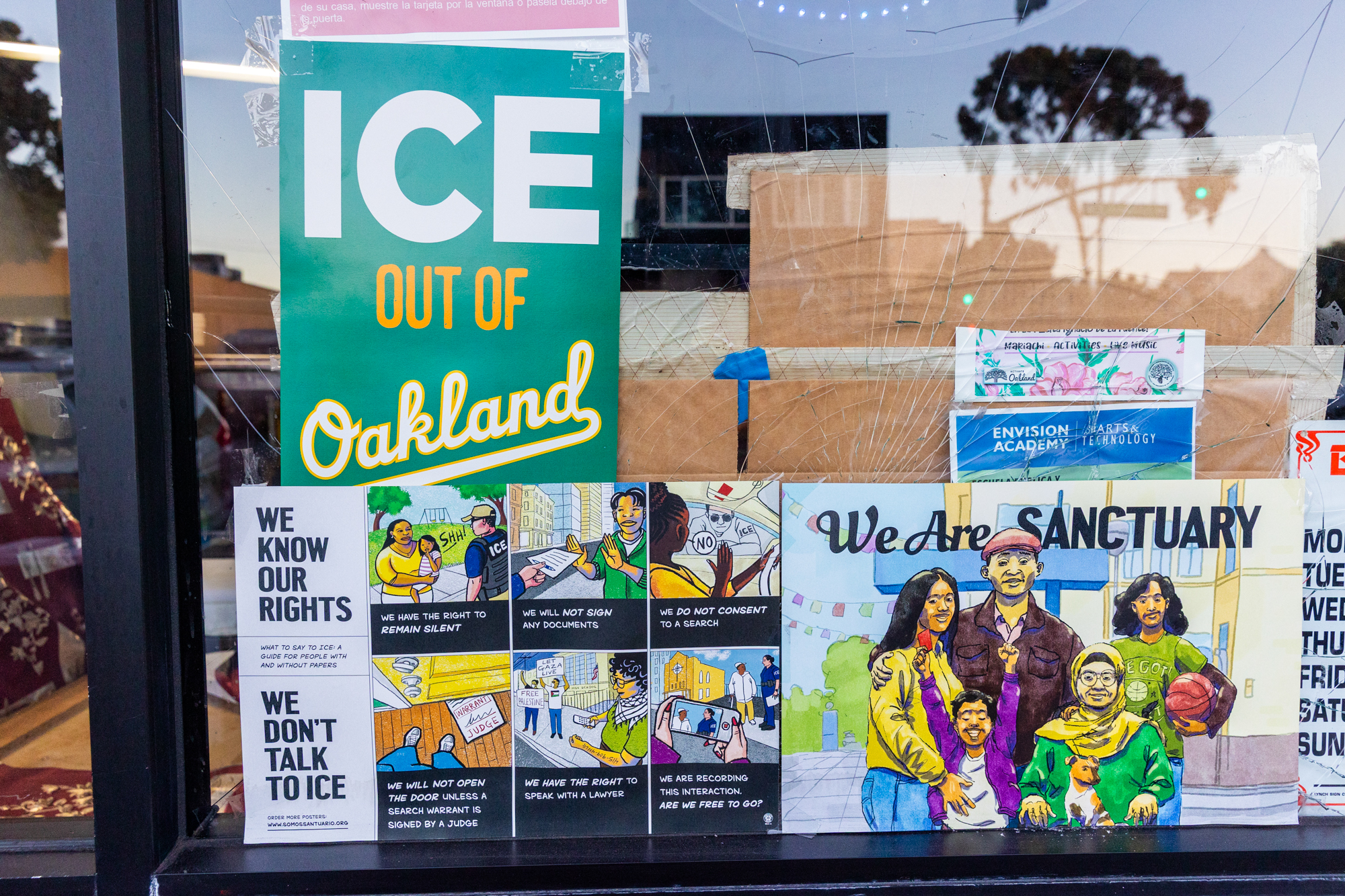
"caption": "Signs identify Taqueria La Gran Chiquita as a safe space for those at risk of deportation in Oakland on Sept. 3, 2025. Members of the Community of Fruitvale and East Bay Sanctuary Covenant gather to prepare for how to fight back against ICE.",
"credit": "Tâm Vũ/KQED",
"altTag": null,
"description": null,
"imgSizes": {
"thumbnail": {
"file": "https://cdn.kqed.org/wp-content/uploads/sites/10/2025/09/250903-ICETRAINING_01023_TV-KQED-160x107.jpg",
"width": 160,
"height": 107,
"mimeType": "image/jpeg"
},
"1536x1536": {
"file": "https://cdn.kqed.org/wp-content/uploads/sites/10/2025/09/250903-ICETRAINING_01023_TV-KQED-1536x1024.jpg",
"width": 1536,
"height": 1024,
"mimeType": "image/jpeg"
},
"post-thumbnail": {
"file": "https://cdn.kqed.org/wp-content/uploads/sites/10/2025/09/250903-ICETRAINING_01023_TV-KQED-672x372.jpg",
"width": 672,
"height": 372,
"mimeType": "image/jpeg"
},
"twentyfourteen-full-width": {
"file": "https://cdn.kqed.org/wp-content/uploads/sites/10/2025/09/250903-ICETRAINING_01023_TV-KQED-1038x576.jpg",
"width": 1038,
"height": 576,
"mimeType": "image/jpeg"
},
"kqedFullSize": {
"file": "https://cdn.kqed.org/wp-content/uploads/sites/10/2025/09/250903-ICETRAINING_01023_TV-KQED.jpg",
"width": 2000,
"height": 1333
}
},
"isLoading": false,
"fetchFailed": false
},
"news_12055321": {
"type": "attachments",
"id": "news_12055321",
"meta": {
"index": "attachments_1716263798",
"site": "news",
"id": "12055321",
"found": true
},
"title": "California Extreme Weather Wildfires",
"publishDate": 1757449869,
"status": "inherit",
"parent": 12055317,
"modified": 1757449912,
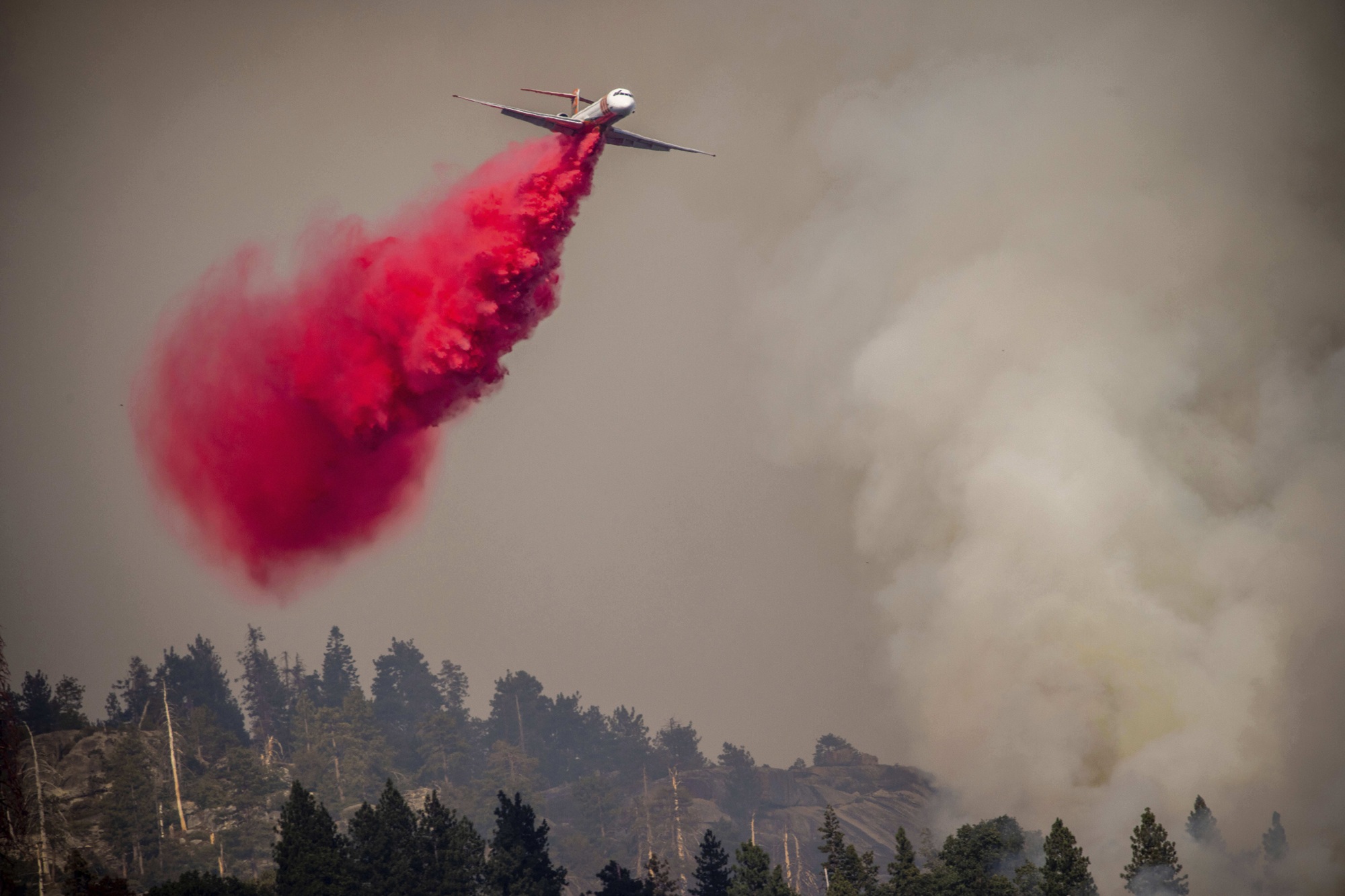
"caption": "A plane drops fire retardant on the Garnet Fire on Aug. 26, 2025, in Fresno County, California.",
"credit": "Ethan Swope/AP Photo",
"altTag": null,
"description": null,
"imgSizes": {
"thumbnail": {
"file": "https://cdn.kqed.org/wp-content/uploads/sites/10/2025/09/Garnet-Fire-AP-160x107.jpg",
"width": 160,
"height": 107,
"mimeType": "image/jpeg"
},
"1536x1536": {
"file": "https://cdn.kqed.org/wp-content/uploads/sites/10/2025/09/Garnet-Fire-AP-1536x1024.jpg",
"width": 1536,
"height": 1024,
"mimeType": "image/jpeg"
},
"post-thumbnail": {
"file": "https://cdn.kqed.org/wp-content/uploads/sites/10/2025/09/Garnet-Fire-AP-672x372.jpg",
"width": 672,
"height": 372,
"mimeType": "image/jpeg"
},
"twentyfourteen-full-width": {
"file": "https://cdn.kqed.org/wp-content/uploads/sites/10/2025/09/Garnet-Fire-AP-1038x576.jpg",
"width": 1038,
"height": 576,
"mimeType": "image/jpeg"
},
"kqedFullSize": {
"file": "https://cdn.kqed.org/wp-content/uploads/sites/10/2025/09/Garnet-Fire-AP.jpg",
"width": 2000,
"height": 1333
}
},
"isLoading": false,
"fetchFailed": false
},
"news_12053762": {
"type": "attachments",
"id": "news_12053762",
"meta": {
"index": "attachments_1716263798",
"site": "news",
"id": "12053762",
"found": true
},
"title": "250820-HOUSINGFIRST_02100_TV-KQED",
"publishDate": 1756230690,
"status": "inherit",
"parent": 0,
"modified": 1756231387,
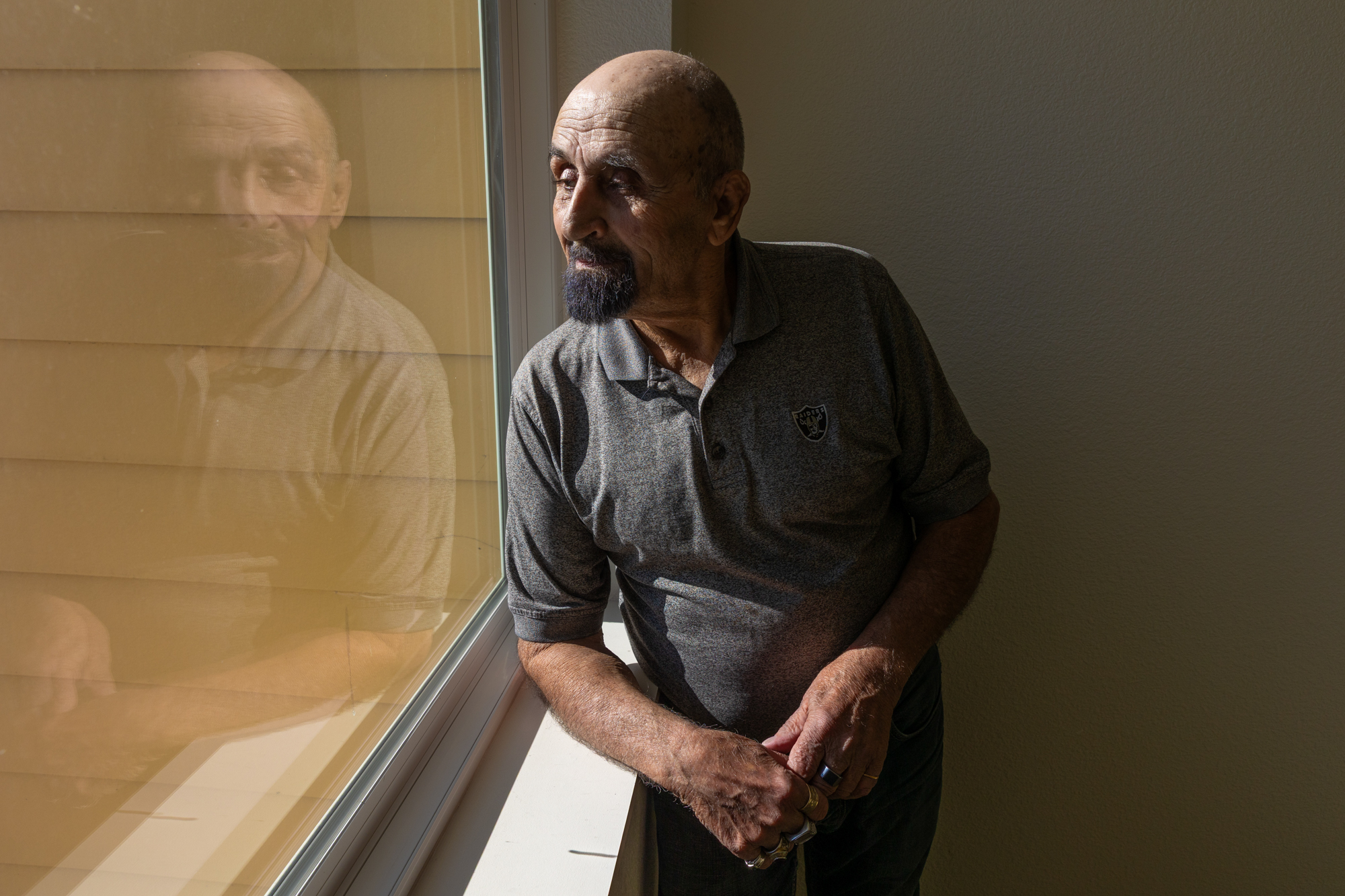
"caption": "William Wade, a formerly homeless veteran housed through the HUD-Veterans Affairs Supportive Housing program, poses for a portrait at the Laguna Commons supportive housing in Fremont on Aug. 20, 2025.",
"credit": "Tâm Vũ/KQED",
"altTag": null,
"description": null,
"imgSizes": {
"thumbnail": {
"file": "https://cdn.kqed.org/wp-content/uploads/sites/10/2025/08/250820-HOUSINGFIRST_02100_TV-KQED-160x107.jpg",
"width": 160,
"height": 107,
"mimeType": "image/jpeg"
},
"1536x1536": {
"file": "https://cdn.kqed.org/wp-content/uploads/sites/10/2025/08/250820-HOUSINGFIRST_02100_TV-KQED-1536x1024.jpg",
"width": 1536,
"height": 1024,
"mimeType": "image/jpeg"
},
"post-thumbnail": {
"file": "https://cdn.kqed.org/wp-content/uploads/sites/10/2025/08/250820-HOUSINGFIRST_02100_TV-KQED-672x372.jpg",
"width": 672,
"height": 372,
"mimeType": "image/jpeg"
},
"twentyfourteen-full-width": {
"file": "https://cdn.kqed.org/wp-content/uploads/sites/10/2025/08/250820-HOUSINGFIRST_02100_TV-KQED-1038x576.jpg",
"width": 1038,
"height": 576,
"mimeType": "image/jpeg"
},
"kqedFullSize": {
"file": "https://cdn.kqed.org/wp-content/uploads/sites/10/2025/08/250820-HOUSINGFIRST_02100_TV-KQED.jpg",
"width": 2000,
"height": 1333
}
},
"isLoading": false,
"fetchFailed": false
},
"news_12053058": {
"type": "attachments",
"id": "news_12053058",
"meta": {
"index": "attachments_1716263798",
"site": "news",
"id": "12053058",
"found": true
},
"title": "250819_TEQUILA101_GH-16-KQED",
"publishDate": 1755723154,
"status": "inherit",
"parent": 0,
"modified": 1755723186,
"caption": "Casamigos tequila bottles on display at San Francisco Tequila Shop in Bernal Heights on Aug. 19, 2025.",
"credit": "Gustavo Hernandez/KQED",
"altTag": null,
"description": null,
"imgSizes": {
"thumbnail": {
"file": "https://cdn.kqed.org/wp-content/uploads/sites/10/2025/08/250819_TEQUILA101_GH-16-KQED-160x107.jpg",
"width": 160,
"height": 107,
"mimeType": "image/jpeg"
},
"1536x1536": {
"file": "https://cdn.kqed.org/wp-content/uploads/sites/10/2025/08/250819_TEQUILA101_GH-16-KQED-1536x1024.jpg",
"width": 1536,
"height": 1024,
"mimeType": "image/jpeg"
},
"post-thumbnail": {
"file": "https://cdn.kqed.org/wp-content/uploads/sites/10/2025/08/250819_TEQUILA101_GH-16-KQED-672x372.jpg",
"width": 672,
"height": 372,
"mimeType": "image/jpeg"
},
"twentyfourteen-full-width": {
"file": "https://cdn.kqed.org/wp-content/uploads/sites/10/2025/08/250819_TEQUILA101_GH-16-KQED-1038x576.jpg",
"width": 1038,
"height": 576,
"mimeType": "image/jpeg"
},
"kqedFullSize": {
"file": "https://cdn.kqed.org/wp-content/uploads/sites/10/2025/08/250819_TEQUILA101_GH-16-KQED.jpg",
"width": 2000,
"height": 1333
}
},
"isLoading": false,
"fetchFailed": false
},
"news_12055199": {
"type": "attachments",
"id": "news_12055199",
"meta": {
"index": "attachments_1716263798",
"site": "news",
"id": "12055199",
"found": true
},
"title": "TransitFundingKQED3",
"publishDate": 1757365914,
"status": "inherit",
"parent": 12055129,
"modified": 1757365953,
"caption": "More than a hundred people gathered at San Francisco’s Civic Center Plaza on Sept. 8, 2025, in support of an emergency state loan for Bay Area public transit agencies. ",
"credit": "Farida Jhabvala Romero/KQED",
"altTag": null,
"description": null,
"imgSizes": {
"thumbnail": {
"file": "https://cdn.kqed.org/wp-content/uploads/sites/10/2025/09/TransitFundingKQED3-160x120.jpg",
"width": 160,
"height": 120,
"mimeType": "image/jpeg"
},
"1536x1536": {
"file": "https://cdn.kqed.org/wp-content/uploads/sites/10/2025/09/TransitFundingKQED3-1536x1152.jpg",
"width": 1536,
"height": 1152,
"mimeType": "image/jpeg"
},
"post-thumbnail": {
"file": "https://cdn.kqed.org/wp-content/uploads/sites/10/2025/09/TransitFundingKQED3-672x372.jpg",
"width": 672,
"height": 372,
"mimeType": "image/jpeg"
},
"twentyfourteen-full-width": {
"file": "https://cdn.kqed.org/wp-content/uploads/sites/10/2025/09/TransitFundingKQED3-1038x576.jpg",
"width": 1038,
"height": 576,
"mimeType": "image/jpeg"
},
"kqedFullSize": {
"file": "https://cdn.kqed.org/wp-content/uploads/sites/10/2025/09/TransitFundingKQED3.jpg",
"width": 2000,
"height": 1500
}
},
"isLoading": false,
"fetchFailed": false
},
"news_12055169": {
"type": "attachments",
"id": "news_12055169",
"meta": {
"index": "attachments_1716263798",
"site": "news",
"id": "12055169",
"found": true
},
"title": "ICECMGETTY",
"publishDate": 1757361542,
"status": "inherit",
"parent": 12055166,
"modified": 1757361614,
"caption": "A person is detained as clashes break out after U.S. Customs and Border Protection (CBP) officers attempted to raid a store in Bell, just south of Los Angeles, on June 20, 2025.\n",
"credit": "Etienne Laurent/AFP via Getty Images",
"altTag": null,
"description": null,
"imgSizes": {
"thumbnail": {
"file": "https://cdn.kqed.org/wp-content/uploads/sites/10/2025/09/ICECMGETTY-160x107.jpg",
"width": 160,
"height": 107,
"mimeType": "image/jpeg"
},
"1536x1536": {
"file": "https://cdn.kqed.org/wp-content/uploads/sites/10/2025/09/ICECMGETTY-1536x1025.jpg",
"width": 1536,
"height": 1025,
"mimeType": "image/jpeg"
},
"post-thumbnail": {
"file": "https://cdn.kqed.org/wp-content/uploads/sites/10/2025/09/ICECMGETTY-672x372.jpg",
"width": 672,
"height": 372,
"mimeType": "image/jpeg"
},
"twentyfourteen-full-width": {
"file": "https://cdn.kqed.org/wp-content/uploads/sites/10/2025/09/ICECMGETTY-1038x576.jpg",
"width": 1038,
"height": 576,
"mimeType": "image/jpeg"
},
"kqedFullSize": {
"file": "https://cdn.kqed.org/wp-content/uploads/sites/10/2025/09/ICECMGETTY.jpg",
"width": 1999,
"height": 1334
}
},
"isLoading": false,
"fetchFailed": false
},
"news_12055075": {
"type": "attachments",
"id": "news_12055075",
"meta": {
"index": "attachments_1716263798",
"site": "news",
"id": "12055075",
"found": true
},
"title": "250905-ADOPTACORNER_00645_TV-KQED",
"publishDate": 1757337319,
"status": "inherit",
"parent": 0,
"modified": 1757348958,
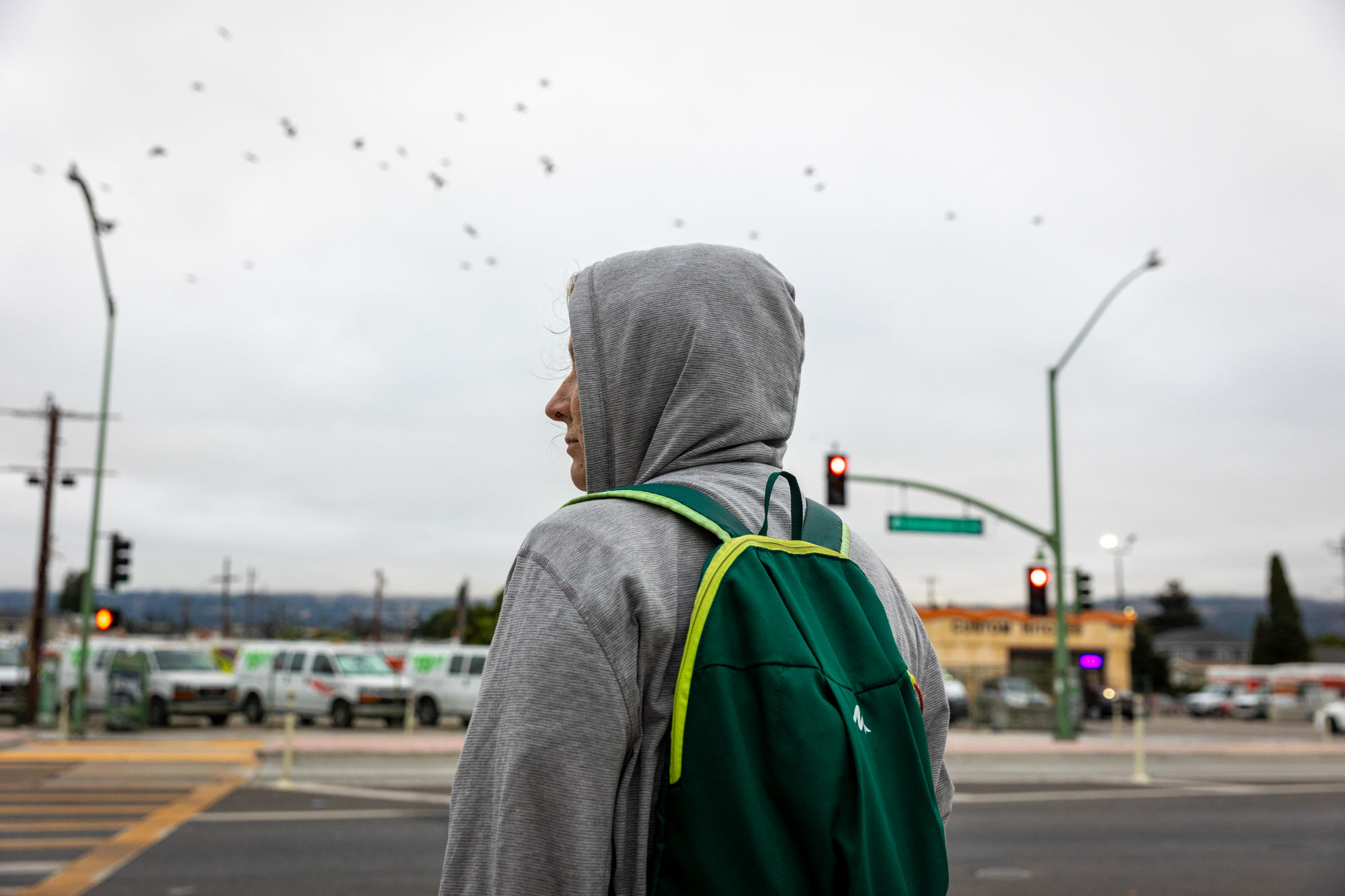
"caption": "Wendy, a volunteer who monitors ICE activity on busy streets near day laborer corners, patrols International Boulevard in front of a U-Haul in Oakland on Sept. 5, 2025. A nonprofit called “Adopt a Day Laborer Corner” has inspired Californians to volunteer their time to accompany day laborers, who are at risk of deportation, at highly visible intersections and monitor for immigration sweeps.",
"credit": "Tâm Vũ/KQED",
"altTag": null,
"description": null,
"imgSizes": {
"thumbnail": {
"file": "https://cdn.kqed.org/wp-content/uploads/sites/10/2025/09/250905-ADOPTACORNER_00645_TV-KQED-160x107.jpg",
"width": 160,
"height": 107,
"mimeType": "image/jpeg"
},
"1536x1536": {
"file": "https://cdn.kqed.org/wp-content/uploads/sites/10/2025/09/250905-ADOPTACORNER_00645_TV-KQED-1536x1024.jpg",
"width": 1536,
"height": 1024,
"mimeType": "image/jpeg"
},
"post-thumbnail": {
"file": "https://cdn.kqed.org/wp-content/uploads/sites/10/2025/09/250905-ADOPTACORNER_00645_TV-KQED-672x372.jpg",
"width": 672,
"height": 372,
"mimeType": "image/jpeg"
},
"twentyfourteen-full-width": {
"file": "https://cdn.kqed.org/wp-content/uploads/sites/10/2025/09/250905-ADOPTACORNER_00645_TV-KQED-1038x576.jpg",
"width": 1038,
"height": 576,
"mimeType": "image/jpeg"
},
"kqedFullSize": {
"file": "https://cdn.kqed.org/wp-content/uploads/sites/10/2025/09/250905-ADOPTACORNER_00645_TV-KQED.jpg",
"width": 2000,
"height": 1333
}
},
"isLoading": false,
"fetchFailed": false
},
"news_12054921": {
"type": "attachments",
"id": "news_12054921",
"meta": {
"index": "attachments_1716263798",
"site": "news",
"id": "12054921",
"found": true
},
"title": "A farmworker picks grapes at a field in Fresno on Sept. 3, 2025.",
"publishDate": 1757107574,
"status": "inherit",
"parent": 0,
"modified": 1757109024,
"caption": "A farmworker picks grapes at a field in Fresno, California, on Sept. 3, 2025.",
"credit": "Gina Castro for KQED",
"altTag": null,
"description": null,
"imgSizes": {
"thumbnail": {
"file": "https://cdn.kqed.org/wp-content/uploads/sites/10/2025/09/20250903_FARMLABORCRISIS_GC-18-KQED-160x107.jpg",
"width": 160,
"height": 107,
"mimeType": "image/jpeg"
},
"1536x1536": {
"file": "https://cdn.kqed.org/wp-content/uploads/sites/10/2025/09/20250903_FARMLABORCRISIS_GC-18-KQED-1536x1024.jpg",
"width": 1536,
"height": 1024,
"mimeType": "image/jpeg"
},
"post-thumbnail": {
"file": "https://cdn.kqed.org/wp-content/uploads/sites/10/2025/09/20250903_FARMLABORCRISIS_GC-18-KQED-672x372.jpg",
"width": 672,
"height": 372,
"mimeType": "image/jpeg"
},
"twentyfourteen-full-width": {
"file": "https://cdn.kqed.org/wp-content/uploads/sites/10/2025/09/20250903_FARMLABORCRISIS_GC-18-KQED-1038x576.jpg",
"width": 1038,
"height": 576,
"mimeType": "image/jpeg"
},
"kqedFullSize": {
"file": "https://cdn.kqed.org/wp-content/uploads/sites/10/2025/09/20250903_FARMLABORCRISIS_GC-18-KQED.jpg",
"width": 2000,
"height": 1333
}
},
"isLoading": false,
"fetchFailed": false
},
"news_12044001": {
"type": "attachments",
"id": "news_12044001",
"meta": {
"index": "attachments_1716263798",
"site": "news",
"id": "12044001",
"found": true
},
"title": "JENN OAKLEY_HOMELESSNESSHOMEOWNERSHIP_MO50-KQED",
"publishDate": 1749757338,
"status": "inherit",
"parent": 0,
"modified": 1757103222,
"caption": "Jenn Oakley — who experienced homelessness just four and a half years ago, became a homeowner through the First Home Emeryville program — photographed on June 7, 2025.",
"credit": "Manuel Orbegozo for KQED",
"altTag": null,
"description": null,
"imgSizes": {
"thumbnail": {
"file": "https://cdn.kqed.org/wp-content/uploads/sites/10/2025/06/JENN-OAKLEY_HOMELESSNESSHOMEOWNERSHIP_MO50-KQED-160x107.jpg",
"width": 160,
"height": 107,
"mimeType": "image/jpeg"
},
"1536x1536": {
"file": "https://cdn.kqed.org/wp-content/uploads/sites/10/2025/06/JENN-OAKLEY_HOMELESSNESSHOMEOWNERSHIP_MO50-KQED-1536x1024.jpg",
"width": 1536,
"height": 1024,
"mimeType": "image/jpeg"
},
"post-thumbnail": {
"file": "https://cdn.kqed.org/wp-content/uploads/sites/10/2025/06/JENN-OAKLEY_HOMELESSNESSHOMEOWNERSHIP_MO50-KQED-672x372.jpg",
"width": 672,
"height": 372,
"mimeType": "image/jpeg"
},
"twentyfourteen-full-width": {
"file": "https://cdn.kqed.org/wp-content/uploads/sites/10/2025/06/JENN-OAKLEY_HOMELESSNESSHOMEOWNERSHIP_MO50-KQED-1038x576.jpg",
"width": 1038,
"height": 576,
"mimeType": "image/jpeg"
},
"kqedFullSize": {
"file": "https://cdn.kqed.org/wp-content/uploads/sites/10/2025/06/JENN-OAKLEY_HOMELESSNESSHOMEOWNERSHIP_MO50-KQED.jpg",
"width": 2000,
"height": 1333
}
},
"isLoading": false,
"fetchFailed": false
},
"news_12055033": {
"type": "attachments",
"id": "news_12055033",
"meta": {
"index": "attachments_1716263798",
"site": "news",
"id": "12055033",
"found": true
},
"title": "Political Conference",
"publishDate": 1757288796,
"status": "inherit",
"parent": 12055030,
"modified": 1757290732,
"caption": "401095 02: President Pro-tempore of the California State Senate, John Burton, speaks at a conference called, \"Our democracy after 9/11: can we save it?\" February 17, 2002 in Los Angeles, CA. The conference focused on the alleged lack of democracy in the U.S. after the terrorist attacks. (Photo by J. Emilio Flores/Getty Images)",
"credit": "J. Emilio Flores/Getty Images",
"altTag": "A closeup image of a white man with glasses pointing up.",
"description": null,
"imgSizes": {
"thumbnail": {
"file": "https://cdn.kqed.org/wp-content/uploads/sites/10/2025/09/GettyImages-903380_qed-160x116.jpg",
"width": 160,
"height": 116,
"mimeType": "image/jpeg"
},
"1536x1536": {
"file": "https://cdn.kqed.org/wp-content/uploads/sites/10/2025/09/GettyImages-903380_qed-1536x1113.jpg",
"width": 1536,
"height": 1113,
"mimeType": "image/jpeg"
},
"post-thumbnail": {
"file": "https://cdn.kqed.org/wp-content/uploads/sites/10/2025/09/GettyImages-903380_qed-672x372.jpg",
"width": 672,
"height": 372,
"mimeType": "image/jpeg"
},
"twentyfourteen-full-width": {
"file": "https://cdn.kqed.org/wp-content/uploads/sites/10/2025/09/GettyImages-903380_qed-1038x576.jpg",
"width": 1038,
"height": 576,
"mimeType": "image/jpeg"
},
"kqedFullSize": {
"file": "https://cdn.kqed.org/wp-content/uploads/sites/10/2025/09/GettyImages-903380_qed.jpg",
"width": 1839,
"height": 1333
}
},
"isLoading": false,
"fetchFailed": false
},
"news_12054912": {
"type": "attachments",
"id": "news_12054912",
"meta": {
"index": "attachments_1716263798",
"site": "news",
"id": "12054912",
"found": true
},
"title": "recall311_mac.jpg John Burton speaks with the media at the State Capital. California Recall. The day after the the recall election a few prominent Democrates hold news conferences to discuss the outcome. State Treasurer Philip Angelides and Senate",
"publishDate": 1757106486,
"status": "inherit",
"parent": 12054886,
"modified": 1757355620,
"caption": "Then-Senate President Pro Tempore John Burton speaks with the media at the California State Capitol on Oct. 8, 2003, the day after the successful recall election that removed Gov. Gray Davis from office and elected Arnold Schwarzenegger as his replacement.",
"credit": "Michael Macor/The San Francisco Chronicle via Getty Images",
"altTag": null,
"description": null,
"imgSizes": {
"thumbnail": {
"file": "https://cdn.kqed.org/wp-content/uploads/sites/10/2025/09/JohnBurtonGetty3-160x99.jpg",
"width": 160,
"height": 99,
"mimeType": "image/jpeg"
},
"1536x1536": {
"file": "https://cdn.kqed.org/wp-content/uploads/sites/10/2025/09/JohnBurtonGetty3-1536x947.jpg",
"width": 1536,
"height": 947,
"mimeType": "image/jpeg"
},
"post-thumbnail": {
"file": "https://cdn.kqed.org/wp-content/uploads/sites/10/2025/09/JohnBurtonGetty3-672x372.jpg",
"width": 672,
"height": 372,
"mimeType": "image/jpeg"
},
"twentyfourteen-full-width": {
"file": "https://cdn.kqed.org/wp-content/uploads/sites/10/2025/09/JohnBurtonGetty3-1038x576.jpg",
"width": 1038,
"height": 576,
"mimeType": "image/jpeg"
},
"kqedFullSize": {
"file": "https://cdn.kqed.org/wp-content/uploads/sites/10/2025/09/JohnBurtonGetty3.jpg",
"width": 2000,
"height": 1233
}
},
"isLoading": false,
"fetchFailed": false
}
},
"audioPlayerReducer": {
"postId": "stream_live",
"isPaused": true,
"isPlaying": false,
"pfsActive": false,
"pledgeModalIsOpen": true,
"playerDrawerIsOpen": false,
"liveAudioPlayStartedAt": 0,
"liveAudioPlayContext": ""
},
"authorsReducer": {
"byline_news_12055166": {
"type": "authors",
"id": "byline_news_12055166",
"meta": {
"override": true
},
"slug": "byline_news_12055166",
"name": "Wendy Fry and Sergio Olmos, CalMatters",
"isLoading": false
},
"scottshafer": {
"type": "authors",
"id": "255",
"meta": {
"index": "authors_1716337520",
"id": "255",
"found": true
},
"name": "Scott Shafer",
"firstName": "Scott",
"lastName": "Shafer",
"slug": "scottshafer",
"email": "sshafer@kqed.org",
"display_author_email": false,
"staff_mastheads": [
"news"
],
"title": "KQED Contributor",
"bio": "Scott Shafer is a senior editor with the KQED Politics and Government desk. He is co-host of Political Breakdown, the award-winning radio show and podcast with a personal take on the world of politics. Scott came to KQED in 1998 to host the statewide\u003cem> California Report\u003c/em>. Prior to that he had extended stints in politics and government\u003cem>.\u003c/em> He uses that inside experience at KQED in his, reporting, hosting and analysis for the politics desk. Scott collaborated \u003cem>Political Breakdown a\u003c/em>nd on \u003cem>The Political Mind of Jerry Brown, \u003c/em>an eight-part series about the life and extraordinary political career of the former governor. For fun, he plays water polo with the San Francisco Tsunami.",
"avatar": "https://secure.gravatar.com/avatar/a62ebae45b79d7aed1a39a0e3bf68104?s=600&d=blank&r=g",
"twitter": "scottshafer",
"bluesky": null,
"facebook": null,
"instagram": null,
"linkedin": null,
"sites": [
{
"site": "news",
"roles": [
"editor"
]
},
{
"site": "stateofhealth",
"roles": [
"author"
]
},
{
"site": "science",
"roles": [
"author"
]
},
{
"site": "forum",
"roles": [
"subscriber"
]
},
{
"site": "liveblog",
"roles": [
"author"
]
}
],
"headData": {
"title": "Scott Shafer | KQED",
"description": "KQED Contributor",
"ogImgSrc": "https://secure.gravatar.com/avatar/a62ebae45b79d7aed1a39a0e3bf68104?s=600&d=blank&r=g",
"twImgSrc": "https://secure.gravatar.com/avatar/a62ebae45b79d7aed1a39a0e3bf68104?s=600&d=blank&r=g"
},
"isLoading": false,
"link": "/author/scottshafer"
},
"fjhabvala": {
"type": "authors",
"id": "8659",
"meta": {
"index": "authors_1716337520",
"id": "8659",
"found": true
},
"name": "Farida Jhabvala Romero",
"firstName": "Farida",
"lastName": "Jhabvala Romero",
"slug": "fjhabvala",
"email": "fjhabvala@kqed.org",
"display_author_email": true,
"staff_mastheads": [
"news"
],
"title": "KQED Contributor",
"bio": "\u003cspan style=\"font-weight: 400;\">Farida Jhabvala Romero is a Labor Correspondent for KQED. She previously covered immigration. Farida was \u003ca href=\"https://www.ccnma.org/2022-most-influential-latina-journalists\">named\u003c/a> one of the 10 Most Influential Latina Journalists in California in 2022 by the California Chicano News Media Association. Her work has won awards from the Society of Professional Journalists (Northern California), as well as a national and regional Edward M. Murrow Award for the collaborative reporting projects “Dangerous Air” and “Graying California.” \u003c/span>\u003cspan style=\"font-weight: 400;\">Before joining KQED, Farida worked as a producer at Radio Bilingüe, a national public radio network. Farida earned her master’s degree in journalism from Stanford University.\u003c/span>",
"avatar": "https://secure.gravatar.com/avatar/c3ab27c5554b67b478f80971e515aa02?s=600&d=blank&r=g",
"twitter": "FaridaJhabvala",
"facebook": null,
"instagram": null,
"linkedin": "https://www.linkedin.com/in/faridajhabvala/",
"sites": [
{
"site": "news",
"roles": [
"editor"
]
},
{
"site": "stateofhealth",
"roles": [
"author"
]
}
],
"headData": {
"title": "Farida Jhabvala Romero | KQED",
"description": "KQED Contributor",
"ogImgSrc": "https://secure.gravatar.com/avatar/c3ab27c5554b67b478f80971e515aa02?s=600&d=blank&r=g",
"twImgSrc": "https://secure.gravatar.com/avatar/c3ab27c5554b67b478f80971e515aa02?s=600&d=blank&r=g"
},
"isLoading": false,
"link": "/author/fjhabvala"
},
"vrancano": {
"type": "authors",
"id": "11276",
"meta": {
"index": "authors_1716337520",
"id": "11276",
"found": true
},
"name": "Vanessa Rancaño",
"firstName": "Vanessa",
"lastName": "Rancaño",
"slug": "vrancano",
"email": "vrancano@kqed.org",
"display_author_email": false,
"staff_mastheads": [
"news"
],
"title": "Reporter",
"bio": "Vanessa Rancaño is a features reporter for KQED. She’s also covered homelessness and education for the station and reported from the Central Valley. Her work has aired across public radio, from flagship national news shows to longform narrative podcasts. Before taking up a mic, she worked as a freelance print journalist. She’s been recognized with a number of national and regional awards. Vanessa grew up in California's Central Valley. She's a former NPR Kroc Fellow, and a graduate of the UC Berkeley Graduate School of Journalism.",
"avatar": "https://secure.gravatar.com/avatar/b3a383dfb0e7ee1c17568f2cf067904ab654d6e3de9743fc661f3c788ade1bed?s=600&d=blank&r=g",
"twitter": "vanessarancano",
"bluesky": null,
"facebook": null,
"instagram": null,
"linkedin": null,
"sites": [
{
"site": "arts",
"roles": [
"editor"
]
},
{
"site": "news",
"roles": [
"editor"
]
},
{
"site": "liveblog",
"roles": [
"contributor"
]
}
],
"headData": {
"title": "Vanessa Rancaño | KQED",
"description": "Reporter",
"ogImgSrc": "https://secure.gravatar.com/avatar/b3a383dfb0e7ee1c17568f2cf067904ab654d6e3de9743fc661f3c788ade1bed?s=600&d=blank&r=g",
"twImgSrc": "https://secure.gravatar.com/avatar/b3a383dfb0e7ee1c17568f2cf067904ab654d6e3de9743fc661f3c788ade1bed?s=600&d=blank&r=g"
},
"isLoading": false,
"link": "/author/vrancano"
},
"ccabreralomeli": {
"type": "authors",
"id": "11708",
"meta": {
"index": "authors_1716337520",
"id": "11708",
"found": true
},
"name": "Carlos Cabrera-Lomelí",
"firstName": "Carlos",
"lastName": "Cabrera-Lomelí",
"slug": "ccabreralomeli",
"email": "ccabreralomeli@KQED.org",
"display_author_email": true,
"staff_mastheads": [
"news"
],
"title": "Community Reporter",
"bio": "Carlos Cabrera-Lomelí is a community reporter with KQED's digital engagement team. He also reports and co-produces for KQED's bilingual news hub KQED en Español. He grew up in San Francisco's Mission District and has previously worked with Univision, 48 Hills and REFORMA in Mexico City.",
"avatar": "https://secure.gravatar.com/avatar/c309be9665e484f887b818c89e273ecc673004f426f36b24d00a4d813a2e0518?s=600&d=blank&r=g",
"twitter": "@LomeliCabrera",
"bluesky": null,
"facebook": null,
"instagram": null,
"linkedin": null,
"sites": [
{
"site": "arts",
"roles": [
"editor"
]
},
{
"site": "news",
"roles": [
"editor"
]
},
{
"site": "about",
"roles": [
"editor"
]
},
{
"site": "science",
"roles": [
"editor"
]
},
{
"site": "perspectives",
"roles": [
"editor"
]
},
{
"site": "elections",
"roles": [
"editor"
]
},
{
"site": "liveblog",
"roles": [
"contributor"
]
}
],
"headData": {
"title": "Carlos Cabrera-Lomelí | KQED",
"description": "Community Reporter",
"ogImgSrc": "https://secure.gravatar.com/avatar/c309be9665e484f887b818c89e273ecc673004f426f36b24d00a4d813a2e0518?s=600&d=blank&r=g",
"twImgSrc": "https://secure.gravatar.com/avatar/c309be9665e484f887b818c89e273ecc673004f426f36b24d00a4d813a2e0518?s=600&d=blank&r=g"
},
"isLoading": false,
"link": "/author/ccabreralomeli"
},
"otaylor": {
"type": "authors",
"id": "11770",
"meta": {
"index": "authors_1716337520",
"id": "11770",
"found": true
},
"name": "Otis R. Taylor Jr.",
"firstName": "Otis R.",
"lastName": "Taylor Jr.",
"slug": "otaylor",
"email": "otaylor@kqed.org",
"display_author_email": false,
"staff_mastheads": [
"news"
],
"title": "KQED Editor",
"bio": null,
"avatar": "https://secure.gravatar.com/avatar/fe73e14d4842ac8e1c03d57def2530f57f1c5b0ca7d4a987ccc5bd90956cb7c6?s=600&d=mm&r=g",
"twitter": "otisrtaylorjr",
"bluesky": null,
"facebook": null,
"instagram": null,
"linkedin": null,
"sites": [
{
"site": "arts",
"roles": [
"editor"
]
},
{
"site": "news",
"roles": [
"subscriber"
]
},
{
"site": "science",
"roles": [
"subscriber"
]
},
{
"site": "liveblog",
"roles": [
"subscriber"
]
}
],
"headData": {
"title": "Otis R. Taylor Jr. | KQED",
"description": "KQED Editor",
"ogImgSrc": "https://secure.gravatar.com/avatar/fe73e14d4842ac8e1c03d57def2530f57f1c5b0ca7d4a987ccc5bd90956cb7c6?s=600&d=mm&r=g",
"twImgSrc": "https://secure.gravatar.com/avatar/fe73e14d4842ac8e1c03d57def2530f57f1c5b0ca7d4a987ccc5bd90956cb7c6?s=600&d=mm&r=g"
},
"isLoading": false,
"link": "/author/otaylor"
},
"swhitney": {
"type": "authors",
"id": "11784",
"meta": {
"index": "authors_1716337520",
"id": "11784",
"found": true
},
"name": "Spencer Whitney",
"firstName": "Spencer",
"lastName": "Whitney",
"slug": "swhitney",
"email": "swhitney@kqed.org",
"display_author_email": false,
"staff_mastheads": [],
"title": "KQED Digital Editor",
"bio": "Spencer Whitney is currently a Digital Editor for KQED News. Prior to joining KQED News, Spencer worked as the Multimedia Editor at the Oakland Post and an Assistant Editor in the Editorial department at the San Francisco Chronicle. He attended Howard University as an undergraduate and interned with SiriusXM. He also attended UC Berkeley's Graduate School of Journalism and had the opportunity to write for the hyperlocal news sites Richmond Confidential and Oakland North.",
"avatar": "https://secure.gravatar.com/avatar/e33ff4fd8b8f0d2796f36472fb32607ca8fc46ef5e537dcfdbdee688d8ea5b80?s=600&d=mm&r=g",
"twitter": null,
"bluesky": null,
"facebook": null,
"instagram": null,
"linkedin": null,
"sites": [
{
"site": "arts",
"roles": [
"editor"
]
},
{
"site": "news",
"roles": [
"editor"
]
},
{
"site": "science",
"roles": [
"editor"
]
},
{
"site": "perspectives",
"roles": [
"editor"
]
}
],
"headData": {
"title": "Spencer Whitney | KQED",
"description": "KQED Digital Editor",
"ogImgSrc": "https://secure.gravatar.com/avatar/e33ff4fd8b8f0d2796f36472fb32607ca8fc46ef5e537dcfdbdee688d8ea5b80?s=600&d=mm&r=g",
"twImgSrc": "https://secure.gravatar.com/avatar/e33ff4fd8b8f0d2796f36472fb32607ca8fc46ef5e537dcfdbdee688d8ea5b80?s=600&d=mm&r=g"
},
"isLoading": false,
"link": "/author/swhitney"
},
"adahlstromeckman": {
"type": "authors",
"id": "11785",
"meta": {
"index": "authors_1716337520",
"id": "11785",
"found": true
},
"name": "Azul Dahlstrom-Eckman",
"firstName": "Azul",
"lastName": "Dahlstrom-Eckman",
"slug": "adahlstromeckman",
"email": "adahlstrom-eckman@kqed.org",
"display_author_email": true,
"staff_mastheads": [],
"title": "Reporter",
"bio": "Azul is a reporter for KQED focusing on transportation and features. He joined KQED in 2021 as an alumna of KALW's Audio Academy radio journalism training program.",
"avatar": "https://secure.gravatar.com/avatar/9cb750298435add7815a777f55bf1f46845c1386bb8452555c60a7b820b5aba3?s=600&d=blank&r=g",
"twitter": "@zuliemann",
"bluesky": "@azul415.bsky.social",
"facebook": null,
"instagram": null,
"linkedin": null,
"sites": [
{
"site": "arts",
"roles": [
"editor"
]
},
{
"site": "news",
"roles": [
"editor"
]
},
{
"site": "science",
"roles": [
"editor"
]
},
{
"site": "liveblog",
"roles": [
"author"
]
}
],
"headData": {
"title": "Azul Dahlstrom-Eckman | KQED",
"description": "Reporter",
"ogImgSrc": "https://secure.gravatar.com/avatar/9cb750298435add7815a777f55bf1f46845c1386bb8452555c60a7b820b5aba3?s=600&d=blank&r=g",
"twImgSrc": "https://secure.gravatar.com/avatar/9cb750298435add7815a777f55bf1f46845c1386bb8452555c60a7b820b5aba3?s=600&d=blank&r=g"
},
"isLoading": false,
"link": "/author/adahlstromeckman"
},
"mbolanos": {
"type": "authors",
"id": "11895",
"meta": {
"index": "authors_1716337520",
"id": "11895",
"found": true
},
"name": "Madi Bolaños",
"firstName": "Madi",
"lastName": "Bolaños",
"slug": "mbolanos",
"email": "mbolanos@kqed.org",
"display_author_email": false,
"staff_mastheads": [],
"title": "KQED Contributor",
"bio": null,
"avatar": "https://secure.gravatar.com/avatar/e6df5601c1f2d951e46a3fb42764330f?s=600&d=blank&r=g",
"twitter": null,
"bluesky": null,
"facebook": null,
"instagram": null,
"linkedin": null,
"sites": [
{
"site": "news",
"roles": [
"author"
]
}
],
"headData": {
"title": "Madi Bolaños | KQED",
"description": "KQED Contributor",
"ogImgSrc": "https://secure.gravatar.com/avatar/e6df5601c1f2d951e46a3fb42764330f?s=600&d=blank&r=g",
"twImgSrc": "https://secure.gravatar.com/avatar/e6df5601c1f2d951e46a3fb42764330f?s=600&d=blank&r=g"
},
"isLoading": false,
"link": "/author/mbolanos"
},
"bkrans": {
"type": "authors",
"id": "11923",
"meta": {
"index": "authors_1716337520",
"id": "11923",
"found": true
},
"name": "Brian Krans",
"firstName": "Brian",
"lastName": "Krans",
"slug": "bkrans",
"email": "bkrans@kqed.org",
"display_author_email": false,
"staff_mastheads": [
"news"
],
"title": "KQED Contributing Reporter",
"bio": "Brian Krans is an award-winning local news and investigative reporter who has been proudly working as a general assignment reporter for KQED since August 2023. He lives in Richmond, where he also reports on air pollution for Richmondside. He is also a founding member of the Vallejo Sun.",
"avatar": "https://secure.gravatar.com/avatar/d1014d604089314a94807d2c4f2d3e06?s=600&d=blank&r=g",
"twitter": "citizenkrans",
"facebook": null,
"instagram": null,
"linkedin": null,
"sites": [
{
"site": "news",
"roles": [
"editor"
]
}
],
"headData": {
"title": "Brian Krans | KQED",
"description": "KQED Contributing Reporter",
"ogImgSrc": "https://secure.gravatar.com/avatar/d1014d604089314a94807d2c4f2d3e06?s=600&d=blank&r=g",
"twImgSrc": "https://secure.gravatar.com/avatar/d1014d604089314a94807d2c4f2d3e06?s=600&d=blank&r=g"
},
"isLoading": false,
"link": "/author/bkrans"
},
"gzada": {
"type": "authors",
"id": "11929",
"meta": {
"index": "authors_1716337520",
"id": "11929",
"found": true
},
"name": "Gilare Zada",
"firstName": "Gilare",
"lastName": "Zada",
"slug": "gzada",
"email": "gzada@kqed.org",
"display_author_email": true,
"staff_mastheads": [
"news"
],
"title": null,
"bio": "Gilare Zada is a Kurdish-American from San Diego, CA. Storytelling, fitness, and binge reading are some of her passions outside of news reporting. Her work has appeared in Mission Local, the Peninsula Press, the San Francisco Press Club, and more. She also writes as a class correspondent for the Stanford Magazine - go Card!",
"avatar": "https://secure.gravatar.com/avatar/33a75f2b947669a488a805edec3fbf3838c1cedaedda710e983770633b4d6a75?s=600&d=blank&r=g",
"twitter": null,
"bluesky": null,
"facebook": null,
"instagram": null,
"linkedin": null,
"sites": [
{
"site": "arts",
"roles": [
"editor"
]
},
{
"site": "news",
"roles": [
"editor",
"contributor"
]
},
{
"site": "science",
"roles": [
"editor"
]
}
],
"headData": {
"title": "Gilare Zada | KQED",
"description": null,
"ogImgSrc": "https://secure.gravatar.com/avatar/33a75f2b947669a488a805edec3fbf3838c1cedaedda710e983770633b4d6a75?s=600&d=blank&r=g",
"twImgSrc": "https://secure.gravatar.com/avatar/33a75f2b947669a488a805edec3fbf3838c1cedaedda710e983770633b4d6a75?s=600&d=blank&r=g"
},
"isLoading": false,
"link": "/author/gzada"
}
},
"pagesReducer": {
"news_tag_california": {
"type": "terms",
"id": "news_18538",
"meta": {
"index": "terms_1716263798",
"site": "news",
"id": "18538",
"score": 6.8456903
},
"featImg": null,
"name": "California",
"description": null,
"taxonomy": "tag",
"headData": {
"twImgId": null,
"twTitle": null,
"ogTitle": null,
"ogImgId": null,
"twDescription": null,
"description": null,
"title": "California Archives | KQED News",
"ogDescription": null
},
"ttid": 31,
"slug": "california",
"isLoading": false,
"title": "California",
"pageMeta": {
"site": "news",
"WpPageTemplate": "page-topic-editorial",
"currentPage": 58
},
"blocks": [
{
"blockName": "kqed/post-list",
"attrs": {
"layout": "cardArticle2",
"query": "posts/news?tag=california",
"seeMore": false,
"paginated": true,
"page": 58
}
},
{
"blockName": "kqed/ad"
}
]
}
},
"pfsSessionReducer": {},
"postsReducer": {
"stream_live": {
"type": "live",
"id": "stream_live",
"audioUrl": "https://streams.kqed.org/kqedradio",
"title": "Live Stream",
"excerpt": "Live Stream information currently unavailable.",
"link": "/radio",
"featImg": "",
"label": {
"name": "KQED Live",
"link": "/"
}
},
"stream_kqedNewscast": {
"type": "posts",
"id": "stream_kqedNewscast",
"audioUrl": "https://www.kqed.org/.stream/anon/radio/RDnews/newscast.mp3?_=1",
"title": "KQED Newscast",
"featImg": "",
"label": {
"name": "88.5 FM",
"link": "/"
}
},
"news_12055482": {
"type": "posts",
"id": "news_12055482",
"meta": {
"index": "posts_1716263798",
"site": "news",
"id": "12055482",
"score": null,
"sort": [
1757541082000
]
},
"guestAuthors": [],
"slug": "california-breaks-with-cdc-cosigns-covid-vaccine-guidelines-from-medical-groups",
"title": "California Breaks With CDC, Cosigns COVID Vaccine Guidelines From Medical Groups",
"publishDate": 1757541082,
"format": "standard",
"headTitle": "California Breaks With CDC, Cosigns COVID Vaccine Guidelines From Medical Groups | KQED",
"labelTerm": {
"site": "news"
},
"content": "\u003cp>Breaking with national public health policy, California officials are recommending that children 6 months to 2 years old, as well as people who are pregnant and lactating, should get vaccinated against COVID-19, following guidance from reputable medical groups.\u003c/p>\n\u003cp>In a statement to KQED, the California Department of Public Health said Wednesday that it endorses recent recommendations from the American Academy of Pediatrics and the American College of Obstetricians and Gynecologists for COVID-19, influenza and RSV vaccines.\u003c/p>\n\u003cp>The guidance, released last month, was in line with the U.S. Centers for Disease Control and Prevention’s recommendations under the Biden Administration.\u003c/p>\n\u003cp>[ad fullwidth]\u003c/p>\n\u003cp>“As a part of our efforts, along with our West Coast state partners and other states around the country, to provide a unified science-based approach to protecting the health of our communities, California is carefully considering guidance from various trusted national medical professional and scientifically based organizations,” the CDPH said.\u003c/p>\n\u003cp>Typically, the CDC sets vaccine recommendations based on the available data, which insurers use to set reimbursement guidelines. But under the direction of Health and Human Services Secretary Robert F. Kennedy Jr. — who has espoused virulent anti-vaccine rhetoric for decades — the CDC now only \u003ca href=\"https://www.cdc.gov/covid/vaccines/stay-up-to-date.html\">recommends\u003c/a> COVID vaccines for “most adults ages 18 years and older.”\u003c/p>\n\u003cfigure id=\"attachment_12054283\" class=\"wp-caption aligncenter\" style=\"max-width: 2560px\">\u003ca href=\"https://cdn.kqed.org/wp-content/uploads/sites/10/2025/08/ap25240773010054-scaled.jpeg\">\u003cimg loading=\"lazy\" decoding=\"async\" class=\"size-full wp-image-12054283\" src=\"https://cdn.kqed.org/wp-content/uploads/sites/10/2025/08/ap25240773010054-scaled.jpeg\" alt=\"In this photo provided by the Department of Health and Human Secretary, Robert F. Kennedy Jr., right, conducts the swearing-in ceremony of Jim O'Neill as the department's deputy secretary, June 9, 2025, in Washington, D.C.\" width=\"2560\" height=\"1709\" srcset=\"https://cdn.kqed.org/wp-content/uploads/sites/10/2025/08/ap25240773010054-scaled.jpeg 2560w, https://cdn.kqed.org/wp-content/uploads/sites/10/2025/08/ap25240773010054-2000x1335.jpeg 2000w, https://cdn.kqed.org/wp-content/uploads/sites/10/2025/08/ap25240773010054-160x107.jpeg 160w, https://cdn.kqed.org/wp-content/uploads/sites/10/2025/08/ap25240773010054-1536x1025.jpeg 1536w, https://cdn.kqed.org/wp-content/uploads/sites/10/2025/08/ap25240773010054-2048x1367.jpeg 2048w\" sizes=\"auto, (max-width: 2560px) 100vw, 2560px\">\u003c/a>\u003cfigcaption class=\"wp-caption-text\">Jim O’Neill is the new acting director of the CDC. Here, HHS Secretary Robert F. Kennedy Jr. swears him in as deputy secretary of HHS on June 9. O’Neill will serve in both roles. \u003ccite>(Amy Rossetti/Department of Health and Human Services via AP)\u003c/cite>\u003c/figcaption>\u003c/figure>\n\u003cp>That left many in the medical community concerned that confusing and inconsistent messaging would cause vaccine rates to drop, and even make vaccines unaffordable for lower-income families whose insurance providers may no longer cover them.\u003c/p>\n\u003cp>\u003ca href=\"https://profiles.stanford.edu/abraar-karan\">Dr. Abraar Karan\u003c/a>, an infectious disease physician at Stanford University, said the state is making a “wise” choice because data show that vaccines help minimize COVID-19 infections in typically healthier populations like children older than six months and young adults, and reduce the risk of urgent care and emergency room visits for COVID-19 patients “by 33%.”\u003c/p>\n\u003cp>“That’s pretty significant, and sort of mirrors what you see with flu vaccines as well. Functionally, that is what we are hoping for, for the general population, is to make you get less sick, fewer days of [missed] work [and] less utilization of the health care system,” Karan said.\u003c/p>\n\u003cp>“COVID spreads in waves. We have multiple waves per year, and they do require a large usage of our health care system. So if we have a safe, effective vaccine to reduce that healthcare usage in that healthier group, that’s important.”\u003c/p>\n\u003cp>Karan said that because California is following the guidance of leading medical groups, it’s likely insurance companies will cover the shots.[aside postID=news_12053906 hero='https://cdn.kqed.org/wp-content/uploads/sites/10/2025/08/COVIDGetty.jpg']More importantly, he said, those states are adhering to the evidence.\u003c/p>\n\u003cp>“Whereas what is happening at HHS is … a lot of opinions, particularly from RFK Jr. himself, on unproven therapeutics, on risks that are not borne out by the data. And then he’s sort of just hand-waving and doing whatever he wants,” Karan said.\u003c/p>\n\u003cp>In June, Kennedy \u003ca href=\"https://www.npr.org/sections/shots-health-news/2025/06/09/nx-s1-5428533/rfk-jr-vaccine-advisory-committee-acip\">removed\u003c/a> all 17 members of an advisory committee that helps the CDC form its vaccine policies to begin to “\u003ca href=\"https://www.hhs.gov/press-room/wsj-kennedy-op-ed-restore-public-trust-in-vaccines.html\">restore public trust in vaccines\u003c/a>.”\u003c/p>\n\u003cp>\u003ca href=\"https://publichealth.berkeley.edu/people/john-swartzberg\">Dr. John Swartzberg\u003c/a>, professor emeritus of infectious diseases and vaccinology at UC Berkeley’s School of Public Health, said that by following the advice of leading medical groups, California and the other states of the West Coast Alliance are making it easier for families to get their children vaccinated against COVID-19.\u003c/p>\n\u003cp>“When you look at the data for very young children in terms of hospitalization and death, the rates are pretty comparable to older Americans,” Swartzberg said. “This is a vulnerable population where protection is terribly important. So I think that the California Department of Public Health, in following the advice of the American Academy of Pediatrics, is spot on.”\u003c/p>\n\u003cp>Swartzberg said it is interesting to note that President Donald Trump even pushed back on Kennedy’s anti-vax stance in the last few days. Trump even \u003ca href=\"https://www.statnews.com/2025/09/08/vaccine-policy-cracks-showing-between-trump-kennedy/\">expressed some skepticism\u003c/a> about Florida’s push to phase out all childhood vaccine mandates.\u003c/p>\n\u003cp>“I think there are people in the administration who recognize that this is a hot button item, and all the Republicans are not really on board with where Kennedy is, so that might translate into the administration not trying to make a political football out of this with California,” he said. “We are very fortunate here in California. We have a department of health that is science-based and really solid.”\u003c/p>\n\u003ch2>Who can get a new COVID vaccine right now?\u003c/h2>\n\u003cp>The updated 2025–26 COVID-19 vaccines are currently available at \u003ca href=\"https://www.cvs.com/scheduling/patient-lookup?lob=rximz&flow=vaccine&icid=global-nav\">CVS\u003c/a>, \u003ca href=\"https://www.walgreens.com/topic/promotion/covid-vaccine.jsp?ban=immhub_covidinfo\">Walgreens\u003c/a> and \u003ca href=\"https://www.safeway.com/pharmacy/covid-19.html\">Safeway \u003c/a>pharmacies in California.\u003c/p>\n\u003cp>(Pharmacies take their cue from the federal government, not the states, so they’ve always been the first places that COVID-19 vaccines roll out — before shots become more widely available through providers and public health authorities.)\u003c/p>\n\u003cp>These pharmacy appointments are only available to people who, during the online booking process, say they are either:\u003c/p>\n\u003cul>\n\u003cli>Age 65 and older\u003c/li>\n\u003cli>Have a health condition that could make someone at higher risk from COVID-19.\u003c/li>\n\u003c/ul>\n\u003cp>But what counts as “high risk”? To find out if you or a family member might qualify, you can consult \u003ca href=\"https://www.cdc.gov/covid/risk-factors/index.html\">the CDC’s current list of health conditions\u003c/a> that potentially put you at higher risk of severe illness, hospitalization or death from COVID-19, which includes cancer, chronic lung, kidney and liver disease and certain disabilities. However, it also encompasses other factors like mental health conditions — including depression — obesity and being a current or former smoker.\u003c/p>\n\u003cp>When listing some of these conditions, CVS’s online appointment also suggests “any other conditions or situations that place you at higher risk of severe illness from COVID-19 (consult your pharmacist or medical provider if you need help).”\u003c/p>\n\u003cul>\n\u003cli>\u003ca href=\"https://www.cvs.com/immunizations/get-vaccinated\">Make a 2025 COVID-19 vaccine appointment at CVS\u003c/a>\u003c/li>\n\u003cli>\u003ca href=\"https://www.walgreens.com/topic/promotion/covid-vaccine.jsp?ban=immhub_covidinfo\">Make a 2025 COVID-19 vaccine appointment at Walgreens \u003c/a>\u003c/li>\n\u003cli>\u003ca href=\"https://www.safeway.com/pharmacy/covid-19.html\">Make a 2025 COVID-19 vaccine appointment at Safeway\u003c/a>\u003c/li>\n\u003c/ul>\n\u003cp>\u003cstrong>\u003cem>Confused about where to get a COVID-19 vaccine? Read KQED’s recent explainer: \u003c/em>\u003ca href=\"https://www.kqed.org/news/12055165/where-can-i-find-new-updated-2025-covid-vaccine-near-me-moderna-pfizer-cvs-walgreens-safeway-vaccinations-health-insurance-cost#not-eligible-covid-vaccine\">\u003cem>Where Can I Find the New 2025–26 COVID Vaccine Near Me? And What if I’m Not Eligible?\u003c/em>\u003c/a>\u003c/strong>\u003c/p>\n\u003cp>[ad floatright]\u003c/p>\n",
"blocks": [],
"excerpt": "The California Department of Public Health endorsed recent public health recommendations that say children under 2 and people who are pregnant should get vaccinated against COVID-19. ",
"status": "publish",
"parent": 0,
"modified": 1757548752,
"stats": {
"hasAudio": false,
"hasVideo": false,
"hasChartOrMap": false,
"iframeSrcs": [],
"hasGoogleForm": false,
"hasGallery": false,
"hasHearkenModule": false,
"hasPolis": false,
"paragraphCount": 24,
"wordCount": 1117
},
"headData": {
"title": "California Breaks With CDC, Cosigns COVID Vaccine Guidelines From Medical Groups | KQED",
"description": "The California Department of Public Health endorsed recent public health recommendations that say children under 2 and people who are pregnant should get vaccinated against COVID-19. ",
"ogTitle": "",
"ogDescription": "",
"ogImgId": "",
"twTitle": "",
"twDescription": "",
"twImgId": "",
"schema": {
"@context": "https://schema.org",
"@type": "NewsArticle",
"headline": "California Breaks With CDC, Cosigns COVID Vaccine Guidelines From Medical Groups",
"datePublished": "2025-09-10T14:51:22-07:00",
"dateModified": "2025-09-10T16:59:12-07:00",
"image": "https://cdn.kqed.org/wp-content/uploads/2020/02/KQED-OG-Image@1x.png",
"isAccessibleForFree": "True",
"publisher": {
"@type": "NewsMediaOrganization",
"@id": "https://www.kqed.org/#organization",
"name": "KQED",
"logo": "https://cdn.kqed.org/wp-content/uploads/2020/02/KQED-OG-Image@1x.png",
"url": "https://www.kqed.org",
"sameAs": [
"https://www.facebook.com/KQED",
"https://twitter.com/KQED",
"https://www.instagram.com/kqed/",
"https://www.tiktok.com/@kqedofficial",
"https://www.linkedin.com/company/kqed",
"https://www.youtube.com/channel/UCeC0IOo7i1P_61zVUWbJ4nw"
]
}
}
},
"primaryCategory": {
"termId": 457,
"slug": "health",
"name": "Health"
},
"sticky": false,
"nprStoryId": "kqed-12055482",
"templateType": "standard",
"featuredImageType": "standard",
"excludeFromSiteSearch": "Include",
"articleAge": "0",
"path": "/news/12055482/california-breaks-with-cdc-cosigns-covid-vaccine-guidelines-from-medical-groups",
"audioTrackLength": null,
"parsedContent": [
{
"type": "contentString",
"content": "\u003cdiv class=\"post-body\">\u003cp>\u003cp>Breaking with national public health policy, California officials are recommending that children 6 months to 2 years old, as well as people who are pregnant and lactating, should get vaccinated against COVID-19, following guidance from reputable medical groups.\u003c/p>\n\u003cp>In a statement to KQED, the California Department of Public Health said Wednesday that it endorses recent recommendations from the American Academy of Pediatrics and the American College of Obstetricians and Gynecologists for COVID-19, influenza and RSV vaccines.\u003c/p>\n\u003cp>The guidance, released last month, was in line with the U.S. Centers for Disease Control and Prevention’s recommendations under the Biden Administration.\u003c/p>\n\u003cp>\u003c/p>\u003c/div>",
"attributes": {
"named": {},
"numeric": []
}
},
{
"type": "component",
"content": "",
"name": "ad",
"attributes": {
"named": {
"label": "fullwidth"
},
"numeric": [
"fullwidth"
]
}
},
{
"type": "contentString",
"content": "\u003cdiv class=\"post-body\">\u003cp>\u003c/p>\n\u003cp>“As a part of our efforts, along with our West Coast state partners and other states around the country, to provide a unified science-based approach to protecting the health of our communities, California is carefully considering guidance from various trusted national medical professional and scientifically based organizations,” the CDPH said.\u003c/p>\n\u003cp>Typically, the CDC sets vaccine recommendations based on the available data, which insurers use to set reimbursement guidelines. But under the direction of Health and Human Services Secretary Robert F. Kennedy Jr. — who has espoused virulent anti-vaccine rhetoric for decades — the CDC now only \u003ca href=\"https://www.cdc.gov/covid/vaccines/stay-up-to-date.html\">recommends\u003c/a> COVID vaccines for “most adults ages 18 years and older.”\u003c/p>\n\u003cfigure id=\"attachment_12054283\" class=\"wp-caption aligncenter\" style=\"max-width: 2560px\">\u003ca href=\"https://cdn.kqed.org/wp-content/uploads/sites/10/2025/08/ap25240773010054-scaled.jpeg\">\u003cimg loading=\"lazy\" decoding=\"async\" class=\"size-full wp-image-12054283\" src=\"https://cdn.kqed.org/wp-content/uploads/sites/10/2025/08/ap25240773010054-scaled.jpeg\" alt=\"In this photo provided by the Department of Health and Human Secretary, Robert F. Kennedy Jr., right, conducts the swearing-in ceremony of Jim O'Neill as the department's deputy secretary, June 9, 2025, in Washington, D.C.\" width=\"2560\" height=\"1709\" srcset=\"https://cdn.kqed.org/wp-content/uploads/sites/10/2025/08/ap25240773010054-scaled.jpeg 2560w, https://cdn.kqed.org/wp-content/uploads/sites/10/2025/08/ap25240773010054-2000x1335.jpeg 2000w, https://cdn.kqed.org/wp-content/uploads/sites/10/2025/08/ap25240773010054-160x107.jpeg 160w, https://cdn.kqed.org/wp-content/uploads/sites/10/2025/08/ap25240773010054-1536x1025.jpeg 1536w, https://cdn.kqed.org/wp-content/uploads/sites/10/2025/08/ap25240773010054-2048x1367.jpeg 2048w\" sizes=\"auto, (max-width: 2560px) 100vw, 2560px\">\u003c/a>\u003cfigcaption class=\"wp-caption-text\">Jim O’Neill is the new acting director of the CDC. Here, HHS Secretary Robert F. Kennedy Jr. swears him in as deputy secretary of HHS on June 9. O’Neill will serve in both roles. \u003ccite>(Amy Rossetti/Department of Health and Human Services via AP)\u003c/cite>\u003c/figcaption>\u003c/figure>\n\u003cp>That left many in the medical community concerned that confusing and inconsistent messaging would cause vaccine rates to drop, and even make vaccines unaffordable for lower-income families whose insurance providers may no longer cover them.\u003c/p>\n\u003cp>\u003ca href=\"https://profiles.stanford.edu/abraar-karan\">Dr. Abraar Karan\u003c/a>, an infectious disease physician at Stanford University, said the state is making a “wise” choice because data show that vaccines help minimize COVID-19 infections in typically healthier populations like children older than six months and young adults, and reduce the risk of urgent care and emergency room visits for COVID-19 patients “by 33%.”\u003c/p>\n\u003cp>“That’s pretty significant, and sort of mirrors what you see with flu vaccines as well. Functionally, that is what we are hoping for, for the general population, is to make you get less sick, fewer days of [missed] work [and] less utilization of the health care system,” Karan said.\u003c/p>\n\u003cp>“COVID spreads in waves. We have multiple waves per year, and they do require a large usage of our health care system. So if we have a safe, effective vaccine to reduce that healthcare usage in that healthier group, that’s important.”\u003c/p>\n\u003cp>Karan said that because California is following the guidance of leading medical groups, it’s likely insurance companies will cover the shots.\u003c/p>\u003c/div>",
"attributes": {
"named": {},
"numeric": []
}
},
{
"type": "component",
"content": "",
"name": "aside",
"attributes": {
"named": {
"postid": "news_12053906",
"hero": "https://cdn.kqed.org/wp-content/uploads/sites/10/2025/08/COVIDGetty.jpg",
"label": ""
},
"numeric": []
}
},
{
"type": "contentString",
"content": "\u003cdiv class=\"post-body\">\u003cp>More importantly, he said, those states are adhering to the evidence.\u003c/p>\n\u003cp>“Whereas what is happening at HHS is … a lot of opinions, particularly from RFK Jr. himself, on unproven therapeutics, on risks that are not borne out by the data. And then he’s sort of just hand-waving and doing whatever he wants,” Karan said.\u003c/p>\n\u003cp>In June, Kennedy \u003ca href=\"https://www.npr.org/sections/shots-health-news/2025/06/09/nx-s1-5428533/rfk-jr-vaccine-advisory-committee-acip\">removed\u003c/a> all 17 members of an advisory committee that helps the CDC form its vaccine policies to begin to “\u003ca href=\"https://www.hhs.gov/press-room/wsj-kennedy-op-ed-restore-public-trust-in-vaccines.html\">restore public trust in vaccines\u003c/a>.”\u003c/p>\n\u003cp>\u003ca href=\"https://publichealth.berkeley.edu/people/john-swartzberg\">Dr. John Swartzberg\u003c/a>, professor emeritus of infectious diseases and vaccinology at UC Berkeley’s School of Public Health, said that by following the advice of leading medical groups, California and the other states of the West Coast Alliance are making it easier for families to get their children vaccinated against COVID-19.\u003c/p>\n\u003cp>“When you look at the data for very young children in terms of hospitalization and death, the rates are pretty comparable to older Americans,” Swartzberg said. “This is a vulnerable population where protection is terribly important. So I think that the California Department of Public Health, in following the advice of the American Academy of Pediatrics, is spot on.”\u003c/p>\n\u003cp>Swartzberg said it is interesting to note that President Donald Trump even pushed back on Kennedy’s anti-vax stance in the last few days. Trump even \u003ca href=\"https://www.statnews.com/2025/09/08/vaccine-policy-cracks-showing-between-trump-kennedy/\">expressed some skepticism\u003c/a> about Florida’s push to phase out all childhood vaccine mandates.\u003c/p>\n\u003cp>“I think there are people in the administration who recognize that this is a hot button item, and all the Republicans are not really on board with where Kennedy is, so that might translate into the administration not trying to make a political football out of this with California,” he said. “We are very fortunate here in California. We have a department of health that is science-based and really solid.”\u003c/p>\n\u003ch2>Who can get a new COVID vaccine right now?\u003c/h2>\n\u003cp>The updated 2025–26 COVID-19 vaccines are currently available at \u003ca href=\"https://www.cvs.com/scheduling/patient-lookup?lob=rximz&flow=vaccine&icid=global-nav\">CVS\u003c/a>, \u003ca href=\"https://www.walgreens.com/topic/promotion/covid-vaccine.jsp?ban=immhub_covidinfo\">Walgreens\u003c/a> and \u003ca href=\"https://www.safeway.com/pharmacy/covid-19.html\">Safeway \u003c/a>pharmacies in California.\u003c/p>\n\u003cp>(Pharmacies take their cue from the federal government, not the states, so they’ve always been the first places that COVID-19 vaccines roll out — before shots become more widely available through providers and public health authorities.)\u003c/p>\n\u003cp>These pharmacy appointments are only available to people who, during the online booking process, say they are either:\u003c/p>\n\u003cul>\n\u003cli>Age 65 and older\u003c/li>\n\u003cli>Have a health condition that could make someone at higher risk from COVID-19.\u003c/li>\n\u003c/ul>\n\u003cp>But what counts as “high risk”? To find out if you or a family member might qualify, you can consult \u003ca href=\"https://www.cdc.gov/covid/risk-factors/index.html\">the CDC’s current list of health conditions\u003c/a> that potentially put you at higher risk of severe illness, hospitalization or death from COVID-19, which includes cancer, chronic lung, kidney and liver disease and certain disabilities. However, it also encompasses other factors like mental health conditions — including depression — obesity and being a current or former smoker.\u003c/p>\n\u003cp>When listing some of these conditions, CVS’s online appointment also suggests “any other conditions or situations that place you at higher risk of severe illness from COVID-19 (consult your pharmacist or medical provider if you need help).”\u003c/p>\n\u003cul>\n\u003cli>\u003ca href=\"https://www.cvs.com/immunizations/get-vaccinated\">Make a 2025 COVID-19 vaccine appointment at CVS\u003c/a>\u003c/li>\n\u003cli>\u003ca href=\"https://www.walgreens.com/topic/promotion/covid-vaccine.jsp?ban=immhub_covidinfo\">Make a 2025 COVID-19 vaccine appointment at Walgreens \u003c/a>\u003c/li>\n\u003cli>\u003ca href=\"https://www.safeway.com/pharmacy/covid-19.html\">Make a 2025 COVID-19 vaccine appointment at Safeway\u003c/a>\u003c/li>\n\u003c/ul>\n\u003cp>\u003cstrong>\u003cem>Confused about where to get a COVID-19 vaccine? Read KQED’s recent explainer: \u003c/em>\u003ca href=\"https://www.kqed.org/news/12055165/where-can-i-find-new-updated-2025-covid-vaccine-near-me-moderna-pfizer-cvs-walgreens-safeway-vaccinations-health-insurance-cost#not-eligible-covid-vaccine\">\u003cem>Where Can I Find the New 2025–26 COVID Vaccine Near Me? And What if I’m Not Eligible?\u003c/em>\u003c/a>\u003c/strong>\u003c/p>\n\u003cp>\u003c/p>\u003c/div>",
"attributes": {
"named": {},
"numeric": []
}
},
{
"type": "component",
"content": "",
"name": "ad",
"attributes": {
"named": {
"label": "floatright"
},
"numeric": [
"floatright"
]
}
},
{
"type": "contentString",
"content": "\u003cdiv class=\"post-body\">\u003cp>\u003c/p>\n\u003c/div>\u003c/p>",
"attributes": {
"named": {},
"numeric": []
}
}
],
"link": "/news/12055482/california-breaks-with-cdc-cosigns-covid-vaccine-guidelines-from-medical-groups",
"authors": [
"11923"
],
"categories": [
"news_31795",
"news_457",
"news_8",
"news_13"
],
"tags": [
"news_18538",
"news_23099",
"news_27989",
"news_34491",
"news_34462",
"news_28801",
"news_1323",
"news_27626",
"news_18543",
"news_35118",
"news_19960",
"news_33927"
],
"featImg": "news_11894985",
"label": "news"
},
"news_12055279": {
"type": "posts",
"id": "news_12055279",
"meta": {
"index": "posts_1716263798",
"site": "news",
"id": "12055279",
"score": null,
"sort": [
1757509232000
]
},
"guestAuthors": [],
"slug": "oakland-latino-merchants-learn-rights-as-ice-targets-worksites",
"title": "Oakland Latino Merchants Learn Rights as ICE Targets Worksites",
"publishDate": 1757509232,
"format": "standard",
"headTitle": "Oakland Latino Merchants Learn Rights as ICE Targets Worksites | KQED",
"labelTerm": {
"site": "news"
},
"content": "\u003cp>For months, Ledy Ordoñez worried about what she would do if immigration officers arrived at her store in the heart of \u003ca href=\"https://www.kqed.org/news/tag/oakland\">Oakland\u003c/a>’s premier Latino neighborhood.\u003c/p>\n\u003cp>Like other local business owners with a largely immigrant clientele, she felt a responsibility to her customers but was also hampered by unanswered questions. Must she allow Immigration and Customs Enforcement into her business? Could neighboring restaurants close their doors to agents? Did customers have to answer questions if stopped?\u003c/p>\n\u003cp>“Me and other merchants here need to get informed, so that we know how to act if ICE comes,” Ordoñez said in Spanish after helping a mother and daughter select braided bracelets from a glass display at her shop, Ecuador Imports. “We have to support our people.”\u003c/p>\n\u003cp>[ad fullwidth]\u003c/p>\n\u003cp>As immigration authorities increasingly target worksites for arrests, hundreds of managers and business owners like Ordoñez have flocked to “Know Your Rights” training events in the Bay Area specifically \u003ca href=\"https://www.kqed.org/news/12025647/what-to-do-if-you-encounter-ice\">tailored to the workplace\u003c/a>, according to legal aid groups and worker advocates.\u003c/p>\n\u003cp>Employers in California must navigate additional responsibilities under state \u003ca href=\"https://www.dir.ca.gov/DIRNews/2025/2025-52.html\">labor laws\u003c/a> when it comes to immigration worksite inspections or raids.\u003c/p>\n\u003cfigure id=\"attachment_12055070\" class=\"wp-caption aligncenter\" style=\"max-width: 2000px\">\u003cimg loading=\"lazy\" decoding=\"async\" class=\"wp-image-12055070 size-full\" src=\"https://cdn.kqed.org/wp-content/uploads/sites/10/2025/09/250903-ICETRAINING_01090_TV-KQED-1.jpg\" alt=\"\" width=\"2000\" height=\"1333\" srcset=\"https://cdn.kqed.org/wp-content/uploads/sites/10/2025/09/250903-ICETRAINING_01090_TV-KQED-1.jpg 2000w, https://cdn.kqed.org/wp-content/uploads/sites/10/2025/09/250903-ICETRAINING_01090_TV-KQED-1-160x107.jpg 160w, https://cdn.kqed.org/wp-content/uploads/sites/10/2025/09/250903-ICETRAINING_01090_TV-KQED-1-1536x1024.jpg 1536w\" sizes=\"auto, (max-width: 2000px) 100vw, 2000px\">\u003cfigcaption class=\"wp-caption-text\">Ledy Ordoñez poses for a portrait during a training session on community rights in relation to ICE enforcement, at Taqueria La Gran Chiquita in Oakland on Sept. 3, 2025. \u003ccite>(Tâm Vũ/KQED)\u003c/cite>\u003c/figcaption>\u003c/figure>\n\u003cp>“Employers would be breaking California law if they voluntarily allow ICE to access employee records or private areas,” said Marisa Almor, a trainer with the nonprofit East Bay Sanctuary Covenant, referring to a state\u003ca href=\"https://www.dir.ca.gov/dlse/AB_450_QA.pdf\"> law\u003c/a> known as the Immigrant Worker Protection Act. “So we are informing employers of what their rights are and what they should also not do.”\u003c/p>\n\u003cp>Several merchants in the Fruitvale neighborhood said the more aggressive immigration crackdown they’ve watched unfold in Southern California gave them a sense of urgency to attend a recent training at Taqueria La Gran Chiquita, organized by a local business association.\u003c/p>\n\u003cp>Many attendees said they worry about the use of ethnic profiling to \u003ca href=\"https://www.kqed.org/news/12052452/you-cant-trust-anyone-in-oakland-fear-of-ice-raids-grips-day-laborers\">arrest noncriminal workers\u003c/a> from warehouses, \u003ca href=\"https://www.kqed.org/news/12055084/california-volunteers-stand-guard-at-day-laborer-corners-amid-ice-sweeps\">Home Depot parking lots\u003c/a> and bus stops.[aside postID=news_12025647 hero='https://cdn.kqed.org/wp-content/uploads/sites/10/2025/01/GettyImages-1243312873-1020x680.jpg']“What we see happening in LA is going to come up here. We have to get organized,” said Jose Antonio Dorado, who owns a bookkeeping and tax services business. “It’s only a matter of time.”\u003c/p>\n\u003cp>On Monday, the U.S. Supreme Court \u003ca href=\"https://www.documentcloud.org/documents/26085902-25a169-order/\">temporarily allowed\u003c/a> the Trump administration to continue using broad factors such as apparent ethnicity, language and occupation to conduct ICE raids in the LA area.\u003c/p>\n\u003cp>Critics said the justices’ 6–3 decision will likely embolden federal authorities to use similar tactics in other cities and could lead to Latino U.S. citizens being erroneously targeted because of the color of their skin, Spanish language, or type of work at car washes or as day laborers.\u003c/p>\n\u003cp>At La Gran Chiquita, stacks of flyers and handouts, including an employer preparedness checklist, greeted local merchants as they walked in.\u003c/p>\n\u003cp>Tables and chairs were moved aside to make way for couches, a projector and a white hanging sheet that functioned as a screen. At least one confused customer expecting tacos backed away after realizing the restaurant had been transformed into a classroom.\u003c/p>\n\u003cfigure id=\"attachment_12055069\" class=\"wp-caption aligncenter\" style=\"max-width: 2000px\">\u003cimg loading=\"lazy\" decoding=\"async\" class=\"wp-image-12055069 size-full\" src=\"https://cdn.kqed.org/wp-content/uploads/sites/10/2025/09/250903-ICETRAINING_01050_TV-KQED-1.jpg\" alt=\"\" width=\"2000\" height=\"1333\" srcset=\"https://cdn.kqed.org/wp-content/uploads/sites/10/2025/09/250903-ICETRAINING_01050_TV-KQED-1.jpg 2000w, https://cdn.kqed.org/wp-content/uploads/sites/10/2025/09/250903-ICETRAINING_01050_TV-KQED-1-160x107.jpg 160w, https://cdn.kqed.org/wp-content/uploads/sites/10/2025/09/250903-ICETRAINING_01050_TV-KQED-1-1536x1024.jpg 1536w\" sizes=\"auto, (max-width: 2000px) 100vw, 2000px\">\u003cfigcaption class=\"wp-caption-text\">Marisa Almor (left) answers Enrique Soriano’s (right) question about community rights in relation to ICE enforcement at Taqueria La Gran Chiquita, in Oakland, on Sept. 3, 2025. \u003ccite>(Tâm Vũ/KQED)\u003c/cite>\u003c/figcaption>\u003c/figure>\n\u003cp>Almor, who taught the training, advised merchants to plan ahead on how to respond if ICE visited their businesses. The Constitution guarantees that all people on U.S. soil — regardless of their immigration status — have the right to remain silent and request a lawyer if detained, she said.\u003c/p>\n\u003cp>“You must establish a response protocol,” Almor said as attendees took photos of presentation slides and scribbled notes. “Talk with your employees in advance and designate who is authorized to make decisions, who should interact with law enforcement in the name of the business and coworkers and who can document the interaction at a safe distance.”\u003c/p>\n\u003cp>Almor said brick-and-mortar business owners — especially in predominantly Latino areas — should identify which areas of their stores or offices are considered public versus private.[aside postID=news_12049326 hero='https://cdn.kqed.org/wp-content/uploads/sites/10/2025/07/250715-ImmigrationCourtProtests-07-BL_qed.jpg']The distinction is important because California employers don’t have to allow ICE into private spaces unless they present a valid judicial warrant, she said.\u003c/p>\n\u003cp>“It’s rare for immigration agents to carry a judicial warrant,” Almor said, pointing out the differences between that document and the administrative orders more commonly carried by immigration officers.\u003c/p>\n\u003cp>Erick Olivares, who hosted the training at his taqueria, said learning about his legal rights as a business owner made him feel more confident. He planned to meet with employees at his two restaurants in the Fruitvale and Richmond, as well as fellow merchants, to ensure they \u003ca href=\"https://www.kqed.org/news/12050993/a-day-in-the-life-of-san-joses-rapid-response-network-built-to-resist-ice-fear\">know their rights\u003c/a>.\u003c/p>\n\u003cp>“With all this information, I got more ideas about the things that I can do. First of all, for me is to prepare my business,” said Olivares, 44.\u003c/p>\n\u003cp>The naturalized U.S. citizen, who first arrived in the Fruitvale as an undocumented teen, said his life experience motivates him to protect his community from any immigration-related abuses. Olivares said he doesn’t want to interfere with ICE’s work but will stand up for his mostly Latino employees and customers if needed.\u003c/p>\n\u003cfigure id=\"attachment_12055071\" class=\"wp-caption aligncenter\" style=\"max-width: 2000px\">\u003cimg loading=\"lazy\" decoding=\"async\" class=\"size-full wp-image-12055071\" src=\"https://cdn.kqed.org/wp-content/uploads/sites/10/2025/09/250903-ICETRAINING_01102_TV-KQED-1.jpg\" alt=\"\" width=\"2000\" height=\"1333\" srcset=\"https://cdn.kqed.org/wp-content/uploads/sites/10/2025/09/250903-ICETRAINING_01102_TV-KQED-1.jpg 2000w, https://cdn.kqed.org/wp-content/uploads/sites/10/2025/09/250903-ICETRAINING_01102_TV-KQED-1-160x107.jpg 160w, https://cdn.kqed.org/wp-content/uploads/sites/10/2025/09/250903-ICETRAINING_01102_TV-KQED-1-1536x1024.jpg 1536w\" sizes=\"auto, (max-width: 2000px) 100vw, 2000px\">\u003cfigcaption class=\"wp-caption-text\">Erick Olivares poses for a portrait during a training session on community rights in relation to ICE enforcement, at Taqueria La Gran Chiquita in Oakland on Sept. 3, 2025. \u003ccite>(Tâm Vũ/KQED)\u003c/cite>\u003c/figcaption>\u003c/figure>\n\u003cp>“Now that I have the opportunity to protect my people, that’s what I want to do,” he said. “I want to help my community. I want to protect the businesses because these things that the federal government is doing to us; we cannot just let it be. We need to fight back.”\u003c/p>\n\u003cp>Dorado, who co-leads the Comunidad y Comerciantes de Fruitvale business association with Olivares, said he wants members to become trainers themselves and involve other merchants. The 77-year-old lifelong Fruitvale resident said that, as unsettling as recent immigration sweeps in other regions may be, he sees an opportunity in the Bay Area for employers to unite.\u003c/p>\n\u003cp>“We can talk to them about the importance of our coming together, and it’s not just the education,” said Dorado, a former police commissioner. “It’s also the multiplying force of our coming together as merchants and Latino merchants, especially here in the Fruitvale.”\u003c/p>\n\u003cp>[ad floatright]\u003c/p>\n",
"blocks": [],
"excerpt": "Business owners in Oakland’s Fruitvale neighborhood attended a workshop on workplace immigration enforcement, preparing to protect employees and customers under California law.",
"status": "publish",
"parent": 0,
"modified": 1757464672,
"stats": {
"hasAudio": false,
"hasVideo": false,
"hasChartOrMap": false,
"iframeSrcs": [],
"hasGoogleForm": false,
"hasGallery": false,
"hasHearkenModule": false,
"hasPolis": false,
"paragraphCount": 24,
"wordCount": 1165
},
"headData": {
"title": "Oakland Latino Merchants Learn Rights as ICE Targets Worksites | KQED",
"description": "Business owners in Oakland’s Fruitvale neighborhood attended a workshop on workplace immigration enforcement, preparing to protect employees and customers under California law.",
"ogTitle": "",
"ogDescription": "",
"ogImgId": "",
"twTitle": "",
"twDescription": "",
"twImgId": "",
"schema": {
"@context": "https://schema.org",
"@type": "NewsArticle",
"headline": "Oakland Latino Merchants Learn Rights as ICE Targets Worksites",
"datePublished": "2025-09-10T06:00:32-07:00",
"dateModified": "2025-09-09T17:37:52-07:00",
"image": "https://cdn.kqed.org/wp-content/uploads/2020/02/KQED-OG-Image@1x.png",
"isAccessibleForFree": "True",
"publisher": {
"@type": "NewsMediaOrganization",
"@id": "https://www.kqed.org/#organization",
"name": "KQED",
"logo": "https://cdn.kqed.org/wp-content/uploads/2020/02/KQED-OG-Image@1x.png",
"url": "https://www.kqed.org",
"sameAs": [
"https://www.facebook.com/KQED",
"https://twitter.com/KQED",
"https://www.instagram.com/kqed/",
"https://www.tiktok.com/@kqedofficial",
"https://www.linkedin.com/company/kqed",
"https://www.youtube.com/channel/UCeC0IOo7i1P_61zVUWbJ4nw"
]
}
}
},
"primaryCategory": {
"termId": 34551,
"slug": "labor",
"name": "Labor"
},
"audioUrl": "https://traffic.omny.fm/d/clips/0af137ef-751e-4b19-a055-aaef00d2d578/ffca7e9f-6831-41c5-bcaf-aaef00f5a073/466be45a-97f9-40fe-ac6c-b353011a4b96/audio.mp3",
"sticky": false,
"templateType": "standard",
"featuredImageType": "standard",
"excludeFromSiteSearch": "Include",
"articleAge": "0",
"path": "/news/12055279/oakland-latino-merchants-learn-rights-as-ice-targets-worksites",
"audioTrackLength": null,
"parsedContent": [
{
"type": "contentString",
"content": "\u003cdiv class=\"post-body\">\u003cp>\u003cp>For months, Ledy Ordoñez worried about what she would do if immigration officers arrived at her store in the heart of \u003ca href=\"https://www.kqed.org/news/tag/oakland\">Oakland\u003c/a>’s premier Latino neighborhood.\u003c/p>\n\u003cp>Like other local business owners with a largely immigrant clientele, she felt a responsibility to her customers but was also hampered by unanswered questions. Must she allow Immigration and Customs Enforcement into her business? Could neighboring restaurants close their doors to agents? Did customers have to answer questions if stopped?\u003c/p>\n\u003cp>“Me and other merchants here need to get informed, so that we know how to act if ICE comes,” Ordoñez said in Spanish after helping a mother and daughter select braided bracelets from a glass display at her shop, Ecuador Imports. “We have to support our people.”\u003c/p>\n\u003cp>\u003c/p>\u003c/div>",
"attributes": {
"named": {},
"numeric": []
}
},
{
"type": "component",
"content": "",
"name": "ad",
"attributes": {
"named": {
"label": "fullwidth"
},
"numeric": [
"fullwidth"
]
}
},
{
"type": "contentString",
"content": "\u003cdiv class=\"post-body\">\u003cp>\u003c/p>\n\u003cp>As immigration authorities increasingly target worksites for arrests, hundreds of managers and business owners like Ordoñez have flocked to “Know Your Rights” training events in the Bay Area specifically \u003ca href=\"https://www.kqed.org/news/12025647/what-to-do-if-you-encounter-ice\">tailored to the workplace\u003c/a>, according to legal aid groups and worker advocates.\u003c/p>\n\u003cp>Employers in California must navigate additional responsibilities under state \u003ca href=\"https://www.dir.ca.gov/DIRNews/2025/2025-52.html\">labor laws\u003c/a> when it comes to immigration worksite inspections or raids.\u003c/p>\n\u003cfigure id=\"attachment_12055070\" class=\"wp-caption aligncenter\" style=\"max-width: 2000px\">\u003cimg loading=\"lazy\" decoding=\"async\" class=\"wp-image-12055070 size-full\" src=\"https://cdn.kqed.org/wp-content/uploads/sites/10/2025/09/250903-ICETRAINING_01090_TV-KQED-1.jpg\" alt=\"\" width=\"2000\" height=\"1333\" srcset=\"https://cdn.kqed.org/wp-content/uploads/sites/10/2025/09/250903-ICETRAINING_01090_TV-KQED-1.jpg 2000w, https://cdn.kqed.org/wp-content/uploads/sites/10/2025/09/250903-ICETRAINING_01090_TV-KQED-1-160x107.jpg 160w, https://cdn.kqed.org/wp-content/uploads/sites/10/2025/09/250903-ICETRAINING_01090_TV-KQED-1-1536x1024.jpg 1536w\" sizes=\"auto, (max-width: 2000px) 100vw, 2000px\">\u003cfigcaption class=\"wp-caption-text\">Ledy Ordoñez poses for a portrait during a training session on community rights in relation to ICE enforcement, at Taqueria La Gran Chiquita in Oakland on Sept. 3, 2025. \u003ccite>(Tâm Vũ/KQED)\u003c/cite>\u003c/figcaption>\u003c/figure>\n\u003cp>“Employers would be breaking California law if they voluntarily allow ICE to access employee records or private areas,” said Marisa Almor, a trainer with the nonprofit East Bay Sanctuary Covenant, referring to a state\u003ca href=\"https://www.dir.ca.gov/dlse/AB_450_QA.pdf\"> law\u003c/a> known as the Immigrant Worker Protection Act. “So we are informing employers of what their rights are and what they should also not do.”\u003c/p>\n\u003cp>Several merchants in the Fruitvale neighborhood said the more aggressive immigration crackdown they’ve watched unfold in Southern California gave them a sense of urgency to attend a recent training at Taqueria La Gran Chiquita, organized by a local business association.\u003c/p>\n\u003cp>Many attendees said they worry about the use of ethnic profiling to \u003ca href=\"https://www.kqed.org/news/12052452/you-cant-trust-anyone-in-oakland-fear-of-ice-raids-grips-day-laborers\">arrest noncriminal workers\u003c/a> from warehouses, \u003ca href=\"https://www.kqed.org/news/12055084/california-volunteers-stand-guard-at-day-laborer-corners-amid-ice-sweeps\">Home Depot parking lots\u003c/a> and bus stops.\u003c/p>\u003c/div>",
"attributes": {
"named": {},
"numeric": []
}
},
{
"type": "component",
"content": "",
"name": "aside",
"attributes": {
"named": {
"postid": "news_12025647",
"hero": "https://cdn.kqed.org/wp-content/uploads/sites/10/2025/01/GettyImages-1243312873-1020x680.jpg",
"label": ""
},
"numeric": []
}
},
{
"type": "contentString",
"content": "\u003cdiv class=\"post-body\">\u003cp>“What we see happening in LA is going to come up here. We have to get organized,” said Jose Antonio Dorado, who owns a bookkeeping and tax services business. “It’s only a matter of time.”\u003c/p>\n\u003cp>On Monday, the U.S. Supreme Court \u003ca href=\"https://www.documentcloud.org/documents/26085902-25a169-order/\">temporarily allowed\u003c/a> the Trump administration to continue using broad factors such as apparent ethnicity, language and occupation to conduct ICE raids in the LA area.\u003c/p>\n\u003cp>Critics said the justices’ 6–3 decision will likely embolden federal authorities to use similar tactics in other cities and could lead to Latino U.S. citizens being erroneously targeted because of the color of their skin, Spanish language, or type of work at car washes or as day laborers.\u003c/p>\n\u003cp>At La Gran Chiquita, stacks of flyers and handouts, including an employer preparedness checklist, greeted local merchants as they walked in.\u003c/p>\n\u003cp>Tables and chairs were moved aside to make way for couches, a projector and a white hanging sheet that functioned as a screen. At least one confused customer expecting tacos backed away after realizing the restaurant had been transformed into a classroom.\u003c/p>\n\u003cfigure id=\"attachment_12055069\" class=\"wp-caption aligncenter\" style=\"max-width: 2000px\">\u003cimg loading=\"lazy\" decoding=\"async\" class=\"wp-image-12055069 size-full\" src=\"https://cdn.kqed.org/wp-content/uploads/sites/10/2025/09/250903-ICETRAINING_01050_TV-KQED-1.jpg\" alt=\"\" width=\"2000\" height=\"1333\" srcset=\"https://cdn.kqed.org/wp-content/uploads/sites/10/2025/09/250903-ICETRAINING_01050_TV-KQED-1.jpg 2000w, https://cdn.kqed.org/wp-content/uploads/sites/10/2025/09/250903-ICETRAINING_01050_TV-KQED-1-160x107.jpg 160w, https://cdn.kqed.org/wp-content/uploads/sites/10/2025/09/250903-ICETRAINING_01050_TV-KQED-1-1536x1024.jpg 1536w\" sizes=\"auto, (max-width: 2000px) 100vw, 2000px\">\u003cfigcaption class=\"wp-caption-text\">Marisa Almor (left) answers Enrique Soriano’s (right) question about community rights in relation to ICE enforcement at Taqueria La Gran Chiquita, in Oakland, on Sept. 3, 2025. \u003ccite>(Tâm Vũ/KQED)\u003c/cite>\u003c/figcaption>\u003c/figure>\n\u003cp>Almor, who taught the training, advised merchants to plan ahead on how to respond if ICE visited their businesses. The Constitution guarantees that all people on U.S. soil — regardless of their immigration status — have the right to remain silent and request a lawyer if detained, she said.\u003c/p>\n\u003cp>“You must establish a response protocol,” Almor said as attendees took photos of presentation slides and scribbled notes. “Talk with your employees in advance and designate who is authorized to make decisions, who should interact with law enforcement in the name of the business and coworkers and who can document the interaction at a safe distance.”\u003c/p>\n\u003cp>Almor said brick-and-mortar business owners — especially in predominantly Latino areas — should identify which areas of their stores or offices are considered public versus private.\u003c/p>\u003c/div>",
"attributes": {
"named": {},
"numeric": []
}
},
{
"type": "component",
"content": "",
"name": "aside",
"attributes": {
"named": {
"postid": "news_12049326",
"hero": "https://cdn.kqed.org/wp-content/uploads/sites/10/2025/07/250715-ImmigrationCourtProtests-07-BL_qed.jpg",
"label": ""
},
"numeric": []
}
},
{
"type": "contentString",
"content": "\u003cdiv class=\"post-body\">\u003cp>The distinction is important because California employers don’t have to allow ICE into private spaces unless they present a valid judicial warrant, she said.\u003c/p>\n\u003cp>“It’s rare for immigration agents to carry a judicial warrant,” Almor said, pointing out the differences between that document and the administrative orders more commonly carried by immigration officers.\u003c/p>\n\u003cp>Erick Olivares, who hosted the training at his taqueria, said learning about his legal rights as a business owner made him feel more confident. He planned to meet with employees at his two restaurants in the Fruitvale and Richmond, as well as fellow merchants, to ensure they \u003ca href=\"https://www.kqed.org/news/12050993/a-day-in-the-life-of-san-joses-rapid-response-network-built-to-resist-ice-fear\">know their rights\u003c/a>.\u003c/p>\n\u003cp>“With all this information, I got more ideas about the things that I can do. First of all, for me is to prepare my business,” said Olivares, 44.\u003c/p>\n\u003cp>The naturalized U.S. citizen, who first arrived in the Fruitvale as an undocumented teen, said his life experience motivates him to protect his community from any immigration-related abuses. Olivares said he doesn’t want to interfere with ICE’s work but will stand up for his mostly Latino employees and customers if needed.\u003c/p>\n\u003cfigure id=\"attachment_12055071\" class=\"wp-caption aligncenter\" style=\"max-width: 2000px\">\u003cimg loading=\"lazy\" decoding=\"async\" class=\"size-full wp-image-12055071\" src=\"https://cdn.kqed.org/wp-content/uploads/sites/10/2025/09/250903-ICETRAINING_01102_TV-KQED-1.jpg\" alt=\"\" width=\"2000\" height=\"1333\" srcset=\"https://cdn.kqed.org/wp-content/uploads/sites/10/2025/09/250903-ICETRAINING_01102_TV-KQED-1.jpg 2000w, https://cdn.kqed.org/wp-content/uploads/sites/10/2025/09/250903-ICETRAINING_01102_TV-KQED-1-160x107.jpg 160w, https://cdn.kqed.org/wp-content/uploads/sites/10/2025/09/250903-ICETRAINING_01102_TV-KQED-1-1536x1024.jpg 1536w\" sizes=\"auto, (max-width: 2000px) 100vw, 2000px\">\u003cfigcaption class=\"wp-caption-text\">Erick Olivares poses for a portrait during a training session on community rights in relation to ICE enforcement, at Taqueria La Gran Chiquita in Oakland on Sept. 3, 2025. \u003ccite>(Tâm Vũ/KQED)\u003c/cite>\u003c/figcaption>\u003c/figure>\n\u003cp>“Now that I have the opportunity to protect my people, that’s what I want to do,” he said. “I want to help my community. I want to protect the businesses because these things that the federal government is doing to us; we cannot just let it be. We need to fight back.”\u003c/p>\n\u003cp>Dorado, who co-leads the Comunidad y Comerciantes de Fruitvale business association with Olivares, said he wants members to become trainers themselves and involve other merchants. The 77-year-old lifelong Fruitvale resident said that, as unsettling as recent immigration sweeps in other regions may be, he sees an opportunity in the Bay Area for employers to unite.\u003c/p>\n\u003cp>“We can talk to them about the importance of our coming together, and it’s not just the education,” said Dorado, a former police commissioner. “It’s also the multiplying force of our coming together as merchants and Latino merchants, especially here in the Fruitvale.”\u003c/p>\n\u003cp>\u003c/p>\u003c/div>",
"attributes": {
"named": {},
"numeric": []
}
},
{
"type": "component",
"content": "",
"name": "ad",
"attributes": {
"named": {
"label": "floatright"
},
"numeric": [
"floatright"
]
}
},
{
"type": "contentString",
"content": "\u003cdiv class=\"post-body\">\u003cp>\u003c/p>\n\u003c/div>\u003c/p>",
"attributes": {
"named": {},
"numeric": []
}
}
],
"link": "/news/12055279/oakland-latino-merchants-learn-rights-as-ice-targets-worksites",
"authors": [
"8659"
],
"categories": [
"news_1169",
"news_34551",
"news_8"
],
"tags": [
"news_1386",
"news_18538",
"news_1323",
"news_27626",
"news_35825",
"news_20202",
"news_19904",
"news_38",
"news_27734",
"news_244"
],
"featImg": "news_12055063",
"label": "news"
},
"news_12055317": {
"type": "posts",
"id": "news_12055317",
"meta": {
"index": "posts_1716263798",
"site": "news",
"id": "12055317",
"score": null,
"sort": [
1757457944000
]
},
"guestAuthors": [],
"slug": "firefighters-fight-to-preserve-ancient-sequoia-grove-at-risk-from-55000-acre-blaze",
"title": "Firefighters Race to Preserve Ancient Sequoia Grove at Risk From 55,000-Acre Blaze",
"publishDate": 1757457944,
"format": "standard",
"headTitle": "Firefighters Race to Preserve Ancient Sequoia Grove at Risk From 55,000-Acre Blaze | KQED",
"labelTerm": {
"site": "news"
},
"content": "\u003cp>Firefighters are racing to save some of the world’s largest trees from destruction, as a nearly 55,000-acre blaze tears through the \u003ca href=\"https://www.kqed.org/news/tag/sierra-nevada\">Sierra Nevada\u003c/a> forests.\u003c/p>\n\u003cp>The Garnet Fire has exploded across Fresno County, with only 14% containment as of Tuesday. According to the U.S. Forest Service, the fire \u003ca href=\"https://inciweb.wildfire.gov/incident-publication/casnf-garnet-fire/incident-update-garnet-fire-09-09-2025\">ignited \u003c/a>Aug. 24 after a lightning strike in the foothills, triggering partial park closures and evacuation orders throughout the region.\u003c/p>\n\u003cp>Over 2,200 personnel have been summoned so far to combat a blaze that officials \u003ca href=\"https://www.facebook.com/reel/683626997383992\">say \u003c/a>has demanded “aggressive fire-fighting tactics.”\u003c/p>\n\u003cp>[ad fullwidth]\u003c/p>\n\u003cp>Forest Service crews in late August, anticipating Garnet’s spread, surrounded the trees with a round-the-clock sprinkler system and deployed smoke jumpers to climb trees and extinguish any flames in their giant canopies.\u003c/p>\n\u003cp>In a Facebook \u003ca href=\"https://www.facebook.com/SierraNF/photos/garnetfirequick-factslocation-sierra-national-forest-fresno-countystart-date-aug/1234230398745436/\">post \u003c/a>last week, the U.S. Forest Service announced that strong winds pushed the blaze north toward McKinley Grove, which is home to roughly 200 ancient sequoia trees. Some of the giants are estimated to be upwards of 3,000 years old.\u003c/p>\n\u003cfigure id=\"attachment_12055374\" class=\"wp-caption aligncenter\" style=\"max-width: 2000px\">\u003cimg loading=\"lazy\" decoding=\"async\" class=\"size-full wp-image-12055374\" src=\"https://cdn.kqed.org/wp-content/uploads/sites/10/2025/09/McKinleyTreeGetty.jpg\" alt=\"\" width=\"2000\" height=\"1333\" srcset=\"https://cdn.kqed.org/wp-content/uploads/sites/10/2025/09/McKinleyTreeGetty.jpg 2000w, https://cdn.kqed.org/wp-content/uploads/sites/10/2025/09/McKinleyTreeGetty-160x107.jpg 160w, https://cdn.kqed.org/wp-content/uploads/sites/10/2025/09/McKinleyTreeGetty-1536x1024.jpg 1536w\" sizes=\"auto, (max-width: 2000px) 100vw, 2000px\">\u003cfigcaption class=\"wp-caption-text\">The McKinley tree, a giant sequoia at Sequoia National Park, on June 25, 2019. \u003ccite>(iStock/Getty Images Plus)\u003c/cite>\u003c/figcaption>\u003c/figure>\n\u003cp>Ben Blom, the director of restoration and stewardship at the Save the Redwoods League, told KQED that fire hasn’t touched the grove in nearly a century.\u003c/p>\n\u003cp>“It’s burning in an area that has a lot of accumulated dead trees, accumulated fuel on the ground,” Blom said. “Conditions that are really hard to slow fire spread.”\u003c/p>\n\u003cp>Blom stressed the precariousness of the situation, especially given that the Sierra Nevada’s Western slope is the only known place in the world where giant sequoias naturally grow — but the trees are increasingly under threat, as wildfire has destroyed a staggering number in recent years.\u003c/p>\n\u003cp>“Over the last 10 years, we’ve lost close to 20% of all of the old giant sequoias in the world — here in California,” Blom said.\u003c/p>\n\u003cp>Chris Field, director of the Stanford Woods Institute for the Environment, told KQED that although giant sequoias are environmentally adapted to wildfire, the trees are more vulnerable in a “new era of giant, intense fires.”[aside postID=science_1998209 hero='https://cdn.kqed.org/wp-content/uploads/sites/35/2025/08/GettyImages-1271601364.jpg']“Historically, we thought about giant sequoias as being almost fireproof with their thick bark and super long potential lifetimes,” Field said. “It’s not so much that the trees have changed. It’s that the ferocity of the fires has really changed.”\u003c/p>\n\u003cp>To protect the trees, firefighters have to “reduce the fuel on the ground,” said Field, referring to dead branches and natural litter, to prevent the fire from carrying upwards into the tree canopies.\u003c/p>\n\u003cp>They also deploy a “pump system that can spray water across the forest.”\u003c/p>\n\u003cp>Embers from the fire’s front did get lodged in some of the branches of several trees, the Forest Service said, although luckily, there hasn’t yet been an instance where a tree became fully engulfed by fire.\u003c/p>\n\u003cp>Joe Zwierzchowski, a spokesperson assigned to the Garnet Fire, told KQED that as of 1 p.m. on Tuesday, crews were awaiting smoke jumpers to arrive and begin work on the branches.\u003c/p>\n\u003cp>He reported that the fire has dropped to moderate levels within the grove, which is a promising sign for the trees.\u003c/p>\n\u003cp>Blom celebrated the firefighters on the ground for their continuous efforts in combating the blaze.\u003c/p>\n\u003cp>“They got in there, and right away, started working on protecting this grove,” Blom said.\u003c/p>\n\u003cp>\u003c/p>\n",
"blocks": [],
"excerpt": "The Garnet Fire, which has been tearing through the Sierra Nevada, breached Fresno County’s McKinley Grove this week, home to some of the world’s largest trees. ",
"status": "publish",
"parent": 0,
"modified": 1757463561,
"stats": {
"hasAudio": false,
"hasVideo": false,
"hasChartOrMap": false,
"iframeSrcs": [],
"hasGoogleForm": false,
"hasGallery": false,
"hasHearkenModule": false,
"hasPolis": false,
"paragraphCount": 19,
"wordCount": 617
},
"headData": {
"title": "Firefighters Race to Preserve Ancient Sequoia Grove at Risk From 55,000-Acre Blaze | KQED",
"description": "The Garnet Fire, which has been tearing through the Sierra Nevada, breached Fresno County’s McKinley Grove this week, home to some of the world’s largest trees. ",
"ogTitle": "",
"ogDescription": "",
"ogImgId": "",
"twTitle": "",
"twDescription": "",
"twImgId": "",
"schema": {
"@context": "https://schema.org",
"@type": "NewsArticle",
"headline": "Firefighters Race to Preserve Ancient Sequoia Grove at Risk From 55,000-Acre Blaze",
"datePublished": "2025-09-09T15:45:44-07:00",
"dateModified": "2025-09-09T17:19:21-07:00",
"image": "https://cdn.kqed.org/wp-content/uploads/2020/02/KQED-OG-Image@1x.png",
"isAccessibleForFree": "True",
"publisher": {
"@type": "NewsMediaOrganization",
"@id": "https://www.kqed.org/#organization",
"name": "KQED",
"logo": "https://cdn.kqed.org/wp-content/uploads/2020/02/KQED-OG-Image@1x.png",
"url": "https://www.kqed.org",
"sameAs": [
"https://www.facebook.com/KQED",
"https://twitter.com/KQED",
"https://www.instagram.com/kqed/",
"https://www.tiktok.com/@kqedofficial",
"https://www.linkedin.com/company/kqed",
"https://www.youtube.com/channel/UCeC0IOo7i1P_61zVUWbJ4nw"
]
}
}
},
"primaryCategory": {
"termId": 34165,
"slug": "climate",
"name": "Climate"
},
"sticky": false,
"nprStoryId": "kqed-12055317",
"templateType": "standard",
"featuredImageType": "standard",
"excludeFromSiteSearch": "Include",
"articleAge": "0",
"path": "/news/12055317/firefighters-fight-to-preserve-ancient-sequoia-grove-at-risk-from-55000-acre-blaze",
"audioTrackLength": null,
"parsedContent": [
{
"type": "contentString",
"content": "\u003cdiv class=\"post-body\">\u003cp>\u003cp>Firefighters are racing to save some of the world’s largest trees from destruction, as a nearly 55,000-acre blaze tears through the \u003ca href=\"https://www.kqed.org/news/tag/sierra-nevada\">Sierra Nevada\u003c/a> forests.\u003c/p>\n\u003cp>The Garnet Fire has exploded across Fresno County, with only 14% containment as of Tuesday. According to the U.S. Forest Service, the fire \u003ca href=\"https://inciweb.wildfire.gov/incident-publication/casnf-garnet-fire/incident-update-garnet-fire-09-09-2025\">ignited \u003c/a>Aug. 24 after a lightning strike in the foothills, triggering partial park closures and evacuation orders throughout the region.\u003c/p>\n\u003cp>Over 2,200 personnel have been summoned so far to combat a blaze that officials \u003ca href=\"https://www.facebook.com/reel/683626997383992\">say \u003c/a>has demanded “aggressive fire-fighting tactics.”\u003c/p>\n\u003cp>\u003c/p>\u003c/div>",
"attributes": {
"named": {},
"numeric": []
}
},
{
"type": "component",
"content": "",
"name": "ad",
"attributes": {
"named": {
"label": "fullwidth"
},
"numeric": [
"fullwidth"
]
}
},
{
"type": "contentString",
"content": "\u003cdiv class=\"post-body\">\u003cp>\u003c/p>\n\u003cp>Forest Service crews in late August, anticipating Garnet’s spread, surrounded the trees with a round-the-clock sprinkler system and deployed smoke jumpers to climb trees and extinguish any flames in their giant canopies.\u003c/p>\n\u003cp>In a Facebook \u003ca href=\"https://www.facebook.com/SierraNF/photos/garnetfirequick-factslocation-sierra-national-forest-fresno-countystart-date-aug/1234230398745436/\">post \u003c/a>last week, the U.S. Forest Service announced that strong winds pushed the blaze north toward McKinley Grove, which is home to roughly 200 ancient sequoia trees. Some of the giants are estimated to be upwards of 3,000 years old.\u003c/p>\n\u003cfigure id=\"attachment_12055374\" class=\"wp-caption aligncenter\" style=\"max-width: 2000px\">\u003cimg loading=\"lazy\" decoding=\"async\" class=\"size-full wp-image-12055374\" src=\"https://cdn.kqed.org/wp-content/uploads/sites/10/2025/09/McKinleyTreeGetty.jpg\" alt=\"\" width=\"2000\" height=\"1333\" srcset=\"https://cdn.kqed.org/wp-content/uploads/sites/10/2025/09/McKinleyTreeGetty.jpg 2000w, https://cdn.kqed.org/wp-content/uploads/sites/10/2025/09/McKinleyTreeGetty-160x107.jpg 160w, https://cdn.kqed.org/wp-content/uploads/sites/10/2025/09/McKinleyTreeGetty-1536x1024.jpg 1536w\" sizes=\"auto, (max-width: 2000px) 100vw, 2000px\">\u003cfigcaption class=\"wp-caption-text\">The McKinley tree, a giant sequoia at Sequoia National Park, on June 25, 2019. \u003ccite>(iStock/Getty Images Plus)\u003c/cite>\u003c/figcaption>\u003c/figure>\n\u003cp>Ben Blom, the director of restoration and stewardship at the Save the Redwoods League, told KQED that fire hasn’t touched the grove in nearly a century.\u003c/p>\n\u003cp>“It’s burning in an area that has a lot of accumulated dead trees, accumulated fuel on the ground,” Blom said. “Conditions that are really hard to slow fire spread.”\u003c/p>\n\u003cp>Blom stressed the precariousness of the situation, especially given that the Sierra Nevada’s Western slope is the only known place in the world where giant sequoias naturally grow — but the trees are increasingly under threat, as wildfire has destroyed a staggering number in recent years.\u003c/p>\n\u003cp>“Over the last 10 years, we’ve lost close to 20% of all of the old giant sequoias in the world — here in California,” Blom said.\u003c/p>\n\u003cp>Chris Field, director of the Stanford Woods Institute for the Environment, told KQED that although giant sequoias are environmentally adapted to wildfire, the trees are more vulnerable in a “new era of giant, intense fires.”\u003c/p>\u003c/div>",
"attributes": {
"named": {},
"numeric": []
}
},
{
"type": "component",
"content": "",
"name": "aside",
"attributes": {
"named": {
"postid": "science_1998209",
"hero": "https://cdn.kqed.org/wp-content/uploads/sites/35/2025/08/GettyImages-1271601364.jpg",
"label": ""
},
"numeric": []
}
},
{
"type": "contentString",
"content": "\u003cdiv class=\"post-body\">\u003cp>“Historically, we thought about giant sequoias as being almost fireproof with their thick bark and super long potential lifetimes,” Field said. “It’s not so much that the trees have changed. It’s that the ferocity of the fires has really changed.”\u003c/p>\n\u003cp>To protect the trees, firefighters have to “reduce the fuel on the ground,” said Field, referring to dead branches and natural litter, to prevent the fire from carrying upwards into the tree canopies.\u003c/p>\n\u003cp>They also deploy a “pump system that can spray water across the forest.”\u003c/p>\n\u003cp>Embers from the fire’s front did get lodged in some of the branches of several trees, the Forest Service said, although luckily, there hasn’t yet been an instance where a tree became fully engulfed by fire.\u003c/p>\n\u003cp>Joe Zwierzchowski, a spokesperson assigned to the Garnet Fire, told KQED that as of 1 p.m. on Tuesday, crews were awaiting smoke jumpers to arrive and begin work on the branches.\u003c/p>\n\u003cp>He reported that the fire has dropped to moderate levels within the grove, which is a promising sign for the trees.\u003c/p>\n\u003cp>Blom celebrated the firefighters on the ground for their continuous efforts in combating the blaze.\u003c/p>\n\u003cp>“They got in there, and right away, started working on protecting this grove,” Blom said.\u003c/p>\n\u003cp>\u003c/p>\n\u003c/div>\u003c/p>",
"attributes": {
"named": {},
"numeric": []
}
}
],
"link": "/news/12055317/firefighters-fight-to-preserve-ancient-sequoia-grove-at-risk-from-55000-acre-blaze",
"authors": [
"11929"
],
"categories": [
"news_31795",
"news_34165",
"news_19906",
"news_8"
],
"tags": [
"news_18538",
"news_19204",
"news_255",
"news_20023",
"news_27626",
"news_21216",
"news_35605",
"news_18865",
"news_4463"
],
"featImg": "news_12055321",
"label": "news"
},
"news_12054270": {
"type": "posts",
"id": "news_12054270",
"meta": {
"index": "posts_1716263798",
"site": "news",
"id": "12054270",
"score": null,
"sort": [
1757434712000
]
},
"guestAuthors": [],
"slug": "trumps-tectonic-shift-on-homelessness-could-have-dire-impacts-in-california",
"title": "Trump’s ‘Tectonic Shift’ on Homelessness Is Sending Shockwaves Across California",
"publishDate": 1757434712,
"format": "standard",
"headTitle": "Trump’s ‘Tectonic Shift’ on Homelessness Is Sending Shockwaves Across California | KQED",
"labelTerm": {
"site": "news"
},
"content": "\u003cp>Wearing a fistful of army rings, Bill Wade pulled his green beret from a shelf crammed with military memorabilia. As he held it in his hands, he read the U.S. Army Special Forces motto on the patch: De Oppresso Liber, in his words, “Hero of the Oppressed.”\u003c/p>\n\u003cp>Wade’s time in \u003ca href=\"https://www.kqed.org/news/tag/vietnam\">Vietnam\u003c/a> is a source of pride, but more than half a century later, the 74-year-old still carries its scars.\u003c/p>\n\u003cp>As a teenager, the army provided him with an escape from an abusive foster father. Later, it gave him structure and purpose. But his 12 years of service also left him with PTSD, a shattered jaw that still aches and a jar of his own teeth, which fell out over the years.\u003c/p>\n\u003cp>For over a decade, Wade lived in his truck, doing stints as a bouncer and renting rooms when he could. “It was a weird life,” he said, “a terrible life back then.”\u003c/p>\n\u003cp>[ad fullwidth]\u003c/p>\n\u003cp>Then, six years ago, he landed a small studio apartment in Fremont that he shares with his cat, Libby.\u003c/p>\n\u003cp>Having a place to live hasn’t relieved his pain, physical or emotional, but it’s put him in a better place to tend those wounds. “Now I have a place to come home to,” he said.\u003c/p>\n\u003cp>Wade’s path from years of instability to this small sanctuary reflects the philosophy guiding California’s homelessness policy, which prioritizes getting people into permanent housing with as few barriers as possible. Or, as Alex Visotzky of the National Alliance to End Homelessness puts it, “The very simple idea that the immediate solution to someone being homeless is a home.”\u003c/p>\n\u003cfigure id=\"attachment_12053757\" class=\"wp-caption aligncenter\" style=\"max-width: 2000px\">\u003cimg loading=\"lazy\" decoding=\"async\" class=\"size-full wp-image-12053757\" src=\"https://cdn.kqed.org/wp-content/uploads/sites/10/2025/08/250820-HOUSINGFIRST_01757_TV-KQED.jpg\" alt=\"\" width=\"2000\" height=\"1333\" srcset=\"https://cdn.kqed.org/wp-content/uploads/sites/10/2025/08/250820-HOUSINGFIRST_01757_TV-KQED.jpg 2000w, https://cdn.kqed.org/wp-content/uploads/sites/10/2025/08/250820-HOUSINGFIRST_01757_TV-KQED-160x107.jpg 160w, https://cdn.kqed.org/wp-content/uploads/sites/10/2025/08/250820-HOUSINGFIRST_01757_TV-KQED-1536x1024.jpg 1536w\" sizes=\"auto, (max-width: 2000px) 100vw, 2000px\">\u003cfigcaption class=\"wp-caption-text\">William Wade, a formerly homeless veteran housed through the HUD-Veterans Affairs Supportive Housing program, shows his dog tags at his Laguna Commons apartment in Fremont on Aug. 20, 2025. \u003ccite>(Tâm Vũ/KQED)\u003c/cite>\u003c/figcaption>\u003c/figure>\n\u003cp>This approach, known as Housing First, has shaped the federal response to homelessness for two decades, and California doubled down in 2016 by \u003ca href=\"https://leginfo.legislature.ca.gov/faces/codes_displaySection.xhtml?lawCode=WIC§ionNum=8255.\">requiring state-funded programs\u003c/a> to follow its principles.\u003c/p>\n\u003cp>Now the Trump administration is trying to scrap it. In late July, the president \u003ca href=\"https://www.kqed.org/news/12049734/newsoms-office-blasts-trumps-homelessness-order-as-a-harmful-imitation\">issued an executive order\u003c/a> directing federal agencies to stop funding Housing First programs, calling them a failure and turning a California mandate into a liability.\u003c/p>\n\u003cp>The order is the culmination of a backlash that’s been brewing for years — both in California and across the country — as the number of people on the streets keeps ticking up even as the spending on homelessness grows.[aside postID=news_12049734 hero='https://cdn.kqed.org/wp-content/uploads/sites/10/2025/07/241203-FresnoCampingBan-25-BL_qed.jpg']The debate over Housing First hinges on a clash over both causes and solutions. Is homelessness the result of rampant drug use and untreated mental illness, or of deeper structural forces like sky-high rents, poverty and racism? Should housing be used as a reward for sobriety and treatment, or provided first, as the foundation for recovery? And, perhaps more fundamentally, should housing be a human right?\u003c/p>\n\u003cp>“The pendulum is swinging back,” said Paul Webster, a California-based fellow with the Cicero Institute, the Texas-based think tank leading the ideological charge against Housing First. “We have to balance the provision of housing with some kind of way to help people get better.”\u003c/p>\n\u003cp>What the federal pullback will mean in California isn’t clear. Local officials are awaiting guidance on whether and how they’ll be able to tap federal dollars. Jonathan Russell, who runs homelessness services for Alameda County, where Wade lives, called it a “tectonic shift” that has left local agencies caught between contradictory policies. “There’s a lot of unknowns,” he said.\u003c/p>\n\u003cp>Last year, the county’s \u003ca href=\"https://www.hud.gov/sites/dfiles/CPD/documents/CoC/CoC-2024-CA_Press.pdf\">main federal homelessness-related grant\u003c/a> totaled $56 million, and nearly 80% of that went to permanent housing. If that funding doesn’t come through this year and he can’t find a way to make it up, Russell said, as many as 1,400 people in Alameda County alone could lose their rental assistance.\u003c/p>\n\u003ch2>Million-dollar Murray\u003c/h2>\n\u003cp>Wade spent years in and out of homelessness before a fellow vet suggested he turn to the VA for help. He started seeing a psychiatrist and secured a housing voucher through a federal program that specializes in helping homeless veterans. But he still hadn’t found an apartment that would accept it.\u003c/p>\n\u003cp>That changed after a lucky encounter with a DMV worker. He was applying for a new driver’s license with a veteran designation when the woman behind the counter asked for his address. “I don’t live nowhere,” he recalls telling her.\u003c/p>\n\u003cfigure id=\"attachment_12053756\" class=\"wp-caption aligncenter\" style=\"max-width: 2000px\">\u003cimg loading=\"lazy\" decoding=\"async\" class=\"size-full wp-image-12053756\" src=\"https://cdn.kqed.org/wp-content/uploads/sites/10/2025/08/250820-HOUSINGFIRST_01683_TV-KQED.jpg\" alt=\"\" width=\"2000\" height=\"1333\" srcset=\"https://cdn.kqed.org/wp-content/uploads/sites/10/2025/08/250820-HOUSINGFIRST_01683_TV-KQED.jpg 2000w, https://cdn.kqed.org/wp-content/uploads/sites/10/2025/08/250820-HOUSINGFIRST_01683_TV-KQED-160x107.jpg 160w, https://cdn.kqed.org/wp-content/uploads/sites/10/2025/08/250820-HOUSINGFIRST_01683_TV-KQED-1536x1024.jpg 1536w\" sizes=\"auto, (max-width: 2000px) 100vw, 2000px\">\u003cfigcaption class=\"wp-caption-text\">A family photo of William Wade, his ex-wife, and their now deceased child sits on a shelf in Wade’s Laguna Commons apartment in Fremont on Aug. 20, 2025. William Wade is a formerly homeless veteran housed through the HUD-Veterans Affairs Supportive Housing program. \u003ccite>(Tâm Vũ/KQED)\u003c/cite>\u003c/figcaption>\u003c/figure>\n\u003cp>Her son happened to be a veteran who’d been in the same position, and she connected Wade with staff at an apartment building in Fremont for people exiting homelessness. Within weeks, Wade said he was able to move into his own studio there.\u003c/p>\n\u003cp>“It was fantastic,” he said. “I couldn’t believe it.”\u003c/p>\n\u003cp>When proponents of Housing First point to the approach’s success, they often highlight the very program that helped Wade get into housing. Launched in 2008 under the George W. Bush Administration, the Department of Housing and Urban Development’s Veterans Affairs Supportive Housing, or HUD-VASH, offers participants housing vouchers with few strings attached.\u003c/p>\n\u003cp>Participants put about a third of their income toward rent, and the rest is covered by the voucher. Case managers help connect the veterans with optional services like health care, mental health treatment and substance use counseling.[aside postID=news_12051236 hero='https://cdn.kqed.org/wp-content/uploads/sites/10/2025/07/250626-GRANTSPASSDECISIONANNI-03-BL-KQED.jpg']The program is credited with helping contribute to a \u003ca href=\"https://news.va.gov/137562/veteran-homelessness-reaches-record-low-2023/\">55% drop in homelessness\u003c/a> among veterans nationwide since 2010, even as overall homelessness \u003ca href=\"https://www.huduser.gov/portal/sites/default/files/pdf/2024-AHAR-Part-1.pdf\">climbed over 20%\u003c/a> during that time.\u003c/p>\n\u003cp>It was the story of another veteran that first brought Housing First into the mainstream. Murray Barr was an ex-marine who drank himself to death on the streets of Reno, Nevada. In a 2006 \u003ca href=\"https://www.newyorker.com/magazine/2006/02/13/million-dollar-murray\">\u003cem>New Yorker \u003c/em>article\u003c/a>\u003cem>, \u003c/em>Malcolm Gladwell used Barr’s repeated ER visits and rehab stays to illustrate the high cost of homelessness and to make the case for a more economical approach: permanent supportive housing.\u003c/p>\n\u003cp>Around the country, journalists, politicians and nonprofits seized on the “Million-Dollar Murray” narrative, galvanizing support for the Housing First strategy with its cost-saving logic.\u003c/p>\n\u003cp>Gladwell first heard Barr’s story not from a liberal academic or housing advocate, but from Philip Mangano, who Bush appointed to lead the U.S. Interagency Council on Homelessness in 2002.\u003c/p>\n\u003cp>His idea was radical: Take the most difficult cases, the nation’s Murray Barrs, and hand them the keys to an apartment.\u003c/p>\n\u003cp>Before Mangano ushered in the era of Housing First, the typical approach to getting people off the streets was intuitive, not guided by research, according to University of Southern California professor Benjamin Henwood, who studies homelessness policy. In hindsight, it can be seen as a “treatment first” or “housing readiness” strategy that operated like a reward system, providing housing to those who could meet a series of requirements as they graduated from shelter to temporary to more permanent placements.\u003c/p>\n\u003cfigure id=\"attachment_12053760\" class=\"wp-caption aligncenter\" style=\"max-width: 2000px\">\u003cimg loading=\"lazy\" decoding=\"async\" class=\"size-full wp-image-12053760\" src=\"https://cdn.kqed.org/wp-content/uploads/sites/10/2025/08/250820-HOUSINGFIRST_02019_TV-KQED.jpg\" alt=\"\" width=\"2000\" height=\"1333\" srcset=\"https://cdn.kqed.org/wp-content/uploads/sites/10/2025/08/250820-HOUSINGFIRST_02019_TV-KQED.jpg 2000w, https://cdn.kqed.org/wp-content/uploads/sites/10/2025/08/250820-HOUSINGFIRST_02019_TV-KQED-160x107.jpg 160w, https://cdn.kqed.org/wp-content/uploads/sites/10/2025/08/250820-HOUSINGFIRST_02019_TV-KQED-1536x1024.jpg 1536w\" sizes=\"auto, (max-width: 2000px) 100vw, 2000px\">\u003cfigcaption class=\"wp-caption-text\">A laundry room is featured at the Laguna Commons supportive housing in Fremont on Aug. 20, 2025. \u003ccite>(Tâm Vũ/KQED)\u003c/cite>\u003c/figcaption>\u003c/figure>\n\u003cp>“Folks had to prove all along the way … that they were ready for housing,” said Vivian Wan, the CEO of Abode Services, which operates the building where Wade lives. “If they did well and followed all the rules and were good tenants in transitional housing, then they got the golden ticket to permanent supportive housing.”\u003c/p>\n\u003cp>Success required staying sober, getting mental healthcare, drug treatment, making curfew or meeting with a case manager. As a result, chronically unhoused people with substance use or mental health issues often flunked out of programs.\u003c/p>\n\u003cp>Around the country, people started experimenting with a different approach that prioritized housing. New York City-based psychologist Sam Tsemberis was the first to rigorously study the model and coin the term: Housing First.\u003c/p>\n\u003cp>In the early ’90s, Tsemberis launched a program that targeted people who’d failed out of previous programs and placed them in apartments with no requirement to get clean or enter treatment and no time limit.\u003c/p>\n\u003cp>“These were typically very significantly impaired people,” Wan said. “Folks who were really very vulnerable had acute mental health needs across the board.”\u003c/p>\n\u003cp>After five years, \u003ca href=\"https://psychiatryonline.org/doi/10.1176/appi.ps.51.4.487\">88% of the participants were still housed\u003c/a>, compared to 47% of residents in the city’s residential treatment system.\u003c/p>\n\u003cp>Other research showed promising results, too. “The people who you gave housing to actually stayed in that housing, and they stopped going to the emergency room, and they stopped getting arrested, whereas the other folks continue to cycle through all these other institutions,” Henwood said. “That’s what got the attention of the Bush Administration.”\u003c/p>\n\u003cp>The intent, Mangano told Gladwell, was to invest in solutions “that actually end homelessness.”\u003c/p>\n\u003ch2>Evolution and backlash\u003c/h2>\n\u003cp>Over time, as Housing First became the country’s homelessness policy north star, the term evolved into a catch-all, blurring what it actually entails.\u003c/p>\n\u003cp>“It sort of lost a bit of its meaning along the way,” Henwood said. “And I think part of that made it an easy target for where we are today.”\u003c/p>\n\u003cp>Across the country, there are now \u003ca href=\"https://files.hudexchange.info/reports/published/CoC_HIC_NatlTerrDC_2024.pdf\">some 400,000 units\u003c/a> of permanent supportive housing nationwide, up 32% in the \u003ca href=\"https://files.hudexchange.info/reports/published/CoC_HIC_NatlTerrDC_2014.pdf\">last decade\u003c/a>. In California, the number rose 73% to \u003ca href=\"https://files.hudexchange.info/reports/published/CoC_HIC_NatlTerrDC_2024.pdf\">around 79,000\u003c/a>. While some programs hew to Tsemberis’ model, with its clear set of standards, many more employ the approach loosely. Today, it’s shorthand for simply providing housing with few preconditions.\u003c/p>\n\u003cfigure id=\"attachment_12053763\" class=\"wp-caption aligncenter\" style=\"max-width: 2000px\">\u003cimg loading=\"lazy\" decoding=\"async\" class=\"size-full wp-image-12053763\" src=\"https://cdn.kqed.org/wp-content/uploads/sites/10/2025/08/250820-HOUSINGFIRST_02179_TV-KQED.jpg\" alt=\"\" width=\"2000\" height=\"1333\" srcset=\"https://cdn.kqed.org/wp-content/uploads/sites/10/2025/08/250820-HOUSINGFIRST_02179_TV-KQED.jpg 2000w, https://cdn.kqed.org/wp-content/uploads/sites/10/2025/08/250820-HOUSINGFIRST_02179_TV-KQED-160x107.jpg 160w, https://cdn.kqed.org/wp-content/uploads/sites/10/2025/08/250820-HOUSINGFIRST_02179_TV-KQED-1536x1024.jpg 1536w\" sizes=\"auto, (max-width: 2000px) 100vw, 2000px\">\u003cfigcaption class=\"wp-caption-text\">The Laguna Commons supportive housing stands on 41152 Fremont Blvd., in Fremont, on Aug. 20, 2025. \u003ccite>(Tâm Vũ/KQED)\u003c/cite>\u003c/figcaption>\u003c/figure>\n\u003cp>And as permanent supportive housing has become the primary tool for ending homelessness, critics see its limitations.\u003c/p>\n\u003cp>While Wade imagines he’ll live in his studio apartment for the rest of his life, the evidence shows permanent supportive housing doesn’t work for everybody. About one in five people will struggle to keep their apartments, Henwood said, noting it’s difficult to predict who that will be. People with serious mental health or drug issues might stay housed, while others who appear stable get evicted.\u003c/p>\n\u003cp>Stephen Eide, a senior fellow at the Manhattan Institute, argues that while certain Housing First programs might be successful, the results don’t often hold up at scale. “At the city level, the evidence was never very compelling,” he said. “That’s a big problem because when the public was told, ‘We know how to end homelessness,’ they were really thinking about at the city level.”\u003c/p>\n\u003cp>In his view, Housing First has promised too much and delivered too little, making it ripe for attacks. “This is a problem that the advocates created because they were so grandiose in their claims about what Housing First was going to do,” he said.[aside postID=news_12039730 hero='https://cdn.kqed.org/wp-content/uploads/sites/10/2024/08/080924-ENCAMPMENT-SWEEP-MD-01-KQED-1020x680.jpg']By the late 2010s, right-leaning think tanks like his were waging an ideological war on Housing First. They’ve argued the model is ineffective and doesn’t address what they believe are often the root causes of homelessness — drug addiction and mental illness.\u003c/p>\n\u003cp>Those arguments have now found purchase at the highest levels of government. The Cicero Institute pushed many of the ideas in President Trump’s recent executive order, including banning public camping, predicating housing on treatment and forcibly institutionalizing people.\u003c/p>\n\u003cp>“The spigot’s been supporting this housing-centric approach,” Cicero’s Webster said of the billions in federal money invested. “And what are the results that we’ve seen? We’ve seen homelessness go up.”\u003c/p>\n\u003cp>Defenders of Housing First liken that logic to handing out too few life jackets and then, when those without jackets drown, blaming the devices. The problem isn’t too much spending in their view, but too little.\u003c/p>\n\u003cp>In the Bay Area alone, the nonprofit All Home \u003ca href=\"https://www.kqed.org/news/11991834/slashing-bay-area-homelessness-would-cost-9-5-billion-report-says\">estimates it would cost $9.5 billion\u003c/a> over five years on top of current spending to cut homelessness by just three-quarters. And despite the expansion of permanent supportive housing, they point to a system dogged by scarcity. In California, where more than \u003ca href=\"https://www.huduser.gov/portal/sites/default/files/pdf/2024-AHAR-Part-1.pdf\">187,000 people experience homelessness\u003c/a> on any given night, people can wait years for a spot to open. In the meantime, their condition deteriorates.\u003c/p>\n\u003cfigure id=\"attachment_12053761\" class=\"wp-caption aligncenter\" style=\"max-width: 2000px\">\u003cimg loading=\"lazy\" decoding=\"async\" class=\"size-full wp-image-12053761\" src=\"https://cdn.kqed.org/wp-content/uploads/sites/10/2025/08/250820-HOUSINGFIRST_02034_TV-KQED.jpg\" alt=\"\" width=\"2000\" height=\"1333\" srcset=\"https://cdn.kqed.org/wp-content/uploads/sites/10/2025/08/250820-HOUSINGFIRST_02034_TV-KQED.jpg 2000w, https://cdn.kqed.org/wp-content/uploads/sites/10/2025/08/250820-HOUSINGFIRST_02034_TV-KQED-160x107.jpg 160w, https://cdn.kqed.org/wp-content/uploads/sites/10/2025/08/250820-HOUSINGFIRST_02034_TV-KQED-1536x1024.jpg 1536w\" sizes=\"auto, (max-width: 2000px) 100vw, 2000px\">\u003cfigcaption class=\"wp-caption-text\">A bike room is featured at the Laguna Commons supportive housing in Fremont on Aug. 20, 2025. \u003ccite>(Tâm Vũ/KQED)\u003c/cite>\u003c/figcaption>\u003c/figure>\n\u003cp>“We know the longer folks are outside and the longer folks don’t have stable housing, the more their needs can get more complex, more difficult to overcome,” Russell said. And research shows that Housing First programs aren’t good at addressing those complex needs.\u003c/p>\n\u003cp>For those whose needs are less complex, Housing First may indeed get them off the street, but the “Million-Dollar Murray” cost-savings argument breaks down. Research finds that it only holds up for the small subset of unhoused people who cycle between emergency rooms and jails. But for many others who don’t fit that criterion, it may not.\u003c/p>\n\u003cp>“That doesn’t hold true once you’re working with families who live in their cars and don’t go to ERs and don’t use all these other emergency services,” Henwood said. “If you give them an apartment and a social worker or a mental health worker, that just costs money.”\u003c/p>\n\u003cp>The answer, Russell and Henwood say, is not to throw out Housing First, but to expand the types of offerings that are available to better meet people’s needs. “The real need is actually to diversify the housing types across the continuum,” Russell said.\u003c/p>\n\u003cp>On that point, Eide and Webster agree. They argue that some people might need more mental health support than housing providers can offer. Others might need sober living facilities so they don’t relapse. And still others might not need much more than a temporary roof over their heads.\u003c/p>\n\u003ch2>Rethinking housing first in California\u003c/h2>\n\u003cp>Beneath all these arguments is a more fundamental disagreement about the nature of housing in this country. For Visotzky of the National Alliance to End Homelessness, solving homelessness means asking big questions that get at the true cause: “Are we doing enough to house poor people in this country? Is our housing market working for the poorest people?” And blaming Housing First is a distraction from the answer — in his view, a resounding no.\u003c/p>\n\u003cp>It’s an idea echoed on the \u003ca href=\"https://www.pathwayshousingfirst.org/\">homepage\u003c/a> for Tsemberis’s preeminent Housing First training program, which declares, “Housing is a Human Right.” To critics like Webster, such statements are evidence that the model isn’t just a failed policy but a Trojan Horse for socialism.\u003c/p>\n\u003cfigure id=\"attachment_12053759\" class=\"wp-caption aligncenter\" style=\"max-width: 2000px\">\u003cimg loading=\"lazy\" decoding=\"async\" class=\"size-full wp-image-12053759\" src=\"https://cdn.kqed.org/wp-content/uploads/sites/10/2025/08/250820-HOUSINGFIRST_01990_TV-KQED.jpg\" alt=\"\" width=\"2000\" height=\"1333\" srcset=\"https://cdn.kqed.org/wp-content/uploads/sites/10/2025/08/250820-HOUSINGFIRST_01990_TV-KQED.jpg 2000w, https://cdn.kqed.org/wp-content/uploads/sites/10/2025/08/250820-HOUSINGFIRST_01990_TV-KQED-160x107.jpg 160w, https://cdn.kqed.org/wp-content/uploads/sites/10/2025/08/250820-HOUSINGFIRST_01990_TV-KQED-1536x1024.jpg 1536w\" sizes=\"auto, (max-width: 2000px) 100vw, 2000px\">\u003cfigcaption class=\"wp-caption-text\">A community space for children at the Laguna Commons supportive housing in Fremont on Aug. 20, 2025. \u003ccite>(Tâm Vũ/KQED)\u003c/cite>\u003c/figcaption>\u003c/figure>\n\u003cp>“The ultimate choice is, do we want to have a conversation about restructuring our entire housing system, such that housing is no longer considered a commodity but a public good?” Webster said. “I’m not interested in that conversation; I don’t think this executive order is interested in the conversation.”\u003c/p>\n\u003cp>\u003cspan style=\"font-weight: 400\">Pete Kasperowicz, press secretary for the U.S. Department of Veterans Affairs, said he has no reason to believe the recent executive order will impact the HUD-VASH program that Wade is in. “Past administrations may have labeled HUD-VASH as a ‘Housing First’ program,” he said in a statement, “but we don’t view it that way.”\u003c/span>\u003c/p>\n\u003cp>\u003cspan style=\"font-weight: 400\">Asked whether HUD-VASH has begun or would begin requiring treatment as a condition of enrollment in the program, which Trump’s executive order explicitly demands, Kasperowicz declined to respond.\u003c/span>\u003c/p>\n\u003cp>In California, efforts to \u003ca href=\"https://legiscan.com/CA/text/ACA10/id/2729557\">enshrine housing as a human right\u003c/a> into the state constitution and build social housing \u003ca href=\"https://leginfo.legislature.ca.gov/faces/billTextClient.xhtml?bill_id=202320240AB309\">haven’t gotten\u003c/a> \u003ca href=\"https://leginfo.legislature.ca.gov/faces/billTextClient.xhtml?bill_id=202120220AB387\">much traction\u003c/a>. But policymakers are reconsidering their approach to homelessness, including Housing First.\u003c/p>\n\u003cp>California Gov. Gavin Newsom and many local leaders have already \u003ca href=\"https://www.kqed.org/news/12039730/newsom-pushes-cities-ban-homeless-encampments-across-california\">leaned into enforcement\u003c/a>, backing \u003ca href=\"https://www.kqed.org/news/11997352/newsom-orders-state-agencies-to-dismantle-homeless-encampments-across-california\">encampment clearings\u003c/a> and \u003ca href=\"https://www.kqed.org/news/12007175/care-court-was-supposed-to-help-those-hardest-to-treat-heres-how-its-going\">expanded\u003c/a> \u003ca href=\"https://www.kqed.org/news/11963961/newsom-signs-law-expanding-conservatorships-for-those-experiencing-severe-mental-illness-substance-abuse\">conservatorships\u003c/a>.\u003c/p>\n\u003cp>Eide, of the Manhattan Institute, sees the state’s shift as part of a larger national turn away from Housing First. “A lot of people, whether they want to say they’re aligned with the president or not, are moving in the same general direction as a lot of the ideas in this executive order,” he said, referring to Trump’s call for tougher enforcement and more treatment mandates.\u003c/p>\n\u003cp>Assemblymember Matt Haney of San Francisco is among the Democrats pressing for changes. “Where California’s approach to Housing First has fallen short is that it’s been in some ways inflexible in recognizing that some people do need options,” he said.\u003c/p>\n\u003cp>He \u003ca href=\"https://leginfo.legislature.ca.gov/faces/billTextClient.xhtml?bill_id=202520260AB255\">introduced a bill\u003c/a> that would allow state funding to be used for drug-free recovery housing. He said California’s 2016 Housing First law was written to prevent providers from imposing conditions like drug tests just to get a bed for the night. But in practice, he argued, it has blocked funding for residents who actually want drug-free environments.\u003c/p>\n\u003cp>“Unfortunately, right now, we force everyone into environments where drug use is explicitly allowed,” Haney said.\u003c/p>\n\u003cp>Whatever its pitfalls, Wade is proof of what Housing First can do: keep someone with deep wounds housed and connected to care. Advocates warn discarding the model could unravel that fragile progress for thousands like him.\u003c/p>\n\u003cfigure id=\"attachment_12053758\" class=\"wp-caption aligncenter\" style=\"max-width: 2000px\">\u003cimg loading=\"lazy\" decoding=\"async\" class=\"size-full wp-image-12053758\" src=\"https://cdn.kqed.org/wp-content/uploads/sites/10/2025/08/250820-HOUSINGFIRST_01827_TV-KQED.jpg\" alt=\"\" width=\"2000\" height=\"1333\" srcset=\"https://cdn.kqed.org/wp-content/uploads/sites/10/2025/08/250820-HOUSINGFIRST_01827_TV-KQED.jpg 2000w, https://cdn.kqed.org/wp-content/uploads/sites/10/2025/08/250820-HOUSINGFIRST_01827_TV-KQED-160x107.jpg 160w, https://cdn.kqed.org/wp-content/uploads/sites/10/2025/08/250820-HOUSINGFIRST_01827_TV-KQED-1536x1024.jpg 1536w\" sizes=\"auto, (max-width: 2000px) 100vw, 2000px\">\u003cfigcaption class=\"wp-caption-text\">William Wade, a formerly homeless veteran housed through the HUD-Veterans Affairs Supportive Housing program, pets his cat Libby as he looks out the window at his Laguna Commons apartment in Fremont on Aug. 20, 2025. \u003ccite>(Tâm Vũ/KQED)\u003c/cite>\u003c/figcaption>\u003c/figure>\n\u003cp>When he was living in his truck, Wade was fighting a deep depression. He was divorced, and his only child had died in her 20s of a brain tumor. “Throughout those years, I was contemplating suicide and got pretty close,” he said.\u003c/p>\n\u003cp>Today, Wade volunteers as a security guard for a nearby church, and he’s made a couple of friends in the building. Still, he struggles. “Sometimes I get down and out,” he said.\u003c/p>\n\u003cp>Housing has not swept away his depression, but he’s less alone. His VA case worker regularly calls to check up on him and make sure he’s seeing his doctor and taking medication. He’s enrolled in an anger management class and goes on group outings to the movies or to eat.\u003c/p>\n\u003cp>On his favorite field trip, they visited stables, and Wade met a horse named Country Candy. He beamed as he recounted brushing her chest. “We had a ball,” he said.\u003c/p>\n\u003cp>[ad floatright]\u003c/p>\n",
"blocks": [],
"excerpt": "California’s embrace of Housing First principles has become a liability after the president directed federal agencies to stop funding that approach to homelessness.",
"status": "publish",
"parent": 0,
"modified": 1757459810,
"stats": {
"hasAudio": false,
"hasVideo": false,
"hasChartOrMap": false,
"iframeSrcs": [],
"hasGoogleForm": false,
"hasGallery": false,
"hasHearkenModule": false,
"hasPolis": false,
"paragraphCount": 66,
"wordCount": 3343
},
"headData": {
"title": "Trump’s ‘Tectonic Shift’ on Homelessness Is Sending Shockwaves Across California | KQED",
"description": "California’s embrace of Housing First principles has become a liability after the president directed federal agencies to stop funding that approach to homelessness.",
"ogTitle": "",
"ogDescription": "",
"ogImgId": "",
"twTitle": "",
"twDescription": "",
"twImgId": "",
"schema": {
"@context": "https://schema.org",
"@type": "NewsArticle",
"headline": "Trump’s ‘Tectonic Shift’ on Homelessness Is Sending Shockwaves Across California",
"datePublished": "2025-09-09T09:18:32-07:00",
"dateModified": "2025-09-09T16:16:50-07:00",
"image": "https://cdn.kqed.org/wp-content/uploads/2020/02/KQED-OG-Image@1x.png",
"isAccessibleForFree": "True",
"publisher": {
"@type": "NewsMediaOrganization",
"@id": "https://www.kqed.org/#organization",
"name": "KQED",
"logo": "https://cdn.kqed.org/wp-content/uploads/2020/02/KQED-OG-Image@1x.png",
"url": "https://www.kqed.org",
"sameAs": [
"https://www.facebook.com/KQED",
"https://twitter.com/KQED",
"https://www.instagram.com/kqed/",
"https://www.tiktok.com/@kqedofficial",
"https://www.linkedin.com/company/kqed",
"https://www.youtube.com/channel/UCeC0IOo7i1P_61zVUWbJ4nw"
]
}
}
},
"primaryCategory": {
"termId": 6266,
"slug": "housing",
"name": "Housing"
},
"sticky": false,
"nprStoryId": "kqed-12054270",
"templateType": "standard",
"featuredImageType": "standard",
"excludeFromSiteSearch": "Include",
"articleAge": "0",
"path": "/news/12054270/trumps-tectonic-shift-on-homelessness-could-have-dire-impacts-in-california",
"audioTrackLength": null,
"parsedContent": [
{
"type": "contentString",
"content": "\u003cdiv class=\"post-body\">\u003cp>\u003cp>Wearing a fistful of army rings, Bill Wade pulled his green beret from a shelf crammed with military memorabilia. As he held it in his hands, he read the U.S. Army Special Forces motto on the patch: De Oppresso Liber, in his words, “Hero of the Oppressed.”\u003c/p>\n\u003cp>Wade’s time in \u003ca href=\"https://www.kqed.org/news/tag/vietnam\">Vietnam\u003c/a> is a source of pride, but more than half a century later, the 74-year-old still carries its scars.\u003c/p>\n\u003cp>As a teenager, the army provided him with an escape from an abusive foster father. Later, it gave him structure and purpose. But his 12 years of service also left him with PTSD, a shattered jaw that still aches and a jar of his own teeth, which fell out over the years.\u003c/p>\n\u003cp>For over a decade, Wade lived in his truck, doing stints as a bouncer and renting rooms when he could. “It was a weird life,” he said, “a terrible life back then.”\u003c/p>\n\u003cp>\u003c/p>\u003c/div>",
"attributes": {
"named": {},
"numeric": []
}
},
{
"type": "component",
"content": "",
"name": "ad",
"attributes": {
"named": {
"label": "fullwidth"
},
"numeric": [
"fullwidth"
]
}
},
{
"type": "contentString",
"content": "\u003cdiv class=\"post-body\">\u003cp>\u003c/p>\n\u003cp>Then, six years ago, he landed a small studio apartment in Fremont that he shares with his cat, Libby.\u003c/p>\n\u003cp>Having a place to live hasn’t relieved his pain, physical or emotional, but it’s put him in a better place to tend those wounds. “Now I have a place to come home to,” he said.\u003c/p>\n\u003cp>Wade’s path from years of instability to this small sanctuary reflects the philosophy guiding California’s homelessness policy, which prioritizes getting people into permanent housing with as few barriers as possible. Or, as Alex Visotzky of the National Alliance to End Homelessness puts it, “The very simple idea that the immediate solution to someone being homeless is a home.”\u003c/p>\n\u003cfigure id=\"attachment_12053757\" class=\"wp-caption aligncenter\" style=\"max-width: 2000px\">\u003cimg loading=\"lazy\" decoding=\"async\" class=\"size-full wp-image-12053757\" src=\"https://cdn.kqed.org/wp-content/uploads/sites/10/2025/08/250820-HOUSINGFIRST_01757_TV-KQED.jpg\" alt=\"\" width=\"2000\" height=\"1333\" srcset=\"https://cdn.kqed.org/wp-content/uploads/sites/10/2025/08/250820-HOUSINGFIRST_01757_TV-KQED.jpg 2000w, https://cdn.kqed.org/wp-content/uploads/sites/10/2025/08/250820-HOUSINGFIRST_01757_TV-KQED-160x107.jpg 160w, https://cdn.kqed.org/wp-content/uploads/sites/10/2025/08/250820-HOUSINGFIRST_01757_TV-KQED-1536x1024.jpg 1536w\" sizes=\"auto, (max-width: 2000px) 100vw, 2000px\">\u003cfigcaption class=\"wp-caption-text\">William Wade, a formerly homeless veteran housed through the HUD-Veterans Affairs Supportive Housing program, shows his dog tags at his Laguna Commons apartment in Fremont on Aug. 20, 2025. \u003ccite>(Tâm Vũ/KQED)\u003c/cite>\u003c/figcaption>\u003c/figure>\n\u003cp>This approach, known as Housing First, has shaped the federal response to homelessness for two decades, and California doubled down in 2016 by \u003ca href=\"https://leginfo.legislature.ca.gov/faces/codes_displaySection.xhtml?lawCode=WIC§ionNum=8255.\">requiring state-funded programs\u003c/a> to follow its principles.\u003c/p>\n\u003cp>Now the Trump administration is trying to scrap it. In late July, the president \u003ca href=\"https://www.kqed.org/news/12049734/newsoms-office-blasts-trumps-homelessness-order-as-a-harmful-imitation\">issued an executive order\u003c/a> directing federal agencies to stop funding Housing First programs, calling them a failure and turning a California mandate into a liability.\u003c/p>\n\u003cp>The order is the culmination of a backlash that’s been brewing for years — both in California and across the country — as the number of people on the streets keeps ticking up even as the spending on homelessness grows.\u003c/p>\u003c/div>",
"attributes": {
"named": {},
"numeric": []
}
},
{
"type": "component",
"content": "",
"name": "aside",
"attributes": {
"named": {
"postid": "news_12049734",
"hero": "https://cdn.kqed.org/wp-content/uploads/sites/10/2025/07/241203-FresnoCampingBan-25-BL_qed.jpg",
"label": ""
},
"numeric": []
}
},
{
"type": "contentString",
"content": "\u003cdiv class=\"post-body\">\u003cp>The debate over Housing First hinges on a clash over both causes and solutions. Is homelessness the result of rampant drug use and untreated mental illness, or of deeper structural forces like sky-high rents, poverty and racism? Should housing be used as a reward for sobriety and treatment, or provided first, as the foundation for recovery? And, perhaps more fundamentally, should housing be a human right?\u003c/p>\n\u003cp>“The pendulum is swinging back,” said Paul Webster, a California-based fellow with the Cicero Institute, the Texas-based think tank leading the ideological charge against Housing First. “We have to balance the provision of housing with some kind of way to help people get better.”\u003c/p>\n\u003cp>What the federal pullback will mean in California isn’t clear. Local officials are awaiting guidance on whether and how they’ll be able to tap federal dollars. Jonathan Russell, who runs homelessness services for Alameda County, where Wade lives, called it a “tectonic shift” that has left local agencies caught between contradictory policies. “There’s a lot of unknowns,” he said.\u003c/p>\n\u003cp>Last year, the county’s \u003ca href=\"https://www.hud.gov/sites/dfiles/CPD/documents/CoC/CoC-2024-CA_Press.pdf\">main federal homelessness-related grant\u003c/a> totaled $56 million, and nearly 80% of that went to permanent housing. If that funding doesn’t come through this year and he can’t find a way to make it up, Russell said, as many as 1,400 people in Alameda County alone could lose their rental assistance.\u003c/p>\n\u003ch2>Million-dollar Murray\u003c/h2>\n\u003cp>Wade spent years in and out of homelessness before a fellow vet suggested he turn to the VA for help. He started seeing a psychiatrist and secured a housing voucher through a federal program that specializes in helping homeless veterans. But he still hadn’t found an apartment that would accept it.\u003c/p>\n\u003cp>That changed after a lucky encounter with a DMV worker. He was applying for a new driver’s license with a veteran designation when the woman behind the counter asked for his address. “I don’t live nowhere,” he recalls telling her.\u003c/p>\n\u003cfigure id=\"attachment_12053756\" class=\"wp-caption aligncenter\" style=\"max-width: 2000px\">\u003cimg loading=\"lazy\" decoding=\"async\" class=\"size-full wp-image-12053756\" src=\"https://cdn.kqed.org/wp-content/uploads/sites/10/2025/08/250820-HOUSINGFIRST_01683_TV-KQED.jpg\" alt=\"\" width=\"2000\" height=\"1333\" srcset=\"https://cdn.kqed.org/wp-content/uploads/sites/10/2025/08/250820-HOUSINGFIRST_01683_TV-KQED.jpg 2000w, https://cdn.kqed.org/wp-content/uploads/sites/10/2025/08/250820-HOUSINGFIRST_01683_TV-KQED-160x107.jpg 160w, https://cdn.kqed.org/wp-content/uploads/sites/10/2025/08/250820-HOUSINGFIRST_01683_TV-KQED-1536x1024.jpg 1536w\" sizes=\"auto, (max-width: 2000px) 100vw, 2000px\">\u003cfigcaption class=\"wp-caption-text\">A family photo of William Wade, his ex-wife, and their now deceased child sits on a shelf in Wade’s Laguna Commons apartment in Fremont on Aug. 20, 2025. William Wade is a formerly homeless veteran housed through the HUD-Veterans Affairs Supportive Housing program. \u003ccite>(Tâm Vũ/KQED)\u003c/cite>\u003c/figcaption>\u003c/figure>\n\u003cp>Her son happened to be a veteran who’d been in the same position, and she connected Wade with staff at an apartment building in Fremont for people exiting homelessness. Within weeks, Wade said he was able to move into his own studio there.\u003c/p>\n\u003cp>“It was fantastic,” he said. “I couldn’t believe it.”\u003c/p>\n\u003cp>When proponents of Housing First point to the approach’s success, they often highlight the very program that helped Wade get into housing. Launched in 2008 under the George W. Bush Administration, the Department of Housing and Urban Development’s Veterans Affairs Supportive Housing, or HUD-VASH, offers participants housing vouchers with few strings attached.\u003c/p>\n\u003cp>Participants put about a third of their income toward rent, and the rest is covered by the voucher. Case managers help connect the veterans with optional services like health care, mental health treatment and substance use counseling.\u003c/p>\u003c/div>",
"attributes": {
"named": {},
"numeric": []
}
},
{
"type": "component",
"content": "",
"name": "aside",
"attributes": {
"named": {
"postid": "news_12051236",
"hero": "https://cdn.kqed.org/wp-content/uploads/sites/10/2025/07/250626-GRANTSPASSDECISIONANNI-03-BL-KQED.jpg",
"label": ""
},
"numeric": []
}
},
{
"type": "contentString",
"content": "\u003cdiv class=\"post-body\">\u003cp>The program is credited with helping contribute to a \u003ca href=\"https://news.va.gov/137562/veteran-homelessness-reaches-record-low-2023/\">55% drop in homelessness\u003c/a> among veterans nationwide since 2010, even as overall homelessness \u003ca href=\"https://www.huduser.gov/portal/sites/default/files/pdf/2024-AHAR-Part-1.pdf\">climbed over 20%\u003c/a> during that time.\u003c/p>\n\u003cp>It was the story of another veteran that first brought Housing First into the mainstream. Murray Barr was an ex-marine who drank himself to death on the streets of Reno, Nevada. In a 2006 \u003ca href=\"https://www.newyorker.com/magazine/2006/02/13/million-dollar-murray\">\u003cem>New Yorker \u003c/em>article\u003c/a>\u003cem>, \u003c/em>Malcolm Gladwell used Barr’s repeated ER visits and rehab stays to illustrate the high cost of homelessness and to make the case for a more economical approach: permanent supportive housing.\u003c/p>\n\u003cp>Around the country, journalists, politicians and nonprofits seized on the “Million-Dollar Murray” narrative, galvanizing support for the Housing First strategy with its cost-saving logic.\u003c/p>\n\u003cp>Gladwell first heard Barr’s story not from a liberal academic or housing advocate, but from Philip Mangano, who Bush appointed to lead the U.S. Interagency Council on Homelessness in 2002.\u003c/p>\n\u003cp>His idea was radical: Take the most difficult cases, the nation’s Murray Barrs, and hand them the keys to an apartment.\u003c/p>\n\u003cp>Before Mangano ushered in the era of Housing First, the typical approach to getting people off the streets was intuitive, not guided by research, according to University of Southern California professor Benjamin Henwood, who studies homelessness policy. In hindsight, it can be seen as a “treatment first” or “housing readiness” strategy that operated like a reward system, providing housing to those who could meet a series of requirements as they graduated from shelter to temporary to more permanent placements.\u003c/p>\n\u003cfigure id=\"attachment_12053760\" class=\"wp-caption aligncenter\" style=\"max-width: 2000px\">\u003cimg loading=\"lazy\" decoding=\"async\" class=\"size-full wp-image-12053760\" src=\"https://cdn.kqed.org/wp-content/uploads/sites/10/2025/08/250820-HOUSINGFIRST_02019_TV-KQED.jpg\" alt=\"\" width=\"2000\" height=\"1333\" srcset=\"https://cdn.kqed.org/wp-content/uploads/sites/10/2025/08/250820-HOUSINGFIRST_02019_TV-KQED.jpg 2000w, https://cdn.kqed.org/wp-content/uploads/sites/10/2025/08/250820-HOUSINGFIRST_02019_TV-KQED-160x107.jpg 160w, https://cdn.kqed.org/wp-content/uploads/sites/10/2025/08/250820-HOUSINGFIRST_02019_TV-KQED-1536x1024.jpg 1536w\" sizes=\"auto, (max-width: 2000px) 100vw, 2000px\">\u003cfigcaption class=\"wp-caption-text\">A laundry room is featured at the Laguna Commons supportive housing in Fremont on Aug. 20, 2025. \u003ccite>(Tâm Vũ/KQED)\u003c/cite>\u003c/figcaption>\u003c/figure>\n\u003cp>“Folks had to prove all along the way … that they were ready for housing,” said Vivian Wan, the CEO of Abode Services, which operates the building where Wade lives. “If they did well and followed all the rules and were good tenants in transitional housing, then they got the golden ticket to permanent supportive housing.”\u003c/p>\n\u003cp>Success required staying sober, getting mental healthcare, drug treatment, making curfew or meeting with a case manager. As a result, chronically unhoused people with substance use or mental health issues often flunked out of programs.\u003c/p>\n\u003cp>Around the country, people started experimenting with a different approach that prioritized housing. New York City-based psychologist Sam Tsemberis was the first to rigorously study the model and coin the term: Housing First.\u003c/p>\n\u003cp>In the early ’90s, Tsemberis launched a program that targeted people who’d failed out of previous programs and placed them in apartments with no requirement to get clean or enter treatment and no time limit.\u003c/p>\n\u003cp>“These were typically very significantly impaired people,” Wan said. “Folks who were really very vulnerable had acute mental health needs across the board.”\u003c/p>\n\u003cp>After five years, \u003ca href=\"https://psychiatryonline.org/doi/10.1176/appi.ps.51.4.487\">88% of the participants were still housed\u003c/a>, compared to 47% of residents in the city’s residential treatment system.\u003c/p>\n\u003cp>Other research showed promising results, too. “The people who you gave housing to actually stayed in that housing, and they stopped going to the emergency room, and they stopped getting arrested, whereas the other folks continue to cycle through all these other institutions,” Henwood said. “That’s what got the attention of the Bush Administration.”\u003c/p>\n\u003cp>The intent, Mangano told Gladwell, was to invest in solutions “that actually end homelessness.”\u003c/p>\n\u003ch2>Evolution and backlash\u003c/h2>\n\u003cp>Over time, as Housing First became the country’s homelessness policy north star, the term evolved into a catch-all, blurring what it actually entails.\u003c/p>\n\u003cp>“It sort of lost a bit of its meaning along the way,” Henwood said. “And I think part of that made it an easy target for where we are today.”\u003c/p>\n\u003cp>Across the country, there are now \u003ca href=\"https://files.hudexchange.info/reports/published/CoC_HIC_NatlTerrDC_2024.pdf\">some 400,000 units\u003c/a> of permanent supportive housing nationwide, up 32% in the \u003ca href=\"https://files.hudexchange.info/reports/published/CoC_HIC_NatlTerrDC_2014.pdf\">last decade\u003c/a>. In California, the number rose 73% to \u003ca href=\"https://files.hudexchange.info/reports/published/CoC_HIC_NatlTerrDC_2024.pdf\">around 79,000\u003c/a>. While some programs hew to Tsemberis’ model, with its clear set of standards, many more employ the approach loosely. Today, it’s shorthand for simply providing housing with few preconditions.\u003c/p>\n\u003cfigure id=\"attachment_12053763\" class=\"wp-caption aligncenter\" style=\"max-width: 2000px\">\u003cimg loading=\"lazy\" decoding=\"async\" class=\"size-full wp-image-12053763\" src=\"https://cdn.kqed.org/wp-content/uploads/sites/10/2025/08/250820-HOUSINGFIRST_02179_TV-KQED.jpg\" alt=\"\" width=\"2000\" height=\"1333\" srcset=\"https://cdn.kqed.org/wp-content/uploads/sites/10/2025/08/250820-HOUSINGFIRST_02179_TV-KQED.jpg 2000w, https://cdn.kqed.org/wp-content/uploads/sites/10/2025/08/250820-HOUSINGFIRST_02179_TV-KQED-160x107.jpg 160w, https://cdn.kqed.org/wp-content/uploads/sites/10/2025/08/250820-HOUSINGFIRST_02179_TV-KQED-1536x1024.jpg 1536w\" sizes=\"auto, (max-width: 2000px) 100vw, 2000px\">\u003cfigcaption class=\"wp-caption-text\">The Laguna Commons supportive housing stands on 41152 Fremont Blvd., in Fremont, on Aug. 20, 2025. \u003ccite>(Tâm Vũ/KQED)\u003c/cite>\u003c/figcaption>\u003c/figure>\n\u003cp>And as permanent supportive housing has become the primary tool for ending homelessness, critics see its limitations.\u003c/p>\n\u003cp>While Wade imagines he’ll live in his studio apartment for the rest of his life, the evidence shows permanent supportive housing doesn’t work for everybody. About one in five people will struggle to keep their apartments, Henwood said, noting it’s difficult to predict who that will be. People with serious mental health or drug issues might stay housed, while others who appear stable get evicted.\u003c/p>\n\u003cp>Stephen Eide, a senior fellow at the Manhattan Institute, argues that while certain Housing First programs might be successful, the results don’t often hold up at scale. “At the city level, the evidence was never very compelling,” he said. “That’s a big problem because when the public was told, ‘We know how to end homelessness,’ they were really thinking about at the city level.”\u003c/p>\n\u003cp>In his view, Housing First has promised too much and delivered too little, making it ripe for attacks. “This is a problem that the advocates created because they were so grandiose in their claims about what Housing First was going to do,” he said.\u003c/p>\u003c/div>",
"attributes": {
"named": {},
"numeric": []
}
},
{
"type": "component",
"content": "",
"name": "aside",
"attributes": {
"named": {
"postid": "news_12039730",
"hero": "https://cdn.kqed.org/wp-content/uploads/sites/10/2024/08/080924-ENCAMPMENT-SWEEP-MD-01-KQED-1020x680.jpg",
"label": ""
},
"numeric": []
}
},
{
"type": "contentString",
"content": "\u003cdiv class=\"post-body\">\u003cp>By the late 2010s, right-leaning think tanks like his were waging an ideological war on Housing First. They’ve argued the model is ineffective and doesn’t address what they believe are often the root causes of homelessness — drug addiction and mental illness.\u003c/p>\n\u003cp>Those arguments have now found purchase at the highest levels of government. The Cicero Institute pushed many of the ideas in President Trump’s recent executive order, including banning public camping, predicating housing on treatment and forcibly institutionalizing people.\u003c/p>\n\u003cp>“The spigot’s been supporting this housing-centric approach,” Cicero’s Webster said of the billions in federal money invested. “And what are the results that we’ve seen? We’ve seen homelessness go up.”\u003c/p>\n\u003cp>Defenders of Housing First liken that logic to handing out too few life jackets and then, when those without jackets drown, blaming the devices. The problem isn’t too much spending in their view, but too little.\u003c/p>\n\u003cp>In the Bay Area alone, the nonprofit All Home \u003ca href=\"https://www.kqed.org/news/11991834/slashing-bay-area-homelessness-would-cost-9-5-billion-report-says\">estimates it would cost $9.5 billion\u003c/a> over five years on top of current spending to cut homelessness by just three-quarters. And despite the expansion of permanent supportive housing, they point to a system dogged by scarcity. In California, where more than \u003ca href=\"https://www.huduser.gov/portal/sites/default/files/pdf/2024-AHAR-Part-1.pdf\">187,000 people experience homelessness\u003c/a> on any given night, people can wait years for a spot to open. In the meantime, their condition deteriorates.\u003c/p>\n\u003cfigure id=\"attachment_12053761\" class=\"wp-caption aligncenter\" style=\"max-width: 2000px\">\u003cimg loading=\"lazy\" decoding=\"async\" class=\"size-full wp-image-12053761\" src=\"https://cdn.kqed.org/wp-content/uploads/sites/10/2025/08/250820-HOUSINGFIRST_02034_TV-KQED.jpg\" alt=\"\" width=\"2000\" height=\"1333\" srcset=\"https://cdn.kqed.org/wp-content/uploads/sites/10/2025/08/250820-HOUSINGFIRST_02034_TV-KQED.jpg 2000w, https://cdn.kqed.org/wp-content/uploads/sites/10/2025/08/250820-HOUSINGFIRST_02034_TV-KQED-160x107.jpg 160w, https://cdn.kqed.org/wp-content/uploads/sites/10/2025/08/250820-HOUSINGFIRST_02034_TV-KQED-1536x1024.jpg 1536w\" sizes=\"auto, (max-width: 2000px) 100vw, 2000px\">\u003cfigcaption class=\"wp-caption-text\">A bike room is featured at the Laguna Commons supportive housing in Fremont on Aug. 20, 2025. \u003ccite>(Tâm Vũ/KQED)\u003c/cite>\u003c/figcaption>\u003c/figure>\n\u003cp>“We know the longer folks are outside and the longer folks don’t have stable housing, the more their needs can get more complex, more difficult to overcome,” Russell said. And research shows that Housing First programs aren’t good at addressing those complex needs.\u003c/p>\n\u003cp>For those whose needs are less complex, Housing First may indeed get them off the street, but the “Million-Dollar Murray” cost-savings argument breaks down. Research finds that it only holds up for the small subset of unhoused people who cycle between emergency rooms and jails. But for many others who don’t fit that criterion, it may not.\u003c/p>\n\u003cp>“That doesn’t hold true once you’re working with families who live in their cars and don’t go to ERs and don’t use all these other emergency services,” Henwood said. “If you give them an apartment and a social worker or a mental health worker, that just costs money.”\u003c/p>\n\u003cp>The answer, Russell and Henwood say, is not to throw out Housing First, but to expand the types of offerings that are available to better meet people’s needs. “The real need is actually to diversify the housing types across the continuum,” Russell said.\u003c/p>\n\u003cp>On that point, Eide and Webster agree. They argue that some people might need more mental health support than housing providers can offer. Others might need sober living facilities so they don’t relapse. And still others might not need much more than a temporary roof over their heads.\u003c/p>\n\u003ch2>Rethinking housing first in California\u003c/h2>\n\u003cp>Beneath all these arguments is a more fundamental disagreement about the nature of housing in this country. For Visotzky of the National Alliance to End Homelessness, solving homelessness means asking big questions that get at the true cause: “Are we doing enough to house poor people in this country? Is our housing market working for the poorest people?” And blaming Housing First is a distraction from the answer — in his view, a resounding no.\u003c/p>\n\u003cp>It’s an idea echoed on the \u003ca href=\"https://www.pathwayshousingfirst.org/\">homepage\u003c/a> for Tsemberis’s preeminent Housing First training program, which declares, “Housing is a Human Right.” To critics like Webster, such statements are evidence that the model isn’t just a failed policy but a Trojan Horse for socialism.\u003c/p>\n\u003cfigure id=\"attachment_12053759\" class=\"wp-caption aligncenter\" style=\"max-width: 2000px\">\u003cimg loading=\"lazy\" decoding=\"async\" class=\"size-full wp-image-12053759\" src=\"https://cdn.kqed.org/wp-content/uploads/sites/10/2025/08/250820-HOUSINGFIRST_01990_TV-KQED.jpg\" alt=\"\" width=\"2000\" height=\"1333\" srcset=\"https://cdn.kqed.org/wp-content/uploads/sites/10/2025/08/250820-HOUSINGFIRST_01990_TV-KQED.jpg 2000w, https://cdn.kqed.org/wp-content/uploads/sites/10/2025/08/250820-HOUSINGFIRST_01990_TV-KQED-160x107.jpg 160w, https://cdn.kqed.org/wp-content/uploads/sites/10/2025/08/250820-HOUSINGFIRST_01990_TV-KQED-1536x1024.jpg 1536w\" sizes=\"auto, (max-width: 2000px) 100vw, 2000px\">\u003cfigcaption class=\"wp-caption-text\">A community space for children at the Laguna Commons supportive housing in Fremont on Aug. 20, 2025. \u003ccite>(Tâm Vũ/KQED)\u003c/cite>\u003c/figcaption>\u003c/figure>\n\u003cp>“The ultimate choice is, do we want to have a conversation about restructuring our entire housing system, such that housing is no longer considered a commodity but a public good?” Webster said. “I’m not interested in that conversation; I don’t think this executive order is interested in the conversation.”\u003c/p>\n\u003cp>\u003cspan style=\"font-weight: 400\">Pete Kasperowicz, press secretary for the U.S. Department of Veterans Affairs, said he has no reason to believe the recent executive order will impact the HUD-VASH program that Wade is in. “Past administrations may have labeled HUD-VASH as a ‘Housing First’ program,” he said in a statement, “but we don’t view it that way.”\u003c/span>\u003c/p>\n\u003cp>\u003cspan style=\"font-weight: 400\">Asked whether HUD-VASH has begun or would begin requiring treatment as a condition of enrollment in the program, which Trump’s executive order explicitly demands, Kasperowicz declined to respond.\u003c/span>\u003c/p>\n\u003cp>In California, efforts to \u003ca href=\"https://legiscan.com/CA/text/ACA10/id/2729557\">enshrine housing as a human right\u003c/a> into the state constitution and build social housing \u003ca href=\"https://leginfo.legislature.ca.gov/faces/billTextClient.xhtml?bill_id=202320240AB309\">haven’t gotten\u003c/a> \u003ca href=\"https://leginfo.legislature.ca.gov/faces/billTextClient.xhtml?bill_id=202120220AB387\">much traction\u003c/a>. But policymakers are reconsidering their approach to homelessness, including Housing First.\u003c/p>\n\u003cp>California Gov. Gavin Newsom and many local leaders have already \u003ca href=\"https://www.kqed.org/news/12039730/newsom-pushes-cities-ban-homeless-encampments-across-california\">leaned into enforcement\u003c/a>, backing \u003ca href=\"https://www.kqed.org/news/11997352/newsom-orders-state-agencies-to-dismantle-homeless-encampments-across-california\">encampment clearings\u003c/a> and \u003ca href=\"https://www.kqed.org/news/12007175/care-court-was-supposed-to-help-those-hardest-to-treat-heres-how-its-going\">expanded\u003c/a> \u003ca href=\"https://www.kqed.org/news/11963961/newsom-signs-law-expanding-conservatorships-for-those-experiencing-severe-mental-illness-substance-abuse\">conservatorships\u003c/a>.\u003c/p>\n\u003cp>Eide, of the Manhattan Institute, sees the state’s shift as part of a larger national turn away from Housing First. “A lot of people, whether they want to say they’re aligned with the president or not, are moving in the same general direction as a lot of the ideas in this executive order,” he said, referring to Trump’s call for tougher enforcement and more treatment mandates.\u003c/p>\n\u003cp>Assemblymember Matt Haney of San Francisco is among the Democrats pressing for changes. “Where California’s approach to Housing First has fallen short is that it’s been in some ways inflexible in recognizing that some people do need options,” he said.\u003c/p>\n\u003cp>He \u003ca href=\"https://leginfo.legislature.ca.gov/faces/billTextClient.xhtml?bill_id=202520260AB255\">introduced a bill\u003c/a> that would allow state funding to be used for drug-free recovery housing. He said California’s 2016 Housing First law was written to prevent providers from imposing conditions like drug tests just to get a bed for the night. But in practice, he argued, it has blocked funding for residents who actually want drug-free environments.\u003c/p>\n\u003cp>“Unfortunately, right now, we force everyone into environments where drug use is explicitly allowed,” Haney said.\u003c/p>\n\u003cp>Whatever its pitfalls, Wade is proof of what Housing First can do: keep someone with deep wounds housed and connected to care. Advocates warn discarding the model could unravel that fragile progress for thousands like him.\u003c/p>\n\u003cfigure id=\"attachment_12053758\" class=\"wp-caption aligncenter\" style=\"max-width: 2000px\">\u003cimg loading=\"lazy\" decoding=\"async\" class=\"size-full wp-image-12053758\" src=\"https://cdn.kqed.org/wp-content/uploads/sites/10/2025/08/250820-HOUSINGFIRST_01827_TV-KQED.jpg\" alt=\"\" width=\"2000\" height=\"1333\" srcset=\"https://cdn.kqed.org/wp-content/uploads/sites/10/2025/08/250820-HOUSINGFIRST_01827_TV-KQED.jpg 2000w, https://cdn.kqed.org/wp-content/uploads/sites/10/2025/08/250820-HOUSINGFIRST_01827_TV-KQED-160x107.jpg 160w, https://cdn.kqed.org/wp-content/uploads/sites/10/2025/08/250820-HOUSINGFIRST_01827_TV-KQED-1536x1024.jpg 1536w\" sizes=\"auto, (max-width: 2000px) 100vw, 2000px\">\u003cfigcaption class=\"wp-caption-text\">William Wade, a formerly homeless veteran housed through the HUD-Veterans Affairs Supportive Housing program, pets his cat Libby as he looks out the window at his Laguna Commons apartment in Fremont on Aug. 20, 2025. \u003ccite>(Tâm Vũ/KQED)\u003c/cite>\u003c/figcaption>\u003c/figure>\n\u003cp>When he was living in his truck, Wade was fighting a deep depression. He was divorced, and his only child had died in her 20s of a brain tumor. “Throughout those years, I was contemplating suicide and got pretty close,” he said.\u003c/p>\n\u003cp>Today, Wade volunteers as a security guard for a nearby church, and he’s made a couple of friends in the building. Still, he struggles. “Sometimes I get down and out,” he said.\u003c/p>\n\u003cp>Housing has not swept away his depression, but he’s less alone. His VA case worker regularly calls to check up on him and make sure he’s seeing his doctor and taking medication. He’s enrolled in an anger management class and goes on group outings to the movies or to eat.\u003c/p>\n\u003cp>On his favorite field trip, they visited stables, and Wade met a horse named Country Candy. He beamed as he recounted brushing her chest. “We had a ball,” he said.\u003c/p>\n\u003cp>\u003c/p>\u003c/div>",
"attributes": {
"named": {},
"numeric": []
}
},
{
"type": "component",
"content": "",
"name": "ad",
"attributes": {
"named": {
"label": "floatright"
},
"numeric": [
"floatright"
]
}
},
{
"type": "contentString",
"content": "\u003cdiv class=\"post-body\">\u003cp>\u003c/p>\n\u003c/div>\u003c/p>",
"attributes": {
"named": {},
"numeric": []
}
}
],
"link": "/news/12054270/trumps-tectonic-shift-on-homelessness-could-have-dire-impacts-in-california",
"authors": [
"11276"
],
"categories": [
"news_31795",
"news_6266",
"news_8"
],
"tags": [
"news_3921",
"news_1386",
"news_18538",
"news_1323",
"news_27626",
"news_16",
"news_4020",
"news_1775"
],
"featImg": "news_12053762",
"label": "news"
},
"news_12055094": {
"type": "posts",
"id": "news_12055094",
"meta": {
"index": "posts_1716263798",
"site": "news",
"id": "12055094",
"score": null,
"sort": [
1757415637000
]
},
"guestAuthors": [],
"slug": "whats-in-your-tequila-california-lawsuit-claims-some-labels-mislead-consumers",
"title": "What’s In Your Tequila? California Lawsuit Claims Some Labels Misled Consumers",
"publishDate": 1757415637,
"format": "standard",
"headTitle": "What’s In Your Tequila? California Lawsuit Claims Some Labels Misled Consumers | KQED",
"labelTerm": {
"site": "news"
},
"content": "\u003cp>Tequila has become the darling of \u003ca href=\"https://www.kqed.org/news/category/california\">California’s\u003c/a> cocktail culture.\u003c/p>\n\u003cp>\u003ca href=\"https://www.thespiritsbusiness.com/issue/brand-champions-2024/\">According to industry data\u003c/a>, more than 50 million cases of tequila were sold in the United States in 2023, a 7.6% increase from the previous year. And California is \u003ca href=\"https://www.thespiritsbusiness.com/2023/04/tequila-sales-grew-by-17-in-california/\">the biggest market for the spirit\u003c/a> produced from the \u003ca href=\"https://www.academiapatron.com/making-tequila/agave-growth-and-harvesting/planting-selection-harvesting\">blue Weber agave\u003c/a> plant grown exclusively in a handful of states in Mexico — a demand \u003ca href=\"https://just-drinks.nridigital.com/just_drinks_magazine_nov22/tequila_us_market_forecast\">boosted by the state’s sizable Latino population\u003c/a>.\u003c/p>\n\u003cp>A handle of tequila can range up to $100 and beyond, depending on the brand, with many premium labels promoting that their liquor is made up of “100% agave.” This kind of tequila usually costs more because it “takes more agave to make,” said Mike Morales, Los Angeles-based executive editor and tasting director of the industry magazine \u003cem>Tequila Aficionado\u003c/em>.\u003c/p>\n\u003cp>“It’s a big status symbol.”\u003c/p>\n\u003cp>[ad fullwidth]\u003c/p>\n\u003cp>But a series of legal battles has begun this summer that could shake up the entire industry — one of them in the very state that has embraced tequila the most.\u003c/p>\n\u003cp>\u003ca href=\"https://cdn.kqed.org/wp-content/uploads/sites/10/2025/09/Diageo-Class-Action-072025-1.pdf\">A San Francisco resident\u003c/a> has filed a class action suit in federal court against spirits giant Diageo — parent company of well-known tequila brands Don Julio and Casamigos — alleging the company intentionally misled consumers about the agave content in its tequila products labeled “100% agave” in order to profit from this deception.\u003c/p>\n\u003ch2>‘An earthquake in the industry’\u003c/h2>\n\u003cp>The class action — filed in the U.S. District Court for the Northern District of California — claims to represent anyone “who purchased Diageo Premium Tequila Products” with the goal of recovering “financial losses sustained by consumers who were misled by [Diageo’s] false and misleading advertising.”\u003c/p>\n\u003cp>This is actually the third lawsuit that Diageo faces from consumers regarding the agave content in their Don Julio and Casamigos brands, with one class action filed by consumers in New York in May and another in Florida shortly after.\u003c/p>\n\u003cfigure id=\"attachment_12053055\" class=\"wp-caption aligncenter\" style=\"max-width: 2000px\">\u003ca href=\"https://cdn.kqed.org/wp-content/uploads/sites/10/2025/08/250819_TEQUILA101_GH-9-KQED.jpg\">\u003cimg loading=\"lazy\" decoding=\"async\" class=\"size-full wp-image-12053055\" src=\"https://cdn.kqed.org/wp-content/uploads/sites/10/2025/08/250819_TEQUILA101_GH-9-KQED.jpg\" alt=\"\" width=\"2000\" height=\"1333\" srcset=\"https://cdn.kqed.org/wp-content/uploads/sites/10/2025/08/250819_TEQUILA101_GH-9-KQED.jpg 2000w, https://cdn.kqed.org/wp-content/uploads/sites/10/2025/08/250819_TEQUILA101_GH-9-KQED-160x107.jpg 160w, https://cdn.kqed.org/wp-content/uploads/sites/10/2025/08/250819_TEQUILA101_GH-9-KQED-1536x1024.jpg 1536w\" sizes=\"auto, (max-width: 2000px) 100vw, 2000px\">\u003c/a>\u003cfigcaption class=\"wp-caption-text\">“Moose” arranges bottles along the towering tequila wall inside San Francisco Tequila Shop in Bernal Heights on Aug. 19, 2025. \u003ccite>(Gustavo Hernandez/KQED)\u003c/cite>\u003c/figcaption>\u003c/figure>\n\u003cp>Out of all three states where Diageo is being sued, California has some of the strongest consumer protection laws — and the beverage company has recently requested that this particular lawsuit be moved to the same New York court overseeing the first case.\u003c/p>\n\u003cp>The plaintiffs joining the San Francisco resident in the lawsuit are represented by Baron & Budd and Hagens Berman, two consumer rights firms with extensive records of \u003ca href=\"https://abcnews.go.com/Business/ny-man-sues-volkswagen-emissions-scandal-reason-bought/story?id=33951902\">wrestling with major corporations in court\u003c/a>. Neither firm returned KQED’s requests for an interview.\u003c/p>\n\u003cp>A spokesperson for Diageo told KQED that “claims of adulteration are outrageous and categorically false,” and that the company will defend the quality and integrity of its tequilas in court “and against anyone who is spreading misinformation and lies about our products.”\u003c/p>\n\u003cp>Lawyers for both Diageo and the California plaintiffs will meet in San Francisco’s courthouse on Oct. 3. Regardless of what the courts decide, said David Suro Piñera, a Philadelphia-based tequila entrepreneur and historian, the lawsuits “are an earthquake in the industry.”\u003c/p>\n\u003cp>So why \u003cem>is \u003c/em>the agave content inside a tequila bottle so crucial when it comes to selling this liquor that’s only becoming more popular? And what does this lawsuit say about how U.S. consumers shape an industry that started thousands of miles away in Mexico?\u003c/p>\n\u003ch2>Evolution in the public eye\u003c/h2>\n\u003cp>Covered floor to ceiling with colorful and intricately decorated bottles, the San Francisco Tequila Shop on the steep streets of Bernal Heights is an oasis for lovers of spirits derived from the agave plant. It was here in the backroom one August afternoon that owner Moose Malhi hosted Suro Piñera for a tasting event featuring some blanco, some reposado and plenty of conversation.\u003c/p>\n\u003cp>Suro Piñera told the assembled tequila enthusiasts about how, back in 1986, he opened a restaurant called Tequilas in downtown Philadelphia with the goal of bringing high-end Mexican cuisine to that city. But other local restaurateurs were confused about the name, he said.[aside postID=news_11999014 hero='https://cdn.kqed.org/wp-content/uploads/sites/10/2024/08/240628-Junk-Fees-Law-MD-02_qed-1020x680.jpg']“They would hear ‘tequila’ and imagine something else — not high quality.”\u003c/p>\n\u003cp>But in the following decades, the way American consumers think about this liquor has changed significantly, Suro Piñera said. “To see right now the passion, the commitment, the interest in tequila, is a dream come true,” he said.\u003c/p>\n\u003cp>Families have been producing tequila primarily in the Mexican state of Jalisco for centuries, blending European distillation techniques with Indigenous agricultural knowledge. The \u003ca href=\"https://www.crt.org.mx/en/about-us/\">Tequila Regulatory Council\u003c/a> is the independent body that establishes the rules for the industry, which includes where tequila can be produced, who can sell it and \u003ca href=\"https://www.crt.org.mx/wp-content/uploads/2024/01/NOM-006-SCFI-2012%20-%20INGLES.pdf\">defining what goes into it\u003c/a>.\u003c/p>\n\u003cp>Anything marked as “tequila” must include at least 51% alcohol derived from blue agave. The other 49% \u003cem>can \u003c/em>come from other sources, like caña (sugar cane) or grain alcohol, which are typically cheaper. This type of tequila, that’s a mixture of alcohols from different sources, is called “mixto.”\u003c/p>\n\u003cp>The Diageo lawsuit said that 100% agave “is a powerful marketing tool that shapes consumer expectations” and then accuses the company of tricking consumers into buying tequila that actually has “cheaper, non-agave alcohol.”\u003c/p>\n\u003cp>Mislabeling their tequila products is a violation of consumer protection law, the lawsuit claims. “For dominant players like Diageo, this is not just deceptive — it is a calculated, strategic misuse of market power.”\u003c/p>\n\u003ch2>‘A pleasant burn’\u003c/h2>\n\u003cp>Regulatory details aside, how does being 100% agave affect the way your tequila actually tastes? If you rarely drink tequila because of its strong flavor, don’t expect 100% agave tequila to be any easier on you, the San Francisco Tequila Shop’s Malhi said.\u003c/p>\n\u003cp>“People drink tequila that’s been sweetened by additives, and they think it’s smooth,” he said. “If all you drink is tequila that’s been sweetened, and then you try something with no additives, that’s such a big jump.”\u003c/p>\n\u003cfigure id=\"attachment_12053056\" class=\"wp-caption aligncenter\" style=\"max-width: 2000px\">\u003ca href=\"https://cdn.kqed.org/wp-content/uploads/sites/10/2025/08/250819_TEQUILA101_GH-13-KQED.jpg\">\u003cimg loading=\"lazy\" decoding=\"async\" class=\"size-full wp-image-12053056\" src=\"https://cdn.kqed.org/wp-content/uploads/sites/10/2025/08/250819_TEQUILA101_GH-13-KQED.jpg\" alt=\"\" width=\"2000\" height=\"1333\" srcset=\"https://cdn.kqed.org/wp-content/uploads/sites/10/2025/08/250819_TEQUILA101_GH-13-KQED.jpg 2000w, https://cdn.kqed.org/wp-content/uploads/sites/10/2025/08/250819_TEQUILA101_GH-13-KQED-160x107.jpg 160w, https://cdn.kqed.org/wp-content/uploads/sites/10/2025/08/250819_TEQUILA101_GH-13-KQED-1536x1024.jpg 1536w\" sizes=\"auto, (max-width: 2000px) 100vw, 2000px\">\u003c/a>\u003cfigcaption class=\"wp-caption-text\">A view inside San Francisco Tequila Shop in Bernal Heights on Aug. 19, 2025. \u003ccite>(Gustavo Hernandez/KQED)\u003c/cite>\u003c/figcaption>\u003c/figure>\n\u003cp>“A good tequila is going to give you a pleasant burn,” said Marcos Higareda, a tequila entrepreneur based out of Riverside County. “This comes from the ground. The soil nurtured that agave for the last seven, eight years. Then it went through a process to convert it into tequila.”\u003c/p>\n\u003cp>There’s also a lot of variation between the distilleries that provide tequila labels with their product. Some are run by the same families that first opened them decades ago, with \u003ca href=\"https://www.npr.org/2025/05/06/nx-s1-5188663/author-ted-genoways-new-book-tequila-wars\">long-held distillation traditions becoming industry secrets\u003c/a>. And while some of these factors are dependent on humans, others — like rain and drought — are ultimately out of our control, Higareda said.\u003c/p>\n\u003cp>And with 100% agave tequila, it’s normal for there to be slight variations in color, taste or aroma in the same batch. “Not all tequilas are going to be the same,” he said.\u003c/p>\n\u003ch2>Agave under strain\u003c/h2>\n\u003cp>But as the \u003ca href=\"https://www.crt.org.mx/en/2025/03/27/2025-begins-with-an-increase-in-tequila-exports/\">world’s thirst for tequila grows\u003c/a>, Higareda said that big brands are responding with a product that seeks to smell, taste and look the same regardless of where you go. One way to do that: adding sweeteners and colorants to achieve this uniformity, as permitted by the Tequila Regulatory Council’s \u003ca href=\"https://www.crt.org.mx/wp-content/uploads/2024/01/NOM-006-SCFI-2012%20-%20INGLES.pdf\">rulebook for tequila production, \u003c/a>also known as the “Normas.”\u003c/p>\n\u003cp>“You want to go to the shelf and you want to see that your product has the same consistent color every single time and the same flavor every single time,” a Jose Cuervo executive \u003ca href=\"https://www.forbes.com/sites/johnkell/2025/03/24/jose-cuervo-says-the-additive-free--movement-is-damaging-to-tequila/\">recently told Forbes Magazine\u003c/a>.[aside postID=news_12054153 hero='https://cdn.kqed.org/wp-content/uploads/sites/10/2025/08/BrownEggsGetty.jpg']And globalization is being felt all the way through the supply chain.\u003c/p>\n\u003cp>The first time that Morales of \u003cem>Tequila Aficionado\u003c/em> visited Jalisco, almost two decades ago, he remembers how bright the fields of agave were in the sunlight: “I had to look at them with my sunglasses on because they were so blue and bright against the red soil,” he said.\u003c/p>\n\u003cp>On recent trips, however, he’s seen: “it’s not like that anymore,” he said. “The plants aren’t big enough. They don’t let them grow long enough.”\u003c/p>\n\u003cp>For decades, the tequila industry has followed \u003ca href=\"https://www.ft.com/content/be3f48a5-d5d7-40af-a9e7-3ebff98741b3\">a cycle of boom and bust\u003c/a>. When the price of tequila goes up, growers rush to grow and harvest agave as fast as possible, and when the price goes down, “everybody leaves their plants to rot,” Morales said.\u003c/p>\n\u003cp>Industry data shows that U.S. tequila sales \u003ca href=\"https://www.thespiritsbusiness.com/issue/brand-champions-2024/\">are growing faster\u003c/a> than vodka, whisky and all other spirits combined — and the giants of the beverage industry have noticed this surge. In the past decade, multinational corporations have snatched up some of the most famous tequila brands: London-based Diageo bought Don Julio in 2015 and then Casamigos in 2017; Sauza was taken over by Suntory, a Japanese company, in 2014; and rum giant Bacardi purchased Patrón in 2018.\u003c/p>\n\u003cp>“These brands are well-funded and want a return on their investment,” Morales said. That could mean depending more on non-agave sources for alcohol content, he said.\u003c/p>\n\u003cp>“Any tequila that’s being mass-marketed and charging a lot of money is probably lawyering up,” Morales said.\u003c/p>\n\u003ch2>What now for the industry — and in court?\u003c/h2>\n\u003cp>Back at the San Francisco Tequila Shop, after Suro Piñera’s tasting event, Malhi rang up his customers — and pointed to a photo behind the register of his grandfather, Nirmal Singh Malhi, standing next to family friend Ernie Sánchez.\u003c/p>\n\u003cp>In 1993, Malhi’s family opened a liquor store in Modesto, next to the Sánchez family. Over the years, they all developed a strong bond and learned about each other’s culture: the Sánchezes hailing from Jalisco, Mexico and the Malhi from Punjab, India.\u003c/p>\n\u003cfigure id=\"attachment_12053054\" class=\"wp-caption aligncenter\" style=\"max-width: 2000px\">\u003ca href=\"https://cdn.kqed.org/wp-content/uploads/sites/10/2025/08/250819_TEQUILA101_GH-5-KQED.jpg\">\u003cimg loading=\"lazy\" decoding=\"async\" class=\"size-full wp-image-12053054\" src=\"https://cdn.kqed.org/wp-content/uploads/sites/10/2025/08/250819_TEQUILA101_GH-5-KQED.jpg\" alt=\"\" width=\"2000\" height=\"1333\" srcset=\"https://cdn.kqed.org/wp-content/uploads/sites/10/2025/08/250819_TEQUILA101_GH-5-KQED.jpg 2000w, https://cdn.kqed.org/wp-content/uploads/sites/10/2025/08/250819_TEQUILA101_GH-5-KQED-160x107.jpg 160w, https://cdn.kqed.org/wp-content/uploads/sites/10/2025/08/250819_TEQUILA101_GH-5-KQED-1536x1024.jpg 1536w\" sizes=\"auto, (max-width: 2000px) 100vw, 2000px\">\u003c/a>\u003cfigcaption class=\"wp-caption-text\">Amandip Singh Malhi, known as “Moose,” proprietor of San Francisco Tequila Shop, stands in the back of his Bernal Heights store on Aug. 19, 2025. \u003ccite>(Gustavo Hernandez/KQED)\u003c/cite>\u003c/figcaption>\u003c/figure>\n\u003cp>The Sánchez family would frequently travel to Jalisco and bring back tequila brands that weren’t available in the U.S. yet. It was the Sánchez family that taught him, Malhi said, “that in each bottle, there’s a lot of tears, sweat and hard work.”\u003c/p>\n\u003cp>“When you really understand all the work and tradition that goes into making a quality spirit … that’s when you will appreciate more of what you taste when you drink tequila,” Malhi said. And he — like so many who’ve made tequila their lives — will be paying close attention to the case against Diageo as it unfolds at San Francisco’s federal courthouse, he said.\u003c/p>\n\u003cp>What most likely will decide the outcome of this legal battle is the evidence that each camp presents, said Deborah Hensler, professor of dispute resolution at Stanford Law School.\u003c/p>\n\u003cp>The verdict could also hinge on emerging technology. The defendants include data from two types of chemical tests — nuclear magnetic resonance and isotope testing — designed to measure the composition of alcohol derived from tequila. According to several industry experts that KQED spoke to for this story, these tests are fairly new in the world of tequila and have not yet been universally adopted by tequila producers.\u003c/p>\n\u003cp>“The defendant would have to bring in their \u003cem>own \u003c/em>experts that counter [this data],” Hensler said — so that the judge can adequately consider whether the plaintiff’s evidence is credible and scientifically valid.[aside postID=news_12047129 hero='https://cdn.kqed.org/wp-content/uploads/sites/10/2025/07/55950722_qed.jpg']If the case stays in California — and is not transferred to New York as Diageo has requested — the Golden State’s robust consumer protection laws could also come into play. The lawsuit claims the beverage company is in violation of the state’s Consumer Legal Remedies Act, which prohibits companies from misrepresenting the source of the goods they are selling, said Ted Mermin, consumer law professor at UC Berkeley.\u003c/p>\n\u003cp>“You can’t advertise something if you know — or should know — that what you are saying isn’t true,” he said. “You do not need a law that’s called ‘the tequila purity law.’”\u003c/p>\n\u003cp>And say the court finds that Diageo \u003cem>did \u003c/em>mislead consumers about the agave content in its products? It would be the smaller players in the supply chain that pay the consequences, Suro Piñera said.\u003c/p>\n\u003cp>For years, farmworkers and environmental activists \u003ca href=\"https://elpais.com/mexico/2023-07-13/la-sobreproduccion-de-agave-en-mexico-genera-una-alerta-climatica.html\">have warned that greater demand for agave\u003c/a> could have \u003ca href=\"https://daily.sevenfifty.com/americans-love-of-tequila-and-beer-is-deepening-mexicos-water-crisis/\">serious long-term consequences on the drinking water\u003c/a> and agricultural land used by the very families that make this liquor possible.\u003c/p>\n\u003cp>“If this [spirits] category collapses and the external corporate interests just go to the next country — the next trending liquor — they’ll be leaving us with a damaged ecosystem and greater inequality,” he said. “It’s a cultural and ecological expropriation.”\u003c/p>\n\u003cp>And with that, Suro Piñera added, wiping away “the reputation and recognition that we have worked so hard to build.”\u003c/p>\n\u003cp>[ad floatright]\u003c/p>\n",
"blocks": [],
"excerpt": "What does \"100% agave\" tequila mean? A new California lawsuit could reveal industry secrets with consequences on both sides of the U.S.-Mexico border.",
"status": "publish",
"parent": 0,
"modified": 1757368701,
"stats": {
"hasAudio": false,
"hasVideo": false,
"hasChartOrMap": false,
"iframeSrcs": [],
"hasGoogleForm": false,
"hasGallery": false,
"hasHearkenModule": false,
"hasPolis": false,
"paragraphCount": 47,
"wordCount": 2327
},
"headData": {
"title": "What’s In Your Tequila? California Lawsuit Claims Some Labels Misled Consumers | KQED",
"description": "What does "100% agave" tequila mean? A new California lawsuit could reveal industry secrets with consequences on both sides of the U.S.-Mexico border.",
"ogTitle": "",
"ogDescription": "",
"ogImgId": "",
"twTitle": "",
"twDescription": "",
"twImgId": "",
"schema": {
"@context": "https://schema.org",
"@type": "NewsArticle",
"headline": "What’s In Your Tequila? California Lawsuit Claims Some Labels Misled Consumers",
"datePublished": "2025-09-09T04:00:37-07:00",
"dateModified": "2025-09-08T14:58:21-07:00",
"image": "https://cdn.kqed.org/wp-content/uploads/2020/02/KQED-OG-Image@1x.png",
"isAccessibleForFree": "True",
"publisher": {
"@type": "NewsMediaOrganization",
"@id": "https://www.kqed.org/#organization",
"name": "KQED",
"logo": "https://cdn.kqed.org/wp-content/uploads/2020/02/KQED-OG-Image@1x.png",
"url": "https://www.kqed.org",
"sameAs": [
"https://www.facebook.com/KQED",
"https://twitter.com/KQED",
"https://www.instagram.com/kqed/",
"https://www.tiktok.com/@kqedofficial",
"https://www.linkedin.com/company/kqed",
"https://www.youtube.com/channel/UCeC0IOo7i1P_61zVUWbJ4nw"
]
}
}
},
"primaryCategory": {
"termId": 24114,
"slug": "food",
"name": "Food"
},
"sticky": false,
"templateType": "standard",
"featuredImageType": "standard",
"excludeFromSiteSearch": "Include",
"articleAge": "0",
"path": "/news/12055094/whats-in-your-tequila-california-lawsuit-claims-some-labels-mislead-consumers",
"audioTrackLength": null,
"parsedContent": [
{
"type": "contentString",
"content": "\u003cdiv class=\"post-body\">\u003cp>\u003cp>Tequila has become the darling of \u003ca href=\"https://www.kqed.org/news/category/california\">California’s\u003c/a> cocktail culture.\u003c/p>\n\u003cp>\u003ca href=\"https://www.thespiritsbusiness.com/issue/brand-champions-2024/\">According to industry data\u003c/a>, more than 50 million cases of tequila were sold in the United States in 2023, a 7.6% increase from the previous year. And California is \u003ca href=\"https://www.thespiritsbusiness.com/2023/04/tequila-sales-grew-by-17-in-california/\">the biggest market for the spirit\u003c/a> produced from the \u003ca href=\"https://www.academiapatron.com/making-tequila/agave-growth-and-harvesting/planting-selection-harvesting\">blue Weber agave\u003c/a> plant grown exclusively in a handful of states in Mexico — a demand \u003ca href=\"https://just-drinks.nridigital.com/just_drinks_magazine_nov22/tequila_us_market_forecast\">boosted by the state’s sizable Latino population\u003c/a>.\u003c/p>\n\u003cp>A handle of tequila can range up to $100 and beyond, depending on the brand, with many premium labels promoting that their liquor is made up of “100% agave.” This kind of tequila usually costs more because it “takes more agave to make,” said Mike Morales, Los Angeles-based executive editor and tasting director of the industry magazine \u003cem>Tequila Aficionado\u003c/em>.\u003c/p>\n\u003cp>“It’s a big status symbol.”\u003c/p>\n\u003cp>\u003c/p>\u003c/div>",
"attributes": {
"named": {},
"numeric": []
}
},
{
"type": "component",
"content": "",
"name": "ad",
"attributes": {
"named": {
"label": "fullwidth"
},
"numeric": [
"fullwidth"
]
}
},
{
"type": "contentString",
"content": "\u003cdiv class=\"post-body\">\u003cp>\u003c/p>\n\u003cp>But a series of legal battles has begun this summer that could shake up the entire industry — one of them in the very state that has embraced tequila the most.\u003c/p>\n\u003cp>\u003ca href=\"https://cdn.kqed.org/wp-content/uploads/sites/10/2025/09/Diageo-Class-Action-072025-1.pdf\">A San Francisco resident\u003c/a> has filed a class action suit in federal court against spirits giant Diageo — parent company of well-known tequila brands Don Julio and Casamigos — alleging the company intentionally misled consumers about the agave content in its tequila products labeled “100% agave” in order to profit from this deception.\u003c/p>\n\u003ch2>‘An earthquake in the industry’\u003c/h2>\n\u003cp>The class action — filed in the U.S. District Court for the Northern District of California — claims to represent anyone “who purchased Diageo Premium Tequila Products” with the goal of recovering “financial losses sustained by consumers who were misled by [Diageo’s] false and misleading advertising.”\u003c/p>\n\u003cp>This is actually the third lawsuit that Diageo faces from consumers regarding the agave content in their Don Julio and Casamigos brands, with one class action filed by consumers in New York in May and another in Florida shortly after.\u003c/p>\n\u003cfigure id=\"attachment_12053055\" class=\"wp-caption aligncenter\" style=\"max-width: 2000px\">\u003ca href=\"https://cdn.kqed.org/wp-content/uploads/sites/10/2025/08/250819_TEQUILA101_GH-9-KQED.jpg\">\u003cimg loading=\"lazy\" decoding=\"async\" class=\"size-full wp-image-12053055\" src=\"https://cdn.kqed.org/wp-content/uploads/sites/10/2025/08/250819_TEQUILA101_GH-9-KQED.jpg\" alt=\"\" width=\"2000\" height=\"1333\" srcset=\"https://cdn.kqed.org/wp-content/uploads/sites/10/2025/08/250819_TEQUILA101_GH-9-KQED.jpg 2000w, https://cdn.kqed.org/wp-content/uploads/sites/10/2025/08/250819_TEQUILA101_GH-9-KQED-160x107.jpg 160w, https://cdn.kqed.org/wp-content/uploads/sites/10/2025/08/250819_TEQUILA101_GH-9-KQED-1536x1024.jpg 1536w\" sizes=\"auto, (max-width: 2000px) 100vw, 2000px\">\u003c/a>\u003cfigcaption class=\"wp-caption-text\">“Moose” arranges bottles along the towering tequila wall inside San Francisco Tequila Shop in Bernal Heights on Aug. 19, 2025. \u003ccite>(Gustavo Hernandez/KQED)\u003c/cite>\u003c/figcaption>\u003c/figure>\n\u003cp>Out of all three states where Diageo is being sued, California has some of the strongest consumer protection laws — and the beverage company has recently requested that this particular lawsuit be moved to the same New York court overseeing the first case.\u003c/p>\n\u003cp>The plaintiffs joining the San Francisco resident in the lawsuit are represented by Baron & Budd and Hagens Berman, two consumer rights firms with extensive records of \u003ca href=\"https://abcnews.go.com/Business/ny-man-sues-volkswagen-emissions-scandal-reason-bought/story?id=33951902\">wrestling with major corporations in court\u003c/a>. Neither firm returned KQED’s requests for an interview.\u003c/p>\n\u003cp>A spokesperson for Diageo told KQED that “claims of adulteration are outrageous and categorically false,” and that the company will defend the quality and integrity of its tequilas in court “and against anyone who is spreading misinformation and lies about our products.”\u003c/p>\n\u003cp>Lawyers for both Diageo and the California plaintiffs will meet in San Francisco’s courthouse on Oct. 3. Regardless of what the courts decide, said David Suro Piñera, a Philadelphia-based tequila entrepreneur and historian, the lawsuits “are an earthquake in the industry.”\u003c/p>\n\u003cp>So why \u003cem>is \u003c/em>the agave content inside a tequila bottle so crucial when it comes to selling this liquor that’s only becoming more popular? And what does this lawsuit say about how U.S. consumers shape an industry that started thousands of miles away in Mexico?\u003c/p>\n\u003ch2>Evolution in the public eye\u003c/h2>\n\u003cp>Covered floor to ceiling with colorful and intricately decorated bottles, the San Francisco Tequila Shop on the steep streets of Bernal Heights is an oasis for lovers of spirits derived from the agave plant. It was here in the backroom one August afternoon that owner Moose Malhi hosted Suro Piñera for a tasting event featuring some blanco, some reposado and plenty of conversation.\u003c/p>\n\u003cp>Suro Piñera told the assembled tequila enthusiasts about how, back in 1986, he opened a restaurant called Tequilas in downtown Philadelphia with the goal of bringing high-end Mexican cuisine to that city. But other local restaurateurs were confused about the name, he said.\u003c/p>\u003c/div>",
"attributes": {
"named": {},
"numeric": []
}
},
{
"type": "component",
"content": "",
"name": "aside",
"attributes": {
"named": {
"postid": "news_11999014",
"hero": "https://cdn.kqed.org/wp-content/uploads/sites/10/2024/08/240628-Junk-Fees-Law-MD-02_qed-1020x680.jpg",
"label": ""
},
"numeric": []
}
},
{
"type": "contentString",
"content": "\u003cdiv class=\"post-body\">\u003cp>“They would hear ‘tequila’ and imagine something else — not high quality.”\u003c/p>\n\u003cp>But in the following decades, the way American consumers think about this liquor has changed significantly, Suro Piñera said. “To see right now the passion, the commitment, the interest in tequila, is a dream come true,” he said.\u003c/p>\n\u003cp>Families have been producing tequila primarily in the Mexican state of Jalisco for centuries, blending European distillation techniques with Indigenous agricultural knowledge. The \u003ca href=\"https://www.crt.org.mx/en/about-us/\">Tequila Regulatory Council\u003c/a> is the independent body that establishes the rules for the industry, which includes where tequila can be produced, who can sell it and \u003ca href=\"https://www.crt.org.mx/wp-content/uploads/2024/01/NOM-006-SCFI-2012%20-%20INGLES.pdf\">defining what goes into it\u003c/a>.\u003c/p>\n\u003cp>Anything marked as “tequila” must include at least 51% alcohol derived from blue agave. The other 49% \u003cem>can \u003c/em>come from other sources, like caña (sugar cane) or grain alcohol, which are typically cheaper. This type of tequila, that’s a mixture of alcohols from different sources, is called “mixto.”\u003c/p>\n\u003cp>The Diageo lawsuit said that 100% agave “is a powerful marketing tool that shapes consumer expectations” and then accuses the company of tricking consumers into buying tequila that actually has “cheaper, non-agave alcohol.”\u003c/p>\n\u003cp>Mislabeling their tequila products is a violation of consumer protection law, the lawsuit claims. “For dominant players like Diageo, this is not just deceptive — it is a calculated, strategic misuse of market power.”\u003c/p>\n\u003ch2>‘A pleasant burn’\u003c/h2>\n\u003cp>Regulatory details aside, how does being 100% agave affect the way your tequila actually tastes? If you rarely drink tequila because of its strong flavor, don’t expect 100% agave tequila to be any easier on you, the San Francisco Tequila Shop’s Malhi said.\u003c/p>\n\u003cp>“People drink tequila that’s been sweetened by additives, and they think it’s smooth,” he said. “If all you drink is tequila that’s been sweetened, and then you try something with no additives, that’s such a big jump.”\u003c/p>\n\u003cfigure id=\"attachment_12053056\" class=\"wp-caption aligncenter\" style=\"max-width: 2000px\">\u003ca href=\"https://cdn.kqed.org/wp-content/uploads/sites/10/2025/08/250819_TEQUILA101_GH-13-KQED.jpg\">\u003cimg loading=\"lazy\" decoding=\"async\" class=\"size-full wp-image-12053056\" src=\"https://cdn.kqed.org/wp-content/uploads/sites/10/2025/08/250819_TEQUILA101_GH-13-KQED.jpg\" alt=\"\" width=\"2000\" height=\"1333\" srcset=\"https://cdn.kqed.org/wp-content/uploads/sites/10/2025/08/250819_TEQUILA101_GH-13-KQED.jpg 2000w, https://cdn.kqed.org/wp-content/uploads/sites/10/2025/08/250819_TEQUILA101_GH-13-KQED-160x107.jpg 160w, https://cdn.kqed.org/wp-content/uploads/sites/10/2025/08/250819_TEQUILA101_GH-13-KQED-1536x1024.jpg 1536w\" sizes=\"auto, (max-width: 2000px) 100vw, 2000px\">\u003c/a>\u003cfigcaption class=\"wp-caption-text\">A view inside San Francisco Tequila Shop in Bernal Heights on Aug. 19, 2025. \u003ccite>(Gustavo Hernandez/KQED)\u003c/cite>\u003c/figcaption>\u003c/figure>\n\u003cp>“A good tequila is going to give you a pleasant burn,” said Marcos Higareda, a tequila entrepreneur based out of Riverside County. “This comes from the ground. The soil nurtured that agave for the last seven, eight years. Then it went through a process to convert it into tequila.”\u003c/p>\n\u003cp>There’s also a lot of variation between the distilleries that provide tequila labels with their product. Some are run by the same families that first opened them decades ago, with \u003ca href=\"https://www.npr.org/2025/05/06/nx-s1-5188663/author-ted-genoways-new-book-tequila-wars\">long-held distillation traditions becoming industry secrets\u003c/a>. And while some of these factors are dependent on humans, others — like rain and drought — are ultimately out of our control, Higareda said.\u003c/p>\n\u003cp>And with 100% agave tequila, it’s normal for there to be slight variations in color, taste or aroma in the same batch. “Not all tequilas are going to be the same,” he said.\u003c/p>\n\u003ch2>Agave under strain\u003c/h2>\n\u003cp>But as the \u003ca href=\"https://www.crt.org.mx/en/2025/03/27/2025-begins-with-an-increase-in-tequila-exports/\">world’s thirst for tequila grows\u003c/a>, Higareda said that big brands are responding with a product that seeks to smell, taste and look the same regardless of where you go. One way to do that: adding sweeteners and colorants to achieve this uniformity, as permitted by the Tequila Regulatory Council’s \u003ca href=\"https://www.crt.org.mx/wp-content/uploads/2024/01/NOM-006-SCFI-2012%20-%20INGLES.pdf\">rulebook for tequila production, \u003c/a>also known as the “Normas.”\u003c/p>\n\u003cp>“You want to go to the shelf and you want to see that your product has the same consistent color every single time and the same flavor every single time,” a Jose Cuervo executive \u003ca href=\"https://www.forbes.com/sites/johnkell/2025/03/24/jose-cuervo-says-the-additive-free--movement-is-damaging-to-tequila/\">recently told Forbes Magazine\u003c/a>.\u003c/p>\u003c/div>",
"attributes": {
"named": {},
"numeric": []
}
},
{
"type": "component",
"content": "",
"name": "aside",
"attributes": {
"named": {
"postid": "news_12054153",
"hero": "https://cdn.kqed.org/wp-content/uploads/sites/10/2025/08/BrownEggsGetty.jpg",
"label": ""
},
"numeric": []
}
},
{
"type": "contentString",
"content": "\u003cdiv class=\"post-body\">\u003cp>And globalization is being felt all the way through the supply chain.\u003c/p>\n\u003cp>The first time that Morales of \u003cem>Tequila Aficionado\u003c/em> visited Jalisco, almost two decades ago, he remembers how bright the fields of agave were in the sunlight: “I had to look at them with my sunglasses on because they were so blue and bright against the red soil,” he said.\u003c/p>\n\u003cp>On recent trips, however, he’s seen: “it’s not like that anymore,” he said. “The plants aren’t big enough. They don’t let them grow long enough.”\u003c/p>\n\u003cp>For decades, the tequila industry has followed \u003ca href=\"https://www.ft.com/content/be3f48a5-d5d7-40af-a9e7-3ebff98741b3\">a cycle of boom and bust\u003c/a>. When the price of tequila goes up, growers rush to grow and harvest agave as fast as possible, and when the price goes down, “everybody leaves their plants to rot,” Morales said.\u003c/p>\n\u003cp>Industry data shows that U.S. tequila sales \u003ca href=\"https://www.thespiritsbusiness.com/issue/brand-champions-2024/\">are growing faster\u003c/a> than vodka, whisky and all other spirits combined — and the giants of the beverage industry have noticed this surge. In the past decade, multinational corporations have snatched up some of the most famous tequila brands: London-based Diageo bought Don Julio in 2015 and then Casamigos in 2017; Sauza was taken over by Suntory, a Japanese company, in 2014; and rum giant Bacardi purchased Patrón in 2018.\u003c/p>\n\u003cp>“These brands are well-funded and want a return on their investment,” Morales said. That could mean depending more on non-agave sources for alcohol content, he said.\u003c/p>\n\u003cp>“Any tequila that’s being mass-marketed and charging a lot of money is probably lawyering up,” Morales said.\u003c/p>\n\u003ch2>What now for the industry — and in court?\u003c/h2>\n\u003cp>Back at the San Francisco Tequila Shop, after Suro Piñera’s tasting event, Malhi rang up his customers — and pointed to a photo behind the register of his grandfather, Nirmal Singh Malhi, standing next to family friend Ernie Sánchez.\u003c/p>\n\u003cp>In 1993, Malhi’s family opened a liquor store in Modesto, next to the Sánchez family. Over the years, they all developed a strong bond and learned about each other’s culture: the Sánchezes hailing from Jalisco, Mexico and the Malhi from Punjab, India.\u003c/p>\n\u003cfigure id=\"attachment_12053054\" class=\"wp-caption aligncenter\" style=\"max-width: 2000px\">\u003ca href=\"https://cdn.kqed.org/wp-content/uploads/sites/10/2025/08/250819_TEQUILA101_GH-5-KQED.jpg\">\u003cimg loading=\"lazy\" decoding=\"async\" class=\"size-full wp-image-12053054\" src=\"https://cdn.kqed.org/wp-content/uploads/sites/10/2025/08/250819_TEQUILA101_GH-5-KQED.jpg\" alt=\"\" width=\"2000\" height=\"1333\" srcset=\"https://cdn.kqed.org/wp-content/uploads/sites/10/2025/08/250819_TEQUILA101_GH-5-KQED.jpg 2000w, https://cdn.kqed.org/wp-content/uploads/sites/10/2025/08/250819_TEQUILA101_GH-5-KQED-160x107.jpg 160w, https://cdn.kqed.org/wp-content/uploads/sites/10/2025/08/250819_TEQUILA101_GH-5-KQED-1536x1024.jpg 1536w\" sizes=\"auto, (max-width: 2000px) 100vw, 2000px\">\u003c/a>\u003cfigcaption class=\"wp-caption-text\">Amandip Singh Malhi, known as “Moose,” proprietor of San Francisco Tequila Shop, stands in the back of his Bernal Heights store on Aug. 19, 2025. \u003ccite>(Gustavo Hernandez/KQED)\u003c/cite>\u003c/figcaption>\u003c/figure>\n\u003cp>The Sánchez family would frequently travel to Jalisco and bring back tequila brands that weren’t available in the U.S. yet. It was the Sánchez family that taught him, Malhi said, “that in each bottle, there’s a lot of tears, sweat and hard work.”\u003c/p>\n\u003cp>“When you really understand all the work and tradition that goes into making a quality spirit … that’s when you will appreciate more of what you taste when you drink tequila,” Malhi said. And he — like so many who’ve made tequila their lives — will be paying close attention to the case against Diageo as it unfolds at San Francisco’s federal courthouse, he said.\u003c/p>\n\u003cp>What most likely will decide the outcome of this legal battle is the evidence that each camp presents, said Deborah Hensler, professor of dispute resolution at Stanford Law School.\u003c/p>\n\u003cp>The verdict could also hinge on emerging technology. The defendants include data from two types of chemical tests — nuclear magnetic resonance and isotope testing — designed to measure the composition of alcohol derived from tequila. According to several industry experts that KQED spoke to for this story, these tests are fairly new in the world of tequila and have not yet been universally adopted by tequila producers.\u003c/p>\n\u003cp>“The defendant would have to bring in their \u003cem>own \u003c/em>experts that counter [this data],” Hensler said — so that the judge can adequately consider whether the plaintiff’s evidence is credible and scientifically valid.\u003c/p>\u003c/div>",
"attributes": {
"named": {},
"numeric": []
}
},
{
"type": "component",
"content": "",
"name": "aside",
"attributes": {
"named": {
"postid": "news_12047129",
"hero": "https://cdn.kqed.org/wp-content/uploads/sites/10/2025/07/55950722_qed.jpg",
"label": ""
},
"numeric": []
}
},
{
"type": "contentString",
"content": "\u003cdiv class=\"post-body\">\u003cp>If the case stays in California — and is not transferred to New York as Diageo has requested — the Golden State’s robust consumer protection laws could also come into play. The lawsuit claims the beverage company is in violation of the state’s Consumer Legal Remedies Act, which prohibits companies from misrepresenting the source of the goods they are selling, said Ted Mermin, consumer law professor at UC Berkeley.\u003c/p>\n\u003cp>“You can’t advertise something if you know — or should know — that what you are saying isn’t true,” he said. “You do not need a law that’s called ‘the tequila purity law.’”\u003c/p>\n\u003cp>And say the court finds that Diageo \u003cem>did \u003c/em>mislead consumers about the agave content in its products? It would be the smaller players in the supply chain that pay the consequences, Suro Piñera said.\u003c/p>\n\u003cp>For years, farmworkers and environmental activists \u003ca href=\"https://elpais.com/mexico/2023-07-13/la-sobreproduccion-de-agave-en-mexico-genera-una-alerta-climatica.html\">have warned that greater demand for agave\u003c/a> could have \u003ca href=\"https://daily.sevenfifty.com/americans-love-of-tequila-and-beer-is-deepening-mexicos-water-crisis/\">serious long-term consequences on the drinking water\u003c/a> and agricultural land used by the very families that make this liquor possible.\u003c/p>\n\u003cp>“If this [spirits] category collapses and the external corporate interests just go to the next country — the next trending liquor — they’ll be leaving us with a damaged ecosystem and greater inequality,” he said. “It’s a cultural and ecological expropriation.”\u003c/p>\n\u003cp>And with that, Suro Piñera added, wiping away “the reputation and recognition that we have worked so hard to build.”\u003c/p>\n\u003cp>\u003c/p>\u003c/div>",
"attributes": {
"named": {},
"numeric": []
}
},
{
"type": "component",
"content": "",
"name": "ad",
"attributes": {
"named": {
"label": "floatright"
},
"numeric": [
"floatright"
]
}
},
{
"type": "contentString",
"content": "\u003cdiv class=\"post-body\">\u003cp>\u003c/p>\n\u003c/div>\u003c/p>",
"attributes": {
"named": {},
"numeric": []
}
}
],
"link": "/news/12055094/whats-in-your-tequila-california-lawsuit-claims-some-labels-mislead-consumers",
"authors": [
"11708"
],
"categories": [
"news_24114",
"news_34168",
"news_457",
"news_1169",
"news_34551",
"news_8"
],
"tags": [
"news_20353",
"news_32707",
"news_24312",
"news_18538",
"news_27626",
"news_26702",
"news_2403",
"news_35847",
"news_34680"
],
"featImg": "news_12053058",
"label": "news"
},
"news_12055129": {
"type": "posts",
"id": "news_12055129",
"meta": {
"index": "posts_1716263798",
"site": "news",
"id": "12055129",
"score": null,
"sort": [
1757366268000
]
},
"guestAuthors": [],
"slug": "riders-rally-to-keep-bay-area-transit-loan-running-on-time",
"title": "Riders Rally to Keep Bay Area Transit Loan Running on Time",
"publishDate": 1757366268,
"format": "standard",
"headTitle": "Riders Rally to Keep Bay Area Transit Loan Running on Time | KQED",
"labelTerm": {
"site": "news"
},
"content": "\u003cp>\u003ca href=\"https://www.kqed.org/news/tag/public-transit\">Public transit\u003c/a> riders in the Bay Area are used to the occasional delay, but news that sorely needed state funding could be running late has sent advocates into emergency mode.\u003c/p>\n\u003cp>Dressed as medical responders, activists carried mock transit vehicles on stretchers across San Francisco’s Civic Center Plaza on Monday to implore Gov. Gavin Newsom to deliver a promised $750 million loan. The money, meant to prevent looming service cuts at some of the Bay Area’s largest transit agencies, would bridge the gap until lawmakers can put a regional funding measure on the ballot.\u003c/p>\n\u003cp>“ This emergency loan would stave off imminent service cuts that would devastate working people, seniors, students, families and businesses,” said Carter Lavin, co-founder of the Transbay Coalition.\u003c/p>\n\u003cp>[ad fullwidth]\u003c/p>\n\u003cp>The rally came after state Sens. Scott Wiener, D-San Francisco, and Jesse Arreguín, D-Oakland, said \u003ca href=\"https://www.kqed.org/news/12054992/newsom-will-not-provide-stopgap-loan-to-prevent-cuts-to-bay-area-transit-lawmakers-say\">Saturday \u003c/a>that the California Department of Finance informed them that it would not finalize the loan before Friday’s legislative deadline.\u003c/p>\n\u003cp>“This failure by the Department of Finance is unacceptable,” the senators wrote in a press release.\u003c/p>\n\u003cp>But by Monday, Newsom’s office sought to dispel the notion that the loan would not be delivered.\u003c/p>\n\u003cfigure id=\"attachment_12055197\" class=\"wp-caption aligncenter\" style=\"max-width: 2000px\">\u003cimg loading=\"lazy\" decoding=\"async\" class=\"size-full wp-image-12055197\" src=\"https://cdn.kqed.org/wp-content/uploads/sites/10/2025/09/TransitFundingKQED2.jpg\" alt=\"\" width=\"2000\" height=\"1500\" srcset=\"https://cdn.kqed.org/wp-content/uploads/sites/10/2025/09/TransitFundingKQED2.jpg 2000w, https://cdn.kqed.org/wp-content/uploads/sites/10/2025/09/TransitFundingKQED2-160x120.jpg 160w, https://cdn.kqed.org/wp-content/uploads/sites/10/2025/09/TransitFundingKQED2-1536x1152.jpg 1536w\" sizes=\"auto, (max-width: 2000px) 100vw, 2000px\">\u003cfigcaption class=\"wp-caption-text\">State Sen. Scott Wiener addresses a rally at San Francisco Civic Center Plaza on Monday, Sept. 8, 2025. More than a hundred transit advocates and elected officials called for Gov. Gavin Newsom’s administration to sign off on a $750 million emergency loan for Bay Area transit agencies. \u003ccite>(Farida Jhabvala Romero/KQED)\u003c/cite>\u003c/figcaption>\u003c/figure>\n\u003cp>“We are working closely with all stakeholders on the parameters of a funding deal. Our shared goal is to agree on the terms of a deal by this fall,” the governor’s office said in a statement.\u003c/p>\n\u003cp>Newsom and state lawmakers agreed to \u003ca href=\"https://www.kqed.org/news/12043556/california-lawmakers-plan-would-help-bay-area-transit-avoid-fiscal-disaster-for-now\">the loan\u003c/a> earlier this summer, and it was included in the June budget passed by the Legislature. Since then, Wiener said he and others have been working with the Department of Finance to negotiate terms to implement the loan, and have submitted three different proposals to the department.\u003c/p>\n\u003cp>“They just kept saying no. But now they’ve said that this [latest] proposal is something that they can work with, which is great,” Wiener said. “ We’re working to take a strong step before we adjourn on Friday. We’ll keep working on it over the fall. This is really important, and we need to get it done.”[aside postID=news_12054754 hero='https://cdn.kqed.org/wp-content/uploads/sites/10/2025/09/250905-bartoutage00435_TV_qed.jpg']Bay Area transit agencies like BART, Muni, AC Transit and Caltrain are staring down immense budget deficits beginning in fiscal year 2026–27, as one-time state and federal funding related to the pandemic is exhausted, and ridership numbers fail to rebound to pre-pandemic levels.\u003c/p>\n\u003cp>The loan is intended as a stopgap measure to prevent service cuts between now and 2027, when funding from the potential regional tax measure would kick in.\u003c/p>\n\u003cp>That measure, \u003ca href=\"https://www.kqed.org/news/12039394/last-ditch-effort-fund-bay-area-transit-tries-pick-up-support\">SB 63\u003c/a>, would impose a 0.5% sales tax in Alameda, Contra Costa, San Mateo and Santa Clara counties, and a 1% sales tax in San Francisco County to fund local transit agencies. If passed by lawmakers, the bill would need to be approved by voters on the November 2026 ballot and would provide funding for 14 years.\u003c/p>\n\u003cp>Advocates caution that without both the loan and the regional tax measure, Bay Area public transit service would wither.\u003c/p>\n\u003cp>BART is facing a budget deficit of approximately $375 million in the 2027 fiscal year, the most severe of all the local transit agencies. Officials say that if SB 63 fails to pass, the agency could be forced to end weekend service, cut two lines entirely or end service at 9 p.m.\u003c/p>\n\u003cfigure id=\"attachment_12055202\" class=\"wp-caption aligncenter\" style=\"max-width: 2000px\">\u003cimg loading=\"lazy\" decoding=\"async\" class=\"size-full wp-image-12055202\" src=\"https://cdn.kqed.org/wp-content/uploads/sites/10/2025/09/TransitFundingKQED.jpg\" alt=\"\" width=\"2000\" height=\"1500\" srcset=\"https://cdn.kqed.org/wp-content/uploads/sites/10/2025/09/TransitFundingKQED.jpg 2000w, https://cdn.kqed.org/wp-content/uploads/sites/10/2025/09/TransitFundingKQED-160x120.jpg 160w, https://cdn.kqed.org/wp-content/uploads/sites/10/2025/09/TransitFundingKQED-1536x1152.jpg 1536w\" sizes=\"auto, (max-width: 2000px) 100vw, 2000px\">\u003cfigcaption class=\"wp-caption-text\">Activists and lawmakers are calling on Gov. Gavin Newsom to make good on a promised $750 million loan to prevent drastic service cuts to local transit next year. \u003ccite>(Farida Jhabvala Romero/KQED)\u003c/cite>\u003c/figcaption>\u003c/figure>\n\u003cp>BART has experienced \u003ca href=\"https://www.kqed.org/news/12054754/bart-outage-shuts-down-entire-system-for-2nd-time-in-months\">two \u003c/a>major systemwide outages this year, which snarled morning commutes and contributed to worse-than-usual traffic on Bay Area roads. Supporters of public transit warn this \u003ca href=\"https://www.kqed.org/news/12039472/bart-shuts-down-entire-train-service-due-to-computer-networking-problem\">could be a regular occurrence\u003c/a> if both the loan and the regional sales tax measure fail to materialize.\u003c/p>\n\u003cp>“ The Bay Area does not run without buses and trains. We saw this last week when, for just a couple hours, [BART] was down,” Assemblymember Matt Haney, D-San Francisco, said. “It brought the Bay nearly to gridlock. People couldn’t get to work, they couldn’t get to school.”\u003c/p>\n\u003cp>Wiener said the loan is needed by next spring, but he stressed that time is of the essence in getting it secured.\u003c/p>\n\u003cp>“Whether the loan gets finalized now or in a couple months, it doesn’t matter, but it needs to get finalized soon,” Wiener said. “ The transit agencies need to have confidence that the money is coming.”\u003c/p>\n\u003cp>He said he is “more optimistic now than I was a few days ago,” but “it’s still not guaranteed.”\u003c/p>\n\u003cp>\u003cem>KQED’s \u003ca href=\"https://www.kqed.org/author/fjhabvala\">Farida Jhabvala Romero\u003c/a> contributed to this report.\u003c/em>\u003c/p>\n\u003cp>\u003c/p>\n",
"blocks": [],
"excerpt": "Activists and lawmakers are calling on Gov. Gavin Newsom to make good on a promised $750 million loan to prevent drastic service cuts to local transit next year. ",
"status": "publish",
"parent": 0,
"modified": 1757369529,
"stats": {
"hasAudio": false,
"hasVideo": false,
"hasChartOrMap": false,
"iframeSrcs": [],
"hasGoogleForm": false,
"hasGallery": false,
"hasHearkenModule": false,
"hasPolis": false,
"paragraphCount": 21,
"wordCount": 881
},
"headData": {
"title": "Riders Rally to Keep Bay Area Transit Loan Running on Time | KQED",
"description": "Activists and lawmakers are calling on Gov. Gavin Newsom to make good on a promised $750 million loan to prevent drastic service cuts to local transit next year. ",
"ogTitle": "",
"ogDescription": "",
"ogImgId": "",
"twTitle": "",
"twDescription": "",
"twImgId": "",
"schema": {
"@context": "https://schema.org",
"@type": "NewsArticle",
"headline": "Riders Rally to Keep Bay Area Transit Loan Running on Time",
"datePublished": "2025-09-08T14:17:48-07:00",
"dateModified": "2025-09-08T15:12:09-07:00",
"image": "https://cdn.kqed.org/wp-content/uploads/2020/02/KQED-OG-Image@1x.png",
"isAccessibleForFree": "True",
"publisher": {
"@type": "NewsMediaOrganization",
"@id": "https://www.kqed.org/#organization",
"name": "KQED",
"logo": "https://cdn.kqed.org/wp-content/uploads/2020/02/KQED-OG-Image@1x.png",
"url": "https://www.kqed.org",
"sameAs": [
"https://www.facebook.com/KQED",
"https://twitter.com/KQED",
"https://www.instagram.com/kqed/",
"https://www.tiktok.com/@kqedofficial",
"https://www.linkedin.com/company/kqed",
"https://www.youtube.com/channel/UCeC0IOo7i1P_61zVUWbJ4nw"
]
}
}
},
"primaryCategory": {
"termId": 1397,
"slug": "transportation",
"name": "Transportation"
},
"sticky": false,
"nprStoryId": "kqed-12055129",
"templateType": "standard",
"featuredImageType": "standard",
"excludeFromSiteSearch": "Include",
"articleAge": "0",
"path": "/news/12055129/riders-rally-to-keep-bay-area-transit-loan-running-on-time",
"audioTrackLength": null,
"parsedContent": [
{
"type": "contentString",
"content": "\u003cdiv class=\"post-body\">\u003cp>\u003cp>\u003ca href=\"https://www.kqed.org/news/tag/public-transit\">Public transit\u003c/a> riders in the Bay Area are used to the occasional delay, but news that sorely needed state funding could be running late has sent advocates into emergency mode.\u003c/p>\n\u003cp>Dressed as medical responders, activists carried mock transit vehicles on stretchers across San Francisco’s Civic Center Plaza on Monday to implore Gov. Gavin Newsom to deliver a promised $750 million loan. The money, meant to prevent looming service cuts at some of the Bay Area’s largest transit agencies, would bridge the gap until lawmakers can put a regional funding measure on the ballot.\u003c/p>\n\u003cp>“ This emergency loan would stave off imminent service cuts that would devastate working people, seniors, students, families and businesses,” said Carter Lavin, co-founder of the Transbay Coalition.\u003c/p>\n\u003cp>\u003c/p>\u003c/div>",
"attributes": {
"named": {},
"numeric": []
}
},
{
"type": "component",
"content": "",
"name": "ad",
"attributes": {
"named": {
"label": "fullwidth"
},
"numeric": [
"fullwidth"
]
}
},
{
"type": "contentString",
"content": "\u003cdiv class=\"post-body\">\u003cp>\u003c/p>\n\u003cp>The rally came after state Sens. Scott Wiener, D-San Francisco, and Jesse Arreguín, D-Oakland, said \u003ca href=\"https://www.kqed.org/news/12054992/newsom-will-not-provide-stopgap-loan-to-prevent-cuts-to-bay-area-transit-lawmakers-say\">Saturday \u003c/a>that the California Department of Finance informed them that it would not finalize the loan before Friday’s legislative deadline.\u003c/p>\n\u003cp>“This failure by the Department of Finance is unacceptable,” the senators wrote in a press release.\u003c/p>\n\u003cp>But by Monday, Newsom’s office sought to dispel the notion that the loan would not be delivered.\u003c/p>\n\u003cfigure id=\"attachment_12055197\" class=\"wp-caption aligncenter\" style=\"max-width: 2000px\">\u003cimg loading=\"lazy\" decoding=\"async\" class=\"size-full wp-image-12055197\" src=\"https://cdn.kqed.org/wp-content/uploads/sites/10/2025/09/TransitFundingKQED2.jpg\" alt=\"\" width=\"2000\" height=\"1500\" srcset=\"https://cdn.kqed.org/wp-content/uploads/sites/10/2025/09/TransitFundingKQED2.jpg 2000w, https://cdn.kqed.org/wp-content/uploads/sites/10/2025/09/TransitFundingKQED2-160x120.jpg 160w, https://cdn.kqed.org/wp-content/uploads/sites/10/2025/09/TransitFundingKQED2-1536x1152.jpg 1536w\" sizes=\"auto, (max-width: 2000px) 100vw, 2000px\">\u003cfigcaption class=\"wp-caption-text\">State Sen. Scott Wiener addresses a rally at San Francisco Civic Center Plaza on Monday, Sept. 8, 2025. More than a hundred transit advocates and elected officials called for Gov. Gavin Newsom’s administration to sign off on a $750 million emergency loan for Bay Area transit agencies. \u003ccite>(Farida Jhabvala Romero/KQED)\u003c/cite>\u003c/figcaption>\u003c/figure>\n\u003cp>“We are working closely with all stakeholders on the parameters of a funding deal. Our shared goal is to agree on the terms of a deal by this fall,” the governor’s office said in a statement.\u003c/p>\n\u003cp>Newsom and state lawmakers agreed to \u003ca href=\"https://www.kqed.org/news/12043556/california-lawmakers-plan-would-help-bay-area-transit-avoid-fiscal-disaster-for-now\">the loan\u003c/a> earlier this summer, and it was included in the June budget passed by the Legislature. Since then, Wiener said he and others have been working with the Department of Finance to negotiate terms to implement the loan, and have submitted three different proposals to the department.\u003c/p>\n\u003cp>“They just kept saying no. But now they’ve said that this [latest] proposal is something that they can work with, which is great,” Wiener said. “ We’re working to take a strong step before we adjourn on Friday. We’ll keep working on it over the fall. This is really important, and we need to get it done.”\u003c/p>\u003c/div>",
"attributes": {
"named": {},
"numeric": []
}
},
{
"type": "component",
"content": "",
"name": "aside",
"attributes": {
"named": {
"postid": "news_12054754",
"hero": "https://cdn.kqed.org/wp-content/uploads/sites/10/2025/09/250905-bartoutage00435_TV_qed.jpg",
"label": ""
},
"numeric": []
}
},
{
"type": "contentString",
"content": "\u003cdiv class=\"post-body\">\u003cp>Bay Area transit agencies like BART, Muni, AC Transit and Caltrain are staring down immense budget deficits beginning in fiscal year 2026–27, as one-time state and federal funding related to the pandemic is exhausted, and ridership numbers fail to rebound to pre-pandemic levels.\u003c/p>\n\u003cp>The loan is intended as a stopgap measure to prevent service cuts between now and 2027, when funding from the potential regional tax measure would kick in.\u003c/p>\n\u003cp>That measure, \u003ca href=\"https://www.kqed.org/news/12039394/last-ditch-effort-fund-bay-area-transit-tries-pick-up-support\">SB 63\u003c/a>, would impose a 0.5% sales tax in Alameda, Contra Costa, San Mateo and Santa Clara counties, and a 1% sales tax in San Francisco County to fund local transit agencies. If passed by lawmakers, the bill would need to be approved by voters on the November 2026 ballot and would provide funding for 14 years.\u003c/p>\n\u003cp>Advocates caution that without both the loan and the regional tax measure, Bay Area public transit service would wither.\u003c/p>\n\u003cp>BART is facing a budget deficit of approximately $375 million in the 2027 fiscal year, the most severe of all the local transit agencies. Officials say that if SB 63 fails to pass, the agency could be forced to end weekend service, cut two lines entirely or end service at 9 p.m.\u003c/p>\n\u003cfigure id=\"attachment_12055202\" class=\"wp-caption aligncenter\" style=\"max-width: 2000px\">\u003cimg loading=\"lazy\" decoding=\"async\" class=\"size-full wp-image-12055202\" src=\"https://cdn.kqed.org/wp-content/uploads/sites/10/2025/09/TransitFundingKQED.jpg\" alt=\"\" width=\"2000\" height=\"1500\" srcset=\"https://cdn.kqed.org/wp-content/uploads/sites/10/2025/09/TransitFundingKQED.jpg 2000w, https://cdn.kqed.org/wp-content/uploads/sites/10/2025/09/TransitFundingKQED-160x120.jpg 160w, https://cdn.kqed.org/wp-content/uploads/sites/10/2025/09/TransitFundingKQED-1536x1152.jpg 1536w\" sizes=\"auto, (max-width: 2000px) 100vw, 2000px\">\u003cfigcaption class=\"wp-caption-text\">Activists and lawmakers are calling on Gov. Gavin Newsom to make good on a promised $750 million loan to prevent drastic service cuts to local transit next year. \u003ccite>(Farida Jhabvala Romero/KQED)\u003c/cite>\u003c/figcaption>\u003c/figure>\n\u003cp>BART has experienced \u003ca href=\"https://www.kqed.org/news/12054754/bart-outage-shuts-down-entire-system-for-2nd-time-in-months\">two \u003c/a>major systemwide outages this year, which snarled morning commutes and contributed to worse-than-usual traffic on Bay Area roads. Supporters of public transit warn this \u003ca href=\"https://www.kqed.org/news/12039472/bart-shuts-down-entire-train-service-due-to-computer-networking-problem\">could be a regular occurrence\u003c/a> if both the loan and the regional sales tax measure fail to materialize.\u003c/p>\n\u003cp>“ The Bay Area does not run without buses and trains. We saw this last week when, for just a couple hours, [BART] was down,” Assemblymember Matt Haney, D-San Francisco, said. “It brought the Bay nearly to gridlock. People couldn’t get to work, they couldn’t get to school.”\u003c/p>\n\u003cp>Wiener said the loan is needed by next spring, but he stressed that time is of the essence in getting it secured.\u003c/p>\n\u003cp>“Whether the loan gets finalized now or in a couple months, it doesn’t matter, but it needs to get finalized soon,” Wiener said. “ The transit agencies need to have confidence that the money is coming.”\u003c/p>\n\u003cp>He said he is “more optimistic now than I was a few days ago,” but “it’s still not guaranteed.”\u003c/p>\n\u003cp>\u003cem>KQED’s \u003ca href=\"https://www.kqed.org/author/fjhabvala\">Farida Jhabvala Romero\u003c/a> contributed to this report.\u003c/em>\u003c/p>\n\u003cp>\u003c/p>\n\u003c/div>\u003c/p>",
"attributes": {
"named": {},
"numeric": []
}
}
],
"link": "/news/12055129/riders-rally-to-keep-bay-area-transit-loan-running-on-time",
"authors": [
"11785"
],
"categories": [
"news_31795",
"news_28250",
"news_8",
"news_1397"
],
"tags": [
"news_269",
"news_1386",
"news_18538",
"news_21536",
"news_34388",
"news_16",
"news_1764",
"news_38",
"news_20517"
],
"featImg": "news_12055199",
"label": "news"
},
"news_12055166": {
"type": "posts",
"id": "news_12055166",
"meta": {
"index": "posts_1716263798",
"site": "news",
"id": "12055166",
"score": null,
"sort": [
1757363441000
]
},
"guestAuthors": [],
"slug": "supreme-court-allows-immigration-agents-to-resume-roving-patrols-in-la-siding-with-trump",
"title": "Supreme Court Allows Immigration Agents to Resume ‘Roving Patrols’ in LA, Siding With Trump",
"publishDate": 1757363441,
"format": "standard",
"headTitle": "Supreme Court Allows Immigration Agents to Resume ‘Roving Patrols’ in LA, Siding With Trump | KQED",
"labelTerm": {
"term": 18481,
"site": "news"
},
"content": "\u003cp>\u003c!-- Creative Commons Attribution-NonCommercial-NoDerivatives https://creativecommons.org/licenses/by-nc-nd/4.0/ -->\u003c/p>\n\u003cp>\u003cem>This story was originally published by \u003ca href=\"https://calmatters.org/\">CalMatters\u003c/a>. \u003ca href=\"https://calmatters.org/subscribe-to-calmatters/\">Sign up\u003c/a> for their newsletters.\u003c/em>\u003c/p>\n\u003cp>The U.S. Supreme Court today granted the \u003ca href=\"https://www.kqed.org/news/tag/trump-administration\">Trump administration\u003c/a>’s \u003ca href=\"https://www.documentcloud.org/documents/26044229-25a169/\">emergency request\u003c/a> to lift a temporary restraining order barring federal immigration officials from conducting “\u003ca href=\"https://www.kqed.org/news/12051954/judge-to-rule-whether-trumps-use-of-troops-in-la-violated-federal-law\">roving patrols\u003c/a>” and profiling people based on their appearance in Los Angeles and Southern California.\u003c/p>\n\u003cp>The case is likely to have an enormous impact, not just for Los Angeles but across the country, several experts told CalMatters. It means \u003ca href=\"https://www.kqed.org/news/12054771/what-ice-agents-can-and-cannot-legally-do-during-arrests\">immigration agents can legally\u003c/a> resume aggressive street sweeps that began in early June in Los Angeles, the epicenter for President Donald Trump’s mass deportation campaign.\u003c/p>\n\u003cp>The Supreme Court, by a 6-3 majority, \u003ca href=\"https://www.supremecourt.gov/opinions/24pdf/25a169_5h25.pdf\">agreed with the Trump administration\u003c/a> that federal immigration officers can briefly detain and interrogate individuals about whether they are lawfully in the United States and that they can rely on a “totality of circumstances” standard for reasonable suspicion. That means everything the officer knew and observed at the time of the stop.\u003c/p>\n\u003cp>[ad fullwidth]\u003c/p>\n\u003cp>The U.S. Supreme Court took the case through its emergency docket, also known as the shadow docket, which is used for cases that are handled speedily with limited briefing and typically no oral argument.\u003c/p>\n\u003cp>Justices do not have to publish an opinion when they act from the emergency docket. Justice Brett Kavanaugh, nonetheless, wrote a concurring opinion explaining his reasoning in lifting restrictions on Los Angeles immigration sweeps.\u003c/p>\n\u003cfigure id=\"attachment_12055174\" class=\"wp-caption aligncenter\" style=\"max-width: 2000px\">\u003cimg loading=\"lazy\" decoding=\"async\" class=\"size-full wp-image-12055174\" src=\"https://cdn.kqed.org/wp-content/uploads/sites/10/2025/09/Brett-Kavanaugh-Getty.jpg\" alt=\"\" width=\"2000\" height=\"1333\" srcset=\"https://cdn.kqed.org/wp-content/uploads/sites/10/2025/09/Brett-Kavanaugh-Getty.jpg 2000w, https://cdn.kqed.org/wp-content/uploads/sites/10/2025/09/Brett-Kavanaugh-Getty-160x107.jpg 160w, https://cdn.kqed.org/wp-content/uploads/sites/10/2025/09/Brett-Kavanaugh-Getty-1536x1024.jpg 1536w\" sizes=\"auto, (max-width: 2000px) 100vw, 2000px\">\u003cfigcaption class=\"wp-caption-text\">Left to right: Chief Justice of the Supreme Court John Roberts, Justice Elena Kagan, Justice Brett Kavanaugh, Justice Amy Coney Barrett, and retired Justice Anthony Kennedy attend U.S. President Donald Trump’s address to a joint session of Congress at the U.S. Capitol on March 04, 2025 in Washington, D.C. President Trump was expected to address Congress on his early achievements of his presidency and his upcoming legislative agenda. \u003ccite>(Win McNamee/Getty Images)\u003c/cite>\u003c/figcaption>\u003c/figure>\n\u003cp>“Here, those circumstances include: that there is an extremely high number and percentage of illegal immigrants in the Los Angeles area; that those individuals tend to gather in certain locations to seek daily work; that those individuals often work in certain kinds of jobs, such as day labor, landscaping, agriculture, and construction, that do not require paperwork and are therefore especially attractive to illegal immigrants; and that many of those illegally in the Los Angeles area come from Mexico or Central America and do not speak much English,” he wrote.\u003c/p>\n\u003cp>“To be clear,” he continued, “ethnicity alone cannot furnish reasonable suspicion; under this Court’s case law regarding immigration stops, however, it can be a ‘relevant factor’ when considered with other salient factors.”\u003c/p>\n\u003cp>The three justices appointed by Democratic presidents dissented from the majority, stressing that they objected to the court lifting limitations on immigration sweeps without oral argument and through the emergency docket, which the Trump administration used extensively this year.\u003c/p>\n\u003cp>The Supreme Court has sided with Trump in at least 17 cases in a row now.[aside postID=news_12055084 hero='https://cdn.kqed.org/wp-content/uploads/sites/10/2025/09/250905-ADOPTACORNER_00645_TV-KQED.jpg']“That decision is yet another grave misuse of our emergency docket,” Justice Sonia Sotomayor wrote in the dissent. “We should not have to live in a country where the Government can seize anyone who looks Latino, speaks Spanish, and appears to work a low-wage job.”\u003c/p>\n\u003cp>Los Angeles and dozens of other Southern California municipalities wrote in an amicus brief supporting the restraining order that, because of the population makeup that “half the population” of the region meets the federal government’s criteria for being stopped and questioned about their immigration status.\u003c/p>\n\u003cp>Gov. Gavin Newsom, in a written statement, condemned the decision and said the state would “continue fighting these abhorrent attacks on Californians.”\u003c/p>\n\u003cp>“Trump’s hand-picked Supreme Court majority just became the Grand Marshal for a parade of racial terror in Los Angeles. This isn’t about enforcing immigration laws — it’s about targeting Latinos and anyone who doesn’t look or sound like Stephen Miller’s idea of an American, including U.S. citizens and children, to deliberately harm California’s families and small businesses,” Newsom said, referring to Trump’s deputy chief of staff.\u003c/p>\n\u003cfigure id=\"attachment_12051595\" class=\"wp-caption aligncenter\" style=\"max-width: 2000px\">\u003cimg loading=\"lazy\" decoding=\"async\" class=\"size-full wp-image-12051595\" src=\"https://cdn.kqed.org/wp-content/uploads/sites/10/2025/08/GavinNewsomTexasDemsAP.jpg\" alt=\"\" width=\"2000\" height=\"1333\" srcset=\"https://cdn.kqed.org/wp-content/uploads/sites/10/2025/08/GavinNewsomTexasDemsAP.jpg 2000w, https://cdn.kqed.org/wp-content/uploads/sites/10/2025/08/GavinNewsomTexasDemsAP-160x107.jpg 160w, https://cdn.kqed.org/wp-content/uploads/sites/10/2025/08/GavinNewsomTexasDemsAP-1536x1024.jpg 1536w\" sizes=\"auto, (max-width: 2000px) 100vw, 2000px\">\u003cfigcaption class=\"wp-caption-text\">Accompanied by California and Texas lawmakers, California Gov. Gavin Newsom, center, discusses the push to schedule a special election to redraw California’s Congressional voting districts, during a news conference in Sacramento, California, on Friday, Aug. 8, 2025. \u003ccite>(Rich Pedroncelli/AP Photo)\u003c/cite>\u003c/figcaption>\u003c/figure>\n\u003cp>The ruling means the Border Patrol can \u003ca href=\"https://calmatters.org/investigation/2025/06/taken-la-immigration-raids/\">resume the aggressive tactics\u003c/a> a district federal judge said violated people’s Fourth Amendment constitutional rights against unreasonable search and seizure. It means officers can rely on little more than a person being in the parking lot of a Home Depot and speaking Spanish to question someone about their immigration status.\u003c/p>\n\u003cp>In a brief asking justices to remove restrictions on immigration stops, Trump’s Department of Homeland Security wrote that the lower-court injunction interfered with agents’ efforts to remove unauthorized immigrants.\u003c/p>\n\u003cp>“The injunction raises the specter of contempt for every stop in the district, threatening agents with sanctions if the court disbelieves that they relied on additional factors in making any particular stop. It chills the exercise of Executive authority and usurps the President’s Article II powers to enforce our immigration laws,” attorneys for the Trump administration wrote.\u003c/p>\n\u003ch2>Why courts paused ‘roving patrols’\u003c/h2>\n\u003cp>The district court found, based on a “mountain of evidence,” that the government engaged in a pattern of conducting stops without reasonable suspicion—relying solely on traits like race or ethnicity, speaking Spanish or accented English, the location a person is in, and the type of work a person does.\u003c/p>\n\u003cp>The 9th Circuit Court of Appeals had upheld the lower court’s ruling, chiding the Trump administration for misrepresenting the restraining order in their appeal.\u003c/p>\n\u003cfigure id=\"attachment_12053411\" class=\"wp-caption aligncenter\" style=\"max-width: 2000px\">\u003cimg loading=\"lazy\" decoding=\"async\" class=\"size-full wp-image-12053411\" src=\"https://cdn.kqed.org/wp-content/uploads/sites/10/2025/08/DSC02098-scaled-e1755897157954.jpg\" alt=\"\" width=\"2000\" height=\"1334\">\u003cfigcaption class=\"wp-caption-text\">California National Guard patrol downtown Los Angeles on June 18, 2025. \u003ccite>(Aisha Wallace-Palomares/KQED)\u003c/cite>\u003c/figcaption>\u003c/figure>\n\u003cp>“If, as the Defendants suggest, they are not conducting stops that lack reasonable suspicion, they can hardly claim to be irreparably harmed by an injunction aimed at preventing … stops not supported by reasonable suspicion,” the three-judge panel from the 9th Circuit wrote.\u003c/p>\n\u003cp>A coalition of civil rights, immigrant rights, and local government agencies, including the American Civil Liberties Union and the United Farm Workers, sought the order, arguing the LA-area raids have violated people’s rights by allowing federal immigration agents to stop people who simply appear to be Latino, including U.S. citizens.\u003c/p>\n\u003cp>“The federal government is seeking to detain individuals solely because they are not white, speak Spanish or speak accented English. That idea is anathema to everything the United States stands for, and it should be rejected,” a group of cities in Los Angeles County wrote in an amicus brief supporting restrictions on immigration agents. They wrote that this summer’s raids had “sown terror” in their communities.\u003c/p>\n\u003ch2>L.A. immigration sweeps continued\u003c/h2>\n\u003cp>Despite the previous order barring profiling, agents have continued an \u003ca href=\"https://calmatters.org/justice/2025/07/immigration-raids-who/\">aggressive enforcement blitz \u003c/a>in the nation’s second-largest city.\u003c/p>\n\u003cp>About 40 agents hit a Westlake Home Depot on Aug. 28, using tear gas and pepper pellets to disperse a crowd before detaining eight people, a Border Patrol official confirmed Friday. That’s the same location where agents previously \u003ca href=\"https://x.com/CMDROpAtLargeCA/status/1953616253270327491\">made a hype video set to rap music\u003c/a> of themselves hiding in a Penske rental truck before bursting out to detain day laborers in a raid dubbed Operation Trojan Horse.\u003c/p>\n\u003cfigure id=\"attachment_12054681\" class=\"wp-caption aligncenter\" style=\"max-width: 2560px\">\u003cimg loading=\"lazy\" decoding=\"async\" class=\"size-full wp-image-12054681\" src=\"https://cdn.kqed.org/wp-content/uploads/sites/10/2025/09/GettyImages-2220320695-scaled.jpg\" alt=\"\" width=\"2560\" height=\"1708\" srcset=\"https://cdn.kqed.org/wp-content/uploads/sites/10/2025/09/GettyImages-2220320695-scaled.jpg 2560w, https://cdn.kqed.org/wp-content/uploads/sites/10/2025/09/GettyImages-2220320695-2000x1334.jpg 2000w, https://cdn.kqed.org/wp-content/uploads/sites/10/2025/09/GettyImages-2220320695-160x107.jpg 160w, https://cdn.kqed.org/wp-content/uploads/sites/10/2025/09/GettyImages-2220320695-1536x1025.jpg 1536w, https://cdn.kqed.org/wp-content/uploads/sites/10/2025/09/GettyImages-2220320695-2048x1366.jpg 2048w\" sizes=\"auto, (max-width: 2560px) 100vw, 2560px\">\u003cfigcaption class=\"wp-caption-text\">A day laborer waits on the parking lot of a Home Depot as federal immigration conducts raids in Los Angeles, California on June 20, 2025. \u003ccite>(Etienne Laurent/AFP via Getty Images)\u003c/cite>\u003c/figcaption>\u003c/figure>\n\u003cp>Under Operation-At-Large Chief \u003ca href=\"https://calmatters.org/investigation/2025/06/los-angeles-border-patrol-chief/\">Gregory Bovino\u003c/a>, the Border Patrol has detained Latino daylaborers, swarming Home Depots and carwashes across the nation’s second-largest city. Bovino has vowed to bring similar tactics to cities across the country.\u003c/p>\n\u003cp>Kevin R. Johnson, the director of Aoki Center on Critical Race and Nation Studies at UC Davis School of Law, said the federal government’s racial profiling has consequences beyond immigration enforcement. He wrote to CalMatters and also in a paper for the SMU Law Review that “race-based immigration enforcement undermines Latina/o sense of belonging in the national community for generations.”\u003c/p>\n\u003cp>“Importantly, the Trump administration’s campaign against people of color goes well beyond immigration law and immigrants. As exemplified by the administration’s war on diversity, equity, and inclusion, the President has sought to eliminate programs that seek to promote the full integration of racial and other minorities into U.S. society,” Johnson wrote.\u003c/p>\n\u003cp>\u003cem>This article was \u003ca href=\"https://calmatters.org/justice/2025/09/la-immigration-sweeps-supreme-court/\">originally published on CalMatters\u003c/a> and was republished under the \u003ca href=\"https://creativecommons.org/licenses/by-nc-nd/4.0/\">Creative Commons Attribution-NonCommercial-NoDerivatives\u003c/a> license.\u003c/em>\u003c/p>\n\u003cp>[ad floatright]\u003c/p>\n",
"blocks": [],
"excerpt": "The U.S. Supreme Court lifted limits on immigration sweeps in Southern California, overturning a lower court ruling that prohibited agents from stopping people based on their appearance.",
"status": "publish",
"parent": 0,
"modified": 1757363067,
"stats": {
"hasAudio": false,
"hasVideo": false,
"hasChartOrMap": false,
"iframeSrcs": [],
"hasGoogleForm": false,
"hasGallery": false,
"hasHearkenModule": false,
"hasPolis": false,
"paragraphCount": 30,
"wordCount": 1510
},
"headData": {
"title": "Supreme Court Allows Immigration Agents to Resume ‘Roving Patrols’ in LA, Siding With Trump | KQED",
"description": "The U.S. Supreme Court lifted limits on immigration sweeps in Southern California, overturning a lower court ruling that prohibited agents from stopping people based on their appearance.",
"ogTitle": "",
"ogDescription": "",
"ogImgId": "",
"twTitle": "",
"twDescription": "",
"twImgId": "",
"schema": {
"@context": "https://schema.org",
"@type": "NewsArticle",
"headline": "Supreme Court Allows Immigration Agents to Resume ‘Roving Patrols’ in LA, Siding With Trump",
"datePublished": "2025-09-08T13:30:41-07:00",
"dateModified": "2025-09-08T13:24:27-07:00",
"image": "https://cdn.kqed.org/wp-content/uploads/2020/02/KQED-OG-Image@1x.png",
"isAccessibleForFree": "True",
"publisher": {
"@type": "NewsMediaOrganization",
"@id": "https://www.kqed.org/#organization",
"name": "KQED",
"logo": "https://cdn.kqed.org/wp-content/uploads/2020/02/KQED-OG-Image@1x.png",
"url": "https://www.kqed.org",
"sameAs": [
"https://www.facebook.com/KQED",
"https://twitter.com/KQED",
"https://www.instagram.com/kqed/",
"https://www.tiktok.com/@kqedofficial",
"https://www.linkedin.com/company/kqed",
"https://www.youtube.com/channel/UCeC0IOo7i1P_61zVUWbJ4nw"
]
}
}
},
"primaryCategory": {
"termId": 1169,
"slug": "immigration",
"name": "Immigration"
},
"sticky": false,
"nprByline": "Wendy Fry and Sergio Olmos, CalMatters",
"templateType": "standard",
"featuredImageType": "standard",
"excludeFromSiteSearch": "Include",
"showOnAuthorArchivePages": "No",
"articleAge": "0",
"path": "/news/12055166/supreme-court-allows-immigration-agents-to-resume-roving-patrols-in-la-siding-with-trump",
"audioTrackLength": null,
"parsedContent": [
{
"type": "contentString",
"content": "\u003cdiv class=\"post-body\">\u003cp>\u003cp>\u003c!-- Creative Commons Attribution-NonCommercial-NoDerivatives https://creativecommons.org/licenses/by-nc-nd/4.0/ -->\u003c/p>\n\u003cp>\u003cem>This story was originally published by \u003ca href=\"https://calmatters.org/\">CalMatters\u003c/a>. \u003ca href=\"https://calmatters.org/subscribe-to-calmatters/\">Sign up\u003c/a> for their newsletters.\u003c/em>\u003c/p>\n\u003cp>The U.S. Supreme Court today granted the \u003ca href=\"https://www.kqed.org/news/tag/trump-administration\">Trump administration\u003c/a>’s \u003ca href=\"https://www.documentcloud.org/documents/26044229-25a169/\">emergency request\u003c/a> to lift a temporary restraining order barring federal immigration officials from conducting “\u003ca href=\"https://www.kqed.org/news/12051954/judge-to-rule-whether-trumps-use-of-troops-in-la-violated-federal-law\">roving patrols\u003c/a>” and profiling people based on their appearance in Los Angeles and Southern California.\u003c/p>\n\u003cp>The case is likely to have an enormous impact, not just for Los Angeles but across the country, several experts told CalMatters. It means \u003ca href=\"https://www.kqed.org/news/12054771/what-ice-agents-can-and-cannot-legally-do-during-arrests\">immigration agents can legally\u003c/a> resume aggressive street sweeps that began in early June in Los Angeles, the epicenter for President Donald Trump’s mass deportation campaign.\u003c/p>\n\u003cp>The Supreme Court, by a 6-3 majority, \u003ca href=\"https://www.supremecourt.gov/opinions/24pdf/25a169_5h25.pdf\">agreed with the Trump administration\u003c/a> that federal immigration officers can briefly detain and interrogate individuals about whether they are lawfully in the United States and that they can rely on a “totality of circumstances” standard for reasonable suspicion. That means everything the officer knew and observed at the time of the stop.\u003c/p>\n\u003cp>\u003c/p>\u003c/div>",
"attributes": {
"named": {},
"numeric": []
}
},
{
"type": "component",
"content": "",
"name": "ad",
"attributes": {
"named": {
"label": "fullwidth"
},
"numeric": [
"fullwidth"
]
}
},
{
"type": "contentString",
"content": "\u003cdiv class=\"post-body\">\u003cp>\u003c/p>\n\u003cp>The U.S. Supreme Court took the case through its emergency docket, also known as the shadow docket, which is used for cases that are handled speedily with limited briefing and typically no oral argument.\u003c/p>\n\u003cp>Justices do not have to publish an opinion when they act from the emergency docket. Justice Brett Kavanaugh, nonetheless, wrote a concurring opinion explaining his reasoning in lifting restrictions on Los Angeles immigration sweeps.\u003c/p>\n\u003cfigure id=\"attachment_12055174\" class=\"wp-caption aligncenter\" style=\"max-width: 2000px\">\u003cimg loading=\"lazy\" decoding=\"async\" class=\"size-full wp-image-12055174\" src=\"https://cdn.kqed.org/wp-content/uploads/sites/10/2025/09/Brett-Kavanaugh-Getty.jpg\" alt=\"\" width=\"2000\" height=\"1333\" srcset=\"https://cdn.kqed.org/wp-content/uploads/sites/10/2025/09/Brett-Kavanaugh-Getty.jpg 2000w, https://cdn.kqed.org/wp-content/uploads/sites/10/2025/09/Brett-Kavanaugh-Getty-160x107.jpg 160w, https://cdn.kqed.org/wp-content/uploads/sites/10/2025/09/Brett-Kavanaugh-Getty-1536x1024.jpg 1536w\" sizes=\"auto, (max-width: 2000px) 100vw, 2000px\">\u003cfigcaption class=\"wp-caption-text\">Left to right: Chief Justice of the Supreme Court John Roberts, Justice Elena Kagan, Justice Brett Kavanaugh, Justice Amy Coney Barrett, and retired Justice Anthony Kennedy attend U.S. President Donald Trump’s address to a joint session of Congress at the U.S. Capitol on March 04, 2025 in Washington, D.C. President Trump was expected to address Congress on his early achievements of his presidency and his upcoming legislative agenda. \u003ccite>(Win McNamee/Getty Images)\u003c/cite>\u003c/figcaption>\u003c/figure>\n\u003cp>“Here, those circumstances include: that there is an extremely high number and percentage of illegal immigrants in the Los Angeles area; that those individuals tend to gather in certain locations to seek daily work; that those individuals often work in certain kinds of jobs, such as day labor, landscaping, agriculture, and construction, that do not require paperwork and are therefore especially attractive to illegal immigrants; and that many of those illegally in the Los Angeles area come from Mexico or Central America and do not speak much English,” he wrote.\u003c/p>\n\u003cp>“To be clear,” he continued, “ethnicity alone cannot furnish reasonable suspicion; under this Court’s case law regarding immigration stops, however, it can be a ‘relevant factor’ when considered with other salient factors.”\u003c/p>\n\u003cp>The three justices appointed by Democratic presidents dissented from the majority, stressing that they objected to the court lifting limitations on immigration sweeps without oral argument and through the emergency docket, which the Trump administration used extensively this year.\u003c/p>\n\u003cp>The Supreme Court has sided with Trump in at least 17 cases in a row now.\u003c/p>\u003c/div>",
"attributes": {
"named": {},
"numeric": []
}
},
{
"type": "component",
"content": "",
"name": "aside",
"attributes": {
"named": {
"postid": "news_12055084",
"hero": "https://cdn.kqed.org/wp-content/uploads/sites/10/2025/09/250905-ADOPTACORNER_00645_TV-KQED.jpg",
"label": ""
},
"numeric": []
}
},
{
"type": "contentString",
"content": "\u003cdiv class=\"post-body\">\u003cp>“That decision is yet another grave misuse of our emergency docket,” Justice Sonia Sotomayor wrote in the dissent. “We should not have to live in a country where the Government can seize anyone who looks Latino, speaks Spanish, and appears to work a low-wage job.”\u003c/p>\n\u003cp>Los Angeles and dozens of other Southern California municipalities wrote in an amicus brief supporting the restraining order that, because of the population makeup that “half the population” of the region meets the federal government’s criteria for being stopped and questioned about their immigration status.\u003c/p>\n\u003cp>Gov. Gavin Newsom, in a written statement, condemned the decision and said the state would “continue fighting these abhorrent attacks on Californians.”\u003c/p>\n\u003cp>“Trump’s hand-picked Supreme Court majority just became the Grand Marshal for a parade of racial terror in Los Angeles. This isn’t about enforcing immigration laws — it’s about targeting Latinos and anyone who doesn’t look or sound like Stephen Miller’s idea of an American, including U.S. citizens and children, to deliberately harm California’s families and small businesses,” Newsom said, referring to Trump’s deputy chief of staff.\u003c/p>\n\u003cfigure id=\"attachment_12051595\" class=\"wp-caption aligncenter\" style=\"max-width: 2000px\">\u003cimg loading=\"lazy\" decoding=\"async\" class=\"size-full wp-image-12051595\" src=\"https://cdn.kqed.org/wp-content/uploads/sites/10/2025/08/GavinNewsomTexasDemsAP.jpg\" alt=\"\" width=\"2000\" height=\"1333\" srcset=\"https://cdn.kqed.org/wp-content/uploads/sites/10/2025/08/GavinNewsomTexasDemsAP.jpg 2000w, https://cdn.kqed.org/wp-content/uploads/sites/10/2025/08/GavinNewsomTexasDemsAP-160x107.jpg 160w, https://cdn.kqed.org/wp-content/uploads/sites/10/2025/08/GavinNewsomTexasDemsAP-1536x1024.jpg 1536w\" sizes=\"auto, (max-width: 2000px) 100vw, 2000px\">\u003cfigcaption class=\"wp-caption-text\">Accompanied by California and Texas lawmakers, California Gov. Gavin Newsom, center, discusses the push to schedule a special election to redraw California’s Congressional voting districts, during a news conference in Sacramento, California, on Friday, Aug. 8, 2025. \u003ccite>(Rich Pedroncelli/AP Photo)\u003c/cite>\u003c/figcaption>\u003c/figure>\n\u003cp>The ruling means the Border Patrol can \u003ca href=\"https://calmatters.org/investigation/2025/06/taken-la-immigration-raids/\">resume the aggressive tactics\u003c/a> a district federal judge said violated people’s Fourth Amendment constitutional rights against unreasonable search and seizure. It means officers can rely on little more than a person being in the parking lot of a Home Depot and speaking Spanish to question someone about their immigration status.\u003c/p>\n\u003cp>In a brief asking justices to remove restrictions on immigration stops, Trump’s Department of Homeland Security wrote that the lower-court injunction interfered with agents’ efforts to remove unauthorized immigrants.\u003c/p>\n\u003cp>“The injunction raises the specter of contempt for every stop in the district, threatening agents with sanctions if the court disbelieves that they relied on additional factors in making any particular stop. It chills the exercise of Executive authority and usurps the President’s Article II powers to enforce our immigration laws,” attorneys for the Trump administration wrote.\u003c/p>\n\u003ch2>Why courts paused ‘roving patrols’\u003c/h2>\n\u003cp>The district court found, based on a “mountain of evidence,” that the government engaged in a pattern of conducting stops without reasonable suspicion—relying solely on traits like race or ethnicity, speaking Spanish or accented English, the location a person is in, and the type of work a person does.\u003c/p>\n\u003cp>The 9th Circuit Court of Appeals had upheld the lower court’s ruling, chiding the Trump administration for misrepresenting the restraining order in their appeal.\u003c/p>\n\u003cfigure id=\"attachment_12053411\" class=\"wp-caption aligncenter\" style=\"max-width: 2000px\">\u003cimg loading=\"lazy\" decoding=\"async\" class=\"size-full wp-image-12053411\" src=\"https://cdn.kqed.org/wp-content/uploads/sites/10/2025/08/DSC02098-scaled-e1755897157954.jpg\" alt=\"\" width=\"2000\" height=\"1334\">\u003cfigcaption class=\"wp-caption-text\">California National Guard patrol downtown Los Angeles on June 18, 2025. \u003ccite>(Aisha Wallace-Palomares/KQED)\u003c/cite>\u003c/figcaption>\u003c/figure>\n\u003cp>“If, as the Defendants suggest, they are not conducting stops that lack reasonable suspicion, they can hardly claim to be irreparably harmed by an injunction aimed at preventing … stops not supported by reasonable suspicion,” the three-judge panel from the 9th Circuit wrote.\u003c/p>\n\u003cp>A coalition of civil rights, immigrant rights, and local government agencies, including the American Civil Liberties Union and the United Farm Workers, sought the order, arguing the LA-area raids have violated people’s rights by allowing federal immigration agents to stop people who simply appear to be Latino, including U.S. citizens.\u003c/p>\n\u003cp>“The federal government is seeking to detain individuals solely because they are not white, speak Spanish or speak accented English. That idea is anathema to everything the United States stands for, and it should be rejected,” a group of cities in Los Angeles County wrote in an amicus brief supporting restrictions on immigration agents. They wrote that this summer’s raids had “sown terror” in their communities.\u003c/p>\n\u003ch2>L.A. immigration sweeps continued\u003c/h2>\n\u003cp>Despite the previous order barring profiling, agents have continued an \u003ca href=\"https://calmatters.org/justice/2025/07/immigration-raids-who/\">aggressive enforcement blitz \u003c/a>in the nation’s second-largest city.\u003c/p>\n\u003cp>About 40 agents hit a Westlake Home Depot on Aug. 28, using tear gas and pepper pellets to disperse a crowd before detaining eight people, a Border Patrol official confirmed Friday. That’s the same location where agents previously \u003ca href=\"https://x.com/CMDROpAtLargeCA/status/1953616253270327491\">made a hype video set to rap music\u003c/a> of themselves hiding in a Penske rental truck before bursting out to detain day laborers in a raid dubbed Operation Trojan Horse.\u003c/p>\n\u003cfigure id=\"attachment_12054681\" class=\"wp-caption aligncenter\" style=\"max-width: 2560px\">\u003cimg loading=\"lazy\" decoding=\"async\" class=\"size-full wp-image-12054681\" src=\"https://cdn.kqed.org/wp-content/uploads/sites/10/2025/09/GettyImages-2220320695-scaled.jpg\" alt=\"\" width=\"2560\" height=\"1708\" srcset=\"https://cdn.kqed.org/wp-content/uploads/sites/10/2025/09/GettyImages-2220320695-scaled.jpg 2560w, https://cdn.kqed.org/wp-content/uploads/sites/10/2025/09/GettyImages-2220320695-2000x1334.jpg 2000w, https://cdn.kqed.org/wp-content/uploads/sites/10/2025/09/GettyImages-2220320695-160x107.jpg 160w, https://cdn.kqed.org/wp-content/uploads/sites/10/2025/09/GettyImages-2220320695-1536x1025.jpg 1536w, https://cdn.kqed.org/wp-content/uploads/sites/10/2025/09/GettyImages-2220320695-2048x1366.jpg 2048w\" sizes=\"auto, (max-width: 2560px) 100vw, 2560px\">\u003cfigcaption class=\"wp-caption-text\">A day laborer waits on the parking lot of a Home Depot as federal immigration conducts raids in Los Angeles, California on June 20, 2025. \u003ccite>(Etienne Laurent/AFP via Getty Images)\u003c/cite>\u003c/figcaption>\u003c/figure>\n\u003cp>Under Operation-At-Large Chief \u003ca href=\"https://calmatters.org/investigation/2025/06/los-angeles-border-patrol-chief/\">Gregory Bovino\u003c/a>, the Border Patrol has detained Latino daylaborers, swarming Home Depots and carwashes across the nation’s second-largest city. Bovino has vowed to bring similar tactics to cities across the country.\u003c/p>\n\u003cp>Kevin R. Johnson, the director of Aoki Center on Critical Race and Nation Studies at UC Davis School of Law, said the federal government’s racial profiling has consequences beyond immigration enforcement. He wrote to CalMatters and also in a paper for the SMU Law Review that “race-based immigration enforcement undermines Latina/o sense of belonging in the national community for generations.”\u003c/p>\n\u003cp>“Importantly, the Trump administration’s campaign against people of color goes well beyond immigration law and immigrants. As exemplified by the administration’s war on diversity, equity, and inclusion, the President has sought to eliminate programs that seek to promote the full integration of racial and other minorities into U.S. society,” Johnson wrote.\u003c/p>\n\u003cp>\u003cem>This article was \u003ca href=\"https://calmatters.org/justice/2025/09/la-immigration-sweeps-supreme-court/\">originally published on CalMatters\u003c/a> and was republished under the \u003ca href=\"https://creativecommons.org/licenses/by-nc-nd/4.0/\">Creative Commons Attribution-NonCommercial-NoDerivatives\u003c/a> license.\u003c/em>\u003c/p>\n\u003cp>\u003c/p>\u003c/div>",
"attributes": {
"named": {},
"numeric": []
}
},
{
"type": "component",
"content": "",
"name": "ad",
"attributes": {
"named": {
"label": "floatright"
},
"numeric": [
"floatright"
]
}
},
{
"type": "contentString",
"content": "\u003cdiv class=\"post-body\">\u003cp>\u003c/p>\n\u003c/div>\u003c/p>",
"attributes": {
"named": {},
"numeric": []
}
}
],
"link": "/news/12055166/supreme-court-allows-immigration-agents-to-resume-roving-patrols-in-la-siding-with-trump",
"authors": [
"byline_news_12055166"
],
"categories": [
"news_31795",
"news_1169",
"news_8",
"news_13"
],
"tags": [
"news_18538",
"news_1323",
"news_35606",
"news_20202",
"news_17968",
"news_20529",
"news_1172"
],
"affiliates": [
"news_18481"
],
"featImg": "news_12055169",
"label": "news_18481"
},
"news_12055084": {
"type": "posts",
"id": "news_12055084",
"meta": {
"index": "posts_1716263798",
"site": "news",
"id": "12055084",
"score": null,
"sort": [
1757354433000
]
},
"guestAuthors": [],
"slug": "california-volunteers-stand-guard-at-day-laborer-corners-amid-ice-sweeps",
"title": "California Volunteers Stand Guard at Day Laborer Corners Amid ICE Sweeps",
"publishDate": 1757354433,
"format": "standard",
"headTitle": "California Volunteers Stand Guard at Day Laborer Corners Amid ICE Sweeps | KQED",
"labelTerm": {
"site": "news"
},
"content": "\u003cp>When a Bay Area woman watched recent bystander videos of agents in military-style gear arresting day laborers, vendors and gardeners in Southern California — sometimes violently — she was appalled. The freelance interpreter couldn’t shake the images of masked immigration officers \u003ca href=\"https://www.kqed.org/news/12043346/sf-rallies-for-david-huerta-california-union-leader-arrested-in-la-immigration-raid\">pushing Latino workers\u003c/a> to the ground or even punching them before loading them into vehicles.\u003c/p>\n\u003cp>“Watching what was going on in LA just broke my heart,” said the woman, an Alameda resident who asked to be identified only as Christy because she fears reprisals. “I believe in social justice, I believe in right and wrong, and I can’t sit on my hands and say that’s wrong without doing something about it.”\u003c/p>\n\u003cp>The 60-year-old doomscrolled at home until she spotted a social media post offering a way to turn her distress into action. The solidarity call asked sympathetic Americans to choose a local spot where day laborers gather as they wait for work and commit to showing up regularly.\u003c/p>\n\u003cp>[ad fullwidth]\u003c/p>\n\u003cp>Christy is now one of hundreds of Californians volunteering to accompany workers at highly visible intersections and monitor for immigration sweeps, according to the National Day Laborer Organizing Network. The Pasadena-based nonprofit launched the “\u003ca href=\"https://ndlon.org/adopt-a-day-labor-corner/\">Adopt a Day Laborer Corner\u003c/a>” program in response to expanded Immigration and Customs Enforcement operations in Southern California, including at Home Depot parking lots.\u003c/p>\n\u003cp>“I decided this seems like something I can do,” said Christy, clutching her sweater one breezy morning near a U-Haul location in East Oakland, where about 10 day laborers lingered. “More active than marching. This is definitely a better way to be present for people.”\u003c/p>\n\u003cfigure id=\"attachment_12055074\" class=\"wp-caption aligncenter\" style=\"max-width: 2000px\">\u003cimg loading=\"lazy\" decoding=\"async\" class=\"size-full wp-image-12055074\" src=\"https://cdn.kqed.org/wp-content/uploads/sites/10/2025/09/250905-ADOPTACORNER_00602_TV-KQED.jpg\" alt=\"\" width=\"2000\" height=\"1333\" srcset=\"https://cdn.kqed.org/wp-content/uploads/sites/10/2025/09/250905-ADOPTACORNER_00602_TV-KQED.jpg 2000w, https://cdn.kqed.org/wp-content/uploads/sites/10/2025/09/250905-ADOPTACORNER_00602_TV-KQED-160x107.jpg 160w, https://cdn.kqed.org/wp-content/uploads/sites/10/2025/09/250905-ADOPTACORNER_00602_TV-KQED-1536x1024.jpg 1536w\" sizes=\"auto, (max-width: 2000px) 100vw, 2000px\">\u003cfigcaption class=\"wp-caption-text\">Wendy, a volunteer who monitors ICE activity on busy streets near day laborer corners, wears a volunteer pin in Oakland on Sept. 5, 2025. \u003ccite>(Tâm Vũ/KQED)\u003c/cite>\u003c/figcaption>\u003c/figure>\n\u003cp>On Sept. 2, a federal judge in San Francisco ruled that President Donald Trump \u003ca href=\"https://www.kqed.org/news/12054322/judge-rules-trump-violated-law-by-sending-troops-to-los-angeles\">violated federal law\u003c/a> when he deployed military troops to Los Angeles and barred their use for law enforcement, though the order does not go into effect until Friday.\u003c/p>\n\u003cp>In a separate case, the U.S. Supreme Court handed the administration a win Monday by \u003ca href=\"https://www.documentcloud.org/documents/26085902-25a169-order/\">temporarily lifting\u003c/a> a lower court’s \u003ca href=\"https://www.aclusocal.org/sites/default/files/vasquez-perdomo-v-noem-tro-granting.pdf\">order\u003c/a> that had restricted immigration authorities from using factors such as apparent ethnicity, occupation and language as reasonable suspicion for “roving” immigration stops in LA. Two of the plaintiffs in the case, Jorge Hernandez Viramontes and Jason Brian Gavidia, are U.S. citizens.[aside postID=news_12054668 hero='https://cdn.kqed.org/wp-content/uploads/sites/10/2025/09/GettyImages-2220320695-2000x1334.jpg']Agents briefly drove Hernandez Viramontes away from his longtime carwash job in Orange County and pushed Gavidia against a metal fence, twisting his arm near a Los Angeles County tow yard, even though both men said they were Americans and offered an ID, according to the complaint.\u003c/p>\n\u003cp>Each morning in California, tens of thousands of mostly Latino men gather at busy intersections and retail store parking lots to \u003ca href=\"https://www.kqed.org/news/12052452/you-cant-trust-anyone-in-oakland-fear-of-ice-raids-grips-day-laborers\">await short-term jobs\u003c/a> in construction, painting, landscaping and other projects. Day laborers, often low-income undocumented immigrants, are particularly exposed to ICE at the open-air hiring sites, said Palmira Figueroa, NDLON’s communication director.\u003c/p>\n\u003cp>For years, the organization encouraged employers, neighbors and others to get to know the workers, bring them coffee and establish relationships. But the summer sweeps in LA galvanized about 2,500 people nationwide to take NDLON’s training to adopt a corner, she said. Now, volunteers are monitoring dozens of corners in the state, Figueroa added.\u003c/p>\n\u003cp>On Christy’s first morning with fellow volunteer Wendy at the U-Haul parking lot, a trainer explained their main responsibilities over the roar of traffic.\u003c/p>\n\u003cfigure id=\"attachment_12055077\" class=\"wp-caption aligncenter\" style=\"max-width: 2000px\">\u003cimg loading=\"lazy\" decoding=\"async\" class=\"size-full wp-image-12055077\" src=\"https://cdn.kqed.org/wp-content/uploads/sites/10/2025/09/250905-ADOPTACORNER_00805_TV-KQED.jpg\" alt=\"\" width=\"2000\" height=\"1333\" srcset=\"https://cdn.kqed.org/wp-content/uploads/sites/10/2025/09/250905-ADOPTACORNER_00805_TV-KQED.jpg 2000w, https://cdn.kqed.org/wp-content/uploads/sites/10/2025/09/250905-ADOPTACORNER_00805_TV-KQED-160x107.jpg 160w, https://cdn.kqed.org/wp-content/uploads/sites/10/2025/09/250905-ADOPTACORNER_00805_TV-KQED-1536x1024.jpg 1536w\" sizes=\"auto, (max-width: 2000px) 100vw, 2000px\">\u003cfigcaption class=\"wp-caption-text\">Day laborers wait for work on International Boulevard at a U-Haul in Oakland on Sept. 5, 2025. \u003ccite>(Tâm Vũ/KQED)\u003c/cite>\u003c/figcaption>\u003c/figure>\n\u003cp>“Your position is more as a watch out. We want you to be very aware of your surroundings and very vigilant,” Steve Robles, with the local nonprofit Street Level Health Project, told them.\u003c/p>\n\u003cp>Christy and Wendy looked around at the busy intersection. At 7:45 a.m., parents hurried by with children in tow and people hopped onto buses to work. In the Bay Area, most recent immigration arrests have taken place at courthouses and ICE offices, according to immigrant advocates.\u003c/p>\n\u003cp>Still, if immigration agents showed up in this heavily Latino area, Robles said, the volunteers should quickly call a number that connects them to a network of advocates to sound the alarm.\u003c/p>\n\u003cfigure id=\"attachment_12055079\" class=\"wp-caption aligncenter\" style=\"max-width: 2000px\">\u003cimg loading=\"lazy\" decoding=\"async\" class=\"size-full wp-image-12055079\" src=\"https://cdn.kqed.org/wp-content/uploads/sites/10/2025/09/250905-ADOPTACORNER_00840_TV-KQED.jpg\" alt=\"\" width=\"2000\" height=\"1333\" srcset=\"https://cdn.kqed.org/wp-content/uploads/sites/10/2025/09/250905-ADOPTACORNER_00840_TV-KQED.jpg 2000w, https://cdn.kqed.org/wp-content/uploads/sites/10/2025/09/250905-ADOPTACORNER_00840_TV-KQED-160x107.jpg 160w, https://cdn.kqed.org/wp-content/uploads/sites/10/2025/09/250905-ADOPTACORNER_00840_TV-KQED-1536x1024.jpg 1536w\" sizes=\"auto, (max-width: 2000px) 100vw, 2000px\">\u003cfigcaption class=\"wp-caption-text\">A day laborer waits for work on International Boulevard at a U-Haul in Oakland on Sept. 5, 2025. A nonprofit called “Adopt a Day Laborer Corner” has inspired Californians to volunteer their time to accompany day laborers, who are at risk of deportation, at highly visible intersections and monitor for immigration sweeps. \u003ccite>(Tâm Vũ/KQED)\u003c/cite>\u003c/figcaption>\u003c/figure>\n\u003cp>The women should also be ready to whip out their phones and document what happens next.\u003c/p>\n\u003cp>“These raids are happening in maybe five minutes,” Robles said. “This is why this kind of project was needed, because by the time that the news would come around and our team would come out … they would be gone.”\u003c/p>\n\u003cp>Julio, a day laborer originally from Honduras who declined to use his full name because of his immigration status, kept a watchful eye on approaching vehicles, trying to assess whether they held potential employers or immigration agents. He said he feels at greater risk of deportation and likes having the volunteers around.[aside postID=news_12052452 hero='https://cdn.kqed.org/wp-content/uploads/sites/10/2025/07/20250725_OAKLANDDAYLABORERS_GC-3-KQED.jpg']“It’s good that they are here, because one feels more supported, less alone,” said Julio, 44, who has frequented the corner on and off for years to supplement longer-term jobs in construction and landscaping.\u003c/p>\n\u003cp>He chatted with Wendy, who has been stopping by the corner for an hour or longer several times each week, often with a hot cup of coffee on hand and apples from her backyard to share.\u003c/p>\n\u003cp>The public health professional sometimes works on her knitting for an hour before driving to work. On a weekend, she stays longer, from about 7 a.m. to noon.\u003c/p>\n\u003cp>Wendy is not keen on writing letters or calling government officials to complain about things she disagrees with. But adopting the corner — and introducing herself to the workers there — has helped her deal with feelings of despair by doing something she believes can help a broader community, she said.\u003c/p>\n\u003cp>“I can make time for it. It’s important,” Wendy, who lives in the neighborhood, said. “Using my privilege, of course. I’m white, middle-aged. I’m not going to intimidate anybody, and I’m also not going to be much of a target for immigration enforcement. So, yeah, I can be out.”\u003c/p>\n\u003cp>[ad floatright]\u003c/p>\n",
"blocks": [],
"excerpt": "Hundreds of Californians are volunteering at day laborer corners to monitor ICE sweeps and support immigrant workers vulnerable to deportation.",
"status": "publish",
"parent": 0,
"modified": 1757365560,
"stats": {
"hasAudio": false,
"hasVideo": false,
"hasChartOrMap": false,
"iframeSrcs": [],
"hasGoogleForm": false,
"hasGallery": false,
"hasHearkenModule": false,
"hasPolis": false,
"paragraphCount": 22,
"wordCount": 1183
},
"headData": {
"title": "California Volunteers Stand Guard at Day Laborer Corners Amid ICE Sweeps | KQED",
"description": "Hundreds of Californians are volunteering at day laborer corners to monitor ICE sweeps and support immigrant workers vulnerable to deportation.",
"ogTitle": "",
"ogDescription": "",
"ogImgId": "",
"twTitle": "",
"twDescription": "",
"twImgId": "",
"schema": {
"@context": "https://schema.org",
"@type": "NewsArticle",
"headline": "California Volunteers Stand Guard at Day Laborer Corners Amid ICE Sweeps",
"datePublished": "2025-09-08T11:00:33-07:00",
"dateModified": "2025-09-08T14:06:00-07:00",
"image": "https://cdn.kqed.org/wp-content/uploads/2020/02/KQED-OG-Image@1x.png",
"isAccessibleForFree": "True",
"publisher": {
"@type": "NewsMediaOrganization",
"@id": "https://www.kqed.org/#organization",
"name": "KQED",
"logo": "https://cdn.kqed.org/wp-content/uploads/2020/02/KQED-OG-Image@1x.png",
"url": "https://www.kqed.org",
"sameAs": [
"https://www.facebook.com/KQED",
"https://twitter.com/KQED",
"https://www.instagram.com/kqed/",
"https://www.tiktok.com/@kqedofficial",
"https://www.linkedin.com/company/kqed",
"https://www.youtube.com/channel/UCeC0IOo7i1P_61zVUWbJ4nw"
]
}
}
},
"primaryCategory": {
"termId": 34551,
"slug": "labor",
"name": "Labor"
},
"audioUrl": "https://traffic.omny.fm/d/clips/0af137ef-751e-4b19-a055-aaef00d2d578/ffca7e9f-6831-4[…]f-aaef00f5a073/d2ad1323-6e11-4fca-9d8a-b34c010ea8a5/audio.mp3",
"sticky": false,
"nprStoryId": "kqed-12055084",
"templateType": "standard",
"featuredImageType": "standard",
"excludeFromSiteSearch": "Include",
"articleAge": "0",
"path": "/news/12055084/california-volunteers-stand-guard-at-day-laborer-corners-amid-ice-sweeps",
"audioTrackLength": null,
"parsedContent": [
{
"type": "contentString",
"content": "\u003cdiv class=\"post-body\">\u003cp>\u003cp>When a Bay Area woman watched recent bystander videos of agents in military-style gear arresting day laborers, vendors and gardeners in Southern California — sometimes violently — she was appalled. The freelance interpreter couldn’t shake the images of masked immigration officers \u003ca href=\"https://www.kqed.org/news/12043346/sf-rallies-for-david-huerta-california-union-leader-arrested-in-la-immigration-raid\">pushing Latino workers\u003c/a> to the ground or even punching them before loading them into vehicles.\u003c/p>\n\u003cp>“Watching what was going on in LA just broke my heart,” said the woman, an Alameda resident who asked to be identified only as Christy because she fears reprisals. “I believe in social justice, I believe in right and wrong, and I can’t sit on my hands and say that’s wrong without doing something about it.”\u003c/p>\n\u003cp>The 60-year-old doomscrolled at home until she spotted a social media post offering a way to turn her distress into action. The solidarity call asked sympathetic Americans to choose a local spot where day laborers gather as they wait for work and commit to showing up regularly.\u003c/p>\n\u003cp>\u003c/p>\u003c/div>",
"attributes": {
"named": {},
"numeric": []
}
},
{
"type": "component",
"content": "",
"name": "ad",
"attributes": {
"named": {
"label": "fullwidth"
},
"numeric": [
"fullwidth"
]
}
},
{
"type": "contentString",
"content": "\u003cdiv class=\"post-body\">\u003cp>\u003c/p>\n\u003cp>Christy is now one of hundreds of Californians volunteering to accompany workers at highly visible intersections and monitor for immigration sweeps, according to the National Day Laborer Organizing Network. The Pasadena-based nonprofit launched the “\u003ca href=\"https://ndlon.org/adopt-a-day-labor-corner/\">Adopt a Day Laborer Corner\u003c/a>” program in response to expanded Immigration and Customs Enforcement operations in Southern California, including at Home Depot parking lots.\u003c/p>\n\u003cp>“I decided this seems like something I can do,” said Christy, clutching her sweater one breezy morning near a U-Haul location in East Oakland, where about 10 day laborers lingered. “More active than marching. This is definitely a better way to be present for people.”\u003c/p>\n\u003cfigure id=\"attachment_12055074\" class=\"wp-caption aligncenter\" style=\"max-width: 2000px\">\u003cimg loading=\"lazy\" decoding=\"async\" class=\"size-full wp-image-12055074\" src=\"https://cdn.kqed.org/wp-content/uploads/sites/10/2025/09/250905-ADOPTACORNER_00602_TV-KQED.jpg\" alt=\"\" width=\"2000\" height=\"1333\" srcset=\"https://cdn.kqed.org/wp-content/uploads/sites/10/2025/09/250905-ADOPTACORNER_00602_TV-KQED.jpg 2000w, https://cdn.kqed.org/wp-content/uploads/sites/10/2025/09/250905-ADOPTACORNER_00602_TV-KQED-160x107.jpg 160w, https://cdn.kqed.org/wp-content/uploads/sites/10/2025/09/250905-ADOPTACORNER_00602_TV-KQED-1536x1024.jpg 1536w\" sizes=\"auto, (max-width: 2000px) 100vw, 2000px\">\u003cfigcaption class=\"wp-caption-text\">Wendy, a volunteer who monitors ICE activity on busy streets near day laborer corners, wears a volunteer pin in Oakland on Sept. 5, 2025. \u003ccite>(Tâm Vũ/KQED)\u003c/cite>\u003c/figcaption>\u003c/figure>\n\u003cp>On Sept. 2, a federal judge in San Francisco ruled that President Donald Trump \u003ca href=\"https://www.kqed.org/news/12054322/judge-rules-trump-violated-law-by-sending-troops-to-los-angeles\">violated federal law\u003c/a> when he deployed military troops to Los Angeles and barred their use for law enforcement, though the order does not go into effect until Friday.\u003c/p>\n\u003cp>In a separate case, the U.S. Supreme Court handed the administration a win Monday by \u003ca href=\"https://www.documentcloud.org/documents/26085902-25a169-order/\">temporarily lifting\u003c/a> a lower court’s \u003ca href=\"https://www.aclusocal.org/sites/default/files/vasquez-perdomo-v-noem-tro-granting.pdf\">order\u003c/a> that had restricted immigration authorities from using factors such as apparent ethnicity, occupation and language as reasonable suspicion for “roving” immigration stops in LA. Two of the plaintiffs in the case, Jorge Hernandez Viramontes and Jason Brian Gavidia, are U.S. citizens.\u003c/p>\u003c/div>",
"attributes": {
"named": {},
"numeric": []
}
},
{
"type": "component",
"content": "",
"name": "aside",
"attributes": {
"named": {
"postid": "news_12054668",
"hero": "https://cdn.kqed.org/wp-content/uploads/sites/10/2025/09/GettyImages-2220320695-2000x1334.jpg",
"label": ""
},
"numeric": []
}
},
{
"type": "contentString",
"content": "\u003cdiv class=\"post-body\">\u003cp>Agents briefly drove Hernandez Viramontes away from his longtime carwash job in Orange County and pushed Gavidia against a metal fence, twisting his arm near a Los Angeles County tow yard, even though both men said they were Americans and offered an ID, according to the complaint.\u003c/p>\n\u003cp>Each morning in California, tens of thousands of mostly Latino men gather at busy intersections and retail store parking lots to \u003ca href=\"https://www.kqed.org/news/12052452/you-cant-trust-anyone-in-oakland-fear-of-ice-raids-grips-day-laborers\">await short-term jobs\u003c/a> in construction, painting, landscaping and other projects. Day laborers, often low-income undocumented immigrants, are particularly exposed to ICE at the open-air hiring sites, said Palmira Figueroa, NDLON’s communication director.\u003c/p>\n\u003cp>For years, the organization encouraged employers, neighbors and others to get to know the workers, bring them coffee and establish relationships. But the summer sweeps in LA galvanized about 2,500 people nationwide to take NDLON’s training to adopt a corner, she said. Now, volunteers are monitoring dozens of corners in the state, Figueroa added.\u003c/p>\n\u003cp>On Christy’s first morning with fellow volunteer Wendy at the U-Haul parking lot, a trainer explained their main responsibilities over the roar of traffic.\u003c/p>\n\u003cfigure id=\"attachment_12055077\" class=\"wp-caption aligncenter\" style=\"max-width: 2000px\">\u003cimg loading=\"lazy\" decoding=\"async\" class=\"size-full wp-image-12055077\" src=\"https://cdn.kqed.org/wp-content/uploads/sites/10/2025/09/250905-ADOPTACORNER_00805_TV-KQED.jpg\" alt=\"\" width=\"2000\" height=\"1333\" srcset=\"https://cdn.kqed.org/wp-content/uploads/sites/10/2025/09/250905-ADOPTACORNER_00805_TV-KQED.jpg 2000w, https://cdn.kqed.org/wp-content/uploads/sites/10/2025/09/250905-ADOPTACORNER_00805_TV-KQED-160x107.jpg 160w, https://cdn.kqed.org/wp-content/uploads/sites/10/2025/09/250905-ADOPTACORNER_00805_TV-KQED-1536x1024.jpg 1536w\" sizes=\"auto, (max-width: 2000px) 100vw, 2000px\">\u003cfigcaption class=\"wp-caption-text\">Day laborers wait for work on International Boulevard at a U-Haul in Oakland on Sept. 5, 2025. \u003ccite>(Tâm Vũ/KQED)\u003c/cite>\u003c/figcaption>\u003c/figure>\n\u003cp>“Your position is more as a watch out. We want you to be very aware of your surroundings and very vigilant,” Steve Robles, with the local nonprofit Street Level Health Project, told them.\u003c/p>\n\u003cp>Christy and Wendy looked around at the busy intersection. At 7:45 a.m., parents hurried by with children in tow and people hopped onto buses to work. In the Bay Area, most recent immigration arrests have taken place at courthouses and ICE offices, according to immigrant advocates.\u003c/p>\n\u003cp>Still, if immigration agents showed up in this heavily Latino area, Robles said, the volunteers should quickly call a number that connects them to a network of advocates to sound the alarm.\u003c/p>\n\u003cfigure id=\"attachment_12055079\" class=\"wp-caption aligncenter\" style=\"max-width: 2000px\">\u003cimg loading=\"lazy\" decoding=\"async\" class=\"size-full wp-image-12055079\" src=\"https://cdn.kqed.org/wp-content/uploads/sites/10/2025/09/250905-ADOPTACORNER_00840_TV-KQED.jpg\" alt=\"\" width=\"2000\" height=\"1333\" srcset=\"https://cdn.kqed.org/wp-content/uploads/sites/10/2025/09/250905-ADOPTACORNER_00840_TV-KQED.jpg 2000w, https://cdn.kqed.org/wp-content/uploads/sites/10/2025/09/250905-ADOPTACORNER_00840_TV-KQED-160x107.jpg 160w, https://cdn.kqed.org/wp-content/uploads/sites/10/2025/09/250905-ADOPTACORNER_00840_TV-KQED-1536x1024.jpg 1536w\" sizes=\"auto, (max-width: 2000px) 100vw, 2000px\">\u003cfigcaption class=\"wp-caption-text\">A day laborer waits for work on International Boulevard at a U-Haul in Oakland on Sept. 5, 2025. A nonprofit called “Adopt a Day Laborer Corner” has inspired Californians to volunteer their time to accompany day laborers, who are at risk of deportation, at highly visible intersections and monitor for immigration sweeps. \u003ccite>(Tâm Vũ/KQED)\u003c/cite>\u003c/figcaption>\u003c/figure>\n\u003cp>The women should also be ready to whip out their phones and document what happens next.\u003c/p>\n\u003cp>“These raids are happening in maybe five minutes,” Robles said. “This is why this kind of project was needed, because by the time that the news would come around and our team would come out … they would be gone.”\u003c/p>\n\u003cp>Julio, a day laborer originally from Honduras who declined to use his full name because of his immigration status, kept a watchful eye on approaching vehicles, trying to assess whether they held potential employers or immigration agents. He said he feels at greater risk of deportation and likes having the volunteers around.\u003c/p>\u003c/div>",
"attributes": {
"named": {},
"numeric": []
}
},
{
"type": "component",
"content": "",
"name": "aside",
"attributes": {
"named": {
"postid": "news_12052452",
"hero": "https://cdn.kqed.org/wp-content/uploads/sites/10/2025/07/20250725_OAKLANDDAYLABORERS_GC-3-KQED.jpg",
"label": ""
},
"numeric": []
}
},
{
"type": "contentString",
"content": "\u003cdiv class=\"post-body\">\u003cp>“It’s good that they are here, because one feels more supported, less alone,” said Julio, 44, who has frequented the corner on and off for years to supplement longer-term jobs in construction and landscaping.\u003c/p>\n\u003cp>He chatted with Wendy, who has been stopping by the corner for an hour or longer several times each week, often with a hot cup of coffee on hand and apples from her backyard to share.\u003c/p>\n\u003cp>The public health professional sometimes works on her knitting for an hour before driving to work. On a weekend, she stays longer, from about 7 a.m. to noon.\u003c/p>\n\u003cp>Wendy is not keen on writing letters or calling government officials to complain about things she disagrees with. But adopting the corner — and introducing herself to the workers there — has helped her deal with feelings of despair by doing something she believes can help a broader community, she said.\u003c/p>\n\u003cp>“I can make time for it. It’s important,” Wendy, who lives in the neighborhood, said. “Using my privilege, of course. I’m white, middle-aged. I’m not going to intimidate anybody, and I’m also not going to be much of a target for immigration enforcement. So, yeah, I can be out.”\u003c/p>\n\u003cp>\u003c/p>\u003c/div>",
"attributes": {
"named": {},
"numeric": []
}
},
{
"type": "component",
"content": "",
"name": "ad",
"attributes": {
"named": {
"label": "floatright"
},
"numeric": [
"floatright"
]
}
},
{
"type": "contentString",
"content": "\u003cdiv class=\"post-body\">\u003cp>\u003c/p>\n\u003c/div>\u003c/p>",
"attributes": {
"named": {},
"numeric": []
}
}
],
"link": "/news/12055084/california-volunteers-stand-guard-at-day-laborer-corners-amid-ice-sweeps",
"authors": [
"8659"
],
"categories": [
"news_31795",
"news_1169",
"news_34551",
"news_28250",
"news_8"
],
"tags": [
"news_18538",
"news_35134",
"news_1323",
"news_27626",
"news_20202",
"news_19904",
"news_244",
"news_32380"
],
"featImg": "news_12055075",
"label": "news"
},
"news_12054936": {
"type": "posts",
"id": "news_12054936",
"meta": {
"index": "posts_1716263798",
"site": "news",
"id": "12054936",
"score": null,
"sort": [
1757347245000
]
},
"guestAuthors": [],
"slug": "without-people-we-are-nothing-californias-farm-workforce-is-growing-older",
"title": "‘Without People, We Are Nothing’: California’s Farm Workforce Is Growing Older",
"publishDate": 1757347245,
"format": "standard",
"headTitle": "‘Without People, We Are Nothing’: California’s Farm Workforce Is Growing Older | KQED",
"labelTerm": {
"site": "news"
},
"content": "\u003cp>It’s a cool morning in the small farm town of Caruthers in \u003ca href=\"https://www.kqed.org/news/tag/fresno\">Fresno\u003c/a> County. The sun hasn’t risen yet, but Carmen, a mayordoma, or crew supervisor, hops out of her truck and begins prepping the tools her workers will need to harvest grapes: knives, containers, sheets of parchment paper. She’s expecting at least six people to show up.\u003c/p>\n\u003cp>That’s already a fraction of the crews she used to lead. After two decades in the fields herself, Carmen has spent the last four years as a supervisor. And lately, finding help is harder than ever.\u003c/p>\n\u003cp>“Young people don’t want to work in the fields anymore,” she said in Spanish. “And those who used to work here don’t have the strength.”\u003c/p>\n\u003cp>[ad fullwidth]\u003c/p>\n\u003cp>This morning, just three workers showed up — all of them over 40.\u003c/p>\n\u003cp>Carmen, 35, knows the work is tough and the Central Valley heat can be unforgiving. Like many parents who work in the field, she’s brought her kids to the fields so they can gain an appreciation for the work.\u003c/p>\n\u003cp>“And as an example of the kind of future they’ll have if they don’t pursue their education,” she said.\u003c/p>\n\u003cfigure id=\"attachment_12054922\" class=\"wp-caption aligncenter\" style=\"max-width: 2000px\">\u003cimg loading=\"lazy\" decoding=\"async\" class=\"size-full wp-image-12054922\" src=\"https://cdn.kqed.org/wp-content/uploads/sites/10/2025/09/20250903_FARMLABORCRISIS_GC-20-KQED.jpg\" alt=\"\" width=\"2000\" height=\"1333\" srcset=\"https://cdn.kqed.org/wp-content/uploads/sites/10/2025/09/20250903_FARMLABORCRISIS_GC-20-KQED.jpg 2000w, https://cdn.kqed.org/wp-content/uploads/sites/10/2025/09/20250903_FARMLABORCRISIS_GC-20-KQED-160x107.jpg 160w, https://cdn.kqed.org/wp-content/uploads/sites/10/2025/09/20250903_FARMLABORCRISIS_GC-20-KQED-1536x1024.jpg 1536w\" sizes=\"auto, (max-width: 2000px) 100vw, 2000px\">\u003cfigcaption class=\"wp-caption-text\">Carmen, a field supervisor, picks grapes at a field in Fresno on Sept. 3, 2025. \u003ccite>(Gina Castro for KQED)\u003c/cite>\u003c/figcaption>\u003c/figure>\n\u003cp>But there’s the contradiction. Even as she pushes her own children toward college, she knows that’s part of the reason her crews keep shrinking. What feels like a triumph for her family only deepens the challenge she faces each day as a supervisor.\u003c/p>\n\u003cp>Her experience reflects a larger shift: California’s farm labor force is aging, and few younger workers are stepping in to replace them. Meanwhile, the workforce is also under strain from the Trump Administration’s immigration policies.\u003c/p>\n\u003cp>In 1979, the average California farmworker was 30 years old. Today it’s 40, with many still laboring well into their 60s and 70s, according to Edward Flores, faculty director of the UC Merced Community and Labor Center, who has studied these changes.[aside postID=news_12052452 hero='https://cdn.kqed.org/wp-content/uploads/sites/10/2025/07/20250725_OAKLANDDAYLABORERS_GC-3-KQED.jpg']Beginning in the 1970s, the U.S. experienced one of the largest migration waves in modern history: hundreds of thousands of young men and women came from Mexico to California, filling farm jobs that fueled the state’s agricultural boom. In 1969, the largest group of farmworkers was between 16 and 25. By the 1990s, it had shifted to 25 to 34, and the average age has only continued to rise.\u003c/p>\n\u003cp>“If their parents have chronic health issues, struggle to make ends meet, and tell their kids to get an education instead, many children listen,” Flores said.\u003c/p>\n\u003cp>The UC Merced Community and Labor Center documents this trend in its report\u003ca href=\"https://clc.ucmerced.edu/sites/g/files/ufvvjh626/f/page/documents/a_golden_age.pdf?utm_source=chatgpt.com\"> \u003cem>A Golden Age: California’s Aging Immigrant Workforce and its Implications for Safety Net Policy\u003c/em>\u003c/a>. The research shows that California’s noncitizen workforce, especially in agriculture, is aging rapidly while being largely excluded from Social Security and unemployment benefits.\u003c/p>\n\u003cp>Flores, who co-authored the report, warns that this leaves many longtime farmworkers with no safety net.\u003c/p>\n\u003cp>“They harvest the food that we eat, but they cannot even afford to put food on their own table,” he said. “How do we care for those who have spent an entire lifetime in the fields and have no retirement?”\u003c/p>\n\u003cfigure id=\"attachment_12054920\" class=\"wp-caption aligncenter\" style=\"max-width: 2000px\">\u003cimg loading=\"lazy\" decoding=\"async\" class=\"size-full wp-image-12054920\" src=\"https://cdn.kqed.org/wp-content/uploads/sites/10/2025/09/20250903_FARMLABORCRISIS_GC-13-KQED.jpg\" alt=\"\" width=\"2000\" height=\"1333\" srcset=\"https://cdn.kqed.org/wp-content/uploads/sites/10/2025/09/20250903_FARMLABORCRISIS_GC-13-KQED.jpg 2000w, https://cdn.kqed.org/wp-content/uploads/sites/10/2025/09/20250903_FARMLABORCRISIS_GC-13-KQED-160x107.jpg 160w, https://cdn.kqed.org/wp-content/uploads/sites/10/2025/09/20250903_FARMLABORCRISIS_GC-13-KQED-1536x1024.jpg 1536w\" sizes=\"auto, (max-width: 2000px) 100vw, 2000px\">\u003cfigcaption class=\"wp-caption-text\">Farmworkers pick grapes at a field in Fresno on Sept. 3, 2025. \u003ccite>(Gina Castro for KQED)\u003c/cite>\u003c/figcaption>\u003c/figure>\n\u003cp>If California wants to attract new workers into agriculture, Flores argues, farm jobs need to pay enough to cover basic needs, come with stronger health and safety protections, and offer an economic safety net for workers as they age.\u003c/p>\n\u003cp>But demographics aren’t the only factor shaping who shows up to work. Recently, immigration enforcement has also kept crews thin.\u003c/p>\n\u003cp>The Trump administration has often sent mixed signals on immigration policy. Federal agents have carried out \u003ca href=\"https://www.cbsnews.com/news/more-than-300-arrested-immigration-raids-southern-california-farms-feds/\">raids on farms\u003c/a> in California, even as Trump has publicly \u003ca href=\"https://www.axios.com/2025/06/20/trump-immigration-raids-farms\">suggested\u003c/a> that farmworkers could be spared. Those contradictions have left growers scrambling and many crews living with uncertainty.[aside postID=science_1998136 hero='https://cdn.kqed.org/wp-content/uploads/sites/35/2025/07/250730-COMMUNITYFARM-08-KQED.jpg']Bryan Little of the California Farm Bureau said even the rumors of immigration enforcement have an impact on turnout.\u003c/p>\n\u003cp>“We’ve had scattered reports of people not showing up to complete harvesting operations,” he said.\u003c/p>\n\u003cp>That fear, layered on top of an already aging workforce, only deepens the shortage. And with fewer reliable hands, growers are already reshaping agriculture.\u003c/p>\n\u003cp>Little points to nut orchards, where once 20 workers harvested almonds with long poles, now a handful of people can run machines that shake trees and sweep nuts off the ground.\u003c/p>\n\u003cp>“Five people can do in half the time what 16 used to do all day,” Little said.\u003c/p>\n\u003cp>Some growers are experimenting with “assistive technologies,” like robotic carts that follow strawberry pickers down the rows. But Little cautions that without immigration reform and a more accessible guest worker program, those tools won’t be enough.\u003c/p>\n\u003cfigure id=\"attachment_12054919\" class=\"wp-caption aligncenter\" style=\"max-width: 2000px\">\u003cimg loading=\"lazy\" decoding=\"async\" class=\"wp-image-12054919 size-full\" src=\"https://cdn.kqed.org/wp-content/uploads/sites/10/2025/09/20250903_FARMLABORCRISIS_GC-10-KQED.jpg\" alt=\"\" width=\"2000\" height=\"1333\" srcset=\"https://cdn.kqed.org/wp-content/uploads/sites/10/2025/09/20250903_FARMLABORCRISIS_GC-10-KQED.jpg 2000w, https://cdn.kqed.org/wp-content/uploads/sites/10/2025/09/20250903_FARMLABORCRISIS_GC-10-KQED-160x107.jpg 160w, https://cdn.kqed.org/wp-content/uploads/sites/10/2025/09/20250903_FARMLABORCRISIS_GC-10-KQED-1536x1024.jpg 1536w\" sizes=\"auto, (max-width: 2000px) 100vw, 2000px\">\u003cfigcaption class=\"wp-caption-text\">Grapes hang on a vine in a field in Fresno on Sept. 3, 2025. \u003ccite>(Gina Castro for KQED)\u003c/cite>\u003c/figcaption>\u003c/figure>\n\u003cp>Farmers and advocates have been calling for that kind of change for decades, with little to show for it. The H2A program has long been criticized for being cumbersome and expensive.\u003c/p>\n\u003cp>Earlier this year, lawmakers \u003ca href=\"https://www.latimes.com/california/story/2025-03-12/california-farm-groups-look-to-stabilize-workforce-amid-crackdown-illegal-immigration\">reintroduced\u003c/a> the Farm Workforce Modernization Act, a bipartisan bill that would amend the guest worker program and create a path to legal status for longtime agricultural workers. But even after passing Congress in previous years, it remains stalled.\u003c/p>\n\u003cp>Colleges are also stepping in to address the gap. At Coalinga College, Dean Bobby Mahfoud said students often come in with outdated views of farm work.\u003c/p>\n\u003cp>“There’s a perception among young people that ag is just low-tech manual labor,” she said. “In reality, modern ag careers involve technology, sustainability, robotics, and data science.”\u003c/p>\n\u003cp>The school offers programs in plant science, irrigation systems, and precision agriculture. Dual enrollment lets high school students sample the coursework early.\u003c/p>\n\u003cfigure id=\"attachment_12054923\" class=\"wp-caption aligncenter\" style=\"max-width: 2000px\">\u003cimg loading=\"lazy\" decoding=\"async\" class=\"size-full wp-image-12054923\" src=\"https://cdn.kqed.org/wp-content/uploads/sites/10/2025/09/20250903_FARMLABORCRISIS_GC-26-KQED.jpg\" alt=\"\" width=\"2000\" height=\"1333\" srcset=\"https://cdn.kqed.org/wp-content/uploads/sites/10/2025/09/20250903_FARMLABORCRISIS_GC-26-KQED.jpg 2000w, https://cdn.kqed.org/wp-content/uploads/sites/10/2025/09/20250903_FARMLABORCRISIS_GC-26-KQED-160x107.jpg 160w, https://cdn.kqed.org/wp-content/uploads/sites/10/2025/09/20250903_FARMLABORCRISIS_GC-26-KQED-1536x1024.jpg 1536w\" sizes=\"auto, (max-width: 2000px) 100vw, 2000px\">\u003cfigcaption class=\"wp-caption-text\">A field of grapes in Fresno on Sept. 3, 2025. \u003ccite>(Gina Castro for KQED)\u003c/cite>\u003c/figcaption>\u003c/figure>\n\u003cp>“We’re trying to combat the perception,” Mahfoud said. “It looks a lot different than it used to look.”\u003c/p>\n\u003cp>Still, she admits that agriculture competes with other stable local employers, like state prisons and hospitals, which can offer clear benefits and retirement.\u003c/p>\n\u003cp>One of the few young people embracing agriculture is 27-year-old Francisco Marin. His parents harvested table grapes in Bakersfield, and he joined them during his high school summers. It was grueling work, long days in 100-degree heat for $9 an hour.\u003c/p>\n\u003cp>Instead of turning away, Francisco leaned in. He’s now training to become a licensed pest control advisor, a job that could pay upwards of $80,000 a year.\u003c/p>\n\u003cp>“My mom wanted me to hate the work so I’d stay in school,” he said. “But I fell in love with farming. Now she understands.”\u003c/p>\n\u003cp>Still, Francisco said he’s often the youngest in the field.\u003c/p>\n\u003cp>“I look around, and yeah, I’m one of the youngest guys there,” he said.\u003c/p>\n\u003cp>For Carmen, stories like Francisco’s are rare. In her crew, she only sees workers her age or older. Recruiting anyone under 30 feels impossible. She worries about what that means for the future of agriculture.\u003c/p>\n\u003cp>“Without people, we are nothing,” she said.\u003c/p>\n\u003cp>[ad floatright]\u003c/p>\n",
"blocks": [],
"excerpt": "California farms are facing a crisis as the workforce ages. In Caruthers, a grape harvest supervisor says recruiting anyone under 30 feels impossible. ",
"status": "publish",
"parent": 0,
"modified": 1757367063,
"stats": {
"hasAudio": false,
"hasVideo": false,
"hasChartOrMap": false,
"iframeSrcs": [],
"hasGoogleForm": false,
"hasGallery": false,
"hasHearkenModule": false,
"hasPolis": false,
"paragraphCount": 37,
"wordCount": 1309
},
"headData": {
"title": "‘Without People, We Are Nothing’: California’s Farm Workforce Is Growing Older | KQED",
"description": "California farms are facing a crisis as the workforce ages. In Caruthers, a grape harvest supervisor says recruiting anyone under 30 feels impossible. ",
"ogTitle": "",
"ogDescription": "",
"ogImgId": "",
"twTitle": "",
"twDescription": "",
"twImgId": "",
"schema": {
"@context": "https://schema.org",
"@type": "NewsArticle",
"headline": "‘Without People, We Are Nothing’: California’s Farm Workforce Is Growing Older",
"datePublished": "2025-09-08T09:00:45-07:00",
"dateModified": "2025-09-08T14:31:03-07:00",
"image": "https://cdn.kqed.org/wp-content/uploads/2020/02/KQED-OG-Image@1x.png",
"isAccessibleForFree": "True",
"publisher": {
"@type": "NewsMediaOrganization",
"@id": "https://www.kqed.org/#organization",
"name": "KQED",
"logo": "https://cdn.kqed.org/wp-content/uploads/2020/02/KQED-OG-Image@1x.png",
"url": "https://www.kqed.org",
"sameAs": [
"https://www.facebook.com/KQED",
"https://twitter.com/KQED",
"https://www.instagram.com/kqed/",
"https://www.tiktok.com/@kqedofficial",
"https://www.linkedin.com/company/kqed",
"https://www.youtube.com/channel/UCeC0IOo7i1P_61zVUWbJ4nw"
]
}
}
},
"primaryCategory": {
"termId": 34551,
"slug": "labor",
"name": "Labor"
},
"audioUrl": "https://traffic.omny.fm/d/clips/0af137ef-751e-4b19-a055-aaef00d2d578/ffca7e9f-6831-41c5-bcaf-aaef00f5a073/2304f0cf-97f2-4d5d-99b7-b3520113251c/audio.mp3",
"sticky": false,
"nprStoryId": "kqed-12054936",
"templateType": "standard",
"featuredImageType": "standard",
"excludeFromSiteSearch": "Include",
"articleAge": "0",
"path": "/news/12054936/without-people-we-are-nothing-californias-farm-workforce-is-growing-older",
"audioTrackLength": null,
"parsedContent": [
{
"type": "contentString",
"content": "\u003cdiv class=\"post-body\">\u003cp>\u003cp>It’s a cool morning in the small farm town of Caruthers in \u003ca href=\"https://www.kqed.org/news/tag/fresno\">Fresno\u003c/a> County. The sun hasn’t risen yet, but Carmen, a mayordoma, or crew supervisor, hops out of her truck and begins prepping the tools her workers will need to harvest grapes: knives, containers, sheets of parchment paper. She’s expecting at least six people to show up.\u003c/p>\n\u003cp>That’s already a fraction of the crews she used to lead. After two decades in the fields herself, Carmen has spent the last four years as a supervisor. And lately, finding help is harder than ever.\u003c/p>\n\u003cp>“Young people don’t want to work in the fields anymore,” she said in Spanish. “And those who used to work here don’t have the strength.”\u003c/p>\n\u003cp>\u003c/p>\u003c/div>",
"attributes": {
"named": {},
"numeric": []
}
},
{
"type": "component",
"content": "",
"name": "ad",
"attributes": {
"named": {
"label": "fullwidth"
},
"numeric": [
"fullwidth"
]
}
},
{
"type": "contentString",
"content": "\u003cdiv class=\"post-body\">\u003cp>\u003c/p>\n\u003cp>This morning, just three workers showed up — all of them over 40.\u003c/p>\n\u003cp>Carmen, 35, knows the work is tough and the Central Valley heat can be unforgiving. Like many parents who work in the field, she’s brought her kids to the fields so they can gain an appreciation for the work.\u003c/p>\n\u003cp>“And as an example of the kind of future they’ll have if they don’t pursue their education,” she said.\u003c/p>\n\u003cfigure id=\"attachment_12054922\" class=\"wp-caption aligncenter\" style=\"max-width: 2000px\">\u003cimg loading=\"lazy\" decoding=\"async\" class=\"size-full wp-image-12054922\" src=\"https://cdn.kqed.org/wp-content/uploads/sites/10/2025/09/20250903_FARMLABORCRISIS_GC-20-KQED.jpg\" alt=\"\" width=\"2000\" height=\"1333\" srcset=\"https://cdn.kqed.org/wp-content/uploads/sites/10/2025/09/20250903_FARMLABORCRISIS_GC-20-KQED.jpg 2000w, https://cdn.kqed.org/wp-content/uploads/sites/10/2025/09/20250903_FARMLABORCRISIS_GC-20-KQED-160x107.jpg 160w, https://cdn.kqed.org/wp-content/uploads/sites/10/2025/09/20250903_FARMLABORCRISIS_GC-20-KQED-1536x1024.jpg 1536w\" sizes=\"auto, (max-width: 2000px) 100vw, 2000px\">\u003cfigcaption class=\"wp-caption-text\">Carmen, a field supervisor, picks grapes at a field in Fresno on Sept. 3, 2025. \u003ccite>(Gina Castro for KQED)\u003c/cite>\u003c/figcaption>\u003c/figure>\n\u003cp>But there’s the contradiction. Even as she pushes her own children toward college, she knows that’s part of the reason her crews keep shrinking. What feels like a triumph for her family only deepens the challenge she faces each day as a supervisor.\u003c/p>\n\u003cp>Her experience reflects a larger shift: California’s farm labor force is aging, and few younger workers are stepping in to replace them. Meanwhile, the workforce is also under strain from the Trump Administration’s immigration policies.\u003c/p>\n\u003cp>In 1979, the average California farmworker was 30 years old. Today it’s 40, with many still laboring well into their 60s and 70s, according to Edward Flores, faculty director of the UC Merced Community and Labor Center, who has studied these changes.\u003c/p>\u003c/div>",
"attributes": {
"named": {},
"numeric": []
}
},
{
"type": "component",
"content": "",
"name": "aside",
"attributes": {
"named": {
"postid": "news_12052452",
"hero": "https://cdn.kqed.org/wp-content/uploads/sites/10/2025/07/20250725_OAKLANDDAYLABORERS_GC-3-KQED.jpg",
"label": ""
},
"numeric": []
}
},
{
"type": "contentString",
"content": "\u003cdiv class=\"post-body\">\u003cp>Beginning in the 1970s, the U.S. experienced one of the largest migration waves in modern history: hundreds of thousands of young men and women came from Mexico to California, filling farm jobs that fueled the state’s agricultural boom. In 1969, the largest group of farmworkers was between 16 and 25. By the 1990s, it had shifted to 25 to 34, and the average age has only continued to rise.\u003c/p>\n\u003cp>“If their parents have chronic health issues, struggle to make ends meet, and tell their kids to get an education instead, many children listen,” Flores said.\u003c/p>\n\u003cp>The UC Merced Community and Labor Center documents this trend in its report\u003ca href=\"https://clc.ucmerced.edu/sites/g/files/ufvvjh626/f/page/documents/a_golden_age.pdf?utm_source=chatgpt.com\"> \u003cem>A Golden Age: California’s Aging Immigrant Workforce and its Implications for Safety Net Policy\u003c/em>\u003c/a>. The research shows that California’s noncitizen workforce, especially in agriculture, is aging rapidly while being largely excluded from Social Security and unemployment benefits.\u003c/p>\n\u003cp>Flores, who co-authored the report, warns that this leaves many longtime farmworkers with no safety net.\u003c/p>\n\u003cp>“They harvest the food that we eat, but they cannot even afford to put food on their own table,” he said. “How do we care for those who have spent an entire lifetime in the fields and have no retirement?”\u003c/p>\n\u003cfigure id=\"attachment_12054920\" class=\"wp-caption aligncenter\" style=\"max-width: 2000px\">\u003cimg loading=\"lazy\" decoding=\"async\" class=\"size-full wp-image-12054920\" src=\"https://cdn.kqed.org/wp-content/uploads/sites/10/2025/09/20250903_FARMLABORCRISIS_GC-13-KQED.jpg\" alt=\"\" width=\"2000\" height=\"1333\" srcset=\"https://cdn.kqed.org/wp-content/uploads/sites/10/2025/09/20250903_FARMLABORCRISIS_GC-13-KQED.jpg 2000w, https://cdn.kqed.org/wp-content/uploads/sites/10/2025/09/20250903_FARMLABORCRISIS_GC-13-KQED-160x107.jpg 160w, https://cdn.kqed.org/wp-content/uploads/sites/10/2025/09/20250903_FARMLABORCRISIS_GC-13-KQED-1536x1024.jpg 1536w\" sizes=\"auto, (max-width: 2000px) 100vw, 2000px\">\u003cfigcaption class=\"wp-caption-text\">Farmworkers pick grapes at a field in Fresno on Sept. 3, 2025. \u003ccite>(Gina Castro for KQED)\u003c/cite>\u003c/figcaption>\u003c/figure>\n\u003cp>If California wants to attract new workers into agriculture, Flores argues, farm jobs need to pay enough to cover basic needs, come with stronger health and safety protections, and offer an economic safety net for workers as they age.\u003c/p>\n\u003cp>But demographics aren’t the only factor shaping who shows up to work. Recently, immigration enforcement has also kept crews thin.\u003c/p>\n\u003cp>The Trump administration has often sent mixed signals on immigration policy. Federal agents have carried out \u003ca href=\"https://www.cbsnews.com/news/more-than-300-arrested-immigration-raids-southern-california-farms-feds/\">raids on farms\u003c/a> in California, even as Trump has publicly \u003ca href=\"https://www.axios.com/2025/06/20/trump-immigration-raids-farms\">suggested\u003c/a> that farmworkers could be spared. Those contradictions have left growers scrambling and many crews living with uncertainty.\u003c/p>\u003c/div>",
"attributes": {
"named": {},
"numeric": []
}
},
{
"type": "component",
"content": "",
"name": "aside",
"attributes": {
"named": {
"postid": "science_1998136",
"hero": "https://cdn.kqed.org/wp-content/uploads/sites/35/2025/07/250730-COMMUNITYFARM-08-KQED.jpg",
"label": ""
},
"numeric": []
}
},
{
"type": "contentString",
"content": "\u003cdiv class=\"post-body\">\u003cp>Bryan Little of the California Farm Bureau said even the rumors of immigration enforcement have an impact on turnout.\u003c/p>\n\u003cp>“We’ve had scattered reports of people not showing up to complete harvesting operations,” he said.\u003c/p>\n\u003cp>That fear, layered on top of an already aging workforce, only deepens the shortage. And with fewer reliable hands, growers are already reshaping agriculture.\u003c/p>\n\u003cp>Little points to nut orchards, where once 20 workers harvested almonds with long poles, now a handful of people can run machines that shake trees and sweep nuts off the ground.\u003c/p>\n\u003cp>“Five people can do in half the time what 16 used to do all day,” Little said.\u003c/p>\n\u003cp>Some growers are experimenting with “assistive technologies,” like robotic carts that follow strawberry pickers down the rows. But Little cautions that without immigration reform and a more accessible guest worker program, those tools won’t be enough.\u003c/p>\n\u003cfigure id=\"attachment_12054919\" class=\"wp-caption aligncenter\" style=\"max-width: 2000px\">\u003cimg loading=\"lazy\" decoding=\"async\" class=\"wp-image-12054919 size-full\" src=\"https://cdn.kqed.org/wp-content/uploads/sites/10/2025/09/20250903_FARMLABORCRISIS_GC-10-KQED.jpg\" alt=\"\" width=\"2000\" height=\"1333\" srcset=\"https://cdn.kqed.org/wp-content/uploads/sites/10/2025/09/20250903_FARMLABORCRISIS_GC-10-KQED.jpg 2000w, https://cdn.kqed.org/wp-content/uploads/sites/10/2025/09/20250903_FARMLABORCRISIS_GC-10-KQED-160x107.jpg 160w, https://cdn.kqed.org/wp-content/uploads/sites/10/2025/09/20250903_FARMLABORCRISIS_GC-10-KQED-1536x1024.jpg 1536w\" sizes=\"auto, (max-width: 2000px) 100vw, 2000px\">\u003cfigcaption class=\"wp-caption-text\">Grapes hang on a vine in a field in Fresno on Sept. 3, 2025. \u003ccite>(Gina Castro for KQED)\u003c/cite>\u003c/figcaption>\u003c/figure>\n\u003cp>Farmers and advocates have been calling for that kind of change for decades, with little to show for it. The H2A program has long been criticized for being cumbersome and expensive.\u003c/p>\n\u003cp>Earlier this year, lawmakers \u003ca href=\"https://www.latimes.com/california/story/2025-03-12/california-farm-groups-look-to-stabilize-workforce-amid-crackdown-illegal-immigration\">reintroduced\u003c/a> the Farm Workforce Modernization Act, a bipartisan bill that would amend the guest worker program and create a path to legal status for longtime agricultural workers. But even after passing Congress in previous years, it remains stalled.\u003c/p>\n\u003cp>Colleges are also stepping in to address the gap. At Coalinga College, Dean Bobby Mahfoud said students often come in with outdated views of farm work.\u003c/p>\n\u003cp>“There’s a perception among young people that ag is just low-tech manual labor,” she said. “In reality, modern ag careers involve technology, sustainability, robotics, and data science.”\u003c/p>\n\u003cp>The school offers programs in plant science, irrigation systems, and precision agriculture. Dual enrollment lets high school students sample the coursework early.\u003c/p>\n\u003cfigure id=\"attachment_12054923\" class=\"wp-caption aligncenter\" style=\"max-width: 2000px\">\u003cimg loading=\"lazy\" decoding=\"async\" class=\"size-full wp-image-12054923\" src=\"https://cdn.kqed.org/wp-content/uploads/sites/10/2025/09/20250903_FARMLABORCRISIS_GC-26-KQED.jpg\" alt=\"\" width=\"2000\" height=\"1333\" srcset=\"https://cdn.kqed.org/wp-content/uploads/sites/10/2025/09/20250903_FARMLABORCRISIS_GC-26-KQED.jpg 2000w, https://cdn.kqed.org/wp-content/uploads/sites/10/2025/09/20250903_FARMLABORCRISIS_GC-26-KQED-160x107.jpg 160w, https://cdn.kqed.org/wp-content/uploads/sites/10/2025/09/20250903_FARMLABORCRISIS_GC-26-KQED-1536x1024.jpg 1536w\" sizes=\"auto, (max-width: 2000px) 100vw, 2000px\">\u003cfigcaption class=\"wp-caption-text\">A field of grapes in Fresno on Sept. 3, 2025. \u003ccite>(Gina Castro for KQED)\u003c/cite>\u003c/figcaption>\u003c/figure>\n\u003cp>“We’re trying to combat the perception,” Mahfoud said. “It looks a lot different than it used to look.”\u003c/p>\n\u003cp>Still, she admits that agriculture competes with other stable local employers, like state prisons and hospitals, which can offer clear benefits and retirement.\u003c/p>\n\u003cp>One of the few young people embracing agriculture is 27-year-old Francisco Marin. His parents harvested table grapes in Bakersfield, and he joined them during his high school summers. It was grueling work, long days in 100-degree heat for $9 an hour.\u003c/p>\n\u003cp>Instead of turning away, Francisco leaned in. He’s now training to become a licensed pest control advisor, a job that could pay upwards of $80,000 a year.\u003c/p>\n\u003cp>“My mom wanted me to hate the work so I’d stay in school,” he said. “But I fell in love with farming. Now she understands.”\u003c/p>\n\u003cp>Still, Francisco said he’s often the youngest in the field.\u003c/p>\n\u003cp>“I look around, and yeah, I’m one of the youngest guys there,” he said.\u003c/p>\n\u003cp>For Carmen, stories like Francisco’s are rare. In her crew, she only sees workers her age or older. Recruiting anyone under 30 feels impossible. She worries about what that means for the future of agriculture.\u003c/p>\n\u003cp>“Without people, we are nothing,” she said.\u003c/p>\n\u003cp>\u003c/p>\u003c/div>",
"attributes": {
"named": {},
"numeric": []
}
},
{
"type": "component",
"content": "",
"name": "ad",
"attributes": {
"named": {
"label": "floatright"
},
"numeric": [
"floatright"
]
}
},
{
"type": "contentString",
"content": "\u003cdiv class=\"post-body\">\u003cp>\u003c/p>\n\u003c/div>\u003c/p>",
"attributes": {
"named": {},
"numeric": []
}
}
],
"link": "/news/12054936/without-people-we-are-nothing-californias-farm-workforce-is-growing-older",
"authors": [
"11895"
],
"categories": [
"news_31795",
"news_1169",
"news_34551",
"news_8"
],
"tags": [
"news_18538",
"news_311",
"news_18163",
"news_18269",
"news_27626",
"news_37",
"news_20202",
"news_19904",
"news_3800"
],
"featImg": "news_12054921",
"label": "news"
},
"news_12054805": {
"type": "posts",
"id": "news_12054805",
"meta": {
"index": "posts_1716263798",
"site": "news",
"id": "12054805",
"score": null,
"sort": [
1757340015000
]
},
"guestAuthors": [],
"slug": "this-is-how-one-bay-area-woman-went-from-homelessness-to-homeownership",
"title": "From Homeless to Homeowner: One Bay Area Woman's Journey",
"publishDate": 1757340015,
"format": "standard",
"headTitle": "From Homeless to Homeowner: One Bay Area Woman’s Journey | KQED",
"labelTerm": {
"site": "news"
},
"content": "\u003cp>This summer, Jenn Oakley bought a one-bedroom condo in Emeryville — a milestone that once seemed impossible after more than a decade of \u003ca href=\"https://www.kqed.org/news/tag/homelessness\">homelessness\u003c/a>, addiction, recovery and rehabilitation.\u003c/p>\n\u003cp>Her journey is wild, full of sharp turns and near collapses. Before I get to it, know this: When I first \u003ca href=\"https://www.sfchronicle.com/bayarea/otisrtaylorjr/article/Who-can-really-afford-rent-in-the-Bay-Area-Beats-15271337.php\">told her story\u003c/a> as a \u003cem>San Francisco Chronicle\u003c/em> columnist, readers sent money. Their generosity gave her the foothold she needed to start climbing back.\u003c/p>\n\u003cp>That’s the truth about touching the bottom: No one climbs out alone. Some land on a safety net. Others crash onto concrete. We pass them every day — in tents, in shacks, at stoplights with cardboard pleas.\u003c/p>\n\u003cp>[ad fullwidth]\u003c/p>\n\u003cp>Oakley’s story makes me wonder what else might be possible in the Bay Area, where stability feels impossible for many. Her story illuminates the cruelty of a system that punishes those who lose their housing. Years of homelessness, addiction and structural barriers made Oakley — the most determined unhoused person I’ve reported on — a long shot. She did nearly everything right — sobriety, training, work, service — and still needed luck and the kindness of strangers.\u003c/p>\n\u003cp>For the tens of thousands drifting street to street and the countless more hanging on by a rent check, the door to stable, permanent housing isn’t just closed — it’s bolted.\u003c/p>\n\u003cfigure id=\"attachment_12054862\" class=\"wp-caption aligncenter\" style=\"max-width: 2000px\">\u003cimg loading=\"lazy\" decoding=\"async\" class=\"wp-image-12054862 size-full\" src=\"https://cdn.kqed.org/wp-content/uploads/sites/10/2025/09/Jenn-Oakley_homelessnesshomeownership_MO32_qed.jpg\" alt=\"\" width=\"2000\" height=\"1333\" srcset=\"https://cdn.kqed.org/wp-content/uploads/sites/10/2025/09/Jenn-Oakley_homelessnesshomeownership_MO32_qed.jpg 2000w, https://cdn.kqed.org/wp-content/uploads/sites/10/2025/09/Jenn-Oakley_homelessnesshomeownership_MO32_qed-160x107.jpg 160w, https://cdn.kqed.org/wp-content/uploads/sites/10/2025/09/Jenn-Oakley_homelessnesshomeownership_MO32_qed-1536x1024.jpg 1536w\" sizes=\"auto, (max-width: 2000px) 100vw, 2000px\">\u003cfigcaption class=\"wp-caption-text\">Jenn Oakley poses for a portrait inside her moving truck after moving out her belongings from a storage unit en route to her first-ever owned home in the East Bay on June 7, 2025. \u003ccite>(Manuel Orbegozo for KQED)\u003c/cite>\u003c/figcaption>\u003c/figure>\n\u003cp>When I first met Oakley, she had her face buried in the hood of a beat-up Nissan Altima, which was leaking oil. It was May 2020, outside the Lake Merritt Tuff Sheds, Oakland’s transitional housing for the unhoused. It was the early pandemic, and most of us were going stir-crazy inside. I wanted to talk to the people who didn’t have the luxury.\u003c/p>\n\u003cp>Oakley told me she’d been homeless for a decade. After moving to Oakland from Tennessee nearly two decades ago, Oakley, a college graduate, sold insurance. Her slide began in 2009, after her father died. Grief pushed her into meth. The spiral was swift and merciless: she lost her housing, her work and nearly herself. Then came the stroke, which left her partially paralyzed in a room at the Value Inn at the corner of MacArthur Boulevard and Shafter Avenue.\u003c/p>\n\u003cp>I followed her for seven months. In December 2020, she moved into her own room near UC Berkeley — $950 a month for a chance at stability, made possible in part by the generosity of \u003cem>Chronicle\u003c/em> readers. The distance \u003ca href=\"https://www.sfchronicle.com/bayarea/otisrtaylorjr/article/Bay-Area-has-been-memorable-but-family-s-15780385.php\">between the streets and a bed\u003c/a> with a roof came down to just $3,000.[aside postID=news_12051236 hero='https://cdn.kqed.org/wp-content/uploads/sites/10/2025/07/250626-GRANTSPASSDECISIONANNI-03-BL-KQED.jpg']On May 28, 2025, Oakley became the owner of a waterfront condo in Emeryville. The complex has gyms, jacuzzis and saunas.\u003c/p>\n\u003cp>“I’m working so much I can’t even enjoy it yet,” Oakley told me, standing in the breakfast nook where she has her work-from-home station. She’s juggling three jobs and nearly 80 hours a week. “In the future, I’m gonna make some changes to this place.”\u003c/p>\n\u003cp>She wants to get rid of the beige carpet. Oakley, who regularly runs five miles a day, still has to hang her running medals, patches and bibs.\u003c/p>\n\u003cp>We’ve kept in touch since meeting five years ago. The more I got to know her, the more I realized: If someone as focused as Oakley can barely grasp an affordable apartment, what hope remains for those on the street?\u003c/p>\n\u003cp>Gov. Gavin Newsom has pushed cities to \u003ca href=\"https://www.kqed.org/news/12039730/newsom-pushes-cities-ban-homeless-encampments-across-california\">ban homeless encampments\u003c/a> across California.\u003c/p>\n\u003cp>RV communities are asphalt villages, stubborn and sprawling, their challenges mounting as more Californians \u003ca href=\"https://www.kqed.org/news/12043516/rv-encampments-are-notoriously-hard-to-close-this-city-found-something-that-works\">trade driveways for curbsides\u003c/a> and turn vehicles into permanent homes. California’s homeless population is still the largest in the country, with more than 187,000 people \u003ca href=\"https://www.huduser.gov/portal/sites/default/files/pdf/2024-AHAR-Part-1.pdf\">at last count\u003c/a>.\u003c/p>\n\u003cfigure id=\"attachment_12043991\" class=\"wp-caption aligncenter\" style=\"max-width: 2000px\">\u003cimg loading=\"lazy\" decoding=\"async\" class=\"wp-image-12043991 size-full\" src=\"https://cdn.kqed.org/wp-content/uploads/sites/10/2025/06/JENN-OAKLEY_HOMELESSNESSHOMEOWNERSHIP_MO15-KQED.jpg\" alt=\"\" width=\"2000\" height=\"1333\" srcset=\"https://cdn.kqed.org/wp-content/uploads/sites/10/2025/06/JENN-OAKLEY_HOMELESSNESSHOMEOWNERSHIP_MO15-KQED.jpg 2000w, https://cdn.kqed.org/wp-content/uploads/sites/10/2025/06/JENN-OAKLEY_HOMELESSNESSHOMEOWNERSHIP_MO15-KQED-160x107.jpg 160w, https://cdn.kqed.org/wp-content/uploads/sites/10/2025/06/JENN-OAKLEY_HOMELESSNESSHOMEOWNERSHIP_MO15-KQED-1536x1024.jpg 1536w\" sizes=\"auto, (max-width: 2000px) 100vw, 2000px\">\u003cfigcaption class=\"wp-caption-text\">Jenn Oakley relied on her community of friends and graduates from Rising Sun Center for Opportunity, where she is a case manager, for assistance in moving out of her storage unit in Emeryville on June 7, 2025. \u003ccite>(Manuel Orbegozo for KQED)\u003c/cite>\u003c/figcaption>\u003c/figure>\n\u003cp>In the Bay Area, the homelessness crisis continues to swell, reaching a record 38,891 people in 2024 — a 6% jump from the year before, according to the Bay Area Council Economic Institute. The surge is driven by the relentless housing and affordability crunch, compounded by struggles with mental health and substance use. Already stretched shelters and supportive housing programs struggle to keep up with a growing population.\u003c/p>\n\u003cp>For most, the odds of escaping homelessness are grim. But every so often, someone beats them.\u003c/p>\n\u003cp>Oakley, known as Tennessee Jenn on the streets, won the lottery. No, not like the unhoused man who \u003ca href=\"https://www.sfchronicle.com/california/article/california-lottery-homeless-man-20769219.php\">won a $1 million prize\u003c/a> from a California Lottery scratcher. Oakley won the housing lottery in Emeryville. She’s the first person to become a homeowner through First Home Emeryville, the city’s down payment assistance program for first-time buyers.\u003c/p>\n\u003cp>“If your credit’s not good enough, if you don’t have enough money, then you’re out,” she told me as she showed me around her place. “And even if you do get approved, then you gotta find a spot. There’s only 40 condos for sale in Emeryville at any given time.”\u003c/p>\n\u003cfigure id=\"attachment_12043988\" class=\"wp-caption aligncenter\" style=\"max-width: 2000px\">\u003cimg loading=\"lazy\" decoding=\"async\" class=\"wp-image-12043988 size-full\" src=\"https://cdn.kqed.org/wp-content/uploads/sites/10/2025/06/JENN-OAKLEY_HOMELESSNESSHOMEOWNERSHIP_MO02-KQED.jpg\" alt=\"\" width=\"2000\" height=\"1333\" srcset=\"https://cdn.kqed.org/wp-content/uploads/sites/10/2025/06/JENN-OAKLEY_HOMELESSNESSHOMEOWNERSHIP_MO02-KQED.jpg 2000w, https://cdn.kqed.org/wp-content/uploads/sites/10/2025/06/JENN-OAKLEY_HOMELESSNESSHOMEOWNERSHIP_MO02-KQED-160x107.jpg 160w, https://cdn.kqed.org/wp-content/uploads/sites/10/2025/06/JENN-OAKLEY_HOMELESSNESSHOMEOWNERSHIP_MO02-KQED-1536x1024.jpg 1536w\" sizes=\"auto, (max-width: 2000px) 100vw, 2000px\">\u003cfigcaption class=\"wp-caption-text\">Jenn Oakley carries a box filled with her belongings into a moving truck in Emeryville on June 7, 2025. \u003ccite>(Manuel Orbegozo for KQED)\u003c/cite>\u003c/figcaption>\u003c/figure>\n\u003cp>Only three were in her price range — and she needed to qualify for a loan. Another buyer made an offer, and she nearly lost the place, but her mortgage broker hustled to close the deal.\u003c/p>\n\u003cp>As we sat on her porch one Sunday afternoon last month, Fattie, Oakley’s lab-mastiff mix, nudged my leg, drooling for attention. Until her stroke, Oakley, now 47, had lived and worked in a hotel for three years, she said. The stroke only slowed her down temporarily. As she recovered, she threw herself into learning new trades, determined to build a stable future.\u003c/p>\n\u003cp>Oakley’s leadership and passion for helping others were obvious the first time she met former Oakland Mayor Libby Schaaf.[aside postID=news_12050701 hero='https://cdn.kqed.org/wp-content/uploads/sites/10/2025/07/250722-SHELTERFAMILIES-08-BL-KQED.jpg']“It was a pleasure to stay in touch and see those gifts develop,” Schaaf said. “I’m grateful she stayed in touch with me. So often, as policymakers, we launch a program like Cabin Communities, we only get to evaluate its success with cold aggregated data or, sadly, not at all. To see intimately how Jenn was affected by the city’s actions was a profound gift for me. And I got a friend in the bargain.”\u003c/p>\n\u003cp>While living in the cabins, Oakley took automotive tech classes at Chabot College in Hayward. She completed a construction-training program at Rising Sun Center for Opportunity, which helps low-income people enter trades. She trained for two years to be a heavy equipment mechanic, only to be dismissed, she said, by a sexist instructor who questioned her age and mocked her background. Oakley said she was the third woman in 10 years to complete the program.\u003c/p>\n\u003cp>She’s worked security, changed oil at Jiffy Lube in Castro Valley, even fueled airplanes at San Francisco International Airport — until a background check flagged old drug and weapon charges, and she was escorted off the premises, she said.\u003c/p>\n\u003cp>She found her occupational calling by leaning into what she knows. She thrived working at Lifelong Medical Care, an organization that helps residents navigate the transition from homelessness into permanent housing.\u003c/p>\n\u003cfigure id=\"attachment_12043998\" class=\"wp-caption aligncenter\" style=\"max-width: 2000px\">\u003cimg loading=\"lazy\" decoding=\"async\" class=\"wp-image-12043998 size-full\" src=\"https://cdn.kqed.org/wp-content/uploads/sites/10/2025/06/JENN-OAKLEY_HOMELESSNESSHOMEOWNERSHIP_MO42-KQED.jpg\" alt=\"\" width=\"2000\" height=\"1333\" srcset=\"https://cdn.kqed.org/wp-content/uploads/sites/10/2025/06/JENN-OAKLEY_HOMELESSNESSHOMEOWNERSHIP_MO42-KQED.jpg 2000w, https://cdn.kqed.org/wp-content/uploads/sites/10/2025/06/JENN-OAKLEY_HOMELESSNESSHOMEOWNERSHIP_MO42-KQED-160x107.jpg 160w, https://cdn.kqed.org/wp-content/uploads/sites/10/2025/06/JENN-OAKLEY_HOMELESSNESSHOMEOWNERSHIP_MO42-KQED-1536x1024.jpg 1536w\" sizes=\"auto, (max-width: 2000px) 100vw, 2000px\">\u003cfigcaption class=\"wp-caption-text\">Jenn Oakley moves her belongings into the bedroom of her first-ever owned home in the East Bay on June 7, 2025. \u003ccite>(Manuel Orbegozo for KQED)\u003c/cite>\u003c/figcaption>\u003c/figure>\n\u003cp>“All these people had been homeless, now they’re trying to figure out how to live inside,” she told me. “They’ve got disabilities, addiction, violence — but I loved it. And they loved me. I was good at it.”\u003c/p>\n\u003cp>She’s now the lead case manager at Rising Sun, helping others move out of homelessness.\u003c/p>\n\u003cp>“I was homeless for 10 years. I was on drugs for 30. I can tell them all that stuff, and it gives me instant credibility,” she said.\u003c/p>\n\u003cp>Her compassion isn’t limited to her job description. She also looks after a man she met while homeless — a man who had a stroke and cannot speak. She helped him secure an apartment in Brooklyn Basin and still checks in, making sure he has meals, medication and the support he needs.\u003c/p>\n\u003cfigure id=\"attachment_12043997\" class=\"wp-caption aligncenter\" style=\"max-width: 2000px\">\u003cimg loading=\"lazy\" decoding=\"async\" class=\"wp-image-12043997 size-full\" src=\"https://cdn.kqed.org/wp-content/uploads/sites/10/2025/06/JENN-OAKLEY_HOMELESSNESSHOMEOWNERSHIP_MO39-KQED.jpg\" alt=\"\" width=\"2000\" height=\"1333\" srcset=\"https://cdn.kqed.org/wp-content/uploads/sites/10/2025/06/JENN-OAKLEY_HOMELESSNESSHOMEOWNERSHIP_MO39-KQED.jpg 2000w, https://cdn.kqed.org/wp-content/uploads/sites/10/2025/06/JENN-OAKLEY_HOMELESSNESSHOMEOWNERSHIP_MO39-KQED-160x107.jpg 160w, https://cdn.kqed.org/wp-content/uploads/sites/10/2025/06/JENN-OAKLEY_HOMELESSNESSHOMEOWNERSHIP_MO39-KQED-1536x1024.jpg 1536w\" sizes=\"auto, (max-width: 2000px) 100vw, 2000px\">\u003cfigcaption class=\"wp-caption-text\">Jenn Oakley has championed advocacy for equal access to housing and opportunities in the East Bay and plans to write a book about her journey from homelessness to home ownership. Photographed on June 7, 2025. \u003ccite>(Manuel Orbegozo for KQED)\u003c/cite>\u003c/figcaption>\u003c/figure>\n\u003cp>“We were friends, but we weren’t that close. He’s older, and I saw him, and I had instant survivor’s guilt,” Oakley said. “I mean, my stroke — I came back. I started taking care of him and doing his case work, doing all this stuff.”\u003c/p>\n\u003cp>On the weekends, she surveys unhoused people across East Oakland, where encampments have been pushed. She navigates streets to connect with people who would otherwise disappear.\u003c/p>\n\u003cp>“They’re scattered. It’s a whole different climate than it was five years ago. Ever since Grants Pass passed, everything has changed,” she said, referring to the Supreme Court decision that gives cities \u003ca href=\"https://www.kqed.org/news/11991340/supreme-court-says-laws-criminalizing-homeless-camping-do-not-violate-constitution\">more power to regulate\u003c/a> encampments on sidewalks and public property.\u003c/p>\n\u003cp>It’s a long way from the street to where she lives now, in a complex with Bay Bridge views and three swimming pools. We watched as neighbors shuffled past in robes, heading to swim or sunbathe.\u003c/p>\n\u003cp>“Like, wait,” Oakley said, shaking her head, “this is where I live now?”\u003c/p>\n\u003cp>[ad floatright]\u003c/p>\n",
"blocks": [],
"excerpt": "Jenn Oakley, a formerly homeless Oakland woman, overcame addiction, systemic barriers and a decade on the streets to buy her a home in Emeryville, highlighting the challenges of affordable housing in the Bay Area.",
"status": "publish",
"parent": 0,
"modified": 1757715101,
"stats": {
"hasAudio": false,
"hasVideo": false,
"hasChartOrMap": false,
"iframeSrcs": [],
"hasGoogleForm": false,
"hasGallery": false,
"hasHearkenModule": false,
"hasPolis": false,
"paragraphCount": 34,
"wordCount": 1745
},
"headData": {
"title": "From Homeless to Homeowner: One Bay Area Woman's Journey | KQED",
"description": "Jenn Oakley, a formerly homeless Oakland woman, overcame addiction, systemic barriers and a decade on the streets to buy her a home in Emeryville, highlighting the challenges of affordable housing in the Bay Area.",
"ogTitle": "",
"ogDescription": "",
"ogImgId": "",
"twTitle": "",
"twDescription": "",
"twImgId": "",
"schema": {
"@context": "https://schema.org",
"@type": "NewsArticle",
"headline": "From Homeless to Homeowner: One Bay Area Woman's Journey",
"datePublished": "2025-09-08T07:00:15-07:00",
"dateModified": "2025-09-12T15:11:41-07:00",
"image": "https://cdn.kqed.org/wp-content/uploads/2020/02/KQED-OG-Image@1x.png",
"isAccessibleForFree": "True",
"publisher": {
"@type": "NewsMediaOrganization",
"@id": "https://www.kqed.org/#organization",
"name": "KQED",
"logo": "https://cdn.kqed.org/wp-content/uploads/2020/02/KQED-OG-Image@1x.png",
"url": "https://www.kqed.org",
"sameAs": [
"https://www.facebook.com/KQED",
"https://twitter.com/KQED",
"https://www.instagram.com/kqed/",
"https://www.tiktok.com/@kqedofficial",
"https://www.linkedin.com/company/kqed",
"https://www.youtube.com/channel/UCeC0IOo7i1P_61zVUWbJ4nw"
]
}
}
},
"primaryCategory": {
"termId": 6266,
"slug": "housing",
"name": "Housing"
},
"sticky": false,
"nprStoryId": "kqed-12054805",
"templateType": "standard",
"featuredImageType": "standard",
"excludeFromSiteSearch": "Include",
"articleAge": "0",
"path": "/news/12054805/this-is-how-one-bay-area-woman-went-from-homelessness-to-homeownership",
"audioTrackLength": null,
"parsedContent": [
{
"type": "contentString",
"content": "\u003cdiv class=\"post-body\">\u003cp>\u003cp>This summer, Jenn Oakley bought a one-bedroom condo in Emeryville — a milestone that once seemed impossible after more than a decade of \u003ca href=\"https://www.kqed.org/news/tag/homelessness\">homelessness\u003c/a>, addiction, recovery and rehabilitation.\u003c/p>\n\u003cp>Her journey is wild, full of sharp turns and near collapses. Before I get to it, know this: When I first \u003ca href=\"https://www.sfchronicle.com/bayarea/otisrtaylorjr/article/Who-can-really-afford-rent-in-the-Bay-Area-Beats-15271337.php\">told her story\u003c/a> as a \u003cem>San Francisco Chronicle\u003c/em> columnist, readers sent money. Their generosity gave her the foothold she needed to start climbing back.\u003c/p>\n\u003cp>That’s the truth about touching the bottom: No one climbs out alone. Some land on a safety net. Others crash onto concrete. We pass them every day — in tents, in shacks, at stoplights with cardboard pleas.\u003c/p>\n\u003cp>\u003c/p>\u003c/div>",
"attributes": {
"named": {},
"numeric": []
}
},
{
"type": "component",
"content": "",
"name": "ad",
"attributes": {
"named": {
"label": "fullwidth"
},
"numeric": [
"fullwidth"
]
}
},
{
"type": "contentString",
"content": "\u003cdiv class=\"post-body\">\u003cp>\u003c/p>\n\u003cp>Oakley’s story makes me wonder what else might be possible in the Bay Area, where stability feels impossible for many. Her story illuminates the cruelty of a system that punishes those who lose their housing. Years of homelessness, addiction and structural barriers made Oakley — the most determined unhoused person I’ve reported on — a long shot. She did nearly everything right — sobriety, training, work, service — and still needed luck and the kindness of strangers.\u003c/p>\n\u003cp>For the tens of thousands drifting street to street and the countless more hanging on by a rent check, the door to stable, permanent housing isn’t just closed — it’s bolted.\u003c/p>\n\u003cfigure id=\"attachment_12054862\" class=\"wp-caption aligncenter\" style=\"max-width: 2000px\">\u003cimg loading=\"lazy\" decoding=\"async\" class=\"wp-image-12054862 size-full\" src=\"https://cdn.kqed.org/wp-content/uploads/sites/10/2025/09/Jenn-Oakley_homelessnesshomeownership_MO32_qed.jpg\" alt=\"\" width=\"2000\" height=\"1333\" srcset=\"https://cdn.kqed.org/wp-content/uploads/sites/10/2025/09/Jenn-Oakley_homelessnesshomeownership_MO32_qed.jpg 2000w, https://cdn.kqed.org/wp-content/uploads/sites/10/2025/09/Jenn-Oakley_homelessnesshomeownership_MO32_qed-160x107.jpg 160w, https://cdn.kqed.org/wp-content/uploads/sites/10/2025/09/Jenn-Oakley_homelessnesshomeownership_MO32_qed-1536x1024.jpg 1536w\" sizes=\"auto, (max-width: 2000px) 100vw, 2000px\">\u003cfigcaption class=\"wp-caption-text\">Jenn Oakley poses for a portrait inside her moving truck after moving out her belongings from a storage unit en route to her first-ever owned home in the East Bay on June 7, 2025. \u003ccite>(Manuel Orbegozo for KQED)\u003c/cite>\u003c/figcaption>\u003c/figure>\n\u003cp>When I first met Oakley, she had her face buried in the hood of a beat-up Nissan Altima, which was leaking oil. It was May 2020, outside the Lake Merritt Tuff Sheds, Oakland’s transitional housing for the unhoused. It was the early pandemic, and most of us were going stir-crazy inside. I wanted to talk to the people who didn’t have the luxury.\u003c/p>\n\u003cp>Oakley told me she’d been homeless for a decade. After moving to Oakland from Tennessee nearly two decades ago, Oakley, a college graduate, sold insurance. Her slide began in 2009, after her father died. Grief pushed her into meth. The spiral was swift and merciless: she lost her housing, her work and nearly herself. Then came the stroke, which left her partially paralyzed in a room at the Value Inn at the corner of MacArthur Boulevard and Shafter Avenue.\u003c/p>\n\u003cp>I followed her for seven months. In December 2020, she moved into her own room near UC Berkeley — $950 a month for a chance at stability, made possible in part by the generosity of \u003cem>Chronicle\u003c/em> readers. The distance \u003ca href=\"https://www.sfchronicle.com/bayarea/otisrtaylorjr/article/Bay-Area-has-been-memorable-but-family-s-15780385.php\">between the streets and a bed\u003c/a> with a roof came down to just $3,000.\u003c/p>\u003c/div>",
"attributes": {
"named": {},
"numeric": []
}
},
{
"type": "component",
"content": "",
"name": "aside",
"attributes": {
"named": {
"postid": "news_12051236",
"hero": "https://cdn.kqed.org/wp-content/uploads/sites/10/2025/07/250626-GRANTSPASSDECISIONANNI-03-BL-KQED.jpg",
"label": ""
},
"numeric": []
}
},
{
"type": "contentString",
"content": "\u003cdiv class=\"post-body\">\u003cp>On May 28, 2025, Oakley became the owner of a waterfront condo in Emeryville. The complex has gyms, jacuzzis and saunas.\u003c/p>\n\u003cp>“I’m working so much I can’t even enjoy it yet,” Oakley told me, standing in the breakfast nook where she has her work-from-home station. She’s juggling three jobs and nearly 80 hours a week. “In the future, I’m gonna make some changes to this place.”\u003c/p>\n\u003cp>She wants to get rid of the beige carpet. Oakley, who regularly runs five miles a day, still has to hang her running medals, patches and bibs.\u003c/p>\n\u003cp>We’ve kept in touch since meeting five years ago. The more I got to know her, the more I realized: If someone as focused as Oakley can barely grasp an affordable apartment, what hope remains for those on the street?\u003c/p>\n\u003cp>Gov. Gavin Newsom has pushed cities to \u003ca href=\"https://www.kqed.org/news/12039730/newsom-pushes-cities-ban-homeless-encampments-across-california\">ban homeless encampments\u003c/a> across California.\u003c/p>\n\u003cp>RV communities are asphalt villages, stubborn and sprawling, their challenges mounting as more Californians \u003ca href=\"https://www.kqed.org/news/12043516/rv-encampments-are-notoriously-hard-to-close-this-city-found-something-that-works\">trade driveways for curbsides\u003c/a> and turn vehicles into permanent homes. California’s homeless population is still the largest in the country, with more than 187,000 people \u003ca href=\"https://www.huduser.gov/portal/sites/default/files/pdf/2024-AHAR-Part-1.pdf\">at last count\u003c/a>.\u003c/p>\n\u003cfigure id=\"attachment_12043991\" class=\"wp-caption aligncenter\" style=\"max-width: 2000px\">\u003cimg loading=\"lazy\" decoding=\"async\" class=\"wp-image-12043991 size-full\" src=\"https://cdn.kqed.org/wp-content/uploads/sites/10/2025/06/JENN-OAKLEY_HOMELESSNESSHOMEOWNERSHIP_MO15-KQED.jpg\" alt=\"\" width=\"2000\" height=\"1333\" srcset=\"https://cdn.kqed.org/wp-content/uploads/sites/10/2025/06/JENN-OAKLEY_HOMELESSNESSHOMEOWNERSHIP_MO15-KQED.jpg 2000w, https://cdn.kqed.org/wp-content/uploads/sites/10/2025/06/JENN-OAKLEY_HOMELESSNESSHOMEOWNERSHIP_MO15-KQED-160x107.jpg 160w, https://cdn.kqed.org/wp-content/uploads/sites/10/2025/06/JENN-OAKLEY_HOMELESSNESSHOMEOWNERSHIP_MO15-KQED-1536x1024.jpg 1536w\" sizes=\"auto, (max-width: 2000px) 100vw, 2000px\">\u003cfigcaption class=\"wp-caption-text\">Jenn Oakley relied on her community of friends and graduates from Rising Sun Center for Opportunity, where she is a case manager, for assistance in moving out of her storage unit in Emeryville on June 7, 2025. \u003ccite>(Manuel Orbegozo for KQED)\u003c/cite>\u003c/figcaption>\u003c/figure>\n\u003cp>In the Bay Area, the homelessness crisis continues to swell, reaching a record 38,891 people in 2024 — a 6% jump from the year before, according to the Bay Area Council Economic Institute. The surge is driven by the relentless housing and affordability crunch, compounded by struggles with mental health and substance use. Already stretched shelters and supportive housing programs struggle to keep up with a growing population.\u003c/p>\n\u003cp>For most, the odds of escaping homelessness are grim. But every so often, someone beats them.\u003c/p>\n\u003cp>Oakley, known as Tennessee Jenn on the streets, won the lottery. No, not like the unhoused man who \u003ca href=\"https://www.sfchronicle.com/california/article/california-lottery-homeless-man-20769219.php\">won a $1 million prize\u003c/a> from a California Lottery scratcher. Oakley won the housing lottery in Emeryville. She’s the first person to become a homeowner through First Home Emeryville, the city’s down payment assistance program for first-time buyers.\u003c/p>\n\u003cp>“If your credit’s not good enough, if you don’t have enough money, then you’re out,” she told me as she showed me around her place. “And even if you do get approved, then you gotta find a spot. There’s only 40 condos for sale in Emeryville at any given time.”\u003c/p>\n\u003cfigure id=\"attachment_12043988\" class=\"wp-caption aligncenter\" style=\"max-width: 2000px\">\u003cimg loading=\"lazy\" decoding=\"async\" class=\"wp-image-12043988 size-full\" src=\"https://cdn.kqed.org/wp-content/uploads/sites/10/2025/06/JENN-OAKLEY_HOMELESSNESSHOMEOWNERSHIP_MO02-KQED.jpg\" alt=\"\" width=\"2000\" height=\"1333\" srcset=\"https://cdn.kqed.org/wp-content/uploads/sites/10/2025/06/JENN-OAKLEY_HOMELESSNESSHOMEOWNERSHIP_MO02-KQED.jpg 2000w, https://cdn.kqed.org/wp-content/uploads/sites/10/2025/06/JENN-OAKLEY_HOMELESSNESSHOMEOWNERSHIP_MO02-KQED-160x107.jpg 160w, https://cdn.kqed.org/wp-content/uploads/sites/10/2025/06/JENN-OAKLEY_HOMELESSNESSHOMEOWNERSHIP_MO02-KQED-1536x1024.jpg 1536w\" sizes=\"auto, (max-width: 2000px) 100vw, 2000px\">\u003cfigcaption class=\"wp-caption-text\">Jenn Oakley carries a box filled with her belongings into a moving truck in Emeryville on June 7, 2025. \u003ccite>(Manuel Orbegozo for KQED)\u003c/cite>\u003c/figcaption>\u003c/figure>\n\u003cp>Only three were in her price range — and she needed to qualify for a loan. Another buyer made an offer, and she nearly lost the place, but her mortgage broker hustled to close the deal.\u003c/p>\n\u003cp>As we sat on her porch one Sunday afternoon last month, Fattie, Oakley’s lab-mastiff mix, nudged my leg, drooling for attention. Until her stroke, Oakley, now 47, had lived and worked in a hotel for three years, she said. The stroke only slowed her down temporarily. As she recovered, she threw herself into learning new trades, determined to build a stable future.\u003c/p>\n\u003cp>Oakley’s leadership and passion for helping others were obvious the first time she met former Oakland Mayor Libby Schaaf.\u003c/p>\u003c/div>",
"attributes": {
"named": {},
"numeric": []
}
},
{
"type": "component",
"content": "",
"name": "aside",
"attributes": {
"named": {
"postid": "news_12050701",
"hero": "https://cdn.kqed.org/wp-content/uploads/sites/10/2025/07/250722-SHELTERFAMILIES-08-BL-KQED.jpg",
"label": ""
},
"numeric": []
}
},
{
"type": "contentString",
"content": "\u003cdiv class=\"post-body\">\u003cp>“It was a pleasure to stay in touch and see those gifts develop,” Schaaf said. “I’m grateful she stayed in touch with me. So often, as policymakers, we launch a program like Cabin Communities, we only get to evaluate its success with cold aggregated data or, sadly, not at all. To see intimately how Jenn was affected by the city’s actions was a profound gift for me. And I got a friend in the bargain.”\u003c/p>\n\u003cp>While living in the cabins, Oakley took automotive tech classes at Chabot College in Hayward. She completed a construction-training program at Rising Sun Center for Opportunity, which helps low-income people enter trades. She trained for two years to be a heavy equipment mechanic, only to be dismissed, she said, by a sexist instructor who questioned her age and mocked her background. Oakley said she was the third woman in 10 years to complete the program.\u003c/p>\n\u003cp>She’s worked security, changed oil at Jiffy Lube in Castro Valley, even fueled airplanes at San Francisco International Airport — until a background check flagged old drug and weapon charges, and she was escorted off the premises, she said.\u003c/p>\n\u003cp>She found her occupational calling by leaning into what she knows. She thrived working at Lifelong Medical Care, an organization that helps residents navigate the transition from homelessness into permanent housing.\u003c/p>\n\u003cfigure id=\"attachment_12043998\" class=\"wp-caption aligncenter\" style=\"max-width: 2000px\">\u003cimg loading=\"lazy\" decoding=\"async\" class=\"wp-image-12043998 size-full\" src=\"https://cdn.kqed.org/wp-content/uploads/sites/10/2025/06/JENN-OAKLEY_HOMELESSNESSHOMEOWNERSHIP_MO42-KQED.jpg\" alt=\"\" width=\"2000\" height=\"1333\" srcset=\"https://cdn.kqed.org/wp-content/uploads/sites/10/2025/06/JENN-OAKLEY_HOMELESSNESSHOMEOWNERSHIP_MO42-KQED.jpg 2000w, https://cdn.kqed.org/wp-content/uploads/sites/10/2025/06/JENN-OAKLEY_HOMELESSNESSHOMEOWNERSHIP_MO42-KQED-160x107.jpg 160w, https://cdn.kqed.org/wp-content/uploads/sites/10/2025/06/JENN-OAKLEY_HOMELESSNESSHOMEOWNERSHIP_MO42-KQED-1536x1024.jpg 1536w\" sizes=\"auto, (max-width: 2000px) 100vw, 2000px\">\u003cfigcaption class=\"wp-caption-text\">Jenn Oakley moves her belongings into the bedroom of her first-ever owned home in the East Bay on June 7, 2025. \u003ccite>(Manuel Orbegozo for KQED)\u003c/cite>\u003c/figcaption>\u003c/figure>\n\u003cp>“All these people had been homeless, now they’re trying to figure out how to live inside,” she told me. “They’ve got disabilities, addiction, violence — but I loved it. And they loved me. I was good at it.”\u003c/p>\n\u003cp>She’s now the lead case manager at Rising Sun, helping others move out of homelessness.\u003c/p>\n\u003cp>“I was homeless for 10 years. I was on drugs for 30. I can tell them all that stuff, and it gives me instant credibility,” she said.\u003c/p>\n\u003cp>Her compassion isn’t limited to her job description. She also looks after a man she met while homeless — a man who had a stroke and cannot speak. She helped him secure an apartment in Brooklyn Basin and still checks in, making sure he has meals, medication and the support he needs.\u003c/p>\n\u003cfigure id=\"attachment_12043997\" class=\"wp-caption aligncenter\" style=\"max-width: 2000px\">\u003cimg loading=\"lazy\" decoding=\"async\" class=\"wp-image-12043997 size-full\" src=\"https://cdn.kqed.org/wp-content/uploads/sites/10/2025/06/JENN-OAKLEY_HOMELESSNESSHOMEOWNERSHIP_MO39-KQED.jpg\" alt=\"\" width=\"2000\" height=\"1333\" srcset=\"https://cdn.kqed.org/wp-content/uploads/sites/10/2025/06/JENN-OAKLEY_HOMELESSNESSHOMEOWNERSHIP_MO39-KQED.jpg 2000w, https://cdn.kqed.org/wp-content/uploads/sites/10/2025/06/JENN-OAKLEY_HOMELESSNESSHOMEOWNERSHIP_MO39-KQED-160x107.jpg 160w, https://cdn.kqed.org/wp-content/uploads/sites/10/2025/06/JENN-OAKLEY_HOMELESSNESSHOMEOWNERSHIP_MO39-KQED-1536x1024.jpg 1536w\" sizes=\"auto, (max-width: 2000px) 100vw, 2000px\">\u003cfigcaption class=\"wp-caption-text\">Jenn Oakley has championed advocacy for equal access to housing and opportunities in the East Bay and plans to write a book about her journey from homelessness to home ownership. Photographed on June 7, 2025. \u003ccite>(Manuel Orbegozo for KQED)\u003c/cite>\u003c/figcaption>\u003c/figure>\n\u003cp>“We were friends, but we weren’t that close. He’s older, and I saw him, and I had instant survivor’s guilt,” Oakley said. “I mean, my stroke — I came back. I started taking care of him and doing his case work, doing all this stuff.”\u003c/p>\n\u003cp>On the weekends, she surveys unhoused people across East Oakland, where encampments have been pushed. She navigates streets to connect with people who would otherwise disappear.\u003c/p>\n\u003cp>“They’re scattered. It’s a whole different climate than it was five years ago. Ever since Grants Pass passed, everything has changed,” she said, referring to the Supreme Court decision that gives cities \u003ca href=\"https://www.kqed.org/news/11991340/supreme-court-says-laws-criminalizing-homeless-camping-do-not-violate-constitution\">more power to regulate\u003c/a> encampments on sidewalks and public property.\u003c/p>\n\u003cp>It’s a long way from the street to where she lives now, in a complex with Bay Bridge views and three swimming pools. We watched as neighbors shuffled past in robes, heading to swim or sunbathe.\u003c/p>\n\u003cp>“Like, wait,” Oakley said, shaking her head, “this is where I live now?”\u003c/p>\n\u003cp>\u003c/p>\u003c/div>",
"attributes": {
"named": {},
"numeric": []
}
},
{
"type": "component",
"content": "",
"name": "ad",
"attributes": {
"named": {
"label": "floatright"
},
"numeric": [
"floatright"
]
}
},
{
"type": "contentString",
"content": "\u003cdiv class=\"post-body\">\u003cp>\u003c/p>\n\u003c/div>\u003c/p>",
"attributes": {
"named": {},
"numeric": []
}
}
],
"link": "/news/12054805/this-is-how-one-bay-area-woman-went-from-homelessness-to-homeownership",
"authors": [
"11770"
],
"categories": [
"news_31795",
"news_6266",
"news_8"
],
"tags": [
"news_3921",
"news_1386",
"news_18538",
"news_27626",
"news_4020",
"news_1775",
"news_6905",
"news_34054"
],
"featImg": "news_12044001",
"label": "news"
},
"news_12055030": {
"type": "posts",
"id": "news_12055030",
"meta": {
"index": "posts_1716263798",
"site": "news",
"id": "12055030",
"score": null,
"sort": [
1757290398000
]
},
"guestAuthors": [],
"slug": "lawmakers-praise-john-burton-for-shaping-generations-of-california-leaders",
"title": "Lawmakers Praise John Burton for Shaping Generations of California Leaders",
"publishDate": 1757290398,
"format": "standard",
"headTitle": "Lawmakers Praise John Burton for Shaping Generations of California Leaders | KQED",
"labelTerm": {
"site": "news"
},
"content": "\u003cp>The political rise of Willie Brown, Dianne Feinstein, Nancy Pelosi, Kamala Harris and countless others can be traced to two brothers: \u003ca href=\"https://www.kqed.org/news/12054886/john-burton-architect-of-california-democratic-machine-dies-at-92\">Phillip and John Burton\u003c/a>.\u003c/p>\n\u003cp>In the 1960s, the Burtons built what became known in San Francisco as “the Burton Machine,” a coalition of unions, religious leaders and community activists that perfected the art of winning elections.\u003c/p>\n\u003cp>Burton — a civil rights and environmental advocate who served in the state Assembly and Congress — died Sunday at 92. His death drew tributes from California lawmakers, many of whom credited the longtime San Francisco power broker with shaping their political paths and the state’s progressive agenda.\u003c/p>\n\u003cp>In a post on social media platform \u003ca href=\"https://x.com/CAgovernor/status/1964781417327743361\">X\u003c/a>, Gov. Gavin Newsom called Burton “a legendary powerhouse that breathed life into our party and fought for a better California for everyone — uniting Democrats across race, belief, and background.”\u003c/p>\n\u003cp>[ad fullwidth]\u003c/p>\n\u003cp>Over decades in Sacramento and Washington, D.C., Burton built a reputation for blunt, profanity-laced candor as he fought for labor unions and the working class. He was far from perfect, but he was known for championing ordinary people.\u003c/p>\n\u003cp>A staunch Democrat, he also crossed the aisle to work with Republican governors and legislators — many of whom he counted as friends in an era of a very different Republican Party.[aside postID=news_12054886 hero='https://cdn.kqed.org/wp-content/uploads/sites/10/2025/09/JohnBurtonGetty3.jpg']“He was firm in his commitment to working families, to poor people, and he was really a progressive warrior,” Rep. Nancy Pelosi, who Burton mentored, told KQED.\u003c/p>\n\u003cp>In a statement released earlier on Sunday, she lauded him as a progressive warrior and “ferocious champion for working families.”\u003c/p>\n\u003cp>“All who knew John knew that behind his profanity-laden language was a profound progressive vision for how to make real the promise of America,” Pelosi said in a statement. “And for more than three decades in the Congress, I was blessed to have John as a source of wise counsel, sound judgement and brash humor — and he always served as a constant reinvigoration of my inspiration to carry on the fight For The People.”\u003c/p>\n\u003cp>Born in Cincinnati, Ohio, Burton grew up in San Francisco with his brothers Phillip and Bob Burton. As John Burton climbed the ladder in California, Phil Burton became a powerhouse in Washington, D.C., mastering the art of reapportionment — using oddly drawn or gerrymandered districts to help elect Democrats.\u003c/p>\n\u003cfigure id=\"attachment_12055034\" class=\"wp-caption aligncenter\" style=\"max-width: 1992px\">\u003cimg loading=\"lazy\" decoding=\"async\" class=\"size-full wp-image-12055034\" src=\"https://cdn.kqed.org/wp-content/uploads/sites/10/2025/09/GettyImages-1415221422_qed.jpg\" alt=\"\" width=\"1992\" height=\"1333\" srcset=\"https://cdn.kqed.org/wp-content/uploads/sites/10/2025/09/GettyImages-1415221422_qed.jpg 1992w, https://cdn.kqed.org/wp-content/uploads/sites/10/2025/09/GettyImages-1415221422_qed-160x107.jpg 160w, https://cdn.kqed.org/wp-content/uploads/sites/10/2025/09/GettyImages-1415221422_qed-1536x1028.jpg 1536w\" sizes=\"auto, (max-width: 1992px) 100vw, 1992px\">\u003cfigcaption class=\"wp-caption-text\">Rep. John Burton pictured in his office, February 1980. \u003ccite>(Janet Fries/Getty Images)\u003c/cite>\u003c/figcaption>\u003c/figure>\n\u003cp>In 1974, amid the Watergate scandal, Burton was elected to represent San Francisco and part of Marin County in Congress. He served until 1982, when he stepped down to address his cocaine addiction.\u003c/p>\n\u003cp>In 1996, Burton won a state Senate seat, rising to become president pro tem until term limits forced him out in 2004. After leaving the Legislature, he chaired the California Democratic Party from 2009 until 2017. When Democrats opened a new Sacramento office in 2014, they named it the John L. Burton Democratic Headquarters in his honor.\u003c/p>\n\u003cp>“California has lost a giant,” state Senate President Pro Tem Mike McGuire wrote on \u003ca href=\"https://x.com/ilike_mike/status/1964757021221392433\">X\u003c/a>. “John Burton — who led the State Senate with passion and empowered a generation of Californians — never stopped fighting for the most vulnerable and he used his real political power to help those who needed it most.”[aside postID=news_12054630 hero='https://cdn.kqed.org/wp-content/uploads/sites/10/2025/09/GavinNewsomAP.jpg']Sen. Alex Padilla praised Burton for expanding health care access, strengthening worker protections and increasing funding for education.\u003c/p>\n\u003cp>“John was bluntly honest and never shied away from a fight if it meant protecting the vulnerable and giving a voice to the voiceless — a mission he carried on even after his political career by providing a pathway to a better life for thousands of foster youth and securing billions of dollars to invest in their success,” Padilla said in a statement.\u003c/p>\n\u003cp>Assembly Speaker Robert Rivas (D-Salinas) praised Burton for promoting Democratic values that shaped generations of politics and activism in the country.\u003c/p>\n\u003cp>“He leveraged California’s size and influence to do the most good across decades, from divestment in South Africa to supporting farmworkers to enshrining abortion rights in our Constitution,” Rivas said in a statement.\u003c/p>\n\u003cp>Local leaders also weighed in on Burton’s passing. San Francisco Mayor Daniel Lurie praised him for dedicating his life to public service.\u003c/p>\n\u003cp>“His legacy is woven into the fabric of our city and state—in the rights of workers, in protections for foster youth and the most vulnerable, and in the countless public servants he mentored,” he posted on \u003ca href=\"https://x.com/DanielLurie/status/1964772774024781835\">X\u003c/a>.\u003c/p>\n\u003cp>Oakland Mayor Barbara Lee called Burton her “dear friend.”\u003c/p>\n\u003cp>“For more than five decades, John fought for those without a voice — from foster children to farmworkers, from union members to the elderly,” Lee said on \u003ca href=\"https://x.com/BarbaraLee_CA/status/1964792717608976560\">X\u003c/a>. “His mentorship shaped generations of Democratic leaders, and his legacy is alive in every progressive victory in California.”\u003c/p>\n\u003cp>\u003c/p>\n",
"blocks": [],
"excerpt": "California lawmakers and political figures honor John Burton for mentoring leaders and leaving a lasting impact on the state’s progressive politics.",
"status": "publish",
"parent": 0,
"modified": 1757360278,
"stats": {
"hasAudio": false,
"hasVideo": false,
"hasChartOrMap": false,
"iframeSrcs": [],
"hasGoogleForm": false,
"hasGallery": false,
"hasHearkenModule": false,
"hasPolis": false,
"paragraphCount": 21,
"wordCount": 866
},
"headData": {
"title": "Lawmakers Praise John Burton for Shaping Generations of California Leaders | KQED",
"description": "California lawmakers and political figures honor John Burton for mentoring leaders and leaving a lasting impact on the state’s progressive politics.",
"ogTitle": "",
"ogDescription": "",
"ogImgId": "",
"twTitle": "",
"twDescription": "",
"twImgId": "",
"schema": {
"@context": "https://schema.org",
"@type": "NewsArticle",
"headline": "Lawmakers Praise John Burton for Shaping Generations of California Leaders",
"datePublished": "2025-09-07T17:13:18-07:00",
"dateModified": "2025-09-08T12:37:58-07:00",
"image": "https://cdn.kqed.org/wp-content/uploads/2020/02/KQED-OG-Image@1x.png",
"isAccessibleForFree": "True",
"publisher": {
"@type": "NewsMediaOrganization",
"@id": "https://www.kqed.org/#organization",
"name": "KQED",
"logo": "https://cdn.kqed.org/wp-content/uploads/2020/02/KQED-OG-Image@1x.png",
"url": "https://www.kqed.org",
"sameAs": [
"https://www.facebook.com/KQED",
"https://twitter.com/KQED",
"https://www.instagram.com/kqed/",
"https://www.tiktok.com/@kqedofficial",
"https://www.linkedin.com/company/kqed",
"https://www.youtube.com/channel/UCeC0IOo7i1P_61zVUWbJ4nw"
]
}
}
},
"primaryCategory": {
"termId": 8,
"slug": "news",
"name": "News"
},
"audioUrl": "https://traffic.omny.fm/d/clips/0af137ef-751e-4b19-a055-aaef00d2d578/ffca7e9f-6831-4[…]f-aaef00f5a073/a4eb3386-a6bb-4d52-b15d-b3520113251c/audio.mp3",
"sticky": false,
"nprStoryId": "kqed-12055030",
"templateType": "standard",
"featuredImageType": "standard",
"excludeFromSiteSearch": "Include",
"articleAge": "0",
"path": "/news/12055030/lawmakers-praise-john-burton-for-shaping-generations-of-california-leaders",
"audioTrackLength": null,
"parsedContent": [
{
"type": "contentString",
"content": "\u003cdiv class=\"post-body\">\u003cp>\u003cp>The political rise of Willie Brown, Dianne Feinstein, Nancy Pelosi, Kamala Harris and countless others can be traced to two brothers: \u003ca href=\"https://www.kqed.org/news/12054886/john-burton-architect-of-california-democratic-machine-dies-at-92\">Phillip and John Burton\u003c/a>.\u003c/p>\n\u003cp>In the 1960s, the Burtons built what became known in San Francisco as “the Burton Machine,” a coalition of unions, religious leaders and community activists that perfected the art of winning elections.\u003c/p>\n\u003cp>Burton — a civil rights and environmental advocate who served in the state Assembly and Congress — died Sunday at 92. His death drew tributes from California lawmakers, many of whom credited the longtime San Francisco power broker with shaping their political paths and the state’s progressive agenda.\u003c/p>\n\u003cp>In a post on social media platform \u003ca href=\"https://x.com/CAgovernor/status/1964781417327743361\">X\u003c/a>, Gov. Gavin Newsom called Burton “a legendary powerhouse that breathed life into our party and fought for a better California for everyone — uniting Democrats across race, belief, and background.”\u003c/p>\n\u003cp>\u003c/p>\u003c/div>",
"attributes": {
"named": {},
"numeric": []
}
},
{
"type": "component",
"content": "",
"name": "ad",
"attributes": {
"named": {
"label": "fullwidth"
},
"numeric": [
"fullwidth"
]
}
},
{
"type": "contentString",
"content": "\u003cdiv class=\"post-body\">\u003cp>\u003c/p>\n\u003cp>Over decades in Sacramento and Washington, D.C., Burton built a reputation for blunt, profanity-laced candor as he fought for labor unions and the working class. He was far from perfect, but he was known for championing ordinary people.\u003c/p>\n\u003cp>A staunch Democrat, he also crossed the aisle to work with Republican governors and legislators — many of whom he counted as friends in an era of a very different Republican Party.\u003c/p>\u003c/div>",
"attributes": {
"named": {},
"numeric": []
}
},
{
"type": "component",
"content": "",
"name": "aside",
"attributes": {
"named": {
"postid": "news_12054886",
"hero": "https://cdn.kqed.org/wp-content/uploads/sites/10/2025/09/JohnBurtonGetty3.jpg",
"label": ""
},
"numeric": []
}
},
{
"type": "contentString",
"content": "\u003cdiv class=\"post-body\">\u003cp>“He was firm in his commitment to working families, to poor people, and he was really a progressive warrior,” Rep. Nancy Pelosi, who Burton mentored, told KQED.\u003c/p>\n\u003cp>In a statement released earlier on Sunday, she lauded him as a progressive warrior and “ferocious champion for working families.”\u003c/p>\n\u003cp>“All who knew John knew that behind his profanity-laden language was a profound progressive vision for how to make real the promise of America,” Pelosi said in a statement. “And for more than three decades in the Congress, I was blessed to have John as a source of wise counsel, sound judgement and brash humor — and he always served as a constant reinvigoration of my inspiration to carry on the fight For The People.”\u003c/p>\n\u003cp>Born in Cincinnati, Ohio, Burton grew up in San Francisco with his brothers Phillip and Bob Burton. As John Burton climbed the ladder in California, Phil Burton became a powerhouse in Washington, D.C., mastering the art of reapportionment — using oddly drawn or gerrymandered districts to help elect Democrats.\u003c/p>\n\u003cfigure id=\"attachment_12055034\" class=\"wp-caption aligncenter\" style=\"max-width: 1992px\">\u003cimg loading=\"lazy\" decoding=\"async\" class=\"size-full wp-image-12055034\" src=\"https://cdn.kqed.org/wp-content/uploads/sites/10/2025/09/GettyImages-1415221422_qed.jpg\" alt=\"\" width=\"1992\" height=\"1333\" srcset=\"https://cdn.kqed.org/wp-content/uploads/sites/10/2025/09/GettyImages-1415221422_qed.jpg 1992w, https://cdn.kqed.org/wp-content/uploads/sites/10/2025/09/GettyImages-1415221422_qed-160x107.jpg 160w, https://cdn.kqed.org/wp-content/uploads/sites/10/2025/09/GettyImages-1415221422_qed-1536x1028.jpg 1536w\" sizes=\"auto, (max-width: 1992px) 100vw, 1992px\">\u003cfigcaption class=\"wp-caption-text\">Rep. John Burton pictured in his office, February 1980. \u003ccite>(Janet Fries/Getty Images)\u003c/cite>\u003c/figcaption>\u003c/figure>\n\u003cp>In 1974, amid the Watergate scandal, Burton was elected to represent San Francisco and part of Marin County in Congress. He served until 1982, when he stepped down to address his cocaine addiction.\u003c/p>\n\u003cp>In 1996, Burton won a state Senate seat, rising to become president pro tem until term limits forced him out in 2004. After leaving the Legislature, he chaired the California Democratic Party from 2009 until 2017. When Democrats opened a new Sacramento office in 2014, they named it the John L. Burton Democratic Headquarters in his honor.\u003c/p>\n\u003cp>“California has lost a giant,” state Senate President Pro Tem Mike McGuire wrote on \u003ca href=\"https://x.com/ilike_mike/status/1964757021221392433\">X\u003c/a>. “John Burton — who led the State Senate with passion and empowered a generation of Californians — never stopped fighting for the most vulnerable and he used his real political power to help those who needed it most.”\u003c/p>\u003c/div>",
"attributes": {
"named": {},
"numeric": []
}
},
{
"type": "component",
"content": "",
"name": "aside",
"attributes": {
"named": {
"postid": "news_12054630",
"hero": "https://cdn.kqed.org/wp-content/uploads/sites/10/2025/09/GavinNewsomAP.jpg",
"label": ""
},
"numeric": []
}
},
{
"type": "contentString",
"content": "\u003cdiv class=\"post-body\">\u003cp>Sen. Alex Padilla praised Burton for expanding health care access, strengthening worker protections and increasing funding for education.\u003c/p>\n\u003cp>“John was bluntly honest and never shied away from a fight if it meant protecting the vulnerable and giving a voice to the voiceless — a mission he carried on even after his political career by providing a pathway to a better life for thousands of foster youth and securing billions of dollars to invest in their success,” Padilla said in a statement.\u003c/p>\n\u003cp>Assembly Speaker Robert Rivas (D-Salinas) praised Burton for promoting Democratic values that shaped generations of politics and activism in the country.\u003c/p>\n\u003cp>“He leveraged California’s size and influence to do the most good across decades, from divestment in South Africa to supporting farmworkers to enshrining abortion rights in our Constitution,” Rivas said in a statement.\u003c/p>\n\u003cp>Local leaders also weighed in on Burton’s passing. San Francisco Mayor Daniel Lurie praised him for dedicating his life to public service.\u003c/p>\n\u003cp>“His legacy is woven into the fabric of our city and state—in the rights of workers, in protections for foster youth and the most vulnerable, and in the countless public servants he mentored,” he posted on \u003ca href=\"https://x.com/DanielLurie/status/1964772774024781835\">X\u003c/a>.\u003c/p>\n\u003cp>Oakland Mayor Barbara Lee called Burton her “dear friend.”\u003c/p>\n\u003cp>“For more than five decades, John fought for those without a voice — from foster children to farmworkers, from union members to the elderly,” Lee said on \u003ca href=\"https://x.com/BarbaraLee_CA/status/1964792717608976560\">X\u003c/a>. “His mentorship shaped generations of Democratic leaders, and his legacy is alive in every progressive victory in California.”\u003c/p>\n\u003cp>\u003c/p>\n\u003c/div>\u003c/p>",
"attributes": {
"named": {},
"numeric": []
}
}
],
"link": "/news/12055030/lawmakers-praise-john-burton-for-shaping-generations-of-california-leaders",
"authors": [
"11770",
"11784"
],
"categories": [
"news_31795",
"news_8",
"news_13"
],
"tags": [
"news_18538",
"news_17968",
"news_38"
],
"featImg": "news_12055033",
"label": "news"
},
"news_12054886": {
"type": "posts",
"id": "news_12054886",
"meta": {
"index": "posts_1716263798",
"site": "news",
"id": "12054886",
"score": null,
"sort": [
1757265738000
]
},
"guestAuthors": [],
"slug": "john-burton-architect-of-california-democratic-machine-dies-at-92",
"title": "John Burton, Architect of California Democratic Machine, Dies at 92",
"publishDate": 1757265738,
"format": "standard",
"headTitle": "John Burton, Architect of California Democratic Machine, Dies at 92 | KQED",
"labelTerm": {
"site": "news"
},
"content": "\u003cp>John Burton, who with his late brother Phillip created the vaunted “Burton machine” that \u003ca href=\"https://www.kqed.org/news/11465091/democratic-heavyweight-john-burton-exiting-the-political-stage\">dominated San Francisco and California politics\u003c/a> for decades, died Sunday. He was 92 and had been in declining health for years.\u003c/p>\n\u003cp>During a decadeslong career in Sacramento and Washington, D.C., Burton was known for his blunt, plain-spoken style — often laced with trademark obscenities — as he fought for labor unions and the working class.\u003c/p>\n\u003cp>“That’s what Democrats do,” Burton told members of the California Democratic Party as he stepped down as chair in 2017. “There’s a lot of people out there that if we don’t fight for them, nobody’s going to fight for them because they don’t have any power.”\u003c/p>\n\u003cp>[ad fullwidth]\u003c/p>\n\u003cp>Rep. Nancy Pelosi, a protegé of Burton, once said of his salty tongue: “His language is authentic, his purpose is sincere and his effectiveness is undeniable.”\u003c/p>\n\u003cp>“It’s amazing to think about the Bay Area, to think about California politics, to think of aspects of this country that have been profoundly improved because of the Burton family,” then-Lt. Gov. Gavin Newsom said in a 2017 video tribute.\u003c/p>\n\u003cp>“John Burton will go down as the guy who gave life and structure and success to the California Democratic Party,” then-Gov. Jerry Brown said.\u003c/p>\n\u003cp>https://www.youtube.com/watch?v=59n4nsxKCUw\u003c/p>\n\u003cp>When Democrats opened a new Sacramento office in 2014, they named it the John L. Burton Democratic Headquarters in his honor.\u003c/p>\n\u003cp>Former state Sen. Patrick Johnston, who served with Burton in the Assembly and Senate, said his colleague overcame personal problems — including drug addiction — to focus on helping those who needed it most.\u003c/p>\n\u003cp>“Forever chased, John kept outrunning his own demons,” Johnston said. “He managed the state Senate like he was a point guard with a 24-second shot clock. He argued, cajoled, yelled, begged, and inspired us to pass bills — all sorts of bills. But for John, the bills that mattered most were the ones to help the poor, the elderly, the foster kids.”[aside postID=news_12055030 hero='https://cdn.kqed.org/wp-content/uploads/sites/10/2025/09/GettyImages-903380_qed.jpg']Political consultant Shawnda Westly, who worked with Burton for years, said he was an unapologetic liberal.\u003c/p>\n\u003cp>“He used to say, ‘Don’t call me a progressive. I’m a liberal. That’s what I am,’” Westly said. She added that while Burton was gruff and short-tempered, he had a softer side.\u003c/p>\n\u003cp>“His bark was worse than his bite,” Westly said.\u003c/p>\n\u003cp>Though a staunch Democrat, Burton often worked across the aisle with Republican governors and legislators. He counted many Republicans as friends, though it was a different brand of Republicanism then.\u003c/p>\n\u003cp>In a \u003ca href=\"https://capitolweekly.net/wp-content/uploads/2025/07/Burton.P2.Trans_.rbg_.071321.pdf\">2018 oral history\u003c/a> with journalist Jerry Roberts, he praised then-Gov. Ronald Reagan for signing a relatively liberal abortion bill and former GOP Gov. Pete Wilson for raising taxes to balance the budget.\u003c/p>\n\u003cp>“We got the taxes through and then got the state right,” Burton said. “Pete deserves a great amount of credit for that.”\u003c/p>\n\u003cp>In a statement to KQED, Wilson, who served in the Legislature and as governor while Burton was in Sacramento, expressed admiration for his old political adversary.\u003c/p>\n\u003cp>“With respect to legislative leaders, as Democrats, I would say that the combination of John Burton and Willie Brown negotiating budget and policy solutions during a time of crisis in the Reagan Cabinet Room was some of the finest policy and political talent California has ever seen,” Wilson said.\u003c/p>\n\u003cp>He added: “Even though we disagreed on nearly every policy issue, as we engaged in the people’s business over the years, we were able to find accommodation when the state required us to do so.”\u003c/p>\n\u003cp>Even so, Burton occasionally clashed with Democrats. Less than a year into Gray Davis’ tenure as governor, Davis \u003ca href=\"https://www.sfgate.com/politics/article/Davis-Says-He-Calls-All-The-Shots-Legislature-s-2919596.php\">told an editorial board\u003c/a> that the Legislature is “there to implement my vision.” Burton, then Senate president, shot back, “I have an absolutely different view. I believe in checks and balances,” he said.\u003c/p>\n\u003ch2>The rise of the Burton machine\u003c/h2>\n\u003cp>Burton was born in Cincinnati, Ohio, during the Great Depression, but grew up in San Francisco with his brothers Phillip and Bob Burton.\u003c/p>\n\u003cp>Boosted by his powerful older brother Phil, Burton was elected to the California Assembly in 1964, the same year as Brown, his friend and longtime political ally, headed to the Assembly. His brother Phil also won a seat representing San Francisco in Congress that year.\u003c/p>\n\u003cfigure id=\"attachment_12054906\" class=\"wp-caption aligncenter\" style=\"max-width: 2000px\">\u003cimg loading=\"lazy\" decoding=\"async\" class=\"size-full wp-image-12054906\" src=\"https://cdn.kqed.org/wp-content/uploads/sites/10/2025/09/PhilBurtonGetty1.jpg\" alt=\"\" width=\"2000\" height=\"1333\" srcset=\"https://cdn.kqed.org/wp-content/uploads/sites/10/2025/09/PhilBurtonGetty1.jpg 2000w, https://cdn.kqed.org/wp-content/uploads/sites/10/2025/09/PhilBurtonGetty1-160x107.jpg 160w, https://cdn.kqed.org/wp-content/uploads/sites/10/2025/09/PhilBurtonGetty1-1536x1024.jpg 1536w\" sizes=\"auto, (max-width: 2000px) 100vw, 2000px\">\u003cfigcaption class=\"wp-caption-text\">From left: U.S. Reps. George Miller and Phil Burton (1926–1983), with sign language interpreter Jadine Murello (top) & others, during an ad-hoc hearing with disability rights activists during the “Section 504” sit-in at the Federal Office Building in San Francisco, California, on April 15, 1977. \u003ccite>(HolLynn D'Lil/Getty Images)\u003c/cite>\u003c/figcaption>\u003c/figure>\n\u003cp>As John climbed the ladder in California, Phil Burton became a powerhouse in Washington, D.C., mastering the art of reapportionment — using oddly drawn or gerrymandered districts to help elect Democrats.\u003c/p>\n\u003cp>The “Burton machine” united organized labor, Black churches, Asian Americans and the gay community, cementing decades of political dominance.\u003c/p>\n\u003cp>In 1974, amid the Watergate scandal, Burton was elected to represent San Francisco and part of Marin County in Congress. He served until 1982, when he stepped down to address his cocaine addiction.\u003c/p>\n\u003cfigure id=\"attachment_12054908\" class=\"wp-caption aligncenter\" style=\"max-width: 2000px\">\u003cimg loading=\"lazy\" decoding=\"async\" class=\"size-full wp-image-12054908\" src=\"https://cdn.kqed.org/wp-content/uploads/sites/10/2025/09/JohnBurtonGetty2.jpg\" alt=\"\" width=\"2000\" height=\"1749\" srcset=\"https://cdn.kqed.org/wp-content/uploads/sites/10/2025/09/JohnBurtonGetty2.jpg 2000w, https://cdn.kqed.org/wp-content/uploads/sites/10/2025/09/JohnBurtonGetty2-160x140.jpg 160w, https://cdn.kqed.org/wp-content/uploads/sites/10/2025/09/JohnBurtonGetty2-1536x1343.jpg 1536w\" sizes=\"auto, (max-width: 2000px) 100vw, 2000px\">\u003cfigcaption class=\"wp-caption-text\">Nancy Pelosi and John Burton, right, and her husband Paul Pelosi, in the middle, at election headquarters on election night on June 2, 1987. \u003ccite>(Eric Luse/San Francisco Chronicle via Getty Images)\u003c/cite>\u003c/figcaption>\u003c/figure>\n\u003cp>Phil Burton, who fell just short of becoming Democratic majority leader in Congress in 1976, died suddenly of a heart attack in 1983. His widow, Sala Burton, succeeded him and anointed Pelosi as her preferred heir before dying of cancer in 1987.\u003c/p>\n\u003cp>After overcoming addiction, Burton returned to the Assembly in 1988. In 1996, Burton won a state Senate seat, rising to become president pro tem until term limits forced him out in 2004.\u003c/p>\n\u003cp>He is survived by his daughter, Kimiko Burton, and her two children, Mikala and Juan. She also pursued a political career, serving as San Francisco’s public defender after her 2001 appointment by Brown, though she later lost an election to keep the post.\u003c/p>\n\u003ch2>Legacy and controversies\u003c/h2>\n\u003cp>Although Burton enlisted in the Army in 1954, he was strongly anti-war throughout his political career. In addition to championing the working class, Burton helped lead opposition to the Vietnam War and later fought apartheid in South Africa. His legacy includes civil rights laws, environmental protection policies and legislation supporting children in the foster care system.\u003c/p>\n\u003cp>After leaving the Legislature, he chaired the California Democratic Party from 2009 until 2017.\u003c/p>\n\u003cfigure id=\"attachment_12054909\" class=\"wp-caption aligncenter\" style=\"max-width: 1900px\">\u003cimg loading=\"lazy\" decoding=\"async\" class=\"size-full wp-image-12054909\" src=\"https://cdn.kqed.org/wp-content/uploads/sites/10/2025/09/JohnBurtonGetty1.jpg\" alt=\"\" width=\"1900\" height=\"1657\" srcset=\"https://cdn.kqed.org/wp-content/uploads/sites/10/2025/09/JohnBurtonGetty1.jpg 1900w, https://cdn.kqed.org/wp-content/uploads/sites/10/2025/09/JohnBurtonGetty1-160x140.jpg 160w, https://cdn.kqed.org/wp-content/uploads/sites/10/2025/09/JohnBurtonGetty1-1536x1340.jpg 1536w\" sizes=\"auto, (max-width: 1900px) 100vw, 1900px\">\u003cfigcaption class=\"wp-caption-text\">Then-California Gov.-elect Arnold Schwarzenegger walks with state Senate leader John Burton, D-San Francisco, during meetings at the Capitol with various legislative leaders on Oct. 22, 2003, in Sacramento, California. \u003ccite>(Robyn Beck/AFP via Getty Images)\u003c/cite>\u003c/figcaption>\u003c/figure>\n\u003cp>He also founded the John Burton Foundation for Children Without Homes. In 2008, Kathleen Driscoll, the foundation’s executive director, sued him, alleging repeated sexual harassment, including unwanted advances and sexually charged comments. The case was settled under confidential terms.\u003c/p>\n\u003cp>Westly defended him against the allegations.\u003c/p>\n\u003cp>“I just don’t think people understood what he did for all of us,” Westly said. “He gave me my spine. When I worked with him, he helped me believe in myself and the values I had and to stick to them. He always used to say, ‘Women are the ones who get shit done.’”[aside postID=news_12009311 hero='https://cdn.kqed.org/wp-content/uploads/sites/10/2024/10/KamalaHarrisOct4AP-1020x680.jpg']Over the course of his political career, Burton mentored younger staff members, including Barbara Boxer, who worked in the Marin County district office while he was in Congress. When Burton declined to run again in 1982, Boxer won his seat. A decade later, she joined Dianne Feinstein in the U.S. Senate during the so-called “Year of the Woman.”\u003c/p>\n\u003cp>“John Burton was the most authentic elected official I have ever met in my 40 years in public service,” Boxer said in a statement to KQED. “He taught me to never betray my conscience and to stand up against the most powerful to help those without a voice. He was uncensored and unbending in his advocacy for the powerless.”\u003c/p>\n\u003cp>Like all politicians, Burton had detractors. Some Democrats winced at his profanity-laced speech or his acceptance of contributions from industries regarded as unfriendly to liberal causes. But as chair, he helped his party build a formidable majority in the Legislature.\u003c/p>\n\u003cp>His legacy includes the candidates he boosted and his staunch defense of old-fashioned liberal politics — championing women, the working class, farmworkers and other marginalized Californians, while working with Republicans when needed to advance his agenda.\u003c/p>\n\u003cp>[ad floatright]\u003c/p>\n",
"blocks": [],
"excerpt": "John Burton, longtime California legislator and influential Democratic Party leader, shaped Sacramento politics, mentored Nancy Pelosi and Barbara Boxer and championed labor, civil rights and foster care reforms.",
"status": "publish",
"parent": 0,
"modified": 1757357601,
"stats": {
"hasAudio": false,
"hasVideo": true,
"hasChartOrMap": false,
"iframeSrcs": [],
"hasGoogleForm": false,
"hasGallery": false,
"hasHearkenModule": false,
"hasPolis": false,
"paragraphCount": 36,
"wordCount": 1528
},
"headData": {
"title": "John Burton, Architect of California Democratic Machine, Dies at 92 | KQED",
"description": "John Burton, longtime California legislator and influential Democratic Party leader, shaped Sacramento politics, mentored Nancy Pelosi and Barbara Boxer and championed labor, civil rights and foster care reforms.",
"ogTitle": "",
"ogDescription": "",
"ogImgId": "",
"twTitle": "",
"twDescription": "",
"twImgId": "",
"schema": {
"@context": "https://schema.org",
"@type": "NewsArticle",
"headline": "John Burton, Architect of California Democratic Machine, Dies at 92",
"datePublished": "2025-09-07T10:22:18-07:00",
"dateModified": "2025-09-08T11:53:21-07:00",
"image": "https://cdn.kqed.org/wp-content/uploads/2020/02/KQED-OG-Image@1x.png",
"isAccessibleForFree": "True",
"publisher": {
"@type": "NewsMediaOrganization",
"@id": "https://www.kqed.org/#organization",
"name": "KQED",
"logo": "https://cdn.kqed.org/wp-content/uploads/2020/02/KQED-OG-Image@1x.png",
"url": "https://www.kqed.org",
"sameAs": [
"https://www.facebook.com/KQED",
"https://twitter.com/KQED",
"https://www.instagram.com/kqed/",
"https://www.tiktok.com/@kqedofficial",
"https://www.linkedin.com/company/kqed",
"https://www.youtube.com/channel/UCeC0IOo7i1P_61zVUWbJ4nw"
]
}
}
},
"primaryCategory": {
"termId": 13,
"slug": "politics",
"name": "Politics"
},
"audioUrl": "https://traffic.omny.fm/d/clips/0af137ef-751e-4b19-a055-aaef00d2d578/ffca7e9f-6831-41c5-bcaf-aaef00f5a073/85652a54-856f-41f2-850b-b3520113251b/audio.mp3",
"sticky": false,
"nprStoryId": "kqed-12054886",
"templateType": "standard",
"featuredImageType": "standard",
"excludeFromSiteSearch": "Include",
"articleAge": "0",
"path": "/news/12054886/john-burton-architect-of-california-democratic-machine-dies-at-92",
"audioTrackLength": null,
"parsedContent": [
{
"type": "contentString",
"content": "\u003cdiv class=\"post-body\">\u003cp>\u003cp>John Burton, who with his late brother Phillip created the vaunted “Burton machine” that \u003ca href=\"https://www.kqed.org/news/11465091/democratic-heavyweight-john-burton-exiting-the-political-stage\">dominated San Francisco and California politics\u003c/a> for decades, died Sunday. He was 92 and had been in declining health for years.\u003c/p>\n\u003cp>During a decadeslong career in Sacramento and Washington, D.C., Burton was known for his blunt, plain-spoken style — often laced with trademark obscenities — as he fought for labor unions and the working class.\u003c/p>\n\u003cp>“That’s what Democrats do,” Burton told members of the California Democratic Party as he stepped down as chair in 2017. “There’s a lot of people out there that if we don’t fight for them, nobody’s going to fight for them because they don’t have any power.”\u003c/p>\n\u003cp>\u003c/p>\u003c/div>",
"attributes": {
"named": {},
"numeric": []
}
},
{
"type": "component",
"content": "",
"name": "ad",
"attributes": {
"named": {
"label": "fullwidth"
},
"numeric": [
"fullwidth"
]
}
},
{
"type": "contentString",
"content": "\u003cdiv class=\"post-body\">\u003cp>\u003c/p>\n\u003cp>Rep. Nancy Pelosi, a protegé of Burton, once said of his salty tongue: “His language is authentic, his purpose is sincere and his effectiveness is undeniable.”\u003c/p>\n\u003cp>“It’s amazing to think about the Bay Area, to think about California politics, to think of aspects of this country that have been profoundly improved because of the Burton family,” then-Lt. Gov. Gavin Newsom said in a 2017 video tribute.\u003c/p>\n\u003cp>“John Burton will go down as the guy who gave life and structure and success to the California Democratic Party,” then-Gov. Jerry Brown said.\u003c/p>\u003c/p>\u003cp>\u003cspan class='utils-parseShortcode-shortcodes-__youtubeShortcode__embedYoutube'>\n \u003cspan class='utils-parseShortcode-shortcodes-__youtubeShortcode__embedYoutubeInside'>\n \u003ciframe\n loading='lazy'\n class='utils-parseShortcode-shortcodes-__youtubeShortcode__youtubePlayer'\n type='text/html'\n src='//www.youtube.com/embed/59n4nsxKCUw'\n title='//www.youtube.com/embed/59n4nsxKCUw'\n allowfullscreen='true'\n style='border:0;'>\u003c/iframe>\n \u003c/span>\n \u003c/span>\u003c/p>\u003cp>\u003cp>When Democrats opened a new Sacramento office in 2014, they named it the John L. Burton Democratic Headquarters in his honor.\u003c/p>\n\u003cp>Former state Sen. Patrick Johnston, who served with Burton in the Assembly and Senate, said his colleague overcame personal problems — including drug addiction — to focus on helping those who needed it most.\u003c/p>\n\u003cp>“Forever chased, John kept outrunning his own demons,” Johnston said. “He managed the state Senate like he was a point guard with a 24-second shot clock. He argued, cajoled, yelled, begged, and inspired us to pass bills — all sorts of bills. But for John, the bills that mattered most were the ones to help the poor, the elderly, the foster kids.”\u003c/p>\u003c/div>",
"attributes": {
"named": {},
"numeric": []
}
},
{
"type": "component",
"content": "",
"name": "aside",
"attributes": {
"named": {
"postid": "news_12055030",
"hero": "https://cdn.kqed.org/wp-content/uploads/sites/10/2025/09/GettyImages-903380_qed.jpg",
"label": ""
},
"numeric": []
}
},
{
"type": "contentString",
"content": "\u003cdiv class=\"post-body\">\u003cp>Political consultant Shawnda Westly, who worked with Burton for years, said he was an unapologetic liberal.\u003c/p>\n\u003cp>“He used to say, ‘Don’t call me a progressive. I’m a liberal. That’s what I am,’” Westly said. She added that while Burton was gruff and short-tempered, he had a softer side.\u003c/p>\n\u003cp>“His bark was worse than his bite,” Westly said.\u003c/p>\n\u003cp>Though a staunch Democrat, Burton often worked across the aisle with Republican governors and legislators. He counted many Republicans as friends, though it was a different brand of Republicanism then.\u003c/p>\n\u003cp>In a \u003ca href=\"https://capitolweekly.net/wp-content/uploads/2025/07/Burton.P2.Trans_.rbg_.071321.pdf\">2018 oral history\u003c/a> with journalist Jerry Roberts, he praised then-Gov. Ronald Reagan for signing a relatively liberal abortion bill and former GOP Gov. Pete Wilson for raising taxes to balance the budget.\u003c/p>\n\u003cp>“We got the taxes through and then got the state right,” Burton said. “Pete deserves a great amount of credit for that.”\u003c/p>\n\u003cp>In a statement to KQED, Wilson, who served in the Legislature and as governor while Burton was in Sacramento, expressed admiration for his old political adversary.\u003c/p>\n\u003cp>“With respect to legislative leaders, as Democrats, I would say that the combination of John Burton and Willie Brown negotiating budget and policy solutions during a time of crisis in the Reagan Cabinet Room was some of the finest policy and political talent California has ever seen,” Wilson said.\u003c/p>\n\u003cp>He added: “Even though we disagreed on nearly every policy issue, as we engaged in the people’s business over the years, we were able to find accommodation when the state required us to do so.”\u003c/p>\n\u003cp>Even so, Burton occasionally clashed with Democrats. Less than a year into Gray Davis’ tenure as governor, Davis \u003ca href=\"https://www.sfgate.com/politics/article/Davis-Says-He-Calls-All-The-Shots-Legislature-s-2919596.php\">told an editorial board\u003c/a> that the Legislature is “there to implement my vision.” Burton, then Senate president, shot back, “I have an absolutely different view. I believe in checks and balances,” he said.\u003c/p>\n\u003ch2>The rise of the Burton machine\u003c/h2>\n\u003cp>Burton was born in Cincinnati, Ohio, during the Great Depression, but grew up in San Francisco with his brothers Phillip and Bob Burton.\u003c/p>\n\u003cp>Boosted by his powerful older brother Phil, Burton was elected to the California Assembly in 1964, the same year as Brown, his friend and longtime political ally, headed to the Assembly. His brother Phil also won a seat representing San Francisco in Congress that year.\u003c/p>\n\u003cfigure id=\"attachment_12054906\" class=\"wp-caption aligncenter\" style=\"max-width: 2000px\">\u003cimg loading=\"lazy\" decoding=\"async\" class=\"size-full wp-image-12054906\" src=\"https://cdn.kqed.org/wp-content/uploads/sites/10/2025/09/PhilBurtonGetty1.jpg\" alt=\"\" width=\"2000\" height=\"1333\" srcset=\"https://cdn.kqed.org/wp-content/uploads/sites/10/2025/09/PhilBurtonGetty1.jpg 2000w, https://cdn.kqed.org/wp-content/uploads/sites/10/2025/09/PhilBurtonGetty1-160x107.jpg 160w, https://cdn.kqed.org/wp-content/uploads/sites/10/2025/09/PhilBurtonGetty1-1536x1024.jpg 1536w\" sizes=\"auto, (max-width: 2000px) 100vw, 2000px\">\u003cfigcaption class=\"wp-caption-text\">From left: U.S. Reps. George Miller and Phil Burton (1926–1983), with sign language interpreter Jadine Murello (top) & others, during an ad-hoc hearing with disability rights activists during the “Section 504” sit-in at the Federal Office Building in San Francisco, California, on April 15, 1977. \u003ccite>(HolLynn D'Lil/Getty Images)\u003c/cite>\u003c/figcaption>\u003c/figure>\n\u003cp>As John climbed the ladder in California, Phil Burton became a powerhouse in Washington, D.C., mastering the art of reapportionment — using oddly drawn or gerrymandered districts to help elect Democrats.\u003c/p>\n\u003cp>The “Burton machine” united organized labor, Black churches, Asian Americans and the gay community, cementing decades of political dominance.\u003c/p>\n\u003cp>In 1974, amid the Watergate scandal, Burton was elected to represent San Francisco and part of Marin County in Congress. He served until 1982, when he stepped down to address his cocaine addiction.\u003c/p>\n\u003cfigure id=\"attachment_12054908\" class=\"wp-caption aligncenter\" style=\"max-width: 2000px\">\u003cimg loading=\"lazy\" decoding=\"async\" class=\"size-full wp-image-12054908\" src=\"https://cdn.kqed.org/wp-content/uploads/sites/10/2025/09/JohnBurtonGetty2.jpg\" alt=\"\" width=\"2000\" height=\"1749\" srcset=\"https://cdn.kqed.org/wp-content/uploads/sites/10/2025/09/JohnBurtonGetty2.jpg 2000w, https://cdn.kqed.org/wp-content/uploads/sites/10/2025/09/JohnBurtonGetty2-160x140.jpg 160w, https://cdn.kqed.org/wp-content/uploads/sites/10/2025/09/JohnBurtonGetty2-1536x1343.jpg 1536w\" sizes=\"auto, (max-width: 2000px) 100vw, 2000px\">\u003cfigcaption class=\"wp-caption-text\">Nancy Pelosi and John Burton, right, and her husband Paul Pelosi, in the middle, at election headquarters on election night on June 2, 1987. \u003ccite>(Eric Luse/San Francisco Chronicle via Getty Images)\u003c/cite>\u003c/figcaption>\u003c/figure>\n\u003cp>Phil Burton, who fell just short of becoming Democratic majority leader in Congress in 1976, died suddenly of a heart attack in 1983. His widow, Sala Burton, succeeded him and anointed Pelosi as her preferred heir before dying of cancer in 1987.\u003c/p>\n\u003cp>After overcoming addiction, Burton returned to the Assembly in 1988. In 1996, Burton won a state Senate seat, rising to become president pro tem until term limits forced him out in 2004.\u003c/p>\n\u003cp>He is survived by his daughter, Kimiko Burton, and her two children, Mikala and Juan. She also pursued a political career, serving as San Francisco’s public defender after her 2001 appointment by Brown, though she later lost an election to keep the post.\u003c/p>\n\u003ch2>Legacy and controversies\u003c/h2>\n\u003cp>Although Burton enlisted in the Army in 1954, he was strongly anti-war throughout his political career. In addition to championing the working class, Burton helped lead opposition to the Vietnam War and later fought apartheid in South Africa. His legacy includes civil rights laws, environmental protection policies and legislation supporting children in the foster care system.\u003c/p>\n\u003cp>After leaving the Legislature, he chaired the California Democratic Party from 2009 until 2017.\u003c/p>\n\u003cfigure id=\"attachment_12054909\" class=\"wp-caption aligncenter\" style=\"max-width: 1900px\">\u003cimg loading=\"lazy\" decoding=\"async\" class=\"size-full wp-image-12054909\" src=\"https://cdn.kqed.org/wp-content/uploads/sites/10/2025/09/JohnBurtonGetty1.jpg\" alt=\"\" width=\"1900\" height=\"1657\" srcset=\"https://cdn.kqed.org/wp-content/uploads/sites/10/2025/09/JohnBurtonGetty1.jpg 1900w, https://cdn.kqed.org/wp-content/uploads/sites/10/2025/09/JohnBurtonGetty1-160x140.jpg 160w, https://cdn.kqed.org/wp-content/uploads/sites/10/2025/09/JohnBurtonGetty1-1536x1340.jpg 1536w\" sizes=\"auto, (max-width: 1900px) 100vw, 1900px\">\u003cfigcaption class=\"wp-caption-text\">Then-California Gov.-elect Arnold Schwarzenegger walks with state Senate leader John Burton, D-San Francisco, during meetings at the Capitol with various legislative leaders on Oct. 22, 2003, in Sacramento, California. \u003ccite>(Robyn Beck/AFP via Getty Images)\u003c/cite>\u003c/figcaption>\u003c/figure>\n\u003cp>He also founded the John Burton Foundation for Children Without Homes. In 2008, Kathleen Driscoll, the foundation’s executive director, sued him, alleging repeated sexual harassment, including unwanted advances and sexually charged comments. The case was settled under confidential terms.\u003c/p>\n\u003cp>Westly defended him against the allegations.\u003c/p>\n\u003cp>“I just don’t think people understood what he did for all of us,” Westly said. “He gave me my spine. When I worked with him, he helped me believe in myself and the values I had and to stick to them. He always used to say, ‘Women are the ones who get shit done.’”\u003c/p>\u003c/div>",
"attributes": {
"named": {},
"numeric": []
}
},
{
"type": "component",
"content": "",
"name": "aside",
"attributes": {
"named": {
"postid": "news_12009311",
"hero": "https://cdn.kqed.org/wp-content/uploads/sites/10/2024/10/KamalaHarrisOct4AP-1020x680.jpg",
"label": ""
},
"numeric": []
}
},
{
"type": "contentString",
"content": "\u003cdiv class=\"post-body\">\u003cp>Over the course of his political career, Burton mentored younger staff members, including Barbara Boxer, who worked in the Marin County district office while he was in Congress. When Burton declined to run again in 1982, Boxer won his seat. A decade later, she joined Dianne Feinstein in the U.S. Senate during the so-called “Year of the Woman.”\u003c/p>\n\u003cp>“John Burton was the most authentic elected official I have ever met in my 40 years in public service,” Boxer said in a statement to KQED. “He taught me to never betray my conscience and to stand up against the most powerful to help those without a voice. He was uncensored and unbending in his advocacy for the powerless.”\u003c/p>\n\u003cp>Like all politicians, Burton had detractors. Some Democrats winced at his profanity-laced speech or his acceptance of contributions from industries regarded as unfriendly to liberal causes. But as chair, he helped his party build a formidable majority in the Legislature.\u003c/p>\n\u003cp>His legacy includes the candidates he boosted and his staunch defense of old-fashioned liberal politics — championing women, the working class, farmworkers and other marginalized Californians, while working with Republicans when needed to advance his agenda.\u003c/p>\n\u003cp>\u003c/p>\u003c/div>",
"attributes": {
"named": {},
"numeric": []
}
},
{
"type": "component",
"content": "",
"name": "ad",
"attributes": {
"named": {
"label": "floatright"
},
"numeric": [
"floatright"
]
}
},
{
"type": "contentString",
"content": "\u003cdiv class=\"post-body\">\u003cp>\u003c/p>\n\u003c/div>\u003c/p>",
"attributes": {
"named": {},
"numeric": []
}
}
],
"link": "/news/12054886/john-burton-architect-of-california-democratic-machine-dies-at-92",
"authors": [
"255"
],
"categories": [
"news_31795",
"news_13"
],
"tags": [
"news_18538",
"news_26648",
"news_27626",
"news_34377",
"news_22012",
"news_1773",
"news_17968"
],
"featImg": "news_12054912",
"label": "news"
}
},
"podcastsReducer": {
"isFetching": false,
"fetchFailed": false,
"hasFetched": false,
"podcasts": {}
},
"radioProgramsReducer": {
"isFetching": false,
"fetchFailed": false,
"hasFetched": false,
"radioPrograms": {}
},
"programsReducer": {
"all-things-considered": {
"id": "all-things-considered",
"title": "All Things Considered",
"info": "Every weekday, \u003cem>All Things Considered\u003c/em> hosts Robert Siegel, Audie Cornish, Ari Shapiro, and Kelly McEvers present the program's trademark mix of news, interviews, commentaries, reviews, and offbeat features. Michel Martin hosts on the weekends.",
"airtime": "MON-FRI 1pm-2pm, 4:30pm-6:30pm\u003cbr />SAT-SUN 5pm-6pm",
"imageSrc": "https://cdn.kqed.org/wp-content/uploads/2024/04/All-Things-Considered-Podcast-Tile-360x360-1.jpg",
"officialWebsiteLink": "https://www.npr.org/programs/all-things-considered/",
"meta": {
"site": "news",
"source": "npr"
},
"link": "/radio/program/all-things-considered"
},
"american-suburb-podcast": {
"id": "american-suburb-podcast",
"title": "American Suburb: The Podcast",
"tagline": "The flip side of gentrification, told through one town",
"info": "Gentrification is changing cities across America, forcing people from neighborhoods they have long called home. Call them the displaced. Now those priced out of the Bay Area are looking for a better life in an unlikely place. American Suburb follows this migration to one California town along the Delta, 45 miles from San Francisco. But is this once sleepy suburb ready for them?",
"imageSrc": "https://cdn.kqed.org/wp-content/uploads/2024/04/American-Suburb-Podcast-Tile-703x703-1.jpg",
"officialWebsiteLink": "/news/series/american-suburb-podcast",
"meta": {
"site": "news",
"source": "kqed",
"order": 19
},
"link": "/news/series/american-suburb-podcast/",
"subscribe": {
"npr": "https://rpb3r.app.goo.gl/RBrW",
"apple": "https://itunes.apple.com/WebObjects/MZStore.woa/wa/viewPodcast?mt=2&id=1287748328",
"tuneIn": "https://tunein.com/radio/American-Suburb-p1086805/",
"rss": "https://ww2.kqed.org/news/series/american-suburb-podcast/feed/podcast",
"google": "https://podcasts.google.com/feed/aHR0cHM6Ly9mZWVkcy5tZWdhcGhvbmUuZm0vS1FJTkMzMDExODgxNjA5"
}
},
"baycurious": {
"id": "baycurious",
"title": "Bay Curious",
"tagline": "Exploring the Bay Area, one question at a time",
"info": "KQED’s new podcast, Bay Curious, gets to the bottom of the mysteries — both profound and peculiar — that give the Bay Area its unique identity. And we’ll do it with your help! You ask the questions. You decide what Bay Curious investigates. And you join us on the journey to find the answers.",
"imageSrc": "https://cdn.kqed.org/wp-content/uploads/2024/04/Bay-Curious-Podcast-Tile-703x703-1.jpg",
"imageAlt": "KQED Bay Curious",
"officialWebsiteLink": "/news/series/baycurious",
"meta": {
"site": "news",
"source": "kqed",
"order": 3
},
"link": "/podcasts/baycurious",
"subscribe": {
"apple": "https://podcasts.apple.com/us/podcast/bay-curious/id1172473406",
"npr": "https://www.npr.org/podcasts/500557090/bay-curious",
"rss": "https://ww2.kqed.org/news/category/bay-curious-podcast/feed/podcast",
"amazon": "https://music.amazon.com/podcasts/9a90d476-aa04-455d-9a4c-0871ed6216d4/bay-curious",
"stitcher": "https://www.stitcher.com/podcast/kqed/bay-curious",
"spotify": "https://open.spotify.com/show/6O76IdmhixfijmhTZLIJ8k"
}
},
"bbc-world-service": {
"id": "bbc-world-service",
"title": "BBC World Service",
"info": "The day's top stories from BBC News compiled twice daily in the week, once at weekends.",
"airtime": "MON-FRI 9pm-10pm, TUE-FRI 1am-2am",
"imageSrc": "https://cdn.kqed.org/wp-content/uploads/2024/04/BBC-World-Service-Podcast-Tile-360x360-1.jpg",
"officialWebsiteLink": "https://www.bbc.co.uk/sounds/play/live:bbc_world_service",
"meta": {
"site": "news",
"source": "BBC World Service"
},
"link": "/radio/program/bbc-world-service",
"subscribe": {
"apple": "https://itunes.apple.com/us/podcast/global-news-podcast/id135067274?mt=2",
"tuneIn": "https://tunein.com/radio/BBC-World-Service-p455581/",
"rss": "https://podcasts.files.bbci.co.uk/p02nq0gn.rss"
}
},
"californiareport": {
"id": "californiareport",
"title": "The California Report",
"tagline": "California, day by day",
"info": "KQED’s statewide radio news program providing daily coverage of issues, trends and public policy decisions.",
"imageSrc": "https://cdn.kqed.org/wp-content/uploads/2024/04/The-California-Report-Podcast-Tile-703x703-1.jpg",
"imageAlt": "KQED The California Report",
"officialWebsiteLink": "/californiareport",
"meta": {
"site": "news",
"source": "kqed",
"order": 8
},
"link": "/californiareport",
"subscribe": {
"apple": "https://podcasts.apple.com/us/podcast/kqeds-the-california-report/id79681292",
"amazon": "https://music.amazon.com/podcasts/26099305-72af-4542-9dde-ac1807fe36d5/kqed-s-the-california-report",
"npr": "https://www.npr.org/podcasts/432285393/the-california-report",
"stitcher": "https://www.stitcher.com/podcast/kqedfm-kqeds-the-california-report-podcast-8838",
"rss": "https://ww2.kqed.org/news/tag/tcram/feed/podcast"
}
},
"californiareportmagazine": {
"id": "californiareportmagazine",
"title": "The California Report Magazine",
"tagline": "Your state, your stories",
"info": "Every week, The California Report Magazine takes you on a road trip for the ears: to visit the places and meet the people who make California unique. The in-depth storytelling podcast from the California Report.",
"airtime": "FRI 4:30pm-5pm, 6:30pm-7pm, 11pm-11:30pm",
"imageSrc": "https://cdn.kqed.org/wp-content/uploads/2024/04/The-California-Report-Magazine-Podcast-Tile-703x703-1.jpg",
"imageAlt": "KQED The California Report Magazine",
"officialWebsiteLink": "/californiareportmagazine",
"meta": {
"site": "news",
"source": "kqed",
"order": 10
},
"link": "/californiareportmagazine",
"subscribe": {
"apple": "https://podcasts.apple.com/us/podcast/the-california-report-magazine/id1314750545",
"google": "https://podcasts.google.com/feed/aHR0cHM6Ly9mZWVkcy5tZWdhcGhvbmUuZm0vS1FJTkM3NjkwNjk1OTAz",
"npr": "https://www.npr.org/podcasts/564733126/the-california-report-magazine",
"stitcher": "https://www.stitcher.com/podcast/kqed/the-california-report-magazine",
"rss": "https://ww2.kqed.org/news/tag/tcrmag/feed/podcast"
}
},
"city-arts": {
"id": "city-arts",
"title": "City Arts & Lectures",
"info": "A one-hour radio program to hear celebrated writers, artists and thinkers address contemporary ideas and values, often discussing the creative process. Please note: tapes or transcripts are not available",
"imageSrc": "https://ww2.kqed.org/radio/wp-content/uploads/sites/50/2018/05/cityartsandlecture-300x300.jpg",
"officialWebsiteLink": "https://www.cityarts.net/",
"airtime": "SUN 1pm-2pm, TUE 10pm, WED 1am",
"meta": {
"site": "news",
"source": "City Arts & Lectures"
},
"link": "https://www.cityarts.net",
"subscribe": {
"tuneIn": "https://tunein.com/radio/City-Arts-and-Lectures-p692/",
"rss": "https://www.cityarts.net/feed/"
}
},
"closealltabs": {
"id": "closealltabs",
"title": "Close All Tabs",
"tagline": "Your irreverent guide to the trends redefining our world",
"info": "Close All Tabs breaks down how digital culture shapes our world through thoughtful insights and irreverent humor.",
"imageSrc": "https://cdn.kqed.org/wp-content/uploads/2025/02/CAT_2_Tile-scaled.jpg",
"imageAlt": "KQED Close All Tabs",
"officialWebsiteLink": "/podcasts/closealltabs",
"meta": {
"site": "news",
"source": "kqed",
"order": 1
},
"link": "/podcasts/closealltabs",
"subscribe": {
"apple": "https://podcasts.apple.com/us/podcast/close-all-tabs/id214663465",
"rss": "https://feeds.megaphone.fm/KQINC6993880386",
"amazon": "https://music.amazon.com/podcasts/92d9d4ac-67a3-4eed-b10a-fb45d45b1ef2/close-all-tabs",
"spotify": "https://open.spotify.com/show/6LAJFHnGK1pYXYzv6SIol6?si=deb0cae19813417c"
}
},
"code-switch-life-kit": {
"id": "code-switch-life-kit",
"title": "Code Switch / Life Kit",
"info": "\u003cem>Code Switch\u003c/em>, which listeners will hear in the first part of the hour, has fearless and much-needed conversations about race. Hosted by journalists of color, the show tackles the subject of race head-on, exploring how it impacts every part of society — from politics and pop culture to history, sports and more.\u003cbr />\u003cbr />\u003cem>Life Kit\u003c/em>, which will be in the second part of the hour, guides you through spaces and feelings no one prepares you for — from finances to mental health, from workplace microaggressions to imposter syndrome, from relationships to parenting. The show features experts with real world experience and shares their knowledge. Because everyone needs a little help being human.\u003cbr />\u003cbr />\u003ca href=\"https://www.npr.org/podcasts/510312/codeswitch\">\u003cem>Code Switch\u003c/em> offical site and podcast\u003c/a>\u003cbr />\u003ca href=\"https://www.npr.org/lifekit\">\u003cem>Life Kit\u003c/em> offical site and podcast\u003c/a>\u003cbr />",
"airtime": "SUN 9pm-10pm",
"imageSrc": "https://cdn.kqed.org/wp-content/uploads/2024/04/Code-Switch-Life-Kit-Podcast-Tile-360x360-1.jpg",
"meta": {
"site": "radio",
"source": "npr"
},
"link": "/radio/program/code-switch-life-kit",
"subscribe": {
"apple": "https://podcasts.apple.com/podcast/1112190608?mt=2&at=11l79Y&ct=nprdirectory",
"google": "https://podcasts.google.com/feed/aHR0cHM6Ly93d3cubnByLm9yZy9yc3MvcG9kY2FzdC5waHA_aWQ9NTEwMzEy",
"spotify": "https://open.spotify.com/show/3bExJ9JQpkwNhoHvaIIuyV",
"rss": "https://feeds.npr.org/510312/podcast.xml"
}
},
"commonwealth-club": {
"id": "commonwealth-club",
"title": "Commonwealth Club of California Podcast",
"info": "The Commonwealth Club of California is the nation's oldest and largest public affairs forum. As a non-partisan forum, The Club brings to the public airwaves diverse viewpoints on important topics. The Club's weekly radio broadcast - the oldest in the U.S., dating back to 1924 - is carried across the nation on public radio stations and is now podcasting. Our website archive features audio of our recent programs, as well as selected speeches from our long and distinguished history. This podcast feed is usually updated twice a week and is always un-edited.",
"airtime": "THU 10pm, FRI 1am",
"imageSrc": "https://cdn.kqed.org/wp-content/uploads/2024/04/Commonwealth-Club-Podcast-Tile-360x360-1.jpg",
"officialWebsiteLink": "https://www.commonwealthclub.org/podcasts",
"meta": {
"site": "news",
"source": "Commonwealth Club of California"
},
"link": "/radio/program/commonwealth-club",
"subscribe": {
"apple": "https://itunes.apple.com/us/podcast/commonwealth-club-of-california-podcast/id976334034?mt=2",
"google": "https://podcasts.google.com/feed/aHR0cDovL3d3dy5jb21tb253ZWFsdGhjbHViLm9yZy9hdWRpby9wb2RjYXN0L3dlZWtseS54bWw",
"tuneIn": "https://tunein.com/radio/Commonwealth-Club-of-California-p1060/"
}
},
"forum": {
"id": "forum",
"title": "Forum",
"tagline": "The conversation starts here",
"info": "KQED’s live call-in program discussing local, state, national and international issues, as well as in-depth interviews.",
"airtime": "MON-FRI 9am-11am, 10pm-11pm",
"imageSrc": "https://cdn.kqed.org/wp-content/uploads/2024/04/Forum-Podcast-Tile-703x703-1.jpg",
"imageAlt": "KQED Forum with Mina Kim and Alexis Madrigal",
"officialWebsiteLink": "/forum",
"meta": {
"site": "news",
"source": "kqed",
"order": 9
},
"link": "/forum",
"subscribe": {
"apple": "https://podcasts.apple.com/us/podcast/kqeds-forum/id73329719",
"google": "https://podcasts.google.com/feed/aHR0cHM6Ly9mZWVkcy5tZWdhcGhvbmUuZm0vS1FJTkM5NTU3MzgxNjMz",
"npr": "https://www.npr.org/podcasts/432307980/forum",
"stitcher": "https://www.stitcher.com/podcast/kqedfm-kqeds-forum-podcast",
"rss": "https://feeds.megaphone.fm/KQINC9557381633"
}
},
"freakonomics-radio": {
"id": "freakonomics-radio",
"title": "Freakonomics Radio",
"info": "Freakonomics Radio is a one-hour award-winning podcast and public-radio project hosted by Stephen Dubner, with co-author Steve Levitt as a regular guest. It is produced in partnership with WNYC.",
"imageSrc": "https://ww2.kqed.org/news/wp-content/uploads/sites/10/2018/05/freakonomicsRadio.png",
"officialWebsiteLink": "http://freakonomics.com/",
"airtime": "SUN 1am-2am, SAT 3pm-4pm",
"meta": {
"site": "radio",
"source": "WNYC"
},
"link": "/radio/program/freakonomics-radio",
"subscribe": {
"npr": "https://rpb3r.app.goo.gl/4s8b",
"apple": "https://itunes.apple.com/us/podcast/freakonomics-radio/id354668519",
"tuneIn": "https://tunein.com/podcasts/WNYC-Podcasts/Freakonomics-Radio-p272293/",
"rss": "https://feeds.feedburner.com/freakonomicsradio"
}
},
"fresh-air": {
"id": "fresh-air",
"title": "Fresh Air",
"info": "Hosted by Terry Gross, \u003cem>Fresh Air from WHYY\u003c/em> is the Peabody Award-winning weekday magazine of contemporary arts and issues. One of public radio's most popular programs, Fresh Air features intimate conversations with today's biggest luminaries.",
"airtime": "MON-FRI 7pm-8pm",
"imageSrc": "https://cdn.kqed.org/wp-content/uploads/2024/04/Fresh-Air-Podcast-Tile-360x360-1.jpg",
"officialWebsiteLink": "https://www.npr.org/programs/fresh-air/",
"meta": {
"site": "radio",
"source": "npr"
},
"link": "/radio/program/fresh-air",
"subscribe": {
"npr": "https://rpb3r.app.goo.gl/4s8b",
"apple": "https://itunes.apple.com/WebObjects/MZStore.woa/wa/viewPodcast?s=143441&mt=2&id=214089682&at=11l79Y&ct=nprdirectory",
"tuneIn": "https://tunein.com/radio/Fresh-Air-p17/",
"rss": "https://feeds.npr.org/381444908/podcast.xml"
}
},
"here-and-now": {
"id": "here-and-now",
"title": "Here & Now",
"info": "A live production of NPR and WBUR Boston, in collaboration with stations across the country, Here & Now reflects the fluid world of news as it's happening in the middle of the day, with timely, in-depth news, interviews and conversation. Hosted by Robin Young, Jeremy Hobson and Tonya Mosley.",
"airtime": "MON-THU 11am-12pm",
"imageSrc": "https://cdn.kqed.org/wp-content/uploads/2024/04/Here-And-Now-Podcast-Tile-360x360-1.jpg",
"officialWebsiteLink": "http://www.wbur.org/hereandnow",
"meta": {
"site": "news",
"source": "npr"
},
"link": "/radio/program/here-and-now",
"subsdcribe": {
"apple": "https://itunes.apple.com/WebObjects/MZStore.woa/wa/viewPodcast?mt=2&id=426698661",
"tuneIn": "https://tunein.com/radio/Here--Now-p211/",
"rss": "https://feeds.npr.org/510051/podcast.xml"
}
},
"hidden-brain": {
"id": "hidden-brain",
"title": "Hidden Brain",
"info": "Shankar Vedantam uses science and storytelling to reveal the unconscious patterns that drive human behavior, shape our choices and direct our relationships.",
"imageSrc": "https://ww2.kqed.org/radio/wp-content/uploads/sites/50/2018/05/hiddenbrain.jpg",
"officialWebsiteLink": "https://www.npr.org/series/423302056/hidden-brain",
"airtime": "SUN 7pm-8pm",
"meta": {
"site": "news",
"source": "NPR"
},
"link": "/radio/program/hidden-brain",
"subscribe": {
"apple": "https://itunes.apple.com/us/podcast/hidden-brain/id1028908750?mt=2",
"tuneIn": "https://tunein.com/podcasts/Science-Podcasts/Hidden-Brain-p787503/",
"rss": "https://feeds.npr.org/510308/podcast.xml"
}
},
"how-i-built-this": {
"id": "how-i-built-this",
"title": "How I Built This with Guy Raz",
"info": "Guy Raz dives into the stories behind some of the world's best known companies. How I Built This weaves a narrative journey about innovators, entrepreneurs and idealists—and the movements they built.",
"imageSrc": "https://ww2.kqed.org/news/wp-content/uploads/sites/10/2018/05/howIBuiltThis.png",
"officialWebsiteLink": "https://www.npr.org/podcasts/510313/how-i-built-this",
"airtime": "SUN 7:30pm-8pm",
"meta": {
"site": "news",
"source": "npr"
},
"link": "/radio/program/how-i-built-this",
"subscribe": {
"npr": "https://rpb3r.app.goo.gl/3zxy",
"apple": "https://itunes.apple.com/us/podcast/how-i-built-this-with-guy-raz/id1150510297?mt=2",
"tuneIn": "https://tunein.com/podcasts/Arts--Culture-Podcasts/How-I-Built-This-p910896/",
"rss": "https://feeds.npr.org/510313/podcast.xml"
}
},
"hyphenacion": {
"id": "hyphenacion",
"title": "Hyphenación",
"tagline": "Where conversation and cultura meet",
"info": "What kind of no sabo word is Hyphenación? For us, it’s about living within a hyphenation. Like being a third-gen Mexican-American from the Texas border now living that Bay Area Chicano life. Like Xorje! Each week we bring together a couple of hyphenated Latinos to talk all about personal life choices: family, careers, relationships, belonging … everything is on the table. ",
"imageSrc": "https://cdn.kqed.org/wp-content/uploads/2025/03/Hyphenacion_FinalAssets_PodcastTile.png",
"imageAlt": "KQED Hyphenación",
"officialWebsiteLink": "/podcasts/hyphenacion",
"meta": {
"site": "news",
"source": "kqed",
"order": 15
},
"link": "/podcasts/hyphenacion",
"subscribe": {
"apple": "https://podcasts.apple.com/us/podcast/hyphenaci%C3%B3n/id1191591838",
"spotify": "https://open.spotify.com/show/2p3Fifq96nw9BPcmFdIq0o?si=39209f7b25774f38",
"youtube": "https://www.youtube.com/c/kqedarts",
"amazon": "https://music.amazon.com/podcasts/6c3dd23c-93fb-4aab-97ba-1725fa6315f1/hyphenaci%C3%B3n",
"rss": "https://feeds.megaphone.fm/KQINC2275451163"
}
},
"jerrybrown": {
"id": "jerrybrown",
"title": "The Political Mind of Jerry Brown",
"tagline": "Lessons from a lifetime in politics",
"info": "The Political Mind of Jerry Brown brings listeners the wisdom of the former Governor, Mayor, and presidential candidate. Scott Shafer interviewed Brown for more than 40 hours, covering the former governor's life and half-century in the political game – and Brown has some lessons he'd like to share. ",
"imageSrc": "https://cdn.kqed.org/wp-content/uploads/2024/04/The-Political-Mind-of-Jerry-Brown-Podcast-Tile-703x703-1.jpg",
"imageAlt": "KQED The Political Mind of Jerry Brown",
"officialWebsiteLink": "/podcasts/jerrybrown",
"meta": {
"site": "news",
"source": "kqed",
"order": 18
},
"link": "/podcasts/jerrybrown",
"subscribe": {
"npr": "https://www.npr.org/podcasts/790253322/the-political-mind-of-jerry-brown",
"apple": "https://itunes.apple.com/us/podcast/id1492194549",
"rss": "https://ww2.kqed.org/news/series/jerrybrown/feed/podcast/",
"tuneIn": "http://tun.in/pjGcK",
"stitcher": "https://www.stitcher.com/podcast/kqed/the-political-mind-of-jerry-brown",
"spotify": "https://open.spotify.com/show/54C1dmuyFyKMFttY6X2j6r?si=K8SgRCoISNK6ZbjpXrX5-w",
"amazon": "https://music.amazon.com/podcasts/44420f75-3b0e-4301-ab3b-16da6b09e543/the-political-mind-of-jerry-brown"
}
},
"latino-usa": {
"id": "latino-usa",
"title": "Latino USA",
"airtime": "MON 1am-2am, SUN 6pm-7pm",
"info": "Latino USA, the radio journal of news and culture, is the only national, English-language radio program produced from a Latino perspective.",
"imageSrc": "https://ww2.kqed.org/radio/wp-content/uploads/sites/50/2018/04/latinoUsa.jpg",
"officialWebsiteLink": "http://latinousa.org/",
"meta": {
"site": "news",
"source": "npr"
},
"link": "/radio/program/latino-usa",
"subscribe": {
"npr": "https://rpb3r.app.goo.gl/xtTd",
"apple": "https://itunes.apple.com/WebObjects/MZStore.woa/wa/viewPodcast?s=143441&mt=2&id=79681317&at=11l79Y&ct=nprdirectory",
"tuneIn": "https://tunein.com/radio/Latino-USA-p621/",
"rss": "https://feeds.npr.org/510016/podcast.xml"
}
},
"marketplace": {
"id": "marketplace",
"title": "Marketplace",
"info": "Our flagship program, helmed by Kai Ryssdal, examines what the day in money delivered, through stories, conversations, newsworthy numbers and more. Updated Monday through Friday at about 3:30 p.m. PT.",
"airtime": "MON-FRI 4pm-4:30pm, MON-WED 6:30pm-7pm",
"imageSrc": "https://cdn.kqed.org/wp-content/uploads/2024/04/Marketplace-Podcast-Tile-360x360-1.jpg",
"officialWebsiteLink": "https://www.marketplace.org/",
"meta": {
"site": "news",
"source": "American Public Media"
},
"link": "/radio/program/marketplace",
"subscribe": {
"apple": "https://itunes.apple.com/WebObjects/MZStore.woa/wa/viewPodcast?s=143441&mt=2&id=201853034&at=11l79Y&ct=nprdirectory",
"tuneIn": "https://tunein.com/radio/APM-Marketplace-p88/",
"rss": "https://feeds.publicradio.org/public_feeds/marketplace-pm/rss/rss"
}
},
"masters-of-scale": {
"id": "masters-of-scale",
"title": "Masters of Scale",
"info": "Masters of Scale is an original podcast in which LinkedIn co-founder and Greylock Partner Reid Hoffman sets out to describe and prove theories that explain how great entrepreneurs take their companies from zero to a gazillion in ingenious fashion.",
"airtime": "Every other Wednesday June 12 through October 16 at 8pm (repeats Thursdays at 2am)",
"imageSrc": "https://cdn.kqed.org/wp-content/uploads/2024/04/Masters-of-Scale-Podcast-Tile-360x360-1.jpg",
"officialWebsiteLink": "https://mastersofscale.com/",
"meta": {
"site": "radio",
"source": "WaitWhat"
},
"link": "/radio/program/masters-of-scale",
"subscribe": {
"apple": "http://mastersofscale.app.link/",
"rss": "https://rss.art19.com/masters-of-scale"
}
},
"mindshift": {
"id": "mindshift",
"title": "MindShift",
"tagline": "A podcast about the future of learning and how we raise our kids",
"info": "The MindShift podcast explores the innovations in education that are shaping how kids learn. Hosts Ki Sung and Katrina Schwartz introduce listeners to educators, researchers, parents and students who are developing effective ways to improve how kids learn. We cover topics like how fed-up administrators are developing surprising tactics to deal with classroom disruptions; how listening to podcasts are helping kids develop reading skills; the consequences of overparenting; and why interdisciplinary learning can engage students on all ends of the traditional achievement spectrum. This podcast is part of the MindShift education site, a division of KQED News. KQED is an NPR/PBS member station based in San Francisco. You can also visit the MindShift website for episodes and supplemental blog posts or tweet us \u003ca href=\"https://twitter.com/MindShiftKQED\">@MindShiftKQED\u003c/a> or visit us at \u003ca href=\"/mindshift\">MindShift.KQED.org\u003c/a>",
"imageSrc": "https://cdn.kqed.org/wp-content/uploads/2024/04/Mindshift-Podcast-Tile-703x703-1.jpg",
"imageAlt": "KQED MindShift: How We Will Learn",
"officialWebsiteLink": "/mindshift/",
"meta": {
"site": "news",
"source": "kqed",
"order": 12
},
"link": "/podcasts/mindshift",
"subscribe": {
"apple": "https://podcasts.apple.com/us/podcast/mindshift-podcast/id1078765985",
"google": "https://podcasts.google.com/feed/aHR0cHM6Ly9mZWVkcy5tZWdhcGhvbmUuZm0vS1FJTkM1NzY0NjAwNDI5",
"npr": "https://www.npr.org/podcasts/464615685/mind-shift-podcast",
"stitcher": "https://www.stitcher.com/podcast/kqed/stories-teachers-share",
"spotify": "https://open.spotify.com/show/0MxSpNYZKNprFLCl7eEtyx"
}
},
"morning-edition": {
"id": "morning-edition",
"title": "Morning Edition",
"info": "\u003cem>Morning Edition\u003c/em> takes listeners around the country and the world with multi-faceted stories and commentaries every weekday. Hosts Steve Inskeep, David Greene and Rachel Martin bring you the latest breaking news and features to prepare you for the day.",
"airtime": "MON-FRI 3am-9am",
"imageSrc": "https://cdn.kqed.org/wp-content/uploads/2024/04/Morning-Edition-Podcast-Tile-360x360-1.jpg",
"officialWebsiteLink": "https://www.npr.org/programs/morning-edition/",
"meta": {
"site": "news",
"source": "npr"
},
"link": "/radio/program/morning-edition"
},
"onourwatch": {
"id": "onourwatch",
"title": "On Our Watch",
"tagline": "Deeply-reported investigative journalism",
"info": "For decades, the process for how police police themselves has been inconsistent – if not opaque. In some states, like California, these proceedings were completely hidden. After a new police transparency law unsealed scores of internal affairs files, our reporters set out to examine these cases and the shadow world of police discipline. On Our Watch brings listeners into the rooms where officers are questioned and witnesses are interrogated to find out who this system is really protecting. Is it the officers, or the public they've sworn to serve?",
"imageSrc": "https://cdn.kqed.org/wp-content/uploads/2024/04/On-Our-Watch-Podcast-Tile-703x703-1.jpg",
"imageAlt": "On Our Watch from NPR and KQED",
"officialWebsiteLink": "/podcasts/onourwatch",
"meta": {
"site": "news",
"source": "kqed",
"order": 11
},
"link": "/podcasts/onourwatch",
"subscribe": {
"apple": "https://podcasts.apple.com/podcast/id1567098962",
"google": "https://podcasts.google.com/feed/aHR0cHM6Ly9mZWVkcy5ucHIub3JnLzUxMDM2MC9wb2RjYXN0LnhtbD9zYz1nb29nbGVwb2RjYXN0cw",
"npr": "https://rpb3r.app.goo.gl/onourwatch",
"spotify": "https://open.spotify.com/show/0OLWoyizopu6tY1XiuX70x",
"tuneIn": "https://tunein.com/radio/On-Our-Watch-p1436229/",
"stitcher": "https://www.stitcher.com/show/on-our-watch",
"rss": "https://feeds.npr.org/510360/podcast.xml"
}
},
"on-the-media": {
"id": "on-the-media",
"title": "On The Media",
"info": "Our weekly podcast explores how the media 'sausage' is made, casts an incisive eye on fluctuations in the marketplace of ideas, and examines threats to the freedom of information and expression in America and abroad. For one hour a week, the show tries to lift the veil from the process of \"making media,\" especially news media, because it's through that lens that we see the world and the world sees us",
"airtime": "SUN 2pm-3pm, MON 12am-1am",
"imageSrc": "https://ww2.kqed.org/radio/wp-content/uploads/sites/50/2018/04/onTheMedia.png",
"officialWebsiteLink": "https://www.wnycstudios.org/shows/otm",
"meta": {
"site": "news",
"source": "wnyc"
},
"link": "/radio/program/on-the-media",
"subscribe": {
"apple": "https://itunes.apple.com/us/podcast/on-the-media/id73330715?mt=2",
"tuneIn": "https://tunein.com/radio/On-the-Media-p69/",
"rss": "http://feeds.wnyc.org/onthemedia"
}
},
"pbs-newshour": {
"id": "pbs-newshour",
"title": "PBS NewsHour",
"info": "Analysis, background reports and updates from the PBS NewsHour putting today's news in context.",
"airtime": "MON-FRI 3pm-4pm",
"imageSrc": "https://cdn.kqed.org/wp-content/uploads/2024/04/PBS-News-Hour-Podcast-Tile-360x360-1.jpg",
"officialWebsiteLink": "https://www.pbs.org/newshour/",
"meta": {
"site": "news",
"source": "pbs"
},
"link": "/radio/program/pbs-newshour",
"subscribe": {
"apple": "https://itunes.apple.com/us/podcast/pbs-newshour-full-show/id394432287?mt=2",
"tuneIn": "https://tunein.com/radio/PBS-NewsHour---Full-Show-p425698/",
"rss": "https://www.pbs.org/newshour/feeds/rss/podcasts/show"
}
},
"perspectives": {
"id": "perspectives",
"title": "Perspectives",
"tagline": "KQED's series of daily listener commentaries since 1991",
"info": "KQED's series of daily listener commentaries since 1991.",
"imageSrc": "https://cdn.kqed.org/wp-content/uploads/2025/01/Perspectives_Tile_Final.jpg",
"imageAlt": "KQED Perspectives",
"officialWebsiteLink": "/perspectives/",
"meta": {
"site": "radio",
"source": "kqed",
"order": 14
},
"link": "/perspectives",
"subscribe": {
"apple": "https://podcasts.apple.com/us/podcast/id73801135",
"npr": "https://www.npr.org/podcasts/432309616/perspectives",
"rss": "https://ww2.kqed.org/perspectives/category/perspectives/feed/",
"google": "https://podcasts.google.com/feed/aHR0cHM6Ly93dzIua3FlZC5vcmcvcGVyc3BlY3RpdmVzL2NhdGVnb3J5L3BlcnNwZWN0aXZlcy9mZWVkLw"
}
},
"planet-money": {
"id": "planet-money",
"title": "Planet Money",
"info": "The economy explained. Imagine you could call up a friend and say, Meet me at the bar and tell me what's going on with the economy. Now imagine that's actually a fun evening.",
"airtime": "SUN 3pm-4pm",
"imageSrc": "https://ww2.kqed.org/radio/wp-content/uploads/sites/50/2018/04/planetmoney.jpg",
"officialWebsiteLink": "https://www.npr.org/sections/money/",
"meta": {
"site": "news",
"source": "npr"
},
"link": "/radio/program/planet-money",
"subscribe": {
"npr": "https://rpb3r.app.goo.gl/M4f5",
"apple": "https://itunes.apple.com/us/podcast/planet-money/id290783428?mt=2",
"tuneIn": "https://tunein.com/podcasts/Business--Economics-Podcasts/Planet-Money-p164680/",
"rss": "https://feeds.npr.org/510289/podcast.xml"
}
},
"politicalbreakdown": {
"id": "politicalbreakdown",
"title": "Political Breakdown",
"tagline": "Politics from a personal perspective",
"info": "Political Breakdown is a new series that explores the political intersection of California and the nation. Each week hosts Scott Shafer and Marisa Lagos are joined with a new special guest to unpack politics -- with personality — and offer an insider’s glimpse at how politics happens.",
"airtime": "THU 6:30pm-7pm",
"imageSrc": "https://cdn.kqed.org/wp-content/uploads/2024/04/Political-Breakdown-2024-Podcast-Tile-703x703-1.jpg",
"imageAlt": "KQED Political Breakdown",
"officialWebsiteLink": "/podcasts/politicalbreakdown",
"meta": {
"site": "radio",
"source": "kqed",
"order": 5
},
"link": "/podcasts/politicalbreakdown",
"subscribe": {
"apple": "https://podcasts.apple.com/us/podcast/political-breakdown/id1327641087",
"amazon": "https://music.amazon.com/podcasts/e0c2d153-ad36-4c8d-901d-f1da6a724824/political-breakdown",
"npr": "https://www.npr.org/podcasts/572155894/political-breakdown",
"stitcher": "https://www.stitcher.com/podcast/kqed/political-breakdown",
"spotify": "https://open.spotify.com/show/07RVyIjIdk2WDuVehvBMoN",
"rss": "https://ww2.kqed.org/news/tag/political-breakdown/feed/podcast"
}
},
"possible": {
"id": "possible",
"title": "Possible",
"info": "Possible is hosted by entrepreneur Reid Hoffman and writer Aria Finger. Together in Possible, Hoffman and Finger lead enlightening discussions about building a brighter collective future. The show features interviews with visionary guests like Trevor Noah, Sam Altman and Janette Sadik-Khan. Possible paints an optimistic portrait of the world we can create through science, policy, business, art and our shared humanity. It asks: What if everything goes right for once? How can we get there? Each episode also includes a short fiction story generated by advanced AI GPT-4, serving as a thought-provoking springboard to speculate how humanity could leverage technology for good.",
"airtime": "SUN 2pm",
"imageSrc": "https://cdn.kqed.org/wp-content/uploads/2024/04/Possible-Podcast-Tile-360x360-1.jpg",
"officialWebsiteLink": "https://www.possible.fm/",
"meta": {
"site": "news",
"source": "Possible"
},
"link": "/radio/program/possible",
"subscribe": {
"apple": "https://podcasts.apple.com/us/podcast/possible/id1677184070",
"spotify": "https://open.spotify.com/show/730YpdUSNlMyPQwNnyjp4k"
}
},
"pri-the-world": {
"id": "pri-the-world",
"title": "PRI's The World: Latest Edition",
"info": "Each weekday, host Marco Werman and his team of producers bring you the world's most interesting stories in an hour of radio that reminds us just how small our planet really is.",
"airtime": "MON-FRI 2pm-3pm",
"imageSrc": "https://cdn.kqed.org/wp-content/uploads/2024/04/The-World-Podcast-Tile-360x360-1.jpg",
"officialWebsiteLink": "https://www.pri.org/programs/the-world",
"meta": {
"site": "news",
"source": "PRI"
},
"link": "/radio/program/pri-the-world",
"subscribe": {
"apple": "https://itunes.apple.com/us/podcast/pris-the-world-latest-edition/id278196007?mt=2",
"tuneIn": "https://tunein.com/podcasts/News--Politics-Podcasts/PRIs-The-World-p24/",
"rss": "http://feeds.feedburner.com/pri/theworld"
}
},
"radiolab": {
"id": "radiolab",
"title": "Radiolab",
"info": "A two-time Peabody Award-winner, Radiolab is an investigation told through sounds and stories, and centered around one big idea. In the Radiolab world, information sounds like music and science and culture collide. Hosted by Jad Abumrad and Robert Krulwich, the show is designed for listeners who demand skepticism, but appreciate wonder. WNYC Studios is the producer of other leading podcasts including Freakonomics Radio, Death, Sex & Money, On the Media and many more.",
"airtime": "SUN 12am-1am, SAT 2pm-3pm",
"imageSrc": "https://ww2.kqed.org/radio/wp-content/uploads/sites/50/2018/04/radiolab1400.png",
"officialWebsiteLink": "https://www.wnycstudios.org/shows/radiolab/",
"meta": {
"site": "science",
"source": "WNYC"
},
"link": "/radio/program/radiolab",
"subscribe": {
"apple": "https://itunes.apple.com/us/podcast/radiolab/id152249110?mt=2",
"tuneIn": "https://tunein.com/radio/RadioLab-p68032/",
"rss": "https://feeds.wnyc.org/radiolab"
}
},
"reveal": {
"id": "reveal",
"title": "Reveal",
"info": "Created by The Center for Investigative Reporting and PRX, Reveal is public radios first one-hour weekly radio show and podcast dedicated to investigative reporting. Credible, fact based and without a partisan agenda, Reveal combines the power and artistry of driveway moment storytelling with data-rich reporting on critically important issues. The result is stories that inform and inspire, arming our listeners with information to right injustices, hold the powerful accountable and improve lives.Reveal is hosted by Al Letson and showcases the award-winning work of CIR and newsrooms large and small across the nation. In a radio and podcast market crowded with choices, Reveal focuses on important and often surprising stories that illuminate the world for our listeners.",
"airtime": "SAT 4pm-5pm",
"imageSrc": "https://ww2.kqed.org/radio/wp-content/uploads/sites/50/2018/04/reveal300px.png",
"officialWebsiteLink": "https://www.revealnews.org/episodes/",
"meta": {
"site": "news",
"source": "npr"
},
"link": "/radio/program/reveal",
"subscribe": {
"apple": "https://itunes.apple.com/us/podcast/reveal/id886009669",
"tuneIn": "https://tunein.com/radio/Reveal-p679597/",
"rss": "http://feeds.revealradio.org/revealpodcast"
}
},
"rightnowish": {
"id": "rightnowish",
"title": "Rightnowish",
"tagline": "Art is where you find it",
"info": "Rightnowish digs into life in the Bay Area right now… ish. Journalist Pendarvis Harshaw takes us to galleries painted on the sides of liquor stores in West Oakland. We'll dance in warehouses in the Bayview, make smoothies with kids in South Berkeley, and listen to classical music in a 1984 Cutlass Supreme in Richmond. Every week, Pen talks to movers and shakers about how the Bay Area shapes what they create, and how they shape the place we call home.",
"imageSrc": "https://cdn.kqed.org/wp-content/uploads/2024/04/Rightnowish-Podcast-Tile-500x500-1.jpg",
"imageAlt": "KQED Rightnowish with Pendarvis Harshaw",
"officialWebsiteLink": "/podcasts/rightnowish",
"meta": {
"site": "arts",
"source": "kqed",
"order": 16
},
"link": "/podcasts/rightnowish",
"subscribe": {
"npr": "https://www.npr.org/podcasts/721590300/rightnowish",
"rss": "https://ww2.kqed.org/arts/programs/rightnowish/feed/podcast",
"apple": "https://podcasts.apple.com/us/podcast/rightnowish/id1482187648",
"stitcher": "https://www.stitcher.com/podcast/kqed/rightnowish",
"google": "https://podcasts.google.com/feed/aHR0cHM6Ly9mZWVkcy5tZWdhcGhvbmUuZm0vS1FJTkMxMjU5MTY3NDc4",
"spotify": "https://open.spotify.com/show/7kEJuafTzTVan7B78ttz1I"
}
},
"science-friday": {
"id": "science-friday",
"title": "Science Friday",
"info": "Science Friday is a weekly science talk show, broadcast live over public radio stations nationwide. Each week, the show focuses on science topics that are in the news and tries to bring an educated, balanced discussion to bear on the scientific issues at hand. Panels of expert guests join host Ira Flatow, a veteran science journalist, to discuss science and to take questions from listeners during the call-in portion of the program.",
"airtime": "FRI 11am-1pm",
"imageSrc": "https://cdn.kqed.org/wp-content/uploads/2024/04/Science-Friday-Podcast-Tile-360x360-1.jpg",
"officialWebsiteLink": "https://www.wnycstudios.org/shows/science-friday",
"meta": {
"site": "news",
"source": "npr"
},
"link": "/radio/program/science-friday",
"subscribe": {
"apple": "https://itunes.apple.com/WebObjects/MZStore.woa/wa/viewPodcast?s=143441&mt=2&id=73329284&at=11l79Y&ct=nprdirectory",
"tuneIn": "https://tunein.com/radio/Science-Friday-p394/",
"rss": "http://feeds.wnyc.org/science-friday"
}
},
"snap-judgment": {
"id": "snap-judgment",
"title": "Snap Judgment",
"tagline": "Real stories with killer beats",
"info": "The Snap Judgment radio show and podcast mixes real stories with killer beats to produce cinematic, dramatic radio. Snap's musical brand of storytelling dares listeners to see the world through the eyes of another. This is storytelling... with a BEAT!! Snap first aired on public radio stations nationwide in July 2010. Today, Snap Judgment airs on over 450 public radio stations and is brought to the airwaves by KQED & PRX.",
"airtime": "SAT 1pm-2pm, 9pm-10pm",
"imageSrc": "https://cdn.kqed.org/wp-content/uploads/2024/05/Snap-Judgment-Podcast-Tile-703x703-1.jpg",
"imageAlt": "KQED Snap Judgment",
"officialWebsiteLink": "https://snapjudgment.org",
"meta": {
"site": "arts",
"source": "kqed",
"order": 4
},
"link": "https://snapjudgment.org",
"subscribe": {
"apple": "https://podcasts.apple.com/us/podcast/snap-judgment/id283657561",
"npr": "https://www.npr.org/podcasts/449018144/snap-judgment",
"stitcher": "https://www.pandora.com/podcast/snap-judgment/PC:241?source=stitcher-sunset",
"spotify": "https://open.spotify.com/show/3Cct7ZWmxHNAtLgBTqjC5v",
"rss": "https://snap.feed.snapjudgment.org/"
}
},
"soldout": {
"id": "soldout",
"title": "SOLD OUT: Rethinking Housing in America",
"tagline": "A new future for housing",
"info": "Sold Out: Rethinking Housing in America",
"imageSrc": "https://cdn.kqed.org/wp-content/uploads/2024/04/Sold-Out-Podcast-Tile-703x703-1.jpg",
"imageAlt": "KQED Sold Out: Rethinking Housing in America",
"officialWebsiteLink": "/podcasts/soldout",
"meta": {
"site": "news",
"source": "kqed",
"order": 13
},
"link": "/podcasts/soldout",
"subscribe": {
"npr": "https://www.npr.org/podcasts/911586047/s-o-l-d-o-u-t-a-new-future-for-housing",
"apple": "https://podcasts.apple.com/us/podcast/introducing-sold-out-rethinking-housing-in-america/id1531354937",
"rss": "https://feeds.megaphone.fm/soldout",
"spotify": "https://open.spotify.com/show/38dTBSk2ISFoPiyYNoKn1X",
"stitcher": "https://www.stitcher.com/podcast/kqed/sold-out-rethinking-housing-in-america",
"tunein": "https://tunein.com/radio/SOLD-OUT-Rethinking-Housing-in-America-p1365871/"
}
},
"spooked": {
"id": "spooked",
"title": "Spooked",
"tagline": "True-life supernatural stories",
"info": "",
"imageSrc": "https://cdn.kqed.org/wp-content/uploads/2024/10/Spooked-Podcast-Tile-703x703-1.jpg",
"imageAlt": "KQED Spooked",
"officialWebsiteLink": "https://spookedpodcast.org/",
"meta": {
"site": "news",
"source": "kqed",
"order": 7
},
"link": "https://spookedpodcast.org/",
"subscribe": {
"apple": "https://podcasts.apple.com/us/podcast/spooked/id1279361017",
"npr": "https://www.npr.org/podcasts/549547848/snap-judgment-presents-spooked",
"spotify": "https://open.spotify.com/show/76571Rfl3m7PLJQZKQIGCT",
"rss": "https://feeds.simplecast.com/TBotaapn"
}
},
"tech-nation": {
"id": "tech-nation",
"title": "Tech Nation Radio Podcast",
"info": "Tech Nation is a weekly public radio program, hosted by Dr. Moira Gunn. Founded in 1993, it has grown from a simple interview show to a multi-faceted production, featuring conversations with noted technology and science leaders, and a weekly science and technology-related commentary.",
"airtime": "FRI 10pm",
"imageSrc": "https://cdn.kqed.org/wp-content/uploads/2024/04/Tech-Nation-Radio-Podcast-Tile-360x360-1.jpg",
"officialWebsiteLink": "http://technation.podomatic.com/",
"meta": {
"site": "science",
"source": "Tech Nation Media"
},
"link": "/radio/program/tech-nation",
"subscribe": {
"rss": "https://technation.podomatic.com/rss2.xml"
}
},
"ted-radio-hour": {
"id": "ted-radio-hour",
"title": "TED Radio Hour",
"info": "The TED Radio Hour is a journey through fascinating ideas, astonishing inventions, fresh approaches to old problems, and new ways to think and create.",
"airtime": "SUN 3pm-4pm, SAT 10pm-11pm",
"imageSrc": "https://ww2.kqed.org/radio/wp-content/uploads/sites/50/2018/04/tedRadioHour.jpg",
"officialWebsiteLink": "https://www.npr.org/programs/ted-radio-hour/?showDate=2018-06-22",
"meta": {
"site": "news",
"source": "npr"
},
"link": "/radio/program/ted-radio-hour",
"subscribe": {
"npr": "https://rpb3r.app.goo.gl/8vsS",
"apple": "https://itunes.apple.com/WebObjects/MZStore.woa/wa/viewPodcast?s=143441&mt=2&id=523121474&at=11l79Y&ct=nprdirectory",
"tuneIn": "https://tunein.com/radio/TED-Radio-Hour-p418021/",
"rss": "https://feeds.npr.org/510298/podcast.xml"
}
},
"thebay": {
"id": "thebay",
"title": "The Bay",
"tagline": "Local news to keep you rooted",
"info": "Host Devin Katayama walks you through the biggest story of the day with reporters and newsmakers.",
"imageSrc": "https://cdn.kqed.org/wp-content/uploads/2024/04/The-Bay-Podcast-Tile-703x703-1.jpg",
"imageAlt": "KQED The Bay",
"officialWebsiteLink": "/podcasts/thebay",
"meta": {
"site": "radio",
"source": "kqed",
"order": 2
},
"link": "/podcasts/thebay",
"subscribe": {
"apple": "https://podcasts.apple.com/us/podcast/the-bay/id1350043452",
"amazon": "https://music.amazon.com/podcasts/d800ea4c-7a2c-42f2-b861-edaf78a5db0b/the-bay",
"npr": "https://www.npr.org/podcasts/586725995/the-bay",
"stitcher": "https://www.stitcher.com/podcast/kqed/the-bay",
"spotify": "https://open.spotify.com/show/4BIKBKIujizLHlIlBNaAqQ",
"rss": "https://feeds.megaphone.fm/KQINC8259786327"
}
},
"thelatest": {
"id": "thelatest",
"title": "The Latest",
"tagline": "Trusted local news in real time",
"info": "",
"imageSrc": "https://cdn.kqed.org/wp-content/uploads/2025/05/The-Latest-2025-Podcast-Tile-703x703-1.jpg",
"imageAlt": "KQED The Latest",
"officialWebsiteLink": "/thelatest",
"meta": {
"site": "news",
"source": "kqed",
"order": 6
},
"link": "/thelatest",
"subscribe": {
"apple": "https://podcasts.apple.com/us/podcast/the-latest-from-kqed/id1197721799",
"npr": "https://www.npr.org/podcasts/1257949365/the-latest-from-k-q-e-d",
"spotify": "https://open.spotify.com/show/5KIIXMgM9GTi5AepwOYvIZ?si=bd3053fec7244dba",
"rss": "https://feeds.megaphone.fm/KQINC9137121918"
}
},
"theleap": {
"id": "theleap",
"title": "The Leap",
"tagline": "What if you closed your eyes, and jumped?",
"info": "Stories about people making dramatic, risky changes, told by award-winning public radio reporter Judy Campbell.",
"imageSrc": "https://cdn.kqed.org/wp-content/uploads/2024/04/The-Leap-Podcast-Tile-703x703-1.jpg",
"imageAlt": "KQED The Leap",
"officialWebsiteLink": "/podcasts/theleap",
"meta": {
"site": "news",
"source": "kqed",
"order": 17
},
"link": "/podcasts/theleap",
"subscribe": {
"apple": "https://podcasts.apple.com/us/podcast/the-leap/id1046668171",
"npr": "https://www.npr.org/podcasts/447248267/the-leap",
"stitcher": "https://www.stitcher.com/podcast/kqed/the-leap",
"spotify": "https://open.spotify.com/show/3sSlVHHzU0ytLwuGs1SD1U",
"rss": "https://ww2.kqed.org/news/programs/the-leap/feed/podcast"
}
},
"the-moth-radio-hour": {
"id": "the-moth-radio-hour",
"title": "The Moth Radio Hour",
"info": "Since its launch in 1997, The Moth has presented thousands of true stories, told live and without notes, to standing-room-only crowds worldwide. Moth storytellers stand alone, under a spotlight, with only a microphone and a roomful of strangers. The storyteller and the audience embark on a high-wire act of shared experience which is both terrifying and exhilarating. Since 2008, The Moth podcast has featured many of our favorite stories told live on Moth stages around the country. For information on all of our programs and live events, visit themoth.org.",
"airtime": "SAT 8pm-9pm and SUN 11am-12pm",
"imageSrc": "https://ww2.kqed.org/radio/wp-content/uploads/sites/50/2018/04/theMoth.jpg",
"officialWebsiteLink": "https://themoth.org/",
"meta": {
"site": "arts",
"source": "prx"
},
"link": "/radio/program/the-moth-radio-hour",
"subscribe": {
"apple": "https://itunes.apple.com/us/podcast/the-moth-podcast/id275699983?mt=2",
"tuneIn": "https://tunein.com/radio/The-Moth-p273888/",
"rss": "http://feeds.themoth.org/themothpodcast"
}
},
"the-new-yorker-radio-hour": {
"id": "the-new-yorker-radio-hour",
"title": "The New Yorker Radio Hour",
"info": "The New Yorker Radio Hour is a weekly program presented by the magazine's editor, David Remnick, and produced by WNYC Studios and The New Yorker. Each episode features a diverse mix of interviews, profiles, storytelling, and an occasional burst of humor inspired by the magazine, and shaped by its writers, artists, and editors. This isn't a radio version of a magazine, but something all its own, reflecting the rich possibilities of audio storytelling and conversation. Theme music for the show was composed and performed by Merrill Garbus of tUnE-YArDs.",
"airtime": "SAT 10am-11am",
"imageSrc": "https://cdn.kqed.org/wp-content/uploads/2024/04/The-New-Yorker-Podcast-Tile-360x360-1.jpg",
"officialWebsiteLink": "https://www.wnycstudios.org/shows/tnyradiohour",
"meta": {
"site": "arts",
"source": "WNYC"
},
"link": "/radio/program/the-new-yorker-radio-hour",
"subscribe": {
"apple": "https://itunes.apple.com/us/podcast/id1050430296",
"tuneIn": "https://tunein.com/podcasts/WNYC-Podcasts/New-Yorker-Radio-Hour-p803804/",
"rss": "https://feeds.feedburner.com/newyorkerradiohour"
}
},
"the-sam-sanders-show": {
"id": "the-sam-sanders-show",
"title": "The Sam Sanders Show",
"info": "One of public radio's most dynamic voices, Sam Sanders helped launch The NPR Politics Podcast and hosted NPR's hit show It's Been A Minute. Now, the award-winning host returns with something brand new, The Sam Sanders Show. Every week, Sam Sanders and friends dig into the culture that shapes our lives: what's driving the biggest trends, how artists really think, and even the memes you can't stop scrolling past. Sam is beloved for his way of unpacking the world and bringing you up close to fresh currents and engaging conversations. The Sam Sanders Show is smart, funny and always a good time.",
"airtime": "FRI 12-1pm AND SAT 11am-12pm",
"imageSrc": "https://cdn.kqed.org/wp-content/uploads/2025/11/The-Sam-Sanders-Show-Podcast-Tile-400x400-1.jpg",
"officialWebsiteLink": "https://www.kcrw.com/shows/the-sam-sanders-show/latest",
"meta": {
"site": "arts",
"source": "KCRW"
},
"link": "https://www.kcrw.com/shows/the-sam-sanders-show/latest",
"subscribe": {
"rss": "https://feed.cdnstream1.com/zjb/feed/download/ac/28/59/ac28594c-e1d0-4231-8728-61865cdc80e8.xml"
}
},
"the-splendid-table": {
"id": "the-splendid-table",
"title": "The Splendid Table",
"info": "\u003cem>The Splendid Table\u003c/em> hosts our nation's conversations about cooking, sustainability and food culture.",
"imageSrc": "https://cdn.kqed.org/wp-content/uploads/2024/04/The-Splendid-Table-Podcast-Tile-360x360-1.jpg",
"officialWebsiteLink": "https://www.splendidtable.org/",
"airtime": "SUN 10-11 pm",
"meta": {
"site": "radio",
"source": "npr"
},
"link": "/radio/program/the-splendid-table"
},
"this-american-life": {
"id": "this-american-life",
"title": "This American Life",
"info": "This American Life is a weekly public radio show, heard by 2.2 million people on more than 500 stations. Another 2.5 million people download the weekly podcast. It is hosted by Ira Glass, produced in collaboration with Chicago Public Media, delivered to stations by PRX The Public Radio Exchange, and has won all of the major broadcasting awards.",
"airtime": "SAT 12pm-1pm, 7pm-8pm",
"imageSrc": "https://ww2.kqed.org/radio/wp-content/uploads/sites/50/2018/04/thisAmericanLife.png",
"officialWebsiteLink": "https://www.thisamericanlife.org/",
"meta": {
"site": "news",
"source": "wbez"
},
"link": "/radio/program/this-american-life",
"subscribe": {
"apple": "https://itunes.apple.com/WebObjects/MZStore.woa/wa/viewPodcast?s=143441&mt=2&id=201671138&at=11l79Y&ct=nprdirectory",
"rss": "https://www.thisamericanlife.org/podcast/rss.xml"
}
},
"tinydeskradio": {
"id": "tinydeskradio",
"title": "Tiny Desk Radio",
"info": "We're bringing the best of Tiny Desk to the airwaves, only on public radio.",
"airtime": "SUN 8pm and SAT 9pm",
"imageSrc": "https://cdn.kqed.org/wp-content/uploads/2025/04/300x300-For-Member-Station-Logo-Tiny-Desk-Radio-@2x.png",
"officialWebsiteLink": "https://www.npr.org/series/g-s1-52030/tiny-desk-radio",
"meta": {
"site": "news",
"source": "npr"
},
"link": "/radio/program/tinydeskradio",
"subscribe": {
"rss": "https://feeds.npr.org/g-s1-52030/rss.xml"
}
},
"wait-wait-dont-tell-me": {
"id": "wait-wait-dont-tell-me",
"title": "Wait Wait... Don't Tell Me!",
"info": "Peter Sagal and Bill Kurtis host the weekly NPR News quiz show alongside some of the best and brightest news and entertainment personalities.",
"airtime": "SUN 10am-11am, SAT 11am-12pm, SAT 6pm-7pm",
"imageSrc": "https://cdn.kqed.org/wp-content/uploads/2024/04/Wait-Wait-Podcast-Tile-300x300-1.jpg",
"officialWebsiteLink": "https://www.npr.org/programs/wait-wait-dont-tell-me/",
"meta": {
"site": "news",
"source": "npr"
},
"link": "/radio/program/wait-wait-dont-tell-me",
"subscribe": {
"npr": "https://rpb3r.app.goo.gl/Xogv",
"apple": "https://itunes.apple.com/WebObjects/MZStore.woa/wa/viewPodcast?s=143441&mt=2&id=121493804&at=11l79Y&ct=nprdirectory",
"tuneIn": "https://tunein.com/radio/Wait-Wait-Dont-Tell-Me-p46/",
"rss": "https://feeds.npr.org/344098539/podcast.xml"
}
},
"weekend-edition-saturday": {
"id": "weekend-edition-saturday",
"title": "Weekend Edition Saturday",
"info": "Weekend Edition Saturday wraps up the week's news and offers a mix of analysis and features on a wide range of topics, including arts, sports, entertainment, and human interest stories. The two-hour program is hosted by NPR's Peabody Award-winning Scott Simon.",
"airtime": "SAT 5am-10am",
"imageSrc": "https://cdn.kqed.org/wp-content/uploads/2024/04/Weekend-Edition-Podcast-Tile-360x360-1.jpg",
"officialWebsiteLink": "https://www.npr.org/programs/weekend-edition-saturday/",
"meta": {
"site": "news",
"source": "npr"
},
"link": "/radio/program/weekend-edition-saturday"
},
"weekend-edition-sunday": {
"id": "weekend-edition-sunday",
"title": "Weekend Edition Sunday",
"info": "Weekend Edition Sunday features interviews with newsmakers, artists, scientists, politicians, musicians, writers, theologians and historians. The program has covered news events from Nelson Mandela's 1990 release from a South African prison to the capture of Saddam Hussein.",
"airtime": "SUN 5am-10am",
"imageSrc": "https://cdn.kqed.org/wp-content/uploads/2024/04/Weekend-Edition-Podcast-Tile-360x360-1.jpg",
"officialWebsiteLink": "https://www.npr.org/programs/weekend-edition-sunday/",
"meta": {
"site": "news",
"source": "npr"
},
"link": "/radio/program/weekend-edition-sunday"
}
},
"racesReducer": {},
"racesGenElectionReducer": {},
"racesGenElection2026Reducer": {},
"radioSchedulesReducer": {},
"listsReducer": {
"posts/news?tag=california": {
"isFetching": false,
"latestQuery": {
"from": 684,
"size": 12
},
"vitalsOnly": false,
"totalRequested": 12,
"isLoading": false,
"isLoadingMore": true,
"total": {
"value": 2771,
"relation": "eq"
},
"items": [
"news_12055482",
"news_12055279",
"news_12055317",
"news_12054270",
"news_12055094",
"news_12055129",
"news_12055166",
"news_12055084",
"news_12054936",
"news_12054805",
"news_12055030",
"news_12054886"
],
"complete": true
}
},
"recallGuideReducer": {
"intros": {},
"policy": {},
"candidates": {}
},
"savedArticleReducer": {
"articles": [],
"status": {}
},
"newslettersReducer": {
"isFetching": false,
"fetchFailed": false,
"hasFetched": false,
"newsletters": {},
"isSubscribing": false,
"isUnsubscribing": false,
"subscribedNewsletters": {}
},
"termsReducer": {
"about": {
"name": "About",
"type": "terms",
"id": "about",
"slug": "about",
"link": "/about",
"taxonomy": "site"
},
"arts": {
"name": "Arts & Culture",
"grouping": [
"arts",
"pop",
"trulyca"
],
"description": "KQED Arts provides daily in-depth coverage of the Bay Area's music, art, film, performing arts, literature and arts news, as well as cultural commentary and criticism.",
"type": "terms",
"id": "arts",
"slug": "arts",
"link": "/arts",
"taxonomy": "site"
},
"artschool": {
"name": "Art School",
"parent": "arts",
"type": "terms",
"id": "artschool",
"slug": "artschool",
"link": "/artschool",
"taxonomy": "site"
},
"bayareabites": {
"name": "KQED food",
"grouping": [
"food",
"bayareabites",
"checkplease"
],
"parent": "food",
"type": "terms",
"id": "bayareabites",
"slug": "bayareabites",
"link": "/food",
"taxonomy": "site"
},
"bayareahiphop": {
"name": "Bay Area Hiphop",
"type": "terms",
"id": "bayareahiphop",
"slug": "bayareahiphop",
"link": "/bayareahiphop",
"taxonomy": "site"
},
"campaign21": {
"name": "Campaign 21",
"type": "terms",
"id": "campaign21",
"slug": "campaign21",
"link": "/campaign21",
"taxonomy": "site"
},
"careers": {
"name": "Careers",
"type": "terms",
"id": "careers",
"slug": "careers",
"link": "/careers",
"taxonomy": "site"
},
"checkplease": {
"name": "KQED food",
"grouping": [
"food",
"bayareabites",
"checkplease"
],
"parent": "food",
"type": "terms",
"id": "checkplease",
"slug": "checkplease",
"link": "/food",
"taxonomy": "site"
},
"education": {
"name": "Education",
"grouping": [
"education"
],
"type": "terms",
"id": "education",
"slug": "education",
"link": "/education",
"taxonomy": "site"
},
"elections": {
"name": "Elections",
"type": "terms",
"id": "elections",
"slug": "elections",
"link": "/elections",
"taxonomy": "site"
},
"events": {
"name": "Events",
"type": "terms",
"id": "events",
"slug": "events",
"link": "/events",
"taxonomy": "site"
},
"event": {
"name": "Event",
"alias": "events",
"type": "terms",
"id": "event",
"slug": "event",
"link": "/event",
"taxonomy": "site"
},
"filmschoolshorts": {
"name": "Film School Shorts",
"type": "terms",
"id": "filmschoolshorts",
"slug": "filmschoolshorts",
"link": "/filmschoolshorts",
"taxonomy": "site"
},
"food": {
"name": "KQED food",
"grouping": [
"food",
"bayareabites",
"checkplease"
],
"type": "terms",
"id": "food",
"slug": "food",
"link": "/food",
"taxonomy": "site"
},
"forum": {
"name": "Forum",
"relatedContentQuery": "posts/forum?",
"parent": "news",
"type": "terms",
"id": "forum",
"slug": "forum",
"link": "/forum",
"taxonomy": "site"
},
"futureofyou": {
"name": "Future of You",
"grouping": [
"science",
"futureofyou"
],
"parent": "science",
"type": "terms",
"id": "futureofyou",
"slug": "futureofyou",
"link": "/futureofyou",
"taxonomy": "site"
},
"jpepinheart": {
"name": "KQED food",
"relatedContentQuery": "posts/food,bayareabites,checkplease",
"parent": "food",
"type": "terms",
"id": "jpepinheart",
"slug": "jpepinheart",
"link": "/food",
"taxonomy": "site"
},
"liveblog": {
"name": "Live Blog",
"type": "terms",
"id": "liveblog",
"slug": "liveblog",
"link": "/liveblog",
"taxonomy": "site"
},
"livetv": {
"name": "Live TV",
"parent": "tv",
"type": "terms",
"id": "livetv",
"slug": "livetv",
"link": "/livetv",
"taxonomy": "site"
},
"lowdown": {
"name": "The Lowdown",
"relatedContentQuery": "posts/lowdown?",
"parent": "news",
"type": "terms",
"id": "lowdown",
"slug": "lowdown",
"link": "/lowdown",
"taxonomy": "site"
},
"mindshift": {
"name": "Mindshift",
"parent": "news",
"description": "MindShift explores the future of education by highlighting the innovative – and sometimes counterintuitive – ways educators and parents are helping all children succeed.",
"type": "terms",
"id": "mindshift",
"slug": "mindshift",
"link": "/mindshift",
"taxonomy": "site"
},
"news": {
"name": "News",
"grouping": [
"news",
"forum"
],
"type": "terms",
"id": "news",
"slug": "news",
"link": "/news",
"taxonomy": "site"
},
"newsletters": {
"name": "newsletters",
"type": "terms",
"id": "newsletters",
"slug": "newsletters",
"link": "/newsletters",
"taxonomy": "site"
},
"perspectives": {
"name": "Perspectives",
"parent": "radio",
"type": "terms",
"id": "perspectives",
"slug": "perspectives",
"link": "/perspectives",
"taxonomy": "site"
},
"podcasts": {
"name": "Podcasts",
"type": "terms",
"id": "podcasts",
"slug": "podcasts",
"link": "/podcasts",
"taxonomy": "site"
},
"pop": {
"name": "Pop",
"parent": "arts",
"type": "terms",
"id": "pop",
"slug": "pop",
"link": "/pop",
"taxonomy": "site"
},
"pressroom": {
"name": "Pressroom",
"type": "terms",
"id": "pressroom",
"slug": "pressroom",
"link": "/pressroom",
"taxonomy": "site"
},
"quest": {
"name": "Quest",
"parent": "science",
"type": "terms",
"id": "quest",
"slug": "quest",
"link": "/quest",
"taxonomy": "site"
},
"radio": {
"name": "Radio",
"grouping": [
"forum",
"perspectives"
],
"description": "Listen to KQED Public Radio – home of Forum and The California Report – on 88.5 FM in San Francisco, 89.3 FM in Sacramento, 88.3 FM in Santa Rosa and 88.1 FM in Martinez.",
"type": "terms",
"id": "radio",
"slug": "radio",
"link": "/radio",
"taxonomy": "site"
},
"root": {
"name": "KQED",
"image": "https://ww2.kqed.org/app/uploads/2020/02/KQED-OG-Image@1x.png",
"imageWidth": 1200,
"imageHeight": 630,
"headData": {
"title": "KQED | News, Radio, Podcasts, TV | Public Media for Northern California",
"description": "KQED provides public radio, television, and independent reporting on issues that matter to the Bay Area. We’re the NPR and PBS member station for Northern California."
},
"type": "terms",
"id": "root",
"slug": "root",
"link": "/root",
"taxonomy": "site"
},
"science": {
"name": "Science",
"grouping": [
"science",
"futureofyou"
],
"description": "KQED Science brings you award-winning science and environment coverage from the Bay Area and beyond.",
"type": "terms",
"id": "science",
"slug": "science",
"link": "/science",
"taxonomy": "site"
},
"stateofhealth": {
"name": "State of Health",
"parent": "science",
"type": "terms",
"id": "stateofhealth",
"slug": "stateofhealth",
"link": "/stateofhealth",
"taxonomy": "site"
},
"support": {
"name": "Support",
"type": "terms",
"id": "support",
"slug": "support",
"link": "/support",
"taxonomy": "site"
},
"thedolist": {
"name": "The Do List",
"parent": "arts",
"type": "terms",
"id": "thedolist",
"slug": "thedolist",
"link": "/thedolist",
"taxonomy": "site"
},
"trulyca": {
"name": "Truly CA",
"grouping": [
"arts",
"pop",
"trulyca"
],
"parent": "arts",
"type": "terms",
"id": "trulyca",
"slug": "trulyca",
"link": "/trulyca",
"taxonomy": "site"
},
"tv": {
"name": "TV",
"type": "terms",
"id": "tv",
"slug": "tv",
"link": "/tv",
"taxonomy": "site"
},
"voterguide": {
"name": "Voter Guide",
"parent": "elections",
"alias": "elections",
"type": "terms",
"id": "voterguide",
"slug": "voterguide",
"link": "/voterguide",
"taxonomy": "site"
},
"guiaelectoral": {
"name": "Guia Electoral",
"parent": "elections",
"alias": "elections",
"type": "terms",
"id": "guiaelectoral",
"slug": "guiaelectoral",
"link": "/guiaelectoral",
"taxonomy": "site"
},
"news_tag_california": {
"isLoading": true
},
"news_18538": {
"type": "terms",
"id": "news_18538",
"meta": {
"index": "terms_1716263798",
"site": "news",
"id": "18538",
"found": true
},
"relationships": {},
"featImg": null,
"name": "California",
"description": null,
"taxonomy": "tag",
"headData": {
"twImgId": null,
"twTitle": null,
"ogTitle": null,
"ogImgId": null,
"twDescription": null,
"description": null,
"title": "California Archives | KQED News",
"ogDescription": null
},
"ttid": 31,
"slug": "california",
"isLoading": false,
"link": "/news/tag/california"
},
"news_31795": {
"type": "terms",
"id": "news_31795",
"meta": {
"index": "terms_1716263798",
"site": "news",
"id": "31795",
"found": true
},
"relationships": {},
"featImg": null,
"name": "California",
"description": null,
"taxonomy": "category",
"headData": {
"twImgId": null,
"twTitle": null,
"ogTitle": null,
"ogImgId": null,
"twDescription": null,
"description": null,
"title": "California Archives | KQED News",
"ogDescription": null
},
"ttid": 31812,
"slug": "california",
"isLoading": false,
"link": "/news/category/california"
},
"news_457": {
"type": "terms",
"id": "news_457",
"meta": {
"index": "terms_1716263798",
"site": "news",
"id": "457",
"found": true
},
"relationships": {},
"featImg": null,
"name": "Health",
"description": null,
"taxonomy": "category",
"headData": {
"twImgId": null,
"twTitle": null,
"ogTitle": null,
"ogImgId": null,
"twDescription": null,
"description": null,
"title": "Health Archives | KQED News",
"ogDescription": null
},
"ttid": 16998,
"slug": "health",
"isLoading": false,
"link": "/news/category/health"
},
"news_8": {
"type": "terms",
"id": "news_8",
"meta": {
"index": "terms_1716263798",
"site": "news",
"id": "8",
"found": true
},
"relationships": {},
"featImg": null,
"name": "News",
"description": null,
"taxonomy": "category",
"headData": {
"twImgId": null,
"twTitle": null,
"ogTitle": null,
"ogImgId": null,
"twDescription": null,
"description": null,
"title": "News Archives | KQED News",
"ogDescription": null
},
"ttid": 8,
"slug": "news",
"isLoading": false,
"link": "/news/category/news"
},
"news_13": {
"type": "terms",
"id": "news_13",
"meta": {
"index": "terms_1716263798",
"site": "news",
"id": "13",
"found": true
},
"relationships": {},
"name": "Politics",
"slug": "politics",
"taxonomy": "category",
"description": null,
"featImg": null,
"headData": {
"title": "Politics | KQED News",
"description": null,
"ogTitle": null,
"ogDescription": null,
"ogImgId": null,
"twTitle": null,
"twDescription": null,
"twImgId": null
},
"ttid": 13,
"isLoading": false,
"link": "/news/category/politics"
},
"news_23099": {
"type": "terms",
"id": "news_23099",
"meta": {
"index": "terms_1716263798",
"site": "news",
"id": "23099",
"found": true
},
"relationships": {},
"featImg": null,
"name": "Centers for Disease Control and Prevention",
"description": null,
"taxonomy": "tag",
"headData": {
"twImgId": null,
"twTitle": null,
"ogTitle": null,
"ogImgId": null,
"twDescription": null,
"description": null,
"title": "Centers for Disease Control and Prevention Archives | KQED News",
"ogDescription": null
},
"ttid": 23116,
"slug": "centers-for-disease-control-and-prevention",
"isLoading": false,
"link": "/news/tag/centers-for-disease-control-and-prevention"
},
"news_27989": {
"type": "terms",
"id": "news_27989",
"meta": {
"index": "terms_1716263798",
"site": "news",
"id": "27989",
"found": true
},
"relationships": {},
"featImg": null,
"name": "covid",
"description": null,
"taxonomy": "tag",
"headData": {
"twImgId": null,
"twTitle": null,
"ogTitle": null,
"ogImgId": null,
"twDescription": null,
"description": null,
"title": "covid Archives | KQED News",
"ogDescription": null
},
"ttid": 28006,
"slug": "covid",
"isLoading": false,
"link": "/news/tag/covid"
},
"news_34491": {
"type": "terms",
"id": "news_34491",
"meta": {
"index": "terms_1716263798",
"site": "news",
"id": "34491",
"found": true
},
"relationships": {},
"name": "COVID shots",
"slug": "covid-shots",
"taxonomy": "tag",
"description": null,
"featImg": null,
"headData": {
"title": "COVID shots | KQED News",
"description": null,
"ogTitle": null,
"ogDescription": null,
"ogImgId": null,
"twTitle": null,
"twDescription": null,
"twImgId": null,
"metaRobotsNoIndex": "noindex"
},
"ttid": 34508,
"isLoading": false,
"link": "/news/tag/covid-shots"
},
"news_34462": {
"type": "terms",
"id": "news_34462",
"meta": {
"index": "terms_1716263798",
"site": "news",
"id": "34462",
"found": true
},
"relationships": {},
"name": "COVID tests",
"slug": "covid-tests",
"taxonomy": "tag",
"description": null,
"featImg": null,
"headData": {
"title": "COVID tests | KQED News",
"description": null,
"ogTitle": null,
"ogDescription": null,
"ogImgId": null,
"twTitle": null,
"twDescription": null,
"twImgId": null,
"metaRobotsNoIndex": "noindex"
},
"ttid": 34479,
"isLoading": false,
"link": "/news/tag/covid-tests"
},
"news_28801": {
"type": "terms",
"id": "news_28801",
"meta": {
"index": "terms_1716263798",
"site": "news",
"id": "28801",
"found": true
},
"relationships": {},
"name": "COVID vaccines",
"slug": "covid-vaccines",
"taxonomy": "tag",
"description": null,
"featImg": null,
"headData": {
"title": "COVID vaccines | KQED News",
"description": null,
"ogTitle": null,
"ogDescription": null,
"ogImgId": null,
"twTitle": null,
"twDescription": null,
"twImgId": null
},
"ttid": 28818,
"isLoading": false,
"link": "/news/tag/covid-vaccines"
},
"news_1323": {
"type": "terms",
"id": "news_1323",
"meta": {
"index": "terms_1716263798",
"site": "news",
"id": "1323",
"found": true
},
"relationships": {},
"featImg": null,
"name": "Donald Trump",
"description": null,
"taxonomy": "tag",
"headData": {
"twImgId": null,
"twTitle": null,
"ogTitle": null,
"ogImgId": null,
"twDescription": null,
"description": null,
"title": "Donald Trump Archives | KQED News",
"ogDescription": null
},
"ttid": 1335,
"slug": "donald-trump",
"isLoading": false,
"link": "/news/tag/donald-trump"
},
"news_27626": {
"type": "terms",
"id": "news_27626",
"meta": {
"index": "terms_1716263798",
"site": "news",
"id": "27626",
"found": true
},
"relationships": {},
"featImg": null,
"name": "featured-news",
"description": null,
"taxonomy": "tag",
"headData": {
"twImgId": null,
"twTitle": null,
"ogTitle": null,
"ogImgId": null,
"twDescription": null,
"description": null,
"title": "featured-news Archives | KQED News",
"ogDescription": null
},
"ttid": 27643,
"slug": "featured-news",
"isLoading": false,
"link": "/news/tag/featured-news"
},
"news_18543": {
"type": "terms",
"id": "news_18543",
"meta": {
"index": "terms_1716263798",
"site": "news",
"id": "18543",
"found": true
},
"relationships": {},
"featImg": null,
"name": "Health",
"description": null,
"taxonomy": "tag",
"headData": {
"twImgId": null,
"twTitle": null,
"ogTitle": null,
"ogImgId": null,
"twDescription": null,
"description": null,
"title": "Health Archives | KQED News",
"ogDescription": null
},
"ttid": 466,
"slug": "health",
"isLoading": false,
"link": "/news/tag/health"
},
"news_35118": {
"type": "terms",
"id": "news_35118",
"meta": {
"index": "terms_1716263798",
"site": "news",
"id": "35118",
"found": true
},
"relationships": {},
"name": "health care",
"slug": "health-care",
"taxonomy": "tag",
"description": null,
"featImg": null,
"headData": {
"title": "health care | KQED News",
"description": null,
"ogTitle": null,
"ogDescription": null,
"ogImgId": null,
"twTitle": null,
"twDescription": null,
"twImgId": null
},
"ttid": 35135,
"isLoading": false,
"link": "/news/tag/health-care"
},
"news_19960": {
"type": "terms",
"id": "news_19960",
"meta": {
"index": "terms_1716263798",
"site": "news",
"id": "19960",
"found": true
},
"relationships": {},
"featImg": null,
"name": "public health",
"description": null,
"taxonomy": "tag",
"headData": {
"twImgId": null,
"twTitle": null,
"ogTitle": null,
"ogImgId": null,
"twDescription": null,
"description": null,
"title": "public health Archives | KQED News",
"ogDescription": null
},
"ttid": 19977,
"slug": "public-health",
"isLoading": false,
"link": "/news/tag/public-health"
},
"news_33927": {
"type": "terms",
"id": "news_33927",
"meta": {
"index": "terms_1716263798",
"site": "news",
"id": "33927",
"found": true
},
"relationships": {},
"featImg": null,
"name": "RFK Jr.",
"description": null,
"taxonomy": "tag",
"headData": {
"twImgId": null,
"twTitle": null,
"ogTitle": null,
"ogImgId": null,
"twDescription": null,
"description": null,
"title": "RFK Jr. Archives | KQED News",
"ogDescription": null
},
"ttid": 33944,
"slug": "rfk-jr",
"isLoading": false,
"link": "/news/tag/rfk-jr"
},
"news_33738": {
"type": "terms",
"id": "news_33738",
"meta": {
"index": "terms_1716263798",
"site": "news",
"id": "33738",
"found": true
},
"relationships": {},
"featImg": null,
"name": "California",
"description": null,
"taxonomy": "interest",
"headData": {
"twImgId": null,
"twTitle": null,
"ogTitle": null,
"ogImgId": null,
"twDescription": null,
"description": null,
"title": "California Archives | KQED News",
"ogDescription": null
},
"ttid": 33755,
"slug": "california",
"isLoading": false,
"link": "/news/interest/california"
},
"news_33747": {
"type": "terms",
"id": "news_33747",
"meta": {
"index": "terms_1716263798",
"site": "news",
"id": "33747",
"found": true
},
"relationships": {},
"featImg": null,
"name": "Health",
"description": null,
"taxonomy": "interest",
"headData": {
"twImgId": null,
"twTitle": null,
"ogTitle": null,
"ogImgId": null,
"twDescription": null,
"description": null,
"title": "Health Archives | KQED News",
"ogDescription": null
},
"ttid": 33764,
"slug": "health",
"isLoading": false,
"link": "/news/interest/health"
},
"news_33733": {
"type": "terms",
"id": "news_33733",
"meta": {
"index": "terms_1716263798",
"site": "news",
"id": "33733",
"found": true
},
"relationships": {},
"featImg": null,
"name": "News",
"description": null,
"taxonomy": "interest",
"headData": {
"twImgId": null,
"twTitle": null,
"ogTitle": null,
"ogImgId": null,
"twDescription": null,
"description": null,
"title": "News Archives | KQED News",
"ogDescription": null
},
"ttid": 33750,
"slug": "news",
"isLoading": false,
"link": "/news/interest/news"
},
"news_1169": {
"type": "terms",
"id": "news_1169",
"meta": {
"index": "terms_1716263798",
"site": "news",
"id": "1169",
"found": true
},
"relationships": {},
"featImg": null,
"name": "Immigration",
"description": null,
"taxonomy": "category",
"headData": {
"twImgId": null,
"twTitle": null,
"ogTitle": null,
"ogImgId": null,
"twDescription": null,
"description": null,
"title": "Immigration Archives | KQED News",
"ogDescription": null
},
"ttid": 1180,
"slug": "immigration",
"isLoading": false,
"link": "/news/category/immigration"
},
"news_34551": {
"type": "terms",
"id": "news_34551",
"meta": {
"index": "terms_1716263798",
"site": "news",
"id": "34551",
"found": true
},
"relationships": {},
"name": "Labor",
"slug": "labor",
"taxonomy": "category",
"description": "We examine worker safety, workplace regulation, employment trends and union organizing.",
"featImg": null,
"headData": {
"title": "Labor | KQED News",
"description": "We examine worker safety, workplace regulation, employment trends and union organizing.",
"ogTitle": null,
"ogDescription": null,
"ogImgId": null,
"twTitle": null,
"twDescription": null,
"twImgId": null
},
"ttid": 34568,
"isLoading": false,
"link": "/news/category/labor"
},
"news_1386": {
"type": "terms",
"id": "news_1386",
"meta": {
"index": "terms_1716263798",
"site": "news",
"id": "1386",
"found": true
},
"relationships": {},
"featImg": null,
"name": "Bay Area",
"description": null,
"taxonomy": "tag",
"headData": {
"twImgId": null,
"twTitle": null,
"ogTitle": null,
"ogImgId": null,
"twDescription": null,
"description": null,
"title": "Bay Area Archives | KQED News",
"ogDescription": null
},
"ttid": 1398,
"slug": "bay-area",
"isLoading": false,
"link": "/news/tag/bay-area"
},
"news_35825": {
"type": "terms",
"id": "news_35825",
"meta": {
"index": "terms_1716263798",
"site": "news",
"id": "35825",
"found": true
},
"relationships": {},
"name": "immigrant workers",
"slug": "immigrant-workers",
"taxonomy": "tag",
"description": null,
"featImg": null,
"headData": {
"title": "immigrant workers | KQED News",
"description": null,
"ogTitle": null,
"ogDescription": null,
"ogImgId": null,
"twTitle": null,
"twDescription": null,
"twImgId": null
},
"ttid": 35842,
"isLoading": false,
"link": "/news/tag/immigrant-workers"
},
"news_20202": {
"type": "terms",
"id": "news_20202",
"meta": {
"index": "terms_1716263798",
"site": "news",
"id": "20202",
"found": true
},
"relationships": {},
"featImg": null,
"name": "immigration",
"description": null,
"taxonomy": "tag",
"headData": {
"twImgId": null,
"twTitle": null,
"ogTitle": null,
"ogImgId": null,
"twDescription": null,
"description": null,
"title": "immigration Archives | KQED News",
"ogDescription": null
},
"ttid": 20219,
"slug": "immigration",
"isLoading": false,
"link": "/news/tag/immigration"
},
"news_19904": {
"type": "terms",
"id": "news_19904",
"meta": {
"index": "terms_1716263798",
"site": "news",
"id": "19904",
"found": true
},
"relationships": {},
"name": "Labor",
"slug": "labor",
"taxonomy": "tag",
"description": null,
"featImg": null,
"headData": {
"title": "Labor | KQED News",
"description": null,
"ogTitle": null,
"ogDescription": null,
"ogImgId": null,
"twTitle": null,
"twDescription": null,
"twImgId": null
},
"ttid": 19921,
"isLoading": false,
"link": "/news/tag/labor"
},
"news_38": {
"type": "terms",
"id": "news_38",
"meta": {
"index": "terms_1716263798",
"site": "news",
"id": "38",
"found": true
},
"relationships": {},
"featImg": null,
"name": "San Francisco",
"description": null,
"taxonomy": "tag",
"headData": {
"twImgId": null,
"twTitle": null,
"ogTitle": null,
"ogImgId": null,
"twDescription": null,
"description": null,
"title": "San Francisco Archives | KQED News",
"ogDescription": null
},
"ttid": 58,
"slug": "san-francisco",
"isLoading": false,
"link": "/news/tag/san-francisco"
},
"news_27734": {
"type": "terms",
"id": "news_27734",
"meta": {
"index": "terms_1716263798",
"site": "news",
"id": "27734",
"found": true
},
"relationships": {},
"featImg": null,
"name": "small businesses",
"description": null,
"taxonomy": "tag",
"headData": {
"twImgId": null,
"twTitle": null,
"ogTitle": null,
"ogImgId": null,
"twDescription": null,
"description": null,
"title": "small businesses Archives | KQED News",
"ogDescription": null
},
"ttid": 27751,
"slug": "small-businesses",
"isLoading": false,
"link": "/news/tag/small-businesses"
},
"news_244": {
"type": "terms",
"id": "news_244",
"meta": {
"index": "terms_1716263798",
"site": "news",
"id": "244",
"found": true
},
"relationships": {},
"featImg": null,
"name": "undocumented immigrants",
"description": null,
"taxonomy": "tag",
"headData": {
"twImgId": null,
"twTitle": null,
"ogTitle": null,
"ogImgId": null,
"twDescription": null,
"description": null,
"title": "undocumented immigrants Archives | KQED News",
"ogDescription": null
},
"ttid": 252,
"slug": "undocumented-immigrants",
"isLoading": false,
"link": "/news/tag/undocumented-immigrants"
},
"news_33748": {
"type": "terms",
"id": "news_33748",
"meta": {
"index": "terms_1716263798",
"site": "news",
"id": "33748",
"found": true
},
"relationships": {},
"featImg": null,
"name": "Immigration",
"description": null,
"taxonomy": "interest",
"headData": {
"twImgId": null,
"twTitle": null,
"ogTitle": null,
"ogImgId": null,
"twDescription": null,
"description": null,
"title": "Immigration Archives | KQED News",
"ogDescription": null
},
"ttid": 33765,
"slug": "immigration",
"isLoading": false,
"link": "/news/interest/immigration"
},
"news_34165": {
"type": "terms",
"id": "news_34165",
"meta": {
"index": "terms_1716263798",
"site": "news",
"id": "34165",
"found": true
},
"relationships": {},
"name": "Climate",
"slug": "climate",
"taxonomy": "category",
"description": null,
"featImg": null,
"headData": {
"title": "Climate Archives | KQED News",
"description": null,
"ogTitle": null,
"ogDescription": null,
"ogImgId": null,
"twTitle": null,
"twDescription": null,
"twImgId": null
},
"ttid": 34182,
"isLoading": false,
"link": "/news/category/climate"
},
"news_19906": {
"type": "terms",
"id": "news_19906",
"meta": {
"index": "terms_1716263798",
"site": "news",
"id": "19906",
"found": true
},
"relationships": {},
"featImg": null,
"name": "Environment",
"description": null,
"taxonomy": "category",
"headData": {
"twImgId": null,
"twTitle": null,
"ogTitle": null,
"ogImgId": null,
"twDescription": null,
"description": null,
"title": "Environment Archives | KQED News",
"ogDescription": null
},
"ttid": 19923,
"slug": "environment",
"isLoading": false,
"link": "/news/category/environment"
},
"news_19204": {
"type": "terms",
"id": "news_19204",
"meta": {
"index": "terms_1716263798",
"site": "news",
"id": "19204",
"found": true
},
"relationships": {},
"featImg": null,
"name": "climate",
"description": null,
"taxonomy": "tag",
"headData": {
"twImgId": null,
"twTitle": null,
"ogTitle": null,
"ogImgId": null,
"twDescription": null,
"description": null,
"title": "climate Archives | KQED News",
"ogDescription": null
},
"ttid": 19221,
"slug": "climate",
"isLoading": false,
"link": "/news/tag/climate"
},
"news_255": {
"type": "terms",
"id": "news_255",
"meta": {
"index": "terms_1716263798",
"site": "news",
"id": "255",
"found": true
},
"relationships": {},
"featImg": null,
"name": "climate change",
"description": null,
"taxonomy": "tag",
"headData": {
"twImgId": null,
"twTitle": null,
"ogTitle": null,
"ogImgId": null,
"twDescription": null,
"description": null,
"title": "climate change Archives | KQED News",
"ogDescription": null
},
"ttid": 263,
"slug": "climate-change",
"isLoading": false,
"link": "/news/tag/climate-change"
},
"news_20023": {
"type": "terms",
"id": "news_20023",
"meta": {
"index": "terms_1716263798",
"site": "news",
"id": "20023",
"found": true
},
"relationships": {},
"featImg": null,
"name": "environment",
"description": null,
"taxonomy": "tag",
"headData": {
"twImgId": null,
"twTitle": null,
"ogTitle": null,
"ogImgId": null,
"twDescription": null,
"description": null,
"title": "environment Archives | KQED News",
"ogDescription": null
},
"ttid": 20040,
"slug": "environment",
"isLoading": false,
"link": "/news/tag/environment"
},
"news_21216": {
"type": "terms",
"id": "news_21216",
"meta": {
"index": "terms_1716263798",
"site": "news",
"id": "21216",
"found": true
},
"relationships": {},
"featImg": null,
"name": "Fresno County",
"description": null,
"taxonomy": "tag",
"headData": {
"twImgId": null,
"twTitle": null,
"ogTitle": null,
"ogImgId": null,
"twDescription": null,
"description": null,
"title": "Fresno County Archives | KQED News",
"ogDescription": null
},
"ttid": 21233,
"slug": "fresno-county",
"isLoading": false,
"link": "/news/tag/fresno-county"
},
"news_35605": {
"type": "terms",
"id": "news_35605",
"meta": {
"index": "terms_1716263798",
"site": "news",
"id": "35605",
"found": true
},
"relationships": {},
"name": "Sequoia National Park",
"slug": "sequoia-national-park",
"taxonomy": "tag",
"description": null,
"featImg": null,
"headData": {
"title": "Sequoia National Park | KQED News",
"description": null,
"ogTitle": null,
"ogDescription": null,
"ogImgId": null,
"twTitle": null,
"twDescription": null,
"twImgId": null
},
"ttid": 35622,
"isLoading": false,
"link": "/news/tag/sequoia-national-park"
},
"news_18865": {
"type": "terms",
"id": "news_18865",
"meta": {
"index": "terms_1716263798",
"site": "news",
"id": "18865",
"found": true
},
"relationships": {},
"featImg": null,
"name": "sequoias",
"description": null,
"taxonomy": "tag",
"headData": {
"twImgId": null,
"twTitle": null,
"ogTitle": null,
"ogImgId": null,
"twDescription": null,
"description": null,
"title": "sequoias Archives | KQED News",
"ogDescription": null
},
"ttid": 18882,
"slug": "sequoias",
"isLoading": false,
"link": "/news/tag/sequoias"
},
"news_4463": {
"type": "terms",
"id": "news_4463",
"meta": {
"index": "terms_1716263798",
"site": "news",
"id": "4463",
"found": true
},
"relationships": {},
"featImg": null,
"name": "wildfires",
"description": null,
"taxonomy": "tag",
"headData": {
"twImgId": null,
"twTitle": null,
"ogTitle": null,
"ogImgId": null,
"twDescription": null,
"description": null,
"title": "wildfires Archives | KQED News",
"ogDescription": null
},
"ttid": 4482,
"slug": "wildfires",
"isLoading": false,
"link": "/news/tag/wildfires"
},
"news_33750": {
"type": "terms",
"id": "news_33750",
"meta": {
"index": "terms_1716263798",
"site": "news",
"id": "33750",
"found": true
},
"relationships": {},
"featImg": null,
"name": "Climate",
"description": null,
"taxonomy": "interest",
"headData": {
"twImgId": null,
"twTitle": null,
"ogTitle": null,
"ogImgId": null,
"twDescription": null,
"description": null,
"title": "Climate Archives | KQED News",
"ogDescription": null
},
"ttid": 33767,
"slug": "climate",
"isLoading": false,
"link": "/news/interest/climate"
},
"news_6266": {
"type": "terms",
"id": "news_6266",
"meta": {
"index": "terms_1716263798",
"site": "news",
"id": "6266",
"found": true
},
"relationships": {},
"featImg": null,
"name": "Housing",
"description": null,
"taxonomy": "category",
"headData": {
"twImgId": null,
"twTitle": null,
"ogTitle": null,
"ogImgId": null,
"twDescription": null,
"description": null,
"title": "Housing Archives | KQED News",
"ogDescription": null
},
"ttid": 6290,
"slug": "housing",
"isLoading": false,
"link": "/news/category/housing"
},
"news_3921": {
"type": "terms",
"id": "news_3921",
"meta": {
"index": "terms_1716263798",
"site": "news",
"id": "3921",
"found": true
},
"relationships": {},
"featImg": null,
"name": "affordable housing",
"description": null,
"taxonomy": "tag",
"headData": {
"twImgId": null,
"twTitle": null,
"ogTitle": null,
"ogImgId": null,
"twDescription": null,
"description": null,
"title": "affordable housing Archives | KQED News",
"ogDescription": null
},
"ttid": 3940,
"slug": "affordable-housing",
"isLoading": false,
"link": "/news/tag/affordable-housing"
},
"news_16": {
"type": "terms",
"id": "news_16",
"meta": {
"index": "terms_1716263798",
"site": "news",
"id": "16",
"found": true
},
"relationships": {},
"featImg": null,
"name": "Gavin Newsom",
"description": null,
"taxonomy": "tag",
"headData": {
"twImgId": null,
"twTitle": null,
"ogTitle": null,
"ogImgId": null,
"twDescription": null,
"description": null,
"title": "Gavin Newsom Archives | KQED News",
"ogDescription": null
},
"ttid": 16,
"slug": "gavin-newsom",
"isLoading": false,
"link": "/news/tag/gavin-newsom"
},
"news_4020": {
"type": "terms",
"id": "news_4020",
"meta": {
"index": "terms_1716263798",
"site": "news",
"id": "4020",
"found": true
},
"relationships": {},
"name": "Homelessness",
"slug": "homelessness",
"taxonomy": "tag",
"description": null,
"featImg": null,
"headData": {
"title": "Homelessness | KQED News",
"description": null,
"ogTitle": null,
"ogDescription": null,
"ogImgId": null,
"twTitle": null,
"twDescription": null,
"twImgId": null,
"metaRobotsNoIndex": "index"
},
"ttid": 4039,
"isLoading": false,
"link": "/news/tag/homelessness"
},
"news_1775": {
"type": "terms",
"id": "news_1775",
"meta": {
"index": "terms_1716263798",
"site": "news",
"id": "1775",
"found": true
},
"relationships": {},
"featImg": null,
"name": "housing",
"description": null,
"taxonomy": "tag",
"headData": {
"twImgId": null,
"twTitle": null,
"ogTitle": null,
"ogImgId": null,
"twDescription": null,
"description": null,
"title": "housing Archives | KQED News",
"ogDescription": null
},
"ttid": 1790,
"slug": "housing",
"isLoading": false,
"link": "/news/tag/housing"
},
"news_33739": {
"type": "terms",
"id": "news_33739",
"meta": {
"index": "terms_1716263798",
"site": "news",
"id": "33739",
"found": true
},
"relationships": {},
"featImg": null,
"name": "Housing",
"description": null,
"taxonomy": "interest",
"headData": {
"twImgId": null,
"twTitle": null,
"ogTitle": null,
"ogImgId": null,
"twDescription": null,
"description": null,
"title": "Housing Archives | KQED News",
"ogDescription": null
},
"ttid": 33756,
"slug": "housing",
"isLoading": false,
"link": "/news/interest/housing"
},
"news_24114": {
"type": "terms",
"id": "news_24114",
"meta": {
"index": "terms_1716263798",
"site": "news",
"id": "24114",
"found": true
},
"relationships": {},
"featImg": null,
"name": "Food",
"description": null,
"taxonomy": "category",
"headData": {
"twImgId": null,
"twTitle": null,
"ogTitle": null,
"ogImgId": null,
"twDescription": null,
"description": null,
"title": "Food Archives | KQED News",
"ogDescription": null
},
"ttid": 24131,
"slug": "food",
"isLoading": false,
"link": "/news/category/food"
},
"news_34168": {
"type": "terms",
"id": "news_34168",
"meta": {
"index": "terms_1716263798",
"site": "news",
"id": "34168",
"found": true
},
"relationships": {},
"name": "Guides and Explainers",
"slug": "guides-and-explainers",
"taxonomy": "category",
"description": null,
"featImg": null,
"headData": {
"title": "Guides and Explainers Archives | KQED News",
"description": null,
"ogTitle": null,
"ogDescription": null,
"ogImgId": null,
"twTitle": null,
"twDescription": null,
"twImgId": null
},
"ttid": 34185,
"isLoading": false,
"link": "/news/category/guides-and-explainers"
},
"news_20353": {
"type": "terms",
"id": "news_20353",
"meta": {
"index": "terms_1716263798",
"site": "news",
"id": "20353",
"found": true
},
"relationships": {},
"name": "alcohol",
"slug": "alcohol",
"taxonomy": "tag",
"description": null,
"featImg": null,
"headData": {
"title": "alcohol | KQED News",
"description": null,
"ogTitle": null,
"ogDescription": null,
"ogImgId": null,
"twTitle": null,
"twDescription": null,
"twImgId": null,
"metaRobotsNoIndex": "noindex"
},
"ttid": 20370,
"isLoading": false,
"link": "/news/tag/alcohol"
},
"news_32707": {
"type": "terms",
"id": "news_32707",
"meta": {
"index": "terms_1716263798",
"site": "news",
"id": "32707",
"found": true
},
"relationships": {},
"featImg": null,
"name": "audience-news",
"description": null,
"taxonomy": "tag",
"headData": {
"twImgId": null,
"twTitle": null,
"ogTitle": null,
"ogImgId": null,
"twDescription": null,
"description": null,
"title": "audience-news Archives | KQED News",
"ogDescription": null
},
"ttid": 32724,
"slug": "audience-news",
"isLoading": false,
"link": "/news/tag/audience-news"
},
"news_24312": {
"type": "terms",
"id": "news_24312",
"meta": {
"index": "terms_1716263798",
"site": "news",
"id": "24312",
"found": true
},
"relationships": {},
"featImg": null,
"name": "Bay Area Food",
"description": null,
"taxonomy": "tag",
"headData": {
"twImgId": null,
"twTitle": null,
"ogTitle": null,
"ogImgId": null,
"twDescription": null,
"description": null,
"title": "Bay Area Food Archives | KQED News",
"ogDescription": null
},
"ttid": 24329,
"slug": "bay-area-food",
"isLoading": false,
"link": "/news/tag/bay-area-food"
},
"news_26702": {
"type": "terms",
"id": "news_26702",
"meta": {
"index": "terms_1716263798",
"site": "news",
"id": "26702",
"found": true
},
"relationships": {},
"featImg": null,
"name": "KQED guides",
"description": null,
"taxonomy": "tag",
"headData": {
"twImgId": null,
"twTitle": null,
"ogTitle": null,
"ogImgId": null,
"twDescription": null,
"description": null,
"title": "KQED guides Archives | KQED News",
"ogDescription": null
},
"ttid": 26719,
"slug": "kqed-guides",
"isLoading": false,
"link": "/news/tag/kqed-guides"
},
"news_2403": {
"type": "terms",
"id": "news_2403",
"meta": {
"index": "terms_1716263798",
"site": "news",
"id": "2403",
"found": true
},
"relationships": {},
"featImg": null,
"name": "Mexico",
"description": null,
"taxonomy": "tag",
"headData": {
"twImgId": null,
"twTitle": null,
"ogTitle": null,
"ogImgId": null,
"twDescription": null,
"description": null,
"title": "Mexico Archives | KQED News",
"ogDescription": null
},
"ttid": 2418,
"slug": "mexico",
"isLoading": false,
"link": "/news/tag/mexico"
},
"news_35847": {
"type": "terms",
"id": "news_35847",
"meta": {
"index": "terms_1716263798",
"site": "news",
"id": "35847",
"found": true
},
"relationships": {},
"name": "tequila",
"slug": "tequila",
"taxonomy": "tag",
"description": null,
"featImg": null,
"headData": {
"title": "tequila | KQED News",
"description": null,
"ogTitle": null,
"ogDescription": null,
"ogImgId": null,
"twTitle": null,
"twDescription": null,
"twImgId": null
},
"ttid": 35864,
"isLoading": false,
"link": "/news/tag/tequila"
},
"news_34680": {
"type": "terms",
"id": "news_34680",
"meta": {
"index": "terms_1716263798",
"site": "news",
"id": "34680",
"found": true
},
"relationships": {},
"name": "United States",
"slug": "united-states",
"taxonomy": "tag",
"description": null,
"featImg": null,
"headData": {
"title": "United States | KQED News",
"description": null,
"ogTitle": null,
"ogDescription": null,
"ogImgId": null,
"twTitle": null,
"twDescription": null,
"twImgId": null
},
"ttid": 34697,
"isLoading": false,
"link": "/news/tag/united-states"
},
"news_33735": {
"type": "terms",
"id": "news_33735",
"meta": {
"index": "terms_1716263798",
"site": "news",
"id": "33735",
"found": true
},
"relationships": {},
"featImg": null,
"name": "Food and Drink",
"description": null,
"taxonomy": "interest",
"headData": {
"twImgId": null,
"twTitle": null,
"ogTitle": null,
"ogImgId": null,
"twDescription": null,
"description": null,
"title": "Food and Drink Archives | KQED News",
"ogDescription": null
},
"ttid": 33752,
"slug": "food-and-drink",
"isLoading": false,
"link": "/news/interest/food-and-drink"
},
"news_28250": {
"type": "terms",
"id": "news_28250",
"meta": {
"index": "terms_1716263798",
"site": "news",
"id": "28250",
"found": true
},
"relationships": {},
"featImg": null,
"name": "Local",
"description": null,
"taxonomy": "category",
"headData": {
"twImgId": null,
"twTitle": null,
"ogTitle": null,
"ogImgId": null,
"twDescription": null,
"description": null,
"title": "Local Archives | KQED News",
"ogDescription": null
},
"ttid": 28267,
"slug": "local",
"isLoading": false,
"link": "/news/category/local"
},
"news_1397": {
"type": "terms",
"id": "news_1397",
"meta": {
"index": "terms_1716263798",
"site": "news",
"id": "1397",
"found": true
},
"relationships": {},
"featImg": null,
"name": "Transportation",
"description": null,
"taxonomy": "category",
"headData": {
"twImgId": null,
"twTitle": null,
"ogTitle": null,
"ogImgId": null,
"twDescription": null,
"description": null,
"title": "Transportation Archives | KQED News",
"ogDescription": null
},
"ttid": 1409,
"slug": "transportation",
"isLoading": false,
"link": "/news/category/transportation"
},
"news_269": {
"type": "terms",
"id": "news_269",
"meta": {
"index": "terms_1716263798",
"site": "news",
"id": "269",
"found": true
},
"relationships": {},
"featImg": null,
"name": "BART",
"description": null,
"taxonomy": "tag",
"headData": {
"twImgId": null,
"twTitle": null,
"ogTitle": null,
"ogImgId": null,
"twDescription": null,
"description": null,
"title": "BART Archives | KQED News",
"ogDescription": null
},
"ttid": 277,
"slug": "bart",
"isLoading": false,
"link": "/news/tag/bart"
},
"news_21536": {
"type": "terms",
"id": "news_21536",
"meta": {
"index": "terms_1716263798",
"site": "news",
"id": "21536",
"found": true
},
"relationships": {},
"featImg": null,
"name": "Civic Center",
"description": null,
"taxonomy": "tag",
"headData": {
"twImgId": null,
"twTitle": null,
"ogTitle": null,
"ogImgId": null,
"twDescription": null,
"description": null,
"title": "Civic Center Archives | KQED News",
"ogDescription": null
},
"ttid": 21553,
"slug": "civic-center",
"isLoading": false,
"link": "/news/tag/civic-center"
},
"news_34388": {
"type": "terms",
"id": "news_34388",
"meta": {
"index": "terms_1716263798",
"site": "news",
"id": "34388",
"found": true
},
"relationships": {},
"name": "funding",
"slug": "funding",
"taxonomy": "tag",
"description": null,
"featImg": null,
"headData": {
"title": "funding Archives | KQED News",
"description": null,
"ogTitle": null,
"ogDescription": null,
"ogImgId": null,
"twTitle": null,
"twDescription": null,
"twImgId": null
},
"ttid": 34405,
"isLoading": false,
"link": "/news/tag/funding"
},
"news_1764": {
"type": "terms",
"id": "news_1764",
"meta": {
"index": "terms_1716263798",
"site": "news",
"id": "1764",
"found": true
},
"relationships": {},
"featImg": null,
"name": "public transit",
"description": null,
"taxonomy": "tag",
"headData": {
"twImgId": null,
"twTitle": null,
"ogTitle": null,
"ogImgId": null,
"twDescription": null,
"description": null,
"title": "public transit Archives | KQED News",
"ogDescription": null
},
"ttid": 1777,
"slug": "public-transit",
"isLoading": false,
"link": "/news/tag/public-transit"
},
"news_20517": {
"type": "terms",
"id": "news_20517",
"meta": {
"index": "terms_1716263798",
"site": "news",
"id": "20517",
"found": true
},
"relationships": {},
"featImg": null,
"name": "transportation",
"description": null,
"taxonomy": "tag",
"headData": {
"twImgId": null,
"twTitle": null,
"ogTitle": null,
"ogImgId": null,
"twDescription": null,
"description": null,
"title": "transportation Archives | KQED News",
"ogDescription": null
},
"ttid": 20534,
"slug": "transportation",
"isLoading": false,
"link": "/news/tag/transportation"
},
"news_33729": {
"type": "terms",
"id": "news_33729",
"meta": {
"index": "terms_1716263798",
"site": "news",
"id": "33729",
"found": true
},
"relationships": {},
"featImg": null,
"name": "San Francisco",
"description": null,
"taxonomy": "interest",
"headData": {
"twImgId": null,
"twTitle": null,
"ogTitle": null,
"ogImgId": null,
"twDescription": null,
"description": null,
"title": "San Francisco Archives | KQED News",
"ogDescription": null
},
"ttid": 33746,
"slug": "san-francisco",
"isLoading": false,
"link": "/news/interest/san-francisco"
},
"news_35606": {
"type": "terms",
"id": "news_35606",
"meta": {
"index": "terms_1716263798",
"site": "news",
"id": "35606",
"found": true
},
"relationships": {},
"name": "ICE raids",
"slug": "ice-raids",
"taxonomy": "tag",
"description": null,
"featImg": null,
"headData": {
"title": "ICE raids | KQED News",
"description": null,
"ogTitle": null,
"ogDescription": null,
"ogImgId": null,
"twTitle": null,
"twDescription": null,
"twImgId": null
},
"ttid": 35623,
"isLoading": false,
"link": "/news/tag/ice-raids"
},
"news_17968": {
"type": "terms",
"id": "news_17968",
"meta": {
"index": "terms_1716263798",
"site": "news",
"id": "17968",
"found": true
},
"relationships": {},
"name": "Politics",
"slug": "politics",
"taxonomy": "tag",
"description": null,
"featImg": null,
"headData": {
"title": "Politics | KQED News",
"description": null,
"ogTitle": null,
"ogDescription": null,
"ogImgId": null,
"twTitle": null,
"twDescription": null,
"twImgId": null
},
"ttid": 18002,
"isLoading": false,
"link": "/news/tag/politics"
},
"news_20529": {
"type": "terms",
"id": "news_20529",
"meta": {
"index": "terms_1716263798",
"site": "news",
"id": "20529",
"found": true
},
"relationships": {},
"featImg": null,
"name": "U.S. Immigration and Customs Enforcement",
"description": null,
"taxonomy": "tag",
"headData": {
"twImgId": null,
"twTitle": null,
"ogTitle": null,
"ogImgId": null,
"twDescription": null,
"description": null,
"title": "U.S. Immigration and Customs Enforcement Archives | KQED News",
"ogDescription": null
},
"ttid": 20546,
"slug": "u-s-immigration-and-customs-enforcement",
"isLoading": false,
"link": "/news/tag/u-s-immigration-and-customs-enforcement"
},
"news_1172": {
"type": "terms",
"id": "news_1172",
"meta": {
"index": "terms_1716263798",
"site": "news",
"id": "1172",
"found": true
},
"relationships": {},
"featImg": null,
"name": "U.S. Supreme Court",
"description": null,
"taxonomy": "tag",
"headData": {
"twImgId": null,
"twTitle": null,
"ogTitle": null,
"ogImgId": null,
"twDescription": null,
"description": null,
"title": "U.S. Supreme Court Archives | KQED News",
"ogDescription": null
},
"ttid": 1183,
"slug": "u-s-supreme-court",
"isLoading": false,
"link": "/news/tag/u-s-supreme-court"
},
"news_18481": {
"type": "terms",
"id": "news_18481",
"meta": {
"index": "terms_1716263798",
"site": "news",
"id": "18481",
"found": true
},
"relationships": {},
"featImg": null,
"name": "CALmatters",
"description": null,
"taxonomy": "affiliate",
"headData": {
"twImgId": null,
"twTitle": null,
"ogTitle": null,
"ogImgId": null,
"twDescription": null,
"description": null,
"title": "CALmatters Archives | KQED Arts",
"ogDescription": null
},
"ttid": 18515,
"slug": "calmatters",
"isLoading": false,
"link": "/news/affiliate/calmatters"
},
"news_33734": {
"type": "terms",
"id": "news_33734",
"meta": {
"index": "terms_1716263798",
"site": "news",
"id": "33734",
"found": true
},
"relationships": {},
"featImg": null,
"name": "Local Politics",
"description": null,
"taxonomy": "interest",
"headData": {
"twImgId": null,
"twTitle": null,
"ogTitle": null,
"ogImgId": null,
"twDescription": null,
"description": null,
"title": "Local Politics Archives | KQED News",
"ogDescription": null
},
"ttid": 33751,
"slug": "local-politics",
"isLoading": false,
"link": "/news/interest/local-politics"
},
"news_35134": {
"type": "terms",
"id": "news_35134",
"meta": {
"index": "terms_1716263798",
"site": "news",
"id": "35134",
"found": true
},
"relationships": {},
"name": "day laborers",
"slug": "day-laborers",
"taxonomy": "tag",
"description": null,
"featImg": null,
"headData": {
"title": "day laborers | KQED News",
"description": null,
"ogTitle": null,
"ogDescription": null,
"ogImgId": null,
"twTitle": null,
"twDescription": null,
"twImgId": null
},
"ttid": 35151,
"isLoading": false,
"link": "/news/tag/day-laborers"
},
"news_32380": {
"type": "terms",
"id": "news_32380",
"meta": {
"index": "terms_1716263798",
"site": "news",
"id": "32380",
"found": true
},
"relationships": {},
"featImg": null,
"name": "undocumented workers",
"description": null,
"taxonomy": "tag",
"headData": {
"twImgId": null,
"twTitle": null,
"ogTitle": null,
"ogImgId": null,
"twDescription": null,
"description": null,
"title": "undocumented workers Archives | KQED News",
"ogDescription": null
},
"ttid": 32397,
"slug": "undocumented-workers",
"isLoading": false,
"link": "/news/tag/undocumented-workers"
},
"news_311": {
"type": "terms",
"id": "news_311",
"meta": {
"index": "terms_1716263798",
"site": "news",
"id": "311",
"found": true
},
"relationships": {},
"featImg": null,
"name": "Central Valley",
"description": null,
"taxonomy": "tag",
"headData": {
"twImgId": null,
"twTitle": null,
"ogTitle": null,
"ogImgId": null,
"twDescription": null,
"description": null,
"title": "Central Valley Archives | KQED News",
"ogDescription": null
},
"ttid": 319,
"slug": "central-valley",
"isLoading": false,
"link": "/news/tag/central-valley"
},
"news_18163": {
"type": "terms",
"id": "news_18163",
"meta": {
"index": "terms_1716263798",
"site": "news",
"id": "18163",
"found": true
},
"relationships": {},
"featImg": null,
"name": "Farmers",
"description": null,
"taxonomy": "tag",
"headData": {
"twImgId": null,
"twTitle": null,
"ogTitle": null,
"ogImgId": null,
"twDescription": null,
"description": null,
"title": "Farmers Archives | KQED News",
"ogDescription": null
},
"ttid": 18197,
"slug": "farmers",
"isLoading": false,
"link": "/news/tag/farmers"
},
"news_18269": {
"type": "terms",
"id": "news_18269",
"meta": {
"index": "terms_1716263798",
"site": "news",
"id": "18269",
"found": true
},
"relationships": {},
"featImg": null,
"name": "farmworkers",
"description": null,
"taxonomy": "tag",
"headData": {
"twImgId": null,
"twTitle": null,
"ogTitle": null,
"ogImgId": null,
"twDescription": null,
"description": null,
"title": "farmworkers Archives | KQED News",
"ogDescription": null
},
"ttid": 18303,
"slug": "farmworkers",
"isLoading": false,
"link": "/news/tag/farmworkers"
},
"news_37": {
"type": "terms",
"id": "news_37",
"meta": {
"index": "terms_1716263798",
"site": "news",
"id": "37",
"found": true
},
"relationships": {},
"featImg": null,
"name": "Fresno",
"description": null,
"taxonomy": "tag",
"headData": {
"twImgId": null,
"twTitle": null,
"ogTitle": null,
"ogImgId": null,
"twDescription": null,
"description": null,
"title": "Fresno Archives | KQED News",
"ogDescription": null
},
"ttid": 37,
"slug": "fresno",
"isLoading": false,
"link": "/news/tag/fresno"
},
"news_3800": {
"type": "terms",
"id": "news_3800",
"meta": {
"index": "terms_1716263798",
"site": "news",
"id": "3800",
"found": true
},
"relationships": {},
"featImg": null,
"name": "vineyards",
"description": null,
"taxonomy": "tag",
"headData": {
"twImgId": null,
"twTitle": null,
"ogTitle": null,
"ogImgId": null,
"twDescription": null,
"description": null,
"title": "vineyards Archives | KQED News",
"ogDescription": null
},
"ttid": 3819,
"slug": "vineyards",
"isLoading": false,
"link": "/news/tag/vineyards"
},
"news_6905": {
"type": "terms",
"id": "news_6905",
"meta": {
"index": "terms_1716263798",
"site": "news",
"id": "6905",
"found": true
},
"relationships": {},
"featImg": null,
"name": "Libby Schaaf",
"description": null,
"taxonomy": "tag",
"headData": {
"twImgId": null,
"twTitle": null,
"ogTitle": null,
"ogImgId": null,
"twDescription": null,
"description": null,
"title": "Libby Schaaf Archives | KQED News",
"ogDescription": null
},
"ttid": 6929,
"slug": "libby-schaaf",
"isLoading": false,
"link": "/news/tag/libby-schaaf"
},
"news_34054": {
"type": "terms",
"id": "news_34054",
"meta": {
"index": "terms_1716263798",
"site": "news",
"id": "34054",
"found": true
},
"relationships": {},
"featImg": null,
"name": "oakland",
"description": null,
"taxonomy": "tag",
"headData": {
"twImgId": null,
"twTitle": null,
"ogTitle": null,
"ogImgId": null,
"twDescription": null,
"description": null,
"title": "oakland Archives | KQED News",
"ogDescription": null
},
"ttid": 34071,
"slug": "oakland",
"isLoading": false,
"link": "/news/tag/oakland"
},
"news_26648": {
"type": "terms",
"id": "news_26648",
"meta": {
"index": "terms_1716263798",
"site": "news",
"id": "26648",
"found": true
},
"relationships": {},
"featImg": null,
"name": "democratic debate",
"description": null,
"taxonomy": "tag",
"headData": {
"twImgId": null,
"twTitle": null,
"ogTitle": null,
"ogImgId": null,
"twDescription": null,
"description": null,
"title": "democratic debate Archives | KQED News",
"ogDescription": null
},
"ttid": 26665,
"slug": "democratic-debate",
"isLoading": false,
"link": "/news/tag/democratic-debate"
},
"news_34377": {
"type": "terms",
"id": "news_34377",
"meta": {
"index": "terms_1716263798",
"site": "news",
"id": "34377",
"found": true
},
"relationships": {},
"name": "featured-politics",
"slug": "featured-politics",
"taxonomy": "tag",
"description": null,
"featImg": null,
"headData": {
"title": "featured-politics Archives | KQED News",
"description": null,
"ogTitle": null,
"ogDescription": null,
"ogImgId": null,
"twTitle": null,
"twDescription": null,
"twImgId": null
},
"ttid": 34394,
"isLoading": false,
"link": "/news/tag/featured-politics"
},
"news_22012": {
"type": "terms",
"id": "news_22012",
"meta": {
"index": "terms_1716263798",
"site": "news",
"id": "22012",
"found": true
},
"relationships": {},
"featImg": null,
"name": "obituaries",
"description": null,
"taxonomy": "tag",
"headData": {
"twImgId": null,
"twTitle": null,
"ogTitle": null,
"ogImgId": null,
"twDescription": null,
"description": null,
"title": "obituaries Archives | KQED News",
"ogDescription": null
},
"ttid": 22029,
"slug": "obituaries",
"isLoading": false,
"link": "/news/tag/obituaries"
},
"news_1773": {
"type": "terms",
"id": "news_1773",
"meta": {
"index": "terms_1716263798",
"site": "news",
"id": "1773",
"found": true
},
"relationships": {},
"featImg": null,
"name": "obituary",
"description": null,
"taxonomy": "tag",
"headData": {
"twImgId": null,
"twTitle": null,
"ogTitle": null,
"ogImgId": null,
"twDescription": null,
"description": null,
"title": "obituary Archives | KQED News",
"ogDescription": null
},
"ttid": 1788,
"slug": "obituary",
"isLoading": false,
"link": "/news/tag/obituary"
}
},
"userPermissionsReducer": {
"wpLoggedIn": false
},
"eventsReducer": {},
"fssReducer": {},
"tvDailyScheduleReducer": {},
"tvWeeklyScheduleReducer": {},
"tvPrimetimeScheduleReducer": {},
"tvMonthlyScheduleReducer": {},
"userAccountReducer": {
"user": {
"email": null,
"emailStatus": "EMAIL_UNVALIDATED",
"loggedStatus": "LOGGED_OUT",
"loggingChecked": false,
"articles": [],
"firstName": null,
"lastName": null,
"phoneNumber": null,
"fetchingMembership": false,
"membershipError": false,
"memberships": [
{
"id": null,
"startDate": null,
"firstName": null,
"lastName": null,
"familyNumber": null,
"memberNumber": null,
"memberSince": null,
"expirationDate": null,
"pfsEligible": false,
"isSustaining": false,
"membershipLevel": "Prospect",
"membershipStatus": "Non Member",
"lastGiftDate": null,
"renewalDate": null,
"lastDonationAmount": null
}
]
},
"authModal": {
"isOpen": false,
"view": "LANDING_VIEW"
},
"error": null
},
"youthMediaReducer": {},
"checkPleaseReducer": {
"filterData": {
"region": {
"key": "Restaurant Region",
"filters": [
"Any Region"
]
},
"cuisine": {
"key": "Restaurant Cuisine",
"filters": [
"Any Cuisine"
]
}
},
"restaurantDataById": {},
"restaurantIdsSorted": [],
"error": null
},
"userAgentReducer": {
"userAgent": "Mozilla/5.0 AppleWebKit/537.36 (KHTML, like Gecko; compatible; ClaudeBot/1.0; +claudebot@anthropic.com)",
"isBot": true
}
}