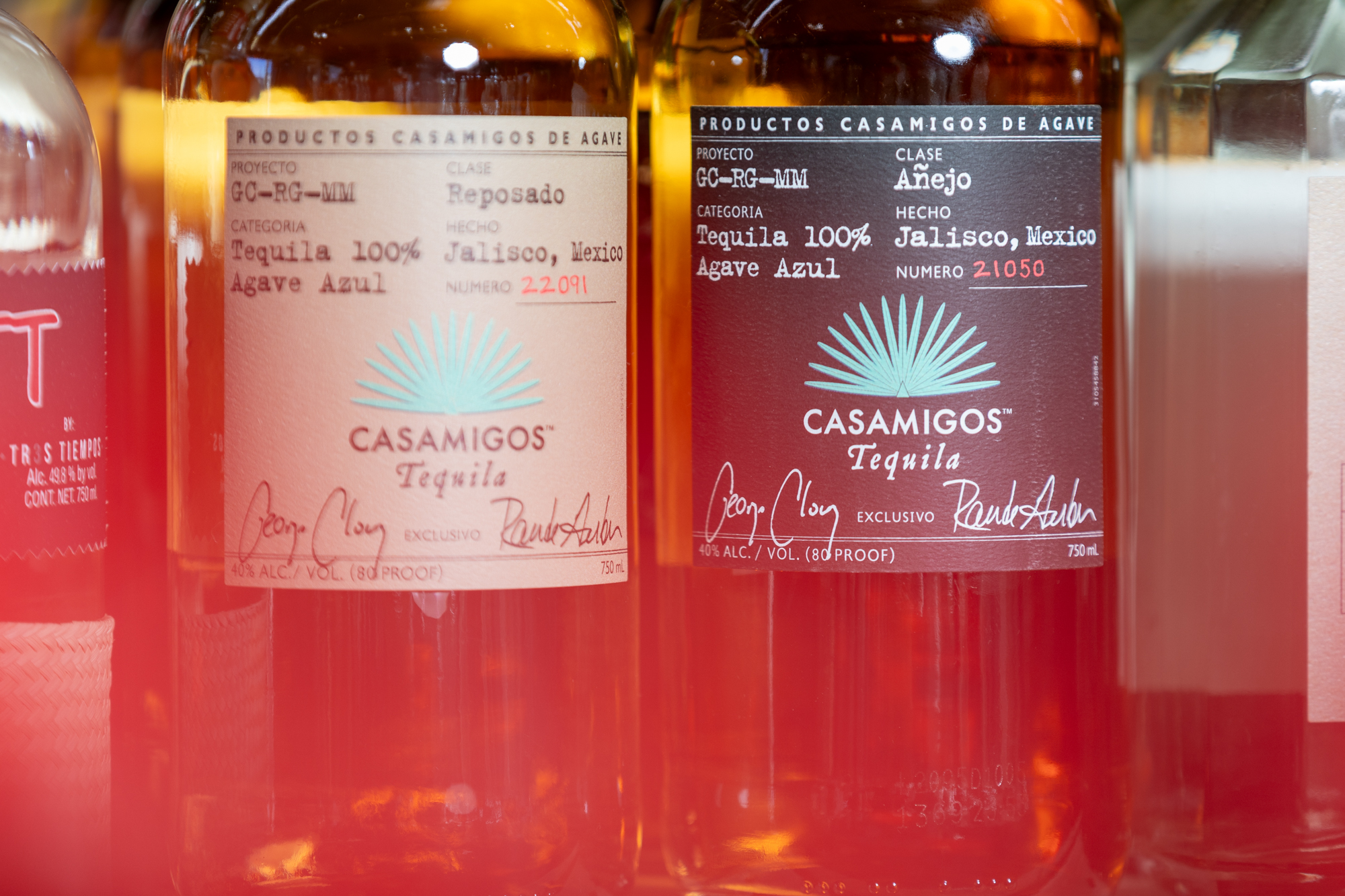
Casamigos tequila bottles on display at San Francisco Tequila Shop in Bernal Heights on Aug. 19, 2025. A new California lawsuit could reveal industry secrets with consequences on both sides of the U.S.-Mexico border. (Gustavo Hernandez/KQED)
Tequila has become the darling of California’s cocktail culture.
A handle of tequila can range up to $100 and beyond, depending on the brand, with many premium labels promoting that their liquor is made up of “100% agave.” This kind of tequila usually costs more because it “takes more agave to make,” said Mike Morales, Los Angeles-based executive editor and tasting director of the industry magazine Tequila Aficionado.
“It’s a big status symbol.”
But a series of legal battles has begun this summer that could shake up the entire industry — one of them in the very state that has embraced tequila the most.
A San Francisco resident has filed a class action suit in federal court against spirits giant Diageo — parent company of well-known tequila brands Don Julio and Casamigos — alleging the company intentionally misled consumers about the agave content in its tequila products labeled “100% agave” in order to profit from this deception.
‘An earthquake in the industry’
The class action — filed in the U.S. District Court for the Northern District of California — claims to represent anyone “who purchased Diageo Premium Tequila Products” with the goal of recovering “financial losses sustained by consumers who were misled by [Diageo’s] false and misleading advertising.”
This is actually the third lawsuit that Diageo faces from consumers regarding the agave content in their Don Julio and Casamigos brands, with one class action filed by consumers in New York in May and another in Florida shortly after.
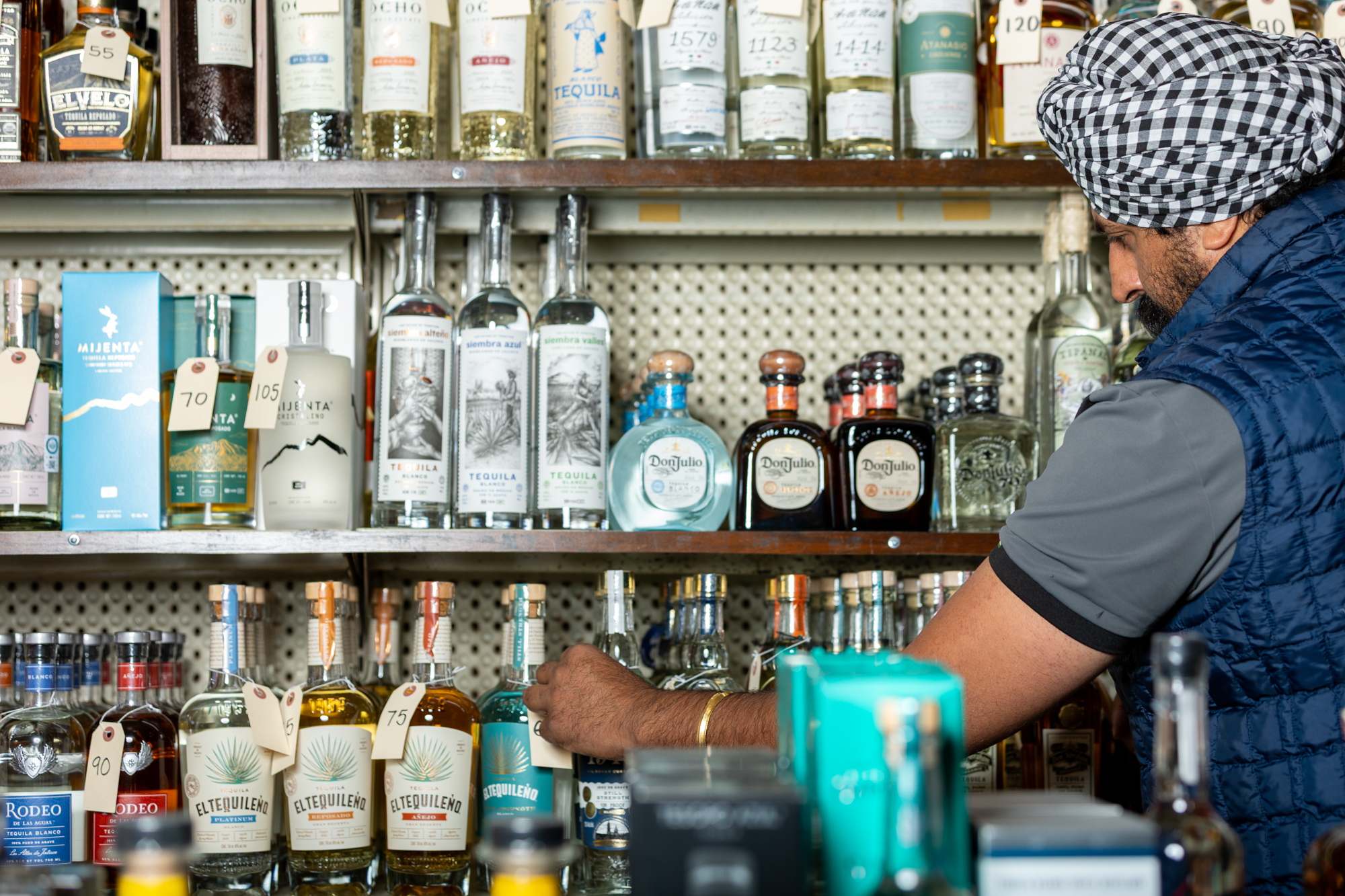
“Moose” arranges bottles along the towering tequila wall inside San Francisco Tequila Shop in Bernal Heights on Aug. 19, 2025. (Gustavo Hernandez/KQED)
Out of all three states where Diageo is being sued, California has some of the strongest consumer protection laws — and the beverage company has recently requested that this particular lawsuit be moved to the same New York court overseeing the first case.
The plaintiffs joining the San Francisco resident in the lawsuit are represented by Baron & Budd and Hagens Berman, two consumer rights firms with extensive records of wrestling with major corporations in court. Neither firm returned KQED’s requests for an interview.
A spokesperson for Diageo told KQED that “claims of adulteration are outrageous and categorically false,” and that the company will defend the quality and integrity of its tequilas in court “and against anyone who is spreading misinformation and lies about our products.”
Lawyers for both Diageo and the California plaintiffs will meet in San Francisco’s courthouse on Oct. 3. Regardless of what the courts decide, said David Suro Piñera, a Philadelphia-based tequila entrepreneur and historian, the lawsuits “are an earthquake in the industry.”
So why is the agave content inside a tequila bottle so crucial when it comes to selling this liquor that’s only becoming more popular? And what does this lawsuit say about how U.S. consumers shape an industry that started thousands of miles away in Mexico?
Evolution in the public eye
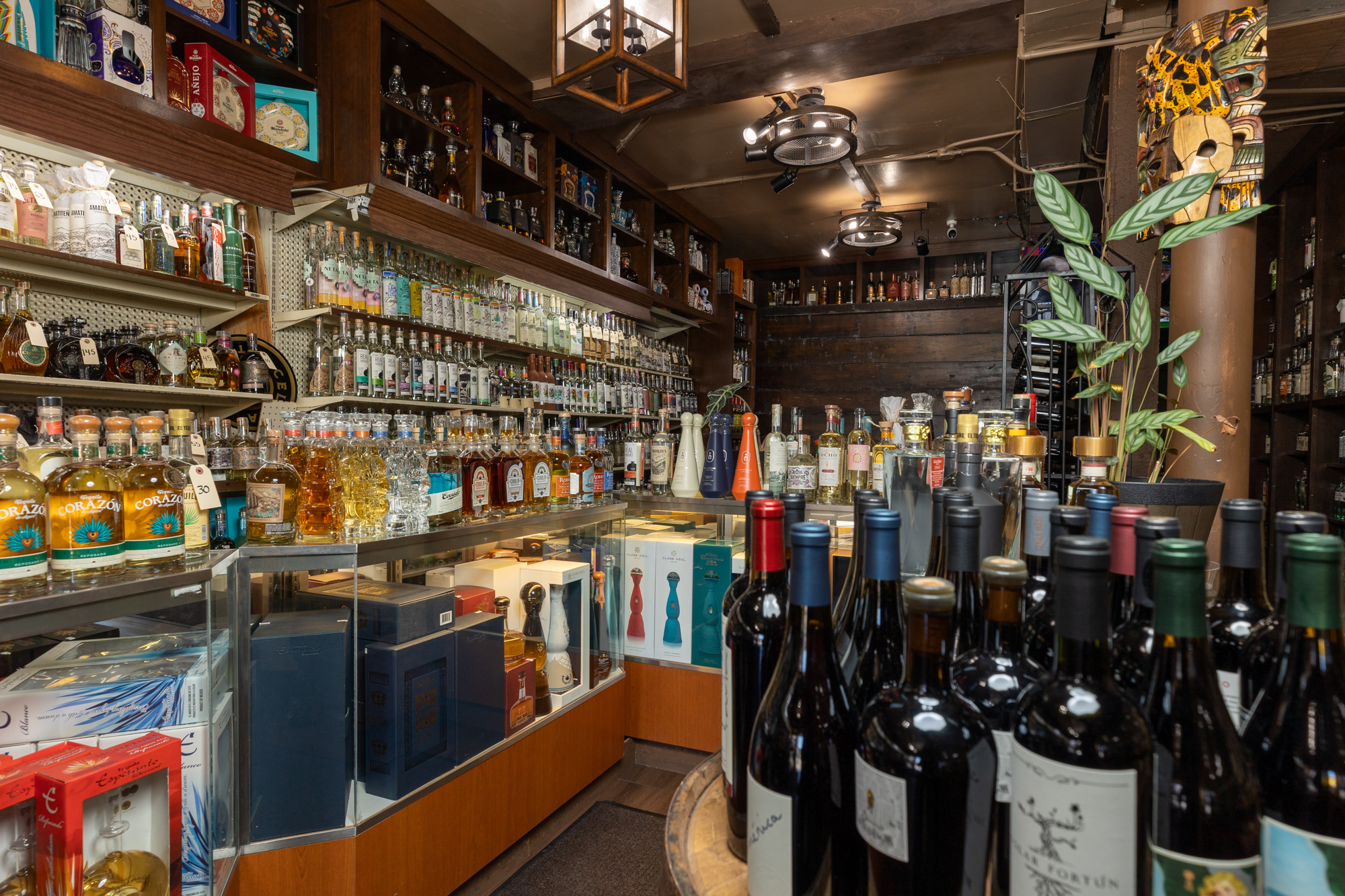
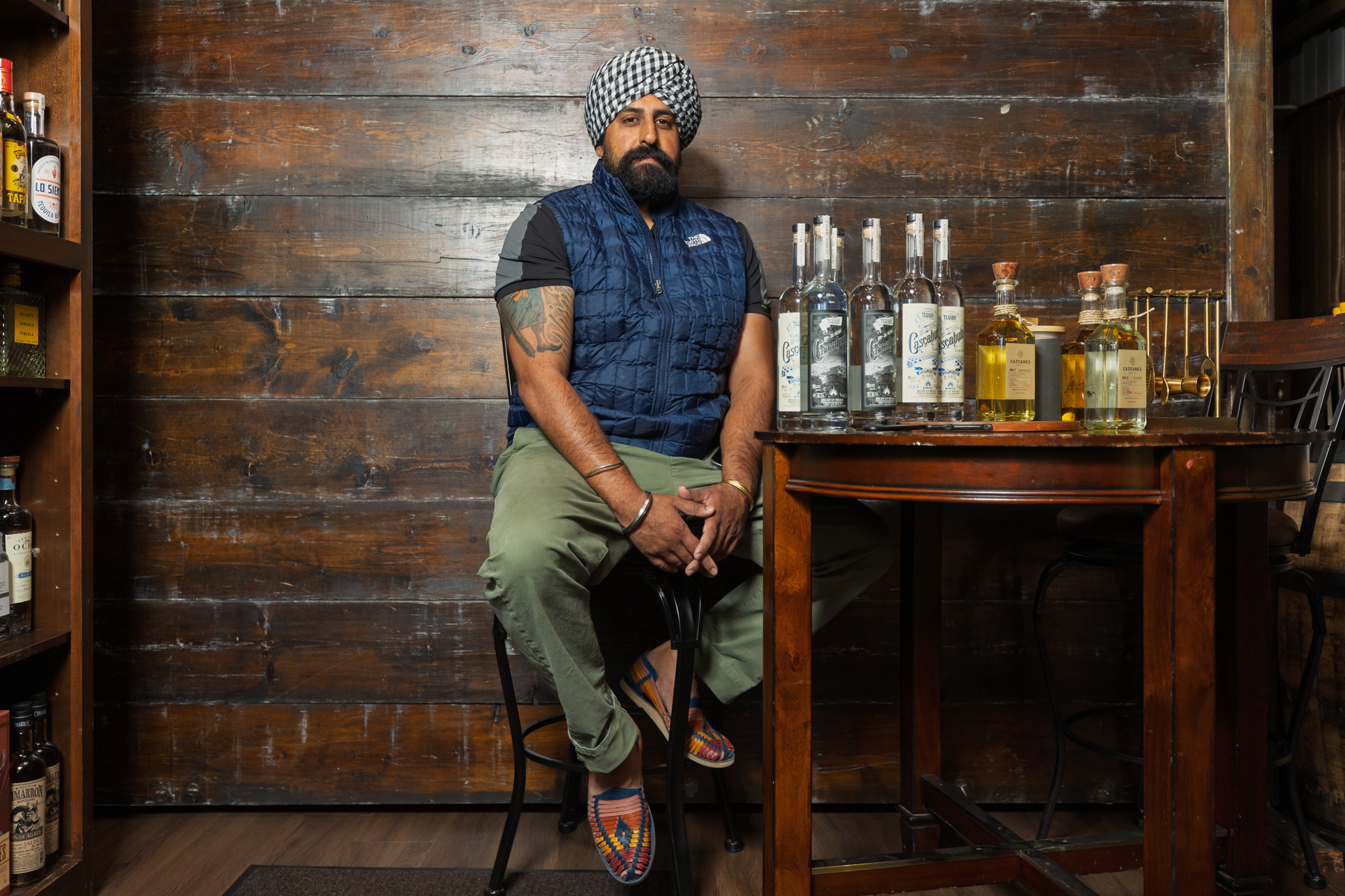
Covered floor to ceiling with colorful and intricately decorated bottles, the San Francisco Tequila Shop on the steep streets of Bernal Heights is an oasis for lovers of spirits derived from the agave plant. It was here in the backroom one August afternoon that owner Moose Malhi hosted Suro Piñera for a tasting event featuring some blanco, some reposado and plenty of conversation.
Suro Piñera told the assembled tequila enthusiasts about how, back in 1986, he opened a restaurant called Tequilas in downtown Philadelphia with the goal of bringing high-end Mexican cuisine to that city. But other local restaurateurs were confused about the name, he said.
Related Article
“They would hear ‘tequila’ and imagine something else — not high quality.”
But in the following decades, the way American consumers think about this liquor has changed significantly, Suro Piñera said. “To see right now the passion, the commitment, the interest in tequila, is a dream come true,” he said.
Families have been producing tequila primarily in the Mexican state of Jalisco for centuries, blending European distillation techniques with Indigenous agricultural knowledge. The Tequila Regulatory Council is the independent body that establishes the rules for the industry, which includes where tequila can be produced, who can sell it and defining what goes into it.
Anything marked as “tequila” must include at least 51% alcohol derived from blue agave. The other 49% can come from other sources, like caña (sugar cane) or grain alcohol, which are typically cheaper. This type of tequila, that’s a mixture of alcohols from different sources, is called “mixto.”
The Diageo lawsuit said that 100% agave “is a powerful marketing tool that shapes consumer expectations” and then accuses the company of tricking consumers into buying tequila that actually has “cheaper, non-agave alcohol.”
Mislabeling their tequila products is a violation of consumer protection law, the lawsuit claims. “For dominant players like Diageo, this is not just deceptive — it is a calculated, strategic misuse of market power.”
‘A pleasant burn’
Regulatory details aside, how does being 100% agave affect the way your tequila actually tastes? If you rarely drink tequila because of its strong flavor, don’t expect 100% agave tequila to be any easier on you, the San Francisco Tequila Shop’s Malhi said.
“People drink tequila that’s been sweetened by additives, and they think it’s smooth,” he said. “If all you drink is tequila that’s been sweetened, and then you try something with no additives, that’s such a big jump.”
A view inside San Francisco Tequila Shop in Bernal Heights on Aug. 19, 2025. (Gustavo Hernandez/KQED)
“A good tequila is going to give you a pleasant burn,” said Marcos Higareda, a tequila entrepreneur based out of Riverside County. “This comes from the ground. The soil nurtured that agave for the last seven, eight years. Then it went through a process to convert it into tequila.”
There’s also a lot of variation between the distilleries that provide tequila labels with their product. Some are run by the same families that first opened them decades ago, with long-held distillation traditions becoming industry secrets. And while some of these factors are dependent on humans, others — like rain and drought — are ultimately out of our control, Higareda said.
And with 100% agave tequila, it’s normal for there to be slight variations in color, taste or aroma in the same batch. “Not all tequilas are going to be the same,” he said.
Agave under strain
But as the world’s thirst for tequila grows, Higareda said that big brands are responding with a product that seeks to smell, taste and look the same regardless of where you go. One way to do that: adding sweeteners and colorants to achieve this uniformity, as permitted by the Tequila Regulatory Council’s rulebook for tequila production, also known as the “Normas.”
“You want to go to the shelf and you want to see that your product has the same consistent color every single time and the same flavor every single time,” a Jose Cuervo executive recently told Forbes Magazine.
Related Article
And globalization is being felt all the way through the supply chain.
The first time that Morales of Tequila Aficionado visited Jalisco, almost two decades ago, he remembers how bright the fields of agave were in the sunlight: “I had to look at them with my sunglasses on because they were so blue and bright against the red soil,” he said.
On recent trips, however, he’s seen: “it’s not like that anymore,” he said. “The plants aren’t big enough. They don’t let them grow long enough.”
For decades, the tequila industry has followed a cycle of boom and bust. When the price of tequila goes up, growers rush to grow and harvest agave as fast as possible, and when the price goes down, “everybody leaves their plants to rot,” Morales said.
Industry data shows that U.S. tequila sales are growing faster than vodka, whisky and all other spirits combined — and the giants of the beverage industry have noticed this surge. In the past decade, multinational corporations have snatched up some of the most famous tequila brands: London-based Diageo bought Don Julio in 2015 and then Casamigos in 2017; Sauza was taken over by Suntory, a Japanese company, in 2014; and rum giant Bacardi purchased Patrón in 2018.
“These brands are well-funded and want a return on their investment,” Morales said. That could mean depending more on non-agave sources for alcohol content, he said.
“Any tequila that’s being mass-marketed and charging a lot of money is probably lawyering up,” Morales said.
What now for the industry — and in court?
Back at the San Francisco Tequila Shop, after Suro Piñera’s tasting event, Malhi rang up his customers — and pointed to a photo behind the register of his grandfather, Nirmal Singh Malhi, standing next to family friend Ernie Sánchez.
In 1993, Malhi’s family opened a liquor store in Modesto, next to the Sánchez family. Over the years, they all developed a strong bond and learned about each other’s culture: the Sánchezes hailing from Jalisco, Mexico and the Malhi from Punjab, India.
Amandip Singh Malhi, known as “Moose,” proprietor of San Francisco Tequila Shop, stands in the back of his Bernal Heights store on Aug. 19, 2025. (Gustavo Hernandez/KQED)
The Sánchez family would frequently travel to Jalisco and bring back tequila brands that weren’t available in the U.S. yet. It was the Sánchez family that taught him, Malhi said, “that in each bottle, there’s a lot of tears, sweat and hard work.”
“When you really understand all the work and tradition that goes into making a quality spirit … that’s when you will appreciate more of what you taste when you drink tequila,” Malhi said. And he — like so many who’ve made tequila their lives — will be paying close attention to the case against Diageo as it unfolds at San Francisco’s federal courthouse, he said.
What most likely will decide the outcome of this legal battle is the evidence that each camp presents, said Deborah Hensler, professor of dispute resolution at Stanford Law School.
The verdict could also hinge on emerging technology. The defendants include data from two types of chemical tests — nuclear magnetic resonance and isotope testing — designed to measure the composition of alcohol derived from tequila. According to several industry experts that KQED spoke to for this story, these tests are fairly new in the world of tequila and have not yet been universally adopted by tequila producers.
“The defendant would have to bring in their own experts that counter [this data],” Hensler said — so that the judge can adequately consider whether the plaintiff’s evidence is credible and scientifically valid.
Related Article
If the case stays in California — and is not transferred to New York as Diageo has requested — the Golden State’s robust consumer protection laws could also come into play. The lawsuit claims the beverage company is in violation of the state’s Consumer Legal Remedies Act, which prohibits companies from misrepresenting the source of the goods they are selling, said Ted Mermin, consumer law professor at UC Berkeley.
“You can’t advertise something if you know — or should know — that what you are saying isn’t true,” he said. “You do not need a law that’s called ‘the tequila purity law.’”
And say the court finds that Diageo did mislead consumers about the agave content in its products? It would be the smaller players in the supply chain that pay the consequences, Suro Piñera said.
“If this [spirits] category collapses and the external corporate interests just go to the next country — the next trending liquor — they’ll be leaving us with a damaged ecosystem and greater inequality,” he said. “It’s a cultural and ecological expropriation.”
And with that, Suro Piñera added, wiping away “the reputation and recognition that we have worked so hard to build.”
lower waypointnext waypoint
Player sponsored by
window.__IS_SSR__=true
window.__INITIAL_STATE__={
"attachmentsReducer": {
"audio_0": {
"type": "attachments",
"id": "audio_0",
"imgSizes": {
"kqedFullSize": {
"file": "https://ww2.kqed.org/news/wp-content/themes/KQED-unified/img/audio_bgs/background0.jpg"
}
}
},
"audio_1": {
"type": "attachments",
"id": "audio_1",
"imgSizes": {
"kqedFullSize": {
"file": "https://ww2.kqed.org/news/wp-content/themes/KQED-unified/img/audio_bgs/background1.jpg"
}
}
},
"audio_2": {
"type": "attachments",
"id": "audio_2",
"imgSizes": {
"kqedFullSize": {
"file": "https://ww2.kqed.org/news/wp-content/themes/KQED-unified/img/audio_bgs/background2.jpg"
}
}
},
"audio_3": {
"type": "attachments",
"id": "audio_3",
"imgSizes": {
"kqedFullSize": {
"file": "https://ww2.kqed.org/news/wp-content/themes/KQED-unified/img/audio_bgs/background3.jpg"
}
}
},
"audio_4": {
"type": "attachments",
"id": "audio_4",
"imgSizes": {
"kqedFullSize": {
"file": "https://ww2.kqed.org/news/wp-content/themes/KQED-unified/img/audio_bgs/background4.jpg"
}
}
},
"placeholder": {
"type": "attachments",
"id": "placeholder",
"imgSizes": {
"thumbnail": {
"file": "https://cdn.kqed.org/wp-content/uploads/2024/12/KQED-Default-Image-816638274-2000x1333-1-160x107.jpg",
"width": 160,
"height": 107,
"mimeType": "image/jpeg"
},
"medium": {
"file": "https://cdn.kqed.org/wp-content/uploads/2024/12/KQED-Default-Image-816638274-2000x1333-1-800x533.jpg",
"width": 800,
"height": 533,
"mimeType": "image/jpeg"
},
"medium_large": {
"file": "https://cdn.kqed.org/wp-content/uploads/2024/12/KQED-Default-Image-816638274-2000x1333-1-768x512.jpg",
"width": 768,
"height": 512,
"mimeType": "image/jpeg"
},
"large": {
"file": "https://cdn.kqed.org/wp-content/uploads/2024/12/KQED-Default-Image-816638274-2000x1333-1-1020x680.jpg",
"width": 1020,
"height": 680,
"mimeType": "image/jpeg"
},
"1536x1536": {
"file": "https://cdn.kqed.org/wp-content/uploads/2024/12/KQED-Default-Image-816638274-2000x1333-1-1536x1024.jpg",
"width": 1536,
"height": 1024,
"mimeType": "image/jpeg"
},
"fd-lrg": {
"file": "https://cdn.kqed.org/wp-content/uploads/2024/12/KQED-Default-Image-816638274-2000x1333-1-1536x1024.jpg",
"width": 1536,
"height": 1024,
"mimeType": "image/jpeg"
},
"fd-med": {
"file": "https://cdn.kqed.org/wp-content/uploads/2024/12/KQED-Default-Image-816638274-2000x1333-1-1020x680.jpg",
"width": 1020,
"height": 680,
"mimeType": "image/jpeg"
},
"fd-sm": {
"file": "https://cdn.kqed.org/wp-content/uploads/2024/12/KQED-Default-Image-816638274-2000x1333-1-800x533.jpg",
"width": 800,
"height": 533,
"mimeType": "image/jpeg"
},
"post-thumbnail": {
"file": "https://cdn.kqed.org/wp-content/uploads/2024/12/KQED-Default-Image-816638274-2000x1333-1-672x372.jpg",
"width": 672,
"height": 372,
"mimeType": "image/jpeg"
},
"twentyfourteen-full-width": {
"file": "https://cdn.kqed.org/wp-content/uploads/2024/12/KQED-Default-Image-816638274-2000x1333-1-1038x576.jpg",
"width": 1038,
"height": 576,
"mimeType": "image/jpeg"
},
"xxsmall": {
"file": "https://cdn.kqed.org/wp-content/uploads/2024/12/KQED-Default-Image-816638274-2000x1333-1-160x107.jpg",
"width": 160,
"height": 107,
"mimeType": "image/jpeg"
},
"xsmall": {
"file": "https://cdn.kqed.org/wp-content/uploads/2024/12/KQED-Default-Image-816638274-2000x1333-1-672x372.jpg",
"width": 672,
"height": 372,
"mimeType": "image/jpeg"
},
"small": {
"file": "https://cdn.kqed.org/wp-content/uploads/2024/12/KQED-Default-Image-816638274-2000x1333-1-672x372.jpg",
"width": 672,
"height": 372,
"mimeType": "image/jpeg"
},
"xlarge": {
"file": "https://cdn.kqed.org/wp-content/uploads/2024/12/KQED-Default-Image-816638274-2000x1333-1-1020x680.jpg",
"width": 1020,
"height": 680,
"mimeType": "image/jpeg"
},
"full-width": {
"file": "https://cdn.kqed.org/wp-content/uploads/2024/12/KQED-Default-Image-816638274-2000x1333-1-1920x1280.jpg",
"width": 1920,
"height": 1280,
"mimeType": "image/jpeg"
},
"guest-author-32": {
"file": "https://cdn.kqed.org/wp-content/uploads/2025/01/KQED-Default-Image-816638274-1333x1333-1-160x160.jpg",
"width": 32,
"height": 32,
"mimeType": "image/jpeg"
},
"guest-author-50": {
"file": "https://cdn.kqed.org/wp-content/uploads/2025/01/KQED-Default-Image-816638274-1333x1333-1-160x160.jpg",
"width": 50,
"height": 50,
"mimeType": "image/jpeg"
},
"guest-author-64": {
"file": "https://cdn.kqed.org/wp-content/uploads/2025/01/KQED-Default-Image-816638274-1333x1333-1-160x160.jpg",
"width": 64,
"height": 64,
"mimeType": "image/jpeg"
},
"guest-author-96": {
"file": "https://cdn.kqed.org/wp-content/uploads/2025/01/KQED-Default-Image-816638274-1333x1333-1-160x160.jpg",
"width": 96,
"height": 96,
"mimeType": "image/jpeg"
},
"guest-author-128": {
"file": "https://cdn.kqed.org/wp-content/uploads/2025/01/KQED-Default-Image-816638274-1333x1333-1-160x160.jpg",
"width": 128,
"height": 128,
"mimeType": "image/jpeg"
},
"detail": {
"file": "https://cdn.kqed.org/wp-content/uploads/2025/01/KQED-Default-Image-816638274-1333x1333-1-160x160.jpg",
"width": 160,
"height": 160,
"mimeType": "image/jpeg"
},
"kqedFullSize": {
"file": "https://cdn.kqed.org/wp-content/uploads/2024/12/KQED-Default-Image-816638274-2000x1333-1.jpg",
"width": 2000,
"height": 1333
}
}
},
"news_12053058": {
"type": "attachments",
"id": "news_12053058",
"meta": {
"index": "attachments_1716263798",
"site": "news",
"id": "12053058",
"found": true
},
"title": "250819_TEQUILA101_GH-16-KQED",
"publishDate": 1755723154,
"status": "inherit",
"parent": 0,
"modified": 1755723186,
"caption": "Casamigos tequila bottles on display at San Francisco Tequila Shop in Bernal Heights on Aug. 19, 2025. A new California lawsuit could reveal industry secrets with consequences on both sides of the U.S.-Mexico border.",
"credit": "Gustavo Hernandez/KQED",
"altTag": null,
"description": null,
"imgSizes": {
"thumbnail": {
"file": "https://cdn.kqed.org/wp-content/uploads/sites/10/2025/08/250819_TEQUILA101_GH-16-KQED-160x107.jpg",
"width": 160,
"height": 107,
"mimeType": "image/jpeg"
},
"1536x1536": {
"file": "https://cdn.kqed.org/wp-content/uploads/sites/10/2025/08/250819_TEQUILA101_GH-16-KQED-1536x1024.jpg",
"width": 1536,
"height": 1024,
"mimeType": "image/jpeg"
},
"post-thumbnail": {
"file": "https://cdn.kqed.org/wp-content/uploads/sites/10/2025/08/250819_TEQUILA101_GH-16-KQED-672x372.jpg",
"width": 672,
"height": 372,
"mimeType": "image/jpeg"
},
"twentyfourteen-full-width": {
"file": "https://cdn.kqed.org/wp-content/uploads/sites/10/2025/08/250819_TEQUILA101_GH-16-KQED-1038x576.jpg",
"width": 1038,
"height": 576,
"mimeType": "image/jpeg"
},
"kqedFullSize": {
"file": "https://cdn.kqed.org/wp-content/uploads/sites/10/2025/08/250819_TEQUILA101_GH-16-KQED.jpg",
"width": 2000,
"height": 1333
}
},
"isLoading": false,
"fetchFailed": false
}
},
"audioPlayerReducer": {
"postId": "stream_live",
"isPaused": true,
"isPlaying": false,
"pfsActive": false,
"pledgeModalIsOpen": true,
"playerDrawerIsOpen": false,
"liveAudioPlayStartedAt": 0,
"liveAudioPlayContext": ""
},
"authorsReducer": {
"ccabreralomeli": {
"type": "authors",
"id": "11708",
"meta": {
"index": "authors_1716337520",
"id": "11708",
"found": true
},
"name": "Carlos Cabrera-Lomelí",
"firstName": "Carlos",
"lastName": "Cabrera-Lomelí",
"slug": "ccabreralomeli",
"email": "ccabreralomeli@KQED.org",
"display_author_email": true,
"staff_mastheads": [
"news"
],
"title": "Community Reporter",
"bio": "Carlos Cabrera-Lomelí is a community reporter with KQED's digital engagement team. He also reports and co-produces for KQED's bilingual news hub KQED en Español. He grew up in San Francisco's Mission District and has previously worked with Univision, 48 Hills and REFORMA in Mexico City.",
"avatar": "https://secure.gravatar.com/avatar/c309be9665e484f887b818c89e273ecc673004f426f36b24d00a4d813a2e0518?s=600&d=blank&r=g",
"twitter": "@LomeliCabrera",
"bluesky": null,
"facebook": null,
"instagram": null,
"linkedin": null,
"sites": [
{
"site": "arts",
"roles": [
"editor"
]
},
{
"site": "news",
"roles": [
"editor"
]
},
{
"site": "about",
"roles": [
"editor"
]
},
{
"site": "science",
"roles": [
"editor"
]
},
{
"site": "perspectives",
"roles": [
"editor"
]
},
{
"site": "elections",
"roles": [
"editor"
]
},
{
"site": "liveblog",
"roles": [
"contributor"
]
}
],
"headData": {
"title": "Carlos Cabrera-Lomelí | KQED",
"description": "Community Reporter",
"ogImgSrc": "https://secure.gravatar.com/avatar/c309be9665e484f887b818c89e273ecc673004f426f36b24d00a4d813a2e0518?s=600&d=blank&r=g",
"twImgSrc": "https://secure.gravatar.com/avatar/c309be9665e484f887b818c89e273ecc673004f426f36b24d00a4d813a2e0518?s=600&d=blank&r=g"
},
"isLoading": false,
"link": "/author/ccabreralomeli"
}
},
"pagesReducer": {},
"pfsSessionReducer": {},
"postsReducer": {
"stream_live": {
"type": "live",
"id": "stream_live",
"audioUrl": "https://streams.kqed.org/kqedradio",
"title": "Live Stream",
"excerpt": "Live Stream information currently unavailable.",
"link": "/radio",
"featImg": "",
"label": {
"name": "KQED Live",
"link": "/"
}
},
"stream_kqedNewscast": {
"type": "posts",
"id": "stream_kqedNewscast",
"audioUrl": "https://www.kqed.org/.stream/anon/radio/RDnews/newscast.mp3?_=1",
"title": "KQED Newscast",
"featImg": "",
"label": {
"name": "88.5 FM",
"link": "/"
}
},
"news_12055094": {
"type": "posts",
"id": "news_12055094",
"meta": {
"index": "posts_1716263798",
"site": "news",
"id": "12055094",
"found": true
},
"articlePosition": 0,
"guestAuthors": [],
"slug": "whats-in-your-tequila-california-lawsuit-claims-some-labels-mislead-consumers",
"title": "What’s In Your Tequila? California Lawsuit Claims Some Labels Misled Consumers",
"publishDate": 1757415637,
"format": "standard",
"headTitle": "What’s In Your Tequila? California Lawsuit Claims Some Labels Misled Consumers | KQED",
"labelTerm": {
"site": "news"
},
"content": "\u003cp>Tequila has become the darling of \u003ca href=\"https://www.kqed.org/news/category/california\">California’s\u003c/a> cocktail culture.\u003c/p>\n\u003cp>\u003ca href=\"https://www.thespiritsbusiness.com/issue/brand-champions-2024/\">According to industry data\u003c/a>, more than 50 million cases of tequila were sold in the United States in 2023, a 7.6% increase from the previous year. And California is \u003ca href=\"https://www.thespiritsbusiness.com/2023/04/tequila-sales-grew-by-17-in-california/\">the biggest market for the spirit\u003c/a> produced from the \u003ca href=\"https://www.academiapatron.com/making-tequila/agave-growth-and-harvesting/planting-selection-harvesting\">blue Weber agave\u003c/a> plant grown exclusively in a handful of states in Mexico — a demand \u003ca href=\"https://just-drinks.nridigital.com/just_drinks_magazine_nov22/tequila_us_market_forecast\">boosted by the state’s sizable Latino population\u003c/a>.\u003c/p>\n\u003cp>A handle of tequila can range up to $100 and beyond, depending on the brand, with many premium labels promoting that their liquor is made up of “100% agave.” This kind of tequila usually costs more because it “takes more agave to make,” said Mike Morales, Los Angeles-based executive editor and tasting director of the industry magazine \u003cem>Tequila Aficionado\u003c/em>.\u003c/p>\n\u003cp>“It’s a big status symbol.”\u003c/p>\n\u003cp>[ad fullwidth]\u003c/p>\n\u003cp>But a series of legal battles has begun this summer that could shake up the entire industry — one of them in the very state that has embraced tequila the most.\u003c/p>\n\u003cp>\u003ca href=\"https://cdn.kqed.org/wp-content/uploads/sites/10/2025/09/Diageo-Class-Action-072025-1.pdf\">A San Francisco resident\u003c/a> has filed a class action suit in federal court against spirits giant Diageo — parent company of well-known tequila brands Don Julio and Casamigos — alleging the company intentionally misled consumers about the agave content in its tequila products labeled “100% agave” in order to profit from this deception.\u003c/p>\n\u003ch2>‘An earthquake in the industry’\u003c/h2>\n\u003cp>The class action — filed in the U.S. District Court for the Northern District of California — claims to represent anyone “who purchased Diageo Premium Tequila Products” with the goal of recovering “financial losses sustained by consumers who were misled by [Diageo’s] false and misleading advertising.”\u003c/p>\n\u003cp>This is actually the third lawsuit that Diageo faces from consumers regarding the agave content in their Don Julio and Casamigos brands, with one class action filed by consumers in New York in May and another in Florida shortly after.\u003c/p>\n\u003cfigure id=\"attachment_12053055\" class=\"wp-caption aligncenter\" style=\"max-width: 2000px\">\u003ca href=\"https://cdn.kqed.org/wp-content/uploads/sites/10/2025/08/250819_TEQUILA101_GH-9-KQED.jpg\">\u003cimg loading=\"lazy\" decoding=\"async\" class=\"size-full wp-image-12053055\" src=\"https://cdn.kqed.org/wp-content/uploads/sites/10/2025/08/250819_TEQUILA101_GH-9-KQED.jpg\" alt=\"\" width=\"2000\" height=\"1333\" srcset=\"https://cdn.kqed.org/wp-content/uploads/sites/10/2025/08/250819_TEQUILA101_GH-9-KQED.jpg 2000w, https://cdn.kqed.org/wp-content/uploads/sites/10/2025/08/250819_TEQUILA101_GH-9-KQED-160x107.jpg 160w, https://cdn.kqed.org/wp-content/uploads/sites/10/2025/08/250819_TEQUILA101_GH-9-KQED-1536x1024.jpg 1536w\" sizes=\"auto, (max-width: 2000px) 100vw, 2000px\">\u003c/a>\u003cfigcaption class=\"wp-caption-text\">“Moose” arranges bottles along the towering tequila wall inside San Francisco Tequila Shop in Bernal Heights on Aug. 19, 2025. \u003ccite>(Gustavo Hernandez/KQED)\u003c/cite>\u003c/figcaption>\u003c/figure>\n\u003cp>Out of all three states where Diageo is being sued, California has some of the strongest consumer protection laws — and the beverage company has recently requested that this particular lawsuit be moved to the same New York court overseeing the first case.\u003c/p>\n\u003cp>The plaintiffs joining the San Francisco resident in the lawsuit are represented by Baron & Budd and Hagens Berman, two consumer rights firms with extensive records of \u003ca href=\"https://abcnews.go.com/Business/ny-man-sues-volkswagen-emissions-scandal-reason-bought/story?id=33951902\">wrestling with major corporations in court\u003c/a>. Neither firm returned KQED’s requests for an interview.\u003c/p>\n\u003cp>A spokesperson for Diageo told KQED that “claims of adulteration are outrageous and categorically false,” and that the company will defend the quality and integrity of its tequilas in court “and against anyone who is spreading misinformation and lies about our products.”\u003c/p>\n\u003cp>Lawyers for both Diageo and the California plaintiffs will meet in San Francisco’s courthouse on Oct. 3. Regardless of what the courts decide, said David Suro Piñera, a Philadelphia-based tequila entrepreneur and historian, the lawsuits “are an earthquake in the industry.”\u003c/p>\n\u003cp>So why \u003cem>is \u003c/em>the agave content inside a tequila bottle so crucial when it comes to selling this liquor that’s only becoming more popular? And what does this lawsuit say about how U.S. consumers shape an industry that started thousands of miles away in Mexico?\u003c/p>\n\u003ch2>Evolution in the public eye\u003c/h2>\n\u003cp>Covered floor to ceiling with colorful and intricately decorated bottles, the San Francisco Tequila Shop on the steep streets of Bernal Heights is an oasis for lovers of spirits derived from the agave plant. It was here in the backroom one August afternoon that owner Moose Malhi hosted Suro Piñera for a tasting event featuring some blanco, some reposado and plenty of conversation.\u003c/p>\n\u003cp>Suro Piñera told the assembled tequila enthusiasts about how, back in 1986, he opened a restaurant called Tequilas in downtown Philadelphia with the goal of bringing high-end Mexican cuisine to that city. But other local restaurateurs were confused about the name, he said.[aside postID=news_11999014 hero='https://cdn.kqed.org/wp-content/uploads/sites/10/2024/08/240628-Junk-Fees-Law-MD-02_qed-1020x680.jpg']“They would hear ‘tequila’ and imagine something else — not high quality.”\u003c/p>\n\u003cp>But in the following decades, the way American consumers think about this liquor has changed significantly, Suro Piñera said. “To see right now the passion, the commitment, the interest in tequila, is a dream come true,” he said.\u003c/p>\n\u003cp>Families have been producing tequila primarily in the Mexican state of Jalisco for centuries, blending European distillation techniques with Indigenous agricultural knowledge. The \u003ca href=\"https://www.crt.org.mx/en/about-us/\">Tequila Regulatory Council\u003c/a> is the independent body that establishes the rules for the industry, which includes where tequila can be produced, who can sell it and \u003ca href=\"https://www.crt.org.mx/wp-content/uploads/2024/01/NOM-006-SCFI-2012%20-%20INGLES.pdf\">defining what goes into it\u003c/a>.\u003c/p>\n\u003cp>Anything marked as “tequila” must include at least 51% alcohol derived from blue agave. The other 49% \u003cem>can \u003c/em>come from other sources, like caña (sugar cane) or grain alcohol, which are typically cheaper. This type of tequila, that’s a mixture of alcohols from different sources, is called “mixto.”\u003c/p>\n\u003cp>The Diageo lawsuit said that 100% agave “is a powerful marketing tool that shapes consumer expectations” and then accuses the company of tricking consumers into buying tequila that actually has “cheaper, non-agave alcohol.”\u003c/p>\n\u003cp>Mislabeling their tequila products is a violation of consumer protection law, the lawsuit claims. “For dominant players like Diageo, this is not just deceptive — it is a calculated, strategic misuse of market power.”\u003c/p>\n\u003ch2>‘A pleasant burn’\u003c/h2>\n\u003cp>Regulatory details aside, how does being 100% agave affect the way your tequila actually tastes? If you rarely drink tequila because of its strong flavor, don’t expect 100% agave tequila to be any easier on you, the San Francisco Tequila Shop’s Malhi said.\u003c/p>\n\u003cp>“People drink tequila that’s been sweetened by additives, and they think it’s smooth,” he said. “If all you drink is tequila that’s been sweetened, and then you try something with no additives, that’s such a big jump.”\u003c/p>\n\u003cfigure id=\"attachment_12053056\" class=\"wp-caption aligncenter\" style=\"max-width: 2000px\">\u003ca href=\"https://cdn.kqed.org/wp-content/uploads/sites/10/2025/08/250819_TEQUILA101_GH-13-KQED.jpg\">\u003cimg loading=\"lazy\" decoding=\"async\" class=\"size-full wp-image-12053056\" src=\"https://cdn.kqed.org/wp-content/uploads/sites/10/2025/08/250819_TEQUILA101_GH-13-KQED.jpg\" alt=\"\" width=\"2000\" height=\"1333\" srcset=\"https://cdn.kqed.org/wp-content/uploads/sites/10/2025/08/250819_TEQUILA101_GH-13-KQED.jpg 2000w, https://cdn.kqed.org/wp-content/uploads/sites/10/2025/08/250819_TEQUILA101_GH-13-KQED-160x107.jpg 160w, https://cdn.kqed.org/wp-content/uploads/sites/10/2025/08/250819_TEQUILA101_GH-13-KQED-1536x1024.jpg 1536w\" sizes=\"auto, (max-width: 2000px) 100vw, 2000px\">\u003c/a>\u003cfigcaption class=\"wp-caption-text\">A view inside San Francisco Tequila Shop in Bernal Heights on Aug. 19, 2025. \u003ccite>(Gustavo Hernandez/KQED)\u003c/cite>\u003c/figcaption>\u003c/figure>\n\u003cp>“A good tequila is going to give you a pleasant burn,” said Marcos Higareda, a tequila entrepreneur based out of Riverside County. “This comes from the ground. The soil nurtured that agave for the last seven, eight years. Then it went through a process to convert it into tequila.”\u003c/p>\n\u003cp>There’s also a lot of variation between the distilleries that provide tequila labels with their product. Some are run by the same families that first opened them decades ago, with \u003ca href=\"https://www.npr.org/2025/05/06/nx-s1-5188663/author-ted-genoways-new-book-tequila-wars\">long-held distillation traditions becoming industry secrets\u003c/a>. And while some of these factors are dependent on humans, others — like rain and drought — are ultimately out of our control, Higareda said.\u003c/p>\n\u003cp>And with 100% agave tequila, it’s normal for there to be slight variations in color, taste or aroma in the same batch. “Not all tequilas are going to be the same,” he said.\u003c/p>\n\u003ch2>Agave under strain\u003c/h2>\n\u003cp>But as the \u003ca href=\"https://www.crt.org.mx/en/2025/03/27/2025-begins-with-an-increase-in-tequila-exports/\">world’s thirst for tequila grows\u003c/a>, Higareda said that big brands are responding with a product that seeks to smell, taste and look the same regardless of where you go. One way to do that: adding sweeteners and colorants to achieve this uniformity, as permitted by the Tequila Regulatory Council’s \u003ca href=\"https://www.crt.org.mx/wp-content/uploads/2024/01/NOM-006-SCFI-2012%20-%20INGLES.pdf\">rulebook for tequila production, \u003c/a>also known as the “Normas.”\u003c/p>\n\u003cp>“You want to go to the shelf and you want to see that your product has the same consistent color every single time and the same flavor every single time,” a Jose Cuervo executive \u003ca href=\"https://www.forbes.com/sites/johnkell/2025/03/24/jose-cuervo-says-the-additive-free--movement-is-damaging-to-tequila/\">recently told Forbes Magazine\u003c/a>.[aside postID=news_12054153 hero='https://cdn.kqed.org/wp-content/uploads/sites/10/2025/08/BrownEggsGetty.jpg']And globalization is being felt all the way through the supply chain.\u003c/p>\n\u003cp>The first time that Morales of \u003cem>Tequila Aficionado\u003c/em> visited Jalisco, almost two decades ago, he remembers how bright the fields of agave were in the sunlight: “I had to look at them with my sunglasses on because they were so blue and bright against the red soil,” he said.\u003c/p>\n\u003cp>On recent trips, however, he’s seen: “it’s not like that anymore,” he said. “The plants aren’t big enough. They don’t let them grow long enough.”\u003c/p>\n\u003cp>For decades, the tequila industry has followed \u003ca href=\"https://www.ft.com/content/be3f48a5-d5d7-40af-a9e7-3ebff98741b3\">a cycle of boom and bust\u003c/a>. When the price of tequila goes up, growers rush to grow and harvest agave as fast as possible, and when the price goes down, “everybody leaves their plants to rot,” Morales said.\u003c/p>\n\u003cp>Industry data shows that U.S. tequila sales \u003ca href=\"https://www.thespiritsbusiness.com/issue/brand-champions-2024/\">are growing faster\u003c/a> than vodka, whisky and all other spirits combined — and the giants of the beverage industry have noticed this surge. In the past decade, multinational corporations have snatched up some of the most famous tequila brands: London-based Diageo bought Don Julio in 2015 and then Casamigos in 2017; Sauza was taken over by Suntory, a Japanese company, in 2014; and rum giant Bacardi purchased Patrón in 2018.\u003c/p>\n\u003cp>“These brands are well-funded and want a return on their investment,” Morales said. That could mean depending more on non-agave sources for alcohol content, he said.\u003c/p>\n\u003cp>“Any tequila that’s being mass-marketed and charging a lot of money is probably lawyering up,” Morales said.\u003c/p>\n\u003ch2>What now for the industry — and in court?\u003c/h2>\n\u003cp>Back at the San Francisco Tequila Shop, after Suro Piñera’s tasting event, Malhi rang up his customers — and pointed to a photo behind the register of his grandfather, Nirmal Singh Malhi, standing next to family friend Ernie Sánchez.\u003c/p>\n\u003cp>In 1993, Malhi’s family opened a liquor store in Modesto, next to the Sánchez family. Over the years, they all developed a strong bond and learned about each other’s culture: the Sánchezes hailing from Jalisco, Mexico and the Malhi from Punjab, India.\u003c/p>\n\u003cfigure id=\"attachment_12053054\" class=\"wp-caption aligncenter\" style=\"max-width: 2000px\">\u003ca href=\"https://cdn.kqed.org/wp-content/uploads/sites/10/2025/08/250819_TEQUILA101_GH-5-KQED.jpg\">\u003cimg loading=\"lazy\" decoding=\"async\" class=\"size-full wp-image-12053054\" src=\"https://cdn.kqed.org/wp-content/uploads/sites/10/2025/08/250819_TEQUILA101_GH-5-KQED.jpg\" alt=\"\" width=\"2000\" height=\"1333\" srcset=\"https://cdn.kqed.org/wp-content/uploads/sites/10/2025/08/250819_TEQUILA101_GH-5-KQED.jpg 2000w, https://cdn.kqed.org/wp-content/uploads/sites/10/2025/08/250819_TEQUILA101_GH-5-KQED-160x107.jpg 160w, https://cdn.kqed.org/wp-content/uploads/sites/10/2025/08/250819_TEQUILA101_GH-5-KQED-1536x1024.jpg 1536w\" sizes=\"auto, (max-width: 2000px) 100vw, 2000px\">\u003c/a>\u003cfigcaption class=\"wp-caption-text\">Amandip Singh Malhi, known as “Moose,” proprietor of San Francisco Tequila Shop, stands in the back of his Bernal Heights store on Aug. 19, 2025. \u003ccite>(Gustavo Hernandez/KQED)\u003c/cite>\u003c/figcaption>\u003c/figure>\n\u003cp>The Sánchez family would frequently travel to Jalisco and bring back tequila brands that weren’t available in the U.S. yet. It was the Sánchez family that taught him, Malhi said, “that in each bottle, there’s a lot of tears, sweat and hard work.”\u003c/p>\n\u003cp>“When you really understand all the work and tradition that goes into making a quality spirit … that’s when you will appreciate more of what you taste when you drink tequila,” Malhi said. And he — like so many who’ve made tequila their lives — will be paying close attention to the case against Diageo as it unfolds at San Francisco’s federal courthouse, he said.\u003c/p>\n\u003cp>What most likely will decide the outcome of this legal battle is the evidence that each camp presents, said Deborah Hensler, professor of dispute resolution at Stanford Law School.\u003c/p>\n\u003cp>The verdict could also hinge on emerging technology. The defendants include data from two types of chemical tests — nuclear magnetic resonance and isotope testing — designed to measure the composition of alcohol derived from tequila. According to several industry experts that KQED spoke to for this story, these tests are fairly new in the world of tequila and have not yet been universally adopted by tequila producers.\u003c/p>\n\u003cp>“The defendant would have to bring in their \u003cem>own \u003c/em>experts that counter [this data],” Hensler said — so that the judge can adequately consider whether the plaintiff’s evidence is credible and scientifically valid.[aside postID=news_12047129 hero='https://cdn.kqed.org/wp-content/uploads/sites/10/2025/07/55950722_qed.jpg']If the case stays in California — and is not transferred to New York as Diageo has requested — the Golden State’s robust consumer protection laws could also come into play. The lawsuit claims the beverage company is in violation of the state’s Consumer Legal Remedies Act, which prohibits companies from misrepresenting the source of the goods they are selling, said Ted Mermin, consumer law professor at UC Berkeley.\u003c/p>\n\u003cp>“You can’t advertise something if you know — or should know — that what you are saying isn’t true,” he said. “You do not need a law that’s called ‘the tequila purity law.’”\u003c/p>\n\u003cp>And say the court finds that Diageo \u003cem>did \u003c/em>mislead consumers about the agave content in its products? It would be the smaller players in the supply chain that pay the consequences, Suro Piñera said.\u003c/p>\n\u003cp>For years, farmworkers and environmental activists \u003ca href=\"https://elpais.com/mexico/2023-07-13/la-sobreproduccion-de-agave-en-mexico-genera-una-alerta-climatica.html\">have warned that greater demand for agave\u003c/a> could have \u003ca href=\"https://daily.sevenfifty.com/americans-love-of-tequila-and-beer-is-deepening-mexicos-water-crisis/\">serious long-term consequences on the drinking water\u003c/a> and agricultural land used by the very families that make this liquor possible.\u003c/p>\n\u003cp>“If this [spirits] category collapses and the external corporate interests just go to the next country — the next trending liquor — they’ll be leaving us with a damaged ecosystem and greater inequality,” he said. “It’s a cultural and ecological expropriation.”\u003c/p>\n\u003cp>And with that, Suro Piñera added, wiping away “the reputation and recognition that we have worked so hard to build.”\u003c/p>\n\u003cp>[ad floatright]\u003c/p>\n",
"blocks": [],
"excerpt": "What does \"100% agave\" tequila mean? A new California lawsuit could reveal industry secrets with consequences on both sides of the U.S.-Mexico border.",
"status": "publish",
"parent": 0,
"modified": 1757368701,
"stats": {
"hasAudio": false,
"hasVideo": false,
"hasChartOrMap": false,
"iframeSrcs": [],
"hasGoogleForm": false,
"hasGallery": false,
"hasHearkenModule": false,
"hasPolis": false,
"paragraphCount": 47,
"wordCount": 2327
},
"headData": {
"title": "What’s In Your Tequila? California Lawsuit Claims Some Labels Misled Consumers | KQED",
"description": "What does "100% agave" tequila mean? A new California lawsuit could reveal industry secrets with consequences on both sides of the U.S.-Mexico border.",
"ogTitle": "",
"ogDescription": "",
"ogImgId": "",
"twTitle": "",
"twDescription": "",
"twImgId": "",
"schema": {
"@context": "https://schema.org",
"@type": "NewsArticle",
"headline": "What’s In Your Tequila? California Lawsuit Claims Some Labels Misled Consumers",
"datePublished": "2025-09-09T04:00:37-07:00",
"dateModified": "2025-09-08T14:58:21-07:00",
"image": "https://cdn.kqed.org/wp-content/uploads/2020/02/KQED-OG-Image@1x.png",
"isAccessibleForFree": "True",
"publisher": {
"@type": "NewsMediaOrganization",
"@id": "https://www.kqed.org/#organization",
"name": "KQED",
"logo": "https://cdn.kqed.org/wp-content/uploads/2020/02/KQED-OG-Image@1x.png",
"url": "https://www.kqed.org",
"sameAs": [
"https://www.facebook.com/KQED",
"https://twitter.com/KQED",
"https://www.instagram.com/kqed/",
"https://www.tiktok.com/@kqedofficial",
"https://www.linkedin.com/company/kqed",
"https://www.youtube.com/channel/UCeC0IOo7i1P_61zVUWbJ4nw"
]
},
"author": {
"@type": "Person",
"name": "Carlos Cabrera-Lomelí",
"jobTitle": "Community Reporter",
"url": "https://www.kqed.org/author/ccabreralomeli"
}
},
"authorsData": [],
"tagData": []
},
"primaryCategory": {
"termId": 24114,
"slug": "food",
"name": "Food"
},
"sticky": false,
"templateType": "standard",
"featuredImageType": "standard",
"excludeFromSiteSearch": "Include",
"articleAge": "0",
"path": "/news/12055094/whats-in-your-tequila-california-lawsuit-claims-some-labels-mislead-consumers",
"audioTrackLength": null,
"parsedContent": [
{
"type": "contentString",
"content": "\u003cdiv class=\"post-body\">\u003cp>\u003cp>Tequila has become the darling of \u003ca href=\"https://www.kqed.org/news/category/california\">California’s\u003c/a> cocktail culture.\u003c/p>\n\u003cp>\u003ca href=\"https://www.thespiritsbusiness.com/issue/brand-champions-2024/\">According to industry data\u003c/a>, more than 50 million cases of tequila were sold in the United States in 2023, a 7.6% increase from the previous year. And California is \u003ca href=\"https://www.thespiritsbusiness.com/2023/04/tequila-sales-grew-by-17-in-california/\">the biggest market for the spirit\u003c/a> produced from the \u003ca href=\"https://www.academiapatron.com/making-tequila/agave-growth-and-harvesting/planting-selection-harvesting\">blue Weber agave\u003c/a> plant grown exclusively in a handful of states in Mexico — a demand \u003ca href=\"https://just-drinks.nridigital.com/just_drinks_magazine_nov22/tequila_us_market_forecast\">boosted by the state’s sizable Latino population\u003c/a>.\u003c/p>\n\u003cp>A handle of tequila can range up to $100 and beyond, depending on the brand, with many premium labels promoting that their liquor is made up of “100% agave.” This kind of tequila usually costs more because it “takes more agave to make,” said Mike Morales, Los Angeles-based executive editor and tasting director of the industry magazine \u003cem>Tequila Aficionado\u003c/em>.\u003c/p>\n\u003cp>“It’s a big status symbol.”\u003c/p>\n\u003cp>\u003c/p>\u003c/div>",
"attributes": {
"named": {},
"numeric": []
}
},
{
"type": "component",
"content": "",
"name": "ad",
"attributes": {
"named": {
"label": "fullwidth"
},
"numeric": [
"fullwidth"
]
}
},
{
"type": "contentString",
"content": "\u003cdiv class=\"post-body\">\u003cp>\u003c/p>\n\u003cp>But a series of legal battles has begun this summer that could shake up the entire industry — one of them in the very state that has embraced tequila the most.\u003c/p>\n\u003cp>\u003ca href=\"https://cdn.kqed.org/wp-content/uploads/sites/10/2025/09/Diageo-Class-Action-072025-1.pdf\">A San Francisco resident\u003c/a> has filed a class action suit in federal court against spirits giant Diageo — parent company of well-known tequila brands Don Julio and Casamigos — alleging the company intentionally misled consumers about the agave content in its tequila products labeled “100% agave” in order to profit from this deception.\u003c/p>\n\u003ch2>‘An earthquake in the industry’\u003c/h2>\n\u003cp>The class action — filed in the U.S. District Court for the Northern District of California — claims to represent anyone “who purchased Diageo Premium Tequila Products” with the goal of recovering “financial losses sustained by consumers who were misled by [Diageo’s] false and misleading advertising.”\u003c/p>\n\u003cp>This is actually the third lawsuit that Diageo faces from consumers regarding the agave content in their Don Julio and Casamigos brands, with one class action filed by consumers in New York in May and another in Florida shortly after.\u003c/p>\n\u003cfigure id=\"attachment_12053055\" class=\"wp-caption aligncenter\" style=\"max-width: 2000px\">\u003ca href=\"https://cdn.kqed.org/wp-content/uploads/sites/10/2025/08/250819_TEQUILA101_GH-9-KQED.jpg\">\u003cimg loading=\"lazy\" decoding=\"async\" class=\"size-full wp-image-12053055\" src=\"https://cdn.kqed.org/wp-content/uploads/sites/10/2025/08/250819_TEQUILA101_GH-9-KQED.jpg\" alt=\"\" width=\"2000\" height=\"1333\" srcset=\"https://cdn.kqed.org/wp-content/uploads/sites/10/2025/08/250819_TEQUILA101_GH-9-KQED.jpg 2000w, https://cdn.kqed.org/wp-content/uploads/sites/10/2025/08/250819_TEQUILA101_GH-9-KQED-160x107.jpg 160w, https://cdn.kqed.org/wp-content/uploads/sites/10/2025/08/250819_TEQUILA101_GH-9-KQED-1536x1024.jpg 1536w\" sizes=\"auto, (max-width: 2000px) 100vw, 2000px\">\u003c/a>\u003cfigcaption class=\"wp-caption-text\">“Moose” arranges bottles along the towering tequila wall inside San Francisco Tequila Shop in Bernal Heights on Aug. 19, 2025. \u003ccite>(Gustavo Hernandez/KQED)\u003c/cite>\u003c/figcaption>\u003c/figure>\n\u003cp>Out of all three states where Diageo is being sued, California has some of the strongest consumer protection laws — and the beverage company has recently requested that this particular lawsuit be moved to the same New York court overseeing the first case.\u003c/p>\n\u003cp>The plaintiffs joining the San Francisco resident in the lawsuit are represented by Baron & Budd and Hagens Berman, two consumer rights firms with extensive records of \u003ca href=\"https://abcnews.go.com/Business/ny-man-sues-volkswagen-emissions-scandal-reason-bought/story?id=33951902\">wrestling with major corporations in court\u003c/a>. Neither firm returned KQED’s requests for an interview.\u003c/p>\n\u003cp>A spokesperson for Diageo told KQED that “claims of adulteration are outrageous and categorically false,” and that the company will defend the quality and integrity of its tequilas in court “and against anyone who is spreading misinformation and lies about our products.”\u003c/p>\n\u003cp>Lawyers for both Diageo and the California plaintiffs will meet in San Francisco’s courthouse on Oct. 3. Regardless of what the courts decide, said David Suro Piñera, a Philadelphia-based tequila entrepreneur and historian, the lawsuits “are an earthquake in the industry.”\u003c/p>\n\u003cp>So why \u003cem>is \u003c/em>the agave content inside a tequila bottle so crucial when it comes to selling this liquor that’s only becoming more popular? And what does this lawsuit say about how U.S. consumers shape an industry that started thousands of miles away in Mexico?\u003c/p>\n\u003ch2>Evolution in the public eye\u003c/h2>\n\u003cp>Covered floor to ceiling with colorful and intricately decorated bottles, the San Francisco Tequila Shop on the steep streets of Bernal Heights is an oasis for lovers of spirits derived from the agave plant. It was here in the backroom one August afternoon that owner Moose Malhi hosted Suro Piñera for a tasting event featuring some blanco, some reposado and plenty of conversation.\u003c/p>\n\u003cp>Suro Piñera told the assembled tequila enthusiasts about how, back in 1986, he opened a restaurant called Tequilas in downtown Philadelphia with the goal of bringing high-end Mexican cuisine to that city. But other local restaurateurs were confused about the name, he said.\u003c/p>\u003c/div>",
"attributes": {
"named": {},
"numeric": []
}
},
{
"type": "component",
"content": "",
"name": "aside",
"attributes": {
"named": {
"postid": "news_11999014",
"hero": "https://cdn.kqed.org/wp-content/uploads/sites/10/2024/08/240628-Junk-Fees-Law-MD-02_qed-1020x680.jpg",
"label": ""
},
"numeric": []
}
},
{
"type": "contentString",
"content": "\u003cdiv class=\"post-body\">\u003cp>“They would hear ‘tequila’ and imagine something else — not high quality.”\u003c/p>\n\u003cp>But in the following decades, the way American consumers think about this liquor has changed significantly, Suro Piñera said. “To see right now the passion, the commitment, the interest in tequila, is a dream come true,” he said.\u003c/p>\n\u003cp>Families have been producing tequila primarily in the Mexican state of Jalisco for centuries, blending European distillation techniques with Indigenous agricultural knowledge. The \u003ca href=\"https://www.crt.org.mx/en/about-us/\">Tequila Regulatory Council\u003c/a> is the independent body that establishes the rules for the industry, which includes where tequila can be produced, who can sell it and \u003ca href=\"https://www.crt.org.mx/wp-content/uploads/2024/01/NOM-006-SCFI-2012%20-%20INGLES.pdf\">defining what goes into it\u003c/a>.\u003c/p>\n\u003cp>Anything marked as “tequila” must include at least 51% alcohol derived from blue agave. The other 49% \u003cem>can \u003c/em>come from other sources, like caña (sugar cane) or grain alcohol, which are typically cheaper. This type of tequila, that’s a mixture of alcohols from different sources, is called “mixto.”\u003c/p>\n\u003cp>The Diageo lawsuit said that 100% agave “is a powerful marketing tool that shapes consumer expectations” and then accuses the company of tricking consumers into buying tequila that actually has “cheaper, non-agave alcohol.”\u003c/p>\n\u003cp>Mislabeling their tequila products is a violation of consumer protection law, the lawsuit claims. “For dominant players like Diageo, this is not just deceptive — it is a calculated, strategic misuse of market power.”\u003c/p>\n\u003ch2>‘A pleasant burn’\u003c/h2>\n\u003cp>Regulatory details aside, how does being 100% agave affect the way your tequila actually tastes? If you rarely drink tequila because of its strong flavor, don’t expect 100% agave tequila to be any easier on you, the San Francisco Tequila Shop’s Malhi said.\u003c/p>\n\u003cp>“People drink tequila that’s been sweetened by additives, and they think it’s smooth,” he said. “If all you drink is tequila that’s been sweetened, and then you try something with no additives, that’s such a big jump.”\u003c/p>\n\u003cfigure id=\"attachment_12053056\" class=\"wp-caption aligncenter\" style=\"max-width: 2000px\">\u003ca href=\"https://cdn.kqed.org/wp-content/uploads/sites/10/2025/08/250819_TEQUILA101_GH-13-KQED.jpg\">\u003cimg loading=\"lazy\" decoding=\"async\" class=\"size-full wp-image-12053056\" src=\"https://cdn.kqed.org/wp-content/uploads/sites/10/2025/08/250819_TEQUILA101_GH-13-KQED.jpg\" alt=\"\" width=\"2000\" height=\"1333\" srcset=\"https://cdn.kqed.org/wp-content/uploads/sites/10/2025/08/250819_TEQUILA101_GH-13-KQED.jpg 2000w, https://cdn.kqed.org/wp-content/uploads/sites/10/2025/08/250819_TEQUILA101_GH-13-KQED-160x107.jpg 160w, https://cdn.kqed.org/wp-content/uploads/sites/10/2025/08/250819_TEQUILA101_GH-13-KQED-1536x1024.jpg 1536w\" sizes=\"auto, (max-width: 2000px) 100vw, 2000px\">\u003c/a>\u003cfigcaption class=\"wp-caption-text\">A view inside San Francisco Tequila Shop in Bernal Heights on Aug. 19, 2025. \u003ccite>(Gustavo Hernandez/KQED)\u003c/cite>\u003c/figcaption>\u003c/figure>\n\u003cp>“A good tequila is going to give you a pleasant burn,” said Marcos Higareda, a tequila entrepreneur based out of Riverside County. “This comes from the ground. The soil nurtured that agave for the last seven, eight years. Then it went through a process to convert it into tequila.”\u003c/p>\n\u003cp>There’s also a lot of variation between the distilleries that provide tequila labels with their product. Some are run by the same families that first opened them decades ago, with \u003ca href=\"https://www.npr.org/2025/05/06/nx-s1-5188663/author-ted-genoways-new-book-tequila-wars\">long-held distillation traditions becoming industry secrets\u003c/a>. And while some of these factors are dependent on humans, others — like rain and drought — are ultimately out of our control, Higareda said.\u003c/p>\n\u003cp>And with 100% agave tequila, it’s normal for there to be slight variations in color, taste or aroma in the same batch. “Not all tequilas are going to be the same,” he said.\u003c/p>\n\u003ch2>Agave under strain\u003c/h2>\n\u003cp>But as the \u003ca href=\"https://www.crt.org.mx/en/2025/03/27/2025-begins-with-an-increase-in-tequila-exports/\">world’s thirst for tequila grows\u003c/a>, Higareda said that big brands are responding with a product that seeks to smell, taste and look the same regardless of where you go. One way to do that: adding sweeteners and colorants to achieve this uniformity, as permitted by the Tequila Regulatory Council’s \u003ca href=\"https://www.crt.org.mx/wp-content/uploads/2024/01/NOM-006-SCFI-2012%20-%20INGLES.pdf\">rulebook for tequila production, \u003c/a>also known as the “Normas.”\u003c/p>\n\u003cp>“You want to go to the shelf and you want to see that your product has the same consistent color every single time and the same flavor every single time,” a Jose Cuervo executive \u003ca href=\"https://www.forbes.com/sites/johnkell/2025/03/24/jose-cuervo-says-the-additive-free--movement-is-damaging-to-tequila/\">recently told Forbes Magazine\u003c/a>.\u003c/p>\u003c/div>",
"attributes": {
"named": {},
"numeric": []
}
},
{
"type": "component",
"content": "",
"name": "aside",
"attributes": {
"named": {
"postid": "news_12054153",
"hero": "https://cdn.kqed.org/wp-content/uploads/sites/10/2025/08/BrownEggsGetty.jpg",
"label": ""
},
"numeric": []
}
},
{
"type": "contentString",
"content": "\u003cdiv class=\"post-body\">\u003cp>And globalization is being felt all the way through the supply chain.\u003c/p>\n\u003cp>The first time that Morales of \u003cem>Tequila Aficionado\u003c/em> visited Jalisco, almost two decades ago, he remembers how bright the fields of agave were in the sunlight: “I had to look at them with my sunglasses on because they were so blue and bright against the red soil,” he said.\u003c/p>\n\u003cp>On recent trips, however, he’s seen: “it’s not like that anymore,” he said. “The plants aren’t big enough. They don’t let them grow long enough.”\u003c/p>\n\u003cp>For decades, the tequila industry has followed \u003ca href=\"https://www.ft.com/content/be3f48a5-d5d7-40af-a9e7-3ebff98741b3\">a cycle of boom and bust\u003c/a>. When the price of tequila goes up, growers rush to grow and harvest agave as fast as possible, and when the price goes down, “everybody leaves their plants to rot,” Morales said.\u003c/p>\n\u003cp>Industry data shows that U.S. tequila sales \u003ca href=\"https://www.thespiritsbusiness.com/issue/brand-champions-2024/\">are growing faster\u003c/a> than vodka, whisky and all other spirits combined — and the giants of the beverage industry have noticed this surge. In the past decade, multinational corporations have snatched up some of the most famous tequila brands: London-based Diageo bought Don Julio in 2015 and then Casamigos in 2017; Sauza was taken over by Suntory, a Japanese company, in 2014; and rum giant Bacardi purchased Patrón in 2018.\u003c/p>\n\u003cp>“These brands are well-funded and want a return on their investment,” Morales said. That could mean depending more on non-agave sources for alcohol content, he said.\u003c/p>\n\u003cp>“Any tequila that’s being mass-marketed and charging a lot of money is probably lawyering up,” Morales said.\u003c/p>\n\u003ch2>What now for the industry — and in court?\u003c/h2>\n\u003cp>Back at the San Francisco Tequila Shop, after Suro Piñera’s tasting event, Malhi rang up his customers — and pointed to a photo behind the register of his grandfather, Nirmal Singh Malhi, standing next to family friend Ernie Sánchez.\u003c/p>\n\u003cp>In 1993, Malhi’s family opened a liquor store in Modesto, next to the Sánchez family. Over the years, they all developed a strong bond and learned about each other’s culture: the Sánchezes hailing from Jalisco, Mexico and the Malhi from Punjab, India.\u003c/p>\n\u003cfigure id=\"attachment_12053054\" class=\"wp-caption aligncenter\" style=\"max-width: 2000px\">\u003ca href=\"https://cdn.kqed.org/wp-content/uploads/sites/10/2025/08/250819_TEQUILA101_GH-5-KQED.jpg\">\u003cimg loading=\"lazy\" decoding=\"async\" class=\"size-full wp-image-12053054\" src=\"https://cdn.kqed.org/wp-content/uploads/sites/10/2025/08/250819_TEQUILA101_GH-5-KQED.jpg\" alt=\"\" width=\"2000\" height=\"1333\" srcset=\"https://cdn.kqed.org/wp-content/uploads/sites/10/2025/08/250819_TEQUILA101_GH-5-KQED.jpg 2000w, https://cdn.kqed.org/wp-content/uploads/sites/10/2025/08/250819_TEQUILA101_GH-5-KQED-160x107.jpg 160w, https://cdn.kqed.org/wp-content/uploads/sites/10/2025/08/250819_TEQUILA101_GH-5-KQED-1536x1024.jpg 1536w\" sizes=\"auto, (max-width: 2000px) 100vw, 2000px\">\u003c/a>\u003cfigcaption class=\"wp-caption-text\">Amandip Singh Malhi, known as “Moose,” proprietor of San Francisco Tequila Shop, stands in the back of his Bernal Heights store on Aug. 19, 2025. \u003ccite>(Gustavo Hernandez/KQED)\u003c/cite>\u003c/figcaption>\u003c/figure>\n\u003cp>The Sánchez family would frequently travel to Jalisco and bring back tequila brands that weren’t available in the U.S. yet. It was the Sánchez family that taught him, Malhi said, “that in each bottle, there’s a lot of tears, sweat and hard work.”\u003c/p>\n\u003cp>“When you really understand all the work and tradition that goes into making a quality spirit … that’s when you will appreciate more of what you taste when you drink tequila,” Malhi said. And he — like so many who’ve made tequila their lives — will be paying close attention to the case against Diageo as it unfolds at San Francisco’s federal courthouse, he said.\u003c/p>\n\u003cp>What most likely will decide the outcome of this legal battle is the evidence that each camp presents, said Deborah Hensler, professor of dispute resolution at Stanford Law School.\u003c/p>\n\u003cp>The verdict could also hinge on emerging technology. The defendants include data from two types of chemical tests — nuclear magnetic resonance and isotope testing — designed to measure the composition of alcohol derived from tequila. According to several industry experts that KQED spoke to for this story, these tests are fairly new in the world of tequila and have not yet been universally adopted by tequila producers.\u003c/p>\n\u003cp>“The defendant would have to bring in their \u003cem>own \u003c/em>experts that counter [this data],” Hensler said — so that the judge can adequately consider whether the plaintiff’s evidence is credible and scientifically valid.\u003c/p>\u003c/div>",
"attributes": {
"named": {},
"numeric": []
}
},
{
"type": "component",
"content": "",
"name": "aside",
"attributes": {
"named": {
"postid": "news_12047129",
"hero": "https://cdn.kqed.org/wp-content/uploads/sites/10/2025/07/55950722_qed.jpg",
"label": ""
},
"numeric": []
}
},
{
"type": "contentString",
"content": "\u003cdiv class=\"post-body\">\u003cp>If the case stays in California — and is not transferred to New York as Diageo has requested — the Golden State’s robust consumer protection laws could also come into play. The lawsuit claims the beverage company is in violation of the state’s Consumer Legal Remedies Act, which prohibits companies from misrepresenting the source of the goods they are selling, said Ted Mermin, consumer law professor at UC Berkeley.\u003c/p>\n\u003cp>“You can’t advertise something if you know — or should know — that what you are saying isn’t true,” he said. “You do not need a law that’s called ‘the tequila purity law.’”\u003c/p>\n\u003cp>And say the court finds that Diageo \u003cem>did \u003c/em>mislead consumers about the agave content in its products? It would be the smaller players in the supply chain that pay the consequences, Suro Piñera said.\u003c/p>\n\u003cp>For years, farmworkers and environmental activists \u003ca href=\"https://elpais.com/mexico/2023-07-13/la-sobreproduccion-de-agave-en-mexico-genera-una-alerta-climatica.html\">have warned that greater demand for agave\u003c/a> could have \u003ca href=\"https://daily.sevenfifty.com/americans-love-of-tequila-and-beer-is-deepening-mexicos-water-crisis/\">serious long-term consequences on the drinking water\u003c/a> and agricultural land used by the very families that make this liquor possible.\u003c/p>\n\u003cp>“If this [spirits] category collapses and the external corporate interests just go to the next country — the next trending liquor — they’ll be leaving us with a damaged ecosystem and greater inequality,” he said. “It’s a cultural and ecological expropriation.”\u003c/p>\n\u003cp>And with that, Suro Piñera added, wiping away “the reputation and recognition that we have worked so hard to build.”\u003c/p>\n\u003cp>\u003c/p>\u003c/div>",
"attributes": {
"named": {},
"numeric": []
}
},
{
"type": "component",
"content": "",
"name": "ad",
"attributes": {
"named": {
"label": "floatright"
},
"numeric": [
"floatright"
]
}
},
{
"type": "contentString",
"content": "\u003cdiv class=\"post-body\">\u003cp>\u003c/p>\n\u003c/div>\u003c/p>",
"attributes": {
"named": {},
"numeric": []
}
}
],
"link": "/news/12055094/whats-in-your-tequila-california-lawsuit-claims-some-labels-mislead-consumers",
"authors": [
"11708"
],
"categories": [
"news_24114",
"news_34168",
"news_457",
"news_1169",
"news_34551",
"news_8"
],
"tags": [
"news_20353",
"news_32707",
"news_24312",
"news_18538",
"news_27626",
"news_26702",
"news_2403",
"news_35847",
"news_34680"
],
"featImg": "news_12053058",
"label": "news",
"isLoading": false,
"hasAllInfo": true
}
},
"podcastsReducer": {
"isFetching": false,
"fetchFailed": false,
"hasFetched": false,
"podcasts": {}
},
"radioProgramsReducer": {
"isFetching": false,
"fetchFailed": false,
"hasFetched": false,
"radioPrograms": {}
},
"radioSearchSegmentsReducer": {},
"programsReducer": {
"all-things-considered": {
"id": "all-things-considered",
"title": "All Things Considered",
"info": "Every weekday, \u003cem>All Things Considered\u003c/em> hosts Robert Siegel, Audie Cornish, Ari Shapiro, and Kelly McEvers present the program's trademark mix of news, interviews, commentaries, reviews, and offbeat features. Michel Martin hosts on the weekends.",
"airtime": "MON-FRI 1pm-2pm, 4:30pm-6:30pm\u003cbr />SAT-SUN 5pm-6pm",
"imageSrc": "https://cdn.kqed.org/wp-content/uploads/2024/04/All-Things-Considered-Podcast-Tile-360x360-1.jpg",
"officialWebsiteLink": "https://www.npr.org/programs/all-things-considered/",
"meta": {
"site": "news",
"source": "npr"
},
"link": "/radio/program/all-things-considered"
},
"american-suburb-podcast": {
"id": "american-suburb-podcast",
"title": "American Suburb: The Podcast",
"tagline": "The flip side of gentrification, told through one town",
"info": "Gentrification is changing cities across America, forcing people from neighborhoods they have long called home. Call them the displaced. Now those priced out of the Bay Area are looking for a better life in an unlikely place. American Suburb follows this migration to one California town along the Delta, 45 miles from San Francisco. But is this once sleepy suburb ready for them?",
"imageSrc": "https://cdn.kqed.org/wp-content/uploads/2024/04/American-Suburb-Podcast-Tile-703x703-1.jpg",
"officialWebsiteLink": "/news/series/american-suburb-podcast",
"meta": {
"site": "news",
"source": "kqed",
"order": 19
},
"link": "/news/series/american-suburb-podcast/",
"subscribe": {
"npr": "https://rpb3r.app.goo.gl/RBrW",
"apple": "https://itunes.apple.com/WebObjects/MZStore.woa/wa/viewPodcast?mt=2&id=1287748328",
"tuneIn": "https://tunein.com/radio/American-Suburb-p1086805/",
"rss": "https://ww2.kqed.org/news/series/american-suburb-podcast/feed/podcast",
"google": "https://podcasts.google.com/feed/aHR0cHM6Ly9mZWVkcy5tZWdhcGhvbmUuZm0vS1FJTkMzMDExODgxNjA5"
}
},
"baycurious": {
"id": "baycurious",
"title": "Bay Curious",
"tagline": "Exploring the Bay Area, one question at a time",
"info": "KQED’s new podcast, Bay Curious, gets to the bottom of the mysteries — both profound and peculiar — that give the Bay Area its unique identity. And we’ll do it with your help! You ask the questions. You decide what Bay Curious investigates. And you join us on the journey to find the answers.",
"imageSrc": "https://cdn.kqed.org/wp-content/uploads/2024/04/Bay-Curious-Podcast-Tile-703x703-1.jpg",
"imageAlt": "KQED Bay Curious",
"officialWebsiteLink": "/news/series/baycurious",
"meta": {
"site": "news",
"source": "kqed",
"order": 3
},
"link": "/podcasts/baycurious",
"subscribe": {
"apple": "https://podcasts.apple.com/us/podcast/bay-curious/id1172473406",
"npr": "https://www.npr.org/podcasts/500557090/bay-curious",
"rss": "https://ww2.kqed.org/news/category/bay-curious-podcast/feed/podcast",
"amazon": "https://music.amazon.com/podcasts/9a90d476-aa04-455d-9a4c-0871ed6216d4/bay-curious",
"stitcher": "https://www.stitcher.com/podcast/kqed/bay-curious",
"spotify": "https://open.spotify.com/show/6O76IdmhixfijmhTZLIJ8k"
}
},
"bbc-world-service": {
"id": "bbc-world-service",
"title": "BBC World Service",
"info": "The day's top stories from BBC News compiled twice daily in the week, once at weekends.",
"airtime": "MON-FRI 9pm-10pm, TUE-FRI 1am-2am",
"imageSrc": "https://cdn.kqed.org/wp-content/uploads/2024/04/BBC-World-Service-Podcast-Tile-360x360-1.jpg",
"officialWebsiteLink": "https://www.bbc.co.uk/sounds/play/live:bbc_world_service",
"meta": {
"site": "news",
"source": "BBC World Service"
},
"link": "/radio/program/bbc-world-service",
"subscribe": {
"apple": "https://itunes.apple.com/us/podcast/global-news-podcast/id135067274?mt=2",
"tuneIn": "https://tunein.com/radio/BBC-World-Service-p455581/",
"rss": "https://podcasts.files.bbci.co.uk/p02nq0gn.rss"
}
},
"californiareport": {
"id": "californiareport",
"title": "The California Report",
"tagline": "California, day by day",
"info": "KQED’s statewide radio news program providing daily coverage of issues, trends and public policy decisions.",
"imageSrc": "https://cdn.kqed.org/wp-content/uploads/2024/04/The-California-Report-Podcast-Tile-703x703-1.jpg",
"imageAlt": "KQED The California Report",
"officialWebsiteLink": "/californiareport",
"meta": {
"site": "news",
"source": "kqed",
"order": 8
},
"link": "/californiareport",
"subscribe": {
"apple": "https://podcasts.apple.com/us/podcast/kqeds-the-california-report/id79681292",
"amazon": "https://music.amazon.com/podcasts/26099305-72af-4542-9dde-ac1807fe36d5/kqed-s-the-california-report",
"npr": "https://www.npr.org/podcasts/432285393/the-california-report",
"stitcher": "https://www.stitcher.com/podcast/kqedfm-kqeds-the-california-report-podcast-8838",
"rss": "https://ww2.kqed.org/news/tag/tcram/feed/podcast"
}
},
"californiareportmagazine": {
"id": "californiareportmagazine",
"title": "The California Report Magazine",
"tagline": "Your state, your stories",
"info": "Every week, The California Report Magazine takes you on a road trip for the ears: to visit the places and meet the people who make California unique. The in-depth storytelling podcast from the California Report.",
"airtime": "FRI 4:30pm-5pm, 6:30pm-7pm, 11pm-11:30pm",
"imageSrc": "https://cdn.kqed.org/wp-content/uploads/2024/04/The-California-Report-Magazine-Podcast-Tile-703x703-1.jpg",
"imageAlt": "KQED The California Report Magazine",
"officialWebsiteLink": "/californiareportmagazine",
"meta": {
"site": "news",
"source": "kqed",
"order": 10
},
"link": "/californiareportmagazine",
"subscribe": {
"apple": "https://podcasts.apple.com/us/podcast/the-california-report-magazine/id1314750545",
"google": "https://podcasts.google.com/feed/aHR0cHM6Ly9mZWVkcy5tZWdhcGhvbmUuZm0vS1FJTkM3NjkwNjk1OTAz",
"npr": "https://www.npr.org/podcasts/564733126/the-california-report-magazine",
"stitcher": "https://www.stitcher.com/podcast/kqed/the-california-report-magazine",
"rss": "https://ww2.kqed.org/news/tag/tcrmag/feed/podcast"
}
},
"city-arts": {
"id": "city-arts",
"title": "City Arts & Lectures",
"info": "A one-hour radio program to hear celebrated writers, artists and thinkers address contemporary ideas and values, often discussing the creative process. Please note: tapes or transcripts are not available",
"imageSrc": "https://ww2.kqed.org/radio/wp-content/uploads/sites/50/2018/05/cityartsandlecture-300x300.jpg",
"officialWebsiteLink": "https://www.cityarts.net/",
"airtime": "SUN 1pm-2pm, TUE 10pm, WED 1am",
"meta": {
"site": "news",
"source": "City Arts & Lectures"
},
"link": "https://www.cityarts.net",
"subscribe": {
"tuneIn": "https://tunein.com/radio/City-Arts-and-Lectures-p692/",
"rss": "https://www.cityarts.net/feed/"
}
},
"closealltabs": {
"id": "closealltabs",
"title": "Close All Tabs",
"tagline": "Your irreverent guide to the trends redefining our world",
"info": "Close All Tabs breaks down how digital culture shapes our world through thoughtful insights and irreverent humor.",
"imageSrc": "https://cdn.kqed.org/wp-content/uploads/2025/02/CAT_2_Tile-scaled.jpg",
"imageAlt": "KQED Close All Tabs",
"officialWebsiteLink": "/podcasts/closealltabs",
"meta": {
"site": "news",
"source": "kqed",
"order": 1
},
"link": "/podcasts/closealltabs",
"subscribe": {
"apple": "https://podcasts.apple.com/us/podcast/close-all-tabs/id214663465",
"rss": "https://feeds.megaphone.fm/KQINC6993880386",
"amazon": "https://music.amazon.com/podcasts/92d9d4ac-67a3-4eed-b10a-fb45d45b1ef2/close-all-tabs",
"spotify": "https://open.spotify.com/show/6LAJFHnGK1pYXYzv6SIol6?si=deb0cae19813417c"
}
},
"code-switch-life-kit": {
"id": "code-switch-life-kit",
"title": "Code Switch / Life Kit",
"info": "\u003cem>Code Switch\u003c/em>, which listeners will hear in the first part of the hour, has fearless and much-needed conversations about race. Hosted by journalists of color, the show tackles the subject of race head-on, exploring how it impacts every part of society — from politics and pop culture to history, sports and more.\u003cbr />\u003cbr />\u003cem>Life Kit\u003c/em>, which will be in the second part of the hour, guides you through spaces and feelings no one prepares you for — from finances to mental health, from workplace microaggressions to imposter syndrome, from relationships to parenting. The show features experts with real world experience and shares their knowledge. Because everyone needs a little help being human.\u003cbr />\u003cbr />\u003ca href=\"https://www.npr.org/podcasts/510312/codeswitch\">\u003cem>Code Switch\u003c/em> offical site and podcast\u003c/a>\u003cbr />\u003ca href=\"https://www.npr.org/lifekit\">\u003cem>Life Kit\u003c/em> offical site and podcast\u003c/a>\u003cbr />",
"airtime": "SUN 9pm-10pm",
"imageSrc": "https://cdn.kqed.org/wp-content/uploads/2024/04/Code-Switch-Life-Kit-Podcast-Tile-360x360-1.jpg",
"meta": {
"site": "radio",
"source": "npr"
},
"link": "/radio/program/code-switch-life-kit",
"subscribe": {
"apple": "https://podcasts.apple.com/podcast/1112190608?mt=2&at=11l79Y&ct=nprdirectory",
"google": "https://podcasts.google.com/feed/aHR0cHM6Ly93d3cubnByLm9yZy9yc3MvcG9kY2FzdC5waHA_aWQ9NTEwMzEy",
"spotify": "https://open.spotify.com/show/3bExJ9JQpkwNhoHvaIIuyV",
"rss": "https://feeds.npr.org/510312/podcast.xml"
}
},
"commonwealth-club": {
"id": "commonwealth-club",
"title": "Commonwealth Club of California Podcast",
"info": "The Commonwealth Club of California is the nation's oldest and largest public affairs forum. As a non-partisan forum, The Club brings to the public airwaves diverse viewpoints on important topics. The Club's weekly radio broadcast - the oldest in the U.S., dating back to 1924 - is carried across the nation on public radio stations and is now podcasting. Our website archive features audio of our recent programs, as well as selected speeches from our long and distinguished history. This podcast feed is usually updated twice a week and is always un-edited.",
"airtime": "THU 10pm, FRI 1am",
"imageSrc": "https://cdn.kqed.org/wp-content/uploads/2024/04/Commonwealth-Club-Podcast-Tile-360x360-1.jpg",
"officialWebsiteLink": "https://www.commonwealthclub.org/podcasts",
"meta": {
"site": "news",
"source": "Commonwealth Club of California"
},
"link": "/radio/program/commonwealth-club",
"subscribe": {
"apple": "https://itunes.apple.com/us/podcast/commonwealth-club-of-california-podcast/id976334034?mt=2",
"google": "https://podcasts.google.com/feed/aHR0cDovL3d3dy5jb21tb253ZWFsdGhjbHViLm9yZy9hdWRpby9wb2RjYXN0L3dlZWtseS54bWw",
"tuneIn": "https://tunein.com/radio/Commonwealth-Club-of-California-p1060/"
}
},
"forum": {
"id": "forum",
"title": "Forum",
"tagline": "The conversation starts here",
"info": "KQED’s live call-in program discussing local, state, national and international issues, as well as in-depth interviews.",
"airtime": "MON-FRI 9am-11am, 10pm-11pm",
"imageSrc": "https://cdn.kqed.org/wp-content/uploads/2024/04/Forum-Podcast-Tile-703x703-1.jpg",
"imageAlt": "KQED Forum with Mina Kim and Alexis Madrigal",
"officialWebsiteLink": "/forum",
"meta": {
"site": "news",
"source": "kqed",
"order": 9
},
"link": "/forum",
"subscribe": {
"apple": "https://podcasts.apple.com/us/podcast/kqeds-forum/id73329719",
"google": "https://podcasts.google.com/feed/aHR0cHM6Ly9mZWVkcy5tZWdhcGhvbmUuZm0vS1FJTkM5NTU3MzgxNjMz",
"npr": "https://www.npr.org/podcasts/432307980/forum",
"stitcher": "https://www.stitcher.com/podcast/kqedfm-kqeds-forum-podcast",
"rss": "https://feeds.megaphone.fm/KQINC9557381633"
}
},
"freakonomics-radio": {
"id": "freakonomics-radio",
"title": "Freakonomics Radio",
"info": "Freakonomics Radio is a one-hour award-winning podcast and public-radio project hosted by Stephen Dubner, with co-author Steve Levitt as a regular guest. It is produced in partnership with WNYC.",
"imageSrc": "https://ww2.kqed.org/news/wp-content/uploads/sites/10/2018/05/freakonomicsRadio.png",
"officialWebsiteLink": "http://freakonomics.com/",
"airtime": "SUN 1am-2am, SAT 3pm-4pm",
"meta": {
"site": "radio",
"source": "WNYC"
},
"link": "/radio/program/freakonomics-radio",
"subscribe": {
"npr": "https://rpb3r.app.goo.gl/4s8b",
"apple": "https://itunes.apple.com/us/podcast/freakonomics-radio/id354668519",
"tuneIn": "https://tunein.com/podcasts/WNYC-Podcasts/Freakonomics-Radio-p272293/",
"rss": "https://feeds.feedburner.com/freakonomicsradio"
}
},
"fresh-air": {
"id": "fresh-air",
"title": "Fresh Air",
"info": "Hosted by Terry Gross, \u003cem>Fresh Air from WHYY\u003c/em> is the Peabody Award-winning weekday magazine of contemporary arts and issues. One of public radio's most popular programs, Fresh Air features intimate conversations with today's biggest luminaries.",
"airtime": "MON-FRI 7pm-8pm",
"imageSrc": "https://cdn.kqed.org/wp-content/uploads/2024/04/Fresh-Air-Podcast-Tile-360x360-1.jpg",
"officialWebsiteLink": "https://www.npr.org/programs/fresh-air/",
"meta": {
"site": "radio",
"source": "npr"
},
"link": "/radio/program/fresh-air",
"subscribe": {
"npr": "https://rpb3r.app.goo.gl/4s8b",
"apple": "https://itunes.apple.com/WebObjects/MZStore.woa/wa/viewPodcast?s=143441&mt=2&id=214089682&at=11l79Y&ct=nprdirectory",
"tuneIn": "https://tunein.com/radio/Fresh-Air-p17/",
"rss": "https://feeds.npr.org/381444908/podcast.xml"
}
},
"here-and-now": {
"id": "here-and-now",
"title": "Here & Now",
"info": "A live production of NPR and WBUR Boston, in collaboration with stations across the country, Here & Now reflects the fluid world of news as it's happening in the middle of the day, with timely, in-depth news, interviews and conversation. Hosted by Robin Young, Jeremy Hobson and Tonya Mosley.",
"airtime": "MON-THU 11am-12pm",
"imageSrc": "https://cdn.kqed.org/wp-content/uploads/2024/04/Here-And-Now-Podcast-Tile-360x360-1.jpg",
"officialWebsiteLink": "http://www.wbur.org/hereandnow",
"meta": {
"site": "news",
"source": "npr"
},
"link": "/radio/program/here-and-now",
"subsdcribe": {
"apple": "https://itunes.apple.com/WebObjects/MZStore.woa/wa/viewPodcast?mt=2&id=426698661",
"tuneIn": "https://tunein.com/radio/Here--Now-p211/",
"rss": "https://feeds.npr.org/510051/podcast.xml"
}
},
"hidden-brain": {
"id": "hidden-brain",
"title": "Hidden Brain",
"info": "Shankar Vedantam uses science and storytelling to reveal the unconscious patterns that drive human behavior, shape our choices and direct our relationships.",
"imageSrc": "https://ww2.kqed.org/radio/wp-content/uploads/sites/50/2018/05/hiddenbrain.jpg",
"officialWebsiteLink": "https://www.npr.org/series/423302056/hidden-brain",
"airtime": "SUN 7pm-8pm",
"meta": {
"site": "news",
"source": "NPR"
},
"link": "/radio/program/hidden-brain",
"subscribe": {
"apple": "https://itunes.apple.com/us/podcast/hidden-brain/id1028908750?mt=2",
"tuneIn": "https://tunein.com/podcasts/Science-Podcasts/Hidden-Brain-p787503/",
"rss": "https://feeds.npr.org/510308/podcast.xml"
}
},
"how-i-built-this": {
"id": "how-i-built-this",
"title": "How I Built This with Guy Raz",
"info": "Guy Raz dives into the stories behind some of the world's best known companies. How I Built This weaves a narrative journey about innovators, entrepreneurs and idealists—and the movements they built.",
"imageSrc": "https://ww2.kqed.org/news/wp-content/uploads/sites/10/2018/05/howIBuiltThis.png",
"officialWebsiteLink": "https://www.npr.org/podcasts/510313/how-i-built-this",
"airtime": "SUN 7:30pm-8pm",
"meta": {
"site": "news",
"source": "npr"
},
"link": "/radio/program/how-i-built-this",
"subscribe": {
"npr": "https://rpb3r.app.goo.gl/3zxy",
"apple": "https://itunes.apple.com/us/podcast/how-i-built-this-with-guy-raz/id1150510297?mt=2",
"tuneIn": "https://tunein.com/podcasts/Arts--Culture-Podcasts/How-I-Built-This-p910896/",
"rss": "https://feeds.npr.org/510313/podcast.xml"
}
},
"hyphenacion": {
"id": "hyphenacion",
"title": "Hyphenación",
"tagline": "Where conversation and cultura meet",
"info": "What kind of no sabo word is Hyphenación? For us, it’s about living within a hyphenation. Like being a third-gen Mexican-American from the Texas border now living that Bay Area Chicano life. Like Xorje! Each week we bring together a couple of hyphenated Latinos to talk all about personal life choices: family, careers, relationships, belonging … everything is on the table. ",
"imageSrc": "https://cdn.kqed.org/wp-content/uploads/2025/03/Hyphenacion_FinalAssets_PodcastTile.png",
"imageAlt": "KQED Hyphenación",
"officialWebsiteLink": "/podcasts/hyphenacion",
"meta": {
"site": "news",
"source": "kqed",
"order": 15
},
"link": "/podcasts/hyphenacion",
"subscribe": {
"apple": "https://podcasts.apple.com/us/podcast/hyphenaci%C3%B3n/id1191591838",
"spotify": "https://open.spotify.com/show/2p3Fifq96nw9BPcmFdIq0o?si=39209f7b25774f38",
"youtube": "https://www.youtube.com/c/kqedarts",
"amazon": "https://music.amazon.com/podcasts/6c3dd23c-93fb-4aab-97ba-1725fa6315f1/hyphenaci%C3%B3n",
"rss": "https://feeds.megaphone.fm/KQINC2275451163"
}
},
"jerrybrown": {
"id": "jerrybrown",
"title": "The Political Mind of Jerry Brown",
"tagline": "Lessons from a lifetime in politics",
"info": "The Political Mind of Jerry Brown brings listeners the wisdom of the former Governor, Mayor, and presidential candidate. Scott Shafer interviewed Brown for more than 40 hours, covering the former governor's life and half-century in the political game – and Brown has some lessons he'd like to share. ",
"imageSrc": "https://cdn.kqed.org/wp-content/uploads/2024/04/The-Political-Mind-of-Jerry-Brown-Podcast-Tile-703x703-1.jpg",
"imageAlt": "KQED The Political Mind of Jerry Brown",
"officialWebsiteLink": "/podcasts/jerrybrown",
"meta": {
"site": "news",
"source": "kqed",
"order": 18
},
"link": "/podcasts/jerrybrown",
"subscribe": {
"npr": "https://www.npr.org/podcasts/790253322/the-political-mind-of-jerry-brown",
"apple": "https://itunes.apple.com/us/podcast/id1492194549",
"rss": "https://ww2.kqed.org/news/series/jerrybrown/feed/podcast/",
"tuneIn": "http://tun.in/pjGcK",
"stitcher": "https://www.stitcher.com/podcast/kqed/the-political-mind-of-jerry-brown",
"spotify": "https://open.spotify.com/show/54C1dmuyFyKMFttY6X2j6r?si=K8SgRCoISNK6ZbjpXrX5-w",
"amazon": "https://music.amazon.com/podcasts/44420f75-3b0e-4301-ab3b-16da6b09e543/the-political-mind-of-jerry-brown"
}
},
"latino-usa": {
"id": "latino-usa",
"title": "Latino USA",
"airtime": "MON 1am-2am, SUN 6pm-7pm",
"info": "Latino USA, the radio journal of news and culture, is the only national, English-language radio program produced from a Latino perspective.",
"imageSrc": "https://ww2.kqed.org/radio/wp-content/uploads/sites/50/2018/04/latinoUsa.jpg",
"officialWebsiteLink": "http://latinousa.org/",
"meta": {
"site": "news",
"source": "npr"
},
"link": "/radio/program/latino-usa",
"subscribe": {
"npr": "https://rpb3r.app.goo.gl/xtTd",
"apple": "https://itunes.apple.com/WebObjects/MZStore.woa/wa/viewPodcast?s=143441&mt=2&id=79681317&at=11l79Y&ct=nprdirectory",
"tuneIn": "https://tunein.com/radio/Latino-USA-p621/",
"rss": "https://feeds.npr.org/510016/podcast.xml"
}
},
"marketplace": {
"id": "marketplace",
"title": "Marketplace",
"info": "Our flagship program, helmed by Kai Ryssdal, examines what the day in money delivered, through stories, conversations, newsworthy numbers and more. Updated Monday through Friday at about 3:30 p.m. PT.",
"airtime": "MON-FRI 4pm-4:30pm, MON-WED 6:30pm-7pm",
"imageSrc": "https://cdn.kqed.org/wp-content/uploads/2024/04/Marketplace-Podcast-Tile-360x360-1.jpg",
"officialWebsiteLink": "https://www.marketplace.org/",
"meta": {
"site": "news",
"source": "American Public Media"
},
"link": "/radio/program/marketplace",
"subscribe": {
"apple": "https://itunes.apple.com/WebObjects/MZStore.woa/wa/viewPodcast?s=143441&mt=2&id=201853034&at=11l79Y&ct=nprdirectory",
"tuneIn": "https://tunein.com/radio/APM-Marketplace-p88/",
"rss": "https://feeds.publicradio.org/public_feeds/marketplace-pm/rss/rss"
}
},
"masters-of-scale": {
"id": "masters-of-scale",
"title": "Masters of Scale",
"info": "Masters of Scale is an original podcast in which LinkedIn co-founder and Greylock Partner Reid Hoffman sets out to describe and prove theories that explain how great entrepreneurs take their companies from zero to a gazillion in ingenious fashion.",
"airtime": "Every other Wednesday June 12 through October 16 at 8pm (repeats Thursdays at 2am)",
"imageSrc": "https://cdn.kqed.org/wp-content/uploads/2024/04/Masters-of-Scale-Podcast-Tile-360x360-1.jpg",
"officialWebsiteLink": "https://mastersofscale.com/",
"meta": {
"site": "radio",
"source": "WaitWhat"
},
"link": "/radio/program/masters-of-scale",
"subscribe": {
"apple": "http://mastersofscale.app.link/",
"rss": "https://rss.art19.com/masters-of-scale"
}
},
"mindshift": {
"id": "mindshift",
"title": "MindShift",
"tagline": "A podcast about the future of learning and how we raise our kids",
"info": "The MindShift podcast explores the innovations in education that are shaping how kids learn. Hosts Ki Sung and Katrina Schwartz introduce listeners to educators, researchers, parents and students who are developing effective ways to improve how kids learn. We cover topics like how fed-up administrators are developing surprising tactics to deal with classroom disruptions; how listening to podcasts are helping kids develop reading skills; the consequences of overparenting; and why interdisciplinary learning can engage students on all ends of the traditional achievement spectrum. This podcast is part of the MindShift education site, a division of KQED News. KQED is an NPR/PBS member station based in San Francisco. You can also visit the MindShift website for episodes and supplemental blog posts or tweet us \u003ca href=\"https://twitter.com/MindShiftKQED\">@MindShiftKQED\u003c/a> or visit us at \u003ca href=\"/mindshift\">MindShift.KQED.org\u003c/a>",
"imageSrc": "https://cdn.kqed.org/wp-content/uploads/2024/04/Mindshift-Podcast-Tile-703x703-1.jpg",
"imageAlt": "KQED MindShift: How We Will Learn",
"officialWebsiteLink": "/mindshift/",
"meta": {
"site": "news",
"source": "kqed",
"order": 12
},
"link": "/podcasts/mindshift",
"subscribe": {
"apple": "https://podcasts.apple.com/us/podcast/mindshift-podcast/id1078765985",
"google": "https://podcasts.google.com/feed/aHR0cHM6Ly9mZWVkcy5tZWdhcGhvbmUuZm0vS1FJTkM1NzY0NjAwNDI5",
"npr": "https://www.npr.org/podcasts/464615685/mind-shift-podcast",
"stitcher": "https://www.stitcher.com/podcast/kqed/stories-teachers-share",
"spotify": "https://open.spotify.com/show/0MxSpNYZKNprFLCl7eEtyx"
}
},
"morning-edition": {
"id": "morning-edition",
"title": "Morning Edition",
"info": "\u003cem>Morning Edition\u003c/em> takes listeners around the country and the world with multi-faceted stories and commentaries every weekday. Hosts Steve Inskeep, David Greene and Rachel Martin bring you the latest breaking news and features to prepare you for the day.",
"airtime": "MON-FRI 3am-9am",
"imageSrc": "https://cdn.kqed.org/wp-content/uploads/2024/04/Morning-Edition-Podcast-Tile-360x360-1.jpg",
"officialWebsiteLink": "https://www.npr.org/programs/morning-edition/",
"meta": {
"site": "news",
"source": "npr"
},
"link": "/radio/program/morning-edition"
},
"onourwatch": {
"id": "onourwatch",
"title": "On Our Watch",
"tagline": "Deeply-reported investigative journalism",
"info": "For decades, the process for how police police themselves has been inconsistent – if not opaque. In some states, like California, these proceedings were completely hidden. After a new police transparency law unsealed scores of internal affairs files, our reporters set out to examine these cases and the shadow world of police discipline. On Our Watch brings listeners into the rooms where officers are questioned and witnesses are interrogated to find out who this system is really protecting. Is it the officers, or the public they've sworn to serve?",
"imageSrc": "https://cdn.kqed.org/wp-content/uploads/2024/04/On-Our-Watch-Podcast-Tile-703x703-1.jpg",
"imageAlt": "On Our Watch from NPR and KQED",
"officialWebsiteLink": "/podcasts/onourwatch",
"meta": {
"site": "news",
"source": "kqed",
"order": 11
},
"link": "/podcasts/onourwatch",
"subscribe": {
"apple": "https://podcasts.apple.com/podcast/id1567098962",
"google": "https://podcasts.google.com/feed/aHR0cHM6Ly9mZWVkcy5ucHIub3JnLzUxMDM2MC9wb2RjYXN0LnhtbD9zYz1nb29nbGVwb2RjYXN0cw",
"npr": "https://rpb3r.app.goo.gl/onourwatch",
"spotify": "https://open.spotify.com/show/0OLWoyizopu6tY1XiuX70x",
"tuneIn": "https://tunein.com/radio/On-Our-Watch-p1436229/",
"stitcher": "https://www.stitcher.com/show/on-our-watch",
"rss": "https://feeds.npr.org/510360/podcast.xml"
}
},
"on-the-media": {
"id": "on-the-media",
"title": "On The Media",
"info": "Our weekly podcast explores how the media 'sausage' is made, casts an incisive eye on fluctuations in the marketplace of ideas, and examines threats to the freedom of information and expression in America and abroad. For one hour a week, the show tries to lift the veil from the process of \"making media,\" especially news media, because it's through that lens that we see the world and the world sees us",
"airtime": "SUN 2pm-3pm, MON 12am-1am",
"imageSrc": "https://ww2.kqed.org/radio/wp-content/uploads/sites/50/2018/04/onTheMedia.png",
"officialWebsiteLink": "https://www.wnycstudios.org/shows/otm",
"meta": {
"site": "news",
"source": "wnyc"
},
"link": "/radio/program/on-the-media",
"subscribe": {
"apple": "https://itunes.apple.com/us/podcast/on-the-media/id73330715?mt=2",
"tuneIn": "https://tunein.com/radio/On-the-Media-p69/",
"rss": "http://feeds.wnyc.org/onthemedia"
}
},
"pbs-newshour": {
"id": "pbs-newshour",
"title": "PBS NewsHour",
"info": "Analysis, background reports and updates from the PBS NewsHour putting today's news in context.",
"airtime": "MON-FRI 3pm-4pm",
"imageSrc": "https://cdn.kqed.org/wp-content/uploads/2024/04/PBS-News-Hour-Podcast-Tile-360x360-1.jpg",
"officialWebsiteLink": "https://www.pbs.org/newshour/",
"meta": {
"site": "news",
"source": "pbs"
},
"link": "/radio/program/pbs-newshour",
"subscribe": {
"apple": "https://itunes.apple.com/us/podcast/pbs-newshour-full-show/id394432287?mt=2",
"tuneIn": "https://tunein.com/radio/PBS-NewsHour---Full-Show-p425698/",
"rss": "https://www.pbs.org/newshour/feeds/rss/podcasts/show"
}
},
"perspectives": {
"id": "perspectives",
"title": "Perspectives",
"tagline": "KQED's series of daily listener commentaries since 1991",
"info": "KQED's series of daily listener commentaries since 1991.",
"imageSrc": "https://cdn.kqed.org/wp-content/uploads/2025/01/Perspectives_Tile_Final.jpg",
"imageAlt": "KQED Perspectives",
"officialWebsiteLink": "/perspectives/",
"meta": {
"site": "radio",
"source": "kqed",
"order": 14
},
"link": "/perspectives",
"subscribe": {
"apple": "https://podcasts.apple.com/us/podcast/id73801135",
"npr": "https://www.npr.org/podcasts/432309616/perspectives",
"rss": "https://ww2.kqed.org/perspectives/category/perspectives/feed/",
"google": "https://podcasts.google.com/feed/aHR0cHM6Ly93dzIua3FlZC5vcmcvcGVyc3BlY3RpdmVzL2NhdGVnb3J5L3BlcnNwZWN0aXZlcy9mZWVkLw"
}
},
"planet-money": {
"id": "planet-money",
"title": "Planet Money",
"info": "The economy explained. Imagine you could call up a friend and say, Meet me at the bar and tell me what's going on with the economy. Now imagine that's actually a fun evening.",
"airtime": "SUN 3pm-4pm",
"imageSrc": "https://ww2.kqed.org/radio/wp-content/uploads/sites/50/2018/04/planetmoney.jpg",
"officialWebsiteLink": "https://www.npr.org/sections/money/",
"meta": {
"site": "news",
"source": "npr"
},
"link": "/radio/program/planet-money",
"subscribe": {
"npr": "https://rpb3r.app.goo.gl/M4f5",
"apple": "https://itunes.apple.com/us/podcast/planet-money/id290783428?mt=2",
"tuneIn": "https://tunein.com/podcasts/Business--Economics-Podcasts/Planet-Money-p164680/",
"rss": "https://feeds.npr.org/510289/podcast.xml"
}
},
"politicalbreakdown": {
"id": "politicalbreakdown",
"title": "Political Breakdown",
"tagline": "Politics from a personal perspective",
"info": "Political Breakdown is a new series that explores the political intersection of California and the nation. Each week hosts Scott Shafer and Marisa Lagos are joined with a new special guest to unpack politics -- with personality — and offer an insider’s glimpse at how politics happens.",
"airtime": "THU 6:30pm-7pm",
"imageSrc": "https://cdn.kqed.org/wp-content/uploads/2024/04/Political-Breakdown-2024-Podcast-Tile-703x703-1.jpg",
"imageAlt": "KQED Political Breakdown",
"officialWebsiteLink": "/podcasts/politicalbreakdown",
"meta": {
"site": "radio",
"source": "kqed",
"order": 5
},
"link": "/podcasts/politicalbreakdown",
"subscribe": {
"apple": "https://podcasts.apple.com/us/podcast/political-breakdown/id1327641087",
"amazon": "https://music.amazon.com/podcasts/e0c2d153-ad36-4c8d-901d-f1da6a724824/political-breakdown",
"npr": "https://www.npr.org/podcasts/572155894/political-breakdown",
"stitcher": "https://www.stitcher.com/podcast/kqed/political-breakdown",
"spotify": "https://open.spotify.com/show/07RVyIjIdk2WDuVehvBMoN",
"rss": "https://ww2.kqed.org/news/tag/political-breakdown/feed/podcast"
}
},
"possible": {
"id": "possible",
"title": "Possible",
"info": "Possible is hosted by entrepreneur Reid Hoffman and writer Aria Finger. Together in Possible, Hoffman and Finger lead enlightening discussions about building a brighter collective future. The show features interviews with visionary guests like Trevor Noah, Sam Altman and Janette Sadik-Khan. Possible paints an optimistic portrait of the world we can create through science, policy, business, art and our shared humanity. It asks: What if everything goes right for once? How can we get there? Each episode also includes a short fiction story generated by advanced AI GPT-4, serving as a thought-provoking springboard to speculate how humanity could leverage technology for good.",
"airtime": "SUN 2pm",
"imageSrc": "https://cdn.kqed.org/wp-content/uploads/2024/04/Possible-Podcast-Tile-360x360-1.jpg",
"officialWebsiteLink": "https://www.possible.fm/",
"meta": {
"site": "news",
"source": "Possible"
},
"link": "/radio/program/possible",
"subscribe": {
"apple": "https://podcasts.apple.com/us/podcast/possible/id1677184070",
"spotify": "https://open.spotify.com/show/730YpdUSNlMyPQwNnyjp4k"
}
},
"pri-the-world": {
"id": "pri-the-world",
"title": "PRI's The World: Latest Edition",
"info": "Each weekday, host Marco Werman and his team of producers bring you the world's most interesting stories in an hour of radio that reminds us just how small our planet really is.",
"airtime": "MON-FRI 2pm-3pm",
"imageSrc": "https://cdn.kqed.org/wp-content/uploads/2024/04/The-World-Podcast-Tile-360x360-1.jpg",
"officialWebsiteLink": "https://www.pri.org/programs/the-world",
"meta": {
"site": "news",
"source": "PRI"
},
"link": "/radio/program/pri-the-world",
"subscribe": {
"apple": "https://itunes.apple.com/us/podcast/pris-the-world-latest-edition/id278196007?mt=2",
"tuneIn": "https://tunein.com/podcasts/News--Politics-Podcasts/PRIs-The-World-p24/",
"rss": "http://feeds.feedburner.com/pri/theworld"
}
},
"radiolab": {
"id": "radiolab",
"title": "Radiolab",
"info": "A two-time Peabody Award-winner, Radiolab is an investigation told through sounds and stories, and centered around one big idea. In the Radiolab world, information sounds like music and science and culture collide. Hosted by Jad Abumrad and Robert Krulwich, the show is designed for listeners who demand skepticism, but appreciate wonder. WNYC Studios is the producer of other leading podcasts including Freakonomics Radio, Death, Sex & Money, On the Media and many more.",
"airtime": "SUN 12am-1am, SAT 2pm-3pm",
"imageSrc": "https://ww2.kqed.org/radio/wp-content/uploads/sites/50/2018/04/radiolab1400.png",
"officialWebsiteLink": "https://www.wnycstudios.org/shows/radiolab/",
"meta": {
"site": "science",
"source": "WNYC"
},
"link": "/radio/program/radiolab",
"subscribe": {
"apple": "https://itunes.apple.com/us/podcast/radiolab/id152249110?mt=2",
"tuneIn": "https://tunein.com/radio/RadioLab-p68032/",
"rss": "https://feeds.wnyc.org/radiolab"
}
},
"reveal": {
"id": "reveal",
"title": "Reveal",
"info": "Created by The Center for Investigative Reporting and PRX, Reveal is public radios first one-hour weekly radio show and podcast dedicated to investigative reporting. Credible, fact based and without a partisan agenda, Reveal combines the power and artistry of driveway moment storytelling with data-rich reporting on critically important issues. The result is stories that inform and inspire, arming our listeners with information to right injustices, hold the powerful accountable and improve lives.Reveal is hosted by Al Letson and showcases the award-winning work of CIR and newsrooms large and small across the nation. In a radio and podcast market crowded with choices, Reveal focuses on important and often surprising stories that illuminate the world for our listeners.",
"airtime": "SAT 4pm-5pm",
"imageSrc": "https://ww2.kqed.org/radio/wp-content/uploads/sites/50/2018/04/reveal300px.png",
"officialWebsiteLink": "https://www.revealnews.org/episodes/",
"meta": {
"site": "news",
"source": "npr"
},
"link": "/radio/program/reveal",
"subscribe": {
"apple": "https://itunes.apple.com/us/podcast/reveal/id886009669",
"tuneIn": "https://tunein.com/radio/Reveal-p679597/",
"rss": "http://feeds.revealradio.org/revealpodcast"
}
},
"rightnowish": {
"id": "rightnowish",
"title": "Rightnowish",
"tagline": "Art is where you find it",
"info": "Rightnowish digs into life in the Bay Area right now… ish. Journalist Pendarvis Harshaw takes us to galleries painted on the sides of liquor stores in West Oakland. We'll dance in warehouses in the Bayview, make smoothies with kids in South Berkeley, and listen to classical music in a 1984 Cutlass Supreme in Richmond. Every week, Pen talks to movers and shakers about how the Bay Area shapes what they create, and how they shape the place we call home.",
"imageSrc": "https://cdn.kqed.org/wp-content/uploads/2024/04/Rightnowish-Podcast-Tile-500x500-1.jpg",
"imageAlt": "KQED Rightnowish with Pendarvis Harshaw",
"officialWebsiteLink": "/podcasts/rightnowish",
"meta": {
"site": "arts",
"source": "kqed",
"order": 16
},
"link": "/podcasts/rightnowish",
"subscribe": {
"npr": "https://www.npr.org/podcasts/721590300/rightnowish",
"rss": "https://ww2.kqed.org/arts/programs/rightnowish/feed/podcast",
"apple": "https://podcasts.apple.com/us/podcast/rightnowish/id1482187648",
"stitcher": "https://www.stitcher.com/podcast/kqed/rightnowish",
"google": "https://podcasts.google.com/feed/aHR0cHM6Ly9mZWVkcy5tZWdhcGhvbmUuZm0vS1FJTkMxMjU5MTY3NDc4",
"spotify": "https://open.spotify.com/show/7kEJuafTzTVan7B78ttz1I"
}
},
"science-friday": {
"id": "science-friday",
"title": "Science Friday",
"info": "Science Friday is a weekly science talk show, broadcast live over public radio stations nationwide. Each week, the show focuses on science topics that are in the news and tries to bring an educated, balanced discussion to bear on the scientific issues at hand. Panels of expert guests join host Ira Flatow, a veteran science journalist, to discuss science and to take questions from listeners during the call-in portion of the program.",
"airtime": "FRI 11am-1pm",
"imageSrc": "https://cdn.kqed.org/wp-content/uploads/2024/04/Science-Friday-Podcast-Tile-360x360-1.jpg",
"officialWebsiteLink": "https://www.wnycstudios.org/shows/science-friday",
"meta": {
"site": "news",
"source": "npr"
},
"link": "/radio/program/science-friday",
"subscribe": {
"apple": "https://itunes.apple.com/WebObjects/MZStore.woa/wa/viewPodcast?s=143441&mt=2&id=73329284&at=11l79Y&ct=nprdirectory",
"tuneIn": "https://tunein.com/radio/Science-Friday-p394/",
"rss": "http://feeds.wnyc.org/science-friday"
}
},
"snap-judgment": {
"id": "snap-judgment",
"title": "Snap Judgment",
"tagline": "Real stories with killer beats",
"info": "The Snap Judgment radio show and podcast mixes real stories with killer beats to produce cinematic, dramatic radio. Snap's musical brand of storytelling dares listeners to see the world through the eyes of another. This is storytelling... with a BEAT!! Snap first aired on public radio stations nationwide in July 2010. Today, Snap Judgment airs on over 450 public radio stations and is brought to the airwaves by KQED & PRX.",
"airtime": "SAT 1pm-2pm, 9pm-10pm",
"imageSrc": "https://cdn.kqed.org/wp-content/uploads/2024/05/Snap-Judgment-Podcast-Tile-703x703-1.jpg",
"imageAlt": "KQED Snap Judgment",
"officialWebsiteLink": "https://snapjudgment.org",
"meta": {
"site": "arts",
"source": "kqed",
"order": 4
},
"link": "https://snapjudgment.org",
"subscribe": {
"apple": "https://podcasts.apple.com/us/podcast/snap-judgment/id283657561",
"npr": "https://www.npr.org/podcasts/449018144/snap-judgment",
"stitcher": "https://www.pandora.com/podcast/snap-judgment/PC:241?source=stitcher-sunset",
"spotify": "https://open.spotify.com/show/3Cct7ZWmxHNAtLgBTqjC5v",
"rss": "https://snap.feed.snapjudgment.org/"
}
},
"soldout": {
"id": "soldout",
"title": "SOLD OUT: Rethinking Housing in America",
"tagline": "A new future for housing",
"info": "Sold Out: Rethinking Housing in America",
"imageSrc": "https://cdn.kqed.org/wp-content/uploads/2024/04/Sold-Out-Podcast-Tile-703x703-1.jpg",
"imageAlt": "KQED Sold Out: Rethinking Housing in America",
"officialWebsiteLink": "/podcasts/soldout",
"meta": {
"site": "news",
"source": "kqed",
"order": 13
},
"link": "/podcasts/soldout",
"subscribe": {
"npr": "https://www.npr.org/podcasts/911586047/s-o-l-d-o-u-t-a-new-future-for-housing",
"apple": "https://podcasts.apple.com/us/podcast/introducing-sold-out-rethinking-housing-in-america/id1531354937",
"rss": "https://feeds.megaphone.fm/soldout",
"spotify": "https://open.spotify.com/show/38dTBSk2ISFoPiyYNoKn1X",
"stitcher": "https://www.stitcher.com/podcast/kqed/sold-out-rethinking-housing-in-america",
"tunein": "https://tunein.com/radio/SOLD-OUT-Rethinking-Housing-in-America-p1365871/"
}
},
"spooked": {
"id": "spooked",
"title": "Spooked",
"tagline": "True-life supernatural stories",
"info": "",
"imageSrc": "https://cdn.kqed.org/wp-content/uploads/2024/10/Spooked-Podcast-Tile-703x703-1.jpg",
"imageAlt": "KQED Spooked",
"officialWebsiteLink": "https://spookedpodcast.org/",
"meta": {
"site": "news",
"source": "kqed",
"order": 7
},
"link": "https://spookedpodcast.org/",
"subscribe": {
"apple": "https://podcasts.apple.com/us/podcast/spooked/id1279361017",
"npr": "https://www.npr.org/podcasts/549547848/snap-judgment-presents-spooked",
"spotify": "https://open.spotify.com/show/76571Rfl3m7PLJQZKQIGCT",
"rss": "https://feeds.simplecast.com/TBotaapn"
}
},
"tech-nation": {
"id": "tech-nation",
"title": "Tech Nation Radio Podcast",
"info": "Tech Nation is a weekly public radio program, hosted by Dr. Moira Gunn. Founded in 1993, it has grown from a simple interview show to a multi-faceted production, featuring conversations with noted technology and science leaders, and a weekly science and technology-related commentary.",
"airtime": "FRI 10pm",
"imageSrc": "https://cdn.kqed.org/wp-content/uploads/2024/04/Tech-Nation-Radio-Podcast-Tile-360x360-1.jpg",
"officialWebsiteLink": "http://technation.podomatic.com/",
"meta": {
"site": "science",
"source": "Tech Nation Media"
},
"link": "/radio/program/tech-nation",
"subscribe": {
"rss": "https://technation.podomatic.com/rss2.xml"
}
},
"ted-radio-hour": {
"id": "ted-radio-hour",
"title": "TED Radio Hour",
"info": "The TED Radio Hour is a journey through fascinating ideas, astonishing inventions, fresh approaches to old problems, and new ways to think and create.",
"airtime": "SUN 3pm-4pm, SAT 10pm-11pm",
"imageSrc": "https://ww2.kqed.org/radio/wp-content/uploads/sites/50/2018/04/tedRadioHour.jpg",
"officialWebsiteLink": "https://www.npr.org/programs/ted-radio-hour/?showDate=2018-06-22",
"meta": {
"site": "news",
"source": "npr"
},
"link": "/radio/program/ted-radio-hour",
"subscribe": {
"npr": "https://rpb3r.app.goo.gl/8vsS",
"apple": "https://itunes.apple.com/WebObjects/MZStore.woa/wa/viewPodcast?s=143441&mt=2&id=523121474&at=11l79Y&ct=nprdirectory",
"tuneIn": "https://tunein.com/radio/TED-Radio-Hour-p418021/",
"rss": "https://feeds.npr.org/510298/podcast.xml"
}
},
"thebay": {
"id": "thebay",
"title": "The Bay",
"tagline": "Local news to keep you rooted",
"info": "Host Devin Katayama walks you through the biggest story of the day with reporters and newsmakers.",
"imageSrc": "https://cdn.kqed.org/wp-content/uploads/2024/04/The-Bay-Podcast-Tile-703x703-1.jpg",
"imageAlt": "KQED The Bay",
"officialWebsiteLink": "/podcasts/thebay",
"meta": {
"site": "radio",
"source": "kqed",
"order": 2
},
"link": "/podcasts/thebay",
"subscribe": {
"apple": "https://podcasts.apple.com/us/podcast/the-bay/id1350043452",
"amazon": "https://music.amazon.com/podcasts/d800ea4c-7a2c-42f2-b861-edaf78a5db0b/the-bay",
"npr": "https://www.npr.org/podcasts/586725995/the-bay",
"stitcher": "https://www.stitcher.com/podcast/kqed/the-bay",
"spotify": "https://open.spotify.com/show/4BIKBKIujizLHlIlBNaAqQ",
"rss": "https://feeds.megaphone.fm/KQINC8259786327"
}
},
"thelatest": {
"id": "thelatest",
"title": "The Latest",
"tagline": "Trusted local news in real time",
"info": "",
"imageSrc": "https://cdn.kqed.org/wp-content/uploads/2025/05/The-Latest-2025-Podcast-Tile-703x703-1.jpg",
"imageAlt": "KQED The Latest",
"officialWebsiteLink": "/thelatest",
"meta": {
"site": "news",
"source": "kqed",
"order": 6
},
"link": "/thelatest",
"subscribe": {
"apple": "https://podcasts.apple.com/us/podcast/the-latest-from-kqed/id1197721799",
"npr": "https://www.npr.org/podcasts/1257949365/the-latest-from-k-q-e-d",
"spotify": "https://open.spotify.com/show/5KIIXMgM9GTi5AepwOYvIZ?si=bd3053fec7244dba",
"rss": "https://feeds.megaphone.fm/KQINC9137121918"
}
},
"theleap": {
"id": "theleap",
"title": "The Leap",
"tagline": "What if you closed your eyes, and jumped?",
"info": "Stories about people making dramatic, risky changes, told by award-winning public radio reporter Judy Campbell.",
"imageSrc": "https://cdn.kqed.org/wp-content/uploads/2024/04/The-Leap-Podcast-Tile-703x703-1.jpg",
"imageAlt": "KQED The Leap",
"officialWebsiteLink": "/podcasts/theleap",
"meta": {
"site": "news",
"source": "kqed",
"order": 17
},
"link": "/podcasts/theleap",
"subscribe": {
"apple": "https://podcasts.apple.com/us/podcast/the-leap/id1046668171",
"npr": "https://www.npr.org/podcasts/447248267/the-leap",
"stitcher": "https://www.stitcher.com/podcast/kqed/the-leap",
"spotify": "https://open.spotify.com/show/3sSlVHHzU0ytLwuGs1SD1U",
"rss": "https://ww2.kqed.org/news/programs/the-leap/feed/podcast"
}
},
"the-moth-radio-hour": {
"id": "the-moth-radio-hour",
"title": "The Moth Radio Hour",
"info": "Since its launch in 1997, The Moth has presented thousands of true stories, told live and without notes, to standing-room-only crowds worldwide. Moth storytellers stand alone, under a spotlight, with only a microphone and a roomful of strangers. The storyteller and the audience embark on a high-wire act of shared experience which is both terrifying and exhilarating. Since 2008, The Moth podcast has featured many of our favorite stories told live on Moth stages around the country. For information on all of our programs and live events, visit themoth.org.",
"airtime": "SAT 8pm-9pm and SUN 11am-12pm",
"imageSrc": "https://ww2.kqed.org/radio/wp-content/uploads/sites/50/2018/04/theMoth.jpg",
"officialWebsiteLink": "https://themoth.org/",
"meta": {
"site": "arts",
"source": "prx"
},
"link": "/radio/program/the-moth-radio-hour",
"subscribe": {
"apple": "https://itunes.apple.com/us/podcast/the-moth-podcast/id275699983?mt=2",
"tuneIn": "https://tunein.com/radio/The-Moth-p273888/",
"rss": "http://feeds.themoth.org/themothpodcast"
}
},
"the-new-yorker-radio-hour": {
"id": "the-new-yorker-radio-hour",
"title": "The New Yorker Radio Hour",
"info": "The New Yorker Radio Hour is a weekly program presented by the magazine's editor, David Remnick, and produced by WNYC Studios and The New Yorker. Each episode features a diverse mix of interviews, profiles, storytelling, and an occasional burst of humor inspired by the magazine, and shaped by its writers, artists, and editors. This isn't a radio version of a magazine, but something all its own, reflecting the rich possibilities of audio storytelling and conversation. Theme music for the show was composed and performed by Merrill Garbus of tUnE-YArDs.",
"airtime": "SAT 10am-11am",
"imageSrc": "https://cdn.kqed.org/wp-content/uploads/2024/04/The-New-Yorker-Podcast-Tile-360x360-1.jpg",
"officialWebsiteLink": "https://www.wnycstudios.org/shows/tnyradiohour",
"meta": {
"site": "arts",
"source": "WNYC"
},
"link": "/radio/program/the-new-yorker-radio-hour",
"subscribe": {
"apple": "https://itunes.apple.com/us/podcast/id1050430296",
"tuneIn": "https://tunein.com/podcasts/WNYC-Podcasts/New-Yorker-Radio-Hour-p803804/",
"rss": "https://feeds.feedburner.com/newyorkerradiohour"
}
},
"the-sam-sanders-show": {
"id": "the-sam-sanders-show",
"title": "The Sam Sanders Show",
"info": "One of public radio's most dynamic voices, Sam Sanders helped launch The NPR Politics Podcast and hosted NPR's hit show It's Been A Minute. Now, the award-winning host returns with something brand new, The Sam Sanders Show. Every week, Sam Sanders and friends dig into the culture that shapes our lives: what's driving the biggest trends, how artists really think, and even the memes you can't stop scrolling past. Sam is beloved for his way of unpacking the world and bringing you up close to fresh currents and engaging conversations. The Sam Sanders Show is smart, funny and always a good time.",
"airtime": "FRI 12-1pm AND SAT 11am-12pm",
"imageSrc": "https://cdn.kqed.org/wp-content/uploads/2025/11/The-Sam-Sanders-Show-Podcast-Tile-400x400-1.jpg",
"officialWebsiteLink": "https://www.kcrw.com/shows/the-sam-sanders-show/latest",
"meta": {
"site": "arts",
"source": "KCRW"
},
"link": "https://www.kcrw.com/shows/the-sam-sanders-show/latest",
"subscribe": {
"rss": "https://feed.cdnstream1.com/zjb/feed/download/ac/28/59/ac28594c-e1d0-4231-8728-61865cdc80e8.xml"
}
},
"the-splendid-table": {
"id": "the-splendid-table",
"title": "The Splendid Table",
"info": "\u003cem>The Splendid Table\u003c/em> hosts our nation's conversations about cooking, sustainability and food culture.",
"imageSrc": "https://cdn.kqed.org/wp-content/uploads/2024/04/The-Splendid-Table-Podcast-Tile-360x360-1.jpg",
"officialWebsiteLink": "https://www.splendidtable.org/",
"airtime": "SUN 10-11 pm",
"meta": {
"site": "radio",
"source": "npr"
},
"link": "/radio/program/the-splendid-table"
},
"this-american-life": {
"id": "this-american-life",
"title": "This American Life",
"info": "This American Life is a weekly public radio show, heard by 2.2 million people on more than 500 stations. Another 2.5 million people download the weekly podcast. It is hosted by Ira Glass, produced in collaboration with Chicago Public Media, delivered to stations by PRX The Public Radio Exchange, and has won all of the major broadcasting awards.",
"airtime": "SAT 12pm-1pm, 7pm-8pm",
"imageSrc": "https://ww2.kqed.org/radio/wp-content/uploads/sites/50/2018/04/thisAmericanLife.png",
"officialWebsiteLink": "https://www.thisamericanlife.org/",
"meta": {
"site": "news",
"source": "wbez"
},
"link": "/radio/program/this-american-life",
"subscribe": {
"apple": "https://itunes.apple.com/WebObjects/MZStore.woa/wa/viewPodcast?s=143441&mt=2&id=201671138&at=11l79Y&ct=nprdirectory",
"rss": "https://www.thisamericanlife.org/podcast/rss.xml"
}
},
"tinydeskradio": {
"id": "tinydeskradio",
"title": "Tiny Desk Radio",
"info": "We're bringing the best of Tiny Desk to the airwaves, only on public radio.",
"airtime": "SUN 8pm and SAT 9pm",
"imageSrc": "https://cdn.kqed.org/wp-content/uploads/2025/04/300x300-For-Member-Station-Logo-Tiny-Desk-Radio-@2x.png",
"officialWebsiteLink": "https://www.npr.org/series/g-s1-52030/tiny-desk-radio",
"meta": {
"site": "news",
"source": "npr"
},
"link": "/radio/program/tinydeskradio",
"subscribe": {
"rss": "https://feeds.npr.org/g-s1-52030/rss.xml"
}
},
"wait-wait-dont-tell-me": {
"id": "wait-wait-dont-tell-me",
"title": "Wait Wait... Don't Tell Me!",
"info": "Peter Sagal and Bill Kurtis host the weekly NPR News quiz show alongside some of the best and brightest news and entertainment personalities.",
"airtime": "SUN 10am-11am, SAT 11am-12pm, SAT 6pm-7pm",
"imageSrc": "https://cdn.kqed.org/wp-content/uploads/2024/04/Wait-Wait-Podcast-Tile-300x300-1.jpg",
"officialWebsiteLink": "https://www.npr.org/programs/wait-wait-dont-tell-me/",
"meta": {
"site": "news",
"source": "npr"
},
"link": "/radio/program/wait-wait-dont-tell-me",
"subscribe": {
"npr": "https://rpb3r.app.goo.gl/Xogv",
"apple": "https://itunes.apple.com/WebObjects/MZStore.woa/wa/viewPodcast?s=143441&mt=2&id=121493804&at=11l79Y&ct=nprdirectory",
"tuneIn": "https://tunein.com/radio/Wait-Wait-Dont-Tell-Me-p46/",
"rss": "https://feeds.npr.org/344098539/podcast.xml"
}
},
"weekend-edition-saturday": {
"id": "weekend-edition-saturday",
"title": "Weekend Edition Saturday",
"info": "Weekend Edition Saturday wraps up the week's news and offers a mix of analysis and features on a wide range of topics, including arts, sports, entertainment, and human interest stories. The two-hour program is hosted by NPR's Peabody Award-winning Scott Simon.",
"airtime": "SAT 5am-10am",
"imageSrc": "https://cdn.kqed.org/wp-content/uploads/2024/04/Weekend-Edition-Podcast-Tile-360x360-1.jpg",
"officialWebsiteLink": "https://www.npr.org/programs/weekend-edition-saturday/",
"meta": {
"site": "news",
"source": "npr"
},
"link": "/radio/program/weekend-edition-saturday"
},
"weekend-edition-sunday": {
"id": "weekend-edition-sunday",
"title": "Weekend Edition Sunday",
"info": "Weekend Edition Sunday features interviews with newsmakers, artists, scientists, politicians, musicians, writers, theologians and historians. The program has covered news events from Nelson Mandela's 1990 release from a South African prison to the capture of Saddam Hussein.",
"airtime": "SUN 5am-10am",
"imageSrc": "https://cdn.kqed.org/wp-content/uploads/2024/04/Weekend-Edition-Podcast-Tile-360x360-1.jpg",
"officialWebsiteLink": "https://www.npr.org/programs/weekend-edition-sunday/",
"meta": {
"site": "news",
"source": "npr"
},
"link": "/radio/program/weekend-edition-sunday"
}
},
"racesReducer": {},
"racesGenElectionReducer": {},
"racesGenElection2026Reducer": {},
"racesGenElection2026PresidentialReducer": {},
"radioSchedulesReducer": {},
"listsReducer": {},
"recallGuideReducer": {
"intros": {},
"policy": {},
"candidates": {}
},
"savedArticleReducer": {
"articles": [],
"status": {}
},
"newslettersReducer": {
"isFetching": false,
"fetchFailed": false,
"hasFetched": false,
"newsletters": {},
"isSubscribing": false,
"isUnsubscribing": false,
"subscribedNewsletters": {}
},
"termsReducer": {
"about": {
"name": "About",
"type": "terms",
"id": "about",
"slug": "about",
"link": "/about",
"taxonomy": "site"
},
"arts": {
"name": "Arts & Culture",
"grouping": [
"arts",
"pop",
"trulyca"
],
"description": "KQED Arts provides daily in-depth coverage of the Bay Area's music, art, film, performing arts, literature and arts news, as well as cultural commentary and criticism.",
"type": "terms",
"id": "arts",
"slug": "arts",
"link": "/arts",
"taxonomy": "site"
},
"artschool": {
"name": "Art School",
"parent": "arts",
"type": "terms",
"id": "artschool",
"slug": "artschool",
"link": "/artschool",
"taxonomy": "site"
},
"bayareabites": {
"name": "KQED food",
"grouping": [
"food",
"bayareabites",
"checkplease"
],
"parent": "food",
"type": "terms",
"id": "bayareabites",
"slug": "bayareabites",
"link": "/food",
"taxonomy": "site"
},
"bayareahiphop": {
"name": "Bay Area Hiphop",
"type": "terms",
"id": "bayareahiphop",
"slug": "bayareahiphop",
"link": "/bayareahiphop",
"taxonomy": "site"
},
"campaign21": {
"name": "Campaign 21",
"type": "terms",
"id": "campaign21",
"slug": "campaign21",
"link": "/campaign21",
"taxonomy": "site"
},
"careers": {
"name": "Careers",
"type": "terms",
"id": "careers",
"slug": "careers",
"link": "/careers",
"taxonomy": "site"
},
"checkplease": {
"name": "KQED food",
"grouping": [
"food",
"bayareabites",
"checkplease"
],
"parent": "food",
"type": "terms",
"id": "checkplease",
"slug": "checkplease",
"link": "/food",
"taxonomy": "site"
},
"education": {
"name": "Education",
"grouping": [
"education"
],
"type": "terms",
"id": "education",
"slug": "education",
"link": "/education",
"taxonomy": "site"
},
"elections": {
"name": "Elections",
"type": "terms",
"id": "elections",
"slug": "elections",
"link": "/elections",
"taxonomy": "site"
},
"events": {
"name": "Events",
"type": "terms",
"id": "events",
"slug": "events",
"link": "/events",
"taxonomy": "site"
},
"event": {
"name": "Event",
"alias": "events",
"type": "terms",
"id": "event",
"slug": "event",
"link": "/event",
"taxonomy": "site"
},
"filmschoolshorts": {
"name": "Film School Shorts",
"type": "terms",
"id": "filmschoolshorts",
"slug": "filmschoolshorts",
"link": "/filmschoolshorts",
"taxonomy": "site"
},
"food": {
"name": "KQED food",
"grouping": [
"food",
"bayareabites",
"checkplease"
],
"type": "terms",
"id": "food",
"slug": "food",
"link": "/food",
"taxonomy": "site"
},
"forum": {
"name": "Forum",
"relatedContentQuery": "posts/forum?",
"parent": "news",
"type": "terms",
"id": "forum",
"slug": "forum",
"link": "/forum",
"taxonomy": "site"
},
"futureofyou": {
"name": "Future of You",
"grouping": [
"science",
"futureofyou"
],
"parent": "science",
"type": "terms",
"id": "futureofyou",
"slug": "futureofyou",
"link": "/futureofyou",
"taxonomy": "site"
},
"jpepinheart": {
"name": "KQED food",
"relatedContentQuery": "posts/food,bayareabites,checkplease",
"parent": "food",
"type": "terms",
"id": "jpepinheart",
"slug": "jpepinheart",
"link": "/food",
"taxonomy": "site"
},
"liveblog": {
"name": "Live Blog",
"type": "terms",
"id": "liveblog",
"slug": "liveblog",
"link": "/liveblog",
"taxonomy": "site"
},
"livetv": {
"name": "Live TV",
"parent": "tv",
"type": "terms",
"id": "livetv",
"slug": "livetv",
"link": "/livetv",
"taxonomy": "site"
},
"lowdown": {
"name": "The Lowdown",
"relatedContentQuery": "posts/lowdown?",
"parent": "news",
"type": "terms",
"id": "lowdown",
"slug": "lowdown",
"link": "/lowdown",
"taxonomy": "site"
},
"mindshift": {
"name": "Mindshift",
"parent": "news",
"description": "MindShift explores the future of education by highlighting the innovative – and sometimes counterintuitive – ways educators and parents are helping all children succeed.",
"type": "terms",
"id": "mindshift",
"slug": "mindshift",
"link": "/mindshift",
"taxonomy": "site"
},
"news": {
"name": "News",
"grouping": [
"news",
"forum"
],
"type": "terms",
"id": "news",
"slug": "news",
"link": "/news",
"taxonomy": "site"
},
"newsletters": {
"name": "newsletters",
"type": "terms",
"id": "newsletters",
"slug": "newsletters",
"link": "/newsletters",
"taxonomy": "site"
},
"perspectives": {
"name": "Perspectives",
"parent": "radio",
"type": "terms",
"id": "perspectives",
"slug": "perspectives",
"link": "/perspectives",
"taxonomy": "site"
},
"podcasts": {
"name": "Podcasts",
"type": "terms",
"id": "podcasts",
"slug": "podcasts",
"link": "/podcasts",
"taxonomy": "site"
},
"pop": {
"name": "Pop",
"parent": "arts",
"type": "terms",
"id": "pop",
"slug": "pop",
"link": "/pop",
"taxonomy": "site"
},
"pressroom": {
"name": "Pressroom",
"type": "terms",
"id": "pressroom",
"slug": "pressroom",
"link": "/pressroom",
"taxonomy": "site"
},
"quest": {
"name": "Quest",
"parent": "science",
"type": "terms",
"id": "quest",
"slug": "quest",
"link": "/quest",
"taxonomy": "site"
},
"radio": {
"name": "Radio",
"grouping": [
"forum",
"perspectives"
],
"description": "Listen to KQED Public Radio – home of Forum and The California Report – on 88.5 FM in San Francisco, 89.3 FM in Sacramento, 88.3 FM in Santa Rosa and 88.1 FM in Martinez.",
"type": "terms",
"id": "radio",
"slug": "radio",
"link": "/radio",
"taxonomy": "site"
},
"root": {
"name": "KQED",
"image": "https://ww2.kqed.org/app/uploads/2020/02/KQED-OG-Image@1x.png",
"imageWidth": 1200,
"imageHeight": 630,
"headData": {
"title": "KQED | News, Radio, Podcasts, TV | Public Media for Northern California",
"description": "KQED provides public radio, television, and independent reporting on issues that matter to the Bay Area. We’re the NPR and PBS member station for Northern California."
},
"type": "terms",
"id": "root",
"slug": "root",
"link": "/root",
"taxonomy": "site"
},
"science": {
"name": "Science",
"grouping": [
"science",
"futureofyou"
],
"description": "KQED Science brings you award-winning science and environment coverage from the Bay Area and beyond.",
"type": "terms",
"id": "science",
"slug": "science",
"link": "/science",
"taxonomy": "site"
},
"stateofhealth": {
"name": "State of Health",
"parent": "science",
"type": "terms",
"id": "stateofhealth",
"slug": "stateofhealth",
"link": "/stateofhealth",
"taxonomy": "site"
},
"support": {
"name": "Support",
"type": "terms",
"id": "support",
"slug": "support",
"link": "/support",
"taxonomy": "site"
},
"thedolist": {
"name": "The Do List",
"parent": "arts",
"type": "terms",
"id": "thedolist",
"slug": "thedolist",
"link": "/thedolist",
"taxonomy": "site"
},
"trulyca": {
"name": "Truly CA",
"grouping": [
"arts",
"pop",
"trulyca"
],
"parent": "arts",
"type": "terms",
"id": "trulyca",
"slug": "trulyca",
"link": "/trulyca",
"taxonomy": "site"
},
"tv": {
"name": "TV",
"type": "terms",
"id": "tv",
"slug": "tv",
"link": "/tv",
"taxonomy": "site"
},
"voterguide": {
"name": "Voter Guide",
"parent": "elections",
"alias": "elections",
"type": "terms",
"id": "voterguide",
"slug": "voterguide",
"link": "/voterguide",
"taxonomy": "site"
},
"guiaelectoral": {
"name": "Guia Electoral",
"parent": "elections",
"alias": "elections",
"type": "terms",
"id": "guiaelectoral",
"slug": "guiaelectoral",
"link": "/guiaelectoral",
"taxonomy": "site"
},
"news_24114": {
"type": "terms",
"id": "news_24114",
"meta": {
"index": "terms_1716263798",
"site": "news",
"id": "24114",
"found": true
},
"relationships": {},
"featImg": null,
"name": "Food",
"description": null,
"taxonomy": "category",
"headData": {
"twImgId": null,
"twTitle": null,
"ogTitle": null,
"ogImgId": null,
"twDescription": null,
"description": null,
"title": "Food Archives | KQED News",
"ogDescription": null
},
"ttid": 24131,
"slug": "food",
"isLoading": false,
"link": "/news/category/food"
},
"news_34168": {
"type": "terms",
"id": "news_34168",
"meta": {
"index": "terms_1716263798",
"site": "news",
"id": "34168",
"found": true
},
"relationships": {},
"name": "Guides and Explainers",
"slug": "guides-and-explainers",
"taxonomy": "category",
"description": null,
"featImg": null,
"headData": {
"title": "Guides and Explainers Archives | KQED News",
"description": null,
"ogTitle": null,
"ogDescription": null,
"ogImgId": null,
"twTitle": null,
"twDescription": null,
"twImgId": null
},
"ttid": 34185,
"isLoading": false,
"link": "/news/category/guides-and-explainers"
},
"news_457": {
"type": "terms",
"id": "news_457",
"meta": {
"index": "terms_1716263798",
"site": "news",
"id": "457",
"found": true
},
"relationships": {},
"featImg": null,
"name": "Health",
"description": null,
"taxonomy": "category",
"headData": {
"twImgId": null,
"twTitle": null,
"ogTitle": null,
"ogImgId": null,
"twDescription": null,
"description": null,
"title": "Health Archives | KQED News",
"ogDescription": null
},
"ttid": 16998,
"slug": "health",
"isLoading": false,
"link": "/news/category/health"
},
"news_1169": {
"type": "terms",
"id": "news_1169",
"meta": {
"index": "terms_1716263798",
"site": "news",
"id": "1169",
"found": true
},
"relationships": {},
"featImg": null,
"name": "Immigration",
"description": null,
"taxonomy": "category",
"headData": {
"twImgId": null,
"twTitle": null,
"ogTitle": null,
"ogImgId": null,
"twDescription": null,
"description": null,
"title": "Immigration Archives | KQED News",
"ogDescription": null
},
"ttid": 1180,
"slug": "immigration",
"isLoading": false,
"link": "/news/category/immigration"
},
"news_34551": {
"type": "terms",
"id": "news_34551",
"meta": {
"index": "terms_1716263798",
"site": "news",
"id": "34551",
"found": true
},
"relationships": {},
"name": "Labor",
"slug": "labor",
"taxonomy": "category",
"description": "We examine worker safety, workplace regulation, employment trends and union organizing.",
"featImg": null,
"headData": {
"title": "Labor | KQED News",
"description": "We examine worker safety, workplace regulation, employment trends and union organizing.",
"ogTitle": null,
"ogDescription": null,
"ogImgId": null,
"twTitle": null,
"twDescription": null,
"twImgId": null
},
"ttid": 34568,
"isLoading": false,
"link": "/news/category/labor"
},
"news_8": {
"type": "terms",
"id": "news_8",
"meta": {
"index": "terms_1716263798",
"site": "news",
"id": "8",
"found": true
},
"relationships": {},
"featImg": null,
"name": "News",
"description": null,
"taxonomy": "category",
"headData": {
"twImgId": null,
"twTitle": null,
"ogTitle": null,
"ogImgId": null,
"twDescription": null,
"description": null,
"title": "News Archives | KQED News",
"ogDescription": null
},
"ttid": 8,
"slug": "news",
"isLoading": false,
"link": "/news/category/news"
},
"news_20353": {
"type": "terms",
"id": "news_20353",
"meta": {
"index": "terms_1716263798",
"site": "news",
"id": "20353",
"found": true
},
"relationships": {},
"name": "alcohol",
"slug": "alcohol",
"taxonomy": "tag",
"description": null,
"featImg": null,
"headData": {
"title": "alcohol | KQED News",
"description": null,
"ogTitle": null,
"ogDescription": null,
"ogImgId": null,
"twTitle": null,
"twDescription": null,
"twImgId": null,
"metaRobotsNoIndex": "noindex"
},
"ttid": 20370,
"isLoading": false,
"link": "/news/tag/alcohol"
},
"news_32707": {
"type": "terms",
"id": "news_32707",
"meta": {
"index": "terms_1716263798",
"site": "news",
"id": "32707",
"found": true
},
"relationships": {},
"featImg": null,
"name": "audience-news",
"description": null,
"taxonomy": "tag",
"headData": {
"twImgId": null,
"twTitle": null,
"ogTitle": null,
"ogImgId": null,
"twDescription": null,
"description": null,
"title": "audience-news Archives | KQED News",
"ogDescription": null
},
"ttid": 32724,
"slug": "audience-news",
"isLoading": false,
"link": "/news/tag/audience-news"
},
"news_24312": {
"type": "terms",
"id": "news_24312",
"meta": {
"index": "terms_1716263798",
"site": "news",
"id": "24312",
"found": true
},
"relationships": {},
"featImg": null,
"name": "Bay Area Food",
"description": null,
"taxonomy": "tag",
"headData": {
"twImgId": null,
"twTitle": null,
"ogTitle": null,
"ogImgId": null,
"twDescription": null,
"description": null,
"title": "Bay Area Food Archives | KQED News",
"ogDescription": null
},
"ttid": 24329,
"slug": "bay-area-food",
"isLoading": false,
"link": "/news/tag/bay-area-food"
},
"news_18538": {
"type": "terms",
"id": "news_18538",
"meta": {
"index": "terms_1716263798",
"site": "news",
"id": "18538",
"found": true
},
"relationships": {},
"featImg": null,
"name": "California",
"description": null,
"taxonomy": "tag",
"headData": {
"twImgId": null,
"twTitle": null,
"ogTitle": null,
"ogImgId": null,
"twDescription": null,
"description": null,
"title": "California Archives | KQED News",
"ogDescription": null
},
"ttid": 31,
"slug": "california",
"isLoading": false,
"link": "/news/tag/california"
},
"news_27626": {
"type": "terms",
"id": "news_27626",
"meta": {
"index": "terms_1716263798",
"site": "news",
"id": "27626",
"found": true
},
"relationships": {},
"featImg": null,
"name": "featured-news",
"description": null,
"taxonomy": "tag",
"headData": {
"twImgId": null,
"twTitle": null,
"ogTitle": null,
"ogImgId": null,
"twDescription": null,
"description": null,
"title": "featured-news Archives | KQED News",
"ogDescription": null
},
"ttid": 27643,
"slug": "featured-news",
"isLoading": false,
"link": "/news/tag/featured-news"
},
"news_26702": {
"type": "terms",
"id": "news_26702",
"meta": {
"index": "terms_1716263798",
"site": "news",
"id": "26702",
"found": true
},
"relationships": {},
"featImg": null,
"name": "KQED guides",
"description": null,
"taxonomy": "tag",
"headData": {
"twImgId": null,
"twTitle": null,
"ogTitle": null,
"ogImgId": null,
"twDescription": null,
"description": null,
"title": "KQED guides Archives | KQED News",
"ogDescription": null
},
"ttid": 26719,
"slug": "kqed-guides",
"isLoading": false,
"link": "/news/tag/kqed-guides"
},
"news_2403": {
"type": "terms",
"id": "news_2403",
"meta": {
"index": "terms_1716263798",
"site": "news",
"id": "2403",
"found": true
},
"relationships": {},
"featImg": null,
"name": "Mexico",
"description": null,
"taxonomy": "tag",
"headData": {
"twImgId": null,
"twTitle": null,
"ogTitle": null,
"ogImgId": null,
"twDescription": null,
"description": null,
"title": "Mexico Archives | KQED News",
"ogDescription": null
},
"ttid": 2418,
"slug": "mexico",
"isLoading": false,
"link": "/news/tag/mexico"
},
"news_35847": {
"type": "terms",
"id": "news_35847",
"meta": {
"index": "terms_1716263798",
"site": "news",
"id": "35847",
"found": true
},
"relationships": {},
"name": "tequila",
"slug": "tequila",
"taxonomy": "tag",
"description": null,
"featImg": null,
"headData": {
"title": "tequila | KQED News",
"description": null,
"ogTitle": null,
"ogDescription": null,
"ogImgId": null,
"twTitle": null,
"twDescription": null,
"twImgId": null
},
"ttid": 35864,
"isLoading": false,
"link": "/news/tag/tequila"
},
"news_34680": {
"type": "terms",
"id": "news_34680",
"meta": {
"index": "terms_1716263798",
"site": "news",
"id": "34680",
"found": true
},
"relationships": {},
"name": "United States",
"slug": "united-states",
"taxonomy": "tag",
"description": null,
"featImg": null,
"headData": {
"title": "United States | KQED News",
"description": null,
"ogTitle": null,
"ogDescription": null,
"ogImgId": null,
"twTitle": null,
"twDescription": null,
"twImgId": null
},
"ttid": 34697,
"isLoading": false,
"link": "/news/tag/united-states"
},
"news_33738": {
"type": "terms",
"id": "news_33738",
"meta": {
"index": "terms_1716263798",
"site": "news",
"id": "33738",
"found": true
},
"relationships": {},
"featImg": null,
"name": "California",
"description": null,
"taxonomy": "interest",
"headData": {
"twImgId": null,
"twTitle": null,
"ogTitle": null,
"ogImgId": null,
"twDescription": null,
"description": null,
"title": "California Archives | KQED News",
"ogDescription": null
},
"ttid": 33755,
"slug": "california",
"isLoading": false,
"link": "/news/interest/california"
},
"news_33735": {
"type": "terms",
"id": "news_33735",
"meta": {
"index": "terms_1716263798",
"site": "news",
"id": "33735",
"found": true
},
"relationships": {},
"featImg": null,
"name": "Food and Drink",
"description": null,
"taxonomy": "interest",
"headData": {
"twImgId": null,
"twTitle": null,
"ogTitle": null,
"ogImgId": null,
"twDescription": null,
"description": null,
"title": "Food and Drink Archives | KQED News",
"ogDescription": null
},
"ttid": 33752,
"slug": "food-and-drink",
"isLoading": false,
"link": "/news/interest/food-and-drink"
},
"news_33733": {
"type": "terms",
"id": "news_33733",
"meta": {
"index": "terms_1716263798",
"site": "news",
"id": "33733",
"found": true
},
"relationships": {},
"featImg": null,
"name": "News",
"description": null,
"taxonomy": "interest",
"headData": {
"twImgId": null,
"twTitle": null,
"ogTitle": null,
"ogImgId": null,
"twDescription": null,
"description": null,
"title": "News Archives | KQED News",
"ogDescription": null
},
"ttid": 33750,
"slug": "news",
"isLoading": false,
"link": "/news/interest/news"
}
},
"userPermissionsReducer": {
"wpLoggedIn": false
},
"eventsReducer": {},
"fssReducer": {},
"tvDailyScheduleReducer": {},
"tvWeeklyScheduleReducer": {},
"tvPrimetimeScheduleReducer": {},
"tvMonthlyScheduleReducer": {},
"userAccountReducer": {
"user": {
"email": null,
"emailStatus": "EMAIL_UNVALIDATED",
"loggedStatus": "LOGGED_OUT",
"loggingChecked": false,
"articles": [],
"firstName": null,
"lastName": null,
"phoneNumber": null,
"fetchingMembership": false,
"membershipError": false,
"memberships": [
{
"id": null,
"startDate": null,
"firstName": null,
"lastName": null,
"familyNumber": null,
"memberNumber": null,
"memberSince": null,
"expirationDate": null,
"pfsEligible": false,
"isSustaining": false,
"membershipLevel": "Prospect",
"membershipStatus": "Non Member",
"lastGiftDate": null,
"renewalDate": null,
"lastDonationAmount": null
}
]
},
"authModal": {
"isOpen": false,
"view": "LANDING_VIEW"
},
"error": null
},
"youthMediaReducer": {},
"checkPleaseReducer": {
"filterData": {
"region": {
"key": "Restaurant Region",
"filters": [
"Any Region"
]
},
"cuisine": {
"key": "Restaurant Cuisine",
"filters": [
"Any Cuisine"
]
}
},
"restaurantDataById": {},
"restaurantIdsSorted": [],
"error": null
},
"userAgentReducer": {
"userAgent": "Mozilla/5.0 AppleWebKit/537.36 (KHTML, like Gecko; compatible; ClaudeBot/1.0; +claudebot@anthropic.com)",
"isBot": true
},
"requestOutcomesReducer": {
"notFound": []
}
}