window.__IS_SSR__=true
window.__INITIAL_STATE__={
"attachmentsReducer": {
"audio_0": {
"type": "attachments",
"id": "audio_0",
"imgSizes": {
"kqedFullSize": {
"file": "https://ww2.kqed.org/news/wp-content/themes/KQED-unified/img/audio_bgs/background0.jpg"
}
}
},
"audio_1": {
"type": "attachments",
"id": "audio_1",
"imgSizes": {
"kqedFullSize": {
"file": "https://ww2.kqed.org/news/wp-content/themes/KQED-unified/img/audio_bgs/background1.jpg"
}
}
},
"audio_2": {
"type": "attachments",
"id": "audio_2",
"imgSizes": {
"kqedFullSize": {
"file": "https://ww2.kqed.org/news/wp-content/themes/KQED-unified/img/audio_bgs/background2.jpg"
}
}
},
"audio_3": {
"type": "attachments",
"id": "audio_3",
"imgSizes": {
"kqedFullSize": {
"file": "https://ww2.kqed.org/news/wp-content/themes/KQED-unified/img/audio_bgs/background3.jpg"
}
}
},
"audio_4": {
"type": "attachments",
"id": "audio_4",
"imgSizes": {
"kqedFullSize": {
"file": "https://ww2.kqed.org/news/wp-content/themes/KQED-unified/img/audio_bgs/background4.jpg"
}
}
},
"placeholder": {
"type": "attachments",
"id": "placeholder",
"imgSizes": {
"thumbnail": {
"file": "https://cdn.kqed.org/wp-content/uploads/2024/12/KQED-Default-Image-816638274-2000x1333-1-160x107.jpg",
"width": 160,
"height": 107,
"mimeType": "image/jpeg"
},
"medium": {
"file": "https://cdn.kqed.org/wp-content/uploads/2024/12/KQED-Default-Image-816638274-2000x1333-1-800x533.jpg",
"width": 800,
"height": 533,
"mimeType": "image/jpeg"
},
"medium_large": {
"file": "https://cdn.kqed.org/wp-content/uploads/2024/12/KQED-Default-Image-816638274-2000x1333-1-768x512.jpg",
"width": 768,
"height": 512,
"mimeType": "image/jpeg"
},
"large": {
"file": "https://cdn.kqed.org/wp-content/uploads/2024/12/KQED-Default-Image-816638274-2000x1333-1-1020x680.jpg",
"width": 1020,
"height": 680,
"mimeType": "image/jpeg"
},
"1536x1536": {
"file": "https://cdn.kqed.org/wp-content/uploads/2024/12/KQED-Default-Image-816638274-2000x1333-1-1536x1024.jpg",
"width": 1536,
"height": 1024,
"mimeType": "image/jpeg"
},
"fd-lrg": {
"file": "https://cdn.kqed.org/wp-content/uploads/2024/12/KQED-Default-Image-816638274-2000x1333-1-1536x1024.jpg",
"width": 1536,
"height": 1024,
"mimeType": "image/jpeg"
},
"fd-med": {
"file": "https://cdn.kqed.org/wp-content/uploads/2024/12/KQED-Default-Image-816638274-2000x1333-1-1020x680.jpg",
"width": 1020,
"height": 680,
"mimeType": "image/jpeg"
},
"fd-sm": {
"file": "https://cdn.kqed.org/wp-content/uploads/2024/12/KQED-Default-Image-816638274-2000x1333-1-800x533.jpg",
"width": 800,
"height": 533,
"mimeType": "image/jpeg"
},
"post-thumbnail": {
"file": "https://cdn.kqed.org/wp-content/uploads/2024/12/KQED-Default-Image-816638274-2000x1333-1-672x372.jpg",
"width": 672,
"height": 372,
"mimeType": "image/jpeg"
},
"twentyfourteen-full-width": {
"file": "https://cdn.kqed.org/wp-content/uploads/2024/12/KQED-Default-Image-816638274-2000x1333-1-1038x576.jpg",
"width": 1038,
"height": 576,
"mimeType": "image/jpeg"
},
"xxsmall": {
"file": "https://cdn.kqed.org/wp-content/uploads/2024/12/KQED-Default-Image-816638274-2000x1333-1-160x107.jpg",
"width": 160,
"height": 107,
"mimeType": "image/jpeg"
},
"xsmall": {
"file": "https://cdn.kqed.org/wp-content/uploads/2024/12/KQED-Default-Image-816638274-2000x1333-1-672x372.jpg",
"width": 672,
"height": 372,
"mimeType": "image/jpeg"
},
"small": {
"file": "https://cdn.kqed.org/wp-content/uploads/2024/12/KQED-Default-Image-816638274-2000x1333-1-672x372.jpg",
"width": 672,
"height": 372,
"mimeType": "image/jpeg"
},
"xlarge": {
"file": "https://cdn.kqed.org/wp-content/uploads/2024/12/KQED-Default-Image-816638274-2000x1333-1-1020x680.jpg",
"width": 1020,
"height": 680,
"mimeType": "image/jpeg"
},
"full-width": {
"file": "https://cdn.kqed.org/wp-content/uploads/2024/12/KQED-Default-Image-816638274-2000x1333-1-1920x1280.jpg",
"width": 1920,
"height": 1280,
"mimeType": "image/jpeg"
},
"guest-author-32": {
"file": "https://cdn.kqed.org/wp-content/uploads/2025/01/KQED-Default-Image-816638274-1333x1333-1-160x160.jpg",
"width": 32,
"height": 32,
"mimeType": "image/jpeg"
},
"guest-author-50": {
"file": "https://cdn.kqed.org/wp-content/uploads/2025/01/KQED-Default-Image-816638274-1333x1333-1-160x160.jpg",
"width": 50,
"height": 50,
"mimeType": "image/jpeg"
},
"guest-author-64": {
"file": "https://cdn.kqed.org/wp-content/uploads/2025/01/KQED-Default-Image-816638274-1333x1333-1-160x160.jpg",
"width": 64,
"height": 64,
"mimeType": "image/jpeg"
},
"guest-author-96": {
"file": "https://cdn.kqed.org/wp-content/uploads/2025/01/KQED-Default-Image-816638274-1333x1333-1-160x160.jpg",
"width": 96,
"height": 96,
"mimeType": "image/jpeg"
},
"guest-author-128": {
"file": "https://cdn.kqed.org/wp-content/uploads/2025/01/KQED-Default-Image-816638274-1333x1333-1-160x160.jpg",
"width": 128,
"height": 128,
"mimeType": "image/jpeg"
},
"detail": {
"file": "https://cdn.kqed.org/wp-content/uploads/2025/01/KQED-Default-Image-816638274-1333x1333-1-160x160.jpg",
"width": 160,
"height": 160,
"mimeType": "image/jpeg"
},
"kqedFullSize": {
"file": "https://cdn.kqed.org/wp-content/uploads/2024/12/KQED-Default-Image-816638274-2000x1333-1.jpg",
"width": 2000,
"height": 1333
}
}
},
"news_11767898": {
"type": "attachments",
"id": "news_11767898",
"meta": {
"index": "attachments_1716263798",
"site": "news",
"id": "11767898",
"found": true
},
"parent": 11767538,
"imgSizes": {
"apple_news_ca_landscape_5_5": {
"file": "https://cdn.kqed.org/wp-content/uploads/sites/10/2019/08/RS37791__DSC0888-qut-1044x783.jpg",
"width": 1044,
"mimeType": "image/jpeg",
"height": 783
},
"apple_news_ca_square_4_0": {
"file": "https://cdn.kqed.org/wp-content/uploads/sites/10/2019/08/RS37791__DSC0888-qut-470x470.jpg",
"width": 470,
"mimeType": "image/jpeg",
"height": 470
},
"twentyfourteen-full-width": {
"file": "https://cdn.kqed.org/wp-content/uploads/sites/10/2019/08/RS37791__DSC0888-qut-1038x576.jpg",
"width": 1038,
"mimeType": "image/jpeg",
"height": 576
},
"thumbnail": {
"file": "https://cdn.kqed.org/wp-content/uploads/sites/10/2019/08/RS37791__DSC0888-qut-160x107.jpg",
"width": 160,
"mimeType": "image/jpeg",
"height": 107
},
"post-thumbnail": {
"file": "https://cdn.kqed.org/wp-content/uploads/sites/10/2019/08/RS37791__DSC0888-qut-672x372.jpg",
"width": 672,
"mimeType": "image/jpeg",
"height": 372
},
"kqedFullSize": {
"file": "https://cdn.kqed.org/wp-content/uploads/sites/10/2019/08/RS37791__DSC0888-qut.jpg",
"width": 1920,
"height": 1281
},
"apple_news_ca_landscape_4_7": {
"file": "https://cdn.kqed.org/wp-content/uploads/sites/10/2019/08/RS37791__DSC0888-qut-632x474.jpg",
"width": 632,
"mimeType": "image/jpeg",
"height": 474
},
"large": {
"file": "https://cdn.kqed.org/wp-content/uploads/sites/10/2019/08/RS37791__DSC0888-qut-1020x681.jpg",
"width": 1020,
"mimeType": "image/jpeg",
"height": 681
},
"complete_open_graph": {
"file": "https://cdn.kqed.org/wp-content/uploads/sites/10/2019/08/RS37791__DSC0888-qut-1200x801.jpg",
"width": 1200,
"mimeType": "image/jpeg",
"height": 801
},
"apple_news_ca_landscape_4_0": {
"file": "https://cdn.kqed.org/wp-content/uploads/sites/10/2019/08/RS37791__DSC0888-qut-536x402.jpg",
"width": 536,
"mimeType": "image/jpeg",
"height": 402
},
"apple_news_ca_portrait_12_9": {
"file": "https://cdn.kqed.org/wp-content/uploads/sites/10/2019/08/RS37791__DSC0888-qut-1122x1281.jpg",
"width": 1122,
"mimeType": "image/jpeg",
"height": 1281
},
"medium": {
"file": "https://cdn.kqed.org/wp-content/uploads/sites/10/2019/08/RS37791__DSC0888-qut-800x534.jpg",
"width": 800,
"mimeType": "image/jpeg",
"height": 534
},
"apple_news_ca_portrait_4_0": {
"file": "https://cdn.kqed.org/wp-content/uploads/sites/10/2019/08/RS37791__DSC0888-qut-354x472.jpg",
"width": 354,
"mimeType": "image/jpeg",
"height": 472
},
"apple_news_ca_portrait_9_7": {
"file": "https://cdn.kqed.org/wp-content/uploads/sites/10/2019/08/RS37791__DSC0888-qut-840x1120.jpg",
"width": 840,
"mimeType": "image/jpeg",
"height": 1120
},
"apple_news_ca_landscape_12_9": {
"file": "https://cdn.kqed.org/wp-content/uploads/sites/10/2019/08/RS37791__DSC0888-qut-1832x1281.jpg",
"width": 1832,
"mimeType": "image/jpeg",
"height": 1281
},
"apple_news_ca_square_9_7": {
"file": "https://cdn.kqed.org/wp-content/uploads/sites/10/2019/08/RS37791__DSC0888-qut-1104x1104.jpg",
"width": 1104,
"mimeType": "image/jpeg",
"height": 1104
},
"apple_news_ca_portrait_4_7": {
"file": "https://cdn.kqed.org/wp-content/uploads/sites/10/2019/08/RS37791__DSC0888-qut-414x552.jpg",
"width": 414,
"mimeType": "image/jpeg",
"height": 552
},
"apple_news_ca_square_12_9": {
"file": "https://cdn.kqed.org/wp-content/uploads/sites/10/2019/08/RS37791__DSC0888-qut-1472x1281.jpg",
"width": 1472,
"mimeType": "image/jpeg",
"height": 1281
},
"apple_news_ca_portrait_5_5": {
"file": "https://cdn.kqed.org/wp-content/uploads/sites/10/2019/08/RS37791__DSC0888-qut-687x916.jpg",
"width": 687,
"mimeType": "image/jpeg",
"height": 916
},
"full-width": {
"file": "https://cdn.kqed.org/wp-content/uploads/sites/10/2019/08/RS37791__DSC0888-qut-1920x1281.jpg",
"width": 1920,
"mimeType": "image/jpeg",
"height": 1281
},
"apple_news_ca_square_4_7": {
"file": "https://cdn.kqed.org/wp-content/uploads/sites/10/2019/08/RS37791__DSC0888-qut-550x550.jpg",
"width": 550,
"mimeType": "image/jpeg",
"height": 550
},
"apple_news_ca_landscape_9_7": {
"file": "https://cdn.kqed.org/wp-content/uploads/sites/10/2019/08/RS37791__DSC0888-qut-1376x1032.jpg",
"width": 1376,
"mimeType": "image/jpeg",
"height": 1032
},
"apple_news_ca_square_5_5": {
"file": "https://cdn.kqed.org/wp-content/uploads/sites/10/2019/08/RS37791__DSC0888-qut-912x912.jpg",
"width": 912,
"mimeType": "image/jpeg",
"height": 912
}
},
"publishDate": 1565915711,
"modified": 1712080479,
"caption": "Julieta Aquino and her daughter Alexys on the balcony of their new home, watching a construction crew build additional affordable units.",
"description": null,
"title": "RS37791__DSC0888-qut",
"credit": "Stephanie Lister/KQED",
"status": "inherit",
"altTag": "An overhead view of two women watching housing construction from their balcony.",
"isLoading": false,
"fetchFailed": false
},
"news_11981574": {
"type": "attachments",
"id": "news_11981574",
"meta": {
"index": "attachments_1716263798",
"site": "news",
"id": "11981574",
"found": true
},
"parent": 11981573,
"imgSizes": {
"twentyfourteen-full-width": {
"file": "https://cdn.kqed.org/wp-content/uploads/sites/10/2024/04/18-1038x576.png",
"width": 1038,
"mimeType": "image/png",
"height": 576
},
"thumbnail": {
"file": "https://cdn.kqed.org/wp-content/uploads/sites/10/2024/04/18-160x90.png",
"width": 160,
"mimeType": "image/png",
"height": 90
},
"post-thumbnail": {
"file": "https://cdn.kqed.org/wp-content/uploads/sites/10/2024/04/18-672x372.png",
"width": 672,
"mimeType": "image/png",
"height": 372
},
"kqedFullSize": {
"file": "https://cdn.kqed.org/wp-content/uploads/sites/10/2024/04/18.png",
"width": 1920,
"height": 1080
},
"large": {
"file": "https://cdn.kqed.org/wp-content/uploads/sites/10/2024/04/18-1020x574.png",
"width": 1020,
"mimeType": "image/png",
"height": 574
},
"1536x1536": {
"file": "https://cdn.kqed.org/wp-content/uploads/sites/10/2024/04/18-1536x864.png",
"width": 1536,
"mimeType": "image/png",
"height": 864
},
"medium": {
"file": "https://cdn.kqed.org/wp-content/uploads/sites/10/2024/04/18-800x450.png",
"width": 800,
"mimeType": "image/png",
"height": 450
}
},
"publishDate": 1712014291,
"modified": 1712019529,
"caption": "A screenshot of surveillance footage from California State Prison, Sacramento dated December 12, 2019, showing Luis Giovanny Aguilar in the day room of the B8 housing unit shortly before his death.\n",
"description": null,
"title": "OOW Ep7_web",
"credit": null,
"status": "inherit",
"altTag": "A screenshot of prison surveillance footage shows a gray room with a cement floor. On the right side of the image sits a Latino man in a gray shirt and white shorts with a goatee and a buzz cut, or shaved head. His legs are chained to the metal desk he’s sitting at, and he’s staring across the room towards the left of the image. Positioned around him at regular intervals are six more chair-desk combos as well as metal dividers between them.",
"isLoading": false,
"fetchFailed": false
},
"news_11981177": {
"type": "attachments",
"id": "news_11981177",
"meta": {
"index": "attachments_1716263798",
"site": "news",
"id": "11981177",
"found": true
},
"parent": 11981173,
"imgSizes": {
"twentyfourteen-full-width": {
"file": "https://cdn.kqed.org/wp-content/uploads/sites/10/2024/03/GettyImages-1242853632-1024x576.jpg",
"width": 1024,
"mimeType": "image/jpeg",
"height": 576
},
"thumbnail": {
"file": "https://cdn.kqed.org/wp-content/uploads/sites/10/2024/03/GettyImages-1242853632-160x107.jpg",
"width": 160,
"mimeType": "image/jpeg",
"height": 107
},
"post-thumbnail": {
"file": "https://cdn.kqed.org/wp-content/uploads/sites/10/2024/03/GettyImages-1242853632-672x372.jpg",
"width": 672,
"mimeType": "image/jpeg",
"height": 372
},
"kqedFullSize": {
"file": "https://cdn.kqed.org/wp-content/uploads/sites/10/2024/03/GettyImages-1242853632.jpg",
"width": 1024,
"height": 683
},
"large": {
"file": "https://cdn.kqed.org/wp-content/uploads/sites/10/2024/03/GettyImages-1242853632-1020x680.jpg",
"width": 1020,
"mimeType": "image/jpeg",
"height": 680
},
"medium": {
"file": "https://cdn.kqed.org/wp-content/uploads/sites/10/2024/03/GettyImages-1242853632-800x534.jpg",
"width": 800,
"mimeType": "image/jpeg",
"height": 534
}
},
"publishDate": 1711661365,
"modified": 1711670074,
"caption": "Electric power lines at sunset in El Segundo, Los Angeles County, on Aug. 31, 2022.",
"description": null,
"title": "US-CALIFORNIA-CLIMATE-WEATHER",
"credit": "PATRICK T. FALLON/AFP via Getty Images",
"status": "inherit",
"altTag": null,
"isLoading": false,
"fetchFailed": false
},
"news_11980876": {
"type": "attachments",
"id": "news_11980876",
"meta": {
"index": "attachments_1716263798",
"site": "news",
"id": "11980876",
"found": true
},
"parent": 11980785,
"imgSizes": {
"twentyfourteen-full-width": {
"file": "https://cdn.kqed.org/wp-content/uploads/sites/10/2024/03/240313-SB-9-SanJose-KSM-6_qut-1038x576.jpg",
"width": 1038,
"mimeType": "image/jpeg",
"height": 576
},
"thumbnail": {
"file": "https://cdn.kqed.org/wp-content/uploads/sites/10/2024/03/240313-SB-9-SanJose-KSM-6_qut-160x107.jpg",
"width": 160,
"mimeType": "image/jpeg",
"height": 107
},
"post-thumbnail": {
"file": "https://cdn.kqed.org/wp-content/uploads/sites/10/2024/03/240313-SB-9-SanJose-KSM-6_qut-672x372.jpg",
"width": 672,
"mimeType": "image/jpeg",
"height": 372
},
"kqedFullSize": {
"file": "https://cdn.kqed.org/wp-content/uploads/sites/10/2024/03/240313-SB-9-SanJose-KSM-6_qut.jpg",
"width": 1920,
"height": 1280
},
"large": {
"file": "https://cdn.kqed.org/wp-content/uploads/sites/10/2024/03/240313-SB-9-SanJose-KSM-6_qut-1020x680.jpg",
"width": 1020,
"mimeType": "image/jpeg",
"height": 680
},
"1536x1536": {
"file": "https://cdn.kqed.org/wp-content/uploads/sites/10/2024/03/240313-SB-9-SanJose-KSM-6_qut-1536x1024.jpg",
"width": 1536,
"mimeType": "image/jpeg",
"height": 1024
},
"medium": {
"file": "https://cdn.kqed.org/wp-content/uploads/sites/10/2024/03/240313-SB-9-SanJose-KSM-6_qut-800x533.jpg",
"width": 800,
"mimeType": "image/jpeg",
"height": 533
}
},
"publishDate": 1711490281,
"modified": 1711490325,
"caption": "Brian Tremaine points out the boundaries of the lot to be carved off of their original lot in San José on March 13, 2024.",
"description": null,
"title": "240313-SB-9-SanJose-KSM-6_qut",
"credit": "Kathryn Styer Martínez/KQED",
"status": "inherit",
"altTag": null,
"isLoading": false,
"fetchFailed": false
},
"news_11980762": {
"type": "attachments",
"id": "news_11980762",
"meta": {
"index": "attachments_1716263798",
"site": "news",
"id": "11980762",
"found": true
},
"parent": 11980757,
"imgSizes": {
"twentyfourteen-full-width": {
"file": "https://cdn.kqed.org/wp-content/uploads/sites/10/2024/03/092120_BerryessaHighlands_AW_CM_09-copy-1038x576.jpg",
"width": 1038,
"mimeType": "image/jpeg",
"height": 576
},
"thumbnail": {
"file": "https://cdn.kqed.org/wp-content/uploads/sites/10/2024/03/092120_BerryessaHighlands_AW_CM_09-copy-160x107.jpg",
"width": 160,
"mimeType": "image/jpeg",
"height": 107
},
"post-thumbnail": {
"file": "https://cdn.kqed.org/wp-content/uploads/sites/10/2024/03/092120_BerryessaHighlands_AW_CM_09-copy-672x372.jpg",
"width": 672,
"mimeType": "image/jpeg",
"height": 372
},
"kqedFullSize": {
"file": "https://cdn.kqed.org/wp-content/uploads/sites/10/2024/03/092120_BerryessaHighlands_AW_CM_09-copy.jpg",
"width": 2000,
"height": 1333
},
"large": {
"file": "https://cdn.kqed.org/wp-content/uploads/sites/10/2024/03/092120_BerryessaHighlands_AW_CM_09-copy-1020x680.jpg",
"width": 1020,
"mimeType": "image/jpeg",
"height": 680
},
"1536x1536": {
"file": "https://cdn.kqed.org/wp-content/uploads/sites/10/2024/03/092120_BerryessaHighlands_AW_CM_09-copy-1536x1024.jpg",
"width": 1536,
"mimeType": "image/jpeg",
"height": 1024
},
"full-width": {
"file": "https://cdn.kqed.org/wp-content/uploads/sites/10/2024/03/092120_BerryessaHighlands_AW_CM_09-copy-1920x1280.jpg",
"width": 1920,
"mimeType": "image/jpeg",
"height": 1280
},
"medium": {
"file": "https://cdn.kqed.org/wp-content/uploads/sites/10/2024/03/092120_BerryessaHighlands_AW_CM_09-copy-800x533.jpg",
"width": 800,
"mimeType": "image/jpeg",
"height": 533
}
},
"publishDate": 1711473844,
"modified": 1711473879,
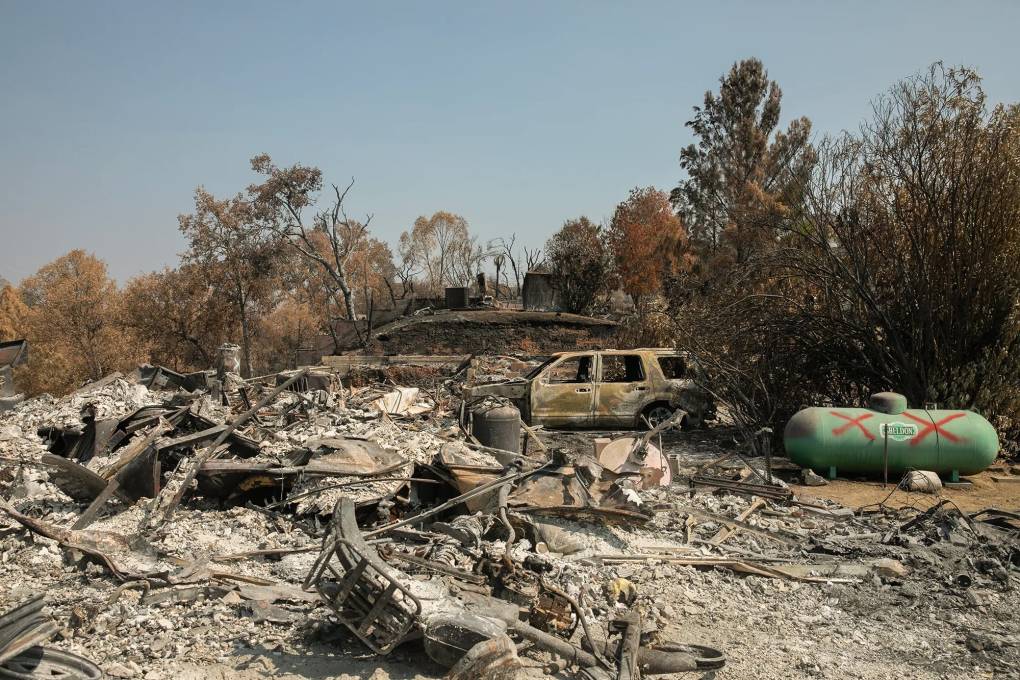
"caption": "The remains of a burned home in Berryessa Highlands on Sept. 21, 2020.\n",
"description": null,
"title": "092120_BerryessaHighlands_AW_CM_09 copy",
"credit": "Anne Wernikoff for CalMatters",
"status": "inherit",
"altTag": null,
"isLoading": false,
"fetchFailed": false
},
"news_11980567": {
"type": "attachments",
"id": "news_11980567",
"meta": {
"index": "attachments_1716263798",
"site": "news",
"id": "11980567",
"found": true
},
"parent": 11980559,
"imgSizes": {
"twentyfourteen-full-width": {
"file": "https://cdn.kqed.org/wp-content/uploads/sites/10/2024/03/GettyImages-1960829109-1024x576.jpg",
"width": 1024,
"mimeType": "image/jpeg",
"height": 576
},
"thumbnail": {
"file": "https://cdn.kqed.org/wp-content/uploads/sites/10/2024/03/GettyImages-1960829109-160x102.jpg",
"width": 160,
"mimeType": "image/jpeg",
"height": 102
},
"post-thumbnail": {
"file": "https://cdn.kqed.org/wp-content/uploads/sites/10/2024/03/GettyImages-1960829109-672x372.jpg",
"width": 672,
"mimeType": "image/jpeg",
"height": 372
},
"kqedFullSize": {
"file": "https://cdn.kqed.org/wp-content/uploads/sites/10/2024/03/GettyImages-1960829109.jpg",
"width": 1024,
"height": 653
},
"large": {
"file": "https://cdn.kqed.org/wp-content/uploads/sites/10/2024/03/GettyImages-1960829109-1020x650.jpg",
"width": 1020,
"mimeType": "image/jpeg",
"height": 650
},
"medium": {
"file": "https://cdn.kqed.org/wp-content/uploads/sites/10/2024/03/GettyImages-1960829109-800x510.jpg",
"width": 800,
"mimeType": "image/jpeg",
"height": 510
}
},
"publishDate": 1711150861,
"modified": 1715977699,
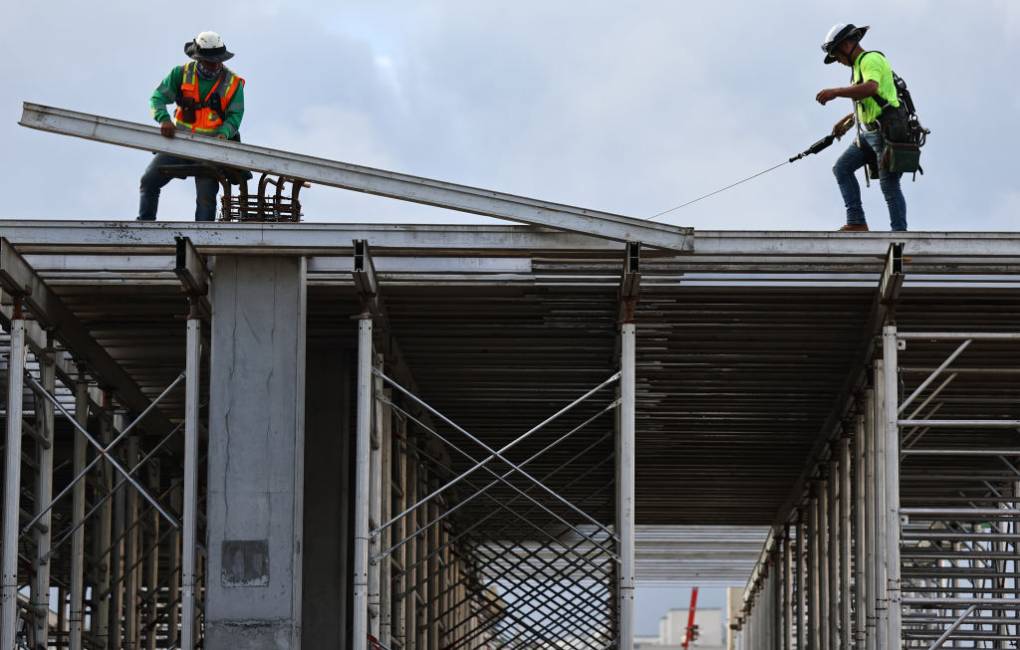
"caption": "Construction workers help build a mixed-use apartment complex in Los Angeles on Jan. 25, 2024.",
"description": null,
"title": "Economic Data Shows U.S. Economy Grew 3.1 Percent In 2023",
"credit": "Mario Tama/Getty Images",
"status": "inherit",
"altTag": null,
"isLoading": false,
"fetchFailed": false
},
"news_11979728": {
"type": "attachments",
"id": "news_11979728",
"meta": {
"index": "attachments_1716263798",
"site": "news",
"id": "11979728",
"found": true
},
"parent": 11979725,
"imgSizes": {
"twentyfourteen-full-width": {
"file": "https://cdn.kqed.org/wp-content/uploads/sites/10/2024/03/AP24074730909903-1038x576.jpg",
"width": 1038,
"mimeType": "image/jpeg",
"height": 576
},
"thumbnail": {
"file": "https://cdn.kqed.org/wp-content/uploads/sites/10/2024/03/AP24074730909903-160x107.jpg",
"width": 160,
"mimeType": "image/jpeg",
"height": 107
},
"post-thumbnail": {
"file": "https://cdn.kqed.org/wp-content/uploads/sites/10/2024/03/AP24074730909903-672x372.jpg",
"width": 672,
"mimeType": "image/jpeg",
"height": 372
},
"kqedFullSize": {
"file": "https://cdn.kqed.org/wp-content/uploads/sites/10/2024/03/AP24074730909903-scaled.jpg",
"width": 2560,
"height": 1707
},
"2048x2048": {
"file": "https://cdn.kqed.org/wp-content/uploads/sites/10/2024/03/AP24074730909903-2048x1366.jpg",
"width": 2048,
"mimeType": "image/jpeg",
"height": 1366
},
"large": {
"file": "https://cdn.kqed.org/wp-content/uploads/sites/10/2024/03/AP24074730909903-1020x680.jpg",
"width": 1020,
"mimeType": "image/jpeg",
"height": 680
},
"1536x1536": {
"file": "https://cdn.kqed.org/wp-content/uploads/sites/10/2024/03/AP24074730909903-1536x1024.jpg",
"width": 1536,
"mimeType": "image/jpeg",
"height": 1024
},
"full-width": {
"file": "https://cdn.kqed.org/wp-content/uploads/sites/10/2024/03/AP24074730909903-1920x1280.jpg",
"width": 1920,
"mimeType": "image/jpeg",
"height": 1280
},
"medium": {
"file": "https://cdn.kqed.org/wp-content/uploads/sites/10/2024/03/AP24074730909903-800x533.jpg",
"width": 800,
"mimeType": "image/jpeg",
"height": 533
}
},
"publishDate": 1710614954,
"modified": 1710615038,
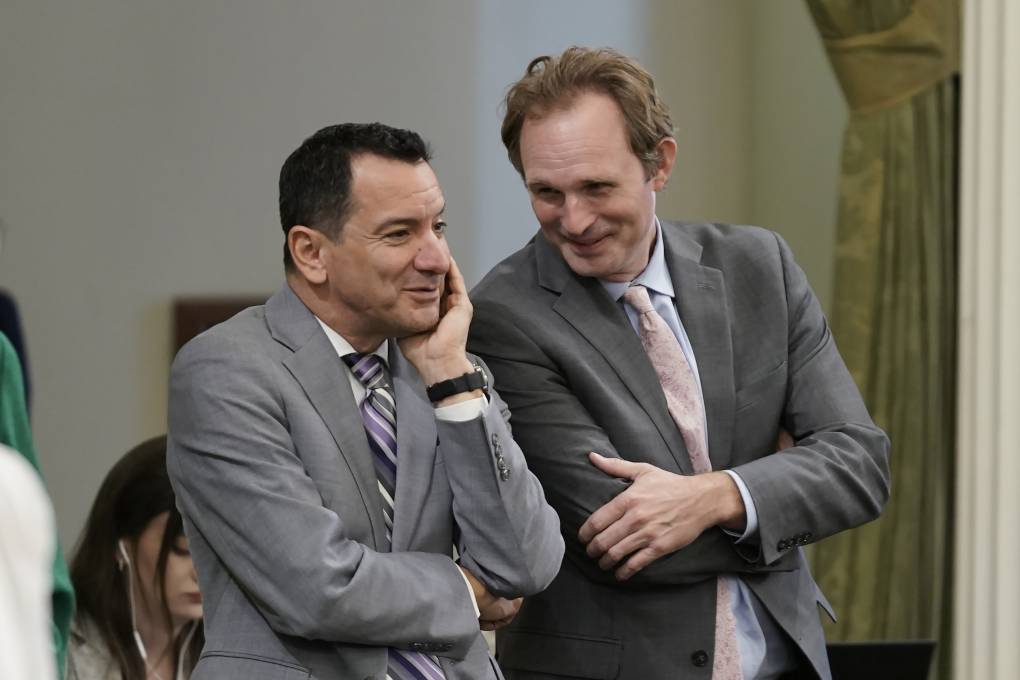
"caption": "Former California Assembly Speaker Anthony Rendon (left) and Assembly Republican Leader James Gallagher talk during the Assembly session at the Capitol in Sacramento, Aug. 31, 2022. Rendon created the Select Committee on Happiness and Public Policy Outcomes to study how state policy can make Californians happier.",
"description": null,
"title": "Anthony Rendon, James Gallagher",
"credit": "Rich Pedroncelli/AP Photo",
"status": "inherit",
"altTag": "Two men in light gray suits talk and share a laugh.",
"isLoading": false,
"fetchFailed": false
},
"news_11979221": {
"type": "attachments",
"id": "news_11979221",
"meta": {
"index": "attachments_1716263798",
"site": "news",
"id": "11979221",
"found": true
},
"parent": 11979071,
"imgSizes": {
"twentyfourteen-full-width": {
"file": "https://cdn.kqed.org/wp-content/uploads/sites/10/2024/03/240309-EARLY-START-DEVELOPMENTAL-DELAYS-MD-02-KQED-1-1038x576.jpg",
"width": 1038,
"mimeType": "image/jpeg",
"height": 576
},
"thumbnail": {
"file": "https://cdn.kqed.org/wp-content/uploads/sites/10/2024/03/240309-EARLY-START-DEVELOPMENTAL-DELAYS-MD-02-KQED-1-160x107.jpg",
"width": 160,
"mimeType": "image/jpeg",
"height": 107
},
"post-thumbnail": {
"file": "https://cdn.kqed.org/wp-content/uploads/sites/10/2024/03/240309-EARLY-START-DEVELOPMENTAL-DELAYS-MD-02-KQED-1-672x372.jpg",
"width": 672,
"mimeType": "image/jpeg",
"height": 372
},
"kqedFullSize": {
"file": "https://cdn.kqed.org/wp-content/uploads/sites/10/2024/03/240309-EARLY-START-DEVELOPMENTAL-DELAYS-MD-02-KQED-1.jpg",
"width": 2000,
"height": 1333
},
"large": {
"file": "https://cdn.kqed.org/wp-content/uploads/sites/10/2024/03/240309-EARLY-START-DEVELOPMENTAL-DELAYS-MD-02-KQED-1-1020x680.jpg",
"width": 1020,
"mimeType": "image/jpeg",
"height": 680
},
"1536x1536": {
"file": "https://cdn.kqed.org/wp-content/uploads/sites/10/2024/03/240309-EARLY-START-DEVELOPMENTAL-DELAYS-MD-02-KQED-1-1536x1024.jpg",
"width": 1536,
"mimeType": "image/jpeg",
"height": 1024
},
"full-width": {
"file": "https://cdn.kqed.org/wp-content/uploads/sites/10/2024/03/240309-EARLY-START-DEVELOPMENTAL-DELAYS-MD-02-KQED-1-1920x1280.jpg",
"width": 1920,
"mimeType": "image/jpeg",
"height": 1280
},
"medium": {
"file": "https://cdn.kqed.org/wp-content/uploads/sites/10/2024/03/240309-EARLY-START-DEVELOPMENTAL-DELAYS-MD-02-KQED-1-800x533.jpg",
"width": 800,
"mimeType": "image/jpeg",
"height": 533
}
},
"publishDate": 1710350941,
"modified": 1710350958,
"caption": "Reyna Balladares and her 3-year-old foster child play on the roof of their building in San Francisco on Mar. 9, 2024.",
"description": null,
"title": "240309-EARLY START-DEVELOPMENTAL DELAYS-MD-02-KQED-1",
"credit": "Martin do Nascimento/KQED",
"status": "inherit",
"altTag": null,
"isLoading": false,
"fetchFailed": false
},
"news_11978990": {
"type": "attachments",
"id": "news_11978990",
"meta": {
"index": "attachments_1716263798",
"site": "news",
"id": "11978990",
"found": true
},
"parent": 11978989,
"imgSizes": {
"twentyfourteen-full-width": {
"file": "https://cdn.kqed.org/wp-content/uploads/sites/10/2024/03/OOW2-Ep6-Web-Img-1038x576.png",
"width": 1038,
"mimeType": "image/png",
"height": 576
},
"thumbnail": {
"file": "https://cdn.kqed.org/wp-content/uploads/sites/10/2024/03/OOW2-Ep6-Web-Img-160x90.png",
"width": 160,
"mimeType": "image/png",
"height": 90
},
"post-thumbnail": {
"file": "https://cdn.kqed.org/wp-content/uploads/sites/10/2024/03/OOW2-Ep6-Web-Img-672x372.png",
"width": 672,
"mimeType": "image/png",
"height": 372
},
"kqedFullSize": {
"file": "https://cdn.kqed.org/wp-content/uploads/sites/10/2024/03/OOW2-Ep6-Web-Img.png",
"width": 1920,
"height": 1080
},
"large": {
"file": "https://cdn.kqed.org/wp-content/uploads/sites/10/2024/03/OOW2-Ep6-Web-Img-1020x574.png",
"width": 1020,
"mimeType": "image/png",
"height": 574
},
"1536x1536": {
"file": "https://cdn.kqed.org/wp-content/uploads/sites/10/2024/03/OOW2-Ep6-Web-Img-1536x864.png",
"width": 1536,
"mimeType": "image/png",
"height": 864
},
"medium": {
"file": "https://cdn.kqed.org/wp-content/uploads/sites/10/2024/03/OOW2-Ep6-Web-Img-800x450.png",
"width": 800,
"mimeType": "image/png",
"height": 450
}
},
"publishDate": 1710196789,
"modified": 1710205195,
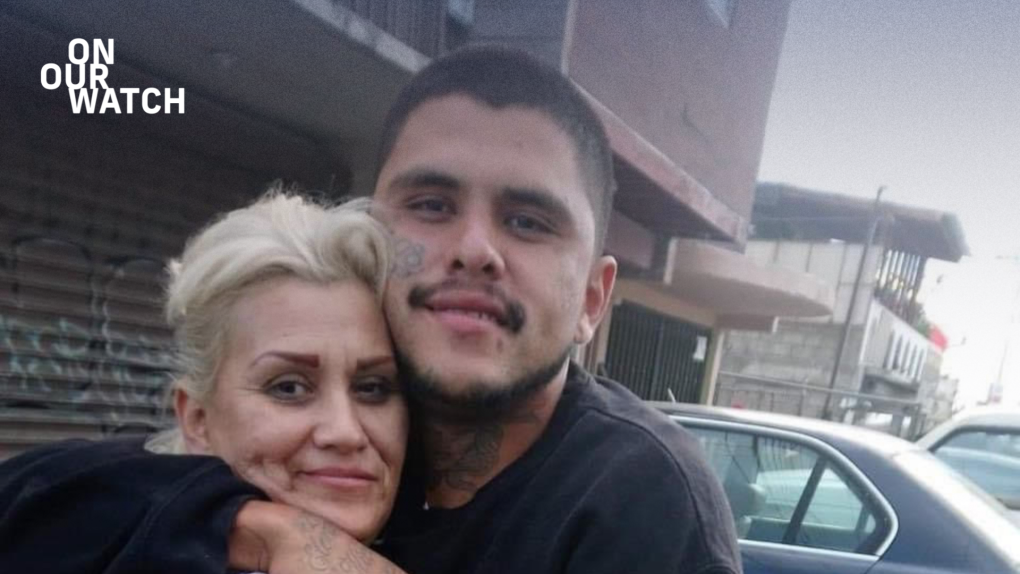
"caption": "Luis Giovanny Aguilar poses with his mother, Ma Rosario Bueno Zaragoza, in a photo from October 2018. Aguilar was incarcerated at California State Prison, Sacramento, where he was killed on December 12, 2019. ",
"description": null,
"title": "OOW2 Ep6 Web Img",
"credit": "Courtesy of Ma Rosario Bueno Zaragoza",
"status": "inherit",
"altTag": "A young Latino man with short black hair, a mustache and tattoos on his neck and face looks at the camera. He has his arm around his mother, a youthful-looking middle-aged Latina woman with platinum blonde hair. His cheek is pressed to the side of her head and they’re both smiling with mouths closed. They are standing in front of several parked cars and a brown building with graffiti on a metal roll-up door.",
"isLoading": false,
"fetchFailed": false
},
"news_11962623": {
"type": "attachments",
"id": "news_11962623",
"meta": {
"index": "attachments_1716263798",
"site": "news",
"id": "11962623",
"found": true
},
"parent": 0,
"imgSizes": {
"twentyfourteen-full-width": {
"file": "https://ww2.kqed.org/app/uploads/sites/10/2023/09/230927-CHINO-TRANSGENDER-SCHOOL-BOARD-Getty-DM-KQED-1038x576.jpg",
"width": 1038,
"mimeType": "image/jpeg",
"height": 576
},
"thumbnail": {
"file": "https://ww2.kqed.org/app/uploads/sites/10/2023/09/230927-CHINO-TRANSGENDER-SCHOOL-BOARD-Getty-DM-KQED-160x107.jpg",
"width": 160,
"mimeType": "image/jpeg",
"height": 107
},
"post-thumbnail": {
"file": "https://ww2.kqed.org/app/uploads/sites/10/2023/09/230927-CHINO-TRANSGENDER-SCHOOL-BOARD-Getty-DM-KQED-672x372.jpg",
"width": 672,
"mimeType": "image/jpeg",
"height": 372
},
"kqedFullSize": {
"file": "https://ww2.kqed.org/app/uploads/sites/10/2023/09/230927-CHINO-TRANSGENDER-SCHOOL-BOARD-Getty-DM-KQED.jpg",
"width": 2000,
"height": 1334
},
"large": {
"file": "https://ww2.kqed.org/app/uploads/sites/10/2023/09/230927-CHINO-TRANSGENDER-SCHOOL-BOARD-Getty-DM-KQED-1020x680.jpg",
"width": 1020,
"mimeType": "image/jpeg",
"height": 680
},
"1536x1536": {
"file": "https://ww2.kqed.org/app/uploads/sites/10/2023/09/230927-CHINO-TRANSGENDER-SCHOOL-BOARD-Getty-DM-KQED-1536x1025.jpg",
"width": 1536,
"mimeType": "image/jpeg",
"height": 1025
},
"full-width": {
"file": "https://ww2.kqed.org/app/uploads/sites/10/2023/09/230927-CHINO-TRANSGENDER-SCHOOL-BOARD-Getty-DM-KQED-1920x1281.jpg",
"width": 1920,
"mimeType": "image/jpeg",
"height": 1281
},
"medium": {
"file": "https://ww2.kqed.org/app/uploads/sites/10/2023/09/230927-CHINO-TRANSGENDER-SCHOOL-BOARD-Getty-DM-KQED-800x534.jpg",
"width": 800,
"mimeType": "image/jpeg",
"height": 534
}
},
"publishDate": 1695850696,
"modified": 1695853730,
"caption": "A person holds a sign in opposition to a policy that the Chino Valley school board is meeting to vote on which would require school staff to 'out' students to their parents if they ask to be identified by a gender that is not listed on their birth certificate, in Chino, San Bernardino County, on July 20, 2023.",
"description": null,
"title": "Chino Valley School Board Votes On Student Transgender Policy",
"credit": "David McNew/Getty Images",
"status": "inherit",
"altTag": "A person holds a sign above their head that reads \"protect all kids\" in a crowded indoor space.",
"isLoading": false,
"fetchFailed": false
},
"news_11978681": {
"type": "attachments",
"id": "news_11978681",
"meta": {
"index": "attachments_1716263798",
"site": "news",
"id": "11978681",
"found": true
},
"parent": 11978670,
"imgSizes": {
"twentyfourteen-full-width": {
"file": "https://cdn.kqed.org/wp-content/uploads/sites/10/2024/03/GettyImages-139404582-1038x576.jpg",
"width": 1038,
"mimeType": "image/jpeg",
"height": 576
},
"thumbnail": {
"file": "https://cdn.kqed.org/wp-content/uploads/sites/10/2024/03/GettyImages-139404582-160x120.jpg",
"width": 160,
"mimeType": "image/jpeg",
"height": 120
},
"post-thumbnail": {
"file": "https://cdn.kqed.org/wp-content/uploads/sites/10/2024/03/GettyImages-139404582-672x372.jpg",
"width": 672,
"mimeType": "image/jpeg",
"height": 372
},
"kqedFullSize": {
"file": "https://cdn.kqed.org/wp-content/uploads/sites/10/2024/03/GettyImages-139404582.jpg",
"width": 2272,
"height": 1704
},
"2048x2048": {
"file": "https://cdn.kqed.org/wp-content/uploads/sites/10/2024/03/GettyImages-139404582-2048x1536.jpg",
"width": 2048,
"mimeType": "image/jpeg",
"height": 1536
},
"large": {
"file": "https://cdn.kqed.org/wp-content/uploads/sites/10/2024/03/GettyImages-139404582-1020x765.jpg",
"width": 1020,
"mimeType": "image/jpeg",
"height": 765
},
"1536x1536": {
"file": "https://cdn.kqed.org/wp-content/uploads/sites/10/2024/03/GettyImages-139404582-1536x1152.jpg",
"width": 1536,
"mimeType": "image/jpeg",
"height": 1152
},
"full-width": {
"file": "https://cdn.kqed.org/wp-content/uploads/sites/10/2024/03/GettyImages-139404582-1920x1440.jpg",
"width": 1920,
"mimeType": "image/jpeg",
"height": 1440
},
"medium": {
"file": "https://cdn.kqed.org/wp-content/uploads/sites/10/2024/03/GettyImages-139404582-800x600.jpg",
"width": 800,
"mimeType": "image/jpeg",
"height": 600
}
},
"publishDate": 1709926237,
"modified": 1709942332,
"caption": "As part of the agreement with the state, a small number of vessels will be allowed to remain anchored if they are deemed 'seaworthy,' at least through October 2026. After that, all boats and vessels will be allowed only 72-hour anchorage, according to the San Francisco Bay Conservation and Development Commission. ",
"description": null,
"title": "Sausalito Marina",
"credit": "iStock/Getty Images",
"status": "inherit",
"altTag": "To the left, boats scattered in bay, while to the right, a pier is seen. In the foreground, a bench sits in a field of green grass.",
"isLoading": false,
"fetchFailed": false
},
"news_11970050": {
"type": "attachments",
"id": "news_11970050",
"meta": {
"index": "attachments_1716263798",
"site": "news",
"id": "11970050",
"found": true
},
"title": "COVID-19 Testing Demand Remains High Due To Surge Of Omicron Variant",
"publishDate": 1702665001,
"status": "inherit",
"parent": 0,
"modified": 1724784896,
"caption": "Americans will be able to order four free COVID-19 tests at the end of September that will be delivered to their mailbox.",
"credit": "Alex Wong/Getty Images",
"altTag": "A hand holds two bright orange boxes that read \"COVID-19 Antigen Rapid Test\" on them.",
"description": null,
"imgSizes": {
"medium": {
"file": "https://cdn.kqed.org/wp-content/uploads/sites/10/2023/12/231215-COVID-TESTS-GETTY-AW-KQED-800x533.jpg",
"width": 800,
"height": 533,
"mimeType": "image/jpeg"
},
"large": {
"file": "https://cdn.kqed.org/wp-content/uploads/sites/10/2023/12/231215-COVID-TESTS-GETTY-AW-KQED-1020x680.jpg",
"width": 1020,
"height": 680,
"mimeType": "image/jpeg"
},
"thumbnail": {
"file": "https://cdn.kqed.org/wp-content/uploads/sites/10/2023/12/231215-COVID-TESTS-GETTY-AW-KQED-160x107.jpg",
"width": 160,
"height": 107,
"mimeType": "image/jpeg"
},
"1536x1536": {
"file": "https://cdn.kqed.org/wp-content/uploads/sites/10/2023/12/231215-COVID-TESTS-GETTY-AW-KQED-1536x1024.jpg",
"width": 1536,
"height": 1024,
"mimeType": "image/jpeg"
},
"post-thumbnail": {
"file": "https://cdn.kqed.org/wp-content/uploads/sites/10/2023/12/231215-COVID-TESTS-GETTY-AW-KQED-672x372.jpg",
"width": 672,
"height": 372,
"mimeType": "image/jpeg"
},
"twentyfourteen-full-width": {
"file": "https://cdn.kqed.org/wp-content/uploads/sites/10/2023/12/231215-COVID-TESTS-GETTY-AW-KQED-1038x576.jpg",
"width": 1038,
"height": 576,
"mimeType": "image/jpeg"
},
"full-width": {
"file": "https://cdn.kqed.org/wp-content/uploads/sites/10/2023/12/231215-COVID-TESTS-GETTY-AW-KQED-1920x1280.jpg",
"width": 1920,
"height": 1280,
"mimeType": "image/jpeg"
},
"kqedFullSize": {
"file": "https://cdn.kqed.org/wp-content/uploads/sites/10/2023/12/231215-COVID-TESTS-GETTY-AW-KQED.jpg",
"width": 2000,
"height": 1333
}
},
"isLoading": false,
"fetchFailed": false
}
},
"audioPlayerReducer": {
"postId": "stream_live",
"isPaused": true,
"isPlaying": false,
"pfsActive": false,
"pledgeModalIsOpen": true,
"playerDrawerIsOpen": false,
"liveAudioPlayStartedAt": 0,
"liveAudioPlayContext": ""
},
"authorsReducer": {
"byline_news_11980757": {
"type": "authors",
"id": "byline_news_11980757",
"meta": {
"override": true
},
"slug": "byline_news_11980757",
"name": "\u003ca href=\"https://calmatters.org/author/levi-sumagaysay/\">Levi Sumagaysay\u003c/a>",
"isLoading": false
},
"byline_news_11980559": {
"type": "authors",
"id": "byline_news_11980559",
"meta": {
"override": true
},
"slug": "byline_news_11980559",
"name": "Adam Beam\u003cbr>Associated Press",
"isLoading": false
},
"byline_news_11979725": {
"type": "authors",
"id": "byline_news_11979725",
"meta": {
"override": true
},
"slug": "byline_news_11979725",
"name": "Sophie Austin\u003cbr>Associated Press",
"isLoading": false
},
"byline_news_11978725": {
"type": "authors",
"id": "byline_news_11978725",
"meta": {
"override": true
},
"slug": "byline_news_11978725",
"name": "Sophie Austin\u003cbr>The Associated Press",
"isLoading": false
},
"byline_news_11978670": {
"type": "authors",
"id": "byline_news_11978670",
"meta": {
"override": true
},
"slug": "byline_news_11978670",
"name": "\u003ca href=\"https://twitter.com/BouncerSF\">Katy St. Clair\u003c/a> \u003cbr> Bay City News",
"isLoading": false
},
"carlysevern": {
"type": "authors",
"id": "3243",
"meta": {
"index": "authors_1716337520",
"id": "3243",
"found": true
},
"name": "Carly Severn",
"firstName": "Carly",
"lastName": "Severn",
"slug": "carlysevern",
"email": "csevern@kqed.org",
"display_author_email": false,
"staff_mastheads": [
"news"
],
"title": "Senior Editor, Audience News ",
"bio": "Carly is KQED's Senior Editor of Audience News on the Digital News team, and has reported for the California Report Magazine, Bay Curious and KQED Arts. She's formerly the host of \u003ca href=\"http://ww2.kqed.org/pop/category/the-cooler/\" rel=\"noopener noreferrer\">The Cooler\u003c/a> podcast.",
"avatar": "https://secure.gravatar.com/avatar/2d8d6765f186e64c798cf7f0c8088a41?s=600&d=blank&r=g",
"twitter": "teacupinthebay",
"facebook": null,
"instagram": null,
"linkedin": null,
"sites": [
{
"site": "",
"roles": [
"editor"
]
},
{
"site": "arts",
"roles": [
"editor"
]
},
{
"site": "news",
"roles": [
"administrator"
]
},
{
"site": "pop",
"roles": [
"editor"
]
},
{
"site": "futureofyou",
"roles": [
"editor"
]
},
{
"site": "about",
"roles": [
"administrator"
]
},
{
"site": "mindshift",
"roles": [
"editor"
]
},
{
"site": "bayareabites",
"roles": [
"editor"
]
},
{
"site": "stateofhealth",
"roles": [
"editor"
]
},
{
"site": "science",
"roles": [
"editor"
]
},
{
"site": "food",
"roles": [
"contributor"
]
},
{
"site": "forum",
"roles": [
"editor"
]
},
{
"site": "perspectives",
"roles": [
"administrator"
]
},
{
"site": "liveblog",
"roles": [
"editor"
]
}
],
"headData": {
"title": "Carly Severn | KQED",
"description": "Senior Editor, Audience News ",
"ogImgSrc": "https://secure.gravatar.com/avatar/2d8d6765f186e64c798cf7f0c8088a41?s=600&d=blank&r=g",
"twImgSrc": "https://secure.gravatar.com/avatar/2d8d6765f186e64c798cf7f0c8088a41?s=600&d=blank&r=g"
},
"isLoading": false,
"link": "/author/carlysevern"
},
"jsmall": {
"type": "authors",
"id": "6625",
"meta": {
"index": "authors_1716337520",
"id": "6625",
"found": true
},
"name": "Julie Small",
"firstName": "Julie",
"lastName": "Small",
"slug": "jsmall",
"email": "jsmall@kqed.org",
"display_author_email": true,
"staff_mastheads": [
"news"
],
"title": "KQED Contributor",
"bio": "Julie Small reports on criminal justice and immigration.\r\n\r\nShe was part of a team at KQED awarded a regional 2019 Edward R. Murrow award for continuing coverage of the Trump Administration's family separation policy.\r\n\r\nThe Society for Professional Journalists recognized Julie's 2018 \u003ca href=\"https://www.kqed.org/news/11636262/the-officer-tased-him-31-times-the-sheriff-called-his-death-an-accident\">reporting\u003c/a> on the San Joaquin County Sheriff's \u003ca href=\"https://www.kqed.org/news/11634689/autopsy-doctors-sheriff-overrode-death-findings-to-protect-law-enforcement\">interference\u003c/a> in death investigations with an Excellence in Journalism Award for Ongoing Coverage.\r\n\r\nJulie's\u003ca href=\"https://www.kqed.org/news/11039666/two-mentally-ill-inmates-died-one-month-in-santa-clara\"> reporting\u003c/a> with Lisa Pickoff-White on the treatment of mentally ill offenders in California jails earned a 2017 regional Edward R. Murrow Award for news reporting and an investigative reporting award from the SPJ of Northern California.\r\n\r\nBefore joining KQED, Julie covered government and politics in Sacramento for Southern California Public Radio (SCPR). Her 2010 \u003ca href=\"https://www.scpr.org/specials/prisonmedical/\">series\u003c/a> on lapses in California’s prison medical care also won a regional Edward R. Murrow Award for investigative reporting and a Golden Mic Award from the RTNDA of Southern California.\r\n\r\nJulie began her career in journalism in 2000 as the deputy foreign editor for public radio's \u003cem>Marketplace, \u003c/em>while earning her master's degree in journalism from USC’s Annenberg School of Communication.",
"avatar": "https://secure.gravatar.com/avatar/4baedf201468df97be97c2a9dd7585d0?s=600&d=blank&r=g",
"twitter": "@SmallRadio2",
"facebook": null,
"instagram": null,
"linkedin": null,
"sites": [
{
"site": "news",
"roles": [
"editor"
]
},
{
"site": "stateofhealth",
"roles": [
"author"
]
},
{
"site": "science",
"roles": [
"author"
]
}
],
"headData": {
"title": "Julie Small | KQED",
"description": "KQED Contributor",
"ogImgSrc": "https://secure.gravatar.com/avatar/4baedf201468df97be97c2a9dd7585d0?s=600&d=blank&r=g",
"twImgSrc": "https://secure.gravatar.com/avatar/4baedf201468df97be97c2a9dd7585d0?s=600&d=blank&r=g"
},
"isLoading": false,
"link": "/author/jsmall"
},
"lklivans": {
"type": "authors",
"id": "8648",
"meta": {
"index": "authors_1716337520",
"id": "8648",
"found": true
},
"name": "Laura Klivans",
"firstName": "Laura",
"lastName": "Klivans",
"slug": "lklivans",
"email": "lklivans@kqed.org",
"display_author_email": true,
"staff_mastheads": [
"news",
"science"
],
"title": "Reporter",
"bio": "Laura Klivans is an award-winning science reporter for KQED News, where she covers climate change with an eye on both groundbreaking progress and gaps in action. She is the former host of KQED's blockbuster video series about tiny, amazing animals, \u003cem>Deep Look\u003c/em>. Her work reaches national audiences through NPR, \u003cem>Here & Now, \u003c/em>PRI, and other major outlets. \r\n\r\nLaura’s won five Northern California Area Emmy Awards for Deep Look and First Place in the Greater Bay Area Journalism Awards for a podcast exploring how one Oakland neighborhood teamed up to reduce planet-heating pollution.\r\n\r\nBeyond her reporting, she hosts and moderates events. In the past, she taught audio storytelling at the UC Berkeley Graduate School of Journalism, led international education programs, worked with immigrants and refugees along the Thai-Burmese border, taught high schoolers sex ed, and was an actress. \r\n\r\nShe's a former UC Berkeley Human Rights Fellow, USC Center for Health Journalism's California Fellow and Coro Fellow in Public Affairs. Laura has a master’s in journalism from UC Berkeley, a master’s in education from Harvard, and an undergraduate degree from Northwestern University.\r\n\r\nShe loves trying to riddle the meaning out of vanity license plates.",
"avatar": "https://secure.gravatar.com/avatar/af8e757bb8ce7b7fee6160ba66e37327?s=600&d=blank&r=g",
"twitter": "lauraklivans",
"facebook": null,
"instagram": null,
"linkedin": null,
"sites": [
{
"site": "news",
"roles": [
"editor"
]
},
{
"site": "stateofhealth",
"roles": [
"contributor",
"editor"
]
},
{
"site": "science",
"roles": [
"editor"
]
},
{
"site": "forum",
"roles": [
"editor"
]
}
],
"headData": {
"title": "Laura Klivans | KQED",
"description": "Reporter",
"ogImgSrc": "https://secure.gravatar.com/avatar/af8e757bb8ce7b7fee6160ba66e37327?s=600&d=blank&r=g",
"twImgSrc": "https://secure.gravatar.com/avatar/af8e757bb8ce7b7fee6160ba66e37327?s=600&d=blank&r=g"
},
"isLoading": false,
"link": "/author/lklivans"
},
"slewis": {
"type": "authors",
"id": "8676",
"meta": {
"index": "authors_1716337520",
"id": "8676",
"found": true
},
"name": "Sukey Lewis",
"firstName": "Sukey",
"lastName": "Lewis",
"slug": "slewis",
"email": "slewis@kqed.org",
"display_author_email": true,
"staff_mastheads": [
"news"
],
"title": "KQED Contributor",
"bio": "Sukey Lewis is a criminal justice reporter and host of \u003cem>On Our Watch\u003c/em>, a new podcast from NPR and KQED about the shadow world of police discipline. In 2018, she co-founded the California Reporting Project, a coalition of newsrooms across the state focused on obtaining previously sealed internal affairs records from law enforcement. In addition to her reporting on police accountability, Sukey has investigated the bail bonds industry, California's wildfires and the high cost of prison phone calls. Sukey earned a master's degree in journalism from the University of California at Berkeley. Send news tips to slewis@kqed.org.",
"avatar": "https://secure.gravatar.com/avatar/03fd6b21024f99d8b0a1966654586de7?s=600&d=blank&r=g",
"twitter": "SukeyLewis",
"facebook": null,
"instagram": null,
"linkedin": null,
"sites": [
{
"site": "news",
"roles": [
"author",
"edit_others_posts"
]
}
],
"headData": {
"title": "Sukey Lewis | KQED",
"description": "KQED Contributor",
"ogImgSrc": "https://secure.gravatar.com/avatar/03fd6b21024f99d8b0a1966654586de7?s=600&d=blank&r=g",
"twImgSrc": "https://secure.gravatar.com/avatar/03fd6b21024f99d8b0a1966654586de7?s=600&d=blank&r=g"
},
"isLoading": false,
"link": "/author/slewis"
},
"ebaldassari": {
"type": "authors",
"id": "11652",
"meta": {
"index": "authors_1716337520",
"id": "11652",
"found": true
},
"name": "Erin Baldassari",
"firstName": "Erin",
"lastName": "Baldassari",
"slug": "ebaldassari",
"email": "ebaldassari@KQED.org",
"display_author_email": true,
"staff_mastheads": [
"news"
],
"title": "Staff Writer",
"bio": "Erin Baldassari covers housing for KQED. She's a former print journalist and most recently worked as the transportation reporter for the \u003cem>Mercury News\u003c/em> and \u003cem>East Bay Times. \u003c/em>There, she focused on how the Bay Area’s housing shortage has changed the way people move around the region. She also served on the \u003cem>East Bay Times\u003c/em>’ 2017 Pulitzer Prize-winning team for coverage of the Ghost Ship Fire in Oakland. Prior to that, Erin worked as a breaking news and general assignment reporter for a variety of outlets in the Bay Area and the greater Boston area. A Tufts University alumna, Erin grew up in the foothills of the Sierra Nevada mountains and in Sonoma County. She is a life-long KQED listener.",
"avatar": "https://secure.gravatar.com/avatar/660ce35d088ca54ad606d7e941abc652?s=600&d=mm&r=g",
"twitter": "e_baldi",
"facebook": null,
"instagram": null,
"linkedin": null,
"sites": [
{
"site": "news",
"roles": [
"edit_others_posts",
"editor"
]
},
{
"site": "science",
"roles": [
"editor"
]
},
{
"site": "liveblog",
"roles": [
"editor"
]
}
],
"headData": {
"title": "Erin Baldassari | KQED",
"description": "Staff Writer",
"ogImgSrc": "https://secure.gravatar.com/avatar/660ce35d088ca54ad606d7e941abc652?s=600&d=mm&r=g",
"twImgSrc": "https://secure.gravatar.com/avatar/660ce35d088ca54ad606d7e941abc652?s=600&d=mm&r=g"
},
"isLoading": false,
"link": "/author/ebaldassari"
},
"abandlamudi": {
"type": "authors",
"id": "11672",
"meta": {
"index": "authors_1716337520",
"id": "11672",
"found": true
},
"name": "Adhiti Bandlamudi",
"firstName": "Adhiti",
"lastName": "Bandlamudi",
"slug": "abandlamudi",
"email": "abandlamudi@kqed.org",
"display_author_email": false,
"staff_mastheads": [
"news"
],
"title": "KQED Housing Reporter",
"bio": "Adhiti Bandlamudi reports for KQED's Housing desk. She focuses on how housing gets built across the Bay Area. Before joining KQED in 2020, she reported for WUNC in Durham, North Carolina, WABE in Atlanta, Georgia and Capital Public Radio in Sacramento. In 2017, she was awarded a Kroc Fellowship at NPR where she reported on everything from sprinkles to the Golden State Killer's arrest. When she's not reporting, she's baking new recipes in her kitchen or watching movies with friends and family. She's originally from Georgia and has strong opinions about Great British Bake Off.",
"avatar": "https://secure.gravatar.com/avatar/868129c8b257bb99a3500e2c86a65400?s=600&d=mm&r=g",
"twitter": "oddity_adhiti",
"facebook": null,
"instagram": null,
"linkedin": null,
"sites": [
{
"site": "arts",
"roles": [
"author"
]
},
{
"site": "news",
"roles": [
"editor"
]
},
{
"site": "liveblog",
"roles": [
"author"
]
}
],
"headData": {
"title": "Adhiti Bandlamudi | KQED",
"description": "KQED Housing Reporter",
"ogImgSrc": "https://secure.gravatar.com/avatar/868129c8b257bb99a3500e2c86a65400?s=600&d=mm&r=g",
"twImgSrc": "https://secure.gravatar.com/avatar/868129c8b257bb99a3500e2c86a65400?s=600&d=mm&r=g"
},
"isLoading": false,
"link": "/author/abandlamudi"
},
"ccabreralomeli": {
"type": "authors",
"id": "11708",
"meta": {
"index": "authors_1716337520",
"id": "11708",
"found": true
},
"name": "Carlos Cabrera-Lomelí",
"firstName": "Carlos",
"lastName": "Cabrera-Lomelí",
"slug": "ccabreralomeli",
"email": "ccabreralomeli@KQED.org",
"display_author_email": true,
"staff_mastheads": [
"news"
],
"title": "Community Reporter",
"bio": "Carlos Cabrera-Lomelí is a community reporter with KQED's digital engagement team. He also reports and co-produces for KQED's bilingual news hub KQED en Español. He grew up in San Francisco's Mission District and has previously worked with Univision, 48 Hills and REFORMA in Mexico City.",
"avatar": "https://secure.gravatar.com/avatar/c309be9665e484f887b818c89e273ecc673004f426f36b24d00a4d813a2e0518?s=600&d=blank&r=g",
"twitter": "@LomeliCabrera",
"bluesky": null,
"facebook": null,
"instagram": null,
"linkedin": null,
"sites": [
{
"site": "arts",
"roles": [
"editor"
]
},
{
"site": "news",
"roles": [
"editor"
]
},
{
"site": "about",
"roles": [
"editor"
]
},
{
"site": "science",
"roles": [
"editor"
]
},
{
"site": "perspectives",
"roles": [
"editor"
]
},
{
"site": "elections",
"roles": [
"editor"
]
},
{
"site": "liveblog",
"roles": [
"contributor"
]
}
],
"headData": {
"title": "Carlos Cabrera-Lomelí | KQED",
"description": "Community Reporter",
"ogImgSrc": "https://secure.gravatar.com/avatar/c309be9665e484f887b818c89e273ecc673004f426f36b24d00a4d813a2e0518?s=600&d=blank&r=g",
"twImgSrc": "https://secure.gravatar.com/avatar/c309be9665e484f887b818c89e273ecc673004f426f36b24d00a4d813a2e0518?s=600&d=blank&r=g"
},
"isLoading": false,
"link": "/author/ccabreralomeli"
},
"daisynguyen": {
"type": "authors",
"id": "11829",
"meta": {
"index": "authors_1716337520",
"id": "11829",
"found": true
},
"name": "Daisy Nguyen",
"firstName": "Daisy",
"lastName": "Nguyen",
"slug": "daisynguyen",
"email": "daisynguyen@kqed.org",
"display_author_email": true,
"staff_mastheads": [
"news"
],
"title": "KQED Contributor",
"bio": "I have covered early childhood education and child care for KQED since 2022. I focus on policies aimed at increasing access to early care and education and how they shape individual lives. I've been a journalist for more than two decades, with most of that time devoted to covering breaking news throughout California for The Associated Press. I grew up in San Francisco and studied at UC Davis and Columbia University's Graduate School of Journalism. I live in Oakland with my husband and two kids.",
"avatar": "https://secure.gravatar.com/avatar/2da2127c27f7143b53ebd419800fd55f?s=600&d=blank&r=g",
"twitter": null,
"facebook": null,
"instagram": null,
"linkedin": "https://www.linkedin.com/in/daisynguyen/",
"sites": [
{
"site": "news",
"roles": [
"author"
]
},
{
"site": "liveblog",
"roles": [
"author"
]
}
],
"headData": {
"title": "Daisy Nguyen | KQED",
"description": "KQED Contributor",
"ogImgSrc": "https://secure.gravatar.com/avatar/2da2127c27f7143b53ebd419800fd55f?s=600&d=blank&r=g",
"twImgSrc": "https://secure.gravatar.com/avatar/2da2127c27f7143b53ebd419800fd55f?s=600&d=blank&r=g"
},
"isLoading": false,
"link": "/author/daisynguyen"
},
"sjohnson": {
"type": "authors",
"id": "11840",
"meta": {
"index": "authors_1716337520",
"id": "11840",
"found": true
},
"name": "Sydney Johnson",
"firstName": "Sydney",
"lastName": "Johnson",
"slug": "sjohnson",
"email": "sjohnson@kqed.org",
"display_author_email": false,
"staff_mastheads": [
"news"
],
"title": "KQED Reporter",
"bio": "Sydney Johnson is a general assignment reporter at KQED. She previously reported on public health and city government at the San Francisco Examiner, and before that, she covered statewide education policy for EdSource. Her reporting has won multiple local, state and national awards. Sydney is a graduate of the University of California, Berkeley and lives in San Francisco.",
"avatar": "https://secure.gravatar.com/avatar/97855f2719b72ad6190b7c535fe642c8?s=600&d=blank&r=g",
"twitter": "sydneyfjohnson",
"facebook": null,
"instagram": null,
"linkedin": null,
"sites": [
{
"site": "news",
"roles": [
"editor"
]
}
],
"headData": {
"title": "Sydney Johnson | KQED",
"description": "KQED Reporter",
"ogImgSrc": "https://secure.gravatar.com/avatar/97855f2719b72ad6190b7c535fe642c8?s=600&d=blank&r=g",
"twImgSrc": "https://secure.gravatar.com/avatar/97855f2719b72ad6190b7c535fe642c8?s=600&d=blank&r=g"
},
"isLoading": false,
"link": "/author/sjohnson"
}
},
"pagesReducer": {
"news_tag_california": {
"type": "terms",
"id": "news_18538",
"meta": {
"index": "terms_1716263798",
"site": "news",
"id": "18538",
"score": 6.845124
},
"featImg": null,
"name": "California",
"description": null,
"taxonomy": "tag",
"headData": {
"twImgId": null,
"twTitle": null,
"ogTitle": null,
"ogImgId": null,
"twDescription": null,
"description": null,
"title": "California Archives | KQED News",
"ogDescription": null
},
"ttid": 31,
"slug": "california",
"isLoading": false,
"title": "California",
"pageMeta": {
"site": "news",
"WpPageTemplate": "page-topic-editorial",
"currentPage": 142
},
"blocks": [
{
"blockName": "kqed/post-list",
"attrs": {
"layout": "cardArticle2",
"query": "posts/news?tag=california",
"seeMore": false,
"paginated": true,
"page": 142
}
},
{
"blockName": "kqed/ad"
}
]
}
},
"pfsSessionReducer": {},
"postsReducer": {
"stream_live": {
"type": "live",
"id": "stream_live",
"audioUrl": "https://streams.kqed.org/kqedradio",
"title": "Live Stream",
"excerpt": "Live Stream information currently unavailable.",
"link": "/radio",
"featImg": "",
"label": {
"name": "KQED Live",
"link": "/"
}
},
"stream_kqedNewscast": {
"type": "posts",
"id": "stream_kqedNewscast",
"audioUrl": "https://www.kqed.org/.stream/anon/radio/RDnews/newscast.mp3?_=1",
"title": "KQED Newscast",
"featImg": "",
"label": {
"name": "88.5 FM",
"link": "/"
}
},
"news_11981595": {
"type": "posts",
"id": "news_11981595",
"meta": {
"index": "posts_1716263798",
"site": "news",
"id": "11981595",
"score": null,
"sort": [
1712081713000
]
},
"guestAuthors": [],
"slug": "controversial-california-law-meant-to-spur-new-housing-could-get-more-teeth",
"title": "Controversial California Law Meant to Spur New Housing Could Get More Teeth",
"publishDate": 1712081713,
"format": "standard",
"headTitle": "Controversial California Law Meant to Spur New Housing Could Get More Teeth | KQED",
"labelTerm": {
"site": "news"
},
"content": "\u003cp>A controversial California law meant to scare cities into allowing more housing could grow a few more teeth.\u003c/p>\n\u003cp>Attorney General Rob Bonta announced Tuesday that he is sponsoring AB 1893, a bill by Assemblymember Buffy Wicks (D-Oakland) that would update the builder’s remedy. The law allows developers to bypass local building rules and receive automatic approval for dense housing developments in jurisdictions that are out of compliance with state housing law.\u003c/p>\n\u003cp>\u003ca href=\"https://leginfo.legislature.ca.gov/faces/billNavClient.xhtml?bill_id=202320240AB1893\">AB 1893\u003c/a> updates the original law to reduce the amount of affordable housing required for builder’s remedy projects — from 20% to 10% — and exempt developments with 10 or fewer units from providing any affordable housing at all. It also clarifies where the projects can be located and establishes standards for how large they can be, among other changes.[pullquote size=\"medium\" align=\"right\" citation=\"Adam Mayberry, architect\"]‘A bill like this would lessen the uncertainty and the risk that developers that have submitted projects are going through.’[/pullquote]\u003c/p>\n\u003cp>Bonta said the bill clarifies “how the builder’s remedy will work in different situations.\u003c/p>\n\u003cp>“It provides clear and objective standards, to provide greater guidance, more clarity, more certainty as to when the builder’s remedy applies and when projects must be approved,” he said.\u003c/p>\n\u003cp>[ad fullwidth]\u003c/p>\n\u003cp>By reducing the bill’s requirements and providing legal clarity on a law filled with ambiguities could empower more developers to use the law. And since the builder’s remedy only applies to cities or counties that don’t comply with state housing law, Wicks said the bill should further incentivize those jurisdictions to get in line.\u003c/p>\n\u003cp>“The message to local jurisdictions is very clear: The days of shirking your responsibility to your neighbors are over,” she said. “This bill is not about taking away local control. It’s about creating consequences for ignoring the law.”\u003c/p>\n\u003cp>[aside postID=\"news_11945744,news_11938267\" label=\"Related Stories\"]Though the builder’s remedy has been on the books since 1990, developers have only recently been willing to use it. That changed, in part, due to a bevy of new housing laws that have been approved over the past half-decade as the state seeks to spur the construction of some \u003ca href=\"https://statewide-housing-plan-cahcd.hub.arcgis.com/\">2.5 million new homes by 2031\u003c/a>.\u003c/p>\n\u003cp>In particular, jurisdictions are required to submit plans to the state every eight years detailing where developers can build new housing. But, because of those recent changes to state law, cities and counties not only have to plan for more housing than ever before, they also have to locate more of that housing in neighborhoods with access to highly-rated schools, grocery stores and transportation.\u003c/p>\n\u003cp>That’s meant that cities and counties have often had to resubmit plans multiple times.\u003c/p>\n\u003cp>As of Tuesday, 40% of cities and counties across the state were \u003ca href=\"https://www.hcd.ca.gov/planning-and-community-development/housing-open-data-tools/housing-element-review-and-compliance-report\">out of compliance\u003c/a> with state housing law, and in the Bay Area, 37% were out of compliance — making them potentially vulnerable to builder’s remedy projects.\u003c/p>\n\u003cp>In the past two years, \u003ca href=\"https://airtable.com/app9RDx8iUzQMybXB/shrOu16SXIFWr5Bsy/tblCmd5iq08cbtxR8/viwdVopcBuGou2AfK?backgroundColor=green\">at least 93 builder’s remedy projects\u003c/a>, representing 17,000 potential new homes or apartments, have been proposed across California, according to the pro-housing advocacy organization, YIMBY Law, which keeps a running tally — though Sonja Trauss, the organization’s executive director, admits the tally is an undercount.\u003c/p>\n\u003cp>“When a jurisdiction is in compliance with housing element law, that means they’ve made it possible to build the housing that we need,” Wicks said. “That means that they have zoned to ensure there’s enough land where it’s legal to build housing. They’ve removed constraints so that their approval process is more efficient and objective.”\u003c/p>\n\u003cp>Even without the update proposed under AB 1893, Trauss said the law has been successful “at motivating cities to get in compliance” with state housing laws.\u003c/p>\n\u003cp>“We’re looking forward to continuing to see positive results in the courts on projects using the existing program, and also looking forward to the improvements this bill promises in making the builder’s remedy even easier to use to build housing faster,” she wrote in an email.\u003c/p>\n\u003cp>The projects, however, have faced opposition from cities that have sought to block approvals under the builder’s remedy. In the wealthy Los Angeles-area city of La Cañada Flintridge, for instance, city officials denied an application for a project with 80 mixed-income apartment units, along with hotel and office space, arguing it had “self-certified” its own housing plan, making it immune to the law. Last month, a court \u003ca href=\"https://oag.ca.gov/news/press-releases/attorney-general-bonta-court-orders-la-ca%C3%B1ada-flintridge-follow-state-housing#:~:text=OAKLAND%20%E2%80%94%20California%20Attorney%20General%20Rob,did%20not%20have%20a%20compliant\">ruled against the city\u003c/a>, forcing it to proceed with processing the application.\u003c/p>\n\u003cp>AB 1893 clarifies where housing could be built, designating sites already used for housing, retail or office as appropriate and prohibiting projects on or adjacent to industrial sites. It also provides clearer objective standards for development, allowing projects to more than double or sometimes triple the density of housing the jurisdiction currently allows.\u003c/p>\n\u003cp>All of which should make it easier for developers to make sure their projects can’t be challenged in court, said Muhammad Alameldin, a policy associate with the Terner Center for Housing Innovation at UC Berkeley.\u003c/p>\n\u003cp>“It establishes a definitive objective standard,” he said. “This also diminishes the ability for local governments to disapprove projects by adding onerous standards or refusing to process applications.”\u003c/p>\n\u003cp>Alameldin said the projects are more likely to be financially feasible by lowering the requirements to provide affordable housing.\u003c/p>\n\u003cp>“So what the bill hopes to do is that by lowering the threshold, more projects will be proposed,” he said. “By making [the affordable housing requirement] 10%, then projects could start penciling across the state.”\u003c/p>\n\u003cp>One developer, Sasha Zbrozek, wasted no time submitting an application to build a five-unit townhouse on his property in the Bay Area’s Los Altos Hills. But just a month after he submitted it, city officials found it incomplete.\u003c/p>\n\u003cp>A year later, his project still hasn’t broken ground — a result, he said, of a combination of factors, including high-interest rates and regulatory hurdles. Even with the changes proposed to the builder’s remedy, Zbrozek said it’s unlikely to spur enough housing to make a dent in the state’s affordability crisis.\u003c/p>\n\u003cp>[ad floatright]\u003c/p>\n\u003cp>“I’ve realized that if I want to build homes, that it will need to be in a different state that has fewer and more favorable laws,” he said.\u003c/p>\n\n",
"blocks": [],
"excerpt": "California Attorney General Rob Bonta is partnering with Assemblymember Buffy Wicks on a bill that would update a controversial housing measure known as the 'builder's remedy' meant to get more homes built — and scare cities into following state housing law.",
"status": "publish",
"parent": 0,
"modified": 1727136733,
"stats": {
"hasAudio": false,
"hasVideo": false,
"hasChartOrMap": false,
"iframeSrcs": [],
"hasGoogleForm": false,
"hasGallery": false,
"hasHearkenModule": false,
"hasPolis": false,
"paragraphCount": 26,
"wordCount": 1119
},
"headData": {
"title": "Controversial California Law Meant to Spur New Housing Could Get More Teeth | KQED",
"description": "California Attorney General Rob Bonta is partnering with Assemblymember Buffy Wicks on a bill that would update a controversial housing measure known as the 'builder's remedy' meant to get more homes built — and scare cities into following state housing law.",
"ogTitle": "",
"ogDescription": "",
"ogImgId": "",
"twTitle": "",
"twDescription": "",
"twImgId": "",
"schema": {
"@context": "https://schema.org",
"@type": "NewsArticle",
"headline": "Controversial California Law Meant to Spur New Housing Could Get More Teeth",
"datePublished": "2024-04-02T11:15:13-07:00",
"dateModified": "2024-09-23T17:12:13-07:00",
"image": "https://cdn.kqed.org/wp-content/uploads/2020/02/KQED-OG-Image@1x.png",
"isAccessibleForFree": "True",
"publisher": {
"@type": "NewsMediaOrganization",
"@id": "https://www.kqed.org/#organization",
"name": "KQED",
"logo": "https://cdn.kqed.org/wp-content/uploads/2020/02/KQED-OG-Image@1x.png",
"url": "https://www.kqed.org",
"sameAs": [
"https://www.facebook.com/KQED",
"https://twitter.com/KQED",
"https://www.instagram.com/kqed/",
"https://www.tiktok.com/@kqedofficial",
"https://www.linkedin.com/company/kqed",
"https://www.youtube.com/channel/UCeC0IOo7i1P_61zVUWbJ4nw"
]
}
}
},
"sticky": false,
"excludeFromSiteSearch": "Include",
"articleAge": "0",
"path": "/news/11981595/controversial-california-law-meant-to-spur-new-housing-could-get-more-teeth",
"audioTrackLength": null,
"parsedContent": [
{
"type": "contentString",
"content": "\u003cdiv class=\"post-body\">\u003cp>\u003cp>A controversial California law meant to scare cities into allowing more housing could grow a few more teeth.\u003c/p>\n\u003cp>Attorney General Rob Bonta announced Tuesday that he is sponsoring AB 1893, a bill by Assemblymember Buffy Wicks (D-Oakland) that would update the builder’s remedy. The law allows developers to bypass local building rules and receive automatic approval for dense housing developments in jurisdictions that are out of compliance with state housing law.\u003c/p>\n\u003cp>\u003ca href=\"https://leginfo.legislature.ca.gov/faces/billNavClient.xhtml?bill_id=202320240AB1893\">AB 1893\u003c/a> updates the original law to reduce the amount of affordable housing required for builder’s remedy projects — from 20% to 10% — and exempt developments with 10 or fewer units from providing any affordable housing at all. It also clarifies where the projects can be located and establishes standards for how large they can be, among other changes.\u003c/p>\u003c/div>",
"attributes": {
"named": {},
"numeric": []
}
},
{
"type": "component",
"content": "‘A bill like this would lessen the uncertainty and the risk that developers that have submitted projects are going through.’",
"name": "pullquote",
"attributes": {
"named": {
"size": "medium",
"align": "right",
"citation": "Adam Mayberry, architect",
"label": ""
},
"numeric": []
}
},
{
"type": "contentString",
"content": "\u003cdiv class=\"post-body\">\u003cp>\u003c/p>\n\u003cp>Bonta said the bill clarifies “how the builder’s remedy will work in different situations.\u003c/p>\n\u003cp>“It provides clear and objective standards, to provide greater guidance, more clarity, more certainty as to when the builder’s remedy applies and when projects must be approved,” he said.\u003c/p>\n\u003cp>\u003c/p>\u003c/div>",
"attributes": {
"named": {},
"numeric": []
}
},
{
"type": "component",
"content": "",
"name": "ad",
"attributes": {
"named": {
"label": "fullwidth"
},
"numeric": [
"fullwidth"
]
}
},
{
"type": "contentString",
"content": "\u003cdiv class=\"post-body\">\u003cp>\u003c/p>\n\u003cp>By reducing the bill’s requirements and providing legal clarity on a law filled with ambiguities could empower more developers to use the law. And since the builder’s remedy only applies to cities or counties that don’t comply with state housing law, Wicks said the bill should further incentivize those jurisdictions to get in line.\u003c/p>\n\u003cp>“The message to local jurisdictions is very clear: The days of shirking your responsibility to your neighbors are over,” she said. “This bill is not about taking away local control. It’s about creating consequences for ignoring the law.”\u003c/p>\n\u003cp>\u003c/p>\u003c/div>",
"attributes": {
"named": {},
"numeric": []
}
},
{
"type": "component",
"content": "",
"name": "aside",
"attributes": {
"named": {
"postid": "news_11945744,news_11938267",
"label": "Related Stories "
},
"numeric": []
}
},
{
"type": "contentString",
"content": "\u003cdiv class=\"post-body\">\u003cp>Though the builder’s remedy has been on the books since 1990, developers have only recently been willing to use it. That changed, in part, due to a bevy of new housing laws that have been approved over the past half-decade as the state seeks to spur the construction of some \u003ca href=\"https://statewide-housing-plan-cahcd.hub.arcgis.com/\">2.5 million new homes by 2031\u003c/a>.\u003c/p>\n\u003cp>In particular, jurisdictions are required to submit plans to the state every eight years detailing where developers can build new housing. But, because of those recent changes to state law, cities and counties not only have to plan for more housing than ever before, they also have to locate more of that housing in neighborhoods with access to highly-rated schools, grocery stores and transportation.\u003c/p>\n\u003cp>That’s meant that cities and counties have often had to resubmit plans multiple times.\u003c/p>\n\u003cp>As of Tuesday, 40% of cities and counties across the state were \u003ca href=\"https://www.hcd.ca.gov/planning-and-community-development/housing-open-data-tools/housing-element-review-and-compliance-report\">out of compliance\u003c/a> with state housing law, and in the Bay Area, 37% were out of compliance — making them potentially vulnerable to builder’s remedy projects.\u003c/p>\n\u003cp>In the past two years, \u003ca href=\"https://airtable.com/app9RDx8iUzQMybXB/shrOu16SXIFWr5Bsy/tblCmd5iq08cbtxR8/viwdVopcBuGou2AfK?backgroundColor=green\">at least 93 builder’s remedy projects\u003c/a>, representing 17,000 potential new homes or apartments, have been proposed across California, according to the pro-housing advocacy organization, YIMBY Law, which keeps a running tally — though Sonja Trauss, the organization’s executive director, admits the tally is an undercount.\u003c/p>\n\u003cp>“When a jurisdiction is in compliance with housing element law, that means they’ve made it possible to build the housing that we need,” Wicks said. “That means that they have zoned to ensure there’s enough land where it’s legal to build housing. They’ve removed constraints so that their approval process is more efficient and objective.”\u003c/p>\n\u003cp>Even without the update proposed under AB 1893, Trauss said the law has been successful “at motivating cities to get in compliance” with state housing laws.\u003c/p>\n\u003cp>“We’re looking forward to continuing to see positive results in the courts on projects using the existing program, and also looking forward to the improvements this bill promises in making the builder’s remedy even easier to use to build housing faster,” she wrote in an email.\u003c/p>\n\u003cp>The projects, however, have faced opposition from cities that have sought to block approvals under the builder’s remedy. In the wealthy Los Angeles-area city of La Cañada Flintridge, for instance, city officials denied an application for a project with 80 mixed-income apartment units, along with hotel and office space, arguing it had “self-certified” its own housing plan, making it immune to the law. Last month, a court \u003ca href=\"https://oag.ca.gov/news/press-releases/attorney-general-bonta-court-orders-la-ca%C3%B1ada-flintridge-follow-state-housing#:~:text=OAKLAND%20%E2%80%94%20California%20Attorney%20General%20Rob,did%20not%20have%20a%20compliant\">ruled against the city\u003c/a>, forcing it to proceed with processing the application.\u003c/p>\n\u003cp>AB 1893 clarifies where housing could be built, designating sites already used for housing, retail or office as appropriate and prohibiting projects on or adjacent to industrial sites. It also provides clearer objective standards for development, allowing projects to more than double or sometimes triple the density of housing the jurisdiction currently allows.\u003c/p>\n\u003cp>All of which should make it easier for developers to make sure their projects can’t be challenged in court, said Muhammad Alameldin, a policy associate with the Terner Center for Housing Innovation at UC Berkeley.\u003c/p>\n\u003cp>“It establishes a definitive objective standard,” he said. “This also diminishes the ability for local governments to disapprove projects by adding onerous standards or refusing to process applications.”\u003c/p>\n\u003cp>Alameldin said the projects are more likely to be financially feasible by lowering the requirements to provide affordable housing.\u003c/p>\n\u003cp>“So what the bill hopes to do is that by lowering the threshold, more projects will be proposed,” he said. “By making [the affordable housing requirement] 10%, then projects could start penciling across the state.”\u003c/p>\n\u003cp>One developer, Sasha Zbrozek, wasted no time submitting an application to build a five-unit townhouse on his property in the Bay Area’s Los Altos Hills. But just a month after he submitted it, city officials found it incomplete.\u003c/p>\n\u003cp>A year later, his project still hasn’t broken ground — a result, he said, of a combination of factors, including high-interest rates and regulatory hurdles. Even with the changes proposed to the builder’s remedy, Zbrozek said it’s unlikely to spur enough housing to make a dent in the state’s affordability crisis.\u003c/p>\n\u003cp>\u003c/p>\u003c/div>",
"attributes": {
"named": {},
"numeric": []
}
},
{
"type": "component",
"content": "",
"name": "ad",
"attributes": {
"named": {
"label": "floatright"
},
"numeric": [
"floatright"
]
}
},
{
"type": "contentString",
"content": "\u003cdiv class=\"post-body\">\u003cp>\u003c/p>\n\u003cp>“I’ve realized that if I want to build homes, that it will need to be in a different state that has fewer and more favorable laws,” he said.\u003c/p>\n\n\u003c/div>\u003c/p>",
"attributes": {
"named": {},
"numeric": []
}
}
],
"link": "/news/11981595/controversial-california-law-meant-to-spur-new-housing-could-get-more-teeth",
"authors": [
"11652",
"11672"
],
"categories": [
"news_6266",
"news_8"
],
"tags": [
"news_3921",
"news_1386",
"news_20179",
"news_18538",
"news_27626",
"news_1775",
"news_27208",
"news_21358",
"news_3674"
],
"featImg": "news_11767898",
"label": "news"
},
"news_11981573": {
"type": "posts",
"id": "news_11981573",
"meta": {
"index": "posts_1716263798",
"site": "news",
"id": "11981573",
"score": null,
"sort": [
1712052040000
]
},
"guestAuthors": [],
"slug": "7-we-dont-do-coincidences-s2-new-folsom",
"title": "7. “We Don’t Do Coincidence” | S2: New Folsom",
"publishDate": 1712052040,
"format": "audio",
"headTitle": "7. “We Don’t Do Coincidence” | S2: New Folsom | KQED",
"labelTerm": {
"term": 33521,
"site": "news"
},
"content": "\u003cp>\u003ca href=\"#episode-transcript\">\u003ci>\u003cspan style=\"font-weight: 400\">View the full episode transcript.\u003c/span>\u003c/i>\u003c/a>\u003c/p>\n\u003cp>We get to listen in on confidential interviews conducted by Sgt. Kevin Steele before his death. Plus, we finally get to see surveillance footage from inside the B8 unit that sheds new light on the murder of Luis Giovanny Aguilar.\u003c/p>\n\u003cp>\u003cem>Editor’s note: After this episode first aired on April 2, 2024, CDCR finally located Valentino Rodriguez’s supplemental report about the murder of Luis Giovanny Aguilar that we reference in this episode. Their public records team was initially unable to find it. However, the agency said the report was exempt from disclosure.\u003c/em>\u003c/p>\n\u003cp>\u003c!-- iframe plugin v.4.3 wordpress.org/plugins/iframe/ -->\u003cbr>\n\u003ciframe loading=\"lazy\" frameborder=\"0\" height=\"200\" scrolling=\"no\" src=\"https://playlist.megaphone.fm/?e=KQINC5469603434\" width=\"100%\" class=\"iframe-class\">\u003c/iframe>\u003c/p>\n\u003cp> \u003c/p>\n\u003cp>\u003cb>Resources\u003c/b>\u003c/p>\n\u003cp>\u003cspan style=\"font-weight: 400\">If you are currently in crisis, you can dial 988 [U.S.] to reach the National Suicide and Crisis Lifeline.\u003c/span>\u003c/p>\n\u003cp>\u003ca href=\"https://www.samhsa.gov/find-help/national-helpline\">\u003cspan style=\"font-weight: 400\">SAMHSA National Help Line\u003c/span>\u003c/a>\u003cbr>\n\u003ca href=\"https://988lifeline.org/\">\u003cspan style=\"font-weight: 400\">988 Suicide and Crisis Lifeline\u003c/span>\u003c/a>\u003cbr>\n\u003ca href=\"https://www.nami.org/help\">\u003cspan style=\"font-weight: 400\">NAMI (National Alliance on Mental Illness) Helpline\u003c/span>\u003c/a>\u003cbr>\n\u003ca href=\"https://www.hhs.gov/programs/prevention-and-wellness/mental-health-substance-abuse/index.html\">\u003cspan style=\"font-weight: 400\">US Health and Human Services\u003c/span>\u003c/a>\u003cbr>\n\u003ca href=\"https://warmline.org/warmdir.html\">\u003cspan style=\"font-weight: 400\">Warmline Directory\u003c/span>\u003c/a>\u003c/p>\n\u003cp> \u003c/p>\n\u003cp>\u003ci>\u003cspan style=\"font-weight: 400\">The \u003c/span>\u003c/i>\u003ca href=\"https://journalism.berkeley.edu/programs/mj/investigative-reporting/\">\u003ci>\u003cspan style=\"font-weight: 400\">Investigative Reporting Program\u003c/span>\u003c/i>\u003c/a>\u003ci>\u003cspan style=\"font-weight: 400\"> at UC Berkeley’s Graduate School of Journalism was a key partner in making Season 2 of On Our Watch.\u003c/span>\u003c/i>\u003c/p>\n\u003cp>\u003ci>\u003cspan style=\"font-weight: 400\">The records obtained for this project are part of the\u003c/span>\u003c/i>\u003ca href=\"https://projects.scpr.org/california-reporting-project/\">\u003ci>\u003cspan style=\"font-weight: 400\"> California Reporting Project\u003c/span>\u003c/i>\u003c/a>\u003ci>\u003cspan style=\"font-weight: 400\">, a coalition of news organizations in California. If you have tips or feedback about this series please reach out to us at \u003c/span>\u003c/i>\u003ca href=\"mailto:onourwatch@kqed.org\">\u003ci>\u003cspan style=\"font-weight: 400\">onourwatch@kqed.org\u003c/span>\u003c/i>\u003c/a>\u003ci>\u003cspan style=\"font-weight: 400\">. \u003c/span>\u003c/i>\u003c/p>\n\u003cp>[ad fullwidth]\u003c/p>\n\u003cp> \u003c/p>\n\u003ch2 id=\"episode-transcript\">Episode Transcript\u003c/h2>\n\u003cp> \u003c/p>\n\u003cp>\u003cb>Producer:\u003c/b> \u003cspan style=\"font-weight: 400\">Before we start, just wanted to give you a heads up that this episode includes descriptions of violence and references a homicide. If you or someone you know needs support, we’ve got links to resources in the episode description. \u003c/span>\u003c/p>\n\u003cp>\u003cb>Sukey Lewis:\u003c/b> \u003cspan style=\"font-weight: 400\">Oh, is it powered on? Can you hear it going? \u003c/span>\u003c/p>\n\u003cp>\u003cspan style=\"font-weight: 400\">It’s the day after Julie and I met with our confidential source, and we’re back in the office with our editor, Victoria. \u003c/span>\u003c/p>\n\u003cp>\u003cb>Victoria Mauléon:\u003c/b> \u003cspan style=\"font-weight: 400\">It’s not, it’s not reading it. \u003c/span>\u003c/p>\n\u003cp>\u003cb>Sukey Lewis:\u003c/b> \u003cspan style=\"font-weight: 400\">We’re absolutely reeling from what we’ve been given: memos, internal prison emails, and these video CDs that have Sergeant Kevin Steele’s own handwriting on them. It’s key evidence that Steele had saved, according to our source, both to protect himself and because he’d become so concerned that his own law enforcement agency might try to destroy it. \u003c/span>\u003c/p>\n\u003cp>\u003cb>Julie Small:\u003c/b> \u003cspan style=\"font-weight: 400\">But wait, did you put a disc in it?\u003c/span>\u003c/p>\n\u003cp>\u003cb>Victoria Mauléon:\u003c/b> \u003cspan style=\"font-weight: 400\">No. No.\u003c/span>\u003c/p>\n\u003cp>\u003cb>Julie Small:\u003c/b> \u003cspan style=\"font-weight: 400\">Try putting a disc in it.\u003c/span>\u003c/p>\n\u003cp>\u003cb>Victoria Mauléon:\u003c/b> \u003cspan style=\"font-weight: 400\">I tried. \u003c/span>\u003c/p>\n\u003cp>\u003cb>Julie Small:\u003c/b> \u003cspan style=\"font-weight: 400\">It wouldn’t do anything? \u003c/span>\u003c/p>\n\u003cp>\u003cb>Sukey Lewis:\u003c/b> \u003cspan style=\"font-weight: 400\">No, it was just dead. Right?\u003c/span>\u003c/p>\n\u003cp>\u003cspan style=\"font-weight: 400\">But at first, the most important videos won’t play. It turns out to watch the practice run and the homicide, we need some special software. So, Julie, Victoria and I huddle in front of Julie’s computer and we try another disc: the one labeled “Taylor.”\u003c/span>\u003c/p>\n\u003cp>\u003cb>Sukey Lewis:\u003c/b> \u003cspan style=\"font-weight: 400\">Okay. So let’s try-\u003c/span>\u003c/p>\n\u003cp>\u003cb>Julie Small:\u003c/b> \u003cspan style=\"font-weight: 400\">It is reading it.\u003c/span>\u003c/p>\n\u003cp>\u003cb>Sukey Lewis:\u003c/b> \u003cspan style=\"font-weight: 400\">Let’s try Taylor. \u003c/span>\u003c/p>\n\u003cp>\u003cb>Julie Small:\u003c/b> \u003cspan style=\"font-weight: 400\">I mean, it’s- \u003c/span>\u003c/p>\n\u003cp>\u003cb>Victoria Mauléon:\u003c/b> \u003cspan style=\"font-weight: 400\">Okay. Wait, hold on.\u003c/span>\u003c/p>\n\u003cp>\u003cb>Sukey Lewis:\u003c/b> \u003cspan style=\"font-weight: 400\">Okay. \u003c/span>\u003c/p>\n\u003cp>\u003cb>Victoria Mauléon:\u003c/b> \u003cspan style=\"font-weight: 400\">Oh Lord. \u003c/span>\u003c/p>\n\u003cp>\u003cb>Julie Small:\u003c/b> \u003cspan style=\"font-weight: 400\">Looks like it’s gonna- \u003c/span>\u003c/p>\n\u003cp>\u003cb>Sukey Lewis:\u003c/b> \u003cspan style=\"font-weight: 400\">And we find out that Cody Taylor, the guy who was so afraid of having this interview come out, is the one who started almost everything. \u003c/span>\u003c/p>\n\u003cp>\u003cspan style=\"font-weight: 400\">Looks like it’s gonna play. \u003c/span>\u003c/p>\n\u003cp>\u003cb>Sgt. Kevin Steele:\u003c/b> \u003cspan style=\"font-weight: 400\">All right. This is Sergeant Steele in the room. It is now about almost 8:30 on Friday, July the third. I’m also in the room with inmate Taylor. Is that your name?\u003c/span>\u003c/p>\n\u003cp>\u003cb>Cody Taylor:\u003c/b> \u003cspan style=\"font-weight: 400\">Yes. \u003c/span>\u003c/p>\n\u003cp>\u003cb>Sukey Lewis:\u003c/b> \u003cspan style=\"font-weight: 400\">The video opens with a familiar scene: Steele holding up his black military watch to the camera to record the time. At this point, it’s been almost seven months since the homicide of Luis Giovanny Aguilar. Taylor has already pled guilty to the murder and taken his 102 year sentence. \u003c/span>\u003c/p>\n\u003cp>\u003cb>Sgt. Kevin Steele:\u003c/b> \u003cspan style=\"font-weight: 400\">When I came in here, I told you what we were gonna talk about.\u003c/span>\u003c/p>\n\u003cp>\u003cb>Cody Taylor:\u003c/b> \u003cspan style=\"font-weight: 400\">Yes. \u003c/span>\u003c/p>\n\u003cp>\u003cb>Sgt. Kevin Steele:\u003c/b> \u003cspan style=\"font-weight: 400\">Let me itemize that. We’re gonna talk about a letter that you sent. We’re gonna talk about some things that you know, and we’re also gonna talk about some things that you’ve noticed. \u003c/span>\u003c/p>\n\u003cp>\u003cb>Cody Taylor:\u003c/b> \u003cspan style=\"font-weight: 400\">Yes, correct. \u003c/span>\u003c/p>\n\u003cp>\u003cb>Sgt. Kevin Steele:\u003c/b> \u003cspan style=\"font-weight: 400\">And, and also you asked me before I started recording, you said, “Hey, I wanna tell you the real reason why I’m here.” Did you not say that? \u003c/span>\u003c/p>\n\u003cp>\u003cb>Cody Taylor:\u003c/b> \u003cspan style=\"font-weight: 400\">Yes, sir. \u003c/span>\u003c/p>\n\u003cp>\u003cb>Sukey Lewis:\u003c/b> \u003cspan style=\"font-weight: 400\">Steele reads Taylor his rights as he sits in a cage about the size of a phone booth. He’s a white guy wearing a sleeveless undershirt. You can see a large tattoo of a woman’s face in the center of his upper chest, and another tattoo that’s harder to make out snaking down the left side of his face. Steele holds up a handwritten document to the camera. \u003c/span>\u003c/p>\n\u003cp>\u003ci>\u003cspan style=\"font-weight: 400\">[Music]\u003c/span>\u003c/i>\u003c/p>\n\u003cp>\u003cb>Sgt. Kevin Steele:\u003c/b> \u003cspan style=\"font-weight: 400\">This is the letter.\u003c/span>\u003c/p>\n\u003cp>\u003cb>Cody Taylor:\u003c/b> \u003cspan style=\"font-weight: 400\">And my signature.\u003c/span>\u003c/p>\n\u003cp>\u003cb>Sgt. Kevin Steele:\u003c/b> \u003cspan style=\"font-weight: 400\">And it’s undated.\u003c/span>\u003c/p>\n\u003cp>\u003cb>Sukey Lewis:\u003c/b> \u003cspan style=\"font-weight: 400\">Steele has been asked by his boss, a lieutenant in the ISU, to find out more about this letter — this letter that Cody Taylor sent to the warden of New Folsom Prison, making some pretty big allegations. Allegations that up until now, Taylor says he’s kept quiet about.\u003c/span>\u003c/p>\n\u003cp>\u003cb>Cody Taylor:\u003c/b> \u003cspan style=\"font-weight: 400\">…speculations. I just never, you know, I’ve never admitted it. \u003c/span>\u003c/p>\n\u003cp>\u003cb>Sgt. Kevin Steele:\u003c/b> \u003cspan style=\"font-weight: 400\">You just used the word “admitted it.”\u003c/span>\u003c/p>\n\u003cp>\u003cb>Cody Taylor:\u003c/b> \u003cspan style=\"font-weight: 400\">Yes. \u003c/span>\u003c/p>\n\u003cp>\u003cb>Sgt. Kevin Steele:\u003c/b> \u003cspan style=\"font-weight: 400\">Like that you’ve always known that there are things that are unknown-\u003c/span>\u003c/p>\n\u003cp>\u003cb>Cody Taylor:\u003c/b> \u003cspan style=\"font-weight: 400\">Unknown.\u003c/span>\u003c/p>\n\u003cp>\u003cb>Sgt. Kevin Steele:\u003c/b> \u003cspan style=\"font-weight: 400\">… or in the shadows. \u003c/span>\u003c/p>\n\u003cp>\u003cb>Cody Taylor:\u003c/b> \u003cspan style=\"font-weight: 400\">Oh, of course. Of course. \u003c/span>\u003c/p>\n\u003cp>\u003cb>Sgt. Kevin Steele:\u003c/b> \u003cspan style=\"font-weight: 400\">And so what you’re saying is, you know that you have direct information to validate those- that speculation. \u003c/span>\u003c/p>\n\u003cp>\u003cb>Cody Taylor:\u003c/b> \u003cspan style=\"font-weight: 400\">I have direct information. If, if the video evidence is still there, that’s more than enough on both occasions. \u003c/span>\u003c/p>\n\u003cp>\u003ci>\u003cspan style=\"font-weight: 400\">[Theme music]\u003c/span>\u003c/i>\u003c/p>\n\u003cp>\u003cb>Sukey Lewis:\u003c/b> \u003cspan style=\"font-weight: 400\">In this episode, we go back inside the day room one final time. To look at what this video evidence shows about the claims of each of the murderers. To find out how Steele had looked at this case, and if his obsession had gone too far. And to ask who should answer for the death of Luis Giovanny Aguilar. I’m Sukey Lewis. This is \u003c/span>\u003ci>\u003cspan style=\"font-weight: 400\">On Our Watch\u003c/span>\u003c/i>\u003cspan style=\"font-weight: 400\"> Season Two: New Folsom. \u003c/span>\u003c/p>\n\u003cp>\u003ci>\u003cspan style=\"font-weight: 400\">[Musical break]\u003c/span>\u003c/i>\u003c/p>\n\u003cp>\u003cspan style=\"font-weight: 400\">Before we get further into this evidence, I just wanted to let you know that KQED agreed to pay some costs so the confidential source could bring us these materials. It’s not something we usually do, but in this case, we decided it was appropriate. We needed to safeguard the evidence, protect our source, and finish our investigation in time. Now let’s get back to Steele’s interview with Cody Taylor about the letter he sent, which was addressed to Warden Jeff Lynch. \u003c/span>\u003c/p>\n\u003cp>\u003cb>Sgt. Kevin Steele:\u003c/b> \u003cspan style=\"font-weight: 400\">… or do you need to look at it again to review it? \u003c/span>\u003c/p>\n\u003cp>\u003cb>Cody Taylor:\u003c/b> \u003cspan style=\"font-weight: 400\">No, I, I, I pretty much know what it’s about. Um, would you like me to summarize it? \u003c/span>\u003c/p>\n\u003cp>\u003cb>Sukey Lewis:\u003c/b> \u003cspan style=\"font-weight: 400\">Taylor tells Steele he sent this letter because he’s fed up with how he’s been treated since the murder.\u003c/span>\u003c/p>\n\u003cp>\u003cb>Cody Taylor:\u003c/b> \u003cspan style=\"font-weight: 400\">Cell search daily, which isn’t policy. Um, you know, the little bit of property I do have, you know, um, destroyed on a daily basis. Uh, personal, uh, hygiene and, and food items spread out sometimes — it’s happened twice. Um, shoe prints on my bed, the list goes on. \u003c/span>\u003c/p>\n\u003cp>\u003cb>Sukey Lewis:\u003c/b> \u003cspan style=\"font-weight: 400\">Taylor says he thinks it’s retaliation — that the murder made the prison look bad. And he says there’s been a lot of speculation about officers lending them a helping hand, which he is now ready to talk about. \u003c/span>\u003c/p>\n\u003cp>\u003cb>Cody Taylor:\u003c/b> \u003cspan style=\"font-weight: 400\">I’ll be willing to take a lie detector test. Um, ’cause everything that I’m saying and have said in that letter is 1000% honest. \u003c/span>\u003c/p>\n\u003cp>\u003cb>Sukey Lewis:\u003c/b> \u003cspan style=\"font-weight: 400\">Taylor explains, going back to the assault on Michael Britt two months before the murder, they had an understanding with the officers in the unit. Britt, if you remember, was Dion Green’s enemy, who he’d already tried to kill at a different prison once before. Yet prison officials put Britt and Green in the same housing section and let them all have day room together \u003c/span>\u003c/p>\n\u003cp>\u003cb>Cody Taylor:\u003c/b> \u003cspan style=\"font-weight: 400\">While walking out, the sergeant and the lieutenant said, “Hey man, you’re on your own, cuz. Have fun with these guys.”\u003c/span>\u003c/p>\n\u003cp>\u003cb>Sgt. Kevin Steele:\u003c/b> \u003cspan style=\"font-weight: 400\">They said that to Britt.\u003c/span>\u003c/p>\n\u003cp>\u003cb>Cody Taylor:\u003c/b> \u003cspan style=\"font-weight: 400\">Said that to Britt. \u003c/span>\u003c/p>\n\u003cp>\u003cb>Sgt. Kevin Steele:\u003c/b> \u003cspan style=\"font-weight: 400\">And by them saying that, are you, is your inference that they knew what was about to happen? \u003c/span>\u003c/p>\n\u003cp>\u003cb>Cody Taylor:\u003c/b> \u003cspan style=\"font-weight: 400\">Oh, yeah, because the sergeant asked me if this could not happen today because he’s trying to go home. \u003c/span>\u003c/p>\n\u003cp>\u003cb>Sgt. Kevin Steele:\u003c/b> \u003cspan style=\"font-weight: 400\">The sergeant said, could this not happen today because he’s going home?\u003c/span>\u003c/p>\n\u003cp>\u003ci>\u003cspan style=\"font-weight: 400\">[Music]\u003c/span>\u003c/i>\u003c/p>\n\u003cp>\u003cb>Cody Taylor:\u003c/b> \u003cspan style=\"font-weight: 400\">Yeah. And I said, it’s only business, big dog.\u003c/span>\u003c/p>\n\u003cp>\u003cb>Sukey Lewis:\u003c/b> \u003cspan style=\"font-weight: 400\">Taylor says the officers let them carry on with their business: attacking Michael Britt. Just a side note, we didn’t get a video of the Britt incident, so it’s the one that’s the hardest to analyze, but we were leaked some still images that show Taylor and Rodriguez stabbing Britt as Green looks on from a nearby chair. A still image taken a minute and a half later shows the two attackers standing in the middle of the day room.\u003c/span>\u003c/p>\n\u003cp>\u003cspan style=\"font-weight: 400\">Reports say the control booth officer shot those foam batons, but he didn’t use lethal force. Then about eight weeks after they tried to kill Britt, there was the practice run. \u003c/span>\u003c/p>\n\u003cp>\u003cb>Cody Taylor:\u003c/b> \u003cspan style=\"font-weight: 400\">We tested everything out a week prior. \u003c/span>\u003c/p>\n\u003cp>\u003cb>Sukey Lewis:\u003c/b> \u003cspan style=\"font-weight: 400\">Taylor tells Steele how he was in the day room, got out of his cuffs, slipped the black boxes, ran up the stairs, got the knives from Dion Green’s cell, and came back down. All of which the tower officer saw, but didn’t do anything about. \u003c/span>\u003c/p>\n\u003cp>\u003cb>Sgt. Kevin Steele:\u003c/b> \u003cspan style=\"font-weight: 400\">So how do you know that they knew that you had weapons? How would you know that? \u003c/span>\u003c/p>\n\u003cp>\u003cb>Cody Taylor:\u003c/b> \u003cspan style=\"font-weight: 400\">Look, not necessarily weapons, but he asked me what I went up there and grabbed. When he opened up the thing, he’s like, “Why’d you do that? Why’d you go up there and grab it?” \u003c/span>\u003c/p>\n\u003cp>\u003cb>Sgt. Kevin Steele:\u003c/b> \u003cspan style=\"font-weight: 400\">What’d you tell him? \u003c/span>\u003c/p>\n\u003cp>\u003cb>Cody Taylor:\u003c/b> \u003cspan style=\"font-weight: 400\">I said, “Man, just relax. It’s all good.” \u003c/span>\u003c/p>\n\u003cp>\u003cb>Sgt. Kevin Steele:\u003c/b> \u003cspan style=\"font-weight: 400\">Mm-hmm. \u003c/span>\u003c/p>\n\u003cp>\u003cb>Cody Taylor:\u003c/b> \u003cspan style=\"font-weight: 400\">He goes-\u003c/span>\u003c/p>\n\u003cp>\u003cb>Sukey Lewis:\u003c/b> \u003cspan style=\"font-weight: 400\">Initially, Taylor says the plan was to murder Aguilar that day — the day of the practice run. They knew he’d have to walk through the day room on his way back from a morning group, but ultimately he and Anthony Rodriguez decided to wait until a later day — a day when they could get him in the day room alone, not under an officer escort.\u003c/span>\u003c/p>\n\u003cp>\u003cb>Cody Taylor:\u003c/b> \u003cspan style=\"font-weight: 400\">You know, just outta respect for the staff because they were, you know, looking out for us. \u003c/span>\u003c/p>\n\u003cp>\u003cb>Sukey Lewis:\u003c/b> \u003cspan style=\"font-weight: 400\">Steele asks Taylor about one of those ways that staff was supposedly looking out for them, that Taylor talked about in his letter.\u003c/span>\u003c/p>\n\u003cp>\u003cb>Sgt. Kevin Steele:\u003c/b> \u003cspan style=\"font-weight: 400\">You said, and I I’m gonna quote you. \u003c/span>\u003c/p>\n\u003cp>\u003cb>Cody Taylor:\u003c/b> \u003cspan style=\"font-weight: 400\">Quote.\u003c/span>\u003c/p>\n\u003cp>\u003cb>Sgt. Kevin Steele:\u003c/b> \u003cspan style=\"font-weight: 400\">It says, “Keys were given to us.” \u003c/span>\u003c/p>\n\u003cp>\u003cb>Cody Taylor:\u003c/b> \u003cspan style=\"font-weight: 400\">Yes.\u003c/span>\u003c/p>\n\u003cp>\u003cb>Sgt. Kevin Steele:\u003c/b> \u003cspan style=\"font-weight: 400\">Keys were given to you by who?\u003c/span>\u003c/p>\n\u003cp>\u003cb>Cody Taylor:\u003c/b> \u003cspan style=\"font-weight: 400\">Yeah. Real keys. \u003c/span>\u003c/p>\n\u003cp>\u003cb>Sgt. Kevin Steele:\u003c/b> \u003cspan style=\"font-weight: 400\">Real cuff. Cuff keys.\u003c/span>\u003c/p>\n\u003cp>\u003cb>Cody Taylor:\u003c/b> \u003cspan style=\"font-weight: 400\">Real long cuff keys. \u003c/span>\u003c/p>\n\u003cp>\u003cb>Sgt. Kevin Steele:\u003c/b> \u003cspan style=\"font-weight: 400\">Not homemade, not manufacturer keys. They’re the real deal. \u003c/span>\u003c/p>\n\u003cp>\u003cb>Cody Taylor:\u003c/b> \u003cspan style=\"font-weight: 400\">Broken off handcuff keys. \u003c/span>\u003c/p>\n\u003cp>\u003cb>Sukey Lewis:\u003c/b> \u003cspan style=\"font-weight: 400\">Steele later interviewed a different man who’d been in the B8 unit. This guy told him that, “Everyone knew the cops were working with those guys, they could run around without getting shot.” And he told Steele that cops had given Green a real cuff key and that it was being used to make copies. In the video with Steele, Taylor says, the day of the murder where they went after Luis Giovanny Aguilar, staff once again, knew what was gonna happen. \u003c/span>\u003c/p>\n\u003cp>\u003cb>Cody Taylor:\u003c/b> \u003cspan style=\"font-weight: 400\">And I’m not exaggerating when I tell you this. Not only all staff knew, but cer- I believe certain staff left the buildings ’cause they didn’t want to be involved, I believe. Because they were transferring to another institution and they were like, “Hey man, we’re I’m this, this my up my transfer. I’m not trying to be involved.”\u003c/span>\u003c/p>\n\u003cp>\u003cb>Sgt. Kevin Steele:\u003c/b> \u003cspan style=\"font-weight: 400\">And when you say transfer, ’cause they’re trying to transfer to Mule Creek?\u003c/span>\u003c/p>\n\u003cp>\u003cb>Cody Taylor:\u003c/b> \u003cspan style=\"font-weight: 400\">Mule Creek Prison. \u003c/span>\u003c/p>\n\u003cp>\u003cb>Sgt. Kevin Steele:\u003c/b> \u003cspan style=\"font-weight: 400\">Yeah.\u003c/span>\u003c/p>\n\u003cp>\u003cb>Cody Taylor:\u003c/b> \u003cspan style=\"font-weight: 400\">Yeah. \u003c/span>\u003c/p>\n\u003cp>\u003cb>Sgt. Kevin Steele:\u003c/b> \u003cspan style=\"font-weight: 400\">You had told me that just right before this today. \u003c/span>\u003c/p>\n\u003cp>\u003cb>Cody Taylor:\u003c/b> \u003cspan style=\"font-weight: 400\">Right before. And he goes, “I’m not gonna be involved because,” um… Or no, “I couldn’t be involved in the fun because I’m trying to get a transfer.”\u003c/span>\u003c/p>\n\u003cp>\u003ci>\u003cspan style=\"font-weight: 400\">[Music]\u003c/span>\u003c/i>\u003c/p>\n\u003cp>\u003cb>Sukey Lewis:\u003c/b> \u003cspan style=\"font-weight: 400\">This is one of those details in Taylor’s story that to me has the granularity and messiness of truth. It’s such an odd thing to make up, and it’s something that Steele was later able to confirm. Two officers in the unit had transferred to Mule Creek State Prison shortly after. Steele continues going over the letter and Taylor explains how they’d also made this agreement with officers not to double lock their cuffs so that they could get out of the black boxes.\u003c/span>\u003c/p>\n\u003cp>\u003cspan style=\"font-weight: 400\">Taylor tells Steele to go back and look at the video of the murder. While he says he hasn’t seen it himself, he thinks a moment was caught on tape that will prove his point. As they were going through the security protocol at his cell door, the officer who was cuffing him made a mistake. \u003c/span>\u003c/p>\n\u003cp>\u003cb>Cody Taylor:\u003c/b> \u003cspan style=\"font-weight: 400\">I’m coming outta my door and he accidentally double locks my right foot. That being said, my left lock is p- is still not double locked. Um, but my right one is. I look, I look to the right and I tell him, “Hey, you fucked up. That shit is double locked.” \u003c/span>\u003c/p>\n\u003cp>\u003cb>Sukey Lewis:\u003c/b> \u003cspan style=\"font-weight: 400\">Taylor claims the officer kneeled down outside his door and undid the double lock on his right ankle cuff. But Taylor says the day of the murder, they did have one new factor to worry about. They didn’t know the guy in the control booth or tower. \u003c/span>\u003c/p>\n\u003cp>\u003cb>Cody Taylor:\u003c/b> \u003cspan style=\"font-weight: 400\">We’ve already had these conversations with the previous tower with Britt. Everything was good. He wasn’t gonna kill us. Right? But there was a new cop in there. So I made sure I said, look man, you know, we’re half-ass doing you guys a favor. You know, this guy assaulted you and shit. You know, we have our own- word for word. \u003c/span>\u003c/p>\n\u003cp>\u003cb>Sgt. Kevin Steele:\u003c/b> \u003cspan style=\"font-weight: 400\">Mm-hmm.\u003c/span>\u003c/p>\n\u003cp>\u003cb>Cody Taylor:\u003c/b> \u003cspan style=\"font-weight: 400\">We have our own reasons too, but can you make sure, uh, your tower doesn’t kill us? He goes, um, I don’t really know him, but I’m gonna talk to him right now. You should be good. \u003c/span>\u003c/p>\n\u003cp>\u003cb>Sukey Lewis:\u003c/b> \u003cspan style=\"font-weight: 400\">Taylor had told me a lot of the same things that he told Steele. Some of these details I didn’t include in the last episode because I couldn’t verify them. Like the officers trying to transfer, or the supposed footage of an officer kneeling down at his door. But now that we had these memos and videos, these were things we could check. Near the end of the tape, Steele brings the conversation back to Taylor’s motivation for sending his letter to the warden. What does he hope to get out of this? \u003c/span>\u003c/p>\n\u003cp>\u003cb>Sgt. Kevin Steele:\u003c/b> \u003cspan style=\"font-weight: 400\">The real reason, the impetus, the reason that you wrote this is, again, about your housing placement, the treatment, and the fact that you, your, your real longing is to go to Salinas Valley unencumbered with anything from here. \u003c/span>\u003c/p>\n\u003cp>\u003cb>Cody Taylor:\u003c/b> \u003cspan style=\"font-weight: 400\">I just want to move on. I just, you know, I feel that I took one on the chin. You know, I-\u003c/span>\u003c/p>\n\u003cp>\u003cb>Sukey Lewis:\u003c/b> \u003cspan style=\"font-weight: 400\">This appears to be what he’s proposing. He’ll continue to keep quiet about officers’ involvement in the murder in exchange for suspending his solitary confinement, or SHU term, and transferring him to Salinas Valley State Prison where he says he’ll be safer with members of his own gang. \u003c/span>\u003c/p>\n\u003cp>\u003cb>Cody Taylor:\u003c/b> \u003cspan style=\"font-weight: 400\">I want to move all this behind me-\u003c/span>\u003c/p>\n\u003cp>\u003cb>Sgt. Kevin Steele:\u003c/b> \u003cspan style=\"font-weight: 400\">Mm-hmm.\u003c/span>\u003c/p>\n\u003cp>\u003cb>Cody Taylor:\u003c/b> \u003cspan style=\"font-weight: 400\">… and start over right there. Um, but I feel that I shouldn’t remain in the SHU, be treated as I’m being treated. And, and after, you know what? Initially, hey, I, I didn’t say shit, man. I didn’t say shit to nobody. And, and I’m, if anything, I should be treated like a king for me remaining silent. \u003c/span>\u003c/p>\n\u003cp>\u003cb>Sukey Lewis:\u003c/b> \u003cspan style=\"font-weight: 400\">Taylor says he doesn’t want anything, money or anything else, and he says he’ll even sign a non-disclosure agreement if that would help. Because his point is not to get staff in trouble. If he wanted to do that, he’d have gone about this in a totally different way. He’d have filed a formal complaint, told his family who worked in law enforcement or called the press. But he wanted to see if he could work this out directly with the warden. So he sent that letter. \u003c/span>\u003c/p>\n\u003cp>\u003cb>Cody Taylor:\u003c/b> \u003cspan style=\"font-weight: 400\">My co-defendants don’t even know about that letter. Nobody knows about that letter besides me. My co-defendants- I don’t speak to Mr. Green no more, but Rodriguez doesn’t even know about that letter. Nobody-\u003c/span>\u003c/p>\n\u003cp>\u003cb>Sukey Lewis:\u003c/b> \u003cspan style=\"font-weight: 400\">But now Taylor says he’s at a boiling point.\u003c/span>\u003c/p>\n\u003cp>\u003cb>Cody Taylor:\u003c/b> \u003cspan style=\"font-weight: 400\">And you fools didn’t even do an investigat- Excuse me, I don’t know that, but I’m just assuming you guys didn’t even do an investigation into your officers. They might have been redirected, but I’m sure nobody’s gotten fired. \u003c/span>\u003c/p>\n\u003cp>\u003cb>Sgt. Kevin Steele:\u003c/b> \u003cspan style=\"font-weight: 400\">Mm-hmm.\u003c/span>\u003c/p>\n\u003cp>\u003cb>Cody Taylor:\u003c/b> \u003cspan style=\"font-weight: 400\">So, you know, that’s, that’s a, that’s a coverup in itself. \u003c/span>\u003c/p>\n\u003cp>\u003ci>\u003cspan style=\"font-weight: 400\">[Music]\u003c/span>\u003c/i>\u003c/p>\n\u003cp>\u003cb>Sukey Lewis:\u003c/b> \u003cspan style=\"font-weight: 400\">Taylor is right about one thing, at the time of this interview. From what we can see, Internal Affairs hasn’t started investigating this incident and no one has been fired. \u003c/span>\u003c/p>\n\u003cp>\u003cb>Sgt. Kevin Steele:\u003c/b> \u003cspan style=\"font-weight: 400\">Who do you want to see this video? \u003c/span>\u003c/p>\n\u003cp>\u003cb>Cody Taylor:\u003c/b> \u003cspan style=\"font-weight: 400\">Just the warden. Just the warden. \u003c/span>\u003c/p>\n\u003cp>\u003cb>Sukey Lewis:\u003c/b> \u003cspan style=\"font-weight: 400\">Just the warden. \u003c/span>\u003c/p>\n\u003cp>\u003cb>Sgt. Kevin Steele:\u003c/b> \u003cspan style=\"font-weight: 400\">All right. I’m gonna go ahead and conclude. \u003c/span>\u003c/p>\n\u003cp>\u003cb>Sukey Lewis:\u003c/b> \u003cspan style=\"font-weight: 400\">It’s not totally clear to me what to make of Taylor’s motives here. Okay, so he’s not trying to get out of criminal charges, but does he really believe he’s going to strike a deal with the warden? And if so, why turn to Kevin Steele — a rule follower — to be his blackmail delivery guy? On the other hand, if he’s just lying to stir up shit for officers, what does he hope to get out of it? An investigation that’s only gonna bring a whole bunch more scrutiny and danger down on him? \u003c/span>\u003cspan style=\"font-weight: 400\">\u003cbr>\n\u003c/span>\u003cspan style=\"font-weight: 400\">\u003cbr>\n\u003c/span>\u003cspan style=\"font-weight: 400\">But I have another question about this interview from the prison’s side of things. Why was Steele the one assigned to do it in the first place? There were clearly already rumors going around about this murder among witnesses in the unit. A different letter alleging it was a setup had already been mailed to the District Attorney’s office within weeks of the murder. \u003c/span>\u003c/p>\n\u003cp>\u003cspan style=\"font-weight: 400\">So if you’re the warden, why assign this to someone in-house? For simple optics reasons, it seems like getting headquarters to review would be the cleanest course of action. CDCR says they cannot comment on this case, and that it’s part of an ongoing investigation involving outside law enforcement. But whatever the warden thought he was doing by sending Steele in to do this interview, and whatever Taylor thought he was doing walking into this interview, those choices start a chain reaction that likely neither prison officials nor Cody Taylor wanted. An investigation that winds up in the lap of the FBI and a lawsuit brought against prison officials by the mother of Luis Giovanny Aguilar.\u003c/span>\u003c/p>\n\u003cp>\u003ci>\u003cspan style=\"font-weight: 400\">[Music break]\u003c/span>\u003c/i>\u003c/p>\n\u003cp>\u003cspan style=\"font-weight: 400\">What happens next in the chain reaction set off by Taylor’s letter is that Steele wants to find corroboration. After that first interview with Taylor, in emails to his bosses, including the warden, Steele shares what he’s uncovering. He sounds activated and eager to move on Taylor’s claims. He says he’s already talked to Green about some of these issues with the murder, and he asks permission to try and talk to Anthony Rodriguez, the third murder suspect who took part in the stabbing with Taylor. It doesn’t appear that Anthony Rodriguez ever agreed to that, but someone else did agree to go on tape with Steele. \u003c/span>\u003c/p>\n\u003cp>\u003cb>Sgt. Kevin Steele:\u003c/b> \u003cspan style=\"font-weight: 400\">Go ahead and introduce yourself please.\u003c/span>\u003c/p>\n\u003cp>\u003cb>Dion Green:\u003c/b> \u003cspan style=\"font-weight: 400\">My name is Green J22161. \u003c/span>\u003c/p>\n\u003cp>\u003cb>Sukey Lewis:\u003c/b> \u003cspan style=\"font-weight: 400\">In this video, Dion Green is now the one in the cage and Steele starts off the same as he did with Taylor by noting the time and date. It’s July 17th, 2020, and reading him his rights. This is Steele’s first recorded interview with Green, but he acknowledges that they have talked about the murder before while handling stuff for court. \u003c/span>\u003c/p>\n\u003cp>\u003cb>Sgt. Kevin Steele:\u003c/b> \u003cspan style=\"font-weight: 400\">And in a roundabout way, you told me that it would’ve never happened had staff not participated in that. \u003c/span>\u003c/p>\n\u003cp>\u003cb>Dion Green:\u003c/b> \u003cspan style=\"font-weight: 400\">Yes, sir. \u003c/span>\u003c/p>\n\u003cp>\u003cb>Sukey Lewis:\u003c/b> \u003cspan style=\"font-weight: 400\">As we listened in on this interview, hoping to understand this next phase of Steele’s investigation, and what Green had said to Steele that had convinced him that officers had a hand in the murder, we realized that many of those conversations had already happened off camera, and this set up a very odd dynamic in this interview. For example, Steele brings out a pair of handcuffs to get Green to demonstrate the double locking mechanism, but it’s clear this is a replay for the camera. \u003c/span>\u003c/p>\n\u003cp>\u003cb>Sgt. Kevin Steele:\u003c/b> \u003cspan style=\"font-weight: 400\">I brought these very same cuffs down last week and I asked you a simple question.\u003c/span>\u003c/p>\n\u003cp>\u003cb>Dion Green:\u003c/b> \u003cspan style=\"font-weight: 400\">Yes sir. \u003c/span>\u003c/p>\n\u003cp>\u003cb>Sgt. Kevin Steele:\u003c/b> \u003cspan style=\"font-weight: 400\">Do you remember that question? \u003c/span>\u003c/p>\n\u003cp>\u003cb>Dion Green:\u003c/b> \u003cspan style=\"font-weight: 400\">Yes sir.\u003c/span>\u003c/p>\n\u003cp>\u003cb>Sgt. Kevin Steele:\u003c/b> \u003cspan style=\"font-weight: 400\">I asked you whether I can get these cuffs open if they’re double locked.\u003c/span>\u003c/p>\n\u003cp>\u003cb>Sukey Lewis:\u003c/b> \u003cspan style=\"font-weight: 400\">Steele double locks the cuffs and hands Green, a flat metal shim. \u003c/span>\u003c/p>\n\u003cp>\u003cb>Sgt. Kevin Steele:\u003c/b> \u003cspan style=\"font-weight: 400\">Can you get those open with that shim? \u003c/span>\u003c/p>\n\u003cp>\u003cb>Dion Green:\u003c/b> \u003cspan style=\"font-weight: 400\">I already know that I can’t. \u003c/span>\u003c/p>\n\u003cp>\u003cb>Sukey Lewis:\u003c/b> \u003cspan style=\"font-weight: 400\">In case you missed that, he says, “I already know that I can’t.” \u003c/span>\u003c/p>\n\u003cp>\u003ci>\u003cspan style=\"font-weight: 400\">[Music] \u003c/span>\u003c/i> \u003ci>\u003cspan style=\"font-weight: 400\">\u003cbr>\n\u003c/span>\u003c/i>\u003cspan style=\"font-weight: 400\">Green is very soft spoken throughout this interview. He says he sometimes hesitates because he has Parkinson’s and because going on the record is dangerous. Steele, meanwhile, is a man in constant motion. A man now animated by this mission to find the truth about this murder. And what these two very different styles lead to are these exchanges where Green hesitates, and instead of waiting for him to respond, Steele jumps in — helping him and clearly leading him. \u003c/span>\u003c/p>\n\u003cp>\u003cb>Sgt. Kevin Steele:\u003c/b> \u003cspan style=\"font-weight: 400\">I would think that you guys making the weapons and cutting the- the desks, it would seem to me that that would require a lot of effort on your part. It would make a lot of noise. And possibly it would require some extra stuff that maybe you don’t have access to. What do you think on that? \u003c/span>\u003c/p>\n\u003cp>\u003cb>Dion Green:\u003c/b> \u003cspan style=\"font-weight: 400\">I mean, of course, I mean-\u003c/span>\u003c/p>\n\u003cp>\u003cb>Sukey Lewis:\u003c/b> \u003cspan style=\"font-weight: 400\">Steele brings up the noise of making the weapons and Green picks up on it. \u003c/span>\u003c/p>\n\u003cp>\u003cb>Dion Green:\u003c/b> \u003cspan style=\"font-weight: 400\">You have to be able to hear that. \u003c/span>\u003c/p>\n\u003cp>\u003cb>Sgt. Kevin Steele:\u003c/b> \u003cspan style=\"font-weight: 400\">The scraping, you mean the grinding or-\u003c/span>\u003c/p>\n\u003cp>\u003cb>Dion Green:\u003c/b> \u003cspan style=\"font-weight: 400\">You know the \u003c/span>\u003ci>\u003cspan style=\"font-weight: 400\">[Verbal scraping noise] \u003c/span>\u003c/i>\u003cspan style=\"font-weight: 400\">you know, the, you know, you’ve seen the weapons that was used. \u003c/span>\u003c/p>\n\u003cp>\u003cb>Sukey Lewis:\u003c/b> \u003cspan style=\"font-weight: 400\">By the way I ran this by an officer who said that on its own, this isn’t a credible piece of evidence. A lot of these units are really loud and the sound of making the weapons could easily be missed by officers. But Steele doesn’t push back or point out how noisy the unit is. It seems like he just accepts what Green’s saying and moves on. \u003c/span>\u003c/p>\n\u003cp>\u003cb>Sgt. Kevin Steele:\u003c/b> \u003cspan style=\"font-weight: 400\">Was there any, any um, extra things that were provided to enable you to cut the, the Steele from the desk? \u003c/span>\u003c/p>\n\u003cp>\u003cb>Dion Green:\u003c/b> \u003cspan style=\"font-weight: 400\">Well, only way when we can get or use… they provided, and that was the clipper heads and stuff.\u003c/span>\u003c/p>\n\u003cp>\u003cb>Sukey Lewis:\u003c/b> \u003cspan style=\"font-weight: 400\">They’re talking about the tool used to make the knives the head of a hair clipper. \u003c/span>\u003c/p>\n\u003cp>\u003cb>Sgt. Kevin Steele:\u003c/b> \u003cspan style=\"font-weight: 400\">When you say they, who are you talking about? \u003c/span>\u003c/p>\n\u003cp>\u003cb>Dion Green:\u003c/b> \u003cspan style=\"font-weight: 400\">You know, staff. \u003c/span>\u003c/p>\n\u003cp>\u003cb>Sgt. Kevin Steele:\u003c/b> \u003cspan style=\"font-weight: 400\">Staff brought you clipper heads? \u003c/span>\u003c/p>\n\u003cp>\u003cb>Dion Green:\u003c/b> \u003cspan style=\"font-weight: 400\">Yeah. You know.\u003c/span>\u003c/p>\n\u003cp>\u003cb>Sgt. Kevin Steele:\u003c/b> \u003cspan style=\"font-weight: 400\">To your cell? \u003c/span>\u003c/p>\n\u003cp>\u003cb>Dion Green:\u003c/b> \u003cspan style=\"font-weight: 400\">Yeah. \u003c/span>\u003c/p>\n\u003cp>\u003cb>Sukey Lewis:\u003c/b> \u003cspan style=\"font-weight: 400\">Again, it’s like Steele already knows the answers he’s looking for. Clearly they have talked about this before. Now that’s likely part of why Steele is asking these questions like this: to prompt a reluctant witness to share things he’s said before, but now to do it for the record. But the end result is that there are these huge moments where it feels like Steele is testifying himself rather than eliciting answers from Green. \u003c/span>\u003c/p>\n\u003cp>\u003cb>Sgt. Kevin Steele:\u003c/b> \u003cspan style=\"font-weight: 400\">So if I’m understanding you, you’re saying if it can happen to Aguilar, it can happen to you? \u003c/span>\u003c/p>\n\u003cp>\u003cb>Dion Green:\u003c/b> \u003cspan style=\"font-weight: 400\">Of course. Absolutely. Absolutely. At any time. \u003c/span>\u003c/p>\n\u003cp>\u003cb>Sgt. Kevin Steele:\u003c/b> \u003cspan style=\"font-weight: 400\">Taken a step further, you’re saying that staff could facilitate you being in the wrong place at the wrong time? \u003c/span>\u003c/p>\n\u003cp>\u003cb>Dion Green:\u003c/b> \u003cspan style=\"font-weight: 400\">Absolutely. Mm-hmm.\u003c/span>\u003c/p>\n\u003cp>\u003ci>\u003cspan style=\"font-weight: 400\">[Music]\u003c/span>\u003c/i>\u003c/p>\n\u003cp>\u003cb>Sukey Lewis:\u003c/b> \u003cspan style=\"font-weight: 400\">As we watched this recording, I was also listening for things that Green had told me, which you heard about last episode. But Green does not mention Aguilar being a child molester or that the killing was ordered by the lieutenant of the B8 housing unit, Eric Baker. He doesn’t say anything about the drugs he told me that an officer brought to his cell to give to Taylor and Rodriguez’s payment.\u003c/span>\u003c/p>\n\u003cp>\u003cspan style=\"font-weight: 400\">The story that Green tells Steele first is actually the closest to how Taylor and Rodriguez have described the incident. Not a hit ordered by the officers, but an assault that they facilitated. \u003c/span>\u003c/p>\n\u003cp>\u003cb>Dion Green:\u003c/b> \u003cspan style=\"font-weight: 400\">We could not have killed this man. He would be alive today if it wasn’t for the, the assistance and the help of your staff. \u003c/span>\u003c/p>\n\u003cp>\u003cb>Sukey Lewis:\u003c/b> \u003cspan style=\"font-weight: 400\">He tells Steele that officers agreed to make Aguilar — who was associated with an enemy gang, who was known to be disrespectful and assault staff — available to them in the ways we’ve talked about before. There’d be no kill shot and no double locking the cuffs. \u003c/span>\u003c/p>\n\u003cp>\u003cb>Sgt. Kevin Steele:\u003c/b> \u003cspan style=\"font-weight: 400\">Do you think there’s a possibility that the officer made a mistake twice when he, when he didn’t double lock those cuffs?\u003c/span>\u003c/p>\n\u003cp>\u003cb>Dion Green:\u003c/b> \u003cspan style=\"font-weight: 400\">That’s not no damn mistake. \u003c/span>\u003c/p>\n\u003cp>\u003cb>Sgt. Kevin Steele:\u003c/b> \u003cspan style=\"font-weight: 400\">It’s not a mistake. Not twice in a row? \u003c/span>\u003c/p>\n\u003cp>\u003cb>Dion Green:\u003c/b> \u003cspan style=\"font-weight: 400\">It’s not. You, you are a professional.\u003c/span>\u003c/p>\n\u003cp>\u003cb>Sgt. Kevin Steele:\u003c/b> \u003cspan style=\"font-weight: 400\">Mm-hmm.\u003c/span>\u003c/p>\n\u003cp>\u003cb>Dion Green:\u003c/b> \u003cspan style=\"font-weight: 400\">Your job-\u003c/span>\u003c/p>\n\u003cp>\u003cb>Sgt. Kevin Steele:\u003c/b> \u003cspan style=\"font-weight: 400\">So you don’t think it’s a mistake or an oversight?\u003c/span>\u003c/p>\n\u003cp>\u003cb>Dion Green:\u003c/b> \u003cspan style=\"font-weight: 400\">With, with with, with us… the caliber of men that we are… I go back to this: the caliber men- of who I am and my two brothers, and the hits that we have put down…\u003c/span>\u003c/p>\n\u003cp>\u003cb>Sgt. Kevin Steele:\u003c/b> \u003cspan style=\"font-weight: 400\">Mm-hmm.\u003c/span>\u003c/p>\n\u003cp>\u003cb>Dion Green:\u003c/b> \u003cspan style=\"font-weight: 400\">We are the number one security threat in B8. We are. So to not secure us… to not secure us?\u003c/span>\u003c/p>\n\u003cp>\u003cb>Sgt. Kevin Steele:\u003c/b> \u003cspan style=\"font-weight: 400\">Mm-hmm. \u003c/span>\u003c/p>\n\u003cp>\u003cb>Dion Green:\u003c/b> \u003cspan style=\"font-weight: 400\">… is a problem. \u003c/span>\u003c/p>\n\u003cp>\u003cb>Sukey Lewis:\u003c/b> \u003cspan style=\"font-weight: 400\">Finally, Steele asks Green if there’s anything he’d like to say to the people who this video is for: the warden and the chief deputy warden. \u003c/span>\u003c/p>\n\u003cp>\u003cb>Sgt. Kevin Steele:\u003c/b> \u003cspan style=\"font-weight: 400\">What would you wanna say to them? If anything. \u003c/span>\u003c/p>\n\u003cp>\u003cb>Sukey Lewis:\u003c/b> \u003cspan style=\"font-weight: 400\">Green rocks forward in his seat slightly. There’s a little open slot in the side of the cage that he peers through to look into the camera. \u003c/span>\u003c/p>\n\u003cp>\u003cb>Dion Green:\u003c/b> \u003cspan style=\"font-weight: 400\">You know, um, I’m asking for my safety. My livelihood is, you know, I’m asking for, you know, to be placed nowhere in the state of California. Nowhere.\u003c/span>\u003c/p>\n\u003cp>\u003ci>\u003cspan style=\"font-weight: 400\">[Music]\u003c/span>\u003c/i>\u003c/p>\n\u003cp>\u003cb>Sukey Lewis:\u003c/b> \u003cspan style=\"font-weight: 400\">After this interview, Steele and Green will record at least three more interviews. Unfortunately, we don’t have all those recordings, but we do know that Steele came to believe much of Green’s story. And I think part of that is because he began to feel responsible for him. At the very, very beginning of this first video, Steele starts the tape rolling while Green is in the middle of saying something. \u003c/span>\u003c/p>\n\u003cp>\u003cb>Dion Green:\u003c/b> \u003cspan style=\"font-weight: 400\">You just want me just to take your word? \u003c/span>\u003c/p>\n\u003cp>\u003cb>Sgt. Kevin Steele:\u003c/b> \u003cspan style=\"font-weight: 400\">I do. I know. \u003c/span>\u003c/p>\n\u003cp>\u003cb>Sukey Lewis:\u003c/b> \u003cspan style=\"font-weight: 400\">Steele puts his word on the line to convince Green to put his life on the line. And even if Green’s motives aren’t pure, that danger is real. In the months to come, confidential information about Green’s testimony and Taylor’s letter is leaked out to officers and word spreads that he talked.\u003c/span>\u003c/p>\n\u003cp>\u003cb>Dion Green:\u003c/b> \u003cspan style=\"font-weight: 400\">That I’m a whistleblower rat for ex- exposing this ongoing corruption of staff and that I need to be taken out. \u003c/span>\u003c/p>\n\u003cp>\u003cb>Sukey Lewis:\u003c/b> \u003cspan style=\"font-weight: 400\">This is a clip from one of those later interviews that we did get. \u003c/span>\u003c/p>\n\u003cp>\u003cb>Sgt. Kevin Steele:\u003c/b> \u003cspan style=\"font-weight: 400\">When you say calling you a whistleblower, when, what does that term mean to you? Whistleblower?\u003c/span>\u003c/p>\n\u003cp>\u003cb>Dion Green:\u003c/b> \u003cspan style=\"font-weight: 400\">Well, whistleblower to me means- okay in terms of, you know, uh, Snowden, you know Snowden?\u003c/span>\u003c/p>\n\u003cp>\u003cb>Sgt. Kevin Steele:\u003c/b> \u003cspan style=\"font-weight: 400\">Mm-hmm. Yes. \u003c/span>\u003c/p>\n\u003cp>\u003cb>Sukey Lewis:\u003c/b> \u003cspan style=\"font-weight: 400\">Edward Snowden who leaked secrets about the NSA. \u003c/span>\u003c/p>\n\u003cp>\u003cb>Sgt. Kevin Steele:\u003c/b> \u003cspan style=\"font-weight: 400\">But it can take on a bad connotation sometimes.\u003c/span>\u003c/p>\n\u003cp>\u003cb>Dion Green:\u003c/b> \u003cspan style=\"font-weight: 400\">Absolutely.\u003c/span>\u003c/p>\n\u003cp>\u003cb>Sgt. Kevin Steele:\u003c/b> \u003cspan style=\"font-weight: 400\">But it is again, a government program intended to expose corruption. That’s what it’s designed for. \u003c/span>\u003c/p>\n\u003cp>\u003cb>Sukey Lewis:\u003c/b> \u003cspan style=\"font-weight: 400\">But Green says he’s being called this for a different reason.\u003c/span>\u003c/p>\n\u003cp>\u003cb>Dion Green:\u003c/b> \u003cspan style=\"font-weight: 400\">The purpose is only one purpose. That purpose is to get me hurt very badly. To get me killed. \u003c/span>\u003c/p>\n\u003cp>\u003ci>\u003cspan style=\"font-weight: 400\">[Music]\u003c/span>\u003c/i>\u003c/p>\n\u003cp>\u003cb>Sukey Lewis:\u003c/b> \u003cspan style=\"font-weight: 400\">Coming across this exchange was such a meta moment for me. These two men discussing the meaning of the term “whistleblower,” the term that came to define Sergeant Kevin Steele, but did not protect him. And the term that has marked Dion Green as well. While it’s possible that Steele got too close to Green to see him clearly, Green’s testimony is not the only evidence Steele had to go on. Now it is not the only evidence that we have to go on either. We finally did figure out how to play the surveillance videos of Luis Giovanny Aguilar’s murder and the practice run, and we found an expert to help us decode them. \u003c/span>\u003c/p>\n\u003cp>\u003ci>\u003cspan style=\"font-weight: 400\">[Ad break]\u003c/span>\u003c/i>\u003c/p>\n\u003cp>\u003cb>Sukey Lewis:\u003c/b> \u003cspan style=\"font-weight: 400\">I wanted to start by having Julie show you the video of what has been called the Practice Run.\u003c/span>\u003c/p>\n\u003cp>\u003cspan style=\"font-weight: 400\">A couple weeks after we got these videos and memos about the Aguilar homicide, we met up with another confidential source. I was on Zoom and Julie was in the studio. This man is a retired sergeant who knows a lot about internal affairs. \u003c/span>\u003c/p>\n\u003cp>\u003cspan style=\"font-weight: 400\">This is just- Yeah, the practice run.\u003c/span>\u003c/p>\n\u003cp>\u003cb>Julie Small:\u003c/b> \u003cspan style=\"font-weight: 400\">And there’s no sound. You know that. \u003c/span>\u003c/p>\n\u003cp>\u003cb>Sukey Lewis:\u003c/b> \u003cspan style=\"font-weight: 400\">He watches it play. The video leaked to us is pretty short. Four minutes and 22 seconds. When it starts, Taylor and Rodriguez are already sitting at the individual desks in the day room. Rodriguez is on the left and Taylor is on the right. You don’t see how Taylor escapes his restraints because when the video starts, he’s clearly already gotten out of the handcuffs, which are supposed to be attached to a chain around his waist, and the ankle shackles that are supposed to be fixing him to the chair. \u003c/span>\u003c/p>\n\u003cp>\u003ci>\u003cspan style=\"font-weight: 400\">[Music]\u003c/span>\u003c/i>\u003c/p>\n\u003cp>\u003cspan style=\"font-weight: 400\">Taylor sweeps his right leg out to shake off the ankle chain and then runs around the desk and up the stairs leading to Green’s cell. He kind of trips at the top of the stairs, recovers, and then grabs something — the knives — from under the door. He tucks them into the open front of his white prison jumpsuit. As he runs back down the stairs, he adjusts the knives in his waistband and then sits back down in his chair. Anthony Rodriguez gives him a big smile and kind of bounces up and down in his seat. \u003c/span>\u003c/p>\n\u003cp>\u003cspan style=\"font-weight: 400\">Taylor starts putting his restraints back on. The first time watching it through, the sergeant is pretty unconvinced that staff would’ve necessarily noticed the action in the unit. Just a note, this sergeant didn’t want us to use his voice. So the voice you’re gonna hear is actually one of our colleagues repeating exactly what the confidential source said. \u003c/span>\u003c/p>\n\u003cp>\u003cb>Anonymous Sergeant:\u003c/b> \u003cspan style=\"font-weight: 400\">If you watch the inmates, one of them is clearly the lookout. So if staff are involved, why is he so intent on identifying whether or not staff are in the picture, whether or not staff are coming?\u003c/span>\u003c/p>\n\u003cp>\u003cb>Sukey Lewis:\u003c/b> \u003cspan style=\"font-weight: 400\">The sergeant says if the control booth officer was paying attention the way they were supposed to, these guys shouldn’t have been able to do this. But he said that complicity is not the only explanation for the security failure. It could also be laziness or incompetence, but he wants to see it again. \u003c/span>\u003c/p>\n\u003cp>\u003ci>\u003cspan style=\"font-weight: 400\">[Music]\u003c/span>\u003c/i>\u003cspan style=\"font-weight: 400\">\u003cbr>\n\u003c/span>\u003cspan style=\"font-weight: 400\">\u003cbr>\n\u003c/span>\u003cspan style=\"font-weight: 400\">This time we ask him to check out these two moments that happen at the very edge of what the camera captures.\u003c/span>\u003c/p>\n\u003cp>\u003cspan style=\"font-weight: 400\">These are the moments where you can see staff interacting with Taylor and Rodriguez. Taylor has just sat back down in his chair and he’s starting to get his restraints back on.\u003c/span>\u003c/p>\n\u003cp>\u003cb>Sukey Lewis:\u003c/b> \u003cspan style=\"font-weight: 400\">Then there’s somebody that comes to the window of the rotunda, which you can also see in the video. Let’s see.\u003c/span>\u003c/p>\n\u003cp>\u003cspan style=\"font-weight: 400\">Julie plays the first clip where an officer appears at the window of the rotunda. That’s the central area outside the housing section. \u003c/span>\u003c/p>\n\u003cp>\u003cb>Anonymous Sergeant:\u003c/b> \u003cspan style=\"font-weight: 400\">So what it looks like to me, if I wanna be skeptical, it looks like he’s- so, he’s got his hands on the window and then he goes like \u003c/span>\u003ci>\u003cspan style=\"font-weight: 400\">this\u003c/span>\u003c/i>\u003cspan style=\"font-weight: 400\">, which is like cuffs, right? \u003c/span>\u003c/p>\n\u003cp>\u003cb>Sukey Lewis:\u003c/b> \u003cspan style=\"font-weight: 400\">Julie zooms in so the sergeant can see the officer in the rotunda who looks like he’s holding up two fists next to each other, kind of pantomiming the gesture for cuffs. And Rodriguez holds up his hands showing, yeah, he’s still in restraints. \u003c/span>\u003c/p>\n\u003cp>\u003cspan style=\"font-weight: 400\">Yeah. Yeah. He is like, “Look, yeah, I’m good.” \u003c/span>\u003c/p>\n\u003cp>\u003cb>Anonymous Sergeant:\u003c/b> \u003cspan style=\"font-weight: 400\">Mmhmm.\u003c/span>\u003c/p>\n\u003cp>\u003cb>Sukey Lewis:\u003c/b> \u003cspan style=\"font-weight: 400\">The officer disappears from the window. So maybe he had a question about whether they were in their cuffs or not, but he’s satisfied by what he sees. Then almost as soon as he disappears, another officer steps into view in the control booth. The sergeant starts manipulating the video himself. \u003c/span>\u003c/p>\n\u003cp>\u003cb>Julie Small:\u003c/b> \u003cspan style=\"font-weight: 400\">You just zoomed in on the tower. \u003c/span>\u003c/p>\n\u003cp>\u003cb>Sukey Lewis:\u003c/b> \u003cspan style=\"font-weight: 400\">He pushes play. \u003c/span>\u003c/p>\n\u003cp>\u003cb>Anonymous Sergeant:\u003c/b> \u003cspan style=\"font-weight: 400\">Oh shit, he’s giving hand signals. Do you see his hands? He’s giving hand signals. That’s weird. \u003c/span>\u003c/p>\n\u003cp>\u003cb>Sukey Lewis:\u003c/b> \u003cspan style=\"font-weight: 400\">The officer in the control booth is clearly doing something with his hands. It could be that this guy just talks with his hands a lot. But the sergeant says what’s giving him pause is that hand signals are a common way for incarcerated people to talk to each other on the yard. \u003c/span>\u003c/p>\n\u003cp>\u003cb>Anonymous Sergeant:\u003c/b> \u003cspan style=\"font-weight: 400\">The problem I have is that there’s clearly a control booth cop up there, somebody up there. And what I really don’t like is how he’s communicating with the inmates. There’s something very familiar about what he’s doing with those inmates. \u003c/span>\u003c/p>\n\u003cp>\u003cb>Sukey Lewis:\u003c/b> \u003cspan style=\"font-weight: 400\">At the tail end of this back and forth, as the control booth officer disappears from view, Taylor adjusts the front of his jumpsuit and then he draws the waist chain of the shackles back over his head. Then he pulls the objects out of his waistband, bends over and slips them in his left sock. In all it takes three and a half minutes for him to put his ankle shackles and his handcuffs back on. The sergeant rewinds the video and watches it again. \u003c/span>\u003c/p>\n\u003cp>\u003cb>Julie Small:\u003c/b> \u003cspan style=\"font-weight: 400\">He’s running up the stairs. \u003c/span>\u003c/p>\n\u003cp>\u003cb>Anonymous Sergeant:\u003c/b> \u003cspan style=\"font-weight: 400\">There’s no way he should have been up the stairs. There’s no way he should have been able to do what he did. \u003c/span>\u003c/p>\n\u003cp>\u003cb>Sukey Lewis:\u003c/b> \u003cspan style=\"font-weight: 400\">The sergeant says this video is not the full picture. He wishes he could see what happened in the minutes before it starts and in the minutes after. But he says, bottom line, the video is proof officers did not do what they were supposed to. \u003c/span>\u003c/p>\n\u003cp>\u003cb>Anonymous Sergeant:\u003c/b> \u003cspan style=\"font-weight: 400\">What should have happened? There should have been a button press. There should have been alarm, there should have been people coming in. They should have been extracted from there. There should be, there’s all kinds of things that should have happened. So do I think he saw the dude was unshackled? A hundred percent. \u003c/span>\u003c/p>\n\u003cp>\u003cb>Sukey Lewis:\u003c/b> \u003cspan style=\"font-weight: 400\">This matches Taylor’s version of events: that an officer saw he’d gotten something from Green’s cell, asked him what he was doing, and Taylor told him not to worry about it. \u003c/span>\u003c/p>\n\u003cp>\u003ci>\u003cspan style=\"font-weight: 400\">[Music]\u003c/span>\u003c/i>\u003cspan style=\"font-weight: 400\">\u003cbr>\n\u003c/span>\u003cspan style=\"font-weight: 400\">And here’s what stands out to me. If officers had gone in and checked if they’d found the weapons concealed on Taylor’s body and confiscated them, Taylor and Rodriguez would not have had those knives a week later and so may not have been able to go forward with the attack at all. \u003c/span>\u003c/p>\n\u003cp>\u003cb>Anonymous Sergeant:\u003c/b> \u003cspan style=\"font-weight: 400\">So yeah, it’s pretty ugly. It’s supposed to be the most secured housing unit in the entire state of California. This is terrible. This is such a disgrace. \u003c/span>\u003c/p>\n\u003cp>\u003ci>\u003cspan style=\"font-weight: 400\">[Music break]\u003c/span>\u003c/i>\u003c/p>\n\u003cp>\u003cb>Julie Small:\u003c/b> \u003cspan style=\"font-weight: 400\">Should I do one camera angle at a time or is it better to do it this way?\u003c/span>\u003c/p>\n\u003cp>\u003cb>Sukey Lewis:\u003c/b> \u003cspan style=\"font-weight: 400\">So do the one, the left hand view where you can see Taylor coming out of his cell first.\u003c/span>\u003c/p>\n\u003cp>\u003cspan style=\"font-weight: 400\">Next we showed the sergeant the video of the murder itself. When it starts, Luis Giovanny Aguilar is already in the day room. This is something that Taylor, Green and Rodriguez all say was prearranged with officers. A group of three officers approach Taylor cell on the second tier of the housing unit. The officers wave at the control booth to open the cell door and you can see Taylor from behind. He’s in a white prison jumpsuit kneeling with his back to the doorway. \u003c/span>\u003c/p>\n\u003cp>\u003cb>Julie Small:\u003c/b> \u003cspan style=\"font-weight: 400\">Should we zoom in? \u003c/span>\u003c/p>\n\u003cp>\u003cb>Sukey Lewis:\u003c/b> \u003cspan style=\"font-weight: 400\">Yeah, if you can. \u003c/span>\u003c/p>\n\u003cp>\u003cspan style=\"font-weight: 400\">An officer named Demond Sykes gets down to secure Taylor’s ankle shackles. Sykes reaches for something in his belt and the sergeant explains that’s him going for his keys. \u003c/span>\u003c/p>\n\u003cp>\u003cb>Anonymous Sergeant:\u003c/b> \u003cspan style=\"font-weight: 400\">So the only reason he’d be pulling his cuff key is to use the end of the cuff key as the double lock.\u003c/span>\u003c/p>\n\u003cp>\u003cb>Sukey Lewis:\u003c/b> \u003cspan style=\"font-weight: 400\">The cuffs automatically single lock when you ratchet them closed. To engage the double lock, you have to do one more step: use the end of the cuff key to push this little pin into the side of the cuffs. \u003c/span>\u003c/p>\n\u003cp>\u003cb>Anonymous Sergeant:\u003c/b> \u003cspan style=\"font-weight: 400\">I was like, he’s just double locked him ’cause you see him go to his belt and then come back. \u003c/span>\u003c/p>\n\u003cp>\u003cb>Sukey Lewis:\u003c/b> \u003cspan style=\"font-weight: 400\">Then, as they step out of the cell, Taylor turns to his right and says something to Sykes, the officer who just secured his cuffs. Then Taylor kneels down again this time outside the cell on the tier. I tell the sergeant that this is a moment that Taylor told Steele was evidence that staff were involved.\u003c/span>\u003c/p>\n\u003cp>\u003cspan style=\"font-weight: 400\">He says this moment shows they- that accidentally Sykes double locked his right cuff and he came out of his cell and he goes to Sykes, “Are we double locking today?” Because if he’s double locked he can’t get out. \u003c/span>\u003c/p>\n\u003cp>\u003cb>Anonymous Sergeant:\u003c/b> \u003cspan style=\"font-weight: 400\">Mmmm.\u003c/span>\u003c/p>\n\u003cp>\u003cb>Sukey Lewis:\u003c/b> \u003cspan style=\"font-weight: 400\">And Sykes gets back down on his knees and goes, “Oops, my bad.” And un-double-locks just the right hand cuffed — the left hand one was not double locked already — and then they proceed with the rest of the escort.\u003c/span>\u003c/p>\n\u003cp>\u003cb>Anonymous Sergeant:\u003c/b> \u003cspan style=\"font-weight: 400\">Mmm.\u003c/span>\u003c/p>\n\u003cp>\u003cb>Sukey Lewis:\u003c/b> \u003cspan style=\"font-weight: 400\">The sergeant rewinds and zooms in comparing the first time Officer Sykes locks the ankle cuffs with the second time he goes down to adjust them. The innocent explanation is that Taylor said the cuffs were too tight and Sykes loosened them. But even so, the cuffs should still have been double locked after loosening them. \u003c/span>\u003c/p>\n\u003cp>\u003cb>Anonymous Sergeant:\u003c/b> \u003cspan style=\"font-weight: 400\">So, you know, it lends more credence and more credit to the fact that he was taking off the double lock. \u003c/span>\u003c/p>\n\u003cp>\u003cb>Sukey Lewis:\u003c/b> \u003cspan style=\"font-weight: 400\">They bring Taylor down the stairs and have him kneel on this chair that’s in the middle of the day room. \u003c/span>\u003c/p>\n\u003cp>\u003cb>Julie Small:\u003c/b> \u003cspan style=\"font-weight: 400\">Why is he on the chair? \u003c/span>\u003c/p>\n\u003cp>\u003cb>Sukey Lewis:\u003c/b> \u003cspan style=\"font-weight: 400\">That’s the black boxes.\u003c/span>\u003c/p>\n\u003cp>\u003cspan style=\"font-weight: 400\">The officers are putting those black boxes on that cover the keyhole of his ankle cuffs. Then they chain him to one of the fixed day room chairs. Next they go through the whole security protocol with Anthony Rodriguez. Put the black boxes on him and chain him to a seat two desks away from Taylor. Then the officers file out.\u003c/span>\u003c/p>\n\u003cp>\u003cspan style=\"font-weight: 400\">And then just, yeah, like watch, watch through for- from there, like them getting out and the kind of choreography of everything.\u003c/span>\u003c/p>\n\u003cp>\u003cspan style=\"font-weight: 400\">Immediately Rodriguez and Taylor start messing with their restraints. \u003c/span>\u003c/p>\n\u003cp>\u003ci>\u003cspan style=\"font-weight: 400\">[Music]\u003c/span>\u003c/i>\u003c/p>\n\u003cp>\u003cb>Anonymous Sergeant:\u003c/b> \u003cspan style=\"font-weight: 400\">They’re, they’re looking at the control booth an awful lot. Like, to me they’re looking to see if anybody’s coming. \u003c/span>\u003c/p>\n\u003cp>\u003cb>Sukey Lewis:\u003c/b> \u003cspan style=\"font-weight: 400\">It takes almost two minutes for them to get out of their restraints. But again, if someone in the control booth was paying attention, that’s quite a bit of time to miss that these guys are up to something. Then both Taylor and Rodriguez are out. The next moment looks synchronized from the motion of them placing their right hands on the desks, standing up, running up the stairs. This time, Rodriguez is the one who gets something from Green’s cell. Rodriguez comes back down. They both hit the bottom of the staircase with Taylor in front. He kind of steps toward the control booth and the door with this big grin on his face. \u003c/span>\u003c/p>\n\u003cp>\u003cb>Anonymous Sergeant:\u003c/b> \u003cspan style=\"font-weight: 400\">Who’s he smiling at?\u003c/span>\u003c/p>\n\u003cp>\u003cb>Sukey Lewis:\u003c/b> \u003cspan style=\"font-weight: 400\">There was someone at the door. They, the, the control booth officer began to open the door as he’s coming down the stairs. So Taylor kind of goes before he has a knife or anything, kind of makes that motion towards the door. \u003c/span>\u003c/p>\n\u003cp>\u003cspan style=\"font-weight: 400\">It’s a key moment that passes in a flash. But it’s important because it’s another opportunity for officers to step in before anything happens. But then, almost as quickly as it opens, the door closes again. Officers do not rush in. Rodriguez hands something to Taylor and they run over and begin stabbing Aguilar. At this point, policy requires that officers act immediately to stop a deadly threat. But they still have to decide how to act based on the situation. What the control booth officer does is fire the first of those foam or rubber projectiles. \u003c/span>\u003c/p>\n\u003cp>\u003cb>Anonymous Sergeant:\u003c/b> \u003cspan style=\"font-weight: 400\">Oh gosh, a rubber round just came out. \u003c/span>\u003c/p>\n\u003cp>\u003cb>Sukey Lewis:\u003c/b> \u003cspan style=\"font-weight: 400\">I asked the sergeant if this seems late to him, he goes back in and looks at the timestamps. \u003c/span>\u003c/p>\n\u003cp>\u003cb>Anonymous Sergeant:\u003c/b> \u003cspan style=\"font-weight: 400\">So six seconds between the time the rubber round comes out and do I think that’s late? No. Here’s part of the problem. Part of the problem is that up until they get to him, they’re just out of restraints. And I can promise you that every control cop in the world is gonna sit there and second guess using any sort of force at that point. Because they’re gonna say to you, this is what the department’s gonna say to me. “Where was the threat?” And you’re gonna go, well, they were outta their handcuffs. They were running around the building. “Okay, where was the threat?” \u003c/span>\u003c/p>\n\u003cp>\u003cb>Sukey Lewis:\u003c/b> \u003cspan style=\"font-weight: 400\">He says six seconds as a response time is understandable, but what is less understandable is what happens from this point on. The sergeant says even if this officer didn’t have the mini 14 rifle — the deadly force option — slung on his body, which they’re supposed to, it would’ve been close by. \u003c/span>\u003c/p>\n\u003cp>\u003cb>Anonymous Sergeant:\u003c/b> \u003cspan style=\"font-weight: 400\">He could have very easily grabbed the mini. You can’t make that decision for him. That’s the challenge. You know, if he, I, if I had almost, you know, 20 years in the department, I’d have picked up the mini and unloaded it on those guys. \u003c/span>\u003c/p>\n\u003cp>\u003cb>Sukey Lewis:\u003c/b> \u003cspan style=\"font-weight: 400\">But he says that’s him with his experience. \u003c/span>\u003c/p>\n\u003cp>\u003cb>Anonymous Sergeant:\u003c/b> \u003cspan style=\"font-weight: 400\">I don’t know what he would’ve done. And the same thing for the sergeant standing at the door and the sergeant standing at the door. I saw him making radio calls pretty much immediat- well, immediately while he was there I would’ve gone in a lot sooner than he did. But that’s me. \u003c/span>\u003c/p>\n\u003cp>\u003cb>Sukey Lewis:\u003c/b> \u003cspan style=\"font-weight: 400\">The sergeant says the officers should have gone in as soon as they had the numbers to go in — at least four officers at the door. On the video, the two men continue to rapidly and repeatedly stab Aguilar. \u003c/span>\u003c/p>\n\u003cp>\u003ci>\u003cspan style=\"font-weight: 400\">[Music]\u003c/span>\u003c/i>\u003c/p>\n\u003cp>\u003cb>Anonymous Sergeant:\u003c/b> \u003cspan style=\"font-weight: 400\">Like there’s multiple opportunities, you know, to do it. See this guy’s just stabbing him. I put a bullet in him already. I mean he’s clearly making stabbing motions. \u003c/span>\u003c/p>\n\u003cp>\u003cb>Sukey Lewis:\u003c/b> \u003cspan style=\"font-weight: 400\">At one point they even stop stabbing him, kind of hiding behind the desks and then Taylor eggs on Rodriguez and Rodriguez goes back and continues.\u003c/span>\u003c/p>\n\u003cp>\u003cb>Julie Small:\u003c/b> \u003cspan style=\"font-weight: 400\">And then he goes back. \u003c/span>\u003c/p>\n\u003cp>\u003cb>Sukey Lewis:\u003c/b> \u003cspan style=\"font-weight: 400\">It seems like Rodriguez finishes stabbing Aguilar. He stands up with his back to the control booth and Taylor steps forward and lands a last kick on Aguilar.\u003c/span>\u003c/p>\n\u003cp>\u003cspan style=\"font-weight: 400\">When he gets up to kick him. Yeah, he, he gets shot. \u003c/span>\u003c/p>\n\u003cp>\u003cspan style=\"font-weight: 400\">You can see Taylor recoil as he gets hit by one of those foam rounds. Aguilar doesn’t appear to be moving anymore. Rodriguez throws the knife toward the door and lies down on his stomach.\u003c/span>\u003c/p>\n\u003cp>\u003cspan style=\"font-weight: 400\">If they don’t have an agreement with the officer to not shoot them dead. They have reason to believe that, that at some point during this he likely could \u003c/span>\u003c/p>\n\u003cp>\u003cb>Anonymous Sergeant:\u003c/b> \u003cspan style=\"font-weight: 400\">Yeah.\u003c/span>\u003c/p>\n\u003cp>\u003cb>Sukey Lewis:\u003c/b> \u003cspan style=\"font-weight: 400\">And should, I mean all things… \u003c/span>\u003c/p>\n\u003cp>\u003cb>Anonymous Sergeant:\u003c/b> \u003cspan style=\"font-weight: 400\">Oh yeah, they should be dead.\u003c/span>\u003c/p>\n\u003cp>\u003ci>\u003cspan style=\"font-weight: 400\">[Music]\u003c/span>\u003c/i>\u003c/p>\n\u003cp>\u003cb>Sukey Lewis:\u003c/b> \u003cspan style=\"font-weight: 400\">Watching it, it feels like a long time. As second after second it moves forward to its awful conclusion. But looking at the timestamp from the moment the stabbing itself began until they stopped, it was little more than a minute. After we watch the videos, I ask the sergeant about Taylor’s testimony to Steele. To me, those details he offered are the most compelling evidence I’ve seen so far that officers knew the attack was going to happen, and I wanted to see what he made of Taylor’s motive for coming forward — the deal he was trying to strike with the warden. \u003c/span>\u003c/p>\n\u003cp>\u003cb>Anonymous Sergeant:\u003c/b> \u003cspan style=\"font-weight: 400\">The only, the only person that would think they could get that is someone who’s already worked with dirty staff. That’s the only, that’s the only reason, ’cause he knows it’s gotta be strings pulled. Like, hey, like if he honestly thinks that he did what he did then, then he honestly thinks that he can get that too. So, you know, just, it just leds a whole lot of credibility to his story. \u003c/span>\u003c/p>\n\u003cp>\u003ci>\u003cspan style=\"font-weight: 400\">[Music]\u003c/span>\u003c/i>\u003c/p>\n\u003cp>\u003cb>Sukey Lewis:\u003c/b> \u003cspan style=\"font-weight: 400\">Taylor, Rodriguez and Green all say that staff knew an attack was going to happen on December 12th, 2019. I’ve spoken to additional witnesses who were incarcerated in the unit who also say that staff knew it was going to happen. The sergeant says he still has a hard time believing that officers ordered the hit. And he says they may not have even known it was gonna be deadly. But-\u003c/span>\u003c/p>\n\u003cp>\u003cb>Anonymous Sergeant:\u003c/b> \u003cspan style=\"font-weight: 400\">There’s no doubt in my mind staff knew it was going to happen. I mean, I’ve been on the yard, okay? And I’ve had what happens is staff start to develop rapport with inmates and inmates will tell, um, the staff like, “Hey, you probably don’t wanna come to work tomorrow.” It happens all the time. All the time. \u003c/span>\u003c/p>\n\u003cp>\u003cb>Tinkerbell:\u003c/b> \u003cspan style=\"font-weight: 400\">So in law enforcement, yeah, we, we don’t do coincidence. And certainly if there is a coincidence, it’s not a whole whole entire scenario. So the fact that you have not once, not twice, but three times, these two guys got out of their cell and were able to do the same thing with weapons is not a coincidence. \u003c/span>\u003c/p>\n\u003cp>\u003cb>Sukey Lewis:\u003c/b> \u003cspan style=\"font-weight: 400\">This is Tinkerbell again, the retired correctional officer who you heard from last episode. She says, at the very least, this pattern, the Britt incident, the practice run, and the homicide points to negligence on the part of officers. She says higher ups knew there were issues even running a day room in this high security unit. And there were issues with these three guys in particular.\u003c/span>\u003c/p>\n\u003cp>\u003cb>Tinkerbell:\u003c/b> \u003cspan style=\"font-weight: 400\">Whether you have any humanity or not, we are paid to do a job. And if you don’t do their job and somebody gets killed, you should not sleep well at night. And if you say and do shit to instigate that, or further it, or fail to stop it when you knew or had prior knowledge, then shame on you. You are no better than the people that you are earning your retirement from. \u003c/span>\u003c/p>\n\u003cp>\u003ci>\u003cspan style=\"font-weight: 400\">[Music]\u003c/span>\u003c/i>\u003c/p>\n\u003cp>\u003cb>Sukey Lewis:\u003c/b> \u003cspan style=\"font-weight: 400\">Tinkerbell says she knew Steele was looking into things, talking to the suspects.\u003c/span>\u003c/p>\n\u003cp>\u003cb>Tinkerbell:\u003c/b> \u003cspan style=\"font-weight: 400\">He was conducting an internal investigation that Internal Affairs refused to do. And when Internal Affairs had it, they covered it up or closed it out because they did not want any part of this. \u003c/span>\u003c/p>\n\u003cp>\u003cb>Sukey Lewis:\u003c/b> \u003cspan style=\"font-weight: 400\">I tell Tinkerbell that internal affairs did eventually look into the murder and some of the officers who were on duty that day did get disciplined, but there were some serious problems with that investigation.\u003c/span>\u003c/p>\n\u003cp>\u003ci>\u003cspan style=\"font-weight: 400\">[Ad break]\u003c/span>\u003c/i>\u003c/p>\n\u003cp>\u003cspan style=\"font-weight: 400\">Before we’d gotten a chance to see the videos and the other evidence we were leaked. I had started trying to make contact with the officers named in the lawsuit, brought by Aguilar’s mom. The Attorney General’s office that’s representing them declined my request for an interview and referred me back to CDCR. CDCR has declined to comment on the case. But I also started emailing and calling some officers individually. I left a message for Demond Sykes, the guy who Taylor says didn’t double lock him, but he didn’t get back to me. \u003c/span>\u003c/p>\n\u003cp>\u003cspan style=\"font-weight: 400\">I also reached out to a number of officers on Facebook, including Eric Baker, the man who was the lieutenant of the B8 housing unit in 2019 when the murder happened, and the guy who Dion Green says was behind everything. Surprisingly Baker responded by calling me up. \u003c/span>\u003c/p>\n\u003cp>\u003cspan style=\"font-weight: 400\">All right, would you mind if I record it or does that make you uncomfortable? \u003c/span>\u003c/p>\n\u003cp>\u003cspan style=\"font-weight: 400\">He didn’t want me to record the call, but he did agree to speak to me on the record, and I recorded my side of the phone call. \u003c/span>\u003c/p>\n\u003cp>\u003cspan style=\"font-weight: 400\">I have talked to other officers, other law enforcement, other investigators who say that the pattern of these three guys working together, getting outta their cuffs multiple times in the same unit in the space of a couple months, like how does that happen? \u003c/span>\u003c/p>\n\u003cp>\u003cspan style=\"font-weight: 400\">Baker asked, how do people do these kinds of things all the time in prison? Criminal, he said, is a word that comes to mind, along with time and ingenuity. \u003c/span>\u003c/p>\n\u003cp>\u003cspan style=\"font-weight: 400\">Okay. What is your take on why they weren’t disciplined when they got outta their cuffs for the practice run? \u003c/span>\u003c/p>\n\u003cp>\u003cspan style=\"font-weight: 400\">He said he was unaware of any practice run and that if staff had seen Rodriguez and Taylor out of their cuffs, there would have been a report. There was no report, so it couldn’t have happened the way I’d heard it did. Now, Anthony Rodriguez said Baker didn’t know anything about the murder ahead of time, but Green had told me Baker had orchestrated things. So I felt like I had to ask Baker about Green’s allegations directly. \u003c/span>\u003c/p>\n\u003cp>\u003cspan style=\"font-weight: 400\">Like I don’t, I just doesn’t need to be like super confrontational. I just wanna get your take on it. Um, but you know, the “shot caller” Dion Green, you know, said that you were, you know, basically behind this whole thing that you participated with him and ordered him to do this. Can you speak to that? \u003c/span>\u003c/p>\n\u003cp>\u003cspan style=\"font-weight: 400\">Baker did not directly respond to this question, and I was a bit flustered, but he kind of scoffed at the idea I was even asking it. \u003c/span>\u003c/p>\n\u003cp>\u003cspan style=\"font-weight: 400\">I am asking you as a person to say, did you have anything to do with it, and did you work with Dion Green to- so I just want a straightforward answer from you. \u003c/span>\u003c/p>\n\u003cp>\u003cspan style=\"font-weight: 400\">Baker said, I should already have my answer. He says the Office of Internal Affairs did a 19 month investigation and that they didn’t find he’d done anything wrong. But again, he didn’t directly respond to the allegation. \u003c/span>\u003c/p>\n\u003cp>\u003cspan style=\"font-weight: 400\">Okay, so are you, are you refusing to deny that you had anything to do with it? \u003c/span>\u003c/p>\n\u003cp>\u003cspan style=\"font-weight: 400\">He said he couldn’t answer my question because the case was in active litigation. \u003c/span>\u003c/p>\n\u003cp>\u003cspan style=\"font-weight: 400\">So I understand why you can’t answer. I am just also wanted to give you the opportunity to answer if you so choose. \u003c/span>\u003c/p>\n\u003cp>\u003cspan style=\"font-weight: 400\">Finally, he told me he didn’t need to clear the air, saying that him talking to me doesn’t determine the future of his career, his past or his present. And he pointed out that in the years since the murder, he’s actually been promoted. He’s a captain now. That, he said, should tell me something. \u003c/span>\u003c/p>\n\u003cp>\u003ci>\u003cspan style=\"font-weight: 400\">[Music]\u003c/span>\u003c/i>\u003cspan style=\"font-weight: 400\">\u003cbr>\n\u003c/span>\u003cspan style=\"font-weight: 400\">\u003cbr>\n\u003c/span>\u003cspan style=\"font-weight: 400\">During my conversation with him, Baker did bring up one concrete piece of evidence — his proof that officers had nothing to do with the murder. It’s a phone call made by Anthony Rodriguez on a recorded line to a loved one in which Rodriguez said officers weren’t a part of the murder and he wasn’t gonna get somebody fired over something that wasn’t true. Baker’s point was if staff had put him up to it, why would Rodriguez deny it in this casual call? So I asked Anthony Rodriguez about it. \u003c/span>\u003c/p>\n\u003cp>\u003cb>Anthony Rodriguez:\u003c/b> \u003cspan style=\"font-weight: 400\">I said those words before, yes, I most definitely have said those words before.\u003c/span>\u003c/p>\n\u003cp>\u003cb>Sukey Lewis:\u003c/b> \u003cspan style=\"font-weight: 400\">I asked why he’d say that. If officers really did help facilitate the murder the way he told me they did, why not say so? \u003c/span>\u003c/p>\n\u003cp>\u003cb>Anthony Rodriguez:\u003c/b> \u003cspan style=\"font-weight: 400\">I wasn’t willing, willing to review all that stuff because at the time I had been there for a long time and I never had problems with these officers and I didn’t, I didn’t feel that I should, I should, uh, you know, be the reason to get them in trouble. You know what I mean? \u003c/span>\u003c/p>\n\u003cp>\u003cb>Sukey Lewis:\u003c/b> \u003cspan style=\"font-weight: 400\">But Rodriguez said the story that he told me was the truth. And that that is the same thing he said under oath when he gave his deposition and the lawsuit brought by Luis Giovanny Aguilar’s mother Ma Rosario. He says he killed Aguilar over a slight on the yard. And that officers, while they didn’t order it or even know how serious the attack was going to be, did help him and Taylor carry it out. Rodriguez maintained that officers didn’t double lock the cuffs and that they agreed not to shoot them dead. \u003c/span>\u003c/p>\n\u003cp>\u003ci>\u003cspan style=\"font-weight: 400\">[Music]\u003c/span>\u003c/i>\u003cspan style=\"font-weight: 400\">\u003cbr>\n\u003c/span>\u003cspan style=\"font-weight: 400\">What strikes me is that regardless of which version of events you believe, there are just so many moments where this whole thing could have gone another way… and Aguilar would still be alive. If prison leaders had separated Taylor Rodriguez and Green following their attempted murder of Michael Britt. If officers had responded the day of the practice run and searched Taylor for weapons. If officers had double locked their cuffs. If officers had run through the doors before Rodriguez and Taylor got to Aguilar. If the control booth cop had fired his mini 14 to stop the attack.\u003c/span>\u003c/p>\n\u003cp>\u003ci>\u003cspan style=\"font-weight: 400\">[Music break]\u003c/span>\u003c/i>\u003c/p>\n\u003cp>\u003cspan style=\"font-weight: 400\">Back in September of 2022, when I spoke to Aguilar’s mother Ma Rosario over Zoom, she said something that really stuck with me. She said, it didn’t matter if officers ordered the hit or just looked the other way.\u003c/span>\u003c/p>\n\u003cp>\u003cb>Ma Rosario:\u003c/b> \u003cspan style=\"font-weight: 400\">Hay un dicho que dice, que dice “tanto peca el que mata la vaca como el que le agarra la pata.”\u003c/span>\u003c/p>\n\u003cp>\u003cb>Sukey Lewis:\u003c/b> \u003cspan style=\"font-weight: 400\">Ma Rosario says, there’s this saying in Mexico that translates to, “He who kills the cow sins as much as he who grabs its leg.” Even though the officers did not hold the knives that killed her son, she holds them responsible for his death. The bottom line for her is that this happened, on their watch, and they did nothing to stop it. \u003c/span>\u003c/p>\n\u003cp>\u003cb>Ma Rosario:\u003c/b> \u003cspan style=\"font-weight: 400\">Yo sé que no soy la única madre que tiene un hijo precio.\u003c/span>\u003c/p>\n\u003cp>\u003cb>Sukey Lewis:\u003c/b> \u003cspan style=\"font-weight: 400\">“I know I’m not the only mother that had a son in prison,” she says. “There are other mothers like me who hope to see their sons again one day only to find out that they’ve been unjustly killed.”\u003c/span>\u003c/p>\n\u003cp>\u003cb>Ma Rosario:\u003c/b> \u003cspan style=\"font-weight: 400\">Y que este memento le digamos que se lo mataron injustamente.\u003c/span>\u003c/p>\n\u003cp>\u003ci>\u003cspan style=\"font-weight: 400\">[Music]\u003c/span>\u003c/i>\u003c/p>\n\u003cp>\u003cb>Sukey Lewis:\u003c/b> \u003cspan style=\"font-weight: 400\">Ma Rosario’s lawsuit against prison officials is ongoing. As far as we know the FBI are still investigating too. So those cases may provide more answers. But among the remaining mysteries of this case is one central to our story that we wanted to try and unravel. What happened to the investigative report that Officer Valentino Rodriguez wrote about the murder just before he left New Folsom Prison on stress leave. The report that his father, Val Sr., had so many questions about. In response to our requests for any reports on the murder written by Valentino, CDCR said, “We can’t locate any written reports by Valentino Rodriguez.”\u003c/span>\u003c/p>\n\u003cp>\u003cspan style=\"font-weight: 400\">This is very puzzling. Text messages on Valentino’s phone show he was actually working on two reports about the murder. One was an investigative memo explaining how the murder was related to gang activity. The other was a supplemental report to go with the disciplinary reports that were issued to each of the three suspects. We simply don’t know what happened to the investigative memo. It’s possible that Valentino didn’t complete it, but the other report, the supplemental, was actually leaked to us by a confidential source. \u003c/span>\u003c/p>\n\u003cp>\u003cspan style=\"font-weight: 400\">That report is also referenced in Dion Green’s public court documents. So we know that report was submitted and was in CDCR’s files in December of 2020. Why the agency’s public records team can’t find it now is a mystery. Tinkerbell says she looked at Valentino’s report and it was really well written, but-\u003c/span>\u003c/p>\n\u003cp>\u003cb>Tinkerbell:\u003c/b> \u003cspan style=\"font-weight: 400\">If you knew what you were reading, it didn’t, something just wasn’t connecting. It was like, this doesn’t make sense. \u003c/span>\u003c/p>\n\u003cp>\u003cb>Sukey Lewis:\u003c/b> \u003cspan style=\"font-weight: 400\">Valentino’s supplemental report suggests that Aguilar’s killing was motivated by a dispute between two rival prison gangs: the independent riders, or IR, and the 2-5ers. Just a side note, these are smaller, less organized gangs that more recently have been trying to get power and notoriety in California prisons. Killing can be one of the ways to do that. The report notes that the weapons that were retrieved from the scene had markings on them: 666, along with the initials IR on one, and G Satan — Green’s moniker — written on the handle of the other. \u003c/span>\u003c/p>\n\u003cp>\u003cspan style=\"font-weight: 400\">It also said that Taylor participated in the killing as an initiation into the IR gang. \u003c/span>\u003c/p>\n\u003cp>\u003cb>Tinkerbell:\u003c/b> \u003cspan style=\"font-weight: 400\">I don’t believe any of this was for initiation. Um, I believe that they had said some shit on the tier about Aguilar and they didn’t like him and they wanted to murder someone. \u003c/span>\u003c/p>\n\u003cp>\u003cb>Sukey Lewis:\u003c/b> \u003cspan style=\"font-weight: 400\">When I talked to Taylor, he also said it had nothing to do with an initiation. Tinkerbell says Steele came to believe that that supplemental report didn’t totally make sense because it was written to serve another purpose. \u003c/span>\u003c/p>\n\u003cp>\u003cb>Tinkerbell:\u003c/b> \u003cspan style=\"font-weight: 400\">And so Kevin said the reason that is because they told him what to write and to make sure it had a gang nexus. And I’m like, “Why would they do that?” And then he said, “To take pressure off of staff.” And I was like, okay. So staff involvement for this? Okay, I don’t know, it’s, that’s a, it’s a big bag of worms to open up. \u003c/span>\u003c/p>\n\u003cp>\u003cb>Sukey Lewis:\u003c/b> \u003cspan style=\"font-weight: 400\">We don’t know if Valentino ever spoke with the warden about the murder of Luis Giovanny Aguilar or about his reports. But there were those cryptic text messages with Steele on the last day of Valentino’s life — about the two sides of New Folsom — in which Steele talked about running the race, and Valentino said he wanted his name left out of “everything.” And that it “took a lot out of me to relive the truth.” Tinkerbell says Steele felt like he should have walked with Valentino into that meeting with the warden. \u003c/span>\u003c/p>\n\u003cp>\u003cb>Tinkerbell:\u003c/b> \u003cspan style=\"font-weight: 400\">He was feeling, taking on responsibility that he should have done more to help Rodriguez. So he felt responsible. He took on responsibility that wasn’t his.\u003c/span>\u003c/p>\n\u003cp>\u003ci>\u003cspan style=\"font-weight: 400\">[Music]\u003c/span>\u003c/i>\u003c/p>\n\u003cp>\u003cb>Sukey Lewis:\u003c/b> \u003cspan style=\"font-weight: 400\">Steele also felt responsible for the investigation into the murder of Luis Giovanny Aguilar. But that was another responsibility that wasn’t his to bear. He was not an internal affairs investigator. He didn’t have the authority to interview officers or track down every lead. It was his job and his explicit obligation to pass on any allegations or evidence of misconduct to higher ups. The Chief Deputy Warden, Gina Jones and the Warden Jeff Lynch. And from all the evidence we have been able to review, it appears that this is what he did. \u003c/span>\u003c/p>\n\u003cp>\u003cspan style=\"font-weight: 400\">So what happened to the case after it got handed up the chain? While that internal investigation was not released to us, we have been able to get a peek around the edges, and what we can see raises serious questions. First of all, what took so long? Internal emails that we got show that New Folsom officials delayed asking internal affairs to investigate, then the special agent assigned to the case also stalled conducting the investigation. \u003c/span>\u003c/p>\n\u003cp>\u003cspan style=\"font-weight: 400\">An oversight agency did not conclude that that delay was intentional, but said the special agent also “failed to conduct effective interviews and didn’t talk to a crucial witness.” It’s not clear which witness they are talking about. But we do know they never got that final interview with Kevin Steele. The interview that a special agent called him about on the last day of his life. \u003c/span>\u003cspan style=\"font-weight: 400\">\u003cbr>\n\u003c/span>\u003cspan style=\"font-weight: 400\">\u003cbr>\n\u003c/span>\u003cspan style=\"font-weight: 400\">I tell Tinkerbell that internal affairs investigation did result in the discipline of three officers. \u003c/span>\u003cspan style=\"font-weight: 400\">\u003cbr>\n\u003c/span>\u003cspan style=\"font-weight: 400\">\u003cbr>\n\u003c/span>\u003cspan style=\"font-weight: 400\">The guy who didn’t fire his mini 14 or didn’t- said he didn’t have his mini 14 on him — who was the Tower guard — he got a 5% salary reduction for three months. \u003c/span>\u003c/p>\n\u003cp>\u003cb>Tinkerbell:\u003c/b> \u003cspan style=\"font-weight: 400\">This incident was over 60 seconds long. I don’t wanna hear that. That’s such bullshit. He failed to act: violation. I cannot wrap my head around it. What else happened to the other officers? \u003c/span>\u003c/p>\n\u003cp>\u003cb>Sukey Lewis:\u003c/b> \u003cspan style=\"font-weight: 400\">I tell her there was one officer who failed to respond to alarms both during the stabbing of Michael Britt and then again during the Aguilar homicide. \u003c/span>\u003cspan style=\"font-weight: 400\">\u003cbr>\n\u003c/span>\u003cspan style=\"font-weight: 400\">\u003cbr>\n\u003c/span>\u003cspan style=\"font-weight: 400\">And he got a 5% salary reduction for 12 months. Um, the third person who was disciplined, who got the highest discipline, was the one who took a video of the video.\u003c/span>\u003c/p>\n\u003cp>\u003cspan style=\"font-weight: 400\">There was an officer who’d used his phone to take a video of the surveillance footage of the homicide, and then he’d shared it. \u003c/span>\u003cspan style=\"font-weight: 400\">\u003cbr>\n\u003c/span>\u003cspan style=\"font-weight: 400\">\u003cbr>\n\u003c/span>\u003cspan style=\"font-weight: 400\">That’s what he got disciplined for — not for failing to protect the inmates or failing to respond or, you know, letting people outta their cuffs or any of that. It was for the video, um, for sharing the video. \u003c/span>\u003c/p>\n\u003cp>\u003cb>Tinkerbell:\u003c/b> \u003cspan style=\"font-weight: 400\">Oh my God, like, I just don’t understand how, I don’t understand how they haven’t been prosecuted. \u003c/span>\u003c/p>\n\u003cp>\u003cb>Sukey Lewis:\u003c/b> \u003cspan style=\"font-weight: 400\">Well also like, we just kind of found out, like through our investigation that they were not like- none of the officers were interviewed about this, um, by OIA until after Kevin was dead.\u003c/span>\u003c/p>\n\u003cp>\u003cb>Tinkerbell:\u003c/b> \u003cspan style=\"font-weight: 400\">Are fucking kidding me? \u003c/span>\u003c/p>\n\u003cp>\u003ci>\u003cspan style=\"font-weight: 400\">[Driving music]\u003c/span>\u003c/i>\u003ci>\u003cspan style=\"font-weight: 400\">\u003cbr>\n\u003c/span>\u003c/i>\u003cspan style=\"font-weight: 400\">\u003cbr>\n\u003c/span>\u003cspan style=\"font-weight: 400\">There was a murder in the institution where all of these people failed to fucking respond. There was two, two for sure incidents and then a fucking dry run. There was videos of all of this that Kevin gave and that they didn’t fuck-ing interview anybody? Oh, Jesus Christ. Wow.\u003c/span>\u003c/p>\n\u003cp>\u003cb>Sukey Lewis:\u003c/b> \u003cspan style=\"font-weight: 400\">She has to pause for a moment to collect herself. She looks through her phone and reads out a message from Steele.\u003c/span>\u003c/p>\n\u003cp>\u003cb>Tinkerbell:\u003c/b> \u003cspan style=\"font-weight: 400\">“How to kill a cop. I know. Alone, betrayed, enveloped in corruption.” These are like some of the, the texts that Steele sent me, like he was just… “Broken, betrayal, double crossed and sold out.” These are things that Kevin sent me. \u003c/span>\u003c/p>\n\u003cp>\u003cb>Sukey Lewis:\u003c/b> \u003cspan style=\"font-weight: 400\">Tinkerbell says, what Steele did — coming forward — was incredibly hard to do. \u003c/span>\u003c/p>\n\u003cp>\u003cb>Tinkerbell:\u003c/b> \u003cspan style=\"font-weight: 400\">Do you know how much courage it must have taken Kevin and Val to go to them and try to expose the wrongdoing? Do you know how much courage that must have taken?\u003c/span>\u003c/p>\n\u003cp>\u003cb>Sukey Lewis:\u003c/b> \u003cspan style=\"font-weight: 400\">Over the years, she says she’s witnessed and heard about a lot of things that troubled her, but she was afraid to come forward. \u003c/span>\u003c/p>\n\u003cp>\u003ci>\u003cspan style=\"font-weight: 400\">[Music]\u003c/span>\u003c/i>\u003c/p>\n\u003cp>\u003cb>Tinkerbell:\u003c/b> \u003cspan style=\"font-weight: 400\">There’s so many people that want to say something, but the fear… As a parent, right? What are some of our biggest fears? Our kids going to prison, us getting a call that something happened to them, finding out they have a medical issue that’s not curable. That fear has got nothing on the daily fear that you, you deal with walking into an institution if you’re viewed in a bad light. \u003c/span>\u003c/p>\n\u003cp>\u003cb>Sukey Lewis:\u003c/b> \u003cspan style=\"font-weight: 400\">She said she’s talking to us now because she doesn’t want what happened to Steele and what happened to Valentino to happen to anyone else. But that doesn’t mean she isn’t still afraid. She is. \u003c/span>\u003c/p>\n\u003cp>\u003cb>Tinkerbell:\u003c/b> \u003cspan style=\"font-weight: 400\">I am, you know, willing to subject myself, when people find out or if people find out — I know it’s not if I know it’s a matter of when — that I’m just a two-faced inmate-loving rat piece of shit who’s trying to get good officers in trouble. And my view is that if they were good officers, they wouldn’t have done criminal activity. So don’t you put that on me. I didn’t make those decisions. I made the decision to not come forward with a lot of the information that I had because I was so afraid for my safety, my family’s safety, and my livelihood after.\u003c/span>\u003c/p>\n\u003cp>\u003cb>Sukey Lewis:\u003c/b> \u003cspan style=\"font-weight: 400\">Since we aired her voice in that last episode three weeks ago, Tinkerbell has gotten a lot of calls and texts from people who recognized her voice. She’s also been called a dirty cop, publicly, by someone she doesn’t even know. But she still said we could use her voice in this episode. And she said she hopes other people can find the courage to do the right thing and come forward. \u003c/span>\u003c/p>\n\u003cp>\u003cb>Tinkerbell:\u003c/b> \u003cspan style=\"font-weight: 400\">But my journey is the exact sames as Kevin’s in regards to we want people held accountable. And at the time, Val, Val was still’s motivation. Okay? Val and Kevin are a part of my motivation, but they’re not my sole motivation. My motivation is I want this to stop.\u003c/span>\u003c/p>\n\u003cp>\u003ci>\u003cspan style=\"font-weight: 400\">[Theme music]\u003c/span>\u003c/i>\u003c/p>\n\u003cp>\u003cb>Sukey Lewis:\u003c/b> \u003cspan style=\"font-weight: 400\">Coming up next time in our final episode, Julie and I walk through the gates of New Folsom prison. \u003c/span>\u003c/p>\n\u003cp>\u003cb>Julie Small:\u003c/b> \u003cspan style=\"font-weight: 400\">I don’t usually stress out, but I haven’t been in a prison for a while. \u003c/span>\u003c/p>\n\u003cp>\u003cb>Sukey Lewis:\u003c/b> \u003cspan style=\"font-weight: 400\">Oh here we go, CSP-Sac.\u003c/span>\u003c/p>\n\u003cp>\u003cspan style=\"font-weight: 400\">You feeling it?\u003c/span>\u003c/p>\n\u003cp>\u003cb>Julie Small:\u003c/b> \u003cspan style=\"font-weight: 400\">I’m feeling it. \u003c/span>\u003c/p>\n\u003cp>\u003cb>Sukey Lewis:\u003c/b> \u003cspan style=\"font-weight: 400\">And we speak to two correctional officers who did wanna go on the record with us, because like Tinkerbell, they’ve seen too many of their fellow officers pay a price.\u003c/span>\u003c/p>\n\u003cp>\u003cb>Annette Eichorn:\u003c/b> \u003cspan style=\"font-weight: 400\">Now, two of them that are dead. Because to find the truth. That should shock the shit out of everybody that’s still there. And I don’t understand how it’s not. \u003c/span>\u003c/p>\n\u003cp>\u003ci>\u003cspan style=\"font-weight: 400\">[Credits music]\u003c/span>\u003c/i>\u003c/p>\n\u003cp>\u003cb>Sukey Lewis:\u003c/b> \u003cspan style=\"font-weight: 400\">You’re listening to \u003c/span>\u003ci>\u003cspan style=\"font-weight: 400\">On Our Watch\u003c/span>\u003c/i>\u003cspan style=\"font-weight: 400\"> Season Two: New Folsom, from KQED. If you have any tips or feedback about the series, you can email us at onourwatch@kqed.org. You can also leave us a review in Apple Podcasts. \u003c/span>\u003c/p>\n\u003cp>\u003cspan style=\"font-weight: 400\">The series is reported by me, Sukey Lewis, and Julie Small. It’s edited by Victoria Mauléon. It’s produced and scored by Steven Rascón and Chris Egusa. Sound design and mixing by Tarek Fuda. Jen Chien is KQED’s director of podcasts and she executive produced the series. Meticulous fact checking by Mark Betancourt. Additional research for this episode by Kathleen Quinn and Laura Fitzgerald, students in the investigative reporting program at UC Berkeley’s Graduate School of Journalism, whose chair David Barstow provided valuable support for the whole series. \u003c/span>\u003c/p>\n\u003cp>\u003cspan style=\"font-weight: 400\">Special thanks to Rahsaan Thomas of Ear Hustle, Sandhya Dirks of NPR and KQED’s Ted Goldberg. And thank you to Alan Lurie of BOA Security who walked me through the mechanics of the transport boxes and the handcuffs.\u003c/span>\u003cspan style=\"font-weight: 400\">\u003cbr>\n\u003c/span>\u003cspan style=\"font-weight: 400\">\u003cbr>\n\u003c/span>\u003cspan style=\"font-weight: 400\">Original music by Ramtin Arablouei, including our theme song. Additional Music from APM Music and Audio Network. Funding for On Our Watch is provided in part by Arnold Ventures and the California Endowment. And thanks to KQED’s Otis R. Taylor Jr, Managing Editor of News and Enterprise, Ethan Toven-Lindsey, our Vice President of News, and Chief Content Officer Holly Kernan. \u003c/span>\u003cspan style=\"font-weight: 400\">\u003cbr>\n\u003c/span>\u003cspan style=\"font-weight: 400\">\u003cbr>\n\u003c/span>\u003cspan style=\"font-weight: 400\">Thanks for listening.\u003c/span>\u003c/p>\n\u003cp> \u003c/p>\n\u003cp>[ad floatright]\u003c/p>\n",
"blocks": [],
"excerpt": null,
"status": "publish",
"parent": 0,
"modified": 1726870718,
"stats": {
"hasAudio": true,
"hasVideo": false,
"hasChartOrMap": false,
"iframeSrcs": [],
"hasGoogleForm": false,
"hasGallery": false,
"hasHearkenModule": false,
"hasPolis": false,
"paragraphCount": 384,
"wordCount": 12706
},
"headData": {
"title": "7. “We Don’t Do Coincidence” | S2: New Folsom | KQED",
"description": "We get to listen in on confidential interviews conducted by Sgt. Kevin Steele before his death. Plus, we finally get to see surveillance footage from inside the B8 unit that sheds new light on the murder of Luis Giovanny Aguilar.",
"ogTitle": "",
"ogDescription": "",
"ogImgId": "",
"twTitle": "",
"twDescription": "",
"twImgId": "",
"socialDescription": "We get to listen in on confidential interviews conducted by Sgt. Kevin Steele before his death. Plus, we finally get to see surveillance footage from inside the B8 unit that sheds new light on the murder of Luis Giovanny Aguilar.",
"schema": {
"@context": "https://schema.org",
"@type": "NewsArticle",
"headline": "7. “We Don’t Do Coincidence” | S2: New Folsom",
"datePublished": "2024-04-02T03:00:40-07:00",
"dateModified": "2024-09-20T15:18:38-07:00",
"image": "https://cdn.kqed.org/wp-content/uploads/2020/02/KQED-OG-Image@1x.png",
"isAccessibleForFree": "True",
"publisher": {
"@type": "NewsMediaOrganization",
"@id": "https://www.kqed.org/#organization",
"name": "KQED",
"logo": "https://cdn.kqed.org/wp-content/uploads/2020/02/KQED-OG-Image@1x.png",
"url": "https://www.kqed.org",
"sameAs": [
"https://www.facebook.com/KQED",
"https://twitter.com/KQED",
"https://www.instagram.com/kqed/",
"https://www.tiktok.com/@kqedofficial",
"https://www.linkedin.com/company/kqed",
"https://www.youtube.com/channel/UCeC0IOo7i1P_61zVUWbJ4nw"
]
}
}
},
"audioUrl": "https://chrt.fm/track/G6C7C3/traffic.megaphone.fm/KQINC5469603434.mp3?updated=1712016118",
"sticky": false,
"excludeFromSiteSearch": "Include",
"articleAge": "0",
"path": "/news/11981573/7-we-dont-do-coincidences-s2-new-folsom",
"audioTrackLength": null,
"parsedContent": [
{
"type": "contentString",
"content": "\u003cdiv class=\"post-body\">\u003cp>\u003cp>\u003ca href=\"#episode-transcript\">\u003ci>\u003cspan style=\"font-weight: 400\">View the full episode transcript.\u003c/span>\u003c/i>\u003c/a>\u003c/p>\n\u003cp>We get to listen in on confidential interviews conducted by Sgt. Kevin Steele before his death. Plus, we finally get to see surveillance footage from inside the B8 unit that sheds new light on the murder of Luis Giovanny Aguilar.\u003c/p>\n\u003cp>\u003cem>Editor’s note: After this episode first aired on April 2, 2024, CDCR finally located Valentino Rodriguez’s supplemental report about the murder of Luis Giovanny Aguilar that we reference in this episode. Their public records team was initially unable to find it. However, the agency said the report was exempt from disclosure.\u003c/em>\u003c/p>\n\u003cp>\u003c!-- iframe plugin v.4.3 wordpress.org/plugins/iframe/ -->\u003cbr>\n\u003ciframe loading=\"lazy\" frameborder=\"0\" height=\"200\" scrolling=\"no\" src=\"https://playlist.megaphone.fm/?e=KQINC5469603434\" width=\"100%\" class=\"iframe-class\">\u003c/iframe>\u003c/p>\n\u003cp> \u003c/p>\n\u003cp>\u003cb>Resources\u003c/b>\u003c/p>\n\u003cp>\u003cspan style=\"font-weight: 400\">If you are currently in crisis, you can dial 988 [U.S.] to reach the National Suicide and Crisis Lifeline.\u003c/span>\u003c/p>\n\u003cp>\u003ca href=\"https://www.samhsa.gov/find-help/national-helpline\">\u003cspan style=\"font-weight: 400\">SAMHSA National Help Line\u003c/span>\u003c/a>\u003cbr>\n\u003ca href=\"https://988lifeline.org/\">\u003cspan style=\"font-weight: 400\">988 Suicide and Crisis Lifeline\u003c/span>\u003c/a>\u003cbr>\n\u003ca href=\"https://www.nami.org/help\">\u003cspan style=\"font-weight: 400\">NAMI (National Alliance on Mental Illness) Helpline\u003c/span>\u003c/a>\u003cbr>\n\u003ca href=\"https://www.hhs.gov/programs/prevention-and-wellness/mental-health-substance-abuse/index.html\">\u003cspan style=\"font-weight: 400\">US Health and Human Services\u003c/span>\u003c/a>\u003cbr>\n\u003ca href=\"https://warmline.org/warmdir.html\">\u003cspan style=\"font-weight: 400\">Warmline Directory\u003c/span>\u003c/a>\u003c/p>\n\u003cp> \u003c/p>\n\u003cp>\u003ci>\u003cspan style=\"font-weight: 400\">The \u003c/span>\u003c/i>\u003ca href=\"https://journalism.berkeley.edu/programs/mj/investigative-reporting/\">\u003ci>\u003cspan style=\"font-weight: 400\">Investigative Reporting Program\u003c/span>\u003c/i>\u003c/a>\u003ci>\u003cspan style=\"font-weight: 400\"> at UC Berkeley’s Graduate School of Journalism was a key partner in making Season 2 of On Our Watch.\u003c/span>\u003c/i>\u003c/p>\n\u003cp>\u003ci>\u003cspan style=\"font-weight: 400\">The records obtained for this project are part of the\u003c/span>\u003c/i>\u003ca href=\"https://projects.scpr.org/california-reporting-project/\">\u003ci>\u003cspan style=\"font-weight: 400\"> California Reporting Project\u003c/span>\u003c/i>\u003c/a>\u003ci>\u003cspan style=\"font-weight: 400\">, a coalition of news organizations in California. If you have tips or feedback about this series please reach out to us at \u003c/span>\u003c/i>\u003ca href=\"mailto:onourwatch@kqed.org\">\u003ci>\u003cspan style=\"font-weight: 400\">onourwatch@kqed.org\u003c/span>\u003c/i>\u003c/a>\u003ci>\u003cspan style=\"font-weight: 400\">. \u003c/span>\u003c/i>\u003c/p>\n\u003cp>\u003c/p>\u003c/div>",
"attributes": {
"named": {},
"numeric": []
}
},
{
"type": "component",
"content": "",
"name": "ad",
"attributes": {
"named": {
"label": "fullwidth"
},
"numeric": [
"fullwidth"
]
}
},
{
"type": "contentString",
"content": "\u003cdiv class=\"post-body\">\u003c/div>",
"attributes": {
"named": {},
"numeric": []
}
},
{
"type": "contentString",
"content": "\u003cdiv class=\"post-content post-body\">\u003ch2 id=\"episode-transcript\">Episode Transcript\u003c/h2>\n\u003cp> \u003c/p>\n\u003cp>\u003cb>Producer:\u003c/b> \u003cspan style=\"font-weight: 400\">Before we start, just wanted to give you a heads up that this episode includes descriptions of violence and references a homicide. If you or someone you know needs support, we’ve got links to resources in the episode description. \u003c/span>\u003c/p>\n\u003cp>\u003cb>Sukey Lewis:\u003c/b> \u003cspan style=\"font-weight: 400\">Oh, is it powered on? Can you hear it going? \u003c/span>\u003c/p>\n\u003cp>\u003cspan style=\"font-weight: 400\">It’s the day after Julie and I met with our confidential source, and we’re back in the office with our editor, Victoria. \u003c/span>\u003c/p>\n\u003cp>\u003cb>Victoria Mauléon:\u003c/b> \u003cspan style=\"font-weight: 400\">It’s not, it’s not reading it. \u003c/span>\u003c/p>\n\u003cp>\u003cb>Sukey Lewis:\u003c/b> \u003cspan style=\"font-weight: 400\">We’re absolutely reeling from what we’ve been given: memos, internal prison emails, and these video CDs that have Sergeant Kevin Steele’s own handwriting on them. It’s key evidence that Steele had saved, according to our source, both to protect himself and because he’d become so concerned that his own law enforcement agency might try to destroy it. \u003c/span>\u003c/p>\n\u003cp>\u003cb>Julie Small:\u003c/b> \u003cspan style=\"font-weight: 400\">But wait, did you put a disc in it?\u003c/span>\u003c/p>\n\u003cp>\u003cb>Victoria Mauléon:\u003c/b> \u003cspan style=\"font-weight: 400\">No. No.\u003c/span>\u003c/p>\n\u003cp>\u003cb>Julie Small:\u003c/b> \u003cspan style=\"font-weight: 400\">Try putting a disc in it.\u003c/span>\u003c/p>\n\u003cp>\u003cb>Victoria Mauléon:\u003c/b> \u003cspan style=\"font-weight: 400\">I tried. \u003c/span>\u003c/p>\n\u003cp>\u003cb>Julie Small:\u003c/b> \u003cspan style=\"font-weight: 400\">It wouldn’t do anything? \u003c/span>\u003c/p>\n\u003cp>\u003cb>Sukey Lewis:\u003c/b> \u003cspan style=\"font-weight: 400\">No, it was just dead. Right?\u003c/span>\u003c/p>\n\u003cp>\u003cspan style=\"font-weight: 400\">But at first, the most important videos won’t play. It turns out to watch the practice run and the homicide, we need some special software. So, Julie, Victoria and I huddle in front of Julie’s computer and we try another disc: the one labeled “Taylor.”\u003c/span>\u003c/p>\n\u003cp>\u003cb>Sukey Lewis:\u003c/b> \u003cspan style=\"font-weight: 400\">Okay. So let’s try-\u003c/span>\u003c/p>\n\u003cp>\u003cb>Julie Small:\u003c/b> \u003cspan style=\"font-weight: 400\">It is reading it.\u003c/span>\u003c/p>\n\u003cp>\u003cb>Sukey Lewis:\u003c/b> \u003cspan style=\"font-weight: 400\">Let’s try Taylor. \u003c/span>\u003c/p>\n\u003cp>\u003cb>Julie Small:\u003c/b> \u003cspan style=\"font-weight: 400\">I mean, it’s- \u003c/span>\u003c/p>\n\u003cp>\u003cb>Victoria Mauléon:\u003c/b> \u003cspan style=\"font-weight: 400\">Okay. Wait, hold on.\u003c/span>\u003c/p>\n\u003cp>\u003cb>Sukey Lewis:\u003c/b> \u003cspan style=\"font-weight: 400\">Okay. \u003c/span>\u003c/p>\n\u003cp>\u003cb>Victoria Mauléon:\u003c/b> \u003cspan style=\"font-weight: 400\">Oh Lord. \u003c/span>\u003c/p>\n\u003cp>\u003cb>Julie Small:\u003c/b> \u003cspan style=\"font-weight: 400\">Looks like it’s gonna- \u003c/span>\u003c/p>\n\u003cp>\u003cb>Sukey Lewis:\u003c/b> \u003cspan style=\"font-weight: 400\">And we find out that Cody Taylor, the guy who was so afraid of having this interview come out, is the one who started almost everything. \u003c/span>\u003c/p>\n\u003cp>\u003cspan style=\"font-weight: 400\">Looks like it’s gonna play. \u003c/span>\u003c/p>\n\u003cp>\u003cb>Sgt. Kevin Steele:\u003c/b> \u003cspan style=\"font-weight: 400\">All right. This is Sergeant Steele in the room. It is now about almost 8:30 on Friday, July the third. I’m also in the room with inmate Taylor. Is that your name?\u003c/span>\u003c/p>\n\u003cp>\u003cb>Cody Taylor:\u003c/b> \u003cspan style=\"font-weight: 400\">Yes. \u003c/span>\u003c/p>\n\u003cp>\u003cb>Sukey Lewis:\u003c/b> \u003cspan style=\"font-weight: 400\">The video opens with a familiar scene: Steele holding up his black military watch to the camera to record the time. At this point, it’s been almost seven months since the homicide of Luis Giovanny Aguilar. Taylor has already pled guilty to the murder and taken his 102 year sentence. \u003c/span>\u003c/p>\n\u003cp>\u003cb>Sgt. Kevin Steele:\u003c/b> \u003cspan style=\"font-weight: 400\">When I came in here, I told you what we were gonna talk about.\u003c/span>\u003c/p>\n\u003cp>\u003cb>Cody Taylor:\u003c/b> \u003cspan style=\"font-weight: 400\">Yes. \u003c/span>\u003c/p>\n\u003cp>\u003cb>Sgt. Kevin Steele:\u003c/b> \u003cspan style=\"font-weight: 400\">Let me itemize that. We’re gonna talk about a letter that you sent. We’re gonna talk about some things that you know, and we’re also gonna talk about some things that you’ve noticed. \u003c/span>\u003c/p>\n\u003cp>\u003cb>Cody Taylor:\u003c/b> \u003cspan style=\"font-weight: 400\">Yes, correct. \u003c/span>\u003c/p>\n\u003cp>\u003cb>Sgt. Kevin Steele:\u003c/b> \u003cspan style=\"font-weight: 400\">And, and also you asked me before I started recording, you said, “Hey, I wanna tell you the real reason why I’m here.” Did you not say that? \u003c/span>\u003c/p>\n\u003cp>\u003cb>Cody Taylor:\u003c/b> \u003cspan style=\"font-weight: 400\">Yes, sir. \u003c/span>\u003c/p>\n\u003cp>\u003cb>Sukey Lewis:\u003c/b> \u003cspan style=\"font-weight: 400\">Steele reads Taylor his rights as he sits in a cage about the size of a phone booth. He’s a white guy wearing a sleeveless undershirt. You can see a large tattoo of a woman’s face in the center of his upper chest, and another tattoo that’s harder to make out snaking down the left side of his face. Steele holds up a handwritten document to the camera. \u003c/span>\u003c/p>\n\u003cp>\u003ci>\u003cspan style=\"font-weight: 400\">[Music]\u003c/span>\u003c/i>\u003c/p>\n\u003cp>\u003cb>Sgt. Kevin Steele:\u003c/b> \u003cspan style=\"font-weight: 400\">This is the letter.\u003c/span>\u003c/p>\n\u003cp>\u003cb>Cody Taylor:\u003c/b> \u003cspan style=\"font-weight: 400\">And my signature.\u003c/span>\u003c/p>\n\u003cp>\u003cb>Sgt. Kevin Steele:\u003c/b> \u003cspan style=\"font-weight: 400\">And it’s undated.\u003c/span>\u003c/p>\n\u003cp>\u003cb>Sukey Lewis:\u003c/b> \u003cspan style=\"font-weight: 400\">Steele has been asked by his boss, a lieutenant in the ISU, to find out more about this letter — this letter that Cody Taylor sent to the warden of New Folsom Prison, making some pretty big allegations. Allegations that up until now, Taylor says he’s kept quiet about.\u003c/span>\u003c/p>\n\u003cp>\u003cb>Cody Taylor:\u003c/b> \u003cspan style=\"font-weight: 400\">…speculations. I just never, you know, I’ve never admitted it. \u003c/span>\u003c/p>\n\u003cp>\u003cb>Sgt. Kevin Steele:\u003c/b> \u003cspan style=\"font-weight: 400\">You just used the word “admitted it.”\u003c/span>\u003c/p>\n\u003cp>\u003cb>Cody Taylor:\u003c/b> \u003cspan style=\"font-weight: 400\">Yes. \u003c/span>\u003c/p>\n\u003cp>\u003cb>Sgt. Kevin Steele:\u003c/b> \u003cspan style=\"font-weight: 400\">Like that you’ve always known that there are things that are unknown-\u003c/span>\u003c/p>\n\u003cp>\u003cb>Cody Taylor:\u003c/b> \u003cspan style=\"font-weight: 400\">Unknown.\u003c/span>\u003c/p>\n\u003cp>\u003cb>Sgt. Kevin Steele:\u003c/b> \u003cspan style=\"font-weight: 400\">… or in the shadows. \u003c/span>\u003c/p>\n\u003cp>\u003cb>Cody Taylor:\u003c/b> \u003cspan style=\"font-weight: 400\">Oh, of course. Of course. \u003c/span>\u003c/p>\n\u003cp>\u003cb>Sgt. Kevin Steele:\u003c/b> \u003cspan style=\"font-weight: 400\">And so what you’re saying is, you know that you have direct information to validate those- that speculation. \u003c/span>\u003c/p>\n\u003cp>\u003cb>Cody Taylor:\u003c/b> \u003cspan style=\"font-weight: 400\">I have direct information. If, if the video evidence is still there, that’s more than enough on both occasions. \u003c/span>\u003c/p>\n\u003cp>\u003ci>\u003cspan style=\"font-weight: 400\">[Theme music]\u003c/span>\u003c/i>\u003c/p>\n\u003cp>\u003cb>Sukey Lewis:\u003c/b> \u003cspan style=\"font-weight: 400\">In this episode, we go back inside the day room one final time. To look at what this video evidence shows about the claims of each of the murderers. To find out how Steele had looked at this case, and if his obsession had gone too far. And to ask who should answer for the death of Luis Giovanny Aguilar. I’m Sukey Lewis. This is \u003c/span>\u003ci>\u003cspan style=\"font-weight: 400\">On Our Watch\u003c/span>\u003c/i>\u003cspan style=\"font-weight: 400\"> Season Two: New Folsom. \u003c/span>\u003c/p>\n\u003cp>\u003ci>\u003cspan style=\"font-weight: 400\">[Musical break]\u003c/span>\u003c/i>\u003c/p>\n\u003cp>\u003cspan style=\"font-weight: 400\">Before we get further into this evidence, I just wanted to let you know that KQED agreed to pay some costs so the confidential source could bring us these materials. It’s not something we usually do, but in this case, we decided it was appropriate. We needed to safeguard the evidence, protect our source, and finish our investigation in time. Now let’s get back to Steele’s interview with Cody Taylor about the letter he sent, which was addressed to Warden Jeff Lynch. \u003c/span>\u003c/p>\n\u003cp>\u003cb>Sgt. Kevin Steele:\u003c/b> \u003cspan style=\"font-weight: 400\">… or do you need to look at it again to review it? \u003c/span>\u003c/p>\n\u003cp>\u003cb>Cody Taylor:\u003c/b> \u003cspan style=\"font-weight: 400\">No, I, I, I pretty much know what it’s about. Um, would you like me to summarize it? \u003c/span>\u003c/p>\n\u003cp>\u003cb>Sukey Lewis:\u003c/b> \u003cspan style=\"font-weight: 400\">Taylor tells Steele he sent this letter because he’s fed up with how he’s been treated since the murder.\u003c/span>\u003c/p>\n\u003cp>\u003cb>Cody Taylor:\u003c/b> \u003cspan style=\"font-weight: 400\">Cell search daily, which isn’t policy. Um, you know, the little bit of property I do have, you know, um, destroyed on a daily basis. Uh, personal, uh, hygiene and, and food items spread out sometimes — it’s happened twice. Um, shoe prints on my bed, the list goes on. \u003c/span>\u003c/p>\n\u003cp>\u003cb>Sukey Lewis:\u003c/b> \u003cspan style=\"font-weight: 400\">Taylor says he thinks it’s retaliation — that the murder made the prison look bad. And he says there’s been a lot of speculation about officers lending them a helping hand, which he is now ready to talk about. \u003c/span>\u003c/p>\n\u003cp>\u003cb>Cody Taylor:\u003c/b> \u003cspan style=\"font-weight: 400\">I’ll be willing to take a lie detector test. Um, ’cause everything that I’m saying and have said in that letter is 1000% honest. \u003c/span>\u003c/p>\n\u003cp>\u003cb>Sukey Lewis:\u003c/b> \u003cspan style=\"font-weight: 400\">Taylor explains, going back to the assault on Michael Britt two months before the murder, they had an understanding with the officers in the unit. Britt, if you remember, was Dion Green’s enemy, who he’d already tried to kill at a different prison once before. Yet prison officials put Britt and Green in the same housing section and let them all have day room together \u003c/span>\u003c/p>\n\u003cp>\u003cb>Cody Taylor:\u003c/b> \u003cspan style=\"font-weight: 400\">While walking out, the sergeant and the lieutenant said, “Hey man, you’re on your own, cuz. Have fun with these guys.”\u003c/span>\u003c/p>\n\u003cp>\u003cb>Sgt. Kevin Steele:\u003c/b> \u003cspan style=\"font-weight: 400\">They said that to Britt.\u003c/span>\u003c/p>\n\u003cp>\u003cb>Cody Taylor:\u003c/b> \u003cspan style=\"font-weight: 400\">Said that to Britt. \u003c/span>\u003c/p>\n\u003cp>\u003cb>Sgt. Kevin Steele:\u003c/b> \u003cspan style=\"font-weight: 400\">And by them saying that, are you, is your inference that they knew what was about to happen? \u003c/span>\u003c/p>\n\u003cp>\u003cb>Cody Taylor:\u003c/b> \u003cspan style=\"font-weight: 400\">Oh, yeah, because the sergeant asked me if this could not happen today because he’s trying to go home. \u003c/span>\u003c/p>\n\u003cp>\u003cb>Sgt. Kevin Steele:\u003c/b> \u003cspan style=\"font-weight: 400\">The sergeant said, could this not happen today because he’s going home?\u003c/span>\u003c/p>\n\u003cp>\u003ci>\u003cspan style=\"font-weight: 400\">[Music]\u003c/span>\u003c/i>\u003c/p>\n\u003cp>\u003cb>Cody Taylor:\u003c/b> \u003cspan style=\"font-weight: 400\">Yeah. And I said, it’s only business, big dog.\u003c/span>\u003c/p>\n\u003cp>\u003cb>Sukey Lewis:\u003c/b> \u003cspan style=\"font-weight: 400\">Taylor says the officers let them carry on with their business: attacking Michael Britt. Just a side note, we didn’t get a video of the Britt incident, so it’s the one that’s the hardest to analyze, but we were leaked some still images that show Taylor and Rodriguez stabbing Britt as Green looks on from a nearby chair. A still image taken a minute and a half later shows the two attackers standing in the middle of the day room.\u003c/span>\u003c/p>\n\u003cp>\u003cspan style=\"font-weight: 400\">Reports say the control booth officer shot those foam batons, but he didn’t use lethal force. Then about eight weeks after they tried to kill Britt, there was the practice run. \u003c/span>\u003c/p>\n\u003cp>\u003cb>Cody Taylor:\u003c/b> \u003cspan style=\"font-weight: 400\">We tested everything out a week prior. \u003c/span>\u003c/p>\n\u003cp>\u003cb>Sukey Lewis:\u003c/b> \u003cspan style=\"font-weight: 400\">Taylor tells Steele how he was in the day room, got out of his cuffs, slipped the black boxes, ran up the stairs, got the knives from Dion Green’s cell, and came back down. All of which the tower officer saw, but didn’t do anything about. \u003c/span>\u003c/p>\n\u003cp>\u003cb>Sgt. Kevin Steele:\u003c/b> \u003cspan style=\"font-weight: 400\">So how do you know that they knew that you had weapons? How would you know that? \u003c/span>\u003c/p>\n\u003cp>\u003cb>Cody Taylor:\u003c/b> \u003cspan style=\"font-weight: 400\">Look, not necessarily weapons, but he asked me what I went up there and grabbed. When he opened up the thing, he’s like, “Why’d you do that? Why’d you go up there and grab it?” \u003c/span>\u003c/p>\n\u003cp>\u003cb>Sgt. Kevin Steele:\u003c/b> \u003cspan style=\"font-weight: 400\">What’d you tell him? \u003c/span>\u003c/p>\n\u003cp>\u003cb>Cody Taylor:\u003c/b> \u003cspan style=\"font-weight: 400\">I said, “Man, just relax. It’s all good.” \u003c/span>\u003c/p>\n\u003cp>\u003cb>Sgt. Kevin Steele:\u003c/b> \u003cspan style=\"font-weight: 400\">Mm-hmm. \u003c/span>\u003c/p>\n\u003cp>\u003cb>Cody Taylor:\u003c/b> \u003cspan style=\"font-weight: 400\">He goes-\u003c/span>\u003c/p>\n\u003cp>\u003cb>Sukey Lewis:\u003c/b> \u003cspan style=\"font-weight: 400\">Initially, Taylor says the plan was to murder Aguilar that day — the day of the practice run. They knew he’d have to walk through the day room on his way back from a morning group, but ultimately he and Anthony Rodriguez decided to wait until a later day — a day when they could get him in the day room alone, not under an officer escort.\u003c/span>\u003c/p>\n\u003cp>\u003cb>Cody Taylor:\u003c/b> \u003cspan style=\"font-weight: 400\">You know, just outta respect for the staff because they were, you know, looking out for us. \u003c/span>\u003c/p>\n\u003cp>\u003cb>Sukey Lewis:\u003c/b> \u003cspan style=\"font-weight: 400\">Steele asks Taylor about one of those ways that staff was supposedly looking out for them, that Taylor talked about in his letter.\u003c/span>\u003c/p>\n\u003cp>\u003cb>Sgt. Kevin Steele:\u003c/b> \u003cspan style=\"font-weight: 400\">You said, and I I’m gonna quote you. \u003c/span>\u003c/p>\n\u003cp>\u003cb>Cody Taylor:\u003c/b> \u003cspan style=\"font-weight: 400\">Quote.\u003c/span>\u003c/p>\n\u003cp>\u003cb>Sgt. Kevin Steele:\u003c/b> \u003cspan style=\"font-weight: 400\">It says, “Keys were given to us.” \u003c/span>\u003c/p>\n\u003cp>\u003cb>Cody Taylor:\u003c/b> \u003cspan style=\"font-weight: 400\">Yes.\u003c/span>\u003c/p>\n\u003cp>\u003cb>Sgt. Kevin Steele:\u003c/b> \u003cspan style=\"font-weight: 400\">Keys were given to you by who?\u003c/span>\u003c/p>\n\u003cp>\u003cb>Cody Taylor:\u003c/b> \u003cspan style=\"font-weight: 400\">Yeah. Real keys. \u003c/span>\u003c/p>\n\u003cp>\u003cb>Sgt. Kevin Steele:\u003c/b> \u003cspan style=\"font-weight: 400\">Real cuff. Cuff keys.\u003c/span>\u003c/p>\n\u003cp>\u003cb>Cody Taylor:\u003c/b> \u003cspan style=\"font-weight: 400\">Real long cuff keys. \u003c/span>\u003c/p>\n\u003cp>\u003cb>Sgt. Kevin Steele:\u003c/b> \u003cspan style=\"font-weight: 400\">Not homemade, not manufacturer keys. They’re the real deal. \u003c/span>\u003c/p>\n\u003cp>\u003cb>Cody Taylor:\u003c/b> \u003cspan style=\"font-weight: 400\">Broken off handcuff keys. \u003c/span>\u003c/p>\n\u003cp>\u003cb>Sukey Lewis:\u003c/b> \u003cspan style=\"font-weight: 400\">Steele later interviewed a different man who’d been in the B8 unit. This guy told him that, “Everyone knew the cops were working with those guys, they could run around without getting shot.” And he told Steele that cops had given Green a real cuff key and that it was being used to make copies. In the video with Steele, Taylor says, the day of the murder where they went after Luis Giovanny Aguilar, staff once again, knew what was gonna happen. \u003c/span>\u003c/p>\n\u003cp>\u003cb>Cody Taylor:\u003c/b> \u003cspan style=\"font-weight: 400\">And I’m not exaggerating when I tell you this. Not only all staff knew, but cer- I believe certain staff left the buildings ’cause they didn’t want to be involved, I believe. Because they were transferring to another institution and they were like, “Hey man, we’re I’m this, this my up my transfer. I’m not trying to be involved.”\u003c/span>\u003c/p>\n\u003cp>\u003cb>Sgt. Kevin Steele:\u003c/b> \u003cspan style=\"font-weight: 400\">And when you say transfer, ’cause they’re trying to transfer to Mule Creek?\u003c/span>\u003c/p>\n\u003cp>\u003cb>Cody Taylor:\u003c/b> \u003cspan style=\"font-weight: 400\">Mule Creek Prison. \u003c/span>\u003c/p>\n\u003cp>\u003cb>Sgt. Kevin Steele:\u003c/b> \u003cspan style=\"font-weight: 400\">Yeah.\u003c/span>\u003c/p>\n\u003cp>\u003cb>Cody Taylor:\u003c/b> \u003cspan style=\"font-weight: 400\">Yeah. \u003c/span>\u003c/p>\n\u003cp>\u003cb>Sgt. Kevin Steele:\u003c/b> \u003cspan style=\"font-weight: 400\">You had told me that just right before this today. \u003c/span>\u003c/p>\n\u003cp>\u003cb>Cody Taylor:\u003c/b> \u003cspan style=\"font-weight: 400\">Right before. And he goes, “I’m not gonna be involved because,” um… Or no, “I couldn’t be involved in the fun because I’m trying to get a transfer.”\u003c/span>\u003c/p>\n\u003cp>\u003ci>\u003cspan style=\"font-weight: 400\">[Music]\u003c/span>\u003c/i>\u003c/p>\n\u003cp>\u003cb>Sukey Lewis:\u003c/b> \u003cspan style=\"font-weight: 400\">This is one of those details in Taylor’s story that to me has the granularity and messiness of truth. It’s such an odd thing to make up, and it’s something that Steele was later able to confirm. Two officers in the unit had transferred to Mule Creek State Prison shortly after. Steele continues going over the letter and Taylor explains how they’d also made this agreement with officers not to double lock their cuffs so that they could get out of the black boxes.\u003c/span>\u003c/p>\n\u003cp>\u003cspan style=\"font-weight: 400\">Taylor tells Steele to go back and look at the video of the murder. While he says he hasn’t seen it himself, he thinks a moment was caught on tape that will prove his point. As they were going through the security protocol at his cell door, the officer who was cuffing him made a mistake. \u003c/span>\u003c/p>\n\u003cp>\u003cb>Cody Taylor:\u003c/b> \u003cspan style=\"font-weight: 400\">I’m coming outta my door and he accidentally double locks my right foot. That being said, my left lock is p- is still not double locked. Um, but my right one is. I look, I look to the right and I tell him, “Hey, you fucked up. That shit is double locked.” \u003c/span>\u003c/p>\n\u003cp>\u003cb>Sukey Lewis:\u003c/b> \u003cspan style=\"font-weight: 400\">Taylor claims the officer kneeled down outside his door and undid the double lock on his right ankle cuff. But Taylor says the day of the murder, they did have one new factor to worry about. They didn’t know the guy in the control booth or tower. \u003c/span>\u003c/p>\n\u003cp>\u003cb>Cody Taylor:\u003c/b> \u003cspan style=\"font-weight: 400\">We’ve already had these conversations with the previous tower with Britt. Everything was good. He wasn’t gonna kill us. Right? But there was a new cop in there. So I made sure I said, look man, you know, we’re half-ass doing you guys a favor. You know, this guy assaulted you and shit. You know, we have our own- word for word. \u003c/span>\u003c/p>\n\u003cp>\u003cb>Sgt. Kevin Steele:\u003c/b> \u003cspan style=\"font-weight: 400\">Mm-hmm.\u003c/span>\u003c/p>\n\u003cp>\u003cb>Cody Taylor:\u003c/b> \u003cspan style=\"font-weight: 400\">We have our own reasons too, but can you make sure, uh, your tower doesn’t kill us? He goes, um, I don’t really know him, but I’m gonna talk to him right now. You should be good. \u003c/span>\u003c/p>\n\u003cp>\u003cb>Sukey Lewis:\u003c/b> \u003cspan style=\"font-weight: 400\">Taylor had told me a lot of the same things that he told Steele. Some of these details I didn’t include in the last episode because I couldn’t verify them. Like the officers trying to transfer, or the supposed footage of an officer kneeling down at his door. But now that we had these memos and videos, these were things we could check. Near the end of the tape, Steele brings the conversation back to Taylor’s motivation for sending his letter to the warden. What does he hope to get out of this? \u003c/span>\u003c/p>\n\u003cp>\u003cb>Sgt. Kevin Steele:\u003c/b> \u003cspan style=\"font-weight: 400\">The real reason, the impetus, the reason that you wrote this is, again, about your housing placement, the treatment, and the fact that you, your, your real longing is to go to Salinas Valley unencumbered with anything from here. \u003c/span>\u003c/p>\n\u003cp>\u003cb>Cody Taylor:\u003c/b> \u003cspan style=\"font-weight: 400\">I just want to move on. I just, you know, I feel that I took one on the chin. You know, I-\u003c/span>\u003c/p>\n\u003cp>\u003cb>Sukey Lewis:\u003c/b> \u003cspan style=\"font-weight: 400\">This appears to be what he’s proposing. He’ll continue to keep quiet about officers’ involvement in the murder in exchange for suspending his solitary confinement, or SHU term, and transferring him to Salinas Valley State Prison where he says he’ll be safer with members of his own gang. \u003c/span>\u003c/p>\n\u003cp>\u003cb>Cody Taylor:\u003c/b> \u003cspan style=\"font-weight: 400\">I want to move all this behind me-\u003c/span>\u003c/p>\n\u003cp>\u003cb>Sgt. Kevin Steele:\u003c/b> \u003cspan style=\"font-weight: 400\">Mm-hmm.\u003c/span>\u003c/p>\n\u003cp>\u003cb>Cody Taylor:\u003c/b> \u003cspan style=\"font-weight: 400\">… and start over right there. Um, but I feel that I shouldn’t remain in the SHU, be treated as I’m being treated. And, and after, you know what? Initially, hey, I, I didn’t say shit, man. I didn’t say shit to nobody. And, and I’m, if anything, I should be treated like a king for me remaining silent. \u003c/span>\u003c/p>\n\u003cp>\u003cb>Sukey Lewis:\u003c/b> \u003cspan style=\"font-weight: 400\">Taylor says he doesn’t want anything, money or anything else, and he says he’ll even sign a non-disclosure agreement if that would help. Because his point is not to get staff in trouble. If he wanted to do that, he’d have gone about this in a totally different way. He’d have filed a formal complaint, told his family who worked in law enforcement or called the press. But he wanted to see if he could work this out directly with the warden. So he sent that letter. \u003c/span>\u003c/p>\n\u003cp>\u003cb>Cody Taylor:\u003c/b> \u003cspan style=\"font-weight: 400\">My co-defendants don’t even know about that letter. Nobody knows about that letter besides me. My co-defendants- I don’t speak to Mr. Green no more, but Rodriguez doesn’t even know about that letter. Nobody-\u003c/span>\u003c/p>\n\u003cp>\u003cb>Sukey Lewis:\u003c/b> \u003cspan style=\"font-weight: 400\">But now Taylor says he’s at a boiling point.\u003c/span>\u003c/p>\n\u003cp>\u003cb>Cody Taylor:\u003c/b> \u003cspan style=\"font-weight: 400\">And you fools didn’t even do an investigat- Excuse me, I don’t know that, but I’m just assuming you guys didn’t even do an investigation into your officers. They might have been redirected, but I’m sure nobody’s gotten fired. \u003c/span>\u003c/p>\n\u003cp>\u003cb>Sgt. Kevin Steele:\u003c/b> \u003cspan style=\"font-weight: 400\">Mm-hmm.\u003c/span>\u003c/p>\n\u003cp>\u003cb>Cody Taylor:\u003c/b> \u003cspan style=\"font-weight: 400\">So, you know, that’s, that’s a, that’s a coverup in itself. \u003c/span>\u003c/p>\n\u003cp>\u003ci>\u003cspan style=\"font-weight: 400\">[Music]\u003c/span>\u003c/i>\u003c/p>\n\u003cp>\u003cb>Sukey Lewis:\u003c/b> \u003cspan style=\"font-weight: 400\">Taylor is right about one thing, at the time of this interview. From what we can see, Internal Affairs hasn’t started investigating this incident and no one has been fired. \u003c/span>\u003c/p>\n\u003cp>\u003cb>Sgt. Kevin Steele:\u003c/b> \u003cspan style=\"font-weight: 400\">Who do you want to see this video? \u003c/span>\u003c/p>\n\u003cp>\u003cb>Cody Taylor:\u003c/b> \u003cspan style=\"font-weight: 400\">Just the warden. Just the warden. \u003c/span>\u003c/p>\n\u003cp>\u003cb>Sukey Lewis:\u003c/b> \u003cspan style=\"font-weight: 400\">Just the warden. \u003c/span>\u003c/p>\n\u003cp>\u003cb>Sgt. Kevin Steele:\u003c/b> \u003cspan style=\"font-weight: 400\">All right. I’m gonna go ahead and conclude. \u003c/span>\u003c/p>\n\u003cp>\u003cb>Sukey Lewis:\u003c/b> \u003cspan style=\"font-weight: 400\">It’s not totally clear to me what to make of Taylor’s motives here. Okay, so he’s not trying to get out of criminal charges, but does he really believe he’s going to strike a deal with the warden? And if so, why turn to Kevin Steele — a rule follower — to be his blackmail delivery guy? On the other hand, if he’s just lying to stir up shit for officers, what does he hope to get out of it? An investigation that’s only gonna bring a whole bunch more scrutiny and danger down on him? \u003c/span>\u003cspan style=\"font-weight: 400\">\u003cbr>\n\u003c/span>\u003cspan style=\"font-weight: 400\">\u003cbr>\n\u003c/span>\u003cspan style=\"font-weight: 400\">But I have another question about this interview from the prison’s side of things. Why was Steele the one assigned to do it in the first place? There were clearly already rumors going around about this murder among witnesses in the unit. A different letter alleging it was a setup had already been mailed to the District Attorney’s office within weeks of the murder. \u003c/span>\u003c/p>\n\u003cp>\u003cspan style=\"font-weight: 400\">So if you’re the warden, why assign this to someone in-house? For simple optics reasons, it seems like getting headquarters to review would be the cleanest course of action. CDCR says they cannot comment on this case, and that it’s part of an ongoing investigation involving outside law enforcement. But whatever the warden thought he was doing by sending Steele in to do this interview, and whatever Taylor thought he was doing walking into this interview, those choices start a chain reaction that likely neither prison officials nor Cody Taylor wanted. An investigation that winds up in the lap of the FBI and a lawsuit brought against prison officials by the mother of Luis Giovanny Aguilar.\u003c/span>\u003c/p>\n\u003cp>\u003ci>\u003cspan style=\"font-weight: 400\">[Music break]\u003c/span>\u003c/i>\u003c/p>\n\u003cp>\u003cspan style=\"font-weight: 400\">What happens next in the chain reaction set off by Taylor’s letter is that Steele wants to find corroboration. After that first interview with Taylor, in emails to his bosses, including the warden, Steele shares what he’s uncovering. He sounds activated and eager to move on Taylor’s claims. He says he’s already talked to Green about some of these issues with the murder, and he asks permission to try and talk to Anthony Rodriguez, the third murder suspect who took part in the stabbing with Taylor. It doesn’t appear that Anthony Rodriguez ever agreed to that, but someone else did agree to go on tape with Steele. \u003c/span>\u003c/p>\n\u003cp>\u003cb>Sgt. Kevin Steele:\u003c/b> \u003cspan style=\"font-weight: 400\">Go ahead and introduce yourself please.\u003c/span>\u003c/p>\n\u003cp>\u003cb>Dion Green:\u003c/b> \u003cspan style=\"font-weight: 400\">My name is Green J22161. \u003c/span>\u003c/p>\n\u003cp>\u003cb>Sukey Lewis:\u003c/b> \u003cspan style=\"font-weight: 400\">In this video, Dion Green is now the one in the cage and Steele starts off the same as he did with Taylor by noting the time and date. It’s July 17th, 2020, and reading him his rights. This is Steele’s first recorded interview with Green, but he acknowledges that they have talked about the murder before while handling stuff for court. \u003c/span>\u003c/p>\n\u003cp>\u003cb>Sgt. Kevin Steele:\u003c/b> \u003cspan style=\"font-weight: 400\">And in a roundabout way, you told me that it would’ve never happened had staff not participated in that. \u003c/span>\u003c/p>\n\u003cp>\u003cb>Dion Green:\u003c/b> \u003cspan style=\"font-weight: 400\">Yes, sir. \u003c/span>\u003c/p>\n\u003cp>\u003cb>Sukey Lewis:\u003c/b> \u003cspan style=\"font-weight: 400\">As we listened in on this interview, hoping to understand this next phase of Steele’s investigation, and what Green had said to Steele that had convinced him that officers had a hand in the murder, we realized that many of those conversations had already happened off camera, and this set up a very odd dynamic in this interview. For example, Steele brings out a pair of handcuffs to get Green to demonstrate the double locking mechanism, but it’s clear this is a replay for the camera. \u003c/span>\u003c/p>\n\u003cp>\u003cb>Sgt. Kevin Steele:\u003c/b> \u003cspan style=\"font-weight: 400\">I brought these very same cuffs down last week and I asked you a simple question.\u003c/span>\u003c/p>\n\u003cp>\u003cb>Dion Green:\u003c/b> \u003cspan style=\"font-weight: 400\">Yes sir. \u003c/span>\u003c/p>\n\u003cp>\u003cb>Sgt. Kevin Steele:\u003c/b> \u003cspan style=\"font-weight: 400\">Do you remember that question? \u003c/span>\u003c/p>\n\u003cp>\u003cb>Dion Green:\u003c/b> \u003cspan style=\"font-weight: 400\">Yes sir.\u003c/span>\u003c/p>\n\u003cp>\u003cb>Sgt. Kevin Steele:\u003c/b> \u003cspan style=\"font-weight: 400\">I asked you whether I can get these cuffs open if they’re double locked.\u003c/span>\u003c/p>\n\u003cp>\u003cb>Sukey Lewis:\u003c/b> \u003cspan style=\"font-weight: 400\">Steele double locks the cuffs and hands Green, a flat metal shim. \u003c/span>\u003c/p>\n\u003cp>\u003cb>Sgt. Kevin Steele:\u003c/b> \u003cspan style=\"font-weight: 400\">Can you get those open with that shim? \u003c/span>\u003c/p>\n\u003cp>\u003cb>Dion Green:\u003c/b> \u003cspan style=\"font-weight: 400\">I already know that I can’t. \u003c/span>\u003c/p>\n\u003cp>\u003cb>Sukey Lewis:\u003c/b> \u003cspan style=\"font-weight: 400\">In case you missed that, he says, “I already know that I can’t.” \u003c/span>\u003c/p>\n\u003cp>\u003ci>\u003cspan style=\"font-weight: 400\">[Music] \u003c/span>\u003c/i> \u003ci>\u003cspan style=\"font-weight: 400\">\u003cbr>\n\u003c/span>\u003c/i>\u003cspan style=\"font-weight: 400\">Green is very soft spoken throughout this interview. He says he sometimes hesitates because he has Parkinson’s and because going on the record is dangerous. Steele, meanwhile, is a man in constant motion. A man now animated by this mission to find the truth about this murder. And what these two very different styles lead to are these exchanges where Green hesitates, and instead of waiting for him to respond, Steele jumps in — helping him and clearly leading him. \u003c/span>\u003c/p>\n\u003cp>\u003cb>Sgt. Kevin Steele:\u003c/b> \u003cspan style=\"font-weight: 400\">I would think that you guys making the weapons and cutting the- the desks, it would seem to me that that would require a lot of effort on your part. It would make a lot of noise. And possibly it would require some extra stuff that maybe you don’t have access to. What do you think on that? \u003c/span>\u003c/p>\n\u003cp>\u003cb>Dion Green:\u003c/b> \u003cspan style=\"font-weight: 400\">I mean, of course, I mean-\u003c/span>\u003c/p>\n\u003cp>\u003cb>Sukey Lewis:\u003c/b> \u003cspan style=\"font-weight: 400\">Steele brings up the noise of making the weapons and Green picks up on it. \u003c/span>\u003c/p>\n\u003cp>\u003cb>Dion Green:\u003c/b> \u003cspan style=\"font-weight: 400\">You have to be able to hear that. \u003c/span>\u003c/p>\n\u003cp>\u003cb>Sgt. Kevin Steele:\u003c/b> \u003cspan style=\"font-weight: 400\">The scraping, you mean the grinding or-\u003c/span>\u003c/p>\n\u003cp>\u003cb>Dion Green:\u003c/b> \u003cspan style=\"font-weight: 400\">You know the \u003c/span>\u003ci>\u003cspan style=\"font-weight: 400\">[Verbal scraping noise] \u003c/span>\u003c/i>\u003cspan style=\"font-weight: 400\">you know, the, you know, you’ve seen the weapons that was used. \u003c/span>\u003c/p>\n\u003cp>\u003cb>Sukey Lewis:\u003c/b> \u003cspan style=\"font-weight: 400\">By the way I ran this by an officer who said that on its own, this isn’t a credible piece of evidence. A lot of these units are really loud and the sound of making the weapons could easily be missed by officers. But Steele doesn’t push back or point out how noisy the unit is. It seems like he just accepts what Green’s saying and moves on. \u003c/span>\u003c/p>\n\u003cp>\u003cb>Sgt. Kevin Steele:\u003c/b> \u003cspan style=\"font-weight: 400\">Was there any, any um, extra things that were provided to enable you to cut the, the Steele from the desk? \u003c/span>\u003c/p>\n\u003cp>\u003cb>Dion Green:\u003c/b> \u003cspan style=\"font-weight: 400\">Well, only way when we can get or use… they provided, and that was the clipper heads and stuff.\u003c/span>\u003c/p>\n\u003cp>\u003cb>Sukey Lewis:\u003c/b> \u003cspan style=\"font-weight: 400\">They’re talking about the tool used to make the knives the head of a hair clipper. \u003c/span>\u003c/p>\n\u003cp>\u003cb>Sgt. Kevin Steele:\u003c/b> \u003cspan style=\"font-weight: 400\">When you say they, who are you talking about? \u003c/span>\u003c/p>\n\u003cp>\u003cb>Dion Green:\u003c/b> \u003cspan style=\"font-weight: 400\">You know, staff. \u003c/span>\u003c/p>\n\u003cp>\u003cb>Sgt. Kevin Steele:\u003c/b> \u003cspan style=\"font-weight: 400\">Staff brought you clipper heads? \u003c/span>\u003c/p>\n\u003cp>\u003cb>Dion Green:\u003c/b> \u003cspan style=\"font-weight: 400\">Yeah. You know.\u003c/span>\u003c/p>\n\u003cp>\u003cb>Sgt. Kevin Steele:\u003c/b> \u003cspan style=\"font-weight: 400\">To your cell? \u003c/span>\u003c/p>\n\u003cp>\u003cb>Dion Green:\u003c/b> \u003cspan style=\"font-weight: 400\">Yeah. \u003c/span>\u003c/p>\n\u003cp>\u003cb>Sukey Lewis:\u003c/b> \u003cspan style=\"font-weight: 400\">Again, it’s like Steele already knows the answers he’s looking for. Clearly they have talked about this before. Now that’s likely part of why Steele is asking these questions like this: to prompt a reluctant witness to share things he’s said before, but now to do it for the record. But the end result is that there are these huge moments where it feels like Steele is testifying himself rather than eliciting answers from Green. \u003c/span>\u003c/p>\n\u003cp>\u003cb>Sgt. Kevin Steele:\u003c/b> \u003cspan style=\"font-weight: 400\">So if I’m understanding you, you’re saying if it can happen to Aguilar, it can happen to you? \u003c/span>\u003c/p>\n\u003cp>\u003cb>Dion Green:\u003c/b> \u003cspan style=\"font-weight: 400\">Of course. Absolutely. Absolutely. At any time. \u003c/span>\u003c/p>\n\u003cp>\u003cb>Sgt. Kevin Steele:\u003c/b> \u003cspan style=\"font-weight: 400\">Taken a step further, you’re saying that staff could facilitate you being in the wrong place at the wrong time? \u003c/span>\u003c/p>\n\u003cp>\u003cb>Dion Green:\u003c/b> \u003cspan style=\"font-weight: 400\">Absolutely. Mm-hmm.\u003c/span>\u003c/p>\n\u003cp>\u003ci>\u003cspan style=\"font-weight: 400\">[Music]\u003c/span>\u003c/i>\u003c/p>\n\u003cp>\u003cb>Sukey Lewis:\u003c/b> \u003cspan style=\"font-weight: 400\">As we watched this recording, I was also listening for things that Green had told me, which you heard about last episode. But Green does not mention Aguilar being a child molester or that the killing was ordered by the lieutenant of the B8 housing unit, Eric Baker. He doesn’t say anything about the drugs he told me that an officer brought to his cell to give to Taylor and Rodriguez’s payment.\u003c/span>\u003c/p>\n\u003cp>\u003cspan style=\"font-weight: 400\">The story that Green tells Steele first is actually the closest to how Taylor and Rodriguez have described the incident. Not a hit ordered by the officers, but an assault that they facilitated. \u003c/span>\u003c/p>\n\u003cp>\u003cb>Dion Green:\u003c/b> \u003cspan style=\"font-weight: 400\">We could not have killed this man. He would be alive today if it wasn’t for the, the assistance and the help of your staff. \u003c/span>\u003c/p>\n\u003cp>\u003cb>Sukey Lewis:\u003c/b> \u003cspan style=\"font-weight: 400\">He tells Steele that officers agreed to make Aguilar — who was associated with an enemy gang, who was known to be disrespectful and assault staff — available to them in the ways we’ve talked about before. There’d be no kill shot and no double locking the cuffs. \u003c/span>\u003c/p>\n\u003cp>\u003cb>Sgt. Kevin Steele:\u003c/b> \u003cspan style=\"font-weight: 400\">Do you think there’s a possibility that the officer made a mistake twice when he, when he didn’t double lock those cuffs?\u003c/span>\u003c/p>\n\u003cp>\u003cb>Dion Green:\u003c/b> \u003cspan style=\"font-weight: 400\">That’s not no damn mistake. \u003c/span>\u003c/p>\n\u003cp>\u003cb>Sgt. Kevin Steele:\u003c/b> \u003cspan style=\"font-weight: 400\">It’s not a mistake. Not twice in a row? \u003c/span>\u003c/p>\n\u003cp>\u003cb>Dion Green:\u003c/b> \u003cspan style=\"font-weight: 400\">It’s not. You, you are a professional.\u003c/span>\u003c/p>\n\u003cp>\u003cb>Sgt. Kevin Steele:\u003c/b> \u003cspan style=\"font-weight: 400\">Mm-hmm.\u003c/span>\u003c/p>\n\u003cp>\u003cb>Dion Green:\u003c/b> \u003cspan style=\"font-weight: 400\">Your job-\u003c/span>\u003c/p>\n\u003cp>\u003cb>Sgt. Kevin Steele:\u003c/b> \u003cspan style=\"font-weight: 400\">So you don’t think it’s a mistake or an oversight?\u003c/span>\u003c/p>\n\u003cp>\u003cb>Dion Green:\u003c/b> \u003cspan style=\"font-weight: 400\">With, with with, with us… the caliber of men that we are… I go back to this: the caliber men- of who I am and my two brothers, and the hits that we have put down…\u003c/span>\u003c/p>\n\u003cp>\u003cb>Sgt. Kevin Steele:\u003c/b> \u003cspan style=\"font-weight: 400\">Mm-hmm.\u003c/span>\u003c/p>\n\u003cp>\u003cb>Dion Green:\u003c/b> \u003cspan style=\"font-weight: 400\">We are the number one security threat in B8. We are. So to not secure us… to not secure us?\u003c/span>\u003c/p>\n\u003cp>\u003cb>Sgt. Kevin Steele:\u003c/b> \u003cspan style=\"font-weight: 400\">Mm-hmm. \u003c/span>\u003c/p>\n\u003cp>\u003cb>Dion Green:\u003c/b> \u003cspan style=\"font-weight: 400\">… is a problem. \u003c/span>\u003c/p>\n\u003cp>\u003cb>Sukey Lewis:\u003c/b> \u003cspan style=\"font-weight: 400\">Finally, Steele asks Green if there’s anything he’d like to say to the people who this video is for: the warden and the chief deputy warden. \u003c/span>\u003c/p>\n\u003cp>\u003cb>Sgt. Kevin Steele:\u003c/b> \u003cspan style=\"font-weight: 400\">What would you wanna say to them? If anything. \u003c/span>\u003c/p>\n\u003cp>\u003cb>Sukey Lewis:\u003c/b> \u003cspan style=\"font-weight: 400\">Green rocks forward in his seat slightly. There’s a little open slot in the side of the cage that he peers through to look into the camera. \u003c/span>\u003c/p>\n\u003cp>\u003cb>Dion Green:\u003c/b> \u003cspan style=\"font-weight: 400\">You know, um, I’m asking for my safety. My livelihood is, you know, I’m asking for, you know, to be placed nowhere in the state of California. Nowhere.\u003c/span>\u003c/p>\n\u003cp>\u003ci>\u003cspan style=\"font-weight: 400\">[Music]\u003c/span>\u003c/i>\u003c/p>\n\u003cp>\u003cb>Sukey Lewis:\u003c/b> \u003cspan style=\"font-weight: 400\">After this interview, Steele and Green will record at least three more interviews. Unfortunately, we don’t have all those recordings, but we do know that Steele came to believe much of Green’s story. And I think part of that is because he began to feel responsible for him. At the very, very beginning of this first video, Steele starts the tape rolling while Green is in the middle of saying something. \u003c/span>\u003c/p>\n\u003cp>\u003cb>Dion Green:\u003c/b> \u003cspan style=\"font-weight: 400\">You just want me just to take your word? \u003c/span>\u003c/p>\n\u003cp>\u003cb>Sgt. Kevin Steele:\u003c/b> \u003cspan style=\"font-weight: 400\">I do. I know. \u003c/span>\u003c/p>\n\u003cp>\u003cb>Sukey Lewis:\u003c/b> \u003cspan style=\"font-weight: 400\">Steele puts his word on the line to convince Green to put his life on the line. And even if Green’s motives aren’t pure, that danger is real. In the months to come, confidential information about Green’s testimony and Taylor’s letter is leaked out to officers and word spreads that he talked.\u003c/span>\u003c/p>\n\u003cp>\u003cb>Dion Green:\u003c/b> \u003cspan style=\"font-weight: 400\">That I’m a whistleblower rat for ex- exposing this ongoing corruption of staff and that I need to be taken out. \u003c/span>\u003c/p>\n\u003cp>\u003cb>Sukey Lewis:\u003c/b> \u003cspan style=\"font-weight: 400\">This is a clip from one of those later interviews that we did get. \u003c/span>\u003c/p>\n\u003cp>\u003cb>Sgt. Kevin Steele:\u003c/b> \u003cspan style=\"font-weight: 400\">When you say calling you a whistleblower, when, what does that term mean to you? Whistleblower?\u003c/span>\u003c/p>\n\u003cp>\u003cb>Dion Green:\u003c/b> \u003cspan style=\"font-weight: 400\">Well, whistleblower to me means- okay in terms of, you know, uh, Snowden, you know Snowden?\u003c/span>\u003c/p>\n\u003cp>\u003cb>Sgt. Kevin Steele:\u003c/b> \u003cspan style=\"font-weight: 400\">Mm-hmm. Yes. \u003c/span>\u003c/p>\n\u003cp>\u003cb>Sukey Lewis:\u003c/b> \u003cspan style=\"font-weight: 400\">Edward Snowden who leaked secrets about the NSA. \u003c/span>\u003c/p>\n\u003cp>\u003cb>Sgt. Kevin Steele:\u003c/b> \u003cspan style=\"font-weight: 400\">But it can take on a bad connotation sometimes.\u003c/span>\u003c/p>\n\u003cp>\u003cb>Dion Green:\u003c/b> \u003cspan style=\"font-weight: 400\">Absolutely.\u003c/span>\u003c/p>\n\u003cp>\u003cb>Sgt. Kevin Steele:\u003c/b> \u003cspan style=\"font-weight: 400\">But it is again, a government program intended to expose corruption. That’s what it’s designed for. \u003c/span>\u003c/p>\n\u003cp>\u003cb>Sukey Lewis:\u003c/b> \u003cspan style=\"font-weight: 400\">But Green says he’s being called this for a different reason.\u003c/span>\u003c/p>\n\u003cp>\u003cb>Dion Green:\u003c/b> \u003cspan style=\"font-weight: 400\">The purpose is only one purpose. That purpose is to get me hurt very badly. To get me killed. \u003c/span>\u003c/p>\n\u003cp>\u003ci>\u003cspan style=\"font-weight: 400\">[Music]\u003c/span>\u003c/i>\u003c/p>\n\u003cp>\u003cb>Sukey Lewis:\u003c/b> \u003cspan style=\"font-weight: 400\">Coming across this exchange was such a meta moment for me. These two men discussing the meaning of the term “whistleblower,” the term that came to define Sergeant Kevin Steele, but did not protect him. And the term that has marked Dion Green as well. While it’s possible that Steele got too close to Green to see him clearly, Green’s testimony is not the only evidence Steele had to go on. Now it is not the only evidence that we have to go on either. We finally did figure out how to play the surveillance videos of Luis Giovanny Aguilar’s murder and the practice run, and we found an expert to help us decode them. \u003c/span>\u003c/p>\n\u003cp>\u003ci>\u003cspan style=\"font-weight: 400\">[Ad break]\u003c/span>\u003c/i>\u003c/p>\n\u003cp>\u003cb>Sukey Lewis:\u003c/b> \u003cspan style=\"font-weight: 400\">I wanted to start by having Julie show you the video of what has been called the Practice Run.\u003c/span>\u003c/p>\n\u003cp>\u003cspan style=\"font-weight: 400\">A couple weeks after we got these videos and memos about the Aguilar homicide, we met up with another confidential source. I was on Zoom and Julie was in the studio. This man is a retired sergeant who knows a lot about internal affairs. \u003c/span>\u003c/p>\n\u003cp>\u003cspan style=\"font-weight: 400\">This is just- Yeah, the practice run.\u003c/span>\u003c/p>\n\u003cp>\u003cb>Julie Small:\u003c/b> \u003cspan style=\"font-weight: 400\">And there’s no sound. You know that. \u003c/span>\u003c/p>\n\u003cp>\u003cb>Sukey Lewis:\u003c/b> \u003cspan style=\"font-weight: 400\">He watches it play. The video leaked to us is pretty short. Four minutes and 22 seconds. When it starts, Taylor and Rodriguez are already sitting at the individual desks in the day room. Rodriguez is on the left and Taylor is on the right. You don’t see how Taylor escapes his restraints because when the video starts, he’s clearly already gotten out of the handcuffs, which are supposed to be attached to a chain around his waist, and the ankle shackles that are supposed to be fixing him to the chair. \u003c/span>\u003c/p>\n\u003cp>\u003ci>\u003cspan style=\"font-weight: 400\">[Music]\u003c/span>\u003c/i>\u003c/p>\n\u003cp>\u003cspan style=\"font-weight: 400\">Taylor sweeps his right leg out to shake off the ankle chain and then runs around the desk and up the stairs leading to Green’s cell. He kind of trips at the top of the stairs, recovers, and then grabs something — the knives — from under the door. He tucks them into the open front of his white prison jumpsuit. As he runs back down the stairs, he adjusts the knives in his waistband and then sits back down in his chair. Anthony Rodriguez gives him a big smile and kind of bounces up and down in his seat. \u003c/span>\u003c/p>\n\u003cp>\u003cspan style=\"font-weight: 400\">Taylor starts putting his restraints back on. The first time watching it through, the sergeant is pretty unconvinced that staff would’ve necessarily noticed the action in the unit. Just a note, this sergeant didn’t want us to use his voice. So the voice you’re gonna hear is actually one of our colleagues repeating exactly what the confidential source said. \u003c/span>\u003c/p>\n\u003cp>\u003cb>Anonymous Sergeant:\u003c/b> \u003cspan style=\"font-weight: 400\">If you watch the inmates, one of them is clearly the lookout. So if staff are involved, why is he so intent on identifying whether or not staff are in the picture, whether or not staff are coming?\u003c/span>\u003c/p>\n\u003cp>\u003cb>Sukey Lewis:\u003c/b> \u003cspan style=\"font-weight: 400\">The sergeant says if the control booth officer was paying attention the way they were supposed to, these guys shouldn’t have been able to do this. But he said that complicity is not the only explanation for the security failure. It could also be laziness or incompetence, but he wants to see it again. \u003c/span>\u003c/p>\n\u003cp>\u003ci>\u003cspan style=\"font-weight: 400\">[Music]\u003c/span>\u003c/i>\u003cspan style=\"font-weight: 400\">\u003cbr>\n\u003c/span>\u003cspan style=\"font-weight: 400\">\u003cbr>\n\u003c/span>\u003cspan style=\"font-weight: 400\">This time we ask him to check out these two moments that happen at the very edge of what the camera captures.\u003c/span>\u003c/p>\n\u003cp>\u003cspan style=\"font-weight: 400\">These are the moments where you can see staff interacting with Taylor and Rodriguez. Taylor has just sat back down in his chair and he’s starting to get his restraints back on.\u003c/span>\u003c/p>\n\u003cp>\u003cb>Sukey Lewis:\u003c/b> \u003cspan style=\"font-weight: 400\">Then there’s somebody that comes to the window of the rotunda, which you can also see in the video. Let’s see.\u003c/span>\u003c/p>\n\u003cp>\u003cspan style=\"font-weight: 400\">Julie plays the first clip where an officer appears at the window of the rotunda. That’s the central area outside the housing section. \u003c/span>\u003c/p>\n\u003cp>\u003cb>Anonymous Sergeant:\u003c/b> \u003cspan style=\"font-weight: 400\">So what it looks like to me, if I wanna be skeptical, it looks like he’s- so, he’s got his hands on the window and then he goes like \u003c/span>\u003ci>\u003cspan style=\"font-weight: 400\">this\u003c/span>\u003c/i>\u003cspan style=\"font-weight: 400\">, which is like cuffs, right? \u003c/span>\u003c/p>\n\u003cp>\u003cb>Sukey Lewis:\u003c/b> \u003cspan style=\"font-weight: 400\">Julie zooms in so the sergeant can see the officer in the rotunda who looks like he’s holding up two fists next to each other, kind of pantomiming the gesture for cuffs. And Rodriguez holds up his hands showing, yeah, he’s still in restraints. \u003c/span>\u003c/p>\n\u003cp>\u003cspan style=\"font-weight: 400\">Yeah. Yeah. He is like, “Look, yeah, I’m good.” \u003c/span>\u003c/p>\n\u003cp>\u003cb>Anonymous Sergeant:\u003c/b> \u003cspan style=\"font-weight: 400\">Mmhmm.\u003c/span>\u003c/p>\n\u003cp>\u003cb>Sukey Lewis:\u003c/b> \u003cspan style=\"font-weight: 400\">The officer disappears from the window. So maybe he had a question about whether they were in their cuffs or not, but he’s satisfied by what he sees. Then almost as soon as he disappears, another officer steps into view in the control booth. The sergeant starts manipulating the video himself. \u003c/span>\u003c/p>\n\u003cp>\u003cb>Julie Small:\u003c/b> \u003cspan style=\"font-weight: 400\">You just zoomed in on the tower. \u003c/span>\u003c/p>\n\u003cp>\u003cb>Sukey Lewis:\u003c/b> \u003cspan style=\"font-weight: 400\">He pushes play. \u003c/span>\u003c/p>\n\u003cp>\u003cb>Anonymous Sergeant:\u003c/b> \u003cspan style=\"font-weight: 400\">Oh shit, he’s giving hand signals. Do you see his hands? He’s giving hand signals. That’s weird. \u003c/span>\u003c/p>\n\u003cp>\u003cb>Sukey Lewis:\u003c/b> \u003cspan style=\"font-weight: 400\">The officer in the control booth is clearly doing something with his hands. It could be that this guy just talks with his hands a lot. But the sergeant says what’s giving him pause is that hand signals are a common way for incarcerated people to talk to each other on the yard. \u003c/span>\u003c/p>\n\u003cp>\u003cb>Anonymous Sergeant:\u003c/b> \u003cspan style=\"font-weight: 400\">The problem I have is that there’s clearly a control booth cop up there, somebody up there. And what I really don’t like is how he’s communicating with the inmates. There’s something very familiar about what he’s doing with those inmates. \u003c/span>\u003c/p>\n\u003cp>\u003cb>Sukey Lewis:\u003c/b> \u003cspan style=\"font-weight: 400\">At the tail end of this back and forth, as the control booth officer disappears from view, Taylor adjusts the front of his jumpsuit and then he draws the waist chain of the shackles back over his head. Then he pulls the objects out of his waistband, bends over and slips them in his left sock. In all it takes three and a half minutes for him to put his ankle shackles and his handcuffs back on. The sergeant rewinds the video and watches it again. \u003c/span>\u003c/p>\n\u003cp>\u003cb>Julie Small:\u003c/b> \u003cspan style=\"font-weight: 400\">He’s running up the stairs. \u003c/span>\u003c/p>\n\u003cp>\u003cb>Anonymous Sergeant:\u003c/b> \u003cspan style=\"font-weight: 400\">There’s no way he should have been up the stairs. There’s no way he should have been able to do what he did. \u003c/span>\u003c/p>\n\u003cp>\u003cb>Sukey Lewis:\u003c/b> \u003cspan style=\"font-weight: 400\">The sergeant says this video is not the full picture. He wishes he could see what happened in the minutes before it starts and in the minutes after. But he says, bottom line, the video is proof officers did not do what they were supposed to. \u003c/span>\u003c/p>\n\u003cp>\u003cb>Anonymous Sergeant:\u003c/b> \u003cspan style=\"font-weight: 400\">What should have happened? There should have been a button press. There should have been alarm, there should have been people coming in. They should have been extracted from there. There should be, there’s all kinds of things that should have happened. So do I think he saw the dude was unshackled? A hundred percent. \u003c/span>\u003c/p>\n\u003cp>\u003cb>Sukey Lewis:\u003c/b> \u003cspan style=\"font-weight: 400\">This matches Taylor’s version of events: that an officer saw he’d gotten something from Green’s cell, asked him what he was doing, and Taylor told him not to worry about it. \u003c/span>\u003c/p>\n\u003cp>\u003ci>\u003cspan style=\"font-weight: 400\">[Music]\u003c/span>\u003c/i>\u003cspan style=\"font-weight: 400\">\u003cbr>\n\u003c/span>\u003cspan style=\"font-weight: 400\">And here’s what stands out to me. If officers had gone in and checked if they’d found the weapons concealed on Taylor’s body and confiscated them, Taylor and Rodriguez would not have had those knives a week later and so may not have been able to go forward with the attack at all. \u003c/span>\u003c/p>\n\u003cp>\u003cb>Anonymous Sergeant:\u003c/b> \u003cspan style=\"font-weight: 400\">So yeah, it’s pretty ugly. It’s supposed to be the most secured housing unit in the entire state of California. This is terrible. This is such a disgrace. \u003c/span>\u003c/p>\n\u003cp>\u003ci>\u003cspan style=\"font-weight: 400\">[Music break]\u003c/span>\u003c/i>\u003c/p>\n\u003cp>\u003cb>Julie Small:\u003c/b> \u003cspan style=\"font-weight: 400\">Should I do one camera angle at a time or is it better to do it this way?\u003c/span>\u003c/p>\n\u003cp>\u003cb>Sukey Lewis:\u003c/b> \u003cspan style=\"font-weight: 400\">So do the one, the left hand view where you can see Taylor coming out of his cell first.\u003c/span>\u003c/p>\n\u003cp>\u003cspan style=\"font-weight: 400\">Next we showed the sergeant the video of the murder itself. When it starts, Luis Giovanny Aguilar is already in the day room. This is something that Taylor, Green and Rodriguez all say was prearranged with officers. A group of three officers approach Taylor cell on the second tier of the housing unit. The officers wave at the control booth to open the cell door and you can see Taylor from behind. He’s in a white prison jumpsuit kneeling with his back to the doorway. \u003c/span>\u003c/p>\n\u003cp>\u003cb>Julie Small:\u003c/b> \u003cspan style=\"font-weight: 400\">Should we zoom in? \u003c/span>\u003c/p>\n\u003cp>\u003cb>Sukey Lewis:\u003c/b> \u003cspan style=\"font-weight: 400\">Yeah, if you can. \u003c/span>\u003c/p>\n\u003cp>\u003cspan style=\"font-weight: 400\">An officer named Demond Sykes gets down to secure Taylor’s ankle shackles. Sykes reaches for something in his belt and the sergeant explains that’s him going for his keys. \u003c/span>\u003c/p>\n\u003cp>\u003cb>Anonymous Sergeant:\u003c/b> \u003cspan style=\"font-weight: 400\">So the only reason he’d be pulling his cuff key is to use the end of the cuff key as the double lock.\u003c/span>\u003c/p>\n\u003cp>\u003cb>Sukey Lewis:\u003c/b> \u003cspan style=\"font-weight: 400\">The cuffs automatically single lock when you ratchet them closed. To engage the double lock, you have to do one more step: use the end of the cuff key to push this little pin into the side of the cuffs. \u003c/span>\u003c/p>\n\u003cp>\u003cb>Anonymous Sergeant:\u003c/b> \u003cspan style=\"font-weight: 400\">I was like, he’s just double locked him ’cause you see him go to his belt and then come back. \u003c/span>\u003c/p>\n\u003cp>\u003cb>Sukey Lewis:\u003c/b> \u003cspan style=\"font-weight: 400\">Then, as they step out of the cell, Taylor turns to his right and says something to Sykes, the officer who just secured his cuffs. Then Taylor kneels down again this time outside the cell on the tier. I tell the sergeant that this is a moment that Taylor told Steele was evidence that staff were involved.\u003c/span>\u003c/p>\n\u003cp>\u003cspan style=\"font-weight: 400\">He says this moment shows they- that accidentally Sykes double locked his right cuff and he came out of his cell and he goes to Sykes, “Are we double locking today?” Because if he’s double locked he can’t get out. \u003c/span>\u003c/p>\n\u003cp>\u003cb>Anonymous Sergeant:\u003c/b> \u003cspan style=\"font-weight: 400\">Mmmm.\u003c/span>\u003c/p>\n\u003cp>\u003cb>Sukey Lewis:\u003c/b> \u003cspan style=\"font-weight: 400\">And Sykes gets back down on his knees and goes, “Oops, my bad.” And un-double-locks just the right hand cuffed — the left hand one was not double locked already — and then they proceed with the rest of the escort.\u003c/span>\u003c/p>\n\u003cp>\u003cb>Anonymous Sergeant:\u003c/b> \u003cspan style=\"font-weight: 400\">Mmm.\u003c/span>\u003c/p>\n\u003cp>\u003cb>Sukey Lewis:\u003c/b> \u003cspan style=\"font-weight: 400\">The sergeant rewinds and zooms in comparing the first time Officer Sykes locks the ankle cuffs with the second time he goes down to adjust them. The innocent explanation is that Taylor said the cuffs were too tight and Sykes loosened them. But even so, the cuffs should still have been double locked after loosening them. \u003c/span>\u003c/p>\n\u003cp>\u003cb>Anonymous Sergeant:\u003c/b> \u003cspan style=\"font-weight: 400\">So, you know, it lends more credence and more credit to the fact that he was taking off the double lock. \u003c/span>\u003c/p>\n\u003cp>\u003cb>Sukey Lewis:\u003c/b> \u003cspan style=\"font-weight: 400\">They bring Taylor down the stairs and have him kneel on this chair that’s in the middle of the day room. \u003c/span>\u003c/p>\n\u003cp>\u003cb>Julie Small:\u003c/b> \u003cspan style=\"font-weight: 400\">Why is he on the chair? \u003c/span>\u003c/p>\n\u003cp>\u003cb>Sukey Lewis:\u003c/b> \u003cspan style=\"font-weight: 400\">That’s the black boxes.\u003c/span>\u003c/p>\n\u003cp>\u003cspan style=\"font-weight: 400\">The officers are putting those black boxes on that cover the keyhole of his ankle cuffs. Then they chain him to one of the fixed day room chairs. Next they go through the whole security protocol with Anthony Rodriguez. Put the black boxes on him and chain him to a seat two desks away from Taylor. Then the officers file out.\u003c/span>\u003c/p>\n\u003cp>\u003cspan style=\"font-weight: 400\">And then just, yeah, like watch, watch through for- from there, like them getting out and the kind of choreography of everything.\u003c/span>\u003c/p>\n\u003cp>\u003cspan style=\"font-weight: 400\">Immediately Rodriguez and Taylor start messing with their restraints. \u003c/span>\u003c/p>\n\u003cp>\u003ci>\u003cspan style=\"font-weight: 400\">[Music]\u003c/span>\u003c/i>\u003c/p>\n\u003cp>\u003cb>Anonymous Sergeant:\u003c/b> \u003cspan style=\"font-weight: 400\">They’re, they’re looking at the control booth an awful lot. Like, to me they’re looking to see if anybody’s coming. \u003c/span>\u003c/p>\n\u003cp>\u003cb>Sukey Lewis:\u003c/b> \u003cspan style=\"font-weight: 400\">It takes almost two minutes for them to get out of their restraints. But again, if someone in the control booth was paying attention, that’s quite a bit of time to miss that these guys are up to something. Then both Taylor and Rodriguez are out. The next moment looks synchronized from the motion of them placing their right hands on the desks, standing up, running up the stairs. This time, Rodriguez is the one who gets something from Green’s cell. Rodriguez comes back down. They both hit the bottom of the staircase with Taylor in front. He kind of steps toward the control booth and the door with this big grin on his face. \u003c/span>\u003c/p>\n\u003cp>\u003cb>Anonymous Sergeant:\u003c/b> \u003cspan style=\"font-weight: 400\">Who’s he smiling at?\u003c/span>\u003c/p>\n\u003cp>\u003cb>Sukey Lewis:\u003c/b> \u003cspan style=\"font-weight: 400\">There was someone at the door. They, the, the control booth officer began to open the door as he’s coming down the stairs. So Taylor kind of goes before he has a knife or anything, kind of makes that motion towards the door. \u003c/span>\u003c/p>\n\u003cp>\u003cspan style=\"font-weight: 400\">It’s a key moment that passes in a flash. But it’s important because it’s another opportunity for officers to step in before anything happens. But then, almost as quickly as it opens, the door closes again. Officers do not rush in. Rodriguez hands something to Taylor and they run over and begin stabbing Aguilar. At this point, policy requires that officers act immediately to stop a deadly threat. But they still have to decide how to act based on the situation. What the control booth officer does is fire the first of those foam or rubber projectiles. \u003c/span>\u003c/p>\n\u003cp>\u003cb>Anonymous Sergeant:\u003c/b> \u003cspan style=\"font-weight: 400\">Oh gosh, a rubber round just came out. \u003c/span>\u003c/p>\n\u003cp>\u003cb>Sukey Lewis:\u003c/b> \u003cspan style=\"font-weight: 400\">I asked the sergeant if this seems late to him, he goes back in and looks at the timestamps. \u003c/span>\u003c/p>\n\u003cp>\u003cb>Anonymous Sergeant:\u003c/b> \u003cspan style=\"font-weight: 400\">So six seconds between the time the rubber round comes out and do I think that’s late? No. Here’s part of the problem. Part of the problem is that up until they get to him, they’re just out of restraints. And I can promise you that every control cop in the world is gonna sit there and second guess using any sort of force at that point. Because they’re gonna say to you, this is what the department’s gonna say to me. “Where was the threat?” And you’re gonna go, well, they were outta their handcuffs. They were running around the building. “Okay, where was the threat?” \u003c/span>\u003c/p>\n\u003cp>\u003cb>Sukey Lewis:\u003c/b> \u003cspan style=\"font-weight: 400\">He says six seconds as a response time is understandable, but what is less understandable is what happens from this point on. The sergeant says even if this officer didn’t have the mini 14 rifle — the deadly force option — slung on his body, which they’re supposed to, it would’ve been close by. \u003c/span>\u003c/p>\n\u003cp>\u003cb>Anonymous Sergeant:\u003c/b> \u003cspan style=\"font-weight: 400\">He could have very easily grabbed the mini. You can’t make that decision for him. That’s the challenge. You know, if he, I, if I had almost, you know, 20 years in the department, I’d have picked up the mini and unloaded it on those guys. \u003c/span>\u003c/p>\n\u003cp>\u003cb>Sukey Lewis:\u003c/b> \u003cspan style=\"font-weight: 400\">But he says that’s him with his experience. \u003c/span>\u003c/p>\n\u003cp>\u003cb>Anonymous Sergeant:\u003c/b> \u003cspan style=\"font-weight: 400\">I don’t know what he would’ve done. And the same thing for the sergeant standing at the door and the sergeant standing at the door. I saw him making radio calls pretty much immediat- well, immediately while he was there I would’ve gone in a lot sooner than he did. But that’s me. \u003c/span>\u003c/p>\n\u003cp>\u003cb>Sukey Lewis:\u003c/b> \u003cspan style=\"font-weight: 400\">The sergeant says the officers should have gone in as soon as they had the numbers to go in — at least four officers at the door. On the video, the two men continue to rapidly and repeatedly stab Aguilar. \u003c/span>\u003c/p>\n\u003cp>\u003ci>\u003cspan style=\"font-weight: 400\">[Music]\u003c/span>\u003c/i>\u003c/p>\n\u003cp>\u003cb>Anonymous Sergeant:\u003c/b> \u003cspan style=\"font-weight: 400\">Like there’s multiple opportunities, you know, to do it. See this guy’s just stabbing him. I put a bullet in him already. I mean he’s clearly making stabbing motions. \u003c/span>\u003c/p>\n\u003cp>\u003cb>Sukey Lewis:\u003c/b> \u003cspan style=\"font-weight: 400\">At one point they even stop stabbing him, kind of hiding behind the desks and then Taylor eggs on Rodriguez and Rodriguez goes back and continues.\u003c/span>\u003c/p>\n\u003cp>\u003cb>Julie Small:\u003c/b> \u003cspan style=\"font-weight: 400\">And then he goes back. \u003c/span>\u003c/p>\n\u003cp>\u003cb>Sukey Lewis:\u003c/b> \u003cspan style=\"font-weight: 400\">It seems like Rodriguez finishes stabbing Aguilar. He stands up with his back to the control booth and Taylor steps forward and lands a last kick on Aguilar.\u003c/span>\u003c/p>\n\u003cp>\u003cspan style=\"font-weight: 400\">When he gets up to kick him. Yeah, he, he gets shot. \u003c/span>\u003c/p>\n\u003cp>\u003cspan style=\"font-weight: 400\">You can see Taylor recoil as he gets hit by one of those foam rounds. Aguilar doesn’t appear to be moving anymore. Rodriguez throws the knife toward the door and lies down on his stomach.\u003c/span>\u003c/p>\n\u003cp>\u003cspan style=\"font-weight: 400\">If they don’t have an agreement with the officer to not shoot them dead. They have reason to believe that, that at some point during this he likely could \u003c/span>\u003c/p>\n\u003cp>\u003cb>Anonymous Sergeant:\u003c/b> \u003cspan style=\"font-weight: 400\">Yeah.\u003c/span>\u003c/p>\n\u003cp>\u003cb>Sukey Lewis:\u003c/b> \u003cspan style=\"font-weight: 400\">And should, I mean all things… \u003c/span>\u003c/p>\n\u003cp>\u003cb>Anonymous Sergeant:\u003c/b> \u003cspan style=\"font-weight: 400\">Oh yeah, they should be dead.\u003c/span>\u003c/p>\n\u003cp>\u003ci>\u003cspan style=\"font-weight: 400\">[Music]\u003c/span>\u003c/i>\u003c/p>\n\u003cp>\u003cb>Sukey Lewis:\u003c/b> \u003cspan style=\"font-weight: 400\">Watching it, it feels like a long time. As second after second it moves forward to its awful conclusion. But looking at the timestamp from the moment the stabbing itself began until they stopped, it was little more than a minute. After we watch the videos, I ask the sergeant about Taylor’s testimony to Steele. To me, those details he offered are the most compelling evidence I’ve seen so far that officers knew the attack was going to happen, and I wanted to see what he made of Taylor’s motive for coming forward — the deal he was trying to strike with the warden. \u003c/span>\u003c/p>\n\u003cp>\u003cb>Anonymous Sergeant:\u003c/b> \u003cspan style=\"font-weight: 400\">The only, the only person that would think they could get that is someone who’s already worked with dirty staff. That’s the only, that’s the only reason, ’cause he knows it’s gotta be strings pulled. Like, hey, like if he honestly thinks that he did what he did then, then he honestly thinks that he can get that too. So, you know, just, it just leds a whole lot of credibility to his story. \u003c/span>\u003c/p>\n\u003cp>\u003ci>\u003cspan style=\"font-weight: 400\">[Music]\u003c/span>\u003c/i>\u003c/p>\n\u003cp>\u003cb>Sukey Lewis:\u003c/b> \u003cspan style=\"font-weight: 400\">Taylor, Rodriguez and Green all say that staff knew an attack was going to happen on December 12th, 2019. I’ve spoken to additional witnesses who were incarcerated in the unit who also say that staff knew it was going to happen. The sergeant says he still has a hard time believing that officers ordered the hit. And he says they may not have even known it was gonna be deadly. But-\u003c/span>\u003c/p>\n\u003cp>\u003cb>Anonymous Sergeant:\u003c/b> \u003cspan style=\"font-weight: 400\">There’s no doubt in my mind staff knew it was going to happen. I mean, I’ve been on the yard, okay? And I’ve had what happens is staff start to develop rapport with inmates and inmates will tell, um, the staff like, “Hey, you probably don’t wanna come to work tomorrow.” It happens all the time. All the time. \u003c/span>\u003c/p>\n\u003cp>\u003cb>Tinkerbell:\u003c/b> \u003cspan style=\"font-weight: 400\">So in law enforcement, yeah, we, we don’t do coincidence. And certainly if there is a coincidence, it’s not a whole whole entire scenario. So the fact that you have not once, not twice, but three times, these two guys got out of their cell and were able to do the same thing with weapons is not a coincidence. \u003c/span>\u003c/p>\n\u003cp>\u003cb>Sukey Lewis:\u003c/b> \u003cspan style=\"font-weight: 400\">This is Tinkerbell again, the retired correctional officer who you heard from last episode. She says, at the very least, this pattern, the Britt incident, the practice run, and the homicide points to negligence on the part of officers. She says higher ups knew there were issues even running a day room in this high security unit. And there were issues with these three guys in particular.\u003c/span>\u003c/p>\n\u003cp>\u003cb>Tinkerbell:\u003c/b> \u003cspan style=\"font-weight: 400\">Whether you have any humanity or not, we are paid to do a job. And if you don’t do their job and somebody gets killed, you should not sleep well at night. And if you say and do shit to instigate that, or further it, or fail to stop it when you knew or had prior knowledge, then shame on you. You are no better than the people that you are earning your retirement from. \u003c/span>\u003c/p>\n\u003cp>\u003ci>\u003cspan style=\"font-weight: 400\">[Music]\u003c/span>\u003c/i>\u003c/p>\n\u003cp>\u003cb>Sukey Lewis:\u003c/b> \u003cspan style=\"font-weight: 400\">Tinkerbell says she knew Steele was looking into things, talking to the suspects.\u003c/span>\u003c/p>\n\u003cp>\u003cb>Tinkerbell:\u003c/b> \u003cspan style=\"font-weight: 400\">He was conducting an internal investigation that Internal Affairs refused to do. And when Internal Affairs had it, they covered it up or closed it out because they did not want any part of this. \u003c/span>\u003c/p>\n\u003cp>\u003cb>Sukey Lewis:\u003c/b> \u003cspan style=\"font-weight: 400\">I tell Tinkerbell that internal affairs did eventually look into the murder and some of the officers who were on duty that day did get disciplined, but there were some serious problems with that investigation.\u003c/span>\u003c/p>\n\u003cp>\u003ci>\u003cspan style=\"font-weight: 400\">[Ad break]\u003c/span>\u003c/i>\u003c/p>\n\u003cp>\u003cspan style=\"font-weight: 400\">Before we’d gotten a chance to see the videos and the other evidence we were leaked. I had started trying to make contact with the officers named in the lawsuit, brought by Aguilar’s mom. The Attorney General’s office that’s representing them declined my request for an interview and referred me back to CDCR. CDCR has declined to comment on the case. But I also started emailing and calling some officers individually. I left a message for Demond Sykes, the guy who Taylor says didn’t double lock him, but he didn’t get back to me. \u003c/span>\u003c/p>\n\u003cp>\u003cspan style=\"font-weight: 400\">I also reached out to a number of officers on Facebook, including Eric Baker, the man who was the lieutenant of the B8 housing unit in 2019 when the murder happened, and the guy who Dion Green says was behind everything. Surprisingly Baker responded by calling me up. \u003c/span>\u003c/p>\n\u003cp>\u003cspan style=\"font-weight: 400\">All right, would you mind if I record it or does that make you uncomfortable? \u003c/span>\u003c/p>\n\u003cp>\u003cspan style=\"font-weight: 400\">He didn’t want me to record the call, but he did agree to speak to me on the record, and I recorded my side of the phone call. \u003c/span>\u003c/p>\n\u003cp>\u003cspan style=\"font-weight: 400\">I have talked to other officers, other law enforcement, other investigators who say that the pattern of these three guys working together, getting outta their cuffs multiple times in the same unit in the space of a couple months, like how does that happen? \u003c/span>\u003c/p>\n\u003cp>\u003cspan style=\"font-weight: 400\">Baker asked, how do people do these kinds of things all the time in prison? Criminal, he said, is a word that comes to mind, along with time and ingenuity. \u003c/span>\u003c/p>\n\u003cp>\u003cspan style=\"font-weight: 400\">Okay. What is your take on why they weren’t disciplined when they got outta their cuffs for the practice run? \u003c/span>\u003c/p>\n\u003cp>\u003cspan style=\"font-weight: 400\">He said he was unaware of any practice run and that if staff had seen Rodriguez and Taylor out of their cuffs, there would have been a report. There was no report, so it couldn’t have happened the way I’d heard it did. Now, Anthony Rodriguez said Baker didn’t know anything about the murder ahead of time, but Green had told me Baker had orchestrated things. So I felt like I had to ask Baker about Green’s allegations directly. \u003c/span>\u003c/p>\n\u003cp>\u003cspan style=\"font-weight: 400\">Like I don’t, I just doesn’t need to be like super confrontational. I just wanna get your take on it. Um, but you know, the “shot caller” Dion Green, you know, said that you were, you know, basically behind this whole thing that you participated with him and ordered him to do this. Can you speak to that? \u003c/span>\u003c/p>\n\u003cp>\u003cspan style=\"font-weight: 400\">Baker did not directly respond to this question, and I was a bit flustered, but he kind of scoffed at the idea I was even asking it. \u003c/span>\u003c/p>\n\u003cp>\u003cspan style=\"font-weight: 400\">I am asking you as a person to say, did you have anything to do with it, and did you work with Dion Green to- so I just want a straightforward answer from you. \u003c/span>\u003c/p>\n\u003cp>\u003cspan style=\"font-weight: 400\">Baker said, I should already have my answer. He says the Office of Internal Affairs did a 19 month investigation and that they didn’t find he’d done anything wrong. But again, he didn’t directly respond to the allegation. \u003c/span>\u003c/p>\n\u003cp>\u003cspan style=\"font-weight: 400\">Okay, so are you, are you refusing to deny that you had anything to do with it? \u003c/span>\u003c/p>\n\u003cp>\u003cspan style=\"font-weight: 400\">He said he couldn’t answer my question because the case was in active litigation. \u003c/span>\u003c/p>\n\u003cp>\u003cspan style=\"font-weight: 400\">So I understand why you can’t answer. I am just also wanted to give you the opportunity to answer if you so choose. \u003c/span>\u003c/p>\n\u003cp>\u003cspan style=\"font-weight: 400\">Finally, he told me he didn’t need to clear the air, saying that him talking to me doesn’t determine the future of his career, his past or his present. And he pointed out that in the years since the murder, he’s actually been promoted. He’s a captain now. That, he said, should tell me something. \u003c/span>\u003c/p>\n\u003cp>\u003ci>\u003cspan style=\"font-weight: 400\">[Music]\u003c/span>\u003c/i>\u003cspan style=\"font-weight: 400\">\u003cbr>\n\u003c/span>\u003cspan style=\"font-weight: 400\">\u003cbr>\n\u003c/span>\u003cspan style=\"font-weight: 400\">During my conversation with him, Baker did bring up one concrete piece of evidence — his proof that officers had nothing to do with the murder. It’s a phone call made by Anthony Rodriguez on a recorded line to a loved one in which Rodriguez said officers weren’t a part of the murder and he wasn’t gonna get somebody fired over something that wasn’t true. Baker’s point was if staff had put him up to it, why would Rodriguez deny it in this casual call? So I asked Anthony Rodriguez about it. \u003c/span>\u003c/p>\n\u003cp>\u003cb>Anthony Rodriguez:\u003c/b> \u003cspan style=\"font-weight: 400\">I said those words before, yes, I most definitely have said those words before.\u003c/span>\u003c/p>\n\u003cp>\u003cb>Sukey Lewis:\u003c/b> \u003cspan style=\"font-weight: 400\">I asked why he’d say that. If officers really did help facilitate the murder the way he told me they did, why not say so? \u003c/span>\u003c/p>\n\u003cp>\u003cb>Anthony Rodriguez:\u003c/b> \u003cspan style=\"font-weight: 400\">I wasn’t willing, willing to review all that stuff because at the time I had been there for a long time and I never had problems with these officers and I didn’t, I didn’t feel that I should, I should, uh, you know, be the reason to get them in trouble. You know what I mean? \u003c/span>\u003c/p>\n\u003cp>\u003cb>Sukey Lewis:\u003c/b> \u003cspan style=\"font-weight: 400\">But Rodriguez said the story that he told me was the truth. And that that is the same thing he said under oath when he gave his deposition and the lawsuit brought by Luis Giovanny Aguilar’s mother Ma Rosario. He says he killed Aguilar over a slight on the yard. And that officers, while they didn’t order it or even know how serious the attack was going to be, did help him and Taylor carry it out. Rodriguez maintained that officers didn’t double lock the cuffs and that they agreed not to shoot them dead. \u003c/span>\u003c/p>\n\u003cp>\u003ci>\u003cspan style=\"font-weight: 400\">[Music]\u003c/span>\u003c/i>\u003cspan style=\"font-weight: 400\">\u003cbr>\n\u003c/span>\u003cspan style=\"font-weight: 400\">What strikes me is that regardless of which version of events you believe, there are just so many moments where this whole thing could have gone another way… and Aguilar would still be alive. If prison leaders had separated Taylor Rodriguez and Green following their attempted murder of Michael Britt. If officers had responded the day of the practice run and searched Taylor for weapons. If officers had double locked their cuffs. If officers had run through the doors before Rodriguez and Taylor got to Aguilar. If the control booth cop had fired his mini 14 to stop the attack.\u003c/span>\u003c/p>\n\u003cp>\u003ci>\u003cspan style=\"font-weight: 400\">[Music break]\u003c/span>\u003c/i>\u003c/p>\n\u003cp>\u003cspan style=\"font-weight: 400\">Back in September of 2022, when I spoke to Aguilar’s mother Ma Rosario over Zoom, she said something that really stuck with me. She said, it didn’t matter if officers ordered the hit or just looked the other way.\u003c/span>\u003c/p>\n\u003cp>\u003cb>Ma Rosario:\u003c/b> \u003cspan style=\"font-weight: 400\">Hay un dicho que dice, que dice “tanto peca el que mata la vaca como el que le agarra la pata.”\u003c/span>\u003c/p>\n\u003cp>\u003cb>Sukey Lewis:\u003c/b> \u003cspan style=\"font-weight: 400\">Ma Rosario says, there’s this saying in Mexico that translates to, “He who kills the cow sins as much as he who grabs its leg.” Even though the officers did not hold the knives that killed her son, she holds them responsible for his death. The bottom line for her is that this happened, on their watch, and they did nothing to stop it. \u003c/span>\u003c/p>\n\u003cp>\u003cb>Ma Rosario:\u003c/b> \u003cspan style=\"font-weight: 400\">Yo sé que no soy la única madre que tiene un hijo precio.\u003c/span>\u003c/p>\n\u003cp>\u003cb>Sukey Lewis:\u003c/b> \u003cspan style=\"font-weight: 400\">“I know I’m not the only mother that had a son in prison,” she says. “There are other mothers like me who hope to see their sons again one day only to find out that they’ve been unjustly killed.”\u003c/span>\u003c/p>\n\u003cp>\u003cb>Ma Rosario:\u003c/b> \u003cspan style=\"font-weight: 400\">Y que este memento le digamos que se lo mataron injustamente.\u003c/span>\u003c/p>\n\u003cp>\u003ci>\u003cspan style=\"font-weight: 400\">[Music]\u003c/span>\u003c/i>\u003c/p>\n\u003cp>\u003cb>Sukey Lewis:\u003c/b> \u003cspan style=\"font-weight: 400\">Ma Rosario’s lawsuit against prison officials is ongoing. As far as we know the FBI are still investigating too. So those cases may provide more answers. But among the remaining mysteries of this case is one central to our story that we wanted to try and unravel. What happened to the investigative report that Officer Valentino Rodriguez wrote about the murder just before he left New Folsom Prison on stress leave. The report that his father, Val Sr., had so many questions about. In response to our requests for any reports on the murder written by Valentino, CDCR said, “We can’t locate any written reports by Valentino Rodriguez.”\u003c/span>\u003c/p>\n\u003cp>\u003cspan style=\"font-weight: 400\">This is very puzzling. Text messages on Valentino’s phone show he was actually working on two reports about the murder. One was an investigative memo explaining how the murder was related to gang activity. The other was a supplemental report to go with the disciplinary reports that were issued to each of the three suspects. We simply don’t know what happened to the investigative memo. It’s possible that Valentino didn’t complete it, but the other report, the supplemental, was actually leaked to us by a confidential source. \u003c/span>\u003c/p>\n\u003cp>\u003cspan style=\"font-weight: 400\">That report is also referenced in Dion Green’s public court documents. So we know that report was submitted and was in CDCR’s files in December of 2020. Why the agency’s public records team can’t find it now is a mystery. Tinkerbell says she looked at Valentino’s report and it was really well written, but-\u003c/span>\u003c/p>\n\u003cp>\u003cb>Tinkerbell:\u003c/b> \u003cspan style=\"font-weight: 400\">If you knew what you were reading, it didn’t, something just wasn’t connecting. It was like, this doesn’t make sense. \u003c/span>\u003c/p>\n\u003cp>\u003cb>Sukey Lewis:\u003c/b> \u003cspan style=\"font-weight: 400\">Valentino’s supplemental report suggests that Aguilar’s killing was motivated by a dispute between two rival prison gangs: the independent riders, or IR, and the 2-5ers. Just a side note, these are smaller, less organized gangs that more recently have been trying to get power and notoriety in California prisons. Killing can be one of the ways to do that. The report notes that the weapons that were retrieved from the scene had markings on them: 666, along with the initials IR on one, and G Satan — Green’s moniker — written on the handle of the other. \u003c/span>\u003c/p>\n\u003cp>\u003cspan style=\"font-weight: 400\">It also said that Taylor participated in the killing as an initiation into the IR gang. \u003c/span>\u003c/p>\n\u003cp>\u003cb>Tinkerbell:\u003c/b> \u003cspan style=\"font-weight: 400\">I don’t believe any of this was for initiation. Um, I believe that they had said some shit on the tier about Aguilar and they didn’t like him and they wanted to murder someone. \u003c/span>\u003c/p>\n\u003cp>\u003cb>Sukey Lewis:\u003c/b> \u003cspan style=\"font-weight: 400\">When I talked to Taylor, he also said it had nothing to do with an initiation. Tinkerbell says Steele came to believe that that supplemental report didn’t totally make sense because it was written to serve another purpose. \u003c/span>\u003c/p>\n\u003cp>\u003cb>Tinkerbell:\u003c/b> \u003cspan style=\"font-weight: 400\">And so Kevin said the reason that is because they told him what to write and to make sure it had a gang nexus. And I’m like, “Why would they do that?” And then he said, “To take pressure off of staff.” And I was like, okay. So staff involvement for this? Okay, I don’t know, it’s, that’s a, it’s a big bag of worms to open up. \u003c/span>\u003c/p>\n\u003cp>\u003cb>Sukey Lewis:\u003c/b> \u003cspan style=\"font-weight: 400\">We don’t know if Valentino ever spoke with the warden about the murder of Luis Giovanny Aguilar or about his reports. But there were those cryptic text messages with Steele on the last day of Valentino’s life — about the two sides of New Folsom — in which Steele talked about running the race, and Valentino said he wanted his name left out of “everything.” And that it “took a lot out of me to relive the truth.” Tinkerbell says Steele felt like he should have walked with Valentino into that meeting with the warden. \u003c/span>\u003c/p>\n\u003cp>\u003cb>Tinkerbell:\u003c/b> \u003cspan style=\"font-weight: 400\">He was feeling, taking on responsibility that he should have done more to help Rodriguez. So he felt responsible. He took on responsibility that wasn’t his.\u003c/span>\u003c/p>\n\u003cp>\u003ci>\u003cspan style=\"font-weight: 400\">[Music]\u003c/span>\u003c/i>\u003c/p>\n\u003cp>\u003cb>Sukey Lewis:\u003c/b> \u003cspan style=\"font-weight: 400\">Steele also felt responsible for the investigation into the murder of Luis Giovanny Aguilar. But that was another responsibility that wasn’t his to bear. He was not an internal affairs investigator. He didn’t have the authority to interview officers or track down every lead. It was his job and his explicit obligation to pass on any allegations or evidence of misconduct to higher ups. The Chief Deputy Warden, Gina Jones and the Warden Jeff Lynch. And from all the evidence we have been able to review, it appears that this is what he did. \u003c/span>\u003c/p>\n\u003cp>\u003cspan style=\"font-weight: 400\">So what happened to the case after it got handed up the chain? While that internal investigation was not released to us, we have been able to get a peek around the edges, and what we can see raises serious questions. First of all, what took so long? Internal emails that we got show that New Folsom officials delayed asking internal affairs to investigate, then the special agent assigned to the case also stalled conducting the investigation. \u003c/span>\u003c/p>\n\u003cp>\u003cspan style=\"font-weight: 400\">An oversight agency did not conclude that that delay was intentional, but said the special agent also “failed to conduct effective interviews and didn’t talk to a crucial witness.” It’s not clear which witness they are talking about. But we do know they never got that final interview with Kevin Steele. The interview that a special agent called him about on the last day of his life. \u003c/span>\u003cspan style=\"font-weight: 400\">\u003cbr>\n\u003c/span>\u003cspan style=\"font-weight: 400\">\u003cbr>\n\u003c/span>\u003cspan style=\"font-weight: 400\">I tell Tinkerbell that internal affairs investigation did result in the discipline of three officers. \u003c/span>\u003cspan style=\"font-weight: 400\">\u003cbr>\n\u003c/span>\u003cspan style=\"font-weight: 400\">\u003cbr>\n\u003c/span>\u003cspan style=\"font-weight: 400\">The guy who didn’t fire his mini 14 or didn’t- said he didn’t have his mini 14 on him — who was the Tower guard — he got a 5% salary reduction for three months. \u003c/span>\u003c/p>\n\u003cp>\u003cb>Tinkerbell:\u003c/b> \u003cspan style=\"font-weight: 400\">This incident was over 60 seconds long. I don’t wanna hear that. That’s such bullshit. He failed to act: violation. I cannot wrap my head around it. What else happened to the other officers? \u003c/span>\u003c/p>\n\u003cp>\u003cb>Sukey Lewis:\u003c/b> \u003cspan style=\"font-weight: 400\">I tell her there was one officer who failed to respond to alarms both during the stabbing of Michael Britt and then again during the Aguilar homicide. \u003c/span>\u003cspan style=\"font-weight: 400\">\u003cbr>\n\u003c/span>\u003cspan style=\"font-weight: 400\">\u003cbr>\n\u003c/span>\u003cspan style=\"font-weight: 400\">And he got a 5% salary reduction for 12 months. Um, the third person who was disciplined, who got the highest discipline, was the one who took a video of the video.\u003c/span>\u003c/p>\n\u003cp>\u003cspan style=\"font-weight: 400\">There was an officer who’d used his phone to take a video of the surveillance footage of the homicide, and then he’d shared it. \u003c/span>\u003cspan style=\"font-weight: 400\">\u003cbr>\n\u003c/span>\u003cspan style=\"font-weight: 400\">\u003cbr>\n\u003c/span>\u003cspan style=\"font-weight: 400\">That’s what he got disciplined for — not for failing to protect the inmates or failing to respond or, you know, letting people outta their cuffs or any of that. It was for the video, um, for sharing the video. \u003c/span>\u003c/p>\n\u003cp>\u003cb>Tinkerbell:\u003c/b> \u003cspan style=\"font-weight: 400\">Oh my God, like, I just don’t understand how, I don’t understand how they haven’t been prosecuted. \u003c/span>\u003c/p>\n\u003cp>\u003cb>Sukey Lewis:\u003c/b> \u003cspan style=\"font-weight: 400\">Well also like, we just kind of found out, like through our investigation that they were not like- none of the officers were interviewed about this, um, by OIA until after Kevin was dead.\u003c/span>\u003c/p>\n\u003cp>\u003cb>Tinkerbell:\u003c/b> \u003cspan style=\"font-weight: 400\">Are fucking kidding me? \u003c/span>\u003c/p>\n\u003cp>\u003ci>\u003cspan style=\"font-weight: 400\">[Driving music]\u003c/span>\u003c/i>\u003ci>\u003cspan style=\"font-weight: 400\">\u003cbr>\n\u003c/span>\u003c/i>\u003cspan style=\"font-weight: 400\">\u003cbr>\n\u003c/span>\u003cspan style=\"font-weight: 400\">There was a murder in the institution where all of these people failed to fucking respond. There was two, two for sure incidents and then a fucking dry run. There was videos of all of this that Kevin gave and that they didn’t fuck-ing interview anybody? Oh, Jesus Christ. Wow.\u003c/span>\u003c/p>\n\u003cp>\u003cb>Sukey Lewis:\u003c/b> \u003cspan style=\"font-weight: 400\">She has to pause for a moment to collect herself. She looks through her phone and reads out a message from Steele.\u003c/span>\u003c/p>\n\u003cp>\u003cb>Tinkerbell:\u003c/b> \u003cspan style=\"font-weight: 400\">“How to kill a cop. I know. Alone, betrayed, enveloped in corruption.” These are like some of the, the texts that Steele sent me, like he was just… “Broken, betrayal, double crossed and sold out.” These are things that Kevin sent me. \u003c/span>\u003c/p>\n\u003cp>\u003cb>Sukey Lewis:\u003c/b> \u003cspan style=\"font-weight: 400\">Tinkerbell says, what Steele did — coming forward — was incredibly hard to do. \u003c/span>\u003c/p>\n\u003cp>\u003cb>Tinkerbell:\u003c/b> \u003cspan style=\"font-weight: 400\">Do you know how much courage it must have taken Kevin and Val to go to them and try to expose the wrongdoing? Do you know how much courage that must have taken?\u003c/span>\u003c/p>\n\u003cp>\u003cb>Sukey Lewis:\u003c/b> \u003cspan style=\"font-weight: 400\">Over the years, she says she’s witnessed and heard about a lot of things that troubled her, but she was afraid to come forward. \u003c/span>\u003c/p>\n\u003cp>\u003ci>\u003cspan style=\"font-weight: 400\">[Music]\u003c/span>\u003c/i>\u003c/p>\n\u003cp>\u003cb>Tinkerbell:\u003c/b> \u003cspan style=\"font-weight: 400\">There’s so many people that want to say something, but the fear… As a parent, right? What are some of our biggest fears? Our kids going to prison, us getting a call that something happened to them, finding out they have a medical issue that’s not curable. That fear has got nothing on the daily fear that you, you deal with walking into an institution if you’re viewed in a bad light. \u003c/span>\u003c/p>\n\u003cp>\u003cb>Sukey Lewis:\u003c/b> \u003cspan style=\"font-weight: 400\">She said she’s talking to us now because she doesn’t want what happened to Steele and what happened to Valentino to happen to anyone else. But that doesn’t mean she isn’t still afraid. She is. \u003c/span>\u003c/p>\n\u003cp>\u003cb>Tinkerbell:\u003c/b> \u003cspan style=\"font-weight: 400\">I am, you know, willing to subject myself, when people find out or if people find out — I know it’s not if I know it’s a matter of when — that I’m just a two-faced inmate-loving rat piece of shit who’s trying to get good officers in trouble. And my view is that if they were good officers, they wouldn’t have done criminal activity. So don’t you put that on me. I didn’t make those decisions. I made the decision to not come forward with a lot of the information that I had because I was so afraid for my safety, my family’s safety, and my livelihood after.\u003c/span>\u003c/p>\n\u003cp>\u003cb>Sukey Lewis:\u003c/b> \u003cspan style=\"font-weight: 400\">Since we aired her voice in that last episode three weeks ago, Tinkerbell has gotten a lot of calls and texts from people who recognized her voice. She’s also been called a dirty cop, publicly, by someone she doesn’t even know. But she still said we could use her voice in this episode. And she said she hopes other people can find the courage to do the right thing and come forward. \u003c/span>\u003c/p>\n\u003cp>\u003cb>Tinkerbell:\u003c/b> \u003cspan style=\"font-weight: 400\">But my journey is the exact sames as Kevin’s in regards to we want people held accountable. And at the time, Val, Val was still’s motivation. Okay? Val and Kevin are a part of my motivation, but they’re not my sole motivation. My motivation is I want this to stop.\u003c/span>\u003c/p>\n\u003cp>\u003ci>\u003cspan style=\"font-weight: 400\">[Theme music]\u003c/span>\u003c/i>\u003c/p>\n\u003cp>\u003cb>Sukey Lewis:\u003c/b> \u003cspan style=\"font-weight: 400\">Coming up next time in our final episode, Julie and I walk through the gates of New Folsom prison. \u003c/span>\u003c/p>\n\u003cp>\u003cb>Julie Small:\u003c/b> \u003cspan style=\"font-weight: 400\">I don’t usually stress out, but I haven’t been in a prison for a while. \u003c/span>\u003c/p>\n\u003cp>\u003cb>Sukey Lewis:\u003c/b> \u003cspan style=\"font-weight: 400\">Oh here we go, CSP-Sac.\u003c/span>\u003c/p>\n\u003cp>\u003cspan style=\"font-weight: 400\">You feeling it?\u003c/span>\u003c/p>\n\u003cp>\u003cb>Julie Small:\u003c/b> \u003cspan style=\"font-weight: 400\">I’m feeling it. \u003c/span>\u003c/p>\n\u003cp>\u003cb>Sukey Lewis:\u003c/b> \u003cspan style=\"font-weight: 400\">And we speak to two correctional officers who did wanna go on the record with us, because like Tinkerbell, they’ve seen too many of their fellow officers pay a price.\u003c/span>\u003c/p>\n\u003cp>\u003cb>Annette Eichorn:\u003c/b> \u003cspan style=\"font-weight: 400\">Now, two of them that are dead. Because to find the truth. That should shock the shit out of everybody that’s still there. And I don’t understand how it’s not. \u003c/span>\u003c/p>\n\u003cp>\u003ci>\u003cspan style=\"font-weight: 400\">[Credits music]\u003c/span>\u003c/i>\u003c/p>\n\u003cp>\u003cb>Sukey Lewis:\u003c/b> \u003cspan style=\"font-weight: 400\">You’re listening to \u003c/span>\u003ci>\u003cspan style=\"font-weight: 400\">On Our Watch\u003c/span>\u003c/i>\u003cspan style=\"font-weight: 400\"> Season Two: New Folsom, from KQED. If you have any tips or feedback about the series, you can email us at onourwatch@kqed.org. You can also leave us a review in Apple Podcasts. \u003c/span>\u003c/p>\n\u003cp>\u003cspan style=\"font-weight: 400\">The series is reported by me, Sukey Lewis, and Julie Small. It’s edited by Victoria Mauléon. It’s produced and scored by Steven Rascón and Chris Egusa. Sound design and mixing by Tarek Fuda. Jen Chien is KQED’s director of podcasts and she executive produced the series. Meticulous fact checking by Mark Betancourt. Additional research for this episode by Kathleen Quinn and Laura Fitzgerald, students in the investigative reporting program at UC Berkeley’s Graduate School of Journalism, whose chair David Barstow provided valuable support for the whole series. \u003c/span>\u003c/p>\n\u003cp>\u003cspan style=\"font-weight: 400\">Special thanks to Rahsaan Thomas of Ear Hustle, Sandhya Dirks of NPR and KQED’s Ted Goldberg. And thank you to Alan Lurie of BOA Security who walked me through the mechanics of the transport boxes and the handcuffs.\u003c/span>\u003cspan style=\"font-weight: 400\">\u003cbr>\n\u003c/span>\u003cspan style=\"font-weight: 400\">\u003cbr>\n\u003c/span>\u003cspan style=\"font-weight: 400\">Original music by Ramtin Arablouei, including our theme song. Additional Music from APM Music and Audio Network. Funding for On Our Watch is provided in part by Arnold Ventures and the California Endowment. And thanks to KQED’s Otis R. Taylor Jr, Managing Editor of News and Enterprise, Ethan Toven-Lindsey, our Vice President of News, and Chief Content Officer Holly Kernan. \u003c/span>\u003cspan style=\"font-weight: 400\">\u003cbr>\n\u003c/span>\u003cspan style=\"font-weight: 400\">\u003cbr>\n\u003c/span>\u003cspan style=\"font-weight: 400\">Thanks for listening.\u003c/span>\u003c/p>\n\u003cp> \u003c/p>\n\u003cp>\u003c/p>\n\u003c/div>"
}
],
"link": "/news/11981573/7-we-dont-do-coincidences-s2-new-folsom",
"authors": [
"8676",
"6625"
],
"programs": [
"news_33521"
],
"categories": [
"news_31795",
"news_34167",
"news_6188",
"news_8",
"news_33520"
],
"tags": [
"news_18538",
"news_17725",
"news_29466",
"news_1471"
],
"featImg": "news_11981574",
"label": "news_33521"
},
"news_11981173": {
"type": "posts",
"id": "news_11981173",
"meta": {
"index": "posts_1716263798",
"site": "news",
"id": "11981173",
"score": null,
"sort": [
1711666845000
]
},
"parent": 0,
"labelTerm": {
"site": "news"
},
"blocks": [],
"publishDate": 1711666845,
"format": "standard",
"title": "California Regulators Propose Significant Changes to Electricity Bills",
"headTitle": "California Regulators Propose Significant Changes to Electricity Bills | KQED",
"content": "\u003cp>State utility regulators have \u003ca href=\"https://www.cpuc.ca.gov/news-and-updates/all-news/cpuc-proposal-would-cut-the-price-of-residential-electricity-under-new-billing-structure-2024\">proposed reducing \u003c/a>the cost of residential electricity bills for lower-income Californians and those living in parts of the state most impacted by extreme weather — mainly heat. The changes would also incentivize electrifying personal cars and in-home appliances.\u003c/p>\n\u003cp>A big reason for the proposal is how California’s largest power companies currently calculate rates. The more power you use, the more money you pay — not just for electricity but also for things like maintaining the grid and reducing wildfire risk. When the temperature spikes, so do electricity bills, leaving some customers with monthly payments over $500.\u003c/p>\n\u003ch2>\u003cstrong>What is the proposed change? \u003c/strong>\u003c/h2>\n\u003cp>The\u003ca href=\"https://docs.cpuc.ca.gov/PublishedDocs/Efile/G000/M528/K422/528422138.PDF\"> proposal\u003c/a> applies to large investor-owned utilities like PG&E. It would divide monthly energy bills into two parts:\u003c/p>\n\u003col>\n\u003cli>A “flat rate” that covers infrastructure costs like wires and transformers. That rate would be $24.15 and less for income-qualifying customers in the\u003ca href=\"https://url.us.m.mimecastprotect.com/s/er4LCG69GouAjRPoUpENhI?domain=cpuc.ca.gov\"> California Alternate Rates for Energy\u003c/a> (CARE) (the rate would be $6) or\u003ca href=\"https://url.us.m.mimecastprotect.com/s/pitBCJ6PLruK0v2PiL12KH?domain=cpuc.ca.gov\"> Family Electric Rate Assistance Program\u003c/a> (FERA) programs (the rate would be $12).\u003c/li>\n\u003cli>A “usage rate,” which is how much you pay for a unit of electricity. This rate would be 5–7 cents per kilowatt hour lower than the current electricity rate.\u003c/li>\n\u003c/ol>\n\u003ch2>\u003cstrong>Whose bills would go down? \u003c/strong>\u003c/h2>\n\u003cp>The changes are designed to bring down the bills of lower-income Californians, especially those living inland where it is hotter and the need for air conditioning is higher.\u003c/p>\n\u003cp>During peak hours, when electricity is in the most demand and the most expensive, rates for customers of the state’s big three utilities — Pacific Gas & Electric, Southern California Edison and San Diego Gas & Electric — would fall between 8% and 9.8%. That means the average customer in Fresno, where temperatures were at or above 100 F for\u003ca href=\"https://www.accuweather.com/en/us/fresno/93702/july-weather/327144?year=2023\"> 17 days last July\u003c/a>, would save about $33 during the summer months, according to the California Public Utilities Commission.\u003c/p>\n\u003cp>There would also be a reduction in bills for customers who electrify their homes or vehicles, regardless of income or location.\u003c/p>\n\u003cp>People who own electric cars and charge them at home would save about $25 per month on average, while people who have fully electrified their homes — including replacing gas-powered stoves — would save about $19 per month. Other customers whose bills are not impacted as much by the weather would likely see an increase.\u003c/p>\n\u003ch2>\u003cstrong>Whose bills would go up? \u003c/strong>\u003c/h2>\n\u003cp>Some non-lower-income customers may see an increase in their bills, and people who have rooftop solar may also see an increase in their monthly bills.\u003c/p>\n\u003cp>Mohit Chhabra, who works on electricity pricing at the Natural Resources Defense Council, said the average non-low-income customer’s bills will either stay the same or go up by around $10 a month.\u003c/p>\n\u003cp>“Wealthy solar customers are the most likely to pay more. In our estimate, they’re likely to pay between $10 and $20 more a month,” Chhabra said.\u003c/p>\n\u003ch2>\u003cstrong>Why do we need this? \u003c/strong>\u003c/h2>\n\u003cp>Proponents of the changes say customers with low income are paying more than their fair share of the costs of maintaining the electricity grid, and this will change that.\u003c/p>\n\u003cp>California is one of the only states that doesn’t already have a fixed charge for its largest utilities, and the state Legislature ordered regulators in 2022 to implement one by July 1 of this year. Since then, power bills have only gotten more expensive. Regulators approved an average increase of \u003ca href=\"https://apnews.com/article/pge-rates-california-wildfires-99be6963a57b1f4812a056be93cec50f\">$32 per month\u003c/a> for Pacific Gas & Electric Company customers just last year. The average price per kilowatt hour of electricity for California’s big three utilities — Pacific Gas & Electric, Southern California Edison and San Diego Gas & Electric — is about 36 cents, compared to the national average of 17 cents.\u003c/p>\n\u003cp>[ad fullwidth]\u003c/p>\n\u003cp>The changes will shrink the price per unit of electricity for everyone and, therefore, encourage electrification, reducing fossil fuel emissions.\u003c/p>\n\u003cp>“Customers need to want to electrify,” Chhabra said from the NRDC. “Currently, when they electrify their homes, they wouldn’t necessarily reduce their household energy bill. With this change, they will start saving money.”\u003c/p>\n\u003cp>The proposal will bring California investor-owned utilities in line with publicly-owned utilities and utilities in other states.\u003c/p>\n\u003cp>The proposal will be up for a vote on May 9. In the meantime, members of the public\u003ca href=\"https://apps.cpuc.ca.gov/apex/f?p=401:56::::RP,57,RIR:P5_PROCEEDING_SELECT:R2207005\"> can comment online\u003c/a>.\u003c/p>\n\u003ch2>\u003cstrong>Reactions for — and against\u003c/strong>\u003c/h2>\n\u003cp>The prospect of a new charge that could raise some people’s rates has prompted backlash from some state and federal lawmakers. In the state Legislature, a group of Democrats led by Assemblymember Jacqui Irwin has introduced legislation that would cap the fixed charge at $10 for most people and $5 for people with low incomes. Irwin said the California Public Utilities Commission “is out of touch with consumers.”\u003c/p>\n\u003cp>“We need to prioritize driving down consumer’s overall bills, not redistributing the ever-increasing (investor-owned utilities) electric rates,” Irwin said.\u003c/p>\n\u003cp>The Predictable Power Coalition, which includes the big three utilities, called the fixed rate “vital” and said the proposal “is a step in the right direction.” Some of the state’s most well-known consumer advocates, including The Utility Reform Network and the California Public Advocates Office, support the proposal because they say it would make utility bills more affordable.\u003c/p>\n\u003cp>Others, including the solar industry, worry that if electricity rates are cheaper during peak hours, people won’t conserve as much energy. California has struggled at times to have enough electricity during these periods, especially during extreme heat waves, which caused some \u003ca href=\"https://apnews.com/article/business-health-environment-and-nature-california-coronavirus-pandemic-f3357dc4bf75ea982aaeebbe65622ad9\">rolling blackouts in 2020\u003c/a>.\u003c/p>\n\u003cp>If approved, the new billing structure would go into effect in late 2025 or early 2026.\u003c/p>\n\u003cp>\u003cem>This story includes reporting by Adam Beam from The Associated Press.\u003c/em>\u003c/p>\n\u003cp>\u003c/p>\n",
"stats": {
"hasVideo": false,
"hasChartOrMap": false,
"hasAudio": false,
"hasPolis": false,
"wordCount": 992,
"hasGoogleForm": false,
"hasGallery": false,
"hasHearkenModule": false,
"iframeSrcs": [],
"paragraphCount": 24
},
"modified": 1711670077,
"excerpt": "The California Public Utilities Commission proposes a fixed charge on a portion of power bills that would ensure lower-income consumers pay less, especially in times of extreme weather.",
"headData": {
"twImgId": "",
"twTitle": "",
"ogTitle": "",
"ogImgId": "",
"twDescription": "",
"description": "The California Public Utilities Commission proposes a fixed charge on a portion of power bills that would ensure lower-income consumers pay less, especially in times of extreme weather.",
"title": "California Regulators Propose Significant Changes to Electricity Bills | KQED",
"ogDescription": "",
"schema": {
"@context": "https://schema.org",
"@type": "NewsArticle",
"headline": "California Regulators Propose Significant Changes to Electricity Bills",
"datePublished": "2024-03-28T16:00:45-07:00",
"dateModified": "2024-03-28T16:54:37-07:00",
"image": "https://cdn.kqed.org/wp-content/uploads/2020/02/KQED-OG-Image@1x.png",
"isAccessibleForFree": "True",
"publisher": {
"@type": "NewsMediaOrganization",
"@id": "https://www.kqed.org/#organization",
"name": "KQED",
"logo": "https://cdn.kqed.org/wp-content/uploads/2020/02/KQED-OG-Image@1x.png",
"url": "https://www.kqed.org",
"sameAs": [
"https://www.facebook.com/KQED",
"https://twitter.com/KQED",
"https://www.instagram.com/kqed/",
"https://www.tiktok.com/@kqedofficial",
"https://www.linkedin.com/company/kqed",
"https://www.youtube.com/channel/UCeC0IOo7i1P_61zVUWbJ4nw"
]
}
}
},
"guestAuthors": [],
"slug": "california-regulators-propose-significant-changes-to-electricity-bills",
"status": "publish",
"excludeFromSiteSearch": "Include",
"sticky": false,
"showOnAuthorArchivePages": "No",
"articleAge": "0",
"path": "/news/11981173/california-regulators-propose-significant-changes-to-electricity-bills",
"audioTrackLength": null,
"parsedContent": [
{
"type": "contentString",
"content": "\u003cdiv class=\"post-body\">\u003cp>\u003cp>State utility regulators have \u003ca href=\"https://www.cpuc.ca.gov/news-and-updates/all-news/cpuc-proposal-would-cut-the-price-of-residential-electricity-under-new-billing-structure-2024\">proposed reducing \u003c/a>the cost of residential electricity bills for lower-income Californians and those living in parts of the state most impacted by extreme weather — mainly heat. The changes would also incentivize electrifying personal cars and in-home appliances.\u003c/p>\n\u003cp>A big reason for the proposal is how California’s largest power companies currently calculate rates. The more power you use, the more money you pay — not just for electricity but also for things like maintaining the grid and reducing wildfire risk. When the temperature spikes, so do electricity bills, leaving some customers with monthly payments over $500.\u003c/p>\n\u003ch2>\u003cstrong>What is the proposed change? \u003c/strong>\u003c/h2>\n\u003cp>The\u003ca href=\"https://docs.cpuc.ca.gov/PublishedDocs/Efile/G000/M528/K422/528422138.PDF\"> proposal\u003c/a> applies to large investor-owned utilities like PG&E. It would divide monthly energy bills into two parts:\u003c/p>\n\u003col>\n\u003cli>A “flat rate” that covers infrastructure costs like wires and transformers. That rate would be $24.15 and less for income-qualifying customers in the\u003ca href=\"https://url.us.m.mimecastprotect.com/s/er4LCG69GouAjRPoUpENhI?domain=cpuc.ca.gov\"> California Alternate Rates for Energy\u003c/a> (CARE) (the rate would be $6) or\u003ca href=\"https://url.us.m.mimecastprotect.com/s/pitBCJ6PLruK0v2PiL12KH?domain=cpuc.ca.gov\"> Family Electric Rate Assistance Program\u003c/a> (FERA) programs (the rate would be $12).\u003c/li>\n\u003cli>A “usage rate,” which is how much you pay for a unit of electricity. This rate would be 5–7 cents per kilowatt hour lower than the current electricity rate.\u003c/li>\n\u003c/ol>\n\u003ch2>\u003cstrong>Whose bills would go down? \u003c/strong>\u003c/h2>\n\u003cp>The changes are designed to bring down the bills of lower-income Californians, especially those living inland where it is hotter and the need for air conditioning is higher.\u003c/p>\n\u003cp>During peak hours, when electricity is in the most demand and the most expensive, rates for customers of the state’s big three utilities — Pacific Gas & Electric, Southern California Edison and San Diego Gas & Electric — would fall between 8% and 9.8%. That means the average customer in Fresno, where temperatures were at or above 100 F for\u003ca href=\"https://www.accuweather.com/en/us/fresno/93702/july-weather/327144?year=2023\"> 17 days last July\u003c/a>, would save about $33 during the summer months, according to the California Public Utilities Commission.\u003c/p>\n\u003cp>There would also be a reduction in bills for customers who electrify their homes or vehicles, regardless of income or location.\u003c/p>\n\u003cp>People who own electric cars and charge them at home would save about $25 per month on average, while people who have fully electrified their homes — including replacing gas-powered stoves — would save about $19 per month. Other customers whose bills are not impacted as much by the weather would likely see an increase.\u003c/p>\n\u003ch2>\u003cstrong>Whose bills would go up? \u003c/strong>\u003c/h2>\n\u003cp>Some non-lower-income customers may see an increase in their bills, and people who have rooftop solar may also see an increase in their monthly bills.\u003c/p>\n\u003cp>Mohit Chhabra, who works on electricity pricing at the Natural Resources Defense Council, said the average non-low-income customer’s bills will either stay the same or go up by around $10 a month.\u003c/p>\n\u003cp>“Wealthy solar customers are the most likely to pay more. In our estimate, they’re likely to pay between $10 and $20 more a month,” Chhabra said.\u003c/p>\n\u003ch2>\u003cstrong>Why do we need this? \u003c/strong>\u003c/h2>\n\u003cp>Proponents of the changes say customers with low income are paying more than their fair share of the costs of maintaining the electricity grid, and this will change that.\u003c/p>\n\u003cp>California is one of the only states that doesn’t already have a fixed charge for its largest utilities, and the state Legislature ordered regulators in 2022 to implement one by July 1 of this year. Since then, power bills have only gotten more expensive. Regulators approved an average increase of \u003ca href=\"https://apnews.com/article/pge-rates-california-wildfires-99be6963a57b1f4812a056be93cec50f\">$32 per month\u003c/a> for Pacific Gas & Electric Company customers just last year. The average price per kilowatt hour of electricity for California’s big three utilities — Pacific Gas & Electric, Southern California Edison and San Diego Gas & Electric — is about 36 cents, compared to the national average of 17 cents.\u003c/p>\n\u003cp>\u003c/p>\u003c/div>",
"attributes": {
"named": {},
"numeric": []
}
},
{
"type": "component",
"content": "",
"name": "ad",
"attributes": {
"named": {
"label": "fullwidth"
},
"numeric": [
"fullwidth"
]
}
},
{
"type": "contentString",
"content": "\u003cdiv class=\"post-body\">\u003cp>\u003c/p>\n\u003cp>The changes will shrink the price per unit of electricity for everyone and, therefore, encourage electrification, reducing fossil fuel emissions.\u003c/p>\n\u003cp>“Customers need to want to electrify,” Chhabra said from the NRDC. “Currently, when they electrify their homes, they wouldn’t necessarily reduce their household energy bill. With this change, they will start saving money.”\u003c/p>\n\u003cp>The proposal will bring California investor-owned utilities in line with publicly-owned utilities and utilities in other states.\u003c/p>\n\u003cp>The proposal will be up for a vote on May 9. In the meantime, members of the public\u003ca href=\"https://apps.cpuc.ca.gov/apex/f?p=401:56::::RP,57,RIR:P5_PROCEEDING_SELECT:R2207005\"> can comment online\u003c/a>.\u003c/p>\n\u003ch2>\u003cstrong>Reactions for — and against\u003c/strong>\u003c/h2>\n\u003cp>The prospect of a new charge that could raise some people’s rates has prompted backlash from some state and federal lawmakers. In the state Legislature, a group of Democrats led by Assemblymember Jacqui Irwin has introduced legislation that would cap the fixed charge at $10 for most people and $5 for people with low incomes. Irwin said the California Public Utilities Commission “is out of touch with consumers.”\u003c/p>\n\u003cp>“We need to prioritize driving down consumer’s overall bills, not redistributing the ever-increasing (investor-owned utilities) electric rates,” Irwin said.\u003c/p>\n\u003cp>The Predictable Power Coalition, which includes the big three utilities, called the fixed rate “vital” and said the proposal “is a step in the right direction.” Some of the state’s most well-known consumer advocates, including The Utility Reform Network and the California Public Advocates Office, support the proposal because they say it would make utility bills more affordable.\u003c/p>\n\u003cp>Others, including the solar industry, worry that if electricity rates are cheaper during peak hours, people won’t conserve as much energy. California has struggled at times to have enough electricity during these periods, especially during extreme heat waves, which caused some \u003ca href=\"https://apnews.com/article/business-health-environment-and-nature-california-coronavirus-pandemic-f3357dc4bf75ea982aaeebbe65622ad9\">rolling blackouts in 2020\u003c/a>.\u003c/p>\n\u003cp>If approved, the new billing structure would go into effect in late 2025 or early 2026.\u003c/p>\n\u003cp>\u003cem>This story includes reporting by Adam Beam from The Associated Press.\u003c/em>\u003c/p>\n\u003cp>\u003c/p>\n\u003c/div>\u003c/p>",
"attributes": {
"named": {},
"numeric": []
}
}
],
"link": "/news/11981173/california-regulators-propose-significant-changes-to-electricity-bills",
"authors": [
"8648"
],
"categories": [
"news_8"
],
"tags": [
"news_18538",
"news_1066",
"news_1092",
"news_31571",
"news_23900"
],
"featImg": "news_11981177",
"label": "news"
},
"news_11980785": {
"type": "posts",
"id": "news_11980785",
"meta": {
"index": "posts_1716263798",
"site": "news",
"id": "11980785",
"score": null,
"sort": [
1711537242000
]
},
"guestAuthors": [],
"slug": "these-california-companies-want-to-buy-your-backyard-and-build-a-house",
"title": "These California Companies Want to Buy Your Backyard — and Build a House",
"publishDate": 1711537242,
"format": "standard",
"headTitle": "These California Companies Want to Buy Your Backyard — and Build a House | KQED",
"labelTerm": {},
"content": "\u003cp>Brian and Gail Tremaine moved to East San José 45 years ago for the quiet. On the outskirts of this Silicon Valley city, atop what was once an apricot orchard, the couple kept sheep, goats and horses.\u003c/p>\n\u003cp>They planted mulberry trees along the driveway and carved terraces and patios out of the sloping hillside, but a portion of the 1.7-acre property remained untamed.\u003c/p>\n\u003cp>“It’s just become an area where we need to do weed control and keep it clean because the county gets after us if the weeds get too high,” said Brian Tremaine, 75. “We’re getting to the age where we want less land.”\u003c/p>\n\u003cp>The couple first considered building an accessory dwelling unit (ADU) or backyard cottage. But the cost — with estimates ranging from $500,000 to $700,000 — was formidable, Brian Tremaine said, as was the idea of taking out a second mortgage.\u003c/p>\n\u003cfigure id=\"attachment_11979558\" class=\"wp-caption alignnone\" style=\"max-width: 2000px\">\u003cimg loading=\"lazy\" decoding=\"async\" class=\"size-full wp-image-11979558\" src=\"https://cdn.kqed.org/wp-content/uploads/sites/10/2024/03/240313-SB-9-SANJOSE-KSM-8-KQED.jpg\" alt=\"\" width=\"2000\" height=\"1333\" srcset=\"https://cdn.kqed.org/wp-content/uploads/sites/10/2024/03/240313-SB-9-SANJOSE-KSM-8-KQED.jpg 2000w, https://cdn.kqed.org/wp-content/uploads/sites/10/2024/03/240313-SB-9-SANJOSE-KSM-8-KQED-800x533.jpg 800w, https://cdn.kqed.org/wp-content/uploads/sites/10/2024/03/240313-SB-9-SANJOSE-KSM-8-KQED-1020x680.jpg 1020w, https://cdn.kqed.org/wp-content/uploads/sites/10/2024/03/240313-SB-9-SANJOSE-KSM-8-KQED-160x107.jpg 160w, https://cdn.kqed.org/wp-content/uploads/sites/10/2024/03/240313-SB-9-SANJOSE-KSM-8-KQED-1536x1024.jpg 1536w, https://cdn.kqed.org/wp-content/uploads/sites/10/2024/03/240313-SB-9-SANJOSE-KSM-8-KQED-1920x1280.jpg 1920w\" sizes=\"(max-width: 2000px) 100vw, 2000px\">\u003cfigcaption class=\"wp-caption-text\">Brian and Gail Tremaine stand in the parcel of land that will be carved from their original parcel in San José on March 13, 2024. \u003ccite>(Kathryn Styer Martínez/KQED)\u003c/cite>\u003c/figcaption>\u003c/figure>\n\u003cp>That’s when they learned about \u003ca href=\"https://www.buildcasa.com/\">BuildCasa \u003c/a>— a company that would purchase a portion of their backyard and assist them in splitting the lot under SB 9, a controversial law that went into effect in January 2022. It allows property owners to build up to two duplexes on most single-family properties.\u003c/p>\n\u003cp>At the time of its passage, supporters hailed it as the end of single-family zoning in California and an opportunity to spur more housing, while critics worried it would spark a dramatic shift in the makeup of California’s suburban neighborhoods. But in the first two years since the law was in effect, it has produced little in the way of either new lots or housing.\u003c/p>\n\u003cp>A KQED survey of 16 cities of varying sizes across the state found that between 2022 and 2023, the cities collectively approved 75 lot split applications and 112 applications for new units under the law. That’s compared to more than 8,800 ADUs the cities permitted during the same time frame.\u003c/p>\n\u003cp>\u003c!-- iframe plugin v.4.3 wordpress.org/plugins/iframe/ -->\u003cbr>\n\u003ciframe loading=\"lazy\" src=\"https://datawrapper.dwcdn.net/ih4uc/4/?v=3\" width=\"800\" height=\"620\" scrolling=\"yes\" class=\"iframe-class\" frameborder=\"0\">\u003c/iframe>\u003c/p>\n\u003cp>However, a growing cadre of companies is hoping to jumpstart the construction of SB 9 projects by taking on the permitting and development work themselves, as well as making it easier for homeowners to take advantage of the law.\u003c/p>\n\u003cp>“These types of projects are really costly and complicated for a homeowner to take on,” said Ben Bear, co-founder and CEO of BuildCasa. “They’re basically asking the homeowner to be a developer, which, from a financial and capabilities perspective, is a challenge.”\u003c/p>\n\u003cp>In Southern California, \u003ca href=\"https://yardsworth.com/\">Yardsworth\u003c/a> has emerged with a model similar to BuildCasa. But unlike the latter company, which sells the lots to developers, Yardsworth plans to develop the lots themselves and either sell or rent out the new homes. Elsewhere in the state, other companies are specializing in particular aspects of SB 9.\u003c/p>\n\u003cp>[pullquote align=\"right\" size=\"medium\" citation=\"Ben Bear, co-founder and CEO, BuildCasa.\"]‘These types of projects are really costly and complicated for a homeowner to take on. They’re basically asking the homeowner to be a developer, which, from a financial and capabilities perspective, is a challenge.’[/pullquote]Bear said his clients make, on average, just over $100,000 selling the new lot — though in high-priced areas of the state, the amounts have been as high as $400,000. Homeowners get to keep their existing home and mortgage.\u003c/p>\n\u003cp>The tradeoff, he said, is a reduction in the value of the existing property by 10% or less.\u003c/p>\n\u003cp>“So there’s a major positive benefit when you compare those two numbers,” Bear said.\u003c/p>\n\u003cp>Whether these offers are enticing enough to encourage more homeowners to take advantage of SB 9 remains to be seen.\u003c/p>\n\u003cp>Muhammad Alameldin, a policy associate at the Terner Center for Housing Innovation at UC Berkeley, is skeptical that these companies alone can kickstart the construction of new housing because few projects are financially viable under SB 9. He said that without changing the law itself, it would likely result in only a smattering of new homes each year.\u003c/p>\n\u003cp>“If we do not go back after implementation and reform and fix some of the requirements of [SB 9],” he said, “then what’s the point of even having this big fight in the first place?”\u003c/p>\n\u003ch2>Slow uptake\u003c/h2>\n\u003cp>After the law went into effect, many cities implemented their own restrictions on SB 9 projects. Alameldin co-authored a \u003ca href=\"https://ternercenter.berkeley.edu/research-and-policy/sb-9-turns-one-applications/\">2023 report\u003c/a> detailing many of them: limitations on the size of new units, open space requirements and burdensome fees, to name a few.\u003c/p>\n\u003cp>It was a story that had been told before — with ADUs, which were first \u003ca href=\"https://bipartisanpolicy.org/blog/accessory-dwelling-units-adus-in-california/#:~:text=In%202016%2C%20the%20state%20legislature,zoning%20ordinances%20and%20permitting%20processes.\">legalized statewide in 2016\u003c/a>. It took several years and nearly a dozen new laws to reduce regulations and spur construction. In 2016, just over\u003ca href=\"https://bipartisanpolicy.org/blog/accessory-dwelling-units-adus-in-california/#:~:text=As%20soon%20as%20the%20first,19%25%20of%20new%20housing%20permits.\"> 1,000 ADUs were approved\u003c/a> across the state. In 2022, there were nearly 25,000 — comprising \u003ca href=\"https://www.hcd.ca.gov/planning-and-community-development/housing-open-data-tools/housing-element-implementation-and-apr-dashboard\">nearly a fifth\u003c/a> of the state’s estimated housing supply.\u003c/p>\n\u003cfigure id=\"attachment_11979557\" class=\"wp-caption alignnone\" style=\"max-width: 2000px\">\u003cimg loading=\"lazy\" decoding=\"async\" class=\"size-full wp-image-11979557\" src=\"https://cdn.kqed.org/wp-content/uploads/sites/10/2024/03/240313-SB-9-SANJOSE-KSM-5-KQED.jpg\" alt=\"\" width=\"2000\" height=\"1333\" srcset=\"https://cdn.kqed.org/wp-content/uploads/sites/10/2024/03/240313-SB-9-SANJOSE-KSM-5-KQED.jpg 2000w, https://cdn.kqed.org/wp-content/uploads/sites/10/2024/03/240313-SB-9-SANJOSE-KSM-5-KQED-800x533.jpg 800w, https://cdn.kqed.org/wp-content/uploads/sites/10/2024/03/240313-SB-9-SANJOSE-KSM-5-KQED-1020x680.jpg 1020w, https://cdn.kqed.org/wp-content/uploads/sites/10/2024/03/240313-SB-9-SANJOSE-KSM-5-KQED-160x107.jpg 160w, https://cdn.kqed.org/wp-content/uploads/sites/10/2024/03/240313-SB-9-SANJOSE-KSM-5-KQED-1536x1024.jpg 1536w, https://cdn.kqed.org/wp-content/uploads/sites/10/2024/03/240313-SB-9-SANJOSE-KSM-5-KQED-1920x1280.jpg 1920w\" sizes=\"(max-width: 2000px) 100vw, 2000px\">\u003cfigcaption class=\"wp-caption-text\">The plot of land that will be carved off of Gail and Brian Tremaine’s original lot in San José on March 13, 2024. \u003ccite>(Kathryn Styer Martínez/KQED)\u003c/cite>\u003c/figcaption>\u003c/figure>\n\u003cp>“It wasn’t by accident,” Alameldin said. “It was years and years of legislation by multiple authors from the Assembly and Senate, who kept improving the law year after year.”\u003c/p>\n\u003cp>State Sen. Toni Atkins, SB 9’s original author, has introduced a bill, \u003ca href=\"https://sd39.senate.ca.gov/news/20230320-senate-leader-atkins-introduces-legislation-improve-access-oversight-california-home\">SB 450\u003c/a>, that begins to address some of the issues that developers, planning staff and homeowners have faced. It would set a time limit for jurisdictions to approve or reject applications for SB 9 projects and mandate that new housing not be held to stricter design standards than other homes.\u003c/p>\n\u003cp>The bill passed in the Senate and Assembly last year but was then put on hold. It’s eligible for a floor vote this year.\u003c/p>\n\u003cp>In a statement, Atkins acknowledged the slow rollout of SB 9 and said she was committed to “finding solutions to the housing crisis by building on past legislative efforts, like SB 9.”\u003c/p>\n\u003cp>[ad fullwidth]\u003c/p>\n\u003cp>“Implementation of new legislation like SB 9 doesn’t happen overnight; it takes time and thoughtful consideration,” Atkins wrote. “SB 9 is a modest tool that gives homeowners control of housing options that best meet their needs.”\u003c/p>\n\u003cp>But even with the proposed changes, some developers said SB 450 doesn’t go far enough. Several said they would like to see an anti-speculation measure removed that requires applicants to live on the property for three years after undergoing a lot split.\u003c/p>\n\u003cp>Doing so would make the projects more enticing to developers, said Peter Taormina, the managing owner of a development company called Cypress Pacific Investors, who is hoping the provision can be changed in subsequent legislation.\u003c/p>\n\u003cp>[pullquote align=\"right\" size=\"medium\" citation=\"State Sen. Toni Atkins (D-San Diego)\"]‘Implementation of new legislation like SB 9 doesn’t happen overnight; it takes time and thoughtful consideration. SB 9 is a modest tool that gives homeowners control of housing options that best meet their needs.’[/pullquote]“You’re going to have to let the people that do this for a living, roll up their sleeves and do it,” said Taormina, who is in the process of completing an SB 9 project in Marina, California, that consists of splitting three parcels into six with a home and an in-law unit on each. “The end result will be [that] housing will be created.”\u003c/p>\n\u003cp>But Matt Lucido, co-founder and CEO of Yardsworth, identified less tangible barriers, as well. Most people simply aren’t aware of the bill, he said, and even if they are, they may be reluctant to sell a portion of their backyard.\u003c/p>\n\u003cp>“It’s a really emotional thing. People are attached to their backyards, even if they don’t use them,” he said. “You’re asking them to carve off a piece of the American dream.”\u003c/p>\n\u003cp>To help potential clients overcome this hurdle, Yardsworth introduced a \u003ca href=\"https://zerodownca.com/\">new offer\u003c/a> earlier this month: The company will fund the down payment on a new home in exchange for a portion of the homebuyer’s yet-to-sentimentalized backyard. Lucido said that can help solve two problems simultaneously — adding housing amid a shortage and helping renters become owners.\u003c/p>\n\u003ch2>Homeowners leverage their lots\u003c/h2>\n\u003cp>For those willing to take on an SB 9 project, the leaders of BuildCasa and Yardsworth said their clients tended to fall into two categories: retirees looking to downsize in place — similar to the Tremaines in San José — or younger homeowners hoping to leverage the equity in their properties without taking on debt.\u003c/p>\n\u003cp>The latter was the case for one of Yardsworth’s clients, former Olympian Jamele Mason, who competed in the 2012 Summer Games in the men’s 400-meter hurdles. Mason bought his South Los Angeles home in February 2020, right before the pandemic lockdowns.\u003c/p>\n\u003cp>[aside label=\"Related Stories\" postID=\"news_11968455,news_11806332,news_11770372\"]At first, he thought maintaining the large backyard, with its lemon tree and pergola, would be a fun pastime. But, he quickly realized it was more work than pleasure.\u003c/p>\n\u003cp>“So, I ripped up all the grass that was in the back. I put in artificial turf to try to make it as low maintenance as possible,” he said. “Turns out there is still maintenance that needs to be done.”\u003c/p>\n\u003cp>He learned about Yardsworth while researching ways to pull equity out of his house without having to sell and contacted the company last fall to begin the process. In January, he began working for Yardsworth as a sales manager.\u003c/p>\n\u003cp>Mason, 34, said he plans to use the $135,000 he got from Yardsworth to buy an investment property in Houston, where he grew up. He hopes the additional property will set him up for a more comfortable retirement, something he admitted was a constant worry.\u003c/p>\n\u003cp>“I put everything I had into purchasing this house,” Mason said. “So, when I found out that I could pull the money out, I was like, ‘Wow, that’s actually a really cool way to leverage what I have.’”\u003c/p>\n\u003cp>In other cases, homeowners opt to keep their split lots vacant as an investment — either to pass down to their children or sell later. Such was the case with roughly half of Peter Riechers’ 80 or so clients, who are spread out across the state, he said. The president of civil engineering firm Riechers Engineering said he was so motivated by SB 9’s potential that he came out of a 15-year retirement when the law went into effect.\u003c/p>\n\u003cp>“It was so exciting — still is very exciting,” he said. “You’ve got all this land sitting there, not being used … when it could be used for this housing crisis we have in California.”\u003c/p>\n\u003cp>[pullquote align=\"right\" size=\"medium\" citation=\"Peter Riechers, president, Riechers Engineering\"]‘It was so exciting — still is very exciting. You’ve got all this land sitting there, not being used … when it could be used for this housing crisis we have in California.’[/pullquote]Easton McAllister, the owner of DeBolt Civil Engineering, which is based out of Danville, said his company has taken on at least 50 lot splits. In roughly a dozen cases, he said he’s also offered to complete the work for free in exchange for an option to purchase the newly split lot.\u003c/p>\n\u003cp>It is unclear whether these companies’ models of shepherding property owners through the process — and then selling the newly split lots or developing them themselves — are in keeping with the spirit of SB 9’s anti-speculation protections. Atkins declined to be interviewed and didn’t respond to a request for comment via email.\u003c/p>\n\u003cp>But both Mason and the Tremaines said their projects wouldn’t have happened without some kind of professional assistance. Brian Tremaine said he wouldn’t even have known where to start.\u003c/p>\n\u003cp>“If you ever go to the county, it’s impossible. … Who do you talk to?” he said. “That would have taken months — probably years, literally — just to figure it out.”\u003c/p>\n\u003cp>In Los Angeles, Mason is bracing for a duplex to be built behind his single-story home, while the Tremaines said they don’t yet know what kind of home might be built in their backyard.\u003c/p>\n\u003cp>But that’s not what worries Gail Tremaine. The law requires at least 40% of the existing lot to be sectioned off, which, in the Tremaines’ case, made for an awkward gerrymandering of the property. It meant they not only had to carve off the unused portion of their backyard but a portion of their front yard, as well.\u003c/p>\n\u003cp>“That kind of tugs at my heart a little,” she said. “You know, change is always hard. And the older you get, the harder change is.”\u003c/p>\n\u003cp>[ad floatright]\u003c/p>\n",
"blocks": [],
"excerpt": "SB 9, which went into effect in January 2022, allows property owners to split their lot into two parcels and build a duplex on each lot.",
"status": "publish",
"parent": 0,
"modified": 1725928095,
"stats": {
"hasAudio": false,
"hasVideo": false,
"hasChartOrMap": true,
"iframeSrcs": [
"https://datawrapper.dwcdn.net/ih4uc/4/"
],
"hasGoogleForm": false,
"hasGallery": false,
"hasHearkenModule": false,
"hasPolis": false,
"paragraphCount": 48,
"wordCount": 2254
},
"headData": {
"title": "These California Companies Want to Buy Your Backyard — and Build a House | KQED",
"description": "SB 9, which went into effect in January 2022, allows property owners to split their lot into two parcels and build a duplex on each lot.",
"ogTitle": "",
"ogDescription": "",
"ogImgId": "",
"twTitle": "",
"twDescription": "",
"twImgId": "",
"schema": {
"@context": "https://schema.org",
"@type": "NewsArticle",
"headline": "These California Companies Want to Buy Your Backyard — and Build a House",
"datePublished": "2024-03-27T04:00:42-07:00",
"dateModified": "2024-09-09T17:28:15-07:00",
"image": "https://cdn.kqed.org/wp-content/uploads/2020/02/KQED-OG-Image@1x.png",
"isAccessibleForFree": "True",
"publisher": {
"@type": "NewsMediaOrganization",
"@id": "https://www.kqed.org/#organization",
"name": "KQED",
"logo": "https://cdn.kqed.org/wp-content/uploads/2020/02/KQED-OG-Image@1x.png",
"url": "https://www.kqed.org",
"sameAs": [
"https://www.facebook.com/KQED",
"https://twitter.com/KQED",
"https://www.instagram.com/kqed/",
"https://www.tiktok.com/@kqedofficial",
"https://www.linkedin.com/company/kqed",
"https://www.youtube.com/channel/UCeC0IOo7i1P_61zVUWbJ4nw"
]
}
}
},
"source": "TCRAM",
"sticky": false,
"excludeFromSiteSearch": "Include",
"articleAge": "0",
"path": "/news/11980785/these-california-companies-want-to-buy-your-backyard-and-build-a-house",
"audioTrackLength": null,
"parsedContent": [
{
"type": "contentString",
"content": "\u003cdiv class=\"post-body\">\u003cp>\u003cp>Brian and Gail Tremaine moved to East San José 45 years ago for the quiet. On the outskirts of this Silicon Valley city, atop what was once an apricot orchard, the couple kept sheep, goats and horses.\u003c/p>\n\u003cp>They planted mulberry trees along the driveway and carved terraces and patios out of the sloping hillside, but a portion of the 1.7-acre property remained untamed.\u003c/p>\n\u003cp>“It’s just become an area where we need to do weed control and keep it clean because the county gets after us if the weeds get too high,” said Brian Tremaine, 75. “We’re getting to the age where we want less land.”\u003c/p>\n\u003cp>The couple first considered building an accessory dwelling unit (ADU) or backyard cottage. But the cost — with estimates ranging from $500,000 to $700,000 — was formidable, Brian Tremaine said, as was the idea of taking out a second mortgage.\u003c/p>\n\u003cfigure id=\"attachment_11979558\" class=\"wp-caption alignnone\" style=\"max-width: 2000px\">\u003cimg loading=\"lazy\" decoding=\"async\" class=\"size-full wp-image-11979558\" src=\"https://cdn.kqed.org/wp-content/uploads/sites/10/2024/03/240313-SB-9-SANJOSE-KSM-8-KQED.jpg\" alt=\"\" width=\"2000\" height=\"1333\" srcset=\"https://cdn.kqed.org/wp-content/uploads/sites/10/2024/03/240313-SB-9-SANJOSE-KSM-8-KQED.jpg 2000w, https://cdn.kqed.org/wp-content/uploads/sites/10/2024/03/240313-SB-9-SANJOSE-KSM-8-KQED-800x533.jpg 800w, https://cdn.kqed.org/wp-content/uploads/sites/10/2024/03/240313-SB-9-SANJOSE-KSM-8-KQED-1020x680.jpg 1020w, https://cdn.kqed.org/wp-content/uploads/sites/10/2024/03/240313-SB-9-SANJOSE-KSM-8-KQED-160x107.jpg 160w, https://cdn.kqed.org/wp-content/uploads/sites/10/2024/03/240313-SB-9-SANJOSE-KSM-8-KQED-1536x1024.jpg 1536w, https://cdn.kqed.org/wp-content/uploads/sites/10/2024/03/240313-SB-9-SANJOSE-KSM-8-KQED-1920x1280.jpg 1920w\" sizes=\"(max-width: 2000px) 100vw, 2000px\">\u003cfigcaption class=\"wp-caption-text\">Brian and Gail Tremaine stand in the parcel of land that will be carved from their original parcel in San José on March 13, 2024. \u003ccite>(Kathryn Styer Martínez/KQED)\u003c/cite>\u003c/figcaption>\u003c/figure>\n\u003cp>That’s when they learned about \u003ca href=\"https://www.buildcasa.com/\">BuildCasa \u003c/a>— a company that would purchase a portion of their backyard and assist them in splitting the lot under SB 9, a controversial law that went into effect in January 2022. It allows property owners to build up to two duplexes on most single-family properties.\u003c/p>\n\u003cp>At the time of its passage, supporters hailed it as the end of single-family zoning in California and an opportunity to spur more housing, while critics worried it would spark a dramatic shift in the makeup of California’s suburban neighborhoods. But in the first two years since the law was in effect, it has produced little in the way of either new lots or housing.\u003c/p>\n\u003cp>A KQED survey of 16 cities of varying sizes across the state found that between 2022 and 2023, the cities collectively approved 75 lot split applications and 112 applications for new units under the law. That’s compared to more than 8,800 ADUs the cities permitted during the same time frame.\u003c/p>\n\u003cp>\u003c!-- iframe plugin v.4.3 wordpress.org/plugins/iframe/ -->\u003cbr>\n\u003ciframe loading=\"lazy\" src=\"https://datawrapper.dwcdn.net/ih4uc/4/?v=3\" width=\"800\" height=\"620\" scrolling=\"yes\" class=\"iframe-class\" frameborder=\"0\">\u003c/iframe>\u003c/p>\n\u003cp>However, a growing cadre of companies is hoping to jumpstart the construction of SB 9 projects by taking on the permitting and development work themselves, as well as making it easier for homeowners to take advantage of the law.\u003c/p>\n\u003cp>“These types of projects are really costly and complicated for a homeowner to take on,” said Ben Bear, co-founder and CEO of BuildCasa. “They’re basically asking the homeowner to be a developer, which, from a financial and capabilities perspective, is a challenge.”\u003c/p>\n\u003cp>In Southern California, \u003ca href=\"https://yardsworth.com/\">Yardsworth\u003c/a> has emerged with a model similar to BuildCasa. But unlike the latter company, which sells the lots to developers, Yardsworth plans to develop the lots themselves and either sell or rent out the new homes. Elsewhere in the state, other companies are specializing in particular aspects of SB 9.\u003c/p>\n\u003cp>\u003c/p>\u003c/div>",
"attributes": {
"named": {},
"numeric": []
}
},
{
"type": "component",
"content": "‘These types of projects are really costly and complicated for a homeowner to take on. They’re basically asking the homeowner to be a developer, which, from a financial and capabilities perspective, is a challenge.’",
"name": "pullquote",
"attributes": {
"named": {
"align": "right",
"size": "medium",
"citation": "Ben Bear, co-founder and CEO, BuildCasa.",
"label": ""
},
"numeric": []
}
},
{
"type": "contentString",
"content": "\u003cdiv class=\"post-body\">\u003cp>Bear said his clients make, on average, just over $100,000 selling the new lot — though in high-priced areas of the state, the amounts have been as high as $400,000. Homeowners get to keep their existing home and mortgage.\u003c/p>\n\u003cp>The tradeoff, he said, is a reduction in the value of the existing property by 10% or less.\u003c/p>\n\u003cp>“So there’s a major positive benefit when you compare those two numbers,” Bear said.\u003c/p>\n\u003cp>Whether these offers are enticing enough to encourage more homeowners to take advantage of SB 9 remains to be seen.\u003c/p>\n\u003cp>Muhammad Alameldin, a policy associate at the Terner Center for Housing Innovation at UC Berkeley, is skeptical that these companies alone can kickstart the construction of new housing because few projects are financially viable under SB 9. He said that without changing the law itself, it would likely result in only a smattering of new homes each year.\u003c/p>\n\u003cp>“If we do not go back after implementation and reform and fix some of the requirements of [SB 9],” he said, “then what’s the point of even having this big fight in the first place?”\u003c/p>\n\u003ch2>Slow uptake\u003c/h2>\n\u003cp>After the law went into effect, many cities implemented their own restrictions on SB 9 projects. Alameldin co-authored a \u003ca href=\"https://ternercenter.berkeley.edu/research-and-policy/sb-9-turns-one-applications/\">2023 report\u003c/a> detailing many of them: limitations on the size of new units, open space requirements and burdensome fees, to name a few.\u003c/p>\n\u003cp>It was a story that had been told before — with ADUs, which were first \u003ca href=\"https://bipartisanpolicy.org/blog/accessory-dwelling-units-adus-in-california/#:~:text=In%202016%2C%20the%20state%20legislature,zoning%20ordinances%20and%20permitting%20processes.\">legalized statewide in 2016\u003c/a>. It took several years and nearly a dozen new laws to reduce regulations and spur construction. In 2016, just over\u003ca href=\"https://bipartisanpolicy.org/blog/accessory-dwelling-units-adus-in-california/#:~:text=As%20soon%20as%20the%20first,19%25%20of%20new%20housing%20permits.\"> 1,000 ADUs were approved\u003c/a> across the state. In 2022, there were nearly 25,000 — comprising \u003ca href=\"https://www.hcd.ca.gov/planning-and-community-development/housing-open-data-tools/housing-element-implementation-and-apr-dashboard\">nearly a fifth\u003c/a> of the state’s estimated housing supply.\u003c/p>\n\u003cfigure id=\"attachment_11979557\" class=\"wp-caption alignnone\" style=\"max-width: 2000px\">\u003cimg loading=\"lazy\" decoding=\"async\" class=\"size-full wp-image-11979557\" src=\"https://cdn.kqed.org/wp-content/uploads/sites/10/2024/03/240313-SB-9-SANJOSE-KSM-5-KQED.jpg\" alt=\"\" width=\"2000\" height=\"1333\" srcset=\"https://cdn.kqed.org/wp-content/uploads/sites/10/2024/03/240313-SB-9-SANJOSE-KSM-5-KQED.jpg 2000w, https://cdn.kqed.org/wp-content/uploads/sites/10/2024/03/240313-SB-9-SANJOSE-KSM-5-KQED-800x533.jpg 800w, https://cdn.kqed.org/wp-content/uploads/sites/10/2024/03/240313-SB-9-SANJOSE-KSM-5-KQED-1020x680.jpg 1020w, https://cdn.kqed.org/wp-content/uploads/sites/10/2024/03/240313-SB-9-SANJOSE-KSM-5-KQED-160x107.jpg 160w, https://cdn.kqed.org/wp-content/uploads/sites/10/2024/03/240313-SB-9-SANJOSE-KSM-5-KQED-1536x1024.jpg 1536w, https://cdn.kqed.org/wp-content/uploads/sites/10/2024/03/240313-SB-9-SANJOSE-KSM-5-KQED-1920x1280.jpg 1920w\" sizes=\"(max-width: 2000px) 100vw, 2000px\">\u003cfigcaption class=\"wp-caption-text\">The plot of land that will be carved off of Gail and Brian Tremaine’s original lot in San José on March 13, 2024. \u003ccite>(Kathryn Styer Martínez/KQED)\u003c/cite>\u003c/figcaption>\u003c/figure>\n\u003cp>“It wasn’t by accident,” Alameldin said. “It was years and years of legislation by multiple authors from the Assembly and Senate, who kept improving the law year after year.”\u003c/p>\n\u003cp>State Sen. Toni Atkins, SB 9’s original author, has introduced a bill, \u003ca href=\"https://sd39.senate.ca.gov/news/20230320-senate-leader-atkins-introduces-legislation-improve-access-oversight-california-home\">SB 450\u003c/a>, that begins to address some of the issues that developers, planning staff and homeowners have faced. It would set a time limit for jurisdictions to approve or reject applications for SB 9 projects and mandate that new housing not be held to stricter design standards than other homes.\u003c/p>\n\u003cp>The bill passed in the Senate and Assembly last year but was then put on hold. It’s eligible for a floor vote this year.\u003c/p>\n\u003cp>In a statement, Atkins acknowledged the slow rollout of SB 9 and said she was committed to “finding solutions to the housing crisis by building on past legislative efforts, like SB 9.”\u003c/p>\n\u003cp>\u003c/p>\u003c/div>",
"attributes": {
"named": {},
"numeric": []
}
},
{
"type": "component",
"content": "",
"name": "ad",
"attributes": {
"named": {
"label": "fullwidth"
},
"numeric": [
"fullwidth"
]
}
},
{
"type": "contentString",
"content": "\u003cdiv class=\"post-body\">\u003cp>\u003c/p>\n\u003cp>“Implementation of new legislation like SB 9 doesn’t happen overnight; it takes time and thoughtful consideration,” Atkins wrote. “SB 9 is a modest tool that gives homeowners control of housing options that best meet their needs.”\u003c/p>\n\u003cp>But even with the proposed changes, some developers said SB 450 doesn’t go far enough. Several said they would like to see an anti-speculation measure removed that requires applicants to live on the property for three years after undergoing a lot split.\u003c/p>\n\u003cp>Doing so would make the projects more enticing to developers, said Peter Taormina, the managing owner of a development company called Cypress Pacific Investors, who is hoping the provision can be changed in subsequent legislation.\u003c/p>\n\u003cp>\u003c/p>\u003c/div>",
"attributes": {
"named": {},
"numeric": []
}
},
{
"type": "component",
"content": "‘Implementation of new legislation like SB 9 doesn’t happen overnight; it takes time and thoughtful consideration. SB 9 is a modest tool that gives homeowners control of housing options that best meet their needs.’",
"name": "pullquote",
"attributes": {
"named": {
"align": "right",
"size": "medium",
"citation": "State Sen. Toni Atkins (D-San Diego)",
"label": ""
},
"numeric": []
}
},
{
"type": "contentString",
"content": "\u003cdiv class=\"post-body\">\u003cp>“You’re going to have to let the people that do this for a living, roll up their sleeves and do it,” said Taormina, who is in the process of completing an SB 9 project in Marina, California, that consists of splitting three parcels into six with a home and an in-law unit on each. “The end result will be [that] housing will be created.”\u003c/p>\n\u003cp>But Matt Lucido, co-founder and CEO of Yardsworth, identified less tangible barriers, as well. Most people simply aren’t aware of the bill, he said, and even if they are, they may be reluctant to sell a portion of their backyard.\u003c/p>\n\u003cp>“It’s a really emotional thing. People are attached to their backyards, even if they don’t use them,” he said. “You’re asking them to carve off a piece of the American dream.”\u003c/p>\n\u003cp>To help potential clients overcome this hurdle, Yardsworth introduced a \u003ca href=\"https://zerodownca.com/\">new offer\u003c/a> earlier this month: The company will fund the down payment on a new home in exchange for a portion of the homebuyer’s yet-to-sentimentalized backyard. Lucido said that can help solve two problems simultaneously — adding housing amid a shortage and helping renters become owners.\u003c/p>\n\u003ch2>Homeowners leverage their lots\u003c/h2>\n\u003cp>For those willing to take on an SB 9 project, the leaders of BuildCasa and Yardsworth said their clients tended to fall into two categories: retirees looking to downsize in place — similar to the Tremaines in San José — or younger homeowners hoping to leverage the equity in their properties without taking on debt.\u003c/p>\n\u003cp>The latter was the case for one of Yardsworth’s clients, former Olympian Jamele Mason, who competed in the 2012 Summer Games in the men’s 400-meter hurdles. Mason bought his South Los Angeles home in February 2020, right before the pandemic lockdowns.\u003c/p>\n\u003cp>\u003c/p>\u003c/div>",
"attributes": {
"named": {},
"numeric": []
}
},
{
"type": "component",
"content": "",
"name": "aside",
"attributes": {
"named": {
"label": "Related Stories ",
"postid": "news_11968455,news_11806332,news_11770372"
},
"numeric": []
}
},
{
"type": "contentString",
"content": "\u003cdiv class=\"post-body\">\u003cp>At first, he thought maintaining the large backyard, with its lemon tree and pergola, would be a fun pastime. But, he quickly realized it was more work than pleasure.\u003c/p>\n\u003cp>“So, I ripped up all the grass that was in the back. I put in artificial turf to try to make it as low maintenance as possible,” he said. “Turns out there is still maintenance that needs to be done.”\u003c/p>\n\u003cp>He learned about Yardsworth while researching ways to pull equity out of his house without having to sell and contacted the company last fall to begin the process. In January, he began working for Yardsworth as a sales manager.\u003c/p>\n\u003cp>Mason, 34, said he plans to use the $135,000 he got from Yardsworth to buy an investment property in Houston, where he grew up. He hopes the additional property will set him up for a more comfortable retirement, something he admitted was a constant worry.\u003c/p>\n\u003cp>“I put everything I had into purchasing this house,” Mason said. “So, when I found out that I could pull the money out, I was like, ‘Wow, that’s actually a really cool way to leverage what I have.’”\u003c/p>\n\u003cp>In other cases, homeowners opt to keep their split lots vacant as an investment — either to pass down to their children or sell later. Such was the case with roughly half of Peter Riechers’ 80 or so clients, who are spread out across the state, he said. The president of civil engineering firm Riechers Engineering said he was so motivated by SB 9’s potential that he came out of a 15-year retirement when the law went into effect.\u003c/p>\n\u003cp>“It was so exciting — still is very exciting,” he said. “You’ve got all this land sitting there, not being used … when it could be used for this housing crisis we have in California.”\u003c/p>\n\u003cp>\u003c/p>\u003c/div>",
"attributes": {
"named": {},
"numeric": []
}
},
{
"type": "component",
"content": "‘It was so exciting — still is very exciting. You’ve got all this land sitting there, not being used … when it could be used for this housing crisis we have in California.’",
"name": "pullquote",
"attributes": {
"named": {
"align": "right",
"size": "medium",
"citation": "Peter Riechers, president, Riechers Engineering",
"label": ""
},
"numeric": []
}
},
{
"type": "contentString",
"content": "\u003cdiv class=\"post-body\">\u003cp>Easton McAllister, the owner of DeBolt Civil Engineering, which is based out of Danville, said his company has taken on at least 50 lot splits. In roughly a dozen cases, he said he’s also offered to complete the work for free in exchange for an option to purchase the newly split lot.\u003c/p>\n\u003cp>It is unclear whether these companies’ models of shepherding property owners through the process — and then selling the newly split lots or developing them themselves — are in keeping with the spirit of SB 9’s anti-speculation protections. Atkins declined to be interviewed and didn’t respond to a request for comment via email.\u003c/p>\n\u003cp>But both Mason and the Tremaines said their projects wouldn’t have happened without some kind of professional assistance. Brian Tremaine said he wouldn’t even have known where to start.\u003c/p>\n\u003cp>“If you ever go to the county, it’s impossible. … Who do you talk to?” he said. “That would have taken months — probably years, literally — just to figure it out.”\u003c/p>\n\u003cp>In Los Angeles, Mason is bracing for a duplex to be built behind his single-story home, while the Tremaines said they don’t yet know what kind of home might be built in their backyard.\u003c/p>\n\u003cp>But that’s not what worries Gail Tremaine. The law requires at least 40% of the existing lot to be sectioned off, which, in the Tremaines’ case, made for an awkward gerrymandering of the property. It meant they not only had to carve off the unused portion of their backyard but a portion of their front yard, as well.\u003c/p>\n\u003cp>“That kind of tugs at my heart a little,” she said. “You know, change is always hard. And the older you get, the harder change is.”\u003c/p>\n\u003cp>\u003c/p>\u003c/div>",
"attributes": {
"named": {},
"numeric": []
}
},
{
"type": "component",
"content": "",
"name": "ad",
"attributes": {
"named": {
"label": "floatright"
},
"numeric": [
"floatright"
]
}
},
{
"type": "contentString",
"content": "\u003cdiv class=\"post-body\">\u003cp>\u003c/p>\n\u003c/div>\u003c/p>",
"attributes": {
"named": {},
"numeric": []
}
}
],
"link": "/news/11980785/these-california-companies-want-to-buy-your-backyard-and-build-a-house",
"authors": [
"11652"
],
"programs": [
"news_72"
],
"categories": [
"news_31795",
"news_6266",
"news_8"
],
"tags": [
"news_3921",
"news_18538",
"news_27626",
"news_1775",
"news_27208",
"news_21358",
"news_17968",
"news_5986"
],
"featImg": "news_11980876",
"label": "source_news_11980785"
},
"news_11980757": {
"type": "posts",
"id": "news_11980757",
"meta": {
"index": "posts_1716263798",
"site": "news",
"id": "11980757",
"score": null,
"sort": [
1711486849000
]
},
"guestAuthors": [],
"slug": "state-insurance-chief-tries-to-fix-insurance-market-hit-by-climate-change-rising-premiums-and-canceled-policies",
"title": "California Insurance Market 'In Chaos' Says Former State Commissioner, Amid Rising Premiums and Canceled Policies",
"publishDate": 1711486849,
"format": "standard",
"headTitle": "California Insurance Market ‘In Chaos’ Says Former State Commissioner, Amid Rising Premiums and Canceled Policies | KQED",
"labelTerm": {
"term": 18481,
"site": "news"
},
"content": "\u003cp>With more California homeowners just discovering their insurance policies are getting canceled — and hundreds of thousands of others stuck with a pricey option of last resort — state Insurance Commissioner Ricardo Lara’s efforts to fix the home insurance market can’t come quickly enough.\u003c/p>\n\u003cp>Lara has introduced two main regulations, with more to come. The \u003ca href=\"https://www.insurance.ca.gov/0400-news/0100-press-releases/2024/release007-2024.cfm\">first\u003c/a>, unveiled last month, aims to streamline rate reviews. State law allows the Insurance Department to approve or deny insurers’ requests to raise premiums. Insurance companies complain the process has been holding up the increases they seek due to increased costs due to rising climate-change risks and inflation.\u003c/p>\n\u003cp>The \u003ca href=\"https://www.insurance.ca.gov/0400-news/0100-press-releases/2024/release011-2024.cfm\">second regulation\u003c/a> will let insurers use catastrophe modeling — which combines historical data with projected risk and losses — along with other factors when setting their premiums. California is the last state to allow for catastrophe modeling.\u003c/p>\n\u003cp>[ad fullwidth]\u003c/p>\n\u003cp>“We’re undertaking the state’s largest insurance reform,” Lara said during a press conference earlier this month. “We can no longer look solely to the past to guide us to the future.”\u003c/p>\n\u003cp>He said catastrophe modeling will lead to “more reliable rates,” “greater insurance availability” and “safer communities,” because he said it would further encourage and reward wildfire mitigation by homeowners and communities. Insurance Department spokesperson Michael Soller said success would mean fewer homeowners needing to turn to the FAIR Plan, the state-mandated insurer of last resort.\u003c/p>\n\u003cp>Insurance trade groups, which stand to benefit most from the new regulations, agree with Lara’s support for catastrophe modeling and support his so-called sustainable insurance strategy. So do fire chiefs, to an extent. But almost everyone else — homeowners, consumer groups and former insurance commissioners — has lingering concerns.\u003c/p>\n\u003cp>[pullquote align=\"right\" size=\"medium\" citation=\"U.S. Rep. John Garamendi (D-Calif.)\"]‘One of the critical things a commissioner does is to analyze the market and provide the public with information. (Lara) didn’t use his power to control the industry and second, to inform Californians.’[/pullquote]\u003ca href=\"https://www.congress.gov/member/john-garamendi/G000559\">U.S. Rep. John Garamendi\u003c/a>, a Democrat representing parts of Solano and Contra Costa counties, had two stints as state insurance commissioner in the mid-1990s and early 2000s. He said the insurance market is “in chaos” — and that Lara should be holding public hearings and demanding insurance company executives testify to explain to Californians why their premiums are rising.\u003c/p>\n\u003cp>“One of the critical things a commissioner does is to analyze the market and provide the public with information,” Garamendi said in an interview with CalMatters. “(Lara) didn’t use his power to control the industry and second, to inform Californians.”\u003c/p>\n\u003cp>The criticism drew a retort from Soller: “Commissioner Lara is fixing decadeslong neglected issues that have led to this crisis. He is focused on safeguarding the integrity of the state’s insurance market, not second-guessing from predecessors who had their chance and failed to act.”\u003c/p>\n\u003cp>Dave Winnacker, chief of the East Bay’s Moraga-Orinda Fire District, said the upsides of catastrophe modeling include being able to credit what homeowners, communities and governments do to lessen wildfire risk. That includes being able to account for the numbers and proximity of firefighters in certain areas, Winnacker said.\u003c/p>\n\u003cp>[pullquote align=\"right\" size=\"medium\" citation=\"Michael Soller, deputy commissioner for communications, California Department of Insurance\"]‘Commissioner Lara is fixing decadeslong neglected issues that have led to this crisis. He is focused on safeguarding the integrity of the state’s insurance market, not second-guessing from predecessors who had their chance and failed to act.’[/pullquote]“Depending on where you are in a state, and that’s tied to population density, the number of firefighters available could affect the outcome (of a wildfire),” he said, adding that catastrophe models should reflect that.\u003c/p>\n\u003cp>He also said he and other fire chiefs are working to ensure the interests of consumers, fire professionals, insurers and the state are aligned. Insurers may not know what homeowners, communities and local fire departments are doing to reduce wildfire risk. One idea: a database to share that information.\u003c/p>\n\u003cp>“There is no future in which we can price our way out of this crisis with just premiums,” Winnacker said, adding that everyone needs to work together.\u003c/p>\n\u003cp>Dave Jones, the state insurance commissioner for eight years before Lara took over in 2019, said he is “trying to avoid looking over the shoulder of my successor.”\u003c/p>\n\u003cp>Jones is now director of the Climate Risk Initiative Center for Law, Energy & the Environment at UC Berkeley School of Law. He said it is good for consumers that the catastrophe-modeling regulation could take forest management into consideration. But he said he’s not sure Lara’s actions will be sufficient.\u003c/p>\n\u003cfigure id=\"attachment_11980763\" class=\"wp-caption alignnone\" style=\"max-width: 1568px\">\u003cimg loading=\"lazy\" decoding=\"async\" class=\"size-full wp-image-11980763\" src=\"https://cdn.kqed.org/wp-content/uploads/sites/10/2024/03/092622_PressConference_LJ_CM_11-copy.jpg\" alt=\"\" width=\"1568\" height=\"1045\" srcset=\"https://cdn.kqed.org/wp-content/uploads/sites/10/2024/03/092622_PressConference_LJ_CM_11-copy.jpg 1568w, https://cdn.kqed.org/wp-content/uploads/sites/10/2024/03/092622_PressConference_LJ_CM_11-copy-800x533.jpg 800w, https://cdn.kqed.org/wp-content/uploads/sites/10/2024/03/092622_PressConference_LJ_CM_11-copy-1020x680.jpg 1020w, https://cdn.kqed.org/wp-content/uploads/sites/10/2024/03/092622_PressConference_LJ_CM_11-copy-160x107.jpg 160w, https://cdn.kqed.org/wp-content/uploads/sites/10/2024/03/092622_PressConference_LJ_CM_11-copy-1536x1024.jpg 1536w\" sizes=\"(max-width: 1568px) 100vw, 1568px\">\u003cfigcaption class=\"wp-caption-text\">State Insurance Commissioner Ricardo Lara speaks during a press conference with Los Angeles labor leaders and advocates in Commerce, Los Angeles County, on Sept. 26, 2022. \u003ccite>(Alisha Jucevic for CalMatters)\u003c/cite>\u003c/figcaption>\u003c/figure>\n\u003cp>Before the end of the year, Lara is also expected to issue a regulation allowing insurers to factor reinsurance costs into their rates. Reinsurance is insurance for insurance companies in the event of large payouts. That plus the other new regulations may “help in the short to mid term,” giving insurance companies the ability to raise premiums, Jones told CalMatters.\u003c/p>\n\u003cp>However, he said those actions may “ultimately be overwhelmed by our failure to stop the fossil-fuel industry, which is contributing to rising temperatures” and, therefore, insurance losses.\u003c/p>\n\u003cp>Jones also pointed out that Florida has long allowed insurers to use catastrophe modeling and has let them factor in reinsurance costs in their rates — yet its insurance market is in worse shape than California’s.\u003c/p>\n\u003cp>[aside label=\"Related Stories\" postID=\"science_1985175,news_11968643,news_11962131\"]“Florida has done what insurers are asking for,” Jones said. Yet “Florida’s rates are three or four times the national average.”\u003c/p>\n\u003cp>Mark Friedlander, spokesperson for the Insurance Information Institute, an industry group, confirmed that the group estimates that Florida’s average home insurance premium was $6,000, or 3 1/2 times the national average, in 2023.\u003c/p>\n\u003cp>In addition, Jones said Florida’s version of California’s last-resort FAIR Plan — called the Citizens Property Insurance Corp. because it’s funded with a surcharge on policyholders — has \u003ca href=\"https://www.citizensfla.com/policies-in-force\">more than 1 million policies\u003c/a>. California’s \u003ca href=\"https://calmatters.org/economy/2024/01/california-fire-insurance-2/\">growing FAIR Plan\u003c/a>, run by a pool of insurers, \u003ca href=\"https://www.sacbee.com/article286650045.html\">has 373,000 policies\u003c/a>, its president told state lawmakers recently.\u003c/p>\n\u003cp>“That raises the question,” Jones said. “Giving insurers (higher rates) and shifting the burden to all Californians … whether that’s going to be enough in the face of growing background risk associated with climate change.”\u003c/p>\n\u003cp>Meanwhile, last week, State Farm said that it is not renewing policies for 30,000 California homeowners, as well as refusing to cover all commercial apartments by not renewing 42,000 of those policies.\u003c/p>\n\u003cp>This is happening despite California approving State Farm’s requests to levy double-digit premium increases last year.\u003c/p>\n\u003cp>“One of our roles as the insurance regulator is to hold insurance companies accountable for their words and deeds,” said Soller, the Insurance Department spokesperson. “State Farm General’s decision … raises serious questions about its financial situation — questions the company must answer to regulators.”\u003c/p>\n\u003cp>State Farm spokesperson Sevag Sarkissian would not comment beyond the statement the company put on its website last week, which read in part: “This decision was not made lightly and only after careful analysis of State Farm General’s financial health, which continues to be impacted by inflation, catastrophe exposure, reinsurance costs, and the limitations of working within decades-old insurance regulations.”\u003c/p>\n\u003cp>Sarkissian also referred CalMatters to the Personal Insurance Federation of California, which counts State Farm as a member. The industry group’s president, Rex Frazier, said in an email last week that allowing insurers to use catastrophe modeling would help with insurance availability. Yet in its statement, State Farm acknowledged the actions Lara is taking to try to fix the insurance availability and affordability crisis in California, even as it announced its decision not to renew tens of thousands of homeowners.\u003c/p>\n\u003cp>Joyce Kaufman, a retiree in June Lake in Mono County, recently received a notice of nonrenewal for her homeowners insurance with Farmers, which she said she and her husband were dreading but expecting.\u003c/p>\n\u003cp>[pullquote align=\"right\" size=\"medium\" citation=\"Dave Jones, former state insurance commissioner\"]‘That raises the question … Giving insurers (higher rates) and shifting the burden to all Californians … whether that’s going to be enough in the face of growing background risk associated with climate change.’[/pullquote]“I’m not really sure what the state’s trying to do, both at the commissioner and legislative level,” Kaufman said. And losing the ability to renew her policy is affecting her other insurance needs, she said. As her broker helps look for an alternative, her \u003ca href=\"https://calmatters.org/economy/2023/12/california-car-insurance/\">auto premium is now going up \u003c/a>about $300 a year because it will no longer be bundled with home insurance.\u003c/p>\n\u003cp>As the new regulations give insurance companies what they had asked for, one part of Lara’s strategy — which he first \u003ca href=\"https://calmatters.org/politics/2023/09/california-insurance-crisis/\">laid out last year\u003c/a> after an executive order by the governor — is conspicuously missing. Lara had said insurance companies would be required “to commit to writing at least 85% of their statewide market share in wildfire-distressed underserved areas.”\u003c/p>\n\u003cp>That provision is nowhere in the text of Lara’s unveiled regulations so far — an omission not lost on consumer groups or former commissioner Jones.\u003c/p>\n\u003cp>“Where is that 85% ?” asked Carmen Balber, executive director of Consumer Watchdog. Soller, the Insurance Department’s spokesperson, said that part of the commissioner’s strategy is coming.\u003c/p>\n\u003cp>Balber also said she is concerned that the catastrophe-modeling regulation “appears to not comply with the transparency requirements of Prop. 103,” the voter-approved law that regulates the insurance industry.\u003c/p>\n\u003cp>According to the text of the regulation on catastrophe modeling, the public will be able to take part in reviewing catastrophe models before they’re deemed acceptable. However, anyone who helps review the models must sign a nondisclosure agreement.\u003c/p>\n\u003cp>“If a big chunk of your insurance rate is behind a ‘black box,’ then that’s not what the voters passed,” when they passed Proposition 103 in 1988, Balber said. “At the end of the day, if the commissioner passes something that hides something behind closed doors, we’ll have to consider challenging it.”\u003c/p>\n\u003cp>\u003cem>For the record: This story has been revised to identify Rex Frazier as president of the Personal Insurance Federation of California.\u003c/em>\u003c/p>\n\u003cp>[ad floatright]\u003c/p>\n",
"blocks": [],
"excerpt": "Insurance nonrenewals continue even as Insurance Commissioner Ricardo Lara introduces regulations favored by the industry.",
"status": "publish",
"parent": 0,
"modified": 1726000575,
"stats": {
"hasAudio": false,
"hasVideo": false,
"hasChartOrMap": false,
"iframeSrcs": [],
"hasGoogleForm": false,
"hasGallery": false,
"hasHearkenModule": false,
"hasPolis": false,
"paragraphCount": 38,
"wordCount": 1855
},
"headData": {
"title": "California Insurance Market 'In Chaos' Says Former State Commissioner, Amid Rising Premiums and Canceled Policies | KQED",
"description": "Insurance nonrenewals continue even as Insurance Commissioner Ricardo Lara introduces regulations favored by the industry.",
"ogTitle": "",
"ogDescription": "",
"ogImgId": "",
"twTitle": "",
"twDescription": "",
"twImgId": "",
"schema": {
"@context": "https://schema.org",
"@type": "NewsArticle",
"headline": "California Insurance Market 'In Chaos' Says Former State Commissioner, Amid Rising Premiums and Canceled Policies",
"datePublished": "2024-03-26T14:00:49-07:00",
"dateModified": "2024-09-10T13:36:15-07:00",
"image": "https://cdn.kqed.org/wp-content/uploads/2020/02/KQED-OG-Image@1x.png",
"isAccessibleForFree": "True",
"publisher": {
"@type": "NewsMediaOrganization",
"@id": "https://www.kqed.org/#organization",
"name": "KQED",
"logo": "https://cdn.kqed.org/wp-content/uploads/2020/02/KQED-OG-Image@1x.png",
"url": "https://www.kqed.org",
"sameAs": [
"https://www.facebook.com/KQED",
"https://twitter.com/KQED",
"https://www.instagram.com/kqed/",
"https://www.tiktok.com/@kqedofficial",
"https://www.linkedin.com/company/kqed",
"https://www.youtube.com/channel/UCeC0IOo7i1P_61zVUWbJ4nw"
]
}
}
},
"sticky": false,
"nprByline": "\u003ca href=\"https://calmatters.org/author/levi-sumagaysay/\">Levi Sumagaysay\u003c/a>",
"excludeFromSiteSearch": "Include",
"showOnAuthorArchivePages": "No",
"articleAge": "0",
"path": "/news/11980757/state-insurance-chief-tries-to-fix-insurance-market-hit-by-climate-change-rising-premiums-and-canceled-policies",
"audioTrackLength": null,
"parsedContent": [
{
"type": "contentString",
"content": "\u003cdiv class=\"post-body\">\u003cp>\u003cp>With more California homeowners just discovering their insurance policies are getting canceled — and hundreds of thousands of others stuck with a pricey option of last resort — state Insurance Commissioner Ricardo Lara’s efforts to fix the home insurance market can’t come quickly enough.\u003c/p>\n\u003cp>Lara has introduced two main regulations, with more to come. The \u003ca href=\"https://www.insurance.ca.gov/0400-news/0100-press-releases/2024/release007-2024.cfm\">first\u003c/a>, unveiled last month, aims to streamline rate reviews. State law allows the Insurance Department to approve or deny insurers’ requests to raise premiums. Insurance companies complain the process has been holding up the increases they seek due to increased costs due to rising climate-change risks and inflation.\u003c/p>\n\u003cp>The \u003ca href=\"https://www.insurance.ca.gov/0400-news/0100-press-releases/2024/release011-2024.cfm\">second regulation\u003c/a> will let insurers use catastrophe modeling — which combines historical data with projected risk and losses — along with other factors when setting their premiums. California is the last state to allow for catastrophe modeling.\u003c/p>\n\u003cp>\u003c/p>\u003c/div>",
"attributes": {
"named": {},
"numeric": []
}
},
{
"type": "component",
"content": "",
"name": "ad",
"attributes": {
"named": {
"label": "fullwidth"
},
"numeric": [
"fullwidth"
]
}
},
{
"type": "contentString",
"content": "\u003cdiv class=\"post-body\">\u003cp>\u003c/p>\n\u003cp>“We’re undertaking the state’s largest insurance reform,” Lara said during a press conference earlier this month. “We can no longer look solely to the past to guide us to the future.”\u003c/p>\n\u003cp>He said catastrophe modeling will lead to “more reliable rates,” “greater insurance availability” and “safer communities,” because he said it would further encourage and reward wildfire mitigation by homeowners and communities. Insurance Department spokesperson Michael Soller said success would mean fewer homeowners needing to turn to the FAIR Plan, the state-mandated insurer of last resort.\u003c/p>\n\u003cp>Insurance trade groups, which stand to benefit most from the new regulations, agree with Lara’s support for catastrophe modeling and support his so-called sustainable insurance strategy. So do fire chiefs, to an extent. But almost everyone else — homeowners, consumer groups and former insurance commissioners — has lingering concerns.\u003c/p>\n\u003cp>\u003c/p>\u003c/div>",
"attributes": {
"named": {},
"numeric": []
}
},
{
"type": "component",
"content": "‘One of the critical things a commissioner does is to analyze the market and provide the public with information. (Lara) didn’t use his power to control the industry and second, to inform Californians.’",
"name": "pullquote",
"attributes": {
"named": {
"align": "right",
"size": "medium",
"citation": "U.S. Rep. John Garamendi (D-Calif.)",
"label": ""
},
"numeric": []
}
},
{
"type": "contentString",
"content": "\u003cdiv class=\"post-body\">\u003cp>\u003ca href=\"https://www.congress.gov/member/john-garamendi/G000559\">U.S. Rep. John Garamendi\u003c/a>, a Democrat representing parts of Solano and Contra Costa counties, had two stints as state insurance commissioner in the mid-1990s and early 2000s. He said the insurance market is “in chaos” — and that Lara should be holding public hearings and demanding insurance company executives testify to explain to Californians why their premiums are rising.\u003c/p>\n\u003cp>“One of the critical things a commissioner does is to analyze the market and provide the public with information,” Garamendi said in an interview with CalMatters. “(Lara) didn’t use his power to control the industry and second, to inform Californians.”\u003c/p>\n\u003cp>The criticism drew a retort from Soller: “Commissioner Lara is fixing decadeslong neglected issues that have led to this crisis. He is focused on safeguarding the integrity of the state’s insurance market, not second-guessing from predecessors who had their chance and failed to act.”\u003c/p>\n\u003cp>Dave Winnacker, chief of the East Bay’s Moraga-Orinda Fire District, said the upsides of catastrophe modeling include being able to credit what homeowners, communities and governments do to lessen wildfire risk. That includes being able to account for the numbers and proximity of firefighters in certain areas, Winnacker said.\u003c/p>\n\u003cp>\u003c/p>\u003c/div>",
"attributes": {
"named": {},
"numeric": []
}
},
{
"type": "component",
"content": "‘Commissioner Lara is fixing decadeslong neglected issues that have led to this crisis. He is focused on safeguarding the integrity of the state’s insurance market, not second-guessing from predecessors who had their chance and failed to act.’",
"name": "pullquote",
"attributes": {
"named": {
"align": "right",
"size": "medium",
"citation": "Michael Soller, deputy commissioner for communications, California Department of Insurance",
"label": ""
},
"numeric": []
}
},
{
"type": "contentString",
"content": "\u003cdiv class=\"post-body\">\u003cp>“Depending on where you are in a state, and that’s tied to population density, the number of firefighters available could affect the outcome (of a wildfire),” he said, adding that catastrophe models should reflect that.\u003c/p>\n\u003cp>He also said he and other fire chiefs are working to ensure the interests of consumers, fire professionals, insurers and the state are aligned. Insurers may not know what homeowners, communities and local fire departments are doing to reduce wildfire risk. One idea: a database to share that information.\u003c/p>\n\u003cp>“There is no future in which we can price our way out of this crisis with just premiums,” Winnacker said, adding that everyone needs to work together.\u003c/p>\n\u003cp>Dave Jones, the state insurance commissioner for eight years before Lara took over in 2019, said he is “trying to avoid looking over the shoulder of my successor.”\u003c/p>\n\u003cp>Jones is now director of the Climate Risk Initiative Center for Law, Energy & the Environment at UC Berkeley School of Law. He said it is good for consumers that the catastrophe-modeling regulation could take forest management into consideration. But he said he’s not sure Lara’s actions will be sufficient.\u003c/p>\n\u003cfigure id=\"attachment_11980763\" class=\"wp-caption alignnone\" style=\"max-width: 1568px\">\u003cimg loading=\"lazy\" decoding=\"async\" class=\"size-full wp-image-11980763\" src=\"https://cdn.kqed.org/wp-content/uploads/sites/10/2024/03/092622_PressConference_LJ_CM_11-copy.jpg\" alt=\"\" width=\"1568\" height=\"1045\" srcset=\"https://cdn.kqed.org/wp-content/uploads/sites/10/2024/03/092622_PressConference_LJ_CM_11-copy.jpg 1568w, https://cdn.kqed.org/wp-content/uploads/sites/10/2024/03/092622_PressConference_LJ_CM_11-copy-800x533.jpg 800w, https://cdn.kqed.org/wp-content/uploads/sites/10/2024/03/092622_PressConference_LJ_CM_11-copy-1020x680.jpg 1020w, https://cdn.kqed.org/wp-content/uploads/sites/10/2024/03/092622_PressConference_LJ_CM_11-copy-160x107.jpg 160w, https://cdn.kqed.org/wp-content/uploads/sites/10/2024/03/092622_PressConference_LJ_CM_11-copy-1536x1024.jpg 1536w\" sizes=\"(max-width: 1568px) 100vw, 1568px\">\u003cfigcaption class=\"wp-caption-text\">State Insurance Commissioner Ricardo Lara speaks during a press conference with Los Angeles labor leaders and advocates in Commerce, Los Angeles County, on Sept. 26, 2022. \u003ccite>(Alisha Jucevic for CalMatters)\u003c/cite>\u003c/figcaption>\u003c/figure>\n\u003cp>Before the end of the year, Lara is also expected to issue a regulation allowing insurers to factor reinsurance costs into their rates. Reinsurance is insurance for insurance companies in the event of large payouts. That plus the other new regulations may “help in the short to mid term,” giving insurance companies the ability to raise premiums, Jones told CalMatters.\u003c/p>\n\u003cp>However, he said those actions may “ultimately be overwhelmed by our failure to stop the fossil-fuel industry, which is contributing to rising temperatures” and, therefore, insurance losses.\u003c/p>\n\u003cp>Jones also pointed out that Florida has long allowed insurers to use catastrophe modeling and has let them factor in reinsurance costs in their rates — yet its insurance market is in worse shape than California’s.\u003c/p>\n\u003cp>\u003c/p>\u003c/div>",
"attributes": {
"named": {},
"numeric": []
}
},
{
"type": "component",
"content": "",
"name": "aside",
"attributes": {
"named": {
"label": "Related Stories ",
"postid": "science_1985175,news_11968643,news_11962131"
},
"numeric": []
}
},
{
"type": "contentString",
"content": "\u003cdiv class=\"post-body\">\u003cp>“Florida has done what insurers are asking for,” Jones said. Yet “Florida’s rates are three or four times the national average.”\u003c/p>\n\u003cp>Mark Friedlander, spokesperson for the Insurance Information Institute, an industry group, confirmed that the group estimates that Florida’s average home insurance premium was $6,000, or 3 1/2 times the national average, in 2023.\u003c/p>\n\u003cp>In addition, Jones said Florida’s version of California’s last-resort FAIR Plan — called the Citizens Property Insurance Corp. because it’s funded with a surcharge on policyholders — has \u003ca href=\"https://www.citizensfla.com/policies-in-force\">more than 1 million policies\u003c/a>. California’s \u003ca href=\"https://calmatters.org/economy/2024/01/california-fire-insurance-2/\">growing FAIR Plan\u003c/a>, run by a pool of insurers, \u003ca href=\"https://www.sacbee.com/article286650045.html\">has 373,000 policies\u003c/a>, its president told state lawmakers recently.\u003c/p>\n\u003cp>“That raises the question,” Jones said. “Giving insurers (higher rates) and shifting the burden to all Californians … whether that’s going to be enough in the face of growing background risk associated with climate change.”\u003c/p>\n\u003cp>Meanwhile, last week, State Farm said that it is not renewing policies for 30,000 California homeowners, as well as refusing to cover all commercial apartments by not renewing 42,000 of those policies.\u003c/p>\n\u003cp>This is happening despite California approving State Farm’s requests to levy double-digit premium increases last year.\u003c/p>\n\u003cp>“One of our roles as the insurance regulator is to hold insurance companies accountable for their words and deeds,” said Soller, the Insurance Department spokesperson. “State Farm General’s decision … raises serious questions about its financial situation — questions the company must answer to regulators.”\u003c/p>\n\u003cp>State Farm spokesperson Sevag Sarkissian would not comment beyond the statement the company put on its website last week, which read in part: “This decision was not made lightly and only after careful analysis of State Farm General’s financial health, which continues to be impacted by inflation, catastrophe exposure, reinsurance costs, and the limitations of working within decades-old insurance regulations.”\u003c/p>\n\u003cp>Sarkissian also referred CalMatters to the Personal Insurance Federation of California, which counts State Farm as a member. The industry group’s president, Rex Frazier, said in an email last week that allowing insurers to use catastrophe modeling would help with insurance availability. Yet in its statement, State Farm acknowledged the actions Lara is taking to try to fix the insurance availability and affordability crisis in California, even as it announced its decision not to renew tens of thousands of homeowners.\u003c/p>\n\u003cp>Joyce Kaufman, a retiree in June Lake in Mono County, recently received a notice of nonrenewal for her homeowners insurance with Farmers, which she said she and her husband were dreading but expecting.\u003c/p>\n\u003cp>\u003c/p>\u003c/div>",
"attributes": {
"named": {},
"numeric": []
}
},
{
"type": "component",
"content": "‘That raises the question … Giving insurers (higher rates) and shifting the burden to all Californians … whether that’s going to be enough in the face of growing background risk associated with climate change.’",
"name": "pullquote",
"attributes": {
"named": {
"align": "right",
"size": "medium",
"citation": "Dave Jones, former state insurance commissioner",
"label": ""
},
"numeric": []
}
},
{
"type": "contentString",
"content": "\u003cdiv class=\"post-body\">\u003cp>“I’m not really sure what the state’s trying to do, both at the commissioner and legislative level,” Kaufman said. And losing the ability to renew her policy is affecting her other insurance needs, she said. As her broker helps look for an alternative, her \u003ca href=\"https://calmatters.org/economy/2023/12/california-car-insurance/\">auto premium is now going up \u003c/a>about $300 a year because it will no longer be bundled with home insurance.\u003c/p>\n\u003cp>As the new regulations give insurance companies what they had asked for, one part of Lara’s strategy — which he first \u003ca href=\"https://calmatters.org/politics/2023/09/california-insurance-crisis/\">laid out last year\u003c/a> after an executive order by the governor — is conspicuously missing. Lara had said insurance companies would be required “to commit to writing at least 85% of their statewide market share in wildfire-distressed underserved areas.”\u003c/p>\n\u003cp>That provision is nowhere in the text of Lara’s unveiled regulations so far — an omission not lost on consumer groups or former commissioner Jones.\u003c/p>\n\u003cp>“Where is that 85% ?” asked Carmen Balber, executive director of Consumer Watchdog. Soller, the Insurance Department’s spokesperson, said that part of the commissioner’s strategy is coming.\u003c/p>\n\u003cp>Balber also said she is concerned that the catastrophe-modeling regulation “appears to not comply with the transparency requirements of Prop. 103,” the voter-approved law that regulates the insurance industry.\u003c/p>\n\u003cp>According to the text of the regulation on catastrophe modeling, the public will be able to take part in reviewing catastrophe models before they’re deemed acceptable. However, anyone who helps review the models must sign a nondisclosure agreement.\u003c/p>\n\u003cp>“If a big chunk of your insurance rate is behind a ‘black box,’ then that’s not what the voters passed,” when they passed Proposition 103 in 1988, Balber said. “At the end of the day, if the commissioner passes something that hides something behind closed doors, we’ll have to consider challenging it.”\u003c/p>\n\u003cp>\u003cem>For the record: This story has been revised to identify Rex Frazier as president of the Personal Insurance Federation of California.\u003c/em>\u003c/p>\n\u003cp>\u003c/p>\u003c/div>",
"attributes": {
"named": {},
"numeric": []
}
},
{
"type": "component",
"content": "",
"name": "ad",
"attributes": {
"named": {
"label": "floatright"
},
"numeric": [
"floatright"
]
}
},
{
"type": "contentString",
"content": "\u003cdiv class=\"post-body\">\u003cp>\u003c/p>\n\u003c/div>\u003c/p>",
"attributes": {
"named": {},
"numeric": []
}
}
],
"link": "/news/11980757/state-insurance-chief-tries-to-fix-insurance-market-hit-by-climate-change-rising-premiums-and-canceled-policies",
"authors": [
"byline_news_11980757"
],
"categories": [
"news_34165",
"news_6266",
"news_8"
],
"tags": [
"news_18538",
"news_255",
"news_1775",
"news_18159"
],
"affiliates": [
"news_18481"
],
"featImg": "news_11980762",
"label": "news_18481"
},
"news_11980559": {
"type": "posts",
"id": "news_11980559",
"meta": {
"index": "posts_1716263798",
"site": "news",
"id": "11980559",
"score": null,
"sort": [
1711195216000
]
},
"parent": 0,
"labelTerm": {
"site": "news"
},
"blocks": [],
"publishDate": 1711195216,
"format": "standard",
"title": "California Unemployment Rate Is Nation's Highest",
"headTitle": "California Unemployment Rate Is Nation’s Highest | KQED",
"content": "\u003cp>California’s unemployment rate is now the highest in the country, reaching 5.3% in February, following new data that revealed job growth in the nation’s most populous state was much lower last year than previously thought.\u003c/p>\n\u003cp>California lost a staggering 2.7 million jobs at the start of the coronavirus pandemic, losses brought on by Gov. Gavin Newsom’s \u003ca href=\"https://apnews.com/article/health-us-news-ap-top-news-virus-outbreak-gavin-newsom-9ca4a191790dd6f80bd5acec569ec423\">stay-at-home order\u003c/a>, which forced many businesses to close.\u003c/p>\n\u003cp>The state has added more than 3 million jobs since then, a remarkable streak that averaged just over 66,000 new jobs per month, according to the state Employment Development Department.\u003c/p>\n\u003cp>[ad fullwidth]\u003c/p>\n\u003cp>However, a recent analysis of unemployment data by the federal government revealed that job growth slowed significantly last year. The federal government releases job numbers each month that state officials use to measure the health of the economy. Each year, the federal government analyzes these numbers to see if they match payroll records. Normally, the revisions are small and don’t impact the overall view of the economy.\u003c/p>\n\u003cp>But this year, while the data initially showed California added 300,000 jobs between September 2022 and September 2023, the corrected numbers released earlier this month show the state added just 50,000 jobs during that period.\u003c/p>\n\u003cp>[pullquote align=\"right\" size=\"medium\" citation=\"Sung Won Sohn, professor of finance and economics, Loyola Marymount University\"]‘I think California’s economy is the leading edge of the national economic slowdown.’[/pullquote]“I think California’s economy is the leading edge of the national economic slowdown,” said Sung Won Sohn, a professor of finance and economics at Loyola Marymount University.\u003c/p>\n\u003cp>Estimating the number of jobs is tricky. The number is based on monthly surveys of workers. The recently corrected numbers show that the survey overestimated job growth in some sectors — with the biggest difference coming in the professional services category, which includes the often high-paying professions of lawyers, accountants and engineers, according to an analysis by the nonpartisan Legislative Analyst’s Office in California.\u003c/p>\n\u003cp>Last year, the preliminary numbers showed California added 9,900 jobs in July. But the corrected numbers show the state actually lost about 41,400 jobs that month.\u003c/p>\n\u003cp>[aside label=\"Related Stories\" postID=\"news_11949192,news_11966111,news_11967122\"]Seven of California’s 11 job sectors lost jobs in February. The largest decrease was in construction, with 9,600 jobs lost — a reflection of disruptions from a series of \u003ca href=\"https://apnews.com/article/california-storm-atmospheric-river-pineapple-express-708cf05046e6de696484ab16fa8ea5f0\">strong storms\u003c/a> that hit the state in February. The job losses would have been much worse had it not been for a strong showing in the health care sector, led mostly by increased jobs such as acupuncturists and dieticians, according to the state Employment Development Department.\u003c/p>\n\u003cp>California’s economy soared during the pandemic, propped up by billions of dollars in federal aid and a runaway stock market that fueled rapid growth within the technology industry. Now, it appears the tech companies may have hired too many, too quickly.\u003c/p>\n\u003cp>“The tech sector, especially major firms, over-hired in the first post-pandemic year and has been shedding jobs since,” said Michael Bernick, a former director of the California Employment Development Department who is now an attorney with the Duane Morris law firm. “The (San Francisco) Bay Area is the new epicenter of Artificial Intelligence start-ups. But these start-ups so far are creating a small number of jobs.”\u003c/p>\n\u003cp>[pullquote align=\"right\" size=\"medium\" citation=\"State Senate President Pro Tempore Mike McGuire\"]‘The quicker we move, the better it is for California. We are going to have to make sacrifices. But early action means that we can bring this deficit to a more manageable level.’[/pullquote]The economic slowdown has made its way to the state’s budget, which, for the second year in a row, is facing a multibillion-dollar deficit. The Newsom administration and the nonpartisan Legislative Analyst’s Office disagree about the size of the deficit. The Newsom administration reported the deficit was \u003ca href=\"https://apnews.com/article/california-budget-gavin-newsom-public-schools-deficit-f98ad09c8bdf6df07f1998cd057e77c8\">$37.9 billion in January\u003c/a>. But the LAO said it could be as \u003ca href=\"https://lao.ca.gov/Publications/Report/4850\">high as $73 billion.\u003c/a>\u003c/p>\n\u003cp>The governor and state Legislature usually finish the first version of the state’s spending plan in June. But this year, with the deficit so large, Newsom has been negotiating with legislative leaders on some early actions they could take next month to reduce the deficit ahead of the April tax filing deadline, which is when state officials get a better idea of how much money will be available to spend.\u003c/p>\n\u003cp>State Senate leader Mike McGuire, a Democrat, said he believes lawmakers need to reduce the deficit by at least $17 billion.\u003c/p>\n\u003cp>“The quicker we move, the better it is for California,” McGuire said. “We are going to have to make sacrifices. But early action means that we can bring this deficit to a more manageable level.”\u003c/p>\n\u003cp>\u003c/p>\n",
"stats": {
"hasVideo": false,
"hasChartOrMap": false,
"hasAudio": false,
"hasPolis": false,
"wordCount": 829,
"hasGoogleForm": false,
"hasGallery": false,
"hasHearkenModule": false,
"iframeSrcs": [],
"paragraphCount": 17
},
"modified": 1711153578,
"excerpt": "The increase comes after new data revealed job growth in California was much slower last year than previously thought. ",
"headData": {
"twImgId": "",
"twTitle": "",
"ogTitle": "",
"ogImgId": "",
"twDescription": "",
"description": "The increase comes after new data revealed job growth in California was much slower last year than previously thought. ",
"title": "California Unemployment Rate Is Nation's Highest | KQED",
"ogDescription": "",
"schema": {
"@context": "https://schema.org",
"@type": "NewsArticle",
"headline": "California Unemployment Rate Is Nation's Highest",
"datePublished": "2024-03-23T05:00:16-07:00",
"dateModified": "2024-03-22T17:26:18-07:00",
"image": "https://cdn.kqed.org/wp-content/uploads/2020/02/KQED-OG-Image@1x.png",
"isAccessibleForFree": "True",
"publisher": {
"@type": "NewsMediaOrganization",
"@id": "https://www.kqed.org/#organization",
"name": "KQED",
"logo": "https://cdn.kqed.org/wp-content/uploads/2020/02/KQED-OG-Image@1x.png",
"url": "https://www.kqed.org",
"sameAs": [
"https://www.facebook.com/KQED",
"https://twitter.com/KQED",
"https://www.instagram.com/kqed/",
"https://www.tiktok.com/@kqedofficial",
"https://www.linkedin.com/company/kqed",
"https://www.youtube.com/channel/UCeC0IOo7i1P_61zVUWbJ4nw"
]
}
}
},
"guestAuthors": [],
"slug": "california-unemployment-rate-highest-in-the-us-as-new-data-reveals-slow-job-growth",
"status": "publish",
"nprByline": "Adam Beam\u003cbr>Associated Press",
"excludeFromSiteSearch": "Include",
"sticky": false,
"showOnAuthorArchivePages": "No",
"articleAge": "0",
"path": "/news/11980559/california-unemployment-rate-highest-in-the-us-as-new-data-reveals-slow-job-growth",
"audioTrackLength": null,
"parsedContent": [
{
"type": "contentString",
"content": "\u003cdiv class=\"post-body\">\u003cp>\u003cp>California’s unemployment rate is now the highest in the country, reaching 5.3% in February, following new data that revealed job growth in the nation’s most populous state was much lower last year than previously thought.\u003c/p>\n\u003cp>California lost a staggering 2.7 million jobs at the start of the coronavirus pandemic, losses brought on by Gov. Gavin Newsom’s \u003ca href=\"https://apnews.com/article/health-us-news-ap-top-news-virus-outbreak-gavin-newsom-9ca4a191790dd6f80bd5acec569ec423\">stay-at-home order\u003c/a>, which forced many businesses to close.\u003c/p>\n\u003cp>The state has added more than 3 million jobs since then, a remarkable streak that averaged just over 66,000 new jobs per month, according to the state Employment Development Department.\u003c/p>\n\u003cp>\u003c/p>\u003c/div>",
"attributes": {
"named": {},
"numeric": []
}
},
{
"type": "component",
"content": "",
"name": "ad",
"attributes": {
"named": {
"label": "fullwidth"
},
"numeric": [
"fullwidth"
]
}
},
{
"type": "contentString",
"content": "\u003cdiv class=\"post-body\">\u003cp>\u003c/p>\n\u003cp>However, a recent analysis of unemployment data by the federal government revealed that job growth slowed significantly last year. The federal government releases job numbers each month that state officials use to measure the health of the economy. Each year, the federal government analyzes these numbers to see if they match payroll records. Normally, the revisions are small and don’t impact the overall view of the economy.\u003c/p>\n\u003cp>But this year, while the data initially showed California added 300,000 jobs between September 2022 and September 2023, the corrected numbers released earlier this month show the state added just 50,000 jobs during that period.\u003c/p>\n\u003cp>\u003c/p>\u003c/div>",
"attributes": {
"named": {},
"numeric": []
}
},
{
"type": "component",
"content": "‘I think California’s economy is the leading edge of the national economic slowdown.’",
"name": "pullquote",
"attributes": {
"named": {
"align": "right",
"size": "medium",
"citation": "Sung Won Sohn, professor of finance and economics, Loyola Marymount University",
"label": ""
},
"numeric": []
}
},
{
"type": "contentString",
"content": "\u003cdiv class=\"post-body\">\u003cp>“I think California’s economy is the leading edge of the national economic slowdown,” said Sung Won Sohn, a professor of finance and economics at Loyola Marymount University.\u003c/p>\n\u003cp>Estimating the number of jobs is tricky. The number is based on monthly surveys of workers. The recently corrected numbers show that the survey overestimated job growth in some sectors — with the biggest difference coming in the professional services category, which includes the often high-paying professions of lawyers, accountants and engineers, according to an analysis by the nonpartisan Legislative Analyst’s Office in California.\u003c/p>\n\u003cp>Last year, the preliminary numbers showed California added 9,900 jobs in July. But the corrected numbers show the state actually lost about 41,400 jobs that month.\u003c/p>\n\u003cp>\u003c/p>\u003c/div>",
"attributes": {
"named": {},
"numeric": []
}
},
{
"type": "component",
"content": "",
"name": "aside",
"attributes": {
"named": {
"label": "Related Stories ",
"postid": "news_11949192,news_11966111,news_11967122"
},
"numeric": []
}
},
{
"type": "contentString",
"content": "\u003cdiv class=\"post-body\">\u003cp>Seven of California’s 11 job sectors lost jobs in February. The largest decrease was in construction, with 9,600 jobs lost — a reflection of disruptions from a series of \u003ca href=\"https://apnews.com/article/california-storm-atmospheric-river-pineapple-express-708cf05046e6de696484ab16fa8ea5f0\">strong storms\u003c/a> that hit the state in February. The job losses would have been much worse had it not been for a strong showing in the health care sector, led mostly by increased jobs such as acupuncturists and dieticians, according to the state Employment Development Department.\u003c/p>\n\u003cp>California’s economy soared during the pandemic, propped up by billions of dollars in federal aid and a runaway stock market that fueled rapid growth within the technology industry. Now, it appears the tech companies may have hired too many, too quickly.\u003c/p>\n\u003cp>“The tech sector, especially major firms, over-hired in the first post-pandemic year and has been shedding jobs since,” said Michael Bernick, a former director of the California Employment Development Department who is now an attorney with the Duane Morris law firm. “The (San Francisco) Bay Area is the new epicenter of Artificial Intelligence start-ups. But these start-ups so far are creating a small number of jobs.”\u003c/p>\n\u003cp>\u003c/p>\u003c/div>",
"attributes": {
"named": {},
"numeric": []
}
},
{
"type": "component",
"content": "‘The quicker we move, the better it is for California. We are going to have to make sacrifices. But early action means that we can bring this deficit to a more manageable level.’",
"name": "pullquote",
"attributes": {
"named": {
"align": "right",
"size": "medium",
"citation": "State Senate President Pro Tempore Mike McGuire",
"label": ""
},
"numeric": []
}
},
{
"type": "contentString",
"content": "\u003cdiv class=\"post-body\">\u003cp>The economic slowdown has made its way to the state’s budget, which, for the second year in a row, is facing a multibillion-dollar deficit. The Newsom administration and the nonpartisan Legislative Analyst’s Office disagree about the size of the deficit. The Newsom administration reported the deficit was \u003ca href=\"https://apnews.com/article/california-budget-gavin-newsom-public-schools-deficit-f98ad09c8bdf6df07f1998cd057e77c8\">$37.9 billion in January\u003c/a>. But the LAO said it could be as \u003ca href=\"https://lao.ca.gov/Publications/Report/4850\">high as $73 billion.\u003c/a>\u003c/p>\n\u003cp>The governor and state Legislature usually finish the first version of the state’s spending plan in June. But this year, with the deficit so large, Newsom has been negotiating with legislative leaders on some early actions they could take next month to reduce the deficit ahead of the April tax filing deadline, which is when state officials get a better idea of how much money will be available to spend.\u003c/p>\n\u003cp>State Senate leader Mike McGuire, a Democrat, said he believes lawmakers need to reduce the deficit by at least $17 billion.\u003c/p>\n\u003cp>“The quicker we move, the better it is for California,” McGuire said. “We are going to have to make sacrifices. But early action means that we can bring this deficit to a more manageable level.”\u003c/p>\n\u003cp>\u003c/p>\n\u003c/div>\u003c/p>",
"attributes": {
"named": {},
"numeric": []
}
}
],
"link": "/news/11980559/california-unemployment-rate-highest-in-the-us-as-new-data-reveals-slow-job-growth",
"authors": [
"byline_news_11980559"
],
"categories": [
"news_8"
],
"tags": [
"news_18538",
"news_1760",
"news_631"
],
"featImg": "news_11980567",
"label": "news"
},
"news_11979725": {
"type": "posts",
"id": "news_11979725",
"meta": {
"index": "posts_1716263798",
"site": "news",
"id": "11979725",
"score": null,
"sort": [
1710622840000
]
},
"guestAuthors": [],
"slug": "state-lawmakers-want-to-make-the-happiness-of-californians-more-central-to-policymaking",
"title": "State Lawmakers Want to Make the Happiness of Californians More Central to Policymaking",
"publishDate": 1710622840,
"format": "standard",
"headTitle": "State Lawmakers Want to Make the Happiness of Californians More Central to Policymaking | KQED",
"labelTerm": {
"site": "news"
},
"content": "\u003cp>California Assemblymember Anthony Rendon likes to spend his spare time away from the Capitol in Sacramento with his 4-year-old daughter back home near Los Angeles. Last weekend, he took her ice skating and to an indoor playground, then let her get a donut after she agreed to ride her scooter on the way there.\u003c/p>\n\u003cp>“Those are the types of things that make me happy,” he said this week in an interview outside the state Assembly chambers, where he’s served as a lawmaker for a dozen years.\u003c/p>\n\u003cp>Now Rendon, a Democrat who was one of the \u003ca href=\"https://apnews.com/article/california-assembly-speaker-anthony-rendon-robert-rivas-a4b4fc12e431b2107f692d2a225c4708\">longest-serving Assembly speakers\u003c/a> in California history, is spending his last year in office trying to make happiness more central to policymaking. He created a first-in-the-nation group to study the issue, called the Select Committee on Happiness and Public Policy Outcomes, which held its first public hearing this week.\u003c/p>\n\u003cp>[pullquote align=\"right\" size=\"medium\" citation=\"Assemblymember Anthony Rendon (D-Los Angeles)\"]‘[I]f we have everybody clothed, everybody housed, everybody has a job and they’re miserable, then we’ve failed at what we’re trying to do.’[/pullquote]It would be “silly” for lawmakers to not study how they can make people happier, Rendon said.\u003c/p>\n\u003cp>“Because if we have everybody clothed, everybody housed, everybody has a job and they’re miserable, then we’ve failed at what we’re trying to do,” he said, adding that lawmakers should think about happiness as a priority in policymaking.\u003c/p>\n\u003cp>In California, three-quarters of adults say they are “very happy” or “pretty happy,” while 26% say they are “not too happy,” according to a \u003ca href=\"https://www.ppic.org/publication/ppic-statewide-survey-californians-and-their-government-september-2023/\">September 2023 survey\u003c/a> from the Public Policy Institute of California. Adults age 18 to 34, people who are renters, those without a post-high school degree, and Californians with an annual household income of $40,000 or lower tend to be less happy than others.\u003c/p>\n\u003cp>California is breaking new ground in the United States. At least 12 state legislatures in the nation have committees focused on mental health and substance abuse issues, but no other state legislature has a committee devoted to happiness, according to the National Conference of State Legislatures.\u003c/p>\n\u003cp>[ad fullwidth]\u003c/p>\n\u003cp>But the idea to consider happiness in public policy isn’t unprecedented: The landlocked country of Bhutan in South Asia \u003ca href=\"https://apnews.com/travel-and-tourism-c488b061ba6d463b8af3beb363e7c750\">prioritizes happiness as a goal of public policy\u003c/a>, measuring it through something written into its constitution called the Gross National Happiness Index. The country surveys residents on their level of happiness, and officials work to increase happiness by providing residents with free health care and education, protecting cultural traditions, and preserving forests, said Phuntsho Norbu, consul general of the Kingdom of Bhutan to the United States.\u003c/p>\n\u003cp>The government cannot make every person happy, but it should “create the right conditions that will allow people to pursue happiness,” Norbu said.\u003c/p>\n\u003cp>[pullquote align=\"right\" size=\"medium\" citation=\"Assemblymember Pilar Schiavo (D-San Fernando Valley)\"]‘It’s a true crisis that we have on our hands right now. This is really getting to the heart of what that crisis is about.’[/pullquote]Lawmakers on California’s new committee heard this week from experts about the things that make people happy, what public officials can do to help and what role state and local government can play. The committee isn’t set on any solutions yet but plans to release a report with its findings after lawmakers adjourn for the year at the end of August, said Katie Talbot, Rendon’s spokesperson.\u003c/p>\n\u003cp>Assemblymember Pilar Schiavo, a Democrat representing part of the San Fernando Valley in Los Angeles County, hopes the committee’s work can address poor mental health among youth in California, which her 11-year-old daughter has told her is a big issue in her class at school.\u003c/p>\n\u003cp>“It’s a true crisis that we have on our hands right now,” Schiavo said. “This is really getting to the heart of what that crisis is about.”\u003c/p>\n\u003cp>Research demonstrates that leisure activities, social relationships and life circumstances contribute to a person’s happiness, said Meliksah Demir, a professor of happiness at California State University, Sacramento. Public officials can work toward improving happiness by investing in mental health resources, making green spaces more accessible and teaching about the value of happiness early on in schools, Demir said.\u003c/p>\n\u003cfigure id=\"attachment_11979729\" class=\"wp-caption alignright\" style=\"max-width: 2560px\">\u003cimg loading=\"lazy\" decoding=\"async\" class=\"size-full wp-image-11979729\" src=\"https://cdn.kqed.org/wp-content/uploads/sites/10/2024/03/AP24074751413411-scaled.jpg\" alt=\"A man in a blue suit holds his young daughter in his arms as he passes lawmakers on his way to a lectern.\" width=\"2560\" height=\"1707\" srcset=\"https://cdn.kqed.org/wp-content/uploads/sites/10/2024/03/AP24074751413411-scaled.jpg 2560w, https://cdn.kqed.org/wp-content/uploads/sites/10/2024/03/AP24074751413411-800x533.jpg 800w, https://cdn.kqed.org/wp-content/uploads/sites/10/2024/03/AP24074751413411-1020x680.jpg 1020w, https://cdn.kqed.org/wp-content/uploads/sites/10/2024/03/AP24074751413411-160x107.jpg 160w, https://cdn.kqed.org/wp-content/uploads/sites/10/2024/03/AP24074751413411-1536x1024.jpg 1536w, https://cdn.kqed.org/wp-content/uploads/sites/10/2024/03/AP24074751413411-2048x1365.jpg 2048w, https://cdn.kqed.org/wp-content/uploads/sites/10/2024/03/AP24074751413411-1920x1280.jpg 1920w\" sizes=\"(max-width: 2560px) 100vw, 2560px\">\u003cfigcaption class=\"wp-caption-text\">Assemblymember Anthony Rendon walks with his daughter Vienna before being sworn in as Speaker of the Assembly during the opening session of the California Legislature in Sacramento, Dec. 5, 2022. \u003ccite>(José Luis Villegas/AP Photo)\u003c/cite>\u003c/figcaption>\u003c/figure>\n\u003cp>Happiness has wide-ranging benefits that include making people more likely to vote, more creative and healthier, he said.\u003c/p>\n\u003cp>The Public Policy Institute of California’s September survey found that 33% of adults overall say they are very satisfied with their job, 31% say they are very satisfied with their leisure activities and 44% are very satisfied with their housing.\u003c/p>\n\u003cp>Californians’ level of happiness decreased during the pandemic, but experts are still researching the decline, said Mark Baldassare, the group’s survey director.\u003c/p>\n\u003cp>California, which is often ahead of other states on issues such as climate policy and civil rights, is behind many parts of the world in prioritizing happiness in policymaking, Rendon said. He was inspired to create the happiness committee in part by a report on happiness released annually by the United Nations Sustainable Development Solutions Network.\u003c/p>\n\u003cp>Last year’s report said that how people view the effectiveness of government — including how well it raises money, delivers services and avoids civil war — can influence their happiness. The United States was 15th in a world happiness ranking based on a three-year average from 2020 to 2022, according to the report. Scandinavian countries, including Finland and Iceland, ranked the highest.\u003c/p>\n\u003cp>[pullquote align=\"right\" size=\"medium\" citation=\"Kristina Bas Hamilton, labor lobbyist\"]‘Government’s role is to provide for its people. The goal is to have happy citizens. That’s the goal of all public policy.’[/pullquote]Rendon’s decision to create the happiness committee aligns with his approach to making state policy that focuses on “bigger picture” social issues, longtime labor lobbyist Kristina Bas Hamilton said. People have different perspectives on government involvement in their lives, but the creation of the committee evokes the ultimate purpose of government, she said.\u003c/p>\n\u003cp>“Government’s role is to provide for its people,” Bas Hamilton said. “The goal is to have happy citizens. That’s the goal of all public policy.”\u003c/p>\n\u003cp>\u003cem>Austin is a corps member for The Associated Press/Report for America Statehouse News Initiative. \u003ca href=\"https://www.reportforamerica.org/\">Report for America\u003c/a> is a nonprofit national service program that places journalists in local newsrooms to report on undercovered issues. Follow Austin on X, the platform formerly known as Twitter: @sophieadanna\u003c/em>\u003c/p>\n\u003cp>[ad floatright]\u003c/p>\n",
"blocks": [],
"excerpt": "Assembly member and former Assembly Speaker Anthony Rendon is trying to get the state Legislature to rethink policymaking by creating a committee to study how to make people happier.",
"status": "publish",
"parent": 0,
"modified": 1721106128,
"stats": {
"hasAudio": false,
"hasVideo": false,
"hasChartOrMap": false,
"iframeSrcs": [],
"hasGoogleForm": false,
"hasGallery": false,
"hasHearkenModule": false,
"hasPolis": false,
"paragraphCount": 23,
"wordCount": 1182
},
"headData": {
"title": "State Lawmakers Want to Make the Happiness of Californians More Central to Policymaking | KQED",
"description": "Assembly member and former Assembly Speaker Anthony Rendon is trying to get the state Legislature to rethink policymaking by creating a committee to study how to make people happier.",
"ogTitle": "",
"ogDescription": "",
"ogImgId": "",
"twTitle": "",
"twDescription": "",
"twImgId": "",
"schema": {
"@context": "https://schema.org",
"@type": "NewsArticle",
"headline": "State Lawmakers Want to Make the Happiness of Californians More Central to Policymaking",
"datePublished": "2024-03-16T14:00:40-07:00",
"dateModified": "2024-07-15T22:02:08-07:00",
"image": "https://cdn.kqed.org/wp-content/uploads/2020/02/KQED-OG-Image@1x.png",
"isAccessibleForFree": "True",
"publisher": {
"@type": "NewsMediaOrganization",
"@id": "https://www.kqed.org/#organization",
"name": "KQED",
"logo": "https://cdn.kqed.org/wp-content/uploads/2020/02/KQED-OG-Image@1x.png",
"url": "https://www.kqed.org",
"sameAs": [
"https://www.facebook.com/KQED",
"https://twitter.com/KQED",
"https://www.instagram.com/kqed/",
"https://www.tiktok.com/@kqedofficial",
"https://www.linkedin.com/company/kqed",
"https://www.youtube.com/channel/UCeC0IOo7i1P_61zVUWbJ4nw"
]
}
}
},
"sticky": false,
"nprByline": "Sophie Austin\u003cbr>Associated Press",
"excludeFromSiteSearch": "Include",
"showOnAuthorArchivePages": "No",
"articleAge": "0",
"path": "/news/11979725/state-lawmakers-want-to-make-the-happiness-of-californians-more-central-to-policymaking",
"audioTrackLength": null,
"parsedContent": [
{
"type": "contentString",
"content": "\u003cdiv class=\"post-body\">\u003cp>\u003cp>California Assemblymember Anthony Rendon likes to spend his spare time away from the Capitol in Sacramento with his 4-year-old daughter back home near Los Angeles. Last weekend, he took her ice skating and to an indoor playground, then let her get a donut after she agreed to ride her scooter on the way there.\u003c/p>\n\u003cp>“Those are the types of things that make me happy,” he said this week in an interview outside the state Assembly chambers, where he’s served as a lawmaker for a dozen years.\u003c/p>\n\u003cp>Now Rendon, a Democrat who was one of the \u003ca href=\"https://apnews.com/article/california-assembly-speaker-anthony-rendon-robert-rivas-a4b4fc12e431b2107f692d2a225c4708\">longest-serving Assembly speakers\u003c/a> in California history, is spending his last year in office trying to make happiness more central to policymaking. He created a first-in-the-nation group to study the issue, called the Select Committee on Happiness and Public Policy Outcomes, which held its first public hearing this week.\u003c/p>\n\u003cp>\u003c/p>\u003c/div>",
"attributes": {
"named": {},
"numeric": []
}
},
{
"type": "component",
"content": "‘[I]f we have everybody clothed, everybody housed, everybody has a job and they’re miserable, then we’ve failed at what we’re trying to do.’",
"name": "pullquote",
"attributes": {
"named": {
"align": "right",
"size": "medium",
"citation": "Assemblymember Anthony Rendon (D-Los Angeles)",
"label": ""
},
"numeric": []
}
},
{
"type": "contentString",
"content": "\u003cdiv class=\"post-body\">\u003cp>It would be “silly” for lawmakers to not study how they can make people happier, Rendon said.\u003c/p>\n\u003cp>“Because if we have everybody clothed, everybody housed, everybody has a job and they’re miserable, then we’ve failed at what we’re trying to do,” he said, adding that lawmakers should think about happiness as a priority in policymaking.\u003c/p>\n\u003cp>In California, three-quarters of adults say they are “very happy” or “pretty happy,” while 26% say they are “not too happy,” according to a \u003ca href=\"https://www.ppic.org/publication/ppic-statewide-survey-californians-and-their-government-september-2023/\">September 2023 survey\u003c/a> from the Public Policy Institute of California. Adults age 18 to 34, people who are renters, those without a post-high school degree, and Californians with an annual household income of $40,000 or lower tend to be less happy than others.\u003c/p>\n\u003cp>California is breaking new ground in the United States. At least 12 state legislatures in the nation have committees focused on mental health and substance abuse issues, but no other state legislature has a committee devoted to happiness, according to the National Conference of State Legislatures.\u003c/p>\n\u003cp>\u003c/p>\u003c/div>",
"attributes": {
"named": {},
"numeric": []
}
},
{
"type": "component",
"content": "",
"name": "ad",
"attributes": {
"named": {
"label": "fullwidth"
},
"numeric": [
"fullwidth"
]
}
},
{
"type": "contentString",
"content": "\u003cdiv class=\"post-body\">\u003cp>\u003c/p>\n\u003cp>But the idea to consider happiness in public policy isn’t unprecedented: The landlocked country of Bhutan in South Asia \u003ca href=\"https://apnews.com/travel-and-tourism-c488b061ba6d463b8af3beb363e7c750\">prioritizes happiness as a goal of public policy\u003c/a>, measuring it through something written into its constitution called the Gross National Happiness Index. The country surveys residents on their level of happiness, and officials work to increase happiness by providing residents with free health care and education, protecting cultural traditions, and preserving forests, said Phuntsho Norbu, consul general of the Kingdom of Bhutan to the United States.\u003c/p>\n\u003cp>The government cannot make every person happy, but it should “create the right conditions that will allow people to pursue happiness,” Norbu said.\u003c/p>\n\u003cp>\u003c/p>\u003c/div>",
"attributes": {
"named": {},
"numeric": []
}
},
{
"type": "component",
"content": "‘It’s a true crisis that we have on our hands right now. This is really getting to the heart of what that crisis is about.’",
"name": "pullquote",
"attributes": {
"named": {
"align": "right",
"size": "medium",
"citation": "Assemblymember Pilar Schiavo (D-San Fernando Valley)",
"label": ""
},
"numeric": []
}
},
{
"type": "contentString",
"content": "\u003cdiv class=\"post-body\">\u003cp>Lawmakers on California’s new committee heard this week from experts about the things that make people happy, what public officials can do to help and what role state and local government can play. The committee isn’t set on any solutions yet but plans to release a report with its findings after lawmakers adjourn for the year at the end of August, said Katie Talbot, Rendon’s spokesperson.\u003c/p>\n\u003cp>Assemblymember Pilar Schiavo, a Democrat representing part of the San Fernando Valley in Los Angeles County, hopes the committee’s work can address poor mental health among youth in California, which her 11-year-old daughter has told her is a big issue in her class at school.\u003c/p>\n\u003cp>“It’s a true crisis that we have on our hands right now,” Schiavo said. “This is really getting to the heart of what that crisis is about.”\u003c/p>\n\u003cp>Research demonstrates that leisure activities, social relationships and life circumstances contribute to a person’s happiness, said Meliksah Demir, a professor of happiness at California State University, Sacramento. Public officials can work toward improving happiness by investing in mental health resources, making green spaces more accessible and teaching about the value of happiness early on in schools, Demir said.\u003c/p>\n\u003cfigure id=\"attachment_11979729\" class=\"wp-caption alignright\" style=\"max-width: 2560px\">\u003cimg loading=\"lazy\" decoding=\"async\" class=\"size-full wp-image-11979729\" src=\"https://cdn.kqed.org/wp-content/uploads/sites/10/2024/03/AP24074751413411-scaled.jpg\" alt=\"A man in a blue suit holds his young daughter in his arms as he passes lawmakers on his way to a lectern.\" width=\"2560\" height=\"1707\" srcset=\"https://cdn.kqed.org/wp-content/uploads/sites/10/2024/03/AP24074751413411-scaled.jpg 2560w, https://cdn.kqed.org/wp-content/uploads/sites/10/2024/03/AP24074751413411-800x533.jpg 800w, https://cdn.kqed.org/wp-content/uploads/sites/10/2024/03/AP24074751413411-1020x680.jpg 1020w, https://cdn.kqed.org/wp-content/uploads/sites/10/2024/03/AP24074751413411-160x107.jpg 160w, https://cdn.kqed.org/wp-content/uploads/sites/10/2024/03/AP24074751413411-1536x1024.jpg 1536w, https://cdn.kqed.org/wp-content/uploads/sites/10/2024/03/AP24074751413411-2048x1365.jpg 2048w, https://cdn.kqed.org/wp-content/uploads/sites/10/2024/03/AP24074751413411-1920x1280.jpg 1920w\" sizes=\"(max-width: 2560px) 100vw, 2560px\">\u003cfigcaption class=\"wp-caption-text\">Assemblymember Anthony Rendon walks with his daughter Vienna before being sworn in as Speaker of the Assembly during the opening session of the California Legislature in Sacramento, Dec. 5, 2022. \u003ccite>(José Luis Villegas/AP Photo)\u003c/cite>\u003c/figcaption>\u003c/figure>\n\u003cp>Happiness has wide-ranging benefits that include making people more likely to vote, more creative and healthier, he said.\u003c/p>\n\u003cp>The Public Policy Institute of California’s September survey found that 33% of adults overall say they are very satisfied with their job, 31% say they are very satisfied with their leisure activities and 44% are very satisfied with their housing.\u003c/p>\n\u003cp>Californians’ level of happiness decreased during the pandemic, but experts are still researching the decline, said Mark Baldassare, the group’s survey director.\u003c/p>\n\u003cp>California, which is often ahead of other states on issues such as climate policy and civil rights, is behind many parts of the world in prioritizing happiness in policymaking, Rendon said. He was inspired to create the happiness committee in part by a report on happiness released annually by the United Nations Sustainable Development Solutions Network.\u003c/p>\n\u003cp>Last year’s report said that how people view the effectiveness of government — including how well it raises money, delivers services and avoids civil war — can influence their happiness. The United States was 15th in a world happiness ranking based on a three-year average from 2020 to 2022, according to the report. Scandinavian countries, including Finland and Iceland, ranked the highest.\u003c/p>\n\u003cp>\u003c/p>\u003c/div>",
"attributes": {
"named": {},
"numeric": []
}
},
{
"type": "component",
"content": "‘Government’s role is to provide for its people. The goal is to have happy citizens. That’s the goal of all public policy.’",
"name": "pullquote",
"attributes": {
"named": {
"align": "right",
"size": "medium",
"citation": "Kristina Bas Hamilton, labor lobbyist",
"label": ""
},
"numeric": []
}
},
{
"type": "contentString",
"content": "\u003cdiv class=\"post-body\">\u003cp>Rendon’s decision to create the happiness committee aligns with his approach to making state policy that focuses on “bigger picture” social issues, longtime labor lobbyist Kristina Bas Hamilton said. People have different perspectives on government involvement in their lives, but the creation of the committee evokes the ultimate purpose of government, she said.\u003c/p>\n\u003cp>“Government’s role is to provide for its people,” Bas Hamilton said. “The goal is to have happy citizens. That’s the goal of all public policy.”\u003c/p>\n\u003cp>\u003cem>Austin is a corps member for The Associated Press/Report for America Statehouse News Initiative. \u003ca href=\"https://www.reportforamerica.org/\">Report for America\u003c/a> is a nonprofit national service program that places journalists in local newsrooms to report on undercovered issues. Follow Austin on X, the platform formerly known as Twitter: @sophieadanna\u003c/em>\u003c/p>\n\u003cp>\u003c/p>\u003c/div>",
"attributes": {
"named": {},
"numeric": []
}
},
{
"type": "component",
"content": "",
"name": "ad",
"attributes": {
"named": {
"label": "floatright"
},
"numeric": [
"floatright"
]
}
},
{
"type": "contentString",
"content": "\u003cdiv class=\"post-body\">\u003cp>\u003c/p>\n\u003c/div>\u003c/p>",
"attributes": {
"named": {},
"numeric": []
}
}
],
"link": "/news/11979725/state-lawmakers-want-to-make-the-happiness-of-californians-more-central-to-policymaking",
"authors": [
"byline_news_11979725"
],
"categories": [
"news_8"
],
"tags": [
"news_19113",
"news_18538",
"news_1852",
"news_17968"
],
"featImg": "news_11979728",
"label": "news"
},
"news_11979071": {
"type": "posts",
"id": "news_11979071",
"meta": {
"index": "posts_1716263798",
"site": "news",
"id": "11979071",
"score": null,
"sort": [
1710340244000
]
},
"guestAuthors": [],
"slug": "californias-low-income-families-face-barriers-to-in-home-therapy-for-infants-with-developmental-delays",
"title": "Why These California Families Aren't Receiving Vital Early Development Services",
"publishDate": 1710340244,
"format": "standard",
"headTitle": "Why These California Families Aren’t Receiving Vital Early Development Services | KQED",
"labelTerm": {
"site": "news"
},
"content": "\u003cp>When the world shut down during the pandemic, Reyna Balladares decided to open her apartment in San Francisco’s Tenderloin neighborhood to a foster child.\u003c/p>\n\u003cp>A single mother of two grown daughters, Balladares heard from a social-worker friend about the challenges of finding a home for foster children and wanted to help.\u003c/p>\n\u003cp>Balladares took care of a baby boy for six months, and then in 2021, she got paired up with a newborn girl. As months went by, Balladares noticed she was slow to begin walking and talking.[pullquote size=\"medium\" align=\"right\" citation=\"Reyna Balladares, foster parent and San Francisco resident\"]‘They’re afraid to come to this community.’[/pullquote]A pediatrician recommended that the girl get physical, speech, occupational and feeding therapy to support her development. Balladares was referred to \u003ca href=\"https://www.dds.ca.gov/services/early-start/\">Early Start\u003c/a>, California’s early intervention program for infants and toddlers with developmental delays, which approved the treatments.\u003c/p>\n\u003cp>However, getting connected to certain therapists took months.\u003c/p>\n\u003cp>When Balladares asked a program coordinator about the long wait, she learned few therapists were willing to make house calls to her neighborhood, which has been at the center of the city’s homelessness and \u003ca href=\"https://www.kqed.org/news/11972898/2023-was-san-franciscos-deadliest-year-for-drug-overdoses-new-data-confirms\">drug crisis\u003c/a>.\u003c/p>\n\u003cp>“They’re afraid to come to this community,” she said.\u003c/p>\n\u003cp>And that kept the girl from getting the services she was entitled to receive.\u003c/p>\n\u003cp>[ad fullwidth]\u003c/p>\n\u003cp>California established Early Start in 1986 in response to a federal law guaranteeing early intervention services for children under 3, regardless of their families’ income levels. A network of nonprofit regional centers is responsible for determining a child’s eligibility for developmental support and arranging those services.\u003c/p>\n\u003cp>Getting services early on is crucial, \u003ca href=\"https://www.cdc.gov/ncbddd/actearly/whyActEarly.html\">experts say,\u003c/a> because babies’ brains are more adaptable during the first three years of life, and the intervention can head off the need for special education services later on.\u003c/p>\n\u003cp>The law also requires that children receive the services in their home, daycare or other “natural environments” as much as possible because young children learn best \u003ca href=\"https://www.pacer.org/ec/early-intervention/natural-environments.asp\">when they’re in familiar surroundings\u003c/a>.\u003c/p>\n\u003cfigure id=\"attachment_11977975\" class=\"wp-caption alignnone\" style=\"max-width: 2000px\">\u003cimg loading=\"lazy\" decoding=\"async\" class=\"wp-image-11977975 size-full\" src=\"https://cdn.kqed.org/wp-content/uploads/sites/10/2024/03/240301-EARLY-START-DEVELOPMENTAL-DELAYS-KSM-08-KQED.jpg\" alt=\"A collection of kids' toys sits on a beige and blue table beside a white wall.\" width=\"2000\" height=\"1333\" srcset=\"https://cdn.kqed.org/wp-content/uploads/sites/10/2024/03/240301-EARLY-START-DEVELOPMENTAL-DELAYS-KSM-08-KQED.jpg 2000w, https://cdn.kqed.org/wp-content/uploads/sites/10/2024/03/240301-EARLY-START-DEVELOPMENTAL-DELAYS-KSM-08-KQED-800x533.jpg 800w, https://cdn.kqed.org/wp-content/uploads/sites/10/2024/03/240301-EARLY-START-DEVELOPMENTAL-DELAYS-KSM-08-KQED-1020x680.jpg 1020w, https://cdn.kqed.org/wp-content/uploads/sites/10/2024/03/240301-EARLY-START-DEVELOPMENTAL-DELAYS-KSM-08-KQED-160x107.jpg 160w, https://cdn.kqed.org/wp-content/uploads/sites/10/2024/03/240301-EARLY-START-DEVELOPMENTAL-DELAYS-KSM-08-KQED-1536x1024.jpg 1536w, https://cdn.kqed.org/wp-content/uploads/sites/10/2024/03/240301-EARLY-START-DEVELOPMENTAL-DELAYS-KSM-08-KQED-1920x1280.jpg 1920w\" sizes=\"(max-width: 2000px) 100vw, 2000px\">\u003cfigcaption class=\"wp-caption-text\">A small table and chair with children’s toys in Reyna Balladares’ home in San Francisco on Feb. 26, 2024. \u003ccite>(Kathryn Styer-Martínez/KQED)\u003c/cite>\u003c/figcaption>\u003c/figure>\n\u003cp>Advocates tell KQED they see a growing divide between who gets quality services and who doesn’t.\u003c/p>\n\u003cp>“There’s vast inequities,” said Jennifer Albon, a pediatrician who treats children with high health care needs at UCSF Medical Center at Mount Zion.\u003c/p>\n\u003cp>She said several patients who live in the Tenderloin and other low-income districts like the Bayview did not receive at-home therapies because the Golden Gate Regional Center, which coordinates early intervention services in San Francisco, San Mateo and Marin counties, couldn’t find providers willing to see children there.[pullquote size=\"medium\" align=\"right\" citation=\"Jennifer Albon, pediatrician, UCSF Medical Center at Mount Zion\"]‘Families who are well-resourced and live in nicer areas, those are the only families who are getting that care in their natural environment, even though [they don’t have] the most need.’[/pullquote]“The regional center has flat-out told them and told us that there’s no providers who will go to your neighborhood,” she said. “Families who are well-resourced and live in nicer areas, those are the only families who are getting that care in their natural environment, even though [they don’t have] the most need.”\u003c/p>\n\u003cp>Child care centers in the Tenderloin are also impacted.\u003c/p>\n\u003cp>Heidi Lamar, director of Compass Children’s Center, said when she noticed a therapist had stopped showing up to work with a child, she reached out to a case manager at Golden Gate Regional Center or GGRC.\u003c/p>\n\u003cp>The case manager replied in an email message to Lamar: “The provider is not coming anymore because she was shoved onto the sidewalk by someone on the street while walking to Compass. She had previously been yelled at, cursed at, and followed by a man on a bicycle while walking to Compass on another occasion.”\u003c/p>\n\u003cp>The case manager acknowledged increased difficulty finding providers willing to go to the Tenderloin.[aside postID=news_11958841 hero='https://ww2.kqed.org/app/uploads/sites/10/2023/08/230822-HOME-HEALTHCARE-WORKER-LM-KQED-1020x680.jpg']“We can’t compel therapists to provide services in situations where they don’t feel safe,” the case manager wrote. “We just keep our fingers crossed that the providers don’t drop the families entirely.”\u003c/p>\n\u003cp>The Tenderloin has long been plagued by drug dealing, homelessness and mental illness — conditions that residents and business owners say \u003ca href=\"https://www.sfchronicle.com/sf/article/tenderloin-little-saigon-homeless-18601130.php\">have worsened since the pandemic\u003c/a>, despite city efforts to increase safety in the area.\u003c/p>\n\u003cp>It’s also a refuge for thousands of lower-income and immigrant families who come seeking affordable housing and social support from organizations like Compass. Another child care center — Wu Yee Children’s Services — hires a “street usher” to escort kids to playgrounds in the neighborhood.\u003c/p>\n\u003cp>“I’m sure you’ve seen in the news our neighborhood is struggling. There were two daytime shootings outside our school building in the last few months,” Lamar said. “But this is where we work every day; this is where our children and our families live. We have to serve them. We have to find a way.”\u003c/p>\n\u003cp>Frustrated by the delay in services, Lamar hired a speech and language pathologist to work on-site with children who have difficulty communicating.\u003c/p>\n\u003cp>Another parent, Ashley Chac, said she waited nine months to get a GGRC coordinator to respond to her request for occupational and physical therapy for her 1 1/2-year-old daughter.[pullquote size=\"medium\" align=\"right\" citation=\"Heidi Lamar, director, Compass Children’s Center\"]‘ … This is where we work every day, this is where our children and our families live. We have to serve them. We have to find a way.’[/pullquote]Chac said she’s upset about missing early intervention during a stage when it can make the greatest impact on her daughter’s development.\u003c/p>\n\u003cp>“Time is of the essence for her,” Chac said. “I’m mad that we fell through the cracks.”\u003c/p>\n\u003cp>Eric Zigman, executive director of the GGRC, said he’s keenly aware of providers’ reluctance to serve certain neighborhoods and calls it a distressing situation. He said his hands are tied as long as the state pays providers less than the market rate for their services.\u003c/p>\n\u003cp>“Until those rates are changed, we can’t control every action of every provider,” Zigman said.\u003c/p>\n\u003cp>Inadequate funding and a shortage of providers have limited regional centers’ ability to improve access and delivery of Early Start services, according to \u003ca href=\"https://calbudgetcenter.org/resources/california-can-better-support-infants-toddlers-with-disabilities-or-developmental-delays/\">a 2022 analysis of the program by the California Budget & Policy Center\u003c/a>.\u003c/p>\n\u003cp>Early Start’s problems have raised enough of a concern that the federal Office of Special Education Programs deemed California “\u003ca href=\"https://sites.ed.gov/idea/idea-files/2023-spp-apr-and-state-determination-letters-part-c-california/\">needs assistance\u003c/a>” to improve outcomes for children who receive early intervention services.\u003c/p>\n\u003ch2>Pushing back against Zoom therapy\u003c/h2>\n\u003cp>Advocates say that a growing reliance on telehealth is also leading to substandard care.\u003c/p>\n\u003cp>California allowed remote delivery of early intervention services at the beginning of the pandemic to ensure children continued to receive care. But as the threat of COVID-19 subsided, advocates said the practice continued.\u003c/p>\n\u003cp>Intervening early and in the child’s home should be the “gold standard,” said Amy Westling, executive director of the Association of Regional Center Agencies. However, the regional centers have a hard time finding providers and paying them a competitive rate, she said.\u003c/p>\n\u003cp>“If the service can’t be provided in the natural environment or we can’t identify a provider to do so, we don’t want to say then, ‘We’re not going to offer some alternative,’” Westling said.\u003c/p>\n\u003cp>Left without choices, Balladares tried virtual therapy, but she couldn’t get her foster daughter to focus or respond to the therapist. She said children need to form relationships in person in order to learn.\u003c/p>\n\u003cp>“Nothing replaces a person-to-person relationship, especially for a child,” she said.[pullquote size=\"medium\" align=\"right\" citation=\"Amy Westling, executive director, Association of Regional Center Agencies\"]‘If the service can’t be provided in the natural environment or we can’t identify a provider to do so, we don’t want to say then, ‘We’re not going to offer some alternative.”[/pullquote]In the end, Balladares had to cut back her work hours to take the girl to multiple appointments at different clinics each week.\u003c/p>\n\u003cp>“Running with [her] from one place to another, sometimes trying to make two different appointments in one day … then rushing home to prepare our meals,” she said. “She was exhausted, and so was I.”\u003c/p>\n\u003cp>After two years of therapies, Balladares said, the toddler hasn’t made as much progress as she hoped. After turning 3 last month, she is no longer eligible to receive services under Early Start and will require more therapies through the San Francisco Unified School District.\u003c/p>\n\u003cp>Critics say some therapists or their agencies are exploiting a loophole in the law that allows telehealth services if the child’s parents or guardians agree to the arrangement.\u003c/p>\n\u003cp>“How people took advantage of that was they said to the parent, ‘We can see your child next week virtually, but if we see them in person, it will take several months,’” said Elaine Westlake, a physical therapist who has been demanding a clearer policy on the use of telehealth for Early Start services. “So, of course, the parent says, ‘Well, I guess virtual.’”\u003c/p>\n\u003cp>Westlake said she saw a growing problem when parents in the Tenderloin wondered why she was the only therapist making home visits while others offered their services remotely. She thinks providers are leaning on telehealth because it saves on travel time. What’s more, Medi-Cal pays the same amount whether services are delivered remotely or in person.[aside postID=news_11961256 hero='https://ww2.kqed.org/app/uploads/sites/10/2023/09/023_KQED_LaBombaPreschool_04202023-1020x680.jpg']“It’s plain economics because you can see one child after the other [via telehealth],” Westlake said.\u003c/p>\n\u003cp>Westlake said she is not compensated for the time she spends driving to a child’s home or daycare for each physical therapy appointment. She’s seen the positive impact of that effort. Two recent patients were born prematurely and spent months in neonatal intensive-care units.\u003c/p>\n\u003cp>“When they came home from the hospital, the parents were afraid to even move them,” Westlake said. Now, she said, both children are walking, running and climbing.\u003c/p>\n\u003cp>“That never would have happened if I had not seen them in person,” Westlake said.\u003c/p>\n\u003cp>New York’s health department recently \u003ca href=\"https://www.health.ny.gov/community/infants_children/early_intervention/docs/eip_telehealth_guidance_document.pdf\">issued guidance on using telehealth\u003c/a> after the state’s comptroller \u003ca href=\"https://www.health.ny.gov/community/infants_children/early_intervention/docs/eip_telehealth_guidance_document.pdf\">issued an audit\u003c/a> that found many eligible children didn’t receive early intervention services or faced delays. The guidance lays out scenarios where telehealth is allowed and requires that early intervention providers document how they delivered the services.\u003c/p>\n\u003cp>Lawmakers there are also considering a 5% increase in payments for in-person services and an extra 4% for serving hard-to-reach or underserved areas.\u003c/p>\n\u003cp>In Northern California, a pilot project funded by the American Rescue Plan aimed at boosting in-person therapies showed promising results, according to Lori Banales, executive director of Alta California Regional Center, which serves Sacramento and nine surrounding counties.\u003c/p>\n\u003cfigure id=\"attachment_11978893\" class=\"wp-caption aligncenter\" style=\"max-width: 2000px\">\u003cimg loading=\"lazy\" decoding=\"async\" class=\"wp-image-11978893 size-full\" src=\"https://cdn.kqed.org/wp-content/uploads/sites/10/2024/03/240309-EARLY-START-DEVELOPMENTAL-DELAYS-MD-01-KQED.jpg\" alt=\"\" width=\"2000\" height=\"1333\" srcset=\"https://cdn.kqed.org/wp-content/uploads/sites/10/2024/03/240309-EARLY-START-DEVELOPMENTAL-DELAYS-MD-01-KQED.jpg 2000w, https://cdn.kqed.org/wp-content/uploads/sites/10/2024/03/240309-EARLY-START-DEVELOPMENTAL-DELAYS-MD-01-KQED-800x533.jpg 800w, https://cdn.kqed.org/wp-content/uploads/sites/10/2024/03/240309-EARLY-START-DEVELOPMENTAL-DELAYS-MD-01-KQED-1020x680.jpg 1020w, https://cdn.kqed.org/wp-content/uploads/sites/10/2024/03/240309-EARLY-START-DEVELOPMENTAL-DELAYS-MD-01-KQED-160x107.jpg 160w, https://cdn.kqed.org/wp-content/uploads/sites/10/2024/03/240309-EARLY-START-DEVELOPMENTAL-DELAYS-MD-01-KQED-1536x1024.jpg 1536w, https://cdn.kqed.org/wp-content/uploads/sites/10/2024/03/240309-EARLY-START-DEVELOPMENTAL-DELAYS-MD-01-KQED-1920x1280.jpg 1920w\" sizes=\"(max-width: 2000px) 100vw, 2000px\">\u003cfigcaption class=\"wp-caption-text\">Reyna Balladares and her 3-year-old foster child in San Francisco on March 9, 2024. \u003ccite>(Martin do Nascimento/KQED)\u003c/cite>\u003c/figcaption>\u003c/figure>\n\u003cp>The project offered $200 incentives for therapies done in underserved areas, in languages other than English or during hours that would accommodate parents’ work schedules, Banales said. Furthermore, $10,000 internship grants also helped early intervention providers to hire more bilingual therapists.\u003c/p>\n\u003cp>“We know that this works. Money does talk,” she said.\u003c/p>\n\u003cp>While California has been gradually raising reimbursement rates for providers, Gov. Gavin Newsom wants to delay fully funding the increases to save $1 billion in the next budget year as he moves to close a $38 billion shortfall. That would hinder ongoing efforts to grow the workforce and could lead to longer waits for services, according to\u003ca href=\"https://lao.ca.gov/reports/2024/4837/DDS-Budget-021324.pdf\"> a report by the state Legislative Analyst’s Office\u003c/a>.[pullquote size=\"medium\" align=\"right\" citation=\"Lori Banales, executive director, Alta California Regional Center\"]‘The very rapid growth puts a lot of pressure on a system where there’s just not enough clinicians. So I think there’s a lot of work to be done to close some of those gaps at this point.’[/pullquote]Some recent policy changes included hiring more regional center coordinators to lower caseloads and expanding eligibility for Early Start services, which is expected to add 10% more children into a program currently serving 56,000 infants and toddlers.\u003c/p>\n\u003cp>Westling said that’s a lot of change all at once.\u003c/p>\n\u003cp>“The very rapid growth puts a lot of pressure on a system where there’s just not enough clinicians,” she said. “So, I think there’s a lot of work to be done to close some of those gaps at this point.”\u003c/p>\n\u003cp>Until reform takes hold, Westlake urges her fellow therapists to uphold their code of ethics and care for kids in their natural environments — just as they did before telehealth came along.\u003c/p>\n\u003cp>“We did it before, and we can certainly do it again,” she said.\u003c/p>\n\u003cp>[ad floatright]\u003c/p>\n",
"blocks": [],
"excerpt": "In California, infants and toddlers with developmental delays qualify for in-home therapy through the Early Start program. Yet families in low-income neighborhoods, like the Tenderloin and the Bayview, face barriers as therapists refuse to provide services there, forcing parents to choose between inconvenient travel or remote therapy.",
"status": "publish",
"parent": 0,
"modified": 1726004406,
"stats": {
"hasAudio": false,
"hasVideo": false,
"hasChartOrMap": false,
"iframeSrcs": [],
"hasGoogleForm": false,
"hasGallery": false,
"hasHearkenModule": false,
"hasPolis": false,
"paragraphCount": 53,
"wordCount": 2338
},
"headData": {
"title": "Why These California Families Aren't Receiving Vital Early Development Services | KQED",
"description": "In California, infants and toddlers with developmental delays qualify for in-home therapy through the Early Start program. Yet families in low-income neighborhoods, like the Tenderloin and the Bayview, face barriers as therapists refuse to provide services there, forcing parents to choose between inconvenient travel or remote therapy.",
"ogTitle": "",
"ogDescription": "",
"ogImgId": "",
"twTitle": "",
"twDescription": "",
"twImgId": "",
"schema": {
"@context": "https://schema.org",
"@type": "NewsArticle",
"headline": "Why These California Families Aren't Receiving Vital Early Development Services",
"datePublished": "2024-03-13T07:30:44-07:00",
"dateModified": "2024-09-10T14:40:06-07:00",
"image": "https://cdn.kqed.org/wp-content/uploads/2020/02/KQED-OG-Image@1x.png",
"isAccessibleForFree": "True",
"publisher": {
"@type": "NewsMediaOrganization",
"@id": "https://www.kqed.org/#organization",
"name": "KQED",
"logo": "https://cdn.kqed.org/wp-content/uploads/2020/02/KQED-OG-Image@1x.png",
"url": "https://www.kqed.org",
"sameAs": [
"https://www.facebook.com/KQED",
"https://twitter.com/KQED",
"https://www.instagram.com/kqed/",
"https://www.tiktok.com/@kqedofficial",
"https://www.linkedin.com/company/kqed",
"https://www.youtube.com/channel/UCeC0IOo7i1P_61zVUWbJ4nw"
]
}
}
},
"audioUrl": "https://traffic.omny.fm/d/clips/0af137ef-751e-4b19-a055-aaef00d2d578/ffca7e9f-6831-41c5-bcaf-aaef00f5a073/dee39b07-f050-453f-b015-b1320104f703/audio.mp3?download=true",
"sticky": false,
"excludeFromSiteSearch": "Include",
"articleAge": "0",
"path": "/news/11979071/californias-low-income-families-face-barriers-to-in-home-therapy-for-infants-with-developmental-delays",
"audioTrackLength": null,
"parsedContent": [
{
"type": "contentString",
"content": "\u003cdiv class=\"post-body\">\u003cp>\u003cp>When the world shut down during the pandemic, Reyna Balladares decided to open her apartment in San Francisco’s Tenderloin neighborhood to a foster child.\u003c/p>\n\u003cp>A single mother of two grown daughters, Balladares heard from a social-worker friend about the challenges of finding a home for foster children and wanted to help.\u003c/p>\n\u003cp>Balladares took care of a baby boy for six months, and then in 2021, she got paired up with a newborn girl. As months went by, Balladares noticed she was slow to begin walking and talking.\u003c/p>\u003c/div>",
"attributes": {
"named": {},
"numeric": []
}
},
{
"type": "component",
"content": "‘They’re afraid to come to this community.’",
"name": "pullquote",
"attributes": {
"named": {
"size": "medium",
"align": "right",
"citation": "Reyna Balladares, foster parent and San Francisco resident",
"label": ""
},
"numeric": []
}
},
{
"type": "contentString",
"content": "\u003cdiv class=\"post-body\">\u003cp>A pediatrician recommended that the girl get physical, speech, occupational and feeding therapy to support her development. Balladares was referred to \u003ca href=\"https://www.dds.ca.gov/services/early-start/\">Early Start\u003c/a>, California’s early intervention program for infants and toddlers with developmental delays, which approved the treatments.\u003c/p>\n\u003cp>However, getting connected to certain therapists took months.\u003c/p>\n\u003cp>When Balladares asked a program coordinator about the long wait, she learned few therapists were willing to make house calls to her neighborhood, which has been at the center of the city’s homelessness and \u003ca href=\"https://www.kqed.org/news/11972898/2023-was-san-franciscos-deadliest-year-for-drug-overdoses-new-data-confirms\">drug crisis\u003c/a>.\u003c/p>\n\u003cp>“They’re afraid to come to this community,” she said.\u003c/p>\n\u003cp>And that kept the girl from getting the services she was entitled to receive.\u003c/p>\n\u003cp>\u003c/p>\u003c/div>",
"attributes": {
"named": {},
"numeric": []
}
},
{
"type": "component",
"content": "",
"name": "ad",
"attributes": {
"named": {
"label": "fullwidth"
},
"numeric": [
"fullwidth"
]
}
},
{
"type": "contentString",
"content": "\u003cdiv class=\"post-body\">\u003cp>\u003c/p>\n\u003cp>California established Early Start in 1986 in response to a federal law guaranteeing early intervention services for children under 3, regardless of their families’ income levels. A network of nonprofit regional centers is responsible for determining a child’s eligibility for developmental support and arranging those services.\u003c/p>\n\u003cp>Getting services early on is crucial, \u003ca href=\"https://www.cdc.gov/ncbddd/actearly/whyActEarly.html\">experts say,\u003c/a> because babies’ brains are more adaptable during the first three years of life, and the intervention can head off the need for special education services later on.\u003c/p>\n\u003cp>The law also requires that children receive the services in their home, daycare or other “natural environments” as much as possible because young children learn best \u003ca href=\"https://www.pacer.org/ec/early-intervention/natural-environments.asp\">when they’re in familiar surroundings\u003c/a>.\u003c/p>\n\u003cfigure id=\"attachment_11977975\" class=\"wp-caption alignnone\" style=\"max-width: 2000px\">\u003cimg loading=\"lazy\" decoding=\"async\" class=\"wp-image-11977975 size-full\" src=\"https://cdn.kqed.org/wp-content/uploads/sites/10/2024/03/240301-EARLY-START-DEVELOPMENTAL-DELAYS-KSM-08-KQED.jpg\" alt=\"A collection of kids' toys sits on a beige and blue table beside a white wall.\" width=\"2000\" height=\"1333\" srcset=\"https://cdn.kqed.org/wp-content/uploads/sites/10/2024/03/240301-EARLY-START-DEVELOPMENTAL-DELAYS-KSM-08-KQED.jpg 2000w, https://cdn.kqed.org/wp-content/uploads/sites/10/2024/03/240301-EARLY-START-DEVELOPMENTAL-DELAYS-KSM-08-KQED-800x533.jpg 800w, https://cdn.kqed.org/wp-content/uploads/sites/10/2024/03/240301-EARLY-START-DEVELOPMENTAL-DELAYS-KSM-08-KQED-1020x680.jpg 1020w, https://cdn.kqed.org/wp-content/uploads/sites/10/2024/03/240301-EARLY-START-DEVELOPMENTAL-DELAYS-KSM-08-KQED-160x107.jpg 160w, https://cdn.kqed.org/wp-content/uploads/sites/10/2024/03/240301-EARLY-START-DEVELOPMENTAL-DELAYS-KSM-08-KQED-1536x1024.jpg 1536w, https://cdn.kqed.org/wp-content/uploads/sites/10/2024/03/240301-EARLY-START-DEVELOPMENTAL-DELAYS-KSM-08-KQED-1920x1280.jpg 1920w\" sizes=\"(max-width: 2000px) 100vw, 2000px\">\u003cfigcaption class=\"wp-caption-text\">A small table and chair with children’s toys in Reyna Balladares’ home in San Francisco on Feb. 26, 2024. \u003ccite>(Kathryn Styer-Martínez/KQED)\u003c/cite>\u003c/figcaption>\u003c/figure>\n\u003cp>Advocates tell KQED they see a growing divide between who gets quality services and who doesn’t.\u003c/p>\n\u003cp>“There’s vast inequities,” said Jennifer Albon, a pediatrician who treats children with high health care needs at UCSF Medical Center at Mount Zion.\u003c/p>\n\u003cp>She said several patients who live in the Tenderloin and other low-income districts like the Bayview did not receive at-home therapies because the Golden Gate Regional Center, which coordinates early intervention services in San Francisco, San Mateo and Marin counties, couldn’t find providers willing to see children there.\u003c/p>\u003c/div>",
"attributes": {
"named": {},
"numeric": []
}
},
{
"type": "component",
"content": "‘Families who are well-resourced and live in nicer areas, those are the only families who are getting that care in their natural environment, even though [they don’t have] the most need.’",
"name": "pullquote",
"attributes": {
"named": {
"size": "medium",
"align": "right",
"citation": "Jennifer Albon, pediatrician, UCSF Medical Center at Mount Zion",
"label": ""
},
"numeric": []
}
},
{
"type": "contentString",
"content": "\u003cdiv class=\"post-body\">\u003cp>“The regional center has flat-out told them and told us that there’s no providers who will go to your neighborhood,” she said. “Families who are well-resourced and live in nicer areas, those are the only families who are getting that care in their natural environment, even though [they don’t have] the most need.”\u003c/p>\n\u003cp>Child care centers in the Tenderloin are also impacted.\u003c/p>\n\u003cp>Heidi Lamar, director of Compass Children’s Center, said when she noticed a therapist had stopped showing up to work with a child, she reached out to a case manager at Golden Gate Regional Center or GGRC.\u003c/p>\n\u003cp>The case manager replied in an email message to Lamar: “The provider is not coming anymore because she was shoved onto the sidewalk by someone on the street while walking to Compass. She had previously been yelled at, cursed at, and followed by a man on a bicycle while walking to Compass on another occasion.”\u003c/p>\n\u003cp>The case manager acknowledged increased difficulty finding providers willing to go to the Tenderloin.\u003c/p>\u003c/div>",
"attributes": {
"named": {},
"numeric": []
}
},
{
"type": "component",
"content": "",
"name": "aside",
"attributes": {
"named": {
"postid": "news_11958841",
"hero": "https://ww2.kqed.org/app/uploads/sites/10/2023/08/230822-HOME-HEALTHCARE-WORKER-LM-KQED-1020x680.jpg",
"label": ""
},
"numeric": []
}
},
{
"type": "contentString",
"content": "\u003cdiv class=\"post-body\">\u003cp>“We can’t compel therapists to provide services in situations where they don’t feel safe,” the case manager wrote. “We just keep our fingers crossed that the providers don’t drop the families entirely.”\u003c/p>\n\u003cp>The Tenderloin has long been plagued by drug dealing, homelessness and mental illness — conditions that residents and business owners say \u003ca href=\"https://www.sfchronicle.com/sf/article/tenderloin-little-saigon-homeless-18601130.php\">have worsened since the pandemic\u003c/a>, despite city efforts to increase safety in the area.\u003c/p>\n\u003cp>It’s also a refuge for thousands of lower-income and immigrant families who come seeking affordable housing and social support from organizations like Compass. Another child care center — Wu Yee Children’s Services — hires a “street usher” to escort kids to playgrounds in the neighborhood.\u003c/p>\n\u003cp>“I’m sure you’ve seen in the news our neighborhood is struggling. There were two daytime shootings outside our school building in the last few months,” Lamar said. “But this is where we work every day; this is where our children and our families live. We have to serve them. We have to find a way.”\u003c/p>\n\u003cp>Frustrated by the delay in services, Lamar hired a speech and language pathologist to work on-site with children who have difficulty communicating.\u003c/p>\n\u003cp>Another parent, Ashley Chac, said she waited nine months to get a GGRC coordinator to respond to her request for occupational and physical therapy for her 1 1/2-year-old daughter.\u003c/p>\u003c/div>",
"attributes": {
"named": {},
"numeric": []
}
},
{
"type": "component",
"content": "‘ … This is where we work every day, this is where our children and our families live. We have to serve them. We have to find a way.’",
"name": "pullquote",
"attributes": {
"named": {
"size": "medium",
"align": "right",
"citation": "Heidi Lamar, director, Compass Children’s Center",
"label": ""
},
"numeric": []
}
},
{
"type": "contentString",
"content": "\u003cdiv class=\"post-body\">\u003cp>Chac said she’s upset about missing early intervention during a stage when it can make the greatest impact on her daughter’s development.\u003c/p>\n\u003cp>“Time is of the essence for her,” Chac said. “I’m mad that we fell through the cracks.”\u003c/p>\n\u003cp>Eric Zigman, executive director of the GGRC, said he’s keenly aware of providers’ reluctance to serve certain neighborhoods and calls it a distressing situation. He said his hands are tied as long as the state pays providers less than the market rate for their services.\u003c/p>\n\u003cp>“Until those rates are changed, we can’t control every action of every provider,” Zigman said.\u003c/p>\n\u003cp>Inadequate funding and a shortage of providers have limited regional centers’ ability to improve access and delivery of Early Start services, according to \u003ca href=\"https://calbudgetcenter.org/resources/california-can-better-support-infants-toddlers-with-disabilities-or-developmental-delays/\">a 2022 analysis of the program by the California Budget & Policy Center\u003c/a>.\u003c/p>\n\u003cp>Early Start’s problems have raised enough of a concern that the federal Office of Special Education Programs deemed California “\u003ca href=\"https://sites.ed.gov/idea/idea-files/2023-spp-apr-and-state-determination-letters-part-c-california/\">needs assistance\u003c/a>” to improve outcomes for children who receive early intervention services.\u003c/p>\n\u003ch2>Pushing back against Zoom therapy\u003c/h2>\n\u003cp>Advocates say that a growing reliance on telehealth is also leading to substandard care.\u003c/p>\n\u003cp>California allowed remote delivery of early intervention services at the beginning of the pandemic to ensure children continued to receive care. But as the threat of COVID-19 subsided, advocates said the practice continued.\u003c/p>\n\u003cp>Intervening early and in the child’s home should be the “gold standard,” said Amy Westling, executive director of the Association of Regional Center Agencies. However, the regional centers have a hard time finding providers and paying them a competitive rate, she said.\u003c/p>\n\u003cp>“If the service can’t be provided in the natural environment or we can’t identify a provider to do so, we don’t want to say then, ‘We’re not going to offer some alternative,’” Westling said.\u003c/p>\n\u003cp>Left without choices, Balladares tried virtual therapy, but she couldn’t get her foster daughter to focus or respond to the therapist. She said children need to form relationships in person in order to learn.\u003c/p>\n\u003cp>“Nothing replaces a person-to-person relationship, especially for a child,” she said.\u003c/p>\u003c/div>",
"attributes": {
"named": {},
"numeric": []
}
},
{
"type": "component",
"content": "‘If the service can’t be provided in the natural environment or we can’t identify a provider to do so, we don’t want to say then, ‘We’re not going to offer some alternative.”",
"name": "pullquote",
"attributes": {
"named": {
"size": "medium",
"align": "right",
"citation": "Amy Westling, executive director, Association of Regional Center Agencies",
"label": ""
},
"numeric": []
}
},
{
"type": "contentString",
"content": "\u003cdiv class=\"post-body\">\u003cp>In the end, Balladares had to cut back her work hours to take the girl to multiple appointments at different clinics each week.\u003c/p>\n\u003cp>“Running with [her] from one place to another, sometimes trying to make two different appointments in one day … then rushing home to prepare our meals,” she said. “She was exhausted, and so was I.”\u003c/p>\n\u003cp>After two years of therapies, Balladares said, the toddler hasn’t made as much progress as she hoped. After turning 3 last month, she is no longer eligible to receive services under Early Start and will require more therapies through the San Francisco Unified School District.\u003c/p>\n\u003cp>Critics say some therapists or their agencies are exploiting a loophole in the law that allows telehealth services if the child’s parents or guardians agree to the arrangement.\u003c/p>\n\u003cp>“How people took advantage of that was they said to the parent, ‘We can see your child next week virtually, but if we see them in person, it will take several months,’” said Elaine Westlake, a physical therapist who has been demanding a clearer policy on the use of telehealth for Early Start services. “So, of course, the parent says, ‘Well, I guess virtual.’”\u003c/p>\n\u003cp>Westlake said she saw a growing problem when parents in the Tenderloin wondered why she was the only therapist making home visits while others offered their services remotely. She thinks providers are leaning on telehealth because it saves on travel time. What’s more, Medi-Cal pays the same amount whether services are delivered remotely or in person.\u003c/p>\u003c/div>",
"attributes": {
"named": {},
"numeric": []
}
},
{
"type": "component",
"content": "",
"name": "aside",
"attributes": {
"named": {
"postid": "news_11961256",
"hero": "https://ww2.kqed.org/app/uploads/sites/10/2023/09/023_KQED_LaBombaPreschool_04202023-1020x680.jpg",
"label": ""
},
"numeric": []
}
},
{
"type": "contentString",
"content": "\u003cdiv class=\"post-body\">\u003cp>“It’s plain economics because you can see one child after the other [via telehealth],” Westlake said.\u003c/p>\n\u003cp>Westlake said she is not compensated for the time she spends driving to a child’s home or daycare for each physical therapy appointment. She’s seen the positive impact of that effort. Two recent patients were born prematurely and spent months in neonatal intensive-care units.\u003c/p>\n\u003cp>“When they came home from the hospital, the parents were afraid to even move them,” Westlake said. Now, she said, both children are walking, running and climbing.\u003c/p>\n\u003cp>“That never would have happened if I had not seen them in person,” Westlake said.\u003c/p>\n\u003cp>New York’s health department recently \u003ca href=\"https://www.health.ny.gov/community/infants_children/early_intervention/docs/eip_telehealth_guidance_document.pdf\">issued guidance on using telehealth\u003c/a> after the state’s comptroller \u003ca href=\"https://www.health.ny.gov/community/infants_children/early_intervention/docs/eip_telehealth_guidance_document.pdf\">issued an audit\u003c/a> that found many eligible children didn’t receive early intervention services or faced delays. The guidance lays out scenarios where telehealth is allowed and requires that early intervention providers document how they delivered the services.\u003c/p>\n\u003cp>Lawmakers there are also considering a 5% increase in payments for in-person services and an extra 4% for serving hard-to-reach or underserved areas.\u003c/p>\n\u003cp>In Northern California, a pilot project funded by the American Rescue Plan aimed at boosting in-person therapies showed promising results, according to Lori Banales, executive director of Alta California Regional Center, which serves Sacramento and nine surrounding counties.\u003c/p>\n\u003cfigure id=\"attachment_11978893\" class=\"wp-caption aligncenter\" style=\"max-width: 2000px\">\u003cimg loading=\"lazy\" decoding=\"async\" class=\"wp-image-11978893 size-full\" src=\"https://cdn.kqed.org/wp-content/uploads/sites/10/2024/03/240309-EARLY-START-DEVELOPMENTAL-DELAYS-MD-01-KQED.jpg\" alt=\"\" width=\"2000\" height=\"1333\" srcset=\"https://cdn.kqed.org/wp-content/uploads/sites/10/2024/03/240309-EARLY-START-DEVELOPMENTAL-DELAYS-MD-01-KQED.jpg 2000w, https://cdn.kqed.org/wp-content/uploads/sites/10/2024/03/240309-EARLY-START-DEVELOPMENTAL-DELAYS-MD-01-KQED-800x533.jpg 800w, https://cdn.kqed.org/wp-content/uploads/sites/10/2024/03/240309-EARLY-START-DEVELOPMENTAL-DELAYS-MD-01-KQED-1020x680.jpg 1020w, https://cdn.kqed.org/wp-content/uploads/sites/10/2024/03/240309-EARLY-START-DEVELOPMENTAL-DELAYS-MD-01-KQED-160x107.jpg 160w, https://cdn.kqed.org/wp-content/uploads/sites/10/2024/03/240309-EARLY-START-DEVELOPMENTAL-DELAYS-MD-01-KQED-1536x1024.jpg 1536w, https://cdn.kqed.org/wp-content/uploads/sites/10/2024/03/240309-EARLY-START-DEVELOPMENTAL-DELAYS-MD-01-KQED-1920x1280.jpg 1920w\" sizes=\"(max-width: 2000px) 100vw, 2000px\">\u003cfigcaption class=\"wp-caption-text\">Reyna Balladares and her 3-year-old foster child in San Francisco on March 9, 2024. \u003ccite>(Martin do Nascimento/KQED)\u003c/cite>\u003c/figcaption>\u003c/figure>\n\u003cp>The project offered $200 incentives for therapies done in underserved areas, in languages other than English or during hours that would accommodate parents’ work schedules, Banales said. Furthermore, $10,000 internship grants also helped early intervention providers to hire more bilingual therapists.\u003c/p>\n\u003cp>“We know that this works. Money does talk,” she said.\u003c/p>\n\u003cp>While California has been gradually raising reimbursement rates for providers, Gov. Gavin Newsom wants to delay fully funding the increases to save $1 billion in the next budget year as he moves to close a $38 billion shortfall. That would hinder ongoing efforts to grow the workforce and could lead to longer waits for services, according to\u003ca href=\"https://lao.ca.gov/reports/2024/4837/DDS-Budget-021324.pdf\"> a report by the state Legislative Analyst’s Office\u003c/a>.\u003c/p>\u003c/div>",
"attributes": {
"named": {},
"numeric": []
}
},
{
"type": "component",
"content": "‘The very rapid growth puts a lot of pressure on a system where there’s just not enough clinicians. So I think there’s a lot of work to be done to close some of those gaps at this point.’",
"name": "pullquote",
"attributes": {
"named": {
"size": "medium",
"align": "right",
"citation": "Lori Banales, executive director, Alta California Regional Center",
"label": ""
},
"numeric": []
}
},
{
"type": "contentString",
"content": "\u003cdiv class=\"post-body\">\u003cp>Some recent policy changes included hiring more regional center coordinators to lower caseloads and expanding eligibility for Early Start services, which is expected to add 10% more children into a program currently serving 56,000 infants and toddlers.\u003c/p>\n\u003cp>Westling said that’s a lot of change all at once.\u003c/p>\n\u003cp>“The very rapid growth puts a lot of pressure on a system where there’s just not enough clinicians,” she said. “So, I think there’s a lot of work to be done to close some of those gaps at this point.”\u003c/p>\n\u003cp>Until reform takes hold, Westlake urges her fellow therapists to uphold their code of ethics and care for kids in their natural environments — just as they did before telehealth came along.\u003c/p>\n\u003cp>“We did it before, and we can certainly do it again,” she said.\u003c/p>\n\u003cp>\u003c/p>\u003c/div>",
"attributes": {
"named": {},
"numeric": []
}
},
{
"type": "component",
"content": "",
"name": "ad",
"attributes": {
"named": {
"label": "floatright"
},
"numeric": [
"floatright"
]
}
},
{
"type": "contentString",
"content": "\u003cdiv class=\"post-body\">\u003cp>\u003c/p>\n\u003c/div>\u003c/p>",
"attributes": {
"named": {},
"numeric": []
}
}
],
"link": "/news/11979071/californias-low-income-families-face-barriers-to-in-home-therapy-for-infants-with-developmental-delays",
"authors": [
"11829",
"11708"
],
"categories": [
"news_457",
"news_8"
],
"tags": [
"news_5706",
"news_18538",
"news_2043",
"news_29886",
"news_32102",
"news_32928",
"news_20013",
"news_27626",
"news_33718",
"news_18543",
"news_27660",
"news_38",
"news_3181"
],
"featImg": "news_11979221",
"label": "news"
},
"news_11978989": {
"type": "posts",
"id": "news_11978989",
"meta": {
"index": "posts_1716263798",
"site": "news",
"id": "11978989",
"score": null,
"sort": [
1710237613000
]
},
"guestAuthors": [],
"slug": "6-the-day-room-s2-new-folsom",
"title": "6. The Day Room | S2: New Folsom",
"publishDate": 1710237613,
"format": "audio",
"headTitle": "6. The Day Room | S2: New Folsom | KQED",
"labelTerm": {
"term": 33521,
"site": "news"
},
"content": "\u003cp>\u003ca href=\"#episode-transcript\">\u003ci>\u003cspan style=\"font-weight: 400\">View the full episode transcript.\u003c/span>\u003c/i>\u003c/a>\u003c/p>\n\u003cp>\u003cspan style=\"font-weight: 400\">The team digs deep into the homicide of Luis Giovanny Aguilar—the murder in the day room that Officer Valentino Rodriguez was tasked to write a report about, and that had consumed Sgt. Kevin Steele up until the last day of his life. We track down each of the men who took part in the stabbing to find out: did officers also play a role?\u003c/span>\u003c/p>\n\u003cp>\u003c!-- iframe plugin v.4.3 wordpress.org/plugins/iframe/ -->\u003cbr>\n\u003ciframe loading=\"lazy\" frameborder=\"0\" height=\"200\" scrolling=\"no\" src=\"https://playlist.megaphone.fm/?e=KQINC9838235524\" width=\"100%\" class=\"iframe-class\">\u003c/iframe>\u003c/p>\n\u003cp> \u003c/p>\n\u003cp>\u003cb>Resources\u003c/b>\u003c/p>\n\u003cp>\u003cspan style=\"font-weight: 400\">If you are currently in crisis, you can dial 988 [U.S.] to reach the National Suicide and Crisis Lifeline.\u003c/span>\u003c/p>\n\u003cp>\u003ca href=\"https://www.samhsa.gov/find-help/national-helpline\">\u003cspan style=\"font-weight: 400\">SAMHSA National Help Line\u003c/span>\u003c/a>\u003cbr>\n\u003ca href=\"https://988lifeline.org/\">988 Suicide and Crisis Lifeline\u003c/a>\u003cbr>\n\u003ca href=\"https://www.nami.org/help\">\u003cspan style=\"font-weight: 400\">NAMI (National Alliance on Mental Illness) Helpline\u003c/span>\u003c/a>\u003cbr>\n\u003ca href=\"https://www.hhs.gov/programs/prevention-and-wellness/mental-health-substance-abuse/index.html\">\u003cspan style=\"font-weight: 400\">US Health and Human Services\u003c/span>\u003c/a>\u003cbr>\n\u003ca href=\"https://warmline.org/warmdir.html\">\u003cspan style=\"font-weight: 400\">Warmline Directory\u003c/span>\u003c/a>\u003c/p>\n\u003cp> \u003c/p>\n\u003cp>\u003ci>\u003cspan style=\"font-weight: 400\">The \u003c/span>\u003c/i>\u003ca href=\"https://journalism.berkeley.edu/programs/mj/investigative-reporting/\">\u003ci>\u003cspan style=\"font-weight: 400\">Investigative Reporting Program\u003c/span>\u003c/i>\u003c/a>\u003ci>\u003cspan style=\"font-weight: 400\"> at UC Berkeley’s Graduate School of Journalism was a key partner in making Season 2 of On Our Watch.\u003c/span>\u003c/i>\u003c/p>\n\u003cp>\u003ci>\u003cspan style=\"font-weight: 400\">The records obtained for this project are part of the\u003c/span>\u003c/i>\u003ca href=\"https://projects.scpr.org/california-reporting-project/\">\u003ci>\u003cspan style=\"font-weight: 400\"> California Reporting Project\u003c/span>\u003c/i>\u003c/a>\u003ci>\u003cspan style=\"font-weight: 400\">, a coalition of news organizations in California. If you have tips or feedback about this series please reach out to us at \u003c/span>\u003c/i>\u003ca href=\"mailto:onourwatch@kqed.org\">\u003ci>\u003cspan style=\"font-weight: 400\">onourwatch@kqed.org\u003c/span>\u003c/i>\u003c/a>\u003ci>\u003cspan style=\"font-weight: 400\">. \u003c/span>\u003c/i>\u003c/p>\n\u003cp>[ad fullwidth]\u003c/p>\n\u003cp> \u003c/p>\n\u003ch2 id=\"episode-transcript\">Episode Transcript\u003c/h2>\n\u003cp> \u003c/p>\n\u003cp>\u003cb>Producer:\u003c/b> \u003cspan style=\"font-weight: 400\">Before we start, just wanted to give you a heads up that this episode includes graphic descriptions of violence, homicide, and briefly references a suicide. If you or someone you know needs support, we’ve got links to resources in the episode description. \u003c/span>\u003c/p>\n\u003cp>\u003cb>Steven Rascón:\u003c/b> \u003cspan style=\"font-weight: 400\">Sukey, did you wanna start with the first question?\u003c/span>\u003c/p>\n\u003cp>\u003cb>Sukey Lewis:\u003c/b> \u003cspan style=\"font-weight: 400\">The first thing we were gonna say is that we understand it can be difficult and emotional, so if there’s some point where you need to take a break or you don’t wanna talk, that’s, that’s okay. If there’s any questions that you’re not comfortable with.\u003c/span>\u003c/p>\n\u003cp>\u003cb>Steven Rascón:\u003c/b> \u003cspan style=\"font-weight: 400\">Si te cuesta hablar de esto díganos, podemos tomar una descanso.\u003c/span>\u003c/p>\n\u003cp>\u003cb>Sukey Lewis:\u003c/b> \u003cspan style=\"font-weight: 400\">In September of 2022, one of the show’s producers, Steven Rascon, and I got on a Zoom call with this woman.\u003c/span>\u003c/p>\n\u003cp>\u003cb>Ma Rosario Bueno Zaragoza:\u003c/b> \u003cspan style=\"font-weight: 400\">Ok. Mi nombre es este “eme a” rosario Buena Zaragoza.\u003c/span>\u003c/p>\n\u003cp>\u003cb>Sukey Lewis:\u003c/b> \u003cspan style=\"font-weight: 400\">Ma Rosario is the mother of Luis Giovanny Aguilar the, man whose murder in the day room at New Folsom Prison is at the heart of our story, the same man on the video that Officer Valentino Rodriguez showed his father at the Christmas party — a brutal stabbing that seemed to go on and on, while the officer in the control booth only fired those foam bullets. Questions about this murder and whether officers had set it up had also consumed Sgt. Kevin Steele up until the last day of his life. And we knew at this point, almost three years later, the FBI was also still looking into this case, just like we were. We hoped the woman on this Zoom call could help us understand a bit about the victim at the center of all this, her son.\u003c/span>\u003c/p>\n\u003cp>\u003cb>Steven Rascón:\u003c/b> \u003cspan style=\"font-weight: 400\">Y cómo fue tu relación con Luis Giovanny?\u003c/span>\u003c/p>\n\u003cp>\u003cb>Ma Rosario Bueno Zaragoza:\u003c/b> \u003cspan style=\"font-weight: 400\">Muy bonita para mi muy bonita la relación de mi hijo.\u003c/span>\u003c/p>\n\u003cp>\u003cb>Claudia Bohorquez:\u003c/b> \u003cspan style=\"font-weight: 400\">We had a very beautiful relationship. He was very sweet.\u003c/span>\u003c/p>\n\u003cp>\u003cb>Ma Rosario Bueno Zaragoza:\u003c/b> \u003cspan style=\"font-weight: 400\">Yo adoraba mi hijo.\u003c/span>\u003c/p>\n\u003cp>\u003cb>Claudia Bohorquez:\u003c/b> \u003cspan style=\"font-weight: 400\">I adored him.\u003c/span>\u003c/p>\n\u003cp>\u003cb>Sukey Lewis:\u003c/b> \u003cspan style=\"font-weight: 400\">That’s Claudia Bohorquez, Ma Rosario’s attorney, who’s helping Ma Rosario sue New Folsom officials and is translating for her.\u003c/span>\u003c/p>\n\u003cp>\u003cb>Ma Rosario Bueno Zaragoza:\u003c/b> \u003cspan style=\"font-weight: 400\">Estoy en Tijuana…\u003c/span>\u003c/p>\n\u003cp>\u003cb>Sukey Lewis:\u003c/b> \u003cspan style=\"font-weight: 400\">Ma Rosario had moved back to Tijuana from Los Angeles after she split up with Luis Giovanny’s dad, but her son stayed living in LA.\u003c/span>\u003c/p>\n\u003cp>\u003cb>Ma Rosario Bueno Zaragoza:\u003c/b> \u003cspan style=\"font-weight: 400\">Cuando mi hijo fue a la cárcel… pues me sentí mal. Me puse a llorar.\u003c/span>\u003c/p>\n\u003cp>\u003cb>Claudia Bohorquez:\u003c/b> \u003cspan style=\"font-weight: 400\">When my son went to jail, I felt horrible. I got sick.\u003c/span>\u003c/p>\n\u003cp>\u003ci>\u003cspan style=\"font-weight: 400\">[Music]\u003c/span>\u003c/i>\u003c/p>\n\u003cp>\u003cb>Sukey Lewis:\u003c/b> \u003cspan style=\"font-weight: 400\">The police report says in 2009, Luis Giovanny got in an argument with his girlfriend, and he hit her. She was holding their one-year-old daughter. Luis Giovanny, who was 19 at the time, swung again, missing his girlfriend and giving his daughter a bloody nose. He took a plea deal and was sent to prison. He got out in 2018.\u003c/span>\u003c/p>\n\u003cp>\u003cb>Ma Rosario Bueno Zaragoza:\u003c/b> \u003cspan style=\"font-weight: 400\">Me quería desmayar cuando lo vi…\u003c/span>\u003c/p>\n\u003cp>\u003cb>Claudia Bohorquez:\u003c/b> \u003cspan style=\"font-weight: 400\">I wanted to faint when I saw him.\u003c/span>\u003c/p>\n\u003cp>\u003cb>Sukey Lewis:\u003c/b> \u003cspan style=\"font-weight: 400\">Out of prison and now in his late 20s, he came to see his mom in Tijuana.\u003c/span>\u003c/p>\n\u003cp>\u003cb>Ma Rosario Bueno Zaragoza:\u003c/b> \u003cspan style=\"font-weight: 400\">Porque fue una impresión ver a mi bebe tan grandote tan guapo.\u003c/span>\u003c/p>\n\u003cp>\u003cb>Claudia Bohorquez:\u003c/b> \u003cspan style=\"font-weight: 400\">It was a very strong impact for me to see my baby now a grown man, and so handsome.\u003c/span>\u003c/p>\n\u003cp>\u003cb>Ma Rosario Bueno Zaragoza:\u003c/b> \u003cspan style=\"font-weight: 400\">Yo lo miraba muy feliz y yo tengo esa foto muy feliz…\u003c/span>\u003c/p>\n\u003cp>\u003cb>Sukey Lewis:\u003c/b> \u003cspan style=\"font-weight: 400\">She holds up a picture from that visit.\u003c/span>\u003c/p>\n\u003cp>\u003cb>Ma Rosario Bueno Zaragoza:\u003c/b> \u003cspan style=\"font-weight: 400\">Y una foto donde me dio una abrazo, fuerte fuerte.\u003c/span>\u003c/p>\n\u003cp>\u003cb>Sukey Lewis:\u003c/b> \u003cspan style=\"font-weight: 400\">They’re side by side, hugging each other tightly, their faces pressed against each other. Luis Giovanny looks young, with a buzzed haircut and mustache. It was the last time she saw him. After his visit, Luis Giovanny went back to The States, and before too long, again got arrested, this time for stealing a car and trying to flee police. Claudia, the attorney, says this whole thing was based on a misunderstanding. It was his uncle’s car, and he took it without asking. But with his prior record, he was sent back to prison for four years. And of course, he wasn’t sent to just any prison. He ended up in the most dangerous prison in the state, locked up in an incredibly high-security unit with men who’d been convicted of the most serious crimes.\u003c/span>\u003c/p>\n\u003cp>\u003cb>Ma Rosario Bueno Zaragoza:\u003c/b> \u003cspan style=\"font-weight: 400\">Todo ese tiempo yo no pude hablar con él, solo por cartas. \u003c/span>\u003c/p>\n\u003cp>\u003cb>Claudia Bohorquez:\u003c/b> \u003cspan style=\"font-weight: 400\">I couldn’t talk to him, I could only communicate with him through letters. I could not speak to him.\u003c/span>\u003c/p>\n\u003cp>\u003cb>Sukey Lewis:\u003c/b> \u003cspan style=\"font-weight: 400\">Ma Rosario tells us her son didn’t want her to worry about him, so in his letters, he didn’t really talk about his life in prison, but he would send artwork.\u003c/span>\u003c/p>\n\u003cp>\u003cb>Ma Rosario Bueno Zaragoza:\u003c/b> \u003cspan style=\"font-weight: 400\">Sí, él lo dibujó.\u003c/span>\u003c/p>\n\u003cp>\u003cb>Sukey Lewis:\u003c/b> \u003cspan style=\"font-weight: 400\">That’s amazing.\u003c/span>\u003c/p>\n\u003cp>\u003ci>\u003cspan style=\"font-weight: 400\">[Music]\u003c/span>\u003c/i>\u003c/p>\n\u003cp>\u003cspan style=\"font-weight: 400\">Over Zoom, she shows us some pictures he drew.\u003c/span>\u003c/p>\n\u003cp>\u003cspan style=\"font-weight: 400\">A little closer too. Isn’t that amazing?\u003c/span>\u003c/p>\n\u003cp>\u003cb>Ma Rosario Bueno Zaragoza:\u003c/b> \u003cspan style=\"font-weight: 400\">A la pantalla…cerca\u003c/span>\u003c/p>\n\u003cp>\u003cb>Sukey Lewis:\u003c/b> \u003cspan style=\"font-weight: 400\">Including a detailed, almost photorealistic black-and-white portrait of his grandfather, Ma Rosario’s father, a man with strong cheekbones, wearing a cowboy hat.\u003c/span>\u003c/p>\n\u003cp>\u003cspan style=\"font-weight: 400\">That’s so good.\u003c/span>\u003c/p>\n\u003cp>\u003cb>Claudia Bohorquez:\u003c/b> \u003cspan style=\"font-weight: 400\">Wow.\u003c/span>\u003c/p>\n\u003cp>\u003cb>Sukey Lewis:\u003c/b> \u003cspan style=\"font-weight: 400\">The last letter she received from him was in early December, 2019. Eight days later, she says she was out looking for a Christmas tree. When she got home, she noticed that she had missed a bunch of calls. Her ex, Luis Giovanny’s father, was trying to get in touch with her, so she called him, already fearing something terrible had happened.\u003c/span>\u003c/p>\n\u003cp>\u003cb>Claudia Bohorquez:\u003c/b> \u003cspan style=\"font-weight: 400\">He didn’t know even how to tell me that, that our son was, had been killed.\u003c/span>\u003c/p>\n\u003cp>\u003cb>Ma Rosario Bueno Zaragoza:\u003c/b> \u003cspan style=\"font-weight: 400\">Cuando yo supe la noticia, cuando exploté, yo grité y le di golpes a la pared.\u003c/span>\u003c/p>\n\u003cp>\u003cb>Claudia Bohorquez:\u003c/b> \u003cspan style=\"font-weight: 400\">She said, “When I found out, I, I screamed. I hit the wall.”\u003c/span>\u003c/p>\n\u003cp>\u003cb>Sukey Lewis:\u003c/b> \u003cspan style=\"font-weight: 400\">What did they say had happened to him?\u003c/span>\u003c/p>\n\u003cp>\u003cb>Ma Rosario Bueno Zaragoza:\u003c/b> \u003cspan style=\"font-weight: 400\">Una pelea.\u003c/span>\u003c/p>\n\u003cp>\u003cb>Claudia Bohorquez:\u003c/b> \u003cspan style=\"font-weight: 400\">That he had, uh, it was a fight, and that they had stabbed my son.\u003c/span>\u003c/p>\n\u003cp>\u003cb>Sukey Lewis:\u003c/b> \u003cspan style=\"font-weight: 400\">A fight?\u003c/span>\u003c/p>\n\u003cp>\u003cb>Claudia Bohorquez:\u003c/b> \u003cspan style=\"font-weight: 400\">Yes, a fight.\u003c/span>\u003c/p>\n\u003cp>\u003cb>Sukey Lewis:\u003c/b> \u003cspan style=\"font-weight: 400\">That was the first story she was told about her son’s death, and we know this was not true. There was no fight.\u003c/span>\u003c/p>\n\u003cp>\u003ci>\u003cspan style=\"font-weight: 400\">[Theme music]\u003c/span>\u003c/i>\u003c/p>\n\u003cp>\u003cb>Sukey Lewis:\u003c/b> \u003cspan style=\"font-weight: 400\">Ma Rosario, just like us, is still trying to understand what is the real truth of what happened on December 12, 2019, in the restricted, high-security B8 Unit at New Folsom Prison. In this episode, we’re gonna dive deep into this case to try to answer that question, but it won’t be easy. Key witnesses have died, evidence is missing, and everyone we talked to who knows what happened seems to have a reason to lie. I’m Sukey Lewis. This is \u003c/span>\u003ci>\u003cspan style=\"font-weight: 400\">On Our Watch\u003c/span>\u003c/i>\u003cspan style=\"font-weight: 400\"> Season 2: New Folsom.\u003c/span>\u003c/p>\n\u003cp>\u003cspan style=\"font-weight: 400\">Before we get into the weeds, let’s start with the basic facts of what happened on December 12, 2019, facts that aren’t disputed, and that are reflected in internal CDCR reports that were leaked to us by a confidential source. \u003c/span>\u003c/p>\n\u003cp>\u003ci>\u003cspan style=\"font-weight: 400\">[Music]\u003c/span>\u003c/i>\u003cspan style=\"font-weight: 400\">\u003cbr>\n\u003c/span>\u003cspan style=\"font-weight: 400\">\u003cbr>\n\u003c/span>\u003cspan style=\"font-weight: 400\">That day, 29-year-old Luis Giovanny Aguilar was brought down by officers into the day room, a shared space, typically used for recreation and classes. It was a new program, and pretty unusual for a solitary housing unit, or a SHU, like this. Two other men, Cody Taylor and Anthony Rodriguez, were brought down next, and there’s an elaborate security protocol to this. Each of the men were strip searched, wanded with a metal detector, and placed in restraints, handcuffs attached to a waist chain and ankle restraints.\u003c/span>\u003c/p>\n\u003cp>\u003cspan style=\"font-weight: 400\">Once in the day room, each of these men were then attached by those ankle shackles to their chairs. Overlooking the day room was a control booth, where an officer sat. His job was to monitor the unit, and he had a 40-millimeter gun that shot foam projectiles and a deadly Mini-14 rifle in the booth for use if necessary. We do not know what the officer was doing or if he saw that Rodriguez and Taylor were working quickly to get out of their restraints. Once freed, Rodriguez went up the stairs and retrieved two long improvised knives from the cell of another incarcerated man on the second tier, Dion Green.\u003c/span>\u003c/p>\n\u003cp>\u003cspan style=\"font-weight: 400\">Rodriguez then came back down and handed one of the knives to Taylor. The two then approached Aguilar and began stabbing him as he sat shackled and unable to move. They stabbed him 55 times. The reports that were leaked by a confidential source do not say how long this took. They also don’t say when the control booth officer took action, but at some point, he did fire four foam rounds. Taylor and Rodriguez eventually stopped their attack, threw down their weapons, and lay facedown on the floor. Responding officers flooded into the day room. Among the officers who responded that day was Sgt. Kevin Steele. Steele, trained as a medic in the Air Force, tried to resuscitate Aguilar, but all the efforts to revive him were unsuccessful, and he was pronounced dead at the on-site medical center.\u003c/span>\u003c/p>\n\u003cp>\u003cb>Dion Green:\u003c/b> \u003cspan style=\"font-weight: 400\">I knew Kevin knew something.\u003c/span>\u003c/p>\n\u003cp>\u003cb>Sukey Lewis:\u003c/b> \u003cspan style=\"font-weight: 400\">This is Dion Green. He was in his cell in the second tier of the housing unit. Minutes earlier, he’d handed the knives under the door to Anthony Rodriguez, and then the murder played out. Now he watched as the veteran investigator took in the scene.\u003c/span>\u003c/p>\n\u003cp>\u003cb>Dion Green:\u003c/b> \u003cspan style=\"font-weight: 400\">He was the only one, when they all came inside the day room, it was about 30, 40 cops, squad and everybody. He was the only one just looking around. He was looking. He was standing there just looking, and wanted to know, “How the hell did they pull this off?” And he was just looking at the cameras, looking at the, the locks, the chains, looking up, you know, at the, at, at the cell, looking up how we came, uh, orchestrated everything. He was like, “Nah, something’s missing.”\u003c/span>\u003c/p>\n\u003cp>\u003cb>Sukey Lewis:\u003c/b> \u003cspan style=\"font-weight: 400\">But at first, all the evidence pointed to an open-and-shut case. Within hours, Green had confessed to ordering the hit, and all three men were eventually charged with murder. Cody Taylor pled out first, taking a 102-year sentence. Anthony Rodriguez pled next and got 34 years to life.\u003c/span>\u003c/p>\n\u003cp>\u003cb>Dion Green:\u003c/b> \u003cspan style=\"font-weight: 400\">And I’m the only one that hasn’t resolved my issues with, with the case yet.\u003c/span>\u003c/p>\n\u003cp>\u003cb>Sukey Lewis:\u003c/b> \u003cspan style=\"font-weight: 400\">You’ll hear from Taylor and Rodriguez later on too, but I wanted to talk to Green first, because I knew from reading through court documents and talking to sources that Steele had convinced Green to do something pretty remarkable: cooperate with his investigation. It seemed like he was the key to understanding Steele’s obsession with this case. Now keep in mind, Green also has his own reasons for talking to me.\u003c/span>\u003c/p>\n\u003cp>\u003cb>Dion Green:\u003c/b> \u003cspan style=\"font-weight: 400\">My life is on the line here. Please understand this. This is as serious it is as I, as I’m telling you, ma’am. If I don’t die from my heart failure, I’m gonna die in the hands of CDCR. They’re gonna set me up and kill me, I promise you that.\u003c/span>\u003c/p>\n\u003cp>\u003ci>\u003cspan style=\"font-weight: 400\">[Driving music]\u003c/span>\u003c/i>\u003c/p>\n\u003cp>\u003cb>Sukey Lewis:\u003c/b> \u003cspan style=\"font-weight: 400\">Department officials have said in court filings that Green is not in danger. Over the past year, I’ve talked to Green many times. Originally from the Chicago and Detroit areas, Green was convicted of murder in California when he was 20. He’s been in prison ever since. Last year, I visited him at a prison in Stockton, California for people with serious medical conditions. He’s 50 years old now, and needs a walker to get around.\u003c/span>\u003c/p>\n\u003cp>\u003cb>Dion Green:\u003c/b> \u003cspan style=\"font-weight: 400\">I’m not as healthy as I used to be. I never been around this corner before. I’m not the same as I used to be, but I’m still considered a very dangerous man.\u003c/span>\u003c/p>\n\u003cp>\u003cb>Sukey Lewis:\u003c/b> \u003cspan style=\"font-weight: 400\">Green has dark eyes, with an unusual gray-blue ring around them. He says they’ve always been that way. He’s black and Puerto Rican, and he has pentagram tattoos on his hands and 666 tattooed on the back of his head. In prison, he goes by the nickname G Satan, or Satan. Four-and-a-half years ago, before the murder, before his heart problems and his health deteriorated, when he was transferred into the restricted B8 Unit at New Folsom Prison, he says he had even more power.\u003c/span>\u003c/p>\n\u003cp>\u003cb>Dion Green:\u003c/b> \u003cspan style=\"font-weight: 400\">Everything ran through me, you know what I’m saying? Everything ran through me.\u003c/span>\u003c/p>\n\u003cp>\u003cb>Sukey Lewis:\u003c/b> \u003cspan style=\"font-weight: 400\">A lot of people were in the B8 unit for committing new crimes in prison. That’s part of what the unit was for, and Green was no exception. He’d been moved to New Folsom because he was found with a weapon after trying to kill a man in Lancaster State Prison in Southern California. That man was named Michael Britt, and he’s important because what happened with Britt laid the groundwork for everything that happened later with Luis Giovanny Aguilar. \u003c/span>\u003c/p>\n\u003cp>\u003ci>\u003cspan style=\"font-weight: 400\">[Music]\u003c/span>\u003c/i>\u003cspan style=\"font-weight: 400\">\u003cbr>\n\u003c/span>\u003cspan style=\"font-weight: 400\">\u003cbr>\n\u003c/span>\u003cspan style=\"font-weight: 400\">When Green showed up at New Folsom in September of 2019, he discovered something. His old enemy, Britt, was also there, in the exact same unit.\u003c/span>\u003c/p>\n\u003cp>\u003cb>Dion Green:\u003c/b> \u003cspan style=\"font-weight: 400\">When I got here, moving me over to long-term, was my documented enemy — that’s how all started it. You put me right next to him on an ongoing case.\u003c/span>\u003c/p>\n\u003cp>\u003cb>Sukey Lewis:\u003c/b> \u003cspan style=\"font-weight: 400\">Now, CDCR policy doesn’t outright bar wardens from placing two people like this, who are documented enemies, near each other. There are a lot of enemies behind bars, and sometimes it can’t be helped. For example, both Britt and Green likely had to be in the restricted unit because of their histories and how the department had classified them, but within that restricted unit, there were three different housing sections. Officers I spoke to say choosing to put both Green and Britt in the same housing section was a bad idea and a big security risk. And looking at this case, you can see why. Just a couple weeks after Green arrives in the unit, two men slip out of their cuffs in the day room and stab his enemy, Michael Britt, multiple times, as Green looked on from his chair in the day room. Britt is rushed to the hospital and ultimately survives this second attempt on his life. Green tells prison officials he was behind it.\u003c/span>\u003c/p>\n\u003cp>\u003cb>Dion Green:\u003c/b> \u003cspan style=\"font-weight: 400\">I went in there as an older homie. I said, “Listen, this case is some business from Lancaster. You guys wasn’t even supposed to put us together.” X, Y, and Z, I went in there and said what I needed to say.\u003c/span>\u003c/p>\n\u003cp>\u003cb>Sukey Lewis:\u003c/b> \u003cspan style=\"font-weight: 400\">Green said he was a high-ranking member of a prison gang who orchestrated the hit by, “Influencing two inmates to carry it out,” according to court records. Those two incarcerated men under his influence were Cody Taylor and Anthony Rodriguez. So within a month of arriving at New Folsom, Green had found his hitters, and established himself as the shot caller of the secure housing unit. \u003c/span>\u003c/p>\n\u003cp>\u003ci>\u003cspan style=\"font-weight: 400\">[Music]\u003c/span>\u003c/i>\u003cspan style=\"font-weight: 400\">\u003cbr>\n\u003c/span>\u003cspan style=\"font-weight: 400\">\u003cbr>\n\u003c/span>\u003cspan style=\"font-weight: 400\">Two months after the attempt on Britt, this same team struck again, the same guys, in the same housing section, in the same day room. But this time, the victim was Luis Giovanny Aguilar, and this time, their victim died. When Green was interviewed by investigators from the DA’s office that same night, he claimed responsibility.\u003c/span>\u003c/p>\n\u003cp>\u003cb>Dion Green:\u003c/b> \u003cspan style=\"font-weight: 400\">“It was me. I ordered this.” You know what I’m saying? “It was this business.” You know, I went in there and, uh, made it seem like that I was just the worst fucking dude on the face of this Earth, you know? That I was this heartless fucking dude, and I just killed this dude in this gang business, and it, you know, that’s my statements.\u003c/span>\u003c/p>\n\u003cp>\u003cb>Sukey Lewis:\u003c/b> \u003cspan style=\"font-weight: 400\">Internal reports leaked by a confidential source reflect this. These reports say that Green called the murder, “Business.”\u003c/span>\u003c/p>\n\u003cp>\u003cb>Dion Green:\u003c/b> \u003cspan style=\"font-weight: 400\">That’s what the script was, so it can just all go away.\u003c/span>\u003c/p>\n\u003cp>\u003cb>Sukey Lewis:\u003c/b> \u003cspan style=\"font-weight: 400\">But now Green says that script was just a story.\u003c/span>\u003c/p>\n\u003cp>\u003cb>Dion Green:\u003c/b> \u003cspan style=\"font-weight: 400\">That shit was made up, man, period.\u003c/span>\u003c/p>\n\u003cp>\u003ci>\u003cspan style=\"font-weight: 400\">[Ad break]\u003c/span>\u003c/i>\u003c/p>\n\u003cp>\u003cb>Sukey Lewis:\u003c/b> \u003cspan style=\"font-weight: 400\">I was asking what you, what you know about Dion Green.\u003c/span>\u003c/p>\n\u003cp>\u003cb>Tinkerbell:\u003c/b> \u003cspan style=\"font-weight: 400\">Dion Green… What, oh, the inmate?\u003c/span>\u003c/p>\n\u003cp>\u003cb>Sukey Lewis:\u003c/b> \u003cspan style=\"font-weight: 400\">The shot caller, yeah.\u003c/span>\u003c/p>\n\u003cp>\u003cb>Tinkerbell:\u003c/b> \u003cspan style=\"font-weight: 400\">Yeah.\u003c/span>\u003c/p>\n\u003cp>\u003cb>Sukey Lewis:\u003c/b> \u003cspan style=\"font-weight: 400\">Or, the quote-unquote-\u003c/span>\u003c/p>\n\u003cp>\u003cb>Tinkerbell:\u003c/b> \u003cspan style=\"font-weight: 400\">You know, honestly, I think if, uh, people worked hard enough, I think you could get him to tell you the truth.\u003c/span>\u003c/p>\n\u003cp>\u003cb>Sukey Lewis:\u003c/b> \u003cspan style=\"font-weight: 400\">This correctional officer retired from the department after working at New Folsom for 15 years. She didn’t want us to use her real name, because she’s afraid of retaliation, so my co-reporter Julie gave her a codename: Tinkerbell.\u003c/span>\u003c/p>\n\u003cp>\u003cb>Tinkerbell:\u003c/b> \u003cspan style=\"font-weight: 400\">Aww.\u003c/span>\u003c/p>\n\u003cp>\u003cb>Julie Small:\u003c/b> \u003ci>\u003cspan style=\"font-weight: 400\">[laughs]\u003c/span>\u003c/i>\u003cspan style=\"font-weight: 400\"> ‘Cause your hairstyle reminds me-\u003c/span>\u003c/p>\n\u003cp>\u003cb>Tinkerbell:\u003c/b> \u003cspan style=\"font-weight: 400\">Oh, yeah, I love-\u003c/span>\u003c/p>\n\u003cp>\u003cb>Julie Small:\u003c/b> \u003cspan style=\"font-weight: 400\">…of her hairstyle.\u003c/span>\u003c/p>\n\u003cp>\u003cb>Tinkerbell:\u003c/b> \u003cspan style=\"font-weight: 400\">…Tinkerbell. Oh yeah, totally.\u003c/span>\u003c/p>\n\u003cp>\u003cb>Julie Small:\u003c/b> \u003ci>\u003cspan style=\"font-weight: 400\">[laughs]\u003c/span>\u003c/i>\u003cspan style=\"font-weight: 400\">.\u003c/span>\u003c/p>\n\u003cp>\u003cb>Sukey Lewis:\u003c/b> \u003cspan style=\"font-weight: 400\">She explains why Green had power in the prison.\u003c/span>\u003c/p>\n\u003cp>\u003ci>\u003cspan style=\"font-weight: 400\">[Music]\u003c/span>\u003c/i>\u003c/p>\n\u003cp>\u003cb>Tinkerbell:\u003c/b> \u003cspan style=\"font-weight: 400\">He’s a shot caller because he’s got a lot of people that put money on his books. He has access to dope. So you have a bunch of dope heads and people that are in there, and they know that all they have to do is kill somebody in order to, you know, be in good graces with Green, or to get the dope, or to whatever. They have nothing to lose.\u003c/span>\u003c/p>\n\u003cp>\u003cb>Sukey Lewis:\u003c/b> \u003cspan style=\"font-weight: 400\">What Tinkerbell’s pointing out is that life can be cheap in prison — the cost of a cell phone or some drugs. In the past decade, at least 33 people have been killed in New Folsom alone. We tried to compare this number to prisons across the state, but both the Department of Justice and CDCR had problems with their data, so getting an accurate number of people killed in California prisons was impossible. When Luis Giovanny Aguilar was killed, Tinkerbell says she was off work recovering from an injury, and didn’t think much of it.\u003c/span>\u003c/p>\n\u003cp>\u003cb>Tinkerbell:\u003c/b> \u003cspan style=\"font-weight: 400\">When you hear that, it’s like it’s, “Okay, well, I mean, it’s, oh, it’s another homicide.”\u003c/span>\u003c/p>\n\u003cp>\u003cb>Sukey Lewis:\u003c/b> \u003cspan style=\"font-weight: 400\">But when she got back to work, she started looking into the details of what happened with the murder.\u003c/span>\u003c/p>\n\u003cp>\u003cb>Tinkerbell:\u003c/b> \u003cspan style=\"font-weight: 400\">Whenever we had incidents, or whenever we got new inmates, I was very nosy. I want to know and understand these guys’ mentality. I wanna know what their history is at other prisons. Um, I wanna know whatever I can to protect other inmates, to protect that inmate, and to protect our staff, always, always, always why I was nosy.\u003c/span>\u003c/p>\n\u003cp>\u003cb>Sukey Lewis:\u003c/b> \u003cspan style=\"font-weight: 400\">She says she already knew the reputations of his killers, Rodriguez and Taylor, so she was snooping through their prior cases.\u003c/span>\u003c/p>\n\u003cp>\u003ci>\u003cspan style=\"font-weight: 400\">[Music]\u003c/span>\u003c/i>\u003c/p>\n\u003cp>\u003cb>Tinkerbell:\u003c/b> \u003cspan style=\"font-weight: 400\">I was looking at Taylor’s history, and I saw that he had stabbed Britt, and I went in, and I was like, “Oh, well what’s the circumstances of this?”\u003c/span>\u003c/p>\n\u003cp>\u003cb>Sukey Lewis:\u003c/b> \u003cspan style=\"font-weight: 400\">And she started to connect the dots. Before they killed Aguilar, they’d tried the same thing with Michael Britt.\u003c/span>\u003c/p>\n\u003cp>\u003cb>Tinkerbell:\u003c/b> \u003cspan style=\"font-weight: 400\">And like, my red flags started going off in a major way. I’m like, first of all, how in the hell did it happen almost identically twice? And how in the hell did these guys get out of their cuffs, or weren’t supervised, knowing that they had already gotten out of their cuffs and done this to Britt? How the hell did this happen?\u003c/span>\u003c/p>\n\u003cp>\u003cb>Sukey Lewis:\u003c/b> \u003cspan style=\"font-weight: 400\">Red flag number one, starting with the attack on Britt in the day room, Tinkerbell wanted to know why these two documented enemies, Dion Green and Michael Britt, were housed together.\u003c/span>\u003c/p>\n\u003cp>\u003cb>Tinkerbell:\u003c/b> \u003cspan style=\"font-weight: 400\">At no point should they have been on the same yard, let alone the same building.\u003c/span>\u003c/p>\n\u003cp>\u003cb>Sukey Lewis:\u003c/b> \u003cspan style=\"font-weight: 400\">Britt and Green?\u003c/span>\u003c/p>\n\u003cp>\u003cb>Tinkerbell:\u003c/b> \u003cspan style=\"font-weight: 400\">Correct.\u003c/span>\u003c/p>\n\u003cp>\u003cb>Sukey Lewis:\u003c/b> \u003cspan style=\"font-weight: 400\">Again, department policy doesn’t say this is forbidden, but enemy concerns are a key factor in determining where it’s safe to house someone.\u003c/span>\u003c/p>\n\u003cp>\u003cb>Tinkerbell:\u003c/b> \u003cspan style=\"font-weight: 400\">That is a huge safety issue and no-no.\u003c/span>\u003c/p>\n\u003cp>\u003cb>Sukey Lewis:\u003c/b> \u003cspan style=\"font-weight: 400\">And so to your mind, is this, um, incompetence or is this by design?\u003c/span>\u003c/p>\n\u003cp>\u003cb>Tinkerbell:\u003c/b> \u003cspan style=\"font-weight: 400\">Well, at minimum, it’s incompetence.\u003c/span>\u003c/p>\n\u003cp>\u003cb>Sukey Lewis:\u003c/b> \u003cspan style=\"font-weight: 400\">Red flag number two, after the attempted murder on Britt, they still kept all these guys housed in the same section together.\u003c/span>\u003c/p>\n\u003cp>\u003cb>Tinkerbell:\u003c/b> \u003cspan style=\"font-weight: 400\">I’m not gonna sit here and judge whether, um, Aguilar was a good person or not, because it doesn’t matter. That wasn’t our job. Our job was to protect him.\u003c/span>\u003c/p>\n\u003cp>\u003cb>Sukey Lewis:\u003c/b> \u003cspan style=\"font-weight: 400\">And everything she was reading in these reports was telling her they’d failed to do that job.\u003c/span>\u003c/p>\n\u003cp>\u003ci>\u003cspan style=\"font-weight: 400\">[Phone static] \u003c/span>\u003c/i>\u003cspan style=\"font-weight: 400\">Hello?\u003c/span>\u003c/p>\n\u003cp>\u003cb>Dion Green:\u003c/b> \u003cspan style=\"font-weight: 400\">Ma’am, how are you?\u003c/span>\u003c/p>\n\u003cp>\u003cb>Sukey Lewis:\u003c/b> \u003cspan style=\"font-weight: 400\">I’m doing okay. How are you this morning, Dion?\u003c/span>\u003c/p>\n\u003cp>\u003cb>Dion Green:\u003c/b> \u003cspan style=\"font-weight: 400\">Oh, I’m just-\u003c/span>\u003c/p>\n\u003cp>\u003cb>Sukey Lewis:\u003c/b> \u003cspan style=\"font-weight: 400\">One second. I’m just trying to get my recorder hooked up, if that’s okay.\u003c/span>\u003c/p>\n\u003cp>\u003cb>Dion Green:\u003c/b> \u003cspan style=\"font-weight: 400\">So you record, you record our whole conversation, or you, or are you gonna edit some stuff, or how does that work?\u003c/span>\u003c/p>\n\u003cp>\u003cb>Sukey Lewis:\u003c/b> \u003cspan style=\"font-weight: 400\">Um, yeah. I’m recording it, and then I will edit it. I will edit it, so…\u003c/span>\u003c/p>\n\u003cp>\u003cspan style=\"font-weight: 400\">Over the course of our many conversations like this one, Green tells me that it was in early 2020 — now facing a murder charge for Aguilar and two attempted murder charges for Britt — that he started seeing quite a bit of Sgt. Kevin Steele. Steele, as the criminal prosecution coordinator, was the person who brought Green back and forth to take legal phone calls, and then as the pandemic got underway in 2020, to attend court hearings over Zoom. Green says Steele was trying to get him to talk, but he was sticking to his story.\u003c/span>\u003c/p>\n\u003cp>\u003cb>Dion Green:\u003c/b> \u003cspan style=\"font-weight: 400\">You know, and I was just constantly still lying to him, telling him that, uh, you know, “Ah man, it’s, this is what it was, man. Bottom line, he just had to go, and that was that.” I was, I just stuck to my statements, and kept going, you know? But he kept shooting little shots like, “Something’s keeping me up at night, Mr. Green,” and I was like, “Well uh, I don’t know what to tell you,” you know?\u003c/span>\u003c/p>\n\u003cp>\u003ci>\u003cspan style=\"font-weight: 400\">[Music]\u003c/span>\u003c/i>\u003c/p>\n\u003cp>\u003cb>Sukey Lewis:\u003c/b> \u003cspan style=\"font-weight: 400\">But then, Green says, Steele found something that would change his whole understanding of the case.\u003c/span>\u003c/p>\n\u003cp>\u003cb>Dion Green:\u003c/b> \u003cspan style=\"font-weight: 400\">That’s when he came and says, “Hey, uh, you know, we, we need to really talk.”\u003c/span>\u003c/p>\n\u003cp>\u003cb>Sukey Lewis:\u003c/b> \u003cspan style=\"font-weight: 400\">What Steele had found was a surveillance video of the B8 unit. According to Green, what this video shows is a dry run, where you can see them walking through some of the steps leading up to the murder. If true, this was a stunning piece of evidence.\u003c/span>\u003c/p>\n\u003cp>\u003cspan style=\"font-weight: 400\">Can you, can you describe the dry run a little bit for me?\u003c/span>\u003c/p>\n\u003cp>\u003cb>Dion Green:\u003c/b> \u003cspan style=\"font-weight: 400\">The dry run was exact same as the murder. The dry run was it was Monster and Kill-Kill.\u003c/span>\u003c/p>\n\u003cp>\u003cb>Sukey Lewis:\u003c/b> \u003cspan style=\"font-weight: 400\">Monster is Taylor’s prison name, and Kill-Kill is what they call Rodriguez.\u003c/span>\u003c/p>\n\u003cp>\u003cb>Dion Green:\u003c/b> \u003cspan style=\"font-weight: 400\">Monster and Kill-Kill was in the day room. I was in the cell.\u003c/span>\u003c/p>\n\u003cp>\u003cb>Sukey Lewis:\u003c/b> \u003cspan style=\"font-weight: 400\">It took place a week before the murder. Green says the two men were both brought out and shackled to chairs in the day room. The practice run was necessary, Green says, because after the attack on Britt, a new security measure had been added to the day room routine. Now, when they were brought out and chained to their chairs, a box, usually used in prison transport, was placed over the cuffs around their ankles, totally covering the keyhole, making them much more difficult to pick.\u003c/span>\u003c/p>\n\u003cp>\u003cb>Dion Green:\u003c/b> \u003cspan style=\"font-weight: 400\">Since it’s double locked, the cuff won’t move. The cuff will not move. It won’t give an inch or nothing. The cuff just does not move.\u003c/span>\u003c/p>\n\u003cp>\u003cb>Sukey Lewis:\u003c/b> \u003cspan style=\"font-weight: 400\">But there is a way around these black boxes. If the officers single lock the cuffs, out of laziness or forgetfulness, or as Green says, intentionally, you can easily slide a thin, flat piece of metal, like a flattened paper clip, into the side of the cuffs, lifting the teeth of the mechanism and popping it open. This totally circumvents the black boxes. Green says for all this to work, there was one more thing they needed to have in place: the help of officers.\u003c/span>\u003c/p>\n\u003cp>\u003cb>Dion Green:\u003c/b> \u003cspan style=\"font-weight: 400\">Everybody had it arranged with the COs that the test run and stuff was gonna happen today. So, we told them to be sure that you leave it single locked.\u003c/span>\u003c/p>\n\u003cp>\u003cb>Sukey Lewis:\u003c/b> \u003cspan style=\"font-weight: 400\">Green says ahead of the practice run, the officers in the unit had agreed to single lock the cuffs around their ankles, allowing them to test their plan, and Green says it worked like a dream. Taylor was out of his cuffs in seconds, and came to the door of Green’s cell, grabbed the weapons, and brought them back down to the day room.\u003c/span>\u003c/p>\n\u003cp>\u003cb>Dion Green:\u003c/b> \u003cspan style=\"font-weight: 400\">On the video, it shows Monster engage in conversation with the towers and stuff, were talking to ’em. Monster and them w- was talking to ’em, the tower.\u003c/span>\u003c/p>\n\u003cp>\u003cb>Sukey Lewis:\u003c/b> \u003cspan style=\"font-weight: 400\">By the tower, Green means the officer in the control booth overlooking the day room. Again, if true, this video appeared to reveal that officers had seen these two guys, who’d slipped their cuffs and tried to kill someone two months earlier, in the day room, and one of them gets out of those cuffs again, and the officers don’t do anything to stop it. Steele thought this was very strange that officers had allowed this to happen, Green says.\u003c/span>\u003c/p>\n\u003cp>\u003cb>Dion Green:\u003c/b> \u003cspan style=\"font-weight: 400\">He brought the test run to me, he showed me on video, and that’s when it, that’s when the lies stopped. The lies stopped then, and the truth had to, had to, you know, start being told, and that’s where we at now.\u003c/span>\u003c/p>\n\u003cp>\u003cb>Sukey Lewis:\u003c/b> \u003cspan style=\"font-weight: 400\">Green says he asked Steele what he was going to do.\u003c/span>\u003c/p>\n\u003cp>\u003cb>Dion Green:\u003c/b> \u003cspan style=\"font-weight: 400\">“Uh, are you going to just continue covering this up, like the, you know, the rest of your officers, the rest of you?” “No, I can’t. Absolutely not. I took an oath. I took an oath, and I stand on that. My integrity, my morals, my honor, you know? I, I, I had to, I have to.”\u003c/span>\u003c/p>\n\u003cp>\u003cb>Sukey Lewis:\u003c/b> \u003cspan style=\"font-weight: 400\">Here’s what Green says he told Steele. Officers, Green calls them cops, had told him that Aguilar was a child molester.\u003c/span>\u003c/p>\n\u003cp>\u003cb>Dion Green:\u003c/b> \u003cspan style=\"font-weight: 400\">When the cops said that he’s a child molester, when you bring this information to guys in prison, right? Child molesters, rapists, and stuff like that, it’s somebody that’s, that, that’s a no-no for us, you know?\u003c/span>\u003c/p>\n\u003cp>\u003cb>Sukey Lewis:\u003c/b> \u003cspan style=\"font-weight: 400\">There are a lot of rules in prison, the official rules of the institution and the unwritten rules that everyone, including a lot of the officers, live by, or as Green says, manipulate for their own purposes. Green says the lieutenant of the unit, a man named Eric Baker, came to him because he was the shot caller, and asked him to handle Aguilar.\u003c/span>\u003c/p>\n\u003cp>\u003cb>Dion Green:\u003c/b> \u003cspan style=\"font-weight: 400\">So, and you know, my name always came up with, with, with the “good business” you know? “He’s a serious man. He’s serious about his business, but he knows how to keep his mouth shut,” you know? So that’s how they just… You know, they just know in prison. You just know. COs know, and we know, who’s dirty and crooked. You know, once you’re in the game long enough.\u003c/span>\u003c/p>\n\u003cp>\u003cb>Sukey Lewis:\u003c/b> \u003cspan style=\"font-weight: 400\">But Green says he told Sgt. Steele that this lieutenant was the actual shot caller, and that Baker threatened him and forced him to carry out the murder. Now, I wanna be clear. We do not have any evidence of Baker’s involvement beyond Green’s word. In court filings, Baker has denied any involvement, and he told me on the phone that none of the multiple investigations into this incident have found him guilty of anything. When Green told me this about Baker, I was a bit skeptical.\u003c/span>\u003c/p>\n\u003cp>\u003cspan style=\"font-weight: 400\">For one, it just seems like too many motives. They killed Aguilar because he was a child molester, because they were paid by officers to do so, and because they were threatened. So many times during these conversations with Green, I wished I could talk to Steele and ask him what he made of this man’s story, if there were aspect he’d doubted, but I had no way to do that, and no way to know if I was even getting the same story Green had told Steele. What Green told me is that Baker arranged for everything, for an officer to bring him the cutting tool to make the knives, for an officer to bring in heroin, methamphetamine, and weed for Green to give Taylor and Rodriguez as payment, an officer to make sure that the cuffs were not double locked, allowing them to escape the black boxes, and he directed the officer in the control booth not to fire the deadly Mini-14 rifle.\u003c/span>\u003c/p>\n\u003cp>\u003ci>\u003cspan style=\"font-weight: 400\">[Music]\u003c/span>\u003c/i>\u003c/p>\n\u003cp>\u003cb>Dion Green:\u003c/b> \u003cspan style=\"font-weight: 400\">There was no gunfire, no Mini, no nothing. Your job is to save a person’s life, you know? So it’s, it’s just a lot of moving pieces to this, this execution that took place. You know, it was an execution.\u003c/span>\u003c/p>\n\u003cp>\u003cb>Sukey Lewis:\u003c/b> \u003cspan style=\"font-weight: 400\">Aguilar, as we’ve said before, has no convictions for molesting a child, but Dion Green says he didn’t find this out until months after the murder, when Steele told him. Green says it became clear that officers had manipulated him. There was a different reason they wanted Aguilar dead.\u003c/span>\u003c/p>\n\u003cp>\u003cb>Dion Green:\u003c/b> \u003cspan style=\"font-weight: 400\">Truth of the matter is it’s because of one damn reason, and that was because he assaulted the staff.\u003c/span>\u003c/p>\n\u003cp>\u003cb>Sukey Lewis:\u003c/b> \u003cspan style=\"font-weight: 400\">Aguilar had assaulted an officer. Documents show about a week before the murder, as Aguilar was coming out of the shower, he kicked him in the chest.\u003c/span>\u003c/p>\n\u003cp>\u003cb>Dion Green:\u003c/b> \u003cspan style=\"font-weight: 400\">You just can’t… Man, that, that just… Uh, that, that don’t go on. You just can’t assault the police or just assault without them doing nothing, without something, and if the right crew was on, it could cost you your life, like it did him.\u003c/span>\u003c/p>\n\u003cp>\u003ci>\u003cspan style=\"font-weight: 400\">[Ad break]\u003c/span>\u003c/i>\u003c/p>\n\u003cp>\u003cb>Tinkerbell:\u003c/b> \u003cspan style=\"font-weight: 400\">Do I believe that an officer intentionally did or ordered this? In my gut, I have a very hard time saying yes.\u003c/span>\u003c/p>\n\u003cp>\u003cb>Sukey Lewis:\u003c/b> \u003cspan style=\"font-weight: 400\">Retired correctional officer, codenamed Tinkerbell, tells Julie and me there’s another scenario that’s not uncommon.\u003c/span>\u003c/p>\n\u003cp>\u003cb>Tinkerbell:\u003c/b> \u003cspan style=\"font-weight: 400\">Sometimes on tiers, people say stuff about inmates that they don’t like, that may or may not be true, so that other people assault them. So, for instance, I don’t like Julie. I’m on the tier, and I know that other inmates don’t like Julie, and I’m an officer, and I go up to Julie, and I’m like, “Julie, you shouldn’t have done this to that kid. You’re such a piece of shit.” And everyone else on the tier hears it. Now, the tier thinks that Julie is a child abuser, or a molester, or what have you. So now, me as an inmate, I’m gonna be like, “Hey, don’t worry about this. I got this,” and then they take care of business.\u003c/span>\u003c/p>\n\u003cp>\u003cb>Sukey Lewis:\u003c/b> \u003cspan style=\"font-weight: 400\">I’ve heard this from other incarcerated people too, and there’s a documented case of something similar happening at another California prison in 2017. An incarcerated person came forward and told prison officials that he was part of a crew that officers allowed out of their cells in order to attack sex offenders. An investigation found a cache of weapons in a locked area only accessible to officers, and four officers were fired. Tinkerbell says Aguilar’s history shows he was difficult to handle.\u003c/span>\u003c/p>\n\u003cp>\u003cb>Tinkerbell:\u003c/b> \u003cspan style=\"font-weight: 400\">Aguilar was a, was a mouthy little shithead, but all in all, he didn’t do anything to have this happen to him.\u003c/span>\u003c/p>\n\u003cp>\u003cb>Sukey Lewis:\u003c/b> \u003cspan style=\"font-weight: 400\">But were all these people involved? The officers on duty the day of the killing, more officers who were there for the practice run, even a lieutenant? And did the videos of the practice run and the murder really show what Green said they showed? Could there be another, less nefarious explanation? \u003c/span>\u003c/p>\n\u003cp>\u003ci>\u003cspan style=\"font-weight: 400\">[Music]\u003c/span>\u003c/i>\u003cspan style=\"font-weight: 400\">\u003cbr>\n\u003c/span>\u003cspan style=\"font-weight: 400\">\u003cbr>\n\u003c/span>\u003cspan style=\"font-weight: 400\">It was hard to believe that such a complex and widespread conspiracy could take place in an institution with so many eyes watching, and why would officers risk their careers, their pensions, over a mouthy young guy? Again, these officers have denied any involvement, and as we uncovered evidence and looked over leaked documents, we discovered there was a big hold in Green’s explanation of the motive. Yes, Aguilar had assaulted an officer. Disciplinary records show that assault took place on December 6, 2019, six days before the murder. But here’s the thing. The practice run, where Green said they tested their plan to escape the black boxes, that actually happened the day before, on December 5th. So unless we were missing something, the plan to take Aguilar out had to have already been in place before Aguilar kicked that officer in the chest.\u003c/span>\u003c/p>\n\u003cp>\u003cspan style=\"font-weight: 400\">I knew I’d have to ask Green about this discrepancy at some point, but I still couldn’t understand, if no officers were involved, if everything Green said was a lie, how had allegations that officers played a role in this murder made it all the way to the FBI? Officially, the FBI refused to confirm or deny the existence of an investigation, but in late September 2023, I spoke to a special agent on the phone who said the case was still active, and right before we launched this series, CDCR confirmed there is an ongoing investigation into Aguilar’s murder, involving outside law enforcement. CDCR declined to comment further. So, the FBI clearly thought there was something worth a multiyear investigation, and Steele, who’d worked in the ISU for years and had access to a lot more evidence than we did, appeared to take Green’s story very seriously.\u003c/span>\u003c/p>\n\u003cp>\u003cspan style=\"font-weight: 400\">Data we obtained from internal CDCR emails shows that about seven months after Aguilar was killed, Steele emailed Warden Jeff Lynch regarding interviews he’d done, video recordings of Dion Green’s statements, and other videos of Steele interviewing Cody Taylor, Monster.\u003c/span>\u003c/p>\n\u003cp>\u003cspan style=\"font-weight: 400\">Did you ever record any interviews with Kevin Steele?\u003c/span>\u003c/p>\n\u003cp>\u003cb>Cody Taylor:\u003c/b> \u003cspan style=\"font-weight: 400\">No, no.\u003c/span>\u003c/p>\n\u003cp>\u003cb>Sukey Lewis:\u003c/b> \u003cspan style=\"font-weight: 400\">This is Cody Taylor, and this is not true. I’ve spoken to multiple people who’ve seen those recordings that Steele made with Taylor, and I’ve seen them referenced in internal CDCR emails. But I also understand why he doesn’t want to admit it.\u003c/span>\u003c/p>\n\u003cp>\u003cspan style=\"font-weight: 400\">Why tell me and not him?\u003c/span>\u003c/p>\n\u003cp>\u003cb>Cody Taylor:\u003c/b> \u003cspan style=\"font-weight: 400\">Well, it’s one thing to talk to the public, right? And it’s one thing to talk about the police, right? But it’s another thing… Like, you don’t be talking about inmates, and you don’t fucking talk to squad, which is another terminology for IGI, which is the gang taskforce.\u003c/span>\u003c/p>\n\u003cp>\u003ci>\u003cspan style=\"font-weight: 400\">[Music]\u003c/span>\u003c/i>\u003c/p>\n\u003cp>\u003cb>Sukey Lewis:\u003c/b> \u003cspan style=\"font-weight: 400\">This is another one of those rules of prison life. Just like there’s a code of silence among officers, there’s a code of silence among incarcerated people.\u003c/span>\u003c/p>\n\u003cp>\u003cb>Cody Taylor:\u003c/b> \u003cspan style=\"font-weight: 400\">Like, you just don’t talk to them, period.\u003c/span>\u003c/p>\n\u003cp>\u003cb>Sukey Lewis:\u003c/b> \u003cspan style=\"font-weight: 400\">When Taylor pleaded guilty, remember, he got 102 years, so the rules of prison life are the rules that will likely govern the rest of his life.\u003c/span>\u003c/p>\n\u003cp>\u003cb>Cody Taylor:\u003c/b> \u003cspan style=\"font-weight: 400\">But, I think what you guys really need to understand out there, man, is, you know, I didn’t create prison. I’m just living here trying to survive it, right?\u003c/span>\u003c/p>\n\u003cp>\u003cb>Sukey Lewis:\u003c/b> \u003cspan style=\"font-weight: 400\">As I spoke to Taylor, I tried to keep these rules in mind, and the other motivations that he likely had for talking to me. Before we talked on the phone in September of 2023, I had exchanged a few letters with him. Taylor had told me he was part of a gang and would need their permission to do the interview, so that was one factor. He also said he was interested in writing a book and that I could get famous if I helped him. So going into the interview, I already knew by his own admission that he was likely bound by the rules of his gang and wanted to promote their power, and that he was interested in fame, or at least notoriety. And so there’s this central tension in understanding everything that Taylor says. He both wants to talk and is fearful of crossing the gang or the guards.\u003c/span>\u003c/p>\n\u003cp>\u003cb>Cody Taylor:\u003c/b> \u003cspan style=\"font-weight: 400\">Coming in as a juvenile, I learned real quick, man, that, you know, it’s a different society in here, and it’s survival of the fittest, and so at the end of the day, you gotta choose. Do you wanna be a victim or you wanna be a suspect?\u003c/span>\u003c/p>\n\u003cp>\u003cb>Sukey Lewis:\u003c/b> \u003cspan style=\"font-weight: 400\">Taylor says he killed Aguilar because he was in a warring gang. But like Green, he says without officer help, they couldn’t have gotten out of their shackles.\u003c/span>\u003c/p>\n\u003cp>\u003cb>Cody Taylor:\u003c/b> \u003cspan style=\"font-weight: 400\">There’s only two ways to get out of a black box.\u003c/span>\u003c/p>\n\u003cp>\u003cb>Sukey Lewis:\u003c/b> \u003cspan style=\"font-weight: 400\">One, he said, is to pick the master padlock on the black boxes, but that takes time. The other way is to get help from officers.\u003c/span>\u003c/p>\n\u003cp>\u003cb>Cody Taylor:\u003c/b> \u003cspan style=\"font-weight: 400\">If you look in the video, I’m out of my handcuffs within a matter of five seconds, so you know, you, you add one plus one, you, you, you’ll get the answer.\u003c/span>\u003c/p>\n\u003cp>\u003cb>Sukey Lewis:\u003c/b> \u003cspan style=\"font-weight: 400\">According to Taylor, Aguilar’s assault on an officer the day after the practice run on December 6th just tipped the scales in their favor.\u003c/span>\u003c/p>\n\u003cp>\u003cb>Cody Taylor:\u003c/b> \u003cspan style=\"font-weight: 400\">It just so happened to happen that Mr. Aguilar assaulted one of ’em, and they came back immediately the next day and was like, “Here, bam. We got you. Don’t worry.”\u003c/span>\u003c/p>\n\u003cp>\u003cb>Sukey Lewis:\u003c/b> \u003cspan style=\"font-weight: 400\">Because, Taylor says, after Aguilar assaulted an officer, correctional staff in the unit agreed to facilitate the murder. This could partially explain the discrepancy in the timeline, because in Taylor’s telling, the assault is not a motive for officers to order the killing, but instead a motive for them to allow the killing, to single lock the cuffs and to agree not to fire the deadly Mini-14 rifle.\u003c/span>\u003c/p>\n\u003cp>\u003cb>Cody Taylor:\u003c/b> \u003cspan style=\"font-weight: 400\">The reality behind the scenes is, is most of the murders in prison are done, or been able to be done, because the police let them. Number one, the police know about it before it’s gonna happen. Number two, they either allow it to happen, or number three, they do not do nothing to stop it from happening. And still to this day, man, you, you know, you run into a police officer, their favorite line is, “Hey, bro. This is level four. If it’s gonna happen, it’s gonna happen,” you know? So-\u003c/span>\u003c/p>\n\u003cp>\u003cb>Sukey Lewis:\u003c/b> \u003cspan style=\"font-weight: 400\">What do-\u003c/span>\u003c/p>\n\u003cp>\u003cb>Cody Taylor:\u003c/b> \u003cspan style=\"font-weight: 400\">… they don’t do nothing to stop it.\u003c/span>\u003c/p>\n\u003cp>\u003cb>Sukey Lewis:\u003c/b> \u003cspan style=\"font-weight: 400\">For people who might not understand what that, what that phrase means, like, what does that mean to you, “This is level four, it’s gonna happen, it’s gonna happen”?\u003c/span>\u003c/p>\n\u003cp>\u003cb>Cody Taylor:\u003c/b> \u003cspan style=\"font-weight: 400\">Yeah, so this is a maximum-security prison. The highest level, the most violent killers in the state of California are housed in one square little box, and if they’re gonna kill somebody, or the mob is gonna have them killed, it’s gonna happen. They’re not gonna stop it, because as soon as the police start to get involved in mob hits, it’s, it’s gonna be, you know, they’re gonna get killed, and so that in itself, the police do do the most not to get involved in prison gang politics.\u003c/span>\u003c/p>\n\u003cp>\u003cb>Sukey Lewis:\u003c/b> \u003cspan style=\"font-weight: 400\">So Taylor says that officers, in retaliation for the assault on one of their own and in order to keep their own safe, helped them carry out the murder.\u003c/span>\u003c/p>\n\u003cp>\u003cb>Cody Taylor:\u003c/b> \u003cspan style=\"font-weight: 400\">All right, ma’am. Well, you, well, you know where I’m at.\u003c/span>\u003c/p>\n\u003cp>\u003cb>Sukey Lewis:\u003c/b> \u003cspan style=\"font-weight: 400\">Okay. All right. Thank you, Cody.\u003c/span>\u003c/p>\n\u003cp>\u003ci>\u003cspan style=\"font-weight: 400\">[Driving music]\u003c/span>\u003c/i>\u003c/p>\n\u003cp>\u003cspan style=\"font-weight: 400\">About a month after we spoke on the phone, I sent Taylor a message on his prison tablet. When he talked about his motive for the murder, he’d made it all about gang stuff, but I wanted to know if he’d also heard the rumor that Aguilar was a child molester. He replied back, “Yes. It turns out he wasn’t, some shit the police were saying. But Mr. Steele, the ISU officer, RIP, did in fact clarify.” So, that was another piece of Green’s story that Taylor backed up. \u003c/span>\u003cspan style=\"font-weight: 400\">\u003cbr>\n\u003c/span>\u003cspan style=\"font-weight: 400\">\u003cbr>\n\u003c/span>\u003cspan style=\"font-weight: 400\">But in the next few messages Taylor sent me, he seemed to be spiraling. He said he was worried about having to testify in the lawsuit brought by Aguilar’s mom, and then that he was gonna file a lawsuit himself and subpoena me. The final message he sent was perhaps the most confusing of all. “Hey, don’t publish that. It’s not true. I wanted to use the story and info for a book, sad face. Sorry to waste your time. It just wasn’t true.” I asked him to clarify what wasn’t true, but he didn’t reply, and he blocked me on the messaging app.\u003c/span>\u003c/p>\n\u003cp>\u003cspan style=\"font-weight: 400\">I think his fears about testifying in the lawsuit are a clue to Taylor’s sudden change of heart toward me. He had filed an objection in court, saying he wanted the family to know the truth, but it would put his life in danger to testify. A week after my last communication with Taylor, a judge heard Taylor’s objection, what’s called a motion to quash. I couldn’t record the hearing, but I listened in as Taylor told the judge his fears. Other incarcerated people could retaliate if they found out he’d broken the rules and worked with officers. Meanwhile, if he testified against the guards, he’d be in an impossible situation. He told the judge, “There’s two mysterious deaths, right? You got the officer Rodriguez that, you know, died of an overdose, and then you got the officer that quote-unquote ‘suicide.’ Like, just say hypothetically whatever I’m saying is bullshit, right? Whether it’s bullshit or not, which I, there’s evidence to support otherwise, but just the fact of me going up against these officers, I’m always gonna lose, Your Honor.”\u003c/span>\u003c/p>\n\u003cp>\u003cspan style=\"font-weight: 400\">In this hearing, which was public, Taylor said that Steele had talked about getting him somewhere safe, like federal custody. The judge sounded very sympathetic to Taylor’s concerns, but said there was no legal basis to allow him not to testify. \u003c/span>\u003c/p>\n\u003cp>\u003ci>\u003cspan style=\"font-weight: 400\">[Music]\u003c/span>\u003c/i>\u003cspan style=\"font-weight: 400\">\u003cbr>\n\u003c/span>\u003cspan style=\"font-weight: 400\">\u003cbr>\n\u003c/span>\u003cspan style=\"font-weight: 400\">After this, we went back and forth about what to include from Taylor. We didn’t wanna heighten the danger to him, but to leave out his story and choices he made, including his decision to talk to Steele, would also distort the truth. It’s our job to tell the truth. It’s ultimately CDCR’s job to keep him safe. \u003c/span>\u003cspan style=\"font-weight: 400\">\u003cbr>\n\u003c/span>\u003cspan style=\"font-weight: 400\">\u003cbr>\n\u003c/span>\u003cspan style=\"font-weight: 400\">Since the murder, he’s been bounced around to a few different prisons, including Pelican Bay in Stockton, where I talked to him. But just weeks before Taylor was supposed to give that deposition, CDCR transferred him again, back to New Folsom Prison. On the day he was supposed to be deposed, Taylor refused to attend the hearing, according to court documents. The attorney for CDCR is still trying to get him to testify.\u003c/span>\u003c/p>\n\u003cp>\u003ci>\u003cspan style=\"font-weight: 400\">[Music break]\u003c/span>\u003c/i>\u003c/p>\n\u003cp>\u003cb>Anthony Rodriguez:\u003c/b> \u003cspan style=\"font-weight: 400\">I was actually surprised to hear him saying that, you know, his life was in danger.\u003c/span>\u003c/p>\n\u003cp>\u003cb>Sukey Lewis:\u003c/b> \u003cspan style=\"font-weight: 400\">This is Taylor’s friend, Anthony Rodriguez, the third man who was charged in the murder, and is currently in Lancaster State Prison in Los Angeles County.\u003c/span>\u003c/p>\n\u003cp>\u003cb>Anthony Rodriguez:\u003c/b> \u003cspan style=\"font-weight: 400\">I got, uh, 35 years to life for the murder, and 25 years to life for the attempted murder on Britt, and seven to life for the, for the weapon.\u003c/span>\u003c/p>\n\u003cp>\u003cb>Sukey Lewis:\u003c/b> \u003cspan style=\"font-weight: 400\">Wow. Okay.\u003c/span>\u003c/p>\n\u003cp>\u003cspan style=\"font-weight: 400\">I’d reached out to him by letter as a long shot. I honestly didn’t think he’d talk to me, because of the three guys who’d been involved in the murder, he was the only one who stuck to that rule. As far as I can tell, he never talked to Steele, or to internal affairs, or to the FBI. But for some reason, he did agree to talk to me, and later, he told me he agreed to give a deposition in the family’s lawsuit. He tells me, at first he couldn’t believe that Green and Taylor had talked to Steele, until his defense attorney showed him the videos Steele had made of his interviews with them — videos we still hadn’t been able to see.\u003c/span>\u003c/p>\n\u003cp>\u003cb>Anthony Rodriguez:\u003c/b> \u003cspan style=\"font-weight: 400\">So I actually watched them myself.\u003c/span>\u003c/p>\n\u003cp>\u003cb>Sukey Lewis:\u003c/b> \u003cspan style=\"font-weight: 400\">Oh, wow. Interesting. And did… What did… What did Taylor say in his video?\u003c/span>\u003c/p>\n\u003cp>\u003cb>Anthony Rodriguez:\u003c/b> \u003cspan style=\"font-weight: 400\">Taylor said the same thing. He s- He said, uh, he said his, his life was in danger because he told them that the cops were involved. And like I said, a lot of stuff that they said wasn’t true. They added a lot more. I don’t know why. But there was some truth to it.\u003c/span>\u003c/p>\n\u003cp>\u003ci>\u003cspan style=\"font-weight: 400\">[Music]\u003c/span>\u003c/i>\u003c/p>\n\u003cp>\u003cb>Sukey Lewis:\u003c/b> \u003cspan style=\"font-weight: 400\">Talking to Anthony Rodriguez was kind of surreal. I knew he’d committed a number of really terrible crimes. He and Taylor had even painted Aguilar’s blood across their faces. But the way he talked about killing Aguilar was totally casual. He said he did regret it, because if he hadn’t, he could be out right now.\u003c/span>\u003c/p>\n\u003cp>\u003cb>Anthony Rodriguez:\u003c/b> \u003cspan style=\"font-weight: 400\">As far as remorse, I, I really don’t feel it too much. I’ve always been like that, since I was a kid. I’ve never had those, those types of emotions. You know what I mean?\u003c/span>\u003c/p>\n\u003cp>\u003cb>Sukey Lewis:\u003c/b> \u003cspan style=\"font-weight: 400\">And he says he didn’t murder Aguilar because he was a child molester or because Green told him to. The reason he gives, his motive for killing Aguilar, is based on something that from the outside, seems small.\u003c/span>\u003c/p>\n\u003cp>\u003cspan style=\"font-weight: 400\">Um, can I ask w-Why Aguilar? Like, I was, I saw in your letter you said he crossed your name out on the yard, but like what does that mean?\u003c/span>\u003c/p>\n\u003cp>\u003cb>Anthony Rodriguez:\u003c/b> \u003cspan style=\"font-weight: 400\">I mean literally just what it means, you know? Uh, I have a habit of, of… We go into the same cages all the time when we go to yard. They put us in dog cages. We, we call them dog cages.\u003c/span>\u003c/p>\n\u003cp>\u003cb>Sukey Lewis:\u003c/b> \u003cspan style=\"font-weight: 400\">If you’re held in a restricted housing unit like B8, you do get to have time outside, but only in these solitary cages. So Rodriguez says he wrote his moniker, Kill-Kill, on the side of the cage, and Aguilar wrote his nickname, Raskal, over top of it.\u003c/span>\u003c/p>\n\u003cp>\u003cb>Anthony Rodriguez:\u003c/b> \u003cspan style=\"font-weight: 400\">I have a habit of writing my name out in the cages, like with a pen, or a marker, or, or a crayon, or something, and that’s all he did. That, he just did that to me, and, and it’s, it’s a sign of big disrespect, so I did it.\u003c/span>\u003c/p>\n\u003cp>\u003cb>Sukey Lewis:\u003c/b> \u003cspan style=\"font-weight: 400\">As for officer involvement, Rodriguez says part of what Green and Taylor told Steele is true. Officers did help them in important ways. He says they agreed not to double lock their cuffs and they agreed not to use the deadly Mini-14 rifle.\u003c/span>\u003c/p>\n\u003cp>\u003cspan style=\"font-weight: 400\">Would you have been able to pull off the murder the way that it happened, you know, without any kind of assistance or complicity with the officers?\u003c/span>\u003c/p>\n\u003cp>\u003cb>Anthony Rodriguez:\u003c/b> \u003cspan style=\"font-weight: 400\">No.\u003c/span>\u003c/p>\n\u003cp>\u003ci>\u003cspan style=\"font-weight: 400\">[Music]\u003c/span>\u003c/i>\u003c/p>\n\u003cp>\u003cb>Sukey Lewis:\u003c/b> \u003cspan style=\"font-weight: 400\">But when it comes to the officers’ motive, Rodriguez says he’s in the dark.\u003c/span>\u003c/p>\n\u003cp>\u003cb>Anthony Rodriguez:\u003c/b> \u003cspan style=\"font-weight: 400\">To be honest with you, they probably got their own reasons. Uh, I really don’t know.\u003c/span>\u003c/p>\n\u003cp>\u003cb>Sukey Lewis:\u003c/b> \u003cspan style=\"font-weight: 400\">In court filings, CDCR officials have denied that officers in any way helped these men carry out a murder. And I want to acknowledge something here. Each of these men are unreliable narrators, and I’m only playing small clips of the many hours I spent on the phone talking to them, in which I went down numerous rabbit holes and found plenty of contradictions and outright lies. \u003c/span>\u003cspan style=\"font-weight: 400\">\u003cbr>\n\u003c/span>\u003cspan style=\"font-weight: 400\">\u003cbr>\n\u003c/span>\u003cspan style=\"font-weight: 400\">But there was something attractive about Rodriguez’s story. Unlike the story Green tells, it’s simple. There doesn’t need to be a mass conspiracy, just a couple officers who basically agreed to look the other way. Pieces of Taylor’s story also explained a few things, the funky timeline, and he proposed a motive that makes sense for officers, that they agreed to help in part because one of their own was assaulted, and because it’s just practical. If a murder is going to happen, they wanna make sure no officers get injured in the process.\u003c/span>\u003c/p>\n\u003cp>\u003cb>Dion Green:\u003c/b> \u003cspan style=\"font-weight: 400\">Um- \u003c/span>\u003ci>\u003cspan style=\"font-weight: 400\">[Phone static]\u003c/span>\u003c/i>\u003c/p>\n\u003cp>\u003cb>Sukey Lewis:\u003c/b> \u003cspan style=\"font-weight: 400\">Did you go to the deposition?\u003c/span>\u003c/p>\n\u003cp>\u003cb>Dion Green:\u003c/b> \u003cspan style=\"font-weight: 400\">I just… Yes, ma’am. I just came back right now.\u003c/span>\u003c/p>\n\u003cp>\u003cb>Sukey Lewis:\u003c/b> \u003cspan style=\"font-weight: 400\">How was it?\u003c/span>\u003c/p>\n\u003cp>\u003cb>Dion Green:\u003c/b> \u003cspan style=\"font-weight: 400\">And um… Probably it was like four hours, five hours.\u003c/span>\u003c/p>\n\u003cp>\u003cb>Sukey Lewis:\u003c/b> \u003cspan style=\"font-weight: 400\">Wow.\u003c/span>\u003c/p>\n\u003cp>\u003cspan style=\"font-weight: 400\">In September 2023, Dion Green told his story again, over Zoom, to the attorney for the officers and Claudia Bohorquez, Ma Rosario’s lawyer.\u003c/span>\u003c/p>\n\u003cp>\u003cspan style=\"font-weight: 400\">And when we were last talking, you said you were n- not sure if you wanted to do it or not, that you were nervous about it. Um, what made the difference for you today?\u003c/span>\u003c/p>\n\u003cp>\u003cb>Dion Green:\u003c/b> \u003cspan style=\"font-weight: 400\">I just woke up saying like, I, I got to do right. That’s all.\u003c/span>\u003c/p>\n\u003cp>\u003cb>Sukey Lewis:\u003c/b> \u003cspan style=\"font-weight: 400\">Green says in the deposition, he repeated what he’d told Steele on the recorded video tapes about the practice run, the black boxes, and how they simply could not have pulled off the homicide without the help of officers. And he says he told Claudia that he also had a message for Aguilar’s family.\u003c/span>\u003c/p>\n\u003cp>\u003cb>Dion Green:\u003c/b> \u003cspan style=\"font-weight: 400\">I told her, I said, “Ms. Claudia, I did that. And that was a bad call. And it’s killing me. I’m sorry. I am so sorry.” I said, “I, I’m hurt by it. I’m just hurt. I’m hurt. That’s not cool.” But what’s my hurt to, compared to them? You know? This is all about them. And you know, I hate that Steele died, ma’am.\u003c/span>\u003c/p>\n\u003cp>\u003cb>Sukey Lewis:\u003c/b> \u003cspan style=\"font-weight: 400\">Mm-hmm.\u003c/span>\u003c/p>\n\u003cp>\u003cb>Dion Green:\u003c/b> \u003cspan style=\"font-weight: 400\">I hate he killed himself, but you know, that, that was like my, like a good friend of mine, man. It, it, it sucked. And he couldn’t take it. And I’m proud of what he did, though. I, I’m proud.\u003c/span>\u003c/p>\n\u003cp>\u003ci>\u003cspan style=\"font-weight: 400\">[Music]\u003c/span>\u003c/i>\u003c/p>\n\u003cp>\u003cb>Sukey Lewis:\u003c/b> \u003cspan style=\"font-weight: 400\">But Green says making the choice to talk to Steele has also left him very isolated. Within days of making those recorded statements, that Green believed would be kept confidential, the word was out on the housing tier that he had talked, and he says the label of snitch has followed him. Taylor and Rodriguez have both distanced themselves from Green, and Green says officers have threatened him. When Steele died, he says he lost his one ally.\u003c/span>\u003c/p>\n\u003cp>\u003cb>Dion Green:\u003c/b> \u003cspan style=\"font-weight: 400\">Listen, I don’t have anything. Look, all I have is you. Look, I’m already wanted. They gonna kill me. CDC officers is gonna kill me. When you put it on, on blast, everything, you know? It’s gonna be ugly. It’s gonna be ugly. But I want the podcast to start, because I’m gonna sit back and I’m gonna do roll call. I’m gonna do role call on, on all of them, on all CDC officers. I’m doing roll call, period. The podcast is coming out. I’m telling everybody, yes.\u003c/span>\u003c/p>\n\u003cp>\u003cb>Sukey Lewis:\u003c/b> \u003cspan style=\"font-weight: 400\">All right. Well, it’s not coming out for a while yet.\u003c/span>\u003c/p>\n\u003cp>\u003cb>Dion Green:\u003c/b> \u003cspan style=\"font-weight: 400\">Yes. Yeah. Okay.\u003c/span>\u003c/p>\n\u003cp>\u003cb>Sukey Lewis:\u003c/b> \u003cspan style=\"font-weight: 400\">Also, just like, you know, in terms of my, you know, my job and my motivations, like I am, I’m here, I’m trying to get to the truth. I’m trying to, like, f- understand what happened, and like why, why Steele, um, killed himself. So it just, it makes me nervous when you say, uh, uh, say all you have is me, ’cause like, I am not, like, you know, on your side. Like, I am not your advocate. Um, so I just wanna… I wanna be clear about that.\u003c/span>\u003c/p>\n\u003cp>\u003cb>Dion Green:\u003c/b> \u003cspan style=\"font-weight: 400\">Yeah. I mean, it’s understandable. You know, I, I know that. You’re not on my side. You know what I’m saying? I know that. You got a job to do. You simply care about the job. All you care about is the facts of this, so you can… That’s your job. You don’t really care about me. You don’t care about none of that. I understand that. I am aware of that. This is the job. Nobody can tell you the truth of what took place in B8 on 12/12, except me.\u003c/span>\u003c/p>\n\u003cp>\u003cb>Sukey Lewis:\u003c/b> \u003cspan style=\"font-weight: 400\">Mm-hmm.\u003c/span>\u003c/p>\n\u003cp>\u003cb>Dion Green:\u003c/b> \u003cspan style=\"font-weight: 400\">The officers’ involvement and everything.\u003c/span>\u003c/p>\n\u003cp>\u003cb>Sukey Lewis:\u003c/b> \u003cspan style=\"font-weight: 400\">Mm-hmm.\u003c/span>\u003c/p>\n\u003cp>\u003cb>Dion Green:\u003c/b> \u003cspan style=\"font-weight: 400\">That’s all I’m telling you.\u003c/span>\u003c/p>\n\u003cp>\u003cb>Sukey Lewis:\u003c/b> \u003cspan style=\"font-weight: 400\">Mm-hmm. Okay.\u003c/span>\u003c/p>\n\u003cp>\u003cb>Dion Green:\u003c/b> \u003cspan style=\"font-weight: 400\">You know, I, I, I, I know what it, when, when it all comes…\u003c/span>\u003c/p>\n\u003cp>\u003cspan style=\"font-weight: 400\">Automated voice:\u003c/span> \u003cspan style=\"font-weight: 400\">This call and/or telephone number will be monitored and recorded.\u003c/span>\u003c/p>\n\u003cp>\u003cb>Dion Green:\u003c/b> \u003cspan style=\"font-weight: 400\">Uh, I am not mixing up words or l- making up feelings or… No, I, I know what your job is.\u003c/span>\u003c/p>\n\u003cp>\u003cb>Sukey Lewis:\u003c/b> \u003cspan style=\"font-weight: 400\">Okay.\u003c/span>\u003c/p>\n\u003cp>\u003cb>Dion Green:\u003c/b> \u003cspan style=\"font-weight: 400\">I’m not naïve. Yeah. \u003c/span>\u003ci>\u003cspan style=\"font-weight: 400\">[laughs]\u003c/span>\u003c/i>\u003cspan style=\"font-weight: 400\"> I’m very cut and dry, and know what’s what.\u003c/span>\u003c/p>\n\u003cp>\u003cb>Sukey Lewis:\u003c/b> \u003cspan style=\"font-weight: 400\">And that’s where we left it that day. I thank him for his time.\u003c/span>\u003c/p>\n\u003cp>\u003cspan style=\"font-weight: 400\">Okay. Talk to you soon.\u003c/span>\u003c/p>\n\u003cp>\u003cb>Dion Green:\u003c/b> \u003cspan style=\"font-weight: 400\">All right.\u003c/span>\u003c/p>\n\u003cp>\u003cb>Sukey Lewis:\u003c/b> \u003cspan style=\"font-weight: 400\">Bye, Dion. Stay well.\u003c/span>\u003c/p>\n\u003cp>\u003ci>\u003cspan style=\"font-weight: 400\">[Music]\u003c/span>\u003c/i>\u003c/p>\n\u003cp>\u003cspan style=\"font-weight: 400\">Dion Green is a compelling person. In the hours we’ve spent on the phone, it’s been hard not to get sucked into his story, to maintain the distance to be able to evaluate whether he’s telling the truth or not. Once again, as I’ve been talking to him, I’ve been holding Steele in my mind, wishing I could talk to him and find out what he made of this guy, and what Green made of Steele. If Green recognized a man in the midst of a crisis of faith, and somehow played on it. As we neared our publication date, I knew I needed to ask Green about the biggest hole in his story: the timeline.\u003c/span>\u003c/p>\n\u003cp>\u003cspan style=\"font-weight: 400\">If the assault was the motive for the officers, how come all these plans were already in place to take out Aguilar?\u003c/span>\u003c/p>\n\u003cp>\u003cb>Dion Green:\u003c/b> \u003cspan style=\"font-weight: 400\">Yeah, the p- Okay, no, not, not before, not before the assault on the police. No.\u003c/span>\u003c/p>\n\u003cp>\u003cb>Sukey Lewis:\u003c/b> \u003cspan style=\"font-weight: 400\">The reports I’ve been able to get it says that Aguilar attacked somebody on December 6th, but the-\u003c/span>\u003c/p>\n\u003cp>\u003cb>Dion Green:\u003c/b> \u003cspan style=\"font-weight: 400\">Right.\u003c/span>\u003c/p>\n\u003cp>\u003cb>Sukey Lewis:\u003c/b> \u003cspan style=\"font-weight: 400\">… practice run video was December 5th, so the practice run was the day before Aguilar assaulted an officer.\u003c/span>\u003c/p>\n\u003cp>\u003cb>Dion Green:\u003c/b> \u003cspan style=\"font-weight: 400\">No, the practice run happened on the, on the 7th, 9, 10, 11, 12, 7th, 8th 9, 10, 11, 12… The practice run happened on the 7th. Are you sure it was the… It, it was-\u003c/span>\u003c/p>\n\u003cp>\u003cb>Sukey Lewis:\u003c/b> \u003cspan style=\"font-weight: 400\">As you can hear, Green wasn’t sure of the date. He said people don’t keep track of dates in prison. But he acknowledged that it didn’t make sense for the assault — the supposed motive — to come after the practice run. But he didn’t back off his story, that officers were motivated by Aguilar’s assault on a guard.\u003c/span>\u003c/p>\n\u003cp>\u003cb>Dion Green:\u003c/b> \u003cspan style=\"font-weight: 400\">I don’t think my timeline is off. I could have swore he, he assaulted, assaulted staff earlier that month.\u003c/span>\u003c/p>\n\u003cp>\u003cb>Sukey Lewis:\u003c/b> \u003cspan style=\"font-weight: 400\">Green knew there had been that incident in the shower, and thought it must have happened earlier than the report said. To be honest, this sounded pretty implausible. And then about a week-and-a-half after this conversation, I got a call in December 2023.\u003c/span>\u003c/p>\n\u003cp>\u003ci>\u003cspan style=\"font-weight: 400\">[Music]\u003c/span>\u003c/i>\u003c/p>\n\u003cp>\u003cb>Anonymous:\u003c/b> \u003cspan style=\"font-weight: 400\">He had an incident prior to that, that they didn’t write him up, because he had came from yard, and he had headbutted one of them.\u003c/span>\u003c/p>\n\u003cp>\u003cb>Sukey Lewis:\u003c/b> \u003cspan style=\"font-weight: 400\">This man didn’t want us to use his name, because he’s afraid of being labeled a snitch, but he said we could use his voice. He tells me that this incident where Aguilar headbutted an officer happened before the time he kicked the officer in the shower, which put it before the practice run. I’d actually reached out to him months earlier, because I’d heard he was a witness to the murder, but he said he’d only just now gotten my message. He and Aguilar were housed near each other when that earlier assault happened. He says Aguilar was angry because something was going on with his daughter and he ran out of phone time.\u003c/span>\u003c/p>\n\u003cp>\u003cb>Anonymous:\u003c/b> \u003cspan style=\"font-weight: 400\">And they wouldn’t give him another phone call, and he had headbutted them coming back from yard. And they beat him up, and they, they didn’t write him up because they had busted his nose.\u003c/span>\u003c/p>\n\u003cp>\u003cb>Sukey Lewis:\u003c/b> \u003cspan style=\"font-weight: 400\">So they busted his nose. Why wouldn’t they write him up for that?\u003c/span>\u003c/p>\n\u003cp>\u003cb>Anonymous:\u003c/b> \u003cspan style=\"font-weight: 400\">Because they now used excessive force, and it happened, and it, and it happened where he was… Like, I guess he wasn’t resisting no more. I guess when he headbutted one of them, he proned out on the ground.\u003c/span>\u003c/p>\n\u003cp>\u003cb>Sukey Lewis:\u003c/b> \u003cspan style=\"font-weight: 400\">This man says that’s when a different officer kicked him in the face. That’s a policy violation, so he says officers didn’t document it. He tells me he remembers the nurse who came to Aguilar’s cell door. This man’s story about this incident is full of details, the names of the involved officers, the name of the nurse, the type of form that she filled out. I’m not including all those details here because I haven’t been able to find any other evidence to confirm that this incident happened. I did reach out to the nurse, but she said she couldn’t talk to me about anything related to CDCR. CDCR said there was no injury form for Aguilar. But all these details are things that investigators with access to the prison should be able to corroborate or disprove.\u003c/span>\u003c/p>\n\u003cp>\u003cspan style=\"font-weight: 400\">Did you ever talk to the FBI?\u003c/span>\u003c/p>\n\u003cp>\u003cb>Anonymous:\u003c/b> \u003cspan style=\"font-weight: 400\">Uh, not to the actual FBI, but to Internal Affairs, to the DA, and to the ISU.\u003c/span>\u003c/p>\n\u003cp>\u003cb>Sukey Lewis:\u003c/b> \u003cspan style=\"font-weight: 400\">He says they called him in for an interview because he’d sent a letter to the district attorney saying Aguilar’s murder had been a setup.\u003c/span>\u003c/p>\n\u003cp>\u003cb>Anonymous:\u003c/b> \u003cspan style=\"font-weight: 400\">I sent the letter the same week of the murder.\u003c/span>\u003c/p>\n\u003cp>\u003cb>Sukey Lewis:\u003c/b> \u003cspan style=\"font-weight: 400\">Other sources confirmed the existence of this man’s letter. He says Steele was in the room with prison officials and the district attorney’s office was on speakerphone.\u003c/span>\u003c/p>\n\u003cp>\u003cb>Anonymous:\u003c/b> \u003cspan style=\"font-weight: 400\">They asked me, did I have any information, such as, “How did I know that it was a setup?” And I told them because they told him that they had to search his cell, and he told them that he didn’t want to come out the cell.\u003c/span>\u003c/p>\n\u003cp>\u003cb>Sukey Lewis:\u003c/b> \u003cspan style=\"font-weight: 400\">At first, Aguilar had refused to come out to the day room, he says, because he was scared of being attacked, and that the officers made him come out anyway. In that letter, this man says he also told the DA that there was a practice run, where Taylor got out of his cuffs and ran around the day room, and that it was caught on surveillance cameras. He says this initial interview with the DA and prison officials happened within weeks of the murder.\u003c/span>\u003c/p>\n\u003cp>\u003cspan style=\"font-weight: 400\">Okay. All right. I appreciate your time. Thank you.\u003c/span>\u003c/p>\n\u003cp>\u003cb>Anonymous:\u003c/b> \u003cspan style=\"font-weight: 400\">You’re welcome. You have a good day.\u003c/span>\u003c/p>\n\u003cp>\u003cb>Sukey Lewis:\u003c/b> \u003cspan style=\"font-weight: 400\">You too. Bye.\u003c/span>\u003c/p>\n\u003cp>\u003ci>\u003cspan style=\"font-weight: 400\">[Music]\u003c/span>\u003c/i>\u003c/p>\n\u003cp>\u003cspan style=\"font-weight: 400\">If true, this revelation was pretty incredible. Not only did this man share details of an earlier assault that could bolster Green’s story of staff retaliation, but he was also saying that prison officials knew there were allegations that this murder was a setup within weeks of the homicide. Yet, it does not appear that any officers were reassigned or that a meaningful investigation was launched until months later, after Steele started turning over stones. But what had started Steele going down that path, and when did he begin to feel that his efforts were being ignored? This is where we were at when this podcast launched in early February. Those questions kind of seemed unanswerable. And then, a huge bombshell landed in our laps.\u003c/span>\u003c/p>\n\u003cp>\u003ci>\u003cspan style=\"font-weight: 400\">[Ambient sound – driving] \u003c/span>\u003c/i>\u003cspan style=\"font-weight: 400\">Here we are, Julie and I, in the car driving up towards Sacramento again.\u003c/span>\u003c/p>\n\u003cp>\u003cb>Julie Small:\u003c/b> \u003cspan style=\"font-weight: 400\">Again.\u003c/span>\u003c/p>\n\u003cp>\u003cb>Sukey Lewis:\u003c/b> \u003cspan style=\"font-weight: 400\">To see evidence that we have been wanting to see and trying to see for nearly two years now. And-\u003c/span>\u003cspan style=\"font-weight: 400\">\u003cbr>\n\u003c/span>\u003cspan style=\"font-weight: 400\">\u003cbr>\n\u003c/span>\u003cspan style=\"font-weight: 400\">A secret source had reached out. And we were going to get to see the videos of the practice run and the homicide of Luis Giovanny Aguilar for ourselves.\u003c/span>\u003c/p>\n\u003cp>\u003cb>Julie Small:\u003c/b> \u003cspan style=\"font-weight: 400\">We’re going to see it finally.\u003c/span>\u003c/p>\n\u003cp>\u003cb>Sukey Lewis:\u003c/b> \u003cspan style=\"font-weight: 400\">And we don’t know quite what the circumstances will be, if we’ll be able to take the recordings and use them, or if we just will have an opportunity to view them. Um, but this is, is really a significant breakthrough, and it is coming week two of launch, so we\u003c/span>\u003ci>\u003cspan style=\"font-weight: 400\"> [laughs] \u003c/span>\u003c/i>\u003cspan style=\"font-weight: 400\">we have two episodes out already. We are supposed to be, uh, wrapping everything up, and this is, this is really a kind of game-changing, Earth-shattering development.\u003c/span>\u003c/p>\n\u003cp>\u003ci>\u003cspan style=\"font-weight: 400\">[Theme music]\u003c/span>\u003c/i>\u003c/p>\n\u003cp>\u003cspan style=\"font-weight: 400\">But we still didn’t know — how would this change our understanding of these competing stories and our understanding of Kevin Steele? It turns out there were a lot of materials to go through, so bear with us, ’cause we need some time to make sense of them. The next episode in this series will be coming out on April 2nd, when you’ll finally get to hear the testimony that launched Steele’s investigation.\u003c/span>\u003c/p>\n\u003cp>\u003cb>Cody Taylor:\u003c/b> \u003cspan style=\"font-weight: 400\">You know what? Initially, hey, uh, I didn’t say shit, man. I didn’t say shit to nobody, and, and I’m s- if anything, I should be treated like a king for me remaining silent. \u003c/span>\u003c/p>\n\u003cp>\u003cb>Dion Green:\u003c/b> \u003cspan style=\"font-weight: 400\">The caliber of man of who I am, and my two brothers, and the hits that we have put down-\u003c/span>\u003c/p>\n\u003cp>\u003cb>Sgt. Kevin Steele:\u003c/b> \u003cspan style=\"font-weight: 400\">Mm-hmm.\u003c/span>\u003c/p>\n\u003cp>\u003cb>Dion Green:\u003c/b> \u003cspan style=\"font-weight: 400\">We are the number one security threat in B8. To not secure us-\u003c/span>\u003c/p>\n\u003cp>\u003cb>Sgt. Kevin Steele:\u003c/b> \u003cspan style=\"font-weight: 400\">Mm-hmm.\u003c/span>\u003c/p>\n\u003cp>\u003cb>Dion Green:\u003c/b> \u003cspan style=\"font-weight: 400\">… is a problem.\u003c/span>\u003c/p>\n\u003cp>\u003ci>\u003cspan style=\"font-weight: 400\">[Credits music]\u003c/span>\u003c/i>\u003c/p>\n\u003cp>\u003cb>Sukey Lewis:\u003c/b> \u003cspan style=\"font-weight: 400\">You’re listening to \u003c/span>\u003ci>\u003cspan style=\"font-weight: 400\">On Our Watch\u003c/span>\u003c/i>\u003cspan style=\"font-weight: 400\"> Season 2: New Folsom, from KQED. If you have any tips or feedback about the series, you can email us at onourwatch@kqed.org. You can also leave us a review on Apple Podcasts. This series is reported by me, Sukey Lewis, and Julie Small. It’s edited by Victoria Mauleón. It’s produced and scored by Steven Rascón and Chris Egusa. Sound design and mixing by Tarek Fouda. Jen Chien is KQED’s director of podcasts, and she executive produced the series. Meticulous fact-checking by Mark Betancourt. Additional research for this episode by Kathleen Quinn and Laura Fitzgerald, students in the investigative reporting program at UC Berkeley’s Graduate School of Journalism, whose chair, David Barstow, provided valuable support for the whole series. Special thanks to Rahsaan Thomas of Ear Hustle, Sandhya Dirks of NPR, and KQED Health Correspondent April Dembosky. Original music by Ramtin Arablouei, including our theme song. Additional music from APM Music and Audio Network. Funding for \u003c/span>\u003ci>\u003cspan style=\"font-weight: 400\">On Our Watch\u003c/span>\u003c/i>\u003cspan style=\"font-weight: 400\"> is provided in part by Arnold Ventures and the California Endowment. And, thanks to KQED’s Otis R. Taylor, Jr., Managing Editor of News and Enterprise, Ethan Toven-Lindsey, our Vice President of News, and Chief Content Officer Holly Kernan. Thanks for listening.\u003c/span>\u003c/p>\n\u003cp> \u003c/p>\n\u003cp>[ad floatright]\u003c/p>\n",
"blocks": [],
"excerpt": null,
"status": "publish",
"parent": 0,
"modified": 1726870722,
"stats": {
"hasAudio": true,
"hasVideo": false,
"hasChartOrMap": false,
"iframeSrcs": [],
"hasGoogleForm": false,
"hasGallery": false,
"hasHearkenModule": false,
"hasPolis": false,
"paragraphCount": 311,
"wordCount": 11548
},
"headData": {
"title": "6. The Day Room | S2: New Folsom | KQED",
"description": "The team digs deep into the homicide of Luis Giovanny Aguilar—the murder in the day room that Officer Valentino Rodriguez was tasked to write a report about, and that had consumed Sgt. Kevin Steele up until the last day of his life. We track down each of the men who took part in the stabbing to find out: did officers also play a role?",
"ogTitle": "",
"ogDescription": "",
"ogImgId": "",
"twTitle": "",
"twDescription": "",
"twImgId": "",
"socialDescription": "The team digs deep into the homicide of Luis Giovanny Aguilar—the murder in the day room that Officer Valentino Rodriguez was tasked to write a report about, and that had consumed Sgt. Kevin Steele up until the last day of his life. We track down each of the men who took part in the stabbing to find out: did officers also play a role?",
"schema": {
"@context": "https://schema.org",
"@type": "NewsArticle",
"headline": "6. The Day Room | S2: New Folsom",
"datePublished": "2024-03-12T03:00:13-07:00",
"dateModified": "2024-09-20T15:18:42-07:00",
"image": "https://cdn.kqed.org/wp-content/uploads/2020/02/KQED-OG-Image@1x.png",
"isAccessibleForFree": "True",
"publisher": {
"@type": "NewsMediaOrganization",
"@id": "https://www.kqed.org/#organization",
"name": "KQED",
"logo": "https://cdn.kqed.org/wp-content/uploads/2020/02/KQED-OG-Image@1x.png",
"url": "https://www.kqed.org",
"sameAs": [
"https://www.facebook.com/KQED",
"https://twitter.com/KQED",
"https://www.instagram.com/kqed/",
"https://www.tiktok.com/@kqedofficial",
"https://www.linkedin.com/company/kqed",
"https://www.youtube.com/channel/UCeC0IOo7i1P_61zVUWbJ4nw"
]
}
}
},
"audioUrl": "https://chrt.fm/track/G6C7C3/traffic.megaphone.fm/KQINC9838235524.mp3?updated=1710203026",
"sticky": false,
"excludeFromSiteSearch": "Include",
"articleAge": "0",
"path": "/news/11978989/6-the-day-room-s2-new-folsom",
"audioTrackLength": null,
"parsedContent": [
{
"type": "contentString",
"content": "\u003cdiv class=\"post-body\">\u003cp>\u003cp>\u003ca href=\"#episode-transcript\">\u003ci>\u003cspan style=\"font-weight: 400\">View the full episode transcript.\u003c/span>\u003c/i>\u003c/a>\u003c/p>\n\u003cp>\u003cspan style=\"font-weight: 400\">The team digs deep into the homicide of Luis Giovanny Aguilar—the murder in the day room that Officer Valentino Rodriguez was tasked to write a report about, and that had consumed Sgt. Kevin Steele up until the last day of his life. We track down each of the men who took part in the stabbing to find out: did officers also play a role?\u003c/span>\u003c/p>\n\u003cp>\u003c!-- iframe plugin v.4.3 wordpress.org/plugins/iframe/ -->\u003cbr>\n\u003ciframe loading=\"lazy\" frameborder=\"0\" height=\"200\" scrolling=\"no\" src=\"https://playlist.megaphone.fm/?e=KQINC9838235524\" width=\"100%\" class=\"iframe-class\">\u003c/iframe>\u003c/p>\n\u003cp> \u003c/p>\n\u003cp>\u003cb>Resources\u003c/b>\u003c/p>\n\u003cp>\u003cspan style=\"font-weight: 400\">If you are currently in crisis, you can dial 988 [U.S.] to reach the National Suicide and Crisis Lifeline.\u003c/span>\u003c/p>\n\u003cp>\u003ca href=\"https://www.samhsa.gov/find-help/national-helpline\">\u003cspan style=\"font-weight: 400\">SAMHSA National Help Line\u003c/span>\u003c/a>\u003cbr>\n\u003ca href=\"https://988lifeline.org/\">988 Suicide and Crisis Lifeline\u003c/a>\u003cbr>\n\u003ca href=\"https://www.nami.org/help\">\u003cspan style=\"font-weight: 400\">NAMI (National Alliance on Mental Illness) Helpline\u003c/span>\u003c/a>\u003cbr>\n\u003ca href=\"https://www.hhs.gov/programs/prevention-and-wellness/mental-health-substance-abuse/index.html\">\u003cspan style=\"font-weight: 400\">US Health and Human Services\u003c/span>\u003c/a>\u003cbr>\n\u003ca href=\"https://warmline.org/warmdir.html\">\u003cspan style=\"font-weight: 400\">Warmline Directory\u003c/span>\u003c/a>\u003c/p>\n\u003cp> \u003c/p>\n\u003cp>\u003ci>\u003cspan style=\"font-weight: 400\">The \u003c/span>\u003c/i>\u003ca href=\"https://journalism.berkeley.edu/programs/mj/investigative-reporting/\">\u003ci>\u003cspan style=\"font-weight: 400\">Investigative Reporting Program\u003c/span>\u003c/i>\u003c/a>\u003ci>\u003cspan style=\"font-weight: 400\"> at UC Berkeley’s Graduate School of Journalism was a key partner in making Season 2 of On Our Watch.\u003c/span>\u003c/i>\u003c/p>\n\u003cp>\u003ci>\u003cspan style=\"font-weight: 400\">The records obtained for this project are part of the\u003c/span>\u003c/i>\u003ca href=\"https://projects.scpr.org/california-reporting-project/\">\u003ci>\u003cspan style=\"font-weight: 400\"> California Reporting Project\u003c/span>\u003c/i>\u003c/a>\u003ci>\u003cspan style=\"font-weight: 400\">, a coalition of news organizations in California. If you have tips or feedback about this series please reach out to us at \u003c/span>\u003c/i>\u003ca href=\"mailto:onourwatch@kqed.org\">\u003ci>\u003cspan style=\"font-weight: 400\">onourwatch@kqed.org\u003c/span>\u003c/i>\u003c/a>\u003ci>\u003cspan style=\"font-weight: 400\">. \u003c/span>\u003c/i>\u003c/p>\n\u003cp>\u003c/p>\u003c/div>",
"attributes": {
"named": {},
"numeric": []
}
},
{
"type": "component",
"content": "",
"name": "ad",
"attributes": {
"named": {
"label": "fullwidth"
},
"numeric": [
"fullwidth"
]
}
},
{
"type": "contentString",
"content": "\u003cdiv class=\"post-body\">\u003c/div>",
"attributes": {
"named": {},
"numeric": []
}
},
{
"type": "contentString",
"content": "\u003cdiv class=\"post-content post-body\">\u003ch2 id=\"episode-transcript\">Episode Transcript\u003c/h2>\n\u003cp> \u003c/p>\n\u003cp>\u003cb>Producer:\u003c/b> \u003cspan style=\"font-weight: 400\">Before we start, just wanted to give you a heads up that this episode includes graphic descriptions of violence, homicide, and briefly references a suicide. If you or someone you know needs support, we’ve got links to resources in the episode description. \u003c/span>\u003c/p>\n\u003cp>\u003cb>Steven Rascón:\u003c/b> \u003cspan style=\"font-weight: 400\">Sukey, did you wanna start with the first question?\u003c/span>\u003c/p>\n\u003cp>\u003cb>Sukey Lewis:\u003c/b> \u003cspan style=\"font-weight: 400\">The first thing we were gonna say is that we understand it can be difficult and emotional, so if there’s some point where you need to take a break or you don’t wanna talk, that’s, that’s okay. If there’s any questions that you’re not comfortable with.\u003c/span>\u003c/p>\n\u003cp>\u003cb>Steven Rascón:\u003c/b> \u003cspan style=\"font-weight: 400\">Si te cuesta hablar de esto díganos, podemos tomar una descanso.\u003c/span>\u003c/p>\n\u003cp>\u003cb>Sukey Lewis:\u003c/b> \u003cspan style=\"font-weight: 400\">In September of 2022, one of the show’s producers, Steven Rascon, and I got on a Zoom call with this woman.\u003c/span>\u003c/p>\n\u003cp>\u003cb>Ma Rosario Bueno Zaragoza:\u003c/b> \u003cspan style=\"font-weight: 400\">Ok. Mi nombre es este “eme a” rosario Buena Zaragoza.\u003c/span>\u003c/p>\n\u003cp>\u003cb>Sukey Lewis:\u003c/b> \u003cspan style=\"font-weight: 400\">Ma Rosario is the mother of Luis Giovanny Aguilar the, man whose murder in the day room at New Folsom Prison is at the heart of our story, the same man on the video that Officer Valentino Rodriguez showed his father at the Christmas party — a brutal stabbing that seemed to go on and on, while the officer in the control booth only fired those foam bullets. Questions about this murder and whether officers had set it up had also consumed Sgt. Kevin Steele up until the last day of his life. And we knew at this point, almost three years later, the FBI was also still looking into this case, just like we were. We hoped the woman on this Zoom call could help us understand a bit about the victim at the center of all this, her son.\u003c/span>\u003c/p>\n\u003cp>\u003cb>Steven Rascón:\u003c/b> \u003cspan style=\"font-weight: 400\">Y cómo fue tu relación con Luis Giovanny?\u003c/span>\u003c/p>\n\u003cp>\u003cb>Ma Rosario Bueno Zaragoza:\u003c/b> \u003cspan style=\"font-weight: 400\">Muy bonita para mi muy bonita la relación de mi hijo.\u003c/span>\u003c/p>\n\u003cp>\u003cb>Claudia Bohorquez:\u003c/b> \u003cspan style=\"font-weight: 400\">We had a very beautiful relationship. He was very sweet.\u003c/span>\u003c/p>\n\u003cp>\u003cb>Ma Rosario Bueno Zaragoza:\u003c/b> \u003cspan style=\"font-weight: 400\">Yo adoraba mi hijo.\u003c/span>\u003c/p>\n\u003cp>\u003cb>Claudia Bohorquez:\u003c/b> \u003cspan style=\"font-weight: 400\">I adored him.\u003c/span>\u003c/p>\n\u003cp>\u003cb>Sukey Lewis:\u003c/b> \u003cspan style=\"font-weight: 400\">That’s Claudia Bohorquez, Ma Rosario’s attorney, who’s helping Ma Rosario sue New Folsom officials and is translating for her.\u003c/span>\u003c/p>\n\u003cp>\u003cb>Ma Rosario Bueno Zaragoza:\u003c/b> \u003cspan style=\"font-weight: 400\">Estoy en Tijuana…\u003c/span>\u003c/p>\n\u003cp>\u003cb>Sukey Lewis:\u003c/b> \u003cspan style=\"font-weight: 400\">Ma Rosario had moved back to Tijuana from Los Angeles after she split up with Luis Giovanny’s dad, but her son stayed living in LA.\u003c/span>\u003c/p>\n\u003cp>\u003cb>Ma Rosario Bueno Zaragoza:\u003c/b> \u003cspan style=\"font-weight: 400\">Cuando mi hijo fue a la cárcel… pues me sentí mal. Me puse a llorar.\u003c/span>\u003c/p>\n\u003cp>\u003cb>Claudia Bohorquez:\u003c/b> \u003cspan style=\"font-weight: 400\">When my son went to jail, I felt horrible. I got sick.\u003c/span>\u003c/p>\n\u003cp>\u003ci>\u003cspan style=\"font-weight: 400\">[Music]\u003c/span>\u003c/i>\u003c/p>\n\u003cp>\u003cb>Sukey Lewis:\u003c/b> \u003cspan style=\"font-weight: 400\">The police report says in 2009, Luis Giovanny got in an argument with his girlfriend, and he hit her. She was holding their one-year-old daughter. Luis Giovanny, who was 19 at the time, swung again, missing his girlfriend and giving his daughter a bloody nose. He took a plea deal and was sent to prison. He got out in 2018.\u003c/span>\u003c/p>\n\u003cp>\u003cb>Ma Rosario Bueno Zaragoza:\u003c/b> \u003cspan style=\"font-weight: 400\">Me quería desmayar cuando lo vi…\u003c/span>\u003c/p>\n\u003cp>\u003cb>Claudia Bohorquez:\u003c/b> \u003cspan style=\"font-weight: 400\">I wanted to faint when I saw him.\u003c/span>\u003c/p>\n\u003cp>\u003cb>Sukey Lewis:\u003c/b> \u003cspan style=\"font-weight: 400\">Out of prison and now in his late 20s, he came to see his mom in Tijuana.\u003c/span>\u003c/p>\n\u003cp>\u003cb>Ma Rosario Bueno Zaragoza:\u003c/b> \u003cspan style=\"font-weight: 400\">Porque fue una impresión ver a mi bebe tan grandote tan guapo.\u003c/span>\u003c/p>\n\u003cp>\u003cb>Claudia Bohorquez:\u003c/b> \u003cspan style=\"font-weight: 400\">It was a very strong impact for me to see my baby now a grown man, and so handsome.\u003c/span>\u003c/p>\n\u003cp>\u003cb>Ma Rosario Bueno Zaragoza:\u003c/b> \u003cspan style=\"font-weight: 400\">Yo lo miraba muy feliz y yo tengo esa foto muy feliz…\u003c/span>\u003c/p>\n\u003cp>\u003cb>Sukey Lewis:\u003c/b> \u003cspan style=\"font-weight: 400\">She holds up a picture from that visit.\u003c/span>\u003c/p>\n\u003cp>\u003cb>Ma Rosario Bueno Zaragoza:\u003c/b> \u003cspan style=\"font-weight: 400\">Y una foto donde me dio una abrazo, fuerte fuerte.\u003c/span>\u003c/p>\n\u003cp>\u003cb>Sukey Lewis:\u003c/b> \u003cspan style=\"font-weight: 400\">They’re side by side, hugging each other tightly, their faces pressed against each other. Luis Giovanny looks young, with a buzzed haircut and mustache. It was the last time she saw him. After his visit, Luis Giovanny went back to The States, and before too long, again got arrested, this time for stealing a car and trying to flee police. Claudia, the attorney, says this whole thing was based on a misunderstanding. It was his uncle’s car, and he took it without asking. But with his prior record, he was sent back to prison for four years. And of course, he wasn’t sent to just any prison. He ended up in the most dangerous prison in the state, locked up in an incredibly high-security unit with men who’d been convicted of the most serious crimes.\u003c/span>\u003c/p>\n\u003cp>\u003cb>Ma Rosario Bueno Zaragoza:\u003c/b> \u003cspan style=\"font-weight: 400\">Todo ese tiempo yo no pude hablar con él, solo por cartas. \u003c/span>\u003c/p>\n\u003cp>\u003cb>Claudia Bohorquez:\u003c/b> \u003cspan style=\"font-weight: 400\">I couldn’t talk to him, I could only communicate with him through letters. I could not speak to him.\u003c/span>\u003c/p>\n\u003cp>\u003cb>Sukey Lewis:\u003c/b> \u003cspan style=\"font-weight: 400\">Ma Rosario tells us her son didn’t want her to worry about him, so in his letters, he didn’t really talk about his life in prison, but he would send artwork.\u003c/span>\u003c/p>\n\u003cp>\u003cb>Ma Rosario Bueno Zaragoza:\u003c/b> \u003cspan style=\"font-weight: 400\">Sí, él lo dibujó.\u003c/span>\u003c/p>\n\u003cp>\u003cb>Sukey Lewis:\u003c/b> \u003cspan style=\"font-weight: 400\">That’s amazing.\u003c/span>\u003c/p>\n\u003cp>\u003ci>\u003cspan style=\"font-weight: 400\">[Music]\u003c/span>\u003c/i>\u003c/p>\n\u003cp>\u003cspan style=\"font-weight: 400\">Over Zoom, she shows us some pictures he drew.\u003c/span>\u003c/p>\n\u003cp>\u003cspan style=\"font-weight: 400\">A little closer too. Isn’t that amazing?\u003c/span>\u003c/p>\n\u003cp>\u003cb>Ma Rosario Bueno Zaragoza:\u003c/b> \u003cspan style=\"font-weight: 400\">A la pantalla…cerca\u003c/span>\u003c/p>\n\u003cp>\u003cb>Sukey Lewis:\u003c/b> \u003cspan style=\"font-weight: 400\">Including a detailed, almost photorealistic black-and-white portrait of his grandfather, Ma Rosario’s father, a man with strong cheekbones, wearing a cowboy hat.\u003c/span>\u003c/p>\n\u003cp>\u003cspan style=\"font-weight: 400\">That’s so good.\u003c/span>\u003c/p>\n\u003cp>\u003cb>Claudia Bohorquez:\u003c/b> \u003cspan style=\"font-weight: 400\">Wow.\u003c/span>\u003c/p>\n\u003cp>\u003cb>Sukey Lewis:\u003c/b> \u003cspan style=\"font-weight: 400\">The last letter she received from him was in early December, 2019. Eight days later, she says she was out looking for a Christmas tree. When she got home, she noticed that she had missed a bunch of calls. Her ex, Luis Giovanny’s father, was trying to get in touch with her, so she called him, already fearing something terrible had happened.\u003c/span>\u003c/p>\n\u003cp>\u003cb>Claudia Bohorquez:\u003c/b> \u003cspan style=\"font-weight: 400\">He didn’t know even how to tell me that, that our son was, had been killed.\u003c/span>\u003c/p>\n\u003cp>\u003cb>Ma Rosario Bueno Zaragoza:\u003c/b> \u003cspan style=\"font-weight: 400\">Cuando yo supe la noticia, cuando exploté, yo grité y le di golpes a la pared.\u003c/span>\u003c/p>\n\u003cp>\u003cb>Claudia Bohorquez:\u003c/b> \u003cspan style=\"font-weight: 400\">She said, “When I found out, I, I screamed. I hit the wall.”\u003c/span>\u003c/p>\n\u003cp>\u003cb>Sukey Lewis:\u003c/b> \u003cspan style=\"font-weight: 400\">What did they say had happened to him?\u003c/span>\u003c/p>\n\u003cp>\u003cb>Ma Rosario Bueno Zaragoza:\u003c/b> \u003cspan style=\"font-weight: 400\">Una pelea.\u003c/span>\u003c/p>\n\u003cp>\u003cb>Claudia Bohorquez:\u003c/b> \u003cspan style=\"font-weight: 400\">That he had, uh, it was a fight, and that they had stabbed my son.\u003c/span>\u003c/p>\n\u003cp>\u003cb>Sukey Lewis:\u003c/b> \u003cspan style=\"font-weight: 400\">A fight?\u003c/span>\u003c/p>\n\u003cp>\u003cb>Claudia Bohorquez:\u003c/b> \u003cspan style=\"font-weight: 400\">Yes, a fight.\u003c/span>\u003c/p>\n\u003cp>\u003cb>Sukey Lewis:\u003c/b> \u003cspan style=\"font-weight: 400\">That was the first story she was told about her son’s death, and we know this was not true. There was no fight.\u003c/span>\u003c/p>\n\u003cp>\u003ci>\u003cspan style=\"font-weight: 400\">[Theme music]\u003c/span>\u003c/i>\u003c/p>\n\u003cp>\u003cb>Sukey Lewis:\u003c/b> \u003cspan style=\"font-weight: 400\">Ma Rosario, just like us, is still trying to understand what is the real truth of what happened on December 12, 2019, in the restricted, high-security B8 Unit at New Folsom Prison. In this episode, we’re gonna dive deep into this case to try to answer that question, but it won’t be easy. Key witnesses have died, evidence is missing, and everyone we talked to who knows what happened seems to have a reason to lie. I’m Sukey Lewis. This is \u003c/span>\u003ci>\u003cspan style=\"font-weight: 400\">On Our Watch\u003c/span>\u003c/i>\u003cspan style=\"font-weight: 400\"> Season 2: New Folsom.\u003c/span>\u003c/p>\n\u003cp>\u003cspan style=\"font-weight: 400\">Before we get into the weeds, let’s start with the basic facts of what happened on December 12, 2019, facts that aren’t disputed, and that are reflected in internal CDCR reports that were leaked to us by a confidential source. \u003c/span>\u003c/p>\n\u003cp>\u003ci>\u003cspan style=\"font-weight: 400\">[Music]\u003c/span>\u003c/i>\u003cspan style=\"font-weight: 400\">\u003cbr>\n\u003c/span>\u003cspan style=\"font-weight: 400\">\u003cbr>\n\u003c/span>\u003cspan style=\"font-weight: 400\">That day, 29-year-old Luis Giovanny Aguilar was brought down by officers into the day room, a shared space, typically used for recreation and classes. It was a new program, and pretty unusual for a solitary housing unit, or a SHU, like this. Two other men, Cody Taylor and Anthony Rodriguez, were brought down next, and there’s an elaborate security protocol to this. Each of the men were strip searched, wanded with a metal detector, and placed in restraints, handcuffs attached to a waist chain and ankle restraints.\u003c/span>\u003c/p>\n\u003cp>\u003cspan style=\"font-weight: 400\">Once in the day room, each of these men were then attached by those ankle shackles to their chairs. Overlooking the day room was a control booth, where an officer sat. His job was to monitor the unit, and he had a 40-millimeter gun that shot foam projectiles and a deadly Mini-14 rifle in the booth for use if necessary. We do not know what the officer was doing or if he saw that Rodriguez and Taylor were working quickly to get out of their restraints. Once freed, Rodriguez went up the stairs and retrieved two long improvised knives from the cell of another incarcerated man on the second tier, Dion Green.\u003c/span>\u003c/p>\n\u003cp>\u003cspan style=\"font-weight: 400\">Rodriguez then came back down and handed one of the knives to Taylor. The two then approached Aguilar and began stabbing him as he sat shackled and unable to move. They stabbed him 55 times. The reports that were leaked by a confidential source do not say how long this took. They also don’t say when the control booth officer took action, but at some point, he did fire four foam rounds. Taylor and Rodriguez eventually stopped their attack, threw down their weapons, and lay facedown on the floor. Responding officers flooded into the day room. Among the officers who responded that day was Sgt. Kevin Steele. Steele, trained as a medic in the Air Force, tried to resuscitate Aguilar, but all the efforts to revive him were unsuccessful, and he was pronounced dead at the on-site medical center.\u003c/span>\u003c/p>\n\u003cp>\u003cb>Dion Green:\u003c/b> \u003cspan style=\"font-weight: 400\">I knew Kevin knew something.\u003c/span>\u003c/p>\n\u003cp>\u003cb>Sukey Lewis:\u003c/b> \u003cspan style=\"font-weight: 400\">This is Dion Green. He was in his cell in the second tier of the housing unit. Minutes earlier, he’d handed the knives under the door to Anthony Rodriguez, and then the murder played out. Now he watched as the veteran investigator took in the scene.\u003c/span>\u003c/p>\n\u003cp>\u003cb>Dion Green:\u003c/b> \u003cspan style=\"font-weight: 400\">He was the only one, when they all came inside the day room, it was about 30, 40 cops, squad and everybody. He was the only one just looking around. He was looking. He was standing there just looking, and wanted to know, “How the hell did they pull this off?” And he was just looking at the cameras, looking at the, the locks, the chains, looking up, you know, at the, at, at the cell, looking up how we came, uh, orchestrated everything. He was like, “Nah, something’s missing.”\u003c/span>\u003c/p>\n\u003cp>\u003cb>Sukey Lewis:\u003c/b> \u003cspan style=\"font-weight: 400\">But at first, all the evidence pointed to an open-and-shut case. Within hours, Green had confessed to ordering the hit, and all three men were eventually charged with murder. Cody Taylor pled out first, taking a 102-year sentence. Anthony Rodriguez pled next and got 34 years to life.\u003c/span>\u003c/p>\n\u003cp>\u003cb>Dion Green:\u003c/b> \u003cspan style=\"font-weight: 400\">And I’m the only one that hasn’t resolved my issues with, with the case yet.\u003c/span>\u003c/p>\n\u003cp>\u003cb>Sukey Lewis:\u003c/b> \u003cspan style=\"font-weight: 400\">You’ll hear from Taylor and Rodriguez later on too, but I wanted to talk to Green first, because I knew from reading through court documents and talking to sources that Steele had convinced Green to do something pretty remarkable: cooperate with his investigation. It seemed like he was the key to understanding Steele’s obsession with this case. Now keep in mind, Green also has his own reasons for talking to me.\u003c/span>\u003c/p>\n\u003cp>\u003cb>Dion Green:\u003c/b> \u003cspan style=\"font-weight: 400\">My life is on the line here. Please understand this. This is as serious it is as I, as I’m telling you, ma’am. If I don’t die from my heart failure, I’m gonna die in the hands of CDCR. They’re gonna set me up and kill me, I promise you that.\u003c/span>\u003c/p>\n\u003cp>\u003ci>\u003cspan style=\"font-weight: 400\">[Driving music]\u003c/span>\u003c/i>\u003c/p>\n\u003cp>\u003cb>Sukey Lewis:\u003c/b> \u003cspan style=\"font-weight: 400\">Department officials have said in court filings that Green is not in danger. Over the past year, I’ve talked to Green many times. Originally from the Chicago and Detroit areas, Green was convicted of murder in California when he was 20. He’s been in prison ever since. Last year, I visited him at a prison in Stockton, California for people with serious medical conditions. He’s 50 years old now, and needs a walker to get around.\u003c/span>\u003c/p>\n\u003cp>\u003cb>Dion Green:\u003c/b> \u003cspan style=\"font-weight: 400\">I’m not as healthy as I used to be. I never been around this corner before. I’m not the same as I used to be, but I’m still considered a very dangerous man.\u003c/span>\u003c/p>\n\u003cp>\u003cb>Sukey Lewis:\u003c/b> \u003cspan style=\"font-weight: 400\">Green has dark eyes, with an unusual gray-blue ring around them. He says they’ve always been that way. He’s black and Puerto Rican, and he has pentagram tattoos on his hands and 666 tattooed on the back of his head. In prison, he goes by the nickname G Satan, or Satan. Four-and-a-half years ago, before the murder, before his heart problems and his health deteriorated, when he was transferred into the restricted B8 Unit at New Folsom Prison, he says he had even more power.\u003c/span>\u003c/p>\n\u003cp>\u003cb>Dion Green:\u003c/b> \u003cspan style=\"font-weight: 400\">Everything ran through me, you know what I’m saying? Everything ran through me.\u003c/span>\u003c/p>\n\u003cp>\u003cb>Sukey Lewis:\u003c/b> \u003cspan style=\"font-weight: 400\">A lot of people were in the B8 unit for committing new crimes in prison. That’s part of what the unit was for, and Green was no exception. He’d been moved to New Folsom because he was found with a weapon after trying to kill a man in Lancaster State Prison in Southern California. That man was named Michael Britt, and he’s important because what happened with Britt laid the groundwork for everything that happened later with Luis Giovanny Aguilar. \u003c/span>\u003c/p>\n\u003cp>\u003ci>\u003cspan style=\"font-weight: 400\">[Music]\u003c/span>\u003c/i>\u003cspan style=\"font-weight: 400\">\u003cbr>\n\u003c/span>\u003cspan style=\"font-weight: 400\">\u003cbr>\n\u003c/span>\u003cspan style=\"font-weight: 400\">When Green showed up at New Folsom in September of 2019, he discovered something. His old enemy, Britt, was also there, in the exact same unit.\u003c/span>\u003c/p>\n\u003cp>\u003cb>Dion Green:\u003c/b> \u003cspan style=\"font-weight: 400\">When I got here, moving me over to long-term, was my documented enemy — that’s how all started it. You put me right next to him on an ongoing case.\u003c/span>\u003c/p>\n\u003cp>\u003cb>Sukey Lewis:\u003c/b> \u003cspan style=\"font-weight: 400\">Now, CDCR policy doesn’t outright bar wardens from placing two people like this, who are documented enemies, near each other. There are a lot of enemies behind bars, and sometimes it can’t be helped. For example, both Britt and Green likely had to be in the restricted unit because of their histories and how the department had classified them, but within that restricted unit, there were three different housing sections. Officers I spoke to say choosing to put both Green and Britt in the same housing section was a bad idea and a big security risk. And looking at this case, you can see why. Just a couple weeks after Green arrives in the unit, two men slip out of their cuffs in the day room and stab his enemy, Michael Britt, multiple times, as Green looked on from his chair in the day room. Britt is rushed to the hospital and ultimately survives this second attempt on his life. Green tells prison officials he was behind it.\u003c/span>\u003c/p>\n\u003cp>\u003cb>Dion Green:\u003c/b> \u003cspan style=\"font-weight: 400\">I went in there as an older homie. I said, “Listen, this case is some business from Lancaster. You guys wasn’t even supposed to put us together.” X, Y, and Z, I went in there and said what I needed to say.\u003c/span>\u003c/p>\n\u003cp>\u003cb>Sukey Lewis:\u003c/b> \u003cspan style=\"font-weight: 400\">Green said he was a high-ranking member of a prison gang who orchestrated the hit by, “Influencing two inmates to carry it out,” according to court records. Those two incarcerated men under his influence were Cody Taylor and Anthony Rodriguez. So within a month of arriving at New Folsom, Green had found his hitters, and established himself as the shot caller of the secure housing unit. \u003c/span>\u003c/p>\n\u003cp>\u003ci>\u003cspan style=\"font-weight: 400\">[Music]\u003c/span>\u003c/i>\u003cspan style=\"font-weight: 400\">\u003cbr>\n\u003c/span>\u003cspan style=\"font-weight: 400\">\u003cbr>\n\u003c/span>\u003cspan style=\"font-weight: 400\">Two months after the attempt on Britt, this same team struck again, the same guys, in the same housing section, in the same day room. But this time, the victim was Luis Giovanny Aguilar, and this time, their victim died. When Green was interviewed by investigators from the DA’s office that same night, he claimed responsibility.\u003c/span>\u003c/p>\n\u003cp>\u003cb>Dion Green:\u003c/b> \u003cspan style=\"font-weight: 400\">“It was me. I ordered this.” You know what I’m saying? “It was this business.” You know, I went in there and, uh, made it seem like that I was just the worst fucking dude on the face of this Earth, you know? That I was this heartless fucking dude, and I just killed this dude in this gang business, and it, you know, that’s my statements.\u003c/span>\u003c/p>\n\u003cp>\u003cb>Sukey Lewis:\u003c/b> \u003cspan style=\"font-weight: 400\">Internal reports leaked by a confidential source reflect this. These reports say that Green called the murder, “Business.”\u003c/span>\u003c/p>\n\u003cp>\u003cb>Dion Green:\u003c/b> \u003cspan style=\"font-weight: 400\">That’s what the script was, so it can just all go away.\u003c/span>\u003c/p>\n\u003cp>\u003cb>Sukey Lewis:\u003c/b> \u003cspan style=\"font-weight: 400\">But now Green says that script was just a story.\u003c/span>\u003c/p>\n\u003cp>\u003cb>Dion Green:\u003c/b> \u003cspan style=\"font-weight: 400\">That shit was made up, man, period.\u003c/span>\u003c/p>\n\u003cp>\u003ci>\u003cspan style=\"font-weight: 400\">[Ad break]\u003c/span>\u003c/i>\u003c/p>\n\u003cp>\u003cb>Sukey Lewis:\u003c/b> \u003cspan style=\"font-weight: 400\">I was asking what you, what you know about Dion Green.\u003c/span>\u003c/p>\n\u003cp>\u003cb>Tinkerbell:\u003c/b> \u003cspan style=\"font-weight: 400\">Dion Green… What, oh, the inmate?\u003c/span>\u003c/p>\n\u003cp>\u003cb>Sukey Lewis:\u003c/b> \u003cspan style=\"font-weight: 400\">The shot caller, yeah.\u003c/span>\u003c/p>\n\u003cp>\u003cb>Tinkerbell:\u003c/b> \u003cspan style=\"font-weight: 400\">Yeah.\u003c/span>\u003c/p>\n\u003cp>\u003cb>Sukey Lewis:\u003c/b> \u003cspan style=\"font-weight: 400\">Or, the quote-unquote-\u003c/span>\u003c/p>\n\u003cp>\u003cb>Tinkerbell:\u003c/b> \u003cspan style=\"font-weight: 400\">You know, honestly, I think if, uh, people worked hard enough, I think you could get him to tell you the truth.\u003c/span>\u003c/p>\n\u003cp>\u003cb>Sukey Lewis:\u003c/b> \u003cspan style=\"font-weight: 400\">This correctional officer retired from the department after working at New Folsom for 15 years. She didn’t want us to use her real name, because she’s afraid of retaliation, so my co-reporter Julie gave her a codename: Tinkerbell.\u003c/span>\u003c/p>\n\u003cp>\u003cb>Tinkerbell:\u003c/b> \u003cspan style=\"font-weight: 400\">Aww.\u003c/span>\u003c/p>\n\u003cp>\u003cb>Julie Small:\u003c/b> \u003ci>\u003cspan style=\"font-weight: 400\">[laughs]\u003c/span>\u003c/i>\u003cspan style=\"font-weight: 400\"> ‘Cause your hairstyle reminds me-\u003c/span>\u003c/p>\n\u003cp>\u003cb>Tinkerbell:\u003c/b> \u003cspan style=\"font-weight: 400\">Oh, yeah, I love-\u003c/span>\u003c/p>\n\u003cp>\u003cb>Julie Small:\u003c/b> \u003cspan style=\"font-weight: 400\">…of her hairstyle.\u003c/span>\u003c/p>\n\u003cp>\u003cb>Tinkerbell:\u003c/b> \u003cspan style=\"font-weight: 400\">…Tinkerbell. Oh yeah, totally.\u003c/span>\u003c/p>\n\u003cp>\u003cb>Julie Small:\u003c/b> \u003ci>\u003cspan style=\"font-weight: 400\">[laughs]\u003c/span>\u003c/i>\u003cspan style=\"font-weight: 400\">.\u003c/span>\u003c/p>\n\u003cp>\u003cb>Sukey Lewis:\u003c/b> \u003cspan style=\"font-weight: 400\">She explains why Green had power in the prison.\u003c/span>\u003c/p>\n\u003cp>\u003ci>\u003cspan style=\"font-weight: 400\">[Music]\u003c/span>\u003c/i>\u003c/p>\n\u003cp>\u003cb>Tinkerbell:\u003c/b> \u003cspan style=\"font-weight: 400\">He’s a shot caller because he’s got a lot of people that put money on his books. He has access to dope. So you have a bunch of dope heads and people that are in there, and they know that all they have to do is kill somebody in order to, you know, be in good graces with Green, or to get the dope, or to whatever. They have nothing to lose.\u003c/span>\u003c/p>\n\u003cp>\u003cb>Sukey Lewis:\u003c/b> \u003cspan style=\"font-weight: 400\">What Tinkerbell’s pointing out is that life can be cheap in prison — the cost of a cell phone or some drugs. In the past decade, at least 33 people have been killed in New Folsom alone. We tried to compare this number to prisons across the state, but both the Department of Justice and CDCR had problems with their data, so getting an accurate number of people killed in California prisons was impossible. When Luis Giovanny Aguilar was killed, Tinkerbell says she was off work recovering from an injury, and didn’t think much of it.\u003c/span>\u003c/p>\n\u003cp>\u003cb>Tinkerbell:\u003c/b> \u003cspan style=\"font-weight: 400\">When you hear that, it’s like it’s, “Okay, well, I mean, it’s, oh, it’s another homicide.”\u003c/span>\u003c/p>\n\u003cp>\u003cb>Sukey Lewis:\u003c/b> \u003cspan style=\"font-weight: 400\">But when she got back to work, she started looking into the details of what happened with the murder.\u003c/span>\u003c/p>\n\u003cp>\u003cb>Tinkerbell:\u003c/b> \u003cspan style=\"font-weight: 400\">Whenever we had incidents, or whenever we got new inmates, I was very nosy. I want to know and understand these guys’ mentality. I wanna know what their history is at other prisons. Um, I wanna know whatever I can to protect other inmates, to protect that inmate, and to protect our staff, always, always, always why I was nosy.\u003c/span>\u003c/p>\n\u003cp>\u003cb>Sukey Lewis:\u003c/b> \u003cspan style=\"font-weight: 400\">She says she already knew the reputations of his killers, Rodriguez and Taylor, so she was snooping through their prior cases.\u003c/span>\u003c/p>\n\u003cp>\u003ci>\u003cspan style=\"font-weight: 400\">[Music]\u003c/span>\u003c/i>\u003c/p>\n\u003cp>\u003cb>Tinkerbell:\u003c/b> \u003cspan style=\"font-weight: 400\">I was looking at Taylor’s history, and I saw that he had stabbed Britt, and I went in, and I was like, “Oh, well what’s the circumstances of this?”\u003c/span>\u003c/p>\n\u003cp>\u003cb>Sukey Lewis:\u003c/b> \u003cspan style=\"font-weight: 400\">And she started to connect the dots. Before they killed Aguilar, they’d tried the same thing with Michael Britt.\u003c/span>\u003c/p>\n\u003cp>\u003cb>Tinkerbell:\u003c/b> \u003cspan style=\"font-weight: 400\">And like, my red flags started going off in a major way. I’m like, first of all, how in the hell did it happen almost identically twice? And how in the hell did these guys get out of their cuffs, or weren’t supervised, knowing that they had already gotten out of their cuffs and done this to Britt? How the hell did this happen?\u003c/span>\u003c/p>\n\u003cp>\u003cb>Sukey Lewis:\u003c/b> \u003cspan style=\"font-weight: 400\">Red flag number one, starting with the attack on Britt in the day room, Tinkerbell wanted to know why these two documented enemies, Dion Green and Michael Britt, were housed together.\u003c/span>\u003c/p>\n\u003cp>\u003cb>Tinkerbell:\u003c/b> \u003cspan style=\"font-weight: 400\">At no point should they have been on the same yard, let alone the same building.\u003c/span>\u003c/p>\n\u003cp>\u003cb>Sukey Lewis:\u003c/b> \u003cspan style=\"font-weight: 400\">Britt and Green?\u003c/span>\u003c/p>\n\u003cp>\u003cb>Tinkerbell:\u003c/b> \u003cspan style=\"font-weight: 400\">Correct.\u003c/span>\u003c/p>\n\u003cp>\u003cb>Sukey Lewis:\u003c/b> \u003cspan style=\"font-weight: 400\">Again, department policy doesn’t say this is forbidden, but enemy concerns are a key factor in determining where it’s safe to house someone.\u003c/span>\u003c/p>\n\u003cp>\u003cb>Tinkerbell:\u003c/b> \u003cspan style=\"font-weight: 400\">That is a huge safety issue and no-no.\u003c/span>\u003c/p>\n\u003cp>\u003cb>Sukey Lewis:\u003c/b> \u003cspan style=\"font-weight: 400\">And so to your mind, is this, um, incompetence or is this by design?\u003c/span>\u003c/p>\n\u003cp>\u003cb>Tinkerbell:\u003c/b> \u003cspan style=\"font-weight: 400\">Well, at minimum, it’s incompetence.\u003c/span>\u003c/p>\n\u003cp>\u003cb>Sukey Lewis:\u003c/b> \u003cspan style=\"font-weight: 400\">Red flag number two, after the attempted murder on Britt, they still kept all these guys housed in the same section together.\u003c/span>\u003c/p>\n\u003cp>\u003cb>Tinkerbell:\u003c/b> \u003cspan style=\"font-weight: 400\">I’m not gonna sit here and judge whether, um, Aguilar was a good person or not, because it doesn’t matter. That wasn’t our job. Our job was to protect him.\u003c/span>\u003c/p>\n\u003cp>\u003cb>Sukey Lewis:\u003c/b> \u003cspan style=\"font-weight: 400\">And everything she was reading in these reports was telling her they’d failed to do that job.\u003c/span>\u003c/p>\n\u003cp>\u003ci>\u003cspan style=\"font-weight: 400\">[Phone static] \u003c/span>\u003c/i>\u003cspan style=\"font-weight: 400\">Hello?\u003c/span>\u003c/p>\n\u003cp>\u003cb>Dion Green:\u003c/b> \u003cspan style=\"font-weight: 400\">Ma’am, how are you?\u003c/span>\u003c/p>\n\u003cp>\u003cb>Sukey Lewis:\u003c/b> \u003cspan style=\"font-weight: 400\">I’m doing okay. How are you this morning, Dion?\u003c/span>\u003c/p>\n\u003cp>\u003cb>Dion Green:\u003c/b> \u003cspan style=\"font-weight: 400\">Oh, I’m just-\u003c/span>\u003c/p>\n\u003cp>\u003cb>Sukey Lewis:\u003c/b> \u003cspan style=\"font-weight: 400\">One second. I’m just trying to get my recorder hooked up, if that’s okay.\u003c/span>\u003c/p>\n\u003cp>\u003cb>Dion Green:\u003c/b> \u003cspan style=\"font-weight: 400\">So you record, you record our whole conversation, or you, or are you gonna edit some stuff, or how does that work?\u003c/span>\u003c/p>\n\u003cp>\u003cb>Sukey Lewis:\u003c/b> \u003cspan style=\"font-weight: 400\">Um, yeah. I’m recording it, and then I will edit it. I will edit it, so…\u003c/span>\u003c/p>\n\u003cp>\u003cspan style=\"font-weight: 400\">Over the course of our many conversations like this one, Green tells me that it was in early 2020 — now facing a murder charge for Aguilar and two attempted murder charges for Britt — that he started seeing quite a bit of Sgt. Kevin Steele. Steele, as the criminal prosecution coordinator, was the person who brought Green back and forth to take legal phone calls, and then as the pandemic got underway in 2020, to attend court hearings over Zoom. Green says Steele was trying to get him to talk, but he was sticking to his story.\u003c/span>\u003c/p>\n\u003cp>\u003cb>Dion Green:\u003c/b> \u003cspan style=\"font-weight: 400\">You know, and I was just constantly still lying to him, telling him that, uh, you know, “Ah man, it’s, this is what it was, man. Bottom line, he just had to go, and that was that.” I was, I just stuck to my statements, and kept going, you know? But he kept shooting little shots like, “Something’s keeping me up at night, Mr. Green,” and I was like, “Well uh, I don’t know what to tell you,” you know?\u003c/span>\u003c/p>\n\u003cp>\u003ci>\u003cspan style=\"font-weight: 400\">[Music]\u003c/span>\u003c/i>\u003c/p>\n\u003cp>\u003cb>Sukey Lewis:\u003c/b> \u003cspan style=\"font-weight: 400\">But then, Green says, Steele found something that would change his whole understanding of the case.\u003c/span>\u003c/p>\n\u003cp>\u003cb>Dion Green:\u003c/b> \u003cspan style=\"font-weight: 400\">That’s when he came and says, “Hey, uh, you know, we, we need to really talk.”\u003c/span>\u003c/p>\n\u003cp>\u003cb>Sukey Lewis:\u003c/b> \u003cspan style=\"font-weight: 400\">What Steele had found was a surveillance video of the B8 unit. According to Green, what this video shows is a dry run, where you can see them walking through some of the steps leading up to the murder. If true, this was a stunning piece of evidence.\u003c/span>\u003c/p>\n\u003cp>\u003cspan style=\"font-weight: 400\">Can you, can you describe the dry run a little bit for me?\u003c/span>\u003c/p>\n\u003cp>\u003cb>Dion Green:\u003c/b> \u003cspan style=\"font-weight: 400\">The dry run was exact same as the murder. The dry run was it was Monster and Kill-Kill.\u003c/span>\u003c/p>\n\u003cp>\u003cb>Sukey Lewis:\u003c/b> \u003cspan style=\"font-weight: 400\">Monster is Taylor’s prison name, and Kill-Kill is what they call Rodriguez.\u003c/span>\u003c/p>\n\u003cp>\u003cb>Dion Green:\u003c/b> \u003cspan style=\"font-weight: 400\">Monster and Kill-Kill was in the day room. I was in the cell.\u003c/span>\u003c/p>\n\u003cp>\u003cb>Sukey Lewis:\u003c/b> \u003cspan style=\"font-weight: 400\">It took place a week before the murder. Green says the two men were both brought out and shackled to chairs in the day room. The practice run was necessary, Green says, because after the attack on Britt, a new security measure had been added to the day room routine. Now, when they were brought out and chained to their chairs, a box, usually used in prison transport, was placed over the cuffs around their ankles, totally covering the keyhole, making them much more difficult to pick.\u003c/span>\u003c/p>\n\u003cp>\u003cb>Dion Green:\u003c/b> \u003cspan style=\"font-weight: 400\">Since it’s double locked, the cuff won’t move. The cuff will not move. It won’t give an inch or nothing. The cuff just does not move.\u003c/span>\u003c/p>\n\u003cp>\u003cb>Sukey Lewis:\u003c/b> \u003cspan style=\"font-weight: 400\">But there is a way around these black boxes. If the officers single lock the cuffs, out of laziness or forgetfulness, or as Green says, intentionally, you can easily slide a thin, flat piece of metal, like a flattened paper clip, into the side of the cuffs, lifting the teeth of the mechanism and popping it open. This totally circumvents the black boxes. Green says for all this to work, there was one more thing they needed to have in place: the help of officers.\u003c/span>\u003c/p>\n\u003cp>\u003cb>Dion Green:\u003c/b> \u003cspan style=\"font-weight: 400\">Everybody had it arranged with the COs that the test run and stuff was gonna happen today. So, we told them to be sure that you leave it single locked.\u003c/span>\u003c/p>\n\u003cp>\u003cb>Sukey Lewis:\u003c/b> \u003cspan style=\"font-weight: 400\">Green says ahead of the practice run, the officers in the unit had agreed to single lock the cuffs around their ankles, allowing them to test their plan, and Green says it worked like a dream. Taylor was out of his cuffs in seconds, and came to the door of Green’s cell, grabbed the weapons, and brought them back down to the day room.\u003c/span>\u003c/p>\n\u003cp>\u003cb>Dion Green:\u003c/b> \u003cspan style=\"font-weight: 400\">On the video, it shows Monster engage in conversation with the towers and stuff, were talking to ’em. Monster and them w- was talking to ’em, the tower.\u003c/span>\u003c/p>\n\u003cp>\u003cb>Sukey Lewis:\u003c/b> \u003cspan style=\"font-weight: 400\">By the tower, Green means the officer in the control booth overlooking the day room. Again, if true, this video appeared to reveal that officers had seen these two guys, who’d slipped their cuffs and tried to kill someone two months earlier, in the day room, and one of them gets out of those cuffs again, and the officers don’t do anything to stop it. Steele thought this was very strange that officers had allowed this to happen, Green says.\u003c/span>\u003c/p>\n\u003cp>\u003cb>Dion Green:\u003c/b> \u003cspan style=\"font-weight: 400\">He brought the test run to me, he showed me on video, and that’s when it, that’s when the lies stopped. The lies stopped then, and the truth had to, had to, you know, start being told, and that’s where we at now.\u003c/span>\u003c/p>\n\u003cp>\u003cb>Sukey Lewis:\u003c/b> \u003cspan style=\"font-weight: 400\">Green says he asked Steele what he was going to do.\u003c/span>\u003c/p>\n\u003cp>\u003cb>Dion Green:\u003c/b> \u003cspan style=\"font-weight: 400\">“Uh, are you going to just continue covering this up, like the, you know, the rest of your officers, the rest of you?” “No, I can’t. Absolutely not. I took an oath. I took an oath, and I stand on that. My integrity, my morals, my honor, you know? I, I, I had to, I have to.”\u003c/span>\u003c/p>\n\u003cp>\u003cb>Sukey Lewis:\u003c/b> \u003cspan style=\"font-weight: 400\">Here’s what Green says he told Steele. Officers, Green calls them cops, had told him that Aguilar was a child molester.\u003c/span>\u003c/p>\n\u003cp>\u003cb>Dion Green:\u003c/b> \u003cspan style=\"font-weight: 400\">When the cops said that he’s a child molester, when you bring this information to guys in prison, right? Child molesters, rapists, and stuff like that, it’s somebody that’s, that, that’s a no-no for us, you know?\u003c/span>\u003c/p>\n\u003cp>\u003cb>Sukey Lewis:\u003c/b> \u003cspan style=\"font-weight: 400\">There are a lot of rules in prison, the official rules of the institution and the unwritten rules that everyone, including a lot of the officers, live by, or as Green says, manipulate for their own purposes. Green says the lieutenant of the unit, a man named Eric Baker, came to him because he was the shot caller, and asked him to handle Aguilar.\u003c/span>\u003c/p>\n\u003cp>\u003cb>Dion Green:\u003c/b> \u003cspan style=\"font-weight: 400\">So, and you know, my name always came up with, with, with the “good business” you know? “He’s a serious man. He’s serious about his business, but he knows how to keep his mouth shut,” you know? So that’s how they just… You know, they just know in prison. You just know. COs know, and we know, who’s dirty and crooked. You know, once you’re in the game long enough.\u003c/span>\u003c/p>\n\u003cp>\u003cb>Sukey Lewis:\u003c/b> \u003cspan style=\"font-weight: 400\">But Green says he told Sgt. Steele that this lieutenant was the actual shot caller, and that Baker threatened him and forced him to carry out the murder. Now, I wanna be clear. We do not have any evidence of Baker’s involvement beyond Green’s word. In court filings, Baker has denied any involvement, and he told me on the phone that none of the multiple investigations into this incident have found him guilty of anything. When Green told me this about Baker, I was a bit skeptical.\u003c/span>\u003c/p>\n\u003cp>\u003cspan style=\"font-weight: 400\">For one, it just seems like too many motives. They killed Aguilar because he was a child molester, because they were paid by officers to do so, and because they were threatened. So many times during these conversations with Green, I wished I could talk to Steele and ask him what he made of this man’s story, if there were aspect he’d doubted, but I had no way to do that, and no way to know if I was even getting the same story Green had told Steele. What Green told me is that Baker arranged for everything, for an officer to bring him the cutting tool to make the knives, for an officer to bring in heroin, methamphetamine, and weed for Green to give Taylor and Rodriguez as payment, an officer to make sure that the cuffs were not double locked, allowing them to escape the black boxes, and he directed the officer in the control booth not to fire the deadly Mini-14 rifle.\u003c/span>\u003c/p>\n\u003cp>\u003ci>\u003cspan style=\"font-weight: 400\">[Music]\u003c/span>\u003c/i>\u003c/p>\n\u003cp>\u003cb>Dion Green:\u003c/b> \u003cspan style=\"font-weight: 400\">There was no gunfire, no Mini, no nothing. Your job is to save a person’s life, you know? So it’s, it’s just a lot of moving pieces to this, this execution that took place. You know, it was an execution.\u003c/span>\u003c/p>\n\u003cp>\u003cb>Sukey Lewis:\u003c/b> \u003cspan style=\"font-weight: 400\">Aguilar, as we’ve said before, has no convictions for molesting a child, but Dion Green says he didn’t find this out until months after the murder, when Steele told him. Green says it became clear that officers had manipulated him. There was a different reason they wanted Aguilar dead.\u003c/span>\u003c/p>\n\u003cp>\u003cb>Dion Green:\u003c/b> \u003cspan style=\"font-weight: 400\">Truth of the matter is it’s because of one damn reason, and that was because he assaulted the staff.\u003c/span>\u003c/p>\n\u003cp>\u003cb>Sukey Lewis:\u003c/b> \u003cspan style=\"font-weight: 400\">Aguilar had assaulted an officer. Documents show about a week before the murder, as Aguilar was coming out of the shower, he kicked him in the chest.\u003c/span>\u003c/p>\n\u003cp>\u003cb>Dion Green:\u003c/b> \u003cspan style=\"font-weight: 400\">You just can’t… Man, that, that just… Uh, that, that don’t go on. You just can’t assault the police or just assault without them doing nothing, without something, and if the right crew was on, it could cost you your life, like it did him.\u003c/span>\u003c/p>\n\u003cp>\u003ci>\u003cspan style=\"font-weight: 400\">[Ad break]\u003c/span>\u003c/i>\u003c/p>\n\u003cp>\u003cb>Tinkerbell:\u003c/b> \u003cspan style=\"font-weight: 400\">Do I believe that an officer intentionally did or ordered this? In my gut, I have a very hard time saying yes.\u003c/span>\u003c/p>\n\u003cp>\u003cb>Sukey Lewis:\u003c/b> \u003cspan style=\"font-weight: 400\">Retired correctional officer, codenamed Tinkerbell, tells Julie and me there’s another scenario that’s not uncommon.\u003c/span>\u003c/p>\n\u003cp>\u003cb>Tinkerbell:\u003c/b> \u003cspan style=\"font-weight: 400\">Sometimes on tiers, people say stuff about inmates that they don’t like, that may or may not be true, so that other people assault them. So, for instance, I don’t like Julie. I’m on the tier, and I know that other inmates don’t like Julie, and I’m an officer, and I go up to Julie, and I’m like, “Julie, you shouldn’t have done this to that kid. You’re such a piece of shit.” And everyone else on the tier hears it. Now, the tier thinks that Julie is a child abuser, or a molester, or what have you. So now, me as an inmate, I’m gonna be like, “Hey, don’t worry about this. I got this,” and then they take care of business.\u003c/span>\u003c/p>\n\u003cp>\u003cb>Sukey Lewis:\u003c/b> \u003cspan style=\"font-weight: 400\">I’ve heard this from other incarcerated people too, and there’s a documented case of something similar happening at another California prison in 2017. An incarcerated person came forward and told prison officials that he was part of a crew that officers allowed out of their cells in order to attack sex offenders. An investigation found a cache of weapons in a locked area only accessible to officers, and four officers were fired. Tinkerbell says Aguilar’s history shows he was difficult to handle.\u003c/span>\u003c/p>\n\u003cp>\u003cb>Tinkerbell:\u003c/b> \u003cspan style=\"font-weight: 400\">Aguilar was a, was a mouthy little shithead, but all in all, he didn’t do anything to have this happen to him.\u003c/span>\u003c/p>\n\u003cp>\u003cb>Sukey Lewis:\u003c/b> \u003cspan style=\"font-weight: 400\">But were all these people involved? The officers on duty the day of the killing, more officers who were there for the practice run, even a lieutenant? And did the videos of the practice run and the murder really show what Green said they showed? Could there be another, less nefarious explanation? \u003c/span>\u003c/p>\n\u003cp>\u003ci>\u003cspan style=\"font-weight: 400\">[Music]\u003c/span>\u003c/i>\u003cspan style=\"font-weight: 400\">\u003cbr>\n\u003c/span>\u003cspan style=\"font-weight: 400\">\u003cbr>\n\u003c/span>\u003cspan style=\"font-weight: 400\">It was hard to believe that such a complex and widespread conspiracy could take place in an institution with so many eyes watching, and why would officers risk their careers, their pensions, over a mouthy young guy? Again, these officers have denied any involvement, and as we uncovered evidence and looked over leaked documents, we discovered there was a big hold in Green’s explanation of the motive. Yes, Aguilar had assaulted an officer. Disciplinary records show that assault took place on December 6, 2019, six days before the murder. But here’s the thing. The practice run, where Green said they tested their plan to escape the black boxes, that actually happened the day before, on December 5th. So unless we were missing something, the plan to take Aguilar out had to have already been in place before Aguilar kicked that officer in the chest.\u003c/span>\u003c/p>\n\u003cp>\u003cspan style=\"font-weight: 400\">I knew I’d have to ask Green about this discrepancy at some point, but I still couldn’t understand, if no officers were involved, if everything Green said was a lie, how had allegations that officers played a role in this murder made it all the way to the FBI? Officially, the FBI refused to confirm or deny the existence of an investigation, but in late September 2023, I spoke to a special agent on the phone who said the case was still active, and right before we launched this series, CDCR confirmed there is an ongoing investigation into Aguilar’s murder, involving outside law enforcement. CDCR declined to comment further. So, the FBI clearly thought there was something worth a multiyear investigation, and Steele, who’d worked in the ISU for years and had access to a lot more evidence than we did, appeared to take Green’s story very seriously.\u003c/span>\u003c/p>\n\u003cp>\u003cspan style=\"font-weight: 400\">Data we obtained from internal CDCR emails shows that about seven months after Aguilar was killed, Steele emailed Warden Jeff Lynch regarding interviews he’d done, video recordings of Dion Green’s statements, and other videos of Steele interviewing Cody Taylor, Monster.\u003c/span>\u003c/p>\n\u003cp>\u003cspan style=\"font-weight: 400\">Did you ever record any interviews with Kevin Steele?\u003c/span>\u003c/p>\n\u003cp>\u003cb>Cody Taylor:\u003c/b> \u003cspan style=\"font-weight: 400\">No, no.\u003c/span>\u003c/p>\n\u003cp>\u003cb>Sukey Lewis:\u003c/b> \u003cspan style=\"font-weight: 400\">This is Cody Taylor, and this is not true. I’ve spoken to multiple people who’ve seen those recordings that Steele made with Taylor, and I’ve seen them referenced in internal CDCR emails. But I also understand why he doesn’t want to admit it.\u003c/span>\u003c/p>\n\u003cp>\u003cspan style=\"font-weight: 400\">Why tell me and not him?\u003c/span>\u003c/p>\n\u003cp>\u003cb>Cody Taylor:\u003c/b> \u003cspan style=\"font-weight: 400\">Well, it’s one thing to talk to the public, right? And it’s one thing to talk about the police, right? But it’s another thing… Like, you don’t be talking about inmates, and you don’t fucking talk to squad, which is another terminology for IGI, which is the gang taskforce.\u003c/span>\u003c/p>\n\u003cp>\u003ci>\u003cspan style=\"font-weight: 400\">[Music]\u003c/span>\u003c/i>\u003c/p>\n\u003cp>\u003cb>Sukey Lewis:\u003c/b> \u003cspan style=\"font-weight: 400\">This is another one of those rules of prison life. Just like there’s a code of silence among officers, there’s a code of silence among incarcerated people.\u003c/span>\u003c/p>\n\u003cp>\u003cb>Cody Taylor:\u003c/b> \u003cspan style=\"font-weight: 400\">Like, you just don’t talk to them, period.\u003c/span>\u003c/p>\n\u003cp>\u003cb>Sukey Lewis:\u003c/b> \u003cspan style=\"font-weight: 400\">When Taylor pleaded guilty, remember, he got 102 years, so the rules of prison life are the rules that will likely govern the rest of his life.\u003c/span>\u003c/p>\n\u003cp>\u003cb>Cody Taylor:\u003c/b> \u003cspan style=\"font-weight: 400\">But, I think what you guys really need to understand out there, man, is, you know, I didn’t create prison. I’m just living here trying to survive it, right?\u003c/span>\u003c/p>\n\u003cp>\u003cb>Sukey Lewis:\u003c/b> \u003cspan style=\"font-weight: 400\">As I spoke to Taylor, I tried to keep these rules in mind, and the other motivations that he likely had for talking to me. Before we talked on the phone in September of 2023, I had exchanged a few letters with him. Taylor had told me he was part of a gang and would need their permission to do the interview, so that was one factor. He also said he was interested in writing a book and that I could get famous if I helped him. So going into the interview, I already knew by his own admission that he was likely bound by the rules of his gang and wanted to promote their power, and that he was interested in fame, or at least notoriety. And so there’s this central tension in understanding everything that Taylor says. He both wants to talk and is fearful of crossing the gang or the guards.\u003c/span>\u003c/p>\n\u003cp>\u003cb>Cody Taylor:\u003c/b> \u003cspan style=\"font-weight: 400\">Coming in as a juvenile, I learned real quick, man, that, you know, it’s a different society in here, and it’s survival of the fittest, and so at the end of the day, you gotta choose. Do you wanna be a victim or you wanna be a suspect?\u003c/span>\u003c/p>\n\u003cp>\u003cb>Sukey Lewis:\u003c/b> \u003cspan style=\"font-weight: 400\">Taylor says he killed Aguilar because he was in a warring gang. But like Green, he says without officer help, they couldn’t have gotten out of their shackles.\u003c/span>\u003c/p>\n\u003cp>\u003cb>Cody Taylor:\u003c/b> \u003cspan style=\"font-weight: 400\">There’s only two ways to get out of a black box.\u003c/span>\u003c/p>\n\u003cp>\u003cb>Sukey Lewis:\u003c/b> \u003cspan style=\"font-weight: 400\">One, he said, is to pick the master padlock on the black boxes, but that takes time. The other way is to get help from officers.\u003c/span>\u003c/p>\n\u003cp>\u003cb>Cody Taylor:\u003c/b> \u003cspan style=\"font-weight: 400\">If you look in the video, I’m out of my handcuffs within a matter of five seconds, so you know, you, you add one plus one, you, you, you’ll get the answer.\u003c/span>\u003c/p>\n\u003cp>\u003cb>Sukey Lewis:\u003c/b> \u003cspan style=\"font-weight: 400\">According to Taylor, Aguilar’s assault on an officer the day after the practice run on December 6th just tipped the scales in their favor.\u003c/span>\u003c/p>\n\u003cp>\u003cb>Cody Taylor:\u003c/b> \u003cspan style=\"font-weight: 400\">It just so happened to happen that Mr. Aguilar assaulted one of ’em, and they came back immediately the next day and was like, “Here, bam. We got you. Don’t worry.”\u003c/span>\u003c/p>\n\u003cp>\u003cb>Sukey Lewis:\u003c/b> \u003cspan style=\"font-weight: 400\">Because, Taylor says, after Aguilar assaulted an officer, correctional staff in the unit agreed to facilitate the murder. This could partially explain the discrepancy in the timeline, because in Taylor’s telling, the assault is not a motive for officers to order the killing, but instead a motive for them to allow the killing, to single lock the cuffs and to agree not to fire the deadly Mini-14 rifle.\u003c/span>\u003c/p>\n\u003cp>\u003cb>Cody Taylor:\u003c/b> \u003cspan style=\"font-weight: 400\">The reality behind the scenes is, is most of the murders in prison are done, or been able to be done, because the police let them. Number one, the police know about it before it’s gonna happen. Number two, they either allow it to happen, or number three, they do not do nothing to stop it from happening. And still to this day, man, you, you know, you run into a police officer, their favorite line is, “Hey, bro. This is level four. If it’s gonna happen, it’s gonna happen,” you know? So-\u003c/span>\u003c/p>\n\u003cp>\u003cb>Sukey Lewis:\u003c/b> \u003cspan style=\"font-weight: 400\">What do-\u003c/span>\u003c/p>\n\u003cp>\u003cb>Cody Taylor:\u003c/b> \u003cspan style=\"font-weight: 400\">… they don’t do nothing to stop it.\u003c/span>\u003c/p>\n\u003cp>\u003cb>Sukey Lewis:\u003c/b> \u003cspan style=\"font-weight: 400\">For people who might not understand what that, what that phrase means, like, what does that mean to you, “This is level four, it’s gonna happen, it’s gonna happen”?\u003c/span>\u003c/p>\n\u003cp>\u003cb>Cody Taylor:\u003c/b> \u003cspan style=\"font-weight: 400\">Yeah, so this is a maximum-security prison. The highest level, the most violent killers in the state of California are housed in one square little box, and if they’re gonna kill somebody, or the mob is gonna have them killed, it’s gonna happen. They’re not gonna stop it, because as soon as the police start to get involved in mob hits, it’s, it’s gonna be, you know, they’re gonna get killed, and so that in itself, the police do do the most not to get involved in prison gang politics.\u003c/span>\u003c/p>\n\u003cp>\u003cb>Sukey Lewis:\u003c/b> \u003cspan style=\"font-weight: 400\">So Taylor says that officers, in retaliation for the assault on one of their own and in order to keep their own safe, helped them carry out the murder.\u003c/span>\u003c/p>\n\u003cp>\u003cb>Cody Taylor:\u003c/b> \u003cspan style=\"font-weight: 400\">All right, ma’am. Well, you, well, you know where I’m at.\u003c/span>\u003c/p>\n\u003cp>\u003cb>Sukey Lewis:\u003c/b> \u003cspan style=\"font-weight: 400\">Okay. All right. Thank you, Cody.\u003c/span>\u003c/p>\n\u003cp>\u003ci>\u003cspan style=\"font-weight: 400\">[Driving music]\u003c/span>\u003c/i>\u003c/p>\n\u003cp>\u003cspan style=\"font-weight: 400\">About a month after we spoke on the phone, I sent Taylor a message on his prison tablet. When he talked about his motive for the murder, he’d made it all about gang stuff, but I wanted to know if he’d also heard the rumor that Aguilar was a child molester. He replied back, “Yes. It turns out he wasn’t, some shit the police were saying. But Mr. Steele, the ISU officer, RIP, did in fact clarify.” So, that was another piece of Green’s story that Taylor backed up. \u003c/span>\u003cspan style=\"font-weight: 400\">\u003cbr>\n\u003c/span>\u003cspan style=\"font-weight: 400\">\u003cbr>\n\u003c/span>\u003cspan style=\"font-weight: 400\">But in the next few messages Taylor sent me, he seemed to be spiraling. He said he was worried about having to testify in the lawsuit brought by Aguilar’s mom, and then that he was gonna file a lawsuit himself and subpoena me. The final message he sent was perhaps the most confusing of all. “Hey, don’t publish that. It’s not true. I wanted to use the story and info for a book, sad face. Sorry to waste your time. It just wasn’t true.” I asked him to clarify what wasn’t true, but he didn’t reply, and he blocked me on the messaging app.\u003c/span>\u003c/p>\n\u003cp>\u003cspan style=\"font-weight: 400\">I think his fears about testifying in the lawsuit are a clue to Taylor’s sudden change of heart toward me. He had filed an objection in court, saying he wanted the family to know the truth, but it would put his life in danger to testify. A week after my last communication with Taylor, a judge heard Taylor’s objection, what’s called a motion to quash. I couldn’t record the hearing, but I listened in as Taylor told the judge his fears. Other incarcerated people could retaliate if they found out he’d broken the rules and worked with officers. Meanwhile, if he testified against the guards, he’d be in an impossible situation. He told the judge, “There’s two mysterious deaths, right? You got the officer Rodriguez that, you know, died of an overdose, and then you got the officer that quote-unquote ‘suicide.’ Like, just say hypothetically whatever I’m saying is bullshit, right? Whether it’s bullshit or not, which I, there’s evidence to support otherwise, but just the fact of me going up against these officers, I’m always gonna lose, Your Honor.”\u003c/span>\u003c/p>\n\u003cp>\u003cspan style=\"font-weight: 400\">In this hearing, which was public, Taylor said that Steele had talked about getting him somewhere safe, like federal custody. The judge sounded very sympathetic to Taylor’s concerns, but said there was no legal basis to allow him not to testify. \u003c/span>\u003c/p>\n\u003cp>\u003ci>\u003cspan style=\"font-weight: 400\">[Music]\u003c/span>\u003c/i>\u003cspan style=\"font-weight: 400\">\u003cbr>\n\u003c/span>\u003cspan style=\"font-weight: 400\">\u003cbr>\n\u003c/span>\u003cspan style=\"font-weight: 400\">After this, we went back and forth about what to include from Taylor. We didn’t wanna heighten the danger to him, but to leave out his story and choices he made, including his decision to talk to Steele, would also distort the truth. It’s our job to tell the truth. It’s ultimately CDCR’s job to keep him safe. \u003c/span>\u003cspan style=\"font-weight: 400\">\u003cbr>\n\u003c/span>\u003cspan style=\"font-weight: 400\">\u003cbr>\n\u003c/span>\u003cspan style=\"font-weight: 400\">Since the murder, he’s been bounced around to a few different prisons, including Pelican Bay in Stockton, where I talked to him. But just weeks before Taylor was supposed to give that deposition, CDCR transferred him again, back to New Folsom Prison. On the day he was supposed to be deposed, Taylor refused to attend the hearing, according to court documents. The attorney for CDCR is still trying to get him to testify.\u003c/span>\u003c/p>\n\u003cp>\u003ci>\u003cspan style=\"font-weight: 400\">[Music break]\u003c/span>\u003c/i>\u003c/p>\n\u003cp>\u003cb>Anthony Rodriguez:\u003c/b> \u003cspan style=\"font-weight: 400\">I was actually surprised to hear him saying that, you know, his life was in danger.\u003c/span>\u003c/p>\n\u003cp>\u003cb>Sukey Lewis:\u003c/b> \u003cspan style=\"font-weight: 400\">This is Taylor’s friend, Anthony Rodriguez, the third man who was charged in the murder, and is currently in Lancaster State Prison in Los Angeles County.\u003c/span>\u003c/p>\n\u003cp>\u003cb>Anthony Rodriguez:\u003c/b> \u003cspan style=\"font-weight: 400\">I got, uh, 35 years to life for the murder, and 25 years to life for the attempted murder on Britt, and seven to life for the, for the weapon.\u003c/span>\u003c/p>\n\u003cp>\u003cb>Sukey Lewis:\u003c/b> \u003cspan style=\"font-weight: 400\">Wow. Okay.\u003c/span>\u003c/p>\n\u003cp>\u003cspan style=\"font-weight: 400\">I’d reached out to him by letter as a long shot. I honestly didn’t think he’d talk to me, because of the three guys who’d been involved in the murder, he was the only one who stuck to that rule. As far as I can tell, he never talked to Steele, or to internal affairs, or to the FBI. But for some reason, he did agree to talk to me, and later, he told me he agreed to give a deposition in the family’s lawsuit. He tells me, at first he couldn’t believe that Green and Taylor had talked to Steele, until his defense attorney showed him the videos Steele had made of his interviews with them — videos we still hadn’t been able to see.\u003c/span>\u003c/p>\n\u003cp>\u003cb>Anthony Rodriguez:\u003c/b> \u003cspan style=\"font-weight: 400\">So I actually watched them myself.\u003c/span>\u003c/p>\n\u003cp>\u003cb>Sukey Lewis:\u003c/b> \u003cspan style=\"font-weight: 400\">Oh, wow. Interesting. And did… What did… What did Taylor say in his video?\u003c/span>\u003c/p>\n\u003cp>\u003cb>Anthony Rodriguez:\u003c/b> \u003cspan style=\"font-weight: 400\">Taylor said the same thing. He s- He said, uh, he said his, his life was in danger because he told them that the cops were involved. And like I said, a lot of stuff that they said wasn’t true. They added a lot more. I don’t know why. But there was some truth to it.\u003c/span>\u003c/p>\n\u003cp>\u003ci>\u003cspan style=\"font-weight: 400\">[Music]\u003c/span>\u003c/i>\u003c/p>\n\u003cp>\u003cb>Sukey Lewis:\u003c/b> \u003cspan style=\"font-weight: 400\">Talking to Anthony Rodriguez was kind of surreal. I knew he’d committed a number of really terrible crimes. He and Taylor had even painted Aguilar’s blood across their faces. But the way he talked about killing Aguilar was totally casual. He said he did regret it, because if he hadn’t, he could be out right now.\u003c/span>\u003c/p>\n\u003cp>\u003cb>Anthony Rodriguez:\u003c/b> \u003cspan style=\"font-weight: 400\">As far as remorse, I, I really don’t feel it too much. I’ve always been like that, since I was a kid. I’ve never had those, those types of emotions. You know what I mean?\u003c/span>\u003c/p>\n\u003cp>\u003cb>Sukey Lewis:\u003c/b> \u003cspan style=\"font-weight: 400\">And he says he didn’t murder Aguilar because he was a child molester or because Green told him to. The reason he gives, his motive for killing Aguilar, is based on something that from the outside, seems small.\u003c/span>\u003c/p>\n\u003cp>\u003cspan style=\"font-weight: 400\">Um, can I ask w-Why Aguilar? Like, I was, I saw in your letter you said he crossed your name out on the yard, but like what does that mean?\u003c/span>\u003c/p>\n\u003cp>\u003cb>Anthony Rodriguez:\u003c/b> \u003cspan style=\"font-weight: 400\">I mean literally just what it means, you know? Uh, I have a habit of, of… We go into the same cages all the time when we go to yard. They put us in dog cages. We, we call them dog cages.\u003c/span>\u003c/p>\n\u003cp>\u003cb>Sukey Lewis:\u003c/b> \u003cspan style=\"font-weight: 400\">If you’re held in a restricted housing unit like B8, you do get to have time outside, but only in these solitary cages. So Rodriguez says he wrote his moniker, Kill-Kill, on the side of the cage, and Aguilar wrote his nickname, Raskal, over top of it.\u003c/span>\u003c/p>\n\u003cp>\u003cb>Anthony Rodriguez:\u003c/b> \u003cspan style=\"font-weight: 400\">I have a habit of writing my name out in the cages, like with a pen, or a marker, or, or a crayon, or something, and that’s all he did. That, he just did that to me, and, and it’s, it’s a sign of big disrespect, so I did it.\u003c/span>\u003c/p>\n\u003cp>\u003cb>Sukey Lewis:\u003c/b> \u003cspan style=\"font-weight: 400\">As for officer involvement, Rodriguez says part of what Green and Taylor told Steele is true. Officers did help them in important ways. He says they agreed not to double lock their cuffs and they agreed not to use the deadly Mini-14 rifle.\u003c/span>\u003c/p>\n\u003cp>\u003cspan style=\"font-weight: 400\">Would you have been able to pull off the murder the way that it happened, you know, without any kind of assistance or complicity with the officers?\u003c/span>\u003c/p>\n\u003cp>\u003cb>Anthony Rodriguez:\u003c/b> \u003cspan style=\"font-weight: 400\">No.\u003c/span>\u003c/p>\n\u003cp>\u003ci>\u003cspan style=\"font-weight: 400\">[Music]\u003c/span>\u003c/i>\u003c/p>\n\u003cp>\u003cb>Sukey Lewis:\u003c/b> \u003cspan style=\"font-weight: 400\">But when it comes to the officers’ motive, Rodriguez says he’s in the dark.\u003c/span>\u003c/p>\n\u003cp>\u003cb>Anthony Rodriguez:\u003c/b> \u003cspan style=\"font-weight: 400\">To be honest with you, they probably got their own reasons. Uh, I really don’t know.\u003c/span>\u003c/p>\n\u003cp>\u003cb>Sukey Lewis:\u003c/b> \u003cspan style=\"font-weight: 400\">In court filings, CDCR officials have denied that officers in any way helped these men carry out a murder. And I want to acknowledge something here. Each of these men are unreliable narrators, and I’m only playing small clips of the many hours I spent on the phone talking to them, in which I went down numerous rabbit holes and found plenty of contradictions and outright lies. \u003c/span>\u003cspan style=\"font-weight: 400\">\u003cbr>\n\u003c/span>\u003cspan style=\"font-weight: 400\">\u003cbr>\n\u003c/span>\u003cspan style=\"font-weight: 400\">But there was something attractive about Rodriguez’s story. Unlike the story Green tells, it’s simple. There doesn’t need to be a mass conspiracy, just a couple officers who basically agreed to look the other way. Pieces of Taylor’s story also explained a few things, the funky timeline, and he proposed a motive that makes sense for officers, that they agreed to help in part because one of their own was assaulted, and because it’s just practical. If a murder is going to happen, they wanna make sure no officers get injured in the process.\u003c/span>\u003c/p>\n\u003cp>\u003cb>Dion Green:\u003c/b> \u003cspan style=\"font-weight: 400\">Um- \u003c/span>\u003ci>\u003cspan style=\"font-weight: 400\">[Phone static]\u003c/span>\u003c/i>\u003c/p>\n\u003cp>\u003cb>Sukey Lewis:\u003c/b> \u003cspan style=\"font-weight: 400\">Did you go to the deposition?\u003c/span>\u003c/p>\n\u003cp>\u003cb>Dion Green:\u003c/b> \u003cspan style=\"font-weight: 400\">I just… Yes, ma’am. I just came back right now.\u003c/span>\u003c/p>\n\u003cp>\u003cb>Sukey Lewis:\u003c/b> \u003cspan style=\"font-weight: 400\">How was it?\u003c/span>\u003c/p>\n\u003cp>\u003cb>Dion Green:\u003c/b> \u003cspan style=\"font-weight: 400\">And um… Probably it was like four hours, five hours.\u003c/span>\u003c/p>\n\u003cp>\u003cb>Sukey Lewis:\u003c/b> \u003cspan style=\"font-weight: 400\">Wow.\u003c/span>\u003c/p>\n\u003cp>\u003cspan style=\"font-weight: 400\">In September 2023, Dion Green told his story again, over Zoom, to the attorney for the officers and Claudia Bohorquez, Ma Rosario’s lawyer.\u003c/span>\u003c/p>\n\u003cp>\u003cspan style=\"font-weight: 400\">And when we were last talking, you said you were n- not sure if you wanted to do it or not, that you were nervous about it. Um, what made the difference for you today?\u003c/span>\u003c/p>\n\u003cp>\u003cb>Dion Green:\u003c/b> \u003cspan style=\"font-weight: 400\">I just woke up saying like, I, I got to do right. That’s all.\u003c/span>\u003c/p>\n\u003cp>\u003cb>Sukey Lewis:\u003c/b> \u003cspan style=\"font-weight: 400\">Green says in the deposition, he repeated what he’d told Steele on the recorded video tapes about the practice run, the black boxes, and how they simply could not have pulled off the homicide without the help of officers. And he says he told Claudia that he also had a message for Aguilar’s family.\u003c/span>\u003c/p>\n\u003cp>\u003cb>Dion Green:\u003c/b> \u003cspan style=\"font-weight: 400\">I told her, I said, “Ms. Claudia, I did that. And that was a bad call. And it’s killing me. I’m sorry. I am so sorry.” I said, “I, I’m hurt by it. I’m just hurt. I’m hurt. That’s not cool.” But what’s my hurt to, compared to them? You know? This is all about them. And you know, I hate that Steele died, ma’am.\u003c/span>\u003c/p>\n\u003cp>\u003cb>Sukey Lewis:\u003c/b> \u003cspan style=\"font-weight: 400\">Mm-hmm.\u003c/span>\u003c/p>\n\u003cp>\u003cb>Dion Green:\u003c/b> \u003cspan style=\"font-weight: 400\">I hate he killed himself, but you know, that, that was like my, like a good friend of mine, man. It, it, it sucked. And he couldn’t take it. And I’m proud of what he did, though. I, I’m proud.\u003c/span>\u003c/p>\n\u003cp>\u003ci>\u003cspan style=\"font-weight: 400\">[Music]\u003c/span>\u003c/i>\u003c/p>\n\u003cp>\u003cb>Sukey Lewis:\u003c/b> \u003cspan style=\"font-weight: 400\">But Green says making the choice to talk to Steele has also left him very isolated. Within days of making those recorded statements, that Green believed would be kept confidential, the word was out on the housing tier that he had talked, and he says the label of snitch has followed him. Taylor and Rodriguez have both distanced themselves from Green, and Green says officers have threatened him. When Steele died, he says he lost his one ally.\u003c/span>\u003c/p>\n\u003cp>\u003cb>Dion Green:\u003c/b> \u003cspan style=\"font-weight: 400\">Listen, I don’t have anything. Look, all I have is you. Look, I’m already wanted. They gonna kill me. CDC officers is gonna kill me. When you put it on, on blast, everything, you know? It’s gonna be ugly. It’s gonna be ugly. But I want the podcast to start, because I’m gonna sit back and I’m gonna do roll call. I’m gonna do role call on, on all of them, on all CDC officers. I’m doing roll call, period. The podcast is coming out. I’m telling everybody, yes.\u003c/span>\u003c/p>\n\u003cp>\u003cb>Sukey Lewis:\u003c/b> \u003cspan style=\"font-weight: 400\">All right. Well, it’s not coming out for a while yet.\u003c/span>\u003c/p>\n\u003cp>\u003cb>Dion Green:\u003c/b> \u003cspan style=\"font-weight: 400\">Yes. Yeah. Okay.\u003c/span>\u003c/p>\n\u003cp>\u003cb>Sukey Lewis:\u003c/b> \u003cspan style=\"font-weight: 400\">Also, just like, you know, in terms of my, you know, my job and my motivations, like I am, I’m here, I’m trying to get to the truth. I’m trying to, like, f- understand what happened, and like why, why Steele, um, killed himself. So it just, it makes me nervous when you say, uh, uh, say all you have is me, ’cause like, I am not, like, you know, on your side. Like, I am not your advocate. Um, so I just wanna… I wanna be clear about that.\u003c/span>\u003c/p>\n\u003cp>\u003cb>Dion Green:\u003c/b> \u003cspan style=\"font-weight: 400\">Yeah. I mean, it’s understandable. You know, I, I know that. You’re not on my side. You know what I’m saying? I know that. You got a job to do. You simply care about the job. All you care about is the facts of this, so you can… That’s your job. You don’t really care about me. You don’t care about none of that. I understand that. I am aware of that. This is the job. Nobody can tell you the truth of what took place in B8 on 12/12, except me.\u003c/span>\u003c/p>\n\u003cp>\u003cb>Sukey Lewis:\u003c/b> \u003cspan style=\"font-weight: 400\">Mm-hmm.\u003c/span>\u003c/p>\n\u003cp>\u003cb>Dion Green:\u003c/b> \u003cspan style=\"font-weight: 400\">The officers’ involvement and everything.\u003c/span>\u003c/p>\n\u003cp>\u003cb>Sukey Lewis:\u003c/b> \u003cspan style=\"font-weight: 400\">Mm-hmm.\u003c/span>\u003c/p>\n\u003cp>\u003cb>Dion Green:\u003c/b> \u003cspan style=\"font-weight: 400\">That’s all I’m telling you.\u003c/span>\u003c/p>\n\u003cp>\u003cb>Sukey Lewis:\u003c/b> \u003cspan style=\"font-weight: 400\">Mm-hmm. Okay.\u003c/span>\u003c/p>\n\u003cp>\u003cb>Dion Green:\u003c/b> \u003cspan style=\"font-weight: 400\">You know, I, I, I, I know what it, when, when it all comes…\u003c/span>\u003c/p>\n\u003cp>\u003cspan style=\"font-weight: 400\">Automated voice:\u003c/span> \u003cspan style=\"font-weight: 400\">This call and/or telephone number will be monitored and recorded.\u003c/span>\u003c/p>\n\u003cp>\u003cb>Dion Green:\u003c/b> \u003cspan style=\"font-weight: 400\">Uh, I am not mixing up words or l- making up feelings or… No, I, I know what your job is.\u003c/span>\u003c/p>\n\u003cp>\u003cb>Sukey Lewis:\u003c/b> \u003cspan style=\"font-weight: 400\">Okay.\u003c/span>\u003c/p>\n\u003cp>\u003cb>Dion Green:\u003c/b> \u003cspan style=\"font-weight: 400\">I’m not naïve. Yeah. \u003c/span>\u003ci>\u003cspan style=\"font-weight: 400\">[laughs]\u003c/span>\u003c/i>\u003cspan style=\"font-weight: 400\"> I’m very cut and dry, and know what’s what.\u003c/span>\u003c/p>\n\u003cp>\u003cb>Sukey Lewis:\u003c/b> \u003cspan style=\"font-weight: 400\">And that’s where we left it that day. I thank him for his time.\u003c/span>\u003c/p>\n\u003cp>\u003cspan style=\"font-weight: 400\">Okay. Talk to you soon.\u003c/span>\u003c/p>\n\u003cp>\u003cb>Dion Green:\u003c/b> \u003cspan style=\"font-weight: 400\">All right.\u003c/span>\u003c/p>\n\u003cp>\u003cb>Sukey Lewis:\u003c/b> \u003cspan style=\"font-weight: 400\">Bye, Dion. Stay well.\u003c/span>\u003c/p>\n\u003cp>\u003ci>\u003cspan style=\"font-weight: 400\">[Music]\u003c/span>\u003c/i>\u003c/p>\n\u003cp>\u003cspan style=\"font-weight: 400\">Dion Green is a compelling person. In the hours we’ve spent on the phone, it’s been hard not to get sucked into his story, to maintain the distance to be able to evaluate whether he’s telling the truth or not. Once again, as I’ve been talking to him, I’ve been holding Steele in my mind, wishing I could talk to him and find out what he made of this guy, and what Green made of Steele. If Green recognized a man in the midst of a crisis of faith, and somehow played on it. As we neared our publication date, I knew I needed to ask Green about the biggest hole in his story: the timeline.\u003c/span>\u003c/p>\n\u003cp>\u003cspan style=\"font-weight: 400\">If the assault was the motive for the officers, how come all these plans were already in place to take out Aguilar?\u003c/span>\u003c/p>\n\u003cp>\u003cb>Dion Green:\u003c/b> \u003cspan style=\"font-weight: 400\">Yeah, the p- Okay, no, not, not before, not before the assault on the police. No.\u003c/span>\u003c/p>\n\u003cp>\u003cb>Sukey Lewis:\u003c/b> \u003cspan style=\"font-weight: 400\">The reports I’ve been able to get it says that Aguilar attacked somebody on December 6th, but the-\u003c/span>\u003c/p>\n\u003cp>\u003cb>Dion Green:\u003c/b> \u003cspan style=\"font-weight: 400\">Right.\u003c/span>\u003c/p>\n\u003cp>\u003cb>Sukey Lewis:\u003c/b> \u003cspan style=\"font-weight: 400\">… practice run video was December 5th, so the practice run was the day before Aguilar assaulted an officer.\u003c/span>\u003c/p>\n\u003cp>\u003cb>Dion Green:\u003c/b> \u003cspan style=\"font-weight: 400\">No, the practice run happened on the, on the 7th, 9, 10, 11, 12, 7th, 8th 9, 10, 11, 12… The practice run happened on the 7th. Are you sure it was the… It, it was-\u003c/span>\u003c/p>\n\u003cp>\u003cb>Sukey Lewis:\u003c/b> \u003cspan style=\"font-weight: 400\">As you can hear, Green wasn’t sure of the date. He said people don’t keep track of dates in prison. But he acknowledged that it didn’t make sense for the assault — the supposed motive — to come after the practice run. But he didn’t back off his story, that officers were motivated by Aguilar’s assault on a guard.\u003c/span>\u003c/p>\n\u003cp>\u003cb>Dion Green:\u003c/b> \u003cspan style=\"font-weight: 400\">I don’t think my timeline is off. I could have swore he, he assaulted, assaulted staff earlier that month.\u003c/span>\u003c/p>\n\u003cp>\u003cb>Sukey Lewis:\u003c/b> \u003cspan style=\"font-weight: 400\">Green knew there had been that incident in the shower, and thought it must have happened earlier than the report said. To be honest, this sounded pretty implausible. And then about a week-and-a-half after this conversation, I got a call in December 2023.\u003c/span>\u003c/p>\n\u003cp>\u003ci>\u003cspan style=\"font-weight: 400\">[Music]\u003c/span>\u003c/i>\u003c/p>\n\u003cp>\u003cb>Anonymous:\u003c/b> \u003cspan style=\"font-weight: 400\">He had an incident prior to that, that they didn’t write him up, because he had came from yard, and he had headbutted one of them.\u003c/span>\u003c/p>\n\u003cp>\u003cb>Sukey Lewis:\u003c/b> \u003cspan style=\"font-weight: 400\">This man didn’t want us to use his name, because he’s afraid of being labeled a snitch, but he said we could use his voice. He tells me that this incident where Aguilar headbutted an officer happened before the time he kicked the officer in the shower, which put it before the practice run. I’d actually reached out to him months earlier, because I’d heard he was a witness to the murder, but he said he’d only just now gotten my message. He and Aguilar were housed near each other when that earlier assault happened. He says Aguilar was angry because something was going on with his daughter and he ran out of phone time.\u003c/span>\u003c/p>\n\u003cp>\u003cb>Anonymous:\u003c/b> \u003cspan style=\"font-weight: 400\">And they wouldn’t give him another phone call, and he had headbutted them coming back from yard. And they beat him up, and they, they didn’t write him up because they had busted his nose.\u003c/span>\u003c/p>\n\u003cp>\u003cb>Sukey Lewis:\u003c/b> \u003cspan style=\"font-weight: 400\">So they busted his nose. Why wouldn’t they write him up for that?\u003c/span>\u003c/p>\n\u003cp>\u003cb>Anonymous:\u003c/b> \u003cspan style=\"font-weight: 400\">Because they now used excessive force, and it happened, and it, and it happened where he was… Like, I guess he wasn’t resisting no more. I guess when he headbutted one of them, he proned out on the ground.\u003c/span>\u003c/p>\n\u003cp>\u003cb>Sukey Lewis:\u003c/b> \u003cspan style=\"font-weight: 400\">This man says that’s when a different officer kicked him in the face. That’s a policy violation, so he says officers didn’t document it. He tells me he remembers the nurse who came to Aguilar’s cell door. This man’s story about this incident is full of details, the names of the involved officers, the name of the nurse, the type of form that she filled out. I’m not including all those details here because I haven’t been able to find any other evidence to confirm that this incident happened. I did reach out to the nurse, but she said she couldn’t talk to me about anything related to CDCR. CDCR said there was no injury form for Aguilar. But all these details are things that investigators with access to the prison should be able to corroborate or disprove.\u003c/span>\u003c/p>\n\u003cp>\u003cspan style=\"font-weight: 400\">Did you ever talk to the FBI?\u003c/span>\u003c/p>\n\u003cp>\u003cb>Anonymous:\u003c/b> \u003cspan style=\"font-weight: 400\">Uh, not to the actual FBI, but to Internal Affairs, to the DA, and to the ISU.\u003c/span>\u003c/p>\n\u003cp>\u003cb>Sukey Lewis:\u003c/b> \u003cspan style=\"font-weight: 400\">He says they called him in for an interview because he’d sent a letter to the district attorney saying Aguilar’s murder had been a setup.\u003c/span>\u003c/p>\n\u003cp>\u003cb>Anonymous:\u003c/b> \u003cspan style=\"font-weight: 400\">I sent the letter the same week of the murder.\u003c/span>\u003c/p>\n\u003cp>\u003cb>Sukey Lewis:\u003c/b> \u003cspan style=\"font-weight: 400\">Other sources confirmed the existence of this man’s letter. He says Steele was in the room with prison officials and the district attorney’s office was on speakerphone.\u003c/span>\u003c/p>\n\u003cp>\u003cb>Anonymous:\u003c/b> \u003cspan style=\"font-weight: 400\">They asked me, did I have any information, such as, “How did I know that it was a setup?” And I told them because they told him that they had to search his cell, and he told them that he didn’t want to come out the cell.\u003c/span>\u003c/p>\n\u003cp>\u003cb>Sukey Lewis:\u003c/b> \u003cspan style=\"font-weight: 400\">At first, Aguilar had refused to come out to the day room, he says, because he was scared of being attacked, and that the officers made him come out anyway. In that letter, this man says he also told the DA that there was a practice run, where Taylor got out of his cuffs and ran around the day room, and that it was caught on surveillance cameras. He says this initial interview with the DA and prison officials happened within weeks of the murder.\u003c/span>\u003c/p>\n\u003cp>\u003cspan style=\"font-weight: 400\">Okay. All right. I appreciate your time. Thank you.\u003c/span>\u003c/p>\n\u003cp>\u003cb>Anonymous:\u003c/b> \u003cspan style=\"font-weight: 400\">You’re welcome. You have a good day.\u003c/span>\u003c/p>\n\u003cp>\u003cb>Sukey Lewis:\u003c/b> \u003cspan style=\"font-weight: 400\">You too. Bye.\u003c/span>\u003c/p>\n\u003cp>\u003ci>\u003cspan style=\"font-weight: 400\">[Music]\u003c/span>\u003c/i>\u003c/p>\n\u003cp>\u003cspan style=\"font-weight: 400\">If true, this revelation was pretty incredible. Not only did this man share details of an earlier assault that could bolster Green’s story of staff retaliation, but he was also saying that prison officials knew there were allegations that this murder was a setup within weeks of the homicide. Yet, it does not appear that any officers were reassigned or that a meaningful investigation was launched until months later, after Steele started turning over stones. But what had started Steele going down that path, and when did he begin to feel that his efforts were being ignored? This is where we were at when this podcast launched in early February. Those questions kind of seemed unanswerable. And then, a huge bombshell landed in our laps.\u003c/span>\u003c/p>\n\u003cp>\u003ci>\u003cspan style=\"font-weight: 400\">[Ambient sound – driving] \u003c/span>\u003c/i>\u003cspan style=\"font-weight: 400\">Here we are, Julie and I, in the car driving up towards Sacramento again.\u003c/span>\u003c/p>\n\u003cp>\u003cb>Julie Small:\u003c/b> \u003cspan style=\"font-weight: 400\">Again.\u003c/span>\u003c/p>\n\u003cp>\u003cb>Sukey Lewis:\u003c/b> \u003cspan style=\"font-weight: 400\">To see evidence that we have been wanting to see and trying to see for nearly two years now. And-\u003c/span>\u003cspan style=\"font-weight: 400\">\u003cbr>\n\u003c/span>\u003cspan style=\"font-weight: 400\">\u003cbr>\n\u003c/span>\u003cspan style=\"font-weight: 400\">A secret source had reached out. And we were going to get to see the videos of the practice run and the homicide of Luis Giovanny Aguilar for ourselves.\u003c/span>\u003c/p>\n\u003cp>\u003cb>Julie Small:\u003c/b> \u003cspan style=\"font-weight: 400\">We’re going to see it finally.\u003c/span>\u003c/p>\n\u003cp>\u003cb>Sukey Lewis:\u003c/b> \u003cspan style=\"font-weight: 400\">And we don’t know quite what the circumstances will be, if we’ll be able to take the recordings and use them, or if we just will have an opportunity to view them. Um, but this is, is really a significant breakthrough, and it is coming week two of launch, so we\u003c/span>\u003ci>\u003cspan style=\"font-weight: 400\"> [laughs] \u003c/span>\u003c/i>\u003cspan style=\"font-weight: 400\">we have two episodes out already. We are supposed to be, uh, wrapping everything up, and this is, this is really a kind of game-changing, Earth-shattering development.\u003c/span>\u003c/p>\n\u003cp>\u003ci>\u003cspan style=\"font-weight: 400\">[Theme music]\u003c/span>\u003c/i>\u003c/p>\n\u003cp>\u003cspan style=\"font-weight: 400\">But we still didn’t know — how would this change our understanding of these competing stories and our understanding of Kevin Steele? It turns out there were a lot of materials to go through, so bear with us, ’cause we need some time to make sense of them. The next episode in this series will be coming out on April 2nd, when you’ll finally get to hear the testimony that launched Steele’s investigation.\u003c/span>\u003c/p>\n\u003cp>\u003cb>Cody Taylor:\u003c/b> \u003cspan style=\"font-weight: 400\">You know what? Initially, hey, uh, I didn’t say shit, man. I didn’t say shit to nobody, and, and I’m s- if anything, I should be treated like a king for me remaining silent. \u003c/span>\u003c/p>\n\u003cp>\u003cb>Dion Green:\u003c/b> \u003cspan style=\"font-weight: 400\">The caliber of man of who I am, and my two brothers, and the hits that we have put down-\u003c/span>\u003c/p>\n\u003cp>\u003cb>Sgt. Kevin Steele:\u003c/b> \u003cspan style=\"font-weight: 400\">Mm-hmm.\u003c/span>\u003c/p>\n\u003cp>\u003cb>Dion Green:\u003c/b> \u003cspan style=\"font-weight: 400\">We are the number one security threat in B8. To not secure us-\u003c/span>\u003c/p>\n\u003cp>\u003cb>Sgt. Kevin Steele:\u003c/b> \u003cspan style=\"font-weight: 400\">Mm-hmm.\u003c/span>\u003c/p>\n\u003cp>\u003cb>Dion Green:\u003c/b> \u003cspan style=\"font-weight: 400\">… is a problem.\u003c/span>\u003c/p>\n\u003cp>\u003ci>\u003cspan style=\"font-weight: 400\">[Credits music]\u003c/span>\u003c/i>\u003c/p>\n\u003cp>\u003cb>Sukey Lewis:\u003c/b> \u003cspan style=\"font-weight: 400\">You’re listening to \u003c/span>\u003ci>\u003cspan style=\"font-weight: 400\">On Our Watch\u003c/span>\u003c/i>\u003cspan style=\"font-weight: 400\"> Season 2: New Folsom, from KQED. If you have any tips or feedback about the series, you can email us at onourwatch@kqed.org. You can also leave us a review on Apple Podcasts. This series is reported by me, Sukey Lewis, and Julie Small. It’s edited by Victoria Mauleón. It’s produced and scored by Steven Rascón and Chris Egusa. Sound design and mixing by Tarek Fouda. Jen Chien is KQED’s director of podcasts, and she executive produced the series. Meticulous fact-checking by Mark Betancourt. Additional research for this episode by Kathleen Quinn and Laura Fitzgerald, students in the investigative reporting program at UC Berkeley’s Graduate School of Journalism, whose chair, David Barstow, provided valuable support for the whole series. Special thanks to Rahsaan Thomas of Ear Hustle, Sandhya Dirks of NPR, and KQED Health Correspondent April Dembosky. Original music by Ramtin Arablouei, including our theme song. Additional music from APM Music and Audio Network. Funding for \u003c/span>\u003ci>\u003cspan style=\"font-weight: 400\">On Our Watch\u003c/span>\u003c/i>\u003cspan style=\"font-weight: 400\"> is provided in part by Arnold Ventures and the California Endowment. And, thanks to KQED’s Otis R. Taylor, Jr., Managing Editor of News and Enterprise, Ethan Toven-Lindsey, our Vice President of News, and Chief Content Officer Holly Kernan. Thanks for listening.\u003c/span>\u003c/p>\n\u003cp> \u003c/p>\n\u003cp>\u003c/p>\n\u003c/div>"
}
],
"link": "/news/11978989/6-the-day-room-s2-new-folsom",
"authors": [
"8676",
"6625"
],
"programs": [
"news_33521"
],
"categories": [
"news_31795",
"news_34167",
"news_6188",
"news_8",
"news_33520"
],
"tags": [
"news_18538",
"news_17725",
"news_29466",
"news_1471"
],
"featImg": "news_11978990",
"label": "news_33521"
},
"news_11978725": {
"type": "posts",
"id": "news_11978725",
"meta": {
"index": "posts_1716263798",
"site": "news",
"id": "11978725",
"score": null,
"sort": [
1709945494000
]
},
"guestAuthors": [],
"slug": "southern-california-school-district-changes-gender-identity-policy-after-being-sued-by-state",
"title": "Southern California School District Changes Gender-Identity Policy After Being Sued by State",
"publishDate": 1709945494,
"format": "standard",
"headTitle": "Southern California School District Changes Gender-Identity Policy After Being Sued by State | KQED",
"labelTerm": {
"site": "news"
},
"content": "\u003cp>A Southern California school district sued by the state has updated its policy requiring staff to notify parents that a student is using a different pronoun or bathroom designated for another gender and now will only mention that a child has requested a change to their student records.\u003c/p>\n\u003cp>The Chino Valley Unified School District board approved the updated policy on Thursday as the district fights a lawsuit filed by Democratic state Attorney General Rob Bonta, who called the original policy discriminatory. Bonta on Friday did not immediately respond to a request for comment on the board’s decision.[pullquote size=\"medium\" align=\"right\" citation=\"Kristi Hirst, co-founder, Our Schools USA\"]‘They’re just broadening the scope so that they don’t obviously single that population out. But the intent behind it, in my opinion, is no different.’[/pullquote]The policy maintains part of the original rule requiring staff to notify parents within three days of their child requesting any changes to their “official or unofficial records,” although it does not specify what that would include. All references to gender identification changes have been removed from the policy.\u003c/p>\n\u003cp>LGBTQ+ advocates said the new mandate is simply a legal loophole to repackage the same policy that continues to violate the rights of students.\u003c/p>\n\u003cp>“They’re just broadening the scope so that they don’t obviously single that population out,” said Kristi Hirst, who co-founded the public education advocacy group Our Schools USA. “But the intent behind it, in my opinion, is no different.”\u003c/p>\n\u003cp>Both Chino’s original and updated policies include other scenarios in which school staff would have to notify parents, such as when their child is significantly injured at school. However, schools were already required to report when a child’s safety was threatened.\u003c/p>\n\u003cp>[ad fullwidth]\u003c/p>\n\u003cp>The battle at the district in Chino, a city about 32 miles east of Los Angeles, is part of a nationwide debate over local school districts and the rights of parents and LGBTQ+ students. States across the country have sought to impose bans on gender-affirming care, bar trans athletes from girls’ and women’s sports, and require schools to “out” trans and nonbinary students to their parents. Some lawmakers in other states have introduced bills in their legislatures with broad language requiring that parents be notified of any changes to their child’s emotional health or well-being.\u003c/p>\n\u003cp>In California, proponents of the notification policies are trying to get a measure on the November ballot to require schools to notify parents if a child asks to change their gender identification at school, bar transgender girls in grades seven and up from participating in girls’ sports, and ban gender-affirming care for minors.[aside label='More on Education' tag='education']Democratic Gov. Gavin Newsom garnered attention last year when he threatened to fine another Southern California district, Temecula Valley Unified, for rejecting an elementary school social studies curriculum that included supplementary material mentioning politician and gay rights advocate Harvey Milk. The district later reversed course.\u003c/p>\n\u003cp>The Chino Valley Unified board introduced its policy last summer after a Republican lawmaker was unable to advance legislation in the state Legislature, which is dominated by Democrats, requiring school staff to notify parents about their child’s request for a gender identification change.\u003c/p>\n\u003cp>Chino Valley Unified school board President Sonja Shaw, who helped craft the original policy, said before the vote on Thursday that the board is committed to upholding the rights of parents and prioritizing the well-being of students.\u003c/p>\n\u003cp>“This new policy strikes a balance between these two important principles, ensuring that parents are kept informed every step of the way,” Shaw said in a statement.\u003c/p>\n\u003cp>Teachers, parents and advocates who oppose the school board policy say it could put students’ safety at risk if they live in abusive households. Andrea McFarland, a high school English teacher for Chino Valley Unified, said the policy the board approved last year was unfair to teachers.\u003c/p>\n\u003cp>“I don’t want to be put in that place to have to choose between potentially putting a child in an unsafe position when they walk in the door at home,” McFarland said. “I don’t know what they’re walking into.”[pullquote size=\"medium\" align=\"right\" citation=\"Chino Valley Unified school board President Sonja Shaw\"]‘This new policy strikes a balance between these two important principles, ensuring that parents are kept informed every step of the way.’[/pullquote]She said the updated policy is unclear about what would be considered “unofficial records,” a term she hasn’t heard used in her 13 years as an educator.\u003c/p>\n\u003cp>A judge halted part of the policy last year that required schools to tell parents if their child asked to change their gender identification. He did not grant the state’s attempt in October to block another part of the policy requiring schools to notify parents about a child’s request to change information in their student records.\u003c/p>\n\u003cp>Emily Rae, a lawyer representing the district, said the board decided to consider the updated policy in response to the judge’s rulings so far in the case.\u003c/p>\n\u003cp>“The district still believes the existing policy is legally defensible and constitutional,” she said in a statement.\u003c/p>\n\u003cp>She cited a recent ruling over a similar notification policy at Temecula Valley Unified, where a judge allowed the district to require school staff to notify parents if their child asks to change their gender identification at school.\u003c/p>\n\u003cp>\u003c/p>\n",
"blocks": [],
"excerpt": "The Chino Valley Unified School District in Southern California approved changes to a policy removing the requirement for school staff to notify parents if their child requests pronoun changes. ",
"status": "publish",
"parent": 0,
"modified": 1721121092,
"stats": {
"hasAudio": false,
"hasVideo": false,
"hasChartOrMap": false,
"iframeSrcs": [],
"hasGoogleForm": false,
"hasGallery": false,
"hasHearkenModule": false,
"hasPolis": false,
"paragraphCount": 18,
"wordCount": 949
},
"headData": {
"title": "Southern California School District Changes Gender-Identity Policy After Being Sued by State | KQED",
"description": "The Chino Valley Unified School District in Southern California approved changes to a policy removing the requirement for school staff to notify parents if their child requests pronoun changes. ",
"ogTitle": "",
"ogDescription": "",
"ogImgId": "",
"twTitle": "",
"twDescription": "",
"twImgId": "",
"schema": {
"@context": "https://schema.org",
"@type": "NewsArticle",
"headline": "Southern California School District Changes Gender-Identity Policy After Being Sued by State",
"datePublished": "2024-03-08T16:51:34-08:00",
"dateModified": "2024-07-16T02:11:32-07:00",
"image": "https://cdn.kqed.org/wp-content/uploads/2020/02/KQED-OG-Image@1x.png",
"isAccessibleForFree": "True",
"publisher": {
"@type": "NewsMediaOrganization",
"@id": "https://www.kqed.org/#organization",
"name": "KQED",
"logo": "https://cdn.kqed.org/wp-content/uploads/2020/02/KQED-OG-Image@1x.png",
"url": "https://www.kqed.org",
"sameAs": [
"https://www.facebook.com/KQED",
"https://twitter.com/KQED",
"https://www.instagram.com/kqed/",
"https://www.tiktok.com/@kqedofficial",
"https://www.linkedin.com/company/kqed",
"https://www.youtube.com/channel/UCeC0IOo7i1P_61zVUWbJ4nw"
]
}
}
},
"sticky": false,
"nprByline": "Sophie Austin\u003cbr>The Associated Press",
"excludeFromSiteSearch": "Include",
"showOnAuthorArchivePages": "No",
"articleAge": "0",
"path": "/news/11978725/southern-california-school-district-changes-gender-identity-policy-after-being-sued-by-state",
"audioTrackLength": null,
"parsedContent": [
{
"type": "contentString",
"content": "\u003cdiv class=\"post-body\">\u003cp>\u003cp>A Southern California school district sued by the state has updated its policy requiring staff to notify parents that a student is using a different pronoun or bathroom designated for another gender and now will only mention that a child has requested a change to their student records.\u003c/p>\n\u003cp>The Chino Valley Unified School District board approved the updated policy on Thursday as the district fights a lawsuit filed by Democratic state Attorney General Rob Bonta, who called the original policy discriminatory. Bonta on Friday did not immediately respond to a request for comment on the board’s decision.\u003c/p>\u003c/div>",
"attributes": {
"named": {},
"numeric": []
}
},
{
"type": "component",
"content": "‘They’re just broadening the scope so that they don’t obviously single that population out. But the intent behind it, in my opinion, is no different.’",
"name": "pullquote",
"attributes": {
"named": {
"size": "medium",
"align": "right",
"citation": "Kristi Hirst, co-founder, Our Schools USA",
"label": ""
},
"numeric": []
}
},
{
"type": "contentString",
"content": "\u003cdiv class=\"post-body\">\u003cp>The policy maintains part of the original rule requiring staff to notify parents within three days of their child requesting any changes to their “official or unofficial records,” although it does not specify what that would include. All references to gender identification changes have been removed from the policy.\u003c/p>\n\u003cp>LGBTQ+ advocates said the new mandate is simply a legal loophole to repackage the same policy that continues to violate the rights of students.\u003c/p>\n\u003cp>“They’re just broadening the scope so that they don’t obviously single that population out,” said Kristi Hirst, who co-founded the public education advocacy group Our Schools USA. “But the intent behind it, in my opinion, is no different.”\u003c/p>\n\u003cp>Both Chino’s original and updated policies include other scenarios in which school staff would have to notify parents, such as when their child is significantly injured at school. However, schools were already required to report when a child’s safety was threatened.\u003c/p>\n\u003cp>\u003c/p>\u003c/div>",
"attributes": {
"named": {},
"numeric": []
}
},
{
"type": "component",
"content": "",
"name": "ad",
"attributes": {
"named": {
"label": "fullwidth"
},
"numeric": [
"fullwidth"
]
}
},
{
"type": "contentString",
"content": "\u003cdiv class=\"post-body\">\u003cp>\u003c/p>\n\u003cp>The battle at the district in Chino, a city about 32 miles east of Los Angeles, is part of a nationwide debate over local school districts and the rights of parents and LGBTQ+ students. States across the country have sought to impose bans on gender-affirming care, bar trans athletes from girls’ and women’s sports, and require schools to “out” trans and nonbinary students to their parents. Some lawmakers in other states have introduced bills in their legislatures with broad language requiring that parents be notified of any changes to their child’s emotional health or well-being.\u003c/p>\n\u003cp>In California, proponents of the notification policies are trying to get a measure on the November ballot to require schools to notify parents if a child asks to change their gender identification at school, bar transgender girls in grades seven and up from participating in girls’ sports, and ban gender-affirming care for minors.\u003c/p>\u003c/div>",
"attributes": {
"named": {},
"numeric": []
}
},
{
"type": "component",
"content": "",
"name": "aside",
"attributes": {
"named": {
"label": "More on Education ",
"tag": "education"
},
"numeric": []
}
},
{
"type": "contentString",
"content": "\u003cdiv class=\"post-body\">\u003cp>Democratic Gov. Gavin Newsom garnered attention last year when he threatened to fine another Southern California district, Temecula Valley Unified, for rejecting an elementary school social studies curriculum that included supplementary material mentioning politician and gay rights advocate Harvey Milk. The district later reversed course.\u003c/p>\n\u003cp>The Chino Valley Unified board introduced its policy last summer after a Republican lawmaker was unable to advance legislation in the state Legislature, which is dominated by Democrats, requiring school staff to notify parents about their child’s request for a gender identification change.\u003c/p>\n\u003cp>Chino Valley Unified school board President Sonja Shaw, who helped craft the original policy, said before the vote on Thursday that the board is committed to upholding the rights of parents and prioritizing the well-being of students.\u003c/p>\n\u003cp>“This new policy strikes a balance between these two important principles, ensuring that parents are kept informed every step of the way,” Shaw said in a statement.\u003c/p>\n\u003cp>Teachers, parents and advocates who oppose the school board policy say it could put students’ safety at risk if they live in abusive households. Andrea McFarland, a high school English teacher for Chino Valley Unified, said the policy the board approved last year was unfair to teachers.\u003c/p>\n\u003cp>“I don’t want to be put in that place to have to choose between potentially putting a child in an unsafe position when they walk in the door at home,” McFarland said. “I don’t know what they’re walking into.”\u003c/p>\u003c/div>",
"attributes": {
"named": {},
"numeric": []
}
},
{
"type": "component",
"content": "‘This new policy strikes a balance between these two important principles, ensuring that parents are kept informed every step of the way.’",
"name": "pullquote",
"attributes": {
"named": {
"size": "medium",
"align": "right",
"citation": "Chino Valley Unified school board President Sonja Shaw",
"label": ""
},
"numeric": []
}
},
{
"type": "contentString",
"content": "\u003cdiv class=\"post-body\">\u003cp>She said the updated policy is unclear about what would be considered “unofficial records,” a term she hasn’t heard used in her 13 years as an educator.\u003c/p>\n\u003cp>A judge halted part of the policy last year that required schools to tell parents if their child asked to change their gender identification. He did not grant the state’s attempt in October to block another part of the policy requiring schools to notify parents about a child’s request to change information in their student records.\u003c/p>\n\u003cp>Emily Rae, a lawyer representing the district, said the board decided to consider the updated policy in response to the judge’s rulings so far in the case.\u003c/p>\n\u003cp>“The district still believes the existing policy is legally defensible and constitutional,” she said in a statement.\u003c/p>\n\u003cp>She cited a recent ruling over a similar notification policy at Temecula Valley Unified, where a judge allowed the district to require school staff to notify parents if their child asks to change their gender identification at school.\u003c/p>\n\u003cp>\u003c/p>\n\u003c/div>\u003c/p>",
"attributes": {
"named": {},
"numeric": []
}
}
],
"link": "/news/11978725/southern-california-school-district-changes-gender-identity-policy-after-being-sued-by-state",
"authors": [
"byline_news_11978725"
],
"categories": [
"news_8"
],
"tags": [
"news_18538",
"news_33094",
"news_20013",
"news_20004",
"news_32549"
],
"featImg": "news_11962623",
"label": "news"
},
"news_11978670": {
"type": "posts",
"id": "news_11978670",
"meta": {
"index": "posts_1716263798",
"site": "news",
"id": "11978670",
"score": null,
"sort": [
1709935214000
]
},
"guestAuthors": [],
"slug": "sausalitos-last-anchor-out-floating-home-removed-from-richardson-bay",
"title": "Sausalito's Last Floating Anchored Homes Removed From Richardson Bay",
"publishDate": 1709935214,
"format": "standard",
"headTitle": "Sausalito’s Last Floating Anchored Homes Removed From Richardson Bay | KQED",
"labelTerm": {
"site": "news"
},
"content": "\u003cp>The last floating home in Marin County’s ecologically fragile Richardson Bay has been removed following a state mandate to protect area eelgrass that is a vital part of the water’s ecosystem, a spokesperson for the Richardson Bay Regional Agency said Thursday.\u003c/p>\n\u003cp>The removal is also a coda to what had been a controversial floating subculture of boaters living on the waters off Sausalito.\u003c/p>\n\u003cp>In 2021, the San Francisco Bay Conservation and Development Commission entered into an agreement with the Richardson Bay Regional Agency, ordering that all illegally anchored vessels and floating homes be removed from the Bay by Oct. 15, 2026. The arrangement was also largely driven by the need to protect the vulnerable eelgrass ecosystem in the area.[aside postID=news_11739421 hero='https://ww2.kqed.org/app/uploads/sites/10/2019/04/RS36515_DSC_2298-qut-1020x676.jpg']Brad Gross, the executive director of Richardson Bay Regional Agency, stressed to KQED that there are still boats out in the bay, but the last floating home, which he said is a different designation from a recreational or commercial boat, was identified as one of four vessels for removal.\u003c/p>\n\u003cp>“A boat is a boat that you can transport yourself on the water for recreation or commerce, whereas a floating home is like those houses that are strictly for living that you see off in Sausalito,” Gross said. “These floating homes were out anchored independently in Richardson Bay. That’s what has been removed.”\u003c/p>\n\u003cp>But the decision to remove the array of floating homes manned by people termed “anchor-outs,” who have lived rent-free on the water in a subculture that romantics might call aquatic-bohemian, but others describe as an eyesore, resulted in at least one lawsuit and accusations that the county and RBRA were throwing people off the Bay and onto the street.\u003c/p>\n\u003cp>[ad fullwidth]\u003c/p>\n\u003cp>Local agencies raised nearly $6 million to facilitate housing transitions and restore the Bay’s eelgrass. Last year, the county housing authority approved vouchers for those living on boats, who would otherwise face homelessness, to relocate to land-based residences. Many boat residents were moored illegally.\u003c/p>\n\u003cp>As of March, Gross estimated about 32 boats left in the anchorage.\u003c/p>\n\u003cp>One such anchor out was Daniel Knight, who won a preliminary injunction against the RBRA last year when it tried to remove his vessel first through offering a voucher — he said the amount would be far less than the boat’s worth — and then tried to remove his boat by calling it “marine debris.”\u003c/p>\n\u003cp>According to Knight’s attorneys, he eventually settled the case for an undisclosed amount.\u003c/p>\n\u003cp>The environmental impact the boats and vessels had on the eelgrass in the area, however, was indeed significant.[pullquote size=\"medium\" align=\"right\" citation=\"Richardson Bay Regional Agency\"]‘[Eelgrass] supports herring runs, reduces erosion, sequesters carbon and is a crucial ecological resource for harbor porpoises and sea lions.’[/pullquote]“Eelgrass is a critical component of a healthy and vibrant Richardson Bay,” said a statement released Thursday by the RBRA. “It supports herring runs, reduces erosion, sequesters carbon and is a crucial ecological resource for harbor porpoises and sea lions.”\u003c/p>\n\u003cp>Thousands of migratory birds also rely on the eelgrass for feeding and resting along the Pacific Flyway.\u003c/p>\n\u003cp>RBRA officials said that when anchors, chains and other ground tackle from vessels scrape the bottom of the Bay, they act as a “lawn mower” for any living plants and create areas where eelgrass cannot grow.\u003c/p>\n\u003cp>An area “four times the size of Alcatraz” now exists where the grass has been destroyed, the agency said.\u003c/p>\n\u003cp>In addition to the housing vouchers, 16 vessels were removed with the help of a buyback program funded by the RBRA.\u003c/p>\n\u003cp>As part of the agreement with the state, a small number of vessels will be allowed to remain anchored if they are deemed “seaworthy,” at least through October 2026. After that, all boats and vessels will be allowed only 72-hour anchorage, according to BCDC.\u003c/p>\n\u003cp>\u003cem>This story includes reporting from\u003ca href=\"https://www.kqed.org/author/opalma\"> KQED’s Oscar Palma\u003c/a>.\u003c/em>\u003c/p>\n\u003cp>\u003c/p>\n",
"blocks": [],
"excerpt": "State and regional environmental regulators agreed several years ago to clear all illegally anchored vessels and floating homes in the bay, primarily to protect the eelgrass that is vital to its ecologically fragile ecosystem.",
"status": "publish",
"parent": 0,
"modified": 1726000584,
"stats": {
"hasAudio": false,
"hasVideo": false,
"hasChartOrMap": false,
"iframeSrcs": [],
"hasGoogleForm": false,
"hasGallery": false,
"hasHearkenModule": false,
"hasPolis": false,
"paragraphCount": 18,
"wordCount": 697
},
"headData": {
"title": "Sausalito's Last Floating Anchored Homes Removed From Richardson Bay | KQED",
"description": "State and regional environmental regulators agreed several years ago to clear all illegally anchored vessels and floating homes in the bay, primarily to protect the eelgrass that is vital to its ecologically fragile ecosystem.",
"ogTitle": "",
"ogDescription": "",
"ogImgId": "",
"twTitle": "",
"twDescription": "",
"twImgId": "",
"schema": {
"@context": "https://schema.org",
"@type": "NewsArticle",
"headline": "Sausalito's Last Floating Anchored Homes Removed From Richardson Bay",
"datePublished": "2024-03-08T14:00:14-08:00",
"dateModified": "2024-09-10T13:36:24-07:00",
"image": "https://cdn.kqed.org/wp-content/uploads/2020/02/KQED-OG-Image@1x.png",
"isAccessibleForFree": "True",
"publisher": {
"@type": "NewsMediaOrganization",
"@id": "https://www.kqed.org/#organization",
"name": "KQED",
"logo": "https://cdn.kqed.org/wp-content/uploads/2020/02/KQED-OG-Image@1x.png",
"url": "https://www.kqed.org",
"sameAs": [
"https://www.facebook.com/KQED",
"https://twitter.com/KQED",
"https://www.instagram.com/kqed/",
"https://www.tiktok.com/@kqedofficial",
"https://www.linkedin.com/company/kqed",
"https://www.youtube.com/channel/UCeC0IOo7i1P_61zVUWbJ4nw"
]
}
}
},
"sticky": false,
"nprByline": "\u003ca href=\"https://twitter.com/BouncerSF\">Katy St. Clair\u003c/a> \u003cbr> Bay City News",
"excludeFromSiteSearch": "Include",
"showOnAuthorArchivePages": "No",
"articleAge": "0",
"path": "/news/11978670/sausalitos-last-anchor-out-floating-home-removed-from-richardson-bay",
"audioTrackLength": null,
"parsedContent": [
{
"type": "contentString",
"content": "\u003cdiv class=\"post-body\">\u003cp>\u003cp>The last floating home in Marin County’s ecologically fragile Richardson Bay has been removed following a state mandate to protect area eelgrass that is a vital part of the water’s ecosystem, a spokesperson for the Richardson Bay Regional Agency said Thursday.\u003c/p>\n\u003cp>The removal is also a coda to what had been a controversial floating subculture of boaters living on the waters off Sausalito.\u003c/p>\n\u003cp>In 2021, the San Francisco Bay Conservation and Development Commission entered into an agreement with the Richardson Bay Regional Agency, ordering that all illegally anchored vessels and floating homes be removed from the Bay by Oct. 15, 2026. The arrangement was also largely driven by the need to protect the vulnerable eelgrass ecosystem in the area.\u003c/p>\u003c/div>",
"attributes": {
"named": {},
"numeric": []
}
},
{
"type": "component",
"content": "",
"name": "aside",
"attributes": {
"named": {
"postid": "news_11739421",
"hero": "https://ww2.kqed.org/app/uploads/sites/10/2019/04/RS36515_DSC_2298-qut-1020x676.jpg",
"label": ""
},
"numeric": []
}
},
{
"type": "contentString",
"content": "\u003cdiv class=\"post-body\">\u003cp>Brad Gross, the executive director of Richardson Bay Regional Agency, stressed to KQED that there are still boats out in the bay, but the last floating home, which he said is a different designation from a recreational or commercial boat, was identified as one of four vessels for removal.\u003c/p>\n\u003cp>“A boat is a boat that you can transport yourself on the water for recreation or commerce, whereas a floating home is like those houses that are strictly for living that you see off in Sausalito,” Gross said. “These floating homes were out anchored independently in Richardson Bay. That’s what has been removed.”\u003c/p>\n\u003cp>But the decision to remove the array of floating homes manned by people termed “anchor-outs,” who have lived rent-free on the water in a subculture that romantics might call aquatic-bohemian, but others describe as an eyesore, resulted in at least one lawsuit and accusations that the county and RBRA were throwing people off the Bay and onto the street.\u003c/p>\n\u003cp>\u003c/p>\u003c/div>",
"attributes": {
"named": {},
"numeric": []
}
},
{
"type": "component",
"content": "",
"name": "ad",
"attributes": {
"named": {
"label": "fullwidth"
},
"numeric": [
"fullwidth"
]
}
},
{
"type": "contentString",
"content": "\u003cdiv class=\"post-body\">\u003cp>\u003c/p>\n\u003cp>Local agencies raised nearly $6 million to facilitate housing transitions and restore the Bay’s eelgrass. Last year, the county housing authority approved vouchers for those living on boats, who would otherwise face homelessness, to relocate to land-based residences. Many boat residents were moored illegally.\u003c/p>\n\u003cp>As of March, Gross estimated about 32 boats left in the anchorage.\u003c/p>\n\u003cp>One such anchor out was Daniel Knight, who won a preliminary injunction against the RBRA last year when it tried to remove his vessel first through offering a voucher — he said the amount would be far less than the boat’s worth — and then tried to remove his boat by calling it “marine debris.”\u003c/p>\n\u003cp>According to Knight’s attorneys, he eventually settled the case for an undisclosed amount.\u003c/p>\n\u003cp>The environmental impact the boats and vessels had on the eelgrass in the area, however, was indeed significant.\u003c/p>\u003c/div>",
"attributes": {
"named": {},
"numeric": []
}
},
{
"type": "component",
"content": "‘[Eelgrass] supports herring runs, reduces erosion, sequesters carbon and is a crucial ecological resource for harbor porpoises and sea lions.’",
"name": "pullquote",
"attributes": {
"named": {
"size": "medium",
"align": "right",
"citation": "Richardson Bay Regional Agency",
"label": ""
},
"numeric": []
}
},
{
"type": "contentString",
"content": "\u003cdiv class=\"post-body\">\u003cp>“Eelgrass is a critical component of a healthy and vibrant Richardson Bay,” said a statement released Thursday by the RBRA. “It supports herring runs, reduces erosion, sequesters carbon and is a crucial ecological resource for harbor porpoises and sea lions.”\u003c/p>\n\u003cp>Thousands of migratory birds also rely on the eelgrass for feeding and resting along the Pacific Flyway.\u003c/p>\n\u003cp>RBRA officials said that when anchors, chains and other ground tackle from vessels scrape the bottom of the Bay, they act as a “lawn mower” for any living plants and create areas where eelgrass cannot grow.\u003c/p>\n\u003cp>An area “four times the size of Alcatraz” now exists where the grass has been destroyed, the agency said.\u003c/p>\n\u003cp>In addition to the housing vouchers, 16 vessels were removed with the help of a buyback program funded by the RBRA.\u003c/p>\n\u003cp>As part of the agreement with the state, a small number of vessels will be allowed to remain anchored if they are deemed “seaworthy,” at least through October 2026. After that, all boats and vessels will be allowed only 72-hour anchorage, according to BCDC.\u003c/p>\n\u003cp>\u003cem>This story includes reporting from\u003ca href=\"https://www.kqed.org/author/opalma\"> KQED’s Oscar Palma\u003c/a>.\u003c/em>\u003c/p>\n\u003cp>\u003c/p>\n\u003c/div>\u003c/p>",
"attributes": {
"named": {},
"numeric": []
}
}
],
"link": "/news/11978670/sausalitos-last-anchor-out-floating-home-removed-from-richardson-bay",
"authors": [
"byline_news_11978670"
],
"categories": [
"news_34165",
"news_6266",
"news_8"
],
"tags": [
"news_18538",
"news_255",
"news_20023",
"news_1775",
"news_3729",
"news_30111",
"news_1861",
"news_655"
],
"featImg": "news_11978681",
"label": "news"
},
"news_11940562": {
"type": "posts",
"id": "news_11940562",
"meta": {
"index": "posts_1716263798",
"site": "news",
"id": "11940562",
"score": null,
"sort": [
1709926223000
]
},
"guestAuthors": [],
"slug": "how-to-find-a-free-covid-test-near-you-in-2023-because-its-getting-harder",
"title": "Today Is Your Last Chance to Order Free COVID Tests via USPS",
"publishDate": 1709926223,
"format": "standard",
"headTitle": "Today Is Your Last Chance to Order Free COVID Tests via USPS | KQED",
"labelTerm": {
"site": "news"
},
"content": "\u003cp>Today — Friday, March 8 — is your last chance to \u003ca href=\"https://www.kqed.org/news/11901928/you-can-now-order-free-covid-at-home-tests-via-usps\">order four free at-home COVID-19 tests \u003c/a>from the federal government through the United States Postal Service (USPS).\u003c/p>\n\u003cp>A message on the \u003ca href=\"https://covidtests.gov/\">covidtests.gov\u003c/a> site states, “Ordering four free COVID-19 tests via this website will be suspended after Friday, March 8, 2024,” and that “All orders placed on or before March 8 will be delivered.”\u003c/p>\n\u003cp>To be extra safe you don’t miss this deadline, place an order for your free COVID-19 tests (if you’re eligible) before midnight Eastern time on Friday, which is 9 p.m. Pacific time.\u003c/p>\n\u003cp>The White House’s free COVID-19 test program, which first launched in 2022, was originally shuttered back in the summer of 2023, only to be reopened in September amid \u003ca href=\"https://www.kqed.org/news/11957790/the-new-covid-eris-variant-and-rising-cases-what-you-need-to-know\">a national rise in coronavirus rates and hospitalizations \u003c/a>in part fueled by the emergence of the EG.5 “Eris” variant.\u003c/p>\n\u003cp>[aside postID=news_11972313 hero='https://cdn.kqed.org/wp-content/uploads/sites/10/2024/01/240111-AT-HOME-COVID-TEST-GETTY-MB-KQED-1020x680.jpg']\u003ca href=\"https://thehill.com/policy/healthcare/4507266-free-covid-19-test-program-to-be-suspended-for-now/\">\u003cem>The Hill\u003c/em> reports that the free COVID-19 test program “may be brought back\u003c/a> again in the future as needed.”\u003c/p>\n\u003cp>The announcement of the free COVID-19 test program’s suspension comes as \u003ca href=\"https://www.kqed.org/news/11973108/how-long-to-isolate-with-covid-in-2024-california-now-says-that-depends-on-symptoms\">the Centers for Disease Control and Prevention (CDC) released new guidelines on isolating with COVID-19 \u003c/a>that de-emphasize testing in favor of people monitoring their symptoms to judge when they should leave isolation.\u003c/p>\n\u003cp>Previously, the CDC advised that people who have tested positive should stay home for at least five days, regardless of symptoms — but now the agency recommends that \u003ca href=\"https://www.cdc.gov/media/releases/2024/p0301-respiratory-virus.html\">COVID-positive people can return to work or regular activities\u003c/a> once “symptoms are improving overall,” and they’ve been fever-free for at least 24 hours without the use of a fever-reducing medication.\u003c/p>\n\u003cp>After a rise in COVID-19 numbers earlier this winter — \u003ca href=\"https://www.kqed.org/news/11957790/the-new-covid-eris-variant-and-rising-cases-what-you-need-to-know\">fueled in part by the new JN.1 variant\u003c/a> — \u003ca href=\"https://covid.cdc.gov/covid-data-tracker/#maps_new-admissions-rate-county\">hospitalizations of people with COVID-19 fell nationally\u003c/a> by over 10% in the last week. \u003ca href=\"https://covid.cdc.gov/covid-data-tracker/#maps_percent-covid-deaths\">Deaths due to COVID-19 across the United States also fell\u003c/a> by 8.7% in the same period. Last week, the CDC also approved \u003ca href=\"https://www.kqed.org/news/11977786/a-new-covid-vaccine-dose-is-now-available-for-people-age-65-and-older-where-can-you-find-a-shot-near-you\">an extra dose of the updated vaccine for older adults aged 65 and older\u003c/a>.\u003c/p>\n\u003cp>Still, as we approach year five of the pandemic, COVID-19 remains with us. And this announcement about the closing of the federal government’s free COVID-19 test program aside, if you’ve been finding it increasingly hard to find a low-cost COVID-19 test more generally, you’re not alone. Use the links below to \u003ca href=\"#COVIDtestsinsurance\">find a free or low-cost COVID-19 test near you\u003c/a>\u003cstrong>, \u003c/strong>or keep reading to find out more about these USPS test kits.\u003c/p>\n\u003cp>\u003cstrong>Jump straight to how to:\u003c/strong>\u003c/p>\n\u003cul>\n\u003cli>\u003cstrong>\u003ca href=\"#USPSCOVIDtests\">Order COVID more at-home tests via USPS before March 8\u003c/a>\u003c/strong>\u003c/li>\n\u003cli>\u003cstrong>\u003ca href=\"#findtests\">Find a free or low-cost COVID test near you \u003c/a>\u003c/strong>\u003c/li>\n\u003c/ul>\n\u003cp>You can also \u003ca href=\"#covidincubationtime\">jump straight to the latest information about current COVID-19 incubation times\u003c/a> and the best time to take a COVID-19 test.\u003c/p>\n\u003cfigure id=\"attachment_11957645\" class=\"wp-caption alignnone\" style=\"max-width: 2000px\">\u003cimg loading=\"lazy\" decoding=\"async\" class=\"size-full wp-image-11957645\" src=\"https://ww2.kqed.org/app/uploads/sites/10/2023/08/RS47065_033_SanJose_COVIDTesting_02032021-KQED.jpg\" alt=\"A person with long hair inserts a long cottonswab in her nostril while standing in the doorway of her home.\" width=\"2000\" height=\"1333\" srcset=\"https://cdn.kqed.org/wp-content/uploads/sites/10/2023/08/RS47065_033_SanJose_COVIDTesting_02032021-KQED.jpg 2000w, https://cdn.kqed.org/wp-content/uploads/sites/10/2023/08/RS47065_033_SanJose_COVIDTesting_02032021-KQED-800x533.jpg 800w, https://cdn.kqed.org/wp-content/uploads/sites/10/2023/08/RS47065_033_SanJose_COVIDTesting_02032021-KQED-1020x680.jpg 1020w, https://cdn.kqed.org/wp-content/uploads/sites/10/2023/08/RS47065_033_SanJose_COVIDTesting_02032021-KQED-160x107.jpg 160w, https://cdn.kqed.org/wp-content/uploads/sites/10/2023/08/RS47065_033_SanJose_COVIDTesting_02032021-KQED-1536x1024.jpg 1536w, https://cdn.kqed.org/wp-content/uploads/sites/10/2023/08/RS47065_033_SanJose_COVIDTesting_02032021-KQED-1920x1280.jpg 1920w\" sizes=\"(max-width: 2000px) 100vw, 2000px\">\u003cfigcaption class=\"wp-caption-text\">Janet Franco-Orona swabs her nose for a COVID-19 test at her home in San José on Feb. 3, 2021. \u003ccite>(Beth LaBerge/KQED)\u003c/cite>\u003c/figcaption>\u003c/figure>\n\u003ch2>How the end of the public health emergency affected free COVID testing\u003c/h2>\n\u003cp>\u003ca href=\"https://www.kqed.org/news/11929285/newsom-to-end-californias-covid-state-of-emergency-in-february\">California’s pandemic state of emergency ended over a year ago on Feb. 28, 2023\u003c/a>, ahead of \u003ca href=\"https://www.npr.org/2023/01/31/1152903841/covids-emergency-status-ends-in-may-heres-how-it-will-impact-funding-and-policie\">the end of the U.S.’s wider emergency status on May 11, 2023. \u003c/a>These states of emergency gave government officials more flexibility to act faster and bypass certain bureaucratic barriers to respond to the health crisis that’s now well into its third year.\u003c/p>\n\u003cp>Ending those executive orders meant a large portion of funding for free COVID-19 testing and vaccination clinics then ended — and costs for individuals have now crept up accordingly. For example, after May 11, 2023, the federal government stopped requiring insurance companies in the United States to reimburse families for eight at-home COVID-19 tests per month.\u003c/p>\n\u003cp>Californians have a little more wiggle room on that front. Thanks to a state bill passed in October 2021, \u003ca href=\"https://www.kqed.org/news/11902122/at-home-covid-test-reimbursement-from-blue-shield-to-kaiser-how-to-get-your-health-insurance-to-pay-you-back\">Californians can still claim reimbursement from their health insurer for rapid antigen tests\u003c/a>, although as of November 2023, those tests have to be obtained “in-network.”\u003c/p>\n\u003cp>[aside postID=news_11973108 hero='https://cdn.kqed.org/wp-content/uploads/sites/10/2024/01/GettyImages-1361590305-1-1020x680.jpg']To be sure, the virus by no means vanished after the emergency orders ended. In 2024, COVID-19 continues to affect lives every day and testing can still be a key tool for reducing your risks of infecting others.\u003c/p>\n\u003cp>Here are some pointers on how to secure a COVID-19 test.\u003c/p>\n\u003ch2>\u003ca id=\"USPSCOVIDtests\">\u003c/a>Order free at-home COVID tests from the US government via USPS\u003c/h2>\n\u003cp>Friday, March 8, is your last chance to \u003ca href=\"https://www.kqed.org/news/11901928/you-can-now-order-free-covid-at-home-tests-via-usps\">order four free at-home COVID-19 antigen tests from covidtests.gov.\u003c/a> No payment or credit card details will be required to place an order. You also won’t need to provide any ID or health insurance information.\u003c/p>\n\u003cp>You can \u003ca href=\"https://special.usps.com/testkits\">place your order for these four free COVID-19 tests online at USPS.com (the direct link from covidtests.gov)\u003c/a> or order from USPS by phone at 800-232-0233.\u003c/p>\n\u003cp>After placing an order, you’ll also see a message that the Food and Drug Administration (FDA) has extended the expiration dates on these tests. So don’t worry if you see “expired” on any box of tests you receive — you can still use them.\u003ca href=\"https://www.fda.gov/medical-devices/coronavirus-covid-19-and-medical-devices/home-otc-covid-19-diagnostic-tests#list\"> See the FDA’s full list of expiration date extensions.\u003c/a>\u003c/p>\n\u003cp>Every residential address (and \u003ca href=\"https://faq.usps.com/s/article/At-Home-COVID-19-Test-Kits\">residential P.O. box\u003c/a>) in the United States is eligible to receive one order of four at-home COVID-19 tests — not every person or every family. This means multiple orders to the same address under different names won’t be processed.\u003c/p>\n\u003cp>For example, if you live with several roommates or in a large multigenerational household, only one person can place an order for that address. Realistically, this might mean that the tests you receive are not enough to cover everyone in your household.\u003c/p>\n\u003cfigure id=\"attachment_11909889\" class=\"wp-caption alignnone\" style=\"max-width: 2560px\">\u003cimg loading=\"lazy\" decoding=\"async\" class=\"wp-image-11909889 size-full\" src=\"https://ww2.kqed.org/app/uploads/sites/10/2022/03/gettyimages-1239245283-17cffb6eec48649d7f7d32a186d471e0213b6ffa-scaled.jpg\" alt='A woman with black hair and dark brown skin, wearing a black skirt and bright pink sweater walks across a stone plaza in the background. In the foreground is a blue sign saying \"No Cost To You\" COVID-19 Testing. A pink swirl wraps around the words: No Cost To You.' width=\"2560\" height=\"1920\" srcset=\"https://cdn.kqed.org/wp-content/uploads/sites/10/2022/03/gettyimages-1239245283-17cffb6eec48649d7f7d32a186d471e0213b6ffa-scaled.jpg 2560w, https://cdn.kqed.org/wp-content/uploads/sites/10/2022/03/gettyimages-1239245283-17cffb6eec48649d7f7d32a186d471e0213b6ffa-800x600.jpg 800w, https://cdn.kqed.org/wp-content/uploads/sites/10/2022/03/gettyimages-1239245283-17cffb6eec48649d7f7d32a186d471e0213b6ffa-1020x765.jpg 1020w, https://cdn.kqed.org/wp-content/uploads/sites/10/2022/03/gettyimages-1239245283-17cffb6eec48649d7f7d32a186d471e0213b6ffa-160x120.jpg 160w, https://cdn.kqed.org/wp-content/uploads/sites/10/2022/03/gettyimages-1239245283-17cffb6eec48649d7f7d32a186d471e0213b6ffa-1536x1152.jpg 1536w, https://cdn.kqed.org/wp-content/uploads/sites/10/2022/03/gettyimages-1239245283-17cffb6eec48649d7f7d32a186d471e0213b6ffa-2048x1536.jpg 2048w, https://cdn.kqed.org/wp-content/uploads/sites/10/2022/03/gettyimages-1239245283-17cffb6eec48649d7f7d32a186d471e0213b6ffa-1920x1440.jpg 1920w\" sizes=\"(max-width: 2560px) 100vw, 2560px\">\u003cfigcaption class=\"wp-caption-text\">COVID-19 testing has changed hugely over the course of the pandemic. \u003ccite>(Stefani Reynolds/AFP via Getty Images)\u003c/cite>\u003c/figcaption>\u003c/figure>\n\u003cp>This program is separate from the one that allows folks with private health insurance to get reimbursed for the cost of at-home COVID-19 tests. \u003ca href=\"https://www.kqed.org/news/11901928/you-can-now-order-free-covid-at-home-tests-via-usps#reimburse\">Read more about getting reimbursed by your health insurer for at-home tests.\u003c/a>\u003c/p>\n\u003ch2>\u003ca id=\"COVIDtestsinsurance\">\u003c/a>Find a COVID test through your health care provider\u003c/h2>\n\u003cp>If you are insured with major Bay Area providers such as Kaiser Permanente or Sutter Health, the easiest option to secure a COVID-19 test may be to make an appointment through that particular provider. Most providers offer sign-ups online through a member’s login, and appointments can also be made by phone.\u003c/p>\n\u003cp>Remember that people with private insurance may experience new out-of-pocket costs for PCR tests after the end of the emergency orders in 2023, depending on the provider.\u003c/p>\n\u003cp>\u003ca href=\"https://www.medicare.gov/coverage/coronavirus-disease-2019-covid-19-diagnostic-tests\">Medicare will continue to cover PCR test costs.\u003c/a> And under the American Rescue Plan, people on Medicaid can continue to get free at-home tests until September 2024.\u003c/p>\n\u003cp>Most people, regardless of insurance coverage, will have to pay for over-the-counter rapid at-home COVID-19 tests after the federal emergency order ends. Thanks to a state bill passed in October 2021, \u003ca href=\"https://www.kqed.org/news/11902122/at-home-covid-test-reimbursement-from-blue-shield-to-kaiser-how-to-get-your-health-insurance-to-pay-you-back\">Californians can still claim reimbursement from their health insurer for rapid antigen tests\u003c/a>, although as of November 2023, those tests have to be obtained “in-network.”\u003c/p>\n\u003ch2>Find a COVID test through California’s statewide testing map\u003c/h2>\n\u003cp>\u003ca href=\"https://myturn.ca.gov/testing.html\">California’s map of COVID-19 testing and treatment sites\u003c/a> will remain up and running after the state of emergency ends.\u003c/p>\n\u003cp>Since so many vaccination sites have closed in 2023 with the end of the emergency orders, call ahead before making the trip for a drop-in, just in case a site closure isn’t reflected on this map.\u003c/p>\n\u003cfigure id=\"attachment_11902349\" class=\"wp-caption alignnone\" style=\"max-width: 1920px\">\u003cimg loading=\"lazy\" decoding=\"async\" class=\"wp-image-11902349 size-full\" src=\"https://ww2.kqed.org/app/uploads/sites/10/2022/01/RS53252_GettyImages-1237291550-qut.jpg\" alt=\"A hand holds an at-home COVID test, while another person's hand points to the test.\" width=\"1920\" height=\"1280\" srcset=\"https://cdn.kqed.org/wp-content/uploads/sites/10/2022/01/RS53252_GettyImages-1237291550-qut.jpg 1920w, https://cdn.kqed.org/wp-content/uploads/sites/10/2022/01/RS53252_GettyImages-1237291550-qut-800x533.jpg 800w, https://cdn.kqed.org/wp-content/uploads/sites/10/2022/01/RS53252_GettyImages-1237291550-qut-1020x680.jpg 1020w, https://cdn.kqed.org/wp-content/uploads/sites/10/2022/01/RS53252_GettyImages-1237291550-qut-160x107.jpg 160w, https://cdn.kqed.org/wp-content/uploads/sites/10/2022/01/RS53252_GettyImages-1237291550-qut-1536x1024.jpg 1536w\" sizes=\"(max-width: 1920px) 100vw, 1920px\">\u003cfigcaption class=\"wp-caption-text\">Free COVID-19 tests are much harder to find in 2023. \u003ccite>(Joseph Prezioso/AFP via Getty Images)\u003c/cite>\u003c/figcaption>\u003c/figure>\n\u003ch2>\u003ca id=\"findtests\">\u003c/a>Find a COVID test through the CDC’s No-Cost Testing Locator\u003c/h2>\n\u003cp>The CDC still maintains\u003ca href=\"https://testinglocator.cdc.gov/\"> a nationwide map of COVID-19 testing locations at testinglocator.cdc.gov,\u003c/a> and all testing facilities listed on the site “are available at no cost for people without health insurance” through the Increasing Community Access to Testing (ICATT) program.\u003c/p>\n\u003cp>In the Bay Area, you’ll find that the locations returned when you \u003ca href=\"https://testinglocator.cdc.gov/Search\">search for a free COVID-19 test through testinglocator.cdc.gov\u003c/a> are primarily pharmacies like CVS and Walgreens, and Quest Patient Service Centers.\u003c/p>\n\u003ch2>\u003ca id=\"COVIDtestscounty\">\u003c/a>Find a COVID test through your Bay Area county\u003c/h2>\n\u003cp>The majority of the county testing sites you saw at the height of the pandemic have now shut down — but your county may have several sites still operating, often in partnership with community groups.\u003c/p>\n\u003cp>Updated testing site locations can be found at each county’s testing webpage below, although you may find some of these pages redirect you to the state or U.S. testing location finders instead.\u003c/p>\n\u003cul>\n\u003cli>\u003cstrong>\u003ca href=\"https://covid-19.acgov.org/testing.page\">Alameda County COVID-19 tests\u003c/a>\u003c/strong>\u003c/li>\n\u003cli>\u003cstrong>\u003ca href=\"https://berkeleyca.gov/safety-health/covid-19/get-tested-covid-19\">City of Berkeley COVID-19 tests\u003c/a>\u003c/strong>\u003c/li>\n\u003cli>\u003cstrong>\u003ca href=\"https://cchealth.org/covid19/testing/\">Contra Costa County COVID-19 tests\u003c/a>\u003c/strong>\u003c/li>\n\u003cli>\u003cstrong>\u003ca href=\"https://coronavirus.marinhhs.org/testing\">Marin County COVID-19 tests\u003c/a>\u003c/strong>\u003c/li>\n\u003cli>\u003cstrong>\u003ca href=\"https://www.countyofnapa.org/2776/Testing\">Napa County COVID-19 tests\u003c/a>\u003c/strong>\u003c/li>\n\u003cli>\u003cstrong>\u003ca href=\"https://sf.gov/find-out-about-your-covid-19-testing-options\">San Francisco city and county COVID-19 tests\u003c/a>\u003c/strong>\u003c/li>\n\u003cli>\u003cstrong>\u003ca href=\"https://covid19.sccgov.org/covid-19-testing\">Santa Clara County COVID-19 tests\u003c/a>\u003c/strong>\u003c/li>\n\u003cli>\u003cstrong>\u003ca href=\"https://www.solanocounty.com/depts/ph/coronavirus_links/faq___community_testing_sites.asp\">Solano County COVID-19 tests\u003c/a>\u003c/strong>\u003c/li>\n\u003cli>\u003cstrong>\u003ca href=\"https://socoemergency.org/emergency/novel-coronavirus/testing-and-tracing/\">Sonoma County COVID-19 tests\u003c/a>\u003c/strong>\u003c/li>\n\u003c/ul>\n\u003cp>\u003ca href=\"https://www.smcgov.org/covid-19-testing\">San Mateo COVID-19 testing page\u003c/a> now says that “State-sponsored COVID-19 testing has ended in San Mateo County” and that PCR and antigen tests “remain widely available through health care providers and pharmacies.” \u003ca href=\"https://sonomacounty.ca.gov/health-and-human-services/health-services/divisions/public-health/disease-control/covid-19\">Sonoma County’s COVID-19 testing page\u003c/a> does not offer county residents any free or low-cost testing locations or resources without insurance and instead says that you should “request a test from your health care provider or use an over-the-counter antigen test purchased at a local pharmacy.”\u003c/p>\n\u003cp>The U.S. Department of Health and Human Services also has \u003ca href=\"https://www.hhs.gov/coronavirus/community-based-testing-sites/index.html\">a list of community-based testing sites around the country\u003c/a>. Select California in the “Find Testing Resources” dropdown.\u003c/p>\n\u003ch2>Find a COVID test through your local public library\u003c/h2>\n\u003cp>\u003ca href=\"https://www.kqed.org/news/11970001/free-covid-tests-near-me-public-library\">Many libraries around the Bay Area began giving out antigen tests earlier this winter\u003c/a> to anyone who wanted one — with no proof of library card or county residency required. \u003ca href=\"https://www.kqed.org/news/11970001/free-covid-tests-near-me-public-library\">Your local public library may still be offering free COVID-19 tests.\u003c/a>\u003c/p>\n\u003ch2>\u003ca id=\"COVIDtestsprivate\">\u003c/a>Find a COVID test through private providers\u003c/h2>\n\u003cp>\u003cem>Always\u003c/em> check to see how much you might be charged for a COVID-19 test at these private testing facilities before your visit. Below are some of the private providers still offering COVID-19 testing in the Bay Area:\u003c/p>\n\u003cul>\n\u003cli>\u003cstrong>\u003ca href=\"https://www.covidclinic.org/testing-sites\">COVID Clinic COVID testing\u003c/a>\u003c/strong>\u003c/li>\n\u003cli>\u003cstrong>\u003ca href=\"https://carbonhealth.com/covid-testing\">Carbon Health COVID testing\u003c/a>\u003c/strong>\u003c/li>\n\u003cli>\u003cstrong>\u003ca href=\"https://care.cityhealth.com/\">CityHealth COVID testing\u003c/a>\u003c/strong>\u003c/li>\n\u003c/ul>\n\u003cp>[ad fullwidth]\u003c/p>\n\u003ch2>\u003ca id=\"COVIDtestspharmacy\">\u003c/a>Find a COVID test at your local pharmacy\u003c/h2>\n\u003cp>\u003ca href=\"https://www.walgreens.com/findcare/covid19/pcrpickup\">Walgreens offers free PCR tests to take home and mail in\u003c/a>, with results in about two days. Walgreens says that no insurance is required, but you must register your collection kit with Labcorp to receive results.\u003c/p>\n\u003cp>[aside postID=news_11914514 hero='https://ww2.kqed.org/app/uploads/sites/10/2022/06/RS56314_GettyImages-1387450683-qut-1020x680.jpg']Other pharmacies that previously offered free COVID-19 testing on-site, in a pharmacy location, have started charging for those same tests after the end of the federal emergency. Be careful to read the billing details if you are uninsured and it is marked as “free” or “no-cost.” Check the following pharmacy websites to see what’s available in your area:\u003c/p>\n\u003cul>\n\u003cli>\u003ca href=\"https://www.walgreens.com/findcare/covid19/testing?ban=covid_vanity_testing\">Walgreens COVID-19 testing\u003c/a>\u003c/li>\n\u003cli>\u003ca href=\"https://www.cvs.com/minuteclinic/covid-19-testing\">CVS COVID-19 testing\u003c/a>\u003c/li>\n\u003cli>\u003ca href=\"https://www.riteaid.com/pharmacy/services/covid-19-testing\">Rite Aid COVID-19 testing\u003c/a>\u003c/li>\n\u003c/ul>\n\u003cp>If you have health insurance, you can also purchase at-home COVID-19 testing kits from a pharmacy and request reimbursement from your insurer. \u003ca href=\"https://www.kqed.org/news/11902122/at-home-covid-test-reimbursement-from-blue-shield-to-kaiser-how-to-get-your-health-insurance-to-pay-you-back\">Find out how to claim reimbursement from your insurer for rapid antigen tests.\u003c/a>\u003c/p>\n\u003ch2>\u003ca id=\"COVIDtestsschool\">\u003c/a>Find a COVID test from your school district\u003c/h2>\n\u003cp>Many Bay Area school districts have offered COVID-19 testing for students and staff — and sometimes the families of students — during the pandemic, and some may have continued their programs into this school year. For example, \u003ca href=\"https://www.ousd.org/covid-19updates\">Oakland Unified still offers at-home COVID-19 tests for students to take home. \u003c/a>\u003c/p>\n\u003cp>Check directly with your child’s school.\u003c/p>\n\u003ch2>\u003ca id=\"covidincubationtime\">\u003c/a>A reminder on \u003cem>when\u003c/em> to test for COVID\u003c/h2>\n\u003cp>Regardless of your vaccination status, if you’re experiencing COVID-19 symptoms, you should get tested. \u003ca href=\"https://www.kqed.org/news/11957790/the-new-covid-eris-variant-and-rising-cases-what-you-need-to-know#eriscovidsymptoms\">Remind yourself of the COVID-19 symptoms to watch for\u003c/a>.\u003c/p>\n\u003cp>As for the best time to test, if you’ve heard that incubation times for the virus are getting shorter — that is, the amount of time between getting exposed to COVID-19 and testing positive — it’s true. People are testing positive for COVID-19 more quickly than in 2020, when the average incubation period was five days because the incubation period has changed with each new variant, confirms Dr. Peter Chin-Hong, an infectious disease expert at UCSF. In 2024, he says, it now makes sense to take a test as early as two days after a possible exposure if you’re experiencing symptoms.\u003c/p>\n\u003cp>But there’s another wrinkle: Some medical experts say they’ve noticed that at this stage of the pandemic, it’s often taking much \u003cem>longer\u003c/em> for people to get a positive test result on an at-home antigen test. In other words, they’re observing that people with COVID-19 symptoms are taking an antigen test and getting a negative result — only to get a positive result on a different test several days later. This means that many people could wrongly assume they don’t have COVID-19 after that first negative test and then inadvertently spread the virus to friends and family. \u003ca href=\"https://www.kqed.org/news/11972313/negative-covid-test-incubation-period\">Read more about why your COVID-19 symptoms might be starting earlier and what to do if you initially test negative.\u003c/a>\u003c/p>\n\u003cp>\u003cem>An earlier version of this story originally published on Sept. 28, 2023.\u003c/em>\u003c/p>\n\u003cp>[ad floatright]\u003c/p>\n",
"blocks": [],
"excerpt": "Free COVID tests will no longer be available through USPS after Friday, March 8. Here's how to order yours, and where to find free COVID tests near you in the Bay Area.",
"status": "publish",
"parent": 0,
"modified": 1721157295,
"stats": {
"hasAudio": false,
"hasVideo": false,
"hasChartOrMap": false,
"iframeSrcs": [],
"hasGoogleForm": false,
"hasGallery": false,
"hasHearkenModule": false,
"hasPolis": false,
"paragraphCount": 47,
"wordCount": 2381
},
"headData": {
"title": "Today Is Your Last Chance to Order Free COVID Tests via USPS | KQED",
"description": "Free COVID tests will no longer be available through USPS after Friday, March 8. Here's how to order yours, and where to find free COVID tests near you in the Bay Area.",
"ogTitle": "",
"ogDescription": "",
"ogImgId": "",
"twTitle": "",
"twDescription": "",
"twImgId": "",
"schema": {
"@context": "https://schema.org",
"@type": "NewsArticle",
"headline": "Today Is Your Last Chance to Order Free COVID Tests via USPS",
"datePublished": "2024-03-08T11:30:23-08:00",
"dateModified": "2024-07-16T12:14:55-07:00",
"image": "https://cdn.kqed.org/wp-content/uploads/2020/02/KQED-OG-Image@1x.png",
"isAccessibleForFree": "True",
"publisher": {
"@type": "NewsMediaOrganization",
"@id": "https://www.kqed.org/#organization",
"name": "KQED",
"logo": "https://cdn.kqed.org/wp-content/uploads/2020/02/KQED-OG-Image@1x.png",
"url": "https://www.kqed.org",
"sameAs": [
"https://www.facebook.com/KQED",
"https://twitter.com/KQED",
"https://www.instagram.com/kqed/",
"https://www.tiktok.com/@kqedofficial",
"https://www.linkedin.com/company/kqed",
"https://www.youtube.com/channel/UCeC0IOo7i1P_61zVUWbJ4nw"
]
}
}
},
"sticky": false,
"excludeFromSiteSearch": "Include",
"articleAge": "0",
"path": "/news/11940562/how-to-find-a-free-covid-test-near-you-in-2023-because-its-getting-harder",
"audioTrackLength": null,
"parsedContent": [
{
"type": "contentString",
"content": "\u003cdiv class=\"post-body\">\u003cp>\u003cp>Today — Friday, March 8 — is your last chance to \u003ca href=\"https://www.kqed.org/news/11901928/you-can-now-order-free-covid-at-home-tests-via-usps\">order four free at-home COVID-19 tests \u003c/a>from the federal government through the United States Postal Service (USPS).\u003c/p>\n\u003cp>A message on the \u003ca href=\"https://covidtests.gov/\">covidtests.gov\u003c/a> site states, “Ordering four free COVID-19 tests via this website will be suspended after Friday, March 8, 2024,” and that “All orders placed on or before March 8 will be delivered.”\u003c/p>\n\u003cp>To be extra safe you don’t miss this deadline, place an order for your free COVID-19 tests (if you’re eligible) before midnight Eastern time on Friday, which is 9 p.m. Pacific time.\u003c/p>\n\u003cp>The White House’s free COVID-19 test program, which first launched in 2022, was originally shuttered back in the summer of 2023, only to be reopened in September amid \u003ca href=\"https://www.kqed.org/news/11957790/the-new-covid-eris-variant-and-rising-cases-what-you-need-to-know\">a national rise in coronavirus rates and hospitalizations \u003c/a>in part fueled by the emergence of the EG.5 “Eris” variant.\u003c/p>\n\u003cp>\u003c/p>\u003c/div>",
"attributes": {
"named": {},
"numeric": []
}
},
{
"type": "component",
"content": "",
"name": "aside",
"attributes": {
"named": {
"postid": "news_11972313",
"hero": "https://cdn.kqed.org/wp-content/uploads/sites/10/2024/01/240111-AT-HOME-COVID-TEST-GETTY-MB-KQED-1020x680.jpg",
"label": ""
},
"numeric": []
}
},
{
"type": "contentString",
"content": "\u003cdiv class=\"post-body\">\u003cp>\u003ca href=\"https://thehill.com/policy/healthcare/4507266-free-covid-19-test-program-to-be-suspended-for-now/\">\u003cem>The Hill\u003c/em> reports that the free COVID-19 test program “may be brought back\u003c/a> again in the future as needed.”\u003c/p>\n\u003cp>The announcement of the free COVID-19 test program’s suspension comes as \u003ca href=\"https://www.kqed.org/news/11973108/how-long-to-isolate-with-covid-in-2024-california-now-says-that-depends-on-symptoms\">the Centers for Disease Control and Prevention (CDC) released new guidelines on isolating with COVID-19 \u003c/a>that de-emphasize testing in favor of people monitoring their symptoms to judge when they should leave isolation.\u003c/p>\n\u003cp>Previously, the CDC advised that people who have tested positive should stay home for at least five days, regardless of symptoms — but now the agency recommends that \u003ca href=\"https://www.cdc.gov/media/releases/2024/p0301-respiratory-virus.html\">COVID-positive people can return to work or regular activities\u003c/a> once “symptoms are improving overall,” and they’ve been fever-free for at least 24 hours without the use of a fever-reducing medication.\u003c/p>\n\u003cp>After a rise in COVID-19 numbers earlier this winter — \u003ca href=\"https://www.kqed.org/news/11957790/the-new-covid-eris-variant-and-rising-cases-what-you-need-to-know\">fueled in part by the new JN.1 variant\u003c/a> — \u003ca href=\"https://covid.cdc.gov/covid-data-tracker/#maps_new-admissions-rate-county\">hospitalizations of people with COVID-19 fell nationally\u003c/a> by over 10% in the last week. \u003ca href=\"https://covid.cdc.gov/covid-data-tracker/#maps_percent-covid-deaths\">Deaths due to COVID-19 across the United States also fell\u003c/a> by 8.7% in the same period. Last week, the CDC also approved \u003ca href=\"https://www.kqed.org/news/11977786/a-new-covid-vaccine-dose-is-now-available-for-people-age-65-and-older-where-can-you-find-a-shot-near-you\">an extra dose of the updated vaccine for older adults aged 65 and older\u003c/a>.\u003c/p>\n\u003cp>Still, as we approach year five of the pandemic, COVID-19 remains with us. And this announcement about the closing of the federal government’s free COVID-19 test program aside, if you’ve been finding it increasingly hard to find a low-cost COVID-19 test more generally, you’re not alone. Use the links below to \u003ca href=\"#COVIDtestsinsurance\">find a free or low-cost COVID-19 test near you\u003c/a>\u003cstrong>, \u003c/strong>or keep reading to find out more about these USPS test kits.\u003c/p>\n\u003cp>\u003cstrong>Jump straight to how to:\u003c/strong>\u003c/p>\n\u003cul>\n\u003cli>\u003cstrong>\u003ca href=\"#USPSCOVIDtests\">Order COVID more at-home tests via USPS before March 8\u003c/a>\u003c/strong>\u003c/li>\n\u003cli>\u003cstrong>\u003ca href=\"#findtests\">Find a free or low-cost COVID test near you \u003c/a>\u003c/strong>\u003c/li>\n\u003c/ul>\n\u003cp>You can also \u003ca href=\"#covidincubationtime\">jump straight to the latest information about current COVID-19 incubation times\u003c/a> and the best time to take a COVID-19 test.\u003c/p>\n\u003cfigure id=\"attachment_11957645\" class=\"wp-caption alignnone\" style=\"max-width: 2000px\">\u003cimg loading=\"lazy\" decoding=\"async\" class=\"size-full wp-image-11957645\" src=\"https://ww2.kqed.org/app/uploads/sites/10/2023/08/RS47065_033_SanJose_COVIDTesting_02032021-KQED.jpg\" alt=\"A person with long hair inserts a long cottonswab in her nostril while standing in the doorway of her home.\" width=\"2000\" height=\"1333\" srcset=\"https://cdn.kqed.org/wp-content/uploads/sites/10/2023/08/RS47065_033_SanJose_COVIDTesting_02032021-KQED.jpg 2000w, https://cdn.kqed.org/wp-content/uploads/sites/10/2023/08/RS47065_033_SanJose_COVIDTesting_02032021-KQED-800x533.jpg 800w, https://cdn.kqed.org/wp-content/uploads/sites/10/2023/08/RS47065_033_SanJose_COVIDTesting_02032021-KQED-1020x680.jpg 1020w, https://cdn.kqed.org/wp-content/uploads/sites/10/2023/08/RS47065_033_SanJose_COVIDTesting_02032021-KQED-160x107.jpg 160w, https://cdn.kqed.org/wp-content/uploads/sites/10/2023/08/RS47065_033_SanJose_COVIDTesting_02032021-KQED-1536x1024.jpg 1536w, https://cdn.kqed.org/wp-content/uploads/sites/10/2023/08/RS47065_033_SanJose_COVIDTesting_02032021-KQED-1920x1280.jpg 1920w\" sizes=\"(max-width: 2000px) 100vw, 2000px\">\u003cfigcaption class=\"wp-caption-text\">Janet Franco-Orona swabs her nose for a COVID-19 test at her home in San José on Feb. 3, 2021. \u003ccite>(Beth LaBerge/KQED)\u003c/cite>\u003c/figcaption>\u003c/figure>\n\u003ch2>How the end of the public health emergency affected free COVID testing\u003c/h2>\n\u003cp>\u003ca href=\"https://www.kqed.org/news/11929285/newsom-to-end-californias-covid-state-of-emergency-in-february\">California’s pandemic state of emergency ended over a year ago on Feb. 28, 2023\u003c/a>, ahead of \u003ca href=\"https://www.npr.org/2023/01/31/1152903841/covids-emergency-status-ends-in-may-heres-how-it-will-impact-funding-and-policie\">the end of the U.S.’s wider emergency status on May 11, 2023. \u003c/a>These states of emergency gave government officials more flexibility to act faster and bypass certain bureaucratic barriers to respond to the health crisis that’s now well into its third year.\u003c/p>\n\u003cp>Ending those executive orders meant a large portion of funding for free COVID-19 testing and vaccination clinics then ended — and costs for individuals have now crept up accordingly. For example, after May 11, 2023, the federal government stopped requiring insurance companies in the United States to reimburse families for eight at-home COVID-19 tests per month.\u003c/p>\n\u003cp>Californians have a little more wiggle room on that front. Thanks to a state bill passed in October 2021, \u003ca href=\"https://www.kqed.org/news/11902122/at-home-covid-test-reimbursement-from-blue-shield-to-kaiser-how-to-get-your-health-insurance-to-pay-you-back\">Californians can still claim reimbursement from their health insurer for rapid antigen tests\u003c/a>, although as of November 2023, those tests have to be obtained “in-network.”\u003c/p>\n\u003cp>\u003c/p>\u003c/div>",
"attributes": {
"named": {},
"numeric": []
}
},
{
"type": "component",
"content": "",
"name": "aside",
"attributes": {
"named": {
"postid": "news_11973108",
"hero": "https://cdn.kqed.org/wp-content/uploads/sites/10/2024/01/GettyImages-1361590305-1-1020x680.jpg",
"label": ""
},
"numeric": []
}
},
{
"type": "contentString",
"content": "\u003cdiv class=\"post-body\">\u003cp>To be sure, the virus by no means vanished after the emergency orders ended. In 2024, COVID-19 continues to affect lives every day and testing can still be a key tool for reducing your risks of infecting others.\u003c/p>\n\u003cp>Here are some pointers on how to secure a COVID-19 test.\u003c/p>\n\u003ch2>\u003ca id=\"USPSCOVIDtests\">\u003c/a>Order free at-home COVID tests from the US government via USPS\u003c/h2>\n\u003cp>Friday, March 8, is your last chance to \u003ca href=\"https://www.kqed.org/news/11901928/you-can-now-order-free-covid-at-home-tests-via-usps\">order four free at-home COVID-19 antigen tests from covidtests.gov.\u003c/a> No payment or credit card details will be required to place an order. You also won’t need to provide any ID or health insurance information.\u003c/p>\n\u003cp>You can \u003ca href=\"https://special.usps.com/testkits\">place your order for these four free COVID-19 tests online at USPS.com (the direct link from covidtests.gov)\u003c/a> or order from USPS by phone at 800-232-0233.\u003c/p>\n\u003cp>After placing an order, you’ll also see a message that the Food and Drug Administration (FDA) has extended the expiration dates on these tests. So don’t worry if you see “expired” on any box of tests you receive — you can still use them.\u003ca href=\"https://www.fda.gov/medical-devices/coronavirus-covid-19-and-medical-devices/home-otc-covid-19-diagnostic-tests#list\"> See the FDA’s full list of expiration date extensions.\u003c/a>\u003c/p>\n\u003cp>Every residential address (and \u003ca href=\"https://faq.usps.com/s/article/At-Home-COVID-19-Test-Kits\">residential P.O. box\u003c/a>) in the United States is eligible to receive one order of four at-home COVID-19 tests — not every person or every family. This means multiple orders to the same address under different names won’t be processed.\u003c/p>\n\u003cp>For example, if you live with several roommates or in a large multigenerational household, only one person can place an order for that address. Realistically, this might mean that the tests you receive are not enough to cover everyone in your household.\u003c/p>\n\u003cfigure id=\"attachment_11909889\" class=\"wp-caption alignnone\" style=\"max-width: 2560px\">\u003cimg loading=\"lazy\" decoding=\"async\" class=\"wp-image-11909889 size-full\" src=\"https://ww2.kqed.org/app/uploads/sites/10/2022/03/gettyimages-1239245283-17cffb6eec48649d7f7d32a186d471e0213b6ffa-scaled.jpg\" alt='A woman with black hair and dark brown skin, wearing a black skirt and bright pink sweater walks across a stone plaza in the background. In the foreground is a blue sign saying \"No Cost To You\" COVID-19 Testing. A pink swirl wraps around the words: No Cost To You.' width=\"2560\" height=\"1920\" srcset=\"https://cdn.kqed.org/wp-content/uploads/sites/10/2022/03/gettyimages-1239245283-17cffb6eec48649d7f7d32a186d471e0213b6ffa-scaled.jpg 2560w, https://cdn.kqed.org/wp-content/uploads/sites/10/2022/03/gettyimages-1239245283-17cffb6eec48649d7f7d32a186d471e0213b6ffa-800x600.jpg 800w, https://cdn.kqed.org/wp-content/uploads/sites/10/2022/03/gettyimages-1239245283-17cffb6eec48649d7f7d32a186d471e0213b6ffa-1020x765.jpg 1020w, https://cdn.kqed.org/wp-content/uploads/sites/10/2022/03/gettyimages-1239245283-17cffb6eec48649d7f7d32a186d471e0213b6ffa-160x120.jpg 160w, https://cdn.kqed.org/wp-content/uploads/sites/10/2022/03/gettyimages-1239245283-17cffb6eec48649d7f7d32a186d471e0213b6ffa-1536x1152.jpg 1536w, https://cdn.kqed.org/wp-content/uploads/sites/10/2022/03/gettyimages-1239245283-17cffb6eec48649d7f7d32a186d471e0213b6ffa-2048x1536.jpg 2048w, https://cdn.kqed.org/wp-content/uploads/sites/10/2022/03/gettyimages-1239245283-17cffb6eec48649d7f7d32a186d471e0213b6ffa-1920x1440.jpg 1920w\" sizes=\"(max-width: 2560px) 100vw, 2560px\">\u003cfigcaption class=\"wp-caption-text\">COVID-19 testing has changed hugely over the course of the pandemic. \u003ccite>(Stefani Reynolds/AFP via Getty Images)\u003c/cite>\u003c/figcaption>\u003c/figure>\n\u003cp>This program is separate from the one that allows folks with private health insurance to get reimbursed for the cost of at-home COVID-19 tests. \u003ca href=\"https://www.kqed.org/news/11901928/you-can-now-order-free-covid-at-home-tests-via-usps#reimburse\">Read more about getting reimbursed by your health insurer for at-home tests.\u003c/a>\u003c/p>\n\u003ch2>\u003ca id=\"COVIDtestsinsurance\">\u003c/a>Find a COVID test through your health care provider\u003c/h2>\n\u003cp>If you are insured with major Bay Area providers such as Kaiser Permanente or Sutter Health, the easiest option to secure a COVID-19 test may be to make an appointment through that particular provider. Most providers offer sign-ups online through a member’s login, and appointments can also be made by phone.\u003c/p>\n\u003cp>Remember that people with private insurance may experience new out-of-pocket costs for PCR tests after the end of the emergency orders in 2023, depending on the provider.\u003c/p>\n\u003cp>\u003ca href=\"https://www.medicare.gov/coverage/coronavirus-disease-2019-covid-19-diagnostic-tests\">Medicare will continue to cover PCR test costs.\u003c/a> And under the American Rescue Plan, people on Medicaid can continue to get free at-home tests until September 2024.\u003c/p>\n\u003cp>Most people, regardless of insurance coverage, will have to pay for over-the-counter rapid at-home COVID-19 tests after the federal emergency order ends. Thanks to a state bill passed in October 2021, \u003ca href=\"https://www.kqed.org/news/11902122/at-home-covid-test-reimbursement-from-blue-shield-to-kaiser-how-to-get-your-health-insurance-to-pay-you-back\">Californians can still claim reimbursement from their health insurer for rapid antigen tests\u003c/a>, although as of November 2023, those tests have to be obtained “in-network.”\u003c/p>\n\u003ch2>Find a COVID test through California’s statewide testing map\u003c/h2>\n\u003cp>\u003ca href=\"https://myturn.ca.gov/testing.html\">California’s map of COVID-19 testing and treatment sites\u003c/a> will remain up and running after the state of emergency ends.\u003c/p>\n\u003cp>Since so many vaccination sites have closed in 2023 with the end of the emergency orders, call ahead before making the trip for a drop-in, just in case a site closure isn’t reflected on this map.\u003c/p>\n\u003cfigure id=\"attachment_11902349\" class=\"wp-caption alignnone\" style=\"max-width: 1920px\">\u003cimg loading=\"lazy\" decoding=\"async\" class=\"wp-image-11902349 size-full\" src=\"https://ww2.kqed.org/app/uploads/sites/10/2022/01/RS53252_GettyImages-1237291550-qut.jpg\" alt=\"A hand holds an at-home COVID test, while another person's hand points to the test.\" width=\"1920\" height=\"1280\" srcset=\"https://cdn.kqed.org/wp-content/uploads/sites/10/2022/01/RS53252_GettyImages-1237291550-qut.jpg 1920w, https://cdn.kqed.org/wp-content/uploads/sites/10/2022/01/RS53252_GettyImages-1237291550-qut-800x533.jpg 800w, https://cdn.kqed.org/wp-content/uploads/sites/10/2022/01/RS53252_GettyImages-1237291550-qut-1020x680.jpg 1020w, https://cdn.kqed.org/wp-content/uploads/sites/10/2022/01/RS53252_GettyImages-1237291550-qut-160x107.jpg 160w, https://cdn.kqed.org/wp-content/uploads/sites/10/2022/01/RS53252_GettyImages-1237291550-qut-1536x1024.jpg 1536w\" sizes=\"(max-width: 1920px) 100vw, 1920px\">\u003cfigcaption class=\"wp-caption-text\">Free COVID-19 tests are much harder to find in 2023. \u003ccite>(Joseph Prezioso/AFP via Getty Images)\u003c/cite>\u003c/figcaption>\u003c/figure>\n\u003ch2>\u003ca id=\"findtests\">\u003c/a>Find a COVID test through the CDC’s No-Cost Testing Locator\u003c/h2>\n\u003cp>The CDC still maintains\u003ca href=\"https://testinglocator.cdc.gov/\"> a nationwide map of COVID-19 testing locations at testinglocator.cdc.gov,\u003c/a> and all testing facilities listed on the site “are available at no cost for people without health insurance” through the Increasing Community Access to Testing (ICATT) program.\u003c/p>\n\u003cp>In the Bay Area, you’ll find that the locations returned when you \u003ca href=\"https://testinglocator.cdc.gov/Search\">search for a free COVID-19 test through testinglocator.cdc.gov\u003c/a> are primarily pharmacies like CVS and Walgreens, and Quest Patient Service Centers.\u003c/p>\n\u003ch2>\u003ca id=\"COVIDtestscounty\">\u003c/a>Find a COVID test through your Bay Area county\u003c/h2>\n\u003cp>The majority of the county testing sites you saw at the height of the pandemic have now shut down — but your county may have several sites still operating, often in partnership with community groups.\u003c/p>\n\u003cp>Updated testing site locations can be found at each county’s testing webpage below, although you may find some of these pages redirect you to the state or U.S. testing location finders instead.\u003c/p>\n\u003cul>\n\u003cli>\u003cstrong>\u003ca href=\"https://covid-19.acgov.org/testing.page\">Alameda County COVID-19 tests\u003c/a>\u003c/strong>\u003c/li>\n\u003cli>\u003cstrong>\u003ca href=\"https://berkeleyca.gov/safety-health/covid-19/get-tested-covid-19\">City of Berkeley COVID-19 tests\u003c/a>\u003c/strong>\u003c/li>\n\u003cli>\u003cstrong>\u003ca href=\"https://cchealth.org/covid19/testing/\">Contra Costa County COVID-19 tests\u003c/a>\u003c/strong>\u003c/li>\n\u003cli>\u003cstrong>\u003ca href=\"https://coronavirus.marinhhs.org/testing\">Marin County COVID-19 tests\u003c/a>\u003c/strong>\u003c/li>\n\u003cli>\u003cstrong>\u003ca href=\"https://www.countyofnapa.org/2776/Testing\">Napa County COVID-19 tests\u003c/a>\u003c/strong>\u003c/li>\n\u003cli>\u003cstrong>\u003ca href=\"https://sf.gov/find-out-about-your-covid-19-testing-options\">San Francisco city and county COVID-19 tests\u003c/a>\u003c/strong>\u003c/li>\n\u003cli>\u003cstrong>\u003ca href=\"https://covid19.sccgov.org/covid-19-testing\">Santa Clara County COVID-19 tests\u003c/a>\u003c/strong>\u003c/li>\n\u003cli>\u003cstrong>\u003ca href=\"https://www.solanocounty.com/depts/ph/coronavirus_links/faq___community_testing_sites.asp\">Solano County COVID-19 tests\u003c/a>\u003c/strong>\u003c/li>\n\u003cli>\u003cstrong>\u003ca href=\"https://socoemergency.org/emergency/novel-coronavirus/testing-and-tracing/\">Sonoma County COVID-19 tests\u003c/a>\u003c/strong>\u003c/li>\n\u003c/ul>\n\u003cp>\u003ca href=\"https://www.smcgov.org/covid-19-testing\">San Mateo COVID-19 testing page\u003c/a> now says that “State-sponsored COVID-19 testing has ended in San Mateo County” and that PCR and antigen tests “remain widely available through health care providers and pharmacies.” \u003ca href=\"https://sonomacounty.ca.gov/health-and-human-services/health-services/divisions/public-health/disease-control/covid-19\">Sonoma County’s COVID-19 testing page\u003c/a> does not offer county residents any free or low-cost testing locations or resources without insurance and instead says that you should “request a test from your health care provider or use an over-the-counter antigen test purchased at a local pharmacy.”\u003c/p>\n\u003cp>The U.S. Department of Health and Human Services also has \u003ca href=\"https://www.hhs.gov/coronavirus/community-based-testing-sites/index.html\">a list of community-based testing sites around the country\u003c/a>. Select California in the “Find Testing Resources” dropdown.\u003c/p>\n\u003ch2>Find a COVID test through your local public library\u003c/h2>\n\u003cp>\u003ca href=\"https://www.kqed.org/news/11970001/free-covid-tests-near-me-public-library\">Many libraries around the Bay Area began giving out antigen tests earlier this winter\u003c/a> to anyone who wanted one — with no proof of library card or county residency required. \u003ca href=\"https://www.kqed.org/news/11970001/free-covid-tests-near-me-public-library\">Your local public library may still be offering free COVID-19 tests.\u003c/a>\u003c/p>\n\u003ch2>\u003ca id=\"COVIDtestsprivate\">\u003c/a>Find a COVID test through private providers\u003c/h2>\n\u003cp>\u003cem>Always\u003c/em> check to see how much you might be charged for a COVID-19 test at these private testing facilities before your visit. Below are some of the private providers still offering COVID-19 testing in the Bay Area:\u003c/p>\n\u003cul>\n\u003cli>\u003cstrong>\u003ca href=\"https://www.covidclinic.org/testing-sites\">COVID Clinic COVID testing\u003c/a>\u003c/strong>\u003c/li>\n\u003cli>\u003cstrong>\u003ca href=\"https://carbonhealth.com/covid-testing\">Carbon Health COVID testing\u003c/a>\u003c/strong>\u003c/li>\n\u003cli>\u003cstrong>\u003ca href=\"https://care.cityhealth.com/\">CityHealth COVID testing\u003c/a>\u003c/strong>\u003c/li>\n\u003c/ul>\n\u003cp>\u003c/p>\u003c/div>",
"attributes": {
"named": {},
"numeric": []
}
},
{
"type": "component",
"content": "",
"name": "ad",
"attributes": {
"named": {
"label": "fullwidth"
},
"numeric": [
"fullwidth"
]
}
},
{
"type": "contentString",
"content": "\u003cdiv class=\"post-body\">\u003cp>\u003c/p>\n\u003ch2>\u003ca id=\"COVIDtestspharmacy\">\u003c/a>Find a COVID test at your local pharmacy\u003c/h2>\n\u003cp>\u003ca href=\"https://www.walgreens.com/findcare/covid19/pcrpickup\">Walgreens offers free PCR tests to take home and mail in\u003c/a>, with results in about two days. Walgreens says that no insurance is required, but you must register your collection kit with Labcorp to receive results.\u003c/p>\n\u003cp>\u003c/p>\u003c/div>",
"attributes": {
"named": {},
"numeric": []
}
},
{
"type": "component",
"content": "",
"name": "aside",
"attributes": {
"named": {
"postid": "news_11914514",
"hero": "https://ww2.kqed.org/app/uploads/sites/10/2022/06/RS56314_GettyImages-1387450683-qut-1020x680.jpg",
"label": ""
},
"numeric": []
}
},
{
"type": "contentString",
"content": "\u003cdiv class=\"post-body\">\u003cp>Other pharmacies that previously offered free COVID-19 testing on-site, in a pharmacy location, have started charging for those same tests after the end of the federal emergency. Be careful to read the billing details if you are uninsured and it is marked as “free” or “no-cost.” Check the following pharmacy websites to see what’s available in your area:\u003c/p>\n\u003cul>\n\u003cli>\u003ca href=\"https://www.walgreens.com/findcare/covid19/testing?ban=covid_vanity_testing\">Walgreens COVID-19 testing\u003c/a>\u003c/li>\n\u003cli>\u003ca href=\"https://www.cvs.com/minuteclinic/covid-19-testing\">CVS COVID-19 testing\u003c/a>\u003c/li>\n\u003cli>\u003ca href=\"https://www.riteaid.com/pharmacy/services/covid-19-testing\">Rite Aid COVID-19 testing\u003c/a>\u003c/li>\n\u003c/ul>\n\u003cp>If you have health insurance, you can also purchase at-home COVID-19 testing kits from a pharmacy and request reimbursement from your insurer. \u003ca href=\"https://www.kqed.org/news/11902122/at-home-covid-test-reimbursement-from-blue-shield-to-kaiser-how-to-get-your-health-insurance-to-pay-you-back\">Find out how to claim reimbursement from your insurer for rapid antigen tests.\u003c/a>\u003c/p>\n\u003ch2>\u003ca id=\"COVIDtestsschool\">\u003c/a>Find a COVID test from your school district\u003c/h2>\n\u003cp>Many Bay Area school districts have offered COVID-19 testing for students and staff — and sometimes the families of students — during the pandemic, and some may have continued their programs into this school year. For example, \u003ca href=\"https://www.ousd.org/covid-19updates\">Oakland Unified still offers at-home COVID-19 tests for students to take home. \u003c/a>\u003c/p>\n\u003cp>Check directly with your child’s school.\u003c/p>\n\u003ch2>\u003ca id=\"covidincubationtime\">\u003c/a>A reminder on \u003cem>when\u003c/em> to test for COVID\u003c/h2>\n\u003cp>Regardless of your vaccination status, if you’re experiencing COVID-19 symptoms, you should get tested. \u003ca href=\"https://www.kqed.org/news/11957790/the-new-covid-eris-variant-and-rising-cases-what-you-need-to-know#eriscovidsymptoms\">Remind yourself of the COVID-19 symptoms to watch for\u003c/a>.\u003c/p>\n\u003cp>As for the best time to test, if you’ve heard that incubation times for the virus are getting shorter — that is, the amount of time between getting exposed to COVID-19 and testing positive — it’s true. People are testing positive for COVID-19 more quickly than in 2020, when the average incubation period was five days because the incubation period has changed with each new variant, confirms Dr. Peter Chin-Hong, an infectious disease expert at UCSF. In 2024, he says, it now makes sense to take a test as early as two days after a possible exposure if you’re experiencing symptoms.\u003c/p>\n\u003cp>But there’s another wrinkle: Some medical experts say they’ve noticed that at this stage of the pandemic, it’s often taking much \u003cem>longer\u003c/em> for people to get a positive test result on an at-home antigen test. In other words, they’re observing that people with COVID-19 symptoms are taking an antigen test and getting a negative result — only to get a positive result on a different test several days later. This means that many people could wrongly assume they don’t have COVID-19 after that first negative test and then inadvertently spread the virus to friends and family. \u003ca href=\"https://www.kqed.org/news/11972313/negative-covid-test-incubation-period\">Read more about why your COVID-19 symptoms might be starting earlier and what to do if you initially test negative.\u003c/a>\u003c/p>\n\u003cp>\u003cem>An earlier version of this story originally published on Sept. 28, 2023.\u003c/em>\u003c/p>\n\u003cp>\u003c/p>\u003c/div>",
"attributes": {
"named": {},
"numeric": []
}
},
{
"type": "component",
"content": "",
"name": "ad",
"attributes": {
"named": {
"label": "floatright"
},
"numeric": [
"floatright"
]
}
},
{
"type": "contentString",
"content": "\u003cdiv class=\"post-body\">\u003cp>\u003c/p>\n\u003c/div>\u003c/p>",
"attributes": {
"named": {},
"numeric": []
}
}
],
"link": "/news/11940562/how-to-find-a-free-covid-test-near-you-in-2023-because-its-getting-harder",
"authors": [
"11840",
"3243"
],
"categories": [
"news_457",
"news_8"
],
"tags": [
"news_32707",
"news_18538",
"news_29029",
"news_27989",
"news_29123",
"news_27504"
],
"featImg": "news_11970050",
"label": "news"
}
},
"podcastsReducer": {
"isFetching": false,
"fetchFailed": false,
"hasFetched": false,
"podcasts": {}
},
"radioProgramsReducer": {
"isFetching": false,
"fetchFailed": false,
"hasFetched": false,
"radioPrograms": {}
},
"programsReducer": {
"all-things-considered": {
"id": "all-things-considered",
"title": "All Things Considered",
"info": "Every weekday, \u003cem>All Things Considered\u003c/em> hosts Robert Siegel, Audie Cornish, Ari Shapiro, and Kelly McEvers present the program's trademark mix of news, interviews, commentaries, reviews, and offbeat features. Michel Martin hosts on the weekends.",
"airtime": "MON-FRI 1pm-2pm, 4:30pm-6:30pm\u003cbr />SAT-SUN 5pm-6pm",
"imageSrc": "https://cdn.kqed.org/wp-content/uploads/2024/04/All-Things-Considered-Podcast-Tile-360x360-1.jpg",
"officialWebsiteLink": "https://www.npr.org/programs/all-things-considered/",
"meta": {
"site": "news",
"source": "npr"
},
"link": "/radio/program/all-things-considered"
},
"american-suburb-podcast": {
"id": "american-suburb-podcast",
"title": "American Suburb: The Podcast",
"tagline": "The flip side of gentrification, told through one town",
"info": "Gentrification is changing cities across America, forcing people from neighborhoods they have long called home. Call them the displaced. Now those priced out of the Bay Area are looking for a better life in an unlikely place. American Suburb follows this migration to one California town along the Delta, 45 miles from San Francisco. But is this once sleepy suburb ready for them?",
"imageSrc": "https://cdn.kqed.org/wp-content/uploads/2024/04/American-Suburb-Podcast-Tile-703x703-1.jpg",
"officialWebsiteLink": "/news/series/american-suburb-podcast",
"meta": {
"site": "news",
"source": "kqed",
"order": 19
},
"link": "/news/series/american-suburb-podcast/",
"subscribe": {
"npr": "https://rpb3r.app.goo.gl/RBrW",
"apple": "https://itunes.apple.com/WebObjects/MZStore.woa/wa/viewPodcast?mt=2&id=1287748328",
"tuneIn": "https://tunein.com/radio/American-Suburb-p1086805/",
"rss": "https://ww2.kqed.org/news/series/american-suburb-podcast/feed/podcast",
"google": "https://podcasts.google.com/feed/aHR0cHM6Ly9mZWVkcy5tZWdhcGhvbmUuZm0vS1FJTkMzMDExODgxNjA5"
}
},
"baycurious": {
"id": "baycurious",
"title": "Bay Curious",
"tagline": "Exploring the Bay Area, one question at a time",
"info": "KQED’s new podcast, Bay Curious, gets to the bottom of the mysteries — both profound and peculiar — that give the Bay Area its unique identity. And we’ll do it with your help! You ask the questions. You decide what Bay Curious investigates. And you join us on the journey to find the answers.",
"imageSrc": "https://cdn.kqed.org/wp-content/uploads/2024/04/Bay-Curious-Podcast-Tile-703x703-1.jpg",
"imageAlt": "KQED Bay Curious",
"officialWebsiteLink": "/news/series/baycurious",
"meta": {
"site": "news",
"source": "kqed",
"order": 3
},
"link": "/podcasts/baycurious",
"subscribe": {
"apple": "https://podcasts.apple.com/us/podcast/bay-curious/id1172473406",
"npr": "https://www.npr.org/podcasts/500557090/bay-curious",
"rss": "https://ww2.kqed.org/news/category/bay-curious-podcast/feed/podcast",
"amazon": "https://music.amazon.com/podcasts/9a90d476-aa04-455d-9a4c-0871ed6216d4/bay-curious",
"stitcher": "https://www.stitcher.com/podcast/kqed/bay-curious",
"spotify": "https://open.spotify.com/show/6O76IdmhixfijmhTZLIJ8k"
}
},
"bbc-world-service": {
"id": "bbc-world-service",
"title": "BBC World Service",
"info": "The day's top stories from BBC News compiled twice daily in the week, once at weekends.",
"airtime": "MON-FRI 9pm-10pm, TUE-FRI 1am-2am",
"imageSrc": "https://cdn.kqed.org/wp-content/uploads/2024/04/BBC-World-Service-Podcast-Tile-360x360-1.jpg",
"officialWebsiteLink": "https://www.bbc.co.uk/sounds/play/live:bbc_world_service",
"meta": {
"site": "news",
"source": "BBC World Service"
},
"link": "/radio/program/bbc-world-service",
"subscribe": {
"apple": "https://itunes.apple.com/us/podcast/global-news-podcast/id135067274?mt=2",
"tuneIn": "https://tunein.com/radio/BBC-World-Service-p455581/",
"rss": "https://podcasts.files.bbci.co.uk/p02nq0gn.rss"
}
},
"californiareport": {
"id": "californiareport",
"title": "The California Report",
"tagline": "California, day by day",
"info": "KQED’s statewide radio news program providing daily coverage of issues, trends and public policy decisions.",
"imageSrc": "https://cdn.kqed.org/wp-content/uploads/2024/04/The-California-Report-Podcast-Tile-703x703-1.jpg",
"imageAlt": "KQED The California Report",
"officialWebsiteLink": "/californiareport",
"meta": {
"site": "news",
"source": "kqed",
"order": 8
},
"link": "/californiareport",
"subscribe": {
"apple": "https://podcasts.apple.com/us/podcast/kqeds-the-california-report/id79681292",
"amazon": "https://music.amazon.com/podcasts/26099305-72af-4542-9dde-ac1807fe36d5/kqed-s-the-california-report",
"npr": "https://www.npr.org/podcasts/432285393/the-california-report",
"stitcher": "https://www.stitcher.com/podcast/kqedfm-kqeds-the-california-report-podcast-8838",
"rss": "https://ww2.kqed.org/news/tag/tcram/feed/podcast"
}
},
"californiareportmagazine": {
"id": "californiareportmagazine",
"title": "The California Report Magazine",
"tagline": "Your state, your stories",
"info": "Every week, The California Report Magazine takes you on a road trip for the ears: to visit the places and meet the people who make California unique. The in-depth storytelling podcast from the California Report.",
"airtime": "FRI 4:30pm-5pm, 6:30pm-7pm, 11pm-11:30pm",
"imageSrc": "https://cdn.kqed.org/wp-content/uploads/2024/04/The-California-Report-Magazine-Podcast-Tile-703x703-1.jpg",
"imageAlt": "KQED The California Report Magazine",
"officialWebsiteLink": "/californiareportmagazine",
"meta": {
"site": "news",
"source": "kqed",
"order": 10
},
"link": "/californiareportmagazine",
"subscribe": {
"apple": "https://podcasts.apple.com/us/podcast/the-california-report-magazine/id1314750545",
"google": "https://podcasts.google.com/feed/aHR0cHM6Ly9mZWVkcy5tZWdhcGhvbmUuZm0vS1FJTkM3NjkwNjk1OTAz",
"npr": "https://www.npr.org/podcasts/564733126/the-california-report-magazine",
"stitcher": "https://www.stitcher.com/podcast/kqed/the-california-report-magazine",
"rss": "https://ww2.kqed.org/news/tag/tcrmag/feed/podcast"
}
},
"city-arts": {
"id": "city-arts",
"title": "City Arts & Lectures",
"info": "A one-hour radio program to hear celebrated writers, artists and thinkers address contemporary ideas and values, often discussing the creative process. Please note: tapes or transcripts are not available",
"imageSrc": "https://ww2.kqed.org/radio/wp-content/uploads/sites/50/2018/05/cityartsandlecture-300x300.jpg",
"officialWebsiteLink": "https://www.cityarts.net/",
"airtime": "SUN 1pm-2pm, TUE 10pm, WED 1am",
"meta": {
"site": "news",
"source": "City Arts & Lectures"
},
"link": "https://www.cityarts.net",
"subscribe": {
"tuneIn": "https://tunein.com/radio/City-Arts-and-Lectures-p692/",
"rss": "https://www.cityarts.net/feed/"
}
},
"closealltabs": {
"id": "closealltabs",
"title": "Close All Tabs",
"tagline": "Your irreverent guide to the trends redefining our world",
"info": "Close All Tabs breaks down how digital culture shapes our world through thoughtful insights and irreverent humor.",
"imageSrc": "https://cdn.kqed.org/wp-content/uploads/2025/02/CAT_2_Tile-scaled.jpg",
"imageAlt": "KQED Close All Tabs",
"officialWebsiteLink": "/podcasts/closealltabs",
"meta": {
"site": "news",
"source": "kqed",
"order": 1
},
"link": "/podcasts/closealltabs",
"subscribe": {
"apple": "https://podcasts.apple.com/us/podcast/close-all-tabs/id214663465",
"rss": "https://feeds.megaphone.fm/KQINC6993880386",
"amazon": "https://music.amazon.com/podcasts/92d9d4ac-67a3-4eed-b10a-fb45d45b1ef2/close-all-tabs",
"spotify": "https://open.spotify.com/show/6LAJFHnGK1pYXYzv6SIol6?si=deb0cae19813417c"
}
},
"code-switch-life-kit": {
"id": "code-switch-life-kit",
"title": "Code Switch / Life Kit",
"info": "\u003cem>Code Switch\u003c/em>, which listeners will hear in the first part of the hour, has fearless and much-needed conversations about race. Hosted by journalists of color, the show tackles the subject of race head-on, exploring how it impacts every part of society — from politics and pop culture to history, sports and more.\u003cbr />\u003cbr />\u003cem>Life Kit\u003c/em>, which will be in the second part of the hour, guides you through spaces and feelings no one prepares you for — from finances to mental health, from workplace microaggressions to imposter syndrome, from relationships to parenting. The show features experts with real world experience and shares their knowledge. Because everyone needs a little help being human.\u003cbr />\u003cbr />\u003ca href=\"https://www.npr.org/podcasts/510312/codeswitch\">\u003cem>Code Switch\u003c/em> offical site and podcast\u003c/a>\u003cbr />\u003ca href=\"https://www.npr.org/lifekit\">\u003cem>Life Kit\u003c/em> offical site and podcast\u003c/a>\u003cbr />",
"airtime": "SUN 9pm-10pm",
"imageSrc": "https://cdn.kqed.org/wp-content/uploads/2024/04/Code-Switch-Life-Kit-Podcast-Tile-360x360-1.jpg",
"meta": {
"site": "radio",
"source": "npr"
},
"link": "/radio/program/code-switch-life-kit",
"subscribe": {
"apple": "https://podcasts.apple.com/podcast/1112190608?mt=2&at=11l79Y&ct=nprdirectory",
"google": "https://podcasts.google.com/feed/aHR0cHM6Ly93d3cubnByLm9yZy9yc3MvcG9kY2FzdC5waHA_aWQ9NTEwMzEy",
"spotify": "https://open.spotify.com/show/3bExJ9JQpkwNhoHvaIIuyV",
"rss": "https://feeds.npr.org/510312/podcast.xml"
}
},
"commonwealth-club": {
"id": "commonwealth-club",
"title": "Commonwealth Club of California Podcast",
"info": "The Commonwealth Club of California is the nation's oldest and largest public affairs forum. As a non-partisan forum, The Club brings to the public airwaves diverse viewpoints on important topics. The Club's weekly radio broadcast - the oldest in the U.S., dating back to 1924 - is carried across the nation on public radio stations and is now podcasting. Our website archive features audio of our recent programs, as well as selected speeches from our long and distinguished history. This podcast feed is usually updated twice a week and is always un-edited.",
"airtime": "THU 10pm, FRI 1am",
"imageSrc": "https://cdn.kqed.org/wp-content/uploads/2024/04/Commonwealth-Club-Podcast-Tile-360x360-1.jpg",
"officialWebsiteLink": "https://www.commonwealthclub.org/podcasts",
"meta": {
"site": "news",
"source": "Commonwealth Club of California"
},
"link": "/radio/program/commonwealth-club",
"subscribe": {
"apple": "https://itunes.apple.com/us/podcast/commonwealth-club-of-california-podcast/id976334034?mt=2",
"google": "https://podcasts.google.com/feed/aHR0cDovL3d3dy5jb21tb253ZWFsdGhjbHViLm9yZy9hdWRpby9wb2RjYXN0L3dlZWtseS54bWw",
"tuneIn": "https://tunein.com/radio/Commonwealth-Club-of-California-p1060/"
}
},
"forum": {
"id": "forum",
"title": "Forum",
"tagline": "The conversation starts here",
"info": "KQED’s live call-in program discussing local, state, national and international issues, as well as in-depth interviews.",
"airtime": "MON-FRI 9am-11am, 10pm-11pm",
"imageSrc": "https://cdn.kqed.org/wp-content/uploads/2024/04/Forum-Podcast-Tile-703x703-1.jpg",
"imageAlt": "KQED Forum with Mina Kim and Alexis Madrigal",
"officialWebsiteLink": "/forum",
"meta": {
"site": "news",
"source": "kqed",
"order": 9
},
"link": "/forum",
"subscribe": {
"apple": "https://podcasts.apple.com/us/podcast/kqeds-forum/id73329719",
"google": "https://podcasts.google.com/feed/aHR0cHM6Ly9mZWVkcy5tZWdhcGhvbmUuZm0vS1FJTkM5NTU3MzgxNjMz",
"npr": "https://www.npr.org/podcasts/432307980/forum",
"stitcher": "https://www.stitcher.com/podcast/kqedfm-kqeds-forum-podcast",
"rss": "https://feeds.megaphone.fm/KQINC9557381633"
}
},
"freakonomics-radio": {
"id": "freakonomics-radio",
"title": "Freakonomics Radio",
"info": "Freakonomics Radio is a one-hour award-winning podcast and public-radio project hosted by Stephen Dubner, with co-author Steve Levitt as a regular guest. It is produced in partnership with WNYC.",
"imageSrc": "https://ww2.kqed.org/news/wp-content/uploads/sites/10/2018/05/freakonomicsRadio.png",
"officialWebsiteLink": "http://freakonomics.com/",
"airtime": "SUN 1am-2am, SAT 3pm-4pm",
"meta": {
"site": "radio",
"source": "WNYC"
},
"link": "/radio/program/freakonomics-radio",
"subscribe": {
"npr": "https://rpb3r.app.goo.gl/4s8b",
"apple": "https://itunes.apple.com/us/podcast/freakonomics-radio/id354668519",
"tuneIn": "https://tunein.com/podcasts/WNYC-Podcasts/Freakonomics-Radio-p272293/",
"rss": "https://feeds.feedburner.com/freakonomicsradio"
}
},
"fresh-air": {
"id": "fresh-air",
"title": "Fresh Air",
"info": "Hosted by Terry Gross, \u003cem>Fresh Air from WHYY\u003c/em> is the Peabody Award-winning weekday magazine of contemporary arts and issues. One of public radio's most popular programs, Fresh Air features intimate conversations with today's biggest luminaries.",
"airtime": "MON-FRI 7pm-8pm",
"imageSrc": "https://cdn.kqed.org/wp-content/uploads/2024/04/Fresh-Air-Podcast-Tile-360x360-1.jpg",
"officialWebsiteLink": "https://www.npr.org/programs/fresh-air/",
"meta": {
"site": "radio",
"source": "npr"
},
"link": "/radio/program/fresh-air",
"subscribe": {
"npr": "https://rpb3r.app.goo.gl/4s8b",
"apple": "https://itunes.apple.com/WebObjects/MZStore.woa/wa/viewPodcast?s=143441&mt=2&id=214089682&at=11l79Y&ct=nprdirectory",
"tuneIn": "https://tunein.com/radio/Fresh-Air-p17/",
"rss": "https://feeds.npr.org/381444908/podcast.xml"
}
},
"here-and-now": {
"id": "here-and-now",
"title": "Here & Now",
"info": "A live production of NPR and WBUR Boston, in collaboration with stations across the country, Here & Now reflects the fluid world of news as it's happening in the middle of the day, with timely, in-depth news, interviews and conversation. Hosted by Robin Young, Jeremy Hobson and Tonya Mosley.",
"airtime": "MON-THU 11am-12pm",
"imageSrc": "https://cdn.kqed.org/wp-content/uploads/2024/04/Here-And-Now-Podcast-Tile-360x360-1.jpg",
"officialWebsiteLink": "http://www.wbur.org/hereandnow",
"meta": {
"site": "news",
"source": "npr"
},
"link": "/radio/program/here-and-now",
"subsdcribe": {
"apple": "https://itunes.apple.com/WebObjects/MZStore.woa/wa/viewPodcast?mt=2&id=426698661",
"tuneIn": "https://tunein.com/radio/Here--Now-p211/",
"rss": "https://feeds.npr.org/510051/podcast.xml"
}
},
"hidden-brain": {
"id": "hidden-brain",
"title": "Hidden Brain",
"info": "Shankar Vedantam uses science and storytelling to reveal the unconscious patterns that drive human behavior, shape our choices and direct our relationships.",
"imageSrc": "https://ww2.kqed.org/radio/wp-content/uploads/sites/50/2018/05/hiddenbrain.jpg",
"officialWebsiteLink": "https://www.npr.org/series/423302056/hidden-brain",
"airtime": "SUN 7pm-8pm",
"meta": {
"site": "news",
"source": "NPR"
},
"link": "/radio/program/hidden-brain",
"subscribe": {
"apple": "https://itunes.apple.com/us/podcast/hidden-brain/id1028908750?mt=2",
"tuneIn": "https://tunein.com/podcasts/Science-Podcasts/Hidden-Brain-p787503/",
"rss": "https://feeds.npr.org/510308/podcast.xml"
}
},
"how-i-built-this": {
"id": "how-i-built-this",
"title": "How I Built This with Guy Raz",
"info": "Guy Raz dives into the stories behind some of the world's best known companies. How I Built This weaves a narrative journey about innovators, entrepreneurs and idealists—and the movements they built.",
"imageSrc": "https://ww2.kqed.org/news/wp-content/uploads/sites/10/2018/05/howIBuiltThis.png",
"officialWebsiteLink": "https://www.npr.org/podcasts/510313/how-i-built-this",
"airtime": "SUN 7:30pm-8pm",
"meta": {
"site": "news",
"source": "npr"
},
"link": "/radio/program/how-i-built-this",
"subscribe": {
"npr": "https://rpb3r.app.goo.gl/3zxy",
"apple": "https://itunes.apple.com/us/podcast/how-i-built-this-with-guy-raz/id1150510297?mt=2",
"tuneIn": "https://tunein.com/podcasts/Arts--Culture-Podcasts/How-I-Built-This-p910896/",
"rss": "https://feeds.npr.org/510313/podcast.xml"
}
},
"hyphenacion": {
"id": "hyphenacion",
"title": "Hyphenación",
"tagline": "Where conversation and cultura meet",
"info": "What kind of no sabo word is Hyphenación? For us, it’s about living within a hyphenation. Like being a third-gen Mexican-American from the Texas border now living that Bay Area Chicano life. Like Xorje! Each week we bring together a couple of hyphenated Latinos to talk all about personal life choices: family, careers, relationships, belonging … everything is on the table. ",
"imageSrc": "https://cdn.kqed.org/wp-content/uploads/2025/03/Hyphenacion_FinalAssets_PodcastTile.png",
"imageAlt": "KQED Hyphenación",
"officialWebsiteLink": "/podcasts/hyphenacion",
"meta": {
"site": "news",
"source": "kqed",
"order": 15
},
"link": "/podcasts/hyphenacion",
"subscribe": {
"apple": "https://podcasts.apple.com/us/podcast/hyphenaci%C3%B3n/id1191591838",
"spotify": "https://open.spotify.com/show/2p3Fifq96nw9BPcmFdIq0o?si=39209f7b25774f38",
"youtube": "https://www.youtube.com/c/kqedarts",
"amazon": "https://music.amazon.com/podcasts/6c3dd23c-93fb-4aab-97ba-1725fa6315f1/hyphenaci%C3%B3n",
"rss": "https://feeds.megaphone.fm/KQINC2275451163"
}
},
"jerrybrown": {
"id": "jerrybrown",
"title": "The Political Mind of Jerry Brown",
"tagline": "Lessons from a lifetime in politics",
"info": "The Political Mind of Jerry Brown brings listeners the wisdom of the former Governor, Mayor, and presidential candidate. Scott Shafer interviewed Brown for more than 40 hours, covering the former governor's life and half-century in the political game – and Brown has some lessons he'd like to share. ",
"imageSrc": "https://cdn.kqed.org/wp-content/uploads/2024/04/The-Political-Mind-of-Jerry-Brown-Podcast-Tile-703x703-1.jpg",
"imageAlt": "KQED The Political Mind of Jerry Brown",
"officialWebsiteLink": "/podcasts/jerrybrown",
"meta": {
"site": "news",
"source": "kqed",
"order": 18
},
"link": "/podcasts/jerrybrown",
"subscribe": {
"npr": "https://www.npr.org/podcasts/790253322/the-political-mind-of-jerry-brown",
"apple": "https://itunes.apple.com/us/podcast/id1492194549",
"rss": "https://ww2.kqed.org/news/series/jerrybrown/feed/podcast/",
"tuneIn": "http://tun.in/pjGcK",
"stitcher": "https://www.stitcher.com/podcast/kqed/the-political-mind-of-jerry-brown",
"spotify": "https://open.spotify.com/show/54C1dmuyFyKMFttY6X2j6r?si=K8SgRCoISNK6ZbjpXrX5-w",
"amazon": "https://music.amazon.com/podcasts/44420f75-3b0e-4301-ab3b-16da6b09e543/the-political-mind-of-jerry-brown"
}
},
"latino-usa": {
"id": "latino-usa",
"title": "Latino USA",
"airtime": "MON 1am-2am, SUN 6pm-7pm",
"info": "Latino USA, the radio journal of news and culture, is the only national, English-language radio program produced from a Latino perspective.",
"imageSrc": "https://ww2.kqed.org/radio/wp-content/uploads/sites/50/2018/04/latinoUsa.jpg",
"officialWebsiteLink": "http://latinousa.org/",
"meta": {
"site": "news",
"source": "npr"
},
"link": "/radio/program/latino-usa",
"subscribe": {
"npr": "https://rpb3r.app.goo.gl/xtTd",
"apple": "https://itunes.apple.com/WebObjects/MZStore.woa/wa/viewPodcast?s=143441&mt=2&id=79681317&at=11l79Y&ct=nprdirectory",
"tuneIn": "https://tunein.com/radio/Latino-USA-p621/",
"rss": "https://feeds.npr.org/510016/podcast.xml"
}
},
"marketplace": {
"id": "marketplace",
"title": "Marketplace",
"info": "Our flagship program, helmed by Kai Ryssdal, examines what the day in money delivered, through stories, conversations, newsworthy numbers and more. Updated Monday through Friday at about 3:30 p.m. PT.",
"airtime": "MON-FRI 4pm-4:30pm, MON-WED 6:30pm-7pm",
"imageSrc": "https://cdn.kqed.org/wp-content/uploads/2024/04/Marketplace-Podcast-Tile-360x360-1.jpg",
"officialWebsiteLink": "https://www.marketplace.org/",
"meta": {
"site": "news",
"source": "American Public Media"
},
"link": "/radio/program/marketplace",
"subscribe": {
"apple": "https://itunes.apple.com/WebObjects/MZStore.woa/wa/viewPodcast?s=143441&mt=2&id=201853034&at=11l79Y&ct=nprdirectory",
"tuneIn": "https://tunein.com/radio/APM-Marketplace-p88/",
"rss": "https://feeds.publicradio.org/public_feeds/marketplace-pm/rss/rss"
}
},
"masters-of-scale": {
"id": "masters-of-scale",
"title": "Masters of Scale",
"info": "Masters of Scale is an original podcast in which LinkedIn co-founder and Greylock Partner Reid Hoffman sets out to describe and prove theories that explain how great entrepreneurs take their companies from zero to a gazillion in ingenious fashion.",
"airtime": "Every other Wednesday June 12 through October 16 at 8pm (repeats Thursdays at 2am)",
"imageSrc": "https://cdn.kqed.org/wp-content/uploads/2024/04/Masters-of-Scale-Podcast-Tile-360x360-1.jpg",
"officialWebsiteLink": "https://mastersofscale.com/",
"meta": {
"site": "radio",
"source": "WaitWhat"
},
"link": "/radio/program/masters-of-scale",
"subscribe": {
"apple": "http://mastersofscale.app.link/",
"rss": "https://rss.art19.com/masters-of-scale"
}
},
"mindshift": {
"id": "mindshift",
"title": "MindShift",
"tagline": "A podcast about the future of learning and how we raise our kids",
"info": "The MindShift podcast explores the innovations in education that are shaping how kids learn. Hosts Ki Sung and Katrina Schwartz introduce listeners to educators, researchers, parents and students who are developing effective ways to improve how kids learn. We cover topics like how fed-up administrators are developing surprising tactics to deal with classroom disruptions; how listening to podcasts are helping kids develop reading skills; the consequences of overparenting; and why interdisciplinary learning can engage students on all ends of the traditional achievement spectrum. This podcast is part of the MindShift education site, a division of KQED News. KQED is an NPR/PBS member station based in San Francisco. You can also visit the MindShift website for episodes and supplemental blog posts or tweet us \u003ca href=\"https://twitter.com/MindShiftKQED\">@MindShiftKQED\u003c/a> or visit us at \u003ca href=\"/mindshift\">MindShift.KQED.org\u003c/a>",
"imageSrc": "https://cdn.kqed.org/wp-content/uploads/2024/04/Mindshift-Podcast-Tile-703x703-1.jpg",
"imageAlt": "KQED MindShift: How We Will Learn",
"officialWebsiteLink": "/mindshift/",
"meta": {
"site": "news",
"source": "kqed",
"order": 12
},
"link": "/podcasts/mindshift",
"subscribe": {
"apple": "https://podcasts.apple.com/us/podcast/mindshift-podcast/id1078765985",
"google": "https://podcasts.google.com/feed/aHR0cHM6Ly9mZWVkcy5tZWdhcGhvbmUuZm0vS1FJTkM1NzY0NjAwNDI5",
"npr": "https://www.npr.org/podcasts/464615685/mind-shift-podcast",
"stitcher": "https://www.stitcher.com/podcast/kqed/stories-teachers-share",
"spotify": "https://open.spotify.com/show/0MxSpNYZKNprFLCl7eEtyx"
}
},
"morning-edition": {
"id": "morning-edition",
"title": "Morning Edition",
"info": "\u003cem>Morning Edition\u003c/em> takes listeners around the country and the world with multi-faceted stories and commentaries every weekday. Hosts Steve Inskeep, David Greene and Rachel Martin bring you the latest breaking news and features to prepare you for the day.",
"airtime": "MON-FRI 3am-9am",
"imageSrc": "https://cdn.kqed.org/wp-content/uploads/2024/04/Morning-Edition-Podcast-Tile-360x360-1.jpg",
"officialWebsiteLink": "https://www.npr.org/programs/morning-edition/",
"meta": {
"site": "news",
"source": "npr"
},
"link": "/radio/program/morning-edition"
},
"onourwatch": {
"id": "onourwatch",
"title": "On Our Watch",
"tagline": "Deeply-reported investigative journalism",
"info": "For decades, the process for how police police themselves has been inconsistent – if not opaque. In some states, like California, these proceedings were completely hidden. After a new police transparency law unsealed scores of internal affairs files, our reporters set out to examine these cases and the shadow world of police discipline. On Our Watch brings listeners into the rooms where officers are questioned and witnesses are interrogated to find out who this system is really protecting. Is it the officers, or the public they've sworn to serve?",
"imageSrc": "https://cdn.kqed.org/wp-content/uploads/2024/04/On-Our-Watch-Podcast-Tile-703x703-1.jpg",
"imageAlt": "On Our Watch from NPR and KQED",
"officialWebsiteLink": "/podcasts/onourwatch",
"meta": {
"site": "news",
"source": "kqed",
"order": 11
},
"link": "/podcasts/onourwatch",
"subscribe": {
"apple": "https://podcasts.apple.com/podcast/id1567098962",
"google": "https://podcasts.google.com/feed/aHR0cHM6Ly9mZWVkcy5ucHIub3JnLzUxMDM2MC9wb2RjYXN0LnhtbD9zYz1nb29nbGVwb2RjYXN0cw",
"npr": "https://rpb3r.app.goo.gl/onourwatch",
"spotify": "https://open.spotify.com/show/0OLWoyizopu6tY1XiuX70x",
"tuneIn": "https://tunein.com/radio/On-Our-Watch-p1436229/",
"stitcher": "https://www.stitcher.com/show/on-our-watch",
"rss": "https://feeds.npr.org/510360/podcast.xml"
}
},
"on-the-media": {
"id": "on-the-media",
"title": "On The Media",
"info": "Our weekly podcast explores how the media 'sausage' is made, casts an incisive eye on fluctuations in the marketplace of ideas, and examines threats to the freedom of information and expression in America and abroad. For one hour a week, the show tries to lift the veil from the process of \"making media,\" especially news media, because it's through that lens that we see the world and the world sees us",
"airtime": "SUN 2pm-3pm, MON 12am-1am",
"imageSrc": "https://ww2.kqed.org/radio/wp-content/uploads/sites/50/2018/04/onTheMedia.png",
"officialWebsiteLink": "https://www.wnycstudios.org/shows/otm",
"meta": {
"site": "news",
"source": "wnyc"
},
"link": "/radio/program/on-the-media",
"subscribe": {
"apple": "https://itunes.apple.com/us/podcast/on-the-media/id73330715?mt=2",
"tuneIn": "https://tunein.com/radio/On-the-Media-p69/",
"rss": "http://feeds.wnyc.org/onthemedia"
}
},
"pbs-newshour": {
"id": "pbs-newshour",
"title": "PBS NewsHour",
"info": "Analysis, background reports and updates from the PBS NewsHour putting today's news in context.",
"airtime": "MON-FRI 3pm-4pm",
"imageSrc": "https://cdn.kqed.org/wp-content/uploads/2024/04/PBS-News-Hour-Podcast-Tile-360x360-1.jpg",
"officialWebsiteLink": "https://www.pbs.org/newshour/",
"meta": {
"site": "news",
"source": "pbs"
},
"link": "/radio/program/pbs-newshour",
"subscribe": {
"apple": "https://itunes.apple.com/us/podcast/pbs-newshour-full-show/id394432287?mt=2",
"tuneIn": "https://tunein.com/radio/PBS-NewsHour---Full-Show-p425698/",
"rss": "https://www.pbs.org/newshour/feeds/rss/podcasts/show"
}
},
"perspectives": {
"id": "perspectives",
"title": "Perspectives",
"tagline": "KQED's series of daily listener commentaries since 1991",
"info": "KQED's series of daily listener commentaries since 1991.",
"imageSrc": "https://cdn.kqed.org/wp-content/uploads/2025/01/Perspectives_Tile_Final.jpg",
"imageAlt": "KQED Perspectives",
"officialWebsiteLink": "/perspectives/",
"meta": {
"site": "radio",
"source": "kqed",
"order": 14
},
"link": "/perspectives",
"subscribe": {
"apple": "https://podcasts.apple.com/us/podcast/id73801135",
"npr": "https://www.npr.org/podcasts/432309616/perspectives",
"rss": "https://ww2.kqed.org/perspectives/category/perspectives/feed/",
"google": "https://podcasts.google.com/feed/aHR0cHM6Ly93dzIua3FlZC5vcmcvcGVyc3BlY3RpdmVzL2NhdGVnb3J5L3BlcnNwZWN0aXZlcy9mZWVkLw"
}
},
"planet-money": {
"id": "planet-money",
"title": "Planet Money",
"info": "The economy explained. Imagine you could call up a friend and say, Meet me at the bar and tell me what's going on with the economy. Now imagine that's actually a fun evening.",
"airtime": "SUN 3pm-4pm",
"imageSrc": "https://ww2.kqed.org/radio/wp-content/uploads/sites/50/2018/04/planetmoney.jpg",
"officialWebsiteLink": "https://www.npr.org/sections/money/",
"meta": {
"site": "news",
"source": "npr"
},
"link": "/radio/program/planet-money",
"subscribe": {
"npr": "https://rpb3r.app.goo.gl/M4f5",
"apple": "https://itunes.apple.com/us/podcast/planet-money/id290783428?mt=2",
"tuneIn": "https://tunein.com/podcasts/Business--Economics-Podcasts/Planet-Money-p164680/",
"rss": "https://feeds.npr.org/510289/podcast.xml"
}
},
"politicalbreakdown": {
"id": "politicalbreakdown",
"title": "Political Breakdown",
"tagline": "Politics from a personal perspective",
"info": "Political Breakdown is a new series that explores the political intersection of California and the nation. Each week hosts Scott Shafer and Marisa Lagos are joined with a new special guest to unpack politics -- with personality — and offer an insider’s glimpse at how politics happens.",
"airtime": "THU 6:30pm-7pm",
"imageSrc": "https://cdn.kqed.org/wp-content/uploads/2024/04/Political-Breakdown-2024-Podcast-Tile-703x703-1.jpg",
"imageAlt": "KQED Political Breakdown",
"officialWebsiteLink": "/podcasts/politicalbreakdown",
"meta": {
"site": "radio",
"source": "kqed",
"order": 5
},
"link": "/podcasts/politicalbreakdown",
"subscribe": {
"apple": "https://podcasts.apple.com/us/podcast/political-breakdown/id1327641087",
"amazon": "https://music.amazon.com/podcasts/e0c2d153-ad36-4c8d-901d-f1da6a724824/political-breakdown",
"npr": "https://www.npr.org/podcasts/572155894/political-breakdown",
"stitcher": "https://www.stitcher.com/podcast/kqed/political-breakdown",
"spotify": "https://open.spotify.com/show/07RVyIjIdk2WDuVehvBMoN",
"rss": "https://ww2.kqed.org/news/tag/political-breakdown/feed/podcast"
}
},
"possible": {
"id": "possible",
"title": "Possible",
"info": "Possible is hosted by entrepreneur Reid Hoffman and writer Aria Finger. Together in Possible, Hoffman and Finger lead enlightening discussions about building a brighter collective future. The show features interviews with visionary guests like Trevor Noah, Sam Altman and Janette Sadik-Khan. Possible paints an optimistic portrait of the world we can create through science, policy, business, art and our shared humanity. It asks: What if everything goes right for once? How can we get there? Each episode also includes a short fiction story generated by advanced AI GPT-4, serving as a thought-provoking springboard to speculate how humanity could leverage technology for good.",
"airtime": "SUN 2pm",
"imageSrc": "https://cdn.kqed.org/wp-content/uploads/2024/04/Possible-Podcast-Tile-360x360-1.jpg",
"officialWebsiteLink": "https://www.possible.fm/",
"meta": {
"site": "news",
"source": "Possible"
},
"link": "/radio/program/possible",
"subscribe": {
"apple": "https://podcasts.apple.com/us/podcast/possible/id1677184070",
"spotify": "https://open.spotify.com/show/730YpdUSNlMyPQwNnyjp4k"
}
},
"pri-the-world": {
"id": "pri-the-world",
"title": "PRI's The World: Latest Edition",
"info": "Each weekday, host Marco Werman and his team of producers bring you the world's most interesting stories in an hour of radio that reminds us just how small our planet really is.",
"airtime": "MON-FRI 2pm-3pm",
"imageSrc": "https://cdn.kqed.org/wp-content/uploads/2024/04/The-World-Podcast-Tile-360x360-1.jpg",
"officialWebsiteLink": "https://www.pri.org/programs/the-world",
"meta": {
"site": "news",
"source": "PRI"
},
"link": "/radio/program/pri-the-world",
"subscribe": {
"apple": "https://itunes.apple.com/us/podcast/pris-the-world-latest-edition/id278196007?mt=2",
"tuneIn": "https://tunein.com/podcasts/News--Politics-Podcasts/PRIs-The-World-p24/",
"rss": "http://feeds.feedburner.com/pri/theworld"
}
},
"radiolab": {
"id": "radiolab",
"title": "Radiolab",
"info": "A two-time Peabody Award-winner, Radiolab is an investigation told through sounds and stories, and centered around one big idea. In the Radiolab world, information sounds like music and science and culture collide. Hosted by Jad Abumrad and Robert Krulwich, the show is designed for listeners who demand skepticism, but appreciate wonder. WNYC Studios is the producer of other leading podcasts including Freakonomics Radio, Death, Sex & Money, On the Media and many more.",
"airtime": "SUN 12am-1am, SAT 2pm-3pm",
"imageSrc": "https://ww2.kqed.org/radio/wp-content/uploads/sites/50/2018/04/radiolab1400.png",
"officialWebsiteLink": "https://www.wnycstudios.org/shows/radiolab/",
"meta": {
"site": "science",
"source": "WNYC"
},
"link": "/radio/program/radiolab",
"subscribe": {
"apple": "https://itunes.apple.com/us/podcast/radiolab/id152249110?mt=2",
"tuneIn": "https://tunein.com/radio/RadioLab-p68032/",
"rss": "https://feeds.wnyc.org/radiolab"
}
},
"reveal": {
"id": "reveal",
"title": "Reveal",
"info": "Created by The Center for Investigative Reporting and PRX, Reveal is public radios first one-hour weekly radio show and podcast dedicated to investigative reporting. Credible, fact based and without a partisan agenda, Reveal combines the power and artistry of driveway moment storytelling with data-rich reporting on critically important issues. The result is stories that inform and inspire, arming our listeners with information to right injustices, hold the powerful accountable and improve lives.Reveal is hosted by Al Letson and showcases the award-winning work of CIR and newsrooms large and small across the nation. In a radio and podcast market crowded with choices, Reveal focuses on important and often surprising stories that illuminate the world for our listeners.",
"airtime": "SAT 4pm-5pm",
"imageSrc": "https://ww2.kqed.org/radio/wp-content/uploads/sites/50/2018/04/reveal300px.png",
"officialWebsiteLink": "https://www.revealnews.org/episodes/",
"meta": {
"site": "news",
"source": "npr"
},
"link": "/radio/program/reveal",
"subscribe": {
"apple": "https://itunes.apple.com/us/podcast/reveal/id886009669",
"tuneIn": "https://tunein.com/radio/Reveal-p679597/",
"rss": "http://feeds.revealradio.org/revealpodcast"
}
},
"rightnowish": {
"id": "rightnowish",
"title": "Rightnowish",
"tagline": "Art is where you find it",
"info": "Rightnowish digs into life in the Bay Area right now… ish. Journalist Pendarvis Harshaw takes us to galleries painted on the sides of liquor stores in West Oakland. We'll dance in warehouses in the Bayview, make smoothies with kids in South Berkeley, and listen to classical music in a 1984 Cutlass Supreme in Richmond. Every week, Pen talks to movers and shakers about how the Bay Area shapes what they create, and how they shape the place we call home.",
"imageSrc": "https://cdn.kqed.org/wp-content/uploads/2024/04/Rightnowish-Podcast-Tile-500x500-1.jpg",
"imageAlt": "KQED Rightnowish with Pendarvis Harshaw",
"officialWebsiteLink": "/podcasts/rightnowish",
"meta": {
"site": "arts",
"source": "kqed",
"order": 16
},
"link": "/podcasts/rightnowish",
"subscribe": {
"npr": "https://www.npr.org/podcasts/721590300/rightnowish",
"rss": "https://ww2.kqed.org/arts/programs/rightnowish/feed/podcast",
"apple": "https://podcasts.apple.com/us/podcast/rightnowish/id1482187648",
"stitcher": "https://www.stitcher.com/podcast/kqed/rightnowish",
"google": "https://podcasts.google.com/feed/aHR0cHM6Ly9mZWVkcy5tZWdhcGhvbmUuZm0vS1FJTkMxMjU5MTY3NDc4",
"spotify": "https://open.spotify.com/show/7kEJuafTzTVan7B78ttz1I"
}
},
"science-friday": {
"id": "science-friday",
"title": "Science Friday",
"info": "Science Friday is a weekly science talk show, broadcast live over public radio stations nationwide. Each week, the show focuses on science topics that are in the news and tries to bring an educated, balanced discussion to bear on the scientific issues at hand. Panels of expert guests join host Ira Flatow, a veteran science journalist, to discuss science and to take questions from listeners during the call-in portion of the program.",
"airtime": "FRI 11am-1pm",
"imageSrc": "https://cdn.kqed.org/wp-content/uploads/2024/04/Science-Friday-Podcast-Tile-360x360-1.jpg",
"officialWebsiteLink": "https://www.wnycstudios.org/shows/science-friday",
"meta": {
"site": "news",
"source": "npr"
},
"link": "/radio/program/science-friday",
"subscribe": {
"apple": "https://itunes.apple.com/WebObjects/MZStore.woa/wa/viewPodcast?s=143441&mt=2&id=73329284&at=11l79Y&ct=nprdirectory",
"tuneIn": "https://tunein.com/radio/Science-Friday-p394/",
"rss": "http://feeds.wnyc.org/science-friday"
}
},
"snap-judgment": {
"id": "snap-judgment",
"title": "Snap Judgment",
"tagline": "Real stories with killer beats",
"info": "The Snap Judgment radio show and podcast mixes real stories with killer beats to produce cinematic, dramatic radio. Snap's musical brand of storytelling dares listeners to see the world through the eyes of another. This is storytelling... with a BEAT!! Snap first aired on public radio stations nationwide in July 2010. Today, Snap Judgment airs on over 450 public radio stations and is brought to the airwaves by KQED & PRX.",
"airtime": "SAT 1pm-2pm, 9pm-10pm",
"imageSrc": "https://cdn.kqed.org/wp-content/uploads/2024/05/Snap-Judgment-Podcast-Tile-703x703-1.jpg",
"imageAlt": "KQED Snap Judgment",
"officialWebsiteLink": "https://snapjudgment.org",
"meta": {
"site": "arts",
"source": "kqed",
"order": 4
},
"link": "https://snapjudgment.org",
"subscribe": {
"apple": "https://podcasts.apple.com/us/podcast/snap-judgment/id283657561",
"npr": "https://www.npr.org/podcasts/449018144/snap-judgment",
"stitcher": "https://www.pandora.com/podcast/snap-judgment/PC:241?source=stitcher-sunset",
"spotify": "https://open.spotify.com/show/3Cct7ZWmxHNAtLgBTqjC5v",
"rss": "https://snap.feed.snapjudgment.org/"
}
},
"soldout": {
"id": "soldout",
"title": "SOLD OUT: Rethinking Housing in America",
"tagline": "A new future for housing",
"info": "Sold Out: Rethinking Housing in America",
"imageSrc": "https://cdn.kqed.org/wp-content/uploads/2024/04/Sold-Out-Podcast-Tile-703x703-1.jpg",
"imageAlt": "KQED Sold Out: Rethinking Housing in America",
"officialWebsiteLink": "/podcasts/soldout",
"meta": {
"site": "news",
"source": "kqed",
"order": 13
},
"link": "/podcasts/soldout",
"subscribe": {
"npr": "https://www.npr.org/podcasts/911586047/s-o-l-d-o-u-t-a-new-future-for-housing",
"apple": "https://podcasts.apple.com/us/podcast/introducing-sold-out-rethinking-housing-in-america/id1531354937",
"rss": "https://feeds.megaphone.fm/soldout",
"spotify": "https://open.spotify.com/show/38dTBSk2ISFoPiyYNoKn1X",
"stitcher": "https://www.stitcher.com/podcast/kqed/sold-out-rethinking-housing-in-america",
"tunein": "https://tunein.com/radio/SOLD-OUT-Rethinking-Housing-in-America-p1365871/"
}
},
"spooked": {
"id": "spooked",
"title": "Spooked",
"tagline": "True-life supernatural stories",
"info": "",
"imageSrc": "https://cdn.kqed.org/wp-content/uploads/2024/10/Spooked-Podcast-Tile-703x703-1.jpg",
"imageAlt": "KQED Spooked",
"officialWebsiteLink": "https://spookedpodcast.org/",
"meta": {
"site": "news",
"source": "kqed",
"order": 7
},
"link": "https://spookedpodcast.org/",
"subscribe": {
"apple": "https://podcasts.apple.com/us/podcast/spooked/id1279361017",
"npr": "https://www.npr.org/podcasts/549547848/snap-judgment-presents-spooked",
"spotify": "https://open.spotify.com/show/76571Rfl3m7PLJQZKQIGCT",
"rss": "https://feeds.simplecast.com/TBotaapn"
}
},
"tech-nation": {
"id": "tech-nation",
"title": "Tech Nation Radio Podcast",
"info": "Tech Nation is a weekly public radio program, hosted by Dr. Moira Gunn. Founded in 1993, it has grown from a simple interview show to a multi-faceted production, featuring conversations with noted technology and science leaders, and a weekly science and technology-related commentary.",
"airtime": "FRI 10pm",
"imageSrc": "https://cdn.kqed.org/wp-content/uploads/2024/04/Tech-Nation-Radio-Podcast-Tile-360x360-1.jpg",
"officialWebsiteLink": "http://technation.podomatic.com/",
"meta": {
"site": "science",
"source": "Tech Nation Media"
},
"link": "/radio/program/tech-nation",
"subscribe": {
"rss": "https://technation.podomatic.com/rss2.xml"
}
},
"ted-radio-hour": {
"id": "ted-radio-hour",
"title": "TED Radio Hour",
"info": "The TED Radio Hour is a journey through fascinating ideas, astonishing inventions, fresh approaches to old problems, and new ways to think and create.",
"airtime": "SUN 3pm-4pm, SAT 10pm-11pm",
"imageSrc": "https://ww2.kqed.org/radio/wp-content/uploads/sites/50/2018/04/tedRadioHour.jpg",
"officialWebsiteLink": "https://www.npr.org/programs/ted-radio-hour/?showDate=2018-06-22",
"meta": {
"site": "news",
"source": "npr"
},
"link": "/radio/program/ted-radio-hour",
"subscribe": {
"npr": "https://rpb3r.app.goo.gl/8vsS",
"apple": "https://itunes.apple.com/WebObjects/MZStore.woa/wa/viewPodcast?s=143441&mt=2&id=523121474&at=11l79Y&ct=nprdirectory",
"tuneIn": "https://tunein.com/radio/TED-Radio-Hour-p418021/",
"rss": "https://feeds.npr.org/510298/podcast.xml"
}
},
"thebay": {
"id": "thebay",
"title": "The Bay",
"tagline": "Local news to keep you rooted",
"info": "Host Devin Katayama walks you through the biggest story of the day with reporters and newsmakers.",
"imageSrc": "https://cdn.kqed.org/wp-content/uploads/2024/04/The-Bay-Podcast-Tile-703x703-1.jpg",
"imageAlt": "KQED The Bay",
"officialWebsiteLink": "/podcasts/thebay",
"meta": {
"site": "radio",
"source": "kqed",
"order": 2
},
"link": "/podcasts/thebay",
"subscribe": {
"apple": "https://podcasts.apple.com/us/podcast/the-bay/id1350043452",
"amazon": "https://music.amazon.com/podcasts/d800ea4c-7a2c-42f2-b861-edaf78a5db0b/the-bay",
"npr": "https://www.npr.org/podcasts/586725995/the-bay",
"stitcher": "https://www.stitcher.com/podcast/kqed/the-bay",
"spotify": "https://open.spotify.com/show/4BIKBKIujizLHlIlBNaAqQ",
"rss": "https://feeds.megaphone.fm/KQINC8259786327"
}
},
"thelatest": {
"id": "thelatest",
"title": "The Latest",
"tagline": "Trusted local news in real time",
"info": "",
"imageSrc": "https://cdn.kqed.org/wp-content/uploads/2025/05/The-Latest-2025-Podcast-Tile-703x703-1.jpg",
"imageAlt": "KQED The Latest",
"officialWebsiteLink": "/thelatest",
"meta": {
"site": "news",
"source": "kqed",
"order": 6
},
"link": "/thelatest",
"subscribe": {
"apple": "https://podcasts.apple.com/us/podcast/the-latest-from-kqed/id1197721799",
"npr": "https://www.npr.org/podcasts/1257949365/the-latest-from-k-q-e-d",
"spotify": "https://open.spotify.com/show/5KIIXMgM9GTi5AepwOYvIZ?si=bd3053fec7244dba",
"rss": "https://feeds.megaphone.fm/KQINC9137121918"
}
},
"theleap": {
"id": "theleap",
"title": "The Leap",
"tagline": "What if you closed your eyes, and jumped?",
"info": "Stories about people making dramatic, risky changes, told by award-winning public radio reporter Judy Campbell.",
"imageSrc": "https://cdn.kqed.org/wp-content/uploads/2024/04/The-Leap-Podcast-Tile-703x703-1.jpg",
"imageAlt": "KQED The Leap",
"officialWebsiteLink": "/podcasts/theleap",
"meta": {
"site": "news",
"source": "kqed",
"order": 17
},
"link": "/podcasts/theleap",
"subscribe": {
"apple": "https://podcasts.apple.com/us/podcast/the-leap/id1046668171",
"npr": "https://www.npr.org/podcasts/447248267/the-leap",
"stitcher": "https://www.stitcher.com/podcast/kqed/the-leap",
"spotify": "https://open.spotify.com/show/3sSlVHHzU0ytLwuGs1SD1U",
"rss": "https://ww2.kqed.org/news/programs/the-leap/feed/podcast"
}
},
"the-moth-radio-hour": {
"id": "the-moth-radio-hour",
"title": "The Moth Radio Hour",
"info": "Since its launch in 1997, The Moth has presented thousands of true stories, told live and without notes, to standing-room-only crowds worldwide. Moth storytellers stand alone, under a spotlight, with only a microphone and a roomful of strangers. The storyteller and the audience embark on a high-wire act of shared experience which is both terrifying and exhilarating. Since 2008, The Moth podcast has featured many of our favorite stories told live on Moth stages around the country. For information on all of our programs and live events, visit themoth.org.",
"airtime": "SAT 8pm-9pm and SUN 11am-12pm",
"imageSrc": "https://ww2.kqed.org/radio/wp-content/uploads/sites/50/2018/04/theMoth.jpg",
"officialWebsiteLink": "https://themoth.org/",
"meta": {
"site": "arts",
"source": "prx"
},
"link": "/radio/program/the-moth-radio-hour",
"subscribe": {
"apple": "https://itunes.apple.com/us/podcast/the-moth-podcast/id275699983?mt=2",
"tuneIn": "https://tunein.com/radio/The-Moth-p273888/",
"rss": "http://feeds.themoth.org/themothpodcast"
}
},
"the-new-yorker-radio-hour": {
"id": "the-new-yorker-radio-hour",
"title": "The New Yorker Radio Hour",
"info": "The New Yorker Radio Hour is a weekly program presented by the magazine's editor, David Remnick, and produced by WNYC Studios and The New Yorker. Each episode features a diverse mix of interviews, profiles, storytelling, and an occasional burst of humor inspired by the magazine, and shaped by its writers, artists, and editors. This isn't a radio version of a magazine, but something all its own, reflecting the rich possibilities of audio storytelling and conversation. Theme music for the show was composed and performed by Merrill Garbus of tUnE-YArDs.",
"airtime": "SAT 10am-11am",
"imageSrc": "https://cdn.kqed.org/wp-content/uploads/2024/04/The-New-Yorker-Podcast-Tile-360x360-1.jpg",
"officialWebsiteLink": "https://www.wnycstudios.org/shows/tnyradiohour",
"meta": {
"site": "arts",
"source": "WNYC"
},
"link": "/radio/program/the-new-yorker-radio-hour",
"subscribe": {
"apple": "https://itunes.apple.com/us/podcast/id1050430296",
"tuneIn": "https://tunein.com/podcasts/WNYC-Podcasts/New-Yorker-Radio-Hour-p803804/",
"rss": "https://feeds.feedburner.com/newyorkerradiohour"
}
},
"the-sam-sanders-show": {
"id": "the-sam-sanders-show",
"title": "The Sam Sanders Show",
"info": "One of public radio's most dynamic voices, Sam Sanders helped launch The NPR Politics Podcast and hosted NPR's hit show It's Been A Minute. Now, the award-winning host returns with something brand new, The Sam Sanders Show. Every week, Sam Sanders and friends dig into the culture that shapes our lives: what's driving the biggest trends, how artists really think, and even the memes you can't stop scrolling past. Sam is beloved for his way of unpacking the world and bringing you up close to fresh currents and engaging conversations. The Sam Sanders Show is smart, funny and always a good time.",
"airtime": "FRI 12-1pm AND SAT 11am-12pm",
"imageSrc": "https://cdn.kqed.org/wp-content/uploads/2025/11/The-Sam-Sanders-Show-Podcast-Tile-400x400-1.jpg",
"officialWebsiteLink": "https://www.kcrw.com/shows/the-sam-sanders-show/latest",
"meta": {
"site": "arts",
"source": "KCRW"
},
"link": "https://www.kcrw.com/shows/the-sam-sanders-show/latest",
"subscribe": {
"rss": "https://feed.cdnstream1.com/zjb/feed/download/ac/28/59/ac28594c-e1d0-4231-8728-61865cdc80e8.xml"
}
},
"the-splendid-table": {
"id": "the-splendid-table",
"title": "The Splendid Table",
"info": "\u003cem>The Splendid Table\u003c/em> hosts our nation's conversations about cooking, sustainability and food culture.",
"imageSrc": "https://cdn.kqed.org/wp-content/uploads/2024/04/The-Splendid-Table-Podcast-Tile-360x360-1.jpg",
"officialWebsiteLink": "https://www.splendidtable.org/",
"airtime": "SUN 10-11 pm",
"meta": {
"site": "radio",
"source": "npr"
},
"link": "/radio/program/the-splendid-table"
},
"this-american-life": {
"id": "this-american-life",
"title": "This American Life",
"info": "This American Life is a weekly public radio show, heard by 2.2 million people on more than 500 stations. Another 2.5 million people download the weekly podcast. It is hosted by Ira Glass, produced in collaboration with Chicago Public Media, delivered to stations by PRX The Public Radio Exchange, and has won all of the major broadcasting awards.",
"airtime": "SAT 12pm-1pm, 7pm-8pm",
"imageSrc": "https://ww2.kqed.org/radio/wp-content/uploads/sites/50/2018/04/thisAmericanLife.png",
"officialWebsiteLink": "https://www.thisamericanlife.org/",
"meta": {
"site": "news",
"source": "wbez"
},
"link": "/radio/program/this-american-life",
"subscribe": {
"apple": "https://itunes.apple.com/WebObjects/MZStore.woa/wa/viewPodcast?s=143441&mt=2&id=201671138&at=11l79Y&ct=nprdirectory",
"rss": "https://www.thisamericanlife.org/podcast/rss.xml"
}
},
"tinydeskradio": {
"id": "tinydeskradio",
"title": "Tiny Desk Radio",
"info": "We're bringing the best of Tiny Desk to the airwaves, only on public radio.",
"airtime": "SUN 8pm and SAT 9pm",
"imageSrc": "https://cdn.kqed.org/wp-content/uploads/2025/04/300x300-For-Member-Station-Logo-Tiny-Desk-Radio-@2x.png",
"officialWebsiteLink": "https://www.npr.org/series/g-s1-52030/tiny-desk-radio",
"meta": {
"site": "news",
"source": "npr"
},
"link": "/radio/program/tinydeskradio",
"subscribe": {
"rss": "https://feeds.npr.org/g-s1-52030/rss.xml"
}
},
"wait-wait-dont-tell-me": {
"id": "wait-wait-dont-tell-me",
"title": "Wait Wait... Don't Tell Me!",
"info": "Peter Sagal and Bill Kurtis host the weekly NPR News quiz show alongside some of the best and brightest news and entertainment personalities.",
"airtime": "SUN 10am-11am, SAT 11am-12pm, SAT 6pm-7pm",
"imageSrc": "https://cdn.kqed.org/wp-content/uploads/2024/04/Wait-Wait-Podcast-Tile-300x300-1.jpg",
"officialWebsiteLink": "https://www.npr.org/programs/wait-wait-dont-tell-me/",
"meta": {
"site": "news",
"source": "npr"
},
"link": "/radio/program/wait-wait-dont-tell-me",
"subscribe": {
"npr": "https://rpb3r.app.goo.gl/Xogv",
"apple": "https://itunes.apple.com/WebObjects/MZStore.woa/wa/viewPodcast?s=143441&mt=2&id=121493804&at=11l79Y&ct=nprdirectory",
"tuneIn": "https://tunein.com/radio/Wait-Wait-Dont-Tell-Me-p46/",
"rss": "https://feeds.npr.org/344098539/podcast.xml"
}
},
"weekend-edition-saturday": {
"id": "weekend-edition-saturday",
"title": "Weekend Edition Saturday",
"info": "Weekend Edition Saturday wraps up the week's news and offers a mix of analysis and features on a wide range of topics, including arts, sports, entertainment, and human interest stories. The two-hour program is hosted by NPR's Peabody Award-winning Scott Simon.",
"airtime": "SAT 5am-10am",
"imageSrc": "https://cdn.kqed.org/wp-content/uploads/2024/04/Weekend-Edition-Podcast-Tile-360x360-1.jpg",
"officialWebsiteLink": "https://www.npr.org/programs/weekend-edition-saturday/",
"meta": {
"site": "news",
"source": "npr"
},
"link": "/radio/program/weekend-edition-saturday"
},
"weekend-edition-sunday": {
"id": "weekend-edition-sunday",
"title": "Weekend Edition Sunday",
"info": "Weekend Edition Sunday features interviews with newsmakers, artists, scientists, politicians, musicians, writers, theologians and historians. The program has covered news events from Nelson Mandela's 1990 release from a South African prison to the capture of Saddam Hussein.",
"airtime": "SUN 5am-10am",
"imageSrc": "https://cdn.kqed.org/wp-content/uploads/2024/04/Weekend-Edition-Podcast-Tile-360x360-1.jpg",
"officialWebsiteLink": "https://www.npr.org/programs/weekend-edition-sunday/",
"meta": {
"site": "news",
"source": "npr"
},
"link": "/radio/program/weekend-edition-sunday"
}
},
"racesReducer": {},
"racesGenElectionReducer": {},
"racesGenElection2026Reducer": {},
"radioSchedulesReducer": {},
"listsReducer": {
"posts/news?tag=california": {
"isFetching": false,
"latestQuery": {
"from": 1692,
"size": 12
},
"vitalsOnly": false,
"totalRequested": 12,
"isLoading": false,
"isLoadingMore": true,
"total": {
"value": 2773,
"relation": "eq"
},
"items": [
"news_11981595",
"news_11981573",
"news_11981173",
"news_11980785",
"news_11980757",
"news_11980559",
"news_11979725",
"news_11979071",
"news_11978989",
"news_11978725",
"news_11978670",
"news_11940562"
],
"complete": true
}
},
"recallGuideReducer": {
"intros": {},
"policy": {},
"candidates": {}
},
"savedArticleReducer": {
"articles": [],
"status": {}
},
"newslettersReducer": {
"isFetching": false,
"fetchFailed": false,
"hasFetched": false,
"newsletters": {},
"isSubscribing": false,
"isUnsubscribing": false,
"subscribedNewsletters": {}
},
"termsReducer": {
"about": {
"name": "About",
"type": "terms",
"id": "about",
"slug": "about",
"link": "/about",
"taxonomy": "site"
},
"arts": {
"name": "Arts & Culture",
"grouping": [
"arts",
"pop",
"trulyca"
],
"description": "KQED Arts provides daily in-depth coverage of the Bay Area's music, art, film, performing arts, literature and arts news, as well as cultural commentary and criticism.",
"type": "terms",
"id": "arts",
"slug": "arts",
"link": "/arts",
"taxonomy": "site"
},
"artschool": {
"name": "Art School",
"parent": "arts",
"type": "terms",
"id": "artschool",
"slug": "artschool",
"link": "/artschool",
"taxonomy": "site"
},
"bayareabites": {
"name": "KQED food",
"grouping": [
"food",
"bayareabites",
"checkplease"
],
"parent": "food",
"type": "terms",
"id": "bayareabites",
"slug": "bayareabites",
"link": "/food",
"taxonomy": "site"
},
"bayareahiphop": {
"name": "Bay Area Hiphop",
"type": "terms",
"id": "bayareahiphop",
"slug": "bayareahiphop",
"link": "/bayareahiphop",
"taxonomy": "site"
},
"campaign21": {
"name": "Campaign 21",
"type": "terms",
"id": "campaign21",
"slug": "campaign21",
"link": "/campaign21",
"taxonomy": "site"
},
"careers": {
"name": "Careers",
"type": "terms",
"id": "careers",
"slug": "careers",
"link": "/careers",
"taxonomy": "site"
},
"checkplease": {
"name": "KQED food",
"grouping": [
"food",
"bayareabites",
"checkplease"
],
"parent": "food",
"type": "terms",
"id": "checkplease",
"slug": "checkplease",
"link": "/food",
"taxonomy": "site"
},
"education": {
"name": "Education",
"grouping": [
"education"
],
"type": "terms",
"id": "education",
"slug": "education",
"link": "/education",
"taxonomy": "site"
},
"elections": {
"name": "Elections",
"type": "terms",
"id": "elections",
"slug": "elections",
"link": "/elections",
"taxonomy": "site"
},
"events": {
"name": "Events",
"type": "terms",
"id": "events",
"slug": "events",
"link": "/events",
"taxonomy": "site"
},
"event": {
"name": "Event",
"alias": "events",
"type": "terms",
"id": "event",
"slug": "event",
"link": "/event",
"taxonomy": "site"
},
"filmschoolshorts": {
"name": "Film School Shorts",
"type": "terms",
"id": "filmschoolshorts",
"slug": "filmschoolshorts",
"link": "/filmschoolshorts",
"taxonomy": "site"
},
"food": {
"name": "KQED food",
"grouping": [
"food",
"bayareabites",
"checkplease"
],
"type": "terms",
"id": "food",
"slug": "food",
"link": "/food",
"taxonomy": "site"
},
"forum": {
"name": "Forum",
"relatedContentQuery": "posts/forum?",
"parent": "news",
"type": "terms",
"id": "forum",
"slug": "forum",
"link": "/forum",
"taxonomy": "site"
},
"futureofyou": {
"name": "Future of You",
"grouping": [
"science",
"futureofyou"
],
"parent": "science",
"type": "terms",
"id": "futureofyou",
"slug": "futureofyou",
"link": "/futureofyou",
"taxonomy": "site"
},
"jpepinheart": {
"name": "KQED food",
"relatedContentQuery": "posts/food,bayareabites,checkplease",
"parent": "food",
"type": "terms",
"id": "jpepinheart",
"slug": "jpepinheart",
"link": "/food",
"taxonomy": "site"
},
"liveblog": {
"name": "Live Blog",
"type": "terms",
"id": "liveblog",
"slug": "liveblog",
"link": "/liveblog",
"taxonomy": "site"
},
"livetv": {
"name": "Live TV",
"parent": "tv",
"type": "terms",
"id": "livetv",
"slug": "livetv",
"link": "/livetv",
"taxonomy": "site"
},
"lowdown": {
"name": "The Lowdown",
"relatedContentQuery": "posts/lowdown?",
"parent": "news",
"type": "terms",
"id": "lowdown",
"slug": "lowdown",
"link": "/lowdown",
"taxonomy": "site"
},
"mindshift": {
"name": "Mindshift",
"parent": "news",
"description": "MindShift explores the future of education by highlighting the innovative – and sometimes counterintuitive – ways educators and parents are helping all children succeed.",
"type": "terms",
"id": "mindshift",
"slug": "mindshift",
"link": "/mindshift",
"taxonomy": "site"
},
"news": {
"name": "News",
"grouping": [
"news",
"forum"
],
"type": "terms",
"id": "news",
"slug": "news",
"link": "/news",
"taxonomy": "site"
},
"newsletters": {
"name": "newsletters",
"type": "terms",
"id": "newsletters",
"slug": "newsletters",
"link": "/newsletters",
"taxonomy": "site"
},
"perspectives": {
"name": "Perspectives",
"parent": "radio",
"type": "terms",
"id": "perspectives",
"slug": "perspectives",
"link": "/perspectives",
"taxonomy": "site"
},
"podcasts": {
"name": "Podcasts",
"type": "terms",
"id": "podcasts",
"slug": "podcasts",
"link": "/podcasts",
"taxonomy": "site"
},
"pop": {
"name": "Pop",
"parent": "arts",
"type": "terms",
"id": "pop",
"slug": "pop",
"link": "/pop",
"taxonomy": "site"
},
"pressroom": {
"name": "Pressroom",
"type": "terms",
"id": "pressroom",
"slug": "pressroom",
"link": "/pressroom",
"taxonomy": "site"
},
"quest": {
"name": "Quest",
"parent": "science",
"type": "terms",
"id": "quest",
"slug": "quest",
"link": "/quest",
"taxonomy": "site"
},
"radio": {
"name": "Radio",
"grouping": [
"forum",
"perspectives"
],
"description": "Listen to KQED Public Radio – home of Forum and The California Report – on 88.5 FM in San Francisco, 89.3 FM in Sacramento, 88.3 FM in Santa Rosa and 88.1 FM in Martinez.",
"type": "terms",
"id": "radio",
"slug": "radio",
"link": "/radio",
"taxonomy": "site"
},
"root": {
"name": "KQED",
"image": "https://ww2.kqed.org/app/uploads/2020/02/KQED-OG-Image@1x.png",
"imageWidth": 1200,
"imageHeight": 630,
"headData": {
"title": "KQED | News, Radio, Podcasts, TV | Public Media for Northern California",
"description": "KQED provides public radio, television, and independent reporting on issues that matter to the Bay Area. We’re the NPR and PBS member station for Northern California."
},
"type": "terms",
"id": "root",
"slug": "root",
"link": "/root",
"taxonomy": "site"
},
"science": {
"name": "Science",
"grouping": [
"science",
"futureofyou"
],
"description": "KQED Science brings you award-winning science and environment coverage from the Bay Area and beyond.",
"type": "terms",
"id": "science",
"slug": "science",
"link": "/science",
"taxonomy": "site"
},
"stateofhealth": {
"name": "State of Health",
"parent": "science",
"type": "terms",
"id": "stateofhealth",
"slug": "stateofhealth",
"link": "/stateofhealth",
"taxonomy": "site"
},
"support": {
"name": "Support",
"type": "terms",
"id": "support",
"slug": "support",
"link": "/support",
"taxonomy": "site"
},
"thedolist": {
"name": "The Do List",
"parent": "arts",
"type": "terms",
"id": "thedolist",
"slug": "thedolist",
"link": "/thedolist",
"taxonomy": "site"
},
"trulyca": {
"name": "Truly CA",
"grouping": [
"arts",
"pop",
"trulyca"
],
"parent": "arts",
"type": "terms",
"id": "trulyca",
"slug": "trulyca",
"link": "/trulyca",
"taxonomy": "site"
},
"tv": {
"name": "TV",
"type": "terms",
"id": "tv",
"slug": "tv",
"link": "/tv",
"taxonomy": "site"
},
"voterguide": {
"name": "Voter Guide",
"parent": "elections",
"alias": "elections",
"type": "terms",
"id": "voterguide",
"slug": "voterguide",
"link": "/voterguide",
"taxonomy": "site"
},
"guiaelectoral": {
"name": "Guia Electoral",
"parent": "elections",
"alias": "elections",
"type": "terms",
"id": "guiaelectoral",
"slug": "guiaelectoral",
"link": "/guiaelectoral",
"taxonomy": "site"
},
"news_tag_california": {
"isLoading": true
},
"news_18538": {
"type": "terms",
"id": "news_18538",
"meta": {
"index": "terms_1716263798",
"site": "news",
"id": "18538",
"found": true
},
"relationships": {},
"featImg": null,
"name": "California",
"description": null,
"taxonomy": "tag",
"headData": {
"twImgId": null,
"twTitle": null,
"ogTitle": null,
"ogImgId": null,
"twDescription": null,
"description": null,
"title": "California Archives | KQED News",
"ogDescription": null
},
"ttid": 31,
"slug": "california",
"isLoading": false,
"link": "/news/tag/california"
},
"source_news_11980785": {
"type": "terms",
"id": "source_news_11980785",
"meta": {
"override": true
},
"name": "TCRAM",
"isLoading": false
},
"news_6266": {
"type": "terms",
"id": "news_6266",
"meta": {
"index": "terms_1716263798",
"site": "news",
"id": "6266",
"found": true
},
"relationships": {},
"featImg": null,
"name": "Housing",
"description": null,
"taxonomy": "category",
"headData": {
"twImgId": null,
"twTitle": null,
"ogTitle": null,
"ogImgId": null,
"twDescription": null,
"description": null,
"title": "Housing Archives | KQED News",
"ogDescription": null
},
"ttid": 6290,
"slug": "housing",
"isLoading": false,
"link": "/news/category/housing"
},
"news_8": {
"type": "terms",
"id": "news_8",
"meta": {
"index": "terms_1716263798",
"site": "news",
"id": "8",
"found": true
},
"relationships": {},
"featImg": null,
"name": "News",
"description": null,
"taxonomy": "category",
"headData": {
"twImgId": null,
"twTitle": null,
"ogTitle": null,
"ogImgId": null,
"twDescription": null,
"description": null,
"title": "News Archives | KQED News",
"ogDescription": null
},
"ttid": 8,
"slug": "news",
"isLoading": false,
"link": "/news/category/news"
},
"news_3921": {
"type": "terms",
"id": "news_3921",
"meta": {
"index": "terms_1716263798",
"site": "news",
"id": "3921",
"found": true
},
"relationships": {},
"featImg": null,
"name": "affordable housing",
"description": null,
"taxonomy": "tag",
"headData": {
"twImgId": null,
"twTitle": null,
"ogTitle": null,
"ogImgId": null,
"twDescription": null,
"description": null,
"title": "affordable housing Archives | KQED News",
"ogDescription": null
},
"ttid": 3940,
"slug": "affordable-housing",
"isLoading": false,
"link": "/news/tag/affordable-housing"
},
"news_1386": {
"type": "terms",
"id": "news_1386",
"meta": {
"index": "terms_1716263798",
"site": "news",
"id": "1386",
"found": true
},
"relationships": {},
"featImg": null,
"name": "Bay Area",
"description": null,
"taxonomy": "tag",
"headData": {
"twImgId": null,
"twTitle": null,
"ogTitle": null,
"ogImgId": null,
"twDescription": null,
"description": null,
"title": "Bay Area Archives | KQED News",
"ogDescription": null
},
"ttid": 1398,
"slug": "bay-area",
"isLoading": false,
"link": "/news/tag/bay-area"
},
"news_20179": {
"type": "terms",
"id": "news_20179",
"meta": {
"index": "terms_1716263798",
"site": "news",
"id": "20179",
"found": true
},
"relationships": {},
"featImg": null,
"name": "Buffy Wicks",
"description": null,
"taxonomy": "tag",
"headData": {
"twImgId": null,
"twTitle": null,
"ogTitle": null,
"ogImgId": null,
"twDescription": null,
"description": null,
"title": "Buffy Wicks Archives | KQED News",
"ogDescription": null
},
"ttid": 20196,
"slug": "buffy-wicks",
"isLoading": false,
"link": "/news/tag/buffy-wicks"
},
"news_27626": {
"type": "terms",
"id": "news_27626",
"meta": {
"index": "terms_1716263798",
"site": "news",
"id": "27626",
"found": true
},
"relationships": {},
"featImg": null,
"name": "featured-news",
"description": null,
"taxonomy": "tag",
"headData": {
"twImgId": null,
"twTitle": null,
"ogTitle": null,
"ogImgId": null,
"twDescription": null,
"description": null,
"title": "featured-news Archives | KQED News",
"ogDescription": null
},
"ttid": 27643,
"slug": "featured-news",
"isLoading": false,
"link": "/news/tag/featured-news"
},
"news_1775": {
"type": "terms",
"id": "news_1775",
"meta": {
"index": "terms_1716263798",
"site": "news",
"id": "1775",
"found": true
},
"relationships": {},
"featImg": null,
"name": "housing",
"description": null,
"taxonomy": "tag",
"headData": {
"twImgId": null,
"twTitle": null,
"ogTitle": null,
"ogImgId": null,
"twDescription": null,
"description": null,
"title": "housing Archives | KQED News",
"ogDescription": null
},
"ttid": 1790,
"slug": "housing",
"isLoading": false,
"link": "/news/tag/housing"
},
"news_27208": {
"type": "terms",
"id": "news_27208",
"meta": {
"index": "terms_1716263798",
"site": "news",
"id": "27208",
"found": true
},
"relationships": {},
"featImg": null,
"name": "housing affordability",
"description": null,
"taxonomy": "tag",
"headData": {
"twImgId": null,
"twTitle": null,
"ogTitle": null,
"ogImgId": null,
"twDescription": null,
"description": null,
"title": "housing affordability Archives | KQED News",
"ogDescription": null
},
"ttid": 27225,
"slug": "housing-affordability",
"isLoading": false,
"link": "/news/tag/housing-affordability"
},
"news_21358": {
"type": "terms",
"id": "news_21358",
"meta": {
"index": "terms_1716263798",
"site": "news",
"id": "21358",
"found": true
},
"relationships": {},
"featImg": null,
"name": "housing crisis",
"description": null,
"taxonomy": "tag",
"headData": {
"twImgId": null,
"twTitle": null,
"ogTitle": null,
"ogImgId": null,
"twDescription": null,
"description": null,
"title": "housing crisis Archives | KQED News",
"ogDescription": null
},
"ttid": 21375,
"slug": "housing-crisis",
"isLoading": false,
"link": "/news/tag/housing-crisis"
},
"news_3674": {
"type": "terms",
"id": "news_3674",
"meta": {
"index": "terms_1716263798",
"site": "news",
"id": "3674",
"found": true
},
"relationships": {},
"featImg": null,
"name": "Rob Bonta",
"description": null,
"taxonomy": "tag",
"headData": {
"twImgId": null,
"twTitle": null,
"ogTitle": null,
"ogImgId": null,
"twDescription": null,
"description": null,
"title": "Rob Bonta Archives | KQED News",
"ogDescription": null
},
"ttid": 3692,
"slug": "rob-bonta",
"isLoading": false,
"link": "/news/tag/rob-bonta"
},
"news_33739": {
"type": "terms",
"id": "news_33739",
"meta": {
"index": "terms_1716263798",
"site": "news",
"id": "33739",
"found": true
},
"relationships": {},
"featImg": null,
"name": "Housing",
"description": null,
"taxonomy": "interest",
"headData": {
"twImgId": null,
"twTitle": null,
"ogTitle": null,
"ogImgId": null,
"twDescription": null,
"description": null,
"title": "Housing Archives | KQED News",
"ogDescription": null
},
"ttid": 33756,
"slug": "housing",
"isLoading": false,
"link": "/news/interest/housing"
},
"news_33521": {
"type": "terms",
"id": "news_33521",
"meta": {
"index": "terms_1716263798",
"site": "news",
"id": "33521",
"found": true
},
"relationships": {},
"featImg": null,
"name": "On Our Watch",
"description": null,
"taxonomy": "program",
"headData": {
"twImgId": null,
"twTitle": null,
"ogTitle": null,
"ogImgId": null,
"twDescription": null,
"description": null,
"title": "On Our Watch Archives | KQED News",
"ogDescription": null
},
"ttid": 33538,
"slug": "on-our-watch",
"isLoading": false,
"link": "/news/program/on-our-watch"
},
"news_31795": {
"type": "terms",
"id": "news_31795",
"meta": {
"index": "terms_1716263798",
"site": "news",
"id": "31795",
"found": true
},
"relationships": {},
"featImg": null,
"name": "California",
"description": null,
"taxonomy": "category",
"headData": {
"twImgId": null,
"twTitle": null,
"ogTitle": null,
"ogImgId": null,
"twDescription": null,
"description": null,
"title": "California Archives | KQED News",
"ogDescription": null
},
"ttid": 31812,
"slug": "california",
"isLoading": false,
"link": "/news/category/california"
},
"news_34167": {
"type": "terms",
"id": "news_34167",
"meta": {
"index": "terms_1716263798",
"site": "news",
"id": "34167",
"found": true
},
"relationships": {},
"name": "Criminal Justice",
"slug": "criminal-justice",
"taxonomy": "category",
"description": null,
"featImg": null,
"headData": {
"title": "Criminal Justice Archives | KQED News",
"description": null,
"ogTitle": null,
"ogDescription": null,
"ogImgId": null,
"twTitle": null,
"twDescription": null,
"twImgId": null
},
"ttid": 34184,
"isLoading": false,
"link": "/news/category/criminal-justice"
},
"news_6188": {
"type": "terms",
"id": "news_6188",
"meta": {
"index": "terms_1716263798",
"site": "news",
"id": "6188",
"found": true
},
"relationships": {},
"featImg": null,
"name": "Law and Justice",
"description": null,
"taxonomy": "category",
"headData": {
"twImgId": null,
"twTitle": null,
"ogTitle": null,
"ogImgId": null,
"twDescription": null,
"description": null,
"title": "Law and Justice Archives | KQED News",
"ogDescription": null
},
"ttid": 6212,
"slug": "law-and-justice",
"isLoading": false,
"link": "/news/category/law-and-justice"
},
"news_33520": {
"type": "terms",
"id": "news_33520",
"meta": {
"index": "terms_1716263798",
"site": "news",
"id": "33520",
"found": true
},
"relationships": {},
"featImg": null,
"name": "Podcast",
"description": null,
"taxonomy": "category",
"headData": {
"twImgId": null,
"twTitle": null,
"ogTitle": null,
"ogImgId": null,
"twDescription": null,
"description": null,
"title": "Podcast Archives | KQED News",
"ogDescription": null
},
"ttid": 33537,
"slug": "podcast",
"isLoading": false,
"link": "/news/category/podcast"
},
"news_17725": {
"type": "terms",
"id": "news_17725",
"meta": {
"index": "terms_1716263798",
"site": "news",
"id": "17725",
"found": true
},
"relationships": {},
"featImg": null,
"name": "criminal justice",
"description": null,
"taxonomy": "tag",
"headData": {
"twImgId": null,
"twTitle": null,
"ogTitle": null,
"ogImgId": null,
"twDescription": null,
"description": null,
"title": "criminal justice Archives | KQED News",
"ogDescription": null
},
"ttid": 17759,
"slug": "criminal-justice",
"isLoading": false,
"link": "/news/tag/criminal-justice"
},
"news_29466": {
"type": "terms",
"id": "news_29466",
"meta": {
"index": "terms_1716263798",
"site": "news",
"id": "29466",
"found": true
},
"relationships": {},
"featImg": null,
"name": "onourwatch",
"description": null,
"taxonomy": "tag",
"headData": {
"twImgId": null,
"twTitle": null,
"ogTitle": null,
"ogImgId": null,
"twDescription": null,
"description": null,
"title": "onourwatch Archives | KQED News",
"ogDescription": null
},
"ttid": 29483,
"slug": "onourwatch",
"isLoading": false,
"link": "/news/tag/onourwatch"
},
"news_1471": {
"type": "terms",
"id": "news_1471",
"meta": {
"index": "terms_1716263798",
"site": "news",
"id": "1471",
"found": true
},
"relationships": {},
"featImg": null,
"name": "prisons",
"description": null,
"taxonomy": "tag",
"headData": {
"twImgId": null,
"twTitle": null,
"ogTitle": null,
"ogImgId": null,
"twDescription": null,
"description": null,
"title": "prisons Archives | KQED News",
"ogDescription": null
},
"ttid": 1483,
"slug": "prisons",
"isLoading": false,
"link": "/news/tag/prisons"
},
"news_33738": {
"type": "terms",
"id": "news_33738",
"meta": {
"index": "terms_1716263798",
"site": "news",
"id": "33738",
"found": true
},
"relationships": {},
"featImg": null,
"name": "California",
"description": null,
"taxonomy": "interest",
"headData": {
"twImgId": null,
"twTitle": null,
"ogTitle": null,
"ogImgId": null,
"twDescription": null,
"description": null,
"title": "California Archives | KQED News",
"ogDescription": null
},
"ttid": 33755,
"slug": "california",
"isLoading": false,
"link": "/news/interest/california"
},
"news_33745": {
"type": "terms",
"id": "news_33745",
"meta": {
"index": "terms_1716263798",
"site": "news",
"id": "33745",
"found": true
},
"relationships": {},
"featImg": null,
"name": "Criminal Justice",
"description": null,
"taxonomy": "interest",
"headData": {
"twImgId": null,
"twTitle": null,
"ogTitle": null,
"ogImgId": null,
"twDescription": null,
"description": null,
"title": "Criminal Justice Archives | KQED News",
"ogDescription": null
},
"ttid": 33762,
"slug": "criminal-justice",
"isLoading": false,
"link": "/news/interest/criminal-justice"
},
"news_33733": {
"type": "terms",
"id": "news_33733",
"meta": {
"index": "terms_1716263798",
"site": "news",
"id": "33733",
"found": true
},
"relationships": {},
"featImg": null,
"name": "News",
"description": null,
"taxonomy": "interest",
"headData": {
"twImgId": null,
"twTitle": null,
"ogTitle": null,
"ogImgId": null,
"twDescription": null,
"description": null,
"title": "News Archives | KQED News",
"ogDescription": null
},
"ttid": 33750,
"slug": "news",
"isLoading": false,
"link": "/news/interest/news"
},
"news_1066": {
"type": "terms",
"id": "news_1066",
"meta": {
"index": "terms_1716263798",
"site": "news",
"id": "1066",
"found": true
},
"relationships": {},
"featImg": null,
"name": "California Public Utilities Commission",
"description": null,
"taxonomy": "tag",
"headData": {
"twImgId": null,
"twTitle": null,
"ogTitle": null,
"ogImgId": null,
"twDescription": null,
"description": null,
"title": "California Public Utilities Commission Archives | KQED News",
"ogDescription": null
},
"ttid": 1077,
"slug": "california-public-utilities-commission",
"isLoading": false,
"link": "/news/tag/california-public-utilities-commission"
},
"news_1092": {
"type": "terms",
"id": "news_1092",
"meta": {
"index": "terms_1716263798",
"site": "news",
"id": "1092",
"found": true
},
"relationships": {},
"featImg": null,
"name": "pacific gas and electric",
"description": null,
"taxonomy": "tag",
"headData": {
"twImgId": null,
"twTitle": null,
"ogTitle": null,
"ogImgId": null,
"twDescription": null,
"description": null,
"title": "pacific gas and electric Archives | KQED News",
"ogDescription": null
},
"ttid": 1103,
"slug": "pacific-gas-and-electric",
"isLoading": false,
"link": "/news/tag/pacific-gas-and-electric"
},
"news_31571": {
"type": "terms",
"id": "news_31571",
"meta": {
"index": "terms_1716263798",
"site": "news",
"id": "31571",
"found": true
},
"relationships": {},
"featImg": null,
"name": "power electricity",
"description": null,
"taxonomy": "tag",
"headData": {
"twImgId": null,
"twTitle": null,
"ogTitle": null,
"ogImgId": null,
"twDescription": null,
"description": null,
"title": "power electricity Archives | KQED News",
"ogDescription": null
},
"ttid": 31588,
"slug": "power-electricity",
"isLoading": false,
"link": "/news/tag/power-electricity"
},
"news_23900": {
"type": "terms",
"id": "news_23900",
"meta": {
"index": "terms_1716263798",
"site": "news",
"id": "23900",
"found": true
},
"relationships": {},
"featImg": null,
"name": "utilities",
"description": null,
"taxonomy": "tag",
"headData": {
"twImgId": null,
"twTitle": null,
"ogTitle": null,
"ogImgId": null,
"twDescription": null,
"description": null,
"title": "utilities Archives | KQED News",
"ogDescription": null
},
"ttid": 23917,
"slug": "utilities",
"isLoading": false,
"link": "/news/tag/utilities"
},
"news_72": {
"type": "terms",
"id": "news_72",
"meta": {
"index": "terms_1716263798",
"site": "news",
"id": "72",
"found": true
},
"relationships": {},
"featImg": "https://ww2.kqed.org/app/uploads/sites/10/2014/10/TCR-2-Logo-Web-Banners-03.png",
"name": "The California Report",
"description": null,
"taxonomy": "program",
"headData": {
"twImgId": null,
"twTitle": null,
"ogTitle": null,
"ogImgId": null,
"twDescription": null,
"description": null,
"title": "The California Report Archives | KQED News",
"ogDescription": null
},
"ttid": 6969,
"slug": "the-california-report",
"isLoading": false,
"link": "/news/program/the-california-report"
},
"news_17968": {
"type": "terms",
"id": "news_17968",
"meta": {
"index": "terms_1716263798",
"site": "news",
"id": "17968",
"found": true
},
"relationships": {},
"name": "Politics",
"slug": "politics",
"taxonomy": "tag",
"description": null,
"featImg": null,
"headData": {
"title": "Politics | KQED News",
"description": null,
"ogTitle": null,
"ogDescription": null,
"ogImgId": null,
"twTitle": null,
"twDescription": null,
"twImgId": null
},
"ttid": 18002,
"isLoading": false,
"link": "/news/tag/politics"
},
"news_5986": {
"type": "terms",
"id": "news_5986",
"meta": {
"index": "terms_1716263798",
"site": "news",
"id": "5986",
"found": true
},
"relationships": {},
"featImg": null,
"name": "Toni Atkins",
"description": null,
"taxonomy": "tag",
"headData": {
"twImgId": null,
"twTitle": null,
"ogTitle": null,
"ogImgId": null,
"twDescription": null,
"description": null,
"title": "Toni Atkins Archives | KQED News",
"ogDescription": null
},
"ttid": 6010,
"slug": "toni-atkins",
"isLoading": false,
"link": "/news/tag/toni-atkins"
},
"news_34165": {
"type": "terms",
"id": "news_34165",
"meta": {
"index": "terms_1716263798",
"site": "news",
"id": "34165",
"found": true
},
"relationships": {},
"name": "Climate",
"slug": "climate",
"taxonomy": "category",
"description": null,
"featImg": null,
"headData": {
"title": "Climate Archives | KQED News",
"description": null,
"ogTitle": null,
"ogDescription": null,
"ogImgId": null,
"twTitle": null,
"twDescription": null,
"twImgId": null
},
"ttid": 34182,
"isLoading": false,
"link": "/news/category/climate"
},
"news_255": {
"type": "terms",
"id": "news_255",
"meta": {
"index": "terms_1716263798",
"site": "news",
"id": "255",
"found": true
},
"relationships": {},
"featImg": null,
"name": "climate change",
"description": null,
"taxonomy": "tag",
"headData": {
"twImgId": null,
"twTitle": null,
"ogTitle": null,
"ogImgId": null,
"twDescription": null,
"description": null,
"title": "climate change Archives | KQED News",
"ogDescription": null
},
"ttid": 263,
"slug": "climate-change",
"isLoading": false,
"link": "/news/tag/climate-change"
},
"news_18159": {
"type": "terms",
"id": "news_18159",
"meta": {
"index": "terms_1716263798",
"site": "news",
"id": "18159",
"found": true
},
"relationships": {},
"featImg": null,
"name": "insurance",
"description": null,
"taxonomy": "tag",
"headData": {
"twImgId": null,
"twTitle": null,
"ogTitle": null,
"ogImgId": null,
"twDescription": null,
"description": null,
"title": "insurance Archives | KQED News",
"ogDescription": null
},
"ttid": 18193,
"slug": "insurance",
"isLoading": false,
"link": "/news/tag/insurance"
},
"news_18481": {
"type": "terms",
"id": "news_18481",
"meta": {
"index": "terms_1716263798",
"site": "news",
"id": "18481",
"found": true
},
"relationships": {},
"featImg": null,
"name": "CALmatters",
"description": null,
"taxonomy": "affiliate",
"headData": {
"twImgId": null,
"twTitle": null,
"ogTitle": null,
"ogImgId": null,
"twDescription": null,
"description": null,
"title": "CALmatters Archives | KQED Arts",
"ogDescription": null
},
"ttid": 18515,
"slug": "calmatters",
"isLoading": false,
"link": "/news/affiliate/calmatters"
},
"news_33750": {
"type": "terms",
"id": "news_33750",
"meta": {
"index": "terms_1716263798",
"site": "news",
"id": "33750",
"found": true
},
"relationships": {},
"featImg": null,
"name": "Climate",
"description": null,
"taxonomy": "interest",
"headData": {
"twImgId": null,
"twTitle": null,
"ogTitle": null,
"ogImgId": null,
"twDescription": null,
"description": null,
"title": "Climate Archives | KQED News",
"ogDescription": null
},
"ttid": 33767,
"slug": "climate",
"isLoading": false,
"link": "/news/interest/climate"
},
"news_1760": {
"type": "terms",
"id": "news_1760",
"meta": {
"index": "terms_1716263798",
"site": "news",
"id": "1760",
"found": true
},
"relationships": {},
"featImg": null,
"name": "Jobs",
"description": null,
"taxonomy": "tag",
"headData": {
"twImgId": null,
"twTitle": null,
"ogTitle": null,
"ogImgId": null,
"twDescription": null,
"description": null,
"title": "Jobs Archives | KQED News",
"ogDescription": null
},
"ttid": 1773,
"slug": "jobs",
"isLoading": false,
"link": "/news/tag/jobs"
},
"news_631": {
"type": "terms",
"id": "news_631",
"meta": {
"index": "terms_1716263798",
"site": "news",
"id": "631",
"found": true
},
"relationships": {},
"featImg": null,
"name": "unemployment",
"description": null,
"taxonomy": "tag",
"headData": {
"twImgId": null,
"twTitle": null,
"ogTitle": null,
"ogImgId": null,
"twDescription": null,
"description": null,
"title": "unemployment Archives | KQED News",
"ogDescription": null
},
"ttid": 640,
"slug": "unemployment",
"isLoading": false,
"link": "/news/tag/unemployment"
},
"news_19113": {
"type": "terms",
"id": "news_19113",
"meta": {
"index": "terms_1716263798",
"site": "news",
"id": "19113",
"found": true
},
"relationships": {},
"featImg": null,
"name": "assembly",
"description": null,
"taxonomy": "tag",
"headData": {
"twImgId": null,
"twTitle": null,
"ogTitle": null,
"ogImgId": null,
"twDescription": null,
"description": null,
"title": "assembly Archives | KQED News",
"ogDescription": null
},
"ttid": 19130,
"slug": "assembly",
"isLoading": false,
"link": "/news/tag/assembly"
},
"news_1852": {
"type": "terms",
"id": "news_1852",
"meta": {
"index": "terms_1716263798",
"site": "news",
"id": "1852",
"found": true
},
"relationships": {},
"featImg": null,
"name": "legislature",
"description": null,
"taxonomy": "tag",
"headData": {
"twImgId": null,
"twTitle": null,
"ogTitle": null,
"ogImgId": null,
"twDescription": null,
"description": null,
"title": "legislature Archives | KQED News",
"ogDescription": null
},
"ttid": 1867,
"slug": "legislature",
"isLoading": false,
"link": "/news/tag/legislature"
},
"news_33747": {
"type": "terms",
"id": "news_33747",
"meta": {
"index": "terms_1716263798",
"site": "news",
"id": "33747",
"found": true
},
"relationships": {},
"featImg": null,
"name": "Health",
"description": null,
"taxonomy": "interest",
"headData": {
"twImgId": null,
"twTitle": null,
"ogTitle": null,
"ogImgId": null,
"twDescription": null,
"description": null,
"title": "Health Archives | KQED News",
"ogDescription": null
},
"ttid": 33764,
"slug": "health",
"isLoading": false,
"link": "/news/interest/health"
},
"news_457": {
"type": "terms",
"id": "news_457",
"meta": {
"index": "terms_1716263798",
"site": "news",
"id": "457",
"found": true
},
"relationships": {},
"featImg": null,
"name": "Health",
"description": null,
"taxonomy": "category",
"headData": {
"twImgId": null,
"twTitle": null,
"ogTitle": null,
"ogImgId": null,
"twDescription": null,
"description": null,
"title": "Health Archives | KQED News",
"ogDescription": null
},
"ttid": 16998,
"slug": "health",
"isLoading": false,
"link": "/news/category/health"
},
"news_5706": {
"type": "terms",
"id": "news_5706",
"meta": {
"index": "terms_1716263798",
"site": "news",
"id": "5706",
"found": true
},
"relationships": {},
"featImg": null,
"name": "Bayview",
"description": null,
"taxonomy": "tag",
"headData": {
"twImgId": null,
"twTitle": null,
"ogTitle": null,
"ogImgId": null,
"twDescription": null,
"description": null,
"title": "Bayview Archives | KQED News",
"ogDescription": null
},
"ttid": 5730,
"slug": "bayview",
"isLoading": false,
"link": "/news/tag/bayview"
},
"news_2043": {
"type": "terms",
"id": "news_2043",
"meta": {
"index": "terms_1716263798",
"site": "news",
"id": "2043",
"found": true
},
"relationships": {},
"featImg": null,
"name": "children",
"description": null,
"taxonomy": "tag",
"headData": {
"twImgId": null,
"twTitle": null,
"ogTitle": null,
"ogImgId": null,
"twDescription": null,
"description": null,
"title": "children Archives | KQED News",
"ogDescription": null
},
"ttid": 2058,
"slug": "children",
"isLoading": false,
"link": "/news/tag/children"
},
"news_29886": {
"type": "terms",
"id": "news_29886",
"meta": {
"index": "terms_1716263798",
"site": "news",
"id": "29886",
"found": true
},
"relationships": {},
"featImg": null,
"name": "children's health",
"description": null,
"taxonomy": "tag",
"headData": {
"twImgId": null,
"twTitle": null,
"ogTitle": null,
"ogImgId": null,
"twDescription": null,
"description": null,
"title": "children's health Archives | KQED News",
"ogDescription": null
},
"ttid": 29903,
"slug": "childrens-health",
"isLoading": false,
"link": "/news/tag/childrens-health"
},
"news_32102": {
"type": "terms",
"id": "news_32102",
"meta": {
"index": "terms_1716263798",
"site": "news",
"id": "32102",
"found": true
},
"relationships": {},
"featImg": null,
"name": "early childhood education and care",
"description": null,
"taxonomy": "tag",
"headData": {
"twImgId": null,
"twTitle": null,
"ogTitle": null,
"ogImgId": null,
"twDescription": null,
"description": null,
"title": "early childhood education and care Archives | KQED News",
"ogDescription": null
},
"ttid": 32119,
"slug": "early-childhood-education-and-care",
"isLoading": false,
"link": "/news/tag/early-childhood-education-and-care"
},
"news_32928": {
"type": "terms",
"id": "news_32928",
"meta": {
"index": "terms_1716263798",
"site": "news",
"id": "32928",
"found": true
},
"relationships": {},
"featImg": null,
"name": "early childhood services",
"description": null,
"taxonomy": "tag",
"headData": {
"twImgId": null,
"twTitle": null,
"ogTitle": null,
"ogImgId": null,
"twDescription": null,
"description": null,
"title": "early childhood services Archives | KQED News",
"ogDescription": null
},
"ttid": 32945,
"slug": "early-childhood-services",
"isLoading": false,
"link": "/news/tag/early-childhood-services"
},
"news_20013": {
"type": "terms",
"id": "news_20013",
"meta": {
"index": "terms_1716263798",
"site": "news",
"id": "20013",
"found": true
},
"relationships": {},
"featImg": null,
"name": "education",
"description": null,
"taxonomy": "tag",
"headData": {
"twImgId": null,
"twTitle": null,
"ogTitle": null,
"ogImgId": null,
"twDescription": null,
"description": null,
"title": "education Archives | KQED News",
"ogDescription": null
},
"ttid": 20030,
"slug": "education",
"isLoading": false,
"link": "/news/tag/education"
},
"news_33718": {
"type": "terms",
"id": "news_33718",
"meta": {
"index": "terms_1716263798",
"site": "news",
"id": "33718",
"found": true
},
"relationships": {},
"name": "foster youth",
"slug": "foster-youth",
"taxonomy": "tag",
"description": null,
"featImg": null,
"headData": {
"title": "foster youth | KQED News",
"description": null,
"ogTitle": null,
"ogDescription": null,
"ogImgId": null,
"twTitle": null,
"twDescription": null,
"twImgId": null,
"metaRobotsNoIndex": "noindex"
},
"ttid": 33735,
"isLoading": false,
"link": "/news/tag/foster-youth"
},
"news_18543": {
"type": "terms",
"id": "news_18543",
"meta": {
"index": "terms_1716263798",
"site": "news",
"id": "18543",
"found": true
},
"relationships": {},
"featImg": null,
"name": "Health",
"description": null,
"taxonomy": "tag",
"headData": {
"twImgId": null,
"twTitle": null,
"ogTitle": null,
"ogImgId": null,
"twDescription": null,
"description": null,
"title": "Health Archives | KQED News",
"ogDescription": null
},
"ttid": 466,
"slug": "health",
"isLoading": false,
"link": "/news/tag/health"
},
"news_27660": {
"type": "terms",
"id": "news_27660",
"meta": {
"index": "terms_1716263798",
"site": "news",
"id": "27660",
"found": true
},
"relationships": {},
"featImg": null,
"name": "pandemic",
"description": null,
"taxonomy": "tag",
"headData": {
"twImgId": null,
"twTitle": null,
"ogTitle": null,
"ogImgId": null,
"twDescription": null,
"description": null,
"title": "pandemic Archives | KQED News",
"ogDescription": null
},
"ttid": 27677,
"slug": "pandemic",
"isLoading": false,
"link": "/news/tag/pandemic"
},
"news_38": {
"type": "terms",
"id": "news_38",
"meta": {
"index": "terms_1716263798",
"site": "news",
"id": "38",
"found": true
},
"relationships": {},
"featImg": null,
"name": "San Francisco",
"description": null,
"taxonomy": "tag",
"headData": {
"twImgId": null,
"twTitle": null,
"ogTitle": null,
"ogImgId": null,
"twDescription": null,
"description": null,
"title": "San Francisco Archives | KQED News",
"ogDescription": null
},
"ttid": 58,
"slug": "san-francisco",
"isLoading": false,
"link": "/news/tag/san-francisco"
},
"news_3181": {
"type": "terms",
"id": "news_3181",
"meta": {
"index": "terms_1716263798",
"site": "news",
"id": "3181",
"found": true
},
"relationships": {},
"featImg": null,
"name": "Tenderloin",
"description": null,
"taxonomy": "tag",
"headData": {
"twImgId": null,
"twTitle": null,
"ogTitle": null,
"ogImgId": null,
"twDescription": null,
"description": null,
"title": "Tenderloin Archives | KQED News",
"ogDescription": null
},
"ttid": 3199,
"slug": "tenderloin",
"isLoading": false,
"link": "/news/tag/tenderloin"
},
"news_33094": {
"type": "terms",
"id": "news_33094",
"meta": {
"index": "terms_1716263798",
"site": "news",
"id": "33094",
"found": true
},
"relationships": {},
"name": "Chino Valley Unified School District",
"slug": "chino-valley-unified-school-district",
"taxonomy": "tag",
"description": null,
"featImg": null,
"headData": {
"title": "Chino Valley Unified School District | KQED News",
"description": null,
"ogTitle": null,
"ogDescription": null,
"ogImgId": null,
"twTitle": null,
"twDescription": null,
"twImgId": null,
"metaRobotsNoIndex": "noindex"
},
"ttid": 33111,
"isLoading": false,
"link": "/news/tag/chino-valley-unified-school-district"
},
"news_20004": {
"type": "terms",
"id": "news_20004",
"meta": {
"index": "terms_1716263798",
"site": "news",
"id": "20004",
"found": true
},
"relationships": {},
"featImg": null,
"name": "LGBTQ",
"description": null,
"taxonomy": "tag",
"headData": {
"twImgId": null,
"twTitle": null,
"ogTitle": null,
"ogImgId": null,
"twDescription": null,
"description": null,
"title": "LGBTQ Archives | KQED News",
"ogDescription": null
},
"ttid": 20021,
"slug": "lgbtq",
"isLoading": false,
"link": "/news/tag/lgbtq"
},
"news_32549": {
"type": "terms",
"id": "news_32549",
"meta": {
"index": "terms_1716263798",
"site": "news",
"id": "32549",
"found": true
},
"relationships": {},
"featImg": null,
"name": "LGBTQ youth",
"description": null,
"taxonomy": "tag",
"headData": {
"twImgId": null,
"twTitle": null,
"ogTitle": null,
"ogImgId": null,
"twDescription": null,
"description": null,
"title": "LGBTQ youth Archives | KQED News",
"ogDescription": null
},
"ttid": 32566,
"slug": "lgbtq-youth",
"isLoading": false,
"link": "/news/tag/lgbtq-youth"
},
"news_33746": {
"type": "terms",
"id": "news_33746",
"meta": {
"index": "terms_1716263798",
"site": "news",
"id": "33746",
"found": true
},
"relationships": {},
"featImg": null,
"name": "Education",
"description": null,
"taxonomy": "interest",
"headData": {
"twImgId": null,
"twTitle": null,
"ogTitle": null,
"ogImgId": null,
"twDescription": null,
"description": null,
"title": "Education Archives | KQED News",
"ogDescription": null
},
"ttid": 33763,
"slug": "education",
"isLoading": false,
"link": "/news/interest/education"
},
"news_20023": {
"type": "terms",
"id": "news_20023",
"meta": {
"index": "terms_1716263798",
"site": "news",
"id": "20023",
"found": true
},
"relationships": {},
"featImg": null,
"name": "environment",
"description": null,
"taxonomy": "tag",
"headData": {
"twImgId": null,
"twTitle": null,
"ogTitle": null,
"ogImgId": null,
"twDescription": null,
"description": null,
"title": "environment Archives | KQED News",
"ogDescription": null
},
"ttid": 20040,
"slug": "environment",
"isLoading": false,
"link": "/news/tag/environment"
},
"news_3729": {
"type": "terms",
"id": "news_3729",
"meta": {
"index": "terms_1716263798",
"site": "news",
"id": "3729",
"found": true
},
"relationships": {},
"featImg": null,
"name": "Marin County",
"description": null,
"taxonomy": "tag",
"headData": {
"twImgId": null,
"twTitle": null,
"ogTitle": null,
"ogImgId": null,
"twDescription": null,
"description": null,
"title": "Marin County Archives | KQED News",
"ogDescription": null
},
"ttid": 3747,
"slug": "marin-county",
"isLoading": false,
"link": "/news/tag/marin-county"
},
"news_30111": {
"type": "terms",
"id": "news_30111",
"meta": {
"index": "terms_1716263798",
"site": "news",
"id": "30111",
"found": true
},
"relationships": {},
"name": "Richardson Bay",
"slug": "richardson-bay",
"taxonomy": "tag",
"description": null,
"featImg": null,
"headData": {
"title": "Richardson Bay | KQED News",
"description": null,
"ogTitle": null,
"ogDescription": null,
"ogImgId": null,
"twTitle": null,
"twDescription": null,
"twImgId": null,
"metaRobotsNoIndex": "noindex"
},
"ttid": 30128,
"isLoading": false,
"link": "/news/tag/richardson-bay"
},
"news_1861": {
"type": "terms",
"id": "news_1861",
"meta": {
"index": "terms_1716263798",
"site": "news",
"id": "1861",
"found": true
},
"relationships": {},
"featImg": null,
"name": "San Francisco Bay",
"description": null,
"taxonomy": "tag",
"headData": {
"twImgId": null,
"twTitle": null,
"ogTitle": null,
"ogImgId": null,
"twDescription": null,
"description": null,
"title": "San Francisco Bay Archives | KQED News",
"ogDescription": null
},
"ttid": 1876,
"slug": "san-francisco-bay",
"isLoading": false,
"link": "/news/tag/san-francisco-bay"
},
"news_655": {
"type": "terms",
"id": "news_655",
"meta": {
"index": "terms_1716263798",
"site": "news",
"id": "655",
"found": true
},
"relationships": {},
"featImg": null,
"name": "Sausalito",
"description": null,
"taxonomy": "tag",
"headData": {
"twImgId": null,
"twTitle": null,
"ogTitle": null,
"ogImgId": null,
"twDescription": null,
"description": null,
"title": "Sausalito Archives | KQED News",
"ogDescription": null
},
"ttid": 664,
"slug": "sausalito",
"isLoading": false,
"link": "/news/tag/sausalito"
},
"news_32707": {
"type": "terms",
"id": "news_32707",
"meta": {
"index": "terms_1716263798",
"site": "news",
"id": "32707",
"found": true
},
"relationships": {},
"featImg": null,
"name": "audience-news",
"description": null,
"taxonomy": "tag",
"headData": {
"twImgId": null,
"twTitle": null,
"ogTitle": null,
"ogImgId": null,
"twDescription": null,
"description": null,
"title": "audience-news Archives | KQED News",
"ogDescription": null
},
"ttid": 32724,
"slug": "audience-news",
"isLoading": false,
"link": "/news/tag/audience-news"
},
"news_29029": {
"type": "terms",
"id": "news_29029",
"meta": {
"index": "terms_1716263798",
"site": "news",
"id": "29029",
"found": true
},
"relationships": {},
"featImg": null,
"name": "Coronavirus Resources and Explainers",
"description": null,
"taxonomy": "tag",
"headData": {
"twImgId": null,
"twTitle": null,
"ogTitle": null,
"ogImgId": null,
"twDescription": null,
"description": null,
"title": "Coronavirus Resources and Explainers Archives | KQED News",
"ogDescription": null
},
"ttid": 29046,
"slug": "coronavirus-resources-and-explainers",
"isLoading": false,
"link": "/news/tag/coronavirus-resources-and-explainers"
},
"news_27989": {
"type": "terms",
"id": "news_27989",
"meta": {
"index": "terms_1716263798",
"site": "news",
"id": "27989",
"found": true
},
"relationships": {},
"featImg": null,
"name": "covid",
"description": null,
"taxonomy": "tag",
"headData": {
"twImgId": null,
"twTitle": null,
"ogTitle": null,
"ogImgId": null,
"twDescription": null,
"description": null,
"title": "covid Archives | KQED News",
"ogDescription": null
},
"ttid": 28006,
"slug": "covid",
"isLoading": false,
"link": "/news/tag/covid"
},
"news_29123": {
"type": "terms",
"id": "news_29123",
"meta": {
"index": "terms_1716263798",
"site": "news",
"id": "29123",
"found": true
},
"relationships": {},
"featImg": null,
"name": "covid testing",
"description": null,
"taxonomy": "tag",
"headData": {
"twImgId": null,
"twTitle": null,
"ogTitle": null,
"ogImgId": null,
"twDescription": null,
"description": null,
"title": "covid testing Archives | KQED News",
"ogDescription": null
},
"ttid": 29140,
"slug": "covid-testing",
"isLoading": false,
"link": "/news/tag/covid-testing"
},
"news_27504": {
"type": "terms",
"id": "news_27504",
"meta": {
"index": "terms_1716263798",
"site": "news",
"id": "27504",
"found": true
},
"relationships": {},
"featImg": null,
"name": "covid-19",
"description": null,
"taxonomy": "tag",
"headData": {
"twImgId": null,
"twTitle": null,
"ogTitle": null,
"ogImgId": null,
"twDescription": null,
"description": null,
"title": "covid-19 Archives | KQED News",
"ogDescription": null
},
"ttid": 27521,
"slug": "covid-19",
"isLoading": false,
"link": "/news/tag/covid-19"
}
},
"userPermissionsReducer": {
"wpLoggedIn": false
},
"eventsReducer": {},
"fssReducer": {},
"tvDailyScheduleReducer": {},
"tvWeeklyScheduleReducer": {},
"tvPrimetimeScheduleReducer": {},
"tvMonthlyScheduleReducer": {},
"userAccountReducer": {
"user": {
"email": null,
"emailStatus": "EMAIL_UNVALIDATED",
"loggedStatus": "LOGGED_OUT",
"loggingChecked": false,
"articles": [],
"firstName": null,
"lastName": null,
"phoneNumber": null,
"fetchingMembership": false,
"membershipError": false,
"memberships": [
{
"id": null,
"startDate": null,
"firstName": null,
"lastName": null,
"familyNumber": null,
"memberNumber": null,
"memberSince": null,
"expirationDate": null,
"pfsEligible": false,
"isSustaining": false,
"membershipLevel": "Prospect",
"membershipStatus": "Non Member",
"lastGiftDate": null,
"renewalDate": null,
"lastDonationAmount": null
}
]
},
"authModal": {
"isOpen": false,
"view": "LANDING_VIEW"
},
"error": null
},
"youthMediaReducer": {},
"checkPleaseReducer": {
"filterData": {
"region": {
"key": "Restaurant Region",
"filters": [
"Any Region"
]
},
"cuisine": {
"key": "Restaurant Cuisine",
"filters": [
"Any Cuisine"
]
}
},
"restaurantDataById": {},
"restaurantIdsSorted": [],
"error": null
},
"userAgentReducer": {
"userAgent": "Mozilla/5.0 AppleWebKit/537.36 (KHTML, like Gecko; compatible; ClaudeBot/1.0; +claudebot@anthropic.com)",
"isBot": true
}
}