window.__IS_SSR__=true
window.__INITIAL_STATE__={
"attachmentsReducer": {
"audio_0": {
"type": "attachments",
"id": "audio_0",
"imgSizes": {
"kqedFullSize": {
"file": "https://ww2.kqed.org/news/wp-content/themes/KQED-unified/img/audio_bgs/background0.jpg"
}
}
},
"audio_1": {
"type": "attachments",
"id": "audio_1",
"imgSizes": {
"kqedFullSize": {
"file": "https://ww2.kqed.org/news/wp-content/themes/KQED-unified/img/audio_bgs/background1.jpg"
}
}
},
"audio_2": {
"type": "attachments",
"id": "audio_2",
"imgSizes": {
"kqedFullSize": {
"file": "https://ww2.kqed.org/news/wp-content/themes/KQED-unified/img/audio_bgs/background2.jpg"
}
}
},
"audio_3": {
"type": "attachments",
"id": "audio_3",
"imgSizes": {
"kqedFullSize": {
"file": "https://ww2.kqed.org/news/wp-content/themes/KQED-unified/img/audio_bgs/background3.jpg"
}
}
},
"audio_4": {
"type": "attachments",
"id": "audio_4",
"imgSizes": {
"kqedFullSize": {
"file": "https://ww2.kqed.org/news/wp-content/themes/KQED-unified/img/audio_bgs/background4.jpg"
}
}
},
"placeholder": {
"type": "attachments",
"id": "placeholder",
"imgSizes": {
"thumbnail": {
"file": "https://cdn.kqed.org/wp-content/uploads/2024/12/KQED-Default-Image-816638274-2000x1333-1-160x107.jpg",
"width": 160,
"height": 107,
"mimeType": "image/jpeg"
},
"medium": {
"file": "https://cdn.kqed.org/wp-content/uploads/2024/12/KQED-Default-Image-816638274-2000x1333-1-800x533.jpg",
"width": 800,
"height": 533,
"mimeType": "image/jpeg"
},
"medium_large": {
"file": "https://cdn.kqed.org/wp-content/uploads/2024/12/KQED-Default-Image-816638274-2000x1333-1-768x512.jpg",
"width": 768,
"height": 512,
"mimeType": "image/jpeg"
},
"large": {
"file": "https://cdn.kqed.org/wp-content/uploads/2024/12/KQED-Default-Image-816638274-2000x1333-1-1020x680.jpg",
"width": 1020,
"height": 680,
"mimeType": "image/jpeg"
},
"1536x1536": {
"file": "https://cdn.kqed.org/wp-content/uploads/2024/12/KQED-Default-Image-816638274-2000x1333-1-1536x1024.jpg",
"width": 1536,
"height": 1024,
"mimeType": "image/jpeg"
},
"fd-lrg": {
"file": "https://cdn.kqed.org/wp-content/uploads/2024/12/KQED-Default-Image-816638274-2000x1333-1-1536x1024.jpg",
"width": 1536,
"height": 1024,
"mimeType": "image/jpeg"
},
"fd-med": {
"file": "https://cdn.kqed.org/wp-content/uploads/2024/12/KQED-Default-Image-816638274-2000x1333-1-1020x680.jpg",
"width": 1020,
"height": 680,
"mimeType": "image/jpeg"
},
"fd-sm": {
"file": "https://cdn.kqed.org/wp-content/uploads/2024/12/KQED-Default-Image-816638274-2000x1333-1-800x533.jpg",
"width": 800,
"height": 533,
"mimeType": "image/jpeg"
},
"post-thumbnail": {
"file": "https://cdn.kqed.org/wp-content/uploads/2024/12/KQED-Default-Image-816638274-2000x1333-1-672x372.jpg",
"width": 672,
"height": 372,
"mimeType": "image/jpeg"
},
"twentyfourteen-full-width": {
"file": "https://cdn.kqed.org/wp-content/uploads/2024/12/KQED-Default-Image-816638274-2000x1333-1-1038x576.jpg",
"width": 1038,
"height": 576,
"mimeType": "image/jpeg"
},
"xxsmall": {
"file": "https://cdn.kqed.org/wp-content/uploads/2024/12/KQED-Default-Image-816638274-2000x1333-1-160x107.jpg",
"width": 160,
"height": 107,
"mimeType": "image/jpeg"
},
"xsmall": {
"file": "https://cdn.kqed.org/wp-content/uploads/2024/12/KQED-Default-Image-816638274-2000x1333-1-672x372.jpg",
"width": 672,
"height": 372,
"mimeType": "image/jpeg"
},
"small": {
"file": "https://cdn.kqed.org/wp-content/uploads/2024/12/KQED-Default-Image-816638274-2000x1333-1-672x372.jpg",
"width": 672,
"height": 372,
"mimeType": "image/jpeg"
},
"xlarge": {
"file": "https://cdn.kqed.org/wp-content/uploads/2024/12/KQED-Default-Image-816638274-2000x1333-1-1020x680.jpg",
"width": 1020,
"height": 680,
"mimeType": "image/jpeg"
},
"full-width": {
"file": "https://cdn.kqed.org/wp-content/uploads/2024/12/KQED-Default-Image-816638274-2000x1333-1-1920x1280.jpg",
"width": 1920,
"height": 1280,
"mimeType": "image/jpeg"
},
"guest-author-32": {
"file": "https://cdn.kqed.org/wp-content/uploads/2025/01/KQED-Default-Image-816638274-1333x1333-1-160x160.jpg",
"width": 32,
"height": 32,
"mimeType": "image/jpeg"
},
"guest-author-50": {
"file": "https://cdn.kqed.org/wp-content/uploads/2025/01/KQED-Default-Image-816638274-1333x1333-1-160x160.jpg",
"width": 50,
"height": 50,
"mimeType": "image/jpeg"
},
"guest-author-64": {
"file": "https://cdn.kqed.org/wp-content/uploads/2025/01/KQED-Default-Image-816638274-1333x1333-1-160x160.jpg",
"width": 64,
"height": 64,
"mimeType": "image/jpeg"
},
"guest-author-96": {
"file": "https://cdn.kqed.org/wp-content/uploads/2025/01/KQED-Default-Image-816638274-1333x1333-1-160x160.jpg",
"width": 96,
"height": 96,
"mimeType": "image/jpeg"
},
"guest-author-128": {
"file": "https://cdn.kqed.org/wp-content/uploads/2025/01/KQED-Default-Image-816638274-1333x1333-1-160x160.jpg",
"width": 128,
"height": 128,
"mimeType": "image/jpeg"
},
"detail": {
"file": "https://cdn.kqed.org/wp-content/uploads/2025/01/KQED-Default-Image-816638274-1333x1333-1-160x160.jpg",
"width": 160,
"height": 160,
"mimeType": "image/jpeg"
},
"kqedFullSize": {
"file": "https://cdn.kqed.org/wp-content/uploads/2024/12/KQED-Default-Image-816638274-2000x1333-1.jpg",
"width": 2000,
"height": 1333
}
}
},
"news_11941679": {
"type": "attachments",
"id": "news_11941679",
"meta": {
"index": "attachments_1716263798",
"site": "news",
"id": "11941679",
"found": true
},
"parent": 11941618,
"imgSizes": {
"twentyfourteen-full-width": {
"file": "https://cdn.kqed.org/wp-content/uploads/sites/10/2023/02/RS62988_002_KQED_SFGeneralMethadoneClinic_02102023-qut-1038x576.jpg",
"width": 1038,
"mimeType": "image/jpeg",
"height": 576
},
"thumbnail": {
"file": "https://cdn.kqed.org/wp-content/uploads/sites/10/2023/02/RS62988_002_KQED_SFGeneralMethadoneClinic_02102023-qut-160x107.jpg",
"width": 160,
"mimeType": "image/jpeg",
"height": 107
},
"post-thumbnail": {
"file": "https://cdn.kqed.org/wp-content/uploads/sites/10/2023/02/RS62988_002_KQED_SFGeneralMethadoneClinic_02102023-qut-672x372.jpg",
"width": 672,
"mimeType": "image/jpeg",
"height": 372
},
"kqedFullSize": {
"file": "https://cdn.kqed.org/wp-content/uploads/sites/10/2023/02/RS62988_002_KQED_SFGeneralMethadoneClinic_02102023-qut.jpg",
"width": 1920,
"height": 1280
},
"large": {
"file": "https://cdn.kqed.org/wp-content/uploads/sites/10/2023/02/RS62988_002_KQED_SFGeneralMethadoneClinic_02102023-qut-1020x680.jpg",
"width": 1020,
"mimeType": "image/jpeg",
"height": 680
},
"1536x1536": {
"file": "https://cdn.kqed.org/wp-content/uploads/sites/10/2023/02/RS62988_002_KQED_SFGeneralMethadoneClinic_02102023-qut-1536x1024.jpg",
"width": 1536,
"mimeType": "image/jpeg",
"height": 1024
},
"medium": {
"file": "https://cdn.kqed.org/wp-content/uploads/sites/10/2023/02/RS62988_002_KQED_SFGeneralMethadoneClinic_02102023-qut-800x533.jpg",
"width": 800,
"mimeType": "image/jpeg",
"height": 533
}
},
"publishDate": 1677195113,
"modified": 1716245904,
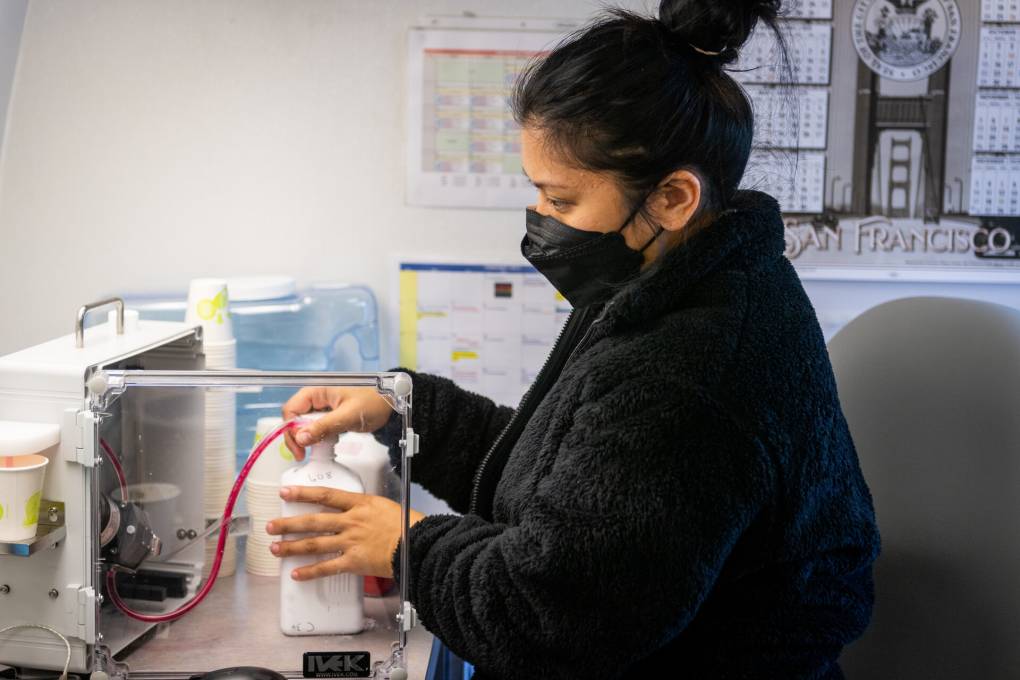
"caption": "Registered nurse Sheena Simon prepares medication inside a mobile methadone clinic operated by SF General's Opiate Treatment Outpatient Program on Feb. 10, 2023.",
"description": null,
"title": "RS62988_002_KQED_SFGeneralMethadoneClinic_02102023-qut",
"credit": "Beth LaBerge/KQED",
"status": "inherit",
"altTag": "A nurse wearing a face mask fills medication.",
"isLoading": false,
"fetchFailed": false
},
"news_11805277": {
"type": "attachments",
"id": "news_11805277",
"meta": {
"index": "attachments_1716263798",
"site": "news",
"id": "11805277",
"found": true
},
"parent": 11805237,
"imgSizes": {
"apple_news_ca_landscape_5_5": {
"file": "https://ww2.kqed.org/app/uploads/sites/10/2020/03/RS41395_002_KQED_Housing_MountainView_02192020_3308-qut-1044x783.jpg",
"width": 1044,
"mimeType": "image/jpeg",
"height": 783
},
"apple_news_ca_square_4_0": {
"file": "https://ww2.kqed.org/app/uploads/sites/10/2020/03/RS41395_002_KQED_Housing_MountainView_02192020_3308-qut-470x470.jpg",
"width": 470,
"mimeType": "image/jpeg",
"height": 470
},
"twentyfourteen-full-width": {
"file": "https://ww2.kqed.org/app/uploads/sites/10/2020/03/RS41395_002_KQED_Housing_MountainView_02192020_3308-qut-1038x576.jpg",
"width": 1038,
"mimeType": "image/jpeg",
"height": 576
},
"thumbnail": {
"file": "https://ww2.kqed.org/app/uploads/sites/10/2020/03/RS41395_002_KQED_Housing_MountainView_02192020_3308-qut-160x107.jpg",
"width": 160,
"mimeType": "image/jpeg",
"height": 107
},
"post-thumbnail": {
"file": "https://ww2.kqed.org/app/uploads/sites/10/2020/03/RS41395_002_KQED_Housing_MountainView_02192020_3308-qut-672x372.jpg",
"width": 672,
"mimeType": "image/jpeg",
"height": 372
},
"kqedFullSize": {
"file": "https://ww2.kqed.org/app/uploads/sites/10/2020/03/RS41395_002_KQED_Housing_MountainView_02192020_3308-qut.jpg",
"width": 1920,
"height": 1280
},
"apple_news_ca_landscape_4_7": {
"file": "https://ww2.kqed.org/app/uploads/sites/10/2020/03/RS41395_002_KQED_Housing_MountainView_02192020_3308-qut-632x474.jpg",
"width": 632,
"mimeType": "image/jpeg",
"height": 474
},
"large": {
"file": "https://ww2.kqed.org/app/uploads/sites/10/2020/03/RS41395_002_KQED_Housing_MountainView_02192020_3308-qut-1020x680.jpg",
"width": 1020,
"mimeType": "image/jpeg",
"height": 680
},
"apple_news_ca_landscape_4_0": {
"file": "https://ww2.kqed.org/app/uploads/sites/10/2020/03/RS41395_002_KQED_Housing_MountainView_02192020_3308-qut-536x402.jpg",
"width": 536,
"mimeType": "image/jpeg",
"height": 402
},
"apple_news_ca_portrait_12_9": {
"file": "https://ww2.kqed.org/app/uploads/sites/10/2020/03/RS41395_002_KQED_Housing_MountainView_02192020_3308-qut-1122x1280.jpg",
"width": 1122,
"mimeType": "image/jpeg",
"height": 1280
},
"medium": {
"file": "https://ww2.kqed.org/app/uploads/sites/10/2020/03/RS41395_002_KQED_Housing_MountainView_02192020_3308-qut-800x533.jpg",
"width": 800,
"mimeType": "image/jpeg",
"height": 533
},
"apple_news_ca_portrait_4_0": {
"file": "https://ww2.kqed.org/app/uploads/sites/10/2020/03/RS41395_002_KQED_Housing_MountainView_02192020_3308-qut-354x472.jpg",
"width": 354,
"mimeType": "image/jpeg",
"height": 472
},
"apple_news_ca_portrait_9_7": {
"file": "https://ww2.kqed.org/app/uploads/sites/10/2020/03/RS41395_002_KQED_Housing_MountainView_02192020_3308-qut-840x1120.jpg",
"width": 840,
"mimeType": "image/jpeg",
"height": 1120
},
"apple_news_ca_landscape_12_9": {
"file": "https://ww2.kqed.org/app/uploads/sites/10/2020/03/RS41395_002_KQED_Housing_MountainView_02192020_3308-qut-1832x1280.jpg",
"width": 1832,
"mimeType": "image/jpeg",
"height": 1280
},
"apple_news_ca_square_9_7": {
"file": "https://ww2.kqed.org/app/uploads/sites/10/2020/03/RS41395_002_KQED_Housing_MountainView_02192020_3308-qut-1104x1104.jpg",
"width": 1104,
"mimeType": "image/jpeg",
"height": 1104
},
"apple_news_ca_portrait_4_7": {
"file": "https://ww2.kqed.org/app/uploads/sites/10/2020/03/RS41395_002_KQED_Housing_MountainView_02192020_3308-qut-414x552.jpg",
"width": 414,
"mimeType": "image/jpeg",
"height": 552
},
"apple_news_ca_square_12_9": {
"file": "https://ww2.kqed.org/app/uploads/sites/10/2020/03/RS41395_002_KQED_Housing_MountainView_02192020_3308-qut-1472x1280.jpg",
"width": 1472,
"mimeType": "image/jpeg",
"height": 1280
},
"apple_news_ca_portrait_5_5": {
"file": "https://ww2.kqed.org/app/uploads/sites/10/2020/03/RS41395_002_KQED_Housing_MountainView_02192020_3308-qut-687x916.jpg",
"width": 687,
"mimeType": "image/jpeg",
"height": 916
},
"full-width": {
"file": "https://ww2.kqed.org/app/uploads/sites/10/2020/03/RS41395_002_KQED_Housing_MountainView_02192020_3308-qut-1920x1280.jpg",
"width": 1920,
"mimeType": "image/jpeg",
"height": 1280
},
"apple_news_ca_square_4_7": {
"file": "https://ww2.kqed.org/app/uploads/sites/10/2020/03/RS41395_002_KQED_Housing_MountainView_02192020_3308-qut-550x550.jpg",
"width": 550,
"mimeType": "image/jpeg",
"height": 550
},
"apple_news_ca_landscape_9_7": {
"file": "https://ww2.kqed.org/app/uploads/sites/10/2020/03/RS41395_002_KQED_Housing_MountainView_02192020_3308-qut-1376x1032.jpg",
"width": 1376,
"mimeType": "image/jpeg",
"height": 1032
},
"apple_news_ca_square_5_5": {
"file": "https://ww2.kqed.org/app/uploads/sites/10/2020/03/RS41395_002_KQED_Housing_MountainView_02192020_3308-qut-912x912.jpg",
"width": 912,
"mimeType": "image/jpeg",
"height": 912
}
},
"publishDate": 1583350992,
"modified": 1600908772,
"caption": "Apartment construction in Mountain View.",
"description": "Apartment construction in Mountain View, California on Feb. 19, 2020.",
"title": "RS41395_002_KQED_Housing_MountainView_02192020_3308-qut",
"credit": "Beth LaBerge/KQED",
"status": "inherit",
"isLoading": false,
"fetchFailed": false
},
"news_11986701": {
"type": "attachments",
"id": "news_11986701",
"meta": {
"index": "attachments_1716263798",
"site": "news",
"id": "11986701",
"found": true
},
"parent": 11986700,
"imgSizes": {
"twentyfourteen-full-width": {
"file": "https://cdn.kqed.org/wp-content/uploads/sites/10/2024/05/CMLesgislature01-1038x576.jpg",
"width": 1038,
"mimeType": "image/jpeg",
"height": 576
},
"thumbnail": {
"file": "https://cdn.kqed.org/wp-content/uploads/sites/10/2024/05/CMLesgislature01-160x107.jpg",
"width": 160,
"mimeType": "image/jpeg",
"height": 107
},
"post-thumbnail": {
"file": "https://cdn.kqed.org/wp-content/uploads/sites/10/2024/05/CMLesgislature01-672x372.jpg",
"width": 672,
"mimeType": "image/jpeg",
"height": 372
},
"kqedFullSize": {
"file": "https://cdn.kqed.org/wp-content/uploads/sites/10/2024/05/CMLesgislature01.jpg",
"width": 2000,
"height": 1333
},
"large": {
"file": "https://cdn.kqed.org/wp-content/uploads/sites/10/2024/05/CMLesgislature01-1020x680.jpg",
"width": 1020,
"mimeType": "image/jpeg",
"height": 680
},
"1536x1536": {
"file": "https://cdn.kqed.org/wp-content/uploads/sites/10/2024/05/CMLesgislature01-1536x1024.jpg",
"width": 1536,
"mimeType": "image/jpeg",
"height": 1024
},
"full-width": {
"file": "https://cdn.kqed.org/wp-content/uploads/sites/10/2024/05/CMLesgislature01-1920x1280.jpg",
"width": 1920,
"mimeType": "image/jpeg",
"height": 1280
},
"medium": {
"file": "https://cdn.kqed.org/wp-content/uploads/sites/10/2024/05/CMLesgislature01-800x533.jpg",
"width": 800,
"mimeType": "image/jpeg",
"height": 533
}
},
"publishDate": 1715965124,
"modified": 1715971249,
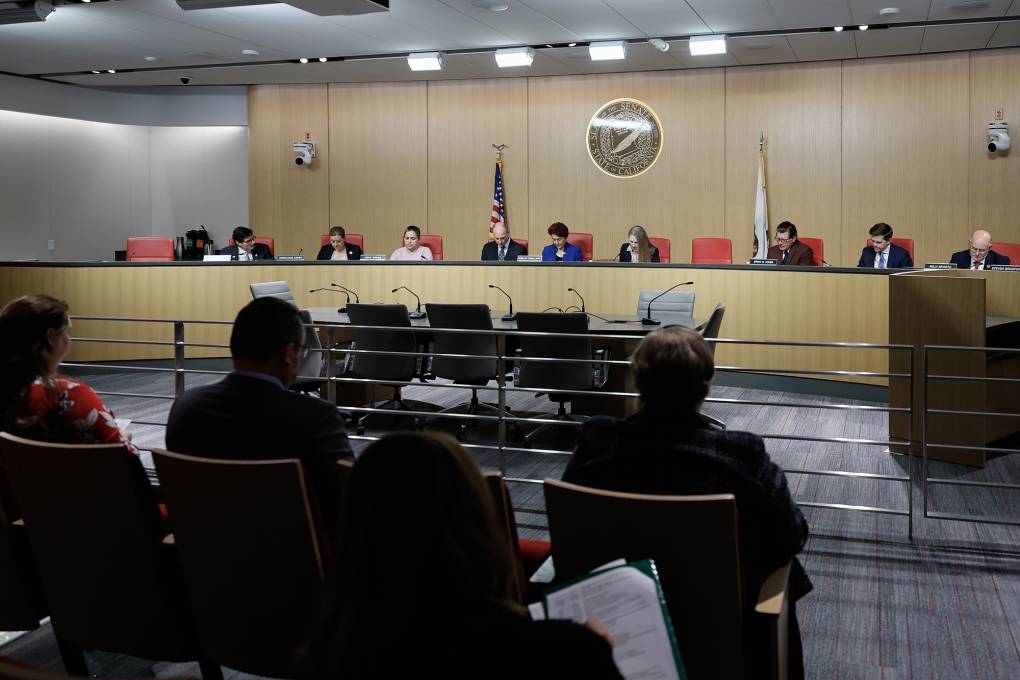
"caption": "A Senate appropriations committee hearing at the Capitol Annex Swing Space in Sacramento on May 16, 2024. On Thursday, the Assembly and Senate appropriations committees held their first round of suspense file hearings.",
"description": null,
"title": "CMLesgislature01",
"credit": "Fred Greaves/CalMatters",
"status": "inherit",
"altTag": null,
"isLoading": false,
"fetchFailed": false
},
"news_11986406": {
"type": "attachments",
"id": "news_11986406",
"meta": {
"index": "attachments_1716263798",
"site": "news",
"id": "11986406",
"found": true
},
"title": "BIG SUR, CALIFORNIA: Caltrans employees and contractors work to",
"publishDate": 1715811884,
"status": "inherit",
"parent": 11986383,
"modified": 1768428712,
"caption": "Caltrans employees and contractors in Big Sur on Wednesday, April 17, 2024, work to stabilize the southbound portion of U.S. Highway 1 that collapsed into the Pacific Ocean, which occurred on March 30, 2024, after days of heavy rainfall, hail and powerful winds.",
"credit": "Melina Mara/The Washington Post",
"altTag": null,
"description": null,
"imgSizes": {
"medium": {
"file": "https://cdn.kqed.org/wp-content/uploads/sites/10/2024/05/BigSur-800x533.jpg",
"width": 800,
"height": 533,
"mimeType": "image/jpeg"
},
"large": {
"file": "https://cdn.kqed.org/wp-content/uploads/sites/10/2024/05/BigSur-1020x680.jpg",
"width": 1020,
"height": 680,
"mimeType": "image/jpeg"
},
"thumbnail": {
"file": "https://cdn.kqed.org/wp-content/uploads/sites/10/2024/05/BigSur-160x107.jpg",
"width": 160,
"height": 107,
"mimeType": "image/jpeg"
},
"1536x1536": {
"file": "https://cdn.kqed.org/wp-content/uploads/sites/10/2024/05/BigSur-1536x1024.jpg",
"width": 1536,
"height": 1024,
"mimeType": "image/jpeg"
},
"post-thumbnail": {
"file": "https://cdn.kqed.org/wp-content/uploads/sites/10/2024/05/BigSur-672x372.jpg",
"width": 672,
"height": 372,
"mimeType": "image/jpeg"
},
"twentyfourteen-full-width": {
"file": "https://cdn.kqed.org/wp-content/uploads/sites/10/2024/05/BigSur-1038x576.jpg",
"width": 1038,
"height": 576,
"mimeType": "image/jpeg"
},
"kqedFullSize": {
"file": "https://cdn.kqed.org/wp-content/uploads/sites/10/2024/05/BigSur.jpg",
"width": 1920,
"height": 1280
}
},
"isLoading": false,
"fetchFailed": false
},
"news_11982598": {
"type": "attachments",
"id": "news_11982598",
"meta": {
"index": "attachments_1716263798",
"site": "news",
"id": "11982598",
"found": true
},
"parent": 0,
"imgSizes": {
"twentyfourteen-full-width": {
"file": "https://cdn.kqed.org/wp-content/uploads/sites/10/2024/04/Owens-Lake-018-AR-KQED-1038x576.jpg",
"width": 1038,
"mimeType": "image/jpeg",
"height": 576
},
"thumbnail": {
"file": "https://cdn.kqed.org/wp-content/uploads/sites/10/2024/04/Owens-Lake-018-AR-KQED-160x107.jpg",
"width": 160,
"mimeType": "image/jpeg",
"height": 107
},
"post-thumbnail": {
"file": "https://cdn.kqed.org/wp-content/uploads/sites/10/2024/04/Owens-Lake-018-AR-KQED-672x372.jpg",
"width": 672,
"mimeType": "image/jpeg",
"height": 372
},
"kqedFullSize": {
"file": "https://cdn.kqed.org/wp-content/uploads/sites/10/2024/04/Owens-Lake-018-AR-KQED.jpg",
"width": 2000,
"height": 1334
},
"large": {
"file": "https://cdn.kqed.org/wp-content/uploads/sites/10/2024/04/Owens-Lake-018-AR-KQED-1020x680.jpg",
"width": 1020,
"mimeType": "image/jpeg",
"height": 680
},
"1536x1536": {
"file": "https://cdn.kqed.org/wp-content/uploads/sites/10/2024/04/Owens-Lake-018-AR-KQED-1536x1025.jpg",
"width": 1536,
"mimeType": "image/jpeg",
"height": 1025
},
"full-width": {
"file": "https://cdn.kqed.org/wp-content/uploads/sites/10/2024/04/Owens-Lake-018-AR-KQED-1920x1281.jpg",
"width": 1920,
"mimeType": "image/jpeg",
"height": 1281
},
"medium": {
"file": "https://cdn.kqed.org/wp-content/uploads/sites/10/2024/04/Owens-Lake-018-AR-KQED-800x534.jpg",
"width": 800,
"mimeType": "image/jpeg",
"height": 534
}
},
"publishDate": 1712783146,
"modified": 1715808065,
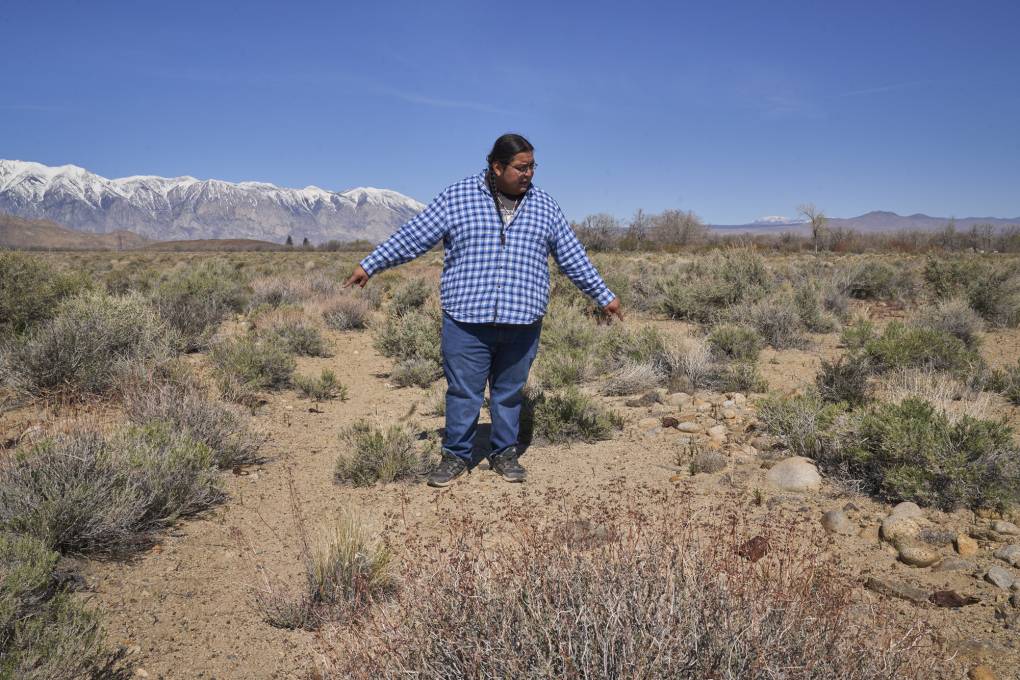
"caption": "Noah Williams, water program coordinator for Big Pine Paiute Tribe, stands in the middle of the Bishop Creek diversion in Bishop on April 3, 2024.",
"description": null,
"title": "Ditch one",
"credit": "Alejandra Rubio for KQED",
"status": "inherit",
"altTag": null,
"isLoading": false,
"fetchFailed": false
},
"news_11986076": {
"type": "attachments",
"id": "news_11986076",
"meta": {
"index": "attachments_1716263798",
"site": "news",
"id": "11986076",
"found": true
},
"parent": 11986075,
"imgSizes": {
"twentyfourteen-full-width": {
"file": "https://cdn.kqed.org/wp-content/uploads/sites/10/2024/05/mercado-ef41c18e8d3958b566a25a880a9c89fd6f58237c-1038x576.jpg",
"width": 1038,
"mimeType": "image/jpeg",
"height": 576
},
"thumbnail": {
"file": "https://cdn.kqed.org/wp-content/uploads/sites/10/2024/05/mercado-ef41c18e8d3958b566a25a880a9c89fd6f58237c-160x120.jpg",
"width": 160,
"mimeType": "image/jpeg",
"height": 120
},
"post-thumbnail": {
"file": "https://cdn.kqed.org/wp-content/uploads/sites/10/2024/05/mercado-ef41c18e8d3958b566a25a880a9c89fd6f58237c-672x372.jpg",
"width": 672,
"mimeType": "image/jpeg",
"height": 372
},
"kqedFullSize": {
"file": "https://cdn.kqed.org/wp-content/uploads/sites/10/2024/05/mercado-ef41c18e8d3958b566a25a880a9c89fd6f58237c-scaled.jpg",
"width": 2560,
"height": 1920
},
"2048x2048": {
"file": "https://cdn.kqed.org/wp-content/uploads/sites/10/2024/05/mercado-ef41c18e8d3958b566a25a880a9c89fd6f58237c-2048x1536.jpg",
"width": 2048,
"mimeType": "image/jpeg",
"height": 1536
},
"large": {
"file": "https://cdn.kqed.org/wp-content/uploads/sites/10/2024/05/mercado-ef41c18e8d3958b566a25a880a9c89fd6f58237c-1020x765.jpg",
"width": 1020,
"mimeType": "image/jpeg",
"height": 765
},
"1536x1536": {
"file": "https://cdn.kqed.org/wp-content/uploads/sites/10/2024/05/mercado-ef41c18e8d3958b566a25a880a9c89fd6f58237c-1536x1152.jpg",
"width": 1536,
"mimeType": "image/jpeg",
"height": 1152
},
"full-width": {
"file": "https://cdn.kqed.org/wp-content/uploads/sites/10/2024/05/mercado-ef41c18e8d3958b566a25a880a9c89fd6f58237c-1920x1440.jpg",
"width": 1920,
"mimeType": "image/jpeg",
"height": 1440
},
"medium": {
"file": "https://cdn.kqed.org/wp-content/uploads/sites/10/2024/05/mercado-ef41c18e8d3958b566a25a880a9c89fd6f58237c-800x600.jpg",
"width": 800,
"mimeType": "image/jpeg",
"height": 600
}
},
"publishDate": 1715705845,
"modified": 1715713165,
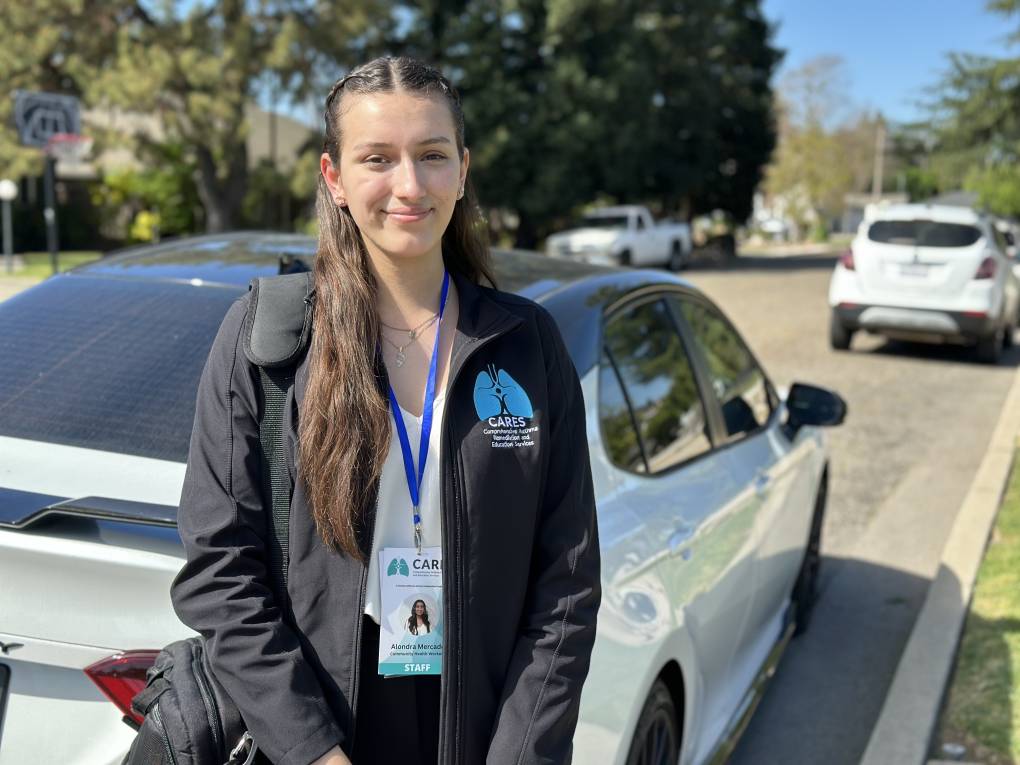
"caption": "Alondra Mercado, a community health worker with the Central California Asthma Collaborative, helps provide services through an ambitious California Medicaid initiative. On a recent morning in March, she visited a family in Turlock to teach a mother how to control in-home asthma triggers that cause flare-ups in her young son.",
"description": "Alondra Mercado, a community health worker with the Central California Asthma Collaborative, helps provide services through an ambitious California Medicaid initiative. On a recent morning in March, she visited a family in Turlock to teach a mother how to control in-home asthma triggers that cause flare-ups in her young son. (Angela Hart/KFF Health News)",
"title": "Alondra Mercado, a community health worker with the Central California Asthma Collaborative, helps provide services through an ambitious California Medicaid initiative. On a recent morning in March, she visited a family in Turlock to teach a mother how to control in-home asthma triggers that cause flare-ups in her young son.",
"credit": "Angela Hart/KFF Health News",
"status": "inherit",
"altTag": "A woman wearing a black jacket, white shirt and lanyard stands behind a vehicle parked on the street.",
"isLoading": false,
"fetchFailed": false
},
"news_11985915": {
"type": "attachments",
"id": "news_11985915",
"meta": {
"index": "attachments_1716263798",
"site": "news",
"id": "11985915",
"found": true
},
"parent": 11985912,
"imgSizes": {
"twentyfourteen-full-width": {
"file": "https://cdn.kqed.org/wp-content/uploads/sites/10/2024/05/036_KQED_EmbarcaderoNavigationCenter_01302020_7967_qut-1038x576.jpg",
"width": 1038,
"mimeType": "image/jpeg",
"height": 576
},
"thumbnail": {
"file": "https://cdn.kqed.org/wp-content/uploads/sites/10/2024/05/036_KQED_EmbarcaderoNavigationCenter_01302020_7967_qut-160x107.jpg",
"width": 160,
"mimeType": "image/jpeg",
"height": 107
},
"post-thumbnail": {
"file": "https://cdn.kqed.org/wp-content/uploads/sites/10/2024/05/036_KQED_EmbarcaderoNavigationCenter_01302020_7967_qut-672x372.jpg",
"width": 672,
"mimeType": "image/jpeg",
"height": 372
},
"kqedFullSize": {
"file": "https://cdn.kqed.org/wp-content/uploads/sites/10/2024/05/036_KQED_EmbarcaderoNavigationCenter_01302020_7967_qut.jpg",
"width": 1920,
"height": 1278
},
"large": {
"file": "https://cdn.kqed.org/wp-content/uploads/sites/10/2024/05/036_KQED_EmbarcaderoNavigationCenter_01302020_7967_qut-1020x679.jpg",
"width": 1020,
"mimeType": "image/jpeg",
"height": 679
},
"1536x1536": {
"file": "https://cdn.kqed.org/wp-content/uploads/sites/10/2024/05/036_KQED_EmbarcaderoNavigationCenter_01302020_7967_qut-1536x1022.jpg",
"width": 1536,
"mimeType": "image/jpeg",
"height": 1022
},
"medium": {
"file": "https://cdn.kqed.org/wp-content/uploads/sites/10/2024/05/036_KQED_EmbarcaderoNavigationCenter_01302020_7967_qut-800x533.jpg",
"width": 800,
"mimeType": "image/jpeg",
"height": 533
}
},
"publishDate": 1715620690,
"modified": 1715624202,
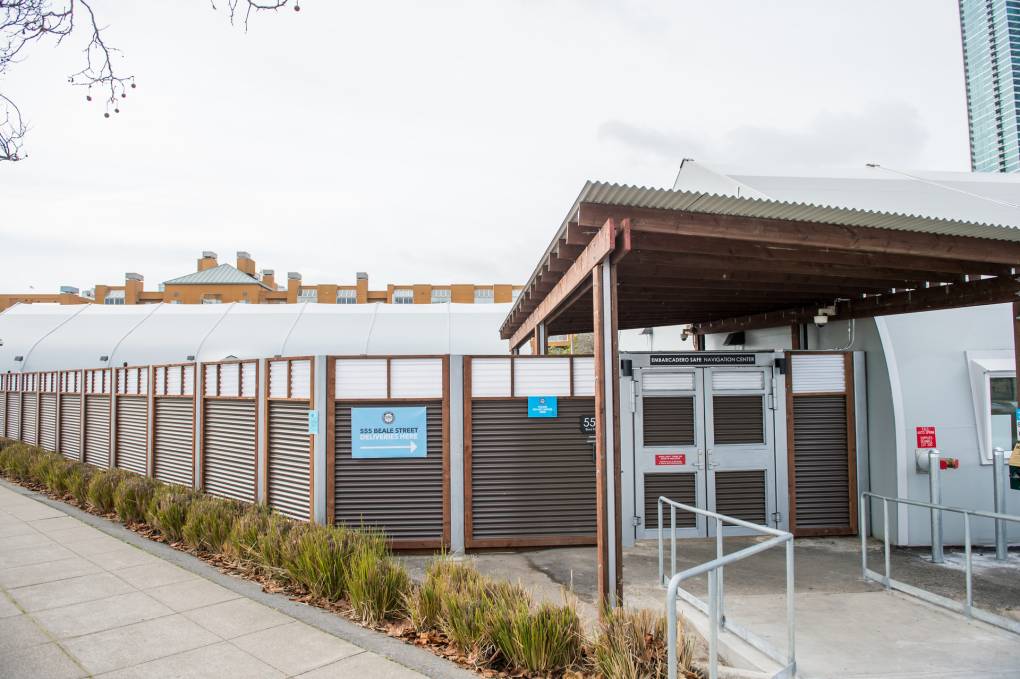
"caption": "The entrance to the Embarcadero SAFE Navigation Center at the corner of Embarcadero and Beale Street in San Francisco on Jan. 30, 2020. The 200-bed shelter opened in December of 2019.",
"description": null,
"title": "036_KQED_EmbarcaderoNavigationCenter_01302020_7967_qut",
"credit": "Beth LaBerge/KQED",
"status": "inherit",
"altTag": null,
"isLoading": false,
"fetchFailed": false
},
"news_11985735": {
"type": "attachments",
"id": "news_11985735",
"meta": {
"index": "attachments_1716263798",
"site": "news",
"id": "11985735",
"found": true
},
"parent": 0,
"imgSizes": {
"twentyfourteen-full-width": {
"file": "https://cdn.kqed.org/wp-content/uploads/sites/10/2024/05/NO-TECH-FOR-APARTHEID-01-KQED-1-1-1038x576.jpg",
"width": 1038,
"mimeType": "image/jpeg",
"height": 576
},
"thumbnail": {
"file": "https://cdn.kqed.org/wp-content/uploads/sites/10/2024/05/NO-TECH-FOR-APARTHEID-01-KQED-1-1-160x107.jpg",
"width": 160,
"mimeType": "image/jpeg",
"height": 107
},
"post-thumbnail": {
"file": "https://cdn.kqed.org/wp-content/uploads/sites/10/2024/05/NO-TECH-FOR-APARTHEID-01-KQED-1-1-672x372.jpg",
"width": 672,
"mimeType": "image/jpeg",
"height": 372
},
"kqedFullSize": {
"file": "https://cdn.kqed.org/wp-content/uploads/sites/10/2024/05/NO-TECH-FOR-APARTHEID-01-KQED-1-1.jpg",
"width": 2000,
"height": 1333
},
"large": {
"file": "https://cdn.kqed.org/wp-content/uploads/sites/10/2024/05/NO-TECH-FOR-APARTHEID-01-KQED-1-1-1020x680.jpg",
"width": 1020,
"mimeType": "image/jpeg",
"height": 680
},
"1536x1536": {
"file": "https://cdn.kqed.org/wp-content/uploads/sites/10/2024/05/NO-TECH-FOR-APARTHEID-01-KQED-1-1-1536x1024.jpg",
"width": 1536,
"mimeType": "image/jpeg",
"height": 1024
},
"full-width": {
"file": "https://cdn.kqed.org/wp-content/uploads/sites/10/2024/05/NO-TECH-FOR-APARTHEID-01-KQED-1-1-1920x1280.jpg",
"width": 1920,
"mimeType": "image/jpeg",
"height": 1280
},
"medium": {
"file": "https://cdn.kqed.org/wp-content/uploads/sites/10/2024/05/NO-TECH-FOR-APARTHEID-01-KQED-1-1-800x533.jpg",
"width": 800,
"mimeType": "image/jpeg",
"height": 533
}
},
"publishDate": 1715368146,
"modified": 1715368254,
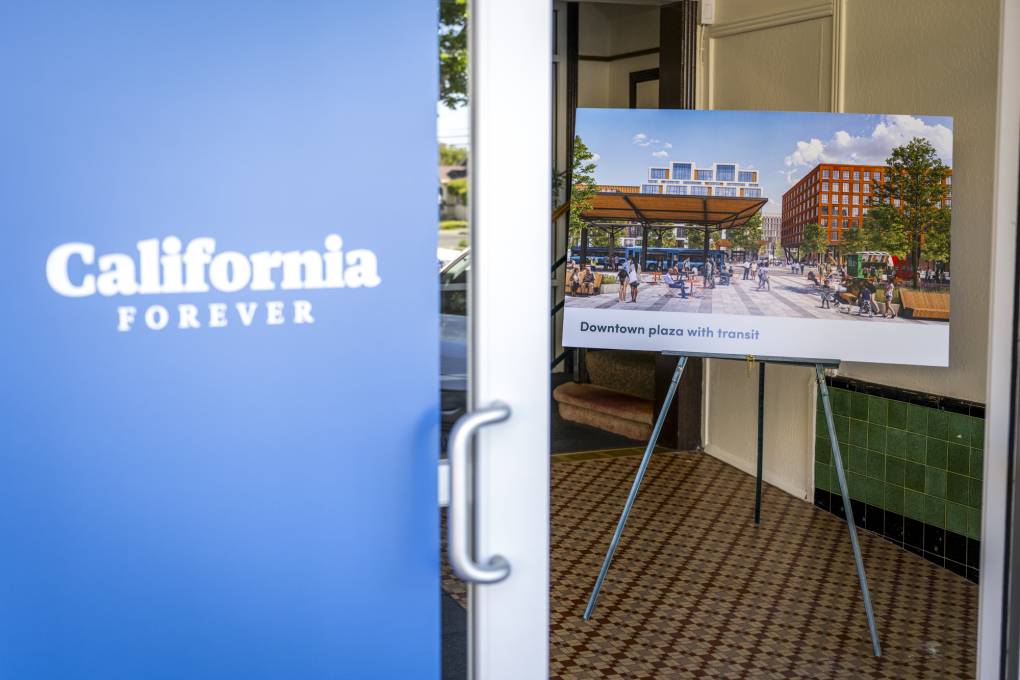
"caption": "Posters for California Forever are displayed in the lobby of the Vista Theatre in Rio Vista on May 2, 2024.",
"description": null,
"title": "NO TECH FOR APARTHEID-01-KQED-1",
"credit": "Beth LaBerge/KQED",
"status": "inherit",
"altTag": null,
"isLoading": false,
"fetchFailed": false
},
"news_11985178": {
"type": "attachments",
"id": "news_11985178",
"meta": {
"index": "attachments_1716263798",
"site": "news",
"id": "11985178",
"found": true
},
"parent": 0,
"imgSizes": {
"twentyfourteen-full-width": {
"file": "https://cdn.kqed.org/wp-content/uploads/sites/10/2024/05/BETH-RODDEN-CLIMBING-IN-YOSEMITE-2022-KQED-1038x576.jpg",
"width": 1038,
"mimeType": "image/jpeg",
"height": 576
},
"thumbnail": {
"file": "https://cdn.kqed.org/wp-content/uploads/sites/10/2024/05/BETH-RODDEN-CLIMBING-IN-YOSEMITE-2022-KQED-160x107.jpg",
"width": 160,
"mimeType": "image/jpeg",
"height": 107
},
"post-thumbnail": {
"file": "https://cdn.kqed.org/wp-content/uploads/sites/10/2024/05/BETH-RODDEN-CLIMBING-IN-YOSEMITE-2022-KQED-672x372.jpg",
"width": 672,
"mimeType": "image/jpeg",
"height": 372
},
"kqedFullSize": {
"file": "https://cdn.kqed.org/wp-content/uploads/sites/10/2024/05/BETH-RODDEN-CLIMBING-IN-YOSEMITE-2022-KQED.jpg",
"width": 2000,
"height": 1333
},
"large": {
"file": "https://cdn.kqed.org/wp-content/uploads/sites/10/2024/05/BETH-RODDEN-CLIMBING-IN-YOSEMITE-2022-KQED-1020x680.jpg",
"width": 1020,
"mimeType": "image/jpeg",
"height": 680
},
"1536x1536": {
"file": "https://cdn.kqed.org/wp-content/uploads/sites/10/2024/05/BETH-RODDEN-CLIMBING-IN-YOSEMITE-2022-KQED-1536x1024.jpg",
"width": 1536,
"mimeType": "image/jpeg",
"height": 1024
},
"full-width": {
"file": "https://cdn.kqed.org/wp-content/uploads/sites/10/2024/05/BETH-RODDEN-CLIMBING-IN-YOSEMITE-2022-KQED-1920x1280.jpg",
"width": 1920,
"mimeType": "image/jpeg",
"height": 1280
},
"medium": {
"file": "https://cdn.kqed.org/wp-content/uploads/sites/10/2024/05/BETH-RODDEN-CLIMBING-IN-YOSEMITE-2022-KQED-800x533.jpg",
"width": 800,
"mimeType": "image/jpeg",
"height": 533
}
},
"publishDate": 1715100264,
"modified": 1715100378,
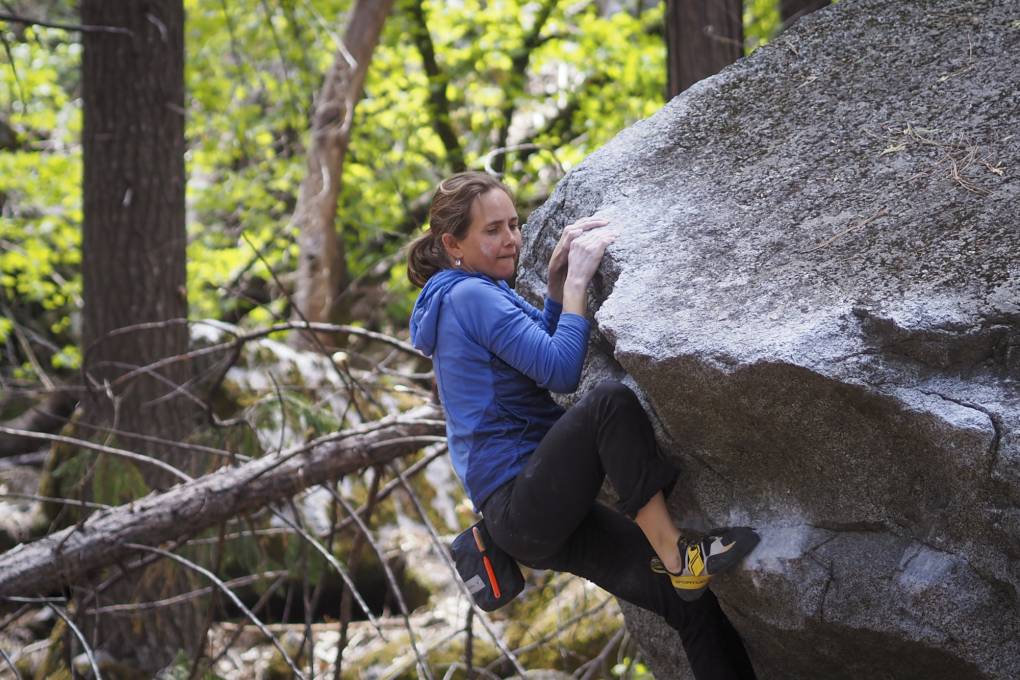
"caption": "Beth Rodden climbing in Yosemite in 2022. ",
"description": null,
"title": null,
"credit": "Courtesy of Beth Rodden",
"status": "inherit",
"altTag": null,
"isLoading": false,
"fetchFailed": false
},
"news_11985180": {
"type": "attachments",
"id": "news_11985180",
"meta": {
"index": "attachments_1716263798",
"site": "news",
"id": "11985180",
"found": true
},
"parent": 0,
"imgSizes": {
"twentyfourteen-full-width": {
"file": "https://cdn.kqed.org/wp-content/uploads/sites/10/2024/05/Chumash-Sanctuary-01-KQED-1038x576.jpg",
"width": 1038,
"mimeType": "image/jpeg",
"height": 576
},
"thumbnail": {
"file": "https://cdn.kqed.org/wp-content/uploads/sites/10/2024/05/Chumash-Sanctuary-01-KQED-160x107.jpg",
"width": 160,
"mimeType": "image/jpeg",
"height": 107
},
"post-thumbnail": {
"file": "https://cdn.kqed.org/wp-content/uploads/sites/10/2024/05/Chumash-Sanctuary-01-KQED-672x372.jpg",
"width": 672,
"mimeType": "image/jpeg",
"height": 372
},
"kqedFullSize": {
"file": "https://cdn.kqed.org/wp-content/uploads/sites/10/2024/05/Chumash-Sanctuary-01-KQED.jpg",
"width": 2000,
"height": 1333
},
"large": {
"file": "https://cdn.kqed.org/wp-content/uploads/sites/10/2024/05/Chumash-Sanctuary-01-KQED-1020x680.jpg",
"width": 1020,
"mimeType": "image/jpeg",
"height": 680
},
"1536x1536": {
"file": "https://cdn.kqed.org/wp-content/uploads/sites/10/2024/05/Chumash-Sanctuary-01-KQED-1536x1024.jpg",
"width": 1536,
"mimeType": "image/jpeg",
"height": 1024
},
"full-width": {
"file": "https://cdn.kqed.org/wp-content/uploads/sites/10/2024/05/Chumash-Sanctuary-01-KQED-1920x1280.jpg",
"width": 1920,
"mimeType": "image/jpeg",
"height": 1280
},
"medium": {
"file": "https://cdn.kqed.org/wp-content/uploads/sites/10/2024/05/Chumash-Sanctuary-01-KQED-800x533.jpg",
"width": 800,
"mimeType": "image/jpeg",
"height": 533
}
},
"publishDate": 1715102465,
"modified": 1715107939,
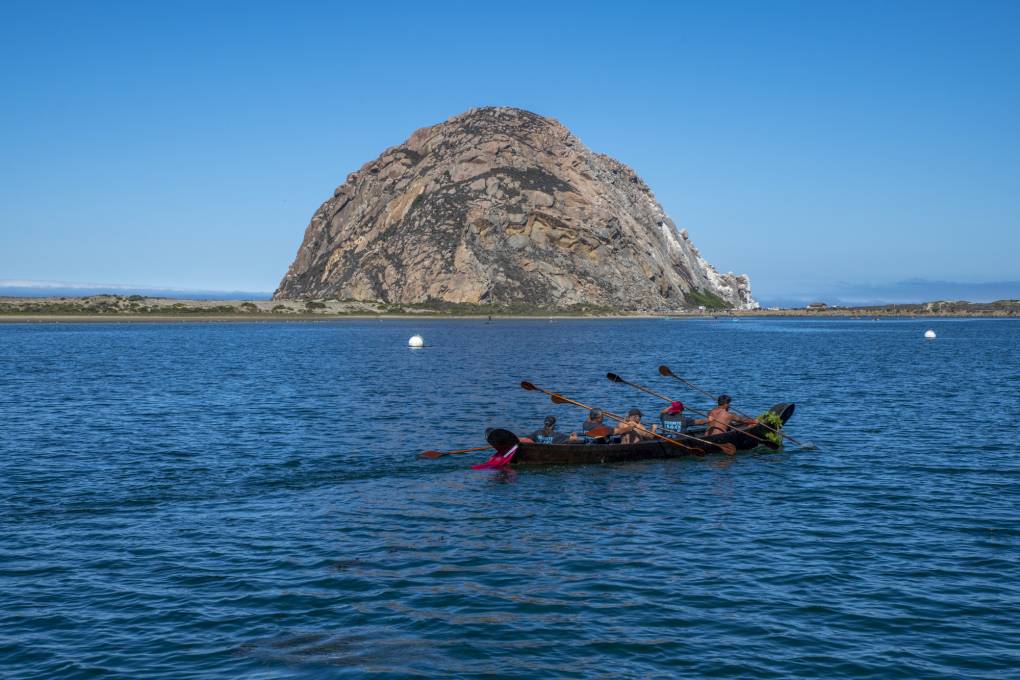
"caption": "The Xax 'Alolk'oy, a traditional Chumash tomol, paddles out to Lisamu' (Morro Rock) at the Northern Chumash Tribal Council's Reunite the Rock event.",
"description": null,
"title": "Chumash Sanctuary-01-KQED",
"credit": "Courtesy of Robert Schwemmer, Northern Chumash Tribal Council",
"status": "inherit",
"altTag": null,
"isLoading": false,
"fetchFailed": false
},
"news_11985356": {
"type": "attachments",
"id": "news_11985356",
"meta": {
"index": "attachments_1716263798",
"site": "news",
"id": "11985356",
"found": true
},
"parent": 0,
"imgSizes": {
"twentyfourteen-full-width": {
"file": "https://cdn.kqed.org/wp-content/uploads/sites/10/2024/05/240507-FORECLOSED-HOMES-FUND-MD-03-KQED-1-1038x576.jpg",
"width": 1038,
"mimeType": "image/jpeg",
"height": 576
},
"thumbnail": {
"file": "https://cdn.kqed.org/wp-content/uploads/sites/10/2024/05/240507-FORECLOSED-HOMES-FUND-MD-03-KQED-1-160x107.jpg",
"width": 160,
"mimeType": "image/jpeg",
"height": 107
},
"post-thumbnail": {
"file": "https://cdn.kqed.org/wp-content/uploads/sites/10/2024/05/240507-FORECLOSED-HOMES-FUND-MD-03-KQED-1-672x372.jpg",
"width": 672,
"mimeType": "image/jpeg",
"height": 372
},
"kqedFullSize": {
"file": "https://cdn.kqed.org/wp-content/uploads/sites/10/2024/05/240507-FORECLOSED-HOMES-FUND-MD-03-KQED-1.jpg",
"width": 2000,
"height": 1333
},
"large": {
"file": "https://cdn.kqed.org/wp-content/uploads/sites/10/2024/05/240507-FORECLOSED-HOMES-FUND-MD-03-KQED-1-1020x680.jpg",
"width": 1020,
"mimeType": "image/jpeg",
"height": 680
},
"1536x1536": {
"file": "https://cdn.kqed.org/wp-content/uploads/sites/10/2024/05/240507-FORECLOSED-HOMES-FUND-MD-03-KQED-1-1536x1024.jpg",
"width": 1536,
"mimeType": "image/jpeg",
"height": 1024
},
"full-width": {
"file": "https://cdn.kqed.org/wp-content/uploads/sites/10/2024/05/240507-FORECLOSED-HOMES-FUND-MD-03-KQED-1-1920x1280.jpg",
"width": 1920,
"mimeType": "image/jpeg",
"height": 1280
},
"medium": {
"file": "https://cdn.kqed.org/wp-content/uploads/sites/10/2024/05/240507-FORECLOSED-HOMES-FUND-MD-03-KQED-1-800x533.jpg",
"width": 800,
"mimeType": "image/jpeg",
"height": 533
}
},
"publishDate": 1715193961,
"modified": 1715193976,
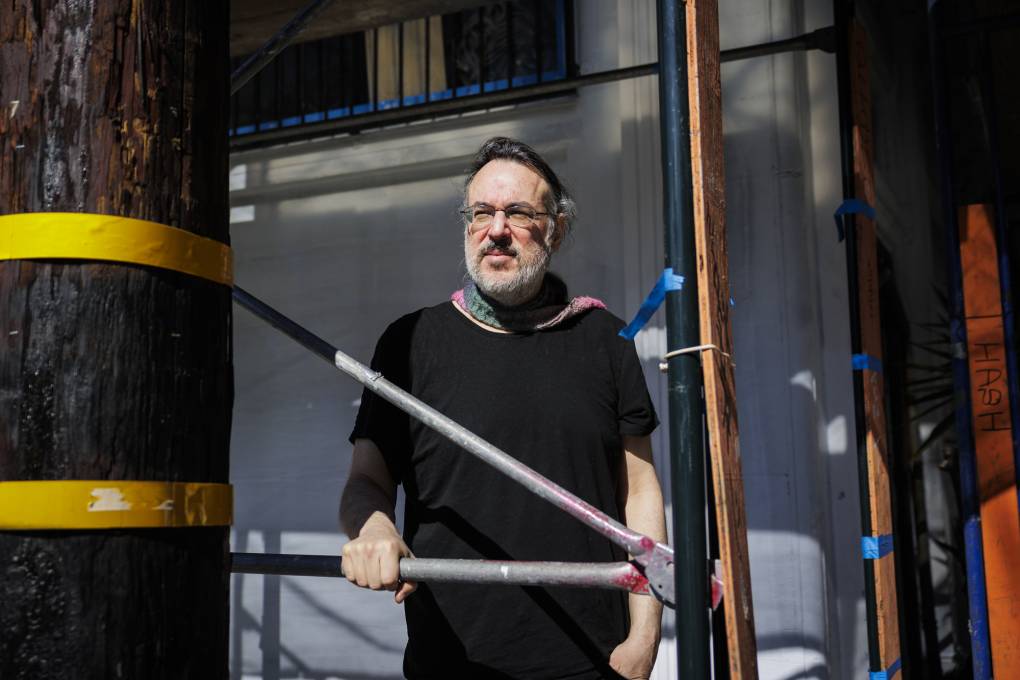
"caption": "Matthew Souzis outside his home in San Francisco on May 7, 2024.",
"description": null,
"title": "Matthew Souzis outside his home in San Francisco on May 7, 2024.",
"credit": "Martin do Nascimento/KQED",
"status": "inherit",
"altTag": null,
"isLoading": false,
"fetchFailed": false
},
"news_11985401": {
"type": "attachments",
"id": "news_11985401",
"meta": {
"index": "attachments_1716263798",
"site": "news",
"id": "11985401",
"found": true
},
"parent": 11985399,
"imgSizes": {
"twentyfourteen-full-width": {
"file": "https://cdn.kqed.org/wp-content/uploads/sites/10/2024/05/SealsPier39_006_qut-1038x576.jpg",
"width": 1038,
"mimeType": "image/jpeg",
"height": 576
},
"thumbnail": {
"file": "https://cdn.kqed.org/wp-content/uploads/sites/10/2024/05/SealsPier39_006_qut-160x109.jpg",
"width": 160,
"mimeType": "image/jpeg",
"height": 109
},
"post-thumbnail": {
"file": "https://cdn.kqed.org/wp-content/uploads/sites/10/2024/05/SealsPier39_006_qut-672x372.jpg",
"width": 672,
"mimeType": "image/jpeg",
"height": 372
},
"kqedFullSize": {
"file": "https://cdn.kqed.org/wp-content/uploads/sites/10/2024/05/SealsPier39_006_qut.jpg",
"width": 1920,
"height": 1310
},
"large": {
"file": "https://cdn.kqed.org/wp-content/uploads/sites/10/2024/05/SealsPier39_006_qut-1020x696.jpg",
"width": 1020,
"mimeType": "image/jpeg",
"height": 696
},
"1536x1536": {
"file": "https://cdn.kqed.org/wp-content/uploads/sites/10/2024/05/SealsPier39_006_qut-1536x1048.jpg",
"width": 1536,
"mimeType": "image/jpeg",
"height": 1048
},
"medium": {
"file": "https://cdn.kqed.org/wp-content/uploads/sites/10/2024/05/SealsPier39_006_qut-800x546.jpg",
"width": 800,
"mimeType": "image/jpeg",
"height": 546
}
},
"publishDate": 1715199652,
"modified": 1715203972,
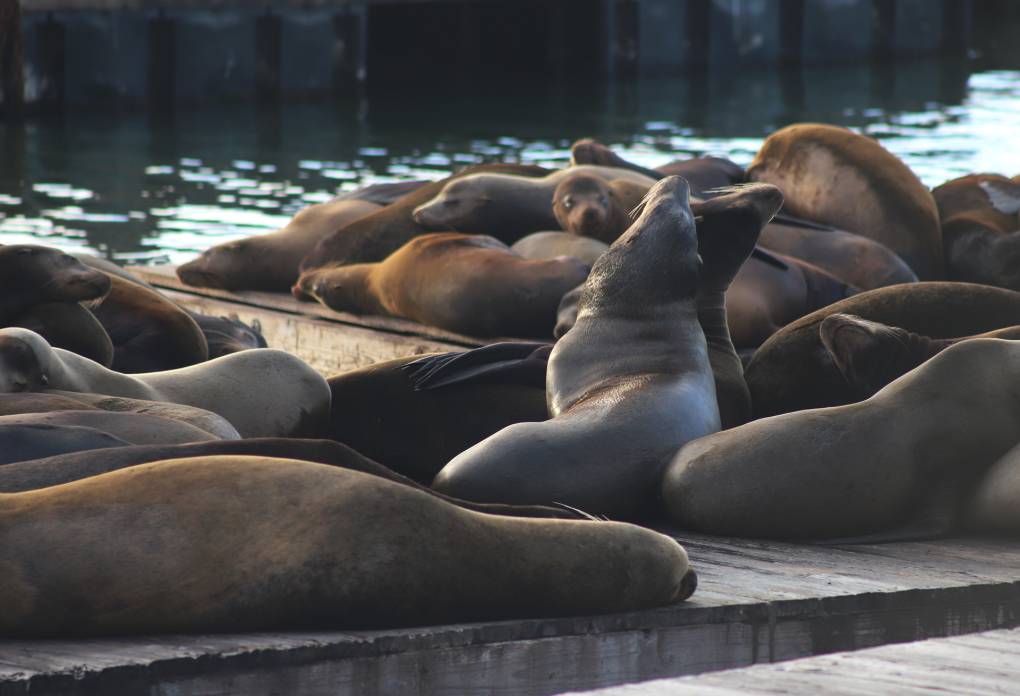
"caption": "Seals gathered at the docks in groups at Pier 39 in San Francisco on Feb. 11, 2019.",
"description": null,
"title": "SealsPier39_006_qut",
"credit": "Lindsey Moore/KQED",
"status": "inherit",
"altTag": null,
"isLoading": false,
"fetchFailed": false
}
},
"audioPlayerReducer": {
"postId": "stream_live",
"isPaused": true,
"isPlaying": false,
"pfsActive": false,
"pledgeModalIsOpen": true,
"playerDrawerIsOpen": false,
"liveAudioPlayStartedAt": 0,
"liveAudioPlayContext": ""
},
"authorsReducer": {
"byline_news_11986700": {
"type": "authors",
"id": "byline_news_11986700",
"meta": {
"override": true
},
"slug": "byline_news_11986700",
"name": "Alexei Koseff and Sameea Kamal, CalMatters",
"isLoading": false
},
"byline_news_11985946": {
"type": "authors",
"id": "byline_news_11985946",
"meta": {
"override": true
},
"slug": "byline_news_11985946",
"name": "Teresa Cotsirilos",
"isLoading": false
},
"byline_news_11986075": {
"type": "authors",
"id": "byline_news_11986075",
"meta": {
"override": true
},
"slug": "byline_news_11986075",
"name": "Angela Hart, KFF Health News",
"isLoading": false
},
"byline_news_11985912": {
"type": "authors",
"id": "byline_news_11985912",
"meta": {
"override": true
},
"slug": "byline_news_11985912",
"name": "Marisa Kendall, CalMatters",
"isLoading": false
},
"byline_news_11985188": {
"type": "authors",
"id": "byline_news_11985188",
"meta": {
"override": true
},
"slug": "byline_news_11985188",
"name": "Benjamin Purper",
"isLoading": false
},
"byline_news_11985399": {
"type": "authors",
"id": "byline_news_11985399",
"meta": {
"override": true
},
"slug": "byline_news_11985399",
"name": "\u003ca href=\"https://twitter.com/katie_debe?lang=en\">Katie DeBenedetti\u003c/a>",
"isLoading": false
},
"carlysevern": {
"type": "authors",
"id": "3243",
"meta": {
"index": "authors_1716337520",
"id": "3243",
"found": true
},
"name": "Carly Severn",
"firstName": "Carly",
"lastName": "Severn",
"slug": "carlysevern",
"email": "csevern@kqed.org",
"display_author_email": false,
"staff_mastheads": [
"news"
],
"title": "Senior Editor, Audience News ",
"bio": "Carly is KQED's Senior Editor of Audience News on the Digital News team, and has reported for the California Report Magazine, Bay Curious and KQED Arts. She's formerly the host of \u003ca href=\"http://ww2.kqed.org/pop/category/the-cooler/\" rel=\"noopener noreferrer\">The Cooler\u003c/a> podcast.",
"avatar": "https://secure.gravatar.com/avatar/2d8d6765f186e64c798cf7f0c8088a41?s=600&d=blank&r=g",
"twitter": "teacupinthebay",
"facebook": null,
"instagram": null,
"linkedin": null,
"sites": [
{
"site": "",
"roles": [
"editor"
]
},
{
"site": "arts",
"roles": [
"editor"
]
},
{
"site": "news",
"roles": [
"administrator"
]
},
{
"site": "pop",
"roles": [
"editor"
]
},
{
"site": "futureofyou",
"roles": [
"editor"
]
},
{
"site": "about",
"roles": [
"administrator"
]
},
{
"site": "mindshift",
"roles": [
"editor"
]
},
{
"site": "bayareabites",
"roles": [
"editor"
]
},
{
"site": "stateofhealth",
"roles": [
"editor"
]
},
{
"site": "science",
"roles": [
"editor"
]
},
{
"site": "food",
"roles": [
"contributor"
]
},
{
"site": "forum",
"roles": [
"editor"
]
},
{
"site": "perspectives",
"roles": [
"administrator"
]
},
{
"site": "liveblog",
"roles": [
"editor"
]
}
],
"headData": {
"title": "Carly Severn | KQED",
"description": "Senior Editor, Audience News ",
"ogImgSrc": "https://secure.gravatar.com/avatar/2d8d6765f186e64c798cf7f0c8088a41?s=600&d=blank&r=g",
"twImgSrc": "https://secure.gravatar.com/avatar/2d8d6765f186e64c798cf7f0c8088a41?s=600&d=blank&r=g"
},
"isLoading": false,
"link": "/author/carlysevern"
},
"fjhabvala": {
"type": "authors",
"id": "8659",
"meta": {
"index": "authors_1716337520",
"id": "8659",
"found": true
},
"name": "Farida Jhabvala Romero",
"firstName": "Farida",
"lastName": "Jhabvala Romero",
"slug": "fjhabvala",
"email": "fjhabvala@kqed.org",
"display_author_email": true,
"staff_mastheads": [
"news"
],
"title": "KQED Contributor",
"bio": "Farida Jhabvala Romero is a Labor Correspondent for KQED. She previously covered immigration. Farida was \u003ca href=\"https://www.ccnma.org/2022-most-influential-latina-journalists\">named\u003c/a> one of the 10 Most Influential Latina Journalists in California in 2022 by the California Chicano News Media Association. Her work has won awards from the Society of Professional Journalists (Northern California), as well as a national and regional Edward M. Murrow Award for the collaborative reporting projects “Dangerous Air” and “Graying California.” Before joining KQED, Farida worked as a producer at Radio Bilingüe, a national public radio network. Farida earned her master’s degree in journalism from Stanford University.",
"avatar": "https://secure.gravatar.com/avatar/f9f022d4e2609741874222a1e9d41f48fea74011aa7c615eef91d9a50c944ebe?s=600&d=blank&r=g",
"twitter": "FaridaJhabvala",
"bluesky": null,
"facebook": null,
"instagram": null,
"linkedin": "https://www.linkedin.com/in/faridajhabvala/",
"sites": [
{
"site": "news",
"roles": [
"editor"
]
},
{
"site": "stateofhealth",
"roles": [
"author"
]
},
{
"site": "liveblog",
"roles": [
"author"
]
}
],
"headData": {
"title": "Farida Jhabvala Romero | KQED",
"description": "KQED Contributor",
"ogImgSrc": "https://secure.gravatar.com/avatar/f9f022d4e2609741874222a1e9d41f48fea74011aa7c615eef91d9a50c944ebe?s=600&d=blank&r=g",
"twImgSrc": "https://secure.gravatar.com/avatar/f9f022d4e2609741874222a1e9d41f48fea74011aa7c615eef91d9a50c944ebe?s=600&d=blank&r=g"
},
"isLoading": false,
"link": "/author/fjhabvala"
},
"btaylor": {
"type": "authors",
"id": "11365",
"meta": {
"index": "authors_1716337520",
"id": "11365",
"found": true
},
"name": "Bianca Taylor",
"firstName": "Bianca",
"lastName": "Taylor",
"slug": "btaylor",
"email": "btaylor@KQED.org",
"display_author_email": false,
"staff_mastheads": [
"news"
],
"title": "Host and Producer ",
"bio": "Bianca Taylor is a news producer and host of KQED's The Latest podcast.\r\n\r\nHer work with KQED has been honored by the Society of Professional Journalists NorCal, the Webby's, the Regional Murrow Awards, and ONA. She has also worked with NPR, the BBC World Service, and the Washington Post Creative Group.\r\n\r\nBianca is represented by SAG-AFTRA.",
"avatar": "https://secure.gravatar.com/avatar/6b9d3f6552dd10470c5d1c2e58cfe717?s=600&d=blank&r=g",
"twitter": "SoundsLkeBianca",
"facebook": null,
"instagram": null,
"linkedin": null,
"sites": [
{
"site": "arts",
"roles": [
"editor"
]
},
{
"site": "news",
"roles": [
"edit_others_posts",
"editor"
]
},
{
"site": "pop",
"roles": [
"editor"
]
},
{
"site": "bayareabites",
"roles": [
"author"
]
},
{
"site": "science",
"roles": [
"editor"
]
},
{
"site": "forum",
"roles": [
"editor"
]
},
{
"site": "radio",
"roles": [
"editor"
]
},
{
"site": "podcasts",
"roles": [
"editor"
]
}
],
"headData": {
"title": "Bianca Taylor | KQED",
"description": "Host and Producer ",
"ogImgSrc": "https://secure.gravatar.com/avatar/6b9d3f6552dd10470c5d1c2e58cfe717?s=600&d=blank&r=g",
"twImgSrc": "https://secure.gravatar.com/avatar/6b9d3f6552dd10470c5d1c2e58cfe717?s=600&d=blank&r=g"
},
"isLoading": false,
"link": "/author/btaylor"
},
"abandlamudi": {
"type": "authors",
"id": "11672",
"meta": {
"index": "authors_1716337520",
"id": "11672",
"found": true
},
"name": "Adhiti Bandlamudi",
"firstName": "Adhiti",
"lastName": "Bandlamudi",
"slug": "abandlamudi",
"email": "abandlamudi@kqed.org",
"display_author_email": false,
"staff_mastheads": [
"news"
],
"title": "KQED Housing Reporter",
"bio": "Adhiti Bandlamudi reports for KQED's Housing desk. She focuses on how housing gets built across the Bay Area. Before joining KQED in 2020, she reported for WUNC in Durham, North Carolina, WABE in Atlanta, Georgia and Capital Public Radio in Sacramento. In 2017, she was awarded a Kroc Fellowship at NPR where she reported on everything from sprinkles to the Golden State Killer's arrest. When she's not reporting, she's baking new recipes in her kitchen or watching movies with friends and family. She's originally from Georgia and has strong opinions about Great British Bake Off.",
"avatar": "https://secure.gravatar.com/avatar/868129c8b257bb99a3500e2c86a65400?s=600&d=mm&r=g",
"twitter": "oddity_adhiti",
"facebook": null,
"instagram": null,
"linkedin": null,
"sites": [
{
"site": "arts",
"roles": [
"author"
]
},
{
"site": "news",
"roles": [
"editor"
]
},
{
"site": "liveblog",
"roles": [
"author"
]
}
],
"headData": {
"title": "Adhiti Bandlamudi | KQED",
"description": "KQED Housing Reporter",
"ogImgSrc": "https://secure.gravatar.com/avatar/868129c8b257bb99a3500e2c86a65400?s=600&d=mm&r=g",
"twImgSrc": "https://secure.gravatar.com/avatar/868129c8b257bb99a3500e2c86a65400?s=600&d=mm&r=g"
},
"isLoading": false,
"link": "/author/abandlamudi"
},
"sjohnson": {
"type": "authors",
"id": "11840",
"meta": {
"index": "authors_1716337520",
"id": "11840",
"found": true
},
"name": "Sydney Johnson",
"firstName": "Sydney",
"lastName": "Johnson",
"slug": "sjohnson",
"email": "sjohnson@kqed.org",
"display_author_email": false,
"staff_mastheads": [
"news"
],
"title": "KQED Reporter",
"bio": "Sydney Johnson is a general assignment reporter at KQED. She previously reported on public health and city government at the San Francisco Examiner, and before that, she covered statewide education policy for EdSource. Her reporting has won multiple local, state and national awards. Sydney is a graduate of the University of California, Berkeley and lives in San Francisco.",
"avatar": "https://secure.gravatar.com/avatar/97855f2719b72ad6190b7c535fe642c8?s=600&d=blank&r=g",
"twitter": "sydneyfjohnson",
"facebook": null,
"instagram": null,
"linkedin": null,
"sites": [
{
"site": "news",
"roles": [
"editor"
]
}
],
"headData": {
"title": "Sydney Johnson | KQED",
"description": "KQED Reporter",
"ogImgSrc": "https://secure.gravatar.com/avatar/97855f2719b72ad6190b7c535fe642c8?s=600&d=blank&r=g",
"twImgSrc": "https://secure.gravatar.com/avatar/97855f2719b72ad6190b7c535fe642c8?s=600&d=blank&r=g"
},
"isLoading": false,
"link": "/author/sjohnson"
}
},
"pagesReducer": {
"news_tag_california": {
"type": "terms",
"id": "news_18538",
"meta": {
"index": "terms_1716263798",
"site": "news",
"id": "18538",
"score": 6.845124
},
"featImg": null,
"name": "California",
"description": null,
"taxonomy": "tag",
"headData": {
"twImgId": null,
"twTitle": null,
"ogTitle": null,
"ogImgId": null,
"twDescription": null,
"description": null,
"title": "California Archives | KQED News",
"ogDescription": null
},
"ttid": 31,
"slug": "california",
"isLoading": false,
"title": "California",
"pageMeta": {
"site": "news",
"WpPageTemplate": "page-topic-editorial",
"currentPage": 139
},
"blocks": [
{
"blockName": "kqed/post-list",
"attrs": {
"layout": "cardArticle2",
"query": "posts/news?tag=california",
"seeMore": false,
"paginated": true,
"page": 139
}
},
{
"blockName": "kqed/ad"
}
]
}
},
"pfsSessionReducer": {},
"postsReducer": {
"stream_live": {
"type": "live",
"id": "stream_live",
"audioUrl": "https://streams.kqed.org/kqedradio",
"title": "Live Stream",
"excerpt": "Live Stream information currently unavailable.",
"link": "/radio",
"featImg": "",
"label": {
"name": "KQED Live",
"link": "/"
}
},
"stream_kqedNewscast": {
"type": "posts",
"id": "stream_kqedNewscast",
"audioUrl": "https://www.kqed.org/.stream/anon/radio/RDnews/newscast.mp3?_=1",
"title": "KQED Newscast",
"featImg": "",
"label": {
"name": "88.5 FM",
"link": "/"
}
},
"news_11986998": {
"type": "posts",
"id": "news_11986998",
"meta": {
"index": "posts_1716263798",
"site": "news",
"id": "11986998",
"score": null,
"sort": [
1716244316000
]
},
"guestAuthors": [],
"slug": "first-of-californias-healthcare-minimum-wage-hikes-likely-to-be-delayed",
"title": "First of California's Health Care Minimum Wage Hikes Likely to Be Delayed",
"publishDate": 1716244316,
"format": "standard",
"headTitle": "First of California’s Health Care Minimum Wage Hikes Likely to Be Delayed | KQED",
"labelTerm": {
"site": "news"
},
"content": "\u003cp>A plan to gradually increase the minimum wage to $25 an hour for half a million health care workers in California could be delayed by a month, as the state faces an estimated budget deficit of $27.6 billion.\u003c/p>\n\u003cp>State Sen. Maria Elena Durazo (D-Los Angeles) introduced \u003ca href=\"https://leginfo.legislature.ca.gov/faces/billNavClient.xhtml?bill_id=202320240SB828\">a bill on\u003c/a> Monday to delay the first increase from June 1 to July 1 to give Gov. Gavin Newsom’s administration and lawmakers more time to negotiate the \u003ca href=\"https://www.kqed.org/news/11967144/minimum-wage-hike-for-california-health-workers-will-cost-billions-workers-say-they-need-it\">estimated costs of the program\u003c/a> and other implementation issues.\u003c/p>\n\u003cp>The Department of Finance estimates that complying with the raises would cost the state $4 billion in the first year, including increased labor costs for about 26,000 state employees and higher Medi-Cal managed care payments. Labor unions and worker advocates have criticized that estimate, saying it’s too high.\u003c/p>\n\u003cp>[ad fullwidth]\u003c/p>\n\u003cp>The governor, who signed the legislation outlining the pay hikes last fall, has sought to make the raises contingent on “General Fund revenue availability,” an item in the current negotiations.\u003c/p>\n\u003cp>\u003ca href=\"https://leginfo.legislature.ca.gov/faces/billNavClient.xhtml?bill_id=202320240SB525\">The law\u003c/a>, which was set to go into effect on June 1, aims to help ease staffing shortages in the health care industry and provide a \u003ca href=\"https://www.kqed.org/news/11970640/californias-upcoming-wage-hikes-may-force-employers-to-raise-pay-to-compete\">“historic wage increase”\u003c/a> to more than 450,000 workers, mostly women and people of color, according to a statement from Durazo.\u003c/p>\n\u003cp>“It is clear that these workers need this to help support their families, and I appreciate health care employers that recognized this and have begun to increase wages,” Durazo said in a statement.\u003c/p>\n\u003cp>The Service Employees International Union, major proponent of the increases, said that it agreed to move the start date as part of negotiations with the state to ensure the wage increases go into effect “in a way that minimizes the budget impact.”\u003c/p>\n\u003cp>Karla Moreno, a cardiac monitor technician in Los Angeles County, said she wasn’t too worried about a potential delay. The extra income she expects to start making in July will ease financial stress for her household, which includes her mom, sister and two nephews, she said.\u003c/p>\n\u003cp>“To us this will be something big,” said Moreno, 35, a staffer at St. Francis Medical Center in Lynwood. “A month is just a month.”\u003c/p>\n\u003cp>Moreno’s hourly pay is expected to rise slightly from $20.80 to $21 in July. Her employer must increase minimum pay to $23 by mid 2026, and to $25 by mid 20-28, according to a spokeswoman with SEIU-United Healthcare Workers.\u003c/p>\n\u003cp>Under the law, large employers and all dialysis clinics are set to reach a $25 minimum wage \u003ca href=\"https://www.seiu-uhw.org/fair-wages-for-healthcare-workers/\">by mid 2026\u003c/a>, faster than smaller hospitals that have many low-income patients or are located in rural areas.\u003c/p>\n\u003cp>Moreno believes the raises will improve patient care by helping to retain employees and attract new ones to fill vacant positions. The telemetry unit where she works is often short staffed, she said, leading to “very stressful” shifts where she must monitor dozens of patients at a time.\u003c/p>\n\u003cp>“Ultimately the biggest thing here is there is a staffing crisis and we need staff,” said Moreno, who has worked in the industry for more than 15 years. “Healthcare is one of those things where you need to have people in order to take care of people.”\u003c/p>\n\u003cp>\u003c/p>\n",
"blocks": [],
"excerpt": "As the state faces a budget deficit, a new bill would delay from June 1 to July 1 the first increase in a plan to gradually bring the minimum wage for health care workers in California to $25 an hour.",
"status": "publish",
"parent": 0,
"modified": 1738185178,
"stats": {
"hasAudio": false,
"hasVideo": false,
"hasChartOrMap": false,
"iframeSrcs": [],
"hasGoogleForm": false,
"hasGallery": false,
"hasHearkenModule": false,
"hasPolis": false,
"paragraphCount": 15,
"wordCount": 559
},
"headData": {
"title": "First of California's Health Care Minimum Wage Hikes Likely to Be Delayed | KQED",
"description": "As the state faces a budget deficit, a new bill would delay from June 1 to July 1 the first increase in a plan to gradually bring the minimum wage for health care workers in California to $25 an hour.",
"ogTitle": "",
"ogDescription": "",
"ogImgId": "",
"twTitle": "",
"twDescription": "",
"twImgId": "",
"schema": {
"@context": "https://schema.org",
"@type": "NewsArticle",
"headline": "First of California's Health Care Minimum Wage Hikes Likely to Be Delayed",
"datePublished": "2024-05-20T15:31:56-07:00",
"dateModified": "2025-01-29T13:12:58-08:00",
"image": "https://cdn.kqed.org/wp-content/uploads/2020/02/KQED-OG-Image@1x.png",
"isAccessibleForFree": "True",
"publisher": {
"@type": "NewsMediaOrganization",
"@id": "https://www.kqed.org/#organization",
"name": "KQED",
"logo": "https://cdn.kqed.org/wp-content/uploads/2020/02/KQED-OG-Image@1x.png",
"url": "https://www.kqed.org",
"sameAs": [
"https://www.facebook.com/KQED",
"https://twitter.com/KQED",
"https://www.instagram.com/kqed/",
"https://www.tiktok.com/@kqedofficial",
"https://www.linkedin.com/company/kqed",
"https://www.youtube.com/channel/UCeC0IOo7i1P_61zVUWbJ4nw"
]
}
}
},
"audioUrl": "https://traffic.omny.fm/d/clips/0af137ef-751e-4b19-a055-aaef00d2d578/ffca7e9f-6831-4[…]f-aaef00f5a073/fff4f6b4-3da6-418e-978f-b1770105fad4/audio.mp3",
"sticky": false,
"nprStoryId": "kqed-11986998",
"excludeFromSiteSearch": "Include",
"articleAge": "0",
"path": "/news/11986998/first-of-californias-healthcare-minimum-wage-hikes-likely-to-be-delayed",
"audioTrackLength": null,
"parsedContent": [
{
"type": "contentString",
"content": "\u003cdiv class=\"post-body\">\u003cp>\u003cp>A plan to gradually increase the minimum wage to $25 an hour for half a million health care workers in California could be delayed by a month, as the state faces an estimated budget deficit of $27.6 billion.\u003c/p>\n\u003cp>State Sen. Maria Elena Durazo (D-Los Angeles) introduced \u003ca href=\"https://leginfo.legislature.ca.gov/faces/billNavClient.xhtml?bill_id=202320240SB828\">a bill on\u003c/a> Monday to delay the first increase from June 1 to July 1 to give Gov. Gavin Newsom’s administration and lawmakers more time to negotiate the \u003ca href=\"https://www.kqed.org/news/11967144/minimum-wage-hike-for-california-health-workers-will-cost-billions-workers-say-they-need-it\">estimated costs of the program\u003c/a> and other implementation issues.\u003c/p>\n\u003cp>The Department of Finance estimates that complying with the raises would cost the state $4 billion in the first year, including increased labor costs for about 26,000 state employees and higher Medi-Cal managed care payments. Labor unions and worker advocates have criticized that estimate, saying it’s too high.\u003c/p>\n\u003cp>\u003c/p>\u003c/div>",
"attributes": {
"named": {},
"numeric": []
}
},
{
"type": "component",
"content": "",
"name": "ad",
"attributes": {
"named": {
"label": "fullwidth"
},
"numeric": [
"fullwidth"
]
}
},
{
"type": "contentString",
"content": "\u003cdiv class=\"post-body\">\u003cp>\u003c/p>\n\u003cp>The governor, who signed the legislation outlining the pay hikes last fall, has sought to make the raises contingent on “General Fund revenue availability,” an item in the current negotiations.\u003c/p>\n\u003cp>\u003ca href=\"https://leginfo.legislature.ca.gov/faces/billNavClient.xhtml?bill_id=202320240SB525\">The law\u003c/a>, which was set to go into effect on June 1, aims to help ease staffing shortages in the health care industry and provide a \u003ca href=\"https://www.kqed.org/news/11970640/californias-upcoming-wage-hikes-may-force-employers-to-raise-pay-to-compete\">“historic wage increase”\u003c/a> to more than 450,000 workers, mostly women and people of color, according to a statement from Durazo.\u003c/p>\n\u003cp>“It is clear that these workers need this to help support their families, and I appreciate health care employers that recognized this and have begun to increase wages,” Durazo said in a statement.\u003c/p>\n\u003cp>The Service Employees International Union, major proponent of the increases, said that it agreed to move the start date as part of negotiations with the state to ensure the wage increases go into effect “in a way that minimizes the budget impact.”\u003c/p>\n\u003cp>Karla Moreno, a cardiac monitor technician in Los Angeles County, said she wasn’t too worried about a potential delay. The extra income she expects to start making in July will ease financial stress for her household, which includes her mom, sister and two nephews, she said.\u003c/p>\n\u003cp>“To us this will be something big,” said Moreno, 35, a staffer at St. Francis Medical Center in Lynwood. “A month is just a month.”\u003c/p>\n\u003cp>Moreno’s hourly pay is expected to rise slightly from $20.80 to $21 in July. Her employer must increase minimum pay to $23 by mid 2026, and to $25 by mid 20-28, according to a spokeswoman with SEIU-United Healthcare Workers.\u003c/p>\n\u003cp>Under the law, large employers and all dialysis clinics are set to reach a $25 minimum wage \u003ca href=\"https://www.seiu-uhw.org/fair-wages-for-healthcare-workers/\">by mid 2026\u003c/a>, faster than smaller hospitals that have many low-income patients or are located in rural areas.\u003c/p>\n\u003cp>Moreno believes the raises will improve patient care by helping to retain employees and attract new ones to fill vacant positions. The telemetry unit where she works is often short staffed, she said, leading to “very stressful” shifts where she must monitor dozens of patients at a time.\u003c/p>\n\u003cp>“Ultimately the biggest thing here is there is a staffing crisis and we need staff,” said Moreno, who has worked in the industry for more than 15 years. “Healthcare is one of those things where you need to have people in order to take care of people.”\u003c/p>\n\u003cp>\u003c/p>\n\u003c/div>\u003c/p>",
"attributes": {
"named": {},
"numeric": []
}
}
],
"link": "/news/11986998/first-of-californias-healthcare-minimum-wage-hikes-likely-to-be-delayed",
"authors": [
"8659"
],
"categories": [
"news_8"
],
"tags": [
"news_18538",
"news_16",
"news_24939",
"news_2141"
],
"featImg": "news_11941679",
"label": "news"
},
"news_11986752": {
"type": "posts",
"id": "news_11986752",
"meta": {
"index": "posts_1716263798",
"site": "news",
"id": "11986752",
"score": null,
"sort": [
1715980388000
]
},
"guestAuthors": [],
"slug": "california-wants-cities-to-plan-for-more-housing-cities-say-the-rules-are-unclear",
"title": "California Wants Cities to Plan For More Housing. Cities Say the Rules Are Unclear",
"publishDate": 1715980388,
"format": "standard",
"headTitle": "California Wants Cities to Plan For More Housing. Cities Say the Rules Are Unclear | KQED",
"labelTerm": {
"site": "news"
},
"content": "\u003cp>State auditors will examine California’s system for reviewing and approving cities’ plans to make way for more homes, which has grown increasingly contentious amid the housing crisis, especially for cities that had long faced little pressure to plan for growth.\u003c/p>\n\u003cp>Such plans to add a \u003ca href=\"https://www.kqed.org/news/11938267/to-meet-state-housing-goals-one-bay-area-city-had-to-overcome-its-nimby-past\">certain amount of homes based on population growth\u003c/a>, called housing elements, must be submitted by cities and counties every six years.\u003c/p>\n\u003cp>More than a year, since cities had to get their housing elements approved by the California Department of Housing and Community Development, about a third of Bay Area cities and counties, are still out of compliance with state law — and some cities have raised concerns about the process.\u003c/p>\n\u003cp>The audit approved this week by the Joint Legislative Audit Committee will look at how the state reviews housing elements to make sure the standards are consistent and clear enough for cities and counties to actually follow.\u003c/p>\n\u003cp>“We need the state’s department of housing to provide their best guidance, but there have been problems,” said Sen. Steve Glazer (D-Orinda), who requested the audit. “We have to identify them and fix them so we can do better in the future.”\u003c/p>\n\u003cp>[ad fullwidth]\u003c/p>\n\u003cp>But in recent years, as \u003ca href=\"https://www.kqed.org/news/11973653/bay-area-deadline-a-crucial-test-for-californias-housing-crisis\">the state’s housing crisis\u003c/a> grows more dire, Gov. Gavin Newsom has amped up pressure on cities after several years of low targets for the amount of new homes planned for and weak consequences for the many cities whose plans fell short. As a result, cities have had to plan for more housing than ever and face strict rules and steep punishments if they don’t submit compliant housing elements — including fines, lawsuits and a loss of state funding for affordable housing and parks.\u003c/p>\n\u003cp>Last year, \u003ca href=\"https://www.kqed.org/news/11943154/they-asked-for-this-california-sues-huntington-beach-for-flouting-laws-meant-to-ease-housing-crisis\">the state sued Huntington Beach\u003c/a> for refusing to pass a housing element that could have added more than 13,000 new homes and apartments to the expensive Southern California city. This week, a Superior Court judge ordered the city to pass its housing element. City leaders vowed to appeal that ruling.\u003c/p>\n\u003cp>[aside label='related coverage' postID=news_11986281,news_11981595,news_11973653,news_11938267]Pablo Espinoza, director of communications for the Department of Housing and Community Development, said he welcomes the audit and looks forward “to working with the California State Auditor to highlight this important work.”\u003c/p>\n\u003cp>“We are proud of the work we have done to strengthen the Housing Element effort since 2017 to ensure that communities plan for their fair share of housing,” he said in a statement to KQED. “And those changes are working: the number of homes built has gone up every single year of this administration.”\u003c/p>\n\u003cp>Housing advocacy organizations are also interested in the results of this audit. Sonja Trauss, executive director of the pro-development group YIMBY Law, said her organization has its own concerns about the housing element review process.\u003c/p>\n\u003cp>“In particular, we have reports from our watchdog and allied organizations that for some cities, HCD repeatedly told them to correct problems in their housing element, the cities never did so, and after some time had elapsed, HCD just went ahead and certified them,” she said in a statement to KQED. “We support more transparency for the housing element process, which the auditor’s report should provide.”\u003c/p>\n\u003cp>The state auditor will select at least 10 cities with compliant housing elements and the same number of cities that are out of compliance. Included in the review, the audit will look at how clear HCD’s standards are for each city’s housing elements, how consistent the agency’s comments are, and how responsive HCD is for each local government.\u003c/p>\n\u003cp>\u003c/p>\n\u003cp>The auditor will likely start the review this fall and is expected to complete it sometime next year.\u003c/p>\n\n",
"blocks": [],
"excerpt": "The state has set strict standards for how cities have to plan for more housing. A new audit seeks to make sure those standards are clear enough for cities to actually follow. ",
"status": "publish",
"parent": 0,
"modified": 1725928001,
"stats": {
"hasAudio": false,
"hasVideo": false,
"hasChartOrMap": false,
"iframeSrcs": [],
"hasGoogleForm": false,
"hasGallery": false,
"hasHearkenModule": false,
"hasPolis": false,
"paragraphCount": 15,
"wordCount": 643
},
"headData": {
"title": "California Wants Cities to Plan For More Housing. Cities Say the Rules Are Unclear | KQED",
"description": "The state has set strict standards for how cities have to plan for more housing. A new audit seeks to make sure those standards are clear enough for cities to actually follow. ",
"ogTitle": "",
"ogDescription": "",
"ogImgId": "",
"twTitle": "",
"twDescription": "",
"twImgId": "",
"schema": {
"@context": "https://schema.org",
"@type": "NewsArticle",
"headline": "California Wants Cities to Plan For More Housing. Cities Say the Rules Are Unclear",
"datePublished": "2024-05-17T14:13:08-07:00",
"dateModified": "2024-09-09T17:26:41-07:00",
"image": "https://cdn.kqed.org/wp-content/uploads/2020/02/KQED-OG-Image@1x.png",
"isAccessibleForFree": "True",
"publisher": {
"@type": "NewsMediaOrganization",
"@id": "https://www.kqed.org/#organization",
"name": "KQED",
"logo": "https://cdn.kqed.org/wp-content/uploads/2020/02/KQED-OG-Image@1x.png",
"url": "https://www.kqed.org",
"sameAs": [
"https://www.facebook.com/KQED",
"https://twitter.com/KQED",
"https://www.instagram.com/kqed/",
"https://www.tiktok.com/@kqedofficial",
"https://www.linkedin.com/company/kqed",
"https://www.youtube.com/channel/UCeC0IOo7i1P_61zVUWbJ4nw"
]
}
}
},
"sticky": false,
"nprStoryId": "kqed-11986752",
"excludeFromSiteSearch": "Include",
"articleAge": "0",
"path": "/news/11986752/california-wants-cities-to-plan-for-more-housing-cities-say-the-rules-are-unclear",
"audioTrackLength": null,
"parsedContent": [
{
"type": "contentString",
"content": "\u003cdiv class=\"post-body\">\u003cp>\u003cp>State auditors will examine California’s system for reviewing and approving cities’ plans to make way for more homes, which has grown increasingly contentious amid the housing crisis, especially for cities that had long faced little pressure to plan for growth.\u003c/p>\n\u003cp>Such plans to add a \u003ca href=\"https://www.kqed.org/news/11938267/to-meet-state-housing-goals-one-bay-area-city-had-to-overcome-its-nimby-past\">certain amount of homes based on population growth\u003c/a>, called housing elements, must be submitted by cities and counties every six years.\u003c/p>\n\u003cp>More than a year, since cities had to get their housing elements approved by the California Department of Housing and Community Development, about a third of Bay Area cities and counties, are still out of compliance with state law — and some cities have raised concerns about the process.\u003c/p>\n\u003cp>The audit approved this week by the Joint Legislative Audit Committee will look at how the state reviews housing elements to make sure the standards are consistent and clear enough for cities and counties to actually follow.\u003c/p>\n\u003cp>“We need the state’s department of housing to provide their best guidance, but there have been problems,” said Sen. Steve Glazer (D-Orinda), who requested the audit. “We have to identify them and fix them so we can do better in the future.”\u003c/p>\n\u003cp>\u003c/p>\u003c/div>",
"attributes": {
"named": {},
"numeric": []
}
},
{
"type": "component",
"content": "",
"name": "ad",
"attributes": {
"named": {
"label": "fullwidth"
},
"numeric": [
"fullwidth"
]
}
},
{
"type": "contentString",
"content": "\u003cdiv class=\"post-body\">\u003cp>\u003c/p>\n\u003cp>But in recent years, as \u003ca href=\"https://www.kqed.org/news/11973653/bay-area-deadline-a-crucial-test-for-californias-housing-crisis\">the state’s housing crisis\u003c/a> grows more dire, Gov. Gavin Newsom has amped up pressure on cities after several years of low targets for the amount of new homes planned for and weak consequences for the many cities whose plans fell short. As a result, cities have had to plan for more housing than ever and face strict rules and steep punishments if they don’t submit compliant housing elements — including fines, lawsuits and a loss of state funding for affordable housing and parks.\u003c/p>\n\u003cp>Last year, \u003ca href=\"https://www.kqed.org/news/11943154/they-asked-for-this-california-sues-huntington-beach-for-flouting-laws-meant-to-ease-housing-crisis\">the state sued Huntington Beach\u003c/a> for refusing to pass a housing element that could have added more than 13,000 new homes and apartments to the expensive Southern California city. This week, a Superior Court judge ordered the city to pass its housing element. City leaders vowed to appeal that ruling.\u003c/p>\n\u003cp>\u003c/p>\u003c/div>",
"attributes": {
"named": {},
"numeric": []
}
},
{
"type": "component",
"content": "",
"name": "aside",
"attributes": {
"named": {
"label": "related coverage ",
"postid": "news_11986281,news_11981595,news_11973653,news_11938267"
},
"numeric": []
}
},
{
"type": "contentString",
"content": "\u003cdiv class=\"post-body\">\u003cp>Pablo Espinoza, director of communications for the Department of Housing and Community Development, said he welcomes the audit and looks forward “to working with the California State Auditor to highlight this important work.”\u003c/p>\n\u003cp>“We are proud of the work we have done to strengthen the Housing Element effort since 2017 to ensure that communities plan for their fair share of housing,” he said in a statement to KQED. “And those changes are working: the number of homes built has gone up every single year of this administration.”\u003c/p>\n\u003cp>Housing advocacy organizations are also interested in the results of this audit. Sonja Trauss, executive director of the pro-development group YIMBY Law, said her organization has its own concerns about the housing element review process.\u003c/p>\n\u003cp>“In particular, we have reports from our watchdog and allied organizations that for some cities, HCD repeatedly told them to correct problems in their housing element, the cities never did so, and after some time had elapsed, HCD just went ahead and certified them,” she said in a statement to KQED. “We support more transparency for the housing element process, which the auditor’s report should provide.”\u003c/p>\n\u003cp>The state auditor will select at least 10 cities with compliant housing elements and the same number of cities that are out of compliance. Included in the review, the audit will look at how clear HCD’s standards are for each city’s housing elements, how consistent the agency’s comments are, and how responsive HCD is for each local government.\u003c/p>\n\u003cp>\u003c/p>\n\u003cp>The auditor will likely start the review this fall and is expected to complete it sometime next year.\u003c/p>\n\n\u003c/div>\u003c/p>",
"attributes": {
"named": {},
"numeric": []
}
}
],
"link": "/news/11986752/california-wants-cities-to-plan-for-more-housing-cities-say-the-rules-are-unclear",
"authors": [
"11672"
],
"categories": [
"news_6266",
"news_8",
"news_13"
],
"tags": [
"news_3921",
"news_18538",
"news_32695",
"news_1775",
"news_27208",
"news_21358",
"news_24221"
],
"featImg": "news_11805277",
"label": "news"
},
"news_11986700": {
"type": "posts",
"id": "news_11986700",
"meta": {
"index": "posts_1716263798",
"site": "news",
"id": "11986700",
"score": null,
"sort": [
1715972441000
]
},
"parent": 0,
"labelTerm": {},
"blocks": [],
"publishDate": 1715972441,
"format": "standard",
"title": "California Deficit Forces Lawmakers to Shelve Bills on Psychedelic Therapy, Reparations",
"headTitle": "California Deficit Forces Lawmakers to Shelve Bills on Psychedelic Therapy, Reparations | KQED",
"content": "\u003cp>California’s budget crunch is forcing the Legislature to scale back its agenda this session, with bills to legalize psychedelic therapy, offer reparations to the descendants of enslaved people, and require more transparency around who is paying for lawmakers’ sponsored travel among the early carnage.\u003c/p>\n\u003cp>Facing \u003ca href=\"https://calmatters.org/politics/2024/05/california-budget-deficit-newsom-may-proposal/\">estimated deficits of tens of billions of dollars\u003c/a> over the next two years, leaders of the Legislature’s appropriations committees said on Thursday that they had to make especially difficult decisions as they held or amended hundreds of proposals with a significant cost during the biannual culling process \u003ca href=\"https://calmatters.org/politics/2017/09/capitol-suspense-california-bills-vanish-almost-without-trace/\">known as the suspense file\u003c/a> — though most of the bills in each committee still passed.\u003c/p>\n\u003cp>“The budget had a huge impact on what we did,” state Sen. \u003ca href=\"https://digitaldemocracy.calmatters.org/legislators/anna-caballero-101330\">Anna Caballero\u003c/a>, a Salinas Democrat who leads Senate appropriations, told CalMatters. “We were trying to keep costs down and really trying to live within our means.”\u003c/p>\n\u003cp>Of the \u003ca href=\"https://sapro.senate.ca.gov/sites/sapro.senate.ca.gov/files/2024%20Senate%20Suspense%20Bills%20%28Unofficial%20Results%20for%20Posting%29.pdf\">341 bills on the Senate suspense file\u003c/a>, 87 — or about 25.5% — were held, in line with the average over the past decade. But another 121 were amended, even as they advanced to the floor before a crucial deadline next Friday for measures to pass their house of origin.\u003c/p>\n\u003cp>[ad fullwidth]\u003c/p>\n\u003cp>“Authors were asked to amend their bills to take out the more expensive stuff,” Caballero said. “We don’t have the money.”\u003c/p>\n\u003cp>The Assembly’s appropriations committee held 233 of the \u003ca href=\"https://apro.assembly.ca.gov/system/files/2024-05/unofficial-results-may-16-2024.pdf\">668 bills on its suspense file\u003c/a>, or about 34.5% — slightly higher than last May \u003ca href=\"https://calmatters.org/newsletter/california-budget-suspense-file/\">when 29% were shelved\u003c/a>.\u003c/p>\n\u003cp>Those included Assembly Bill 2751 by Assemblymember \u003ca href=\"https://digitaldemocracy.calmatters.org/legislators/matt-haney-165453\">Matt Haney\u003c/a>, a San Francisco Democrat, which would have barred employers from \u003ca href=\"https://digitaldemocracy.calmatters.org/bills/ca_202320240ab2751\">contacting workers outside of scheduled hours\u003c/a>, and AB 2808 by Assemblymember \u003ca href=\"https://digitaldemocracy.calmatters.org/legislators/buffy-wicks-165044\">Buffy Wicks\u003c/a>, an Oakland Democrat who chairs the committee, which would have \u003ca href=\"https://digitaldemocracy.calmatters.org/bills/ca_202320240ab2808?slug=CA_202320240AB2808\">limited companies such as Ticketmaster\u003c/a> from being able to resell event tickets exclusively.\u003c/p>\n\u003cp>“We have an obligation to balance the budget here in California — we can’t go into debt,” Wicks told reporters after the hearing, where she killed another attempt to establish a \u003ca href=\"https://digitaldemocracy.calmatters.org/bills/ca_202320240ab2200\">single-payer health care system\u003c/a> in California, a policy she has supported in the past. “We needed to be responsible with taxpayers’ money, so that’s why we had to make some tough calls today.”\u003c/p>\n\u003cp>Assemblymember \u003ca href=\"https://digitaldemocracy.calmatters.org/legislators/ash-kalra-100938\">Ash Kalra\u003c/a>, who authored the single-payer bill, said after \u003ca href=\"https://calmatters.org/politics/2022/02/california-single-payer-legislature/\">two years of negotiations\u003c/a>, he was confident it would have passed\u003cstrong> \u003c/strong>the Assembly.\u003cstrong> \u003c/strong>\u003c/p>\n\u003cp>“I am deeply disappointed the Assembly Appropriations Committee failed to recognize the significant cost-saving potential of AB 2200,” he said in a statement. “Study after study has shown that a single-payer system will not only cost less than our current system but can safeguard the State from future deficits while stimulating economic growth.”\u003c/p>\n\u003cp>Both Caballero and Wicks are newly in charge of their respective committees this year, overseeing their first suspense file hearings as the state works through how to close a massive deficit.\u003c/p>\n\u003cp>Gov. Gavin Newsom \u003ca href=\"https://calmatters.org/politics/2024/05/california-budget-deficit-newsom-may-proposal/\">unveiled his proposed spending plan\u003c/a> last week to address the looming shortfall, estimated at $56 billion over the next two fiscal years — and more by legislative finance officials — even after he and lawmakers \u003ca href=\"https://calmatters.org/politics/capitol/2024/04/budget-deficit-california-deal/\">took early action to reduce it\u003c/a>.\u003c/p>\n\u003cp>With more than $30 billion in cuts to education, public health, environmental and other programs on the line, Newsom is likely to have little appetite this year for pricey new legislation. He has already urged discipline over the past two sessions as California’s finances softened, vetoing dozens of bills that he said would add unaccounted costs to the budget.\u003c/p>\n\u003cp>The suspense file, where all legislation with a major fiscal impact is considered concurrently and dispensed within a rapid-fire hearing, has also long provided the Legislature with an easier way to kill controversial or undesirable bills.\u003c/p>\n\u003cp>Caballero refused to discuss any of her specific decisions, citing only cost considerations, including shelving Senate Bill 1012, which would have \u003ca href=\"https://calmatters.org/health/2024/02/psychedelic-therapy-legalize/\">legalized the use of hallucinogenic drugs in therapeutic settings\u003c/a>. Newsom vetoed a broader decriminalization of psychedelics last year, and supporters hoped their focus on therapy would provide a path forward.\u003c/p>\n\u003cfigure id=\"attachment_11986705\" class=\"wp-caption aligncenter\" style=\"max-width: 2000px\">\u003cimg loading=\"lazy\" decoding=\"async\" class=\"size-full wp-image-11986705\" src=\"https://cdn.kqed.org/wp-content/uploads/sites/10/2024/05/CMLegislature02.jpg\" alt=\"\" width=\"2000\" height=\"1333\" srcset=\"https://cdn.kqed.org/wp-content/uploads/sites/10/2024/05/CMLegislature02.jpg 2000w, https://cdn.kqed.org/wp-content/uploads/sites/10/2024/05/CMLegislature02-800x533.jpg 800w, https://cdn.kqed.org/wp-content/uploads/sites/10/2024/05/CMLegislature02-1020x680.jpg 1020w, https://cdn.kqed.org/wp-content/uploads/sites/10/2024/05/CMLegislature02-160x107.jpg 160w, https://cdn.kqed.org/wp-content/uploads/sites/10/2024/05/CMLegislature02-1536x1024.jpg 1536w, https://cdn.kqed.org/wp-content/uploads/sites/10/2024/05/CMLegislature02-1920x1280.jpg 1920w\" sizes=\"(max-width: 2000px) 100vw, 2000px\">\u003cfigcaption class=\"wp-caption-text\">A Senate appropriations committee hearing on May 16, 2024. On Thursday, the Assembly and Senate appropriations committees held their first round of suspense file hearings. \u003ccite>(Fred Greaves/CalMatters)\u003c/cite>\u003c/figcaption>\u003c/figure>\n\u003cp>“Psychedelics have massive promise in helping people heal and get their lives back on track,” Sen. \u003ca href=\"https://digitaldemocracy.calmatters.org/legislators/scott-wiener-100936\">Scott Wiener\u003c/a>, a San Francisco Democrat who carried the bill, said in a statement. “I’m highly committed to this issue, and we’ll continue to work on expanding access to psychedelics.” [aside label='Related Coverage' tag='california-law']The Senate also killed SB 1422, a transparency measure to \u003ca href=\"https://digitaldemocracy.calmatters.org/bills/ca_202320240sb1422?slug=CA_202320240SB1422\">require more reporting\u003c/a> about who is paying for legislators’ sponsored travel.\u003c/p>\n\u003cp>The bill, from Sen. \u003ca href=\"https://digitaldemocracy.calmatters.org/legislators/benjamin-allen-70\">Ben Allen\u003c/a>, a Santa Monica Democrat, followed \u003ca href=\"https://calmatters.org/politics/2023/05/california-legislators-travel-disclosure/\">reporting last year by CalMatters that found\u003c/a> a 2015 law requiring the organizers of these legislative trips to disclose their major donors annually had only been used twice, despite interest groups paying for millions of dollars in travel for lawmakers during that time. Allen’s measure aimed to tighten the eligibility criteria for reporting.\u003c/p>\n\u003cp>His office did not immediately respond to a request for comment.\u003c/p>\n\u003cp>On the same day that the Assembly passed a bill requiring California to apologize for its role in perpetuating slavery, the Senate appropriations committee held two other measures that would have \u003ca href=\"https://calmatters.org/california-divide/2024/04/reparations-california-legislature/\">provided more direct reparations\u003c/a> to the descendants of enslaved people: SB 1007, a \u003ca href=\"https://digitaldemocracy.calmatters.org/bills/ca_202320240sb1007?slug=CA_202320240SB1007\">housing assistance program\u003c/a>, and SB 1013, a \u003ca href=\"https://digitaldemocracy.calmatters.org/bills/ca_202320240sb1013?slug=CA_202320240SB1013\">property tax assistance program\u003c/a>.\u003c/p>\n\u003cp>Both were carried by Sen. \u003ca href=\"https://digitaldemocracy.calmatters.org/legislators/steven-bradford-100945\">Steven Bradford\u003c/a>, an Inglewood Democrat and member of the state reparations task force, who has been critical of legislative efforts that he said do not go far enough to address systemic inequities. Several other proposals of his, including SB 1403 to establish a state agency that would \u003ca href=\"https://calmatters.org/california-divide/2023/06/reparations-california/\">carry out the task force’s recommendations\u003c/a>, continue to advance.\u003c/p>\n\u003cp>“In the words of Dr. Martin Luther King, you need to accept finite disappointment but have infinite hope,” Bradford told reporters following the hearing. “We have a good foundation to work from.”\u003c/p>\n\u003cp>\u003c/p>\n",
"stats": {
"hasVideo": false,
"hasChartOrMap": false,
"hasAudio": false,
"hasPolis": false,
"wordCount": 1073,
"hasGoogleForm": false,
"hasGallery": false,
"hasHearkenModule": false,
"iframeSrcs": [],
"paragraphCount": 23
},
"modified": 1715972835,
"excerpt": "The state’s multibillion-dollar shortfall shapes which spending bills survived the ‘suspense file’ hearings by the Assembly and Senate appropriations committees.",
"headData": {
"twImgId": "",
"twTitle": "",
"ogTitle": "",
"ogImgId": "",
"twDescription": "",
"description": "The state’s multibillion-dollar shortfall shapes which spending bills survived the ‘suspense file’ hearings by the Assembly and Senate appropriations committees.",
"title": "California Deficit Forces Lawmakers to Shelve Bills on Psychedelic Therapy, Reparations | KQED",
"ogDescription": "",
"schema": {
"@context": "https://schema.org",
"@type": "NewsArticle",
"headline": "California Deficit Forces Lawmakers to Shelve Bills on Psychedelic Therapy, Reparations",
"datePublished": "2024-05-17T12:00:41-07:00",
"dateModified": "2024-05-17T12:07:15-07:00",
"image": "https://cdn.kqed.org/wp-content/uploads/2020/02/KQED-OG-Image@1x.png",
"isAccessibleForFree": "True",
"publisher": {
"@type": "NewsMediaOrganization",
"@id": "https://www.kqed.org/#organization",
"name": "KQED",
"logo": "https://cdn.kqed.org/wp-content/uploads/2020/02/KQED-OG-Image@1x.png",
"url": "https://www.kqed.org",
"sameAs": [
"https://www.facebook.com/KQED",
"https://twitter.com/KQED",
"https://www.instagram.com/kqed/",
"https://www.tiktok.com/@kqedofficial",
"https://www.linkedin.com/company/kqed",
"https://www.youtube.com/channel/UCeC0IOo7i1P_61zVUWbJ4nw"
]
}
}
},
"guestAuthors": [],
"slug": "california-budget-deficit-forces-lawmakers-to-shelve-bills-on-psychedelic-therapy-reparations",
"status": "publish",
"sourceUrl": "https://calmatters.org/",
"nprByline": "Alexei Koseff and Sameea Kamal, CalMatters",
"excludeFromSiteSearch": "Include",
"sticky": false,
"source": "CalMatters",
"showOnAuthorArchivePages": "No",
"articleAge": "0",
"nprStoryId": "kqed-11986700",
"path": "/news/11986700/california-budget-deficit-forces-lawmakers-to-shelve-bills-on-psychedelic-therapy-reparations",
"audioTrackLength": null,
"parsedContent": [
{
"type": "contentString",
"content": "\u003cdiv class=\"post-body\">\u003cp>\u003cp>California’s budget crunch is forcing the Legislature to scale back its agenda this session, with bills to legalize psychedelic therapy, offer reparations to the descendants of enslaved people, and require more transparency around who is paying for lawmakers’ sponsored travel among the early carnage.\u003c/p>\n\u003cp>Facing \u003ca href=\"https://calmatters.org/politics/2024/05/california-budget-deficit-newsom-may-proposal/\">estimated deficits of tens of billions of dollars\u003c/a> over the next two years, leaders of the Legislature’s appropriations committees said on Thursday that they had to make especially difficult decisions as they held or amended hundreds of proposals with a significant cost during the biannual culling process \u003ca href=\"https://calmatters.org/politics/2017/09/capitol-suspense-california-bills-vanish-almost-without-trace/\">known as the suspense file\u003c/a> — though most of the bills in each committee still passed.\u003c/p>\n\u003cp>“The budget had a huge impact on what we did,” state Sen. \u003ca href=\"https://digitaldemocracy.calmatters.org/legislators/anna-caballero-101330\">Anna Caballero\u003c/a>, a Salinas Democrat who leads Senate appropriations, told CalMatters. “We were trying to keep costs down and really trying to live within our means.”\u003c/p>\n\u003cp>Of the \u003ca href=\"https://sapro.senate.ca.gov/sites/sapro.senate.ca.gov/files/2024%20Senate%20Suspense%20Bills%20%28Unofficial%20Results%20for%20Posting%29.pdf\">341 bills on the Senate suspense file\u003c/a>, 87 — or about 25.5% — were held, in line with the average over the past decade. But another 121 were amended, even as they advanced to the floor before a crucial deadline next Friday for measures to pass their house of origin.\u003c/p>\n\u003cp>\u003c/p>\u003c/div>",
"attributes": {
"named": {},
"numeric": []
}
},
{
"type": "component",
"content": "",
"name": "ad",
"attributes": {
"named": {
"label": "fullwidth"
},
"numeric": [
"fullwidth"
]
}
},
{
"type": "contentString",
"content": "\u003cdiv class=\"post-body\">\u003cp>\u003c/p>\n\u003cp>“Authors were asked to amend their bills to take out the more expensive stuff,” Caballero said. “We don’t have the money.”\u003c/p>\n\u003cp>The Assembly’s appropriations committee held 233 of the \u003ca href=\"https://apro.assembly.ca.gov/system/files/2024-05/unofficial-results-may-16-2024.pdf\">668 bills on its suspense file\u003c/a>, or about 34.5% — slightly higher than last May \u003ca href=\"https://calmatters.org/newsletter/california-budget-suspense-file/\">when 29% were shelved\u003c/a>.\u003c/p>\n\u003cp>Those included Assembly Bill 2751 by Assemblymember \u003ca href=\"https://digitaldemocracy.calmatters.org/legislators/matt-haney-165453\">Matt Haney\u003c/a>, a San Francisco Democrat, which would have barred employers from \u003ca href=\"https://digitaldemocracy.calmatters.org/bills/ca_202320240ab2751\">contacting workers outside of scheduled hours\u003c/a>, and AB 2808 by Assemblymember \u003ca href=\"https://digitaldemocracy.calmatters.org/legislators/buffy-wicks-165044\">Buffy Wicks\u003c/a>, an Oakland Democrat who chairs the committee, which would have \u003ca href=\"https://digitaldemocracy.calmatters.org/bills/ca_202320240ab2808?slug=CA_202320240AB2808\">limited companies such as Ticketmaster\u003c/a> from being able to resell event tickets exclusively.\u003c/p>\n\u003cp>“We have an obligation to balance the budget here in California — we can’t go into debt,” Wicks told reporters after the hearing, where she killed another attempt to establish a \u003ca href=\"https://digitaldemocracy.calmatters.org/bills/ca_202320240ab2200\">single-payer health care system\u003c/a> in California, a policy she has supported in the past. “We needed to be responsible with taxpayers’ money, so that’s why we had to make some tough calls today.”\u003c/p>\n\u003cp>Assemblymember \u003ca href=\"https://digitaldemocracy.calmatters.org/legislators/ash-kalra-100938\">Ash Kalra\u003c/a>, who authored the single-payer bill, said after \u003ca href=\"https://calmatters.org/politics/2022/02/california-single-payer-legislature/\">two years of negotiations\u003c/a>, he was confident it would have passed\u003cstrong> \u003c/strong>the Assembly.\u003cstrong> \u003c/strong>\u003c/p>\n\u003cp>“I am deeply disappointed the Assembly Appropriations Committee failed to recognize the significant cost-saving potential of AB 2200,” he said in a statement. “Study after study has shown that a single-payer system will not only cost less than our current system but can safeguard the State from future deficits while stimulating economic growth.”\u003c/p>\n\u003cp>Both Caballero and Wicks are newly in charge of their respective committees this year, overseeing their first suspense file hearings as the state works through how to close a massive deficit.\u003c/p>\n\u003cp>Gov. Gavin Newsom \u003ca href=\"https://calmatters.org/politics/2024/05/california-budget-deficit-newsom-may-proposal/\">unveiled his proposed spending plan\u003c/a> last week to address the looming shortfall, estimated at $56 billion over the next two fiscal years — and more by legislative finance officials — even after he and lawmakers \u003ca href=\"https://calmatters.org/politics/capitol/2024/04/budget-deficit-california-deal/\">took early action to reduce it\u003c/a>.\u003c/p>\n\u003cp>With more than $30 billion in cuts to education, public health, environmental and other programs on the line, Newsom is likely to have little appetite this year for pricey new legislation. He has already urged discipline over the past two sessions as California’s finances softened, vetoing dozens of bills that he said would add unaccounted costs to the budget.\u003c/p>\n\u003cp>The suspense file, where all legislation with a major fiscal impact is considered concurrently and dispensed within a rapid-fire hearing, has also long provided the Legislature with an easier way to kill controversial or undesirable bills.\u003c/p>\n\u003cp>Caballero refused to discuss any of her specific decisions, citing only cost considerations, including shelving Senate Bill 1012, which would have \u003ca href=\"https://calmatters.org/health/2024/02/psychedelic-therapy-legalize/\">legalized the use of hallucinogenic drugs in therapeutic settings\u003c/a>. Newsom vetoed a broader decriminalization of psychedelics last year, and supporters hoped their focus on therapy would provide a path forward.\u003c/p>\n\u003cfigure id=\"attachment_11986705\" class=\"wp-caption aligncenter\" style=\"max-width: 2000px\">\u003cimg loading=\"lazy\" decoding=\"async\" class=\"size-full wp-image-11986705\" src=\"https://cdn.kqed.org/wp-content/uploads/sites/10/2024/05/CMLegislature02.jpg\" alt=\"\" width=\"2000\" height=\"1333\" srcset=\"https://cdn.kqed.org/wp-content/uploads/sites/10/2024/05/CMLegislature02.jpg 2000w, https://cdn.kqed.org/wp-content/uploads/sites/10/2024/05/CMLegislature02-800x533.jpg 800w, https://cdn.kqed.org/wp-content/uploads/sites/10/2024/05/CMLegislature02-1020x680.jpg 1020w, https://cdn.kqed.org/wp-content/uploads/sites/10/2024/05/CMLegislature02-160x107.jpg 160w, https://cdn.kqed.org/wp-content/uploads/sites/10/2024/05/CMLegislature02-1536x1024.jpg 1536w, https://cdn.kqed.org/wp-content/uploads/sites/10/2024/05/CMLegislature02-1920x1280.jpg 1920w\" sizes=\"(max-width: 2000px) 100vw, 2000px\">\u003cfigcaption class=\"wp-caption-text\">A Senate appropriations committee hearing on May 16, 2024. On Thursday, the Assembly and Senate appropriations committees held their first round of suspense file hearings. \u003ccite>(Fred Greaves/CalMatters)\u003c/cite>\u003c/figcaption>\u003c/figure>\n\u003cp>“Psychedelics have massive promise in helping people heal and get their lives back on track,” Sen. \u003ca href=\"https://digitaldemocracy.calmatters.org/legislators/scott-wiener-100936\">Scott Wiener\u003c/a>, a San Francisco Democrat who carried the bill, said in a statement. “I’m highly committed to this issue, and we’ll continue to work on expanding access to psychedelics.” \u003c/p>\u003c/div>",
"attributes": {
"named": {},
"numeric": []
}
},
{
"type": "component",
"content": "",
"name": "aside",
"attributes": {
"named": {
"label": "Related Coverage ",
"tag": "california-law"
},
"numeric": []
}
},
{
"type": "contentString",
"content": "\u003cdiv class=\"post-body\">\u003cp>The Senate also killed SB 1422, a transparency measure to \u003ca href=\"https://digitaldemocracy.calmatters.org/bills/ca_202320240sb1422?slug=CA_202320240SB1422\">require more reporting\u003c/a> about who is paying for legislators’ sponsored travel.\u003c/p>\n\u003cp>The bill, from Sen. \u003ca href=\"https://digitaldemocracy.calmatters.org/legislators/benjamin-allen-70\">Ben Allen\u003c/a>, a Santa Monica Democrat, followed \u003ca href=\"https://calmatters.org/politics/2023/05/california-legislators-travel-disclosure/\">reporting last year by CalMatters that found\u003c/a> a 2015 law requiring the organizers of these legislative trips to disclose their major donors annually had only been used twice, despite interest groups paying for millions of dollars in travel for lawmakers during that time. Allen’s measure aimed to tighten the eligibility criteria for reporting.\u003c/p>\n\u003cp>His office did not immediately respond to a request for comment.\u003c/p>\n\u003cp>On the same day that the Assembly passed a bill requiring California to apologize for its role in perpetuating slavery, the Senate appropriations committee held two other measures that would have \u003ca href=\"https://calmatters.org/california-divide/2024/04/reparations-california-legislature/\">provided more direct reparations\u003c/a> to the descendants of enslaved people: SB 1007, a \u003ca href=\"https://digitaldemocracy.calmatters.org/bills/ca_202320240sb1007?slug=CA_202320240SB1007\">housing assistance program\u003c/a>, and SB 1013, a \u003ca href=\"https://digitaldemocracy.calmatters.org/bills/ca_202320240sb1013?slug=CA_202320240SB1013\">property tax assistance program\u003c/a>.\u003c/p>\n\u003cp>Both were carried by Sen. \u003ca href=\"https://digitaldemocracy.calmatters.org/legislators/steven-bradford-100945\">Steven Bradford\u003c/a>, an Inglewood Democrat and member of the state reparations task force, who has been critical of legislative efforts that he said do not go far enough to address systemic inequities. Several other proposals of his, including SB 1403 to establish a state agency that would \u003ca href=\"https://calmatters.org/california-divide/2023/06/reparations-california/\">carry out the task force’s recommendations\u003c/a>, continue to advance.\u003c/p>\n\u003cp>“In the words of Dr. Martin Luther King, you need to accept finite disappointment but have infinite hope,” Bradford told reporters following the hearing. “We have a good foundation to work from.”\u003c/p>\n\u003cp>\u003c/p>\n\u003c/div>\u003c/p>",
"attributes": {
"named": {},
"numeric": []
}
}
],
"link": "/news/11986700/california-budget-deficit-forces-lawmakers-to-shelve-bills-on-psychedelic-therapy-reparations",
"authors": [
"byline_news_11986700"
],
"categories": [
"news_31795",
"news_8"
],
"tags": [
"news_18538",
"news_30069",
"news_16",
"news_17968"
],
"affiliates": [
"news_18481"
],
"featImg": "news_11986701",
"label": "source_news_11986700"
},
"news_11986383": {
"type": "posts",
"id": "news_11986383",
"meta": {
"index": "posts_1716263798",
"site": "news",
"id": "11986383",
"score": null,
"sort": [
1715869850000
]
},
"guestAuthors": [],
"slug": "when-will-highway-1-big-sur-reopen",
"title": "Highway 1 to Big Sur Has Reopened — What to Know About Visiting from the Bay Area",
"publishDate": 1715869850,
"format": "standard",
"headTitle": "Highway 1 to Big Sur Has Reopened — What to Know About Visiting from the Bay Area | KQED",
"labelTerm": {
"site": "news"
},
"content": "\u003cp>\u003cem>Updated 8:40 a.m. Friday\u003c/em>\u003c/p>\n\u003cp>“When will Highway 1 reopen?”\u003c/p>\n\u003cp>For months, that’s been the question for many Bay Area residents hoping to drive south to visit Big Sur — the remote coastal region cut off since March 30, when \u003ca href=\"https://www.kqed.org/forum/2010101905691/the-uncertain-future-of-iconic-battered-highway-1\">a rockslide forced the closure of this iconic stretch of road\u003c/a>. Now, there’s an answer.\u003c/p>\n\u003cp>The affected portion of Highway 1 at Rocky Creek Bridge, around 17 miles south of Monterey, reopened to traffic early on Friday, May 17 — \u003ca href=\"https://www.gov.ca.gov/2024/05/03/highway-1-targeted-to-reopen-by-may-25-as-governor-takes-action-to-support-repairs-in-topanga-canyon-and-other-communities-damaged-by-storms/\">eight days earlier than previously announced\u003c/a> — to allow 24/7 traffic south into Big Sur again. For the last two months, residents and visitors have only been allowed in and out of the region twice a day in convoys, using the still-intact northbound lane.\u003c/p>\n\u003cp>The Rocky Creek closure came on the heels of \u003cem>another \u003c/em>Highway 1 closure further south around the town of Lucia — a longer stretch of the coastal highway closed by a similar rockslide over a year ago. But while that Lucia closure remains in place, Friday’s reopening means Bay Area residents can once again access Big Sur from the north.\u003c/p>\n\u003cp>If you’ve been eagerly awaiting this Highway 1 reopening and want to plan a long-delayed trip to Big Sur this summer, there are several things that prospective visitors to the region should know. Keep reading for a number of updates about visiting Big Sur this year, even if you’ve been there before — and some advice on being the best tourist to Big Sur from the Bay you can possibly be.\u003c/p>\n\u003ch2>You still can’t drive Highway 1 all the way to L.A. — yet\u003c/h2>\n\u003cp>The Highway 1 closure at Paul’s Slide around the town of Lucia has been in effect since January 2023. And because it’s an entirely separate reopening operation to the Rocky Creek “slip-out” to the north, this southern stretch will remain closed after Friday even as that other part of Highway 1 reopens.\u003c/p>\n\u003cp>As of this week, there’s still no firm date for the Lucia highway closure to reopen, although \u003ca href=\"https://www.latimes.com/california/story/2024-05-14/highway-1-in-big-sur-to-reopen\">Caltrans said they hope to open this stretch of Highway 1 sometime this summer\u003c/a>.\u003c/p>\n\u003cfigure id=\"attachment_11986500\" class=\"wp-caption alignnone\" style=\"max-width: 1920px\">\u003cimg loading=\"lazy\" decoding=\"async\" class=\"size-full wp-image-11986500\" src=\"https://cdn.kqed.org/wp-content/uploads/sites/10/2024/05/big-sur.png\" alt=\"A blue and green toned map of the California Central Coast showing the closures along Highway 1.\" width=\"1920\" height=\"1409\" srcset=\"https://cdn.kqed.org/wp-content/uploads/sites/10/2024/05/big-sur.png 1920w, https://cdn.kqed.org/wp-content/uploads/sites/10/2024/05/big-sur-800x587.png 800w, https://cdn.kqed.org/wp-content/uploads/sites/10/2024/05/big-sur-1020x749.png 1020w, https://cdn.kqed.org/wp-content/uploads/sites/10/2024/05/big-sur-160x117.png 160w, https://cdn.kqed.org/wp-content/uploads/sites/10/2024/05/big-sur-1536x1127.png 1536w\" sizes=\"(max-width: 1920px) 100vw, 1920px\">\u003cfigcaption class=\"wp-caption-text\">What the closure along this stretch of Highway 1 through Big Sur has looked like since March 30 (as seen before Friday’s reopening at Rocky Creek.) \u003ccite>(Courtesy CalTrans)\u003c/cite>\u003c/figcaption>\u003c/figure>\n\u003cp>That means until that reopening at Lucia occurs, there is simply no way to drive from the Bay Area on Highway 1 through Big Sur to the Central Coast and Southern California. And because no roads over the Santa Lucia mountains connect Highway 1 to Highway 101, anyone wanting to complete that journey from the Bay would have to double back at the Lucia closure and drive to at least Monterey to access those other routes to Southern California.\u003c/p>\n\u003cp>Since \u003ca href=\"https://www.travelandleisure.com/trip-ideas/road-trips/pacific-coast-highway-itinerary\">the San-Francisco-to-LA Pacific Coast Highway \u003c/a>road trip is a longstanding tradition not just for state residents but for countless visitors to the West Coast, the fact that it remains physically impossible to drive right now is still catching folks by surprise, said Ben Perlmutter, managing partner at the Big Sur River Inn.\u003c/p>\n\u003cp>“We see it all the time,” he said — attributing it at least, in part, to “just the nature of the way people are when they’re on vacation.”\u003c/p>\n\u003ch2>Prepare for an already-slow drive to get even slower\u003c/h2>\n\u003cp>Just because Highway 1 is now reopened at Rocky Creek as of Friday doesn’t mean it’s \u003cem>fully \u003c/em>reopening.\u003c/p>\n\u003cp>Instead,\u003ca href=\"https://www.gov.ca.gov/2024/05/14/governor-newsom-announces-the-reopening-of-highway-1-ahead-of-schedule/\"> drivers approaching this area are now met with a 24/7 timed signal \u003c/a>allowing one-way alternating traffic through in both directions, using only the northbound lane that wasn’t impacted by the rockslide.\u003c/p>\n\u003cfigure id=\"attachment_11986441\" class=\"wp-caption aligncenter\" style=\"max-width: 1920px\">\u003cimg loading=\"lazy\" decoding=\"async\" class=\"size-full wp-image-11986441\" src=\"https://cdn.kqed.org/wp-content/uploads/sites/10/2024/05/BigSur02.jpg\" alt=\"\" width=\"1920\" height=\"1280\" srcset=\"https://cdn.kqed.org/wp-content/uploads/sites/10/2024/05/BigSur02.jpg 1920w, https://cdn.kqed.org/wp-content/uploads/sites/10/2024/05/BigSur02-800x533.jpg 800w, https://cdn.kqed.org/wp-content/uploads/sites/10/2024/05/BigSur02-1020x680.jpg 1020w, https://cdn.kqed.org/wp-content/uploads/sites/10/2024/05/BigSur02-160x107.jpg 160w, https://cdn.kqed.org/wp-content/uploads/sites/10/2024/05/BigSur02-1536x1024.jpg 1536w\" sizes=\"(max-width: 1920px) 100vw, 1920px\">\u003cfigcaption class=\"wp-caption-text\">Road workers from Treichert Construction finish creating a temporary one-way roadway on the site of the U.S. Highway 1 road collapse, called the Rocky Creek Slip in Big Sur, California, on Saturday, April 6, 2024. \u003ccite>(Melina Mara/The Washington Post via Getty Images)\u003c/cite>\u003c/figcaption>\u003c/figure>\n\u003cp>Because the signal means one direction of traffic has to “wait its turn,” you should anticipate extra journey time traveling into Big Sur — added onto an already leisurely journey where the speed limit is 55 miles per hour maximum.\u003c/p>\n\u003cp>(But hopefully, you already know that Big Sur is not the place to visit if you’re in a hurry.)\u003c/p>\n\u003ch2>Plan for an almost total lack of cellphone service\u003c/h2>\n\u003cp>Even for people excited to enjoy Big Sur’s remoteness, the complete lack of cellphone coverage in much of this region — and the unavailability of high-speed Wi-Fi in the region’s businesses — can still come as a surprise.\u003c/p>\n\u003cp>The Big Sur River Inn’s Perlmutter, who was born and raised in Big Sur, said that the very first thing many visitors to his hotel and restaurant do after completing the winding drive south from Carmel is to “look for cell service: ‘I need to text mom … I need to tell my significant other that I’m still alive.”\u003c/p>\n\u003cp>“And, of course, they don’t \u003cem>have\u003c/em> cell service — and a lot of them end up getting kind of frustrated,” he said.\u003c/p>\n\u003cp>Of course, for many visitors, the lack of connectivity is a plus rather than a drawback. But for those who really need to find signal, Perlmutter recommends asking workers in Big Sur’s local businesses for their advice. They’ll likely know the spots, turnouts and parking lots where you might find spots of coverage.\u003c/p>\n\u003cp>“But also, you’re here in Big Sur,” he noted. “Maybe take a couple of breaths, relax a little bit, and soak it in — like, hey, guess what? You’re not going to get a work email when you’re down here, and that could be really awesome for the next 24–48 hours.”\u003c/p>\n\u003cp>If you use Google Maps for navigation, consider downloading an offline map of Big Sur before you leave, which you can use without cellphone service. \u003ca href=\"https://support.google.com/maps/answer/6291838?hl=en&co=GENIE.Platform%3DiOS&oco=0\">Read a guide to downloading offline Google Maps on your iPhone or Android\u003c/a>.\u003c/p>\n\u003ch2>Don’t underestimate the challenging drive of Highway 1\u003c/h2>\n\u003cp>If you’ve never driven Highway 1 through Big Sur before, the steep and winding nature of this road can come as a shock, especially if you’re more accustomed to city or freeway driving.\u003c/p>\n\u003cp>If you need to take it slower on Highway 1’s curves or simply don’t want to rush your way through the incredible ocean views, that’s OK — but remain mindful of any cars behind you.\u003c/p>\n\u003cfigure id=\"attachment_11986444\" class=\"wp-caption aligncenter\" style=\"max-width: 1920px\">\u003cimg loading=\"lazy\" decoding=\"async\" class=\"size-full wp-image-11986444\" src=\"https://cdn.kqed.org/wp-content/uploads/sites/10/2024/05/GettyImages-2134103658.jpg\" alt=\"\" width=\"1920\" height=\"1280\" srcset=\"https://cdn.kqed.org/wp-content/uploads/sites/10/2024/05/GettyImages-2134103658.jpg 1920w, https://cdn.kqed.org/wp-content/uploads/sites/10/2024/05/GettyImages-2134103658-800x533.jpg 800w, https://cdn.kqed.org/wp-content/uploads/sites/10/2024/05/GettyImages-2134103658-1020x680.jpg 1020w, https://cdn.kqed.org/wp-content/uploads/sites/10/2024/05/GettyImages-2134103658-160x107.jpg 160w, https://cdn.kqed.org/wp-content/uploads/sites/10/2024/05/GettyImages-2134103658-1536x1024.jpg 1536w\" sizes=\"(max-width: 1920px) 100vw, 1920px\">\u003cfigcaption class=\"wp-caption-text\">A hole is visible where a section of southbound Highway 1 broke off and fell into the ocean at Rocky Creek Bridge on April 02, 2024, near Big Sur, California. \u003ccite>(Justin Sullivan/Getty Images)\u003c/cite>\u003c/figcaption>\u003c/figure>\n\u003cp>Highway 1 contains many turnouts for a reason, so just pull over to allow others to pass. Not only will you get to linger and enjoy the scenery from there — or as Perlmutter said, “any turnout would be a beautiful campsite if you were allowed to camp [there]” — but you’ll be avoiding an impatient driver behind you attempting to overtake you on Big Sur’s steep winding roads which might cause a potentially dangerous situation.\u003c/p>\n\u003cp>And if you just want to pull over to take a picture? Make sure you’re parked in a safe place that’s \u003cem>completely \u003c/em>off the highway, totally within the white road markings — especially if you’re parked near a bend, where oncoming traffic can’t necessarily see you.\u003c/p>\n\u003ch2>Double-check Highway 1 conditions \u003cem>before \u003c/em>you leave\u003c/h2>\n\u003cp>To stay up-to-date on the latest road conditions, and to be sure your route isn’t impacted by any new closures or delays you weren’t anticipating, consider using \u003ca href=\"https://quickmap.dot.ca.gov/\">Caltrans’ own QuickMap site\u003c/a>, or \u003ca href=\"https://quickmap.dot.ca.gov/QM/app.htm\">the QuickMap app (available on the App Store and Google Play)\u003c/a>. This map uses Caltrans’ data to show you the latest road conditions and travel information so you can be prepared ahead of your journey.\u003c/p>\n\u003cp>When first using QuickMap, hit “Options” on either the website or the app, and select all the options you want to see on the map, including “Full closures” and “Highway information.”\u003c/p>\n\u003cp>Once you’ve done this, you can zoom into the Big Sur area on the map, just as you would using Google Maps. You can then tap on the icons you see on the map to learn more about what they mean.\u003c/p>\n\u003cp>Remember: Given the lack of cellphone coverage that awaits you in Big Sur, you’ll want to do all of this \u003cem>before \u003c/em>you enter the region.\u003c/p>\n\u003cp>[ad fullwidth]\u003c/p>\n\u003ch2>Leave no trace; pick up your trash\u003c/h2>\n\u003cp>Big Sur draws people from all around the globe for its beauty, so do your part in keeping it that way. Perlmutter said that reminding visitors to Big Sur not to litter the landscape is “first and foremost the most important thing” for residents.\u003c/p>\n\u003cp>Be sure to pick up all your trash, and consider keeping a trash bag or two in your car to aid you in that.\u003c/p>\n\u003ch2>Finally: Be prepared for the unpredictable\u003c/h2>\n\u003cp>Big Sur’s stunning coastal landscape is the very thing that makes it so vulnerable to events like these highway slip-outs.[aside postID=news_11984496 hero='https://cdn.kqed.org/wp-content/uploads/sites/10/2024/05/IMG_0768-3-1020x765.jpg']“We’re talking about the steepest mountain range along the coast in the lower 48,” \u003ca href=\"https://www.kqed.org/forum/2010101905691/the-uncertain-future-of-iconic-battered-highway-1\">Jonathan Warrick, a research geologist based in Santa Cruz with the United States Geological Survey, told KQED Forum\u003c/a>. “Most of the range of Big Sur is about a thousand feet high, and it plummets straight down into the ocean.”\u003c/p>\n\u003cp>Big Sur, explained Warrick, gets a lot of rainfall — which, combined with its steepness, means the landscape “erodes quite quickly,” at a rate of “about a foot a year.”\u003c/p>\n\u003cp>Perched right along this coast is the only road in and out of the region: Highway 1. And it’s accordingly vulnerable to “all kinds of things, from simple rock falls to massive, deep-seated landslides that are undermining the roadway,” Warrick said — and “these types of landslides that cause road closures increase during the wet winters.”\u003c/p>\n\u003cp>So, if you’re planning to visit Big Sur during or after a period of wet weather, remember that this kind of rainfall has historically increased the chances of a slip-out along the coast.\u003c/p>\n\u003cp>\u003cstrong>If another Highway 1 closure strikes before your trip:\u003c/strong>\u003c/p>\n\u003cp>It’s always frustrating when a much-anticipated vacation is affected by unforeseen circumstances. But don’t panic.\u003c/p>\n\u003cp>First, be sure to check if any highway closures will actually affect your route using a resource like \u003ca href=\"https://quickmap.dot.ca.gov/\">Caltrans’ QuickMap site\u003c/a>. And if they do, and you have accommodation reserved that you’re unsure you’ll be able to physically reach, the Big Sur River Inn’s Perlmutter recommends giving that establishment a call straightaway to see what they know about access and what’s possible.\u003c/p>\n\u003cp>Slip-outs that force Highway 1 closures have hit local businesses hard by cutting off most tourist access — and Perlmutter suggests that travelers who want a way to keep supporting these local businesses might consider \u003cem>rescheduling\u003c/em> a reservation to a later month if they’re able, rather than canceling it outright.\u003c/p>\n\u003cp>\u003cem>KQED’s \u003c/em>\u003ca href=\"https://www.kqed.org/author/amadrigal\">\u003cem>Alexis Madrigal\u003c/em>\u003c/a>\u003cem> and \u003c/em>\u003ca href=\"https://www.kqed.org/author/avignet\">\u003cem>Anna Vignet\u003c/em>\u003c/a>\u003cem> contributed to this story.\u003c/em>\u003c/p>\n\u003cp>[ad floatright]\u003c/p>\n",
"blocks": [],
"excerpt": "A rockslide on March 30 closed U.S. Highway 1 into Big Sur, but the iconic highway has now reopened as of Friday. Here's what to know a making a Big Sur roadtrip again.",
"status": "publish",
"parent": 0,
"modified": 1726011913,
"stats": {
"hasAudio": false,
"hasVideo": false,
"hasChartOrMap": false,
"iframeSrcs": [],
"hasGoogleForm": false,
"hasGallery": false,
"hasHearkenModule": false,
"hasPolis": false,
"paragraphCount": 42,
"wordCount": 1991
},
"headData": {
"title": "Highway 1 to Big Sur Has Reopened — What to Know About Visiting from the Bay Area | KQED",
"description": "A rockslide on March 30 closed U.S. Highway 1 into Big Sur, but the iconic highway has now reopened as of Friday. Here's what to know a making a Big Sur roadtrip again.",
"ogTitle": "",
"ogDescription": "",
"ogImgId": "",
"twTitle": "",
"twDescription": "",
"twImgId": "",
"schema": {
"@context": "https://schema.org",
"@type": "NewsArticle",
"headline": "Highway 1 to Big Sur Has Reopened — What to Know About Visiting from the Bay Area",
"datePublished": "2024-05-16T07:30:50-07:00",
"dateModified": "2024-09-10T16:45:13-07:00",
"image": "https://cdn.kqed.org/wp-content/uploads/2020/02/KQED-OG-Image@1x.png",
"isAccessibleForFree": "True",
"publisher": {
"@type": "NewsMediaOrganization",
"@id": "https://www.kqed.org/#organization",
"name": "KQED",
"logo": "https://cdn.kqed.org/wp-content/uploads/2020/02/KQED-OG-Image@1x.png",
"url": "https://www.kqed.org",
"sameAs": [
"https://www.facebook.com/KQED",
"https://twitter.com/KQED",
"https://www.instagram.com/kqed/",
"https://www.tiktok.com/@kqedofficial",
"https://www.linkedin.com/company/kqed",
"https://www.youtube.com/channel/UCeC0IOo7i1P_61zVUWbJ4nw"
]
}
}
},
"sticky": false,
"nprStoryId": "kqed-11986383",
"excludeFromSiteSearch": "Include",
"articleAge": "0",
"path": "/news/11986383/when-will-highway-1-big-sur-reopen",
"audioTrackLength": null,
"parsedContent": [
{
"type": "contentString",
"content": "\u003cdiv class=\"post-body\">\u003cp>\u003cp>\u003cem>Updated 8:40 a.m. Friday\u003c/em>\u003c/p>\n\u003cp>“When will Highway 1 reopen?”\u003c/p>\n\u003cp>For months, that’s been the question for many Bay Area residents hoping to drive south to visit Big Sur — the remote coastal region cut off since March 30, when \u003ca href=\"https://www.kqed.org/forum/2010101905691/the-uncertain-future-of-iconic-battered-highway-1\">a rockslide forced the closure of this iconic stretch of road\u003c/a>. Now, there’s an answer.\u003c/p>\n\u003cp>The affected portion of Highway 1 at Rocky Creek Bridge, around 17 miles south of Monterey, reopened to traffic early on Friday, May 17 — \u003ca href=\"https://www.gov.ca.gov/2024/05/03/highway-1-targeted-to-reopen-by-may-25-as-governor-takes-action-to-support-repairs-in-topanga-canyon-and-other-communities-damaged-by-storms/\">eight days earlier than previously announced\u003c/a> — to allow 24/7 traffic south into Big Sur again. For the last two months, residents and visitors have only been allowed in and out of the region twice a day in convoys, using the still-intact northbound lane.\u003c/p>\n\u003cp>The Rocky Creek closure came on the heels of \u003cem>another \u003c/em>Highway 1 closure further south around the town of Lucia — a longer stretch of the coastal highway closed by a similar rockslide over a year ago. But while that Lucia closure remains in place, Friday’s reopening means Bay Area residents can once again access Big Sur from the north.\u003c/p>\n\u003cp>If you’ve been eagerly awaiting this Highway 1 reopening and want to plan a long-delayed trip to Big Sur this summer, there are several things that prospective visitors to the region should know. Keep reading for a number of updates about visiting Big Sur this year, even if you’ve been there before — and some advice on being the best tourist to Big Sur from the Bay you can possibly be.\u003c/p>\n\u003ch2>You still can’t drive Highway 1 all the way to L.A. — yet\u003c/h2>\n\u003cp>The Highway 1 closure at Paul’s Slide around the town of Lucia has been in effect since January 2023. And because it’s an entirely separate reopening operation to the Rocky Creek “slip-out” to the north, this southern stretch will remain closed after Friday even as that other part of Highway 1 reopens.\u003c/p>\n\u003cp>As of this week, there’s still no firm date for the Lucia highway closure to reopen, although \u003ca href=\"https://www.latimes.com/california/story/2024-05-14/highway-1-in-big-sur-to-reopen\">Caltrans said they hope to open this stretch of Highway 1 sometime this summer\u003c/a>.\u003c/p>\n\u003cfigure id=\"attachment_11986500\" class=\"wp-caption alignnone\" style=\"max-width: 1920px\">\u003cimg loading=\"lazy\" decoding=\"async\" class=\"size-full wp-image-11986500\" src=\"https://cdn.kqed.org/wp-content/uploads/sites/10/2024/05/big-sur.png\" alt=\"A blue and green toned map of the California Central Coast showing the closures along Highway 1.\" width=\"1920\" height=\"1409\" srcset=\"https://cdn.kqed.org/wp-content/uploads/sites/10/2024/05/big-sur.png 1920w, https://cdn.kqed.org/wp-content/uploads/sites/10/2024/05/big-sur-800x587.png 800w, https://cdn.kqed.org/wp-content/uploads/sites/10/2024/05/big-sur-1020x749.png 1020w, https://cdn.kqed.org/wp-content/uploads/sites/10/2024/05/big-sur-160x117.png 160w, https://cdn.kqed.org/wp-content/uploads/sites/10/2024/05/big-sur-1536x1127.png 1536w\" sizes=\"(max-width: 1920px) 100vw, 1920px\">\u003cfigcaption class=\"wp-caption-text\">What the closure along this stretch of Highway 1 through Big Sur has looked like since March 30 (as seen before Friday’s reopening at Rocky Creek.) \u003ccite>(Courtesy CalTrans)\u003c/cite>\u003c/figcaption>\u003c/figure>\n\u003cp>That means until that reopening at Lucia occurs, there is simply no way to drive from the Bay Area on Highway 1 through Big Sur to the Central Coast and Southern California. And because no roads over the Santa Lucia mountains connect Highway 1 to Highway 101, anyone wanting to complete that journey from the Bay would have to double back at the Lucia closure and drive to at least Monterey to access those other routes to Southern California.\u003c/p>\n\u003cp>Since \u003ca href=\"https://www.travelandleisure.com/trip-ideas/road-trips/pacific-coast-highway-itinerary\">the San-Francisco-to-LA Pacific Coast Highway \u003c/a>road trip is a longstanding tradition not just for state residents but for countless visitors to the West Coast, the fact that it remains physically impossible to drive right now is still catching folks by surprise, said Ben Perlmutter, managing partner at the Big Sur River Inn.\u003c/p>\n\u003cp>“We see it all the time,” he said — attributing it at least, in part, to “just the nature of the way people are when they’re on vacation.”\u003c/p>\n\u003ch2>Prepare for an already-slow drive to get even slower\u003c/h2>\n\u003cp>Just because Highway 1 is now reopened at Rocky Creek as of Friday doesn’t mean it’s \u003cem>fully \u003c/em>reopening.\u003c/p>\n\u003cp>Instead,\u003ca href=\"https://www.gov.ca.gov/2024/05/14/governor-newsom-announces-the-reopening-of-highway-1-ahead-of-schedule/\"> drivers approaching this area are now met with a 24/7 timed signal \u003c/a>allowing one-way alternating traffic through in both directions, using only the northbound lane that wasn’t impacted by the rockslide.\u003c/p>\n\u003cfigure id=\"attachment_11986441\" class=\"wp-caption aligncenter\" style=\"max-width: 1920px\">\u003cimg loading=\"lazy\" decoding=\"async\" class=\"size-full wp-image-11986441\" src=\"https://cdn.kqed.org/wp-content/uploads/sites/10/2024/05/BigSur02.jpg\" alt=\"\" width=\"1920\" height=\"1280\" srcset=\"https://cdn.kqed.org/wp-content/uploads/sites/10/2024/05/BigSur02.jpg 1920w, https://cdn.kqed.org/wp-content/uploads/sites/10/2024/05/BigSur02-800x533.jpg 800w, https://cdn.kqed.org/wp-content/uploads/sites/10/2024/05/BigSur02-1020x680.jpg 1020w, https://cdn.kqed.org/wp-content/uploads/sites/10/2024/05/BigSur02-160x107.jpg 160w, https://cdn.kqed.org/wp-content/uploads/sites/10/2024/05/BigSur02-1536x1024.jpg 1536w\" sizes=\"(max-width: 1920px) 100vw, 1920px\">\u003cfigcaption class=\"wp-caption-text\">Road workers from Treichert Construction finish creating a temporary one-way roadway on the site of the U.S. Highway 1 road collapse, called the Rocky Creek Slip in Big Sur, California, on Saturday, April 6, 2024. \u003ccite>(Melina Mara/The Washington Post via Getty Images)\u003c/cite>\u003c/figcaption>\u003c/figure>\n\u003cp>Because the signal means one direction of traffic has to “wait its turn,” you should anticipate extra journey time traveling into Big Sur — added onto an already leisurely journey where the speed limit is 55 miles per hour maximum.\u003c/p>\n\u003cp>(But hopefully, you already know that Big Sur is not the place to visit if you’re in a hurry.)\u003c/p>\n\u003ch2>Plan for an almost total lack of cellphone service\u003c/h2>\n\u003cp>Even for people excited to enjoy Big Sur’s remoteness, the complete lack of cellphone coverage in much of this region — and the unavailability of high-speed Wi-Fi in the region’s businesses — can still come as a surprise.\u003c/p>\n\u003cp>The Big Sur River Inn’s Perlmutter, who was born and raised in Big Sur, said that the very first thing many visitors to his hotel and restaurant do after completing the winding drive south from Carmel is to “look for cell service: ‘I need to text mom … I need to tell my significant other that I’m still alive.”\u003c/p>\n\u003cp>“And, of course, they don’t \u003cem>have\u003c/em> cell service — and a lot of them end up getting kind of frustrated,” he said.\u003c/p>\n\u003cp>Of course, for many visitors, the lack of connectivity is a plus rather than a drawback. But for those who really need to find signal, Perlmutter recommends asking workers in Big Sur’s local businesses for their advice. They’ll likely know the spots, turnouts and parking lots where you might find spots of coverage.\u003c/p>\n\u003cp>“But also, you’re here in Big Sur,” he noted. “Maybe take a couple of breaths, relax a little bit, and soak it in — like, hey, guess what? You’re not going to get a work email when you’re down here, and that could be really awesome for the next 24–48 hours.”\u003c/p>\n\u003cp>If you use Google Maps for navigation, consider downloading an offline map of Big Sur before you leave, which you can use without cellphone service. \u003ca href=\"https://support.google.com/maps/answer/6291838?hl=en&co=GENIE.Platform%3DiOS&oco=0\">Read a guide to downloading offline Google Maps on your iPhone or Android\u003c/a>.\u003c/p>\n\u003ch2>Don’t underestimate the challenging drive of Highway 1\u003c/h2>\n\u003cp>If you’ve never driven Highway 1 through Big Sur before, the steep and winding nature of this road can come as a shock, especially if you’re more accustomed to city or freeway driving.\u003c/p>\n\u003cp>If you need to take it slower on Highway 1’s curves or simply don’t want to rush your way through the incredible ocean views, that’s OK — but remain mindful of any cars behind you.\u003c/p>\n\u003cfigure id=\"attachment_11986444\" class=\"wp-caption aligncenter\" style=\"max-width: 1920px\">\u003cimg loading=\"lazy\" decoding=\"async\" class=\"size-full wp-image-11986444\" src=\"https://cdn.kqed.org/wp-content/uploads/sites/10/2024/05/GettyImages-2134103658.jpg\" alt=\"\" width=\"1920\" height=\"1280\" srcset=\"https://cdn.kqed.org/wp-content/uploads/sites/10/2024/05/GettyImages-2134103658.jpg 1920w, https://cdn.kqed.org/wp-content/uploads/sites/10/2024/05/GettyImages-2134103658-800x533.jpg 800w, https://cdn.kqed.org/wp-content/uploads/sites/10/2024/05/GettyImages-2134103658-1020x680.jpg 1020w, https://cdn.kqed.org/wp-content/uploads/sites/10/2024/05/GettyImages-2134103658-160x107.jpg 160w, https://cdn.kqed.org/wp-content/uploads/sites/10/2024/05/GettyImages-2134103658-1536x1024.jpg 1536w\" sizes=\"(max-width: 1920px) 100vw, 1920px\">\u003cfigcaption class=\"wp-caption-text\">A hole is visible where a section of southbound Highway 1 broke off and fell into the ocean at Rocky Creek Bridge on April 02, 2024, near Big Sur, California. \u003ccite>(Justin Sullivan/Getty Images)\u003c/cite>\u003c/figcaption>\u003c/figure>\n\u003cp>Highway 1 contains many turnouts for a reason, so just pull over to allow others to pass. Not only will you get to linger and enjoy the scenery from there — or as Perlmutter said, “any turnout would be a beautiful campsite if you were allowed to camp [there]” — but you’ll be avoiding an impatient driver behind you attempting to overtake you on Big Sur’s steep winding roads which might cause a potentially dangerous situation.\u003c/p>\n\u003cp>And if you just want to pull over to take a picture? Make sure you’re parked in a safe place that’s \u003cem>completely \u003c/em>off the highway, totally within the white road markings — especially if you’re parked near a bend, where oncoming traffic can’t necessarily see you.\u003c/p>\n\u003ch2>Double-check Highway 1 conditions \u003cem>before \u003c/em>you leave\u003c/h2>\n\u003cp>To stay up-to-date on the latest road conditions, and to be sure your route isn’t impacted by any new closures or delays you weren’t anticipating, consider using \u003ca href=\"https://quickmap.dot.ca.gov/\">Caltrans’ own QuickMap site\u003c/a>, or \u003ca href=\"https://quickmap.dot.ca.gov/QM/app.htm\">the QuickMap app (available on the App Store and Google Play)\u003c/a>. This map uses Caltrans’ data to show you the latest road conditions and travel information so you can be prepared ahead of your journey.\u003c/p>\n\u003cp>When first using QuickMap, hit “Options” on either the website or the app, and select all the options you want to see on the map, including “Full closures” and “Highway information.”\u003c/p>\n\u003cp>Once you’ve done this, you can zoom into the Big Sur area on the map, just as you would using Google Maps. You can then tap on the icons you see on the map to learn more about what they mean.\u003c/p>\n\u003cp>Remember: Given the lack of cellphone coverage that awaits you in Big Sur, you’ll want to do all of this \u003cem>before \u003c/em>you enter the region.\u003c/p>\n\u003cp>\u003c/p>\u003c/div>",
"attributes": {
"named": {},
"numeric": []
}
},
{
"type": "component",
"content": "",
"name": "ad",
"attributes": {
"named": {
"label": "fullwidth"
},
"numeric": [
"fullwidth"
]
}
},
{
"type": "contentString",
"content": "\u003cdiv class=\"post-body\">\u003cp>\u003c/p>\n\u003ch2>Leave no trace; pick up your trash\u003c/h2>\n\u003cp>Big Sur draws people from all around the globe for its beauty, so do your part in keeping it that way. Perlmutter said that reminding visitors to Big Sur not to litter the landscape is “first and foremost the most important thing” for residents.\u003c/p>\n\u003cp>Be sure to pick up all your trash, and consider keeping a trash bag or two in your car to aid you in that.\u003c/p>\n\u003ch2>Finally: Be prepared for the unpredictable\u003c/h2>\n\u003cp>Big Sur’s stunning coastal landscape is the very thing that makes it so vulnerable to events like these highway slip-outs.\u003c/p>\u003c/div>",
"attributes": {
"named": {},
"numeric": []
}
},
{
"type": "component",
"content": "",
"name": "aside",
"attributes": {
"named": {
"postid": "news_11984496",
"hero": "https://cdn.kqed.org/wp-content/uploads/sites/10/2024/05/IMG_0768-3-1020x765.jpg",
"label": ""
},
"numeric": []
}
},
{
"type": "contentString",
"content": "\u003cdiv class=\"post-body\">\u003cp>“We’re talking about the steepest mountain range along the coast in the lower 48,” \u003ca href=\"https://www.kqed.org/forum/2010101905691/the-uncertain-future-of-iconic-battered-highway-1\">Jonathan Warrick, a research geologist based in Santa Cruz with the United States Geological Survey, told KQED Forum\u003c/a>. “Most of the range of Big Sur is about a thousand feet high, and it plummets straight down into the ocean.”\u003c/p>\n\u003cp>Big Sur, explained Warrick, gets a lot of rainfall — which, combined with its steepness, means the landscape “erodes quite quickly,” at a rate of “about a foot a year.”\u003c/p>\n\u003cp>Perched right along this coast is the only road in and out of the region: Highway 1. And it’s accordingly vulnerable to “all kinds of things, from simple rock falls to massive, deep-seated landslides that are undermining the roadway,” Warrick said — and “these types of landslides that cause road closures increase during the wet winters.”\u003c/p>\n\u003cp>So, if you’re planning to visit Big Sur during or after a period of wet weather, remember that this kind of rainfall has historically increased the chances of a slip-out along the coast.\u003c/p>\n\u003cp>\u003cstrong>If another Highway 1 closure strikes before your trip:\u003c/strong>\u003c/p>\n\u003cp>It’s always frustrating when a much-anticipated vacation is affected by unforeseen circumstances. But don’t panic.\u003c/p>\n\u003cp>First, be sure to check if any highway closures will actually affect your route using a resource like \u003ca href=\"https://quickmap.dot.ca.gov/\">Caltrans’ QuickMap site\u003c/a>. And if they do, and you have accommodation reserved that you’re unsure you’ll be able to physically reach, the Big Sur River Inn’s Perlmutter recommends giving that establishment a call straightaway to see what they know about access and what’s possible.\u003c/p>\n\u003cp>Slip-outs that force Highway 1 closures have hit local businesses hard by cutting off most tourist access — and Perlmutter suggests that travelers who want a way to keep supporting these local businesses might consider \u003cem>rescheduling\u003c/em> a reservation to a later month if they’re able, rather than canceling it outright.\u003c/p>\n\u003cp>\u003cem>KQED’s \u003c/em>\u003ca href=\"https://www.kqed.org/author/amadrigal\">\u003cem>Alexis Madrigal\u003c/em>\u003c/a>\u003cem> and \u003c/em>\u003ca href=\"https://www.kqed.org/author/avignet\">\u003cem>Anna Vignet\u003c/em>\u003c/a>\u003cem> contributed to this story.\u003c/em>\u003c/p>\n\u003cp>\u003c/p>\u003c/div>",
"attributes": {
"named": {},
"numeric": []
}
},
{
"type": "component",
"content": "",
"name": "ad",
"attributes": {
"named": {
"label": "floatright"
},
"numeric": [
"floatright"
]
}
},
{
"type": "contentString",
"content": "\u003cdiv class=\"post-body\">\u003cp>\u003c/p>\n\u003c/div>\u003c/p>",
"attributes": {
"named": {},
"numeric": []
}
}
],
"link": "/news/11986383/when-will-highway-1-big-sur-reopen",
"authors": [
"3243"
],
"categories": [
"news_31795",
"news_19906",
"news_34168",
"news_8"
],
"tags": [
"news_32707",
"news_5369",
"news_18538",
"news_20116",
"news_566"
],
"featImg": "news_11986406",
"label": "news"
},
"news_11985946": {
"type": "posts",
"id": "news_11985946",
"meta": {
"index": "posts_1716263798",
"site": "news",
"id": "11985946",
"score": null,
"sort": [
1715857235000
]
},
"guestAuthors": [],
"slug": "the-hidden-history-of-water-rights-in-owens-valley",
"title": "California's Nuumu People Claim LA Stole Their Water, Now They're Fighting for Its Return",
"publishDate": 1715857235,
"format": "standard",
"headTitle": "California’s Nuumu People Claim LA Stole Their Water, Now They’re Fighting for Its Return | KQED",
"labelTerm": {},
"content": "\u003cp>When Noah Williams was about a year old, his parents took him on a fateful drive through the endless desert sagebrush of the Owens Valley — which the Nüümü call Payahuunadü — in California’s Eastern Sierra. Noah was strapped into his car seat behind his mother, Teri Red Owl, and his father, Harry Williams, a Nüümü tribal elder with a sharp sense of humor who loved a teachable moment.\u003c/p>\n\u003cp>“Hey, look — that’s our water!” he liked to tell Noah whenever they drove past the riffling cascades of the Los Angeles Aqueduct.\u003c/p>\n\u003cp>As they sped toward their home on one of the Nüümü’s reservations in the valley, the family passed the dry lakebed of Patsiata, also known as Owens Lake. In the 19th century, Patsiata was a 110-square-mile behemoth more than twice the size of San Francisco, but in the decades since it’s been largely reduced to a brine pool ringed by a vast salt flat.\u003c/p>\n\u003cp>As the family sped on, the wind picked up, spinning dust from the lakebed into a volcanic gray cloud that quickly engulfed the car. Williams and Red Owl rolled up the windows and closed the vents, but the toxic dust seeped in any way, slowly clouding up the car. They could taste it, fine and metallic.\u003c/p>\n\u003cfigure id=\"attachment_11982597\" class=\"wp-caption aligncenter\" style=\"max-width: 2000px\">\u003cimg loading=\"lazy\" decoding=\"async\" class=\"wp-image-11982597 size-full\" src=\"https://cdn.kqed.org/wp-content/uploads/sites/10/2024/04/Owens-Lake-013-AR-KQED.jpg\" alt=\"\" width=\"2000\" height=\"1334\" srcset=\"https://cdn.kqed.org/wp-content/uploads/sites/10/2024/04/Owens-Lake-013-AR-KQED.jpg 2000w, https://cdn.kqed.org/wp-content/uploads/sites/10/2024/04/Owens-Lake-013-AR-KQED-800x534.jpg 800w, https://cdn.kqed.org/wp-content/uploads/sites/10/2024/04/Owens-Lake-013-AR-KQED-1020x680.jpg 1020w, https://cdn.kqed.org/wp-content/uploads/sites/10/2024/04/Owens-Lake-013-AR-KQED-160x107.jpg 160w, https://cdn.kqed.org/wp-content/uploads/sites/10/2024/04/Owens-Lake-013-AR-KQED-1536x1025.jpg 1536w, https://cdn.kqed.org/wp-content/uploads/sites/10/2024/04/Owens-Lake-013-AR-KQED-1920x1281.jpg 1920w\" sizes=\"(max-width: 2000px) 100vw, 2000px\">\u003cfigcaption class=\"wp-caption-text\">Family photos of Noah Williams with his father, Harry Williams, at Teri Red Owl’s home in Bishop on April 3, 2024. \u003ccite>(Alejandra Rubio for KQED)\u003c/cite>\u003c/figcaption>\u003c/figure>\n\u003cp>Years later, Harry told Noah about that harrowing drive. “How do people live here?” he remembered asking himself. Then he answered his own question: \u003cem>Oh, right. We live here.\u003c/em>\u003c/p>\n\u003cp>“We are a people who have experienced a tremendous amount of grief,” said Noah, who now works as a water program coordinator for one of the Nüümü tribes. “You’ve got to learn the history — and if you really want to get down into the details, it’ll really make your bones sort of chill.”\u003c/p>\n\u003cp>In a state shaped by water grabs, drought emergencies, and “pray for rain” billboards, Payahuunadü is the locus of California’s most infamous water war — the fight between Payahuunadü residents and the city of Los Angeles, about 270 miles away. In the early 1900s, Los Angeles was a small city that was running out of water, and Payahuunadü, which means “the land of flowing water,” had lots of it.\u003c/p>\n\u003cp>Renamed the Owens Valley by white settlers — and nicknamed the “American Switzerland” — the valley was a snow-capped patchwork of pear farms and cattle ranches. Around 1904, Los Angeles city officials came up with a plan to take the valley’s water for themselves. Today, about a third of LA’s water supply comes from Payahuunadü and other parts of the Eastern Sierra, the city’s population has ballooned to nearly four million, and many of the valley’s streams and lakes — including Patsiata — have all but disappeared.\u003c/p>\n\u003cfigure id=\"attachment_11982603\" class=\"wp-caption alignnone\" style=\"max-width: 2000px\">\u003cimg loading=\"lazy\" decoding=\"async\" class=\"wp-image-11982603 size-full\" src=\"https://cdn.kqed.org/wp-content/uploads/sites/10/2024/04/Owens-Lake-040-AR-KQED.jpg\" alt=\"Wide shot of near empty lake with blue sky in the background. \" width=\"2000\" height=\"1334\" srcset=\"https://cdn.kqed.org/wp-content/uploads/sites/10/2024/04/Owens-Lake-040-AR-KQED.jpg 2000w, https://cdn.kqed.org/wp-content/uploads/sites/10/2024/04/Owens-Lake-040-AR-KQED-800x534.jpg 800w, https://cdn.kqed.org/wp-content/uploads/sites/10/2024/04/Owens-Lake-040-AR-KQED-1020x680.jpg 1020w, https://cdn.kqed.org/wp-content/uploads/sites/10/2024/04/Owens-Lake-040-AR-KQED-160x107.jpg 160w, https://cdn.kqed.org/wp-content/uploads/sites/10/2024/04/Owens-Lake-040-AR-KQED-1536x1025.jpg 1536w, https://cdn.kqed.org/wp-content/uploads/sites/10/2024/04/Owens-Lake-040-AR-KQED-1920x1281.jpg 1920w\" sizes=\"(max-width: 2000px) 100vw, 2000px\">\u003cfigcaption class=\"wp-caption-text\">Owens Lake in Owens Valley on April 3, 2024. \u003ccite>(Alejandra Rubio for KQED)\u003c/cite>\u003c/figcaption>\u003c/figure>\n\u003cp>The saga has been told scores of times, most famously in the Academy Award-winning movie Chinatown, but the Nüümü (also known as the Owens Valley Paiute) are often treated as a footnote to the story. The tribes have been fighting to get their water back for the better part of 170 years. And by the time Harry Williams died in 2021, he was convinced he’d discovered a way for them to do it. His strategy, he believed, would help the Nüümü win back their water in one clever move — and upend California’s arcane and inequitable water rights system along the way.\u003c/p>\n\u003ch2 style=\"text-align: left\">‘Those Indians never got to be heard’\u003c/h2>\n\u003cp>For the Nüümü, the water war started in the 1800s, with the arrival of white people in their homeland. At the time, the valley was lush and green, its river banks lined with willows and cottonwoods. The occasional fur trapper and mountain man quickly gave way to a steady stream of sheep and cattle ranchers, and by the 1860s, a community of farmers and ranchers had seized tracts of Payahuunadü for themselves. The settlers used federal laws to consolidate control of the land and the state’s fledgling water laws, passed in the 1850s, to gain control of that vital resource.\u003c/p>\n\u003cp>California’s water laws govern a landowner’s legal right to divert and use water from a river, lake, or stream, and they broadly operate under three basic principles. Under “first in time, first in right,” water went to the first landowner who filed a claim to use it. Under the law’s second principle, claimants were required to make continuous use of that water, otherwise known as “use it or lose it.”\u003c/p>\n\u003cp>[ad fullwidth]\u003c/p>\n\u003cp>Today, this system can still quietly determine who has power in California and who does not. “It may have made sense to the people in power at the time,” said Felicia Marcus, a visiting fellow at Stanford and the former chair of California’s State Water Board, which regulates water rights across the state. However, she argues that the system is fundamentally inequitable and long overdue for reform. “There’s a day of reckoning coming where we need to think about how we’re going to rectify this very obvious wrong.”\u003c/p>\n\u003cp>In the 19th century, a flurry of explicitly racist laws prevented many people of color from participating in California’s water rights system. While California was busy awarding water rights in the 1850s, it was also bankrolling a genocidal campaign against its Native communities; the legislature also legalized Native Californians’ enslavement and sanctioned the violent removal of tribes from their traditional lands. According to Noah’s mom, Red Owl — an expert in Nüümü history who has long served as executive director of the Owens Valley Indian Water Commission — it’s likely that the Nüümü were unaware of the finer points of state water law. And even if they had filed a water rights claim, many tribes would have run afoul of the law’s third principle, “beneficial use,” which held that a water rights owner had to use their water for something that California considered worthwhile. Diversions for agriculture were considered “beneficial,” but many California Native peoples did not farm. Before they knew it, the Nüümü had no legal right to the water they’d always relied on for basic survival.\u003c/p>\n\u003cfigure id=\"attachment_11982596\" class=\"wp-caption alignnone\" style=\"max-width: 2000px\">\u003cimg loading=\"lazy\" decoding=\"async\" class=\"wp-image-11982596 size-full\" src=\"https://cdn.kqed.org/wp-content/uploads/sites/10/2024/04/Owens-Lake-006-AR-KQED.jpg\" alt=\"A woman sits at a table with decorations behind her. \" width=\"2000\" height=\"1334\" srcset=\"https://cdn.kqed.org/wp-content/uploads/sites/10/2024/04/Owens-Lake-006-AR-KQED.jpg 2000w, https://cdn.kqed.org/wp-content/uploads/sites/10/2024/04/Owens-Lake-006-AR-KQED-800x534.jpg 800w, https://cdn.kqed.org/wp-content/uploads/sites/10/2024/04/Owens-Lake-006-AR-KQED-1020x680.jpg 1020w, https://cdn.kqed.org/wp-content/uploads/sites/10/2024/04/Owens-Lake-006-AR-KQED-160x107.jpg 160w, https://cdn.kqed.org/wp-content/uploads/sites/10/2024/04/Owens-Lake-006-AR-KQED-1536x1025.jpg 1536w, https://cdn.kqed.org/wp-content/uploads/sites/10/2024/04/Owens-Lake-006-AR-KQED-1920x1281.jpg 1920w\" sizes=\"(max-width: 2000px) 100vw, 2000px\">\u003cfigcaption class=\"wp-caption-text\">Teri Red Owl, Executive Director of Owens Valley Indian Water Commission, at her home in Bishop on April 3, 2024. \u003ccite>(Alejandra Rubio for KQED)\u003c/cite>\u003c/figcaption>\u003c/figure>\n\u003cp>Tensions in the valley continued to intensify, and war broke out between the Nüümü and the white settlers in 1861. In 1863, the U.S. Cavalry and a group of settlers drove more than thirty Nüümü into Owens Lake, then shot them as they tried to swim to safety. Later that year, the military forcibly marched nearly 1,000 Nüümü out of Payahuunadü to Fort El Tejon, more than 200 miles to the south. Many tribal members died of thirst or starvation along the way.\u003c/p>\n\u003cp>By the time many Nüümü returned to their valley, the settlers had turned it into a constellation of cattle ranches and orchards. Some Nüümü found jobs as farm laborers and ranch hands, and by the early 1900s, a small group of tribal members had used the federal government’s Indian allotment system to recover some of the land and water they’d lost.\u003c/p>\n\u003cp>But by then, a new power player had entered the valley. Through a series of technically legal maneuvers, Los Angeles officials began buying up land in Payahuunadü, and along with that land came its associated water rights. Next, they built an aqueduct to carry that water to the city — a move that would effectively drain the valley dry.\u003c/p>\n\u003cp>By the early 1930s, the \u003ca href=\"https://www.google.com/url?q=https://www.ladwp.com/&sa=D&source=docs&ust=1715802841175784&usg=AOvVaw0ZU-3FlpSxASlMh0X5Vt2a\">Los Angeles Department of Water and Power\u003c/a> (LADWP) owned nearly all of the valley’s farmland and water rights. It was during this period that the utility authored a report, the “Owens Valley Indian Problem,” which suggested removing the Nüümü from the valley — or, if that failed, containing them on reservations. According to both Red Owl and Sophia Borgias — an assistant professor at Boise State University and \u003ca href=\"https://www.tandfonline.com/share/IUTPXUXS6GNSMFNNTSPA?target=10.1080/24694452.2024.2332649\">expert in this\u003c/a> period of Payahuunadü history — the federal government stepped in on the city’s behalf, and in the late 1930s, Congress created several Nüümü reservations in Payahuunadü. Through this flurry of legislation and years of political maneuvering, LADWP further consolidated its control of the valley’s land and water, including the water that flowed through the Nüümü reservations. To this day, LADWP holds the rights to the drinking water on the Bishop Paiute Reservation, where Noah grew up.\u003c/p>\n\u003cp>“I don’t like to consider myself [part of] a resource colony of Los Angeles, but I’m afraid that is how they view us,” Red Owl said.\u003c/p>\n\u003cp>The Nüümü did not quietly accept this situation. They refused to leave Payahuunadü, even when LADWP and federal officials pressured them to relocate; at one point, LADWP even hired armed guards to prevent some Nüümü landowners from using the water they had rights to. In 1937, several Nüümü tribal members traveled to Washington to plead the tribes’ case, but Congress refused to let them speak before the legislature.\u003c/p>\n\u003cp>“Those Indians never ever got to be heard,” Red Owl said. “When I think about it, it always hurts my heart.”\u003c/p>\n\u003ch2>‘David and Goliath’\u003c/h2>\n\u003cp>Harry Williams wasn’t a particularly patient person, and the Nüümü’s endless fights against LADWP infuriated him. So, sometime in the late 1990s, he started working on an ambitious new strategy. By the time Noah was in middle school, Harry was obsessed with a network of narrow channels that crisscross, according to one estimate, at least 60 square miles of the valley’s low, rocky hills. As a kid, Harry used to play in these channels, which looked like dry, overgrown creek beds 2-to-3 feet deep. “I don’t think that he quite realized what it was at the time,” Noah said.\u003c/p>\n\u003cp>To an untrained eye, the ditches don’t look like much, but Noah said they sometimes follow a pattern, branching off of the valley’s former creeks like veins from a leaf’s midrib. According to Harry, there’s a reason for that: the shallow ditches were part of a massive system the Nüümü had developed and maintained over hundreds of years to irrigate crops like tüpüs and nahavita, also known as yellow nutsedge and wild hyacinth.\u003c/p>\n\u003cfigure id=\"attachment_11982601\" class=\"wp-caption aligncenter\" style=\"max-width: 2000px\">\u003cimg loading=\"lazy\" decoding=\"async\" class=\"wp-image-11982601 size-full\" src=\"https://cdn.kqed.org/wp-content/uploads/sites/10/2024/04/Owens-Lake-031-AR-KQED.jpg\" alt=\"Rocks in the foreground with snow-capped mountains in the background.\" width=\"2000\" height=\"1334\" srcset=\"https://cdn.kqed.org/wp-content/uploads/sites/10/2024/04/Owens-Lake-031-AR-KQED.jpg 2000w, https://cdn.kqed.org/wp-content/uploads/sites/10/2024/04/Owens-Lake-031-AR-KQED-800x534.jpg 800w, https://cdn.kqed.org/wp-content/uploads/sites/10/2024/04/Owens-Lake-031-AR-KQED-1020x680.jpg 1020w, https://cdn.kqed.org/wp-content/uploads/sites/10/2024/04/Owens-Lake-031-AR-KQED-160x107.jpg 160w, https://cdn.kqed.org/wp-content/uploads/sites/10/2024/04/Owens-Lake-031-AR-KQED-1536x1025.jpg 1536w, https://cdn.kqed.org/wp-content/uploads/sites/10/2024/04/Owens-Lake-031-AR-KQED-1920x1281.jpg 1920w\" sizes=\"(max-width: 2000px) 100vw, 2000px\">\u003cfigcaption class=\"wp-caption-text\">The remains of a rock wall indicate the likely direction that water once flowed at the Bishop Creek diversion in Bishop on April 3, 2024. \u003ccite>(Alejandra Rubio for KQED)\u003c/cite>\u003c/figcaption>\u003c/figure>\n\u003cp>Other Nüümü knew about the tribes’ ditches, but it was Harry who obsessively researched and mapped them — and Harry who became convinced of their political implications. Under California’s water laws, many Native peoples were ineligible for water rights because they hadn’t put their water to “beneficial use” in the eyes of the state. But by diverting Payahuunadü’s water for irrigation, Harry theorized, the Nüümü had, in fact, demonstrated beneficial use, and they had done so long before white people arrived in the valley. This meant he argued that the Nüümü had been the rightful owners of the Payahuunadü’s water all along.\u003c/p>\n\u003cp>Of course, getting that water back would mean taking on LADWP. “It’s truly a David and Goliath sort of situation,” Noah said. “It’s going to be a huge, huge fight.”\u003c/p>\n\u003cp>https://www.youtube.com/watch?v=4HUbbwYLH6k&t=1s\u003c/p>\n\u003cp>Harry’s next step was to gather proof that the ditch system was as old and sophisticated as Nüümü traditional knowledge said it was. He enlisted researchers to help him pore over 100-year-old maps and dusty ethnographies, and he quickly realized that some government officials had known about the ditches in the 19th century. When whites first made contact with the Nüümü back in the 1800s, some were impressed enough by the tribes’ agricultural system to write about it in letters and newspapers. Academics had even published anthropological research on the Nüümü’s agricultural practices back in the 1970s.\u003c/p>\n\u003cp>At least some of the white settlers who violently displaced the Nüümü had clearly known about the ditches, too. In an op-ed published by the Inyo Independent in 1870, the authors state that “many of the principle irrigating ditches now in use by the whites were originally constructed by the aborigines.” The op-ed was published not long after settlers forcibly removed the Nüümü from the valley.\u003c/p>\n\u003cp>“To me, that’s just the ultimate slap in the face,” said Greg Haverstock, an archeologist with the Bureau of Land Management who’s studied Nüümü agricultural ditches. The settlers “must have recognized that these were developed areas,” he said — even as they co-opted Nüümü irrigation systems and claimed the valley’s water for themselves.\u003c/p>\n\u003cp>Haverstock started studying those systems because Harry contacted him in 2017; even with all of the historical documentation he’d collected, Harry still didn’t have scientific proof that the ditches predated the arrival of white settlers, which could make a Nüümü water rights claim all the more persuasive with the state.\u003c/p>\n\u003ch2>Toxic dust from the lakebed\u003c/h2>\n\u003cp>According to Noah, Harry always had “a bit of a cough,” and as he hiked through agricultural ditches with Haverstock and pored over historical research, it was hard not to notice that his cough was getting worse. When Noah was fresh out of college, Harry was diagnosed with cystic fibrosis and interstitial lung disease. No one can pinpoint the exact cause of Harry’s illnesses, but Noah believes the toxic dust storms that whipped off Patsiata’s dried lakebed were at least partly to blame: His father was far from the only community member who developed respiratory disorders.\u003c/p>\n\u003cfigure id=\"attachment_11982604\" class=\"wp-caption alignnone\" style=\"max-width: 2000px\">\u003cimg loading=\"lazy\" decoding=\"async\" class=\"wp-image-11982604 size-full\" src=\"https://cdn.kqed.org/wp-content/uploads/sites/10/2024/04/Owens-Lake-044-AR-KQED.jpg\" alt=\"White dust covering a lakebed with blue sky in the background. \" width=\"2000\" height=\"1335\" srcset=\"https://cdn.kqed.org/wp-content/uploads/sites/10/2024/04/Owens-Lake-044-AR-KQED.jpg 2000w, https://cdn.kqed.org/wp-content/uploads/sites/10/2024/04/Owens-Lake-044-AR-KQED-800x534.jpg 800w, https://cdn.kqed.org/wp-content/uploads/sites/10/2024/04/Owens-Lake-044-AR-KQED-1020x681.jpg 1020w, https://cdn.kqed.org/wp-content/uploads/sites/10/2024/04/Owens-Lake-044-AR-KQED-160x107.jpg 160w, https://cdn.kqed.org/wp-content/uploads/sites/10/2024/04/Owens-Lake-044-AR-KQED-1536x1025.jpg 1536w, https://cdn.kqed.org/wp-content/uploads/sites/10/2024/04/Owens-Lake-044-AR-KQED-1920x1282.jpg 1920w\" sizes=\"(max-width: 2000px) 100vw, 2000px\">\u003cfigcaption class=\"wp-caption-text\">Owens Lake in Owens Valley on April 3, 2024. \u003ccite>(Alejandra Rubio for KQED)\u003c/cite>\u003c/figcaption>\u003c/figure>\n\u003cp>It’s “putting two and two together,” Noah said. “Like, ‘Hey, they say that this is such bad dust pollution. We’re starting to see people that are sick.’”\u003c/p>\n\u003cp>The dust from the lakebed is laced with naturally occurring arsenic and other carcinogens, and the dust’s tiny particles have also been shown to harm human health. While there haven’t been any published studies on the long-term health impacts of Payahuunadü’s airborne dust, this kind of pollution has been studied in other places, where it was found to cause cancer, lung disease, and premature death. Since the late 1990s, LADWP said it has spent $2.5 billion on dust mitigation strategies, like putting gravel on the dried lakebed and using sprinklers to dampen the dust. The utility said it has reduced the lake’s dust emissions by more than 99 percent, but \u003ca href=\"https://www.google.com/url?q=https://nap.nationalacademies.org/catalog/25658/effectiveness-and-impacts-of-dust-control-measures-for-owens-lake&sa=D&source=docs&ust=1715801655469723&usg=AOvVaw2G2J5EE_thb3KYF_g1Zc6H\">a 2020 National Academies of Sciences report\u003c/a> found the area still doesn’t meet air quality standards.\u003c/p>\n\u003cp>https://www.youtube.com/watch?v=JOTI5gbq9gg\u003c/p>\n\u003cp>Harry was deeply annoyed by his illness. He had archeologists to meet and county leaders to yell at.\u003c/p>\n\u003cp>“He definitely wanted to be here longer for sure,” Noah said. “That was really sad — realizing, ‘you know, it’s too late.’”\u003c/p>\n\u003cp>But in 2021, his oxygen levels dropped, and Noah rushed him to the emergency room. “Are you ready?” Noah remembered asking him. “And he said, ‘Yeah — I’m ready to go.’” The doctors removed his oxygen, and Noah began singing ceremonial songs he’d learned from Harry. He held his father’s hand.\u003c/p>\n\u003cp>The storm clouds rolled in a few minutes after Harry’s last breath. As Noah gathered up Harry’s things, it began to rain.\u003c/p>\n\u003cp>“I was really comforted by some information that someone shared with me,” he said. “It only rains when the great ones pass away.”\u003c/p>\n\u003cp>The rain pooled in the valley’s parched ditches, its dry creek beds, and on the dusty lakebed. Some of it coursed into the aqueduct and was taken to Los Angeles.\u003c/p>\n\u003ch2>A fight for reform and reparations\u003c/h2>\n\u003cp>In 2022, Haverstock and his team published their peer-reviewed paper in the Journal of California and Great Basin Anthropology. (Harry Williams is listed as a co-author and managed to review a draft before he died.) According to Haverstock’s radiocarbon dating, the Nüümü had been using the ditches to irrigate their valley for more than 400 years, long before their contact with white people. Williams had been right all along. “We tend to underestimate the ingenuity and the ecological knowledge of people before us,” Haverstock said. “That’s a big mistake.”\u003c/p>\n\u003cp>Despite the paper’s publication, Noah said Nüümü tribal leaders have yet to file a water rights claim. The tribes don’t have the money to fight for Harry’s dream, Noah said, and are focusing on water fights against LADWP that are less of a legal moonshot.\u003c/p>\n\u003cp>LADWP representatives declined interview requests, but in a \u003ca href=\"https://drive.google.com/file/d/1XabakxpAiq2csC9BQ7PF7pkje_JJMOXj/view?usp=drive_link\">written statement\u003c/a>, the utility said it “recognizes tribal members’ traditional knowledge” and strives to respect Eastern Sierra communities. It also noted its attempts to reduce the amount of water Los Angeles imports. The city’s population has grown rapidly in the past 30 years, but LADWP said it has still managed to reduce its water imports from the Eastern Sierra by 50 percent since the 1990s; the utility is also investing in water recycling and treating stormwater for drinking. LADWP declined to answer any questions about the Nüümü agricultural ditch system or the validity of any tribal water-rights claims.\u003c/p>\n\u003cp>Several water-law experts have found Harry Williams’ argument compelling.\u003c/p>\n\u003cp>“It makes their water rights — \u003cem>in theory \u003c/em>— very senior,” said Felicia Marcus, the Stanford fellow. But the Nüümü’s claim would be vulnerable to a range of legal counterarguments. For example, the tribes didn’t file a claim within the statute of limitations, and they did not use their water “continuously,” as California water law requires.\u003c/p>\n\u003cp>Of course, the Nüümü likely didn’t know they needed to file a water claim in the 1800s, and the tribes stopped using the valley’s water in the 1860s because the U.S. military had forcibly driven them out of the valley.\u003c/p>\n\u003cp>This is clearly unjust, Marcus said, and an excellent example of why California should reform its water rights system to better include marginalized communities. The state could implement some kind of water reparations, she suggests, or the state legislature could pass a bill enabling tribes to file water rights claims retroactively.\u003c/p>\n\u003cp>For Noah Williams, the worst-case scenario isn’t just that the Nüümü never get their water back. It’s that all the history his dad fought to recover and devoted his life to preserving could be forgotten. “It’s frustrating,” he said. “I’d ask people [in Los Angeles] time and time again, ‘Where does your water come from?’ One of the most common answers that I would get would be, ‘From the tap.’”\u003c/p>\n\u003cp>If we don’t tell people what actually happened here in the Owens Valley, he added — who lived here and who made use of the water — “it could just become a memory that’s lost.”\u003c/p>\n\u003cp>\u003cem>Teresa Cotsirilos is a staff reporter with the \u003c/em>\u003ca href=\"https://nam11.safelinks.protection.outlook.com/?url=https%3A%2F%2Fthefern.org%2F&data=05%7C02%7Cchendler%40motherjones.com%7C060e0b2b9d5c4958f44408dc5989c2da%7C012f9e2f06f14827a96c9a54d367d83e%7C0%7C0%7C638483695425235926%7CUnknown%7CTWFpbGZsb3d8eyJWIjoiMC4wLjAwMDAiLCJQIjoiV2luMzIiLCJBTiI6Ik1haWwiLCJXVCI6Mn0%3D%7C0%7C%7C%7C&sdata=8myntXoebNb%2FZUUlG0vig5kACl1xI0%2FqaTw3jjLVNCY%3D&reserved=0\">\u003cem>Food & Environment Reporting Network\u003c/em>\u003c/a>\u003cem>, an independent, nonprofit news organization.\u003c/em>\u003c/p>\n\u003cp>[ad floatright]\u003c/p>\n",
"blocks": [],
"excerpt": "'You've got to learn the history — and if you really want to get down into the details, it'll really make your bones sort of chill,’ Noah Williams said, talking about the history of water rights in the Owens Valley.",
"status": "publish",
"parent": 0,
"modified": 1721158197,
"stats": {
"hasAudio": false,
"hasVideo": true,
"hasChartOrMap": false,
"iframeSrcs": [],
"hasGoogleForm": false,
"hasGallery": false,
"hasHearkenModule": false,
"hasPolis": false,
"paragraphCount": 49,
"wordCount": 3582
},
"headData": {
"title": "California's Nuumu People Claim LA Stole Their Water, Now They're Fighting for Its Return | KQED",
"description": "'You've got to learn the history — and if you really want to get down into the details, it'll really make your bones sort of chill,’ Noah Williams said, talking about the history of water rights in the Owens Valley.",
"ogTitle": "",
"ogDescription": "",
"ogImgId": "",
"twTitle": "",
"twDescription": "",
"twImgId": "",
"schema": {
"@context": "https://schema.org",
"@type": "NewsArticle",
"headline": "California's Nuumu People Claim LA Stole Their Water, Now They're Fighting for Its Return",
"datePublished": "2024-05-16T04:00:35-07:00",
"dateModified": "2024-07-16T12:29:57-07:00",
"image": "https://cdn.kqed.org/wp-content/uploads/2020/02/KQED-OG-Image@1x.png",
"isAccessibleForFree": "True",
"publisher": {
"@type": "NewsMediaOrganization",
"@id": "https://www.kqed.org/#organization",
"name": "KQED",
"logo": "https://cdn.kqed.org/wp-content/uploads/2020/02/KQED-OG-Image@1x.png",
"url": "https://www.kqed.org",
"sameAs": [
"https://www.facebook.com/KQED",
"https://twitter.com/KQED",
"https://www.instagram.com/kqed/",
"https://www.tiktok.com/@kqedofficial",
"https://www.linkedin.com/company/kqed",
"https://www.youtube.com/channel/UCeC0IOo7i1P_61zVUWbJ4nw"
]
}
}
},
"source": "The California Report Magazine",
"sourceUrl": "https://www.kqed.org/californiareportmagazine",
"audioUrl": "https://www.podtrac.com/pts/redirect.mp3/chrt.fm/track/G6C7C3/traffic.megaphone.fm/KQINC4165815198.mp3?updated=1715802350",
"sticky": false,
"nprByline": "Teresa Cotsirilos",
"excludeFromSiteSearch": "Include",
"showOnAuthorArchivePages": "No",
"articleAge": "0",
"path": "/news/11985946/the-hidden-history-of-water-rights-in-owens-valley",
"audioTrackLength": null,
"parsedContent": [
{
"type": "contentString",
"content": "\u003cdiv class=\"post-body\">\u003cp>\u003cp>When Noah Williams was about a year old, his parents took him on a fateful drive through the endless desert sagebrush of the Owens Valley — which the Nüümü call Payahuunadü — in California’s Eastern Sierra. Noah was strapped into his car seat behind his mother, Teri Red Owl, and his father, Harry Williams, a Nüümü tribal elder with a sharp sense of humor who loved a teachable moment.\u003c/p>\n\u003cp>“Hey, look — that’s our water!” he liked to tell Noah whenever they drove past the riffling cascades of the Los Angeles Aqueduct.\u003c/p>\n\u003cp>As they sped toward their home on one of the Nüümü’s reservations in the valley, the family passed the dry lakebed of Patsiata, also known as Owens Lake. In the 19th century, Patsiata was a 110-square-mile behemoth more than twice the size of San Francisco, but in the decades since it’s been largely reduced to a brine pool ringed by a vast salt flat.\u003c/p>\n\u003cp>As the family sped on, the wind picked up, spinning dust from the lakebed into a volcanic gray cloud that quickly engulfed the car. Williams and Red Owl rolled up the windows and closed the vents, but the toxic dust seeped in any way, slowly clouding up the car. They could taste it, fine and metallic.\u003c/p>\n\u003cfigure id=\"attachment_11982597\" class=\"wp-caption aligncenter\" style=\"max-width: 2000px\">\u003cimg loading=\"lazy\" decoding=\"async\" class=\"wp-image-11982597 size-full\" src=\"https://cdn.kqed.org/wp-content/uploads/sites/10/2024/04/Owens-Lake-013-AR-KQED.jpg\" alt=\"\" width=\"2000\" height=\"1334\" srcset=\"https://cdn.kqed.org/wp-content/uploads/sites/10/2024/04/Owens-Lake-013-AR-KQED.jpg 2000w, https://cdn.kqed.org/wp-content/uploads/sites/10/2024/04/Owens-Lake-013-AR-KQED-800x534.jpg 800w, https://cdn.kqed.org/wp-content/uploads/sites/10/2024/04/Owens-Lake-013-AR-KQED-1020x680.jpg 1020w, https://cdn.kqed.org/wp-content/uploads/sites/10/2024/04/Owens-Lake-013-AR-KQED-160x107.jpg 160w, https://cdn.kqed.org/wp-content/uploads/sites/10/2024/04/Owens-Lake-013-AR-KQED-1536x1025.jpg 1536w, https://cdn.kqed.org/wp-content/uploads/sites/10/2024/04/Owens-Lake-013-AR-KQED-1920x1281.jpg 1920w\" sizes=\"(max-width: 2000px) 100vw, 2000px\">\u003cfigcaption class=\"wp-caption-text\">Family photos of Noah Williams with his father, Harry Williams, at Teri Red Owl’s home in Bishop on April 3, 2024. \u003ccite>(Alejandra Rubio for KQED)\u003c/cite>\u003c/figcaption>\u003c/figure>\n\u003cp>Years later, Harry told Noah about that harrowing drive. “How do people live here?” he remembered asking himself. Then he answered his own question: \u003cem>Oh, right. We live here.\u003c/em>\u003c/p>\n\u003cp>“We are a people who have experienced a tremendous amount of grief,” said Noah, who now works as a water program coordinator for one of the Nüümü tribes. “You’ve got to learn the history — and if you really want to get down into the details, it’ll really make your bones sort of chill.”\u003c/p>\n\u003cp>In a state shaped by water grabs, drought emergencies, and “pray for rain” billboards, Payahuunadü is the locus of California’s most infamous water war — the fight between Payahuunadü residents and the city of Los Angeles, about 270 miles away. In the early 1900s, Los Angeles was a small city that was running out of water, and Payahuunadü, which means “the land of flowing water,” had lots of it.\u003c/p>\n\u003cp>Renamed the Owens Valley by white settlers — and nicknamed the “American Switzerland” — the valley was a snow-capped patchwork of pear farms and cattle ranches. Around 1904, Los Angeles city officials came up with a plan to take the valley’s water for themselves. Today, about a third of LA’s water supply comes from Payahuunadü and other parts of the Eastern Sierra, the city’s population has ballooned to nearly four million, and many of the valley’s streams and lakes — including Patsiata — have all but disappeared.\u003c/p>\n\u003cfigure id=\"attachment_11982603\" class=\"wp-caption alignnone\" style=\"max-width: 2000px\">\u003cimg loading=\"lazy\" decoding=\"async\" class=\"wp-image-11982603 size-full\" src=\"https://cdn.kqed.org/wp-content/uploads/sites/10/2024/04/Owens-Lake-040-AR-KQED.jpg\" alt=\"Wide shot of near empty lake with blue sky in the background. \" width=\"2000\" height=\"1334\" srcset=\"https://cdn.kqed.org/wp-content/uploads/sites/10/2024/04/Owens-Lake-040-AR-KQED.jpg 2000w, https://cdn.kqed.org/wp-content/uploads/sites/10/2024/04/Owens-Lake-040-AR-KQED-800x534.jpg 800w, https://cdn.kqed.org/wp-content/uploads/sites/10/2024/04/Owens-Lake-040-AR-KQED-1020x680.jpg 1020w, https://cdn.kqed.org/wp-content/uploads/sites/10/2024/04/Owens-Lake-040-AR-KQED-160x107.jpg 160w, https://cdn.kqed.org/wp-content/uploads/sites/10/2024/04/Owens-Lake-040-AR-KQED-1536x1025.jpg 1536w, https://cdn.kqed.org/wp-content/uploads/sites/10/2024/04/Owens-Lake-040-AR-KQED-1920x1281.jpg 1920w\" sizes=\"(max-width: 2000px) 100vw, 2000px\">\u003cfigcaption class=\"wp-caption-text\">Owens Lake in Owens Valley on April 3, 2024. \u003ccite>(Alejandra Rubio for KQED)\u003c/cite>\u003c/figcaption>\u003c/figure>\n\u003cp>The saga has been told scores of times, most famously in the Academy Award-winning movie Chinatown, but the Nüümü (also known as the Owens Valley Paiute) are often treated as a footnote to the story. The tribes have been fighting to get their water back for the better part of 170 years. And by the time Harry Williams died in 2021, he was convinced he’d discovered a way for them to do it. His strategy, he believed, would help the Nüümü win back their water in one clever move — and upend California’s arcane and inequitable water rights system along the way.\u003c/p>\n\u003ch2 style=\"text-align: left\">‘Those Indians never got to be heard’\u003c/h2>\n\u003cp>For the Nüümü, the water war started in the 1800s, with the arrival of white people in their homeland. At the time, the valley was lush and green, its river banks lined with willows and cottonwoods. The occasional fur trapper and mountain man quickly gave way to a steady stream of sheep and cattle ranchers, and by the 1860s, a community of farmers and ranchers had seized tracts of Payahuunadü for themselves. The settlers used federal laws to consolidate control of the land and the state’s fledgling water laws, passed in the 1850s, to gain control of that vital resource.\u003c/p>\n\u003cp>California’s water laws govern a landowner’s legal right to divert and use water from a river, lake, or stream, and they broadly operate under three basic principles. Under “first in time, first in right,” water went to the first landowner who filed a claim to use it. Under the law’s second principle, claimants were required to make continuous use of that water, otherwise known as “use it or lose it.”\u003c/p>\n\u003cp>\u003c/p>\u003c/div>",
"attributes": {
"named": {},
"numeric": []
}
},
{
"type": "component",
"content": "",
"name": "ad",
"attributes": {
"named": {
"label": "fullwidth"
},
"numeric": [
"fullwidth"
]
}
},
{
"type": "contentString",
"content": "\u003cdiv class=\"post-body\">\u003cp>\u003c/p>\n\u003cp>Today, this system can still quietly determine who has power in California and who does not. “It may have made sense to the people in power at the time,” said Felicia Marcus, a visiting fellow at Stanford and the former chair of California’s State Water Board, which regulates water rights across the state. However, she argues that the system is fundamentally inequitable and long overdue for reform. “There’s a day of reckoning coming where we need to think about how we’re going to rectify this very obvious wrong.”\u003c/p>\n\u003cp>In the 19th century, a flurry of explicitly racist laws prevented many people of color from participating in California’s water rights system. While California was busy awarding water rights in the 1850s, it was also bankrolling a genocidal campaign against its Native communities; the legislature also legalized Native Californians’ enslavement and sanctioned the violent removal of tribes from their traditional lands. According to Noah’s mom, Red Owl — an expert in Nüümü history who has long served as executive director of the Owens Valley Indian Water Commission — it’s likely that the Nüümü were unaware of the finer points of state water law. And even if they had filed a water rights claim, many tribes would have run afoul of the law’s third principle, “beneficial use,” which held that a water rights owner had to use their water for something that California considered worthwhile. Diversions for agriculture were considered “beneficial,” but many California Native peoples did not farm. Before they knew it, the Nüümü had no legal right to the water they’d always relied on for basic survival.\u003c/p>\n\u003cfigure id=\"attachment_11982596\" class=\"wp-caption alignnone\" style=\"max-width: 2000px\">\u003cimg loading=\"lazy\" decoding=\"async\" class=\"wp-image-11982596 size-full\" src=\"https://cdn.kqed.org/wp-content/uploads/sites/10/2024/04/Owens-Lake-006-AR-KQED.jpg\" alt=\"A woman sits at a table with decorations behind her. \" width=\"2000\" height=\"1334\" srcset=\"https://cdn.kqed.org/wp-content/uploads/sites/10/2024/04/Owens-Lake-006-AR-KQED.jpg 2000w, https://cdn.kqed.org/wp-content/uploads/sites/10/2024/04/Owens-Lake-006-AR-KQED-800x534.jpg 800w, https://cdn.kqed.org/wp-content/uploads/sites/10/2024/04/Owens-Lake-006-AR-KQED-1020x680.jpg 1020w, https://cdn.kqed.org/wp-content/uploads/sites/10/2024/04/Owens-Lake-006-AR-KQED-160x107.jpg 160w, https://cdn.kqed.org/wp-content/uploads/sites/10/2024/04/Owens-Lake-006-AR-KQED-1536x1025.jpg 1536w, https://cdn.kqed.org/wp-content/uploads/sites/10/2024/04/Owens-Lake-006-AR-KQED-1920x1281.jpg 1920w\" sizes=\"(max-width: 2000px) 100vw, 2000px\">\u003cfigcaption class=\"wp-caption-text\">Teri Red Owl, Executive Director of Owens Valley Indian Water Commission, at her home in Bishop on April 3, 2024. \u003ccite>(Alejandra Rubio for KQED)\u003c/cite>\u003c/figcaption>\u003c/figure>\n\u003cp>Tensions in the valley continued to intensify, and war broke out between the Nüümü and the white settlers in 1861. In 1863, the U.S. Cavalry and a group of settlers drove more than thirty Nüümü into Owens Lake, then shot them as they tried to swim to safety. Later that year, the military forcibly marched nearly 1,000 Nüümü out of Payahuunadü to Fort El Tejon, more than 200 miles to the south. Many tribal members died of thirst or starvation along the way.\u003c/p>\n\u003cp>By the time many Nüümü returned to their valley, the settlers had turned it into a constellation of cattle ranches and orchards. Some Nüümü found jobs as farm laborers and ranch hands, and by the early 1900s, a small group of tribal members had used the federal government’s Indian allotment system to recover some of the land and water they’d lost.\u003c/p>\n\u003cp>But by then, a new power player had entered the valley. Through a series of technically legal maneuvers, Los Angeles officials began buying up land in Payahuunadü, and along with that land came its associated water rights. Next, they built an aqueduct to carry that water to the city — a move that would effectively drain the valley dry.\u003c/p>\n\u003cp>By the early 1930s, the \u003ca href=\"https://www.google.com/url?q=https://www.ladwp.com/&sa=D&source=docs&ust=1715802841175784&usg=AOvVaw0ZU-3FlpSxASlMh0X5Vt2a\">Los Angeles Department of Water and Power\u003c/a> (LADWP) owned nearly all of the valley’s farmland and water rights. It was during this period that the utility authored a report, the “Owens Valley Indian Problem,” which suggested removing the Nüümü from the valley — or, if that failed, containing them on reservations. According to both Red Owl and Sophia Borgias — an assistant professor at Boise State University and \u003ca href=\"https://www.tandfonline.com/share/IUTPXUXS6GNSMFNNTSPA?target=10.1080/24694452.2024.2332649\">expert in this\u003c/a> period of Payahuunadü history — the federal government stepped in on the city’s behalf, and in the late 1930s, Congress created several Nüümü reservations in Payahuunadü. Through this flurry of legislation and years of political maneuvering, LADWP further consolidated its control of the valley’s land and water, including the water that flowed through the Nüümü reservations. To this day, LADWP holds the rights to the drinking water on the Bishop Paiute Reservation, where Noah grew up.\u003c/p>\n\u003cp>“I don’t like to consider myself [part of] a resource colony of Los Angeles, but I’m afraid that is how they view us,” Red Owl said.\u003c/p>\n\u003cp>The Nüümü did not quietly accept this situation. They refused to leave Payahuunadü, even when LADWP and federal officials pressured them to relocate; at one point, LADWP even hired armed guards to prevent some Nüümü landowners from using the water they had rights to. In 1937, several Nüümü tribal members traveled to Washington to plead the tribes’ case, but Congress refused to let them speak before the legislature.\u003c/p>\n\u003cp>“Those Indians never ever got to be heard,” Red Owl said. “When I think about it, it always hurts my heart.”\u003c/p>\n\u003ch2>‘David and Goliath’\u003c/h2>\n\u003cp>Harry Williams wasn’t a particularly patient person, and the Nüümü’s endless fights against LADWP infuriated him. So, sometime in the late 1990s, he started working on an ambitious new strategy. By the time Noah was in middle school, Harry was obsessed with a network of narrow channels that crisscross, according to one estimate, at least 60 square miles of the valley’s low, rocky hills. As a kid, Harry used to play in these channels, which looked like dry, overgrown creek beds 2-to-3 feet deep. “I don’t think that he quite realized what it was at the time,” Noah said.\u003c/p>\n\u003cp>To an untrained eye, the ditches don’t look like much, but Noah said they sometimes follow a pattern, branching off of the valley’s former creeks like veins from a leaf’s midrib. According to Harry, there’s a reason for that: the shallow ditches were part of a massive system the Nüümü had developed and maintained over hundreds of years to irrigate crops like tüpüs and nahavita, also known as yellow nutsedge and wild hyacinth.\u003c/p>\n\u003cfigure id=\"attachment_11982601\" class=\"wp-caption aligncenter\" style=\"max-width: 2000px\">\u003cimg loading=\"lazy\" decoding=\"async\" class=\"wp-image-11982601 size-full\" src=\"https://cdn.kqed.org/wp-content/uploads/sites/10/2024/04/Owens-Lake-031-AR-KQED.jpg\" alt=\"Rocks in the foreground with snow-capped mountains in the background.\" width=\"2000\" height=\"1334\" srcset=\"https://cdn.kqed.org/wp-content/uploads/sites/10/2024/04/Owens-Lake-031-AR-KQED.jpg 2000w, https://cdn.kqed.org/wp-content/uploads/sites/10/2024/04/Owens-Lake-031-AR-KQED-800x534.jpg 800w, https://cdn.kqed.org/wp-content/uploads/sites/10/2024/04/Owens-Lake-031-AR-KQED-1020x680.jpg 1020w, https://cdn.kqed.org/wp-content/uploads/sites/10/2024/04/Owens-Lake-031-AR-KQED-160x107.jpg 160w, https://cdn.kqed.org/wp-content/uploads/sites/10/2024/04/Owens-Lake-031-AR-KQED-1536x1025.jpg 1536w, https://cdn.kqed.org/wp-content/uploads/sites/10/2024/04/Owens-Lake-031-AR-KQED-1920x1281.jpg 1920w\" sizes=\"(max-width: 2000px) 100vw, 2000px\">\u003cfigcaption class=\"wp-caption-text\">The remains of a rock wall indicate the likely direction that water once flowed at the Bishop Creek diversion in Bishop on April 3, 2024. \u003ccite>(Alejandra Rubio for KQED)\u003c/cite>\u003c/figcaption>\u003c/figure>\n\u003cp>Other Nüümü knew about the tribes’ ditches, but it was Harry who obsessively researched and mapped them — and Harry who became convinced of their political implications. Under California’s water laws, many Native peoples were ineligible for water rights because they hadn’t put their water to “beneficial use” in the eyes of the state. But by diverting Payahuunadü’s water for irrigation, Harry theorized, the Nüümü had, in fact, demonstrated beneficial use, and they had done so long before white people arrived in the valley. This meant he argued that the Nüümü had been the rightful owners of the Payahuunadü’s water all along.\u003c/p>\n\u003cp>Of course, getting that water back would mean taking on LADWP. “It’s truly a David and Goliath sort of situation,” Noah said. “It’s going to be a huge, huge fight.”\u003c/p>\u003c/p>\u003cp>\u003cspan class='utils-parseShortcode-shortcodes-__youtubeShortcode__embedYoutube'>\n \u003cspan class='utils-parseShortcode-shortcodes-__youtubeShortcode__embedYoutubeInside'>\n \u003ciframe\n loading='lazy'\n class='utils-parseShortcode-shortcodes-__youtubeShortcode__youtubePlayer'\n type='text/html'\n src='//www.youtube.com/embed/4HUbbwYLH6k'\n title='//www.youtube.com/embed/4HUbbwYLH6k'\n allowfullscreen='true'\n style='border:0;'>\u003c/iframe>\n \u003c/span>\n \u003c/span>\u003c/p>\u003cp>\u003cp>Harry’s next step was to gather proof that the ditch system was as old and sophisticated as Nüümü traditional knowledge said it was. He enlisted researchers to help him pore over 100-year-old maps and dusty ethnographies, and he quickly realized that some government officials had known about the ditches in the 19th century. When whites first made contact with the Nüümü back in the 1800s, some were impressed enough by the tribes’ agricultural system to write about it in letters and newspapers. Academics had even published anthropological research on the Nüümü’s agricultural practices back in the 1970s.\u003c/p>\n\u003cp>At least some of the white settlers who violently displaced the Nüümü had clearly known about the ditches, too. In an op-ed published by the Inyo Independent in 1870, the authors state that “many of the principle irrigating ditches now in use by the whites were originally constructed by the aborigines.” The op-ed was published not long after settlers forcibly removed the Nüümü from the valley.\u003c/p>\n\u003cp>“To me, that’s just the ultimate slap in the face,” said Greg Haverstock, an archeologist with the Bureau of Land Management who’s studied Nüümü agricultural ditches. The settlers “must have recognized that these were developed areas,” he said — even as they co-opted Nüümü irrigation systems and claimed the valley’s water for themselves.\u003c/p>\n\u003cp>Haverstock started studying those systems because Harry contacted him in 2017; even with all of the historical documentation he’d collected, Harry still didn’t have scientific proof that the ditches predated the arrival of white settlers, which could make a Nüümü water rights claim all the more persuasive with the state.\u003c/p>\n\u003ch2>Toxic dust from the lakebed\u003c/h2>\n\u003cp>According to Noah, Harry always had “a bit of a cough,” and as he hiked through agricultural ditches with Haverstock and pored over historical research, it was hard not to notice that his cough was getting worse. When Noah was fresh out of college, Harry was diagnosed with cystic fibrosis and interstitial lung disease. No one can pinpoint the exact cause of Harry’s illnesses, but Noah believes the toxic dust storms that whipped off Patsiata’s dried lakebed were at least partly to blame: His father was far from the only community member who developed respiratory disorders.\u003c/p>\n\u003cfigure id=\"attachment_11982604\" class=\"wp-caption alignnone\" style=\"max-width: 2000px\">\u003cimg loading=\"lazy\" decoding=\"async\" class=\"wp-image-11982604 size-full\" src=\"https://cdn.kqed.org/wp-content/uploads/sites/10/2024/04/Owens-Lake-044-AR-KQED.jpg\" alt=\"White dust covering a lakebed with blue sky in the background. \" width=\"2000\" height=\"1335\" srcset=\"https://cdn.kqed.org/wp-content/uploads/sites/10/2024/04/Owens-Lake-044-AR-KQED.jpg 2000w, https://cdn.kqed.org/wp-content/uploads/sites/10/2024/04/Owens-Lake-044-AR-KQED-800x534.jpg 800w, https://cdn.kqed.org/wp-content/uploads/sites/10/2024/04/Owens-Lake-044-AR-KQED-1020x681.jpg 1020w, https://cdn.kqed.org/wp-content/uploads/sites/10/2024/04/Owens-Lake-044-AR-KQED-160x107.jpg 160w, https://cdn.kqed.org/wp-content/uploads/sites/10/2024/04/Owens-Lake-044-AR-KQED-1536x1025.jpg 1536w, https://cdn.kqed.org/wp-content/uploads/sites/10/2024/04/Owens-Lake-044-AR-KQED-1920x1282.jpg 1920w\" sizes=\"(max-width: 2000px) 100vw, 2000px\">\u003cfigcaption class=\"wp-caption-text\">Owens Lake in Owens Valley on April 3, 2024. \u003ccite>(Alejandra Rubio for KQED)\u003c/cite>\u003c/figcaption>\u003c/figure>\n\u003cp>It’s “putting two and two together,” Noah said. “Like, ‘Hey, they say that this is such bad dust pollution. We’re starting to see people that are sick.’”\u003c/p>\n\u003cp>The dust from the lakebed is laced with naturally occurring arsenic and other carcinogens, and the dust’s tiny particles have also been shown to harm human health. While there haven’t been any published studies on the long-term health impacts of Payahuunadü’s airborne dust, this kind of pollution has been studied in other places, where it was found to cause cancer, lung disease, and premature death. Since the late 1990s, LADWP said it has spent $2.5 billion on dust mitigation strategies, like putting gravel on the dried lakebed and using sprinklers to dampen the dust. The utility said it has reduced the lake’s dust emissions by more than 99 percent, but \u003ca href=\"https://www.google.com/url?q=https://nap.nationalacademies.org/catalog/25658/effectiveness-and-impacts-of-dust-control-measures-for-owens-lake&sa=D&source=docs&ust=1715801655469723&usg=AOvVaw2G2J5EE_thb3KYF_g1Zc6H\">a 2020 National Academies of Sciences report\u003c/a> found the area still doesn’t meet air quality standards.\u003c/p>\u003c/p>\u003cp>\u003cspan class='utils-parseShortcode-shortcodes-__youtubeShortcode__embedYoutube'>\n \u003cspan class='utils-parseShortcode-shortcodes-__youtubeShortcode__embedYoutubeInside'>\n \u003ciframe\n loading='lazy'\n class='utils-parseShortcode-shortcodes-__youtubeShortcode__youtubePlayer'\n type='text/html'\n src='//www.youtube.com/embed/JOTI5gbq9gg'\n title='//www.youtube.com/embed/JOTI5gbq9gg'\n allowfullscreen='true'\n style='border:0;'>\u003c/iframe>\n \u003c/span>\n \u003c/span>\u003c/p>\u003cp>\u003cp>Harry was deeply annoyed by his illness. He had archeologists to meet and county leaders to yell at.\u003c/p>\n\u003cp>“He definitely wanted to be here longer for sure,” Noah said. “That was really sad — realizing, ‘you know, it’s too late.’”\u003c/p>\n\u003cp>But in 2021, his oxygen levels dropped, and Noah rushed him to the emergency room. “Are you ready?” Noah remembered asking him. “And he said, ‘Yeah — I’m ready to go.’” The doctors removed his oxygen, and Noah began singing ceremonial songs he’d learned from Harry. He held his father’s hand.\u003c/p>\n\u003cp>The storm clouds rolled in a few minutes after Harry’s last breath. As Noah gathered up Harry’s things, it began to rain.\u003c/p>\n\u003cp>“I was really comforted by some information that someone shared with me,” he said. “It only rains when the great ones pass away.”\u003c/p>\n\u003cp>The rain pooled in the valley’s parched ditches, its dry creek beds, and on the dusty lakebed. Some of it coursed into the aqueduct and was taken to Los Angeles.\u003c/p>\n\u003ch2>A fight for reform and reparations\u003c/h2>\n\u003cp>In 2022, Haverstock and his team published their peer-reviewed paper in the Journal of California and Great Basin Anthropology. (Harry Williams is listed as a co-author and managed to review a draft before he died.) According to Haverstock’s radiocarbon dating, the Nüümü had been using the ditches to irrigate their valley for more than 400 years, long before their contact with white people. Williams had been right all along. “We tend to underestimate the ingenuity and the ecological knowledge of people before us,” Haverstock said. “That’s a big mistake.”\u003c/p>\n\u003cp>Despite the paper’s publication, Noah said Nüümü tribal leaders have yet to file a water rights claim. The tribes don’t have the money to fight for Harry’s dream, Noah said, and are focusing on water fights against LADWP that are less of a legal moonshot.\u003c/p>\n\u003cp>LADWP representatives declined interview requests, but in a \u003ca href=\"https://drive.google.com/file/d/1XabakxpAiq2csC9BQ7PF7pkje_JJMOXj/view?usp=drive_link\">written statement\u003c/a>, the utility said it “recognizes tribal members’ traditional knowledge” and strives to respect Eastern Sierra communities. It also noted its attempts to reduce the amount of water Los Angeles imports. The city’s population has grown rapidly in the past 30 years, but LADWP said it has still managed to reduce its water imports from the Eastern Sierra by 50 percent since the 1990s; the utility is also investing in water recycling and treating stormwater for drinking. LADWP declined to answer any questions about the Nüümü agricultural ditch system or the validity of any tribal water-rights claims.\u003c/p>\n\u003cp>Several water-law experts have found Harry Williams’ argument compelling.\u003c/p>\n\u003cp>“It makes their water rights — \u003cem>in theory \u003c/em>— very senior,” said Felicia Marcus, the Stanford fellow. But the Nüümü’s claim would be vulnerable to a range of legal counterarguments. For example, the tribes didn’t file a claim within the statute of limitations, and they did not use their water “continuously,” as California water law requires.\u003c/p>\n\u003cp>Of course, the Nüümü likely didn’t know they needed to file a water claim in the 1800s, and the tribes stopped using the valley’s water in the 1860s because the U.S. military had forcibly driven them out of the valley.\u003c/p>\n\u003cp>This is clearly unjust, Marcus said, and an excellent example of why California should reform its water rights system to better include marginalized communities. The state could implement some kind of water reparations, she suggests, or the state legislature could pass a bill enabling tribes to file water rights claims retroactively.\u003c/p>\n\u003cp>For Noah Williams, the worst-case scenario isn’t just that the Nüümü never get their water back. It’s that all the history his dad fought to recover and devoted his life to preserving could be forgotten. “It’s frustrating,” he said. “I’d ask people [in Los Angeles] time and time again, ‘Where does your water come from?’ One of the most common answers that I would get would be, ‘From the tap.’”\u003c/p>\n\u003cp>If we don’t tell people what actually happened here in the Owens Valley, he added — who lived here and who made use of the water — “it could just become a memory that’s lost.”\u003c/p>\n\u003cp>\u003cem>Teresa Cotsirilos is a staff reporter with the \u003c/em>\u003ca href=\"https://nam11.safelinks.protection.outlook.com/?url=https%3A%2F%2Fthefern.org%2F&data=05%7C02%7Cchendler%40motherjones.com%7C060e0b2b9d5c4958f44408dc5989c2da%7C012f9e2f06f14827a96c9a54d367d83e%7C0%7C0%7C638483695425235926%7CUnknown%7CTWFpbGZsb3d8eyJWIjoiMC4wLjAwMDAiLCJQIjoiV2luMzIiLCJBTiI6Ik1haWwiLCJXVCI6Mn0%3D%7C0%7C%7C%7C&sdata=8myntXoebNb%2FZUUlG0vig5kACl1xI0%2FqaTw3jjLVNCY%3D&reserved=0\">\u003cem>Food & Environment Reporting Network\u003c/em>\u003c/a>\u003cem>, an independent, nonprofit news organization.\u003c/em>\u003c/p>\n\u003cp>\u003c/p>\u003c/div>",
"attributes": {
"named": {},
"numeric": []
}
},
{
"type": "component",
"content": "",
"name": "ad",
"attributes": {
"named": {
"label": "floatright"
},
"numeric": [
"floatright"
]
}
},
{
"type": "contentString",
"content": "\u003cdiv class=\"post-body\">\u003cp>\u003c/p>\n\u003c/div>\u003c/p>",
"attributes": {
"named": {},
"numeric": []
}
}
],
"link": "/news/11985946/the-hidden-history-of-water-rights-in-owens-valley",
"authors": [
"byline_news_11985946"
],
"programs": [
"news_72",
"news_26731"
],
"categories": [
"news_31795",
"news_19906",
"news_8"
],
"tags": [
"news_18538",
"news_1262",
"news_30233",
"news_21998",
"news_483"
],
"featImg": "news_11982598",
"label": "source_news_11985946"
},
"news_11986075": {
"type": "posts",
"id": "news_11986075",
"meta": {
"index": "posts_1716263798",
"site": "news",
"id": "11986075",
"score": null,
"sort": [
1715713234000
]
},
"guestAuthors": [],
"slug": "californias-12-billion-medicaid-experiment-pushes-boundaries-of-health-care",
"title": "California's $12 Billion Medicaid Experiment Pushes Boundaries of Health Care",
"publishDate": 1715713234,
"format": "standard",
"headTitle": "California’s $12 Billion Medicaid Experiment Pushes Boundaries of Health Care | KQED",
"labelTerm": {
"term": 253,
"site": "news"
},
"content": "\u003cp>For much of his young life, Jorge Sanchez regularly gasped for air, at times coughing so violently that he’d almost throw up. His mother whisked him to the emergency room late at night and slept with him to make sure he didn’t stop breathing.\u003c/p>\n\u003cp>“He’s had these problems since he was born, and I couldn’t figure out what was triggering his asthma,” Fabiola Sandoval said of her son, Jorge, now 4. “It’s so hard when your child is hurting. I was willing to try anything.”\u003c/p>\n\u003cp>In January, community health workers visited Sandoval’s home in Turlock, a city in California’s Central Valley where dust from fruit and nut orchards billows through the air. They scoured Sandoval’s home for hazards and explained that harsh cleaning products, air fresheners, and airborne dust and pesticides can trigger an asthma attack.\u003c/p>\n\u003cp>The team also provided Sandoval with air purifiers, a special vacuum cleaner that can suck dust out of the air, hypoallergenic mattress covers, and a humidity sensor — goods that retail for hundreds of dollars. Within a few months, Jorge was breathing easier and was able to run and play outside.\u003c/p>\n\u003cp>The in-home consultation and supplies were paid for by Medi-Cal, California’s Medicaid health insurance program for low-income residents.\u003c/p>\n\u003cp>[ad fullwidth]\u003c/p>\n\u003cp>[aside postID=\"news_11958159,news_11984163\" label=\"Related Stories\"]Gov. Gavin Newsom is spearheading an ambitious \u003ca href=\"https://www.dhcs.ca.gov/CalAIM/Pages/CalAIM.aspx\">$12 billion experiment\u003c/a> to transform Medi-Cal into both a health insurer and a social services provider, one that relies not only on doctors and nurses but also on community health workers and nonprofit groups that offer dozens of services, including delivering healthy meals and helping \u003ca href=\"https://www.npr.org/sections/health-shots/2023/11/15/1212913732/should-medicaid-pay-to-help-someone-find-a-home-california-is-trying-it\">homeless people pay for housing\u003c/a>.\u003c/p>\n\u003cp>These groups are redefining health care in California as they compete with businesses for a share of the money and become a new arm of the sprawling Medi-Cal bureaucracy that serves \u003ca href=\"https://www.dhcs.ca.gov/dataandstats/dashboards/Pages/Continuous-Coverage-Eligibility-Unwinding-Dashboard-January2024.aspx\">nearly 15 million\u003c/a> low-income residents on \u003ca href=\"https://lao.ca.gov/Publications/Report/4838#:~:text=The%20Governor's%20budget%20includes%20%2435.9,from%20the%20previous%E2%80%91year%20level.\">an annual budget of $158 billion\u003c/a>.\u003c/p>\n\u003cp>But worker shortages, negotiations with health insurance companies, and complex billing and technology systems have hamstrung the community groups’ ability to deliver the new services: Now into the third year of the ambitious five-year experiment, only a small fraction of eligible patients have received benefits.\u003c/p>\n\u003cp>“This is still so new, and everyone is just overwhelmed at this point, so it’s slow-going,” said Kevin Hamilton, a senior director at the Central California Asthma Collaborative.\u003c/p>\n\u003cfigure id=\"attachment_11986104\" class=\"wp-caption alignright\" style=\"max-width: 568px\">\u003ca href=\"https://cdn.kqed.org/wp-content/uploads/sites/10/2024/05/Screenshot-2024-05-14-at-10.42.18%E2%80%AFAM.png\">\u003cimg loading=\"lazy\" decoding=\"async\" class=\"size-full wp-image-11986104\" src=\"https://cdn.kqed.org/wp-content/uploads/sites/10/2024/05/Screenshot-2024-05-14-at-10.42.18%E2%80%AFAM.png\" alt=\"A young boy wearing a blue polo shirt rests his arm against a woman who is out of the frame.\" width=\"568\" height=\"598\" srcset=\"https://cdn.kqed.org/wp-content/uploads/sites/10/2024/05/Screenshot-2024-05-14-at-10.42.18 AM.png 568w, https://cdn.kqed.org/wp-content/uploads/sites/10/2024/05/Screenshot-2024-05-14-at-10.42.18 AM-160x168.png 160w\" sizes=\"(max-width: 568px) 100vw, 568px\">\u003c/a>\u003cfigcaption class=\"wp-caption-text\">Fabiola Sandoval’s son, Jorge Sanchez, got relief from his asthma thanks to Medi-Cal’s new funding for social services. \u003ccite>(Angela Hart/KFF Health News)\u003c/cite>\u003c/figcaption>\u003c/figure>\n\u003cp>The collaborative has served about 3,650 patients, including Sandoval’s son Jorge, in eight counties since early 2022, he said. It has years of experience with Medi-Cal patients in the Central Valley and has received about $1.5 million of the new initiative’s money.\u003c/p>\n\u003cp>By contrast, CalOptima Health, Orange County’s primary Medi-Cal insurer, is new to offering asthma benefits and has signed up 58 patients so far.\u003c/p>\n\u003cp>“Asthma services are so difficult to get going” because the nonprofit infrastructure for these services is virtually nonexistent, said Kelly Bruno-Nelson, CalOptima’s executive director for Medi-Cal. “We need more community-based organizations on board because they’re the ones who can serve a population that nobody wants to deal with.”\u003c/p>\n\u003ch2>Meet basic needs, reduce health care costs down the line\u003c/h2>\n\u003cp>Newsom, a Democrat in his second term, said his signature health care initiative, \u003ca href=\"https://calaim.dhcs.ca.gov/\">known as CalAIM\u003c/a>, seeks to reduce the cost of caring for the state’s sickest and most vulnerable patients, including homeless Californians, foster children, former inmates, and people battling addiction disorders.\u003c/p>\n\u003cp>In addition to in-home asthma remediation, CalAIM offers \u003ca href=\"https://www.dhcs.ca.gov/CalAIM/Documents/DHCS-Medi-Cal-Community-Supports-Supplemental-Fact-Sheet.pdf\">13 broad categories\u003c/a> of social services, plus a benefit connecting eligible patients with one-on-one care managers to help them obtain anything they need to get healthier, from grocery shopping to finding a job.\u003c/p>\n\u003cp>Newsom said the goal is to keep people healthier and avoid costly care such as emergency room visits, ultimately saving taxpayer money.\u003c/p>\n\u003cp>The 25 managed-care insurance companies participating in Medi-Cal can choose which services they offer and contract with community groups to provide them. Insurers have hammered out about 4,300 large and small contracts with nonprofits and businesses.\u003c/p>\n\u003cp>So far, about 103,000 Medi-Cal patients have received CalAIM services, and roughly 160,000 have been assigned personal care managers, \u003ca href=\"https://storymaps.arcgis.com/collections/a07f998dfefa497fbd7613981e4f6117?item=1\">according to state data\u003c/a>, a sliver of the hundreds of thousands of patients who likely qualify.\u003c/p>\n\u003cp>“We’re all new to health care,” and learning to navigate the bureaucracy “is such a foreign concept,” said Helena Lopez, executive director of \u003ca href=\"https://aghope.org/\">A Greater Hope\u003c/a>, a nonprofit organization providing social services in Riverside and San Bernardino counties, such as handing out baseball cleats to children to help them be active.\u003c/p>\n\u003cfigure id=\"attachment_11986103\" class=\"wp-caption aligncenter\" style=\"max-width: 1288px\">\u003ca href=\"https://cdn.kqed.org/wp-content/uploads/sites/10/2024/05/Screenshot-2024-05-14-at-10.42.10%E2%80%AFAM.png\">\u003cimg loading=\"lazy\" decoding=\"async\" class=\"size-full wp-image-11986103\" src=\"https://cdn.kqed.org/wp-content/uploads/sites/10/2024/05/Screenshot-2024-05-14-at-10.42.10%E2%80%AFAM.png\" alt=\"A woman wearing a black dress holds up a vacuum while a woman to her right wearing a mask sits down at the table.\" width=\"1288\" height=\"960\" srcset=\"https://cdn.kqed.org/wp-content/uploads/sites/10/2024/05/Screenshot-2024-05-14-at-10.42.10 AM.png 1288w, https://cdn.kqed.org/wp-content/uploads/sites/10/2024/05/Screenshot-2024-05-14-at-10.42.10 AM-800x596.png 800w, https://cdn.kqed.org/wp-content/uploads/sites/10/2024/05/Screenshot-2024-05-14-at-10.42.10 AM-1020x760.png 1020w, https://cdn.kqed.org/wp-content/uploads/sites/10/2024/05/Screenshot-2024-05-14-at-10.42.10 AM-160x119.png 160w\" sizes=\"(max-width: 1288px) 100vw, 1288px\">\u003c/a>\u003cfigcaption class=\"wp-caption-text\">Fabiola Sandoval (left) has struggled to help her son, Jorge Sanchez, control his asthma since he was an infant. Alondra Mercado (right), a community health worker, secured several items for her, including air filters, cleaning products, pillow and mattress covers, and a specialized vacuum that can suck dust out of the air. California’s Medicaid covered these items. \u003ccite>(Angela Hart/KFF Health News)\u003c/cite>\u003c/figcaption>\u003c/figure>\n\u003ch2>Small nonprofits, big start-up costs to get paid by Medicaid\u003c/h2>\n\u003cp>Tiffany Sickler runs \u003ca href=\"https://www.kfh.org/\">Koinonia Family Services\u003c/a>, which offers California foster children mental health and other types of care, and even helped a patient pay off parking tickets. But the program is struggling on a shoestring budget.\u003c/p>\n\u003cp>“If you want to do this, you have to learn all these new systems” for getting paid through CalAIM, she said. “It’s been a huge learning curve and very time-consuming and frustrating, especially without adequate funding.”\u003c/p>\n\u003cp>Brandon Richards, a Newsom spokesperson, defended CalAIM, saying it was “on the cutting edge of health care” and that the state was working to increase “awareness of these new services and support.”\u003c/p>\n\u003cp>For nonprofits and businesses, CalAIM is a money-making opportunity — one that top state health officials hope to make permanent. Health insurers, which receive hefty payments from the state to serve more people and offer new services, share a portion with service providers.\u003c/p>\n\u003cp>In some places, community groups compete with national corporations for new funding, such as Mom’s Meals, an Iowa-based company that delivers prepared meals across the United States.\u003c/p>\n\u003cp>Mom’s Meals has an advantage over neighborhood nonprofit groups because it has long served seniors on Medicare and was able to immediately start offering the CalAIM benefit of home-delivered meals for patients with chronic diseases. But even Mom’s Meals isn’t reaching everyone who qualifies because doctors and patients don’t always know it’s an option, said Catherine Macpherson, the company’s chief nutrition officer.\u003c/p>\n\u003cp>“Utilization is not as high as it should be yet,” she said. “But we were well positioned because we already had departments to do billing and contracting with health care.”\u003c/p>\n\u003cp>Middleman companies also have their eye on the billions of CalAIM dollars and are popping up to assist small organizations going up against established ones like Mom’s Meals. For instance, the New York-based \u003ca href=\"https://nff.org/\">Nonprofit Finance Fund\u003c/a> advises homeless service providers on how to get more contracts and expand benefits.\u003c/p>\n\u003cp>\u003ca href=\"https://www.fullcirclehn.org/\">Full Circle Health Network\u003c/a>, with 70 member organizations, is helping smaller nonprofit groups develop and deliver services primarily for families and foster children. Full Circle has signed a deal with Kaiser Permanente, allowing the health care giant to access its network of community groups.\u003c/p>\n\u003cp>“We’re allowing organizations to launch these benefits much faster than they’ve been able to do and to reach more vulnerable people,” said Camille Schraeder, chief executive of Full Circle. “Many of these are grassroots organizations that have the trust and expertise on the ground, but they’re new to health care.”\u003c/p>\n\u003cp>One of the biggest challenges community groups face is hiring workers, who are key to finding eligible patients and persuading them to participate.\u003c/p>\n\u003cp>Kathryn Phillips, a workforce expert at the California Health Care Foundation, said there isn’t enough seed money for community groups to hire workers and pay for new technology platforms. “They bring the trust that is needed, the cultural competency, the diversity of languages,” she said. “But there needs to be more funding and reimbursement to build this workforce.”\u003c/p>\n\u003cp>Health insurers said they are trying to increase the workforce. For instance, L.A. Care Health Plan, the largest Medi-Cal insurer in California, has given $66 million to community organizations for hiring and other CalAIM needs, said Sameer Amin, the group’s chief medical officer.\u003c/p>\n\u003cp>“They don’t have the staffing to do all this stuff, so we’re helping with that all while teaching them how to build up their health care infrastructure,” he said. “Everyone wants a win, but this isn’t going to be successful overnight.”\u003c/p>\n\u003cp>In the Central Valley, Jorge Sanchez is one of the lucky early beneficiaries of CalAIM.\u003c/p>\n\u003cp>His mother credits the trust she established with community health workers, who spent many hours over multiple visits to teach her how to control her son’s asthma.\u003c/p>\n\u003cp>“I used to love cleaning with bleach” but learned it can trigger breathing problems, Sandoval said.\u003c/p>\n\u003cp>Since she implemented the health workers’ recommendations, Sandoval has been able to let Jorge sleep alone at night for the first time in four years.\u003c/p>\n\u003cp>“Having this program and all the things available is amazing,” Sandoval said, as she pointed to the dirty dust cup in her new vacuum cleaner. “Now my son doesn’t have as many asthma attacks, and he can run around and be a normal kid.”\u003c/p>\n\u003cp>[ad floatright]\u003c/p>\n\u003cp>\u003cem>This article was produced by \u003c/em>\u003ca href=\"https://kffhealthnews.org/about-us/\">\u003cem>KFF Health News,\u003c/em>\u003c/a>\u003cem> a national newsroom that produces in-depth journalism about health issues and is one of the core operating programs at \u003c/em>\u003ca href=\"https://www.kff.org/about-us/\">\u003cem>KFF\u003c/em>\u003c/a>\u003cem>. KFF Health News is the publisher of \u003c/em>\u003ca href=\"http://californiahealthline.org/\">\u003cem>California Healthline\u003c/em>\u003c/a>\u003cem>, an editorially independent service of the \u003c/em>\u003ca href=\"https://www.chcf.org/\">\u003cem>California Health Care Foundation\u003c/em>\u003c/a>\u003cem>.\u003c/em>\u003c/p>\n\n",
"blocks": [],
"excerpt": "California covers basic services for vulnerable residents, including things like air purifiers for kids with asthma. However, the nonprofits the state contracts with to offer those services are often stymied by the constraints of the larger health care system.",
"status": "publish",
"parent": 0,
"modified": 1721123302,
"stats": {
"hasAudio": false,
"hasVideo": false,
"hasChartOrMap": false,
"iframeSrcs": [],
"hasGoogleForm": false,
"hasGallery": false,
"hasHearkenModule": false,
"hasPolis": false,
"paragraphCount": 40,
"wordCount": 1741
},
"headData": {
"title": "California's $12 Billion Medicaid Experiment Pushes Boundaries of Health Care | KQED",
"description": "California covers basic services for vulnerable residents, including things like air purifiers for kids with asthma. However, the nonprofits the state contracts with to offer those services are often stymied by the constraints of the larger health care system.",
"ogTitle": "",
"ogDescription": "",
"ogImgId": "",
"twTitle": "",
"twDescription": "",
"twImgId": "",
"schema": {
"@context": "https://schema.org",
"@type": "NewsArticle",
"headline": "California's $12 Billion Medicaid Experiment Pushes Boundaries of Health Care",
"datePublished": "2024-05-14T12:00:34-07:00",
"dateModified": "2024-07-16T02:48:22-07:00",
"image": "https://cdn.kqed.org/wp-content/uploads/2020/02/KQED-OG-Image@1x.png",
"isAccessibleForFree": "True",
"publisher": {
"@type": "NewsMediaOrganization",
"@id": "https://www.kqed.org/#organization",
"name": "KQED",
"logo": "https://cdn.kqed.org/wp-content/uploads/2020/02/KQED-OG-Image@1x.png",
"url": "https://www.kqed.org",
"sameAs": [
"https://www.facebook.com/KQED",
"https://twitter.com/KQED",
"https://www.instagram.com/kqed/",
"https://www.tiktok.com/@kqedofficial",
"https://www.linkedin.com/company/kqed",
"https://www.youtube.com/channel/UCeC0IOo7i1P_61zVUWbJ4nw"
]
}
}
},
"sticky": false,
"nprByline": "Angela Hart, KFF Health News",
"nprStoryId": "1251004146",
"nprHtmlLink": "https://www.npr.org/sections/health-shots/2024/05/14/1251004146/california-medicaid-experiment-calaim-medi-cal-nonprofits",
"nprRetrievedStory": "1",
"nprPubDate": "2024-05-14T10:01:04-04:00",
"nprStoryDate": "2024-05-14T10:01:04-04:00",
"nprLastModifiedDate": "2024-05-14T10:01:04-04:00",
"excludeFromSiteSearch": "Include",
"showOnAuthorArchivePages": "No",
"articleAge": "0",
"path": "/news/11986075/californias-12-billion-medicaid-experiment-pushes-boundaries-of-health-care",
"audioTrackLength": null,
"parsedContent": [
{
"type": "contentString",
"content": "\u003cdiv class=\"post-body\">\u003cp>\u003cp>For much of his young life, Jorge Sanchez regularly gasped for air, at times coughing so violently that he’d almost throw up. His mother whisked him to the emergency room late at night and slept with him to make sure he didn’t stop breathing.\u003c/p>\n\u003cp>“He’s had these problems since he was born, and I couldn’t figure out what was triggering his asthma,” Fabiola Sandoval said of her son, Jorge, now 4. “It’s so hard when your child is hurting. I was willing to try anything.”\u003c/p>\n\u003cp>In January, community health workers visited Sandoval’s home in Turlock, a city in California’s Central Valley where dust from fruit and nut orchards billows through the air. They scoured Sandoval’s home for hazards and explained that harsh cleaning products, air fresheners, and airborne dust and pesticides can trigger an asthma attack.\u003c/p>\n\u003cp>The team also provided Sandoval with air purifiers, a special vacuum cleaner that can suck dust out of the air, hypoallergenic mattress covers, and a humidity sensor — goods that retail for hundreds of dollars. Within a few months, Jorge was breathing easier and was able to run and play outside.\u003c/p>\n\u003cp>The in-home consultation and supplies were paid for by Medi-Cal, California’s Medicaid health insurance program for low-income residents.\u003c/p>\n\u003cp>\u003c/p>\u003c/div>",
"attributes": {
"named": {},
"numeric": []
}
},
{
"type": "component",
"content": "",
"name": "ad",
"attributes": {
"named": {
"label": "fullwidth"
},
"numeric": [
"fullwidth"
]
}
},
{
"type": "contentString",
"content": "\u003cdiv class=\"post-body\">\u003cp>\u003c/p>\n\u003cp>\u003c/p>\u003c/div>",
"attributes": {
"named": {},
"numeric": []
}
},
{
"type": "component",
"content": "",
"name": "aside",
"attributes": {
"named": {
"postid": "news_11958159,news_11984163",
"label": "Related Stories "
},
"numeric": []
}
},
{
"type": "contentString",
"content": "\u003cdiv class=\"post-body\">\u003cp>Gov. Gavin Newsom is spearheading an ambitious \u003ca href=\"https://www.dhcs.ca.gov/CalAIM/Pages/CalAIM.aspx\">$12 billion experiment\u003c/a> to transform Medi-Cal into both a health insurer and a social services provider, one that relies not only on doctors and nurses but also on community health workers and nonprofit groups that offer dozens of services, including delivering healthy meals and helping \u003ca href=\"https://www.npr.org/sections/health-shots/2023/11/15/1212913732/should-medicaid-pay-to-help-someone-find-a-home-california-is-trying-it\">homeless people pay for housing\u003c/a>.\u003c/p>\n\u003cp>These groups are redefining health care in California as they compete with businesses for a share of the money and become a new arm of the sprawling Medi-Cal bureaucracy that serves \u003ca href=\"https://www.dhcs.ca.gov/dataandstats/dashboards/Pages/Continuous-Coverage-Eligibility-Unwinding-Dashboard-January2024.aspx\">nearly 15 million\u003c/a> low-income residents on \u003ca href=\"https://lao.ca.gov/Publications/Report/4838#:~:text=The%20Governor's%20budget%20includes%20%2435.9,from%20the%20previous%E2%80%91year%20level.\">an annual budget of $158 billion\u003c/a>.\u003c/p>\n\u003cp>But worker shortages, negotiations with health insurance companies, and complex billing and technology systems have hamstrung the community groups’ ability to deliver the new services: Now into the third year of the ambitious five-year experiment, only a small fraction of eligible patients have received benefits.\u003c/p>\n\u003cp>“This is still so new, and everyone is just overwhelmed at this point, so it’s slow-going,” said Kevin Hamilton, a senior director at the Central California Asthma Collaborative.\u003c/p>\n\u003cfigure id=\"attachment_11986104\" class=\"wp-caption alignright\" style=\"max-width: 568px\">\u003ca href=\"https://cdn.kqed.org/wp-content/uploads/sites/10/2024/05/Screenshot-2024-05-14-at-10.42.18%E2%80%AFAM.png\">\u003cimg loading=\"lazy\" decoding=\"async\" class=\"size-full wp-image-11986104\" src=\"https://cdn.kqed.org/wp-content/uploads/sites/10/2024/05/Screenshot-2024-05-14-at-10.42.18%E2%80%AFAM.png\" alt=\"A young boy wearing a blue polo shirt rests his arm against a woman who is out of the frame.\" width=\"568\" height=\"598\" srcset=\"https://cdn.kqed.org/wp-content/uploads/sites/10/2024/05/Screenshot-2024-05-14-at-10.42.18 AM.png 568w, https://cdn.kqed.org/wp-content/uploads/sites/10/2024/05/Screenshot-2024-05-14-at-10.42.18 AM-160x168.png 160w\" sizes=\"(max-width: 568px) 100vw, 568px\">\u003c/a>\u003cfigcaption class=\"wp-caption-text\">Fabiola Sandoval’s son, Jorge Sanchez, got relief from his asthma thanks to Medi-Cal’s new funding for social services. \u003ccite>(Angela Hart/KFF Health News)\u003c/cite>\u003c/figcaption>\u003c/figure>\n\u003cp>The collaborative has served about 3,650 patients, including Sandoval’s son Jorge, in eight counties since early 2022, he said. It has years of experience with Medi-Cal patients in the Central Valley and has received about $1.5 million of the new initiative’s money.\u003c/p>\n\u003cp>By contrast, CalOptima Health, Orange County’s primary Medi-Cal insurer, is new to offering asthma benefits and has signed up 58 patients so far.\u003c/p>\n\u003cp>“Asthma services are so difficult to get going” because the nonprofit infrastructure for these services is virtually nonexistent, said Kelly Bruno-Nelson, CalOptima’s executive director for Medi-Cal. “We need more community-based organizations on board because they’re the ones who can serve a population that nobody wants to deal with.”\u003c/p>\n\u003ch2>Meet basic needs, reduce health care costs down the line\u003c/h2>\n\u003cp>Newsom, a Democrat in his second term, said his signature health care initiative, \u003ca href=\"https://calaim.dhcs.ca.gov/\">known as CalAIM\u003c/a>, seeks to reduce the cost of caring for the state’s sickest and most vulnerable patients, including homeless Californians, foster children, former inmates, and people battling addiction disorders.\u003c/p>\n\u003cp>In addition to in-home asthma remediation, CalAIM offers \u003ca href=\"https://www.dhcs.ca.gov/CalAIM/Documents/DHCS-Medi-Cal-Community-Supports-Supplemental-Fact-Sheet.pdf\">13 broad categories\u003c/a> of social services, plus a benefit connecting eligible patients with one-on-one care managers to help them obtain anything they need to get healthier, from grocery shopping to finding a job.\u003c/p>\n\u003cp>Newsom said the goal is to keep people healthier and avoid costly care such as emergency room visits, ultimately saving taxpayer money.\u003c/p>\n\u003cp>The 25 managed-care insurance companies participating in Medi-Cal can choose which services they offer and contract with community groups to provide them. Insurers have hammered out about 4,300 large and small contracts with nonprofits and businesses.\u003c/p>\n\u003cp>So far, about 103,000 Medi-Cal patients have received CalAIM services, and roughly 160,000 have been assigned personal care managers, \u003ca href=\"https://storymaps.arcgis.com/collections/a07f998dfefa497fbd7613981e4f6117?item=1\">according to state data\u003c/a>, a sliver of the hundreds of thousands of patients who likely qualify.\u003c/p>\n\u003cp>“We’re all new to health care,” and learning to navigate the bureaucracy “is such a foreign concept,” said Helena Lopez, executive director of \u003ca href=\"https://aghope.org/\">A Greater Hope\u003c/a>, a nonprofit organization providing social services in Riverside and San Bernardino counties, such as handing out baseball cleats to children to help them be active.\u003c/p>\n\u003cfigure id=\"attachment_11986103\" class=\"wp-caption aligncenter\" style=\"max-width: 1288px\">\u003ca href=\"https://cdn.kqed.org/wp-content/uploads/sites/10/2024/05/Screenshot-2024-05-14-at-10.42.10%E2%80%AFAM.png\">\u003cimg loading=\"lazy\" decoding=\"async\" class=\"size-full wp-image-11986103\" src=\"https://cdn.kqed.org/wp-content/uploads/sites/10/2024/05/Screenshot-2024-05-14-at-10.42.10%E2%80%AFAM.png\" alt=\"A woman wearing a black dress holds up a vacuum while a woman to her right wearing a mask sits down at the table.\" width=\"1288\" height=\"960\" srcset=\"https://cdn.kqed.org/wp-content/uploads/sites/10/2024/05/Screenshot-2024-05-14-at-10.42.10 AM.png 1288w, https://cdn.kqed.org/wp-content/uploads/sites/10/2024/05/Screenshot-2024-05-14-at-10.42.10 AM-800x596.png 800w, https://cdn.kqed.org/wp-content/uploads/sites/10/2024/05/Screenshot-2024-05-14-at-10.42.10 AM-1020x760.png 1020w, https://cdn.kqed.org/wp-content/uploads/sites/10/2024/05/Screenshot-2024-05-14-at-10.42.10 AM-160x119.png 160w\" sizes=\"(max-width: 1288px) 100vw, 1288px\">\u003c/a>\u003cfigcaption class=\"wp-caption-text\">Fabiola Sandoval (left) has struggled to help her son, Jorge Sanchez, control his asthma since he was an infant. Alondra Mercado (right), a community health worker, secured several items for her, including air filters, cleaning products, pillow and mattress covers, and a specialized vacuum that can suck dust out of the air. California’s Medicaid covered these items. \u003ccite>(Angela Hart/KFF Health News)\u003c/cite>\u003c/figcaption>\u003c/figure>\n\u003ch2>Small nonprofits, big start-up costs to get paid by Medicaid\u003c/h2>\n\u003cp>Tiffany Sickler runs \u003ca href=\"https://www.kfh.org/\">Koinonia Family Services\u003c/a>, which offers California foster children mental health and other types of care, and even helped a patient pay off parking tickets. But the program is struggling on a shoestring budget.\u003c/p>\n\u003cp>“If you want to do this, you have to learn all these new systems” for getting paid through CalAIM, she said. “It’s been a huge learning curve and very time-consuming and frustrating, especially without adequate funding.”\u003c/p>\n\u003cp>Brandon Richards, a Newsom spokesperson, defended CalAIM, saying it was “on the cutting edge of health care” and that the state was working to increase “awareness of these new services and support.”\u003c/p>\n\u003cp>For nonprofits and businesses, CalAIM is a money-making opportunity — one that top state health officials hope to make permanent. Health insurers, which receive hefty payments from the state to serve more people and offer new services, share a portion with service providers.\u003c/p>\n\u003cp>In some places, community groups compete with national corporations for new funding, such as Mom’s Meals, an Iowa-based company that delivers prepared meals across the United States.\u003c/p>\n\u003cp>Mom’s Meals has an advantage over neighborhood nonprofit groups because it has long served seniors on Medicare and was able to immediately start offering the CalAIM benefit of home-delivered meals for patients with chronic diseases. But even Mom’s Meals isn’t reaching everyone who qualifies because doctors and patients don’t always know it’s an option, said Catherine Macpherson, the company’s chief nutrition officer.\u003c/p>\n\u003cp>“Utilization is not as high as it should be yet,” she said. “But we were well positioned because we already had departments to do billing and contracting with health care.”\u003c/p>\n\u003cp>Middleman companies also have their eye on the billions of CalAIM dollars and are popping up to assist small organizations going up against established ones like Mom’s Meals. For instance, the New York-based \u003ca href=\"https://nff.org/\">Nonprofit Finance Fund\u003c/a> advises homeless service providers on how to get more contracts and expand benefits.\u003c/p>\n\u003cp>\u003ca href=\"https://www.fullcirclehn.org/\">Full Circle Health Network\u003c/a>, with 70 member organizations, is helping smaller nonprofit groups develop and deliver services primarily for families and foster children. Full Circle has signed a deal with Kaiser Permanente, allowing the health care giant to access its network of community groups.\u003c/p>\n\u003cp>“We’re allowing organizations to launch these benefits much faster than they’ve been able to do and to reach more vulnerable people,” said Camille Schraeder, chief executive of Full Circle. “Many of these are grassroots organizations that have the trust and expertise on the ground, but they’re new to health care.”\u003c/p>\n\u003cp>One of the biggest challenges community groups face is hiring workers, who are key to finding eligible patients and persuading them to participate.\u003c/p>\n\u003cp>Kathryn Phillips, a workforce expert at the California Health Care Foundation, said there isn’t enough seed money for community groups to hire workers and pay for new technology platforms. “They bring the trust that is needed, the cultural competency, the diversity of languages,” she said. “But there needs to be more funding and reimbursement to build this workforce.”\u003c/p>\n\u003cp>Health insurers said they are trying to increase the workforce. For instance, L.A. Care Health Plan, the largest Medi-Cal insurer in California, has given $66 million to community organizations for hiring and other CalAIM needs, said Sameer Amin, the group’s chief medical officer.\u003c/p>\n\u003cp>“They don’t have the staffing to do all this stuff, so we’re helping with that all while teaching them how to build up their health care infrastructure,” he said. “Everyone wants a win, but this isn’t going to be successful overnight.”\u003c/p>\n\u003cp>In the Central Valley, Jorge Sanchez is one of the lucky early beneficiaries of CalAIM.\u003c/p>\n\u003cp>His mother credits the trust she established with community health workers, who spent many hours over multiple visits to teach her how to control her son’s asthma.\u003c/p>\n\u003cp>“I used to love cleaning with bleach” but learned it can trigger breathing problems, Sandoval said.\u003c/p>\n\u003cp>Since she implemented the health workers’ recommendations, Sandoval has been able to let Jorge sleep alone at night for the first time in four years.\u003c/p>\n\u003cp>“Having this program and all the things available is amazing,” Sandoval said, as she pointed to the dirty dust cup in her new vacuum cleaner. “Now my son doesn’t have as many asthma attacks, and he can run around and be a normal kid.”\u003c/p>\n\u003cp>\u003c/p>\u003c/div>",
"attributes": {
"named": {},
"numeric": []
}
},
{
"type": "component",
"content": "",
"name": "ad",
"attributes": {
"named": {
"label": "floatright"
},
"numeric": [
"floatright"
]
}
},
{
"type": "contentString",
"content": "\u003cdiv class=\"post-body\">\u003cp>\u003c/p>\n\u003cp>\u003cem>This article was produced by \u003c/em>\u003ca href=\"https://kffhealthnews.org/about-us/\">\u003cem>KFF Health News,\u003c/em>\u003c/a>\u003cem> a national newsroom that produces in-depth journalism about health issues and is one of the core operating programs at \u003c/em>\u003ca href=\"https://www.kff.org/about-us/\">\u003cem>KFF\u003c/em>\u003c/a>\u003cem>. KFF Health News is the publisher of \u003c/em>\u003ca href=\"http://californiahealthline.org/\">\u003cem>California Healthline\u003c/em>\u003c/a>\u003cem>, an editorially independent service of the \u003c/em>\u003ca href=\"https://www.chcf.org/\">\u003cem>California Health Care Foundation\u003c/em>\u003c/a>\u003cem>.\u003c/em>\u003c/p>\n\n\u003c/div>\u003c/p>",
"attributes": {
"named": {},
"numeric": []
}
}
],
"link": "/news/11986075/californias-12-billion-medicaid-experiment-pushes-boundaries-of-health-care",
"authors": [
"byline_news_11986075"
],
"categories": [
"news_457",
"news_8"
],
"tags": [
"news_18538",
"news_2605",
"news_20666",
"news_34045",
"news_34046"
],
"affiliates": [
"news_253"
],
"featImg": "news_11986076",
"label": "news_253"
},
"news_11985912": {
"type": "posts",
"id": "news_11985912",
"meta": {
"index": "posts_1716263798",
"site": "news",
"id": "11985912",
"score": null,
"sort": [
1715626800000
]
},
"guestAuthors": [],
"slug": "california-considers-mandatory-sobriety-for-homeless-shelter-access",
"title": "California Considers Using State Funding to Support Sober Housing",
"publishDate": 1715626800,
"format": "standard",
"headTitle": "California Considers Using State Funding to Support Sober Housing | KQED",
"labelTerm": {
"term": 18481,
"site": "news"
},
"content": "\u003cp>Desperate for a way to help the tens of thousands of people living in tents, cars and RVs on California’s streets, lawmakers are attempting to upend a key tenet of the state’s homelessness policy.\u003c/p>\n\u003cp>Two new bills would allow state funding to support sober housing — a significant departure from current law, which requires providers to accept people regardless of their drug and alcohol use.\u003c/p>\n\u003cp>“If people want to get off of drugs and away from drugs, we should give them that option,” said \u003ca href=\"https://digitaldemocracy.calmatters.org/legislators/matt-haney-165453\">Assemblymember Matt Haney\u003c/a>, a Democrat from San Francisco who wrote \u003ca href=\"https://digitaldemocracy.calmatters.org/bills/ca_202320240ab2479\">Assembly Bill 2479\u003c/a>. “They shouldn’t be forced to live next to people who are using drugs.”\u003c/p>\n\u003cp>There are at least 12,000 sober living beds in the state, but more than twice that many Californians who would qualify for those services, according to data from the California Research Bureau quoted in the Assembly Health Committee’s analysis of the second bill, \u003ca href=\"https://digitaldemocracy.calmatters.org/bills/ca_202320240ab2893\">AB 2893\u003c/a>.\u003c/p>\n\u003cp>[ad fullwidth]\u003c/p>\n\u003cp>As state law prohibits spending housing funding on sobriety-focused programs, many are funded by private donations.\u003c/p>\n\u003cp>The lawmakers behind the two bills say they aren’t trying to alter the key idea that everyone deserves immediate housing, even people struggling with addictions. Instead, they’re attempting to give more choices to people who want to be sober. However, some experts worry that because California has a shortage of homeless housing, people who relapse into sober housing or who don’t want to stay sober would have nowhere to go but back to the street.\u003c/p>\n\u003cp>The bills come as California’s homelessness population is skyrocketing, having increased from about 118,000 in 2016 to more than 181,000 last year. Some critics blame and want to overturn the state’s inclusive housing policy. At the same time, as public fears about crime soar, voters in some liberal cities are putting limits on who can receive public assistance.\u003c/p>\n\u003cp>San Francisco voters this year passed an initiative \u003ca href=\"https://www.sfchronicle.com/sf/article/sf-march-election-prop-f-results-drug-screening-18693764.php\">mandating drug screenings\u003c/a> for welfare recipients. In San Diego County, Vista Mayor John Franklin recently introduced a measure pledging not to support “any program that enables continued drug use” and criticizing Housing First for precluding sober housing.\u003c/p>\n\u003cp>“I think we are seeing a cultural shift,” said Christopher Calton, a research fellow who studies housing and homelessness for libertarian think-tank the Independent Institute. “People are starting to say these permissive policies aren’t working.”\u003c/p>\n\u003ch2>California’s ‘Housing First’ homelessness policy\u003c/h2>\n\u003cp>At issue is the state’s adherence to “Housing First,” a framework where homeless residents are offered housing immediately and with minimal caveats or requirements, regardless of sobriety. The housing should be “low-barrier,” meaning residents are not required to participate in recovery or other programs. After someone is housed, providers are then supposed to offer voluntary substance use and mental health treatment, job training, or other services. The idea is that if people don’t have to focus all their energy on simply surviving on the streets, they’re better equipped to work on their other issues.\u003c/p>\n\u003cp>\u003ca href=\"https://www.hcd.ca.gov/grants-funding/active-funding/docs/housing-first-fact-sheet.pdf\">Housing First became the law of the land\u003c/a> in California in 2016 when the state required all state-funded programs to adopt the model.\u003c/p>\n\u003cfigure id=\"attachment_11985914\" class=\"wp-caption aligncenter\" style=\"max-width: 1920px\">\u003cimg loading=\"lazy\" decoding=\"async\" class=\"size-full wp-image-11985914\" src=\"https://cdn.kqed.org/wp-content/uploads/sites/10/2024/05/011_KQED_EmbarcaderoNavigationCenter_01302020_7844_qut.jpg\" alt=\"\" width=\"1920\" height=\"1278\" srcset=\"https://cdn.kqed.org/wp-content/uploads/sites/10/2024/05/011_KQED_EmbarcaderoNavigationCenter_01302020_7844_qut.jpg 1920w, https://cdn.kqed.org/wp-content/uploads/sites/10/2024/05/011_KQED_EmbarcaderoNavigationCenter_01302020_7844_qut-800x533.jpg 800w, https://cdn.kqed.org/wp-content/uploads/sites/10/2024/05/011_KQED_EmbarcaderoNavigationCenter_01302020_7844_qut-1020x679.jpg 1020w, https://cdn.kqed.org/wp-content/uploads/sites/10/2024/05/011_KQED_EmbarcaderoNavigationCenter_01302020_7844_qut-160x107.jpg 160w, https://cdn.kqed.org/wp-content/uploads/sites/10/2024/05/011_KQED_EmbarcaderoNavigationCenter_01302020_7844_qut-1536x1022.jpg 1536w\" sizes=\"auto, (max-width: 1920px) 100vw, 1920px\">\u003cfigcaption class=\"wp-caption-text\">The dormitory at the Embarcadero SAFE Navigation Center at the corner of Embarcadero and Beale St in San Francisco on Jan. 30, 2020. The 200-bed shelter opened in December of 2019. \u003ccite>(Beth LaBerge/KQED)\u003c/cite>\u003c/figcaption>\u003c/figure>\n\u003cp>The federal government also uses that framework. However, in 2015, the \u003ca href=\"https://www.hudexchange.info/resource/4852/recovery-housing-policy-brief/\">U.S. Department of Housing and Urban Development said\u003c/a> requiring sobriety is not necessarily anti-Housing First. California did not follow suit.\u003c/p>\n\u003cp>Some Republicans and conservative-leaning groups are now pushing to overturn California’s Housing First framework, saying it hasn’t successfully reduced homelessness. \u003ca href=\"https://digitaldemocracy.calmatters.org/people/165420\">Assemblymember Josh Hoover\u003c/a>, from Folsom, is trying to completely repeal Housing First with \u003ca href=\"https://digitaldemocracy.calmatters.org/bills/ca_202320240ab2417\">AB 2417\u003c/a>. That bill has yet to be heard by a committee and likely won’t advance this year.\u003c/p>\n\u003cp>However, with more than 180,000 Californians lacking a home, even Democrats want to see changes. The bills by Haney and \u003ca href=\"https://digitaldemocracy.calmatters.org/legislators/christopher-ward-35497\">Assemblymember Chris Ward\u003c/a> of San Diego would allow up to 25% of state funds in each county to go toward sober housing.[aside label='Related Coverage' tag='housing']Neither Democrat wants to upend Housing First. Instead, they want sober housing facilities to operate under a Housing First framework. Haney’s bill would require counties to make sure sober facilities kept people housed at rates similar to facilities without sobriety requirements.\u003c/p>\n\u003cp>Both bills specify that tenants should not be kicked out of their sober housing just because they relapse, and instead, they should get support to help them recover. If a resident is no longer interested in being sober, the program should help them move into another housing program.\u003c/p>\n\u003cp>Having a sober living option for people who want it would be a good thing — but it would have to be their choice, said Sharon Rapport, director of California state policy for The Corporation for Supportive Housing. But homeless housing is so scarce in California that it’s unlikely participants would be given a true choice, she said. And, these bills would divert already limited state money away from low-barrier housing.\u003c/p>\n\u003cp>“My worry is that we have one pie of funding for housing,” she said. “So it’s not like we’re saying, ‘Let’s add extra money and try this other approach.’ We’d be saying, ‘Let’s spend less money on harm-reduction housing.’”\u003c/p>\n\u003cp>Her organization has not taken an official position on the bills.\u003c/p>\n\u003cp>To make sure people don’t end up back on the street after a relapse, counties would have to keep spaces in low-barrier housing free in case someone needs to move out of sober housing, Haney said. But that’s not explicitly mandated in the bill.\u003c/p>\n\u003cp>One key motivation for Haney to draft his sober housing bill is the surge of deaths caused by the \u003ca href=\"https://calmatters.org/explainers/california-opioid-crisis/\">opioid fentanyl\u003c/a>.\u003c/p>\n\u003cp>“Our Housing First policies in California do not reflect the realities of fentanyl and the need to provide pathways to get off of and away from such a deadly drug,” he said.\u003c/p>\n\u003cp>Overdose deaths are rampant inside San Francisco’s homeless housing, a 2022\u003cem> \u003c/em>\u003ca href=\"https://www.sfchronicle.com/projects/2022/san-francisco-sros-overdoses/\">\u003cem>San Francisco Chronicle\u003c/em> investigation\u003c/a> found. But the state doesn’t track those deaths in public housing, meaning if Haney’s sober housing bill passes, it will be all but impossible to tell whether it saves lives.\u003c/p>\n\u003cp>The state should track those deaths, Haney said, adding, “Maybe I’ll do that bill next year.”\u003c/p>\n\u003ch2>Does Housing First work?\u003c/h2>\n\u003cp>The argument against Housing First is simple: Since California adopted the policy, the state’s homeless population has grown by more than half.\u003c/p>\n\u003cp>But experts say that’s because high housing costs push people onto the streets faster than the state’s overburdened supportive housing system can pull them back inside.\u003c/p>\n\u003cfigure id=\"attachment_11985917\" class=\"wp-caption aligncenter\" style=\"max-width: 1920px\">\u003cimg loading=\"lazy\" decoding=\"async\" class=\"size-full wp-image-11985917\" src=\"https://cdn.kqed.org/wp-content/uploads/sites/10/2024/05/20170131_AlamedaCountyHomelessCount_Credit_BertJohnson-4_qut.jpg\" alt=\"\" width=\"1920\" height=\"1280\" srcset=\"https://cdn.kqed.org/wp-content/uploads/sites/10/2024/05/20170131_AlamedaCountyHomelessCount_Credit_BertJohnson-4_qut.jpg 1920w, https://cdn.kqed.org/wp-content/uploads/sites/10/2024/05/20170131_AlamedaCountyHomelessCount_Credit_BertJohnson-4_qut-800x533.jpg 800w, https://cdn.kqed.org/wp-content/uploads/sites/10/2024/05/20170131_AlamedaCountyHomelessCount_Credit_BertJohnson-4_qut-1020x680.jpg 1020w, https://cdn.kqed.org/wp-content/uploads/sites/10/2024/05/20170131_AlamedaCountyHomelessCount_Credit_BertJohnson-4_qut-160x107.jpg 160w, https://cdn.kqed.org/wp-content/uploads/sites/10/2024/05/20170131_AlamedaCountyHomelessCount_Credit_BertJohnson-4_qut-1536x1024.jpg 1536w\" sizes=\"auto, (max-width: 1920px) 100vw, 1920px\">\u003cfigcaption class=\"wp-caption-text\">A tent under a freeway overpass in Oakland, photographed on Tuesday, Jan. 31, 2017, the day of the Point-In-Time survey of Alameda County’s homeless population. \u003ccite>(Bert Johnson/KQED)\u003c/cite>\u003c/figcaption>\u003c/figure>\n\u003cp>Under immense pressure to do something about the crisis, politicians are pointing to Housing First as a scapegoat, said Ann Oliva, CEO of the National Alliance to End Homelessness. But that’s like blaming the emergency room for the number of COVID patients coming in during the pandemic, she said.\u003c/p>\n\u003cp>Multiple studies have \u003ca href=\"https://www.huduser.gov/portal/periodicals/em/spring-summer-23/highlight2.html\">shown Housing First to be successful\u003c/a>. The Department of Veterans Affairs in 2010 found adopting Housing FIrst \u003ca href=\"https://onlinelibrary.wiley.com/doi/abs/10.1002/jcop.21554\">reduced the time it took\u003c/a> to place people in housing from 223 days to 35 days. \u003ca href=\"https://www.ncbi.nlm.nih.gov/pmc/articles/PMC4679127/\">A two-year study in five Canadian cities\u003c/a> found that Housing First participants spent 73% of their time in stable housing, compared with 32% in non-Housing First programs.\u003c/p>\n\u003cp>People Assisting the Homeless (PATH), which operates Housing First programs in Southern California and the Bay Area, reported that 94% of people who moved in were still housed a year later. Destination: Home in Santa Clara County, which spearheads the county’s Housing First efforts, reported similar results.\u003c/p>\n\u003cp>“That is as much evidence as I think would be necessary to show that this model works really well.” CEO Jennifer Loving said. “And the problem is we haven’t been able to do enough of it.”\u003c/p>\n\u003cp>\u003ci>Correction: The initial headline KQED used for this story was inaccurate. California is not considering making sobriety a mandatory requirement for shelter access. Rather, the state is considering using funding to support sober housing. We have since revised the headline to reflect this, and apologize for the inaccuracy.\u003c/i>\u003c/p>\n\u003cp>[ad floatright]\u003c/p>\n",
"blocks": [],
"excerpt": "Two new bills would allow state funding to support sober housing for unhoused residents, a significant departure from California’s current 'Housing First' law.",
"status": "publish",
"parent": 0,
"modified": 1740520197,
"stats": {
"hasAudio": false,
"hasVideo": false,
"hasChartOrMap": false,
"iframeSrcs": [],
"hasGoogleForm": false,
"hasGallery": false,
"hasHearkenModule": false,
"hasPolis": false,
"paragraphCount": 32,
"wordCount": 1501
},
"headData": {
"title": "California Considers Using State Funding to Support Sober Housing | KQED",
"description": "Two new bills would allow state funding to support sober housing for unhoused residents, a significant departure from California’s current 'Housing First' law.",
"ogTitle": "",
"ogDescription": "",
"ogImgId": "",
"twTitle": "",
"twDescription": "",
"twImgId": "",
"schema": {
"@context": "https://schema.org",
"@type": "NewsArticle",
"headline": "California Considers Using State Funding to Support Sober Housing",
"datePublished": "2024-05-13T12:00:00-07:00",
"dateModified": "2025-02-25T13:49:57-08:00",
"image": "https://cdn.kqed.org/wp-content/uploads/2020/02/KQED-OG-Image@1x.png",
"isAccessibleForFree": "True",
"publisher": {
"@type": "NewsMediaOrganization",
"@id": "https://www.kqed.org/#organization",
"name": "KQED",
"logo": "https://cdn.kqed.org/wp-content/uploads/2020/02/KQED-OG-Image@1x.png",
"url": "https://www.kqed.org",
"sameAs": [
"https://www.facebook.com/KQED",
"https://twitter.com/KQED",
"https://www.instagram.com/kqed/",
"https://www.tiktok.com/@kqedofficial",
"https://www.linkedin.com/company/kqed",
"https://www.youtube.com/channel/UCeC0IOo7i1P_61zVUWbJ4nw"
]
}
}
},
"sticky": false,
"nprByline": "Marisa Kendall, CalMatters",
"nprStoryId": "kqed-11985912",
"excludeFromSiteSearch": "Include",
"showOnAuthorArchivePages": "No",
"articleAge": "0",
"path": "/news/11985912/california-considers-mandatory-sobriety-for-homeless-shelter-access",
"audioTrackLength": null,
"parsedContent": [
{
"type": "contentString",
"content": "\u003cdiv class=\"post-body\">\u003cp>\u003cp>Desperate for a way to help the tens of thousands of people living in tents, cars and RVs on California’s streets, lawmakers are attempting to upend a key tenet of the state’s homelessness policy.\u003c/p>\n\u003cp>Two new bills would allow state funding to support sober housing — a significant departure from current law, which requires providers to accept people regardless of their drug and alcohol use.\u003c/p>\n\u003cp>“If people want to get off of drugs and away from drugs, we should give them that option,” said \u003ca href=\"https://digitaldemocracy.calmatters.org/legislators/matt-haney-165453\">Assemblymember Matt Haney\u003c/a>, a Democrat from San Francisco who wrote \u003ca href=\"https://digitaldemocracy.calmatters.org/bills/ca_202320240ab2479\">Assembly Bill 2479\u003c/a>. “They shouldn’t be forced to live next to people who are using drugs.”\u003c/p>\n\u003cp>There are at least 12,000 sober living beds in the state, but more than twice that many Californians who would qualify for those services, according to data from the California Research Bureau quoted in the Assembly Health Committee’s analysis of the second bill, \u003ca href=\"https://digitaldemocracy.calmatters.org/bills/ca_202320240ab2893\">AB 2893\u003c/a>.\u003c/p>\n\u003cp>\u003c/p>\u003c/div>",
"attributes": {
"named": {},
"numeric": []
}
},
{
"type": "component",
"content": "",
"name": "ad",
"attributes": {
"named": {
"label": "fullwidth"
},
"numeric": [
"fullwidth"
]
}
},
{
"type": "contentString",
"content": "\u003cdiv class=\"post-body\">\u003cp>\u003c/p>\n\u003cp>As state law prohibits spending housing funding on sobriety-focused programs, many are funded by private donations.\u003c/p>\n\u003cp>The lawmakers behind the two bills say they aren’t trying to alter the key idea that everyone deserves immediate housing, even people struggling with addictions. Instead, they’re attempting to give more choices to people who want to be sober. However, some experts worry that because California has a shortage of homeless housing, people who relapse into sober housing or who don’t want to stay sober would have nowhere to go but back to the street.\u003c/p>\n\u003cp>The bills come as California’s homelessness population is skyrocketing, having increased from about 118,000 in 2016 to more than 181,000 last year. Some critics blame and want to overturn the state’s inclusive housing policy. At the same time, as public fears about crime soar, voters in some liberal cities are putting limits on who can receive public assistance.\u003c/p>\n\u003cp>San Francisco voters this year passed an initiative \u003ca href=\"https://www.sfchronicle.com/sf/article/sf-march-election-prop-f-results-drug-screening-18693764.php\">mandating drug screenings\u003c/a> for welfare recipients. In San Diego County, Vista Mayor John Franklin recently introduced a measure pledging not to support “any program that enables continued drug use” and criticizing Housing First for precluding sober housing.\u003c/p>\n\u003cp>“I think we are seeing a cultural shift,” said Christopher Calton, a research fellow who studies housing and homelessness for libertarian think-tank the Independent Institute. “People are starting to say these permissive policies aren’t working.”\u003c/p>\n\u003ch2>California’s ‘Housing First’ homelessness policy\u003c/h2>\n\u003cp>At issue is the state’s adherence to “Housing First,” a framework where homeless residents are offered housing immediately and with minimal caveats or requirements, regardless of sobriety. The housing should be “low-barrier,” meaning residents are not required to participate in recovery or other programs. After someone is housed, providers are then supposed to offer voluntary substance use and mental health treatment, job training, or other services. The idea is that if people don’t have to focus all their energy on simply surviving on the streets, they’re better equipped to work on their other issues.\u003c/p>\n\u003cp>\u003ca href=\"https://www.hcd.ca.gov/grants-funding/active-funding/docs/housing-first-fact-sheet.pdf\">Housing First became the law of the land\u003c/a> in California in 2016 when the state required all state-funded programs to adopt the model.\u003c/p>\n\u003cfigure id=\"attachment_11985914\" class=\"wp-caption aligncenter\" style=\"max-width: 1920px\">\u003cimg loading=\"lazy\" decoding=\"async\" class=\"size-full wp-image-11985914\" src=\"https://cdn.kqed.org/wp-content/uploads/sites/10/2024/05/011_KQED_EmbarcaderoNavigationCenter_01302020_7844_qut.jpg\" alt=\"\" width=\"1920\" height=\"1278\" srcset=\"https://cdn.kqed.org/wp-content/uploads/sites/10/2024/05/011_KQED_EmbarcaderoNavigationCenter_01302020_7844_qut.jpg 1920w, https://cdn.kqed.org/wp-content/uploads/sites/10/2024/05/011_KQED_EmbarcaderoNavigationCenter_01302020_7844_qut-800x533.jpg 800w, https://cdn.kqed.org/wp-content/uploads/sites/10/2024/05/011_KQED_EmbarcaderoNavigationCenter_01302020_7844_qut-1020x679.jpg 1020w, https://cdn.kqed.org/wp-content/uploads/sites/10/2024/05/011_KQED_EmbarcaderoNavigationCenter_01302020_7844_qut-160x107.jpg 160w, https://cdn.kqed.org/wp-content/uploads/sites/10/2024/05/011_KQED_EmbarcaderoNavigationCenter_01302020_7844_qut-1536x1022.jpg 1536w\" sizes=\"auto, (max-width: 1920px) 100vw, 1920px\">\u003cfigcaption class=\"wp-caption-text\">The dormitory at the Embarcadero SAFE Navigation Center at the corner of Embarcadero and Beale St in San Francisco on Jan. 30, 2020. The 200-bed shelter opened in December of 2019. \u003ccite>(Beth LaBerge/KQED)\u003c/cite>\u003c/figcaption>\u003c/figure>\n\u003cp>The federal government also uses that framework. However, in 2015, the \u003ca href=\"https://www.hudexchange.info/resource/4852/recovery-housing-policy-brief/\">U.S. Department of Housing and Urban Development said\u003c/a> requiring sobriety is not necessarily anti-Housing First. California did not follow suit.\u003c/p>\n\u003cp>Some Republicans and conservative-leaning groups are now pushing to overturn California’s Housing First framework, saying it hasn’t successfully reduced homelessness. \u003ca href=\"https://digitaldemocracy.calmatters.org/people/165420\">Assemblymember Josh Hoover\u003c/a>, from Folsom, is trying to completely repeal Housing First with \u003ca href=\"https://digitaldemocracy.calmatters.org/bills/ca_202320240ab2417\">AB 2417\u003c/a>. That bill has yet to be heard by a committee and likely won’t advance this year.\u003c/p>\n\u003cp>However, with more than 180,000 Californians lacking a home, even Democrats want to see changes. The bills by Haney and \u003ca href=\"https://digitaldemocracy.calmatters.org/legislators/christopher-ward-35497\">Assemblymember Chris Ward\u003c/a> of San Diego would allow up to 25% of state funds in each county to go toward sober housing.\u003c/p>\u003c/div>",
"attributes": {
"named": {},
"numeric": []
}
},
{
"type": "component",
"content": "",
"name": "aside",
"attributes": {
"named": {
"label": "Related Coverage ",
"tag": "housing"
},
"numeric": []
}
},
{
"type": "contentString",
"content": "\u003cdiv class=\"post-body\">\u003cp>Neither Democrat wants to upend Housing First. Instead, they want sober housing facilities to operate under a Housing First framework. Haney’s bill would require counties to make sure sober facilities kept people housed at rates similar to facilities without sobriety requirements.\u003c/p>\n\u003cp>Both bills specify that tenants should not be kicked out of their sober housing just because they relapse, and instead, they should get support to help them recover. If a resident is no longer interested in being sober, the program should help them move into another housing program.\u003c/p>\n\u003cp>Having a sober living option for people who want it would be a good thing — but it would have to be their choice, said Sharon Rapport, director of California state policy for The Corporation for Supportive Housing. But homeless housing is so scarce in California that it’s unlikely participants would be given a true choice, she said. And, these bills would divert already limited state money away from low-barrier housing.\u003c/p>\n\u003cp>“My worry is that we have one pie of funding for housing,” she said. “So it’s not like we’re saying, ‘Let’s add extra money and try this other approach.’ We’d be saying, ‘Let’s spend less money on harm-reduction housing.’”\u003c/p>\n\u003cp>Her organization has not taken an official position on the bills.\u003c/p>\n\u003cp>To make sure people don’t end up back on the street after a relapse, counties would have to keep spaces in low-barrier housing free in case someone needs to move out of sober housing, Haney said. But that’s not explicitly mandated in the bill.\u003c/p>\n\u003cp>One key motivation for Haney to draft his sober housing bill is the surge of deaths caused by the \u003ca href=\"https://calmatters.org/explainers/california-opioid-crisis/\">opioid fentanyl\u003c/a>.\u003c/p>\n\u003cp>“Our Housing First policies in California do not reflect the realities of fentanyl and the need to provide pathways to get off of and away from such a deadly drug,” he said.\u003c/p>\n\u003cp>Overdose deaths are rampant inside San Francisco’s homeless housing, a 2022\u003cem> \u003c/em>\u003ca href=\"https://www.sfchronicle.com/projects/2022/san-francisco-sros-overdoses/\">\u003cem>San Francisco Chronicle\u003c/em> investigation\u003c/a> found. But the state doesn’t track those deaths in public housing, meaning if Haney’s sober housing bill passes, it will be all but impossible to tell whether it saves lives.\u003c/p>\n\u003cp>The state should track those deaths, Haney said, adding, “Maybe I’ll do that bill next year.”\u003c/p>\n\u003ch2>Does Housing First work?\u003c/h2>\n\u003cp>The argument against Housing First is simple: Since California adopted the policy, the state’s homeless population has grown by more than half.\u003c/p>\n\u003cp>But experts say that’s because high housing costs push people onto the streets faster than the state’s overburdened supportive housing system can pull them back inside.\u003c/p>\n\u003cfigure id=\"attachment_11985917\" class=\"wp-caption aligncenter\" style=\"max-width: 1920px\">\u003cimg loading=\"lazy\" decoding=\"async\" class=\"size-full wp-image-11985917\" src=\"https://cdn.kqed.org/wp-content/uploads/sites/10/2024/05/20170131_AlamedaCountyHomelessCount_Credit_BertJohnson-4_qut.jpg\" alt=\"\" width=\"1920\" height=\"1280\" srcset=\"https://cdn.kqed.org/wp-content/uploads/sites/10/2024/05/20170131_AlamedaCountyHomelessCount_Credit_BertJohnson-4_qut.jpg 1920w, https://cdn.kqed.org/wp-content/uploads/sites/10/2024/05/20170131_AlamedaCountyHomelessCount_Credit_BertJohnson-4_qut-800x533.jpg 800w, https://cdn.kqed.org/wp-content/uploads/sites/10/2024/05/20170131_AlamedaCountyHomelessCount_Credit_BertJohnson-4_qut-1020x680.jpg 1020w, https://cdn.kqed.org/wp-content/uploads/sites/10/2024/05/20170131_AlamedaCountyHomelessCount_Credit_BertJohnson-4_qut-160x107.jpg 160w, https://cdn.kqed.org/wp-content/uploads/sites/10/2024/05/20170131_AlamedaCountyHomelessCount_Credit_BertJohnson-4_qut-1536x1024.jpg 1536w\" sizes=\"auto, (max-width: 1920px) 100vw, 1920px\">\u003cfigcaption class=\"wp-caption-text\">A tent under a freeway overpass in Oakland, photographed on Tuesday, Jan. 31, 2017, the day of the Point-In-Time survey of Alameda County’s homeless population. \u003ccite>(Bert Johnson/KQED)\u003c/cite>\u003c/figcaption>\u003c/figure>\n\u003cp>Under immense pressure to do something about the crisis, politicians are pointing to Housing First as a scapegoat, said Ann Oliva, CEO of the National Alliance to End Homelessness. But that’s like blaming the emergency room for the number of COVID patients coming in during the pandemic, she said.\u003c/p>\n\u003cp>Multiple studies have \u003ca href=\"https://www.huduser.gov/portal/periodicals/em/spring-summer-23/highlight2.html\">shown Housing First to be successful\u003c/a>. The Department of Veterans Affairs in 2010 found adopting Housing FIrst \u003ca href=\"https://onlinelibrary.wiley.com/doi/abs/10.1002/jcop.21554\">reduced the time it took\u003c/a> to place people in housing from 223 days to 35 days. \u003ca href=\"https://www.ncbi.nlm.nih.gov/pmc/articles/PMC4679127/\">A two-year study in five Canadian cities\u003c/a> found that Housing First participants spent 73% of their time in stable housing, compared with 32% in non-Housing First programs.\u003c/p>\n\u003cp>People Assisting the Homeless (PATH), which operates Housing First programs in Southern California and the Bay Area, reported that 94% of people who moved in were still housed a year later. Destination: Home in Santa Clara County, which spearheads the county’s Housing First efforts, reported similar results.\u003c/p>\n\u003cp>“That is as much evidence as I think would be necessary to show that this model works really well.” CEO Jennifer Loving said. “And the problem is we haven’t been able to do enough of it.”\u003c/p>\n\u003cp>\u003ci>Correction: The initial headline KQED used for this story was inaccurate. California is not considering making sobriety a mandatory requirement for shelter access. Rather, the state is considering using funding to support sober housing. We have since revised the headline to reflect this, and apologize for the inaccuracy.\u003c/i>\u003c/p>\n\u003cp>\u003c/p>\u003c/div>",
"attributes": {
"named": {},
"numeric": []
}
},
{
"type": "component",
"content": "",
"name": "ad",
"attributes": {
"named": {
"label": "floatright"
},
"numeric": [
"floatright"
]
}
},
{
"type": "contentString",
"content": "\u003cdiv class=\"post-body\">\u003cp>\u003c/p>\n\u003c/div>\u003c/p>",
"attributes": {
"named": {},
"numeric": []
}
}
],
"link": "/news/11985912/california-considers-mandatory-sobriety-for-homeless-shelter-access",
"authors": [
"byline_news_11985912"
],
"categories": [
"news_6266",
"news_8"
],
"tags": [
"news_18538",
"news_4020",
"news_1775"
],
"affiliates": [
"news_18481"
],
"featImg": "news_11985915",
"label": "news_18481"
},
"news_11985711": {
"type": "posts",
"id": "news_11985711",
"meta": {
"index": "posts_1716263798",
"site": "news",
"id": "11985711",
"score": null,
"sort": [
1715367426000
]
},
"guestAuthors": [],
"slug": "fairfield-officials-wife-returns-money-from-campaign-for-new-california-city",
"title": "Fairfield Official's Wife Returns Money From Campaign for New California City",
"publishDate": 1715367426,
"format": "standard",
"headTitle": "Fairfield Official’s Wife Returns Money From Campaign for New California City | KQED",
"labelTerm": {
"site": "news"
},
"content": "\u003cp>A Fairfield City Council member’s wife, who was paid $4,000 by California Forever, the investor-backed group trying to gain approval to build a new city in Solano County, has returned the money \u003ca href=\"https://www.kqed.org/news/11984830/california-forever-shells-out-2m-in-campaign-to-build-city-from-scratch\">after reporting by KQED\u003c/a>.\u003c/p>\n\u003cp>Sue Vaccaro received the fee from California Forever earlier this year, according to the group’s campaign finance filings released last week, which listed her as a campaign consultant.\u003c/p>\n\u003cp>California Forever spent $2 million on its campaign in the first quarter of this year as it works to gain county-wide support for \u003ca href=\"https://www.kqed.org/news/11985195/billionaire-backed-bid-for-new-solano-county-city-will-likely-be-on-the-ballot\">a November ballot initiative\u003c/a> that would allow the company to transform thousands of acres of farmland into a dense, walkable city akin to Berlin or Paris.\u003c/p>\n\u003cp>Vaccaro, who is married to Fairfield City Councilmember Rick Vaccaro and serves as president of the Filipino American Chamber of Commerce of Solano County, said California Forever paid her after she coordinated an informational meeting between the company and various Solano nonprofits, including the Chinese American Association of Solano County and Asian Pacific Islander American Public Affairs. She told KQED she was unsure why she was paid for the event.\u003c/p>\n\u003cp>[ad fullwidth]\u003c/p>\n\u003cp>Though no campaign finance rule would bar Sue Vaccaro from taking such a fee, she opted to return the money this week after KQED reported on it as part of a story about California Forever’s campaign finance spending because she didn’t want to be associated with the initiative.\u003c/p>\n\u003cp>Rick Vaccaro said that neither he nor his wife have endorsed the plan to build the city, which would be a few miles away from Fairfield.\u003c/p>\n\u003cp>“I do not plan on endorsing the project at any time,” Rick Vaccaro said. “[Sue] gave the money back because she didn’t want it to look like she was endorsing them.”\u003c/p>\n\u003cp>[aside label=\"more housing coverage\" tag=\"housing\"]Opinions about the project have varied since the company announced its plans late last year. Several elected officials have spoken out against the project, including Congressmen John Garamendi and Mike Thompson, Vallejo Councilmember Charles Palmares and Princess Washington, the Mayor Pro-Tem of Suisun City.\u003c/p>\n\u003cp>Only one elected official has voiced support for the project: Vacaville Vice Mayor Greg Ritchie, who has received \u003ca href=\"https://www.facebook.com/groups/775318240797761/?hoisted_section_header_type=recently_seen&multi_permalinks=798238288505756\">criticism on social media\u003c/a> from constituents.\u003c/p>\n\u003cp>The billionaire-backed ballot initiative moved one step closer to the November election when California Forever submitted more than 20,000 signatures to the Solano County Registrar’s Office earlier this month. The office now has 30 days to verify those signatures before passing them along to the Board of Supervisors, which will have to approve the initiative to go before voters.\u003c/p>\n\u003cp>\u003c/p>\n",
"blocks": [],
"excerpt": "The wife of a Fairfield City Council member appeared as a campaign consultant on California Forever’s campaign finance documents. The council member says it’s not what it seems.",
"status": "publish",
"parent": 0,
"modified": 1728495535,
"stats": {
"hasAudio": false,
"hasVideo": false,
"hasChartOrMap": false,
"iframeSrcs": [],
"hasGoogleForm": false,
"hasGallery": false,
"hasHearkenModule": false,
"hasPolis": false,
"paragraphCount": 12,
"wordCount": 446
},
"headData": {
"title": "Fairfield Official's Wife Returns Money From Campaign for New California City | KQED",
"description": "The wife of a Fairfield City Council member appeared as a campaign consultant on California Forever’s campaign finance documents. The council member says it’s not what it seems.",
"ogTitle": "",
"ogDescription": "",
"ogImgId": "",
"twTitle": "",
"twDescription": "",
"twImgId": "",
"schema": {
"@context": "https://schema.org",
"@type": "NewsArticle",
"headline": "Fairfield Official's Wife Returns Money From Campaign for New California City",
"datePublished": "2024-05-10T11:57:06-07:00",
"dateModified": "2024-10-09T10:38:55-07:00",
"image": "https://cdn.kqed.org/wp-content/uploads/2020/02/KQED-OG-Image@1x.png",
"isAccessibleForFree": "True",
"publisher": {
"@type": "NewsMediaOrganization",
"@id": "https://www.kqed.org/#organization",
"name": "KQED",
"logo": "https://cdn.kqed.org/wp-content/uploads/2020/02/KQED-OG-Image@1x.png",
"url": "https://www.kqed.org",
"sameAs": [
"https://www.facebook.com/KQED",
"https://twitter.com/KQED",
"https://www.instagram.com/kqed/",
"https://www.tiktok.com/@kqedofficial",
"https://www.linkedin.com/company/kqed",
"https://www.youtube.com/channel/UCeC0IOo7i1P_61zVUWbJ4nw"
]
}
}
},
"audioUrl": "https://traffic.omny.fm/d/clips/0af137ef-751e-4b19-a055-aaef00d2d578/ffca7e9f-6831-41c5-bcaf-aaef00f5a073/08c271f4-0d6a-4a89-994c-b16d000abe44/audio.mp3",
"sticky": false,
"nprStoryId": "kqed-11985711",
"excludeFromSiteSearch": "Include",
"articleAge": "0",
"path": "/news/11985711/fairfield-officials-wife-returns-money-from-campaign-for-new-california-city",
"audioTrackLength": null,
"parsedContent": [
{
"type": "contentString",
"content": "\u003cdiv class=\"post-body\">\u003cp>\u003cp>A Fairfield City Council member’s wife, who was paid $4,000 by California Forever, the investor-backed group trying to gain approval to build a new city in Solano County, has returned the money \u003ca href=\"https://www.kqed.org/news/11984830/california-forever-shells-out-2m-in-campaign-to-build-city-from-scratch\">after reporting by KQED\u003c/a>.\u003c/p>\n\u003cp>Sue Vaccaro received the fee from California Forever earlier this year, according to the group’s campaign finance filings released last week, which listed her as a campaign consultant.\u003c/p>\n\u003cp>California Forever spent $2 million on its campaign in the first quarter of this year as it works to gain county-wide support for \u003ca href=\"https://www.kqed.org/news/11985195/billionaire-backed-bid-for-new-solano-county-city-will-likely-be-on-the-ballot\">a November ballot initiative\u003c/a> that would allow the company to transform thousands of acres of farmland into a dense, walkable city akin to Berlin or Paris.\u003c/p>\n\u003cp>Vaccaro, who is married to Fairfield City Councilmember Rick Vaccaro and serves as president of the Filipino American Chamber of Commerce of Solano County, said California Forever paid her after she coordinated an informational meeting between the company and various Solano nonprofits, including the Chinese American Association of Solano County and Asian Pacific Islander American Public Affairs. She told KQED she was unsure why she was paid for the event.\u003c/p>\n\u003cp>\u003c/p>\u003c/div>",
"attributes": {
"named": {},
"numeric": []
}
},
{
"type": "component",
"content": "",
"name": "ad",
"attributes": {
"named": {
"label": "fullwidth"
},
"numeric": [
"fullwidth"
]
}
},
{
"type": "contentString",
"content": "\u003cdiv class=\"post-body\">\u003cp>\u003c/p>\n\u003cp>Though no campaign finance rule would bar Sue Vaccaro from taking such a fee, she opted to return the money this week after KQED reported on it as part of a story about California Forever’s campaign finance spending because she didn’t want to be associated with the initiative.\u003c/p>\n\u003cp>Rick Vaccaro said that neither he nor his wife have endorsed the plan to build the city, which would be a few miles away from Fairfield.\u003c/p>\n\u003cp>“I do not plan on endorsing the project at any time,” Rick Vaccaro said. “[Sue] gave the money back because she didn’t want it to look like she was endorsing them.”\u003c/p>\n\u003cp>\u003c/p>\u003c/div>",
"attributes": {
"named": {},
"numeric": []
}
},
{
"type": "component",
"content": "",
"name": "aside",
"attributes": {
"named": {
"label": "more housing coverage ",
"tag": "housing"
},
"numeric": []
}
},
{
"type": "contentString",
"content": "\u003cdiv class=\"post-body\">\u003cp>Opinions about the project have varied since the company announced its plans late last year. Several elected officials have spoken out against the project, including Congressmen John Garamendi and Mike Thompson, Vallejo Councilmember Charles Palmares and Princess Washington, the Mayor Pro-Tem of Suisun City.\u003c/p>\n\u003cp>Only one elected official has voiced support for the project: Vacaville Vice Mayor Greg Ritchie, who has received \u003ca href=\"https://www.facebook.com/groups/775318240797761/?hoisted_section_header_type=recently_seen&multi_permalinks=798238288505756\">criticism on social media\u003c/a> from constituents.\u003c/p>\n\u003cp>The billionaire-backed ballot initiative moved one step closer to the November election when California Forever submitted more than 20,000 signatures to the Solano County Registrar’s Office earlier this month. The office now has 30 days to verify those signatures before passing them along to the Board of Supervisors, which will have to approve the initiative to go before voters.\u003c/p>\n\u003cp>\u003c/p>\n\u003c/div>\u003c/p>",
"attributes": {
"named": {},
"numeric": []
}
}
],
"link": "/news/11985711/fairfield-officials-wife-returns-money-from-campaign-for-new-california-city",
"authors": [
"11672"
],
"categories": [
"news_6266",
"news_8"
],
"tags": [
"news_18538",
"news_33689",
"news_27626",
"news_1775",
"news_21358",
"news_23938"
],
"featImg": "news_11985735",
"label": "news"
},
"news_11985235": {
"type": "posts",
"id": "news_11985235",
"meta": {
"index": "posts_1716263798",
"site": "news",
"id": "11985235",
"score": null,
"sort": [
1715351421000
]
},
"guestAuthors": [],
"slug": "sf-born-rock-climber-beth-rodden-shares-triumphs-traumas-in-new-memoir",
"title": "Bay Area Rock Climber Beth Rodden Shares Triumphs, Traumas in New Memoir",
"publishDate": 1715351421,
"format": "standard",
"headTitle": "Bay Area Rock Climber Beth Rodden Shares Triumphs, Traumas in New Memoir | KQED",
"labelTerm": {
"term": 26731,
"site": "news"
},
"content": "\u003cp>Beth Rodden is considered rock climbing royalty.\u003c/p>\n\u003cp>She has a reputation for conquering some of the most treacherous climbs in the world. In some cases, she was the first person ever to scale such heights. In a long list of accomplishments, a few things stand out. She was the first woman to complete two routes up \u003ca href=\"https://www.nationalgeographic.com/adventure/article/beth-rodden-mom-climber\">Yosemite’s notorious El Capitan\u003c/a>, with no gear helping to pull her up. She was also the first person ever to climb one of the hardest routes in Yosemite, a route called “Meltdown.”\u003c/p>\n\u003cp>https://www.youtube.com/watch?v=YAMuoSiEiM4\u003c/p>\n\u003cp>But despite her success, she was battling injuries, raging self-doubt and trauma.\u003c/p>\n\u003cp>She chronicles these challenges and her extraordinary climbing career in her new memoir, \u003cem>A Light Through the Cracks: A Climber’s Story\u003c/em>. Beth spoke about it with The California Report Magazine’s Bianca Taylor.\u003c/p>\n\u003cp>\u003cem>Below are excerpts from their conversation. For the full interview, listen to the audio at the top of this story on The California Report Magazine.\u003c/em>\u003c/p>\n\u003cfigure id=\"attachment_11985174\" class=\"wp-caption alignleft\" style=\"max-width: 1292px\">\u003cimg loading=\"lazy\" decoding=\"async\" class=\"size-full wp-image-11985174\" src=\"https://cdn.kqed.org/wp-content/uploads/sites/10/2024/05/1995-BETH-MISSION-CLIFFS-KQED.jpg\" alt=\"\" width=\"1292\" height=\"1078\" srcset=\"https://cdn.kqed.org/wp-content/uploads/sites/10/2024/05/1995-BETH-MISSION-CLIFFS-KQED.jpg 1292w, https://cdn.kqed.org/wp-content/uploads/sites/10/2024/05/1995-BETH-MISSION-CLIFFS-KQED-800x667.jpg 800w, https://cdn.kqed.org/wp-content/uploads/sites/10/2024/05/1995-BETH-MISSION-CLIFFS-KQED-1020x851.jpg 1020w, https://cdn.kqed.org/wp-content/uploads/sites/10/2024/05/1995-BETH-MISSION-CLIFFS-KQED-160x133.jpg 160w\" sizes=\"(max-width: 1292px) 100vw, 1292px\">\u003cfigcaption class=\"wp-caption-text\">Rodden at Mission Cliffs in 1995. \u003ccite>(Courtesy of Beth Rodden)\u003c/cite>\u003c/figcaption>\u003c/figure>\n\u003cp>\u003cstrong>Bianca Taylor: \u003c/strong>How did you first get hooked on rock climbing?\u003c/p>\n\u003cp>\u003cstrong>Beth Rodden:\u003c/strong> My dad took me to the local climbing gym in Davis. He was a recreational climber. I loved the actual movement of climbing. I also really liked the social aspect of it, especially back then. It was much less structured. It was a much scrappier sport back then.\u003c/p>\n\u003cp>It was totally self-driven because there were no coaches or anything — and I really liked that. There [were] perhaps one or two women on each climbing team versus, you know, a dozen men or something like that. So it was kind of like this alternative sport, you know, it was this sport that was born out of pushing against social norms. [It was] much smaller, much harder for women to make their name in it.\u003c/p>\n\u003cp>In 1999, one of my climbing heroes, Lynn Hill, invited me on this climbing expedition, all female at the time, which [was] unheard of, to Madagascar to pioneer these first routes and these first ascents. And I feel like on that trip, I just thought, this is what I want to do. I’m all in from here.\u003c/p>\n\u003cp>\u003cstrong>In your memoir, you describe harrowing moments during a climbing expedition in Kyrgyzstan in 2000, where you were kidnapped. What happened?\u003c/strong>\u003c/p>\n\u003cp>I was 20, and at the time, I remember feeling so grown up. But looking back at it now, it’s like you’re just a child. I didn’t want to recount the entire ordeal [in my memoir], but I wanted to recount my personal experience and how it impacted me.\u003c/p>\n\u003cp>https://www.youtube.com/watch?v=DijlYnO8YL8&t=16s\u003c/p>\n\u003cp>Honestly, I don’t think I could have done that until recently. I was very unaware and naive about how much it permeated my life and where it would bubble up. I think it took 20 years for me to be able to really dig back into those memories and those details and know how they impacted me personally.\u003c/p>\n\u003cp>\u003cstrong>Tell me about the significance of completing Meltdown.\u003c/strong>\u003c/p>\n\u003cp>At the time, it had never been done before. So I was trying to do the first ascent of it, which means people had maybe tried it, but nobody had completed it. It was the hardest thing that I ever did. I had worked harder on it than any other climb. [But] I don’t think I appreciated how hard it was for me or the climbing world until it started to get repeated in the past handful of years.\u003c/p>\n\u003cp>It’s a lot more pressure as a female to go out on a limb and say it’s the hardest crack climb in the world, which is traditionally a very male-dominated part of the sport. And so to say that here’s this, you know, small in stature, quiet female that’s now established one of the hardest crack climbs in the world was a pretty big statement.\u003c/p>\n\u003cp>\u003cstrong>What’s your experience as far as sexism and machismo within the climbing industry?\u003c/strong>\u003c/p>\n\u003cp>Growing up in the ’90s and climbing in the early 2000s, it was a very big community of bravado and that type of thing. So, I just subscribed to that.\u003c/p>\n\u003cfigure id=\"attachment_11985176\" class=\"wp-caption alignright\" style=\"max-width: 1500px\">\u003cimg loading=\"lazy\" decoding=\"async\" class=\"size-full wp-image-11985176\" src=\"https://cdn.kqed.org/wp-content/uploads/sites/10/2024/05/BETH-AND-HER-SON-IN-YOSEMITE-KQED.jpg\" alt=\"\" width=\"1500\" height=\"2000\" srcset=\"https://cdn.kqed.org/wp-content/uploads/sites/10/2024/05/BETH-AND-HER-SON-IN-YOSEMITE-KQED.jpg 1500w, https://cdn.kqed.org/wp-content/uploads/sites/10/2024/05/BETH-AND-HER-SON-IN-YOSEMITE-KQED-800x1067.jpg 800w, https://cdn.kqed.org/wp-content/uploads/sites/10/2024/05/BETH-AND-HER-SON-IN-YOSEMITE-KQED-1020x1360.jpg 1020w, https://cdn.kqed.org/wp-content/uploads/sites/10/2024/05/BETH-AND-HER-SON-IN-YOSEMITE-KQED-160x213.jpg 160w, https://cdn.kqed.org/wp-content/uploads/sites/10/2024/05/BETH-AND-HER-SON-IN-YOSEMITE-KQED-1152x1536.jpg 1152w\" sizes=\"(max-width: 1500px) 100vw, 1500px\">\u003cfigcaption class=\"wp-caption-text\">Rodden and her son in Yosemite. \u003ccite>(Courtesy of Beth Rodden)\u003c/cite>\u003c/figcaption>\u003c/figure>\n\u003cp>Do we still have a long ways to go? Yes, but it’s absolutely changing. And I see women and all genders being portrayed differently. I see all body types being portrayed differently, more equity in what’s being marketed and who’s being taken on to teams. So it’s definitely changing. But does that still exist? Absolutely.\u003c/p>\n\u003cp>Honestly, becoming a mother has helped because you’re just this person who now is trying to set an example for your child, but then also realizing that, wait, why did I subscribe to this when these aren’t necessarily great things? And why is this something that is so celebrated in the climbing community when we could be kinder to ourselves and each other?\u003c/p>\n\u003cp>\u003cstrong>Has climbing ever taken a toll on your mental health? \u003c/strong>\u003c/p>\n\u003cp>Yeah. I don’t think it’s a good thing, honestly. It’s not good to totally deny all your feelings and all your emotions. In terms of physical things, I was just like this little processor, like, OK, well, that’s going to require a Band-Aid, not a big deal, or that’s going to be really dangerous, maybe a big deal. I was pretty good at thinking, that’s OK.\u003c/p>\n\u003cp>I think what really started to build inside me was just trying to shove down and ignore the fear that it would constantly come up. I just assumed that I was always so close to death when I was climbing. You know, that the other shoe would drop, that something terrible would happen. Because it had happened. But it definitely filled my brain all the time, which was an interesting conflict because it was something that I loved, and it was something that I was really driven to do, but it was also something that totally terrified me.\u003c/p>\n\u003cp>\u003cstrong>What are your future climbing goals? \u003c/strong>\u003c/p>\n\u003cp>Gosh, I feel like I definitely have a list that I always have there. And depending on what season it is, where I find myself in the world, what shape I’m in, then I’ll kind of pursue those. But I, thankfully, feel like I’m also at a point where if I never get to any of them, I’ll still be climbing. I’ll still be happy about it.\u003c/p>\n\u003cp>Beth Rodden now lives with her family near Yosemite. Her memoir, \u003ca href=\"https://www.bethrodden.com/\">\u003cem>A Light Through the Cracks: A Climber’s Story,\u003c/em>\u003c/a> is available now. You can see her speak at \u003ca href=\"https://www.sausalitobooksbythebay.com/\">Sausalito Books by the Bay\u003c/a> on May 21.\u003c/p>\n\u003cp>[ad fullwidth]\u003c/p>\n\u003cp>[ad floatright]\u003c/p>\n",
"blocks": [],
"excerpt": "Beth Rodden is known for her historic rock climbing career in Yosemite and around the world, but lesser known is her battle with PTSD, an eating disorder and crippling anxiety. She chronicles it all in her new memoir.",
"status": "publish",
"parent": 0,
"modified": 1729132571,
"stats": {
"hasAudio": false,
"hasVideo": true,
"hasChartOrMap": false,
"iframeSrcs": [],
"hasGoogleForm": false,
"hasGallery": false,
"hasHearkenModule": false,
"hasPolis": false,
"paragraphCount": 27,
"wordCount": 1189
},
"headData": {
"title": "Bay Area Rock Climber Beth Rodden Shares Triumphs, Traumas in New Memoir | KQED",
"description": "Beth Rodden is known for her historic rock climbing career in Yosemite and around the world, but lesser known is her battle with PTSD, an eating disorder and crippling anxiety. She chronicles it all in her new memoir.",
"ogTitle": "",
"ogDescription": "",
"ogImgId": "",
"twTitle": "",
"twDescription": "",
"twImgId": "",
"schema": {
"@context": "https://schema.org",
"@type": "NewsArticle",
"headline": "Bay Area Rock Climber Beth Rodden Shares Triumphs, Traumas in New Memoir",
"datePublished": "2024-05-10T07:30:21-07:00",
"dateModified": "2024-10-16T19:36:11-07:00",
"image": "https://cdn.kqed.org/wp-content/uploads/2020/02/KQED-OG-Image@1x.png",
"isAccessibleForFree": "True",
"publisher": {
"@type": "NewsMediaOrganization",
"@id": "https://www.kqed.org/#organization",
"name": "KQED",
"logo": "https://cdn.kqed.org/wp-content/uploads/2020/02/KQED-OG-Image@1x.png",
"url": "https://www.kqed.org",
"sameAs": [
"https://www.facebook.com/KQED",
"https://twitter.com/KQED",
"https://www.instagram.com/kqed/",
"https://www.tiktok.com/@kqedofficial",
"https://www.linkedin.com/company/kqed",
"https://www.youtube.com/channel/UCeC0IOo7i1P_61zVUWbJ4nw"
]
}
}
},
"audioUrl": "https://traffic.omny.fm/d/clips/0af137ef-751e-4b19-a055-aaef00d2d578/ffca7e9f-6831-41c5-bcaf-aaef00f5a073/ac099a9d-133e-4620-8e62-b16b011539bd/audio.mp3",
"sticky": false,
"nprStoryId": "kqed-11985235",
"excludeFromSiteSearch": "Include",
"articleAge": "0",
"path": "/news/11985235/sf-born-rock-climber-beth-rodden-shares-triumphs-traumas-in-new-memoir",
"audioTrackLength": null,
"parsedContent": [
{
"type": "contentString",
"content": "\u003cdiv class=\"post-body\">\u003cp>\u003cp>Beth Rodden is considered rock climbing royalty.\u003c/p>\n\u003cp>She has a reputation for conquering some of the most treacherous climbs in the world. In some cases, she was the first person ever to scale such heights. In a long list of accomplishments, a few things stand out. She was the first woman to complete two routes up \u003ca href=\"https://www.nationalgeographic.com/adventure/article/beth-rodden-mom-climber\">Yosemite’s notorious El Capitan\u003c/a>, with no gear helping to pull her up. She was also the first person ever to climb one of the hardest routes in Yosemite, a route called “Meltdown.”\u003c/p>\u003c/p>\u003cp>\u003cspan class='utils-parseShortcode-shortcodes-__youtubeShortcode__embedYoutube'>\n \u003cspan class='utils-parseShortcode-shortcodes-__youtubeShortcode__embedYoutubeInside'>\n \u003ciframe\n loading='lazy'\n class='utils-parseShortcode-shortcodes-__youtubeShortcode__youtubePlayer'\n type='text/html'\n src='//www.youtube.com/embed/YAMuoSiEiM4'\n title='//www.youtube.com/embed/YAMuoSiEiM4'\n allowfullscreen='true'\n style='border:0;'>\u003c/iframe>\n \u003c/span>\n \u003c/span>\u003c/p>\u003cp>\u003cp>But despite her success, she was battling injuries, raging self-doubt and trauma.\u003c/p>\n\u003cp>She chronicles these challenges and her extraordinary climbing career in her new memoir, \u003cem>A Light Through the Cracks: A Climber’s Story\u003c/em>. Beth spoke about it with The California Report Magazine’s Bianca Taylor.\u003c/p>\n\u003cp>\u003cem>Below are excerpts from their conversation. For the full interview, listen to the audio at the top of this story on The California Report Magazine.\u003c/em>\u003c/p>\n\u003cfigure id=\"attachment_11985174\" class=\"wp-caption alignleft\" style=\"max-width: 1292px\">\u003cimg loading=\"lazy\" decoding=\"async\" class=\"size-full wp-image-11985174\" src=\"https://cdn.kqed.org/wp-content/uploads/sites/10/2024/05/1995-BETH-MISSION-CLIFFS-KQED.jpg\" alt=\"\" width=\"1292\" height=\"1078\" srcset=\"https://cdn.kqed.org/wp-content/uploads/sites/10/2024/05/1995-BETH-MISSION-CLIFFS-KQED.jpg 1292w, https://cdn.kqed.org/wp-content/uploads/sites/10/2024/05/1995-BETH-MISSION-CLIFFS-KQED-800x667.jpg 800w, https://cdn.kqed.org/wp-content/uploads/sites/10/2024/05/1995-BETH-MISSION-CLIFFS-KQED-1020x851.jpg 1020w, https://cdn.kqed.org/wp-content/uploads/sites/10/2024/05/1995-BETH-MISSION-CLIFFS-KQED-160x133.jpg 160w\" sizes=\"(max-width: 1292px) 100vw, 1292px\">\u003cfigcaption class=\"wp-caption-text\">Rodden at Mission Cliffs in 1995. \u003ccite>(Courtesy of Beth Rodden)\u003c/cite>\u003c/figcaption>\u003c/figure>\n\u003cp>\u003cstrong>Bianca Taylor: \u003c/strong>How did you first get hooked on rock climbing?\u003c/p>\n\u003cp>\u003cstrong>Beth Rodden:\u003c/strong> My dad took me to the local climbing gym in Davis. He was a recreational climber. I loved the actual movement of climbing. I also really liked the social aspect of it, especially back then. It was much less structured. It was a much scrappier sport back then.\u003c/p>\n\u003cp>It was totally self-driven because there were no coaches or anything — and I really liked that. There [were] perhaps one or two women on each climbing team versus, you know, a dozen men or something like that. So it was kind of like this alternative sport, you know, it was this sport that was born out of pushing against social norms. [It was] much smaller, much harder for women to make their name in it.\u003c/p>\n\u003cp>In 1999, one of my climbing heroes, Lynn Hill, invited me on this climbing expedition, all female at the time, which [was] unheard of, to Madagascar to pioneer these first routes and these first ascents. And I feel like on that trip, I just thought, this is what I want to do. I’m all in from here.\u003c/p>\n\u003cp>\u003cstrong>In your memoir, you describe harrowing moments during a climbing expedition in Kyrgyzstan in 2000, where you were kidnapped. What happened?\u003c/strong>\u003c/p>\n\u003cp>I was 20, and at the time, I remember feeling so grown up. But looking back at it now, it’s like you’re just a child. I didn’t want to recount the entire ordeal [in my memoir], but I wanted to recount my personal experience and how it impacted me.\u003c/p>\u003c/p>\u003cp>\u003cspan class='utils-parseShortcode-shortcodes-__youtubeShortcode__embedYoutube'>\n \u003cspan class='utils-parseShortcode-shortcodes-__youtubeShortcode__embedYoutubeInside'>\n \u003ciframe\n loading='lazy'\n class='utils-parseShortcode-shortcodes-__youtubeShortcode__youtubePlayer'\n type='text/html'\n src='//www.youtube.com/embed/DijlYnO8YL8'\n title='//www.youtube.com/embed/DijlYnO8YL8'\n allowfullscreen='true'\n style='border:0;'>\u003c/iframe>\n \u003c/span>\n \u003c/span>\u003c/p>\u003cp>\u003cp>Honestly, I don’t think I could have done that until recently. I was very unaware and naive about how much it permeated my life and where it would bubble up. I think it took 20 years for me to be able to really dig back into those memories and those details and know how they impacted me personally.\u003c/p>\n\u003cp>\u003cstrong>Tell me about the significance of completing Meltdown.\u003c/strong>\u003c/p>\n\u003cp>At the time, it had never been done before. So I was trying to do the first ascent of it, which means people had maybe tried it, but nobody had completed it. It was the hardest thing that I ever did. I had worked harder on it than any other climb. [But] I don’t think I appreciated how hard it was for me or the climbing world until it started to get repeated in the past handful of years.\u003c/p>\n\u003cp>It’s a lot more pressure as a female to go out on a limb and say it’s the hardest crack climb in the world, which is traditionally a very male-dominated part of the sport. And so to say that here’s this, you know, small in stature, quiet female that’s now established one of the hardest crack climbs in the world was a pretty big statement.\u003c/p>\n\u003cp>\u003cstrong>What’s your experience as far as sexism and machismo within the climbing industry?\u003c/strong>\u003c/p>\n\u003cp>Growing up in the ’90s and climbing in the early 2000s, it was a very big community of bravado and that type of thing. So, I just subscribed to that.\u003c/p>\n\u003cfigure id=\"attachment_11985176\" class=\"wp-caption alignright\" style=\"max-width: 1500px\">\u003cimg loading=\"lazy\" decoding=\"async\" class=\"size-full wp-image-11985176\" src=\"https://cdn.kqed.org/wp-content/uploads/sites/10/2024/05/BETH-AND-HER-SON-IN-YOSEMITE-KQED.jpg\" alt=\"\" width=\"1500\" height=\"2000\" srcset=\"https://cdn.kqed.org/wp-content/uploads/sites/10/2024/05/BETH-AND-HER-SON-IN-YOSEMITE-KQED.jpg 1500w, https://cdn.kqed.org/wp-content/uploads/sites/10/2024/05/BETH-AND-HER-SON-IN-YOSEMITE-KQED-800x1067.jpg 800w, https://cdn.kqed.org/wp-content/uploads/sites/10/2024/05/BETH-AND-HER-SON-IN-YOSEMITE-KQED-1020x1360.jpg 1020w, https://cdn.kqed.org/wp-content/uploads/sites/10/2024/05/BETH-AND-HER-SON-IN-YOSEMITE-KQED-160x213.jpg 160w, https://cdn.kqed.org/wp-content/uploads/sites/10/2024/05/BETH-AND-HER-SON-IN-YOSEMITE-KQED-1152x1536.jpg 1152w\" sizes=\"(max-width: 1500px) 100vw, 1500px\">\u003cfigcaption class=\"wp-caption-text\">Rodden and her son in Yosemite. \u003ccite>(Courtesy of Beth Rodden)\u003c/cite>\u003c/figcaption>\u003c/figure>\n\u003cp>Do we still have a long ways to go? Yes, but it’s absolutely changing. And I see women and all genders being portrayed differently. I see all body types being portrayed differently, more equity in what’s being marketed and who’s being taken on to teams. So it’s definitely changing. But does that still exist? Absolutely.\u003c/p>\n\u003cp>Honestly, becoming a mother has helped because you’re just this person who now is trying to set an example for your child, but then also realizing that, wait, why did I subscribe to this when these aren’t necessarily great things? And why is this something that is so celebrated in the climbing community when we could be kinder to ourselves and each other?\u003c/p>\n\u003cp>\u003cstrong>Has climbing ever taken a toll on your mental health? \u003c/strong>\u003c/p>\n\u003cp>Yeah. I don’t think it’s a good thing, honestly. It’s not good to totally deny all your feelings and all your emotions. In terms of physical things, I was just like this little processor, like, OK, well, that’s going to require a Band-Aid, not a big deal, or that’s going to be really dangerous, maybe a big deal. I was pretty good at thinking, that’s OK.\u003c/p>\n\u003cp>I think what really started to build inside me was just trying to shove down and ignore the fear that it would constantly come up. I just assumed that I was always so close to death when I was climbing. You know, that the other shoe would drop, that something terrible would happen. Because it had happened. But it definitely filled my brain all the time, which was an interesting conflict because it was something that I loved, and it was something that I was really driven to do, but it was also something that totally terrified me.\u003c/p>\n\u003cp>\u003cstrong>What are your future climbing goals? \u003c/strong>\u003c/p>\n\u003cp>Gosh, I feel like I definitely have a list that I always have there. And depending on what season it is, where I find myself in the world, what shape I’m in, then I’ll kind of pursue those. But I, thankfully, feel like I’m also at a point where if I never get to any of them, I’ll still be climbing. I’ll still be happy about it.\u003c/p>\n\u003cp>Beth Rodden now lives with her family near Yosemite. Her memoir, \u003ca href=\"https://www.bethrodden.com/\">\u003cem>A Light Through the Cracks: A Climber’s Story,\u003c/em>\u003c/a> is available now. You can see her speak at \u003ca href=\"https://www.sausalitobooksbythebay.com/\">Sausalito Books by the Bay\u003c/a> on May 21.\u003c/p>\n\u003cp>\u003c/p>\u003c/div>",
"attributes": {
"named": {},
"numeric": []
}
},
{
"type": "component",
"content": "",
"name": "ad",
"attributes": {
"named": {
"label": "fullwidth"
},
"numeric": [
"fullwidth"
]
}
},
{
"type": "contentString",
"content": "\u003cdiv class=\"post-body\">\u003cp>\u003c/p>\n\u003cp>\u003c/p>\u003c/div>",
"attributes": {
"named": {},
"numeric": []
}
},
{
"type": "component",
"content": "",
"name": "ad",
"attributes": {
"named": {
"label": "floatright"
},
"numeric": [
"floatright"
]
}
},
{
"type": "contentString",
"content": "\u003cdiv class=\"post-body\">\u003cp>\u003c/p>\n\u003c/div>\u003c/p>",
"attributes": {
"named": {},
"numeric": []
}
}
],
"link": "/news/11985235/sf-born-rock-climber-beth-rodden-shares-triumphs-traumas-in-new-memoir",
"authors": [
"11365"
],
"programs": [
"news_26731"
],
"categories": [
"news_31795",
"news_8",
"news_33520"
],
"tags": [
"news_18538",
"news_17603",
"news_4746"
],
"featImg": "news_11985178",
"label": "news_26731"
},
"news_11985188": {
"type": "posts",
"id": "news_11985188",
"meta": {
"index": "posts_1716263798",
"site": "news",
"id": "11985188",
"score": null,
"sort": [
1715338820000
]
},
"guestAuthors": [],
"slug": "californias-central-coast-nears-first-indigenous-named-marine-sanctuary-in-us",
"title": "California's Central Coast Could Gain First Indigenous-Named Marine Sanctuary in US",
"publishDate": 1715338820,
"format": "standard",
"headTitle": "California’s Central Coast Could Gain First Indigenous-Named Marine Sanctuary in US | KQED",
"labelTerm": {
"term": 26731,
"site": "news"
},
"content": "\u003cp>California’s Central Coast is home to one of the world’s most \u003ca href=\"https://opc.ca.gov/marine-protected-areas/research-and-monitoring/regional-baseline-monitoring/regional-baseline-monitoring-central-coast/#:~:text=Central%20Coast%20waters%20are%20home,than%20450%20marine%20algae%20species.\">biodiverse stretches of ocean\u003c/a>. It’s full of rare and endangered species like gray whales, peregrine falcons and sea otters. It’s also the ancestral homeland of Native American tribes, including the Indigenous Chumash and Salinan peoples.\u003c/p>\n\u003cp>For years, the Northern Chumash have been working to create a new national marine sanctuary that would protect these waters from offshore oil drilling and other development. If the federal government approves the designation this summer, it would be the first marine sanctuary in the U.S. to be nominated by, and named after, an Indigenous tribe. It’s the culmination of decades of tribal conservation work — but it’s also the legacy of a father and daughter.\u003c/p>\n\u003cp>[ad fullwidth]\u003c/p>\n\u003ch2>A sanctuary decades in the making\u003c/h2>\n\u003cp>In 1972, the federal government created the\u003ca href=\"https://sanctuaries.noaa.gov/about/history/\"> National Marine Sanctuary system\u003c/a>. Within the next few decades, two sanctuaries were designated on California’s Central Coast: \u003ca href=\"https://montereybay.noaa.gov/intro/welcome.html\">Monterey Bay\u003c/a> and \u003ca href=\"https://channelislands.noaa.gov/about/\">Channel Islands\u003c/a>. Together, they protect about 7,500 square miles of ocean. \u003ca href=\"https://sanctuaries.noaa.gov/chumash-heritage/faqs.html\">Sanctuary status bans \u003c/a>new offshore oil and gas development, disturbing wildlife and historical resources, discharging sewage and more. It allows fishing and recreational activities like boating within certain limits.\u003c/p>\n\u003cp>Northern Chumash tribal members have been lobbying for a third protected stretch of ocean, which would be called the Chumash Heritage National Marine Sanctuary off the coasts of San Luis Obispo and Santa Barbara Counties.\u003c/p>\n\u003cfigure id=\"attachment_11985182\" class=\"wp-caption aligncenter\" style=\"max-width: 2000px\">\u003cimg loading=\"lazy\" decoding=\"async\" class=\"size-full wp-image-11985182\" src=\"https://cdn.kqed.org/wp-content/uploads/sites/10/2024/05/Chumash-Sanctuary-03-KQED.jpg\" alt=\"\" width=\"2000\" height=\"1333\" srcset=\"https://cdn.kqed.org/wp-content/uploads/sites/10/2024/05/Chumash-Sanctuary-03-KQED.jpg 2000w, https://cdn.kqed.org/wp-content/uploads/sites/10/2024/05/Chumash-Sanctuary-03-KQED-800x533.jpg 800w, https://cdn.kqed.org/wp-content/uploads/sites/10/2024/05/Chumash-Sanctuary-03-KQED-1020x680.jpg 1020w, https://cdn.kqed.org/wp-content/uploads/sites/10/2024/05/Chumash-Sanctuary-03-KQED-160x107.jpg 160w, https://cdn.kqed.org/wp-content/uploads/sites/10/2024/05/Chumash-Sanctuary-03-KQED-1536x1024.jpg 1536w, https://cdn.kqed.org/wp-content/uploads/sites/10/2024/05/Chumash-Sanctuary-03-KQED-1920x1280.jpg 1920w\" sizes=\"(max-width: 2000px) 100vw, 2000px\">\u003cfigcaption class=\"wp-caption-text\">Violet Sage Walker, Chairwoman of the Northern Chumash Tribal Council. \u003ccite>(Courtesy of Gina Cinardo, Northern Chumash Tribal Council)\u003c/cite>\u003c/figcaption>\u003c/figure>\n\u003cp>“This has been an ongoing dream of the Chumash people and the community for more than my lifetime — almost 50 years now,” said Violet Sage Walker, chair of the \u003ca href=\"https://northernchumash.org/our-story/\">Northern Chumash Tribal Council\u003c/a> (NCTC).\u003c/p>\n\u003cp>Sage Walker is the daughter of the late Fred Collins, a former tribal chair famous for his environmental activism \u003ca href=\"https://www.kqed.org/news/11940494/a-step-towards-healing-chumash-members-reunite-sacred-rock\">around the Central Coast\u003c/a>. He proposed a new sanctuary to join the existing Channel Islands and Monterey Bay sanctuaries to create one continuous 20,000-square-mile stretch of protected ocean.\u003c/p>\n\u003cp>“This issue here is so big that we need another layer of protection so that my grandsons and my great-grandchildren won’t see oil wells off of our coast here,” said Collins, in 2015, the year he proposed the sanctuary to the federal government.\u003c/p>\n\u003cp>“This is a legacy I intended to leave here, that our children will never see oil drilling going on, [or] fracking off of our coast,” he told the crowd at a \u003ca href=\"https://northernchumash.org/watch-nctc-chief-fred-collins-how-diablo-canyon-nuclear-power-plant-got-its-name/\">renewable energy conference in San Luis Obispo.\u003c/a>\u003c/p>\n\u003cp>https://youtu.be/ySBYGN1Ki14?si=-m6429UJJJw2RoV6\u003c/p>\n\u003cp>The federal government accepted Collins’ proposal that same year.\u003c/p>\n\u003cp>“[It was the] first tribally-led tribal nomination of a National Marine Sanctuary ever,” Sage Walker said.\u003c/p>\n\u003cp>The proposal was stuck in bureaucratic limbo until 2021, when the Biden administration gave the National Oceanic and Atmospheric Administration (NOAA) the green light to begin exploring the designation, an extensive, multi-year process of scientific evaluation and gathering public comment.\u003c/p>\n\u003cp>But Fred Collins died just before NOAA began taking these steps — and long before he could see the sanctuary become official. Three years later, the federal government is expected to announce its final decision on designating the sanctuary this summer.\u003c/p>\n\u003cp>But there’s a catch: If approved, the new marine sanctuary may not look as Collins originally intended. Last fall, the federal government proposed a change that surprised many tribal members.\u003c/p>\n\u003ch2>Minding the ‘gap’\u003c/h2>\n\u003cp>After receiving tens of thousands of public comments, NOAA released an \u003ca href=\"https://sanctuaries.noaa.gov/chumash-heritage/\">“agency-preferred alternative”\u003c/a> in August 2023. It includes a new map that would remove Morro Bay, Cayucos and Cambria from the sanctuary boundaries. This gap would leave the ocean around Morro Rock, a Chumash sacred site, out of federal protection.\u003c/p>\n\u003cp>NOAA cited \u003ca href=\"https://sanctuaries.noaa.gov/chumash-heritage/faqs.html\">several reasons\u003c/a> for the new proposal. One is that members of another Central Coast Indigenous tribe, the Salinan, voiced their opposition to a marine sanctuary named after the Chumash tribe in an area the Salinan also consider their ancestral waters.\u003c/p>\n\u003cfigure id=\"attachment_11985187\" class=\"wp-caption alignleft\" style=\"max-width: 1000px\">\u003cimg loading=\"lazy\" decoding=\"async\" class=\"size-full wp-image-11985187\" src=\"https://cdn.kqed.org/wp-content/uploads/sites/10/2024/05/Chumash-Sanctuary-MAP-KQED.jpg\" alt=\"\" width=\"1000\" height=\"647\" srcset=\"https://cdn.kqed.org/wp-content/uploads/sites/10/2024/05/Chumash-Sanctuary-MAP-KQED.jpg 1000w, https://cdn.kqed.org/wp-content/uploads/sites/10/2024/05/Chumash-Sanctuary-MAP-KQED-800x518.jpg 800w, https://cdn.kqed.org/wp-content/uploads/sites/10/2024/05/Chumash-Sanctuary-MAP-KQED-160x104.jpg 160w\" sizes=\"(max-width: 1000px) 100vw, 1000px\">\u003cfigcaption class=\"wp-caption-text\">Map of the Agency-Preferred Alternative boundary of the area NOAA proposes to designate as Chumash Heritage National Marine Sanctuary. \u003ccite>(Courtesy NOAA )\u003c/cite>\u003c/figcaption>\u003c/figure>\n\u003cp>Another key concern is the plan to build renewable wind energy sites in the region. Three companies now have leases to put massive floating offshore wind turbines into the waters of Morro Bay, which would require laying underwater cables to channel that energy back to shore.\u003c/p>\n\u003cp>“We looked at that and thought that might be just too much industrial development within a National Marine Sanctuary,” said Paul Michel, Regional Policy Coordinator for NOAA’s West Coast sanctuary program.\u003c/p>\n\u003cp>Michel said the gap in the proposed boundary is one possible solution to balance the interests of all ocean users.\u003c/p>\n\u003cp>“There’s a lot that sanctuaries bring to communities, especially in this stretch of coast where there’s just so many issues and complexities and uses — from Department of Defense to nuclear power plants to launching missiles at Vandenberg [Space Force Base], offshore wind energy,” Michel said. “This is a busy coast.”\u003c/p>\n\u003cp>Initially, some Chumash tribal members balked at leaving a gap in the sanctuary boundaries, especially excluding Morro Rock, an area sacred to their tribe. Shortly after the announcement, they held an event called \u003ca href=\"https://www.instagram.com/p/Cxb1islB9mI/?img_index=1\">Rally at the Rock\u003c/a> to advocate for Morro Bay’s inclusion in the zone protected by the sanctuary.\u003c/p>\n\u003cfigure id=\"attachment_11985185\" class=\"wp-caption aligncenter\" style=\"max-width: 2000px\">\u003cimg loading=\"lazy\" decoding=\"async\" class=\"size-full wp-image-11985185\" src=\"https://cdn.kqed.org/wp-content/uploads/sites/10/2024/05/Chumash-Sanctuary-06-KQED.jpg\" alt=\"\" width=\"2000\" height=\"1333\" srcset=\"https://cdn.kqed.org/wp-content/uploads/sites/10/2024/05/Chumash-Sanctuary-06-KQED.jpg 2000w, https://cdn.kqed.org/wp-content/uploads/sites/10/2024/05/Chumash-Sanctuary-06-KQED-800x533.jpg 800w, https://cdn.kqed.org/wp-content/uploads/sites/10/2024/05/Chumash-Sanctuary-06-KQED-1020x680.jpg 1020w, https://cdn.kqed.org/wp-content/uploads/sites/10/2024/05/Chumash-Sanctuary-06-KQED-160x107.jpg 160w, https://cdn.kqed.org/wp-content/uploads/sites/10/2024/05/Chumash-Sanctuary-06-KQED-1536x1024.jpg 1536w, https://cdn.kqed.org/wp-content/uploads/sites/10/2024/05/Chumash-Sanctuary-06-KQED-1920x1280.jpg 1920w\" sizes=\"(max-width: 2000px) 100vw, 2000px\">\u003cfigcaption class=\"wp-caption-text\">The shore at the base of Morro Rock. \u003ccite>(Benjamin Purper/KQED)\u003c/cite>\u003c/figcaption>\u003c/figure>\n\u003cp>Sage Walker and other Chumash tribal members sang songs, met with local leaders and called for people to submit public comments asking NOAA to close the gap. Morro Rock is not only sacred to the Chumash but other Indigenous tribes, and the waters around it would otherwise be left out of sanctuary protection in NOAA’s counter-proposal.[aside postID=news_11940494 hero='https://ww2.kqed.org/app/uploads/sites/10/2023/02/RS62630_rock2018-qut-1020x728.jpg']In April, the Northern Chumash Tribal Council \u003ca href=\"https://chumashsanctuary.org/2024/04/23/joint-support-for-sanctuary-designation/\">announced a compromise\u003c/a> with the wind companies. In a joint statement, they asked NOAA for a phased approach of leaving the gap in place for now, then later, expanding the sanctuary to include Morro Bay and connecting the boundary with the existing Monterey Bay Sanctuary.\u003c/p>\n\u003cp>Sage Walker said it’s a way for offshore wind to co-exist and protect Central Coast waters.\u003c/p>\n\u003cp>“No compromise makes everyone come out perfectly happy, or else it wouldn’t be a compromise,” she said. “But I think that this shows that we’re able and willing to work together. And we really need to focus on … protecting the planet and protecting the ocean.”\u003c/p>\n\u003cp>Offshore wind farms have never been built on the West Coast, so it isn’t clear how long a phased-in plan would take. In the meantime, Tribal Council leaders said this is the best way forward to get the sanctuary designated this year and eventually expand the boundaries to protect an unbroken stretch of ocean.\u003c/p>\n\u003cp>“If we can get a marine sanctuary designated now, we see that as a win,” Sage Walker said.\u003c/p>\n\u003ch2>A history of tribal activism on the Central Coast\u003c/h2>\n\u003cp>In 1978, Chumash tribal members occupied an area north of Santa Barbara to protest a planned liquefied natural gas plant. This was less than 10 years after a devastating oil spill contaminated Santa Barbara waters, and Chumash protesters were determined to stop more fossil fuel development in the region.\u003c/p>\n\u003cfigure id=\"attachment_11985184\" class=\"wp-caption aligncenter\" style=\"max-width: 2000px\">\u003cimg loading=\"lazy\" decoding=\"async\" class=\"size-full wp-image-11985184\" src=\"https://cdn.kqed.org/wp-content/uploads/sites/10/2024/05/Chumash-Sanctuary-05-KQED.jpg\" alt=\"\" width=\"2000\" height=\"1500\" srcset=\"https://cdn.kqed.org/wp-content/uploads/sites/10/2024/05/Chumash-Sanctuary-05-KQED.jpg 2000w, https://cdn.kqed.org/wp-content/uploads/sites/10/2024/05/Chumash-Sanctuary-05-KQED-800x600.jpg 800w, https://cdn.kqed.org/wp-content/uploads/sites/10/2024/05/Chumash-Sanctuary-05-KQED-1020x765.jpg 1020w, https://cdn.kqed.org/wp-content/uploads/sites/10/2024/05/Chumash-Sanctuary-05-KQED-160x120.jpg 160w, https://cdn.kqed.org/wp-content/uploads/sites/10/2024/05/Chumash-Sanctuary-05-KQED-1536x1152.jpg 1536w, https://cdn.kqed.org/wp-content/uploads/sites/10/2024/05/Chumash-Sanctuary-05-KQED-1920x1440.jpg 1920w\" sizes=\"(max-width: 2000px) 100vw, 2000px\">\u003cfigcaption class=\"wp-caption-text\">Morro Bay may be left out of the Chumash Heritage National Marine Sanctuary due to concerns over offshore wind development. \u003ccite>(Benjamin Purper/KQED)\u003c/cite>\u003c/figcaption>\u003c/figure>\n\u003cp>“Today, you don’t see a natural liquefied plant there,” said Slo’w Gutierrez, a Northern Chumash elder who was part of the 1978 occupation. “We stopped it.”\u003c/p>\n\u003cp>For Gutierrez, the new marine sanctuary would be a logical next step in the Chumash tribes’ centuries-long history of protecting the coast. He said it would go a long way to prevent fossil fuel development, just like the 1979 protests did.\u003c/p>\n\u003cp>“We’re just trying to keep that as natural as possible because, in the future, we want our kids to see what we’ve seen and do what we did when we were young,” Gutierrez said. “[If] you have people drilling out there … sooner or later, there’s an accident.”\u003c/p>\n\u003ch2>Fred Collins’ legacy\u003c/h2>\n\u003cp>When Collins died in 2021, the Chumash held a ceremony for him in Montaña de Oro, just south of Morro Bay. They placed his ashes in a tomol (a plank-built boat) and rowed it into the sea.\u003c/p>\n\u003cp>“It was a good ceremony for my dad. It was worthy of his stature,” Sage Walker said.\u003c/p>\n\u003cfigure id=\"attachment_11985181\" class=\"wp-caption aligncenter\" style=\"max-width: 2000px\">\u003cimg loading=\"lazy\" decoding=\"async\" class=\"size-full wp-image-11985181\" src=\"https://cdn.kqed.org/wp-content/uploads/sites/10/2024/05/Chumash-Sanctuary-02-KQED.jpg\" alt=\"\" width=\"2000\" height=\"1335\" srcset=\"https://cdn.kqed.org/wp-content/uploads/sites/10/2024/05/Chumash-Sanctuary-02-KQED.jpg 2000w, https://cdn.kqed.org/wp-content/uploads/sites/10/2024/05/Chumash-Sanctuary-02-KQED-800x534.jpg 800w, https://cdn.kqed.org/wp-content/uploads/sites/10/2024/05/Chumash-Sanctuary-02-KQED-1020x681.jpg 1020w, https://cdn.kqed.org/wp-content/uploads/sites/10/2024/05/Chumash-Sanctuary-02-KQED-160x107.jpg 160w, https://cdn.kqed.org/wp-content/uploads/sites/10/2024/05/Chumash-Sanctuary-02-KQED-1536x1025.jpg 1536w, https://cdn.kqed.org/wp-content/uploads/sites/10/2024/05/Chumash-Sanctuary-02-KQED-1920x1282.jpg 1920w\" sizes=\"(max-width: 2000px) 100vw, 2000px\">\u003cfigcaption class=\"wp-caption-text\">The late Chief Fred Collins, former Chair of the Northern Chumash Tribal Council. \u003ccite>(Courtesy of Jeremy Bishop, Northern Chumash Tribal Council)\u003c/cite>\u003c/figcaption>\u003c/figure>\n\u003cp>PJ Webb was there, too. She’s the Northern Chumash Tribal Council’s legal advisor and helped Collins write the original proposal for the sanctuary.\u003c/p>\n\u003cp>“[The ceremony] was triumphant. It was something that I may never see again in my life,” Webb said. “It was just a beautiful thing. And it was special because this was one of Fred’s favorite places. To have all these different Chumash elders come out here and hold ceremony was very moving.”\u003c/p>\n\u003cp>If the marine sanctuary is designated this summer, Webb said it will be a fitting tribute to Fred Collins.\u003c/p>\n\u003cp>“He said it many times. He said it as he was dying — that ‘It’s the most important thing I’ve done in my life.’ That’s a pretty incredible accomplishment,” Webb said. “That’s a legacy.”\u003c/p>\n\u003cp>[ad floatright]\u003c/p>\n",
"blocks": [],
"excerpt": "The Northern Chumash seeks to designate California's Central Coast as a marine sanctuary, pending federal approval, shielding one of the world’s most biodiverse stretches of ocean from oil drilling. If approved, it would be the first US sanctuary named by an Indigenous tribe.",
"status": "publish",
"parent": 0,
"modified": 1729132598,
"stats": {
"hasAudio": false,
"hasVideo": false,
"hasChartOrMap": false,
"iframeSrcs": [],
"hasGoogleForm": false,
"hasGallery": false,
"hasHearkenModule": false,
"hasPolis": false,
"paragraphCount": 37,
"wordCount": 1668
},
"headData": {
"title": "California's Central Coast Could Gain First Indigenous-Named Marine Sanctuary in US | KQED",
"description": "The Northern Chumash seeks to designate California's Central Coast as a marine sanctuary, pending federal approval, shielding one of the world’s most biodiverse stretches of ocean from oil drilling. If approved, it would be the first US sanctuary named by an Indigenous tribe.",
"ogTitle": "",
"ogDescription": "",
"ogImgId": "",
"twTitle": "",
"twDescription": "",
"twImgId": "",
"schema": {
"@context": "https://schema.org",
"@type": "NewsArticle",
"headline": "California's Central Coast Could Gain First Indigenous-Named Marine Sanctuary in US",
"datePublished": "2024-05-10T04:00:20-07:00",
"dateModified": "2024-10-16T19:36:38-07:00",
"image": "https://cdn.kqed.org/wp-content/uploads/2020/02/KQED-OG-Image@1x.png",
"isAccessibleForFree": "True",
"publisher": {
"@type": "NewsMediaOrganization",
"@id": "https://www.kqed.org/#organization",
"name": "KQED",
"logo": "https://cdn.kqed.org/wp-content/uploads/2020/02/KQED-OG-Image@1x.png",
"url": "https://www.kqed.org",
"sameAs": [
"https://www.facebook.com/KQED",
"https://twitter.com/KQED",
"https://www.instagram.com/kqed/",
"https://www.tiktok.com/@kqedofficial",
"https://www.linkedin.com/company/kqed",
"https://www.youtube.com/channel/UCeC0IOo7i1P_61zVUWbJ4nw"
]
}
}
},
"audioUrl": "https://traffic.omny.fm/d/clips/0af137ef-751e-4b19-a055-aaef00d2d578/ffca7e9f-6831-41c5-bcaf-aaef00f5a073/6df20966-6245-4677-bcac-b16b0114f03a/audio.mp3",
"sticky": false,
"nprByline": "Benjamin Purper",
"nprStoryId": "kqed-11985188",
"excludeFromSiteSearch": "Include",
"showOnAuthorArchivePages": "No",
"articleAge": "0",
"path": "/news/11985188/californias-central-coast-nears-first-indigenous-named-marine-sanctuary-in-us",
"audioTrackLength": null,
"parsedContent": [
{
"type": "contentString",
"content": "\u003cdiv class=\"post-body\">\u003cp>\u003cp>California’s Central Coast is home to one of the world’s most \u003ca href=\"https://opc.ca.gov/marine-protected-areas/research-and-monitoring/regional-baseline-monitoring/regional-baseline-monitoring-central-coast/#:~:text=Central%20Coast%20waters%20are%20home,than%20450%20marine%20algae%20species.\">biodiverse stretches of ocean\u003c/a>. It’s full of rare and endangered species like gray whales, peregrine falcons and sea otters. It’s also the ancestral homeland of Native American tribes, including the Indigenous Chumash and Salinan peoples.\u003c/p>\n\u003cp>For years, the Northern Chumash have been working to create a new national marine sanctuary that would protect these waters from offshore oil drilling and other development. If the federal government approves the designation this summer, it would be the first marine sanctuary in the U.S. to be nominated by, and named after, an Indigenous tribe. It’s the culmination of decades of tribal conservation work — but it’s also the legacy of a father and daughter.\u003c/p>\n\u003cp>\u003c/p>\u003c/div>",
"attributes": {
"named": {},
"numeric": []
}
},
{
"type": "component",
"content": "",
"name": "ad",
"attributes": {
"named": {
"label": "fullwidth"
},
"numeric": [
"fullwidth"
]
}
},
{
"type": "contentString",
"content": "\u003cdiv class=\"post-body\">\u003cp>\u003c/p>\n\u003ch2>A sanctuary decades in the making\u003c/h2>\n\u003cp>In 1972, the federal government created the\u003ca href=\"https://sanctuaries.noaa.gov/about/history/\"> National Marine Sanctuary system\u003c/a>. Within the next few decades, two sanctuaries were designated on California’s Central Coast: \u003ca href=\"https://montereybay.noaa.gov/intro/welcome.html\">Monterey Bay\u003c/a> and \u003ca href=\"https://channelislands.noaa.gov/about/\">Channel Islands\u003c/a>. Together, they protect about 7,500 square miles of ocean. \u003ca href=\"https://sanctuaries.noaa.gov/chumash-heritage/faqs.html\">Sanctuary status bans \u003c/a>new offshore oil and gas development, disturbing wildlife and historical resources, discharging sewage and more. It allows fishing and recreational activities like boating within certain limits.\u003c/p>\n\u003cp>Northern Chumash tribal members have been lobbying for a third protected stretch of ocean, which would be called the Chumash Heritage National Marine Sanctuary off the coasts of San Luis Obispo and Santa Barbara Counties.\u003c/p>\n\u003cfigure id=\"attachment_11985182\" class=\"wp-caption aligncenter\" style=\"max-width: 2000px\">\u003cimg loading=\"lazy\" decoding=\"async\" class=\"size-full wp-image-11985182\" src=\"https://cdn.kqed.org/wp-content/uploads/sites/10/2024/05/Chumash-Sanctuary-03-KQED.jpg\" alt=\"\" width=\"2000\" height=\"1333\" srcset=\"https://cdn.kqed.org/wp-content/uploads/sites/10/2024/05/Chumash-Sanctuary-03-KQED.jpg 2000w, https://cdn.kqed.org/wp-content/uploads/sites/10/2024/05/Chumash-Sanctuary-03-KQED-800x533.jpg 800w, https://cdn.kqed.org/wp-content/uploads/sites/10/2024/05/Chumash-Sanctuary-03-KQED-1020x680.jpg 1020w, https://cdn.kqed.org/wp-content/uploads/sites/10/2024/05/Chumash-Sanctuary-03-KQED-160x107.jpg 160w, https://cdn.kqed.org/wp-content/uploads/sites/10/2024/05/Chumash-Sanctuary-03-KQED-1536x1024.jpg 1536w, https://cdn.kqed.org/wp-content/uploads/sites/10/2024/05/Chumash-Sanctuary-03-KQED-1920x1280.jpg 1920w\" sizes=\"(max-width: 2000px) 100vw, 2000px\">\u003cfigcaption class=\"wp-caption-text\">Violet Sage Walker, Chairwoman of the Northern Chumash Tribal Council. \u003ccite>(Courtesy of Gina Cinardo, Northern Chumash Tribal Council)\u003c/cite>\u003c/figcaption>\u003c/figure>\n\u003cp>“This has been an ongoing dream of the Chumash people and the community for more than my lifetime — almost 50 years now,” said Violet Sage Walker, chair of the \u003ca href=\"https://northernchumash.org/our-story/\">Northern Chumash Tribal Council\u003c/a> (NCTC).\u003c/p>\n\u003cp>Sage Walker is the daughter of the late Fred Collins, a former tribal chair famous for his environmental activism \u003ca href=\"https://www.kqed.org/news/11940494/a-step-towards-healing-chumash-members-reunite-sacred-rock\">around the Central Coast\u003c/a>. He proposed a new sanctuary to join the existing Channel Islands and Monterey Bay sanctuaries to create one continuous 20,000-square-mile stretch of protected ocean.\u003c/p>\n\u003cp>“This issue here is so big that we need another layer of protection so that my grandsons and my great-grandchildren won’t see oil wells off of our coast here,” said Collins, in 2015, the year he proposed the sanctuary to the federal government.\u003c/p>\n\u003cp>“This is a legacy I intended to leave here, that our children will never see oil drilling going on, [or] fracking off of our coast,” he told the crowd at a \u003ca href=\"https://northernchumash.org/watch-nctc-chief-fred-collins-how-diablo-canyon-nuclear-power-plant-got-its-name/\">renewable energy conference in San Luis Obispo.\u003c/a>\u003c/p>\u003c/p>\u003cp>\u003cspan class='utils-parseShortcode-shortcodes-__youtubeShortcode__embedYoutube'>\n \u003cspan class='utils-parseShortcode-shortcodes-__youtubeShortcode__embedYoutubeInside'>\n \u003ciframe\n loading='lazy'\n class='utils-parseShortcode-shortcodes-__youtubeShortcode__youtubePlayer'\n type='text/html'\n src='//www.youtube.com/embed/ySBYGN1Ki14'\n title='//www.youtube.com/embed/ySBYGN1Ki14'\n allowfullscreen='true'\n style='border:0;'>\u003c/iframe>\n \u003c/span>\n \u003c/span>\u003c/p>\u003cp>\u003cp>The federal government accepted Collins’ proposal that same year.\u003c/p>\n\u003cp>“[It was the] first tribally-led tribal nomination of a National Marine Sanctuary ever,” Sage Walker said.\u003c/p>\n\u003cp>The proposal was stuck in bureaucratic limbo until 2021, when the Biden administration gave the National Oceanic and Atmospheric Administration (NOAA) the green light to begin exploring the designation, an extensive, multi-year process of scientific evaluation and gathering public comment.\u003c/p>\n\u003cp>But Fred Collins died just before NOAA began taking these steps — and long before he could see the sanctuary become official. Three years later, the federal government is expected to announce its final decision on designating the sanctuary this summer.\u003c/p>\n\u003cp>But there’s a catch: If approved, the new marine sanctuary may not look as Collins originally intended. Last fall, the federal government proposed a change that surprised many tribal members.\u003c/p>\n\u003ch2>Minding the ‘gap’\u003c/h2>\n\u003cp>After receiving tens of thousands of public comments, NOAA released an \u003ca href=\"https://sanctuaries.noaa.gov/chumash-heritage/\">“agency-preferred alternative”\u003c/a> in August 2023. It includes a new map that would remove Morro Bay, Cayucos and Cambria from the sanctuary boundaries. This gap would leave the ocean around Morro Rock, a Chumash sacred site, out of federal protection.\u003c/p>\n\u003cp>NOAA cited \u003ca href=\"https://sanctuaries.noaa.gov/chumash-heritage/faqs.html\">several reasons\u003c/a> for the new proposal. One is that members of another Central Coast Indigenous tribe, the Salinan, voiced their opposition to a marine sanctuary named after the Chumash tribe in an area the Salinan also consider their ancestral waters.\u003c/p>\n\u003cfigure id=\"attachment_11985187\" class=\"wp-caption alignleft\" style=\"max-width: 1000px\">\u003cimg loading=\"lazy\" decoding=\"async\" class=\"size-full wp-image-11985187\" src=\"https://cdn.kqed.org/wp-content/uploads/sites/10/2024/05/Chumash-Sanctuary-MAP-KQED.jpg\" alt=\"\" width=\"1000\" height=\"647\" srcset=\"https://cdn.kqed.org/wp-content/uploads/sites/10/2024/05/Chumash-Sanctuary-MAP-KQED.jpg 1000w, https://cdn.kqed.org/wp-content/uploads/sites/10/2024/05/Chumash-Sanctuary-MAP-KQED-800x518.jpg 800w, https://cdn.kqed.org/wp-content/uploads/sites/10/2024/05/Chumash-Sanctuary-MAP-KQED-160x104.jpg 160w\" sizes=\"(max-width: 1000px) 100vw, 1000px\">\u003cfigcaption class=\"wp-caption-text\">Map of the Agency-Preferred Alternative boundary of the area NOAA proposes to designate as Chumash Heritage National Marine Sanctuary. \u003ccite>(Courtesy NOAA )\u003c/cite>\u003c/figcaption>\u003c/figure>\n\u003cp>Another key concern is the plan to build renewable wind energy sites in the region. Three companies now have leases to put massive floating offshore wind turbines into the waters of Morro Bay, which would require laying underwater cables to channel that energy back to shore.\u003c/p>\n\u003cp>“We looked at that and thought that might be just too much industrial development within a National Marine Sanctuary,” said Paul Michel, Regional Policy Coordinator for NOAA’s West Coast sanctuary program.\u003c/p>\n\u003cp>Michel said the gap in the proposed boundary is one possible solution to balance the interests of all ocean users.\u003c/p>\n\u003cp>“There’s a lot that sanctuaries bring to communities, especially in this stretch of coast where there’s just so many issues and complexities and uses — from Department of Defense to nuclear power plants to launching missiles at Vandenberg [Space Force Base], offshore wind energy,” Michel said. “This is a busy coast.”\u003c/p>\n\u003cp>Initially, some Chumash tribal members balked at leaving a gap in the sanctuary boundaries, especially excluding Morro Rock, an area sacred to their tribe. Shortly after the announcement, they held an event called \u003ca href=\"https://www.instagram.com/p/Cxb1islB9mI/?img_index=1\">Rally at the Rock\u003c/a> to advocate for Morro Bay’s inclusion in the zone protected by the sanctuary.\u003c/p>\n\u003cfigure id=\"attachment_11985185\" class=\"wp-caption aligncenter\" style=\"max-width: 2000px\">\u003cimg loading=\"lazy\" decoding=\"async\" class=\"size-full wp-image-11985185\" src=\"https://cdn.kqed.org/wp-content/uploads/sites/10/2024/05/Chumash-Sanctuary-06-KQED.jpg\" alt=\"\" width=\"2000\" height=\"1333\" srcset=\"https://cdn.kqed.org/wp-content/uploads/sites/10/2024/05/Chumash-Sanctuary-06-KQED.jpg 2000w, https://cdn.kqed.org/wp-content/uploads/sites/10/2024/05/Chumash-Sanctuary-06-KQED-800x533.jpg 800w, https://cdn.kqed.org/wp-content/uploads/sites/10/2024/05/Chumash-Sanctuary-06-KQED-1020x680.jpg 1020w, https://cdn.kqed.org/wp-content/uploads/sites/10/2024/05/Chumash-Sanctuary-06-KQED-160x107.jpg 160w, https://cdn.kqed.org/wp-content/uploads/sites/10/2024/05/Chumash-Sanctuary-06-KQED-1536x1024.jpg 1536w, https://cdn.kqed.org/wp-content/uploads/sites/10/2024/05/Chumash-Sanctuary-06-KQED-1920x1280.jpg 1920w\" sizes=\"(max-width: 2000px) 100vw, 2000px\">\u003cfigcaption class=\"wp-caption-text\">The shore at the base of Morro Rock. \u003ccite>(Benjamin Purper/KQED)\u003c/cite>\u003c/figcaption>\u003c/figure>\n\u003cp>Sage Walker and other Chumash tribal members sang songs, met with local leaders and called for people to submit public comments asking NOAA to close the gap. Morro Rock is not only sacred to the Chumash but other Indigenous tribes, and the waters around it would otherwise be left out of sanctuary protection in NOAA’s counter-proposal.\u003c/p>\u003c/div>",
"attributes": {
"named": {},
"numeric": []
}
},
{
"type": "component",
"content": "",
"name": "aside",
"attributes": {
"named": {
"postid": "news_11940494",
"hero": "https://ww2.kqed.org/app/uploads/sites/10/2023/02/RS62630_rock2018-qut-1020x728.jpg",
"label": ""
},
"numeric": []
}
},
{
"type": "contentString",
"content": "\u003cdiv class=\"post-body\">\u003cp>In April, the Northern Chumash Tribal Council \u003ca href=\"https://chumashsanctuary.org/2024/04/23/joint-support-for-sanctuary-designation/\">announced a compromise\u003c/a> with the wind companies. In a joint statement, they asked NOAA for a phased approach of leaving the gap in place for now, then later, expanding the sanctuary to include Morro Bay and connecting the boundary with the existing Monterey Bay Sanctuary.\u003c/p>\n\u003cp>Sage Walker said it’s a way for offshore wind to co-exist and protect Central Coast waters.\u003c/p>\n\u003cp>“No compromise makes everyone come out perfectly happy, or else it wouldn’t be a compromise,” she said. “But I think that this shows that we’re able and willing to work together. And we really need to focus on … protecting the planet and protecting the ocean.”\u003c/p>\n\u003cp>Offshore wind farms have never been built on the West Coast, so it isn’t clear how long a phased-in plan would take. In the meantime, Tribal Council leaders said this is the best way forward to get the sanctuary designated this year and eventually expand the boundaries to protect an unbroken stretch of ocean.\u003c/p>\n\u003cp>“If we can get a marine sanctuary designated now, we see that as a win,” Sage Walker said.\u003c/p>\n\u003ch2>A history of tribal activism on the Central Coast\u003c/h2>\n\u003cp>In 1978, Chumash tribal members occupied an area north of Santa Barbara to protest a planned liquefied natural gas plant. This was less than 10 years after a devastating oil spill contaminated Santa Barbara waters, and Chumash protesters were determined to stop more fossil fuel development in the region.\u003c/p>\n\u003cfigure id=\"attachment_11985184\" class=\"wp-caption aligncenter\" style=\"max-width: 2000px\">\u003cimg loading=\"lazy\" decoding=\"async\" class=\"size-full wp-image-11985184\" src=\"https://cdn.kqed.org/wp-content/uploads/sites/10/2024/05/Chumash-Sanctuary-05-KQED.jpg\" alt=\"\" width=\"2000\" height=\"1500\" srcset=\"https://cdn.kqed.org/wp-content/uploads/sites/10/2024/05/Chumash-Sanctuary-05-KQED.jpg 2000w, https://cdn.kqed.org/wp-content/uploads/sites/10/2024/05/Chumash-Sanctuary-05-KQED-800x600.jpg 800w, https://cdn.kqed.org/wp-content/uploads/sites/10/2024/05/Chumash-Sanctuary-05-KQED-1020x765.jpg 1020w, https://cdn.kqed.org/wp-content/uploads/sites/10/2024/05/Chumash-Sanctuary-05-KQED-160x120.jpg 160w, https://cdn.kqed.org/wp-content/uploads/sites/10/2024/05/Chumash-Sanctuary-05-KQED-1536x1152.jpg 1536w, https://cdn.kqed.org/wp-content/uploads/sites/10/2024/05/Chumash-Sanctuary-05-KQED-1920x1440.jpg 1920w\" sizes=\"(max-width: 2000px) 100vw, 2000px\">\u003cfigcaption class=\"wp-caption-text\">Morro Bay may be left out of the Chumash Heritage National Marine Sanctuary due to concerns over offshore wind development. \u003ccite>(Benjamin Purper/KQED)\u003c/cite>\u003c/figcaption>\u003c/figure>\n\u003cp>“Today, you don’t see a natural liquefied plant there,” said Slo’w Gutierrez, a Northern Chumash elder who was part of the 1978 occupation. “We stopped it.”\u003c/p>\n\u003cp>For Gutierrez, the new marine sanctuary would be a logical next step in the Chumash tribes’ centuries-long history of protecting the coast. He said it would go a long way to prevent fossil fuel development, just like the 1979 protests did.\u003c/p>\n\u003cp>“We’re just trying to keep that as natural as possible because, in the future, we want our kids to see what we’ve seen and do what we did when we were young,” Gutierrez said. “[If] you have people drilling out there … sooner or later, there’s an accident.”\u003c/p>\n\u003ch2>Fred Collins’ legacy\u003c/h2>\n\u003cp>When Collins died in 2021, the Chumash held a ceremony for him in Montaña de Oro, just south of Morro Bay. They placed his ashes in a tomol (a plank-built boat) and rowed it into the sea.\u003c/p>\n\u003cp>“It was a good ceremony for my dad. It was worthy of his stature,” Sage Walker said.\u003c/p>\n\u003cfigure id=\"attachment_11985181\" class=\"wp-caption aligncenter\" style=\"max-width: 2000px\">\u003cimg loading=\"lazy\" decoding=\"async\" class=\"size-full wp-image-11985181\" src=\"https://cdn.kqed.org/wp-content/uploads/sites/10/2024/05/Chumash-Sanctuary-02-KQED.jpg\" alt=\"\" width=\"2000\" height=\"1335\" srcset=\"https://cdn.kqed.org/wp-content/uploads/sites/10/2024/05/Chumash-Sanctuary-02-KQED.jpg 2000w, https://cdn.kqed.org/wp-content/uploads/sites/10/2024/05/Chumash-Sanctuary-02-KQED-800x534.jpg 800w, https://cdn.kqed.org/wp-content/uploads/sites/10/2024/05/Chumash-Sanctuary-02-KQED-1020x681.jpg 1020w, https://cdn.kqed.org/wp-content/uploads/sites/10/2024/05/Chumash-Sanctuary-02-KQED-160x107.jpg 160w, https://cdn.kqed.org/wp-content/uploads/sites/10/2024/05/Chumash-Sanctuary-02-KQED-1536x1025.jpg 1536w, https://cdn.kqed.org/wp-content/uploads/sites/10/2024/05/Chumash-Sanctuary-02-KQED-1920x1282.jpg 1920w\" sizes=\"(max-width: 2000px) 100vw, 2000px\">\u003cfigcaption class=\"wp-caption-text\">The late Chief Fred Collins, former Chair of the Northern Chumash Tribal Council. \u003ccite>(Courtesy of Jeremy Bishop, Northern Chumash Tribal Council)\u003c/cite>\u003c/figcaption>\u003c/figure>\n\u003cp>PJ Webb was there, too. She’s the Northern Chumash Tribal Council’s legal advisor and helped Collins write the original proposal for the sanctuary.\u003c/p>\n\u003cp>“[The ceremony] was triumphant. It was something that I may never see again in my life,” Webb said. “It was just a beautiful thing. And it was special because this was one of Fred’s favorite places. To have all these different Chumash elders come out here and hold ceremony was very moving.”\u003c/p>\n\u003cp>If the marine sanctuary is designated this summer, Webb said it will be a fitting tribute to Fred Collins.\u003c/p>\n\u003cp>“He said it many times. He said it as he was dying — that ‘It’s the most important thing I’ve done in my life.’ That’s a pretty incredible accomplishment,” Webb said. “That’s a legacy.”\u003c/p>\n\u003cp>\u003c/p>\u003c/div>",
"attributes": {
"named": {},
"numeric": []
}
},
{
"type": "component",
"content": "",
"name": "ad",
"attributes": {
"named": {
"label": "floatright"
},
"numeric": [
"floatright"
]
}
},
{
"type": "contentString",
"content": "\u003cdiv class=\"post-body\">\u003cp>\u003c/p>\n\u003c/div>\u003c/p>",
"attributes": {
"named": {},
"numeric": []
}
}
],
"link": "/news/11985188/californias-central-coast-nears-first-indigenous-named-marine-sanctuary-in-us",
"authors": [
"byline_news_11985188"
],
"programs": [
"news_26731"
],
"categories": [
"news_31795",
"news_8",
"news_33520"
],
"tags": [
"news_18538",
"news_29278",
"news_32385",
"news_20023",
"news_27626",
"news_27966",
"news_3613",
"news_1262"
],
"featImg": "news_11985180",
"label": "news_26731"
},
"news_11985420": {
"type": "posts",
"id": "news_11985420",
"meta": {
"index": "posts_1716263798",
"site": "news",
"id": "11985420",
"score": null,
"sort": [
1715252422000
]
},
"parent": 0,
"labelTerm": {
"site": "news"
},
"blocks": [],
"publishDate": 1715252422,
"format": "standard",
"title": "Newsom Eyes Cuts to California’s $500M Anti-Foreclosure Fund for Renters",
"headTitle": "Newsom Eyes Cuts to California’s $500M Anti-Foreclosure Fund for Renters | KQED",
"content": "\u003cp>\u003cem>Updated 2 p.m. Friday\u003c/em>\u003c/p>\n\u003cp>A program aimed at preserving existing affordable housing is on the chopping block — before the state has spent any of the nearly $500 million set aside for it.\u003c/p>\n\u003cp>In 2021, California created the \u003ca href=\"https://leginfo.legislature.ca.gov/faces/billNavClient.xhtml?bill_id=202120220AB128#:~:text=Bill%20Text%20-%20AB-128%20Budget%20Act%20of%202021.,state%20budget%2C%20to%20take%20effect%20immediately%2C%20budget%20bill\">Foreclosure Intervention Housing Preservation Program (FIHPP)\u003c/a>, a $485 million program funded through 2027, as economic fallout from the COVID-19 pandemic put many low-income households at greater risk of foreclosure. The program sought to keep affordable homes and buildings under 25 units \u003ca href=\"https://www.kqed.org/news/11842392/how-moms-4-housing-changed-laws-and-inspired-a-movement\">out of the hands of corporations\u003c/a> by allowing nonprofits and community land trusts, as well as \u003ca href=\"https://www.kqed.org/news/11868037/grandma-challenges-real-estate-giant-in-early-test-of-new-california-law\">tenants of the foreclosed home\u003c/a>, the opportunity to purchase them.\u003c/p>\n\u003cp>With a state budget deficit looming, Gov. Gavin Newsom froze the program in January 2024 before any dollars in the program were spent. Now, he’s proposing to cut the program in half — even as \u003ca href=\"https://www.ocregister.com/2024/01/17/california-foreclosure-filings-climb-41-off-pandemic-era-lows/\">foreclosure rates have climbed\u003c/a> and\u003ca href=\"https://laist.com/news/housing-homelessness/across-california-eviction-cases-have-returned-to-or-surpassed-pre-pandemic-levels\"> evictions have surpassed their pre-pandemic levels\u003c/a> in California. Nationwide, eviction filings are associated with increases in the number of people experiencing homelessness, according to a \u003ca href=\"https://nlihc.org/resource/eviction-filings-associated-increases-homelessness#:~:text=For%20every%20one%20percentage%20point,sheltered%20homelessness%20per%2010%2C000%20people.\">2023 study\u003c/a>.\u003c/p>\n\u003cp>“When rents become unaffordable and tenants are pushed out, those folks are at the highest risk of homelessness,” said Leo Goldberg, co-director for policy and capacity building at the California Community Land Trust Network.\u003c/p>\n\u003cp>[ad fullwidth]\u003c/p>\n\u003cp>The organization supports 26 nonprofits around the state that help residents collectively own their properties through land trusts to preserve affordability.\u003c/p>\n\u003cp>“This intervention comes in before people are completely priced out of the community before they live on the streets, where interventions are extremely costly,” Goldberg said.\u003c/p>\n\u003cp>The program allows nonprofits or community groups to purchase affordable buildings at their lowest price, giving residents split ownership and responsibility. And, Goldberg said, \u003ca href=\"https://www.kqed.org/news/11828243/neighbors-rally-to-help-warriors-fan-keep-his-iconic-home\">there are plenty of properties that fit the bill\u003c/a>. California had more than 32,000 foreclosure filings in 2023 alone, according to an \u003ca href=\"https://www.ocregister.com/2024/01/17/california-foreclosure-filings-climb-41-off-pandemic-era-lows/?clearUserState=true\">Orange County Register\u003c/a> analysis of ATTOM data.\u003c/p>\n\u003cfigure id=\"attachment_11985344\" class=\"wp-caption aligncenter\" style=\"max-width: 2000px\">\u003cimg loading=\"lazy\" decoding=\"async\" class=\"size-full wp-image-11985344\" src=\"https://cdn.kqed.org/wp-content/uploads/sites/10/2024/05/240507-FORECLOSED-HOMES-FUND-MD-05-KQED.jpg\" alt=\"\" width=\"2000\" height=\"1333\" srcset=\"https://cdn.kqed.org/wp-content/uploads/sites/10/2024/05/240507-FORECLOSED-HOMES-FUND-MD-05-KQED.jpg 2000w, https://cdn.kqed.org/wp-content/uploads/sites/10/2024/05/240507-FORECLOSED-HOMES-FUND-MD-05-KQED-800x533.jpg 800w, https://cdn.kqed.org/wp-content/uploads/sites/10/2024/05/240507-FORECLOSED-HOMES-FUND-MD-05-KQED-1020x680.jpg 1020w, https://cdn.kqed.org/wp-content/uploads/sites/10/2024/05/240507-FORECLOSED-HOMES-FUND-MD-05-KQED-160x107.jpg 160w, https://cdn.kqed.org/wp-content/uploads/sites/10/2024/05/240507-FORECLOSED-HOMES-FUND-MD-05-KQED-1536x1024.jpg 1536w, https://cdn.kqed.org/wp-content/uploads/sites/10/2024/05/240507-FORECLOSED-HOMES-FUND-MD-05-KQED-1920x1280.jpg 1920w\" sizes=\"(max-width: 2000px) 100vw, 2000px\">\u003cfigcaption class=\"wp-caption-text\">Matthew Souzis’ building in San Francisco is covered for paint work on May 7, 2024. \u003ccite>(Martin do Nascimento/KQED)\u003c/cite>\u003c/figcaption>\u003c/figure>\n\u003cp>Advocates with land trusts and other nonprofit community organizations said they need state funding to compete on the market with for-profit house-flippers, who in some cases have \u003ca href=\"https://www.kqed.org/news/11923467/how-nonprofits-use-a-legal-loophole-to-flip-california-homes-for-a-profit\">abused the state law\u003c/a> that allows tenants of foreclosed homes, the government or nonprofits an exclusive 45-day window to match the winning bid in a foreclosure auction.\u003c/p>\n\u003cp>San Francisco artist Matthew Souzis and his apartment building neighbors believe an injection of this foreclosure-intervention funding could help transform their living situation.\u003c/p>\n\u003cp>Souzis said he’s seen rents skyrocket in the area surrounding his apartment in the Mission since he first moved there in 2007. The building has also amassed a number of habitability issues that have yet to be addressed, he said. The building has frequent plumbing challenges, and Souzis said a sign notifying residents about the need to upgrade the building seismically only recently came down after being up for almost eight years.\u003c/p>\n\u003cp>“It’s a real liability for the owners. Most of the tenants are low-income. It’s a rent-controlled building and has a lot of infrastructure problems,” Souzis said. “If the objective is to make money, they’re going to do everything in their power to force people out so they can bring in people at market rate.”\u003c/p>\n\u003cp>Prado Group acquired the property in November 2023, and told KQED they have been working to complete outstanding repair work since then. Bill Goldman, its senior vice president, said the company has completed more than 50 deferred maintenance issues including the seismic retrofit, repainting the building and removing dry rot.\u003c/p>\n\u003cp>“We anticipate the remaining work to be completed in compliance with city ordinances and with all violations cleared by the end of this month,” Goldman told KQED. “We take our responsibility as a property owner very seriously and we are committed to transparency and responsiveness as we repair and improve the property, including all of the deficiencies that were not addressed by the prior ownership.”\u003c/p>\n\u003cfigure id=\"attachment_11985345\" class=\"wp-caption aligncenter\" style=\"max-width: 2000px\">\u003cimg loading=\"lazy\" decoding=\"async\" class=\"size-full wp-image-11985345\" src=\"https://cdn.kqed.org/wp-content/uploads/sites/10/2024/05/240507-FORECLOSED-HOMES-FUND-MD-06-KQED.jpg\" alt=\"\" width=\"2000\" height=\"1333\" srcset=\"https://cdn.kqed.org/wp-content/uploads/sites/10/2024/05/240507-FORECLOSED-HOMES-FUND-MD-06-KQED.jpg 2000w, https://cdn.kqed.org/wp-content/uploads/sites/10/2024/05/240507-FORECLOSED-HOMES-FUND-MD-06-KQED-800x533.jpg 800w, https://cdn.kqed.org/wp-content/uploads/sites/10/2024/05/240507-FORECLOSED-HOMES-FUND-MD-06-KQED-1020x680.jpg 1020w, https://cdn.kqed.org/wp-content/uploads/sites/10/2024/05/240507-FORECLOSED-HOMES-FUND-MD-06-KQED-160x107.jpg 160w, https://cdn.kqed.org/wp-content/uploads/sites/10/2024/05/240507-FORECLOSED-HOMES-FUND-MD-06-KQED-1536x1024.jpg 1536w, https://cdn.kqed.org/wp-content/uploads/sites/10/2024/05/240507-FORECLOSED-HOMES-FUND-MD-06-KQED-1920x1280.jpg 1920w\" sizes=\"(max-width: 2000px) 100vw, 2000px\">\u003cfigcaption class=\"wp-caption-text\">Signs on Matthew Souzis’ building in San Francisco, which is covered for paint work on May 7, 2024. \u003ccite>(Martin do Nascimento/KQED)\u003c/cite>\u003c/figcaption>\u003c/figure>\n\u003cp>The urgent need for repairs makes the rent-controlled building at 324 14th St. a strong candidate for foreclosure intervention funding. The San Francisco Community Land Trust is interested in purchasing the property, giving residents collective ownership, and using the funding to complete necessary repairs.\u003c/p>\n\u003cp>“The best case for this building would be if the land trust bought it,” Souzis said. “There’s no way I could possibly live in San Francisco if I lose this place. And most of the people in the building are in the same boat.”\u003c/p>\n\u003cp>But now, that option is uncertain.\u003c/p>\n\u003cp>Without additional funding support, representatives for the land trust told KQED that financing the purchase would be near impossible.\u003c/p>\n\u003cp>“Opportunities to prevent displacement and stop further homelessness will evaporate without the funding. That’s a concern across the board,” said Kyle Smeallie, policy director for the San Francisco Community Land Trust. “We believe in a model that lifts up community ownership but, first and foremost, prevents displacement of our residents. And that’s why the funding is so critical.”\u003c/p>\n\u003cp>By the time state agencies completed \u003ca href=\"https://url.us.m.mimecastprotect.com/s/nP2DCpYzGliAj8E9SDFAb4?domain=hcd.ca.gov\">guidelines\u003c/a> to implement the foreclosure intervention program in 2023, the state faced a major budget shortfall. Areas across government are facing cuts, including affordable housing.\u003c/p>\n\u003cp>The governor will release an updated state budget proposal, called the May Revise, on May 10, and supporters are now rallying to maintain the current funding and see the money actually begin to be used.\u003c/p>\n\u003cp>“The size of the shortfall in January has necessitated reductions across nearly every aspect of city government, and some housing programs are part of that,” said H.D. Palmer, a spokesperson for the State Department of Finance. Cutting funding for the foreclosure program, he said, was part of “reducing proposed spending over a multi-year period.”\u003c/p>\n\u003cfigure id=\"attachment_11985346\" class=\"wp-caption aligncenter\" style=\"max-width: 2000px\">\u003cimg loading=\"lazy\" decoding=\"async\" class=\"size-full wp-image-11985346\" src=\"https://cdn.kqed.org/wp-content/uploads/sites/10/2024/05/240507-FORECLOSED-HOMES-FUND-MD-07-KQED.jpg\" alt=\"\" width=\"2000\" height=\"1333\" srcset=\"https://cdn.kqed.org/wp-content/uploads/sites/10/2024/05/240507-FORECLOSED-HOMES-FUND-MD-07-KQED.jpg 2000w, https://cdn.kqed.org/wp-content/uploads/sites/10/2024/05/240507-FORECLOSED-HOMES-FUND-MD-07-KQED-800x533.jpg 800w, https://cdn.kqed.org/wp-content/uploads/sites/10/2024/05/240507-FORECLOSED-HOMES-FUND-MD-07-KQED-1020x680.jpg 1020w, https://cdn.kqed.org/wp-content/uploads/sites/10/2024/05/240507-FORECLOSED-HOMES-FUND-MD-07-KQED-160x107.jpg 160w, https://cdn.kqed.org/wp-content/uploads/sites/10/2024/05/240507-FORECLOSED-HOMES-FUND-MD-07-KQED-1536x1024.jpg 1536w, https://cdn.kqed.org/wp-content/uploads/sites/10/2024/05/240507-FORECLOSED-HOMES-FUND-MD-07-KQED-1920x1280.jpg 1920w\" sizes=\"(max-width: 2000px) 100vw, 2000px\">\u003cfigcaption class=\"wp-caption-text\">A recently built condo building up the block from Matthew Souzis’ building in San Francisco in May 2024. \u003ccite>(Martin do Nascimento/KQED)\u003c/cite>\u003c/figcaption>\u003c/figure>\n\u003cp>San Francisco Supervisor Dean Preston is hoping the legislature can find a way to preserve the program in this year’s budget, and on Tuesday, he \u003ca href=\"https://www.documentcloud.org/documents/24654800-reso-supporting-fihpp-state-allocations\">introduced a city resolution\u003c/a> urging the governor to avoid any cuts.\u003c/p>\n\u003cp>“Acquiring sites through this kind of program is really essential to meeting affordable housing goals and to create stability for folks who are vulnerable to displacement,” he said. “There are plenty of sites in my district and across San Francisco that could be acquired with this funding.”\u003c/p>\n\u003cp>Affordable housing nonprofits have submitted applications to preserve more than 300 homes in San Francisco, totaling $124 million, according to the resolution.\u003c/p>\n\u003cp>Across California, nearly 30% of surveyed affordable housing providers — such as land trusts, Habitat for Humanity chapters, tribes and other organizations — have already identified projects that could use foreclosure-intervention funding, according to research by the California Community Land Trust Network. Those organizations shared plans for a total of 162 properties, ranging from 1-25 units each, that could be acquired should the funding become available.[aside postID=news_11985194 hero='https://cdn.kqed.org/wp-content/uploads/sites/10/2024/05/230808-SanFranciscoCityHall-25-BL_qut-1020x680.jpg']“There has never been a greater need for these funds. We are facing the double crisis of homelessness and displacement of low-income, predominantly Black and brown households,” reads \u003ca href=\"https://www.documentcloud.org/documents/24654801-community-support-letter-fihpp-funding-2024\">a letter in support\u003c/a> of the program signed by dozens of affordable housing providers, advocates and other experts. “We urgently call on the Legislature and the Governor to provide [the] Foreclosure Intervention Housing Preservation Program the resources that have been promised for three years and to avoid any further delays in implementing this innovative program.”\u003c/p>\n\u003cp>As lawmakers negotiate the state budget, affordable housing advocates are pushing ahead with the model at smaller scales — and seeing success.\u003c/p>\n\u003cp>\u003ca href=\"https://www.kqed.org/news/11871064/east-bay-tenant-land-trust-buy-foreclosed-home-in-early-test-of-new-california-law\">East Bay grandmother Jocelyn Foreman’s house\u003c/a> was a catalyst for the funding in 2021 after she partnered with a land trust to fundraise and buy the home she was renting, staving off her eviction and displacement.\u003c/p>\n\u003cp>In Los Angeles County, a $14 million pilot program has funded efforts to purchase and rehabilitate eight properties housing around 110 people across the county.\u003c/p>\n\u003cp>“I see this as a success story and a learning opportunity,” said Kasey Ventura, an organizer at the Beverly Vermont Community Land Trust in Los Angeles. “There are residents now who no longer have to fear evictions, and all of these buildings are being brought up to code so they have safer standards.”\u003c/p>\n\u003cp>Back in San Francisco, Souzis is hoping his building could be next.\u003c/p>\n\u003cp>“There’s a sense that an ax is going to come down on us,” Souzis said about why he hopes the building will soon turn over to the land trust. “We all agree, in our tenants association, that this would just be much, much better.”\u003c/p>\n\u003cp>[ad floatright]\u003c/p>\n",
"stats": {
"hasVideo": false,
"hasChartOrMap": false,
"hasAudio": false,
"hasPolis": false,
"wordCount": 1534,
"hasGoogleForm": false,
"hasGallery": false,
"hasHearkenModule": false,
"iframeSrcs": [],
"paragraphCount": 34
},
"modified": 1715376220,
"excerpt": "The governor is proposing to freeze a program aimed at keeping families facing foreclosure in their homes before any of the dollars ever get spent. ",
"headData": {
"twImgId": "",
"twTitle": "",
"ogTitle": "",
"ogImgId": "",
"twDescription": "",
"description": "The governor is proposing to freeze a program aimed at keeping families facing foreclosure in their homes before any of the dollars ever get spent. ",
"title": "Newsom Eyes Cuts to California’s $500M Anti-Foreclosure Fund for Renters | KQED",
"ogDescription": "",
"schema": {
"@context": "https://schema.org",
"@type": "NewsArticle",
"headline": "Newsom Eyes Cuts to California’s $500M Anti-Foreclosure Fund for Renters",
"datePublished": "2024-05-09T04:00:22-07:00",
"dateModified": "2024-05-10T14:23:40-07:00",
"image": "https://cdn.kqed.org/wp-content/uploads/2020/02/KQED-OG-Image@1x.png",
"isAccessibleForFree": "True",
"publisher": {
"@type": "NewsMediaOrganization",
"@id": "https://www.kqed.org/#organization",
"name": "KQED",
"logo": "https://cdn.kqed.org/wp-content/uploads/2020/02/KQED-OG-Image@1x.png",
"url": "https://www.kqed.org",
"sameAs": [
"https://www.facebook.com/KQED",
"https://twitter.com/KQED",
"https://www.instagram.com/kqed/",
"https://www.tiktok.com/@kqedofficial",
"https://www.linkedin.com/company/kqed",
"https://www.youtube.com/channel/UCeC0IOo7i1P_61zVUWbJ4nw"
]
}
}
},
"guestAuthors": [],
"slug": "newsom-eyes-cuts-to-californias-500m-anti-foreclosure-fund-for-renters",
"status": "publish",
"excludeFromSiteSearch": "Include",
"sticky": false,
"articleAge": "0",
"nprStoryId": "kqed-11985420",
"path": "/news/11985420/newsom-eyes-cuts-to-californias-500m-anti-foreclosure-fund-for-renters",
"audioTrackLength": null,
"parsedContent": [
{
"type": "contentString",
"content": "\u003cdiv class=\"post-body\">\u003cp>\u003cp>\u003cem>Updated 2 p.m. Friday\u003c/em>\u003c/p>\n\u003cp>A program aimed at preserving existing affordable housing is on the chopping block — before the state has spent any of the nearly $500 million set aside for it.\u003c/p>\n\u003cp>In 2021, California created the \u003ca href=\"https://leginfo.legislature.ca.gov/faces/billNavClient.xhtml?bill_id=202120220AB128#:~:text=Bill%20Text%20-%20AB-128%20Budget%20Act%20of%202021.,state%20budget%2C%20to%20take%20effect%20immediately%2C%20budget%20bill\">Foreclosure Intervention Housing Preservation Program (FIHPP)\u003c/a>, a $485 million program funded through 2027, as economic fallout from the COVID-19 pandemic put many low-income households at greater risk of foreclosure. The program sought to keep affordable homes and buildings under 25 units \u003ca href=\"https://www.kqed.org/news/11842392/how-moms-4-housing-changed-laws-and-inspired-a-movement\">out of the hands of corporations\u003c/a> by allowing nonprofits and community land trusts, as well as \u003ca href=\"https://www.kqed.org/news/11868037/grandma-challenges-real-estate-giant-in-early-test-of-new-california-law\">tenants of the foreclosed home\u003c/a>, the opportunity to purchase them.\u003c/p>\n\u003cp>With a state budget deficit looming, Gov. Gavin Newsom froze the program in January 2024 before any dollars in the program were spent. Now, he’s proposing to cut the program in half — even as \u003ca href=\"https://www.ocregister.com/2024/01/17/california-foreclosure-filings-climb-41-off-pandemic-era-lows/\">foreclosure rates have climbed\u003c/a> and\u003ca href=\"https://laist.com/news/housing-homelessness/across-california-eviction-cases-have-returned-to-or-surpassed-pre-pandemic-levels\"> evictions have surpassed their pre-pandemic levels\u003c/a> in California. Nationwide, eviction filings are associated with increases in the number of people experiencing homelessness, according to a \u003ca href=\"https://nlihc.org/resource/eviction-filings-associated-increases-homelessness#:~:text=For%20every%20one%20percentage%20point,sheltered%20homelessness%20per%2010%2C000%20people.\">2023 study\u003c/a>.\u003c/p>\n\u003cp>“When rents become unaffordable and tenants are pushed out, those folks are at the highest risk of homelessness,” said Leo Goldberg, co-director for policy and capacity building at the California Community Land Trust Network.\u003c/p>\n\u003cp>\u003c/p>\u003c/div>",
"attributes": {
"named": {},
"numeric": []
}
},
{
"type": "component",
"content": "",
"name": "ad",
"attributes": {
"named": {
"label": "fullwidth"
},
"numeric": [
"fullwidth"
]
}
},
{
"type": "contentString",
"content": "\u003cdiv class=\"post-body\">\u003cp>\u003c/p>\n\u003cp>The organization supports 26 nonprofits around the state that help residents collectively own their properties through land trusts to preserve affordability.\u003c/p>\n\u003cp>“This intervention comes in before people are completely priced out of the community before they live on the streets, where interventions are extremely costly,” Goldberg said.\u003c/p>\n\u003cp>The program allows nonprofits or community groups to purchase affordable buildings at their lowest price, giving residents split ownership and responsibility. And, Goldberg said, \u003ca href=\"https://www.kqed.org/news/11828243/neighbors-rally-to-help-warriors-fan-keep-his-iconic-home\">there are plenty of properties that fit the bill\u003c/a>. California had more than 32,000 foreclosure filings in 2023 alone, according to an \u003ca href=\"https://www.ocregister.com/2024/01/17/california-foreclosure-filings-climb-41-off-pandemic-era-lows/?clearUserState=true\">Orange County Register\u003c/a> analysis of ATTOM data.\u003c/p>\n\u003cfigure id=\"attachment_11985344\" class=\"wp-caption aligncenter\" style=\"max-width: 2000px\">\u003cimg loading=\"lazy\" decoding=\"async\" class=\"size-full wp-image-11985344\" src=\"https://cdn.kqed.org/wp-content/uploads/sites/10/2024/05/240507-FORECLOSED-HOMES-FUND-MD-05-KQED.jpg\" alt=\"\" width=\"2000\" height=\"1333\" srcset=\"https://cdn.kqed.org/wp-content/uploads/sites/10/2024/05/240507-FORECLOSED-HOMES-FUND-MD-05-KQED.jpg 2000w, https://cdn.kqed.org/wp-content/uploads/sites/10/2024/05/240507-FORECLOSED-HOMES-FUND-MD-05-KQED-800x533.jpg 800w, https://cdn.kqed.org/wp-content/uploads/sites/10/2024/05/240507-FORECLOSED-HOMES-FUND-MD-05-KQED-1020x680.jpg 1020w, https://cdn.kqed.org/wp-content/uploads/sites/10/2024/05/240507-FORECLOSED-HOMES-FUND-MD-05-KQED-160x107.jpg 160w, https://cdn.kqed.org/wp-content/uploads/sites/10/2024/05/240507-FORECLOSED-HOMES-FUND-MD-05-KQED-1536x1024.jpg 1536w, https://cdn.kqed.org/wp-content/uploads/sites/10/2024/05/240507-FORECLOSED-HOMES-FUND-MD-05-KQED-1920x1280.jpg 1920w\" sizes=\"(max-width: 2000px) 100vw, 2000px\">\u003cfigcaption class=\"wp-caption-text\">Matthew Souzis’ building in San Francisco is covered for paint work on May 7, 2024. \u003ccite>(Martin do Nascimento/KQED)\u003c/cite>\u003c/figcaption>\u003c/figure>\n\u003cp>Advocates with land trusts and other nonprofit community organizations said they need state funding to compete on the market with for-profit house-flippers, who in some cases have \u003ca href=\"https://www.kqed.org/news/11923467/how-nonprofits-use-a-legal-loophole-to-flip-california-homes-for-a-profit\">abused the state law\u003c/a> that allows tenants of foreclosed homes, the government or nonprofits an exclusive 45-day window to match the winning bid in a foreclosure auction.\u003c/p>\n\u003cp>San Francisco artist Matthew Souzis and his apartment building neighbors believe an injection of this foreclosure-intervention funding could help transform their living situation.\u003c/p>\n\u003cp>Souzis said he’s seen rents skyrocket in the area surrounding his apartment in the Mission since he first moved there in 2007. The building has also amassed a number of habitability issues that have yet to be addressed, he said. The building has frequent plumbing challenges, and Souzis said a sign notifying residents about the need to upgrade the building seismically only recently came down after being up for almost eight years.\u003c/p>\n\u003cp>“It’s a real liability for the owners. Most of the tenants are low-income. It’s a rent-controlled building and has a lot of infrastructure problems,” Souzis said. “If the objective is to make money, they’re going to do everything in their power to force people out so they can bring in people at market rate.”\u003c/p>\n\u003cp>Prado Group acquired the property in November 2023, and told KQED they have been working to complete outstanding repair work since then. Bill Goldman, its senior vice president, said the company has completed more than 50 deferred maintenance issues including the seismic retrofit, repainting the building and removing dry rot.\u003c/p>\n\u003cp>“We anticipate the remaining work to be completed in compliance with city ordinances and with all violations cleared by the end of this month,” Goldman told KQED. “We take our responsibility as a property owner very seriously and we are committed to transparency and responsiveness as we repair and improve the property, including all of the deficiencies that were not addressed by the prior ownership.”\u003c/p>\n\u003cfigure id=\"attachment_11985345\" class=\"wp-caption aligncenter\" style=\"max-width: 2000px\">\u003cimg loading=\"lazy\" decoding=\"async\" class=\"size-full wp-image-11985345\" src=\"https://cdn.kqed.org/wp-content/uploads/sites/10/2024/05/240507-FORECLOSED-HOMES-FUND-MD-06-KQED.jpg\" alt=\"\" width=\"2000\" height=\"1333\" srcset=\"https://cdn.kqed.org/wp-content/uploads/sites/10/2024/05/240507-FORECLOSED-HOMES-FUND-MD-06-KQED.jpg 2000w, https://cdn.kqed.org/wp-content/uploads/sites/10/2024/05/240507-FORECLOSED-HOMES-FUND-MD-06-KQED-800x533.jpg 800w, https://cdn.kqed.org/wp-content/uploads/sites/10/2024/05/240507-FORECLOSED-HOMES-FUND-MD-06-KQED-1020x680.jpg 1020w, https://cdn.kqed.org/wp-content/uploads/sites/10/2024/05/240507-FORECLOSED-HOMES-FUND-MD-06-KQED-160x107.jpg 160w, https://cdn.kqed.org/wp-content/uploads/sites/10/2024/05/240507-FORECLOSED-HOMES-FUND-MD-06-KQED-1536x1024.jpg 1536w, https://cdn.kqed.org/wp-content/uploads/sites/10/2024/05/240507-FORECLOSED-HOMES-FUND-MD-06-KQED-1920x1280.jpg 1920w\" sizes=\"(max-width: 2000px) 100vw, 2000px\">\u003cfigcaption class=\"wp-caption-text\">Signs on Matthew Souzis’ building in San Francisco, which is covered for paint work on May 7, 2024. \u003ccite>(Martin do Nascimento/KQED)\u003c/cite>\u003c/figcaption>\u003c/figure>\n\u003cp>The urgent need for repairs makes the rent-controlled building at 324 14th St. a strong candidate for foreclosure intervention funding. The San Francisco Community Land Trust is interested in purchasing the property, giving residents collective ownership, and using the funding to complete necessary repairs.\u003c/p>\n\u003cp>“The best case for this building would be if the land trust bought it,” Souzis said. “There’s no way I could possibly live in San Francisco if I lose this place. And most of the people in the building are in the same boat.”\u003c/p>\n\u003cp>But now, that option is uncertain.\u003c/p>\n\u003cp>Without additional funding support, representatives for the land trust told KQED that financing the purchase would be near impossible.\u003c/p>\n\u003cp>“Opportunities to prevent displacement and stop further homelessness will evaporate without the funding. That’s a concern across the board,” said Kyle Smeallie, policy director for the San Francisco Community Land Trust. “We believe in a model that lifts up community ownership but, first and foremost, prevents displacement of our residents. And that’s why the funding is so critical.”\u003c/p>\n\u003cp>By the time state agencies completed \u003ca href=\"https://url.us.m.mimecastprotect.com/s/nP2DCpYzGliAj8E9SDFAb4?domain=hcd.ca.gov\">guidelines\u003c/a> to implement the foreclosure intervention program in 2023, the state faced a major budget shortfall. Areas across government are facing cuts, including affordable housing.\u003c/p>\n\u003cp>The governor will release an updated state budget proposal, called the May Revise, on May 10, and supporters are now rallying to maintain the current funding and see the money actually begin to be used.\u003c/p>\n\u003cp>“The size of the shortfall in January has necessitated reductions across nearly every aspect of city government, and some housing programs are part of that,” said H.D. Palmer, a spokesperson for the State Department of Finance. Cutting funding for the foreclosure program, he said, was part of “reducing proposed spending over a multi-year period.”\u003c/p>\n\u003cfigure id=\"attachment_11985346\" class=\"wp-caption aligncenter\" style=\"max-width: 2000px\">\u003cimg loading=\"lazy\" decoding=\"async\" class=\"size-full wp-image-11985346\" src=\"https://cdn.kqed.org/wp-content/uploads/sites/10/2024/05/240507-FORECLOSED-HOMES-FUND-MD-07-KQED.jpg\" alt=\"\" width=\"2000\" height=\"1333\" srcset=\"https://cdn.kqed.org/wp-content/uploads/sites/10/2024/05/240507-FORECLOSED-HOMES-FUND-MD-07-KQED.jpg 2000w, https://cdn.kqed.org/wp-content/uploads/sites/10/2024/05/240507-FORECLOSED-HOMES-FUND-MD-07-KQED-800x533.jpg 800w, https://cdn.kqed.org/wp-content/uploads/sites/10/2024/05/240507-FORECLOSED-HOMES-FUND-MD-07-KQED-1020x680.jpg 1020w, https://cdn.kqed.org/wp-content/uploads/sites/10/2024/05/240507-FORECLOSED-HOMES-FUND-MD-07-KQED-160x107.jpg 160w, https://cdn.kqed.org/wp-content/uploads/sites/10/2024/05/240507-FORECLOSED-HOMES-FUND-MD-07-KQED-1536x1024.jpg 1536w, https://cdn.kqed.org/wp-content/uploads/sites/10/2024/05/240507-FORECLOSED-HOMES-FUND-MD-07-KQED-1920x1280.jpg 1920w\" sizes=\"(max-width: 2000px) 100vw, 2000px\">\u003cfigcaption class=\"wp-caption-text\">A recently built condo building up the block from Matthew Souzis’ building in San Francisco in May 2024. \u003ccite>(Martin do Nascimento/KQED)\u003c/cite>\u003c/figcaption>\u003c/figure>\n\u003cp>San Francisco Supervisor Dean Preston is hoping the legislature can find a way to preserve the program in this year’s budget, and on Tuesday, he \u003ca href=\"https://www.documentcloud.org/documents/24654800-reso-supporting-fihpp-state-allocations\">introduced a city resolution\u003c/a> urging the governor to avoid any cuts.\u003c/p>\n\u003cp>“Acquiring sites through this kind of program is really essential to meeting affordable housing goals and to create stability for folks who are vulnerable to displacement,” he said. “There are plenty of sites in my district and across San Francisco that could be acquired with this funding.”\u003c/p>\n\u003cp>Affordable housing nonprofits have submitted applications to preserve more than 300 homes in San Francisco, totaling $124 million, according to the resolution.\u003c/p>\n\u003cp>Across California, nearly 30% of surveyed affordable housing providers — such as land trusts, Habitat for Humanity chapters, tribes and other organizations — have already identified projects that could use foreclosure-intervention funding, according to research by the California Community Land Trust Network. Those organizations shared plans for a total of 162 properties, ranging from 1-25 units each, that could be acquired should the funding become available.\u003c/p>\u003c/div>",
"attributes": {
"named": {},
"numeric": []
}
},
{
"type": "component",
"content": "",
"name": "aside",
"attributes": {
"named": {
"postid": "news_11985194",
"hero": "https://cdn.kqed.org/wp-content/uploads/sites/10/2024/05/230808-SanFranciscoCityHall-25-BL_qut-1020x680.jpg",
"label": ""
},
"numeric": []
}
},
{
"type": "contentString",
"content": "\u003cdiv class=\"post-body\">\u003cp>“There has never been a greater need for these funds. We are facing the double crisis of homelessness and displacement of low-income, predominantly Black and brown households,” reads \u003ca href=\"https://www.documentcloud.org/documents/24654801-community-support-letter-fihpp-funding-2024\">a letter in support\u003c/a> of the program signed by dozens of affordable housing providers, advocates and other experts. “We urgently call on the Legislature and the Governor to provide [the] Foreclosure Intervention Housing Preservation Program the resources that have been promised for three years and to avoid any further delays in implementing this innovative program.”\u003c/p>\n\u003cp>As lawmakers negotiate the state budget, affordable housing advocates are pushing ahead with the model at smaller scales — and seeing success.\u003c/p>\n\u003cp>\u003ca href=\"https://www.kqed.org/news/11871064/east-bay-tenant-land-trust-buy-foreclosed-home-in-early-test-of-new-california-law\">East Bay grandmother Jocelyn Foreman’s house\u003c/a> was a catalyst for the funding in 2021 after she partnered with a land trust to fundraise and buy the home she was renting, staving off her eviction and displacement.\u003c/p>\n\u003cp>In Los Angeles County, a $14 million pilot program has funded efforts to purchase and rehabilitate eight properties housing around 110 people across the county.\u003c/p>\n\u003cp>“I see this as a success story and a learning opportunity,” said Kasey Ventura, an organizer at the Beverly Vermont Community Land Trust in Los Angeles. “There are residents now who no longer have to fear evictions, and all of these buildings are being brought up to code so they have safer standards.”\u003c/p>\n\u003cp>Back in San Francisco, Souzis is hoping his building could be next.\u003c/p>\n\u003cp>“There’s a sense that an ax is going to come down on us,” Souzis said about why he hopes the building will soon turn over to the land trust. “We all agree, in our tenants association, that this would just be much, much better.”\u003c/p>\n\u003cp>\u003c/p>\u003c/div>",
"attributes": {
"named": {},
"numeric": []
}
},
{
"type": "component",
"content": "",
"name": "ad",
"attributes": {
"named": {
"label": "floatright"
},
"numeric": [
"floatright"
]
}
},
{
"type": "contentString",
"content": "\u003cdiv class=\"post-body\">\u003cp>\u003c/p>\n\u003c/div>\u003c/p>",
"attributes": {
"named": {},
"numeric": []
}
}
],
"link": "/news/11985420/newsom-eyes-cuts-to-californias-500m-anti-foreclosure-fund-for-renters",
"authors": [
"11840"
],
"categories": [
"news_6266",
"news_8"
],
"tags": [
"news_18538",
"news_27626",
"news_1776",
"news_1775",
"news_21358"
],
"featImg": "news_11985356",
"label": "news"
},
"news_11985399": {
"type": "posts",
"id": "news_11985399",
"meta": {
"index": "posts_1716263798",
"site": "news",
"id": "11985399",
"score": null,
"sort": [
1715200304000
]
},
"guestAuthors": [],
"slug": "sfs-biggest-sea-lion-gathering-in-years-is-broken-up-by-dock-work",
"title": "SF's Biggest Sea Lion Gathering in Years is Broken Up by Dock Work",
"publishDate": 1715200304,
"format": "standard",
"headTitle": "SF’s Biggest Sea Lion Gathering in Years is Broken Up by Dock Work | KQED",
"labelTerm": {
"site": "news"
},
"content": "\u003cp>Last week, more than a thousand sea lions sunned on the docks at San Francisco’s Fisherman’s Wharf, forming the largest herd in over a decade. On Tuesday, though, the area was noticeably devoid of their barks.\u003c/p>\n\u003cp>According to Sue Muzzin, vice president of public relations for Pier 39, the sea lions were temporarily spurred away by marina staff tightening bolts on multiple floating docks as part of routine maintenance work — though it’s possible all that extra weight over the last week put more wear and tear on the docks.\u003c/p>\n\u003cp>“The sea lions jump into the water, they don’t freak out, they’re used to this,” Muzzin told KQED. “It’s a regular routine maintenance check that we always do. And — there’s a little bit more stress on the floats these days.”\u003c/p>\n\u003cp>By Wednesday morning, \u003ca href=\"https://www.pier39.com/sealions/\">Pier 39’s live webcam\u003c/a> showed the sea lions back to their normal behavior, though in slightly lower numbers than last week.\u003c/p>\n\u003cp>The pier typically hosts between 300 and 400 sea lions in the winter and up to 700 in the summer, harbormaster Sheila Candor \u003ca href=\"https://apnews.com/article/sea-lions-san-francisco-pier-a55d8e3627e6c23eb550e60937a15510\">told the Associated Press\u003c/a>. Last week’s surge to over 1,000 is the highest recorded number at the site in the last 15 years.\u003c/p>\n\u003cp>[ad fullwidth]\u003c/p>\n\u003cp>Why did so many pinnipeds decide to take a pit stop at Pier 39 this year? A large school of anchovies swimming by the Farallon Island, it seems.\u003c/p>\n\u003cp>The San Francisco Bay is often a rest stop for male sea lions migrating south for summer’s mating season in the Channel Islands, according to Adam Ratner, the director of conservation engagement at the Marine Mammal Center in Sausalito.\u003c/p>\n\u003cp>“Pier 39 provides a good place to rest, relax and take in the sun, and it’s just a quick swim from where there’s lots of yummy food,” Ratner said. “Right now, we’re seeing the animals kind of fattening up, getting ready for that breeding season.”\u003c/p>\n\u003cp>[aside label='More Science Coverage' tag='science']This year, they’ve found more food than normal close to the pier. Why there are so many anchovies present is a “great mystery,” the Marine Mammal Center’s team is still trying to figure out, according to Ratner.\u003c/p>\n\u003cp>“It could be that there are more fish, and that’s just great for the health of the ecosystem. Or, it could be that it’s not that there’s more fish, but the fish are in a different location than usual, closer to shore,” Ratner said.\u003c/p>\n\u003cp>The latter could be a bad sign — it might mean that more of the anchovy population is congregating in one place, increasing competition for food down in the Channel Islands, where the sea lions are heading.\u003c/p>\n\u003cp>\u003c/p>\n\u003cp>“If there’s no food down there, we’re going to see a lot of animals that are actually struggling to find food and washing up on the shores sick and in need of help. But it’s hard to make that judgment call right now,” Ratner said.\u003c/p>\n\n",
"blocks": [],
"excerpt": "More than 1,000 sea lions had gathered at Pier 39, but on Tuesday, marina crews needed to tighten bolts on the floating docks. By Wednesday, many of the sea lions had returned.",
"status": "publish",
"parent": 0,
"modified": 1721155652,
"stats": {
"hasAudio": false,
"hasVideo": false,
"hasChartOrMap": false,
"iframeSrcs": [],
"hasGoogleForm": false,
"hasGallery": false,
"hasHearkenModule": false,
"hasPolis": false,
"paragraphCount": 14,
"wordCount": 542
},
"headData": {
"title": "SF's Biggest Sea Lion Gathering in Years is Broken Up by Dock Work | KQED",
"description": "More than 1,000 sea lions had gathered at Pier 39, but on Tuesday, marina crews needed to tighten bolts on the floating docks. By Wednesday, many of the sea lions had returned.",
"ogTitle": "",
"ogDescription": "",
"ogImgId": "",
"twTitle": "",
"twDescription": "",
"twImgId": "",
"schema": {
"@context": "https://schema.org",
"@type": "NewsArticle",
"headline": "SF's Biggest Sea Lion Gathering in Years is Broken Up by Dock Work",
"datePublished": "2024-05-08T13:31:44-07:00",
"dateModified": "2024-07-16T11:47:32-07:00",
"image": "https://cdn.kqed.org/wp-content/uploads/2020/02/KQED-OG-Image@1x.png",
"isAccessibleForFree": "True",
"publisher": {
"@type": "NewsMediaOrganization",
"@id": "https://www.kqed.org/#organization",
"name": "KQED",
"logo": "https://cdn.kqed.org/wp-content/uploads/2020/02/KQED-OG-Image@1x.png",
"url": "https://www.kqed.org",
"sameAs": [
"https://www.facebook.com/KQED",
"https://twitter.com/KQED",
"https://www.instagram.com/kqed/",
"https://www.tiktok.com/@kqedofficial",
"https://www.linkedin.com/company/kqed",
"https://www.youtube.com/channel/UCeC0IOo7i1P_61zVUWbJ4nw"
]
}
}
},
"sticky": false,
"nprByline": "\u003ca href=\"https://twitter.com/katie_debe?lang=en\">Katie DeBenedetti\u003c/a>",
"nprStoryId": "kqed-11985399",
"excludeFromSiteSearch": "Include",
"showOnAuthorArchivePages": "No",
"articleAge": "0",
"path": "/news/11985399/sfs-biggest-sea-lion-gathering-in-years-is-broken-up-by-dock-work",
"audioTrackLength": null,
"parsedContent": [
{
"type": "contentString",
"content": "\u003cdiv class=\"post-body\">\u003cp>\u003cp>Last week, more than a thousand sea lions sunned on the docks at San Francisco’s Fisherman’s Wharf, forming the largest herd in over a decade. On Tuesday, though, the area was noticeably devoid of their barks.\u003c/p>\n\u003cp>According to Sue Muzzin, vice president of public relations for Pier 39, the sea lions were temporarily spurred away by marina staff tightening bolts on multiple floating docks as part of routine maintenance work — though it’s possible all that extra weight over the last week put more wear and tear on the docks.\u003c/p>\n\u003cp>“The sea lions jump into the water, they don’t freak out, they’re used to this,” Muzzin told KQED. “It’s a regular routine maintenance check that we always do. And — there’s a little bit more stress on the floats these days.”\u003c/p>\n\u003cp>By Wednesday morning, \u003ca href=\"https://www.pier39.com/sealions/\">Pier 39’s live webcam\u003c/a> showed the sea lions back to their normal behavior, though in slightly lower numbers than last week.\u003c/p>\n\u003cp>The pier typically hosts between 300 and 400 sea lions in the winter and up to 700 in the summer, harbormaster Sheila Candor \u003ca href=\"https://apnews.com/article/sea-lions-san-francisco-pier-a55d8e3627e6c23eb550e60937a15510\">told the Associated Press\u003c/a>. Last week’s surge to over 1,000 is the highest recorded number at the site in the last 15 years.\u003c/p>\n\u003cp>\u003c/p>\u003c/div>",
"attributes": {
"named": {},
"numeric": []
}
},
{
"type": "component",
"content": "",
"name": "ad",
"attributes": {
"named": {
"label": "fullwidth"
},
"numeric": [
"fullwidth"
]
}
},
{
"type": "contentString",
"content": "\u003cdiv class=\"post-body\">\u003cp>\u003c/p>\n\u003cp>Why did so many pinnipeds decide to take a pit stop at Pier 39 this year? A large school of anchovies swimming by the Farallon Island, it seems.\u003c/p>\n\u003cp>The San Francisco Bay is often a rest stop for male sea lions migrating south for summer’s mating season in the Channel Islands, according to Adam Ratner, the director of conservation engagement at the Marine Mammal Center in Sausalito.\u003c/p>\n\u003cp>“Pier 39 provides a good place to rest, relax and take in the sun, and it’s just a quick swim from where there’s lots of yummy food,” Ratner said. “Right now, we’re seeing the animals kind of fattening up, getting ready for that breeding season.”\u003c/p>\n\u003cp>\u003c/p>\u003c/div>",
"attributes": {
"named": {},
"numeric": []
}
},
{
"type": "component",
"content": "",
"name": "aside",
"attributes": {
"named": {
"label": "More Science Coverage ",
"tag": "science"
},
"numeric": []
}
},
{
"type": "contentString",
"content": "\u003cdiv class=\"post-body\">\u003cp>This year, they’ve found more food than normal close to the pier. Why there are so many anchovies present is a “great mystery,” the Marine Mammal Center’s team is still trying to figure out, according to Ratner.\u003c/p>\n\u003cp>“It could be that there are more fish, and that’s just great for the health of the ecosystem. Or, it could be that it’s not that there’s more fish, but the fish are in a different location than usual, closer to shore,” Ratner said.\u003c/p>\n\u003cp>The latter could be a bad sign — it might mean that more of the anchovy population is congregating in one place, increasing competition for food down in the Channel Islands, where the sea lions are heading.\u003c/p>\n\u003cp>\u003c/p>\n\u003cp>“If there’s no food down there, we’re going to see a lot of animals that are actually struggling to find food and washing up on the shores sick and in need of help. But it’s hard to make that judgment call right now,” Ratner said.\u003c/p>\n\n\u003c/div>\u003c/p>",
"attributes": {
"named": {},
"numeric": []
}
}
],
"link": "/news/11985399/sfs-biggest-sea-lion-gathering-in-years-is-broken-up-by-dock-work",
"authors": [
"byline_news_11985399"
],
"categories": [
"news_19906",
"news_8"
],
"tags": [
"news_18132",
"news_18538",
"news_17996",
"news_38"
],
"featImg": "news_11985401",
"label": "news"
}
},
"podcastsReducer": {
"isFetching": false,
"fetchFailed": false,
"hasFetched": false,
"podcasts": {}
},
"radioProgramsReducer": {
"isFetching": false,
"fetchFailed": false,
"hasFetched": false,
"radioPrograms": {}
},
"programsReducer": {
"all-things-considered": {
"id": "all-things-considered",
"title": "All Things Considered",
"info": "Every weekday, \u003cem>All Things Considered\u003c/em> hosts Robert Siegel, Audie Cornish, Ari Shapiro, and Kelly McEvers present the program's trademark mix of news, interviews, commentaries, reviews, and offbeat features. Michel Martin hosts on the weekends.",
"airtime": "MON-FRI 1pm-2pm, 4:30pm-6:30pm\u003cbr />SAT-SUN 5pm-6pm",
"imageSrc": "https://cdn.kqed.org/wp-content/uploads/2024/04/All-Things-Considered-Podcast-Tile-360x360-1.jpg",
"officialWebsiteLink": "https://www.npr.org/programs/all-things-considered/",
"meta": {
"site": "news",
"source": "npr"
},
"link": "/radio/program/all-things-considered"
},
"american-suburb-podcast": {
"id": "american-suburb-podcast",
"title": "American Suburb: The Podcast",
"tagline": "The flip side of gentrification, told through one town",
"info": "Gentrification is changing cities across America, forcing people from neighborhoods they have long called home. Call them the displaced. Now those priced out of the Bay Area are looking for a better life in an unlikely place. American Suburb follows this migration to one California town along the Delta, 45 miles from San Francisco. But is this once sleepy suburb ready for them?",
"imageSrc": "https://cdn.kqed.org/wp-content/uploads/2024/04/American-Suburb-Podcast-Tile-703x703-1.jpg",
"officialWebsiteLink": "/news/series/american-suburb-podcast",
"meta": {
"site": "news",
"source": "kqed",
"order": 19
},
"link": "/news/series/american-suburb-podcast/",
"subscribe": {
"npr": "https://rpb3r.app.goo.gl/RBrW",
"apple": "https://itunes.apple.com/WebObjects/MZStore.woa/wa/viewPodcast?mt=2&id=1287748328",
"tuneIn": "https://tunein.com/radio/American-Suburb-p1086805/",
"rss": "https://ww2.kqed.org/news/series/american-suburb-podcast/feed/podcast",
"google": "https://podcasts.google.com/feed/aHR0cHM6Ly9mZWVkcy5tZWdhcGhvbmUuZm0vS1FJTkMzMDExODgxNjA5"
}
},
"baycurious": {
"id": "baycurious",
"title": "Bay Curious",
"tagline": "Exploring the Bay Area, one question at a time",
"info": "KQED’s new podcast, Bay Curious, gets to the bottom of the mysteries — both profound and peculiar — that give the Bay Area its unique identity. And we’ll do it with your help! You ask the questions. You decide what Bay Curious investigates. And you join us on the journey to find the answers.",
"imageSrc": "https://cdn.kqed.org/wp-content/uploads/2024/04/Bay-Curious-Podcast-Tile-703x703-1.jpg",
"imageAlt": "KQED Bay Curious",
"officialWebsiteLink": "/news/series/baycurious",
"meta": {
"site": "news",
"source": "kqed",
"order": 3
},
"link": "/podcasts/baycurious",
"subscribe": {
"apple": "https://podcasts.apple.com/us/podcast/bay-curious/id1172473406",
"npr": "https://www.npr.org/podcasts/500557090/bay-curious",
"rss": "https://ww2.kqed.org/news/category/bay-curious-podcast/feed/podcast",
"amazon": "https://music.amazon.com/podcasts/9a90d476-aa04-455d-9a4c-0871ed6216d4/bay-curious",
"stitcher": "https://www.stitcher.com/podcast/kqed/bay-curious",
"spotify": "https://open.spotify.com/show/6O76IdmhixfijmhTZLIJ8k"
}
},
"bbc-world-service": {
"id": "bbc-world-service",
"title": "BBC World Service",
"info": "The day's top stories from BBC News compiled twice daily in the week, once at weekends.",
"airtime": "MON-FRI 9pm-10pm, TUE-FRI 1am-2am",
"imageSrc": "https://cdn.kqed.org/wp-content/uploads/2024/04/BBC-World-Service-Podcast-Tile-360x360-1.jpg",
"officialWebsiteLink": "https://www.bbc.co.uk/sounds/play/live:bbc_world_service",
"meta": {
"site": "news",
"source": "BBC World Service"
},
"link": "/radio/program/bbc-world-service",
"subscribe": {
"apple": "https://itunes.apple.com/us/podcast/global-news-podcast/id135067274?mt=2",
"tuneIn": "https://tunein.com/radio/BBC-World-Service-p455581/",
"rss": "https://podcasts.files.bbci.co.uk/p02nq0gn.rss"
}
},
"californiareport": {
"id": "californiareport",
"title": "The California Report",
"tagline": "California, day by day",
"info": "KQED’s statewide radio news program providing daily coverage of issues, trends and public policy decisions.",
"imageSrc": "https://cdn.kqed.org/wp-content/uploads/2024/04/The-California-Report-Podcast-Tile-703x703-1.jpg",
"imageAlt": "KQED The California Report",
"officialWebsiteLink": "/californiareport",
"meta": {
"site": "news",
"source": "kqed",
"order": 8
},
"link": "/californiareport",
"subscribe": {
"apple": "https://podcasts.apple.com/us/podcast/kqeds-the-california-report/id79681292",
"amazon": "https://music.amazon.com/podcasts/26099305-72af-4542-9dde-ac1807fe36d5/kqed-s-the-california-report",
"npr": "https://www.npr.org/podcasts/432285393/the-california-report",
"stitcher": "https://www.stitcher.com/podcast/kqedfm-kqeds-the-california-report-podcast-8838",
"rss": "https://ww2.kqed.org/news/tag/tcram/feed/podcast"
}
},
"californiareportmagazine": {
"id": "californiareportmagazine",
"title": "The California Report Magazine",
"tagline": "Your state, your stories",
"info": "Every week, The California Report Magazine takes you on a road trip for the ears: to visit the places and meet the people who make California unique. The in-depth storytelling podcast from the California Report.",
"airtime": "FRI 4:30pm-5pm, 6:30pm-7pm, 11pm-11:30pm",
"imageSrc": "https://cdn.kqed.org/wp-content/uploads/2024/04/The-California-Report-Magazine-Podcast-Tile-703x703-1.jpg",
"imageAlt": "KQED The California Report Magazine",
"officialWebsiteLink": "/californiareportmagazine",
"meta": {
"site": "news",
"source": "kqed",
"order": 10
},
"link": "/californiareportmagazine",
"subscribe": {
"apple": "https://podcasts.apple.com/us/podcast/the-california-report-magazine/id1314750545",
"google": "https://podcasts.google.com/feed/aHR0cHM6Ly9mZWVkcy5tZWdhcGhvbmUuZm0vS1FJTkM3NjkwNjk1OTAz",
"npr": "https://www.npr.org/podcasts/564733126/the-california-report-magazine",
"stitcher": "https://www.stitcher.com/podcast/kqed/the-california-report-magazine",
"rss": "https://ww2.kqed.org/news/tag/tcrmag/feed/podcast"
}
},
"city-arts": {
"id": "city-arts",
"title": "City Arts & Lectures",
"info": "A one-hour radio program to hear celebrated writers, artists and thinkers address contemporary ideas and values, often discussing the creative process. Please note: tapes or transcripts are not available",
"imageSrc": "https://ww2.kqed.org/radio/wp-content/uploads/sites/50/2018/05/cityartsandlecture-300x300.jpg",
"officialWebsiteLink": "https://www.cityarts.net/",
"airtime": "SUN 1pm-2pm, TUE 10pm, WED 1am",
"meta": {
"site": "news",
"source": "City Arts & Lectures"
},
"link": "https://www.cityarts.net",
"subscribe": {
"tuneIn": "https://tunein.com/radio/City-Arts-and-Lectures-p692/",
"rss": "https://www.cityarts.net/feed/"
}
},
"closealltabs": {
"id": "closealltabs",
"title": "Close All Tabs",
"tagline": "Your irreverent guide to the trends redefining our world",
"info": "Close All Tabs breaks down how digital culture shapes our world through thoughtful insights and irreverent humor.",
"imageSrc": "https://cdn.kqed.org/wp-content/uploads/2025/02/CAT_2_Tile-scaled.jpg",
"imageAlt": "KQED Close All Tabs",
"officialWebsiteLink": "/podcasts/closealltabs",
"meta": {
"site": "news",
"source": "kqed",
"order": 1
},
"link": "/podcasts/closealltabs",
"subscribe": {
"apple": "https://podcasts.apple.com/us/podcast/close-all-tabs/id214663465",
"rss": "https://feeds.megaphone.fm/KQINC6993880386",
"amazon": "https://music.amazon.com/podcasts/92d9d4ac-67a3-4eed-b10a-fb45d45b1ef2/close-all-tabs",
"spotify": "https://open.spotify.com/show/6LAJFHnGK1pYXYzv6SIol6?si=deb0cae19813417c"
}
},
"code-switch-life-kit": {
"id": "code-switch-life-kit",
"title": "Code Switch / Life Kit",
"info": "\u003cem>Code Switch\u003c/em>, which listeners will hear in the first part of the hour, has fearless and much-needed conversations about race. Hosted by journalists of color, the show tackles the subject of race head-on, exploring how it impacts every part of society — from politics and pop culture to history, sports and more.\u003cbr />\u003cbr />\u003cem>Life Kit\u003c/em>, which will be in the second part of the hour, guides you through spaces and feelings no one prepares you for — from finances to mental health, from workplace microaggressions to imposter syndrome, from relationships to parenting. The show features experts with real world experience and shares their knowledge. Because everyone needs a little help being human.\u003cbr />\u003cbr />\u003ca href=\"https://www.npr.org/podcasts/510312/codeswitch\">\u003cem>Code Switch\u003c/em> offical site and podcast\u003c/a>\u003cbr />\u003ca href=\"https://www.npr.org/lifekit\">\u003cem>Life Kit\u003c/em> offical site and podcast\u003c/a>\u003cbr />",
"airtime": "SUN 9pm-10pm",
"imageSrc": "https://cdn.kqed.org/wp-content/uploads/2024/04/Code-Switch-Life-Kit-Podcast-Tile-360x360-1.jpg",
"meta": {
"site": "radio",
"source": "npr"
},
"link": "/radio/program/code-switch-life-kit",
"subscribe": {
"apple": "https://podcasts.apple.com/podcast/1112190608?mt=2&at=11l79Y&ct=nprdirectory",
"google": "https://podcasts.google.com/feed/aHR0cHM6Ly93d3cubnByLm9yZy9yc3MvcG9kY2FzdC5waHA_aWQ9NTEwMzEy",
"spotify": "https://open.spotify.com/show/3bExJ9JQpkwNhoHvaIIuyV",
"rss": "https://feeds.npr.org/510312/podcast.xml"
}
},
"commonwealth-club": {
"id": "commonwealth-club",
"title": "Commonwealth Club of California Podcast",
"info": "The Commonwealth Club of California is the nation's oldest and largest public affairs forum. As a non-partisan forum, The Club brings to the public airwaves diverse viewpoints on important topics. The Club's weekly radio broadcast - the oldest in the U.S., dating back to 1924 - is carried across the nation on public radio stations and is now podcasting. Our website archive features audio of our recent programs, as well as selected speeches from our long and distinguished history. This podcast feed is usually updated twice a week and is always un-edited.",
"airtime": "THU 10pm, FRI 1am",
"imageSrc": "https://cdn.kqed.org/wp-content/uploads/2024/04/Commonwealth-Club-Podcast-Tile-360x360-1.jpg",
"officialWebsiteLink": "https://www.commonwealthclub.org/podcasts",
"meta": {
"site": "news",
"source": "Commonwealth Club of California"
},
"link": "/radio/program/commonwealth-club",
"subscribe": {
"apple": "https://itunes.apple.com/us/podcast/commonwealth-club-of-california-podcast/id976334034?mt=2",
"google": "https://podcasts.google.com/feed/aHR0cDovL3d3dy5jb21tb253ZWFsdGhjbHViLm9yZy9hdWRpby9wb2RjYXN0L3dlZWtseS54bWw",
"tuneIn": "https://tunein.com/radio/Commonwealth-Club-of-California-p1060/"
}
},
"forum": {
"id": "forum",
"title": "Forum",
"tagline": "The conversation starts here",
"info": "KQED’s live call-in program discussing local, state, national and international issues, as well as in-depth interviews.",
"airtime": "MON-FRI 9am-11am, 10pm-11pm",
"imageSrc": "https://cdn.kqed.org/wp-content/uploads/2024/04/Forum-Podcast-Tile-703x703-1.jpg",
"imageAlt": "KQED Forum with Mina Kim and Alexis Madrigal",
"officialWebsiteLink": "/forum",
"meta": {
"site": "news",
"source": "kqed",
"order": 9
},
"link": "/forum",
"subscribe": {
"apple": "https://podcasts.apple.com/us/podcast/kqeds-forum/id73329719",
"google": "https://podcasts.google.com/feed/aHR0cHM6Ly9mZWVkcy5tZWdhcGhvbmUuZm0vS1FJTkM5NTU3MzgxNjMz",
"npr": "https://www.npr.org/podcasts/432307980/forum",
"stitcher": "https://www.stitcher.com/podcast/kqedfm-kqeds-forum-podcast",
"rss": "https://feeds.megaphone.fm/KQINC9557381633"
}
},
"freakonomics-radio": {
"id": "freakonomics-radio",
"title": "Freakonomics Radio",
"info": "Freakonomics Radio is a one-hour award-winning podcast and public-radio project hosted by Stephen Dubner, with co-author Steve Levitt as a regular guest. It is produced in partnership with WNYC.",
"imageSrc": "https://ww2.kqed.org/news/wp-content/uploads/sites/10/2018/05/freakonomicsRadio.png",
"officialWebsiteLink": "http://freakonomics.com/",
"airtime": "SUN 1am-2am, SAT 3pm-4pm",
"meta": {
"site": "radio",
"source": "WNYC"
},
"link": "/radio/program/freakonomics-radio",
"subscribe": {
"npr": "https://rpb3r.app.goo.gl/4s8b",
"apple": "https://itunes.apple.com/us/podcast/freakonomics-radio/id354668519",
"tuneIn": "https://tunein.com/podcasts/WNYC-Podcasts/Freakonomics-Radio-p272293/",
"rss": "https://feeds.feedburner.com/freakonomicsradio"
}
},
"fresh-air": {
"id": "fresh-air",
"title": "Fresh Air",
"info": "Hosted by Terry Gross, \u003cem>Fresh Air from WHYY\u003c/em> is the Peabody Award-winning weekday magazine of contemporary arts and issues. One of public radio's most popular programs, Fresh Air features intimate conversations with today's biggest luminaries.",
"airtime": "MON-FRI 7pm-8pm",
"imageSrc": "https://cdn.kqed.org/wp-content/uploads/2024/04/Fresh-Air-Podcast-Tile-360x360-1.jpg",
"officialWebsiteLink": "https://www.npr.org/programs/fresh-air/",
"meta": {
"site": "radio",
"source": "npr"
},
"link": "/radio/program/fresh-air",
"subscribe": {
"npr": "https://rpb3r.app.goo.gl/4s8b",
"apple": "https://itunes.apple.com/WebObjects/MZStore.woa/wa/viewPodcast?s=143441&mt=2&id=214089682&at=11l79Y&ct=nprdirectory",
"tuneIn": "https://tunein.com/radio/Fresh-Air-p17/",
"rss": "https://feeds.npr.org/381444908/podcast.xml"
}
},
"here-and-now": {
"id": "here-and-now",
"title": "Here & Now",
"info": "A live production of NPR and WBUR Boston, in collaboration with stations across the country, Here & Now reflects the fluid world of news as it's happening in the middle of the day, with timely, in-depth news, interviews and conversation. Hosted by Robin Young, Jeremy Hobson and Tonya Mosley.",
"airtime": "MON-THU 11am-12pm",
"imageSrc": "https://cdn.kqed.org/wp-content/uploads/2024/04/Here-And-Now-Podcast-Tile-360x360-1.jpg",
"officialWebsiteLink": "http://www.wbur.org/hereandnow",
"meta": {
"site": "news",
"source": "npr"
},
"link": "/radio/program/here-and-now",
"subsdcribe": {
"apple": "https://itunes.apple.com/WebObjects/MZStore.woa/wa/viewPodcast?mt=2&id=426698661",
"tuneIn": "https://tunein.com/radio/Here--Now-p211/",
"rss": "https://feeds.npr.org/510051/podcast.xml"
}
},
"hidden-brain": {
"id": "hidden-brain",
"title": "Hidden Brain",
"info": "Shankar Vedantam uses science and storytelling to reveal the unconscious patterns that drive human behavior, shape our choices and direct our relationships.",
"imageSrc": "https://ww2.kqed.org/radio/wp-content/uploads/sites/50/2018/05/hiddenbrain.jpg",
"officialWebsiteLink": "https://www.npr.org/series/423302056/hidden-brain",
"airtime": "SUN 7pm-8pm",
"meta": {
"site": "news",
"source": "NPR"
},
"link": "/radio/program/hidden-brain",
"subscribe": {
"apple": "https://itunes.apple.com/us/podcast/hidden-brain/id1028908750?mt=2",
"tuneIn": "https://tunein.com/podcasts/Science-Podcasts/Hidden-Brain-p787503/",
"rss": "https://feeds.npr.org/510308/podcast.xml"
}
},
"how-i-built-this": {
"id": "how-i-built-this",
"title": "How I Built This with Guy Raz",
"info": "Guy Raz dives into the stories behind some of the world's best known companies. How I Built This weaves a narrative journey about innovators, entrepreneurs and idealists—and the movements they built.",
"imageSrc": "https://ww2.kqed.org/news/wp-content/uploads/sites/10/2018/05/howIBuiltThis.png",
"officialWebsiteLink": "https://www.npr.org/podcasts/510313/how-i-built-this",
"airtime": "SUN 7:30pm-8pm",
"meta": {
"site": "news",
"source": "npr"
},
"link": "/radio/program/how-i-built-this",
"subscribe": {
"npr": "https://rpb3r.app.goo.gl/3zxy",
"apple": "https://itunes.apple.com/us/podcast/how-i-built-this-with-guy-raz/id1150510297?mt=2",
"tuneIn": "https://tunein.com/podcasts/Arts--Culture-Podcasts/How-I-Built-This-p910896/",
"rss": "https://feeds.npr.org/510313/podcast.xml"
}
},
"hyphenacion": {
"id": "hyphenacion",
"title": "Hyphenación",
"tagline": "Where conversation and cultura meet",
"info": "What kind of no sabo word is Hyphenación? For us, it’s about living within a hyphenation. Like being a third-gen Mexican-American from the Texas border now living that Bay Area Chicano life. Like Xorje! Each week we bring together a couple of hyphenated Latinos to talk all about personal life choices: family, careers, relationships, belonging … everything is on the table. ",
"imageSrc": "https://cdn.kqed.org/wp-content/uploads/2025/03/Hyphenacion_FinalAssets_PodcastTile.png",
"imageAlt": "KQED Hyphenación",
"officialWebsiteLink": "/podcasts/hyphenacion",
"meta": {
"site": "news",
"source": "kqed",
"order": 15
},
"link": "/podcasts/hyphenacion",
"subscribe": {
"apple": "https://podcasts.apple.com/us/podcast/hyphenaci%C3%B3n/id1191591838",
"spotify": "https://open.spotify.com/show/2p3Fifq96nw9BPcmFdIq0o?si=39209f7b25774f38",
"youtube": "https://www.youtube.com/c/kqedarts",
"amazon": "https://music.amazon.com/podcasts/6c3dd23c-93fb-4aab-97ba-1725fa6315f1/hyphenaci%C3%B3n",
"rss": "https://feeds.megaphone.fm/KQINC2275451163"
}
},
"jerrybrown": {
"id": "jerrybrown",
"title": "The Political Mind of Jerry Brown",
"tagline": "Lessons from a lifetime in politics",
"info": "The Political Mind of Jerry Brown brings listeners the wisdom of the former Governor, Mayor, and presidential candidate. Scott Shafer interviewed Brown for more than 40 hours, covering the former governor's life and half-century in the political game – and Brown has some lessons he'd like to share. ",
"imageSrc": "https://cdn.kqed.org/wp-content/uploads/2024/04/The-Political-Mind-of-Jerry-Brown-Podcast-Tile-703x703-1.jpg",
"imageAlt": "KQED The Political Mind of Jerry Brown",
"officialWebsiteLink": "/podcasts/jerrybrown",
"meta": {
"site": "news",
"source": "kqed",
"order": 18
},
"link": "/podcasts/jerrybrown",
"subscribe": {
"npr": "https://www.npr.org/podcasts/790253322/the-political-mind-of-jerry-brown",
"apple": "https://itunes.apple.com/us/podcast/id1492194549",
"rss": "https://ww2.kqed.org/news/series/jerrybrown/feed/podcast/",
"tuneIn": "http://tun.in/pjGcK",
"stitcher": "https://www.stitcher.com/podcast/kqed/the-political-mind-of-jerry-brown",
"spotify": "https://open.spotify.com/show/54C1dmuyFyKMFttY6X2j6r?si=K8SgRCoISNK6ZbjpXrX5-w",
"amazon": "https://music.amazon.com/podcasts/44420f75-3b0e-4301-ab3b-16da6b09e543/the-political-mind-of-jerry-brown"
}
},
"latino-usa": {
"id": "latino-usa",
"title": "Latino USA",
"airtime": "MON 1am-2am, SUN 6pm-7pm",
"info": "Latino USA, the radio journal of news and culture, is the only national, English-language radio program produced from a Latino perspective.",
"imageSrc": "https://ww2.kqed.org/radio/wp-content/uploads/sites/50/2018/04/latinoUsa.jpg",
"officialWebsiteLink": "http://latinousa.org/",
"meta": {
"site": "news",
"source": "npr"
},
"link": "/radio/program/latino-usa",
"subscribe": {
"npr": "https://rpb3r.app.goo.gl/xtTd",
"apple": "https://itunes.apple.com/WebObjects/MZStore.woa/wa/viewPodcast?s=143441&mt=2&id=79681317&at=11l79Y&ct=nprdirectory",
"tuneIn": "https://tunein.com/radio/Latino-USA-p621/",
"rss": "https://feeds.npr.org/510016/podcast.xml"
}
},
"marketplace": {
"id": "marketplace",
"title": "Marketplace",
"info": "Our flagship program, helmed by Kai Ryssdal, examines what the day in money delivered, through stories, conversations, newsworthy numbers and more. Updated Monday through Friday at about 3:30 p.m. PT.",
"airtime": "MON-FRI 4pm-4:30pm, MON-WED 6:30pm-7pm",
"imageSrc": "https://cdn.kqed.org/wp-content/uploads/2024/04/Marketplace-Podcast-Tile-360x360-1.jpg",
"officialWebsiteLink": "https://www.marketplace.org/",
"meta": {
"site": "news",
"source": "American Public Media"
},
"link": "/radio/program/marketplace",
"subscribe": {
"apple": "https://itunes.apple.com/WebObjects/MZStore.woa/wa/viewPodcast?s=143441&mt=2&id=201853034&at=11l79Y&ct=nprdirectory",
"tuneIn": "https://tunein.com/radio/APM-Marketplace-p88/",
"rss": "https://feeds.publicradio.org/public_feeds/marketplace-pm/rss/rss"
}
},
"masters-of-scale": {
"id": "masters-of-scale",
"title": "Masters of Scale",
"info": "Masters of Scale is an original podcast in which LinkedIn co-founder and Greylock Partner Reid Hoffman sets out to describe and prove theories that explain how great entrepreneurs take their companies from zero to a gazillion in ingenious fashion.",
"airtime": "Every other Wednesday June 12 through October 16 at 8pm (repeats Thursdays at 2am)",
"imageSrc": "https://cdn.kqed.org/wp-content/uploads/2024/04/Masters-of-Scale-Podcast-Tile-360x360-1.jpg",
"officialWebsiteLink": "https://mastersofscale.com/",
"meta": {
"site": "radio",
"source": "WaitWhat"
},
"link": "/radio/program/masters-of-scale",
"subscribe": {
"apple": "http://mastersofscale.app.link/",
"rss": "https://rss.art19.com/masters-of-scale"
}
},
"mindshift": {
"id": "mindshift",
"title": "MindShift",
"tagline": "A podcast about the future of learning and how we raise our kids",
"info": "The MindShift podcast explores the innovations in education that are shaping how kids learn. Hosts Ki Sung and Katrina Schwartz introduce listeners to educators, researchers, parents and students who are developing effective ways to improve how kids learn. We cover topics like how fed-up administrators are developing surprising tactics to deal with classroom disruptions; how listening to podcasts are helping kids develop reading skills; the consequences of overparenting; and why interdisciplinary learning can engage students on all ends of the traditional achievement spectrum. This podcast is part of the MindShift education site, a division of KQED News. KQED is an NPR/PBS member station based in San Francisco. You can also visit the MindShift website for episodes and supplemental blog posts or tweet us \u003ca href=\"https://twitter.com/MindShiftKQED\">@MindShiftKQED\u003c/a> or visit us at \u003ca href=\"/mindshift\">MindShift.KQED.org\u003c/a>",
"imageSrc": "https://cdn.kqed.org/wp-content/uploads/2024/04/Mindshift-Podcast-Tile-703x703-1.jpg",
"imageAlt": "KQED MindShift: How We Will Learn",
"officialWebsiteLink": "/mindshift/",
"meta": {
"site": "news",
"source": "kqed",
"order": 12
},
"link": "/podcasts/mindshift",
"subscribe": {
"apple": "https://podcasts.apple.com/us/podcast/mindshift-podcast/id1078765985",
"google": "https://podcasts.google.com/feed/aHR0cHM6Ly9mZWVkcy5tZWdhcGhvbmUuZm0vS1FJTkM1NzY0NjAwNDI5",
"npr": "https://www.npr.org/podcasts/464615685/mind-shift-podcast",
"stitcher": "https://www.stitcher.com/podcast/kqed/stories-teachers-share",
"spotify": "https://open.spotify.com/show/0MxSpNYZKNprFLCl7eEtyx"
}
},
"morning-edition": {
"id": "morning-edition",
"title": "Morning Edition",
"info": "\u003cem>Morning Edition\u003c/em> takes listeners around the country and the world with multi-faceted stories and commentaries every weekday. Hosts Steve Inskeep, David Greene and Rachel Martin bring you the latest breaking news and features to prepare you for the day.",
"airtime": "MON-FRI 3am-9am",
"imageSrc": "https://cdn.kqed.org/wp-content/uploads/2024/04/Morning-Edition-Podcast-Tile-360x360-1.jpg",
"officialWebsiteLink": "https://www.npr.org/programs/morning-edition/",
"meta": {
"site": "news",
"source": "npr"
},
"link": "/radio/program/morning-edition"
},
"onourwatch": {
"id": "onourwatch",
"title": "On Our Watch",
"tagline": "Deeply-reported investigative journalism",
"info": "For decades, the process for how police police themselves has been inconsistent – if not opaque. In some states, like California, these proceedings were completely hidden. After a new police transparency law unsealed scores of internal affairs files, our reporters set out to examine these cases and the shadow world of police discipline. On Our Watch brings listeners into the rooms where officers are questioned and witnesses are interrogated to find out who this system is really protecting. Is it the officers, or the public they've sworn to serve?",
"imageSrc": "https://cdn.kqed.org/wp-content/uploads/2024/04/On-Our-Watch-Podcast-Tile-703x703-1.jpg",
"imageAlt": "On Our Watch from NPR and KQED",
"officialWebsiteLink": "/podcasts/onourwatch",
"meta": {
"site": "news",
"source": "kqed",
"order": 11
},
"link": "/podcasts/onourwatch",
"subscribe": {
"apple": "https://podcasts.apple.com/podcast/id1567098962",
"google": "https://podcasts.google.com/feed/aHR0cHM6Ly9mZWVkcy5ucHIub3JnLzUxMDM2MC9wb2RjYXN0LnhtbD9zYz1nb29nbGVwb2RjYXN0cw",
"npr": "https://rpb3r.app.goo.gl/onourwatch",
"spotify": "https://open.spotify.com/show/0OLWoyizopu6tY1XiuX70x",
"tuneIn": "https://tunein.com/radio/On-Our-Watch-p1436229/",
"stitcher": "https://www.stitcher.com/show/on-our-watch",
"rss": "https://feeds.npr.org/510360/podcast.xml"
}
},
"on-the-media": {
"id": "on-the-media",
"title": "On The Media",
"info": "Our weekly podcast explores how the media 'sausage' is made, casts an incisive eye on fluctuations in the marketplace of ideas, and examines threats to the freedom of information and expression in America and abroad. For one hour a week, the show tries to lift the veil from the process of \"making media,\" especially news media, because it's through that lens that we see the world and the world sees us",
"airtime": "SUN 2pm-3pm, MON 12am-1am",
"imageSrc": "https://ww2.kqed.org/radio/wp-content/uploads/sites/50/2018/04/onTheMedia.png",
"officialWebsiteLink": "https://www.wnycstudios.org/shows/otm",
"meta": {
"site": "news",
"source": "wnyc"
},
"link": "/radio/program/on-the-media",
"subscribe": {
"apple": "https://itunes.apple.com/us/podcast/on-the-media/id73330715?mt=2",
"tuneIn": "https://tunein.com/radio/On-the-Media-p69/",
"rss": "http://feeds.wnyc.org/onthemedia"
}
},
"pbs-newshour": {
"id": "pbs-newshour",
"title": "PBS NewsHour",
"info": "Analysis, background reports and updates from the PBS NewsHour putting today's news in context.",
"airtime": "MON-FRI 3pm-4pm",
"imageSrc": "https://cdn.kqed.org/wp-content/uploads/2024/04/PBS-News-Hour-Podcast-Tile-360x360-1.jpg",
"officialWebsiteLink": "https://www.pbs.org/newshour/",
"meta": {
"site": "news",
"source": "pbs"
},
"link": "/radio/program/pbs-newshour",
"subscribe": {
"apple": "https://itunes.apple.com/us/podcast/pbs-newshour-full-show/id394432287?mt=2",
"tuneIn": "https://tunein.com/radio/PBS-NewsHour---Full-Show-p425698/",
"rss": "https://www.pbs.org/newshour/feeds/rss/podcasts/show"
}
},
"perspectives": {
"id": "perspectives",
"title": "Perspectives",
"tagline": "KQED's series of daily listener commentaries since 1991",
"info": "KQED's series of daily listener commentaries since 1991.",
"imageSrc": "https://cdn.kqed.org/wp-content/uploads/2025/01/Perspectives_Tile_Final.jpg",
"imageAlt": "KQED Perspectives",
"officialWebsiteLink": "/perspectives/",
"meta": {
"site": "radio",
"source": "kqed",
"order": 14
},
"link": "/perspectives",
"subscribe": {
"apple": "https://podcasts.apple.com/us/podcast/id73801135",
"npr": "https://www.npr.org/podcasts/432309616/perspectives",
"rss": "https://ww2.kqed.org/perspectives/category/perspectives/feed/",
"google": "https://podcasts.google.com/feed/aHR0cHM6Ly93dzIua3FlZC5vcmcvcGVyc3BlY3RpdmVzL2NhdGVnb3J5L3BlcnNwZWN0aXZlcy9mZWVkLw"
}
},
"planet-money": {
"id": "planet-money",
"title": "Planet Money",
"info": "The economy explained. Imagine you could call up a friend and say, Meet me at the bar and tell me what's going on with the economy. Now imagine that's actually a fun evening.",
"airtime": "SUN 3pm-4pm",
"imageSrc": "https://ww2.kqed.org/radio/wp-content/uploads/sites/50/2018/04/planetmoney.jpg",
"officialWebsiteLink": "https://www.npr.org/sections/money/",
"meta": {
"site": "news",
"source": "npr"
},
"link": "/radio/program/planet-money",
"subscribe": {
"npr": "https://rpb3r.app.goo.gl/M4f5",
"apple": "https://itunes.apple.com/us/podcast/planet-money/id290783428?mt=2",
"tuneIn": "https://tunein.com/podcasts/Business--Economics-Podcasts/Planet-Money-p164680/",
"rss": "https://feeds.npr.org/510289/podcast.xml"
}
},
"politicalbreakdown": {
"id": "politicalbreakdown",
"title": "Political Breakdown",
"tagline": "Politics from a personal perspective",
"info": "Political Breakdown is a new series that explores the political intersection of California and the nation. Each week hosts Scott Shafer and Marisa Lagos are joined with a new special guest to unpack politics -- with personality — and offer an insider’s glimpse at how politics happens.",
"airtime": "THU 6:30pm-7pm",
"imageSrc": "https://cdn.kqed.org/wp-content/uploads/2024/04/Political-Breakdown-2024-Podcast-Tile-703x703-1.jpg",
"imageAlt": "KQED Political Breakdown",
"officialWebsiteLink": "/podcasts/politicalbreakdown",
"meta": {
"site": "radio",
"source": "kqed",
"order": 5
},
"link": "/podcasts/politicalbreakdown",
"subscribe": {
"apple": "https://podcasts.apple.com/us/podcast/political-breakdown/id1327641087",
"amazon": "https://music.amazon.com/podcasts/e0c2d153-ad36-4c8d-901d-f1da6a724824/political-breakdown",
"npr": "https://www.npr.org/podcasts/572155894/political-breakdown",
"stitcher": "https://www.stitcher.com/podcast/kqed/political-breakdown",
"spotify": "https://open.spotify.com/show/07RVyIjIdk2WDuVehvBMoN",
"rss": "https://ww2.kqed.org/news/tag/political-breakdown/feed/podcast"
}
},
"possible": {
"id": "possible",
"title": "Possible",
"info": "Possible is hosted by entrepreneur Reid Hoffman and writer Aria Finger. Together in Possible, Hoffman and Finger lead enlightening discussions about building a brighter collective future. The show features interviews with visionary guests like Trevor Noah, Sam Altman and Janette Sadik-Khan. Possible paints an optimistic portrait of the world we can create through science, policy, business, art and our shared humanity. It asks: What if everything goes right for once? How can we get there? Each episode also includes a short fiction story generated by advanced AI GPT-4, serving as a thought-provoking springboard to speculate how humanity could leverage technology for good.",
"airtime": "SUN 2pm",
"imageSrc": "https://cdn.kqed.org/wp-content/uploads/2024/04/Possible-Podcast-Tile-360x360-1.jpg",
"officialWebsiteLink": "https://www.possible.fm/",
"meta": {
"site": "news",
"source": "Possible"
},
"link": "/radio/program/possible",
"subscribe": {
"apple": "https://podcasts.apple.com/us/podcast/possible/id1677184070",
"spotify": "https://open.spotify.com/show/730YpdUSNlMyPQwNnyjp4k"
}
},
"pri-the-world": {
"id": "pri-the-world",
"title": "PRI's The World: Latest Edition",
"info": "Each weekday, host Marco Werman and his team of producers bring you the world's most interesting stories in an hour of radio that reminds us just how small our planet really is.",
"airtime": "MON-FRI 2pm-3pm",
"imageSrc": "https://cdn.kqed.org/wp-content/uploads/2024/04/The-World-Podcast-Tile-360x360-1.jpg",
"officialWebsiteLink": "https://www.pri.org/programs/the-world",
"meta": {
"site": "news",
"source": "PRI"
},
"link": "/radio/program/pri-the-world",
"subscribe": {
"apple": "https://itunes.apple.com/us/podcast/pris-the-world-latest-edition/id278196007?mt=2",
"tuneIn": "https://tunein.com/podcasts/News--Politics-Podcasts/PRIs-The-World-p24/",
"rss": "http://feeds.feedburner.com/pri/theworld"
}
},
"radiolab": {
"id": "radiolab",
"title": "Radiolab",
"info": "A two-time Peabody Award-winner, Radiolab is an investigation told through sounds and stories, and centered around one big idea. In the Radiolab world, information sounds like music and science and culture collide. Hosted by Jad Abumrad and Robert Krulwich, the show is designed for listeners who demand skepticism, but appreciate wonder. WNYC Studios is the producer of other leading podcasts including Freakonomics Radio, Death, Sex & Money, On the Media and many more.",
"airtime": "SUN 12am-1am, SAT 2pm-3pm",
"imageSrc": "https://ww2.kqed.org/radio/wp-content/uploads/sites/50/2018/04/radiolab1400.png",
"officialWebsiteLink": "https://www.wnycstudios.org/shows/radiolab/",
"meta": {
"site": "science",
"source": "WNYC"
},
"link": "/radio/program/radiolab",
"subscribe": {
"apple": "https://itunes.apple.com/us/podcast/radiolab/id152249110?mt=2",
"tuneIn": "https://tunein.com/radio/RadioLab-p68032/",
"rss": "https://feeds.wnyc.org/radiolab"
}
},
"reveal": {
"id": "reveal",
"title": "Reveal",
"info": "Created by The Center for Investigative Reporting and PRX, Reveal is public radios first one-hour weekly radio show and podcast dedicated to investigative reporting. Credible, fact based and without a partisan agenda, Reveal combines the power and artistry of driveway moment storytelling with data-rich reporting on critically important issues. The result is stories that inform and inspire, arming our listeners with information to right injustices, hold the powerful accountable and improve lives.Reveal is hosted by Al Letson and showcases the award-winning work of CIR and newsrooms large and small across the nation. In a radio and podcast market crowded with choices, Reveal focuses on important and often surprising stories that illuminate the world for our listeners.",
"airtime": "SAT 4pm-5pm",
"imageSrc": "https://ww2.kqed.org/radio/wp-content/uploads/sites/50/2018/04/reveal300px.png",
"officialWebsiteLink": "https://www.revealnews.org/episodes/",
"meta": {
"site": "news",
"source": "npr"
},
"link": "/radio/program/reveal",
"subscribe": {
"apple": "https://itunes.apple.com/us/podcast/reveal/id886009669",
"tuneIn": "https://tunein.com/radio/Reveal-p679597/",
"rss": "http://feeds.revealradio.org/revealpodcast"
}
},
"rightnowish": {
"id": "rightnowish",
"title": "Rightnowish",
"tagline": "Art is where you find it",
"info": "Rightnowish digs into life in the Bay Area right now… ish. Journalist Pendarvis Harshaw takes us to galleries painted on the sides of liquor stores in West Oakland. We'll dance in warehouses in the Bayview, make smoothies with kids in South Berkeley, and listen to classical music in a 1984 Cutlass Supreme in Richmond. Every week, Pen talks to movers and shakers about how the Bay Area shapes what they create, and how they shape the place we call home.",
"imageSrc": "https://cdn.kqed.org/wp-content/uploads/2024/04/Rightnowish-Podcast-Tile-500x500-1.jpg",
"imageAlt": "KQED Rightnowish with Pendarvis Harshaw",
"officialWebsiteLink": "/podcasts/rightnowish",
"meta": {
"site": "arts",
"source": "kqed",
"order": 16
},
"link": "/podcasts/rightnowish",
"subscribe": {
"npr": "https://www.npr.org/podcasts/721590300/rightnowish",
"rss": "https://ww2.kqed.org/arts/programs/rightnowish/feed/podcast",
"apple": "https://podcasts.apple.com/us/podcast/rightnowish/id1482187648",
"stitcher": "https://www.stitcher.com/podcast/kqed/rightnowish",
"google": "https://podcasts.google.com/feed/aHR0cHM6Ly9mZWVkcy5tZWdhcGhvbmUuZm0vS1FJTkMxMjU5MTY3NDc4",
"spotify": "https://open.spotify.com/show/7kEJuafTzTVan7B78ttz1I"
}
},
"science-friday": {
"id": "science-friday",
"title": "Science Friday",
"info": "Science Friday is a weekly science talk show, broadcast live over public radio stations nationwide. Each week, the show focuses on science topics that are in the news and tries to bring an educated, balanced discussion to bear on the scientific issues at hand. Panels of expert guests join host Ira Flatow, a veteran science journalist, to discuss science and to take questions from listeners during the call-in portion of the program.",
"airtime": "FRI 11am-1pm",
"imageSrc": "https://cdn.kqed.org/wp-content/uploads/2024/04/Science-Friday-Podcast-Tile-360x360-1.jpg",
"officialWebsiteLink": "https://www.wnycstudios.org/shows/science-friday",
"meta": {
"site": "news",
"source": "npr"
},
"link": "/radio/program/science-friday",
"subscribe": {
"apple": "https://itunes.apple.com/WebObjects/MZStore.woa/wa/viewPodcast?s=143441&mt=2&id=73329284&at=11l79Y&ct=nprdirectory",
"tuneIn": "https://tunein.com/radio/Science-Friday-p394/",
"rss": "http://feeds.wnyc.org/science-friday"
}
},
"snap-judgment": {
"id": "snap-judgment",
"title": "Snap Judgment",
"tagline": "Real stories with killer beats",
"info": "The Snap Judgment radio show and podcast mixes real stories with killer beats to produce cinematic, dramatic radio. Snap's musical brand of storytelling dares listeners to see the world through the eyes of another. This is storytelling... with a BEAT!! Snap first aired on public radio stations nationwide in July 2010. Today, Snap Judgment airs on over 450 public radio stations and is brought to the airwaves by KQED & PRX.",
"airtime": "SAT 1pm-2pm, 9pm-10pm",
"imageSrc": "https://cdn.kqed.org/wp-content/uploads/2024/05/Snap-Judgment-Podcast-Tile-703x703-1.jpg",
"imageAlt": "KQED Snap Judgment",
"officialWebsiteLink": "https://snapjudgment.org",
"meta": {
"site": "arts",
"source": "kqed",
"order": 4
},
"link": "https://snapjudgment.org",
"subscribe": {
"apple": "https://podcasts.apple.com/us/podcast/snap-judgment/id283657561",
"npr": "https://www.npr.org/podcasts/449018144/snap-judgment",
"stitcher": "https://www.pandora.com/podcast/snap-judgment/PC:241?source=stitcher-sunset",
"spotify": "https://open.spotify.com/show/3Cct7ZWmxHNAtLgBTqjC5v",
"rss": "https://snap.feed.snapjudgment.org/"
}
},
"soldout": {
"id": "soldout",
"title": "SOLD OUT: Rethinking Housing in America",
"tagline": "A new future for housing",
"info": "Sold Out: Rethinking Housing in America",
"imageSrc": "https://cdn.kqed.org/wp-content/uploads/2024/04/Sold-Out-Podcast-Tile-703x703-1.jpg",
"imageAlt": "KQED Sold Out: Rethinking Housing in America",
"officialWebsiteLink": "/podcasts/soldout",
"meta": {
"site": "news",
"source": "kqed",
"order": 13
},
"link": "/podcasts/soldout",
"subscribe": {
"npr": "https://www.npr.org/podcasts/911586047/s-o-l-d-o-u-t-a-new-future-for-housing",
"apple": "https://podcasts.apple.com/us/podcast/introducing-sold-out-rethinking-housing-in-america/id1531354937",
"rss": "https://feeds.megaphone.fm/soldout",
"spotify": "https://open.spotify.com/show/38dTBSk2ISFoPiyYNoKn1X",
"stitcher": "https://www.stitcher.com/podcast/kqed/sold-out-rethinking-housing-in-america",
"tunein": "https://tunein.com/radio/SOLD-OUT-Rethinking-Housing-in-America-p1365871/"
}
},
"spooked": {
"id": "spooked",
"title": "Spooked",
"tagline": "True-life supernatural stories",
"info": "",
"imageSrc": "https://cdn.kqed.org/wp-content/uploads/2024/10/Spooked-Podcast-Tile-703x703-1.jpg",
"imageAlt": "KQED Spooked",
"officialWebsiteLink": "https://spookedpodcast.org/",
"meta": {
"site": "news",
"source": "kqed",
"order": 7
},
"link": "https://spookedpodcast.org/",
"subscribe": {
"apple": "https://podcasts.apple.com/us/podcast/spooked/id1279361017",
"npr": "https://www.npr.org/podcasts/549547848/snap-judgment-presents-spooked",
"spotify": "https://open.spotify.com/show/76571Rfl3m7PLJQZKQIGCT",
"rss": "https://feeds.simplecast.com/TBotaapn"
}
},
"tech-nation": {
"id": "tech-nation",
"title": "Tech Nation Radio Podcast",
"info": "Tech Nation is a weekly public radio program, hosted by Dr. Moira Gunn. Founded in 1993, it has grown from a simple interview show to a multi-faceted production, featuring conversations with noted technology and science leaders, and a weekly science and technology-related commentary.",
"airtime": "FRI 10pm",
"imageSrc": "https://cdn.kqed.org/wp-content/uploads/2024/04/Tech-Nation-Radio-Podcast-Tile-360x360-1.jpg",
"officialWebsiteLink": "http://technation.podomatic.com/",
"meta": {
"site": "science",
"source": "Tech Nation Media"
},
"link": "/radio/program/tech-nation",
"subscribe": {
"rss": "https://technation.podomatic.com/rss2.xml"
}
},
"ted-radio-hour": {
"id": "ted-radio-hour",
"title": "TED Radio Hour",
"info": "The TED Radio Hour is a journey through fascinating ideas, astonishing inventions, fresh approaches to old problems, and new ways to think and create.",
"airtime": "SUN 3pm-4pm, SAT 10pm-11pm",
"imageSrc": "https://ww2.kqed.org/radio/wp-content/uploads/sites/50/2018/04/tedRadioHour.jpg",
"officialWebsiteLink": "https://www.npr.org/programs/ted-radio-hour/?showDate=2018-06-22",
"meta": {
"site": "news",
"source": "npr"
},
"link": "/radio/program/ted-radio-hour",
"subscribe": {
"npr": "https://rpb3r.app.goo.gl/8vsS",
"apple": "https://itunes.apple.com/WebObjects/MZStore.woa/wa/viewPodcast?s=143441&mt=2&id=523121474&at=11l79Y&ct=nprdirectory",
"tuneIn": "https://tunein.com/radio/TED-Radio-Hour-p418021/",
"rss": "https://feeds.npr.org/510298/podcast.xml"
}
},
"thebay": {
"id": "thebay",
"title": "The Bay",
"tagline": "Local news to keep you rooted",
"info": "Host Devin Katayama walks you through the biggest story of the day with reporters and newsmakers.",
"imageSrc": "https://cdn.kqed.org/wp-content/uploads/2024/04/The-Bay-Podcast-Tile-703x703-1.jpg",
"imageAlt": "KQED The Bay",
"officialWebsiteLink": "/podcasts/thebay",
"meta": {
"site": "radio",
"source": "kqed",
"order": 2
},
"link": "/podcasts/thebay",
"subscribe": {
"apple": "https://podcasts.apple.com/us/podcast/the-bay/id1350043452",
"amazon": "https://music.amazon.com/podcasts/d800ea4c-7a2c-42f2-b861-edaf78a5db0b/the-bay",
"npr": "https://www.npr.org/podcasts/586725995/the-bay",
"stitcher": "https://www.stitcher.com/podcast/kqed/the-bay",
"spotify": "https://open.spotify.com/show/4BIKBKIujizLHlIlBNaAqQ",
"rss": "https://feeds.megaphone.fm/KQINC8259786327"
}
},
"thelatest": {
"id": "thelatest",
"title": "The Latest",
"tagline": "Trusted local news in real time",
"info": "",
"imageSrc": "https://cdn.kqed.org/wp-content/uploads/2025/05/The-Latest-2025-Podcast-Tile-703x703-1.jpg",
"imageAlt": "KQED The Latest",
"officialWebsiteLink": "/thelatest",
"meta": {
"site": "news",
"source": "kqed",
"order": 6
},
"link": "/thelatest",
"subscribe": {
"apple": "https://podcasts.apple.com/us/podcast/the-latest-from-kqed/id1197721799",
"npr": "https://www.npr.org/podcasts/1257949365/the-latest-from-k-q-e-d",
"spotify": "https://open.spotify.com/show/5KIIXMgM9GTi5AepwOYvIZ?si=bd3053fec7244dba",
"rss": "https://feeds.megaphone.fm/KQINC9137121918"
}
},
"theleap": {
"id": "theleap",
"title": "The Leap",
"tagline": "What if you closed your eyes, and jumped?",
"info": "Stories about people making dramatic, risky changes, told by award-winning public radio reporter Judy Campbell.",
"imageSrc": "https://cdn.kqed.org/wp-content/uploads/2024/04/The-Leap-Podcast-Tile-703x703-1.jpg",
"imageAlt": "KQED The Leap",
"officialWebsiteLink": "/podcasts/theleap",
"meta": {
"site": "news",
"source": "kqed",
"order": 17
},
"link": "/podcasts/theleap",
"subscribe": {
"apple": "https://podcasts.apple.com/us/podcast/the-leap/id1046668171",
"npr": "https://www.npr.org/podcasts/447248267/the-leap",
"stitcher": "https://www.stitcher.com/podcast/kqed/the-leap",
"spotify": "https://open.spotify.com/show/3sSlVHHzU0ytLwuGs1SD1U",
"rss": "https://ww2.kqed.org/news/programs/the-leap/feed/podcast"
}
},
"the-moth-radio-hour": {
"id": "the-moth-radio-hour",
"title": "The Moth Radio Hour",
"info": "Since its launch in 1997, The Moth has presented thousands of true stories, told live and without notes, to standing-room-only crowds worldwide. Moth storytellers stand alone, under a spotlight, with only a microphone and a roomful of strangers. The storyteller and the audience embark on a high-wire act of shared experience which is both terrifying and exhilarating. Since 2008, The Moth podcast has featured many of our favorite stories told live on Moth stages around the country. For information on all of our programs and live events, visit themoth.org.",
"airtime": "SAT 8pm-9pm and SUN 11am-12pm",
"imageSrc": "https://ww2.kqed.org/radio/wp-content/uploads/sites/50/2018/04/theMoth.jpg",
"officialWebsiteLink": "https://themoth.org/",
"meta": {
"site": "arts",
"source": "prx"
},
"link": "/radio/program/the-moth-radio-hour",
"subscribe": {
"apple": "https://itunes.apple.com/us/podcast/the-moth-podcast/id275699983?mt=2",
"tuneIn": "https://tunein.com/radio/The-Moth-p273888/",
"rss": "http://feeds.themoth.org/themothpodcast"
}
},
"the-new-yorker-radio-hour": {
"id": "the-new-yorker-radio-hour",
"title": "The New Yorker Radio Hour",
"info": "The New Yorker Radio Hour is a weekly program presented by the magazine's editor, David Remnick, and produced by WNYC Studios and The New Yorker. Each episode features a diverse mix of interviews, profiles, storytelling, and an occasional burst of humor inspired by the magazine, and shaped by its writers, artists, and editors. This isn't a radio version of a magazine, but something all its own, reflecting the rich possibilities of audio storytelling and conversation. Theme music for the show was composed and performed by Merrill Garbus of tUnE-YArDs.",
"airtime": "SAT 10am-11am",
"imageSrc": "https://cdn.kqed.org/wp-content/uploads/2024/04/The-New-Yorker-Podcast-Tile-360x360-1.jpg",
"officialWebsiteLink": "https://www.wnycstudios.org/shows/tnyradiohour",
"meta": {
"site": "arts",
"source": "WNYC"
},
"link": "/radio/program/the-new-yorker-radio-hour",
"subscribe": {
"apple": "https://itunes.apple.com/us/podcast/id1050430296",
"tuneIn": "https://tunein.com/podcasts/WNYC-Podcasts/New-Yorker-Radio-Hour-p803804/",
"rss": "https://feeds.feedburner.com/newyorkerradiohour"
}
},
"the-sam-sanders-show": {
"id": "the-sam-sanders-show",
"title": "The Sam Sanders Show",
"info": "One of public radio's most dynamic voices, Sam Sanders helped launch The NPR Politics Podcast and hosted NPR's hit show It's Been A Minute. Now, the award-winning host returns with something brand new, The Sam Sanders Show. Every week, Sam Sanders and friends dig into the culture that shapes our lives: what's driving the biggest trends, how artists really think, and even the memes you can't stop scrolling past. Sam is beloved for his way of unpacking the world and bringing you up close to fresh currents and engaging conversations. The Sam Sanders Show is smart, funny and always a good time.",
"airtime": "FRI 12-1pm AND SAT 11am-12pm",
"imageSrc": "https://cdn.kqed.org/wp-content/uploads/2025/11/The-Sam-Sanders-Show-Podcast-Tile-400x400-1.jpg",
"officialWebsiteLink": "https://www.kcrw.com/shows/the-sam-sanders-show/latest",
"meta": {
"site": "arts",
"source": "KCRW"
},
"link": "https://www.kcrw.com/shows/the-sam-sanders-show/latest",
"subscribe": {
"rss": "https://feed.cdnstream1.com/zjb/feed/download/ac/28/59/ac28594c-e1d0-4231-8728-61865cdc80e8.xml"
}
},
"the-splendid-table": {
"id": "the-splendid-table",
"title": "The Splendid Table",
"info": "\u003cem>The Splendid Table\u003c/em> hosts our nation's conversations about cooking, sustainability and food culture.",
"imageSrc": "https://cdn.kqed.org/wp-content/uploads/2024/04/The-Splendid-Table-Podcast-Tile-360x360-1.jpg",
"officialWebsiteLink": "https://www.splendidtable.org/",
"airtime": "SUN 10-11 pm",
"meta": {
"site": "radio",
"source": "npr"
},
"link": "/radio/program/the-splendid-table"
},
"this-american-life": {
"id": "this-american-life",
"title": "This American Life",
"info": "This American Life is a weekly public radio show, heard by 2.2 million people on more than 500 stations. Another 2.5 million people download the weekly podcast. It is hosted by Ira Glass, produced in collaboration with Chicago Public Media, delivered to stations by PRX The Public Radio Exchange, and has won all of the major broadcasting awards.",
"airtime": "SAT 12pm-1pm, 7pm-8pm",
"imageSrc": "https://ww2.kqed.org/radio/wp-content/uploads/sites/50/2018/04/thisAmericanLife.png",
"officialWebsiteLink": "https://www.thisamericanlife.org/",
"meta": {
"site": "news",
"source": "wbez"
},
"link": "/radio/program/this-american-life",
"subscribe": {
"apple": "https://itunes.apple.com/WebObjects/MZStore.woa/wa/viewPodcast?s=143441&mt=2&id=201671138&at=11l79Y&ct=nprdirectory",
"rss": "https://www.thisamericanlife.org/podcast/rss.xml"
}
},
"tinydeskradio": {
"id": "tinydeskradio",
"title": "Tiny Desk Radio",
"info": "We're bringing the best of Tiny Desk to the airwaves, only on public radio.",
"airtime": "SUN 8pm and SAT 9pm",
"imageSrc": "https://cdn.kqed.org/wp-content/uploads/2025/04/300x300-For-Member-Station-Logo-Tiny-Desk-Radio-@2x.png",
"officialWebsiteLink": "https://www.npr.org/series/g-s1-52030/tiny-desk-radio",
"meta": {
"site": "news",
"source": "npr"
},
"link": "/radio/program/tinydeskradio",
"subscribe": {
"rss": "https://feeds.npr.org/g-s1-52030/rss.xml"
}
},
"wait-wait-dont-tell-me": {
"id": "wait-wait-dont-tell-me",
"title": "Wait Wait... Don't Tell Me!",
"info": "Peter Sagal and Bill Kurtis host the weekly NPR News quiz show alongside some of the best and brightest news and entertainment personalities.",
"airtime": "SUN 10am-11am, SAT 11am-12pm, SAT 6pm-7pm",
"imageSrc": "https://cdn.kqed.org/wp-content/uploads/2024/04/Wait-Wait-Podcast-Tile-300x300-1.jpg",
"officialWebsiteLink": "https://www.npr.org/programs/wait-wait-dont-tell-me/",
"meta": {
"site": "news",
"source": "npr"
},
"link": "/radio/program/wait-wait-dont-tell-me",
"subscribe": {
"npr": "https://rpb3r.app.goo.gl/Xogv",
"apple": "https://itunes.apple.com/WebObjects/MZStore.woa/wa/viewPodcast?s=143441&mt=2&id=121493804&at=11l79Y&ct=nprdirectory",
"tuneIn": "https://tunein.com/radio/Wait-Wait-Dont-Tell-Me-p46/",
"rss": "https://feeds.npr.org/344098539/podcast.xml"
}
},
"weekend-edition-saturday": {
"id": "weekend-edition-saturday",
"title": "Weekend Edition Saturday",
"info": "Weekend Edition Saturday wraps up the week's news and offers a mix of analysis and features on a wide range of topics, including arts, sports, entertainment, and human interest stories. The two-hour program is hosted by NPR's Peabody Award-winning Scott Simon.",
"airtime": "SAT 5am-10am",
"imageSrc": "https://cdn.kqed.org/wp-content/uploads/2024/04/Weekend-Edition-Podcast-Tile-360x360-1.jpg",
"officialWebsiteLink": "https://www.npr.org/programs/weekend-edition-saturday/",
"meta": {
"site": "news",
"source": "npr"
},
"link": "/radio/program/weekend-edition-saturday"
},
"weekend-edition-sunday": {
"id": "weekend-edition-sunday",
"title": "Weekend Edition Sunday",
"info": "Weekend Edition Sunday features interviews with newsmakers, artists, scientists, politicians, musicians, writers, theologians and historians. The program has covered news events from Nelson Mandela's 1990 release from a South African prison to the capture of Saddam Hussein.",
"airtime": "SUN 5am-10am",
"imageSrc": "https://cdn.kqed.org/wp-content/uploads/2024/04/Weekend-Edition-Podcast-Tile-360x360-1.jpg",
"officialWebsiteLink": "https://www.npr.org/programs/weekend-edition-sunday/",
"meta": {
"site": "news",
"source": "npr"
},
"link": "/radio/program/weekend-edition-sunday"
}
},
"racesReducer": {},
"racesGenElectionReducer": {},
"racesGenElection2026Reducer": {},
"radioSchedulesReducer": {},
"listsReducer": {
"posts/news?tag=california": {
"isFetching": false,
"latestQuery": {
"from": 1656,
"size": 12
},
"vitalsOnly": false,
"totalRequested": 12,
"isLoading": false,
"isLoadingMore": true,
"total": {
"value": 2773,
"relation": "eq"
},
"items": [
"news_11986998",
"news_11986752",
"news_11986700",
"news_11986383",
"news_11985946",
"news_11986075",
"news_11985912",
"news_11985711",
"news_11985235",
"news_11985188",
"news_11985420",
"news_11985399"
],
"complete": true
}
},
"recallGuideReducer": {
"intros": {},
"policy": {},
"candidates": {}
},
"savedArticleReducer": {
"articles": [],
"status": {}
},
"newslettersReducer": {
"isFetching": false,
"fetchFailed": false,
"hasFetched": false,
"newsletters": {},
"isSubscribing": false,
"isUnsubscribing": false,
"subscribedNewsletters": {}
},
"termsReducer": {
"about": {
"name": "About",
"type": "terms",
"id": "about",
"slug": "about",
"link": "/about",
"taxonomy": "site"
},
"arts": {
"name": "Arts & Culture",
"grouping": [
"arts",
"pop",
"trulyca"
],
"description": "KQED Arts provides daily in-depth coverage of the Bay Area's music, art, film, performing arts, literature and arts news, as well as cultural commentary and criticism.",
"type": "terms",
"id": "arts",
"slug": "arts",
"link": "/arts",
"taxonomy": "site"
},
"artschool": {
"name": "Art School",
"parent": "arts",
"type": "terms",
"id": "artschool",
"slug": "artschool",
"link": "/artschool",
"taxonomy": "site"
},
"bayareabites": {
"name": "KQED food",
"grouping": [
"food",
"bayareabites",
"checkplease"
],
"parent": "food",
"type": "terms",
"id": "bayareabites",
"slug": "bayareabites",
"link": "/food",
"taxonomy": "site"
},
"bayareahiphop": {
"name": "Bay Area Hiphop",
"type": "terms",
"id": "bayareahiphop",
"slug": "bayareahiphop",
"link": "/bayareahiphop",
"taxonomy": "site"
},
"campaign21": {
"name": "Campaign 21",
"type": "terms",
"id": "campaign21",
"slug": "campaign21",
"link": "/campaign21",
"taxonomy": "site"
},
"careers": {
"name": "Careers",
"type": "terms",
"id": "careers",
"slug": "careers",
"link": "/careers",
"taxonomy": "site"
},
"checkplease": {
"name": "KQED food",
"grouping": [
"food",
"bayareabites",
"checkplease"
],
"parent": "food",
"type": "terms",
"id": "checkplease",
"slug": "checkplease",
"link": "/food",
"taxonomy": "site"
},
"education": {
"name": "Education",
"grouping": [
"education"
],
"type": "terms",
"id": "education",
"slug": "education",
"link": "/education",
"taxonomy": "site"
},
"elections": {
"name": "Elections",
"type": "terms",
"id": "elections",
"slug": "elections",
"link": "/elections",
"taxonomy": "site"
},
"events": {
"name": "Events",
"type": "terms",
"id": "events",
"slug": "events",
"link": "/events",
"taxonomy": "site"
},
"event": {
"name": "Event",
"alias": "events",
"type": "terms",
"id": "event",
"slug": "event",
"link": "/event",
"taxonomy": "site"
},
"filmschoolshorts": {
"name": "Film School Shorts",
"type": "terms",
"id": "filmschoolshorts",
"slug": "filmschoolshorts",
"link": "/filmschoolshorts",
"taxonomy": "site"
},
"food": {
"name": "KQED food",
"grouping": [
"food",
"bayareabites",
"checkplease"
],
"type": "terms",
"id": "food",
"slug": "food",
"link": "/food",
"taxonomy": "site"
},
"forum": {
"name": "Forum",
"relatedContentQuery": "posts/forum?",
"parent": "news",
"type": "terms",
"id": "forum",
"slug": "forum",
"link": "/forum",
"taxonomy": "site"
},
"futureofyou": {
"name": "Future of You",
"grouping": [
"science",
"futureofyou"
],
"parent": "science",
"type": "terms",
"id": "futureofyou",
"slug": "futureofyou",
"link": "/futureofyou",
"taxonomy": "site"
},
"jpepinheart": {
"name": "KQED food",
"relatedContentQuery": "posts/food,bayareabites,checkplease",
"parent": "food",
"type": "terms",
"id": "jpepinheart",
"slug": "jpepinheart",
"link": "/food",
"taxonomy": "site"
},
"liveblog": {
"name": "Live Blog",
"type": "terms",
"id": "liveblog",
"slug": "liveblog",
"link": "/liveblog",
"taxonomy": "site"
},
"livetv": {
"name": "Live TV",
"parent": "tv",
"type": "terms",
"id": "livetv",
"slug": "livetv",
"link": "/livetv",
"taxonomy": "site"
},
"lowdown": {
"name": "The Lowdown",
"relatedContentQuery": "posts/lowdown?",
"parent": "news",
"type": "terms",
"id": "lowdown",
"slug": "lowdown",
"link": "/lowdown",
"taxonomy": "site"
},
"mindshift": {
"name": "Mindshift",
"parent": "news",
"description": "MindShift explores the future of education by highlighting the innovative – and sometimes counterintuitive – ways educators and parents are helping all children succeed.",
"type": "terms",
"id": "mindshift",
"slug": "mindshift",
"link": "/mindshift",
"taxonomy": "site"
},
"news": {
"name": "News",
"grouping": [
"news",
"forum"
],
"type": "terms",
"id": "news",
"slug": "news",
"link": "/news",
"taxonomy": "site"
},
"newsletters": {
"name": "newsletters",
"type": "terms",
"id": "newsletters",
"slug": "newsletters",
"link": "/newsletters",
"taxonomy": "site"
},
"perspectives": {
"name": "Perspectives",
"parent": "radio",
"type": "terms",
"id": "perspectives",
"slug": "perspectives",
"link": "/perspectives",
"taxonomy": "site"
},
"podcasts": {
"name": "Podcasts",
"type": "terms",
"id": "podcasts",
"slug": "podcasts",
"link": "/podcasts",
"taxonomy": "site"
},
"pop": {
"name": "Pop",
"parent": "arts",
"type": "terms",
"id": "pop",
"slug": "pop",
"link": "/pop",
"taxonomy": "site"
},
"pressroom": {
"name": "Pressroom",
"type": "terms",
"id": "pressroom",
"slug": "pressroom",
"link": "/pressroom",
"taxonomy": "site"
},
"quest": {
"name": "Quest",
"parent": "science",
"type": "terms",
"id": "quest",
"slug": "quest",
"link": "/quest",
"taxonomy": "site"
},
"radio": {
"name": "Radio",
"grouping": [
"forum",
"perspectives"
],
"description": "Listen to KQED Public Radio – home of Forum and The California Report – on 88.5 FM in San Francisco, 89.3 FM in Sacramento, 88.3 FM in Santa Rosa and 88.1 FM in Martinez.",
"type": "terms",
"id": "radio",
"slug": "radio",
"link": "/radio",
"taxonomy": "site"
},
"root": {
"name": "KQED",
"image": "https://ww2.kqed.org/app/uploads/2020/02/KQED-OG-Image@1x.png",
"imageWidth": 1200,
"imageHeight": 630,
"headData": {
"title": "KQED | News, Radio, Podcasts, TV | Public Media for Northern California",
"description": "KQED provides public radio, television, and independent reporting on issues that matter to the Bay Area. We’re the NPR and PBS member station for Northern California."
},
"type": "terms",
"id": "root",
"slug": "root",
"link": "/root",
"taxonomy": "site"
},
"science": {
"name": "Science",
"grouping": [
"science",
"futureofyou"
],
"description": "KQED Science brings you award-winning science and environment coverage from the Bay Area and beyond.",
"type": "terms",
"id": "science",
"slug": "science",
"link": "/science",
"taxonomy": "site"
},
"stateofhealth": {
"name": "State of Health",
"parent": "science",
"type": "terms",
"id": "stateofhealth",
"slug": "stateofhealth",
"link": "/stateofhealth",
"taxonomy": "site"
},
"support": {
"name": "Support",
"type": "terms",
"id": "support",
"slug": "support",
"link": "/support",
"taxonomy": "site"
},
"thedolist": {
"name": "The Do List",
"parent": "arts",
"type": "terms",
"id": "thedolist",
"slug": "thedolist",
"link": "/thedolist",
"taxonomy": "site"
},
"trulyca": {
"name": "Truly CA",
"grouping": [
"arts",
"pop",
"trulyca"
],
"parent": "arts",
"type": "terms",
"id": "trulyca",
"slug": "trulyca",
"link": "/trulyca",
"taxonomy": "site"
},
"tv": {
"name": "TV",
"type": "terms",
"id": "tv",
"slug": "tv",
"link": "/tv",
"taxonomy": "site"
},
"voterguide": {
"name": "Voter Guide",
"parent": "elections",
"alias": "elections",
"type": "terms",
"id": "voterguide",
"slug": "voterguide",
"link": "/voterguide",
"taxonomy": "site"
},
"guiaelectoral": {
"name": "Guia Electoral",
"parent": "elections",
"alias": "elections",
"type": "terms",
"id": "guiaelectoral",
"slug": "guiaelectoral",
"link": "/guiaelectoral",
"taxonomy": "site"
},
"news_tag_california": {
"isLoading": true
},
"news_18538": {
"type": "terms",
"id": "news_18538",
"meta": {
"index": "terms_1716263798",
"site": "news",
"id": "18538",
"found": true
},
"relationships": {},
"featImg": null,
"name": "California",
"description": null,
"taxonomy": "tag",
"headData": {
"twImgId": null,
"twTitle": null,
"ogTitle": null,
"ogImgId": null,
"twDescription": null,
"description": null,
"title": "California Archives | KQED News",
"ogDescription": null
},
"ttid": 31,
"slug": "california",
"isLoading": false,
"link": "/news/tag/california"
},
"source_news_11986700": {
"type": "terms",
"id": "source_news_11986700",
"meta": {
"override": true
},
"name": "CalMatters",
"link": "https://calmatters.org/",
"isLoading": false
},
"source_news_11985946": {
"type": "terms",
"id": "source_news_11985946",
"meta": {
"override": true
},
"name": "The California Report Magazine",
"link": "https://www.kqed.org/californiareportmagazine",
"isLoading": false
},
"news_8": {
"type": "terms",
"id": "news_8",
"meta": {
"index": "terms_1716263798",
"site": "news",
"id": "8",
"found": true
},
"relationships": {},
"featImg": null,
"name": "News",
"description": null,
"taxonomy": "category",
"headData": {
"twImgId": null,
"twTitle": null,
"ogTitle": null,
"ogImgId": null,
"twDescription": null,
"description": null,
"title": "News Archives | KQED News",
"ogDescription": null
},
"ttid": 8,
"slug": "news",
"isLoading": false,
"link": "/news/category/news"
},
"news_16": {
"type": "terms",
"id": "news_16",
"meta": {
"index": "terms_1716263798",
"site": "news",
"id": "16",
"found": true
},
"relationships": {},
"featImg": null,
"name": "Gavin Newsom",
"description": null,
"taxonomy": "tag",
"headData": {
"twImgId": null,
"twTitle": null,
"ogTitle": null,
"ogImgId": null,
"twDescription": null,
"description": null,
"title": "Gavin Newsom Archives | KQED News",
"ogDescription": null
},
"ttid": 16,
"slug": "gavin-newsom",
"isLoading": false,
"link": "/news/tag/gavin-newsom"
},
"news_24939": {
"type": "terms",
"id": "news_24939",
"meta": {
"index": "terms_1716263798",
"site": "news",
"id": "24939",
"found": true
},
"relationships": {},
"featImg": null,
"name": "health care workers",
"description": null,
"taxonomy": "tag",
"headData": {
"twImgId": null,
"twTitle": null,
"ogTitle": null,
"ogImgId": null,
"twDescription": null,
"description": null,
"title": "health care workers Archives | KQED News",
"ogDescription": null
},
"ttid": 24956,
"slug": "health-care-workers",
"isLoading": false,
"link": "/news/tag/health-care-workers"
},
"news_2141": {
"type": "terms",
"id": "news_2141",
"meta": {
"index": "terms_1716263798",
"site": "news",
"id": "2141",
"found": true
},
"relationships": {},
"featImg": null,
"name": "minimum wage",
"description": null,
"taxonomy": "tag",
"headData": {
"twImgId": null,
"twTitle": null,
"ogTitle": null,
"ogImgId": null,
"twDescription": null,
"description": null,
"title": "minimum wage Archives | KQED News",
"ogDescription": null
},
"ttid": 2156,
"slug": "minimum-wage",
"isLoading": false,
"link": "/news/tag/minimum-wage"
},
"news_33738": {
"type": "terms",
"id": "news_33738",
"meta": {
"index": "terms_1716263798",
"site": "news",
"id": "33738",
"found": true
},
"relationships": {},
"featImg": null,
"name": "California",
"description": null,
"taxonomy": "interest",
"headData": {
"twImgId": null,
"twTitle": null,
"ogTitle": null,
"ogImgId": null,
"twDescription": null,
"description": null,
"title": "California Archives | KQED News",
"ogDescription": null
},
"ttid": 33755,
"slug": "california",
"isLoading": false,
"link": "/news/interest/california"
},
"news_33747": {
"type": "terms",
"id": "news_33747",
"meta": {
"index": "terms_1716263798",
"site": "news",
"id": "33747",
"found": true
},
"relationships": {},
"featImg": null,
"name": "Health",
"description": null,
"taxonomy": "interest",
"headData": {
"twImgId": null,
"twTitle": null,
"ogTitle": null,
"ogImgId": null,
"twDescription": null,
"description": null,
"title": "Health Archives | KQED News",
"ogDescription": null
},
"ttid": 33764,
"slug": "health",
"isLoading": false,
"link": "/news/interest/health"
},
"news_33733": {
"type": "terms",
"id": "news_33733",
"meta": {
"index": "terms_1716263798",
"site": "news",
"id": "33733",
"found": true
},
"relationships": {},
"featImg": null,
"name": "News",
"description": null,
"taxonomy": "interest",
"headData": {
"twImgId": null,
"twTitle": null,
"ogTitle": null,
"ogImgId": null,
"twDescription": null,
"description": null,
"title": "News Archives | KQED News",
"ogDescription": null
},
"ttid": 33750,
"slug": "news",
"isLoading": false,
"link": "/news/interest/news"
},
"news_6266": {
"type": "terms",
"id": "news_6266",
"meta": {
"index": "terms_1716263798",
"site": "news",
"id": "6266",
"found": true
},
"relationships": {},
"featImg": null,
"name": "Housing",
"description": null,
"taxonomy": "category",
"headData": {
"twImgId": null,
"twTitle": null,
"ogTitle": null,
"ogImgId": null,
"twDescription": null,
"description": null,
"title": "Housing Archives | KQED News",
"ogDescription": null
},
"ttid": 6290,
"slug": "housing",
"isLoading": false,
"link": "/news/category/housing"
},
"news_13": {
"type": "terms",
"id": "news_13",
"meta": {
"index": "terms_1716263798",
"site": "news",
"id": "13",
"found": true
},
"relationships": {},
"name": "Politics",
"slug": "politics",
"taxonomy": "category",
"description": null,
"featImg": null,
"headData": {
"title": "Politics | KQED News",
"description": null,
"ogTitle": null,
"ogDescription": null,
"ogImgId": null,
"twTitle": null,
"twDescription": null,
"twImgId": null
},
"ttid": 13,
"isLoading": false,
"link": "/news/category/politics"
},
"news_3921": {
"type": "terms",
"id": "news_3921",
"meta": {
"index": "terms_1716263798",
"site": "news",
"id": "3921",
"found": true
},
"relationships": {},
"featImg": null,
"name": "affordable housing",
"description": null,
"taxonomy": "tag",
"headData": {
"twImgId": null,
"twTitle": null,
"ogTitle": null,
"ogImgId": null,
"twDescription": null,
"description": null,
"title": "affordable housing Archives | KQED News",
"ogDescription": null
},
"ttid": 3940,
"slug": "affordable-housing",
"isLoading": false,
"link": "/news/tag/affordable-housing"
},
"news_32695": {
"type": "terms",
"id": "news_32695",
"meta": {
"index": "terms_1716263798",
"site": "news",
"id": "32695",
"found": true
},
"relationships": {},
"featImg": null,
"name": "construction",
"description": null,
"taxonomy": "tag",
"headData": {
"twImgId": null,
"twTitle": null,
"ogTitle": null,
"ogImgId": null,
"twDescription": null,
"description": null,
"title": "construction Archives | KQED News",
"ogDescription": null
},
"ttid": 32712,
"slug": "construction",
"isLoading": false,
"link": "/news/tag/construction"
},
"news_1775": {
"type": "terms",
"id": "news_1775",
"meta": {
"index": "terms_1716263798",
"site": "news",
"id": "1775",
"found": true
},
"relationships": {},
"featImg": null,
"name": "housing",
"description": null,
"taxonomy": "tag",
"headData": {
"twImgId": null,
"twTitle": null,
"ogTitle": null,
"ogImgId": null,
"twDescription": null,
"description": null,
"title": "housing Archives | KQED News",
"ogDescription": null
},
"ttid": 1790,
"slug": "housing",
"isLoading": false,
"link": "/news/tag/housing"
},
"news_27208": {
"type": "terms",
"id": "news_27208",
"meta": {
"index": "terms_1716263798",
"site": "news",
"id": "27208",
"found": true
},
"relationships": {},
"featImg": null,
"name": "housing affordability",
"description": null,
"taxonomy": "tag",
"headData": {
"twImgId": null,
"twTitle": null,
"ogTitle": null,
"ogImgId": null,
"twDescription": null,
"description": null,
"title": "housing affordability Archives | KQED News",
"ogDescription": null
},
"ttid": 27225,
"slug": "housing-affordability",
"isLoading": false,
"link": "/news/tag/housing-affordability"
},
"news_21358": {
"type": "terms",
"id": "news_21358",
"meta": {
"index": "terms_1716263798",
"site": "news",
"id": "21358",
"found": true
},
"relationships": {},
"featImg": null,
"name": "housing crisis",
"description": null,
"taxonomy": "tag",
"headData": {
"twImgId": null,
"twTitle": null,
"ogTitle": null,
"ogImgId": null,
"twDescription": null,
"description": null,
"title": "housing crisis Archives | KQED News",
"ogDescription": null
},
"ttid": 21375,
"slug": "housing-crisis",
"isLoading": false,
"link": "/news/tag/housing-crisis"
},
"news_24221": {
"type": "terms",
"id": "news_24221",
"meta": {
"index": "terms_1716263798",
"site": "news",
"id": "24221",
"found": true
},
"relationships": {},
"featImg": null,
"name": "huntington beach",
"description": null,
"taxonomy": "tag",
"headData": {
"twImgId": null,
"twTitle": null,
"ogTitle": null,
"ogImgId": null,
"twDescription": null,
"description": null,
"title": "huntington beach Archives | KQED News",
"ogDescription": null
},
"ttid": 24238,
"slug": "huntington-beach",
"isLoading": false,
"link": "/news/tag/huntington-beach"
},
"news_33739": {
"type": "terms",
"id": "news_33739",
"meta": {
"index": "terms_1716263798",
"site": "news",
"id": "33739",
"found": true
},
"relationships": {},
"featImg": null,
"name": "Housing",
"description": null,
"taxonomy": "interest",
"headData": {
"twImgId": null,
"twTitle": null,
"ogTitle": null,
"ogImgId": null,
"twDescription": null,
"description": null,
"title": "Housing Archives | KQED News",
"ogDescription": null
},
"ttid": 33756,
"slug": "housing",
"isLoading": false,
"link": "/news/interest/housing"
},
"news_31795": {
"type": "terms",
"id": "news_31795",
"meta": {
"index": "terms_1716263798",
"site": "news",
"id": "31795",
"found": true
},
"relationships": {},
"featImg": null,
"name": "California",
"description": null,
"taxonomy": "category",
"headData": {
"twImgId": null,
"twTitle": null,
"ogTitle": null,
"ogImgId": null,
"twDescription": null,
"description": null,
"title": "California Archives | KQED News",
"ogDescription": null
},
"ttid": 31812,
"slug": "california",
"isLoading": false,
"link": "/news/category/california"
},
"news_30069": {
"type": "terms",
"id": "news_30069",
"meta": {
"index": "terms_1716263798",
"site": "news",
"id": "30069",
"found": true
},
"relationships": {},
"featImg": null,
"name": "california law",
"description": null,
"taxonomy": "tag",
"headData": {
"twImgId": null,
"twTitle": null,
"ogTitle": null,
"ogImgId": null,
"twDescription": null,
"description": null,
"title": "california law Archives | KQED News",
"ogDescription": null
},
"ttid": 30086,
"slug": "california-law",
"isLoading": false,
"link": "/news/tag/california-law"
},
"news_17968": {
"type": "terms",
"id": "news_17968",
"meta": {
"index": "terms_1716263798",
"site": "news",
"id": "17968",
"found": true
},
"relationships": {},
"name": "Politics",
"slug": "politics",
"taxonomy": "tag",
"description": null,
"featImg": null,
"headData": {
"title": "Politics | KQED News",
"description": null,
"ogTitle": null,
"ogDescription": null,
"ogImgId": null,
"twTitle": null,
"twDescription": null,
"twImgId": null
},
"ttid": 18002,
"isLoading": false,
"link": "/news/tag/politics"
},
"news_18481": {
"type": "terms",
"id": "news_18481",
"meta": {
"index": "terms_1716263798",
"site": "news",
"id": "18481",
"found": true
},
"relationships": {},
"featImg": null,
"name": "CALmatters",
"description": null,
"taxonomy": "affiliate",
"headData": {
"twImgId": null,
"twTitle": null,
"ogTitle": null,
"ogImgId": null,
"twDescription": null,
"description": null,
"title": "CALmatters Archives | KQED Arts",
"ogDescription": null
},
"ttid": 18515,
"slug": "calmatters",
"isLoading": false,
"link": "/news/affiliate/calmatters"
},
"news_33734": {
"type": "terms",
"id": "news_33734",
"meta": {
"index": "terms_1716263798",
"site": "news",
"id": "33734",
"found": true
},
"relationships": {},
"featImg": null,
"name": "Local Politics",
"description": null,
"taxonomy": "interest",
"headData": {
"twImgId": null,
"twTitle": null,
"ogTitle": null,
"ogImgId": null,
"twDescription": null,
"description": null,
"title": "Local Politics Archives | KQED News",
"ogDescription": null
},
"ttid": 33751,
"slug": "local-politics",
"isLoading": false,
"link": "/news/interest/local-politics"
},
"news_19906": {
"type": "terms",
"id": "news_19906",
"meta": {
"index": "terms_1716263798",
"site": "news",
"id": "19906",
"found": true
},
"relationships": {},
"featImg": null,
"name": "Environment",
"description": null,
"taxonomy": "category",
"headData": {
"twImgId": null,
"twTitle": null,
"ogTitle": null,
"ogImgId": null,
"twDescription": null,
"description": null,
"title": "Environment Archives | KQED News",
"ogDescription": null
},
"ttid": 19923,
"slug": "environment",
"isLoading": false,
"link": "/news/category/environment"
},
"news_34168": {
"type": "terms",
"id": "news_34168",
"meta": {
"index": "terms_1716263798",
"site": "news",
"id": "34168",
"found": true
},
"relationships": {},
"name": "Guides and Explainers",
"slug": "guides-and-explainers",
"taxonomy": "category",
"description": null,
"featImg": null,
"headData": {
"title": "Guides and Explainers Archives | KQED News",
"description": null,
"ogTitle": null,
"ogDescription": null,
"ogImgId": null,
"twTitle": null,
"twDescription": null,
"twImgId": null
},
"ttid": 34185,
"isLoading": false,
"link": "/news/category/guides-and-explainers"
},
"news_32707": {
"type": "terms",
"id": "news_32707",
"meta": {
"index": "terms_1716263798",
"site": "news",
"id": "32707",
"found": true
},
"relationships": {},
"featImg": null,
"name": "audience-news",
"description": null,
"taxonomy": "tag",
"headData": {
"twImgId": null,
"twTitle": null,
"ogTitle": null,
"ogImgId": null,
"twDescription": null,
"description": null,
"title": "audience-news Archives | KQED News",
"ogDescription": null
},
"ttid": 32724,
"slug": "audience-news",
"isLoading": false,
"link": "/news/tag/audience-news"
},
"news_5369": {
"type": "terms",
"id": "news_5369",
"meta": {
"index": "terms_1716263798",
"site": "news",
"id": "5369",
"found": true
},
"relationships": {},
"featImg": null,
"name": "Big Sur",
"description": null,
"taxonomy": "tag",
"headData": {
"twImgId": null,
"twTitle": null,
"ogTitle": null,
"ogImgId": null,
"twDescription": null,
"description": null,
"title": "Big Sur Archives | KQED News",
"ogDescription": null
},
"ttid": 5391,
"slug": "big-sur",
"isLoading": false,
"link": "/news/tag/big-sur"
},
"news_20116": {
"type": "terms",
"id": "news_20116",
"meta": {
"index": "terms_1716263798",
"site": "news",
"id": "20116",
"found": true
},
"relationships": {},
"featImg": null,
"name": "Highway 1",
"description": null,
"taxonomy": "tag",
"headData": {
"twImgId": null,
"twTitle": null,
"ogTitle": null,
"ogImgId": null,
"twDescription": null,
"description": null,
"title": "Highway 1 Archives | KQED News",
"ogDescription": null
},
"ttid": 20133,
"slug": "highway-1",
"isLoading": false,
"link": "/news/tag/highway-1"
},
"news_566": {
"type": "terms",
"id": "news_566",
"meta": {
"index": "terms_1716263798",
"site": "news",
"id": "566",
"found": true
},
"relationships": {},
"featImg": null,
"name": "Tourism",
"description": null,
"taxonomy": "tag",
"headData": {
"twImgId": null,
"twTitle": null,
"ogTitle": null,
"ogImgId": null,
"twDescription": null,
"description": null,
"title": "Tourism Archives | KQED News",
"ogDescription": null
},
"ttid": 575,
"slug": "tourism",
"isLoading": false,
"link": "/news/tag/tourism"
},
"news_72": {
"type": "terms",
"id": "news_72",
"meta": {
"index": "terms_1716263798",
"site": "news",
"id": "72",
"found": true
},
"relationships": {},
"featImg": "https://ww2.kqed.org/app/uploads/sites/10/2014/10/TCR-2-Logo-Web-Banners-03.png",
"name": "The California Report",
"description": null,
"taxonomy": "program",
"headData": {
"twImgId": null,
"twTitle": null,
"ogTitle": null,
"ogImgId": null,
"twDescription": null,
"description": null,
"title": "The California Report Archives | KQED News",
"ogDescription": null
},
"ttid": 6969,
"slug": "the-california-report",
"isLoading": false,
"link": "/news/program/the-california-report"
},
"news_26731": {
"type": "terms",
"id": "news_26731",
"meta": {
"index": "terms_1716263798",
"site": "news",
"id": "26731",
"found": true
},
"relationships": {},
"featImg": null,
"name": "The California Report Magazine",
"description": null,
"taxonomy": "program",
"headData": {
"twImgId": null,
"twTitle": null,
"ogTitle": null,
"ogImgId": null,
"twDescription": null,
"description": null,
"title": "The California Report Magazine Archives | KQED News",
"ogDescription": null
},
"ttid": 26748,
"slug": "the-california-report-magazine",
"isLoading": false,
"link": "/news/program/the-california-report-magazine"
},
"news_1262": {
"type": "terms",
"id": "news_1262",
"meta": {
"index": "terms_1716263798",
"site": "news",
"id": "1262",
"found": true
},
"relationships": {},
"featImg": null,
"name": "native americans",
"description": null,
"taxonomy": "tag",
"headData": {
"twImgId": null,
"twTitle": null,
"ogTitle": null,
"ogImgId": null,
"twDescription": null,
"description": null,
"title": "native americans Archives | KQED News",
"ogDescription": null
},
"ttid": 1274,
"slug": "native-americans",
"isLoading": false,
"link": "/news/tag/native-americans"
},
"news_30233": {
"type": "terms",
"id": "news_30233",
"meta": {
"index": "terms_1716263798",
"site": "news",
"id": "30233",
"found": true
},
"relationships": {},
"featImg": null,
"name": "TCR Mag",
"description": null,
"taxonomy": "tag",
"headData": {
"twImgId": null,
"twTitle": null,
"ogTitle": null,
"ogImgId": null,
"twDescription": null,
"description": null,
"title": "TCR Mag Archives | KQED News",
"ogDescription": null
},
"ttid": 30250,
"slug": "tcr-mag",
"isLoading": false,
"link": "/news/tag/tcr-mag"
},
"news_21998": {
"type": "terms",
"id": "news_21998",
"meta": {
"index": "terms_1716263798",
"site": "news",
"id": "21998",
"found": true
},
"relationships": {},
"featImg": null,
"name": "TCRAM",
"description": null,
"taxonomy": "tag",
"headData": {
"twImgId": null,
"twTitle": null,
"ogTitle": null,
"ogImgId": null,
"twDescription": null,
"description": null,
"title": "TCRAM Archives | KQED News",
"ogDescription": null
},
"ttid": 22015,
"slug": "tcram",
"isLoading": false,
"link": "/news/tag/tcram"
},
"news_483": {
"type": "terms",
"id": "news_483",
"meta": {
"index": "terms_1716263798",
"site": "news",
"id": "483",
"found": true
},
"relationships": {},
"featImg": null,
"name": "water",
"description": null,
"taxonomy": "tag",
"headData": {
"twImgId": null,
"twTitle": null,
"ogTitle": null,
"ogImgId": null,
"twDescription": null,
"description": null,
"title": "water Archives | KQED News",
"ogDescription": null
},
"ttid": 492,
"slug": "water-2",
"isLoading": false,
"link": "/news/tag/water-2"
},
"news_33750": {
"type": "terms",
"id": "news_33750",
"meta": {
"index": "terms_1716263798",
"site": "news",
"id": "33750",
"found": true
},
"relationships": {},
"featImg": null,
"name": "Climate",
"description": null,
"taxonomy": "interest",
"headData": {
"twImgId": null,
"twTitle": null,
"ogTitle": null,
"ogImgId": null,
"twDescription": null,
"description": null,
"title": "Climate Archives | KQED News",
"ogDescription": null
},
"ttid": 33767,
"slug": "climate",
"isLoading": false,
"link": "/news/interest/climate"
},
"news_457": {
"type": "terms",
"id": "news_457",
"meta": {
"index": "terms_1716263798",
"site": "news",
"id": "457",
"found": true
},
"relationships": {},
"featImg": null,
"name": "Health",
"description": null,
"taxonomy": "category",
"headData": {
"twImgId": null,
"twTitle": null,
"ogTitle": null,
"ogImgId": null,
"twDescription": null,
"description": null,
"title": "Health Archives | KQED News",
"ogDescription": null
},
"ttid": 16998,
"slug": "health",
"isLoading": false,
"link": "/news/category/health"
},
"news_2605": {
"type": "terms",
"id": "news_2605",
"meta": {
"index": "terms_1716263798",
"site": "news",
"id": "2605",
"found": true
},
"relationships": {},
"featImg": null,
"name": "Medi-Cal",
"description": null,
"taxonomy": "tag",
"headData": {
"twImgId": null,
"twTitle": null,
"ogTitle": null,
"ogImgId": null,
"twDescription": null,
"description": null,
"title": "Medi-Cal Archives | KQED News",
"ogDescription": null
},
"ttid": 2621,
"slug": "medi-cal",
"isLoading": false,
"link": "/news/tag/medi-cal"
},
"news_20666": {
"type": "terms",
"id": "news_20666",
"meta": {
"index": "terms_1716263798",
"site": "news",
"id": "20666",
"found": true
},
"relationships": {},
"featImg": null,
"name": "Medicaid",
"description": null,
"taxonomy": "tag",
"headData": {
"twImgId": null,
"twTitle": null,
"ogTitle": null,
"ogImgId": null,
"twDescription": null,
"description": null,
"title": "Medicaid Archives | KQED News",
"ogDescription": null
},
"ttid": 20683,
"slug": "medicaid",
"isLoading": false,
"link": "/news/tag/medicaid"
},
"news_34045": {
"type": "terms",
"id": "news_34045",
"meta": {
"index": "terms_1716263798",
"site": "news",
"id": "34045",
"found": true
},
"relationships": {},
"name": "Policy-ish",
"slug": "policy-ish",
"taxonomy": "tag",
"description": null,
"featImg": null,
"headData": {
"title": "Policy-ish | KQED News",
"description": null,
"ogTitle": null,
"ogDescription": null,
"ogImgId": null,
"twTitle": null,
"twDescription": null,
"twImgId": null,
"metaRobotsNoIndex": "noindex"
},
"ttid": 34062,
"isLoading": false,
"link": "/news/tag/policy-ish"
},
"news_34046": {
"type": "terms",
"id": "news_34046",
"meta": {
"index": "terms_1716263798",
"site": "news",
"id": "34046",
"found": true
},
"relationships": {},
"name": "social determinants of health",
"slug": "social-determinants-of-health",
"taxonomy": "tag",
"description": null,
"featImg": null,
"headData": {
"title": "social determinants of health | KQED News",
"description": null,
"ogTitle": null,
"ogDescription": null,
"ogImgId": null,
"twTitle": null,
"twDescription": null,
"twImgId": null,
"metaRobotsNoIndex": "noindex"
},
"ttid": 34063,
"isLoading": false,
"link": "/news/tag/social-determinants-of-health"
},
"news_253": {
"type": "terms",
"id": "news_253",
"meta": {
"index": "terms_1716263798",
"site": "news",
"id": "253",
"found": true
},
"relationships": {},
"featImg": null,
"name": "NPR",
"description": null,
"taxonomy": "affiliate",
"headData": {
"twImgId": null,
"twTitle": null,
"ogTitle": null,
"ogImgId": null,
"twDescription": null,
"description": "KQED is the NPR station for the Bay Area, providing award-winning news, programming, and community engagement.",
"title": "NPR Archives - Get the Latest News and Reports from California | KQED",
"ogDescription": null
},
"ttid": 7083,
"slug": "npr",
"isLoading": false,
"link": "/news/affiliate/npr"
},
"news_4020": {
"type": "terms",
"id": "news_4020",
"meta": {
"index": "terms_1716263798",
"site": "news",
"id": "4020",
"found": true
},
"relationships": {},
"name": "Homelessness",
"slug": "homelessness",
"taxonomy": "tag",
"description": null,
"featImg": null,
"headData": {
"title": "Homelessness | KQED News",
"description": null,
"ogTitle": null,
"ogDescription": null,
"ogImgId": null,
"twTitle": null,
"twDescription": null,
"twImgId": null,
"metaRobotsNoIndex": "index"
},
"ttid": 4039,
"isLoading": false,
"link": "/news/tag/homelessness"
},
"news_33689": {
"type": "terms",
"id": "news_33689",
"meta": {
"index": "terms_1716263798",
"site": "news",
"id": "33689",
"found": true
},
"relationships": {},
"featImg": null,
"name": "california forever",
"description": null,
"taxonomy": "tag",
"headData": {
"twImgId": null,
"twTitle": null,
"ogTitle": null,
"ogImgId": null,
"twDescription": null,
"description": null,
"title": "california forever Archives | KQED News",
"ogDescription": null
},
"ttid": 33706,
"slug": "california-forever",
"isLoading": false,
"link": "/news/tag/california-forever"
},
"news_27626": {
"type": "terms",
"id": "news_27626",
"meta": {
"index": "terms_1716263798",
"site": "news",
"id": "27626",
"found": true
},
"relationships": {},
"featImg": null,
"name": "featured-news",
"description": null,
"taxonomy": "tag",
"headData": {
"twImgId": null,
"twTitle": null,
"ogTitle": null,
"ogImgId": null,
"twDescription": null,
"description": null,
"title": "featured-news Archives | KQED News",
"ogDescription": null
},
"ttid": 27643,
"slug": "featured-news",
"isLoading": false,
"link": "/news/tag/featured-news"
},
"news_23938": {
"type": "terms",
"id": "news_23938",
"meta": {
"index": "terms_1716263798",
"site": "news",
"id": "23938",
"found": true
},
"relationships": {},
"featImg": null,
"name": "Solano County",
"description": null,
"taxonomy": "tag",
"headData": {
"twImgId": null,
"twTitle": null,
"ogTitle": null,
"ogImgId": null,
"twDescription": null,
"description": null,
"title": "Solano County Archives | KQED News",
"ogDescription": null
},
"ttid": 23955,
"slug": "solano-county",
"isLoading": false,
"link": "/news/tag/solano-county"
},
"news_33520": {
"type": "terms",
"id": "news_33520",
"meta": {
"index": "terms_1716263798",
"site": "news",
"id": "33520",
"found": true
},
"relationships": {},
"featImg": null,
"name": "Podcast",
"description": null,
"taxonomy": "category",
"headData": {
"twImgId": null,
"twTitle": null,
"ogTitle": null,
"ogImgId": null,
"twDescription": null,
"description": null,
"title": "Podcast Archives | KQED News",
"ogDescription": null
},
"ttid": 33537,
"slug": "podcast",
"isLoading": false,
"link": "/news/category/podcast"
},
"news_17603": {
"type": "terms",
"id": "news_17603",
"meta": {
"index": "terms_1716263798",
"site": "news",
"id": "17603",
"found": true
},
"relationships": {},
"featImg": null,
"name": "Yosemite",
"description": null,
"taxonomy": "tag",
"headData": {
"twImgId": null,
"twTitle": null,
"ogTitle": null,
"ogImgId": null,
"twDescription": null,
"description": null,
"title": "Yosemite Archives | KQED News",
"ogDescription": null
},
"ttid": 17637,
"slug": "yosemite",
"isLoading": false,
"link": "/news/tag/yosemite"
},
"news_4746": {
"type": "terms",
"id": "news_4746",
"meta": {
"index": "terms_1716263798",
"site": "news",
"id": "4746",
"found": true
},
"relationships": {},
"featImg": null,
"name": "Yosemite National Park",
"description": null,
"taxonomy": "tag",
"headData": {
"twImgId": null,
"twTitle": null,
"ogTitle": null,
"ogImgId": null,
"twDescription": null,
"description": null,
"title": "Yosemite National Park Archives | KQED News",
"ogDescription": null
},
"ttid": 4765,
"slug": "yosemite-national-park",
"isLoading": false,
"link": "/news/tag/yosemite-national-park"
},
"news_29278": {
"type": "terms",
"id": "news_29278",
"meta": {
"index": "terms_1716263798",
"site": "news",
"id": "29278",
"found": true
},
"relationships": {},
"featImg": null,
"name": "Central Coast",
"description": null,
"taxonomy": "tag",
"headData": {
"twImgId": null,
"twTitle": null,
"ogTitle": null,
"ogImgId": null,
"twDescription": null,
"description": null,
"title": "Central Coast Archives | KQED News",
"ogDescription": null
},
"ttid": 29295,
"slug": "central-coast",
"isLoading": false,
"link": "/news/tag/central-coast"
},
"news_32385": {
"type": "terms",
"id": "news_32385",
"meta": {
"index": "terms_1716263798",
"site": "news",
"id": "32385",
"found": true
},
"relationships": {},
"name": "Chumash",
"slug": "chumash",
"taxonomy": "tag",
"description": null,
"featImg": null,
"headData": {
"title": "Chumash | KQED News",
"description": null,
"ogTitle": null,
"ogDescription": null,
"ogImgId": null,
"twTitle": null,
"twDescription": null,
"twImgId": null,
"metaRobotsNoIndex": "noindex"
},
"ttid": 32402,
"isLoading": false,
"link": "/news/tag/chumash"
},
"news_20023": {
"type": "terms",
"id": "news_20023",
"meta": {
"index": "terms_1716263798",
"site": "news",
"id": "20023",
"found": true
},
"relationships": {},
"featImg": null,
"name": "environment",
"description": null,
"taxonomy": "tag",
"headData": {
"twImgId": null,
"twTitle": null,
"ogTitle": null,
"ogImgId": null,
"twDescription": null,
"description": null,
"title": "environment Archives | KQED News",
"ogDescription": null
},
"ttid": 20040,
"slug": "environment",
"isLoading": false,
"link": "/news/tag/environment"
},
"news_27966": {
"type": "terms",
"id": "news_27966",
"meta": {
"index": "terms_1716263798",
"site": "news",
"id": "27966",
"found": true
},
"relationships": {},
"featImg": null,
"name": "indigenous",
"description": null,
"taxonomy": "tag",
"headData": {
"twImgId": null,
"twTitle": null,
"ogTitle": null,
"ogImgId": null,
"twDescription": null,
"description": null,
"title": "indigenous Archives | KQED News",
"ogDescription": null
},
"ttid": 27983,
"slug": "indigenous",
"isLoading": false,
"link": "/news/tag/indigenous"
},
"news_3613": {
"type": "terms",
"id": "news_3613",
"meta": {
"index": "terms_1716263798",
"site": "news",
"id": "3613",
"found": true
},
"relationships": {},
"featImg": null,
"name": "marine sanctuary",
"description": null,
"taxonomy": "tag",
"headData": {
"twImgId": null,
"twTitle": null,
"ogTitle": null,
"ogImgId": null,
"twDescription": null,
"description": null,
"title": "marine sanctuary Archives | KQED News",
"ogDescription": null
},
"ttid": 3631,
"slug": "marine-sanctuary",
"isLoading": false,
"link": "/news/tag/marine-sanctuary"
},
"news_1776": {
"type": "terms",
"id": "news_1776",
"meta": {
"index": "terms_1716263798",
"site": "news",
"id": "1776",
"found": true
},
"relationships": {},
"featImg": null,
"name": "foreclosure",
"description": null,
"taxonomy": "tag",
"headData": {
"twImgId": null,
"twTitle": null,
"ogTitle": null,
"ogImgId": null,
"twDescription": null,
"description": null,
"title": "foreclosure Archives | KQED News",
"ogDescription": null
},
"ttid": 1791,
"slug": "foreclosure",
"isLoading": false,
"link": "/news/tag/foreclosure"
},
"news_18132": {
"type": "terms",
"id": "news_18132",
"meta": {
"index": "terms_1716263798",
"site": "news",
"id": "18132",
"found": true
},
"relationships": {},
"featImg": null,
"name": "animals",
"description": null,
"taxonomy": "tag",
"headData": {
"twImgId": null,
"twTitle": null,
"ogTitle": null,
"ogImgId": null,
"twDescription": null,
"description": null,
"title": "animals Archives | KQED News",
"ogDescription": null
},
"ttid": 18166,
"slug": "animals",
"isLoading": false,
"link": "/news/tag/animals"
},
"news_17996": {
"type": "terms",
"id": "news_17996",
"meta": {
"index": "terms_1716263798",
"site": "news",
"id": "17996",
"found": true
},
"relationships": {},
"featImg": null,
"name": "News",
"description": null,
"taxonomy": "tag",
"headData": {
"twImgId": null,
"twTitle": null,
"ogTitle": null,
"ogImgId": null,
"twDescription": null,
"description": null,
"title": "News Archives | KQED News",
"ogDescription": null
},
"ttid": 18030,
"slug": "news",
"isLoading": false,
"link": "/news/tag/news"
},
"news_38": {
"type": "terms",
"id": "news_38",
"meta": {
"index": "terms_1716263798",
"site": "news",
"id": "38",
"found": true
},
"relationships": {},
"featImg": null,
"name": "San Francisco",
"description": null,
"taxonomy": "tag",
"headData": {
"twImgId": null,
"twTitle": null,
"ogTitle": null,
"ogImgId": null,
"twDescription": null,
"description": null,
"title": "San Francisco Archives | KQED News",
"ogDescription": null
},
"ttid": 58,
"slug": "san-francisco",
"isLoading": false,
"link": "/news/tag/san-francisco"
},
"news_33729": {
"type": "terms",
"id": "news_33729",
"meta": {
"index": "terms_1716263798",
"site": "news",
"id": "33729",
"found": true
},
"relationships": {},
"featImg": null,
"name": "San Francisco",
"description": null,
"taxonomy": "interest",
"headData": {
"twImgId": null,
"twTitle": null,
"ogTitle": null,
"ogImgId": null,
"twDescription": null,
"description": null,
"title": "San Francisco Archives | KQED News",
"ogDescription": null
},
"ttid": 33746,
"slug": "san-francisco",
"isLoading": false,
"link": "/news/interest/san-francisco"
}
},
"userPermissionsReducer": {
"wpLoggedIn": false
},
"eventsReducer": {},
"fssReducer": {},
"tvDailyScheduleReducer": {},
"tvWeeklyScheduleReducer": {},
"tvPrimetimeScheduleReducer": {},
"tvMonthlyScheduleReducer": {},
"userAccountReducer": {
"user": {
"email": null,
"emailStatus": "EMAIL_UNVALIDATED",
"loggedStatus": "LOGGED_OUT",
"loggingChecked": false,
"articles": [],
"firstName": null,
"lastName": null,
"phoneNumber": null,
"fetchingMembership": false,
"membershipError": false,
"memberships": [
{
"id": null,
"startDate": null,
"firstName": null,
"lastName": null,
"familyNumber": null,
"memberNumber": null,
"memberSince": null,
"expirationDate": null,
"pfsEligible": false,
"isSustaining": false,
"membershipLevel": "Prospect",
"membershipStatus": "Non Member",
"lastGiftDate": null,
"renewalDate": null,
"lastDonationAmount": null
}
]
},
"authModal": {
"isOpen": false,
"view": "LANDING_VIEW"
},
"error": null
},
"youthMediaReducer": {},
"checkPleaseReducer": {
"filterData": {
"region": {
"key": "Restaurant Region",
"filters": [
"Any Region"
]
},
"cuisine": {
"key": "Restaurant Cuisine",
"filters": [
"Any Cuisine"
]
}
},
"restaurantDataById": {},
"restaurantIdsSorted": [],
"error": null
},
"userAgentReducer": {
"userAgent": "Mozilla/5.0 AppleWebKit/537.36 (KHTML, like Gecko; compatible; ClaudeBot/1.0; +claudebot@anthropic.com)",
"isBot": true
}
}