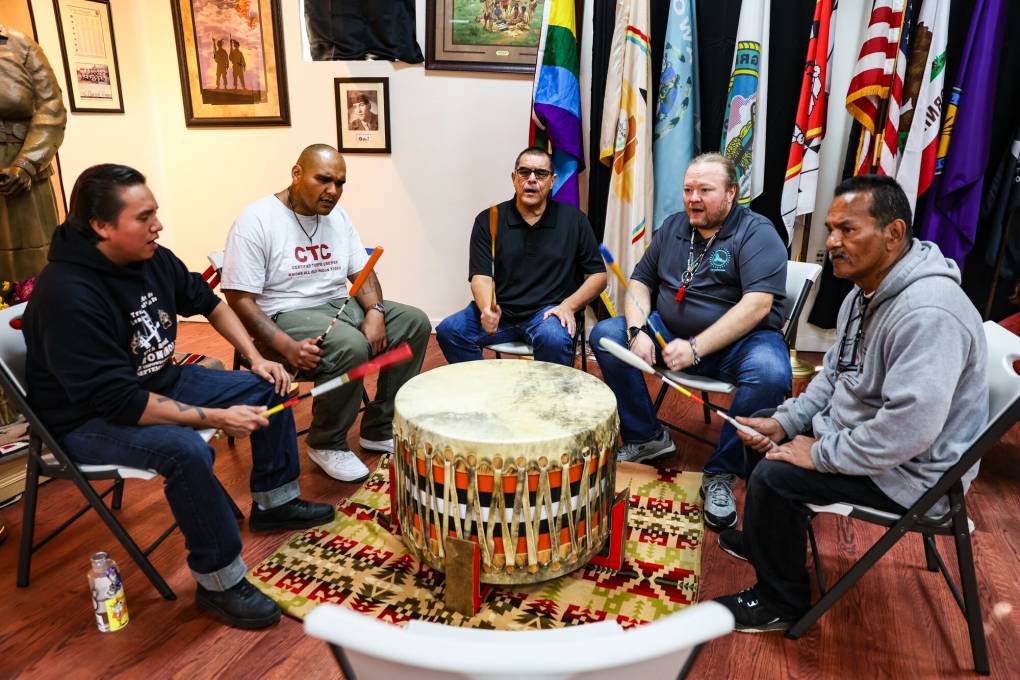
window.__IS_SSR__=true
window.__INITIAL_STATE__={
"attachmentsReducer": {
"audio_0": {
"type": "attachments",
"id": "audio_0",
"imgSizes": {
"kqedFullSize": {
"file": "https://ww2.kqed.org/news/wp-content/themes/KQED-unified/img/audio_bgs/background0.jpg"
}
}
},
"audio_1": {
"type": "attachments",
"id": "audio_1",
"imgSizes": {
"kqedFullSize": {
"file": "https://ww2.kqed.org/news/wp-content/themes/KQED-unified/img/audio_bgs/background1.jpg"
}
}
},
"audio_2": {
"type": "attachments",
"id": "audio_2",
"imgSizes": {
"kqedFullSize": {
"file": "https://ww2.kqed.org/news/wp-content/themes/KQED-unified/img/audio_bgs/background2.jpg"
}
}
},
"audio_3": {
"type": "attachments",
"id": "audio_3",
"imgSizes": {
"kqedFullSize": {
"file": "https://ww2.kqed.org/news/wp-content/themes/KQED-unified/img/audio_bgs/background3.jpg"
}
}
},
"audio_4": {
"type": "attachments",
"id": "audio_4",
"imgSizes": {
"kqedFullSize": {
"file": "https://ww2.kqed.org/news/wp-content/themes/KQED-unified/img/audio_bgs/background4.jpg"
}
}
},
"placeholder": {
"type": "attachments",
"id": "placeholder",
"imgSizes": {
"thumbnail": {
"file": "https://cdn.kqed.org/wp-content/uploads/2024/12/KQED-Default-Image-816638274-2000x1333-1-160x107.jpg",
"width": 160,
"height": 107,
"mimeType": "image/jpeg"
},
"medium": {
"file": "https://cdn.kqed.org/wp-content/uploads/2024/12/KQED-Default-Image-816638274-2000x1333-1-800x533.jpg",
"width": 800,
"height": 533,
"mimeType": "image/jpeg"
},
"medium_large": {
"file": "https://cdn.kqed.org/wp-content/uploads/2024/12/KQED-Default-Image-816638274-2000x1333-1-768x512.jpg",
"width": 768,
"height": 512,
"mimeType": "image/jpeg"
},
"large": {
"file": "https://cdn.kqed.org/wp-content/uploads/2024/12/KQED-Default-Image-816638274-2000x1333-1-1020x680.jpg",
"width": 1020,
"height": 680,
"mimeType": "image/jpeg"
},
"1536x1536": {
"file": "https://cdn.kqed.org/wp-content/uploads/2024/12/KQED-Default-Image-816638274-2000x1333-1-1536x1024.jpg",
"width": 1536,
"height": 1024,
"mimeType": "image/jpeg"
},
"fd-lrg": {
"file": "https://cdn.kqed.org/wp-content/uploads/2024/12/KQED-Default-Image-816638274-2000x1333-1-1536x1024.jpg",
"width": 1536,
"height": 1024,
"mimeType": "image/jpeg"
},
"fd-med": {
"file": "https://cdn.kqed.org/wp-content/uploads/2024/12/KQED-Default-Image-816638274-2000x1333-1-1020x680.jpg",
"width": 1020,
"height": 680,
"mimeType": "image/jpeg"
},
"fd-sm": {
"file": "https://cdn.kqed.org/wp-content/uploads/2024/12/KQED-Default-Image-816638274-2000x1333-1-800x533.jpg",
"width": 800,
"height": 533,
"mimeType": "image/jpeg"
},
"post-thumbnail": {
"file": "https://cdn.kqed.org/wp-content/uploads/2024/12/KQED-Default-Image-816638274-2000x1333-1-672x372.jpg",
"width": 672,
"height": 372,
"mimeType": "image/jpeg"
},
"twentyfourteen-full-width": {
"file": "https://cdn.kqed.org/wp-content/uploads/2024/12/KQED-Default-Image-816638274-2000x1333-1-1038x576.jpg",
"width": 1038,
"height": 576,
"mimeType": "image/jpeg"
},
"xxsmall": {
"file": "https://cdn.kqed.org/wp-content/uploads/2024/12/KQED-Default-Image-816638274-2000x1333-1-160x107.jpg",
"width": 160,
"height": 107,
"mimeType": "image/jpeg"
},
"xsmall": {
"file": "https://cdn.kqed.org/wp-content/uploads/2024/12/KQED-Default-Image-816638274-2000x1333-1-672x372.jpg",
"width": 672,
"height": 372,
"mimeType": "image/jpeg"
},
"small": {
"file": "https://cdn.kqed.org/wp-content/uploads/2024/12/KQED-Default-Image-816638274-2000x1333-1-672x372.jpg",
"width": 672,
"height": 372,
"mimeType": "image/jpeg"
},
"xlarge": {
"file": "https://cdn.kqed.org/wp-content/uploads/2024/12/KQED-Default-Image-816638274-2000x1333-1-1020x680.jpg",
"width": 1020,
"height": 680,
"mimeType": "image/jpeg"
},
"full-width": {
"file": "https://cdn.kqed.org/wp-content/uploads/2024/12/KQED-Default-Image-816638274-2000x1333-1-1920x1280.jpg",
"width": 1920,
"height": 1280,
"mimeType": "image/jpeg"
},
"guest-author-32": {
"file": "https://cdn.kqed.org/wp-content/uploads/2025/01/KQED-Default-Image-816638274-1333x1333-1-160x160.jpg",
"width": 32,
"height": 32,
"mimeType": "image/jpeg"
},
"guest-author-50": {
"file": "https://cdn.kqed.org/wp-content/uploads/2025/01/KQED-Default-Image-816638274-1333x1333-1-160x160.jpg",
"width": 50,
"height": 50,
"mimeType": "image/jpeg"
},
"guest-author-64": {
"file": "https://cdn.kqed.org/wp-content/uploads/2025/01/KQED-Default-Image-816638274-1333x1333-1-160x160.jpg",
"width": 64,
"height": 64,
"mimeType": "image/jpeg"
},
"guest-author-96": {
"file": "https://cdn.kqed.org/wp-content/uploads/2025/01/KQED-Default-Image-816638274-1333x1333-1-160x160.jpg",
"width": 96,
"height": 96,
"mimeType": "image/jpeg"
},
"guest-author-128": {
"file": "https://cdn.kqed.org/wp-content/uploads/2025/01/KQED-Default-Image-816638274-1333x1333-1-160x160.jpg",
"width": 128,
"height": 128,
"mimeType": "image/jpeg"
},
"detail": {
"file": "https://cdn.kqed.org/wp-content/uploads/2025/01/KQED-Default-Image-816638274-1333x1333-1-160x160.jpg",
"width": 160,
"height": 160,
"mimeType": "image/jpeg"
},
"kqedFullSize": {
"file": "https://cdn.kqed.org/wp-content/uploads/2024/12/KQED-Default-Image-816638274-2000x1333-1.jpg",
"width": 2000,
"height": 1333
}
}
},
"news_12019365": {
"type": "attachments",
"id": "news_12019365",
"meta": {
"index": "attachments_1716263798",
"site": "news",
"id": "12019365",
"found": true
},
"title": "20241112_TraditionalHealing_GC-16_qed",
"publishDate": 1734722364,
"status": "inherit",
"parent": 12019361,
"modified": 1734722464,
"caption": "Michael Bellanger, center, leads a drumming circle for residents and staff during a musical therapy session at Friendship House in San Francisco on Nov. 12, 2024.",
"credit": "Gina Castro/KQED",
"altTag": null,
"description": null,
"imgSizes": {
"medium": {
"file": "https://cdn.kqed.org/wp-content/uploads/sites/10/2024/12/20241112_TraditionalHealing_GC-16_qed-800x533.jpg",
"width": 800,
"height": 533,
"mimeType": "image/jpeg"
},
"large": {
"file": "https://cdn.kqed.org/wp-content/uploads/sites/10/2024/12/20241112_TraditionalHealing_GC-16_qed-1020x680.jpg",
"width": 1020,
"height": 680,
"mimeType": "image/jpeg"
},
"thumbnail": {
"file": "https://cdn.kqed.org/wp-content/uploads/sites/10/2024/12/20241112_TraditionalHealing_GC-16_qed-160x107.jpg",
"width": 160,
"height": 107,
"mimeType": "image/jpeg"
},
"1536x1536": {
"file": "https://cdn.kqed.org/wp-content/uploads/sites/10/2024/12/20241112_TraditionalHealing_GC-16_qed-1536x1024.jpg",
"width": 1536,
"height": 1024,
"mimeType": "image/jpeg"
},
"post-thumbnail": {
"file": "https://cdn.kqed.org/wp-content/uploads/sites/10/2024/12/20241112_TraditionalHealing_GC-16_qed-672x372.jpg",
"width": 672,
"height": 372,
"mimeType": "image/jpeg"
},
"twentyfourteen-full-width": {
"file": "https://cdn.kqed.org/wp-content/uploads/sites/10/2024/12/20241112_TraditionalHealing_GC-16_qed-1038x576.jpg",
"width": 1038,
"height": 576,
"mimeType": "image/jpeg"
},
"full-width": {
"file": "https://cdn.kqed.org/wp-content/uploads/sites/10/2024/12/20241112_TraditionalHealing_GC-16_qed-1920x1280.jpg",
"width": 1920,
"height": 1280,
"mimeType": "image/jpeg"
},
"kqedFullSize": {
"file": "https://cdn.kqed.org/wp-content/uploads/sites/10/2024/12/20241112_TraditionalHealing_GC-16_qed.jpg",
"width": 2000,
"height": 1333
}
},
"isLoading": false,
"fetchFailed": false
},
"news_12019454": {
"type": "attachments",
"id": "news_12019454",
"meta": {
"index": "attachments_1716263798",
"site": "news",
"id": "12019454",
"found": true
},
"title": "003_KQED_Housing_MountainView_02192020_3309",
"publishDate": 1734737743,
"status": "inherit",
"parent": 12019437,
"modified": 1735423994,
"caption": "Housing in Mountain View, Santa Clara County, on Feb. 19, 2020.\n",
"credit": "Beth LaBerge/KQED",
"altTag": null,
"description": null,
"imgSizes": {
"medium": {
"file": "https://cdn.kqed.org/wp-content/uploads/sites/10/2024/12/003_KQED_Housing_MountainView_02192020_3309-800x533.jpg",
"width": 800,
"height": 533,
"mimeType": "image/jpeg"
},
"large": {
"file": "https://cdn.kqed.org/wp-content/uploads/sites/10/2024/12/003_KQED_Housing_MountainView_02192020_3309-1020x680.jpg",
"width": 1020,
"height": 680,
"mimeType": "image/jpeg"
},
"thumbnail": {
"file": "https://cdn.kqed.org/wp-content/uploads/sites/10/2024/12/003_KQED_Housing_MountainView_02192020_3309-160x107.jpg",
"width": 160,
"height": 107,
"mimeType": "image/jpeg"
},
"1536x1536": {
"file": "https://cdn.kqed.org/wp-content/uploads/sites/10/2024/12/003_KQED_Housing_MountainView_02192020_3309-1536x1024.jpg",
"width": 1536,
"height": 1024,
"mimeType": "image/jpeg"
},
"post-thumbnail": {
"file": "https://cdn.kqed.org/wp-content/uploads/sites/10/2024/12/003_KQED_Housing_MountainView_02192020_3309-672x372.jpg",
"width": 672,
"height": 372,
"mimeType": "image/jpeg"
},
"twentyfourteen-full-width": {
"file": "https://cdn.kqed.org/wp-content/uploads/sites/10/2024/12/003_KQED_Housing_MountainView_02192020_3309-1038x576.jpg",
"width": 1038,
"height": 576,
"mimeType": "image/jpeg"
},
"full-width": {
"file": "https://cdn.kqed.org/wp-content/uploads/sites/10/2024/12/003_KQED_Housing_MountainView_02192020_3309-1920x1280.jpg",
"width": 1920,
"height": 1280,
"mimeType": "image/jpeg"
},
"kqedFullSize": {
"file": "https://cdn.kqed.org/wp-content/uploads/sites/10/2024/12/003_KQED_Housing_MountainView_02192020_3309.jpg",
"width": 2000,
"height": 1333
}
},
"isLoading": false,
"fetchFailed": false
},
"news_12019822": {
"type": "attachments",
"id": "news_12019822",
"meta": {
"index": "attachments_1716263798",
"site": "news",
"id": "12019822",
"found": true
},
"title": "SacCapitol_20120323c",
"publishDate": 1735241232,
"status": "inherit",
"parent": 12019795,
"modified": 1735247713,
"caption": "There was a record 3,245 registered lobbyists during the 2023–2024 legislative session — a 10% increase compared to the previous year, according to the Secretary of State's office. ",
"credit": "Rahul Lal for CalMatters",
"altTag": null,
"description": null,
"imgSizes": {
"medium": {
"file": "https://cdn.kqed.org/wp-content/uploads/sites/10/2024/12/SacCapitol_20120323c-800x600.jpg",
"width": 800,
"height": 600,
"mimeType": "image/jpeg"
},
"large": {
"file": "https://cdn.kqed.org/wp-content/uploads/sites/10/2024/12/SacCapitol_20120323c-1020x765.jpg",
"width": 1020,
"height": 765,
"mimeType": "image/jpeg"
},
"thumbnail": {
"file": "https://cdn.kqed.org/wp-content/uploads/sites/10/2024/12/SacCapitol_20120323c-160x120.jpg",
"width": 160,
"height": 120,
"mimeType": "image/jpeg"
},
"1536x1536": {
"file": "https://cdn.kqed.org/wp-content/uploads/sites/10/2024/12/SacCapitol_20120323c-1536x1152.jpg",
"width": 1536,
"height": 1152,
"mimeType": "image/jpeg"
},
"2048x2048": {
"file": "https://cdn.kqed.org/wp-content/uploads/sites/10/2024/12/SacCapitol_20120323c-2048x1536.jpg",
"width": 2048,
"height": 1536,
"mimeType": "image/jpeg"
},
"post-thumbnail": {
"file": "https://cdn.kqed.org/wp-content/uploads/sites/10/2024/12/SacCapitol_20120323c-672x372.jpg",
"width": 672,
"height": 372,
"mimeType": "image/jpeg"
},
"twentyfourteen-full-width": {
"file": "https://cdn.kqed.org/wp-content/uploads/sites/10/2024/12/SacCapitol_20120323c-1038x576.jpg",
"width": 1038,
"height": 576,
"mimeType": "image/jpeg"
},
"full-width": {
"file": "https://cdn.kqed.org/wp-content/uploads/sites/10/2024/12/SacCapitol_20120323c-1920x1440.jpg",
"width": 1920,
"height": 1440,
"mimeType": "image/jpeg"
},
"kqedFullSize": {
"file": "https://cdn.kqed.org/wp-content/uploads/sites/10/2024/12/SacCapitol_20120323c-scaled.jpg",
"width": 2560,
"height": 1920
}
},
"isLoading": false,
"fetchFailed": false
},
"news_12019659": {
"type": "attachments",
"id": "news_12019659",
"meta": {
"index": "attachments_1716263798",
"site": "news",
"id": "12019659",
"found": true
},
"title": "Chino Valley School Board Votes On Student Transgender Policy",
"publishDate": 1734986069,
"status": "inherit",
"parent": 12019618,
"modified": 1735000779,
"caption": "A person holds a sign in opposition to a policy that the Chino Valley school board is meeting to vote on which would require school staff to 'out' students to their parents if they ask to be identified by a gender that is not listed on their birth certificate on July 20, 2023 in Chino, San Bernardino County.",
"credit": "David McNew/Getty Images",
"altTag": null,
"description": null,
"imgSizes": {
"medium": {
"file": "https://cdn.kqed.org/wp-content/uploads/sites/10/2024/12/GettyImages-1545719795-800x534.jpg",
"width": 800,
"height": 534,
"mimeType": "image/jpeg"
},
"large": {
"file": "https://cdn.kqed.org/wp-content/uploads/sites/10/2024/12/GettyImages-1545719795-1020x680.jpg",
"width": 1020,
"height": 680,
"mimeType": "image/jpeg"
},
"thumbnail": {
"file": "https://cdn.kqed.org/wp-content/uploads/sites/10/2024/12/GettyImages-1545719795-160x107.jpg",
"width": 160,
"height": 107,
"mimeType": "image/jpeg"
},
"1536x1536": {
"file": "https://cdn.kqed.org/wp-content/uploads/sites/10/2024/12/GettyImages-1545719795-1536x1025.jpg",
"width": 1536,
"height": 1025,
"mimeType": "image/jpeg"
},
"2048x2048": {
"file": "https://cdn.kqed.org/wp-content/uploads/sites/10/2024/12/GettyImages-1545719795-2048x1366.jpg",
"width": 2048,
"height": 1366,
"mimeType": "image/jpeg"
},
"post-thumbnail": {
"file": "https://cdn.kqed.org/wp-content/uploads/sites/10/2024/12/GettyImages-1545719795-672x372.jpg",
"width": 672,
"height": 372,
"mimeType": "image/jpeg"
},
"twentyfourteen-full-width": {
"file": "https://cdn.kqed.org/wp-content/uploads/sites/10/2024/12/GettyImages-1545719795-1038x576.jpg",
"width": 1038,
"height": 576,
"mimeType": "image/jpeg"
},
"full-width": {
"file": "https://cdn.kqed.org/wp-content/uploads/sites/10/2024/12/GettyImages-1545719795-1920x1281.jpg",
"width": 1920,
"height": 1281,
"mimeType": "image/jpeg"
},
"kqedFullSize": {
"file": "https://cdn.kqed.org/wp-content/uploads/sites/10/2024/12/GettyImages-1545719795-scaled.jpg",
"width": 2560,
"height": 1708
}
},
"isLoading": false,
"fetchFailed": false
},
"news_12019077": {
"type": "attachments",
"id": "news_12019077",
"meta": {
"index": "attachments_1716263798",
"site": "news",
"id": "12019077",
"found": true
},
"title": "120324_CivicsClass_FM_CM_1",
"publishDate": 1734640788,
"status": "inherit",
"parent": 12019076,
"modified": 1734745859,
"caption": "Posters on the wall in the classroom of government and economics teacher, Judy Smith, at San Lorenzo High School in San Lorenzo on Dec. 3, 2024. All California high school students are required to take civics, but how it is taught varies widely throughout the state. ",
"credit": "Florence Middleton for CalMatters",
"altTag": null,
"description": "Posters on the wall in the classroom of government and economics teacher, Judy Smith, at San Lorenzo High School in San Lorenzo on Dec. 3, 2024. All California high school students are required to take civics, but how it is taught varies widely throughout the state. ",
"imgSizes": {
"medium": {
"file": "https://cdn.kqed.org/wp-content/uploads/sites/10/2024/12/120324_CivicsClass_FM_CM_1-800x533.jpg",
"width": 800,
"height": 533,
"mimeType": "image/jpeg"
},
"large": {
"file": "https://cdn.kqed.org/wp-content/uploads/sites/10/2024/12/120324_CivicsClass_FM_CM_1-1020x680.jpg",
"width": 1020,
"height": 680,
"mimeType": "image/jpeg"
},
"thumbnail": {
"file": "https://cdn.kqed.org/wp-content/uploads/sites/10/2024/12/120324_CivicsClass_FM_CM_1-160x107.jpg",
"width": 160,
"height": 107,
"mimeType": "image/jpeg"
},
"1536x1536": {
"file": "https://cdn.kqed.org/wp-content/uploads/sites/10/2024/12/120324_CivicsClass_FM_CM_1-1536x1024.jpg",
"width": 1536,
"height": 1024,
"mimeType": "image/jpeg"
},
"post-thumbnail": {
"file": "https://cdn.kqed.org/wp-content/uploads/sites/10/2024/12/120324_CivicsClass_FM_CM_1-672x372.jpg",
"width": 672,
"height": 372,
"mimeType": "image/jpeg"
},
"twentyfourteen-full-width": {
"file": "https://cdn.kqed.org/wp-content/uploads/sites/10/2024/12/120324_CivicsClass_FM_CM_1-1038x576.jpg",
"width": 1038,
"height": 576,
"mimeType": "image/jpeg"
},
"full-width": {
"file": "https://cdn.kqed.org/wp-content/uploads/sites/10/2024/12/120324_CivicsClass_FM_CM_1-1920x1280.jpg",
"width": 1920,
"height": 1280,
"mimeType": "image/jpeg"
},
"kqedFullSize": {
"file": "https://cdn.kqed.org/wp-content/uploads/sites/10/2024/12/120324_CivicsClass_FM_CM_1.jpg",
"width": 2000,
"height": 1333
}
},
"isLoading": false,
"fetchFailed": false
},
"news_12012123": {
"type": "attachments",
"id": "news_12012123",
"meta": {
"index": "attachments_1716263798",
"site": "news",
"id": "12012123",
"found": true
},
"title": "041620_Dairy-Worker_GETTY_CM_01 copy",
"publishDate": 1730486935,
"status": "inherit",
"parent": 12012121,
"modified": 1730488948,
"caption": "A strain of bird flu has infected cattle at California dairies and jumped to farmworkers over the past month. The state has distributed protective gear but has not tested widely for the virus among people.",
"credit": "Ariana Drehsler/AFP via Getty Images",
"altTag": null,
"description": null,
"imgSizes": {
"medium": {
"file": "https://cdn.kqed.org/wp-content/uploads/sites/10/2024/11/041620_Dairy-Worker_GETTY_CM_01-copy-800x533.jpg",
"width": 800,
"height": 533,
"mimeType": "image/jpeg"
},
"large": {
"file": "https://cdn.kqed.org/wp-content/uploads/sites/10/2024/11/041620_Dairy-Worker_GETTY_CM_01-copy-1020x680.jpg",
"width": 1020,
"height": 680,
"mimeType": "image/jpeg"
},
"thumbnail": {
"file": "https://cdn.kqed.org/wp-content/uploads/sites/10/2024/11/041620_Dairy-Worker_GETTY_CM_01-copy-160x107.jpg",
"width": 160,
"height": 107,
"mimeType": "image/jpeg"
},
"1536x1536": {
"file": "https://cdn.kqed.org/wp-content/uploads/sites/10/2024/11/041620_Dairy-Worker_GETTY_CM_01-copy-1536x1024.jpg",
"width": 1536,
"height": 1024,
"mimeType": "image/jpeg"
},
"post-thumbnail": {
"file": "https://cdn.kqed.org/wp-content/uploads/sites/10/2024/11/041620_Dairy-Worker_GETTY_CM_01-copy-672x372.jpg",
"width": 672,
"height": 372,
"mimeType": "image/jpeg"
},
"twentyfourteen-full-width": {
"file": "https://cdn.kqed.org/wp-content/uploads/sites/10/2024/11/041620_Dairy-Worker_GETTY_CM_01-copy-1038x576.jpg",
"width": 1038,
"height": 576,
"mimeType": "image/jpeg"
},
"full-width": {
"file": "https://cdn.kqed.org/wp-content/uploads/sites/10/2024/11/041620_Dairy-Worker_GETTY_CM_01-copy-1920x1280.jpg",
"width": 1920,
"height": 1280,
"mimeType": "image/jpeg"
},
"kqedFullSize": {
"file": "https://cdn.kqed.org/wp-content/uploads/sites/10/2024/11/041620_Dairy-Worker_GETTY_CM_01-copy.jpg",
"width": 2000,
"height": 1333
}
},
"isLoading": false,
"fetchFailed": false
},
"news_12019335": {
"type": "attachments",
"id": "news_12019335",
"meta": {
"index": "attachments_1716263798",
"site": "news",
"id": "12019335",
"found": true
},
"title": "GoogleQuantumAI_WillowChip_Closeup04",
"publishDate": 1734719379,
"status": "inherit",
"parent": 12018788,
"modified": 1734719419,
"caption": "Google’s quantum computer chip, Willow.",
"credit": "Courtesy of Google Quantum AI",
"altTag": null,
"description": null,
"imgSizes": {
"medium": {
"file": "https://cdn.kqed.org/wp-content/uploads/sites/10/2024/12/GoogleQuantumAI_WillowChip_Closeup04-800x533.jpg",
"width": 800,
"height": 533,
"mimeType": "image/jpeg"
},
"large": {
"file": "https://cdn.kqed.org/wp-content/uploads/sites/10/2024/12/GoogleQuantumAI_WillowChip_Closeup04-1020x680.jpg",
"width": 1020,
"height": 680,
"mimeType": "image/jpeg"
},
"thumbnail": {
"file": "https://cdn.kqed.org/wp-content/uploads/sites/10/2024/12/GoogleQuantumAI_WillowChip_Closeup04-160x107.jpg",
"width": 160,
"height": 107,
"mimeType": "image/jpeg"
},
"1536x1536": {
"file": "https://cdn.kqed.org/wp-content/uploads/sites/10/2024/12/GoogleQuantumAI_WillowChip_Closeup04-1536x1024.jpg",
"width": 1536,
"height": 1024,
"mimeType": "image/jpeg"
},
"post-thumbnail": {
"file": "https://cdn.kqed.org/wp-content/uploads/sites/10/2024/12/GoogleQuantumAI_WillowChip_Closeup04-672x372.jpg",
"width": 672,
"height": 372,
"mimeType": "image/jpeg"
},
"twentyfourteen-full-width": {
"file": "https://cdn.kqed.org/wp-content/uploads/sites/10/2024/12/GoogleQuantumAI_WillowChip_Closeup04-1038x576.jpg",
"width": 1038,
"height": 576,
"mimeType": "image/jpeg"
},
"full-width": {
"file": "https://cdn.kqed.org/wp-content/uploads/sites/10/2024/12/GoogleQuantumAI_WillowChip_Closeup04-1920x1280.jpg",
"width": 1920,
"height": 1280,
"mimeType": "image/jpeg"
},
"kqedFullSize": {
"file": "https://cdn.kqed.org/wp-content/uploads/sites/10/2024/12/GoogleQuantumAI_WillowChip_Closeup04.jpg",
"width": 2000,
"height": 1333
}
},
"isLoading": false,
"fetchFailed": false
},
"news_12018792": {
"type": "attachments",
"id": "news_12018792",
"meta": {
"index": "attachments_1716263798",
"site": "news",
"id": "12018792",
"found": true
},
"title": "Loading PFE Cars",
"publishDate": 1734545579,
"status": "inherit",
"parent": 0,
"modified": 1734659534,
"caption": "Workers load a Pacific Fruit Express mechanical refrigerator car with lettuce in this undated photograph.",
"credit": "PFE/California State Railroad Museum",
"altTag": null,
"description": null,
"imgSizes": {
"medium": {
"file": "https://cdn.kqed.org/wp-content/uploads/sites/10/2024/12/CSRM_39595_p-800x533.jpg",
"width": 800,
"height": 533,
"mimeType": "image/jpeg"
},
"large": {
"file": "https://cdn.kqed.org/wp-content/uploads/sites/10/2024/12/CSRM_39595_p-1020x679.jpg",
"width": 1020,
"height": 679,
"mimeType": "image/jpeg"
},
"thumbnail": {
"file": "https://cdn.kqed.org/wp-content/uploads/sites/10/2024/12/CSRM_39595_p-160x107.jpg",
"width": 160,
"height": 107,
"mimeType": "image/jpeg"
},
"1536x1536": {
"file": "https://cdn.kqed.org/wp-content/uploads/sites/10/2024/12/CSRM_39595_p-1536x1023.jpg",
"width": 1536,
"height": 1023,
"mimeType": "image/jpeg"
},
"post-thumbnail": {
"file": "https://cdn.kqed.org/wp-content/uploads/sites/10/2024/12/CSRM_39595_p-672x372.jpg",
"width": 672,
"height": 372,
"mimeType": "image/jpeg"
},
"twentyfourteen-full-width": {
"file": "https://cdn.kqed.org/wp-content/uploads/sites/10/2024/12/CSRM_39595_p-1038x576.jpg",
"width": 1038,
"height": 576,
"mimeType": "image/jpeg"
},
"full-width": {
"file": "https://cdn.kqed.org/wp-content/uploads/sites/10/2024/12/CSRM_39595_p-1920x1279.jpg",
"width": 1920,
"height": 1279,
"mimeType": "image/jpeg"
},
"kqedFullSize": {
"file": "https://cdn.kqed.org/wp-content/uploads/sites/10/2024/12/CSRM_39595_p.jpg",
"width": 2000,
"height": 1332
}
},
"isLoading": false,
"fetchFailed": false
},
"news_12002795": {
"type": "attachments",
"id": "news_12002795",
"meta": {
"index": "attachments_1716263798",
"site": "news",
"id": "12002795",
"found": true
},
"title": "240408-FCIDublin-009-BL_qed",
"publishDate": 1725383562,
"status": "inherit",
"parent": 12002790,
"modified": 1748470018,
"caption": "The Federal Correctional Institution, Dublin, a prison for women, in Dublin, on April 8, 2024.",
"credit": "Beth LaBerge/KQED",
"altTag": null,
"description": null,
"imgSizes": {
"medium": {
"file": "https://cdn.kqed.org/wp-content/uploads/sites/10/2024/09/240408-FCIDublin-009-BL_qed-800x533.jpg",
"width": 800,
"height": 533,
"mimeType": "image/jpeg"
},
"large": {
"file": "https://cdn.kqed.org/wp-content/uploads/sites/10/2024/09/240408-FCIDublin-009-BL_qed-1020x680.jpg",
"width": 1020,
"height": 680,
"mimeType": "image/jpeg"
},
"thumbnail": {
"file": "https://cdn.kqed.org/wp-content/uploads/sites/10/2024/09/240408-FCIDublin-009-BL_qed-160x107.jpg",
"width": 160,
"height": 107,
"mimeType": "image/jpeg"
},
"1536x1536": {
"file": "https://cdn.kqed.org/wp-content/uploads/sites/10/2024/09/240408-FCIDublin-009-BL_qed-1536x1024.jpg",
"width": 1536,
"height": 1024,
"mimeType": "image/jpeg"
},
"post-thumbnail": {
"file": "https://cdn.kqed.org/wp-content/uploads/sites/10/2024/09/240408-FCIDublin-009-BL_qed-672x372.jpg",
"width": 672,
"height": 372,
"mimeType": "image/jpeg"
},
"twentyfourteen-full-width": {
"file": "https://cdn.kqed.org/wp-content/uploads/sites/10/2024/09/240408-FCIDublin-009-BL_qed-1038x576.jpg",
"width": 1038,
"height": 576,
"mimeType": "image/jpeg"
},
"full-width": {
"file": "https://cdn.kqed.org/wp-content/uploads/sites/10/2024/09/240408-FCIDublin-009-BL_qed-1920x1280.jpg",
"width": 1920,
"height": 1280,
"mimeType": "image/jpeg"
},
"kqedFullSize": {
"file": "https://cdn.kqed.org/wp-content/uploads/sites/10/2024/09/240408-FCIDublin-009-BL_qed.jpg",
"width": 2000,
"height": 1333
}
},
"isLoading": false,
"fetchFailed": false
},
"news_12018839": {
"type": "attachments",
"id": "news_12018839",
"meta": {
"index": "attachments_1716263798",
"site": "news",
"id": "12018839",
"found": true
},
"title": "Governor Gavin Newsom signs legislation related to oversight of oil and gas wells, and community protections",
"publishDate": 1734551670,
"status": "inherit",
"parent": 12018836,
"modified": 1734556744,
"caption": "Gov. Gavin Newsom speaks at a press conference on Sept. 25, 2024, in Los Angeles. ",
"credit": "Jason Armond/Los Angeles Times via Getty Images",
"altTag": null,
"description": null,
"imgSizes": {
"medium": {
"file": "https://cdn.kqed.org/wp-content/uploads/sites/10/2024/12/GavinNewsomGetty-800x555.jpg",
"width": 800,
"height": 555,
"mimeType": "image/jpeg"
},
"large": {
"file": "https://cdn.kqed.org/wp-content/uploads/sites/10/2024/12/GavinNewsomGetty-1020x707.jpg",
"width": 1020,
"height": 707,
"mimeType": "image/jpeg"
},
"thumbnail": {
"file": "https://cdn.kqed.org/wp-content/uploads/sites/10/2024/12/GavinNewsomGetty-160x111.jpg",
"width": 160,
"height": 111,
"mimeType": "image/jpeg"
},
"1536x1536": {
"file": "https://cdn.kqed.org/wp-content/uploads/sites/10/2024/12/GavinNewsomGetty-1536x1065.jpg",
"width": 1536,
"height": 1065,
"mimeType": "image/jpeg"
},
"post-thumbnail": {
"file": "https://cdn.kqed.org/wp-content/uploads/sites/10/2024/12/GavinNewsomGetty-672x372.jpg",
"width": 672,
"height": 372,
"mimeType": "image/jpeg"
},
"twentyfourteen-full-width": {
"file": "https://cdn.kqed.org/wp-content/uploads/sites/10/2024/12/GavinNewsomGetty-1038x576.jpg",
"width": 1038,
"height": 576,
"mimeType": "image/jpeg"
},
"full-width": {
"file": "https://cdn.kqed.org/wp-content/uploads/sites/10/2024/12/GavinNewsomGetty-1920x1332.jpg",
"width": 1920,
"height": 1332,
"mimeType": "image/jpeg"
},
"kqedFullSize": {
"file": "https://cdn.kqed.org/wp-content/uploads/sites/10/2024/12/GavinNewsomGetty.jpg",
"width": 2000,
"height": 1387
}
},
"isLoading": false,
"fetchFailed": false
},
"news_12018686": {
"type": "attachments",
"id": "news_12018686",
"meta": {
"index": "attachments_1716263798",
"site": "news",
"id": "12018686",
"found": true
},
"title": "230601-MindShift-33-BL_qed",
"publishDate": 1734473312,
"status": "inherit",
"parent": 12018681,
"modified": 1734473354,
"caption": "Students in the schoolyard at Roosevelt Elementary School in San Leandro on June 1, 2023. ",
"credit": "Beth LaBerge/KQED",
"altTag": null,
"description": null,
"imgSizes": {
"medium": {
"file": "https://cdn.kqed.org/wp-content/uploads/sites/10/2024/12/230601-MindShift-33-BL_qed-800x533.jpg",
"width": 800,
"height": 533,
"mimeType": "image/jpeg"
},
"large": {
"file": "https://cdn.kqed.org/wp-content/uploads/sites/10/2024/12/230601-MindShift-33-BL_qed-1020x680.jpg",
"width": 1020,
"height": 680,
"mimeType": "image/jpeg"
},
"thumbnail": {
"file": "https://cdn.kqed.org/wp-content/uploads/sites/10/2024/12/230601-MindShift-33-BL_qed-160x107.jpg",
"width": 160,
"height": 107,
"mimeType": "image/jpeg"
},
"1536x1536": {
"file": "https://cdn.kqed.org/wp-content/uploads/sites/10/2024/12/230601-MindShift-33-BL_qed-1536x1024.jpg",
"width": 1536,
"height": 1024,
"mimeType": "image/jpeg"
},
"post-thumbnail": {
"file": "https://cdn.kqed.org/wp-content/uploads/sites/10/2024/12/230601-MindShift-33-BL_qed-672x372.jpg",
"width": 672,
"height": 372,
"mimeType": "image/jpeg"
},
"twentyfourteen-full-width": {
"file": "https://cdn.kqed.org/wp-content/uploads/sites/10/2024/12/230601-MindShift-33-BL_qed-1038x576.jpg",
"width": 1038,
"height": 576,
"mimeType": "image/jpeg"
},
"full-width": {
"file": "https://cdn.kqed.org/wp-content/uploads/sites/10/2024/12/230601-MindShift-33-BL_qed-1920x1280.jpg",
"width": 1920,
"height": 1280,
"mimeType": "image/jpeg"
},
"kqedFullSize": {
"file": "https://cdn.kqed.org/wp-content/uploads/sites/10/2024/12/230601-MindShift-33-BL_qed.jpg",
"width": 2000,
"height": 1333
}
},
"isLoading": false,
"fetchFailed": false
},
"news_12018725": {
"type": "attachments",
"id": "news_12018725",
"meta": {
"index": "attachments_1716263798",
"site": "news",
"id": "12018725",
"found": true
},
"title": "20241217-UnhousedDemonstrations-JY-054",
"publishDate": 1734480874,
"status": "inherit",
"parent": 0,
"modified": 1734481146,
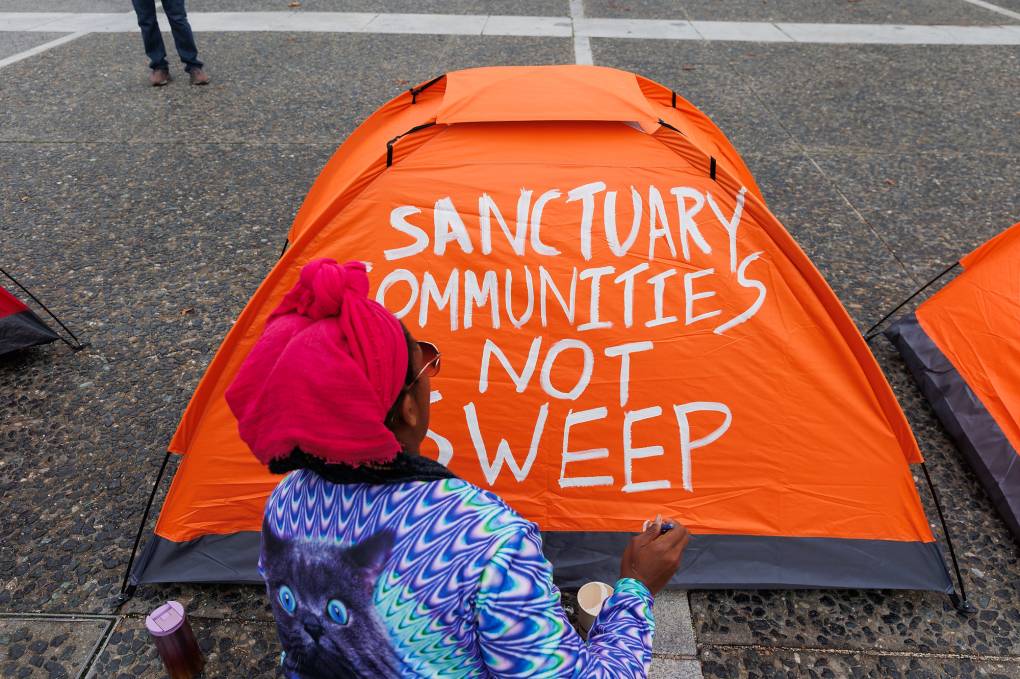
"caption": "Marria Evbuoma paints on a tent during a demonstration against the rise in encampment sweeps in front of City Hall in San Francisco on Tuesday, Dec. 17, 2024.",
"credit": "Juliana Yamada/KQED",
"altTag": null,
"description": null,
"imgSizes": {
"medium": {
"file": "https://cdn.kqed.org/wp-content/uploads/sites/10/2024/12/20241217-UnhousedDemonstrations-JY-054-800x533.jpg",
"width": 800,
"height": 533,
"mimeType": "image/jpeg"
},
"large": {
"file": "https://cdn.kqed.org/wp-content/uploads/sites/10/2024/12/20241217-UnhousedDemonstrations-JY-054-1020x679.jpg",
"width": 1020,
"height": 679,
"mimeType": "image/jpeg"
},
"thumbnail": {
"file": "https://cdn.kqed.org/wp-content/uploads/sites/10/2024/12/20241217-UnhousedDemonstrations-JY-054-160x107.jpg",
"width": 160,
"height": 107,
"mimeType": "image/jpeg"
},
"1536x1536": {
"file": "https://cdn.kqed.org/wp-content/uploads/sites/10/2024/12/20241217-UnhousedDemonstrations-JY-054-1536x1023.jpg",
"width": 1536,
"height": 1023,
"mimeType": "image/jpeg"
},
"post-thumbnail": {
"file": "https://cdn.kqed.org/wp-content/uploads/sites/10/2024/12/20241217-UnhousedDemonstrations-JY-054-672x372.jpg",
"width": 672,
"height": 372,
"mimeType": "image/jpeg"
},
"twentyfourteen-full-width": {
"file": "https://cdn.kqed.org/wp-content/uploads/sites/10/2024/12/20241217-UnhousedDemonstrations-JY-054-1038x576.jpg",
"width": 1038,
"height": 576,
"mimeType": "image/jpeg"
},
"full-width": {
"file": "https://cdn.kqed.org/wp-content/uploads/sites/10/2024/12/20241217-UnhousedDemonstrations-JY-054-1920x1279.jpg",
"width": 1920,
"height": 1279,
"mimeType": "image/jpeg"
},
"kqedFullSize": {
"file": "https://cdn.kqed.org/wp-content/uploads/sites/10/2024/12/20241217-UnhousedDemonstrations-JY-054.jpg",
"width": 2000,
"height": 1332
}
},
"isLoading": false,
"fetchFailed": false
}
},
"audioPlayerReducer": {
"postId": "stream_live",
"isPaused": true,
"isPlaying": false,
"pfsActive": false,
"pledgeModalIsOpen": true,
"playerDrawerIsOpen": false,
"liveAudioPlayStartedAt": 0,
"liveAudioPlayContext": ""
},
"authorsReducer": {
"byline_news_12019795": {
"type": "authors",
"id": "byline_news_12019795",
"meta": {
"override": true
},
"slug": "byline_news_12019795",
"name": "\u003ca href=\"https://calmatters.org/author/sameea-kamal/\">Sameea Kamal\u003c/a>, CalMatters",
"isLoading": false
},
"byline_news_12019618": {
"type": "authors",
"id": "byline_news_12019618",
"meta": {
"override": true
},
"slug": "byline_news_12019618",
"name": "\u003ca href=\"https://calmatters.org/author/carolyn-jones/\">Carolyn Jones\u003c/a>, CalMatters",
"isLoading": false
},
"byline_news_12019076": {
"type": "authors",
"id": "byline_news_12019076",
"meta": {
"override": true
},
"slug": "byline_news_12019076",
"name": "\u003ca href=\"https://calmatters.org/author/carolyn-jones/\">Carolyn Jones\u003c/a>, CalMatters",
"isLoading": false
},
"rachael-myrow": {
"type": "authors",
"id": "251",
"meta": {
"index": "authors_1716337520",
"id": "251",
"found": true
},
"name": "Rachael Myrow",
"firstName": "Rachael",
"lastName": "Myrow",
"slug": "rachael-myrow",
"email": "rmyrow@kqed.org",
"display_author_email": true,
"staff_mastheads": [
"news"
],
"title": "Senior Editor of KQED's Silicon Valley News Desk",
"bio": "• I write and edit stories about how Silicon Valley power and policies shape everyday life in California. I’m also passionate about making Bay Area history and culture more accessible to a broad public. • I’ve been a journalist for most of my life, starting in high school with The Franklin Press in Los Angeles, where I grew up. While earning my first degree in English at UC Berkeley, I got my start in public radio at KALX-FM. After completing a second degree in journalism at Cal, I landed my first professional job at Marketplace, then moved on to KPCC (now LAist), and then KQED, where I hosted The California Report for more than seven years. • My reporting has appeared on NPR, The World, WBUR’s \u003ci>Here & Now\u003c/i>, and the BBC. I also guest host for KQED’s \u003ci>Forum\u003c/i>, as well as the Commonwealth Club in San Francisco. • I speak periodically on media, democracy and technology issues, and do voiceover work for documentaries and educational video projects. • Outside of the studio, you'll find me hiking Bay Area trails and whipping up Insta-ready meals in my kitchen. • I do not accept gifts, money, or favors from anyone connected to my reporting, I don't pay people for information, and I do not support or donate to political causes. • I strive to treat the people I report on with fairness, honesty, and respect. I also recognize there are often multiple sides to a story and work to verify information through multiple sources and documentation. If I get something wrong, I correct it.",
"avatar": "https://secure.gravatar.com/avatar/87bf8cb5874e045cdff430523a6d48b1?s=600&d=blank&r=g",
"twitter": "rachaelmyrow",
"facebook": null,
"instagram": null,
"linkedin": "https://www.linkedin.com/in/rachaelmyrow/",
"sites": [
{
"site": "arts",
"roles": [
"administrator"
]
},
{
"site": "news",
"roles": [
"edit_others_posts",
"editor"
]
},
{
"site": "futureofyou",
"roles": [
"editor"
]
},
{
"site": "bayareabites",
"roles": [
"editor"
]
},
{
"site": "stateofhealth",
"roles": [
"editor"
]
},
{
"site": "science",
"roles": [
"editor"
]
},
{
"site": "food",
"roles": [
"editor"
]
},
{
"site": "forum",
"roles": [
"editor"
]
},
{
"site": "liveblog",
"roles": [
"author"
]
}
],
"headData": {
"title": "Rachael Myrow | KQED",
"description": "Senior Editor of KQED's Silicon Valley News Desk",
"ogImgSrc": "https://secure.gravatar.com/avatar/87bf8cb5874e045cdff430523a6d48b1?s=600&d=blank&r=g",
"twImgSrc": "https://secure.gravatar.com/avatar/87bf8cb5874e045cdff430523a6d48b1?s=600&d=blank&r=g"
},
"isLoading": false,
"link": "/author/rachael-myrow"
},
"lmorehouse": {
"type": "authors",
"id": "3229",
"meta": {
"index": "authors_1716337520",
"id": "3229",
"found": true
},
"name": "Lisa Morehouse",
"firstName": "Lisa",
"lastName": "Morehouse",
"slug": "lmorehouse",
"email": "morehouse.lisa@gmail.com",
"display_author_email": false,
"staff_mastheads": [],
"title": "KQED Contributor",
"bio": "Lisa Morehouse is an award-winning public radio and print journalist, who has filed for National Public Radio, American Public Media, KQED Public Radio, Edutopia, and McSweeney’s. Her reporting has taken her from Samoan traveling circuses to Mississippi Delta classrooms to the homes of Lao refugees in rural Iowa. In addition to reporting, she teaches radio production to at-risk youth in the Bay Area. Her series \u003ca href=\"http://afterthegoldrushradio.com/\">After the Gold Rush\u003c/a> featured the changing industries, populations and identities of rural towns throughout California. She’s now producing \u003ca href=\"http://www.californiafoodways.com/\">California Foodways\u003c/a>, a series exploring the intersections of food, culture, economics, history and labor. Follow along on the \u003ca href=\"https://www.facebook.com/californiafoodways?ref=hl\">Facebook page\u003c/a> or on Twitter @cafoodways.",
"avatar": "https://secure.gravatar.com/avatar/dae74b002a6e256f39abb19d6f5acaea?s=600&d=blank&r=g",
"twitter": null,
"facebook": null,
"instagram": null,
"linkedin": null,
"sites": [
{
"site": "",
"roles": [
"editor"
]
},
{
"site": "news",
"roles": [
"author"
]
}
],
"headData": {
"title": "Lisa Morehouse | KQED",
"description": "KQED Contributor",
"ogImgSrc": "https://secure.gravatar.com/avatar/dae74b002a6e256f39abb19d6f5acaea?s=600&d=blank&r=g",
"twImgSrc": "https://secure.gravatar.com/avatar/dae74b002a6e256f39abb19d6f5acaea?s=600&d=blank&r=g"
},
"isLoading": false,
"link": "/author/lmorehouse"
},
"lesleymcclurg": {
"type": "authors",
"id": "11229",
"meta": {
"index": "authors_1716337520",
"id": "11229",
"found": true
},
"name": "Lesley McClurg",
"firstName": "Lesley",
"lastName": "McClurg",
"slug": "lesleymcclurg",
"email": "lmcclurg@KQED.org",
"display_author_email": false,
"staff_mastheads": [
"news",
"science"
],
"title": "KQED Health Correspondent",
"bio": "Lesley McClurg is a health correspondent and fill-in host whose work is regularly rebroadcast on NPR and PBS programs. She’s earned multiple regional Emmy awards, a national and a regional Edward R. Murrow award, and was named Best Beat Reporter by the Association of Health Care Journalists. The Society of Professional Journalists has recognized her work several times, and the Society of Environmental Journalists spotlighted her coverage of California’s historic drought.\r\n\r\nBefore joining KQED in 2016, Lesley covered food and sustainability for Capital Public Radio, environmental issues for Colorado Public Radio, and reported for KUOW and KCTS 9 in Seattle. Away from the newsroom, she loves skiing with her daughter, mountain biking with her partner, and playing with Ollie, the family’s goldendoodle. On deadline, she runs almost entirely on chocolate chips.\r\n\r\n ",
"avatar": "https://secure.gravatar.com/avatar/bab49e972ea10c774fe0f5e29dba1722b158f7c0d58a360923d1389d380b2978?s=600&d=blank&r=g",
"twitter": "lesleywmcclurg",
"bluesky": null,
"facebook": null,
"instagram": null,
"linkedin": null,
"sites": [
{
"site": "arts",
"roles": [
"author"
]
},
{
"site": "news",
"roles": [
"editor"
]
},
{
"site": "futureofyou",
"roles": [
"editor"
]
},
{
"site": "stateofhealth",
"roles": [
"author"
]
},
{
"site": "science",
"roles": [
"editor"
]
},
{
"site": "quest",
"roles": [
"subscriber"
]
},
{
"site": "forum",
"roles": [
"administrator"
]
},
{
"site": "liveblog",
"roles": [
"author"
]
}
],
"headData": {
"title": "Lesley McClurg | KQED",
"description": "KQED Health Correspondent",
"ogImgSrc": "https://secure.gravatar.com/avatar/bab49e972ea10c774fe0f5e29dba1722b158f7c0d58a360923d1389d380b2978?s=600&d=blank&r=g",
"twImgSrc": "https://secure.gravatar.com/avatar/bab49e972ea10c774fe0f5e29dba1722b158f7c0d58a360923d1389d380b2978?s=600&d=blank&r=g"
},
"isLoading": false,
"link": "/author/lesleymcclurg"
},
"abandlamudi": {
"type": "authors",
"id": "11672",
"meta": {
"index": "authors_1716337520",
"id": "11672",
"found": true
},
"name": "Adhiti Bandlamudi",
"firstName": "Adhiti",
"lastName": "Bandlamudi",
"slug": "abandlamudi",
"email": "abandlamudi@kqed.org",
"display_author_email": false,
"staff_mastheads": [
"news"
],
"title": "KQED Housing Reporter",
"bio": "Adhiti Bandlamudi reports for KQED's Housing desk. She focuses on how housing gets built across the Bay Area. Before joining KQED in 2020, she reported for WUNC in Durham, North Carolina, WABE in Atlanta, Georgia and Capital Public Radio in Sacramento. In 2017, she was awarded a Kroc Fellowship at NPR where she reported on everything from sprinkles to the Golden State Killer's arrest. When she's not reporting, she's baking new recipes in her kitchen or watching movies with friends and family. She's originally from Georgia and has strong opinions about Great British Bake Off.",
"avatar": "https://secure.gravatar.com/avatar/868129c8b257bb99a3500e2c86a65400?s=600&d=mm&r=g",
"twitter": "oddity_adhiti",
"facebook": null,
"instagram": null,
"linkedin": null,
"sites": [
{
"site": "arts",
"roles": [
"author"
]
},
{
"site": "news",
"roles": [
"editor"
]
},
{
"site": "liveblog",
"roles": [
"author"
]
}
],
"headData": {
"title": "Adhiti Bandlamudi | KQED",
"description": "KQED Housing Reporter",
"ogImgSrc": "https://secure.gravatar.com/avatar/868129c8b257bb99a3500e2c86a65400?s=600&d=mm&r=g",
"twImgSrc": "https://secure.gravatar.com/avatar/868129c8b257bb99a3500e2c86a65400?s=600&d=mm&r=g"
},
"isLoading": false,
"link": "/author/abandlamudi"
},
"daisynguyen": {
"type": "authors",
"id": "11829",
"meta": {
"index": "authors_1716337520",
"id": "11829",
"found": true
},
"name": "Daisy Nguyen",
"firstName": "Daisy",
"lastName": "Nguyen",
"slug": "daisynguyen",
"email": "daisynguyen@kqed.org",
"display_author_email": true,
"staff_mastheads": [
"news"
],
"title": "KQED Contributor",
"bio": "I have covered early childhood education and child care for KQED since 2022. I focus on policies aimed at increasing access to early care and education and how they shape individual lives. I've been a journalist for more than two decades, with most of that time devoted to covering breaking news throughout California for The Associated Press. I grew up in San Francisco and studied at UC Davis and Columbia University's Graduate School of Journalism. I live in Oakland with my husband and two kids.",
"avatar": "https://secure.gravatar.com/avatar/2da2127c27f7143b53ebd419800fd55f?s=600&d=blank&r=g",
"twitter": null,
"facebook": null,
"instagram": null,
"linkedin": "https://www.linkedin.com/in/daisynguyen/",
"sites": [
{
"site": "news",
"roles": [
"author"
]
},
{
"site": "liveblog",
"roles": [
"author"
]
}
],
"headData": {
"title": "Daisy Nguyen | KQED",
"description": "KQED Contributor",
"ogImgSrc": "https://secure.gravatar.com/avatar/2da2127c27f7143b53ebd419800fd55f?s=600&d=blank&r=g",
"twImgSrc": "https://secure.gravatar.com/avatar/2da2127c27f7143b53ebd419800fd55f?s=600&d=blank&r=g"
},
"isLoading": false,
"link": "/author/daisynguyen"
},
"kdebenedetti": {
"type": "authors",
"id": "11913",
"meta": {
"index": "authors_1716337520",
"id": "11913",
"found": true
},
"name": "Katie DeBenedetti",
"firstName": "Katie",
"lastName": "DeBenedetti",
"slug": "kdebenedetti",
"email": "kdebenedetti@kqed.org",
"display_author_email": false,
"staff_mastheads": [
"news",
"science"
],
"title": "KQED Contributor",
"bio": "Katie DeBenedetti is a digital reporter covering daily news for the Express Desk. Prior to joining KQED as a culture reporting intern in January 2024, she covered education and city government for the Napa Valley Register.",
"avatar": "https://secure.gravatar.com/avatar/6e31073cb8f7e4214ab03f42771d0f45?s=600&d=blank&r=g",
"twitter": null,
"facebook": null,
"instagram": null,
"linkedin": null,
"sites": [
{
"site": "news",
"roles": [
"author"
]
},
{
"site": "science",
"roles": [
"author"
]
},
{
"site": "liveblog",
"roles": [
"author"
]
}
],
"headData": {
"title": "Katie DeBenedetti | KQED",
"description": "KQED Contributor",
"ogImgSrc": "https://secure.gravatar.com/avatar/6e31073cb8f7e4214ab03f42771d0f45?s=600&d=blank&r=g",
"twImgSrc": "https://secure.gravatar.com/avatar/6e31073cb8f7e4214ab03f42771d0f45?s=600&d=blank&r=g"
},
"isLoading": false,
"link": "/author/kdebenedetti"
}
},
"pagesReducer": {
"news_tag_california": {
"type": "terms",
"id": "news_18538",
"meta": {
"index": "terms_1716263798",
"site": "news",
"id": "18538",
"score": 6.8457103
},
"featImg": null,
"name": "California",
"description": null,
"taxonomy": "tag",
"headData": {
"twImgId": null,
"twTitle": null,
"ogTitle": null,
"ogImgId": null,
"twDescription": null,
"description": null,
"title": "California Archives | KQED News",
"ogDescription": null
},
"ttid": 31,
"slug": "california",
"isLoading": false,
"title": "California",
"pageMeta": {
"site": "news",
"WpPageTemplate": "page-topic-editorial",
"currentPage": 117
},
"blocks": [
{
"blockName": "kqed/post-list",
"attrs": {
"layout": "cardArticle2",
"query": "posts/news?tag=california",
"seeMore": false,
"paginated": true,
"page": 117
}
},
{
"blockName": "kqed/ad"
}
]
}
},
"pfsSessionReducer": {},
"postsReducer": {
"stream_live": {
"type": "live",
"id": "stream_live",
"audioUrl": "https://streams.kqed.org/kqedradio",
"title": "Live Stream",
"excerpt": "Live Stream information currently unavailable.",
"link": "/radio",
"featImg": "",
"label": {
"name": "KQED Live",
"link": "/"
}
},
"stream_kqedNewscast": {
"type": "posts",
"id": "stream_kqedNewscast",
"audioUrl": "https://www.kqed.org/.stream/anon/radio/RDnews/newscast.mp3?_=1",
"title": "KQED Newscast",
"featImg": "",
"label": {
"name": "88.5 FM",
"link": "/"
}
},
"news_12019361": {
"type": "posts",
"id": "news_12019361",
"meta": {
"index": "posts_1716263798",
"site": "news",
"id": "12019361",
"score": null,
"sort": [
1735819208000
]
},
"guestAuthors": [],
"slug": "the-medicine-my-ancestors-prayed-for-medi-cal-now-covers-native-american-healing-practices",
"title": "‘The Medicine My Ancestors Prayed For’: Medi-Cal Now Covers Native Healing Practices",
"publishDate": 1735819208,
"format": "standard",
"headTitle": "‘The Medicine My Ancestors Prayed For’: Medi-Cal Now Covers Native Healing Practices | KQED",
"labelTerm": {
"site": "news"
},
"content": "\u003cp>Inside the Friendship House, a rhythmic drum beat fills the air as clients gather in a circle, chanting a Lakota battle song. For Priscilla Lenares, the sound transports her back 11 years to her own time as a patient at the Native-led recovery center in San Francisco.\u003c/p>\n\u003cp>“I remember hearing the drum for the first time, and tears fell from my eyes,” she recalled.\u003c/p>\n\u003cp>Today, Lenares’ life is on track, but her childhood in Bakersfield was marked by gangs, violence and pervasive substance use. She told KQED that her parents struggled with addiction, and by middle school, she was smoking methamphetamine on weekends. At 18, she was dealing drugs to support her habit. Over the next decade, Lenares cycled through 10 treatment programs before boarding an Amtrak train to San Francisco, a mother of three children, carrying nothing but hope that her time at the Friendship House would be different.\u003c/p>\n\u003cp>The treatment center is a unique in-patient program combining Western medicine, like individual counseling, with traditional healing practices like smudging. The staff treated Lenares like family, and she found solace in singing prayers in the sweat lodge.\u003c/p>\n\u003cp>This month, Medi-Cal began to support more people like her by expanding coverage to include traditional healing practices like music therapy, rituals and ceremonial dances.\u003c/p>\n\u003cp>[ad fullwidth]\u003c/p>\n\u003cp>The director of the federal Indian Health Service, Roselyn Tso, has praised these practices for helping people for generations and called them a “vital link between culture, science and wellness in many of our communities.”\u003c/p>\n\u003cp>The Centers for Medicare & Medicaid Services announced the two-year pilot program as a response to the health challenges facing Native Americans, who suffer from some of the highest rates of addiction and overdose death in the country.\u003c/p>\n\u003cfigure id=\"attachment_12014198\" class=\"wp-caption alignright\" style=\"max-width: 400px\">\u003ca href=\"https://cdn.kqed.org/wp-content/uploads/sites/10/2024/11/20241112_TRADITIONALHEALING_GC-5-KQED.jpg\">\u003cimg loading=\"lazy\" decoding=\"async\" class=\"wp-image-12014198\" src=\"https://cdn.kqed.org/wp-content/uploads/sites/10/2024/11/20241112_TRADITIONALHEALING_GC-5-KQED-800x1200.jpg\" alt=\"\" width=\"400\" height=\"600\" srcset=\"https://cdn.kqed.org/wp-content/uploads/sites/10/2024/11/20241112_TRADITIONALHEALING_GC-5-KQED-800x1200.jpg 800w, https://cdn.kqed.org/wp-content/uploads/sites/10/2024/11/20241112_TRADITIONALHEALING_GC-5-KQED-1020x1530.jpg 1020w, https://cdn.kqed.org/wp-content/uploads/sites/10/2024/11/20241112_TRADITIONALHEALING_GC-5-KQED-160x240.jpg 160w, https://cdn.kqed.org/wp-content/uploads/sites/10/2024/11/20241112_TRADITIONALHEALING_GC-5-KQED-1024x1536.jpg 1024w, https://cdn.kqed.org/wp-content/uploads/sites/10/2024/11/20241112_TRADITIONALHEALING_GC-5-KQED.jpg 1333w\" sizes=\"auto, (max-width: 400px) 100vw, 400px\">\u003c/a>\u003cfigcaption class=\"wp-caption-text\">Priscilla Lenares, a former resident of Friendship House’s recovery treatment program, poses for a photo outside of the site, in San Francisco on Nov. 12, 2024. \u003ccite>(Gina Castro/KQED)\u003c/cite>\u003c/figcaption>\u003c/figure>\n\u003cp>Advocates are optimistic that expanding Medi-Cal coverage will increase access to culturally appropriate care and allow facilities to expand. However, that will all hinge on reimbursal rates, which have yet to be released.\u003c/p>\n\u003cp>Historically, substance use treatment in the U.S. has relied on clinical approaches like medication-assisted treatment, behavioral therapy and standardized detox protocols. However, these methods often fall short when applied to Native American communities.\u003c/p>\n\u003cp>Damian Chase-Begay, a researcher focused on American Indian health at the University of Montana, explains the difference. “Traditional practices are, by nature, holistic,” he said. “They are treating the person physically, mentally, spiritually and emotionally. They benefit the whole being, not just the physical symptoms.”\u003c/p>\n\u003cp>Scientific research on these approaches remains limited, but preliminary studies suggest that integrating cultural practices into addiction treatment can lead to higher patient engagement and more positive recovery outcomes. Most existing evidence is qualitative, underscoring the need for more comprehensive research, which has lacked funding, according to Chase-Begay.\u003c/p>\n\u003cp>“What California is now covering under Medi-Cal is exactly what our Native communities have been asking to be covered for years,” Chase-Begay said. He believes this support could have potentially interrupted cycles of intergenerational trauma and substance use much earlier.\u003c/p>\n\u003cp>For Lenares, the Friendship House was more than a treatment center — it was a path to self-discovery. “I’m a woman who understands the medicine my ancestors prayed for,” she said. “A woman who knows her song. A woman who knows ceremony.”\u003c/p>\n\u003cp>\u003c/p>\n\u003cp>Now, Lenares volunteers at the Friendship House and works full-time for a domestic violence agency. Her story is a powerful testament to the potential for healing when culture and medicine intersect.\u003c/p>\n\n",
"blocks": [],
"excerpt": "One woman's journey shows the potential of traditional practices to restore hope as California expands coverage for substance use disorders for Native communities.",
"status": "publish",
"parent": 0,
"modified": 1735840498,
"stats": {
"hasAudio": false,
"hasVideo": false,
"hasChartOrMap": false,
"iframeSrcs": [],
"hasGoogleForm": false,
"hasGallery": false,
"hasHearkenModule": false,
"hasPolis": false,
"paragraphCount": 16,
"wordCount": 620
},
"headData": {
"title": "‘The Medicine My Ancestors Prayed For’: Medi-Cal Now Covers Native Healing Practices | KQED",
"description": "One woman's journey shows the potential of traditional practices to restore hope as California expands coverage for substance use disorders for Native communities.",
"ogTitle": "",
"ogDescription": "",
"ogImgId": "",
"twTitle": "",
"twDescription": "",
"twImgId": "",
"schema": {
"@context": "https://schema.org",
"@type": "NewsArticle",
"headline": "‘The Medicine My Ancestors Prayed For’: Medi-Cal Now Covers Native Healing Practices",
"datePublished": "2025-01-02T04:00:08-08:00",
"dateModified": "2025-01-02T09:54:58-08:00",
"image": "https://cdn.kqed.org/wp-content/uploads/2020/02/KQED-OG-Image@1x.png",
"isAccessibleForFree": "True",
"publisher": {
"@type": "NewsMediaOrganization",
"@id": "https://www.kqed.org/#organization",
"name": "KQED",
"logo": "https://cdn.kqed.org/wp-content/uploads/2020/02/KQED-OG-Image@1x.png",
"url": "https://www.kqed.org",
"sameAs": [
"https://www.facebook.com/KQED",
"https://twitter.com/KQED",
"https://www.instagram.com/kqed/",
"https://www.tiktok.com/@kqedofficial",
"https://www.linkedin.com/company/kqed",
"https://www.youtube.com/channel/UCeC0IOo7i1P_61zVUWbJ4nw"
]
}
}
},
"audioUrl": "https://traffic.omny.fm/d/clips/0af137ef-751e-4b19-a055-aaef00d2d578/ffca7e9f-6831-4[…]f-aaef00f5a073/7e1a37cd-3fb2-442b-b538-b24b0111efb9/audio.mp3",
"sticky": false,
"nprStoryId": "kqed-12019361",
"excludeFromSiteSearch": "Include",
"articleAge": "0",
"path": "/news/12019361/the-medicine-my-ancestors-prayed-for-medi-cal-now-covers-native-american-healing-practices",
"audioTrackLength": null,
"parsedContent": [
{
"type": "contentString",
"content": "\u003cdiv class=\"post-body\">\u003cp>\u003cp>Inside the Friendship House, a rhythmic drum beat fills the air as clients gather in a circle, chanting a Lakota battle song. For Priscilla Lenares, the sound transports her back 11 years to her own time as a patient at the Native-led recovery center in San Francisco.\u003c/p>\n\u003cp>“I remember hearing the drum for the first time, and tears fell from my eyes,” she recalled.\u003c/p>\n\u003cp>Today, Lenares’ life is on track, but her childhood in Bakersfield was marked by gangs, violence and pervasive substance use. She told KQED that her parents struggled with addiction, and by middle school, she was smoking methamphetamine on weekends. At 18, she was dealing drugs to support her habit. Over the next decade, Lenares cycled through 10 treatment programs before boarding an Amtrak train to San Francisco, a mother of three children, carrying nothing but hope that her time at the Friendship House would be different.\u003c/p>\n\u003cp>The treatment center is a unique in-patient program combining Western medicine, like individual counseling, with traditional healing practices like smudging. The staff treated Lenares like family, and she found solace in singing prayers in the sweat lodge.\u003c/p>\n\u003cp>This month, Medi-Cal began to support more people like her by expanding coverage to include traditional healing practices like music therapy, rituals and ceremonial dances.\u003c/p>\n\u003cp>\u003c/p>\u003c/div>",
"attributes": {
"named": {},
"numeric": []
}
},
{
"type": "component",
"content": "",
"name": "ad",
"attributes": {
"named": {
"label": "fullwidth"
},
"numeric": [
"fullwidth"
]
}
},
{
"type": "contentString",
"content": "\u003cdiv class=\"post-body\">\u003cp>\u003c/p>\n\u003cp>The director of the federal Indian Health Service, Roselyn Tso, has praised these practices for helping people for generations and called them a “vital link between culture, science and wellness in many of our communities.”\u003c/p>\n\u003cp>The Centers for Medicare & Medicaid Services announced the two-year pilot program as a response to the health challenges facing Native Americans, who suffer from some of the highest rates of addiction and overdose death in the country.\u003c/p>\n\u003cfigure id=\"attachment_12014198\" class=\"wp-caption alignright\" style=\"max-width: 400px\">\u003ca href=\"https://cdn.kqed.org/wp-content/uploads/sites/10/2024/11/20241112_TRADITIONALHEALING_GC-5-KQED.jpg\">\u003cimg loading=\"lazy\" decoding=\"async\" class=\"wp-image-12014198\" src=\"https://cdn.kqed.org/wp-content/uploads/sites/10/2024/11/20241112_TRADITIONALHEALING_GC-5-KQED-800x1200.jpg\" alt=\"\" width=\"400\" height=\"600\" srcset=\"https://cdn.kqed.org/wp-content/uploads/sites/10/2024/11/20241112_TRADITIONALHEALING_GC-5-KQED-800x1200.jpg 800w, https://cdn.kqed.org/wp-content/uploads/sites/10/2024/11/20241112_TRADITIONALHEALING_GC-5-KQED-1020x1530.jpg 1020w, https://cdn.kqed.org/wp-content/uploads/sites/10/2024/11/20241112_TRADITIONALHEALING_GC-5-KQED-160x240.jpg 160w, https://cdn.kqed.org/wp-content/uploads/sites/10/2024/11/20241112_TRADITIONALHEALING_GC-5-KQED-1024x1536.jpg 1024w, https://cdn.kqed.org/wp-content/uploads/sites/10/2024/11/20241112_TRADITIONALHEALING_GC-5-KQED.jpg 1333w\" sizes=\"auto, (max-width: 400px) 100vw, 400px\">\u003c/a>\u003cfigcaption class=\"wp-caption-text\">Priscilla Lenares, a former resident of Friendship House’s recovery treatment program, poses for a photo outside of the site, in San Francisco on Nov. 12, 2024. \u003ccite>(Gina Castro/KQED)\u003c/cite>\u003c/figcaption>\u003c/figure>\n\u003cp>Advocates are optimistic that expanding Medi-Cal coverage will increase access to culturally appropriate care and allow facilities to expand. However, that will all hinge on reimbursal rates, which have yet to be released.\u003c/p>\n\u003cp>Historically, substance use treatment in the U.S. has relied on clinical approaches like medication-assisted treatment, behavioral therapy and standardized detox protocols. However, these methods often fall short when applied to Native American communities.\u003c/p>\n\u003cp>Damian Chase-Begay, a researcher focused on American Indian health at the University of Montana, explains the difference. “Traditional practices are, by nature, holistic,” he said. “They are treating the person physically, mentally, spiritually and emotionally. They benefit the whole being, not just the physical symptoms.”\u003c/p>\n\u003cp>Scientific research on these approaches remains limited, but preliminary studies suggest that integrating cultural practices into addiction treatment can lead to higher patient engagement and more positive recovery outcomes. Most existing evidence is qualitative, underscoring the need for more comprehensive research, which has lacked funding, according to Chase-Begay.\u003c/p>\n\u003cp>“What California is now covering under Medi-Cal is exactly what our Native communities have been asking to be covered for years,” Chase-Begay said. He believes this support could have potentially interrupted cycles of intergenerational trauma and substance use much earlier.\u003c/p>\n\u003cp>For Lenares, the Friendship House was more than a treatment center — it was a path to self-discovery. “I’m a woman who understands the medicine my ancestors prayed for,” she said. “A woman who knows her song. A woman who knows ceremony.”\u003c/p>\n\u003cp>\u003c/p>\n\u003cp>Now, Lenares volunteers at the Friendship House and works full-time for a domestic violence agency. Her story is a powerful testament to the potential for healing when culture and medicine intersect.\u003c/p>\n\n\u003c/div>\u003c/p>",
"attributes": {
"named": {},
"numeric": []
}
}
],
"link": "/news/12019361/the-medicine-my-ancestors-prayed-for-medi-cal-now-covers-native-american-healing-practices",
"authors": [
"11229"
],
"categories": [
"news_457",
"news_8"
],
"tags": [
"news_21434",
"news_18538",
"news_27626",
"news_18543"
],
"featImg": "news_12019365",
"label": "news"
},
"news_12019437": {
"type": "posts",
"id": "news_12019437",
"meta": {
"index": "posts_1716263798",
"site": "news",
"id": "12019437",
"score": null,
"sort": [
1735588834000
]
},
"guestAuthors": [],
"slug": "an-uncertain-housing-market-could-mean-more-renters-and-fewer-buyers-in-2025",
"title": "An 'Uncertain' Housing Market Could Mean More Renters and Fewer Buyers in 2025",
"publishDate": 1735588834,
"format": "standard",
"headTitle": "An ‘Uncertain’ Housing Market Could Mean More Renters and Fewer Buyers in 2025 | KQED",
"labelTerm": {
"site": "news"
},
"content": "\u003cp>2024 was a slow year for the housing market.\u003c/p>\n\u003cp>Interest rates remained high, and despite cuts from the Federal Reserve, \u003ca href=\"https://www.kqed.org/news/12001621/interest-rate-cuts-wont-necessarily-help-bay-areas-notorious-housing-market\">mortgage rates haven’t responded\u003c/a>. That meant that more people opted to either continue renting or hold off on buying or selling a home in an uncertain and expensive market.\u003c/p>\n\u003cp>\u003ca href=\"https://www.nar.realtor/newsroom/in-the-news/do-elections-affect-the-housing-market-heres-what-experts-say-the-motley-fool\">Election years have historically meant that people wait to see\u003c/a> what happens before making a move, and 2024 was no exception. So, what does that mean for the housing market for 2025?\u003c/p>\n\u003cp>Housing experts aren’t sure yet. And as President-elect Donald Trump enters the White House, it’s not clear how his promises on the campaign trail to deport \u003ca href=\"https://www.kqed.org/news/12016037/california-is-a-sanctuary-state-how-much-protection-will-that-give-immigrants-from-trumps-deportation-plans\">undocumented immigrants en masse\u003c/a> and \u003ca href=\"https://www.npr.org/2024/12/20/g-s1-39118/trump-tariffs-free-trade-republicans-gop-ideology-china-europe\">impose more tariffs\u003c/a> could impact housing construction and mortgage rates.\u003c/p>\n\u003cp>“That’s the trillion dollar question,” said Steven Huang, president of the San Francisco Association of Realtors. “Some of his policies indicate that inflation will go back up and therefore interest rates will not be cut, or perhaps go up.”\u003c/p>\n\u003cp>[ad fullwidth]\u003c/p>\n\u003cp>“On the other hand,” Huang continued, “the new president comes from the real estate industry and understands how crucial interest rates are for home buying.”\u003c/p>\n\u003cp>Amid all this uncertainty, here’s what we know — and what experts predict — for the housing market in 2025.\u003c/p>\n\u003ch2>Renters and landlords should expect more of the same in 2025\u003c/h2>\n\u003cp>According to experts, the future for Bay Area renters is looking fairly \u003ca href=\"https://www.politico.eu/article/boomers-internet-slang-gen-z-politics-mid-rizz-pick-me-vibes-simp/#:~:text=Mid:%20Saying%20something%20is%20%E2%80%9Cmid,to%20any%20huge%20world%20event.\">mid\u003c/a> — to put it in the parlance of Gen Z’ers.\u003c/p>\n\u003cp>While apartments in San Francisco and San Jose remain \u003ca href=\"https://www.zumper.com/#rent-report\">some of the most expensive \u003c/a>in the country, rents have steadied and even declined in cities like \u003ca href=\"https://www.sfchronicle.com/eastbay/article/apartment-rent-sf-oakland-19920159.php\">Oakland\u003c/a> and \u003ca href=\"https://www.redfin.com/news/college-grad-rent-burden-2024/\">Sacramento\u003c/a>, though not as steeply as in other parts of the country.\u003c/p>\n\u003cp>\u003cspan style=\"font-weight: 400\">[aside label='Related Coverage' tag='housing']\u003c/span>\u003c/p>\n\u003cp>Nationwide, the \u003ca href=\"https://www.rent.com/research/average-rent-price-report/\">median asking rent dropped a little less than 1%\u003c/a> from Nov. 2023 to a year later. Some cities, including \u003ca href=\"https://www.pbs.org/newshour/economy/biggest-apartment-construction-boom-in-decades-likely-to-bring-renters-uneven-relief\">Austin, Nashville, Tampa\u003c/a> and \u003ca href=\"https://www.rentcafe.com/blog/rental-market/market-snapshots/new-apartment-construction/\">Raleigh,\u003c/a> saw a surge in apartment and condo construction between 2021 and 2023, which caused rents to drop as much as 12% as supply met demand.\u003c/p>\n\u003cp>But the Bay Area marches to the beat of its own drum. Igor Popov, chief economist for Apartment List, an online rental website, said construction locally has been slow, and there’s no sign of it picking up soon. Demand remains high, which means rent prices won’t fall much until more supply is added.\u003c/p>\n\u003cp>“The Bay Area has never been one for massive waves of construction, and it probably doesn’t surprise anyone that the Bay Area is also sitting out this wave,” he said.\u003c/p>\n\u003cp>What’s more, Popov said, the 2020 economy allowed many \u003ca href=\"https://www.kqed.org/news/11909141/sf-lost-more-than-116000-residents-during-pandemics-first-year\">high-income renters to leave the region\u003c/a> while working remotely — or, as he puts it, “untether from the Bay Area housing market, but stay attached to the Bay Area labor market.” That helped cool the market slightly, but not significantly.\u003c/p>\n\u003ch2>What about a ‘housing market crash’?\u003c/h2>\n\u003cp>While Popov and other analysts expect rent trends to stay largely steady in 2025, the Trump administration brings some uncertainty to how stable the country’s economy will be. \u003ca href=\"https://www.lendingtree.com/home/mortgage/housing-market-crash-risk-survey/\">A recent survey from mortgage broker LendingTree\u003c/a> found that 38% of consumers think the housing market is at risk of crashing under Trump.\u003c/p>\n\u003cp>That same survey found that more than a third of Americans actually want the housing market to crash because it might make home prices more affordable. But experts say a market crash could also lead to higher unemployment rates and stricter rules around lending.\u003c/p>\n\u003cp>Other experts are looking more favorably towards the future. Jonas Bordo, CEO of online rental marketplace Dwellsy, said 2025 could be a “goldilocks market” for landlords and renters as rents rise a little bit, but not too much.\u003c/p>\n\u003cp>“Renters won’t see increases as big compared to the increases they’ve seen in the past,” Bordo said. “Landlords will get a little bit of an increase in order to defray some of the additional costs that they’re facing. So, hopefully, it’s a reasonable balance.”\u003c/p>\n\u003cp>However, landlords will face a new set of rules in 2025 around how they \u003ca href=\"https://digitaldemocracy.calmatters.org/bills/ca_202320240ab2801\">handle security deposits\u003c/a> and \u003ca href=\"https://digitaldemocracy.calmatters.org/bills/ca_202320240ab2747\">report their tenants’ rent payments\u003c/a> to credit bureaus. Bordo said more regulations will make it harder for smaller landlords to stay compliant with the evolving laws.\u003c/p>\n\u003cp>“Most landlords in this state are not big, fancy companies that have lawyers and legal teams that can help keep them legal,” he said. “It is incredibly difficult to stay compliant, even for large companies.”\u003c/p>\n\u003cfigure id=\"attachment_12006179\" class=\"wp-caption alignnone\" style=\"max-width: 1999px\">\u003ca href=\"https://cdn.kqed.org/wp-content/uploads/sites/10/2024/09/011_SanFrancisco_Housing_07292021_qed.jpg\">\u003cimg loading=\"lazy\" decoding=\"async\" class=\"wp-image-12006179 size-full\" src=\"https://cdn.kqed.org/wp-content/uploads/sites/10/2024/09/011_SanFrancisco_Housing_07292021_qed.jpg\" alt=\"\" width=\"1999\" height=\"1333\" srcset=\"https://cdn.kqed.org/wp-content/uploads/sites/10/2024/09/011_SanFrancisco_Housing_07292021_qed.jpg 1999w, https://cdn.kqed.org/wp-content/uploads/sites/10/2024/09/011_SanFrancisco_Housing_07292021_qed-800x533.jpg 800w, https://cdn.kqed.org/wp-content/uploads/sites/10/2024/09/011_SanFrancisco_Housing_07292021_qed-1020x680.jpg 1020w, https://cdn.kqed.org/wp-content/uploads/sites/10/2024/09/011_SanFrancisco_Housing_07292021_qed-160x107.jpg 160w, https://cdn.kqed.org/wp-content/uploads/sites/10/2024/09/011_SanFrancisco_Housing_07292021_qed-1536x1024.jpg 1536w, https://cdn.kqed.org/wp-content/uploads/sites/10/2024/09/011_SanFrancisco_Housing_07292021_qed-1920x1280.jpg 1920w\" sizes=\"auto, (max-width: 1999px) 100vw, 1999px\">\u003c/a>\u003cfigcaption class=\"wp-caption-text\">A ‘For Rent’ sign hangs in the window of an apartment building in San Francisco. \u003ccite>(Beth LaBerge/KQED)\u003c/cite>\u003c/figcaption>\u003c/figure>\n\u003ch2>Homebuyers and sellers might be more ‘locked in’ with an uncertain political climate\u003c/h2>\n\u003cp>For homebuyers and sellers, the outlook appears more turbulent in the new year, according to Huang. He is seeing the “locked-in effect” play out as many property owners — who are enjoying low mortgage rates from pandemic-era interest rate cuts — hold off on moving while rates remain high.\u003c/p>\n\u003cp>The only people who are making moves to buy or sell are the people who have to, Huang said: “Whether they’re having kids or getting married — they just have to make a life decision” about moving to a new home.\u003c/p>\n\u003cp>“But until we see mortgage rates go down to perhaps 5% or less, we’re not going to see much sales volume,” he said.\u003c/p>\n\u003cp>Even as offices begin to call workers back into the office, Huang expects those employees looking to live closer to work to decide to rent instead of buy. While some major Bay Area employers, including \u003ca href=\"https://sfstandard.com/2024/07/17/salesforce-pressures-its-workers-back-to-the-office-as-layoffs-continue/\">Salesforce\u003c/a> and \u003ca href=\"https://fortune.com/2024/05/08/uber-ceo-dara-khosrowshahi-wants-more-workers-to-return-to-the-office/\">Uber\u003c/a>, have rolled back pandemic-era work-from-home policies, others have been slow to force employees back to city centers.\u003c/p>\n\u003cp>During the pandemic, many of those workers moved to the East Bay in search of affordable housing and more space. Because of that, cities like \u003ca href=\"https://www.sfgate.com/local/article/dublin-fastest-growing-california-city-17789467.php\">Dublin and Brentwood\u003c/a> saw high population growth. David Stark, a spokesperson for the Bay East Association of Realtors, said even though home prices in those cities are starting to rise, people still want to be homeowners.\u003c/p>\n\u003cp>“These other, much larger, fundamental issues of supply and demand are really driving the market conditions,” he said. “Where the rubber meets the road, people still want to be homeowners, particularly in the East Bay.”\u003c/p>\n\u003ch2>What other housing questions do you have for KQED?\u003c/h2>\n\u003cp>Housing is one of the most crucial — and contentious — issues in the Bay Area, and here at KQED, we have a whole team dedicated to exploring \u003ca href=\"https://www.kqed.org/housing\">stories about housing affordability\u003c/a>.\u003c/p>\n\u003cp>As part of our work, we also want to bring you explainers and guides about housing in the region, offering practical advice and insight for renters, homeowners and unhoused folks on a wide range of housing situations. We also want you to send us your story ideas and tips, share your personal experience with housing in the Bay Area or volunteer to be one of the KQED readers and listeners we consult about housing stories.\u003c/p>\n\u003cp>\u003cstrong>So tell us: What housing question should we answer next?\u003c/strong>\u003c/p>\n\u003cp>You can use the comment box below to submit your question about housing in the Bay Area or California more widely. Or, maybe there’s a housing program you want explained or investigated. Whatever’s on your mind, use the Google Form below to talk to us. The information you provide here will be shared with the folks who work on KQED’s housing coverage, and we may follow up with you directly through the contact details you provide. (We’ll never share your information outside of KQED without your permission.) We won’t be able to reply to everyone who submits a question, but what you tell us will make our reporting stronger on KQED.org, KQED Public Radio and our social media channels.\u003c/p>\n\u003cp>[ad floatright]\u003c/p>\n\u003cp>https://docs.google.com/forms/d/e/1FAIpQLSfZ-ZKtuSHdeWqxooQwfEcr-oiOpdpJcf2RLZInU7aqjjQlRQ/viewform?embedded=true\u003c/p>\n\n",
"blocks": [],
"excerpt": "Housing experts say 2025 will be a renter’s market in some parts of the Bay Area as apartment prices have stabilized or even dropped. It’s a different story for prospective home buyers and sellers. ",
"status": "publish",
"parent": 0,
"modified": 1738783786,
"stats": {
"hasAudio": false,
"hasVideo": false,
"hasChartOrMap": false,
"iframeSrcs": [],
"hasGoogleForm": true,
"hasGallery": false,
"hasHearkenModule": false,
"hasPolis": false,
"paragraphCount": 32,
"wordCount": 1381
},
"headData": {
"title": "An 'Uncertain' Housing Market Could Mean More Renters and Fewer Buyers in 2025 | KQED",
"description": "Housing experts say 2025 will be a renter’s market in some parts of the Bay Area as apartment prices have stabilized or even dropped. It’s a different story for prospective home buyers and sellers. ",
"ogTitle": "",
"ogDescription": "",
"ogImgId": "",
"twTitle": "",
"twDescription": "",
"twImgId": "",
"schema": {
"@context": "https://schema.org",
"@type": "NewsArticle",
"headline": "An 'Uncertain' Housing Market Could Mean More Renters and Fewer Buyers in 2025",
"datePublished": "2024-12-30T12:00:34-08:00",
"dateModified": "2025-02-05T11:29:46-08:00",
"image": "https://cdn.kqed.org/wp-content/uploads/2020/02/KQED-OG-Image@1x.png",
"isAccessibleForFree": "True",
"publisher": {
"@type": "NewsMediaOrganization",
"@id": "https://www.kqed.org/#organization",
"name": "KQED",
"logo": "https://cdn.kqed.org/wp-content/uploads/2020/02/KQED-OG-Image@1x.png",
"url": "https://www.kqed.org",
"sameAs": [
"https://www.facebook.com/KQED",
"https://twitter.com/KQED",
"https://www.instagram.com/kqed/",
"https://www.tiktok.com/@kqedofficial",
"https://www.linkedin.com/company/kqed",
"https://www.youtube.com/channel/UCeC0IOo7i1P_61zVUWbJ4nw"
]
}
}
},
"audioUrl": "https://traffic.omny.fm/d/clips/0af137ef-751e-4b19-a055-aaef00d2d578/ffca7e9f-6831-41c5-bcaf-aaef00f5a073/53b850e0-e3e9-4b60-a6fd-b266011a79eb/audio.mp3",
"sticky": false,
"nprStoryId": "kqed-12019437",
"excludeFromSiteSearch": "Include",
"articleAge": "0",
"path": "/news/12019437/an-uncertain-housing-market-could-mean-more-renters-and-fewer-buyers-in-2025",
"audioTrackLength": null,
"parsedContent": [
{
"type": "contentString",
"content": "\u003cdiv class=\"post-body\">\u003cp>\u003cp>2024 was a slow year for the housing market.\u003c/p>\n\u003cp>Interest rates remained high, and despite cuts from the Federal Reserve, \u003ca href=\"https://www.kqed.org/news/12001621/interest-rate-cuts-wont-necessarily-help-bay-areas-notorious-housing-market\">mortgage rates haven’t responded\u003c/a>. That meant that more people opted to either continue renting or hold off on buying or selling a home in an uncertain and expensive market.\u003c/p>\n\u003cp>\u003ca href=\"https://www.nar.realtor/newsroom/in-the-news/do-elections-affect-the-housing-market-heres-what-experts-say-the-motley-fool\">Election years have historically meant that people wait to see\u003c/a> what happens before making a move, and 2024 was no exception. So, what does that mean for the housing market for 2025?\u003c/p>\n\u003cp>Housing experts aren’t sure yet. And as President-elect Donald Trump enters the White House, it’s not clear how his promises on the campaign trail to deport \u003ca href=\"https://www.kqed.org/news/12016037/california-is-a-sanctuary-state-how-much-protection-will-that-give-immigrants-from-trumps-deportation-plans\">undocumented immigrants en masse\u003c/a> and \u003ca href=\"https://www.npr.org/2024/12/20/g-s1-39118/trump-tariffs-free-trade-republicans-gop-ideology-china-europe\">impose more tariffs\u003c/a> could impact housing construction and mortgage rates.\u003c/p>\n\u003cp>“That’s the trillion dollar question,” said Steven Huang, president of the San Francisco Association of Realtors. “Some of his policies indicate that inflation will go back up and therefore interest rates will not be cut, or perhaps go up.”\u003c/p>\n\u003cp>\u003c/p>\u003c/div>",
"attributes": {
"named": {},
"numeric": []
}
},
{
"type": "component",
"content": "",
"name": "ad",
"attributes": {
"named": {
"label": "fullwidth"
},
"numeric": [
"fullwidth"
]
}
},
{
"type": "contentString",
"content": "\u003cdiv class=\"post-body\">\u003cp>\u003c/p>\n\u003cp>“On the other hand,” Huang continued, “the new president comes from the real estate industry and understands how crucial interest rates are for home buying.”\u003c/p>\n\u003cp>Amid all this uncertainty, here’s what we know — and what experts predict — for the housing market in 2025.\u003c/p>\n\u003ch2>Renters and landlords should expect more of the same in 2025\u003c/h2>\n\u003cp>According to experts, the future for Bay Area renters is looking fairly \u003ca href=\"https://www.politico.eu/article/boomers-internet-slang-gen-z-politics-mid-rizz-pick-me-vibes-simp/#:~:text=Mid:%20Saying%20something%20is%20%E2%80%9Cmid,to%20any%20huge%20world%20event.\">mid\u003c/a> — to put it in the parlance of Gen Z’ers.\u003c/p>\n\u003cp>While apartments in San Francisco and San Jose remain \u003ca href=\"https://www.zumper.com/#rent-report\">some of the most expensive \u003c/a>in the country, rents have steadied and even declined in cities like \u003ca href=\"https://www.sfchronicle.com/eastbay/article/apartment-rent-sf-oakland-19920159.php\">Oakland\u003c/a> and \u003ca href=\"https://www.redfin.com/news/college-grad-rent-burden-2024/\">Sacramento\u003c/a>, though not as steeply as in other parts of the country.\u003c/p>\n\u003cp>\u003cspan style=\"font-weight: 400\">\u003c/p>\u003c/div>",
"attributes": {
"named": {},
"numeric": []
}
},
{
"type": "component",
"content": "",
"name": "aside",
"attributes": {
"named": {
"label": "Related Coverage ",
"tag": "housing"
},
"numeric": []
}
},
{
"type": "contentString",
"content": "\u003cdiv class=\"post-body\">\u003cp>\u003c/span>\u003c/p>\n\u003cp>Nationwide, the \u003ca href=\"https://www.rent.com/research/average-rent-price-report/\">median asking rent dropped a little less than 1%\u003c/a> from Nov. 2023 to a year later. Some cities, including \u003ca href=\"https://www.pbs.org/newshour/economy/biggest-apartment-construction-boom-in-decades-likely-to-bring-renters-uneven-relief\">Austin, Nashville, Tampa\u003c/a> and \u003ca href=\"https://www.rentcafe.com/blog/rental-market/market-snapshots/new-apartment-construction/\">Raleigh,\u003c/a> saw a surge in apartment and condo construction between 2021 and 2023, which caused rents to drop as much as 12% as supply met demand.\u003c/p>\n\u003cp>But the Bay Area marches to the beat of its own drum. Igor Popov, chief economist for Apartment List, an online rental website, said construction locally has been slow, and there’s no sign of it picking up soon. Demand remains high, which means rent prices won’t fall much until more supply is added.\u003c/p>\n\u003cp>“The Bay Area has never been one for massive waves of construction, and it probably doesn’t surprise anyone that the Bay Area is also sitting out this wave,” he said.\u003c/p>\n\u003cp>What’s more, Popov said, the 2020 economy allowed many \u003ca href=\"https://www.kqed.org/news/11909141/sf-lost-more-than-116000-residents-during-pandemics-first-year\">high-income renters to leave the region\u003c/a> while working remotely — or, as he puts it, “untether from the Bay Area housing market, but stay attached to the Bay Area labor market.” That helped cool the market slightly, but not significantly.\u003c/p>\n\u003ch2>What about a ‘housing market crash’?\u003c/h2>\n\u003cp>While Popov and other analysts expect rent trends to stay largely steady in 2025, the Trump administration brings some uncertainty to how stable the country’s economy will be. \u003ca href=\"https://www.lendingtree.com/home/mortgage/housing-market-crash-risk-survey/\">A recent survey from mortgage broker LendingTree\u003c/a> found that 38% of consumers think the housing market is at risk of crashing under Trump.\u003c/p>\n\u003cp>That same survey found that more than a third of Americans actually want the housing market to crash because it might make home prices more affordable. But experts say a market crash could also lead to higher unemployment rates and stricter rules around lending.\u003c/p>\n\u003cp>Other experts are looking more favorably towards the future. Jonas Bordo, CEO of online rental marketplace Dwellsy, said 2025 could be a “goldilocks market” for landlords and renters as rents rise a little bit, but not too much.\u003c/p>\n\u003cp>“Renters won’t see increases as big compared to the increases they’ve seen in the past,” Bordo said. “Landlords will get a little bit of an increase in order to defray some of the additional costs that they’re facing. So, hopefully, it’s a reasonable balance.”\u003c/p>\n\u003cp>However, landlords will face a new set of rules in 2025 around how they \u003ca href=\"https://digitaldemocracy.calmatters.org/bills/ca_202320240ab2801\">handle security deposits\u003c/a> and \u003ca href=\"https://digitaldemocracy.calmatters.org/bills/ca_202320240ab2747\">report their tenants’ rent payments\u003c/a> to credit bureaus. Bordo said more regulations will make it harder for smaller landlords to stay compliant with the evolving laws.\u003c/p>\n\u003cp>“Most landlords in this state are not big, fancy companies that have lawyers and legal teams that can help keep them legal,” he said. “It is incredibly difficult to stay compliant, even for large companies.”\u003c/p>\n\u003cfigure id=\"attachment_12006179\" class=\"wp-caption alignnone\" style=\"max-width: 1999px\">\u003ca href=\"https://cdn.kqed.org/wp-content/uploads/sites/10/2024/09/011_SanFrancisco_Housing_07292021_qed.jpg\">\u003cimg loading=\"lazy\" decoding=\"async\" class=\"wp-image-12006179 size-full\" src=\"https://cdn.kqed.org/wp-content/uploads/sites/10/2024/09/011_SanFrancisco_Housing_07292021_qed.jpg\" alt=\"\" width=\"1999\" height=\"1333\" srcset=\"https://cdn.kqed.org/wp-content/uploads/sites/10/2024/09/011_SanFrancisco_Housing_07292021_qed.jpg 1999w, https://cdn.kqed.org/wp-content/uploads/sites/10/2024/09/011_SanFrancisco_Housing_07292021_qed-800x533.jpg 800w, https://cdn.kqed.org/wp-content/uploads/sites/10/2024/09/011_SanFrancisco_Housing_07292021_qed-1020x680.jpg 1020w, https://cdn.kqed.org/wp-content/uploads/sites/10/2024/09/011_SanFrancisco_Housing_07292021_qed-160x107.jpg 160w, https://cdn.kqed.org/wp-content/uploads/sites/10/2024/09/011_SanFrancisco_Housing_07292021_qed-1536x1024.jpg 1536w, https://cdn.kqed.org/wp-content/uploads/sites/10/2024/09/011_SanFrancisco_Housing_07292021_qed-1920x1280.jpg 1920w\" sizes=\"auto, (max-width: 1999px) 100vw, 1999px\">\u003c/a>\u003cfigcaption class=\"wp-caption-text\">A ‘For Rent’ sign hangs in the window of an apartment building in San Francisco. \u003ccite>(Beth LaBerge/KQED)\u003c/cite>\u003c/figcaption>\u003c/figure>\n\u003ch2>Homebuyers and sellers might be more ‘locked in’ with an uncertain political climate\u003c/h2>\n\u003cp>For homebuyers and sellers, the outlook appears more turbulent in the new year, according to Huang. He is seeing the “locked-in effect” play out as many property owners — who are enjoying low mortgage rates from pandemic-era interest rate cuts — hold off on moving while rates remain high.\u003c/p>\n\u003cp>The only people who are making moves to buy or sell are the people who have to, Huang said: “Whether they’re having kids or getting married — they just have to make a life decision” about moving to a new home.\u003c/p>\n\u003cp>“But until we see mortgage rates go down to perhaps 5% or less, we’re not going to see much sales volume,” he said.\u003c/p>\n\u003cp>Even as offices begin to call workers back into the office, Huang expects those employees looking to live closer to work to decide to rent instead of buy. While some major Bay Area employers, including \u003ca href=\"https://sfstandard.com/2024/07/17/salesforce-pressures-its-workers-back-to-the-office-as-layoffs-continue/\">Salesforce\u003c/a> and \u003ca href=\"https://fortune.com/2024/05/08/uber-ceo-dara-khosrowshahi-wants-more-workers-to-return-to-the-office/\">Uber\u003c/a>, have rolled back pandemic-era work-from-home policies, others have been slow to force employees back to city centers.\u003c/p>\n\u003cp>During the pandemic, many of those workers moved to the East Bay in search of affordable housing and more space. Because of that, cities like \u003ca href=\"https://www.sfgate.com/local/article/dublin-fastest-growing-california-city-17789467.php\">Dublin and Brentwood\u003c/a> saw high population growth. David Stark, a spokesperson for the Bay East Association of Realtors, said even though home prices in those cities are starting to rise, people still want to be homeowners.\u003c/p>\n\u003cp>“These other, much larger, fundamental issues of supply and demand are really driving the market conditions,” he said. “Where the rubber meets the road, people still want to be homeowners, particularly in the East Bay.”\u003c/p>\n\u003ch2>What other housing questions do you have for KQED?\u003c/h2>\n\u003cp>Housing is one of the most crucial — and contentious — issues in the Bay Area, and here at KQED, we have a whole team dedicated to exploring \u003ca href=\"https://www.kqed.org/housing\">stories about housing affordability\u003c/a>.\u003c/p>\n\u003cp>As part of our work, we also want to bring you explainers and guides about housing in the region, offering practical advice and insight for renters, homeowners and unhoused folks on a wide range of housing situations. We also want you to send us your story ideas and tips, share your personal experience with housing in the Bay Area or volunteer to be one of the KQED readers and listeners we consult about housing stories.\u003c/p>\n\u003cp>\u003cstrong>So tell us: What housing question should we answer next?\u003c/strong>\u003c/p>\n\u003cp>You can use the comment box below to submit your question about housing in the Bay Area or California more widely. Or, maybe there’s a housing program you want explained or investigated. Whatever’s on your mind, use the Google Form below to talk to us. The information you provide here will be shared with the folks who work on KQED’s housing coverage, and we may follow up with you directly through the contact details you provide. (We’ll never share your information outside of KQED without your permission.) We won’t be able to reply to everyone who submits a question, but what you tell us will make our reporting stronger on KQED.org, KQED Public Radio and our social media channels.\u003c/p>\n\u003cp>\u003c/p>\u003c/div>",
"attributes": {
"named": {},
"numeric": []
}
},
{
"type": "component",
"content": "",
"name": "ad",
"attributes": {
"named": {
"label": "floatright"
},
"numeric": [
"floatright"
]
}
},
{
"type": "contentString",
"content": "\u003cdiv class=\"post-body\">\u003cp>\u003c/p>\u003c/p>\u003cp>\u003cdiv class='utils-parseShortcode-shortcodes-__shortcodes__shortcodeWrapper'>\n \u003ciframe\n src='https://docs.google.com/forms/d/e/1FAIpQLSfZ-ZKtuSHdeWqxooQwfEcr-oiOpdpJcf2RLZInU7aqjjQlRQ/viewform?embedded=true?embedded=true'\n title='https://docs.google.com/forms/d/e/1FAIpQLSfZ-ZKtuSHdeWqxooQwfEcr-oiOpdpJcf2RLZInU7aqjjQlRQ/viewform?embedded=true'\n width='760' height='500'\n frameborder='0'\n marginheight='0' marginwidth='0'>\u003c/iframe>\u003c/div>\u003c/p>\u003cp>\n\u003c/div>\u003c/p>",
"attributes": {
"named": {},
"numeric": []
}
}
],
"link": "/news/12019437/an-uncertain-housing-market-could-mean-more-renters-and-fewer-buyers-in-2025",
"authors": [
"11672"
],
"categories": [
"news_6266"
],
"tags": [
"news_3921",
"news_32707",
"news_18538",
"news_27626",
"news_1775",
"news_27707"
],
"featImg": "news_12019454",
"label": "news"
},
"news_12019795": {
"type": "posts",
"id": "news_12019795",
"meta": {
"index": "posts_1716263798",
"site": "news",
"id": "12019795",
"score": null,
"sort": [
1735250428000
]
},
"guestAuthors": [],
"slug": "record-number-of-lobbyists-now-registered-in-california",
"title": "Record Number of Lobbyists Now Registered in California",
"publishDate": 1735250428,
"format": "standard",
"headTitle": "Record Number of Lobbyists Now Registered in California | KQED",
"labelTerm": {},
"content": "\u003cp>California saw its biggest increase in registered lobbyists last session since at least 2011, when a change in the law caused the number to more than double.\u003c/p>\n\u003cp>There was a roughly 10% increase in the number of lobbyists who registered for the 2023–24 session compared to the previous one — for a record of 3,245 people, according to the Secretary of State’s office.\u003c/p>\n\u003cp>What’s behind the jump? Longtime lobbyist Chris Micheli sees it as the \u003ca href=\"https://calmatters.org/politics/2022/01/california-legislature-great-resignation/\">result of high turnover in the Legislature\u003c/a> — leading to an “exodus of legislative staff” who went into advocacy.\u003c/p>\n\u003cp>In what was dubbed the Great Resignation of 2022, for example, \u003ca href=\"https://calmatters.org/politics/2022/01/california-legislature-great-resignation/\">26 members opted out of seeking reelection\u003c/a>, in addition to the seven who reached term limits.\u003c/p>\n\u003cp>[ad fullwidth]\u003c/p>\n\u003cp>Micheli said he has also seen a rise in state agency rule-making, which motivates those in support of or against regulations to lobby: “Some of these regulatory bodies, like the Air Resources Board — the number of regulations that they’re undertaking and their significance has been growing in recent years.”\u003c/p>\n\u003cp>Meanwhile, the number of legislative staff has shifted only slightly since the mid-1990s, according to data from the National Conference of State Legislatures. The staff count can impact how much time members have to write and research legislation. The increase in lobbyists means there’s now at least one lobbyist for every staff member, compared to two staffers per lobbyist back in 1995, the earliest data available from the Secretary of State’s office.\u003c/p>\n\u003cp>“The fact that the number of registered lobbyists has risen so high and outstrips the number of actual staffers that legislators have to help them with people’s work shows how skewed our system has become towards the interests of wealthy interests that also dominate campaign spending, rather than regular people,” emailed Trent Lange, executive director of California Clean Money Campaign — an advocacy group that aims to combat the influence of money on politics.\u003c/p>\n\u003cp>Lobbyists are required to register with the Secretary of State’s office, and report on their activities each quarter. That’s according to the state’s \u003ca href=\"https://www.fppc.ca.gov/about-fppc/about-the-political-reform-act.html\">Political Reform Act\u003c/a>, which passed in the aftermath of the Watergate scandal in 1974 in an effort to combat political corruption.\u003c/p>\n\u003cp>The law defines lobbyists as those who are paid to influence legislation or regulation through direct communication with lawmakers, outside of public comments. They can be hired as contractors by companies, or work to influence policy as an employee, although those who spend less than one-third of their time lobbying don’t have to register.\u003c/p>\n\u003cp>Lawmakers and those who work for state agencies legally \u003ca href=\"https://www.fppc.ca.gov/about-fppc/about-the-political-reform-act.html#:~:text=One%2DYear%20%22Revolving%20Door%22\">must wait one year after leaving state jobs\u003c/a> before working as lobbyists. Legislative staff do not have that requirement.[aside label=\"Related Stories\" postID=\"news_12005909,news_12016262,news_12017043\"]The recent jump in new lobbyists was the \u003ca href=\"https://capitolweekly.net/california-sees-big-drop-in-number-of-registered-lobbyists/\">highest since 2011\u003c/a>, when a law signed by then-Gov. Arnold Schwarzenegger went into effect requiring \u003ca href=\"https://www.fppc.ca.gov/content/dam/fppc/NS-Documents/TAD/Lobbying/Placement-Agent-Registration.pdf\">placement agents\u003c/a> — financial officers who solicit investments from the state workers’ and teachers’ retirement funds — to register as lobbyists. The law nearly doubled the number of registered lobbyists, from 1,237 for the two-year session ending in 2010 to 2,353 in 2012.\u003c/p>\n\u003cp>The second highest bump came in the session that ended in 2020, with 257 more registered lobbyists compared to the session before, according to the Secretary of State’s office.\u003c/p>\n\u003cp>The rise in the number of lobbyists coincides with an uptick in money spent on lobbying, with industry and advocacy groups spending record amounts \u003ca href=\"https://calmatters.org/politics/2024/11/california-lobbying-google-big-oil/\">each year since 2022\u003c/a>.\u003c/p>\n\u003cp>Spending to lobby California legislators hit nearly $420 million in just the first nine months of 2024, compared to $484 million in all of 2023 and $443 million in the entirety of 2022. Included in the recent boost: a \u003ca href=\"https://calmatters.org/politics/2024/11/california-lobbying-google-big-oil/\">summer lobbying blitz by Google\u003c/a> to influence whether it would have to pay news outlets for publishing their content.\u003c/p>\n\u003cp>Jonathan Mehta Stein, executive director of the good governmental advocacy group California Common Cause, labeled it “absolutely wild” that nearly $1 billion was spent on lobbying last session. “Sometimes people in the capitol community,” he said, “lose sight of how staggering it would be to their constituents if they knew how much money is spent to, in many cases, divert policy decisions away from the reason everyone originally went to Sacramento, which is to serve the public interest without fear or favor.”\u003c/p>\n\u003cp>\u003c/p>\n",
"blocks": [],
"excerpt": "The increase in lobbyists means there’s now at least one lobbyist for every legislative staff member.",
"status": "publish",
"parent": 0,
"modified": 1735251601,
"stats": {
"hasAudio": false,
"hasVideo": false,
"hasChartOrMap": false,
"iframeSrcs": [],
"hasGoogleForm": false,
"hasGallery": false,
"hasHearkenModule": false,
"hasPolis": false,
"paragraphCount": 16,
"wordCount": 774
},
"headData": {
"title": "Record Number of Lobbyists Now Registered in California | KQED",
"description": "The increase in lobbyists means there’s now at least one lobbyist for every legislative staff member.",
"ogTitle": "",
"ogDescription": "",
"ogImgId": "",
"twTitle": "",
"twDescription": "",
"twImgId": "",
"schema": {
"@context": "https://schema.org",
"@type": "NewsArticle",
"headline": "Record Number of Lobbyists Now Registered in California",
"datePublished": "2024-12-26T14:00:28-08:00",
"dateModified": "2024-12-26T14:20:01-08:00",
"image": "https://cdn.kqed.org/wp-content/uploads/2020/02/KQED-OG-Image@1x.png",
"isAccessibleForFree": "True",
"publisher": {
"@type": "NewsMediaOrganization",
"@id": "https://www.kqed.org/#organization",
"name": "KQED",
"logo": "https://cdn.kqed.org/wp-content/uploads/2020/02/KQED-OG-Image@1x.png",
"url": "https://www.kqed.org",
"sameAs": [
"https://www.facebook.com/KQED",
"https://twitter.com/KQED",
"https://www.instagram.com/kqed/",
"https://www.tiktok.com/@kqedofficial",
"https://www.linkedin.com/company/kqed",
"https://www.youtube.com/channel/UCeC0IOo7i1P_61zVUWbJ4nw"
]
}
}
},
"source": "CalMatters",
"sourceUrl": "https://calmatters.org/politics/2024/12/california-registered-lobbyists/",
"sticky": false,
"nprByline": "\u003ca href=\"https://calmatters.org/author/sameea-kamal/\">Sameea Kamal\u003c/a>, CalMatters",
"nprStoryId": "kqed-12019795",
"excludeFromSiteSearch": "Include",
"showOnAuthorArchivePages": "No",
"articleAge": "0",
"path": "/news/12019795/record-number-of-lobbyists-now-registered-in-california",
"audioTrackLength": null,
"parsedContent": [
{
"type": "contentString",
"content": "\u003cdiv class=\"post-body\">\u003cp>\u003cp>California saw its biggest increase in registered lobbyists last session since at least 2011, when a change in the law caused the number to more than double.\u003c/p>\n\u003cp>There was a roughly 10% increase in the number of lobbyists who registered for the 2023–24 session compared to the previous one — for a record of 3,245 people, according to the Secretary of State’s office.\u003c/p>\n\u003cp>What’s behind the jump? Longtime lobbyist Chris Micheli sees it as the \u003ca href=\"https://calmatters.org/politics/2022/01/california-legislature-great-resignation/\">result of high turnover in the Legislature\u003c/a> — leading to an “exodus of legislative staff” who went into advocacy.\u003c/p>\n\u003cp>In what was dubbed the Great Resignation of 2022, for example, \u003ca href=\"https://calmatters.org/politics/2022/01/california-legislature-great-resignation/\">26 members opted out of seeking reelection\u003c/a>, in addition to the seven who reached term limits.\u003c/p>\n\u003cp>\u003c/p>\u003c/div>",
"attributes": {
"named": {},
"numeric": []
}
},
{
"type": "component",
"content": "",
"name": "ad",
"attributes": {
"named": {
"label": "fullwidth"
},
"numeric": [
"fullwidth"
]
}
},
{
"type": "contentString",
"content": "\u003cdiv class=\"post-body\">\u003cp>\u003c/p>\n\u003cp>Micheli said he has also seen a rise in state agency rule-making, which motivates those in support of or against regulations to lobby: “Some of these regulatory bodies, like the Air Resources Board — the number of regulations that they’re undertaking and their significance has been growing in recent years.”\u003c/p>\n\u003cp>Meanwhile, the number of legislative staff has shifted only slightly since the mid-1990s, according to data from the National Conference of State Legislatures. The staff count can impact how much time members have to write and research legislation. The increase in lobbyists means there’s now at least one lobbyist for every staff member, compared to two staffers per lobbyist back in 1995, the earliest data available from the Secretary of State’s office.\u003c/p>\n\u003cp>“The fact that the number of registered lobbyists has risen so high and outstrips the number of actual staffers that legislators have to help them with people’s work shows how skewed our system has become towards the interests of wealthy interests that also dominate campaign spending, rather than regular people,” emailed Trent Lange, executive director of California Clean Money Campaign — an advocacy group that aims to combat the influence of money on politics.\u003c/p>\n\u003cp>Lobbyists are required to register with the Secretary of State’s office, and report on their activities each quarter. That’s according to the state’s \u003ca href=\"https://www.fppc.ca.gov/about-fppc/about-the-political-reform-act.html\">Political Reform Act\u003c/a>, which passed in the aftermath of the Watergate scandal in 1974 in an effort to combat political corruption.\u003c/p>\n\u003cp>The law defines lobbyists as those who are paid to influence legislation or regulation through direct communication with lawmakers, outside of public comments. They can be hired as contractors by companies, or work to influence policy as an employee, although those who spend less than one-third of their time lobbying don’t have to register.\u003c/p>\n\u003cp>Lawmakers and those who work for state agencies legally \u003ca href=\"https://www.fppc.ca.gov/about-fppc/about-the-political-reform-act.html#:~:text=One%2DYear%20%22Revolving%20Door%22\">must wait one year after leaving state jobs\u003c/a> before working as lobbyists. Legislative staff do not have that requirement.\u003c/p>\u003c/div>",
"attributes": {
"named": {},
"numeric": []
}
},
{
"type": "component",
"content": "",
"name": "aside",
"attributes": {
"named": {
"label": "Related Stories ",
"postid": "news_12005909,news_12016262,news_12017043"
},
"numeric": []
}
},
{
"type": "contentString",
"content": "\u003cdiv class=\"post-body\">\u003cp>The recent jump in new lobbyists was the \u003ca href=\"https://capitolweekly.net/california-sees-big-drop-in-number-of-registered-lobbyists/\">highest since 2011\u003c/a>, when a law signed by then-Gov. Arnold Schwarzenegger went into effect requiring \u003ca href=\"https://www.fppc.ca.gov/content/dam/fppc/NS-Documents/TAD/Lobbying/Placement-Agent-Registration.pdf\">placement agents\u003c/a> — financial officers who solicit investments from the state workers’ and teachers’ retirement funds — to register as lobbyists. The law nearly doubled the number of registered lobbyists, from 1,237 for the two-year session ending in 2010 to 2,353 in 2012.\u003c/p>\n\u003cp>The second highest bump came in the session that ended in 2020, with 257 more registered lobbyists compared to the session before, according to the Secretary of State’s office.\u003c/p>\n\u003cp>The rise in the number of lobbyists coincides with an uptick in money spent on lobbying, with industry and advocacy groups spending record amounts \u003ca href=\"https://calmatters.org/politics/2024/11/california-lobbying-google-big-oil/\">each year since 2022\u003c/a>.\u003c/p>\n\u003cp>Spending to lobby California legislators hit nearly $420 million in just the first nine months of 2024, compared to $484 million in all of 2023 and $443 million in the entirety of 2022. Included in the recent boost: a \u003ca href=\"https://calmatters.org/politics/2024/11/california-lobbying-google-big-oil/\">summer lobbying blitz by Google\u003c/a> to influence whether it would have to pay news outlets for publishing their content.\u003c/p>\n\u003cp>Jonathan Mehta Stein, executive director of the good governmental advocacy group California Common Cause, labeled it “absolutely wild” that nearly $1 billion was spent on lobbying last session. “Sometimes people in the capitol community,” he said, “lose sight of how staggering it would be to their constituents if they knew how much money is spent to, in many cases, divert policy decisions away from the reason everyone originally went to Sacramento, which is to serve the public interest without fear or favor.”\u003c/p>\n\u003cp>\u003c/p>\n\u003c/div>\u003c/p>",
"attributes": {
"named": {},
"numeric": []
}
}
],
"link": "/news/12019795/record-number-of-lobbyists-now-registered-in-california",
"authors": [
"byline_news_12019795"
],
"categories": [
"news_31795",
"news_8",
"news_13"
],
"tags": [
"news_18538",
"news_2704",
"news_3172",
"news_17968"
],
"featImg": "news_12019822",
"label": "source_news_12019795"
},
"news_12019618": {
"type": "posts",
"id": "news_12019618",
"meta": {
"index": "posts_1716263798",
"site": "news",
"id": "12019618",
"score": null,
"sort": [
1734987608000
]
},
"guestAuthors": [],
"slug": "california-bans-schools-from-forcing-teachers-to-out-lgbtq-students",
"title": "California Bans Schools From Forcing Teachers to 'Out' LGBTQ Students",
"publishDate": 1734987608,
"format": "standard",
"headTitle": "California Bans Schools From Forcing Teachers to ‘Out’ LGBTQ Students | KQED",
"labelTerm": {
"site": "news"
},
"content": "\u003cp>Amid a flurry of recent school board policies aimed at the rights of transgender students, California passed a new law in July that prevents schools from requiring staff to notify parents if a student identifies as LGBTQ.\u003c/p>\n\u003cp>The new law, \u003ca href=\"https://digitaldemocracy.calmatters.org/bills/ca_202320240ab1955?slug=CA_202320240AB1955&_gl=1*x7e72b*_gcl_au*NzkyMjg5MTU1LjE3MzI3MzQ2Mzg.*_ga*MTg3NzMyNTU5Ny4xNzMyNzM0NjM5*_ga_5TKXNLE5NK*MTczNDk4MDc5MC44LjAuMTczNDk4MDk0NS4yMi4wLjA.*_ga_DX0K9PCWYH*MTczNDk4MDc5MC44LjAuMTczNDk4MDc5MC4wLjAuMA..*_ga_GNY4L81DZE*MTczNDk4MDc5MS44LjAuMTczNDk4MDc5MS4wLjAuMA..\">AB 1955\u003c/a>, came in response to a \u003ca href=\"https://calmatters.org/education/k-12-education/2023/08/culture-wars/\">handful of school boards\u003c/a> adopting policies that require teachers and other \u003ca href=\"https://calmatters.org/education/k-12-education/2024/07/trans-youth-california/\">school staff to notify parents\u003c/a> if a student identifies as a gender other than what’s on their school records.\u003c/p>\n\u003cp>“Teachers can still talk to their parents,” Gov. Gavin Newsom said at a press conference on Monday in which he \u003ca href=\"https://calmatters.org/education/higher-education/2024/12/job-training/\">touted a new plan to improve career opportunities for adults\u003c/a>. “What they can’t do is fire a teacher for not being a snitch. I don’t think teachers should be gender police.”\u003c/p>\n\u003cp>LGBTQ advocates said that “forced outing” policies, such as those adopted in Chino, Temecula and a dozen other districts, infringe on students’ privacy and could potentially harm students whose parents disapprove of their identity.\u003c/p>\n\u003cp>[ad fullwidth]\u003c/p>\n\u003cp>The state sued to \u003ca href=\"https://calmatters.org/education/k-12-education/2023/08/culture-wars/\">stop Chino’s policy\u003c/a>, and most districts either scrapped their policies, tweaked the language or put them on hold.\u003c/p>\n\u003cp>This act “could not be more timely or necessary, and LGBTQ+ students across California can breathe a sigh of relief,” Tony Hoang, executive director of Equality California, which advocates for LGBTQ rights, wrote. “LGBTQ+ youth can now have these important family conversations when they are ready and in ways that strengthen the relationship between parent and child, not as a result of extremist politicians intruding into the parent-child relationship.”\u003c/p>\n\u003ch2>‘The battle continues’\u003c/h2>\n\u003cp>Opponents of the new law said that parental notification policies actually strengthen ties between students and parents, and schools should not withhold information on such important matters. Even though a parental notification measure that would have applied to all schools \u003ca href=\"https://calmatters.org/education/k-12-education/2024/07/trans-youth-california/\">failed to qualify for the ballot\u003c/a>, opponents vowed to keep fighting.\u003c/p>\n\u003cp>“This (law) doesn’t clarify anything. And nothing prevents individual teachers from bringing the issue up with parents,” said Roseville school board member Jonathan Zachreson, an organizer of the failed ballot measure and whose district was among those that passed parental notification policies. “So the battle continues.”\u003c/p>\n\u003cp>The new law also requires the state Department of Education to update its \u003ca href=\"https://www.cde.ca.gov/ci/pl/supportlgbtq.asp\">LGBTQ resources\u003c/a> and encourage school districts to offer counseling, support groups, clubs, anti-bullying policies and other measures to support LGBTQ students and their families. Schools would have to pay for those services with their existing funding.\u003c/p>\n\u003cp>LGBTQ young people are particularly vulnerable on school campuses. In a \u003ca href=\"https://www.thetrevorproject.org/survey-2024/\">recent survey\u003c/a> of 18,000 LGBTQ young people nationwide, nearly half said they had been bullied in the past year, and 10% said they had attempted suicide. Those whose schools supported LGBTQ rights were less likely to suffer from mental health challenges.\u003c/p>\n\u003cp>Even if the new law sparks a backlash in more conservative areas of the state, California was right to move forward with it, especially as some states push ahead with their own parental notification policies, said USC education professor Morgan Polikoff.\u003c/p>\n\u003cp>“Will everyone like this law? Certainly not. Will it lead to conflict? There is no doubt,” Polikoff said. “But I am hopeful this will be good for the queer kids in California’s schools and will point the way toward similar efforts in other states.”\u003c/p>\n\u003cp>\u003cem>CalMatters’ Adam Echelman contributed to this story.\u003c/em>\u003c/p>\n\u003cp>\u003c/p>\n",
"blocks": [],
"excerpt": "New California law prevents schools from requiring staff to notify parents if a student identifies as LGBTQ. It’s in response to some districts requiring staff to notify parents when students identify as a gender other than what’s in their official files.",
"status": "publish",
"parent": 0,
"modified": 1735000783,
"stats": {
"hasAudio": false,
"hasVideo": false,
"hasChartOrMap": false,
"iframeSrcs": [],
"hasGoogleForm": false,
"hasGallery": false,
"hasHearkenModule": false,
"hasPolis": false,
"paragraphCount": 15,
"wordCount": 585
},
"headData": {
"title": "California Bans Schools From Forcing Teachers to 'Out' LGBTQ Students | KQED",
"description": "New California law prevents schools from requiring staff to notify parents if a student identifies as LGBTQ. It’s in response to some districts requiring staff to notify parents when students identify as a gender other than what’s in their official files.",
"ogTitle": "",
"ogDescription": "",
"ogImgId": "",
"twTitle": "",
"twDescription": "",
"twImgId": "",
"schema": {
"@context": "https://schema.org",
"@type": "NewsArticle",
"headline": "California Bans Schools From Forcing Teachers to 'Out' LGBTQ Students",
"datePublished": "2024-12-23T13:00:08-08:00",
"dateModified": "2024-12-23T16:39:43-08:00",
"image": "https://cdn.kqed.org/wp-content/uploads/2020/02/KQED-OG-Image@1x.png",
"isAccessibleForFree": "True",
"publisher": {
"@type": "NewsMediaOrganization",
"@id": "https://www.kqed.org/#organization",
"name": "KQED",
"logo": "https://cdn.kqed.org/wp-content/uploads/2020/02/KQED-OG-Image@1x.png",
"url": "https://www.kqed.org",
"sameAs": [
"https://www.facebook.com/KQED",
"https://twitter.com/KQED",
"https://www.instagram.com/kqed/",
"https://www.tiktok.com/@kqedofficial",
"https://www.linkedin.com/company/kqed",
"https://www.youtube.com/channel/UCeC0IOo7i1P_61zVUWbJ4nw"
]
}
}
},
"sticky": false,
"nprByline": "\u003ca href=\"https://calmatters.org/author/carolyn-jones/\">Carolyn Jones\u003c/a>, CalMatters",
"nprStoryId": "kqed-12019618",
"excludeFromSiteSearch": "Include",
"showOnAuthorArchivePages": "No",
"articleAge": "0",
"path": "/news/12019618/california-bans-schools-from-forcing-teachers-to-out-lgbtq-students",
"audioTrackLength": null,
"parsedContent": [
{
"type": "contentString",
"content": "\u003cdiv class=\"post-body\">\u003cp>\u003cp>Amid a flurry of recent school board policies aimed at the rights of transgender students, California passed a new law in July that prevents schools from requiring staff to notify parents if a student identifies as LGBTQ.\u003c/p>\n\u003cp>The new law, \u003ca href=\"https://digitaldemocracy.calmatters.org/bills/ca_202320240ab1955?slug=CA_202320240AB1955&_gl=1*x7e72b*_gcl_au*NzkyMjg5MTU1LjE3MzI3MzQ2Mzg.*_ga*MTg3NzMyNTU5Ny4xNzMyNzM0NjM5*_ga_5TKXNLE5NK*MTczNDk4MDc5MC44LjAuMTczNDk4MDk0NS4yMi4wLjA.*_ga_DX0K9PCWYH*MTczNDk4MDc5MC44LjAuMTczNDk4MDc5MC4wLjAuMA..*_ga_GNY4L81DZE*MTczNDk4MDc5MS44LjAuMTczNDk4MDc5MS4wLjAuMA..\">AB 1955\u003c/a>, came in response to a \u003ca href=\"https://calmatters.org/education/k-12-education/2023/08/culture-wars/\">handful of school boards\u003c/a> adopting policies that require teachers and other \u003ca href=\"https://calmatters.org/education/k-12-education/2024/07/trans-youth-california/\">school staff to notify parents\u003c/a> if a student identifies as a gender other than what’s on their school records.\u003c/p>\n\u003cp>“Teachers can still talk to their parents,” Gov. Gavin Newsom said at a press conference on Monday in which he \u003ca href=\"https://calmatters.org/education/higher-education/2024/12/job-training/\">touted a new plan to improve career opportunities for adults\u003c/a>. “What they can’t do is fire a teacher for not being a snitch. I don’t think teachers should be gender police.”\u003c/p>\n\u003cp>LGBTQ advocates said that “forced outing” policies, such as those adopted in Chino, Temecula and a dozen other districts, infringe on students’ privacy and could potentially harm students whose parents disapprove of their identity.\u003c/p>\n\u003cp>\u003c/p>\u003c/div>",
"attributes": {
"named": {},
"numeric": []
}
},
{
"type": "component",
"content": "",
"name": "ad",
"attributes": {
"named": {
"label": "fullwidth"
},
"numeric": [
"fullwidth"
]
}
},
{
"type": "contentString",
"content": "\u003cdiv class=\"post-body\">\u003cp>\u003c/p>\n\u003cp>The state sued to \u003ca href=\"https://calmatters.org/education/k-12-education/2023/08/culture-wars/\">stop Chino’s policy\u003c/a>, and most districts either scrapped their policies, tweaked the language or put them on hold.\u003c/p>\n\u003cp>This act “could not be more timely or necessary, and LGBTQ+ students across California can breathe a sigh of relief,” Tony Hoang, executive director of Equality California, which advocates for LGBTQ rights, wrote. “LGBTQ+ youth can now have these important family conversations when they are ready and in ways that strengthen the relationship between parent and child, not as a result of extremist politicians intruding into the parent-child relationship.”\u003c/p>\n\u003ch2>‘The battle continues’\u003c/h2>\n\u003cp>Opponents of the new law said that parental notification policies actually strengthen ties between students and parents, and schools should not withhold information on such important matters. Even though a parental notification measure that would have applied to all schools \u003ca href=\"https://calmatters.org/education/k-12-education/2024/07/trans-youth-california/\">failed to qualify for the ballot\u003c/a>, opponents vowed to keep fighting.\u003c/p>\n\u003cp>“This (law) doesn’t clarify anything. And nothing prevents individual teachers from bringing the issue up with parents,” said Roseville school board member Jonathan Zachreson, an organizer of the failed ballot measure and whose district was among those that passed parental notification policies. “So the battle continues.”\u003c/p>\n\u003cp>The new law also requires the state Department of Education to update its \u003ca href=\"https://www.cde.ca.gov/ci/pl/supportlgbtq.asp\">LGBTQ resources\u003c/a> and encourage school districts to offer counseling, support groups, clubs, anti-bullying policies and other measures to support LGBTQ students and their families. Schools would have to pay for those services with their existing funding.\u003c/p>\n\u003cp>LGBTQ young people are particularly vulnerable on school campuses. In a \u003ca href=\"https://www.thetrevorproject.org/survey-2024/\">recent survey\u003c/a> of 18,000 LGBTQ young people nationwide, nearly half said they had been bullied in the past year, and 10% said they had attempted suicide. Those whose schools supported LGBTQ rights were less likely to suffer from mental health challenges.\u003c/p>\n\u003cp>Even if the new law sparks a backlash in more conservative areas of the state, California was right to move forward with it, especially as some states push ahead with their own parental notification policies, said USC education professor Morgan Polikoff.\u003c/p>\n\u003cp>“Will everyone like this law? Certainly not. Will it lead to conflict? There is no doubt,” Polikoff said. “But I am hopeful this will be good for the queer kids in California’s schools and will point the way toward similar efforts in other states.”\u003c/p>\n\u003cp>\u003cem>CalMatters’ Adam Echelman contributed to this story.\u003c/em>\u003c/p>\n\u003cp>\u003c/p>\n\u003c/div>\u003c/p>",
"attributes": {
"named": {},
"numeric": []
}
}
],
"link": "/news/12019618/california-bans-schools-from-forcing-teachers-to-out-lgbtq-students",
"authors": [
"byline_news_12019618"
],
"categories": [
"news_31795",
"news_18540",
"news_8"
],
"tags": [
"news_18538",
"news_20013",
"news_20004",
"news_19345"
],
"featImg": "news_12019659",
"label": "news"
},
"news_12019076": {
"type": "posts",
"id": "news_12019076",
"meta": {
"index": "posts_1716263798",
"site": "news",
"id": "12019076",
"score": null,
"sort": [
1734789610000
]
},
"guestAuthors": [],
"slug": "not-all-california-schools-get-the-same-civics-lessons-heres-why",
"title": "Not All California Schools Get the Same Civics Lessons. Here's Why",
"publishDate": 1734789610,
"format": "standard",
"headTitle": "Not All California Schools Get the Same Civics Lessons. Here’s Why | KQED",
"labelTerm": {},
"content": "\u003cp>At some high schools in California, civics is everywhere. It’s part of science and history classes. It’s after school at student council and newspaper meetings. It even happens outside of school, on field trips to the Capitol and volunteer projects in the community. And after four years, it’s recognized with a gold seal on students’ diplomas.\u003c/p>\n\u003cp>But most California high school students don’t have those opportunities. Lower-income students and those in politically mixed — or “purple” — areas where parent pushback is more common often miss out on a comprehensive education on how government works and why it matters. \u003ca href=\"https://www.pewresearch.org/politics/2023/07/12/voter-turnout-2018-2022/\">Voter turnout\u003c/a> among adults nationwide might reflect that disparity in civic engagement, although there are many factors that influence people’s decision to vote and be civically engaged.\u003c/p>\n\u003cp>The stakes are high, as \u003ca href=\"https://sps.columbia.edu/news/real-impact-fake-news-rise-political-misinformation-and-how-we-can-combat-its-influence\">misinformation\u003c/a> and \u003ca href=\"https://www.cde.ca.gov/be/cc/rd/index.asp\">mistrust in government\u003c/a> are on the rise, and the country reflects on a particularly divisive election season.\u003c/p>\n\u003cp>“At a time when we need civics the most, it’s become harder to deliver for everyone,” said Joseph Kahne, an education professor at UC Riverside who’s extensively studied civics education in California.\u003c/p>\n\u003cp>[ad fullwidth]\u003c/p>\n\u003cp>All high school students in California are required to take a one-semester government course to graduate. But there’s wide variation in how schools teach that class. For example, some of those classes include hands-on projects that show how the Constitution is relevant today, while others adhere to dry textbook material that’s less engaging.\u003c/p>\n\u003cp>Many lower-income students don’t have access to extracurricular activities, the backbone of civics education outside the classroom. Schools that mostly serve lower-income students are \u003ca href=\"https://www.rand.org/pubs/commentary/2024/03/many-high-schools-across-the-united-states-offer-limited.html\">less likely to have those activities\u003c/a> because they typically require resources like a faculty advisor or money for materials. Nearly 60% of wealthier schools, for example, have a student news outlet, while only 39% of lower-income schools do, \u003ca href=\"https://www.rand.org/pubs/commentary/2024/03/many-high-schools-across-the-united-states-offer-limited.html\">RAND found\u003c/a>. Eighty-five percent of wealthier schools have a student council, but only 73% of lower-income schools do.\u003c/p>\n\u003cp>Even at wealthier schools, there’s a disparity in who participates. Lower-income students tend to have after-school jobs or family obligations, so they can’t take advantage of the same opportunities as their wealthier classmates.\u003c/p>\n\u003cp>“Civics education needs to be woven into the existing school day, in all subjects, so it’s accessible to all students,” said Michelle Herczog, program director of Californians for Civic Learning, which promotes civic education for all grades. “That’s the only way to make it equitable.”\u003c/p>\n\u003cp>The inequities are reflected in adults’ rates of civic engagement nationwide. Americans from both parties who are financially secure are \u003ca href=\"https://www.urban.org/urban-wire/civic-engagement-higher-among-americans-who-are-financially-secure#:~:text=In%20a%20nationally%20representative%20survey,those%20who%20are%20financially%20insecure.\">more likely to vote, volunteer\u003c/a>, trust election results and support democracy, according to the Urban Institute. Latinos are especially affected. According to the Latino Policy and Politics Institute at UCLA, Latinos have the lowest voter registration rate of any ethnic group.\u003c/p>\n\u003cp>“We know that some groups of people are less likely to be civically engaged. It isn’t fair to have your voice not heard,” Kahne said.\u003c/p>\n\u003ch2>Empathy and activism in San Lorenzo\u003c/h2>\n\u003cp>Some schools that serve low-income students have embraced civics education even without a surplus of funding. Students in Judy Smith’s civics classes at San Lorenzo High in the East Bay spend their days delving into issues they care about: homelessness, air pollution, police brutality, drug abuse and other topics.\u003c/p>\n\u003cp>After spending a few weeks learning the nuts-and-bolts of government and democracy, students pick their research topics and set about their plans for addressing the issues. They grill politicians, survey their classmates, write letters to government officials and present their findings to the community.\u003c/p>\n\u003cp>On a recent morning, students were busy debating the subtleties of various policies, and poring over survey results. In a week they were scheduled to make their presentations in the school library, and Smith encouraged them to wear professional attire for the occasion.\u003c/p>\n\u003cp>Armando Espinoza, a senior, said the class has been life-changing. His group was looking into gun violence and its impact on young people, exploring existing laws and legal failures to restrict firearms, especially ghost guns.\u003c/p>\n\u003cp>“At the beginning of the year, it was like, oh, this is just for a grade,” he said. “But as I started learning more, I got engaged in how this problem affects our community. No teenager should have to live through a shooting. For me, it’s been empowering.”\u003c/p>\n\u003cfigure id=\"attachment_12019090\" class=\"wp-caption aligncenter\" style=\"max-width: 1200px\">\u003cimg loading=\"lazy\" decoding=\"async\" class=\"size-full wp-image-12019090\" src=\"https://cdn.kqed.org/wp-content/uploads/sites/10/2024/12/120324_CivicsClass_FM_CM_2.jpg\" alt=\"\" width=\"1200\" height=\"800\" srcset=\"https://cdn.kqed.org/wp-content/uploads/sites/10/2024/12/120324_CivicsClass_FM_CM_2.jpg 1200w, https://cdn.kqed.org/wp-content/uploads/sites/10/2024/12/120324_CivicsClass_FM_CM_2-800x533.jpg 800w, https://cdn.kqed.org/wp-content/uploads/sites/10/2024/12/120324_CivicsClass_FM_CM_2-1020x680.jpg 1020w, https://cdn.kqed.org/wp-content/uploads/sites/10/2024/12/120324_CivicsClass_FM_CM_2-160x107.jpg 160w\" sizes=\"auto, (max-width: 1200px) 100vw, 1200px\">\u003cfigcaption class=\"wp-caption-text\">A student works on their storyboard about gun violence, during government and economics teacher Judy Smith’s 3rd period government class at San Lorenzo High School in San Lorenzo on Dec. 3, 2024. \u003ccite>(Florence Middleton for CalMatters)\u003c/cite>\u003c/figcaption>\u003c/figure>\n\u003cp>His classmate Moniba Hussain said she chose the topic because gun violence is what drove her family from Oakland to the quiet, working-class community of San Lorenzo. Talking to politicians and debating laws with her classmates brought the issue into focus.\u003c/p>\n\u003cp>“We learn that it could be us someday, affected by a shooting,” Hussain said. “This class has pushed us to be more passionate about issues in our community. We learn how issues affect people. We learn empathy.”\u003c/p>\n\u003cp>She was so inspired by the class, in fact, she’s decided to become a lawyer.\u003c/p>\n\u003cp>Meanwhile, another group of students was researching domestic violence against immigrant women, an issue that resonates in a community where more than a third of families are immigrants. Surveying more than 120 classmates, the students learned that 59% had either been a victim of domestic violence or knew someone who was, yet very few knew that there was help available for women who need it.\u003c/p>\n\u003cp>That told them that outreach needed improvement.\u003c/p>\n\u003cp>“Women need to know there’s support for them, that they won’t be deported,” said senior Shary Cetino. “But what we learned is that there really needs to be more outreach and awareness. That’s what we’re hoping for.”\u003c/p>\n\u003ch2>Pushback from parents\u003c/h2>\n\u003cp>For students in politically mixed areas of California, the obstacle isn’t money — it’s often parents. Purple areas tend to see more political conflicts, \u003ca href=\"https://calmatters.org/education/k-12-education/2024/07/trans-youth-california/\">which often play out at schools\u003c/a> in the form of parental protests over “woke” curriculum, trans students’ rights or so-called culture war issues. In a 2023 RAND survey, two-thirds of teachers nationwide said they limit discussions of politics and social issues in the classroom for fear of being attacked by parents and not supported by their administrators.\u003c/p>\n\u003cp>“Among some parents, on the left and right, there’s a fear that civics education includes indoctrination,” said Keri Doggett, vice president of Teach Democracy, which promotes civic education. “Both Democrats and Republicans support civics education. So it’s important, now maybe more than ever, to provide a balanced point of view with multiple perspectives so students can reach their own conclusions.”\u003c/p>\n\u003cp>Shawn Healy, senior policy director at the nonprofit iCivics, which provides civics curriculum, said that declining trust in institutions is at the crux of the debate. Why teach about elections, for example, if elections are rigged? But civics education “is not about teaching blind allegiance to these institutions,” he said, “It’s about improving these institutions.”\u003c/p>\n\u003cfigure id=\"attachment_12019096\" class=\"wp-caption aligncenter\" style=\"max-width: 1200px\">\u003cimg loading=\"lazy\" decoding=\"async\" class=\"size-full wp-image-12019096\" src=\"https://cdn.kqed.org/wp-content/uploads/sites/10/2024/12/120324_CivicsClass_FM_CM_3.jpg\" alt=\"\" width=\"1200\" height=\"800\" srcset=\"https://cdn.kqed.org/wp-content/uploads/sites/10/2024/12/120324_CivicsClass_FM_CM_3.jpg 1200w, https://cdn.kqed.org/wp-content/uploads/sites/10/2024/12/120324_CivicsClass_FM_CM_3-800x533.jpg 800w, https://cdn.kqed.org/wp-content/uploads/sites/10/2024/12/120324_CivicsClass_FM_CM_3-1020x680.jpg 1020w, https://cdn.kqed.org/wp-content/uploads/sites/10/2024/12/120324_CivicsClass_FM_CM_3-160x107.jpg 160w\" sizes=\"auto, (max-width: 1200px) 100vw, 1200px\">\u003cfigcaption class=\"wp-caption-text\">San Lorenzo High School teacher Judy Smith teaches her 3rd period government class in San Lorenzo on Dec. 3, 2024, as they develop civic action infographics on topics ranging from gun violence to vaping. \u003ccite>(Florence Middleton for CalMatters)\u003c/cite>\u003c/figcaption>\u003c/figure>\n\u003cp>“That’s what makes this work difficult,” Healy added. “There’s a sense that there’s a political agenda, that schools are trying to lead students in one direction or another. The reaction has been to pull back.”\u003c/p>\n\u003cp>Addressing controversial issues in class is a core part of civics education, Healy said. It’s how students learn to articulate their viewpoints about important issues, listen to those they don’t agree with and even occasionally change their minds. Avoiding classroom debates is “educational malpractice,” he said.\u003c/p>\n\u003ch2>Giving students a voice\u003c/h2>\n\u003cp>At Sierra Vista Middle School in Covina in the San Gabriel Valley, social studies teacher Sheila Edwards has been able to minimize pushback from parents by inviting them into the classroom, sharing lesson plans and generally being transparent about what happens in the classroom.\u003c/p>\n\u003cp>Edwards leads her classes in monthly “civil dialogues,” where students study multiple sides of an issue, such as Supreme Court rulings or the practice of reciting the Pledge of Allegiance in school, and then debate their viewpoints. The general rules, created by students, are that speakers should be polite, attack ideas and not people, and not monopolize the discussion.\u003c/p>\n\u003cp>“When students create their own guidelines and lead the conversations, I’ve found that they really buy into it,” Edwards said. “When you give them a voice, they will use it.”\u003c/p>\n\u003cfigure id=\"attachment_12019102\" class=\"wp-caption aligncenter\" style=\"max-width: 1200px\">\u003cimg loading=\"lazy\" decoding=\"async\" class=\"size-full wp-image-12019102\" src=\"https://cdn.kqed.org/wp-content/uploads/sites/10/2024/12/120324_CivicsClass_FM_CM_4.jpg\" alt=\"\" width=\"1200\" height=\"800\" srcset=\"https://cdn.kqed.org/wp-content/uploads/sites/10/2024/12/120324_CivicsClass_FM_CM_4.jpg 1200w, https://cdn.kqed.org/wp-content/uploads/sites/10/2024/12/120324_CivicsClass_FM_CM_4-800x533.jpg 800w, https://cdn.kqed.org/wp-content/uploads/sites/10/2024/12/120324_CivicsClass_FM_CM_4-1020x680.jpg 1020w, https://cdn.kqed.org/wp-content/uploads/sites/10/2024/12/120324_CivicsClass_FM_CM_4-160x107.jpg 160w\" sizes=\"auto, (max-width: 1200px) 100vw, 1200px\">\u003cfigcaption class=\"wp-caption-text\">Posters on the wall in the classroom of government and economics teacher, Judy Smith, at San Lorenzo High School in San Lorenzo on Dec. 3, 2024. Smith challenges her students to do innovative civic engagement projects like interviewing local politicians about social issues and creating civic action infographics. \u003ccite>(Florence Middleton for CalMatters)\u003c/cite>\u003c/figcaption>\u003c/figure>\n\u003cp>As an adviser for the National Constitution Center, a national civics education organization, Edwards has trained hundreds of teachers to lead class discussions of contentious issues. She advises teachers to stick to the facts, whether it’s curriculum standards or primary sources like party platforms or the Declaration of Independence, rather than focus on individuals. If a student says they like a politician, for example, she asks them to talk about specific issues instead of their support for the person generally.\u003c/p>\n\u003cp>Still, it’s always dicey discussing issues like gun control or LGBTQ rights in classrooms, she said, especially in conservative areas. She often hears from teachers who feel beleaguered because of pushback from parents.\u003c/p>\n\u003cp>“It’s a hard time to be a teacher, social studies teachers in particular,” said Edwards, who’s been a teacher for three decades. “We are on the hot seat. But I like to think of it as an opportunity.”\u003c/p>\n\u003ch2>Struggles in California\u003c/h2>\n\u003cp>Nationwide, 24 states have strengthened their civics education programs in the past few years, and the federal government has quadrupled its grant money for civics education in the last decade.\u003c/p>\n\u003cp>The picture in California is less rosy.[aside tag='education' label='More Education Coverage']Five years ago, California adopted a “seal of civic engagement” for high school students as an incentive for schools to beef up their civics programs. Modeled on the state’s popular seal of biliteracy, the civics seal allows students to receive a badge on their diplomas indicating that they understand how government and citizenship works, and have researched and taken action on a problem that affects their community. The seal is meant to make the student more competitive on college and job applications.\u003c/p>\n\u003cp>But last year, just 2% — or 11,000 — of graduating seniors \u003ca href=\"https://www.cde.ca.gov/ci/pl/hssstateseal.asp\">received a seal\u003c/a>. Only 86 districts, out of 1,000, participated. The state paperwork is fairly simple, Herczog said, but money and potential backlash from parents is often a deterrent. Although there are plenty of free and low-cost options available, some hands-on civics projects cost money, whether it’s for teacher training or for hiring a bus to take students to the capitol, and districts are reluctant to commit to new expenses.\u003c/p>\n\u003cp>“Who wouldn’t love getting a seal on their diploma? Students love it, but sometimes it comes down to district leadership,” Herczog said.\u003c/p>\n\u003cfigure id=\"attachment_12019107\" class=\"wp-caption aligncenter\" style=\"max-width: 1200px\">\u003cimg loading=\"lazy\" decoding=\"async\" class=\"size-full wp-image-12019107\" src=\"https://cdn.kqed.org/wp-content/uploads/sites/10/2024/12/120324_CivicsClass_FM_CM_5.jpg\" alt=\"\" width=\"1200\" height=\"800\" srcset=\"https://cdn.kqed.org/wp-content/uploads/sites/10/2024/12/120324_CivicsClass_FM_CM_5.jpg 1200w, https://cdn.kqed.org/wp-content/uploads/sites/10/2024/12/120324_CivicsClass_FM_CM_5-800x533.jpg 800w, https://cdn.kqed.org/wp-content/uploads/sites/10/2024/12/120324_CivicsClass_FM_CM_5-1020x680.jpg 1020w, https://cdn.kqed.org/wp-content/uploads/sites/10/2024/12/120324_CivicsClass_FM_CM_5-160x107.jpg 160w\" sizes=\"auto, (max-width: 1200px) 100vw, 1200px\">\u003cfigcaption class=\"wp-caption-text\">Paloma Esqueda and her classmates work on developing a storyboard to plan their civic action infographic during government and economics teacher Judy Smith’s 3rd period government class at San Lorenzo High School in San Lorenzo on Dec. 3, 2024. \u003ccite>(Florence Middleton for CalMatters)\u003c/cite>\u003c/figcaption>\u003c/figure>\n\u003cp>In addition, a number of bills to strengthen civic engagement have failed in recent years. One would have \u003ca href=\"https://digitaldemocracy.calmatters.org/bills/ca_202320240ab1520?_gl=1*es1vus*_gcl_au*Nzk3MzE2MDMuMTczMTAyMjU2Mg..*_ga*Mjk2NjI4MjAxLjE3MzEwMjI1NjI.*_ga_5TKXNLE5NK*MTczNDYzOTk0OC4yNC4xLjE3MzQ2NDExMzQuMzIuMC4w*_ga_DX0K9PCWYH*MTczNDYzOTk0OC4yNC4xLjE3MzQ2NDA1MTQuMC4wLjA.*_ga_GNY4L81DZE*MTczNDYzOTk0OC4yNC4xLjE3MzQ2NDA1MTQuMC4wLjA.\">created a new position\u003c/a> at the California Department of Education to help school districts build their seal of civic engagement programs. Another would have required schools to offer \u003ca href=\"https://digitaldemocracy.calmatters.org/bills/ca_202320240sb1094?_gl=1*es1vus*_gcl_au*Nzk3MzE2MDMuMTczMTAyMjU2Mg..*_ga*Mjk2NjI4MjAxLjE3MzEwMjI1NjI.*_ga_5TKXNLE5NK*MTczNDYzOTk0OC4yNC4xLjE3MzQ2NDExMzQuMzIuMC4w*_ga_DX0K9PCWYH*MTczNDYzOTk0OC4yNC4xLjE3MzQ2NDA1MTQuMC4wLjA.*_ga_GNY4L81DZE*MTczNDYzOTk0OC4yNC4xLjE3MzQ2NDA1MTQuMC4wLjA.\">hands-on civics projects\u003c/a> to complement their textbook lessons, beginning in elementary school. Both bills died in the Assembly Appropriations Committee.\u003c/p>\n\u003cp>“California absolutely has a ways to go,” Healy said.\u003c/p>\n\u003cp>Change might be tough to come by. While some states teach civics as a year-long course, that’s not likely to happen in California because students’ schedules are so packed with other requirements. Anything that requires money, even if it’s minimal, is likely to face opposition in the \u003ca href=\"https://calmatters.org/politics/capitol/2024/11/california-budget-deficit-legislative-analyst/\">current budget climate\u003c/a>.\u003c/p>\n\u003cp>But advocates need to persist, Herczog said, because there’s a lot at stake.\u003c/p>\n\u003cp>“The future of our democracy is threatened if civic education is not made a priority,” she said. “But it takes wisdom and bold leadership to make it happen.”\u003c/p>\n\u003cp>Smith, the San Lorenzo High civics teacher, started including hands-on projects in her civics class 15 years ago, but expanded it to include \u003ca href=\"https://calmatters.org/education/k-12-education/2023/11/fake-news-california-school/\">media literacy\u003c/a> recently when she noticed the rise of misinformation on social media and in public discourse. She wanted her students to understand how to research issues they care about, and know how to lobby for change.\u003c/p>\n\u003cp>“I get lots of help, but it’s extra work and I do have high standards for the students. I want them to push themselves,” Smith said. “There are so many skills they need to be effective participants in our democracy. My hope is that this class plants the seeds.”\u003c/p>\n\u003cp>[ad floatright]\u003c/p>\n",
"blocks": [],
"excerpt": "All high school students are required to take civics, but a lack of money can limit opportunities. And in some communities, parent objections pressure teachers to avoid certain topics.",
"status": "publish",
"parent": 0,
"modified": 1734745968,
"stats": {
"hasAudio": false,
"hasVideo": false,
"hasChartOrMap": false,
"iframeSrcs": [],
"hasGoogleForm": false,
"hasGallery": false,
"hasHearkenModule": false,
"hasPolis": false,
"paragraphCount": 45,
"wordCount": 2337
},
"headData": {
"title": "Not All California Schools Get the Same Civics Lessons. Here's Why | KQED",
"description": "All high school students are required to take civics, but a lack of money can limit opportunities. And in some communities, parent objections pressure teachers to avoid certain topics.",
"ogTitle": "",
"ogDescription": "",
"ogImgId": "",
"twTitle": "",
"twDescription": "",
"twImgId": "",
"schema": {
"@context": "https://schema.org",
"@type": "NewsArticle",
"headline": "Not All California Schools Get the Same Civics Lessons. Here's Why",
"datePublished": "2024-12-21T06:00:10-08:00",
"dateModified": "2024-12-20T17:52:48-08:00",
"image": "https://cdn.kqed.org/wp-content/uploads/2020/02/KQED-OG-Image@1x.png",
"isAccessibleForFree": "True",
"publisher": {
"@type": "NewsMediaOrganization",
"@id": "https://www.kqed.org/#organization",
"name": "KQED",
"logo": "https://cdn.kqed.org/wp-content/uploads/2020/02/KQED-OG-Image@1x.png",
"url": "https://www.kqed.org",
"sameAs": [
"https://www.facebook.com/KQED",
"https://twitter.com/KQED",
"https://www.instagram.com/kqed/",
"https://www.tiktok.com/@kqedofficial",
"https://www.linkedin.com/company/kqed",
"https://www.youtube.com/channel/UCeC0IOo7i1P_61zVUWbJ4nw"
]
}
}
},
"source": "CalMatters",
"sourceUrl": "https://calmatters.org/",
"sticky": false,
"nprByline": "\u003ca href=\"https://calmatters.org/author/carolyn-jones/\">Carolyn Jones\u003c/a>, CalMatters",
"excludeFromSiteSearch": "Include",
"showOnAuthorArchivePages": "No",
"articleAge": "0",
"path": "/news/12019076/not-all-california-schools-get-the-same-civics-lessons-heres-why",
"audioTrackLength": null,
"parsedContent": [
{
"type": "contentString",
"content": "\u003cdiv class=\"post-body\">\u003cp>\u003cp>At some high schools in California, civics is everywhere. It’s part of science and history classes. It’s after school at student council and newspaper meetings. It even happens outside of school, on field trips to the Capitol and volunteer projects in the community. And after four years, it’s recognized with a gold seal on students’ diplomas.\u003c/p>\n\u003cp>But most California high school students don’t have those opportunities. Lower-income students and those in politically mixed — or “purple” — areas where parent pushback is more common often miss out on a comprehensive education on how government works and why it matters. \u003ca href=\"https://www.pewresearch.org/politics/2023/07/12/voter-turnout-2018-2022/\">Voter turnout\u003c/a> among adults nationwide might reflect that disparity in civic engagement, although there are many factors that influence people’s decision to vote and be civically engaged.\u003c/p>\n\u003cp>The stakes are high, as \u003ca href=\"https://sps.columbia.edu/news/real-impact-fake-news-rise-political-misinformation-and-how-we-can-combat-its-influence\">misinformation\u003c/a> and \u003ca href=\"https://www.cde.ca.gov/be/cc/rd/index.asp\">mistrust in government\u003c/a> are on the rise, and the country reflects on a particularly divisive election season.\u003c/p>\n\u003cp>“At a time when we need civics the most, it’s become harder to deliver for everyone,” said Joseph Kahne, an education professor at UC Riverside who’s extensively studied civics education in California.\u003c/p>\n\u003cp>\u003c/p>\u003c/div>",
"attributes": {
"named": {},
"numeric": []
}
},
{
"type": "component",
"content": "",
"name": "ad",
"attributes": {
"named": {
"label": "fullwidth"
},
"numeric": [
"fullwidth"
]
}
},
{
"type": "contentString",
"content": "\u003cdiv class=\"post-body\">\u003cp>\u003c/p>\n\u003cp>All high school students in California are required to take a one-semester government course to graduate. But there’s wide variation in how schools teach that class. For example, some of those classes include hands-on projects that show how the Constitution is relevant today, while others adhere to dry textbook material that’s less engaging.\u003c/p>\n\u003cp>Many lower-income students don’t have access to extracurricular activities, the backbone of civics education outside the classroom. Schools that mostly serve lower-income students are \u003ca href=\"https://www.rand.org/pubs/commentary/2024/03/many-high-schools-across-the-united-states-offer-limited.html\">less likely to have those activities\u003c/a> because they typically require resources like a faculty advisor or money for materials. Nearly 60% of wealthier schools, for example, have a student news outlet, while only 39% of lower-income schools do, \u003ca href=\"https://www.rand.org/pubs/commentary/2024/03/many-high-schools-across-the-united-states-offer-limited.html\">RAND found\u003c/a>. Eighty-five percent of wealthier schools have a student council, but only 73% of lower-income schools do.\u003c/p>\n\u003cp>Even at wealthier schools, there’s a disparity in who participates. Lower-income students tend to have after-school jobs or family obligations, so they can’t take advantage of the same opportunities as their wealthier classmates.\u003c/p>\n\u003cp>“Civics education needs to be woven into the existing school day, in all subjects, so it’s accessible to all students,” said Michelle Herczog, program director of Californians for Civic Learning, which promotes civic education for all grades. “That’s the only way to make it equitable.”\u003c/p>\n\u003cp>The inequities are reflected in adults’ rates of civic engagement nationwide. Americans from both parties who are financially secure are \u003ca href=\"https://www.urban.org/urban-wire/civic-engagement-higher-among-americans-who-are-financially-secure#:~:text=In%20a%20nationally%20representative%20survey,those%20who%20are%20financially%20insecure.\">more likely to vote, volunteer\u003c/a>, trust election results and support democracy, according to the Urban Institute. Latinos are especially affected. According to the Latino Policy and Politics Institute at UCLA, Latinos have the lowest voter registration rate of any ethnic group.\u003c/p>\n\u003cp>“We know that some groups of people are less likely to be civically engaged. It isn’t fair to have your voice not heard,” Kahne said.\u003c/p>\n\u003ch2>Empathy and activism in San Lorenzo\u003c/h2>\n\u003cp>Some schools that serve low-income students have embraced civics education even without a surplus of funding. Students in Judy Smith’s civics classes at San Lorenzo High in the East Bay spend their days delving into issues they care about: homelessness, air pollution, police brutality, drug abuse and other topics.\u003c/p>\n\u003cp>After spending a few weeks learning the nuts-and-bolts of government and democracy, students pick their research topics and set about their plans for addressing the issues. They grill politicians, survey their classmates, write letters to government officials and present their findings to the community.\u003c/p>\n\u003cp>On a recent morning, students were busy debating the subtleties of various policies, and poring over survey results. In a week they were scheduled to make their presentations in the school library, and Smith encouraged them to wear professional attire for the occasion.\u003c/p>\n\u003cp>Armando Espinoza, a senior, said the class has been life-changing. His group was looking into gun violence and its impact on young people, exploring existing laws and legal failures to restrict firearms, especially ghost guns.\u003c/p>\n\u003cp>“At the beginning of the year, it was like, oh, this is just for a grade,” he said. “But as I started learning more, I got engaged in how this problem affects our community. No teenager should have to live through a shooting. For me, it’s been empowering.”\u003c/p>\n\u003cfigure id=\"attachment_12019090\" class=\"wp-caption aligncenter\" style=\"max-width: 1200px\">\u003cimg loading=\"lazy\" decoding=\"async\" class=\"size-full wp-image-12019090\" src=\"https://cdn.kqed.org/wp-content/uploads/sites/10/2024/12/120324_CivicsClass_FM_CM_2.jpg\" alt=\"\" width=\"1200\" height=\"800\" srcset=\"https://cdn.kqed.org/wp-content/uploads/sites/10/2024/12/120324_CivicsClass_FM_CM_2.jpg 1200w, https://cdn.kqed.org/wp-content/uploads/sites/10/2024/12/120324_CivicsClass_FM_CM_2-800x533.jpg 800w, https://cdn.kqed.org/wp-content/uploads/sites/10/2024/12/120324_CivicsClass_FM_CM_2-1020x680.jpg 1020w, https://cdn.kqed.org/wp-content/uploads/sites/10/2024/12/120324_CivicsClass_FM_CM_2-160x107.jpg 160w\" sizes=\"auto, (max-width: 1200px) 100vw, 1200px\">\u003cfigcaption class=\"wp-caption-text\">A student works on their storyboard about gun violence, during government and economics teacher Judy Smith’s 3rd period government class at San Lorenzo High School in San Lorenzo on Dec. 3, 2024. \u003ccite>(Florence Middleton for CalMatters)\u003c/cite>\u003c/figcaption>\u003c/figure>\n\u003cp>His classmate Moniba Hussain said she chose the topic because gun violence is what drove her family from Oakland to the quiet, working-class community of San Lorenzo. Talking to politicians and debating laws with her classmates brought the issue into focus.\u003c/p>\n\u003cp>“We learn that it could be us someday, affected by a shooting,” Hussain said. “This class has pushed us to be more passionate about issues in our community. We learn how issues affect people. We learn empathy.”\u003c/p>\n\u003cp>She was so inspired by the class, in fact, she’s decided to become a lawyer.\u003c/p>\n\u003cp>Meanwhile, another group of students was researching domestic violence against immigrant women, an issue that resonates in a community where more than a third of families are immigrants. Surveying more than 120 classmates, the students learned that 59% had either been a victim of domestic violence or knew someone who was, yet very few knew that there was help available for women who need it.\u003c/p>\n\u003cp>That told them that outreach needed improvement.\u003c/p>\n\u003cp>“Women need to know there’s support for them, that they won’t be deported,” said senior Shary Cetino. “But what we learned is that there really needs to be more outreach and awareness. That’s what we’re hoping for.”\u003c/p>\n\u003ch2>Pushback from parents\u003c/h2>\n\u003cp>For students in politically mixed areas of California, the obstacle isn’t money — it’s often parents. Purple areas tend to see more political conflicts, \u003ca href=\"https://calmatters.org/education/k-12-education/2024/07/trans-youth-california/\">which often play out at schools\u003c/a> in the form of parental protests over “woke” curriculum, trans students’ rights or so-called culture war issues. In a 2023 RAND survey, two-thirds of teachers nationwide said they limit discussions of politics and social issues in the classroom for fear of being attacked by parents and not supported by their administrators.\u003c/p>\n\u003cp>“Among some parents, on the left and right, there’s a fear that civics education includes indoctrination,” said Keri Doggett, vice president of Teach Democracy, which promotes civic education. “Both Democrats and Republicans support civics education. So it’s important, now maybe more than ever, to provide a balanced point of view with multiple perspectives so students can reach their own conclusions.”\u003c/p>\n\u003cp>Shawn Healy, senior policy director at the nonprofit iCivics, which provides civics curriculum, said that declining trust in institutions is at the crux of the debate. Why teach about elections, for example, if elections are rigged? But civics education “is not about teaching blind allegiance to these institutions,” he said, “It’s about improving these institutions.”\u003c/p>\n\u003cfigure id=\"attachment_12019096\" class=\"wp-caption aligncenter\" style=\"max-width: 1200px\">\u003cimg loading=\"lazy\" decoding=\"async\" class=\"size-full wp-image-12019096\" src=\"https://cdn.kqed.org/wp-content/uploads/sites/10/2024/12/120324_CivicsClass_FM_CM_3.jpg\" alt=\"\" width=\"1200\" height=\"800\" srcset=\"https://cdn.kqed.org/wp-content/uploads/sites/10/2024/12/120324_CivicsClass_FM_CM_3.jpg 1200w, https://cdn.kqed.org/wp-content/uploads/sites/10/2024/12/120324_CivicsClass_FM_CM_3-800x533.jpg 800w, https://cdn.kqed.org/wp-content/uploads/sites/10/2024/12/120324_CivicsClass_FM_CM_3-1020x680.jpg 1020w, https://cdn.kqed.org/wp-content/uploads/sites/10/2024/12/120324_CivicsClass_FM_CM_3-160x107.jpg 160w\" sizes=\"auto, (max-width: 1200px) 100vw, 1200px\">\u003cfigcaption class=\"wp-caption-text\">San Lorenzo High School teacher Judy Smith teaches her 3rd period government class in San Lorenzo on Dec. 3, 2024, as they develop civic action infographics on topics ranging from gun violence to vaping. \u003ccite>(Florence Middleton for CalMatters)\u003c/cite>\u003c/figcaption>\u003c/figure>\n\u003cp>“That’s what makes this work difficult,” Healy added. “There’s a sense that there’s a political agenda, that schools are trying to lead students in one direction or another. The reaction has been to pull back.”\u003c/p>\n\u003cp>Addressing controversial issues in class is a core part of civics education, Healy said. It’s how students learn to articulate their viewpoints about important issues, listen to those they don’t agree with and even occasionally change their minds. Avoiding classroom debates is “educational malpractice,” he said.\u003c/p>\n\u003ch2>Giving students a voice\u003c/h2>\n\u003cp>At Sierra Vista Middle School in Covina in the San Gabriel Valley, social studies teacher Sheila Edwards has been able to minimize pushback from parents by inviting them into the classroom, sharing lesson plans and generally being transparent about what happens in the classroom.\u003c/p>\n\u003cp>Edwards leads her classes in monthly “civil dialogues,” where students study multiple sides of an issue, such as Supreme Court rulings or the practice of reciting the Pledge of Allegiance in school, and then debate their viewpoints. The general rules, created by students, are that speakers should be polite, attack ideas and not people, and not monopolize the discussion.\u003c/p>\n\u003cp>“When students create their own guidelines and lead the conversations, I’ve found that they really buy into it,” Edwards said. “When you give them a voice, they will use it.”\u003c/p>\n\u003cfigure id=\"attachment_12019102\" class=\"wp-caption aligncenter\" style=\"max-width: 1200px\">\u003cimg loading=\"lazy\" decoding=\"async\" class=\"size-full wp-image-12019102\" src=\"https://cdn.kqed.org/wp-content/uploads/sites/10/2024/12/120324_CivicsClass_FM_CM_4.jpg\" alt=\"\" width=\"1200\" height=\"800\" srcset=\"https://cdn.kqed.org/wp-content/uploads/sites/10/2024/12/120324_CivicsClass_FM_CM_4.jpg 1200w, https://cdn.kqed.org/wp-content/uploads/sites/10/2024/12/120324_CivicsClass_FM_CM_4-800x533.jpg 800w, https://cdn.kqed.org/wp-content/uploads/sites/10/2024/12/120324_CivicsClass_FM_CM_4-1020x680.jpg 1020w, https://cdn.kqed.org/wp-content/uploads/sites/10/2024/12/120324_CivicsClass_FM_CM_4-160x107.jpg 160w\" sizes=\"auto, (max-width: 1200px) 100vw, 1200px\">\u003cfigcaption class=\"wp-caption-text\">Posters on the wall in the classroom of government and economics teacher, Judy Smith, at San Lorenzo High School in San Lorenzo on Dec. 3, 2024. Smith challenges her students to do innovative civic engagement projects like interviewing local politicians about social issues and creating civic action infographics. \u003ccite>(Florence Middleton for CalMatters)\u003c/cite>\u003c/figcaption>\u003c/figure>\n\u003cp>As an adviser for the National Constitution Center, a national civics education organization, Edwards has trained hundreds of teachers to lead class discussions of contentious issues. She advises teachers to stick to the facts, whether it’s curriculum standards or primary sources like party platforms or the Declaration of Independence, rather than focus on individuals. If a student says they like a politician, for example, she asks them to talk about specific issues instead of their support for the person generally.\u003c/p>\n\u003cp>Still, it’s always dicey discussing issues like gun control or LGBTQ rights in classrooms, she said, especially in conservative areas. She often hears from teachers who feel beleaguered because of pushback from parents.\u003c/p>\n\u003cp>“It’s a hard time to be a teacher, social studies teachers in particular,” said Edwards, who’s been a teacher for three decades. “We are on the hot seat. But I like to think of it as an opportunity.”\u003c/p>\n\u003ch2>Struggles in California\u003c/h2>\n\u003cp>Nationwide, 24 states have strengthened their civics education programs in the past few years, and the federal government has quadrupled its grant money for civics education in the last decade.\u003c/p>\n\u003cp>The picture in California is less rosy.\u003c/p>\u003c/div>",
"attributes": {
"named": {},
"numeric": []
}
},
{
"type": "component",
"content": "",
"name": "aside",
"attributes": {
"named": {
"tag": "education",
"label": "More Education Coverage "
},
"numeric": []
}
},
{
"type": "contentString",
"content": "\u003cdiv class=\"post-body\">\u003cp>Five years ago, California adopted a “seal of civic engagement” for high school students as an incentive for schools to beef up their civics programs. Modeled on the state’s popular seal of biliteracy, the civics seal allows students to receive a badge on their diplomas indicating that they understand how government and citizenship works, and have researched and taken action on a problem that affects their community. The seal is meant to make the student more competitive on college and job applications.\u003c/p>\n\u003cp>But last year, just 2% — or 11,000 — of graduating seniors \u003ca href=\"https://www.cde.ca.gov/ci/pl/hssstateseal.asp\">received a seal\u003c/a>. Only 86 districts, out of 1,000, participated. The state paperwork is fairly simple, Herczog said, but money and potential backlash from parents is often a deterrent. Although there are plenty of free and low-cost options available, some hands-on civics projects cost money, whether it’s for teacher training or for hiring a bus to take students to the capitol, and districts are reluctant to commit to new expenses.\u003c/p>\n\u003cp>“Who wouldn’t love getting a seal on their diploma? Students love it, but sometimes it comes down to district leadership,” Herczog said.\u003c/p>\n\u003cfigure id=\"attachment_12019107\" class=\"wp-caption aligncenter\" style=\"max-width: 1200px\">\u003cimg loading=\"lazy\" decoding=\"async\" class=\"size-full wp-image-12019107\" src=\"https://cdn.kqed.org/wp-content/uploads/sites/10/2024/12/120324_CivicsClass_FM_CM_5.jpg\" alt=\"\" width=\"1200\" height=\"800\" srcset=\"https://cdn.kqed.org/wp-content/uploads/sites/10/2024/12/120324_CivicsClass_FM_CM_5.jpg 1200w, https://cdn.kqed.org/wp-content/uploads/sites/10/2024/12/120324_CivicsClass_FM_CM_5-800x533.jpg 800w, https://cdn.kqed.org/wp-content/uploads/sites/10/2024/12/120324_CivicsClass_FM_CM_5-1020x680.jpg 1020w, https://cdn.kqed.org/wp-content/uploads/sites/10/2024/12/120324_CivicsClass_FM_CM_5-160x107.jpg 160w\" sizes=\"auto, (max-width: 1200px) 100vw, 1200px\">\u003cfigcaption class=\"wp-caption-text\">Paloma Esqueda and her classmates work on developing a storyboard to plan their civic action infographic during government and economics teacher Judy Smith’s 3rd period government class at San Lorenzo High School in San Lorenzo on Dec. 3, 2024. \u003ccite>(Florence Middleton for CalMatters)\u003c/cite>\u003c/figcaption>\u003c/figure>\n\u003cp>In addition, a number of bills to strengthen civic engagement have failed in recent years. One would have \u003ca href=\"https://digitaldemocracy.calmatters.org/bills/ca_202320240ab1520?_gl=1*es1vus*_gcl_au*Nzk3MzE2MDMuMTczMTAyMjU2Mg..*_ga*Mjk2NjI4MjAxLjE3MzEwMjI1NjI.*_ga_5TKXNLE5NK*MTczNDYzOTk0OC4yNC4xLjE3MzQ2NDExMzQuMzIuMC4w*_ga_DX0K9PCWYH*MTczNDYzOTk0OC4yNC4xLjE3MzQ2NDA1MTQuMC4wLjA.*_ga_GNY4L81DZE*MTczNDYzOTk0OC4yNC4xLjE3MzQ2NDA1MTQuMC4wLjA.\">created a new position\u003c/a> at the California Department of Education to help school districts build their seal of civic engagement programs. Another would have required schools to offer \u003ca href=\"https://digitaldemocracy.calmatters.org/bills/ca_202320240sb1094?_gl=1*es1vus*_gcl_au*Nzk3MzE2MDMuMTczMTAyMjU2Mg..*_ga*Mjk2NjI4MjAxLjE3MzEwMjI1NjI.*_ga_5TKXNLE5NK*MTczNDYzOTk0OC4yNC4xLjE3MzQ2NDExMzQuMzIuMC4w*_ga_DX0K9PCWYH*MTczNDYzOTk0OC4yNC4xLjE3MzQ2NDA1MTQuMC4wLjA.*_ga_GNY4L81DZE*MTczNDYzOTk0OC4yNC4xLjE3MzQ2NDA1MTQuMC4wLjA.\">hands-on civics projects\u003c/a> to complement their textbook lessons, beginning in elementary school. Both bills died in the Assembly Appropriations Committee.\u003c/p>\n\u003cp>“California absolutely has a ways to go,” Healy said.\u003c/p>\n\u003cp>Change might be tough to come by. While some states teach civics as a year-long course, that’s not likely to happen in California because students’ schedules are so packed with other requirements. Anything that requires money, even if it’s minimal, is likely to face opposition in the \u003ca href=\"https://calmatters.org/politics/capitol/2024/11/california-budget-deficit-legislative-analyst/\">current budget climate\u003c/a>.\u003c/p>\n\u003cp>But advocates need to persist, Herczog said, because there’s a lot at stake.\u003c/p>\n\u003cp>“The future of our democracy is threatened if civic education is not made a priority,” she said. “But it takes wisdom and bold leadership to make it happen.”\u003c/p>\n\u003cp>Smith, the San Lorenzo High civics teacher, started including hands-on projects in her civics class 15 years ago, but expanded it to include \u003ca href=\"https://calmatters.org/education/k-12-education/2023/11/fake-news-california-school/\">media literacy\u003c/a> recently when she noticed the rise of misinformation on social media and in public discourse. She wanted her students to understand how to research issues they care about, and know how to lobby for change.\u003c/p>\n\u003cp>“I get lots of help, but it’s extra work and I do have high standards for the students. I want them to push themselves,” Smith said. “There are so many skills they need to be effective participants in our democracy. My hope is that this class plants the seeds.”\u003c/p>\n\u003cp>\u003c/p>\u003c/div>",
"attributes": {
"named": {},
"numeric": []
}
},
{
"type": "component",
"content": "",
"name": "ad",
"attributes": {
"named": {
"label": "floatright"
},
"numeric": [
"floatright"
]
}
},
{
"type": "contentString",
"content": "\u003cdiv class=\"post-body\">\u003cp>\u003c/p>\n\u003c/div>\u003c/p>",
"attributes": {
"named": {},
"numeric": []
}
}
],
"link": "/news/12019076/not-all-california-schools-get-the-same-civics-lessons-heres-why",
"authors": [
"byline_news_12019076"
],
"categories": [
"news_31795",
"news_18540",
"news_28250",
"news_8",
"news_13"
],
"tags": [
"news_18538",
"news_20013",
"news_27626",
"news_152"
],
"affiliates": [
"news_18481"
],
"featImg": "news_12019077",
"label": "source_news_12019076"
},
"news_12019301": {
"type": "posts",
"id": "news_12019301",
"meta": {
"index": "posts_1716263798",
"site": "news",
"id": "12019301",
"score": null,
"sort": [
1734736840000
]
},
"guestAuthors": [],
"slug": "bird-flu-hits-over-half-of-california-dairies-spurring-more-containment-efforts",
"title": "Bird Flu Hits Over Half of California Dairies, Spurring More Containment Efforts",
"publishDate": 1734736840,
"format": "standard",
"headTitle": "Bird Flu Hits Over Half of California Dairies, Spurring More Containment Efforts | KQED",
"labelTerm": {
"site": "news"
},
"content": "\u003cp>California agriculture and public health officials are taking steps to contain a rapidly spreading \u003ca href=\"https://www.kqed.org/news/tag/bird-flu\">bird flu\u003c/a> outbreak as the virus tears through the state’s dairies.\u003c/p>\n\u003cp>The spread was enough to prompt Gov. \u003ca href=\"https://www.kqed.org/news/tag/gavin-newsom\">Gavin Newsom\u003c/a> to \u003ca href=\"https://www.kqed.org/news/12018836/newsom-declares-bird-flu-emergency-california-us-confirms-1st-severe-case\">declare a state of emergency\u003c/a> this week, aiming to bolster the efforts of state and local officials to monitor the virus and keep it in check. The declaration will also help provide critical resources to affected communities, Newsom said.\u003c/p>\n\u003cp>“The emergency declaration allows us to expand our workforce to continue to monitor it closely and respond to the situation nimbly,” Dr. Erica Pan, California’s state epidemiologist, said at a briefing about the state’s response on Friday. “Helps us mitigate disease in animals, protect those at risk, and ensure we continue to learn about this bird flu virus.”\u003c/p>\n\u003cp>[ad fullwidth]\u003c/p>\n\u003cp>The proclamation follows infections rising among dairy cows in Southern California, which is concerning because the outbreak began elsewhere, in the Central Valley. The virus has been detected at 679 of the state’s 1,100-plus dairies, 51 commercial poultry farms and nine backyard flocks across the state, according to the California Department of Food and Agriculture (CDFA).\u003c/p>\n\u003cp>The virus is likely spreading between facilities via sick cows, equipment and trailers. CDFA is working with farmers to limit visitors from accessing their ranches, requiring workers to wear masks, gloves and other protective gear, as well as monitoring cattle for fevers, loss of appetite and other symptoms of bird flu. The agency is also testing the state’s 1.7 million cows weekly.\u003c/p>\n\u003cp>Agricultural officials do not expect the current outbreak to impact the milk supply from California, the nation’s leading milk producer.\u003c/p>\n\u003cp>[aside postID=news_11990735 hero='https://cdn.kqed.org/wp-content/uploads/sites/10/2024/11/bird-flu-1020x679.png']\u003c/p>\n\u003cp>Meanwhile, the U.S. Department of Agriculture continues to test the national milk supply for potential contamination. State officials have already issued \u003ca href=\"https://www.kqed.org/news/12016664/california-recalls-more-raw-milk-citing-bird-flu\">recalls of raw milk\u003c/a> linked to bird flu exposure. The founder of Fresno-based Raw Farm, the target of the recall, acknowledged that potentially contaminated milk may have reached up to 90,000 customers.\u003c/p>\n\u003cp>Experts have cautioned people against consuming milk products that are not pasteurized. Research shows the process effectively eliminates harmful pathogens.\u003c/p>\n\u003cp>She said the virus is a death sentence for poultry, which is why farmers usually euthanize birds that are exposed, said Dr. Annette M. Jones, state veterinarian and director of Animal Health and Food Safety Services. The symptoms are not as severe in cows, but the animals are stressed by the disease and may not recover completely.\u003c/p>\n\u003cp>“This is the third wave of [bird flu] infection since 2022 that our poultry flocks have experienced,” Jones said. “And the first time they have gotten a virus from cows.”\u003c/p>\n\u003cp>While human-to-human transmission has not been reported in California, public health officials are monitoring for signs that is happening. Most human cases in the state have been linked to people who were in direct contact with infected cattle.\u003c/p>\n\u003cp>California has recorded \u003ca href=\"https://www.cdph.ca.gov/Programs/CID/DCDC/Pages/Bird-Flu.aspx\">36 human bird flu infections\u003c/a> this year, underscoring the virus’s ability to jump from animals to humans. Nationwide, the U.S. has reported \u003ca href=\"https://www.cdc.gov/bird-flu/situation-summary/index.html\">61 cases\u003c/a> in 2024, primarily among dairy and poultry workers.\u003c/p>\n\u003cp>Last month, a \u003ca href=\"https://www.kqed.org/news/12014955/bay-area-potential-first-bird-flu-case-reported-alameda-county-child\">case in Alameda County\u003c/a> involving a child with mild respiratory symptoms raised alarms when no clear exposure pathway was identified. The case, however, did not result in further spread within the family or school, aligning with trends seen in other human infections, which have generally caused mild symptoms such as conjunctivitis and nasal congestion. However, the confirmation this week of the first severe human case of bird flu in the U.S., reported in Louisiana, demonstrates that certain strains of the virus can lead to worse illness.\u003c/p>\n\u003cp>Wastewater surveillance has revealed the virus’ presence across the Bay Area, including in San Francisco, Napa and San José. Despite this widespread detection, health officials maintain that the \u003ca href=\"https://www.kqed.org/news/11990735/avian-flu-what-to-know-about-h5n1-virus-risks-beyond-the-headlines\">risk to the general public remains low\u003c/a>.\u003c/p>\n\u003cp>\u003c/p>\n",
"blocks": [],
"excerpt": "Gov. Gavin Newsom has declared a state of emergency as bird flu spreads through California’s dairies, poultry farms and backyard flocks. Most human cases have been in dairy workers.",
"status": "publish",
"parent": 0,
"modified": 1734745324,
"stats": {
"hasAudio": false,
"hasVideo": false,
"hasChartOrMap": false,
"iframeSrcs": [],
"hasGoogleForm": false,
"hasGallery": false,
"hasHearkenModule": false,
"hasPolis": false,
"paragraphCount": 17,
"wordCount": 682
},
"headData": {
"title": "Bird Flu Hits Over Half of California Dairies, Spurring More Containment Efforts | KQED",
"description": "Gov. Gavin Newsom has declared a state of emergency as bird flu spreads through California’s dairies, poultry farms and backyard flocks. Most human cases have been in dairy workers.",
"ogTitle": "",
"ogDescription": "",
"ogImgId": "",
"twTitle": "",
"twDescription": "",
"twImgId": "",
"schema": {
"@context": "https://schema.org",
"@type": "NewsArticle",
"headline": "Bird Flu Hits Over Half of California Dairies, Spurring More Containment Efforts",
"datePublished": "2024-12-20T15:20:40-08:00",
"dateModified": "2024-12-20T17:42:04-08:00",
"image": "https://cdn.kqed.org/wp-content/uploads/2020/02/KQED-OG-Image@1x.png",
"isAccessibleForFree": "True",
"publisher": {
"@type": "NewsMediaOrganization",
"@id": "https://www.kqed.org/#organization",
"name": "KQED",
"logo": "https://cdn.kqed.org/wp-content/uploads/2020/02/KQED-OG-Image@1x.png",
"url": "https://www.kqed.org",
"sameAs": [
"https://www.facebook.com/KQED",
"https://twitter.com/KQED",
"https://www.instagram.com/kqed/",
"https://www.tiktok.com/@kqedofficial",
"https://www.linkedin.com/company/kqed",
"https://www.youtube.com/channel/UCeC0IOo7i1P_61zVUWbJ4nw"
]
}
}
},
"sticky": false,
"nprStoryId": "kqed-12019301",
"excludeFromSiteSearch": "Include",
"articleAge": "0",
"path": "/news/12019301/bird-flu-hits-over-half-of-california-dairies-spurring-more-containment-efforts",
"audioTrackLength": null,
"parsedContent": [
{
"type": "contentString",
"content": "\u003cdiv class=\"post-body\">\u003cp>\u003cp>California agriculture and public health officials are taking steps to contain a rapidly spreading \u003ca href=\"https://www.kqed.org/news/tag/bird-flu\">bird flu\u003c/a> outbreak as the virus tears through the state’s dairies.\u003c/p>\n\u003cp>The spread was enough to prompt Gov. \u003ca href=\"https://www.kqed.org/news/tag/gavin-newsom\">Gavin Newsom\u003c/a> to \u003ca href=\"https://www.kqed.org/news/12018836/newsom-declares-bird-flu-emergency-california-us-confirms-1st-severe-case\">declare a state of emergency\u003c/a> this week, aiming to bolster the efforts of state and local officials to monitor the virus and keep it in check. The declaration will also help provide critical resources to affected communities, Newsom said.\u003c/p>\n\u003cp>“The emergency declaration allows us to expand our workforce to continue to monitor it closely and respond to the situation nimbly,” Dr. Erica Pan, California’s state epidemiologist, said at a briefing about the state’s response on Friday. “Helps us mitigate disease in animals, protect those at risk, and ensure we continue to learn about this bird flu virus.”\u003c/p>\n\u003cp>\u003c/p>\u003c/div>",
"attributes": {
"named": {},
"numeric": []
}
},
{
"type": "component",
"content": "",
"name": "ad",
"attributes": {
"named": {
"label": "fullwidth"
},
"numeric": [
"fullwidth"
]
}
},
{
"type": "contentString",
"content": "\u003cdiv class=\"post-body\">\u003cp>\u003c/p>\n\u003cp>The proclamation follows infections rising among dairy cows in Southern California, which is concerning because the outbreak began elsewhere, in the Central Valley. The virus has been detected at 679 of the state’s 1,100-plus dairies, 51 commercial poultry farms and nine backyard flocks across the state, according to the California Department of Food and Agriculture (CDFA).\u003c/p>\n\u003cp>The virus is likely spreading between facilities via sick cows, equipment and trailers. CDFA is working with farmers to limit visitors from accessing their ranches, requiring workers to wear masks, gloves and other protective gear, as well as monitoring cattle for fevers, loss of appetite and other symptoms of bird flu. The agency is also testing the state’s 1.7 million cows weekly.\u003c/p>\n\u003cp>Agricultural officials do not expect the current outbreak to impact the milk supply from California, the nation’s leading milk producer.\u003c/p>\n\u003cp>\u003c/p>\u003c/div>",
"attributes": {
"named": {},
"numeric": []
}
},
{
"type": "component",
"content": "",
"name": "aside",
"attributes": {
"named": {
"postid": "news_11990735",
"hero": "https://cdn.kqed.org/wp-content/uploads/sites/10/2024/11/bird-flu-1020x679.png",
"label": ""
},
"numeric": []
}
},
{
"type": "contentString",
"content": "\u003cdiv class=\"post-body\">\u003cp>\u003c/p>\n\u003cp>Meanwhile, the U.S. Department of Agriculture continues to test the national milk supply for potential contamination. State officials have already issued \u003ca href=\"https://www.kqed.org/news/12016664/california-recalls-more-raw-milk-citing-bird-flu\">recalls of raw milk\u003c/a> linked to bird flu exposure. The founder of Fresno-based Raw Farm, the target of the recall, acknowledged that potentially contaminated milk may have reached up to 90,000 customers.\u003c/p>\n\u003cp>Experts have cautioned people against consuming milk products that are not pasteurized. Research shows the process effectively eliminates harmful pathogens.\u003c/p>\n\u003cp>She said the virus is a death sentence for poultry, which is why farmers usually euthanize birds that are exposed, said Dr. Annette M. Jones, state veterinarian and director of Animal Health and Food Safety Services. The symptoms are not as severe in cows, but the animals are stressed by the disease and may not recover completely.\u003c/p>\n\u003cp>“This is the third wave of [bird flu] infection since 2022 that our poultry flocks have experienced,” Jones said. “And the first time they have gotten a virus from cows.”\u003c/p>\n\u003cp>While human-to-human transmission has not been reported in California, public health officials are monitoring for signs that is happening. Most human cases in the state have been linked to people who were in direct contact with infected cattle.\u003c/p>\n\u003cp>California has recorded \u003ca href=\"https://www.cdph.ca.gov/Programs/CID/DCDC/Pages/Bird-Flu.aspx\">36 human bird flu infections\u003c/a> this year, underscoring the virus’s ability to jump from animals to humans. Nationwide, the U.S. has reported \u003ca href=\"https://www.cdc.gov/bird-flu/situation-summary/index.html\">61 cases\u003c/a> in 2024, primarily among dairy and poultry workers.\u003c/p>\n\u003cp>Last month, a \u003ca href=\"https://www.kqed.org/news/12014955/bay-area-potential-first-bird-flu-case-reported-alameda-county-child\">case in Alameda County\u003c/a> involving a child with mild respiratory symptoms raised alarms when no clear exposure pathway was identified. The case, however, did not result in further spread within the family or school, aligning with trends seen in other human infections, which have generally caused mild symptoms such as conjunctivitis and nasal congestion. However, the confirmation this week of the first severe human case of bird flu in the U.S., reported in Louisiana, demonstrates that certain strains of the virus can lead to worse illness.\u003c/p>\n\u003cp>Wastewater surveillance has revealed the virus’ presence across the Bay Area, including in San Francisco, Napa and San José. Despite this widespread detection, health officials maintain that the \u003ca href=\"https://www.kqed.org/news/11990735/avian-flu-what-to-know-about-h5n1-virus-risks-beyond-the-headlines\">risk to the general public remains low\u003c/a>.\u003c/p>\n\u003cp>\u003c/p>\n\u003c/div>\u003c/p>",
"attributes": {
"named": {},
"numeric": []
}
}
],
"link": "/news/12019301/bird-flu-hits-over-half-of-california-dairies-spurring-more-containment-efforts",
"authors": [
"11229"
],
"categories": [
"news_31795",
"news_457",
"news_8"
],
"tags": [
"news_33648",
"news_18538",
"news_27626",
"news_18543",
"news_22327",
"news_19960"
],
"featImg": "news_12012123",
"label": "news"
},
"news_12018788": {
"type": "posts",
"id": "news_12018788",
"meta": {
"index": "posts_1716263798",
"site": "news",
"id": "12018788",
"score": null,
"sort": [
1734719753000
]
},
"guestAuthors": [],
"slug": "google-unveils-willow-quantum-chip-solves-complicated-problems-5-minutes",
"title": "Google Unveils Willow Quantum Chip That Solves Complicated Problems in 5 Minutes",
"publishDate": 1734719753,
"format": "standard",
"headTitle": "Google Unveils Willow Quantum Chip That Solves Complicated Problems in 5 Minutes | KQED",
"labelTerm": {
"site": "news"
},
"content": "\u003cp>Google made a big splash \u003ca href=\"https://blog.google/technology/research/google-willow-quantum-chip/\">unveiling Willow, a quantum chip\u003c/a> that, among other things, needs just five minutes to solve a problem that would take conventional supercomputers around 10 septillion years.\u003c/p>\n\u003cp>That’s a 1 followed by 25 zeros.\u003c/p>\n\u003cp>Think of quantum computing as turbo-charged computing. The classical computer in your laptop or phone uses binary bits to process information — either a 0 or a 1, either on or off. Everything a computer does, whether simple or complex, is the result of billions of zeros and ones working together.\u003c/p>\n\u003cp>[ad fullwidth]\u003c/p>\n\u003cp>A quantum bit, or qubit, sits in a state of possibility between a 0 and a 1. A qubit exists in a superposition, a fundamental concept in quantum mechanics where a quantum system exists in multiple states at the same time. When measured, it collapses to either 0 or 1.\u003c/p>\n\u003cp>When an interaction between two qubits is engineered — what quantum experts refer to as “entanglement” — the qubits consider interconnected possibilities simultaneously, processing information in ways standard computers simply can’t.\u003c/p>\n\u003cfigure id=\"attachment_12019338\" class=\"wp-caption aligncenter\" style=\"max-width: 2000px\">\u003cimg loading=\"lazy\" decoding=\"async\" class=\"size-full wp-image-12019338\" src=\"https://cdn.kqed.org/wp-content/uploads/sites/10/2024/12/QuantumAI.jpg\" alt=\"\" width=\"2000\" height=\"1500\" srcset=\"https://cdn.kqed.org/wp-content/uploads/sites/10/2024/12/QuantumAI.jpg 2000w, https://cdn.kqed.org/wp-content/uploads/sites/10/2024/12/QuantumAI-800x600.jpg 800w, https://cdn.kqed.org/wp-content/uploads/sites/10/2024/12/QuantumAI-1020x765.jpg 1020w, https://cdn.kqed.org/wp-content/uploads/sites/10/2024/12/QuantumAI-160x120.jpg 160w, https://cdn.kqed.org/wp-content/uploads/sites/10/2024/12/QuantumAI-1536x1152.jpg 1536w, https://cdn.kqed.org/wp-content/uploads/sites/10/2024/12/QuantumAI-1920x1440.jpg 1920w\" sizes=\"auto, (max-width: 2000px) 100vw, 2000px\">\u003cfigcaption class=\"wp-caption-text\">On the floor of the Q2B conference at the Santa Clara Convention Center on December 10, 2024. \u003ccite>(Rachael Myrow/KQED)\u003c/cite>\u003c/figcaption>\u003c/figure>\n\u003cp>“We just built a fabulous new quantum chip, and we used it to do two interesting computations with it,” said Hartmut Neven, the founder of \u003ca href=\"https://quantumai.google/\">Google Quantum AI\u003c/a>.\u003c/p>\n\u003cp>Right now, there’s not a long list of practical applications for quantum computing, but when you want to crunch a lot of data fast, quantum computing might be the tool companies use. Especially if corporations want to develop new drugs, car batteries or nuclear reactors.\u003c/p>\n\u003cp>Consumers who work for a living should care because one day, quantum computing is going to break out of the lab and into your daily life.\u003c/p>\n\u003cp>Neven made the big announcement about Willow at the \u003ca href=\"https://q2b.qcware.com/2024-conferences/silicon-valley/\">Q2B\u003c/a> conference in Santa Clara last week.\u003c/p>\n\u003cp>[aside postID=science_1995370 hero='https://cdn.kqed.org/wp-content/uploads/sites/35/2024/12/20240506_EVFile-9_qed-1020x680.jpg']\u003c/p>\n\u003cp>“I think there’s a sigh of relief in the community overall that certain things that were theoretically predicted, like how to do error correction, and that’s a technical term for an important technique you need … it was, in theory, always understood that this should work,” Neven said. “But we showed it for the first time in practice.”\u003c/p>\n\u003cp>Quantum researchers KQED spoke to at the conference applauded Google’s announcement, and not just because it pushes quantum computing forward. Venture capital investment in quantum computing research has dropped in the last two years due in part to the growing interest and investment in AI.\u003c/p>\n\u003cp>According to the European quantum computer manufacturer \u003ca href=\"https://www.meetiqm.com/newsroom/press-releases/state-of-quantum-report-2024#:~:text=A%2050%25%20drop%20occurred%20in,%241.2%20billion%20in%202023%20globally\">IQM\u003c/a>, there’s been a 50% drop in venture capital invested into quantum startups in two years — from $2.2 billion in 2022 to around $1.2 billion in 2023. The hope is that Willow restores interest.\u003c/p>\n\u003cp>“The fact that Google is doing this work, along with others like IBM, is really wonderful for the industry,” said David Rivas, chief technology officer of Berkeley-based Rigetti Computing.\u003c/p>\n\u003cp>But that’s not to say the world needs to choose between the two technologies. Quantum experts see scientists using Generative AI and quantum in tandem — if not now, then sometime in the near future. Quantum computing could help AI tackle higher-dimensional, probabilistic and optimization-heavy challenges like, for instance, delivering a short list of possible treatments for diseases AI could focus on.\u003c/p>\n\u003cp>“These are two different technologies. Both will turn out to be the most transformational of our time,” Neven said. “But there are many things that AI or machine learning can do that quantum mechanics would be much better suited to do.”\u003c/p>\n\u003cp>\u003c/p>\n",
"blocks": [],
"excerpt": "Computing experts hope Google’s quantum chip breakthrough will attract more investment.",
"status": "publish",
"parent": 0,
"modified": 1740181182,
"stats": {
"hasAudio": false,
"hasVideo": false,
"hasChartOrMap": false,
"iframeSrcs": [],
"hasGoogleForm": false,
"hasGallery": false,
"hasHearkenModule": false,
"hasPolis": false,
"paragraphCount": 18,
"wordCount": 636
},
"headData": {
"title": "Google Unveils Willow Quantum Chip That Solves Complicated Problems in 5 Minutes | KQED",
"description": "Computing experts hope Google’s quantum chip breakthrough will attract more investment.",
"ogTitle": "",
"ogDescription": "",
"ogImgId": "",
"twTitle": "",
"twDescription": "",
"twImgId": "",
"schema": {
"@context": "https://schema.org",
"@type": "NewsArticle",
"headline": "Google Unveils Willow Quantum Chip That Solves Complicated Problems in 5 Minutes",
"datePublished": "2024-12-20T10:35:53-08:00",
"dateModified": "2025-02-21T15:39:42-08:00",
"image": "https://cdn.kqed.org/wp-content/uploads/2020/02/KQED-OG-Image@1x.png",
"isAccessibleForFree": "True",
"publisher": {
"@type": "NewsMediaOrganization",
"@id": "https://www.kqed.org/#organization",
"name": "KQED",
"logo": "https://cdn.kqed.org/wp-content/uploads/2020/02/KQED-OG-Image@1x.png",
"url": "https://www.kqed.org",
"sameAs": [
"https://www.facebook.com/KQED",
"https://twitter.com/KQED",
"https://www.instagram.com/kqed/",
"https://www.tiktok.com/@kqedofficial",
"https://www.linkedin.com/company/kqed",
"https://www.youtube.com/channel/UCeC0IOo7i1P_61zVUWbJ4nw"
]
}
}
},
"audioUrl": "https://traffic.omny.fm/d/clips/0af137ef-751e-4b19-a055-aaef00d2d578/ffca7e9f-6831-41c5-bcaf-aaef00f5a073/60dcd20e-9f56-46fa-8385-b24501107678/audio.mp3",
"sticky": false,
"nprStoryId": "kqed-12018788",
"excludeFromSiteSearch": "Include",
"articleAge": "0",
"path": "/news/12018788/google-unveils-willow-quantum-chip-solves-complicated-problems-5-minutes",
"audioTrackLength": null,
"parsedContent": [
{
"type": "contentString",
"content": "\u003cdiv class=\"post-body\">\u003cp>\u003cp>Google made a big splash \u003ca href=\"https://blog.google/technology/research/google-willow-quantum-chip/\">unveiling Willow, a quantum chip\u003c/a> that, among other things, needs just five minutes to solve a problem that would take conventional supercomputers around 10 septillion years.\u003c/p>\n\u003cp>That’s a 1 followed by 25 zeros.\u003c/p>\n\u003cp>Think of quantum computing as turbo-charged computing. The classical computer in your laptop or phone uses binary bits to process information — either a 0 or a 1, either on or off. Everything a computer does, whether simple or complex, is the result of billions of zeros and ones working together.\u003c/p>\n\u003cp>\u003c/p>\u003c/div>",
"attributes": {
"named": {},
"numeric": []
}
},
{
"type": "component",
"content": "",
"name": "ad",
"attributes": {
"named": {
"label": "fullwidth"
},
"numeric": [
"fullwidth"
]
}
},
{
"type": "contentString",
"content": "\u003cdiv class=\"post-body\">\u003cp>\u003c/p>\n\u003cp>A quantum bit, or qubit, sits in a state of possibility between a 0 and a 1. A qubit exists in a superposition, a fundamental concept in quantum mechanics where a quantum system exists in multiple states at the same time. When measured, it collapses to either 0 or 1.\u003c/p>\n\u003cp>When an interaction between two qubits is engineered — what quantum experts refer to as “entanglement” — the qubits consider interconnected possibilities simultaneously, processing information in ways standard computers simply can’t.\u003c/p>\n\u003cfigure id=\"attachment_12019338\" class=\"wp-caption aligncenter\" style=\"max-width: 2000px\">\u003cimg loading=\"lazy\" decoding=\"async\" class=\"size-full wp-image-12019338\" src=\"https://cdn.kqed.org/wp-content/uploads/sites/10/2024/12/QuantumAI.jpg\" alt=\"\" width=\"2000\" height=\"1500\" srcset=\"https://cdn.kqed.org/wp-content/uploads/sites/10/2024/12/QuantumAI.jpg 2000w, https://cdn.kqed.org/wp-content/uploads/sites/10/2024/12/QuantumAI-800x600.jpg 800w, https://cdn.kqed.org/wp-content/uploads/sites/10/2024/12/QuantumAI-1020x765.jpg 1020w, https://cdn.kqed.org/wp-content/uploads/sites/10/2024/12/QuantumAI-160x120.jpg 160w, https://cdn.kqed.org/wp-content/uploads/sites/10/2024/12/QuantumAI-1536x1152.jpg 1536w, https://cdn.kqed.org/wp-content/uploads/sites/10/2024/12/QuantumAI-1920x1440.jpg 1920w\" sizes=\"auto, (max-width: 2000px) 100vw, 2000px\">\u003cfigcaption class=\"wp-caption-text\">On the floor of the Q2B conference at the Santa Clara Convention Center on December 10, 2024. \u003ccite>(Rachael Myrow/KQED)\u003c/cite>\u003c/figcaption>\u003c/figure>\n\u003cp>“We just built a fabulous new quantum chip, and we used it to do two interesting computations with it,” said Hartmut Neven, the founder of \u003ca href=\"https://quantumai.google/\">Google Quantum AI\u003c/a>.\u003c/p>\n\u003cp>Right now, there’s not a long list of practical applications for quantum computing, but when you want to crunch a lot of data fast, quantum computing might be the tool companies use. Especially if corporations want to develop new drugs, car batteries or nuclear reactors.\u003c/p>\n\u003cp>Consumers who work for a living should care because one day, quantum computing is going to break out of the lab and into your daily life.\u003c/p>\n\u003cp>Neven made the big announcement about Willow at the \u003ca href=\"https://q2b.qcware.com/2024-conferences/silicon-valley/\">Q2B\u003c/a> conference in Santa Clara last week.\u003c/p>\n\u003cp>\u003c/p>\u003c/div>",
"attributes": {
"named": {},
"numeric": []
}
},
{
"type": "component",
"content": "",
"name": "aside",
"attributes": {
"named": {
"postid": "science_1995370",
"hero": "https://cdn.kqed.org/wp-content/uploads/sites/35/2024/12/20240506_EVFile-9_qed-1020x680.jpg",
"label": ""
},
"numeric": []
}
},
{
"type": "contentString",
"content": "\u003cdiv class=\"post-body\">\u003cp>\u003c/p>\n\u003cp>“I think there’s a sigh of relief in the community overall that certain things that were theoretically predicted, like how to do error correction, and that’s a technical term for an important technique you need … it was, in theory, always understood that this should work,” Neven said. “But we showed it for the first time in practice.”\u003c/p>\n\u003cp>Quantum researchers KQED spoke to at the conference applauded Google’s announcement, and not just because it pushes quantum computing forward. Venture capital investment in quantum computing research has dropped in the last two years due in part to the growing interest and investment in AI.\u003c/p>\n\u003cp>According to the European quantum computer manufacturer \u003ca href=\"https://www.meetiqm.com/newsroom/press-releases/state-of-quantum-report-2024#:~:text=A%2050%25%20drop%20occurred%20in,%241.2%20billion%20in%202023%20globally\">IQM\u003c/a>, there’s been a 50% drop in venture capital invested into quantum startups in two years — from $2.2 billion in 2022 to around $1.2 billion in 2023. The hope is that Willow restores interest.\u003c/p>\n\u003cp>“The fact that Google is doing this work, along with others like IBM, is really wonderful for the industry,” said David Rivas, chief technology officer of Berkeley-based Rigetti Computing.\u003c/p>\n\u003cp>But that’s not to say the world needs to choose between the two technologies. Quantum experts see scientists using Generative AI and quantum in tandem — if not now, then sometime in the near future. Quantum computing could help AI tackle higher-dimensional, probabilistic and optimization-heavy challenges like, for instance, delivering a short list of possible treatments for diseases AI could focus on.\u003c/p>\n\u003cp>“These are two different technologies. Both will turn out to be the most transformational of our time,” Neven said. “But there are many things that AI or machine learning can do that quantum mechanics would be much better suited to do.”\u003c/p>\n\u003cp>\u003c/p>\n\u003c/div>\u003c/p>",
"attributes": {
"named": {},
"numeric": []
}
}
],
"link": "/news/12018788/google-unveils-willow-quantum-chip-solves-complicated-problems-5-minutes",
"authors": [
"251"
],
"categories": [
"news_31795",
"news_8",
"news_248"
],
"tags": [
"news_18538",
"news_28199",
"news_93",
"news_3187",
"news_34586",
"news_1631"
],
"featImg": "news_12019335",
"label": "news"
},
"news_12019051": {
"type": "posts",
"id": "news_12019051",
"meta": {
"index": "posts_1716263798",
"site": "news",
"id": "12019051",
"score": null,
"sort": [
1734696011000
]
},
"guestAuthors": [],
"slug": "all-aboard-how-railroad-cars-and-workers-shaped-race-relations-and-agriculture-in-california",
"title": "The Railroad's Surprising Impact on Food and Civil Rights in California",
"publishDate": 1734696011,
"format": "standard",
"headTitle": "The Railroad’s Surprising Impact on Food and Civil Rights in California | KQED",
"labelTerm": {},
"content": "\u003cp>\u003cem>For her series \u003ca href=\"https://www.kqed.org/californiafoodways\">California Foodways\u003c/a>, Lisa Morehouse is reporting a story about food and farming from each of California’s 58 counties.\u003c/em>\u003c/p>\n\u003cp>A lot of kids growing up in California learn about the transcontinental railroad in the fourth grade, and the mostly Chinese laborers who laid the track eastward from Sacramento: leveling, drilling, and tunneling through the Sierra Nevada to meet the tracks that were being built east to west. The so-called “Big Four” railroad tycoons behind this western construction — the Central Pacific Railroad — are also well-known. But some of this history can get overlooked, like how the railroad — and its connection to food — shaped much of California’s story.\u003c/p>\n\u003cp>Some of the route of Amtrak’s California Zephyr line parallels that of the first transcontinental railroad. One of the most beautiful train routes in the United States, Zephyr’s California path alone is stunning. Leaving Emeryville, near Oakland, it hugs the Bay before passing under the Carquinez Bridge and heading into the Delta, with its islands and snaking waterways. After stopping in Sacramento it climbs through California’s foothills, then into the Sierra Nevada.\u003c/p>\n\u003cp>Some people ride the California Zephyr just to get from point A to point B. Others, like passenger Jamie Thomas, fly to the Zephyr’s starting point in Chicago just to ride it home to the Bay Area.\u003c/p>\n\u003cp>“I always took trains with my dad,” Thomas said. “My fondest memories are sitting with him, chatting or getting dinner together. It was a very good place to connect with people.”\u003c/p>\n\u003cp>[ad fullwidth]\u003c/p>\n\u003cp>Connecting with strangers, even. The dining car — where Thomas was seated next to fellow Bay Area resident Shreya Jalan — practices “community seating.”\u003c/p>\n\u003cp>“The number of stories we get to hear and exchange, I think it’s really beautiful,” said Jalan, who didn’t know Thomas before the trip.\u003c/p>\n\u003cp>On shorter routes, a lot of trains have cafe cars, with drinks, snacks and pre-packaged food. But many of the longer Amtrak routes have dining cars like this one, with a full kitchen taking up the whole lower level of this train car. White table cloths and flower vases offset the plastic plates.\u003c/p>\n\u003cfigure id=\"attachment_12018787\" class=\"wp-caption alignnone\" style=\"max-width: 2000px\">\u003ca href=\"https://cdn.kqed.org/wp-content/uploads/sites/10/2024/12/CSRM-Roster-Cochiti-Dining_2024-03-27_A7R5393_HighRes.jpg\">\u003cimg loading=\"lazy\" decoding=\"async\" class=\"size-full wp-image-12018787\" src=\"https://cdn.kqed.org/wp-content/uploads/sites/10/2024/12/CSRM-Roster-Cochiti-Dining_2024-03-27_A7R5393_HighRes.jpg\" alt=\"\" width=\"2000\" height=\"1334\" srcset=\"https://cdn.kqed.org/wp-content/uploads/sites/10/2024/12/CSRM-Roster-Cochiti-Dining_2024-03-27_A7R5393_HighRes.jpg 2000w, https://cdn.kqed.org/wp-content/uploads/sites/10/2024/12/CSRM-Roster-Cochiti-Dining_2024-03-27_A7R5393_HighRes-800x534.jpg 800w, https://cdn.kqed.org/wp-content/uploads/sites/10/2024/12/CSRM-Roster-Cochiti-Dining_2024-03-27_A7R5393_HighRes-1020x680.jpg 1020w, https://cdn.kqed.org/wp-content/uploads/sites/10/2024/12/CSRM-Roster-Cochiti-Dining_2024-03-27_A7R5393_HighRes-160x107.jpg 160w, https://cdn.kqed.org/wp-content/uploads/sites/10/2024/12/CSRM-Roster-Cochiti-Dining_2024-03-27_A7R5393_HighRes-1536x1025.jpg 1536w, https://cdn.kqed.org/wp-content/uploads/sites/10/2024/12/CSRM-Roster-Cochiti-Dining_2024-03-27_A7R5393_HighRes-1920x1281.jpg 1920w\" sizes=\"auto, (max-width: 2000px) 100vw, 2000px\">\u003c/a>\u003cfigcaption class=\"wp-caption-text\">Place settings in a dining car on display at the California State Railroad Museum. \u003ccite>(Kelly B. Huston/California State Railroad Museum)\u003c/cite>\u003c/figcaption>\u003c/figure>\n\u003cp>Trains would go on to make the Golden State a farming powerhouse. Track-side restaurants and dining cars were precursors to chain restaurants and luxury travel dining. But innovation went hand in hand with exploitation of land and workers, whose resistance against discrimination led to breakthroughs in labor and civil rights. As author and archivist Benjamin Jenkins put it, “The railroad really revolutionizes just about every part of California’s politics, society and economy.”\u003c/p>\n\u003ch2>Laying the tracks\u003c/h2>\n\u003cp>By the time the Central Pacific was completed in 1869, trains with dining cars were already running out of Chicago. It would take California a while to catch up.\u003c/p>\n\u003cp>But the Big Four had big plans. They bought another railroad line, a tiny one called the Southern Pacific, and expanded it dramatically from the Bay Area, down to Los Angeles over hundreds of miles all the way out to Louisiana.\u003c/p>\n\u003cp>In the early days of the Southern Pacific, the Big Four had a near-monopoly in California. Riding the train was prohibitively expensive, but when a competing company — the Atchison, Topeka, and Santa Fe Railway — later reached Los Angeles, it caused a rate war. Tickets from Chicago to LA dropped from $125 to $1. Los Angeles went from cowtown to boom town.\u003c/p>\n\u003cp>Back then, the train offered few amenities, and people packed their own food to avoid terrible roadhouse meals.\u003c/p>\n\u003cp>“Most of the people would make fried chicken and get on the train. They’d trade some of that fried chicken for pillows and stuff,” said Lawrence Dale, who worked for BNSF Railroad for more than forty-two years.\u003c/p>\n\u003cp>Standing at an exhibit at the Western American Railroad Museum in Barstow, Dale explained that, the further the trains went, the less practical it was for passengers to bring all of their own food on a trip. And when there’s a business vacuum, someone will try to fill it. Enter Fred Harvey.\u003c/p>\n\u003cfigure id=\"attachment_12018770\" class=\"wp-caption alignnone\" style=\"max-width: 2000px\">\u003ca href=\"https://cdn.kqed.org/wp-content/uploads/sites/10/2024/12/18350.jpg\">\u003cimg loading=\"lazy\" decoding=\"async\" class=\"size-full wp-image-12018770\" src=\"https://cdn.kqed.org/wp-content/uploads/sites/10/2024/12/18350.jpg\" alt=\"\" width=\"2000\" height=\"1232\" srcset=\"https://cdn.kqed.org/wp-content/uploads/sites/10/2024/12/18350.jpg 2000w, https://cdn.kqed.org/wp-content/uploads/sites/10/2024/12/18350-800x493.jpg 800w, https://cdn.kqed.org/wp-content/uploads/sites/10/2024/12/18350-1020x628.jpg 1020w, https://cdn.kqed.org/wp-content/uploads/sites/10/2024/12/18350-160x99.jpg 160w, https://cdn.kqed.org/wp-content/uploads/sites/10/2024/12/18350-1536x946.jpg 1536w, https://cdn.kqed.org/wp-content/uploads/sites/10/2024/12/18350-1920x1183.jpg 1920w\" sizes=\"auto, (max-width: 2000px) 100vw, 2000px\">\u003c/a>\u003cfigcaption class=\"wp-caption-text\">Fred Harvey manager Victor Patrosso with a group of 20 Harvey Girls in evening uniform, standing by El Tovar Hotel in 1926. \u003ccite>(National Park Service)\u003c/cite>\u003c/figcaption>\u003c/figure>\n\u003cp>The museum takes up a section of what was once Barstow’s Harvey House, a restaurant designed for train passengers, right off the railroad tracks. It’s beautiful — for a building that’s more than 110 years old — with columns, decorative brick arches, and shaded walkways.\u003c/p>\n\u003cp>In partnership with the Santa Fe railroad, Fred Harvey built Harvey Houses every 100 miles. They served fancy cheeses, oysters, fruit, sirloin, and generous slices of pie. Another big attraction: waitresses known as “Harvey Girls.”\u003c/p>\n\u003cp>Harvey Girls were young, single, and almost always white.\u003c/p>\n\u003cp>“All I can tell you about Harvey Girls is they were young women out of the Midwest,” said Dale. “They were brought in here by Fred Harvey, and weren’t allowed to date. They weren’t allowed to do nothing except serve the people.”\u003c/p>\n\u003cfigure id=\"attachment_12018769\" class=\"wp-caption alignnone\" style=\"max-width: 2000px\">\u003ca href=\"https://cdn.kqed.org/wp-content/uploads/sites/10/2024/12/18207.jpg\">\u003cimg loading=\"lazy\" decoding=\"async\" class=\"size-full wp-image-12018769\" src=\"https://cdn.kqed.org/wp-content/uploads/sites/10/2024/12/18207.jpg\" alt=\"\" width=\"2000\" height=\"1190\" srcset=\"https://cdn.kqed.org/wp-content/uploads/sites/10/2024/12/18207.jpg 2000w, https://cdn.kqed.org/wp-content/uploads/sites/10/2024/12/18207-800x476.jpg 800w, https://cdn.kqed.org/wp-content/uploads/sites/10/2024/12/18207-1020x607.jpg 1020w, https://cdn.kqed.org/wp-content/uploads/sites/10/2024/12/18207-160x95.jpg 160w, https://cdn.kqed.org/wp-content/uploads/sites/10/2024/12/18207-1536x914.jpg 1536w, https://cdn.kqed.org/wp-content/uploads/sites/10/2024/12/18207-1920x1142.jpg 1920w\" sizes=\"auto, (max-width: 2000px) 100vw, 2000px\">\u003c/a>\u003cfigcaption class=\"wp-caption-text\">The ‘Fred Harvey Bunch,’ or 13 Fred Harvey employees by Bright Angel Hotel in 1915. \u003ccite>(T.L. Brown/National Park Service)\u003c/cite>\u003c/figcaption>\u003c/figure>\n\u003cp>Of course, plenty of Harvey Girls did marry, and relocate to farms and ranches across the West. While they were Harvey Girls, they worked long hours, lived in dorms under the watchful eyes of house mothers, and were expected to meet strict standards of decorum and image, down to their uniform.\u003c/p>\n\u003cp>White gloves, white full cover apron with a black garment underneath. Bow in the back of the hair,” Dale said, pointing to a display. “They were all supposed to be dressed alike.”\u003c/p>\n\u003cp>For passengers, eating at a Harvey House was an elevated dining experience, but it was more efficient than leisurely. Trains called in passengers’ orders ahead by telegraph.\u003c/p>\n\u003cp>Say a west-bound train pulled into Needles, Calif. The conductor would come through the cars, taking orders, and contact the next Harvey House down the line in Barstow, letting staff know how many people planned to eat, and what time they’d arrive.\u003c/p>\n\u003cfigure id=\"attachment_12019268\" class=\"wp-caption alignnone\" style=\"max-width: 2560px\">\u003ca href=\"https://cdn.kqed.org/wp-content/uploads/sites/10/2024/12/11001768.TIF_duo-scaled.jpg\">\u003cimg loading=\"lazy\" decoding=\"async\" class=\"size-full wp-image-12019268\" src=\"https://cdn.kqed.org/wp-content/uploads/sites/10/2024/12/11001768.TIF_duo-scaled.jpg\" alt=\"\" width=\"2560\" height=\"842\" srcset=\"https://cdn.kqed.org/wp-content/uploads/sites/10/2024/12/11001768.TIF_duo-scaled.jpg 2560w, https://cdn.kqed.org/wp-content/uploads/sites/10/2024/12/11001768.TIF_duo-800x263.jpg 800w, https://cdn.kqed.org/wp-content/uploads/sites/10/2024/12/11001768.TIF_duo-1020x335.jpg 1020w, https://cdn.kqed.org/wp-content/uploads/sites/10/2024/12/11001768.TIF_duo-160x53.jpg 160w, https://cdn.kqed.org/wp-content/uploads/sites/10/2024/12/11001768.TIF_duo-1536x505.jpg 1536w, https://cdn.kqed.org/wp-content/uploads/sites/10/2024/12/11001768.TIF_duo-2048x673.jpg 2048w, https://cdn.kqed.org/wp-content/uploads/sites/10/2024/12/11001768.TIF_duo-1920x631.jpg 1920w\" sizes=\"auto, (max-width: 2560px) 100vw, 2560px\">\u003c/a>\u003cfigcaption class=\"wp-caption-text\">(right): Interior view of the Harvey House Hotel between 1909-1910 in Barstow, Calif. The decor includes ceiling lamps, a clock, a potted palm, deco stencils and wooden chairs. (left): View of the Harvey House Hotel from the railroad tracks. The building, also called Casa del Desierto, was designed by Francis Wilson, and includes arcades, balconies, and corbeled brick. \u003ccite>(G. M. Hamilton/Denver Public Library Special Collections)\u003c/cite>\u003c/figcaption>\u003c/figure>\n\u003cp>Passengers disembarked, sat in the well-appointed dining room, and had a limited time to eat, before the train left the station.\u003c/p>\n\u003cp>Harvey Houses were a precursor to fast food and chain restaurants, and they helped change the intent of train travel from something that was just utilitarian, to an experience, according to Ty Smith, director of the California State Railroad Museum.\u003c/p>\n\u003cp>“Dining was at the heart of the transition from conveyance to experience,” he said.\u003c/p>\n\u003cp>Sacramento — a city rich in railroad history — is the perfect home for this museum, where kids wearing conductor’s hats and blowing train whistles mingle with adult rail buffs.\u003c/p>\n\u003cp>“We’re two blocks from mile marker zero, where the Central Pacific Railroad started building from west to east,” Smith said.\u003c/p>\n\u003cp>Even earlier, during the Gold Rush, trains transported picks and shovels and other goods from the city into the foothills to the miners.\u003c/p>\n\u003cp>Foodways are embedded throughout the museum, too. Smith points out a display that holds artifacts of a Chinese workers camp: a ginger jar, a tea cup, a rice bowl, a glazed stoneware jar that stored vinegars and sauces.\u003c/p>\n\u003cp>Even though Chinese workers made up 90% of the labor force for the Central Pacific Railroad, they were in segregated camps, according to Smith.\u003c/p>\n\u003cp>“The Chinese railroad workers didn’t get the same pay or food allowances that their Irish and other counterparts did,” he said.\u003c/p>\n\u003cp>Even this small display illustrates the racism baked into the building of the railroads: the chasm between people who owned the railroads and the people who worked on them.\u003c/p>\n\u003cp>The museum also has a sleeper car on a rocker, to simulate the feeling of being on a train. It’s set up to show how the car would look in both day and evening.\u003c/p>\n\u003cp>“During the day, the upper berths would be folded up. The lower berths serve as comfy seats,” said Smith.\u003c/p>\n\u003cp>At night, porters would unfold the upper berths and convert the seats to create beds. Smith pointed to a little button passengers could push to call a porter, if they wanted anything.\u003c/p>\n\u003cp>Next to the sleeper car is a 1937 Cochiti dining car, which ran on Santa Fe’s Super Chief train between Chicago and Los Angeles.\u003c/p>\n\u003cp>“That gives us a chance to talk about what it was like to dine on a train during the golden era of rail travel,” Smith said.\u003c/p>\n\u003cp>In the narrow galley kitchen, it’s hard to imagine all the people needed to work here, to prepare three gourmet meals a day for 50 people.\u003c/p>\n\u003cfigure id=\"attachment_12018775\" class=\"wp-caption alignnone\" style=\"max-width: 1626px\">\u003ca href=\"https://cdn.kqed.org/wp-content/uploads/sites/10/2024/12/MS189_1328.jpg\">\u003cimg loading=\"lazy\" decoding=\"async\" class=\"size-full wp-image-12018775\" src=\"https://cdn.kqed.org/wp-content/uploads/sites/10/2024/12/MS189_1328.jpg\" alt=\"\" width=\"1626\" height=\"2000\" srcset=\"https://cdn.kqed.org/wp-content/uploads/sites/10/2024/12/MS189_1328.jpg 1626w, https://cdn.kqed.org/wp-content/uploads/sites/10/2024/12/MS189_1328-800x984.jpg 800w, https://cdn.kqed.org/wp-content/uploads/sites/10/2024/12/MS189_1328-1020x1255.jpg 1020w, https://cdn.kqed.org/wp-content/uploads/sites/10/2024/12/MS189_1328-160x197.jpg 160w, https://cdn.kqed.org/wp-content/uploads/sites/10/2024/12/MS189_1328-1249x1536.jpg 1249w\" sizes=\"auto, (max-width: 1626px) 100vw, 1626px\">\u003c/a>\u003cfigcaption class=\"wp-caption-text\">Railroad chef in narrow kitchen cutting turkey, undated. \u003ccite>(African American Museum and Library at Oakland)\u003c/cite>\u003c/figcaption>\u003c/figure>\n\u003cp>“The chef, people doing prep, \u003cem>mise-en-place\u003c/em>,” Smith enumerated. “You’d have to find a cadence to work within the space. A lot of gleaming stainless steel-like surfaces: knives and graters and colanders and big soup pots.”\u003c/p>\n\u003cp>All of this was perfectly organized for a tiny space.\u003c/p>\n\u003cp>Called to the dining room by chimes, passengers would sit among abundant flower arrangements and intricate Art Deco metalwork. They ate at tables with tablecloths and off of china with patterns that reflected the route: poppies in California, and animal images inspired by Native American art in the Southwest.\u003c/p>\n\u003cp>Docent Allen Blum shared a menu for the Super Chief, including “ripe California colossal olives, grapefruit, orange and raisin fruit, swordfish steak, and poached salmon.”\u003c/p>\n\u003cp>Menus, like this California-influenced one, often reflected cuisines and ingredients along the route.\u003c/p>\n\u003cp>Blum said the Super Chief carried politicians and stars from Walt Disney and Jack Benny to Marilyn Monroe, in later years.\u003c/p>\n\u003cp>“This was definitely considered first class,” he said.\u003c/p>\n\u003cp>Passengers on dining cars came to expect attentive service — one waiter per two tables. Smith explained that the businessman best known for railroad dining cars was George Pullman. He built and owned luxury train cars to appeal to passengers who wanted to travel in style, and he leased his cars to the railroads.\u003c/p>\n\u003cp>George Pullman was a master at branding, Smith added “Pullman is creating the romance of train travel. To ride on a Pullman car means something, and this feeds his ability to lease these cars to the railroads.”\u003c/p>\n\u003cp>But George Pullman built this image and his business on the backs of the Black service workers he hired.\u003c/p>\n\u003cp>“It was a luxurious experience, but a completely racialized experience,” said Susan Anderson, history curator at the California African American Museum. “From the appointment of the sleeping area to the dining car to the cuisine and the meals, the way that you were waited on, all of that was just premium. And all of it, on the Pullman cars, was provided by Black labor.”\u003c/p>\n\u003ch2>Engines of resistance\u003c/h2>\n\u003cp>White men held positions like engineer and conductor. The servant-type jobs were the ones that were reserved for Black people on the trains: porter, steward, cook, maid and waiter.\u003c/p>\n\u003cp>“George Pullman and the Pullman Company were explicit about this,” Anderson said. “They wanted white people to be waited on by Black people, because in our history, racism conflated being a slave or being a servant with being Black.”\u003c/p>\n\u003cfigure id=\"attachment_12018772\" class=\"wp-caption alignnone\" style=\"max-width: 2000px\">\u003ca href=\"https://cdn.kqed.org/wp-content/uploads/sites/10/2024/12/MS189_1314.jpg\">\u003cimg loading=\"lazy\" decoding=\"async\" class=\"size-full wp-image-12018772\" src=\"https://cdn.kqed.org/wp-content/uploads/sites/10/2024/12/MS189_1314.jpg\" alt=\"\" width=\"2000\" height=\"1620\" srcset=\"https://cdn.kqed.org/wp-content/uploads/sites/10/2024/12/MS189_1314.jpg 2000w, https://cdn.kqed.org/wp-content/uploads/sites/10/2024/12/MS189_1314-800x648.jpg 800w, https://cdn.kqed.org/wp-content/uploads/sites/10/2024/12/MS189_1314-1020x826.jpg 1020w, https://cdn.kqed.org/wp-content/uploads/sites/10/2024/12/MS189_1314-160x130.jpg 160w, https://cdn.kqed.org/wp-content/uploads/sites/10/2024/12/MS189_1314-1536x1244.jpg 1536w, https://cdn.kqed.org/wp-content/uploads/sites/10/2024/12/MS189_1314-1920x1555.jpg 1920w\" sizes=\"auto, (max-width: 2000px) 100vw, 2000px\">\u003c/a>\u003cfigcaption class=\"wp-caption-text\">Group photograph of the ‘Owl’ Dining Car Crew (back row, left-right): Bert Hackett, unidentified, unidentified, Henry Earl (front row, left-right): Joe C. Brown, Arthur Johnson, unidentified, steward, Charles Williams, in 1927. \u003ccite>(African American Museum and Library at Oakland)\u003c/cite>\u003c/figcaption>\u003c/figure>\n\u003cp>Porters — who did everything from turning down beds, carrying luggage, and serving food — were usually not addressed by their own names. They were called “George,” after George Pullman.\u003c/p>\n\u003cp>Susan Anderson said the subjugation of Black workers on trains was a direct reflection of the way the U.S. economy was organized.\u003c/p>\n\u003cp>“So, that’s U.S. history. But Black history is that they took these positions and they made the most out of them, and they used them to the advantage of their own people and their own families.”\u003c/p>\n\u003cp>Many African Americans saw railroad jobs as opportunities to broaden their horizons, bring money back home or leave Southern states altogether and move their families elsewhere.\u003c/p>\n\u003cp>“People who worked for the railroad got a lot of respect in the community,” said Anderson.\u003c/p>\n\u003cp>Her own family has a connection to railroad history.\u003c/p>\n\u003cp>“One of my great-grandfathers — my mother’s father’s father — was a chef on the railroad,” she explained.\u003c/p>\n\u003cp>His name was Edward Wilcox, and his family was originally from Louisiana.\u003c/p>\n\u003cp>“They came to West Oakland in the late 19th century. They actually established a church in West Oakland. It’s still there: Bethlehem Lutheran Church. And that enclave was partly like a labor reserve for the Southern Pacific Railroad,” said Anderson.\u003c/p>\n\u003cp>By 1926, the Pullman Company was the largest single employer of African American workers in the country, with over 10,000 porters and 200 maids.\u003c/p>\n\u003cp>Anderson explained, a lot of intellectuals ended up working as porters or waiters.\u003c/p>\n\u003cfigure id=\"attachment_12018774\" class=\"wp-caption alignnone\" style=\"max-width: 2000px\">\u003ca href=\"https://cdn.kqed.org/wp-content/uploads/sites/10/2024/12/MS189_1322.jpg\">\u003cimg loading=\"lazy\" decoding=\"async\" class=\"size-full wp-image-12018774\" src=\"https://cdn.kqed.org/wp-content/uploads/sites/10/2024/12/MS189_1322.jpg\" alt=\"\" width=\"2000\" height=\"1138\" srcset=\"https://cdn.kqed.org/wp-content/uploads/sites/10/2024/12/MS189_1322.jpg 2000w, https://cdn.kqed.org/wp-content/uploads/sites/10/2024/12/MS189_1322-800x455.jpg 800w, https://cdn.kqed.org/wp-content/uploads/sites/10/2024/12/MS189_1322-1020x580.jpg 1020w, https://cdn.kqed.org/wp-content/uploads/sites/10/2024/12/MS189_1322-160x91.jpg 160w, https://cdn.kqed.org/wp-content/uploads/sites/10/2024/12/MS189_1322-1536x874.jpg 1536w, https://cdn.kqed.org/wp-content/uploads/sites/10/2024/12/MS189_1322-1920x1092.jpg 1920w\" sizes=\"auto, (max-width: 2000px) 100vw, 2000px\">\u003c/a>\u003cfigcaption class=\"wp-caption-text\">Four Pullman porters stand on a sidewalk. On the reverse is written ‘CL Jones, Richardson, J. Simms.’ \u003ccite>(African American Museum and Library at Oakland)\u003c/cite>\u003c/figcaption>\u003c/figure>\n\u003cp>“There were college men who had no other employment opportunities in a racist economy,” she said.\u003c/p>\n\u003cp>These railroad men left a big legacy in American civic and cultural life. In his autobiography, Malcolm X wrote about selling sandwiches on trains. Renowned photographer Gordon Parks waited tables in dining cars. Thurgood Marshall, Willie Brown, Tom Bradley and Dionne Warwick all had fathers who were porters.\u003c/p>\n\u003cp>Railroad workers networked with each other across the country, sharing copies of Black-owned newspapers and other literature, including \u003cem>The Messenger\u003c/em>, founded by influential civil rights activist and labor organizer A. Phillip Randolph.\u003c/p>\n\u003cp>“And they began the effort to organize so that they could demand better wages, better working conditions for themselves, better hours,” Anderson said.\u003c/p>\n\u003cp>In an oral history archived at the African American Museum & Library at Oakland, former Oakland-based Pullman porter Cottrell Laurence (C.L.) Dellums explained: “There was no limit on the number of hours. The company unilaterally set up the operation of the runs.”\u003c/p>\n\u003cfigure id=\"attachment_12018773\" class=\"wp-caption alignright\" style=\"max-width: 800px\">\u003ca href=\"https://cdn.kqed.org/wp-content/uploads/sites/10/2024/12/MS189_1320.jpg\">\u003cimg loading=\"lazy\" decoding=\"async\" class=\"wp-image-12018773 size-medium\" src=\"https://cdn.kqed.org/wp-content/uploads/sites/10/2024/12/MS189_1320-800x1192.jpg\" alt=\"\" width=\"800\" height=\"1192\" srcset=\"https://cdn.kqed.org/wp-content/uploads/sites/10/2024/12/MS189_1320-800x1192.jpg 800w, https://cdn.kqed.org/wp-content/uploads/sites/10/2024/12/MS189_1320-1020x1520.jpg 1020w, https://cdn.kqed.org/wp-content/uploads/sites/10/2024/12/MS189_1320-160x238.jpg 160w, https://cdn.kqed.org/wp-content/uploads/sites/10/2024/12/MS189_1320-1031x1536.jpg 1031w, https://cdn.kqed.org/wp-content/uploads/sites/10/2024/12/MS189_1320.jpg 1342w\" sizes=\"auto, (max-width: 800px) 100vw, 800px\">\u003c/a>\u003cfigcaption class=\"wp-caption-text\">A portrait of Oakland’s civil rights and labor activist hero C.L. Dellums. \u003ccite>(African American Museum and Library at Oakland)\u003c/cite>\u003c/figcaption>\u003c/figure>\n\u003cp>Dellums, whose nephew Ron Dellums was the late California congressman and former Oakland mayor, started working for the Pullman company in 1924. He said the salary at the time was $60 a month.\u003c/p>\n\u003cp>“And they provided what we said was just enough rest between trips for the porter to be able to make one more trip,” C.L. Dellums said, in the audio recording. Workloads for the porters varied from 300 to over 400 hours a month.\u003c/p>\n\u003cp>“Anybody could take the porter’s job. Not only any kind of Pullman official — from the lowest to the highest — could take his job. Anybody traveling as a passenger, even though it might be the first trip they’ve ever been on a train, they could write him up and get him fired.”\u003c/p>\n\u003cp>Kept out of the American Railway Union, African Americans founded the Brotherhood of Sleeping Car Porters & Maids in 1925, and C.L. Dellums began signing up workers for the union, despite the risks.\u003c/p>\n\u003cp>“I never heard of a war that there weren’t battles. And never, never heard of a battle without casualties … But I will be heard from. And so I did. And sure enough, of course, they did discharge me,” Dellums said.\u003c/p>\n\u003cp>He eventually became one of the union’s vice presidents.\u003c/p>\n\u003cp>It took years, but the Brotherhood became the first Black union to be recognized by the American Federation of Labor. In 1937, they got a contract with Pullman, the first in history between a Black union and a large U.S. Company. They established an eight-hour work day, regulated work schedules, and increased pay.\u003c/p>\n\u003cp>The Brotherhood influenced much more than service work on railroads. They helped push through the desegregation of the defense industry during World War II. And they were on the ground for many efforts during the Civil Rights Movement — including the Montgomery Bus Boycott, and the March on Washington.\u003c/p>\n\u003cp>We tend to pay a lot of attention to these big historic moments, but they only were possible after decades of networking and organizing by the Brotherhood of Sleeping Car Porters.\u003c/p>\n\u003cp>The people behind the simple act of railroad dining changed California, and the country.\u003c/p>\n\u003ch2>How railroads changed what and how we eat\u003c/h2>\n\u003cp>Along the California Zephyr’s route through the outskirts of Sacramento, intricate irrigation systems and crops in perfect rows reveal the railroad’s impact on agriculture.\u003c/p>\n\u003cp>Archivist Benjamin Jenkins has written about the railroad’s impact on what we eat in his book, \u003cem>Octopus’s Garden: How Railroads and Citrus Transformed Southern California\u003c/em>.\u003c/p>\n\u003cp>“The first entire railroad car full of oranges left Los Angeles for the Midwest in 1877,” Jenkins told KQED.\u003c/p>\n\u003cp>Those oranges traveled by a refrigerator car, packed with ice. “It had to be re-iced 10 times, going across the desert and the Badlands to make sure that the fruit didn’t spoil,” he explained.\u003c/p>\n\u003cp>It took California’s produce industry about a decade after that to take off. “But once it starts, it really never looks back,” Jenkins said, “So the explosion of new people, new crops as a result of the railroad bringing them in, and then shipping the goods out, is just utterly transformative for California.”\u003c/p>\n\u003cp>Railroads built “spur lines” off the main lines to access huge parts of the state.\u003c/p>\n\u003cp>“Wherever the railroad goes, land values start to increase,” Jenkins said. “And so they are able to sell land at a premium.”\u003c/p>\n\u003cp>Jenkins explained that in many states, the government had given the railroads loans, and gifted them enormous tracts of land. The idea was that after the tracks were built, the railroads could sell off much of that land at a profit to farmers, who’d build packing houses right on the railroad tracks. There were fewer of these kinds of land grants in California, but the railroad companies still got rights of way — sometimes over Native People’s reservations — and became huge landowners.\u003c/p>\n\u003cp>Communities tried to entice railroads to come their way. Entire “citrus cities” began forming in the late 1800s along the railroads, especially in Southern California.\u003c/p>\n\u003cfigure id=\"attachment_12019265\" class=\"wp-caption alignnone\" style=\"max-width: 2000px\">\u003ca href=\"https://cdn.kqed.org/wp-content/uploads/sites/10/2024/12/CSRM_40274_p-2_duo.jpg\">\u003cimg loading=\"lazy\" decoding=\"async\" class=\"size-full wp-image-12019265\" src=\"https://cdn.kqed.org/wp-content/uploads/sites/10/2024/12/CSRM_40274_p-2_duo.jpg\" alt=\"\" width=\"2000\" height=\"789\" srcset=\"https://cdn.kqed.org/wp-content/uploads/sites/10/2024/12/CSRM_40274_p-2_duo.jpg 2000w, https://cdn.kqed.org/wp-content/uploads/sites/10/2024/12/CSRM_40274_p-2_duo-800x316.jpg 800w, https://cdn.kqed.org/wp-content/uploads/sites/10/2024/12/CSRM_40274_p-2_duo-1020x402.jpg 1020w, https://cdn.kqed.org/wp-content/uploads/sites/10/2024/12/CSRM_40274_p-2_duo-160x63.jpg 160w, https://cdn.kqed.org/wp-content/uploads/sites/10/2024/12/CSRM_40274_p-2_duo-1536x606.jpg 1536w, https://cdn.kqed.org/wp-content/uploads/sites/10/2024/12/CSRM_40274_p-2_duo-1920x757.jpg 1920w\" sizes=\"auto, (max-width: 2000px) 100vw, 2000px\">\u003c/a>\u003cfigcaption class=\"wp-caption-text\">(right): Two men loading boxes of chopped spinach into PFE mechanical reefer. (left): The Preco mechanical car icer was designed to keep produce fresh on cross-country journeys. \u003ccite>(Preco/California State Railroad Museum)\u003c/cite>\u003c/figcaption>\u003c/figure>\n\u003cp>Railroads shipped out more than just produce.\u003c/p>\n\u003cp>“Full color advertising starts to appear in the late 19th and early 20th centuries selling a packaged California lifestyle.” The Southern Pacific Railroad launched \u003cem>Sunset Magazine\u003c/em> as a part of this campaign to draw people out west.\u003c/p>\n\u003cp>Wooden packing crates got loaded onto trains, sporting labels with illustrations of almost comically-perfect produce.\u003c/p>\n\u003cp>“All of these images show a perpetually sunny Golden State, the fruits of paradise being grown underneath these purple snow-capped mountains,” said Jenkins.\u003c/p>\n\u003cp>The railroad even circulated California postcards, advertising the state as what Jenkins called a “new Eden,” an image that would endure — well beyond the heyday of train travel.\u003c/p>\n\u003cp>[ad floatright]\u003c/p>\n\u003cp>\u003cem>This story was produced as part of California Foodways with support from the Food and Environment Reporting Network, and California Humanities, a nonprofit partner of National Endowment for the Humanities. Big thanks also go to the African American Museum and Library at Oakland, the library and archives at the California State Railroad Museum, and Rachel Reinhard.\u003c/em>\u003c/p>\n\n",
"blocks": [],
"excerpt": "California's railroad tracks run throughout the state's history — impacting what and how we eat and even shaping the fight for racial justice.",
"status": "publish",
"parent": 0,
"modified": 1734660751,
"stats": {
"hasAudio": false,
"hasVideo": false,
"hasChartOrMap": false,
"iframeSrcs": [],
"hasGoogleForm": false,
"hasGallery": false,
"hasHearkenModule": false,
"hasPolis": false,
"paragraphCount": 95,
"wordCount": 3500
},
"headData": {
"title": "The Railroad's Surprising Impact on Food and Civil Rights in California | KQED",
"description": "California's railroad tracks run throughout the state's history — impacting what and how we eat and even shaping the fight for racial justice.",
"ogTitle": "",
"ogDescription": "",
"ogImgId": "",
"twTitle": "",
"twDescription": "",
"twImgId": "",
"schema": {
"@context": "https://schema.org",
"@type": "NewsArticle",
"headline": "The Railroad's Surprising Impact on Food and Civil Rights in California",
"datePublished": "2024-12-20T04:00:11-08:00",
"dateModified": "2024-12-19T18:12:31-08:00",
"image": "https://cdn.kqed.org/wp-content/uploads/2020/02/KQED-OG-Image@1x.png",
"isAccessibleForFree": "True",
"publisher": {
"@type": "NewsMediaOrganization",
"@id": "https://www.kqed.org/#organization",
"name": "KQED",
"logo": "https://cdn.kqed.org/wp-content/uploads/2020/02/KQED-OG-Image@1x.png",
"url": "https://www.kqed.org",
"sameAs": [
"https://www.facebook.com/KQED",
"https://twitter.com/KQED",
"https://www.instagram.com/kqed/",
"https://www.tiktok.com/@kqedofficial",
"https://www.linkedin.com/company/kqed",
"https://www.youtube.com/channel/UCeC0IOo7i1P_61zVUWbJ4nw"
]
}
}
},
"source": "The California Report Magazine",
"sourceUrl": "https://www.kqed.org/californiareportmagazine",
"audioUrl": "https://www.podtrac.com/pts/redirect.mp3/chrt.fm/track/G6C7C3/traffic.megaphone.fm/KQINC2568688215.mp3?updated=1734653507",
"sticky": false,
"excludeFromSiteSearch": "Include",
"articleAge": "0",
"path": "/news/12019051/all-aboard-how-railroad-cars-and-workers-shaped-race-relations-and-agriculture-in-california",
"audioTrackLength": null,
"parsedContent": [
{
"type": "contentString",
"content": "\u003cdiv class=\"post-body\">\u003cp>\u003cp>\u003cem>For her series \u003ca href=\"https://www.kqed.org/californiafoodways\">California Foodways\u003c/a>, Lisa Morehouse is reporting a story about food and farming from each of California’s 58 counties.\u003c/em>\u003c/p>\n\u003cp>A lot of kids growing up in California learn about the transcontinental railroad in the fourth grade, and the mostly Chinese laborers who laid the track eastward from Sacramento: leveling, drilling, and tunneling through the Sierra Nevada to meet the tracks that were being built east to west. The so-called “Big Four” railroad tycoons behind this western construction — the Central Pacific Railroad — are also well-known. But some of this history can get overlooked, like how the railroad — and its connection to food — shaped much of California’s story.\u003c/p>\n\u003cp>Some of the route of Amtrak’s California Zephyr line parallels that of the first transcontinental railroad. One of the most beautiful train routes in the United States, Zephyr’s California path alone is stunning. Leaving Emeryville, near Oakland, it hugs the Bay before passing under the Carquinez Bridge and heading into the Delta, with its islands and snaking waterways. After stopping in Sacramento it climbs through California’s foothills, then into the Sierra Nevada.\u003c/p>\n\u003cp>Some people ride the California Zephyr just to get from point A to point B. Others, like passenger Jamie Thomas, fly to the Zephyr’s starting point in Chicago just to ride it home to the Bay Area.\u003c/p>\n\u003cp>“I always took trains with my dad,” Thomas said. “My fondest memories are sitting with him, chatting or getting dinner together. It was a very good place to connect with people.”\u003c/p>\n\u003cp>\u003c/p>\u003c/div>",
"attributes": {
"named": {},
"numeric": []
}
},
{
"type": "component",
"content": "",
"name": "ad",
"attributes": {
"named": {
"label": "fullwidth"
},
"numeric": [
"fullwidth"
]
}
},
{
"type": "contentString",
"content": "\u003cdiv class=\"post-body\">\u003cp>\u003c/p>\n\u003cp>Connecting with strangers, even. The dining car — where Thomas was seated next to fellow Bay Area resident Shreya Jalan — practices “community seating.”\u003c/p>\n\u003cp>“The number of stories we get to hear and exchange, I think it’s really beautiful,” said Jalan, who didn’t know Thomas before the trip.\u003c/p>\n\u003cp>On shorter routes, a lot of trains have cafe cars, with drinks, snacks and pre-packaged food. But many of the longer Amtrak routes have dining cars like this one, with a full kitchen taking up the whole lower level of this train car. White table cloths and flower vases offset the plastic plates.\u003c/p>\n\u003cfigure id=\"attachment_12018787\" class=\"wp-caption alignnone\" style=\"max-width: 2000px\">\u003ca href=\"https://cdn.kqed.org/wp-content/uploads/sites/10/2024/12/CSRM-Roster-Cochiti-Dining_2024-03-27_A7R5393_HighRes.jpg\">\u003cimg loading=\"lazy\" decoding=\"async\" class=\"size-full wp-image-12018787\" src=\"https://cdn.kqed.org/wp-content/uploads/sites/10/2024/12/CSRM-Roster-Cochiti-Dining_2024-03-27_A7R5393_HighRes.jpg\" alt=\"\" width=\"2000\" height=\"1334\" srcset=\"https://cdn.kqed.org/wp-content/uploads/sites/10/2024/12/CSRM-Roster-Cochiti-Dining_2024-03-27_A7R5393_HighRes.jpg 2000w, https://cdn.kqed.org/wp-content/uploads/sites/10/2024/12/CSRM-Roster-Cochiti-Dining_2024-03-27_A7R5393_HighRes-800x534.jpg 800w, https://cdn.kqed.org/wp-content/uploads/sites/10/2024/12/CSRM-Roster-Cochiti-Dining_2024-03-27_A7R5393_HighRes-1020x680.jpg 1020w, https://cdn.kqed.org/wp-content/uploads/sites/10/2024/12/CSRM-Roster-Cochiti-Dining_2024-03-27_A7R5393_HighRes-160x107.jpg 160w, https://cdn.kqed.org/wp-content/uploads/sites/10/2024/12/CSRM-Roster-Cochiti-Dining_2024-03-27_A7R5393_HighRes-1536x1025.jpg 1536w, https://cdn.kqed.org/wp-content/uploads/sites/10/2024/12/CSRM-Roster-Cochiti-Dining_2024-03-27_A7R5393_HighRes-1920x1281.jpg 1920w\" sizes=\"auto, (max-width: 2000px) 100vw, 2000px\">\u003c/a>\u003cfigcaption class=\"wp-caption-text\">Place settings in a dining car on display at the California State Railroad Museum. \u003ccite>(Kelly B. Huston/California State Railroad Museum)\u003c/cite>\u003c/figcaption>\u003c/figure>\n\u003cp>Trains would go on to make the Golden State a farming powerhouse. Track-side restaurants and dining cars were precursors to chain restaurants and luxury travel dining. But innovation went hand in hand with exploitation of land and workers, whose resistance against discrimination led to breakthroughs in labor and civil rights. As author and archivist Benjamin Jenkins put it, “The railroad really revolutionizes just about every part of California’s politics, society and economy.”\u003c/p>\n\u003ch2>Laying the tracks\u003c/h2>\n\u003cp>By the time the Central Pacific was completed in 1869, trains with dining cars were already running out of Chicago. It would take California a while to catch up.\u003c/p>\n\u003cp>But the Big Four had big plans. They bought another railroad line, a tiny one called the Southern Pacific, and expanded it dramatically from the Bay Area, down to Los Angeles over hundreds of miles all the way out to Louisiana.\u003c/p>\n\u003cp>In the early days of the Southern Pacific, the Big Four had a near-monopoly in California. Riding the train was prohibitively expensive, but when a competing company — the Atchison, Topeka, and Santa Fe Railway — later reached Los Angeles, it caused a rate war. Tickets from Chicago to LA dropped from $125 to $1. Los Angeles went from cowtown to boom town.\u003c/p>\n\u003cp>Back then, the train offered few amenities, and people packed their own food to avoid terrible roadhouse meals.\u003c/p>\n\u003cp>“Most of the people would make fried chicken and get on the train. They’d trade some of that fried chicken for pillows and stuff,” said Lawrence Dale, who worked for BNSF Railroad for more than forty-two years.\u003c/p>\n\u003cp>Standing at an exhibit at the Western American Railroad Museum in Barstow, Dale explained that, the further the trains went, the less practical it was for passengers to bring all of their own food on a trip. And when there’s a business vacuum, someone will try to fill it. Enter Fred Harvey.\u003c/p>\n\u003cfigure id=\"attachment_12018770\" class=\"wp-caption alignnone\" style=\"max-width: 2000px\">\u003ca href=\"https://cdn.kqed.org/wp-content/uploads/sites/10/2024/12/18350.jpg\">\u003cimg loading=\"lazy\" decoding=\"async\" class=\"size-full wp-image-12018770\" src=\"https://cdn.kqed.org/wp-content/uploads/sites/10/2024/12/18350.jpg\" alt=\"\" width=\"2000\" height=\"1232\" srcset=\"https://cdn.kqed.org/wp-content/uploads/sites/10/2024/12/18350.jpg 2000w, https://cdn.kqed.org/wp-content/uploads/sites/10/2024/12/18350-800x493.jpg 800w, https://cdn.kqed.org/wp-content/uploads/sites/10/2024/12/18350-1020x628.jpg 1020w, https://cdn.kqed.org/wp-content/uploads/sites/10/2024/12/18350-160x99.jpg 160w, https://cdn.kqed.org/wp-content/uploads/sites/10/2024/12/18350-1536x946.jpg 1536w, https://cdn.kqed.org/wp-content/uploads/sites/10/2024/12/18350-1920x1183.jpg 1920w\" sizes=\"auto, (max-width: 2000px) 100vw, 2000px\">\u003c/a>\u003cfigcaption class=\"wp-caption-text\">Fred Harvey manager Victor Patrosso with a group of 20 Harvey Girls in evening uniform, standing by El Tovar Hotel in 1926. \u003ccite>(National Park Service)\u003c/cite>\u003c/figcaption>\u003c/figure>\n\u003cp>The museum takes up a section of what was once Barstow’s Harvey House, a restaurant designed for train passengers, right off the railroad tracks. It’s beautiful — for a building that’s more than 110 years old — with columns, decorative brick arches, and shaded walkways.\u003c/p>\n\u003cp>In partnership with the Santa Fe railroad, Fred Harvey built Harvey Houses every 100 miles. They served fancy cheeses, oysters, fruit, sirloin, and generous slices of pie. Another big attraction: waitresses known as “Harvey Girls.”\u003c/p>\n\u003cp>Harvey Girls were young, single, and almost always white.\u003c/p>\n\u003cp>“All I can tell you about Harvey Girls is they were young women out of the Midwest,” said Dale. “They were brought in here by Fred Harvey, and weren’t allowed to date. They weren’t allowed to do nothing except serve the people.”\u003c/p>\n\u003cfigure id=\"attachment_12018769\" class=\"wp-caption alignnone\" style=\"max-width: 2000px\">\u003ca href=\"https://cdn.kqed.org/wp-content/uploads/sites/10/2024/12/18207.jpg\">\u003cimg loading=\"lazy\" decoding=\"async\" class=\"size-full wp-image-12018769\" src=\"https://cdn.kqed.org/wp-content/uploads/sites/10/2024/12/18207.jpg\" alt=\"\" width=\"2000\" height=\"1190\" srcset=\"https://cdn.kqed.org/wp-content/uploads/sites/10/2024/12/18207.jpg 2000w, https://cdn.kqed.org/wp-content/uploads/sites/10/2024/12/18207-800x476.jpg 800w, https://cdn.kqed.org/wp-content/uploads/sites/10/2024/12/18207-1020x607.jpg 1020w, https://cdn.kqed.org/wp-content/uploads/sites/10/2024/12/18207-160x95.jpg 160w, https://cdn.kqed.org/wp-content/uploads/sites/10/2024/12/18207-1536x914.jpg 1536w, https://cdn.kqed.org/wp-content/uploads/sites/10/2024/12/18207-1920x1142.jpg 1920w\" sizes=\"auto, (max-width: 2000px) 100vw, 2000px\">\u003c/a>\u003cfigcaption class=\"wp-caption-text\">The ‘Fred Harvey Bunch,’ or 13 Fred Harvey employees by Bright Angel Hotel in 1915. \u003ccite>(T.L. Brown/National Park Service)\u003c/cite>\u003c/figcaption>\u003c/figure>\n\u003cp>Of course, plenty of Harvey Girls did marry, and relocate to farms and ranches across the West. While they were Harvey Girls, they worked long hours, lived in dorms under the watchful eyes of house mothers, and were expected to meet strict standards of decorum and image, down to their uniform.\u003c/p>\n\u003cp>White gloves, white full cover apron with a black garment underneath. Bow in the back of the hair,” Dale said, pointing to a display. “They were all supposed to be dressed alike.”\u003c/p>\n\u003cp>For passengers, eating at a Harvey House was an elevated dining experience, but it was more efficient than leisurely. Trains called in passengers’ orders ahead by telegraph.\u003c/p>\n\u003cp>Say a west-bound train pulled into Needles, Calif. The conductor would come through the cars, taking orders, and contact the next Harvey House down the line in Barstow, letting staff know how many people planned to eat, and what time they’d arrive.\u003c/p>\n\u003cfigure id=\"attachment_12019268\" class=\"wp-caption alignnone\" style=\"max-width: 2560px\">\u003ca href=\"https://cdn.kqed.org/wp-content/uploads/sites/10/2024/12/11001768.TIF_duo-scaled.jpg\">\u003cimg loading=\"lazy\" decoding=\"async\" class=\"size-full wp-image-12019268\" src=\"https://cdn.kqed.org/wp-content/uploads/sites/10/2024/12/11001768.TIF_duo-scaled.jpg\" alt=\"\" width=\"2560\" height=\"842\" srcset=\"https://cdn.kqed.org/wp-content/uploads/sites/10/2024/12/11001768.TIF_duo-scaled.jpg 2560w, https://cdn.kqed.org/wp-content/uploads/sites/10/2024/12/11001768.TIF_duo-800x263.jpg 800w, https://cdn.kqed.org/wp-content/uploads/sites/10/2024/12/11001768.TIF_duo-1020x335.jpg 1020w, https://cdn.kqed.org/wp-content/uploads/sites/10/2024/12/11001768.TIF_duo-160x53.jpg 160w, https://cdn.kqed.org/wp-content/uploads/sites/10/2024/12/11001768.TIF_duo-1536x505.jpg 1536w, https://cdn.kqed.org/wp-content/uploads/sites/10/2024/12/11001768.TIF_duo-2048x673.jpg 2048w, https://cdn.kqed.org/wp-content/uploads/sites/10/2024/12/11001768.TIF_duo-1920x631.jpg 1920w\" sizes=\"auto, (max-width: 2560px) 100vw, 2560px\">\u003c/a>\u003cfigcaption class=\"wp-caption-text\">(right): Interior view of the Harvey House Hotel between 1909-1910 in Barstow, Calif. The decor includes ceiling lamps, a clock, a potted palm, deco stencils and wooden chairs. (left): View of the Harvey House Hotel from the railroad tracks. The building, also called Casa del Desierto, was designed by Francis Wilson, and includes arcades, balconies, and corbeled brick. \u003ccite>(G. M. Hamilton/Denver Public Library Special Collections)\u003c/cite>\u003c/figcaption>\u003c/figure>\n\u003cp>Passengers disembarked, sat in the well-appointed dining room, and had a limited time to eat, before the train left the station.\u003c/p>\n\u003cp>Harvey Houses were a precursor to fast food and chain restaurants, and they helped change the intent of train travel from something that was just utilitarian, to an experience, according to Ty Smith, director of the California State Railroad Museum.\u003c/p>\n\u003cp>“Dining was at the heart of the transition from conveyance to experience,” he said.\u003c/p>\n\u003cp>Sacramento — a city rich in railroad history — is the perfect home for this museum, where kids wearing conductor’s hats and blowing train whistles mingle with adult rail buffs.\u003c/p>\n\u003cp>“We’re two blocks from mile marker zero, where the Central Pacific Railroad started building from west to east,” Smith said.\u003c/p>\n\u003cp>Even earlier, during the Gold Rush, trains transported picks and shovels and other goods from the city into the foothills to the miners.\u003c/p>\n\u003cp>Foodways are embedded throughout the museum, too. Smith points out a display that holds artifacts of a Chinese workers camp: a ginger jar, a tea cup, a rice bowl, a glazed stoneware jar that stored vinegars and sauces.\u003c/p>\n\u003cp>Even though Chinese workers made up 90% of the labor force for the Central Pacific Railroad, they were in segregated camps, according to Smith.\u003c/p>\n\u003cp>“The Chinese railroad workers didn’t get the same pay or food allowances that their Irish and other counterparts did,” he said.\u003c/p>\n\u003cp>Even this small display illustrates the racism baked into the building of the railroads: the chasm between people who owned the railroads and the people who worked on them.\u003c/p>\n\u003cp>The museum also has a sleeper car on a rocker, to simulate the feeling of being on a train. It’s set up to show how the car would look in both day and evening.\u003c/p>\n\u003cp>“During the day, the upper berths would be folded up. The lower berths serve as comfy seats,” said Smith.\u003c/p>\n\u003cp>At night, porters would unfold the upper berths and convert the seats to create beds. Smith pointed to a little button passengers could push to call a porter, if they wanted anything.\u003c/p>\n\u003cp>Next to the sleeper car is a 1937 Cochiti dining car, which ran on Santa Fe’s Super Chief train between Chicago and Los Angeles.\u003c/p>\n\u003cp>“That gives us a chance to talk about what it was like to dine on a train during the golden era of rail travel,” Smith said.\u003c/p>\n\u003cp>In the narrow galley kitchen, it’s hard to imagine all the people needed to work here, to prepare three gourmet meals a day for 50 people.\u003c/p>\n\u003cfigure id=\"attachment_12018775\" class=\"wp-caption alignnone\" style=\"max-width: 1626px\">\u003ca href=\"https://cdn.kqed.org/wp-content/uploads/sites/10/2024/12/MS189_1328.jpg\">\u003cimg loading=\"lazy\" decoding=\"async\" class=\"size-full wp-image-12018775\" src=\"https://cdn.kqed.org/wp-content/uploads/sites/10/2024/12/MS189_1328.jpg\" alt=\"\" width=\"1626\" height=\"2000\" srcset=\"https://cdn.kqed.org/wp-content/uploads/sites/10/2024/12/MS189_1328.jpg 1626w, https://cdn.kqed.org/wp-content/uploads/sites/10/2024/12/MS189_1328-800x984.jpg 800w, https://cdn.kqed.org/wp-content/uploads/sites/10/2024/12/MS189_1328-1020x1255.jpg 1020w, https://cdn.kqed.org/wp-content/uploads/sites/10/2024/12/MS189_1328-160x197.jpg 160w, https://cdn.kqed.org/wp-content/uploads/sites/10/2024/12/MS189_1328-1249x1536.jpg 1249w\" sizes=\"auto, (max-width: 1626px) 100vw, 1626px\">\u003c/a>\u003cfigcaption class=\"wp-caption-text\">Railroad chef in narrow kitchen cutting turkey, undated. \u003ccite>(African American Museum and Library at Oakland)\u003c/cite>\u003c/figcaption>\u003c/figure>\n\u003cp>“The chef, people doing prep, \u003cem>mise-en-place\u003c/em>,” Smith enumerated. “You’d have to find a cadence to work within the space. A lot of gleaming stainless steel-like surfaces: knives and graters and colanders and big soup pots.”\u003c/p>\n\u003cp>All of this was perfectly organized for a tiny space.\u003c/p>\n\u003cp>Called to the dining room by chimes, passengers would sit among abundant flower arrangements and intricate Art Deco metalwork. They ate at tables with tablecloths and off of china with patterns that reflected the route: poppies in California, and animal images inspired by Native American art in the Southwest.\u003c/p>\n\u003cp>Docent Allen Blum shared a menu for the Super Chief, including “ripe California colossal olives, grapefruit, orange and raisin fruit, swordfish steak, and poached salmon.”\u003c/p>\n\u003cp>Menus, like this California-influenced one, often reflected cuisines and ingredients along the route.\u003c/p>\n\u003cp>Blum said the Super Chief carried politicians and stars from Walt Disney and Jack Benny to Marilyn Monroe, in later years.\u003c/p>\n\u003cp>“This was definitely considered first class,” he said.\u003c/p>\n\u003cp>Passengers on dining cars came to expect attentive service — one waiter per two tables. Smith explained that the businessman best known for railroad dining cars was George Pullman. He built and owned luxury train cars to appeal to passengers who wanted to travel in style, and he leased his cars to the railroads.\u003c/p>\n\u003cp>George Pullman was a master at branding, Smith added “Pullman is creating the romance of train travel. To ride on a Pullman car means something, and this feeds his ability to lease these cars to the railroads.”\u003c/p>\n\u003cp>But George Pullman built this image and his business on the backs of the Black service workers he hired.\u003c/p>\n\u003cp>“It was a luxurious experience, but a completely racialized experience,” said Susan Anderson, history curator at the California African American Museum. “From the appointment of the sleeping area to the dining car to the cuisine and the meals, the way that you were waited on, all of that was just premium. And all of it, on the Pullman cars, was provided by Black labor.”\u003c/p>\n\u003ch2>Engines of resistance\u003c/h2>\n\u003cp>White men held positions like engineer and conductor. The servant-type jobs were the ones that were reserved for Black people on the trains: porter, steward, cook, maid and waiter.\u003c/p>\n\u003cp>“George Pullman and the Pullman Company were explicit about this,” Anderson said. “They wanted white people to be waited on by Black people, because in our history, racism conflated being a slave or being a servant with being Black.”\u003c/p>\n\u003cfigure id=\"attachment_12018772\" class=\"wp-caption alignnone\" style=\"max-width: 2000px\">\u003ca href=\"https://cdn.kqed.org/wp-content/uploads/sites/10/2024/12/MS189_1314.jpg\">\u003cimg loading=\"lazy\" decoding=\"async\" class=\"size-full wp-image-12018772\" src=\"https://cdn.kqed.org/wp-content/uploads/sites/10/2024/12/MS189_1314.jpg\" alt=\"\" width=\"2000\" height=\"1620\" srcset=\"https://cdn.kqed.org/wp-content/uploads/sites/10/2024/12/MS189_1314.jpg 2000w, https://cdn.kqed.org/wp-content/uploads/sites/10/2024/12/MS189_1314-800x648.jpg 800w, https://cdn.kqed.org/wp-content/uploads/sites/10/2024/12/MS189_1314-1020x826.jpg 1020w, https://cdn.kqed.org/wp-content/uploads/sites/10/2024/12/MS189_1314-160x130.jpg 160w, https://cdn.kqed.org/wp-content/uploads/sites/10/2024/12/MS189_1314-1536x1244.jpg 1536w, https://cdn.kqed.org/wp-content/uploads/sites/10/2024/12/MS189_1314-1920x1555.jpg 1920w\" sizes=\"auto, (max-width: 2000px) 100vw, 2000px\">\u003c/a>\u003cfigcaption class=\"wp-caption-text\">Group photograph of the ‘Owl’ Dining Car Crew (back row, left-right): Bert Hackett, unidentified, unidentified, Henry Earl (front row, left-right): Joe C. Brown, Arthur Johnson, unidentified, steward, Charles Williams, in 1927. \u003ccite>(African American Museum and Library at Oakland)\u003c/cite>\u003c/figcaption>\u003c/figure>\n\u003cp>Porters — who did everything from turning down beds, carrying luggage, and serving food — were usually not addressed by their own names. They were called “George,” after George Pullman.\u003c/p>\n\u003cp>Susan Anderson said the subjugation of Black workers on trains was a direct reflection of the way the U.S. economy was organized.\u003c/p>\n\u003cp>“So, that’s U.S. history. But Black history is that they took these positions and they made the most out of them, and they used them to the advantage of their own people and their own families.”\u003c/p>\n\u003cp>Many African Americans saw railroad jobs as opportunities to broaden their horizons, bring money back home or leave Southern states altogether and move their families elsewhere.\u003c/p>\n\u003cp>“People who worked for the railroad got a lot of respect in the community,” said Anderson.\u003c/p>\n\u003cp>Her own family has a connection to railroad history.\u003c/p>\n\u003cp>“One of my great-grandfathers — my mother’s father’s father — was a chef on the railroad,” she explained.\u003c/p>\n\u003cp>His name was Edward Wilcox, and his family was originally from Louisiana.\u003c/p>\n\u003cp>“They came to West Oakland in the late 19th century. They actually established a church in West Oakland. It’s still there: Bethlehem Lutheran Church. And that enclave was partly like a labor reserve for the Southern Pacific Railroad,” said Anderson.\u003c/p>\n\u003cp>By 1926, the Pullman Company was the largest single employer of African American workers in the country, with over 10,000 porters and 200 maids.\u003c/p>\n\u003cp>Anderson explained, a lot of intellectuals ended up working as porters or waiters.\u003c/p>\n\u003cfigure id=\"attachment_12018774\" class=\"wp-caption alignnone\" style=\"max-width: 2000px\">\u003ca href=\"https://cdn.kqed.org/wp-content/uploads/sites/10/2024/12/MS189_1322.jpg\">\u003cimg loading=\"lazy\" decoding=\"async\" class=\"size-full wp-image-12018774\" src=\"https://cdn.kqed.org/wp-content/uploads/sites/10/2024/12/MS189_1322.jpg\" alt=\"\" width=\"2000\" height=\"1138\" srcset=\"https://cdn.kqed.org/wp-content/uploads/sites/10/2024/12/MS189_1322.jpg 2000w, https://cdn.kqed.org/wp-content/uploads/sites/10/2024/12/MS189_1322-800x455.jpg 800w, https://cdn.kqed.org/wp-content/uploads/sites/10/2024/12/MS189_1322-1020x580.jpg 1020w, https://cdn.kqed.org/wp-content/uploads/sites/10/2024/12/MS189_1322-160x91.jpg 160w, https://cdn.kqed.org/wp-content/uploads/sites/10/2024/12/MS189_1322-1536x874.jpg 1536w, https://cdn.kqed.org/wp-content/uploads/sites/10/2024/12/MS189_1322-1920x1092.jpg 1920w\" sizes=\"auto, (max-width: 2000px) 100vw, 2000px\">\u003c/a>\u003cfigcaption class=\"wp-caption-text\">Four Pullman porters stand on a sidewalk. On the reverse is written ‘CL Jones, Richardson, J. Simms.’ \u003ccite>(African American Museum and Library at Oakland)\u003c/cite>\u003c/figcaption>\u003c/figure>\n\u003cp>“There were college men who had no other employment opportunities in a racist economy,” she said.\u003c/p>\n\u003cp>These railroad men left a big legacy in American civic and cultural life. In his autobiography, Malcolm X wrote about selling sandwiches on trains. Renowned photographer Gordon Parks waited tables in dining cars. Thurgood Marshall, Willie Brown, Tom Bradley and Dionne Warwick all had fathers who were porters.\u003c/p>\n\u003cp>Railroad workers networked with each other across the country, sharing copies of Black-owned newspapers and other literature, including \u003cem>The Messenger\u003c/em>, founded by influential civil rights activist and labor organizer A. Phillip Randolph.\u003c/p>\n\u003cp>“And they began the effort to organize so that they could demand better wages, better working conditions for themselves, better hours,” Anderson said.\u003c/p>\n\u003cp>In an oral history archived at the African American Museum & Library at Oakland, former Oakland-based Pullman porter Cottrell Laurence (C.L.) Dellums explained: “There was no limit on the number of hours. The company unilaterally set up the operation of the runs.”\u003c/p>\n\u003cfigure id=\"attachment_12018773\" class=\"wp-caption alignright\" style=\"max-width: 800px\">\u003ca href=\"https://cdn.kqed.org/wp-content/uploads/sites/10/2024/12/MS189_1320.jpg\">\u003cimg loading=\"lazy\" decoding=\"async\" class=\"wp-image-12018773 size-medium\" src=\"https://cdn.kqed.org/wp-content/uploads/sites/10/2024/12/MS189_1320-800x1192.jpg\" alt=\"\" width=\"800\" height=\"1192\" srcset=\"https://cdn.kqed.org/wp-content/uploads/sites/10/2024/12/MS189_1320-800x1192.jpg 800w, https://cdn.kqed.org/wp-content/uploads/sites/10/2024/12/MS189_1320-1020x1520.jpg 1020w, https://cdn.kqed.org/wp-content/uploads/sites/10/2024/12/MS189_1320-160x238.jpg 160w, https://cdn.kqed.org/wp-content/uploads/sites/10/2024/12/MS189_1320-1031x1536.jpg 1031w, https://cdn.kqed.org/wp-content/uploads/sites/10/2024/12/MS189_1320.jpg 1342w\" sizes=\"auto, (max-width: 800px) 100vw, 800px\">\u003c/a>\u003cfigcaption class=\"wp-caption-text\">A portrait of Oakland’s civil rights and labor activist hero C.L. Dellums. \u003ccite>(African American Museum and Library at Oakland)\u003c/cite>\u003c/figcaption>\u003c/figure>\n\u003cp>Dellums, whose nephew Ron Dellums was the late California congressman and former Oakland mayor, started working for the Pullman company in 1924. He said the salary at the time was $60 a month.\u003c/p>\n\u003cp>“And they provided what we said was just enough rest between trips for the porter to be able to make one more trip,” C.L. Dellums said, in the audio recording. Workloads for the porters varied from 300 to over 400 hours a month.\u003c/p>\n\u003cp>“Anybody could take the porter’s job. Not only any kind of Pullman official — from the lowest to the highest — could take his job. Anybody traveling as a passenger, even though it might be the first trip they’ve ever been on a train, they could write him up and get him fired.”\u003c/p>\n\u003cp>Kept out of the American Railway Union, African Americans founded the Brotherhood of Sleeping Car Porters & Maids in 1925, and C.L. Dellums began signing up workers for the union, despite the risks.\u003c/p>\n\u003cp>“I never heard of a war that there weren’t battles. And never, never heard of a battle without casualties … But I will be heard from. And so I did. And sure enough, of course, they did discharge me,” Dellums said.\u003c/p>\n\u003cp>He eventually became one of the union’s vice presidents.\u003c/p>\n\u003cp>It took years, but the Brotherhood became the first Black union to be recognized by the American Federation of Labor. In 1937, they got a contract with Pullman, the first in history between a Black union and a large U.S. Company. They established an eight-hour work day, regulated work schedules, and increased pay.\u003c/p>\n\u003cp>The Brotherhood influenced much more than service work on railroads. They helped push through the desegregation of the defense industry during World War II. And they were on the ground for many efforts during the Civil Rights Movement — including the Montgomery Bus Boycott, and the March on Washington.\u003c/p>\n\u003cp>We tend to pay a lot of attention to these big historic moments, but they only were possible after decades of networking and organizing by the Brotherhood of Sleeping Car Porters.\u003c/p>\n\u003cp>The people behind the simple act of railroad dining changed California, and the country.\u003c/p>\n\u003ch2>How railroads changed what and how we eat\u003c/h2>\n\u003cp>Along the California Zephyr’s route through the outskirts of Sacramento, intricate irrigation systems and crops in perfect rows reveal the railroad’s impact on agriculture.\u003c/p>\n\u003cp>Archivist Benjamin Jenkins has written about the railroad’s impact on what we eat in his book, \u003cem>Octopus’s Garden: How Railroads and Citrus Transformed Southern California\u003c/em>.\u003c/p>\n\u003cp>“The first entire railroad car full of oranges left Los Angeles for the Midwest in 1877,” Jenkins told KQED.\u003c/p>\n\u003cp>Those oranges traveled by a refrigerator car, packed with ice. “It had to be re-iced 10 times, going across the desert and the Badlands to make sure that the fruit didn’t spoil,” he explained.\u003c/p>\n\u003cp>It took California’s produce industry about a decade after that to take off. “But once it starts, it really never looks back,” Jenkins said, “So the explosion of new people, new crops as a result of the railroad bringing them in, and then shipping the goods out, is just utterly transformative for California.”\u003c/p>\n\u003cp>Railroads built “spur lines” off the main lines to access huge parts of the state.\u003c/p>\n\u003cp>“Wherever the railroad goes, land values start to increase,” Jenkins said. “And so they are able to sell land at a premium.”\u003c/p>\n\u003cp>Jenkins explained that in many states, the government had given the railroads loans, and gifted them enormous tracts of land. The idea was that after the tracks were built, the railroads could sell off much of that land at a profit to farmers, who’d build packing houses right on the railroad tracks. There were fewer of these kinds of land grants in California, but the railroad companies still got rights of way — sometimes over Native People’s reservations — and became huge landowners.\u003c/p>\n\u003cp>Communities tried to entice railroads to come their way. Entire “citrus cities” began forming in the late 1800s along the railroads, especially in Southern California.\u003c/p>\n\u003cfigure id=\"attachment_12019265\" class=\"wp-caption alignnone\" style=\"max-width: 2000px\">\u003ca href=\"https://cdn.kqed.org/wp-content/uploads/sites/10/2024/12/CSRM_40274_p-2_duo.jpg\">\u003cimg loading=\"lazy\" decoding=\"async\" class=\"size-full wp-image-12019265\" src=\"https://cdn.kqed.org/wp-content/uploads/sites/10/2024/12/CSRM_40274_p-2_duo.jpg\" alt=\"\" width=\"2000\" height=\"789\" srcset=\"https://cdn.kqed.org/wp-content/uploads/sites/10/2024/12/CSRM_40274_p-2_duo.jpg 2000w, https://cdn.kqed.org/wp-content/uploads/sites/10/2024/12/CSRM_40274_p-2_duo-800x316.jpg 800w, https://cdn.kqed.org/wp-content/uploads/sites/10/2024/12/CSRM_40274_p-2_duo-1020x402.jpg 1020w, https://cdn.kqed.org/wp-content/uploads/sites/10/2024/12/CSRM_40274_p-2_duo-160x63.jpg 160w, https://cdn.kqed.org/wp-content/uploads/sites/10/2024/12/CSRM_40274_p-2_duo-1536x606.jpg 1536w, https://cdn.kqed.org/wp-content/uploads/sites/10/2024/12/CSRM_40274_p-2_duo-1920x757.jpg 1920w\" sizes=\"auto, (max-width: 2000px) 100vw, 2000px\">\u003c/a>\u003cfigcaption class=\"wp-caption-text\">(right): Two men loading boxes of chopped spinach into PFE mechanical reefer. (left): The Preco mechanical car icer was designed to keep produce fresh on cross-country journeys. \u003ccite>(Preco/California State Railroad Museum)\u003c/cite>\u003c/figcaption>\u003c/figure>\n\u003cp>Railroads shipped out more than just produce.\u003c/p>\n\u003cp>“Full color advertising starts to appear in the late 19th and early 20th centuries selling a packaged California lifestyle.” The Southern Pacific Railroad launched \u003cem>Sunset Magazine\u003c/em> as a part of this campaign to draw people out west.\u003c/p>\n\u003cp>Wooden packing crates got loaded onto trains, sporting labels with illustrations of almost comically-perfect produce.\u003c/p>\n\u003cp>“All of these images show a perpetually sunny Golden State, the fruits of paradise being grown underneath these purple snow-capped mountains,” said Jenkins.\u003c/p>\n\u003cp>The railroad even circulated California postcards, advertising the state as what Jenkins called a “new Eden,” an image that would endure — well beyond the heyday of train travel.\u003c/p>\n\u003cp>\u003c/p>\u003c/div>",
"attributes": {
"named": {},
"numeric": []
}
},
{
"type": "component",
"content": "",
"name": "ad",
"attributes": {
"named": {
"label": "floatright"
},
"numeric": [
"floatright"
]
}
},
{
"type": "contentString",
"content": "\u003cdiv class=\"post-body\">\u003cp>\u003c/p>\n\u003cp>\u003cem>This story was produced as part of California Foodways with support from the Food and Environment Reporting Network, and California Humanities, a nonprofit partner of National Endowment for the Humanities. Big thanks also go to the African American Museum and Library at Oakland, the library and archives at the California State Railroad Museum, and Rachel Reinhard.\u003c/em>\u003c/p>\n\n\u003c/div>\u003c/p>",
"attributes": {
"named": {},
"numeric": []
}
}
],
"link": "/news/12019051/all-aboard-how-railroad-cars-and-workers-shaped-race-relations-and-agriculture-in-california",
"authors": [
"3229"
],
"programs": [
"news_72",
"news_26731"
],
"series": [
"news_17045"
],
"categories": [
"news_31795",
"news_24114",
"news_8"
],
"tags": [
"news_18538",
"news_27626",
"news_333",
"news_28426",
"news_17286",
"news_30162"
],
"featImg": "news_12018792",
"label": "source_news_12019051"
},
"news_12018828": {
"type": "posts",
"id": "news_12018828",
"meta": {
"index": "posts_1716263798",
"site": "news",
"id": "12018828",
"score": null,
"sort": [
1734558427000
]
},
"guestAuthors": [],
"slug": "prison-sex-abuse-survivor-speaks-on-fci-dublins-cultural-rot-after-record-settlement",
"title": "Prison Sex Abuse Survivor Speaks on FCI Dublin’s ‘Cultural Rot’ After Record Settlement",
"publishDate": 1734558427,
"format": "standard",
"headTitle": "Prison Sex Abuse Survivor Speaks on FCI Dublin’s ‘Cultural Rot’ After Record Settlement | KQED",
"labelTerm": {
"site": "news"
},
"content": "\u003cp>When Darlene Baker entered \u003ca href=\"https://www.kqed.org/news/tag/fci-dublin\">FCI Dublin\u003c/a> in April 2022, she had heard about the sexual abuse allegations that plagued the prison. The month before she arrived, the Bureau of Prisons had been there promising to improve reporting protocol, and the warden and a chaplain were facing criminal charges.\u003c/p>\n\u003cp>But Baker said that after she was forced into a back room of the medical building and assaulted by an officer who was supposed to be administering care, she discovered just how pervasive the culture of sexual misconduct, retaliation and cover-up at the East Bay facility was.\u003c/p>\n\u003cp>“It was a cultural rot,” Baker, 60, told KQED.\u003c/p>\n\u003cp>On Tuesday, the federal government acknowledged the damage done at FCI Dublin, granting a $116 million settlement — the largest for sexual assault survivors in U.S. prison history — to 103 women, including Baker, who were formerly incarcerated at the now-shuttered facility.\u003c/p>\n\u003cp>[ad fullwidth]\u003c/p>\n\u003cp>For much of her 11 months in the prison, Baker faced retaliation for reporting her abuser. She was denied visits with her family; her phone and commissary access were cut off; she was barred from speaking with her lawyer.\u003c/p>\n\u003cp>She was also forced to return to the medical office and interact with the officer who she said had assaulted her to receive necessary care or medications. She said the final words he spoke to her, the day before she was scheduled for early release, were: “he knew where I lived, and he would be up to have a drink with me at some point.”\u003c/p>\n\u003cp>“My release was canceled the next morning,” Baker said.\u003c/p>\n\u003cp>More than 100 women have come forward with experiences like Baker’s since a 2021 \u003cem>Associated Press\u003c/em> investigation revealed that the facility, dubbed the “rape club” by workers and women imprisoned there, had a long history of enabling sexual abuse.\u003c/p>\n\u003cp>“This is an affirmation that sexual abuse of female prisoners will not be tolerated in this society,” attorney Jessica Pride, who represents plaintiffs in the case, said of this week’s settlement. “The Bureau of Prisons and the Department of Justice now have 116 million reasons why they will make sure that prisoners will not be sexually abused under their watch.”\u003c/p>\n\u003cp>In a statement, the Bureau of Prisons said it condemns all sexually abusive behavior and “takes seriously its duty to protect the individuals in [its] custody.”\u003c/p>\n\u003cp>The bureau “remains committed to rooting out criminal behavior and holding accountable those who violate their oath of office,” the statement continues.\u003c/p>\n\u003cp>The global settlement was divided among the women based on in-depth interviews with two former judges, who listened to their accounts of abuse and reviewed their treatment records. Individuals received $500,000 to $1.6 million each, Pride said.\u003c/p>\n\u003cp>The settlement is the latest legal victory for women who were incarcerated at FCI Dublin, which the Bureau of Prisons said this month \u003ca href=\"https://www.kqed.org/news/12017117/east-bay-federal-prison-plagued-sex-abuse-scandal-close-permanently\">will close permanently\u003c/a> after it was abruptly cleared out and shuttered in April. The women are also in the process of settling a class-action lawsuit aimed at protecting women who remain incarcerated elsewhere.\u003c/p>\n\u003cfigure id=\"attachment_11958364\" class=\"wp-caption aligncenter\" style=\"max-width: 2000px\">\u003cimg loading=\"lazy\" decoding=\"async\" class=\"size-full wp-image-11958364\" src=\"https://cdn.kqed.org/wp-content/uploads/sites/10/2023/08/230816-Dublin-Womens-Prison-Suit-MD-06-KQED.jpg\" alt=\"A person with glasses speaks into a microphone in an outdoor setting.\" width=\"2000\" height=\"1333\" srcset=\"https://cdn.kqed.org/wp-content/uploads/sites/10/2023/08/230816-Dublin-Womens-Prison-Suit-MD-06-KQED.jpg 2000w, https://cdn.kqed.org/wp-content/uploads/sites/10/2023/08/230816-Dublin-Womens-Prison-Suit-MD-06-KQED-800x533.jpg 800w, https://cdn.kqed.org/wp-content/uploads/sites/10/2023/08/230816-Dublin-Womens-Prison-Suit-MD-06-KQED-1020x680.jpg 1020w, https://cdn.kqed.org/wp-content/uploads/sites/10/2023/08/230816-Dublin-Womens-Prison-Suit-MD-06-KQED-160x107.jpg 160w, https://cdn.kqed.org/wp-content/uploads/sites/10/2023/08/230816-Dublin-Womens-Prison-Suit-MD-06-KQED-1536x1024.jpg 1536w, https://cdn.kqed.org/wp-content/uploads/sites/10/2023/08/230816-Dublin-Womens-Prison-Suit-MD-06-KQED-1920x1280.jpg 1920w\" sizes=\"auto, (max-width: 2000px) 100vw, 2000px\">\u003cfigcaption class=\"wp-caption-text\">Jane Courant speaks in front of the federal courthouse in Oakland as part of the announcement of a class-action lawsuit over sexual abuse by guards at FCI Dublin on Aug. 16, 2023. \u003ccite>(Martin do Nascimento/KQED)\u003c/cite>\u003c/figcaption>\u003c/figure>\n\u003cp>Eight former FCI Dublin employees, including the warden and chaplain, have been charged with sex crimes since 2021; seven have already been sentenced, and the eighth is set to go to trial in March on \u003ca href=\"https://www.kqed.org/news/12002790/fci-dublin-officer-pleads-not-guilty-after-facing-new-sex-abuse-charges\">15 charges that could carry a potential life sentence\u003c/a>. More than 20 others who have been accused of sexual misconduct and retaliation, including the medical officer Baker said assaulted her, are being investigated, according to Pride.\u003c/p>\n\u003cp>“It just was top-down, from the warden, the chaplain, safety officers, recycling officers. It just was a pervasive culture,” Baker said.\u003c/p>\n\u003cp>Many women did not come forward for fear of retaliation. Those who did were often sent to the solitary housing unit or lost privileges, like those taken from Baker. Without adequate mental health care, they struggled to recover from the trauma of their assault.\u003c/p>\n\u003cp>“Officers carry keys all the time. If you heard the keys coming, there would be your heart — that kind of a heart attack feeling — and just fear because you’re not safe,” Baker said.\u003c/p>\n\u003cp>In April, shortly after the \u003ca href=\"https://www.kqed.org/news/11978878/fbi-raids-dublin-womens-prison-plagued-by-sexual-abuse\">FBI raided the prison\u003c/a>, the BOP \u003ca href=\"https://www.kqed.org/news/11982014/judge-chooses-top-pick-for-special-master-to-oversee-womens-prison-following-rampant-abuse\">appointed a special master\u003c/a> to oversee \u003ca href=\"https://www.kqed.org/news/11998682/special-master-slams-conditions-at-fci-dublin-in-report\">operational changes\u003c/a>. Just over a week later, the facility was \u003ca href=\"https://www.kqed.org/news/11982973/feds-abruptly-close-east-bay-womens-prison-following-sexual-abuse-scandals\">ordered to close\u003c/a>, and more than \u003ca href=\"https://www.kqed.org/news/11985645/closure-of-california-federal-prison-was-poorly-planned-judge-says-ordering-further-monitoring\">600 inmates were transferred\u003c/a> to a handful of other federal institutions, many far from their families and legal teams.\u003c/p>\n\u003cp>[aside postID=news_12017652 hero='https://cdn.kqed.org/wp-content/uploads/sites/10/2024/12/IMG_0850.jpg']\u003c/p>\n\u003cp>Earlier this month, the BOP announced it would make FCI Dublin’s closure \u003ca href=\"https://www.kqed.org/news/12017117/east-bay-federal-prison-plagued-sex-abuse-scandal-close-permanently\">permanent\u003c/a>, saying a staffing shortage, crumbling infrastructure and limited budgetary resources made reopening it unfeasible.\u003c/p>\n\u003cp>Still, the attorneys representing those who say they were abused at FCI Dublin are committed to ensuring that there’s meaningful change at the remaining federal women’s prisons. There have been reports that some of the women transferred have \u003ca href=\"https://www.kqed.org/news/11990979/biden-administration-seeks-to-dismiss-lawsuit-over-bay-area-womens-prison-abuses\">faced similar abuse\u003c/a>, and many aren’t receiving the resources they need.\u003c/p>\n\u003cp>“You have to have a safe place to try to begin to heal, and inside the confines of a prison like that, you’re not safe,” Baker told KQED. “The women who went to other prisons when the facility was closed in April, they’re still suffering sexual trauma, and they don’t have a safe place to try to heal.”\u003c/p>\n\u003cp>She said that the settlement agreement reached last week on behalf of nearly 500 incarcerated women who were transferred from FCI Dublin in April includes a two-year consent decree meant to protect and oversee their care. That will be subject to approval by a judge in February.\u003c/p>\n\u003cp>In the coming months, attorney Pride expects that 50 to 100 more civil cases will be filed against the BOP.\u003c/p>\n\u003cp>“The bottom line is that when we’ve accepted responsibility for our crimes, accepted plea agreements, the punishment does not include rape and sexual assault within the prison confines,” Baker said. “We weren’t sentenced to that particular punishment, and nobody should have to experience that.”\u003c/p>\n\u003cp>\u003cem>KQED’s \u003c/em>\u003ca href=\"https://www.kqed.org/author/dcronin\">\u003cem>Dana Cronin\u003c/em>\u003c/a> \u003cem>contributed to this report.\u003c/em>\u003c/p>\n\u003cp>[ad floatright]\u003c/p>\n",
"blocks": [],
"excerpt": "The culture of abuse at the now-closed East Bay federal prison known as the ‘rape club’ led to a record $116 million settlement for more than 100 women formerly incarcerated there.",
"status": "publish",
"parent": 0,
"modified": 1734562760,
"stats": {
"hasAudio": false,
"hasVideo": false,
"hasChartOrMap": false,
"iframeSrcs": [],
"hasGoogleForm": false,
"hasGallery": false,
"hasHearkenModule": false,
"hasPolis": false,
"paragraphCount": 28,
"wordCount": 1095
},
"headData": {
"title": "Prison Sex Abuse Survivor Speaks on FCI Dublin’s ‘Cultural Rot’ After Record Settlement | KQED",
"description": "The culture of abuse at the now-closed East Bay federal prison known as the ‘rape club’ led to a record $116 million settlement for more than 100 women formerly incarcerated there.",
"ogTitle": "",
"ogDescription": "",
"ogImgId": "",
"twTitle": "",
"twDescription": "",
"twImgId": "",
"schema": {
"@context": "https://schema.org",
"@type": "NewsArticle",
"headline": "Prison Sex Abuse Survivor Speaks on FCI Dublin’s ‘Cultural Rot’ After Record Settlement",
"datePublished": "2024-12-18T13:47:07-08:00",
"dateModified": "2024-12-18T14:59:20-08:00",
"image": "https://cdn.kqed.org/wp-content/uploads/2020/02/KQED-OG-Image@1x.png",
"isAccessibleForFree": "True",
"publisher": {
"@type": "NewsMediaOrganization",
"@id": "https://www.kqed.org/#organization",
"name": "KQED",
"logo": "https://cdn.kqed.org/wp-content/uploads/2020/02/KQED-OG-Image@1x.png",
"url": "https://www.kqed.org",
"sameAs": [
"https://www.facebook.com/KQED",
"https://twitter.com/KQED",
"https://www.instagram.com/kqed/",
"https://www.tiktok.com/@kqedofficial",
"https://www.linkedin.com/company/kqed",
"https://www.youtube.com/channel/UCeC0IOo7i1P_61zVUWbJ4nw"
]
}
}
},
"sticky": false,
"nprStoryId": "kqed-12018828",
"excludeFromSiteSearch": "Include",
"articleAge": "0",
"path": "/news/12018828/prison-sex-abuse-survivor-speaks-on-fci-dublins-cultural-rot-after-record-settlement",
"audioTrackLength": null,
"parsedContent": [
{
"type": "contentString",
"content": "\u003cdiv class=\"post-body\">\u003cp>\u003cp>When Darlene Baker entered \u003ca href=\"https://www.kqed.org/news/tag/fci-dublin\">FCI Dublin\u003c/a> in April 2022, she had heard about the sexual abuse allegations that plagued the prison. The month before she arrived, the Bureau of Prisons had been there promising to improve reporting protocol, and the warden and a chaplain were facing criminal charges.\u003c/p>\n\u003cp>But Baker said that after she was forced into a back room of the medical building and assaulted by an officer who was supposed to be administering care, she discovered just how pervasive the culture of sexual misconduct, retaliation and cover-up at the East Bay facility was.\u003c/p>\n\u003cp>“It was a cultural rot,” Baker, 60, told KQED.\u003c/p>\n\u003cp>On Tuesday, the federal government acknowledged the damage done at FCI Dublin, granting a $116 million settlement — the largest for sexual assault survivors in U.S. prison history — to 103 women, including Baker, who were formerly incarcerated at the now-shuttered facility.\u003c/p>\n\u003cp>\u003c/p>\u003c/div>",
"attributes": {
"named": {},
"numeric": []
}
},
{
"type": "component",
"content": "",
"name": "ad",
"attributes": {
"named": {
"label": "fullwidth"
},
"numeric": [
"fullwidth"
]
}
},
{
"type": "contentString",
"content": "\u003cdiv class=\"post-body\">\u003cp>\u003c/p>\n\u003cp>For much of her 11 months in the prison, Baker faced retaliation for reporting her abuser. She was denied visits with her family; her phone and commissary access were cut off; she was barred from speaking with her lawyer.\u003c/p>\n\u003cp>She was also forced to return to the medical office and interact with the officer who she said had assaulted her to receive necessary care or medications. She said the final words he spoke to her, the day before she was scheduled for early release, were: “he knew where I lived, and he would be up to have a drink with me at some point.”\u003c/p>\n\u003cp>“My release was canceled the next morning,” Baker said.\u003c/p>\n\u003cp>More than 100 women have come forward with experiences like Baker’s since a 2021 \u003cem>Associated Press\u003c/em> investigation revealed that the facility, dubbed the “rape club” by workers and women imprisoned there, had a long history of enabling sexual abuse.\u003c/p>\n\u003cp>“This is an affirmation that sexual abuse of female prisoners will not be tolerated in this society,” attorney Jessica Pride, who represents plaintiffs in the case, said of this week’s settlement. “The Bureau of Prisons and the Department of Justice now have 116 million reasons why they will make sure that prisoners will not be sexually abused under their watch.”\u003c/p>\n\u003cp>In a statement, the Bureau of Prisons said it condemns all sexually abusive behavior and “takes seriously its duty to protect the individuals in [its] custody.”\u003c/p>\n\u003cp>The bureau “remains committed to rooting out criminal behavior and holding accountable those who violate their oath of office,” the statement continues.\u003c/p>\n\u003cp>The global settlement was divided among the women based on in-depth interviews with two former judges, who listened to their accounts of abuse and reviewed their treatment records. Individuals received $500,000 to $1.6 million each, Pride said.\u003c/p>\n\u003cp>The settlement is the latest legal victory for women who were incarcerated at FCI Dublin, which the Bureau of Prisons said this month \u003ca href=\"https://www.kqed.org/news/12017117/east-bay-federal-prison-plagued-sex-abuse-scandal-close-permanently\">will close permanently\u003c/a> after it was abruptly cleared out and shuttered in April. The women are also in the process of settling a class-action lawsuit aimed at protecting women who remain incarcerated elsewhere.\u003c/p>\n\u003cfigure id=\"attachment_11958364\" class=\"wp-caption aligncenter\" style=\"max-width: 2000px\">\u003cimg loading=\"lazy\" decoding=\"async\" class=\"size-full wp-image-11958364\" src=\"https://cdn.kqed.org/wp-content/uploads/sites/10/2023/08/230816-Dublin-Womens-Prison-Suit-MD-06-KQED.jpg\" alt=\"A person with glasses speaks into a microphone in an outdoor setting.\" width=\"2000\" height=\"1333\" srcset=\"https://cdn.kqed.org/wp-content/uploads/sites/10/2023/08/230816-Dublin-Womens-Prison-Suit-MD-06-KQED.jpg 2000w, https://cdn.kqed.org/wp-content/uploads/sites/10/2023/08/230816-Dublin-Womens-Prison-Suit-MD-06-KQED-800x533.jpg 800w, https://cdn.kqed.org/wp-content/uploads/sites/10/2023/08/230816-Dublin-Womens-Prison-Suit-MD-06-KQED-1020x680.jpg 1020w, https://cdn.kqed.org/wp-content/uploads/sites/10/2023/08/230816-Dublin-Womens-Prison-Suit-MD-06-KQED-160x107.jpg 160w, https://cdn.kqed.org/wp-content/uploads/sites/10/2023/08/230816-Dublin-Womens-Prison-Suit-MD-06-KQED-1536x1024.jpg 1536w, https://cdn.kqed.org/wp-content/uploads/sites/10/2023/08/230816-Dublin-Womens-Prison-Suit-MD-06-KQED-1920x1280.jpg 1920w\" sizes=\"auto, (max-width: 2000px) 100vw, 2000px\">\u003cfigcaption class=\"wp-caption-text\">Jane Courant speaks in front of the federal courthouse in Oakland as part of the announcement of a class-action lawsuit over sexual abuse by guards at FCI Dublin on Aug. 16, 2023. \u003ccite>(Martin do Nascimento/KQED)\u003c/cite>\u003c/figcaption>\u003c/figure>\n\u003cp>Eight former FCI Dublin employees, including the warden and chaplain, have been charged with sex crimes since 2021; seven have already been sentenced, and the eighth is set to go to trial in March on \u003ca href=\"https://www.kqed.org/news/12002790/fci-dublin-officer-pleads-not-guilty-after-facing-new-sex-abuse-charges\">15 charges that could carry a potential life sentence\u003c/a>. More than 20 others who have been accused of sexual misconduct and retaliation, including the medical officer Baker said assaulted her, are being investigated, according to Pride.\u003c/p>\n\u003cp>“It just was top-down, from the warden, the chaplain, safety officers, recycling officers. It just was a pervasive culture,” Baker said.\u003c/p>\n\u003cp>Many women did not come forward for fear of retaliation. Those who did were often sent to the solitary housing unit or lost privileges, like those taken from Baker. Without adequate mental health care, they struggled to recover from the trauma of their assault.\u003c/p>\n\u003cp>“Officers carry keys all the time. If you heard the keys coming, there would be your heart — that kind of a heart attack feeling — and just fear because you’re not safe,” Baker said.\u003c/p>\n\u003cp>In April, shortly after the \u003ca href=\"https://www.kqed.org/news/11978878/fbi-raids-dublin-womens-prison-plagued-by-sexual-abuse\">FBI raided the prison\u003c/a>, the BOP \u003ca href=\"https://www.kqed.org/news/11982014/judge-chooses-top-pick-for-special-master-to-oversee-womens-prison-following-rampant-abuse\">appointed a special master\u003c/a> to oversee \u003ca href=\"https://www.kqed.org/news/11998682/special-master-slams-conditions-at-fci-dublin-in-report\">operational changes\u003c/a>. Just over a week later, the facility was \u003ca href=\"https://www.kqed.org/news/11982973/feds-abruptly-close-east-bay-womens-prison-following-sexual-abuse-scandals\">ordered to close\u003c/a>, and more than \u003ca href=\"https://www.kqed.org/news/11985645/closure-of-california-federal-prison-was-poorly-planned-judge-says-ordering-further-monitoring\">600 inmates were transferred\u003c/a> to a handful of other federal institutions, many far from their families and legal teams.\u003c/p>\n\u003cp>\u003c/p>\u003c/div>",
"attributes": {
"named": {},
"numeric": []
}
},
{
"type": "component",
"content": "",
"name": "aside",
"attributes": {
"named": {
"postid": "news_12017652",
"hero": "https://cdn.kqed.org/wp-content/uploads/sites/10/2024/12/IMG_0850.jpg",
"label": ""
},
"numeric": []
}
},
{
"type": "contentString",
"content": "\u003cdiv class=\"post-body\">\u003cp>\u003c/p>\n\u003cp>Earlier this month, the BOP announced it would make FCI Dublin’s closure \u003ca href=\"https://www.kqed.org/news/12017117/east-bay-federal-prison-plagued-sex-abuse-scandal-close-permanently\">permanent\u003c/a>, saying a staffing shortage, crumbling infrastructure and limited budgetary resources made reopening it unfeasible.\u003c/p>\n\u003cp>Still, the attorneys representing those who say they were abused at FCI Dublin are committed to ensuring that there’s meaningful change at the remaining federal women’s prisons. There have been reports that some of the women transferred have \u003ca href=\"https://www.kqed.org/news/11990979/biden-administration-seeks-to-dismiss-lawsuit-over-bay-area-womens-prison-abuses\">faced similar abuse\u003c/a>, and many aren’t receiving the resources they need.\u003c/p>\n\u003cp>“You have to have a safe place to try to begin to heal, and inside the confines of a prison like that, you’re not safe,” Baker told KQED. “The women who went to other prisons when the facility was closed in April, they’re still suffering sexual trauma, and they don’t have a safe place to try to heal.”\u003c/p>\n\u003cp>She said that the settlement agreement reached last week on behalf of nearly 500 incarcerated women who were transferred from FCI Dublin in April includes a two-year consent decree meant to protect and oversee their care. That will be subject to approval by a judge in February.\u003c/p>\n\u003cp>In the coming months, attorney Pride expects that 50 to 100 more civil cases will be filed against the BOP.\u003c/p>\n\u003cp>“The bottom line is that when we’ve accepted responsibility for our crimes, accepted plea agreements, the punishment does not include rape and sexual assault within the prison confines,” Baker said. “We weren’t sentenced to that particular punishment, and nobody should have to experience that.”\u003c/p>\n\u003cp>\u003cem>KQED’s \u003c/em>\u003ca href=\"https://www.kqed.org/author/dcronin\">\u003cem>Dana Cronin\u003c/em>\u003c/a> \u003cem>contributed to this report.\u003c/em>\u003c/p>\n\u003cp>\u003c/p>\u003c/div>",
"attributes": {
"named": {},
"numeric": []
}
},
{
"type": "component",
"content": "",
"name": "ad",
"attributes": {
"named": {
"label": "floatright"
},
"numeric": [
"floatright"
]
}
},
{
"type": "contentString",
"content": "\u003cdiv class=\"post-body\">\u003cp>\u003c/p>\n\u003c/div>\u003c/p>",
"attributes": {
"named": {},
"numeric": []
}
}
],
"link": "/news/12018828/prison-sex-abuse-survivor-speaks-on-fci-dublins-cultural-rot-after-record-settlement",
"authors": [
"11913"
],
"categories": [
"news_31795",
"news_34167",
"news_8"
],
"tags": [
"news_18538",
"news_616",
"news_3543",
"news_33723",
"news_27626",
"news_33888",
"news_2842",
"news_717",
"news_2700",
"news_1527",
"news_2838",
"news_32043",
"news_1917"
],
"featImg": "news_12002795",
"label": "news"
},
"news_12018836": {
"type": "posts",
"id": "news_12018836",
"meta": {
"index": "posts_1716263798",
"site": "news",
"id": "12018836",
"score": null,
"sort": [
1734555744000
]
},
"guestAuthors": [],
"slug": "newsom-declares-bird-flu-emergency-california-us-confirms-1st-severe-case",
"title": "Newsom Declares Bird Flu Emergency in California as US Confirms 1st Severe Case",
"publishDate": 1734555744,
"format": "standard",
"headTitle": "Newsom Declares Bird Flu Emergency in California as US Confirms 1st Severe Case | KQED",
"labelTerm": {
"site": "news"
},
"content": "\u003cp>\u003cem>Updated 2:25 p.m. Wednesday\u003c/em>\u003c/p>\n\u003cp>Gov. \u003ca href=\"https://www.kqed.org/news/tag/gavin-newsom\">Gavin Newsom\u003c/a> declared a state of emergency on Wednesday in response to the \u003ca href=\"https://www.kqed.org/news/tag/bird-flu\">bird flu\u003c/a> outbreak, an action meant to allow the state and local agencies additional resources to increase virus surveillance and slow the spread.\u003c/p>\n\u003cp>The declaration comes as new dairy cows in Southern California test positive. The state’s Department of Food and Agriculture has detected the virus at \u003ca href=\"https://www.cdfa.ca.gov/AHFSS/Animal_Health/HPAI.html\">645 dairies\u003c/a>, about half of them in the last month. To date, the virus has not spread from person-to-person in California, and nearly all infected individuals were exposed to infected cattle.\u003c/p>\n\u003cp>Newsom’s announcement coincides with concerning news from Louisiana, where the Centers for Disease Control and Prevention reported the nation’s first severe human case of bird flu. The patient, who was exposed to sick and dead birds in their backyard flock, is currently hospitalized.\u003c/p>\n\u003cp>[ad fullwidth]\u003c/p>\n\u003cp>The U.S. Department of Agriculture started testing the nation’s milk supply for bird flu earlier this month, and the agency alerted dairy processors that they may have to provide samples of raw milk on request.\u003c/p>\n\u003cp>[aside postID=news_12018020 hero='https://cdn.kqed.org/wp-content/uploads/sites/10/2024/06/GettyImages-2153339140-1020x680.jpg']\u003c/p>\n\u003cp>Maurice Pitesky, a professor at UC Davis’ School of Veterinary Medicine, said there are ways to keep yourself and your animals safe.\u003c/p>\n\u003cp>“Washing your hands. Having dedicated clothing and boots that only get used in our backyard coop and don’t get dragged inside,” Pitesky said. “ Because that’s one of the ways, for example, we can transmit other diseases like salmonella.”\u003c/p>\n\u003cp>To date, California has recorded 34 human bird flu cases this year. The virus is present among dairy cattle in 16 states across the country. \u003c/p>\n\u003cp>\u003cem>This is a developing story, and it will be updated. KQED’s \u003ca href=\"https://www.kqed.org/author/kmizuguchi\">Keith Mizuguchi\u003c/a> contributed to this report.\u003c/em>\u003c/p>\n\u003cp>\u003c/p>\n",
"blocks": [],
"excerpt": "The declaration is meant to aid California’s outbreak response after recent cases in dairy cows, the governor said. Meanwhile, Louisiana has the first severe human case in the U.S.",
"status": "publish",
"parent": 0,
"modified": 1734560960,
"stats": {
"hasAudio": false,
"hasVideo": false,
"hasChartOrMap": false,
"iframeSrcs": [],
"hasGoogleForm": false,
"hasGallery": false,
"hasHearkenModule": false,
"hasPolis": false,
"paragraphCount": 12,
"wordCount": 321
},
"headData": {
"title": "Newsom Declares Bird Flu Emergency in California as US Confirms 1st Severe Case | KQED",
"description": "The declaration is meant to aid California’s outbreak response after recent cases in dairy cows, the governor said. Meanwhile, Louisiana has the first severe human case in the U.S.",
"ogTitle": "",
"ogDescription": "",
"ogImgId": "",
"twTitle": "",
"twDescription": "",
"twImgId": "",
"schema": {
"@context": "https://schema.org",
"@type": "NewsArticle",
"headline": "Newsom Declares Bird Flu Emergency in California as US Confirms 1st Severe Case",
"datePublished": "2024-12-18T13:02:24-08:00",
"dateModified": "2024-12-18T14:29:20-08:00",
"image": "https://cdn.kqed.org/wp-content/uploads/2020/02/KQED-OG-Image@1x.png",
"isAccessibleForFree": "True",
"publisher": {
"@type": "NewsMediaOrganization",
"@id": "https://www.kqed.org/#organization",
"name": "KQED",
"logo": "https://cdn.kqed.org/wp-content/uploads/2020/02/KQED-OG-Image@1x.png",
"url": "https://www.kqed.org",
"sameAs": [
"https://www.facebook.com/KQED",
"https://twitter.com/KQED",
"https://www.instagram.com/kqed/",
"https://www.tiktok.com/@kqedofficial",
"https://www.linkedin.com/company/kqed",
"https://www.youtube.com/channel/UCeC0IOo7i1P_61zVUWbJ4nw"
]
}
}
},
"sticky": false,
"nprStoryId": "kqed-12018836",
"excludeFromSiteSearch": "Include",
"articleAge": "0",
"path": "/news/12018836/newsom-declares-bird-flu-emergency-california-us-confirms-1st-severe-case",
"audioTrackLength": null,
"parsedContent": [
{
"type": "contentString",
"content": "\u003cdiv class=\"post-body\">\u003cp>\u003cp>\u003cem>Updated 2:25 p.m. Wednesday\u003c/em>\u003c/p>\n\u003cp>Gov. \u003ca href=\"https://www.kqed.org/news/tag/gavin-newsom\">Gavin Newsom\u003c/a> declared a state of emergency on Wednesday in response to the \u003ca href=\"https://www.kqed.org/news/tag/bird-flu\">bird flu\u003c/a> outbreak, an action meant to allow the state and local agencies additional resources to increase virus surveillance and slow the spread.\u003c/p>\n\u003cp>The declaration comes as new dairy cows in Southern California test positive. The state’s Department of Food and Agriculture has detected the virus at \u003ca href=\"https://www.cdfa.ca.gov/AHFSS/Animal_Health/HPAI.html\">645 dairies\u003c/a>, about half of them in the last month. To date, the virus has not spread from person-to-person in California, and nearly all infected individuals were exposed to infected cattle.\u003c/p>\n\u003cp>Newsom’s announcement coincides with concerning news from Louisiana, where the Centers for Disease Control and Prevention reported the nation’s first severe human case of bird flu. The patient, who was exposed to sick and dead birds in their backyard flock, is currently hospitalized.\u003c/p>\n\u003cp>\u003c/p>\u003c/div>",
"attributes": {
"named": {},
"numeric": []
}
},
{
"type": "component",
"content": "",
"name": "ad",
"attributes": {
"named": {
"label": "fullwidth"
},
"numeric": [
"fullwidth"
]
}
},
{
"type": "contentString",
"content": "\u003cdiv class=\"post-body\">\u003cp>\u003c/p>\n\u003cp>The U.S. Department of Agriculture started testing the nation’s milk supply for bird flu earlier this month, and the agency alerted dairy processors that they may have to provide samples of raw milk on request.\u003c/p>\n\u003cp>\u003c/p>\u003c/div>",
"attributes": {
"named": {},
"numeric": []
}
},
{
"type": "component",
"content": "",
"name": "aside",
"attributes": {
"named": {
"postid": "news_12018020",
"hero": "https://cdn.kqed.org/wp-content/uploads/sites/10/2024/06/GettyImages-2153339140-1020x680.jpg",
"label": ""
},
"numeric": []
}
},
{
"type": "contentString",
"content": "\u003cdiv class=\"post-body\">\u003cp>\u003c/p>\n\u003cp>Maurice Pitesky, a professor at UC Davis’ School of Veterinary Medicine, said there are ways to keep yourself and your animals safe.\u003c/p>\n\u003cp>“Washing your hands. Having dedicated clothing and boots that only get used in our backyard coop and don’t get dragged inside,” Pitesky said. “ Because that’s one of the ways, for example, we can transmit other diseases like salmonella.”\u003c/p>\n\u003cp>To date, California has recorded 34 human bird flu cases this year. The virus is present among dairy cattle in 16 states across the country. \u003c/p>\n\u003cp>\u003cem>This is a developing story, and it will be updated. KQED’s \u003ca href=\"https://www.kqed.org/author/kmizuguchi\">Keith Mizuguchi\u003c/a> contributed to this report.\u003c/em>\u003c/p>\n\u003cp>\u003c/p>\n\u003c/div>\u003c/p>",
"attributes": {
"named": {},
"numeric": []
}
}
],
"link": "/news/12018836/newsom-declares-bird-flu-emergency-california-us-confirms-1st-severe-case",
"authors": [
"11229"
],
"categories": [
"news_31795",
"news_457",
"news_8"
],
"tags": [
"news_33648",
"news_18538",
"news_18543",
"news_22327",
"news_19960"
],
"featImg": "news_12018839",
"label": "news"
},
"news_12018681": {
"type": "posts",
"id": "news_12018681",
"meta": {
"index": "posts_1716263798",
"site": "news",
"id": "12018681",
"score": null,
"sort": [
1734548800000
]
},
"guestAuthors": [],
"slug": "california-lawmaker-seeks-keep-ice-agents-1-mile-from-schools",
"title": "California Lawmaker Seeks to Keep ICE Agents 1 Mile From Schools",
"publishDate": 1734548800,
"format": "standard",
"headTitle": "California Lawmaker Seeks to Keep ICE Agents 1 Mile From Schools | KQED",
"labelTerm": {
"site": "news"
},
"content": "\u003cp>A\u003ca href=\"https://www.kqed.org/news/tag/california\"> California\u003c/a> lawmaker wants to create a safe zone around schools to protect immigrant students and their parents against the threat of large-scale deportations by President-elect Donald Trump’s incoming administration.\u003c/p>\n\u003cp>State Senate Majority Leader Lena Gonzalez introduced a bill this week in response to concerns that Trump would scrap the federal government’s long-standing policy to generally avoid conducting \u003ca href=\"https://www.ice.gov/doclib/ero-outreach/pdf/10029.2-policy.pdf\">immigration enforcement actions in “sensitive locations\u003c/a>” such as schools, hospitals and places of worship. One in five, or 20%, of California children \u003ca href=\"https://immigrantdataca.org/indicators/mixed-status-families\">live in mixed-status families\u003c/a> where at least one one of their relatives is an undocumented immigrant.\u003c/p>\n\u003cp>Gonzalez’s \u003ca href=\"https://leginfo.legislature.ca.gov/faces/billNavClient.xhtml?bill_id=202520260SB48\">bill \u003c/a>would prohibit local police from assisting U.S. Immigration and Customs Enforcement agents in the one-mile radius around a school. It also would not allow immigration authorities to enter schools or obtain information about students, their families and school employees without a judicial warrant.\u003c/p>\n\u003cp>[ad fullwidth]\u003c/p>\n\u003cp>“All California children deserve safe school environments that prioritize student learning, regardless of immigration status,” Gonzalez said in a statement.\u003c/p>\n\u003cp>Her bill comes two weeks after \u003ca href=\"https://www.kqed.org/news/12016440/california-bill-would-protect-schools-child-care-centers-from-immigration-raids\">another state lawmaker proposed\u003c/a> barring ICE agents from entering a school or child care center without a statement of purpose, court order and approval from the district superintendent or other supervisors.\u003c/p>\n\u003cp>The proposals come amid escalating fears of mass deportation as Trump’s inauguration approaches on Jan. 20, 2025. \u003ca href=\"https://time.com/7200212/person-of-the-year-2024-donald-trump/\">In an interview published by Time magazine\u003c/a> last week, Trump said he was willing to enlist the military to round up and deport undocumented immigrants.\u003c/p>\n\u003cfigure id=\"attachment_11989678\" class=\"wp-caption aligncenter\" style=\"max-width: 1920px\">\u003cimg loading=\"lazy\" decoding=\"async\" class=\"size-full wp-image-11989678\" src=\"https://cdn.kqed.org/wp-content/uploads/sites/10/2024/06/TKBackPack.jpg\" alt=\"\" width=\"1920\" height=\"1218\" srcset=\"https://cdn.kqed.org/wp-content/uploads/sites/10/2024/06/TKBackPack.jpg 1920w, https://cdn.kqed.org/wp-content/uploads/sites/10/2024/06/TKBackPack-800x508.jpg 800w, https://cdn.kqed.org/wp-content/uploads/sites/10/2024/06/TKBackPack-1020x647.jpg 1020w, https://cdn.kqed.org/wp-content/uploads/sites/10/2024/06/TKBackPack-160x102.jpg 160w, https://cdn.kqed.org/wp-content/uploads/sites/10/2024/06/TKBackPack-1536x974.jpg 1536w\" sizes=\"auto, (max-width: 1920px) 100vw, 1920px\">\u003cfigcaption class=\"wp-caption-text\">Students’ backpacks hang outside the transitional kindergarten classroom at Will Rogers Elementary School in Santa Monica. \u003ccite>(Courtesy of Ashley Balderrama)\u003c/cite>\u003c/figcaption>\u003c/figure>\n\u003cp>Education leaders say his rhetoric is already creating a chilling effect on immigrant children and parents who live in fear of deportation.\u003c/p>\n\u003cp>“I’ve heard from elementary school teachers experiencing a kid coming to school, just crying and wanting to be held because they’re so worried [about whether] their parent is going to pick them up after school,’” said Xilonin Cruz-Gonzalez, co-founder of National Newcomer Network, a coalition of educators, researchers and advocates dedicated to newcomer education.\u003c/p>\n\u003cp>She said teachers are concerned the stress will impede student’s ability to learn.\u003c/p>\n\u003cp>At Oakland International High School, some newcomer students with after-school jobs are facing additional pressure to work more to pay immigration lawyers to fight their cases, said Lauren Markham, director of the school’s learning lab.\u003c/p>\n\u003cp>Markham expressed concern that the urgency to work more may lead the students to miss classes.\u003c/p>\n\u003cp>[aside postID=news_12017430 hero='https://cdn.kqed.org/wp-content/uploads/sites/10/2018/04/HarmeetDhillon-1180x793.jpg']\u003c/p>\n\u003cp>“Our students are incredibly afraid that they or their parents are going to be swept up in immigration raids,” Markham said. “There is a pervasive sense of uncertainty, and this kind of looming, amorphous threat that ‘at any moment I may be sent home’ to, in many cases, a place of danger.”\u003c/p>\n\u003cp>Oakland Unified School District already has trained staff on how to respond to potential immigration enforcement at schools, and it urges immigrant parents to make a \u003ca href=\"https://www.ousd.org/know-your-rights/for-immigrant-families\">“family safety plan,”\u003c/a> including naming a trusted adult to take care of their child in case they get detained or deported.\u003c/p>\n\u003cp>During Trump’s first term, \u003ca href=\"https://www.civilrightsproject.ucla.edu/research/k-12-education/immigration-immigrant-students/u.s.-immigration-enforcement-policy-and-its-impact-on-teaching-and-learning-in-the-nations-schools\">researchers at the Civil Rights Project at UCLA \u003c/a>found that his immigration policies contributed to increased absenteeism, decreased student achievement and parent disengagement.\u003c/p>\n\u003cp>\u003cspan style=\"font-weight: 400\">The researchers surveyed 3600 educators in more than 700 schools in 12 states and discovered that increased absenteeism led to lower funding for schools, which affected support services for all students, said Patricia Gandara, a co-director of the project. \u003c/span>\u003c/p>\n\u003cp>“Because most of the schools where immigrant students are found are poor schools, they [had] a hard time meeting the very deep needs of the students,” Gandara said. “Even the students who were not from immigrant families were being affected by this because of the climate in the school, the climate in the classroom, and the concern for the other students who were more targeted. So it was having a devastating effect on the schools that most need help,” she said.\u003c/p>\n\u003cp>She said legislation to beef up protections for immigrant students sends a message to those students that schools have their back.\u003c/p>\n\u003cp>“One of the really sad things that we heard from teachers was that oftentimes, their best students were giving up. Because the kids would say, ‘I don’t see that I have a future in this country. Why am I knocking myself out to try and go to college if I have no future?” Gandara said. “So if these young people hear that legislators and other people in the schools are really working on their behalf and are trying to protect them, I think that’s helpful.”\u003c/p>\n\u003cp>\u003cem>Correction: An earlier version of this story incorrectly stated the number of schools surveyed by researchers at the Civil Rights Project at UCLA. The story has been updated to reflect that they surveyed 3600 educators in more than 700 schools in 12 states.\u003c/em>\u003c/p>\n\u003cp>\u003c/p>\n",
"blocks": [],
"excerpt": "A California lawmaker wants to create a safe zone around schools to protect immigrant students and their parents against the threat of large-scale deportations by the incoming Trump administration.",
"status": "publish",
"parent": 0,
"modified": 1734712257,
"stats": {
"hasAudio": false,
"hasVideo": false,
"hasChartOrMap": false,
"iframeSrcs": [],
"hasGoogleForm": false,
"hasGallery": false,
"hasHearkenModule": false,
"hasPolis": false,
"paragraphCount": 22,
"wordCount": 872
},
"headData": {
"title": "California Lawmaker Seeks to Keep ICE Agents 1 Mile From Schools | KQED",
"description": "A California lawmaker wants to create a safe zone around schools to protect immigrant students and their parents against the threat of large-scale deportations by the incoming Trump administration.",
"ogTitle": "",
"ogDescription": "",
"ogImgId": "",
"twTitle": "",
"twDescription": "",
"twImgId": "",
"schema": {
"@context": "https://schema.org",
"@type": "NewsArticle",
"headline": "California Lawmaker Seeks to Keep ICE Agents 1 Mile From Schools",
"datePublished": "2024-12-18T11:06:40-08:00",
"dateModified": "2024-12-20T08:30:57-08:00",
"image": "https://cdn.kqed.org/wp-content/uploads/2020/02/KQED-OG-Image@1x.png",
"isAccessibleForFree": "True",
"publisher": {
"@type": "NewsMediaOrganization",
"@id": "https://www.kqed.org/#organization",
"name": "KQED",
"logo": "https://cdn.kqed.org/wp-content/uploads/2020/02/KQED-OG-Image@1x.png",
"url": "https://www.kqed.org",
"sameAs": [
"https://www.facebook.com/KQED",
"https://twitter.com/KQED",
"https://www.instagram.com/kqed/",
"https://www.tiktok.com/@kqedofficial",
"https://www.linkedin.com/company/kqed",
"https://www.youtube.com/channel/UCeC0IOo7i1P_61zVUWbJ4nw"
]
}
}
},
"sticky": false,
"nprStoryId": "kqed-12018681",
"excludeFromSiteSearch": "Include",
"articleAge": "0",
"path": "/news/12018681/california-lawmaker-seeks-keep-ice-agents-1-mile-from-schools",
"audioTrackLength": null,
"parsedContent": [
{
"type": "contentString",
"content": "\u003cdiv class=\"post-body\">\u003cp>\u003cp>A\u003ca href=\"https://www.kqed.org/news/tag/california\"> California\u003c/a> lawmaker wants to create a safe zone around schools to protect immigrant students and their parents against the threat of large-scale deportations by President-elect Donald Trump’s incoming administration.\u003c/p>\n\u003cp>State Senate Majority Leader Lena Gonzalez introduced a bill this week in response to concerns that Trump would scrap the federal government’s long-standing policy to generally avoid conducting \u003ca href=\"https://www.ice.gov/doclib/ero-outreach/pdf/10029.2-policy.pdf\">immigration enforcement actions in “sensitive locations\u003c/a>” such as schools, hospitals and places of worship. One in five, or 20%, of California children \u003ca href=\"https://immigrantdataca.org/indicators/mixed-status-families\">live in mixed-status families\u003c/a> where at least one one of their relatives is an undocumented immigrant.\u003c/p>\n\u003cp>Gonzalez’s \u003ca href=\"https://leginfo.legislature.ca.gov/faces/billNavClient.xhtml?bill_id=202520260SB48\">bill \u003c/a>would prohibit local police from assisting U.S. Immigration and Customs Enforcement agents in the one-mile radius around a school. It also would not allow immigration authorities to enter schools or obtain information about students, their families and school employees without a judicial warrant.\u003c/p>\n\u003cp>\u003c/p>\u003c/div>",
"attributes": {
"named": {},
"numeric": []
}
},
{
"type": "component",
"content": "",
"name": "ad",
"attributes": {
"named": {
"label": "fullwidth"
},
"numeric": [
"fullwidth"
]
}
},
{
"type": "contentString",
"content": "\u003cdiv class=\"post-body\">\u003cp>\u003c/p>\n\u003cp>“All California children deserve safe school environments that prioritize student learning, regardless of immigration status,” Gonzalez said in a statement.\u003c/p>\n\u003cp>Her bill comes two weeks after \u003ca href=\"https://www.kqed.org/news/12016440/california-bill-would-protect-schools-child-care-centers-from-immigration-raids\">another state lawmaker proposed\u003c/a> barring ICE agents from entering a school or child care center without a statement of purpose, court order and approval from the district superintendent or other supervisors.\u003c/p>\n\u003cp>The proposals come amid escalating fears of mass deportation as Trump’s inauguration approaches on Jan. 20, 2025. \u003ca href=\"https://time.com/7200212/person-of-the-year-2024-donald-trump/\">In an interview published by Time magazine\u003c/a> last week, Trump said he was willing to enlist the military to round up and deport undocumented immigrants.\u003c/p>\n\u003cfigure id=\"attachment_11989678\" class=\"wp-caption aligncenter\" style=\"max-width: 1920px\">\u003cimg loading=\"lazy\" decoding=\"async\" class=\"size-full wp-image-11989678\" src=\"https://cdn.kqed.org/wp-content/uploads/sites/10/2024/06/TKBackPack.jpg\" alt=\"\" width=\"1920\" height=\"1218\" srcset=\"https://cdn.kqed.org/wp-content/uploads/sites/10/2024/06/TKBackPack.jpg 1920w, https://cdn.kqed.org/wp-content/uploads/sites/10/2024/06/TKBackPack-800x508.jpg 800w, https://cdn.kqed.org/wp-content/uploads/sites/10/2024/06/TKBackPack-1020x647.jpg 1020w, https://cdn.kqed.org/wp-content/uploads/sites/10/2024/06/TKBackPack-160x102.jpg 160w, https://cdn.kqed.org/wp-content/uploads/sites/10/2024/06/TKBackPack-1536x974.jpg 1536w\" sizes=\"auto, (max-width: 1920px) 100vw, 1920px\">\u003cfigcaption class=\"wp-caption-text\">Students’ backpacks hang outside the transitional kindergarten classroom at Will Rogers Elementary School in Santa Monica. \u003ccite>(Courtesy of Ashley Balderrama)\u003c/cite>\u003c/figcaption>\u003c/figure>\n\u003cp>Education leaders say his rhetoric is already creating a chilling effect on immigrant children and parents who live in fear of deportation.\u003c/p>\n\u003cp>“I’ve heard from elementary school teachers experiencing a kid coming to school, just crying and wanting to be held because they’re so worried [about whether] their parent is going to pick them up after school,’” said Xilonin Cruz-Gonzalez, co-founder of National Newcomer Network, a coalition of educators, researchers and advocates dedicated to newcomer education.\u003c/p>\n\u003cp>She said teachers are concerned the stress will impede student’s ability to learn.\u003c/p>\n\u003cp>At Oakland International High School, some newcomer students with after-school jobs are facing additional pressure to work more to pay immigration lawyers to fight their cases, said Lauren Markham, director of the school’s learning lab.\u003c/p>\n\u003cp>Markham expressed concern that the urgency to work more may lead the students to miss classes.\u003c/p>\n\u003cp>\u003c/p>\u003c/div>",
"attributes": {
"named": {},
"numeric": []
}
},
{
"type": "component",
"content": "",
"name": "aside",
"attributes": {
"named": {
"postid": "news_12017430",
"hero": "https://cdn.kqed.org/wp-content/uploads/sites/10/2018/04/HarmeetDhillon-1180x793.jpg",
"label": ""
},
"numeric": []
}
},
{
"type": "contentString",
"content": "\u003cdiv class=\"post-body\">\u003cp>\u003c/p>\n\u003cp>“Our students are incredibly afraid that they or their parents are going to be swept up in immigration raids,” Markham said. “There is a pervasive sense of uncertainty, and this kind of looming, amorphous threat that ‘at any moment I may be sent home’ to, in many cases, a place of danger.”\u003c/p>\n\u003cp>Oakland Unified School District already has trained staff on how to respond to potential immigration enforcement at schools, and it urges immigrant parents to make a \u003ca href=\"https://www.ousd.org/know-your-rights/for-immigrant-families\">“family safety plan,”\u003c/a> including naming a trusted adult to take care of their child in case they get detained or deported.\u003c/p>\n\u003cp>During Trump’s first term, \u003ca href=\"https://www.civilrightsproject.ucla.edu/research/k-12-education/immigration-immigrant-students/u.s.-immigration-enforcement-policy-and-its-impact-on-teaching-and-learning-in-the-nations-schools\">researchers at the Civil Rights Project at UCLA \u003c/a>found that his immigration policies contributed to increased absenteeism, decreased student achievement and parent disengagement.\u003c/p>\n\u003cp>\u003cspan style=\"font-weight: 400\">The researchers surveyed 3600 educators in more than 700 schools in 12 states and discovered that increased absenteeism led to lower funding for schools, which affected support services for all students, said Patricia Gandara, a co-director of the project. \u003c/span>\u003c/p>\n\u003cp>“Because most of the schools where immigrant students are found are poor schools, they [had] a hard time meeting the very deep needs of the students,” Gandara said. “Even the students who were not from immigrant families were being affected by this because of the climate in the school, the climate in the classroom, and the concern for the other students who were more targeted. So it was having a devastating effect on the schools that most need help,” she said.\u003c/p>\n\u003cp>She said legislation to beef up protections for immigrant students sends a message to those students that schools have their back.\u003c/p>\n\u003cp>“One of the really sad things that we heard from teachers was that oftentimes, their best students were giving up. Because the kids would say, ‘I don’t see that I have a future in this country. Why am I knocking myself out to try and go to college if I have no future?” Gandara said. “So if these young people hear that legislators and other people in the schools are really working on their behalf and are trying to protect them, I think that’s helpful.”\u003c/p>\n\u003cp>\u003cem>Correction: An earlier version of this story incorrectly stated the number of schools surveyed by researchers at the Civil Rights Project at UCLA. The story has been updated to reflect that they surveyed 3600 educators in more than 700 schools in 12 states.\u003c/em>\u003c/p>\n\u003cp>\u003c/p>\n\u003c/div>\u003c/p>",
"attributes": {
"named": {},
"numeric": []
}
}
],
"link": "/news/12018681/california-lawmaker-seeks-keep-ice-agents-1-mile-from-schools",
"authors": [
"11829"
],
"categories": [
"news_31795",
"news_18540",
"news_1169",
"news_8"
],
"tags": [
"news_18538",
"news_20226",
"news_1323",
"news_32102",
"news_32928",
"news_20013",
"news_34377",
"news_6904",
"news_20202",
"news_17968",
"news_20445",
"news_23272"
],
"featImg": "news_12018686",
"label": "news"
},
"news_12018466": {
"type": "posts",
"id": "news_12018466",
"meta": {
"index": "posts_1716263798",
"site": "news",
"id": "12018466",
"score": null,
"sort": [
1734480679000
]
},
"guestAuthors": [],
"slug": "protesters-sf-oakland-la-denounce-rise-encampment-sweeps",
"title": "Protesters in SF, Oakland, LA Denounce Rise in Encampment Sweeps",
"publishDate": 1734480679,
"format": "standard",
"headTitle": "Protesters in SF, Oakland, LA Denounce Rise in Encampment Sweeps | KQED",
"labelTerm": {
"site": "news"
},
"content": "\u003cp>Groups of homeless rights advocates gathered at city halls across California and Washington state on Tuesday to protest the \u003ca href=\"https://www.kqed.org/news/12006541/sfs-homeless-sweeps-have-cleared-over-1200-tents-where-are-people-going\">rise in encampment sweeps\u003c/a> that followed a U.S. Supreme Court decision over the summer.\u003c/p>\n\u003cp>The coordinated demonstrations in San Francisco, Oakland, Vallejo, Fresno, Los Angeles and Seattle, hosted by advocacy groups Poor Magazine and Wood Street Commons, called on city leaders to stop the sweeps and instead focus on building more housing.\u003c/p>\n\u003cp>“What we’re dealing with right now is a way to criminalize people who are dealing with poverty, who are not able to afford rent,” homeless rights advocate Junebug Kealoha said outside San Francisco City Hall. “When someone is constantly swept, they are just shuffled and things get taken — it’s hard to stay on top of anything.”\u003c/p>\n\u003cp>[ad fullwidth]\u003c/p>\n\u003cp>The demonstrations came roughly half a year after a June \u003ca href=\"https://www.kqed.org/news/11991340/supreme-court-says-laws-criminalizing-homeless-camping-do-not-violate-constitution\">Supreme Court ruling\u003c/a> expanded local governments’ authority to fine and jail people for sleeping outside, even if no shelter is available. About a month later, \u003ca href=\"https://www.kqed.org/news/11997352/newsom-orders-state-agencies-to-dismantle-homeless-encampments-across-california\">Gov. Gavin Newsom responded\u003c/a> by directing state agencies to crack down on encampments and urging local governments to do the same.\u003c/p>\n\u003cp>\u003ca href=\"https://www.kqed.org/news/12005898/fresno-rolls-out-one-of-californias-most-aggressive-camping-bans\">Fresno\u003c/a>, \u003ca href=\"https://www.kqed.org/news/12004348/berkeley-moves-to-expand-homeless-encampment-sweeps-in-more-aggressive-approach\">Berkeley\u003c/a> and a host of other cities implemented new rules, making it easier for local governments to clear sidewalk camps. In other cities, such as \u003ca href=\"https://www.kqed.org/news/11996234/sf-mayor-says-very-aggressive-encampment-sweeps-will-start-in-august\">San Francisco\u003c/a>, officials more aggressively enforced anti-camping laws already on the books.\u003c/p>\n\u003cfigure id=\"attachment_12018728\" class=\"wp-caption aligncenter\" style=\"max-width: 2000px\">\u003cimg loading=\"lazy\" decoding=\"async\" class=\"size-full wp-image-12018728\" src=\"https://cdn.kqed.org/wp-content/uploads/sites/10/2024/12/20241217-UnhousedDemonstrations-JY-155.jpg\" alt=\"\" width=\"2000\" height=\"1332\" srcset=\"https://cdn.kqed.org/wp-content/uploads/sites/10/2024/12/20241217-UnhousedDemonstrations-JY-155.jpg 2000w, https://cdn.kqed.org/wp-content/uploads/sites/10/2024/12/20241217-UnhousedDemonstrations-JY-155-800x533.jpg 800w, https://cdn.kqed.org/wp-content/uploads/sites/10/2024/12/20241217-UnhousedDemonstrations-JY-155-1020x679.jpg 1020w, https://cdn.kqed.org/wp-content/uploads/sites/10/2024/12/20241217-UnhousedDemonstrations-JY-155-160x107.jpg 160w, https://cdn.kqed.org/wp-content/uploads/sites/10/2024/12/20241217-UnhousedDemonstrations-JY-155-1536x1023.jpg 1536w, https://cdn.kqed.org/wp-content/uploads/sites/10/2024/12/20241217-UnhousedDemonstrations-JY-155-1920x1279.jpg 1920w\" sizes=\"auto, (max-width: 2000px) 100vw, 2000px\">\u003cfigcaption class=\"wp-caption-text\">Alvaro Tellez, a traditional Aztec dancer and Homefulness resident, attends a demonstration against the rise in encampment sweeps in front of City Hall in San Francisco on Tuesday, Dec. 17, 2024. \u003ccite>(Juliana Yamada/KQED)\u003c/cite>\u003c/figcaption>\u003c/figure>\n\u003cp>On Tuesday, demonstrators in San Francisco held signs saying “Make Housing A Human Right” and set up tents with the words “Where do we go?” painted in bright colors. As the wet, cold winter season starts, homeless rights advocates say they want cities to at least pause encampment sweeps.\u003c/p>\n\u003cp>“All we’re trying to do is get away from the elements, away from the rain and the winter,” said Miguel Muteado Silencio, a homeless rights advocate with experience living on the streets. “It’s sad that in places like San Francisco and Oakland, during the harshest time, when the most vulnerable people are having a hard time, they’re being swept up, and their belongings are being taken away.”\u003c/p>\n\u003cp>According to San Francisco’s Department of Emergency Management, city workers removed \u003ca href=\"https://www.kqed.org/news/12015125/tentless-amid-encampment-crackdown-unhoused-san-franciscans-storms\">more than 2,400 tents and structures\u003c/a> from city streets between Aug. 1 and Nov. 17.\u003c/p>\n\u003cp>[aside postID=news_12015125 hero='https://cdn.kqed.org/wp-content/uploads/sites/10/2024/11/241119-SFHomelessArrests-02-BL-1020x680.jpg']\u003c/p>\n\u003cp>Frank Noto, president of the San Francisco nonprofit Stop Crime Action, understands that housing is the ultimate, long-term solution to homelessness but said encampment sweeps should be part of the solution in the short term. “We can’t create supportive housing in a short period of time,” he said. “So, we try to muddle through, and we’re seeing a bunch of imperfect solutions.”\u003c/p>\n\u003cp>However, unhoused residents at Tuesday’s demonstration said they are worried about their future in the Bay Area as cities impose stricter rules.\u003c/p>\n\u003cp>In San Francisco earlier this month, policymakers capped the amount of time families could stay in city shelters, reducing the time from six months to 90 days.\u003c/p>\n\u003cp>And this month, supervisors reversed a policy change approved by city \u003ca href=\"https://www.kqed.org/news/12007425/san-francisco-bans-overnight-parking-for-rvs-on-most-city-streets\">transportation officials in October\u003c/a> that allowed oversized vehicles to be towed if the people living inside them reject offers of shelter, housing or services. The \u003ca href=\"https://www.kqed.org/news/12017544/sf-supes-reverse-citys-controversial-rv-parking-ban\">San Francisco Board of Supervisors rejected those restrictions\u003c/a> after receiving letters and appeals from homeless rights advocates and people living in RVs.\u003c/p>\n\u003cp>Maks Doulton, 63, was just placed in temporary subsidized housing a few months ago after living on San Francisco’s streets for a year. Though she has a roof over her head now, she fears she’ll become homeless again when her subsidy ends.\u003c/p>\n\u003cp>“What happens to me in a year?” she asked. “I won’t be able to afford rent in a year either — then what?”\u003c/p>\n\u003cp>\u003c/p>\n",
"blocks": [],
"excerpt": "Homeless rights advocates say the increased encampment sweeps since the Supreme Court’s Grants Pass ruling make it harder for unhoused people to stay safe and get resources.",
"status": "publish",
"parent": 0,
"modified": 1734484587,
"stats": {
"hasAudio": false,
"hasVideo": false,
"hasChartOrMap": false,
"iframeSrcs": [],
"hasGoogleForm": false,
"hasGallery": false,
"hasHearkenModule": false,
"hasPolis": false,
"paragraphCount": 17,
"wordCount": 704
},
"headData": {
"title": "Protesters in SF, Oakland, LA Denounce Rise in Encampment Sweeps | KQED",
"description": "Homeless rights advocates say the increased encampment sweeps since the Supreme Court’s Grants Pass ruling make it harder for unhoused people to stay safe and get resources.",
"ogTitle": "",
"ogDescription": "",
"ogImgId": "",
"twTitle": "",
"twDescription": "",
"twImgId": "",
"schema": {
"@context": "https://schema.org",
"@type": "NewsArticle",
"headline": "Protesters in SF, Oakland, LA Denounce Rise in Encampment Sweeps",
"datePublished": "2024-12-17T16:11:19-08:00",
"dateModified": "2024-12-17T17:16:27-08:00",
"image": "https://cdn.kqed.org/wp-content/uploads/2020/02/KQED-OG-Image@1x.png",
"isAccessibleForFree": "True",
"publisher": {
"@type": "NewsMediaOrganization",
"@id": "https://www.kqed.org/#organization",
"name": "KQED",
"logo": "https://cdn.kqed.org/wp-content/uploads/2020/02/KQED-OG-Image@1x.png",
"url": "https://www.kqed.org",
"sameAs": [
"https://www.facebook.com/KQED",
"https://twitter.com/KQED",
"https://www.instagram.com/kqed/",
"https://www.tiktok.com/@kqedofficial",
"https://www.linkedin.com/company/kqed",
"https://www.youtube.com/channel/UCeC0IOo7i1P_61zVUWbJ4nw"
]
}
}
},
"sticky": false,
"nprStoryId": "kqed-12018466",
"excludeFromSiteSearch": "Include",
"articleAge": "0",
"path": "/news/12018466/protesters-sf-oakland-la-denounce-rise-encampment-sweeps",
"audioTrackLength": null,
"parsedContent": [
{
"type": "contentString",
"content": "\u003cdiv class=\"post-body\">\u003cp>\u003cp>Groups of homeless rights advocates gathered at city halls across California and Washington state on Tuesday to protest the \u003ca href=\"https://www.kqed.org/news/12006541/sfs-homeless-sweeps-have-cleared-over-1200-tents-where-are-people-going\">rise in encampment sweeps\u003c/a> that followed a U.S. Supreme Court decision over the summer.\u003c/p>\n\u003cp>The coordinated demonstrations in San Francisco, Oakland, Vallejo, Fresno, Los Angeles and Seattle, hosted by advocacy groups Poor Magazine and Wood Street Commons, called on city leaders to stop the sweeps and instead focus on building more housing.\u003c/p>\n\u003cp>“What we’re dealing with right now is a way to criminalize people who are dealing with poverty, who are not able to afford rent,” homeless rights advocate Junebug Kealoha said outside San Francisco City Hall. “When someone is constantly swept, they are just shuffled and things get taken — it’s hard to stay on top of anything.”\u003c/p>\n\u003cp>\u003c/p>\u003c/div>",
"attributes": {
"named": {},
"numeric": []
}
},
{
"type": "component",
"content": "",
"name": "ad",
"attributes": {
"named": {
"label": "fullwidth"
},
"numeric": [
"fullwidth"
]
}
},
{
"type": "contentString",
"content": "\u003cdiv class=\"post-body\">\u003cp>\u003c/p>\n\u003cp>The demonstrations came roughly half a year after a June \u003ca href=\"https://www.kqed.org/news/11991340/supreme-court-says-laws-criminalizing-homeless-camping-do-not-violate-constitution\">Supreme Court ruling\u003c/a> expanded local governments’ authority to fine and jail people for sleeping outside, even if no shelter is available. About a month later, \u003ca href=\"https://www.kqed.org/news/11997352/newsom-orders-state-agencies-to-dismantle-homeless-encampments-across-california\">Gov. Gavin Newsom responded\u003c/a> by directing state agencies to crack down on encampments and urging local governments to do the same.\u003c/p>\n\u003cp>\u003ca href=\"https://www.kqed.org/news/12005898/fresno-rolls-out-one-of-californias-most-aggressive-camping-bans\">Fresno\u003c/a>, \u003ca href=\"https://www.kqed.org/news/12004348/berkeley-moves-to-expand-homeless-encampment-sweeps-in-more-aggressive-approach\">Berkeley\u003c/a> and a host of other cities implemented new rules, making it easier for local governments to clear sidewalk camps. In other cities, such as \u003ca href=\"https://www.kqed.org/news/11996234/sf-mayor-says-very-aggressive-encampment-sweeps-will-start-in-august\">San Francisco\u003c/a>, officials more aggressively enforced anti-camping laws already on the books.\u003c/p>\n\u003cfigure id=\"attachment_12018728\" class=\"wp-caption aligncenter\" style=\"max-width: 2000px\">\u003cimg loading=\"lazy\" decoding=\"async\" class=\"size-full wp-image-12018728\" src=\"https://cdn.kqed.org/wp-content/uploads/sites/10/2024/12/20241217-UnhousedDemonstrations-JY-155.jpg\" alt=\"\" width=\"2000\" height=\"1332\" srcset=\"https://cdn.kqed.org/wp-content/uploads/sites/10/2024/12/20241217-UnhousedDemonstrations-JY-155.jpg 2000w, https://cdn.kqed.org/wp-content/uploads/sites/10/2024/12/20241217-UnhousedDemonstrations-JY-155-800x533.jpg 800w, https://cdn.kqed.org/wp-content/uploads/sites/10/2024/12/20241217-UnhousedDemonstrations-JY-155-1020x679.jpg 1020w, https://cdn.kqed.org/wp-content/uploads/sites/10/2024/12/20241217-UnhousedDemonstrations-JY-155-160x107.jpg 160w, https://cdn.kqed.org/wp-content/uploads/sites/10/2024/12/20241217-UnhousedDemonstrations-JY-155-1536x1023.jpg 1536w, https://cdn.kqed.org/wp-content/uploads/sites/10/2024/12/20241217-UnhousedDemonstrations-JY-155-1920x1279.jpg 1920w\" sizes=\"auto, (max-width: 2000px) 100vw, 2000px\">\u003cfigcaption class=\"wp-caption-text\">Alvaro Tellez, a traditional Aztec dancer and Homefulness resident, attends a demonstration against the rise in encampment sweeps in front of City Hall in San Francisco on Tuesday, Dec. 17, 2024. \u003ccite>(Juliana Yamada/KQED)\u003c/cite>\u003c/figcaption>\u003c/figure>\n\u003cp>On Tuesday, demonstrators in San Francisco held signs saying “Make Housing A Human Right” and set up tents with the words “Where do we go?” painted in bright colors. As the wet, cold winter season starts, homeless rights advocates say they want cities to at least pause encampment sweeps.\u003c/p>\n\u003cp>“All we’re trying to do is get away from the elements, away from the rain and the winter,” said Miguel Muteado Silencio, a homeless rights advocate with experience living on the streets. “It’s sad that in places like San Francisco and Oakland, during the harshest time, when the most vulnerable people are having a hard time, they’re being swept up, and their belongings are being taken away.”\u003c/p>\n\u003cp>According to San Francisco’s Department of Emergency Management, city workers removed \u003ca href=\"https://www.kqed.org/news/12015125/tentless-amid-encampment-crackdown-unhoused-san-franciscans-storms\">more than 2,400 tents and structures\u003c/a> from city streets between Aug. 1 and Nov. 17.\u003c/p>\n\u003cp>\u003c/p>\u003c/div>",
"attributes": {
"named": {},
"numeric": []
}
},
{
"type": "component",
"content": "",
"name": "aside",
"attributes": {
"named": {
"postid": "news_12015125",
"hero": "https://cdn.kqed.org/wp-content/uploads/sites/10/2024/11/241119-SFHomelessArrests-02-BL-1020x680.jpg",
"label": ""
},
"numeric": []
}
},
{
"type": "contentString",
"content": "\u003cdiv class=\"post-body\">\u003cp>\u003c/p>\n\u003cp>Frank Noto, president of the San Francisco nonprofit Stop Crime Action, understands that housing is the ultimate, long-term solution to homelessness but said encampment sweeps should be part of the solution in the short term. “We can’t create supportive housing in a short period of time,” he said. “So, we try to muddle through, and we’re seeing a bunch of imperfect solutions.”\u003c/p>\n\u003cp>However, unhoused residents at Tuesday’s demonstration said they are worried about their future in the Bay Area as cities impose stricter rules.\u003c/p>\n\u003cp>In San Francisco earlier this month, policymakers capped the amount of time families could stay in city shelters, reducing the time from six months to 90 days.\u003c/p>\n\u003cp>And this month, supervisors reversed a policy change approved by city \u003ca href=\"https://www.kqed.org/news/12007425/san-francisco-bans-overnight-parking-for-rvs-on-most-city-streets\">transportation officials in October\u003c/a> that allowed oversized vehicles to be towed if the people living inside them reject offers of shelter, housing or services. The \u003ca href=\"https://www.kqed.org/news/12017544/sf-supes-reverse-citys-controversial-rv-parking-ban\">San Francisco Board of Supervisors rejected those restrictions\u003c/a> after receiving letters and appeals from homeless rights advocates and people living in RVs.\u003c/p>\n\u003cp>Maks Doulton, 63, was just placed in temporary subsidized housing a few months ago after living on San Francisco’s streets for a year. Though she has a roof over her head now, she fears she’ll become homeless again when her subsidy ends.\u003c/p>\n\u003cp>“What happens to me in a year?” she asked. “I won’t be able to afford rent in a year either — then what?”\u003c/p>\n\u003cp>\u003c/p>\n\u003c/div>\u003c/p>",
"attributes": {
"named": {},
"numeric": []
}
}
],
"link": "/news/12018466/protesters-sf-oakland-la-denounce-rise-encampment-sweeps",
"authors": [
"11672"
],
"categories": [
"news_31795",
"news_6266",
"news_8"
],
"tags": [
"news_18538",
"news_1775",
"news_34054"
],
"featImg": "news_12018725",
"label": "news"
}
},
"podcastsReducer": {
"isFetching": false,
"fetchFailed": false,
"hasFetched": false,
"podcasts": {}
},
"radioProgramsReducer": {
"isFetching": false,
"fetchFailed": false,
"hasFetched": false,
"radioPrograms": {}
},
"programsReducer": {
"all-things-considered": {
"id": "all-things-considered",
"title": "All Things Considered",
"info": "Every weekday, \u003cem>All Things Considered\u003c/em> hosts Robert Siegel, Audie Cornish, Ari Shapiro, and Kelly McEvers present the program's trademark mix of news, interviews, commentaries, reviews, and offbeat features. Michel Martin hosts on the weekends.",
"airtime": "MON-FRI 1pm-2pm, 4:30pm-6:30pm\u003cbr />SAT-SUN 5pm-6pm",
"imageSrc": "https://cdn.kqed.org/wp-content/uploads/2024/04/All-Things-Considered-Podcast-Tile-360x360-1.jpg",
"officialWebsiteLink": "https://www.npr.org/programs/all-things-considered/",
"meta": {
"site": "news",
"source": "npr"
},
"link": "/radio/program/all-things-considered"
},
"american-suburb-podcast": {
"id": "american-suburb-podcast",
"title": "American Suburb: The Podcast",
"tagline": "The flip side of gentrification, told through one town",
"info": "Gentrification is changing cities across America, forcing people from neighborhoods they have long called home. Call them the displaced. Now those priced out of the Bay Area are looking for a better life in an unlikely place. American Suburb follows this migration to one California town along the Delta, 45 miles from San Francisco. But is this once sleepy suburb ready for them?",
"imageSrc": "https://cdn.kqed.org/wp-content/uploads/2024/04/American-Suburb-Podcast-Tile-703x703-1.jpg",
"officialWebsiteLink": "/news/series/american-suburb-podcast",
"meta": {
"site": "news",
"source": "kqed",
"order": 19
},
"link": "/news/series/american-suburb-podcast/",
"subscribe": {
"npr": "https://rpb3r.app.goo.gl/RBrW",
"apple": "https://itunes.apple.com/WebObjects/MZStore.woa/wa/viewPodcast?mt=2&id=1287748328",
"tuneIn": "https://tunein.com/radio/American-Suburb-p1086805/",
"rss": "https://ww2.kqed.org/news/series/american-suburb-podcast/feed/podcast",
"google": "https://podcasts.google.com/feed/aHR0cHM6Ly9mZWVkcy5tZWdhcGhvbmUuZm0vS1FJTkMzMDExODgxNjA5"
}
},
"baycurious": {
"id": "baycurious",
"title": "Bay Curious",
"tagline": "Exploring the Bay Area, one question at a time",
"info": "KQED’s new podcast, Bay Curious, gets to the bottom of the mysteries — both profound and peculiar — that give the Bay Area its unique identity. And we’ll do it with your help! You ask the questions. You decide what Bay Curious investigates. And you join us on the journey to find the answers.",
"imageSrc": "https://cdn.kqed.org/wp-content/uploads/2024/04/Bay-Curious-Podcast-Tile-703x703-1.jpg",
"imageAlt": "KQED Bay Curious",
"officialWebsiteLink": "/news/series/baycurious",
"meta": {
"site": "news",
"source": "kqed",
"order": 3
},
"link": "/podcasts/baycurious",
"subscribe": {
"apple": "https://podcasts.apple.com/us/podcast/bay-curious/id1172473406",
"npr": "https://www.npr.org/podcasts/500557090/bay-curious",
"rss": "https://ww2.kqed.org/news/category/bay-curious-podcast/feed/podcast",
"amazon": "https://music.amazon.com/podcasts/9a90d476-aa04-455d-9a4c-0871ed6216d4/bay-curious",
"stitcher": "https://www.stitcher.com/podcast/kqed/bay-curious",
"spotify": "https://open.spotify.com/show/6O76IdmhixfijmhTZLIJ8k"
}
},
"bbc-world-service": {
"id": "bbc-world-service",
"title": "BBC World Service",
"info": "The day's top stories from BBC News compiled twice daily in the week, once at weekends.",
"airtime": "MON-FRI 9pm-10pm, TUE-FRI 1am-2am",
"imageSrc": "https://cdn.kqed.org/wp-content/uploads/2024/04/BBC-World-Service-Podcast-Tile-360x360-1.jpg",
"officialWebsiteLink": "https://www.bbc.co.uk/sounds/play/live:bbc_world_service",
"meta": {
"site": "news",
"source": "BBC World Service"
},
"link": "/radio/program/bbc-world-service",
"subscribe": {
"apple": "https://itunes.apple.com/us/podcast/global-news-podcast/id135067274?mt=2",
"tuneIn": "https://tunein.com/radio/BBC-World-Service-p455581/",
"rss": "https://podcasts.files.bbci.co.uk/p02nq0gn.rss"
}
},
"californiareport": {
"id": "californiareport",
"title": "The California Report",
"tagline": "California, day by day",
"info": "KQED’s statewide radio news program providing daily coverage of issues, trends and public policy decisions.",
"imageSrc": "https://cdn.kqed.org/wp-content/uploads/2024/04/The-California-Report-Podcast-Tile-703x703-1.jpg",
"imageAlt": "KQED The California Report",
"officialWebsiteLink": "/californiareport",
"meta": {
"site": "news",
"source": "kqed",
"order": 8
},
"link": "/californiareport",
"subscribe": {
"apple": "https://podcasts.apple.com/us/podcast/kqeds-the-california-report/id79681292",
"amazon": "https://music.amazon.com/podcasts/26099305-72af-4542-9dde-ac1807fe36d5/kqed-s-the-california-report",
"npr": "https://www.npr.org/podcasts/432285393/the-california-report",
"stitcher": "https://www.stitcher.com/podcast/kqedfm-kqeds-the-california-report-podcast-8838",
"rss": "https://ww2.kqed.org/news/tag/tcram/feed/podcast"
}
},
"californiareportmagazine": {
"id": "californiareportmagazine",
"title": "The California Report Magazine",
"tagline": "Your state, your stories",
"info": "Every week, The California Report Magazine takes you on a road trip for the ears: to visit the places and meet the people who make California unique. The in-depth storytelling podcast from the California Report.",
"airtime": "FRI 4:30pm-5pm, 6:30pm-7pm, 11pm-11:30pm",
"imageSrc": "https://cdn.kqed.org/wp-content/uploads/2024/04/The-California-Report-Magazine-Podcast-Tile-703x703-1.jpg",
"imageAlt": "KQED The California Report Magazine",
"officialWebsiteLink": "/californiareportmagazine",
"meta": {
"site": "news",
"source": "kqed",
"order": 10
},
"link": "/californiareportmagazine",
"subscribe": {
"apple": "https://podcasts.apple.com/us/podcast/the-california-report-magazine/id1314750545",
"google": "https://podcasts.google.com/feed/aHR0cHM6Ly9mZWVkcy5tZWdhcGhvbmUuZm0vS1FJTkM3NjkwNjk1OTAz",
"npr": "https://www.npr.org/podcasts/564733126/the-california-report-magazine",
"stitcher": "https://www.stitcher.com/podcast/kqed/the-california-report-magazine",
"rss": "https://ww2.kqed.org/news/tag/tcrmag/feed/podcast"
}
},
"city-arts": {
"id": "city-arts",
"title": "City Arts & Lectures",
"info": "A one-hour radio program to hear celebrated writers, artists and thinkers address contemporary ideas and values, often discussing the creative process. Please note: tapes or transcripts are not available",
"imageSrc": "https://ww2.kqed.org/radio/wp-content/uploads/sites/50/2018/05/cityartsandlecture-300x300.jpg",
"officialWebsiteLink": "https://www.cityarts.net/",
"airtime": "SUN 1pm-2pm, TUE 10pm, WED 1am",
"meta": {
"site": "news",
"source": "City Arts & Lectures"
},
"link": "https://www.cityarts.net",
"subscribe": {
"tuneIn": "https://tunein.com/radio/City-Arts-and-Lectures-p692/",
"rss": "https://www.cityarts.net/feed/"
}
},
"closealltabs": {
"id": "closealltabs",
"title": "Close All Tabs",
"tagline": "Your irreverent guide to the trends redefining our world",
"info": "Close All Tabs breaks down how digital culture shapes our world through thoughtful insights and irreverent humor.",
"imageSrc": "https://cdn.kqed.org/wp-content/uploads/2025/02/CAT_2_Tile-scaled.jpg",
"imageAlt": "KQED Close All Tabs",
"officialWebsiteLink": "/podcasts/closealltabs",
"meta": {
"site": "news",
"source": "kqed",
"order": 1
},
"link": "/podcasts/closealltabs",
"subscribe": {
"apple": "https://podcasts.apple.com/us/podcast/close-all-tabs/id214663465",
"rss": "https://feeds.megaphone.fm/KQINC6993880386",
"amazon": "https://music.amazon.com/podcasts/92d9d4ac-67a3-4eed-b10a-fb45d45b1ef2/close-all-tabs",
"spotify": "https://open.spotify.com/show/6LAJFHnGK1pYXYzv6SIol6?si=deb0cae19813417c"
}
},
"code-switch-life-kit": {
"id": "code-switch-life-kit",
"title": "Code Switch / Life Kit",
"info": "\u003cem>Code Switch\u003c/em>, which listeners will hear in the first part of the hour, has fearless and much-needed conversations about race. Hosted by journalists of color, the show tackles the subject of race head-on, exploring how it impacts every part of society — from politics and pop culture to history, sports and more.\u003cbr />\u003cbr />\u003cem>Life Kit\u003c/em>, which will be in the second part of the hour, guides you through spaces and feelings no one prepares you for — from finances to mental health, from workplace microaggressions to imposter syndrome, from relationships to parenting. The show features experts with real world experience and shares their knowledge. Because everyone needs a little help being human.\u003cbr />\u003cbr />\u003ca href=\"https://www.npr.org/podcasts/510312/codeswitch\">\u003cem>Code Switch\u003c/em> offical site and podcast\u003c/a>\u003cbr />\u003ca href=\"https://www.npr.org/lifekit\">\u003cem>Life Kit\u003c/em> offical site and podcast\u003c/a>\u003cbr />",
"airtime": "SUN 9pm-10pm",
"imageSrc": "https://cdn.kqed.org/wp-content/uploads/2024/04/Code-Switch-Life-Kit-Podcast-Tile-360x360-1.jpg",
"meta": {
"site": "radio",
"source": "npr"
},
"link": "/radio/program/code-switch-life-kit",
"subscribe": {
"apple": "https://podcasts.apple.com/podcast/1112190608?mt=2&at=11l79Y&ct=nprdirectory",
"google": "https://podcasts.google.com/feed/aHR0cHM6Ly93d3cubnByLm9yZy9yc3MvcG9kY2FzdC5waHA_aWQ9NTEwMzEy",
"spotify": "https://open.spotify.com/show/3bExJ9JQpkwNhoHvaIIuyV",
"rss": "https://feeds.npr.org/510312/podcast.xml"
}
},
"commonwealth-club": {
"id": "commonwealth-club",
"title": "Commonwealth Club of California Podcast",
"info": "The Commonwealth Club of California is the nation's oldest and largest public affairs forum. As a non-partisan forum, The Club brings to the public airwaves diverse viewpoints on important topics. The Club's weekly radio broadcast - the oldest in the U.S., dating back to 1924 - is carried across the nation on public radio stations and is now podcasting. Our website archive features audio of our recent programs, as well as selected speeches from our long and distinguished history. This podcast feed is usually updated twice a week and is always un-edited.",
"airtime": "THU 10pm, FRI 1am",
"imageSrc": "https://cdn.kqed.org/wp-content/uploads/2024/04/Commonwealth-Club-Podcast-Tile-360x360-1.jpg",
"officialWebsiteLink": "https://www.commonwealthclub.org/podcasts",
"meta": {
"site": "news",
"source": "Commonwealth Club of California"
},
"link": "/radio/program/commonwealth-club",
"subscribe": {
"apple": "https://itunes.apple.com/us/podcast/commonwealth-club-of-california-podcast/id976334034?mt=2",
"google": "https://podcasts.google.com/feed/aHR0cDovL3d3dy5jb21tb253ZWFsdGhjbHViLm9yZy9hdWRpby9wb2RjYXN0L3dlZWtseS54bWw",
"tuneIn": "https://tunein.com/radio/Commonwealth-Club-of-California-p1060/"
}
},
"forum": {
"id": "forum",
"title": "Forum",
"tagline": "The conversation starts here",
"info": "KQED’s live call-in program discussing local, state, national and international issues, as well as in-depth interviews.",
"airtime": "MON-FRI 9am-11am, 10pm-11pm",
"imageSrc": "https://cdn.kqed.org/wp-content/uploads/2024/04/Forum-Podcast-Tile-703x703-1.jpg",
"imageAlt": "KQED Forum with Mina Kim and Alexis Madrigal",
"officialWebsiteLink": "/forum",
"meta": {
"site": "news",
"source": "kqed",
"order": 9
},
"link": "/forum",
"subscribe": {
"apple": "https://podcasts.apple.com/us/podcast/kqeds-forum/id73329719",
"google": "https://podcasts.google.com/feed/aHR0cHM6Ly9mZWVkcy5tZWdhcGhvbmUuZm0vS1FJTkM5NTU3MzgxNjMz",
"npr": "https://www.npr.org/podcasts/432307980/forum",
"stitcher": "https://www.stitcher.com/podcast/kqedfm-kqeds-forum-podcast",
"rss": "https://feeds.megaphone.fm/KQINC9557381633"
}
},
"freakonomics-radio": {
"id": "freakonomics-radio",
"title": "Freakonomics Radio",
"info": "Freakonomics Radio is a one-hour award-winning podcast and public-radio project hosted by Stephen Dubner, with co-author Steve Levitt as a regular guest. It is produced in partnership with WNYC.",
"imageSrc": "https://ww2.kqed.org/news/wp-content/uploads/sites/10/2018/05/freakonomicsRadio.png",
"officialWebsiteLink": "http://freakonomics.com/",
"airtime": "SUN 1am-2am, SAT 3pm-4pm",
"meta": {
"site": "radio",
"source": "WNYC"
},
"link": "/radio/program/freakonomics-radio",
"subscribe": {
"npr": "https://rpb3r.app.goo.gl/4s8b",
"apple": "https://itunes.apple.com/us/podcast/freakonomics-radio/id354668519",
"tuneIn": "https://tunein.com/podcasts/WNYC-Podcasts/Freakonomics-Radio-p272293/",
"rss": "https://feeds.feedburner.com/freakonomicsradio"
}
},
"fresh-air": {
"id": "fresh-air",
"title": "Fresh Air",
"info": "Hosted by Terry Gross, \u003cem>Fresh Air from WHYY\u003c/em> is the Peabody Award-winning weekday magazine of contemporary arts and issues. One of public radio's most popular programs, Fresh Air features intimate conversations with today's biggest luminaries.",
"airtime": "MON-FRI 7pm-8pm",
"imageSrc": "https://cdn.kqed.org/wp-content/uploads/2024/04/Fresh-Air-Podcast-Tile-360x360-1.jpg",
"officialWebsiteLink": "https://www.npr.org/programs/fresh-air/",
"meta": {
"site": "radio",
"source": "npr"
},
"link": "/radio/program/fresh-air",
"subscribe": {
"npr": "https://rpb3r.app.goo.gl/4s8b",
"apple": "https://itunes.apple.com/WebObjects/MZStore.woa/wa/viewPodcast?s=143441&mt=2&id=214089682&at=11l79Y&ct=nprdirectory",
"tuneIn": "https://tunein.com/radio/Fresh-Air-p17/",
"rss": "https://feeds.npr.org/381444908/podcast.xml"
}
},
"here-and-now": {
"id": "here-and-now",
"title": "Here & Now",
"info": "A live production of NPR and WBUR Boston, in collaboration with stations across the country, Here & Now reflects the fluid world of news as it's happening in the middle of the day, with timely, in-depth news, interviews and conversation. Hosted by Robin Young, Jeremy Hobson and Tonya Mosley.",
"airtime": "MON-THU 11am-12pm",
"imageSrc": "https://cdn.kqed.org/wp-content/uploads/2024/04/Here-And-Now-Podcast-Tile-360x360-1.jpg",
"officialWebsiteLink": "http://www.wbur.org/hereandnow",
"meta": {
"site": "news",
"source": "npr"
},
"link": "/radio/program/here-and-now",
"subsdcribe": {
"apple": "https://itunes.apple.com/WebObjects/MZStore.woa/wa/viewPodcast?mt=2&id=426698661",
"tuneIn": "https://tunein.com/radio/Here--Now-p211/",
"rss": "https://feeds.npr.org/510051/podcast.xml"
}
},
"hidden-brain": {
"id": "hidden-brain",
"title": "Hidden Brain",
"info": "Shankar Vedantam uses science and storytelling to reveal the unconscious patterns that drive human behavior, shape our choices and direct our relationships.",
"imageSrc": "https://ww2.kqed.org/radio/wp-content/uploads/sites/50/2018/05/hiddenbrain.jpg",
"officialWebsiteLink": "https://www.npr.org/series/423302056/hidden-brain",
"airtime": "SUN 7pm-8pm",
"meta": {
"site": "news",
"source": "NPR"
},
"link": "/radio/program/hidden-brain",
"subscribe": {
"apple": "https://itunes.apple.com/us/podcast/hidden-brain/id1028908750?mt=2",
"tuneIn": "https://tunein.com/podcasts/Science-Podcasts/Hidden-Brain-p787503/",
"rss": "https://feeds.npr.org/510308/podcast.xml"
}
},
"how-i-built-this": {
"id": "how-i-built-this",
"title": "How I Built This with Guy Raz",
"info": "Guy Raz dives into the stories behind some of the world's best known companies. How I Built This weaves a narrative journey about innovators, entrepreneurs and idealists—and the movements they built.",
"imageSrc": "https://ww2.kqed.org/news/wp-content/uploads/sites/10/2018/05/howIBuiltThis.png",
"officialWebsiteLink": "https://www.npr.org/podcasts/510313/how-i-built-this",
"airtime": "SUN 7:30pm-8pm",
"meta": {
"site": "news",
"source": "npr"
},
"link": "/radio/program/how-i-built-this",
"subscribe": {
"npr": "https://rpb3r.app.goo.gl/3zxy",
"apple": "https://itunes.apple.com/us/podcast/how-i-built-this-with-guy-raz/id1150510297?mt=2",
"tuneIn": "https://tunein.com/podcasts/Arts--Culture-Podcasts/How-I-Built-This-p910896/",
"rss": "https://feeds.npr.org/510313/podcast.xml"
}
},
"hyphenacion": {
"id": "hyphenacion",
"title": "Hyphenación",
"tagline": "Where conversation and cultura meet",
"info": "What kind of no sabo word is Hyphenación? For us, it’s about living within a hyphenation. Like being a third-gen Mexican-American from the Texas border now living that Bay Area Chicano life. Like Xorje! Each week we bring together a couple of hyphenated Latinos to talk all about personal life choices: family, careers, relationships, belonging … everything is on the table. ",
"imageSrc": "https://cdn.kqed.org/wp-content/uploads/2025/03/Hyphenacion_FinalAssets_PodcastTile.png",
"imageAlt": "KQED Hyphenación",
"officialWebsiteLink": "/podcasts/hyphenacion",
"meta": {
"site": "news",
"source": "kqed",
"order": 15
},
"link": "/podcasts/hyphenacion",
"subscribe": {
"apple": "https://podcasts.apple.com/us/podcast/hyphenaci%C3%B3n/id1191591838",
"spotify": "https://open.spotify.com/show/2p3Fifq96nw9BPcmFdIq0o?si=39209f7b25774f38",
"youtube": "https://www.youtube.com/c/kqedarts",
"amazon": "https://music.amazon.com/podcasts/6c3dd23c-93fb-4aab-97ba-1725fa6315f1/hyphenaci%C3%B3n",
"rss": "https://feeds.megaphone.fm/KQINC2275451163"
}
},
"jerrybrown": {
"id": "jerrybrown",
"title": "The Political Mind of Jerry Brown",
"tagline": "Lessons from a lifetime in politics",
"info": "The Political Mind of Jerry Brown brings listeners the wisdom of the former Governor, Mayor, and presidential candidate. Scott Shafer interviewed Brown for more than 40 hours, covering the former governor's life and half-century in the political game – and Brown has some lessons he'd like to share. ",
"imageSrc": "https://cdn.kqed.org/wp-content/uploads/2024/04/The-Political-Mind-of-Jerry-Brown-Podcast-Tile-703x703-1.jpg",
"imageAlt": "KQED The Political Mind of Jerry Brown",
"officialWebsiteLink": "/podcasts/jerrybrown",
"meta": {
"site": "news",
"source": "kqed",
"order": 18
},
"link": "/podcasts/jerrybrown",
"subscribe": {
"npr": "https://www.npr.org/podcasts/790253322/the-political-mind-of-jerry-brown",
"apple": "https://itunes.apple.com/us/podcast/id1492194549",
"rss": "https://ww2.kqed.org/news/series/jerrybrown/feed/podcast/",
"tuneIn": "http://tun.in/pjGcK",
"stitcher": "https://www.stitcher.com/podcast/kqed/the-political-mind-of-jerry-brown",
"spotify": "https://open.spotify.com/show/54C1dmuyFyKMFttY6X2j6r?si=K8SgRCoISNK6ZbjpXrX5-w",
"amazon": "https://music.amazon.com/podcasts/44420f75-3b0e-4301-ab3b-16da6b09e543/the-political-mind-of-jerry-brown"
}
},
"latino-usa": {
"id": "latino-usa",
"title": "Latino USA",
"airtime": "MON 1am-2am, SUN 6pm-7pm",
"info": "Latino USA, the radio journal of news and culture, is the only national, English-language radio program produced from a Latino perspective.",
"imageSrc": "https://ww2.kqed.org/radio/wp-content/uploads/sites/50/2018/04/latinoUsa.jpg",
"officialWebsiteLink": "http://latinousa.org/",
"meta": {
"site": "news",
"source": "npr"
},
"link": "/radio/program/latino-usa",
"subscribe": {
"npr": "https://rpb3r.app.goo.gl/xtTd",
"apple": "https://itunes.apple.com/WebObjects/MZStore.woa/wa/viewPodcast?s=143441&mt=2&id=79681317&at=11l79Y&ct=nprdirectory",
"tuneIn": "https://tunein.com/radio/Latino-USA-p621/",
"rss": "https://feeds.npr.org/510016/podcast.xml"
}
},
"marketplace": {
"id": "marketplace",
"title": "Marketplace",
"info": "Our flagship program, helmed by Kai Ryssdal, examines what the day in money delivered, through stories, conversations, newsworthy numbers and more. Updated Monday through Friday at about 3:30 p.m. PT.",
"airtime": "MON-FRI 4pm-4:30pm, MON-WED 6:30pm-7pm",
"imageSrc": "https://cdn.kqed.org/wp-content/uploads/2024/04/Marketplace-Podcast-Tile-360x360-1.jpg",
"officialWebsiteLink": "https://www.marketplace.org/",
"meta": {
"site": "news",
"source": "American Public Media"
},
"link": "/radio/program/marketplace",
"subscribe": {
"apple": "https://itunes.apple.com/WebObjects/MZStore.woa/wa/viewPodcast?s=143441&mt=2&id=201853034&at=11l79Y&ct=nprdirectory",
"tuneIn": "https://tunein.com/radio/APM-Marketplace-p88/",
"rss": "https://feeds.publicradio.org/public_feeds/marketplace-pm/rss/rss"
}
},
"masters-of-scale": {
"id": "masters-of-scale",
"title": "Masters of Scale",
"info": "Masters of Scale is an original podcast in which LinkedIn co-founder and Greylock Partner Reid Hoffman sets out to describe and prove theories that explain how great entrepreneurs take their companies from zero to a gazillion in ingenious fashion.",
"airtime": "Every other Wednesday June 12 through October 16 at 8pm (repeats Thursdays at 2am)",
"imageSrc": "https://cdn.kqed.org/wp-content/uploads/2024/04/Masters-of-Scale-Podcast-Tile-360x360-1.jpg",
"officialWebsiteLink": "https://mastersofscale.com/",
"meta": {
"site": "radio",
"source": "WaitWhat"
},
"link": "/radio/program/masters-of-scale",
"subscribe": {
"apple": "http://mastersofscale.app.link/",
"rss": "https://rss.art19.com/masters-of-scale"
}
},
"mindshift": {
"id": "mindshift",
"title": "MindShift",
"tagline": "A podcast about the future of learning and how we raise our kids",
"info": "The MindShift podcast explores the innovations in education that are shaping how kids learn. Hosts Ki Sung and Katrina Schwartz introduce listeners to educators, researchers, parents and students who are developing effective ways to improve how kids learn. We cover topics like how fed-up administrators are developing surprising tactics to deal with classroom disruptions; how listening to podcasts are helping kids develop reading skills; the consequences of overparenting; and why interdisciplinary learning can engage students on all ends of the traditional achievement spectrum. This podcast is part of the MindShift education site, a division of KQED News. KQED is an NPR/PBS member station based in San Francisco. You can also visit the MindShift website for episodes and supplemental blog posts or tweet us \u003ca href=\"https://twitter.com/MindShiftKQED\">@MindShiftKQED\u003c/a> or visit us at \u003ca href=\"/mindshift\">MindShift.KQED.org\u003c/a>",
"imageSrc": "https://cdn.kqed.org/wp-content/uploads/2024/04/Mindshift-Podcast-Tile-703x703-1.jpg",
"imageAlt": "KQED MindShift: How We Will Learn",
"officialWebsiteLink": "/mindshift/",
"meta": {
"site": "news",
"source": "kqed",
"order": 12
},
"link": "/podcasts/mindshift",
"subscribe": {
"apple": "https://podcasts.apple.com/us/podcast/mindshift-podcast/id1078765985",
"google": "https://podcasts.google.com/feed/aHR0cHM6Ly9mZWVkcy5tZWdhcGhvbmUuZm0vS1FJTkM1NzY0NjAwNDI5",
"npr": "https://www.npr.org/podcasts/464615685/mind-shift-podcast",
"stitcher": "https://www.stitcher.com/podcast/kqed/stories-teachers-share",
"spotify": "https://open.spotify.com/show/0MxSpNYZKNprFLCl7eEtyx"
}
},
"morning-edition": {
"id": "morning-edition",
"title": "Morning Edition",
"info": "\u003cem>Morning Edition\u003c/em> takes listeners around the country and the world with multi-faceted stories and commentaries every weekday. Hosts Steve Inskeep, David Greene and Rachel Martin bring you the latest breaking news and features to prepare you for the day.",
"airtime": "MON-FRI 3am-9am",
"imageSrc": "https://cdn.kqed.org/wp-content/uploads/2024/04/Morning-Edition-Podcast-Tile-360x360-1.jpg",
"officialWebsiteLink": "https://www.npr.org/programs/morning-edition/",
"meta": {
"site": "news",
"source": "npr"
},
"link": "/radio/program/morning-edition"
},
"onourwatch": {
"id": "onourwatch",
"title": "On Our Watch",
"tagline": "Deeply-reported investigative journalism",
"info": "For decades, the process for how police police themselves has been inconsistent – if not opaque. In some states, like California, these proceedings were completely hidden. After a new police transparency law unsealed scores of internal affairs files, our reporters set out to examine these cases and the shadow world of police discipline. On Our Watch brings listeners into the rooms where officers are questioned and witnesses are interrogated to find out who this system is really protecting. Is it the officers, or the public they've sworn to serve?",
"imageSrc": "https://cdn.kqed.org/wp-content/uploads/2024/04/On-Our-Watch-Podcast-Tile-703x703-1.jpg",
"imageAlt": "On Our Watch from NPR and KQED",
"officialWebsiteLink": "/podcasts/onourwatch",
"meta": {
"site": "news",
"source": "kqed",
"order": 11
},
"link": "/podcasts/onourwatch",
"subscribe": {
"apple": "https://podcasts.apple.com/podcast/id1567098962",
"google": "https://podcasts.google.com/feed/aHR0cHM6Ly9mZWVkcy5ucHIub3JnLzUxMDM2MC9wb2RjYXN0LnhtbD9zYz1nb29nbGVwb2RjYXN0cw",
"npr": "https://rpb3r.app.goo.gl/onourwatch",
"spotify": "https://open.spotify.com/show/0OLWoyizopu6tY1XiuX70x",
"tuneIn": "https://tunein.com/radio/On-Our-Watch-p1436229/",
"stitcher": "https://www.stitcher.com/show/on-our-watch",
"rss": "https://feeds.npr.org/510360/podcast.xml"
}
},
"on-the-media": {
"id": "on-the-media",
"title": "On The Media",
"info": "Our weekly podcast explores how the media 'sausage' is made, casts an incisive eye on fluctuations in the marketplace of ideas, and examines threats to the freedom of information and expression in America and abroad. For one hour a week, the show tries to lift the veil from the process of \"making media,\" especially news media, because it's through that lens that we see the world and the world sees us",
"airtime": "SUN 2pm-3pm, MON 12am-1am",
"imageSrc": "https://ww2.kqed.org/radio/wp-content/uploads/sites/50/2018/04/onTheMedia.png",
"officialWebsiteLink": "https://www.wnycstudios.org/shows/otm",
"meta": {
"site": "news",
"source": "wnyc"
},
"link": "/radio/program/on-the-media",
"subscribe": {
"apple": "https://itunes.apple.com/us/podcast/on-the-media/id73330715?mt=2",
"tuneIn": "https://tunein.com/radio/On-the-Media-p69/",
"rss": "http://feeds.wnyc.org/onthemedia"
}
},
"pbs-newshour": {
"id": "pbs-newshour",
"title": "PBS NewsHour",
"info": "Analysis, background reports and updates from the PBS NewsHour putting today's news in context.",
"airtime": "MON-FRI 3pm-4pm",
"imageSrc": "https://cdn.kqed.org/wp-content/uploads/2024/04/PBS-News-Hour-Podcast-Tile-360x360-1.jpg",
"officialWebsiteLink": "https://www.pbs.org/newshour/",
"meta": {
"site": "news",
"source": "pbs"
},
"link": "/radio/program/pbs-newshour",
"subscribe": {
"apple": "https://itunes.apple.com/us/podcast/pbs-newshour-full-show/id394432287?mt=2",
"tuneIn": "https://tunein.com/radio/PBS-NewsHour---Full-Show-p425698/",
"rss": "https://www.pbs.org/newshour/feeds/rss/podcasts/show"
}
},
"perspectives": {
"id": "perspectives",
"title": "Perspectives",
"tagline": "KQED's series of daily listener commentaries since 1991",
"info": "KQED's series of daily listener commentaries since 1991.",
"imageSrc": "https://cdn.kqed.org/wp-content/uploads/2025/01/Perspectives_Tile_Final.jpg",
"imageAlt": "KQED Perspectives",
"officialWebsiteLink": "/perspectives/",
"meta": {
"site": "radio",
"source": "kqed",
"order": 14
},
"link": "/perspectives",
"subscribe": {
"apple": "https://podcasts.apple.com/us/podcast/id73801135",
"npr": "https://www.npr.org/podcasts/432309616/perspectives",
"rss": "https://ww2.kqed.org/perspectives/category/perspectives/feed/",
"google": "https://podcasts.google.com/feed/aHR0cHM6Ly93dzIua3FlZC5vcmcvcGVyc3BlY3RpdmVzL2NhdGVnb3J5L3BlcnNwZWN0aXZlcy9mZWVkLw"
}
},
"planet-money": {
"id": "planet-money",
"title": "Planet Money",
"info": "The economy explained. Imagine you could call up a friend and say, Meet me at the bar and tell me what's going on with the economy. Now imagine that's actually a fun evening.",
"airtime": "SUN 3pm-4pm",
"imageSrc": "https://ww2.kqed.org/radio/wp-content/uploads/sites/50/2018/04/planetmoney.jpg",
"officialWebsiteLink": "https://www.npr.org/sections/money/",
"meta": {
"site": "news",
"source": "npr"
},
"link": "/radio/program/planet-money",
"subscribe": {
"npr": "https://rpb3r.app.goo.gl/M4f5",
"apple": "https://itunes.apple.com/us/podcast/planet-money/id290783428?mt=2",
"tuneIn": "https://tunein.com/podcasts/Business--Economics-Podcasts/Planet-Money-p164680/",
"rss": "https://feeds.npr.org/510289/podcast.xml"
}
},
"politicalbreakdown": {
"id": "politicalbreakdown",
"title": "Political Breakdown",
"tagline": "Politics from a personal perspective",
"info": "Political Breakdown is a new series that explores the political intersection of California and the nation. Each week hosts Scott Shafer and Marisa Lagos are joined with a new special guest to unpack politics -- with personality — and offer an insider’s glimpse at how politics happens.",
"airtime": "THU 6:30pm-7pm",
"imageSrc": "https://cdn.kqed.org/wp-content/uploads/2024/04/Political-Breakdown-2024-Podcast-Tile-703x703-1.jpg",
"imageAlt": "KQED Political Breakdown",
"officialWebsiteLink": "/podcasts/politicalbreakdown",
"meta": {
"site": "radio",
"source": "kqed",
"order": 5
},
"link": "/podcasts/politicalbreakdown",
"subscribe": {
"apple": "https://podcasts.apple.com/us/podcast/political-breakdown/id1327641087",
"amazon": "https://music.amazon.com/podcasts/e0c2d153-ad36-4c8d-901d-f1da6a724824/political-breakdown",
"npr": "https://www.npr.org/podcasts/572155894/political-breakdown",
"stitcher": "https://www.stitcher.com/podcast/kqed/political-breakdown",
"spotify": "https://open.spotify.com/show/07RVyIjIdk2WDuVehvBMoN",
"rss": "https://ww2.kqed.org/news/tag/political-breakdown/feed/podcast"
}
},
"possible": {
"id": "possible",
"title": "Possible",
"info": "Possible is hosted by entrepreneur Reid Hoffman and writer Aria Finger. Together in Possible, Hoffman and Finger lead enlightening discussions about building a brighter collective future. The show features interviews with visionary guests like Trevor Noah, Sam Altman and Janette Sadik-Khan. Possible paints an optimistic portrait of the world we can create through science, policy, business, art and our shared humanity. It asks: What if everything goes right for once? How can we get there? Each episode also includes a short fiction story generated by advanced AI GPT-4, serving as a thought-provoking springboard to speculate how humanity could leverage technology for good.",
"airtime": "SUN 2pm",
"imageSrc": "https://cdn.kqed.org/wp-content/uploads/2024/04/Possible-Podcast-Tile-360x360-1.jpg",
"officialWebsiteLink": "https://www.possible.fm/",
"meta": {
"site": "news",
"source": "Possible"
},
"link": "/radio/program/possible",
"subscribe": {
"apple": "https://podcasts.apple.com/us/podcast/possible/id1677184070",
"spotify": "https://open.spotify.com/show/730YpdUSNlMyPQwNnyjp4k"
}
},
"pri-the-world": {
"id": "pri-the-world",
"title": "PRI's The World: Latest Edition",
"info": "Each weekday, host Marco Werman and his team of producers bring you the world's most interesting stories in an hour of radio that reminds us just how small our planet really is.",
"airtime": "MON-FRI 2pm-3pm",
"imageSrc": "https://cdn.kqed.org/wp-content/uploads/2024/04/The-World-Podcast-Tile-360x360-1.jpg",
"officialWebsiteLink": "https://www.pri.org/programs/the-world",
"meta": {
"site": "news",
"source": "PRI"
},
"link": "/radio/program/pri-the-world",
"subscribe": {
"apple": "https://itunes.apple.com/us/podcast/pris-the-world-latest-edition/id278196007?mt=2",
"tuneIn": "https://tunein.com/podcasts/News--Politics-Podcasts/PRIs-The-World-p24/",
"rss": "http://feeds.feedburner.com/pri/theworld"
}
},
"radiolab": {
"id": "radiolab",
"title": "Radiolab",
"info": "A two-time Peabody Award-winner, Radiolab is an investigation told through sounds and stories, and centered around one big idea. In the Radiolab world, information sounds like music and science and culture collide. Hosted by Jad Abumrad and Robert Krulwich, the show is designed for listeners who demand skepticism, but appreciate wonder. WNYC Studios is the producer of other leading podcasts including Freakonomics Radio, Death, Sex & Money, On the Media and many more.",
"airtime": "SUN 12am-1am, SAT 2pm-3pm",
"imageSrc": "https://ww2.kqed.org/radio/wp-content/uploads/sites/50/2018/04/radiolab1400.png",
"officialWebsiteLink": "https://www.wnycstudios.org/shows/radiolab/",
"meta": {
"site": "science",
"source": "WNYC"
},
"link": "/radio/program/radiolab",
"subscribe": {
"apple": "https://itunes.apple.com/us/podcast/radiolab/id152249110?mt=2",
"tuneIn": "https://tunein.com/radio/RadioLab-p68032/",
"rss": "https://feeds.wnyc.org/radiolab"
}
},
"reveal": {
"id": "reveal",
"title": "Reveal",
"info": "Created by The Center for Investigative Reporting and PRX, Reveal is public radios first one-hour weekly radio show and podcast dedicated to investigative reporting. Credible, fact based and without a partisan agenda, Reveal combines the power and artistry of driveway moment storytelling with data-rich reporting on critically important issues. The result is stories that inform and inspire, arming our listeners with information to right injustices, hold the powerful accountable and improve lives.Reveal is hosted by Al Letson and showcases the award-winning work of CIR and newsrooms large and small across the nation. In a radio and podcast market crowded with choices, Reveal focuses on important and often surprising stories that illuminate the world for our listeners.",
"airtime": "SAT 4pm-5pm",
"imageSrc": "https://ww2.kqed.org/radio/wp-content/uploads/sites/50/2018/04/reveal300px.png",
"officialWebsiteLink": "https://www.revealnews.org/episodes/",
"meta": {
"site": "news",
"source": "npr"
},
"link": "/radio/program/reveal",
"subscribe": {
"apple": "https://itunes.apple.com/us/podcast/reveal/id886009669",
"tuneIn": "https://tunein.com/radio/Reveal-p679597/",
"rss": "http://feeds.revealradio.org/revealpodcast"
}
},
"rightnowish": {
"id": "rightnowish",
"title": "Rightnowish",
"tagline": "Art is where you find it",
"info": "Rightnowish digs into life in the Bay Area right now… ish. Journalist Pendarvis Harshaw takes us to galleries painted on the sides of liquor stores in West Oakland. We'll dance in warehouses in the Bayview, make smoothies with kids in South Berkeley, and listen to classical music in a 1984 Cutlass Supreme in Richmond. Every week, Pen talks to movers and shakers about how the Bay Area shapes what they create, and how they shape the place we call home.",
"imageSrc": "https://cdn.kqed.org/wp-content/uploads/2024/04/Rightnowish-Podcast-Tile-500x500-1.jpg",
"imageAlt": "KQED Rightnowish with Pendarvis Harshaw",
"officialWebsiteLink": "/podcasts/rightnowish",
"meta": {
"site": "arts",
"source": "kqed",
"order": 16
},
"link": "/podcasts/rightnowish",
"subscribe": {
"npr": "https://www.npr.org/podcasts/721590300/rightnowish",
"rss": "https://ww2.kqed.org/arts/programs/rightnowish/feed/podcast",
"apple": "https://podcasts.apple.com/us/podcast/rightnowish/id1482187648",
"stitcher": "https://www.stitcher.com/podcast/kqed/rightnowish",
"google": "https://podcasts.google.com/feed/aHR0cHM6Ly9mZWVkcy5tZWdhcGhvbmUuZm0vS1FJTkMxMjU5MTY3NDc4",
"spotify": "https://open.spotify.com/show/7kEJuafTzTVan7B78ttz1I"
}
},
"science-friday": {
"id": "science-friday",
"title": "Science Friday",
"info": "Science Friday is a weekly science talk show, broadcast live over public radio stations nationwide. Each week, the show focuses on science topics that are in the news and tries to bring an educated, balanced discussion to bear on the scientific issues at hand. Panels of expert guests join host Ira Flatow, a veteran science journalist, to discuss science and to take questions from listeners during the call-in portion of the program.",
"airtime": "FRI 11am-1pm",
"imageSrc": "https://cdn.kqed.org/wp-content/uploads/2024/04/Science-Friday-Podcast-Tile-360x360-1.jpg",
"officialWebsiteLink": "https://www.wnycstudios.org/shows/science-friday",
"meta": {
"site": "news",
"source": "npr"
},
"link": "/radio/program/science-friday",
"subscribe": {
"apple": "https://itunes.apple.com/WebObjects/MZStore.woa/wa/viewPodcast?s=143441&mt=2&id=73329284&at=11l79Y&ct=nprdirectory",
"tuneIn": "https://tunein.com/radio/Science-Friday-p394/",
"rss": "http://feeds.wnyc.org/science-friday"
}
},
"snap-judgment": {
"id": "snap-judgment",
"title": "Snap Judgment",
"tagline": "Real stories with killer beats",
"info": "The Snap Judgment radio show and podcast mixes real stories with killer beats to produce cinematic, dramatic radio. Snap's musical brand of storytelling dares listeners to see the world through the eyes of another. This is storytelling... with a BEAT!! Snap first aired on public radio stations nationwide in July 2010. Today, Snap Judgment airs on over 450 public radio stations and is brought to the airwaves by KQED & PRX.",
"airtime": "SAT 1pm-2pm, 9pm-10pm",
"imageSrc": "https://cdn.kqed.org/wp-content/uploads/2024/05/Snap-Judgment-Podcast-Tile-703x703-1.jpg",
"imageAlt": "KQED Snap Judgment",
"officialWebsiteLink": "https://snapjudgment.org",
"meta": {
"site": "arts",
"source": "kqed",
"order": 4
},
"link": "https://snapjudgment.org",
"subscribe": {
"apple": "https://podcasts.apple.com/us/podcast/snap-judgment/id283657561",
"npr": "https://www.npr.org/podcasts/449018144/snap-judgment",
"stitcher": "https://www.pandora.com/podcast/snap-judgment/PC:241?source=stitcher-sunset",
"spotify": "https://open.spotify.com/show/3Cct7ZWmxHNAtLgBTqjC5v",
"rss": "https://snap.feed.snapjudgment.org/"
}
},
"soldout": {
"id": "soldout",
"title": "SOLD OUT: Rethinking Housing in America",
"tagline": "A new future for housing",
"info": "Sold Out: Rethinking Housing in America",
"imageSrc": "https://cdn.kqed.org/wp-content/uploads/2024/04/Sold-Out-Podcast-Tile-703x703-1.jpg",
"imageAlt": "KQED Sold Out: Rethinking Housing in America",
"officialWebsiteLink": "/podcasts/soldout",
"meta": {
"site": "news",
"source": "kqed",
"order": 13
},
"link": "/podcasts/soldout",
"subscribe": {
"npr": "https://www.npr.org/podcasts/911586047/s-o-l-d-o-u-t-a-new-future-for-housing",
"apple": "https://podcasts.apple.com/us/podcast/introducing-sold-out-rethinking-housing-in-america/id1531354937",
"rss": "https://feeds.megaphone.fm/soldout",
"spotify": "https://open.spotify.com/show/38dTBSk2ISFoPiyYNoKn1X",
"stitcher": "https://www.stitcher.com/podcast/kqed/sold-out-rethinking-housing-in-america",
"tunein": "https://tunein.com/radio/SOLD-OUT-Rethinking-Housing-in-America-p1365871/"
}
},
"spooked": {
"id": "spooked",
"title": "Spooked",
"tagline": "True-life supernatural stories",
"info": "",
"imageSrc": "https://cdn.kqed.org/wp-content/uploads/2024/10/Spooked-Podcast-Tile-703x703-1.jpg",
"imageAlt": "KQED Spooked",
"officialWebsiteLink": "https://spookedpodcast.org/",
"meta": {
"site": "news",
"source": "kqed",
"order": 7
},
"link": "https://spookedpodcast.org/",
"subscribe": {
"apple": "https://podcasts.apple.com/us/podcast/spooked/id1279361017",
"npr": "https://www.npr.org/podcasts/549547848/snap-judgment-presents-spooked",
"spotify": "https://open.spotify.com/show/76571Rfl3m7PLJQZKQIGCT",
"rss": "https://feeds.simplecast.com/TBotaapn"
}
},
"tech-nation": {
"id": "tech-nation",
"title": "Tech Nation Radio Podcast",
"info": "Tech Nation is a weekly public radio program, hosted by Dr. Moira Gunn. Founded in 1993, it has grown from a simple interview show to a multi-faceted production, featuring conversations with noted technology and science leaders, and a weekly science and technology-related commentary.",
"airtime": "FRI 10pm",
"imageSrc": "https://cdn.kqed.org/wp-content/uploads/2024/04/Tech-Nation-Radio-Podcast-Tile-360x360-1.jpg",
"officialWebsiteLink": "http://technation.podomatic.com/",
"meta": {
"site": "science",
"source": "Tech Nation Media"
},
"link": "/radio/program/tech-nation",
"subscribe": {
"rss": "https://technation.podomatic.com/rss2.xml"
}
},
"ted-radio-hour": {
"id": "ted-radio-hour",
"title": "TED Radio Hour",
"info": "The TED Radio Hour is a journey through fascinating ideas, astonishing inventions, fresh approaches to old problems, and new ways to think and create.",
"airtime": "SUN 3pm-4pm, SAT 10pm-11pm",
"imageSrc": "https://ww2.kqed.org/radio/wp-content/uploads/sites/50/2018/04/tedRadioHour.jpg",
"officialWebsiteLink": "https://www.npr.org/programs/ted-radio-hour/?showDate=2018-06-22",
"meta": {
"site": "news",
"source": "npr"
},
"link": "/radio/program/ted-radio-hour",
"subscribe": {
"npr": "https://rpb3r.app.goo.gl/8vsS",
"apple": "https://itunes.apple.com/WebObjects/MZStore.woa/wa/viewPodcast?s=143441&mt=2&id=523121474&at=11l79Y&ct=nprdirectory",
"tuneIn": "https://tunein.com/radio/TED-Radio-Hour-p418021/",
"rss": "https://feeds.npr.org/510298/podcast.xml"
}
},
"thebay": {
"id": "thebay",
"title": "The Bay",
"tagline": "Local news to keep you rooted",
"info": "Host Devin Katayama walks you through the biggest story of the day with reporters and newsmakers.",
"imageSrc": "https://cdn.kqed.org/wp-content/uploads/2024/04/The-Bay-Podcast-Tile-703x703-1.jpg",
"imageAlt": "KQED The Bay",
"officialWebsiteLink": "/podcasts/thebay",
"meta": {
"site": "radio",
"source": "kqed",
"order": 2
},
"link": "/podcasts/thebay",
"subscribe": {
"apple": "https://podcasts.apple.com/us/podcast/the-bay/id1350043452",
"amazon": "https://music.amazon.com/podcasts/d800ea4c-7a2c-42f2-b861-edaf78a5db0b/the-bay",
"npr": "https://www.npr.org/podcasts/586725995/the-bay",
"stitcher": "https://www.stitcher.com/podcast/kqed/the-bay",
"spotify": "https://open.spotify.com/show/4BIKBKIujizLHlIlBNaAqQ",
"rss": "https://feeds.megaphone.fm/KQINC8259786327"
}
},
"thelatest": {
"id": "thelatest",
"title": "The Latest",
"tagline": "Trusted local news in real time",
"info": "",
"imageSrc": "https://cdn.kqed.org/wp-content/uploads/2025/05/The-Latest-2025-Podcast-Tile-703x703-1.jpg",
"imageAlt": "KQED The Latest",
"officialWebsiteLink": "/thelatest",
"meta": {
"site": "news",
"source": "kqed",
"order": 6
},
"link": "/thelatest",
"subscribe": {
"apple": "https://podcasts.apple.com/us/podcast/the-latest-from-kqed/id1197721799",
"npr": "https://www.npr.org/podcasts/1257949365/the-latest-from-k-q-e-d",
"spotify": "https://open.spotify.com/show/5KIIXMgM9GTi5AepwOYvIZ?si=bd3053fec7244dba",
"rss": "https://feeds.megaphone.fm/KQINC9137121918"
}
},
"theleap": {
"id": "theleap",
"title": "The Leap",
"tagline": "What if you closed your eyes, and jumped?",
"info": "Stories about people making dramatic, risky changes, told by award-winning public radio reporter Judy Campbell.",
"imageSrc": "https://cdn.kqed.org/wp-content/uploads/2024/04/The-Leap-Podcast-Tile-703x703-1.jpg",
"imageAlt": "KQED The Leap",
"officialWebsiteLink": "/podcasts/theleap",
"meta": {
"site": "news",
"source": "kqed",
"order": 17
},
"link": "/podcasts/theleap",
"subscribe": {
"apple": "https://podcasts.apple.com/us/podcast/the-leap/id1046668171",
"npr": "https://www.npr.org/podcasts/447248267/the-leap",
"stitcher": "https://www.stitcher.com/podcast/kqed/the-leap",
"spotify": "https://open.spotify.com/show/3sSlVHHzU0ytLwuGs1SD1U",
"rss": "https://ww2.kqed.org/news/programs/the-leap/feed/podcast"
}
},
"the-moth-radio-hour": {
"id": "the-moth-radio-hour",
"title": "The Moth Radio Hour",
"info": "Since its launch in 1997, The Moth has presented thousands of true stories, told live and without notes, to standing-room-only crowds worldwide. Moth storytellers stand alone, under a spotlight, with only a microphone and a roomful of strangers. The storyteller and the audience embark on a high-wire act of shared experience which is both terrifying and exhilarating. Since 2008, The Moth podcast has featured many of our favorite stories told live on Moth stages around the country. For information on all of our programs and live events, visit themoth.org.",
"airtime": "SAT 8pm-9pm and SUN 11am-12pm",
"imageSrc": "https://ww2.kqed.org/radio/wp-content/uploads/sites/50/2018/04/theMoth.jpg",
"officialWebsiteLink": "https://themoth.org/",
"meta": {
"site": "arts",
"source": "prx"
},
"link": "/radio/program/the-moth-radio-hour",
"subscribe": {
"apple": "https://itunes.apple.com/us/podcast/the-moth-podcast/id275699983?mt=2",
"tuneIn": "https://tunein.com/radio/The-Moth-p273888/",
"rss": "http://feeds.themoth.org/themothpodcast"
}
},
"the-new-yorker-radio-hour": {
"id": "the-new-yorker-radio-hour",
"title": "The New Yorker Radio Hour",
"info": "The New Yorker Radio Hour is a weekly program presented by the magazine's editor, David Remnick, and produced by WNYC Studios and The New Yorker. Each episode features a diverse mix of interviews, profiles, storytelling, and an occasional burst of humor inspired by the magazine, and shaped by its writers, artists, and editors. This isn't a radio version of a magazine, but something all its own, reflecting the rich possibilities of audio storytelling and conversation. Theme music for the show was composed and performed by Merrill Garbus of tUnE-YArDs.",
"airtime": "SAT 10am-11am",
"imageSrc": "https://cdn.kqed.org/wp-content/uploads/2024/04/The-New-Yorker-Podcast-Tile-360x360-1.jpg",
"officialWebsiteLink": "https://www.wnycstudios.org/shows/tnyradiohour",
"meta": {
"site": "arts",
"source": "WNYC"
},
"link": "/radio/program/the-new-yorker-radio-hour",
"subscribe": {
"apple": "https://itunes.apple.com/us/podcast/id1050430296",
"tuneIn": "https://tunein.com/podcasts/WNYC-Podcasts/New-Yorker-Radio-Hour-p803804/",
"rss": "https://feeds.feedburner.com/newyorkerradiohour"
}
},
"the-sam-sanders-show": {
"id": "the-sam-sanders-show",
"title": "The Sam Sanders Show",
"info": "One of public radio's most dynamic voices, Sam Sanders helped launch The NPR Politics Podcast and hosted NPR's hit show It's Been A Minute. Now, the award-winning host returns with something brand new, The Sam Sanders Show. Every week, Sam Sanders and friends dig into the culture that shapes our lives: what's driving the biggest trends, how artists really think, and even the memes you can't stop scrolling past. Sam is beloved for his way of unpacking the world and bringing you up close to fresh currents and engaging conversations. The Sam Sanders Show is smart, funny and always a good time.",
"airtime": "FRI 12-1pm AND SAT 11am-12pm",
"imageSrc": "https://cdn.kqed.org/wp-content/uploads/2025/11/The-Sam-Sanders-Show-Podcast-Tile-400x400-1.jpg",
"officialWebsiteLink": "https://www.kcrw.com/shows/the-sam-sanders-show/latest",
"meta": {
"site": "arts",
"source": "KCRW"
},
"link": "https://www.kcrw.com/shows/the-sam-sanders-show/latest",
"subscribe": {
"rss": "https://feed.cdnstream1.com/zjb/feed/download/ac/28/59/ac28594c-e1d0-4231-8728-61865cdc80e8.xml"
}
},
"the-splendid-table": {
"id": "the-splendid-table",
"title": "The Splendid Table",
"info": "\u003cem>The Splendid Table\u003c/em> hosts our nation's conversations about cooking, sustainability and food culture.",
"imageSrc": "https://cdn.kqed.org/wp-content/uploads/2024/04/The-Splendid-Table-Podcast-Tile-360x360-1.jpg",
"officialWebsiteLink": "https://www.splendidtable.org/",
"airtime": "SUN 10-11 pm",
"meta": {
"site": "radio",
"source": "npr"
},
"link": "/radio/program/the-splendid-table"
},
"this-american-life": {
"id": "this-american-life",
"title": "This American Life",
"info": "This American Life is a weekly public radio show, heard by 2.2 million people on more than 500 stations. Another 2.5 million people download the weekly podcast. It is hosted by Ira Glass, produced in collaboration with Chicago Public Media, delivered to stations by PRX The Public Radio Exchange, and has won all of the major broadcasting awards.",
"airtime": "SAT 12pm-1pm, 7pm-8pm",
"imageSrc": "https://ww2.kqed.org/radio/wp-content/uploads/sites/50/2018/04/thisAmericanLife.png",
"officialWebsiteLink": "https://www.thisamericanlife.org/",
"meta": {
"site": "news",
"source": "wbez"
},
"link": "/radio/program/this-american-life",
"subscribe": {
"apple": "https://itunes.apple.com/WebObjects/MZStore.woa/wa/viewPodcast?s=143441&mt=2&id=201671138&at=11l79Y&ct=nprdirectory",
"rss": "https://www.thisamericanlife.org/podcast/rss.xml"
}
},
"tinydeskradio": {
"id": "tinydeskradio",
"title": "Tiny Desk Radio",
"info": "We're bringing the best of Tiny Desk to the airwaves, only on public radio.",
"airtime": "SUN 8pm and SAT 9pm",
"imageSrc": "https://cdn.kqed.org/wp-content/uploads/2025/04/300x300-For-Member-Station-Logo-Tiny-Desk-Radio-@2x.png",
"officialWebsiteLink": "https://www.npr.org/series/g-s1-52030/tiny-desk-radio",
"meta": {
"site": "news",
"source": "npr"
},
"link": "/radio/program/tinydeskradio",
"subscribe": {
"rss": "https://feeds.npr.org/g-s1-52030/rss.xml"
}
},
"wait-wait-dont-tell-me": {
"id": "wait-wait-dont-tell-me",
"title": "Wait Wait... Don't Tell Me!",
"info": "Peter Sagal and Bill Kurtis host the weekly NPR News quiz show alongside some of the best and brightest news and entertainment personalities.",
"airtime": "SUN 10am-11am, SAT 11am-12pm, SAT 6pm-7pm",
"imageSrc": "https://cdn.kqed.org/wp-content/uploads/2024/04/Wait-Wait-Podcast-Tile-300x300-1.jpg",
"officialWebsiteLink": "https://www.npr.org/programs/wait-wait-dont-tell-me/",
"meta": {
"site": "news",
"source": "npr"
},
"link": "/radio/program/wait-wait-dont-tell-me",
"subscribe": {
"npr": "https://rpb3r.app.goo.gl/Xogv",
"apple": "https://itunes.apple.com/WebObjects/MZStore.woa/wa/viewPodcast?s=143441&mt=2&id=121493804&at=11l79Y&ct=nprdirectory",
"tuneIn": "https://tunein.com/radio/Wait-Wait-Dont-Tell-Me-p46/",
"rss": "https://feeds.npr.org/344098539/podcast.xml"
}
},
"weekend-edition-saturday": {
"id": "weekend-edition-saturday",
"title": "Weekend Edition Saturday",
"info": "Weekend Edition Saturday wraps up the week's news and offers a mix of analysis and features on a wide range of topics, including arts, sports, entertainment, and human interest stories. The two-hour program is hosted by NPR's Peabody Award-winning Scott Simon.",
"airtime": "SAT 5am-10am",
"imageSrc": "https://cdn.kqed.org/wp-content/uploads/2024/04/Weekend-Edition-Podcast-Tile-360x360-1.jpg",
"officialWebsiteLink": "https://www.npr.org/programs/weekend-edition-saturday/",
"meta": {
"site": "news",
"source": "npr"
},
"link": "/radio/program/weekend-edition-saturday"
},
"weekend-edition-sunday": {
"id": "weekend-edition-sunday",
"title": "Weekend Edition Sunday",
"info": "Weekend Edition Sunday features interviews with newsmakers, artists, scientists, politicians, musicians, writers, theologians and historians. The program has covered news events from Nelson Mandela's 1990 release from a South African prison to the capture of Saddam Hussein.",
"airtime": "SUN 5am-10am",
"imageSrc": "https://cdn.kqed.org/wp-content/uploads/2024/04/Weekend-Edition-Podcast-Tile-360x360-1.jpg",
"officialWebsiteLink": "https://www.npr.org/programs/weekend-edition-sunday/",
"meta": {
"site": "news",
"source": "npr"
},
"link": "/radio/program/weekend-edition-sunday"
}
},
"racesReducer": {},
"racesGenElectionReducer": {},
"racesGenElection2026Reducer": {},
"radioSchedulesReducer": {},
"listsReducer": {
"posts/news?tag=california": {
"isFetching": false,
"latestQuery": {
"from": 1392,
"size": 12
},
"vitalsOnly": false,
"totalRequested": 12,
"isLoading": false,
"isLoadingMore": true,
"total": {
"value": 2773,
"relation": "eq"
},
"items": [
"news_12019361",
"news_12019437",
"news_12019795",
"news_12019618",
"news_12019076",
"news_12019301",
"news_12018788",
"news_12019051",
"news_12018828",
"news_12018836",
"news_12018681",
"news_12018466"
],
"complete": true
}
},
"recallGuideReducer": {
"intros": {},
"policy": {},
"candidates": {}
},
"savedArticleReducer": {
"articles": [],
"status": {}
},
"newslettersReducer": {
"isFetching": false,
"fetchFailed": false,
"hasFetched": false,
"newsletters": {},
"isSubscribing": false,
"isUnsubscribing": false,
"subscribedNewsletters": {}
},
"termsReducer": {
"about": {
"name": "About",
"type": "terms",
"id": "about",
"slug": "about",
"link": "/about",
"taxonomy": "site"
},
"arts": {
"name": "Arts & Culture",
"grouping": [
"arts",
"pop",
"trulyca"
],
"description": "KQED Arts provides daily in-depth coverage of the Bay Area's music, art, film, performing arts, literature and arts news, as well as cultural commentary and criticism.",
"type": "terms",
"id": "arts",
"slug": "arts",
"link": "/arts",
"taxonomy": "site"
},
"artschool": {
"name": "Art School",
"parent": "arts",
"type": "terms",
"id": "artschool",
"slug": "artschool",
"link": "/artschool",
"taxonomy": "site"
},
"bayareabites": {
"name": "KQED food",
"grouping": [
"food",
"bayareabites",
"checkplease"
],
"parent": "food",
"type": "terms",
"id": "bayareabites",
"slug": "bayareabites",
"link": "/food",
"taxonomy": "site"
},
"bayareahiphop": {
"name": "Bay Area Hiphop",
"type": "terms",
"id": "bayareahiphop",
"slug": "bayareahiphop",
"link": "/bayareahiphop",
"taxonomy": "site"
},
"campaign21": {
"name": "Campaign 21",
"type": "terms",
"id": "campaign21",
"slug": "campaign21",
"link": "/campaign21",
"taxonomy": "site"
},
"careers": {
"name": "Careers",
"type": "terms",
"id": "careers",
"slug": "careers",
"link": "/careers",
"taxonomy": "site"
},
"checkplease": {
"name": "KQED food",
"grouping": [
"food",
"bayareabites",
"checkplease"
],
"parent": "food",
"type": "terms",
"id": "checkplease",
"slug": "checkplease",
"link": "/food",
"taxonomy": "site"
},
"education": {
"name": "Education",
"grouping": [
"education"
],
"type": "terms",
"id": "education",
"slug": "education",
"link": "/education",
"taxonomy": "site"
},
"elections": {
"name": "Elections",
"type": "terms",
"id": "elections",
"slug": "elections",
"link": "/elections",
"taxonomy": "site"
},
"events": {
"name": "Events",
"type": "terms",
"id": "events",
"slug": "events",
"link": "/events",
"taxonomy": "site"
},
"event": {
"name": "Event",
"alias": "events",
"type": "terms",
"id": "event",
"slug": "event",
"link": "/event",
"taxonomy": "site"
},
"filmschoolshorts": {
"name": "Film School Shorts",
"type": "terms",
"id": "filmschoolshorts",
"slug": "filmschoolshorts",
"link": "/filmschoolshorts",
"taxonomy": "site"
},
"food": {
"name": "KQED food",
"grouping": [
"food",
"bayareabites",
"checkplease"
],
"type": "terms",
"id": "food",
"slug": "food",
"link": "/food",
"taxonomy": "site"
},
"forum": {
"name": "Forum",
"relatedContentQuery": "posts/forum?",
"parent": "news",
"type": "terms",
"id": "forum",
"slug": "forum",
"link": "/forum",
"taxonomy": "site"
},
"futureofyou": {
"name": "Future of You",
"grouping": [
"science",
"futureofyou"
],
"parent": "science",
"type": "terms",
"id": "futureofyou",
"slug": "futureofyou",
"link": "/futureofyou",
"taxonomy": "site"
},
"jpepinheart": {
"name": "KQED food",
"relatedContentQuery": "posts/food,bayareabites,checkplease",
"parent": "food",
"type": "terms",
"id": "jpepinheart",
"slug": "jpepinheart",
"link": "/food",
"taxonomy": "site"
},
"liveblog": {
"name": "Live Blog",
"type": "terms",
"id": "liveblog",
"slug": "liveblog",
"link": "/liveblog",
"taxonomy": "site"
},
"livetv": {
"name": "Live TV",
"parent": "tv",
"type": "terms",
"id": "livetv",
"slug": "livetv",
"link": "/livetv",
"taxonomy": "site"
},
"lowdown": {
"name": "The Lowdown",
"relatedContentQuery": "posts/lowdown?",
"parent": "news",
"type": "terms",
"id": "lowdown",
"slug": "lowdown",
"link": "/lowdown",
"taxonomy": "site"
},
"mindshift": {
"name": "Mindshift",
"parent": "news",
"description": "MindShift explores the future of education by highlighting the innovative – and sometimes counterintuitive – ways educators and parents are helping all children succeed.",
"type": "terms",
"id": "mindshift",
"slug": "mindshift",
"link": "/mindshift",
"taxonomy": "site"
},
"news": {
"name": "News",
"grouping": [
"news",
"forum"
],
"type": "terms",
"id": "news",
"slug": "news",
"link": "/news",
"taxonomy": "site"
},
"newsletters": {
"name": "newsletters",
"type": "terms",
"id": "newsletters",
"slug": "newsletters",
"link": "/newsletters",
"taxonomy": "site"
},
"perspectives": {
"name": "Perspectives",
"parent": "radio",
"type": "terms",
"id": "perspectives",
"slug": "perspectives",
"link": "/perspectives",
"taxonomy": "site"
},
"podcasts": {
"name": "Podcasts",
"type": "terms",
"id": "podcasts",
"slug": "podcasts",
"link": "/podcasts",
"taxonomy": "site"
},
"pop": {
"name": "Pop",
"parent": "arts",
"type": "terms",
"id": "pop",
"slug": "pop",
"link": "/pop",
"taxonomy": "site"
},
"pressroom": {
"name": "Pressroom",
"type": "terms",
"id": "pressroom",
"slug": "pressroom",
"link": "/pressroom",
"taxonomy": "site"
},
"quest": {
"name": "Quest",
"parent": "science",
"type": "terms",
"id": "quest",
"slug": "quest",
"link": "/quest",
"taxonomy": "site"
},
"radio": {
"name": "Radio",
"grouping": [
"forum",
"perspectives"
],
"description": "Listen to KQED Public Radio – home of Forum and The California Report – on 88.5 FM in San Francisco, 89.3 FM in Sacramento, 88.3 FM in Santa Rosa and 88.1 FM in Martinez.",
"type": "terms",
"id": "radio",
"slug": "radio",
"link": "/radio",
"taxonomy": "site"
},
"root": {
"name": "KQED",
"image": "https://ww2.kqed.org/app/uploads/2020/02/KQED-OG-Image@1x.png",
"imageWidth": 1200,
"imageHeight": 630,
"headData": {
"title": "KQED | News, Radio, Podcasts, TV | Public Media for Northern California",
"description": "KQED provides public radio, television, and independent reporting on issues that matter to the Bay Area. We’re the NPR and PBS member station for Northern California."
},
"type": "terms",
"id": "root",
"slug": "root",
"link": "/root",
"taxonomy": "site"
},
"science": {
"name": "Science",
"grouping": [
"science",
"futureofyou"
],
"description": "KQED Science brings you award-winning science and environment coverage from the Bay Area and beyond.",
"type": "terms",
"id": "science",
"slug": "science",
"link": "/science",
"taxonomy": "site"
},
"stateofhealth": {
"name": "State of Health",
"parent": "science",
"type": "terms",
"id": "stateofhealth",
"slug": "stateofhealth",
"link": "/stateofhealth",
"taxonomy": "site"
},
"support": {
"name": "Support",
"type": "terms",
"id": "support",
"slug": "support",
"link": "/support",
"taxonomy": "site"
},
"thedolist": {
"name": "The Do List",
"parent": "arts",
"type": "terms",
"id": "thedolist",
"slug": "thedolist",
"link": "/thedolist",
"taxonomy": "site"
},
"trulyca": {
"name": "Truly CA",
"grouping": [
"arts",
"pop",
"trulyca"
],
"parent": "arts",
"type": "terms",
"id": "trulyca",
"slug": "trulyca",
"link": "/trulyca",
"taxonomy": "site"
},
"tv": {
"name": "TV",
"type": "terms",
"id": "tv",
"slug": "tv",
"link": "/tv",
"taxonomy": "site"
},
"voterguide": {
"name": "Voter Guide",
"parent": "elections",
"alias": "elections",
"type": "terms",
"id": "voterguide",
"slug": "voterguide",
"link": "/voterguide",
"taxonomy": "site"
},
"guiaelectoral": {
"name": "Guia Electoral",
"parent": "elections",
"alias": "elections",
"type": "terms",
"id": "guiaelectoral",
"slug": "guiaelectoral",
"link": "/guiaelectoral",
"taxonomy": "site"
},
"news_tag_california": {
"isLoading": true
},
"news_18538": {
"type": "terms",
"id": "news_18538",
"meta": {
"index": "terms_1716263798",
"site": "news",
"id": "18538",
"found": true
},
"relationships": {},
"featImg": null,
"name": "California",
"description": null,
"taxonomy": "tag",
"headData": {
"twImgId": null,
"twTitle": null,
"ogTitle": null,
"ogImgId": null,
"twDescription": null,
"description": null,
"title": "California Archives | KQED News",
"ogDescription": null
},
"ttid": 31,
"slug": "california",
"isLoading": false,
"link": "/news/tag/california"
},
"source_news_12019795": {
"type": "terms",
"id": "source_news_12019795",
"meta": {
"override": true
},
"name": "CalMatters",
"link": "https://calmatters.org/politics/2024/12/california-registered-lobbyists/",
"isLoading": false
},
"source_news_12019076": {
"type": "terms",
"id": "source_news_12019076",
"meta": {
"override": true
},
"name": "CalMatters",
"link": "https://calmatters.org/",
"isLoading": false
},
"source_news_12019051": {
"type": "terms",
"id": "source_news_12019051",
"meta": {
"override": true
},
"name": "The California Report Magazine",
"link": "https://www.kqed.org/californiareportmagazine",
"isLoading": false
},
"news_457": {
"type": "terms",
"id": "news_457",
"meta": {
"index": "terms_1716263798",
"site": "news",
"id": "457",
"found": true
},
"relationships": {},
"featImg": null,
"name": "Health",
"description": null,
"taxonomy": "category",
"headData": {
"twImgId": null,
"twTitle": null,
"ogTitle": null,
"ogImgId": null,
"twDescription": null,
"description": null,
"title": "Health Archives | KQED News",
"ogDescription": null
},
"ttid": 16998,
"slug": "health",
"isLoading": false,
"link": "/news/category/health"
},
"news_8": {
"type": "terms",
"id": "news_8",
"meta": {
"index": "terms_1716263798",
"site": "news",
"id": "8",
"found": true
},
"relationships": {},
"featImg": null,
"name": "News",
"description": null,
"taxonomy": "category",
"headData": {
"twImgId": null,
"twTitle": null,
"ogTitle": null,
"ogImgId": null,
"twDescription": null,
"description": null,
"title": "News Archives | KQED News",
"ogDescription": null
},
"ttid": 8,
"slug": "news",
"isLoading": false,
"link": "/news/category/news"
},
"news_21434": {
"type": "terms",
"id": "news_21434",
"meta": {
"index": "terms_1716263798",
"site": "news",
"id": "21434",
"found": true
},
"relationships": {},
"featImg": null,
"name": "addiction",
"description": null,
"taxonomy": "tag",
"headData": {
"twImgId": null,
"twTitle": null,
"ogTitle": null,
"ogImgId": null,
"twDescription": null,
"description": null,
"title": "addiction Archives | KQED News",
"ogDescription": null
},
"ttid": 21451,
"slug": "addiction",
"isLoading": false,
"link": "/news/tag/addiction"
},
"news_27626": {
"type": "terms",
"id": "news_27626",
"meta": {
"index": "terms_1716263798",
"site": "news",
"id": "27626",
"found": true
},
"relationships": {},
"featImg": null,
"name": "featured-news",
"description": null,
"taxonomy": "tag",
"headData": {
"twImgId": null,
"twTitle": null,
"ogTitle": null,
"ogImgId": null,
"twDescription": null,
"description": null,
"title": "featured-news Archives | KQED News",
"ogDescription": null
},
"ttid": 27643,
"slug": "featured-news",
"isLoading": false,
"link": "/news/tag/featured-news"
},
"news_18543": {
"type": "terms",
"id": "news_18543",
"meta": {
"index": "terms_1716263798",
"site": "news",
"id": "18543",
"found": true
},
"relationships": {},
"featImg": null,
"name": "Health",
"description": null,
"taxonomy": "tag",
"headData": {
"twImgId": null,
"twTitle": null,
"ogTitle": null,
"ogImgId": null,
"twDescription": null,
"description": null,
"title": "Health Archives | KQED News",
"ogDescription": null
},
"ttid": 466,
"slug": "health",
"isLoading": false,
"link": "/news/tag/health"
},
"news_33747": {
"type": "terms",
"id": "news_33747",
"meta": {
"index": "terms_1716263798",
"site": "news",
"id": "33747",
"found": true
},
"relationships": {},
"featImg": null,
"name": "Health",
"description": null,
"taxonomy": "interest",
"headData": {
"twImgId": null,
"twTitle": null,
"ogTitle": null,
"ogImgId": null,
"twDescription": null,
"description": null,
"title": "Health Archives | KQED News",
"ogDescription": null
},
"ttid": 33764,
"slug": "health",
"isLoading": false,
"link": "/news/interest/health"
},
"news_33733": {
"type": "terms",
"id": "news_33733",
"meta": {
"index": "terms_1716263798",
"site": "news",
"id": "33733",
"found": true
},
"relationships": {},
"featImg": null,
"name": "News",
"description": null,
"taxonomy": "interest",
"headData": {
"twImgId": null,
"twTitle": null,
"ogTitle": null,
"ogImgId": null,
"twDescription": null,
"description": null,
"title": "News Archives | KQED News",
"ogDescription": null
},
"ttid": 33750,
"slug": "news",
"isLoading": false,
"link": "/news/interest/news"
},
"news_6266": {
"type": "terms",
"id": "news_6266",
"meta": {
"index": "terms_1716263798",
"site": "news",
"id": "6266",
"found": true
},
"relationships": {},
"featImg": null,
"name": "Housing",
"description": null,
"taxonomy": "category",
"headData": {
"twImgId": null,
"twTitle": null,
"ogTitle": null,
"ogImgId": null,
"twDescription": null,
"description": null,
"title": "Housing Archives | KQED News",
"ogDescription": null
},
"ttid": 6290,
"slug": "housing",
"isLoading": false,
"link": "/news/category/housing"
},
"news_3921": {
"type": "terms",
"id": "news_3921",
"meta": {
"index": "terms_1716263798",
"site": "news",
"id": "3921",
"found": true
},
"relationships": {},
"featImg": null,
"name": "affordable housing",
"description": null,
"taxonomy": "tag",
"headData": {
"twImgId": null,
"twTitle": null,
"ogTitle": null,
"ogImgId": null,
"twDescription": null,
"description": null,
"title": "affordable housing Archives | KQED News",
"ogDescription": null
},
"ttid": 3940,
"slug": "affordable-housing",
"isLoading": false,
"link": "/news/tag/affordable-housing"
},
"news_32707": {
"type": "terms",
"id": "news_32707",
"meta": {
"index": "terms_1716263798",
"site": "news",
"id": "32707",
"found": true
},
"relationships": {},
"featImg": null,
"name": "audience-news",
"description": null,
"taxonomy": "tag",
"headData": {
"twImgId": null,
"twTitle": null,
"ogTitle": null,
"ogImgId": null,
"twDescription": null,
"description": null,
"title": "audience-news Archives | KQED News",
"ogDescription": null
},
"ttid": 32724,
"slug": "audience-news",
"isLoading": false,
"link": "/news/tag/audience-news"
},
"news_1775": {
"type": "terms",
"id": "news_1775",
"meta": {
"index": "terms_1716263798",
"site": "news",
"id": "1775",
"found": true
},
"relationships": {},
"featImg": null,
"name": "housing",
"description": null,
"taxonomy": "tag",
"headData": {
"twImgId": null,
"twTitle": null,
"ogTitle": null,
"ogImgId": null,
"twDescription": null,
"description": null,
"title": "housing Archives | KQED News",
"ogDescription": null
},
"ttid": 1790,
"slug": "housing",
"isLoading": false,
"link": "/news/tag/housing"
},
"news_27707": {
"type": "terms",
"id": "news_27707",
"meta": {
"index": "terms_1716263798",
"site": "news",
"id": "27707",
"found": true
},
"relationships": {},
"featImg": null,
"name": "tenants",
"description": null,
"taxonomy": "tag",
"headData": {
"twImgId": null,
"twTitle": null,
"ogTitle": null,
"ogImgId": null,
"twDescription": null,
"description": null,
"title": "tenants Archives | KQED News",
"ogDescription": null
},
"ttid": 27724,
"slug": "tenants",
"isLoading": false,
"link": "/news/tag/tenants"
},
"news_33739": {
"type": "terms",
"id": "news_33739",
"meta": {
"index": "terms_1716263798",
"site": "news",
"id": "33739",
"found": true
},
"relationships": {},
"featImg": null,
"name": "Housing",
"description": null,
"taxonomy": "interest",
"headData": {
"twImgId": null,
"twTitle": null,
"ogTitle": null,
"ogImgId": null,
"twDescription": null,
"description": null,
"title": "Housing Archives | KQED News",
"ogDescription": null
},
"ttid": 33756,
"slug": "housing",
"isLoading": false,
"link": "/news/interest/housing"
},
"news_31795": {
"type": "terms",
"id": "news_31795",
"meta": {
"index": "terms_1716263798",
"site": "news",
"id": "31795",
"found": true
},
"relationships": {},
"featImg": null,
"name": "California",
"description": null,
"taxonomy": "category",
"headData": {
"twImgId": null,
"twTitle": null,
"ogTitle": null,
"ogImgId": null,
"twDescription": null,
"description": null,
"title": "California Archives | KQED News",
"ogDescription": null
},
"ttid": 31812,
"slug": "california",
"isLoading": false,
"link": "/news/category/california"
},
"news_13": {
"type": "terms",
"id": "news_13",
"meta": {
"index": "terms_1716263798",
"site": "news",
"id": "13",
"found": true
},
"relationships": {},
"name": "Politics",
"slug": "politics",
"taxonomy": "category",
"description": null,
"featImg": null,
"headData": {
"title": "Politics | KQED News",
"description": null,
"ogTitle": null,
"ogDescription": null,
"ogImgId": null,
"twTitle": null,
"twDescription": null,
"twImgId": null
},
"ttid": 13,
"isLoading": false,
"link": "/news/category/politics"
},
"news_2704": {
"type": "terms",
"id": "news_2704",
"meta": {
"index": "terms_1716263798",
"site": "news",
"id": "2704",
"found": true
},
"relationships": {},
"featImg": null,
"name": "California Legislature",
"description": null,
"taxonomy": "tag",
"headData": {
"twImgId": null,
"twTitle": null,
"ogTitle": null,
"ogImgId": null,
"twDescription": null,
"description": null,
"title": "California Legislature Archives | KQED News",
"ogDescription": null
},
"ttid": 2722,
"slug": "california-legislature",
"isLoading": false,
"link": "/news/tag/california-legislature"
},
"news_3172": {
"type": "terms",
"id": "news_3172",
"meta": {
"index": "terms_1716263798",
"site": "news",
"id": "3172",
"found": true
},
"relationships": {},
"featImg": null,
"name": "lobbying",
"description": null,
"taxonomy": "tag",
"headData": {
"twImgId": null,
"twTitle": null,
"ogTitle": null,
"ogImgId": null,
"twDescription": null,
"description": null,
"title": "lobbying Archives | KQED News",
"ogDescription": null
},
"ttid": 3190,
"slug": "lobbying",
"isLoading": false,
"link": "/news/tag/lobbying"
},
"news_17968": {
"type": "terms",
"id": "news_17968",
"meta": {
"index": "terms_1716263798",
"site": "news",
"id": "17968",
"found": true
},
"relationships": {},
"name": "Politics",
"slug": "politics",
"taxonomy": "tag",
"description": null,
"featImg": null,
"headData": {
"title": "Politics | KQED News",
"description": null,
"ogTitle": null,
"ogDescription": null,
"ogImgId": null,
"twTitle": null,
"twDescription": null,
"twImgId": null
},
"ttid": 18002,
"isLoading": false,
"link": "/news/tag/politics"
},
"news_33738": {
"type": "terms",
"id": "news_33738",
"meta": {
"index": "terms_1716263798",
"site": "news",
"id": "33738",
"found": true
},
"relationships": {},
"featImg": null,
"name": "California",
"description": null,
"taxonomy": "interest",
"headData": {
"twImgId": null,
"twTitle": null,
"ogTitle": null,
"ogImgId": null,
"twDescription": null,
"description": null,
"title": "California Archives | KQED News",
"ogDescription": null
},
"ttid": 33755,
"slug": "california",
"isLoading": false,
"link": "/news/interest/california"
},
"news_18540": {
"type": "terms",
"id": "news_18540",
"meta": {
"index": "terms_1716263798",
"site": "news",
"id": "18540",
"found": true
},
"relationships": {},
"featImg": null,
"name": "Education",
"description": null,
"taxonomy": "category",
"headData": {
"twImgId": null,
"twTitle": null,
"ogTitle": null,
"ogImgId": null,
"twDescription": null,
"description": null,
"title": "Education Archives | KQED News",
"ogDescription": null
},
"ttid": 2595,
"slug": "education",
"isLoading": false,
"link": "/news/category/education"
},
"news_20013": {
"type": "terms",
"id": "news_20013",
"meta": {
"index": "terms_1716263798",
"site": "news",
"id": "20013",
"found": true
},
"relationships": {},
"featImg": null,
"name": "education",
"description": null,
"taxonomy": "tag",
"headData": {
"twImgId": null,
"twTitle": null,
"ogTitle": null,
"ogImgId": null,
"twDescription": null,
"description": null,
"title": "education Archives | KQED News",
"ogDescription": null
},
"ttid": 20030,
"slug": "education",
"isLoading": false,
"link": "/news/tag/education"
},
"news_20004": {
"type": "terms",
"id": "news_20004",
"meta": {
"index": "terms_1716263798",
"site": "news",
"id": "20004",
"found": true
},
"relationships": {},
"featImg": null,
"name": "LGBTQ",
"description": null,
"taxonomy": "tag",
"headData": {
"twImgId": null,
"twTitle": null,
"ogTitle": null,
"ogImgId": null,
"twDescription": null,
"description": null,
"title": "LGBTQ Archives | KQED News",
"ogDescription": null
},
"ttid": 20021,
"slug": "lgbtq",
"isLoading": false,
"link": "/news/tag/lgbtq"
},
"news_19345": {
"type": "terms",
"id": "news_19345",
"meta": {
"index": "terms_1716263798",
"site": "news",
"id": "19345",
"found": true
},
"relationships": {},
"featImg": null,
"name": "LGBTQ rights",
"description": null,
"taxonomy": "tag",
"headData": {
"twImgId": null,
"twTitle": null,
"ogTitle": null,
"ogImgId": null,
"twDescription": null,
"description": null,
"title": "LGBTQ rights Archives | KQED News",
"ogDescription": null
},
"ttid": 19362,
"slug": "lgbtq-rights",
"isLoading": false,
"link": "/news/tag/lgbtq-rights"
},
"news_33746": {
"type": "terms",
"id": "news_33746",
"meta": {
"index": "terms_1716263798",
"site": "news",
"id": "33746",
"found": true
},
"relationships": {},
"featImg": null,
"name": "Education",
"description": null,
"taxonomy": "interest",
"headData": {
"twImgId": null,
"twTitle": null,
"ogTitle": null,
"ogImgId": null,
"twDescription": null,
"description": null,
"title": "Education Archives | KQED News",
"ogDescription": null
},
"ttid": 33763,
"slug": "education",
"isLoading": false,
"link": "/news/interest/education"
},
"news_28250": {
"type": "terms",
"id": "news_28250",
"meta": {
"index": "terms_1716263798",
"site": "news",
"id": "28250",
"found": true
},
"relationships": {},
"featImg": null,
"name": "Local",
"description": null,
"taxonomy": "category",
"headData": {
"twImgId": null,
"twTitle": null,
"ogTitle": null,
"ogImgId": null,
"twDescription": null,
"description": null,
"title": "Local Archives | KQED News",
"ogDescription": null
},
"ttid": 28267,
"slug": "local",
"isLoading": false,
"link": "/news/category/local"
},
"news_152": {
"type": "terms",
"id": "news_152",
"meta": {
"index": "terms_1716263798",
"site": "news",
"id": "152",
"found": true
},
"relationships": {},
"featImg": null,
"name": "Government",
"description": null,
"taxonomy": "tag",
"headData": {
"twImgId": null,
"twTitle": null,
"ogTitle": null,
"ogImgId": null,
"twDescription": null,
"description": null,
"title": "Government Archives | KQED News",
"ogDescription": null
},
"ttid": 159,
"slug": "government",
"isLoading": false,
"link": "/news/tag/government"
},
"news_18481": {
"type": "terms",
"id": "news_18481",
"meta": {
"index": "terms_1716263798",
"site": "news",
"id": "18481",
"found": true
},
"relationships": {},
"featImg": null,
"name": "CALmatters",
"description": null,
"taxonomy": "affiliate",
"headData": {
"twImgId": null,
"twTitle": null,
"ogTitle": null,
"ogImgId": null,
"twDescription": null,
"description": null,
"title": "CALmatters Archives | KQED Arts",
"ogDescription": null
},
"ttid": 18515,
"slug": "calmatters",
"isLoading": false,
"link": "/news/affiliate/calmatters"
},
"news_33741": {
"type": "terms",
"id": "news_33741",
"meta": {
"index": "terms_1716263798",
"site": "news",
"id": "33741",
"found": true
},
"relationships": {},
"featImg": null,
"name": "East Bay",
"description": null,
"taxonomy": "interest",
"headData": {
"twImgId": null,
"twTitle": null,
"ogTitle": null,
"ogImgId": null,
"twDescription": null,
"description": null,
"title": "East Bay Archives | KQED News",
"ogDescription": null
},
"ttid": 33758,
"slug": "east-bay",
"isLoading": false,
"link": "/news/interest/east-bay"
},
"news_33734": {
"type": "terms",
"id": "news_33734",
"meta": {
"index": "terms_1716263798",
"site": "news",
"id": "33734",
"found": true
},
"relationships": {},
"featImg": null,
"name": "Local Politics",
"description": null,
"taxonomy": "interest",
"headData": {
"twImgId": null,
"twTitle": null,
"ogTitle": null,
"ogImgId": null,
"twDescription": null,
"description": null,
"title": "Local Politics Archives | KQED News",
"ogDescription": null
},
"ttid": 33751,
"slug": "local-politics",
"isLoading": false,
"link": "/news/interest/local-politics"
},
"news_33648": {
"type": "terms",
"id": "news_33648",
"meta": {
"index": "terms_1716263798",
"site": "news",
"id": "33648",
"found": true
},
"relationships": {},
"featImg": null,
"name": "bird flu",
"description": null,
"taxonomy": "tag",
"headData": {
"twImgId": null,
"twTitle": null,
"ogTitle": null,
"ogImgId": null,
"twDescription": null,
"description": null,
"title": "bird flu Archives | KQED News",
"ogDescription": null
},
"ttid": 33665,
"slug": "bird-flu",
"isLoading": false,
"link": "/news/tag/bird-flu"
},
"news_22327": {
"type": "terms",
"id": "news_22327",
"meta": {
"index": "terms_1716263798",
"site": "news",
"id": "22327",
"found": true
},
"relationships": {},
"featImg": null,
"name": "influenza",
"description": null,
"taxonomy": "tag",
"headData": {
"twImgId": null,
"twTitle": null,
"ogTitle": null,
"ogImgId": null,
"twDescription": null,
"description": null,
"title": "influenza Archives | KQED News",
"ogDescription": null
},
"ttid": 22344,
"slug": "influenza",
"isLoading": false,
"link": "/news/tag/influenza"
},
"news_19960": {
"type": "terms",
"id": "news_19960",
"meta": {
"index": "terms_1716263798",
"site": "news",
"id": "19960",
"found": true
},
"relationships": {},
"featImg": null,
"name": "public health",
"description": null,
"taxonomy": "tag",
"headData": {
"twImgId": null,
"twTitle": null,
"ogTitle": null,
"ogImgId": null,
"twDescription": null,
"description": null,
"title": "public health Archives | KQED News",
"ogDescription": null
},
"ttid": 19977,
"slug": "public-health",
"isLoading": false,
"link": "/news/tag/public-health"
},
"news_248": {
"type": "terms",
"id": "news_248",
"meta": {
"index": "terms_1716263798",
"site": "news",
"id": "248",
"found": true
},
"relationships": {},
"featImg": null,
"name": "Technology",
"description": null,
"taxonomy": "category",
"headData": {
"twImgId": null,
"twTitle": null,
"ogTitle": null,
"ogImgId": null,
"twDescription": null,
"description": null,
"title": "Technology Archives | KQED News",
"ogDescription": null
},
"ttid": 256,
"slug": "technology",
"isLoading": false,
"link": "/news/category/technology"
},
"news_28199": {
"type": "terms",
"id": "news_28199",
"meta": {
"index": "terms_1716263798",
"site": "news",
"id": "28199",
"found": true
},
"relationships": {},
"featImg": null,
"name": "featured-science",
"description": null,
"taxonomy": "tag",
"headData": {
"twImgId": null,
"twTitle": null,
"ogTitle": null,
"ogImgId": null,
"twDescription": null,
"description": null,
"title": "featured-science Archives | KQED News",
"ogDescription": null
},
"ttid": 28216,
"slug": "featured-science",
"isLoading": false,
"link": "/news/tag/featured-science"
},
"news_93": {
"type": "terms",
"id": "news_93",
"meta": {
"index": "terms_1716263798",
"site": "news",
"id": "93",
"found": true
},
"relationships": {},
"featImg": null,
"name": "Google",
"description": null,
"taxonomy": "tag",
"headData": {
"twImgId": null,
"twTitle": null,
"ogTitle": null,
"ogImgId": null,
"twDescription": null,
"description": null,
"title": "Google Archives | KQED News",
"ogDescription": null
},
"ttid": 96,
"slug": "google",
"isLoading": false,
"link": "/news/tag/google"
},
"news_3187": {
"type": "terms",
"id": "news_3187",
"meta": {
"index": "terms_1716263798",
"site": "news",
"id": "3187",
"found": true
},
"relationships": {},
"featImg": null,
"name": "science",
"description": null,
"taxonomy": "tag",
"headData": {
"twImgId": null,
"twTitle": null,
"ogTitle": null,
"ogImgId": null,
"twDescription": null,
"description": null,
"title": "science Archives | KQED News",
"ogDescription": null
},
"ttid": 3205,
"slug": "science-2",
"isLoading": false,
"link": "/news/tag/science-2"
},
"news_34586": {
"type": "terms",
"id": "news_34586",
"meta": {
"index": "terms_1716263798",
"site": "news",
"id": "34586",
"found": true
},
"relationships": {},
"name": "Silicon Valley",
"slug": "silicon-valley",
"taxonomy": "tag",
"description": null,
"featImg": null,
"headData": {
"title": "Silicon Valley | KQED News",
"description": null,
"ogTitle": null,
"ogDescription": null,
"ogImgId": null,
"twTitle": null,
"twDescription": null,
"twImgId": null
},
"ttid": 34603,
"isLoading": false,
"link": "/news/tag/silicon-valley"
},
"news_1631": {
"type": "terms",
"id": "news_1631",
"meta": {
"index": "terms_1716263798",
"site": "news",
"id": "1631",
"found": true
},
"relationships": {},
"name": "Technology",
"slug": "technology",
"taxonomy": "tag",
"description": null,
"featImg": null,
"headData": {
"title": "Technology | KQED News",
"description": null,
"ogTitle": null,
"ogDescription": null,
"ogImgId": null,
"twTitle": null,
"twDescription": null,
"twImgId": null
},
"ttid": 1643,
"isLoading": false,
"link": "/news/tag/technology"
},
"news_33737": {
"type": "terms",
"id": "news_33737",
"meta": {
"index": "terms_1716263798",
"site": "news",
"id": "33737",
"found": true
},
"relationships": {},
"featImg": null,
"name": "Science",
"description": null,
"taxonomy": "interest",
"headData": {
"twImgId": null,
"twTitle": null,
"ogTitle": null,
"ogImgId": null,
"twDescription": null,
"description": null,
"title": "Science Archives | KQED News",
"ogDescription": null
},
"ttid": 33754,
"slug": "science",
"isLoading": false,
"link": "/news/interest/science"
},
"news_72": {
"type": "terms",
"id": "news_72",
"meta": {
"index": "terms_1716263798",
"site": "news",
"id": "72",
"found": true
},
"relationships": {},
"featImg": "https://ww2.kqed.org/app/uploads/sites/10/2014/10/TCR-2-Logo-Web-Banners-03.png",
"name": "The California Report",
"description": null,
"taxonomy": "program",
"headData": {
"twImgId": null,
"twTitle": null,
"ogTitle": null,
"ogImgId": null,
"twDescription": null,
"description": null,
"title": "The California Report Archives | KQED News",
"ogDescription": null
},
"ttid": 6969,
"slug": "the-california-report",
"isLoading": false,
"link": "/news/program/the-california-report"
},
"news_26731": {
"type": "terms",
"id": "news_26731",
"meta": {
"index": "terms_1716263798",
"site": "news",
"id": "26731",
"found": true
},
"relationships": {},
"featImg": null,
"name": "The California Report Magazine",
"description": null,
"taxonomy": "program",
"headData": {
"twImgId": null,
"twTitle": null,
"ogTitle": null,
"ogImgId": null,
"twDescription": null,
"description": null,
"title": "The California Report Magazine Archives | KQED News",
"ogDescription": null
},
"ttid": 26748,
"slug": "the-california-report-magazine",
"isLoading": false,
"link": "/news/program/the-california-report-magazine"
},
"news_17045": {
"type": "terms",
"id": "news_17045",
"meta": {
"index": "terms_1716263798",
"site": "news",
"id": "17045",
"found": true
},
"relationships": {},
"featImg": null,
"name": "California Foodways",
"description": "\u003ca href=\"http://www.californiafoodways.com/\" target=\"_blank\">California Foodways\u003c/a> is a series by independent producer Lisa Morehouse. She's traveling county by county reporting on people and places at the intersection of food, culture, history and economy.\r\n\r\nFollow the series on \u003ca href=\"https://www.facebook.com/californiafoodways\">Facebook\u003c/a> and Twitter \u003ca href=\"https://twitter.com/cafoodways\">@cafoodways.\r\n\u003c/a>\r\n\u003cem>Funded in part by \u003ca href=\"http://www.calhum.org/\">Cal Humanities\u003c/a>.\u003c/em>",
"taxonomy": "series",
"headData": {
"twImgId": null,
"twTitle": null,
"ogTitle": null,
"ogImgId": null,
"twDescription": null,
"description": "California Foodways is a series by independent producer Lisa Morehouse. She's traveling county by county reporting on people and places at the intersection of food, culture, history and economy. Follow the series on Facebook and Twitter @cafoodways. Funded in part by Cal Humanities.",
"title": "California Foodways Archives | KQED News",
"ogDescription": null
},
"ttid": 17073,
"slug": "california-foodways",
"isLoading": false,
"link": "/news/series/california-foodways"
},
"news_24114": {
"type": "terms",
"id": "news_24114",
"meta": {
"index": "terms_1716263798",
"site": "news",
"id": "24114",
"found": true
},
"relationships": {},
"featImg": null,
"name": "Food",
"description": null,
"taxonomy": "category",
"headData": {
"twImgId": null,
"twTitle": null,
"ogTitle": null,
"ogImgId": null,
"twDescription": null,
"description": null,
"title": "Food Archives | KQED News",
"ogDescription": null
},
"ttid": 24131,
"slug": "food",
"isLoading": false,
"link": "/news/category/food"
},
"news_333": {
"type": "terms",
"id": "news_333",
"meta": {
"index": "terms_1716263798",
"site": "news",
"id": "333",
"found": true
},
"relationships": {},
"featImg": null,
"name": "Food",
"description": null,
"taxonomy": "tag",
"headData": {
"twImgId": null,
"twTitle": null,
"ogTitle": null,
"ogImgId": null,
"twDescription": null,
"description": null,
"title": "Food Archives | KQED News",
"ogDescription": null
},
"ttid": 341,
"slug": "food",
"isLoading": false,
"link": "/news/tag/food"
},
"news_28426": {
"type": "terms",
"id": "news_28426",
"meta": {
"index": "terms_1716263798",
"site": "news",
"id": "28426",
"found": true
},
"relationships": {},
"featImg": null,
"name": "podcast",
"description": null,
"taxonomy": "tag",
"headData": {
"twImgId": null,
"twTitle": null,
"ogTitle": null,
"ogImgId": null,
"twDescription": null,
"description": null,
"title": "podcast Archives | KQED News",
"ogDescription": null
},
"ttid": 28443,
"slug": "podcast",
"isLoading": false,
"link": "/news/tag/podcast"
},
"news_17286": {
"type": "terms",
"id": "news_17286",
"meta": {
"index": "terms_1716263798",
"site": "news",
"id": "17286",
"found": true
},
"relationships": {},
"featImg": null,
"name": "tcr",
"description": null,
"taxonomy": "tag",
"headData": {
"twImgId": null,
"twTitle": null,
"ogTitle": null,
"ogImgId": null,
"twDescription": null,
"description": null,
"title": "tcr Archives | KQED News",
"ogDescription": null
},
"ttid": 17318,
"slug": "tcr",
"isLoading": false,
"link": "/news/tag/tcr"
},
"news_30162": {
"type": "terms",
"id": "news_30162",
"meta": {
"index": "terms_1716263798",
"site": "news",
"id": "30162",
"found": true
},
"relationships": {},
"featImg": null,
"name": "The California Report Magazine",
"description": null,
"taxonomy": "tag",
"headData": {
"twImgId": null,
"twTitle": null,
"ogTitle": null,
"ogImgId": null,
"twDescription": null,
"description": null,
"title": "The California Report Magazine Archives | KQED News",
"ogDescription": null
},
"ttid": 30179,
"slug": "the-california-report-magazine",
"isLoading": false,
"link": "/news/tag/the-california-report-magazine"
},
"news_33735": {
"type": "terms",
"id": "news_33735",
"meta": {
"index": "terms_1716263798",
"site": "news",
"id": "33735",
"found": true
},
"relationships": {},
"featImg": null,
"name": "Food and Drink",
"description": null,
"taxonomy": "interest",
"headData": {
"twImgId": null,
"twTitle": null,
"ogTitle": null,
"ogImgId": null,
"twDescription": null,
"description": null,
"title": "Food and Drink Archives | KQED News",
"ogDescription": null
},
"ttid": 33752,
"slug": "food-and-drink",
"isLoading": false,
"link": "/news/interest/food-and-drink"
},
"news_34167": {
"type": "terms",
"id": "news_34167",
"meta": {
"index": "terms_1716263798",
"site": "news",
"id": "34167",
"found": true
},
"relationships": {},
"name": "Criminal Justice",
"slug": "criminal-justice",
"taxonomy": "category",
"description": null,
"featImg": null,
"headData": {
"title": "Criminal Justice Archives | KQED News",
"description": null,
"ogTitle": null,
"ogDescription": null,
"ogImgId": null,
"twTitle": null,
"twDescription": null,
"twImgId": null
},
"ttid": 34184,
"isLoading": false,
"link": "/news/category/criminal-justice"
},
"news_616": {
"type": "terms",
"id": "news_616",
"meta": {
"index": "terms_1716263798",
"site": "news",
"id": "616",
"found": true
},
"relationships": {},
"featImg": null,
"name": "California prisons",
"description": null,
"taxonomy": "tag",
"headData": {
"twImgId": null,
"twTitle": null,
"ogTitle": null,
"ogImgId": null,
"twDescription": null,
"description": null,
"title": "California prisons Archives | KQED News",
"ogDescription": null
},
"ttid": 625,
"slug": "california-prisons",
"isLoading": false,
"link": "/news/tag/california-prisons"
},
"news_3543": {
"type": "terms",
"id": "news_3543",
"meta": {
"index": "terms_1716263798",
"site": "news",
"id": "3543",
"found": true
},
"relationships": {},
"featImg": null,
"name": "Dublin",
"description": null,
"taxonomy": "tag",
"headData": {
"twImgId": null,
"twTitle": null,
"ogTitle": null,
"ogImgId": null,
"twDescription": null,
"description": null,
"title": "Dublin Archives | KQED News",
"ogDescription": null
},
"ttid": 3561,
"slug": "dublin",
"isLoading": false,
"link": "/news/tag/dublin"
},
"news_33723": {
"type": "terms",
"id": "news_33723",
"meta": {
"index": "terms_1716263798",
"site": "news",
"id": "33723",
"found": true
},
"relationships": {},
"featImg": null,
"name": "fci dublin",
"description": null,
"taxonomy": "tag",
"headData": {
"twImgId": null,
"twTitle": null,
"ogTitle": null,
"ogImgId": null,
"twDescription": null,
"description": null,
"title": "fci dublin Archives | KQED News",
"ogDescription": null
},
"ttid": 33740,
"slug": "fci-dublin",
"isLoading": false,
"link": "/news/tag/fci-dublin"
},
"news_33888": {
"type": "terms",
"id": "news_33888",
"meta": {
"index": "terms_1716263798",
"site": "news",
"id": "33888",
"found": true
},
"relationships": {},
"featImg": null,
"name": "Federal Correctional Institution in Dublin",
"description": null,
"taxonomy": "tag",
"headData": {
"twImgId": null,
"twTitle": null,
"ogTitle": null,
"ogImgId": null,
"twDescription": null,
"description": null,
"title": "Federal Correctional Institution in Dublin Archives | KQED News",
"ogDescription": null
},
"ttid": 33905,
"slug": "federal-correctional-institution-in-dublin",
"isLoading": false,
"link": "/news/tag/federal-correctional-institution-in-dublin"
},
"news_2842": {
"type": "terms",
"id": "news_2842",
"meta": {
"index": "terms_1716263798",
"site": "news",
"id": "2842",
"found": true
},
"relationships": {},
"featImg": null,
"name": "incarceration",
"description": null,
"taxonomy": "tag",
"headData": {
"twImgId": null,
"twTitle": null,
"ogTitle": null,
"ogImgId": null,
"twDescription": null,
"description": null,
"title": "incarceration Archives | KQED News",
"ogDescription": null
},
"ttid": 2860,
"slug": "incarceration",
"isLoading": false,
"link": "/news/tag/incarceration"
},
"news_717": {
"type": "terms",
"id": "news_717",
"meta": {
"index": "terms_1716263798",
"site": "news",
"id": "717",
"found": true
},
"relationships": {},
"featImg": null,
"name": "Joe Biden",
"description": null,
"taxonomy": "tag",
"headData": {
"twImgId": null,
"twTitle": null,
"ogTitle": null,
"ogImgId": null,
"twDescription": null,
"description": null,
"title": "Joe Biden Archives | KQED News",
"ogDescription": null
},
"ttid": 726,
"slug": "joe-biden",
"isLoading": false,
"link": "/news/tag/joe-biden"
},
"news_2700": {
"type": "terms",
"id": "news_2700",
"meta": {
"index": "terms_1716263798",
"site": "news",
"id": "2700",
"found": true
},
"relationships": {},
"featImg": null,
"name": "sexual abuse",
"description": null,
"taxonomy": "tag",
"headData": {
"twImgId": null,
"twTitle": null,
"ogTitle": null,
"ogImgId": null,
"twDescription": null,
"description": null,
"title": "sexual abuse Archives | KQED News",
"ogDescription": null
},
"ttid": 2718,
"slug": "sexual-abuse",
"isLoading": false,
"link": "/news/tag/sexual-abuse"
},
"news_1527": {
"type": "terms",
"id": "news_1527",
"meta": {
"index": "terms_1716263798",
"site": "news",
"id": "1527",
"found": true
},
"relationships": {},
"featImg": null,
"name": "sexual assault",
"description": null,
"taxonomy": "tag",
"headData": {
"twImgId": null,
"twTitle": null,
"ogTitle": null,
"ogImgId": null,
"twDescription": null,
"description": null,
"title": "sexual assault Archives | KQED News",
"ogDescription": null
},
"ttid": 1539,
"slug": "sexual-assault",
"isLoading": false,
"link": "/news/tag/sexual-assault"
},
"news_2838": {
"type": "terms",
"id": "news_2838",
"meta": {
"index": "terms_1716263798",
"site": "news",
"id": "2838",
"found": true
},
"relationships": {},
"featImg": null,
"name": "sexual harassment",
"description": null,
"taxonomy": "tag",
"headData": {
"twImgId": null,
"twTitle": null,
"ogTitle": null,
"ogImgId": null,
"twDescription": null,
"description": null,
"title": "sexual harassment Archives | KQED News",
"ogDescription": null
},
"ttid": 2856,
"slug": "sexual-harassment",
"isLoading": false,
"link": "/news/tag/sexual-harassment"
},
"news_32043": {
"type": "terms",
"id": "news_32043",
"meta": {
"index": "terms_1716263798",
"site": "news",
"id": "32043",
"found": true
},
"relationships": {},
"featImg": null,
"name": "women's prison",
"description": null,
"taxonomy": "tag",
"headData": {
"twImgId": null,
"twTitle": null,
"ogTitle": null,
"ogImgId": null,
"twDescription": null,
"description": null,
"title": "women's prison Archives | KQED News",
"ogDescription": null
},
"ttid": 32060,
"slug": "womens-prison",
"isLoading": false,
"link": "/news/tag/womens-prison"
},
"news_1917": {
"type": "terms",
"id": "news_1917",
"meta": {
"index": "terms_1716263798",
"site": "news",
"id": "1917",
"found": true
},
"relationships": {},
"featImg": null,
"name": "women's rights",
"description": null,
"taxonomy": "tag",
"headData": {
"twImgId": null,
"twTitle": null,
"ogTitle": null,
"ogImgId": null,
"twDescription": null,
"description": null,
"title": "women's rights Archives | KQED News",
"ogDescription": null
},
"ttid": 1932,
"slug": "womens-rights",
"isLoading": false,
"link": "/news/tag/womens-rights"
},
"news_33745": {
"type": "terms",
"id": "news_33745",
"meta": {
"index": "terms_1716263798",
"site": "news",
"id": "33745",
"found": true
},
"relationships": {},
"featImg": null,
"name": "Criminal Justice",
"description": null,
"taxonomy": "interest",
"headData": {
"twImgId": null,
"twTitle": null,
"ogTitle": null,
"ogImgId": null,
"twDescription": null,
"description": null,
"title": "Criminal Justice Archives | KQED News",
"ogDescription": null
},
"ttid": 33762,
"slug": "criminal-justice",
"isLoading": false,
"link": "/news/interest/criminal-justice"
},
"news_1169": {
"type": "terms",
"id": "news_1169",
"meta": {
"index": "terms_1716263798",
"site": "news",
"id": "1169",
"found": true
},
"relationships": {},
"featImg": null,
"name": "Immigration",
"description": null,
"taxonomy": "category",
"headData": {
"twImgId": null,
"twTitle": null,
"ogTitle": null,
"ogImgId": null,
"twDescription": null,
"description": null,
"title": "Immigration Archives | KQED News",
"ogDescription": null
},
"ttid": 1180,
"slug": "immigration",
"isLoading": false,
"link": "/news/category/immigration"
},
"news_20226": {
"type": "terms",
"id": "news_20226",
"meta": {
"index": "terms_1716263798",
"site": "news",
"id": "20226",
"found": true
},
"relationships": {},
"featImg": null,
"name": "DACA",
"description": null,
"taxonomy": "tag",
"headData": {
"twImgId": null,
"twTitle": null,
"ogTitle": null,
"ogImgId": null,
"twDescription": null,
"description": null,
"title": "DACA Archives | KQED News",
"ogDescription": null
},
"ttid": 20243,
"slug": "daca",
"isLoading": false,
"link": "/news/tag/daca"
},
"news_1323": {
"type": "terms",
"id": "news_1323",
"meta": {
"index": "terms_1716263798",
"site": "news",
"id": "1323",
"found": true
},
"relationships": {},
"featImg": null,
"name": "Donald Trump",
"description": null,
"taxonomy": "tag",
"headData": {
"twImgId": null,
"twTitle": null,
"ogTitle": null,
"ogImgId": null,
"twDescription": null,
"description": null,
"title": "Donald Trump Archives | KQED News",
"ogDescription": null
},
"ttid": 1335,
"slug": "donald-trump",
"isLoading": false,
"link": "/news/tag/donald-trump"
},
"news_32102": {
"type": "terms",
"id": "news_32102",
"meta": {
"index": "terms_1716263798",
"site": "news",
"id": "32102",
"found": true
},
"relationships": {},
"featImg": null,
"name": "early childhood education and care",
"description": null,
"taxonomy": "tag",
"headData": {
"twImgId": null,
"twTitle": null,
"ogTitle": null,
"ogImgId": null,
"twDescription": null,
"description": null,
"title": "early childhood education and care Archives | KQED News",
"ogDescription": null
},
"ttid": 32119,
"slug": "early-childhood-education-and-care",
"isLoading": false,
"link": "/news/tag/early-childhood-education-and-care"
},
"news_32928": {
"type": "terms",
"id": "news_32928",
"meta": {
"index": "terms_1716263798",
"site": "news",
"id": "32928",
"found": true
},
"relationships": {},
"featImg": null,
"name": "early childhood services",
"description": null,
"taxonomy": "tag",
"headData": {
"twImgId": null,
"twTitle": null,
"ogTitle": null,
"ogImgId": null,
"twDescription": null,
"description": null,
"title": "early childhood services Archives | KQED News",
"ogDescription": null
},
"ttid": 32945,
"slug": "early-childhood-services",
"isLoading": false,
"link": "/news/tag/early-childhood-services"
},
"news_34377": {
"type": "terms",
"id": "news_34377",
"meta": {
"index": "terms_1716263798",
"site": "news",
"id": "34377",
"found": true
},
"relationships": {},
"name": "featured-politics",
"slug": "featured-politics",
"taxonomy": "tag",
"description": null,
"featImg": null,
"headData": {
"title": "featured-politics Archives | KQED News",
"description": null,
"ogTitle": null,
"ogDescription": null,
"ogImgId": null,
"twTitle": null,
"twDescription": null,
"twImgId": null
},
"ttid": 34394,
"isLoading": false,
"link": "/news/tag/featured-politics"
},
"news_6904": {
"type": "terms",
"id": "news_6904",
"meta": {
"index": "terms_1716263798",
"site": "news",
"id": "6904",
"found": true
},
"relationships": {},
"featImg": null,
"name": "immigrant children",
"description": null,
"taxonomy": "tag",
"headData": {
"twImgId": null,
"twTitle": null,
"ogTitle": null,
"ogImgId": null,
"twDescription": null,
"description": null,
"title": "immigrant children Archives | KQED News",
"ogDescription": null
},
"ttid": 6928,
"slug": "immigrant-children",
"isLoading": false,
"link": "/news/tag/immigrant-children"
},
"news_20202": {
"type": "terms",
"id": "news_20202",
"meta": {
"index": "terms_1716263798",
"site": "news",
"id": "20202",
"found": true
},
"relationships": {},
"featImg": null,
"name": "immigration",
"description": null,
"taxonomy": "tag",
"headData": {
"twImgId": null,
"twTitle": null,
"ogTitle": null,
"ogImgId": null,
"twDescription": null,
"description": null,
"title": "immigration Archives | KQED News",
"ogDescription": null
},
"ttid": 20219,
"slug": "immigration",
"isLoading": false,
"link": "/news/tag/immigration"
},
"news_20445": {
"type": "terms",
"id": "news_20445",
"meta": {
"index": "terms_1716263798",
"site": "news",
"id": "20445",
"found": true
},
"relationships": {},
"featImg": null,
"name": "Sanctuary Cities",
"description": null,
"taxonomy": "tag",
"headData": {
"twImgId": null,
"twTitle": null,
"ogTitle": null,
"ogImgId": null,
"twDescription": null,
"description": null,
"title": "Sanctuary Cities Archives | KQED News",
"ogDescription": null
},
"ttid": 20462,
"slug": "sanctuary-cities",
"isLoading": false,
"link": "/news/tag/sanctuary-cities"
},
"news_23272": {
"type": "terms",
"id": "news_23272",
"meta": {
"index": "terms_1716263798",
"site": "news",
"id": "23272",
"found": true
},
"relationships": {},
"featImg": null,
"name": "Sanctuary State",
"description": null,
"taxonomy": "tag",
"headData": {
"twImgId": null,
"twTitle": null,
"ogTitle": null,
"ogImgId": null,
"twDescription": null,
"description": null,
"title": "Sanctuary State Archives | KQED News",
"ogDescription": null
},
"ttid": 23289,
"slug": "sanctuary-state",
"isLoading": false,
"link": "/news/tag/sanctuary-state"
},
"news_33748": {
"type": "terms",
"id": "news_33748",
"meta": {
"index": "terms_1716263798",
"site": "news",
"id": "33748",
"found": true
},
"relationships": {},
"featImg": null,
"name": "Immigration",
"description": null,
"taxonomy": "interest",
"headData": {
"twImgId": null,
"twTitle": null,
"ogTitle": null,
"ogImgId": null,
"twDescription": null,
"description": null,
"title": "Immigration Archives | KQED News",
"ogDescription": null
},
"ttid": 33765,
"slug": "immigration",
"isLoading": false,
"link": "/news/interest/immigration"
},
"news_34054": {
"type": "terms",
"id": "news_34054",
"meta": {
"index": "terms_1716263798",
"site": "news",
"id": "34054",
"found": true
},
"relationships": {},
"featImg": null,
"name": "oakland",
"description": null,
"taxonomy": "tag",
"headData": {
"twImgId": null,
"twTitle": null,
"ogTitle": null,
"ogImgId": null,
"twDescription": null,
"description": null,
"title": "oakland Archives | KQED News",
"ogDescription": null
},
"ttid": 34071,
"slug": "oakland",
"isLoading": false,
"link": "/news/tag/oakland"
}
},
"userPermissionsReducer": {
"wpLoggedIn": false
},
"eventsReducer": {},
"fssReducer": {},
"tvDailyScheduleReducer": {},
"tvWeeklyScheduleReducer": {},
"tvPrimetimeScheduleReducer": {},
"tvMonthlyScheduleReducer": {},
"userAccountReducer": {
"user": {
"email": null,
"emailStatus": "EMAIL_UNVALIDATED",
"loggedStatus": "LOGGED_OUT",
"loggingChecked": false,
"articles": [],
"firstName": null,
"lastName": null,
"phoneNumber": null,
"fetchingMembership": false,
"membershipError": false,
"memberships": [
{
"id": null,
"startDate": null,
"firstName": null,
"lastName": null,
"familyNumber": null,
"memberNumber": null,
"memberSince": null,
"expirationDate": null,
"pfsEligible": false,
"isSustaining": false,
"membershipLevel": "Prospect",
"membershipStatus": "Non Member",
"lastGiftDate": null,
"renewalDate": null,
"lastDonationAmount": null
}
]
},
"authModal": {
"isOpen": false,
"view": "LANDING_VIEW"
},
"error": null
},
"youthMediaReducer": {},
"checkPleaseReducer": {
"filterData": {
"region": {
"key": "Restaurant Region",
"filters": [
"Any Region"
]
},
"cuisine": {
"key": "Restaurant Cuisine",
"filters": [
"Any Cuisine"
]
}
},
"restaurantDataById": {},
"restaurantIdsSorted": [],
"error": null
},
"userAgentReducer": {
"userAgent": "Mozilla/5.0 AppleWebKit/537.36 (KHTML, like Gecko; compatible; ClaudeBot/1.0; +claudebot@anthropic.com)",
"isBot": true
}
}