window.__IS_SSR__=true
window.__INITIAL_STATE__={
"attachmentsReducer": {
"audio_0": {
"type": "attachments",
"id": "audio_0",
"imgSizes": {
"kqedFullSize": {
"file": "https://ww2.kqed.org/news/wp-content/themes/KQED-unified/img/audio_bgs/background0.jpg"
}
}
},
"audio_1": {
"type": "attachments",
"id": "audio_1",
"imgSizes": {
"kqedFullSize": {
"file": "https://ww2.kqed.org/news/wp-content/themes/KQED-unified/img/audio_bgs/background1.jpg"
}
}
},
"audio_2": {
"type": "attachments",
"id": "audio_2",
"imgSizes": {
"kqedFullSize": {
"file": "https://ww2.kqed.org/news/wp-content/themes/KQED-unified/img/audio_bgs/background2.jpg"
}
}
},
"audio_3": {
"type": "attachments",
"id": "audio_3",
"imgSizes": {
"kqedFullSize": {
"file": "https://ww2.kqed.org/news/wp-content/themes/KQED-unified/img/audio_bgs/background3.jpg"
}
}
},
"audio_4": {
"type": "attachments",
"id": "audio_4",
"imgSizes": {
"kqedFullSize": {
"file": "https://ww2.kqed.org/news/wp-content/themes/KQED-unified/img/audio_bgs/background4.jpg"
}
}
},
"placeholder": {
"type": "attachments",
"id": "placeholder",
"imgSizes": {
"thumbnail": {
"file": "https://cdn.kqed.org/wp-content/uploads/2024/12/KQED-Default-Image-816638274-2000x1333-1-160x107.jpg",
"width": 160,
"height": 107,
"mimeType": "image/jpeg"
},
"medium": {
"file": "https://cdn.kqed.org/wp-content/uploads/2024/12/KQED-Default-Image-816638274-2000x1333-1-800x533.jpg",
"width": 800,
"height": 533,
"mimeType": "image/jpeg"
},
"medium_large": {
"file": "https://cdn.kqed.org/wp-content/uploads/2024/12/KQED-Default-Image-816638274-2000x1333-1-768x512.jpg",
"width": 768,
"height": 512,
"mimeType": "image/jpeg"
},
"large": {
"file": "https://cdn.kqed.org/wp-content/uploads/2024/12/KQED-Default-Image-816638274-2000x1333-1-1020x680.jpg",
"width": 1020,
"height": 680,
"mimeType": "image/jpeg"
},
"1536x1536": {
"file": "https://cdn.kqed.org/wp-content/uploads/2024/12/KQED-Default-Image-816638274-2000x1333-1-1536x1024.jpg",
"width": 1536,
"height": 1024,
"mimeType": "image/jpeg"
},
"fd-lrg": {
"file": "https://cdn.kqed.org/wp-content/uploads/2024/12/KQED-Default-Image-816638274-2000x1333-1-1536x1024.jpg",
"width": 1536,
"height": 1024,
"mimeType": "image/jpeg"
},
"fd-med": {
"file": "https://cdn.kqed.org/wp-content/uploads/2024/12/KQED-Default-Image-816638274-2000x1333-1-1020x680.jpg",
"width": 1020,
"height": 680,
"mimeType": "image/jpeg"
},
"fd-sm": {
"file": "https://cdn.kqed.org/wp-content/uploads/2024/12/KQED-Default-Image-816638274-2000x1333-1-800x533.jpg",
"width": 800,
"height": 533,
"mimeType": "image/jpeg"
},
"post-thumbnail": {
"file": "https://cdn.kqed.org/wp-content/uploads/2024/12/KQED-Default-Image-816638274-2000x1333-1-672x372.jpg",
"width": 672,
"height": 372,
"mimeType": "image/jpeg"
},
"twentyfourteen-full-width": {
"file": "https://cdn.kqed.org/wp-content/uploads/2024/12/KQED-Default-Image-816638274-2000x1333-1-1038x576.jpg",
"width": 1038,
"height": 576,
"mimeType": "image/jpeg"
},
"xxsmall": {
"file": "https://cdn.kqed.org/wp-content/uploads/2024/12/KQED-Default-Image-816638274-2000x1333-1-160x107.jpg",
"width": 160,
"height": 107,
"mimeType": "image/jpeg"
},
"xsmall": {
"file": "https://cdn.kqed.org/wp-content/uploads/2024/12/KQED-Default-Image-816638274-2000x1333-1-672x372.jpg",
"width": 672,
"height": 372,
"mimeType": "image/jpeg"
},
"small": {
"file": "https://cdn.kqed.org/wp-content/uploads/2024/12/KQED-Default-Image-816638274-2000x1333-1-672x372.jpg",
"width": 672,
"height": 372,
"mimeType": "image/jpeg"
},
"xlarge": {
"file": "https://cdn.kqed.org/wp-content/uploads/2024/12/KQED-Default-Image-816638274-2000x1333-1-1020x680.jpg",
"width": 1020,
"height": 680,
"mimeType": "image/jpeg"
},
"full-width": {
"file": "https://cdn.kqed.org/wp-content/uploads/2024/12/KQED-Default-Image-816638274-2000x1333-1-1920x1280.jpg",
"width": 1920,
"height": 1280,
"mimeType": "image/jpeg"
},
"guest-author-32": {
"file": "https://cdn.kqed.org/wp-content/uploads/2025/01/KQED-Default-Image-816638274-1333x1333-1-160x160.jpg",
"width": 32,
"height": 32,
"mimeType": "image/jpeg"
},
"guest-author-50": {
"file": "https://cdn.kqed.org/wp-content/uploads/2025/01/KQED-Default-Image-816638274-1333x1333-1-160x160.jpg",
"width": 50,
"height": 50,
"mimeType": "image/jpeg"
},
"guest-author-64": {
"file": "https://cdn.kqed.org/wp-content/uploads/2025/01/KQED-Default-Image-816638274-1333x1333-1-160x160.jpg",
"width": 64,
"height": 64,
"mimeType": "image/jpeg"
},
"guest-author-96": {
"file": "https://cdn.kqed.org/wp-content/uploads/2025/01/KQED-Default-Image-816638274-1333x1333-1-160x160.jpg",
"width": 96,
"height": 96,
"mimeType": "image/jpeg"
},
"guest-author-128": {
"file": "https://cdn.kqed.org/wp-content/uploads/2025/01/KQED-Default-Image-816638274-1333x1333-1-160x160.jpg",
"width": 128,
"height": 128,
"mimeType": "image/jpeg"
},
"detail": {
"file": "https://cdn.kqed.org/wp-content/uploads/2025/01/KQED-Default-Image-816638274-1333x1333-1-160x160.jpg",
"width": 160,
"height": 160,
"mimeType": "image/jpeg"
},
"kqedFullSize": {
"file": "https://cdn.kqed.org/wp-content/uploads/2024/12/KQED-Default-Image-816638274-2000x1333-1.jpg",
"width": 2000,
"height": 1333
}
}
},
"news_12062438": {
"type": "attachments",
"id": "news_12062438",
"meta": {
"index": "attachments_1716263798",
"site": "news",
"id": "12062438",
"found": true
},
"title": "251027-ALMADENQUICKSILVER00034_TV-KQED",
"publishDate": 1761912370,
"status": "inherit",
"parent": 0,
"modified": 1774479490,
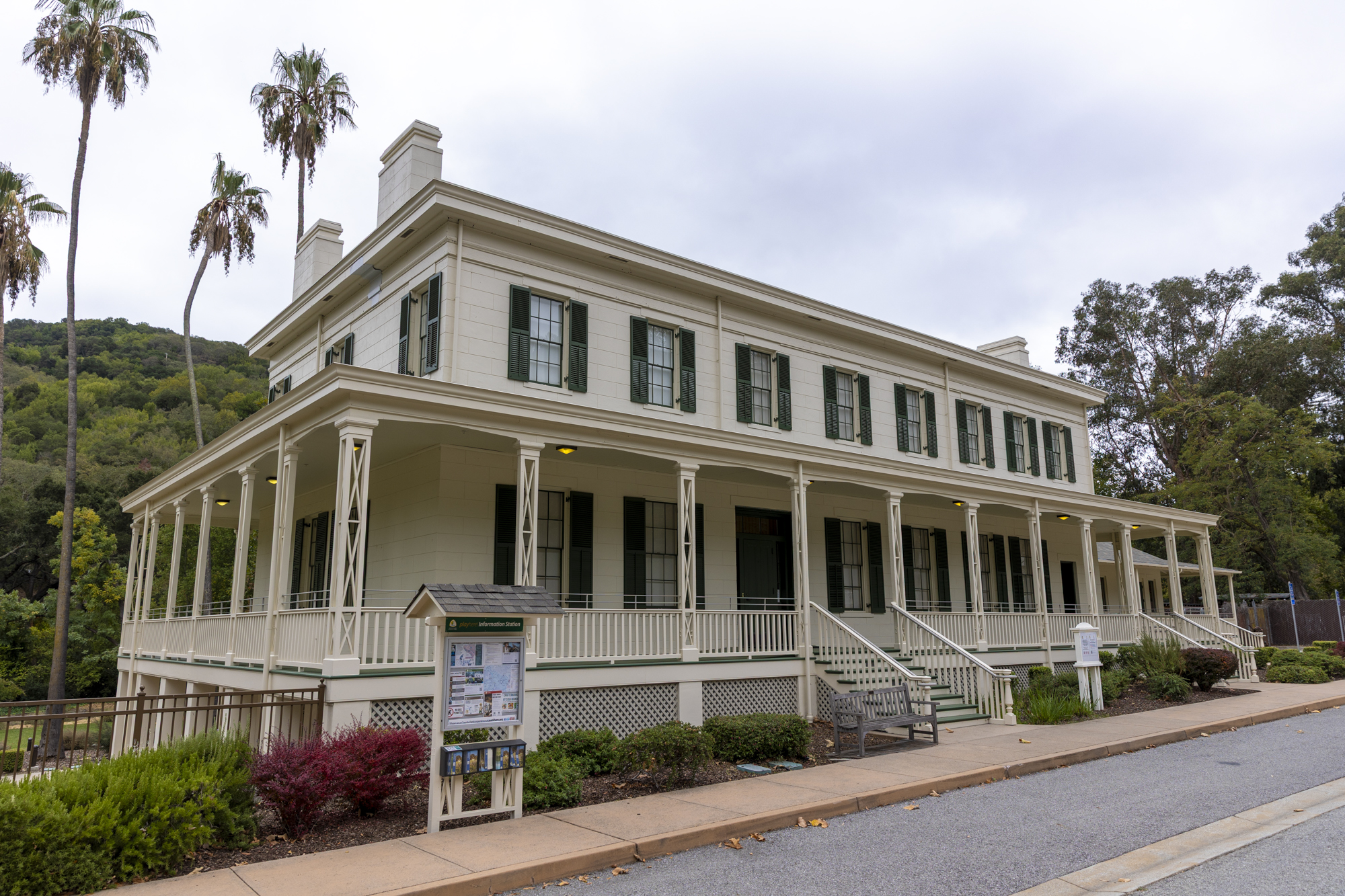
"caption": "The New Almaden Quicksilver Mining Museum is located in what used to be the mine manager’s mansion, also known as Casa Grande, in the hills south of San José. ",
"credit": "Tâm Vũ/KQED",
"altTag": null,
"description": null,
"imgSizes": {
"thumbnail": {
"file": "https://cdn.kqed.org/wp-content/uploads/sites/10/2025/10/251027-ALMADENQUICKSILVER00034_TV-KQED-160x107.jpg",
"width": 160,
"height": 107,
"mimeType": "image/jpeg"
},
"1536x1536": {
"file": "https://cdn.kqed.org/wp-content/uploads/sites/10/2025/10/251027-ALMADENQUICKSILVER00034_TV-KQED-1536x1024.jpg",
"width": 1536,
"height": 1024,
"mimeType": "image/jpeg"
},
"post-thumbnail": {
"file": "https://cdn.kqed.org/wp-content/uploads/sites/10/2025/10/251027-ALMADENQUICKSILVER00034_TV-KQED-672x372.jpg",
"width": 672,
"height": 372,
"mimeType": "image/jpeg"
},
"twentyfourteen-full-width": {
"file": "https://cdn.kqed.org/wp-content/uploads/sites/10/2025/10/251027-ALMADENQUICKSILVER00034_TV-KQED-1038x576.jpg",
"width": 1038,
"height": 576,
"mimeType": "image/jpeg"
},
"npr-cds-wide": {
"file": "https://cdn.kqed.org/wp-content/uploads/sites/10/2025/10/251027-ALMADENQUICKSILVER00034_TV-KQED-1200x675.jpg",
"width": 1200,
"height": 675,
"mimeType": "image/jpeg"
},
"kqedFullSize": {
"file": "https://cdn.kqed.org/wp-content/uploads/sites/10/2025/10/251027-ALMADENQUICKSILVER00034_TV-KQED.jpg",
"width": 2000,
"height": 1333
}
},
"fetchFailed": false,
"isLoading": false
},
"news_12076804": {
"type": "attachments",
"id": "news_12076804",
"meta": {
"index": "attachments_1716263798",
"site": "news",
"id": "12076804",
"found": true
},
"title": "260317-MONARCH THE BEAR-07-KQED",
"publishDate": 1773788495,
"status": "inherit",
"parent": 0,
"modified": 1773790073,
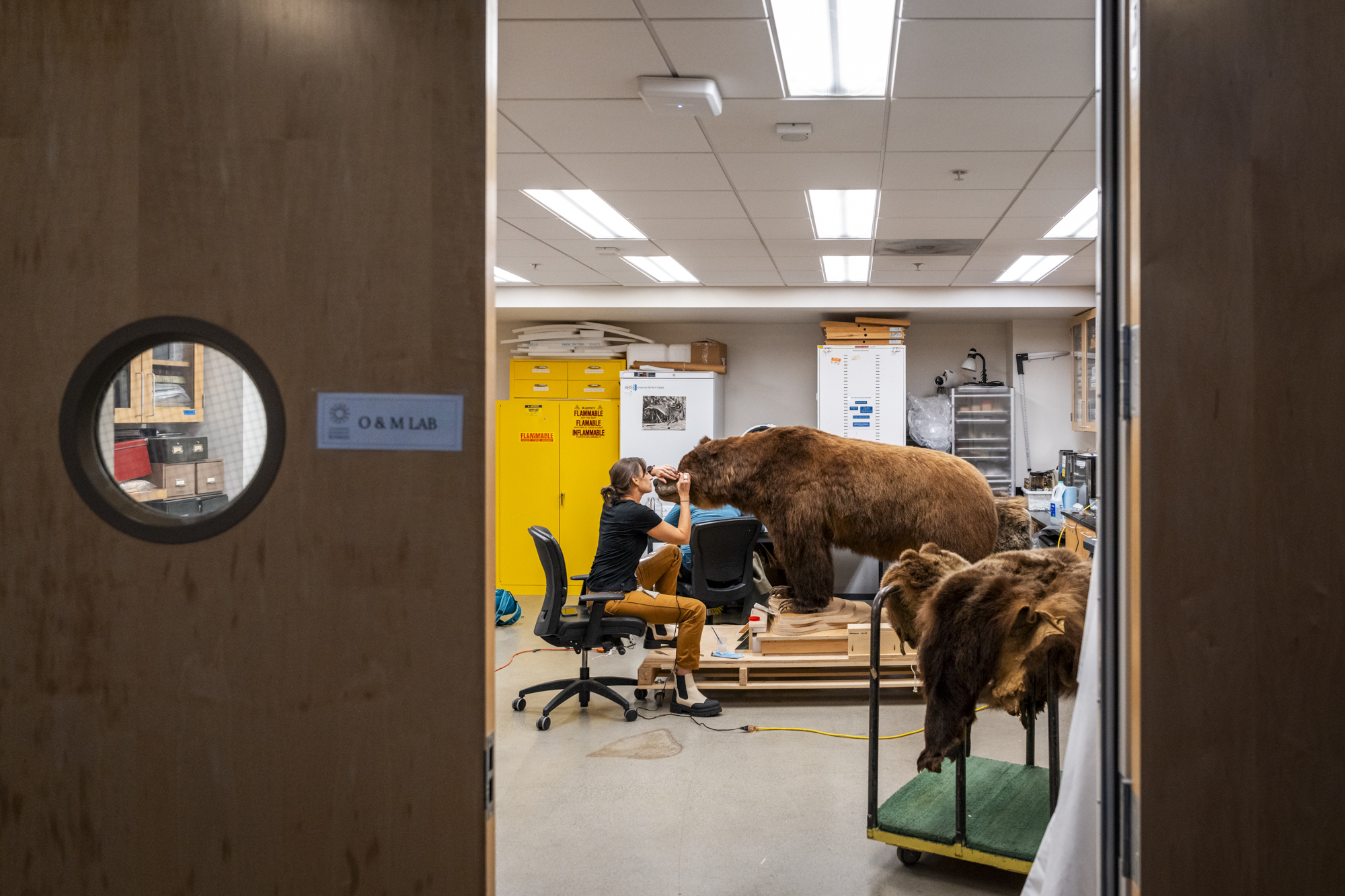
"caption": "Fran Ritchie with the California Academy of Sciences works to restore the taxidermied form of Monarch the bear, part of the exhibit California: State of Nature. ",
"credit": "Gayle Laird/California Academy of Sciences",
"altTag": null,
"description": null,
"imgSizes": {
"thumbnail": {
"file": "https://cdn.kqed.org/wp-content/uploads/sites/10/2026/03/260317-MONARCH-THE-BEAR-07-KQED-160x107.jpg",
"width": 160,
"height": 107,
"mimeType": "image/jpeg"
},
"1536x1536": {
"file": "https://cdn.kqed.org/wp-content/uploads/sites/10/2026/03/260317-MONARCH-THE-BEAR-07-KQED-1536x1024.jpg",
"width": 1536,
"height": 1024,
"mimeType": "image/jpeg"
},
"post-thumbnail": {
"file": "https://cdn.kqed.org/wp-content/uploads/sites/10/2026/03/260317-MONARCH-THE-BEAR-07-KQED-672x372.jpg",
"width": 672,
"height": 372,
"mimeType": "image/jpeg"
},
"twentyfourteen-full-width": {
"file": "https://cdn.kqed.org/wp-content/uploads/sites/10/2026/03/260317-MONARCH-THE-BEAR-07-KQED-1038x576.jpg",
"width": 1038,
"height": 576,
"mimeType": "image/jpeg"
},
"npr-cds-wide": {
"file": "https://cdn.kqed.org/wp-content/uploads/sites/10/2026/03/260317-MONARCH-THE-BEAR-07-KQED-1200x675.jpg",
"width": 1200,
"height": 675,
"mimeType": "image/jpeg"
},
"kqedFullSize": {
"file": "https://cdn.kqed.org/wp-content/uploads/sites/10/2026/03/260317-MONARCH-THE-BEAR-07-KQED.jpg",
"width": 2000,
"height": 1333
}
},
"fetchFailed": false,
"isLoading": false
},
"news_12060218": {
"type": "attachments",
"id": "news_12060218",
"meta": {
"index": "attachments_1716263798",
"site": "news",
"id": "12060218",
"found": true
},
"title": "SFFireDeptLomaPrieta1",
"publishDate": 1760659262,
"status": "inherit",
"parent": 12060130,
"modified": 1760659307,
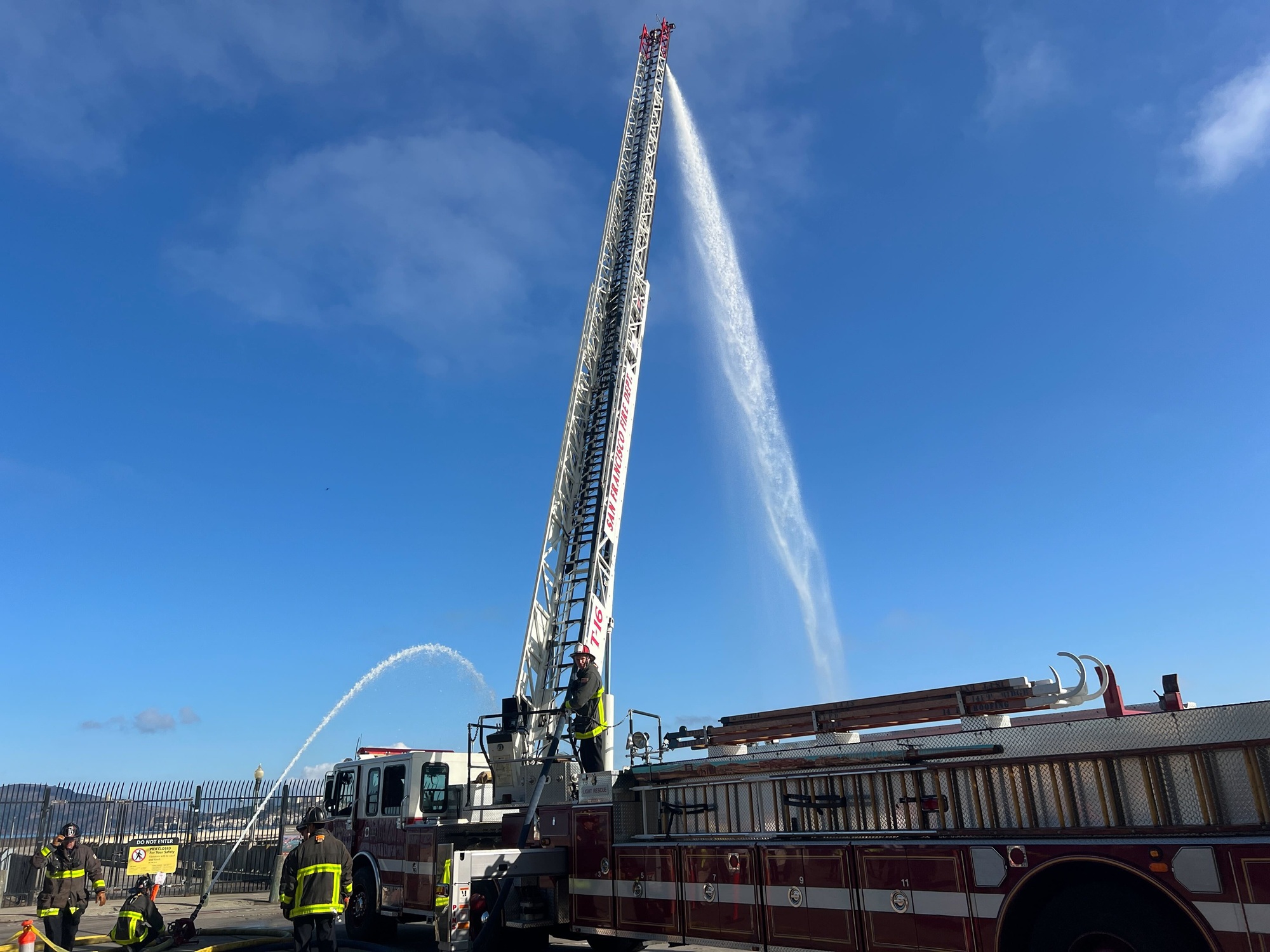
"caption": "San Francisco Fire Department firefighters test the city's Emergency Firefighting Water System on Oct. 16, 2025 on the north tip of Van Ness Avenue.",
"credit": "Nibras Suliman/KQED",
"altTag": null,
"description": null,
"imgSizes": {
"thumbnail": {
"file": "https://cdn.kqed.org/wp-content/uploads/sites/10/2025/10/SFFireDeptLomaPrieta1-160x120.jpg",
"width": 160,
"height": 120,
"mimeType": "image/jpeg"
},
"1536x1536": {
"file": "https://cdn.kqed.org/wp-content/uploads/sites/10/2025/10/SFFireDeptLomaPrieta1-1536x1152.jpg",
"width": 1536,
"height": 1152,
"mimeType": "image/jpeg"
},
"post-thumbnail": {
"file": "https://cdn.kqed.org/wp-content/uploads/sites/10/2025/10/SFFireDeptLomaPrieta1-672x372.jpg",
"width": 672,
"height": 372,
"mimeType": "image/jpeg"
},
"twentyfourteen-full-width": {
"file": "https://cdn.kqed.org/wp-content/uploads/sites/10/2025/10/SFFireDeptLomaPrieta1-1038x576.jpg",
"width": 1038,
"height": 576,
"mimeType": "image/jpeg"
},
"kqedFullSize": {
"file": "https://cdn.kqed.org/wp-content/uploads/sites/10/2025/10/SFFireDeptLomaPrieta1.jpg",
"width": 2000,
"height": 1500
}
},
"fetchFailed": false,
"isLoading": false
},
"news_12039252": {
"type": "attachments",
"id": "news_12039252",
"meta": {
"index": "attachments_1716263798",
"site": "news",
"id": "12039252",
"found": true
},
"title": "The Alexandria Theater building in San Francisco on May 7, 2025.",
"publishDate": 1746658766,
"status": "inherit",
"parent": 0,
"modified": 1746660576,
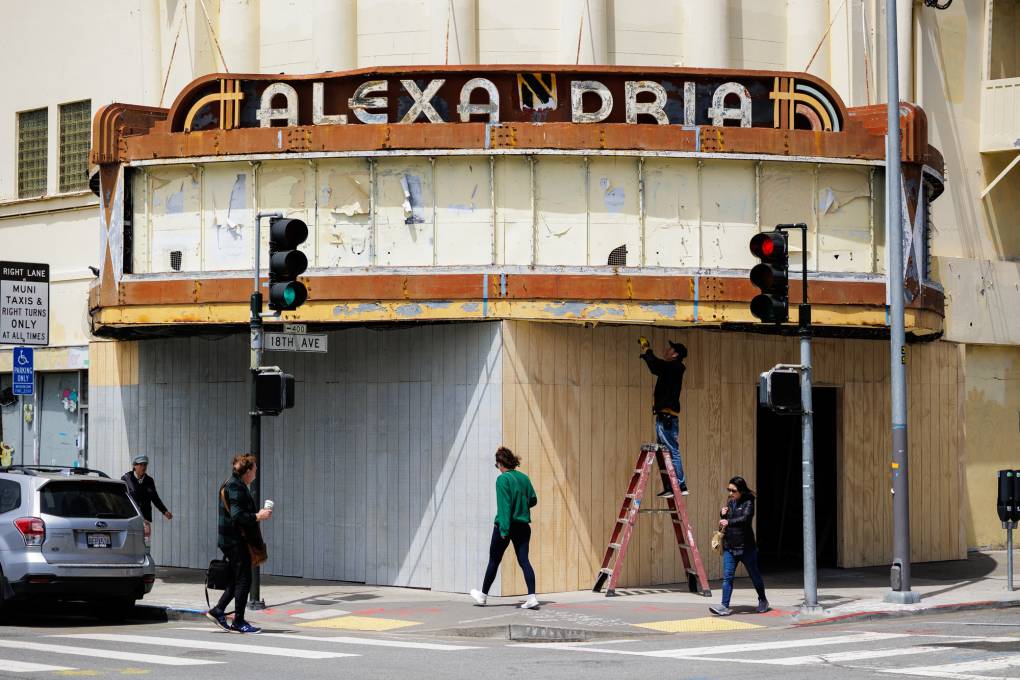
"caption": "The Alexandria Theater building in San Francisco on May 7, 2025.",
"credit": "Martin do Nascimento/KQED",
"altTag": null,
"description": null,
"imgSizes": {
"medium": {
"file": "https://cdn.kqed.org/wp-content/uploads/sites/10/2025/05/250507-ALEXANDRIA-THEATER-MD-02-KQED-1-800x533.jpg",
"width": 800,
"height": 533,
"mimeType": "image/jpeg"
},
"large": {
"file": "https://cdn.kqed.org/wp-content/uploads/sites/10/2025/05/250507-ALEXANDRIA-THEATER-MD-02-KQED-1-1020x680.jpg",
"width": 1020,
"height": 680,
"mimeType": "image/jpeg"
},
"thumbnail": {
"file": "https://cdn.kqed.org/wp-content/uploads/sites/10/2025/05/250507-ALEXANDRIA-THEATER-MD-02-KQED-1-160x107.jpg",
"width": 160,
"height": 107,
"mimeType": "image/jpeg"
},
"1536x1536": {
"file": "https://cdn.kqed.org/wp-content/uploads/sites/10/2025/05/250507-ALEXANDRIA-THEATER-MD-02-KQED-1-1536x1024.jpg",
"width": 1536,
"height": 1024,
"mimeType": "image/jpeg"
},
"post-thumbnail": {
"file": "https://cdn.kqed.org/wp-content/uploads/sites/10/2025/05/250507-ALEXANDRIA-THEATER-MD-02-KQED-1-672x372.jpg",
"width": 672,
"height": 372,
"mimeType": "image/jpeg"
},
"twentyfourteen-full-width": {
"file": "https://cdn.kqed.org/wp-content/uploads/sites/10/2025/05/250507-ALEXANDRIA-THEATER-MD-02-KQED-1-1038x576.jpg",
"width": 1038,
"height": 576,
"mimeType": "image/jpeg"
},
"full-width": {
"file": "https://cdn.kqed.org/wp-content/uploads/sites/10/2025/05/250507-ALEXANDRIA-THEATER-MD-02-KQED-1-1920x1280.jpg",
"width": 1920,
"height": 1280,
"mimeType": "image/jpeg"
},
"kqedFullSize": {
"file": "https://cdn.kqed.org/wp-content/uploads/sites/10/2025/05/250507-ALEXANDRIA-THEATER-MD-02-KQED-1.jpg",
"width": 2000,
"height": 1333
}
},
"fetchFailed": false,
"isLoading": false
},
"news_11970925": {
"type": "attachments",
"id": "news_11970925",
"meta": {
"index": "attachments_1716263798",
"site": "news",
"id": "11970925",
"found": true
},
"parent": 0,
"imgSizes": {
"twentyfourteen-full-width": {
"file": "https://cdn.kqed.org/wp-content/uploads/sites/10/2023/12/CMNative01-1038x576.jpg",
"width": 1038,
"mimeType": "image/jpeg",
"height": 576
},
"thumbnail": {
"file": "https://cdn.kqed.org/wp-content/uploads/sites/10/2023/12/CMNative01-160x107.jpg",
"width": 160,
"mimeType": "image/jpeg",
"height": 107
},
"post-thumbnail": {
"file": "https://cdn.kqed.org/wp-content/uploads/sites/10/2023/12/CMNative01-672x372.jpg",
"width": 672,
"mimeType": "image/jpeg",
"height": 372
},
"kqedFullSize": {
"file": "https://cdn.kqed.org/wp-content/uploads/sites/10/2023/12/CMNative01.jpg",
"width": 2000,
"height": 1333
},
"large": {
"file": "https://cdn.kqed.org/wp-content/uploads/sites/10/2023/12/CMNative01-1020x680.jpg",
"width": 1020,
"mimeType": "image/jpeg",
"height": 680
},
"1536x1536": {
"file": "https://cdn.kqed.org/wp-content/uploads/sites/10/2023/12/CMNative01-1536x1024.jpg",
"width": 1536,
"mimeType": "image/jpeg",
"height": 1024
},
"full-width": {
"file": "https://cdn.kqed.org/wp-content/uploads/sites/10/2023/12/CMNative01-1920x1280.jpg",
"width": 1920,
"mimeType": "image/jpeg",
"height": 1280
},
"medium": {
"file": "https://cdn.kqed.org/wp-content/uploads/sites/10/2023/12/CMNative01-800x533.jpg",
"width": 800,
"mimeType": "image/jpeg",
"height": 533
}
},
"publishDate": 1703618857,
"modified": 1703619088,
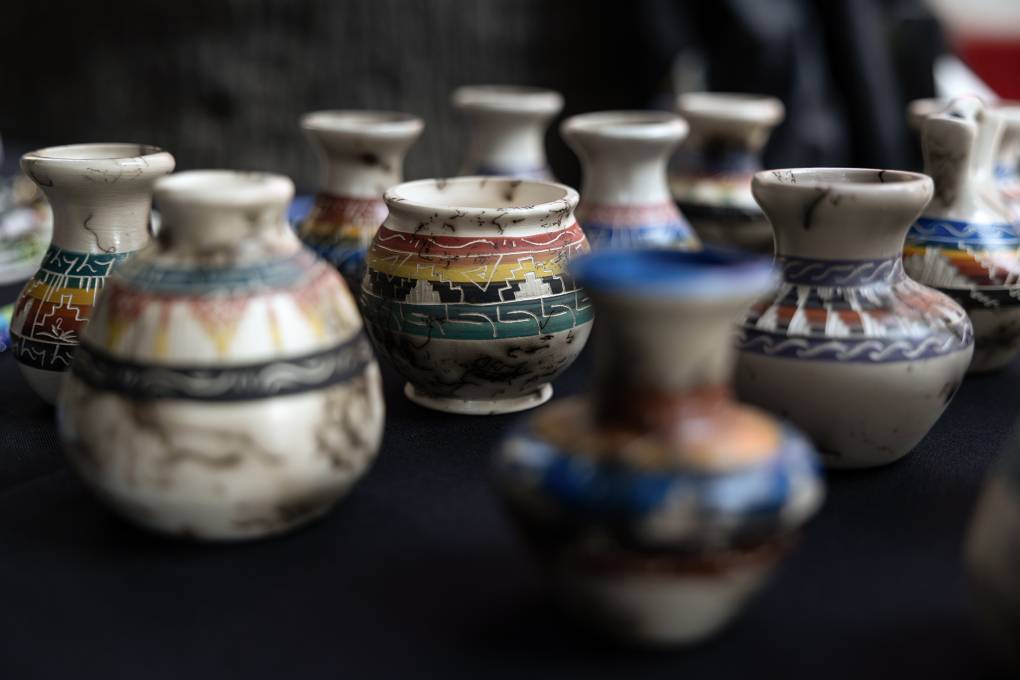
"caption": "A vendor sells pottery items at the California Native American Day celebration at the state Capitol on Sept. 22, 2023.",
"description": null,
"title": "CMNative01",
"credit": "Miguel Gutierrez Jr./CalMatters",
"status": "inherit",
"altTag": "Colorful Native American pottery is pictured. Some of it is weathered.",
"fetchFailed": false,
"isLoading": false
},
"news_11969433": {
"type": "attachments",
"id": "news_11969433",
"meta": {
"index": "attachments_1716263798",
"site": "news",
"id": "11969433",
"found": true
},
"parent": 11969411,
"imgSizes": {
"twentyfourteen-full-width": {
"file": "https://cdn.kqed.org/wp-content/uploads/sites/10/2023/12/img105-1-1020x576.jpg",
"width": 1020,
"mimeType": "image/jpeg",
"height": 576
},
"thumbnail": {
"file": "https://cdn.kqed.org/wp-content/uploads/sites/10/2023/12/img105-1-160x111.jpg",
"width": 160,
"mimeType": "image/jpeg",
"height": 111
},
"post-thumbnail": {
"file": "https://cdn.kqed.org/wp-content/uploads/sites/10/2023/12/img105-1-672x372.jpg",
"width": 672,
"mimeType": "image/jpeg",
"height": 372
},
"kqedFullSize": {
"file": "https://cdn.kqed.org/wp-content/uploads/sites/10/2023/12/img105-1.jpg",
"width": 1020,
"height": 708
},
"medium": {
"file": "https://cdn.kqed.org/wp-content/uploads/sites/10/2023/12/img105-1-800x555.jpg",
"width": 800,
"mimeType": "image/jpeg",
"height": 555
}
},
"publishDate": 1702073532,
"modified": 1702073702,
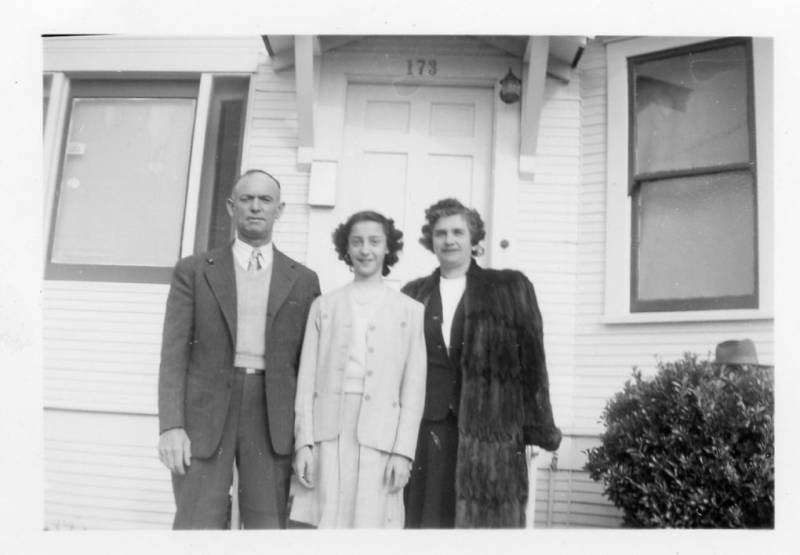
"caption": " Laura Gularte (middle), at 15 years old, with her parents Quinto and Elvira Neri in front of their home in Santa Cruz, California. The family was forced to abandon the coastal home temporarily during World War 2 because Quinto was an Italian citizen. ",
"description": " Laura Gularte (middle), at 15 years old, with her parents Quinto and Elvira Neri in front of their home in Santa Cruz, California. The family was forced to abandon the coastal home temporarily during World War 2 because Quinto was an Italian citizen. ",
"title": "img105 (1)",
"credit": "Courtesy of Mark Gularte",
"status": "inherit",
"altTag": "A black and white photograph from the 1940s of man, woman and child in front of a home.",
"fetchFailed": false,
"isLoading": false
},
"news_11913358": {
"type": "attachments",
"id": "news_11913358",
"meta": {
"index": "attachments_1716263798",
"site": "news",
"id": "11913358",
"found": true
},
"parent": 11913341,
"imgSizes": {
"twentyfourteen-full-width": {
"file": "https://ww2.kqed.org/app/uploads/sites/10/2022/05/image12-1038x576.jpg",
"width": 1038,
"mimeType": "image/jpeg",
"height": 576
},
"thumbnail": {
"file": "https://ww2.kqed.org/app/uploads/sites/10/2022/05/image12-160x106.jpg",
"width": 160,
"mimeType": "image/jpeg",
"height": 106
},
"post-thumbnail": {
"file": "https://ww2.kqed.org/app/uploads/sites/10/2022/05/image12-672x372.jpg",
"width": 672,
"mimeType": "image/jpeg",
"height": 372
},
"kqedFullSize": {
"file": "https://ww2.kqed.org/app/uploads/sites/10/2022/05/image12.jpg",
"width": 1999,
"height": 1330
},
"large": {
"file": "https://ww2.kqed.org/app/uploads/sites/10/2022/05/image12-1020x679.jpg",
"width": 1020,
"mimeType": "image/jpeg",
"height": 679
},
"1536x1536": {
"file": "https://ww2.kqed.org/app/uploads/sites/10/2022/05/image12-1536x1022.jpg",
"width": 1536,
"mimeType": "image/jpeg",
"height": 1022
},
"full-width": {
"file": "https://ww2.kqed.org/app/uploads/sites/10/2022/05/image12-1920x1277.jpg",
"width": 1920,
"mimeType": "image/jpeg",
"height": 1277
},
"medium": {
"file": "https://ww2.kqed.org/app/uploads/sites/10/2022/05/image12-800x532.jpg",
"width": 800,
"mimeType": "image/jpeg",
"height": 532
}
},
"publishDate": 1651790890,
"modified": 1651877426,
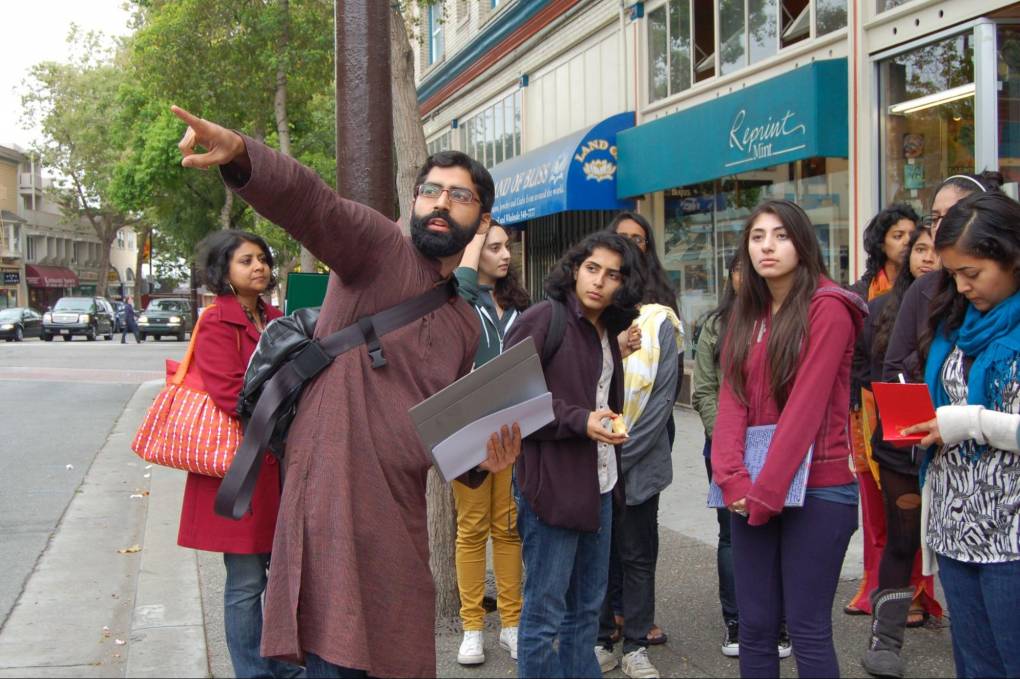
"caption": "Anirvan Chatterjee leads a tour group on Telegraph Avenue near campus in Berkeley.",
"description": null,
"title": "image12",
"credit": "Courtesy of Preeti Mangalashekhar",
"status": "inherit",
"altTag": "A tour guide points to something, as his tour group stands on the street.",
"fetchFailed": false,
"isLoading": false
},
"news_11942345": {
"type": "attachments",
"id": "news_11942345",
"meta": {
"index": "attachments_1716263798",
"site": "news",
"id": "11942345",
"found": true
},
"parent": 11942302,
"imgSizes": {
"thumbnail": {
"file": "https://ww2.kqed.org/app/uploads/sites/10/2024/03/blackminer-160x99.jpg",
"width": 160,
"mimeType": "image/jpeg",
"height": 99
},
"post-thumbnail": {
"file": "https://ww2.kqed.org/app/uploads/sites/10/2024/03/blackminer-672x372.jpg",
"width": 672,
"mimeType": "image/jpeg",
"height": 372
},
"kqedFullSize": {
"file": "https://ww2.kqed.org/app/uploads/sites/10/2024/03/blackminer.jpg",
"width": 838,
"height": 520
},
"medium": {
"file": "https://ww2.kqed.org/app/uploads/sites/10/2024/03/blackminer-800x496.jpg",
"width": 800,
"mimeType": "image/jpeg",
"height": 496
}
},
"publishDate": 1677794989,
"modified": 1677802701,
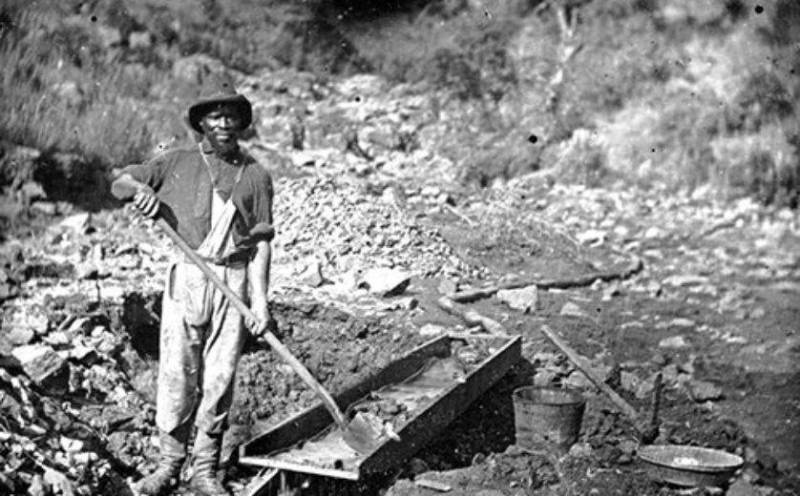
"caption": "A Black miner at the Auburn Ravine in the Sierra foothills, circa 1852.",
"description": null,
"title": "blackminer",
"credit": "Courtesy of the California History Room, California State Library",
"status": "inherit",
"altTag": "A black-and-white photo of a Black miner, holding a shovel, and standing next to a sluice.",
"fetchFailed": false,
"isLoading": false
},
"news_11933862": {
"type": "attachments",
"id": "news_11933862",
"meta": {
"index": "attachments_1716263798",
"site": "news",
"id": "11933862",
"found": true
},
"parent": 11933852,
"imgSizes": {
"twentyfourteen-full-width": {
"file": "https://ww2.kqed.org/app/uploads/sites/10/2022/12/02.13-carmel-gathering-1038x576.jpg",
"width": 1038,
"mimeType": "image/jpeg",
"height": 576
},
"thumbnail": {
"file": "https://ww2.kqed.org/app/uploads/sites/10/2022/12/02.13-carmel-gathering-160x95.jpg",
"width": 160,
"mimeType": "image/jpeg",
"height": 95
},
"post-thumbnail": {
"file": "https://ww2.kqed.org/app/uploads/sites/10/2022/12/02.13-carmel-gathering-672x372.jpg",
"width": 672,
"mimeType": "image/jpeg",
"height": 372
},
"kqedFullSize": {
"file": "https://ww2.kqed.org/app/uploads/sites/10/2022/12/02.13-carmel-gathering.jpg",
"width": 1202,
"height": 713
},
"large": {
"file": "https://ww2.kqed.org/app/uploads/sites/10/2022/12/02.13-carmel-gathering-1020x605.jpg",
"width": 1020,
"mimeType": "image/jpeg",
"height": 605
},
"medium": {
"file": "https://ww2.kqed.org/app/uploads/sites/10/2022/12/02.13-carmel-gathering-800x475.jpg",
"width": 800,
"mimeType": "image/jpeg",
"height": 475
}
},
"publishDate": 1670008812,
"modified": 1670009023,
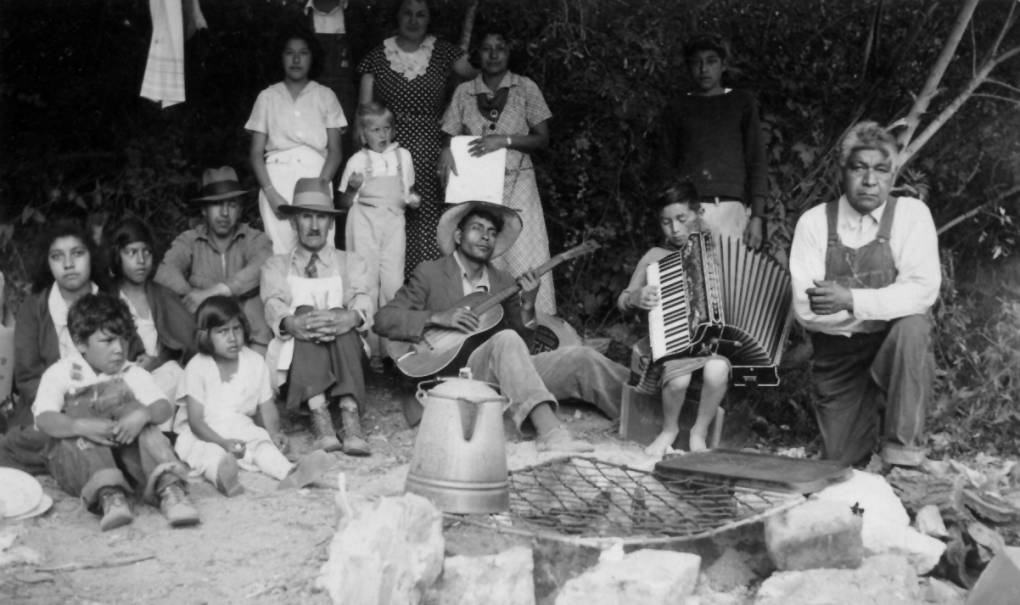
"caption": "Miranda family portrait in Carmel circa 1930s. (Tómas Santos Miranda, far right, is Deborah’s great-grandfather, whose generation she says represented 'the bridge between missionization and post-secularization.')",
"description": null,
"title": "02.13-carmel-gathering",
"credit": "Courtesy Deborah Miranda",
"status": "inherit",
"altTag": "a black and white photograph of a large Native American family circa 1930s, with musical instruments",
"fetchFailed": false,
"isLoading": false
}
},
"audioPlayerReducer": {
"postId": "stream_live",
"isPaused": true,
"isPlaying": false,
"pfsActive": false,
"pledgeModalIsOpen": true,
"playerDrawerIsOpen": false
},
"authorsReducer": {
"byline_news_11970846": {
"type": "authors",
"id": "byline_news_11970846",
"meta": {
"override": true
},
"slug": "byline_news_11970846",
"name": "Amelia Wu and Helena San Roque",
"isLoading": false
},
"gmarzorati": {
"type": "authors",
"id": "227",
"meta": {
"index": "authors_1716337520",
"id": "227",
"found": true
},
"name": "Guy Marzorati",
"firstName": "Guy",
"lastName": "Marzorati",
"slug": "gmarzorati",
"email": "gmarzorati@KQED.org",
"display_author_email": true,
"staff_mastheads": [
"news"
],
"title": "Correspondent",
"bio": "Guy Marzorati is a correspondent on KQED's California Politics and Government Desk, based in San Jose. A graduate of Santa Clara University, Guy joined KQED in 2013. He reports on state and local politics and produces KQED's digital voter guide.",
"avatar": "https://secure.gravatar.com/avatar/e7038b8dbfd55b104369b76b1cd0b9de?s=600&d=blank&r=g",
"twitter": "guymarzorati",
"facebook": null,
"instagram": null,
"linkedin": null,
"sites": [
{
"site": "",
"roles": [
"editor"
]
},
{
"site": "news",
"roles": [
"editor"
]
},
{
"site": "science",
"roles": [
"editor"
]
},
{
"site": "forum",
"roles": [
"editor"
]
},
{
"site": "elections",
"roles": [
"editor"
]
},
{
"site": "liveblog",
"roles": [
"editor"
]
}
],
"headData": {
"title": "Guy Marzorati | KQED",
"description": "Correspondent",
"ogImgSrc": "https://secure.gravatar.com/avatar/e7038b8dbfd55b104369b76b1cd0b9de?s=600&d=blank&r=g",
"twImgSrc": "https://secure.gravatar.com/avatar/e7038b8dbfd55b104369b76b1cd0b9de?s=600&d=blank&r=g"
},
"isLoading": false,
"link": "/author/gmarzorati"
},
"rachael-myrow": {
"type": "authors",
"id": "251",
"meta": {
"index": "authors_1716337520",
"id": "251",
"found": true
},
"name": "Rachael Myrow",
"firstName": "Rachael",
"lastName": "Myrow",
"slug": "rachael-myrow",
"email": "rmyrow@kqed.org",
"display_author_email": true,
"staff_mastheads": [
"news"
],
"title": "Senior Editor of KQED's Silicon Valley News Desk",
"bio": "• I write and edit stories about how Silicon Valley power and policies shape everyday life in California. I’m also passionate about making Bay Area history and culture more accessible to a broad public. • I’ve been a journalist for most of my life, starting in high school with The Franklin Press in Los Angeles, where I grew up. While earning my first degree in English at UC Berkeley, I got my start in public radio at KALX-FM. After completing a second degree in journalism at Cal, I landed my first professional job at Marketplace, then moved on to KPCC (now LAist), and then KQED, where I hosted The California Report for more than seven years. • My reporting has appeared on NPR, The World, WBUR’s \u003ci>Here & Now\u003c/i>, and the BBC. I also guest host for KQED’s \u003ci>Forum\u003c/i>, as well as the Commonwealth Club in San Francisco. • I speak periodically on media, democracy and technology issues, and do voiceover work for documentaries and educational video projects. • Outside of the studio, you'll find me hiking Bay Area trails and whipping up Insta-ready meals in my kitchen. • I do not accept gifts, money, or favors from anyone connected to my reporting, I don't pay people for information, and I do not support or donate to political causes. • I strive to treat the people I report on with fairness, honesty, and respect. I also recognize there are often multiple sides to a story and work to verify information through multiple sources and documentation. If I get something wrong, I correct it.",
"avatar": "https://secure.gravatar.com/avatar/87bf8cb5874e045cdff430523a6d48b1?s=600&d=blank&r=g",
"twitter": "rachaelmyrow",
"facebook": null,
"instagram": null,
"linkedin": "https://www.linkedin.com/in/rachaelmyrow/",
"sites": [
{
"site": "arts",
"roles": [
"administrator"
]
},
{
"site": "news",
"roles": [
"edit_others_posts",
"editor"
]
},
{
"site": "futureofyou",
"roles": [
"editor"
]
},
{
"site": "bayareabites",
"roles": [
"editor"
]
},
{
"site": "stateofhealth",
"roles": [
"editor"
]
},
{
"site": "science",
"roles": [
"editor"
]
},
{
"site": "food",
"roles": [
"editor"
]
},
{
"site": "forum",
"roles": [
"editor"
]
},
{
"site": "liveblog",
"roles": [
"author"
]
}
],
"headData": {
"title": "Rachael Myrow | KQED",
"description": "Senior Editor of KQED's Silicon Valley News Desk",
"ogImgSrc": "https://secure.gravatar.com/avatar/87bf8cb5874e045cdff430523a6d48b1?s=600&d=blank&r=g",
"twImgSrc": "https://secure.gravatar.com/avatar/87bf8cb5874e045cdff430523a6d48b1?s=600&d=blank&r=g"
},
"isLoading": false,
"link": "/author/rachael-myrow"
},
"sasha-khokha": {
"type": "authors",
"id": "254",
"meta": {
"index": "authors_1716337520",
"id": "254",
"found": true
},
"name": "Sasha Khokha",
"firstName": "Sasha",
"lastName": "Khokha",
"slug": "sasha-khokha",
"email": "skhokha@kqed.org",
"display_author_email": true,
"staff_mastheads": [
"news"
],
"title": "Host, The California Report Magazine",
"bio": "Sasha Khokha is the host of \u003cem>The California Report's \u003c/em> weekly magazine program, which takes listeners on sound-rich excursions to meet the people that make the Golden State unique -- through audio documentaries and long-form stories. As \u003cem>The California Report's\u003c/em> Central Valley Bureau Chief based in Fresno for nearly a dozen years, Sasha brought the lives and concerns of rural Californians to listeners around the state. Her reporting helped expose the hidden price immigrant women janitors and farmworkers may pay to keep their jobs: sexual assault at work. It inspired two new California laws to protect them from sexual harassment. She was a key member of the reporting team for the Frontline film \u003cem>Rape on the Night Shift, \u003c/em>which was nominated for two national Emmys. Sasha has also won a national Edward R. Murrow and a national PRNDI award for investigative reporting, as well as multiple prizes from the Society for Professional Journalists. Sasha is a proud alum of the UC Berkeley Graduate School of Journalism and Brown University and a member of the South Asian Journalists Association.",
"avatar": "https://secure.gravatar.com/avatar/e4b5e1541aaeea2aa356aa1fb2a68950?s=600&d=blank&r=g",
"twitter": "KQEDSashaKhokha",
"facebook": null,
"instagram": null,
"linkedin": null,
"sites": [
{
"site": "news",
"roles": [
"editor"
]
},
{
"site": "stateofhealth",
"roles": [
"author"
]
},
{
"site": "science",
"roles": [
"author"
]
},
{
"site": "quest",
"roles": [
"subscriber"
]
}
],
"headData": {
"title": "Sasha Khokha | KQED",
"description": "Host, The California Report Magazine",
"ogImgSrc": "https://secure.gravatar.com/avatar/e4b5e1541aaeea2aa356aa1fb2a68950?s=600&d=blank&r=g",
"twImgSrc": "https://secure.gravatar.com/avatar/e4b5e1541aaeea2aa356aa1fb2a68950?s=600&d=blank&r=g"
},
"isLoading": false,
"link": "/author/sasha-khokha"
},
"mlagos": {
"type": "authors",
"id": "3239",
"meta": {
"index": "authors_1716337520",
"id": "3239",
"found": true
},
"name": "Marisa Lagos",
"firstName": "Marisa",
"lastName": "Lagos",
"slug": "mlagos",
"email": "mlagos@kqed.org",
"display_author_email": false,
"staff_mastheads": [
"news"
],
"title": "KQED Contributor",
"bio": "Marisa Lagos is a correspondent for KQED’s California Politics and Government Desk and co-hosts the award-winning show and podcast, Political Breakdown. At KQED, Lagos also conducts reporting, analysis and investigations into state, local and national politics for radio, TV, online and onstage. In 2022, she and co-host, Scott Shafer, moderated the only gubernatorial debate in California. In 2020, the \u003ci>Washington Post\u003c/i> named her one of the top political journalists in California; she was nominated for a Peabody and won several other awards for her work investigating the 2017 California wildfires. She has worked at the \u003ci>San Francisco Chronicle\u003c/i>, \u003ci>San Francisco Examiner\u003c/i> and \u003ci>Los Angeles Times\u003c/i>. A UC Santa Barbara graduate, she lives in San Francisco with her two sons and husband.",
"avatar": "https://secure.gravatar.com/avatar/a261a0d3696fc066871ef96b85b5e7d2?s=600&d=blank&r=g",
"twitter": "@mlagos",
"facebook": null,
"instagram": null,
"linkedin": null,
"sites": [
{
"site": "arts",
"roles": [
"author"
]
},
{
"site": "news",
"roles": [
"editor"
]
},
{
"site": "science",
"roles": [
"editor"
]
},
{
"site": "forum",
"roles": [
"author"
]
},
{
"site": "liveblog",
"roles": [
"author"
]
}
],
"headData": {
"title": "Marisa Lagos | KQED",
"description": "KQED Contributor",
"ogImgSrc": "https://secure.gravatar.com/avatar/a261a0d3696fc066871ef96b85b5e7d2?s=600&d=blank&r=g",
"twImgSrc": "https://secure.gravatar.com/avatar/a261a0d3696fc066871ef96b85b5e7d2?s=600&d=blank&r=g"
},
"isLoading": false,
"link": "/author/mlagos"
},
"abandlamudi": {
"type": "authors",
"id": "11672",
"meta": {
"index": "authors_1716337520",
"id": "11672",
"found": true
},
"name": "Adhiti Bandlamudi",
"firstName": "Adhiti",
"lastName": "Bandlamudi",
"slug": "abandlamudi",
"email": "abandlamudi@kqed.org",
"display_author_email": false,
"staff_mastheads": [
"news"
],
"title": "KQED Housing Reporter",
"bio": "Adhiti Bandlamudi reports for KQED's Housing desk. She focuses on how housing gets built across the Bay Area. Before joining KQED in 2020, she reported for WUNC in Durham, North Carolina, WABE in Atlanta, Georgia and Capital Public Radio in Sacramento. In 2017, she was awarded a Kroc Fellowship at NPR where she reported on everything from sprinkles to the Golden State Killer's arrest. When she's not reporting, she's baking new recipes in her kitchen or watching movies with friends and family. She's originally from Georgia and has strong opinions about Great British Bake Off.",
"avatar": "https://secure.gravatar.com/avatar/868129c8b257bb99a3500e2c86a65400?s=600&d=mm&r=g",
"twitter": "oddity_adhiti",
"facebook": null,
"instagram": null,
"linkedin": null,
"sites": [
{
"site": "arts",
"roles": [
"author"
]
},
{
"site": "news",
"roles": [
"editor"
]
},
{
"site": "liveblog",
"roles": [
"author"
]
}
],
"headData": {
"title": "Adhiti Bandlamudi | KQED",
"description": "KQED Housing Reporter",
"ogImgSrc": "https://secure.gravatar.com/avatar/868129c8b257bb99a3500e2c86a65400?s=600&d=mm&r=g",
"twImgSrc": "https://secure.gravatar.com/avatar/868129c8b257bb99a3500e2c86a65400?s=600&d=mm&r=g"
},
"isLoading": false,
"link": "/author/abandlamudi"
},
"kmonahan": {
"type": "authors",
"id": "11842",
"meta": {
"index": "authors_1716337520",
"id": "11842",
"found": true
},
"name": "Katherine Monahan",
"firstName": "Katherine",
"lastName": "Monahan",
"slug": "kmonahan",
"email": "kmonahan@kqed.org",
"display_author_email": true,
"staff_mastheads": [],
"title": "Reporter / Sound Engineer",
"bio": "I cover state and local news. I’m also a sound engineer at the station, mixing stories and running live broadcasts. I link to source materials so that readers can draw their own conclusions, and seek comment from a range of perspectives, including from people directly affected by events. Awards received include from the Society of Professional Journalists, Northern California chapter and the Alaska Press Club. I speak multiple languages and have reported and engineered in the Bay Area, Alaska, West Africa and Latin America.",
"avatar": "https://secure.gravatar.com/avatar/ed63e1170ee4abe7e85e75cfcbdfc787?s=600&d=blank&r=g",
"twitter": null,
"bluesky": null,
"facebook": null,
"instagram": null,
"linkedin": null,
"sites": [
{
"site": "news",
"roles": [
"editor"
]
},
{
"site": "science",
"roles": [
"contributor"
]
}
],
"headData": {
"title": "Katherine Monahan | KQED",
"description": "Reporter / Sound Engineer",
"ogImgSrc": "https://secure.gravatar.com/avatar/ed63e1170ee4abe7e85e75cfcbdfc787?s=600&d=blank&r=g",
"twImgSrc": "https://secure.gravatar.com/avatar/ed63e1170ee4abe7e85e75cfcbdfc787?s=600&d=blank&r=g"
},
"isLoading": false,
"link": "/author/kmonahan"
},
"pbartolone": {
"type": "authors",
"id": "11879",
"meta": {
"index": "authors_1716337520",
"id": "11879",
"found": true
},
"name": "Pauline Bartolone",
"firstName": "Pauline",
"lastName": "Bartolone",
"slug": "pbartolone",
"email": "pbartolone@kqed.org",
"display_author_email": false,
"staff_mastheads": [],
"title": "KQED Contributor",
"bio": "Pauline Bartolone has been a journalist for two decades, specializing in longform audio storytelling. Before editing and producing for podcasts like Bay Curious, she was a health care journalist for public radio and print outlets such as CalMatters and Kaiser Health News. Her reporting has won several regional Edward R. Murrow awards, national recognition from the Society of Professional Journalists and a first-place prize from the Association of Health Care Journalists.\r\n\r\nPauline’s work has aired frequently on National Public Radio, and bylines have appeared in The Los Angeles Times, CNN.com, Washingtonpost.com, USA Today and Scientific American.\r\n\r\nPauline has lived in Northern California for 20 years. Her other passions are crafts (now done in collaboration with her daughter) and the Brazilian martial art of capoeira.",
"avatar": "https://secure.gravatar.com/avatar/95001c30374b0d3878007af9cf1e120a?s=600&d=blank&r=g",
"twitter": "pbartolone",
"facebook": null,
"instagram": null,
"linkedin": null,
"sites": [
{
"site": "news",
"roles": [
"editor"
]
},
{
"site": "podcasts",
"roles": [
"subscriber"
]
}
],
"headData": {
"title": "Pauline Bartolone | KQED",
"description": "KQED Contributor",
"ogImgSrc": "https://secure.gravatar.com/avatar/95001c30374b0d3878007af9cf1e120a?s=600&d=blank&r=g",
"twImgSrc": "https://secure.gravatar.com/avatar/95001c30374b0d3878007af9cf1e120a?s=600&d=blank&r=g"
},
"isLoading": false,
"link": "/author/pbartolone"
},
"nsuliman": {
"type": "authors",
"id": "11985",
"meta": {
"index": "authors_1716337520",
"id": "11985",
"found": true
},
"name": "Nibras Suliman",
"firstName": "Nibras",
"lastName": "Suliman",
"slug": "nsuliman",
"email": "nsuliman@kqed.org",
"display_author_email": false,
"staff_mastheads": [],
"title": "KQED Contributor",
"bio": null,
"avatar": "https://secure.gravatar.com/avatar/581946774e0249b1fcdfb01d4f143d12?s=600&d=blank&r=g",
"twitter": null,
"facebook": null,
"instagram": null,
"linkedin": null,
"sites": [
{
"site": "news",
"roles": []
}
],
"headData": {
"title": "Nibras Suliman | KQED",
"description": "KQED Contributor",
"ogImgSrc": "https://secure.gravatar.com/avatar/581946774e0249b1fcdfb01d4f143d12?s=600&d=blank&r=g",
"twImgSrc": "https://secure.gravatar.com/avatar/581946774e0249b1fcdfb01d4f143d12?s=600&d=blank&r=g"
},
"isLoading": false,
"link": "/author/nsuliman"
}
},
"breakingNewsReducer": {},
"pagesReducer": {},
"postsReducer": {
"stream_live": {
"type": "live",
"id": "stream_live",
"audioUrl": "https://streams.kqed.org/kqedradio",
"title": "Live Stream",
"excerpt": "Live Stream information currently unavailable.",
"link": "/radio",
"featImg": "",
"label": {
"name": "KQED Live",
"link": "/"
}
},
"stream_kqedNewscast": {
"type": "posts",
"id": "stream_kqedNewscast",
"audioUrl": "https://www.kqed.org/.stream/anon/radio/RDnews/newscast.mp3?_=1",
"title": "KQED Newscast",
"featImg": "",
"label": {
"name": "88.5 FM",
"link": "/"
}
},
"news_12077572": {
"type": "posts",
"id": "news_12077572",
"meta": {
"index": "posts_1716263798",
"site": "news",
"id": "12077572",
"score": null,
"sort": [
1774519232000
]
},
"guestAuthors": [],
"slug": "new-almaden-the-mercury-mine-that-built-a-boomtown-south-of-san-jose",
"title": "New Almaden: The Mercury Mine That Built a Boomtown South of San José",
"publishDate": 1774519232,
"format": "standard",
"headTitle": "New Almaden: The Mercury Mine That Built a Boomtown South of San José | KQED",
"labelTerm": {},
"content": "\u003cp>\u003ca href=\"#Viewthefullepisodetranscript\">View\u003c/a>\u003cem>\u003ca href=\"#Viewthefullepisodetranscript\"> the full episode transcript.\u003c/a>\u003c/em>\u003c/p>\n\u003cp>Visitors to the Almaden Quicksilver County Park may well wonder what the heck accounts for the name.\u003c/p>\n\u003cp>Who or what was Almaden? What is quicksilver? Why is there a 27-room Classical Revival mansion nestled in more than 4,000 acres in the hills south of San José? So many questions!\u003c/p>\n\u003cp>It beggars belief today, given how bucolic the park is, but New Almaden once hummed with a busy mining operation in the late 19th and early 20th centuries.\u003c/p>\n\u003cp>[ad fullwidth]\u003c/p>\n\u003cp>In its heyday, 1,800 miners and their families lived here, primarily in a couple of self-contained villages. Imagine churches, saloons, a school, a post office, and more. Now there are just a few moldering cemeteries and the old mine supervisor’s mansion, which has been turned into a \u003ca href=\"https://parks.santaclaracounty.gov/learn/visit-historic-sites/almaden-quicksilver-mining-museum\">museum\u003c/a>.\u003c/p>\n\u003ch2>\u003cstrong>How quicksilver is used to extract gold\u003c/strong>\u003c/h2>\n\u003cp>Before we get to our audience questions sent in about Almaden Quicksilver Park, let’s get a handle on why this place was once so valuable.\u003c/p>\n\u003cp>The South Bay is full of cinnabar, a bright red rock the color of a stop sign. It formed 10 million to 12 million years ago during a time of intense volcanic and hydrothermal activity. Chemically speaking, cinnabar is mercury bonded to sulfur, and mercury is the more proper name for the silver-colored quicksilver. To get mercury out of cinnabar, you heat the rocks up and the mercury essentially sweats out.\u003c/p>\n\u003cfigure id=\"attachment_12062447\" class=\"wp-caption aligncenter\" style=\"max-width: 2000px\">\u003ca href=\"https://cdn.kqed.org/wp-content/uploads/sites/10/2025/10/251027-ALMADENQUICKSILVER00307_TV-KQED.jpg\">\u003cimg loading=\"lazy\" decoding=\"async\" class=\"size-full wp-image-12062447\" src=\"https://cdn.kqed.org/wp-content/uploads/sites/10/2025/10/251027-ALMADENQUICKSILVER00307_TV-KQED.jpg\" alt=\"\" width=\"2000\" height=\"1333\" srcset=\"https://cdn.kqed.org/wp-content/uploads/sites/10/2025/10/251027-ALMADENQUICKSILVER00307_TV-KQED.jpg 2000w, https://cdn.kqed.org/wp-content/uploads/sites/10/2025/10/251027-ALMADENQUICKSILVER00307_TV-KQED-160x107.jpg 160w, https://cdn.kqed.org/wp-content/uploads/sites/10/2025/10/251027-ALMADENQUICKSILVER00307_TV-KQED-1536x1024.jpg 1536w\" sizes=\"auto, (max-width: 2000px) 100vw, 2000px\">\u003c/a>\u003cfigcaption class=\"wp-caption-text\">Exhibits at The New Almaden Quicksilver Mining Museum, south of San José, on Oct. 27, 2025, paint a picture of the dangerous but lucrative craft of mining quicksilver from cinnabar. \u003ccite>(Tâm Vũ/KQED)\u003c/cite>\u003c/figcaption>\u003c/figure>\n\u003cp>Mercury was super important during the Gold Rush, because in its liquid form, gold and silver miners used the quicksilver to extract precious metals from the crushed rocks they were trapped in.\u003c/p>\n\u003cp>“The mercury kind of grabs on to any precious metal,” said Lynda Will, parks program coordinator at Santa Clara County Parks and Recreation. “All the sand and other waste rock is left alone and left behind. And then you have a kinda of silver putty.”\u003c/p>\n\u003cp>Miners call that an amalgam. You heat that amalgam to 1,076 degrees Fahrenheit, the mercury vapor goes off into the air, leaving you with your precious metal.\u003c/p>\n\u003cp>“It usually looks like spun sugar,” Will said. “It has all these holes where the mercury had been. So then you can take that spun gold, as we call it, and so you can make nuggets or even bars.”\u003c/p>\n\u003ch2>\u003cstrong>How a Mexican cavalry officer discovered the cinnabar deposit in 1845\u003c/strong>\u003c/h2>\n\u003cp>Just a few years prior to the discovery of gold at Sutter’s Mill near Sacramento in 1848, California was a Mexican territory. The Mexican government sent a cavalry officer named Andrés Castillero to catalogue strategic assets, and as was the practice at that time, officers and citizens could claim mines they discovered for themselves.\u003c/p>\n\u003cp>Castillero was traveling in the South Bay when he noticed a fiery red-orange paint local Indigenous people were using on the walls of nearby missions. Castillero knew exactly what he was looking at. He knew that red paint had to have come from cinnabar.\u003c/p>\n\u003cfigure id=\"attachment_12062440\" class=\"wp-caption aligncenter\" style=\"max-width: 2000px\">\u003ca href=\"https://cdn.kqed.org/wp-content/uploads/sites/10/2025/10/251027-ALMADENQUICKSILVER00156_TV-KQED.jpg\">\u003cimg loading=\"lazy\" decoding=\"async\" class=\"size-full wp-image-12062440\" src=\"https://cdn.kqed.org/wp-content/uploads/sites/10/2025/10/251027-ALMADENQUICKSILVER00156_TV-KQED.jpg\" alt=\"\" width=\"2000\" height=\"1333\" srcset=\"https://cdn.kqed.org/wp-content/uploads/sites/10/2025/10/251027-ALMADENQUICKSILVER00156_TV-KQED.jpg 2000w, https://cdn.kqed.org/wp-content/uploads/sites/10/2025/10/251027-ALMADENQUICKSILVER00156_TV-KQED-160x107.jpg 160w, https://cdn.kqed.org/wp-content/uploads/sites/10/2025/10/251027-ALMADENQUICKSILVER00156_TV-KQED-1536x1024.jpg 1536w\" sizes=\"auto, (max-width: 2000px) 100vw, 2000px\">\u003c/a>\u003cfigcaption class=\"wp-caption-text\">The New Almaden Quicksilver Mining Museum features different kinds of ore in a display on Oct. 27, 2025. \u003ccite>(Tâm Vũ/KQED)\u003c/cite>\u003c/figcaption>\u003c/figure>\n\u003cp>At the time, the world’s main source of mercury was in Almadén, Spain. Spain controlled the supply, which meant they could charge what they wanted. Castillero, just from reading the newspapers, would have understood he was looking at a potential fortune in the hills south of San José.\u003c/p>\n\u003cp>As you can imagine, it wasn’t long after Castillero discovered the cinnabar that other people wanted to take the mine from him, especially after the Gold Rush kicked off in 1848 and sent demand for quicksilver soaring. Multiple parties, including private investors and mining companies, tried to claim the land, and the case went all the way to the U.S. Supreme Court. In 1859, the Supreme Court recognized Castillero’s claim, but the mine’s ownership remained split among several parties.\u003c/p>\n\u003cp>And then in 1861, the U.S. Civil War started. During the Civil War, the federal government briefly attempted to seize the New Almaden mine because mercury was essential for extracting gold used to finance the Union war effort.\u003c/p>\n\u003cp>And this is where we get to Bay Curious listener Kiera O’Hara’s question:\u003c/p>\n\u003ch2>\u003cstrong>What was the Civil War history behind the Almaden mercury mine in San José? I remember hearing Abraham Lincoln was involved?! \u003c/strong>\u003c/h2>\n\u003cp>At the museum, parks program coordinator Will told of an aide to President Lincoln who thought, “There’s enough questionability about who owns this land, so maybe it’s owned by the U.S. government.”\u003c/p>\n\u003cp>Again, the quicksilver mine is an obvious money maker, and war is expensive. California gold was vital to the Union’s war effort, providing more than $170 million (roughly $7 billion today), in gold mostly, that stabilized the federal currency and paid for roughly 10% of things like weapons and supplies.\u003c/p>\n\u003cfigure id=\"attachment_12062439\" class=\"wp-caption aligncenter\" style=\"max-width: 2000px\">\u003ca href=\"https://cdn.kqed.org/wp-content/uploads/sites/10/2025/10/251027-ALMADENQUICKSILVER00110_TV-KQED.jpg\">\u003cimg loading=\"lazy\" decoding=\"async\" class=\"size-full wp-image-12062439\" src=\"https://cdn.kqed.org/wp-content/uploads/sites/10/2025/10/251027-ALMADENQUICKSILVER00110_TV-KQED.jpg\" alt=\"\" width=\"2000\" height=\"1333\" srcset=\"https://cdn.kqed.org/wp-content/uploads/sites/10/2025/10/251027-ALMADENQUICKSILVER00110_TV-KQED.jpg 2000w, https://cdn.kqed.org/wp-content/uploads/sites/10/2025/10/251027-ALMADENQUICKSILVER00110_TV-KQED-160x107.jpg 160w, https://cdn.kqed.org/wp-content/uploads/sites/10/2025/10/251027-ALMADENQUICKSILVER00110_TV-KQED-1536x1024.jpg 1536w\" sizes=\"auto, (max-width: 2000px) 100vw, 2000px\">\u003c/a>\u003cfigcaption class=\"wp-caption-text\">The New Almaden Quicksilver Mining Museum features photos of village life for quicksilver miners and their families during the late 19th and early 20th centuries. \u003ccite>(Tâm Vũ/KQED)\u003c/cite>\u003c/figcaption>\u003c/figure>\n\u003cp>This aide was thinking something along the lines of, “Why not claim the New Almaden mine and its profits for the Union side of the Civil War?”\u003c/p>\n\u003cp>“And so he came down with a marshal and even a cavalry behind him to say, ‘Lincoln’s going to take over this mine. And, you know, you’re supposed to just surrender it to me.’” Will said. The mine manager at the time, John Young, rallied the miners working for him by saying something akin to “If they take over the mines, you’re going to be out of a job. So come down with, you know, your best rifles and your guns and, you know, help me defend this,” Will said.\u003c/p>\n\u003cp>Young also fired off urgent telegraphs, not only to other mine operators across California, but to a former New Almaden manager who happened to be working inside Lincoln’s administration.\u003c/p>\n\u003cp>Young warned the well-placed friend that the federal government was about to set off a destructive chain reaction across the West, at a moment when the Union depended on the support of California’s gold miners. There were people in the state who sympathized with the South during the Civil War. So it would be really, really dumb to piss off Union supporters and drive them into the waiting arms of the Confederacy.\u003c/p>\n\u003cp>Will thinks it’s possible Lincoln didn’t even know this whole fight was going on, given how distracted he was with the Civil War. Whatever the case, John Young’s quick thinking stopped a bright idea from a government man that could have thrown California and the rest of the Western U.S. to the Confederate side.\u003c/p>\n\u003ch2>Has the mercury in San José caused environmental problems?\u003c/h2>\n\u003cp>You don’t have to be a geologist to know mercury is a neurotoxin and an environmental hazard.\u003c/p>\n\u003cp>Some of the mercury dug up at New Almaden \u003ca href=\"https://www.kqed.org/quest/17411/mercury-in-the-bay-part-1\">made its way downstream\u003c/a>, into the San Francisco Bay. Mining continued into the 1970s, and in 2002, scientists identified this mine as the \u003ca href=\"https://www.sfgate.com/bayarea/article/tracking-a-toxic-trail-long-closed-mine-2709557.php\">single largest source\u003c/a> of mercury in the Bay, making the fish unsafe to eat for humans and birds alike.\u003c/p>\n\u003cfigure id=\"attachment_12062445\" class=\"wp-caption aligncenter\" style=\"max-width: 2000px\">\u003ca href=\"https://cdn.kqed.org/wp-content/uploads/sites/10/2025/10/251027-ALMADENQUICKSILVER00255_TV-KQED.jpg\">\u003cimg loading=\"lazy\" decoding=\"async\" class=\"size-full wp-image-12062445\" src=\"https://cdn.kqed.org/wp-content/uploads/sites/10/2025/10/251027-ALMADENQUICKSILVER00255_TV-KQED.jpg\" alt=\"\" width=\"2000\" height=\"1334\" srcset=\"https://cdn.kqed.org/wp-content/uploads/sites/10/2025/10/251027-ALMADENQUICKSILVER00255_TV-KQED.jpg 2000w, https://cdn.kqed.org/wp-content/uploads/sites/10/2025/10/251027-ALMADENQUICKSILVER00255_TV-KQED-160x107.jpg 160w, https://cdn.kqed.org/wp-content/uploads/sites/10/2025/10/251027-ALMADENQUICKSILVER00255_TV-KQED-1536x1025.jpg 1536w\" sizes=\"auto, (max-width: 2000px) 100vw, 2000px\">\u003c/a>\u003cfigcaption class=\"wp-caption-text\">A statue of a miner is featured at The New Almaden Quicksilver Mining Museum south of San Joséon Oct. 27, 2025. \u003ccite>(Tâm Vũ/KQED)\u003c/cite>\u003c/figcaption>\u003c/figure>\n\u003cp>“When we acquired the land in the mid-1970s, there was quite a bit of mercury contamination of the land,” Will said. “Under the furnace yards were pools of mercury. They had paved roads with cinnabar waste rock, which we call calcines. They had just dumped it over the sides of the hills. They had dumped it into the creeks. And so we have been remediating it ever since.”\u003c/p>\n\u003cp>Local governments, including Santa Clara County, purchased part of the mine property for parkland, found themselves partially on the hook for a multimillion-dollar \u003ca href=\"https://dtsc.ca.gov/dtsc-oversees-environmental-cleanup-of-mercury-contaminated-park/\">cleanup effort\u003c/a> to comply with the federal Clean Water Act. They did get help from the state and federal agencies. Additional work and monitoring continue, but authorities say it’s safe to picnic, hike, ride horses and otherwise recreate.\u003c/p>\n\u003ch2>\u003cstrong>Is it safe to eat fish from the San Francisco Bay?\u003c/strong>\u003c/h2>\n\u003cp>As recently as 10 years ago, two years into the big effort to clean up the Bay, \u003ca href=\"https://youtu.be/cpwQ5OFIZRQ?si=SP5B4deyax67I7iR&t=356\">KQED explored this question\u003c/a>.\u003c/p>\n\u003cp>https://youtu.be/cpwQ5OFIZRQ?si=SP5B4deyax67I7iR&t=356 \u003c/p>\n\u003cp>Because mercury converts into methylmercury, which bioaccumulates up the food chain, fish, especially large fish, can carry high levels.\u003c/p>\n\u003cp>“The Bay is slowly cleaning itself, washing 3,100 pounds a year out to sea, but because so much has built up over time, it needs a helping hand,” the story said. “At a minimum, three generations will be impacted by the potent and long-lasting poison still lingering in the Bay mud. It may take more than 100 years for the Bay to recover.”\u003c/p>\n\u003cp>In 2023, California’s Office of Environmental Health Hazard Assessment recommended that children and women of childbearing age steer clear of fish like \u003ca href=\"https://oehha.ca.gov/sites/default/files/media/downloads/advisories/fishadvisorysfbayreport2023.pdf\">sharks and striped bass\u003c/a>. Ocean-going fish like Chinook salmon would be the safer bet.\u003c/p>\n\u003ch2>\u003cstrong>Has Cornish culture survived in the region?\u003c/strong>\u003c/h2>\n\u003cp>Our final listener question comes from Andrew Long, who lives all the way over in Cornwall, on the far southwest tip of England. He came to the Bay Area some time ago to visit a relative and had some questions.\u003c/p>\n\u003cp>“I’m Cornish from the U.K. I know of the Cornish Camp at the Alamaden Quicksilver Mine. It would be great to know if Cornish culture survived, and is growing, like it is here with our language,” Long said.\u003c/p>\n\u003cfigure id=\"attachment_12062446\" class=\"wp-caption aligncenter\" style=\"max-width: 2000px\">\u003ca href=\"https://cdn.kqed.org/wp-content/uploads/sites/10/2025/10/251027-ALMADENQUICKSILVER00296_TV-KQED.jpg\">\u003cimg loading=\"lazy\" decoding=\"async\" class=\"size-full wp-image-12062446\" src=\"https://cdn.kqed.org/wp-content/uploads/sites/10/2025/10/251027-ALMADENQUICKSILVER00296_TV-KQED.jpg\" alt=\"\" width=\"2000\" height=\"1333\" srcset=\"https://cdn.kqed.org/wp-content/uploads/sites/10/2025/10/251027-ALMADENQUICKSILVER00296_TV-KQED.jpg 2000w, https://cdn.kqed.org/wp-content/uploads/sites/10/2025/10/251027-ALMADENQUICKSILVER00296_TV-KQED-160x107.jpg 160w, https://cdn.kqed.org/wp-content/uploads/sites/10/2025/10/251027-ALMADENQUICKSILVER00296_TV-KQED-1536x1024.jpg 1536w\" sizes=\"auto, (max-width: 2000px) 100vw, 2000px\">\u003c/a>\u003cfigcaption class=\"wp-caption-text\">The New Almaden Quicksilver Mining Museum features a Cinnabar display south of San Joséon Oct. 27, 2025. \u003ccite>(Tâm Vũ/KQED)\u003c/cite>\u003c/figcaption>\u003c/figure>\n\u003cp>Long filled me in on the long, rich history of mining tin and copper in Cornwall, which extends all the way back to the early Bronze Age, circa 2200 B.C.\u003c/p>\n\u003cp>Some of you may be thinking about the British TV series “\u003ca href=\"https://www.youtube.com/watch?v=7A0U6kQNCN0\">Poldark,\u003c/a>” and you’d be in the right territory. There were more than 300 active mines in Cornwall in the 1860s. But by the late 19th century, the industry had largely collapsed, and Cornish miners left in droves, traveling across the world to places like New Almaden in search of work.\u003c/p>\n\u003cp>“There is a saying, ‘If you go to the bottom of a mine, a hole in the ground, at the bottom of it you’ll find a Cornishman,’” Long said.\u003c/p>\n\u003cp>They took a bit of Cornwall with them and left cultural evidence everywhere they went. In central Mexico, they introduced the Cornish pasty, which became, in Spanish, the paste. Over in \u003ca href=\"https://califcornishcousins.org/\">Grass Valley\u003c/a>, home to a lot of gold mining back in the day, there’s an annual Cornish Christmas Celebration. But in the South Bay, the history’s more subtle, almost hiding in plain sight. Like cinnabar.[aside postID=news_12076973 hero='https://cdn.kqed.org/wp-content/uploads/sites/10/2026/03/260317-MONARCH-THE-BEAR-07-KQED.jpg']“I just did a very cursory search of your phone book in San José, and I saw a scattering of Cornish surnames,” Long said. Also on his trip to San José not too long ago, he spotted the \u003ca href=\"https://www.vta.org/go/stations/ohlone-chynoweth\">Ohlone-Chynoweth\u003c/a> station sign for the Santa Clara Valley Transportation Authority.\u003c/p>\n\u003cp>“Chynoweth in Cornish means ‘new house.’ So that got me thinking, well, there’s got to be a reason you have a Cornish name for a Cornish railway station in South San José,” Long said.\u003c/p>\n\u003cp>The two most prominent settlements at New Almaden were Spanish Town and English Camp, but that was really Cornish Camp, if you ask him.\u003c/p>\n\u003cp>A 1960 documentary collaboration entitled \u003ca href=\"https://archive.org/details/casjhsj_000081\">Quicksilver!\u003c/a> noted that, even then, in the mid-20th century, the mine was fading into the mists of time.\u003c/p>\n\u003cp>“The international flavor of the old mining camp is shown by the names that survive. Manyales. Danielson. Castro. At one time, 26 nationalities were represented in New Almaden, and they helped fill two other cemeteries up on Mine Hill, which have long since been swept bare by souvenir hunters and the ravages of time.”\u003c/p>\n\u003cp>Cornish culture has largely faded into the rearview mirror in the South Bay, but Long has an idea related to his membership in a Cornish chorus. The Cornish are big singers. Here’s Barrett’s Privateers singing \u003ca href=\"https://open.spotify.com/track/60i1cJcq1fCNgolbUc67Xn\">The Miners’ Anthem\u003c/a>.\u003c/p>\n\u003cp>Long wants to take the band on tour to the South Bay, to reintroduce locals to our Cornish connections and light a fire under our interest in the history.\u003c/p>\n\u003cp>“Maybe to link up with a museum and do some promotional singing in shopping malls and that sort of stuff, to give people an idea that where they’re living has a history that is maybe something they never knew about,” Long said.\u003c/p>\n\u003cp>[baycuriousquestion]\u003c/p>\n\u003ch2>\u003ca id=\"Viewthefullepisodetranscript\">\u003c/a>Episode transcript\u003c/h2>\n\u003cp>\u003cstrong>Olivia Allen-Price: \u003c/strong>This story starts with three things that don’t seem like they belong together: Cornish miners, mercury poisoning, and Abraham Lincoln. They are, however, all connected to a mine in the foothills south of San José. We’re talking about the Almaden Quicksilver mine. Its glory days are long gone, and so Bay Curious gets a lot of questions about it. KQED’s Rachael Myrow knows all sorts of things South Bay, so we called her up to answer some of your questions. Hey, Rachael!\u003c/p>\n\u003cp>\u003cstrong>Rachael Myrow: \u003c/strong>Hey, Olivia!\u003c/p>\n\u003cp>\u003cstrong>Olivia Allen-Price: \u003c/strong>So the Almaden Quicksilver mine sits in what is today Almaden Quicksilver County Park. I visited some years ago, and I remember a sprawling park with rolling hills. I think I went in the summertime, so it was very, very, very hot and quite dry. But I can’t say I remember the mine.\u003c/p>\n\u003cp>\u003cstrong>Rachael Myrow:\u003c/strong> That could be because there’s not a lot of the mining apparatus left. But in its heyday, in the 19th century, 1,800 miners and their families populated these hills, primarily in a couple of self-contained villages. Imagine churches, saloons, a school, and much, much more. Now there’s just a few moldering cemeteries …and the old mine supervisor’s mansion, which has been turned into a museum, with really restricted hours. I’m going to guess it was closed when you hiked or drove past.\u003c/p>\n\u003cp>\u003cstrong>Olivia Allen-Price: \u003c/strong>Hmmm, yeah. Must have been. Now, over the years on Bay Curious, we have done quite a few stories that touch on the California Gold Rush, less about the Silver Rushes that followed, but really nothing about quicksilver. To be honest, I don’t even really know what quicksilver is …\u003c/p>\n\u003cp>\u003cstrong>Rachael Myrow: \u003c/strong>To be honest, Olivia, neither did I before reporting this story out. But mining it was a lucrative hustle during the Gold Rush.\u003c/p>\n\u003cp>\u003cstrong>Olivia Allen-Price: \u003c/strong>OK, well, before we dive in, then, could we do a little quicksilver 101?\u003c/p>\n\u003cp>\u003cstrong>Rachael Myrow: \u003c/strong>Of course! The South Bay is full of \u003cem>cinnabar\u003c/em>, a bright red rock the color of a stop sign. It formed 10-12 million years ago during a time of intense volcanic and hydrothermal activity. Chemically speaking, cinnabar is mercury bonded to sulfur. Mercury being a more proper name for quicksilver, by the way …\u003c/p>\n\u003cp>\u003cstrong>Olivia Allen-Price: \u003c/strong>This is really taking me back to high school chemistry class.\u003c/p>\n\u003cp>\u003cstrong>Rachael Myrow:\u003c/strong> As it should! And what do you remember about mercury, Olivia?\u003c/p>\n\u003cp>\u003cstrong>Olivia Allen-Price:\u003c/strong> OK, well, it’s a liquid at room temperature, and that’s unusual for a metal. And it’s a silvery color…\u003c/p>\n\u003cp>\u003cstrong>Rachael Myrow:\u003c/strong> You’ve got it! To get mercury out of cinnabar, you heat the rocks up and the mercury essentially sweats out. Now, mercury was super important during the Gold Rush because it was used by gold and silver miners to extract the precious metals from the crushed rocks they were trapped in. Here’s Lynda Will, parks program coordinator at Santa Clara County Parks and Recreation, to explain further.\u003c/p>\n\u003cp>\u003cstrong>Lynda Will: \u003c/strong>So you pour your mercury over that sand. The mercury kind of grabs onto any precious metal. All the sand and other waste rock is left alone and left behind. And then you have — uh — looks kinda of like a silver putty. So it’s called an amalgam, and then you heat that amalgam to 1,076 degrees, the mercury vapor goes off into the air, and then you are left with your precious metal, which could be gold or silver. It usually looks like spun sugar, almost. It has all these holes where the mercury had been. So then you can take that spun gold, as we call it, and so you can make nuggets or even bars.\u003c/p>\n\u003cp>\u003cstrong>Olivia Allen-Price:\u003c/strong> All right, I get it. And this stuff must have been in high demand after the Gold Rush kicked off in 1848. I imagine?\u003c/p>\n\u003cp>\u003cstrong>Rachael Myrow:\u003c/strong> Exactly. In 1845, California is still a Mexican territory. A Mexican cavalry officer named Andrés Castillero was riding through these foothills when he noticed something unusual — a fiery red-orange paint that local Indigenous people were using on the walls of nearby missions. Castillero knew exactly what he was looking at. He knew that red paint had to have come from cinnabar.\u003c/p>\n\u003cp>\u003cstrong>Olivia Allen-Price:\u003c/strong> But how did he know?\u003c/p>\n\u003cp>\u003cstrong>Rachael Myrow:\u003c/strong> At the time Castillero made his discovery, the world’s main source of mercury was in Almadén, Spain. So Spain controlled the supply. Which meant they could charge what they wanted. Castillero, just from reading the newspapers, would have understood mercury’s importance in economic terms. So when Castillero saw that cinnabar in 1845, he understood he was looking at a potential fortune.\u003c/p>\n\u003cp>\u003cstrong>Olivia Allen-Price:\u003c/strong> What was Castillero doing in San José anyway?\u003c/p>\n\u003cp>\u003cstrong>Rachael Myrow: \u003c/strong>He was sent by the Mexican government to catalogue strategic assets. Now, under Mexican law, officers and citizens could claim mines they discovered for themselves. So when Castillero saw the cinnabar, his life changed forever.\u003c/p>\n\u003cp>\u003cstrong>Olivia Allen-Price:\u003c/strong> And this brings us to one of our Almaden Quicksilver listener questions! It comes from Kiera O’Hara of Santa Clara, who joined you, Rachael, on her \u003cem>second\u003c/em> tour of the Almaden Quicksilver Museum. Second, because she first visited when she was seven or eight years old. The museum is a regular pit stop for South Bay school children.\u003c/p>\n\u003cp>\u003cstrong>Kiera O’Hara:\u003c/strong> What was the Civil War history behind the Almaden mercury mine in San José? I remember hearing Abraham Lincoln was involved?!\u003c/p>\n\u003cp>\u003cstrong>Rachael Myrow: \u003c/strong>The museum sits in the Casa Grande, or big house, a 27-room Classical Revival mansion the mine’s superintendents used to live in. As you can imagine, it wasn’t long after Castillero discovered the cinnabar that other people wanted to take the mine from him, especially after the Gold Rush sent demand for quicksilver soaring.\u003c/p>\n\u003cp>So multiple parties, including private investors and mining companies, tried to claim the land, and the case went all the way to the U.S. Supreme Court. In 1859, SCOTUS recognized Castillero’s claim, but the mine’s ownership remained split among several parties. And then in 1861, the U.S. Civil War started. And this is where we get to Kiera’s question, about whether Abraham Lincoln was involved.\u003c/p>\n\u003cp>\u003cstrong>Lynda Will: \u003c/strong>There was an aide to President Lincoln who went, “Oh, there’s enough questionability about who owns this land, so maybe it’s owned by the U.S. government.\u003c/p>\n\u003cp>\u003cstrong>Rachael Myrow:\u003c/strong> Again, the quicksilver mine is an obvious money maker, and war is expensive. California gold was vital to the Union’s war effort, providing more than $170 million dollars in gold mostly that stabilized the federal currency and paid for roughly 10% of things like weapons and supplies. For those of you wondering, $170 million dollars in the 1860s would be worth roughly $7 billion dollars today.\u003c/p>\n\u003cp>So this aide is thinking, ‘Why not claim the New Almaden mine and its profits for the Union side of the U.S. civil war?”\u003c/p>\n\u003cp>\u003cstrong>Lynda Will: \u003c/strong>And so he came down with a marshal and even a cavalry behind him to say, “Lincoln’s going to take over this mine. And, you know, you’re supposed to just surrender it to me, the aide.” Then, mine manager, John Young, said ‘no!’\u003c/p>\n\u003cp>\u003cstrong>Rachael Myrow: \u003c/strong>So, just put yourself in John Young’s shoes. Who the heck is this aide showing up all of a sudden with troops behind him and a half-baked plan to take over the mine, because says who?\u003c/p>\n\u003cp>\u003cstrong>Lynda Will: \u003c/strong>He got the miners and said, “If they take over the mines, you’re going to be out of a job. So come down with, you know, your best rifles and your guns and, you know, help me defend this.”\u003c/p>\n\u003cp>\u003cstrong>Rachael Myrow: \u003c/strong>First, Young rallies his workers. And he fires off urgent telegraphs, not only to other mine operators across California, but to a former Almaden manager who now sits inside Lincoln’s administration.\u003c/p>\n\u003cp>\u003cstrong>Lynda Will: \u003c/strong>And said, “This is what’s happening out here. If he takes this mine, there’s the potential that he could take over every mine in California and the western United States.”\u003c/p>\n\u003cp>\u003cstrong>Rachael Myrow:\u003c/strong> Young was essentially saying, if the federal government seizes this mine, it could set off a chain reaction across the West, and at a moment when the Union depends on the support of California’s gold miners. There \u003cem>were\u003c/em> people in the state who sympathized with the South during the Civil War. So it would be really, really dumb to piss off Union supporters and drive them into the waiting arms of the Confederacy.\u003c/p>\n\u003cp>Kiera, our question asker, asked if Abraham Lincoln was involved. Lynda told us it’s possible Lincoln didn’t even know this whole fight was going on, given how distracted he was with the Civil War. Whatever the case, John Young’s quick thinking — his calculated warning framed as patriotism — stopped a bright idea from a government man that could have thrown California and the rest of the Western U.S. to the Confederate side.\u003c/p>\n\u003cp>\u003cstrong>Olivia Allen-Price: \u003c/strong>When we return, we dig in on the environmental impacts of this mine. Plus a listener question about the miners who once worked there. Stay with us.\u003c/p>\n\u003cp>\u003cem>\u003cstrong>Sponsor Message\u003c/strong>\u003c/em>\u003c/p>\n\u003cp>\u003cstrong>Olivia Allen-Price: \u003c/strong>So we’ve learned that mercury comes from cinnabar. It was super valuable during the Gold Rush because it helps separate gold from ore. And there was a big kerfuffle over the ownership of the Almaden mine that could have changed California’s posture during the Civil War.\u003c/p>\n\u003cp>Next, I want to touch on the environment … because you don’t have to be a geologist to know mercury is a neurotoxin, and a huge environmental hazard.\u003c/p>\n\u003cp>\u003cstrong>Rachael Myrow: \u003c/strong>Yes. Unfortunately, some of that mercury made its way downstream, into the San Francisco Bay. In 2002 — not that long ago — scientists identified \u003cem>this\u003c/em> mine as the single largest source of mercury in the Bay, making the fish unsafe to eat for humans and birds alike. I asked Lynda Will, parks program coordinator at Santa Clara County Parks and Recreation, about this very question …\u003c/p>\n\u003cp>\u003cstrong>Lynda Will: \u003c/strong>I can tell you a little bit about it. Yeah. When we acquired the land in the mid-70s, 1970s, there was quite a bit of mercury contamination of the land. Under the furnace yards was, you know, pools of mercury. They had paved roads with cinnabar waste rock, which we call calcines. They had just dumped it over the sides of the hills. They had dumped it into the creeks. And so we have been remediating it ever since.\u003c/p>\n\u003cp>\u003cstrong>Rachael Myrow: \u003c/strong>Local governments, including Santa Clara County, which purchased part of the mine property for parkland, found themselves partially on the hook for a multimillion-dollar cleanup effort to comply with the federal Clean Water Act. They did, I should mention, get help from the state and the feds.\u003c/p>\n\u003cp>\u003cstrong>Olivia Allen-Price: \u003c/strong>Is it safe for us to be in this park?\u003c/p>\n\u003cp>\u003cstrong>Rachael Myrow:\u003c/strong> Additional work and monitoring continues, but authorities say it’s safe to picnic, hike, ride horses, et cetera.\u003c/p>\n\u003cp>\u003cstrong>Olivia Allen-Price: \u003c/strong>And what about the fish in the Bay, can we eat them?\u003c/p>\n\u003cp>\u003cstrong>Rachael Myrow:\u003c/strong> Errr, that’s a different story, more complicated. As recently as 10 years ago, 2 years then into the big effort to clean up the Bay, KQED explored this very question. Let’s just say, they were still describing it as problematic, not just because of the direct legacy from mining days, but from stormwater runoff and air pollution. Because mercury converts into methylmercury, which bioaccumulates up the food chain, fish … especially large fish … can carry high levels.\u003c/p>\n\u003cp>\u003cstrong>Clip from documentary: \u003c/strong>The Bay is slowly cleaning itself, washing 3,100 pounds a year out to sea, but because so much has built up over time, it needs a helping hand. … At a minimum, three generations will be impacted by the potent and long-lasting poison still lingering in the Bay mud.\u003cstrong> \u003c/strong>\u003c/p>\n\u003cp>\u003cstrong>Olivia Allen-Price:\u003c/strong> So that old adage, “Don’t fish off the pier,” sounds like it remains true today.\u003c/p>\n\u003cp>\u003cstrong>Rachael Myrow:\u003c/strong> Well, the longer-lived, big fish, especially. In 2023, California’s Office of Environmental Health Hazard Assessment, or OEHHA, recommended children and women of childbearing age steer clear of fish like sharks and striped bass. Ocean-going fish like Chinook salmon would be the safer bet.\u003c/p>\n\u003cp>\u003cstrong>Olivia Allen-Price: \u003c/strong>Alright, so that’s two questions dispatched. Let’s move on to question number three. It comes from Andrew Long, who lives all the way over in Cornwall — the county at the far south west tip of England. He came to the Bay Area some time ago to visit a relative and had some questions.\u003c/p>\n\u003cp>\u003cstrong>Andrew Long: \u003c/strong>I’m Cornish from the U.K. I know of the Cornish Camp at the Alamaden Quicksilver Mine. It would be great to know if Cornish culture survived, and is growing, like it is here with our language.\u003c/p>\n\u003cp>\u003cstrong>Rachael Myrow: \u003c/strong>Andrew filled me in on the long, rich history of mining tin and copper in Cornwall, which extends all the way back to the early Bronze Age, circa 2200 BC.\u003c/p>\n\u003cp>Some of you may be thinking about the British TV series “Poldark,” and you’d be in the right territory. There were more than 300 active mines in Cornwall in the 1860s.\u003c/p>\n\u003cp>But by the late 19th century, the industry had largely collapsed … and Cornish miners left in droves, traveling across the world to places like New Almaden in search of work.\u003c/p>\n\u003cp>\u003cstrong>Andrew Long: \u003c/strong>So there is a saying, if you go to the bottom of a mine, a hole in the ground, at the bottom of it you’ll find a Cornishman.\u003c/p>\n\u003cp>\u003cstrong>Rachael Myrow: \u003c/strong>They took a bit of Cornwall with them and left cultural evidence everywhere they went. In central Mexico, they introduced the Cornish \u003cem>pasty\u003c/em>, which became, in Spanish, the \u003cem>paste. \u003c/em>Over in Grass Valley, home to a lot of gold mining back in the day, there’s an annual Cornish Christmas Celebration. But in the South Bay, the history’s more subtle, almost hiding in plain sight. Like cinnabar.\u003c/p>\n\u003cp>\u003cstrong>Andrew Long: \u003c/strong>I just did a very cursory search of your — the phone book in San José — and I saw a scattering of Cornish surnames.\u003c/p>\n\u003cp>\u003cstrong>Rachael Myrow: \u003c/strong>Cornish surnames like “Hicks” and even “Cornish.” Also, on his trip to San José, not too long ago, and he spotted a curious station sign for the Santa Clara Valley Transportation Authority.\u003c/p>\n\u003cp>\u003cstrong>Andrew Long: \u003c/strong>There’s a station called Ohlone-Chy-NO-weth. Or CHIN-oh-weth, as you call it. Well, Chynoweth in Cornish means “new house.” So that got me thinking, well, there’s got to be a reason you have a Cornish name for a Cornish railway station in South San José.\u003c/p>\n\u003cp>\u003cstrong>Rachael Myrow: \u003c/strong>The two most prominent settlements at New Almaden were Spanish Town and English Camp, but that was really Cornish Camp, if you ask Andrew. Today, little remains of the area’s once-bustling village life. Aside from the large mansion that now houses the museum, the only hints are the nonnative cypress and poplar trees, and the spreading vinca ground cover … green survivors of gardens long since forgotten.\u003c/p>\n\u003cp>Here’s a bit from a 1960 documentary collaboration I dug up between the Museum and Channel 11 News.\u003c/p>\n\u003cp>\u003cstrong>Clip from documentary: \u003c/strong>The international flavor of the old mining camp is shown by the names that survive. Manyales. Danielson. Castro. At one time, 26 nationalities were represented in New Almaden, and they helped fill two other cemeteries up on Mine Hill, that have long since been swept bare by souvenir hunters and the ravages of time.\u003c/p>\n\u003cp>\u003cstrong>Rachael Myrow: \u003c/strong>Cornish culture has largely faded into the rearview mirror in the South Bay, but Andrew has an idea, related to his membership in a Cornish chorus called Barrett’s Privateers. The Cornish are big singers. Here’s Barrett’s Privateers singing The Miners’ Anthem.\u003c/p>\n\u003cp>\u003cstrong>Clip of The Miners Anthem\u003c/strong>\u003c/p>\n\u003cp>\u003cstrong>Rachael Myrow: \u003c/strong>Andrew wants to take the band on tour to the South Bay, to reintroduce locals to our Cornish connections and light a fire under our interest in the history.\u003c/p>\n\u003cp>\u003cstrong>Andrew Long: \u003c/strong>Maybe to link up with the museum and do some promotional singing in shopping malls and that sort of stuff, to give people an idea that where they’re living has a history that is maybe something they never knew about.\u003c/p>\n\u003cp>\u003cstrong>Olivia Allen-Price:\u003c/strong> Thanks to Andrew, Kiera and to you, Rachael.\u003c/p>\n\u003cp>\u003cstrong>Rachael Myrow:\u003c/strong> My pleasure, as always!\u003c/p>\n\u003cp>\u003cstrong>Olivia Allen-Price: \u003c/strong>It’s the start of a month, and that means a new voting round is up at \u003ca href=\"http://baycurious.org\">BayCurious.org\u003c/a>. Let’s hear your choices …\u003c/p>\n\u003cp>Voice 1: Why is there a taco truck on every corner in San Francisco and San Mateo? They seem to have sprung up in the last year or two.\u003c/p>\n\u003cp>Voice 2: Why are there huge fans over the tunnels near the Golden Gate Bridge?\u003c/p>\n\u003cp>Voice 3: What’s the story with the abandoned cop car in front of the airport off 101? Everyone knows no actual cop is in it, so what’s the scoop with leaving it there?\u003c/p>\n\u003cp>\u003cstrong>Olivia Allen-Price: \u003c/strong>Tally a vote for your favorite of those questions at \u003ca href=\"http://baycurious.org\">BayCurious.org\u003c/a>.\u003c/p>\n\u003cp>We’ve still got space in our upcoming Bay Curious Trivia game. Snag some tickets for you and your friends at KQED.org/live.\u003c/p>\n\u003cp>Bay Curious is made in San Francisco at member-supported KQED.\u003c/p>\n\u003cp>Our show is made by Katrina Schwartz, Christopher Beale and me, Olivia Allen-Price. With extra support from Maha Sanad, Jen Chien, Katie Sprenger, Ethan Toven-Lindsey and everyone on Team KQED.\u003c/p>\n\u003cp>Some members of the KQED podcast team are represented by the Screen Actors Guild, American Federation of Television and Radio Artists, San Francisco Northern California Local.\u003c/p>\n\u003cp>I’m Olivia Allen-Price. Thanks for listening!\u003c/p>\n\u003cp>[ad floatright]\u003c/p>\n",
"blocks": [],
"excerpt": "Its quicksilver powered the California Gold Rush, but today, few traces of those boom-boom days remain, other than the toxic legacy still circulating in the San Francisco Bay.",
"status": "publish",
"parent": 0,
"modified": 1774549992,
"stats": {
"hasAudio": false,
"hasVideo": false,
"hasChartOrMap": false,
"iframeSrcs": [],
"hasGoogleForm": false,
"hasGallery": false,
"hasHearkenModule": true,
"hasPolis": false,
"paragraphCount": 124,
"wordCount": 5412
},
"headData": {
"title": "New Almaden: The Mercury Mine That Built a Boomtown South of San José | KQED",
"description": "Its quicksilver powered the California Gold Rush, but today, few traces of those boom-boom days remain, other than the toxic legacy still circulating in the San Francisco Bay.",
"ogTitle": "",
"ogDescription": "",
"ogImgId": "",
"twTitle": "",
"twDescription": "",
"twImgId": "",
"schema": {
"@context": "https://schema.org",
"@type": "NewsArticle",
"headline": "New Almaden: The Mercury Mine That Built a Boomtown South of San José",
"datePublished": "2026-03-26T03:00:32-07:00",
"dateModified": "2026-03-26T11:33:12-07:00",
"image": "https://cdn.kqed.org/wp-content/uploads/2020/02/KQED-OG-Image@1x.png",
"isAccessibleForFree": "True",
"publisher": {
"@type": "NewsMediaOrganization",
"@id": "https://www.kqed.org/#organization",
"name": "KQED",
"logo": "https://cdn.kqed.org/wp-content/uploads/2020/02/KQED-OG-Image@1x.png",
"url": "https://www.kqed.org",
"sameAs": [
"https://www.facebook.com/KQED",
"https://twitter.com/KQED",
"https://www.instagram.com/kqed/",
"https://www.tiktok.com/@kqedofficial",
"https://www.linkedin.com/company/kqed",
"https://www.youtube.com/channel/UCeC0IOo7i1P_61zVUWbJ4nw"
]
}
}
},
"primaryCategory": {
"termId": 33520,
"slug": "podcast",
"name": "Podcast"
},
"source": "Bay Curious",
"sourceUrl": "https://www.kqed.org/podcasts/baycurious",
"audioUrl": "https://www.podtrac.com/pts/redirect.mp3/pdst.fm/e/traffic.megaphone.fm/KQINC1509074453.mp3?updated=1774475274",
"sticky": false,
"nprStoryId": "kqed-12077572",
"templateType": "standard",
"featuredImageType": "standard",
"excludeFromSiteSearch": "Include",
"articleAge": "0",
"path": "/news/12077572/new-almaden-the-mercury-mine-that-built-a-boomtown-south-of-san-jose",
"audioTrackLength": null,
"parsedContent": [
{
"type": "contentString",
"content": "\u003cdiv class=\"post-body\">\u003cp>\u003cp>\u003ca href=\"#Viewthefullepisodetranscript\">View\u003c/a>\u003cem>\u003ca href=\"#Viewthefullepisodetranscript\"> the full episode transcript.\u003c/a>\u003c/em>\u003c/p>\n\u003cp>Visitors to the Almaden Quicksilver County Park may well wonder what the heck accounts for the name.\u003c/p>\n\u003cp>Who or what was Almaden? What is quicksilver? Why is there a 27-room Classical Revival mansion nestled in more than 4,000 acres in the hills south of San José? So many questions!\u003c/p>\n\u003cp>It beggars belief today, given how bucolic the park is, but New Almaden once hummed with a busy mining operation in the late 19th and early 20th centuries.\u003c/p>\n\u003cp>\u003c/p>\u003c/div>",
"attributes": {
"named": {},
"numeric": []
}
},
{
"type": "component",
"content": "",
"name": "ad",
"attributes": {
"named": {
"label": "fullwidth"
},
"numeric": [
"fullwidth"
]
}
},
{
"type": "contentString",
"content": "\u003cdiv class=\"post-body\">\u003cp>\u003c/p>\n\u003cp>In its heyday, 1,800 miners and their families lived here, primarily in a couple of self-contained villages. Imagine churches, saloons, a school, a post office, and more. Now there are just a few moldering cemeteries and the old mine supervisor’s mansion, which has been turned into a \u003ca href=\"https://parks.santaclaracounty.gov/learn/visit-historic-sites/almaden-quicksilver-mining-museum\">museum\u003c/a>.\u003c/p>\n\u003ch2>\u003cstrong>How quicksilver is used to extract gold\u003c/strong>\u003c/h2>\n\u003cp>Before we get to our audience questions sent in about Almaden Quicksilver Park, let’s get a handle on why this place was once so valuable.\u003c/p>\n\u003cp>The South Bay is full of cinnabar, a bright red rock the color of a stop sign. It formed 10 million to 12 million years ago during a time of intense volcanic and hydrothermal activity. Chemically speaking, cinnabar is mercury bonded to sulfur, and mercury is the more proper name for the silver-colored quicksilver. To get mercury out of cinnabar, you heat the rocks up and the mercury essentially sweats out.\u003c/p>\n\u003cfigure id=\"attachment_12062447\" class=\"wp-caption aligncenter\" style=\"max-width: 2000px\">\u003ca href=\"https://cdn.kqed.org/wp-content/uploads/sites/10/2025/10/251027-ALMADENQUICKSILVER00307_TV-KQED.jpg\">\u003cimg loading=\"lazy\" decoding=\"async\" class=\"size-full wp-image-12062447\" src=\"https://cdn.kqed.org/wp-content/uploads/sites/10/2025/10/251027-ALMADENQUICKSILVER00307_TV-KQED.jpg\" alt=\"\" width=\"2000\" height=\"1333\" srcset=\"https://cdn.kqed.org/wp-content/uploads/sites/10/2025/10/251027-ALMADENQUICKSILVER00307_TV-KQED.jpg 2000w, https://cdn.kqed.org/wp-content/uploads/sites/10/2025/10/251027-ALMADENQUICKSILVER00307_TV-KQED-160x107.jpg 160w, https://cdn.kqed.org/wp-content/uploads/sites/10/2025/10/251027-ALMADENQUICKSILVER00307_TV-KQED-1536x1024.jpg 1536w\" sizes=\"auto, (max-width: 2000px) 100vw, 2000px\">\u003c/a>\u003cfigcaption class=\"wp-caption-text\">Exhibits at The New Almaden Quicksilver Mining Museum, south of San José, on Oct. 27, 2025, paint a picture of the dangerous but lucrative craft of mining quicksilver from cinnabar. \u003ccite>(Tâm Vũ/KQED)\u003c/cite>\u003c/figcaption>\u003c/figure>\n\u003cp>Mercury was super important during the Gold Rush, because in its liquid form, gold and silver miners used the quicksilver to extract precious metals from the crushed rocks they were trapped in.\u003c/p>\n\u003cp>“The mercury kind of grabs on to any precious metal,” said Lynda Will, parks program coordinator at Santa Clara County Parks and Recreation. “All the sand and other waste rock is left alone and left behind. And then you have a kinda of silver putty.”\u003c/p>\n\u003cp>Miners call that an amalgam. You heat that amalgam to 1,076 degrees Fahrenheit, the mercury vapor goes off into the air, leaving you with your precious metal.\u003c/p>\n\u003cp>“It usually looks like spun sugar,” Will said. “It has all these holes where the mercury had been. So then you can take that spun gold, as we call it, and so you can make nuggets or even bars.”\u003c/p>\n\u003ch2>\u003cstrong>How a Mexican cavalry officer discovered the cinnabar deposit in 1845\u003c/strong>\u003c/h2>\n\u003cp>Just a few years prior to the discovery of gold at Sutter’s Mill near Sacramento in 1848, California was a Mexican territory. The Mexican government sent a cavalry officer named Andrés Castillero to catalogue strategic assets, and as was the practice at that time, officers and citizens could claim mines they discovered for themselves.\u003c/p>\n\u003cp>Castillero was traveling in the South Bay when he noticed a fiery red-orange paint local Indigenous people were using on the walls of nearby missions. Castillero knew exactly what he was looking at. He knew that red paint had to have come from cinnabar.\u003c/p>\n\u003cfigure id=\"attachment_12062440\" class=\"wp-caption aligncenter\" style=\"max-width: 2000px\">\u003ca href=\"https://cdn.kqed.org/wp-content/uploads/sites/10/2025/10/251027-ALMADENQUICKSILVER00156_TV-KQED.jpg\">\u003cimg loading=\"lazy\" decoding=\"async\" class=\"size-full wp-image-12062440\" src=\"https://cdn.kqed.org/wp-content/uploads/sites/10/2025/10/251027-ALMADENQUICKSILVER00156_TV-KQED.jpg\" alt=\"\" width=\"2000\" height=\"1333\" srcset=\"https://cdn.kqed.org/wp-content/uploads/sites/10/2025/10/251027-ALMADENQUICKSILVER00156_TV-KQED.jpg 2000w, https://cdn.kqed.org/wp-content/uploads/sites/10/2025/10/251027-ALMADENQUICKSILVER00156_TV-KQED-160x107.jpg 160w, https://cdn.kqed.org/wp-content/uploads/sites/10/2025/10/251027-ALMADENQUICKSILVER00156_TV-KQED-1536x1024.jpg 1536w\" sizes=\"auto, (max-width: 2000px) 100vw, 2000px\">\u003c/a>\u003cfigcaption class=\"wp-caption-text\">The New Almaden Quicksilver Mining Museum features different kinds of ore in a display on Oct. 27, 2025. \u003ccite>(Tâm Vũ/KQED)\u003c/cite>\u003c/figcaption>\u003c/figure>\n\u003cp>At the time, the world’s main source of mercury was in Almadén, Spain. Spain controlled the supply, which meant they could charge what they wanted. Castillero, just from reading the newspapers, would have understood he was looking at a potential fortune in the hills south of San José.\u003c/p>\n\u003cp>As you can imagine, it wasn’t long after Castillero discovered the cinnabar that other people wanted to take the mine from him, especially after the Gold Rush kicked off in 1848 and sent demand for quicksilver soaring. Multiple parties, including private investors and mining companies, tried to claim the land, and the case went all the way to the U.S. Supreme Court. In 1859, the Supreme Court recognized Castillero’s claim, but the mine’s ownership remained split among several parties.\u003c/p>\n\u003cp>And then in 1861, the U.S. Civil War started. During the Civil War, the federal government briefly attempted to seize the New Almaden mine because mercury was essential for extracting gold used to finance the Union war effort.\u003c/p>\n\u003cp>And this is where we get to Bay Curious listener Kiera O’Hara’s question:\u003c/p>\n\u003ch2>\u003cstrong>What was the Civil War history behind the Almaden mercury mine in San José? I remember hearing Abraham Lincoln was involved?! \u003c/strong>\u003c/h2>\n\u003cp>At the museum, parks program coordinator Will told of an aide to President Lincoln who thought, “There’s enough questionability about who owns this land, so maybe it’s owned by the U.S. government.”\u003c/p>\n\u003cp>Again, the quicksilver mine is an obvious money maker, and war is expensive. California gold was vital to the Union’s war effort, providing more than $170 million (roughly $7 billion today), in gold mostly, that stabilized the federal currency and paid for roughly 10% of things like weapons and supplies.\u003c/p>\n\u003cfigure id=\"attachment_12062439\" class=\"wp-caption aligncenter\" style=\"max-width: 2000px\">\u003ca href=\"https://cdn.kqed.org/wp-content/uploads/sites/10/2025/10/251027-ALMADENQUICKSILVER00110_TV-KQED.jpg\">\u003cimg loading=\"lazy\" decoding=\"async\" class=\"size-full wp-image-12062439\" src=\"https://cdn.kqed.org/wp-content/uploads/sites/10/2025/10/251027-ALMADENQUICKSILVER00110_TV-KQED.jpg\" alt=\"\" width=\"2000\" height=\"1333\" srcset=\"https://cdn.kqed.org/wp-content/uploads/sites/10/2025/10/251027-ALMADENQUICKSILVER00110_TV-KQED.jpg 2000w, https://cdn.kqed.org/wp-content/uploads/sites/10/2025/10/251027-ALMADENQUICKSILVER00110_TV-KQED-160x107.jpg 160w, https://cdn.kqed.org/wp-content/uploads/sites/10/2025/10/251027-ALMADENQUICKSILVER00110_TV-KQED-1536x1024.jpg 1536w\" sizes=\"auto, (max-width: 2000px) 100vw, 2000px\">\u003c/a>\u003cfigcaption class=\"wp-caption-text\">The New Almaden Quicksilver Mining Museum features photos of village life for quicksilver miners and their families during the late 19th and early 20th centuries. \u003ccite>(Tâm Vũ/KQED)\u003c/cite>\u003c/figcaption>\u003c/figure>\n\u003cp>This aide was thinking something along the lines of, “Why not claim the New Almaden mine and its profits for the Union side of the Civil War?”\u003c/p>\n\u003cp>“And so he came down with a marshal and even a cavalry behind him to say, ‘Lincoln’s going to take over this mine. And, you know, you’re supposed to just surrender it to me.’” Will said. The mine manager at the time, John Young, rallied the miners working for him by saying something akin to “If they take over the mines, you’re going to be out of a job. So come down with, you know, your best rifles and your guns and, you know, help me defend this,” Will said.\u003c/p>\n\u003cp>Young also fired off urgent telegraphs, not only to other mine operators across California, but to a former New Almaden manager who happened to be working inside Lincoln’s administration.\u003c/p>\n\u003cp>Young warned the well-placed friend that the federal government was about to set off a destructive chain reaction across the West, at a moment when the Union depended on the support of California’s gold miners. There were people in the state who sympathized with the South during the Civil War. So it would be really, really dumb to piss off Union supporters and drive them into the waiting arms of the Confederacy.\u003c/p>\n\u003cp>Will thinks it’s possible Lincoln didn’t even know this whole fight was going on, given how distracted he was with the Civil War. Whatever the case, John Young’s quick thinking stopped a bright idea from a government man that could have thrown California and the rest of the Western U.S. to the Confederate side.\u003c/p>\n\u003ch2>Has the mercury in San José caused environmental problems?\u003c/h2>\n\u003cp>You don’t have to be a geologist to know mercury is a neurotoxin and an environmental hazard.\u003c/p>\n\u003cp>Some of the mercury dug up at New Almaden \u003ca href=\"https://www.kqed.org/quest/17411/mercury-in-the-bay-part-1\">made its way downstream\u003c/a>, into the San Francisco Bay. Mining continued into the 1970s, and in 2002, scientists identified this mine as the \u003ca href=\"https://www.sfgate.com/bayarea/article/tracking-a-toxic-trail-long-closed-mine-2709557.php\">single largest source\u003c/a> of mercury in the Bay, making the fish unsafe to eat for humans and birds alike.\u003c/p>\n\u003cfigure id=\"attachment_12062445\" class=\"wp-caption aligncenter\" style=\"max-width: 2000px\">\u003ca href=\"https://cdn.kqed.org/wp-content/uploads/sites/10/2025/10/251027-ALMADENQUICKSILVER00255_TV-KQED.jpg\">\u003cimg loading=\"lazy\" decoding=\"async\" class=\"size-full wp-image-12062445\" src=\"https://cdn.kqed.org/wp-content/uploads/sites/10/2025/10/251027-ALMADENQUICKSILVER00255_TV-KQED.jpg\" alt=\"\" width=\"2000\" height=\"1334\" srcset=\"https://cdn.kqed.org/wp-content/uploads/sites/10/2025/10/251027-ALMADENQUICKSILVER00255_TV-KQED.jpg 2000w, https://cdn.kqed.org/wp-content/uploads/sites/10/2025/10/251027-ALMADENQUICKSILVER00255_TV-KQED-160x107.jpg 160w, https://cdn.kqed.org/wp-content/uploads/sites/10/2025/10/251027-ALMADENQUICKSILVER00255_TV-KQED-1536x1025.jpg 1536w\" sizes=\"auto, (max-width: 2000px) 100vw, 2000px\">\u003c/a>\u003cfigcaption class=\"wp-caption-text\">A statue of a miner is featured at The New Almaden Quicksilver Mining Museum south of San Joséon Oct. 27, 2025. \u003ccite>(Tâm Vũ/KQED)\u003c/cite>\u003c/figcaption>\u003c/figure>\n\u003cp>“When we acquired the land in the mid-1970s, there was quite a bit of mercury contamination of the land,” Will said. “Under the furnace yards were pools of mercury. They had paved roads with cinnabar waste rock, which we call calcines. They had just dumped it over the sides of the hills. They had dumped it into the creeks. And so we have been remediating it ever since.”\u003c/p>\n\u003cp>Local governments, including Santa Clara County, purchased part of the mine property for parkland, found themselves partially on the hook for a multimillion-dollar \u003ca href=\"https://dtsc.ca.gov/dtsc-oversees-environmental-cleanup-of-mercury-contaminated-park/\">cleanup effort\u003c/a> to comply with the federal Clean Water Act. They did get help from the state and federal agencies. Additional work and monitoring continue, but authorities say it’s safe to picnic, hike, ride horses and otherwise recreate.\u003c/p>\n\u003ch2>\u003cstrong>Is it safe to eat fish from the San Francisco Bay?\u003c/strong>\u003c/h2>\n\u003cp>As recently as 10 years ago, two years into the big effort to clean up the Bay, \u003ca href=\"https://youtu.be/cpwQ5OFIZRQ?si=SP5B4deyax67I7iR&t=356\">KQED explored this question\u003c/a>.\u003c/p>\u003c/p>\u003cp>\u003cspan class='utils-parseShortcode-shortcodes-__youtubeShortcode__embedYoutube'>\n \u003cspan class='utils-parseShortcode-shortcodes-__youtubeShortcode__embedYoutubeInside'>\n \u003ciframe\n loading='lazy'\n class='utils-parseShortcode-shortcodes-__youtubeShortcode__youtubePlayer'\n type='text/html'\n src='//www.youtube.com/embed/cpwQ5OFIZRQ'\n title='//www.youtube.com/embed/cpwQ5OFIZRQ'\n allowfullscreen='true'\n style='border:0;'>\u003c/iframe>\n \u003c/span>\n \u003c/span>\u003c/p>\u003cp>\u003cp>Because mercury converts into methylmercury, which bioaccumulates up the food chain, fish, especially large fish, can carry high levels.\u003c/p>\n\u003cp>“The Bay is slowly cleaning itself, washing 3,100 pounds a year out to sea, but because so much has built up over time, it needs a helping hand,” the story said. “At a minimum, three generations will be impacted by the potent and long-lasting poison still lingering in the Bay mud. It may take more than 100 years for the Bay to recover.”\u003c/p>\n\u003cp>In 2023, California’s Office of Environmental Health Hazard Assessment recommended that children and women of childbearing age steer clear of fish like \u003ca href=\"https://oehha.ca.gov/sites/default/files/media/downloads/advisories/fishadvisorysfbayreport2023.pdf\">sharks and striped bass\u003c/a>. Ocean-going fish like Chinook salmon would be the safer bet.\u003c/p>\n\u003ch2>\u003cstrong>Has Cornish culture survived in the region?\u003c/strong>\u003c/h2>\n\u003cp>Our final listener question comes from Andrew Long, who lives all the way over in Cornwall, on the far southwest tip of England. He came to the Bay Area some time ago to visit a relative and had some questions.\u003c/p>\n\u003cp>“I’m Cornish from the U.K. I know of the Cornish Camp at the Alamaden Quicksilver Mine. It would be great to know if Cornish culture survived, and is growing, like it is here with our language,” Long said.\u003c/p>\n\u003cfigure id=\"attachment_12062446\" class=\"wp-caption aligncenter\" style=\"max-width: 2000px\">\u003ca href=\"https://cdn.kqed.org/wp-content/uploads/sites/10/2025/10/251027-ALMADENQUICKSILVER00296_TV-KQED.jpg\">\u003cimg loading=\"lazy\" decoding=\"async\" class=\"size-full wp-image-12062446\" src=\"https://cdn.kqed.org/wp-content/uploads/sites/10/2025/10/251027-ALMADENQUICKSILVER00296_TV-KQED.jpg\" alt=\"\" width=\"2000\" height=\"1333\" srcset=\"https://cdn.kqed.org/wp-content/uploads/sites/10/2025/10/251027-ALMADENQUICKSILVER00296_TV-KQED.jpg 2000w, https://cdn.kqed.org/wp-content/uploads/sites/10/2025/10/251027-ALMADENQUICKSILVER00296_TV-KQED-160x107.jpg 160w, https://cdn.kqed.org/wp-content/uploads/sites/10/2025/10/251027-ALMADENQUICKSILVER00296_TV-KQED-1536x1024.jpg 1536w\" sizes=\"auto, (max-width: 2000px) 100vw, 2000px\">\u003c/a>\u003cfigcaption class=\"wp-caption-text\">The New Almaden Quicksilver Mining Museum features a Cinnabar display south of San Joséon Oct. 27, 2025. \u003ccite>(Tâm Vũ/KQED)\u003c/cite>\u003c/figcaption>\u003c/figure>\n\u003cp>Long filled me in on the long, rich history of mining tin and copper in Cornwall, which extends all the way back to the early Bronze Age, circa 2200 B.C.\u003c/p>\n\u003cp>Some of you may be thinking about the British TV series “\u003ca href=\"https://www.youtube.com/watch?v=7A0U6kQNCN0\">Poldark,\u003c/a>” and you’d be in the right territory. There were more than 300 active mines in Cornwall in the 1860s. But by the late 19th century, the industry had largely collapsed, and Cornish miners left in droves, traveling across the world to places like New Almaden in search of work.\u003c/p>\n\u003cp>“There is a saying, ‘If you go to the bottom of a mine, a hole in the ground, at the bottom of it you’ll find a Cornishman,’” Long said.\u003c/p>\n\u003cp>They took a bit of Cornwall with them and left cultural evidence everywhere they went. In central Mexico, they introduced the Cornish pasty, which became, in Spanish, the paste. Over in \u003ca href=\"https://califcornishcousins.org/\">Grass Valley\u003c/a>, home to a lot of gold mining back in the day, there’s an annual Cornish Christmas Celebration. But in the South Bay, the history’s more subtle, almost hiding in plain sight. Like cinnabar.\u003c/p>\u003c/div>",
"attributes": {
"named": {},
"numeric": []
}
},
{
"type": "component",
"content": "",
"name": "aside",
"attributes": {
"named": {
"postid": "news_12076973",
"hero": "https://cdn.kqed.org/wp-content/uploads/sites/10/2026/03/260317-MONARCH-THE-BEAR-07-KQED.jpg",
"label": ""
},
"numeric": []
}
},
{
"type": "contentString",
"content": "\u003cdiv class=\"post-body\">\u003cp>“I just did a very cursory search of your phone book in San José, and I saw a scattering of Cornish surnames,” Long said. Also on his trip to San José not too long ago, he spotted the \u003ca href=\"https://www.vta.org/go/stations/ohlone-chynoweth\">Ohlone-Chynoweth\u003c/a> station sign for the Santa Clara Valley Transportation Authority.\u003c/p>\n\u003cp>“Chynoweth in Cornish means ‘new house.’ So that got me thinking, well, there’s got to be a reason you have a Cornish name for a Cornish railway station in South San José,” Long said.\u003c/p>\n\u003cp>The two most prominent settlements at New Almaden were Spanish Town and English Camp, but that was really Cornish Camp, if you ask him.\u003c/p>\n\u003cp>A 1960 documentary collaboration entitled \u003ca href=\"https://archive.org/details/casjhsj_000081\">Quicksilver!\u003c/a> noted that, even then, in the mid-20th century, the mine was fading into the mists of time.\u003c/p>\n\u003cp>“The international flavor of the old mining camp is shown by the names that survive. Manyales. Danielson. Castro. At one time, 26 nationalities were represented in New Almaden, and they helped fill two other cemeteries up on Mine Hill, which have long since been swept bare by souvenir hunters and the ravages of time.”\u003c/p>\n\u003cp>Cornish culture has largely faded into the rearview mirror in the South Bay, but Long has an idea related to his membership in a Cornish chorus. The Cornish are big singers. Here’s Barrett’s Privateers singing \u003ca href=\"https://open.spotify.com/track/60i1cJcq1fCNgolbUc67Xn\">The Miners’ Anthem\u003c/a>.\u003c/p>\n\u003cp>Long wants to take the band on tour to the South Bay, to reintroduce locals to our Cornish connections and light a fire under our interest in the history.\u003c/p>\n\u003cp>“Maybe to link up with a museum and do some promotional singing in shopping malls and that sort of stuff, to give people an idea that where they’re living has a history that is maybe something they never knew about,” Long said.\u003c/p>\n\u003cp>\u003c/p>\u003c/div>",
"attributes": {
"named": {},
"numeric": []
}
},
{
"type": "component",
"content": "",
"name": "baycuriousquestion",
"attributes": {
"named": {
"label": ""
},
"numeric": []
}
},
{
"type": "contentString",
"content": "\u003cdiv class=\"post-body\">\u003cp>\u003c/p>\n\u003ch2>\u003ca id=\"Viewthefullepisodetranscript\">\u003c/a>Episode transcript\u003c/h2>\n\u003cp>\u003cstrong>Olivia Allen-Price: \u003c/strong>This story starts with three things that don’t seem like they belong together: Cornish miners, mercury poisoning, and Abraham Lincoln. They are, however, all connected to a mine in the foothills south of San José. We’re talking about the Almaden Quicksilver mine. Its glory days are long gone, and so Bay Curious gets a lot of questions about it. KQED’s Rachael Myrow knows all sorts of things South Bay, so we called her up to answer some of your questions. Hey, Rachael!\u003c/p>\n\u003cp>\u003cstrong>Rachael Myrow: \u003c/strong>Hey, Olivia!\u003c/p>\n\u003cp>\u003cstrong>Olivia Allen-Price: \u003c/strong>So the Almaden Quicksilver mine sits in what is today Almaden Quicksilver County Park. I visited some years ago, and I remember a sprawling park with rolling hills. I think I went in the summertime, so it was very, very, very hot and quite dry. But I can’t say I remember the mine.\u003c/p>\n\u003cp>\u003cstrong>Rachael Myrow:\u003c/strong> That could be because there’s not a lot of the mining apparatus left. But in its heyday, in the 19th century, 1,800 miners and their families populated these hills, primarily in a couple of self-contained villages. Imagine churches, saloons, a school, and much, much more. Now there’s just a few moldering cemeteries …and the old mine supervisor’s mansion, which has been turned into a museum, with really restricted hours. I’m going to guess it was closed when you hiked or drove past.\u003c/p>\n\u003cp>\u003cstrong>Olivia Allen-Price: \u003c/strong>Hmmm, yeah. Must have been. Now, over the years on Bay Curious, we have done quite a few stories that touch on the California Gold Rush, less about the Silver Rushes that followed, but really nothing about quicksilver. To be honest, I don’t even really know what quicksilver is …\u003c/p>\n\u003cp>\u003cstrong>Rachael Myrow: \u003c/strong>To be honest, Olivia, neither did I before reporting this story out. But mining it was a lucrative hustle during the Gold Rush.\u003c/p>\n\u003cp>\u003cstrong>Olivia Allen-Price: \u003c/strong>OK, well, before we dive in, then, could we do a little quicksilver 101?\u003c/p>\n\u003cp>\u003cstrong>Rachael Myrow: \u003c/strong>Of course! The South Bay is full of \u003cem>cinnabar\u003c/em>, a bright red rock the color of a stop sign. It formed 10-12 million years ago during a time of intense volcanic and hydrothermal activity. Chemically speaking, cinnabar is mercury bonded to sulfur. Mercury being a more proper name for quicksilver, by the way …\u003c/p>\n\u003cp>\u003cstrong>Olivia Allen-Price: \u003c/strong>This is really taking me back to high school chemistry class.\u003c/p>\n\u003cp>\u003cstrong>Rachael Myrow:\u003c/strong> As it should! And what do you remember about mercury, Olivia?\u003c/p>\n\u003cp>\u003cstrong>Olivia Allen-Price:\u003c/strong> OK, well, it’s a liquid at room temperature, and that’s unusual for a metal. And it’s a silvery color…\u003c/p>\n\u003cp>\u003cstrong>Rachael Myrow:\u003c/strong> You’ve got it! To get mercury out of cinnabar, you heat the rocks up and the mercury essentially sweats out. Now, mercury was super important during the Gold Rush because it was used by gold and silver miners to extract the precious metals from the crushed rocks they were trapped in. Here’s Lynda Will, parks program coordinator at Santa Clara County Parks and Recreation, to explain further.\u003c/p>\n\u003cp>\u003cstrong>Lynda Will: \u003c/strong>So you pour your mercury over that sand. The mercury kind of grabs onto any precious metal. All the sand and other waste rock is left alone and left behind. And then you have — uh — looks kinda of like a silver putty. So it’s called an amalgam, and then you heat that amalgam to 1,076 degrees, the mercury vapor goes off into the air, and then you are left with your precious metal, which could be gold or silver. It usually looks like spun sugar, almost. It has all these holes where the mercury had been. So then you can take that spun gold, as we call it, and so you can make nuggets or even bars.\u003c/p>\n\u003cp>\u003cstrong>Olivia Allen-Price:\u003c/strong> All right, I get it. And this stuff must have been in high demand after the Gold Rush kicked off in 1848. I imagine?\u003c/p>\n\u003cp>\u003cstrong>Rachael Myrow:\u003c/strong> Exactly. In 1845, California is still a Mexican territory. A Mexican cavalry officer named Andrés Castillero was riding through these foothills when he noticed something unusual — a fiery red-orange paint that local Indigenous people were using on the walls of nearby missions. Castillero knew exactly what he was looking at. He knew that red paint had to have come from cinnabar.\u003c/p>\n\u003cp>\u003cstrong>Olivia Allen-Price:\u003c/strong> But how did he know?\u003c/p>\n\u003cp>\u003cstrong>Rachael Myrow:\u003c/strong> At the time Castillero made his discovery, the world’s main source of mercury was in Almadén, Spain. So Spain controlled the supply. Which meant they could charge what they wanted. Castillero, just from reading the newspapers, would have understood mercury’s importance in economic terms. So when Castillero saw that cinnabar in 1845, he understood he was looking at a potential fortune.\u003c/p>\n\u003cp>\u003cstrong>Olivia Allen-Price:\u003c/strong> What was Castillero doing in San José anyway?\u003c/p>\n\u003cp>\u003cstrong>Rachael Myrow: \u003c/strong>He was sent by the Mexican government to catalogue strategic assets. Now, under Mexican law, officers and citizens could claim mines they discovered for themselves. So when Castillero saw the cinnabar, his life changed forever.\u003c/p>\n\u003cp>\u003cstrong>Olivia Allen-Price:\u003c/strong> And this brings us to one of our Almaden Quicksilver listener questions! It comes from Kiera O’Hara of Santa Clara, who joined you, Rachael, on her \u003cem>second\u003c/em> tour of the Almaden Quicksilver Museum. Second, because she first visited when she was seven or eight years old. The museum is a regular pit stop for South Bay school children.\u003c/p>\n\u003cp>\u003cstrong>Kiera O’Hara:\u003c/strong> What was the Civil War history behind the Almaden mercury mine in San José? I remember hearing Abraham Lincoln was involved?!\u003c/p>\n\u003cp>\u003cstrong>Rachael Myrow: \u003c/strong>The museum sits in the Casa Grande, or big house, a 27-room Classical Revival mansion the mine’s superintendents used to live in. As you can imagine, it wasn’t long after Castillero discovered the cinnabar that other people wanted to take the mine from him, especially after the Gold Rush sent demand for quicksilver soaring.\u003c/p>\n\u003cp>So multiple parties, including private investors and mining companies, tried to claim the land, and the case went all the way to the U.S. Supreme Court. In 1859, SCOTUS recognized Castillero’s claim, but the mine’s ownership remained split among several parties. And then in 1861, the U.S. Civil War started. And this is where we get to Kiera’s question, about whether Abraham Lincoln was involved.\u003c/p>\n\u003cp>\u003cstrong>Lynda Will: \u003c/strong>There was an aide to President Lincoln who went, “Oh, there’s enough questionability about who owns this land, so maybe it’s owned by the U.S. government.\u003c/p>\n\u003cp>\u003cstrong>Rachael Myrow:\u003c/strong> Again, the quicksilver mine is an obvious money maker, and war is expensive. California gold was vital to the Union’s war effort, providing more than $170 million dollars in gold mostly that stabilized the federal currency and paid for roughly 10% of things like weapons and supplies. For those of you wondering, $170 million dollars in the 1860s would be worth roughly $7 billion dollars today.\u003c/p>\n\u003cp>So this aide is thinking, ‘Why not claim the New Almaden mine and its profits for the Union side of the U.S. civil war?”\u003c/p>\n\u003cp>\u003cstrong>Lynda Will: \u003c/strong>And so he came down with a marshal and even a cavalry behind him to say, “Lincoln’s going to take over this mine. And, you know, you’re supposed to just surrender it to me, the aide.” Then, mine manager, John Young, said ‘no!’\u003c/p>\n\u003cp>\u003cstrong>Rachael Myrow: \u003c/strong>So, just put yourself in John Young’s shoes. Who the heck is this aide showing up all of a sudden with troops behind him and a half-baked plan to take over the mine, because says who?\u003c/p>\n\u003cp>\u003cstrong>Lynda Will: \u003c/strong>He got the miners and said, “If they take over the mines, you’re going to be out of a job. So come down with, you know, your best rifles and your guns and, you know, help me defend this.”\u003c/p>\n\u003cp>\u003cstrong>Rachael Myrow: \u003c/strong>First, Young rallies his workers. And he fires off urgent telegraphs, not only to other mine operators across California, but to a former Almaden manager who now sits inside Lincoln’s administration.\u003c/p>\n\u003cp>\u003cstrong>Lynda Will: \u003c/strong>And said, “This is what’s happening out here. If he takes this mine, there’s the potential that he could take over every mine in California and the western United States.”\u003c/p>\n\u003cp>\u003cstrong>Rachael Myrow:\u003c/strong> Young was essentially saying, if the federal government seizes this mine, it could set off a chain reaction across the West, and at a moment when the Union depends on the support of California’s gold miners. There \u003cem>were\u003c/em> people in the state who sympathized with the South during the Civil War. So it would be really, really dumb to piss off Union supporters and drive them into the waiting arms of the Confederacy.\u003c/p>\n\u003cp>Kiera, our question asker, asked if Abraham Lincoln was involved. Lynda told us it’s possible Lincoln didn’t even know this whole fight was going on, given how distracted he was with the Civil War. Whatever the case, John Young’s quick thinking — his calculated warning framed as patriotism — stopped a bright idea from a government man that could have thrown California and the rest of the Western U.S. to the Confederate side.\u003c/p>\n\u003cp>\u003cstrong>Olivia Allen-Price: \u003c/strong>When we return, we dig in on the environmental impacts of this mine. Plus a listener question about the miners who once worked there. Stay with us.\u003c/p>\n\u003cp>\u003cem>\u003cstrong>Sponsor Message\u003c/strong>\u003c/em>\u003c/p>\n\u003cp>\u003cstrong>Olivia Allen-Price: \u003c/strong>So we’ve learned that mercury comes from cinnabar. It was super valuable during the Gold Rush because it helps separate gold from ore. And there was a big kerfuffle over the ownership of the Almaden mine that could have changed California’s posture during the Civil War.\u003c/p>\n\u003cp>Next, I want to touch on the environment … because you don’t have to be a geologist to know mercury is a neurotoxin, and a huge environmental hazard.\u003c/p>\n\u003cp>\u003cstrong>Rachael Myrow: \u003c/strong>Yes. Unfortunately, some of that mercury made its way downstream, into the San Francisco Bay. In 2002 — not that long ago — scientists identified \u003cem>this\u003c/em> mine as the single largest source of mercury in the Bay, making the fish unsafe to eat for humans and birds alike. I asked Lynda Will, parks program coordinator at Santa Clara County Parks and Recreation, about this very question …\u003c/p>\n\u003cp>\u003cstrong>Lynda Will: \u003c/strong>I can tell you a little bit about it. Yeah. When we acquired the land in the mid-70s, 1970s, there was quite a bit of mercury contamination of the land. Under the furnace yards was, you know, pools of mercury. They had paved roads with cinnabar waste rock, which we call calcines. They had just dumped it over the sides of the hills. They had dumped it into the creeks. And so we have been remediating it ever since.\u003c/p>\n\u003cp>\u003cstrong>Rachael Myrow: \u003c/strong>Local governments, including Santa Clara County, which purchased part of the mine property for parkland, found themselves partially on the hook for a multimillion-dollar cleanup effort to comply with the federal Clean Water Act. They did, I should mention, get help from the state and the feds.\u003c/p>\n\u003cp>\u003cstrong>Olivia Allen-Price: \u003c/strong>Is it safe for us to be in this park?\u003c/p>\n\u003cp>\u003cstrong>Rachael Myrow:\u003c/strong> Additional work and monitoring continues, but authorities say it’s safe to picnic, hike, ride horses, et cetera.\u003c/p>\n\u003cp>\u003cstrong>Olivia Allen-Price: \u003c/strong>And what about the fish in the Bay, can we eat them?\u003c/p>\n\u003cp>\u003cstrong>Rachael Myrow:\u003c/strong> Errr, that’s a different story, more complicated. As recently as 10 years ago, 2 years then into the big effort to clean up the Bay, KQED explored this very question. Let’s just say, they were still describing it as problematic, not just because of the direct legacy from mining days, but from stormwater runoff and air pollution. Because mercury converts into methylmercury, which bioaccumulates up the food chain, fish … especially large fish … can carry high levels.\u003c/p>\n\u003cp>\u003cstrong>Clip from documentary: \u003c/strong>The Bay is slowly cleaning itself, washing 3,100 pounds a year out to sea, but because so much has built up over time, it needs a helping hand. … At a minimum, three generations will be impacted by the potent and long-lasting poison still lingering in the Bay mud.\u003cstrong> \u003c/strong>\u003c/p>\n\u003cp>\u003cstrong>Olivia Allen-Price:\u003c/strong> So that old adage, “Don’t fish off the pier,” sounds like it remains true today.\u003c/p>\n\u003cp>\u003cstrong>Rachael Myrow:\u003c/strong> Well, the longer-lived, big fish, especially. In 2023, California’s Office of Environmental Health Hazard Assessment, or OEHHA, recommended children and women of childbearing age steer clear of fish like sharks and striped bass. Ocean-going fish like Chinook salmon would be the safer bet.\u003c/p>\n\u003cp>\u003cstrong>Olivia Allen-Price: \u003c/strong>Alright, so that’s two questions dispatched. Let’s move on to question number three. It comes from Andrew Long, who lives all the way over in Cornwall — the county at the far south west tip of England. He came to the Bay Area some time ago to visit a relative and had some questions.\u003c/p>\n\u003cp>\u003cstrong>Andrew Long: \u003c/strong>I’m Cornish from the U.K. I know of the Cornish Camp at the Alamaden Quicksilver Mine. It would be great to know if Cornish culture survived, and is growing, like it is here with our language.\u003c/p>\n\u003cp>\u003cstrong>Rachael Myrow: \u003c/strong>Andrew filled me in on the long, rich history of mining tin and copper in Cornwall, which extends all the way back to the early Bronze Age, circa 2200 BC.\u003c/p>\n\u003cp>Some of you may be thinking about the British TV series “Poldark,” and you’d be in the right territory. There were more than 300 active mines in Cornwall in the 1860s.\u003c/p>\n\u003cp>But by the late 19th century, the industry had largely collapsed … and Cornish miners left in droves, traveling across the world to places like New Almaden in search of work.\u003c/p>\n\u003cp>\u003cstrong>Andrew Long: \u003c/strong>So there is a saying, if you go to the bottom of a mine, a hole in the ground, at the bottom of it you’ll find a Cornishman.\u003c/p>\n\u003cp>\u003cstrong>Rachael Myrow: \u003c/strong>They took a bit of Cornwall with them and left cultural evidence everywhere they went. In central Mexico, they introduced the Cornish \u003cem>pasty\u003c/em>, which became, in Spanish, the \u003cem>paste. \u003c/em>Over in Grass Valley, home to a lot of gold mining back in the day, there’s an annual Cornish Christmas Celebration. But in the South Bay, the history’s more subtle, almost hiding in plain sight. Like cinnabar.\u003c/p>\n\u003cp>\u003cstrong>Andrew Long: \u003c/strong>I just did a very cursory search of your — the phone book in San José — and I saw a scattering of Cornish surnames.\u003c/p>\n\u003cp>\u003cstrong>Rachael Myrow: \u003c/strong>Cornish surnames like “Hicks” and even “Cornish.” Also, on his trip to San José, not too long ago, and he spotted a curious station sign for the Santa Clara Valley Transportation Authority.\u003c/p>\n\u003cp>\u003cstrong>Andrew Long: \u003c/strong>There’s a station called Ohlone-Chy-NO-weth. Or CHIN-oh-weth, as you call it. Well, Chynoweth in Cornish means “new house.” So that got me thinking, well, there’s got to be a reason you have a Cornish name for a Cornish railway station in South San José.\u003c/p>\n\u003cp>\u003cstrong>Rachael Myrow: \u003c/strong>The two most prominent settlements at New Almaden were Spanish Town and English Camp, but that was really Cornish Camp, if you ask Andrew. Today, little remains of the area’s once-bustling village life. Aside from the large mansion that now houses the museum, the only hints are the nonnative cypress and poplar trees, and the spreading vinca ground cover … green survivors of gardens long since forgotten.\u003c/p>\n\u003cp>Here’s a bit from a 1960 documentary collaboration I dug up between the Museum and Channel 11 News.\u003c/p>\n\u003cp>\u003cstrong>Clip from documentary: \u003c/strong>The international flavor of the old mining camp is shown by the names that survive. Manyales. Danielson. Castro. At one time, 26 nationalities were represented in New Almaden, and they helped fill two other cemeteries up on Mine Hill, that have long since been swept bare by souvenir hunters and the ravages of time.\u003c/p>\n\u003cp>\u003cstrong>Rachael Myrow: \u003c/strong>Cornish culture has largely faded into the rearview mirror in the South Bay, but Andrew has an idea, related to his membership in a Cornish chorus called Barrett’s Privateers. The Cornish are big singers. Here’s Barrett’s Privateers singing The Miners’ Anthem.\u003c/p>\n\u003cp>\u003cstrong>Clip of The Miners Anthem\u003c/strong>\u003c/p>\n\u003cp>\u003cstrong>Rachael Myrow: \u003c/strong>Andrew wants to take the band on tour to the South Bay, to reintroduce locals to our Cornish connections and light a fire under our interest in the history.\u003c/p>\n\u003cp>\u003cstrong>Andrew Long: \u003c/strong>Maybe to link up with the museum and do some promotional singing in shopping malls and that sort of stuff, to give people an idea that where they’re living has a history that is maybe something they never knew about.\u003c/p>\n\u003cp>\u003cstrong>Olivia Allen-Price:\u003c/strong> Thanks to Andrew, Kiera and to you, Rachael.\u003c/p>\n\u003cp>\u003cstrong>Rachael Myrow:\u003c/strong> My pleasure, as always!\u003c/p>\n\u003cp>\u003cstrong>Olivia Allen-Price: \u003c/strong>It’s the start of a month, and that means a new voting round is up at \u003ca href=\"http://baycurious.org\">BayCurious.org\u003c/a>. Let’s hear your choices …\u003c/p>\n\u003cp>Voice 1: Why is there a taco truck on every corner in San Francisco and San Mateo? They seem to have sprung up in the last year or two.\u003c/p>\n\u003cp>Voice 2: Why are there huge fans over the tunnels near the Golden Gate Bridge?\u003c/p>\n\u003cp>Voice 3: What’s the story with the abandoned cop car in front of the airport off 101? Everyone knows no actual cop is in it, so what’s the scoop with leaving it there?\u003c/p>\n\u003cp>\u003cstrong>Olivia Allen-Price: \u003c/strong>Tally a vote for your favorite of those questions at \u003ca href=\"http://baycurious.org\">BayCurious.org\u003c/a>.\u003c/p>\n\u003cp>We’ve still got space in our upcoming Bay Curious Trivia game. Snag some tickets for you and your friends at KQED.org/live.\u003c/p>\n\u003cp>Bay Curious is made in San Francisco at member-supported KQED.\u003c/p>\n\u003cp>Our show is made by Katrina Schwartz, Christopher Beale and me, Olivia Allen-Price. With extra support from Maha Sanad, Jen Chien, Katie Sprenger, Ethan Toven-Lindsey and everyone on Team KQED.\u003c/p>\n\u003cp>Some members of the KQED podcast team are represented by the Screen Actors Guild, American Federation of Television and Radio Artists, San Francisco Northern California Local.\u003c/p>\n\u003cp>I’m Olivia Allen-Price. Thanks for listening!\u003c/p>\n\u003cp>\u003c/p>\u003c/div>",
"attributes": {
"named": {},
"numeric": []
}
},
{
"type": "component",
"content": "",
"name": "ad",
"attributes": {
"named": {
"label": "floatright"
},
"numeric": [
"floatright"
]
}
},
{
"type": "contentString",
"content": "\u003cdiv class=\"post-body\">\u003cp>\u003c/p>\n\u003c/div>\u003c/p>",
"attributes": {
"named": {},
"numeric": []
}
}
],
"link": "/news/12077572/new-almaden-the-mercury-mine-that-built-a-boomtown-south-of-san-jose",
"authors": [
"251"
],
"programs": [
"news_33523"
],
"series": [
"news_17986"
],
"categories": [
"news_31795",
"news_28250",
"news_8",
"news_33520"
],
"tags": [
"news_1386",
"news_18426",
"news_18538",
"news_20397",
"news_27626",
"news_3130",
"news_18541"
],
"featImg": "news_12062438",
"label": "source_news_12077572"
},
"news_12076973": {
"type": "posts",
"id": "news_12076973",
"meta": {
"index": "posts_1716263798",
"site": "news",
"id": "12076973",
"score": null,
"sort": [
1773914412000
]
},
"guestAuthors": [],
"slug": "who-is-the-bear-on-the-california-flag-a-story-bigger-than-one-legend",
"title": "Who Is the Bear on the California Flag? A Story Bigger Than One Legend",
"publishDate": 1773914412,
"format": "standard",
"headTitle": "Who Is the Bear on the California Flag? A Story Bigger Than One Legend | KQED",
"labelTerm": {},
"content": "\u003cp>\u003ca href=\"#Viewthefullepisodetranscript\">View\u003c/a>\u003cem>\u003ca href=\"#Viewthefullepisodetranscript\"> the full episode transcript.\u003c/a>\u003c/em>\u003c/p>\n\u003cp>Many state flags stick to geometric designs. Wyoming has a buffalo, Louisiana has a pelican. But the \u003ca href=\"https://www.kqed.org/news/tag/california\">California\u003c/a> flag has a grizzly bear.\u003c/p>\n\u003cp>\u003cem>Bay Curious\u003c/em> listener Mark Karn was researching the flag one day when he found an unexpected story behind it, one that has been repeated for many years in newspapers, videos, and websites. He read that the bear on California’s flag was modeled after a famous bear named Monarch.\u003c/p>\n\u003cp>But as he looked into the history further, Karn started to have doubts. He noticed some inconsistencies in the story that made him question whether Monarch was indeed the bear on our flag.\u003c/p>\n\u003cp>[ad fullwidth]\u003c/p>\n\u003ch2>California used to have thousands of grizzlies\u003c/h2>\n\u003cp>Before the Gold Rush, historians estimate there were \u003ca href=\"https://nhmlac.org/california-grizzly-bear#:~:text=Some%20have%20estimated%20that%20California,skins%20and%20skeletons%20in%20existence.\">10,000 grizzly bears\u003c/a> in California, living alongside hundreds of thousands of Native Americans.\u003c/p>\n\u003cp>But Spanish ranchers and then gold miners who flooded into California in the 1800s portrayed the animals as brutal, bloodthirsty killers, even though grizzlies mostly minded their own business unless provoked.\u003c/p>\n\u003cfigure id=\"attachment_12076801\" class=\"wp-caption aligncenter\" style=\"max-width: 2000px\">\u003cimg loading=\"lazy\" decoding=\"async\" class=\"size-full wp-image-12076801\" src=\"https://cdn.kqed.org/wp-content/uploads/sites/10/2026/03/260317-MONARCH-THE-BEAR-04-KQED.jpg\" alt=\"\" width=\"2000\" height=\"1339\" srcset=\"https://cdn.kqed.org/wp-content/uploads/sites/10/2026/03/260317-MONARCH-THE-BEAR-04-KQED.jpg 2000w, https://cdn.kqed.org/wp-content/uploads/sites/10/2026/03/260317-MONARCH-THE-BEAR-04-KQED-160x107.jpg 160w, https://cdn.kqed.org/wp-content/uploads/sites/10/2026/03/260317-MONARCH-THE-BEAR-04-KQED-1536x1028.jpg 1536w\" sizes=\"auto, (max-width: 2000px) 100vw, 2000px\">\u003cfigcaption class=\"wp-caption-text\">It is often said that the bear on the modern California state flag is based on “Monarch,” one of the last grizzly bears to live in the state. But researchers now believe it was based on the drawing of another bear, Samson. \u003ccite>(Joseph Sohm/Getty Images)\u003c/cite>\u003c/figcaption>\u003c/figure>\n\u003cp>“You see the bear being really cast as this obstacle to progress, much like the wolves and much like native people,” said Devlin Gandy, tribal liaison for the California Grizzly Alliance. “As something that has to be done away with.”\u003c/p>\n\u003cp>Bounties on grizzlies became common. Ranchers often put strychnine onto the carcasses of dead cows. By the late 1800s, very few grizzlies were left in the state.\u003c/p>\n\u003ch2>Monarch the bear’s infamous life\u003c/h2>\n\u003cp>In 1887, after getting kicked out of Harvard for bad behavior, William Randolph Hearst landed back in his hometown of San Francisco, where his father gave him a small newspaper called the \u003cem>San Francisco Examiner\u003c/em>.\u003c/p>\n\u003cp>He was in his 20s and thought it would be great publicity if someone from the Examiner could capture one of the last California grizzly bears and bring it back to San Francisco alive. So, he tasked one of his reporters, Allen Kelly, with the assignment.\u003c/p>\n\u003cp>Kelly had never actually hunted a bear before. But he strapped on a bandolier of ammunition and struck out for the mountains of Southern California, where it was rumored there were still a few grizzlies left.\u003c/p>\n\u003cfigure id=\"attachment_12076803\" class=\"wp-caption aligncenter\" style=\"max-width: 2000px\">\u003cimg loading=\"lazy\" decoding=\"async\" class=\"size-full wp-image-12076803\" src=\"https://cdn.kqed.org/wp-content/uploads/sites/10/2026/03/260317-MONARCH-THE-BEAR-06-KQED.jpg\" alt=\"\" width=\"2000\" height=\"1600\" srcset=\"https://cdn.kqed.org/wp-content/uploads/sites/10/2026/03/260317-MONARCH-THE-BEAR-06-KQED.jpg 2000w, https://cdn.kqed.org/wp-content/uploads/sites/10/2026/03/260317-MONARCH-THE-BEAR-06-KQED-160x128.jpg 160w, https://cdn.kqed.org/wp-content/uploads/sites/10/2026/03/260317-MONARCH-THE-BEAR-06-KQED-1536x1229.jpg 1536w\" sizes=\"auto, (max-width: 2000px) 100vw, 2000px\">\u003cfigcaption class=\"wp-caption-text\">The taxidermied form of Monarch the bear is part of an exhibit called California: State of Nature on display at the California Academy of Sciences. \u003ccite>(Gayle Laird/California Academy of Sciences)\u003c/cite>\u003c/figcaption>\u003c/figure>\n\u003cp>With help from local hunters, Kelly spent months hiking around the mountains looking for bears with no luck. But eventually, a monstrous grizzly came to his camp and walked into one of the traps he had set.\u003c/p>\n\u003cp>At least, that’s how \u003ca href=\"https://www.newspapers.com/image/460837694/?match=1&terms=monarch%20the%20bear\">Kelly reported\u003c/a> it in the \u003cem>Examiner \u003c/em>at the time.\u003c/p>\n\u003cp>But Gandy thinks there was no trap. “[Monarch] was actually probably captured by some of the vaqueros using lassos,” he said.\u003c/p>\n\u003cp>Sure enough, Kelly later \u003ca href=\"https://www.gutenberg.org/files/15276/15276-h/15276-h.htm#chap02\">retold his story\u003c/a> in a book, this time saying that some Mexicans caught the bear, and he heard about it and went and bought it from them.\u003c/p>\n\u003cfigure id=\"attachment_12076813\" class=\"wp-caption alignleft\" style=\"max-width: 800px\">\u003cimg loading=\"lazy\" decoding=\"async\" class=\"size-full wp-image-12076813\" src=\"https://cdn.kqed.org/wp-content/uploads/sites/10/2026/03/260317-MONARCH-THE-BEAR-08-KQED.jpg\" alt=\"\" width=\"800\" height=\"480\" srcset=\"https://cdn.kqed.org/wp-content/uploads/sites/10/2026/03/260317-MONARCH-THE-BEAR-08-KQED.jpg 800w, https://cdn.kqed.org/wp-content/uploads/sites/10/2026/03/260317-MONARCH-THE-BEAR-08-KQED-160x96.jpg 160w\" sizes=\"auto, (max-width: 800px) 100vw, 800px\">\u003cfigcaption class=\"wp-caption-text\">An 1875 image of Woodward’s Gardens, an attraction that was open in the Mission District from 1866 to 189. It featured a museum, art gallery, zoo, rides and more. \u003ccite>(Public Domain)\u003c/cite>\u003c/figcaption>\u003c/figure>\n\u003cp>Kelly called the bear “Monarch,” as an advertisement for the \u003cem>Examiner\u003c/em>, which had the slogan: “The Monarch of the Dailies.” He brought Monarch, via sled, wagon and train, to a place called Woodward’s Garden in San Francisco.\u003c/p>\n\u003cp>In the late 1800’s, \u003ca href=\"https://www.foundsf.org/Woodward%27s_Gardens,_c._1860s\">Woodward’s Garden \u003c/a>was an amusement park in the Mission, near where the Armory is now. It had an aquatic carousel, balloon rides, camel rides and an 8-foot-3-inch-tall man who was billed as a giant. It was kind of a carnival, and a sign of its times.\u003c/p>\n\u003cp>Monarch stayed there for five years, in a cage so small he could barely turn around in it. Then he was moved to the World’s Fair in Golden Gate Park.\u003c/p>\n\u003cp>The fair, called the \u003ca href=\"https://www.foundsf.org/California_Midwinter_Fair_of_1894:_An_Orientalist_Exposition\">California Midwinter International Exposition of 1894\u003c/a>, took up 200 acres in Golden Gate Park. It was built like an amusement park, with large outdoor attractions. There were Inuit people on display — real people — in a village of papier-mache igloos. \u003ca href=\"https://www.sfgate.com/sfhistory/article/the-racist-fair-that-almost-ruined-golden-gate-16770528.php\">There was a Japanese village\u003c/a>, which is now the Japanese Tea Garden. And a \u003ca href=\"https://www.newspapers.com/image/378308351/?match=1&terms=%2749%20mining%20camp\">pretend mining camp\u003c/a>, where you could go to a saloon and see a grizzly bear — Monarch.\u003c/p>\n\u003cp>After the fair, Monarch was moved to his final home — a cage in Golden Gate Park’s menagerie — where the AIDS Memorial Grove is now. The menagerie had bison, kangaroos, elk, an aviary and now a grizzly bear.\u003c/p>\n\u003cp>“You could walk up to the enclosure [and] stick your arm in if you wanted to,” said Rebekah Kim, head librarian at the California Academy of Sciences. “You could throw peanuts or whatever snacks you wanted to.”\u003c/p>\n\u003cfigure id=\"attachment_12076816\" class=\"wp-caption aligncenter\" style=\"max-width: 2000px\">\u003cimg loading=\"lazy\" decoding=\"async\" class=\"size-full wp-image-12076816\" src=\"https://cdn.kqed.org/wp-content/uploads/sites/10/2026/03/260317-MONARCH-THE-BEAR-09-KQED.jpg\" alt=\"\" width=\"2000\" height=\"1334\" srcset=\"https://cdn.kqed.org/wp-content/uploads/sites/10/2026/03/260317-MONARCH-THE-BEAR-09-KQED.jpg 2000w, https://cdn.kqed.org/wp-content/uploads/sites/10/2026/03/260317-MONARCH-THE-BEAR-09-KQED-160x107.jpg 160w, https://cdn.kqed.org/wp-content/uploads/sites/10/2026/03/260317-MONARCH-THE-BEAR-09-KQED-1536x1025.jpg 1536w\" sizes=\"auto, (max-width: 2000px) 100vw, 2000px\">\u003cfigcaption class=\"wp-caption-text\">A young guest inspects Monarch the bear, on view for the first time since 2012 at Cal Academy’s “California: State of Nature” exhibition. \u003ccite>(Gayle Laird/California Academy of Sciences)\u003c/cite>\u003c/figcaption>\u003c/figure>\n\u003cp>And Monarch lived there for the rest of his life.\u003c/p>\n\u003cp>“You can see many times he looks pretty sad behind bars,” said Kim, referencing a historic photograph of Monarch resting his head against the side of his cage, staring, it seems, at nothing. And in 1911, after over two decades in captivity, Monarch died.\u003c/p>\n\u003cp>“At that point, he was very overweight; he was paralyzed,” said Kim, “Their way of euthanasia was like a policeman coming and shooting him in the head.”\u003c/p>\n\u003cp>Monarch was one of the last of his kind. California grizzlies were classified as a distinct subspecies, and for over half a century, they had been relentlessly, systematically poisoned, hunted and trapped. By the 1920s, scientists believed them to be extinct.\u003c/p>\n\u003ch2>How California ended up with a bear on its flag\u003c/h2>\n\u003cp>In 1846, grizzly bears were all over California, which was still part of Mexico. That year, a group of about 30 American settlers rebelled against the Mexican government and took over the town of Sonoma.\u003c/p>\n\u003cp>They painted a bear and a star on a sheet, raised it above town, and proclaimed themselves an independent nation: “the California Republic.” They said the grizzly \u003ca href=\"https://bearflagmuseum.blogspot.com/2009/08/william-b-ide-on-creation-of-bear-flag.html\">symbolized\u003c/a> “strength and unyielding resistance.”\u003c/p>\n\u003cfigure id=\"attachment_12076800\" class=\"wp-caption aligncenter\" style=\"max-width: 1474px\">\u003cimg loading=\"lazy\" decoding=\"async\" class=\"size-full wp-image-12076800\" src=\"https://cdn.kqed.org/wp-content/uploads/sites/10/2026/03/260317-MONARCH-THE-BEAR-03-KQED.jpg\" alt=\"\" width=\"1474\" height=\"848\" srcset=\"https://cdn.kqed.org/wp-content/uploads/sites/10/2026/03/260317-MONARCH-THE-BEAR-03-KQED.jpg 1474w, https://cdn.kqed.org/wp-content/uploads/sites/10/2026/03/260317-MONARCH-THE-BEAR-03-KQED-160x92.jpg 160w\" sizes=\"auto, (max-width: 1474px) 100vw, 1474px\">\u003cfigcaption class=\"wp-caption-text\">This 1855 illustration of the grizzly bear, Samson, was made by artist Charles Nahl. \u003ccite>(Public Domain)\u003c/cite>\u003c/figcaption>\u003c/figure>\n\u003cp>The bear on that flag bore little resemblance to our current flag’s bear. “[It looks like] maybe a bear or a pig or a dog, right? It’s so hard to tell,” Kim said.\u003c/p>\n\u003cp>The independent republic didn’t last; California soon became part of the United States. The bear flag stuck around, but everybody was drawing it in a different way. Some versions had the bear standing up, on others it was perched up at the top of the flag.\u003c/p>\n\u003cp>In 1911, California adopted the bear flag as its state flag, and the legislature set guidelines, saying the bear must be in the middle, walking toward the left, and dark brown. In 1953, the state decided to standardize the flag further and try to make the bear look more like a bear, rather than a wolf or a pig. A zoologist was brought in to advise.\u003c/p>\n\u003cfigure id=\"attachment_12076799\" class=\"wp-caption alignleft\" style=\"max-width: 1099px\">\u003cimg loading=\"lazy\" decoding=\"async\" class=\"wp-image-12076799 size-full\" src=\"https://cdn.kqed.org/wp-content/uploads/sites/10/2026/03/260317-MONARCH-THE-BEAR-02-KQED.jpg\" alt=\"\" width=\"1099\" height=\"621\" srcset=\"https://cdn.kqed.org/wp-content/uploads/sites/10/2026/03/260317-MONARCH-THE-BEAR-02-KQED.jpg 1099w, https://cdn.kqed.org/wp-content/uploads/sites/10/2026/03/260317-MONARCH-THE-BEAR-02-KQED-160x90.jpg 160w\" sizes=\"auto, (max-width: 1099px) 100vw, 1099px\">\u003cfigcaption class=\"wp-caption-text\">Photograph of an illustration showing the raising of the Bear Flag over Sonoma, June 14, 1846. The California Republic flag, complete with grizzly bear, star and stripe, is being raised on the pole. In the background is the home of General Vallejo, an army barracks and a church. \u003ccite>(Public Domain)\u003c/cite>\u003c/figcaption>\u003c/figure>\n\u003cp>Here’s where the urban legend begins. Many sources report that since all the California grizzlies were dead by then, the flag’s artist used the taxidermied form of Monarch, which was even then on display at the California Academy of Sciences, as a reference.\u003c/p>\n\u003cp>But Kim doesn’t buy it. She studied the relevant historical documents, especially the correspondence between the zoologist and the flag’s artist. \u003ca href=\"https://cdn.kqed.org/wp-content/uploads/sites/10/2026/03/flag-correspondence.pdf\" target=\"_blank\" rel=\"noopener\">According to the letters\u003c/a>, the men used as their main reference a different grizzly.\u003c/p>\n\u003cp>Back in the 1850s, a man named James Capen Adams, better known as Grizzly Adams, opened the Mountaineer Museum in San Francisco. It was on Clay Street, just a few blocks from where the Ferry Building is today. It had several live grizzlies chained to the floor, as well as elk, mountain lions, and a few eagles.\u003c/p>\n\u003cp>At the rear, in a very large iron cage, was a massive grizzly named Samson.\u003c/p>\n\u003cp>A painter called Charles Nahl made illustrations for \u003ca href=\"https://archive.org/details/adventuresofjame00hittrich/page/n9/mode/2up\">a book\u003c/a> about Adams, and one of his paintings was of \u003ca href=\"https://bancroftlibrarycara.wordpress.com/nahl_grizzly_monterey_image_cropped/\">Samson\u003c/a>. It’s \u003cem>that\u003c/em> painting, of Samson, that was consistently used as a reference for the California state flag.\u003c/p>\n\u003ch2>The California grizzly’s undeserved reputation\u003c/h2>\n\u003cp>Not only did Monarch’s story get distorted and manipulated, but so did the story of all the California grizzlies.\u003c/p>\n\u003cp>“The most wrong part of it was the idea that the extinction of grizzly bears in California was inevitable and the recovery of them is impossible,” said Peter Alagona, a professor in the environmental studies program at UC Santa Barbara.\u003c/p>\n\u003cp>Together with a team of researchers, Alagona analyzed Monarch’s bones and fur, along with those of other grizzlies. He found startling results.\u003c/p>\n\u003cfigure id=\"attachment_12076817\" class=\"wp-caption aligncenter\" style=\"max-width: 2000px\">\u003cimg loading=\"lazy\" decoding=\"async\" class=\"size-full wp-image-12076817\" src=\"https://cdn.kqed.org/wp-content/uploads/sites/10/2026/03/260317-MONARCH-THE-BEAR-10-KQED.jpg\" alt=\"\" width=\"2000\" height=\"1333\" srcset=\"https://cdn.kqed.org/wp-content/uploads/sites/10/2026/03/260317-MONARCH-THE-BEAR-10-KQED.jpg 2000w, https://cdn.kqed.org/wp-content/uploads/sites/10/2026/03/260317-MONARCH-THE-BEAR-10-KQED-160x107.jpg 160w, https://cdn.kqed.org/wp-content/uploads/sites/10/2026/03/260317-MONARCH-THE-BEAR-10-KQED-1536x1024.jpg 1536w\" sizes=\"auto, (max-width: 2000px) 100vw, 2000px\">\u003cfigcaption class=\"wp-caption-text\">Fran Ritchie of the California Academy of Sciences works to restore Monarch’s fur. \u003ccite>(Gayle Laird/California Academy of Sciences)\u003c/cite>\u003c/figcaption>\u003c/figure>\n\u003cp>It turns out, California grizzlies were mostly vegetarian and averaged around 500 pounds, much smaller than the monstrous sizes attributed to them. Perhaps most surprisingly, they are genetically indistinguishable from modern-day grizzlies in Yellowstone and Montana.\u003c/p>\n\u003cp>“They’re gone from California, but they’re not really extinct,” said Alagona. “They just kind of live in Montana right now. It’s the same bear. It’s just not here at the moment.”\u003c/p>\n\u003cp>Now Alagona is working with the California Grizzly Alliance, which proposes \u003ca href=\"https://www.calgrizzly.org/\">bringing grizzlies back\u003c/a> to the state.[aside postID=news_12076077 hero='https://cdn.kqed.org/wp-content/uploads/sites/10/2025/12/251212-JET-PLAYGROUND-MD-09-KQED.jpg']He’s aware that to many people this sounds like a very bad idea. But the concept is to start with just a couple of animals, very closely monitored, in a very remote area.\u003c/p>\n\u003cp>“They do a lot of amazing things,” he said. “They turn over soil and enrich the soil. They are by far the biggest seed dispersers of any animal out there in the world on a per capita basis.”\u003c/p>\n\u003cp>Alagona’s research suggests that with sufficient numbers and time, grizzlies could even change the state’s vegetation and create firebreaks. But to him, the most important benefit is less tangible.\u003c/p>\n\u003cp>“They’re more about imagination,” Alagona said. “They’re more about this idea that yes, we can restore things that seem unrestorable. To me, that’s what the bear does for us is it enables you to see a different kind of future by showing you a little bit more about yourself.”\u003c/p>\n\u003cp>[baycuriousquestion]\u003c/p>\n\u003ch2>\u003ca id=\"Viewthefullepisodetranscript\">\u003c/a>Episode transcript\u003c/h2>\n\u003cp>\u003cstrong>Olivia Allen-Price:\u003c/strong> Out of the 50 states that make up the union, California is considered pretty cool. We’ve got the good weather, the stunning coastline, those laid-back vibes. And we’ve definitely got a cool state flag. If you’ve looked at other flags, many stick to geometric designs. Wyoming does have a buffalo. Louisiana’s got a pelican. But California? Our flag has a grizzly bear.\u003c/p>\n\u003cp>\u003cem>Bay Curious\u003c/em> listener Mark Karn was researching the flag one day,\u003c/p>\n\u003cp>\u003cstrong>Mark Karn: \u003c/strong>I like to read a lot, and whenever I read, I like to, um, go off on tangents.\u003c/p>\n\u003cp>\u003cstrong>Olivia Allen-Price: \u003c/strong>He found an unexpected story behind it — one that has been repeated for many years in newspapers, videos, and websites. He read that the bear on our flag was modeled after a famous bear named Monarch.\u003c/p>\n\u003cp>Monarch was one of California’s last grizzlies, captured in the mountains and then put on display in San Francisco.\u003c/p>\n\u003cp>\u003cstrong>Mark Karn: \u003c/strong>I kind of deep dived into Monarch the bear. I was fascinated by it.\u003c/p>\n\u003cp>\u003cstrong>Olivia Allen-Price: \u003c/strong>Mark has always had a passion for wild animals.\u003c/p>\n\u003cp>\u003cstrong>Mark Karn: \u003c/strong>I was born in Nigeria and grew up in South Africa. I love looking at nature in its wild state.\u003c/p>\n\u003cp>\u003cstrong>Olivia Allen-Price: \u003c/strong>As a teenager, he would take a book out to a remote watering hole where he’d read and wait for animals to come and drink.\u003c/p>\n\u003cp>\u003cstrong>Mark Karn: \u003c/strong>And I used to see a little, uh, a duiker. A duiker is a very small antelope. I used to watch the duiker come and, and drink water at the water hole. Definitely one of my most memorable moments, and you know, my happy memories. \u003cem>(Laughs.)\u003c/em>\u003c/p>\n\u003cp>\u003cstrong>Olivia Allen-Price: \u003c/strong>So, Mark was dismayed to learn that Monarch, this big, powerful grizzly, was kept behind bars for most of his life.\u003c/p>\n\u003cp>\u003cstrong>Mark Karn: \u003c/strong>I kind of cringe at animals in zoos. You know, they supposedly live longer, but to me there’s a, a beauty that they lack when they’re in a cage.\u003c/p>\n\u003cp>\u003cstrong>Olivia Allen-Price: \u003c/strong>And while he was doing his own research, he noticed some inconsistencies in Monarch’s story that made him question if Monarch was indeed the bear on our flag. So he reached out to \u003cem>Bay Curious\u003c/em>.\u003c/p>\n\u003cp>\u003cstrong>Mark Karn: \u003c/strong>The bear on the California flag, is it the actual Monarch the Bear that they claim it is?\u003c/p>\n\u003cp>\u003cstrong>Olivia Allen-Price: \u003c/strong>To find out if it really was, and to sort through some of the other legends around the bear, reporter Katherine Monahan went to meet Monarch. Or rather, his taxidermied form, more than a century old, on display at the California Academy of Sciences.\u003c/p>\n\u003cp>\u003cem>Sounds of chatter and kids in an echoey space\u003c/em>\u003c/p>\n\u003cp>\u003cstrong>Katherine Monahan:\u003c/strong> It’s a weekday afternoon, and the academy is packed with kids and families, mostly checking out the aquarium or the T-rex. They don’t all head for this dimly lit corner of the California exhibit. But those who do\u003c/p>\n\u003cp>\u003cstrong>Museum visitor: \u003c/strong>\u003cstrong> \u003c/strong>Wow. That is crazy. Man.\u003c/p>\n\u003cp>\u003cstrong>Katherine Monahan:\u003c/strong> Get to see a California grizzly.\u003c/p>\n\u003cp>\u003cstrong>Museum visitor 2: \u003c/strong>Did you know we had grizzly bears?\u003c/p>\n\u003cp>\u003cstrong>Museum visitor 3: \u003c/strong>We don’t have ’em anymore, do we?\u003c/p>\n\u003cp>\u003cstrong>Katherine Monahan:\u003c/strong> Monarch is powerful-looking, with a muscular hump above his shoulders. He’s dark and shaggy and bigger than a black bear for sure, but not nearly as big as, say, a two-ton polar bear. His claws, though\u003c/p>\n\u003cp>\u003cstrong>Museum visitor 2: \u003c/strong>They look lethal.\u003c/p>\n\u003cp>\u003cstrong>Katherine Monahan:\u003c/strong> They’re easily as long as my fingers. There’s a cast paw print where people can put their own hand in to compare.\u003c/p>\n\u003cp>\u003cstrong>Museum visitor 4: \u003c/strong>Go put your hand in.\u003c/p>\n\u003cp>\u003cstrong>Museum visitor 5: \u003c/strong>Oh my goodness. That’s just the palm.\u003c/p>\n\u003cp>\u003cstrong>Katherine Monahan:\u003c/strong> Monarch is standing flat on all fours with kind of a Mona Lisa smile.\u003c/p>\n\u003cp>\u003cstrong>Museum visitor 6: \u003c/strong>Was he old?\u003c/p>\n\u003cp>\u003cstrong>Katherine Monahan:\u003c/strong> He looks peaceful. But then, he is taxidermied, quite literally a puppet. And we could have made him look however we wanted. Which, in many ways, is what we did.\u003c/p>\n\u003cp>\u003cem>Music starts\u003c/em>\u003c/p>\n\u003cp>\u003cstrong>Devlin Gandy:\u003c/strong> So much of what we know about grizzlies is a myth. It’s fictitious, it’s fear-based.\u003c/p>\n\u003cp>\u003cstrong>Katherine Monahan:\u003c/strong> That’s Devlin Gandy, tribal liaison for the California Grizzly Alliance.\u003c/p>\n\u003cp>He says it’s estimated there were ten thousand grizzly bears in the state before the California Gold Rush. And, hundreds of thousands of Native Americans.\u003c/p>\n\u003cp>\u003cstrong>Devlin Gandy: \u003c/strong>It’s very abundantly clear that they not only existed alongside grizzlies, but they thrived with grizzlies.\u003c/p>\n\u003cp>\u003cstrong>Katherine Monahan:\u003c/strong> But the Spanish ranchers and then the gold miners who flooded into California in the 1800s saw the bears differently. They told sensational stories that featured the animals as brutal, bloodthirsty killers — even though grizzlies mostly minded their own business unless provoked.\u003c/p>\n\u003cp>\u003cstrong>Devlin Gandy: \u003c/strong>You see the bear being really cast as this, um, obstacle to progress, much like the wolves and much like native people, and as something that, you know, has to be done away with.\u003c/p>\n\u003cp>\u003cstrong>Katherine Monahan:\u003c/strong> Bounties on grizzlies became common. Mostly, they were killed with poison. Ranchers put strychnine onto the carcasses of dead cows. By the late 1800s, very few grizzlies were left in the state.\u003c/p>\n\u003cp>\u003cstrong>Devlin Gandy: \u003c/strong>It’s a time of extreme ecological degradation, and you start to get this romanticism for the West, this romantic notion of Native Americans and wildlife. And Monarch falls right into that narrative.\u003c/p>\n\u003cp>\u003cem>Music\u003c/em>\u003c/p>\n\u003cp>\u003cstrong>Katherine Monahan:\u003c/strong> Enter William Randolph Hearst. In 1887, after getting kicked out of Harvard for bad behavior, he landed back in his hometown of San Francisco. Where his father gave him a small newspaper called the San Francisco Examiner.\u003c/p>\n\u003cp>\u003cstrong>Devlin Gandy: \u003c/strong>Hearst is leading this new wave of journalism that has a lot of sensationalism tied to it.\u003c/p>\n\u003cp>\u003cstrong>Katherine Monahan:\u003c/strong> He was about 25 years old. And he thought it would be great publicity if someone from the Examiner could capture a live grizzly bear.\u003c/p>\n\u003cp>So he asked one of his reporters, Allen Kelly, to do it. Kelly clearly got right into character, as you can see in his portrait from the time.\u003c/p>\n\u003cp>\u003cstrong>Devlin Gandy: \u003c/strong>He has these bandoliers of ammunition on both sides of his chest.\u003c/p>\n\u003cp>And it’s just like he’s trying to be Rambo. You’re like, what are you doing, dude?\u003c/p>\n\u003cp>\u003cstrong>Katherine Monahan:\u003c/strong> Kelly had never actually hunted a bear before. So when he struck out for the mountains of Southern California, where it was rumored there were still a few grizzlies left, he hired local helpers. They were happy to oblige.\u003c/p>\n\u003cp>\u003cstrong>Devlin Gandy: \u003c/strong>A man coming from San Francisco with a blank check from one of the richest men in California to go on a bear hunt? That sounds absolutely great.\u003c/p>\n\u003cp>\u003cstrong>Katherine Monahan:\u003c/strong> They led this city-slicker journalist around in circles, all the while camping and eating well and seeing plenty of bear sign, but not trapping any bears. Kelly eventually caught on.\u003c/p>\n\u003cp>\u003cstrong>Devlin Gandy: \u003c/strong>He starts to realize that all these grizzly bear tracks that he’s seeing are actually probably not being made by a grizzly bear.\u003c/p>\n\u003cp>\u003cstrong>Katherine Monahan:\u003c/strong> So he fired his crew. But by then he’d been gone for five months, and he was getting desperate.\u003c/p>\n\u003cp>\u003cstrong>Devlin Gandy: \u003c/strong>Like, I need a bear.\u003c/p>\n\u003cp>\u003cstrong>Katherine Monahan:\u003c/strong> Just then, a monstrous grizzly came to his camp, conquered a cinnamon bear called Six-Toed Pete in an epic moonlit battle, and walked into his trap. At least, that’s how Kelly reported it in the Examiner.\u003c/p>\n\u003cp>\u003cstrong>Voice over reads newspaper clipping: \u003c/strong>A great ripping and tearing was heard going on inside. The Monarch was caught at last. Upon the approach of men, the grizzly became furious and made the heavy logs tremble and shake in his efforts to get out and resent the indignity that had been put upon him.\u003c/p>\n\u003cp>\u003cstrong>Katherine Monahan:\u003c/strong> But Gandy thinks there was no trap.\u003c/p>\n\u003cp>\u003cstrong>Devlin Gandy: \u003c/strong>He was actually probably captured by some of the vaqueros using lassos. And when they’re able to use four different horses to pull the bear’s arms and legs in four different directions, you have a bear that basically is stuck.\u003c/p>\n\u003cp>\u003cstrong>Katherine Monahan:\u003c/strong> About fifteen years later, Kelly \u003ca href=\"https://www.gutenberg.org/files/15276/15276-h/15276-h.htm#chap02\">retold his story\u003c/a> in a book, this time saying that some Mexicans caught the bear, and he heard about it and went and bought it from them.\u003c/p>\n\u003cp>Regardless, he still had to transport it to San Francisco. Which he reports in swashbuckling, self-aggrandizing detail.\u003c/p>\n\u003cp>\u003cstrong>Voice over reads newspaper clipping: \u003c/strong>The Monarch was now bound, gagged, and utterly helpless, but he never ceased roaring with rage at his captors and struggling to get just one swipe at them with his paw.\u003c/p>\n\u003cp>\u003cstrong>Katherine Monahan:\u003c/strong> Naming the bear “Monarch” was kind of an advertisement for the Examiner, which had the slogan “The Monarch of the Dailies.”\u003c/p>\n\u003cp>Kelly describes how the grizzly broke his teeth trying to gnaw through his chains. How he tied Monarch to a kind of sled and hauled him down the mountain, and then built a cage and mounted it on a wagon and then a train for San Francisco … to a place called Woodward’s Garden.\u003c/p>\n\u003cp>\u003cem>Music\u003c/em>\u003c/p>\n\u003cp>\u003cstrong>Katherine Monahan:\u003c/strong> In the late 1800’s, Woodward’s Garden was an amusement park in the Mission, near where the Armory is now. It had an aquatic carousel, balloon rides, camel rides, an eight foot three inch tall man who was billed as a giant . . . It was kind of a carnival. And a sign of its time.\u003c/p>\n\u003cp>California Academy of Sciences head librarian Rebekah Kim shows me a picture of it.\u003c/p>\n\u003cp>\u003cstrong>Rebekah Kim: \u003c/strong>They had, like, live bears jumping from like a diving board.\u003c/p>\n\u003cp>\u003cstrong>Katherine Monahan: \u003c/strong>Whoa.\u003c/p>\n\u003cp>\u003cstrong>Rebekah Kim:\u003c/strong> Oh, and then bears in captivity.\u003c/p>\n\u003cp>\u003cstrong>Katherine Monahan:\u003c/strong> The Examiner covered Monarch’s arrival at the garden with great drama: how one of the black bears died of fright when he arrived. How he tore through his cage into the hyena enclosure and rolled up sheets of iron like they were paper. How he was the only grizzly bear in captivity (which is not true. There was another one at the Oregon Zoo). How he weighed a thousand pounds (also not true).\u003c/p>\n\u003cp>\u003cem>Ambi of chatter at the Academy of Sciences\u003c/em>\u003c/p>\n\u003cp>\u003cstrong>Katherine Monahan:\u003c/strong> Back at Monarch’s taxidermy display, we talk about how the fabled massiveness of grizzly bears was yet another tall tale\u003c/p>\n\u003cp>\u003cstrong>Katherine Monahan:\u003c/strong> I have never seen a grizzly, and I thought they’d be a lot bigger.\u003c/p>\n\u003cp>\u003cstrong>Rebekah Kim: \u003c/strong>No, actually, technically. Monarch is a little overweight.\u003c/p>\n\u003cp>\u003cstrong>Katherine Monahan:\u003c/strong> Kim explains that despite grizzlies’ reputation for being huge and vicious\u003c/p>\n\u003cp>\u003cstrong>Rebekah Kim: \u003c/strong>They were mostly vegan. And they probably weighed close to like 500 ish pounds.\u003c/p>\n\u003cp>\u003cstrong>Katherine Monahan: \u003c/strong>Why would you bother being vegan with a body like that? Look at those claws.\u003c/p>\n\u003cp>\u003cstrong>Rebekah Kim: \u003c/strong>I don’t know. I mean, and that’s the thing, it’s like a dispelling a myth. I think California grizzlies were hunted down because they were thought to be, um, apex predators and a threat to livestock and people, but they really weren’t going after those things.\u003c/p>\n\u003cp>\u003cstrong>Katherine Monahan:\u003c/strong> It turns out the claws, along with the muscular hump on the shoulders, are really for digging. Grizzlies are omnivores, and eat mostly vegetarian. In captivity, however,\u003c/p>\n\u003cp>\u003cstrong>Rebekah Kim: \u003c/strong>Monarch’s diet consisted of biscuits, sugar, peanuts, not his natural diet.\u003c/p>\n\u003cp>\u003cstrong>Katherine Monahan:\u003c/strong> No wonder he is portly.\u003c/p>\n\u003cp>\u003cstrong>Rebekah Kim: \u003c/strong>He is. He was like, um, I don’t know exactly, around 900 pounds. So double the normal size of a grizzly.\u003c/p>\n\u003cp>\u003cstrong>Katherine Monahan:\u003c/strong> Monarch stayed in Woodward’s Garden for five years, in a cage so small he could barely turn around in it.\u003c/p>\n\u003cp>\u003cstrong>Rebekah Kim: \u003c/strong>And then he moved to the World’s Fair in Golden Gate Park as part of like the 49 ERs camp.\u003c/p>\n\u003cp>\u003cstrong>Katherine Monahan:\u003c/strong> Wait a second. \u003ca href=\"https://www.newspapers.com/image/457584756/?match=1&terms=monarch%20the%20bear\">As a live bear. He was in the World Fair?\u003c/a>\u003c/p>\n\u003cp>\u003cstrong>Rebekah Kim: \u003c/strong>Yeah, he was. There’s, oh, I have a picture somewhere. He’s like in a pit. It’s actually really sad.\u003c/p>\n\u003cp>\u003cstrong>Katherine Monahan:\u003c/strong> The 1894 World’s Fair took up 200 acres in Golden Gate Park. It was built like an amusement park, with large outdoor attractions. There were Inuit people on display, real people, in a village of papier-mache igloos. There was a Japanese village, which is now the Japanese Tea Garden. And a \u003ca href=\"https://www.newspapers.com/image/378308351/?match=1&terms=%2749%20mining%20camp\">pretend mining camp\u003c/a>, where you could go to a saloon and see a grizzly bear. Here’s, once again, the San Francisco Examiner:\u003c/p>\n\u003cp>\u003cstrong>Voice over reads newspaper clipping: \u003c/strong>Monarch, the Examiner bear, is a wild and untamed beast, and has not yet been told that one of the lion tribe is likely to invade his home.\u003c/p>\n\u003cp>\u003cstrong>Katherine Monahan:\u003c/strong> Fairgoers were clamouring for a lion to be dropped into Monarch’s concrete pit so they’d fight. But the fair managers, in a rare moment of good taste, refused.\u003c/p>\n\u003cp>After the World’s Fair, Monarch was moved to his final home — a cage in Golden Gate Park’s menagerie, where the AIDS Memorial Grove is now.\u003c/p>\n\u003cp>\u003cstrong>Rebekah Kim: \u003c/strong>You could see a bunch of different animals. It was free.\u003c/p>\n\u003cp>\u003cstrong>Katherine Monahan:\u003c/strong> This was the late 1800s, well before the San Francisco Zoo, and really before any real understanding of how to run a zoo. The park had bison, as it still does, but also kangaroos and elk and an aviary. And a grizzly bear.\u003c/p>\n\u003cp>\u003cstrong>Rebekah Kim: \u003c/strong>You could walk up to the enclosure, stick your arm in if you wanted to. Um, and you could throw peanuts or whatever snacks you wanted to.\u003c/p>\n\u003cp>\u003cstrong>Katherine Monahan:\u003c/strong> And Monarch lived there for the rest of his life.\u003c/p>\n\u003cp>\u003cstrong>Rebekah Kim: \u003c/strong>There’s a lot of historic photos. You can see many times he looks pretty sad behind bars.\u003c/p>\n\u003cp>\u003cstrong>Katherine Monahan:\u003c/strong> She shows me one of Monarch resting his head against the side of his cage, staring, it seems, into nothing. After the first decade, his keepers became concerned by his apparent depression and brought a female grizzly called Montana Babe. Over time, they had several cubs. Some of them died. And in 1911, after over two decades in captivity, Monarch died too.\u003c/p>\n\u003cp>\u003cstrong>Rebekah Kim: \u003c/strong>At that point. He was very overweight, he was like paralyzed and not moving, and so the, I think their way of euthanasia was like a policeman coming and shooting him in the head.\u003c/p>\n\u003cp>\u003cstrong>Katherine Monahan:\u003c/strong> Monarch was one of the last of his kind. California grizzlies were classified as a distinct subspecies. And for over half a century, they had been relentlessly, systematically poisoned, hunted and trapped. By the 1920s, they were extinct … or so we believed.\u003c/p>\n\u003cp>\u003cstrong>Olivia Allen-Price:\u003c/strong> When we come back, we turn to Mark’s question. \u003cem>Is Monarch\u003c/em> the bear on the California flag? Stay with us.\u003c/p>\n\u003cp>\u003cem>Sponsor break\u003c/em>\u003c/p>\n\u003cp>\u003cstrong>Olivia Allen-Price:\u003c/strong> Now we come to the question of our state flag, featuring a strong and proud-looking grizzly bear. Our question asker, Mark Karn, wanted to know if, as the legend goes, \u003cem>Monarch\u003c/em> is the bear on the flag.\u003c/p>\n\u003cp>Here’s Katherine Monahan again.\u003c/p>\n\u003cp>\u003cstrong>Katherine Monahan:\u003c/strong> The history of the bear flag goes way back – to before California was even a state.\u003c/p>\n\u003cp>In 1846, grizzly bears were all over California, which was still part of Mexico. That year, a group of about thirty American settlers rebelled against the Mexican government and took over the town of Sonoma.\u003c/p>\n\u003cp>They painted a bear and a star on a sheet, raised it above town, and proclaimed themselves an independent nation. The California Republic.\u003c/p>\n\u003cp>Academy of Sciences head librarian Rebekah Kim shows me a picture of their flag.\u003c/p>\n\u003cp>\u003cstrong>Rebekah Kim: \u003c/strong>The first one is just like a silhouette of a. You think maybe a bear or a pig or a dog, right? It’s so hard to tell.\u003c/p>\n\u003cp>\u003cstrong>Katherine Monahan:\u003c/strong> To the rebels, the grizzly \u003ca href=\"https://bearflagmuseum.blogspot.com/2009/08/william-b-ide-on-creation-of-bear-flag.html\">symbolized\u003c/a> “strength and unyielding resistance.” Their new republic didn’t last – California soon became part of the United States. But the bear flag stuck around. Only everybody was drawing it in a different way.\u003c/p>\n\u003cp>\u003cstrong>Rebekah Kim: \u003c/strong>There’s another variation where the bear is up on its hind legs and kind of standing up.\u003c/p>\n\u003cp>\u003cstrong>Katherine Monahan:\u003c/strong> In 1911, California decided to make it the state flag. And the state legislature set guidelines, saying the bear must be in the middle, walking toward the left, and it must be dark brown\u003c/p>\n\u003cp>\u003cstrong>Rebekah Kim: \u003c/strong>But there are no specific specifications about what it’s supposed to look like, so then, depending on the printer, you can get a different version.\u003c/p>\n\u003cp>\u003cstrong>Katherine Monahan:\u003c/strong> So, in 1953, the legislature decided we needed to standardize the flag and try to make the bear look more reliably like a bear.\u003c/p>\n\u003cp>\u003cstrong>Rebekah Kim: \u003c/strong>And so there is a zoologist who is an expert on California grizzlies, who’s sort of informing the designer about how to change the image to make it less like either a wolf or like a pig.\u003c/p>\n\u003cp>\u003cstrong>Katherine Monahan:\u003c/strong> The problem was, all the California grizzlies were dead by then. So what could the artist look at for a reference? The taxidermied form of Monarch could have been helpful, and there is a 1953 article in the San Francisco Chronicle that suggests it was part of the process. But Kim doesn’t buy it.\u003c/p>\n\u003cp>\u003cstrong>Rebekah Kim: \u003c/strong>No. Looking at the historical documents of the illustrator. All the back and forth is not about Monarch. The references he uses is a different illustration and some, um, images of other grizzlies in other states.\u003c/p>\n\u003cp>\u003cstrong>Katherine Monahan:\u003c/strong> So it’s. Kind of an urban legend.\u003c/p>\n\u003cp>\u003cstrong>Rebekah Kim: \u003c/strong>It is, and it is perpetuated by lots of sources.\u003c/p>\n\u003cp>\u003cstrong>Katherine Monahan:\u003c/strong> Kim herself was one of them, until she did this research.\u003c/p>\n\u003cp>\u003cstrong>Rebekah Kim: \u003c/strong> I was like, oh no, I’ve told people, like I’ve told the wrong thing to people. Cause that has been the narrative that we’ve been fed.\u003c/p>\n\u003cp>\u003cstrong>Katherine Monahan:\u003c/strong> The real model for the California state flag, as it turns out, was Samson, another famous grizzly that spent time in San Francisco long before Monarch showed up.\u003c/p>\n\u003cp>Back in the 1850s, a man named James Capen Adams, better known as Grizzly Adams, opened the Mountaineer Museum in San Francisco. It was on Clay Street, just a few blocks from where the Ferry Building is today. A newspaper reporter described a dingy basement with several live grizzlies chained to the floor. There were also elk, mountain lions, and a few eagles.\u003c/p>\n\u003cp>\u003cstrong>Voice over reads newspaper clipping:\u003c/strong> At the rear, in a very large iron cage, was the monster grizzly Samson. He was an immense creature weighing some three-quarters of a ton.\u003c/p>\n\u003cp>\u003cstrong>Katherine Monahan:\u003c/strong> A painter called Charles Nahl made a detailed portrait of Samson. And \u003cem>that\u003c/em> painting of \u003cem>that\u003c/em> bear was consistently used as a reference for the California state flag.\u003c/p>\n\u003cp>\u003cstrong>Peter Alagona: \u003c/strong>The entire story was, was wrong in a lot of ways.\u003c/p>\n\u003cp>\u003cstrong>Katherine Monahan:\u003c/strong> Pete Alagona is a professor in the environmental studies program at UC Santa Barbara. He says not only did \u003cem>Monarch’s \u003c/em>story get distorted and manipulated, but so did the story of all the California grizzlies.\u003c/p>\n\u003cp>\u003cstrong>Peter Alagona: \u003c/strong>And the most wrong part of it was the idea that the extinction of grizzly bears in California was inevitable, and the recovery of them is impossible.\u003c/p>\n\u003cp>\u003cstrong>Katherine Monahan:\u003c/strong> To get closer to the truth, Alagona analyzed Monarch’s bones and fur, along with those of other grizzlies. His team found startling results. It turns out California grizzlies are genetically indistinguishable from modern-day grizzlies in Yellowstone and Montana.\u003c/p>\n\u003cp>\u003cstrong>Peter Alagona: \u003c/strong>They’re gone from California, but they’re not really extinct. They just kind of live in Montana right now. It’s the same bear. It’s just not here at the moment.\u003c/p>\n\u003cp>\u003cstrong>Katherine Monahan:\u003c/strong> Now, Alagona is working with the California Grizzly Alliance, which proposes \u003ca href=\"https://www.calgrizzly.org/\">bringing grizzlies back\u003c/a> to the state. The idea is to start with just a couple of animals, very closely monitored, in a very remote area.\u003c/p>\n\u003cp>\u003cstrong>Katherine Monahan:\u003c/strong> You are aware that to a lot of people, the idea of reintroducing grizzlies sounds pretty nuts.\u003c/p>\n\u003cp>\u003cstrong>Peter Alagona: \u003c/strong>Um, yeah.\u003c/p>\n\u003cp>\u003cstrong>Katherine Monahan:\u003c/strong> What’s, what’s your response to that?\u003c/p>\n\u003cp>\u003cstrong>Peter Alagona: \u003c/strong>So, you know, when I started this project, it sounded nuts to me too. I wasn’t interested in that. I was just interested in learning about them. And as I went further along, I realized, it’s totally possible. Which means it’s a choice.\u003c/p>\n\u003cp>\u003cstrong>Katherine Monahan:\u003c/strong> And if it’s a choice, he figures, we should make it an informed one by learning more about grizzlies. And not, this time, from what people have said about them, but by studying the animals themselves.\u003c/p>\n\u003cp>\u003cstrong>Peter Alagona: \u003c/strong>They do a lot of amazing things. They turn over soil and enrich the soil. They are by far the biggest seed dispersers of any animal out there in the world on a per capita basis.\u003c/p>\n\u003cp>\u003cstrong>Katherine Monahan:\u003c/strong> He says the biggest benefits that grizzlies might bring back to California, though, are not really about the ecosystem.\u003c/p>\n\u003cp>\u003cstrong>Peter Alagona: \u003c/strong>They’re more about. Imagination. They’re more about this idea that yes, we can restore things that seem unrestorable. Yes, there is a possibility for things that seem impossible. To me, that’s what the bear does for us is it enables you to see a different kind of future by showing you a little bit more about yourself.\u003c/p>\n\u003cp>\u003cstrong>Katherine Monahan:\u003c/strong> Maybe Monarch’s story is a kind of allegory for our present moment. On one hand, we live in a time of severe environmental loss, and many of us, to some extent, feel it and can relate to the depressed, overweight captive bear. On the other hand, this is a time of incredible possibility. When enough of our natural world still lives that it may be able to make a comeback.\u003c/p>\n\u003cp>Who knows if we’ll ever find grizzlies in California again? But for now, we have our flag — adorned with an image of the fierce, proud, mostly vegetarian bear — named Samson.\u003c/p>\n\u003cp>\u003cstrong>Olivia Allen-Price: \u003c/strong>That was KQED’s Katherine Monahan.\u003c/p>\n\u003cp>We are in the middle of our experiment of dropping two episodes a week, and we want to know what you think! Share your feedback with us by emailing \u003ca href=\"mailto:baycurious@kqed.org\">baycurious@kqed.org\u003c/a>.\u003c/p>\n\u003cp>This question came from listener Mark Karn, and hey, who knows, a future episode could come from YOUR question. Our show is only possible because you keep asking them. Head to \u003ca href=\"http://baycurious.org\">BayCurious.org\u003c/a> and submit a question right at the top of the page.\u003c/p>\n\u003cp>\u003cem>Bay Curious\u003c/em> is made in San Francisco at member-supported KQED.\u003c/p>\n\u003cp>Our show is made by Katrina Schwartz, Gabriella Glueck, Christopher Beale and me, Olivia Allen-Price.\u003c/p>\n\u003cp>Extra support from Maha Sanad, Katie Sprenger, Jen Chien, Ethan Toven-Lindsey and everyone on team KQED.\u003c/p>\n\u003cp>Some members of the KQED podcast team are represented by the Screen Actors Guild, American Federation of Television and Radio Artists, San Francisco Northern California Local.\u003c/p>\n\u003cp>I’m Olivia Allen-Price. Have a good one.\u003c/p>\n\u003cp>[ad floatright]\u003c/p>\n",
"blocks": [],
"excerpt": "A famous San Francisco bear named Monarch has long been rumored to be the model for California’s state flag — but the truth points elsewhere.",
"status": "publish",
"parent": 0,
"modified": 1774908417,
"stats": {
"hasAudio": false,
"hasVideo": false,
"hasChartOrMap": false,
"iframeSrcs": [],
"hasGoogleForm": false,
"hasGallery": false,
"hasHearkenModule": true,
"hasPolis": false,
"paragraphCount": 191,
"wordCount": 5909
},
"headData": {
"title": "Who Is the Bear on the California Flag? A Story Bigger Than One Legend | KQED",
"description": "A famous San Francisco bear named Monarch has long been rumored to be the model for California’s state flag — but the truth points elsewhere.",
"ogTitle": "",
"ogDescription": "",
"ogImgId": "",
"twTitle": "",
"twDescription": "",
"twImgId": "",
"schema": {
"@context": "https://schema.org",
"@type": "NewsArticle",
"headline": "Who Is the Bear on the California Flag? A Story Bigger Than One Legend",
"datePublished": "2026-03-19T03:00:12-07:00",
"dateModified": "2026-03-30T15:06:57-07:00",
"image": "https://cdn.kqed.org/wp-content/uploads/2020/02/KQED-OG-Image@1x.png",
"isAccessibleForFree": "True",
"publisher": {
"@type": "NewsMediaOrganization",
"@id": "https://www.kqed.org/#organization",
"name": "KQED",
"logo": "https://cdn.kqed.org/wp-content/uploads/2020/02/KQED-OG-Image@1x.png",
"url": "https://www.kqed.org",
"sameAs": [
"https://www.facebook.com/KQED",
"https://twitter.com/KQED",
"https://www.instagram.com/kqed/",
"https://www.tiktok.com/@kqedofficial",
"https://www.linkedin.com/company/kqed",
"https://www.youtube.com/channel/UCeC0IOo7i1P_61zVUWbJ4nw"
]
}
}
},
"primaryCategory": {
"termId": 33520,
"slug": "podcast",
"name": "Podcast"
},
"source": "Bay Curious",
"sourceUrl": "https://www.kqed.org/podcasts/baycurious",
"audioUrl": "https://dcs-cached.megaphone.fm/KQINC5586697210.mp3?key=e1430c8e7bac0efe1a48a9d50570fc76&request_event_id=0b5a6f91-9828-4fc7-a049-bcc441e7927b&session_id=0b5a6f91-9828-4fc7-a049-bcc441e7927b&timetoken=1773882745_645430250D30C1165AA655A439C3BF0C",
"sticky": false,
"nprStoryId": "kqed-12076973",
"templateType": "standard",
"featuredImageType": "standard",
"excludeFromSiteSearch": "Include",
"articleAge": "0",
"path": "/news/12076973/who-is-the-bear-on-the-california-flag-a-story-bigger-than-one-legend",
"audioTrackLength": null,
"parsedContent": [
{
"type": "contentString",
"content": "\u003cdiv class=\"post-body\">\u003cp>\u003cp>\u003ca href=\"#Viewthefullepisodetranscript\">View\u003c/a>\u003cem>\u003ca href=\"#Viewthefullepisodetranscript\"> the full episode transcript.\u003c/a>\u003c/em>\u003c/p>\n\u003cp>Many state flags stick to geometric designs. Wyoming has a buffalo, Louisiana has a pelican. But the \u003ca href=\"https://www.kqed.org/news/tag/california\">California\u003c/a> flag has a grizzly bear.\u003c/p>\n\u003cp>\u003cem>Bay Curious\u003c/em> listener Mark Karn was researching the flag one day when he found an unexpected story behind it, one that has been repeated for many years in newspapers, videos, and websites. He read that the bear on California’s flag was modeled after a famous bear named Monarch.\u003c/p>\n\u003cp>But as he looked into the history further, Karn started to have doubts. He noticed some inconsistencies in the story that made him question whether Monarch was indeed the bear on our flag.\u003c/p>\n\u003cp>\u003c/p>\u003c/div>",
"attributes": {
"named": {},
"numeric": []
}
},
{
"type": "component",
"content": "",
"name": "ad",
"attributes": {
"named": {
"label": "fullwidth"
},
"numeric": [
"fullwidth"
]
}
},
{
"type": "contentString",
"content": "\u003cdiv class=\"post-body\">\u003cp>\u003c/p>\n\u003ch2>California used to have thousands of grizzlies\u003c/h2>\n\u003cp>Before the Gold Rush, historians estimate there were \u003ca href=\"https://nhmlac.org/california-grizzly-bear#:~:text=Some%20have%20estimated%20that%20California,skins%20and%20skeletons%20in%20existence.\">10,000 grizzly bears\u003c/a> in California, living alongside hundreds of thousands of Native Americans.\u003c/p>\n\u003cp>But Spanish ranchers and then gold miners who flooded into California in the 1800s portrayed the animals as brutal, bloodthirsty killers, even though grizzlies mostly minded their own business unless provoked.\u003c/p>\n\u003cfigure id=\"attachment_12076801\" class=\"wp-caption aligncenter\" style=\"max-width: 2000px\">\u003cimg loading=\"lazy\" decoding=\"async\" class=\"size-full wp-image-12076801\" src=\"https://cdn.kqed.org/wp-content/uploads/sites/10/2026/03/260317-MONARCH-THE-BEAR-04-KQED.jpg\" alt=\"\" width=\"2000\" height=\"1339\" srcset=\"https://cdn.kqed.org/wp-content/uploads/sites/10/2026/03/260317-MONARCH-THE-BEAR-04-KQED.jpg 2000w, https://cdn.kqed.org/wp-content/uploads/sites/10/2026/03/260317-MONARCH-THE-BEAR-04-KQED-160x107.jpg 160w, https://cdn.kqed.org/wp-content/uploads/sites/10/2026/03/260317-MONARCH-THE-BEAR-04-KQED-1536x1028.jpg 1536w\" sizes=\"auto, (max-width: 2000px) 100vw, 2000px\">\u003cfigcaption class=\"wp-caption-text\">It is often said that the bear on the modern California state flag is based on “Monarch,” one of the last grizzly bears to live in the state. But researchers now believe it was based on the drawing of another bear, Samson. \u003ccite>(Joseph Sohm/Getty Images)\u003c/cite>\u003c/figcaption>\u003c/figure>\n\u003cp>“You see the bear being really cast as this obstacle to progress, much like the wolves and much like native people,” said Devlin Gandy, tribal liaison for the California Grizzly Alliance. “As something that has to be done away with.”\u003c/p>\n\u003cp>Bounties on grizzlies became common. Ranchers often put strychnine onto the carcasses of dead cows. By the late 1800s, very few grizzlies were left in the state.\u003c/p>\n\u003ch2>Monarch the bear’s infamous life\u003c/h2>\n\u003cp>In 1887, after getting kicked out of Harvard for bad behavior, William Randolph Hearst landed back in his hometown of San Francisco, where his father gave him a small newspaper called the \u003cem>San Francisco Examiner\u003c/em>.\u003c/p>\n\u003cp>He was in his 20s and thought it would be great publicity if someone from the Examiner could capture one of the last California grizzly bears and bring it back to San Francisco alive. So, he tasked one of his reporters, Allen Kelly, with the assignment.\u003c/p>\n\u003cp>Kelly had never actually hunted a bear before. But he strapped on a bandolier of ammunition and struck out for the mountains of Southern California, where it was rumored there were still a few grizzlies left.\u003c/p>\n\u003cfigure id=\"attachment_12076803\" class=\"wp-caption aligncenter\" style=\"max-width: 2000px\">\u003cimg loading=\"lazy\" decoding=\"async\" class=\"size-full wp-image-12076803\" src=\"https://cdn.kqed.org/wp-content/uploads/sites/10/2026/03/260317-MONARCH-THE-BEAR-06-KQED.jpg\" alt=\"\" width=\"2000\" height=\"1600\" srcset=\"https://cdn.kqed.org/wp-content/uploads/sites/10/2026/03/260317-MONARCH-THE-BEAR-06-KQED.jpg 2000w, https://cdn.kqed.org/wp-content/uploads/sites/10/2026/03/260317-MONARCH-THE-BEAR-06-KQED-160x128.jpg 160w, https://cdn.kqed.org/wp-content/uploads/sites/10/2026/03/260317-MONARCH-THE-BEAR-06-KQED-1536x1229.jpg 1536w\" sizes=\"auto, (max-width: 2000px) 100vw, 2000px\">\u003cfigcaption class=\"wp-caption-text\">The taxidermied form of Monarch the bear is part of an exhibit called California: State of Nature on display at the California Academy of Sciences. \u003ccite>(Gayle Laird/California Academy of Sciences)\u003c/cite>\u003c/figcaption>\u003c/figure>\n\u003cp>With help from local hunters, Kelly spent months hiking around the mountains looking for bears with no luck. But eventually, a monstrous grizzly came to his camp and walked into one of the traps he had set.\u003c/p>\n\u003cp>At least, that’s how \u003ca href=\"https://www.newspapers.com/image/460837694/?match=1&terms=monarch%20the%20bear\">Kelly reported\u003c/a> it in the \u003cem>Examiner \u003c/em>at the time.\u003c/p>\n\u003cp>But Gandy thinks there was no trap. “[Monarch] was actually probably captured by some of the vaqueros using lassos,” he said.\u003c/p>\n\u003cp>Sure enough, Kelly later \u003ca href=\"https://www.gutenberg.org/files/15276/15276-h/15276-h.htm#chap02\">retold his story\u003c/a> in a book, this time saying that some Mexicans caught the bear, and he heard about it and went and bought it from them.\u003c/p>\n\u003cfigure id=\"attachment_12076813\" class=\"wp-caption alignleft\" style=\"max-width: 800px\">\u003cimg loading=\"lazy\" decoding=\"async\" class=\"size-full wp-image-12076813\" src=\"https://cdn.kqed.org/wp-content/uploads/sites/10/2026/03/260317-MONARCH-THE-BEAR-08-KQED.jpg\" alt=\"\" width=\"800\" height=\"480\" srcset=\"https://cdn.kqed.org/wp-content/uploads/sites/10/2026/03/260317-MONARCH-THE-BEAR-08-KQED.jpg 800w, https://cdn.kqed.org/wp-content/uploads/sites/10/2026/03/260317-MONARCH-THE-BEAR-08-KQED-160x96.jpg 160w\" sizes=\"auto, (max-width: 800px) 100vw, 800px\">\u003cfigcaption class=\"wp-caption-text\">An 1875 image of Woodward’s Gardens, an attraction that was open in the Mission District from 1866 to 189. It featured a museum, art gallery, zoo, rides and more. \u003ccite>(Public Domain)\u003c/cite>\u003c/figcaption>\u003c/figure>\n\u003cp>Kelly called the bear “Monarch,” as an advertisement for the \u003cem>Examiner\u003c/em>, which had the slogan: “The Monarch of the Dailies.” He brought Monarch, via sled, wagon and train, to a place called Woodward’s Garden in San Francisco.\u003c/p>\n\u003cp>In the late 1800’s, \u003ca href=\"https://www.foundsf.org/Woodward%27s_Gardens,_c._1860s\">Woodward’s Garden \u003c/a>was an amusement park in the Mission, near where the Armory is now. It had an aquatic carousel, balloon rides, camel rides and an 8-foot-3-inch-tall man who was billed as a giant. It was kind of a carnival, and a sign of its times.\u003c/p>\n\u003cp>Monarch stayed there for five years, in a cage so small he could barely turn around in it. Then he was moved to the World’s Fair in Golden Gate Park.\u003c/p>\n\u003cp>The fair, called the \u003ca href=\"https://www.foundsf.org/California_Midwinter_Fair_of_1894:_An_Orientalist_Exposition\">California Midwinter International Exposition of 1894\u003c/a>, took up 200 acres in Golden Gate Park. It was built like an amusement park, with large outdoor attractions. There were Inuit people on display — real people — in a village of papier-mache igloos. \u003ca href=\"https://www.sfgate.com/sfhistory/article/the-racist-fair-that-almost-ruined-golden-gate-16770528.php\">There was a Japanese village\u003c/a>, which is now the Japanese Tea Garden. And a \u003ca href=\"https://www.newspapers.com/image/378308351/?match=1&terms=%2749%20mining%20camp\">pretend mining camp\u003c/a>, where you could go to a saloon and see a grizzly bear — Monarch.\u003c/p>\n\u003cp>After the fair, Monarch was moved to his final home — a cage in Golden Gate Park’s menagerie — where the AIDS Memorial Grove is now. The menagerie had bison, kangaroos, elk, an aviary and now a grizzly bear.\u003c/p>\n\u003cp>“You could walk up to the enclosure [and] stick your arm in if you wanted to,” said Rebekah Kim, head librarian at the California Academy of Sciences. “You could throw peanuts or whatever snacks you wanted to.”\u003c/p>\n\u003cfigure id=\"attachment_12076816\" class=\"wp-caption aligncenter\" style=\"max-width: 2000px\">\u003cimg loading=\"lazy\" decoding=\"async\" class=\"size-full wp-image-12076816\" src=\"https://cdn.kqed.org/wp-content/uploads/sites/10/2026/03/260317-MONARCH-THE-BEAR-09-KQED.jpg\" alt=\"\" width=\"2000\" height=\"1334\" srcset=\"https://cdn.kqed.org/wp-content/uploads/sites/10/2026/03/260317-MONARCH-THE-BEAR-09-KQED.jpg 2000w, https://cdn.kqed.org/wp-content/uploads/sites/10/2026/03/260317-MONARCH-THE-BEAR-09-KQED-160x107.jpg 160w, https://cdn.kqed.org/wp-content/uploads/sites/10/2026/03/260317-MONARCH-THE-BEAR-09-KQED-1536x1025.jpg 1536w\" sizes=\"auto, (max-width: 2000px) 100vw, 2000px\">\u003cfigcaption class=\"wp-caption-text\">A young guest inspects Monarch the bear, on view for the first time since 2012 at Cal Academy’s “California: State of Nature” exhibition. \u003ccite>(Gayle Laird/California Academy of Sciences)\u003c/cite>\u003c/figcaption>\u003c/figure>\n\u003cp>And Monarch lived there for the rest of his life.\u003c/p>\n\u003cp>“You can see many times he looks pretty sad behind bars,” said Kim, referencing a historic photograph of Monarch resting his head against the side of his cage, staring, it seems, at nothing. And in 1911, after over two decades in captivity, Monarch died.\u003c/p>\n\u003cp>“At that point, he was very overweight; he was paralyzed,” said Kim, “Their way of euthanasia was like a policeman coming and shooting him in the head.”\u003c/p>\n\u003cp>Monarch was one of the last of his kind. California grizzlies were classified as a distinct subspecies, and for over half a century, they had been relentlessly, systematically poisoned, hunted and trapped. By the 1920s, scientists believed them to be extinct.\u003c/p>\n\u003ch2>How California ended up with a bear on its flag\u003c/h2>\n\u003cp>In 1846, grizzly bears were all over California, which was still part of Mexico. That year, a group of about 30 American settlers rebelled against the Mexican government and took over the town of Sonoma.\u003c/p>\n\u003cp>They painted a bear and a star on a sheet, raised it above town, and proclaimed themselves an independent nation: “the California Republic.” They said the grizzly \u003ca href=\"https://bearflagmuseum.blogspot.com/2009/08/william-b-ide-on-creation-of-bear-flag.html\">symbolized\u003c/a> “strength and unyielding resistance.”\u003c/p>\n\u003cfigure id=\"attachment_12076800\" class=\"wp-caption aligncenter\" style=\"max-width: 1474px\">\u003cimg loading=\"lazy\" decoding=\"async\" class=\"size-full wp-image-12076800\" src=\"https://cdn.kqed.org/wp-content/uploads/sites/10/2026/03/260317-MONARCH-THE-BEAR-03-KQED.jpg\" alt=\"\" width=\"1474\" height=\"848\" srcset=\"https://cdn.kqed.org/wp-content/uploads/sites/10/2026/03/260317-MONARCH-THE-BEAR-03-KQED.jpg 1474w, https://cdn.kqed.org/wp-content/uploads/sites/10/2026/03/260317-MONARCH-THE-BEAR-03-KQED-160x92.jpg 160w\" sizes=\"auto, (max-width: 1474px) 100vw, 1474px\">\u003cfigcaption class=\"wp-caption-text\">This 1855 illustration of the grizzly bear, Samson, was made by artist Charles Nahl. \u003ccite>(Public Domain)\u003c/cite>\u003c/figcaption>\u003c/figure>\n\u003cp>The bear on that flag bore little resemblance to our current flag’s bear. “[It looks like] maybe a bear or a pig or a dog, right? It’s so hard to tell,” Kim said.\u003c/p>\n\u003cp>The independent republic didn’t last; California soon became part of the United States. The bear flag stuck around, but everybody was drawing it in a different way. Some versions had the bear standing up, on others it was perched up at the top of the flag.\u003c/p>\n\u003cp>In 1911, California adopted the bear flag as its state flag, and the legislature set guidelines, saying the bear must be in the middle, walking toward the left, and dark brown. In 1953, the state decided to standardize the flag further and try to make the bear look more like a bear, rather than a wolf or a pig. A zoologist was brought in to advise.\u003c/p>\n\u003cfigure id=\"attachment_12076799\" class=\"wp-caption alignleft\" style=\"max-width: 1099px\">\u003cimg loading=\"lazy\" decoding=\"async\" class=\"wp-image-12076799 size-full\" src=\"https://cdn.kqed.org/wp-content/uploads/sites/10/2026/03/260317-MONARCH-THE-BEAR-02-KQED.jpg\" alt=\"\" width=\"1099\" height=\"621\" srcset=\"https://cdn.kqed.org/wp-content/uploads/sites/10/2026/03/260317-MONARCH-THE-BEAR-02-KQED.jpg 1099w, https://cdn.kqed.org/wp-content/uploads/sites/10/2026/03/260317-MONARCH-THE-BEAR-02-KQED-160x90.jpg 160w\" sizes=\"auto, (max-width: 1099px) 100vw, 1099px\">\u003cfigcaption class=\"wp-caption-text\">Photograph of an illustration showing the raising of the Bear Flag over Sonoma, June 14, 1846. The California Republic flag, complete with grizzly bear, star and stripe, is being raised on the pole. In the background is the home of General Vallejo, an army barracks and a church. \u003ccite>(Public Domain)\u003c/cite>\u003c/figcaption>\u003c/figure>\n\u003cp>Here’s where the urban legend begins. Many sources report that since all the California grizzlies were dead by then, the flag’s artist used the taxidermied form of Monarch, which was even then on display at the California Academy of Sciences, as a reference.\u003c/p>\n\u003cp>But Kim doesn’t buy it. She studied the relevant historical documents, especially the correspondence between the zoologist and the flag’s artist. \u003ca href=\"https://cdn.kqed.org/wp-content/uploads/sites/10/2026/03/flag-correspondence.pdf\" target=\"_blank\" rel=\"noopener\">According to the letters\u003c/a>, the men used as their main reference a different grizzly.\u003c/p>\n\u003cp>Back in the 1850s, a man named James Capen Adams, better known as Grizzly Adams, opened the Mountaineer Museum in San Francisco. It was on Clay Street, just a few blocks from where the Ferry Building is today. It had several live grizzlies chained to the floor, as well as elk, mountain lions, and a few eagles.\u003c/p>\n\u003cp>At the rear, in a very large iron cage, was a massive grizzly named Samson.\u003c/p>\n\u003cp>A painter called Charles Nahl made illustrations for \u003ca href=\"https://archive.org/details/adventuresofjame00hittrich/page/n9/mode/2up\">a book\u003c/a> about Adams, and one of his paintings was of \u003ca href=\"https://bancroftlibrarycara.wordpress.com/nahl_grizzly_monterey_image_cropped/\">Samson\u003c/a>. It’s \u003cem>that\u003c/em> painting, of Samson, that was consistently used as a reference for the California state flag.\u003c/p>\n\u003ch2>The California grizzly’s undeserved reputation\u003c/h2>\n\u003cp>Not only did Monarch’s story get distorted and manipulated, but so did the story of all the California grizzlies.\u003c/p>\n\u003cp>“The most wrong part of it was the idea that the extinction of grizzly bears in California was inevitable and the recovery of them is impossible,” said Peter Alagona, a professor in the environmental studies program at UC Santa Barbara.\u003c/p>\n\u003cp>Together with a team of researchers, Alagona analyzed Monarch’s bones and fur, along with those of other grizzlies. He found startling results.\u003c/p>\n\u003cfigure id=\"attachment_12076817\" class=\"wp-caption aligncenter\" style=\"max-width: 2000px\">\u003cimg loading=\"lazy\" decoding=\"async\" class=\"size-full wp-image-12076817\" src=\"https://cdn.kqed.org/wp-content/uploads/sites/10/2026/03/260317-MONARCH-THE-BEAR-10-KQED.jpg\" alt=\"\" width=\"2000\" height=\"1333\" srcset=\"https://cdn.kqed.org/wp-content/uploads/sites/10/2026/03/260317-MONARCH-THE-BEAR-10-KQED.jpg 2000w, https://cdn.kqed.org/wp-content/uploads/sites/10/2026/03/260317-MONARCH-THE-BEAR-10-KQED-160x107.jpg 160w, https://cdn.kqed.org/wp-content/uploads/sites/10/2026/03/260317-MONARCH-THE-BEAR-10-KQED-1536x1024.jpg 1536w\" sizes=\"auto, (max-width: 2000px) 100vw, 2000px\">\u003cfigcaption class=\"wp-caption-text\">Fran Ritchie of the California Academy of Sciences works to restore Monarch’s fur. \u003ccite>(Gayle Laird/California Academy of Sciences)\u003c/cite>\u003c/figcaption>\u003c/figure>\n\u003cp>It turns out, California grizzlies were mostly vegetarian and averaged around 500 pounds, much smaller than the monstrous sizes attributed to them. Perhaps most surprisingly, they are genetically indistinguishable from modern-day grizzlies in Yellowstone and Montana.\u003c/p>\n\u003cp>“They’re gone from California, but they’re not really extinct,” said Alagona. “They just kind of live in Montana right now. It’s the same bear. It’s just not here at the moment.”\u003c/p>\n\u003cp>Now Alagona is working with the California Grizzly Alliance, which proposes \u003ca href=\"https://www.calgrizzly.org/\">bringing grizzlies back\u003c/a> to the state.\u003c/p>\u003c/div>",
"attributes": {
"named": {},
"numeric": []
}
},
{
"type": "component",
"content": "",
"name": "aside",
"attributes": {
"named": {
"postid": "news_12076077",
"hero": "https://cdn.kqed.org/wp-content/uploads/sites/10/2025/12/251212-JET-PLAYGROUND-MD-09-KQED.jpg",
"label": ""
},
"numeric": []
}
},
{
"type": "contentString",
"content": "\u003cdiv class=\"post-body\">\u003cp>He’s aware that to many people this sounds like a very bad idea. But the concept is to start with just a couple of animals, very closely monitored, in a very remote area.\u003c/p>\n\u003cp>“They do a lot of amazing things,” he said. “They turn over soil and enrich the soil. They are by far the biggest seed dispersers of any animal out there in the world on a per capita basis.”\u003c/p>\n\u003cp>Alagona’s research suggests that with sufficient numbers and time, grizzlies could even change the state’s vegetation and create firebreaks. But to him, the most important benefit is less tangible.\u003c/p>\n\u003cp>“They’re more about imagination,” Alagona said. “They’re more about this idea that yes, we can restore things that seem unrestorable. To me, that’s what the bear does for us is it enables you to see a different kind of future by showing you a little bit more about yourself.”\u003c/p>\n\u003cp>\u003c/p>\u003c/div>",
"attributes": {
"named": {},
"numeric": []
}
},
{
"type": "component",
"content": "",
"name": "baycuriousquestion",
"attributes": {
"named": {
"label": ""
},
"numeric": []
}
},
{
"type": "contentString",
"content": "\u003cdiv class=\"post-body\">\u003cp>\u003c/p>\n\u003ch2>\u003ca id=\"Viewthefullepisodetranscript\">\u003c/a>Episode transcript\u003c/h2>\n\u003cp>\u003cstrong>Olivia Allen-Price:\u003c/strong> Out of the 50 states that make up the union, California is considered pretty cool. We’ve got the good weather, the stunning coastline, those laid-back vibes. And we’ve definitely got a cool state flag. If you’ve looked at other flags, many stick to geometric designs. Wyoming does have a buffalo. Louisiana’s got a pelican. But California? Our flag has a grizzly bear.\u003c/p>\n\u003cp>\u003cem>Bay Curious\u003c/em> listener Mark Karn was researching the flag one day,\u003c/p>\n\u003cp>\u003cstrong>Mark Karn: \u003c/strong>I like to read a lot, and whenever I read, I like to, um, go off on tangents.\u003c/p>\n\u003cp>\u003cstrong>Olivia Allen-Price: \u003c/strong>He found an unexpected story behind it — one that has been repeated for many years in newspapers, videos, and websites. He read that the bear on our flag was modeled after a famous bear named Monarch.\u003c/p>\n\u003cp>Monarch was one of California’s last grizzlies, captured in the mountains and then put on display in San Francisco.\u003c/p>\n\u003cp>\u003cstrong>Mark Karn: \u003c/strong>I kind of deep dived into Monarch the bear. I was fascinated by it.\u003c/p>\n\u003cp>\u003cstrong>Olivia Allen-Price: \u003c/strong>Mark has always had a passion for wild animals.\u003c/p>\n\u003cp>\u003cstrong>Mark Karn: \u003c/strong>I was born in Nigeria and grew up in South Africa. I love looking at nature in its wild state.\u003c/p>\n\u003cp>\u003cstrong>Olivia Allen-Price: \u003c/strong>As a teenager, he would take a book out to a remote watering hole where he’d read and wait for animals to come and drink.\u003c/p>\n\u003cp>\u003cstrong>Mark Karn: \u003c/strong>And I used to see a little, uh, a duiker. A duiker is a very small antelope. I used to watch the duiker come and, and drink water at the water hole. Definitely one of my most memorable moments, and you know, my happy memories. \u003cem>(Laughs.)\u003c/em>\u003c/p>\n\u003cp>\u003cstrong>Olivia Allen-Price: \u003c/strong>So, Mark was dismayed to learn that Monarch, this big, powerful grizzly, was kept behind bars for most of his life.\u003c/p>\n\u003cp>\u003cstrong>Mark Karn: \u003c/strong>I kind of cringe at animals in zoos. You know, they supposedly live longer, but to me there’s a, a beauty that they lack when they’re in a cage.\u003c/p>\n\u003cp>\u003cstrong>Olivia Allen-Price: \u003c/strong>And while he was doing his own research, he noticed some inconsistencies in Monarch’s story that made him question if Monarch was indeed the bear on our flag. So he reached out to \u003cem>Bay Curious\u003c/em>.\u003c/p>\n\u003cp>\u003cstrong>Mark Karn: \u003c/strong>The bear on the California flag, is it the actual Monarch the Bear that they claim it is?\u003c/p>\n\u003cp>\u003cstrong>Olivia Allen-Price: \u003c/strong>To find out if it really was, and to sort through some of the other legends around the bear, reporter Katherine Monahan went to meet Monarch. Or rather, his taxidermied form, more than a century old, on display at the California Academy of Sciences.\u003c/p>\n\u003cp>\u003cem>Sounds of chatter and kids in an echoey space\u003c/em>\u003c/p>\n\u003cp>\u003cstrong>Katherine Monahan:\u003c/strong> It’s a weekday afternoon, and the academy is packed with kids and families, mostly checking out the aquarium or the T-rex. They don’t all head for this dimly lit corner of the California exhibit. But those who do\u003c/p>\n\u003cp>\u003cstrong>Museum visitor: \u003c/strong>\u003cstrong> \u003c/strong>Wow. That is crazy. Man.\u003c/p>\n\u003cp>\u003cstrong>Katherine Monahan:\u003c/strong> Get to see a California grizzly.\u003c/p>\n\u003cp>\u003cstrong>Museum visitor 2: \u003c/strong>Did you know we had grizzly bears?\u003c/p>\n\u003cp>\u003cstrong>Museum visitor 3: \u003c/strong>We don’t have ’em anymore, do we?\u003c/p>\n\u003cp>\u003cstrong>Katherine Monahan:\u003c/strong> Monarch is powerful-looking, with a muscular hump above his shoulders. He’s dark and shaggy and bigger than a black bear for sure, but not nearly as big as, say, a two-ton polar bear. His claws, though\u003c/p>\n\u003cp>\u003cstrong>Museum visitor 2: \u003c/strong>They look lethal.\u003c/p>\n\u003cp>\u003cstrong>Katherine Monahan:\u003c/strong> They’re easily as long as my fingers. There’s a cast paw print where people can put their own hand in to compare.\u003c/p>\n\u003cp>\u003cstrong>Museum visitor 4: \u003c/strong>Go put your hand in.\u003c/p>\n\u003cp>\u003cstrong>Museum visitor 5: \u003c/strong>Oh my goodness. That’s just the palm.\u003c/p>\n\u003cp>\u003cstrong>Katherine Monahan:\u003c/strong> Monarch is standing flat on all fours with kind of a Mona Lisa smile.\u003c/p>\n\u003cp>\u003cstrong>Museum visitor 6: \u003c/strong>Was he old?\u003c/p>\n\u003cp>\u003cstrong>Katherine Monahan:\u003c/strong> He looks peaceful. But then, he is taxidermied, quite literally a puppet. And we could have made him look however we wanted. Which, in many ways, is what we did.\u003c/p>\n\u003cp>\u003cem>Music starts\u003c/em>\u003c/p>\n\u003cp>\u003cstrong>Devlin Gandy:\u003c/strong> So much of what we know about grizzlies is a myth. It’s fictitious, it’s fear-based.\u003c/p>\n\u003cp>\u003cstrong>Katherine Monahan:\u003c/strong> That’s Devlin Gandy, tribal liaison for the California Grizzly Alliance.\u003c/p>\n\u003cp>He says it’s estimated there were ten thousand grizzly bears in the state before the California Gold Rush. And, hundreds of thousands of Native Americans.\u003c/p>\n\u003cp>\u003cstrong>Devlin Gandy: \u003c/strong>It’s very abundantly clear that they not only existed alongside grizzlies, but they thrived with grizzlies.\u003c/p>\n\u003cp>\u003cstrong>Katherine Monahan:\u003c/strong> But the Spanish ranchers and then the gold miners who flooded into California in the 1800s saw the bears differently. They told sensational stories that featured the animals as brutal, bloodthirsty killers — even though grizzlies mostly minded their own business unless provoked.\u003c/p>\n\u003cp>\u003cstrong>Devlin Gandy: \u003c/strong>You see the bear being really cast as this, um, obstacle to progress, much like the wolves and much like native people, and as something that, you know, has to be done away with.\u003c/p>\n\u003cp>\u003cstrong>Katherine Monahan:\u003c/strong> Bounties on grizzlies became common. Mostly, they were killed with poison. Ranchers put strychnine onto the carcasses of dead cows. By the late 1800s, very few grizzlies were left in the state.\u003c/p>\n\u003cp>\u003cstrong>Devlin Gandy: \u003c/strong>It’s a time of extreme ecological degradation, and you start to get this romanticism for the West, this romantic notion of Native Americans and wildlife. And Monarch falls right into that narrative.\u003c/p>\n\u003cp>\u003cem>Music\u003c/em>\u003c/p>\n\u003cp>\u003cstrong>Katherine Monahan:\u003c/strong> Enter William Randolph Hearst. In 1887, after getting kicked out of Harvard for bad behavior, he landed back in his hometown of San Francisco. Where his father gave him a small newspaper called the San Francisco Examiner.\u003c/p>\n\u003cp>\u003cstrong>Devlin Gandy: \u003c/strong>Hearst is leading this new wave of journalism that has a lot of sensationalism tied to it.\u003c/p>\n\u003cp>\u003cstrong>Katherine Monahan:\u003c/strong> He was about 25 years old. And he thought it would be great publicity if someone from the Examiner could capture a live grizzly bear.\u003c/p>\n\u003cp>So he asked one of his reporters, Allen Kelly, to do it. Kelly clearly got right into character, as you can see in his portrait from the time.\u003c/p>\n\u003cp>\u003cstrong>Devlin Gandy: \u003c/strong>He has these bandoliers of ammunition on both sides of his chest.\u003c/p>\n\u003cp>And it’s just like he’s trying to be Rambo. You’re like, what are you doing, dude?\u003c/p>\n\u003cp>\u003cstrong>Katherine Monahan:\u003c/strong> Kelly had never actually hunted a bear before. So when he struck out for the mountains of Southern California, where it was rumored there were still a few grizzlies left, he hired local helpers. They were happy to oblige.\u003c/p>\n\u003cp>\u003cstrong>Devlin Gandy: \u003c/strong>A man coming from San Francisco with a blank check from one of the richest men in California to go on a bear hunt? That sounds absolutely great.\u003c/p>\n\u003cp>\u003cstrong>Katherine Monahan:\u003c/strong> They led this city-slicker journalist around in circles, all the while camping and eating well and seeing plenty of bear sign, but not trapping any bears. Kelly eventually caught on.\u003c/p>\n\u003cp>\u003cstrong>Devlin Gandy: \u003c/strong>He starts to realize that all these grizzly bear tracks that he’s seeing are actually probably not being made by a grizzly bear.\u003c/p>\n\u003cp>\u003cstrong>Katherine Monahan:\u003c/strong> So he fired his crew. But by then he’d been gone for five months, and he was getting desperate.\u003c/p>\n\u003cp>\u003cstrong>Devlin Gandy: \u003c/strong>Like, I need a bear.\u003c/p>\n\u003cp>\u003cstrong>Katherine Monahan:\u003c/strong> Just then, a monstrous grizzly came to his camp, conquered a cinnamon bear called Six-Toed Pete in an epic moonlit battle, and walked into his trap. At least, that’s how Kelly reported it in the Examiner.\u003c/p>\n\u003cp>\u003cstrong>Voice over reads newspaper clipping: \u003c/strong>A great ripping and tearing was heard going on inside. The Monarch was caught at last. Upon the approach of men, the grizzly became furious and made the heavy logs tremble and shake in his efforts to get out and resent the indignity that had been put upon him.\u003c/p>\n\u003cp>\u003cstrong>Katherine Monahan:\u003c/strong> But Gandy thinks there was no trap.\u003c/p>\n\u003cp>\u003cstrong>Devlin Gandy: \u003c/strong>He was actually probably captured by some of the vaqueros using lassos. And when they’re able to use four different horses to pull the bear’s arms and legs in four different directions, you have a bear that basically is stuck.\u003c/p>\n\u003cp>\u003cstrong>Katherine Monahan:\u003c/strong> About fifteen years later, Kelly \u003ca href=\"https://www.gutenberg.org/files/15276/15276-h/15276-h.htm#chap02\">retold his story\u003c/a> in a book, this time saying that some Mexicans caught the bear, and he heard about it and went and bought it from them.\u003c/p>\n\u003cp>Regardless, he still had to transport it to San Francisco. Which he reports in swashbuckling, self-aggrandizing detail.\u003c/p>\n\u003cp>\u003cstrong>Voice over reads newspaper clipping: \u003c/strong>The Monarch was now bound, gagged, and utterly helpless, but he never ceased roaring with rage at his captors and struggling to get just one swipe at them with his paw.\u003c/p>\n\u003cp>\u003cstrong>Katherine Monahan:\u003c/strong> Naming the bear “Monarch” was kind of an advertisement for the Examiner, which had the slogan “The Monarch of the Dailies.”\u003c/p>\n\u003cp>Kelly describes how the grizzly broke his teeth trying to gnaw through his chains. How he tied Monarch to a kind of sled and hauled him down the mountain, and then built a cage and mounted it on a wagon and then a train for San Francisco … to a place called Woodward’s Garden.\u003c/p>\n\u003cp>\u003cem>Music\u003c/em>\u003c/p>\n\u003cp>\u003cstrong>Katherine Monahan:\u003c/strong> In the late 1800’s, Woodward’s Garden was an amusement park in the Mission, near where the Armory is now. It had an aquatic carousel, balloon rides, camel rides, an eight foot three inch tall man who was billed as a giant . . . It was kind of a carnival. And a sign of its time.\u003c/p>\n\u003cp>California Academy of Sciences head librarian Rebekah Kim shows me a picture of it.\u003c/p>\n\u003cp>\u003cstrong>Rebekah Kim: \u003c/strong>They had, like, live bears jumping from like a diving board.\u003c/p>\n\u003cp>\u003cstrong>Katherine Monahan: \u003c/strong>Whoa.\u003c/p>\n\u003cp>\u003cstrong>Rebekah Kim:\u003c/strong> Oh, and then bears in captivity.\u003c/p>\n\u003cp>\u003cstrong>Katherine Monahan:\u003c/strong> The Examiner covered Monarch’s arrival at the garden with great drama: how one of the black bears died of fright when he arrived. How he tore through his cage into the hyena enclosure and rolled up sheets of iron like they were paper. How he was the only grizzly bear in captivity (which is not true. There was another one at the Oregon Zoo). How he weighed a thousand pounds (also not true).\u003c/p>\n\u003cp>\u003cem>Ambi of chatter at the Academy of Sciences\u003c/em>\u003c/p>\n\u003cp>\u003cstrong>Katherine Monahan:\u003c/strong> Back at Monarch’s taxidermy display, we talk about how the fabled massiveness of grizzly bears was yet another tall tale\u003c/p>\n\u003cp>\u003cstrong>Katherine Monahan:\u003c/strong> I have never seen a grizzly, and I thought they’d be a lot bigger.\u003c/p>\n\u003cp>\u003cstrong>Rebekah Kim: \u003c/strong>No, actually, technically. Monarch is a little overweight.\u003c/p>\n\u003cp>\u003cstrong>Katherine Monahan:\u003c/strong> Kim explains that despite grizzlies’ reputation for being huge and vicious\u003c/p>\n\u003cp>\u003cstrong>Rebekah Kim: \u003c/strong>They were mostly vegan. And they probably weighed close to like 500 ish pounds.\u003c/p>\n\u003cp>\u003cstrong>Katherine Monahan: \u003c/strong>Why would you bother being vegan with a body like that? Look at those claws.\u003c/p>\n\u003cp>\u003cstrong>Rebekah Kim: \u003c/strong>I don’t know. I mean, and that’s the thing, it’s like a dispelling a myth. I think California grizzlies were hunted down because they were thought to be, um, apex predators and a threat to livestock and people, but they really weren’t going after those things.\u003c/p>\n\u003cp>\u003cstrong>Katherine Monahan:\u003c/strong> It turns out the claws, along with the muscular hump on the shoulders, are really for digging. Grizzlies are omnivores, and eat mostly vegetarian. In captivity, however,\u003c/p>\n\u003cp>\u003cstrong>Rebekah Kim: \u003c/strong>Monarch’s diet consisted of biscuits, sugar, peanuts, not his natural diet.\u003c/p>\n\u003cp>\u003cstrong>Katherine Monahan:\u003c/strong> No wonder he is portly.\u003c/p>\n\u003cp>\u003cstrong>Rebekah Kim: \u003c/strong>He is. He was like, um, I don’t know exactly, around 900 pounds. So double the normal size of a grizzly.\u003c/p>\n\u003cp>\u003cstrong>Katherine Monahan:\u003c/strong> Monarch stayed in Woodward’s Garden for five years, in a cage so small he could barely turn around in it.\u003c/p>\n\u003cp>\u003cstrong>Rebekah Kim: \u003c/strong>And then he moved to the World’s Fair in Golden Gate Park as part of like the 49 ERs camp.\u003c/p>\n\u003cp>\u003cstrong>Katherine Monahan:\u003c/strong> Wait a second. \u003ca href=\"https://www.newspapers.com/image/457584756/?match=1&terms=monarch%20the%20bear\">As a live bear. He was in the World Fair?\u003c/a>\u003c/p>\n\u003cp>\u003cstrong>Rebekah Kim: \u003c/strong>Yeah, he was. There’s, oh, I have a picture somewhere. He’s like in a pit. It’s actually really sad.\u003c/p>\n\u003cp>\u003cstrong>Katherine Monahan:\u003c/strong> The 1894 World’s Fair took up 200 acres in Golden Gate Park. It was built like an amusement park, with large outdoor attractions. There were Inuit people on display, real people, in a village of papier-mache igloos. There was a Japanese village, which is now the Japanese Tea Garden. And a \u003ca href=\"https://www.newspapers.com/image/378308351/?match=1&terms=%2749%20mining%20camp\">pretend mining camp\u003c/a>, where you could go to a saloon and see a grizzly bear. Here’s, once again, the San Francisco Examiner:\u003c/p>\n\u003cp>\u003cstrong>Voice over reads newspaper clipping: \u003c/strong>Monarch, the Examiner bear, is a wild and untamed beast, and has not yet been told that one of the lion tribe is likely to invade his home.\u003c/p>\n\u003cp>\u003cstrong>Katherine Monahan:\u003c/strong> Fairgoers were clamouring for a lion to be dropped into Monarch’s concrete pit so they’d fight. But the fair managers, in a rare moment of good taste, refused.\u003c/p>\n\u003cp>After the World’s Fair, Monarch was moved to his final home — a cage in Golden Gate Park’s menagerie, where the AIDS Memorial Grove is now.\u003c/p>\n\u003cp>\u003cstrong>Rebekah Kim: \u003c/strong>You could see a bunch of different animals. It was free.\u003c/p>\n\u003cp>\u003cstrong>Katherine Monahan:\u003c/strong> This was the late 1800s, well before the San Francisco Zoo, and really before any real understanding of how to run a zoo. The park had bison, as it still does, but also kangaroos and elk and an aviary. And a grizzly bear.\u003c/p>\n\u003cp>\u003cstrong>Rebekah Kim: \u003c/strong>You could walk up to the enclosure, stick your arm in if you wanted to. Um, and you could throw peanuts or whatever snacks you wanted to.\u003c/p>\n\u003cp>\u003cstrong>Katherine Monahan:\u003c/strong> And Monarch lived there for the rest of his life.\u003c/p>\n\u003cp>\u003cstrong>Rebekah Kim: \u003c/strong>There’s a lot of historic photos. You can see many times he looks pretty sad behind bars.\u003c/p>\n\u003cp>\u003cstrong>Katherine Monahan:\u003c/strong> She shows me one of Monarch resting his head against the side of his cage, staring, it seems, into nothing. After the first decade, his keepers became concerned by his apparent depression and brought a female grizzly called Montana Babe. Over time, they had several cubs. Some of them died. And in 1911, after over two decades in captivity, Monarch died too.\u003c/p>\n\u003cp>\u003cstrong>Rebekah Kim: \u003c/strong>At that point. He was very overweight, he was like paralyzed and not moving, and so the, I think their way of euthanasia was like a policeman coming and shooting him in the head.\u003c/p>\n\u003cp>\u003cstrong>Katherine Monahan:\u003c/strong> Monarch was one of the last of his kind. California grizzlies were classified as a distinct subspecies. And for over half a century, they had been relentlessly, systematically poisoned, hunted and trapped. By the 1920s, they were extinct … or so we believed.\u003c/p>\n\u003cp>\u003cstrong>Olivia Allen-Price:\u003c/strong> When we come back, we turn to Mark’s question. \u003cem>Is Monarch\u003c/em> the bear on the California flag? Stay with us.\u003c/p>\n\u003cp>\u003cem>Sponsor break\u003c/em>\u003c/p>\n\u003cp>\u003cstrong>Olivia Allen-Price:\u003c/strong> Now we come to the question of our state flag, featuring a strong and proud-looking grizzly bear. Our question asker, Mark Karn, wanted to know if, as the legend goes, \u003cem>Monarch\u003c/em> is the bear on the flag.\u003c/p>\n\u003cp>Here’s Katherine Monahan again.\u003c/p>\n\u003cp>\u003cstrong>Katherine Monahan:\u003c/strong> The history of the bear flag goes way back – to before California was even a state.\u003c/p>\n\u003cp>In 1846, grizzly bears were all over California, which was still part of Mexico. That year, a group of about thirty American settlers rebelled against the Mexican government and took over the town of Sonoma.\u003c/p>\n\u003cp>They painted a bear and a star on a sheet, raised it above town, and proclaimed themselves an independent nation. The California Republic.\u003c/p>\n\u003cp>Academy of Sciences head librarian Rebekah Kim shows me a picture of their flag.\u003c/p>\n\u003cp>\u003cstrong>Rebekah Kim: \u003c/strong>The first one is just like a silhouette of a. You think maybe a bear or a pig or a dog, right? It’s so hard to tell.\u003c/p>\n\u003cp>\u003cstrong>Katherine Monahan:\u003c/strong> To the rebels, the grizzly \u003ca href=\"https://bearflagmuseum.blogspot.com/2009/08/william-b-ide-on-creation-of-bear-flag.html\">symbolized\u003c/a> “strength and unyielding resistance.” Their new republic didn’t last – California soon became part of the United States. But the bear flag stuck around. Only everybody was drawing it in a different way.\u003c/p>\n\u003cp>\u003cstrong>Rebekah Kim: \u003c/strong>There’s another variation where the bear is up on its hind legs and kind of standing up.\u003c/p>\n\u003cp>\u003cstrong>Katherine Monahan:\u003c/strong> In 1911, California decided to make it the state flag. And the state legislature set guidelines, saying the bear must be in the middle, walking toward the left, and it must be dark brown\u003c/p>\n\u003cp>\u003cstrong>Rebekah Kim: \u003c/strong>But there are no specific specifications about what it’s supposed to look like, so then, depending on the printer, you can get a different version.\u003c/p>\n\u003cp>\u003cstrong>Katherine Monahan:\u003c/strong> So, in 1953, the legislature decided we needed to standardize the flag and try to make the bear look more reliably like a bear.\u003c/p>\n\u003cp>\u003cstrong>Rebekah Kim: \u003c/strong>And so there is a zoologist who is an expert on California grizzlies, who’s sort of informing the designer about how to change the image to make it less like either a wolf or like a pig.\u003c/p>\n\u003cp>\u003cstrong>Katherine Monahan:\u003c/strong> The problem was, all the California grizzlies were dead by then. So what could the artist look at for a reference? The taxidermied form of Monarch could have been helpful, and there is a 1953 article in the San Francisco Chronicle that suggests it was part of the process. But Kim doesn’t buy it.\u003c/p>\n\u003cp>\u003cstrong>Rebekah Kim: \u003c/strong>No. Looking at the historical documents of the illustrator. All the back and forth is not about Monarch. The references he uses is a different illustration and some, um, images of other grizzlies in other states.\u003c/p>\n\u003cp>\u003cstrong>Katherine Monahan:\u003c/strong> So it’s. Kind of an urban legend.\u003c/p>\n\u003cp>\u003cstrong>Rebekah Kim: \u003c/strong>It is, and it is perpetuated by lots of sources.\u003c/p>\n\u003cp>\u003cstrong>Katherine Monahan:\u003c/strong> Kim herself was one of them, until she did this research.\u003c/p>\n\u003cp>\u003cstrong>Rebekah Kim: \u003c/strong> I was like, oh no, I’ve told people, like I’ve told the wrong thing to people. Cause that has been the narrative that we’ve been fed.\u003c/p>\n\u003cp>\u003cstrong>Katherine Monahan:\u003c/strong> The real model for the California state flag, as it turns out, was Samson, another famous grizzly that spent time in San Francisco long before Monarch showed up.\u003c/p>\n\u003cp>Back in the 1850s, a man named James Capen Adams, better known as Grizzly Adams, opened the Mountaineer Museum in San Francisco. It was on Clay Street, just a few blocks from where the Ferry Building is today. A newspaper reporter described a dingy basement with several live grizzlies chained to the floor. There were also elk, mountain lions, and a few eagles.\u003c/p>\n\u003cp>\u003cstrong>Voice over reads newspaper clipping:\u003c/strong> At the rear, in a very large iron cage, was the monster grizzly Samson. He was an immense creature weighing some three-quarters of a ton.\u003c/p>\n\u003cp>\u003cstrong>Katherine Monahan:\u003c/strong> A painter called Charles Nahl made a detailed portrait of Samson. And \u003cem>that\u003c/em> painting of \u003cem>that\u003c/em> bear was consistently used as a reference for the California state flag.\u003c/p>\n\u003cp>\u003cstrong>Peter Alagona: \u003c/strong>The entire story was, was wrong in a lot of ways.\u003c/p>\n\u003cp>\u003cstrong>Katherine Monahan:\u003c/strong> Pete Alagona is a professor in the environmental studies program at UC Santa Barbara. He says not only did \u003cem>Monarch’s \u003c/em>story get distorted and manipulated, but so did the story of all the California grizzlies.\u003c/p>\n\u003cp>\u003cstrong>Peter Alagona: \u003c/strong>And the most wrong part of it was the idea that the extinction of grizzly bears in California was inevitable, and the recovery of them is impossible.\u003c/p>\n\u003cp>\u003cstrong>Katherine Monahan:\u003c/strong> To get closer to the truth, Alagona analyzed Monarch’s bones and fur, along with those of other grizzlies. His team found startling results. It turns out California grizzlies are genetically indistinguishable from modern-day grizzlies in Yellowstone and Montana.\u003c/p>\n\u003cp>\u003cstrong>Peter Alagona: \u003c/strong>They’re gone from California, but they’re not really extinct. They just kind of live in Montana right now. It’s the same bear. It’s just not here at the moment.\u003c/p>\n\u003cp>\u003cstrong>Katherine Monahan:\u003c/strong> Now, Alagona is working with the California Grizzly Alliance, which proposes \u003ca href=\"https://www.calgrizzly.org/\">bringing grizzlies back\u003c/a> to the state. The idea is to start with just a couple of animals, very closely monitored, in a very remote area.\u003c/p>\n\u003cp>\u003cstrong>Katherine Monahan:\u003c/strong> You are aware that to a lot of people, the idea of reintroducing grizzlies sounds pretty nuts.\u003c/p>\n\u003cp>\u003cstrong>Peter Alagona: \u003c/strong>Um, yeah.\u003c/p>\n\u003cp>\u003cstrong>Katherine Monahan:\u003c/strong> What’s, what’s your response to that?\u003c/p>\n\u003cp>\u003cstrong>Peter Alagona: \u003c/strong>So, you know, when I started this project, it sounded nuts to me too. I wasn’t interested in that. I was just interested in learning about them. And as I went further along, I realized, it’s totally possible. Which means it’s a choice.\u003c/p>\n\u003cp>\u003cstrong>Katherine Monahan:\u003c/strong> And if it’s a choice, he figures, we should make it an informed one by learning more about grizzlies. And not, this time, from what people have said about them, but by studying the animals themselves.\u003c/p>\n\u003cp>\u003cstrong>Peter Alagona: \u003c/strong>They do a lot of amazing things. They turn over soil and enrich the soil. They are by far the biggest seed dispersers of any animal out there in the world on a per capita basis.\u003c/p>\n\u003cp>\u003cstrong>Katherine Monahan:\u003c/strong> He says the biggest benefits that grizzlies might bring back to California, though, are not really about the ecosystem.\u003c/p>\n\u003cp>\u003cstrong>Peter Alagona: \u003c/strong>They’re more about. Imagination. They’re more about this idea that yes, we can restore things that seem unrestorable. Yes, there is a possibility for things that seem impossible. To me, that’s what the bear does for us is it enables you to see a different kind of future by showing you a little bit more about yourself.\u003c/p>\n\u003cp>\u003cstrong>Katherine Monahan:\u003c/strong> Maybe Monarch’s story is a kind of allegory for our present moment. On one hand, we live in a time of severe environmental loss, and many of us, to some extent, feel it and can relate to the depressed, overweight captive bear. On the other hand, this is a time of incredible possibility. When enough of our natural world still lives that it may be able to make a comeback.\u003c/p>\n\u003cp>Who knows if we’ll ever find grizzlies in California again? But for now, we have our flag — adorned with an image of the fierce, proud, mostly vegetarian bear — named Samson.\u003c/p>\n\u003cp>\u003cstrong>Olivia Allen-Price: \u003c/strong>That was KQED’s Katherine Monahan.\u003c/p>\n\u003cp>We are in the middle of our experiment of dropping two episodes a week, and we want to know what you think! Share your feedback with us by emailing \u003ca href=\"mailto:baycurious@kqed.org\">baycurious@kqed.org\u003c/a>.\u003c/p>\n\u003cp>This question came from listener Mark Karn, and hey, who knows, a future episode could come from YOUR question. Our show is only possible because you keep asking them. Head to \u003ca href=\"http://baycurious.org\">BayCurious.org\u003c/a> and submit a question right at the top of the page.\u003c/p>\n\u003cp>\u003cem>Bay Curious\u003c/em> is made in San Francisco at member-supported KQED.\u003c/p>\n\u003cp>Our show is made by Katrina Schwartz, Gabriella Glueck, Christopher Beale and me, Olivia Allen-Price.\u003c/p>\n\u003cp>Extra support from Maha Sanad, Katie Sprenger, Jen Chien, Ethan Toven-Lindsey and everyone on team KQED.\u003c/p>\n\u003cp>Some members of the KQED podcast team are represented by the Screen Actors Guild, American Federation of Television and Radio Artists, San Francisco Northern California Local.\u003c/p>\n\u003cp>I’m Olivia Allen-Price. Have a good one.\u003c/p>\n\u003cp>\u003c/p>\u003c/div>",
"attributes": {
"named": {},
"numeric": []
}
},
{
"type": "component",
"content": "",
"name": "ad",
"attributes": {
"named": {
"label": "floatright"
},
"numeric": [
"floatright"
]
}
},
{
"type": "contentString",
"content": "\u003cdiv class=\"post-body\">\u003cp>\u003c/p>\n\u003c/div>\u003c/p>",
"attributes": {
"named": {},
"numeric": []
}
}
],
"link": "/news/12076973/who-is-the-bear-on-the-california-flag-a-story-bigger-than-one-legend",
"authors": [
"11842"
],
"programs": [
"news_33523"
],
"series": [
"news_17986"
],
"categories": [
"news_31795",
"news_28250",
"news_8",
"news_33520"
],
"tags": [
"news_1386",
"news_18426",
"news_19757",
"news_18538",
"news_20397",
"news_27626"
],
"featImg": "news_12076804",
"label": "source_news_12076973"
},
"news_12060130": {
"type": "posts",
"id": "news_12060130",
"meta": {
"index": "posts_1716263798",
"site": "news",
"id": "12060130",
"score": null,
"sort": [
1760702401000
]
},
"guestAuthors": [],
"slug": "san-francisco-reveals-new-earthquake-firefighting-system-36-years-after-loma-prieta",
"title": "San Francisco Reveals Upgraded Earthquake Firefighting System, 36 Years After Loma Prieta",
"publishDate": 1760702401,
"format": "standard",
"headTitle": "San Francisco Reveals Upgraded Earthquake Firefighting System, 36 Years After Loma Prieta | KQED",
"labelTerm": {
"site": "news"
},
"content": "\u003cp>Just minutes after a minor earthquake shook the \u003ca href=\"https://www.kqed.org/news/tag/bay-area\">Bay Area\u003c/a>, San Francisco officials demonstrated the city’s preparedness for a more serious natural disaster — with what they called the nation’s only dedicated emergency firefighting system.\u003c/p>\n\u003cp>The demonstration also commemorated the anniversary of the 1989 \u003ca href=\"https://www.kqed.org/news/tag/loma-prieta\">Loma Prieta\u003c/a> earthquake — which caused catastrophic consequences to Bay Area residents.\u003c/p>\n\u003cp>The 6.9 magnitude disaster, 36 years ago on Friday, killed 63 people, injured 3,800 and led to the collapse of the upper deck of the San Francisco-Oakland Bay Bridge. A natural gas main rupture in the Marina District caused a \u003ca href=\"http://www.sfmuseum.org/hist2/presidio.html\" target=\"_blank\" rel=\"noopener\">fire\u003c/a> to break out, and the neighborhood’s hydrants ran dry.\u003c/p>\n\u003cp>[ad fullwidth]\u003c/p>\n\u003cp>Standing on a fire truck parked outside of Pump Station 2, at 3455 Van Ness Ave., firefighters pumped water from the San Francisco Bay through the pipes, and back into the Bay in a large stream.\u003c/p>\n\u003cp>The test marked the end of an eight-year, $20 million upgrade to Pump Station 2, part of the city’s auxiliary water supply system. The system should now be able to withstand a 7.9 magnitude earthquake, and will allow the city to have a limitless supply of water to respond to fires when a similar quake were to occur again here.\u003c/p>\n\u003cp>\u003cstrong>“\u003c/strong>This building has strengthened walls, a new roof, a new generator, and is designed to withstand a 7.9 magnitude earthquake, and it can operate even when the electric grid is down,” said Dennis Herrera, general manager at the San Francisco Public Utilities Commission.\u003c/p>\n\u003cfigure id=\"attachment_11804757\" class=\"wp-caption aligncenter\" style=\"max-width: 1920px\">\u003cimg loading=\"lazy\" decoding=\"async\" class=\"size-full wp-image-11804757\" src=\"https://cdn.kqed.org/wp-content/uploads/sites/10/2021/02/RS41727_earthquake-qut.jpg\" alt=\"Firefighters extinguish fire in the Marina District in San Francisco in October 1989 after the Loma Prieta earthquake erupted in the city.\" width=\"1920\" height=\"1294\" srcset=\"https://cdn.kqed.org/wp-content/uploads/sites/10/2021/02/RS41727_earthquake-qut.jpg 1920w, https://cdn.kqed.org/wp-content/uploads/sites/10/2021/02/RS41727_earthquake-qut-160x108.jpg 160w, https://cdn.kqed.org/wp-content/uploads/sites/10/2021/02/RS41727_earthquake-qut-800x539.jpg 800w, https://cdn.kqed.org/wp-content/uploads/sites/10/2021/02/RS41727_earthquake-qut-1020x687.jpg 1020w\" sizes=\"auto, (max-width: 1920px) 100vw, 1920px\">\u003cfigcaption class=\"wp-caption-text\">Firefighters extinguish fires in the Marina District in San Francisco in October 1989 after the Loma Prieta earthquake erupted in the city. \u003ccite>(Jonathan Nourok/AFP/Getty Images)\u003c/cite>\u003c/figcaption>\u003c/figure>\n\u003cp>But the water won’t reach all parts of the city equally. In bracing for “the big one,” city officials admit that some parts of the city are more prepared than others.\u003c/p>\n\u003cp>Katie Miller, the director of water capital programs at the San Francisco Public Utilities Commission, said that the western and southern parts of the city, like the Sunset and Richmond districts, have fewer pipes connected to the city’s water supply. Most of the pipe is in older parts of the city, like downtown.\u003c/p>\n\u003cp>“We have already installed about two miles of the pipe, and we have additional funding available for another four miles in the Sunset. But we’re looking to future emergency safety and earthquake response bond funding that will come to the voters in 2026 or 2028,” she said.\u003c/p>\n\u003cp>Mayor Daniel Lurie attended Thursday’s demonstration and told attendees the city is “always preparing” for the “Big One.”\u003c/p>\n\u003cp>“We have made real progress. We’ve upgraded our emergency water systems, strengthened our fire stations, and improved public safety infrastructure,” he said.\u003c/p>\n\u003cp>\u003c/p>\n",
"blocks": [],
"excerpt": "The test capped upgrades to a pump station, which will withstand a 7.9 magnitude earthquake in San Francisco. ",
"status": "publish",
"parent": 0,
"modified": 1767641855,
"stats": {
"hasAudio": false,
"hasVideo": false,
"hasChartOrMap": false,
"iframeSrcs": [],
"hasGoogleForm": false,
"hasGallery": false,
"hasHearkenModule": false,
"hasPolis": false,
"paragraphCount": 13,
"wordCount": 481
},
"headData": {
"title": "San Francisco Reveals Upgraded Earthquake Firefighting System, 36 Years After Loma Prieta | KQED",
"description": "The test capped upgrades to a pump station, which will withstand a 7.9 magnitude earthquake in San Francisco. ",
"ogTitle": "",
"ogDescription": "",
"ogImgId": "",
"twTitle": "",
"twDescription": "",
"twImgId": "",
"schema": {
"@context": "https://schema.org",
"@type": "NewsArticle",
"headline": "San Francisco Reveals Upgraded Earthquake Firefighting System, 36 Years After Loma Prieta",
"datePublished": "2025-10-17T05:00:01-07:00",
"dateModified": "2026-01-05T11:37:35-08:00",
"image": "https://cdn.kqed.org/wp-content/uploads/2020/02/KQED-OG-Image@1x.png",
"isAccessibleForFree": "True",
"publisher": {
"@type": "NewsMediaOrganization",
"@id": "https://www.kqed.org/#organization",
"name": "KQED",
"logo": "https://cdn.kqed.org/wp-content/uploads/2020/02/KQED-OG-Image@1x.png",
"url": "https://www.kqed.org",
"sameAs": [
"https://www.facebook.com/KQED",
"https://twitter.com/KQED",
"https://www.instagram.com/kqed/",
"https://www.tiktok.com/@kqedofficial",
"https://www.linkedin.com/company/kqed",
"https://www.youtube.com/channel/UCeC0IOo7i1P_61zVUWbJ4nw"
]
}
}
},
"primaryCategory": {
"termId": 28250,
"slug": "local",
"name": "Local"
},
"sticky": false,
"nprStoryId": "kqed-12060130",
"templateType": "standard",
"featuredImageType": "standard",
"excludeFromSiteSearch": "Include",
"showOnAuthorArchivePages": "No",
"articleAge": "0",
"path": "/news/12060130/san-francisco-reveals-new-earthquake-firefighting-system-36-years-after-loma-prieta",
"audioTrackLength": null,
"parsedContent": [
{
"type": "contentString",
"content": "\u003cdiv class=\"post-body\">\u003cp>\u003cp>Just minutes after a minor earthquake shook the \u003ca href=\"https://www.kqed.org/news/tag/bay-area\">Bay Area\u003c/a>, San Francisco officials demonstrated the city’s preparedness for a more serious natural disaster — with what they called the nation’s only dedicated emergency firefighting system.\u003c/p>\n\u003cp>The demonstration also commemorated the anniversary of the 1989 \u003ca href=\"https://www.kqed.org/news/tag/loma-prieta\">Loma Prieta\u003c/a> earthquake — which caused catastrophic consequences to Bay Area residents.\u003c/p>\n\u003cp>The 6.9 magnitude disaster, 36 years ago on Friday, killed 63 people, injured 3,800 and led to the collapse of the upper deck of the San Francisco-Oakland Bay Bridge. A natural gas main rupture in the Marina District caused a \u003ca href=\"http://www.sfmuseum.org/hist2/presidio.html\" target=\"_blank\" rel=\"noopener\">fire\u003c/a> to break out, and the neighborhood’s hydrants ran dry.\u003c/p>\n\u003cp>\u003c/p>\u003c/div>",
"attributes": {
"named": {},
"numeric": []
}
},
{
"type": "component",
"content": "",
"name": "ad",
"attributes": {
"named": {
"label": "fullwidth"
},
"numeric": [
"fullwidth"
]
}
},
{
"type": "contentString",
"content": "\u003cdiv class=\"post-body\">\u003cp>\u003c/p>\n\u003cp>Standing on a fire truck parked outside of Pump Station 2, at 3455 Van Ness Ave., firefighters pumped water from the San Francisco Bay through the pipes, and back into the Bay in a large stream.\u003c/p>\n\u003cp>The test marked the end of an eight-year, $20 million upgrade to Pump Station 2, part of the city’s auxiliary water supply system. The system should now be able to withstand a 7.9 magnitude earthquake, and will allow the city to have a limitless supply of water to respond to fires when a similar quake were to occur again here.\u003c/p>\n\u003cp>\u003cstrong>“\u003c/strong>This building has strengthened walls, a new roof, a new generator, and is designed to withstand a 7.9 magnitude earthquake, and it can operate even when the electric grid is down,” said Dennis Herrera, general manager at the San Francisco Public Utilities Commission.\u003c/p>\n\u003cfigure id=\"attachment_11804757\" class=\"wp-caption aligncenter\" style=\"max-width: 1920px\">\u003cimg loading=\"lazy\" decoding=\"async\" class=\"size-full wp-image-11804757\" src=\"https://cdn.kqed.org/wp-content/uploads/sites/10/2021/02/RS41727_earthquake-qut.jpg\" alt=\"Firefighters extinguish fire in the Marina District in San Francisco in October 1989 after the Loma Prieta earthquake erupted in the city.\" width=\"1920\" height=\"1294\" srcset=\"https://cdn.kqed.org/wp-content/uploads/sites/10/2021/02/RS41727_earthquake-qut.jpg 1920w, https://cdn.kqed.org/wp-content/uploads/sites/10/2021/02/RS41727_earthquake-qut-160x108.jpg 160w, https://cdn.kqed.org/wp-content/uploads/sites/10/2021/02/RS41727_earthquake-qut-800x539.jpg 800w, https://cdn.kqed.org/wp-content/uploads/sites/10/2021/02/RS41727_earthquake-qut-1020x687.jpg 1020w\" sizes=\"auto, (max-width: 1920px) 100vw, 1920px\">\u003cfigcaption class=\"wp-caption-text\">Firefighters extinguish fires in the Marina District in San Francisco in October 1989 after the Loma Prieta earthquake erupted in the city. \u003ccite>(Jonathan Nourok/AFP/Getty Images)\u003c/cite>\u003c/figcaption>\u003c/figure>\n\u003cp>But the water won’t reach all parts of the city equally. In bracing for “the big one,” city officials admit that some parts of the city are more prepared than others.\u003c/p>\n\u003cp>Katie Miller, the director of water capital programs at the San Francisco Public Utilities Commission, said that the western and southern parts of the city, like the Sunset and Richmond districts, have fewer pipes connected to the city’s water supply. Most of the pipe is in older parts of the city, like downtown.\u003c/p>\n\u003cp>“We have already installed about two miles of the pipe, and we have additional funding available for another four miles in the Sunset. But we’re looking to future emergency safety and earthquake response bond funding that will come to the voters in 2026 or 2028,” she said.\u003c/p>\n\u003cp>Mayor Daniel Lurie attended Thursday’s demonstration and told attendees the city is “always preparing” for the “Big One.”\u003c/p>\n\u003cp>“We have made real progress. We’ve upgraded our emergency water systems, strengthened our fire stations, and improved public safety infrastructure,” he said.\u003c/p>\n\u003cp>\u003c/p>\n\u003c/div>\u003c/p>",
"attributes": {
"named": {},
"numeric": []
}
}
],
"link": "/news/12060130/san-francisco-reveals-new-earthquake-firefighting-system-36-years-after-loma-prieta",
"authors": [
"11985"
],
"categories": [
"news_31795",
"news_19906",
"news_28250",
"news_8",
"news_356"
],
"tags": [
"news_1386",
"news_18538",
"news_20397",
"news_17826",
"news_20023",
"news_27626",
"news_26807",
"news_881",
"news_1256",
"news_6627"
],
"featImg": "news_12060218",
"label": "news"
},
"news_12039111": {
"type": "posts",
"id": "news_12039111",
"meta": {
"index": "posts_1716263798",
"site": "news",
"id": "12039111",
"score": null,
"sort": [
1746725501000
]
},
"guestAuthors": [],
"slug": "historic-san-francisco-theater-might-finally-redeveloped-housing",
"title": "A Historic San Francisco Theater Might Finally Be Redeveloped Into Housing",
"publishDate": 1746725501,
"format": "standard",
"headTitle": "A Historic San Francisco Theater Might Finally Be Redeveloped Into Housing | KQED",
"labelTerm": {
"site": "news"
},
"content": "\u003cp>The historic Alexandria Theater, located in San Francisco’s Richmond District, closed in 2004, and as the building has sat empty, development proposals have come and gone. \u003ca href=\"https://www.kqed.org/news/12033966/sfs-single-family-home-neighborhoods-apartments-65-story-towers-downtown\">As officials look for sites to add more homes\u003c/a>, city leaders just cleared the way for a new proposal.\u003c/p>\n\u003cp>On Tuesday, San Francisco supervisors approved the creation of a \u003ca href=\"https://sfgov.legistar.com/View.ashx?M=F&ID=14145577&GUID=6C01770A-7A1E-47F0-9B43-6EEE00AAE7A2\">special district\u003c/a> that would allow the theater to be redeveloped into an eight-story building with 75 apartments, each with two to three bedrooms inside, and at least 12% set aside for affordable housing units.\u003c/p>\n\u003cp>Supervisor Connie Chan, who represents the Richmond and sponsored the legislation creating the special district, said she wanted to add more housing for families within her neighborhood and wanted it to be built in an area that would not displace small businesses.\u003c/p>\n\u003cp>[ad fullwidth]\u003c/p>\n\u003cp>“The Alexandria Theater is a great example — it really needs to have a new use, and it can be for housing, so here we are,” she said to KQED. “This approach helped us to bring more people and have growth that really works for the community and at the same time, we make sure that people who are here — small businesses and residents, aging homeowners, can continue to stay.”\u003c/p>\n\u003cp>The special district requires the building to maintain some of its historic features, including its marquee, interior chandelier and murals. Chan and leaders of some neighborhood groups pointed to the project as a way to add housing in a thoughtful way that maintains the character of the neighborhood.\u003c/p>\n\u003cfigure id=\"attachment_12039253\" class=\"wp-caption aligncenter\" style=\"max-width: 2000px\">\u003cimg loading=\"lazy\" decoding=\"async\" class=\"wp-image-12039253 size-full\" src=\"https://cdn.kqed.org/wp-content/uploads/sites/10/2025/05/250507-ALEXANDRIA-THEATER-MD-05-KQED-1.jpg\" alt=\"\" width=\"2000\" height=\"1334\" srcset=\"https://cdn.kqed.org/wp-content/uploads/sites/10/2025/05/250507-ALEXANDRIA-THEATER-MD-05-KQED-1.jpg 2000w, https://cdn.kqed.org/wp-content/uploads/sites/10/2025/05/250507-ALEXANDRIA-THEATER-MD-05-KQED-1-800x534.jpg 800w, https://cdn.kqed.org/wp-content/uploads/sites/10/2025/05/250507-ALEXANDRIA-THEATER-MD-05-KQED-1-1020x680.jpg 1020w, https://cdn.kqed.org/wp-content/uploads/sites/10/2025/05/250507-ALEXANDRIA-THEATER-MD-05-KQED-1-160x107.jpg 160w, https://cdn.kqed.org/wp-content/uploads/sites/10/2025/05/250507-ALEXANDRIA-THEATER-MD-05-KQED-1-1536x1025.jpg 1536w, https://cdn.kqed.org/wp-content/uploads/sites/10/2025/05/250507-ALEXANDRIA-THEATER-MD-05-KQED-1-1920x1281.jpg 1920w\" sizes=\"auto, (max-width: 2000px) 100vw, 2000px\">\u003cfigcaption class=\"wp-caption-text\">The Alexandria Theater building in San Francisco on May 7, 2025. \u003ccite>(Martin do Nascimento/KQED)\u003c/cite>\u003c/figcaption>\u003c/figure>\n\u003cp>The theater opened in 1923 and was constructed by the Reid brothers, who also designed the third version of Cliff House, the Balboa Theater in the Outer Richmond and the Grand Lake Theater in Oakland. After the Alexandria Theater closed in 2004, it changed ownership several times as plans for redevelopment stalled.\u003c/p>\n\u003cp>Developers proposed building \u003ca href=\"https://www.sfgate.com/bayarea/article/once-glamorous-s-f-theater-now-neighborhood-5478838.php\">a smaller theater\u003c/a> with retail space on the ground level. A later proposal included an \u003ca href=\"https://www.sfexaminer.com/archives/after-years-of-delay-swimming-pool-set-to-open-inside-richmond-district-s-alexandria-theater/article_0d089a82-cae3-5494-9241-9c9647007a77.html\">indoor swimming pool\u003c/a> with classroom and office space on the top floors. Both proposals preserved the historic qualities of the building, though it is not officially recognized as a landmark.\u003c/p>\n\u003cp>The city granted the necessary permits to start construction on both proposals, but the developers eventually scrapped the projects, most recently due to financing constraints from the COVID-19 pandemic.[aside postID=news_12033966 hero='https://cdn.kqed.org/wp-content/uploads/sites/10/2025/04/250325-ApartmentsonWestside-06-BL_qed-1020x680.jpg']Woody LaBounty, president of preservationist organization San Francisco Heritage, said while the building’s time as a movie theater has passed, the building itself has unique qualities that make the Richmond an architecturally interesting neighborhood.\u003c/p>\n\u003cp>“It was created with this unique Egyptian revival style that was very much of the ‘20s, and because it had all these very attractive design elements, we’d like to see that preserved and kept for any new project,” he said. “It adds housing while continuing to provide some sort of character that speaks to the Richmond District’s history.”\u003c/p>\n\u003cp>The district, along with other neighborhoods in the northern and western parts of the city, faces efforts from city officials to \u003ca href=\"https://sfplanning.org/project/expanding-housing-choice\">allow taller buildings to be added\u003c/a> to a historically flatter part of the city. The city’s current plan, which is making its way through various departments and committees, aims to allow up to 12-story buildings along commercial corridors and busy thoroughfares in those neighborhoods.\u003c/p>\n\u003cp>Meanwhile, housing activists worry that a piecemeal approach to allowing housing to be built may not yield effective results to the state’s housing crisis. Jane Natoli, San Francisco Organizing Director for pro-housing group YIMBY Action, moved to the Richmond in 2013, almost 10 years after the theater shut down. Twelve years later, the theater remains empty. She said she wants something to be built there, but she doesn’t like the way the city approached developing this spot.\u003c/p>\n\u003cp>“I don’t really like special use districts because they’re part of what makes our planning process so complicated in San Francisco,” she said. “While I don’t think that’s the greatest tool… I do think that it’s important to strike while the iron is hot. We have an opportunity to actually move forward with a development proposal here that I think makes sense.”\u003c/p>\n\u003cp>\u003c/p>\n",
"blocks": [],
"excerpt": "For more than 20 years, an empty movie theater in San Francisco’s Richmond District has seen redevelopment proposals come and go. City officials just cleared the way for it to become a site for family apartments.",
"status": "publish",
"parent": 0,
"modified": 1746725509,
"stats": {
"hasAudio": false,
"hasVideo": false,
"hasChartOrMap": false,
"iframeSrcs": [],
"hasGoogleForm": false,
"hasGallery": false,
"hasHearkenModule": false,
"hasPolis": false,
"paragraphCount": 14,
"wordCount": 755
},
"headData": {
"title": "A Historic San Francisco Theater Might Finally Be Redeveloped Into Housing | KQED",
"description": "For more than 20 years, an empty movie theater in San Francisco’s Richmond District has seen redevelopment proposals come and go. City officials just cleared the way for it to become a site for family apartments.",
"ogTitle": "",
"ogDescription": "",
"ogImgId": "",
"twTitle": "",
"twDescription": "",
"twImgId": "",
"schema": {
"@context": "https://schema.org",
"@type": "NewsArticle",
"headline": "A Historic San Francisco Theater Might Finally Be Redeveloped Into Housing",
"datePublished": "2025-05-08T10:31:41-07:00",
"dateModified": "2025-05-08T10:31:49-07:00",
"image": "https://cdn.kqed.org/wp-content/uploads/2020/02/KQED-OG-Image@1x.png",
"isAccessibleForFree": "True",
"publisher": {
"@type": "NewsMediaOrganization",
"@id": "https://www.kqed.org/#organization",
"name": "KQED",
"logo": "https://cdn.kqed.org/wp-content/uploads/2020/02/KQED-OG-Image@1x.png",
"url": "https://www.kqed.org",
"sameAs": [
"https://www.facebook.com/KQED",
"https://twitter.com/KQED",
"https://www.instagram.com/kqed/",
"https://www.tiktok.com/@kqedofficial",
"https://www.linkedin.com/company/kqed",
"https://www.youtube.com/channel/UCeC0IOo7i1P_61zVUWbJ4nw"
]
}
}
},
"sticky": false,
"nprStoryId": "kqed-12039111",
"templateType": "standard",
"featuredImageType": "standard",
"excludeFromSiteSearch": "Include",
"articleAge": "0",
"path": "/news/12039111/historic-san-francisco-theater-might-finally-redeveloped-housing",
"audioTrackLength": null,
"parsedContent": [
{
"type": "contentString",
"content": "\u003cdiv class=\"post-body\">\u003cp>\u003cp>The historic Alexandria Theater, located in San Francisco’s Richmond District, closed in 2004, and as the building has sat empty, development proposals have come and gone. \u003ca href=\"https://www.kqed.org/news/12033966/sfs-single-family-home-neighborhoods-apartments-65-story-towers-downtown\">As officials look for sites to add more homes\u003c/a>, city leaders just cleared the way for a new proposal.\u003c/p>\n\u003cp>On Tuesday, San Francisco supervisors approved the creation of a \u003ca href=\"https://sfgov.legistar.com/View.ashx?M=F&ID=14145577&GUID=6C01770A-7A1E-47F0-9B43-6EEE00AAE7A2\">special district\u003c/a> that would allow the theater to be redeveloped into an eight-story building with 75 apartments, each with two to three bedrooms inside, and at least 12% set aside for affordable housing units.\u003c/p>\n\u003cp>Supervisor Connie Chan, who represents the Richmond and sponsored the legislation creating the special district, said she wanted to add more housing for families within her neighborhood and wanted it to be built in an area that would not displace small businesses.\u003c/p>\n\u003cp>\u003c/p>\u003c/div>",
"attributes": {
"named": {},
"numeric": []
}
},
{
"type": "component",
"content": "",
"name": "ad",
"attributes": {
"named": {
"label": "fullwidth"
},
"numeric": [
"fullwidth"
]
}
},
{
"type": "contentString",
"content": "\u003cdiv class=\"post-body\">\u003cp>\u003c/p>\n\u003cp>“The Alexandria Theater is a great example — it really needs to have a new use, and it can be for housing, so here we are,” she said to KQED. “This approach helped us to bring more people and have growth that really works for the community and at the same time, we make sure that people who are here — small businesses and residents, aging homeowners, can continue to stay.”\u003c/p>\n\u003cp>The special district requires the building to maintain some of its historic features, including its marquee, interior chandelier and murals. Chan and leaders of some neighborhood groups pointed to the project as a way to add housing in a thoughtful way that maintains the character of the neighborhood.\u003c/p>\n\u003cfigure id=\"attachment_12039253\" class=\"wp-caption aligncenter\" style=\"max-width: 2000px\">\u003cimg loading=\"lazy\" decoding=\"async\" class=\"wp-image-12039253 size-full\" src=\"https://cdn.kqed.org/wp-content/uploads/sites/10/2025/05/250507-ALEXANDRIA-THEATER-MD-05-KQED-1.jpg\" alt=\"\" width=\"2000\" height=\"1334\" srcset=\"https://cdn.kqed.org/wp-content/uploads/sites/10/2025/05/250507-ALEXANDRIA-THEATER-MD-05-KQED-1.jpg 2000w, https://cdn.kqed.org/wp-content/uploads/sites/10/2025/05/250507-ALEXANDRIA-THEATER-MD-05-KQED-1-800x534.jpg 800w, https://cdn.kqed.org/wp-content/uploads/sites/10/2025/05/250507-ALEXANDRIA-THEATER-MD-05-KQED-1-1020x680.jpg 1020w, https://cdn.kqed.org/wp-content/uploads/sites/10/2025/05/250507-ALEXANDRIA-THEATER-MD-05-KQED-1-160x107.jpg 160w, https://cdn.kqed.org/wp-content/uploads/sites/10/2025/05/250507-ALEXANDRIA-THEATER-MD-05-KQED-1-1536x1025.jpg 1536w, https://cdn.kqed.org/wp-content/uploads/sites/10/2025/05/250507-ALEXANDRIA-THEATER-MD-05-KQED-1-1920x1281.jpg 1920w\" sizes=\"auto, (max-width: 2000px) 100vw, 2000px\">\u003cfigcaption class=\"wp-caption-text\">The Alexandria Theater building in San Francisco on May 7, 2025. \u003ccite>(Martin do Nascimento/KQED)\u003c/cite>\u003c/figcaption>\u003c/figure>\n\u003cp>The theater opened in 1923 and was constructed by the Reid brothers, who also designed the third version of Cliff House, the Balboa Theater in the Outer Richmond and the Grand Lake Theater in Oakland. After the Alexandria Theater closed in 2004, it changed ownership several times as plans for redevelopment stalled.\u003c/p>\n\u003cp>Developers proposed building \u003ca href=\"https://www.sfgate.com/bayarea/article/once-glamorous-s-f-theater-now-neighborhood-5478838.php\">a smaller theater\u003c/a> with retail space on the ground level. A later proposal included an \u003ca href=\"https://www.sfexaminer.com/archives/after-years-of-delay-swimming-pool-set-to-open-inside-richmond-district-s-alexandria-theater/article_0d089a82-cae3-5494-9241-9c9647007a77.html\">indoor swimming pool\u003c/a> with classroom and office space on the top floors. Both proposals preserved the historic qualities of the building, though it is not officially recognized as a landmark.\u003c/p>\n\u003cp>The city granted the necessary permits to start construction on both proposals, but the developers eventually scrapped the projects, most recently due to financing constraints from the COVID-19 pandemic.\u003c/p>\u003c/div>",
"attributes": {
"named": {},
"numeric": []
}
},
{
"type": "component",
"content": "",
"name": "aside",
"attributes": {
"named": {
"postid": "news_12033966",
"hero": "https://cdn.kqed.org/wp-content/uploads/sites/10/2025/04/250325-ApartmentsonWestside-06-BL_qed-1020x680.jpg",
"label": ""
},
"numeric": []
}
},
{
"type": "contentString",
"content": "\u003cdiv class=\"post-body\">\u003cp>Woody LaBounty, president of preservationist organization San Francisco Heritage, said while the building’s time as a movie theater has passed, the building itself has unique qualities that make the Richmond an architecturally interesting neighborhood.\u003c/p>\n\u003cp>“It was created with this unique Egyptian revival style that was very much of the ‘20s, and because it had all these very attractive design elements, we’d like to see that preserved and kept for any new project,” he said. “It adds housing while continuing to provide some sort of character that speaks to the Richmond District’s history.”\u003c/p>\n\u003cp>The district, along with other neighborhoods in the northern and western parts of the city, faces efforts from city officials to \u003ca href=\"https://sfplanning.org/project/expanding-housing-choice\">allow taller buildings to be added\u003c/a> to a historically flatter part of the city. The city’s current plan, which is making its way through various departments and committees, aims to allow up to 12-story buildings along commercial corridors and busy thoroughfares in those neighborhoods.\u003c/p>\n\u003cp>Meanwhile, housing activists worry that a piecemeal approach to allowing housing to be built may not yield effective results to the state’s housing crisis. Jane Natoli, San Francisco Organizing Director for pro-housing group YIMBY Action, moved to the Richmond in 2013, almost 10 years after the theater shut down. Twelve years later, the theater remains empty. She said she wants something to be built there, but she doesn’t like the way the city approached developing this spot.\u003c/p>\n\u003cp>“I don’t really like special use districts because they’re part of what makes our planning process so complicated in San Francisco,” she said. “While I don’t think that’s the greatest tool… I do think that it’s important to strike while the iron is hot. We have an opportunity to actually move forward with a development proposal here that I think makes sense.”\u003c/p>\n\u003cp>\u003c/p>\n\u003c/div>\u003c/p>",
"attributes": {
"named": {},
"numeric": []
}
}
],
"link": "/news/12039111/historic-san-francisco-theater-might-finally-redeveloped-housing",
"authors": [
"11672"
],
"categories": [
"news_6266",
"news_28250",
"news_8"
],
"tags": [
"news_3921",
"news_20397",
"news_27626",
"news_1775",
"news_38"
],
"featImg": "news_12039252",
"label": "news"
},
"news_11970846": {
"type": "posts",
"id": "news_11970846",
"meta": {
"index": "posts_1716263798",
"site": "news",
"id": "11970846",
"score": null,
"sort": [
1703628055000
]
},
"parent": 0,
"labelTerm": {},
"blocks": [],
"publishDate": 1703628055,
"format": "standard",
"title": "California Urges Universities to Return Native American Remains and Artifacts",
"headTitle": "California Urges Universities to Return Native American Remains and Artifacts | KQED",
"content": "\u003cp>When San José State anthropology professor Elizabeth Weiss tweeted a picture to celebrate returning to campus in September 2021, it caught the attention of \u003ca href=\"https://calmatters.org/legislator-tracker/james-ramos-1967/\">Assemblymember James Ramos\u003c/a>, a Democrat from San Bernardino and the Legislature’s first and only Native American member.\u003c/p>\n\u003cp>“So happy to be back with some old friends,” read the caption of Weiss’ tweet, which included a photo of her holding the skull of a Native ancestor in front of boxes of other remains. [pullquote size=\"medium\" align=\"right\" citation=\"Assemblymember James Ramos, D-San Bernardino\"]‘Now that I’m in the state Legislature, we have a stronger voice to ensure that people truly understand that this is something that needs to get done.’[/pullquote]For Ramos, a member of the San Manuel Indian Reservation’s Serrano/Cahuilla tribe, the caption was an example of the lack of respect for Native history in California. The boxes in the photograph’s background were a reminder of the vast collections of Native remains and artifacts still being held illegally in California’s public university systems.\u003c/p>\n\u003cp>The post prompted Ramos to request an audit of the California State University’s repatriation progress — the act of institutions giving back remains and artifacts to Native tribes as required by state and federal laws passed as far back as three decades ago.\u003c/p>\n\u003cp>“To find that we’re still in the year 2023 and that hasn’t happened is really daunting to find out how we move forward,” Ramos said. “But now that I’m in the state Legislature, we have a stronger voice to ensure that people truly understand that this is something that needs to get done.”\u003c/p>\n\u003cp>When the \u003ca href=\"https://auditor.ca.gov/reports/2022-107/index.html#section3\">Cal State audit\u003c/a> was published in June 2023, results were similar to an audit of the \u003ca href=\"https://www.auditor.ca.gov/reports/2019-047/summary.html\">University of California\u003c/a> conducted three years prior — a lack of policies, urgency and staffing meant neither system complied with the California Native American Graves Protection Act of 2001 or the federal Native American Graves Protection and Repatriation Act of 1990.\u003c/p>\n\u003cp>[ad fullwidth]\u003c/p>\n\u003cp>Cal State campuses collectively returned only 6% of the 698,000 Native remains and artifacts to local tribes. UC campuses collectively returned around 35% of 17,000 human remains as of October 2023, according to UC spokesperson Stett Holbrook, with an additional 30% in the process of being returned.\u003c/p>\n\u003cp>Two campuses stand out among their peers, however. UCLA has returned 96% of its 58,200 items, while Cal State Long Beach has given back 70% of its 9,000 items, the only campuses in their respective systems to return a majority of remains and artifacts to Native tribes. Strong Native American voices, along with allies in campus leadership and academic departments, were factors that allowed both universities to lead their systems in repatriation progress.\u003c/p>\n\u003cp>\u003c!-- iframe plugin v.4.3 wordpress.org/plugins/iframe/ -->\u003cbr>\n\u003ciframe loading=\"lazy\" src=\"https://flo.uri.sh/visualisation/16206456/embed?auto=1\" width=\"800\" height=\"1000\" scrolling=\"yes\" class=\"iframe-class\" frameborder=\"0\">\u003c/iframe>\u003c/p>\n\u003cp>In response to the \u003ca href=\"https://www.auditor.ca.gov/pdfs/reports/2019-047.pdf\">state audit\u003c/a> of the UC system, university officials released \u003ca href=\"https://www.ucop.edu/research-policy-analysis-coordination/policies-guidance/curation-and-repatriation/index.html\">new policies\u003c/a> governing repatriation efforts in December 2021. The six UC campuses with collections of more than 100 items are now required to have a full-time repatriation coordinator. UC also required campuses to submit budget proposals to fund the full return of their collections to tribes and add more tribal members to committees that review repatriation requests.\u003c/p>\n\u003cp>As of June 2023, 12 of 21 Cal State campuses with collections subject to repatriation laws had yet to meet a 1995 federal deadline to complete an inventory of their collections, much less return remains or artifacts. Since the audit, Cal State has opened nominations for a new systemwide repatriation committee that aims for majority representation from Native American tribes, giving preference to California Indian tribal members.\u003c/p>\n\u003cfigure id=\"attachment_11970926\" class=\"wp-caption aligncenter\" style=\"max-width: 2000px\">\u003cimg loading=\"lazy\" decoding=\"async\" class=\"size-full wp-image-11970926\" src=\"https://cdn.kqed.org/wp-content/uploads/sites/10/2023/12/CMNative02.jpg\" alt=\"Photos of Native American history.\" width=\"2000\" height=\"629\" srcset=\"https://cdn.kqed.org/wp-content/uploads/sites/10/2023/12/CMNative02.jpg 2000w, https://cdn.kqed.org/wp-content/uploads/sites/10/2023/12/CMNative02-800x252.jpg 800w, https://cdn.kqed.org/wp-content/uploads/sites/10/2023/12/CMNative02-1020x321.jpg 1020w, https://cdn.kqed.org/wp-content/uploads/sites/10/2023/12/CMNative02-160x50.jpg 160w, https://cdn.kqed.org/wp-content/uploads/sites/10/2023/12/CMNative02-1536x483.jpg 1536w, https://cdn.kqed.org/wp-content/uploads/sites/10/2023/12/CMNative02-1920x604.jpg 1920w\" sizes=\"(max-width: 2000px) 100vw, 2000px\">\u003cfigcaption class=\"wp-caption-text\">A display of photos at the CSU Long Beach campus from gatherings in which the Tongva community launched a Southern California Indian sewn plank canoe (ti’at) along with a Chumash sewn plank canoe (tomol). Dec. 14, 2023. \u003ccite>( Julie A. Hotz/CalMatters)\u003c/cite>\u003c/figcaption>\u003c/figure>\n\u003cp>\u003ca href=\"https://leginfo.legislature.ca.gov/faces/billNavClient.xhtml?bill_id=202320240AB389\">Assembly Bill 389,\u003c/a> introduced by Ramos and signed into law in October, requires Cal State campuses to fund the full expense of returning their collections, including full-time coordinators. The law also shifts the system’s relationship with Native remains and artifacts by prohibiting their use for teaching or research, a win for tribes who have accused universities in California of \u003ca href=\"https://calmatters.org/education/2018/07/native-american-tribes-clash-with-uc-over-bones-of-their-ancestors/\">delaying repatriation\u003c/a> so professors can continue their research. The law amounts to a major overhaul of the system’s repatriation process, ensuring funding shortfalls and research priorities no longer stall efforts.\u003c/p>\n\u003cp>At San José State, Weiss will resign effective May 29, 2024, as part of a settlement after she sued the university for barring her access to the campus’ skeletal collection following her post. The campus holds around 500 Native remains and 5,000 cultural items and completed its first repatriation of two remains and two cultural items to the Central Valley Yokuts tribe in March 2020, according to the audit.\u003c/p>\n\u003cp>“As I have said many times before, there is nothing wrong or controversial about this photo or the tweet,” Weiss wrote in a statement to CalMatters. “The photo shows my true love and respect for anthropology and the skeletal remains that make it possible.”\u003c/p>\n\u003ch2>How UCLA returned nearly all remains and artifacts\u003c/h2>\n\u003cp>When the state auditor reviewed the UC’s progress, UCLA stood out. Between 1996 and 2022, UCLA returned nearly its entire collection of Native remains and artifacts through \u003ca href=\"https://www3.research.ucla.edu/nagpra/collections\">127 repatriations\u003c/a> to tribes in California, Arizona, Hawaii and Utah. Most items in the university’s collections were unearthed during university and government construction projects, according to Sylvia Forni, director of UCLA’s Fowler Museum.\u003c/p>\n\u003cp>“We don’t do anything special at UCLA that isn’t supposed to be done legally at other UCs and Cal States,” said Michael Chavez, who started as UCLA’s archaeological collections manager and repatriation coordinator this year. [pullquote size=\"medium\" align=\"right\" citation=\"Michael Chavez, archaeological collections manager and repatriation coordinator, UCLA\"]‘We don’t decide for the tribe. We work in collaboration with the tribe and strongly defer to their opinion and position.’[/pullquote]Chavez, a Native member of the Tongva of the Los Angeles Basin, applauded a 2020 revision to the state’s repatriation law making it easier for non-federally recognized tribes to reclaim their ancestors and artifacts. He said his work largely involves listening to local tribes, federally recognized or not.\u003c/p>\n\u003cp>“We don’t decide for the tribe,” Chavez said. “We work in collaboration with the tribe and strongly defer to their opinion and position.”\u003c/p>\n\u003cp>Chavez credits the university’s 2020 audit results to the impact of his predecessor, former coordinator Dr. Wendy Teeter.\u003c/p>\n\u003cp>“[She] didn’t allow any obstacles to get in her way in the pursuit of repatriation,” Chavez said.\u003c/p>\n\u003cp>Despite limited funding and her multiple roles as a lecturer in American Indian Studies, a member of the UC’s Native American Advisory Committee and curator at the Fowler Museum, Teeter established a culture of welcoming Native communities during her 25 years on campus.\u003c/p>\n\u003cp>“We just broadened it to be more reciprocal in nature and more understanding that they had a lot to share with us, and we had a lot to share with them,” Teeter said.\u003c/p>\n\u003cfigure id=\"attachment_11970927\" class=\"wp-caption alignright\" style=\"max-width: 640px\">\u003cimg loading=\"lazy\" decoding=\"async\" class=\"size-large wp-image-11970927\" src=\"https://cdn.kqed.org/wp-content/uploads/sites/10/2023/12/CMNative03-1020x1275.jpg\" alt=\"A woman in a green T-shirt is pictured outdoors with trees behind her.\" width=\"640\" height=\"800\" srcset=\"https://cdn.kqed.org/wp-content/uploads/sites/10/2023/12/CMNative03-1020x1275.jpg 1020w, https://cdn.kqed.org/wp-content/uploads/sites/10/2023/12/CMNative03-800x1000.jpg 800w, https://cdn.kqed.org/wp-content/uploads/sites/10/2023/12/CMNative03-160x200.jpg 160w, https://cdn.kqed.org/wp-content/uploads/sites/10/2023/12/CMNative03-1229x1536.jpg 1229w, https://cdn.kqed.org/wp-content/uploads/sites/10/2023/12/CMNative03.jpg 1600w\" sizes=\"(max-width: 640px) 100vw, 640px\">\u003cfigcaption class=\"wp-caption-text\">Dr. Wendy G. Teeter, former lecturer of American Indian Studies at UCLA and Senior Curator of Archeology, Fowler Museum at UCLA, on Dec. 15, 2023. \u003ccite>(Julie A. Hotz/CalMatters)\u003c/cite>\u003c/figcaption>\u003c/figure>\n\u003cp>Beyond consulting with tribes on repatriation efforts, Teeter said Anthropology and American Indian Studies faculty assisted efforts by leading listening sessions and campus tours to strengthen relationships between the tribes and campus community. Having allies across academic departments was another key to UCLA’s success, according to Teeter.\u003c/p>\n\u003cp>Before campuses were required to estimate and fund the full cost of repatriation, Teeter said the vice chancellor of research would review funding requests to support her work, annually providing about $60,000 from federal grants. Teeter is hopeful new policies at UC and Cal State will lead to sustainable funding for returning remains and artifacts to their tribal homes.\u003c/p>\n\u003cp>Since retiring from UCLA last year, Teeter now works with the Santa Ynez Band of Chumash Indians as an archaeologist, where she reviews development projects and mediates between the developer and the tribe.\u003c/p>\n\u003cp>Forni, Teeter’s successor at the Fowler Museum, said she’s committed to finishing the work led by Teeter and others.\u003c/p>\n\u003cp>“We think, at this point, [it] is 99% done,” Forni said.\u003c/p>\n\u003ch2>Cal State Long Beach ‘a sacred site’\u003c/h2>\n\u003cp>\u003ca href=\"https://home.csulb.edu/~eruyle/puvudoc_0000_about.html\">Puvuu’nga\u003c/a>, the Native village that Cal State Long Beach occupies, is also a sacred site used for rituals and burials that \u003ca href=\"https://calmatters.org/environment/2020/08/native-american-sacred-land-on-csu-long-beach-campus-should-be-permanently-protected/\">connect tribes\u003c/a> in Southern California and beyond. Since 1990, Cal State Long Beach returned 275 ancestral remains and 6,059 cultural items to three of the tribes local to campus, according to the June 2023 audit. The university is the only Cal State campus to have transferred the majority of its collection, at 70%.\u003c/p>\n\u003cp>Founded in 1968, the American Indian Studies program at Cal State Long Beach is the oldest in California. Native history is central to the campus’ identity, unlike other institutions, said Dr. Craig Stone, professor emeritus of American Indian Studies and the former provost designee for Cal State Long Beach’s repatriation committee.\u003c/p>\n\u003cp>The land the university occupies has ties to \u003ca href=\"https://www.csulb.edu/university-relations-and-development/tribal-relations/consultation\">more than 20 tribes \u003c/a>from the Gabrielino, Acjachemen, Luiseño, and Cahuilla bands of Native Americans.\u003c/p>\n\u003cfigure id=\"attachment_11970928\" class=\"wp-caption aligncenter\" style=\"max-width: 2000px\">\u003cimg loading=\"lazy\" decoding=\"async\" class=\"size-full wp-image-11970928\" src=\"https://cdn.kqed.org/wp-content/uploads/sites/10/2023/12/CMNative04.jpg\" alt=\"A photo of three individuals are pictured: two men and one woman. All have serious faces as they stand in front of a wall full of bookshelves that have various Native American artifacts and books on it.\" width=\"2000\" height=\"1333\" srcset=\"https://cdn.kqed.org/wp-content/uploads/sites/10/2023/12/CMNative04.jpg 2000w, https://cdn.kqed.org/wp-content/uploads/sites/10/2023/12/CMNative04-800x533.jpg 800w, https://cdn.kqed.org/wp-content/uploads/sites/10/2023/12/CMNative04-1020x680.jpg 1020w, https://cdn.kqed.org/wp-content/uploads/sites/10/2023/12/CMNative04-160x107.jpg 160w, https://cdn.kqed.org/wp-content/uploads/sites/10/2023/12/CMNative04-1536x1024.jpg 1536w, https://cdn.kqed.org/wp-content/uploads/sites/10/2023/12/CMNative04-1920x1280.jpg 1920w\" sizes=\"(max-width: 2000px) 100vw, 2000px\">\u003cfigcaption class=\"wp-caption-text\">From left to right: Cindi Alvitre, Native American Graves Protection and Repatriation Act Coordinator, Craig Stone, Professor Emeritus and Director of American Indian Studies, and Luis Robles, Chair of the Native American Graves Protection and Repatriation Act Committee. at CSU Long Beach on. Dec. 14, 2023. \u003ccite>(Julie A. Hotz/CalMatters)\u003c/cite>\u003c/figcaption>\u003c/figure>\n\u003cp>“This is a sacred site, not just to the Tongva, Gabrielino people. This is a sacred site to anyone who’s been influenced by the Chingichnish spiritual philosophy,” Stone said. \u003ca href=\"https://scholarworks.calstate.edu/concern/theses/gx41mn02g\">Chingichnish\u003c/a> describes a deity and religion followed by Native tribes throughout Southern California.\u003c/p>\n\u003cp>The campus began repatriating the remains of Native ancestors long before the 1990 federal repatriation law, Stone said. Skeletal remains of ancestors \u003ca href=\"https://www.presstelegram.com/2016/09/22/ceremony-memorializes-reburial-of-indigenous-peoples-remains-at-cal-state-long-beach/\">found on campus\u003c/a> during construction projects were given proper reburial.\u003c/p>\n\u003cp>“We interred in 1979,” Stone said. “So this is a commitment that people have heard of, know about, care about, and know when the law came into being, ‘Oh, yeah, we did that back in 1979.’”\u003c/p>\n\u003cp>A Cal State Long Beach student in the ‘70s, Stone was one of 10 people on the student council who approached then-President Steven Thorn about the \u003ca href=\"https://cla.csulb.edu/departments/americanindianstudies/ancestors-final-journey-home/\">skeletal remains\u003c/a> of a Gabrielino ancestor unearthed near the university during the construction of a sprinkler system.\u003c/p>\n\u003cp>“We went down there, and we were gonna demand this, and as soon as we got to the office, he was like, ‘What’s going on guys? Let’s fix this, let’s review this ancestor,’” Stone said. “Which was interesting because people are not interested in fixing anything, so he was an ally right off the bat.”\u003c/p>\n\u003cfigure id=\"attachment_11970929\" class=\"wp-caption aligncenter\" style=\"max-width: 2000px\">\u003cimg loading=\"lazy\" decoding=\"async\" class=\"size-full wp-image-11970929\" src=\"https://cdn.kqed.org/wp-content/uploads/sites/10/2023/12/CMNative05.jpg\" alt=\"Native American women in traditions clothing and headwear are pictured.\" width=\"2000\" height=\"1333\" srcset=\"https://cdn.kqed.org/wp-content/uploads/sites/10/2023/12/CMNative05.jpg 2000w, https://cdn.kqed.org/wp-content/uploads/sites/10/2023/12/CMNative05-800x533.jpg 800w, https://cdn.kqed.org/wp-content/uploads/sites/10/2023/12/CMNative05-1020x680.jpg 1020w, https://cdn.kqed.org/wp-content/uploads/sites/10/2023/12/CMNative05-160x107.jpg 160w, https://cdn.kqed.org/wp-content/uploads/sites/10/2023/12/CMNative05-1536x1024.jpg 1536w, https://cdn.kqed.org/wp-content/uploads/sites/10/2023/12/CMNative05-1920x1280.jpg 1920w\" sizes=\"(max-width: 2000px) 100vw, 2000px\">\u003cfigcaption class=\"wp-caption-text\">Ms. UCR Powwow Princess 2023-24, Tishmal Herrera, dances at a performance during Native American Celebration Day at the state Capitol in Sacramento on Sept. 22, 2023. \u003ccite>(Miguel Gutierrez Jr./CalMatters)\u003c/cite>\u003c/figcaption>\u003c/figure>\n\u003cp>Cal State Long Beach would go on to have more allies — including Professor Emeritus Marcus Young Owl, who was Stone’s colleague for decades and a current member of the Cal State Long Beach repatriation committee representing the anthropology department. [pullquote size=\"medium\" align=\"right\" citation=\"Young Owl, professor emeritus, Cal State Long Beach\"]‘I’m actually proud of the fact that the anthropology department was so willing to participate and have good relations with American Indian Studies.’[/pullquote]Young Owl, who describes himself as of Ojibwe descent, was a student and a founding member of the campus Indian Youth Council in December 1968. He started working as a faculty member teaching anthropology in 1987, replacing a professor who disagreed with repatriation, Young Owl said.\u003c/p>\n\u003cp>“I’m actually proud of the fact that the anthropology department was so willing to participate and have good relations with American Indian Studies,” Young Owl said.\u003c/p>\n\u003cp>The repatriation process has been slow for the remaining 30% of the university’s collection. Stone attributes this to the previous lack of funding for a full-time repatriation coordinator and the months-long work of sifting through buckets of dirt and bones to identify ancestral remains.\u003c/p>\n\u003cp>A lack of funding for staff was a main issue cited in the audit of Cal State. Of the 23 campuses in the Cal State system, 10 reported a lack of sufficient funding to support the responsibilities that fall under federal and state laws, according to the audit.\u003c/p>\n\u003ch2>The work of repatriation continues\u003c/h2>\n\u003cp>Like UC before it, Cal State is now taking nominations until Feb. 2 to fill repatriation committees on campuses and statewide. Led by Adriane Tafoya, Cal State’s repatriation project manager, Cal State is working with the \u003ca href=\"https://nahc.ca.gov/\">Native American Heritage Commission\u003c/a> to host virtual training for campuses.\u003c/p>\n\u003cp>Cal State must adopt systemwide repatriation policies by July 1, 2025, and all campuses with collections must adopt campus-specific policies by July 1, 2026. The system will also have to submit yearly progress reports on its repatriation efforts starting in 2024.\u003c/p>\n\u003cp>Since the audit, repatriation efforts on some campuses have ramped up, said Cal State spokesperson Amy Bentley-Smith. Since June 2023, San Francisco State has returned cultural artifacts to four tribes. This year, Sacramento State transferred 66,686 cultural artifacts and 498 ancestral remains to local tribes. In August, Chico State conducted the second-largest repatriation since 1990, repatriating 532 remains and 87,935 cultural items. \u003cstrong> \u003c/strong>\u003c/p>\n\u003cfigure id=\"attachment_11970930\" class=\"wp-caption aligncenter\" style=\"max-width: 2000px\">\u003cimg loading=\"lazy\" decoding=\"async\" class=\"size-full wp-image-11970930\" src=\"https://cdn.kqed.org/wp-content/uploads/sites/10/2023/12/CMNative06.jpg\" alt=\"Native American pottery and bundles of sage are pictured.\" width=\"2000\" height=\"1333\" srcset=\"https://cdn.kqed.org/wp-content/uploads/sites/10/2023/12/CMNative06.jpg 2000w, https://cdn.kqed.org/wp-content/uploads/sites/10/2023/12/CMNative06-800x533.jpg 800w, https://cdn.kqed.org/wp-content/uploads/sites/10/2023/12/CMNative06-1020x680.jpg 1020w, https://cdn.kqed.org/wp-content/uploads/sites/10/2023/12/CMNative06-160x107.jpg 160w, https://cdn.kqed.org/wp-content/uploads/sites/10/2023/12/CMNative06-1536x1024.jpg 1536w, https://cdn.kqed.org/wp-content/uploads/sites/10/2023/12/CMNative06-1920x1280.jpg 1920w\" sizes=\"(max-width: 2000px) 100vw, 2000px\">\u003cfigcaption class=\"wp-caption-text\">Copal incense burns in a holder at the California Native American Day celebration at the state Capitol on Sept. 22, 2023. \u003ccite>(Miguel Gutierrez Jr./CalMatters)\u003c/cite>\u003c/figcaption>\u003c/figure>\n\u003cp>In October, UC Berkeley filed a report with the federal registrar, the first step to make available 4,400 Native remains and 25,000 Native cultural items for repatriation to California tribes. Once completed, it will be the \u003ca href=\"https://www.federalregister.gov/documents/2023/10/31/2023-23975/notice-of-inventory-completion-university-of-california-berkeley-berkeley-ca\">largest repatriation\u003c/a> for the campus, which once had \u003ca href=\"https://www.propublica.org/article/berkeley-steps-to-largest-repatriation\">11,000 Native ancestral remains\u003c/a>. [aside postID=news_11956856 hero='https://ww2.kqed.org/app/uploads/sites/10/2023/07/RS67156_230721-CoastMiwokLandMarin-04-BL-KQED-1020x680.jpg']“Tribal knowledge is key to repatriation, and we are so grateful to our tribal partners for working closely with us during this process,” UC Berkeley repatriation coordinator Alex Lucas wrote in a statement to CalMatters.\u003c/p>\n\u003cp>For Johnny Hernandez, the vice chairman of the San Juan Nation in California, repatriation is more than a legal procedure — it’s a matter of reuniting family members with their tribes after decades apart. Invited by Ramos to speak alongside other tribal leaders at a California State Assembly hearing on Aug. 29, Hernandez underscored the importance of allowing Native ancestors to finally rest in peace.\u003c/p>\n\u003cp>“There’s been a disturbance of grave sites on ancestral lands and remains of loved ones, our ancestors, being held without the opportunity to eternally rest in peace,” Hernandez said. “Imagine if it was your family, your ancestors, and their belongings that you hold near and dear that are owned and used under the guise of an artifact on display for the public’s learnings and teachings.”\u003c/p>\n\u003cp>[ad floatright]\u003c/p>\n",
"stats": {
"hasVideo": false,
"hasChartOrMap": true,
"hasAudio": false,
"hasPolis": false,
"wordCount": 2629,
"hasGoogleForm": false,
"hasGallery": false,
"hasHearkenModule": false,
"iframeSrcs": [
"https://flo.uri.sh/visualisation/16206456/embed"
],
"paragraphCount": 45
},
"modified": 1703641634,
"excerpt": "State audits reveal the University of California and California State University failed to comply with laws mandating the repatriation of Native ancestral remains and artifacts. UCLA and Cal State Long Beach stand out, having returned most collections to local tribes.",
"headData": {
"twImgId": "",
"twTitle": "",
"ogTitle": "",
"ogImgId": "",
"twDescription": "",
"description": "State audits reveal the University of California and California State University failed to comply with laws mandating the repatriation of Native ancestral remains and artifacts. UCLA and Cal State Long Beach stand out, having returned most collections to local tribes.",
"title": "California Urges Universities to Return Native American Remains and Artifacts | KQED",
"ogDescription": "",
"schema": {
"@context": "https://schema.org",
"@type": "NewsArticle",
"headline": "California Urges Universities to Return Native American Remains and Artifacts",
"datePublished": "2023-12-26T14:00:55-08:00",
"dateModified": "2023-12-26T17:47:14-08:00",
"image": "https://cdn.kqed.org/wp-content/uploads/2020/02/KQED-OG-Image@1x.png",
"isAccessibleForFree": "True",
"publisher": {
"@type": "NewsMediaOrganization",
"@id": "https://www.kqed.org/#organization",
"name": "KQED",
"logo": "https://cdn.kqed.org/wp-content/uploads/2020/02/KQED-OG-Image@1x.png",
"url": "https://www.kqed.org",
"sameAs": [
"https://www.facebook.com/KQED",
"https://twitter.com/KQED",
"https://www.instagram.com/kqed/",
"https://www.tiktok.com/@kqedofficial",
"https://www.linkedin.com/company/kqed",
"https://www.youtube.com/channel/UCeC0IOo7i1P_61zVUWbJ4nw"
]
}
}
},
"guestAuthors": [],
"slug": "california-urges-universities-to-return-native-american-remains-and-artifacts",
"status": "publish",
"sourceUrl": "https://calmatters.org/",
"nprByline": "Amelia Wu and Helena San Roque",
"excludeFromSiteSearch": "Include",
"sticky": false,
"source": "CalMatters",
"showOnAuthorArchivePages": "No",
"articleAge": "0",
"path": "/news/11970846/california-urges-universities-to-return-native-american-remains-and-artifacts",
"audioTrackLength": null,
"parsedContent": [
{
"type": "contentString",
"content": "\u003cdiv class=\"post-body\">\u003cp>\u003cp>When San José State anthropology professor Elizabeth Weiss tweeted a picture to celebrate returning to campus in September 2021, it caught the attention of \u003ca href=\"https://calmatters.org/legislator-tracker/james-ramos-1967/\">Assemblymember James Ramos\u003c/a>, a Democrat from San Bernardino and the Legislature’s first and only Native American member.\u003c/p>\n\u003cp>“So happy to be back with some old friends,” read the caption of Weiss’ tweet, which included a photo of her holding the skull of a Native ancestor in front of boxes of other remains. \u003c/p>\u003c/div>",
"attributes": {
"named": {},
"numeric": []
}
},
{
"type": "component",
"content": "‘Now that I’m in the state Legislature, we have a stronger voice to ensure that people truly understand that this is something that needs to get done.’",
"name": "pullquote",
"attributes": {
"named": {
"size": "medium",
"align": "right",
"citation": "Assemblymember James Ramos, D-San Bernardino",
"label": ""
},
"numeric": []
}
},
{
"type": "contentString",
"content": "\u003cdiv class=\"post-body\">\u003cp>For Ramos, a member of the San Manuel Indian Reservation’s Serrano/Cahuilla tribe, the caption was an example of the lack of respect for Native history in California. The boxes in the photograph’s background were a reminder of the vast collections of Native remains and artifacts still being held illegally in California’s public university systems.\u003c/p>\n\u003cp>The post prompted Ramos to request an audit of the California State University’s repatriation progress — the act of institutions giving back remains and artifacts to Native tribes as required by state and federal laws passed as far back as three decades ago.\u003c/p>\n\u003cp>“To find that we’re still in the year 2023 and that hasn’t happened is really daunting to find out how we move forward,” Ramos said. “But now that I’m in the state Legislature, we have a stronger voice to ensure that people truly understand that this is something that needs to get done.”\u003c/p>\n\u003cp>When the \u003ca href=\"https://auditor.ca.gov/reports/2022-107/index.html#section3\">Cal State audit\u003c/a> was published in June 2023, results were similar to an audit of the \u003ca href=\"https://www.auditor.ca.gov/reports/2019-047/summary.html\">University of California\u003c/a> conducted three years prior — a lack of policies, urgency and staffing meant neither system complied with the California Native American Graves Protection Act of 2001 or the federal Native American Graves Protection and Repatriation Act of 1990.\u003c/p>\n\u003cp>\u003c/p>\u003c/div>",
"attributes": {
"named": {},
"numeric": []
}
},
{
"type": "component",
"content": "",
"name": "ad",
"attributes": {
"named": {
"label": "fullwidth"
},
"numeric": [
"fullwidth"
]
}
},
{
"type": "contentString",
"content": "\u003cdiv class=\"post-body\">\u003cp>\u003c/p>\n\u003cp>Cal State campuses collectively returned only 6% of the 698,000 Native remains and artifacts to local tribes. UC campuses collectively returned around 35% of 17,000 human remains as of October 2023, according to UC spokesperson Stett Holbrook, with an additional 30% in the process of being returned.\u003c/p>\n\u003cp>Two campuses stand out among their peers, however. UCLA has returned 96% of its 58,200 items, while Cal State Long Beach has given back 70% of its 9,000 items, the only campuses in their respective systems to return a majority of remains and artifacts to Native tribes. Strong Native American voices, along with allies in campus leadership and academic departments, were factors that allowed both universities to lead their systems in repatriation progress.\u003c/p>\n\u003cp>\u003c!-- iframe plugin v.4.3 wordpress.org/plugins/iframe/ -->\u003cbr>\n\u003ciframe loading=\"lazy\" src=\"https://flo.uri.sh/visualisation/16206456/embed?auto=1\" width=\"800\" height=\"1000\" scrolling=\"yes\" class=\"iframe-class\" frameborder=\"0\">\u003c/iframe>\u003c/p>\n\u003cp>In response to the \u003ca href=\"https://www.auditor.ca.gov/pdfs/reports/2019-047.pdf\">state audit\u003c/a> of the UC system, university officials released \u003ca href=\"https://www.ucop.edu/research-policy-analysis-coordination/policies-guidance/curation-and-repatriation/index.html\">new policies\u003c/a> governing repatriation efforts in December 2021. The six UC campuses with collections of more than 100 items are now required to have a full-time repatriation coordinator. UC also required campuses to submit budget proposals to fund the full return of their collections to tribes and add more tribal members to committees that review repatriation requests.\u003c/p>\n\u003cp>As of June 2023, 12 of 21 Cal State campuses with collections subject to repatriation laws had yet to meet a 1995 federal deadline to complete an inventory of their collections, much less return remains or artifacts. Since the audit, Cal State has opened nominations for a new systemwide repatriation committee that aims for majority representation from Native American tribes, giving preference to California Indian tribal members.\u003c/p>\n\u003cfigure id=\"attachment_11970926\" class=\"wp-caption aligncenter\" style=\"max-width: 2000px\">\u003cimg loading=\"lazy\" decoding=\"async\" class=\"size-full wp-image-11970926\" src=\"https://cdn.kqed.org/wp-content/uploads/sites/10/2023/12/CMNative02.jpg\" alt=\"Photos of Native American history.\" width=\"2000\" height=\"629\" srcset=\"https://cdn.kqed.org/wp-content/uploads/sites/10/2023/12/CMNative02.jpg 2000w, https://cdn.kqed.org/wp-content/uploads/sites/10/2023/12/CMNative02-800x252.jpg 800w, https://cdn.kqed.org/wp-content/uploads/sites/10/2023/12/CMNative02-1020x321.jpg 1020w, https://cdn.kqed.org/wp-content/uploads/sites/10/2023/12/CMNative02-160x50.jpg 160w, https://cdn.kqed.org/wp-content/uploads/sites/10/2023/12/CMNative02-1536x483.jpg 1536w, https://cdn.kqed.org/wp-content/uploads/sites/10/2023/12/CMNative02-1920x604.jpg 1920w\" sizes=\"(max-width: 2000px) 100vw, 2000px\">\u003cfigcaption class=\"wp-caption-text\">A display of photos at the CSU Long Beach campus from gatherings in which the Tongva community launched a Southern California Indian sewn plank canoe (ti’at) along with a Chumash sewn plank canoe (tomol). Dec. 14, 2023. \u003ccite>( Julie A. Hotz/CalMatters)\u003c/cite>\u003c/figcaption>\u003c/figure>\n\u003cp>\u003ca href=\"https://leginfo.legislature.ca.gov/faces/billNavClient.xhtml?bill_id=202320240AB389\">Assembly Bill 389,\u003c/a> introduced by Ramos and signed into law in October, requires Cal State campuses to fund the full expense of returning their collections, including full-time coordinators. The law also shifts the system’s relationship with Native remains and artifacts by prohibiting their use for teaching or research, a win for tribes who have accused universities in California of \u003ca href=\"https://calmatters.org/education/2018/07/native-american-tribes-clash-with-uc-over-bones-of-their-ancestors/\">delaying repatriation\u003c/a> so professors can continue their research. The law amounts to a major overhaul of the system’s repatriation process, ensuring funding shortfalls and research priorities no longer stall efforts.\u003c/p>\n\u003cp>At San José State, Weiss will resign effective May 29, 2024, as part of a settlement after she sued the university for barring her access to the campus’ skeletal collection following her post. The campus holds around 500 Native remains and 5,000 cultural items and completed its first repatriation of two remains and two cultural items to the Central Valley Yokuts tribe in March 2020, according to the audit.\u003c/p>\n\u003cp>“As I have said many times before, there is nothing wrong or controversial about this photo or the tweet,” Weiss wrote in a statement to CalMatters. “The photo shows my true love and respect for anthropology and the skeletal remains that make it possible.”\u003c/p>\n\u003ch2>How UCLA returned nearly all remains and artifacts\u003c/h2>\n\u003cp>When the state auditor reviewed the UC’s progress, UCLA stood out. Between 1996 and 2022, UCLA returned nearly its entire collection of Native remains and artifacts through \u003ca href=\"https://www3.research.ucla.edu/nagpra/collections\">127 repatriations\u003c/a> to tribes in California, Arizona, Hawaii and Utah. Most items in the university’s collections were unearthed during university and government construction projects, according to Sylvia Forni, director of UCLA’s Fowler Museum.\u003c/p>\n\u003cp>“We don’t do anything special at UCLA that isn’t supposed to be done legally at other UCs and Cal States,” said Michael Chavez, who started as UCLA’s archaeological collections manager and repatriation coordinator this year. \u003c/p>\u003c/div>",
"attributes": {
"named": {},
"numeric": []
}
},
{
"type": "component",
"content": "‘We don’t decide for the tribe. We work in collaboration with the tribe and strongly defer to their opinion and position.’",
"name": "pullquote",
"attributes": {
"named": {
"size": "medium",
"align": "right",
"citation": "Michael Chavez, archaeological collections manager and repatriation coordinator, UCLA",
"label": ""
},
"numeric": []
}
},
{
"type": "contentString",
"content": "\u003cdiv class=\"post-body\">\u003cp>Chavez, a Native member of the Tongva of the Los Angeles Basin, applauded a 2020 revision to the state’s repatriation law making it easier for non-federally recognized tribes to reclaim their ancestors and artifacts. He said his work largely involves listening to local tribes, federally recognized or not.\u003c/p>\n\u003cp>“We don’t decide for the tribe,” Chavez said. “We work in collaboration with the tribe and strongly defer to their opinion and position.”\u003c/p>\n\u003cp>Chavez credits the university’s 2020 audit results to the impact of his predecessor, former coordinator Dr. Wendy Teeter.\u003c/p>\n\u003cp>“[She] didn’t allow any obstacles to get in her way in the pursuit of repatriation,” Chavez said.\u003c/p>\n\u003cp>Despite limited funding and her multiple roles as a lecturer in American Indian Studies, a member of the UC’s Native American Advisory Committee and curator at the Fowler Museum, Teeter established a culture of welcoming Native communities during her 25 years on campus.\u003c/p>\n\u003cp>“We just broadened it to be more reciprocal in nature and more understanding that they had a lot to share with us, and we had a lot to share with them,” Teeter said.\u003c/p>\n\u003cfigure id=\"attachment_11970927\" class=\"wp-caption alignright\" style=\"max-width: 640px\">\u003cimg loading=\"lazy\" decoding=\"async\" class=\"size-large wp-image-11970927\" src=\"https://cdn.kqed.org/wp-content/uploads/sites/10/2023/12/CMNative03-1020x1275.jpg\" alt=\"A woman in a green T-shirt is pictured outdoors with trees behind her.\" width=\"640\" height=\"800\" srcset=\"https://cdn.kqed.org/wp-content/uploads/sites/10/2023/12/CMNative03-1020x1275.jpg 1020w, https://cdn.kqed.org/wp-content/uploads/sites/10/2023/12/CMNative03-800x1000.jpg 800w, https://cdn.kqed.org/wp-content/uploads/sites/10/2023/12/CMNative03-160x200.jpg 160w, https://cdn.kqed.org/wp-content/uploads/sites/10/2023/12/CMNative03-1229x1536.jpg 1229w, https://cdn.kqed.org/wp-content/uploads/sites/10/2023/12/CMNative03.jpg 1600w\" sizes=\"(max-width: 640px) 100vw, 640px\">\u003cfigcaption class=\"wp-caption-text\">Dr. Wendy G. Teeter, former lecturer of American Indian Studies at UCLA and Senior Curator of Archeology, Fowler Museum at UCLA, on Dec. 15, 2023. \u003ccite>(Julie A. Hotz/CalMatters)\u003c/cite>\u003c/figcaption>\u003c/figure>\n\u003cp>Beyond consulting with tribes on repatriation efforts, Teeter said Anthropology and American Indian Studies faculty assisted efforts by leading listening sessions and campus tours to strengthen relationships between the tribes and campus community. Having allies across academic departments was another key to UCLA’s success, according to Teeter.\u003c/p>\n\u003cp>Before campuses were required to estimate and fund the full cost of repatriation, Teeter said the vice chancellor of research would review funding requests to support her work, annually providing about $60,000 from federal grants. Teeter is hopeful new policies at UC and Cal State will lead to sustainable funding for returning remains and artifacts to their tribal homes.\u003c/p>\n\u003cp>Since retiring from UCLA last year, Teeter now works with the Santa Ynez Band of Chumash Indians as an archaeologist, where she reviews development projects and mediates between the developer and the tribe.\u003c/p>\n\u003cp>Forni, Teeter’s successor at the Fowler Museum, said she’s committed to finishing the work led by Teeter and others.\u003c/p>\n\u003cp>“We think, at this point, [it] is 99% done,” Forni said.\u003c/p>\n\u003ch2>Cal State Long Beach ‘a sacred site’\u003c/h2>\n\u003cp>\u003ca href=\"https://home.csulb.edu/~eruyle/puvudoc_0000_about.html\">Puvuu’nga\u003c/a>, the Native village that Cal State Long Beach occupies, is also a sacred site used for rituals and burials that \u003ca href=\"https://calmatters.org/environment/2020/08/native-american-sacred-land-on-csu-long-beach-campus-should-be-permanently-protected/\">connect tribes\u003c/a> in Southern California and beyond. Since 1990, Cal State Long Beach returned 275 ancestral remains and 6,059 cultural items to three of the tribes local to campus, according to the June 2023 audit. The university is the only Cal State campus to have transferred the majority of its collection, at 70%.\u003c/p>\n\u003cp>Founded in 1968, the American Indian Studies program at Cal State Long Beach is the oldest in California. Native history is central to the campus’ identity, unlike other institutions, said Dr. Craig Stone, professor emeritus of American Indian Studies and the former provost designee for Cal State Long Beach’s repatriation committee.\u003c/p>\n\u003cp>The land the university occupies has ties to \u003ca href=\"https://www.csulb.edu/university-relations-and-development/tribal-relations/consultation\">more than 20 tribes \u003c/a>from the Gabrielino, Acjachemen, Luiseño, and Cahuilla bands of Native Americans.\u003c/p>\n\u003cfigure id=\"attachment_11970928\" class=\"wp-caption aligncenter\" style=\"max-width: 2000px\">\u003cimg loading=\"lazy\" decoding=\"async\" class=\"size-full wp-image-11970928\" src=\"https://cdn.kqed.org/wp-content/uploads/sites/10/2023/12/CMNative04.jpg\" alt=\"A photo of three individuals are pictured: two men and one woman. All have serious faces as they stand in front of a wall full of bookshelves that have various Native American artifacts and books on it.\" width=\"2000\" height=\"1333\" srcset=\"https://cdn.kqed.org/wp-content/uploads/sites/10/2023/12/CMNative04.jpg 2000w, https://cdn.kqed.org/wp-content/uploads/sites/10/2023/12/CMNative04-800x533.jpg 800w, https://cdn.kqed.org/wp-content/uploads/sites/10/2023/12/CMNative04-1020x680.jpg 1020w, https://cdn.kqed.org/wp-content/uploads/sites/10/2023/12/CMNative04-160x107.jpg 160w, https://cdn.kqed.org/wp-content/uploads/sites/10/2023/12/CMNative04-1536x1024.jpg 1536w, https://cdn.kqed.org/wp-content/uploads/sites/10/2023/12/CMNative04-1920x1280.jpg 1920w\" sizes=\"(max-width: 2000px) 100vw, 2000px\">\u003cfigcaption class=\"wp-caption-text\">From left to right: Cindi Alvitre, Native American Graves Protection and Repatriation Act Coordinator, Craig Stone, Professor Emeritus and Director of American Indian Studies, and Luis Robles, Chair of the Native American Graves Protection and Repatriation Act Committee. at CSU Long Beach on. Dec. 14, 2023. \u003ccite>(Julie A. Hotz/CalMatters)\u003c/cite>\u003c/figcaption>\u003c/figure>\n\u003cp>“This is a sacred site, not just to the Tongva, Gabrielino people. This is a sacred site to anyone who’s been influenced by the Chingichnish spiritual philosophy,” Stone said. \u003ca href=\"https://scholarworks.calstate.edu/concern/theses/gx41mn02g\">Chingichnish\u003c/a> describes a deity and religion followed by Native tribes throughout Southern California.\u003c/p>\n\u003cp>The campus began repatriating the remains of Native ancestors long before the 1990 federal repatriation law, Stone said. Skeletal remains of ancestors \u003ca href=\"https://www.presstelegram.com/2016/09/22/ceremony-memorializes-reburial-of-indigenous-peoples-remains-at-cal-state-long-beach/\">found on campus\u003c/a> during construction projects were given proper reburial.\u003c/p>\n\u003cp>“We interred in 1979,” Stone said. “So this is a commitment that people have heard of, know about, care about, and know when the law came into being, ‘Oh, yeah, we did that back in 1979.’”\u003c/p>\n\u003cp>A Cal State Long Beach student in the ‘70s, Stone was one of 10 people on the student council who approached then-President Steven Thorn about the \u003ca href=\"https://cla.csulb.edu/departments/americanindianstudies/ancestors-final-journey-home/\">skeletal remains\u003c/a> of a Gabrielino ancestor unearthed near the university during the construction of a sprinkler system.\u003c/p>\n\u003cp>“We went down there, and we were gonna demand this, and as soon as we got to the office, he was like, ‘What’s going on guys? Let’s fix this, let’s review this ancestor,’” Stone said. “Which was interesting because people are not interested in fixing anything, so he was an ally right off the bat.”\u003c/p>\n\u003cfigure id=\"attachment_11970929\" class=\"wp-caption aligncenter\" style=\"max-width: 2000px\">\u003cimg loading=\"lazy\" decoding=\"async\" class=\"size-full wp-image-11970929\" src=\"https://cdn.kqed.org/wp-content/uploads/sites/10/2023/12/CMNative05.jpg\" alt=\"Native American women in traditions clothing and headwear are pictured.\" width=\"2000\" height=\"1333\" srcset=\"https://cdn.kqed.org/wp-content/uploads/sites/10/2023/12/CMNative05.jpg 2000w, https://cdn.kqed.org/wp-content/uploads/sites/10/2023/12/CMNative05-800x533.jpg 800w, https://cdn.kqed.org/wp-content/uploads/sites/10/2023/12/CMNative05-1020x680.jpg 1020w, https://cdn.kqed.org/wp-content/uploads/sites/10/2023/12/CMNative05-160x107.jpg 160w, https://cdn.kqed.org/wp-content/uploads/sites/10/2023/12/CMNative05-1536x1024.jpg 1536w, https://cdn.kqed.org/wp-content/uploads/sites/10/2023/12/CMNative05-1920x1280.jpg 1920w\" sizes=\"(max-width: 2000px) 100vw, 2000px\">\u003cfigcaption class=\"wp-caption-text\">Ms. UCR Powwow Princess 2023-24, Tishmal Herrera, dances at a performance during Native American Celebration Day at the state Capitol in Sacramento on Sept. 22, 2023. \u003ccite>(Miguel Gutierrez Jr./CalMatters)\u003c/cite>\u003c/figcaption>\u003c/figure>\n\u003cp>Cal State Long Beach would go on to have more allies — including Professor Emeritus Marcus Young Owl, who was Stone’s colleague for decades and a current member of the Cal State Long Beach repatriation committee representing the anthropology department. \u003c/p>\u003c/div>",
"attributes": {
"named": {},
"numeric": []
}
},
{
"type": "component",
"content": "‘I’m actually proud of the fact that the anthropology department was so willing to participate and have good relations with American Indian Studies.’",
"name": "pullquote",
"attributes": {
"named": {
"size": "medium",
"align": "right",
"citation": "Young Owl, professor emeritus, Cal State Long Beach",
"label": ""
},
"numeric": []
}
},
{
"type": "contentString",
"content": "\u003cdiv class=\"post-body\">\u003cp>Young Owl, who describes himself as of Ojibwe descent, was a student and a founding member of the campus Indian Youth Council in December 1968. He started working as a faculty member teaching anthropology in 1987, replacing a professor who disagreed with repatriation, Young Owl said.\u003c/p>\n\u003cp>“I’m actually proud of the fact that the anthropology department was so willing to participate and have good relations with American Indian Studies,” Young Owl said.\u003c/p>\n\u003cp>The repatriation process has been slow for the remaining 30% of the university’s collection. Stone attributes this to the previous lack of funding for a full-time repatriation coordinator and the months-long work of sifting through buckets of dirt and bones to identify ancestral remains.\u003c/p>\n\u003cp>A lack of funding for staff was a main issue cited in the audit of Cal State. Of the 23 campuses in the Cal State system, 10 reported a lack of sufficient funding to support the responsibilities that fall under federal and state laws, according to the audit.\u003c/p>\n\u003ch2>The work of repatriation continues\u003c/h2>\n\u003cp>Like UC before it, Cal State is now taking nominations until Feb. 2 to fill repatriation committees on campuses and statewide. Led by Adriane Tafoya, Cal State’s repatriation project manager, Cal State is working with the \u003ca href=\"https://nahc.ca.gov/\">Native American Heritage Commission\u003c/a> to host virtual training for campuses.\u003c/p>\n\u003cp>Cal State must adopt systemwide repatriation policies by July 1, 2025, and all campuses with collections must adopt campus-specific policies by July 1, 2026. The system will also have to submit yearly progress reports on its repatriation efforts starting in 2024.\u003c/p>\n\u003cp>Since the audit, repatriation efforts on some campuses have ramped up, said Cal State spokesperson Amy Bentley-Smith. Since June 2023, San Francisco State has returned cultural artifacts to four tribes. This year, Sacramento State transferred 66,686 cultural artifacts and 498 ancestral remains to local tribes. In August, Chico State conducted the second-largest repatriation since 1990, repatriating 532 remains and 87,935 cultural items. \u003cstrong> \u003c/strong>\u003c/p>\n\u003cfigure id=\"attachment_11970930\" class=\"wp-caption aligncenter\" style=\"max-width: 2000px\">\u003cimg loading=\"lazy\" decoding=\"async\" class=\"size-full wp-image-11970930\" src=\"https://cdn.kqed.org/wp-content/uploads/sites/10/2023/12/CMNative06.jpg\" alt=\"Native American pottery and bundles of sage are pictured.\" width=\"2000\" height=\"1333\" srcset=\"https://cdn.kqed.org/wp-content/uploads/sites/10/2023/12/CMNative06.jpg 2000w, https://cdn.kqed.org/wp-content/uploads/sites/10/2023/12/CMNative06-800x533.jpg 800w, https://cdn.kqed.org/wp-content/uploads/sites/10/2023/12/CMNative06-1020x680.jpg 1020w, https://cdn.kqed.org/wp-content/uploads/sites/10/2023/12/CMNative06-160x107.jpg 160w, https://cdn.kqed.org/wp-content/uploads/sites/10/2023/12/CMNative06-1536x1024.jpg 1536w, https://cdn.kqed.org/wp-content/uploads/sites/10/2023/12/CMNative06-1920x1280.jpg 1920w\" sizes=\"(max-width: 2000px) 100vw, 2000px\">\u003cfigcaption class=\"wp-caption-text\">Copal incense burns in a holder at the California Native American Day celebration at the state Capitol on Sept. 22, 2023. \u003ccite>(Miguel Gutierrez Jr./CalMatters)\u003c/cite>\u003c/figcaption>\u003c/figure>\n\u003cp>In October, UC Berkeley filed a report with the federal registrar, the first step to make available 4,400 Native remains and 25,000 Native cultural items for repatriation to California tribes. Once completed, it will be the \u003ca href=\"https://www.federalregister.gov/documents/2023/10/31/2023-23975/notice-of-inventory-completion-university-of-california-berkeley-berkeley-ca\">largest repatriation\u003c/a> for the campus, which once had \u003ca href=\"https://www.propublica.org/article/berkeley-steps-to-largest-repatriation\">11,000 Native ancestral remains\u003c/a>. \u003c/p>\u003c/div>",
"attributes": {
"named": {},
"numeric": []
}
},
{
"type": "component",
"content": "",
"name": "aside",
"attributes": {
"named": {
"postid": "news_11956856",
"hero": "https://ww2.kqed.org/app/uploads/sites/10/2023/07/RS67156_230721-CoastMiwokLandMarin-04-BL-KQED-1020x680.jpg",
"label": ""
},
"numeric": []
}
},
{
"type": "contentString",
"content": "\u003cdiv class=\"post-body\">\u003cp>“Tribal knowledge is key to repatriation, and we are so grateful to our tribal partners for working closely with us during this process,” UC Berkeley repatriation coordinator Alex Lucas wrote in a statement to CalMatters.\u003c/p>\n\u003cp>For Johnny Hernandez, the vice chairman of the San Juan Nation in California, repatriation is more than a legal procedure — it’s a matter of reuniting family members with their tribes after decades apart. Invited by Ramos to speak alongside other tribal leaders at a California State Assembly hearing on Aug. 29, Hernandez underscored the importance of allowing Native ancestors to finally rest in peace.\u003c/p>\n\u003cp>“There’s been a disturbance of grave sites on ancestral lands and remains of loved ones, our ancestors, being held without the opportunity to eternally rest in peace,” Hernandez said. “Imagine if it was your family, your ancestors, and their belongings that you hold near and dear that are owned and used under the guise of an artifact on display for the public’s learnings and teachings.”\u003c/p>\n\u003cp>\u003c/p>\u003c/div>",
"attributes": {
"named": {},
"numeric": []
}
},
{
"type": "component",
"content": "",
"name": "ad",
"attributes": {
"named": {
"label": "floatright"
},
"numeric": [
"floatright"
]
}
},
{
"type": "contentString",
"content": "\u003cdiv class=\"post-body\">\u003cp>\u003c/p>\n\u003c/div>\u003c/p>",
"attributes": {
"named": {},
"numeric": []
}
}
],
"link": "/news/11970846/california-urges-universities-to-return-native-american-remains-and-artifacts",
"authors": [
"byline_news_11970846"
],
"categories": [
"news_8"
],
"tags": [
"news_18538",
"news_20397",
"news_18738",
"news_20013",
"news_27626",
"news_30881",
"news_1262",
"news_2792"
],
"affiliates": [
"news_18481"
],
"featImg": "news_11970925",
"label": "source_news_11970846"
},
"news_11969411": {
"type": "posts",
"id": "news_11969411",
"meta": {
"index": "posts_1716263798",
"site": "news",
"id": "11969411",
"score": null,
"sort": [
1702551636000
]
},
"guestAuthors": [],
"slug": "how-bay-area-italians-were-treated-as-enemy-aliens-during-wwii",
"title": "How Bay Area Italians Were Treated as 'Enemy Aliens' During WWII",
"publishDate": 1702551636,
"format": "standard",
"headTitle": "How Bay Area Italians Were Treated as ‘Enemy Aliens’ During WWII | KQED",
"labelTerm": {
"term": 33523,
"site": "news"
},
"content": "\u003cp>\u003ca href=\"#episode-transcript\">\u003ci>\u003cspan style=\"font-weight: 400;\">View the full episode transcript\u003c/span>\u003c/i>\u003c/a>\u003c/p>\n\u003cp>\u003cspan style=\"font-weight: 400;\">[dropcap] D[/dropcap]uring a casual Christmas celebration with her 90-year-old grandmother last year, Becca Gularte, a self-proclaimed history buff and third-generation Californian, was rocked by a family story she had never heard before. \u003c/span>\u003c/p>\n\u003cp>\u003cspan style=\"font-weight: 400;\">In 1942, her grandma Laura Gularte, then an elementary school kid in Santa Cruz, was forced to leave her coastal home because her dad was an Italian citizen. \u003c/span>\u003c/p>\n\u003cp>\u003cspan style=\"font-weight: 400;\">Becca was taken aback. She peppered Laura with questions.\u003c/span>\u003c/p>\n\u003cp>“\u003cspan style=\"font-weight: 400;\">‘Why did you have to move across town? What do you mean it was because you were Italians?’” Becca remembers. “We had all heard so much about Japanese internment growing up. We were all just so surprised that this had happened to this whole other population.” \u003c/span>\u003c/p>\n\u003cp>[ad fullwidth]\u003c/p>\n\u003cp>\u003cspan style=\"font-weight: 400;\">Becca’s husband, James King, asked Bay Curious to investigate. \u003c/span>\u003c/p>\n\u003cp>\u003cspan style=\"font-weight: 400;\">And as we found out, Becca’s great-grandfather was one of roughly 10,000 Italian citizens living in California who were forced to leave their homes during World War II. It was just one of many government measures meant to protect the West Coast from an enemy invasion that never came. \u003c/span>\u003c/p>\n\u003ch2>\u003cb>Wartime security\u003c/b>\u003c/h2>\n\u003cp>\u003cspan style=\"font-weight: 400;\">Within months of the attack on Pearl Harbor in December 1941, as more than 100,000 Japanese Americans were being sent to incarceration camps, other ethnic groups also became the target of new wartime security measures. \u003c/span>\u003c/p>\n\u003cp>[baycuriouspodcastinfo]\u003c/p>\n\u003cp>\u003cspan style=\"font-weight: 400;\">Italian citizens living near California’s coastline and military sites — some 10,000 of them — were forced to leave their homes and find somewhere else to live.\u003c/span>\u003c/p>\n\u003cp>\u003cspan style=\"font-weight: 400;\">Laura Gularte’s father, Quinto Neri, was one of them. Neri left Tuscany in Northern Italy in 1911, eventually settling in Santa Cruz, California. He bought land on the coast and became a Brussels sprout farmer.\u003c/span>\u003c/p>\n\u003cp>\u003cspan style=\"font-weight: 400;\"> Laura was just 7 years old when her family had to move from their coastal home in Santa Cruz to just across town, which was outside of an area prohibited by the U.S. military. \u003c/span>\u003c/p>\n\u003cp>\u003cspan style=\"font-weight: 400;\">“It had a big impact on my father because he was farming rented land that was in the restricted area. So he had to give up his farming,” Laura Gularte remembers. \u003c/span>\u003c/p>\n\u003cfigure id=\"attachment_11969477\" class=\"wp-caption aligncenter\" style=\"max-width: 1920px\">\u003cimg loading=\"lazy\" decoding=\"async\" class=\"size-full wp-image-11969477\" src=\"https://cdn.kqed.org/wp-content/uploads/sites/10/2023/12/Gulartes_cropped.jpg\" alt=\"An elderly woman poses with six adult grandchildren at her 90th birthday party. \" width=\"1920\" height=\"1231\" srcset=\"https://cdn.kqed.org/wp-content/uploads/sites/10/2023/12/Gulartes_cropped.jpg 1920w, https://cdn.kqed.org/wp-content/uploads/sites/10/2023/12/Gulartes_cropped-800x513.jpg 800w, https://cdn.kqed.org/wp-content/uploads/sites/10/2023/12/Gulartes_cropped-1020x654.jpg 1020w, https://cdn.kqed.org/wp-content/uploads/sites/10/2023/12/Gulartes_cropped-160x103.jpg 160w, https://cdn.kqed.org/wp-content/uploads/sites/10/2023/12/Gulartes_cropped-1536x985.jpg 1536w\" sizes=\"(max-width: 1920px) 100vw, 1920px\">\u003cfigcaption class=\"wp-caption-text\">Laura Gularte, middle, at her 90th birthday party with all of her grandchildren. Bay Curious question-asker Becca Gularte is on the far left. \u003ccite>(Courtesy photo)\u003c/cite>\u003c/figcaption>\u003c/figure>\n\u003cp>\u003cspan style=\"font-weight: 400;\">After Italy and Germany declared war on the United States, President Franklin Roosevelt gave military commanders and other officials sweeping rights to protect the homeland. These new powers led to the mass incarceration of Japanese Americans as well as a slew of new rules on Italian and German citizens living in the U.S.\u003c/span>\u003c/p>\n\u003cp>\u003cspan style=\"font-weight: 400;\">“\u003c/span>\u003cspan style=\"font-weight: 400;\">This war is a new kind of war,” Roosevelt says in a February 1942 speech. \u003c/span>\u003cspan style=\"font-weight: 400;\">“\u003c/span>\u003cspan style=\"font-weight: 400;\">We shall give up conveniences and modify the routine of our lives if our country asks us to do so. We will do it cheerfully.”\u003c/span>\u003c/p>\n\u003cp>\u003cspan style=\"font-weight: 400;\">Italian citizens had to register as enemy aliens, and many were subject to an 8 p.m. curfew. They couldn’t travel more than 5 miles away from home. People’s houses were searched for “contraband,” including cameras and radios. So-called enemy aliens could be arrested if they violated the new rules.\u003c/span>\u003c/p>\n\u003cp>\u003cspan style=\"font-weight: 400;\">But the new security measures were applied differently across the United States, and General John DeWitt, who oversaw security for the West Coast, was much more draconian than his counterparts elsewhere. On the East Coast, for example, Italian citizens had travel restrictions, but they weren’t subject to curfew or the mass relocation ordered by General DeWitt, historians say.\u003c/span>\u003cspan style=\"font-weight: 400;\"> \u003c/span>\u003c/p>\n\u003cp>\u003cspan style=\"font-weight: 400;\">“\u003c/span>\u003cspan style=\"font-weight: 400;\">[DeWitt] was terrified that under his watch, the West Coast was going to be invaded,” says Lawrence DiStasi, author and editor of \u003c/span>\u003ca href=\"https://www.heydaybooks.com/catalog/una-storia-segreta-the-secret-history-of-italian-american-evacuation-and-internment-during-world-war-ii/\">\u003cspan style=\"font-weight: 400;\">\u003cem>Una Storia Segreta: The Secret History of Italian American Evacuation and Internment during World War II\u003c/em>\u003c/span>\u003c/a>\u003cspan style=\"font-weight: 400;\">.\u003c/span>\u003c/p>\n\u003cp>\u003cspan style=\"font-weight: 400;\">DiStasi says “paranoia” led General DeWitt to evict Italians from large swaths of the Pacific coast to avoid an enemy invasion. \u003c/span>\u003c/p>\n\u003cp>\u003cspan style=\"font-weight: 400;\">“It was partly hysteria, partly overkill, I think.”\u003c/span>\u003c/p>\n\u003ch2>\u003cb>Bay Area Italians in limbo\u003c/b>\u003c/h2>\n\u003cp>\u003cspan style=\"font-weight: 400;\">Millions of Italians came to the U.S. for a better life before World War II, many landing in urban centers like New York City. But others ventured to California, becoming fishermen, farmworkers and helping to grow the wine industry. \u003c/span>\u003c/p>\n\u003cp>\u003cspan style=\"font-weight: 400;\">Italians all around the San Francisco Bay Area were living in the newly declared prohibited zones, including thousands in the cities of Alameda, Richmond and Pittsburg. At least 1,500 Italians were relocated out of Pittsburg because of their proximity to a military site, says Vince Ferrante, president of the Pittsburg Italian American Club and historian for the Pittsburg Historical Society. \u003c/span>\u003c/p>\n\u003cp>\u003cspan style=\"font-weight: 400;\">“Some families lost their businesses, lost their livelihoods,” he says. \u003c/span>\u003c/p>\n\u003cp>\u003cspan style=\"font-weight: 400;\">To those who had to move, like Al Bruzzone, 92, in Richmond, the dividing line between what was restricted or not seemed pretty arbitrary. \u003c/span>\u003c/p>\n\u003cfigure id=\"attachment_11969474\" class=\"wp-caption aligncenter\" style=\"max-width: 1920px\">\u003cimg loading=\"lazy\" decoding=\"async\" class=\"size-full wp-image-11969474\" src=\"https://cdn.kqed.org/wp-content/uploads/sites/10/2023/12/Bruzzone.jpg\" alt=\"An elderly man sitting outside. \" width=\"1920\" height=\"1440\" srcset=\"https://cdn.kqed.org/wp-content/uploads/sites/10/2023/12/Bruzzone.jpg 1920w, https://cdn.kqed.org/wp-content/uploads/sites/10/2023/12/Bruzzone-800x600.jpg 800w, https://cdn.kqed.org/wp-content/uploads/sites/10/2023/12/Bruzzone-1020x765.jpg 1020w, https://cdn.kqed.org/wp-content/uploads/sites/10/2023/12/Bruzzone-160x120.jpg 160w, https://cdn.kqed.org/wp-content/uploads/sites/10/2023/12/Bruzzone-1536x1152.jpg 1536w\" sizes=\"(max-width: 1920px) 100vw, 1920px\">\u003cfigcaption class=\"wp-caption-text\">Al Bruzzone, 92, grew up in the East Bay city of Richmond and still lives there. When his parents were forced to relocate during World War II, he temporarily stayed in an Oakland apartment with his parents. \u003ccite>(Pauline Bartolone/KQED)\u003c/cite>\u003c/figcaption>\u003c/figure>\n\u003cp>\u003cspan style=\"font-weight: 400;\">“If you lived west of San Pablo Avenue, you had the move. If you lived east of San Pablo Avenue, you didn’t have to worry about it,” he says.\u003c/span>\u003cspan style=\"font-weight: 400;\">\u003cbr>\n\u003c/span>\u003cspan style=\"font-weight: 400;\">\u003cbr>\n\u003c/span>\u003cspan style=\"font-weight: 400;\">Bruzzone grew up on his family’s 40-acre lettuce farm in Richmond. He still remembers being 11 years old when the relocation orders came. It split his family up — he and his two younger siblings moved with his parents to a rented apartment in Oakland. But his siblings who were old enough to live by themselves, and American-born, stayed in Richmond and worked the farm.\u003c/span>\u003c/p>\n\u003cp>\u003cspan style=\"font-weight: 400;\">“On weekends, my brother Jim and I, we would go back. My brothers would pick us up, and we’d go back to where I was growing up,” remembers Bruzzone. \u003c/span>\u003c/p>\n\u003cp>\u003cspan style=\"font-weight: 400;\">Other Italians who didn’t have the money to rent homes when they were relocated moved in with friends or lived in substandard migrant housing. Bruzzone thought the whole ordeal was a big government mistake. \u003c/span>\u003c/p>\n\u003cp>\u003cspan style=\"font-weight: 400;\">“Most of the people came to this country because they were poor in Europe and they had a chance to accomplish something here,” he says. “They would never, never, never go fight against the country because they were doing so well here.” \u003c/span>\u003c/p>\n\u003ch2>\u003cb>Italian fisherman\u003c/b>\u003c/h2>\n\u003cp>\u003cspan style=\"font-weight: 400;\">At the onset of the war, 80% of California’s fishermen were Italian. In 1942, their boats were seized by the U.S. Coast Guard, as the late historian Rose Scherini recounts in her chapter of “Una Storia Segreta.” Italian citizens were not allowed to fish on coastal waters. \u003c/span>\u003c/p>\n\u003cp>\u003cspan style=\"font-weight: 400;\">That affected Italians working on San Francisco’s Fisherman’s Wharf, like Ken Borelli’s uncle Girolamo Cantatore. He lived in San Francisco and was a crab fisherman embarking off the now-famous tourist area. \u003c/span>\u003c/p>\n\u003cp>\u003cspan style=\"font-weight: 400;\">When Cantatore lost his vessel and his ability to fish during the war, he made a wooden replica of the boat, and his nephew, Borelli, still had it. \u003c/span>\u003c/p>\n\u003cfigure id=\"attachment_11969451\" class=\"wp-caption aligncenter\" style=\"max-width: 1920px\">\u003cimg loading=\"lazy\" decoding=\"async\" class=\"size-full wp-image-11969451\" src=\"https://cdn.kqed.org/wp-content/uploads/sites/10/2023/12/Borelli.jpg\" alt=\"A man looks at a model boat on a kitchen table.\" width=\"1920\" height=\"1440\" srcset=\"https://cdn.kqed.org/wp-content/uploads/sites/10/2023/12/Borelli.jpg 1920w, https://cdn.kqed.org/wp-content/uploads/sites/10/2023/12/Borelli-800x600.jpg 800w, https://cdn.kqed.org/wp-content/uploads/sites/10/2023/12/Borelli-1020x765.jpg 1020w, https://cdn.kqed.org/wp-content/uploads/sites/10/2023/12/Borelli-160x120.jpg 160w, https://cdn.kqed.org/wp-content/uploads/sites/10/2023/12/Borelli-1536x1152.jpg 1536w\" sizes=\"(max-width: 1920px) 100vw, 1920px\">\u003cfigcaption class=\"wp-caption-text\">Ken Borelli and the model boat his uncle Girolamo Cantatore made after the crab fishing boat he used was seized by US forces. \u003ccite>(Pauline Bartolone/KQED)\u003c/cite>\u003c/figcaption>\u003c/figure>\n\u003cp>\u003cspan style=\"font-weight: 400;\">“He was a very meticulous person,” Borelli says as he looks at the model boat, which is about two feet wide and is detailed with several deck levels and miniature lifeboats. \u003c/span>\u003c/p>\n\u003cp>\u003cspan style=\"font-weight: 400;\">Borelli says he doesn’t know whether his uncle was ever compensated or saw his boat again (although according to Scherini, fishermen were given monthly compensation for their seized boats).\u003c/span>\u003c/p>\n\u003cp>\u003cspan style=\"font-weight: 400;\">But the boat replica shows his uncle had idle hands and “a yearning to go back to sea,” Borelli says.\u003c/span>\u003c/p>\n\u003ch2>\u003cb>Italians in prison camps\u003c/b>\u003c/h2>\n\u003cp>\u003cspan style=\"font-weight: 400;\">Italian Americans didn’t just endure forced relocation, hundreds more were sent to prison camps too. As many as 300–400 Italians were incarcerated, DiStasi says. They were moved around from camp to camp around the country until they ultimately wound up in Fort Missoula, Montana. \u003c/span>\u003c/p>\n\u003cp>\u003cspan style=\"font-weight: 400;\">“A lot of people mistakenly assume that Japanese Americans were the only ones affected by national security fears,” says UC Santa Cruz historian Alice Yang, adding that Italians and Germans also had their civil liberties infringed upon. \u003c/span>\u003c/p>\n\u003cp>\u003cspan style=\"font-weight: 400;\">People were imprisoned for being journalists at Italian radio stations and newspapers, teaching the Italian language or simply being veterans of World War I. These activities were seen as promoting Italian pride, Yang says, and in the wartime era, that was considered subversive.\u003c/span>\u003c/p>\n\u003cp>\u003cspan style=\"font-weight: 400;\">“A lot of the assumptions about whether someone might be a security threat were based on prejudicial views of ethnicity,” Yang says. “Having ethnic pride, if your pride was associated with an axis power, could land you on one of these lists.” \u003c/span>\u003c/p>\n\u003cp>\u003cspan style=\"font-weight: 400;\">To be clear, DiStasi says a good portion of Italian immigrants in the U.S. at the time \u003c/span>\u003ci>\u003cspan style=\"font-weight: 400;\">were\u003c/span>\u003c/i>\u003cspan style=\"font-weight: 400;\"> supporters of Benito Mussolini, the Nazi-allied fascist leader of Italy. They may not have been in favor of what he did, DiStasi says, but they liked that he was creating a new image for Italy. \u003c/span>\u003c/p>\n\u003cp>\u003cspan style=\"font-weight: 400;\">“They felt that he had finally put Italy on the map and gained some respect for Italy and throughout the world,” DiStasi says. “But that didn’t mean that they were going to engage in any kind of anti-American activities.”\u003c/span>\u003c/p>\n\u003cp>\u003cspan style=\"font-weight: 400;\">Being “high profile” didn’t exempt Italian citizens from wartime security measures. New York-based opera singer \u003c/span>\u003ca href=\"https://www.italianhistorical.org/internment.html\">\u003cspan style=\"font-weight: 400;\">Ezio Pinza\u003c/span>\u003c/a>\u003cspan style=\"font-weight: 400;\"> was incarcerated without charge for three months, according to Yang. And baseball Hall of Famer Joe DiMaggio’s mother, who lived in San Francisco, \u003c/span>\u003ca href=\"https://www.nationalww2museum.org/war/articles/proclamation-2527-internment-italian-americans\">\u003cspan style=\"font-weight: 400;\">was arrested\u003c/span>\u003c/a>\u003cspan style=\"font-weight: 400;\">.\u003c/span>\u003cspan style=\"font-weight: 400;\"> \u003c/span>\u003c/p>\n\u003ch2>\u003cb>‘You have met the test’\u003c/b>\u003c/h2>\n\u003cp>\u003cspan style=\"font-weight: 400;\">Then, in October 1942, quite sharply, the American government changed its tune about Italians. \u003c/span>\u003ca href=\"https://www.justice.gov/sites/default/files/ag/legacy/2011/09/16/10-12-1942.pdf\">\u003cspan style=\"font-weight: 400;\">Attorney General Francis Biddle gave a speech at Carnegie Hall in New York City\u003c/span>\u003c/a>\u003cspan style=\"font-weight: 400;\">,\u003c/span>\u003cspan style=\"font-weight: 400;\"> applauding the high number of Italian Americans currently serving in the U.S. military.\u003c/span>\u003c/p>\n\u003cp>\u003cspan style=\"font-weight: 400;\">“Into the war against the Axis, they have sent their own sons,” Biddle proclaimed. “These Americans of Italian ancestry will help Italy again to become a free nation.”\u003c/span>\u003c/p>\n\u003cp>\u003cspan style=\"font-weight: 400;\">By the end of the month Biddle says, the restrictions on Italian citizens would end. \u003c/span>\u003c/p>\n\u003cp>\u003cspan style=\"font-weight: 400;\">“I say tonight: You have met the test. Your loyalty to the democracy which has given you this chance, you have proved and proved well. Make the most of it. See to it that all Italians remain loyal.” \u003c/span>\u003c/p>\n\u003cp>\u003cspan style=\"font-weight: 400;\">The Italians who were imprisoned stayed in camps until 1943, but the relocated Italian Americans in California, like Al Bruzzone and Laura Gularte, got to go home. In total, they’d endured five months of a relocation order and about eight months of curfews and travel restrictions. \u003c/span>\u003c/p>\n\u003cp>\u003cspan style=\"font-weight: 400;\">“Somebody finally realized they made a mistake,” Bruzzone says, pointing out the irony of Italian citizens in California being forced to move away from their homes while their children were being drafted to fight in the war. \u003c/span>\u003c/p>\n\u003cp>\u003cspan style=\"font-weight: 400;\">Laura Gularte, who now lives in Salinas, says it was hard for her dad to restart his Brussels sprouts farm after restrictions were lifted, so he went to work for others in the agricultural industry. \u003c/span>\u003c/p>\n\u003cp>\u003cspan style=\"font-weight: 400;\">She says her parents didn’t discuss their hardships with her, but she knows it was difficult for her father. At the same time, she says, “We were much luckier than the Japanese, who were encamped and lost everything.”\u003c/span>\u003c/p>\n\u003cp>\u003cspan style=\"font-weight: 400;\">Ferrante, of Pittsburg, says many elders in the Italian American community didn’t pass these stories down, and that’s why second and third-generation families don’t know much about this history. \u003c/span>\u003c/p>\n\u003cp>\u003cspan style=\"font-weight: 400;\">“There’s a stigma attached to it,” explained Ferrante, whose great-grandmother was relocated during World War II. The sentiment among them was, “‘We’re tax-paying citizens, we’re productive in our community, we work here, so what happened, what did we do wrong?’” \u003c/span>\u003c/p>\n\u003cp>\u003cspan style=\"font-weight: 400;\">But Historian Alice Yang says there are important reasons to remember this history. For the government: Not to use ethnicity to determine who is dangerous and not to let wartime fears subvert civil rights. \u003c/span>\u003c/p>\n\u003cp>Now that she knows more about what her great-grandfather went through, our question-asker, Becca Gularte, says, “It makes you realize … it’s a hard thing to be an immigrant.”\u003c/p>\n\u003cp>\u003cem>This story has been updated to reflect the fact that war time restrictions on Italians were issued through more than one government proclamation, not just Executive Order 9066.\u003c/em>\u003c/p>\n\u003cp>[baycuriousquestion]\u003c/p>\n\u003ch2 id=\"episode-transcript\">Episode Transcript\u003c/h2>\n\u003cp>\u003cb>Olivia Allen-Price:\u003c/b>\u003cspan style=\"font-weight: 400;\"> Around the holidays, family stories sometimes surface at the dinner table. Remember Grandma Joyce? She rode a motorcycle. Or Great Gran-Daddy Willie? He scrimped and saved long after the Depression was over.\u003c/span>\u003c/p>\n\u003cp>\u003cspan style=\"font-weight: 400;\">Then there are tales like Becca Gularte recently heard from her grandma … about how her family was forced from their California home during World War 2. She hadn’t heard that one before. \u003c/span>\u003c/p>\n\u003cp>\u003cb>Becca Gularte:\u003c/b>\u003cspan style=\"font-weight: 400;\"> It was, it was sort of with that, wait, why did you have to move across town kind of thing? And then she said, Oh, it was because we were Italians. And then we kept prompting her with questions to say, What do you mean It was because you were Italians?\u003c/span>\u003c/p>\n\u003cp>\u003cb>Olivia Allen-Price:\u003c/b>\u003cspan style=\"font-weight: 400;\"> In the early 1940s, as more than 100,000 Japanese Americans were being sent to incarceration camps, other ethnic groups were also being targeted. Italian citizens living in California — some 10,000 of them — were forced to relocate.\u003c/span>\u003c/p>\n\u003cp>\u003cb>Becca Gularte: \u003c/b>\u003cspan style=\"font-weight: 400;\">We had all heard so much about Japanese internment growing up and and just really that being sort of the story, especially in California. And I think we were all just so surprised that this had happened to this whole other population of people. \u003c/span>\u003c/p>\n\u003cp>\u003cb>Olivia Allen-Price:\u003c/b>\u003cspan style=\"font-weight: 400;\"> Becca and her husband wanted to know more, so they wrote to Bay Curious to find out how this bit of family history fits into California textbooks. \u003c/span>\u003c/p>\n\u003cp>\u003cb>Becca Gularte:\u003c/b>\u003cspan style=\"font-weight: 400;\"> What types of restrictions like this were placed on Italian Americans during World War Two and why don’t more people know about it? \u003c/span>\u003c/p>\n\u003cp>\u003cb>Olivia Allen-Price:\u003c/b>\u003cspan style=\"font-weight: 400;\"> Today on Bay Curious, we’re doing a deep dive into what Italians experienced in California during World War II and how it was different here from the rest of the country. I’m Olivia Allen-Price. \u003c/span>\u003c/p>\n\u003cp>\u003cspan style=\"font-weight: 400;\">Producer Pauline Bartolone picks up the story from here. \u003c/span>\u003c/p>\n\u003cp>\u003cb>Pauline Bartolone:\u003c/b>\u003cspan style=\"font-weight: 400;\"> To start investigating this question about how Italians were treated in California during World War two, we went straight to the source. Grandma… Our question-asker Becca Gularte’s grandma that is. \u003c/span>\u003c/p>\n\u003cp>\u003cb>Laura Gularte:\u003c/b>\u003cspan style=\"font-weight: 400;\"> My name is Laura Neri Gularte. I’m 90 years old. I was born and grew up in Santa Cruz, California.\u003c/span>\u003c/p>\n\u003cp>\u003cb>Pauline Bartolone: \u003c/b>\u003cspan style=\"font-weight: 400;\">Laura Gularte now lives in Salinas. It was her father, Quinto Neri, who came to California in 1911 from Tuscany in Northern Italy. He was one of millions of Italians who came to the U.S. for a better life. Many stayed in urban centers like New York City, but others ventured farther to California, becoming fishermen, working in agriculture and the wine industry. \u003c/span>\u003c/p>\n\u003cp>\u003cb>Laura Gularte:\u003c/b>\u003cspan style=\"font-weight: 400;\"> He came at age 17 because they were starving. It was a large family. And he knew some people in San Francisco who sponsored him. And so he went to work in Half Moon Bay.\u003c/span>\u003c/p>\n\u003cp>\u003cb>Pauline Bartolone: \u003c/b>\u003cspan style=\"font-weight: 400;\">Laura’s dad farmed Brussels sprouts and built a life for himself. He bought some land and a house. But then … the second World War hit and Italy declared war on the United States. Suddenly, Laura’s dad went from starting to achieve a middle-class life to being labeled ‘enemy alien.’\u003c/span>\u003c/p>\n\u003cp>\u003cb>Archival audio of President Franklin Roosevelt: \u003c/b>\u003cspan style=\"font-weight: 400;\">This war is a new kind of war. It is different from all other wars of the past…\u003c/span>\u003c/p>\n\u003cp>\u003cb>Pauline Bartolone: \u003c/b>\u003cspan style=\"font-weight: 400;\">The President of the United States at the time, Franklin Roosevelt gave military commanders sweeping rights to protect the homeland after the 1941 attack on Pearl Harbor. That’s what led to the mass incarceration of Japanese Americans. But since Italy and Germany had also declared war on the US, new restrictions applied to their citizens living here. \u003c/span>\u003c/p>\n\u003cp>\u003cb>Archival audio of President Franklin Roosevelt: \u003c/b>\u003cspan style=\"font-weight: 400;\">We shall give up conveniences and modify the routine of our lives if our country asks us to do so. We will do it cheerfully.\u003c/span>\u003c/p>\n\u003cp>\u003cb>Pauline Bartolone: \u003c/b>\u003cspan style=\"font-weight: 400;\">Italian citizens had to register as enemy aliens, and many were subject to an 8 p.m. curfew. They couldn’t travel more than 5 miles away from home. People’s houses were searched for so-called contraband, things like cameras and radios. People who violated the new rules could be arrested.\u003c/span>\u003c/p>\n\u003cp>\u003cb>Archival audio of President Franklin Roosevelt: …\u003c/b>\u003cspan style=\"font-weight: 400;\">remembering that the common enemy seeks to destroy every home and every freedom in every part of our land.\u003c/span>\u003c/p>\n\u003cp>\u003cb>Pauline Bartolone: \u003c/b>\u003cspan style=\"font-weight: 400;\">Italians on the West Coast were hit hardest by the new restrictions… The military forced Italian citizens, mostly living on the Pacific coastline, to find new homes. Defense commanders wanted to \u003c/span>\u003cspan style=\"font-weight: 400;\">protect the Western U.S. from an enemy invasion so they\u003c/span>\u003cspan style=\"font-weight: 400;\"> created ‘prohibited zones’ where enemy aliens could not live or work… It included a sliver of land along the Pacific Ocean and some inland areas around military bases.\u003c/span>\u003cspan style=\"font-weight: 400;\"> Laura’s father had to relocate. \u003c/span>\u003c/p>\n\u003cp>\u003cb>Laura Gularte\u003c/b>\u003cspan style=\"font-weight: 400;\">: It had a big impact on my father because he was farming rented land that was in the restricted area. So he had to give up his farming. The fact that…he felt that he would not do anything against the United States and still had to be evacuated was hard. \u003c/span>\u003c/p>\n\u003cp>\u003cb>Pauline Bartolone: \u003c/b>\u003cspan style=\"font-weight: 400;\">Laura’s family found a new place to rent, ironically, on the other side of town that was not within the prohibited zone. Her mom was born in Argentina, so she was able to travel freely, but her dad was stuck at home. Laura was only seven years old at the time, so she didn’t understand much about the stresses her parents were feeling.\u003c/span>\u003c/p>\n\u003cp>\u003cb>Laura Gularte:\u003c/b>\u003cspan style=\"font-weight: 400;\"> Parents did not discuss a lot of things with their children. I know they were upset because they had to leave their home. But they didn’t talk about it.\u003c/span>\u003c/p>\n\u003cp>\u003cb>Lawrence DiStasi:\u003c/b>\u003cspan style=\"font-weight: 400;\"> They thought that Mussolini’s Navy might attack the West Coast. Of course, Mussolini didn’t have much of a Navy.\u003c/span>\u003c/p>\n\u003cp>\u003cb>Pauline Bartolone: \u003c/b>\u003cspan style=\"font-weight: 400;\">Author Lawrence DiStasi helped write a book on Italian Americans during World War 2. He says the West Coast General, John DeWitt, used his military powers in a much more draconian way than generals in other parts of the nation. It was DeWitt who commanded the incarceration of tens of thousands of Japanese Americans and the relocation of Italians on the West Coast. On the east coast Italians did have travel restrictions, but they weren’t subject to curfew or mass relocation, says DiStasi. \u003c/span>\u003c/p>\n\u003cp>\u003cb>Lawrence DiStasi:\u003c/b>\u003cspan style=\"font-weight: 400;\"> The paranoia exhibited by the West Coast General, General John DeWitt…he was terrified that under his watch, the West Coast was going to be invaded. It never was, of course. It was partly hysteria, partly overkill.\u003c/span>\u003c/p>\n\u003cp>\u003cb>Pauline Bartolone: \u003c/b>\u003cspan style=\"font-weight: 400;\">Because of DeWitt’s relocation orders, Italians all around the Bay Area were in limbo — including thousands in the city of Alameda and Pittsburg. To those who had to move, the dividing line between what was restricted or not seemed pretty arbitrary. \u003c/span>\u003c/p>\n\u003cp>\u003cb>Al Bruzzone: \u003c/b>\u003cspan style=\"font-weight: 400;\">If you lived west of San Pablo Avenue, you had the move. If you lived east of San Pablo Avenue, you didn’t have to worry about it.\u003c/span>\u003c/p>\n\u003cp>\u003cb>Pauline Bartolone: \u003c/b>\u003cspan style=\"font-weight: 400;\">Al Bruzzone grew up in Richmond on a 40-acre lettuce farm. He’s 92 now but still remembers being 11 years old when the relocation orders came. It split his family up — he and his two younger siblings moved with his parents to Oakland. But his siblings, who were old enough to live by themselves and American-born, stayed in Richmond and worked the farm.\u003c/span>\u003c/p>\n\u003cp>\u003cb>Al Bruzzone: \u003c/b>\u003cspan style=\"font-weight: 400;\">On weekends, my brother Jim and I, we would go back. My brothers would pick us up, and we’d go back to where I was growing up. \u003c/span>\u003c/p>\n\u003cp>\u003cb>Pauline Bartolone: \u003c/b>\u003cspan style=\"font-weight: 400;\">Other Italians didn’t have the money to rent homes nearby after being forced to relocate. Many moved in with friends or lived in substandard migrant housing. Bruzzone thought the whole ordeal was a big government mistake. \u003c/span>\u003c/p>\n\u003cp>\u003cb>Al Bruzzone: \u003c/b>\u003cspan style=\"font-weight: 400;\">Most of the people came to this country because they were poor in Europe and they had a chance to accomplish something here. /// And they would never, never, never go fight against the country because they were doing so well here. \u003c/span>\u003c/p>\n\u003cp>\u003cb>Pauline Bartolone: \u003c/b>\u003cspan style=\"font-weight: 400;\">Italians who worked on the coast also suffered.. Eighty percent of California’s fishermen were Italian… and in 1942, their boats were seized by the coast guard. They were not allowed to fish on coastal waters. \u003c/span>\u003c/p>\n\u003cp>\u003ci>\u003cspan style=\"font-weight: 400;\">Sound of papers rustling\u003c/span>\u003c/i>\u003c/p>\n\u003cp>\u003cb>Pauline Bartolone: \u003c/b>\u003cspan style=\"font-weight: 400;\">That is a story that Ken Borelli knows personally. It happened to his uncle, Girolamo Cantatore. \u003c/span>\u003c/p>\n\u003cp>\u003cb>Ken Borelli:\u003c/b> \u003cspan style=\"font-weight: 400;\">We called him Uncle Jim, but his name was Girolamo. And he lived in San Francisco and was a crab fisherman. And they would fish out of Fisherman’s Wharf and go all up and down northern California. \u003c/span>\u003c/p>\n\u003cp>\u003cb>Pauline Bartolone: \u003c/b>\u003cspan style=\"font-weight: 400;\">After losing access to his vessel and the water during the war, Borelli’s uncle made a wooden replica of the boat. And Borelli still has it. \u003c/span>\u003c/p>\n\u003cp>\u003cb>Ken Borelli:\u003c/b>\u003cspan style=\"font-weight: 400;\"> It’s called the Teresa. You can see this back here… he wrote that….\u003c/span>\u003c/p>\n\u003cp>\u003cb>Pauline Bartolone: \u003c/b>\u003cspan style=\"font-weight: 400;\">He shows me the 2-foot-long model boat, it’s super detailed, there are even lifeboats. \u003c/span>\u003c/p>\n\u003cp>\u003cb>Ken Borelli:\u003c/b>\u003cspan style=\"font-weight: 400;\"> He was a very meticulous person.\u003c/span>\u003c/p>\n\u003cp>\u003cb>Pauline Bartolone: \u003c/b>\u003cspan style=\"font-weight: 400;\">Borelli wishes he could have asked his uncle how he felt back then. His family never told him the details about whether his uncle was compensated or saw the boat again. But Borelli says the boat replica shows his uncle had idle hands and a mind that needed to be occupied. \u003c/span>\u003c/p>\n\u003cp>\u003cb>Ken Borelli: \u003c/b>\u003cspan style=\"font-weight: 400;\">it was a yearning, as a yearning to go back to sea. \u003c/span>\u003c/p>\n\u003cp>\u003cb>Pauline Bartolone: \u003c/b>\u003cspan style=\"font-weight: 400;\">Italian Americans didn’t just endure forced relocation and lose property, hundreds more were sent to prison camps too. There, some slept in makeshift shelters like tents and were held with Japanese and German detainees, \u003c/span>\u003c/p>\n\u003cp>\u003cb>Alice Yang: \u003c/b>\u003cspan style=\"font-weight: 400;\">A lot of people mistakenly assume that Japanese Americans were the only ones affected by national security fears.\u003c/span>\u003c/p>\n\u003cp>\u003cb>Pauline Bartolone: \u003c/b>\u003cspan style=\"font-weight: 400;\">UC Santa Cruz historian Alice Yang says Italians and Germans living in the US also had their civil liberties infringed upon. People were imprisoned for being Italian journalists, teaching the Italian language or simply being veterans of World War 1.\u003c/span>\u003c/p>\n\u003cp>\u003cb>Alice Yang\u003c/b>\u003cspan style=\"font-weight: 400;\">: A lot of the assumptions about, you know, whether someone might be a security threat were based on prejudicial views of ethnicity…People who were part of organizations that were seen as promoting Italian pride. So in the pre-war period, that wasn’t considered dangerous or subversive, but in the wartime era. Right. Having ethnic pride, if your pride was associated with an axis power could land you on one of these lists. \u003c/span>\u003c/p>\n\u003cp>\u003cb>Pauline Bartolone: \u003c/b>\u003cspan style=\"font-weight: 400;\">To be clear, DiStasi says a good portion of Italian immigrants in the US at the time were supporters of Benito Mussolini, the Nazi-allied fascist leader of Italy. They may not have been in favor of what he did, but they liked that he was creating a new image for Italy. \u003c/span>\u003c/p>\n\u003cp>\u003cb>Lawrence DiStasi:\u003c/b>\u003cspan style=\"font-weight: 400;\"> They felt that he had finally put Italy on the map and gained some respect for Italy and throughout the world….But that didn’t mean that they were going to engage in any kind of anti-American activities.\u003c/span>\u003c/p>\n\u003cp>\u003ci>\u003cspan style=\"font-weight: 400;\">music of Ezio Pinza\u003c/span>\u003c/i>\u003c/p>\n\u003cp>\u003cb>Pauline Bartolone: \u003c/b>\u003cspan style=\"font-weight: 400;\">High-profile Italian immigrants were prey to the wartime security measures. New York-based opera singer Ezio Pinza was incarcerated without charge for 3 months. Baseball Hall of Famer Joe DiMaggio’s mother, who lived in San Francisco, was arrested. \u003c/span>\u003c/p>\n\u003cp>\u003cspan style=\"font-weight: 400;\">Imprisoned Italians were moved from camp to camp around the country, many winding up in Fort Missoula Montana. \u003c/span>\u003c/p>\n\u003cp>\u003cb>Pauline Bartolone: \u003c/b>\u003cspan style=\"font-weight: 400;\">Then, quite sharply, the American government changed its tune about Italians. In October 1942, Attorney General Francis Biddle gave a speech touting the contributions of Italians in the United States Army. \u003c/span>\u003c/p>\n\u003cp>\u003cb>Voice actor for Attorney General Francis Biddle:\u003c/b>\u003cspan style=\"font-weight: 400;\"> Into the war against the Axis they have sent their own sons. These Americans of Italian ancestry will help Italy again to become a free nation. In each division of the United States Army; nearly five hundred soldiers, on the average, are the sons of Italian immigrants to America.”\u003c/span>\u003c/p>\n\u003cp>\u003cb>Pauline Bartolone: \u003c/b>\u003cspan style=\"font-weight: 400;\">By the end of the month, the restrictions on Italian citizens would end. \u003c/span>\u003c/p>\n\u003cp>\u003cb>Voice actor for Attorney General Francis Biddle:\u003c/b>\u003cspan style=\"font-weight: 400;\"> To those who are affected by this change, ‘I say tonight:’You have met the test. Your loyalty to the democracy which has given you this chance, you have proved and proved well. Make the most of it. See to it that \u003c/span>\u003cspan style=\"font-weight: 400;\">all\u003c/span>\u003cspan style=\"font-weight: 400;\"> Italians remain loyal. \u003c/span>\u003c/p>\n\u003cp>\u003cb>Pauline Bartolone:\u003c/b>\u003cspan style=\"font-weight: 400;\"> Italians who were already in U.S. prisons stayed in camps for another year, but the relocated families in California, like Al Bruzzone and Laura Gularte — they got to go home. In total, they’d endured five months of a relocation order and about 8 months of curfews and travel restrictions. \u003c/span>\u003c/p>\n\u003cp>\u003cb>Al Bruzzone:\u003c/b>\u003cspan style=\"font-weight: 400;\"> Somebody finally realized they made a mistake and they sent everybody home because … the parents had to move away and they were drafting all their children. \u003c/span>\u003c/p>\n\u003cp>\u003cb>Pauline Bartolone:\u003c/b>\u003cspan style=\"font-weight: 400;\"> Laura Gularte says her dad lost his Brussels sprout farm near Santa Cruz. And it was hard to start all over again. \u003c/span>\u003c/p>\n\u003cp>\u003cb>Laura Gularte:\u003c/b>\u003cspan style=\"font-weight: 400;\"> After they were able to go home, he never did go back to the farm. and he went to work for others in the agricultural industry…As I look back. I think that we were much luckier than the Japanese. Who were encamped and lost everything. \u003c/span>\u003c/p>\n\u003cp>\u003cb>Pauline Bartolone: \u003c/b>\u003cspan style=\"font-weight: 400;\">Many Italian immigrants in California were like Laura Gularte’s parents… They didn’t feel a need to talk about hardships imposed on them to their kids or grandkids. But Historian Alice Yang says there are important things to learn from this history. For one, not to judge whether someone’s dangerous based on their ethnicity.\u003c/span>\u003c/p>\n\u003cp>\u003cb>Alice Yang: \u003c/b>\u003cspan style=\"font-weight: 400;\">And that especially when people are afraid. It is very easy for them to have irrational fears of entire groups based on race, religion, ethnicity.\u003c/span>\u003c/p>\n\u003cp>[ad floatright]\u003c/p>\n\u003cp>\u003cb>Pauline Bartolone:\u003c/b>\u003cspan style=\"font-weight: 400;\"> Americans let wartime fears subvert civil rights during World War II, Yang says. And that’s a lesson to learn from — and never repeat. \u003c/span>\u003c/p>\n\n",
"blocks": [],
"excerpt": "During World War II, roughly 10,000 Italian citizens living in California were forced to leave their homes. It was one of many war time security measures meant to protect the West Coast from an enemy invasion that never came. ",
"status": "publish",
"parent": 0,
"modified": 1721153518,
"stats": {
"hasAudio": false,
"hasVideo": false,
"hasChartOrMap": false,
"iframeSrcs": [],
"hasGoogleForm": false,
"hasGallery": false,
"hasHearkenModule": true,
"hasPolis": false,
"paragraphCount": 118,
"wordCount": 4647
},
"headData": {
"title": "How Bay Area Italians Were Treated as 'Enemy Aliens' During WWII | KQED",
"description": "During World War II, roughly 10,000 Italian citizens living in California were forced to leave their homes. It was one of many war time security measures meant to protect the West Coast from an enemy invasion that never came. ",
"ogTitle": "",
"ogDescription": "",
"ogImgId": "",
"twTitle": "",
"twDescription": "",
"twImgId": "",
"schema": {
"@context": "https://schema.org",
"@type": "NewsArticle",
"headline": "How Bay Area Italians Were Treated as 'Enemy Aliens' During WWII",
"datePublished": "2023-12-14T03:00:36-08:00",
"dateModified": "2024-07-16T11:11:58-07:00",
"image": "https://cdn.kqed.org/wp-content/uploads/2020/02/KQED-OG-Image@1x.png",
"isAccessibleForFree": "True",
"publisher": {
"@type": "NewsMediaOrganization",
"@id": "https://www.kqed.org/#organization",
"name": "KQED",
"logo": "https://cdn.kqed.org/wp-content/uploads/2020/02/KQED-OG-Image@1x.png",
"url": "https://www.kqed.org",
"sameAs": [
"https://www.facebook.com/KQED",
"https://twitter.com/KQED",
"https://www.instagram.com/kqed/",
"https://www.tiktok.com/@kqedofficial",
"https://www.linkedin.com/company/kqed",
"https://www.youtube.com/channel/UCeC0IOo7i1P_61zVUWbJ4nw"
]
}
}
},
"audioUrl": "https://www.podtrac.com/pts/redirect.mp3/pdst.fm/e/chrt.fm/track/G6C7C3/traffic.megaphone.fm/KQINC8253188898.mp3?updated=1702517616",
"sticky": false,
"subhead": "During World War II, roughly 10,000 Italian citizens living in California were forced to leave their homes. It was one of many war time security measures meant to protect the West Coast from an enemy invasion that never came. ",
"excludeFromSiteSearch": "Include",
"articleAge": "0",
"path": "/news/11969411/how-bay-area-italians-were-treated-as-enemy-aliens-during-wwii",
"audioTrackLength": null,
"parsedContent": [
{
"type": "contentString",
"content": "\u003cdiv class=\"post-body\">\u003cp>\u003cp>\u003ca href=\"#episode-transcript\">\u003ci>\u003cspan style=\"font-weight: 400;\">View the full episode transcript\u003c/span>\u003c/i>\u003c/a>\u003c/p>\n\u003cp>\u003cspan style=\"font-weight: 400;\">\u003c/p>\u003cp>\u003cspan class=\"utils-parseShortcode-shortcodes-__dropcapShortcode__dropcap\"> D\u003c/span>\u003c/p>\u003cp>uring a casual Christmas celebration with her 90-year-old grandmother last year, Becca Gularte, a self-proclaimed history buff and third-generation Californian, was rocked by a family story she had never heard before. \u003c/span>\u003c/p>\n\u003cp>\u003cspan style=\"font-weight: 400;\">In 1942, her grandma Laura Gularte, then an elementary school kid in Santa Cruz, was forced to leave her coastal home because her dad was an Italian citizen. \u003c/span>\u003c/p>\n\u003cp>\u003cspan style=\"font-weight: 400;\">Becca was taken aback. She peppered Laura with questions.\u003c/span>\u003c/p>\n\u003cp>“\u003cspan style=\"font-weight: 400;\">‘Why did you have to move across town? What do you mean it was because you were Italians?’” Becca remembers. “We had all heard so much about Japanese internment growing up. We were all just so surprised that this had happened to this whole other population.” \u003c/span>\u003c/p>\n\u003cp>\u003c/p>\u003c/div>",
"attributes": {
"named": {},
"numeric": []
}
},
{
"type": "component",
"content": "",
"name": "ad",
"attributes": {
"named": {
"label": "fullwidth"
},
"numeric": [
"fullwidth"
]
}
},
{
"type": "contentString",
"content": "\u003cdiv class=\"post-body\">\u003cp>\u003c/p>\n\u003cp>\u003cspan style=\"font-weight: 400;\">Becca’s husband, James King, asked Bay Curious to investigate. \u003c/span>\u003c/p>\n\u003cp>\u003cspan style=\"font-weight: 400;\">And as we found out, Becca’s great-grandfather was one of roughly 10,000 Italian citizens living in California who were forced to leave their homes during World War II. It was just one of many government measures meant to protect the West Coast from an enemy invasion that never came. \u003c/span>\u003c/p>\n\u003ch2>\u003cb>Wartime security\u003c/b>\u003c/h2>\n\u003cp>\u003cspan style=\"font-weight: 400;\">Within months of the attack on Pearl Harbor in December 1941, as more than 100,000 Japanese Americans were being sent to incarceration camps, other ethnic groups also became the target of new wartime security measures. \u003c/span>\u003c/p>\n\u003cp>\u003c/p>\u003cp>\u003caside class=\"alignleft utils-parseShortcode-shortcodes-__bayCuriousPodcastShortcode__bayCurious\">\u003cimg src=https://cdn.kqed.org/wp-content/uploads/2023/02/bayCuriousLogo.png alt=\"Bay Curious Podcast\" loading=\"lazy\" />\n \u003ca href=\"/news/series/baycurious\">Bay Curious\u003c/a> is a podcast that answers your questions about the Bay Area.\n Subscribe on \u003ca href=\"https://itunes.apple.com/us/podcast/bay-curious/id1172473406\" target=\"_blank\" rel=\"noopener noreferrer\">Apple Podcasts\u003c/a>,\n \u003ca href=\"http://www.npr.org/podcasts/500557090/bay-curious\" target=\"_blank\" rel=\"noopener noreferrer\">NPR One\u003c/a> or your favorite podcast platform.\u003c/aside>\u003c/p>\u003cp>\u003c/p>\n\u003cp>\u003cspan style=\"font-weight: 400;\">Italian citizens living near California’s coastline and military sites — some 10,000 of them — were forced to leave their homes and find somewhere else to live.\u003c/span>\u003c/p>\n\u003cp>\u003cspan style=\"font-weight: 400;\">Laura Gularte’s father, Quinto Neri, was one of them. Neri left Tuscany in Northern Italy in 1911, eventually settling in Santa Cruz, California. He bought land on the coast and became a Brussels sprout farmer.\u003c/span>\u003c/p>\n\u003cp>\u003cspan style=\"font-weight: 400;\"> Laura was just 7 years old when her family had to move from their coastal home in Santa Cruz to just across town, which was outside of an area prohibited by the U.S. military. \u003c/span>\u003c/p>\n\u003cp>\u003cspan style=\"font-weight: 400;\">“It had a big impact on my father because he was farming rented land that was in the restricted area. So he had to give up his farming,” Laura Gularte remembers. \u003c/span>\u003c/p>\n\u003cfigure id=\"attachment_11969477\" class=\"wp-caption aligncenter\" style=\"max-width: 1920px\">\u003cimg loading=\"lazy\" decoding=\"async\" class=\"size-full wp-image-11969477\" src=\"https://cdn.kqed.org/wp-content/uploads/sites/10/2023/12/Gulartes_cropped.jpg\" alt=\"An elderly woman poses with six adult grandchildren at her 90th birthday party. \" width=\"1920\" height=\"1231\" srcset=\"https://cdn.kqed.org/wp-content/uploads/sites/10/2023/12/Gulartes_cropped.jpg 1920w, https://cdn.kqed.org/wp-content/uploads/sites/10/2023/12/Gulartes_cropped-800x513.jpg 800w, https://cdn.kqed.org/wp-content/uploads/sites/10/2023/12/Gulartes_cropped-1020x654.jpg 1020w, https://cdn.kqed.org/wp-content/uploads/sites/10/2023/12/Gulartes_cropped-160x103.jpg 160w, https://cdn.kqed.org/wp-content/uploads/sites/10/2023/12/Gulartes_cropped-1536x985.jpg 1536w\" sizes=\"(max-width: 1920px) 100vw, 1920px\">\u003cfigcaption class=\"wp-caption-text\">Laura Gularte, middle, at her 90th birthday party with all of her grandchildren. Bay Curious question-asker Becca Gularte is on the far left. \u003ccite>(Courtesy photo)\u003c/cite>\u003c/figcaption>\u003c/figure>\n\u003cp>\u003cspan style=\"font-weight: 400;\">After Italy and Germany declared war on the United States, President Franklin Roosevelt gave military commanders and other officials sweeping rights to protect the homeland. These new powers led to the mass incarceration of Japanese Americans as well as a slew of new rules on Italian and German citizens living in the U.S.\u003c/span>\u003c/p>\n\u003cp>\u003cspan style=\"font-weight: 400;\">“\u003c/span>\u003cspan style=\"font-weight: 400;\">This war is a new kind of war,” Roosevelt says in a February 1942 speech. \u003c/span>\u003cspan style=\"font-weight: 400;\">“\u003c/span>\u003cspan style=\"font-weight: 400;\">We shall give up conveniences and modify the routine of our lives if our country asks us to do so. We will do it cheerfully.”\u003c/span>\u003c/p>\n\u003cp>\u003cspan style=\"font-weight: 400;\">Italian citizens had to register as enemy aliens, and many were subject to an 8 p.m. curfew. They couldn’t travel more than 5 miles away from home. People’s houses were searched for “contraband,” including cameras and radios. So-called enemy aliens could be arrested if they violated the new rules.\u003c/span>\u003c/p>\n\u003cp>\u003cspan style=\"font-weight: 400;\">But the new security measures were applied differently across the United States, and General John DeWitt, who oversaw security for the West Coast, was much more draconian than his counterparts elsewhere. On the East Coast, for example, Italian citizens had travel restrictions, but they weren’t subject to curfew or the mass relocation ordered by General DeWitt, historians say.\u003c/span>\u003cspan style=\"font-weight: 400;\"> \u003c/span>\u003c/p>\n\u003cp>\u003cspan style=\"font-weight: 400;\">“\u003c/span>\u003cspan style=\"font-weight: 400;\">[DeWitt] was terrified that under his watch, the West Coast was going to be invaded,” says Lawrence DiStasi, author and editor of \u003c/span>\u003ca href=\"https://www.heydaybooks.com/catalog/una-storia-segreta-the-secret-history-of-italian-american-evacuation-and-internment-during-world-war-ii/\">\u003cspan style=\"font-weight: 400;\">\u003cem>Una Storia Segreta: The Secret History of Italian American Evacuation and Internment during World War II\u003c/em>\u003c/span>\u003c/a>\u003cspan style=\"font-weight: 400;\">.\u003c/span>\u003c/p>\n\u003cp>\u003cspan style=\"font-weight: 400;\">DiStasi says “paranoia” led General DeWitt to evict Italians from large swaths of the Pacific coast to avoid an enemy invasion. \u003c/span>\u003c/p>\n\u003cp>\u003cspan style=\"font-weight: 400;\">“It was partly hysteria, partly overkill, I think.”\u003c/span>\u003c/p>\n\u003ch2>\u003cb>Bay Area Italians in limbo\u003c/b>\u003c/h2>\n\u003cp>\u003cspan style=\"font-weight: 400;\">Millions of Italians came to the U.S. for a better life before World War II, many landing in urban centers like New York City. But others ventured to California, becoming fishermen, farmworkers and helping to grow the wine industry. \u003c/span>\u003c/p>\n\u003cp>\u003cspan style=\"font-weight: 400;\">Italians all around the San Francisco Bay Area were living in the newly declared prohibited zones, including thousands in the cities of Alameda, Richmond and Pittsburg. At least 1,500 Italians were relocated out of Pittsburg because of their proximity to a military site, says Vince Ferrante, president of the Pittsburg Italian American Club and historian for the Pittsburg Historical Society. \u003c/span>\u003c/p>\n\u003cp>\u003cspan style=\"font-weight: 400;\">“Some families lost their businesses, lost their livelihoods,” he says. \u003c/span>\u003c/p>\n\u003cp>\u003cspan style=\"font-weight: 400;\">To those who had to move, like Al Bruzzone, 92, in Richmond, the dividing line between what was restricted or not seemed pretty arbitrary. \u003c/span>\u003c/p>\n\u003cfigure id=\"attachment_11969474\" class=\"wp-caption aligncenter\" style=\"max-width: 1920px\">\u003cimg loading=\"lazy\" decoding=\"async\" class=\"size-full wp-image-11969474\" src=\"https://cdn.kqed.org/wp-content/uploads/sites/10/2023/12/Bruzzone.jpg\" alt=\"An elderly man sitting outside. \" width=\"1920\" height=\"1440\" srcset=\"https://cdn.kqed.org/wp-content/uploads/sites/10/2023/12/Bruzzone.jpg 1920w, https://cdn.kqed.org/wp-content/uploads/sites/10/2023/12/Bruzzone-800x600.jpg 800w, https://cdn.kqed.org/wp-content/uploads/sites/10/2023/12/Bruzzone-1020x765.jpg 1020w, https://cdn.kqed.org/wp-content/uploads/sites/10/2023/12/Bruzzone-160x120.jpg 160w, https://cdn.kqed.org/wp-content/uploads/sites/10/2023/12/Bruzzone-1536x1152.jpg 1536w\" sizes=\"(max-width: 1920px) 100vw, 1920px\">\u003cfigcaption class=\"wp-caption-text\">Al Bruzzone, 92, grew up in the East Bay city of Richmond and still lives there. When his parents were forced to relocate during World War II, he temporarily stayed in an Oakland apartment with his parents. \u003ccite>(Pauline Bartolone/KQED)\u003c/cite>\u003c/figcaption>\u003c/figure>\n\u003cp>\u003cspan style=\"font-weight: 400;\">“If you lived west of San Pablo Avenue, you had the move. If you lived east of San Pablo Avenue, you didn’t have to worry about it,” he says.\u003c/span>\u003cspan style=\"font-weight: 400;\">\u003cbr>\n\u003c/span>\u003cspan style=\"font-weight: 400;\">\u003cbr>\n\u003c/span>\u003cspan style=\"font-weight: 400;\">Bruzzone grew up on his family’s 40-acre lettuce farm in Richmond. He still remembers being 11 years old when the relocation orders came. It split his family up — he and his two younger siblings moved with his parents to a rented apartment in Oakland. But his siblings who were old enough to live by themselves, and American-born, stayed in Richmond and worked the farm.\u003c/span>\u003c/p>\n\u003cp>\u003cspan style=\"font-weight: 400;\">“On weekends, my brother Jim and I, we would go back. My brothers would pick us up, and we’d go back to where I was growing up,” remembers Bruzzone. \u003c/span>\u003c/p>\n\u003cp>\u003cspan style=\"font-weight: 400;\">Other Italians who didn’t have the money to rent homes when they were relocated moved in with friends or lived in substandard migrant housing. Bruzzone thought the whole ordeal was a big government mistake. \u003c/span>\u003c/p>\n\u003cp>\u003cspan style=\"font-weight: 400;\">“Most of the people came to this country because they were poor in Europe and they had a chance to accomplish something here,” he says. “They would never, never, never go fight against the country because they were doing so well here.” \u003c/span>\u003c/p>\n\u003ch2>\u003cb>Italian fisherman\u003c/b>\u003c/h2>\n\u003cp>\u003cspan style=\"font-weight: 400;\">At the onset of the war, 80% of California’s fishermen were Italian. In 1942, their boats were seized by the U.S. Coast Guard, as the late historian Rose Scherini recounts in her chapter of “Una Storia Segreta.” Italian citizens were not allowed to fish on coastal waters. \u003c/span>\u003c/p>\n\u003cp>\u003cspan style=\"font-weight: 400;\">That affected Italians working on San Francisco’s Fisherman’s Wharf, like Ken Borelli’s uncle Girolamo Cantatore. He lived in San Francisco and was a crab fisherman embarking off the now-famous tourist area. \u003c/span>\u003c/p>\n\u003cp>\u003cspan style=\"font-weight: 400;\">When Cantatore lost his vessel and his ability to fish during the war, he made a wooden replica of the boat, and his nephew, Borelli, still had it. \u003c/span>\u003c/p>\n\u003cfigure id=\"attachment_11969451\" class=\"wp-caption aligncenter\" style=\"max-width: 1920px\">\u003cimg loading=\"lazy\" decoding=\"async\" class=\"size-full wp-image-11969451\" src=\"https://cdn.kqed.org/wp-content/uploads/sites/10/2023/12/Borelli.jpg\" alt=\"A man looks at a model boat on a kitchen table.\" width=\"1920\" height=\"1440\" srcset=\"https://cdn.kqed.org/wp-content/uploads/sites/10/2023/12/Borelli.jpg 1920w, https://cdn.kqed.org/wp-content/uploads/sites/10/2023/12/Borelli-800x600.jpg 800w, https://cdn.kqed.org/wp-content/uploads/sites/10/2023/12/Borelli-1020x765.jpg 1020w, https://cdn.kqed.org/wp-content/uploads/sites/10/2023/12/Borelli-160x120.jpg 160w, https://cdn.kqed.org/wp-content/uploads/sites/10/2023/12/Borelli-1536x1152.jpg 1536w\" sizes=\"(max-width: 1920px) 100vw, 1920px\">\u003cfigcaption class=\"wp-caption-text\">Ken Borelli and the model boat his uncle Girolamo Cantatore made after the crab fishing boat he used was seized by US forces. \u003ccite>(Pauline Bartolone/KQED)\u003c/cite>\u003c/figcaption>\u003c/figure>\n\u003cp>\u003cspan style=\"font-weight: 400;\">“He was a very meticulous person,” Borelli says as he looks at the model boat, which is about two feet wide and is detailed with several deck levels and miniature lifeboats. \u003c/span>\u003c/p>\n\u003cp>\u003cspan style=\"font-weight: 400;\">Borelli says he doesn’t know whether his uncle was ever compensated or saw his boat again (although according to Scherini, fishermen were given monthly compensation for their seized boats).\u003c/span>\u003c/p>\n\u003cp>\u003cspan style=\"font-weight: 400;\">But the boat replica shows his uncle had idle hands and “a yearning to go back to sea,” Borelli says.\u003c/span>\u003c/p>\n\u003ch2>\u003cb>Italians in prison camps\u003c/b>\u003c/h2>\n\u003cp>\u003cspan style=\"font-weight: 400;\">Italian Americans didn’t just endure forced relocation, hundreds more were sent to prison camps too. As many as 300–400 Italians were incarcerated, DiStasi says. They were moved around from camp to camp around the country until they ultimately wound up in Fort Missoula, Montana. \u003c/span>\u003c/p>\n\u003cp>\u003cspan style=\"font-weight: 400;\">“A lot of people mistakenly assume that Japanese Americans were the only ones affected by national security fears,” says UC Santa Cruz historian Alice Yang, adding that Italians and Germans also had their civil liberties infringed upon. \u003c/span>\u003c/p>\n\u003cp>\u003cspan style=\"font-weight: 400;\">People were imprisoned for being journalists at Italian radio stations and newspapers, teaching the Italian language or simply being veterans of World War I. These activities were seen as promoting Italian pride, Yang says, and in the wartime era, that was considered subversive.\u003c/span>\u003c/p>\n\u003cp>\u003cspan style=\"font-weight: 400;\">“A lot of the assumptions about whether someone might be a security threat were based on prejudicial views of ethnicity,” Yang says. “Having ethnic pride, if your pride was associated with an axis power, could land you on one of these lists.” \u003c/span>\u003c/p>\n\u003cp>\u003cspan style=\"font-weight: 400;\">To be clear, DiStasi says a good portion of Italian immigrants in the U.S. at the time \u003c/span>\u003ci>\u003cspan style=\"font-weight: 400;\">were\u003c/span>\u003c/i>\u003cspan style=\"font-weight: 400;\"> supporters of Benito Mussolini, the Nazi-allied fascist leader of Italy. They may not have been in favor of what he did, DiStasi says, but they liked that he was creating a new image for Italy. \u003c/span>\u003c/p>\n\u003cp>\u003cspan style=\"font-weight: 400;\">“They felt that he had finally put Italy on the map and gained some respect for Italy and throughout the world,” DiStasi says. “But that didn’t mean that they were going to engage in any kind of anti-American activities.”\u003c/span>\u003c/p>\n\u003cp>\u003cspan style=\"font-weight: 400;\">Being “high profile” didn’t exempt Italian citizens from wartime security measures. New York-based opera singer \u003c/span>\u003ca href=\"https://www.italianhistorical.org/internment.html\">\u003cspan style=\"font-weight: 400;\">Ezio Pinza\u003c/span>\u003c/a>\u003cspan style=\"font-weight: 400;\"> was incarcerated without charge for three months, according to Yang. And baseball Hall of Famer Joe DiMaggio’s mother, who lived in San Francisco, \u003c/span>\u003ca href=\"https://www.nationalww2museum.org/war/articles/proclamation-2527-internment-italian-americans\">\u003cspan style=\"font-weight: 400;\">was arrested\u003c/span>\u003c/a>\u003cspan style=\"font-weight: 400;\">.\u003c/span>\u003cspan style=\"font-weight: 400;\"> \u003c/span>\u003c/p>\n\u003ch2>\u003cb>‘You have met the test’\u003c/b>\u003c/h2>\n\u003cp>\u003cspan style=\"font-weight: 400;\">Then, in October 1942, quite sharply, the American government changed its tune about Italians. \u003c/span>\u003ca href=\"https://www.justice.gov/sites/default/files/ag/legacy/2011/09/16/10-12-1942.pdf\">\u003cspan style=\"font-weight: 400;\">Attorney General Francis Biddle gave a speech at Carnegie Hall in New York City\u003c/span>\u003c/a>\u003cspan style=\"font-weight: 400;\">,\u003c/span>\u003cspan style=\"font-weight: 400;\"> applauding the high number of Italian Americans currently serving in the U.S. military.\u003c/span>\u003c/p>\n\u003cp>\u003cspan style=\"font-weight: 400;\">“Into the war against the Axis, they have sent their own sons,” Biddle proclaimed. “These Americans of Italian ancestry will help Italy again to become a free nation.”\u003c/span>\u003c/p>\n\u003cp>\u003cspan style=\"font-weight: 400;\">By the end of the month Biddle says, the restrictions on Italian citizens would end. \u003c/span>\u003c/p>\n\u003cp>\u003cspan style=\"font-weight: 400;\">“I say tonight: You have met the test. Your loyalty to the democracy which has given you this chance, you have proved and proved well. Make the most of it. See to it that all Italians remain loyal.” \u003c/span>\u003c/p>\n\u003cp>\u003cspan style=\"font-weight: 400;\">The Italians who were imprisoned stayed in camps until 1943, but the relocated Italian Americans in California, like Al Bruzzone and Laura Gularte, got to go home. In total, they’d endured five months of a relocation order and about eight months of curfews and travel restrictions. \u003c/span>\u003c/p>\n\u003cp>\u003cspan style=\"font-weight: 400;\">“Somebody finally realized they made a mistake,” Bruzzone says, pointing out the irony of Italian citizens in California being forced to move away from their homes while their children were being drafted to fight in the war. \u003c/span>\u003c/p>\n\u003cp>\u003cspan style=\"font-weight: 400;\">Laura Gularte, who now lives in Salinas, says it was hard for her dad to restart his Brussels sprouts farm after restrictions were lifted, so he went to work for others in the agricultural industry. \u003c/span>\u003c/p>\n\u003cp>\u003cspan style=\"font-weight: 400;\">She says her parents didn’t discuss their hardships with her, but she knows it was difficult for her father. At the same time, she says, “We were much luckier than the Japanese, who were encamped and lost everything.”\u003c/span>\u003c/p>\n\u003cp>\u003cspan style=\"font-weight: 400;\">Ferrante, of Pittsburg, says many elders in the Italian American community didn’t pass these stories down, and that’s why second and third-generation families don’t know much about this history. \u003c/span>\u003c/p>\n\u003cp>\u003cspan style=\"font-weight: 400;\">“There’s a stigma attached to it,” explained Ferrante, whose great-grandmother was relocated during World War II. The sentiment among them was, “‘We’re tax-paying citizens, we’re productive in our community, we work here, so what happened, what did we do wrong?’” \u003c/span>\u003c/p>\n\u003cp>\u003cspan style=\"font-weight: 400;\">But Historian Alice Yang says there are important reasons to remember this history. For the government: Not to use ethnicity to determine who is dangerous and not to let wartime fears subvert civil rights. \u003c/span>\u003c/p>\n\u003cp>Now that she knows more about what her great-grandfather went through, our question-asker, Becca Gularte, says, “It makes you realize … it’s a hard thing to be an immigrant.”\u003c/p>\n\u003cp>\u003cem>This story has been updated to reflect the fact that war time restrictions on Italians were issued through more than one government proclamation, not just Executive Order 9066.\u003c/em>\u003c/p>\n\u003cp>\u003c/p>\u003c/div>",
"attributes": {
"named": {},
"numeric": []
}
},
{
"type": "component",
"content": "",
"name": "baycuriousquestion",
"attributes": {
"named": {
"label": ""
},
"numeric": []
}
},
{
"type": "contentString",
"content": "\u003cdiv class=\"post-body\">\u003c/div>",
"attributes": {
"named": {},
"numeric": []
}
},
{
"type": "contentString",
"content": "\u003cdiv class=\"post-content post-body\">\u003ch2 id=\"episode-transcript\">Episode Transcript\u003c/h2>\n\u003cp>\u003cb>Olivia Allen-Price:\u003c/b>\u003cspan style=\"font-weight: 400;\"> Around the holidays, family stories sometimes surface at the dinner table. Remember Grandma Joyce? She rode a motorcycle. Or Great Gran-Daddy Willie? He scrimped and saved long after the Depression was over.\u003c/span>\u003c/p>\n\u003cp>\u003cspan style=\"font-weight: 400;\">Then there are tales like Becca Gularte recently heard from her grandma … about how her family was forced from their California home during World War 2. She hadn’t heard that one before. \u003c/span>\u003c/p>\n\u003cp>\u003cb>Becca Gularte:\u003c/b>\u003cspan style=\"font-weight: 400;\"> It was, it was sort of with that, wait, why did you have to move across town kind of thing? And then she said, Oh, it was because we were Italians. And then we kept prompting her with questions to say, What do you mean It was because you were Italians?\u003c/span>\u003c/p>\n\u003cp>\u003cb>Olivia Allen-Price:\u003c/b>\u003cspan style=\"font-weight: 400;\"> In the early 1940s, as more than 100,000 Japanese Americans were being sent to incarceration camps, other ethnic groups were also being targeted. Italian citizens living in California — some 10,000 of them — were forced to relocate.\u003c/span>\u003c/p>\n\u003cp>\u003cb>Becca Gularte: \u003c/b>\u003cspan style=\"font-weight: 400;\">We had all heard so much about Japanese internment growing up and and just really that being sort of the story, especially in California. And I think we were all just so surprised that this had happened to this whole other population of people. \u003c/span>\u003c/p>\n\u003cp>\u003cb>Olivia Allen-Price:\u003c/b>\u003cspan style=\"font-weight: 400;\"> Becca and her husband wanted to know more, so they wrote to Bay Curious to find out how this bit of family history fits into California textbooks. \u003c/span>\u003c/p>\n\u003cp>\u003cb>Becca Gularte:\u003c/b>\u003cspan style=\"font-weight: 400;\"> What types of restrictions like this were placed on Italian Americans during World War Two and why don’t more people know about it? \u003c/span>\u003c/p>\n\u003cp>\u003cb>Olivia Allen-Price:\u003c/b>\u003cspan style=\"font-weight: 400;\"> Today on Bay Curious, we’re doing a deep dive into what Italians experienced in California during World War II and how it was different here from the rest of the country. I’m Olivia Allen-Price. \u003c/span>\u003c/p>\n\u003cp>\u003cspan style=\"font-weight: 400;\">Producer Pauline Bartolone picks up the story from here. \u003c/span>\u003c/p>\n\u003cp>\u003cb>Pauline Bartolone:\u003c/b>\u003cspan style=\"font-weight: 400;\"> To start investigating this question about how Italians were treated in California during World War two, we went straight to the source. Grandma… Our question-asker Becca Gularte’s grandma that is. \u003c/span>\u003c/p>\n\u003cp>\u003cb>Laura Gularte:\u003c/b>\u003cspan style=\"font-weight: 400;\"> My name is Laura Neri Gularte. I’m 90 years old. I was born and grew up in Santa Cruz, California.\u003c/span>\u003c/p>\n\u003cp>\u003cb>Pauline Bartolone: \u003c/b>\u003cspan style=\"font-weight: 400;\">Laura Gularte now lives in Salinas. It was her father, Quinto Neri, who came to California in 1911 from Tuscany in Northern Italy. He was one of millions of Italians who came to the U.S. for a better life. Many stayed in urban centers like New York City, but others ventured farther to California, becoming fishermen, working in agriculture and the wine industry. \u003c/span>\u003c/p>\n\u003cp>\u003cb>Laura Gularte:\u003c/b>\u003cspan style=\"font-weight: 400;\"> He came at age 17 because they were starving. It was a large family. And he knew some people in San Francisco who sponsored him. And so he went to work in Half Moon Bay.\u003c/span>\u003c/p>\n\u003cp>\u003cb>Pauline Bartolone: \u003c/b>\u003cspan style=\"font-weight: 400;\">Laura’s dad farmed Brussels sprouts and built a life for himself. He bought some land and a house. But then … the second World War hit and Italy declared war on the United States. Suddenly, Laura’s dad went from starting to achieve a middle-class life to being labeled ‘enemy alien.’\u003c/span>\u003c/p>\n\u003cp>\u003cb>Archival audio of President Franklin Roosevelt: \u003c/b>\u003cspan style=\"font-weight: 400;\">This war is a new kind of war. It is different from all other wars of the past…\u003c/span>\u003c/p>\n\u003cp>\u003cb>Pauline Bartolone: \u003c/b>\u003cspan style=\"font-weight: 400;\">The President of the United States at the time, Franklin Roosevelt gave military commanders sweeping rights to protect the homeland after the 1941 attack on Pearl Harbor. That’s what led to the mass incarceration of Japanese Americans. But since Italy and Germany had also declared war on the US, new restrictions applied to their citizens living here. \u003c/span>\u003c/p>\n\u003cp>\u003cb>Archival audio of President Franklin Roosevelt: \u003c/b>\u003cspan style=\"font-weight: 400;\">We shall give up conveniences and modify the routine of our lives if our country asks us to do so. We will do it cheerfully.\u003c/span>\u003c/p>\n\u003cp>\u003cb>Pauline Bartolone: \u003c/b>\u003cspan style=\"font-weight: 400;\">Italian citizens had to register as enemy aliens, and many were subject to an 8 p.m. curfew. They couldn’t travel more than 5 miles away from home. People’s houses were searched for so-called contraband, things like cameras and radios. People who violated the new rules could be arrested.\u003c/span>\u003c/p>\n\u003cp>\u003cb>Archival audio of President Franklin Roosevelt: …\u003c/b>\u003cspan style=\"font-weight: 400;\">remembering that the common enemy seeks to destroy every home and every freedom in every part of our land.\u003c/span>\u003c/p>\n\u003cp>\u003cb>Pauline Bartolone: \u003c/b>\u003cspan style=\"font-weight: 400;\">Italians on the West Coast were hit hardest by the new restrictions… The military forced Italian citizens, mostly living on the Pacific coastline, to find new homes. Defense commanders wanted to \u003c/span>\u003cspan style=\"font-weight: 400;\">protect the Western U.S. from an enemy invasion so they\u003c/span>\u003cspan style=\"font-weight: 400;\"> created ‘prohibited zones’ where enemy aliens could not live or work… It included a sliver of land along the Pacific Ocean and some inland areas around military bases.\u003c/span>\u003cspan style=\"font-weight: 400;\"> Laura’s father had to relocate. \u003c/span>\u003c/p>\n\u003cp>\u003cb>Laura Gularte\u003c/b>\u003cspan style=\"font-weight: 400;\">: It had a big impact on my father because he was farming rented land that was in the restricted area. So he had to give up his farming. The fact that…he felt that he would not do anything against the United States and still had to be evacuated was hard. \u003c/span>\u003c/p>\n\u003cp>\u003cb>Pauline Bartolone: \u003c/b>\u003cspan style=\"font-weight: 400;\">Laura’s family found a new place to rent, ironically, on the other side of town that was not within the prohibited zone. Her mom was born in Argentina, so she was able to travel freely, but her dad was stuck at home. Laura was only seven years old at the time, so she didn’t understand much about the stresses her parents were feeling.\u003c/span>\u003c/p>\n\u003cp>\u003cb>Laura Gularte:\u003c/b>\u003cspan style=\"font-weight: 400;\"> Parents did not discuss a lot of things with their children. I know they were upset because they had to leave their home. But they didn’t talk about it.\u003c/span>\u003c/p>\n\u003cp>\u003cb>Lawrence DiStasi:\u003c/b>\u003cspan style=\"font-weight: 400;\"> They thought that Mussolini’s Navy might attack the West Coast. Of course, Mussolini didn’t have much of a Navy.\u003c/span>\u003c/p>\n\u003cp>\u003cb>Pauline Bartolone: \u003c/b>\u003cspan style=\"font-weight: 400;\">Author Lawrence DiStasi helped write a book on Italian Americans during World War 2. He says the West Coast General, John DeWitt, used his military powers in a much more draconian way than generals in other parts of the nation. It was DeWitt who commanded the incarceration of tens of thousands of Japanese Americans and the relocation of Italians on the West Coast. On the east coast Italians did have travel restrictions, but they weren’t subject to curfew or mass relocation, says DiStasi. \u003c/span>\u003c/p>\n\u003cp>\u003cb>Lawrence DiStasi:\u003c/b>\u003cspan style=\"font-weight: 400;\"> The paranoia exhibited by the West Coast General, General John DeWitt…he was terrified that under his watch, the West Coast was going to be invaded. It never was, of course. It was partly hysteria, partly overkill.\u003c/span>\u003c/p>\n\u003cp>\u003cb>Pauline Bartolone: \u003c/b>\u003cspan style=\"font-weight: 400;\">Because of DeWitt’s relocation orders, Italians all around the Bay Area were in limbo — including thousands in the city of Alameda and Pittsburg. To those who had to move, the dividing line between what was restricted or not seemed pretty arbitrary. \u003c/span>\u003c/p>\n\u003cp>\u003cb>Al Bruzzone: \u003c/b>\u003cspan style=\"font-weight: 400;\">If you lived west of San Pablo Avenue, you had the move. If you lived east of San Pablo Avenue, you didn’t have to worry about it.\u003c/span>\u003c/p>\n\u003cp>\u003cb>Pauline Bartolone: \u003c/b>\u003cspan style=\"font-weight: 400;\">Al Bruzzone grew up in Richmond on a 40-acre lettuce farm. He’s 92 now but still remembers being 11 years old when the relocation orders came. It split his family up — he and his two younger siblings moved with his parents to Oakland. But his siblings, who were old enough to live by themselves and American-born, stayed in Richmond and worked the farm.\u003c/span>\u003c/p>\n\u003cp>\u003cb>Al Bruzzone: \u003c/b>\u003cspan style=\"font-weight: 400;\">On weekends, my brother Jim and I, we would go back. My brothers would pick us up, and we’d go back to where I was growing up. \u003c/span>\u003c/p>\n\u003cp>\u003cb>Pauline Bartolone: \u003c/b>\u003cspan style=\"font-weight: 400;\">Other Italians didn’t have the money to rent homes nearby after being forced to relocate. Many moved in with friends or lived in substandard migrant housing. Bruzzone thought the whole ordeal was a big government mistake. \u003c/span>\u003c/p>\n\u003cp>\u003cb>Al Bruzzone: \u003c/b>\u003cspan style=\"font-weight: 400;\">Most of the people came to this country because they were poor in Europe and they had a chance to accomplish something here. /// And they would never, never, never go fight against the country because they were doing so well here. \u003c/span>\u003c/p>\n\u003cp>\u003cb>Pauline Bartolone: \u003c/b>\u003cspan style=\"font-weight: 400;\">Italians who worked on the coast also suffered.. Eighty percent of California’s fishermen were Italian… and in 1942, their boats were seized by the coast guard. They were not allowed to fish on coastal waters. \u003c/span>\u003c/p>\n\u003cp>\u003ci>\u003cspan style=\"font-weight: 400;\">Sound of papers rustling\u003c/span>\u003c/i>\u003c/p>\n\u003cp>\u003cb>Pauline Bartolone: \u003c/b>\u003cspan style=\"font-weight: 400;\">That is a story that Ken Borelli knows personally. It happened to his uncle, Girolamo Cantatore. \u003c/span>\u003c/p>\n\u003cp>\u003cb>Ken Borelli:\u003c/b> \u003cspan style=\"font-weight: 400;\">We called him Uncle Jim, but his name was Girolamo. And he lived in San Francisco and was a crab fisherman. And they would fish out of Fisherman’s Wharf and go all up and down northern California. \u003c/span>\u003c/p>\n\u003cp>\u003cb>Pauline Bartolone: \u003c/b>\u003cspan style=\"font-weight: 400;\">After losing access to his vessel and the water during the war, Borelli’s uncle made a wooden replica of the boat. And Borelli still has it. \u003c/span>\u003c/p>\n\u003cp>\u003cb>Ken Borelli:\u003c/b>\u003cspan style=\"font-weight: 400;\"> It’s called the Teresa. You can see this back here… he wrote that….\u003c/span>\u003c/p>\n\u003cp>\u003cb>Pauline Bartolone: \u003c/b>\u003cspan style=\"font-weight: 400;\">He shows me the 2-foot-long model boat, it’s super detailed, there are even lifeboats. \u003c/span>\u003c/p>\n\u003cp>\u003cb>Ken Borelli:\u003c/b>\u003cspan style=\"font-weight: 400;\"> He was a very meticulous person.\u003c/span>\u003c/p>\n\u003cp>\u003cb>Pauline Bartolone: \u003c/b>\u003cspan style=\"font-weight: 400;\">Borelli wishes he could have asked his uncle how he felt back then. His family never told him the details about whether his uncle was compensated or saw the boat again. But Borelli says the boat replica shows his uncle had idle hands and a mind that needed to be occupied. \u003c/span>\u003c/p>\n\u003cp>\u003cb>Ken Borelli: \u003c/b>\u003cspan style=\"font-weight: 400;\">it was a yearning, as a yearning to go back to sea. \u003c/span>\u003c/p>\n\u003cp>\u003cb>Pauline Bartolone: \u003c/b>\u003cspan style=\"font-weight: 400;\">Italian Americans didn’t just endure forced relocation and lose property, hundreds more were sent to prison camps too. There, some slept in makeshift shelters like tents and were held with Japanese and German detainees, \u003c/span>\u003c/p>\n\u003cp>\u003cb>Alice Yang: \u003c/b>\u003cspan style=\"font-weight: 400;\">A lot of people mistakenly assume that Japanese Americans were the only ones affected by national security fears.\u003c/span>\u003c/p>\n\u003cp>\u003cb>Pauline Bartolone: \u003c/b>\u003cspan style=\"font-weight: 400;\">UC Santa Cruz historian Alice Yang says Italians and Germans living in the US also had their civil liberties infringed upon. People were imprisoned for being Italian journalists, teaching the Italian language or simply being veterans of World War 1.\u003c/span>\u003c/p>\n\u003cp>\u003cb>Alice Yang\u003c/b>\u003cspan style=\"font-weight: 400;\">: A lot of the assumptions about, you know, whether someone might be a security threat were based on prejudicial views of ethnicity…People who were part of organizations that were seen as promoting Italian pride. So in the pre-war period, that wasn’t considered dangerous or subversive, but in the wartime era. Right. Having ethnic pride, if your pride was associated with an axis power could land you on one of these lists. \u003c/span>\u003c/p>\n\u003cp>\u003cb>Pauline Bartolone: \u003c/b>\u003cspan style=\"font-weight: 400;\">To be clear, DiStasi says a good portion of Italian immigrants in the US at the time were supporters of Benito Mussolini, the Nazi-allied fascist leader of Italy. They may not have been in favor of what he did, but they liked that he was creating a new image for Italy. \u003c/span>\u003c/p>\n\u003cp>\u003cb>Lawrence DiStasi:\u003c/b>\u003cspan style=\"font-weight: 400;\"> They felt that he had finally put Italy on the map and gained some respect for Italy and throughout the world….But that didn’t mean that they were going to engage in any kind of anti-American activities.\u003c/span>\u003c/p>\n\u003cp>\u003ci>\u003cspan style=\"font-weight: 400;\">music of Ezio Pinza\u003c/span>\u003c/i>\u003c/p>\n\u003cp>\u003cb>Pauline Bartolone: \u003c/b>\u003cspan style=\"font-weight: 400;\">High-profile Italian immigrants were prey to the wartime security measures. New York-based opera singer Ezio Pinza was incarcerated without charge for 3 months. Baseball Hall of Famer Joe DiMaggio’s mother, who lived in San Francisco, was arrested. \u003c/span>\u003c/p>\n\u003cp>\u003cspan style=\"font-weight: 400;\">Imprisoned Italians were moved from camp to camp around the country, many winding up in Fort Missoula Montana. \u003c/span>\u003c/p>\n\u003cp>\u003cb>Pauline Bartolone: \u003c/b>\u003cspan style=\"font-weight: 400;\">Then, quite sharply, the American government changed its tune about Italians. In October 1942, Attorney General Francis Biddle gave a speech touting the contributions of Italians in the United States Army. \u003c/span>\u003c/p>\n\u003cp>\u003cb>Voice actor for Attorney General Francis Biddle:\u003c/b>\u003cspan style=\"font-weight: 400;\"> Into the war against the Axis they have sent their own sons. These Americans of Italian ancestry will help Italy again to become a free nation. In each division of the United States Army; nearly five hundred soldiers, on the average, are the sons of Italian immigrants to America.”\u003c/span>\u003c/p>\n\u003cp>\u003cb>Pauline Bartolone: \u003c/b>\u003cspan style=\"font-weight: 400;\">By the end of the month, the restrictions on Italian citizens would end. \u003c/span>\u003c/p>\n\u003cp>\u003cb>Voice actor for Attorney General Francis Biddle:\u003c/b>\u003cspan style=\"font-weight: 400;\"> To those who are affected by this change, ‘I say tonight:’You have met the test. Your loyalty to the democracy which has given you this chance, you have proved and proved well. Make the most of it. See to it that \u003c/span>\u003cspan style=\"font-weight: 400;\">all\u003c/span>\u003cspan style=\"font-weight: 400;\"> Italians remain loyal. \u003c/span>\u003c/p>\n\u003cp>\u003cb>Pauline Bartolone:\u003c/b>\u003cspan style=\"font-weight: 400;\"> Italians who were already in U.S. prisons stayed in camps for another year, but the relocated families in California, like Al Bruzzone and Laura Gularte — they got to go home. In total, they’d endured five months of a relocation order and about 8 months of curfews and travel restrictions. \u003c/span>\u003c/p>\n\u003cp>\u003cb>Al Bruzzone:\u003c/b>\u003cspan style=\"font-weight: 400;\"> Somebody finally realized they made a mistake and they sent everybody home because … the parents had to move away and they were drafting all their children. \u003c/span>\u003c/p>\n\u003cp>\u003cb>Pauline Bartolone:\u003c/b>\u003cspan style=\"font-weight: 400;\"> Laura Gularte says her dad lost his Brussels sprout farm near Santa Cruz. And it was hard to start all over again. \u003c/span>\u003c/p>\n\u003cp>\u003cb>Laura Gularte:\u003c/b>\u003cspan style=\"font-weight: 400;\"> After they were able to go home, he never did go back to the farm. and he went to work for others in the agricultural industry…As I look back. I think that we were much luckier than the Japanese. Who were encamped and lost everything. \u003c/span>\u003c/p>\n\u003cp>\u003cb>Pauline Bartolone: \u003c/b>\u003cspan style=\"font-weight: 400;\">Many Italian immigrants in California were like Laura Gularte’s parents… They didn’t feel a need to talk about hardships imposed on them to their kids or grandkids. But Historian Alice Yang says there are important things to learn from this history. For one, not to judge whether someone’s dangerous based on their ethnicity.\u003c/span>\u003c/p>\n\u003cp>\u003cb>Alice Yang: \u003c/b>\u003cspan style=\"font-weight: 400;\">And that especially when people are afraid. It is very easy for them to have irrational fears of entire groups based on race, religion, ethnicity.\u003c/span>\u003c/p>\n\u003cp>\u003c/p>\n\u003cp>\u003cb>Pauline Bartolone:\u003c/b>\u003cspan style=\"font-weight: 400;\"> Americans let wartime fears subvert civil rights during World War II, Yang says. And that’s a lesson to learn from — and never repeat. \u003c/span>\u003c/p>\n\n\u003c/div>"
}
],
"link": "/news/11969411/how-bay-area-italians-were-treated-as-enemy-aliens-during-wwii",
"authors": [
"11879"
],
"programs": [
"news_33523"
],
"series": [
"news_17986"
],
"categories": [
"news_1169",
"news_8"
],
"tags": [
"news_3631",
"news_20397",
"news_22973",
"news_236"
],
"featImg": "news_11969433",
"label": "news_33523"
},
"news_11913378": {
"type": "posts",
"id": "news_11913378",
"meta": {
"index": "posts_1716263798",
"site": "news",
"id": "11913378",
"score": null,
"sort": [
1688758256000
]
},
"guestAuthors": [],
"slug": "mapping-a-radical-legacy-of-south-asian-activism-in-the-bay-area",
"title": "Mapping a Radical Legacy of South Asian Activism in the Bay Area",
"publishDate": 1688758256,
"format": "audio",
"headTitle": "Mapping a Radical Legacy of South Asian Activism in the Bay Area | KQED",
"labelTerm": {},
"content": "\u003cp>\u003cem>An earlier version of this story was originally published on May 6, 2022.\u003c/em>\u003c/p>\n\u003cp>You’ve probably heard of Bobby Seale and The Black Panthers, and Mario Savio and The Free Speech Movement. But California and the Bay Area also were a hotbed of radical South Asian activism that began more than 100 years ago.\u003c/p>\n\u003cp>Throughout the 20th century, immigrants from India, Pakistan, Bangladesh and other countries in the region — along with their children — laid the groundwork for social movements that still resonate in California today. And while this Desi legacy has largely been overlooked, two community historians in Berkeley have spent the last decade bringing these stories to life.\u003c/p>\n\u003cp>Barnali Ghosh and Anirvan Chatterjee run the \u003ca href=\"https://www.berkeleysouthasian.org/\">Berkeley South Asian Radical History Walking Tour\u003c/a>. The three-hour tour visits sites where there are often no plaques or markers. But the pair make the history come alive through photographs and props. The two even act out historical quotes and scenes.\u003c/p>\n\u003cp>They share tales of South Asians from California you probably know, like Vice President Kamala Harris, as well as those you may never have heard of, like freedom fighter Kartar Singh Sarabha. Below, we hit a handful of the stops on the in-depth tour and give you a taste of this little-known history. You also can listen to the full audio episode (above) for a deeper dive into the story.\u003c/p>\n\u003cp>[ad fullwidth]\u003c/p>\n\u003cp>[View a \u003ca href=\"https://uploads.knightlab.com/storymapjs/d62a4059f59eab8dbc86920af1aa79e4/the-berkeley-south-asian-radical-history-walking-tour/draft.html\">full-screen version of the interactive here\u003c/a>.]\u003c/p>\n\u003cdiv style=\"width: 100%\">\n\u003c!-- iframe plugin v.4.3 wordpress.org/plugins/iframe/ -->\u003cbr>\n\u003ciframe loading=\"lazy\" src=\"https://uploads.knightlab.com/storymapjs/d62a4059f59eab8dbc86920af1aa79e4/the-berkeley-south-asian-radical-history-walking-tour/draft.html\" frameborder=\"0\" width=\"1400\" height=\"800\" scrolling=\"yes\" class=\"iframe-class\">\u003c/iframe>\n\u003c/div>\n\u003cp>\u003c/p>\n\u003cp> \u003c/p>\n\n",
"blocks": [],
"excerpt": "California and the Bay Area were a hotbed of radical South Asian activism that began more than 100 years ago. Two community historians in Berkeley bring those stories to life.",
"status": "publish",
"parent": 0,
"modified": 1721158655,
"stats": {
"hasAudio": false,
"hasVideo": false,
"hasChartOrMap": true,
"iframeSrcs": [
"https://uploads.knightlab.com/storymapjs/d62a4059f59eab8dbc86920af1aa79e4/the-berkeley-south-asian-radical-history-walking-tour/draft.html"
],
"hasGoogleForm": false,
"hasGallery": false,
"hasHearkenModule": false,
"hasPolis": false,
"paragraphCount": 8,
"wordCount": 245
},
"headData": {
"title": "Mapping a Radical Legacy of South Asian Activism in the Bay Area | KQED",
"description": "California and the Bay Area were a hotbed of radical South Asian activism that began more than 100 years ago. Two community historians in Berkeley bring those stories to life.",
"ogTitle": "",
"ogDescription": "",
"ogImgId": "",
"twTitle": "",
"twDescription": "",
"twImgId": "",
"schema": {
"@context": "https://schema.org",
"@type": "NewsArticle",
"headline": "Mapping a Radical Legacy of South Asian Activism in the Bay Area",
"datePublished": "2023-07-07T12:30:56-07:00",
"dateModified": "2024-07-16T12:37:35-07:00",
"image": "https://cdn.kqed.org/wp-content/uploads/2020/02/KQED-OG-Image@1x.png",
"isAccessibleForFree": "True",
"publisher": {
"@type": "NewsMediaOrganization",
"@id": "https://www.kqed.org/#organization",
"name": "KQED",
"logo": "https://cdn.kqed.org/wp-content/uploads/2020/02/KQED-OG-Image@1x.png",
"url": "https://www.kqed.org",
"sameAs": [
"https://www.facebook.com/KQED",
"https://twitter.com/KQED",
"https://www.instagram.com/kqed/",
"https://www.tiktok.com/@kqedofficial",
"https://www.linkedin.com/company/kqed",
"https://www.youtube.com/channel/UCeC0IOo7i1P_61zVUWbJ4nw"
]
}
}
},
"source": "The California Report Magazine",
"sourceUrl": "https://www.kqed.org/californiareportmagazine",
"audioUrl": "https://www.podtrac.com/pts/redirect.mp3/chrt.fm/track/G6C7C3/traffic.megaphone.fm/KQINC4695403814.mp3?updated=1688659511",
"sticky": false,
"excludeFromSiteSearch": "Include",
"articleAge": "0",
"path": "/news/11913378/mapping-a-radical-legacy-of-south-asian-activism-in-the-bay-area",
"audioTrackLength": null,
"parsedContent": [
{
"type": "contentString",
"content": "\u003cdiv class=\"post-body\">\u003cp>\u003cp>\u003cem>An earlier version of this story was originally published on May 6, 2022.\u003c/em>\u003c/p>\n\u003cp>You’ve probably heard of Bobby Seale and The Black Panthers, and Mario Savio and The Free Speech Movement. But California and the Bay Area also were a hotbed of radical South Asian activism that began more than 100 years ago.\u003c/p>\n\u003cp>Throughout the 20th century, immigrants from India, Pakistan, Bangladesh and other countries in the region — along with their children — laid the groundwork for social movements that still resonate in California today. And while this Desi legacy has largely been overlooked, two community historians in Berkeley have spent the last decade bringing these stories to life.\u003c/p>\n\u003cp>Barnali Ghosh and Anirvan Chatterjee run the \u003ca href=\"https://www.berkeleysouthasian.org/\">Berkeley South Asian Radical History Walking Tour\u003c/a>. The three-hour tour visits sites where there are often no plaques or markers. But the pair make the history come alive through photographs and props. The two even act out historical quotes and scenes.\u003c/p>\n\u003cp>They share tales of South Asians from California you probably know, like Vice President Kamala Harris, as well as those you may never have heard of, like freedom fighter Kartar Singh Sarabha. Below, we hit a handful of the stops on the in-depth tour and give you a taste of this little-known history. You also can listen to the full audio episode (above) for a deeper dive into the story.\u003c/p>\n\u003cp>\u003c/p>\u003c/div>",
"attributes": {
"named": {},
"numeric": []
}
},
{
"type": "component",
"content": "",
"name": "ad",
"attributes": {
"named": {
"label": "fullwidth"
},
"numeric": [
"fullwidth"
]
}
},
{
"type": "contentString",
"content": "\u003cdiv class=\"post-body\">\u003cp>\u003c/p>\n\u003cp>[View a \u003ca href=\"https://uploads.knightlab.com/storymapjs/d62a4059f59eab8dbc86920af1aa79e4/the-berkeley-south-asian-radical-history-walking-tour/draft.html\">full-screen version of the interactive here\u003c/a>.]\u003c/p>\n\u003cdiv style=\"width: 100%\">\n\u003c!-- iframe plugin v.4.3 wordpress.org/plugins/iframe/ -->\u003cbr>\n\u003ciframe loading=\"lazy\" src=\"https://uploads.knightlab.com/storymapjs/d62a4059f59eab8dbc86920af1aa79e4/the-berkeley-south-asian-radical-history-walking-tour/draft.html\" frameborder=\"0\" width=\"1400\" height=\"800\" scrolling=\"yes\" class=\"iframe-class\">\u003c/iframe>\n\u003c/div>\n\u003cp>\u003c/p>\n\u003cp> \u003c/p>\n\n\u003c/div>\u003c/p>",
"attributes": {
"named": {},
"numeric": []
}
}
],
"link": "/news/11913378/mapping-a-radical-legacy-of-south-asian-activism-in-the-bay-area",
"authors": [
"254",
"3239"
],
"programs": [
"news_26731",
"news_72"
],
"categories": [
"news_223",
"news_8"
],
"tags": [
"news_21077",
"news_129",
"news_18538",
"news_20397",
"news_28528",
"news_17597"
],
"featImg": "news_11913358",
"label": "source_news_11913378"
},
"news_11942302": {
"type": "posts",
"id": "news_11942302",
"meta": {
"index": "posts_1716263798",
"site": "news",
"id": "11942302",
"score": null,
"sort": [
1677852033000
]
},
"guestAuthors": [],
"slug": "californias-legislature-has-roots-in-slavery-are-lawmakers-ready-to-confront-that",
"title": "California's Legislature Has Roots in Slavery. Are Lawmakers Ready to Confront That?",
"publishDate": 1677852033,
"format": "standard",
"headTitle": "California’s Legislature Has Roots in Slavery. Are Lawmakers Ready to Confront That? | KQED",
"labelTerm": {
"term": 34369,
"site": "news"
},
"content": "\u003cp>[dropcap]S[/dropcap]ean Ryan was unaware of the most brutal chapters of American history when he started high school.\u003c/p>\n\u003cp>He spent much of his adolescence in what he described as a religious cult that his mother joined, near Redding. While children his age constructed models of Spanish missions using sugar cubes and popsicle sticks, a \u003ca href=\"https://www.latimes.com/opinion/editorials/la-ed-california-mission-models-20170919-story.html\">longtime popular assignment in California’s fourth-grade classrooms\u003c/a>, Ryan was placed in a series of rotating apprenticeships. Starting when he was 8, Ryan chainsawed tree limbs with lumberjacks near Mount Shasta, paved roads in Arizona and went to Reno for a plumbing gig — work organized by his mother’s church.\u003c/p>\n\u003cp>Ryan moved in with his father in San José when he was 14. He enrolled in school in the adjacent suburb of Los Gatos, an upscale community tucked in the foothills of the Santa Cruz Mountains. His first class — U.S. history — required reading about the Trail of Tears, the forced displacement of 60,000 Indigenous people from their ancestral homes in the southeastern part of the United States. Thousands died as they were marched to reservations west of the Mississippi River.\u003cu> \u003c/u>\u003c/p>\n\u003cp>The brutality of American history, like the forced labor of Indigenous people in the 18th and 19th centuries to build the Spanish missions, startled Ryan.\u003c/p>\n\u003cp>“I just cried in front of the whole class,” Ryan, now 53, recalled. “They were like, ‘What is going on?’ And I was like, ‘I never knew any of this stuff. This is all completely new to me.’”\u003c/p>\n\u003cp>What followed was an insatiable desire to learn more about his family’s history. Did his ancestors have a role in the subjugation and forced removal of people? Ryan’s research revealed that he had a direct connection to California’s foundational years, when a veneer of frontier freedom and prosperity concealed an agenda anchored in racist hostility and terror.\u003c/p>\n\u003cfigure id=\"attachment_11942343\" class=\"wp-caption alignnone\" style=\"max-width: 1920px\">\u003ca href=\"https://ww2.kqed.org/app/uploads/sites/10/2024/03/Sean-Ryan-photo-3.jpg\">\u003cimg loading=\"lazy\" decoding=\"async\" class=\"wp-image-11942343 size-full\" src=\"https://ww2.kqed.org/app/uploads/sites/10/2024/03/Sean-Ryan-photo-3.jpg\" alt=\"A bearded white man with glasses holds an old photo of another white man, dressed formally in 19th century garb.\" width=\"1920\" height=\"1484\" srcset=\"https://cdn.kqed.org/wp-content/uploads/sites/10/2024/03/Sean-Ryan-photo-3.jpg 1920w, https://cdn.kqed.org/wp-content/uploads/sites/10/2024/03/Sean-Ryan-photo-3-800x618.jpg 800w, https://cdn.kqed.org/wp-content/uploads/sites/10/2024/03/Sean-Ryan-photo-3-1020x788.jpg 1020w, https://cdn.kqed.org/wp-content/uploads/sites/10/2024/03/Sean-Ryan-photo-3-160x124.jpg 160w, https://cdn.kqed.org/wp-content/uploads/sites/10/2024/03/Sean-Ryan-photo-3-1536x1187.jpg 1536w\" sizes=\"(max-width: 1920px) 100vw, 1920px\">\u003c/a>\u003cfigcaption class=\"wp-caption-text\">Sean Ryan holds a daguerreotype of his great-great-great grandfather, James Madison Estill, an early California legislator who enslaved more than a dozen people as he advanced a scheme to reinstate enslavement in the new state. \u003ccite>(Courtesy of Sean Ryan)\u003c/cite>\u003c/figcaption>\u003c/figure>\n\u003cp>It began with a photo. A great-aunt on Ryan’s mother’s side heard about his interest in genealogy, and asked whether a box of records she had would help his hunt. Among the documents included was a picture of his great-great-great grandfather: James Madison Estill, a founder of California’s system of mass incarceration, who was an early California legislator and who enslaved more than a dozen people as he advanced a scheme in the 1850s to reinstate enslavement in the newly formed state.\u003c/p>\n\u003cp>California is now going through a similar unearthing of its past. The state’s Reparations Task Force is \u003ca href=\"https://www.kqed.org/reparations\">examining the historic harms of slavery and anti-Black racism in California\u003c/a>.\u003c/p>\n\u003cp>Although California entered the nation as a free state, pro-slavery lawmakers, including enslavers like Estill, held outsize influence in its early Legislature. They enacted laws aiding enslavers, and supported the expansion of human bondage across the country.[aside label=\"Reparations in California\" link1=\"https://www.kqed.org/reparations,Explore why California launched the first-in-the-nation task force to study reparations for Black people\" hero=\"https://ww2.kqed.org/app/uploads/2022/02/RiCLandingPageGraphic-1020x574.png\"]\u003ca href=\"https://leginfo.legislature.ca.gov/faces/billTextClient.xhtml?bill_id=201920200AB3121\">The bill creating the Reparations Task Force\u003c/a> was passed with bipartisan support in 2020, in the wake of George Floyd’s murder. It was heralded as a transformative step for racial justice. When Gov. Gavin Newsom signed the bill that September, he vowed the state would not “turn away from this moment to make right the discrimination and disadvantages that Black Californians and people of color still face.”\u003c/p>\n\u003cp>On Friday and Saturday, that task force will meet in Sacramento, the state Capitol where Estill and his allies sought to create a western outpost for the ideals that would galvanize the Confederacy. On the task force agenda: how to potentially provide financial compensation for the descendants of enslaved people.\u003c/p>\n\u003cp>Slavery is an afterthought in the popular California origin story of rugged Gold Rush frontierism. But hundreds of enslaved Black people were involuntarily brought to the state to work in the gold mines by Southerners who hoped to replicate the system of chattel slavery and plantation agriculture on the Pacific Coast.\u003c/p>\n\u003cp>Last summer, the \u003ca href=\"https://oag.ca.gov/system/files/media/ab3121-reparations-interim-report-2022.pdf\">task force released a preliminary report (PDF)\u003c/a> detailing California’s history of enslavement and its many decades of discriminatory policies — in housing, education, health care, criminal justice and other areas — that established the systemic racism that persists. In July, the task force will present recommendations on how Black residents should be compensated for this enduring oppression.\u003c/p>\n\u003cfigure id=\"attachment_11942341\" class=\"wp-caption alignnone\" style=\"max-width: 1920px\">\u003ca href=\"https://ww2.kqed.org/app/uploads/sites/10/2024/03/IMG_4305.jpg\">\u003cimg loading=\"lazy\" decoding=\"async\" class=\"wp-image-11942341 size-full\" src=\"https://ww2.kqed.org/app/uploads/sites/10/2024/03/IMG_4305.jpg\" alt=\"An older bald, Black man wearing a jacket and tie, sitting at a desk, smiling pleasantly at the camera with his hands folded in front of him on a desk.\" width=\"1920\" height=\"1371\" srcset=\"https://cdn.kqed.org/wp-content/uploads/sites/10/2024/03/IMG_4305.jpg 1920w, https://cdn.kqed.org/wp-content/uploads/sites/10/2024/03/IMG_4305-800x571.jpg 800w, https://cdn.kqed.org/wp-content/uploads/sites/10/2024/03/IMG_4305-1020x728.jpg 1020w, https://cdn.kqed.org/wp-content/uploads/sites/10/2024/03/IMG_4305-160x114.jpg 160w, https://cdn.kqed.org/wp-content/uploads/sites/10/2024/03/IMG_4305-1536x1097.jpg 1536w\" sizes=\"(max-width: 1920px) 100vw, 1920px\">\u003c/a>\u003cfigcaption class=\"wp-caption-text\">California state Sen. Steven Bradford (D-Gardena), a member of California’s Reparations Task Force, in his office in Sacramento. \u003ccite>(Guy Marzorati/KQED)\u003c/cite>\u003c/figcaption>\u003c/figure>\n\u003cp>But at the state Capitol, the preliminary report has been largely ignored \u003ca href=\"https://www.kqed.org/news/11916026/no-the-reparations-task-force-report-isnt-a-watershed-moment-action-will-be\">in the months since its release\u003c/a>, according to state Sen. Steven Bradford (D-Gardena), a member of the task force.\u003c/p>\n\u003cp>“I’m sad to report not a single one of my colleagues have even mentioned this report, and I doubt very seriously if any of them have really taken time to read it,” he said.\u003c/p>\n\u003cp>“They need to read this report, they need to understand what’s there and understand the history instead of the whitewash that we’ve been allowed to perpetuate itself as American history for almost 400 years.”\u003c/p>\n\u003ch2>‘A bit hard to swallow’\u003c/h2>\n\u003cp>Estill, whose surname is also documented in some places as “Estell,” brought his family from Kentucky to Missouri in the 1840s. He sought fortune by starting a military prison, a grain mill and a postal route. When the ventures stalled, Estill journeyed on to California. He left his wife and young children behind, but took his most prized possessions: the people he owned.\u003c/p>\n\u003cp>In the census taken on Nov. 20, 1850, just 10 weeks into California’s statehood, Estill was recorded as a farmer in Solano County, with real estate valued at $15,000. Listed beneath his name are 14 men and one woman — with surnames of either Brown or Smith — who ranged in age from 18 to 40.\u003c/p>\n\u003cpre>June Brown\r\nJoe Brown\r\nIsaac Brown\r\nJohn Brown\r\nBill Brown\r\nPeter Brown\r\nThomas Brown\r\nMid Brown\r\nBolin Brown\r\nComins Brown\r\nJoe Smith\r\nHigins Smith\r\nWhitehead Smith\r\nGeneral Smith\r\nMinerva Smith\u003c/pre>\n\u003cfigure id=\"attachment_11942342\" class=\"wp-caption alignright\" style=\"max-width: 463px\">\u003ca href=\"https://ww2.kqed.org/app/uploads/sites/10/2024/03/James-Estill-1850-Solano-census-record-scaled.jpg\">\u003cimg loading=\"lazy\" decoding=\"async\" class=\"wp-image-11942342\" src=\"https://ww2.kqed.org/app/uploads/sites/10/2024/03/James-Estill-1850-Solano-census-record-scaled.jpg\" alt=\"A hand-written census ledger, with a list of names.\" width=\"463\" height=\"631\" srcset=\"https://cdn.kqed.org/wp-content/uploads/sites/10/2024/03/James-Estill-1850-Solano-census-record-scaled.jpg 1879w, https://cdn.kqed.org/wp-content/uploads/sites/10/2024/03/James-Estill-1850-Solano-census-record-800x1090.jpg 800w, https://cdn.kqed.org/wp-content/uploads/sites/10/2024/03/James-Estill-1850-Solano-census-record-1020x1390.jpg 1020w, https://cdn.kqed.org/wp-content/uploads/sites/10/2024/03/James-Estill-1850-Solano-census-record-160x218.jpg 160w, https://cdn.kqed.org/wp-content/uploads/sites/10/2024/03/James-Estill-1850-Solano-census-record-1127x1536.jpg 1127w, https://cdn.kqed.org/wp-content/uploads/sites/10/2024/03/James-Estill-1850-Solano-census-record-1503x2048.jpg 1503w, https://cdn.kqed.org/wp-content/uploads/sites/10/2024/03/James-Estill-1850-Solano-census-record-1920x2616.jpg 1920w\" sizes=\"(max-width: 463px) 100vw, 463px\">\u003c/a>\u003cfigcaption class=\"wp-caption-text\">On this copy of a page from the 1850 census, James Estill was recorded as a farmer in Solano County. His assets included 14 men and one woman. \u003ccite>(Courtesy of Ancestry.com)\u003c/cite>\u003c/figcaption>\u003c/figure>\n\u003cp>The following note is scribbled in the margin next to the list of names: “These men were slaves in Missouri and have contracted to work in this state and then be free after two years.”\u003c/p>\n\u003cp>As soon as Estill was elected to the state Senate in 1851, representing Napa and Solano counties, he began to pursue laws that would allow him to keep his human property in California, a “free state,” and advance the institution of chattel slavery. As some of his peers found fortunes mining for gold, Estill charted a path toward a more lucrative American hustle: the construction and management of state prisons.\u003c/p>\n\u003cp>Estill won a contract to run the prison system the year he was elected to the Legislature. He pocketed profits from the forced labor of incarcerated people, who, under his authority, built a monument to mass incarceration: San Quentin State Prison.\u003c/p>\n\u003cp>“No man has received one tenth the money from the State that General Estill did; and no man made greater profit on what he received,” read a scathing obituary in \u003cem>The Sacramento Bee\u003c/em>.\u003c/p>\n\u003cp>The deeper Ryan dug into his great-great-great grandfather’s past, the more he found the man “despicable.”\u003c/p>\n\u003cp>“It was a great research project, but at the end of the day, it was kind of a bit hard to swallow,” Ryan said. “It was obvious people hated him.”\u003c/p>\n\u003cp>Ryan’s research was guided by a trove of records, articles and photographs. The same documents don’t exist for the descendants of enslaved people, like the Browns and the Smiths listed on the 1850 census — a vexing issue for the task force currently grappling with who could become eligible for compensation from the state of California.\u003c/p>\n\u003cp>The pursuit of his family history took Ryan around the world. He learned that Estill’s granddaughter was married to an anatomist who moved his family to Bangkok for work. Inspired, Ryan moved with his family to Bangkok and stayed overseas for a decade. Now he lives with his wife and four kids in Oregon, where he works as an oceanographer on devices that collect energy from waves.\u003c/p>\n\u003cp>“I’ve definitely made life choices based on some of this stuff,” said Ryan. “To me, finding out about the history of my family was very cathartic, I guess. It filled a lot of holes. I really kind of dug into it and it became very important to me.”\u003c/p>\n\u003ch2>Fugitives in a ‘free state’\u003c/h2>\n\u003cp>Pro-slavery politicians like Estill were instrumental in California’s formation as a state. The issue of slavery was clearly on the minds of the delegates who gathered in Monterey to write California’s constitution in the fall of 1849. In fact, the slavery debate literally shaped the state.\u003c/p>\n\u003cp>Historians of early California history like Franklin Tuthill and Rockwell D. Hunt have detailed how the state’s current eastern boundary was forged through a debate with pro-slavery delegates who wanted to create a massive state that would stretch into present-day Utah. They believed that a state so large would inevitably be broken into two states: one where slavery would be allowed, the other free. Even though the delegates officially banned slavery in California, the meeting at Colton Hall in Monterey was “understood to be under the management, imaginary if not real, of southern men,” according to historian Hubert Howe Bancroft. And men like William Gwin, a Mississippi enslaver who moved to California and became one of its first U.S. senators, would dominate early state politics under the pro-slavery “Chivalry” wing of the Democratic Party.\u003c/p>\n\u003cp>“I would say in terms of the people who came to California thinking about elected office, rather than just the gold mining, that tended to be Southerners,” said Alex Vassar of the California State Library, who wrote a book on the history of state legislators. “And so they brought their values, they brought the customs of their place and their time to California with them.”\u003c/p>\n\u003cp>And some, Vassar said, “actually served in the state Legislature owning slaves.”[pullquote align=\"right\" size=\"medium\" citation=\"Stacey Smith, history professor, Oregon State University\"]‘Certainly there were specific members of the state Legislature and the congressional delegation who had a direct interest in enslaving people in California and keeping control over them.’[/pullquote]Vassar has documented members such as state Sen. William B. Norman, who brought an enslaved person from Mississippi to California, and Charles S. Fairfax, who traveled west from his family’s Virginia slave plantation and eventually became speaker of the state Assembly. The Marin County town where Fairfax built his manor now bears his name.\u003c/p>\n\u003cp>In the 1850s, enslavers and their allies were part of the legislative majority in California that took two dramatic actions in support of enslavement: passing the state’s fugitive slave law and backing the explosive Kansas-Nebraska Act of 1854, the federal law allowing the expansion of slavery into the territories.\u003c/p>\n\u003cp>“We know that it wasn’t just always a symbolic issue,” said Stacey Smith, associate professor of history at Oregon State University, who is advising California’s Reparations Task Force. “Certainly there were specific members of the state Legislature and the congressional delegation who had a direct interest in enslaving people in California and keeping control over them.”\u003c/p>\n\u003cp>The federal Fugitive Slave Act, which required residents and law enforcement in free states to assist with the capture and return of escaped enslaved people, was included in the agreement that ushered California into the union.\u003c/p>\n\u003cp>But the federal law only dealt with enslaved persons escaping across state lines, and California’s enslavers had no legal recourse if their captives escaped within the new, free state. To account for this, pro-slavery lawmakers drafted the state’s own fugitive slave bill, that would give enslavers a one-year window to recapture formerly enslaved people they had brought to California pre-statehood, and forcibly take them out of the state and back to slaveholding states in the South. The legislation, officially “an Act respecting Fugitives from labor, and Slaves brought into this State prior to her admission into the Union,” passed the Assembly in February of 1852.\u003c/p>\n\u003cfigure id=\"attachment_11942340\" class=\"wp-caption alignright\" style=\"max-width: 1920px\">\u003ca href=\"https://ww2.kqed.org/app/uploads/sites/10/2024/03/IMG_4303.jpg\">\u003cimg loading=\"lazy\" decoding=\"async\" class=\"wp-image-11942340 size-full\" src=\"https://ww2.kqed.org/app/uploads/sites/10/2024/03/IMG_4303.jpg\" alt=\"A white marble bust of a man, with hair that's a bit long on top and a slight beard, whose chest is draped in a toga.\" width=\"1920\" height=\"1371\" srcset=\"https://cdn.kqed.org/wp-content/uploads/sites/10/2024/03/IMG_4303.jpg 1920w, https://cdn.kqed.org/wp-content/uploads/sites/10/2024/03/IMG_4303-800x571.jpg 800w, https://cdn.kqed.org/wp-content/uploads/sites/10/2024/03/IMG_4303-1020x728.jpg 1020w, https://cdn.kqed.org/wp-content/uploads/sites/10/2024/03/IMG_4303-160x114.jpg 160w, https://cdn.kqed.org/wp-content/uploads/sites/10/2024/03/IMG_4303-1536x1097.jpg 1536w\" sizes=\"(max-width: 1920px) 100vw, 1920px\">\u003c/a>\u003cfigcaption class=\"wp-caption-text\">A bust of David Broderick, a California state senator in the 1850s known for his opposition to slavery, on display at the California State Library in Sacramento. Broderick was killed in a duel, purportedly over his anti-slavery stance. \u003ccite>(Guy Marzorati/KQED)\u003c/cite>\u003c/figcaption>\u003c/figure>\n\u003cp>In the Senate, where the proposal had been defeated the year before, the Chivalry had to overcome opposition from anti-slavery Democrats, most notably San Francisco Sen. David Broderick. The bill was carried in the state Senate by Estill. Lawmakers deliberated the bill for days before a final vote. Opponents hatched a series of roadblocks, desperately trying to weaken the proposal with amendments or at least find a majority willing to adjourn for the night. But Estill and his allies prevailed.\u003c/p>\n\u003cp>The Senate Journal for April 13, 1852, shows that after more than a dozen procedural votes, the bill passed 14–9, and was signed by Gov. John Bigler. One-year extensions of the law were subsequently passed in 1853 and 1854. Not included in the record is the fact that Estill was fighting to protect his ownership of the 15 people who toiled without compensation on his Solano County farm, less than 50 miles down the Sacramento River.\u003c/p>\n\u003cp>“He wasn’t just wanting to promote the ‘Southern values’ of protecting slavery and slave property in California,” said Smith, who \u003ca href=\"https://uncpress.org/book/9781469626536/freedoms-frontier/\">chronicled the history of unfree labor in California in her book \u003cem>Freedom’s Frontier\u003c/em>\u003c/a>. “He had a direct, personal economic interest in a fugitive slave law that would allow him to take enslaved people back to the Southern states when he decided that he no longer wanted to have them working in California.”\u003c/p>\n\u003cp>Smith found records of dozens of Black Californians arrested under the act, apprehended by law enforcement in a state that promised freedom. Black people, some of whom came to California to escape racial terror, lived with the fear that they could be seized in the middle of the night and extradited.\u003c/p>\n\u003cp>“If you had been brought at the height of the Gold Rush, let’s say in early 1849 up through mid-1850 … [then] until March of 1855, so five, six years later, you could be enslaved and returned back to the slave states under California law,” Smith said.\u003c/p>\n\u003ch2>Pushing to expand slavery\u003c/h2>\n\u003cp>The national uproar over the Kansas-Nebraska Act turned the political tide against California’s fugitive slave law and made the support of slavery a losing issue for the state’s Democrats.\u003c/p>\n\u003cp>The law allowed new territories to decide whether to permit slavery within their borders, replacing the generation-old Missouri Compromise, which had banned slavery in new territories north of latitude 36° 30’, spanning the northern borders of Tennessee, Arkansas and Texas. The Kansas-Nebraska Act was evidence that Southerners were not only intent on preserving slavery, they wanted to expand it. The law incensed opponents of slavery, scrambled national and state party alliances and, in the words of historian James McPherson, “may have been the most important single event pushing the nation toward war.”\u003c/p>\n\u003cp>Despite California’s official status as a free state, its representatives in Congress supported the law. And in the weeks leading up to the final vote, the state Legislature passed a resolution supporting “the Nebraska bill,” as it was known at the time.\u003c/p>\n\u003cp>California’s show of support for the Kansas-Nebraska Act was nonbinding, but it spoke volumes. The only other legislature in a free state to back the proposal, Smith said, was Illinois — home of the bill’s author, U.S. Sen. Stephen A. Douglas.\u003c/p>\n\u003cp>“It’s fairly unusual for a free state to pass an endorsement of the Kansas-Nebraska Act when a lot of other people in Northern states — free states, especially the Northeast — are just clamoring for the overturn of the [law],” Smith said.\u003c/p>\n\u003cp>Voter backlash in California to the Kansas-Nebraska Act \u003ca href=\"https://www.jstor.org/stable/41170744\">helped launch the California Republican Party\u003c/a>, slowing the momentum for further extensions of the state’s fugitive slave law. Pro-slavery lawmakers retained control in Sacramento until the Civil War, at times resorting to violence to achieve their goals.\u003c/p>\n\u003cp>A pro-slavery legislator assaulted an anti-slavery colleague with a cane on the floor of the Senate during debates to extend the fugitive slave law, according to Smith. And in 1859, Broderick, the prominent anti-slavery Democrat, was killed in a duel on the shores of Lake Merced in San Francisco by the Chivalry’s David Terry, a former state Supreme Court justice. As he lay dying, Broderick \u003ca href=\"https://www.nps.gov/goga/learn/historyculture/broderick-terry-duel.htm\">reportedly said his anti-slavery stances were what pushed his political opponents to violence\u003c/a>.\u003c/p>\n\u003cp>Broderick quickly became a martyr for opponents of slavery, and his bust is still on display in the chambers of the state Senate. As the Gold Rush waned, many of the Southerners in California’s government left the state. Some, like Gwin, backed the Confederacy in the Civil War. The decade-long reign of the Chivalry and their enslavers’ agenda became a historical footnote.\u003c/p>\n\u003ch2>Reparations and atonement\u003c/h2>\n\u003cp>“I think, for the most part, when I say something like ‘slavery in California,’ most people who’ve gone to school in California will say, ‘Oh, the mission system,’” said Smith. “It’s just these other stories, especially about enslaved African Americans, that are a lot less familiar to most Californians.”\u003c/p>\n\u003cp>Kamilah Moore, a reparatory justice scholar who chairs the state Reparations Task Force, said confronting the Legislature’s pro-slavery history should start in the state’s K–12 schools. She said the task force would like to see a curriculum that acknowledges and teaches California’s role in maintaining the institution of slavery.[pullquote align=\"right\" size=\"medium\" citation=\"Kamilah Moore, chair, California Reparations Task Force\"]‘I grew up in California, born and raised, and so were my parents. And none of us learned about this history in school.’[/pullquote]“I grew up in California, born and raised, and so were my parents. And none of us learned about this history in school,” she said.\u003c/p>\n\u003cp>When the task force presents its financial recommendations to the Legislature this summer, the possibility of monetary compensation for the descendants of 19th-century Black Americans will likely stir up the most interest and debate in Sacramento.\u003c/p>\n\u003cp>At KQED’s gubernatorial debate in October, when asked where he stood on the issue of potential payments, Newsom demurred, saying he would first “want to see the recommendations.”\u003c/p>\n\u003cp>“By definition, we created the work group to adjudicate the merits of different strategies,” Newsom said. “And so this task force is convening, we’ll see where their recommendations come out and we’ll make a determination after the fact.”\u003c/p>\n\u003cp>Moore is interested in atonement by the Legislature. Lawmakers today routinely celebrate its history at the vanguard of environmentalism and protections for labor, abortion and LGBTQ rights. But that history also includes support for the brutality of chattel slavery.\u003c/p>\n\u003cp>“Part of our work as the task force is thinking about how we can get the California state Legislature not only to adopt our final recommendations as proposed, but then also for the body itself to take some self-accountability,” she said.\u003c/p>\n\u003ch2>‘Wouldn’t want to live under a rock’\u003c/h2>\n\u003cp>Ryan’s pursuit of his family history introduced him to members of his extended family.\u003c/p>\n\u003cp>“Along the way, I’ve been finding a lot of new families that are like first cousins, second cousins, third cousins and then getting to share my information with them, and that’s been a lot of fun getting to meet people,” Ryan said.\u003c/p>\n\u003cp>Some of his relatives found Estill’s story too painful to confront — like the cousin in New York whose first name was Estill.\u003c/p>\n\u003cp>“She had seen those pictures of him and knew that he existed but had no idea what his history was or his dealings and stuff,” Ryan said. “And so she was very upset.”\u003c/p>\n\u003cp>Other relatives have told Ryan to stop doing his research.\u003c/p>\n\u003cp>“A lot of people are very sensitive to it,” he said. “I never would have thought that — although, by finding out all this stuff about Estill I can kind of understand it.”\u003c/p>\n\u003cp>He added, “But I also wouldn’t want to live under a rock. So you have to kind of learn from history, right? You don’t want to whitewash history.”\u003cbr>\n[ad fullwidth]\u003c/p>\n\u003cp>[ad floatright]\u003c/p>\n",
"blocks": [],
"excerpt": "Although California entered the nation as a free state, pro-slavery lawmakers held outsize influence in its early Legislature, enacting laws aiding enslavers, and supporting the expansion of human bondage across the country — a legacy now being reexamined as the state considers reparations.",
"status": "publish",
"parent": 0,
"modified": 1725920331,
"stats": {
"hasAudio": false,
"hasVideo": false,
"hasChartOrMap": false,
"iframeSrcs": [],
"hasGoogleForm": false,
"hasGallery": false,
"hasHearkenModule": false,
"hasPolis": false,
"paragraphCount": 62,
"wordCount": 3677
},
"headData": {
"title": "California's Legislature Has Roots in Slavery. Are Lawmakers Ready to Confront That? | KQED",
"description": "Although California entered the nation as a free state, pro-slavery lawmakers held outsize influence in its early Legislature, enacting laws aiding enslavers, and supporting the expansion of human bondage across the country — a legacy now being reexamined as the state considers reparations.",
"ogTitle": "",
"ogDescription": "",
"ogImgId": "",
"twTitle": "",
"twDescription": "",
"twImgId": "",
"schema": {
"@context": "https://schema.org",
"@type": "NewsArticle",
"headline": "California's Legislature Has Roots in Slavery. Are Lawmakers Ready to Confront That?",
"datePublished": "2023-03-03T06:00:33-08:00",
"dateModified": "2024-09-09T15:18:51-07:00",
"image": "https://cdn.kqed.org/wp-content/uploads/2020/02/KQED-OG-Image@1x.png",
"isAccessibleForFree": "True",
"publisher": {
"@type": "NewsMediaOrganization",
"@id": "https://www.kqed.org/#organization",
"name": "KQED",
"logo": "https://cdn.kqed.org/wp-content/uploads/2020/02/KQED-OG-Image@1x.png",
"url": "https://www.kqed.org",
"sameAs": [
"https://www.facebook.com/KQED",
"https://twitter.com/KQED",
"https://www.instagram.com/kqed/",
"https://www.tiktok.com/@kqedofficial",
"https://www.linkedin.com/company/kqed",
"https://www.youtube.com/channel/UCeC0IOo7i1P_61zVUWbJ4nw"
]
}
}
},
"sticky": false,
"excludeFromSiteSearch": "Include",
"articleAge": "0",
"path": "/news/11942302/californias-legislature-has-roots-in-slavery-are-lawmakers-ready-to-confront-that",
"audioTrackLength": null,
"parsedContent": [
{
"type": "contentString",
"content": "\u003cdiv class=\"post-body\">\u003cp>\u003cp>\u003c/p>\u003cp>\u003cspan class=\"utils-parseShortcode-shortcodes-__dropcapShortcode__dropcap\">S\u003c/span>\u003c/p>\u003cp>ean Ryan was unaware of the most brutal chapters of American history when he started high school.\u003c/p>\n\u003cp>He spent much of his adolescence in what he described as a religious cult that his mother joined, near Redding. While children his age constructed models of Spanish missions using sugar cubes and popsicle sticks, a \u003ca href=\"https://www.latimes.com/opinion/editorials/la-ed-california-mission-models-20170919-story.html\">longtime popular assignment in California’s fourth-grade classrooms\u003c/a>, Ryan was placed in a series of rotating apprenticeships. Starting when he was 8, Ryan chainsawed tree limbs with lumberjacks near Mount Shasta, paved roads in Arizona and went to Reno for a plumbing gig — work organized by his mother’s church.\u003c/p>\n\u003cp>Ryan moved in with his father in San José when he was 14. He enrolled in school in the adjacent suburb of Los Gatos, an upscale community tucked in the foothills of the Santa Cruz Mountains. His first class — U.S. history — required reading about the Trail of Tears, the forced displacement of 60,000 Indigenous people from their ancestral homes in the southeastern part of the United States. Thousands died as they were marched to reservations west of the Mississippi River.\u003cu> \u003c/u>\u003c/p>\n\u003cp>The brutality of American history, like the forced labor of Indigenous people in the 18th and 19th centuries to build the Spanish missions, startled Ryan.\u003c/p>\n\u003cp>“I just cried in front of the whole class,” Ryan, now 53, recalled. “They were like, ‘What is going on?’ And I was like, ‘I never knew any of this stuff. This is all completely new to me.’”\u003c/p>\n\u003cp>What followed was an insatiable desire to learn more about his family’s history. Did his ancestors have a role in the subjugation and forced removal of people? Ryan’s research revealed that he had a direct connection to California’s foundational years, when a veneer of frontier freedom and prosperity concealed an agenda anchored in racist hostility and terror.\u003c/p>\n\u003cfigure id=\"attachment_11942343\" class=\"wp-caption alignnone\" style=\"max-width: 1920px\">\u003ca href=\"https://ww2.kqed.org/app/uploads/sites/10/2024/03/Sean-Ryan-photo-3.jpg\">\u003cimg loading=\"lazy\" decoding=\"async\" class=\"wp-image-11942343 size-full\" src=\"https://ww2.kqed.org/app/uploads/sites/10/2024/03/Sean-Ryan-photo-3.jpg\" alt=\"A bearded white man with glasses holds an old photo of another white man, dressed formally in 19th century garb.\" width=\"1920\" height=\"1484\" srcset=\"https://cdn.kqed.org/wp-content/uploads/sites/10/2024/03/Sean-Ryan-photo-3.jpg 1920w, https://cdn.kqed.org/wp-content/uploads/sites/10/2024/03/Sean-Ryan-photo-3-800x618.jpg 800w, https://cdn.kqed.org/wp-content/uploads/sites/10/2024/03/Sean-Ryan-photo-3-1020x788.jpg 1020w, https://cdn.kqed.org/wp-content/uploads/sites/10/2024/03/Sean-Ryan-photo-3-160x124.jpg 160w, https://cdn.kqed.org/wp-content/uploads/sites/10/2024/03/Sean-Ryan-photo-3-1536x1187.jpg 1536w\" sizes=\"(max-width: 1920px) 100vw, 1920px\">\u003c/a>\u003cfigcaption class=\"wp-caption-text\">Sean Ryan holds a daguerreotype of his great-great-great grandfather, James Madison Estill, an early California legislator who enslaved more than a dozen people as he advanced a scheme to reinstate enslavement in the new state. \u003ccite>(Courtesy of Sean Ryan)\u003c/cite>\u003c/figcaption>\u003c/figure>\n\u003cp>It began with a photo. A great-aunt on Ryan’s mother’s side heard about his interest in genealogy, and asked whether a box of records she had would help his hunt. Among the documents included was a picture of his great-great-great grandfather: James Madison Estill, a founder of California’s system of mass incarceration, who was an early California legislator and who enslaved more than a dozen people as he advanced a scheme in the 1850s to reinstate enslavement in the newly formed state.\u003c/p>\n\u003cp>California is now going through a similar unearthing of its past. The state’s Reparations Task Force is \u003ca href=\"https://www.kqed.org/reparations\">examining the historic harms of slavery and anti-Black racism in California\u003c/a>.\u003c/p>\n\u003cp>Although California entered the nation as a free state, pro-slavery lawmakers, including enslavers like Estill, held outsize influence in its early Legislature. They enacted laws aiding enslavers, and supported the expansion of human bondage across the country.\u003c/p>\u003c/div>",
"attributes": {
"named": {},
"numeric": []
}
},
{
"type": "component",
"content": "",
"name": "aside",
"attributes": {
"named": {
"label": "Reparations in California ",
"link1": "https://www.kqed.org/reparations,Explore why California launched the first-in-the-nation task force to study reparations for Black people",
"hero": "https://ww2.kqed.org/app/uploads/2022/02/RiCLandingPageGraphic-1020x574.png"
},
"numeric": []
}
},
{
"type": "contentString",
"content": "\u003cdiv class=\"post-body\">\u003cp>\u003ca href=\"https://leginfo.legislature.ca.gov/faces/billTextClient.xhtml?bill_id=201920200AB3121\">The bill creating the Reparations Task Force\u003c/a> was passed with bipartisan support in 2020, in the wake of George Floyd’s murder. It was heralded as a transformative step for racial justice. When Gov. Gavin Newsom signed the bill that September, he vowed the state would not “turn away from this moment to make right the discrimination and disadvantages that Black Californians and people of color still face.”\u003c/p>\n\u003cp>On Friday and Saturday, that task force will meet in Sacramento, the state Capitol where Estill and his allies sought to create a western outpost for the ideals that would galvanize the Confederacy. On the task force agenda: how to potentially provide financial compensation for the descendants of enslaved people.\u003c/p>\n\u003cp>Slavery is an afterthought in the popular California origin story of rugged Gold Rush frontierism. But hundreds of enslaved Black people were involuntarily brought to the state to work in the gold mines by Southerners who hoped to replicate the system of chattel slavery and plantation agriculture on the Pacific Coast.\u003c/p>\n\u003cp>Last summer, the \u003ca href=\"https://oag.ca.gov/system/files/media/ab3121-reparations-interim-report-2022.pdf\">task force released a preliminary report (PDF)\u003c/a> detailing California’s history of enslavement and its many decades of discriminatory policies — in housing, education, health care, criminal justice and other areas — that established the systemic racism that persists. In July, the task force will present recommendations on how Black residents should be compensated for this enduring oppression.\u003c/p>\n\u003cfigure id=\"attachment_11942341\" class=\"wp-caption alignnone\" style=\"max-width: 1920px\">\u003ca href=\"https://ww2.kqed.org/app/uploads/sites/10/2024/03/IMG_4305.jpg\">\u003cimg loading=\"lazy\" decoding=\"async\" class=\"wp-image-11942341 size-full\" src=\"https://ww2.kqed.org/app/uploads/sites/10/2024/03/IMG_4305.jpg\" alt=\"An older bald, Black man wearing a jacket and tie, sitting at a desk, smiling pleasantly at the camera with his hands folded in front of him on a desk.\" width=\"1920\" height=\"1371\" srcset=\"https://cdn.kqed.org/wp-content/uploads/sites/10/2024/03/IMG_4305.jpg 1920w, https://cdn.kqed.org/wp-content/uploads/sites/10/2024/03/IMG_4305-800x571.jpg 800w, https://cdn.kqed.org/wp-content/uploads/sites/10/2024/03/IMG_4305-1020x728.jpg 1020w, https://cdn.kqed.org/wp-content/uploads/sites/10/2024/03/IMG_4305-160x114.jpg 160w, https://cdn.kqed.org/wp-content/uploads/sites/10/2024/03/IMG_4305-1536x1097.jpg 1536w\" sizes=\"(max-width: 1920px) 100vw, 1920px\">\u003c/a>\u003cfigcaption class=\"wp-caption-text\">California state Sen. Steven Bradford (D-Gardena), a member of California’s Reparations Task Force, in his office in Sacramento. \u003ccite>(Guy Marzorati/KQED)\u003c/cite>\u003c/figcaption>\u003c/figure>\n\u003cp>But at the state Capitol, the preliminary report has been largely ignored \u003ca href=\"https://www.kqed.org/news/11916026/no-the-reparations-task-force-report-isnt-a-watershed-moment-action-will-be\">in the months since its release\u003c/a>, according to state Sen. Steven Bradford (D-Gardena), a member of the task force.\u003c/p>\n\u003cp>“I’m sad to report not a single one of my colleagues have even mentioned this report, and I doubt very seriously if any of them have really taken time to read it,” he said.\u003c/p>\n\u003cp>“They need to read this report, they need to understand what’s there and understand the history instead of the whitewash that we’ve been allowed to perpetuate itself as American history for almost 400 years.”\u003c/p>\n\u003ch2>‘A bit hard to swallow’\u003c/h2>\n\u003cp>Estill, whose surname is also documented in some places as “Estell,” brought his family from Kentucky to Missouri in the 1840s. He sought fortune by starting a military prison, a grain mill and a postal route. When the ventures stalled, Estill journeyed on to California. He left his wife and young children behind, but took his most prized possessions: the people he owned.\u003c/p>\n\u003cp>In the census taken on Nov. 20, 1850, just 10 weeks into California’s statehood, Estill was recorded as a farmer in Solano County, with real estate valued at $15,000. Listed beneath his name are 14 men and one woman — with surnames of either Brown or Smith — who ranged in age from 18 to 40.\u003c/p>\n\u003cpre>June Brown\r\nJoe Brown\r\nIsaac Brown\r\nJohn Brown\r\nBill Brown\r\nPeter Brown\r\nThomas Brown\r\nMid Brown\r\nBolin Brown\r\nComins Brown\r\nJoe Smith\r\nHigins Smith\r\nWhitehead Smith\r\nGeneral Smith\r\nMinerva Smith\u003c/pre>\n\u003cfigure id=\"attachment_11942342\" class=\"wp-caption alignright\" style=\"max-width: 463px\">\u003ca href=\"https://ww2.kqed.org/app/uploads/sites/10/2024/03/James-Estill-1850-Solano-census-record-scaled.jpg\">\u003cimg loading=\"lazy\" decoding=\"async\" class=\"wp-image-11942342\" src=\"https://ww2.kqed.org/app/uploads/sites/10/2024/03/James-Estill-1850-Solano-census-record-scaled.jpg\" alt=\"A hand-written census ledger, with a list of names.\" width=\"463\" height=\"631\" srcset=\"https://cdn.kqed.org/wp-content/uploads/sites/10/2024/03/James-Estill-1850-Solano-census-record-scaled.jpg 1879w, https://cdn.kqed.org/wp-content/uploads/sites/10/2024/03/James-Estill-1850-Solano-census-record-800x1090.jpg 800w, https://cdn.kqed.org/wp-content/uploads/sites/10/2024/03/James-Estill-1850-Solano-census-record-1020x1390.jpg 1020w, https://cdn.kqed.org/wp-content/uploads/sites/10/2024/03/James-Estill-1850-Solano-census-record-160x218.jpg 160w, https://cdn.kqed.org/wp-content/uploads/sites/10/2024/03/James-Estill-1850-Solano-census-record-1127x1536.jpg 1127w, https://cdn.kqed.org/wp-content/uploads/sites/10/2024/03/James-Estill-1850-Solano-census-record-1503x2048.jpg 1503w, https://cdn.kqed.org/wp-content/uploads/sites/10/2024/03/James-Estill-1850-Solano-census-record-1920x2616.jpg 1920w\" sizes=\"(max-width: 463px) 100vw, 463px\">\u003c/a>\u003cfigcaption class=\"wp-caption-text\">On this copy of a page from the 1850 census, James Estill was recorded as a farmer in Solano County. His assets included 14 men and one woman. \u003ccite>(Courtesy of Ancestry.com)\u003c/cite>\u003c/figcaption>\u003c/figure>\n\u003cp>The following note is scribbled in the margin next to the list of names: “These men were slaves in Missouri and have contracted to work in this state and then be free after two years.”\u003c/p>\n\u003cp>As soon as Estill was elected to the state Senate in 1851, representing Napa and Solano counties, he began to pursue laws that would allow him to keep his human property in California, a “free state,” and advance the institution of chattel slavery. As some of his peers found fortunes mining for gold, Estill charted a path toward a more lucrative American hustle: the construction and management of state prisons.\u003c/p>\n\u003cp>Estill won a contract to run the prison system the year he was elected to the Legislature. He pocketed profits from the forced labor of incarcerated people, who, under his authority, built a monument to mass incarceration: San Quentin State Prison.\u003c/p>\n\u003cp>“No man has received one tenth the money from the State that General Estill did; and no man made greater profit on what he received,” read a scathing obituary in \u003cem>The Sacramento Bee\u003c/em>.\u003c/p>\n\u003cp>The deeper Ryan dug into his great-great-great grandfather’s past, the more he found the man “despicable.”\u003c/p>\n\u003cp>“It was a great research project, but at the end of the day, it was kind of a bit hard to swallow,” Ryan said. “It was obvious people hated him.”\u003c/p>\n\u003cp>Ryan’s research was guided by a trove of records, articles and photographs. The same documents don’t exist for the descendants of enslaved people, like the Browns and the Smiths listed on the 1850 census — a vexing issue for the task force currently grappling with who could become eligible for compensation from the state of California.\u003c/p>\n\u003cp>The pursuit of his family history took Ryan around the world. He learned that Estill’s granddaughter was married to an anatomist who moved his family to Bangkok for work. Inspired, Ryan moved with his family to Bangkok and stayed overseas for a decade. Now he lives with his wife and four kids in Oregon, where he works as an oceanographer on devices that collect energy from waves.\u003c/p>\n\u003cp>“I’ve definitely made life choices based on some of this stuff,” said Ryan. “To me, finding out about the history of my family was very cathartic, I guess. It filled a lot of holes. I really kind of dug into it and it became very important to me.”\u003c/p>\n\u003ch2>Fugitives in a ‘free state’\u003c/h2>\n\u003cp>Pro-slavery politicians like Estill were instrumental in California’s formation as a state. The issue of slavery was clearly on the minds of the delegates who gathered in Monterey to write California’s constitution in the fall of 1849. In fact, the slavery debate literally shaped the state.\u003c/p>\n\u003cp>Historians of early California history like Franklin Tuthill and Rockwell D. Hunt have detailed how the state’s current eastern boundary was forged through a debate with pro-slavery delegates who wanted to create a massive state that would stretch into present-day Utah. They believed that a state so large would inevitably be broken into two states: one where slavery would be allowed, the other free. Even though the delegates officially banned slavery in California, the meeting at Colton Hall in Monterey was “understood to be under the management, imaginary if not real, of southern men,” according to historian Hubert Howe Bancroft. And men like William Gwin, a Mississippi enslaver who moved to California and became one of its first U.S. senators, would dominate early state politics under the pro-slavery “Chivalry” wing of the Democratic Party.\u003c/p>\n\u003cp>“I would say in terms of the people who came to California thinking about elected office, rather than just the gold mining, that tended to be Southerners,” said Alex Vassar of the California State Library, who wrote a book on the history of state legislators. “And so they brought their values, they brought the customs of their place and their time to California with them.”\u003c/p>\n\u003cp>And some, Vassar said, “actually served in the state Legislature owning slaves.”\u003c/p>\u003c/div>",
"attributes": {
"named": {},
"numeric": []
}
},
{
"type": "component",
"content": "‘Certainly there were specific members of the state Legislature and the congressional delegation who had a direct interest in enslaving people in California and keeping control over them.’",
"name": "pullquote",
"attributes": {
"named": {
"align": "right",
"size": "medium",
"citation": "Stacey Smith, history professor, Oregon State University",
"label": ""
},
"numeric": []
}
},
{
"type": "contentString",
"content": "\u003cdiv class=\"post-body\">\u003cp>Vassar has documented members such as state Sen. William B. Norman, who brought an enslaved person from Mississippi to California, and Charles S. Fairfax, who traveled west from his family’s Virginia slave plantation and eventually became speaker of the state Assembly. The Marin County town where Fairfax built his manor now bears his name.\u003c/p>\n\u003cp>In the 1850s, enslavers and their allies were part of the legislative majority in California that took two dramatic actions in support of enslavement: passing the state’s fugitive slave law and backing the explosive Kansas-Nebraska Act of 1854, the federal law allowing the expansion of slavery into the territories.\u003c/p>\n\u003cp>“We know that it wasn’t just always a symbolic issue,” said Stacey Smith, associate professor of history at Oregon State University, who is advising California’s Reparations Task Force. “Certainly there were specific members of the state Legislature and the congressional delegation who had a direct interest in enslaving people in California and keeping control over them.”\u003c/p>\n\u003cp>The federal Fugitive Slave Act, which required residents and law enforcement in free states to assist with the capture and return of escaped enslaved people, was included in the agreement that ushered California into the union.\u003c/p>\n\u003cp>But the federal law only dealt with enslaved persons escaping across state lines, and California’s enslavers had no legal recourse if their captives escaped within the new, free state. To account for this, pro-slavery lawmakers drafted the state’s own fugitive slave bill, that would give enslavers a one-year window to recapture formerly enslaved people they had brought to California pre-statehood, and forcibly take them out of the state and back to slaveholding states in the South. The legislation, officially “an Act respecting Fugitives from labor, and Slaves brought into this State prior to her admission into the Union,” passed the Assembly in February of 1852.\u003c/p>\n\u003cfigure id=\"attachment_11942340\" class=\"wp-caption alignright\" style=\"max-width: 1920px\">\u003ca href=\"https://ww2.kqed.org/app/uploads/sites/10/2024/03/IMG_4303.jpg\">\u003cimg loading=\"lazy\" decoding=\"async\" class=\"wp-image-11942340 size-full\" src=\"https://ww2.kqed.org/app/uploads/sites/10/2024/03/IMG_4303.jpg\" alt=\"A white marble bust of a man, with hair that's a bit long on top and a slight beard, whose chest is draped in a toga.\" width=\"1920\" height=\"1371\" srcset=\"https://cdn.kqed.org/wp-content/uploads/sites/10/2024/03/IMG_4303.jpg 1920w, https://cdn.kqed.org/wp-content/uploads/sites/10/2024/03/IMG_4303-800x571.jpg 800w, https://cdn.kqed.org/wp-content/uploads/sites/10/2024/03/IMG_4303-1020x728.jpg 1020w, https://cdn.kqed.org/wp-content/uploads/sites/10/2024/03/IMG_4303-160x114.jpg 160w, https://cdn.kqed.org/wp-content/uploads/sites/10/2024/03/IMG_4303-1536x1097.jpg 1536w\" sizes=\"(max-width: 1920px) 100vw, 1920px\">\u003c/a>\u003cfigcaption class=\"wp-caption-text\">A bust of David Broderick, a California state senator in the 1850s known for his opposition to slavery, on display at the California State Library in Sacramento. Broderick was killed in a duel, purportedly over his anti-slavery stance. \u003ccite>(Guy Marzorati/KQED)\u003c/cite>\u003c/figcaption>\u003c/figure>\n\u003cp>In the Senate, where the proposal had been defeated the year before, the Chivalry had to overcome opposition from anti-slavery Democrats, most notably San Francisco Sen. David Broderick. The bill was carried in the state Senate by Estill. Lawmakers deliberated the bill for days before a final vote. Opponents hatched a series of roadblocks, desperately trying to weaken the proposal with amendments or at least find a majority willing to adjourn for the night. But Estill and his allies prevailed.\u003c/p>\n\u003cp>The Senate Journal for April 13, 1852, shows that after more than a dozen procedural votes, the bill passed 14–9, and was signed by Gov. John Bigler. One-year extensions of the law were subsequently passed in 1853 and 1854. Not included in the record is the fact that Estill was fighting to protect his ownership of the 15 people who toiled without compensation on his Solano County farm, less than 50 miles down the Sacramento River.\u003c/p>\n\u003cp>“He wasn’t just wanting to promote the ‘Southern values’ of protecting slavery and slave property in California,” said Smith, who \u003ca href=\"https://uncpress.org/book/9781469626536/freedoms-frontier/\">chronicled the history of unfree labor in California in her book \u003cem>Freedom’s Frontier\u003c/em>\u003c/a>. “He had a direct, personal economic interest in a fugitive slave law that would allow him to take enslaved people back to the Southern states when he decided that he no longer wanted to have them working in California.”\u003c/p>\n\u003cp>Smith found records of dozens of Black Californians arrested under the act, apprehended by law enforcement in a state that promised freedom. Black people, some of whom came to California to escape racial terror, lived with the fear that they could be seized in the middle of the night and extradited.\u003c/p>\n\u003cp>“If you had been brought at the height of the Gold Rush, let’s say in early 1849 up through mid-1850 … [then] until March of 1855, so five, six years later, you could be enslaved and returned back to the slave states under California law,” Smith said.\u003c/p>\n\u003ch2>Pushing to expand slavery\u003c/h2>\n\u003cp>The national uproar over the Kansas-Nebraska Act turned the political tide against California’s fugitive slave law and made the support of slavery a losing issue for the state’s Democrats.\u003c/p>\n\u003cp>The law allowed new territories to decide whether to permit slavery within their borders, replacing the generation-old Missouri Compromise, which had banned slavery in new territories north of latitude 36° 30’, spanning the northern borders of Tennessee, Arkansas and Texas. The Kansas-Nebraska Act was evidence that Southerners were not only intent on preserving slavery, they wanted to expand it. The law incensed opponents of slavery, scrambled national and state party alliances and, in the words of historian James McPherson, “may have been the most important single event pushing the nation toward war.”\u003c/p>\n\u003cp>Despite California’s official status as a free state, its representatives in Congress supported the law. And in the weeks leading up to the final vote, the state Legislature passed a resolution supporting “the Nebraska bill,” as it was known at the time.\u003c/p>\n\u003cp>California’s show of support for the Kansas-Nebraska Act was nonbinding, but it spoke volumes. The only other legislature in a free state to back the proposal, Smith said, was Illinois — home of the bill’s author, U.S. Sen. Stephen A. Douglas.\u003c/p>\n\u003cp>“It’s fairly unusual for a free state to pass an endorsement of the Kansas-Nebraska Act when a lot of other people in Northern states — free states, especially the Northeast — are just clamoring for the overturn of the [law],” Smith said.\u003c/p>\n\u003cp>Voter backlash in California to the Kansas-Nebraska Act \u003ca href=\"https://www.jstor.org/stable/41170744\">helped launch the California Republican Party\u003c/a>, slowing the momentum for further extensions of the state’s fugitive slave law. Pro-slavery lawmakers retained control in Sacramento until the Civil War, at times resorting to violence to achieve their goals.\u003c/p>\n\u003cp>A pro-slavery legislator assaulted an anti-slavery colleague with a cane on the floor of the Senate during debates to extend the fugitive slave law, according to Smith. And in 1859, Broderick, the prominent anti-slavery Democrat, was killed in a duel on the shores of Lake Merced in San Francisco by the Chivalry’s David Terry, a former state Supreme Court justice. As he lay dying, Broderick \u003ca href=\"https://www.nps.gov/goga/learn/historyculture/broderick-terry-duel.htm\">reportedly said his anti-slavery stances were what pushed his political opponents to violence\u003c/a>.\u003c/p>\n\u003cp>Broderick quickly became a martyr for opponents of slavery, and his bust is still on display in the chambers of the state Senate. As the Gold Rush waned, many of the Southerners in California’s government left the state. Some, like Gwin, backed the Confederacy in the Civil War. The decade-long reign of the Chivalry and their enslavers’ agenda became a historical footnote.\u003c/p>\n\u003ch2>Reparations and atonement\u003c/h2>\n\u003cp>“I think, for the most part, when I say something like ‘slavery in California,’ most people who’ve gone to school in California will say, ‘Oh, the mission system,’” said Smith. “It’s just these other stories, especially about enslaved African Americans, that are a lot less familiar to most Californians.”\u003c/p>\n\u003cp>Kamilah Moore, a reparatory justice scholar who chairs the state Reparations Task Force, said confronting the Legislature’s pro-slavery history should start in the state’s K–12 schools. She said the task force would like to see a curriculum that acknowledges and teaches California’s role in maintaining the institution of slavery.\u003c/p>\u003c/div>",
"attributes": {
"named": {},
"numeric": []
}
},
{
"type": "component",
"content": "‘I grew up in California, born and raised, and so were my parents. And none of us learned about this history in school.’",
"name": "pullquote",
"attributes": {
"named": {
"align": "right",
"size": "medium",
"citation": "Kamilah Moore, chair, California Reparations Task Force",
"label": ""
},
"numeric": []
}
},
{
"type": "contentString",
"content": "\u003cdiv class=\"post-body\">\u003cp>“I grew up in California, born and raised, and so were my parents. And none of us learned about this history in school,” she said.\u003c/p>\n\u003cp>When the task force presents its financial recommendations to the Legislature this summer, the possibility of monetary compensation for the descendants of 19th-century Black Americans will likely stir up the most interest and debate in Sacramento.\u003c/p>\n\u003cp>At KQED’s gubernatorial debate in October, when asked where he stood on the issue of potential payments, Newsom demurred, saying he would first “want to see the recommendations.”\u003c/p>\n\u003cp>“By definition, we created the work group to adjudicate the merits of different strategies,” Newsom said. “And so this task force is convening, we’ll see where their recommendations come out and we’ll make a determination after the fact.”\u003c/p>\n\u003cp>Moore is interested in atonement by the Legislature. Lawmakers today routinely celebrate its history at the vanguard of environmentalism and protections for labor, abortion and LGBTQ rights. But that history also includes support for the brutality of chattel slavery.\u003c/p>\n\u003cp>“Part of our work as the task force is thinking about how we can get the California state Legislature not only to adopt our final recommendations as proposed, but then also for the body itself to take some self-accountability,” she said.\u003c/p>\n\u003ch2>‘Wouldn’t want to live under a rock’\u003c/h2>\n\u003cp>Ryan’s pursuit of his family history introduced him to members of his extended family.\u003c/p>\n\u003cp>“Along the way, I’ve been finding a lot of new families that are like first cousins, second cousins, third cousins and then getting to share my information with them, and that’s been a lot of fun getting to meet people,” Ryan said.\u003c/p>\n\u003cp>Some of his relatives found Estill’s story too painful to confront — like the cousin in New York whose first name was Estill.\u003c/p>\n\u003cp>“She had seen those pictures of him and knew that he existed but had no idea what his history was or his dealings and stuff,” Ryan said. “And so she was very upset.”\u003c/p>\n\u003cp>Other relatives have told Ryan to stop doing his research.\u003c/p>\n\u003cp>“A lot of people are very sensitive to it,” he said. “I never would have thought that — although, by finding out all this stuff about Estill I can kind of understand it.”\u003c/p>\n\u003cp>He added, “But I also wouldn’t want to live under a rock. So you have to kind of learn from history, right? You don’t want to whitewash history.”\u003cbr>\n\u003c/p>\u003c/div>",
"attributes": {
"named": {},
"numeric": []
}
},
{
"type": "component",
"content": "",
"name": "ad",
"attributes": {
"named": {
"label": "fullwidth"
},
"numeric": [
"fullwidth"
]
}
},
{
"type": "contentString",
"content": "\u003cdiv class=\"post-body\">\u003cp>\u003c/p>\n\u003cp>\u003c/p>\u003c/div>",
"attributes": {
"named": {},
"numeric": []
}
},
{
"type": "component",
"content": "",
"name": "ad",
"attributes": {
"named": {
"label": "floatright"
},
"numeric": [
"floatright"
]
}
},
{
"type": "contentString",
"content": "\u003cdiv class=\"post-body\">\u003cp>\u003c/p>\n\u003c/div>\u003c/p>",
"attributes": {
"named": {},
"numeric": []
}
}
],
"link": "/news/11942302/californias-legislature-has-roots-in-slavery-are-lawmakers-ready-to-confront-that",
"authors": [
"227"
],
"series": [
"news_34369"
],
"categories": [
"news_31795",
"news_8"
],
"tags": [
"news_20397",
"news_2704",
"news_30345",
"news_30652",
"news_27626",
"news_2923",
"news_22493"
],
"featImg": "news_11942345",
"label": "news_34369"
},
"news_11933852": {
"type": "posts",
"id": "news_11933852",
"meta": {
"index": "posts_1716263798",
"site": "news",
"id": "11933852",
"score": null,
"sort": [
1670020127000
]
},
"guestAuthors": [],
"slug": "bad-indians-tribal-memoir-challenges-romanticization-of-california-missions",
"title": "'Bad Indians': Tribal Memoir Challenges Romanticization of California Missions",
"publishDate": 1670020127,
"format": "standard",
"headTitle": "‘Bad Indians’: Tribal Memoir Challenges Romanticization of California Missions | KQED",
"labelTerm": {
"term": 26731,
"site": "news"
},
"content": "\u003cp>If you attended public elementary school in California, you probably remember a popular fourth grade social studies assignment: build a model of a California mission, using popsicle sticks, sugar cubes or clay to mimic the adobe bricks and chapel bell towers.\u003c/p>\n\u003cfigure id=\"attachment_11933870\" class=\"wp-caption alignright\" style=\"max-width: 200px\">\u003ca href=\"https://ww2.kqed.org/app/uploads/sites/10/2022/12/BIND10cover_web800px.jpg\">\u003cimg loading=\"lazy\" decoding=\"async\" class=\"size-full wp-image-11933870\" src=\"https://ww2.kqed.org/app/uploads/sites/10/2022/12/BIND10cover_web800px.jpg\" alt=\"a book cover with a kid on a horse, the book title is 'Bad Indians' by Deborah A. Miranda\" width=\"200\" height=\"300\" srcset=\"https://cdn.kqed.org/wp-content/uploads/sites/10/2022/12/BIND10cover_web800px.jpg 200w, https://cdn.kqed.org/wp-content/uploads/sites/10/2022/12/BIND10cover_web800px-160x240.jpg 160w\" sizes=\"(max-width: 200px) 100vw, 200px\">\u003c/a>\u003cfigcaption class=\"wp-caption-text\">The 10th anniversary edition of ‘Bad Indians.’ \u003ccite>(Courtesy of Heyday Books)\u003c/cite>\u003c/figcaption>\u003c/figure>\n\u003cp>In her groundbreaking 2013 book, \u003ca href=\"https://www.google.com/url?q=https://www.heydaybooks.com/catalog/bad-indians-a-tribal-memoir/&sa=D&source=docs&ust=1670006843779136&usg=AOvVaw3zbKSv1cZkTvXiRWilGpor\">\u003ci>Bad Indians: A Tribal Memoir\u003c/i>\u003c/a>, poet Deborah A. Miranda argued those missions were built on enslavement and forced labor. They were places where her ancestors had little choice but to work, and where they endured brutal punishment and exposure to disease in order to enrich the Spanish empire. So she turned that elementary school assignment on its head.\u003c/p>\n\u003cp>“What if children were asked to build a model of a Southern plantation with people in the fields being whipped, or a concentration camp model with enslaved Jews being pushed into ovens?” asks Miranda, echoing a challenge she presents in the book.\u003c/p>\n\u003cp>“What if those lessons were presented in the same way California Indigenous people are presented? As something of the past, something of a curiosity, something that a fourth grader could easily research and write a report and build a model of? I think that by framing it this way as a thought experiment, it has jolted a lot of readers.”\u003c/p>\n\u003cfigure id=\"attachment_11933865\" class=\"wp-caption aligncenter\" style=\"max-width: 510px\">\u003ca href=\"https://ww2.kqed.org/app/uploads/sites/10/2022/12/Surfing_Facebook_Post.png\">\u003cimg loading=\"lazy\" decoding=\"async\" class=\"size-full wp-image-11933865\" src=\"https://ww2.kqed.org/app/uploads/sites/10/2022/12/Surfing_Facebook_Post.png\" alt=\"a facebook post displaying a toy mission with an explanation of how the student's thinking around California missions changed after reading 'Bad Indians' by Deborah Miranda\" width=\"510\" height=\"480\" srcset=\"https://cdn.kqed.org/wp-content/uploads/sites/10/2022/12/Surfing_Facebook_Post.png 510w, https://cdn.kqed.org/wp-content/uploads/sites/10/2022/12/Surfing_Facebook_Post-160x151.png 160w\" sizes=\"(max-width: 510px) 100vw, 510px\">\u003c/a>\u003cfigcaption class=\"wp-caption-text\">A Facebook post from University of Washington, Seattle professor Sarah Culpepper Stroup illustrates the impact of Deborah Miranda’s work. \u003ccite>(Facebook/Courtesy of Deborah Miranda)\u003c/cite>\u003c/figcaption>\u003c/figure>\n\u003cp>Miranda is an award-winning poet, writer and professor and an enrolled member of the Ohlone/Costanoan-Esselen Nation of the Greater Monterey Bay Area, with Santa Ynez Chumash ancestry. \u003ci>Bad Indians\u003c/i>, which has just been released as an expanded \u003ca href=\"https://www.heydaybooks.com/catalog/bad-indians-10th-anniversary/\">10th anniversary edition\u003c/a>, explores the history of Central Coast tribes through the records of Miranda’s own ancestors, including wax-cylinder recordings dating back more than a century. She also draws on the treasures she discovered in listening to a garbage bag full of cassette tapes from her grandfather, Tom Miranda, who hid his regalia and love of traditional dance in an era when many California Indians tried to assimilate or mask their Indigenous heritage.\u003c/p>\n\u003cfigure id=\"attachment_11933884\" class=\"wp-caption aligncenter\" style=\"max-width: 800px\">\u003ca href=\"https://ww2.kqed.org/app/uploads/sites/10/2022/12/Corrections-to-Cookbook.png\">\u003cimg loading=\"lazy\" decoding=\"async\" class=\"size-medium wp-image-11933884\" src=\"https://ww2.kqed.org/app/uploads/sites/10/2022/12/Corrections-to-Cookbook-800x1018.png\" alt=\"a page with factual corrections to a child's coloring book about Native Americans and Spanish settlers\" width=\"800\" height=\"1018\" srcset=\"https://cdn.kqed.org/wp-content/uploads/sites/10/2022/12/Corrections-to-Cookbook-800x1018.png 800w, https://cdn.kqed.org/wp-content/uploads/sites/10/2022/12/Corrections-to-Cookbook-1020x1297.png 1020w, https://cdn.kqed.org/wp-content/uploads/sites/10/2022/12/Corrections-to-Cookbook-160x204.png 160w, https://cdn.kqed.org/wp-content/uploads/sites/10/2022/12/Corrections-to-Cookbook-1208x1536.png 1208w, https://cdn.kqed.org/wp-content/uploads/sites/10/2022/12/Corrections-to-Cookbook.png 1280w\" sizes=\"(max-width: 800px) 100vw, 800px\">\u003c/a>\u003cfigcaption class=\"wp-caption-text\">In a new addition to the 10th anniversary edition of ‘Bad Indians,’ Deborah Miranda annotates her daughter’s coloring book with historically accurate information. \u003ccite>(Heyday Books)\u003c/cite>\u003c/figcaption>\u003c/figure>\n\u003cp>The 10th anniversary edition features a rich array of drawings, poems, newspaper clippings, photos and prose, as well as sample “mock” lesson plans that challenge the fourth grade mission-building assignment — which, due in part to Miranda’s scathing critique, has largely been made optional in California public schools.\u003c/p>\n\u003cfigure id=\"attachment_11933886\" class=\"wp-caption alignright\" style=\"max-width: 500px\">\u003ca href=\"https://ww2.kqed.org/app/uploads/sites/10/2022/12/Miranda-author-photo-_-Credit-Margo-Solod-sq.png\">\u003cimg loading=\"lazy\" decoding=\"async\" class=\"size-full wp-image-11933886\" src=\"https://ww2.kqed.org/app/uploads/sites/10/2022/12/Miranda-author-photo-_-Credit-Margo-Solod-sq.png\" alt=\"a portrait of a woman with Native American ancestry wearing glasses and a black coat over a blue shirt\" width=\"500\" height=\"500\" srcset=\"https://cdn.kqed.org/wp-content/uploads/sites/10/2022/12/Miranda-author-photo-_-Credit-Margo-Solod-sq.png 500w, https://cdn.kqed.org/wp-content/uploads/sites/10/2022/12/Miranda-author-photo-_-Credit-Margo-Solod-sq-160x160.png 160w\" sizes=\"(max-width: 500px) 100vw, 500px\">\u003c/a>\u003cfigcaption class=\"wp-caption-text\">Deborah Miranda \u003ccite>(Margo Solod)\u003c/cite>\u003c/figcaption>\u003c/figure>\n\u003cp>Other new additions include essays and poems about the 2015 canonization of Father Junipero Serra, the Spanish priest known as the “Father of California Missions.” Miranda and other California Indians were active in protesting the Catholic Church’s decision to make him an official saint.\u003c/p>\n\u003cp>[ad fullwidth]\u003c/p>\n\u003cp>“I saw this canonization as just a continued repetition of the erasure of California Indian lives and voices,” says Miranda. “That our history in California was someone else’s to manipulate. California Indians were really just being used as ‘canonization fodder.’ We were the people who ‘made’ Serra a saint. And yet we were not allowed to have a voice in protesting the canonization, [sharing] the truth of why the missions were there: to create a place for Spain to colonize and get rich from.”\u003c/p>\n\u003cp>\u003c/p>\n\u003cp>Miranda spoke with host Sasha Khokha about the book and its impact for an episode of The California Report Magazine.\u003c/p>\n\n",
"blocks": [],
"excerpt": "Deborah Miranda's 2013 book revolutionized the way California public school students are taught about Native Americans and Spanish missions. In a new 10th anniversary edition, the author reflects and expounds on her ancestors' true story.",
"status": "publish",
"parent": 0,
"modified": 1728933377,
"stats": {
"hasAudio": false,
"hasVideo": false,
"hasChartOrMap": false,
"iframeSrcs": [],
"hasGoogleForm": false,
"hasGallery": false,
"hasHearkenModule": false,
"hasPolis": false,
"paragraphCount": 11,
"wordCount": 615
},
"headData": {
"title": "'Bad Indians': Tribal Memoir Challenges Romanticization of California Missions | KQED",
"description": "Deborah Miranda's 2013 book revolutionized the way California public school students are taught about Native Americans and Spanish missions. In a new 10th anniversary edition, the author reflects and expounds on her ancestors' true story.",
"ogTitle": "",
"ogDescription": "",
"ogImgId": "",
"twTitle": "",
"twDescription": "",
"twImgId": "",
"schema": {
"@context": "https://schema.org",
"@type": "NewsArticle",
"headline": "'Bad Indians': Tribal Memoir Challenges Romanticization of California Missions",
"datePublished": "2022-12-02T14:28:47-08:00",
"dateModified": "2024-10-14T12:16:17-07:00",
"image": "https://cdn.kqed.org/wp-content/uploads/2020/02/KQED-OG-Image@1x.png",
"isAccessibleForFree": "True",
"publisher": {
"@type": "NewsMediaOrganization",
"@id": "https://www.kqed.org/#organization",
"name": "KQED",
"logo": "https://cdn.kqed.org/wp-content/uploads/2020/02/KQED-OG-Image@1x.png",
"url": "https://www.kqed.org",
"sameAs": [
"https://www.facebook.com/KQED",
"https://twitter.com/KQED",
"https://www.instagram.com/kqed/",
"https://www.tiktok.com/@kqedofficial",
"https://www.linkedin.com/company/kqed",
"https://www.youtube.com/channel/UCeC0IOo7i1P_61zVUWbJ4nw"
]
}
}
},
"audioUrl": "https://www.podtrac.com/pts/redirect.mp3/traffic.megaphone.fm/KQINC5379116911.mp3",
"sticky": false,
"excludeFromSiteSearch": "Include",
"path": "/news/11933852/bad-indians-tribal-memoir-challenges-romanticization-of-california-missions",
"audioTrackLength": null,
"parsedContent": [
{
"type": "contentString",
"content": "\u003cdiv class=\"post-body\">\u003cp>\u003cp>If you attended public elementary school in California, you probably remember a popular fourth grade social studies assignment: build a model of a California mission, using popsicle sticks, sugar cubes or clay to mimic the adobe bricks and chapel bell towers.\u003c/p>\n\u003cfigure id=\"attachment_11933870\" class=\"wp-caption alignright\" style=\"max-width: 200px\">\u003ca href=\"https://ww2.kqed.org/app/uploads/sites/10/2022/12/BIND10cover_web800px.jpg\">\u003cimg loading=\"lazy\" decoding=\"async\" class=\"size-full wp-image-11933870\" src=\"https://ww2.kqed.org/app/uploads/sites/10/2022/12/BIND10cover_web800px.jpg\" alt=\"a book cover with a kid on a horse, the book title is 'Bad Indians' by Deborah A. Miranda\" width=\"200\" height=\"300\" srcset=\"https://cdn.kqed.org/wp-content/uploads/sites/10/2022/12/BIND10cover_web800px.jpg 200w, https://cdn.kqed.org/wp-content/uploads/sites/10/2022/12/BIND10cover_web800px-160x240.jpg 160w\" sizes=\"(max-width: 200px) 100vw, 200px\">\u003c/a>\u003cfigcaption class=\"wp-caption-text\">The 10th anniversary edition of ‘Bad Indians.’ \u003ccite>(Courtesy of Heyday Books)\u003c/cite>\u003c/figcaption>\u003c/figure>\n\u003cp>In her groundbreaking 2013 book, \u003ca href=\"https://www.google.com/url?q=https://www.heydaybooks.com/catalog/bad-indians-a-tribal-memoir/&sa=D&source=docs&ust=1670006843779136&usg=AOvVaw3zbKSv1cZkTvXiRWilGpor\">\u003ci>Bad Indians: A Tribal Memoir\u003c/i>\u003c/a>, poet Deborah A. Miranda argued those missions were built on enslavement and forced labor. They were places where her ancestors had little choice but to work, and where they endured brutal punishment and exposure to disease in order to enrich the Spanish empire. So she turned that elementary school assignment on its head.\u003c/p>\n\u003cp>“What if children were asked to build a model of a Southern plantation with people in the fields being whipped, or a concentration camp model with enslaved Jews being pushed into ovens?” asks Miranda, echoing a challenge she presents in the book.\u003c/p>\n\u003cp>“What if those lessons were presented in the same way California Indigenous people are presented? As something of the past, something of a curiosity, something that a fourth grader could easily research and write a report and build a model of? I think that by framing it this way as a thought experiment, it has jolted a lot of readers.”\u003c/p>\n\u003cfigure id=\"attachment_11933865\" class=\"wp-caption aligncenter\" style=\"max-width: 510px\">\u003ca href=\"https://ww2.kqed.org/app/uploads/sites/10/2022/12/Surfing_Facebook_Post.png\">\u003cimg loading=\"lazy\" decoding=\"async\" class=\"size-full wp-image-11933865\" src=\"https://ww2.kqed.org/app/uploads/sites/10/2022/12/Surfing_Facebook_Post.png\" alt=\"a facebook post displaying a toy mission with an explanation of how the student's thinking around California missions changed after reading 'Bad Indians' by Deborah Miranda\" width=\"510\" height=\"480\" srcset=\"https://cdn.kqed.org/wp-content/uploads/sites/10/2022/12/Surfing_Facebook_Post.png 510w, https://cdn.kqed.org/wp-content/uploads/sites/10/2022/12/Surfing_Facebook_Post-160x151.png 160w\" sizes=\"(max-width: 510px) 100vw, 510px\">\u003c/a>\u003cfigcaption class=\"wp-caption-text\">A Facebook post from University of Washington, Seattle professor Sarah Culpepper Stroup illustrates the impact of Deborah Miranda’s work. \u003ccite>(Facebook/Courtesy of Deborah Miranda)\u003c/cite>\u003c/figcaption>\u003c/figure>\n\u003cp>Miranda is an award-winning poet, writer and professor and an enrolled member of the Ohlone/Costanoan-Esselen Nation of the Greater Monterey Bay Area, with Santa Ynez Chumash ancestry. \u003ci>Bad Indians\u003c/i>, which has just been released as an expanded \u003ca href=\"https://www.heydaybooks.com/catalog/bad-indians-10th-anniversary/\">10th anniversary edition\u003c/a>, explores the history of Central Coast tribes through the records of Miranda’s own ancestors, including wax-cylinder recordings dating back more than a century. She also draws on the treasures she discovered in listening to a garbage bag full of cassette tapes from her grandfather, Tom Miranda, who hid his regalia and love of traditional dance in an era when many California Indians tried to assimilate or mask their Indigenous heritage.\u003c/p>\n\u003cfigure id=\"attachment_11933884\" class=\"wp-caption aligncenter\" style=\"max-width: 800px\">\u003ca href=\"https://ww2.kqed.org/app/uploads/sites/10/2022/12/Corrections-to-Cookbook.png\">\u003cimg loading=\"lazy\" decoding=\"async\" class=\"size-medium wp-image-11933884\" src=\"https://ww2.kqed.org/app/uploads/sites/10/2022/12/Corrections-to-Cookbook-800x1018.png\" alt=\"a page with factual corrections to a child's coloring book about Native Americans and Spanish settlers\" width=\"800\" height=\"1018\" srcset=\"https://cdn.kqed.org/wp-content/uploads/sites/10/2022/12/Corrections-to-Cookbook-800x1018.png 800w, https://cdn.kqed.org/wp-content/uploads/sites/10/2022/12/Corrections-to-Cookbook-1020x1297.png 1020w, https://cdn.kqed.org/wp-content/uploads/sites/10/2022/12/Corrections-to-Cookbook-160x204.png 160w, https://cdn.kqed.org/wp-content/uploads/sites/10/2022/12/Corrections-to-Cookbook-1208x1536.png 1208w, https://cdn.kqed.org/wp-content/uploads/sites/10/2022/12/Corrections-to-Cookbook.png 1280w\" sizes=\"(max-width: 800px) 100vw, 800px\">\u003c/a>\u003cfigcaption class=\"wp-caption-text\">In a new addition to the 10th anniversary edition of ‘Bad Indians,’ Deborah Miranda annotates her daughter’s coloring book with historically accurate information. \u003ccite>(Heyday Books)\u003c/cite>\u003c/figcaption>\u003c/figure>\n\u003cp>The 10th anniversary edition features a rich array of drawings, poems, newspaper clippings, photos and prose, as well as sample “mock” lesson plans that challenge the fourth grade mission-building assignment — which, due in part to Miranda’s scathing critique, has largely been made optional in California public schools.\u003c/p>\n\u003cfigure id=\"attachment_11933886\" class=\"wp-caption alignright\" style=\"max-width: 500px\">\u003ca href=\"https://ww2.kqed.org/app/uploads/sites/10/2022/12/Miranda-author-photo-_-Credit-Margo-Solod-sq.png\">\u003cimg loading=\"lazy\" decoding=\"async\" class=\"size-full wp-image-11933886\" src=\"https://ww2.kqed.org/app/uploads/sites/10/2022/12/Miranda-author-photo-_-Credit-Margo-Solod-sq.png\" alt=\"a portrait of a woman with Native American ancestry wearing glasses and a black coat over a blue shirt\" width=\"500\" height=\"500\" srcset=\"https://cdn.kqed.org/wp-content/uploads/sites/10/2022/12/Miranda-author-photo-_-Credit-Margo-Solod-sq.png 500w, https://cdn.kqed.org/wp-content/uploads/sites/10/2022/12/Miranda-author-photo-_-Credit-Margo-Solod-sq-160x160.png 160w\" sizes=\"(max-width: 500px) 100vw, 500px\">\u003c/a>\u003cfigcaption class=\"wp-caption-text\">Deborah Miranda \u003ccite>(Margo Solod)\u003c/cite>\u003c/figcaption>\u003c/figure>\n\u003cp>Other new additions include essays and poems about the 2015 canonization of Father Junipero Serra, the Spanish priest known as the “Father of California Missions.” Miranda and other California Indians were active in protesting the Catholic Church’s decision to make him an official saint.\u003c/p>\n\u003cp>\u003c/p>\u003c/div>",
"attributes": {
"named": {},
"numeric": []
}
},
{
"type": "component",
"content": "",
"name": "ad",
"attributes": {
"named": {
"label": "fullwidth"
},
"numeric": [
"fullwidth"
]
}
},
{
"type": "contentString",
"content": "\u003cdiv class=\"post-body\">\u003cp>\u003c/p>\n\u003cp>“I saw this canonization as just a continued repetition of the erasure of California Indian lives and voices,” says Miranda. “That our history in California was someone else’s to manipulate. California Indians were really just being used as ‘canonization fodder.’ We were the people who ‘made’ Serra a saint. And yet we were not allowed to have a voice in protesting the canonization, [sharing] the truth of why the missions were there: to create a place for Spain to colonize and get rich from.”\u003c/p>\n\u003cp>\u003c/p>\n\u003cp>Miranda spoke with host Sasha Khokha about the book and its impact for an episode of The California Report Magazine.\u003c/p>\n\n\u003c/div>\u003c/p>",
"attributes": {
"named": {},
"numeric": []
}
}
],
"link": "/news/11933852/bad-indians-tribal-memoir-challenges-romanticization-of-california-missions",
"authors": [
"254"
],
"programs": [
"news_26731"
],
"categories": [
"news_31795",
"news_18540",
"news_8"
],
"tags": [
"news_18880",
"news_20397",
"news_28519",
"news_27966",
"news_25717"
],
"featImg": "news_11933862",
"label": "news_26731"
}
},
"programsReducer": {
"all-things-considered": {
"id": "all-things-considered",
"title": "All Things Considered",
"info": "Every weekday, \u003cem>All Things Considered\u003c/em> hosts Robert Siegel, Audie Cornish, Ari Shapiro, and Kelly McEvers present the program's trademark mix of news, interviews, commentaries, reviews, and offbeat features. Michel Martin hosts on the weekends.",
"airtime": "MON-FRI 1pm-2pm, 4:30pm-6:30pm\u003cbr />SAT-SUN 5pm-6pm",
"imageSrc": "https://cdn.kqed.org/wp-content/uploads/2024/04/All-Things-Considered-Podcast-Tile-360x360-1.jpg",
"officialWebsiteLink": "https://www.npr.org/programs/all-things-considered/",
"meta": {
"site": "news",
"source": "npr"
},
"link": "/radio/program/all-things-considered"
},
"american-suburb-podcast": {
"id": "american-suburb-podcast",
"title": "American Suburb: The Podcast",
"tagline": "The flip side of gentrification, told through one town",
"info": "Gentrification is changing cities across America, forcing people from neighborhoods they have long called home. Call them the displaced. Now those priced out of the Bay Area are looking for a better life in an unlikely place. American Suburb follows this migration to one California town along the Delta, 45 miles from San Francisco. But is this once sleepy suburb ready for them?",
"imageSrc": "https://cdn.kqed.org/wp-content/uploads/2024/04/American-Suburb-Podcast-Tile-703x703-1.jpg",
"officialWebsiteLink": "/news/series/american-suburb-podcast",
"meta": {
"site": "news",
"source": "kqed",
"order": 19
},
"link": "/news/series/american-suburb-podcast/",
"subscribe": {
"npr": "https://rpb3r.app.goo.gl/RBrW",
"apple": "https://itunes.apple.com/WebObjects/MZStore.woa/wa/viewPodcast?mt=2&id=1287748328",
"tuneIn": "https://tunein.com/radio/American-Suburb-p1086805/",
"rss": "https://ww2.kqed.org/news/series/american-suburb-podcast/feed/podcast",
"google": "https://podcasts.google.com/feed/aHR0cHM6Ly9mZWVkcy5tZWdhcGhvbmUuZm0vS1FJTkMzMDExODgxNjA5"
}
},
"baycurious": {
"id": "baycurious",
"title": "Bay Curious",
"tagline": "Exploring the Bay Area, one question at a time",
"info": "KQED’s new podcast, Bay Curious, gets to the bottom of the mysteries — both profound and peculiar — that give the Bay Area its unique identity. And we’ll do it with your help! You ask the questions. You decide what Bay Curious investigates. And you join us on the journey to find the answers.",
"imageSrc": "https://cdn.kqed.org/wp-content/uploads/2024/04/Bay-Curious-Podcast-Tile-703x703-1.jpg",
"imageAlt": "\"KQED Bay Curious",
"officialWebsiteLink": "/news/series/baycurious",
"meta": {
"site": "news",
"source": "kqed",
"order": 3
},
"link": "/podcasts/baycurious",
"subscribe": {
"apple": "https://podcasts.apple.com/us/podcast/bay-curious/id1172473406",
"npr": "https://www.npr.org/podcasts/500557090/bay-curious",
"rss": "https://ww2.kqed.org/news/category/bay-curious-podcast/feed/podcast",
"google": "https://podcasts.google.com/feed/aHR0cHM6Ly93dzIua3FlZC5vcmcvbmV3cy9jYXRlZ29yeS9iYXktY3VyaW91cy1wb2RjYXN0L2ZlZWQvcG9kY2FzdA",
"stitcher": "https://www.stitcher.com/podcast/kqed/bay-curious",
"spotify": "https://open.spotify.com/show/6O76IdmhixfijmhTZLIJ8k"
}
},
"bbc-world-service": {
"id": "bbc-world-service",
"title": "BBC World Service",
"info": "The day's top stories from BBC News compiled twice daily in the week, once at weekends.",
"airtime": "MON-FRI 9pm-10pm, TUE-FRI 1am-2am",
"imageSrc": "https://cdn.kqed.org/wp-content/uploads/2024/04/BBC-World-Service-Podcast-Tile-360x360-1.jpg",
"officialWebsiteLink": "https://www.bbc.co.uk/sounds/play/live:bbc_world_service",
"meta": {
"site": "news",
"source": "BBC World Service"
},
"link": "/radio/program/bbc-world-service",
"subscribe": {
"apple": "https://itunes.apple.com/us/podcast/global-news-podcast/id135067274?mt=2",
"tuneIn": "https://tunein.com/radio/BBC-World-Service-p455581/",
"rss": "https://podcasts.files.bbci.co.uk/p02nq0gn.rss"
}
},
"californiareport": {
"id": "californiareport",
"title": "The California Report",
"tagline": "California, day by day",
"info": "KQED’s statewide radio news program providing daily coverage of issues, trends and public policy decisions.",
"imageSrc": "https://cdn.kqed.org/wp-content/uploads/2024/04/The-California-Report-Podcast-Tile-703x703-1.jpg",
"imageAlt": "KQED The California Report",
"officialWebsiteLink": "/californiareport",
"meta": {
"site": "news",
"source": "kqed",
"order": 8
},
"link": "/californiareport",
"subscribe": {
"apple": "https://podcasts.apple.com/us/podcast/kqeds-the-california-report/id79681292",
"google": "https://podcasts.google.com/feed/aHR0cHM6Ly9mZWVkcy5tZWdhcGhvbmUuZm0vS1FJTkM1MDAyODE4NTgz",
"npr": "https://www.npr.org/podcasts/432285393/the-california-report",
"stitcher": "https://www.stitcher.com/podcast/kqedfm-kqeds-the-california-report-podcast-8838",
"rss": "https://ww2.kqed.org/news/tag/tcram/feed/podcast"
}
},
"californiareportmagazine": {
"id": "californiareportmagazine",
"title": "The California Report Magazine",
"tagline": "Your state, your stories",
"info": "Every week, The California Report Magazine takes you on a road trip for the ears: to visit the places and meet the people who make California unique. The in-depth storytelling podcast from the California Report.",
"airtime": "FRI 4:30pm-5pm, 6:30pm-7pm, 11pm-11:30pm",
"imageSrc": "https://cdn.kqed.org/wp-content/uploads/2024/04/The-California-Report-Magazine-Podcast-Tile-703x703-1.jpg",
"imageAlt": "KQED The California Report Magazine",
"officialWebsiteLink": "/californiareportmagazine",
"meta": {
"site": "news",
"source": "kqed",
"order": 10
},
"link": "/californiareportmagazine",
"subscribe": {
"apple": "https://podcasts.apple.com/us/podcast/the-california-report-magazine/id1314750545",
"google": "https://podcasts.google.com/feed/aHR0cHM6Ly9mZWVkcy5tZWdhcGhvbmUuZm0vS1FJTkM3NjkwNjk1OTAz",
"npr": "https://www.npr.org/podcasts/564733126/the-california-report-magazine",
"stitcher": "https://www.stitcher.com/podcast/kqed/the-california-report-magazine",
"rss": "https://ww2.kqed.org/news/tag/tcrmag/feed/podcast"
}
},
"city-arts": {
"id": "city-arts",
"title": "City Arts & Lectures",
"info": "A one-hour radio program to hear celebrated writers, artists and thinkers address contemporary ideas and values, often discussing the creative process. Please note: tapes or transcripts are not available",
"imageSrc": "https://ww2.kqed.org/radio/wp-content/uploads/sites/50/2018/05/cityartsandlecture-300x300.jpg",
"officialWebsiteLink": "https://www.cityarts.net/",
"airtime": "SUN 1pm-2pm, TUE 10pm, WED 1am",
"meta": {
"site": "news",
"source": "City Arts & Lectures"
},
"link": "https://www.cityarts.net",
"subscribe": {
"tuneIn": "https://tunein.com/radio/City-Arts-and-Lectures-p692/",
"rss": "https://www.cityarts.net/feed/"
}
},
"closealltabs": {
"id": "closealltabs",
"title": "Close All Tabs",
"tagline": "Your irreverent guide to the trends redefining our world",
"info": "Close All Tabs breaks down how digital culture shapes our world through thoughtful insights and irreverent humor.",
"imageSrc": "https://cdn.kqed.org/wp-content/uploads/2025/02/CAT_2_Tile-scaled.jpg",
"imageAlt": "\"KQED Close All Tabs",
"officialWebsiteLink": "/podcasts/closealltabs",
"meta": {
"site": "news",
"source": "kqed",
"order": 1
},
"link": "/podcasts/closealltabs",
"subscribe": {
"apple": "https://podcasts.apple.com/us/podcast/close-all-tabs/id214663465",
"rss": "https://feeds.megaphone.fm/KQINC6993880386",
"amazon": "https://music.amazon.com/podcasts/92d9d4ac-67a3-4eed-b10a-fb45d45b1ef2/close-all-tabs",
"spotify": "https://open.spotify.com/show/6LAJFHnGK1pYXYzv6SIol6?si=deb0cae19813417c"
}
},
"code-switch-life-kit": {
"id": "code-switch-life-kit",
"title": "Code Switch / Life Kit",
"info": "\u003cem>Code Switch\u003c/em>, which listeners will hear in the first part of the hour, has fearless and much-needed conversations about race. Hosted by journalists of color, the show tackles the subject of race head-on, exploring how it impacts every part of society — from politics and pop culture to history, sports and more.\u003cbr />\u003cbr />\u003cem>Life Kit\u003c/em>, which will be in the second part of the hour, guides you through spaces and feelings no one prepares you for — from finances to mental health, from workplace microaggressions to imposter syndrome, from relationships to parenting. The show features experts with real world experience and shares their knowledge. Because everyone needs a little help being human.\u003cbr />\u003cbr />\u003ca href=\"https://www.npr.org/podcasts/510312/codeswitch\">\u003cem>Code Switch\u003c/em> offical site and podcast\u003c/a>\u003cbr />\u003ca href=\"https://www.npr.org/lifekit\">\u003cem>Life Kit\u003c/em> offical site and podcast\u003c/a>\u003cbr />",
"airtime": "SUN 9pm-10pm",
"imageSrc": "https://cdn.kqed.org/wp-content/uploads/2024/04/Code-Switch-Life-Kit-Podcast-Tile-360x360-1.jpg",
"meta": {
"site": "radio",
"source": "npr"
},
"link": "/radio/program/code-switch-life-kit",
"subscribe": {
"apple": "https://podcasts.apple.com/podcast/1112190608?mt=2&at=11l79Y&ct=nprdirectory",
"google": "https://podcasts.google.com/feed/aHR0cHM6Ly93d3cubnByLm9yZy9yc3MvcG9kY2FzdC5waHA_aWQ9NTEwMzEy",
"spotify": "https://open.spotify.com/show/3bExJ9JQpkwNhoHvaIIuyV",
"rss": "https://feeds.npr.org/510312/podcast.xml"
}
},
"commonwealth-club": {
"id": "commonwealth-club",
"title": "Commonwealth Club of California Podcast",
"info": "The Commonwealth Club of California is the nation's oldest and largest public affairs forum. As a non-partisan forum, The Club brings to the public airwaves diverse viewpoints on important topics. The Club's weekly radio broadcast - the oldest in the U.S., dating back to 1924 - is carried across the nation on public radio stations and is now podcasting. Our website archive features audio of our recent programs, as well as selected speeches from our long and distinguished history. This podcast feed is usually updated twice a week and is always un-edited.",
"airtime": "THU 10pm, FRI 1am",
"imageSrc": "https://cdn.kqed.org/wp-content/uploads/2024/04/Commonwealth-Club-Podcast-Tile-360x360-1.jpg",
"officialWebsiteLink": "https://www.commonwealthclub.org/podcasts",
"meta": {
"site": "news",
"source": "Commonwealth Club of California"
},
"link": "/radio/program/commonwealth-club",
"subscribe": {
"apple": "https://itunes.apple.com/us/podcast/commonwealth-club-of-california-podcast/id976334034?mt=2",
"google": "https://podcasts.google.com/feed/aHR0cDovL3d3dy5jb21tb253ZWFsdGhjbHViLm9yZy9hdWRpby9wb2RjYXN0L3dlZWtseS54bWw",
"tuneIn": "https://tunein.com/radio/Commonwealth-Club-of-California-p1060/"
}
},
"forum": {
"id": "forum",
"title": "Forum",
"tagline": "The conversation starts here",
"info": "KQED’s live call-in program discussing local, state, national and international issues, as well as in-depth interviews.",
"airtime": "MON-FRI 9am-11am, 10pm-11pm",
"imageSrc": "https://cdn.kqed.org/wp-content/uploads/2024/04/Forum-Podcast-Tile-703x703-1.jpg",
"imageAlt": "KQED Forum with Mina Kim and Alexis Madrigal",
"officialWebsiteLink": "/forum",
"meta": {
"site": "news",
"source": "kqed",
"order": 9
},
"link": "/forum",
"subscribe": {
"apple": "https://podcasts.apple.com/us/podcast/kqeds-forum/id73329719",
"google": "https://podcasts.google.com/feed/aHR0cHM6Ly9mZWVkcy5tZWdhcGhvbmUuZm0vS1FJTkM5NTU3MzgxNjMz",
"npr": "https://www.npr.org/podcasts/432307980/forum",
"stitcher": "https://www.stitcher.com/podcast/kqedfm-kqeds-forum-podcast",
"rss": "https://feeds.megaphone.fm/KQINC9557381633"
}
},
"freakonomics-radio": {
"id": "freakonomics-radio",
"title": "Freakonomics Radio",
"info": "Freakonomics Radio is a one-hour award-winning podcast and public-radio project hosted by Stephen Dubner, with co-author Steve Levitt as a regular guest. It is produced in partnership with WNYC.",
"imageSrc": "https://ww2.kqed.org/news/wp-content/uploads/sites/10/2018/05/freakonomicsRadio.png",
"officialWebsiteLink": "http://freakonomics.com/",
"airtime": "SUN 1am-2am, SAT 3pm-4pm",
"meta": {
"site": "radio",
"source": "WNYC"
},
"link": "/radio/program/freakonomics-radio",
"subscribe": {
"npr": "https://rpb3r.app.goo.gl/4s8b",
"apple": "https://itunes.apple.com/us/podcast/freakonomics-radio/id354668519",
"tuneIn": "https://tunein.com/podcasts/WNYC-Podcasts/Freakonomics-Radio-p272293/",
"rss": "https://feeds.feedburner.com/freakonomicsradio"
}
},
"fresh-air": {
"id": "fresh-air",
"title": "Fresh Air",
"info": "Hosted by Terry Gross, \u003cem>Fresh Air from WHYY\u003c/em> is the Peabody Award-winning weekday magazine of contemporary arts and issues. One of public radio's most popular programs, Fresh Air features intimate conversations with today's biggest luminaries.",
"airtime": "MON-FRI 7pm-8pm",
"imageSrc": "https://cdn.kqed.org/wp-content/uploads/2024/04/Fresh-Air-Podcast-Tile-360x360-1.jpg",
"officialWebsiteLink": "https://www.npr.org/programs/fresh-air/",
"meta": {
"site": "radio",
"source": "npr"
},
"link": "/radio/program/fresh-air",
"subscribe": {
"npr": "https://rpb3r.app.goo.gl/4s8b",
"apple": "https://itunes.apple.com/WebObjects/MZStore.woa/wa/viewPodcast?s=143441&mt=2&id=214089682&at=11l79Y&ct=nprdirectory",
"tuneIn": "https://tunein.com/radio/Fresh-Air-p17/",
"rss": "https://feeds.npr.org/381444908/podcast.xml"
}
},
"here-and-now": {
"id": "here-and-now",
"title": "Here & Now",
"info": "A live production of NPR and WBUR Boston, in collaboration with stations across the country, Here & Now reflects the fluid world of news as it's happening in the middle of the day, with timely, in-depth news, interviews and conversation. Hosted by Robin Young, Jeremy Hobson and Tonya Mosley.",
"airtime": "MON-THU 11am-12pm",
"imageSrc": "https://cdn.kqed.org/wp-content/uploads/2024/04/Here-And-Now-Podcast-Tile-360x360-1.jpg",
"officialWebsiteLink": "http://www.wbur.org/hereandnow",
"meta": {
"site": "news",
"source": "npr"
},
"link": "/radio/program/here-and-now",
"subsdcribe": {
"apple": "https://itunes.apple.com/WebObjects/MZStore.woa/wa/viewPodcast?mt=2&id=426698661",
"tuneIn": "https://tunein.com/radio/Here--Now-p211/",
"rss": "https://feeds.npr.org/510051/podcast.xml"
}
},
"hidden-brain": {
"id": "hidden-brain",
"title": "Hidden Brain",
"info": "Shankar Vedantam uses science and storytelling to reveal the unconscious patterns that drive human behavior, shape our choices and direct our relationships.",
"imageSrc": "https://ww2.kqed.org/radio/wp-content/uploads/sites/50/2018/05/hiddenbrain.jpg",
"officialWebsiteLink": "https://www.npr.org/series/423302056/hidden-brain",
"airtime": "SUN 7pm-8pm",
"meta": {
"site": "news",
"source": "NPR"
},
"link": "/radio/program/hidden-brain",
"subscribe": {
"apple": "https://itunes.apple.com/us/podcast/hidden-brain/id1028908750?mt=2",
"tuneIn": "https://tunein.com/podcasts/Science-Podcasts/Hidden-Brain-p787503/",
"rss": "https://feeds.npr.org/510308/podcast.xml"
}
},
"how-i-built-this": {
"id": "how-i-built-this",
"title": "How I Built This with Guy Raz",
"info": "Guy Raz dives into the stories behind some of the world's best known companies. How I Built This weaves a narrative journey about innovators, entrepreneurs and idealists—and the movements they built.",
"imageSrc": "https://ww2.kqed.org/news/wp-content/uploads/sites/10/2018/05/howIBuiltThis.png",
"officialWebsiteLink": "https://www.npr.org/podcasts/510313/how-i-built-this",
"airtime": "SUN 7:30pm-8pm",
"meta": {
"site": "news",
"source": "npr"
},
"link": "/radio/program/how-i-built-this",
"subscribe": {
"npr": "https://rpb3r.app.goo.gl/3zxy",
"apple": "https://itunes.apple.com/us/podcast/how-i-built-this-with-guy-raz/id1150510297?mt=2",
"tuneIn": "https://tunein.com/podcasts/Arts--Culture-Podcasts/How-I-Built-This-p910896/",
"rss": "https://feeds.npr.org/510313/podcast.xml"
}
},
"hyphenacion": {
"id": "hyphenacion",
"title": "Hyphenación",
"tagline": "Where conversation and cultura meet",
"info": "What kind of no sabo word is Hyphenación? For us, it’s about living within a hyphenation. Like being a third-gen Mexican-American from the Texas border now living that Bay Area Chicano life. Like Xorje! Each week we bring together a couple of hyphenated Latinos to talk all about personal life choices: family, careers, relationships, belonging … everything is on the table. ",
"imageSrc": "https://cdn.kqed.org/wp-content/uploads/2025/03/Hyphenacion_FinalAssets_PodcastTile.png",
"imageAlt": "KQED Hyphenación",
"officialWebsiteLink": "/podcasts/hyphenacion",
"meta": {
"site": "news",
"source": "kqed",
"order": 15
},
"link": "/podcasts/hyphenacion",
"subscribe": {
"apple": "https://podcasts.apple.com/us/podcast/hyphenaci%C3%B3n/id1191591838",
"spotify": "https://open.spotify.com/show/2p3Fifq96nw9BPcmFdIq0o?si=39209f7b25774f38",
"youtube": "https://www.youtube.com/c/kqedarts",
"amazon": "https://music.amazon.com/podcasts/6c3dd23c-93fb-4aab-97ba-1725fa6315f1/hyphenaci%C3%B3n",
"rss": "https://feeds.megaphone.fm/KQINC2275451163"
}
},
"jerrybrown": {
"id": "jerrybrown",
"title": "The Political Mind of Jerry Brown",
"tagline": "Lessons from a lifetime in politics",
"info": "The Political Mind of Jerry Brown brings listeners the wisdom of the former Governor, Mayor, and presidential candidate. Scott Shafer interviewed Brown for more than 40 hours, covering the former governor's life and half-century in the political game – and Brown has some lessons he'd like to share. ",
"imageSrc": "https://cdn.kqed.org/wp-content/uploads/2024/04/The-Political-Mind-of-Jerry-Brown-Podcast-Tile-703x703-1.jpg",
"imageAlt": "KQED The Political Mind of Jerry Brown",
"officialWebsiteLink": "/podcasts/jerrybrown",
"meta": {
"site": "news",
"source": "kqed",
"order": 18
},
"link": "/podcasts/jerrybrown",
"subscribe": {
"npr": "https://www.npr.org/podcasts/790253322/the-political-mind-of-jerry-brown",
"apple": "https://itunes.apple.com/us/podcast/id1492194549",
"rss": "https://ww2.kqed.org/news/series/jerrybrown/feed/podcast/",
"tuneIn": "http://tun.in/pjGcK",
"stitcher": "https://www.stitcher.com/podcast/kqed/the-political-mind-of-jerry-brown",
"spotify": "https://open.spotify.com/show/54C1dmuyFyKMFttY6X2j6r?si=K8SgRCoISNK6ZbjpXrX5-w",
"google": "https://podcasts.google.com/feed/aHR0cHM6Ly93dzIua3FlZC5vcmcvbmV3cy9zZXJpZXMvamVycnlicm93bi9mZWVkL3BvZGNhc3Qv"
}
},
"latino-usa": {
"id": "latino-usa",
"title": "Latino USA",
"airtime": "MON 1am-2am, SUN 6pm-7pm",
"info": "Latino USA, the radio journal of news and culture, is the only national, English-language radio program produced from a Latino perspective.",
"imageSrc": "https://ww2.kqed.org/radio/wp-content/uploads/sites/50/2018/04/latinoUsa.jpg",
"officialWebsiteLink": "http://latinousa.org/",
"meta": {
"site": "news",
"source": "npr"
},
"link": "/radio/program/latino-usa",
"subscribe": {
"npr": "https://rpb3r.app.goo.gl/xtTd",
"apple": "https://itunes.apple.com/WebObjects/MZStore.woa/wa/viewPodcast?s=143441&mt=2&id=79681317&at=11l79Y&ct=nprdirectory",
"tuneIn": "https://tunein.com/radio/Latino-USA-p621/",
"rss": "https://feeds.npr.org/510016/podcast.xml"
}
},
"marketplace": {
"id": "marketplace",
"title": "Marketplace",
"info": "Our flagship program, helmed by Kai Ryssdal, examines what the day in money delivered, through stories, conversations, newsworthy numbers and more. Updated Monday through Friday at about 3:30 p.m. PT.",
"airtime": "MON-FRI 4pm-4:30pm, MON-WED 6:30pm-7pm",
"imageSrc": "https://cdn.kqed.org/wp-content/uploads/2024/04/Marketplace-Podcast-Tile-360x360-1.jpg",
"officialWebsiteLink": "https://www.marketplace.org/",
"meta": {
"site": "news",
"source": "American Public Media"
},
"link": "/radio/program/marketplace",
"subscribe": {
"apple": "https://itunes.apple.com/WebObjects/MZStore.woa/wa/viewPodcast?s=143441&mt=2&id=201853034&at=11l79Y&ct=nprdirectory",
"tuneIn": "https://tunein.com/radio/APM-Marketplace-p88/",
"rss": "https://feeds.publicradio.org/public_feeds/marketplace-pm/rss/rss"
}
},
"masters-of-scale": {
"id": "masters-of-scale",
"title": "Masters of Scale",
"info": "Masters of Scale is an original podcast in which LinkedIn co-founder and Greylock Partner Reid Hoffman sets out to describe and prove theories that explain how great entrepreneurs take their companies from zero to a gazillion in ingenious fashion.",
"airtime": "Every other Wednesday June 12 through October 16 at 8pm (repeats Thursdays at 2am)",
"imageSrc": "https://cdn.kqed.org/wp-content/uploads/2024/04/Masters-of-Scale-Podcast-Tile-360x360-1.jpg",
"officialWebsiteLink": "https://mastersofscale.com/",
"meta": {
"site": "radio",
"source": "WaitWhat"
},
"link": "/radio/program/masters-of-scale",
"subscribe": {
"apple": "http://mastersofscale.app.link/",
"rss": "https://rss.art19.com/masters-of-scale"
}
},
"mindshift": {
"id": "mindshift",
"title": "MindShift",
"tagline": "A podcast about the future of learning and how we raise our kids",
"info": "The MindShift podcast explores the innovations in education that are shaping how kids learn. Hosts Ki Sung and Katrina Schwartz introduce listeners to educators, researchers, parents and students who are developing effective ways to improve how kids learn. We cover topics like how fed-up administrators are developing surprising tactics to deal with classroom disruptions; how listening to podcasts are helping kids develop reading skills; the consequences of overparenting; and why interdisciplinary learning can engage students on all ends of the traditional achievement spectrum. This podcast is part of the MindShift education site, a division of KQED News. KQED is an NPR/PBS member station based in San Francisco. You can also visit the MindShift website for episodes and supplemental blog posts or tweet us \u003ca href=\"https://twitter.com/MindShiftKQED\">@MindShiftKQED\u003c/a> or visit us at \u003ca href=\"/mindshift\">MindShift.KQED.org\u003c/a>",
"imageSrc": "https://cdn.kqed.org/wp-content/uploads/2024/04/Mindshift-Podcast-Tile-703x703-1.jpg",
"imageAlt": "KQED MindShift: How We Will Learn",
"officialWebsiteLink": "/mindshift/",
"meta": {
"site": "news",
"source": "kqed",
"order": 12
},
"link": "/podcasts/mindshift",
"subscribe": {
"apple": "https://podcasts.apple.com/us/podcast/mindshift-podcast/id1078765985",
"google": "https://podcasts.google.com/feed/aHR0cHM6Ly9mZWVkcy5tZWdhcGhvbmUuZm0vS1FJTkM1NzY0NjAwNDI5",
"npr": "https://www.npr.org/podcasts/464615685/mind-shift-podcast",
"stitcher": "https://www.stitcher.com/podcast/kqed/stories-teachers-share",
"spotify": "https://open.spotify.com/show/0MxSpNYZKNprFLCl7eEtyx"
}
},
"morning-edition": {
"id": "morning-edition",
"title": "Morning Edition",
"info": "\u003cem>Morning Edition\u003c/em> takes listeners around the country and the world with multi-faceted stories and commentaries every weekday. Hosts Steve Inskeep, David Greene and Rachel Martin bring you the latest breaking news and features to prepare you for the day.",
"airtime": "MON-FRI 3am-9am",
"imageSrc": "https://cdn.kqed.org/wp-content/uploads/2024/04/Morning-Edition-Podcast-Tile-360x360-1.jpg",
"officialWebsiteLink": "https://www.npr.org/programs/morning-edition/",
"meta": {
"site": "news",
"source": "npr"
},
"link": "/radio/program/morning-edition"
},
"onourwatch": {
"id": "onourwatch",
"title": "On Our Watch",
"tagline": "Deeply-reported investigative journalism",
"info": "For decades, the process for how police police themselves has been inconsistent – if not opaque. In some states, like California, these proceedings were completely hidden. After a new police transparency law unsealed scores of internal affairs files, our reporters set out to examine these cases and the shadow world of police discipline. On Our Watch brings listeners into the rooms where officers are questioned and witnesses are interrogated to find out who this system is really protecting. Is it the officers, or the public they've sworn to serve?",
"imageSrc": "https://cdn.kqed.org/wp-content/uploads/2024/04/On-Our-Watch-Podcast-Tile-703x703-1.jpg",
"imageAlt": "On Our Watch from NPR and KQED",
"officialWebsiteLink": "/podcasts/onourwatch",
"meta": {
"site": "news",
"source": "kqed",
"order": 11
},
"link": "/podcasts/onourwatch",
"subscribe": {
"apple": "https://podcasts.apple.com/podcast/id1567098962",
"google": "https://podcasts.google.com/feed/aHR0cHM6Ly9mZWVkcy5ucHIub3JnLzUxMDM2MC9wb2RjYXN0LnhtbD9zYz1nb29nbGVwb2RjYXN0cw",
"npr": "https://rpb3r.app.goo.gl/onourwatch",
"spotify": "https://open.spotify.com/show/0OLWoyizopu6tY1XiuX70x",
"tuneIn": "https://tunein.com/radio/On-Our-Watch-p1436229/",
"stitcher": "https://www.stitcher.com/show/on-our-watch",
"rss": "https://feeds.npr.org/510360/podcast.xml"
}
},
"on-the-media": {
"id": "on-the-media",
"title": "On The Media",
"info": "Our weekly podcast explores how the media 'sausage' is made, casts an incisive eye on fluctuations in the marketplace of ideas, and examines threats to the freedom of information and expression in America and abroad. For one hour a week, the show tries to lift the veil from the process of \"making media,\" especially news media, because it's through that lens that we see the world and the world sees us",
"airtime": "SUN 2pm-3pm, MON 12am-1am",
"imageSrc": "https://ww2.kqed.org/radio/wp-content/uploads/sites/50/2018/04/onTheMedia.png",
"officialWebsiteLink": "https://www.wnycstudios.org/shows/otm",
"meta": {
"site": "news",
"source": "wnyc"
},
"link": "/radio/program/on-the-media",
"subscribe": {
"apple": "https://itunes.apple.com/us/podcast/on-the-media/id73330715?mt=2",
"tuneIn": "https://tunein.com/radio/On-the-Media-p69/",
"rss": "http://feeds.wnyc.org/onthemedia"
}
},
"pbs-newshour": {
"id": "pbs-newshour",
"title": "PBS NewsHour",
"info": "Analysis, background reports and updates from the PBS NewsHour putting today's news in context.",
"airtime": "MON-FRI 3pm-4pm",
"imageSrc": "https://cdn.kqed.org/wp-content/uploads/2024/04/PBS-News-Hour-Podcast-Tile-360x360-1.jpg",
"officialWebsiteLink": "https://www.pbs.org/newshour/",
"meta": {
"site": "news",
"source": "pbs"
},
"link": "/radio/program/pbs-newshour",
"subscribe": {
"apple": "https://itunes.apple.com/us/podcast/pbs-newshour-full-show/id394432287?mt=2",
"tuneIn": "https://tunein.com/radio/PBS-NewsHour---Full-Show-p425698/",
"rss": "https://www.pbs.org/newshour/feeds/rss/podcasts/show"
}
},
"perspectives": {
"id": "perspectives",
"title": "Perspectives",
"tagline": "KQED's series of daily listener commentaries since 1991",
"info": "KQED's series of daily listener commentaries since 1991.",
"imageSrc": "https://cdn.kqed.org/wp-content/uploads/2025/01/Perspectives_Tile_Final.jpg",
"officialWebsiteLink": "/perspectives/",
"meta": {
"site": "radio",
"source": "kqed",
"order": 14
},
"link": "/perspectives",
"subscribe": {
"apple": "https://podcasts.apple.com/us/podcast/id73801135",
"npr": "https://www.npr.org/podcasts/432309616/perspectives",
"rss": "https://ww2.kqed.org/perspectives/category/perspectives/feed/",
"google": "https://podcasts.google.com/feed/aHR0cHM6Ly93dzIua3FlZC5vcmcvcGVyc3BlY3RpdmVzL2NhdGVnb3J5L3BlcnNwZWN0aXZlcy9mZWVkLw"
}
},
"planet-money": {
"id": "planet-money",
"title": "Planet Money",
"info": "The economy explained. Imagine you could call up a friend and say, Meet me at the bar and tell me what's going on with the economy. Now imagine that's actually a fun evening.",
"airtime": "SUN 3pm-4pm",
"imageSrc": "https://ww2.kqed.org/radio/wp-content/uploads/sites/50/2018/04/planetmoney.jpg",
"officialWebsiteLink": "https://www.npr.org/sections/money/",
"meta": {
"site": "news",
"source": "npr"
},
"link": "/radio/program/planet-money",
"subscribe": {
"npr": "https://rpb3r.app.goo.gl/M4f5",
"apple": "https://itunes.apple.com/us/podcast/planet-money/id290783428?mt=2",
"tuneIn": "https://tunein.com/podcasts/Business--Economics-Podcasts/Planet-Money-p164680/",
"rss": "https://feeds.npr.org/510289/podcast.xml"
}
},
"politicalbreakdown": {
"id": "politicalbreakdown",
"title": "Political Breakdown",
"tagline": "Politics from a personal perspective",
"info": "Political Breakdown is a new series that explores the political intersection of California and the nation. Each week hosts Scott Shafer and Marisa Lagos are joined with a new special guest to unpack politics -- with personality — and offer an insider’s glimpse at how politics happens.",
"airtime": "THU 6:30pm-7pm",
"imageSrc": "https://cdn.kqed.org/wp-content/uploads/2024/04/Political-Breakdown-2024-Podcast-Tile-703x703-1.jpg",
"imageAlt": "KQED Political Breakdown",
"officialWebsiteLink": "/podcasts/politicalbreakdown",
"meta": {
"site": "radio",
"source": "kqed",
"order": 5
},
"link": "/podcasts/politicalbreakdown",
"subscribe": {
"apple": "https://podcasts.apple.com/us/podcast/political-breakdown/id1327641087",
"google": "https://podcasts.google.com/feed/aHR0cHM6Ly9mZWVkcy5tZWdhcGhvbmUuZm0vS1FJTkM5Nzk2MzI2MTEx",
"npr": "https://www.npr.org/podcasts/572155894/political-breakdown",
"stitcher": "https://www.stitcher.com/podcast/kqed/political-breakdown",
"spotify": "https://open.spotify.com/show/07RVyIjIdk2WDuVehvBMoN",
"rss": "https://ww2.kqed.org/news/tag/political-breakdown/feed/podcast"
}
},
"possible": {
"id": "possible",
"title": "Possible",
"info": "Possible is hosted by entrepreneur Reid Hoffman and writer Aria Finger. Together in Possible, Hoffman and Finger lead enlightening discussions about building a brighter collective future. The show features interviews with visionary guests like Trevor Noah, Sam Altman and Janette Sadik-Khan. Possible paints an optimistic portrait of the world we can create through science, policy, business, art and our shared humanity. It asks: What if everything goes right for once? How can we get there? Each episode also includes a short fiction story generated by advanced AI GPT-4, serving as a thought-provoking springboard to speculate how humanity could leverage technology for good.",
"airtime": "SUN 2pm",
"imageSrc": "https://cdn.kqed.org/wp-content/uploads/2024/04/Possible-Podcast-Tile-360x360-1.jpg",
"officialWebsiteLink": "https://www.possible.fm/",
"meta": {
"site": "news",
"source": "Possible"
},
"link": "/radio/program/possible",
"subscribe": {
"apple": "https://podcasts.apple.com/us/podcast/possible/id1677184070",
"spotify": "https://open.spotify.com/show/730YpdUSNlMyPQwNnyjp4k"
}
},
"pri-the-world": {
"id": "pri-the-world",
"title": "PRI's The World: Latest Edition",
"info": "Each weekday, host Marco Werman and his team of producers bring you the world's most interesting stories in an hour of radio that reminds us just how small our planet really is.",
"airtime": "MON-FRI 2pm-3pm",
"imageSrc": "https://cdn.kqed.org/wp-content/uploads/2024/04/The-World-Podcast-Tile-360x360-1.jpg",
"officialWebsiteLink": "https://www.pri.org/programs/the-world",
"meta": {
"site": "news",
"source": "PRI"
},
"link": "/radio/program/pri-the-world",
"subscribe": {
"apple": "https://itunes.apple.com/us/podcast/pris-the-world-latest-edition/id278196007?mt=2",
"tuneIn": "https://tunein.com/podcasts/News--Politics-Podcasts/PRIs-The-World-p24/",
"rss": "http://feeds.feedburner.com/pri/theworld"
}
},
"radiolab": {
"id": "radiolab",
"title": "Radiolab",
"info": "A two-time Peabody Award-winner, Radiolab is an investigation told through sounds and stories, and centered around one big idea. In the Radiolab world, information sounds like music and science and culture collide. Hosted by Jad Abumrad and Robert Krulwich, the show is designed for listeners who demand skepticism, but appreciate wonder. WNYC Studios is the producer of other leading podcasts including Freakonomics Radio, Death, Sex & Money, On the Media and many more.",
"airtime": "SUN 12am-1am, SAT 2pm-3pm",
"imageSrc": "https://ww2.kqed.org/radio/wp-content/uploads/sites/50/2018/04/radiolab1400.png",
"officialWebsiteLink": "https://www.wnycstudios.org/shows/radiolab/",
"meta": {
"site": "science",
"source": "WNYC"
},
"link": "/radio/program/radiolab",
"subscribe": {
"apple": "https://itunes.apple.com/us/podcast/radiolab/id152249110?mt=2",
"tuneIn": "https://tunein.com/radio/RadioLab-p68032/",
"rss": "https://feeds.wnyc.org/radiolab"
}
},
"reveal": {
"id": "reveal",
"title": "Reveal",
"info": "Created by The Center for Investigative Reporting and PRX, Reveal is public radios first one-hour weekly radio show and podcast dedicated to investigative reporting. Credible, fact based and without a partisan agenda, Reveal combines the power and artistry of driveway moment storytelling with data-rich reporting on critically important issues. The result is stories that inform and inspire, arming our listeners with information to right injustices, hold the powerful accountable and improve lives.Reveal is hosted by Al Letson and showcases the award-winning work of CIR and newsrooms large and small across the nation. In a radio and podcast market crowded with choices, Reveal focuses on important and often surprising stories that illuminate the world for our listeners.",
"airtime": "SAT 4pm-5pm",
"imageSrc": "https://ww2.kqed.org/radio/wp-content/uploads/sites/50/2018/04/reveal300px.png",
"officialWebsiteLink": "https://www.revealnews.org/episodes/",
"meta": {
"site": "news",
"source": "npr"
},
"link": "/radio/program/reveal",
"subscribe": {
"apple": "https://itunes.apple.com/us/podcast/reveal/id886009669",
"tuneIn": "https://tunein.com/radio/Reveal-p679597/",
"rss": "http://feeds.revealradio.org/revealpodcast"
}
},
"rightnowish": {
"id": "rightnowish",
"title": "Rightnowish",
"tagline": "Art is where you find it",
"info": "Rightnowish digs into life in the Bay Area right now… ish. Journalist Pendarvis Harshaw takes us to galleries painted on the sides of liquor stores in West Oakland. We'll dance in warehouses in the Bayview, make smoothies with kids in South Berkeley, and listen to classical music in a 1984 Cutlass Supreme in Richmond. Every week, Pen talks to movers and shakers about how the Bay Area shapes what they create, and how they shape the place we call home.",
"imageSrc": "https://cdn.kqed.org/wp-content/uploads/2024/04/Rightnowish-Podcast-Tile-500x500-1.jpg",
"imageAlt": "KQED Rightnowish with Pendarvis Harshaw",
"officialWebsiteLink": "/podcasts/rightnowish",
"meta": {
"site": "arts",
"source": "kqed",
"order": 16
},
"link": "/podcasts/rightnowish",
"subscribe": {
"npr": "https://www.npr.org/podcasts/721590300/rightnowish",
"rss": "https://ww2.kqed.org/arts/programs/rightnowish/feed/podcast",
"apple": "https://podcasts.apple.com/us/podcast/rightnowish/id1482187648",
"stitcher": "https://www.stitcher.com/podcast/kqed/rightnowish",
"google": "https://podcasts.google.com/feed/aHR0cHM6Ly9mZWVkcy5tZWdhcGhvbmUuZm0vS1FJTkMxMjU5MTY3NDc4",
"spotify": "https://open.spotify.com/show/7kEJuafTzTVan7B78ttz1I"
}
},
"science-friday": {
"id": "science-friday",
"title": "Science Friday",
"info": "Science Friday is a weekly science talk show, broadcast live over public radio stations nationwide. Each week, the show focuses on science topics that are in the news and tries to bring an educated, balanced discussion to bear on the scientific issues at hand. Panels of expert guests join host Ira Flatow, a veteran science journalist, to discuss science and to take questions from listeners during the call-in portion of the program.",
"airtime": "FRI 11am-1pm",
"imageSrc": "https://cdn.kqed.org/wp-content/uploads/2024/04/Science-Friday-Podcast-Tile-360x360-1.jpg",
"officialWebsiteLink": "https://www.wnycstudios.org/shows/science-friday",
"meta": {
"site": "news",
"source": "npr"
},
"link": "/radio/program/science-friday",
"subscribe": {
"apple": "https://itunes.apple.com/WebObjects/MZStore.woa/wa/viewPodcast?s=143441&mt=2&id=73329284&at=11l79Y&ct=nprdirectory",
"tuneIn": "https://tunein.com/radio/Science-Friday-p394/",
"rss": "http://feeds.wnyc.org/science-friday"
}
},
"snap-judgment": {
"id": "snap-judgment",
"title": "Snap Judgment",
"tagline": "Real stories with killer beats",
"info": "The Snap Judgment radio show and podcast mixes real stories with killer beats to produce cinematic, dramatic radio. Snap's musical brand of storytelling dares listeners to see the world through the eyes of another. This is storytelling... with a BEAT!! Snap first aired on public radio stations nationwide in July 2010. Today, Snap Judgment airs on over 450 public radio stations and is brought to the airwaves by KQED & PRX.",
"airtime": "SAT 1pm-2pm, 9pm-10pm",
"imageSrc": "https://cdn.kqed.org/wp-content/uploads/2024/05/Snap-Judgment-Podcast-Tile-703x703-1.jpg",
"officialWebsiteLink": "https://snapjudgment.org",
"meta": {
"site": "arts",
"source": "kqed",
"order": 4
},
"link": "https://snapjudgment.org",
"subscribe": {
"apple": "https://podcasts.apple.com/us/podcast/snap-judgment/id283657561",
"npr": "https://www.npr.org/podcasts/449018144/snap-judgment",
"stitcher": "https://www.pandora.com/podcast/snap-judgment/PC:241?source=stitcher-sunset",
"spotify": "https://open.spotify.com/show/3Cct7ZWmxHNAtLgBTqjC5v",
"rss": "https://snap.feed.snapjudgment.org/"
}
},
"soldout": {
"id": "soldout",
"title": "SOLD OUT: Rethinking Housing in America",
"tagline": "A new future for housing",
"info": "Sold Out: Rethinking Housing in America",
"imageSrc": "https://cdn.kqed.org/wp-content/uploads/2024/04/Sold-Out-Podcast-Tile-703x703-1.jpg",
"imageAlt": "KQED Sold Out: Rethinking Housing in America",
"officialWebsiteLink": "/podcasts/soldout",
"meta": {
"site": "news",
"source": "kqed",
"order": 13
},
"link": "/podcasts/soldout",
"subscribe": {
"npr": "https://www.npr.org/podcasts/911586047/s-o-l-d-o-u-t-a-new-future-for-housing",
"apple": "https://podcasts.apple.com/us/podcast/introducing-sold-out-rethinking-housing-in-america/id1531354937",
"rss": "https://feeds.megaphone.fm/soldout",
"spotify": "https://open.spotify.com/show/38dTBSk2ISFoPiyYNoKn1X",
"stitcher": "https://www.stitcher.com/podcast/kqed/sold-out-rethinking-housing-in-america",
"tunein": "https://tunein.com/radio/SOLD-OUT-Rethinking-Housing-in-America-p1365871/",
"google": "https://podcasts.google.com/feed/aHR0cHM6Ly9mZWVkcy5tZWdhcGhvbmUuZm0vc29sZG91dA"
}
},
"spooked": {
"id": "spooked",
"title": "Spooked",
"tagline": "True-life supernatural stories",
"info": "",
"imageSrc": "https://cdn.kqed.org/wp-content/uploads/2024/10/Spooked-Podcast-Tile-703x703-1.jpg",
"imageAlt": "",
"officialWebsiteLink": "https://spookedpodcast.org/",
"meta": {
"site": "news",
"source": "kqed",
"order": 7
},
"link": "https://spookedpodcast.org/",
"subscribe": {
"apple": "https://podcasts.apple.com/us/podcast/spooked/id1279361017",
"npr": "https://www.npr.org/podcasts/549547848/snap-judgment-presents-spooked",
"spotify": "https://open.spotify.com/show/76571Rfl3m7PLJQZKQIGCT",
"rss": "https://feeds.simplecast.com/TBotaapn"
}
},
"tech-nation": {
"id": "tech-nation",
"title": "Tech Nation Radio Podcast",
"info": "Tech Nation is a weekly public radio program, hosted by Dr. Moira Gunn. Founded in 1993, it has grown from a simple interview show to a multi-faceted production, featuring conversations with noted technology and science leaders, and a weekly science and technology-related commentary.",
"airtime": "FRI 10pm",
"imageSrc": "https://cdn.kqed.org/wp-content/uploads/2024/04/Tech-Nation-Radio-Podcast-Tile-360x360-1.jpg",
"officialWebsiteLink": "http://technation.podomatic.com/",
"meta": {
"site": "science",
"source": "Tech Nation Media"
},
"link": "/radio/program/tech-nation",
"subscribe": {
"rss": "https://technation.podomatic.com/rss2.xml"
}
},
"ted-radio-hour": {
"id": "ted-radio-hour",
"title": "TED Radio Hour",
"info": "The TED Radio Hour is a journey through fascinating ideas, astonishing inventions, fresh approaches to old problems, and new ways to think and create.",
"airtime": "SUN 3pm-4pm, SAT 10pm-11pm",
"imageSrc": "https://ww2.kqed.org/radio/wp-content/uploads/sites/50/2018/04/tedRadioHour.jpg",
"officialWebsiteLink": "https://www.npr.org/programs/ted-radio-hour/?showDate=2018-06-22",
"meta": {
"site": "news",
"source": "npr"
},
"link": "/radio/program/ted-radio-hour",
"subscribe": {
"npr": "https://rpb3r.app.goo.gl/8vsS",
"apple": "https://itunes.apple.com/WebObjects/MZStore.woa/wa/viewPodcast?s=143441&mt=2&id=523121474&at=11l79Y&ct=nprdirectory",
"tuneIn": "https://tunein.com/radio/TED-Radio-Hour-p418021/",
"rss": "https://feeds.npr.org/510298/podcast.xml"
}
},
"thebay": {
"id": "thebay",
"title": "The Bay",
"tagline": "Local news to keep you rooted",
"info": "Host Devin Katayama walks you through the biggest story of the day with reporters and newsmakers.",
"imageSrc": "https://cdn.kqed.org/wp-content/uploads/2024/04/The-Bay-Podcast-Tile-703x703-1.jpg",
"imageAlt": "KQED The Bay",
"officialWebsiteLink": "/podcasts/thebay",
"meta": {
"site": "radio",
"source": "kqed",
"order": 2
},
"link": "/podcasts/thebay",
"subscribe": {
"apple": "https://podcasts.apple.com/us/podcast/the-bay/id1350043452",
"google": "https://podcasts.google.com/feed/aHR0cHM6Ly9mZWVkcy5tZWdhcGhvbmUuZm0vS1FJTkM4MjU5Nzg2MzI3",
"npr": "https://www.npr.org/podcasts/586725995/the-bay",
"stitcher": "https://www.stitcher.com/podcast/kqed/the-bay",
"spotify": "https://open.spotify.com/show/4BIKBKIujizLHlIlBNaAqQ",
"rss": "https://feeds.megaphone.fm/KQINC8259786327"
}
},
"thelatest": {
"id": "thelatest",
"title": "The Latest",
"tagline": "Trusted local news in real time",
"info": "",
"imageSrc": "https://cdn.kqed.org/wp-content/uploads/2025/05/The-Latest-2025-Podcast-Tile-703x703-1.jpg",
"imageAlt": "KQED The Latest",
"officialWebsiteLink": "/thelatest",
"meta": {
"site": "news",
"source": "kqed",
"order": 6
},
"link": "/thelatest",
"subscribe": {
"apple": "https://podcasts.apple.com/us/podcast/the-latest-from-kqed/id1197721799",
"npr": "https://www.npr.org/podcasts/1257949365/the-latest-from-k-q-e-d",
"spotify": "https://open.spotify.com/show/5KIIXMgM9GTi5AepwOYvIZ?si=bd3053fec7244dba",
"rss": "https://feeds.megaphone.fm/KQINC9137121918"
}
},
"theleap": {
"id": "theleap",
"title": "The Leap",
"tagline": "What if you closed your eyes, and jumped?",
"info": "Stories about people making dramatic, risky changes, told by award-winning public radio reporter Judy Campbell.",
"imageSrc": "https://cdn.kqed.org/wp-content/uploads/2024/04/The-Leap-Podcast-Tile-703x703-1.jpg",
"imageAlt": "KQED The Leap",
"officialWebsiteLink": "/podcasts/theleap",
"meta": {
"site": "news",
"source": "kqed",
"order": 17
},
"link": "/podcasts/theleap",
"subscribe": {
"apple": "https://podcasts.apple.com/us/podcast/the-leap/id1046668171",
"google": "https://podcasts.google.com/feed/aHR0cHM6Ly9mZWVkcy5tZWdhcGhvbmUuZm0vS1FJTkM0NTcwODQ2MjY2",
"npr": "https://www.npr.org/podcasts/447248267/the-leap",
"stitcher": "https://www.stitcher.com/podcast/kqed/the-leap",
"spotify": "https://open.spotify.com/show/3sSlVHHzU0ytLwuGs1SD1U",
"rss": "https://ww2.kqed.org/news/programs/the-leap/feed/podcast"
}
},
"the-moth-radio-hour": {
"id": "the-moth-radio-hour",
"title": "The Moth Radio Hour",
"info": "Since its launch in 1997, The Moth has presented thousands of true stories, told live and without notes, to standing-room-only crowds worldwide. Moth storytellers stand alone, under a spotlight, with only a microphone and a roomful of strangers. The storyteller and the audience embark on a high-wire act of shared experience which is both terrifying and exhilarating. Since 2008, The Moth podcast has featured many of our favorite stories told live on Moth stages around the country. For information on all of our programs and live events, visit themoth.org.",
"airtime": "SAT 8pm-9pm and SUN 11am-12pm",
"imageSrc": "https://ww2.kqed.org/radio/wp-content/uploads/sites/50/2018/04/theMoth.jpg",
"officialWebsiteLink": "https://themoth.org/",
"meta": {
"site": "arts",
"source": "prx"
},
"link": "/radio/program/the-moth-radio-hour",
"subscribe": {
"apple": "https://itunes.apple.com/us/podcast/the-moth-podcast/id275699983?mt=2",
"tuneIn": "https://tunein.com/radio/The-Moth-p273888/",
"rss": "http://feeds.themoth.org/themothpodcast"
}
},
"the-new-yorker-radio-hour": {
"id": "the-new-yorker-radio-hour",
"title": "The New Yorker Radio Hour",
"info": "The New Yorker Radio Hour is a weekly program presented by the magazine's editor, David Remnick, and produced by WNYC Studios and The New Yorker. Each episode features a diverse mix of interviews, profiles, storytelling, and an occasional burst of humor inspired by the magazine, and shaped by its writers, artists, and editors. This isn't a radio version of a magazine, but something all its own, reflecting the rich possibilities of audio storytelling and conversation. Theme music for the show was composed and performed by Merrill Garbus of tUnE-YArDs.",
"airtime": "SAT 10am-11am",
"imageSrc": "https://cdn.kqed.org/wp-content/uploads/2024/04/The-New-Yorker-Podcast-Tile-360x360-1.jpg",
"officialWebsiteLink": "https://www.wnycstudios.org/shows/tnyradiohour",
"meta": {
"site": "arts",
"source": "WNYC"
},
"link": "/radio/program/the-new-yorker-radio-hour",
"subscribe": {
"apple": "https://itunes.apple.com/us/podcast/id1050430296",
"tuneIn": "https://tunein.com/podcasts/WNYC-Podcasts/New-Yorker-Radio-Hour-p803804/",
"rss": "https://feeds.feedburner.com/newyorkerradiohour"
}
},
"the-sam-sanders-show": {
"id": "the-sam-sanders-show",
"title": "The Sam Sanders Show",
"info": "One of public radio's most dynamic voices, Sam Sanders helped launch The NPR Politics Podcast and hosted NPR's hit show It's Been A Minute. Now, the award-winning host returns with something brand new, The Sam Sanders Show. Every week, Sam Sanders and friends dig into the culture that shapes our lives: what's driving the biggest trends, how artists really think, and even the memes you can't stop scrolling past. Sam is beloved for his way of unpacking the world and bringing you up close to fresh currents and engaging conversations. The Sam Sanders Show is smart, funny and always a good time.",
"airtime": "FRI 12-1pm AND SAT 11am-12pm",
"imageSrc": "https://cdn.kqed.org/wp-content/uploads/2025/11/The-Sam-Sanders-Show-Podcast-Tile-400x400-1.jpg",
"officialWebsiteLink": "https://www.kcrw.com/shows/the-sam-sanders-show/latest",
"meta": {
"site": "arts",
"source": "KCRW"
},
"link": "https://www.kcrw.com/shows/the-sam-sanders-show/latest",
"subscribe": {
"rss": "https://feed.cdnstream1.com/zjb/feed/download/ac/28/59/ac28594c-e1d0-4231-8728-61865cdc80e8.xml"
}
},
"the-splendid-table": {
"id": "the-splendid-table",
"title": "The Splendid Table",
"info": "\u003cem>The Splendid Table\u003c/em> hosts our nation's conversations about cooking, sustainability and food culture.",
"imageSrc": "https://cdn.kqed.org/wp-content/uploads/2024/04/The-Splendid-Table-Podcast-Tile-360x360-1.jpg",
"officialWebsiteLink": "https://www.splendidtable.org/",
"airtime": "SUN 10-11 pm",
"meta": {
"site": "radio",
"source": "npr"
},
"link": "/radio/program/the-splendid-table"
},
"this-american-life": {
"id": "this-american-life",
"title": "This American Life",
"info": "This American Life is a weekly public radio show, heard by 2.2 million people on more than 500 stations. Another 2.5 million people download the weekly podcast. It is hosted by Ira Glass, produced in collaboration with Chicago Public Media, delivered to stations by PRX The Public Radio Exchange, and has won all of the major broadcasting awards.",
"airtime": "SAT 12pm-1pm, 7pm-8pm",
"imageSrc": "https://ww2.kqed.org/radio/wp-content/uploads/sites/50/2018/04/thisAmericanLife.png",
"officialWebsiteLink": "https://www.thisamericanlife.org/",
"meta": {
"site": "news",
"source": "wbez"
},
"link": "/radio/program/this-american-life",
"subscribe": {
"apple": "https://itunes.apple.com/WebObjects/MZStore.woa/wa/viewPodcast?s=143441&mt=2&id=201671138&at=11l79Y&ct=nprdirectory",
"rss": "https://www.thisamericanlife.org/podcast/rss.xml"
}
},
"tinydeskradio": {
"id": "tinydeskradio",
"title": "Tiny Desk Radio",
"info": "We're bringing the best of Tiny Desk to the airwaves, only on public radio.",
"airtime": "SUN 8pm and SAT 9pm",
"imageSrc": "https://cdn.kqed.org/wp-content/uploads/2025/04/300x300-For-Member-Station-Logo-Tiny-Desk-Radio-@2x.png",
"officialWebsiteLink": "https://www.npr.org/series/g-s1-52030/tiny-desk-radio",
"meta": {
"site": "news",
"source": "npr"
},
"link": "/radio/program/tinydeskradio",
"subscribe": {
"rss": "https://feeds.npr.org/g-s1-52030/rss.xml"
}
},
"wait-wait-dont-tell-me": {
"id": "wait-wait-dont-tell-me",
"title": "Wait Wait... Don't Tell Me!",
"info": "Peter Sagal and Bill Kurtis host the weekly NPR News quiz show alongside some of the best and brightest news and entertainment personalities.",
"airtime": "SUN 10am-11am, SAT 11am-12pm, SAT 6pm-7pm",
"imageSrc": "https://cdn.kqed.org/wp-content/uploads/2024/04/Wait-Wait-Podcast-Tile-300x300-1.jpg",
"officialWebsiteLink": "https://www.npr.org/programs/wait-wait-dont-tell-me/",
"meta": {
"site": "news",
"source": "npr"
},
"link": "/radio/program/wait-wait-dont-tell-me",
"subscribe": {
"npr": "https://rpb3r.app.goo.gl/Xogv",
"apple": "https://itunes.apple.com/WebObjects/MZStore.woa/wa/viewPodcast?s=143441&mt=2&id=121493804&at=11l79Y&ct=nprdirectory",
"tuneIn": "https://tunein.com/radio/Wait-Wait-Dont-Tell-Me-p46/",
"rss": "https://feeds.npr.org/344098539/podcast.xml"
}
},
"weekend-edition-saturday": {
"id": "weekend-edition-saturday",
"title": "Weekend Edition Saturday",
"info": "Weekend Edition Saturday wraps up the week's news and offers a mix of analysis and features on a wide range of topics, including arts, sports, entertainment, and human interest stories. The two-hour program is hosted by NPR's Peabody Award-winning Scott Simon.",
"airtime": "SAT 5am-10am",
"imageSrc": "https://cdn.kqed.org/wp-content/uploads/2024/04/Weekend-Edition-Podcast-Tile-360x360-1.jpg",
"officialWebsiteLink": "https://www.npr.org/programs/weekend-edition-saturday/",
"meta": {
"site": "news",
"source": "npr"
},
"link": "/radio/program/weekend-edition-saturday"
},
"weekend-edition-sunday": {
"id": "weekend-edition-sunday",
"title": "Weekend Edition Sunday",
"info": "Weekend Edition Sunday features interviews with newsmakers, artists, scientists, politicians, musicians, writers, theologians and historians. The program has covered news events from Nelson Mandela's 1990 release from a South African prison to the capture of Saddam Hussein.",
"airtime": "SUN 5am-10am",
"imageSrc": "https://cdn.kqed.org/wp-content/uploads/2024/04/Weekend-Edition-Podcast-Tile-360x360-1.jpg",
"officialWebsiteLink": "https://www.npr.org/programs/weekend-edition-sunday/",
"meta": {
"site": "news",
"source": "npr"
},
"link": "/radio/program/weekend-edition-sunday"
}
},
"racesReducer": {},
"racesGenElectionReducer": {},
"radioSchedulesReducer": {},
"listsReducer": {
"posts/news?tag=california-history": {
"isFetching": false,
"latestQuery": {
"from": 0,
"postsToRender": 9
},
"tag": null,
"vitalsOnly": true,
"totalRequested": 9,
"isLoading": false,
"isLoadingMore": true,
"total": {
"value": 92,
"relation": "eq"
},
"items": [
"news_12077572",
"news_12076973",
"news_12060130",
"news_12039111",
"news_11970846",
"news_11969411",
"news_11913378",
"news_11942302",
"news_11933852"
]
}
},
"recallGuideReducer": {
"intros": {},
"policy": {},
"candidates": {}
},
"savedArticleReducer": {
"articles": [],
"status": {}
},
"pfsSessionReducer": {},
"subscriptionsReducer": {},
"termsReducer": {
"about": {
"name": "About",
"type": "terms",
"id": "about",
"slug": "about",
"link": "/about",
"taxonomy": "site"
},
"arts": {
"name": "Arts & Culture",
"grouping": [
"arts",
"pop",
"trulyca"
],
"description": "KQED Arts provides daily in-depth coverage of the Bay Area's music, art, film, performing arts, literature and arts news, as well as cultural commentary and criticism.",
"type": "terms",
"id": "arts",
"slug": "arts",
"link": "/arts",
"taxonomy": "site"
},
"artschool": {
"name": "Art School",
"parent": "arts",
"type": "terms",
"id": "artschool",
"slug": "artschool",
"link": "/artschool",
"taxonomy": "site"
},
"bayareabites": {
"name": "KQED food",
"grouping": [
"food",
"bayareabites",
"checkplease"
],
"parent": "food",
"type": "terms",
"id": "bayareabites",
"slug": "bayareabites",
"link": "/food",
"taxonomy": "site"
},
"bayareahiphop": {
"name": "Bay Area Hiphop",
"type": "terms",
"id": "bayareahiphop",
"slug": "bayareahiphop",
"link": "/bayareahiphop",
"taxonomy": "site"
},
"campaign21": {
"name": "Campaign 21",
"type": "terms",
"id": "campaign21",
"slug": "campaign21",
"link": "/campaign21",
"taxonomy": "site"
},
"checkplease": {
"name": "KQED food",
"grouping": [
"food",
"bayareabites",
"checkplease"
],
"parent": "food",
"type": "terms",
"id": "checkplease",
"slug": "checkplease",
"link": "/food",
"taxonomy": "site"
},
"education": {
"name": "Education",
"grouping": [
"education"
],
"type": "terms",
"id": "education",
"slug": "education",
"link": "/education",
"taxonomy": "site"
},
"elections": {
"name": "Elections",
"type": "terms",
"id": "elections",
"slug": "elections",
"link": "/elections",
"taxonomy": "site"
},
"events": {
"name": "Events",
"type": "terms",
"id": "events",
"slug": "events",
"link": "/events",
"taxonomy": "site"
},
"event": {
"name": "Event",
"alias": "events",
"type": "terms",
"id": "event",
"slug": "event",
"link": "/event",
"taxonomy": "site"
},
"filmschoolshorts": {
"name": "Film School Shorts",
"type": "terms",
"id": "filmschoolshorts",
"slug": "filmschoolshorts",
"link": "/filmschoolshorts",
"taxonomy": "site"
},
"food": {
"name": "KQED food",
"grouping": [
"food",
"bayareabites",
"checkplease"
],
"type": "terms",
"id": "food",
"slug": "food",
"link": "/food",
"taxonomy": "site"
},
"forum": {
"name": "Forum",
"relatedContentQuery": "posts/forum?",
"parent": "news",
"type": "terms",
"id": "forum",
"slug": "forum",
"link": "/forum",
"taxonomy": "site"
},
"futureofyou": {
"name": "Future of You",
"grouping": [
"science",
"futureofyou"
],
"parent": "science",
"type": "terms",
"id": "futureofyou",
"slug": "futureofyou",
"link": "/futureofyou",
"taxonomy": "site"
},
"jpepinheart": {
"name": "KQED food",
"relatedContentQuery": "posts/food,bayareabites,checkplease",
"parent": "food",
"type": "terms",
"id": "jpepinheart",
"slug": "jpepinheart",
"link": "/food",
"taxonomy": "site"
},
"liveblog": {
"name": "Live Blog",
"type": "terms",
"id": "liveblog",
"slug": "liveblog",
"link": "/liveblog",
"taxonomy": "site"
},
"livetv": {
"name": "Live TV",
"parent": "tv",
"type": "terms",
"id": "livetv",
"slug": "livetv",
"link": "/livetv",
"taxonomy": "site"
},
"lowdown": {
"name": "The Lowdown",
"relatedContentQuery": "posts/lowdown?",
"parent": "news",
"type": "terms",
"id": "lowdown",
"slug": "lowdown",
"link": "/lowdown",
"taxonomy": "site"
},
"mindshift": {
"name": "Mindshift",
"parent": "news",
"description": "MindShift explores the future of education by highlighting the innovative – and sometimes counterintuitive – ways educators and parents are helping all children succeed.",
"type": "terms",
"id": "mindshift",
"slug": "mindshift",
"link": "/mindshift",
"taxonomy": "site"
},
"news": {
"name": "News",
"grouping": [
"news",
"forum"
],
"type": "terms",
"id": "news",
"slug": "news",
"link": "/news",
"taxonomy": "site"
},
"perspectives": {
"name": "Perspectives",
"parent": "radio",
"type": "terms",
"id": "perspectives",
"slug": "perspectives",
"link": "/perspectives",
"taxonomy": "site"
},
"podcasts": {
"name": "Podcasts",
"type": "terms",
"id": "podcasts",
"slug": "podcasts",
"link": "/podcasts",
"taxonomy": "site"
},
"pop": {
"name": "Pop",
"parent": "arts",
"type": "terms",
"id": "pop",
"slug": "pop",
"link": "/pop",
"taxonomy": "site"
},
"pressroom": {
"name": "Pressroom",
"type": "terms",
"id": "pressroom",
"slug": "pressroom",
"link": "/pressroom",
"taxonomy": "site"
},
"quest": {
"name": "Quest",
"parent": "science",
"type": "terms",
"id": "quest",
"slug": "quest",
"link": "/quest",
"taxonomy": "site"
},
"radio": {
"name": "Radio",
"grouping": [
"forum",
"perspectives"
],
"description": "Listen to KQED Public Radio – home of Forum and The California Report – on 88.5 FM in San Francisco, 89.3 FM in Sacramento, 88.3 FM in Santa Rosa and 88.1 FM in Martinez.",
"type": "terms",
"id": "radio",
"slug": "radio",
"link": "/radio",
"taxonomy": "site"
},
"root": {
"name": "KQED",
"image": "https://ww2.kqed.org/app/uploads/2020/02/KQED-OG-Image@1x.png",
"imageWidth": 1200,
"imageHeight": 630,
"headData": {
"title": "KQED | News, Radio, Podcasts, TV | Public Media for Northern California",
"description": "KQED provides public radio, television, and independent reporting on issues that matter to the Bay Area. We’re the NPR and PBS member station for Northern California."
},
"type": "terms",
"id": "root",
"slug": "root",
"link": "/root",
"taxonomy": "site"
},
"science": {
"name": "Science",
"grouping": [
"science",
"futureofyou"
],
"description": "KQED Science brings you award-winning science and environment coverage from the Bay Area and beyond.",
"type": "terms",
"id": "science",
"slug": "science",
"link": "/science",
"taxonomy": "site"
},
"stateofhealth": {
"name": "State of Health",
"parent": "science",
"type": "terms",
"id": "stateofhealth",
"slug": "stateofhealth",
"link": "/stateofhealth",
"taxonomy": "site"
},
"support": {
"name": "Support",
"type": "terms",
"id": "support",
"slug": "support",
"link": "/support",
"taxonomy": "site"
},
"thedolist": {
"name": "The Do List",
"parent": "arts",
"type": "terms",
"id": "thedolist",
"slug": "thedolist",
"link": "/thedolist",
"taxonomy": "site"
},
"trulyca": {
"name": "Truly CA",
"grouping": [
"arts",
"pop",
"trulyca"
],
"parent": "arts",
"type": "terms",
"id": "trulyca",
"slug": "trulyca",
"link": "/trulyca",
"taxonomy": "site"
},
"tv": {
"name": "TV",
"type": "terms",
"id": "tv",
"slug": "tv",
"link": "/tv",
"taxonomy": "site"
},
"voterguide": {
"name": "Voter Guide",
"parent": "elections",
"alias": "elections",
"type": "terms",
"id": "voterguide",
"slug": "voterguide",
"link": "/voterguide",
"taxonomy": "site"
},
"guiaelectoral": {
"name": "Guia Electoral",
"parent": "elections",
"alias": "elections",
"type": "terms",
"id": "guiaelectoral",
"slug": "guiaelectoral",
"link": "/guiaelectoral",
"taxonomy": "site"
},
"news_20397": {
"type": "terms",
"id": "news_20397",
"meta": {
"index": "terms_1716263798",
"site": "news",
"id": "20397",
"found": true
},
"relationships": {},
"featImg": null,
"name": "California history",
"description": null,
"taxonomy": "tag",
"headData": {
"twImgId": null,
"twTitle": null,
"ogTitle": null,
"ogImgId": null,
"twDescription": null,
"description": null,
"title": "California history Archives | KQED News",
"ogDescription": null,
"imageData": {
"ogImageSize": {
"file": "https://cdn.kqed.org/wp-content/uploads/2020/02/KQED-OG-Image@1x.png",
"width": 1200,
"height": 630
},
"twImageSize": {
"file": "https://cdn.kqed.org/wp-content/uploads/2020/02/KQED-OG-Image@1x.png"
},
"twitterCard": "summary_large_image"
}
},
"ttid": 20414,
"slug": "california-history",
"isLoading": false,
"link": "/news/tag/california-history"
},
"source_news_12077572": {
"type": "terms",
"id": "source_news_12077572",
"meta": {
"override": true
},
"name": "Bay Curious",
"link": "https://www.kqed.org/podcasts/baycurious",
"isLoading": false
},
"source_news_12076973": {
"type": "terms",
"id": "source_news_12076973",
"meta": {
"override": true
},
"name": "Bay Curious",
"link": "https://www.kqed.org/podcasts/baycurious",
"isLoading": false
},
"source_news_11970846": {
"type": "terms",
"id": "source_news_11970846",
"meta": {
"override": true
},
"name": "CalMatters",
"link": "https://calmatters.org/",
"isLoading": false
},
"source_news_11913378": {
"type": "terms",
"id": "source_news_11913378",
"meta": {
"override": true
},
"name": "The California Report Magazine",
"link": "https://www.kqed.org/californiareportmagazine",
"isLoading": false
},
"news_33523": {
"type": "terms",
"id": "news_33523",
"meta": {
"index": "terms_1716263798",
"site": "news",
"id": "33523",
"found": true
},
"relationships": {},
"featImg": null,
"name": "Bay Curious",
"description": null,
"taxonomy": "program",
"headData": {
"twImgId": null,
"twTitle": null,
"ogTitle": null,
"ogImgId": null,
"twDescription": null,
"description": null,
"title": "Bay Curious Archives | KQED News",
"ogDescription": null
},
"ttid": 33540,
"slug": "bay-curious",
"isLoading": false,
"link": "/news/program/bay-curious"
},
"news_17986": {
"type": "terms",
"id": "news_17986",
"meta": {
"index": "terms_1716263798",
"site": "news",
"id": "17986",
"found": true
},
"relationships": {},
"featImg": "https://ww2.kqed.org/app/uploads/sites/10/2016/11/BayCuriousLogoFinal01-e1493662037229.png",
"name": "Bay Curious",
"description": "\u003ch2>A podcast exploring the Bay Area one question at a time\u003c/h2>\r\n\r\n\u003caside>\r\n\u003cdiv style=\"width: 100%; padding-right: 20px;\">\r\n\r\nKQED’s \u003cstrong>Bay Curious\u003c/strong> gets to the bottom of the mysteries — both profound and peculiar — that give the Bay Area its unique identity. And we’ll do it with your help! You ask the questions. You decide what Bay Curious investigates. And you join us on the journey to find the answers.\r\n\u003cbr />\r\n\u003cspan class=\"alignleft\">\u003ca href=\"https://itunes.apple.com/us/podcast/id1172473406\">\u003cimg width=\"75px\" src=\"https://ww2.kqed.org/news/wp-content/uploads/sites/10/2016/11/DownloadOniTunes_100x100.png\">\u003c/a> \u003ca href=\"https://goo.gl/app/playmusic?ibi=com.google.PlayMusic&isi=691797987&ius=googleplaymusic&link=https://play.google.com/music/m/Ipi2mc5aqfen4nr2daayiziiyuy?t%3DBay_Curious\">\u003cimg width=\"75px\" src=\"https://ww2.kqed.org/news/wp-content/uploads/sites/10/2016/11/Google_Play_100x100.png\">\u003c/a>\u003c/span>\u003c/div>\r\n\u003c/aside> \r\n\u003ch2>What's your question?\u003c/h2>\r\n\u003cdiv id=\"huxq6\" class=\"curiosity-module\" data-pym-src=\"//modules.wearehearken.com/kqed/curiosity_modules/133\">\u003c/div>\r\n\u003cscript src=\"//assets.wearehearken.com/production/thirdparty/p.m.js\">\u003c/script>\r\n\u003ch2>Bay Curious monthly newsletter\u003c/h2>\r\nWe're launching it soon! \u003ca href=\"https://docs.google.com/forms/d/e/1FAIpQLSdEtzbyNbSQkRHCCAkKhoGiAl3Bd0zWxhk0ZseJ1KH_o_ZDjQ/viewform\" target=\"_blank\">Sign up\u003c/a> so you don't miss it when it drops.\r\n",
"taxonomy": "series",
"headData": {
"twImgId": null,
"twTitle": null,
"ogTitle": null,
"ogImgId": null,
"twDescription": null,
"description": "A podcast exploring the Bay Area one question at a time KQED’s Bay Curious gets to the bottom of the mysteries — both profound and peculiar — that give the Bay Area its unique identity. And we’ll do it with your help! You ask the questions. You decide what Bay Curious investigates. And you join us on the journey to find the answers. What's your question? Bay Curious monthly newsletter We're launching it soon! Sign up so you don't miss it when it drops.",
"title": "Bay Curious Archives | KQED News",
"ogDescription": null
},
"ttid": 18020,
"slug": "baycurious",
"isLoading": false,
"link": "/news/series/baycurious"
},
"news_31795": {
"type": "terms",
"id": "news_31795",
"meta": {
"index": "terms_1716263798",
"site": "news",
"id": "31795",
"found": true
},
"relationships": {},
"featImg": null,
"name": "California",
"description": null,
"taxonomy": "category",
"headData": {
"twImgId": null,
"twTitle": null,
"ogTitle": null,
"ogImgId": null,
"twDescription": null,
"description": null,
"title": "California Archives | KQED News",
"ogDescription": null
},
"ttid": 31812,
"slug": "california",
"isLoading": false,
"link": "/news/category/california"
},
"news_28250": {
"type": "terms",
"id": "news_28250",
"meta": {
"index": "terms_1716263798",
"site": "news",
"id": "28250",
"found": true
},
"relationships": {},
"featImg": null,
"name": "Local",
"description": null,
"taxonomy": "category",
"headData": {
"twImgId": null,
"twTitle": null,
"ogTitle": null,
"ogImgId": null,
"twDescription": null,
"description": null,
"title": "Local Archives | KQED News",
"ogDescription": null
},
"ttid": 28267,
"slug": "local",
"isLoading": false,
"link": "/news/category/local"
},
"news_8": {
"type": "terms",
"id": "news_8",
"meta": {
"index": "terms_1716263798",
"site": "news",
"id": "8",
"found": true
},
"relationships": {},
"featImg": null,
"name": "News",
"description": null,
"taxonomy": "category",
"headData": {
"twImgId": null,
"twTitle": null,
"ogTitle": null,
"ogImgId": null,
"twDescription": null,
"description": null,
"title": "News Archives | KQED News",
"ogDescription": null
},
"ttid": 8,
"slug": "news",
"isLoading": false,
"link": "/news/category/news"
},
"news_33520": {
"type": "terms",
"id": "news_33520",
"meta": {
"index": "terms_1716263798",
"site": "news",
"id": "33520",
"found": true
},
"relationships": {},
"featImg": null,
"name": "Podcast",
"description": null,
"taxonomy": "category",
"headData": {
"twImgId": null,
"twTitle": null,
"ogTitle": null,
"ogImgId": null,
"twDescription": null,
"description": null,
"title": "Podcast Archives | KQED News",
"ogDescription": null
},
"ttid": 33537,
"slug": "podcast",
"isLoading": false,
"link": "/news/category/podcast"
},
"news_1386": {
"type": "terms",
"id": "news_1386",
"meta": {
"index": "terms_1716263798",
"site": "news",
"id": "1386",
"found": true
},
"relationships": {},
"featImg": null,
"name": "Bay Area",
"description": null,
"taxonomy": "tag",
"headData": {
"twImgId": null,
"twTitle": null,
"ogTitle": null,
"ogImgId": null,
"twDescription": null,
"description": null,
"title": "Bay Area Archives | KQED News",
"ogDescription": null
},
"ttid": 1398,
"slug": "bay-area",
"isLoading": false,
"link": "/news/tag/bay-area"
},
"news_18426": {
"type": "terms",
"id": "news_18426",
"meta": {
"index": "terms_1716263798",
"site": "news",
"id": "18426",
"found": true
},
"relationships": {},
"featImg": null,
"name": "Bay Curious",
"description": null,
"taxonomy": "tag",
"headData": {
"twImgId": null,
"twTitle": null,
"ogTitle": null,
"ogImgId": null,
"twDescription": null,
"description": null,
"title": "Bay Curious Archives | KQED News",
"ogDescription": null
},
"ttid": 18460,
"slug": "bay-curious",
"isLoading": false,
"link": "/news/tag/bay-curious"
},
"news_18538": {
"type": "terms",
"id": "news_18538",
"meta": {
"index": "terms_1716263798",
"site": "news",
"id": "18538",
"found": true
},
"relationships": {},
"featImg": null,
"name": "California",
"description": null,
"taxonomy": "tag",
"headData": {
"twImgId": null,
"twTitle": null,
"ogTitle": null,
"ogImgId": null,
"twDescription": null,
"description": null,
"title": "California Archives | KQED News",
"ogDescription": null
},
"ttid": 31,
"slug": "california",
"isLoading": false,
"link": "/news/tag/california"
},
"news_27626": {
"type": "terms",
"id": "news_27626",
"meta": {
"index": "terms_1716263798",
"site": "news",
"id": "27626",
"found": true
},
"relationships": {},
"featImg": null,
"name": "featured-news",
"description": null,
"taxonomy": "tag",
"headData": {
"twImgId": null,
"twTitle": null,
"ogTitle": null,
"ogImgId": null,
"twDescription": null,
"description": null,
"title": "featured-news Archives | KQED News",
"ogDescription": null
},
"ttid": 27643,
"slug": "featured-news",
"isLoading": false,
"link": "/news/tag/featured-news"
},
"news_3130": {
"type": "terms",
"id": "news_3130",
"meta": {
"index": "terms_1716263798",
"site": "news",
"id": "3130",
"found": true
},
"relationships": {},
"name": "mercury",
"slug": "mercury",
"taxonomy": "tag",
"description": null,
"featImg": null,
"headData": {
"title": "mercury | KQED News",
"description": null,
"ogTitle": null,
"ogDescription": null,
"ogImgId": null,
"twTitle": null,
"twDescription": null,
"twImgId": null,
"metaRobotsNoIndex": "noindex"
},
"ttid": 3148,
"isLoading": false,
"link": "/news/tag/mercury"
},
"news_18541": {
"type": "terms",
"id": "news_18541",
"meta": {
"index": "terms_1716263798",
"site": "news",
"id": "18541",
"found": true
},
"relationships": {},
"featImg": null,
"name": "San Jose",
"description": null,
"taxonomy": "tag",
"headData": {
"twImgId": null,
"twTitle": null,
"ogTitle": null,
"ogImgId": null,
"twDescription": null,
"description": null,
"title": "San Jose Archives | KQED News",
"ogDescription": null
},
"ttid": 91,
"slug": "san-jose",
"isLoading": false,
"link": "/news/tag/san-jose"
},
"news_33738": {
"type": "terms",
"id": "news_33738",
"meta": {
"index": "terms_1716263798",
"site": "news",
"id": "33738",
"found": true
},
"relationships": {},
"featImg": null,
"name": "California",
"description": null,
"taxonomy": "interest",
"headData": {
"twImgId": null,
"twTitle": null,
"ogTitle": null,
"ogImgId": null,
"twDescription": null,
"description": null,
"title": "California Archives | KQED News",
"ogDescription": null
},
"ttid": 33755,
"slug": "california",
"isLoading": false,
"link": "/news/interest/california"
},
"news_33733": {
"type": "terms",
"id": "news_33733",
"meta": {
"index": "terms_1716263798",
"site": "news",
"id": "33733",
"found": true
},
"relationships": {},
"featImg": null,
"name": "News",
"description": null,
"taxonomy": "interest",
"headData": {
"twImgId": null,
"twTitle": null,
"ogTitle": null,
"ogImgId": null,
"twDescription": null,
"description": null,
"title": "News Archives | KQED News",
"ogDescription": null
},
"ttid": 33750,
"slug": "news",
"isLoading": false,
"link": "/news/interest/news"
},
"news_19757": {
"type": "terms",
"id": "news_19757",
"meta": {
"index": "terms_1716263798",
"site": "news",
"id": "19757",
"found": true
},
"relationships": {},
"featImg": null,
"name": "bears",
"description": null,
"taxonomy": "tag",
"headData": {
"twImgId": null,
"twTitle": null,
"ogTitle": null,
"ogImgId": null,
"twDescription": null,
"description": null,
"title": "bears Archives | KQED News",
"ogDescription": null
},
"ttid": 19774,
"slug": "bears",
"isLoading": false,
"link": "/news/tag/bears"
},
"news_19906": {
"type": "terms",
"id": "news_19906",
"meta": {
"index": "terms_1716263798",
"site": "news",
"id": "19906",
"found": true
},
"relationships": {},
"featImg": null,
"name": "Environment",
"description": null,
"taxonomy": "category",
"headData": {
"twImgId": null,
"twTitle": null,
"ogTitle": null,
"ogImgId": null,
"twDescription": null,
"description": null,
"title": "Environment Archives | KQED News",
"ogDescription": null
},
"ttid": 19923,
"slug": "environment",
"isLoading": false,
"link": "/news/category/environment"
},
"news_356": {
"type": "terms",
"id": "news_356",
"meta": {
"index": "terms_1716263798",
"site": "news",
"id": "356",
"found": true
},
"relationships": {},
"featImg": null,
"name": "Science",
"description": null,
"taxonomy": "category",
"headData": {
"twImgId": null,
"twTitle": null,
"ogTitle": null,
"ogImgId": null,
"twDescription": null,
"description": null,
"title": "Science Archives | KQED News",
"ogDescription": null
},
"ttid": 364,
"slug": "science",
"isLoading": false,
"link": "/news/category/science"
},
"news_17826": {
"type": "terms",
"id": "news_17826",
"meta": {
"index": "terms_1716263798",
"site": "news",
"id": "17826",
"found": true
},
"relationships": {},
"featImg": null,
"name": "earthquakes",
"description": null,
"taxonomy": "tag",
"headData": {
"twImgId": null,
"twTitle": null,
"ogTitle": null,
"ogImgId": null,
"twDescription": null,
"description": null,
"title": "earthquakes Archives | KQED News",
"ogDescription": null
},
"ttid": 17860,
"slug": "earthquakes",
"isLoading": false,
"link": "/news/tag/earthquakes"
},
"news_20023": {
"type": "terms",
"id": "news_20023",
"meta": {
"index": "terms_1716263798",
"site": "news",
"id": "20023",
"found": true
},
"relationships": {},
"featImg": null,
"name": "environment",
"description": null,
"taxonomy": "tag",
"headData": {
"twImgId": null,
"twTitle": null,
"ogTitle": null,
"ogImgId": null,
"twDescription": null,
"description": null,
"title": "environment Archives | KQED News",
"ogDescription": null
},
"ttid": 20040,
"slug": "environment",
"isLoading": false,
"link": "/news/tag/environment"
},
"news_26807": {
"type": "terms",
"id": "news_26807",
"meta": {
"index": "terms_1716263798",
"site": "news",
"id": "26807",
"found": true
},
"relationships": {},
"featImg": null,
"name": "Loma Prieta",
"description": null,
"taxonomy": "tag",
"headData": {
"twImgId": null,
"twTitle": null,
"ogTitle": null,
"ogImgId": null,
"twDescription": null,
"description": null,
"title": "Loma Prieta Archives | KQED News",
"ogDescription": null
},
"ttid": 26824,
"slug": "loma-prieta",
"isLoading": false,
"link": "/news/tag/loma-prieta"
},
"news_881": {
"type": "terms",
"id": "news_881",
"meta": {
"index": "terms_1716263798",
"site": "news",
"id": "881",
"found": true
},
"relationships": {},
"featImg": null,
"name": "Natural Disasters",
"description": null,
"taxonomy": "tag",
"headData": {
"twImgId": null,
"twTitle": null,
"ogTitle": null,
"ogImgId": null,
"twDescription": null,
"description": null,
"title": "Natural Disasters Archives | KQED News",
"ogDescription": null
},
"ttid": 891,
"slug": "natural-disasters",
"isLoading": false,
"link": "/news/tag/natural-disasters"
},
"news_1256": {
"type": "terms",
"id": "news_1256",
"meta": {
"index": "terms_1716263798",
"site": "news",
"id": "1256",
"found": true
},
"relationships": {},
"name": "San Francisco Earthquake",
"slug": "san-francisco-earthquake",
"taxonomy": "tag",
"description": null,
"featImg": null,
"headData": {
"title": "San Francisco Earthquake | KQED News",
"description": null,
"ogTitle": null,
"ogDescription": null,
"ogImgId": null,
"twTitle": null,
"twDescription": null,
"twImgId": null,
"metaRobotsNoIndex": "noindex"
},
"ttid": 1268,
"isLoading": false,
"link": "/news/tag/san-francisco-earthquake"
},
"news_6627": {
"type": "terms",
"id": "news_6627",
"meta": {
"index": "terms_1716263798",
"site": "news",
"id": "6627",
"found": true
},
"relationships": {},
"featImg": null,
"name": "San Francisco history",
"description": null,
"taxonomy": "tag",
"headData": {
"twImgId": null,
"twTitle": null,
"ogTitle": null,
"ogImgId": null,
"twDescription": null,
"description": null,
"title": "San Francisco history Archives | KQED News",
"ogDescription": null
},
"ttid": 6651,
"slug": "san-francisco-history",
"isLoading": false,
"link": "/news/tag/san-francisco-history"
},
"news_33729": {
"type": "terms",
"id": "news_33729",
"meta": {
"index": "terms_1716263798",
"site": "news",
"id": "33729",
"found": true
},
"relationships": {},
"featImg": null,
"name": "San Francisco",
"description": null,
"taxonomy": "interest",
"headData": {
"twImgId": null,
"twTitle": null,
"ogTitle": null,
"ogImgId": null,
"twDescription": null,
"description": null,
"title": "San Francisco Archives | KQED News",
"ogDescription": null
},
"ttid": 33746,
"slug": "san-francisco",
"isLoading": false,
"link": "/news/interest/san-francisco"
},
"news_6266": {
"type": "terms",
"id": "news_6266",
"meta": {
"index": "terms_1716263798",
"site": "news",
"id": "6266",
"found": true
},
"relationships": {},
"featImg": null,
"name": "Housing",
"description": null,
"taxonomy": "category",
"headData": {
"twImgId": null,
"twTitle": null,
"ogTitle": null,
"ogImgId": null,
"twDescription": null,
"description": null,
"title": "Housing Archives | KQED News",
"ogDescription": null
},
"ttid": 6290,
"slug": "housing",
"isLoading": false,
"link": "/news/category/housing"
},
"news_3921": {
"type": "terms",
"id": "news_3921",
"meta": {
"index": "terms_1716263798",
"site": "news",
"id": "3921",
"found": true
},
"relationships": {},
"featImg": null,
"name": "affordable housing",
"description": null,
"taxonomy": "tag",
"headData": {
"twImgId": null,
"twTitle": null,
"ogTitle": null,
"ogImgId": null,
"twDescription": null,
"description": null,
"title": "affordable housing Archives | KQED News",
"ogDescription": null
},
"ttid": 3940,
"slug": "affordable-housing",
"isLoading": false,
"link": "/news/tag/affordable-housing"
},
"news_1775": {
"type": "terms",
"id": "news_1775",
"meta": {
"index": "terms_1716263798",
"site": "news",
"id": "1775",
"found": true
},
"relationships": {},
"featImg": null,
"name": "housing",
"description": null,
"taxonomy": "tag",
"headData": {
"twImgId": null,
"twTitle": null,
"ogTitle": null,
"ogImgId": null,
"twDescription": null,
"description": null,
"title": "housing Archives | KQED News",
"ogDescription": null
},
"ttid": 1790,
"slug": "housing",
"isLoading": false,
"link": "/news/tag/housing"
},
"news_38": {
"type": "terms",
"id": "news_38",
"meta": {
"index": "terms_1716263798",
"site": "news",
"id": "38",
"found": true
},
"relationships": {},
"featImg": null,
"name": "San Francisco",
"description": null,
"taxonomy": "tag",
"headData": {
"twImgId": null,
"twTitle": null,
"ogTitle": null,
"ogImgId": null,
"twDescription": null,
"description": null,
"title": "San Francisco Archives | KQED News",
"ogDescription": null
},
"ttid": 58,
"slug": "san-francisco",
"isLoading": false,
"link": "/news/tag/san-francisco"
},
"news_33739": {
"type": "terms",
"id": "news_33739",
"meta": {
"index": "terms_1716263798",
"site": "news",
"id": "33739",
"found": true
},
"relationships": {},
"featImg": null,
"name": "Housing",
"description": null,
"taxonomy": "interest",
"headData": {
"twImgId": null,
"twTitle": null,
"ogTitle": null,
"ogImgId": null,
"twDescription": null,
"description": null,
"title": "Housing Archives | KQED News",
"ogDescription": null
},
"ttid": 33756,
"slug": "housing",
"isLoading": false,
"link": "/news/interest/housing"
},
"news_18738": {
"type": "terms",
"id": "news_18738",
"meta": {
"index": "terms_1716263798",
"site": "news",
"id": "18738",
"found": true
},
"relationships": {},
"featImg": null,
"name": "CSU",
"description": null,
"taxonomy": "tag",
"headData": {
"twImgId": null,
"twTitle": null,
"ogTitle": null,
"ogImgId": null,
"twDescription": null,
"description": null,
"title": "CSU Archives | KQED News",
"ogDescription": null
},
"ttid": 18755,
"slug": "csu",
"isLoading": false,
"link": "/news/tag/csu"
},
"news_20013": {
"type": "terms",
"id": "news_20013",
"meta": {
"index": "terms_1716263798",
"site": "news",
"id": "20013",
"found": true
},
"relationships": {},
"featImg": null,
"name": "education",
"description": null,
"taxonomy": "tag",
"headData": {
"twImgId": null,
"twTitle": null,
"ogTitle": null,
"ogImgId": null,
"twDescription": null,
"description": null,
"title": "education Archives | KQED News",
"ogDescription": null
},
"ttid": 20030,
"slug": "education",
"isLoading": false,
"link": "/news/tag/education"
},
"news_30881": {
"type": "terms",
"id": "news_30881",
"meta": {
"index": "terms_1716263798",
"site": "news",
"id": "30881",
"found": true
},
"relationships": {},
"name": "James Ramos",
"slug": "james-ramos",
"taxonomy": "tag",
"description": null,
"featImg": null,
"headData": {
"title": "James Ramos | KQED News",
"description": null,
"ogTitle": null,
"ogDescription": null,
"ogImgId": null,
"twTitle": null,
"twDescription": null,
"twImgId": null,
"metaRobotsNoIndex": "noindex"
},
"ttid": 30898,
"isLoading": false,
"link": "/news/tag/james-ramos"
},
"news_1262": {
"type": "terms",
"id": "news_1262",
"meta": {
"index": "terms_1716263798",
"site": "news",
"id": "1262",
"found": true
},
"relationships": {},
"featImg": null,
"name": "native americans",
"description": null,
"taxonomy": "tag",
"headData": {
"twImgId": null,
"twTitle": null,
"ogTitle": null,
"ogImgId": null,
"twDescription": null,
"description": null,
"title": "native americans Archives | KQED News",
"ogDescription": null
},
"ttid": 1274,
"slug": "native-americans",
"isLoading": false,
"link": "/news/tag/native-americans"
},
"news_2792": {
"type": "terms",
"id": "news_2792",
"meta": {
"index": "terms_1716263798",
"site": "news",
"id": "2792",
"found": true
},
"relationships": {},
"featImg": null,
"name": "UCLA",
"description": null,
"taxonomy": "tag",
"headData": {
"twImgId": null,
"twTitle": null,
"ogTitle": null,
"ogImgId": null,
"twDescription": null,
"description": null,
"title": "UCLA Archives | KQED News",
"ogDescription": null
},
"ttid": 2810,
"slug": "ucla",
"isLoading": false,
"link": "/news/tag/ucla"
},
"news_18481": {
"type": "terms",
"id": "news_18481",
"meta": {
"index": "terms_1716263798",
"site": "news",
"id": "18481",
"found": true
},
"relationships": {},
"featImg": null,
"name": "CALmatters",
"description": null,
"taxonomy": "affiliate",
"headData": {
"twImgId": null,
"twTitle": null,
"ogTitle": null,
"ogImgId": null,
"twDescription": null,
"description": null,
"title": "CALmatters Archives | KQED Arts",
"ogDescription": null
},
"ttid": 18515,
"slug": "calmatters",
"isLoading": false,
"link": "/news/affiliate/calmatters"
},
"news_1169": {
"type": "terms",
"id": "news_1169",
"meta": {
"index": "terms_1716263798",
"site": "news",
"id": "1169",
"found": true
},
"relationships": {},
"featImg": null,
"name": "Immigration",
"description": null,
"taxonomy": "category",
"headData": {
"twImgId": null,
"twTitle": null,
"ogTitle": null,
"ogImgId": null,
"twDescription": null,
"description": null,
"title": "Immigration Archives | KQED News",
"ogDescription": null
},
"ttid": 1180,
"slug": "immigration",
"isLoading": false,
"link": "/news/category/immigration"
},
"news_3631": {
"type": "terms",
"id": "news_3631",
"meta": {
"index": "terms_1716263798",
"site": "news",
"id": "3631",
"found": true
},
"relationships": {},
"featImg": null,
"name": "Bay Area History",
"description": null,
"taxonomy": "tag",
"headData": {
"twImgId": null,
"twTitle": null,
"ogTitle": null,
"ogImgId": null,
"twDescription": null,
"description": null,
"title": "Bay Area History Archives | KQED News",
"ogDescription": null
},
"ttid": 3649,
"slug": "bay-area-history",
"isLoading": false,
"link": "/news/tag/bay-area-history"
},
"news_22973": {
"type": "terms",
"id": "news_22973",
"meta": {
"index": "terms_1716263798",
"site": "news",
"id": "22973",
"found": true
},
"relationships": {},
"featImg": null,
"name": "culture",
"description": null,
"taxonomy": "tag",
"headData": {
"twImgId": null,
"twTitle": null,
"ogTitle": null,
"ogImgId": null,
"twDescription": null,
"description": null,
"title": "culture Archives | KQED News",
"ogDescription": null
},
"ttid": 22990,
"slug": "culture",
"isLoading": false,
"link": "/news/tag/culture"
},
"news_236": {
"type": "terms",
"id": "news_236",
"meta": {
"index": "terms_1716263798",
"site": "news",
"id": "236",
"found": true
},
"relationships": {},
"featImg": null,
"name": "World War II",
"description": null,
"taxonomy": "tag",
"headData": {
"twImgId": null,
"twTitle": null,
"ogTitle": null,
"ogImgId": null,
"twDescription": null,
"description": null,
"title": "World War II Archives | KQED News",
"ogDescription": null
},
"ttid": 244,
"slug": "world-war-ii",
"isLoading": false,
"link": "/news/tag/world-war-ii"
},
"news_26731": {
"type": "terms",
"id": "news_26731",
"meta": {
"index": "terms_1716263798",
"site": "news",
"id": "26731",
"found": true
},
"relationships": {},
"featImg": null,
"name": "The California Report Magazine",
"description": null,
"taxonomy": "program",
"headData": {
"twImgId": null,
"twTitle": null,
"ogTitle": null,
"ogImgId": null,
"twDescription": null,
"description": null,
"title": "The California Report Magazine Archives | KQED News",
"ogDescription": null
},
"ttid": 26748,
"slug": "the-california-report-magazine",
"isLoading": false,
"link": "/news/program/the-california-report-magazine"
},
"news_72": {
"type": "terms",
"id": "news_72",
"meta": {
"index": "terms_1716263798",
"site": "news",
"id": "72",
"found": true
},
"relationships": {},
"featImg": "https://ww2.kqed.org/app/uploads/sites/10/2014/10/TCR-2-Logo-Web-Banners-03.png",
"name": "The California Report",
"description": null,
"taxonomy": "program",
"headData": {
"twImgId": null,
"twTitle": null,
"ogTitle": null,
"ogImgId": null,
"twDescription": null,
"description": null,
"title": "The California Report Archives | KQED News",
"ogDescription": null
},
"ttid": 6969,
"slug": "the-california-report",
"isLoading": false,
"link": "/news/program/the-california-report"
},
"news_223": {
"type": "terms",
"id": "news_223",
"meta": {
"index": "terms_1716263798",
"site": "news",
"id": "223",
"found": true
},
"relationships": {},
"featImg": null,
"name": "Arts and Culture",
"description": null,
"taxonomy": "category",
"headData": {
"twImgId": null,
"twTitle": null,
"ogTitle": null,
"ogImgId": null,
"twDescription": null,
"description": null,
"title": "Arts and Culture Archives | KQED News",
"ogDescription": null
},
"ttid": 231,
"slug": "arts-and-culture",
"isLoading": false,
"link": "/news/category/arts-and-culture"
},
"news_21077": {
"type": "terms",
"id": "news_21077",
"meta": {
"index": "terms_1716263798",
"site": "news",
"id": "21077",
"found": true
},
"relationships": {},
"featImg": null,
"name": "activism",
"description": null,
"taxonomy": "tag",
"headData": {
"twImgId": null,
"twTitle": null,
"ogTitle": null,
"ogImgId": null,
"twDescription": null,
"description": null,
"title": "activism Archives | KQED News",
"ogDescription": null
},
"ttid": 21094,
"slug": "activism",
"isLoading": false,
"link": "/news/tag/activism"
},
"news_129": {
"type": "terms",
"id": "news_129",
"meta": {
"index": "terms_1716263798",
"site": "news",
"id": "129",
"found": true
},
"relationships": {},
"featImg": null,
"name": "Berkeley",
"description": null,
"taxonomy": "tag",
"headData": {
"twImgId": null,
"twTitle": null,
"ogTitle": null,
"ogImgId": null,
"twDescription": null,
"description": null,
"title": "Berkeley Archives | KQED News",
"ogDescription": null
},
"ttid": 133,
"slug": "berkeley",
"isLoading": false,
"link": "/news/tag/berkeley"
},
"news_28528": {
"type": "terms",
"id": "news_28528",
"meta": {
"index": "terms_1716263798",
"site": "news",
"id": "28528",
"found": true
},
"relationships": {},
"featImg": null,
"name": "south asian",
"description": null,
"taxonomy": "tag",
"headData": {
"twImgId": null,
"twTitle": null,
"ogTitle": null,
"ogImgId": null,
"twDescription": null,
"description": null,
"title": "south asian Archives | KQED News",
"ogDescription": null
},
"ttid": 28545,
"slug": "south-asian",
"isLoading": false,
"link": "/news/tag/south-asian"
},
"news_17597": {
"type": "terms",
"id": "news_17597",
"meta": {
"index": "terms_1716263798",
"site": "news",
"id": "17597",
"found": true
},
"relationships": {},
"featImg": null,
"name": "UC Berkeley",
"description": null,
"taxonomy": "tag",
"headData": {
"twImgId": null,
"twTitle": null,
"ogTitle": null,
"ogImgId": null,
"twDescription": null,
"description": null,
"title": "UC Berkeley Archives | KQED News",
"ogDescription": null
},
"ttid": 17631,
"slug": "uc-berkeley",
"isLoading": false,
"link": "/news/tag/uc-berkeley"
},
"news_34369": {
"type": "terms",
"id": "news_34369",
"meta": {
"index": "terms_1716263798",
"site": "news",
"id": "34369",
"found": true
},
"relationships": {},
"name": "Reparations",
"slug": "reparations",
"taxonomy": "series",
"description": null,
"featImg": null,
"headData": {
"title": "Reparations Archives | KQED News",
"description": null,
"ogTitle": null,
"ogDescription": null,
"ogImgId": null,
"twTitle": null,
"twDescription": null,
"twImgId": null
},
"ttid": 34386,
"isLoading": false,
"link": "/news/series/reparations"
},
"news_2704": {
"type": "terms",
"id": "news_2704",
"meta": {
"index": "terms_1716263798",
"site": "news",
"id": "2704",
"found": true
},
"relationships": {},
"featImg": null,
"name": "California Legislature",
"description": null,
"taxonomy": "tag",
"headData": {
"twImgId": null,
"twTitle": null,
"ogTitle": null,
"ogImgId": null,
"twDescription": null,
"description": null,
"title": "California Legislature Archives | KQED News",
"ogDescription": null
},
"ttid": 2722,
"slug": "california-legislature",
"isLoading": false,
"link": "/news/tag/california-legislature"
},
"news_30345": {
"type": "terms",
"id": "news_30345",
"meta": {
"index": "terms_1716263798",
"site": "news",
"id": "30345",
"found": true
},
"relationships": {},
"featImg": null,
"name": "California reparations task force",
"description": null,
"taxonomy": "tag",
"headData": {
"twImgId": null,
"twTitle": null,
"ogTitle": null,
"ogImgId": null,
"twDescription": null,
"description": null,
"title": "California reparations task force Archives | KQED News",
"ogDescription": null
},
"ttid": 30362,
"slug": "california-reparations-task-force",
"isLoading": false,
"link": "/news/tag/california-reparations-task-force"
},
"news_30652": {
"type": "terms",
"id": "news_30652",
"meta": {
"index": "terms_1716263798",
"site": "news",
"id": "30652",
"found": true
},
"relationships": {},
"featImg": null,
"name": "california-reparations",
"description": null,
"taxonomy": "tag",
"headData": {
"twImgId": null,
"twTitle": null,
"ogTitle": null,
"ogImgId": null,
"twDescription": null,
"description": null,
"title": "california-reparations Archives | KQED News",
"ogDescription": null
},
"ttid": 30669,
"slug": "california-reparations",
"isLoading": false,
"link": "/news/tag/california-reparations"
},
"news_2923": {
"type": "terms",
"id": "news_2923",
"meta": {
"index": "terms_1716263798",
"site": "news",
"id": "2923",
"found": true
},
"relationships": {},
"featImg": null,
"name": "reparations",
"description": null,
"taxonomy": "tag",
"headData": {
"twImgId": null,
"twTitle": null,
"ogTitle": null,
"ogImgId": null,
"twDescription": null,
"description": null,
"title": "reparations Archives | KQED News",
"ogDescription": null
},
"ttid": 2941,
"slug": "reparations",
"isLoading": false,
"link": "/news/tag/reparations"
},
"news_22493": {
"type": "terms",
"id": "news_22493",
"meta": {
"index": "terms_1716263798",
"site": "news",
"id": "22493",
"found": true
},
"relationships": {},
"featImg": null,
"name": "Slavery",
"description": null,
"taxonomy": "tag",
"headData": {
"twImgId": null,
"twTitle": null,
"ogTitle": null,
"ogImgId": null,
"twDescription": null,
"description": null,
"title": "Slavery Archives | KQED News",
"ogDescription": null
},
"ttid": 22510,
"slug": "slavery",
"isLoading": false,
"link": "/news/tag/slavery"
},
"news_18540": {
"type": "terms",
"id": "news_18540",
"meta": {
"index": "terms_1716263798",
"site": "news",
"id": "18540",
"found": true
},
"relationships": {},
"featImg": null,
"name": "Education",
"description": null,
"taxonomy": "category",
"headData": {
"twImgId": null,
"twTitle": null,
"ogTitle": null,
"ogImgId": null,
"twDescription": null,
"description": null,
"title": "Education Archives | KQED News",
"ogDescription": null
},
"ttid": 2595,
"slug": "education",
"isLoading": false,
"link": "/news/category/education"
},
"news_18880": {
"type": "terms",
"id": "news_18880",
"meta": {
"index": "terms_1716263798",
"site": "news",
"id": "18880",
"found": true
},
"relationships": {},
"featImg": null,
"name": "books",
"description": null,
"taxonomy": "tag",
"headData": {
"twImgId": null,
"twTitle": null,
"ogTitle": null,
"ogImgId": null,
"twDescription": null,
"description": null,
"title": "books Archives | KQED News",
"ogDescription": null
},
"ttid": 18897,
"slug": "books",
"isLoading": false,
"link": "/news/tag/books"
},
"news_28519": {
"type": "terms",
"id": "news_28519",
"meta": {
"index": "terms_1716263798",
"site": "news",
"id": "28519",
"found": true
},
"relationships": {},
"featImg": null,
"name": "California Report Magazine",
"description": null,
"taxonomy": "tag",
"headData": {
"twImgId": null,
"twTitle": null,
"ogTitle": null,
"ogImgId": null,
"twDescription": null,
"description": null,
"title": "California Report Magazine Archives | KQED News",
"ogDescription": null
},
"ttid": 28536,
"slug": "california-report-magazine",
"isLoading": false,
"link": "/news/tag/california-report-magazine"
},
"news_27966": {
"type": "terms",
"id": "news_27966",
"meta": {
"index": "terms_1716263798",
"site": "news",
"id": "27966",
"found": true
},
"relationships": {},
"featImg": null,
"name": "indigenous",
"description": null,
"taxonomy": "tag",
"headData": {
"twImgId": null,
"twTitle": null,
"ogTitle": null,
"ogImgId": null,
"twDescription": null,
"description": null,
"title": "indigenous Archives | KQED News",
"ogDescription": null
},
"ttid": 27983,
"slug": "indigenous",
"isLoading": false,
"link": "/news/tag/indigenous"
},
"news_25717": {
"type": "terms",
"id": "news_25717",
"meta": {
"index": "terms_1716263798",
"site": "news",
"id": "25717",
"found": true
},
"relationships": {},
"featImg": null,
"name": "public education",
"description": null,
"taxonomy": "tag",
"headData": {
"twImgId": null,
"twTitle": null,
"ogTitle": null,
"ogImgId": null,
"twDescription": null,
"description": null,
"title": "public education Archives | KQED News",
"ogDescription": null
},
"ttid": 25734,
"slug": "public-education",
"isLoading": false,
"link": "/news/tag/public-education"
}
},
"userAgentReducer": {
"userAgent": "Mozilla/5.0 AppleWebKit/537.36 (KHTML, like Gecko; compatible; ClaudeBot/1.0; +claudebot@anthropic.com)",
"isBot": true
},
"userPermissionsReducer": {
"wpLoggedIn": false
},
"localStorageReducer": {},
"browserHistoryReducer": [],
"eventsReducer": {},
"fssReducer": {},
"tvDailyScheduleReducer": {},
"tvWeeklyScheduleReducer": {},
"tvPrimetimeScheduleReducer": {},
"tvMonthlyScheduleReducer": {},
"userAccountReducer": {
"user": {
"email": null,
"emailStatus": "EMAIL_UNVALIDATED",
"loggedStatus": "LOGGED_OUT",
"loggingChecked": false,
"articles": [],
"firstName": null,
"lastName": null,
"phoneNumber": null,
"fetchingMembership": false,
"membershipError": false,
"memberships": [
{
"id": null,
"startDate": null,
"firstName": null,
"lastName": null,
"familyNumber": null,
"memberNumber": null,
"memberSince": null,
"expirationDate": null,
"pfsEligible": false,
"isSustaining": false,
"membershipLevel": "Prospect",
"membershipStatus": "Non Member",
"lastGiftDate": null,
"renewalDate": null,
"lastDonationAmount": null
}
]
},
"authModal": {
"isOpen": false,
"view": "LANDING_VIEW"
},
"error": null
},
"youthMediaReducer": {},
"checkPleaseReducer": {
"filterData": {
"region": {
"key": "Restaurant Region",
"filters": [
"Any Region"
]
},
"cuisine": {
"key": "Restaurant Cuisine",
"filters": [
"Any Cuisine"
]
}
},
"restaurantDataById": {},
"restaurantIdsSorted": [],
"error": null
},
"location": {
"pathname": "/news/tag/california-history",
"previousPathname": "/"
}
}