window.__IS_SSR__=true
window.__INITIAL_STATE__={
"attachmentsReducer": {
"audio_0": {
"type": "attachments",
"id": "audio_0",
"imgSizes": {
"kqedFullSize": {
"file": "https://ww2.kqed.org/news/wp-content/themes/KQED-unified/img/audio_bgs/background0.jpg"
}
}
},
"audio_1": {
"type": "attachments",
"id": "audio_1",
"imgSizes": {
"kqedFullSize": {
"file": "https://ww2.kqed.org/news/wp-content/themes/KQED-unified/img/audio_bgs/background1.jpg"
}
}
},
"audio_2": {
"type": "attachments",
"id": "audio_2",
"imgSizes": {
"kqedFullSize": {
"file": "https://ww2.kqed.org/news/wp-content/themes/KQED-unified/img/audio_bgs/background2.jpg"
}
}
},
"audio_3": {
"type": "attachments",
"id": "audio_3",
"imgSizes": {
"kqedFullSize": {
"file": "https://ww2.kqed.org/news/wp-content/themes/KQED-unified/img/audio_bgs/background3.jpg"
}
}
},
"audio_4": {
"type": "attachments",
"id": "audio_4",
"imgSizes": {
"kqedFullSize": {
"file": "https://ww2.kqed.org/news/wp-content/themes/KQED-unified/img/audio_bgs/background4.jpg"
}
}
},
"placeholder": {
"type": "attachments",
"id": "placeholder",
"imgSizes": {
"thumbnail": {
"file": "https://cdn.kqed.org/wp-content/uploads/2024/12/KQED-Default-Image-816638274-2000x1333-1-160x107.jpg",
"width": 160,
"height": 107,
"mimeType": "image/jpeg"
},
"medium": {
"file": "https://cdn.kqed.org/wp-content/uploads/2024/12/KQED-Default-Image-816638274-2000x1333-1-800x533.jpg",
"width": 800,
"height": 533,
"mimeType": "image/jpeg"
},
"medium_large": {
"file": "https://cdn.kqed.org/wp-content/uploads/2024/12/KQED-Default-Image-816638274-2000x1333-1-768x512.jpg",
"width": 768,
"height": 512,
"mimeType": "image/jpeg"
},
"large": {
"file": "https://cdn.kqed.org/wp-content/uploads/2024/12/KQED-Default-Image-816638274-2000x1333-1-1020x680.jpg",
"width": 1020,
"height": 680,
"mimeType": "image/jpeg"
},
"1536x1536": {
"file": "https://cdn.kqed.org/wp-content/uploads/2024/12/KQED-Default-Image-816638274-2000x1333-1-1536x1024.jpg",
"width": 1536,
"height": 1024,
"mimeType": "image/jpeg"
},
"fd-lrg": {
"file": "https://cdn.kqed.org/wp-content/uploads/2024/12/KQED-Default-Image-816638274-2000x1333-1-1536x1024.jpg",
"width": 1536,
"height": 1024,
"mimeType": "image/jpeg"
},
"fd-med": {
"file": "https://cdn.kqed.org/wp-content/uploads/2024/12/KQED-Default-Image-816638274-2000x1333-1-1020x680.jpg",
"width": 1020,
"height": 680,
"mimeType": "image/jpeg"
},
"fd-sm": {
"file": "https://cdn.kqed.org/wp-content/uploads/2024/12/KQED-Default-Image-816638274-2000x1333-1-800x533.jpg",
"width": 800,
"height": 533,
"mimeType": "image/jpeg"
},
"post-thumbnail": {
"file": "https://cdn.kqed.org/wp-content/uploads/2024/12/KQED-Default-Image-816638274-2000x1333-1-672x372.jpg",
"width": 672,
"height": 372,
"mimeType": "image/jpeg"
},
"twentyfourteen-full-width": {
"file": "https://cdn.kqed.org/wp-content/uploads/2024/12/KQED-Default-Image-816638274-2000x1333-1-1038x576.jpg",
"width": 1038,
"height": 576,
"mimeType": "image/jpeg"
},
"xxsmall": {
"file": "https://cdn.kqed.org/wp-content/uploads/2024/12/KQED-Default-Image-816638274-2000x1333-1-160x107.jpg",
"width": 160,
"height": 107,
"mimeType": "image/jpeg"
},
"xsmall": {
"file": "https://cdn.kqed.org/wp-content/uploads/2024/12/KQED-Default-Image-816638274-2000x1333-1-672x372.jpg",
"width": 672,
"height": 372,
"mimeType": "image/jpeg"
},
"small": {
"file": "https://cdn.kqed.org/wp-content/uploads/2024/12/KQED-Default-Image-816638274-2000x1333-1-672x372.jpg",
"width": 672,
"height": 372,
"mimeType": "image/jpeg"
},
"xlarge": {
"file": "https://cdn.kqed.org/wp-content/uploads/2024/12/KQED-Default-Image-816638274-2000x1333-1-1020x680.jpg",
"width": 1020,
"height": 680,
"mimeType": "image/jpeg"
},
"full-width": {
"file": "https://cdn.kqed.org/wp-content/uploads/2024/12/KQED-Default-Image-816638274-2000x1333-1-1920x1280.jpg",
"width": 1920,
"height": 1280,
"mimeType": "image/jpeg"
},
"guest-author-32": {
"file": "https://cdn.kqed.org/wp-content/uploads/2025/01/KQED-Default-Image-816638274-1333x1333-1-160x160.jpg",
"width": 32,
"height": 32,
"mimeType": "image/jpeg"
},
"guest-author-50": {
"file": "https://cdn.kqed.org/wp-content/uploads/2025/01/KQED-Default-Image-816638274-1333x1333-1-160x160.jpg",
"width": 50,
"height": 50,
"mimeType": "image/jpeg"
},
"guest-author-64": {
"file": "https://cdn.kqed.org/wp-content/uploads/2025/01/KQED-Default-Image-816638274-1333x1333-1-160x160.jpg",
"width": 64,
"height": 64,
"mimeType": "image/jpeg"
},
"guest-author-96": {
"file": "https://cdn.kqed.org/wp-content/uploads/2025/01/KQED-Default-Image-816638274-1333x1333-1-160x160.jpg",
"width": 96,
"height": 96,
"mimeType": "image/jpeg"
},
"guest-author-128": {
"file": "https://cdn.kqed.org/wp-content/uploads/2025/01/KQED-Default-Image-816638274-1333x1333-1-160x160.jpg",
"width": 128,
"height": 128,
"mimeType": "image/jpeg"
},
"detail": {
"file": "https://cdn.kqed.org/wp-content/uploads/2025/01/KQED-Default-Image-816638274-1333x1333-1-160x160.jpg",
"width": 160,
"height": 160,
"mimeType": "image/jpeg"
},
"kqedFullSize": {
"file": "https://cdn.kqed.org/wp-content/uploads/2024/12/KQED-Default-Image-816638274-2000x1333-1.jpg",
"width": 2000,
"height": 1333
}
}
},
"news_11986628": {
"type": "attachments",
"id": "news_11986628",
"meta": {
"index": "attachments_1716263798",
"site": "news",
"id": "11986628",
"found": true
},
"title": "IMG_5293_qut",
"publishDate": 1715902650,
"status": "inherit",
"parent": 11986615,
"modified": 1723152450,
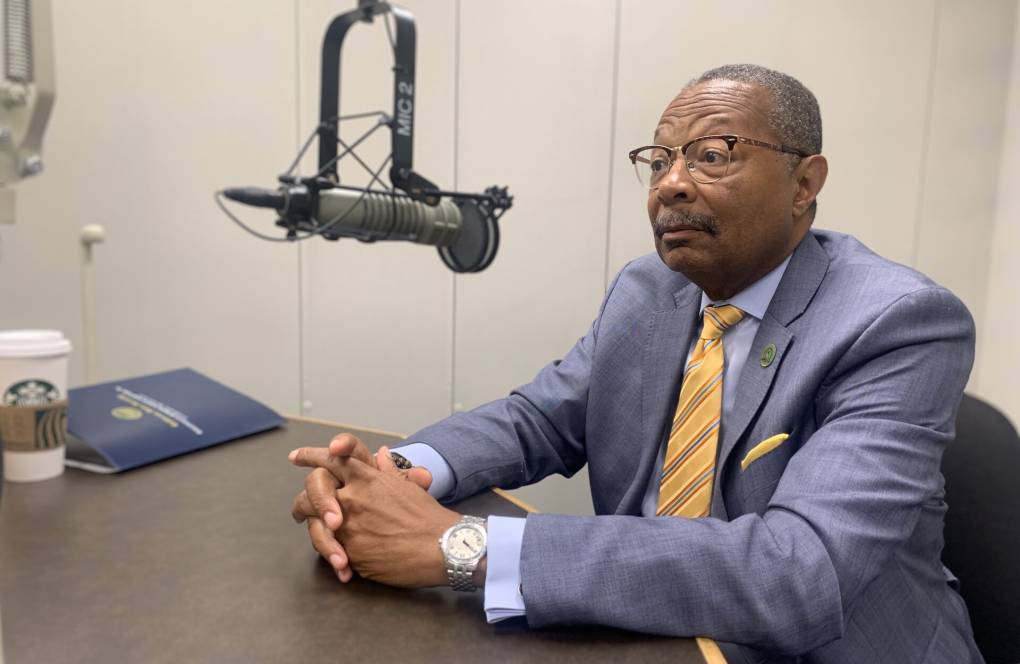
"caption": "Assemblymember Reggie Jones-Sawyer (D-Los Angeles), author of AB 3089, during an interview on KQED's Political Breakdown on Sept. 7, 2023 in Sacramento.",
"credit": "Guy Marzorati/KQED",
"altTag": "A man in a suite sits next to a microphone.",
"description": null,
"imgSizes": {
"medium": {
"file": "https://cdn.kqed.org/wp-content/uploads/sites/10/2024/05/IMG_5293_qut-800x521.jpg",
"width": 800,
"height": 521,
"mimeType": "image/jpeg"
},
"large": {
"file": "https://cdn.kqed.org/wp-content/uploads/sites/10/2024/05/IMG_5293_qut-1020x664.jpg",
"width": 1020,
"height": 664,
"mimeType": "image/jpeg"
},
"thumbnail": {
"file": "https://cdn.kqed.org/wp-content/uploads/sites/10/2024/05/IMG_5293_qut-160x104.jpg",
"width": 160,
"height": 104,
"mimeType": "image/jpeg"
},
"1536x1536": {
"file": "https://cdn.kqed.org/wp-content/uploads/sites/10/2024/05/IMG_5293_qut-1536x1000.jpg",
"width": 1536,
"height": 1000,
"mimeType": "image/jpeg"
},
"post-thumbnail": {
"file": "https://cdn.kqed.org/wp-content/uploads/sites/10/2024/05/IMG_5293_qut-672x372.jpg",
"width": 672,
"height": 372,
"mimeType": "image/jpeg"
},
"twentyfourteen-full-width": {
"file": "https://cdn.kqed.org/wp-content/uploads/sites/10/2024/05/IMG_5293_qut-1038x576.jpg",
"width": 1038,
"height": 576,
"mimeType": "image/jpeg"
},
"kqedFullSize": {
"file": "https://cdn.kqed.org/wp-content/uploads/sites/10/2024/05/IMG_5293_qut.jpg",
"width": 1920,
"height": 1250
}
},
"isLoading": false,
"fetchFailed": false
},
"news_11976639": {
"type": "attachments",
"id": "news_11976639",
"meta": {
"index": "attachments_1716263798",
"site": "news",
"id": "11976639",
"found": true
},
"title": "California Reparations",
"publishDate": 1708556757,
"status": "inherit",
"parent": 11976617,
"modified": 1712086259,
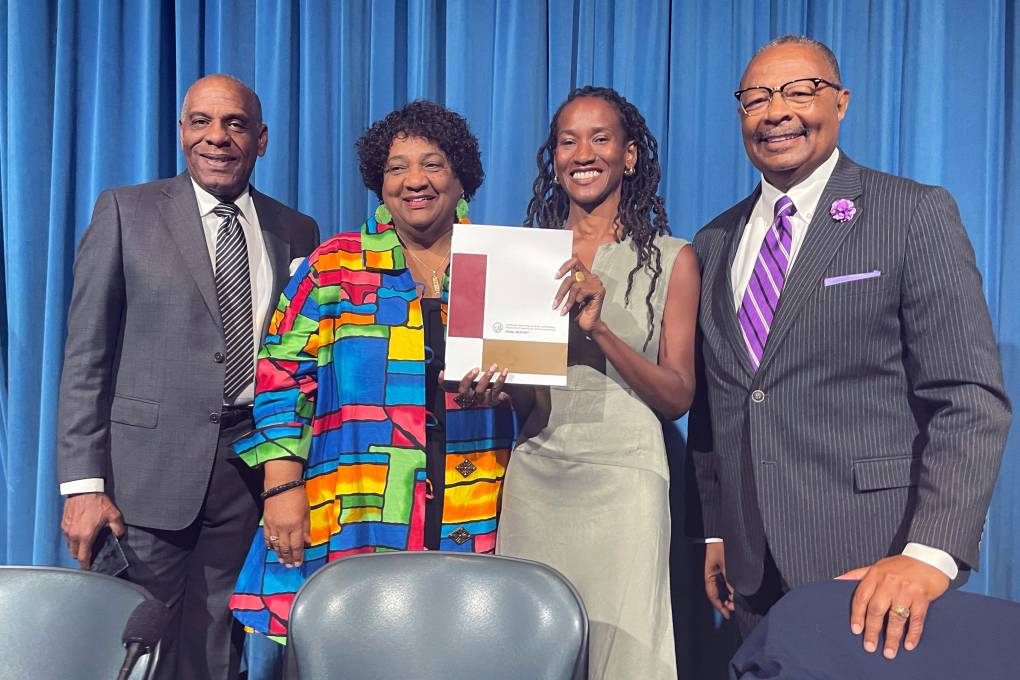
"caption": "From left, state Sen. Steven Bradford, Secretary of State Shirley Weber, task force member Lisa Holder and Assemblymember Reggie Jones-Sawyer hold up a final report of the California Task Force to Study and Develop Reparation Proposals for African Americans during a hearing in Sacramento on June 29, 2023.",
"credit": "Haven Daley/AP",
"altTag": "A group of men and women pose for a photo onstage.",
"description": null,
"imgSizes": {
"medium": {
"file": "https://cdn.kqed.org/wp-content/uploads/sites/10/2024/02/AP24032786348814-800x533.jpg",
"width": 800,
"height": 533,
"mimeType": "image/jpeg"
},
"large": {
"file": "https://cdn.kqed.org/wp-content/uploads/sites/10/2024/02/AP24032786348814-1020x680.jpg",
"width": 1020,
"height": 680,
"mimeType": "image/jpeg"
},
"thumbnail": {
"file": "https://cdn.kqed.org/wp-content/uploads/sites/10/2024/02/AP24032786348814-160x107.jpg",
"width": 160,
"height": 107,
"mimeType": "image/jpeg"
},
"1536x1536": {
"file": "https://cdn.kqed.org/wp-content/uploads/sites/10/2024/02/AP24032786348814-1536x1024.jpg",
"width": 1536,
"height": 1024,
"mimeType": "image/jpeg"
},
"2048x2048": {
"file": "https://cdn.kqed.org/wp-content/uploads/sites/10/2024/02/AP24032786348814-2048x1365.jpg",
"width": 2048,
"height": 1365,
"mimeType": "image/jpeg"
},
"post-thumbnail": {
"file": "https://cdn.kqed.org/wp-content/uploads/sites/10/2024/02/AP24032786348814-672x372.jpg",
"width": 672,
"height": 372,
"mimeType": "image/jpeg"
},
"twentyfourteen-full-width": {
"file": "https://cdn.kqed.org/wp-content/uploads/sites/10/2024/02/AP24032786348814-1038x576.jpg",
"width": 1038,
"height": 576,
"mimeType": "image/jpeg"
},
"full-width": {
"file": "https://cdn.kqed.org/wp-content/uploads/sites/10/2024/02/AP24032786348814-1920x1280.jpg",
"width": 1920,
"height": 1280,
"mimeType": "image/jpeg"
},
"kqedFullSize": {
"file": "https://cdn.kqed.org/wp-content/uploads/sites/10/2024/02/AP24032786348814-scaled-e1760735466495.jpg",
"width": 2000,
"height": 1334
}
},
"isLoading": false,
"fetchFailed": false
},
"news_11960807": {
"type": "attachments",
"id": "news_11960807",
"meta": {
"index": "attachments_1716263798",
"site": "news",
"id": "11960807",
"found": true
},
"parent": 0,
"imgSizes": {
"twentyfourteen-full-width": {
"file": "https://ww2.kqed.org/app/uploads/sites/10/2023/09/230911-MattieScottFreedomWest-019-BL-KQED-1038x576.jpg",
"width": 1038,
"mimeType": "image/jpeg",
"height": 576
},
"thumbnail": {
"file": "https://ww2.kqed.org/app/uploads/sites/10/2023/09/230911-MattieScottFreedomWest-019-BL-KQED-160x107.jpg",
"width": 160,
"mimeType": "image/jpeg",
"height": 107
},
"post-thumbnail": {
"file": "https://ww2.kqed.org/app/uploads/sites/10/2023/09/230911-MattieScottFreedomWest-019-BL-KQED-672x372.jpg",
"width": 672,
"mimeType": "image/jpeg",
"height": 372
},
"kqedFullSize": {
"file": "https://ww2.kqed.org/app/uploads/sites/10/2023/09/230911-MattieScottFreedomWest-019-BL-KQED.jpg",
"width": 2000,
"height": 1333
},
"large": {
"file": "https://ww2.kqed.org/app/uploads/sites/10/2023/09/230911-MattieScottFreedomWest-019-BL-KQED-1020x680.jpg",
"width": 1020,
"mimeType": "image/jpeg",
"height": 680
},
"1536x1536": {
"file": "https://ww2.kqed.org/app/uploads/sites/10/2023/09/230911-MattieScottFreedomWest-019-BL-KQED-1536x1024.jpg",
"width": 1536,
"mimeType": "image/jpeg",
"height": 1024
},
"full-width": {
"file": "https://ww2.kqed.org/app/uploads/sites/10/2023/09/230911-MattieScottFreedomWest-019-BL-KQED-1920x1280.jpg",
"width": 1920,
"mimeType": "image/jpeg",
"height": 1280
},
"medium": {
"file": "https://ww2.kqed.org/app/uploads/sites/10/2023/09/230911-MattieScottFreedomWest-019-BL-KQED-800x533.jpg",
"width": 800,
"mimeType": "image/jpeg",
"height": 533
}
},
"publishDate": 1694540028,
"modified": 1694644463,
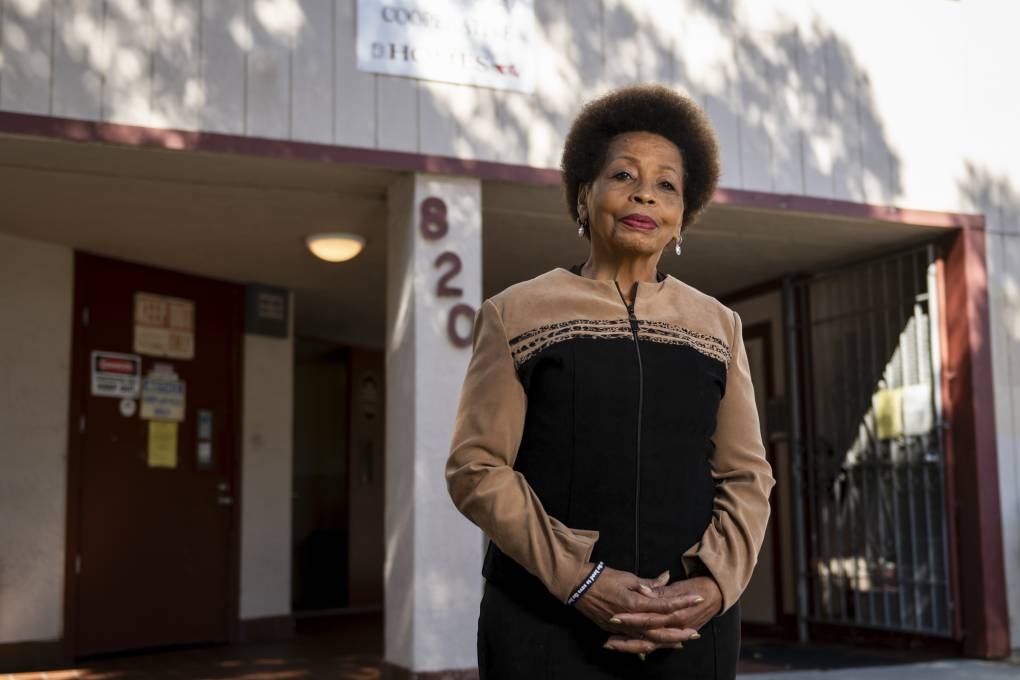
"caption": "Mattie Scott, a resident and board president of Freedom West Housing Corporation, stands in the housing cooperative in the Fillmore District on Sept. 11, 2023.",
"description": null,
"title": "230911-MattieScottFreedomWest-019-BL-KQED",
"credit": "Beth LaBerge/KQED",
"status": "inherit",
"altTag": "An older African American woman stands in front of a residential building, looking at the camera.",
"isLoading": false,
"fetchFailed": false
},
"news_11953159": {
"type": "attachments",
"id": "news_11953159",
"meta": {
"index": "attachments_1716263798",
"site": "news",
"id": "11953159",
"found": true
},
"parent": 0,
"imgSizes": {
"twentyfourteen-full-width": {
"file": "https://ww2.kqed.org/app/uploads/sites/10/2023/06/RS66328_230613-RealtorMontanaHooks-06-BL-KQED-1038x576.jpg",
"width": 1038,
"mimeType": "image/jpeg",
"height": 576
},
"thumbnail": {
"file": "https://ww2.kqed.org/app/uploads/sites/10/2023/06/RS66328_230613-RealtorMontanaHooks-06-BL-KQED-160x107.jpg",
"width": 160,
"mimeType": "image/jpeg",
"height": 107
},
"post-thumbnail": {
"file": "https://ww2.kqed.org/app/uploads/sites/10/2023/06/RS66328_230613-RealtorMontanaHooks-06-BL-KQED-672x372.jpg",
"width": 672,
"mimeType": "image/jpeg",
"height": 372
},
"kqedFullSize": {
"file": "https://ww2.kqed.org/app/uploads/sites/10/2023/06/RS66328_230613-RealtorMontanaHooks-06-BL-KQED.jpg",
"width": 2000,
"height": 1333
},
"large": {
"file": "https://ww2.kqed.org/app/uploads/sites/10/2023/06/RS66328_230613-RealtorMontanaHooks-06-BL-KQED-1020x680.jpg",
"width": 1020,
"mimeType": "image/jpeg",
"height": 680
},
"1536x1536": {
"file": "https://ww2.kqed.org/app/uploads/sites/10/2023/06/RS66328_230613-RealtorMontanaHooks-06-BL-KQED-1536x1024.jpg",
"width": 1536,
"mimeType": "image/jpeg",
"height": 1024
},
"full-width": {
"file": "https://ww2.kqed.org/app/uploads/sites/10/2023/06/RS66328_230613-RealtorMontanaHooks-06-BL-KQED-1920x1280.jpg",
"width": 1920,
"mimeType": "image/jpeg",
"height": 1280
},
"medium": {
"file": "https://ww2.kqed.org/app/uploads/sites/10/2023/06/RS66328_230613-RealtorMontanaHooks-06-BL-KQED-800x533.jpg",
"width": 800,
"mimeType": "image/jpeg",
"height": 533
}
},
"publishDate": 1686929820,
"modified": 1686930219,
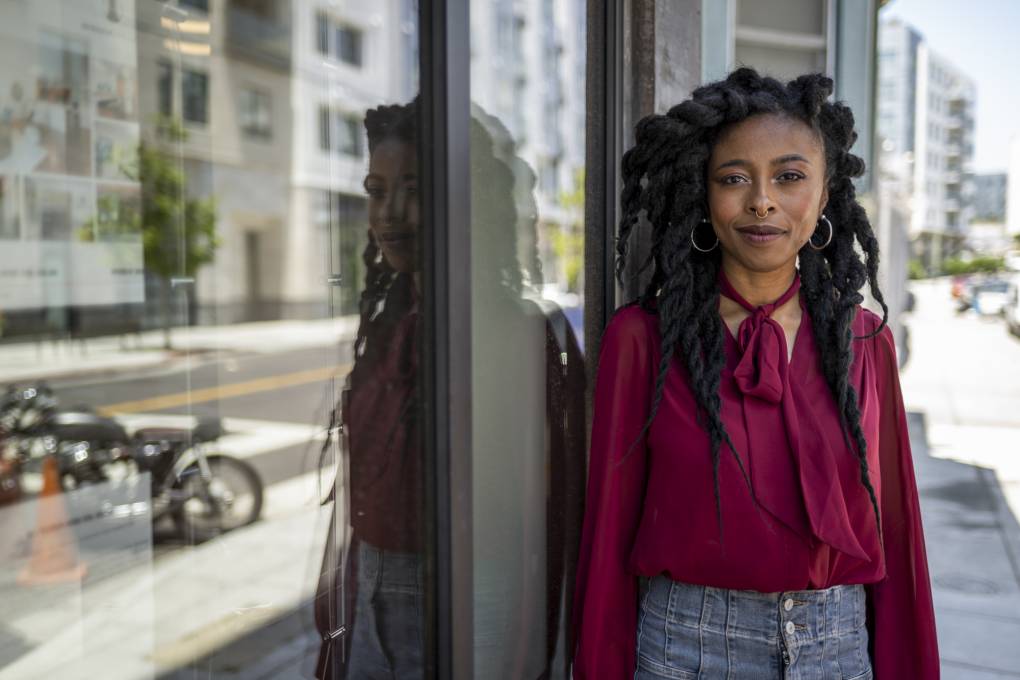
"caption": "Realtor Montana Gabrielle Hooks stands outside her realty office in the Uptown neighborhood of Oakland on June 15, 2023.",
"description": null,
"title": "RS66328_230613-RealtorMontanaHooks-06-BL-KQED",
"credit": "Beth LaBerge/KQED",
"status": "inherit",
"altTag": "A woman in a red top stands outdoors along a city sidewalk leaning against big pane glass windows and looking at the camera.",
"isLoading": false,
"fetchFailed": false
},
"news_11958021": {
"type": "attachments",
"id": "news_11958021",
"meta": {
"index": "attachments_1716263798",
"site": "news",
"id": "11958021",
"found": true
},
"parent": 0,
"imgSizes": {
"twentyfourteen-full-width": {
"file": "https://ww2.kqed.org/app/uploads/sites/10/2023/08/CalMattersDelta01-1038x576.jpg",
"width": 1038,
"mimeType": "image/jpeg",
"height": 576
},
"thumbnail": {
"file": "https://ww2.kqed.org/app/uploads/sites/10/2023/08/CalMattersDelta01-160x107.jpg",
"width": 160,
"mimeType": "image/jpeg",
"height": 107
},
"post-thumbnail": {
"file": "https://ww2.kqed.org/app/uploads/sites/10/2023/08/CalMattersDelta01-672x372.jpg",
"width": 672,
"mimeType": "image/jpeg",
"height": 372
},
"kqedFullSize": {
"file": "https://ww2.kqed.org/app/uploads/sites/10/2023/08/CalMattersDelta01.jpg",
"width": 2000,
"height": 1333
},
"large": {
"file": "https://ww2.kqed.org/app/uploads/sites/10/2023/08/CalMattersDelta01-1020x680.jpg",
"width": 1020,
"mimeType": "image/jpeg",
"height": 680
},
"1536x1536": {
"file": "https://ww2.kqed.org/app/uploads/sites/10/2023/08/CalMattersDelta01-1536x1024.jpg",
"width": 1536,
"mimeType": "image/jpeg",
"height": 1024
},
"full-width": {
"file": "https://ww2.kqed.org/app/uploads/sites/10/2023/08/CalMattersDelta01-1920x1280.jpg",
"width": 1920,
"mimeType": "image/jpeg",
"height": 1280
},
"medium": {
"file": "https://ww2.kqed.org/app/uploads/sites/10/2023/08/CalMattersDelta01-800x533.jpg",
"width": 800,
"mimeType": "image/jpeg",
"height": 533
}
},
"publishDate": 1691775880,
"modified": 1691776353,
"caption": "The Sacramento-San Joaquin River Delta on June 22, 2023. ",
"description": null,
"title": "CalMattersDelta01",
"credit": "Miguel Gutierrez Jr./CalMatters",
"status": "inherit",
"altTag": "An aerial shot of the Sacramento-San Joaquin River Delta.",
"isLoading": false,
"fetchFailed": false
},
"news_11946503": {
"type": "attachments",
"id": "news_11946503",
"meta": {
"index": "attachments_1716263798",
"site": "news",
"id": "11946503",
"found": true
},
"parent": 0,
"imgSizes": {
"twentyfourteen-full-width": {
"file": "https://ww2.kqed.org/app/uploads/sites/10/2023/04/RS6260_76754171-1038x576.jpg",
"width": 1038,
"mimeType": "image/jpeg",
"height": 576
},
"thumbnail": {
"file": "https://ww2.kqed.org/app/uploads/sites/10/2023/04/RS6260_76754171-160x107.jpg",
"width": 160,
"mimeType": "image/jpeg",
"height": 107
},
"post-thumbnail": {
"file": "https://ww2.kqed.org/app/uploads/sites/10/2023/04/RS6260_76754171-672x372.jpg",
"width": 672,
"mimeType": "image/jpeg",
"height": 372
},
"kqedFullSize": {
"file": "https://ww2.kqed.org/app/uploads/sites/10/2023/04/RS6260_76754171.jpg",
"width": 1920,
"height": 1280
},
"large": {
"file": "https://ww2.kqed.org/app/uploads/sites/10/2023/04/RS6260_76754171-1020x680.jpg",
"width": 1020,
"mimeType": "image/jpeg",
"height": 680
},
"1536x1536": {
"file": "https://ww2.kqed.org/app/uploads/sites/10/2023/04/RS6260_76754171-1536x1024.jpg",
"width": 1536,
"mimeType": "image/jpeg",
"height": 1024
},
"medium": {
"file": "https://ww2.kqed.org/app/uploads/sites/10/2023/04/RS6260_76754171-800x533.jpg",
"width": 800,
"mimeType": "image/jpeg",
"height": 533
}
},
"publishDate": 1681329479,
"modified": 1681329594,
"caption": "TK",
"description": null,
"title": "RS6260_76754171",
"credit": "Creatas/Getty Images",
"status": "inherit",
"altTag": "A small child's hand is raised in a classroom setting and is seen in focus. Blurred students are pictured behind the raised hand.",
"isLoading": false,
"fetchFailed": false
},
"news_11945869": {
"type": "attachments",
"id": "news_11945869",
"meta": {
"index": "attachments_1716263798",
"site": "news",
"id": "11945869",
"found": true
},
"parent": 11945690,
"imgSizes": {
"twentyfourteen-full-width": {
"file": "https://ww2.kqed.org/app/uploads/sites/10/2023/04/RS63311_003_KQED_CAReparationsTaskForceSac_03032023-qut-1038x576.jpg",
"width": 1038,
"mimeType": "image/jpeg",
"height": 576
},
"thumbnail": {
"file": "https://ww2.kqed.org/app/uploads/sites/10/2023/04/RS63311_003_KQED_CAReparationsTaskForceSac_03032023-qut-160x107.jpg",
"width": 160,
"mimeType": "image/jpeg",
"height": 107
},
"post-thumbnail": {
"file": "https://ww2.kqed.org/app/uploads/sites/10/2023/04/RS63311_003_KQED_CAReparationsTaskForceSac_03032023-qut-672x372.jpg",
"width": 672,
"mimeType": "image/jpeg",
"height": 372
},
"kqedFullSize": {
"file": "https://ww2.kqed.org/app/uploads/sites/10/2023/04/RS63311_003_KQED_CAReparationsTaskForceSac_03032023-qut.jpg",
"width": 1920,
"height": 1280
},
"large": {
"file": "https://ww2.kqed.org/app/uploads/sites/10/2023/04/RS63311_003_KQED_CAReparationsTaskForceSac_03032023-qut-1020x680.jpg",
"width": 1020,
"mimeType": "image/jpeg",
"height": 680
},
"1536x1536": {
"file": "https://ww2.kqed.org/app/uploads/sites/10/2023/04/RS63311_003_KQED_CAReparationsTaskForceSac_03032023-qut-1536x1024.jpg",
"width": 1536,
"mimeType": "image/jpeg",
"height": 1024
},
"medium": {
"file": "https://ww2.kqed.org/app/uploads/sites/10/2023/04/RS63311_003_KQED_CAReparationsTaskForceSac_03032023-qut-800x533.jpg",
"width": 800,
"mimeType": "image/jpeg",
"height": 533
}
},
"publishDate": 1680808342,
"modified": 1680809106,
"caption": "A crowd listens during opening remarks at a California Reparations Task Force meeting in Sacramento on March 3, 2023.",
"description": null,
"title": "RS63311_003_KQED_CAReparationsTaskForceSac_03032023-qut",
"credit": "Beth LaBerge/KQED",
"status": "inherit",
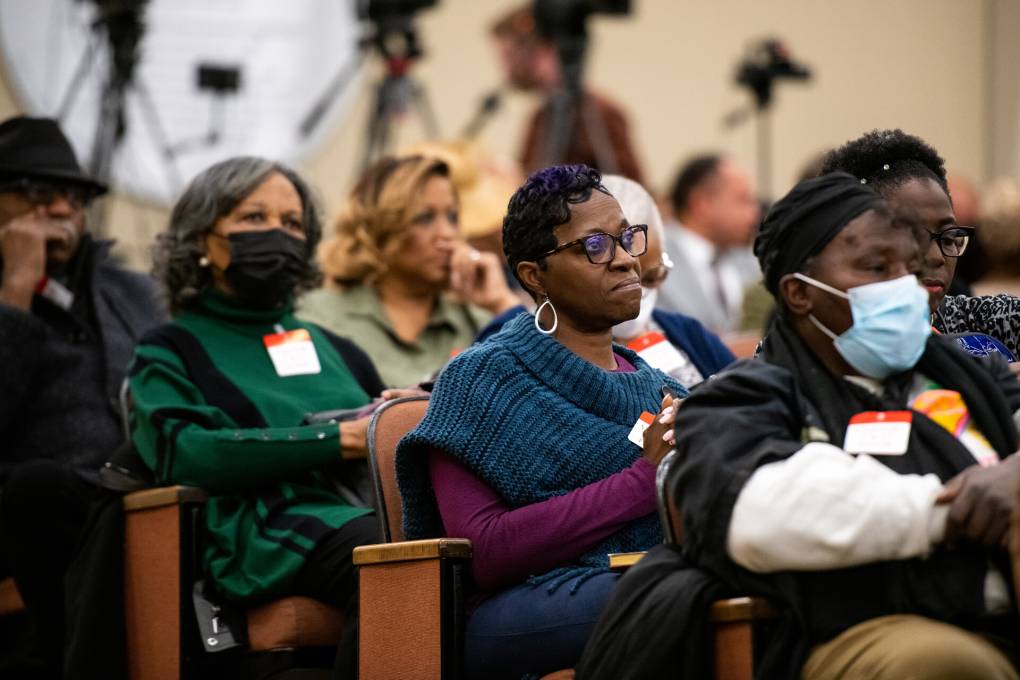
"altTag": "Rows of men and women sit in attendance listening intently to speakers during a California Reparations Task Force meeting. Many video cameras on tripods can be seen in the background.",
"isLoading": false,
"fetchFailed": false
},
"news_11935324": {
"type": "attachments",
"id": "news_11935324",
"meta": {
"index": "attachments_1716263798",
"site": "news",
"id": "11935324",
"found": true
},
"parent": 11935290,
"imgSizes": {
"twentyfourteen-full-width": {
"file": "https://ww2.kqed.org/app/uploads/sites/10/2022/12/California_Reparations_Task_Force_Oakland_City_Hall-1038x576.jpeg",
"width": 1038,
"mimeType": "image/jpeg",
"height": 576
},
"thumbnail": {
"file": "https://ww2.kqed.org/app/uploads/sites/10/2022/12/California_Reparations_Task_Force_Oakland_City_Hall-160x120.jpeg",
"width": 160,
"mimeType": "image/jpeg",
"height": 120
},
"post-thumbnail": {
"file": "https://ww2.kqed.org/app/uploads/sites/10/2022/12/California_Reparations_Task_Force_Oakland_City_Hall-672x372.jpeg",
"width": 672,
"mimeType": "image/jpeg",
"height": 372
},
"kqedFullSize": {
"file": "https://ww2.kqed.org/app/uploads/sites/10/2022/12/California_Reparations_Task_Force_Oakland_City_Hall.jpeg",
"width": 2048,
"height": 1536
},
"large": {
"file": "https://ww2.kqed.org/app/uploads/sites/10/2022/12/California_Reparations_Task_Force_Oakland_City_Hall-1020x765.jpeg",
"width": 1020,
"mimeType": "image/jpeg",
"height": 765
},
"1536x1536": {
"file": "https://ww2.kqed.org/app/uploads/sites/10/2022/12/California_Reparations_Task_Force_Oakland_City_Hall-1536x1152.jpeg",
"width": 1536,
"mimeType": "image/jpeg",
"height": 1152
},
"full-width": {
"file": "https://ww2.kqed.org/app/uploads/sites/10/2022/12/California_Reparations_Task_Force_Oakland_City_Hall-1920x1440.jpeg",
"width": 1920,
"mimeType": "image/jpeg",
"height": 1440
},
"medium": {
"file": "https://ww2.kqed.org/app/uploads/sites/10/2022/12/California_Reparations_Task_Force_Oakland_City_Hall-800x600.jpeg",
"width": 800,
"mimeType": "image/jpeg",
"height": 600
}
},
"publishDate": 1671061852,
"modified": 1671069349,
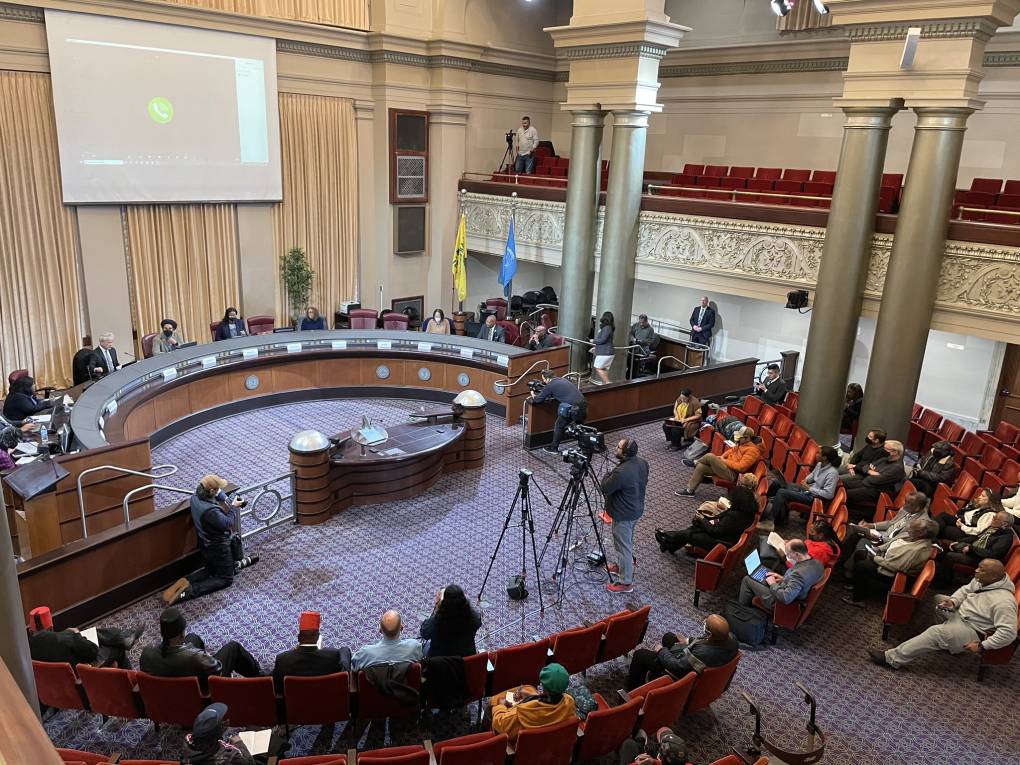
"caption": "California's Reparations Task Force meets at Oakland City Hall for the 11th hearing and third in-person meeting on Dec. 14, 2022, with seven of the nine task force members present.",
"description": null,
"title": "California_Reparations_Task_Force_Oakland_City_Hall",
"credit": "Annelise Finney/KQED",
"status": "inherit",
"altTag": "A photo from above of a large hall with seated task force members and press covering as a person speaks on a dais.",
"isLoading": false,
"fetchFailed": false
},
"news_11925093": {
"type": "attachments",
"id": "news_11925093",
"meta": {
"index": "attachments_1716263798",
"site": "news",
"id": "11925093",
"found": true
},
"parent": 11925020,
"imgSizes": {
"twentyfourteen-full-width": {
"file": "https://ww2.kqed.org/app/uploads/sites/10/2022/09/03_Maxine_park-1038x576.jpg",
"width": 1038,
"mimeType": "image/jpeg",
"height": 576
},
"thumbnail": {
"file": "https://ww2.kqed.org/app/uploads/sites/10/2022/09/03_Maxine_park-160x120.jpg",
"width": 160,
"mimeType": "image/jpeg",
"height": 120
},
"post-thumbnail": {
"file": "https://ww2.kqed.org/app/uploads/sites/10/2022/09/03_Maxine_park-672x372.jpg",
"width": 672,
"mimeType": "image/jpeg",
"height": 372
},
"kqedFullSize": {
"file": "https://ww2.kqed.org/app/uploads/sites/10/2022/09/03_Maxine_park.jpg",
"width": 1920,
"height": 1440
},
"large": {
"file": "https://ww2.kqed.org/app/uploads/sites/10/2022/09/03_Maxine_park-1020x765.jpg",
"width": 1020,
"mimeType": "image/jpeg",
"height": 765
},
"1536x1536": {
"file": "https://ww2.kqed.org/app/uploads/sites/10/2022/09/03_Maxine_park-1536x1152.jpg",
"width": 1536,
"mimeType": "image/jpeg",
"height": 1152
},
"medium": {
"file": "https://ww2.kqed.org/app/uploads/sites/10/2022/09/03_Maxine_park-800x600.jpg",
"width": 800,
"mimeType": "image/jpeg",
"height": 600
}
},
"publishDate": 1662739973,
"modified": 1662750681,
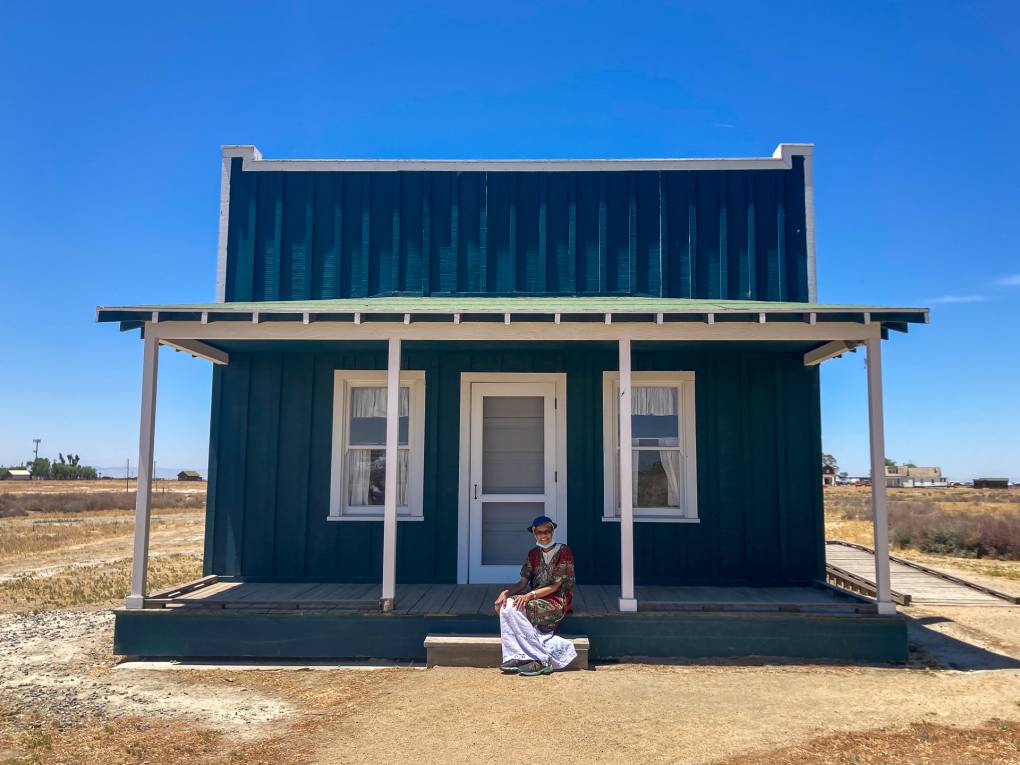
"caption": "Maxine Butler of Oakland, who recently learned she had relatives who lived in Allensworth, sits in front of a restored building in Colonel Allensworth State Historic Park, established in 1976.",
"description": null,
"title": "03_Maxine_park",
"credit": "Lakshmi Sarah/KQED",
"status": "inherit",
"altTag": "a woman sits in front of a blue building in a desert",
"isLoading": false,
"fetchFailed": false
},
"news_11916075": {
"type": "attachments",
"id": "news_11916075",
"meta": {
"index": "attachments_1716263798",
"site": "news",
"id": "11916075",
"found": true
},
"parent": 11916026,
"imgSizes": {
"twentyfourteen-full-width": {
"file": "https://ww2.kqed.org/app/uploads/sites/10/2022/06/RS56284_027_KQED_OaklandReparationsListeningSession_05282022-qut-1038x576.jpg",
"width": 1038,
"mimeType": "image/jpeg",
"height": 576
},
"thumbnail": {
"file": "https://ww2.kqed.org/app/uploads/sites/10/2022/06/RS56284_027_KQED_OaklandReparationsListeningSession_05282022-qut-160x107.jpg",
"width": 160,
"mimeType": "image/jpeg",
"height": 107
},
"post-thumbnail": {
"file": "https://ww2.kqed.org/app/uploads/sites/10/2022/06/RS56284_027_KQED_OaklandReparationsListeningSession_05282022-qut-672x372.jpg",
"width": 672,
"mimeType": "image/jpeg",
"height": 372
},
"kqedFullSize": {
"file": "https://ww2.kqed.org/app/uploads/sites/10/2022/06/RS56284_027_KQED_OaklandReparationsListeningSession_05282022-qut.jpg",
"width": 1920,
"height": 1278
},
"large": {
"file": "https://ww2.kqed.org/app/uploads/sites/10/2022/06/RS56284_027_KQED_OaklandReparationsListeningSession_05282022-qut-1020x679.jpg",
"width": 1020,
"mimeType": "image/jpeg",
"height": 679
},
"1536x1536": {
"file": "https://ww2.kqed.org/app/uploads/sites/10/2022/06/RS56284_027_KQED_OaklandReparationsListeningSession_05282022-qut-1536x1022.jpg",
"width": 1536,
"mimeType": "image/jpeg",
"height": 1022
},
"medium": {
"file": "https://ww2.kqed.org/app/uploads/sites/10/2022/06/RS56284_027_KQED_OaklandReparationsListeningSession_05282022-qut-800x533.jpg",
"width": 800,
"mimeType": "image/jpeg",
"height": 533
}
},
"publishDate": 1654302679,
"modified": 1654644193,
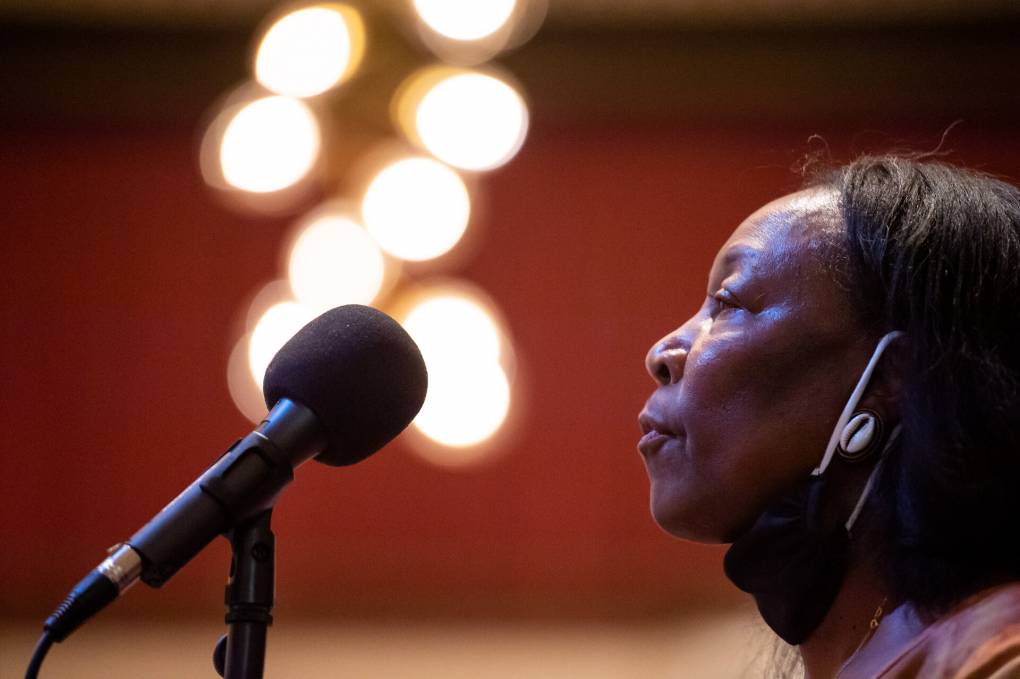
"caption": "Allie Whitehurst speaks during a reparations listening session in Oakland on May 28, 2022. Whitehurst emphasized the importance of correcting educational disparities, including reducing class sizes and getting kids the personal attention they need. 'That, to me, would be one of the ways in which we can provide reparations, because when this boat rises for Black folk, it rises for everybody,' she said.",
"description": null,
"title": "RS56284_027_KQED_OaklandReparationsListeningSession_05282022-qut",
"credit": "Beth LaBerge/KQED",
"status": "inherit",
"altTag": "An older Black woman with straight black hair and a cowry-shell earring is photographed close up and in left profile before a microphone, her head tilted slightly back, her expression stoic, and her lips closed (she is not speaking). In the background is a blurred brown wall and 10 orbs of bright, blurred overhead lights, as from a chandelier.",
"isLoading": false,
"fetchFailed": false
},
"news_11890051": {
"type": "attachments",
"id": "news_11890051",
"meta": {
"index": "attachments_1716263798",
"site": "news",
"id": "11890051",
"found": true
},
"parent": 11889997,
"imgSizes": {
"twentyfourteen-full-width": {
"file": "https://ww2.kqed.org/app/uploads/sites/10/2021/09/RS48778_016_Berkeley_JocelynForemanSigningCeremony_04232021-qut-1038x576.jpg",
"width": 1038,
"mimeType": "image/jpeg",
"height": 576
},
"thumbnail": {
"file": "https://ww2.kqed.org/app/uploads/sites/10/2021/09/RS48778_016_Berkeley_JocelynForemanSigningCeremony_04232021-qut-160x107.jpg",
"width": 160,
"mimeType": "image/jpeg",
"height": 107
},
"post-thumbnail": {
"file": "https://ww2.kqed.org/app/uploads/sites/10/2021/09/RS48778_016_Berkeley_JocelynForemanSigningCeremony_04232021-qut-672x372.jpg",
"width": 672,
"mimeType": "image/jpeg",
"height": 372
},
"kqedFullSize": {
"file": "https://ww2.kqed.org/app/uploads/sites/10/2021/09/RS48778_016_Berkeley_JocelynForemanSigningCeremony_04232021-qut.jpg",
"width": 1574,
"height": 1049
},
"large": {
"file": "https://ww2.kqed.org/app/uploads/sites/10/2021/09/RS48778_016_Berkeley_JocelynForemanSigningCeremony_04232021-qut-1020x680.jpg",
"width": 1020,
"mimeType": "image/jpeg",
"height": 680
},
"1536x1536": {
"file": "https://ww2.kqed.org/app/uploads/sites/10/2021/09/RS48778_016_Berkeley_JocelynForemanSigningCeremony_04232021-qut-1536x1024.jpg",
"width": 1536,
"mimeType": "image/jpeg",
"height": 1024
},
"medium": {
"file": "https://ww2.kqed.org/app/uploads/sites/10/2021/09/RS48778_016_Berkeley_JocelynForemanSigningCeremony_04232021-qut-800x533.jpg",
"width": 800,
"mimeType": "image/jpeg",
"height": 533
}
},
"publishDate": 1632777124,
"modified": 1632859238,
"caption": "State Senator Nancy Skinner speaks at Malcolm X Elementary School in Berkeley on April 23, 2021. Earlier this year, Skinner introduced SB 65, which would write into state law a committee that would investigate every death of a birthing parent and allow for voluntary interviews of family members to better understand what happened.",
"description": "Senator Nancy Skinner speaks, next to Jocelyn Foreman, during a signing ceremony and celebration at Malcolm X Elementary School in Berkeley on April 23, 2021.",
"title": "RS48778_016_Berkeley_JocelynForemanSigningCeremony_04232021-qut",
"credit": "Beth LaBerge/KQED",
"status": "inherit",
"altTag": "Senator Nancy Skinner, wearing a face mask and standing in front of microphones, looks into the distance.",
"isLoading": false,
"fetchFailed": false
},
"news_11829323": {
"type": "attachments",
"id": "news_11829323",
"meta": {
"index": "attachments_1716263798",
"site": "news",
"id": "11829323",
"found": true
},
"parent": 11829316,
"imgSizes": {
"apple_news_ca_landscape_5_5": {
"file": "https://ww2.kqed.org/app/uploads/sites/10/2020/07/062220_HousingMigration_AW_sized_10-1044x783.jpg",
"width": 1044,
"mimeType": "image/jpeg",
"height": 783
},
"apple_news_ca_square_4_0": {
"file": "https://ww2.kqed.org/app/uploads/sites/10/2020/07/062220_HousingMigration_AW_sized_10-470x470.jpg",
"width": 470,
"mimeType": "image/jpeg",
"height": 470
},
"twentyfourteen-full-width": {
"file": "https://ww2.kqed.org/app/uploads/sites/10/2020/07/062220_HousingMigration_AW_sized_10-1038x576.jpg",
"width": 1038,
"mimeType": "image/jpeg",
"height": 576
},
"thumbnail": {
"file": "https://ww2.kqed.org/app/uploads/sites/10/2020/07/062220_HousingMigration_AW_sized_10-160x107.jpg",
"width": 160,
"mimeType": "image/jpeg",
"height": 107
},
"post-thumbnail": {
"file": "https://ww2.kqed.org/app/uploads/sites/10/2020/07/062220_HousingMigration_AW_sized_10-672x372.jpg",
"width": 672,
"mimeType": "image/jpeg",
"height": 372
},
"kqedFullSize": {
"file": "https://ww2.kqed.org/app/uploads/sites/10/2020/07/062220_HousingMigration_AW_sized_10.jpg",
"width": 2000,
"height": 1333
},
"apple_news_ca_landscape_4_7": {
"file": "https://ww2.kqed.org/app/uploads/sites/10/2020/07/062220_HousingMigration_AW_sized_10-632x474.jpg",
"width": 632,
"mimeType": "image/jpeg",
"height": 474
},
"large": {
"file": "https://ww2.kqed.org/app/uploads/sites/10/2020/07/062220_HousingMigration_AW_sized_10-1020x680.jpg",
"width": 1020,
"mimeType": "image/jpeg",
"height": 680
},
"apple_news_ca_landscape_4_0": {
"file": "https://ww2.kqed.org/app/uploads/sites/10/2020/07/062220_HousingMigration_AW_sized_10-536x402.jpg",
"width": 536,
"mimeType": "image/jpeg",
"height": 402
},
"apple_news_ca_portrait_12_9": {
"file": "https://ww2.kqed.org/app/uploads/sites/10/2020/07/062220_HousingMigration_AW_sized_10-1122x1333.jpg",
"width": 1122,
"mimeType": "image/jpeg",
"height": 1333
},
"medium": {
"file": "https://ww2.kqed.org/app/uploads/sites/10/2020/07/062220_HousingMigration_AW_sized_10-800x533.jpg",
"width": 800,
"mimeType": "image/jpeg",
"height": 533
},
"apple_news_ca_portrait_4_0": {
"file": "https://ww2.kqed.org/app/uploads/sites/10/2020/07/062220_HousingMigration_AW_sized_10-354x472.jpg",
"width": 354,
"mimeType": "image/jpeg",
"height": 472
},
"apple_news_ca_portrait_9_7": {
"file": "https://ww2.kqed.org/app/uploads/sites/10/2020/07/062220_HousingMigration_AW_sized_10-840x1120.jpg",
"width": 840,
"mimeType": "image/jpeg",
"height": 1120
},
"apple_news_ca_landscape_12_9": {
"file": "https://ww2.kqed.org/app/uploads/sites/10/2020/07/062220_HousingMigration_AW_sized_10-1832x1333.jpg",
"width": 1832,
"mimeType": "image/jpeg",
"height": 1333
},
"apple_news_ca_square_9_7": {
"file": "https://ww2.kqed.org/app/uploads/sites/10/2020/07/062220_HousingMigration_AW_sized_10-1104x1104.jpg",
"width": 1104,
"mimeType": "image/jpeg",
"height": 1104
},
"1536x1536": {
"file": "https://ww2.kqed.org/app/uploads/sites/10/2020/07/062220_HousingMigration_AW_sized_10-1536x1024.jpg",
"width": 1536,
"mimeType": "image/jpeg",
"height": 1024
},
"apple_news_ca_portrait_4_7": {
"file": "https://ww2.kqed.org/app/uploads/sites/10/2020/07/062220_HousingMigration_AW_sized_10-414x552.jpg",
"width": 414,
"mimeType": "image/jpeg",
"height": 552
},
"apple_news_ca_square_12_9": {
"file": "https://ww2.kqed.org/app/uploads/sites/10/2020/07/062220_HousingMigration_AW_sized_10-1472x1333.jpg",
"width": 1472,
"mimeType": "image/jpeg",
"height": 1333
},
"apple_news_ca_portrait_5_5": {
"file": "https://ww2.kqed.org/app/uploads/sites/10/2020/07/062220_HousingMigration_AW_sized_10-687x916.jpg",
"width": 687,
"mimeType": "image/jpeg",
"height": 916
},
"full-width": {
"file": "https://ww2.kqed.org/app/uploads/sites/10/2020/07/062220_HousingMigration_AW_sized_10-1920x1280.jpg",
"width": 1920,
"mimeType": "image/jpeg",
"height": 1280
},
"apple_news_ca_square_4_7": {
"file": "https://ww2.kqed.org/app/uploads/sites/10/2020/07/062220_HousingMigration_AW_sized_10-550x550.jpg",
"width": 550,
"mimeType": "image/jpeg",
"height": 550
},
"apple_news_ca_landscape_9_7": {
"file": "https://ww2.kqed.org/app/uploads/sites/10/2020/07/062220_HousingMigration_AW_sized_10-1376x1032.jpg",
"width": 1376,
"mimeType": "image/jpeg",
"height": 1032
},
"apple_news_ca_square_5_5": {
"file": "https://ww2.kqed.org/app/uploads/sites/10/2020/07/062220_HousingMigration_AW_sized_10-912x912.jpg",
"width": 912,
"mimeType": "image/jpeg",
"height": 912
}
},
"publishDate": 1594946622,
"modified": 1594947242,
"caption": "Sharie Wilson in the kitchen of her remodeled Elk Grove home on June 22, 2020. Wilson says that when the bought the home it was the ‘worst on the block’ but was able to turn it into a space that she’s proud of.",
"description": null,
"title": "062220_HousingMigration_AW_sized_10",
"credit": "Anne Wernikoff/CalMatters",
"status": "inherit",
"isLoading": false,
"fetchFailed": false
}
},
"audioPlayerReducer": {
"postId": "stream_live",
"isPaused": true,
"isPlaying": false,
"pfsActive": false,
"pledgeModalIsOpen": true,
"playerDrawerIsOpen": false,
"liveAudioPlayStartedAt": 0,
"liveAudioPlayContext": ""
},
"authorsReducer": {
"byline_news_11958011": {
"type": "authors",
"id": "byline_news_11958011",
"meta": {
"override": true
},
"slug": "byline_news_11958011",
"name": "\u003ca href=\"https://calmatters.org/author/rachel-becker/\">Rachel Becker\u003c/a>",
"isLoading": false
},
"byline_news_11946471": {
"type": "authors",
"id": "byline_news_11946471",
"meta": {
"override": true
},
"slug": "byline_news_11946471",
"name": "\u003ca href=\"https://twitter.com/sophieadanna\">Sophie Austin\u003c/a>\u003cbr> The Associated Press",
"isLoading": false
},
"byline_news_11935290": {
"type": "authors",
"id": "byline_news_11935290",
"meta": {
"override": true
},
"slug": "byline_news_11935290",
"name": "Sophie Austin and Janie Har\u003cbr>The Associated Press",
"isLoading": false
},
"byline_news_11829316": {
"type": "authors",
"id": "byline_news_11829316",
"meta": {
"override": true
},
"slug": "byline_news_11829316",
"name": "\u003ca href=\"https://calmatters.org/author/laurenhepler/\">Lauren Hepler\u003c/a>",
"isLoading": false
},
"gmarzorati": {
"type": "authors",
"id": "227",
"meta": {
"index": "authors_1716337520",
"id": "227",
"found": true
},
"name": "Guy Marzorati",
"firstName": "Guy",
"lastName": "Marzorati",
"slug": "gmarzorati",
"email": "gmarzorati@KQED.org",
"display_author_email": true,
"staff_mastheads": [
"news"
],
"title": "Correspondent",
"bio": "Guy Marzorati is a correspondent on KQED's California Politics and Government Desk, based in San Jose. A graduate of Santa Clara University, Guy joined KQED in 2013. He reports on state and local politics and produces KQED's digital voter guide.",
"avatar": "https://secure.gravatar.com/avatar/e7038b8dbfd55b104369b76b1cd0b9de?s=600&d=blank&r=g",
"twitter": "guymarzorati",
"facebook": null,
"instagram": null,
"linkedin": null,
"sites": [
{
"site": "",
"roles": [
"editor"
]
},
{
"site": "news",
"roles": [
"editor"
]
},
{
"site": "science",
"roles": [
"editor"
]
},
{
"site": "forum",
"roles": [
"editor"
]
},
{
"site": "elections",
"roles": [
"editor"
]
},
{
"site": "liveblog",
"roles": [
"editor"
]
}
],
"headData": {
"title": "Guy Marzorati | KQED",
"description": "Correspondent",
"ogImgSrc": "https://secure.gravatar.com/avatar/e7038b8dbfd55b104369b76b1cd0b9de?s=600&d=blank&r=g",
"twImgSrc": "https://secure.gravatar.com/avatar/e7038b8dbfd55b104369b76b1cd0b9de?s=600&d=blank&r=g"
},
"isLoading": false,
"link": "/author/gmarzorati"
},
"kqed": {
"type": "authors",
"id": "236",
"meta": {
"index": "authors_1716337520",
"id": "236",
"found": true
},
"name": "KQED News Staff",
"firstName": "KQED News Staff",
"lastName": null,
"slug": "kqed",
"email": "faq@kqed.org",
"display_author_email": false,
"staff_mastheads": [],
"title": null,
"bio": null,
"avatar": "https://secure.gravatar.com/avatar/ef0e801a68c4c54afa9180db14084167?s=600&d=blank&r=g",
"twitter": null,
"facebook": null,
"instagram": null,
"linkedin": null,
"sites": [
{
"site": "arts",
"roles": [
"contributor"
]
},
{
"site": "news",
"roles": [
"editor"
]
},
{
"site": "futureofyou",
"roles": [
"author"
]
}
],
"headData": {
"title": "KQED News Staff | KQED",
"description": null,
"ogImgSrc": "https://secure.gravatar.com/avatar/ef0e801a68c4c54afa9180db14084167?s=600&d=blank&r=g",
"twImgSrc": "https://secure.gravatar.com/avatar/ef0e801a68c4c54afa9180db14084167?s=600&d=blank&r=g"
},
"isLoading": false,
"link": "/author/kqed"
},
"kqednewsstaffandwires": {
"type": "authors",
"id": "237",
"meta": {
"index": "authors_1716337520",
"id": "237",
"found": true
},
"name": "KQED News Staff and Wires",
"firstName": "KQED News Staff and Wires",
"lastName": null,
"slug": "kqednewsstaffandwires",
"email": "onlinenewsstaff@kqed.org",
"display_author_email": false,
"staff_mastheads": [],
"title": null,
"bio": null,
"avatar": "https://secure.gravatar.com/avatar/72295af8ebbfbd19a4948f5271285664?s=600&d=blank&r=g",
"twitter": null,
"facebook": null,
"instagram": null,
"linkedin": null,
"sites": [
{
"site": "arts",
"roles": [
"contributor"
]
},
{
"site": "news",
"roles": [
"contributor"
]
},
{
"site": "lowdown",
"roles": [
"author"
]
},
{
"site": "stateofhealth",
"roles": [
"contributor"
]
},
{
"site": "food",
"roles": [
"author"
]
}
],
"headData": {
"title": "KQED News Staff and Wires | KQED",
"description": null,
"ogImgSrc": "https://secure.gravatar.com/avatar/72295af8ebbfbd19a4948f5271285664?s=600&d=blank&r=g",
"twImgSrc": "https://secure.gravatar.com/avatar/72295af8ebbfbd19a4948f5271285664?s=600&d=blank&r=g"
},
"isLoading": false,
"link": "/author/kqednewsstaffandwires"
},
"lsarah": {
"type": "authors",
"id": "11626",
"meta": {
"index": "authors_1716337520",
"id": "11626",
"found": true
},
"name": "Lakshmi Sarah",
"firstName": "Lakshmi",
"lastName": "Sarah",
"slug": "lsarah",
"email": "lsarah@kqed.org",
"display_author_email": false,
"staff_mastheads": [],
"title": "Digital Producer",
"bio": "Lakshmi Sarah is an educator, author and journalist with a focus on innovative storytelling. She has worked with newspapers, radio and magazines from Ahmedabad, India to Los Angeles, California. She has written and produced for Die Zeit, Global Voices, AJ+, KQED, Fusion Media Group and the New York Times.",
"avatar": "https://secure.gravatar.com/avatar/652dcaecd8b28826fc17a8b2d6bb4e93?s=600&d=blank&r=g",
"twitter": "lakitalki",
"facebook": null,
"instagram": "https://www.instagram.com/laki.talki/",
"linkedin": "https://www.linkedin.com/in/lakisarah/",
"sites": [
{
"site": "arts",
"roles": []
},
{
"site": "news",
"roles": []
},
{
"site": "bayareabites",
"roles": []
},
{
"site": "science",
"roles": []
}
],
"headData": {
"title": "Lakshmi Sarah | KQED",
"description": "Digital Producer",
"ogImgSrc": "https://secure.gravatar.com/avatar/652dcaecd8b28826fc17a8b2d6bb4e93?s=600&d=blank&r=g",
"twImgSrc": "https://secure.gravatar.com/avatar/652dcaecd8b28826fc17a8b2d6bb4e93?s=600&d=blank&r=g"
},
"isLoading": false,
"link": "/author/lsarah"
},
"btorres": {
"type": "authors",
"id": "11666",
"meta": {
"index": "authors_1716337520",
"id": "11666",
"found": true
},
"name": "Blanca Torres",
"firstName": "Blanca",
"lastName": "Torres",
"slug": "btorres",
"email": "btorres@kqed.org",
"display_author_email": true,
"staff_mastheads": [
"news"
],
"title": "Producer, Forum",
"bio": "Blanca Torres brings sharp news judgement and keen sense of lively conversation to her work as producer for Forum. She loves producing shows that leave listeners feeling like they heard distinctive voices, learned something new and gained a fresh perspective.\r\n\r\nShe joined KQED in January of 2020 after 16 years of working as a newspaper reporter most recently at the \u003cem>San Francisco Business Times,\u003c/em> where she wrote about real estate and economic development. Before that, she covered a variety of beats including crime, education, retail, workplace, the economy, consumer issues, and small business for the \u003cem>Contra Costa Times, Baltimore Sun\u003c/em> and\u003cem> The Seattle Times\u003c/em>. In addition to reporting, she worked as an editorial writer and columnist for the \u003cem>Seattle Times\u003c/em>. From 2017 to 2020, Blanca won a total of ten awards from the National Association of Real Estate Editors and won first place for land use reporting from the California News Publishers Association two years in a row. She is also a member and former board member for the National Association of Hispanic Journalists.\r\n\r\nA native of the Pacific Northwest, Blanca earned her bachelor's degree from Vanderbilt University in Nashville and a master's in fine arts in creative writing at Mills College. She lives in the East Bay with her family.",
"avatar": "https://secure.gravatar.com/avatar/50b49d19b14a1eed34f26ebf4681152cdd81574ed21851100871ccd29e578cdc?s=600&d=blank&r=g",
"twitter": "@blancawrites",
"bluesky": null,
"facebook": null,
"instagram": null,
"linkedin": null,
"sites": [
{
"site": "arts",
"roles": [
"editor"
]
},
{
"site": "news",
"roles": [
"editor"
]
},
{
"site": "forum",
"roles": [
"editor"
]
}
],
"headData": {
"title": "Blanca Torres | KQED",
"description": "Producer, Forum",
"ogImgSrc": "https://secure.gravatar.com/avatar/50b49d19b14a1eed34f26ebf4681152cdd81574ed21851100871ccd29e578cdc?s=600&d=blank&r=g",
"twImgSrc": "https://secure.gravatar.com/avatar/50b49d19b14a1eed34f26ebf4681152cdd81574ed21851100871ccd29e578cdc?s=600&d=blank&r=g"
},
"isLoading": false,
"link": "/author/btorres"
},
"otaylor": {
"type": "authors",
"id": "11770",
"meta": {
"index": "authors_1716337520",
"id": "11770",
"found": true
},
"name": "Otis R. Taylor Jr.",
"firstName": "Otis R.",
"lastName": "Taylor Jr.",
"slug": "otaylor",
"email": "otaylor@kqed.org",
"display_author_email": false,
"staff_mastheads": [
"news"
],
"title": "KQED Editor",
"bio": null,
"avatar": "https://secure.gravatar.com/avatar/fe73e14d4842ac8e1c03d57def2530f57f1c5b0ca7d4a987ccc5bd90956cb7c6?s=600&d=blank&r=g",
"twitter": "otisrtaylorjr",
"bluesky": null,
"facebook": null,
"instagram": null,
"linkedin": null,
"sites": [
{
"site": "arts",
"roles": [
"subscriber"
]
},
{
"site": "news",
"roles": [
"subscriber"
]
},
{
"site": "science",
"roles": [
"subscriber"
]
},
{
"site": "liveblog",
"roles": [
"subscriber"
]
}
],
"headData": {
"title": "Otis R. Taylor Jr. | KQED",
"description": "KQED Editor",
"ogImgSrc": "https://secure.gravatar.com/avatar/fe73e14d4842ac8e1c03d57def2530f57f1c5b0ca7d4a987ccc5bd90956cb7c6?s=600&d=blank&r=g",
"twImgSrc": "https://secure.gravatar.com/avatar/fe73e14d4842ac8e1c03d57def2530f57f1c5b0ca7d4a987ccc5bd90956cb7c6?s=600&d=blank&r=g"
},
"isLoading": false,
"link": "/author/otaylor"
},
"sjohnson": {
"type": "authors",
"id": "11840",
"meta": {
"index": "authors_1716337520",
"id": "11840",
"found": true
},
"name": "Sydney Johnson",
"firstName": "Sydney",
"lastName": "Johnson",
"slug": "sjohnson",
"email": "sjohnson@kqed.org",
"display_author_email": false,
"staff_mastheads": [
"news"
],
"title": "KQED Reporter",
"bio": "Sydney Johnson is a general assignment reporter at KQED. She previously reported on public health and city government at the San Francisco Examiner, and before that, she covered statewide education policy for EdSource. Her reporting has won multiple local, state and national awards. Sydney is a graduate of the University of California, Berkeley and lives in San Francisco.",
"avatar": "https://secure.gravatar.com/avatar/97855f2719b72ad6190b7c535fe642c8?s=600&d=blank&r=g",
"twitter": "sydneyfjohnson",
"facebook": null,
"instagram": null,
"linkedin": null,
"sites": [
{
"site": "news",
"roles": [
"editor"
]
}
],
"headData": {
"title": "Sydney Johnson | KQED",
"description": "KQED Reporter",
"ogImgSrc": "https://secure.gravatar.com/avatar/97855f2719b72ad6190b7c535fe642c8?s=600&d=blank&r=g",
"twImgSrc": "https://secure.gravatar.com/avatar/97855f2719b72ad6190b7c535fe642c8?s=600&d=blank&r=g"
},
"isLoading": false,
"link": "/author/sjohnson"
}
},
"pagesReducer": {
"news_tag_black-californians": {
"type": "terms",
"id": "news_28272",
"meta": {
"index": "terms_1716263798",
"site": "news",
"id": "28272",
"score": 10.403168
},
"featImg": null,
"name": "black californians",
"description": null,
"taxonomy": "tag",
"headData": {
"twImgId": null,
"twTitle": null,
"ogTitle": null,
"ogImgId": null,
"twDescription": null,
"description": null,
"title": "black californians Archives | KQED News",
"ogDescription": null
},
"ttid": 28289,
"slug": "black-californians",
"isLoading": false,
"title": "black californians",
"pageMeta": {
"site": "news",
"WpPageTemplate": "page-topic-editorial",
"currentPage": 2
},
"blocks": [
{
"blockName": "kqed/post-list",
"attrs": {
"layout": "cardArticle2",
"query": "posts/news?tag=black-californians",
"seeMore": false,
"paginated": true,
"page": 2
}
},
{
"blockName": "kqed/ad"
}
]
}
},
"pfsSessionReducer": {},
"postsReducer": {
"stream_live": {
"type": "live",
"id": "stream_live",
"audioUrl": "https://streams.kqed.org/kqedradio",
"title": "Live Stream",
"excerpt": "Live Stream information currently unavailable.",
"link": "/radio",
"featImg": "",
"label": {
"name": "KQED Live",
"link": "/"
}
},
"stream_kqedNewscast": {
"type": "posts",
"id": "stream_kqedNewscast",
"audioUrl": "https://www.kqed.org/.stream/anon/radio/RDnews/newscast.mp3?_=1",
"title": "KQED Newscast",
"featImg": "",
"label": {
"name": "88.5 FM",
"link": "/"
}
},
"news_11986615": {
"type": "posts",
"id": "news_11986615",
"meta": {
"index": "posts_1716263798",
"site": "news",
"id": "11986615",
"score": null,
"sort": [
1715904211000
]
},
"guestAuthors": [],
"slug": "state-assembly-passes-bill-apologizing-for-californias-role-in-supporting-slavery",
"title": "State Assembly Passes Bill Apologizing for California's Role in Supporting Slavery",
"publishDate": 1715904211,
"format": "standard",
"headTitle": "State Assembly Passes Bill Apologizing for California’s Role in Supporting Slavery | KQED",
"labelTerm": {
"term": 34369,
"site": "news"
},
"content": "\u003cp>California’s state Assembly voted Thursday to offer a formal apology for the state’s role in supporting chattel slavery, marking a key milestone in the \u003ca href=\"https://www.kqed.org/reparations\">first-in-the-nation effort to provide state-level reparations\u003c/a> to Black Californians.\u003c/p>\n\u003cp>The idea for an apology was born from the state’s Reparations Task Force, which studied the harms committed by the state government against Black residents and \u003ca href=\"https://www.kqed.org/news/11981271/track-the-success-of-californias-14-reparations-bills-for-black-residents\">published dozens of policy recommendations for the Legislature\u003c/a>. The apology bill, Assembly Bill 3089, requires an acknowledgment of the actions of members of the state’s government in advancing slavery and decades of discriminatory policies — and requires a plaque memorializing the apology to be installed at the state Capitol.\u003c/p>\n\u003cp>“We cannot possibly move forward without acknowledging our role in evil behavior,” said Assemblymember Reggie Jones-Sawyer (D-Los Angeles), the bill’s author.\u003c/p>\n\u003cp>[ad fullwidth]\u003c/p>\n\u003cp>The Assembly approved the bill 62–0, with a dozen of the chamber’s 17 Republican members not voting. After the final vote, members broke out in applause and walked over to congratulate Jones-Sawyer, who served on the Reparations Task Force and is in his final term in the Legislature.\u003c/p>\n\u003cp>“Even though our state entered the union as a free state, every branch of government has had a hand in perpetrating the oppression of Black folks,” Jones-Sawyer said. “This bill is an opportunity to confront those tough truths in a meaningful way.”\u003c/p>\n\u003cp>Before the vote, legislators recounted \u003ca href=\"https://www.kqed.org/news/11942302/californias-legislature-has-roots-in-slavery-are-lawmakers-ready-to-confront-that\">the role state lawmakers played in advancing chattel slavery during the state’s early days\u003c/a>. In 1852, the state Assembly passed California’s fugitive slave law, which allowed enslavers to recapture formerly enslaved people they had brought to California before the state’s entrance into the union — and forcibly remove them to slaveholding states in the South.\u003c/p>\n\u003cp>A leading supporter of the fugitive slave bill in the state Senate, Sen. James Estill, owned fourteen slaves on his Solano County farm.\u003c/p>\n\u003cp>And in 1854, the state Legislature approved a non-binding resolution supporting the Kansas-Nebraska Act, the explosive federal law allowing the expansion of slavery nationwide into U.S. territories.\u003c/p>\n\u003cp>“It is undeniable that our systems of government have been complicit in the oppression of African-Americans,” Assembly Speaker Robert Rivas (D-Hollister) said. “Our courts, our schools, even this Legislature. California’s history is tarnished by the subjugation of Black people.”\u003c/p>\n\u003cp>[aside label=\"Related Stories\" postID=\"news_11981271,news_11982724,news_11975584\"]AB 3089 now heads to the state Senate. The bill is one of more than a dozen \u003ca href=\"https://www.kqed.org/news/11976617/state-lawmakers-propose-14-bills-to-provide-reparations-for-black-californians\">included in a reparations package of bills supported by the California Legislative Black Caucus\u003c/a>. Earlier this year, the state Assembly approved a resolution acknowledging many of the harms inflicted by state leaders against Black residents.\u003c/p>\n\u003cp>Other bills in the reparations package are focused on repairing that harm, including proposals to compensate Black residents for land taken by eminent domain and another requiring state licensing boards to prioritize Black applicants.\u003c/p>\n\u003cp>Those bills and a handful of others cleared a key hurdle on Thursday, winning the backing of the Legislature’s powerful appropriations committees. But two other reparations-related proposals were quietly shelved.\u003c/p>\n\u003cp>Senate Bill 1007 and Senate Bill 1013 would take a first step toward providing homeowner assistance and property tax relief, respectively, to the descendants of slaves. Sen. Steven Bradford (D-Gardena) wrote both bills, but the Black Caucus designated neither as a priority bill for its members.\u003c/p>\n\u003cp>\u003c/p>\n",
"blocks": [],
"excerpt": "Lawmakers backed an effort to confront 'tough truths' about votes dating back to the Legislature's 19th-century support of the expansion of slavery.",
"status": "publish",
"parent": 0,
"modified": 1725920234,
"stats": {
"hasAudio": false,
"hasVideo": false,
"hasChartOrMap": false,
"iframeSrcs": [],
"hasGoogleForm": false,
"hasGallery": false,
"hasHearkenModule": false,
"hasPolis": false,
"paragraphCount": 15,
"wordCount": 588
},
"headData": {
"title": "State Assembly Passes Bill Apologizing for California's Role in Supporting Slavery | KQED",
"description": "Lawmakers backed an effort to confront 'tough truths' about votes dating back to the Legislature's 19th-century support of the expansion of slavery.",
"ogTitle": "",
"ogDescription": "",
"ogImgId": "",
"twTitle": "",
"twDescription": "",
"twImgId": "",
"schema": {
"@context": "https://schema.org",
"@type": "NewsArticle",
"headline": "State Assembly Passes Bill Apologizing for California's Role in Supporting Slavery",
"datePublished": "2024-05-16T17:03:31-07:00",
"dateModified": "2024-09-09T15:17:14-07:00",
"image": "https://cdn.kqed.org/wp-content/uploads/2020/02/KQED-OG-Image@1x.png",
"isAccessibleForFree": "True",
"publisher": {
"@type": "NewsMediaOrganization",
"@id": "https://www.kqed.org/#organization",
"name": "KQED",
"logo": "https://cdn.kqed.org/wp-content/uploads/2020/02/KQED-OG-Image@1x.png",
"url": "https://www.kqed.org",
"sameAs": [
"https://www.facebook.com/KQED",
"https://twitter.com/KQED",
"https://www.instagram.com/kqed/",
"https://www.tiktok.com/@kqedofficial",
"https://www.linkedin.com/company/kqed",
"https://www.youtube.com/channel/UCeC0IOo7i1P_61zVUWbJ4nw"
]
}
}
},
"sticky": false,
"nprStoryId": "kqed-11986615",
"excludeFromSiteSearch": "Include",
"articleAge": "0",
"path": "/news/11986615/state-assembly-passes-bill-apologizing-for-californias-role-in-supporting-slavery",
"audioTrackLength": null,
"parsedContent": [
{
"type": "contentString",
"content": "\u003cdiv class=\"post-body\">\u003cp>\u003cp>California’s state Assembly voted Thursday to offer a formal apology for the state’s role in supporting chattel slavery, marking a key milestone in the \u003ca href=\"https://www.kqed.org/reparations\">first-in-the-nation effort to provide state-level reparations\u003c/a> to Black Californians.\u003c/p>\n\u003cp>The idea for an apology was born from the state’s Reparations Task Force, which studied the harms committed by the state government against Black residents and \u003ca href=\"https://www.kqed.org/news/11981271/track-the-success-of-californias-14-reparations-bills-for-black-residents\">published dozens of policy recommendations for the Legislature\u003c/a>. The apology bill, Assembly Bill 3089, requires an acknowledgment of the actions of members of the state’s government in advancing slavery and decades of discriminatory policies — and requires a plaque memorializing the apology to be installed at the state Capitol.\u003c/p>\n\u003cp>“We cannot possibly move forward without acknowledging our role in evil behavior,” said Assemblymember Reggie Jones-Sawyer (D-Los Angeles), the bill’s author.\u003c/p>\n\u003cp>\u003c/p>\u003c/div>",
"attributes": {
"named": {},
"numeric": []
}
},
{
"type": "component",
"content": "",
"name": "ad",
"attributes": {
"named": {
"label": "fullwidth"
},
"numeric": [
"fullwidth"
]
}
},
{
"type": "contentString",
"content": "\u003cdiv class=\"post-body\">\u003cp>\u003c/p>\n\u003cp>The Assembly approved the bill 62–0, with a dozen of the chamber’s 17 Republican members not voting. After the final vote, members broke out in applause and walked over to congratulate Jones-Sawyer, who served on the Reparations Task Force and is in his final term in the Legislature.\u003c/p>\n\u003cp>“Even though our state entered the union as a free state, every branch of government has had a hand in perpetrating the oppression of Black folks,” Jones-Sawyer said. “This bill is an opportunity to confront those tough truths in a meaningful way.”\u003c/p>\n\u003cp>Before the vote, legislators recounted \u003ca href=\"https://www.kqed.org/news/11942302/californias-legislature-has-roots-in-slavery-are-lawmakers-ready-to-confront-that\">the role state lawmakers played in advancing chattel slavery during the state’s early days\u003c/a>. In 1852, the state Assembly passed California’s fugitive slave law, which allowed enslavers to recapture formerly enslaved people they had brought to California before the state’s entrance into the union — and forcibly remove them to slaveholding states in the South.\u003c/p>\n\u003cp>A leading supporter of the fugitive slave bill in the state Senate, Sen. James Estill, owned fourteen slaves on his Solano County farm.\u003c/p>\n\u003cp>And in 1854, the state Legislature approved a non-binding resolution supporting the Kansas-Nebraska Act, the explosive federal law allowing the expansion of slavery nationwide into U.S. territories.\u003c/p>\n\u003cp>“It is undeniable that our systems of government have been complicit in the oppression of African-Americans,” Assembly Speaker Robert Rivas (D-Hollister) said. “Our courts, our schools, even this Legislature. California’s history is tarnished by the subjugation of Black people.”\u003c/p>\n\u003cp>\u003c/p>\u003c/div>",
"attributes": {
"named": {},
"numeric": []
}
},
{
"type": "component",
"content": "",
"name": "aside",
"attributes": {
"named": {
"label": "Related Stories ",
"postid": "news_11981271,news_11982724,news_11975584"
},
"numeric": []
}
},
{
"type": "contentString",
"content": "\u003cdiv class=\"post-body\">\u003cp>AB 3089 now heads to the state Senate. The bill is one of more than a dozen \u003ca href=\"https://www.kqed.org/news/11976617/state-lawmakers-propose-14-bills-to-provide-reparations-for-black-californians\">included in a reparations package of bills supported by the California Legislative Black Caucus\u003c/a>. Earlier this year, the state Assembly approved a resolution acknowledging many of the harms inflicted by state leaders against Black residents.\u003c/p>\n\u003cp>Other bills in the reparations package are focused on repairing that harm, including proposals to compensate Black residents for land taken by eminent domain and another requiring state licensing boards to prioritize Black applicants.\u003c/p>\n\u003cp>Those bills and a handful of others cleared a key hurdle on Thursday, winning the backing of the Legislature’s powerful appropriations committees. But two other reparations-related proposals were quietly shelved.\u003c/p>\n\u003cp>Senate Bill 1007 and Senate Bill 1013 would take a first step toward providing homeowner assistance and property tax relief, respectively, to the descendants of slaves. Sen. Steven Bradford (D-Gardena) wrote both bills, but the Black Caucus designated neither as a priority bill for its members.\u003c/p>\n\u003cp>\u003c/p>\n\u003c/div>\u003c/p>",
"attributes": {
"named": {},
"numeric": []
}
}
],
"link": "/news/11986615/state-assembly-passes-bill-apologizing-for-californias-role-in-supporting-slavery",
"authors": [
"227"
],
"series": [
"news_34369"
],
"categories": [
"news_31795",
"news_6188",
"news_8",
"news_13"
],
"tags": [
"news_28272",
"news_30652",
"news_30343",
"news_22493"
],
"featImg": "news_11986628",
"label": "news_34369"
},
"news_11976617": {
"type": "posts",
"id": "news_11976617",
"meta": {
"index": "posts_1716263798",
"site": "news",
"id": "11976617",
"score": null,
"sort": [
1708557750000
]
},
"guestAuthors": [],
"slug": "state-lawmakers-propose-14-bills-to-provide-reparations-for-black-californians",
"title": "State Lawmakers Propose 14 Bills to Provide Reparations for Black Californians",
"publishDate": 1708557750,
"format": "standard",
"headTitle": "State Lawmakers Propose 14 Bills to Provide Reparations for Black Californians | KQED",
"labelTerm": {
"term": 34369,
"site": "news"
},
"content": "\u003cp>On Wednesday, California Legislative Black Caucus members announced the 14 reparations bills they are prioritizing this year — a day after the first of those bills won approval at a committee hearing.\u003c/p>\n\u003cp>The bills are inspired by recommendations from the California Reparations Task Force, which detailed how the state government had supported slavery and dozens of discriminatory laws in a \u003ca href=\"https://oag.ca.gov/ab3121/report\">1,000-page report\u003c/a> released last summer.\u003c/p>\n\u003cp>[ad fullwidth]\u003c/p>\n\u003cp>\u003cstrong>Why it matters:\u003c/strong> California is the first state in the country to consider providing reparations to Black residents. The state’s task force was created in the months after George Floyd’s murder. State lawmakers committed to exploring how decades of discriminatory policies contributed to Black residents facing higher rates of incarceration, having less wealth and suffering worse health outcomes than other racial groups. Now, the lawmakers will be asked to turn their promises into votes.\u003c/p>\n\u003cp>\u003cstrong>By the numbers\u003c/strong>: Fourteen. That’s the number of reparations bills the Legislative Black Caucus is prioritizing this year. None of them spell out direct cash payments to Black residents. Instead, the reparations bills include ideas ranging from limiting solitary confinement in state prisons to starting a grant program to enroll more descendants of slavery in STEM-related career technical education programs. [aside label='More on Reparations' tag='california-reparations']\u003cstrong>Between the lines: \u003c/strong>Wednesday’s press conference was the second rollout of reparations bills. Or the third if you count a solo press call held by state Sen. Steven Bradford, D-Gardena, on his reparations proposals. The uneven rollout has been \u003ca href=\"https://www.kqed.org/news/11975619/11975619\">criticized as disorganized and lacking a cohesive vision\u003c/a> — critiques which lawmakers hoped to put to rest by laying out the reparations bills they will be prioritizing.\u003c/p>\n\u003cp>\u003cstrong>The latest: \u003c/strong>On Tuesday, the Assembly Judiciary Committee approved ACR 135, a resolution acknowledging \u003ca href=\"https://www.kqed.org/news/11942302/californias-legislature-has-roots-in-slavery-are-lawmakers-ready-to-confront-that\">the role of California lawmakers who worked to advance slavery\u003c/a> in the state. All nine Democrats on the committee voted to support the resolution, while the three Republicans abstained.\u003c/p>\n\u003cp>\u003cstrong>Warning signs: \u003c/strong>Asm. Diane Dixon, R-Newport Beach, was one of the Republicans who abstained, saying she had not yet read the report. She condemned racist laws passed by early state lawmakers but drew a line. “As California legislators today, we can be proud that in the second half — it took a long time — of the 20th century, we became a national leader in extending civil rights to African Americans and others,” she said. Her statement drew rebukes from members of the Black Caucus, who said discriminatory policies have continued in the state.\u003c/p>\n\u003cp>\u003cstrong>What’s next:\u003c/strong> The bills touted on Wednesday must now clear policy committees in either the Senate or the Assembly by April 26.\u003c/p>\n\u003cp>\u003cstrong>What they’re saying:\u003c/strong> California Legislative Black Caucus Chair Lori Wilson, D-Suisun City, is setting a high bar for the 14 bills before the legislative session ends on Aug. 31. “Success looks like our priority package getting done,” she said.\u003c/p>\n\u003cp>\u003c/p>\n",
"blocks": [],
"excerpt": "California Legislative Black Caucus members announced the 14 reparations bills they are prioritizing in 2024. Now, the bills must clear policy committees in the Senate or the Assembly by April 26.",
"status": "publish",
"parent": 0,
"modified": 1725920256,
"stats": {
"hasAudio": false,
"hasVideo": false,
"hasChartOrMap": false,
"iframeSrcs": [],
"hasGoogleForm": false,
"hasGallery": false,
"hasHearkenModule": false,
"hasPolis": false,
"paragraphCount": 10,
"wordCount": 495
},
"headData": {
"title": "State Lawmakers Propose 14 Bills to Provide Reparations for Black Californians | KQED",
"description": "California Legislative Black Caucus members announced the 14 reparations bills they are prioritizing in 2024. Now, the bills must clear policy committees in the Senate or the Assembly by April 26.",
"ogTitle": "",
"ogDescription": "",
"ogImgId": "",
"twTitle": "",
"twDescription": "",
"twImgId": "",
"schema": {
"@context": "https://schema.org",
"@type": "NewsArticle",
"headline": "State Lawmakers Propose 14 Bills to Provide Reparations for Black Californians",
"datePublished": "2024-02-21T15:22:30-08:00",
"dateModified": "2024-09-09T15:17:36-07:00",
"image": "https://cdn.kqed.org/wp-content/uploads/2020/02/KQED-OG-Image@1x.png",
"isAccessibleForFree": "True",
"publisher": {
"@type": "NewsMediaOrganization",
"@id": "https://www.kqed.org/#organization",
"name": "KQED",
"logo": "https://cdn.kqed.org/wp-content/uploads/2020/02/KQED-OG-Image@1x.png",
"url": "https://www.kqed.org",
"sameAs": [
"https://www.facebook.com/KQED",
"https://twitter.com/KQED",
"https://www.instagram.com/kqed/",
"https://www.tiktok.com/@kqedofficial",
"https://www.linkedin.com/company/kqed",
"https://www.youtube.com/channel/UCeC0IOo7i1P_61zVUWbJ4nw"
]
}
}
},
"audioUrl": "https://traffic.omny.fm/d/clips/0af137ef-751e-4b19-a055-aaef00d2d578/ffca7e9f-6831-4[…]f-aaef00f5a073/dbfe53d6-e92d-41da-b745-b11e01101047/audio.mp3",
"sticky": false,
"excludeFromSiteSearch": "Include",
"articleAge": "0",
"path": "/news/11976617/state-lawmakers-propose-14-bills-to-provide-reparations-for-black-californians",
"audioTrackLength": null,
"parsedContent": [
{
"type": "contentString",
"content": "\u003cdiv class=\"post-body\">\u003cp>\u003cp>On Wednesday, California Legislative Black Caucus members announced the 14 reparations bills they are prioritizing this year — a day after the first of those bills won approval at a committee hearing.\u003c/p>\n\u003cp>The bills are inspired by recommendations from the California Reparations Task Force, which detailed how the state government had supported slavery and dozens of discriminatory laws in a \u003ca href=\"https://oag.ca.gov/ab3121/report\">1,000-page report\u003c/a> released last summer.\u003c/p>\n\u003cp>\u003c/p>\u003c/div>",
"attributes": {
"named": {},
"numeric": []
}
},
{
"type": "component",
"content": "",
"name": "ad",
"attributes": {
"named": {
"label": "fullwidth"
},
"numeric": [
"fullwidth"
]
}
},
{
"type": "contentString",
"content": "\u003cdiv class=\"post-body\">\u003cp>\u003c/p>\n\u003cp>\u003cstrong>Why it matters:\u003c/strong> California is the first state in the country to consider providing reparations to Black residents. The state’s task force was created in the months after George Floyd’s murder. State lawmakers committed to exploring how decades of discriminatory policies contributed to Black residents facing higher rates of incarceration, having less wealth and suffering worse health outcomes than other racial groups. Now, the lawmakers will be asked to turn their promises into votes.\u003c/p>\n\u003cp>\u003cstrong>By the numbers\u003c/strong>: Fourteen. That’s the number of reparations bills the Legislative Black Caucus is prioritizing this year. None of them spell out direct cash payments to Black residents. Instead, the reparations bills include ideas ranging from limiting solitary confinement in state prisons to starting a grant program to enroll more descendants of slavery in STEM-related career technical education programs. \u003c/p>\u003c/div>",
"attributes": {
"named": {},
"numeric": []
}
},
{
"type": "component",
"content": "",
"name": "aside",
"attributes": {
"named": {
"label": "More on Reparations ",
"tag": "california-reparations"
},
"numeric": []
}
},
{
"type": "contentString",
"content": "\u003cdiv class=\"post-body\">\u003cp>\u003cstrong>Between the lines: \u003c/strong>Wednesday’s press conference was the second rollout of reparations bills. Or the third if you count a solo press call held by state Sen. Steven Bradford, D-Gardena, on his reparations proposals. The uneven rollout has been \u003ca href=\"https://www.kqed.org/news/11975619/11975619\">criticized as disorganized and lacking a cohesive vision\u003c/a> — critiques which lawmakers hoped to put to rest by laying out the reparations bills they will be prioritizing.\u003c/p>\n\u003cp>\u003cstrong>The latest: \u003c/strong>On Tuesday, the Assembly Judiciary Committee approved ACR 135, a resolution acknowledging \u003ca href=\"https://www.kqed.org/news/11942302/californias-legislature-has-roots-in-slavery-are-lawmakers-ready-to-confront-that\">the role of California lawmakers who worked to advance slavery\u003c/a> in the state. All nine Democrats on the committee voted to support the resolution, while the three Republicans abstained.\u003c/p>\n\u003cp>\u003cstrong>Warning signs: \u003c/strong>Asm. Diane Dixon, R-Newport Beach, was one of the Republicans who abstained, saying she had not yet read the report. She condemned racist laws passed by early state lawmakers but drew a line. “As California legislators today, we can be proud that in the second half — it took a long time — of the 20th century, we became a national leader in extending civil rights to African Americans and others,” she said. Her statement drew rebukes from members of the Black Caucus, who said discriminatory policies have continued in the state.\u003c/p>\n\u003cp>\u003cstrong>What’s next:\u003c/strong> The bills touted on Wednesday must now clear policy committees in either the Senate or the Assembly by April 26.\u003c/p>\n\u003cp>\u003cstrong>What they’re saying:\u003c/strong> California Legislative Black Caucus Chair Lori Wilson, D-Suisun City, is setting a high bar for the 14 bills before the legislative session ends on Aug. 31. “Success looks like our priority package getting done,” she said.\u003c/p>\n\u003cp>\u003c/p>\n\u003c/div>\u003c/p>",
"attributes": {
"named": {},
"numeric": []
}
}
],
"link": "/news/11976617/state-lawmakers-propose-14-bills-to-provide-reparations-for-black-californians",
"authors": [
"227"
],
"series": [
"news_34369"
],
"categories": [
"news_8"
],
"tags": [
"news_30656",
"news_28272",
"news_18538",
"news_30345",
"news_30652",
"news_33935",
"news_27626",
"news_2923"
],
"featImg": "news_11976639",
"label": "news_34369"
},
"news_11961026": {
"type": "posts",
"id": "news_11961026",
"meta": {
"index": "posts_1716263798",
"site": "news",
"id": "11961026",
"score": null,
"sort": [
1694646034000
]
},
"guestAuthors": [],
"slug": "thousands-sf-homes-destroyed-decades-ago-rebuilt-under-new-bill",
"title": "Thousands of SF Homes Destroyed Decades Ago During 'Redevelopment' Could Be Rebuilt for Lower-Income Residents",
"publishDate": 1694646034,
"format": "standard",
"headTitle": "Thousands of SF Homes Destroyed Decades Ago During ‘Redevelopment’ Could Be Rebuilt for Lower-Income Residents | KQED",
"labelTerm": {
"term": 34369,
"site": "news"
},
"content": "\u003cp>Decades after San Francisco bulldozed thousands of homes in the name of redevelopment, a state bill could boost efforts to repair that damage and make it easier for displaced families to regain a foothold in the city.\u003c/p>\n\u003cp>The push comes as San Francisco faces a state-mandated obligation to produce nearly 46,000 units for very low, low and moderate-income households in the next eight years. Supporters of the bill say it could make a dent in an area that many Bay Area housing and racial justice advocates assert is long overdue.\u003c/p>\n\u003cp>But success isn’t guaranteed.\u003c/p>\n\u003cp>Some West Coast cities have seen mixed results from their efforts to remedy similar urban infrastructure projects during the 1960s and 1970s.\u003c/p>\n\u003cp>[ad fullwidth]\u003c/p>\n\u003cp>“San Francisco went through a very ugly period where in the name of ‘urban renewal,’ the city bulldozed and destroyed thousands and thousands of homes, primarily in Black, Japanese and Filipino neighborhoods,” said state Sen. Scott Wiener (D-San Francisco), who authored \u003ca href=\"https://leginfo.legislature.ca.gov/faces/billStatusClient.xhtml?bill_id=202320240SB593\">Senate Bill 593\u003c/a>. [pullquote size=\"medium\" align=\"right\" citation=\"State Sen. Scott Wiener (D-San Francisco)\"]‘San Francisco went through a very ugly period where in the name of ‘urban renewal,’ the city bulldozed and destroyed thousands and thousands of homes, primarily in Black, Japanese and Filipino neighborhoods.’[/pullquote] The bill aims to fund the production of nearly 6,000 affordable housing units that were destroyed during the mid-century redevelopment era in San Francisco’s Western Addition, Fillmore, Japantown and SoMa neighborhoods.\u003c/p>\n\u003cp>“It was just a horrific situation and San Francisco has a legal responsibility to replace the homes that were destroyed when redevelopment ended a decade ago,” Wiener said.\u003c/p>\n\u003cp>SB 593 cleared the California Legislature on Wednesday and is now awaiting Gov. Gavin Newsom’s signature. The bill would allow residual property tax dollars to remain in the city’s Redevelopment Property Tax Trust Fund, rather than be redistributed to the city.\u003c/p>\n\u003cp>The Office of Community Investment and Infrastructure could then issue bonds to construct or add 5,800 units of replacement housing that were never rebuilt after redevelopment.\u003c/p>\n\u003cp>In San Francisco, there are between 500–900 units in the city’s own pipeline for affordable housing construction that could benefit from the new financing structure. The city will also solicit projects and developers that could maximize the number of new affordable units.\u003c/p>\n\u003cfigure id=\"attachment_11960806\" class=\"wp-caption aligncenter\" style=\"max-width: 2000px\">\u003cimg loading=\"lazy\" decoding=\"async\" class=\"wp-image-11960806 size-full\" src=\"https://ww2.kqed.org/app/uploads/sites/10/2023/09/230911-MattieScottFreedomWest-014-BL-KQED.jpg\" alt=\"\" width=\"2000\" height=\"1333\" srcset=\"https://cdn.kqed.org/wp-content/uploads/sites/10/2023/09/230911-MattieScottFreedomWest-014-BL-KQED.jpg 2000w, https://cdn.kqed.org/wp-content/uploads/sites/10/2023/09/230911-MattieScottFreedomWest-014-BL-KQED-800x533.jpg 800w, https://cdn.kqed.org/wp-content/uploads/sites/10/2023/09/230911-MattieScottFreedomWest-014-BL-KQED-1020x680.jpg 1020w, https://cdn.kqed.org/wp-content/uploads/sites/10/2023/09/230911-MattieScottFreedomWest-014-BL-KQED-160x107.jpg 160w, https://cdn.kqed.org/wp-content/uploads/sites/10/2023/09/230911-MattieScottFreedomWest-014-BL-KQED-1536x1024.jpg 1536w, https://cdn.kqed.org/wp-content/uploads/sites/10/2023/09/230911-MattieScottFreedomWest-014-BL-KQED-1920x1280.jpg 1920w\" sizes=\"(max-width: 2000px) 100vw, 2000px\">\u003cfigcaption class=\"wp-caption-text\">Homes at Freedom West, a housing cooperative, seen from the interior courtyard in the Fillmore District on Sept. 11, 2023. The property will be redeveloped in what is referred to as ‘Freedom West 2.0,’ with new buildings for current residents and community facilities. \u003ccite>(Beth LaBerge/KQED)\u003c/cite>\u003c/figcaption>\u003c/figure>\n\u003cp>There are a number of housing projects in the works that could seek funding if they are approved. Among them is Freedom West cooperative in the Western Addition, which is currently working on a renovation and expansion project with the developer MacFarlane Partners to replace 382 co-op units and add 133 affordable homes to the site.\u003c/p>\n\u003cp>Mattie Scott is a longtime resident of the Western Addition and president of the Freedom West Housing Cooperative in San Francisco, which supports Wiener’s bill. She remembers growing up in the neighborhood before redevelopment cleared it out to make way for new expressways and shopping centers.\u003c/p>\n\u003cp>“It was just wonderful being a teenager to have that experience with so much diversity,” Scott told KQED of the variety of businesses and restaurants near the Western Addition in the early 1960s. “Fillmore was the Harlem of the West at that time. You couldn’t wait to get to Fillmore Street with your families on any given day. There were Italian meat markets, Jewish delis and Japanese restaurants.” [pullquote size=\"medium\" align=\"right\" citation=\"Mattie Scott, president, Freedom West Housing Cooperative\"]‘Fillmore was the Harlem of the West at that time. You couldn’t wait to get to Fillmore Street with your families on any given day. There were Italian meat markets, Jewish delis and Japanese restaurants.’[/pullquote] When the U.S. federal government began implementing the National Housing Act of 1949, San Francisco’s Western Addition and Japantown were among the first areas selected for redevelopment in the name of addressing so-called “urban blight.”\u003c/p>\n\u003cp>To make way for a widened Geary Boulevard, the government bulldozed thousands of homes in the area that were predominantly owned and lived in by Black, Filipino, Japanese and some Jewish residents.\u003c/p>\n\u003cp>Today, San Franciscans like Scott who remember the vibrant neighborhoods that were destroyed say the urgency to rebuild the lost homes is long overdue.\u003c/p>\n\u003cp>“They called it urban renewal, but I call it urban removal,” Scott said. “All of a sudden, you just see your neighborhood just demolished, you know, homes demolished, Victorian houses demolished, whole communities. Grocery stores down the block where you go to eat with your family were no longer there. To me, as a young person, it was very devastating.”\u003c/p>\n\u003cp>Families in nearby Japantown have passed on similar stories.\u003c/p>\n\u003cp>“The community had just returned from concentration camps during World War II, and a lot of businesses and homes had already been lost. Then redevelopment happened, so it was this one-two punch that really devastated Japantown,” said Jeremy Chan, a board member with the Japantown Task Force. “The creation of the Geary Expressway created this physical barrier that divided Japantown from our African American neighbors in the Fillmore, and we’re still struggling to repair and rebuild those connections to this day.”\u003c/p>\n\u003cfigure id=\"attachment_11960803\" class=\"wp-caption aligncenter\" style=\"max-width: 2000px\">\u003cimg loading=\"lazy\" decoding=\"async\" class=\"wp-image-11960803 size-full\" src=\"https://ww2.kqed.org/app/uploads/sites/10/2023/09/230907-RightToReturn-16-BL-KQED.jpg\" alt=\"\" width=\"2000\" height=\"1333\" srcset=\"https://cdn.kqed.org/wp-content/uploads/sites/10/2023/09/230907-RightToReturn-16-BL-KQED.jpg 2000w, https://cdn.kqed.org/wp-content/uploads/sites/10/2023/09/230907-RightToReturn-16-BL-KQED-800x533.jpg 800w, https://cdn.kqed.org/wp-content/uploads/sites/10/2023/09/230907-RightToReturn-16-BL-KQED-1020x680.jpg 1020w, https://cdn.kqed.org/wp-content/uploads/sites/10/2023/09/230907-RightToReturn-16-BL-KQED-160x107.jpg 160w, https://cdn.kqed.org/wp-content/uploads/sites/10/2023/09/230907-RightToReturn-16-BL-KQED-1536x1024.jpg 1536w, https://cdn.kqed.org/wp-content/uploads/sites/10/2023/09/230907-RightToReturn-16-BL-KQED-1920x1280.jpg 1920w\" sizes=\"(max-width: 2000px) 100vw, 2000px\">\u003cfigcaption class=\"wp-caption-text\">Jeremy Chan (left) and Glynis Nakahara stand in a residential area of Japantown in San Francisco on Sept. 7, 2023. \u003ccite>(Beth LaBerge/KQED)\u003c/cite>\u003c/figcaption>\u003c/figure>\n\u003cp>Back then, the city promised to rebuild homes and give preference to families who had to flee. But it’s largely failed to follow through with promises to rebuild those homes, and only a small fraction of people have used their opportunity to return.\u003c/p>\n\u003cp>“People were forced to leave Japantown and then they were later unable to return either because they were priced out or because they ended up being disqualified for the certificates of preference they received,” Chan explained.\u003c/p>\n\u003ch2>Redressing redevelopment\u003c/h2>\n\u003cp>To address the displacement redevelopment caused, San Francisco and other cities have given preference for affordable housing to people who lost their homes and to their descendants.\u003c/p>\n\u003cp>Since the 1960s, San Francisco has distributed 6,957 “\u003ca href=\"https://sf.gov/data/dashboard-certificate-preference-eligible-waitlist-opportunities#how-to-use-the-dashboard\">certificates of preference\u003c/a>” to residents and descendants of residents who lost homes due to redevelopment, according to the Mayor’s Office of Housing and Community Development. The certificates provide \u003ca href=\"https://sf.gov/data/dashboard-certificate-preference-eligible-waitlist-opportunities#how-to-use-the-dashboard\">priority for certain housing units\u003c/a> in the city.\u003c/p>\n\u003cp>But out of the nearly 7,000 certificates of preference issued by the city, less than 1,500 of those have been utilized as of Aug. 18, city data shows. [aside postID=news_11957757 hero='https://ww2.kqed.org/app/uploads/sites/10/2023/08/GettyImages-1408881472-for-wp-1020x760.jpg'] Those who do want to use their certificate often face long wait lists. There are approximately 115,000 applicants wait-listed for the 28,500 public housing units eligible for the certificates, according to the mayor’s office.\u003c/p>\n\u003cp>In addition to those 28,500 units, the city is also listing 1,274 home-ownership and rental units that certificate holders can apply for.\u003c/p>\n\u003cp>As of Sept. 7, there were nine below-market-rate homeownership units available for certificate holders, and one rental unit available, according to data from the Office of Community Investment and Infrastructure.\u003c/p>\n\u003cp>SB 593 would increase the production of units that are eligible for the certificates and aims to prevent further displacement for families who are currently in San Francisco.\u003c/p>\n\u003cp>“San Francisco has actually, for a while, had this commitment to restore the units that were demolished during urban renewal, and this bill would provide some of the funding that’s required to help restore that,” said Sujata Srivastava, housing and planning director at the local public policy nonprofit, SPUR.\u003c/p>\n\u003cfigure id=\"attachment_11960804\" class=\"wp-caption aligncenter\" style=\"max-width: 2000px\">\u003cimg loading=\"lazy\" decoding=\"async\" class=\"size-full wp-image-11960804\" src=\"https://ww2.kqed.org/app/uploads/sites/10/2023/09/230907-RightToReturn-17-BL-KQED.jpg\" alt=\"\" width=\"2000\" height=\"1333\" srcset=\"https://cdn.kqed.org/wp-content/uploads/sites/10/2023/09/230907-RightToReturn-17-BL-KQED.jpg 2000w, https://cdn.kqed.org/wp-content/uploads/sites/10/2023/09/230907-RightToReturn-17-BL-KQED-800x533.jpg 800w, https://cdn.kqed.org/wp-content/uploads/sites/10/2023/09/230907-RightToReturn-17-BL-KQED-1020x680.jpg 1020w, https://cdn.kqed.org/wp-content/uploads/sites/10/2023/09/230907-RightToReturn-17-BL-KQED-160x107.jpg 160w, https://cdn.kqed.org/wp-content/uploads/sites/10/2023/09/230907-RightToReturn-17-BL-KQED-1536x1024.jpg 1536w, https://cdn.kqed.org/wp-content/uploads/sites/10/2023/09/230907-RightToReturn-17-BL-KQED-1920x1280.jpg 1920w\" sizes=\"(max-width: 2000px) 100vw, 2000px\">\u003cfigcaption class=\"wp-caption-text\">A view of the Japantown Peace Plaza in San Francisco on Sept. 7, 2023. \u003ccite>(Beth LaBerge/KQED)\u003c/cite>\u003c/figcaption>\u003c/figure>\n\u003cp>But many families who were displaced during that era have left, establishing lives, businesses and communities elsewhere, as affordable housing in San Francisco has lagged to meet a growing demand. When homes and businesses were destroyed, trust also eroded between the city and the communities it forced out.\u003c/p>\n\u003cp>“There is an argument for thinking more expansively about what it might look like if you were really trying to help, especially Black and African American households that were displaced from redevelopment,” Srivastava said. “How do you actually think about correcting those harms?”\u003c/p>\n\u003cp>Supporters of SB 593 don’t expect the bill to lead to a wave of migration back to San Francisco by families who were displaced decades ago.\u003c/p>\n\u003cp>But there is a hope that it can mitigate the housing crisis and acknowledge the ways that crisis falls disproportionately on communities of color.\u003c/p>\n\u003ch2>Rethinking Reparations\u003c/h2>\n\u003cp>California’s Reparations Task Force \u003ca href=\"http://oag.ca.gov/system/files/media/ch22-ca-reparations.pdf\">recommends giving preference to affordable housing, also known as “right to return” policies, for displaced African Americans (PDF)\u003c/a> as one of several ways to address lingering effects of racism and slavery on African Americans and broader society today.\u003c/p>\n\u003cp>“Predominantly white neighborhoods are that way for a clear reason: the history of racist housing policies,” said Dr. Jovan Scott Lewis, chair of the Geography Department at UC Berkeley and a member of California’s Reparations Task Force. “The only antidote to that is to create a justice-oriented housing policy. The first step is to give community members who were dispossessed a right to return.” [pullquote size=\"medium\" align=\"right\" citation=\"Berkeley Mayor Jesse Arreguín\"]‘We must face and rectify the wrongs of our City’s past and do right by those who were displaced. This policy will prioritize housing for those who have faced injustices, and restore the diversity of our community.’[/pullquote] Lewis pointed to places like Evanston, Illinois, which in 2021 became the first U.S. city to issue reparations for slavery through housing grants to Black residents. He said the effort was well-intended, but more limited in scale and scope than what he and other racial justice advocates want to see in California.\u003c/p>\n\u003cp>Meanwhile, other cities are putting forward policies that tie reparations to housing, but with different mechanisms for getting there.\u003c/p>\n\u003cp>In July, the city of Berkeley adopted a \u003ca href=\"https://records.cityofberkeley.info/PublicAccess/api/Document/AR5OmrYC8r7A%C3%89N2HFiUv4RJEsSIWGVj4VrP3fd706J0hSXkyL2DAt1mrdqsXUoz6OGtf13qdxu%C3%89asqGqDxGiyGc%3D/\">housing preference policy (PDF)\u003c/a> that prioritizes affordable housing for current and former Berkeley residents, along with their descendants.\u003c/p>\n\u003cp>Berkeley’s plan would prioritize people who were displaced because of BART construction, foreclosure anytime after 2005, or no-fault evictions and other factors.\u003c/p>\n\u003cp>“We must face and rectify the wrongs of our City’s past and do right by those who were displaced,” Berkeley Mayor Jesse Arreguín said in a press release after the policy was announced. “This policy will prioritize housing for those who have faced injustices, and restore the diversity of our community.”\u003c/p>\n\u003cp>But some are skeptical of the idea. [aside label='More Stories on Bay Area Housing' tag='housing'] Historian Darrell Millner saw how his city of Portland, Oregon, sought to \u003ca href=\"https://www.wweek.com/news/2022/05/25/the-city-of-portland-tried-to-undo-gentrification-black-portlanders-are-conflicted-about-the-results/\">slow gentrification and address redevelopment harms\u003c/a> by building new affordable housing to keep families in place and provide preference for housing to those who were displaced.\u003c/p>\n\u003cp>The program helped hundreds of lower-income residents lease subsidized apartments and at least 110 families buy homes, 94 of which were Black Portlanders, according to a \u003ca href=\"https://www.portland.gov/phb/nne-oversight/documents/n-ne-annual-report-2022/download\">city report (PDF)\u003c/a>. But some criticized the effort for having a relatively small impact compared to the damage that was done.\u003c/p>\n\u003cp>“I’m glad for the people who could find some decent housing in a decent part of town. But you haven’t replaced what was destroyed,” said Darrell Millner, professor emeritus of Black Studies at Portland State University.\u003c/p>\n\u003cp>“This happened to so many communities and in so many areas here in the Bay Area. We are now shining a light of hope that we bring families back,” said Scott of the Freedom West Housing Cooperative. “This bill is going to help us in many ways to address those issues and allow working class families and seniors to be able to afford to stay in the city.”\u003c/p>\n\u003cp>[ad floatright]\u003c/p>\n",
"blocks": [],
"excerpt": "A state bill approved by lawmakers on Wednesday aims to fund the construction of nearly 6,000 affordable housing units to help replace ones that were destroyed a half-century ago, largely in communities of color, in the name of urban renewal.",
"status": "publish",
"parent": 0,
"modified": 1725920276,
"stats": {
"hasAudio": false,
"hasVideo": false,
"hasChartOrMap": false,
"iframeSrcs": [],
"hasGoogleForm": false,
"hasGallery": false,
"hasHearkenModule": false,
"hasPolis": false,
"paragraphCount": 42,
"wordCount": 2094
},
"headData": {
"title": "Thousands of SF Homes Destroyed Decades Ago During 'Redevelopment' Could Be Rebuilt for Lower-Income Residents | KQED",
"description": "A state bill approved by lawmakers on Wednesday aims to fund the construction of nearly 6,000 affordable housing units to help replace ones that were destroyed a half-century ago, largely in communities of color, in the name of urban renewal.",
"ogTitle": "",
"ogDescription": "",
"ogImgId": "",
"twTitle": "",
"twDescription": "",
"twImgId": "",
"schema": {
"@context": "https://schema.org",
"@type": "NewsArticle",
"headline": "Thousands of SF Homes Destroyed Decades Ago During 'Redevelopment' Could Be Rebuilt for Lower-Income Residents",
"datePublished": "2023-09-13T16:00:34-07:00",
"dateModified": "2024-09-09T15:17:56-07:00",
"image": "https://cdn.kqed.org/wp-content/uploads/2020/02/KQED-OG-Image@1x.png",
"isAccessibleForFree": "True",
"publisher": {
"@type": "NewsMediaOrganization",
"@id": "https://www.kqed.org/#organization",
"name": "KQED",
"logo": "https://cdn.kqed.org/wp-content/uploads/2020/02/KQED-OG-Image@1x.png",
"url": "https://www.kqed.org",
"sameAs": [
"https://www.facebook.com/KQED",
"https://twitter.com/KQED",
"https://www.instagram.com/kqed/",
"https://www.tiktok.com/@kqedofficial",
"https://www.linkedin.com/company/kqed",
"https://www.youtube.com/channel/UCeC0IOo7i1P_61zVUWbJ4nw"
]
}
}
},
"sticky": false,
"excludeFromSiteSearch": "Include",
"articleAge": "0",
"path": "/news/11961026/thousands-sf-homes-destroyed-decades-ago-rebuilt-under-new-bill",
"audioTrackLength": null,
"parsedContent": [
{
"type": "contentString",
"content": "\u003cdiv class=\"post-body\">\u003cp>\u003cp>Decades after San Francisco bulldozed thousands of homes in the name of redevelopment, a state bill could boost efforts to repair that damage and make it easier for displaced families to regain a foothold in the city.\u003c/p>\n\u003cp>The push comes as San Francisco faces a state-mandated obligation to produce nearly 46,000 units for very low, low and moderate-income households in the next eight years. Supporters of the bill say it could make a dent in an area that many Bay Area housing and racial justice advocates assert is long overdue.\u003c/p>\n\u003cp>But success isn’t guaranteed.\u003c/p>\n\u003cp>Some West Coast cities have seen mixed results from their efforts to remedy similar urban infrastructure projects during the 1960s and 1970s.\u003c/p>\n\u003cp>\u003c/p>\u003c/div>",
"attributes": {
"named": {},
"numeric": []
}
},
{
"type": "component",
"content": "",
"name": "ad",
"attributes": {
"named": {
"label": "fullwidth"
},
"numeric": [
"fullwidth"
]
}
},
{
"type": "contentString",
"content": "\u003cdiv class=\"post-body\">\u003cp>\u003c/p>\n\u003cp>“San Francisco went through a very ugly period where in the name of ‘urban renewal,’ the city bulldozed and destroyed thousands and thousands of homes, primarily in Black, Japanese and Filipino neighborhoods,” said state Sen. Scott Wiener (D-San Francisco), who authored \u003ca href=\"https://leginfo.legislature.ca.gov/faces/billStatusClient.xhtml?bill_id=202320240SB593\">Senate Bill 593\u003c/a>. \u003c/p>\u003c/div>",
"attributes": {
"named": {},
"numeric": []
}
},
{
"type": "component",
"content": "‘San Francisco went through a very ugly period where in the name of ‘urban renewal,’ the city bulldozed and destroyed thousands and thousands of homes, primarily in Black, Japanese and Filipino neighborhoods.’",
"name": "pullquote",
"attributes": {
"named": {
"size": "medium",
"align": "right",
"citation": "State Sen. Scott Wiener (D-San Francisco)",
"label": ""
},
"numeric": []
}
},
{
"type": "contentString",
"content": "\u003cdiv class=\"post-body\">\u003cp> The bill aims to fund the production of nearly 6,000 affordable housing units that were destroyed during the mid-century redevelopment era in San Francisco’s Western Addition, Fillmore, Japantown and SoMa neighborhoods.\u003c/p>\n\u003cp>“It was just a horrific situation and San Francisco has a legal responsibility to replace the homes that were destroyed when redevelopment ended a decade ago,” Wiener said.\u003c/p>\n\u003cp>SB 593 cleared the California Legislature on Wednesday and is now awaiting Gov. Gavin Newsom’s signature. The bill would allow residual property tax dollars to remain in the city’s Redevelopment Property Tax Trust Fund, rather than be redistributed to the city.\u003c/p>\n\u003cp>The Office of Community Investment and Infrastructure could then issue bonds to construct or add 5,800 units of replacement housing that were never rebuilt after redevelopment.\u003c/p>\n\u003cp>In San Francisco, there are between 500–900 units in the city’s own pipeline for affordable housing construction that could benefit from the new financing structure. The city will also solicit projects and developers that could maximize the number of new affordable units.\u003c/p>\n\u003cfigure id=\"attachment_11960806\" class=\"wp-caption aligncenter\" style=\"max-width: 2000px\">\u003cimg loading=\"lazy\" decoding=\"async\" class=\"wp-image-11960806 size-full\" src=\"https://ww2.kqed.org/app/uploads/sites/10/2023/09/230911-MattieScottFreedomWest-014-BL-KQED.jpg\" alt=\"\" width=\"2000\" height=\"1333\" srcset=\"https://cdn.kqed.org/wp-content/uploads/sites/10/2023/09/230911-MattieScottFreedomWest-014-BL-KQED.jpg 2000w, https://cdn.kqed.org/wp-content/uploads/sites/10/2023/09/230911-MattieScottFreedomWest-014-BL-KQED-800x533.jpg 800w, https://cdn.kqed.org/wp-content/uploads/sites/10/2023/09/230911-MattieScottFreedomWest-014-BL-KQED-1020x680.jpg 1020w, https://cdn.kqed.org/wp-content/uploads/sites/10/2023/09/230911-MattieScottFreedomWest-014-BL-KQED-160x107.jpg 160w, https://cdn.kqed.org/wp-content/uploads/sites/10/2023/09/230911-MattieScottFreedomWest-014-BL-KQED-1536x1024.jpg 1536w, https://cdn.kqed.org/wp-content/uploads/sites/10/2023/09/230911-MattieScottFreedomWest-014-BL-KQED-1920x1280.jpg 1920w\" sizes=\"(max-width: 2000px) 100vw, 2000px\">\u003cfigcaption class=\"wp-caption-text\">Homes at Freedom West, a housing cooperative, seen from the interior courtyard in the Fillmore District on Sept. 11, 2023. The property will be redeveloped in what is referred to as ‘Freedom West 2.0,’ with new buildings for current residents and community facilities. \u003ccite>(Beth LaBerge/KQED)\u003c/cite>\u003c/figcaption>\u003c/figure>\n\u003cp>There are a number of housing projects in the works that could seek funding if they are approved. Among them is Freedom West cooperative in the Western Addition, which is currently working on a renovation and expansion project with the developer MacFarlane Partners to replace 382 co-op units and add 133 affordable homes to the site.\u003c/p>\n\u003cp>Mattie Scott is a longtime resident of the Western Addition and president of the Freedom West Housing Cooperative in San Francisco, which supports Wiener’s bill. She remembers growing up in the neighborhood before redevelopment cleared it out to make way for new expressways and shopping centers.\u003c/p>\n\u003cp>“It was just wonderful being a teenager to have that experience with so much diversity,” Scott told KQED of the variety of businesses and restaurants near the Western Addition in the early 1960s. “Fillmore was the Harlem of the West at that time. You couldn’t wait to get to Fillmore Street with your families on any given day. There were Italian meat markets, Jewish delis and Japanese restaurants.” \u003c/p>\u003c/div>",
"attributes": {
"named": {},
"numeric": []
}
},
{
"type": "component",
"content": "‘Fillmore was the Harlem of the West at that time. You couldn’t wait to get to Fillmore Street with your families on any given day. There were Italian meat markets, Jewish delis and Japanese restaurants.’",
"name": "pullquote",
"attributes": {
"named": {
"size": "medium",
"align": "right",
"citation": "Mattie Scott, president, Freedom West Housing Cooperative",
"label": ""
},
"numeric": []
}
},
{
"type": "contentString",
"content": "\u003cdiv class=\"post-body\">\u003cp> When the U.S. federal government began implementing the National Housing Act of 1949, San Francisco’s Western Addition and Japantown were among the first areas selected for redevelopment in the name of addressing so-called “urban blight.”\u003c/p>\n\u003cp>To make way for a widened Geary Boulevard, the government bulldozed thousands of homes in the area that were predominantly owned and lived in by Black, Filipino, Japanese and some Jewish residents.\u003c/p>\n\u003cp>Today, San Franciscans like Scott who remember the vibrant neighborhoods that were destroyed say the urgency to rebuild the lost homes is long overdue.\u003c/p>\n\u003cp>“They called it urban renewal, but I call it urban removal,” Scott said. “All of a sudden, you just see your neighborhood just demolished, you know, homes demolished, Victorian houses demolished, whole communities. Grocery stores down the block where you go to eat with your family were no longer there. To me, as a young person, it was very devastating.”\u003c/p>\n\u003cp>Families in nearby Japantown have passed on similar stories.\u003c/p>\n\u003cp>“The community had just returned from concentration camps during World War II, and a lot of businesses and homes had already been lost. Then redevelopment happened, so it was this one-two punch that really devastated Japantown,” said Jeremy Chan, a board member with the Japantown Task Force. “The creation of the Geary Expressway created this physical barrier that divided Japantown from our African American neighbors in the Fillmore, and we’re still struggling to repair and rebuild those connections to this day.”\u003c/p>\n\u003cfigure id=\"attachment_11960803\" class=\"wp-caption aligncenter\" style=\"max-width: 2000px\">\u003cimg loading=\"lazy\" decoding=\"async\" class=\"wp-image-11960803 size-full\" src=\"https://ww2.kqed.org/app/uploads/sites/10/2023/09/230907-RightToReturn-16-BL-KQED.jpg\" alt=\"\" width=\"2000\" height=\"1333\" srcset=\"https://cdn.kqed.org/wp-content/uploads/sites/10/2023/09/230907-RightToReturn-16-BL-KQED.jpg 2000w, https://cdn.kqed.org/wp-content/uploads/sites/10/2023/09/230907-RightToReturn-16-BL-KQED-800x533.jpg 800w, https://cdn.kqed.org/wp-content/uploads/sites/10/2023/09/230907-RightToReturn-16-BL-KQED-1020x680.jpg 1020w, https://cdn.kqed.org/wp-content/uploads/sites/10/2023/09/230907-RightToReturn-16-BL-KQED-160x107.jpg 160w, https://cdn.kqed.org/wp-content/uploads/sites/10/2023/09/230907-RightToReturn-16-BL-KQED-1536x1024.jpg 1536w, https://cdn.kqed.org/wp-content/uploads/sites/10/2023/09/230907-RightToReturn-16-BL-KQED-1920x1280.jpg 1920w\" sizes=\"(max-width: 2000px) 100vw, 2000px\">\u003cfigcaption class=\"wp-caption-text\">Jeremy Chan (left) and Glynis Nakahara stand in a residential area of Japantown in San Francisco on Sept. 7, 2023. \u003ccite>(Beth LaBerge/KQED)\u003c/cite>\u003c/figcaption>\u003c/figure>\n\u003cp>Back then, the city promised to rebuild homes and give preference to families who had to flee. But it’s largely failed to follow through with promises to rebuild those homes, and only a small fraction of people have used their opportunity to return.\u003c/p>\n\u003cp>“People were forced to leave Japantown and then they were later unable to return either because they were priced out or because they ended up being disqualified for the certificates of preference they received,” Chan explained.\u003c/p>\n\u003ch2>Redressing redevelopment\u003c/h2>\n\u003cp>To address the displacement redevelopment caused, San Francisco and other cities have given preference for affordable housing to people who lost their homes and to their descendants.\u003c/p>\n\u003cp>Since the 1960s, San Francisco has distributed 6,957 “\u003ca href=\"https://sf.gov/data/dashboard-certificate-preference-eligible-waitlist-opportunities#how-to-use-the-dashboard\">certificates of preference\u003c/a>” to residents and descendants of residents who lost homes due to redevelopment, according to the Mayor’s Office of Housing and Community Development. The certificates provide \u003ca href=\"https://sf.gov/data/dashboard-certificate-preference-eligible-waitlist-opportunities#how-to-use-the-dashboard\">priority for certain housing units\u003c/a> in the city.\u003c/p>\n\u003cp>But out of the nearly 7,000 certificates of preference issued by the city, less than 1,500 of those have been utilized as of Aug. 18, city data shows. \u003c/p>\u003c/div>",
"attributes": {
"named": {},
"numeric": []
}
},
{
"type": "component",
"content": "",
"name": "aside",
"attributes": {
"named": {
"postid": "news_11957757",
"hero": "https://ww2.kqed.org/app/uploads/sites/10/2023/08/GettyImages-1408881472-for-wp-1020x760.jpg",
"label": ""
},
"numeric": []
}
},
{
"type": "contentString",
"content": "\u003cdiv class=\"post-body\">\u003cp> Those who do want to use their certificate often face long wait lists. There are approximately 115,000 applicants wait-listed for the 28,500 public housing units eligible for the certificates, according to the mayor’s office.\u003c/p>\n\u003cp>In addition to those 28,500 units, the city is also listing 1,274 home-ownership and rental units that certificate holders can apply for.\u003c/p>\n\u003cp>As of Sept. 7, there were nine below-market-rate homeownership units available for certificate holders, and one rental unit available, according to data from the Office of Community Investment and Infrastructure.\u003c/p>\n\u003cp>SB 593 would increase the production of units that are eligible for the certificates and aims to prevent further displacement for families who are currently in San Francisco.\u003c/p>\n\u003cp>“San Francisco has actually, for a while, had this commitment to restore the units that were demolished during urban renewal, and this bill would provide some of the funding that’s required to help restore that,” said Sujata Srivastava, housing and planning director at the local public policy nonprofit, SPUR.\u003c/p>\n\u003cfigure id=\"attachment_11960804\" class=\"wp-caption aligncenter\" style=\"max-width: 2000px\">\u003cimg loading=\"lazy\" decoding=\"async\" class=\"size-full wp-image-11960804\" src=\"https://ww2.kqed.org/app/uploads/sites/10/2023/09/230907-RightToReturn-17-BL-KQED.jpg\" alt=\"\" width=\"2000\" height=\"1333\" srcset=\"https://cdn.kqed.org/wp-content/uploads/sites/10/2023/09/230907-RightToReturn-17-BL-KQED.jpg 2000w, https://cdn.kqed.org/wp-content/uploads/sites/10/2023/09/230907-RightToReturn-17-BL-KQED-800x533.jpg 800w, https://cdn.kqed.org/wp-content/uploads/sites/10/2023/09/230907-RightToReturn-17-BL-KQED-1020x680.jpg 1020w, https://cdn.kqed.org/wp-content/uploads/sites/10/2023/09/230907-RightToReturn-17-BL-KQED-160x107.jpg 160w, https://cdn.kqed.org/wp-content/uploads/sites/10/2023/09/230907-RightToReturn-17-BL-KQED-1536x1024.jpg 1536w, https://cdn.kqed.org/wp-content/uploads/sites/10/2023/09/230907-RightToReturn-17-BL-KQED-1920x1280.jpg 1920w\" sizes=\"(max-width: 2000px) 100vw, 2000px\">\u003cfigcaption class=\"wp-caption-text\">A view of the Japantown Peace Plaza in San Francisco on Sept. 7, 2023. \u003ccite>(Beth LaBerge/KQED)\u003c/cite>\u003c/figcaption>\u003c/figure>\n\u003cp>But many families who were displaced during that era have left, establishing lives, businesses and communities elsewhere, as affordable housing in San Francisco has lagged to meet a growing demand. When homes and businesses were destroyed, trust also eroded between the city and the communities it forced out.\u003c/p>\n\u003cp>“There is an argument for thinking more expansively about what it might look like if you were really trying to help, especially Black and African American households that were displaced from redevelopment,” Srivastava said. “How do you actually think about correcting those harms?”\u003c/p>\n\u003cp>Supporters of SB 593 don’t expect the bill to lead to a wave of migration back to San Francisco by families who were displaced decades ago.\u003c/p>\n\u003cp>But there is a hope that it can mitigate the housing crisis and acknowledge the ways that crisis falls disproportionately on communities of color.\u003c/p>\n\u003ch2>Rethinking Reparations\u003c/h2>\n\u003cp>California’s Reparations Task Force \u003ca href=\"http://oag.ca.gov/system/files/media/ch22-ca-reparations.pdf\">recommends giving preference to affordable housing, also known as “right to return” policies, for displaced African Americans (PDF)\u003c/a> as one of several ways to address lingering effects of racism and slavery on African Americans and broader society today.\u003c/p>\n\u003cp>“Predominantly white neighborhoods are that way for a clear reason: the history of racist housing policies,” said Dr. Jovan Scott Lewis, chair of the Geography Department at UC Berkeley and a member of California’s Reparations Task Force. “The only antidote to that is to create a justice-oriented housing policy. The first step is to give community members who were dispossessed a right to return.” \u003c/p>\u003c/div>",
"attributes": {
"named": {},
"numeric": []
}
},
{
"type": "component",
"content": "‘We must face and rectify the wrongs of our City’s past and do right by those who were displaced. This policy will prioritize housing for those who have faced injustices, and restore the diversity of our community.’",
"name": "pullquote",
"attributes": {
"named": {
"size": "medium",
"align": "right",
"citation": "Berkeley Mayor Jesse Arreguín",
"label": ""
},
"numeric": []
}
},
{
"type": "contentString",
"content": "\u003cdiv class=\"post-body\">\u003cp> Lewis pointed to places like Evanston, Illinois, which in 2021 became the first U.S. city to issue reparations for slavery through housing grants to Black residents. He said the effort was well-intended, but more limited in scale and scope than what he and other racial justice advocates want to see in California.\u003c/p>\n\u003cp>Meanwhile, other cities are putting forward policies that tie reparations to housing, but with different mechanisms for getting there.\u003c/p>\n\u003cp>In July, the city of Berkeley adopted a \u003ca href=\"https://records.cityofberkeley.info/PublicAccess/api/Document/AR5OmrYC8r7A%C3%89N2HFiUv4RJEsSIWGVj4VrP3fd706J0hSXkyL2DAt1mrdqsXUoz6OGtf13qdxu%C3%89asqGqDxGiyGc%3D/\">housing preference policy (PDF)\u003c/a> that prioritizes affordable housing for current and former Berkeley residents, along with their descendants.\u003c/p>\n\u003cp>Berkeley’s plan would prioritize people who were displaced because of BART construction, foreclosure anytime after 2005, or no-fault evictions and other factors.\u003c/p>\n\u003cp>“We must face and rectify the wrongs of our City’s past and do right by those who were displaced,” Berkeley Mayor Jesse Arreguín said in a press release after the policy was announced. “This policy will prioritize housing for those who have faced injustices, and restore the diversity of our community.”\u003c/p>\n\u003cp>But some are skeptical of the idea. \u003c/p>\u003c/div>",
"attributes": {
"named": {},
"numeric": []
}
},
{
"type": "component",
"content": "",
"name": "aside",
"attributes": {
"named": {
"label": "More Stories on Bay Area Housing ",
"tag": "housing"
},
"numeric": []
}
},
{
"type": "contentString",
"content": "\u003cdiv class=\"post-body\">\u003cp> Historian Darrell Millner saw how his city of Portland, Oregon, sought to \u003ca href=\"https://www.wweek.com/news/2022/05/25/the-city-of-portland-tried-to-undo-gentrification-black-portlanders-are-conflicted-about-the-results/\">slow gentrification and address redevelopment harms\u003c/a> by building new affordable housing to keep families in place and provide preference for housing to those who were displaced.\u003c/p>\n\u003cp>The program helped hundreds of lower-income residents lease subsidized apartments and at least 110 families buy homes, 94 of which were Black Portlanders, according to a \u003ca href=\"https://www.portland.gov/phb/nne-oversight/documents/n-ne-annual-report-2022/download\">city report (PDF)\u003c/a>. But some criticized the effort for having a relatively small impact compared to the damage that was done.\u003c/p>\n\u003cp>“I’m glad for the people who could find some decent housing in a decent part of town. But you haven’t replaced what was destroyed,” said Darrell Millner, professor emeritus of Black Studies at Portland State University.\u003c/p>\n\u003cp>“This happened to so many communities and in so many areas here in the Bay Area. We are now shining a light of hope that we bring families back,” said Scott of the Freedom West Housing Cooperative. “This bill is going to help us in many ways to address those issues and allow working class families and seniors to be able to afford to stay in the city.”\u003c/p>\n\u003cp>\u003c/p>\u003c/div>",
"attributes": {
"named": {},
"numeric": []
}
},
{
"type": "component",
"content": "",
"name": "ad",
"attributes": {
"named": {
"label": "floatright"
},
"numeric": [
"floatright"
]
}
},
{
"type": "contentString",
"content": "\u003cdiv class=\"post-body\">\u003cp>\u003c/p>\n\u003c/div>\u003c/p>",
"attributes": {
"named": {},
"numeric": []
}
}
],
"link": "/news/11961026/thousands-sf-homes-destroyed-decades-ago-rebuilt-under-new-bill",
"authors": [
"11840"
],
"series": [
"news_34369"
],
"categories": [
"news_6266",
"news_8"
],
"tags": [
"news_3921",
"news_28272",
"news_30345",
"news_30652",
"news_27626",
"news_22210",
"news_1775",
"news_23056",
"news_38",
"news_1217",
"news_6544"
],
"featImg": "news_11960807",
"label": "news_34369"
},
"news_11959201": {
"type": "posts",
"id": "news_11959201",
"meta": {
"index": "posts_1716263798",
"site": "news",
"id": "11959201",
"score": null,
"sort": [
1693306820000
]
},
"guestAuthors": [],
"slug": "bay-area-black-latino-residents-struggle-most-to-become-homeowners",
"title": "Why Bay Area Black, Latino Residents Struggle Most to Become Homeowners",
"publishDate": 1693306820,
"format": "standard",
"headTitle": "Why Bay Area Black, Latino Residents Struggle Most to Become Homeowners | KQED",
"labelTerm": {
"site": "news"
},
"content": "\u003cp>Montana Hooks fondly remembers a childhood filled with open houses on the weekends.\u003c/p>\n\u003cp>But the Fremont native wasn’t peering into bedrooms, living rooms and kitchens with her house-hunting family. She often found herself dashing across streets to set up signs to attract prospective buyers for her realtor father.\u003c/p>\n\u003cp>On weekday nights, he taught her to run comps, the process of using home sales data to come up with a house price. Those lessons stayed with Hooks, but she didn’t plan on following in her father’s footsteps.\u003c/p>\n\u003cp>But Hooks, 34, has spent the last few years immersing herself in real estate after leaving a career in corporate marketing.\u003c/p>\n\u003cp>[ad fullwidth]\u003c/p>\n\u003cp>“Real estate wasn’t something I thought I would do as an adult,” said Hooks, a realtor with eXp Realty. “I always knew, and looking back to my time with my dad, that real estate is definitely a way to create huge transformative wealth in your family if you stick with it.”\u003c/p>\n\u003cp>Selling homes is about much more than properties changing owners, Hooks said. A home gives buyers stability and the feeling of being rooted in a community.\u003c/p>\n\u003cp>Hooks, who is Black, focuses on working with first-time buyers and people of color, mostly Black or Latinx — the type of buyers who struggle the most to purchase homes in the Bay Area.[pullquote size=\"medium\" align=\"right\" citation=\"Montana Hooks, realtor, eXp Realty\"]‘I don’t know if I will ever be able to afford Oakland. It’s like the hairdresser whose hair is always messy or the chef who eats macaroni and cheese at home.’[/pullquote]When she’s not working directly with clients, she writes articles to help buyers understand the home-buying process. A couple of years ago, she launched \u003ca href=\"https://www.bayareablackrealtors.com/\">bayareablackrealtors.com\u003c/a>, a website that matches Black buyers with agents.\u003c/p>\n\u003cp>In 2020, nationwide, just \u003ca href=\"https://datausa.io/profile/soc/real-estate-brokers-sales-agents?ethnicity-gender=genderAllE&races-filter=shareR\">6% of realtors and real estate agents identified as Black while 11% identified as Hispanic.\u003c/a>\u003c/p>\n\u003cp>“I can’t even tell you how infrequently I see another Black listing agent,” Hooks said. “And I can’t tell you how many times I’ve been looked at with a side-eye when I show up to sell a home, even in Oakland.”\u003c/p>\n\u003cp>She continued: “The more people of color that work in real estate on any of these sides of the transactions, the less inequity that buyers of color will feel when they’re going through the buying process or when they’re trying to sell their home.”\u003c/p>\n\u003cp>While Hooks is dedicated to selling homes to people of color, she has yet to buy one for herself.\u003c/p>\n\u003cp>“I don’t know if I will ever be able to afford Oakland,” she said. “It’s like the hairdresser whose hair is always messy or the chef who eats macaroni and cheese at home.”\u003c/p>\n\u003cp>Homeownership is the most common pathway to build wealth in the U.S., but the cost of owning a home is increasingly out of reach for first-time buyers. In August, the average 30-year mortgage rate reached the highest level — 7.23% — in more than two decades, according to mortgage buyer Freddie Mac. High interest rates and low inventory have combined to create a daunting atmosphere for people looking for their starter home.\u003c/p>\n\u003cp>Hooks’ experience underscores a paradox many would-be Latinx and Black buyers face: Not coming from generational wealth makes it harder to accumulate wealth. From 2011 to 2021, Black homeownership in the Bay Area ranged between 29% and 33%, according to U.S. Census data. For Latinos, the rate ranged between 35% and 39%. At around 60%, both white and Asian households, have the highest homeownership rates in the Bay Area.\u003c/p>\n\u003cp>Both Latino and Black households in the Bay Area own homes at lower rates than they do statewide or \u003ca href=\"https://www.jchs.harvard.edu/blog/nearly-every-state-people-color-are-less-likely-own-homes-compared-white-households#:~:text=However%2C%20the%20racial%20homeownership%20gap,points%20lower%20than%20white%20households.\">across the country.\u003c/a> More often than not, clients come to Hooks excited to shop for a house only to find that they don’t qualify for a mortgage, can’t afford the location they want or simply can’t find any houses in their price ranges.\u003c/p>\n\u003cp>\u003c!-- iframe plugin v.4.3 wordpress.org/plugins/iframe/ -->\u003cbr>\n\u003ciframe loading=\"lazy\" title=\"Bay Area Homeownership Rates by Race\" aria-label=\"Interactive line chart\" id=\"datawrapper-chart-PGYfC\" src=\"https://datawrapper.dwcdn.net/PGYfC/5/\" scrolling=\"no\" frameborder=\"0\" style=\"border: none;\" width=\"1000\" height=\"600\" data-external=\"1\" class=\"iframe-class\">\u003c/iframe>\u003c/p>\n\u003cp>The Black and Latinx rates are low, but it’s not because they don’t want to own homes, according to Rebecca Gallardo, a Latina realtor in San José for more than 30 years.\u003c/p>\n\u003cp>“At the end of the day, homeownership for Latinos and African Americans creates not just general generational wealth, but also contributes to the socialization of your family and creates sustainability,” said Gallardo, a former board member for the National Association of Hispanic Real Estate Professionals.\u003c/p>\n\u003cp>In California, more than half of all households — 54.4% — own homes, but Blacks and Latinos are the only demographic groups that have homeowner rates under 50% at 34.5% and 43.2%, respectively. The trend is related to the unaffordable market, according to Jung Hyun Choi, a senior research associate with the Housing Finance Policy Center at the Urban Institute, a think tank focused on economic and social equity.[pullquote size=\"medium\" align=\"right\" citation=\"Rebecca Gallardo, realtor, Intero Real Estate Services\"]‘At the end of the day, homeownership for Latinos and African Americans creates not just general generational wealth, but also contributes to the socialization of your family and creates sustainability.’[/pullquote]“In places like California, where homes are really unaffordable, it is really difficult for those with fewer financial resources to access homeownership,” she said. “Homeownership itself is creating greater wealth disparities and inequalities among those who have been able to access homeownership and those who have not, and that is likely to exacerbate over time.”\u003c/p>\n\u003cp>Many Black and Latino households also lack know-how about the buying process, according to Maria Michel-Ramirez, a Latina East Bay realtor. And even after educating potential buyers, realtors often contend with another barrier: fear. Michel-Ramirez, who owns a home in Pinole and several investment properties, said she can’t even convince her own mother to give up renting.\u003c/p>\n\u003cp>“I find that a lot of Latinos and African Americans tell me, ‘Well, if I buy a house, I’m responsible for everything. Right now, if my dishwasher breaks, I just call the landlord, or the property manager,’” she said. “They see the negative part of homeownership, not the positive part. They don’t think, like, ‘Oh, if I buy a home, I’m going to build equity. And, I can write off my property taxes and I can write off my insurance.’”\u003c/p>\n\u003cp>Michel-Ramirez recalls a couple that was paying $3,200 a month in rent. She found them a home to purchase in a better neighborhood for a total monthly payment of $3,400, including the mortgage, taxes and insurance. According to Michel-Ramirez, the couple initially balked at the higher monthly cost of $200.\u003c/p>\n\u003cp>“A lot of individuals just don’t have the education that comes with homeownership. They think it’s like a lot of money out and no money in,” she said. “A lot of Latino and African Americans come from parents who don’t own a house and have to be the first ones to make the move and that’s a little scary.”[aside label='More on Affordable Housing' tag='affordable-housing']Many Black and Latinx households just don’t have the income needed to keep up with the Bay Area’s rising home prices. In California, the median income for white households is 45% higher than Latino households and 65% higher than Black households, according to the Public Policy Institute of California.\u003c/p>\n\u003cp>Michel-Ramirez once represented a family of buyers — two parents, two grown children, a niece and nephew — who combined their incomes to qualify for a mortgage for a house in Richmond.\u003c/p>\n\u003cp>“With the incomes that many individuals have here, they have to come together and do this,” she said.\u003c/p>\n\u003cp>The median price of an existing home in the Bay Area is $1.3 million, according to the California Association of Realtors. Gallardo, the San José realtor, said the market doesn’t have inventory, especially at the low end.\u003c/p>\n\u003cp>The lack of inventory, she continued, “doesn’t affect just the first-time homebuyer, the Latino and African American community, but it affects our country as a whole because there’s just not enough inventory and not enough housing stock for every stretch of the imagination — from the homeless to the first-time home buyer to the moderate buyer.”\u003c/p>\n\u003cp>Issi Romem, a housing and real estate economist with MetroSight, an economics research company, said people who own homes tend to be more stable and engaged in their communities, but he added that renting is not inherently bad since it gives people more flexibility about where they want to live and for how long.\u003c/p>\n\u003cp>“What’s not OK is when people are forced into renting because they can’t afford to buy a home,” Romem, who also conducts research for the Terner Center for Housing Innovation at UC Berkeley, told KQED. “We want people to have both options. We don’t want their finances or, more correctly, the cost of housing as it relates to their finances, to prevent them from having access to all the good that can come with homeownership.”\u003c/p>\n\u003cp>Boosting the state’s housing inventory, especially at low price points, would make a huge difference. California gives every city housing goals at different levels of affordability, \u003ca href=\"https://www.kqed.org/news/11938267/to-meet-state-housing-goals-one-bay-area-city-had-to-overcome-its-nimby-past\">but cities rarely meet those goals, especially at the lower end of the market.\u003c/a>[pullquote size=\"medium\" align=\"right\" citation=\"Issi Romem, real estate economist, MetroSight\"]‘The most important fundamental fix is building more housing. … housing of all types, not housing geared at this population or that population. Build enough new housing, and it will keep price growth at bay.’[/pullquote]“The most important fundamental fix is building more housing,” Romem said. “That’s what matters — housing of all types, not housing geared at this population or that population. Build enough new housing, and it will keep price growth at bay.”\u003c/p>\n\u003cp>Hooks, who has deep knowledge and roots in real estate, still faces barriers to home ownership. Her father was a realtor, but her family didn’t own a home when she was growing up.\u003c/p>\n\u003cp>“I went to six different elementary schools and moved around a lot, so I understand the stability that homeownership can provide, and even tax benefits and just having something there to pass on,” she said. “But for me, it seems very difficult to do.”\u003c/p>\n\u003cp>Television shows such as \u003cem>Selling Sunset\u003c/em> on Netflix might make it seem like realtors are raking in millions in sales commissions, Hooks said. But as a single woman in her mid-30s, she said she doesn’t have enough income to buy a home on her own.\u003c/p>\n\u003cp>“I totally understand how difficult it is to scrounge up the funds for the down payment,” she said. “I have a lot of empathy for my buyers.”\u003c/p>\n\u003cp>Hooks is contemplating buying an investment property — out of state. For now, she prioritizes living in Oakland.\u003c/p>\n\u003cp>“The cost of living might be a bit more affordable elsewhere, [but] you’re going to be giving up some of that culture that you love or the nightlife or access to great restaurants and great food or proximity to nature,” she said. “So, there’s a lot to think about. And for me, I’m not sure I’m ready to make that trade yet.”\u003c/p>\n\u003cp>[ad floatright]\u003c/p>\n",
"blocks": [],
"excerpt": "Bay Area Black and Latino households own homes at lower rates compared to statewide and across the US. These local realtors are dedicated to changing that.",
"status": "publish",
"parent": 0,
"modified": 1721105643,
"stats": {
"hasAudio": false,
"hasVideo": false,
"hasChartOrMap": true,
"iframeSrcs": [
"https://datawrapper.dwcdn.net/PGYfC/5/"
],
"hasGoogleForm": false,
"hasGallery": false,
"hasHearkenModule": false,
"hasPolis": false,
"paragraphCount": 38,
"wordCount": 2012
},
"headData": {
"title": "Why Bay Area Black, Latino Residents Struggle Most to Become Homeowners | KQED",
"description": "Bay Area Black and Latino households own homes at lower rates compared to statewide and across the US. These local realtors are dedicated to changing that.",
"ogTitle": "",
"ogDescription": "",
"ogImgId": "",
"twTitle": "",
"twDescription": "",
"twImgId": "",
"schema": {
"@context": "https://schema.org",
"@type": "NewsArticle",
"headline": "Why Bay Area Black, Latino Residents Struggle Most to Become Homeowners",
"datePublished": "2023-08-29T04:00:20-07:00",
"dateModified": "2024-07-15T21:54:03-07:00",
"image": "https://cdn.kqed.org/wp-content/uploads/2020/02/KQED-OG-Image@1x.png",
"isAccessibleForFree": "True",
"publisher": {
"@type": "NewsMediaOrganization",
"@id": "https://www.kqed.org/#organization",
"name": "KQED",
"logo": "https://cdn.kqed.org/wp-content/uploads/2020/02/KQED-OG-Image@1x.png",
"url": "https://www.kqed.org",
"sameAs": [
"https://www.facebook.com/KQED",
"https://twitter.com/KQED",
"https://www.instagram.com/kqed/",
"https://www.tiktok.com/@kqedofficial",
"https://www.linkedin.com/company/kqed",
"https://www.youtube.com/channel/UCeC0IOo7i1P_61zVUWbJ4nw"
]
}
}
},
"sticky": false,
"excludeFromSiteSearch": "Include",
"articleAge": "0",
"path": "/news/11959201/bay-area-black-latino-residents-struggle-most-to-become-homeowners",
"audioTrackLength": null,
"parsedContent": [
{
"type": "contentString",
"content": "\u003cdiv class=\"post-body\">\u003cp>\u003cp>Montana Hooks fondly remembers a childhood filled with open houses on the weekends.\u003c/p>\n\u003cp>But the Fremont native wasn’t peering into bedrooms, living rooms and kitchens with her house-hunting family. She often found herself dashing across streets to set up signs to attract prospective buyers for her realtor father.\u003c/p>\n\u003cp>On weekday nights, he taught her to run comps, the process of using home sales data to come up with a house price. Those lessons stayed with Hooks, but she didn’t plan on following in her father’s footsteps.\u003c/p>\n\u003cp>But Hooks, 34, has spent the last few years immersing herself in real estate after leaving a career in corporate marketing.\u003c/p>\n\u003cp>\u003c/p>\u003c/div>",
"attributes": {
"named": {},
"numeric": []
}
},
{
"type": "component",
"content": "",
"name": "ad",
"attributes": {
"named": {
"label": "fullwidth"
},
"numeric": [
"fullwidth"
]
}
},
{
"type": "contentString",
"content": "\u003cdiv class=\"post-body\">\u003cp>\u003c/p>\n\u003cp>“Real estate wasn’t something I thought I would do as an adult,” said Hooks, a realtor with eXp Realty. “I always knew, and looking back to my time with my dad, that real estate is definitely a way to create huge transformative wealth in your family if you stick with it.”\u003c/p>\n\u003cp>Selling homes is about much more than properties changing owners, Hooks said. A home gives buyers stability and the feeling of being rooted in a community.\u003c/p>\n\u003cp>Hooks, who is Black, focuses on working with first-time buyers and people of color, mostly Black or Latinx — the type of buyers who struggle the most to purchase homes in the Bay Area.\u003c/p>\u003c/div>",
"attributes": {
"named": {},
"numeric": []
}
},
{
"type": "component",
"content": "‘I don’t know if I will ever be able to afford Oakland. It’s like the hairdresser whose hair is always messy or the chef who eats macaroni and cheese at home.’",
"name": "pullquote",
"attributes": {
"named": {
"size": "medium",
"align": "right",
"citation": "Montana Hooks, realtor, eXp Realty",
"label": ""
},
"numeric": []
}
},
{
"type": "contentString",
"content": "\u003cdiv class=\"post-body\">\u003cp>When she’s not working directly with clients, she writes articles to help buyers understand the home-buying process. A couple of years ago, she launched \u003ca href=\"https://www.bayareablackrealtors.com/\">bayareablackrealtors.com\u003c/a>, a website that matches Black buyers with agents.\u003c/p>\n\u003cp>In 2020, nationwide, just \u003ca href=\"https://datausa.io/profile/soc/real-estate-brokers-sales-agents?ethnicity-gender=genderAllE&races-filter=shareR\">6% of realtors and real estate agents identified as Black while 11% identified as Hispanic.\u003c/a>\u003c/p>\n\u003cp>“I can’t even tell you how infrequently I see another Black listing agent,” Hooks said. “And I can’t tell you how many times I’ve been looked at with a side-eye when I show up to sell a home, even in Oakland.”\u003c/p>\n\u003cp>She continued: “The more people of color that work in real estate on any of these sides of the transactions, the less inequity that buyers of color will feel when they’re going through the buying process or when they’re trying to sell their home.”\u003c/p>\n\u003cp>While Hooks is dedicated to selling homes to people of color, she has yet to buy one for herself.\u003c/p>\n\u003cp>“I don’t know if I will ever be able to afford Oakland,” she said. “It’s like the hairdresser whose hair is always messy or the chef who eats macaroni and cheese at home.”\u003c/p>\n\u003cp>Homeownership is the most common pathway to build wealth in the U.S., but the cost of owning a home is increasingly out of reach for first-time buyers. In August, the average 30-year mortgage rate reached the highest level — 7.23% — in more than two decades, according to mortgage buyer Freddie Mac. High interest rates and low inventory have combined to create a daunting atmosphere for people looking for their starter home.\u003c/p>\n\u003cp>Hooks’ experience underscores a paradox many would-be Latinx and Black buyers face: Not coming from generational wealth makes it harder to accumulate wealth. From 2011 to 2021, Black homeownership in the Bay Area ranged between 29% and 33%, according to U.S. Census data. For Latinos, the rate ranged between 35% and 39%. At around 60%, both white and Asian households, have the highest homeownership rates in the Bay Area.\u003c/p>\n\u003cp>Both Latino and Black households in the Bay Area own homes at lower rates than they do statewide or \u003ca href=\"https://www.jchs.harvard.edu/blog/nearly-every-state-people-color-are-less-likely-own-homes-compared-white-households#:~:text=However%2C%20the%20racial%20homeownership%20gap,points%20lower%20than%20white%20households.\">across the country.\u003c/a> More often than not, clients come to Hooks excited to shop for a house only to find that they don’t qualify for a mortgage, can’t afford the location they want or simply can’t find any houses in their price ranges.\u003c/p>\n\u003cp>\u003c!-- iframe plugin v.4.3 wordpress.org/plugins/iframe/ -->\u003cbr>\n\u003ciframe loading=\"lazy\" title=\"Bay Area Homeownership Rates by Race\" aria-label=\"Interactive line chart\" id=\"datawrapper-chart-PGYfC\" src=\"https://datawrapper.dwcdn.net/PGYfC/5/\" scrolling=\"no\" frameborder=\"0\" style=\"border: none;\" width=\"1000\" height=\"600\" data-external=\"1\" class=\"iframe-class\">\u003c/iframe>\u003c/p>\n\u003cp>The Black and Latinx rates are low, but it’s not because they don’t want to own homes, according to Rebecca Gallardo, a Latina realtor in San José for more than 30 years.\u003c/p>\n\u003cp>“At the end of the day, homeownership for Latinos and African Americans creates not just general generational wealth, but also contributes to the socialization of your family and creates sustainability,” said Gallardo, a former board member for the National Association of Hispanic Real Estate Professionals.\u003c/p>\n\u003cp>In California, more than half of all households — 54.4% — own homes, but Blacks and Latinos are the only demographic groups that have homeowner rates under 50% at 34.5% and 43.2%, respectively. The trend is related to the unaffordable market, according to Jung Hyun Choi, a senior research associate with the Housing Finance Policy Center at the Urban Institute, a think tank focused on economic and social equity.\u003c/p>\u003c/div>",
"attributes": {
"named": {},
"numeric": []
}
},
{
"type": "component",
"content": "‘At the end of the day, homeownership for Latinos and African Americans creates not just general generational wealth, but also contributes to the socialization of your family and creates sustainability.’",
"name": "pullquote",
"attributes": {
"named": {
"size": "medium",
"align": "right",
"citation": "Rebecca Gallardo, realtor, Intero Real Estate Services",
"label": ""
},
"numeric": []
}
},
{
"type": "contentString",
"content": "\u003cdiv class=\"post-body\">\u003cp>“In places like California, where homes are really unaffordable, it is really difficult for those with fewer financial resources to access homeownership,” she said. “Homeownership itself is creating greater wealth disparities and inequalities among those who have been able to access homeownership and those who have not, and that is likely to exacerbate over time.”\u003c/p>\n\u003cp>Many Black and Latino households also lack know-how about the buying process, according to Maria Michel-Ramirez, a Latina East Bay realtor. And even after educating potential buyers, realtors often contend with another barrier: fear. Michel-Ramirez, who owns a home in Pinole and several investment properties, said she can’t even convince her own mother to give up renting.\u003c/p>\n\u003cp>“I find that a lot of Latinos and African Americans tell me, ‘Well, if I buy a house, I’m responsible for everything. Right now, if my dishwasher breaks, I just call the landlord, or the property manager,’” she said. “They see the negative part of homeownership, not the positive part. They don’t think, like, ‘Oh, if I buy a home, I’m going to build equity. And, I can write off my property taxes and I can write off my insurance.’”\u003c/p>\n\u003cp>Michel-Ramirez recalls a couple that was paying $3,200 a month in rent. She found them a home to purchase in a better neighborhood for a total monthly payment of $3,400, including the mortgage, taxes and insurance. According to Michel-Ramirez, the couple initially balked at the higher monthly cost of $200.\u003c/p>\n\u003cp>“A lot of individuals just don’t have the education that comes with homeownership. They think it’s like a lot of money out and no money in,” she said. “A lot of Latino and African Americans come from parents who don’t own a house and have to be the first ones to make the move and that’s a little scary.”\u003c/p>\u003c/div>",
"attributes": {
"named": {},
"numeric": []
}
},
{
"type": "component",
"content": "",
"name": "aside",
"attributes": {
"named": {
"label": "More on Affordable Housing ",
"tag": "affordable-housing"
},
"numeric": []
}
},
{
"type": "contentString",
"content": "\u003cdiv class=\"post-body\">\u003cp>Many Black and Latinx households just don’t have the income needed to keep up with the Bay Area’s rising home prices. In California, the median income for white households is 45% higher than Latino households and 65% higher than Black households, according to the Public Policy Institute of California.\u003c/p>\n\u003cp>Michel-Ramirez once represented a family of buyers — two parents, two grown children, a niece and nephew — who combined their incomes to qualify for a mortgage for a house in Richmond.\u003c/p>\n\u003cp>“With the incomes that many individuals have here, they have to come together and do this,” she said.\u003c/p>\n\u003cp>The median price of an existing home in the Bay Area is $1.3 million, according to the California Association of Realtors. Gallardo, the San José realtor, said the market doesn’t have inventory, especially at the low end.\u003c/p>\n\u003cp>The lack of inventory, she continued, “doesn’t affect just the first-time homebuyer, the Latino and African American community, but it affects our country as a whole because there’s just not enough inventory and not enough housing stock for every stretch of the imagination — from the homeless to the first-time home buyer to the moderate buyer.”\u003c/p>\n\u003cp>Issi Romem, a housing and real estate economist with MetroSight, an economics research company, said people who own homes tend to be more stable and engaged in their communities, but he added that renting is not inherently bad since it gives people more flexibility about where they want to live and for how long.\u003c/p>\n\u003cp>“What’s not OK is when people are forced into renting because they can’t afford to buy a home,” Romem, who also conducts research for the Terner Center for Housing Innovation at UC Berkeley, told KQED. “We want people to have both options. We don’t want their finances or, more correctly, the cost of housing as it relates to their finances, to prevent them from having access to all the good that can come with homeownership.”\u003c/p>\n\u003cp>Boosting the state’s housing inventory, especially at low price points, would make a huge difference. California gives every city housing goals at different levels of affordability, \u003ca href=\"https://www.kqed.org/news/11938267/to-meet-state-housing-goals-one-bay-area-city-had-to-overcome-its-nimby-past\">but cities rarely meet those goals, especially at the lower end of the market.\u003c/a>\u003c/p>\u003c/div>",
"attributes": {
"named": {},
"numeric": []
}
},
{
"type": "component",
"content": "‘The most important fundamental fix is building more housing. … housing of all types, not housing geared at this population or that population. Build enough new housing, and it will keep price growth at bay.’",
"name": "pullquote",
"attributes": {
"named": {
"size": "medium",
"align": "right",
"citation": "Issi Romem, real estate economist, MetroSight",
"label": ""
},
"numeric": []
}
},
{
"type": "contentString",
"content": "\u003cdiv class=\"post-body\">\u003cp>“The most important fundamental fix is building more housing,” Romem said. “That’s what matters — housing of all types, not housing geared at this population or that population. Build enough new housing, and it will keep price growth at bay.”\u003c/p>\n\u003cp>Hooks, who has deep knowledge and roots in real estate, still faces barriers to home ownership. Her father was a realtor, but her family didn’t own a home when she was growing up.\u003c/p>\n\u003cp>“I went to six different elementary schools and moved around a lot, so I understand the stability that homeownership can provide, and even tax benefits and just having something there to pass on,” she said. “But for me, it seems very difficult to do.”\u003c/p>\n\u003cp>Television shows such as \u003cem>Selling Sunset\u003c/em> on Netflix might make it seem like realtors are raking in millions in sales commissions, Hooks said. But as a single woman in her mid-30s, she said she doesn’t have enough income to buy a home on her own.\u003c/p>\n\u003cp>“I totally understand how difficult it is to scrounge up the funds for the down payment,” she said. “I have a lot of empathy for my buyers.”\u003c/p>\n\u003cp>Hooks is contemplating buying an investment property — out of state. For now, she prioritizes living in Oakland.\u003c/p>\n\u003cp>“The cost of living might be a bit more affordable elsewhere, [but] you’re going to be giving up some of that culture that you love or the nightlife or access to great restaurants and great food or proximity to nature,” she said. “So, there’s a lot to think about. And for me, I’m not sure I’m ready to make that trade yet.”\u003c/p>\n\u003cp>\u003c/p>\u003c/div>",
"attributes": {
"named": {},
"numeric": []
}
},
{
"type": "component",
"content": "",
"name": "ad",
"attributes": {
"named": {
"label": "floatright"
},
"numeric": [
"floatright"
]
}
},
{
"type": "contentString",
"content": "\u003cdiv class=\"post-body\">\u003cp>\u003c/p>\n\u003c/div>\u003c/p>",
"attributes": {
"named": {},
"numeric": []
}
}
],
"link": "/news/11959201/bay-area-black-latino-residents-struggle-most-to-become-homeowners",
"authors": [
"11666"
],
"categories": [
"news_6266",
"news_8"
],
"tags": [
"news_3921",
"news_28272",
"news_18538",
"news_27626",
"news_1775",
"news_30796",
"news_20605",
"news_25409",
"news_137"
],
"featImg": "news_11953159",
"label": "news"
},
"news_11958011": {
"type": "posts",
"id": "news_11958011",
"meta": {
"index": "posts_1716263798",
"site": "news",
"id": "11958011",
"score": null,
"sort": [
1691787648000
]
},
"guestAuthors": [],
"slug": "california-tribes-environmental-groups-urge-epa-probe-state-water-board",
"title": "California Tribes, Environmental Groups Urge EPA Probe of State Water Board",
"publishDate": 1691787648,
"format": "standard",
"headTitle": "California Tribes, Environmental Groups Urge EPA Probe of State Water Board | KQED",
"labelTerm": {},
"content": "\u003cp>The Biden administration’s \u003ca href=\"https://www.kqed.org/news/tag/environmental-justice\">environmental justice\u003c/a> office is investigating whether California’s water agency has discriminated against Native Americans and other people of color by failing to protect the water quality of \u003ca href=\"https://www.kqed.org/news/tag/san-francisco-bay\">San Francisco Bay\u003c/a> and the Sacramento-San Joaquin Delta.[pullquote size=\"medium\" align=\"right\" citation=\"Gary Mulcahy, government liaison, Winnemem Wintu Tribe\"]‘It’s pretty bad when California Indians have to file a complaint with the Federal Government so that the State doesn’t violate our civil rights.’[/pullquote] The U.S. Environmental Protection Agency’s investigation was triggered by a complaint filed by tribes and environmental justice organizations that says the state Water Resources Control Board for over a decade “has failed to uphold its statutory duty” to review and update water quality standards in the Bay-Delta.\u003c/p>\n\u003cp>“It’s pretty bad when California Indians have to file a complaint with the Federal Government so that the State doesn’t violate our civil rights,” Gary Mulcahy, government liaison for the Winnemem Wintu Tribe, said in a statement.\u003c/p>\n\u003cp>The state water agency has allowed “waterways to descend into ecological crisis, with the resulting environmental burdens falling most heavily on Native tribes and other communities of color,” the complaint says.\u003c/p>\n\u003cp>The groups also said the agency “has intentionally excluded local Native Tribes and Black, Asian and Latino residents from participation in the policymaking process associated with the Bay-Delta Plan,” \u003ca href=\"https://www.restorethedelta.org/wp-content/uploads/2023.08.08-REC_Acceptance_01RNO-23-R9.pdf\">according to an EPA letter to the state dated Tuesday (PDF)\u003c/a>.\u003c/p>\n\u003cp>[ad fullwidth]\u003c/p>\n\u003cp>Jackie Carpenter, a spokesperson for the water board, said the agency will cooperate fully and “believes U.S. EPA will ultimately conclude the board has acted appropriately.”\u003c/p>\n\u003cp>“The State Water Board deeply values its partnership with tribes to protect and preserve California’s water resources. The board’s highest water quality planning priority has been restoring native fish species in the Delta watershed that many tribes rely upon,” Carpenter said in an emailed statement.\u003c/p>\n\u003cp>The watershed is the heart of California’s water supply: Covering \u003ca href=\"https://www.waterboards.ca.gov/drought/delta/#:~:text=The%20Delta%20watershed%20comprises%20approximately,millions%20of%20acres%20of%20farmland.\">about 20% of California\u003c/a>, it includes the Sacramento and San Joaquin river systems and is a vital water source for 27 million Californians and 750,000 acres of farmland.[aside postID=news_11957413 hero='https://ww2.kqed.org/app/uploads/sites/10/2023/08/TribalBuyBack01-1020x680.jpg']The Bay-Delta is \u003ca href=\"https://www.waterboards.ca.gov/waterrights/water_issues/programs/bay_delta/docs/sed/sac_delta_framework_070618%20.pdf\">experiencing an “ecological crisis,” (PDF)\u003c/a> state water regulators have said, including a “prolonged and precipitous decline in numerous native species,” such as \u003ca href=\"https://www.fisheries.noaa.gov/west-coast/endangered-species-conservation/sacramento-river-winter-run-chinook-salmon\">endangered winter-run Chinook salmon\u003c/a> and \u003ca href=\"https://wildlife.ca.gov/Conservation/Fishes/Delta-Smelt\">the tiny Delta smelt\u003c/a>. Intensifying water development, diversions and dwindling freshwater flows have exacerbated the crisis. And the relentless \u003ca href=\"https://www.usgs.gov/centers/california-water-science-center/science/emergency-drought-barriers-impacts-cyanohabs-and\">push of salt water into the Delta and blossoming harmful algal blooms\u003c/a> have left \u003ca href=\"https://calmatters.org/environment/2022/06/california-water-delta-tunnel/\">farmers and residents desperate for solutions\u003c/a>.\u003c/p>\n\u003cp>Healthy waterways and fisheries are critical to the culture and diet of the Shingle Springs Band of Miwok Indians and Winnemem Wintu Tribe. Harmful algal blooms, low flows and water contamination also prevent people of color in South Stockton and other communities from using waterways in their neighborhoods for recreation or subsistence fishing.\u003c/p>\n\u003cp>The EPA’s decision to investigate comes as water board scientists prepare a staff report on updating the Bay-Delta’s water quality plan. Carpenter said the report will evaluate certain tribal beneficial uses.\u003c/p>\n\u003cp>Among the possible approaches considered in the updated plan will be \u003ca href=\"https://resources.ca.gov/Newsroom/Page-Content/News-List/Agreement-with-Local-Water-Suppliers-to-Improve-the-Health-of-Rivers-and-Landscapes\">a $2.6 billion\u003c/a> deal that Gov. Gavin Newsom \u003ca href=\"https://resources.ca.gov/-/media/CNRA-Website/Files/NewsRoom/Voluntary-Agreement-Package-March-29-2022.pdf?utm_medium=email&utm_source=govdelivery\">struck last March with major water suppliers and agricultural irrigation districts (PDF)\u003c/a>, which voluntarily agreed to address flows and habitats in the Delta.[pullquote size=\"medium\" align=\"right\" citation=\"Dillon Delvo, executive director, Little Manila Rising\"]‘As long as the state upholds historic water rights, that we all know to be racist and unfair, we will continue to have first- and second-class California communities.’[/pullquote]Tribes and environmental organizations said the deal came from backroom negotiations between water suppliers and officials that excluded people of color, and that it “fails to protect the health of the estuary, its native fish and wildlife, and the jobs and communities that depend on its health.”\u003c/p>\n\u003cp>The complaint mentions Newsom’s voluntary agreements 52 times.\u003c/p>\n\u003cp>\u003cstrong>“\u003c/strong>As long as the state upholds historic water rights, that we all know to be racist and unfair, we will continue to have first- and second-class California communities,” Dillon Delvo, executive director of Little Manila Rising, an organization based in Stockton, said in a statement.\u003c/p>\n\u003cp>The EPA said in its letter that while an investigation “is not a decision on the merits,” the complaint meets the requirements for initiating its probe, including that “it alleges discriminatory acts by the Board which is a recipient of EPA financial assistance.”\u003c/p>\n\u003cp>California’s water board will have 30 days to respond, and the EPA will issue its findings within the next six months unless both sides agree to resolve the issue informally.\u003c/p>\n\u003cp>\u003c/p>\n",
"blocks": [],
"excerpt": "A discrimination complaint filed by Native American tribes and environmental justice groups alleges California failed to protect water quality in the Bay-Delta.",
"status": "publish",
"parent": 0,
"modified": 1721156690,
"stats": {
"hasAudio": false,
"hasVideo": false,
"hasChartOrMap": false,
"iframeSrcs": [],
"hasGoogleForm": false,
"hasGallery": false,
"hasHearkenModule": false,
"hasPolis": false,
"paragraphCount": 16,
"wordCount": 848
},
"headData": {
"title": "California Tribes, Environmental Groups Urge EPA Probe of State Water Board | KQED",
"description": "A discrimination complaint filed by Native American tribes and environmental justice groups alleges California failed to protect water quality in the Bay-Delta.",
"ogTitle": "",
"ogDescription": "",
"ogImgId": "",
"twTitle": "",
"twDescription": "",
"twImgId": "",
"schema": {
"@context": "https://schema.org",
"@type": "NewsArticle",
"headline": "California Tribes, Environmental Groups Urge EPA Probe of State Water Board",
"datePublished": "2023-08-11T14:00:48-07:00",
"dateModified": "2024-07-16T12:04:50-07:00",
"image": "https://cdn.kqed.org/wp-content/uploads/2020/02/KQED-OG-Image@1x.png",
"isAccessibleForFree": "True",
"publisher": {
"@type": "NewsMediaOrganization",
"@id": "https://www.kqed.org/#organization",
"name": "KQED",
"logo": "https://cdn.kqed.org/wp-content/uploads/2020/02/KQED-OG-Image@1x.png",
"url": "https://www.kqed.org",
"sameAs": [
"https://www.facebook.com/KQED",
"https://twitter.com/KQED",
"https://www.instagram.com/kqed/",
"https://www.tiktok.com/@kqedofficial",
"https://www.linkedin.com/company/kqed",
"https://www.youtube.com/channel/UCeC0IOo7i1P_61zVUWbJ4nw"
]
}
}
},
"source": "CalMatters",
"sourceUrl": "https://calmatters.org/",
"sticky": false,
"nprByline": "\u003ca href=\"https://calmatters.org/author/rachel-becker/\">Rachel Becker\u003c/a>",
"excludeFromSiteSearch": "Include",
"showOnAuthorArchivePages": "No",
"articleAge": "0",
"path": "/news/11958011/california-tribes-environmental-groups-urge-epa-probe-state-water-board",
"audioTrackLength": null,
"parsedContent": [
{
"type": "contentString",
"content": "\u003cdiv class=\"post-body\">\u003cp>\u003cp>The Biden administration’s \u003ca href=\"https://www.kqed.org/news/tag/environmental-justice\">environmental justice\u003c/a> office is investigating whether California’s water agency has discriminated against Native Americans and other people of color by failing to protect the water quality of \u003ca href=\"https://www.kqed.org/news/tag/san-francisco-bay\">San Francisco Bay\u003c/a> and the Sacramento-San Joaquin Delta.\u003c/p>\u003c/div>",
"attributes": {
"named": {},
"numeric": []
}
},
{
"type": "component",
"content": "‘It’s pretty bad when California Indians have to file a complaint with the Federal Government so that the State doesn’t violate our civil rights.’",
"name": "pullquote",
"attributes": {
"named": {
"size": "medium",
"align": "right",
"citation": "Gary Mulcahy, government liaison, Winnemem Wintu Tribe",
"label": ""
},
"numeric": []
}
},
{
"type": "contentString",
"content": "\u003cdiv class=\"post-body\">\u003cp> The U.S. Environmental Protection Agency’s investigation was triggered by a complaint filed by tribes and environmental justice organizations that says the state Water Resources Control Board for over a decade “has failed to uphold its statutory duty” to review and update water quality standards in the Bay-Delta.\u003c/p>\n\u003cp>“It’s pretty bad when California Indians have to file a complaint with the Federal Government so that the State doesn’t violate our civil rights,” Gary Mulcahy, government liaison for the Winnemem Wintu Tribe, said in a statement.\u003c/p>\n\u003cp>The state water agency has allowed “waterways to descend into ecological crisis, with the resulting environmental burdens falling most heavily on Native tribes and other communities of color,” the complaint says.\u003c/p>\n\u003cp>The groups also said the agency “has intentionally excluded local Native Tribes and Black, Asian and Latino residents from participation in the policymaking process associated with the Bay-Delta Plan,” \u003ca href=\"https://www.restorethedelta.org/wp-content/uploads/2023.08.08-REC_Acceptance_01RNO-23-R9.pdf\">according to an EPA letter to the state dated Tuesday (PDF)\u003c/a>.\u003c/p>\n\u003cp>\u003c/p>\u003c/div>",
"attributes": {
"named": {},
"numeric": []
}
},
{
"type": "component",
"content": "",
"name": "ad",
"attributes": {
"named": {
"label": "fullwidth"
},
"numeric": [
"fullwidth"
]
}
},
{
"type": "contentString",
"content": "\u003cdiv class=\"post-body\">\u003cp>\u003c/p>\n\u003cp>Jackie Carpenter, a spokesperson for the water board, said the agency will cooperate fully and “believes U.S. EPA will ultimately conclude the board has acted appropriately.”\u003c/p>\n\u003cp>“The State Water Board deeply values its partnership with tribes to protect and preserve California’s water resources. The board’s highest water quality planning priority has been restoring native fish species in the Delta watershed that many tribes rely upon,” Carpenter said in an emailed statement.\u003c/p>\n\u003cp>The watershed is the heart of California’s water supply: Covering \u003ca href=\"https://www.waterboards.ca.gov/drought/delta/#:~:text=The%20Delta%20watershed%20comprises%20approximately,millions%20of%20acres%20of%20farmland.\">about 20% of California\u003c/a>, it includes the Sacramento and San Joaquin river systems and is a vital water source for 27 million Californians and 750,000 acres of farmland.\u003c/p>\u003c/div>",
"attributes": {
"named": {},
"numeric": []
}
},
{
"type": "component",
"content": "",
"name": "aside",
"attributes": {
"named": {
"postid": "news_11957413",
"hero": "https://ww2.kqed.org/app/uploads/sites/10/2023/08/TribalBuyBack01-1020x680.jpg",
"label": ""
},
"numeric": []
}
},
{
"type": "contentString",
"content": "\u003cdiv class=\"post-body\">\u003cp>The Bay-Delta is \u003ca href=\"https://www.waterboards.ca.gov/waterrights/water_issues/programs/bay_delta/docs/sed/sac_delta_framework_070618%20.pdf\">experiencing an “ecological crisis,” (PDF)\u003c/a> state water regulators have said, including a “prolonged and precipitous decline in numerous native species,” such as \u003ca href=\"https://www.fisheries.noaa.gov/west-coast/endangered-species-conservation/sacramento-river-winter-run-chinook-salmon\">endangered winter-run Chinook salmon\u003c/a> and \u003ca href=\"https://wildlife.ca.gov/Conservation/Fishes/Delta-Smelt\">the tiny Delta smelt\u003c/a>. Intensifying water development, diversions and dwindling freshwater flows have exacerbated the crisis. And the relentless \u003ca href=\"https://www.usgs.gov/centers/california-water-science-center/science/emergency-drought-barriers-impacts-cyanohabs-and\">push of salt water into the Delta and blossoming harmful algal blooms\u003c/a> have left \u003ca href=\"https://calmatters.org/environment/2022/06/california-water-delta-tunnel/\">farmers and residents desperate for solutions\u003c/a>.\u003c/p>\n\u003cp>Healthy waterways and fisheries are critical to the culture and diet of the Shingle Springs Band of Miwok Indians and Winnemem Wintu Tribe. Harmful algal blooms, low flows and water contamination also prevent people of color in South Stockton and other communities from using waterways in their neighborhoods for recreation or subsistence fishing.\u003c/p>\n\u003cp>The EPA’s decision to investigate comes as water board scientists prepare a staff report on updating the Bay-Delta’s water quality plan. Carpenter said the report will evaluate certain tribal beneficial uses.\u003c/p>\n\u003cp>Among the possible approaches considered in the updated plan will be \u003ca href=\"https://resources.ca.gov/Newsroom/Page-Content/News-List/Agreement-with-Local-Water-Suppliers-to-Improve-the-Health-of-Rivers-and-Landscapes\">a $2.6 billion\u003c/a> deal that Gov. Gavin Newsom \u003ca href=\"https://resources.ca.gov/-/media/CNRA-Website/Files/NewsRoom/Voluntary-Agreement-Package-March-29-2022.pdf?utm_medium=email&utm_source=govdelivery\">struck last March with major water suppliers and agricultural irrigation districts (PDF)\u003c/a>, which voluntarily agreed to address flows and habitats in the Delta.\u003c/p>\u003c/div>",
"attributes": {
"named": {},
"numeric": []
}
},
{
"type": "component",
"content": "‘As long as the state upholds historic water rights, that we all know to be racist and unfair, we will continue to have first- and second-class California communities.’",
"name": "pullquote",
"attributes": {
"named": {
"size": "medium",
"align": "right",
"citation": "Dillon Delvo, executive director, Little Manila Rising",
"label": ""
},
"numeric": []
}
},
{
"type": "contentString",
"content": "\u003cdiv class=\"post-body\">\u003cp>Tribes and environmental organizations said the deal came from backroom negotiations between water suppliers and officials that excluded people of color, and that it “fails to protect the health of the estuary, its native fish and wildlife, and the jobs and communities that depend on its health.”\u003c/p>\n\u003cp>The complaint mentions Newsom’s voluntary agreements 52 times.\u003c/p>\n\u003cp>\u003cstrong>“\u003c/strong>As long as the state upholds historic water rights, that we all know to be racist and unfair, we will continue to have first- and second-class California communities,” Dillon Delvo, executive director of Little Manila Rising, an organization based in Stockton, said in a statement.\u003c/p>\n\u003cp>The EPA said in its letter that while an investigation “is not a decision on the merits,” the complaint meets the requirements for initiating its probe, including that “it alleges discriminatory acts by the Board which is a recipient of EPA financial assistance.”\u003c/p>\n\u003cp>California’s water board will have 30 days to respond, and the EPA will issue its findings within the next six months unless both sides agree to resolve the issue informally.\u003c/p>\n\u003cp>\u003c/p>\n\u003c/div>\u003c/p>",
"attributes": {
"named": {},
"numeric": []
}
}
],
"link": "/news/11958011/california-tribes-environmental-groups-urge-epa-probe-state-water-board",
"authors": [
"byline_news_11958011"
],
"categories": [
"news_19906",
"news_8"
],
"tags": [
"news_20075",
"news_28272",
"news_18538",
"news_6179",
"news_31791",
"news_20447",
"news_18863",
"news_20023",
"news_21506",
"news_18142",
"news_1262",
"news_2513",
"news_6653",
"news_1861"
],
"affiliates": [
"news_18481"
],
"featImg": "news_11958021",
"label": "source_news_11958011"
},
"news_11946471": {
"type": "posts",
"id": "news_11946471",
"meta": {
"index": "posts_1716263798",
"site": "news",
"id": "11946471",
"score": null,
"sort": [
1681341472000
]
},
"guestAuthors": [],
"slug": "as-california-weighs-300-million-proposal-to-improve-outcomes-for-black-students-advocates-say-its-not-enough",
"title": "California Weighs $300 Million Proposal to Improve Outcomes for Black Students. Advocates Say It’s Not Enough",
"publishDate": 1681341472,
"format": "standard",
"headTitle": "California Weighs $300 Million Proposal to Improve Outcomes for Black Students. Advocates Say It’s Not Enough | KQED",
"labelTerm": {
"site": "news"
},
"content": "\u003cp>The California Legislature is weighing a proposal by Gov. Gavin Newsom to set aside $300 million for lower-income schools, but some education advocates say it won’t do enough to improve educational outcomes for Black students.\u003c/p>\n\u003cp>Assemblymember Akilah Weber, a Democrat from San Diego, introduced a bill last year aimed at ensuring more education money reaches \u003ca href=\"https://www.kqed.org/news/11942006/reversal-of-oakland-school-closures-renews-hope-of-reparations-for-black-students\">Black students\u003c/a>. But she pulled the bill after conversations with Newsom, citing concerns that it could violate the state or U.S. Constitution because it focused on one specific racial group, even though it didn’t specifically use the word “Black.”\u003c/p>\n\u003cp>Weber and other members of the Legislative Black Caucus worked with the Democratic governor to instead come up with a new approach that targets money toward schools with higher concentrations of students who qualify for free lunch under a federal program.\u003c/p>\n\u003cp>[ad fullwidth]\u003c/p>\n\u003cp>Weber called the proposal and guidelines to hold districts accountable for using money to improve student outcomes “game changers for closing persistent opportunity and outcome gaps in California.”\u003c/p>\n\u003cp>“This proposal is exactly what our state needs to work toward repairing the longstanding harms of inequity in education and ensuring our schools are more fair and accessible for all students,” she said in a statement.\u003c/p>\n\u003cp>While Newsom’s proposal is racking up support from Weber and other lawmakers, some advocates who backed Weber’s bill from last year say California must come up with a more focused solution to benefit Black students.\u003c/p>\n\u003cfigure id=\"attachment_11946479\" class=\"wp-caption aligncenter\" style=\"max-width: 1920px\">\u003cimg loading=\"lazy\" decoding=\"async\" class=\"wp-image-11946479 size-full\" src=\"https://ww2.kqed.org/app/uploads/sites/10/2023/04/RS63819_003_KQED_TonyGreenClassBishopODowd_03222023-qut.jpg\" alt=\"Dozens of black and white as well as colorful posters depict Black historical figures with inspirational quotes. These line the wall of a classroom where desks are neatly in rows.\" width=\"1920\" height=\"1280\" srcset=\"https://cdn.kqed.org/wp-content/uploads/sites/10/2023/04/RS63819_003_KQED_TonyGreenClassBishopODowd_03222023-qut.jpg 1920w, https://cdn.kqed.org/wp-content/uploads/sites/10/2023/04/RS63819_003_KQED_TonyGreenClassBishopODowd_03222023-qut-800x533.jpg 800w, https://cdn.kqed.org/wp-content/uploads/sites/10/2023/04/RS63819_003_KQED_TonyGreenClassBishopODowd_03222023-qut-1020x680.jpg 1020w, https://cdn.kqed.org/wp-content/uploads/sites/10/2023/04/RS63819_003_KQED_TonyGreenClassBishopODowd_03222023-qut-160x107.jpg 160w, https://cdn.kqed.org/wp-content/uploads/sites/10/2023/04/RS63819_003_KQED_TonyGreenClassBishopODowd_03222023-qut-1536x1024.jpg 1536w\" sizes=\"auto, (max-width: 1920px) 100vw, 1920px\">\u003cfigcaption class=\"wp-caption-text\">Posters hang on a wall inside Tony Green’s African American studies class at Bishop O’Dowd High School in Oakland on March 22, 2023. Bishop O’Dowd is among 60 schools in the US currently piloting the College Board AP African American Studies curriculum, which covers early African societies, the slave trade and the history of resistance and resilience in the US. \u003ccite>(Beth LaBerge/KQED)\u003c/cite>\u003c/figcaption>\u003c/figure>\n\u003cp>They are concerned about the stark disparity between Black students’ academic performance and that of their peers. The Black in School Coalition, which backed Weber’s prior bill, led a rally of thousands of advocates and students outside the Capitol on Tuesday following a legislative hearing on the new proposal.\u003c/p>\n\u003cp>The coalition wants the $300 million to be targeted at schools with a large portion of students who perform poorly on at least two of the following indicators outlined by the Department of Education: academic performance, chronic absenteeism, college or career advancement, English learner progress, graduation rate and suspension rate.\u003c/p>\n\u003cp>“For 10 years, we’ve had a funding formula that has done nothing in particular for Black students, and it’s time for that to change,” said Margaret Fortune, CEO for a network of charter schools aimed at closing the achievement gap for Black students.\u003c/p>\n\u003cp>[aside postID=news_11944699 hero='https://ww2.kqed.org/app/uploads/sites/10/2023/03/IMG_5241-1-1020x765.jpg']\u003c/p>\n\u003cp>Fortune was referring to what is known as the local control funding formula, which dictates how school districts are funded.\u003c/p>\n\u003cp>The educator previously brought the issue to the state’s Reparations Task Force, a group studying how the state can atone for the legacy of slavery and policies that have discriminated against African Americans.\u003c/p>\n\u003cp>About 70% of Black students failed to meet state testing standards for English language arts in the 2021–2022 school year, compared with less than 40% of white students, according to state data. About 84% of Black students didn’t meet math standards, compared with about 50% of white students.\u003c/p>\n\u003cp>Under Newsom’s proposal, the money would go to elementary and middle schools with at least 90% of students qualifying for free meals under the program, and high schools with at least 85% of students qualifying for free meals.\u003c/p>\n\u003cp>“Governor Newsom’s proposal is a monumental shift in California’s longstanding fight to close persistent achievement gaps and deliver on the promise of an equitable education for all students,” Izzy Gardon, spokesperson from Newsom, said in a statement.\u003c/p>\n\u003cp>Students from majority-Black districts would also benefit from the accountability portion of Newsom’s budget proposal, which requires districts to implement strategies to improve academic outcomes, Gardon said.\u003c/p>\n\u003cfigure id=\"attachment_11946510\" class=\"wp-caption aligncenter\" style=\"max-width: 1920px\">\u003cimg loading=\"lazy\" decoding=\"async\" class=\"size-full wp-image-11946510\" src=\"https://ww2.kqed.org/app/uploads/sites/10/2023/04/RS47111_042_SanFrancisco_LowellBSURally_02052021-qut.jpg\" alt=\"Two students stand outdoors on a cement staircase with their backs to the camera and their hands raised in the air amid a crowd of other students and educators protesting at a high school campus.\" width=\"1920\" height=\"1280\" srcset=\"https://cdn.kqed.org/wp-content/uploads/sites/10/2023/04/RS47111_042_SanFrancisco_LowellBSURally_02052021-qut.jpg 1920w, https://cdn.kqed.org/wp-content/uploads/sites/10/2023/04/RS47111_042_SanFrancisco_LowellBSURally_02052021-qut-800x533.jpg 800w, https://cdn.kqed.org/wp-content/uploads/sites/10/2023/04/RS47111_042_SanFrancisco_LowellBSURally_02052021-qut-1020x680.jpg 1020w, https://cdn.kqed.org/wp-content/uploads/sites/10/2023/04/RS47111_042_SanFrancisco_LowellBSURally_02052021-qut-160x107.jpg 160w, https://cdn.kqed.org/wp-content/uploads/sites/10/2023/04/RS47111_042_SanFrancisco_LowellBSURally_02052021-qut-1536x1024.jpg 1536w\" sizes=\"auto, (max-width: 1920px) 100vw, 1920px\">\u003cfigcaption class=\"wp-caption-text\">Hundreds of students and supporters gathered in front of Lowell High School in San Francisco for a Black Students Matter rally held by the Lowell Black Student Union on Feb. 5, 2021, in response to recent racist incidents at the school. \u003ccite>(Beth LaBerge/KQED)\u003c/cite>\u003c/figcaption>\u003c/figure>\n\u003cp>The proposal as it was originally written gives wide latitude to schools on how to spend the money but would require them to report how funds are used to the state.\u003c/p>\n\u003cp>Less than 26% of Black students attend a school that would qualify under the plan, CalMatters reported.\u003c/p>\n\u003cp>Tinsae Birhanu, a student and health ambassador for Black Students of California United, said the state needs to do more to improve outcomes for Black students, including making sure the makeup of teachers is more diverse and combating high expulsion rates.\u003c/p>\n\u003cp>“Our education system should be nothing less than what we deserve,” Birhanu said.\u003c/p>\n\u003cp>At the budget subcommittee hearing, Assemblymember Kevin McCarty, a Democrat representing Sacramento suburbs and the committee’s chair, expressed his support for the proposal but noted that increasing funding for schools isn’t a cure-all for ending academic disparities.[pullquote size=\"medium\" align=\"right\" citation=\"Tinsae Birhanu, student, health ambassador, Black Students of California United\"]‘Our education system should be nothing less than what we deserve.’[/pullquote]“So much of these are outside of the classroom,” he said.\u003c/p>\n\u003cp>He noted other factors that contribute to poorer performance from students, including coming from a family that has experienced intergenerational poverty and is living in an under-resourced neighborhood.\u003c/p>\n\u003cp>Assemblymember Al Muratsuchi, a Democrat who represents the Los Angeles suburbs, questioned the Newsom administration during the hearing about how funding would be used to specifically benefit students and improve their performance in schools, such as by hiring literary coaches or tutors.\u003c/p>\n\u003cp>Representatives from Newsom’s administration didn’t have clear answers. Department of Finance officials said the proposal aims to ensure transparency in how the money is spent.\u003c/p>\n\u003cp>Newsom’s administration released its initial budget proposal in January. As the administration continues to testify before budget subcommittees, they can make changes to the language in the budget. They have until May to continue making changes, and the Legislature must pass a budget by June 15.\u003c/p>\n\u003cp>[ad floatright]\u003c/p>\n",
"blocks": [],
"excerpt": "Gov. Gavin Newsom's $300 million proposal for lower-income schools also promises to improve educational outcomes for Black students. It's being weighed by the California Legislature, but advocates say it's not enough.",
"status": "publish",
"parent": 0,
"modified": 1740612989,
"stats": {
"hasAudio": false,
"hasVideo": false,
"hasChartOrMap": false,
"iframeSrcs": [],
"hasGoogleForm": false,
"hasGallery": false,
"hasHearkenModule": false,
"hasPolis": false,
"paragraphCount": 27,
"wordCount": 1093
},
"headData": {
"title": "California Weighs $300 Million Proposal to Improve Outcomes for Black Students. Advocates Say It’s Not Enough | KQED",
"description": "Gov. Gavin Newsom's $300 million proposal for lower-income schools also promises to improve educational outcomes for Black students. It's being weighed by the California Legislature, but advocates say it's not enough.",
"ogTitle": "",
"ogDescription": "",
"ogImgId": "",
"twTitle": "",
"twDescription": "",
"twImgId": "",
"schema": {
"@context": "https://schema.org",
"@type": "NewsArticle",
"headline": "California Weighs $300 Million Proposal to Improve Outcomes for Black Students. Advocates Say It’s Not Enough",
"datePublished": "2023-04-12T16:17:52-07:00",
"dateModified": "2025-02-26T15:36:29-08:00",
"image": "https://cdn.kqed.org/wp-content/uploads/2020/02/KQED-OG-Image@1x.png",
"isAccessibleForFree": "True",
"publisher": {
"@type": "NewsMediaOrganization",
"@id": "https://www.kqed.org/#organization",
"name": "KQED",
"logo": "https://cdn.kqed.org/wp-content/uploads/2020/02/KQED-OG-Image@1x.png",
"url": "https://www.kqed.org",
"sameAs": [
"https://www.facebook.com/KQED",
"https://twitter.com/KQED",
"https://www.instagram.com/kqed/",
"https://www.tiktok.com/@kqedofficial",
"https://www.linkedin.com/company/kqed",
"https://www.youtube.com/channel/UCeC0IOo7i1P_61zVUWbJ4nw"
]
}
}
},
"sticky": false,
"nprByline": "\u003ca href=\"https://twitter.com/sophieadanna\">Sophie Austin\u003c/a>\u003cbr> The Associated Press",
"excludeFromSiteSearch": "Include",
"showOnAuthorArchivePages": "No",
"articleAge": "0",
"path": "/news/11946471/as-california-weighs-300-million-proposal-to-improve-outcomes-for-black-students-advocates-say-its-not-enough",
"audioTrackLength": null,
"parsedContent": [
{
"type": "contentString",
"content": "\u003cdiv class=\"post-body\">\u003cp>\u003cp>The California Legislature is weighing a proposal by Gov. Gavin Newsom to set aside $300 million for lower-income schools, but some education advocates say it won’t do enough to improve educational outcomes for Black students.\u003c/p>\n\u003cp>Assemblymember Akilah Weber, a Democrat from San Diego, introduced a bill last year aimed at ensuring more education money reaches \u003ca href=\"https://www.kqed.org/news/11942006/reversal-of-oakland-school-closures-renews-hope-of-reparations-for-black-students\">Black students\u003c/a>. But she pulled the bill after conversations with Newsom, citing concerns that it could violate the state or U.S. Constitution because it focused on one specific racial group, even though it didn’t specifically use the word “Black.”\u003c/p>\n\u003cp>Weber and other members of the Legislative Black Caucus worked with the Democratic governor to instead come up with a new approach that targets money toward schools with higher concentrations of students who qualify for free lunch under a federal program.\u003c/p>\n\u003cp>\u003c/p>\u003c/div>",
"attributes": {
"named": {},
"numeric": []
}
},
{
"type": "component",
"content": "",
"name": "ad",
"attributes": {
"named": {
"label": "fullwidth"
},
"numeric": [
"fullwidth"
]
}
},
{
"type": "contentString",
"content": "\u003cdiv class=\"post-body\">\u003cp>\u003c/p>\n\u003cp>Weber called the proposal and guidelines to hold districts accountable for using money to improve student outcomes “game changers for closing persistent opportunity and outcome gaps in California.”\u003c/p>\n\u003cp>“This proposal is exactly what our state needs to work toward repairing the longstanding harms of inequity in education and ensuring our schools are more fair and accessible for all students,” she said in a statement.\u003c/p>\n\u003cp>While Newsom’s proposal is racking up support from Weber and other lawmakers, some advocates who backed Weber’s bill from last year say California must come up with a more focused solution to benefit Black students.\u003c/p>\n\u003cfigure id=\"attachment_11946479\" class=\"wp-caption aligncenter\" style=\"max-width: 1920px\">\u003cimg loading=\"lazy\" decoding=\"async\" class=\"wp-image-11946479 size-full\" src=\"https://ww2.kqed.org/app/uploads/sites/10/2023/04/RS63819_003_KQED_TonyGreenClassBishopODowd_03222023-qut.jpg\" alt=\"Dozens of black and white as well as colorful posters depict Black historical figures with inspirational quotes. These line the wall of a classroom where desks are neatly in rows.\" width=\"1920\" height=\"1280\" srcset=\"https://cdn.kqed.org/wp-content/uploads/sites/10/2023/04/RS63819_003_KQED_TonyGreenClassBishopODowd_03222023-qut.jpg 1920w, https://cdn.kqed.org/wp-content/uploads/sites/10/2023/04/RS63819_003_KQED_TonyGreenClassBishopODowd_03222023-qut-800x533.jpg 800w, https://cdn.kqed.org/wp-content/uploads/sites/10/2023/04/RS63819_003_KQED_TonyGreenClassBishopODowd_03222023-qut-1020x680.jpg 1020w, https://cdn.kqed.org/wp-content/uploads/sites/10/2023/04/RS63819_003_KQED_TonyGreenClassBishopODowd_03222023-qut-160x107.jpg 160w, https://cdn.kqed.org/wp-content/uploads/sites/10/2023/04/RS63819_003_KQED_TonyGreenClassBishopODowd_03222023-qut-1536x1024.jpg 1536w\" sizes=\"auto, (max-width: 1920px) 100vw, 1920px\">\u003cfigcaption class=\"wp-caption-text\">Posters hang on a wall inside Tony Green’s African American studies class at Bishop O’Dowd High School in Oakland on March 22, 2023. Bishop O’Dowd is among 60 schools in the US currently piloting the College Board AP African American Studies curriculum, which covers early African societies, the slave trade and the history of resistance and resilience in the US. \u003ccite>(Beth LaBerge/KQED)\u003c/cite>\u003c/figcaption>\u003c/figure>\n\u003cp>They are concerned about the stark disparity between Black students’ academic performance and that of their peers. The Black in School Coalition, which backed Weber’s prior bill, led a rally of thousands of advocates and students outside the Capitol on Tuesday following a legislative hearing on the new proposal.\u003c/p>\n\u003cp>The coalition wants the $300 million to be targeted at schools with a large portion of students who perform poorly on at least two of the following indicators outlined by the Department of Education: academic performance, chronic absenteeism, college or career advancement, English learner progress, graduation rate and suspension rate.\u003c/p>\n\u003cp>“For 10 years, we’ve had a funding formula that has done nothing in particular for Black students, and it’s time for that to change,” said Margaret Fortune, CEO for a network of charter schools aimed at closing the achievement gap for Black students.\u003c/p>\n\u003cp>\u003c/p>\u003c/div>",
"attributes": {
"named": {},
"numeric": []
}
},
{
"type": "component",
"content": "",
"name": "aside",
"attributes": {
"named": {
"postid": "news_11944699",
"hero": "https://ww2.kqed.org/app/uploads/sites/10/2023/03/IMG_5241-1-1020x765.jpg",
"label": ""
},
"numeric": []
}
},
{
"type": "contentString",
"content": "\u003cdiv class=\"post-body\">\u003cp>\u003c/p>\n\u003cp>Fortune was referring to what is known as the local control funding formula, which dictates how school districts are funded.\u003c/p>\n\u003cp>The educator previously brought the issue to the state’s Reparations Task Force, a group studying how the state can atone for the legacy of slavery and policies that have discriminated against African Americans.\u003c/p>\n\u003cp>About 70% of Black students failed to meet state testing standards for English language arts in the 2021–2022 school year, compared with less than 40% of white students, according to state data. About 84% of Black students didn’t meet math standards, compared with about 50% of white students.\u003c/p>\n\u003cp>Under Newsom’s proposal, the money would go to elementary and middle schools with at least 90% of students qualifying for free meals under the program, and high schools with at least 85% of students qualifying for free meals.\u003c/p>\n\u003cp>“Governor Newsom’s proposal is a monumental shift in California’s longstanding fight to close persistent achievement gaps and deliver on the promise of an equitable education for all students,” Izzy Gardon, spokesperson from Newsom, said in a statement.\u003c/p>\n\u003cp>Students from majority-Black districts would also benefit from the accountability portion of Newsom’s budget proposal, which requires districts to implement strategies to improve academic outcomes, Gardon said.\u003c/p>\n\u003cfigure id=\"attachment_11946510\" class=\"wp-caption aligncenter\" style=\"max-width: 1920px\">\u003cimg loading=\"lazy\" decoding=\"async\" class=\"size-full wp-image-11946510\" src=\"https://ww2.kqed.org/app/uploads/sites/10/2023/04/RS47111_042_SanFrancisco_LowellBSURally_02052021-qut.jpg\" alt=\"Two students stand outdoors on a cement staircase with their backs to the camera and their hands raised in the air amid a crowd of other students and educators protesting at a high school campus.\" width=\"1920\" height=\"1280\" srcset=\"https://cdn.kqed.org/wp-content/uploads/sites/10/2023/04/RS47111_042_SanFrancisco_LowellBSURally_02052021-qut.jpg 1920w, https://cdn.kqed.org/wp-content/uploads/sites/10/2023/04/RS47111_042_SanFrancisco_LowellBSURally_02052021-qut-800x533.jpg 800w, https://cdn.kqed.org/wp-content/uploads/sites/10/2023/04/RS47111_042_SanFrancisco_LowellBSURally_02052021-qut-1020x680.jpg 1020w, https://cdn.kqed.org/wp-content/uploads/sites/10/2023/04/RS47111_042_SanFrancisco_LowellBSURally_02052021-qut-160x107.jpg 160w, https://cdn.kqed.org/wp-content/uploads/sites/10/2023/04/RS47111_042_SanFrancisco_LowellBSURally_02052021-qut-1536x1024.jpg 1536w\" sizes=\"auto, (max-width: 1920px) 100vw, 1920px\">\u003cfigcaption class=\"wp-caption-text\">Hundreds of students and supporters gathered in front of Lowell High School in San Francisco for a Black Students Matter rally held by the Lowell Black Student Union on Feb. 5, 2021, in response to recent racist incidents at the school. \u003ccite>(Beth LaBerge/KQED)\u003c/cite>\u003c/figcaption>\u003c/figure>\n\u003cp>The proposal as it was originally written gives wide latitude to schools on how to spend the money but would require them to report how funds are used to the state.\u003c/p>\n\u003cp>Less than 26% of Black students attend a school that would qualify under the plan, CalMatters reported.\u003c/p>\n\u003cp>Tinsae Birhanu, a student and health ambassador for Black Students of California United, said the state needs to do more to improve outcomes for Black students, including making sure the makeup of teachers is more diverse and combating high expulsion rates.\u003c/p>\n\u003cp>“Our education system should be nothing less than what we deserve,” Birhanu said.\u003c/p>\n\u003cp>At the budget subcommittee hearing, Assemblymember Kevin McCarty, a Democrat representing Sacramento suburbs and the committee’s chair, expressed his support for the proposal but noted that increasing funding for schools isn’t a cure-all for ending academic disparities.\u003c/p>\u003c/div>",
"attributes": {
"named": {},
"numeric": []
}
},
{
"type": "component",
"content": "‘Our education system should be nothing less than what we deserve.’",
"name": "pullquote",
"attributes": {
"named": {
"size": "medium",
"align": "right",
"citation": "Tinsae Birhanu, student, health ambassador, Black Students of California United",
"label": ""
},
"numeric": []
}
},
{
"type": "contentString",
"content": "\u003cdiv class=\"post-body\">\u003cp>“So much of these are outside of the classroom,” he said.\u003c/p>\n\u003cp>He noted other factors that contribute to poorer performance from students, including coming from a family that has experienced intergenerational poverty and is living in an under-resourced neighborhood.\u003c/p>\n\u003cp>Assemblymember Al Muratsuchi, a Democrat who represents the Los Angeles suburbs, questioned the Newsom administration during the hearing about how funding would be used to specifically benefit students and improve their performance in schools, such as by hiring literary coaches or tutors.\u003c/p>\n\u003cp>Representatives from Newsom’s administration didn’t have clear answers. Department of Finance officials said the proposal aims to ensure transparency in how the money is spent.\u003c/p>\n\u003cp>Newsom’s administration released its initial budget proposal in January. As the administration continues to testify before budget subcommittees, they can make changes to the language in the budget. They have until May to continue making changes, and the Legislature must pass a budget by June 15.\u003c/p>\n\u003cp>\u003c/p>\u003c/div>",
"attributes": {
"named": {},
"numeric": []
}
},
{
"type": "component",
"content": "",
"name": "ad",
"attributes": {
"named": {
"label": "floatright"
},
"numeric": [
"floatright"
]
}
},
{
"type": "contentString",
"content": "\u003cdiv class=\"post-body\">\u003cp>\u003c/p>\n\u003c/div>\u003c/p>",
"attributes": {
"named": {},
"numeric": []
}
}
],
"link": "/news/11946471/as-california-weighs-300-million-proposal-to-improve-outcomes-for-black-students-advocates-say-its-not-enough",
"authors": [
"byline_news_11946471"
],
"categories": [
"news_18540",
"news_8"
],
"tags": [
"news_28272",
"news_18538",
"news_25612",
"news_31933",
"news_19655",
"news_20013",
"news_30211",
"news_3457"
],
"featImg": "news_11946503",
"label": "news"
},
"news_11942533": {
"type": "posts",
"id": "news_11942533",
"meta": {
"index": "posts_1716263798",
"site": "news",
"id": "11942533",
"score": null,
"sort": [
1678024828000
]
},
"guestAuthors": [],
"slug": "californias-black-reparations-task-force-meets-in-sacramento-heres-what-you-need-to-know",
"title": "California's Reparations Task Force Met in Sacramento. Here's What You Need to Know",
"publishDate": 1678024828,
"format": "standard",
"headTitle": "California’s Reparations Task Force Met in Sacramento. Here’s What You Need to Know | KQED",
"labelTerm": {
"term": 34369,
"site": "news"
},
"content": "\u003cp>California’s \u003ca href=\"https://oag.ca.gov/ab3121\">Task Force to Study and Develop Reparation Proposals for African Americans\u003c/a> met in Sacramento for two days this weekend, bringing it one step closer to finalizing recommendations for the nation’s first-ever statewide plan for reparations for Black people.\u003c/p>\n\u003cp>KQED’s Annelise Finney, who was in Sacramento, shared what was talked about and what’s next for the task force in an interview with KQED’s Rachael Vasquez.[aside label=\"Reparations in California\" link1=\"https://www.kqed.org/reparations,Explore why California launched the first-in-the-nation task force to study reparations for Black people\" hero=\"https://ww2.kqed.org/app/uploads/2022/02/RiCLandingPageGraphic-1020x574.png\"]\u003c/p>\n\u003cp>\u003cem>This interview has been edited for brevity and clarity.\u003c/em>\u003c/p>\n\u003cp>\u003cstrong>Rachael Vasquez:\u003c/strong> \u003cstrong>Can you remind us what the task force has been up to in the last year and a half?\u003c/strong>\u003c/p>\n\u003cp>\u003cstrong>Annelise Finney:\u003c/strong> This task force is now about three quarters of the way through its work. During the first year, its big focus was on documenting the history and impact of anti-Black racist policies in California. They produced a 500-page report, and it’s one of the most comprehensive government documents studying the impact of anti-Black policies. It’s pretty amazing, and \u003ca href=\"https://oag.ca.gov/system/files/media/ab3121-reparations-interim-report-2022.pdf\">it’s available on the Department of Justice website (PDF)\u003c/a>.\u003c/p>\n\u003cp>Now, in the second year, they’ve been digging into what reparations for these harms should really look like. And they’re supposed to produce recommendations in four months, by July 1 — a quickly approaching deadline.[aside postID=news_11941469 hero='https://ww2.kqed.org/app/uploads/sites/10/2023/02/The-Road-to-Reparations_Thumbnail_1_v16-e1677009994307-1020x574.png']The first area of reparations that they’re looking at is compensation. That’s direct payments to people who are the descendants of people who were enslaved in the U.S. and who now live in California. They don’t have an exact number for how many people would be receiving this money or how much it would be, but they’re still working on it. One proposal they are considering is to create a new state agency that would be called the Freedmen Affairs Agency that would, among other things, handle doling out these payments.\u003c/p>\n\u003cp>The other form of reparations that they’re primarily looking at are ways to stop harm moving forward, and the way they’re hoping to do that is by changing state policy. They have dozens of policy recommendations on the table right now. One is to repeal or amend Proposition 209 — a California law that prohibits policies that benefit or discriminate against a specific racial group. It was originally passed in 1996 and was reaffirmed by voters in 2020. Task force member Donald Tamaki laid out the simple contradiction that Prop. 209 presents when it comes to addressing racial inequality at the meeting on Saturday, saying, “Obviously this thing was created by hate and racism, and now you can’t consider race to fix it.”\u003c/p>\n\u003cfigure id=\"attachment_11942552\" class=\"wp-caption alignnone\" style=\"max-width: 800px\">\u003cimg loading=\"lazy\" decoding=\"async\" class=\"size-medium wp-image-11942552\" src=\"https://ww2.kqed.org/app/uploads/sites/10/2023/03/019_KQED_CAReparationsTaskForceSac_03032023-800x533.jpg\" alt='A older African American man in a black suit with a top hat holds a sign in a conference hall surrounded by people. The sign reads \"CA Reparations Now 2023.\"' width=\"800\" height=\"533\" srcset=\"https://cdn.kqed.org/wp-content/uploads/sites/10/2023/03/019_KQED_CAReparationsTaskForceSac_03032023-800x533.jpg 800w, https://cdn.kqed.org/wp-content/uploads/sites/10/2023/03/019_KQED_CAReparationsTaskForceSac_03032023-1020x680.jpg 1020w, https://cdn.kqed.org/wp-content/uploads/sites/10/2023/03/019_KQED_CAReparationsTaskForceSac_03032023-160x107.jpg 160w, https://cdn.kqed.org/wp-content/uploads/sites/10/2023/03/019_KQED_CAReparationsTaskForceSac_03032023-1536x1024.jpg 1536w, https://cdn.kqed.org/wp-content/uploads/sites/10/2023/03/019_KQED_CAReparationsTaskForceSac_03032023.jpg 1920w\" sizes=\"(max-width: 800px) 100vw, 800px\">\u003cfigcaption class=\"wp-caption-text\">Morris Griffin, also known as Big Money Griff, a community activist, speaks during public comment at a California Reparations Task Force meeting in Sacramento on March 3, 2023. \u003ccite>(Beth LaBerge/KQED)\u003c/cite>\u003c/figcaption>\u003c/figure>\n\u003cp>\u003cstrong>This weekend the task force has been talking about how to get its recommendations turned into law. Tell us what that process would look like. \u003c/strong>\u003c/p>\n\u003cp>Each recommendation that the task force makes would have to be taken up by individual lawmakers. Some of the recommendations might be pretty broad, so lawmakers will have to refine down the proposals and work out details the task force wasn’t able to get to. Bills will then have to be written, lobbied for and passed through the [state] Legislature in order for the reparations proposals to become a reality for people.\u003c/p>\n\u003cp>Task force member Rev. Amos Brown emphasized during the meeting yesterday that these recommendations still have a long way to go. He said, “We still have miles to go and promises to keep before we fall asleep, if anything’s gonna become a reality, and for meaningful, significant change in the lives of Black folk in the state of California.”\u003c/p>\n\u003cfigure id=\"attachment_11942557\" class=\"wp-caption alignnone\" style=\"max-width: 800px\">\u003cimg loading=\"lazy\" decoding=\"async\" class=\"wp-image-11942557 size-medium\" src=\"https://ww2.kqed.org/app/uploads/sites/10/2023/03/RS63320_011_KQED_CAReparationsTaskForceSac_03032023-qut-800x533.jpg\" alt=\"A panel of people with screens behind them face a seated crowd of people in a conference hall. In the aisle, in the right of the frame, people line up to address the panel.\" width=\"800\" height=\"533\" srcset=\"https://cdn.kqed.org/wp-content/uploads/sites/10/2023/03/RS63320_011_KQED_CAReparationsTaskForceSac_03032023-qut-800x533.jpg 800w, https://cdn.kqed.org/wp-content/uploads/sites/10/2023/03/RS63320_011_KQED_CAReparationsTaskForceSac_03032023-qut-1020x680.jpg 1020w, https://cdn.kqed.org/wp-content/uploads/sites/10/2023/03/RS63320_011_KQED_CAReparationsTaskForceSac_03032023-qut-160x107.jpg 160w, https://cdn.kqed.org/wp-content/uploads/sites/10/2023/03/RS63320_011_KQED_CAReparationsTaskForceSac_03032023-qut-1536x1024.jpg 1536w, https://cdn.kqed.org/wp-content/uploads/sites/10/2023/03/RS63320_011_KQED_CAReparationsTaskForceSac_03032023-qut.jpg 1920w\" sizes=\"(max-width: 800px) 100vw, 800px\">\u003cfigcaption class=\"wp-caption-text\">California Reparations Task Force members listen to public comments during a meeting in Sacramento on March 3, 2023. \u003ccite>(Beth LaBerge/KQED)\u003c/cite>\u003c/figcaption>\u003c/figure>\n\u003cp>\u003cstrong>I’m guessing a fair amount of public support would be needed to pass these pieces of legislation. What is the task force doing to encourage public support for their recommendations?\u003c/strong>\u003c/p>\n\u003cp>One big thing they’re doing is working on public education programs. That means taking all of the information that was in that report and making sure people in California actually know the history. One way they’re doing that is by trying to develop a curriculum that would get this information into schools. They’ve also talked about creating a grant program that would support documentaries and public art projects. But all of that hasn’t happened yet.\u003c/p>\n\u003cfigure id=\"attachment_11942556\" class=\"wp-caption alignnone\" style=\"max-width: 800px\">\u003cimg loading=\"lazy\" decoding=\"async\" class=\"wp-image-11942556 size-medium\" src=\"https://ww2.kqed.org/app/uploads/sites/10/2023/03/027_KQED_CAReparationsTaskForceSac_03032023-800x533.jpg\" alt=\"A line of people, all African American, in a conference hall look toward the podium. The woman closest to the camera is older with long gray braids; the woman behind her is much younger, with long black braids, an orange beanie, and an orange sweatshirt. Three men stand behind her, from left to right: One man is middle-aged, wearing a black and red sweatshirt and dark sunglasses; the next is older and wearing a brown fedora with a black ribbon; and the third is tallest, with shoulder-length gray locs, dark sunglasses, and a bright red zip-up winter coat.\" width=\"800\" height=\"533\" srcset=\"https://cdn.kqed.org/wp-content/uploads/sites/10/2023/03/027_KQED_CAReparationsTaskForceSac_03032023-800x533.jpg 800w, https://cdn.kqed.org/wp-content/uploads/sites/10/2023/03/027_KQED_CAReparationsTaskForceSac_03032023-1020x680.jpg 1020w, https://cdn.kqed.org/wp-content/uploads/sites/10/2023/03/027_KQED_CAReparationsTaskForceSac_03032023-160x107.jpg 160w, https://cdn.kqed.org/wp-content/uploads/sites/10/2023/03/027_KQED_CAReparationsTaskForceSac_03032023-1536x1024.jpg 1536w, https://cdn.kqed.org/wp-content/uploads/sites/10/2023/03/027_KQED_CAReparationsTaskForceSac_03032023.jpg 1920w\" sizes=\"(max-width: 800px) 100vw, 800px\">\u003cfigcaption class=\"wp-caption-text\">People line up to speak during public comment at a California Reparations Task Force meeting in Sacramento on March 3, 2023. \u003ccite>(Beth LaBerge/KQED)\u003c/cite>\u003c/figcaption>\u003c/figure>\n\u003cp>One big thing that’s been coming up in public comments during the meeting yesterday and today is the lack of a real public awareness about what the task force is doing.\u003c/p>\n\u003cp>One public commenter this morning who identified himself as John Mud spoke to this feeling, saying, “I talk to people every day about reparations, and I bring up this task force, and no one knows about it.” Ultimately, whether these recommendations are passed will come down to whether Californians support them. A lot of people feel like there’s still a lot of work to be done to make sure people know that the task force exists, that they know about the work that it’s doing, and that they are also on board to support these proposals as they move through the Legislature.\u003c/p>\n\u003cfigure id=\"attachment_11942559\" class=\"wp-caption alignnone\" style=\"max-width: 800px\">\u003cimg loading=\"lazy\" decoding=\"async\" class=\"wp-image-11942559 size-medium\" src=\"https://ww2.kqed.org/app/uploads/sites/10/2023/03/RS63328_018_KQED_CAReparationsTaskForceSac_03032023-qut-800x533.jpg\" alt=\"A middle-aged African American woman, wearing black-framed glasses and a shoulder-length black bob, a white blouse under a beige cardigan, and a gold and beaded necklace, gestures with both hands as she speaks into a small microphone at a dais. People wait in line behind her, to speak next.\" width=\"800\" height=\"533\" srcset=\"https://cdn.kqed.org/wp-content/uploads/sites/10/2023/03/RS63328_018_KQED_CAReparationsTaskForceSac_03032023-qut-800x533.jpg 800w, https://cdn.kqed.org/wp-content/uploads/sites/10/2023/03/RS63328_018_KQED_CAReparationsTaskForceSac_03032023-qut-1020x680.jpg 1020w, https://cdn.kqed.org/wp-content/uploads/sites/10/2023/03/RS63328_018_KQED_CAReparationsTaskForceSac_03032023-qut-160x107.jpg 160w, https://cdn.kqed.org/wp-content/uploads/sites/10/2023/03/RS63328_018_KQED_CAReparationsTaskForceSac_03032023-qut-1536x1024.jpg 1536w, https://cdn.kqed.org/wp-content/uploads/sites/10/2023/03/RS63328_018_KQED_CAReparationsTaskForceSac_03032023-qut.jpg 1920w\" sizes=\"(max-width: 800px) 100vw, 800px\">\u003cfigcaption class=\"wp-caption-text\">Gloria Pierrot-Dyer speaks about her family from Allensworth during public comment at a California Reparations Task Force meeting in Sacramento on March 3, 2023. \u003ccite>(Beth LaBerge/KQED)\u003c/cite>\u003c/figcaption>\u003c/figure>\n\u003cp>\u003cstrong>What’s next for this task force?\u003c/strong>\u003c/p>\n\u003cp>They have a few more in-person meetings before the deadline in June. There’ll be one in March, another in May, and then a final meeting in June when the recommendations are finalized. There’s also \u003ca href=\"https://leginfo.legislature.ca.gov/faces/billNavClient.xhtml?bill_id=202320240SB490\">a bill\u003c/a> in the Legislature right now to extend the work of the task force for an additional year. That wouldn’t change any of the deadlines. The final recommendations would still be due in June, but it would give the task force members more time to work together in order to shepherd these proposals through the state Legislature, and potentially into law.\u003c/p>\n\u003cfigure id=\"attachment_11942566\" class=\"wp-caption alignnone\" style=\"max-width: 800px\">\u003cimg loading=\"lazy\" decoding=\"async\" class=\"wp-image-11942566 size-medium\" src=\"https://ww2.kqed.org/app/uploads/sites/10/2023/03/RS63355_048_KQED_CAReparationsTaskForceSac_03032023-qut-800x533.jpg\" alt='Three older African American men stand having a conversation. The man on the far left, with a neat gray beard, wears a black baseball cap with colorful splotches of pink, yellow and green, watching the other two men speak. The man in the middle, mostly bald, wears a gray suit of a very light plaid, an ochre pocket handkerchief, and an ochre-and-navy-striped tie. He faces the last man, on the far right, who is speaking and seems to be resting his right hand on the back of the man in the suit. He is the tallest, bald and with a white goatee and glasses, and a black hoodie with an outline of California in white that says \"CA Reparations Now 2023,\" and a sticker name tag on his chest.' width=\"800\" height=\"533\" srcset=\"https://cdn.kqed.org/wp-content/uploads/sites/10/2023/03/RS63355_048_KQED_CAReparationsTaskForceSac_03032023-qut-800x533.jpg 800w, https://cdn.kqed.org/wp-content/uploads/sites/10/2023/03/RS63355_048_KQED_CAReparationsTaskForceSac_03032023-qut-1020x680.jpg 1020w, https://cdn.kqed.org/wp-content/uploads/sites/10/2023/03/RS63355_048_KQED_CAReparationsTaskForceSac_03032023-qut-160x107.jpg 160w, https://cdn.kqed.org/wp-content/uploads/sites/10/2023/03/RS63355_048_KQED_CAReparationsTaskForceSac_03032023-qut-1536x1024.jpg 1536w, https://cdn.kqed.org/wp-content/uploads/sites/10/2023/03/RS63355_048_KQED_CAReparationsTaskForceSac_03032023-qut.jpg 1920w\" sizes=\"(max-width: 800px) 100vw, 800px\">\u003cfigcaption class=\"wp-caption-text\">State Sen. Steven Bradford (D-Gardena) speaks with attendees during a California Reparations Task Force meeting in Sacramento on March 3, 2023. \u003ccite>(Beth LaBerge/KQED)\u003c/cite>\u003c/figcaption>\u003c/figure>\n\u003cp>\u003cem>KQED’s Annelise Finney, Rachael Vasquez, Beth LaBerge and Attila Pelit contributed to this report.\u003c/em>\u003c/p>\n\u003cp>[ad fullwidth]\u003c/p>\n\u003cp>[ad floatright]\u003c/p>\n",
"blocks": [],
"excerpt": "The California Reparations Task Force dug into what reparations for descendants of people who were enslaved in California should look like. The group is aiming to finalize its recommendations within the next four months.",
"status": "publish",
"parent": 0,
"modified": 1725920328,
"stats": {
"hasAudio": false,
"hasVideo": false,
"hasChartOrMap": false,
"iframeSrcs": [],
"hasGoogleForm": false,
"hasGallery": false,
"hasHearkenModule": false,
"hasPolis": false,
"paragraphCount": 19,
"wordCount": 1194
},
"headData": {
"title": "California's Reparations Task Force Met in Sacramento. Here's What You Need to Know | KQED",
"description": "The California Reparations Task Force dug into what reparations for descendants of people who were enslaved in California should look like. The group is aiming to finalize its recommendations within the next four months.",
"ogTitle": "",
"ogDescription": "",
"ogImgId": "",
"twTitle": "",
"twDescription": "",
"twImgId": "",
"schema": {
"@context": "https://schema.org",
"@type": "NewsArticle",
"headline": "California's Reparations Task Force Met in Sacramento. Here's What You Need to Know",
"datePublished": "2023-03-05T06:00:28-08:00",
"dateModified": "2024-09-09T15:18:48-07:00",
"image": "https://cdn.kqed.org/wp-content/uploads/2020/02/KQED-OG-Image@1x.png",
"isAccessibleForFree": "True",
"publisher": {
"@type": "NewsMediaOrganization",
"@id": "https://www.kqed.org/#organization",
"name": "KQED",
"logo": "https://cdn.kqed.org/wp-content/uploads/2020/02/KQED-OG-Image@1x.png",
"url": "https://www.kqed.org",
"sameAs": [
"https://www.facebook.com/KQED",
"https://twitter.com/KQED",
"https://www.instagram.com/kqed/",
"https://www.tiktok.com/@kqedofficial",
"https://www.linkedin.com/company/kqed",
"https://www.youtube.com/channel/UCeC0IOo7i1P_61zVUWbJ4nw"
]
}
}
},
"audioUrl": "https://traffic.omny.fm/d/clips/0af137ef-751e-4b19-a055-aaef00d2d578/ffca7e9f-6831-4[…]f-aaef00f5a073/23317eeb-d2f3-414f-a4c2-afbd011715ff/audio.mp3",
"sticky": false,
"excludeFromSiteSearch": "Include",
"articleAge": "0",
"path": "/news/11942533/californias-black-reparations-task-force-meets-in-sacramento-heres-what-you-need-to-know",
"audioTrackLength": null,
"parsedContent": [
{
"type": "contentString",
"content": "\u003cdiv class=\"post-body\">\u003cp>\u003cp>California’s \u003ca href=\"https://oag.ca.gov/ab3121\">Task Force to Study and Develop Reparation Proposals for African Americans\u003c/a> met in Sacramento for two days this weekend, bringing it one step closer to finalizing recommendations for the nation’s first-ever statewide plan for reparations for Black people.\u003c/p>\n\u003cp>KQED’s Annelise Finney, who was in Sacramento, shared what was talked about and what’s next for the task force in an interview with KQED’s Rachael Vasquez.\u003c/p>\u003c/div>",
"attributes": {
"named": {},
"numeric": []
}
},
{
"type": "component",
"content": "",
"name": "aside",
"attributes": {
"named": {
"label": "Reparations in California ",
"link1": "https://www.kqed.org/reparations,Explore why California launched the first-in-the-nation task force to study reparations for Black people",
"hero": "https://ww2.kqed.org/app/uploads/2022/02/RiCLandingPageGraphic-1020x574.png"
},
"numeric": []
}
},
{
"type": "contentString",
"content": "\u003cdiv class=\"post-body\">\u003cp>\u003c/p>\n\u003cp>\u003cem>This interview has been edited for brevity and clarity.\u003c/em>\u003c/p>\n\u003cp>\u003cstrong>Rachael Vasquez:\u003c/strong> \u003cstrong>Can you remind us what the task force has been up to in the last year and a half?\u003c/strong>\u003c/p>\n\u003cp>\u003cstrong>Annelise Finney:\u003c/strong> This task force is now about three quarters of the way through its work. During the first year, its big focus was on documenting the history and impact of anti-Black racist policies in California. They produced a 500-page report, and it’s one of the most comprehensive government documents studying the impact of anti-Black policies. It’s pretty amazing, and \u003ca href=\"https://oag.ca.gov/system/files/media/ab3121-reparations-interim-report-2022.pdf\">it’s available on the Department of Justice website (PDF)\u003c/a>.\u003c/p>\n\u003cp>Now, in the second year, they’ve been digging into what reparations for these harms should really look like. And they’re supposed to produce recommendations in four months, by July 1 — a quickly approaching deadline.\u003c/p>\u003c/div>",
"attributes": {
"named": {},
"numeric": []
}
},
{
"type": "component",
"content": "",
"name": "aside",
"attributes": {
"named": {
"postid": "news_11941469",
"hero": "https://ww2.kqed.org/app/uploads/sites/10/2023/02/The-Road-to-Reparations_Thumbnail_1_v16-e1677009994307-1020x574.png",
"label": ""
},
"numeric": []
}
},
{
"type": "contentString",
"content": "\u003cdiv class=\"post-body\">\u003cp>The first area of reparations that they’re looking at is compensation. That’s direct payments to people who are the descendants of people who were enslaved in the U.S. and who now live in California. They don’t have an exact number for how many people would be receiving this money or how much it would be, but they’re still working on it. One proposal they are considering is to create a new state agency that would be called the Freedmen Affairs Agency that would, among other things, handle doling out these payments.\u003c/p>\n\u003cp>The other form of reparations that they’re primarily looking at are ways to stop harm moving forward, and the way they’re hoping to do that is by changing state policy. They have dozens of policy recommendations on the table right now. One is to repeal or amend Proposition 209 — a California law that prohibits policies that benefit or discriminate against a specific racial group. It was originally passed in 1996 and was reaffirmed by voters in 2020. Task force member Donald Tamaki laid out the simple contradiction that Prop. 209 presents when it comes to addressing racial inequality at the meeting on Saturday, saying, “Obviously this thing was created by hate and racism, and now you can’t consider race to fix it.”\u003c/p>\n\u003cfigure id=\"attachment_11942552\" class=\"wp-caption alignnone\" style=\"max-width: 800px\">\u003cimg loading=\"lazy\" decoding=\"async\" class=\"size-medium wp-image-11942552\" src=\"https://ww2.kqed.org/app/uploads/sites/10/2023/03/019_KQED_CAReparationsTaskForceSac_03032023-800x533.jpg\" alt='A older African American man in a black suit with a top hat holds a sign in a conference hall surrounded by people. The sign reads \"CA Reparations Now 2023.\"' width=\"800\" height=\"533\" srcset=\"https://cdn.kqed.org/wp-content/uploads/sites/10/2023/03/019_KQED_CAReparationsTaskForceSac_03032023-800x533.jpg 800w, https://cdn.kqed.org/wp-content/uploads/sites/10/2023/03/019_KQED_CAReparationsTaskForceSac_03032023-1020x680.jpg 1020w, https://cdn.kqed.org/wp-content/uploads/sites/10/2023/03/019_KQED_CAReparationsTaskForceSac_03032023-160x107.jpg 160w, https://cdn.kqed.org/wp-content/uploads/sites/10/2023/03/019_KQED_CAReparationsTaskForceSac_03032023-1536x1024.jpg 1536w, https://cdn.kqed.org/wp-content/uploads/sites/10/2023/03/019_KQED_CAReparationsTaskForceSac_03032023.jpg 1920w\" sizes=\"(max-width: 800px) 100vw, 800px\">\u003cfigcaption class=\"wp-caption-text\">Morris Griffin, also known as Big Money Griff, a community activist, speaks during public comment at a California Reparations Task Force meeting in Sacramento on March 3, 2023. \u003ccite>(Beth LaBerge/KQED)\u003c/cite>\u003c/figcaption>\u003c/figure>\n\u003cp>\u003cstrong>This weekend the task force has been talking about how to get its recommendations turned into law. Tell us what that process would look like. \u003c/strong>\u003c/p>\n\u003cp>Each recommendation that the task force makes would have to be taken up by individual lawmakers. Some of the recommendations might be pretty broad, so lawmakers will have to refine down the proposals and work out details the task force wasn’t able to get to. Bills will then have to be written, lobbied for and passed through the [state] Legislature in order for the reparations proposals to become a reality for people.\u003c/p>\n\u003cp>Task force member Rev. Amos Brown emphasized during the meeting yesterday that these recommendations still have a long way to go. He said, “We still have miles to go and promises to keep before we fall asleep, if anything’s gonna become a reality, and for meaningful, significant change in the lives of Black folk in the state of California.”\u003c/p>\n\u003cfigure id=\"attachment_11942557\" class=\"wp-caption alignnone\" style=\"max-width: 800px\">\u003cimg loading=\"lazy\" decoding=\"async\" class=\"wp-image-11942557 size-medium\" src=\"https://ww2.kqed.org/app/uploads/sites/10/2023/03/RS63320_011_KQED_CAReparationsTaskForceSac_03032023-qut-800x533.jpg\" alt=\"A panel of people with screens behind them face a seated crowd of people in a conference hall. In the aisle, in the right of the frame, people line up to address the panel.\" width=\"800\" height=\"533\" srcset=\"https://cdn.kqed.org/wp-content/uploads/sites/10/2023/03/RS63320_011_KQED_CAReparationsTaskForceSac_03032023-qut-800x533.jpg 800w, https://cdn.kqed.org/wp-content/uploads/sites/10/2023/03/RS63320_011_KQED_CAReparationsTaskForceSac_03032023-qut-1020x680.jpg 1020w, https://cdn.kqed.org/wp-content/uploads/sites/10/2023/03/RS63320_011_KQED_CAReparationsTaskForceSac_03032023-qut-160x107.jpg 160w, https://cdn.kqed.org/wp-content/uploads/sites/10/2023/03/RS63320_011_KQED_CAReparationsTaskForceSac_03032023-qut-1536x1024.jpg 1536w, https://cdn.kqed.org/wp-content/uploads/sites/10/2023/03/RS63320_011_KQED_CAReparationsTaskForceSac_03032023-qut.jpg 1920w\" sizes=\"(max-width: 800px) 100vw, 800px\">\u003cfigcaption class=\"wp-caption-text\">California Reparations Task Force members listen to public comments during a meeting in Sacramento on March 3, 2023. \u003ccite>(Beth LaBerge/KQED)\u003c/cite>\u003c/figcaption>\u003c/figure>\n\u003cp>\u003cstrong>I’m guessing a fair amount of public support would be needed to pass these pieces of legislation. What is the task force doing to encourage public support for their recommendations?\u003c/strong>\u003c/p>\n\u003cp>One big thing they’re doing is working on public education programs. That means taking all of the information that was in that report and making sure people in California actually know the history. One way they’re doing that is by trying to develop a curriculum that would get this information into schools. They’ve also talked about creating a grant program that would support documentaries and public art projects. But all of that hasn’t happened yet.\u003c/p>\n\u003cfigure id=\"attachment_11942556\" class=\"wp-caption alignnone\" style=\"max-width: 800px\">\u003cimg loading=\"lazy\" decoding=\"async\" class=\"wp-image-11942556 size-medium\" src=\"https://ww2.kqed.org/app/uploads/sites/10/2023/03/027_KQED_CAReparationsTaskForceSac_03032023-800x533.jpg\" alt=\"A line of people, all African American, in a conference hall look toward the podium. The woman closest to the camera is older with long gray braids; the woman behind her is much younger, with long black braids, an orange beanie, and an orange sweatshirt. Three men stand behind her, from left to right: One man is middle-aged, wearing a black and red sweatshirt and dark sunglasses; the next is older and wearing a brown fedora with a black ribbon; and the third is tallest, with shoulder-length gray locs, dark sunglasses, and a bright red zip-up winter coat.\" width=\"800\" height=\"533\" srcset=\"https://cdn.kqed.org/wp-content/uploads/sites/10/2023/03/027_KQED_CAReparationsTaskForceSac_03032023-800x533.jpg 800w, https://cdn.kqed.org/wp-content/uploads/sites/10/2023/03/027_KQED_CAReparationsTaskForceSac_03032023-1020x680.jpg 1020w, https://cdn.kqed.org/wp-content/uploads/sites/10/2023/03/027_KQED_CAReparationsTaskForceSac_03032023-160x107.jpg 160w, https://cdn.kqed.org/wp-content/uploads/sites/10/2023/03/027_KQED_CAReparationsTaskForceSac_03032023-1536x1024.jpg 1536w, https://cdn.kqed.org/wp-content/uploads/sites/10/2023/03/027_KQED_CAReparationsTaskForceSac_03032023.jpg 1920w\" sizes=\"(max-width: 800px) 100vw, 800px\">\u003cfigcaption class=\"wp-caption-text\">People line up to speak during public comment at a California Reparations Task Force meeting in Sacramento on March 3, 2023. \u003ccite>(Beth LaBerge/KQED)\u003c/cite>\u003c/figcaption>\u003c/figure>\n\u003cp>One big thing that’s been coming up in public comments during the meeting yesterday and today is the lack of a real public awareness about what the task force is doing.\u003c/p>\n\u003cp>One public commenter this morning who identified himself as John Mud spoke to this feeling, saying, “I talk to people every day about reparations, and I bring up this task force, and no one knows about it.” Ultimately, whether these recommendations are passed will come down to whether Californians support them. A lot of people feel like there’s still a lot of work to be done to make sure people know that the task force exists, that they know about the work that it’s doing, and that they are also on board to support these proposals as they move through the Legislature.\u003c/p>\n\u003cfigure id=\"attachment_11942559\" class=\"wp-caption alignnone\" style=\"max-width: 800px\">\u003cimg loading=\"lazy\" decoding=\"async\" class=\"wp-image-11942559 size-medium\" src=\"https://ww2.kqed.org/app/uploads/sites/10/2023/03/RS63328_018_KQED_CAReparationsTaskForceSac_03032023-qut-800x533.jpg\" alt=\"A middle-aged African American woman, wearing black-framed glasses and a shoulder-length black bob, a white blouse under a beige cardigan, and a gold and beaded necklace, gestures with both hands as she speaks into a small microphone at a dais. People wait in line behind her, to speak next.\" width=\"800\" height=\"533\" srcset=\"https://cdn.kqed.org/wp-content/uploads/sites/10/2023/03/RS63328_018_KQED_CAReparationsTaskForceSac_03032023-qut-800x533.jpg 800w, https://cdn.kqed.org/wp-content/uploads/sites/10/2023/03/RS63328_018_KQED_CAReparationsTaskForceSac_03032023-qut-1020x680.jpg 1020w, https://cdn.kqed.org/wp-content/uploads/sites/10/2023/03/RS63328_018_KQED_CAReparationsTaskForceSac_03032023-qut-160x107.jpg 160w, https://cdn.kqed.org/wp-content/uploads/sites/10/2023/03/RS63328_018_KQED_CAReparationsTaskForceSac_03032023-qut-1536x1024.jpg 1536w, https://cdn.kqed.org/wp-content/uploads/sites/10/2023/03/RS63328_018_KQED_CAReparationsTaskForceSac_03032023-qut.jpg 1920w\" sizes=\"(max-width: 800px) 100vw, 800px\">\u003cfigcaption class=\"wp-caption-text\">Gloria Pierrot-Dyer speaks about her family from Allensworth during public comment at a California Reparations Task Force meeting in Sacramento on March 3, 2023. \u003ccite>(Beth LaBerge/KQED)\u003c/cite>\u003c/figcaption>\u003c/figure>\n\u003cp>\u003cstrong>What’s next for this task force?\u003c/strong>\u003c/p>\n\u003cp>They have a few more in-person meetings before the deadline in June. There’ll be one in March, another in May, and then a final meeting in June when the recommendations are finalized. There’s also \u003ca href=\"https://leginfo.legislature.ca.gov/faces/billNavClient.xhtml?bill_id=202320240SB490\">a bill\u003c/a> in the Legislature right now to extend the work of the task force for an additional year. That wouldn’t change any of the deadlines. The final recommendations would still be due in June, but it would give the task force members more time to work together in order to shepherd these proposals through the state Legislature, and potentially into law.\u003c/p>\n\u003cfigure id=\"attachment_11942566\" class=\"wp-caption alignnone\" style=\"max-width: 800px\">\u003cimg loading=\"lazy\" decoding=\"async\" class=\"wp-image-11942566 size-medium\" src=\"https://ww2.kqed.org/app/uploads/sites/10/2023/03/RS63355_048_KQED_CAReparationsTaskForceSac_03032023-qut-800x533.jpg\" alt='Three older African American men stand having a conversation. The man on the far left, with a neat gray beard, wears a black baseball cap with colorful splotches of pink, yellow and green, watching the other two men speak. The man in the middle, mostly bald, wears a gray suit of a very light plaid, an ochre pocket handkerchief, and an ochre-and-navy-striped tie. He faces the last man, on the far right, who is speaking and seems to be resting his right hand on the back of the man in the suit. He is the tallest, bald and with a white goatee and glasses, and a black hoodie with an outline of California in white that says \"CA Reparations Now 2023,\" and a sticker name tag on his chest.' width=\"800\" height=\"533\" srcset=\"https://cdn.kqed.org/wp-content/uploads/sites/10/2023/03/RS63355_048_KQED_CAReparationsTaskForceSac_03032023-qut-800x533.jpg 800w, https://cdn.kqed.org/wp-content/uploads/sites/10/2023/03/RS63355_048_KQED_CAReparationsTaskForceSac_03032023-qut-1020x680.jpg 1020w, https://cdn.kqed.org/wp-content/uploads/sites/10/2023/03/RS63355_048_KQED_CAReparationsTaskForceSac_03032023-qut-160x107.jpg 160w, https://cdn.kqed.org/wp-content/uploads/sites/10/2023/03/RS63355_048_KQED_CAReparationsTaskForceSac_03032023-qut-1536x1024.jpg 1536w, https://cdn.kqed.org/wp-content/uploads/sites/10/2023/03/RS63355_048_KQED_CAReparationsTaskForceSac_03032023-qut.jpg 1920w\" sizes=\"(max-width: 800px) 100vw, 800px\">\u003cfigcaption class=\"wp-caption-text\">State Sen. Steven Bradford (D-Gardena) speaks with attendees during a California Reparations Task Force meeting in Sacramento on March 3, 2023. \u003ccite>(Beth LaBerge/KQED)\u003c/cite>\u003c/figcaption>\u003c/figure>\n\u003cp>\u003cem>KQED’s Annelise Finney, Rachael Vasquez, Beth LaBerge and Attila Pelit contributed to this report.\u003c/em>\u003c/p>\n\u003cp>\u003c/p>\u003c/div>",
"attributes": {
"named": {},
"numeric": []
}
},
{
"type": "component",
"content": "",
"name": "ad",
"attributes": {
"named": {
"label": "fullwidth"
},
"numeric": [
"fullwidth"
]
}
},
{
"type": "contentString",
"content": "\u003cdiv class=\"post-body\">\u003cp>\u003c/p>\n\u003cp>\u003c/p>\u003c/div>",
"attributes": {
"named": {},
"numeric": []
}
},
{
"type": "component",
"content": "",
"name": "ad",
"attributes": {
"named": {
"label": "floatright"
},
"numeric": [
"floatright"
]
}
},
{
"type": "contentString",
"content": "\u003cdiv class=\"post-body\">\u003cp>\u003c/p>\n\u003c/div>\u003c/p>",
"attributes": {
"named": {},
"numeric": []
}
}
],
"link": "/news/11942533/californias-black-reparations-task-force-meets-in-sacramento-heres-what-you-need-to-know",
"authors": [
"236"
],
"series": [
"news_34369"
],
"categories": [
"news_31795",
"news_6188",
"news_8"
],
"tags": [
"news_28272",
"news_30345",
"news_30652",
"news_27626",
"news_22493"
],
"featImg": "news_11945869",
"label": "news_34369"
},
"news_11935290": {
"type": "posts",
"id": "news_11935290",
"meta": {
"index": "posts_1716263798",
"site": "news",
"id": "11935290",
"score": null,
"sort": [
1671066131000
]
},
"parent": 0,
"labelTerm": {
"site": "news"
},
"blocks": [],
"publishDate": 1671066131,
"format": "standard",
"title": "California Reparations Task Force Meets in Oakland to Weigh Eligibility Requirements",
"headTitle": "KQED News",
"content": "\u003cp>After more than a year delving into history and studies to make its case for reparations to California descendants of enslaved Black people, a first-in-the-nation task force is meeting again for deliberations at Oakland City Hall on Wednesday and Thursday to quantify how financial compensation might be calculated and what might be required to prove eligibility.\u003c/p>\n\u003cp>Conversations on how to determine payments are in the early stages, with task force members acknowledging they have more questions than answers. Economists hired by the task force are seeking guidance on five harms experienced by Black people: \u003ca href=\"https://apnews.com/article/california-race-and-ethnicity-racial-injustice-janice-hahn-a3e320018f6770e156c0862d12317ea5\">government taking of property\u003c/a>, devaluation of Black-owned businesses, housing discrimination and homelessness, mass incarceration and over-policing, and health.\u003c/p>\n\u003cp>California’s task force met Wednesday at Oakland's City Hall. Oakland was the birthplace of the Black Panthers but has lost some of its African American population as rising home prices have forced people out.[pullquote align=\"right\" size=\"medium\" citation=\"Max Fennell, coffee company owner\"]'It's a debt that's owed. We worked for free. We're not asking. We're telling you.'[/pullquote]The task force must determine when each harm began and ended and who should be eligible for monetary compensation in those areas. For example, the group could choose to limit cash compensation to people incarcerated from 1970 — when more people started being imprisoned for drug-related crimes — to the present. Or they could choose to compensate everyone who lived in over-policed Black neighborhoods, even if they were not themselves arrested.\u003c/p>\n\u003cp>The task force has a July 1 deadline to complete its final report for the Legislature listing recommendations for how the state can atone for and address its legacy of discriminatory policies against Black Californians. Lawmakers will need to pass legislation for payments and other policy changes to take place.\u003c/p>\n\u003cp>\"The work that you all are doing statewide will help us guide the same process through the entire state of California, because the harm is real,\" said Oakland City Council member Carroll Fife, who opened the meeting by welcoming the task force to Oakland. \"And the people here today to testify about that and the work that you all have done, collecting this robust set of suggestions to bring back to the state, is invaluable. It is literally priceless. And I'm grateful for your work. I'm grateful for your participation. And I look forward to accountability when this gets back to our legislators so that we can have real action. Thank you all for being here today. I appreciate you all. I appreciate your work. And welcome to Oakland.\"\u003c/p>\n\u003cfigure id=\"attachment_11935326\" class=\"wp-caption alignnone\" style=\"max-width: 2560px\">\u003cimg class=\"size-full wp-image-11935326\" src=\"https://ww2.kqed.org/app/uploads/sites/10/2022/12/Carol_Fife-scaled.jpeg\" alt=\"A black woman wearing a purple suit speaks behind a dais in a large hall with columns and press behind her.\" width=\"2560\" height=\"1920\" srcset=\"https://ww2.kqed.org/app/uploads/sites/10/2022/12/Carol_Fife-scaled.jpeg 2560w, https://ww2.kqed.org/app/uploads/sites/10/2022/12/Carol_Fife-800x600.jpeg 800w, https://ww2.kqed.org/app/uploads/sites/10/2022/12/Carol_Fife-1020x765.jpeg 1020w, https://ww2.kqed.org/app/uploads/sites/10/2022/12/Carol_Fife-160x120.jpeg 160w, https://ww2.kqed.org/app/uploads/sites/10/2022/12/Carol_Fife-1536x1152.jpeg 1536w, https://ww2.kqed.org/app/uploads/sites/10/2022/12/Carol_Fife-2048x1536.jpeg 2048w, https://ww2.kqed.org/app/uploads/sites/10/2022/12/Carol_Fife-1920x1440.jpeg 1920w\" sizes=\"(max-width: 2560px) 100vw, 2560px\">\u003cfigcaption class=\"wp-caption-text\">Oakland City Council member Carroll Fife welcomes the California Reparations Task Force to Oakland on Dec. 14, 2022. \u003ccite>(Annelise Finney/KQED)\u003c/cite>\u003c/figcaption>\u003c/figure>\n\u003cp>Earlier this year, the committee made the controversial decision to limit reparations to descendants of Black people in the United States as of the 19th century, either as freed or enslaved people.\u003c/p>\n\u003cp>Task force member Monica Montgomery Steppe said Wednesday they need to take more time addressing time frames, payment calculations and residency.\u003c/p>\n\u003cp>“This is the foundation of all the other recommendations,\" she said.\u003c/p>\n\u003cp>Gov. Gavin Newsom signed legislation in 2020 creating the task force, giving hope to reparations advocates who had despaired that anything might happen at the federal level. Since then, reparations efforts have bubbled up in cities and counties and at colleges.\u003c/p>\n\u003cp>On Wednesday, the\u003ca href=\"https://apnews.com/article/politics-boston-slavery-government-and-6a5e36f746db813b2f42444e180be7b2\"> Boston City Council voted to form a task force to study reparations\u003c/a> and other forms of atonement to Black residents for the city’s role in slavery and its legacy of inequality. Lawmakers in other parts of the country have pushed their states and cities to study reparations, without much progress. But Evanston, Illinois, became the first U.S. city last year to make reparations available for Black residents, and public officials in New York will try anew to create a reparations commission in that state.\u003c/p>\n\u003cp>About 60 people attended Wednesday’s meeting, nodding in agreement as task force members spoke of the generational trauma suffered by Black children amid inaccurate and ongoing depictions of white families as ideal and Black families as not.\u003c/p>\n\u003cp>Max Fennell, a 35-year-old coffee company owner, said that every person should get $350,000 in compensation to close the racial wealth gap and that Black-owned businesses should receive $250,000, which would help them to flourish.\u003c/p>\n\u003cp>“It’s a debt that’s owed. We worked for free,\" he said. \"We’re not asking. We’re telling you.”\u003c/p>\n\u003cp>Demnlus Johnson III, a Richmond City Council member, said it's remarkable that the issue is even being talked about publicly.\u003c/p>\n\u003cp>“You have to name a problem in order to address it,\" he said. “Of course we want to see it addressed now, the urgency is now, but just having it all aired out and put on the line is a major feat.”\u003c/p>\n\u003cp>Members of the committee will make preliminary policy recommendations, such as audits of government agencies that deal with child welfare and incarceration with the aim of reducing disparities in how Black people are treated.\u003c/p>\n\u003cp>The group discussed how the state may address its impact on Black families whose property was seized through eminent domain. The topic garnered renewed attention after lawmakers last year voted to return a beachfront property in Southern California known as \u003ca href=\"https://apnews.com/article/california-race-and-ethnicity-racial-injustice-janice-hahn-a3e320018f6770e156c0862d12317ea5\">Bruce's Beach\u003c/a> to descendants of the Black residents who owned it until it was taken in the 20th century.\u003c/p>\n\u003cfigure id=\"attachment_11935349\" class=\"wp-caption alignnone\" style=\"max-width: 2560px\">\u003cimg class=\"size-full wp-image-11935349\" src=\"https://ww2.kqed.org/app/uploads/sites/10/2022/12/IMG_9115-scaled.jpg\" alt=\"People of various races sit and listen in Oakland City Hall.\" width=\"2560\" height=\"1920\" srcset=\"https://ww2.kqed.org/app/uploads/sites/10/2022/12/IMG_9115-scaled.jpg 2560w, https://ww2.kqed.org/app/uploads/sites/10/2022/12/IMG_9115-800x600.jpg 800w, https://ww2.kqed.org/app/uploads/sites/10/2022/12/IMG_9115-1020x765.jpg 1020w, https://ww2.kqed.org/app/uploads/sites/10/2022/12/IMG_9115-160x120.jpg 160w, https://ww2.kqed.org/app/uploads/sites/10/2022/12/IMG_9115-1536x1152.jpg 1536w, https://ww2.kqed.org/app/uploads/sites/10/2022/12/IMG_9115-2048x1536.jpg 2048w, https://ww2.kqed.org/app/uploads/sites/10/2022/12/IMG_9115-1920x1440.jpg 1920w\" sizes=\"(max-width: 2560px) 100vw, 2560px\">\u003cfigcaption class=\"wp-caption-text\">General view of the meeting with the Reparations Task Force, Dec. 14, 2022. \u003ccite>(Annelise Finney/KQED)\u003c/cite>\u003c/figcaption>\u003c/figure>\n\u003cp>Officials from Oakland, Sacramento, Los Angeles and other California cities planned to present about local reparations efforts.\u003c/p>\n\u003cp>That included Khansa T. Jones-Muhammad, vice chair of Los Angeles’ Reparations Advisory Commission, created last year under then-Mayor Eric Garcetti. The goal of that commission is to advise LA on a pilot program for distributing reparations to a group of Black residents, but it doesn't have a timeline set in stone for finishing its work.\u003c/p>\n\u003cp>In September, economists started listing preliminary estimates for what could be owed by the state as a result of discriminatory policies. But they said they need more data to come up with more complete figures.\u003c/p>\n\u003cp>Kamilah Moore, the task force's chair, said the group has not decided on any dollar amounts or what form reparations could take, nor where the money would come from.\u003c/p>\n\u003cp>California Secretary of State Shirley Weber, a former Assembly member, authored the bill that created the state's task force, and the group began its work last year. The bill was signed into law in September 2020 after a summer of \u003ca href=\"https://apnews.com/article/election-2020-shootings-race-and-ethnicity-or-state-wire-racial-injustice-9035ecdfc58d5dba755185666ac0ed6d\">nationwide protests\u003c/a> against racism and police brutality following the killing of George Floyd, a Black man, by a white police officer in Minnesota.\u003c/p>\n\u003cp>In June, the task force released \u003ca href=\"https://apnews.com/article/california-race-and-ethnicity-san-francisco-voter-registration-0cb66f61c4b9f0136c43a17408720d98\">a 500-page report describing discriminatory policies\u003c/a> that drove housing segregation, criminal justice disparities and other realities that harmed Black Californians in the decades since the abolition of slavery.\u003c/p>\n\u003cp>Former Russell City and current Oakland resident Marian Johnson and her brother came to Oakland City Hall for public comment where Johnson shared her story with the task force.\u003c/p>\n\u003cp>“My grandparents came to California in the 1940s, landing in West Oakland. They were pushed out of there by the I-980 project. Then they landed in Russell City, where my mother and my father met and married. They were forced out of there when I was an infant, placing us in a place that was not safe. I can’t tell you how many times we went to developments to look at new model homes. They let us go in. By the time we got back to our paperwork, offices were empty every time. In 1968 we were forced to leave Russell City, forced out of our land and our property, and we were given nothing in order for us to move on. We were forced into East Oakland, which was the only place we were able to live. We weren’t allowed in other communities. We were over-policed. We were disenfranchized. It felt like there was no room for us, that we weren’t worthy of anything. The only comfort we felt for a short period of time was when the Black Panthers came into our neighborhood and they would make sure we were safe and that we had food. But other than that, the police were not there to help us. My brothers were brutalized and put into prison.\u003c/p>\n\u003cp>“I see that this task force is here to provide reparation for our community. I don’t know anything about things. I know what happened to my family and my mother is still here. And I’m hoping that she’s able to see what comes from this and that she gets some form of justice and some form of peace. Thank you.”\u003c/p>\n\u003cp>\u003cem>KQED's Lakshmi Sarah and Annelise Finney contributed to this story. \u003c/em>\u003c/p>\n\u003cp>[ad fullwidth]\u003c/p>\n\u003cp>[ad floatright]\u003c/p>\n",
"stats": {
"hasVideo": false,
"hasChartOrMap": false,
"hasAudio": false,
"hasPolis": false,
"wordCount": 1523,
"hasGoogleForm": false,
"hasGallery": false,
"hasHearkenModule": false,
"iframeSrcs": [],
"paragraphCount": 29
},
"modified": 1671482544,
"excerpt": "California's first-in-the-nation task force studying reparations for Black residents is meeting in Oakland to discuss potential eligibility requirements and what form reparations could take.",
"headData": {
"twImgId": "",
"twTitle": "",
"ogTitle": "",
"ogImgId": "",
"twDescription": "",
"description": "California's first-in-the-nation task force studying reparations for Black residents is meeting in Oakland to discuss potential eligibility requirements and what form reparations could take.",
"title": "California Reparations Task Force Meets in Oakland to Weigh Eligibility Requirements | KQED",
"ogDescription": "",
"schema": {
"@context": "https://schema.org",
"@type": "NewsArticle",
"headline": "California Reparations Task Force Meets in Oakland to Weigh Eligibility Requirements",
"datePublished": "2022-12-14T17:02:11-08:00",
"dateModified": "2022-12-19T12:42:24-08:00",
"image": "https://cdn.kqed.org/wp-content/uploads/2020/02/KQED-OG-Image@1x.png",
"isAccessibleForFree": "True",
"publisher": {
"@type": "NewsMediaOrganization",
"@id": "https://www.kqed.org/#organization",
"name": "KQED",
"logo": "https://cdn.kqed.org/wp-content/uploads/2020/02/KQED-OG-Image@1x.png",
"url": "https://www.kqed.org",
"sameAs": [
"https://www.facebook.com/KQED",
"https://twitter.com/KQED",
"https://www.instagram.com/kqed/",
"https://www.tiktok.com/@kqedofficial",
"https://www.linkedin.com/company/kqed",
"https://www.youtube.com/channel/UCeC0IOo7i1P_61zVUWbJ4nw"
]
}
}
},
"guestAuthors": [],
"slug": "california-reparations-task-force-meets-in-oakland-to-weigh-eligibility-requirements",
"status": "publish",
"templateType": "standard",
"nprByline": "Sophie Austin and Janie Har\u003cbr>The Associated Press",
"excludeFromSiteSearch": "Include",
"featuredImageType": "standard",
"showOnAuthorArchivePages": "No",
"articleAge": "0",
"path": "/news/11935290/california-reparations-task-force-meets-in-oakland-to-weigh-eligibility-requirements",
"audioTrackLength": null,
"parsedContent": [
{
"type": "contentString",
"content": "\u003cdiv class=\"post-body\">\u003cp>\u003cp>After more than a year delving into history and studies to make its case for reparations to California descendants of enslaved Black people, a first-in-the-nation task force is meeting again for deliberations at Oakland City Hall on Wednesday and Thursday to quantify how financial compensation might be calculated and what might be required to prove eligibility.\u003c/p>\n\u003cp>Conversations on how to determine payments are in the early stages, with task force members acknowledging they have more questions than answers. Economists hired by the task force are seeking guidance on five harms experienced by Black people: \u003ca href=\"https://apnews.com/article/california-race-and-ethnicity-racial-injustice-janice-hahn-a3e320018f6770e156c0862d12317ea5\">government taking of property\u003c/a>, devaluation of Black-owned businesses, housing discrimination and homelessness, mass incarceration and over-policing, and health.\u003c/p>\n\u003cp>California’s task force met Wednesday at Oakland's City Hall. Oakland was the birthplace of the Black Panthers but has lost some of its African American population as rising home prices have forced people out.\u003c/p>\u003c/div>",
"attributes": {
"named": {},
"numeric": []
}
},
{
"type": "component",
"content": "'It's a debt that's owed. We worked for free. We're not asking. We're telling you.'",
"name": "pullquote",
"attributes": {
"named": {
"align": "right",
"size": "medium",
"citation": "Max Fennell, coffee company owner",
"label": ""
},
"numeric": []
}
},
{
"type": "contentString",
"content": "\u003cdiv class=\"post-body\">\u003cp>The task force must determine when each harm began and ended and who should be eligible for monetary compensation in those areas. For example, the group could choose to limit cash compensation to people incarcerated from 1970 — when more people started being imprisoned for drug-related crimes — to the present. Or they could choose to compensate everyone who lived in over-policed Black neighborhoods, even if they were not themselves arrested.\u003c/p>\n\u003cp>The task force has a July 1 deadline to complete its final report for the Legislature listing recommendations for how the state can atone for and address its legacy of discriminatory policies against Black Californians. Lawmakers will need to pass legislation for payments and other policy changes to take place.\u003c/p>\n\u003cp>\"The work that you all are doing statewide will help us guide the same process through the entire state of California, because the harm is real,\" said Oakland City Council member Carroll Fife, who opened the meeting by welcoming the task force to Oakland. \"And the people here today to testify about that and the work that you all have done, collecting this robust set of suggestions to bring back to the state, is invaluable. It is literally priceless. And I'm grateful for your work. I'm grateful for your participation. And I look forward to accountability when this gets back to our legislators so that we can have real action. Thank you all for being here today. I appreciate you all. I appreciate your work. And welcome to Oakland.\"\u003c/p>\n\u003cfigure id=\"attachment_11935326\" class=\"wp-caption alignnone\" style=\"max-width: 2560px\">\u003cimg class=\"size-full wp-image-11935326\" src=\"https://ww2.kqed.org/app/uploads/sites/10/2022/12/Carol_Fife-scaled.jpeg\" alt=\"A black woman wearing a purple suit speaks behind a dais in a large hall with columns and press behind her.\" width=\"2560\" height=\"1920\" srcset=\"https://ww2.kqed.org/app/uploads/sites/10/2022/12/Carol_Fife-scaled.jpeg 2560w, https://ww2.kqed.org/app/uploads/sites/10/2022/12/Carol_Fife-800x600.jpeg 800w, https://ww2.kqed.org/app/uploads/sites/10/2022/12/Carol_Fife-1020x765.jpeg 1020w, https://ww2.kqed.org/app/uploads/sites/10/2022/12/Carol_Fife-160x120.jpeg 160w, https://ww2.kqed.org/app/uploads/sites/10/2022/12/Carol_Fife-1536x1152.jpeg 1536w, https://ww2.kqed.org/app/uploads/sites/10/2022/12/Carol_Fife-2048x1536.jpeg 2048w, https://ww2.kqed.org/app/uploads/sites/10/2022/12/Carol_Fife-1920x1440.jpeg 1920w\" sizes=\"(max-width: 2560px) 100vw, 2560px\">\u003cfigcaption class=\"wp-caption-text\">Oakland City Council member Carroll Fife welcomes the California Reparations Task Force to Oakland on Dec. 14, 2022. \u003ccite>(Annelise Finney/KQED)\u003c/cite>\u003c/figcaption>\u003c/figure>\n\u003cp>Earlier this year, the committee made the controversial decision to limit reparations to descendants of Black people in the United States as of the 19th century, either as freed or enslaved people.\u003c/p>\n\u003cp>Task force member Monica Montgomery Steppe said Wednesday they need to take more time addressing time frames, payment calculations and residency.\u003c/p>\n\u003cp>“This is the foundation of all the other recommendations,\" she said.\u003c/p>\n\u003cp>Gov. Gavin Newsom signed legislation in 2020 creating the task force, giving hope to reparations advocates who had despaired that anything might happen at the federal level. Since then, reparations efforts have bubbled up in cities and counties and at colleges.\u003c/p>\n\u003cp>On Wednesday, the\u003ca href=\"https://apnews.com/article/politics-boston-slavery-government-and-6a5e36f746db813b2f42444e180be7b2\"> Boston City Council voted to form a task force to study reparations\u003c/a> and other forms of atonement to Black residents for the city’s role in slavery and its legacy of inequality. Lawmakers in other parts of the country have pushed their states and cities to study reparations, without much progress. But Evanston, Illinois, became the first U.S. city last year to make reparations available for Black residents, and public officials in New York will try anew to create a reparations commission in that state.\u003c/p>\n\u003cp>About 60 people attended Wednesday’s meeting, nodding in agreement as task force members spoke of the generational trauma suffered by Black children amid inaccurate and ongoing depictions of white families as ideal and Black families as not.\u003c/p>\n\u003cp>Max Fennell, a 35-year-old coffee company owner, said that every person should get $350,000 in compensation to close the racial wealth gap and that Black-owned businesses should receive $250,000, which would help them to flourish.\u003c/p>\n\u003cp>“It’s a debt that’s owed. We worked for free,\" he said. \"We’re not asking. We’re telling you.”\u003c/p>\n\u003cp>Demnlus Johnson III, a Richmond City Council member, said it's remarkable that the issue is even being talked about publicly.\u003c/p>\n\u003cp>“You have to name a problem in order to address it,\" he said. “Of course we want to see it addressed now, the urgency is now, but just having it all aired out and put on the line is a major feat.”\u003c/p>\n\u003cp>Members of the committee will make preliminary policy recommendations, such as audits of government agencies that deal with child welfare and incarceration with the aim of reducing disparities in how Black people are treated.\u003c/p>\n\u003cp>The group discussed how the state may address its impact on Black families whose property was seized through eminent domain. The topic garnered renewed attention after lawmakers last year voted to return a beachfront property in Southern California known as \u003ca href=\"https://apnews.com/article/california-race-and-ethnicity-racial-injustice-janice-hahn-a3e320018f6770e156c0862d12317ea5\">Bruce's Beach\u003c/a> to descendants of the Black residents who owned it until it was taken in the 20th century.\u003c/p>\n\u003cfigure id=\"attachment_11935349\" class=\"wp-caption alignnone\" style=\"max-width: 2560px\">\u003cimg class=\"size-full wp-image-11935349\" src=\"https://ww2.kqed.org/app/uploads/sites/10/2022/12/IMG_9115-scaled.jpg\" alt=\"People of various races sit and listen in Oakland City Hall.\" width=\"2560\" height=\"1920\" srcset=\"https://ww2.kqed.org/app/uploads/sites/10/2022/12/IMG_9115-scaled.jpg 2560w, https://ww2.kqed.org/app/uploads/sites/10/2022/12/IMG_9115-800x600.jpg 800w, https://ww2.kqed.org/app/uploads/sites/10/2022/12/IMG_9115-1020x765.jpg 1020w, https://ww2.kqed.org/app/uploads/sites/10/2022/12/IMG_9115-160x120.jpg 160w, https://ww2.kqed.org/app/uploads/sites/10/2022/12/IMG_9115-1536x1152.jpg 1536w, https://ww2.kqed.org/app/uploads/sites/10/2022/12/IMG_9115-2048x1536.jpg 2048w, https://ww2.kqed.org/app/uploads/sites/10/2022/12/IMG_9115-1920x1440.jpg 1920w\" sizes=\"(max-width: 2560px) 100vw, 2560px\">\u003cfigcaption class=\"wp-caption-text\">General view of the meeting with the Reparations Task Force, Dec. 14, 2022. \u003ccite>(Annelise Finney/KQED)\u003c/cite>\u003c/figcaption>\u003c/figure>\n\u003cp>Officials from Oakland, Sacramento, Los Angeles and other California cities planned to present about local reparations efforts.\u003c/p>\n\u003cp>That included Khansa T. Jones-Muhammad, vice chair of Los Angeles’ Reparations Advisory Commission, created last year under then-Mayor Eric Garcetti. The goal of that commission is to advise LA on a pilot program for distributing reparations to a group of Black residents, but it doesn't have a timeline set in stone for finishing its work.\u003c/p>\n\u003cp>In September, economists started listing preliminary estimates for what could be owed by the state as a result of discriminatory policies. But they said they need more data to come up with more complete figures.\u003c/p>\n\u003cp>Kamilah Moore, the task force's chair, said the group has not decided on any dollar amounts or what form reparations could take, nor where the money would come from.\u003c/p>\n\u003cp>California Secretary of State Shirley Weber, a former Assembly member, authored the bill that created the state's task force, and the group began its work last year. The bill was signed into law in September 2020 after a summer of \u003ca href=\"https://apnews.com/article/election-2020-shootings-race-and-ethnicity-or-state-wire-racial-injustice-9035ecdfc58d5dba755185666ac0ed6d\">nationwide protests\u003c/a> against racism and police brutality following the killing of George Floyd, a Black man, by a white police officer in Minnesota.\u003c/p>\n\u003cp>In June, the task force released \u003ca href=\"https://apnews.com/article/california-race-and-ethnicity-san-francisco-voter-registration-0cb66f61c4b9f0136c43a17408720d98\">a 500-page report describing discriminatory policies\u003c/a> that drove housing segregation, criminal justice disparities and other realities that harmed Black Californians in the decades since the abolition of slavery.\u003c/p>\n\u003cp>Former Russell City and current Oakland resident Marian Johnson and her brother came to Oakland City Hall for public comment where Johnson shared her story with the task force.\u003c/p>\n\u003cp>“My grandparents came to California in the 1940s, landing in West Oakland. They were pushed out of there by the I-980 project. Then they landed in Russell City, where my mother and my father met and married. They were forced out of there when I was an infant, placing us in a place that was not safe. I can’t tell you how many times we went to developments to look at new model homes. They let us go in. By the time we got back to our paperwork, offices were empty every time. In 1968 we were forced to leave Russell City, forced out of our land and our property, and we were given nothing in order for us to move on. We were forced into East Oakland, which was the only place we were able to live. We weren’t allowed in other communities. We were over-policed. We were disenfranchized. It felt like there was no room for us, that we weren’t worthy of anything. The only comfort we felt for a short period of time was when the Black Panthers came into our neighborhood and they would make sure we were safe and that we had food. But other than that, the police were not there to help us. My brothers were brutalized and put into prison.\u003c/p>\n\u003cp>“I see that this task force is here to provide reparation for our community. I don’t know anything about things. I know what happened to my family and my mother is still here. And I’m hoping that she’s able to see what comes from this and that she gets some form of justice and some form of peace. Thank you.”\u003c/p>\n\u003cp>\u003cem>KQED's Lakshmi Sarah and Annelise Finney contributed to this story. \u003c/em>\u003c/p>\n\u003cp>\u003c/p>\u003c/div>",
"attributes": {
"named": {},
"numeric": []
}
},
{
"type": "component",
"content": "",
"name": "ad",
"attributes": {
"named": {
"label": "fullwidth"
},
"numeric": [
"fullwidth"
]
}
},
{
"type": "contentString",
"content": "\u003cdiv class=\"post-body\">\u003cp>\u003c/p>\n\u003cp>\u003c/p>\u003c/div>",
"attributes": {
"named": {},
"numeric": []
}
},
{
"type": "component",
"content": "",
"name": "ad",
"attributes": {
"named": {
"label": "floatright"
},
"numeric": [
"floatright"
]
}
},
{
"type": "contentString",
"content": "\u003cdiv class=\"post-body\">\u003cp>\u003c/p>\n\u003c/div>\u003c/p>",
"attributes": {
"named": {},
"numeric": []
}
}
],
"link": "/news/11935290/california-reparations-task-force-meets-in-oakland-to-weigh-eligibility-requirements",
"authors": [
"byline_news_11935290"
],
"categories": [
"news_6188",
"news_8"
],
"tags": [
"news_30656",
"news_28272",
"news_30345",
"news_27626",
"news_2923",
"news_22493"
],
"featImg": "news_11935324",
"label": "news"
},
"news_11925020": {
"type": "posts",
"id": "news_11925020",
"meta": {
"index": "posts_1716263798",
"site": "news",
"id": "11925020",
"score": null,
"sort": [
1662756928000
]
},
"guestAuthors": [],
"slug": "promised-land-a-historically-black-california-town-honors-its-proud-painful-past-and-fights-for-its-future",
"title": "'Promised Land': A Historically Black California Town Honors Its Proud, Painful Past — and Fights for Its Future",
"publishDate": 1662756928,
"format": "audio",
"headTitle": "‘Promised Land’: A Historically Black California Town Honors Its Proud, Painful Past — and Fights for Its Future | KQED",
"labelTerm": {
"term": 26731,
"site": "news"
},
"content": "\u003cp>The town of Allensworth, located 30 minutes off Interstate 5 near Bakersfield, was a thriving Black community in the early 20th century. Its founders — a group of five Black settlers including Lieutenant Colonel Allen Allensworth — envisioned a Black utopia. The town had its own school, church and bank.\u003c/p>\n\u003cp>To escape racist violence and discrimination after the Civil War, Black people built settlements known as freedmen’s towns in a number of states across the U.S. But Allensworth, established in 1908, was the first of its kind in California: a town governed entirely by Black people.\u003c/p>\n\u003cp>[aside postID='news_11925109']Lt. Col. Allensworth, who was enslaved in Kentucky before fleeing and becoming a Union soldier in the Civil War, was also a minister, educator and businessman. With his town, he hoped to create the “Tuskegee of the West,” according to Terrance Dean, a Black studies professor at Denison University in Ohio who has provided expert testimony to \u003ca href=\"https://www.kqed.org/news/11906054/it-means-to-repair-what-you-should-know-about-reparations-for-black-californians\">California’s Reparations Task Force\u003c/a>.\u003c/p>\n\u003cp>In a letter to Booker T. Washington — a prominent Black leader in the early 20th century and the principal of Tuskegee Institute, now known as Tuskegee University, a historically Black school in Alabama — Allensworth said the town would be “where African Americans would settle upon the bare desert and cause it to blossom as a rose.”\u003c/p>\n\u003cfigure id=\"attachment_11925050\" class=\"wp-caption aligncenter\" style=\"max-width: 2560px\">\u003ca href=\"https://ww2.kqed.org/app/uploads/sites/10/2022/09/GettyImages-576842560-scaled.jpg\">\u003cimg loading=\"lazy\" decoding=\"async\" class=\"size-full wp-image-11925050\" src=\"https://ww2.kqed.org/app/uploads/sites/10/2022/09/GettyImages-576842560-scaled.jpg\" alt=\"\" width=\"2560\" height=\"1718\" srcset=\"https://cdn.kqed.org/wp-content/uploads/sites/10/2022/09/GettyImages-576842560-scaled.jpg 2560w, https://cdn.kqed.org/wp-content/uploads/sites/10/2022/09/GettyImages-576842560-800x537.jpg 800w, https://cdn.kqed.org/wp-content/uploads/sites/10/2022/09/GettyImages-576842560-1020x685.jpg 1020w, https://cdn.kqed.org/wp-content/uploads/sites/10/2022/09/GettyImages-576842560-160x107.jpg 160w, https://cdn.kqed.org/wp-content/uploads/sites/10/2022/09/GettyImages-576842560-1536x1031.jpg 1536w, https://cdn.kqed.org/wp-content/uploads/sites/10/2022/09/GettyImages-576842560-2048x1374.jpg 2048w, https://cdn.kqed.org/wp-content/uploads/sites/10/2022/09/GettyImages-576842560-1920x1289.jpg 1920w\" sizes=\"(max-width: 2560px) 100vw, 2560px\">\u003c/a>\u003cfigcaption class=\"wp-caption-text\">A portrait of Lt. Col. Allensworth near an abandoned home in Colonel Allensworth State Historic Park. \u003ccite>(Ted Streshinsky/Corbis/Corbis via Getty Images)\u003c/cite>\u003c/figcaption>\u003c/figure>\n\u003cp>Allensworth did blossom into a thriving town. But it had to rely on the state government and white-owned companies that controlled water distribution and the railroad, two lifelines that were soon snatched to squeeze Allensworth into submission — by 1920, the town was in severe decline.\u003c/p>\n\u003ch2>Determined to be recognized\u003c/h2>\n\u003cp>Before the more widely known 1921 incident in which a white mob destroyed the homes and businesses of prosperous Black residents in Tulsa, Okla., killing almost 40 people, there was Allensworth, a settlement decimated by racism.\u003c/p>\n\u003cp>Once a destination where Black people from around the country moved for safety and an opportunity to flourish, Allensworth is now a dusty Central Valley outpost with a population of roughly 500. The town is a remarkable part of the state’s history, yet many people have never heard of it.\u003c/p>\n\u003cp>[aside label=\"Related Stories\" postID=\"news_11922175,news_11840548,news_11916026\"]Allensworth and Colonel Allensworth State Historic Park, founded in 1974\u003cb data-stringify-type=\"bold\"> \u003c/b>to honor the town’s history and Black Californians, have come up in several meetings of California’s Reparations Task Force, the group researching reparations for the harm caused by the legacy of slavery in the state. The task force will make a formal recommendation to the state Legislature next summer.\u003c/p>\n\u003cp>There have been previous efforts to preserve and share Allensworth’s history and to revitalize the town’s economic base, but what might reparations look like? State Sen. Steven Bradford, a member of the Reparations Task Force, has referred to Allensworth as a ghost town. But a visit almost three months ago revealed a community determined to be recognized.\u003c/p>\n\u003cp>Amtrak offered a special 50% discount for train passengers stopping at Allensworth for a celebration of Juneteenth, the national holiday that commemorates emancipation. Maxine Butler was among those who took advantage of the chance to visit the town, catching the train at 6 a.m. on June 11 from the Emeryville Amtrak station. The platform bustled with excitement and anticipation as people boarded the Bakersfield-bound train.\u003c/p>\n\u003cp>Butler, who is from North Oakland, had received a terminal cancer diagnosis earlier that week. She said visiting Allensworth was on her bucket list. She’d also recently learned that her sister-in-law’s family lived there for six years, until 1940.\u003c/p>\n\u003cfigure id=\"attachment_11925097\" class=\"wp-caption aligncenter\" style=\"max-width: 1920px\">\u003ca href=\"https://ww2.kqed.org/app/uploads/sites/10/2022/09/02_Maxine_Butler.jpg\">\u003cimg loading=\"lazy\" decoding=\"async\" class=\"size-full wp-image-11925097\" src=\"https://ww2.kqed.org/app/uploads/sites/10/2022/09/02_Maxine_Butler.jpg\" alt=\"an older woman sits on a train wearing a hat and sunglasses and looking out the window\" width=\"1920\" height=\"1440\" srcset=\"https://cdn.kqed.org/wp-content/uploads/sites/10/2022/09/02_Maxine_Butler.jpg 1920w, https://cdn.kqed.org/wp-content/uploads/sites/10/2022/09/02_Maxine_Butler-800x600.jpg 800w, https://cdn.kqed.org/wp-content/uploads/sites/10/2022/09/02_Maxine_Butler-1020x765.jpg 1020w, https://cdn.kqed.org/wp-content/uploads/sites/10/2022/09/02_Maxine_Butler-160x120.jpg 160w, https://cdn.kqed.org/wp-content/uploads/sites/10/2022/09/02_Maxine_Butler-1536x1152.jpg 1536w\" sizes=\"(max-width: 1920px) 100vw, 1920px\">\u003c/a>\u003cfigcaption class=\"wp-caption-text\">Maxine Butler of Oakland rides an Amtrak train to visit Allensworth in June 2022. \u003ccite>(Lakshmi Sarah/KQED)\u003c/cite>\u003c/figcaption>\u003c/figure>\n\u003cp>“I can only imagine the atmosphere at that time,” she said, referring to Allensworth’s beginnings. “Escaping the lynchings. Escaping the aftereffects of slavery. And they probably heard about this — this Jerusalem, this promised land called Allensworth.”\u003c/p>\n\u003cp>Butler has bright eyes and is a classical music singer who used to sing with the Oakland Symphony Chorus. She broke into song more than once as the train made its way through Central Valley towns during the 4.5-hour ride.\u003c/p>\n\u003ch2>The importance of ‘home’\u003c/h2>\n\u003cp>Homeownership is often the largest contributor to personal wealth in the United States. According to a Public Policy Institute of California data analysis, the \u003ca href=\"https://www.ppic.org/blog/californias-housing-divide/\">Black homeownership rate in California is at 36.8%\u003c/a>, about 26.4 points below the rate for white households.\u003c/p>\n\u003cp>“Home helps us to place a marker on our beginnings,” said Dean, of Denison University, in his testimony to the Reparations Task Force. “This is where this American odyssey begins for the hundreds of Black families of Allensworth, Calif., who unfortunately do not and cannot claim inheritance to a home that their ancestors created for them.”\u003c/p>\n\u003cp>In addition to the town’s founding, Dean spoke about William Payne, Allensworth’s first teacher and principal, who was denied a teaching license by the state.\u003c/p>\n\u003cp>[pullquote align=\"right\" size=\"medium\" citation=\"Terrance Dean, Black studies professor, Denison University\"]‘Home helps us to place a marker on our beginnings. This is where this American odyssey begins for the hundreds of Black families … who unfortunately do not and cannot claim inheritance to a home that their ancestors created for them.’[/pullquote]Lt. Col. Allensworth had secured more than 9,000 acres “of the richest land in central California,” he wrote to Booker T. Washington. The settlement was on the main line of the Santa Fe Railway. According to Dean, Allensworth was the only transfer point between Los Angeles and Fresno at that time.\u003c/p>\n\u003cp>“In essence, it was a shining example of Black self-sufficiency and prosperity,” Dean said.\u003c/p>\n\u003ch2>A railroad diverted\u003c/h2>\n\u003cp>At Colonel Allensworth State Historic Park, visitors can peek into the windows of each structure — the schoolhouse, the library and homes. The nearly 20 buildings are meant to look like they would have looked in 1908, complete with outhouses, furniture, books and even fake food in the kitchen of Lt. Col. Allensworth’s home. There’s a bizarre ghost-like quality to the buildings on days when there isn’t a celebration.\u003c/p>\n\u003cp>In a self-guided tour of sorts, visitors can call a number to hear a brief recording describing aspects of each building. The recording also describes the railroad station that connected Allensworth to the outside world.\u003c/p>\n\u003cp>“Trains brought friends and relatives, mail supplies and building materials,” a recorded voice says. “Most important, freight shipments supported the town’s economy.”\u003c/p>\n\u003cp>In 1914, a new stop was created in a neighboring white town and the number of shipments from Allensworth severely declined. That’s one of the factors that led to the town’s demise, according to Jerelyn Oliveira, who leads tours of the park.\u003c/p>\n\u003cp>“They added tracks over to the little community of Alpaugh, which is west of here by about seven miles,” she said. “All that agricultural product was being transported from Alpaugh instead of Allensworth. So the money started slowing down, dwindling, and then the trains stopped stopping here in 1929.”\u003c/p>\n\u003cfigure id=\"attachment_11925098\" class=\"wp-caption aligncenter\" style=\"max-width: 2560px\">\u003ca href=\"https://ww2.kqed.org/app/uploads/sites/10/2022/09/MS189_0015-scaled.jpg\">\u003cimg loading=\"lazy\" decoding=\"async\" class=\"size-full wp-image-11925098\" src=\"https://ww2.kqed.org/app/uploads/sites/10/2022/09/MS189_0015-scaled.jpg\" alt=\"a bumper sticker that reads 'Visit California's Black Historic Town Allensworth'\" width=\"2560\" height=\"2095\" srcset=\"https://cdn.kqed.org/wp-content/uploads/sites/10/2022/09/MS189_0015-scaled.jpg 2560w, https://cdn.kqed.org/wp-content/uploads/sites/10/2022/09/MS189_0015-800x655.jpg 800w, https://cdn.kqed.org/wp-content/uploads/sites/10/2022/09/MS189_0015-1020x835.jpg 1020w, https://cdn.kqed.org/wp-content/uploads/sites/10/2022/09/MS189_0015-160x131.jpg 160w, https://cdn.kqed.org/wp-content/uploads/sites/10/2022/09/MS189_0015-1536x1257.jpg 1536w, https://cdn.kqed.org/wp-content/uploads/sites/10/2022/09/MS189_0015-2048x1676.jpg 2048w, https://cdn.kqed.org/wp-content/uploads/sites/10/2022/09/MS189_0015-1920x1571.jpg 1920w\" sizes=\"(max-width: 2560px) 100vw, 2560px\">\u003c/a>\u003cfigcaption class=\"wp-caption-text\">A bumper sticker from Allensworth, circa 1970s. \u003ccite>(Courtesy of the African American Museum and Library at Oakland Photograph Collection)\u003c/cite>\u003c/figcaption>\u003c/figure>\n\u003cp>\u003ca href=\"https://www.kqed.org/news/11925109/racism-robbed-this-historically-black-california-town-of-its-water-now-theyre-developing-water-of-their-own\">Water was another issue\u003c/a>. The Pacific Water Company built only four wells for Allensworth, compared to the 10 wells built for Alpaugh, according to a report released by the Reparations Task Force in June. Allensworth’s wells started drying up, and the water became contaminated. The settlers were “victims of a racist scam and were sold land that would never have enough water,” the report noted.\u003c/p>\n\u003cp>Denise Kadara’s mother, Nettie Morrison, moved Denise and her siblings to Allensworth in the ’70s. For almost four decades, \u003ca href=\"https://www.npr.org/transcripts/6640864\">Morrison helped keep the memory of the town alive\u003c/a> through park events, like the Juneteenth celebration. Though she passed away in 2018, her children — including Kadara and her twin brother, Dennis Hutson — are continuing the legacy.\u003c/p>\n\u003cp>“All we want to do here is bring the community back, and make it a thriving community once again,” Kadara said.\u003c/p>\n\u003ch2>Pride and sadness\u003c/h2>\n\u003cp>When Butler disembarked the train in the blazing heat, she walked across the tracks to wait for the small bus to take her to the schoolhouse. There, Butler told the docents that she heard a story about how Gloria Harris, her sister-in-law’s mother, had carved her name into a desk. She didn’t find Harris’ name on a desk, but one of the school’s record books confirmed Harris did attend the one-room school.\u003c/p>\n\u003cfigure id=\"attachment_11925095\" class=\"wp-caption aligncenter\" style=\"max-width: 2560px\">\u003ca href=\"https://ww2.kqed.org/app/uploads/sites/10/2022/09/MS189_0012-scaled.jpg\">\u003cimg loading=\"lazy\" decoding=\"async\" class=\"size-full wp-image-11925095\" src=\"https://ww2.kqed.org/app/uploads/sites/10/2022/09/MS189_0012-scaled.jpg\" alt=\"a black and white photo of a schoolhouse\" width=\"2560\" height=\"2102\" srcset=\"https://cdn.kqed.org/wp-content/uploads/sites/10/2022/09/MS189_0012-scaled.jpg 2560w, https://cdn.kqed.org/wp-content/uploads/sites/10/2022/09/MS189_0012-800x657.jpg 800w, https://cdn.kqed.org/wp-content/uploads/sites/10/2022/09/MS189_0012-1020x838.jpg 1020w, https://cdn.kqed.org/wp-content/uploads/sites/10/2022/09/MS189_0012-160x131.jpg 160w, https://cdn.kqed.org/wp-content/uploads/sites/10/2022/09/MS189_0012-1536x1261.jpg 1536w, https://cdn.kqed.org/wp-content/uploads/sites/10/2022/09/MS189_0012-2048x1682.jpg 2048w, https://cdn.kqed.org/wp-content/uploads/sites/10/2022/09/MS189_0012-1920x1577.jpg 1920w\" sizes=\"(max-width: 2560px) 100vw, 2560px\">\u003c/a>\u003cfigcaption class=\"wp-caption-text\">Exterior of Allensworth Elementary School building, Colonel Allensworth State Historic Park, circa 1970s. \u003ccite>(Courtesy of the African American Museum and Library at Oakland Photograph Collection)\u003c/cite>\u003c/figcaption>\u003c/figure>\n\u003cp>Several other visitors walked across the school’s creaky floorboards and examined the desks, including Latrice Hutchings, who took the train from Stockton.\u003c/p>\n\u003cp>“It feels amazing. There’s a sense of nostalgia,” said Hutchings, who had previously visited the park a few weeks prior to the Juneteenth celebration. All of the buildings had been closed then, and she could only look through the windows.\u003c/p>\n\u003cp>“It’s awesome to be inside,” Hutchings continued. “You feel a little bit emotional and you feel a little proud, because you can see that they had a good life here.”\u003c/p>\n\u003cp>Gail Autry, who boarded the train in the Bay Area, said she had mixed emotions being at the park.\u003c/p>\n\u003cp>“I kind of want to cry,” she said. “Any time I’ve ever gone to a different plantation, it’s just the feeling of pride, of sadness, of how they made it.”\u003c/p>\n\u003ch2>A road map to repair\u003c/h2>\n\u003cp>Sen. Bradford, of the Reparations Task Force, is focused on bringing attention to the accomplishments of Black people and properties they owned at the turn of the century, such as Val Verde and Bruce’s Beach.\u003c/p>\n\u003cp>[aside label=\"Reparations in California\" link1=\"https://www.kqed.org/reparations,Explore why California launched the first-in-the-nation task force to study reparations for Black people\" hero=\"https://ww2.kqed.org/app/uploads/2022/02/RiCLandingPageGraphic-1020x574.png\"]\u003ca href=\"https://abc7.com/val-verde-black-palm-springs-castaic/11587364/\">Val Verde\u003c/a> was a Santa Clarita Valley city known as the “Black Palm Springs,” where Black people could buy property before World War II. Bruce’s Beach was the beachfront resort built in Manhattan Beach by Charles and Willa Bruce in 1912; the property was seized by the city, and the land owned by Los Angeles County until last year, when the property was transferred to the couple’s descendants.\u003c/p>\n\u003cp>Bradford helped secure $40 million in the 2022 state budget for Allensworth, including $10 million for a teaching and innovation farm. According to The Sun Gazette\u003cem>,\u003c/em> \u003ca href=\"https://thesungazette.com/article/news/2022/07/14/state-funding-seeks-to-restore-historic-black-town/\">$28 million will be used for a park visitor center and almost $2 million for a town civic center\u003c/a>. But Bradford believes there’s more to be done.\u003c/p>\n\u003cfigure id=\"attachment_11925100\" class=\"wp-caption aligncenter\" style=\"max-width: 2560px\">\u003ca href=\"https://ww2.kqed.org/app/uploads/sites/10/2022/09/GettyImages-566048923-scaled.jpg\">\u003cimg loading=\"lazy\" decoding=\"async\" class=\"size-full wp-image-11925100\" src=\"https://ww2.kqed.org/app/uploads/sites/10/2022/09/GettyImages-566048923-scaled.jpg\" alt=\"a sunset over a desert town\" width=\"2560\" height=\"1707\" srcset=\"https://cdn.kqed.org/wp-content/uploads/sites/10/2022/09/GettyImages-566048923-scaled.jpg 2560w, https://cdn.kqed.org/wp-content/uploads/sites/10/2022/09/GettyImages-566048923-800x533.jpg 800w, https://cdn.kqed.org/wp-content/uploads/sites/10/2022/09/GettyImages-566048923-1020x680.jpg 1020w, https://cdn.kqed.org/wp-content/uploads/sites/10/2022/09/GettyImages-566048923-160x107.jpg 160w, https://cdn.kqed.org/wp-content/uploads/sites/10/2022/09/GettyImages-566048923-1536x1024.jpg 1536w, https://cdn.kqed.org/wp-content/uploads/sites/10/2022/09/GettyImages-566048923-2048x1365.jpg 2048w, https://cdn.kqed.org/wp-content/uploads/sites/10/2022/09/GettyImages-566048923-1920x1280.jpg 1920w\" sizes=\"(max-width: 2560px) 100vw, 2560px\">\u003c/a>\u003cfigcaption class=\"wp-caption-text\">The sun sets on Colonel Allensworth State Historic Park in 2008. \u003ccite>(Barbara Davidson/Los Angeles Times via Getty Images)\u003c/cite>\u003c/figcaption>\u003c/figure>\n\u003cp>“I think it has a nexus to reparations,” he said. “To show what was promised but was never delivered, but also what we had that was stolen from us.\u003c/p>\n\u003cp>“We need to know the full story. Far too often we look at where we are today and say, ‘Oh, things are great.’ But we’ve got to understand how we got here.”\u003c/p>\n\u003cp>[pullquote align=\"right\" size=\"medium\" citation=\"Dennis Hutson, son of Nettie Morrison, who moved to Allensworth in the 1970s\"]‘If you owed me $100 and you want to give me a dime, is that really reparations?’[/pullquote]Dennis Hutson, for his part, isn’t convinced the millions from the state budget will amount to reparations for the descendants of Allensworth settlers.\u003c/p>\n\u003cp>“It sounds like a good idea, but I just really wonder, is it really heartfelt?” Hutson said. “And if you owed me $100 and you want to give me a dime, is that really reparations?”\u003c/p>\n\u003cp>On the train ride back to Emeryville, I asked Butler how she was feeling.\u003c/p>\n\u003cp>“I really bristle when I hear about ‘the first African American who did this,’” she said. “(It’s) always something that was hidden, that never was brought to the surface.”\u003c/p>\n\u003cp>[ad fullwidth]\u003c/p>\n\u003cp>[ad floatright]\u003c/p>\n",
"blocks": [],
"excerpt": "In 1908, Allensworth was designed by its Black founders as a place where 'African Americans would settle upon the bare desert and cause it to blossom as a rose' — before racist policies squashed it into submission. More than a century later, the town is one of about a dozen Black communities shaping the conversation about what reparations might mean in California.",
"status": "publish",
"parent": 0,
"modified": 1725920346,
"stats": {
"hasAudio": false,
"hasVideo": false,
"hasChartOrMap": false,
"iframeSrcs": [],
"hasGoogleForm": false,
"hasGallery": false,
"hasHearkenModule": false,
"hasPolis": false,
"paragraphCount": 43,
"wordCount": 2144
},
"headData": {
"title": "'Promised Land': A Historically Black California Town Honors Its Proud, Painful Past — and Fights for Its Future | KQED",
"description": "In 1908, Allensworth was designed by its Black founders as a place where 'African Americans would settle upon the bare desert and cause it to blossom as a rose' — before racist policies squashed it into submission. More than a century later, the town is one of about a dozen Black communities shaping the conversation about what reparations might mean in California.",
"ogTitle": "",
"ogDescription": "",
"ogImgId": "",
"twTitle": "",
"twDescription": "",
"twImgId": "",
"schema": {
"@context": "https://schema.org",
"@type": "NewsArticle",
"headline": "'Promised Land': A Historically Black California Town Honors Its Proud, Painful Past — and Fights for Its Future",
"datePublished": "2022-09-09T13:55:28-07:00",
"dateModified": "2024-09-09T15:19:06-07:00",
"image": "https://cdn.kqed.org/wp-content/uploads/2020/02/KQED-OG-Image@1x.png",
"isAccessibleForFree": "True",
"publisher": {
"@type": "NewsMediaOrganization",
"@id": "https://www.kqed.org/#organization",
"name": "KQED",
"logo": "https://cdn.kqed.org/wp-content/uploads/2020/02/KQED-OG-Image@1x.png",
"url": "https://www.kqed.org",
"sameAs": [
"https://www.facebook.com/KQED",
"https://twitter.com/KQED",
"https://www.instagram.com/kqed/",
"https://www.tiktok.com/@kqedofficial",
"https://www.linkedin.com/company/kqed",
"https://www.youtube.com/channel/UCeC0IOo7i1P_61zVUWbJ4nw"
]
}
}
},
"audioUrl": "https://www.podtrac.com/pts/redirect.mp3/traffic.megaphone.fm/KQINC5704605842.mp3?updated=1662754277",
"sticky": false,
"excludeFromSiteSearch": "Include",
"path": "/news/11925020/promised-land-a-historically-black-california-town-honors-its-proud-painful-past-and-fights-for-its-future",
"audioTrackLength": null,
"parsedContent": [
{
"type": "contentString",
"content": "\u003cdiv class=\"post-body\">\u003cp>\u003cp>The town of Allensworth, located 30 minutes off Interstate 5 near Bakersfield, was a thriving Black community in the early 20th century. Its founders — a group of five Black settlers including Lieutenant Colonel Allen Allensworth — envisioned a Black utopia. The town had its own school, church and bank.\u003c/p>\n\u003cp>To escape racist violence and discrimination after the Civil War, Black people built settlements known as freedmen’s towns in a number of states across the U.S. But Allensworth, established in 1908, was the first of its kind in California: a town governed entirely by Black people.\u003c/p>\n\u003cp>\u003c/p>\u003c/div>",
"attributes": {
"named": {},
"numeric": []
}
},
{
"type": "component",
"content": "",
"name": "aside",
"attributes": {
"named": {
"postid": "news_11925109",
"label": ""
},
"numeric": []
}
},
{
"type": "contentString",
"content": "\u003cdiv class=\"post-body\">\u003cp>Lt. Col. Allensworth, who was enslaved in Kentucky before fleeing and becoming a Union soldier in the Civil War, was also a minister, educator and businessman. With his town, he hoped to create the “Tuskegee of the West,” according to Terrance Dean, a Black studies professor at Denison University in Ohio who has provided expert testimony to \u003ca href=\"https://www.kqed.org/news/11906054/it-means-to-repair-what-you-should-know-about-reparations-for-black-californians\">California’s Reparations Task Force\u003c/a>.\u003c/p>\n\u003cp>In a letter to Booker T. Washington — a prominent Black leader in the early 20th century and the principal of Tuskegee Institute, now known as Tuskegee University, a historically Black school in Alabama — Allensworth said the town would be “where African Americans would settle upon the bare desert and cause it to blossom as a rose.”\u003c/p>\n\u003cfigure id=\"attachment_11925050\" class=\"wp-caption aligncenter\" style=\"max-width: 2560px\">\u003ca href=\"https://ww2.kqed.org/app/uploads/sites/10/2022/09/GettyImages-576842560-scaled.jpg\">\u003cimg loading=\"lazy\" decoding=\"async\" class=\"size-full wp-image-11925050\" src=\"https://ww2.kqed.org/app/uploads/sites/10/2022/09/GettyImages-576842560-scaled.jpg\" alt=\"\" width=\"2560\" height=\"1718\" srcset=\"https://cdn.kqed.org/wp-content/uploads/sites/10/2022/09/GettyImages-576842560-scaled.jpg 2560w, https://cdn.kqed.org/wp-content/uploads/sites/10/2022/09/GettyImages-576842560-800x537.jpg 800w, https://cdn.kqed.org/wp-content/uploads/sites/10/2022/09/GettyImages-576842560-1020x685.jpg 1020w, https://cdn.kqed.org/wp-content/uploads/sites/10/2022/09/GettyImages-576842560-160x107.jpg 160w, https://cdn.kqed.org/wp-content/uploads/sites/10/2022/09/GettyImages-576842560-1536x1031.jpg 1536w, https://cdn.kqed.org/wp-content/uploads/sites/10/2022/09/GettyImages-576842560-2048x1374.jpg 2048w, https://cdn.kqed.org/wp-content/uploads/sites/10/2022/09/GettyImages-576842560-1920x1289.jpg 1920w\" sizes=\"(max-width: 2560px) 100vw, 2560px\">\u003c/a>\u003cfigcaption class=\"wp-caption-text\">A portrait of Lt. Col. Allensworth near an abandoned home in Colonel Allensworth State Historic Park. \u003ccite>(Ted Streshinsky/Corbis/Corbis via Getty Images)\u003c/cite>\u003c/figcaption>\u003c/figure>\n\u003cp>Allensworth did blossom into a thriving town. But it had to rely on the state government and white-owned companies that controlled water distribution and the railroad, two lifelines that were soon snatched to squeeze Allensworth into submission — by 1920, the town was in severe decline.\u003c/p>\n\u003ch2>Determined to be recognized\u003c/h2>\n\u003cp>Before the more widely known 1921 incident in which a white mob destroyed the homes and businesses of prosperous Black residents in Tulsa, Okla., killing almost 40 people, there was Allensworth, a settlement decimated by racism.\u003c/p>\n\u003cp>Once a destination where Black people from around the country moved for safety and an opportunity to flourish, Allensworth is now a dusty Central Valley outpost with a population of roughly 500. The town is a remarkable part of the state’s history, yet many people have never heard of it.\u003c/p>\n\u003cp>\u003c/p>\u003c/div>",
"attributes": {
"named": {},
"numeric": []
}
},
{
"type": "component",
"content": "",
"name": "aside",
"attributes": {
"named": {
"label": "Related Stories ",
"postid": "news_11922175,news_11840548,news_11916026"
},
"numeric": []
}
},
{
"type": "contentString",
"content": "\u003cdiv class=\"post-body\">\u003cp>Allensworth and Colonel Allensworth State Historic Park, founded in 1974\u003cb data-stringify-type=\"bold\"> \u003c/b>to honor the town’s history and Black Californians, have come up in several meetings of California’s Reparations Task Force, the group researching reparations for the harm caused by the legacy of slavery in the state. The task force will make a formal recommendation to the state Legislature next summer.\u003c/p>\n\u003cp>There have been previous efforts to preserve and share Allensworth’s history and to revitalize the town’s economic base, but what might reparations look like? State Sen. Steven Bradford, a member of the Reparations Task Force, has referred to Allensworth as a ghost town. But a visit almost three months ago revealed a community determined to be recognized.\u003c/p>\n\u003cp>Amtrak offered a special 50% discount for train passengers stopping at Allensworth for a celebration of Juneteenth, the national holiday that commemorates emancipation. Maxine Butler was among those who took advantage of the chance to visit the town, catching the train at 6 a.m. on June 11 from the Emeryville Amtrak station. The platform bustled with excitement and anticipation as people boarded the Bakersfield-bound train.\u003c/p>\n\u003cp>Butler, who is from North Oakland, had received a terminal cancer diagnosis earlier that week. She said visiting Allensworth was on her bucket list. She’d also recently learned that her sister-in-law’s family lived there for six years, until 1940.\u003c/p>\n\u003cfigure id=\"attachment_11925097\" class=\"wp-caption aligncenter\" style=\"max-width: 1920px\">\u003ca href=\"https://ww2.kqed.org/app/uploads/sites/10/2022/09/02_Maxine_Butler.jpg\">\u003cimg loading=\"lazy\" decoding=\"async\" class=\"size-full wp-image-11925097\" src=\"https://ww2.kqed.org/app/uploads/sites/10/2022/09/02_Maxine_Butler.jpg\" alt=\"an older woman sits on a train wearing a hat and sunglasses and looking out the window\" width=\"1920\" height=\"1440\" srcset=\"https://cdn.kqed.org/wp-content/uploads/sites/10/2022/09/02_Maxine_Butler.jpg 1920w, https://cdn.kqed.org/wp-content/uploads/sites/10/2022/09/02_Maxine_Butler-800x600.jpg 800w, https://cdn.kqed.org/wp-content/uploads/sites/10/2022/09/02_Maxine_Butler-1020x765.jpg 1020w, https://cdn.kqed.org/wp-content/uploads/sites/10/2022/09/02_Maxine_Butler-160x120.jpg 160w, https://cdn.kqed.org/wp-content/uploads/sites/10/2022/09/02_Maxine_Butler-1536x1152.jpg 1536w\" sizes=\"(max-width: 1920px) 100vw, 1920px\">\u003c/a>\u003cfigcaption class=\"wp-caption-text\">Maxine Butler of Oakland rides an Amtrak train to visit Allensworth in June 2022. \u003ccite>(Lakshmi Sarah/KQED)\u003c/cite>\u003c/figcaption>\u003c/figure>\n\u003cp>“I can only imagine the atmosphere at that time,” she said, referring to Allensworth’s beginnings. “Escaping the lynchings. Escaping the aftereffects of slavery. And they probably heard about this — this Jerusalem, this promised land called Allensworth.”\u003c/p>\n\u003cp>Butler has bright eyes and is a classical music singer who used to sing with the Oakland Symphony Chorus. She broke into song more than once as the train made its way through Central Valley towns during the 4.5-hour ride.\u003c/p>\n\u003ch2>The importance of ‘home’\u003c/h2>\n\u003cp>Homeownership is often the largest contributor to personal wealth in the United States. According to a Public Policy Institute of California data analysis, the \u003ca href=\"https://www.ppic.org/blog/californias-housing-divide/\">Black homeownership rate in California is at 36.8%\u003c/a>, about 26.4 points below the rate for white households.\u003c/p>\n\u003cp>“Home helps us to place a marker on our beginnings,” said Dean, of Denison University, in his testimony to the Reparations Task Force. “This is where this American odyssey begins for the hundreds of Black families of Allensworth, Calif., who unfortunately do not and cannot claim inheritance to a home that their ancestors created for them.”\u003c/p>\n\u003cp>In addition to the town’s founding, Dean spoke about William Payne, Allensworth’s first teacher and principal, who was denied a teaching license by the state.\u003c/p>\n\u003cp>\u003c/p>\u003c/div>",
"attributes": {
"named": {},
"numeric": []
}
},
{
"type": "component",
"content": "‘Home helps us to place a marker on our beginnings. This is where this American odyssey begins for the hundreds of Black families … who unfortunately do not and cannot claim inheritance to a home that their ancestors created for them.’",
"name": "pullquote",
"attributes": {
"named": {
"align": "right",
"size": "medium",
"citation": "Terrance Dean, Black studies professor, Denison University",
"label": ""
},
"numeric": []
}
},
{
"type": "contentString",
"content": "\u003cdiv class=\"post-body\">\u003cp>Lt. Col. Allensworth had secured more than 9,000 acres “of the richest land in central California,” he wrote to Booker T. Washington. The settlement was on the main line of the Santa Fe Railway. According to Dean, Allensworth was the only transfer point between Los Angeles and Fresno at that time.\u003c/p>\n\u003cp>“In essence, it was a shining example of Black self-sufficiency and prosperity,” Dean said.\u003c/p>\n\u003ch2>A railroad diverted\u003c/h2>\n\u003cp>At Colonel Allensworth State Historic Park, visitors can peek into the windows of each structure — the schoolhouse, the library and homes. The nearly 20 buildings are meant to look like they would have looked in 1908, complete with outhouses, furniture, books and even fake food in the kitchen of Lt. Col. Allensworth’s home. There’s a bizarre ghost-like quality to the buildings on days when there isn’t a celebration.\u003c/p>\n\u003cp>In a self-guided tour of sorts, visitors can call a number to hear a brief recording describing aspects of each building. The recording also describes the railroad station that connected Allensworth to the outside world.\u003c/p>\n\u003cp>“Trains brought friends and relatives, mail supplies and building materials,” a recorded voice says. “Most important, freight shipments supported the town’s economy.”\u003c/p>\n\u003cp>In 1914, a new stop was created in a neighboring white town and the number of shipments from Allensworth severely declined. That’s one of the factors that led to the town’s demise, according to Jerelyn Oliveira, who leads tours of the park.\u003c/p>\n\u003cp>“They added tracks over to the little community of Alpaugh, which is west of here by about seven miles,” she said. “All that agricultural product was being transported from Alpaugh instead of Allensworth. So the money started slowing down, dwindling, and then the trains stopped stopping here in 1929.”\u003c/p>\n\u003cfigure id=\"attachment_11925098\" class=\"wp-caption aligncenter\" style=\"max-width: 2560px\">\u003ca href=\"https://ww2.kqed.org/app/uploads/sites/10/2022/09/MS189_0015-scaled.jpg\">\u003cimg loading=\"lazy\" decoding=\"async\" class=\"size-full wp-image-11925098\" src=\"https://ww2.kqed.org/app/uploads/sites/10/2022/09/MS189_0015-scaled.jpg\" alt=\"a bumper sticker that reads 'Visit California's Black Historic Town Allensworth'\" width=\"2560\" height=\"2095\" srcset=\"https://cdn.kqed.org/wp-content/uploads/sites/10/2022/09/MS189_0015-scaled.jpg 2560w, https://cdn.kqed.org/wp-content/uploads/sites/10/2022/09/MS189_0015-800x655.jpg 800w, https://cdn.kqed.org/wp-content/uploads/sites/10/2022/09/MS189_0015-1020x835.jpg 1020w, https://cdn.kqed.org/wp-content/uploads/sites/10/2022/09/MS189_0015-160x131.jpg 160w, https://cdn.kqed.org/wp-content/uploads/sites/10/2022/09/MS189_0015-1536x1257.jpg 1536w, https://cdn.kqed.org/wp-content/uploads/sites/10/2022/09/MS189_0015-2048x1676.jpg 2048w, https://cdn.kqed.org/wp-content/uploads/sites/10/2022/09/MS189_0015-1920x1571.jpg 1920w\" sizes=\"(max-width: 2560px) 100vw, 2560px\">\u003c/a>\u003cfigcaption class=\"wp-caption-text\">A bumper sticker from Allensworth, circa 1970s. \u003ccite>(Courtesy of the African American Museum and Library at Oakland Photograph Collection)\u003c/cite>\u003c/figcaption>\u003c/figure>\n\u003cp>\u003ca href=\"https://www.kqed.org/news/11925109/racism-robbed-this-historically-black-california-town-of-its-water-now-theyre-developing-water-of-their-own\">Water was another issue\u003c/a>. The Pacific Water Company built only four wells for Allensworth, compared to the 10 wells built for Alpaugh, according to a report released by the Reparations Task Force in June. Allensworth’s wells started drying up, and the water became contaminated. The settlers were “victims of a racist scam and were sold land that would never have enough water,” the report noted.\u003c/p>\n\u003cp>Denise Kadara’s mother, Nettie Morrison, moved Denise and her siblings to Allensworth in the ’70s. For almost four decades, \u003ca href=\"https://www.npr.org/transcripts/6640864\">Morrison helped keep the memory of the town alive\u003c/a> through park events, like the Juneteenth celebration. Though she passed away in 2018, her children — including Kadara and her twin brother, Dennis Hutson — are continuing the legacy.\u003c/p>\n\u003cp>“All we want to do here is bring the community back, and make it a thriving community once again,” Kadara said.\u003c/p>\n\u003ch2>Pride and sadness\u003c/h2>\n\u003cp>When Butler disembarked the train in the blazing heat, she walked across the tracks to wait for the small bus to take her to the schoolhouse. There, Butler told the docents that she heard a story about how Gloria Harris, her sister-in-law’s mother, had carved her name into a desk. She didn’t find Harris’ name on a desk, but one of the school’s record books confirmed Harris did attend the one-room school.\u003c/p>\n\u003cfigure id=\"attachment_11925095\" class=\"wp-caption aligncenter\" style=\"max-width: 2560px\">\u003ca href=\"https://ww2.kqed.org/app/uploads/sites/10/2022/09/MS189_0012-scaled.jpg\">\u003cimg loading=\"lazy\" decoding=\"async\" class=\"size-full wp-image-11925095\" src=\"https://ww2.kqed.org/app/uploads/sites/10/2022/09/MS189_0012-scaled.jpg\" alt=\"a black and white photo of a schoolhouse\" width=\"2560\" height=\"2102\" srcset=\"https://cdn.kqed.org/wp-content/uploads/sites/10/2022/09/MS189_0012-scaled.jpg 2560w, https://cdn.kqed.org/wp-content/uploads/sites/10/2022/09/MS189_0012-800x657.jpg 800w, https://cdn.kqed.org/wp-content/uploads/sites/10/2022/09/MS189_0012-1020x838.jpg 1020w, https://cdn.kqed.org/wp-content/uploads/sites/10/2022/09/MS189_0012-160x131.jpg 160w, https://cdn.kqed.org/wp-content/uploads/sites/10/2022/09/MS189_0012-1536x1261.jpg 1536w, https://cdn.kqed.org/wp-content/uploads/sites/10/2022/09/MS189_0012-2048x1682.jpg 2048w, https://cdn.kqed.org/wp-content/uploads/sites/10/2022/09/MS189_0012-1920x1577.jpg 1920w\" sizes=\"(max-width: 2560px) 100vw, 2560px\">\u003c/a>\u003cfigcaption class=\"wp-caption-text\">Exterior of Allensworth Elementary School building, Colonel Allensworth State Historic Park, circa 1970s. \u003ccite>(Courtesy of the African American Museum and Library at Oakland Photograph Collection)\u003c/cite>\u003c/figcaption>\u003c/figure>\n\u003cp>Several other visitors walked across the school’s creaky floorboards and examined the desks, including Latrice Hutchings, who took the train from Stockton.\u003c/p>\n\u003cp>“It feels amazing. There’s a sense of nostalgia,” said Hutchings, who had previously visited the park a few weeks prior to the Juneteenth celebration. All of the buildings had been closed then, and she could only look through the windows.\u003c/p>\n\u003cp>“It’s awesome to be inside,” Hutchings continued. “You feel a little bit emotional and you feel a little proud, because you can see that they had a good life here.”\u003c/p>\n\u003cp>Gail Autry, who boarded the train in the Bay Area, said she had mixed emotions being at the park.\u003c/p>\n\u003cp>“I kind of want to cry,” she said. “Any time I’ve ever gone to a different plantation, it’s just the feeling of pride, of sadness, of how they made it.”\u003c/p>\n\u003ch2>A road map to repair\u003c/h2>\n\u003cp>Sen. Bradford, of the Reparations Task Force, is focused on bringing attention to the accomplishments of Black people and properties they owned at the turn of the century, such as Val Verde and Bruce’s Beach.\u003c/p>\n\u003cp>\u003c/p>\u003c/div>",
"attributes": {
"named": {},
"numeric": []
}
},
{
"type": "component",
"content": "",
"name": "aside",
"attributes": {
"named": {
"label": "Reparations in California ",
"link1": "https://www.kqed.org/reparations,Explore why California launched the first-in-the-nation task force to study reparations for Black people",
"hero": "https://ww2.kqed.org/app/uploads/2022/02/RiCLandingPageGraphic-1020x574.png"
},
"numeric": []
}
},
{
"type": "contentString",
"content": "\u003cdiv class=\"post-body\">\u003cp>\u003ca href=\"https://abc7.com/val-verde-black-palm-springs-castaic/11587364/\">Val Verde\u003c/a> was a Santa Clarita Valley city known as the “Black Palm Springs,” where Black people could buy property before World War II. Bruce’s Beach was the beachfront resort built in Manhattan Beach by Charles and Willa Bruce in 1912; the property was seized by the city, and the land owned by Los Angeles County until last year, when the property was transferred to the couple’s descendants.\u003c/p>\n\u003cp>Bradford helped secure $40 million in the 2022 state budget for Allensworth, including $10 million for a teaching and innovation farm. According to The Sun Gazette\u003cem>,\u003c/em> \u003ca href=\"https://thesungazette.com/article/news/2022/07/14/state-funding-seeks-to-restore-historic-black-town/\">$28 million will be used for a park visitor center and almost $2 million for a town civic center\u003c/a>. But Bradford believes there’s more to be done.\u003c/p>\n\u003cfigure id=\"attachment_11925100\" class=\"wp-caption aligncenter\" style=\"max-width: 2560px\">\u003ca href=\"https://ww2.kqed.org/app/uploads/sites/10/2022/09/GettyImages-566048923-scaled.jpg\">\u003cimg loading=\"lazy\" decoding=\"async\" class=\"size-full wp-image-11925100\" src=\"https://ww2.kqed.org/app/uploads/sites/10/2022/09/GettyImages-566048923-scaled.jpg\" alt=\"a sunset over a desert town\" width=\"2560\" height=\"1707\" srcset=\"https://cdn.kqed.org/wp-content/uploads/sites/10/2022/09/GettyImages-566048923-scaled.jpg 2560w, https://cdn.kqed.org/wp-content/uploads/sites/10/2022/09/GettyImages-566048923-800x533.jpg 800w, https://cdn.kqed.org/wp-content/uploads/sites/10/2022/09/GettyImages-566048923-1020x680.jpg 1020w, https://cdn.kqed.org/wp-content/uploads/sites/10/2022/09/GettyImages-566048923-160x107.jpg 160w, https://cdn.kqed.org/wp-content/uploads/sites/10/2022/09/GettyImages-566048923-1536x1024.jpg 1536w, https://cdn.kqed.org/wp-content/uploads/sites/10/2022/09/GettyImages-566048923-2048x1365.jpg 2048w, https://cdn.kqed.org/wp-content/uploads/sites/10/2022/09/GettyImages-566048923-1920x1280.jpg 1920w\" sizes=\"(max-width: 2560px) 100vw, 2560px\">\u003c/a>\u003cfigcaption class=\"wp-caption-text\">The sun sets on Colonel Allensworth State Historic Park in 2008. \u003ccite>(Barbara Davidson/Los Angeles Times via Getty Images)\u003c/cite>\u003c/figcaption>\u003c/figure>\n\u003cp>“I think it has a nexus to reparations,” he said. “To show what was promised but was never delivered, but also what we had that was stolen from us.\u003c/p>\n\u003cp>“We need to know the full story. Far too often we look at where we are today and say, ‘Oh, things are great.’ But we’ve got to understand how we got here.”\u003c/p>\n\u003cp>\u003c/p>\u003c/div>",
"attributes": {
"named": {},
"numeric": []
}
},
{
"type": "component",
"content": "‘If you owed me $100 and you want to give me a dime, is that really reparations?’",
"name": "pullquote",
"attributes": {
"named": {
"align": "right",
"size": "medium",
"citation": "Dennis Hutson, son of Nettie Morrison, who moved to Allensworth in the 1970s",
"label": ""
},
"numeric": []
}
},
{
"type": "contentString",
"content": "\u003cdiv class=\"post-body\">\u003cp>Dennis Hutson, for his part, isn’t convinced the millions from the state budget will amount to reparations for the descendants of Allensworth settlers.\u003c/p>\n\u003cp>“It sounds like a good idea, but I just really wonder, is it really heartfelt?” Hutson said. “And if you owed me $100 and you want to give me a dime, is that really reparations?”\u003c/p>\n\u003cp>On the train ride back to Emeryville, I asked Butler how she was feeling.\u003c/p>\n\u003cp>“I really bristle when I hear about ‘the first African American who did this,’” she said. “(It’s) always something that was hidden, that never was brought to the surface.”\u003c/p>\n\u003cp>\u003c/p>\u003c/div>",
"attributes": {
"named": {},
"numeric": []
}
},
{
"type": "component",
"content": "",
"name": "ad",
"attributes": {
"named": {
"label": "fullwidth"
},
"numeric": [
"fullwidth"
]
}
},
{
"type": "contentString",
"content": "\u003cdiv class=\"post-body\">\u003cp>\u003c/p>\n\u003cp>\u003c/p>\u003c/div>",
"attributes": {
"named": {},
"numeric": []
}
},
{
"type": "component",
"content": "",
"name": "ad",
"attributes": {
"named": {
"label": "floatright"
},
"numeric": [
"floatright"
]
}
},
{
"type": "contentString",
"content": "\u003cdiv class=\"post-body\">\u003cp>\u003c/p>\n\u003c/div>\u003c/p>",
"attributes": {
"named": {},
"numeric": []
}
}
],
"link": "/news/11925020/promised-land-a-historically-black-california-town-honors-its-proud-painful-past-and-fights-for-its-future",
"authors": [
"11626"
],
"programs": [
"news_26731"
],
"series": [
"news_34369"
],
"categories": [
"news_8"
],
"tags": [
"news_30656",
"news_31595",
"news_28272",
"news_29600",
"news_30652",
"news_311",
"news_27626",
"news_19216",
"news_2923"
],
"featImg": "news_11925093",
"label": "news_26731"
},
"news_11916026": {
"type": "posts",
"id": "news_11916026",
"meta": {
"index": "posts_1716263798",
"site": "news",
"id": "11916026",
"score": null,
"sort": [
1654516842000
]
},
"guestAuthors": [],
"slug": "no-the-reparations-task-force-report-isnt-a-watershed-moment-action-will-be",
"title": "No, the Reparations Task Force Report Isn't a 'Watershed Moment.' Action Will Be",
"publishDate": 1654516842,
"format": "standard",
"headTitle": "No, the Reparations Task Force Report Isn’t a ‘Watershed Moment.’ Action Will Be | KQED",
"labelTerm": {},
"content": "\u003cp>[dropcap]L[/dropcap]uvVon Brown approached the microphone toward the end of the reparations listening session on May 28 in Oakland, exactly two weeks to the day since a white supremacist gunman walked into a grocery store in Buffalo, New York, and started shooting Black people.\u003c/p>\n\u003cp>Brown wanted to talk about her family and their lives on the Monterey Peninsula, the place she’s thought of as home for most of her life, the place she no longer recognizes.\u003c/p>\n\u003cp>Her mother was raised in Pacific Grove, one of three cities that make up the peninsula, which juts from California’s Central Coast like an unattached puzzle piece.\u003c/p>\n\u003cp>“There’s just a lot of Black history that’s here, not only in Monterey County, but all over California,” Brown told me last week, the day California’s Reparations Task Force released \u003ca href=\"https://oag.ca.gov/ab3121/reports\">its first report\u003c/a>. “It’s not preserved anymore.”\u003c/p>\n\u003cp>The nine-member task force — the first statewide body in the country to study institutional and systemic anti-Black racism, a wretchedness spawned from the horrors of chattel slavery — made several recommendations in the nearly 500-page report. Racism in this country is linked to income inequality, education inequality, mass incarceration and the widening racial wealth gap.\u003c/p>\n\u003cp>[ad fullwidth]\u003c/p>\n\u003cp>Here’s what the task force says is needed to achieve racial equity in California: housing grants, state-backed mortgages, higher pay and free health care, for starters. The preliminary recommendations included the establishment of an agency to address past and potential future harms, and to assist people in filing eligibility claims.\u003c/p>\n\u003cp>In March, the task force \u003ca href=\"https://www.kqed.org/news/11909471/unpacking-reparations-eligibility-in-california\">voted in favor of lineage-based reparations\u003c/a>, limiting eligibility to descendants of enslaved people or of free Black people living in the country in the 19th century. The group will release a comprehensive reparations plan next summer.\u003c/p>\n\u003cp>[aside label=\"Reparations in California\" link1=\"https://www.kqed.org/reparations,Explore why California launched the first-in-the-nation task force to study reparations for Black people\" hero=\"https://ww2.kqed.org/app/uploads/2022/02/RiCLandingPageGraphic-1020x574.png\"]Days before the report was released, inside the California Ballroom — a $300-an-hour art deco space used for weddings, conferences and family reunions on Franklin Street — the listening session, one of several planned this summer, was sparsely attended, with about four dozen people and as many more watching the livestream.\u003c/p>\n\u003cp>I was expecting a scene reminiscent of the movement to secure reparations for people of Japanese descent incarcerated during WWII, where \u003ca href=\"https://www.kqed.org/news/11906015/how-japanese-americans-in-the-bay-area-are-carrying-forward-the-legacy-of-reparations\">for three days people testified in a packed auditorium\u003c/a> at Golden Gate University in San Francisco, as my colleague Annelise Finney reported in February, marking the 80th year of the executive order that forced people, many American citizens, to abandon their jobs, schools and homes.\u003c/p>\n\u003cp>But this listening session was muted in comparison because, like the task force, which could produce a model for countrywide reparations, an argument must first be presented because the totality of America’s racist history isn’t taught in schools.\u003c/p>\n\u003cp>The road to racial equity in America starts in California, which entered the union as a free state in 1850.\u003c/p>\n\u003cp>In 1849, delegates met in Monterey to draft the state’s constitution, declaring California a free state where “neither slavery nor involuntary servitude, unless for punishment of crimes, shall ever be tolerated.” California’s first governor, the repugnant racist Peter Hardeman Burnett, sanctioned campaigns to exterminate Indigenous populations. He also wanted to block Black people from entering the state.\u003c/p>\n\u003cp>It didn’t work out that way, but Black people have still had a hard row to hoe in California.\u003c/p>\n\u003cp>In the early 20th century, Black people arrived on the Monterey Peninsula as fieldworkers, putting down roots in Pacific Grove. Brown’s grandmother was part of the Great Migration of Black folks fleeing Jim Crow-era lynchings and white mob violence in Arkansas and other southern states. Brown said her family — aunts, uncles and cousins — lived on the same street.\u003c/p>\n\u003cfigure id=\"attachment_11916047\" class=\"wp-caption aligncenter\" style=\"max-width: 1920px\">\u003cimg loading=\"lazy\" decoding=\"async\" class=\"size-full wp-image-11916047\" src=\"https://ww2.kqed.org/app/uploads/sites/10/2022/06/RS56289_037_KQED_OaklandReparationsListeningSession_05282022-qut.jpg\" alt=\"A Black woman looks towards the camera while holding a card standing in front of a microphone\" width=\"1920\" height=\"1278\" srcset=\"https://cdn.kqed.org/wp-content/uploads/sites/10/2022/06/RS56289_037_KQED_OaklandReparationsListeningSession_05282022-qut.jpg 1920w, https://cdn.kqed.org/wp-content/uploads/sites/10/2022/06/RS56289_037_KQED_OaklandReparationsListeningSession_05282022-qut-800x533.jpg 800w, https://cdn.kqed.org/wp-content/uploads/sites/10/2022/06/RS56289_037_KQED_OaklandReparationsListeningSession_05282022-qut-1020x679.jpg 1020w, https://cdn.kqed.org/wp-content/uploads/sites/10/2022/06/RS56289_037_KQED_OaklandReparationsListeningSession_05282022-qut-160x107.jpg 160w, https://cdn.kqed.org/wp-content/uploads/sites/10/2022/06/RS56289_037_KQED_OaklandReparationsListeningSession_05282022-qut-1536x1022.jpg 1536w\" sizes=\"(max-width: 1920px) 100vw, 1920px\">\u003cfigcaption class=\"wp-caption-text\">LuvVon Brown speaks during a reparations listening session at the California Ballroom in Oakland on May 28, 2022. Brown spoke about her family and their lives on the Monterey Peninsula, a place she no longer recognizes. \u003ccite>(Beth LaBerge/KQED)\u003c/cite>\u003c/figcaption>\u003c/figure>\n\u003cp>Fort Ord, an Army base overlooking Monterey Bay that closed in 1994, drew Black families from around the country, with many, including Brown’s mother, settling in Seaside. Many areas of Monterey County, like Carmel and Del Rey Oaks, were off-limits because of restrictive housing covenants that barred Black people from owning property in certain areas, Brown said, citing “African Americans of Monterey County,” a history of the county by Jan Batiste Adkins.\u003c/p>\n\u003cp>History is about all that’s left of the robust Black life that once thrived in the county.\u003c/p>\n\u003cp>“It’s like when you go back there now, it’s completely different,” said Brown, 34, who believes that providing land should be a reparations priority. “It’s almost like every trace of the Black community is almost gone.”\u003c/p>\n\u003cp>The \u003ca href=\"https://www.zillow.com/seaside-ca/home-values/\">median home price in Seaside\u003c/a>, according to Zillow, an online real estate marketplace, is almost $800,000. Now a sales representative for a human resources management company, Brown graduated from Seaside High School in 2005. She then moved to Nashville, Tennessee. Many in her family, including her mother, followed, unable to sustain the high cost of living on the California coast. In the course of her lifetime, Brown has seen Black wealth evaporate in Seaside.\u003c/p>\n\u003cp>“It just doesn’t feel like home because all of the families that grew up there are gone,” said Brown, who moved to the Bay Area during the pandemic.\u003c/p>\n\u003cp>The Bay Area, while racially diverse, remains deeply segregated, according to analyses by researchers at UC Berkeley’s Othering and Belonging Institute. In \u003ca href=\"https://belonging.berkeley.edu/most-segregated-cities-bay-area-2020\">an October 2021 report\u003c/a> titled “The Most Segregated Cities and Neighborhoods in the San Francisco Bay Area,” researchers, using 2020 Census data, found “that the Bay Area is significantly more segregated than it was in 1970, 1980, or even 1990,” and said that eight of the nine counties “are more segregated as of 2020 than they were in 1970, and 7 of the 9 are more segregated in 2020 than they were in 1980.”\u003c/p>\n\u003cp>[aside postID=news_11878403 hero='https://ww2.kqed.org/app/uploads/sites/10/2021/06/Screen-Shot-2021-06-21-at-8.36.32-PM-e1624333298534.png']Oakland is home to six of the 10 most segregated Black neighborhoods in the Bay Area, neighborhoods that were established because of racist housing covenants and \u003ca href=\"https://www.kqed.org/lowdown/18486/redlining\">redlining\u003c/a>, the racist housing policy started during the New Deal that determined the loan-worthiness of neighborhoods across the country for government-backed mortgages using color-coded maps. If an area was redlined, more than likely that’s where Black people lived.\u003c/p>\n\u003cp>In Oakland, Black neighborhoods were torn apart, houses and businesses demolished, to make room for the interstate highways that connected white, suburban homeowners to the cities they fled. The Great Recession, sparked in part by the foreclosure crisis 14 years ago, caused the median net worth of Black households nationally to drop 43%, according to a \u003ca href=\"https://www.pewresearch.org/fact-tank/2014/12/12/racial-wealth-gaps-great-recession/\">2014 report by the Pew Research Center\u003c/a>, a nonpartisan think tank that conducts public opinion polling, demographic research and content analysis.\u003c/p>\n\u003cp>Many Black people just can’t afford to live in the cities they think of as home.\u003c/p>\n\u003cp>The \u003ca href=\"https://bayareaequityatlas.org/black-pop-bayarea\">Bay Area Equity Atlas\u003c/a>, a tool that tracks racial inequities, found that, on average, Black workers in the Bay Area earn about half of what white men earn. The median wage for Black women workers is $52,000, and Black men make $3,000 more, according to the Atlas, which used 2019 data. White men make $107,000, a figure that’s reinforced by the fact that only 33% of Black high school graduates are college-ready, compared to more than half of white graduates.\u003c/p>\n\u003cp>I reached out to Sarah Treuhaft, vice president of research at PolicyLink, a nonprofit research organization dedicated to advancing economic and social equity, to hear what the data tells us about the Bay Area.\u003c/p>\n\u003cp>“It tells me that structural racism persists in this region. If there was no structural racism, we would not see these differences in earnings by race and gender,” she said. “There is no other reason for them, and we still even see these disparities when we look at people who have the same level of education. So it shows that there is continuing wage discrimination in the labor market and pay discrimination by race.”\u003c/p>\n\u003cp>The state’s education system doesn’t provide equal opportunity, and we see it in the outcomes. Have you ever wondered how it is that 40% of the state’s unhoused population is Black while just 6.5% of the state’s population identifies as Black?\u003c/p>\n\u003cp>And get this: In Monterey County, the percentage of Black people who were unhoused was more than seven times higher than the county’s Black population, according to \u003ca href=\"https://chsp.org/monterey-and-san-benito-county-homeless-census-reports/\">the county’s 2019 homeless census\u003c/a>.\u003c/p>\n\u003cp>That’s systemic racism at work.\u003c/p>\n\u003cp>[aside label='More Reparations Coverage' tag='california-reparations']“We know that people of color are more likely to live in communities that do not have well-funded schools and go to school with other low-income families,” Treuhaft said. “That leads to differences in educational outcomes in high school. We really need to address segregation by race and income to get at the root of these issues.”\u003c/p>\n\u003cp>Black people, who were kidnapped and transported to America, are the only group that hasn’t received reparations for “state-sanctioned racial discrimination, while slavery afforded some white families the ability to accrue tremendous wealth,” Rashawn Ray and Andre M. Perry, two senior fellows at the Brookings Institution, a nonprofit public policy and research group, \u003ca href=\"https://www.brookings.edu/policy2020/bigideas/why-we-need-reparations-for-black-americans/\">wrote in an argument for reparations published a month into the pandemic\u003c/a>.\u003c/p>\n\u003cp>“In America, we have to admit that the United States was founded on the backs of slave labor that has never been repaid,” Ray, a sociologist, told me in an interview. “And so, collectively, all the research I’ve done suggests that the only way for us to truly heal and get past the stain of racism in America is to provide reparations to descendants of enslaved Black people, as well as to engage in reparations programs in states and specific localities to address housing.”\u003c/p>\n\u003cp>In 2018, Black Californians earned, on average, about $37,000 less than white Californians, according to the Associated Press, which \u003ca href=\"https://apnews.com/article/california-race-and-ethnicity-san-francisco-voter-registration-0cb66f61c4b9f0136c43a17408720d98\">hailed the reparations task force’s report\u003c/a> as a “watershed moment.”\u003c/p>\n\u003cp>It wasn’t.\u003c/p>\n\u003cp>Let’s save the lofty declarations for when Gov. Gavin Newsom signs a bill that grants reparations.\u003c/p>\n\u003cp>[ad floatright]\u003c/p>\n",
"blocks": [],
"excerpt": "California's Reparations Task Force could produce a model for the nation. But amid widening inequities in a state where many Black people can't afford to live in the place they consider home, it's not time to celebrate, writes KQED's Otis Taylor Jr.",
"status": "publish",
"parent": 0,
"modified": 1725920357,
"stats": {
"hasAudio": false,
"hasVideo": false,
"hasChartOrMap": false,
"iframeSrcs": [],
"hasGoogleForm": false,
"hasGallery": false,
"hasHearkenModule": false,
"hasPolis": false,
"paragraphCount": 37,
"wordCount": 1846
},
"headData": {
"title": "No, the Reparations Task Force Report Isn't a 'Watershed Moment.' Action Will Be | KQED",
"description": "California's Reparations Task Force could produce a model for the nation. But amid widening inequities in a state where many Black people can't afford to live in the place they consider home, it's not time to celebrate, writes KQED's Otis Taylor Jr.",
"ogTitle": "",
"ogDescription": "",
"ogImgId": "",
"twTitle": "",
"twDescription": "",
"twImgId": "",
"schema": {
"@context": "https://schema.org",
"@type": "NewsArticle",
"headline": "No, the Reparations Task Force Report Isn't a 'Watershed Moment.' Action Will Be",
"datePublished": "2022-06-06T05:00:42-07:00",
"dateModified": "2024-09-09T15:19:17-07:00",
"image": "https://cdn.kqed.org/wp-content/uploads/2020/02/KQED-OG-Image@1x.png",
"isAccessibleForFree": "True",
"publisher": {
"@type": "NewsMediaOrganization",
"@id": "https://www.kqed.org/#organization",
"name": "KQED",
"logo": "https://cdn.kqed.org/wp-content/uploads/2020/02/KQED-OG-Image@1x.png",
"url": "https://www.kqed.org",
"sameAs": [
"https://www.facebook.com/KQED",
"https://twitter.com/KQED",
"https://www.instagram.com/kqed/",
"https://www.tiktok.com/@kqedofficial",
"https://www.linkedin.com/company/kqed",
"https://www.youtube.com/channel/UCeC0IOo7i1P_61zVUWbJ4nw"
]
}
}
},
"source": "Commentary",
"audioUrl": "https://traffic.omny.fm/d/clips/0af137ef-751e-4b19-a055-aaef00d2d578/ffca7e9f-6831-41c5-bcaf-aaef00f5a073/581b4cb4-a4b3-489b-9018-aeac010a1d21/audio.mp3",
"sticky": false,
"excludeFromSiteSearch": "Include",
"showOnAuthorArchivePages": "No",
"path": "/news/11916026/no-the-reparations-task-force-report-isnt-a-watershed-moment-action-will-be",
"audioTrackLength": null,
"parsedContent": [
{
"type": "contentString",
"content": "\u003cdiv class=\"post-body\">\u003cp>\u003cp>\u003c/p>\u003cp>\u003cspan class=\"utils-parseShortcode-shortcodes-__dropcapShortcode__dropcap\">L\u003c/span>\u003c/p>\u003cp>uvVon Brown approached the microphone toward the end of the reparations listening session on May 28 in Oakland, exactly two weeks to the day since a white supremacist gunman walked into a grocery store in Buffalo, New York, and started shooting Black people.\u003c/p>\n\u003cp>Brown wanted to talk about her family and their lives on the Monterey Peninsula, the place she’s thought of as home for most of her life, the place she no longer recognizes.\u003c/p>\n\u003cp>Her mother was raised in Pacific Grove, one of three cities that make up the peninsula, which juts from California’s Central Coast like an unattached puzzle piece.\u003c/p>\n\u003cp>“There’s just a lot of Black history that’s here, not only in Monterey County, but all over California,” Brown told me last week, the day California’s Reparations Task Force released \u003ca href=\"https://oag.ca.gov/ab3121/reports\">its first report\u003c/a>. “It’s not preserved anymore.”\u003c/p>\n\u003cp>The nine-member task force — the first statewide body in the country to study institutional and systemic anti-Black racism, a wretchedness spawned from the horrors of chattel slavery — made several recommendations in the nearly 500-page report. Racism in this country is linked to income inequality, education inequality, mass incarceration and the widening racial wealth gap.\u003c/p>\n\u003cp>\u003c/p>\u003c/div>",
"attributes": {
"named": {},
"numeric": []
}
},
{
"type": "component",
"content": "",
"name": "ad",
"attributes": {
"named": {
"label": "fullwidth"
},
"numeric": [
"fullwidth"
]
}
},
{
"type": "contentString",
"content": "\u003cdiv class=\"post-body\">\u003cp>\u003c/p>\n\u003cp>Here’s what the task force says is needed to achieve racial equity in California: housing grants, state-backed mortgages, higher pay and free health care, for starters. The preliminary recommendations included the establishment of an agency to address past and potential future harms, and to assist people in filing eligibility claims.\u003c/p>\n\u003cp>In March, the task force \u003ca href=\"https://www.kqed.org/news/11909471/unpacking-reparations-eligibility-in-california\">voted in favor of lineage-based reparations\u003c/a>, limiting eligibility to descendants of enslaved people or of free Black people living in the country in the 19th century. The group will release a comprehensive reparations plan next summer.\u003c/p>\n\u003cp>\u003c/p>\u003c/div>",
"attributes": {
"named": {},
"numeric": []
}
},
{
"type": "component",
"content": "",
"name": "aside",
"attributes": {
"named": {
"label": "Reparations in California ",
"link1": "https://www.kqed.org/reparations,Explore why California launched the first-in-the-nation task force to study reparations for Black people",
"hero": "https://ww2.kqed.org/app/uploads/2022/02/RiCLandingPageGraphic-1020x574.png"
},
"numeric": []
}
},
{
"type": "contentString",
"content": "\u003cdiv class=\"post-body\">\u003cp>Days before the report was released, inside the California Ballroom — a $300-an-hour art deco space used for weddings, conferences and family reunions on Franklin Street — the listening session, one of several planned this summer, was sparsely attended, with about four dozen people and as many more watching the livestream.\u003c/p>\n\u003cp>I was expecting a scene reminiscent of the movement to secure reparations for people of Japanese descent incarcerated during WWII, where \u003ca href=\"https://www.kqed.org/news/11906015/how-japanese-americans-in-the-bay-area-are-carrying-forward-the-legacy-of-reparations\">for three days people testified in a packed auditorium\u003c/a> at Golden Gate University in San Francisco, as my colleague Annelise Finney reported in February, marking the 80th year of the executive order that forced people, many American citizens, to abandon their jobs, schools and homes.\u003c/p>\n\u003cp>But this listening session was muted in comparison because, like the task force, which could produce a model for countrywide reparations, an argument must first be presented because the totality of America’s racist history isn’t taught in schools.\u003c/p>\n\u003cp>The road to racial equity in America starts in California, which entered the union as a free state in 1850.\u003c/p>\n\u003cp>In 1849, delegates met in Monterey to draft the state’s constitution, declaring California a free state where “neither slavery nor involuntary servitude, unless for punishment of crimes, shall ever be tolerated.” California’s first governor, the repugnant racist Peter Hardeman Burnett, sanctioned campaigns to exterminate Indigenous populations. He also wanted to block Black people from entering the state.\u003c/p>\n\u003cp>It didn’t work out that way, but Black people have still had a hard row to hoe in California.\u003c/p>\n\u003cp>In the early 20th century, Black people arrived on the Monterey Peninsula as fieldworkers, putting down roots in Pacific Grove. Brown’s grandmother was part of the Great Migration of Black folks fleeing Jim Crow-era lynchings and white mob violence in Arkansas and other southern states. Brown said her family — aunts, uncles and cousins — lived on the same street.\u003c/p>\n\u003cfigure id=\"attachment_11916047\" class=\"wp-caption aligncenter\" style=\"max-width: 1920px\">\u003cimg loading=\"lazy\" decoding=\"async\" class=\"size-full wp-image-11916047\" src=\"https://ww2.kqed.org/app/uploads/sites/10/2022/06/RS56289_037_KQED_OaklandReparationsListeningSession_05282022-qut.jpg\" alt=\"A Black woman looks towards the camera while holding a card standing in front of a microphone\" width=\"1920\" height=\"1278\" srcset=\"https://cdn.kqed.org/wp-content/uploads/sites/10/2022/06/RS56289_037_KQED_OaklandReparationsListeningSession_05282022-qut.jpg 1920w, https://cdn.kqed.org/wp-content/uploads/sites/10/2022/06/RS56289_037_KQED_OaklandReparationsListeningSession_05282022-qut-800x533.jpg 800w, https://cdn.kqed.org/wp-content/uploads/sites/10/2022/06/RS56289_037_KQED_OaklandReparationsListeningSession_05282022-qut-1020x679.jpg 1020w, https://cdn.kqed.org/wp-content/uploads/sites/10/2022/06/RS56289_037_KQED_OaklandReparationsListeningSession_05282022-qut-160x107.jpg 160w, https://cdn.kqed.org/wp-content/uploads/sites/10/2022/06/RS56289_037_KQED_OaklandReparationsListeningSession_05282022-qut-1536x1022.jpg 1536w\" sizes=\"(max-width: 1920px) 100vw, 1920px\">\u003cfigcaption class=\"wp-caption-text\">LuvVon Brown speaks during a reparations listening session at the California Ballroom in Oakland on May 28, 2022. Brown spoke about her family and their lives on the Monterey Peninsula, a place she no longer recognizes. \u003ccite>(Beth LaBerge/KQED)\u003c/cite>\u003c/figcaption>\u003c/figure>\n\u003cp>Fort Ord, an Army base overlooking Monterey Bay that closed in 1994, drew Black families from around the country, with many, including Brown’s mother, settling in Seaside. Many areas of Monterey County, like Carmel and Del Rey Oaks, were off-limits because of restrictive housing covenants that barred Black people from owning property in certain areas, Brown said, citing “African Americans of Monterey County,” a history of the county by Jan Batiste Adkins.\u003c/p>\n\u003cp>History is about all that’s left of the robust Black life that once thrived in the county.\u003c/p>\n\u003cp>“It’s like when you go back there now, it’s completely different,” said Brown, 34, who believes that providing land should be a reparations priority. “It’s almost like every trace of the Black community is almost gone.”\u003c/p>\n\u003cp>The \u003ca href=\"https://www.zillow.com/seaside-ca/home-values/\">median home price in Seaside\u003c/a>, according to Zillow, an online real estate marketplace, is almost $800,000. Now a sales representative for a human resources management company, Brown graduated from Seaside High School in 2005. She then moved to Nashville, Tennessee. Many in her family, including her mother, followed, unable to sustain the high cost of living on the California coast. In the course of her lifetime, Brown has seen Black wealth evaporate in Seaside.\u003c/p>\n\u003cp>“It just doesn’t feel like home because all of the families that grew up there are gone,” said Brown, who moved to the Bay Area during the pandemic.\u003c/p>\n\u003cp>The Bay Area, while racially diverse, remains deeply segregated, according to analyses by researchers at UC Berkeley’s Othering and Belonging Institute. In \u003ca href=\"https://belonging.berkeley.edu/most-segregated-cities-bay-area-2020\">an October 2021 report\u003c/a> titled “The Most Segregated Cities and Neighborhoods in the San Francisco Bay Area,” researchers, using 2020 Census data, found “that the Bay Area is significantly more segregated than it was in 1970, 1980, or even 1990,” and said that eight of the nine counties “are more segregated as of 2020 than they were in 1970, and 7 of the 9 are more segregated in 2020 than they were in 1980.”\u003c/p>\n\u003cp>\u003c/p>\u003c/div>",
"attributes": {
"named": {},
"numeric": []
}
},
{
"type": "component",
"content": "",
"name": "aside",
"attributes": {
"named": {
"postid": "news_11878403",
"hero": "https://ww2.kqed.org/app/uploads/sites/10/2021/06/Screen-Shot-2021-06-21-at-8.36.32-PM-e1624333298534.png",
"label": ""
},
"numeric": []
}
},
{
"type": "contentString",
"content": "\u003cdiv class=\"post-body\">\u003cp>Oakland is home to six of the 10 most segregated Black neighborhoods in the Bay Area, neighborhoods that were established because of racist housing covenants and \u003ca href=\"https://www.kqed.org/lowdown/18486/redlining\">redlining\u003c/a>, the racist housing policy started during the New Deal that determined the loan-worthiness of neighborhoods across the country for government-backed mortgages using color-coded maps. If an area was redlined, more than likely that’s where Black people lived.\u003c/p>\n\u003cp>In Oakland, Black neighborhoods were torn apart, houses and businesses demolished, to make room for the interstate highways that connected white, suburban homeowners to the cities they fled. The Great Recession, sparked in part by the foreclosure crisis 14 years ago, caused the median net worth of Black households nationally to drop 43%, according to a \u003ca href=\"https://www.pewresearch.org/fact-tank/2014/12/12/racial-wealth-gaps-great-recession/\">2014 report by the Pew Research Center\u003c/a>, a nonpartisan think tank that conducts public opinion polling, demographic research and content analysis.\u003c/p>\n\u003cp>Many Black people just can’t afford to live in the cities they think of as home.\u003c/p>\n\u003cp>The \u003ca href=\"https://bayareaequityatlas.org/black-pop-bayarea\">Bay Area Equity Atlas\u003c/a>, a tool that tracks racial inequities, found that, on average, Black workers in the Bay Area earn about half of what white men earn. The median wage for Black women workers is $52,000, and Black men make $3,000 more, according to the Atlas, which used 2019 data. White men make $107,000, a figure that’s reinforced by the fact that only 33% of Black high school graduates are college-ready, compared to more than half of white graduates.\u003c/p>\n\u003cp>I reached out to Sarah Treuhaft, vice president of research at PolicyLink, a nonprofit research organization dedicated to advancing economic and social equity, to hear what the data tells us about the Bay Area.\u003c/p>\n\u003cp>“It tells me that structural racism persists in this region. If there was no structural racism, we would not see these differences in earnings by race and gender,” she said. “There is no other reason for them, and we still even see these disparities when we look at people who have the same level of education. So it shows that there is continuing wage discrimination in the labor market and pay discrimination by race.”\u003c/p>\n\u003cp>The state’s education system doesn’t provide equal opportunity, and we see it in the outcomes. Have you ever wondered how it is that 40% of the state’s unhoused population is Black while just 6.5% of the state’s population identifies as Black?\u003c/p>\n\u003cp>And get this: In Monterey County, the percentage of Black people who were unhoused was more than seven times higher than the county’s Black population, according to \u003ca href=\"https://chsp.org/monterey-and-san-benito-county-homeless-census-reports/\">the county’s 2019 homeless census\u003c/a>.\u003c/p>\n\u003cp>That’s systemic racism at work.\u003c/p>\n\u003cp>\u003c/p>\u003c/div>",
"attributes": {
"named": {},
"numeric": []
}
},
{
"type": "component",
"content": "",
"name": "aside",
"attributes": {
"named": {
"label": "More Reparations Coverage ",
"tag": "california-reparations"
},
"numeric": []
}
},
{
"type": "contentString",
"content": "\u003cdiv class=\"post-body\">\u003cp>“We know that people of color are more likely to live in communities that do not have well-funded schools and go to school with other low-income families,” Treuhaft said. “That leads to differences in educational outcomes in high school. We really need to address segregation by race and income to get at the root of these issues.”\u003c/p>\n\u003cp>Black people, who were kidnapped and transported to America, are the only group that hasn’t received reparations for “state-sanctioned racial discrimination, while slavery afforded some white families the ability to accrue tremendous wealth,” Rashawn Ray and Andre M. Perry, two senior fellows at the Brookings Institution, a nonprofit public policy and research group, \u003ca href=\"https://www.brookings.edu/policy2020/bigideas/why-we-need-reparations-for-black-americans/\">wrote in an argument for reparations published a month into the pandemic\u003c/a>.\u003c/p>\n\u003cp>“In America, we have to admit that the United States was founded on the backs of slave labor that has never been repaid,” Ray, a sociologist, told me in an interview. “And so, collectively, all the research I’ve done suggests that the only way for us to truly heal and get past the stain of racism in America is to provide reparations to descendants of enslaved Black people, as well as to engage in reparations programs in states and specific localities to address housing.”\u003c/p>\n\u003cp>In 2018, Black Californians earned, on average, about $37,000 less than white Californians, according to the Associated Press, which \u003ca href=\"https://apnews.com/article/california-race-and-ethnicity-san-francisco-voter-registration-0cb66f61c4b9f0136c43a17408720d98\">hailed the reparations task force’s report\u003c/a> as a “watershed moment.”\u003c/p>\n\u003cp>It wasn’t.\u003c/p>\n\u003cp>Let’s save the lofty declarations for when Gov. Gavin Newsom signs a bill that grants reparations.\u003c/p>\n\u003cp>\u003c/p>\u003c/div>",
"attributes": {
"named": {},
"numeric": []
}
},
{
"type": "component",
"content": "",
"name": "ad",
"attributes": {
"named": {
"label": "floatright"
},
"numeric": [
"floatright"
]
}
},
{
"type": "contentString",
"content": "\u003cdiv class=\"post-body\">\u003cp>\u003c/p>\n\u003c/div>\u003c/p>",
"attributes": {
"named": {},
"numeric": []
}
}
],
"link": "/news/11916026/no-the-reparations-task-force-report-isnt-a-watershed-moment-action-will-be",
"authors": [
"11770"
],
"series": [
"news_34369"
],
"categories": [
"news_8"
],
"tags": [
"news_28272",
"news_18538",
"news_30652",
"news_21405",
"news_27626",
"news_160",
"news_5605",
"news_19216",
"news_2923",
"news_28497"
],
"featImg": "news_11916075",
"label": "source_news_11916026"
},
"news_11889997": {
"type": "posts",
"id": "news_11889997",
"meta": {
"index": "posts_1716263798",
"site": "news",
"id": "11889997",
"score": null,
"sort": [
1633380010000
]
},
"guestAuthors": [],
"slug": "new-momnibus-bill-wants-to-help-more-black-moms-survive-childbirth",
"title": "New California Law Aims to Help More Black and Indigenous People Survive Childbirth",
"publishDate": 1633380010,
"format": "standard",
"headTitle": "New California Law Aims to Help More Black and Indigenous People Survive Childbirth | KQED",
"labelTerm": {
"site": "news"
},
"content": "\u003cp>\u003cem>Updated Oct. 4, 2021, 2:30 p.m.\u003c/em>\u003c/p>\n\u003cp>Gov. Gavin Newsom signed a bill into law on Monday that aims to improve the survival rates of Black and Indigenous people and their babies during childbirth in California.\u003c/p>\n\u003cp>Black people were six times more likely to die within a year of pregnancy than white women from 2014 to 2016 and had a higher rate of death than Black women nationally from 2014 to 2017.\u003c/p>\n\u003cp>In California, Black and Native American babies die at a rate \u003ca href=\"https://leginfo.legislature.ca.gov/faces/billNavClient.xhtml?bill_id=202120220SB65\">more than double the state average\u003c/a>. Black birthing people die at more than three times the state average.\u003c/p>\n\u003cp>Senate Bill 65, also known as the California Momnibus Act, will collect more details about pregnancy-related deaths, diversify the experts looking at that data and require them to recommend ways to reduce racial and socioeconomic gaps. It also would expand access to doulas and midwives, whose presence can drive better care.\u003c/p>\n\u003cp>“Every individual deserves to have a healthy pregnancy and birth, and this bill will help make this a reality for more California families,” Newsom said in a press release. “It is unacceptable that the maternal and infant mortality rate among Black and Indigenous communities remains significantly higher than the state average.”\u003c/p>\n\u003cp>SB 65, co-authored by Democratic state Sen. Nancy Skinner, D-Berkeley, formalizes a committee that is tasked with investigating every death of a birthing person and allows for voluntary interviews of family members to better understand what happened. It also looks into pregnancy-related deaths among members of the LGBTQ+ community.\u003c/p>\n\u003cp>“Gov. Newsom’s signing SB 65, the California Momnibus Act, represents a significant victory for Black maternal and infant health. Despite our medical advances, more U.S. babies and mothers die during birth than in all other high-income countries, and these preventable deaths are disproportionately higher for Black families,” said Skinner, who is also vice chair of the Legislative Women’s Caucus. “With the enactment of SB 65, California will help close racial disparities in maternal and infant deaths and save lives.”\u003c/p>\n\u003cp>The bill also increases Medi-Cal coverage to a full year postpartum. Previously, birthing people in lower-income families were kicked off Medi-Cal, California’s version of the federal Medicaid program, two months after giving birth.\u003c/p>\n\u003cp>“This bill affirms here in California these kinds of disparities in our maternal and infant outcomes will no longer be tolerated,” said state Assemblymember Dr. Akilah Weber, D-San Diego, another co-author of SB 65.\u003c/p>\n\u003cp>\u003cem>See the signing below:\u003c/em>\u003c/p>\n\u003cp>https://youtu.be/mTDSMNyUNrQ\u003c/p>\n\u003cp>\u003cstrong>Original post: Sept. 27, 2021\u003c/strong>\u003c/p>\n\u003cp>California has among the lowest death rates nationally among pregnant and birthing people, but the numbers for Black people in those populations tell a different story.\u003c/p>\n\u003cp>They were six times more likely to die within a year of pregnancy than white women from 2014 to 2016 and had a higher rate of death than Black women nationally from 2014 to 2017, the most recent time frame for which data is available.\u003c/p>\n\u003cp>[pullquote align=\"right\" size=\"medium\" citation=\"Jen Flory, Western Center on Law and Poverty\"]‘It is going to take a serious investment and resources, whether that means providing every Black mother a doula or really investigating what’s happening when Black mothers die.’[/pullquote]A bill before Gov. Gavin Newsom aims to change that. Nicknamed the “Momnibus” bill, it would collect more details about pregnancy-related deaths, diversify the experts looking at that data and require them to recommend ways to reduce racial gaps. It also would expand access to doulas and midwives, whose presence can drive better care.\u003c/p>\n\u003cp>“If you really want to address the issue, it is going to take a serious investment and resources, whether that means providing every Black mother a doula or really investigating what’s happening when Black mothers die,” said Jen Flory, policy advocate for the Western Center on Law and Poverty, which supports the bill.\u003c/p>\n\u003cp>Newsom backed past efforts to improve care for Black pregnant people by requiring implicit bias training for health care workers involved in perinatal care, and he’s made support for women and new birthing people a priority for his administration. But his Department of Finance opposes the bill because the $6.7 million price tag for expanded data collection wasn’t included in the state budget. Newsom hasn’t said whether he’ll sign it.\u003c/p>\n\u003cp>Among wealthy nations, the United States ranks poorly in death rates of birthing people, and California’s effort is part of a national push to improve outcomes. Back in 2020, Democratic legislators on Capitol Hill introduced the Black Maternal Health Momnibus Act, which received the support of then-Senator Kamala Harris. But the bill never got a vote.\u003c/p>\n\u003cp>During his campaign, President Joe Biden lauded California’s efforts to reduce deaths, and in April he recognized Black Maternal Health Week.\u003cbr>\n[ad fullwidth]\u003cbr>\nThere are two ways to track deaths: The mortality rate for birthing people, used globally, counts deaths during pregnancy and within 42 days of giving birth. The pregnancy-related mortality rate, used in California and some other states, tracks deaths within a year of giving birth. The Centers for Disease Control and Prevention looks at both, though data lags and isn’t available to compare across states for the latter measure.\u003c/p>\n\u003cp>Earlier this month, the California Department of Public Health released a report tracking California’s outcomes from 2008 to 2016. Deaths of birthing people within a year of pregnancy hit a low in 2012, with fewer than 10 per 100,000 live births. It ticked up to about 14 deaths in 2016, slightly behind the national rate of almost 17 deaths. Using the mortality rate of birthing people, California ranked only behind Illinois for lowest death rates in 2019.\u003c/p>\n\u003cp>[pullquote align=\"right\" size=\"medium\" citation=\"Kimberly D. Gregory, Cedars-Sinai Medical Center\"]‘There is a disparity between Black and white women and it’s not getting better.’[/pullquote]But the rate for Black birthing people was far higher. From 2014 to 2016 in California, about 56 Black birthing people died per 100,000 live births, compared to 13 Asian, 11 Latina and fewer than 10 white birthing people. Nationally, Black birthing people died at a rate of nearly 42 per 100,000 live births from 2014 to 2017. California’s Black birthing people died at six times the rate of white birthing people, up from three times the rate in 2008.\u003c/p>\n\u003cp>“The reality is there is a disparity between Black and white women and it’s not getting better,” said Kimberly D. Gregory, director of maternal fetal medicine at Cedars-Sinai Medical Center in Los Angeles and a former member of California’s pregnancy surveillance committee.\u003c/p>\n\u003cp>The committee plans to release data on pregnancy-related deaths through 2020 by next year. It relies on grant funding.\u003c/p>\n\u003cp>SB 65, authored by Democratic state Sen. Nancy Skinner, \u003ca href=\"https://leginfo.legislature.ca.gov/faces/billNavClient.xhtml?bill_id=202120220SB65\">aims to write the committee into state law\u003c/a> and strengthen its data collection and duties. It would require the committee to have 13 members, including doctors, midwives, doulas and community advocates and would include a tribal representative. According to the bill’s text, California’s Native American infant mortality rate is 11.7 deaths per 1,000 live births, which is far above the state’s average of 4.2 deaths per 1,000 live births.\u003c/p>\n\u003cp>Most of the committee’s current members are doctors.\u003c/p>\n\u003cp>The committee would investigate every death of a birthing person and allow for voluntary interviews of family members to better understand what happened. The committee would have to publish its findings and recommendations every three years. It would also look into pregnancy-related deaths among members of the LGBTQ+ community.\u003c/p>\n\u003cp>“We can make better decisions about prevention, intervention, systems changes, not only at the hospital level but at the community level,” said Mashariki Kudumu, director of maternal and infant health initiatives for the \u003ca href=\"https://www.marchofdimes.org/news/march-of-dimes-greater-los-angeles-division-board.aspx\">March of Dimes, Greater Los Angeles\u003c/a>, which is a co-sponsor of the bill. “What comes with diverse and different perspectives are better changes to systems that improve care.”\u003c/p>\n\u003cp>Kudumu is also trained as a doula. Newsom in his state budget made doulas a covered benefit under Medi-Cal, the state’s health insurance program for lower-income people, following states including New York and Illinois. Doulas are trained to assist and advocate for birthing people in pregnancy and during and after birth. Research shows their presence reduces pregnancy complications and low birthweight in babies.\u003c/p>\n\u003cp>[aside label ='Related Coverage' tag='health-equity']The benefit takes effect next year, and the bill before Newsom would establish a group to study its use. The proposal also expands training for midwives.\u003c/p>\n\u003cp>Kudumu said she’s helped birthing people stick to their birthing plans in the face of pressure from doctors and provided them with nursing and lactation support.\u003c/p>\n\u003cp>She knows the value from personal experience. When Kudumu delivered her son prematurely, she felt disrespected by the doctor because she’s a Black woman who was on Medi-Cal at the time while she was in graduate school.\u003c/p>\n\u003cp>Kudumu had to fight to ensure her son got breastmilk instead of formula while he was in the newborn intensive care unit. She remembers the doctor’s attitude changing when another doula at the hospital came up to greet her.\u003c/p>\n\u003cp>“We want to make sure that this resource, that evidence shows improves health outcomes, is more accessible to people,” she said.\u003c/p>\n\u003cp>\u003cem>Original reporting for this post was from Kathleen Ronayne of the The Associated Press. KQED’s April Dembosky contributed reporting to the updates.\u003c/em>\u003cbr>\n[ad fullwidth]\u003c/p>\n\u003cp>[ad floatright]\u003c/p>\n",
"blocks": [],
"excerpt": "SB 65 formalizes a committee that is tasked with investigating every death of a birthing person and allows for voluntary interviews of family members to better understand what happened. It also looks into pregnancy-related deaths among members of the LGBTQ+ community.",
"status": "publish",
"parent": 0,
"modified": 1738185761,
"stats": {
"hasAudio": false,
"hasVideo": false,
"hasChartOrMap": false,
"iframeSrcs": [],
"hasGoogleForm": false,
"hasGallery": false,
"hasHearkenModule": false,
"hasPolis": false,
"paragraphCount": 35,
"wordCount": 1647
},
"headData": {
"title": "New California Law Aims to Help More Black and Indigenous People Survive Childbirth | KQED",
"description": "SB 65 formalizes a committee that is tasked with investigating every death of a birthing person and allows for voluntary interviews of family members to better understand what happened. It also looks into pregnancy-related deaths among members of the LGBTQ+ community.",
"ogTitle": "",
"ogDescription": "",
"ogImgId": "",
"twTitle": "",
"twDescription": "",
"twImgId": "",
"schema": {
"@context": "https://schema.org",
"@type": "NewsArticle",
"headline": "New California Law Aims to Help More Black and Indigenous People Survive Childbirth",
"datePublished": "2021-10-04T13:40:10-07:00",
"dateModified": "2025-01-29T13:22:41-08:00",
"image": "https://cdn.kqed.org/wp-content/uploads/2020/02/KQED-OG-Image@1x.png",
"isAccessibleForFree": "True",
"publisher": {
"@type": "NewsMediaOrganization",
"@id": "https://www.kqed.org/#organization",
"name": "KQED",
"logo": "https://cdn.kqed.org/wp-content/uploads/2020/02/KQED-OG-Image@1x.png",
"url": "https://www.kqed.org",
"sameAs": [
"https://www.facebook.com/KQED",
"https://twitter.com/KQED",
"https://www.instagram.com/kqed/",
"https://www.tiktok.com/@kqedofficial",
"https://www.linkedin.com/company/kqed",
"https://www.youtube.com/channel/UCeC0IOo7i1P_61zVUWbJ4nw"
]
}
}
},
"sticky": false,
"path": "/news/11889997/new-momnibus-bill-wants-to-help-more-black-moms-survive-childbirth",
"audioTrackLength": null,
"parsedContent": [
{
"type": "contentString",
"content": "\u003cdiv class=\"post-body\">\u003cp>\u003cp>\u003cem>Updated Oct. 4, 2021, 2:30 p.m.\u003c/em>\u003c/p>\n\u003cp>Gov. Gavin Newsom signed a bill into law on Monday that aims to improve the survival rates of Black and Indigenous people and their babies during childbirth in California.\u003c/p>\n\u003cp>Black people were six times more likely to die within a year of pregnancy than white women from 2014 to 2016 and had a higher rate of death than Black women nationally from 2014 to 2017.\u003c/p>\n\u003cp>In California, Black and Native American babies die at a rate \u003ca href=\"https://leginfo.legislature.ca.gov/faces/billNavClient.xhtml?bill_id=202120220SB65\">more than double the state average\u003c/a>. Black birthing people die at more than three times the state average.\u003c/p>\n\u003cp>Senate Bill 65, also known as the California Momnibus Act, will collect more details about pregnancy-related deaths, diversify the experts looking at that data and require them to recommend ways to reduce racial and socioeconomic gaps. It also would expand access to doulas and midwives, whose presence can drive better care.\u003c/p>\n\u003cp>“Every individual deserves to have a healthy pregnancy and birth, and this bill will help make this a reality for more California families,” Newsom said in a press release. “It is unacceptable that the maternal and infant mortality rate among Black and Indigenous communities remains significantly higher than the state average.”\u003c/p>\n\u003cp>SB 65, co-authored by Democratic state Sen. Nancy Skinner, D-Berkeley, formalizes a committee that is tasked with investigating every death of a birthing person and allows for voluntary interviews of family members to better understand what happened. It also looks into pregnancy-related deaths among members of the LGBTQ+ community.\u003c/p>\n\u003cp>“Gov. Newsom’s signing SB 65, the California Momnibus Act, represents a significant victory for Black maternal and infant health. Despite our medical advances, more U.S. babies and mothers die during birth than in all other high-income countries, and these preventable deaths are disproportionately higher for Black families,” said Skinner, who is also vice chair of the Legislative Women’s Caucus. “With the enactment of SB 65, California will help close racial disparities in maternal and infant deaths and save lives.”\u003c/p>\n\u003cp>The bill also increases Medi-Cal coverage to a full year postpartum. Previously, birthing people in lower-income families were kicked off Medi-Cal, California’s version of the federal Medicaid program, two months after giving birth.\u003c/p>\n\u003cp>“This bill affirms here in California these kinds of disparities in our maternal and infant outcomes will no longer be tolerated,” said state Assemblymember Dr. Akilah Weber, D-San Diego, another co-author of SB 65.\u003c/p>\n\u003cp>\u003cem>See the signing below:\u003c/em>\u003c/p>\u003c/p>\u003cp>\u003cspan class='utils-parseShortcode-shortcodes-__youtubeShortcode__embedYoutube'>\n \u003cspan class='utils-parseShortcode-shortcodes-__youtubeShortcode__embedYoutubeInside'>\n \u003ciframe\n loading='lazy'\n class='utils-parseShortcode-shortcodes-__youtubeShortcode__youtubePlayer'\n type='text/html'\n src='//www.youtube.com/embed/mTDSMNyUNrQ'\n title='//www.youtube.com/embed/mTDSMNyUNrQ'\n allowfullscreen='true'\n style='border:0;'>\u003c/iframe>\n \u003c/span>\n \u003c/span>\u003c/p>\u003cp>\u003cp>\u003cstrong>Original post: Sept. 27, 2021\u003c/strong>\u003c/p>\n\u003cp>California has among the lowest death rates nationally among pregnant and birthing people, but the numbers for Black people in those populations tell a different story.\u003c/p>\n\u003cp>They were six times more likely to die within a year of pregnancy than white women from 2014 to 2016 and had a higher rate of death than Black women nationally from 2014 to 2017, the most recent time frame for which data is available.\u003c/p>\n\u003cp>\u003c/p>\u003c/div>",
"attributes": {
"named": {},
"numeric": []
}
},
{
"type": "component",
"content": "‘It is going to take a serious investment and resources, whether that means providing every Black mother a doula or really investigating what’s happening when Black mothers die.’",
"name": "pullquote",
"attributes": {
"named": {
"align": "right",
"size": "medium",
"citation": "Jen Flory, Western Center on Law and Poverty",
"label": ""
},
"numeric": []
}
},
{
"type": "contentString",
"content": "\u003cdiv class=\"post-body\">\u003cp>A bill before Gov. Gavin Newsom aims to change that. Nicknamed the “Momnibus” bill, it would collect more details about pregnancy-related deaths, diversify the experts looking at that data and require them to recommend ways to reduce racial gaps. It also would expand access to doulas and midwives, whose presence can drive better care.\u003c/p>\n\u003cp>“If you really want to address the issue, it is going to take a serious investment and resources, whether that means providing every Black mother a doula or really investigating what’s happening when Black mothers die,” said Jen Flory, policy advocate for the Western Center on Law and Poverty, which supports the bill.\u003c/p>\n\u003cp>Newsom backed past efforts to improve care for Black pregnant people by requiring implicit bias training for health care workers involved in perinatal care, and he’s made support for women and new birthing people a priority for his administration. But his Department of Finance opposes the bill because the $6.7 million price tag for expanded data collection wasn’t included in the state budget. Newsom hasn’t said whether he’ll sign it.\u003c/p>\n\u003cp>Among wealthy nations, the United States ranks poorly in death rates of birthing people, and California’s effort is part of a national push to improve outcomes. Back in 2020, Democratic legislators on Capitol Hill introduced the Black Maternal Health Momnibus Act, which received the support of then-Senator Kamala Harris. But the bill never got a vote.\u003c/p>\n\u003cp>During his campaign, President Joe Biden lauded California’s efforts to reduce deaths, and in April he recognized Black Maternal Health Week.\u003cbr>\n\u003c/p>\u003c/div>",
"attributes": {
"named": {},
"numeric": []
}
},
{
"type": "component",
"content": "",
"name": "ad",
"attributes": {
"named": {
"label": "fullwidth"
},
"numeric": [
"fullwidth"
]
}
},
{
"type": "contentString",
"content": "\u003cdiv class=\"post-body\">\u003cp>\u003cbr>\nThere are two ways to track deaths: The mortality rate for birthing people, used globally, counts deaths during pregnancy and within 42 days of giving birth. The pregnancy-related mortality rate, used in California and some other states, tracks deaths within a year of giving birth. The Centers for Disease Control and Prevention looks at both, though data lags and isn’t available to compare across states for the latter measure.\u003c/p>\n\u003cp>Earlier this month, the California Department of Public Health released a report tracking California’s outcomes from 2008 to 2016. Deaths of birthing people within a year of pregnancy hit a low in 2012, with fewer than 10 per 100,000 live births. It ticked up to about 14 deaths in 2016, slightly behind the national rate of almost 17 deaths. Using the mortality rate of birthing people, California ranked only behind Illinois for lowest death rates in 2019.\u003c/p>\n\u003cp>\u003c/p>\u003c/div>",
"attributes": {
"named": {},
"numeric": []
}
},
{
"type": "component",
"content": "‘There is a disparity between Black and white women and it’s not getting better.’",
"name": "pullquote",
"attributes": {
"named": {
"align": "right",
"size": "medium",
"citation": "Kimberly D. Gregory, Cedars-Sinai Medical Center",
"label": ""
},
"numeric": []
}
},
{
"type": "contentString",
"content": "\u003cdiv class=\"post-body\">\u003cp>But the rate for Black birthing people was far higher. From 2014 to 2016 in California, about 56 Black birthing people died per 100,000 live births, compared to 13 Asian, 11 Latina and fewer than 10 white birthing people. Nationally, Black birthing people died at a rate of nearly 42 per 100,000 live births from 2014 to 2017. California’s Black birthing people died at six times the rate of white birthing people, up from three times the rate in 2008.\u003c/p>\n\u003cp>“The reality is there is a disparity between Black and white women and it’s not getting better,” said Kimberly D. Gregory, director of maternal fetal medicine at Cedars-Sinai Medical Center in Los Angeles and a former member of California’s pregnancy surveillance committee.\u003c/p>\n\u003cp>The committee plans to release data on pregnancy-related deaths through 2020 by next year. It relies on grant funding.\u003c/p>\n\u003cp>SB 65, authored by Democratic state Sen. Nancy Skinner, \u003ca href=\"https://leginfo.legislature.ca.gov/faces/billNavClient.xhtml?bill_id=202120220SB65\">aims to write the committee into state law\u003c/a> and strengthen its data collection and duties. It would require the committee to have 13 members, including doctors, midwives, doulas and community advocates and would include a tribal representative. According to the bill’s text, California’s Native American infant mortality rate is 11.7 deaths per 1,000 live births, which is far above the state’s average of 4.2 deaths per 1,000 live births.\u003c/p>\n\u003cp>Most of the committee’s current members are doctors.\u003c/p>\n\u003cp>The committee would investigate every death of a birthing person and allow for voluntary interviews of family members to better understand what happened. The committee would have to publish its findings and recommendations every three years. It would also look into pregnancy-related deaths among members of the LGBTQ+ community.\u003c/p>\n\u003cp>“We can make better decisions about prevention, intervention, systems changes, not only at the hospital level but at the community level,” said Mashariki Kudumu, director of maternal and infant health initiatives for the \u003ca href=\"https://www.marchofdimes.org/news/march-of-dimes-greater-los-angeles-division-board.aspx\">March of Dimes, Greater Los Angeles\u003c/a>, which is a co-sponsor of the bill. “What comes with diverse and different perspectives are better changes to systems that improve care.”\u003c/p>\n\u003cp>Kudumu is also trained as a doula. Newsom in his state budget made doulas a covered benefit under Medi-Cal, the state’s health insurance program for lower-income people, following states including New York and Illinois. Doulas are trained to assist and advocate for birthing people in pregnancy and during and after birth. Research shows their presence reduces pregnancy complications and low birthweight in babies.\u003c/p>\n\u003cp>\u003c/p>\u003c/div>",
"attributes": {
"named": {},
"numeric": []
}
},
{
"type": "component",
"content": "",
"name": "aside",
"attributes": {
"named": {
"label": "Related Coverage ",
"tag": "health-equity"
},
"numeric": []
}
},
{
"type": "contentString",
"content": "\u003cdiv class=\"post-body\">\u003cp>The benefit takes effect next year, and the bill before Newsom would establish a group to study its use. The proposal also expands training for midwives.\u003c/p>\n\u003cp>Kudumu said she’s helped birthing people stick to their birthing plans in the face of pressure from doctors and provided them with nursing and lactation support.\u003c/p>\n\u003cp>She knows the value from personal experience. When Kudumu delivered her son prematurely, she felt disrespected by the doctor because she’s a Black woman who was on Medi-Cal at the time while she was in graduate school.\u003c/p>\n\u003cp>Kudumu had to fight to ensure her son got breastmilk instead of formula while he was in the newborn intensive care unit. She remembers the doctor’s attitude changing when another doula at the hospital came up to greet her.\u003c/p>\n\u003cp>“We want to make sure that this resource, that evidence shows improves health outcomes, is more accessible to people,” she said.\u003c/p>\n\u003cp>\u003cem>Original reporting for this post was from Kathleen Ronayne of the The Associated Press. KQED’s April Dembosky contributed reporting to the updates.\u003c/em>\u003cbr>\n\u003c/p>\u003c/div>",
"attributes": {
"named": {},
"numeric": []
}
},
{
"type": "component",
"content": "",
"name": "ad",
"attributes": {
"named": {
"label": "fullwidth"
},
"numeric": [
"fullwidth"
]
}
},
{
"type": "contentString",
"content": "\u003cdiv class=\"post-body\">\u003cp>\u003c/p>\n\u003cp>\u003c/p>\u003c/div>",
"attributes": {
"named": {},
"numeric": []
}
},
{
"type": "component",
"content": "",
"name": "ad",
"attributes": {
"named": {
"label": "floatright"
},
"numeric": [
"floatright"
]
}
},
{
"type": "contentString",
"content": "\u003cdiv class=\"post-body\">\u003cp>\u003c/p>\n\u003c/div>\u003c/p>",
"attributes": {
"named": {},
"numeric": []
}
}
],
"link": "/news/11889997/new-momnibus-bill-wants-to-help-more-black-moms-survive-childbirth",
"authors": [
"237"
],
"categories": [
"news_457",
"news_8"
],
"tags": [
"news_28272",
"news_29948",
"news_16",
"news_18543",
"news_2605",
"news_19743",
"news_3673",
"news_19960"
],
"featImg": "news_11890051",
"label": "news"
},
"news_11829316": {
"type": "posts",
"id": "news_11829316",
"meta": {
"index": "posts_1716263798",
"site": "news",
"id": "11829316",
"score": null,
"sort": [
1594990855000
]
},
"guestAuthors": [],
"slug": "the-hidden-toll-of-californias-black-exodus",
"title": "The Hidden Toll of California’s Black Exodus",
"publishDate": 1594990855,
"format": "standard",
"headTitle": "The Hidden Toll of California’s Black Exodus | KQED",
"labelTerm": {},
"content": "\u003cp>In a quiet corner of Elk Grove, where the maze of subdivisions and shopping centers gives way to open fields, Sharie Wilson has spent the last three years building her dream home.\u003c/p>\n\u003cp>It’s nothing like the neighborhood where she grew up in South Central Los Angeles. But in this Sacramento suburb, her family owns a modern farmhouse set on 2.5 acres, with a stately U-shaped driveway and a Pan-African flag over the front door. In the backyard, there’s a basketball court inlaid with the logo of her hair care company, DreamGirls.\u003c/p>\n\u003cp>Still, Wilson has to justify her family’s success. Neighbors have asked her husband, who works at the local water district and runs his own apparel company, what sport he plays. Or how the couple really paid for their house. “Hopefully once people keep seeing it, they stop seeing the color and start seeing us as humans,” said Wilson, a 41-year-old mother of six boys.\u003c/p>\n\u003cp>[pullquote align=\"right\" size=\"medium\" citation=\"Willow Lung-Amam, University of Maryland\"]‘Part of what we’re seeing is the kind of anti-Black racism that has followed Black folks wherever they go. You still face the same kind of structural barriers.’[/pullquote]\u003c/p>\n\u003cp>Wilson is one of around 275,000 Black Californians who have left high-cost coastal cities in the last three decades, sometimes bound for other states or cities, but more often to seek their slice of the American dream in the state’s sprawling suburban backyard. Many transplants pack up for the promise of homeownership, safety and better schools. Housing-rich Elk Grove has gained nearly 18,000 Black residents since 1990 — a 5,100% jump mirrored by increases around the San Joaquin-Sacramento Delta, Southern California’s Inland Empire and the Central Valley.\u003c/p>\n\u003cp>At the same time, Black renters have been disproportionately forced out of cities as costs and evictions climbed; the Black population has plunged 45% in Compton, 43% in San Francisco and 40% in Oakland. While a version of this geographic scramble is playing out for working and middle-class people of all races, the distinct obstacles that Black residents encounter in new communities raise the question: How far do you have to go today to find opportunity — and are some things ever really possible to leave behind?\u003c/p>\n\u003cp>“Part of what we’re seeing is the kind of anti-Black racism that has followed Black folks wherever they go,” said Willow Lung-Amam, an associate professor of urban planning at the University of Maryland. “You still face the same kind of structural barriers.”\u003c/p>\n\u003cp>[ad fullwidth]\u003c/p>\n\u003cp>In adopted hometowns, Black Californians face newer, subtler forms of segregation. Old regimes of legal housing and job discrimination have given way to predatory loans, shifting patterns of disinvestment and flare ups of racism or violence in areas that once promised a level playing field, reports from \u003ca href=\"https://www.urbandisplacement.org/sites/default/files/images/bay_area_re-segregation_rising_housing_costs_report_2019.pdf\">UC Berkeley\u003c/a>, \u003ca href=\"https://www.civilrightsproject.ucla.edu/research/k-12-education/integration-and-diversity/the-resegregation-of-suburban-schools-a-hidden-crisis-in-american-education\">UCLA\u003c/a> and \u003ca href=\"https://urbanhabitat.org/sites/default/files/%20UH%20Discussion%20Paper%20Nov%202017.pdf\">social services groups\u003c/a> have found.\u003c/p>\n\u003cp>Now, as Black Lives Matter protests collide with anxiety about COVID-19’s \u003ca href=\"https://calmatters.org/california-divide/2020/05/why-is-coronavirus-deadly-for-blacks-los-angeles/\">disproportionate Black death toll\u003c/a> and anxiety about a coming \u003ca href=\"https://calmatters.org/housing/2020/05/cailfornia-rent-forgiveness-tenants-landlords/\">wave of evictions\u003c/a>, at issue is whether these overlapping crises will accelerate California’s Black exodus or force a reckoning both inside and outside major cities.\u003c/p>\n\u003ch3>Moving Out\u003c/h3>\n\u003cfigure id=\"attachment_11829320\" class=\"wp-caption alignright\" style=\"max-width: 768px\">\u003cimg loading=\"lazy\" decoding=\"async\" class=\"size-full wp-image-11829320\" src=\"https://ww2.kqed.org/app/uploads/sites/10/2020/07/062220_HousingMigration_AW_sized_08.jpg\" alt=\"\" width=\"768\" height=\"1183\" srcset=\"https://cdn.kqed.org/wp-content/uploads/sites/10/2020/07/062220_HousingMigration_AW_sized_08.jpg 768w, https://cdn.kqed.org/wp-content/uploads/sites/10/2020/07/062220_HousingMigration_AW_sized_08-160x246.jpg 160w\" sizes=\"(max-width: 768px) 100vw, 768px\">\u003cfigcaption class=\"wp-caption-text\">Sharie Wilson stands below the Pan-African flag outside of her Elk Grove home on June 22, 2020. Wilson says that she raised the flag to celebrate Juneteenth as a way to help educate her neighbors about the holiday. \u003ccite>(Anne Wernikoff/CalMatters)\u003c/cite>\u003c/figcaption>\u003c/figure>\n\u003cp>Wilson had never been to Elk Grove before she moved there in 2002 to start a family. She’d never been called the n-word before she moved there, either.\u003c/p>\n\u003cp>By 2017, after years of working a day job in sales and doing hair late into the night, her own salon in Old Town Elk Grove was thriving. She went back to L.A. often to dream up business ideas with her sister and make sure her kids weren’t too far “out of the loop” on Black culture. But one day, a stylist at Wilson’s salon found a note jammed in the door. It was riddled with racial slurs and said to “get out soon.”\u003c/p>\n\u003cp>“It didn’t make me want to leave,” Wilson said. “It made me want to force them to understand who I am, what I’m about, and that I add value to this community just like everybody else.”\u003c/p>\n\u003cp>In 2000, just before Wilson left L.A., California had the country’s second-largest Black population at more than 2.2 million people. But under the surface, a seismic shift was happening in where people lived, the opportunities they chased and the social networks they relied on.\u003c/p>\n\u003cp>After white flight, Black flight had accelerated in the 1980s. Outer suburbs like Palmdale, Antioch and Elk Grove saw exponential growth.\u003c/p>\n\u003cp>The state went from a high of 7.7% Black in 1980 to 5.5% Black in 2018, Census data shows, even as it added 15 million residents who were mostly Latino, Asian or multi-racial. Nearly 75,000 Black Californians left the state in 2018, according to a CalMatters analysis of federal estimates, compared to 48,000 Black people who moved in. The three most popular states for Black ex-Californians were Nevada, Texas and Georgia, reflecting both a \u003ca href=\"https://www.curbed.com/2018/7/31/17632092/black-chicago-neighborhood-great-migration\">national reversal\u003c/a> of last century’s Great Migration and movement to emerging \u003ca href=\"https://hbcudigest.com/the-black-middle-class-is-creating-new-cities-hbcus-should-be-the-anchors-for-the-new-migration/\">middle class hubs\u003c/a> for Black homeownership, education and entrepreneurship.\u003c/p>\n\u003cp>\u003c!-- iframe plugin v.4.3 wordpress.org/plugins/iframe/ -->\u003cbr>\n\u003ciframe loading=\"lazy\" src=\"https://flo.uri.sh/story/464038/embed\" width=\"800\" height=\"800\" scrolling=\"no\" frameborder=\"0\" class=\"iframe-class\">\u003c/iframe>\u003c/p>\n\u003cp>The first time Cierra Washington-Griffin left California was in 2010, when she was 23 and fresh off a breakup. Three days on a Greyhound from her hometown of Sacramento to Fort Benning, Georgia, gave her plenty of time to think about starting over.\u003c/p>\n\u003cp>Within a month, she had a car, a job at a hotel and a two-bedroom duplex that cost $450 a month — a rapid shift to financial independence that had seemed impossible back home. She also didn’t have to change her voice to “sound white” like when she applied for work in affluent California suburbs. “It was just so much simpler there,” said Washington-Griffin, now 33.\u003c/p>\n\u003cp>Her grandmother was born in Little Rock, Arkansas, and she sees things differently. Barbara Washington followed family from St. Louis to California in the 1970s, at the tail end of the migration that brought hundreds of thousands of Black people to California from the South. Washington settled in Richmond, part of the Bay Area’s jobs-rich former “war corridor,” a center of Black life forged by discriminatory housing practices.\u003c/p>\n\u003cp>Washington worked as a nurse, and by the time her children were having children in the ’80s, the Bay Area seemed too fast. They moved to the “cow town” of Sacramento, and she never regretted moving to California.\u003c/p>\n\u003cfigure id=\"attachment_11829321\" class=\"wp-caption alignnone\" style=\"max-width: 1568px\">\u003cimg loading=\"lazy\" decoding=\"async\" class=\"size-full wp-image-11829321\" src=\"https://ww2.kqed.org/app/uploads/sites/10/2020/07/062220_HousingMigration_AW_sized_07.jpg\" alt=\"\" width=\"1568\" height=\"1045\" srcset=\"https://cdn.kqed.org/wp-content/uploads/sites/10/2020/07/062220_HousingMigration_AW_sized_07.jpg 1568w, https://cdn.kqed.org/wp-content/uploads/sites/10/2020/07/062220_HousingMigration_AW_sized_07-800x533.jpg 800w, https://cdn.kqed.org/wp-content/uploads/sites/10/2020/07/062220_HousingMigration_AW_sized_07-1020x680.jpg 1020w, https://cdn.kqed.org/wp-content/uploads/sites/10/2020/07/062220_HousingMigration_AW_sized_07-160x107.jpg 160w, https://cdn.kqed.org/wp-content/uploads/sites/10/2020/07/062220_HousingMigration_AW_sized_07-1536x1024.jpg 1536w\" sizes=\"(max-width: 1568px) 100vw, 1568px\">\u003cfigcaption class=\"wp-caption-text\">Cierra Washington-Griffin, right, and her grandmother, Barbara Washington, near Washington’s home in Elk Grove on June 22, 2020. Washington-Griffin regularly goes back and forth between the Sacramento area and North Carolina. \u003ccite>(Anne Wernikoff/CalMatters)\u003c/cite>\u003c/figcaption>\u003c/figure>\n\u003cp>“We wanted something different for the kids,” Washington said on a recent 100-degree day at a park in Elk Grove, where she moved after the house she rented in Sacramento was sold.\u003c/p>\n\u003cp>“See, that’s weird though,” said Washington-Griffin, who moved back in last year with plans to leave again but now is unsure. “I feel like it’s better out there, especially for people of color, in the South.”\u003c/p>\n\u003cp>Her grandmother shook her head. “I don’t think so,” she said.\u003c/p>\n\u003ch3>Growing Racial Wealth Gap\u003c/h3>\n\u003cp>Timing is everything in California’s winner-take-most economy. The longer it takes Black residents to cash in when times are good and the harder they’re hit when things turn bad, the wider the state’s racial wealth gap grows.\u003c/p>\n\u003cp>[aside label=\"related coverage\" tag=\"redlining\"]In Los Angeles, white households have a median net worth of $355,000, compared to $4,000 for Black households, according to \u003ca href=\"https://www.frbsf.org/community-development/files/color-of-wealth-in-los-angeles.pdf\">an analysis\u003c/a> by the Federal Reserve Bank of San Francisco. Studies in the Bay Area have shown that homes are \u003ca href=\"https://belonging.berkeley.edu/racial-segregation-san-francisco-bay-area-part-4#white-vs-black-latinx\">twice as valuable\u003c/a> in white neighborhoods.\u003c/p>\n\u003cp>For those who move in hopes of changing those daunting numbers, the challenge today is finding a “window of opportunity,” said Deirdre Pfeiffer, an associate professor of geography and urban planning at Arizona State University. Her research found that some L.A. transplants to the Inland Empire did find upward mobility in the ’80s and ’90s. But it’s been difficult to maintain because of a slow-down in building and patterns like a racial “\u003ca href=\"https://www.jstor.org/stable/25098897?seq=1\">tipping point\u003c/a>” in suburban real estate, where white residents tend to flee as areas diversify. From there, in some cases, property values sink, tax rolls shrivel and public services like schools start to decline.\u003c/p>\n\u003cp>Even for many Black Californians who did manage to buy property, the financial crisis a decade ago was crushing. Cities where Black families bought houses in large numbers became epicenters of the foreclosure crisis. Antioch’s foreclosure rate of 2,446 per 100,000 residents was “hundreds of times higher than most of Silicon Valley” about an hour away, Alex Schafran wrote in his 2018 book “The Road to Resegregation: Northern California and the Failure of Politics.”\u003c/p>\n\u003cp>After the Fair Housing Act outlawed redlining and other legal forms of housing discrimination 50 years ago, author Keeanga-Yamahtta Taylor writes that they were replaced by a system of “\u003ca href=\"https://www.thenation.com/article/archive/keeanga-yamahtta-taylor-race-profit/\">predatory inclusion\u003c/a>,” where Black residents were targeted for bad loans and higher interest rates on properties less likely to sharply appreciate. Homeownership became even more elusive after the last crash, when investors \u003ca href=\"https://calmatters.org/housing/2018/04/data-dig-big-investment-firms-have-stopped-gobbling-up-california-homes/\">bought up thousands of houses\u003c/a> and turned them into rentals.\u003c/p>\n\u003cp>LaShai Daniels didn’t know how much to worry about real estate if she wanted to stay close to home. Last fall, the 48-year-old Oakland native lost her job and had to leave her apartment in Vallejo. She lived in her car and sometimes stayed with friends — “a rubber-band state” between housed and unhoused.\u003c/p>\n\u003cp>“I never knew that you could take your IRA and buy property with it,” said Daniels, who has worked in medical billing and payroll for more than two decades. “If no one educates you, you don’t know these things.”\u003c/p>\n\u003cfigure id=\"attachment_11829341\" class=\"wp-caption alignnone\" style=\"max-width: 1664px\">\u003cimg loading=\"lazy\" decoding=\"async\" class=\"size-full wp-image-11829341\" src=\"https://ww2.kqed.org/app/uploads/sites/10/2020/07/062920_LaShaiDaniels_AW_sized_06.jpg\" alt=\"\" width=\"1664\" height=\"1114\" srcset=\"https://cdn.kqed.org/wp-content/uploads/sites/10/2020/07/062920_LaShaiDaniels_AW_sized_06.jpg 1664w, https://cdn.kqed.org/wp-content/uploads/sites/10/2020/07/062920_LaShaiDaniels_AW_sized_06-800x536.jpg 800w, https://cdn.kqed.org/wp-content/uploads/sites/10/2020/07/062920_LaShaiDaniels_AW_sized_06-1020x683.jpg 1020w, https://cdn.kqed.org/wp-content/uploads/sites/10/2020/07/062920_LaShaiDaniels_AW_sized_06-160x107.jpg 160w, https://cdn.kqed.org/wp-content/uploads/sites/10/2020/07/062920_LaShaiDaniels_AW_sized_06-1536x1028.jpg 1536w\" sizes=\"(max-width: 1664px) 100vw, 1664px\">\u003cfigcaption class=\"wp-caption-text\">LaShai Daniels in her room at Extended Stay American in Emeryville on June 29, 2020. Daniels has been staying at the hotel since February while working a variety of jobs. \u003ccite>(Anne Wernikoff/CalMatters)\u003c/cite>\u003c/figcaption>\u003c/figure>\n\u003cp>Though Black people make up less than 6% of California’s total population, \u003ca href=\"https://calmatters.org/california-divide/2019/10/black-people-disproportionately-homeless-in-california/\">about 40%\u003c/a> of the state’s homeless residents are Black. Increasing death rates and shorter life expectancies were \u003ca href=\"https://www.usnews.com/news/healthiest-communities/articles/2019-04-23/homeless-dying-in-record-numbers-on-the-streets-of-los-angeles\">growing concerns\u003c/a> even before COVID-19.\u003c/p>\n\u003cp>Just before the virus hit this spring, Daniels decided to do whatever it took to get a hotel. She spent days working a new job in payroll and nights at an extended-stay hotel in Emeryville. It cost $3,200 the first month, but it didn’t require applications and credit checks like an apartment. She’s now an organizer with Black-led activist group \u003ca href=\"https://calmatters.org/housing/2020/06/black-californians-housing-crisis-by-the-numbers/\">Moms 4 Housing\u003c/a>, which has helped pay hotel bills during the pandemic. One day, Daniels hopes to open a shelter in the name of her son, who was killed at 17 by a 15-year-old with a gun.\u003c/p>\n\u003cp>“You don’t know where you can go and be safe,” Daniels said. “It’s just sad now that we’ve come so far to still be in the same place.”\u003c/p>\n\u003ch3>Stay or Go?\u003c/h3>\n\u003cp>Derek King knew he had to leave Compton when the gunfire stopped scaring him. It was 1985, and he was 15 hanging out with friends when someone started shooting into a house next door.\u003c/p>\n\u003cp>“We just took a step away and kept talking about Magic Johnson and the Lakers,” said King, now a 50-year-old father of four.\u003c/p>\n\u003cp>His ticket out came when he joined the military in 1993, just after the cops indicted for beating Rodney King were acquitted. He settled in Apple Valley and now serves as assistant superintendent of a charter school. The desert communities that make up Victor Valley have their issues — it’s been tense lately, and none of the politicians look like him — but King mostly found what he was looking for in a sprawling home with a tennis court, a pool and clear views of the surrounding hills.\u003c/p>\n\u003cfigure id=\"attachment_11829322\" class=\"wp-caption alignnone\" style=\"max-width: 1568px\">\u003cimg loading=\"lazy\" decoding=\"async\" class=\"size-full wp-image-11829322\" src=\"https://ww2.kqed.org/app/uploads/sites/10/2020/07/062620_DerekKing_ND_01.jpg\" alt=\"\" width=\"1568\" height=\"1176\" srcset=\"https://cdn.kqed.org/wp-content/uploads/sites/10/2020/07/062620_DerekKing_ND_01.jpg 1568w, https://cdn.kqed.org/wp-content/uploads/sites/10/2020/07/062620_DerekKing_ND_01-800x600.jpg 800w, https://cdn.kqed.org/wp-content/uploads/sites/10/2020/07/062620_DerekKing_ND_01-1020x765.jpg 1020w, https://cdn.kqed.org/wp-content/uploads/sites/10/2020/07/062620_DerekKing_ND_01-160x120.jpg 160w, https://cdn.kqed.org/wp-content/uploads/sites/10/2020/07/062620_DerekKing_ND_01-1536x1152.jpg 1536w, https://cdn.kqed.org/wp-content/uploads/sites/10/2020/07/062620_DerekKing_ND_01-1376x1032.jpg 1376w, https://cdn.kqed.org/wp-content/uploads/sites/10/2020/07/062620_DerekKing_ND_01-1044x783.jpg 1044w, https://cdn.kqed.org/wp-content/uploads/sites/10/2020/07/062620_DerekKing_ND_01-632x474.jpg 632w, https://cdn.kqed.org/wp-content/uploads/sites/10/2020/07/062620_DerekKing_ND_01-536x402.jpg 536w\" sizes=\"(max-width: 1568px) 100vw, 1568px\">\u003cfigcaption class=\"wp-caption-text\">Derek King, 50, moved to Apple Valley from Compton after serving eight years in the U.S. Army. King says the high desert has its own variety of racial issues, but knew he wanted his children to have a different childhood than his experience in South Central LA. \u003ccite>(Nigel Duara/CalMatters)\u003c/cite>\u003c/figcaption>\u003c/figure>\n\u003cp>Tensions are high after the late May death of Malcolm Harsch, 38, who was found hanging from a tree near a Victorville library. \u003ca href=\"https://www.vvdailypress.com/news/20200614/protests-planned-in-victorville-after-hanging-death-of-malcolm-harsch\">Protests\u003c/a> broke out, and the state opened an investigation into \u003ca href=\"https://calmatters.org/justice/2020/06/california-probe-hanging-black-men-attorney-general-becerra-policing/\">the case\u003c/a> and another hanging death of a 24-year-old Black man in Palmdale. Harsch’s \u003ca href=\"https://www.latimes.com/california/story/2020-06-19/malcolm-harsch-committed-suicide-family\">family later said\u003c/a> he died by suicide.\u003c/p>\n\u003cp>Victorville’s Black population has quadrupled since 1990, but it’s emblematic of many fast-growing exurbs where local institutions don’t keep up with a changing population. Most of the big Black-led social service providers and political advocacy groups are still back in the city.\u003c/p>\n\u003cp>[pullquote align=\"right\" size=\"medium\" citation=\"LaShai Daniels\"]‘You don’t know where you can go and be safe. It’s just sad now that we’ve come so far to still be in the same place.’[/pullquote]\u003cbr>\nIn L.A. Council District 8, which encompasses Crenshaw, Leimert Park and Baldwin Hills, a 2018 survey aimed to decipher a 42% drop in the area’s Black population in recent years. UCLA Lecturer Kenya Covington led the survey of more than 250 people and found that 30% didn’t expect to be living there in another five years.\u003c/p>\n\u003cp>“We’re probably not going to see that trend slow,” Covington said. “It’s probably going to intensify.”\u003c/p>\n\u003cp class=\"has-drop-cap\">If history holds true, many transplants will follow a path a lot like the one Kinaya Anderson took from Carson to the high desert outside Victorville, where she works for a nonprofit. She left in 2000 to get away from gang violence and made a stop in Sacramento to work for the state, which she alleged in a lawsuit was marred by racial discrimination.\u003c/p>\n\u003cp>Though Anderson knows now that “no place is perfect,” one relic from South Central — since rebranded as South L.A. — helps reassure her decision. It’s a photo of her son at age 13 with three other boys. Within four years, one was killed by gang violence, the other two incarcerated for retaliating.\u003c/p>\n\u003cp>One of the two men still calls her from jail, a haunting question usually on his mind: Would things have been different if he left, too?\u003c/p>\n\u003cp>\u003cem>Nigel Duara and Matt Levin contributed to this story.\u003c/em>\u003c/p>\n\u003cp>\u003cem>\u003ca href=\"https://calmatters.org/\">CalMatters.org\u003c/a> is a nonprofit, nonpartisan media venture explaining California policies and politics.\u003c/em>\u003c/p>\n\u003cp>[ad floatright]\u003c/p>\n",
"blocks": [],
"excerpt": "Around 275,000 Black Californians have left high-cost coastal cities in the last three decades, sometimes bound for other states or cities, but more often to seek their slice of the American dream in the state’s sprawling suburban backyard.",
"status": "publish",
"parent": 0,
"modified": 1721125692,
"stats": {
"hasAudio": false,
"hasVideo": false,
"hasChartOrMap": true,
"iframeSrcs": [
"https://flo.uri.sh/story/464038/embed"
],
"hasGoogleForm": false,
"hasGallery": false,
"hasHearkenModule": false,
"hasPolis": false,
"paragraphCount": 46,
"wordCount": 2646
},
"headData": {
"title": "The Hidden Toll of California’s Black Exodus | KQED",
"description": "Around 275,000 Black Californians have left high-cost coastal cities in the last three decades, sometimes bound for other states or cities, but more often to seek their slice of the American dream in the state’s sprawling suburban backyard.",
"ogTitle": "",
"ogDescription": "",
"ogImgId": "",
"twTitle": "",
"twDescription": "",
"twImgId": "",
"canonicalUrl": "https://calmatters.org/projects/california-black-population-exodus/?utm_source=Distribution+Partners&utm_campaign=3b3fd1f29d-PARTNEREMAIL_CAMPAIGN_2020_07_15&utm_medium=email&utm_term=0_9e9d9100b5-3b3fd1f29d-150262025&mc_cid=3b3fd1f29d&mc_eid=633e1e4d0c",
"schema": {
"@context": "https://schema.org",
"@type": "NewsArticle",
"headline": "The Hidden Toll of California’s Black Exodus",
"datePublished": "2020-07-17T06:00:55-07:00",
"dateModified": "2024-07-16T03:28:12-07:00",
"image": "https://cdn.kqed.org/wp-content/uploads/2020/02/KQED-OG-Image@1x.png",
"isAccessibleForFree": "True",
"publisher": {
"@type": "NewsMediaOrganization",
"@id": "https://www.kqed.org/#organization",
"name": "KQED",
"logo": "https://cdn.kqed.org/wp-content/uploads/2020/02/KQED-OG-Image@1x.png",
"url": "https://www.kqed.org",
"sameAs": [
"https://www.facebook.com/KQED",
"https://twitter.com/KQED",
"https://www.instagram.com/kqed/",
"https://www.tiktok.com/@kqedofficial",
"https://www.linkedin.com/company/kqed",
"https://www.youtube.com/channel/UCeC0IOo7i1P_61zVUWbJ4nw"
]
}
}
},
"source": "CalMatters",
"sourceUrl": "https://calmatters.org/",
"sticky": false,
"nprByline": "\u003ca href=\"https://calmatters.org/author/laurenhepler/\">Lauren Hepler\u003c/a>",
"path": "https://calmatters.org/projects/california-black-population-exodus/?utm_source=Distribution+Partners&utm_campaign=3b3fd1f29d-PARTNEREMAIL_CAMPAIGN_2020_07_15&utm_medium=email&utm_term=0_9e9d9100b5-3b3fd1f29d-150262025&mc_cid=3b3fd1f29d&mc_eid=633e1e4d0c",
"redirect": {
"type": "external",
"url": "https://calmatters.org/projects/california-black-population-exodus/?utm_source=Distribution+Partners&utm_campaign=3b3fd1f29d-PARTNEREMAIL_CAMPAIGN_2020_07_15&utm_medium=email&utm_term=0_9e9d9100b5-3b3fd1f29d-150262025&mc_cid=3b3fd1f29d&mc_eid=633e1e4d0c"
},
"audioTrackLength": null,
"parsedContent": [
{
"type": "contentString",
"content": "\u003cdiv class=\"post-body\">\u003cp>\u003cp>In a quiet corner of Elk Grove, where the maze of subdivisions and shopping centers gives way to open fields, Sharie Wilson has spent the last three years building her dream home.\u003c/p>\n\u003cp>It’s nothing like the neighborhood where she grew up in South Central Los Angeles. But in this Sacramento suburb, her family owns a modern farmhouse set on 2.5 acres, with a stately U-shaped driveway and a Pan-African flag over the front door. In the backyard, there’s a basketball court inlaid with the logo of her hair care company, DreamGirls.\u003c/p>\n\u003cp>Still, Wilson has to justify her family’s success. Neighbors have asked her husband, who works at the local water district and runs his own apparel company, what sport he plays. Or how the couple really paid for their house. “Hopefully once people keep seeing it, they stop seeing the color and start seeing us as humans,” said Wilson, a 41-year-old mother of six boys.\u003c/p>\n\u003cp>\u003c/p>\u003c/div>",
"attributes": {
"named": {},
"numeric": []
}
},
{
"type": "component",
"content": "‘Part of what we’re seeing is the kind of anti-Black racism that has followed Black folks wherever they go. You still face the same kind of structural barriers.’",
"name": "pullquote",
"attributes": {
"named": {
"align": "right",
"size": "medium",
"citation": "Willow Lung-Amam, University of Maryland",
"label": ""
},
"numeric": []
}
},
{
"type": "contentString",
"content": "\u003cdiv class=\"post-body\">\u003cp>\u003c/p>\n\u003cp>Wilson is one of around 275,000 Black Californians who have left high-cost coastal cities in the last three decades, sometimes bound for other states or cities, but more often to seek their slice of the American dream in the state’s sprawling suburban backyard. Many transplants pack up for the promise of homeownership, safety and better schools. Housing-rich Elk Grove has gained nearly 18,000 Black residents since 1990 — a 5,100% jump mirrored by increases around the San Joaquin-Sacramento Delta, Southern California’s Inland Empire and the Central Valley.\u003c/p>\n\u003cp>At the same time, Black renters have been disproportionately forced out of cities as costs and evictions climbed; the Black population has plunged 45% in Compton, 43% in San Francisco and 40% in Oakland. While a version of this geographic scramble is playing out for working and middle-class people of all races, the distinct obstacles that Black residents encounter in new communities raise the question: How far do you have to go today to find opportunity — and are some things ever really possible to leave behind?\u003c/p>\n\u003cp>“Part of what we’re seeing is the kind of anti-Black racism that has followed Black folks wherever they go,” said Willow Lung-Amam, an associate professor of urban planning at the University of Maryland. “You still face the same kind of structural barriers.”\u003c/p>\n\u003cp>\u003c/p>\u003c/div>",
"attributes": {
"named": {},
"numeric": []
}
},
{
"type": "component",
"content": "",
"name": "ad",
"attributes": {
"named": {
"label": "fullwidth"
},
"numeric": [
"fullwidth"
]
}
},
{
"type": "contentString",
"content": "\u003cdiv class=\"post-body\">\u003cp>\u003c/p>\n\u003cp>In adopted hometowns, Black Californians face newer, subtler forms of segregation. Old regimes of legal housing and job discrimination have given way to predatory loans, shifting patterns of disinvestment and flare ups of racism or violence in areas that once promised a level playing field, reports from \u003ca href=\"https://www.urbandisplacement.org/sites/default/files/images/bay_area_re-segregation_rising_housing_costs_report_2019.pdf\">UC Berkeley\u003c/a>, \u003ca href=\"https://www.civilrightsproject.ucla.edu/research/k-12-education/integration-and-diversity/the-resegregation-of-suburban-schools-a-hidden-crisis-in-american-education\">UCLA\u003c/a> and \u003ca href=\"https://urbanhabitat.org/sites/default/files/%20UH%20Discussion%20Paper%20Nov%202017.pdf\">social services groups\u003c/a> have found.\u003c/p>\n\u003cp>Now, as Black Lives Matter protests collide with anxiety about COVID-19’s \u003ca href=\"https://calmatters.org/california-divide/2020/05/why-is-coronavirus-deadly-for-blacks-los-angeles/\">disproportionate Black death toll\u003c/a> and anxiety about a coming \u003ca href=\"https://calmatters.org/housing/2020/05/cailfornia-rent-forgiveness-tenants-landlords/\">wave of evictions\u003c/a>, at issue is whether these overlapping crises will accelerate California’s Black exodus or force a reckoning both inside and outside major cities.\u003c/p>\n\u003ch3>Moving Out\u003c/h3>\n\u003cfigure id=\"attachment_11829320\" class=\"wp-caption alignright\" style=\"max-width: 768px\">\u003cimg loading=\"lazy\" decoding=\"async\" class=\"size-full wp-image-11829320\" src=\"https://ww2.kqed.org/app/uploads/sites/10/2020/07/062220_HousingMigration_AW_sized_08.jpg\" alt=\"\" width=\"768\" height=\"1183\" srcset=\"https://cdn.kqed.org/wp-content/uploads/sites/10/2020/07/062220_HousingMigration_AW_sized_08.jpg 768w, https://cdn.kqed.org/wp-content/uploads/sites/10/2020/07/062220_HousingMigration_AW_sized_08-160x246.jpg 160w\" sizes=\"(max-width: 768px) 100vw, 768px\">\u003cfigcaption class=\"wp-caption-text\">Sharie Wilson stands below the Pan-African flag outside of her Elk Grove home on June 22, 2020. Wilson says that she raised the flag to celebrate Juneteenth as a way to help educate her neighbors about the holiday. \u003ccite>(Anne Wernikoff/CalMatters)\u003c/cite>\u003c/figcaption>\u003c/figure>\n\u003cp>Wilson had never been to Elk Grove before she moved there in 2002 to start a family. She’d never been called the n-word before she moved there, either.\u003c/p>\n\u003cp>By 2017, after years of working a day job in sales and doing hair late into the night, her own salon in Old Town Elk Grove was thriving. She went back to L.A. often to dream up business ideas with her sister and make sure her kids weren’t too far “out of the loop” on Black culture. But one day, a stylist at Wilson’s salon found a note jammed in the door. It was riddled with racial slurs and said to “get out soon.”\u003c/p>\n\u003cp>“It didn’t make me want to leave,” Wilson said. “It made me want to force them to understand who I am, what I’m about, and that I add value to this community just like everybody else.”\u003c/p>\n\u003cp>In 2000, just before Wilson left L.A., California had the country’s second-largest Black population at more than 2.2 million people. But under the surface, a seismic shift was happening in where people lived, the opportunities they chased and the social networks they relied on.\u003c/p>\n\u003cp>After white flight, Black flight had accelerated in the 1980s. Outer suburbs like Palmdale, Antioch and Elk Grove saw exponential growth.\u003c/p>\n\u003cp>The state went from a high of 7.7% Black in 1980 to 5.5% Black in 2018, Census data shows, even as it added 15 million residents who were mostly Latino, Asian or multi-racial. Nearly 75,000 Black Californians left the state in 2018, according to a CalMatters analysis of federal estimates, compared to 48,000 Black people who moved in. The three most popular states for Black ex-Californians were Nevada, Texas and Georgia, reflecting both a \u003ca href=\"https://www.curbed.com/2018/7/31/17632092/black-chicago-neighborhood-great-migration\">national reversal\u003c/a> of last century’s Great Migration and movement to emerging \u003ca href=\"https://hbcudigest.com/the-black-middle-class-is-creating-new-cities-hbcus-should-be-the-anchors-for-the-new-migration/\">middle class hubs\u003c/a> for Black homeownership, education and entrepreneurship.\u003c/p>\n\u003cp>\u003c!-- iframe plugin v.4.3 wordpress.org/plugins/iframe/ -->\u003cbr>\n\u003ciframe loading=\"lazy\" src=\"https://flo.uri.sh/story/464038/embed\" width=\"800\" height=\"800\" scrolling=\"no\" frameborder=\"0\" class=\"iframe-class\">\u003c/iframe>\u003c/p>\n\u003cp>The first time Cierra Washington-Griffin left California was in 2010, when she was 23 and fresh off a breakup. Three days on a Greyhound from her hometown of Sacramento to Fort Benning, Georgia, gave her plenty of time to think about starting over.\u003c/p>\n\u003cp>Within a month, she had a car, a job at a hotel and a two-bedroom duplex that cost $450 a month — a rapid shift to financial independence that had seemed impossible back home. She also didn’t have to change her voice to “sound white” like when she applied for work in affluent California suburbs. “It was just so much simpler there,” said Washington-Griffin, now 33.\u003c/p>\n\u003cp>Her grandmother was born in Little Rock, Arkansas, and she sees things differently. Barbara Washington followed family from St. Louis to California in the 1970s, at the tail end of the migration that brought hundreds of thousands of Black people to California from the South. Washington settled in Richmond, part of the Bay Area’s jobs-rich former “war corridor,” a center of Black life forged by discriminatory housing practices.\u003c/p>\n\u003cp>Washington worked as a nurse, and by the time her children were having children in the ’80s, the Bay Area seemed too fast. They moved to the “cow town” of Sacramento, and she never regretted moving to California.\u003c/p>\n\u003cfigure id=\"attachment_11829321\" class=\"wp-caption alignnone\" style=\"max-width: 1568px\">\u003cimg loading=\"lazy\" decoding=\"async\" class=\"size-full wp-image-11829321\" src=\"https://ww2.kqed.org/app/uploads/sites/10/2020/07/062220_HousingMigration_AW_sized_07.jpg\" alt=\"\" width=\"1568\" height=\"1045\" srcset=\"https://cdn.kqed.org/wp-content/uploads/sites/10/2020/07/062220_HousingMigration_AW_sized_07.jpg 1568w, https://cdn.kqed.org/wp-content/uploads/sites/10/2020/07/062220_HousingMigration_AW_sized_07-800x533.jpg 800w, https://cdn.kqed.org/wp-content/uploads/sites/10/2020/07/062220_HousingMigration_AW_sized_07-1020x680.jpg 1020w, https://cdn.kqed.org/wp-content/uploads/sites/10/2020/07/062220_HousingMigration_AW_sized_07-160x107.jpg 160w, https://cdn.kqed.org/wp-content/uploads/sites/10/2020/07/062220_HousingMigration_AW_sized_07-1536x1024.jpg 1536w\" sizes=\"(max-width: 1568px) 100vw, 1568px\">\u003cfigcaption class=\"wp-caption-text\">Cierra Washington-Griffin, right, and her grandmother, Barbara Washington, near Washington’s home in Elk Grove on June 22, 2020. Washington-Griffin regularly goes back and forth between the Sacramento area and North Carolina. \u003ccite>(Anne Wernikoff/CalMatters)\u003c/cite>\u003c/figcaption>\u003c/figure>\n\u003cp>“We wanted something different for the kids,” Washington said on a recent 100-degree day at a park in Elk Grove, where she moved after the house she rented in Sacramento was sold.\u003c/p>\n\u003cp>“See, that’s weird though,” said Washington-Griffin, who moved back in last year with plans to leave again but now is unsure. “I feel like it’s better out there, especially for people of color, in the South.”\u003c/p>\n\u003cp>Her grandmother shook her head. “I don’t think so,” she said.\u003c/p>\n\u003ch3>Growing Racial Wealth Gap\u003c/h3>\n\u003cp>Timing is everything in California’s winner-take-most economy. The longer it takes Black residents to cash in when times are good and the harder they’re hit when things turn bad, the wider the state’s racial wealth gap grows.\u003c/p>\n\u003cp>\u003c/p>\u003c/div>",
"attributes": {
"named": {},
"numeric": []
}
},
{
"type": "component",
"content": "",
"name": "aside",
"attributes": {
"named": {
"label": "related coverage ",
"tag": "redlining"
},
"numeric": []
}
},
{
"type": "contentString",
"content": "\u003cdiv class=\"post-body\">\u003cp>In Los Angeles, white households have a median net worth of $355,000, compared to $4,000 for Black households, according to \u003ca href=\"https://www.frbsf.org/community-development/files/color-of-wealth-in-los-angeles.pdf\">an analysis\u003c/a> by the Federal Reserve Bank of San Francisco. Studies in the Bay Area have shown that homes are \u003ca href=\"https://belonging.berkeley.edu/racial-segregation-san-francisco-bay-area-part-4#white-vs-black-latinx\">twice as valuable\u003c/a> in white neighborhoods.\u003c/p>\n\u003cp>For those who move in hopes of changing those daunting numbers, the challenge today is finding a “window of opportunity,” said Deirdre Pfeiffer, an associate professor of geography and urban planning at Arizona State University. Her research found that some L.A. transplants to the Inland Empire did find upward mobility in the ’80s and ’90s. But it’s been difficult to maintain because of a slow-down in building and patterns like a racial “\u003ca href=\"https://www.jstor.org/stable/25098897?seq=1\">tipping point\u003c/a>” in suburban real estate, where white residents tend to flee as areas diversify. From there, in some cases, property values sink, tax rolls shrivel and public services like schools start to decline.\u003c/p>\n\u003cp>Even for many Black Californians who did manage to buy property, the financial crisis a decade ago was crushing. Cities where Black families bought houses in large numbers became epicenters of the foreclosure crisis. Antioch’s foreclosure rate of 2,446 per 100,000 residents was “hundreds of times higher than most of Silicon Valley” about an hour away, Alex Schafran wrote in his 2018 book “The Road to Resegregation: Northern California and the Failure of Politics.”\u003c/p>\n\u003cp>After the Fair Housing Act outlawed redlining and other legal forms of housing discrimination 50 years ago, author Keeanga-Yamahtta Taylor writes that they were replaced by a system of “\u003ca href=\"https://www.thenation.com/article/archive/keeanga-yamahtta-taylor-race-profit/\">predatory inclusion\u003c/a>,” where Black residents were targeted for bad loans and higher interest rates on properties less likely to sharply appreciate. Homeownership became even more elusive after the last crash, when investors \u003ca href=\"https://calmatters.org/housing/2018/04/data-dig-big-investment-firms-have-stopped-gobbling-up-california-homes/\">bought up thousands of houses\u003c/a> and turned them into rentals.\u003c/p>\n\u003cp>LaShai Daniels didn’t know how much to worry about real estate if she wanted to stay close to home. Last fall, the 48-year-old Oakland native lost her job and had to leave her apartment in Vallejo. She lived in her car and sometimes stayed with friends — “a rubber-band state” between housed and unhoused.\u003c/p>\n\u003cp>“I never knew that you could take your IRA and buy property with it,” said Daniels, who has worked in medical billing and payroll for more than two decades. “If no one educates you, you don’t know these things.”\u003c/p>\n\u003cfigure id=\"attachment_11829341\" class=\"wp-caption alignnone\" style=\"max-width: 1664px\">\u003cimg loading=\"lazy\" decoding=\"async\" class=\"size-full wp-image-11829341\" src=\"https://ww2.kqed.org/app/uploads/sites/10/2020/07/062920_LaShaiDaniels_AW_sized_06.jpg\" alt=\"\" width=\"1664\" height=\"1114\" srcset=\"https://cdn.kqed.org/wp-content/uploads/sites/10/2020/07/062920_LaShaiDaniels_AW_sized_06.jpg 1664w, https://cdn.kqed.org/wp-content/uploads/sites/10/2020/07/062920_LaShaiDaniels_AW_sized_06-800x536.jpg 800w, https://cdn.kqed.org/wp-content/uploads/sites/10/2020/07/062920_LaShaiDaniels_AW_sized_06-1020x683.jpg 1020w, https://cdn.kqed.org/wp-content/uploads/sites/10/2020/07/062920_LaShaiDaniels_AW_sized_06-160x107.jpg 160w, https://cdn.kqed.org/wp-content/uploads/sites/10/2020/07/062920_LaShaiDaniels_AW_sized_06-1536x1028.jpg 1536w\" sizes=\"(max-width: 1664px) 100vw, 1664px\">\u003cfigcaption class=\"wp-caption-text\">LaShai Daniels in her room at Extended Stay American in Emeryville on June 29, 2020. Daniels has been staying at the hotel since February while working a variety of jobs. \u003ccite>(Anne Wernikoff/CalMatters)\u003c/cite>\u003c/figcaption>\u003c/figure>\n\u003cp>Though Black people make up less than 6% of California’s total population, \u003ca href=\"https://calmatters.org/california-divide/2019/10/black-people-disproportionately-homeless-in-california/\">about 40%\u003c/a> of the state’s homeless residents are Black. Increasing death rates and shorter life expectancies were \u003ca href=\"https://www.usnews.com/news/healthiest-communities/articles/2019-04-23/homeless-dying-in-record-numbers-on-the-streets-of-los-angeles\">growing concerns\u003c/a> even before COVID-19.\u003c/p>\n\u003cp>Just before the virus hit this spring, Daniels decided to do whatever it took to get a hotel. She spent days working a new job in payroll and nights at an extended-stay hotel in Emeryville. It cost $3,200 the first month, but it didn’t require applications and credit checks like an apartment. She’s now an organizer with Black-led activist group \u003ca href=\"https://calmatters.org/housing/2020/06/black-californians-housing-crisis-by-the-numbers/\">Moms 4 Housing\u003c/a>, which has helped pay hotel bills during the pandemic. One day, Daniels hopes to open a shelter in the name of her son, who was killed at 17 by a 15-year-old with a gun.\u003c/p>\n\u003cp>“You don’t know where you can go and be safe,” Daniels said. “It’s just sad now that we’ve come so far to still be in the same place.”\u003c/p>\n\u003ch3>Stay or Go?\u003c/h3>\n\u003cp>Derek King knew he had to leave Compton when the gunfire stopped scaring him. It was 1985, and he was 15 hanging out with friends when someone started shooting into a house next door.\u003c/p>\n\u003cp>“We just took a step away and kept talking about Magic Johnson and the Lakers,” said King, now a 50-year-old father of four.\u003c/p>\n\u003cp>His ticket out came when he joined the military in 1993, just after the cops indicted for beating Rodney King were acquitted. He settled in Apple Valley and now serves as assistant superintendent of a charter school. The desert communities that make up Victor Valley have their issues — it’s been tense lately, and none of the politicians look like him — but King mostly found what he was looking for in a sprawling home with a tennis court, a pool and clear views of the surrounding hills.\u003c/p>\n\u003cfigure id=\"attachment_11829322\" class=\"wp-caption alignnone\" style=\"max-width: 1568px\">\u003cimg loading=\"lazy\" decoding=\"async\" class=\"size-full wp-image-11829322\" src=\"https://ww2.kqed.org/app/uploads/sites/10/2020/07/062620_DerekKing_ND_01.jpg\" alt=\"\" width=\"1568\" height=\"1176\" srcset=\"https://cdn.kqed.org/wp-content/uploads/sites/10/2020/07/062620_DerekKing_ND_01.jpg 1568w, https://cdn.kqed.org/wp-content/uploads/sites/10/2020/07/062620_DerekKing_ND_01-800x600.jpg 800w, https://cdn.kqed.org/wp-content/uploads/sites/10/2020/07/062620_DerekKing_ND_01-1020x765.jpg 1020w, https://cdn.kqed.org/wp-content/uploads/sites/10/2020/07/062620_DerekKing_ND_01-160x120.jpg 160w, https://cdn.kqed.org/wp-content/uploads/sites/10/2020/07/062620_DerekKing_ND_01-1536x1152.jpg 1536w, https://cdn.kqed.org/wp-content/uploads/sites/10/2020/07/062620_DerekKing_ND_01-1376x1032.jpg 1376w, https://cdn.kqed.org/wp-content/uploads/sites/10/2020/07/062620_DerekKing_ND_01-1044x783.jpg 1044w, https://cdn.kqed.org/wp-content/uploads/sites/10/2020/07/062620_DerekKing_ND_01-632x474.jpg 632w, https://cdn.kqed.org/wp-content/uploads/sites/10/2020/07/062620_DerekKing_ND_01-536x402.jpg 536w\" sizes=\"(max-width: 1568px) 100vw, 1568px\">\u003cfigcaption class=\"wp-caption-text\">Derek King, 50, moved to Apple Valley from Compton after serving eight years in the U.S. Army. King says the high desert has its own variety of racial issues, but knew he wanted his children to have a different childhood than his experience in South Central LA. \u003ccite>(Nigel Duara/CalMatters)\u003c/cite>\u003c/figcaption>\u003c/figure>\n\u003cp>Tensions are high after the late May death of Malcolm Harsch, 38, who was found hanging from a tree near a Victorville library. \u003ca href=\"https://www.vvdailypress.com/news/20200614/protests-planned-in-victorville-after-hanging-death-of-malcolm-harsch\">Protests\u003c/a> broke out, and the state opened an investigation into \u003ca href=\"https://calmatters.org/justice/2020/06/california-probe-hanging-black-men-attorney-general-becerra-policing/\">the case\u003c/a> and another hanging death of a 24-year-old Black man in Palmdale. Harsch’s \u003ca href=\"https://www.latimes.com/california/story/2020-06-19/malcolm-harsch-committed-suicide-family\">family later said\u003c/a> he died by suicide.\u003c/p>\n\u003cp>Victorville’s Black population has quadrupled since 1990, but it’s emblematic of many fast-growing exurbs where local institutions don’t keep up with a changing population. Most of the big Black-led social service providers and political advocacy groups are still back in the city.\u003c/p>\n\u003cp>\u003c/p>\u003c/div>",
"attributes": {
"named": {},
"numeric": []
}
},
{
"type": "component",
"content": "‘You don’t know where you can go and be safe. It’s just sad now that we’ve come so far to still be in the same place.’",
"name": "pullquote",
"attributes": {
"named": {
"align": "right",
"size": "medium",
"citation": "LaShai Daniels",
"label": ""
},
"numeric": []
}
},
{
"type": "contentString",
"content": "\u003cdiv class=\"post-body\">\u003cp>\u003cbr>\nIn L.A. Council District 8, which encompasses Crenshaw, Leimert Park and Baldwin Hills, a 2018 survey aimed to decipher a 42% drop in the area’s Black population in recent years. UCLA Lecturer Kenya Covington led the survey of more than 250 people and found that 30% didn’t expect to be living there in another five years.\u003c/p>\n\u003cp>“We’re probably not going to see that trend slow,” Covington said. “It’s probably going to intensify.”\u003c/p>\n\u003cp class=\"has-drop-cap\">If history holds true, many transplants will follow a path a lot like the one Kinaya Anderson took from Carson to the high desert outside Victorville, where she works for a nonprofit. She left in 2000 to get away from gang violence and made a stop in Sacramento to work for the state, which she alleged in a lawsuit was marred by racial discrimination.\u003c/p>\n\u003cp>Though Anderson knows now that “no place is perfect,” one relic from South Central — since rebranded as South L.A. — helps reassure her decision. It’s a photo of her son at age 13 with three other boys. Within four years, one was killed by gang violence, the other two incarcerated for retaliating.\u003c/p>\n\u003cp>One of the two men still calls her from jail, a haunting question usually on his mind: Would things have been different if he left, too?\u003c/p>\n\u003cp>\u003cem>Nigel Duara and Matt Levin contributed to this story.\u003c/em>\u003c/p>\n\u003cp>\u003cem>\u003ca href=\"https://calmatters.org/\">CalMatters.org\u003c/a> is a nonprofit, nonpartisan media venture explaining California policies and politics.\u003c/em>\u003c/p>\n\u003cp>\u003c/p>\u003c/div>",
"attributes": {
"named": {},
"numeric": []
}
},
{
"type": "component",
"content": "",
"name": "ad",
"attributes": {
"named": {
"label": "floatright"
},
"numeric": [
"floatright"
]
}
},
{
"type": "contentString",
"content": "\u003cdiv class=\"post-body\">\u003cp>\u003c/p>\n\u003c/div>\u003c/p>",
"attributes": {
"named": {},
"numeric": []
}
}
],
"link": "https://calmatters.org/projects/california-black-population-exodus/?utm_source=Distribution+Partners&utm_campaign=3b3fd1f29d-PARTNEREMAIL_CAMPAIGN_2020_07_15&utm_medium=email&utm_term=0_9e9d9100b5-3b3fd1f29d-150262025&mc_cid=3b3fd1f29d&mc_eid=633e1e4d0c",
"authors": [
"byline_news_11829316"
],
"categories": [
"news_6266",
"news_8"
],
"tags": [
"news_28272",
"news_22665",
"news_20219",
"news_21028"
],
"featImg": "news_11829323",
"label": "source_news_11829316"
}
},
"podcastsReducer": {
"isFetching": false,
"fetchFailed": false,
"hasFetched": false,
"podcasts": {}
},
"radioProgramsReducer": {
"isFetching": false,
"fetchFailed": false,
"hasFetched": false,
"radioPrograms": {}
},
"radioSearchSegmentsReducer": {},
"programsReducer": {
"all-things-considered": {
"id": "all-things-considered",
"title": "All Things Considered",
"info": "Every weekday, \u003cem>All Things Considered\u003c/em> hosts Robert Siegel, Audie Cornish, Ari Shapiro, and Kelly McEvers present the program's trademark mix of news, interviews, commentaries, reviews, and offbeat features. Michel Martin hosts on the weekends.",
"airtime": "MON-FRI 1pm-2pm, 4:30pm-6:30pm\u003cbr />SAT-SUN 5pm-6pm",
"imageSrc": "https://cdn.kqed.org/wp-content/uploads/2024/04/All-Things-Considered-Podcast-Tile-360x360-1.jpg",
"officialWebsiteLink": "https://www.npr.org/programs/all-things-considered/",
"meta": {
"site": "news",
"source": "npr"
},
"link": "/radio/program/all-things-considered"
},
"american-suburb-podcast": {
"id": "american-suburb-podcast",
"title": "American Suburb: The Podcast",
"tagline": "The flip side of gentrification, told through one town",
"info": "Gentrification is changing cities across America, forcing people from neighborhoods they have long called home. Call them the displaced. Now those priced out of the Bay Area are looking for a better life in an unlikely place. American Suburb follows this migration to one California town along the Delta, 45 miles from San Francisco. But is this once sleepy suburb ready for them?",
"imageSrc": "https://cdn.kqed.org/wp-content/uploads/2024/04/American-Suburb-Podcast-Tile-703x703-1.jpg",
"officialWebsiteLink": "/news/series/american-suburb-podcast",
"meta": {
"site": "news",
"source": "kqed",
"order": 19
},
"link": "/news/series/american-suburb-podcast/",
"subscribe": {
"npr": "https://rpb3r.app.goo.gl/RBrW",
"apple": "https://itunes.apple.com/WebObjects/MZStore.woa/wa/viewPodcast?mt=2&id=1287748328",
"tuneIn": "https://tunein.com/radio/American-Suburb-p1086805/",
"rss": "https://ww2.kqed.org/news/series/american-suburb-podcast/feed/podcast",
"google": "https://podcasts.google.com/feed/aHR0cHM6Ly9mZWVkcy5tZWdhcGhvbmUuZm0vS1FJTkMzMDExODgxNjA5"
}
},
"baycurious": {
"id": "baycurious",
"title": "Bay Curious",
"tagline": "Exploring the Bay Area, one question at a time",
"info": "KQED’s new podcast, Bay Curious, gets to the bottom of the mysteries — both profound and peculiar — that give the Bay Area its unique identity. And we’ll do it with your help! You ask the questions. You decide what Bay Curious investigates. And you join us on the journey to find the answers.",
"imageSrc": "https://cdn.kqed.org/wp-content/uploads/2024/04/Bay-Curious-Podcast-Tile-703x703-1.jpg",
"imageAlt": "KQED Bay Curious",
"officialWebsiteLink": "/news/series/baycurious",
"meta": {
"site": "news",
"source": "kqed",
"order": 3
},
"link": "/podcasts/baycurious",
"subscribe": {
"apple": "https://podcasts.apple.com/us/podcast/bay-curious/id1172473406",
"npr": "https://www.npr.org/podcasts/500557090/bay-curious",
"rss": "https://ww2.kqed.org/news/category/bay-curious-podcast/feed/podcast",
"amazon": "https://music.amazon.com/podcasts/9a90d476-aa04-455d-9a4c-0871ed6216d4/bay-curious",
"stitcher": "https://www.stitcher.com/podcast/kqed/bay-curious",
"spotify": "https://open.spotify.com/show/6O76IdmhixfijmhTZLIJ8k"
}
},
"bbc-world-service": {
"id": "bbc-world-service",
"title": "BBC World Service",
"info": "The day's top stories from BBC News compiled twice daily in the week, once at weekends.",
"airtime": "MON-FRI 9pm-10pm, TUE-FRI 1am-2am",
"imageSrc": "https://cdn.kqed.org/wp-content/uploads/2024/04/BBC-World-Service-Podcast-Tile-360x360-1.jpg",
"officialWebsiteLink": "https://www.bbc.co.uk/sounds/play/live:bbc_world_service",
"meta": {
"site": "news",
"source": "BBC World Service"
},
"link": "/radio/program/bbc-world-service",
"subscribe": {
"apple": "https://itunes.apple.com/us/podcast/global-news-podcast/id135067274?mt=2",
"tuneIn": "https://tunein.com/radio/BBC-World-Service-p455581/",
"rss": "https://podcasts.files.bbci.co.uk/p02nq0gn.rss"
}
},
"californiareport": {
"id": "californiareport",
"title": "The California Report",
"tagline": "California, day by day",
"info": "KQED’s statewide radio news program providing daily coverage of issues, trends and public policy decisions.",
"imageSrc": "https://cdn.kqed.org/wp-content/uploads/2024/04/The-California-Report-Podcast-Tile-703x703-1.jpg",
"imageAlt": "KQED The California Report",
"officialWebsiteLink": "/californiareport",
"meta": {
"site": "news",
"source": "kqed",
"order": 8
},
"link": "/californiareport",
"subscribe": {
"apple": "https://podcasts.apple.com/us/podcast/kqeds-the-california-report/id79681292",
"amazon": "https://music.amazon.com/podcasts/26099305-72af-4542-9dde-ac1807fe36d5/kqed-s-the-california-report",
"npr": "https://www.npr.org/podcasts/432285393/the-california-report",
"stitcher": "https://www.stitcher.com/podcast/kqedfm-kqeds-the-california-report-podcast-8838",
"rss": "https://ww2.kqed.org/news/tag/tcram/feed/podcast"
}
},
"californiareportmagazine": {
"id": "californiareportmagazine",
"title": "The California Report Magazine",
"tagline": "Your state, your stories",
"info": "Every week, The California Report Magazine takes you on a road trip for the ears: to visit the places and meet the people who make California unique. The in-depth storytelling podcast from the California Report.",
"airtime": "FRI 4:30pm-5pm, 6:30pm-7pm, 11pm-11:30pm",
"imageSrc": "https://cdn.kqed.org/wp-content/uploads/2024/04/The-California-Report-Magazine-Podcast-Tile-703x703-1.jpg",
"imageAlt": "KQED The California Report Magazine",
"officialWebsiteLink": "/californiareportmagazine",
"meta": {
"site": "news",
"source": "kqed",
"order": 10
},
"link": "/californiareportmagazine",
"subscribe": {
"apple": "https://podcasts.apple.com/us/podcast/the-california-report-magazine/id1314750545",
"google": "https://podcasts.google.com/feed/aHR0cHM6Ly9mZWVkcy5tZWdhcGhvbmUuZm0vS1FJTkM3NjkwNjk1OTAz",
"npr": "https://www.npr.org/podcasts/564733126/the-california-report-magazine",
"stitcher": "https://www.stitcher.com/podcast/kqed/the-california-report-magazine",
"rss": "https://ww2.kqed.org/news/tag/tcrmag/feed/podcast"
}
},
"city-arts": {
"id": "city-arts",
"title": "City Arts & Lectures",
"info": "A one-hour radio program to hear celebrated writers, artists and thinkers address contemporary ideas and values, often discussing the creative process. Please note: tapes or transcripts are not available",
"imageSrc": "https://ww2.kqed.org/radio/wp-content/uploads/sites/50/2018/05/cityartsandlecture-300x300.jpg",
"officialWebsiteLink": "https://www.cityarts.net/",
"airtime": "SUN 1pm-2pm, TUE 10pm, WED 1am",
"meta": {
"site": "news",
"source": "City Arts & Lectures"
},
"link": "https://www.cityarts.net",
"subscribe": {
"tuneIn": "https://tunein.com/radio/City-Arts-and-Lectures-p692/",
"rss": "https://www.cityarts.net/feed/"
}
},
"closealltabs": {
"id": "closealltabs",
"title": "Close All Tabs",
"tagline": "Your irreverent guide to the trends redefining our world",
"info": "Close All Tabs breaks down how digital culture shapes our world through thoughtful insights and irreverent humor.",
"imageSrc": "https://cdn.kqed.org/wp-content/uploads/2025/02/CAT_2_Tile-scaled.jpg",
"imageAlt": "KQED Close All Tabs",
"officialWebsiteLink": "/podcasts/closealltabs",
"meta": {
"site": "news",
"source": "kqed",
"order": 1
},
"link": "/podcasts/closealltabs",
"subscribe": {
"apple": "https://podcasts.apple.com/us/podcast/close-all-tabs/id214663465",
"rss": "https://feeds.megaphone.fm/KQINC6993880386",
"amazon": "https://music.amazon.com/podcasts/92d9d4ac-67a3-4eed-b10a-fb45d45b1ef2/close-all-tabs",
"spotify": "https://open.spotify.com/show/6LAJFHnGK1pYXYzv6SIol6?si=deb0cae19813417c"
}
},
"code-switch-life-kit": {
"id": "code-switch-life-kit",
"title": "Code Switch / Life Kit",
"info": "\u003cem>Code Switch\u003c/em>, which listeners will hear in the first part of the hour, has fearless and much-needed conversations about race. Hosted by journalists of color, the show tackles the subject of race head-on, exploring how it impacts every part of society — from politics and pop culture to history, sports and more.\u003cbr />\u003cbr />\u003cem>Life Kit\u003c/em>, which will be in the second part of the hour, guides you through spaces and feelings no one prepares you for — from finances to mental health, from workplace microaggressions to imposter syndrome, from relationships to parenting. The show features experts with real world experience and shares their knowledge. Because everyone needs a little help being human.\u003cbr />\u003cbr />\u003ca href=\"https://www.npr.org/podcasts/510312/codeswitch\">\u003cem>Code Switch\u003c/em> offical site and podcast\u003c/a>\u003cbr />\u003ca href=\"https://www.npr.org/lifekit\">\u003cem>Life Kit\u003c/em> offical site and podcast\u003c/a>\u003cbr />",
"airtime": "SUN 9pm-10pm",
"imageSrc": "https://cdn.kqed.org/wp-content/uploads/2024/04/Code-Switch-Life-Kit-Podcast-Tile-360x360-1.jpg",
"meta": {
"site": "radio",
"source": "npr"
},
"link": "/radio/program/code-switch-life-kit",
"subscribe": {
"apple": "https://podcasts.apple.com/podcast/1112190608?mt=2&at=11l79Y&ct=nprdirectory",
"google": "https://podcasts.google.com/feed/aHR0cHM6Ly93d3cubnByLm9yZy9yc3MvcG9kY2FzdC5waHA_aWQ9NTEwMzEy",
"spotify": "https://open.spotify.com/show/3bExJ9JQpkwNhoHvaIIuyV",
"rss": "https://feeds.npr.org/510312/podcast.xml"
}
},
"commonwealth-club": {
"id": "commonwealth-club",
"title": "Commonwealth Club of California Podcast",
"info": "The Commonwealth Club of California is the nation's oldest and largest public affairs forum. As a non-partisan forum, The Club brings to the public airwaves diverse viewpoints on important topics. The Club's weekly radio broadcast - the oldest in the U.S., dating back to 1924 - is carried across the nation on public radio stations and is now podcasting. Our website archive features audio of our recent programs, as well as selected speeches from our long and distinguished history. This podcast feed is usually updated twice a week and is always un-edited.",
"airtime": "THU 10pm, FRI 1am",
"imageSrc": "https://cdn.kqed.org/wp-content/uploads/2024/04/Commonwealth-Club-Podcast-Tile-360x360-1.jpg",
"officialWebsiteLink": "https://www.commonwealthclub.org/podcasts",
"meta": {
"site": "news",
"source": "Commonwealth Club of California"
},
"link": "/radio/program/commonwealth-club",
"subscribe": {
"apple": "https://itunes.apple.com/us/podcast/commonwealth-club-of-california-podcast/id976334034?mt=2",
"google": "https://podcasts.google.com/feed/aHR0cDovL3d3dy5jb21tb253ZWFsdGhjbHViLm9yZy9hdWRpby9wb2RjYXN0L3dlZWtseS54bWw",
"tuneIn": "https://tunein.com/radio/Commonwealth-Club-of-California-p1060/"
}
},
"forum": {
"id": "forum",
"title": "Forum",
"tagline": "The conversation starts here",
"info": "KQED’s live call-in program discussing local, state, national and international issues, as well as in-depth interviews.",
"airtime": "MON-FRI 9am-11am, 10pm-11pm",
"imageSrc": "https://cdn.kqed.org/wp-content/uploads/2024/04/Forum-Podcast-Tile-703x703-1.jpg",
"imageAlt": "KQED Forum with Mina Kim and Alexis Madrigal",
"officialWebsiteLink": "/forum",
"meta": {
"site": "news",
"source": "kqed",
"order": 9
},
"link": "/forum",
"subscribe": {
"apple": "https://podcasts.apple.com/us/podcast/kqeds-forum/id73329719",
"google": "https://podcasts.google.com/feed/aHR0cHM6Ly9mZWVkcy5tZWdhcGhvbmUuZm0vS1FJTkM5NTU3MzgxNjMz",
"npr": "https://www.npr.org/podcasts/432307980/forum",
"stitcher": "https://www.stitcher.com/podcast/kqedfm-kqeds-forum-podcast",
"rss": "https://feeds.megaphone.fm/KQINC9557381633"
}
},
"freakonomics-radio": {
"id": "freakonomics-radio",
"title": "Freakonomics Radio",
"info": "Freakonomics Radio is a one-hour award-winning podcast and public-radio project hosted by Stephen Dubner, with co-author Steve Levitt as a regular guest. It is produced in partnership with WNYC.",
"imageSrc": "https://ww2.kqed.org/news/wp-content/uploads/sites/10/2018/05/freakonomicsRadio.png",
"officialWebsiteLink": "http://freakonomics.com/",
"airtime": "SUN 1am-2am, SAT 3pm-4pm",
"meta": {
"site": "radio",
"source": "WNYC"
},
"link": "/radio/program/freakonomics-radio",
"subscribe": {
"npr": "https://rpb3r.app.goo.gl/4s8b",
"apple": "https://itunes.apple.com/us/podcast/freakonomics-radio/id354668519",
"tuneIn": "https://tunein.com/podcasts/WNYC-Podcasts/Freakonomics-Radio-p272293/",
"rss": "https://feeds.feedburner.com/freakonomicsradio"
}
},
"fresh-air": {
"id": "fresh-air",
"title": "Fresh Air",
"info": "Hosted by Terry Gross, \u003cem>Fresh Air from WHYY\u003c/em> is the Peabody Award-winning weekday magazine of contemporary arts and issues. One of public radio's most popular programs, Fresh Air features intimate conversations with today's biggest luminaries.",
"airtime": "MON-FRI 7pm-8pm",
"imageSrc": "https://cdn.kqed.org/wp-content/uploads/2024/04/Fresh-Air-Podcast-Tile-360x360-1.jpg",
"officialWebsiteLink": "https://www.npr.org/programs/fresh-air/",
"meta": {
"site": "radio",
"source": "npr"
},
"link": "/radio/program/fresh-air",
"subscribe": {
"npr": "https://rpb3r.app.goo.gl/4s8b",
"apple": "https://itunes.apple.com/WebObjects/MZStore.woa/wa/viewPodcast?s=143441&mt=2&id=214089682&at=11l79Y&ct=nprdirectory",
"tuneIn": "https://tunein.com/radio/Fresh-Air-p17/",
"rss": "https://feeds.npr.org/381444908/podcast.xml"
}
},
"here-and-now": {
"id": "here-and-now",
"title": "Here & Now",
"info": "A live production of NPR and WBUR Boston, in collaboration with stations across the country, Here & Now reflects the fluid world of news as it's happening in the middle of the day, with timely, in-depth news, interviews and conversation. Hosted by Robin Young, Jeremy Hobson and Tonya Mosley.",
"airtime": "MON-THU 11am-12pm",
"imageSrc": "https://cdn.kqed.org/wp-content/uploads/2024/04/Here-And-Now-Podcast-Tile-360x360-1.jpg",
"officialWebsiteLink": "http://www.wbur.org/hereandnow",
"meta": {
"site": "news",
"source": "npr"
},
"link": "/radio/program/here-and-now",
"subsdcribe": {
"apple": "https://itunes.apple.com/WebObjects/MZStore.woa/wa/viewPodcast?mt=2&id=426698661",
"tuneIn": "https://tunein.com/radio/Here--Now-p211/",
"rss": "https://feeds.npr.org/510051/podcast.xml"
}
},
"hidden-brain": {
"id": "hidden-brain",
"title": "Hidden Brain",
"info": "Shankar Vedantam uses science and storytelling to reveal the unconscious patterns that drive human behavior, shape our choices and direct our relationships.",
"imageSrc": "https://ww2.kqed.org/radio/wp-content/uploads/sites/50/2018/05/hiddenbrain.jpg",
"officialWebsiteLink": "https://www.npr.org/series/423302056/hidden-brain",
"airtime": "SUN 7pm-8pm",
"meta": {
"site": "news",
"source": "NPR"
},
"link": "/radio/program/hidden-brain",
"subscribe": {
"apple": "https://itunes.apple.com/us/podcast/hidden-brain/id1028908750?mt=2",
"tuneIn": "https://tunein.com/podcasts/Science-Podcasts/Hidden-Brain-p787503/",
"rss": "https://feeds.npr.org/510308/podcast.xml"
}
},
"how-i-built-this": {
"id": "how-i-built-this",
"title": "How I Built This with Guy Raz",
"info": "Guy Raz dives into the stories behind some of the world's best known companies. How I Built This weaves a narrative journey about innovators, entrepreneurs and idealists—and the movements they built.",
"imageSrc": "https://ww2.kqed.org/news/wp-content/uploads/sites/10/2018/05/howIBuiltThis.png",
"officialWebsiteLink": "https://www.npr.org/podcasts/510313/how-i-built-this",
"airtime": "SUN 7:30pm-8pm",
"meta": {
"site": "news",
"source": "npr"
},
"link": "/radio/program/how-i-built-this",
"subscribe": {
"npr": "https://rpb3r.app.goo.gl/3zxy",
"apple": "https://itunes.apple.com/us/podcast/how-i-built-this-with-guy-raz/id1150510297?mt=2",
"tuneIn": "https://tunein.com/podcasts/Arts--Culture-Podcasts/How-I-Built-This-p910896/",
"rss": "https://feeds.npr.org/510313/podcast.xml"
}
},
"hyphenacion": {
"id": "hyphenacion",
"title": "Hyphenación",
"tagline": "Where conversation and cultura meet",
"info": "What kind of no sabo word is Hyphenación? For us, it’s about living within a hyphenation. Like being a third-gen Mexican-American from the Texas border now living that Bay Area Chicano life. Like Xorje! Each week we bring together a couple of hyphenated Latinos to talk all about personal life choices: family, careers, relationships, belonging … everything is on the table. ",
"imageSrc": "https://cdn.kqed.org/wp-content/uploads/2025/03/Hyphenacion_FinalAssets_PodcastTile.png",
"imageAlt": "KQED Hyphenación",
"officialWebsiteLink": "/podcasts/hyphenacion",
"meta": {
"site": "news",
"source": "kqed",
"order": 15
},
"link": "/podcasts/hyphenacion",
"subscribe": {
"apple": "https://podcasts.apple.com/us/podcast/hyphenaci%C3%B3n/id1191591838",
"spotify": "https://open.spotify.com/show/2p3Fifq96nw9BPcmFdIq0o?si=39209f7b25774f38",
"youtube": "https://www.youtube.com/c/kqedarts",
"amazon": "https://music.amazon.com/podcasts/6c3dd23c-93fb-4aab-97ba-1725fa6315f1/hyphenaci%C3%B3n",
"rss": "https://feeds.megaphone.fm/KQINC2275451163"
}
},
"jerrybrown": {
"id": "jerrybrown",
"title": "The Political Mind of Jerry Brown",
"tagline": "Lessons from a lifetime in politics",
"info": "The Political Mind of Jerry Brown brings listeners the wisdom of the former Governor, Mayor, and presidential candidate. Scott Shafer interviewed Brown for more than 40 hours, covering the former governor's life and half-century in the political game – and Brown has some lessons he'd like to share. ",
"imageSrc": "https://cdn.kqed.org/wp-content/uploads/2024/04/The-Political-Mind-of-Jerry-Brown-Podcast-Tile-703x703-1.jpg",
"imageAlt": "KQED The Political Mind of Jerry Brown",
"officialWebsiteLink": "/podcasts/jerrybrown",
"meta": {
"site": "news",
"source": "kqed",
"order": 18
},
"link": "/podcasts/jerrybrown",
"subscribe": {
"npr": "https://www.npr.org/podcasts/790253322/the-political-mind-of-jerry-brown",
"apple": "https://itunes.apple.com/us/podcast/id1492194549",
"rss": "https://ww2.kqed.org/news/series/jerrybrown/feed/podcast/",
"tuneIn": "http://tun.in/pjGcK",
"stitcher": "https://www.stitcher.com/podcast/kqed/the-political-mind-of-jerry-brown",
"spotify": "https://open.spotify.com/show/54C1dmuyFyKMFttY6X2j6r?si=K8SgRCoISNK6ZbjpXrX5-w",
"amazon": "https://music.amazon.com/podcasts/44420f75-3b0e-4301-ab3b-16da6b09e543/the-political-mind-of-jerry-brown"
}
},
"latino-usa": {
"id": "latino-usa",
"title": "Latino USA",
"airtime": "MON 1am-2am, SUN 6pm-7pm",
"info": "Latino USA, the radio journal of news and culture, is the only national, English-language radio program produced from a Latino perspective.",
"imageSrc": "https://ww2.kqed.org/radio/wp-content/uploads/sites/50/2018/04/latinoUsa.jpg",
"officialWebsiteLink": "http://latinousa.org/",
"meta": {
"site": "news",
"source": "npr"
},
"link": "/radio/program/latino-usa",
"subscribe": {
"npr": "https://rpb3r.app.goo.gl/xtTd",
"apple": "https://itunes.apple.com/WebObjects/MZStore.woa/wa/viewPodcast?s=143441&mt=2&id=79681317&at=11l79Y&ct=nprdirectory",
"tuneIn": "https://tunein.com/radio/Latino-USA-p621/",
"rss": "https://feeds.npr.org/510016/podcast.xml"
}
},
"marketplace": {
"id": "marketplace",
"title": "Marketplace",
"info": "Our flagship program, helmed by Kai Ryssdal, examines what the day in money delivered, through stories, conversations, newsworthy numbers and more. Updated Monday through Friday at about 3:30 p.m. PT.",
"airtime": "MON-FRI 4pm-4:30pm, MON-WED 6:30pm-7pm",
"imageSrc": "https://cdn.kqed.org/wp-content/uploads/2024/04/Marketplace-Podcast-Tile-360x360-1.jpg",
"officialWebsiteLink": "https://www.marketplace.org/",
"meta": {
"site": "news",
"source": "American Public Media"
},
"link": "/radio/program/marketplace",
"subscribe": {
"apple": "https://itunes.apple.com/WebObjects/MZStore.woa/wa/viewPodcast?s=143441&mt=2&id=201853034&at=11l79Y&ct=nprdirectory",
"tuneIn": "https://tunein.com/radio/APM-Marketplace-p88/",
"rss": "https://feeds.publicradio.org/public_feeds/marketplace-pm/rss/rss"
}
},
"masters-of-scale": {
"id": "masters-of-scale",
"title": "Masters of Scale",
"info": "Masters of Scale is an original podcast in which LinkedIn co-founder and Greylock Partner Reid Hoffman sets out to describe and prove theories that explain how great entrepreneurs take their companies from zero to a gazillion in ingenious fashion.",
"airtime": "Every other Wednesday June 12 through October 16 at 8pm (repeats Thursdays at 2am)",
"imageSrc": "https://cdn.kqed.org/wp-content/uploads/2024/04/Masters-of-Scale-Podcast-Tile-360x360-1.jpg",
"officialWebsiteLink": "https://mastersofscale.com/",
"meta": {
"site": "radio",
"source": "WaitWhat"
},
"link": "/radio/program/masters-of-scale",
"subscribe": {
"apple": "http://mastersofscale.app.link/",
"rss": "https://rss.art19.com/masters-of-scale"
}
},
"mindshift": {
"id": "mindshift",
"title": "MindShift",
"tagline": "A podcast about the future of learning and how we raise our kids",
"info": "The MindShift podcast explores the innovations in education that are shaping how kids learn. Hosts Ki Sung and Katrina Schwartz introduce listeners to educators, researchers, parents and students who are developing effective ways to improve how kids learn. We cover topics like how fed-up administrators are developing surprising tactics to deal with classroom disruptions; how listening to podcasts are helping kids develop reading skills; the consequences of overparenting; and why interdisciplinary learning can engage students on all ends of the traditional achievement spectrum. This podcast is part of the MindShift education site, a division of KQED News. KQED is an NPR/PBS member station based in San Francisco. You can also visit the MindShift website for episodes and supplemental blog posts or tweet us \u003ca href=\"https://twitter.com/MindShiftKQED\">@MindShiftKQED\u003c/a> or visit us at \u003ca href=\"/mindshift\">MindShift.KQED.org\u003c/a>",
"imageSrc": "https://cdn.kqed.org/wp-content/uploads/2024/04/Mindshift-Podcast-Tile-703x703-1.jpg",
"imageAlt": "KQED MindShift: How We Will Learn",
"officialWebsiteLink": "/mindshift/",
"meta": {
"site": "news",
"source": "kqed",
"order": 12
},
"link": "/podcasts/mindshift",
"subscribe": {
"apple": "https://podcasts.apple.com/us/podcast/mindshift-podcast/id1078765985",
"google": "https://podcasts.google.com/feed/aHR0cHM6Ly9mZWVkcy5tZWdhcGhvbmUuZm0vS1FJTkM1NzY0NjAwNDI5",
"npr": "https://www.npr.org/podcasts/464615685/mind-shift-podcast",
"stitcher": "https://www.stitcher.com/podcast/kqed/stories-teachers-share",
"spotify": "https://open.spotify.com/show/0MxSpNYZKNprFLCl7eEtyx"
}
},
"morning-edition": {
"id": "morning-edition",
"title": "Morning Edition",
"info": "\u003cem>Morning Edition\u003c/em> takes listeners around the country and the world with multi-faceted stories and commentaries every weekday. Hosts Steve Inskeep, David Greene and Rachel Martin bring you the latest breaking news and features to prepare you for the day.",
"airtime": "MON-FRI 3am-9am",
"imageSrc": "https://cdn.kqed.org/wp-content/uploads/2024/04/Morning-Edition-Podcast-Tile-360x360-1.jpg",
"officialWebsiteLink": "https://www.npr.org/programs/morning-edition/",
"meta": {
"site": "news",
"source": "npr"
},
"link": "/radio/program/morning-edition"
},
"onourwatch": {
"id": "onourwatch",
"title": "On Our Watch",
"tagline": "Deeply-reported investigative journalism",
"info": "For decades, the process for how police police themselves has been inconsistent – if not opaque. In some states, like California, these proceedings were completely hidden. After a new police transparency law unsealed scores of internal affairs files, our reporters set out to examine these cases and the shadow world of police discipline. On Our Watch brings listeners into the rooms where officers are questioned and witnesses are interrogated to find out who this system is really protecting. Is it the officers, or the public they've sworn to serve?",
"imageSrc": "https://cdn.kqed.org/wp-content/uploads/2024/04/On-Our-Watch-Podcast-Tile-703x703-1.jpg",
"imageAlt": "On Our Watch from NPR and KQED",
"officialWebsiteLink": "/podcasts/onourwatch",
"meta": {
"site": "news",
"source": "kqed",
"order": 11
},
"link": "/podcasts/onourwatch",
"subscribe": {
"apple": "https://podcasts.apple.com/podcast/id1567098962",
"google": "https://podcasts.google.com/feed/aHR0cHM6Ly9mZWVkcy5ucHIub3JnLzUxMDM2MC9wb2RjYXN0LnhtbD9zYz1nb29nbGVwb2RjYXN0cw",
"npr": "https://rpb3r.app.goo.gl/onourwatch",
"spotify": "https://open.spotify.com/show/0OLWoyizopu6tY1XiuX70x",
"tuneIn": "https://tunein.com/radio/On-Our-Watch-p1436229/",
"stitcher": "https://www.stitcher.com/show/on-our-watch",
"rss": "https://feeds.npr.org/510360/podcast.xml"
}
},
"on-the-media": {
"id": "on-the-media",
"title": "On The Media",
"info": "Our weekly podcast explores how the media 'sausage' is made, casts an incisive eye on fluctuations in the marketplace of ideas, and examines threats to the freedom of information and expression in America and abroad. For one hour a week, the show tries to lift the veil from the process of \"making media,\" especially news media, because it's through that lens that we see the world and the world sees us",
"airtime": "SUN 2pm-3pm, MON 12am-1am",
"imageSrc": "https://ww2.kqed.org/radio/wp-content/uploads/sites/50/2018/04/onTheMedia.png",
"officialWebsiteLink": "https://www.wnycstudios.org/shows/otm",
"meta": {
"site": "news",
"source": "wnyc"
},
"link": "/radio/program/on-the-media",
"subscribe": {
"apple": "https://itunes.apple.com/us/podcast/on-the-media/id73330715?mt=2",
"tuneIn": "https://tunein.com/radio/On-the-Media-p69/",
"rss": "http://feeds.wnyc.org/onthemedia"
}
},
"pbs-newshour": {
"id": "pbs-newshour",
"title": "PBS NewsHour",
"info": "Analysis, background reports and updates from the PBS NewsHour putting today's news in context.",
"airtime": "MON-FRI 3pm-4pm",
"imageSrc": "https://cdn.kqed.org/wp-content/uploads/2024/04/PBS-News-Hour-Podcast-Tile-360x360-1.jpg",
"officialWebsiteLink": "https://www.pbs.org/newshour/",
"meta": {
"site": "news",
"source": "pbs"
},
"link": "/radio/program/pbs-newshour",
"subscribe": {
"apple": "https://itunes.apple.com/us/podcast/pbs-newshour-full-show/id394432287?mt=2",
"tuneIn": "https://tunein.com/radio/PBS-NewsHour---Full-Show-p425698/",
"rss": "https://www.pbs.org/newshour/feeds/rss/podcasts/show"
}
},
"perspectives": {
"id": "perspectives",
"title": "Perspectives",
"tagline": "KQED's series of daily listener commentaries since 1991",
"info": "KQED's series of daily listener commentaries since 1991.",
"imageSrc": "https://cdn.kqed.org/wp-content/uploads/2025/01/Perspectives_Tile_Final.jpg",
"imageAlt": "KQED Perspectives",
"officialWebsiteLink": "/perspectives/",
"meta": {
"site": "radio",
"source": "kqed",
"order": 14
},
"link": "/perspectives",
"subscribe": {
"apple": "https://podcasts.apple.com/us/podcast/id73801135",
"npr": "https://www.npr.org/podcasts/432309616/perspectives",
"rss": "https://ww2.kqed.org/perspectives/category/perspectives/feed/",
"google": "https://podcasts.google.com/feed/aHR0cHM6Ly93dzIua3FlZC5vcmcvcGVyc3BlY3RpdmVzL2NhdGVnb3J5L3BlcnNwZWN0aXZlcy9mZWVkLw"
}
},
"planet-money": {
"id": "planet-money",
"title": "Planet Money",
"info": "The economy explained. Imagine you could call up a friend and say, Meet me at the bar and tell me what's going on with the economy. Now imagine that's actually a fun evening.",
"airtime": "SUN 3pm-4pm",
"imageSrc": "https://ww2.kqed.org/radio/wp-content/uploads/sites/50/2018/04/planetmoney.jpg",
"officialWebsiteLink": "https://www.npr.org/sections/money/",
"meta": {
"site": "news",
"source": "npr"
},
"link": "/radio/program/planet-money",
"subscribe": {
"npr": "https://rpb3r.app.goo.gl/M4f5",
"apple": "https://itunes.apple.com/us/podcast/planet-money/id290783428?mt=2",
"tuneIn": "https://tunein.com/podcasts/Business--Economics-Podcasts/Planet-Money-p164680/",
"rss": "https://feeds.npr.org/510289/podcast.xml"
}
},
"politicalbreakdown": {
"id": "politicalbreakdown",
"title": "Political Breakdown",
"tagline": "Politics from a personal perspective",
"info": "Political Breakdown is a new series that explores the political intersection of California and the nation. Each week hosts Scott Shafer and Marisa Lagos are joined with a new special guest to unpack politics -- with personality — and offer an insider’s glimpse at how politics happens.",
"airtime": "THU 6:30pm-7pm",
"imageSrc": "https://cdn.kqed.org/wp-content/uploads/2024/04/Political-Breakdown-2024-Podcast-Tile-703x703-1.jpg",
"imageAlt": "KQED Political Breakdown",
"officialWebsiteLink": "/podcasts/politicalbreakdown",
"meta": {
"site": "radio",
"source": "kqed",
"order": 5
},
"link": "/podcasts/politicalbreakdown",
"subscribe": {
"apple": "https://podcasts.apple.com/us/podcast/political-breakdown/id1327641087",
"amazon": "https://music.amazon.com/podcasts/e0c2d153-ad36-4c8d-901d-f1da6a724824/political-breakdown",
"npr": "https://www.npr.org/podcasts/572155894/political-breakdown",
"stitcher": "https://www.stitcher.com/podcast/kqed/political-breakdown",
"spotify": "https://open.spotify.com/show/07RVyIjIdk2WDuVehvBMoN",
"rss": "https://ww2.kqed.org/news/tag/political-breakdown/feed/podcast"
}
},
"possible": {
"id": "possible",
"title": "Possible",
"info": "Possible is hosted by entrepreneur Reid Hoffman and writer Aria Finger. Together in Possible, Hoffman and Finger lead enlightening discussions about building a brighter collective future. The show features interviews with visionary guests like Trevor Noah, Sam Altman and Janette Sadik-Khan. Possible paints an optimistic portrait of the world we can create through science, policy, business, art and our shared humanity. It asks: What if everything goes right for once? How can we get there? Each episode also includes a short fiction story generated by advanced AI GPT-4, serving as a thought-provoking springboard to speculate how humanity could leverage technology for good.",
"airtime": "SUN 2pm",
"imageSrc": "https://cdn.kqed.org/wp-content/uploads/2024/04/Possible-Podcast-Tile-360x360-1.jpg",
"officialWebsiteLink": "https://www.possible.fm/",
"meta": {
"site": "news",
"source": "Possible"
},
"link": "/radio/program/possible",
"subscribe": {
"apple": "https://podcasts.apple.com/us/podcast/possible/id1677184070",
"spotify": "https://open.spotify.com/show/730YpdUSNlMyPQwNnyjp4k"
}
},
"pri-the-world": {
"id": "pri-the-world",
"title": "PRI's The World: Latest Edition",
"info": "Each weekday, host Marco Werman and his team of producers bring you the world's most interesting stories in an hour of radio that reminds us just how small our planet really is.",
"airtime": "MON-FRI 2pm-3pm",
"imageSrc": "https://cdn.kqed.org/wp-content/uploads/2024/04/The-World-Podcast-Tile-360x360-1.jpg",
"officialWebsiteLink": "https://www.pri.org/programs/the-world",
"meta": {
"site": "news",
"source": "PRI"
},
"link": "/radio/program/pri-the-world",
"subscribe": {
"apple": "https://itunes.apple.com/us/podcast/pris-the-world-latest-edition/id278196007?mt=2",
"tuneIn": "https://tunein.com/podcasts/News--Politics-Podcasts/PRIs-The-World-p24/",
"rss": "http://feeds.feedburner.com/pri/theworld"
}
},
"radiolab": {
"id": "radiolab",
"title": "Radiolab",
"info": "A two-time Peabody Award-winner, Radiolab is an investigation told through sounds and stories, and centered around one big idea. In the Radiolab world, information sounds like music and science and culture collide. Hosted by Jad Abumrad and Robert Krulwich, the show is designed for listeners who demand skepticism, but appreciate wonder. WNYC Studios is the producer of other leading podcasts including Freakonomics Radio, Death, Sex & Money, On the Media and many more.",
"airtime": "SUN 12am-1am, SAT 2pm-3pm",
"imageSrc": "https://ww2.kqed.org/radio/wp-content/uploads/sites/50/2018/04/radiolab1400.png",
"officialWebsiteLink": "https://www.wnycstudios.org/shows/radiolab/",
"meta": {
"site": "science",
"source": "WNYC"
},
"link": "/radio/program/radiolab",
"subscribe": {
"apple": "https://itunes.apple.com/us/podcast/radiolab/id152249110?mt=2",
"tuneIn": "https://tunein.com/radio/RadioLab-p68032/",
"rss": "https://feeds.wnyc.org/radiolab"
}
},
"reveal": {
"id": "reveal",
"title": "Reveal",
"info": "Created by The Center for Investigative Reporting and PRX, Reveal is public radios first one-hour weekly radio show and podcast dedicated to investigative reporting. Credible, fact based and without a partisan agenda, Reveal combines the power and artistry of driveway moment storytelling with data-rich reporting on critically important issues. The result is stories that inform and inspire, arming our listeners with information to right injustices, hold the powerful accountable and improve lives.Reveal is hosted by Al Letson and showcases the award-winning work of CIR and newsrooms large and small across the nation. In a radio and podcast market crowded with choices, Reveal focuses on important and often surprising stories that illuminate the world for our listeners.",
"airtime": "SAT 4pm-5pm",
"imageSrc": "https://ww2.kqed.org/radio/wp-content/uploads/sites/50/2018/04/reveal300px.png",
"officialWebsiteLink": "https://www.revealnews.org/episodes/",
"meta": {
"site": "news",
"source": "npr"
},
"link": "/radio/program/reveal",
"subscribe": {
"apple": "https://itunes.apple.com/us/podcast/reveal/id886009669",
"tuneIn": "https://tunein.com/radio/Reveal-p679597/",
"rss": "http://feeds.revealradio.org/revealpodcast"
}
},
"rightnowish": {
"id": "rightnowish",
"title": "Rightnowish",
"tagline": "Art is where you find it",
"info": "Rightnowish digs into life in the Bay Area right now… ish. Journalist Pendarvis Harshaw takes us to galleries painted on the sides of liquor stores in West Oakland. We'll dance in warehouses in the Bayview, make smoothies with kids in South Berkeley, and listen to classical music in a 1984 Cutlass Supreme in Richmond. Every week, Pen talks to movers and shakers about how the Bay Area shapes what they create, and how they shape the place we call home.",
"imageSrc": "https://cdn.kqed.org/wp-content/uploads/2024/04/Rightnowish-Podcast-Tile-500x500-1.jpg",
"imageAlt": "KQED Rightnowish with Pendarvis Harshaw",
"officialWebsiteLink": "/podcasts/rightnowish",
"meta": {
"site": "arts",
"source": "kqed",
"order": 16
},
"link": "/podcasts/rightnowish",
"subscribe": {
"npr": "https://www.npr.org/podcasts/721590300/rightnowish",
"rss": "https://ww2.kqed.org/arts/programs/rightnowish/feed/podcast",
"apple": "https://podcasts.apple.com/us/podcast/rightnowish/id1482187648",
"stitcher": "https://www.stitcher.com/podcast/kqed/rightnowish",
"google": "https://podcasts.google.com/feed/aHR0cHM6Ly9mZWVkcy5tZWdhcGhvbmUuZm0vS1FJTkMxMjU5MTY3NDc4",
"spotify": "https://open.spotify.com/show/7kEJuafTzTVan7B78ttz1I"
}
},
"science-friday": {
"id": "science-friday",
"title": "Science Friday",
"info": "Science Friday is a weekly science talk show, broadcast live over public radio stations nationwide. Each week, the show focuses on science topics that are in the news and tries to bring an educated, balanced discussion to bear on the scientific issues at hand. Panels of expert guests join host Ira Flatow, a veteran science journalist, to discuss science and to take questions from listeners during the call-in portion of the program.",
"airtime": "FRI 11am-1pm",
"imageSrc": "https://cdn.kqed.org/wp-content/uploads/2024/04/Science-Friday-Podcast-Tile-360x360-1.jpg",
"officialWebsiteLink": "https://www.wnycstudios.org/shows/science-friday",
"meta": {
"site": "news",
"source": "npr"
},
"link": "/radio/program/science-friday",
"subscribe": {
"apple": "https://itunes.apple.com/WebObjects/MZStore.woa/wa/viewPodcast?s=143441&mt=2&id=73329284&at=11l79Y&ct=nprdirectory",
"tuneIn": "https://tunein.com/radio/Science-Friday-p394/",
"rss": "http://feeds.wnyc.org/science-friday"
}
},
"snap-judgment": {
"id": "snap-judgment",
"title": "Snap Judgment",
"tagline": "Real stories with killer beats",
"info": "The Snap Judgment radio show and podcast mixes real stories with killer beats to produce cinematic, dramatic radio. Snap's musical brand of storytelling dares listeners to see the world through the eyes of another. This is storytelling... with a BEAT!! Snap first aired on public radio stations nationwide in July 2010. Today, Snap Judgment airs on over 450 public radio stations and is brought to the airwaves by KQED & PRX.",
"airtime": "SAT 1pm-2pm, 9pm-10pm",
"imageSrc": "https://cdn.kqed.org/wp-content/uploads/2024/05/Snap-Judgment-Podcast-Tile-703x703-1.jpg",
"imageAlt": "KQED Snap Judgment",
"officialWebsiteLink": "https://snapjudgment.org",
"meta": {
"site": "arts",
"source": "kqed",
"order": 4
},
"link": "https://snapjudgment.org",
"subscribe": {
"apple": "https://podcasts.apple.com/us/podcast/snap-judgment/id283657561",
"npr": "https://www.npr.org/podcasts/449018144/snap-judgment",
"stitcher": "https://www.pandora.com/podcast/snap-judgment/PC:241?source=stitcher-sunset",
"spotify": "https://open.spotify.com/show/3Cct7ZWmxHNAtLgBTqjC5v",
"rss": "https://snap.feed.snapjudgment.org/"
}
},
"soldout": {
"id": "soldout",
"title": "SOLD OUT: Rethinking Housing in America",
"tagline": "A new future for housing",
"info": "Sold Out: Rethinking Housing in America",
"imageSrc": "https://cdn.kqed.org/wp-content/uploads/2024/04/Sold-Out-Podcast-Tile-703x703-1.jpg",
"imageAlt": "KQED Sold Out: Rethinking Housing in America",
"officialWebsiteLink": "/podcasts/soldout",
"meta": {
"site": "news",
"source": "kqed",
"order": 13
},
"link": "/podcasts/soldout",
"subscribe": {
"npr": "https://www.npr.org/podcasts/911586047/s-o-l-d-o-u-t-a-new-future-for-housing",
"apple": "https://podcasts.apple.com/us/podcast/introducing-sold-out-rethinking-housing-in-america/id1531354937",
"rss": "https://feeds.megaphone.fm/soldout",
"spotify": "https://open.spotify.com/show/38dTBSk2ISFoPiyYNoKn1X",
"stitcher": "https://www.stitcher.com/podcast/kqed/sold-out-rethinking-housing-in-america",
"tunein": "https://tunein.com/radio/SOLD-OUT-Rethinking-Housing-in-America-p1365871/"
}
},
"spooked": {
"id": "spooked",
"title": "Spooked",
"tagline": "True-life supernatural stories",
"info": "",
"imageSrc": "https://cdn.kqed.org/wp-content/uploads/2024/10/Spooked-Podcast-Tile-703x703-1.jpg",
"imageAlt": "KQED Spooked",
"officialWebsiteLink": "https://spookedpodcast.org/",
"meta": {
"site": "news",
"source": "kqed",
"order": 7
},
"link": "https://spookedpodcast.org/",
"subscribe": {
"apple": "https://podcasts.apple.com/us/podcast/spooked/id1279361017",
"npr": "https://www.npr.org/podcasts/549547848/snap-judgment-presents-spooked",
"spotify": "https://open.spotify.com/show/76571Rfl3m7PLJQZKQIGCT",
"rss": "https://feeds.simplecast.com/TBotaapn"
}
},
"tech-nation": {
"id": "tech-nation",
"title": "Tech Nation Radio Podcast",
"info": "Tech Nation is a weekly public radio program, hosted by Dr. Moira Gunn. Founded in 1993, it has grown from a simple interview show to a multi-faceted production, featuring conversations with noted technology and science leaders, and a weekly science and technology-related commentary.",
"airtime": "FRI 10pm",
"imageSrc": "https://cdn.kqed.org/wp-content/uploads/2024/04/Tech-Nation-Radio-Podcast-Tile-360x360-1.jpg",
"officialWebsiteLink": "http://technation.podomatic.com/",
"meta": {
"site": "science",
"source": "Tech Nation Media"
},
"link": "/radio/program/tech-nation",
"subscribe": {
"rss": "https://technation.podomatic.com/rss2.xml"
}
},
"ted-radio-hour": {
"id": "ted-radio-hour",
"title": "TED Radio Hour",
"info": "The TED Radio Hour is a journey through fascinating ideas, astonishing inventions, fresh approaches to old problems, and new ways to think and create.",
"airtime": "SUN 3pm-4pm, SAT 10pm-11pm",
"imageSrc": "https://ww2.kqed.org/radio/wp-content/uploads/sites/50/2018/04/tedRadioHour.jpg",
"officialWebsiteLink": "https://www.npr.org/programs/ted-radio-hour/?showDate=2018-06-22",
"meta": {
"site": "news",
"source": "npr"
},
"link": "/radio/program/ted-radio-hour",
"subscribe": {
"npr": "https://rpb3r.app.goo.gl/8vsS",
"apple": "https://itunes.apple.com/WebObjects/MZStore.woa/wa/viewPodcast?s=143441&mt=2&id=523121474&at=11l79Y&ct=nprdirectory",
"tuneIn": "https://tunein.com/radio/TED-Radio-Hour-p418021/",
"rss": "https://feeds.npr.org/510298/podcast.xml"
}
},
"thebay": {
"id": "thebay",
"title": "The Bay",
"tagline": "Local news to keep you rooted",
"info": "Host Devin Katayama walks you through the biggest story of the day with reporters and newsmakers.",
"imageSrc": "https://cdn.kqed.org/wp-content/uploads/2024/04/The-Bay-Podcast-Tile-703x703-1.jpg",
"imageAlt": "KQED The Bay",
"officialWebsiteLink": "/podcasts/thebay",
"meta": {
"site": "radio",
"source": "kqed",
"order": 2
},
"link": "/podcasts/thebay",
"subscribe": {
"apple": "https://podcasts.apple.com/us/podcast/the-bay/id1350043452",
"amazon": "https://music.amazon.com/podcasts/d800ea4c-7a2c-42f2-b861-edaf78a5db0b/the-bay",
"npr": "https://www.npr.org/podcasts/586725995/the-bay",
"stitcher": "https://www.stitcher.com/podcast/kqed/the-bay",
"spotify": "https://open.spotify.com/show/4BIKBKIujizLHlIlBNaAqQ",
"rss": "https://feeds.megaphone.fm/KQINC8259786327"
}
},
"thelatest": {
"id": "thelatest",
"title": "The Latest",
"tagline": "Trusted local news in real time",
"info": "",
"imageSrc": "https://cdn.kqed.org/wp-content/uploads/2025/05/The-Latest-2025-Podcast-Tile-703x703-1.jpg",
"imageAlt": "KQED The Latest",
"officialWebsiteLink": "/thelatest",
"meta": {
"site": "news",
"source": "kqed",
"order": 6
},
"link": "/thelatest",
"subscribe": {
"apple": "https://podcasts.apple.com/us/podcast/the-latest-from-kqed/id1197721799",
"npr": "https://www.npr.org/podcasts/1257949365/the-latest-from-k-q-e-d",
"spotify": "https://open.spotify.com/show/5KIIXMgM9GTi5AepwOYvIZ?si=bd3053fec7244dba",
"rss": "https://feeds.megaphone.fm/KQINC9137121918"
}
},
"theleap": {
"id": "theleap",
"title": "The Leap",
"tagline": "What if you closed your eyes, and jumped?",
"info": "Stories about people making dramatic, risky changes, told by award-winning public radio reporter Judy Campbell.",
"imageSrc": "https://cdn.kqed.org/wp-content/uploads/2024/04/The-Leap-Podcast-Tile-703x703-1.jpg",
"imageAlt": "KQED The Leap",
"officialWebsiteLink": "/podcasts/theleap",
"meta": {
"site": "news",
"source": "kqed",
"order": 17
},
"link": "/podcasts/theleap",
"subscribe": {
"apple": "https://podcasts.apple.com/us/podcast/the-leap/id1046668171",
"npr": "https://www.npr.org/podcasts/447248267/the-leap",
"stitcher": "https://www.stitcher.com/podcast/kqed/the-leap",
"spotify": "https://open.spotify.com/show/3sSlVHHzU0ytLwuGs1SD1U",
"rss": "https://ww2.kqed.org/news/programs/the-leap/feed/podcast"
}
},
"the-moth-radio-hour": {
"id": "the-moth-radio-hour",
"title": "The Moth Radio Hour",
"info": "Since its launch in 1997, The Moth has presented thousands of true stories, told live and without notes, to standing-room-only crowds worldwide. Moth storytellers stand alone, under a spotlight, with only a microphone and a roomful of strangers. The storyteller and the audience embark on a high-wire act of shared experience which is both terrifying and exhilarating. Since 2008, The Moth podcast has featured many of our favorite stories told live on Moth stages around the country. For information on all of our programs and live events, visit themoth.org.",
"airtime": "SAT 8pm-9pm and SUN 11am-12pm",
"imageSrc": "https://ww2.kqed.org/radio/wp-content/uploads/sites/50/2018/04/theMoth.jpg",
"officialWebsiteLink": "https://themoth.org/",
"meta": {
"site": "arts",
"source": "prx"
},
"link": "/radio/program/the-moth-radio-hour",
"subscribe": {
"apple": "https://itunes.apple.com/us/podcast/the-moth-podcast/id275699983?mt=2",
"tuneIn": "https://tunein.com/radio/The-Moth-p273888/",
"rss": "http://feeds.themoth.org/themothpodcast"
}
},
"the-new-yorker-radio-hour": {
"id": "the-new-yorker-radio-hour",
"title": "The New Yorker Radio Hour",
"info": "The New Yorker Radio Hour is a weekly program presented by the magazine's editor, David Remnick, and produced by WNYC Studios and The New Yorker. Each episode features a diverse mix of interviews, profiles, storytelling, and an occasional burst of humor inspired by the magazine, and shaped by its writers, artists, and editors. This isn't a radio version of a magazine, but something all its own, reflecting the rich possibilities of audio storytelling and conversation. Theme music for the show was composed and performed by Merrill Garbus of tUnE-YArDs.",
"airtime": "SAT 10am-11am",
"imageSrc": "https://cdn.kqed.org/wp-content/uploads/2024/04/The-New-Yorker-Podcast-Tile-360x360-1.jpg",
"officialWebsiteLink": "https://www.wnycstudios.org/shows/tnyradiohour",
"meta": {
"site": "arts",
"source": "WNYC"
},
"link": "/radio/program/the-new-yorker-radio-hour",
"subscribe": {
"apple": "https://itunes.apple.com/us/podcast/id1050430296",
"tuneIn": "https://tunein.com/podcasts/WNYC-Podcasts/New-Yorker-Radio-Hour-p803804/",
"rss": "https://feeds.feedburner.com/newyorkerradiohour"
}
},
"the-sam-sanders-show": {
"id": "the-sam-sanders-show",
"title": "The Sam Sanders Show",
"info": "One of public radio's most dynamic voices, Sam Sanders helped launch The NPR Politics Podcast and hosted NPR's hit show It's Been A Minute. Now, the award-winning host returns with something brand new, The Sam Sanders Show. Every week, Sam Sanders and friends dig into the culture that shapes our lives: what's driving the biggest trends, how artists really think, and even the memes you can't stop scrolling past. Sam is beloved for his way of unpacking the world and bringing you up close to fresh currents and engaging conversations. The Sam Sanders Show is smart, funny and always a good time.",
"airtime": "FRI 12-1pm AND SAT 11am-12pm",
"imageSrc": "https://cdn.kqed.org/wp-content/uploads/2025/11/The-Sam-Sanders-Show-Podcast-Tile-400x400-1.jpg",
"officialWebsiteLink": "https://www.kcrw.com/shows/the-sam-sanders-show/latest",
"meta": {
"site": "arts",
"source": "KCRW"
},
"link": "https://www.kcrw.com/shows/the-sam-sanders-show/latest",
"subscribe": {
"rss": "https://feed.cdnstream1.com/zjb/feed/download/ac/28/59/ac28594c-e1d0-4231-8728-61865cdc80e8.xml"
}
},
"the-splendid-table": {
"id": "the-splendid-table",
"title": "The Splendid Table",
"info": "\u003cem>The Splendid Table\u003c/em> hosts our nation's conversations about cooking, sustainability and food culture.",
"imageSrc": "https://cdn.kqed.org/wp-content/uploads/2024/04/The-Splendid-Table-Podcast-Tile-360x360-1.jpg",
"officialWebsiteLink": "https://www.splendidtable.org/",
"airtime": "SUN 10-11 pm",
"meta": {
"site": "radio",
"source": "npr"
},
"link": "/radio/program/the-splendid-table"
},
"this-american-life": {
"id": "this-american-life",
"title": "This American Life",
"info": "This American Life is a weekly public radio show, heard by 2.2 million people on more than 500 stations. Another 2.5 million people download the weekly podcast. It is hosted by Ira Glass, produced in collaboration with Chicago Public Media, delivered to stations by PRX The Public Radio Exchange, and has won all of the major broadcasting awards.",
"airtime": "SAT 12pm-1pm, 7pm-8pm",
"imageSrc": "https://ww2.kqed.org/radio/wp-content/uploads/sites/50/2018/04/thisAmericanLife.png",
"officialWebsiteLink": "https://www.thisamericanlife.org/",
"meta": {
"site": "news",
"source": "wbez"
},
"link": "/radio/program/this-american-life",
"subscribe": {
"apple": "https://itunes.apple.com/WebObjects/MZStore.woa/wa/viewPodcast?s=143441&mt=2&id=201671138&at=11l79Y&ct=nprdirectory",
"rss": "https://www.thisamericanlife.org/podcast/rss.xml"
}
},
"tinydeskradio": {
"id": "tinydeskradio",
"title": "Tiny Desk Radio",
"info": "We're bringing the best of Tiny Desk to the airwaves, only on public radio.",
"airtime": "SUN 8pm and SAT 9pm",
"imageSrc": "https://cdn.kqed.org/wp-content/uploads/2025/04/300x300-For-Member-Station-Logo-Tiny-Desk-Radio-@2x.png",
"officialWebsiteLink": "https://www.npr.org/series/g-s1-52030/tiny-desk-radio",
"meta": {
"site": "news",
"source": "npr"
},
"link": "/radio/program/tinydeskradio",
"subscribe": {
"rss": "https://feeds.npr.org/g-s1-52030/rss.xml"
}
},
"wait-wait-dont-tell-me": {
"id": "wait-wait-dont-tell-me",
"title": "Wait Wait... Don't Tell Me!",
"info": "Peter Sagal and Bill Kurtis host the weekly NPR News quiz show alongside some of the best and brightest news and entertainment personalities.",
"airtime": "SUN 10am-11am, SAT 11am-12pm, SAT 6pm-7pm",
"imageSrc": "https://cdn.kqed.org/wp-content/uploads/2024/04/Wait-Wait-Podcast-Tile-300x300-1.jpg",
"officialWebsiteLink": "https://www.npr.org/programs/wait-wait-dont-tell-me/",
"meta": {
"site": "news",
"source": "npr"
},
"link": "/radio/program/wait-wait-dont-tell-me",
"subscribe": {
"npr": "https://rpb3r.app.goo.gl/Xogv",
"apple": "https://itunes.apple.com/WebObjects/MZStore.woa/wa/viewPodcast?s=143441&mt=2&id=121493804&at=11l79Y&ct=nprdirectory",
"tuneIn": "https://tunein.com/radio/Wait-Wait-Dont-Tell-Me-p46/",
"rss": "https://feeds.npr.org/344098539/podcast.xml"
}
},
"weekend-edition-saturday": {
"id": "weekend-edition-saturday",
"title": "Weekend Edition Saturday",
"info": "Weekend Edition Saturday wraps up the week's news and offers a mix of analysis and features on a wide range of topics, including arts, sports, entertainment, and human interest stories. The two-hour program is hosted by NPR's Peabody Award-winning Scott Simon.",
"airtime": "SAT 5am-10am",
"imageSrc": "https://cdn.kqed.org/wp-content/uploads/2024/04/Weekend-Edition-Podcast-Tile-360x360-1.jpg",
"officialWebsiteLink": "https://www.npr.org/programs/weekend-edition-saturday/",
"meta": {
"site": "news",
"source": "npr"
},
"link": "/radio/program/weekend-edition-saturday"
},
"weekend-edition-sunday": {
"id": "weekend-edition-sunday",
"title": "Weekend Edition Sunday",
"info": "Weekend Edition Sunday features interviews with newsmakers, artists, scientists, politicians, musicians, writers, theologians and historians. The program has covered news events from Nelson Mandela's 1990 release from a South African prison to the capture of Saddam Hussein.",
"airtime": "SUN 5am-10am",
"imageSrc": "https://cdn.kqed.org/wp-content/uploads/2024/04/Weekend-Edition-Podcast-Tile-360x360-1.jpg",
"officialWebsiteLink": "https://www.npr.org/programs/weekend-edition-sunday/",
"meta": {
"site": "news",
"source": "npr"
},
"link": "/radio/program/weekend-edition-sunday"
}
},
"racesReducer": {},
"racesGenElectionReducer": {},
"racesGenElection2026Reducer": {},
"radioSchedulesReducer": {},
"listsReducer": {
"posts/news?tag=black-californians": {
"isFetching": false,
"latestQuery": {
"from": 12,
"size": 12
},
"vitalsOnly": false,
"totalRequested": 12,
"isLoading": false,
"isLoadingMore": true,
"total": {
"value": 24,
"relation": "eq"
},
"items": [
"news_11986615",
"news_11976617",
"news_11961026",
"news_11959201",
"news_11958011",
"news_11946471",
"news_11942533",
"news_11935290",
"news_11925020",
"news_11916026",
"news_11889997",
"news_11829316"
],
"complete": true
}
},
"recallGuideReducer": {
"intros": {},
"policy": {},
"candidates": {}
},
"savedArticleReducer": {
"articles": [],
"status": {}
},
"newslettersReducer": {
"isFetching": false,
"fetchFailed": false,
"hasFetched": false,
"newsletters": {},
"isSubscribing": false,
"isUnsubscribing": false,
"subscribedNewsletters": {}
},
"termsReducer": {
"about": {
"name": "About",
"type": "terms",
"id": "about",
"slug": "about",
"link": "/about",
"taxonomy": "site"
},
"arts": {
"name": "Arts & Culture",
"grouping": [
"arts",
"pop",
"trulyca"
],
"description": "KQED Arts provides daily in-depth coverage of the Bay Area's music, art, film, performing arts, literature and arts news, as well as cultural commentary and criticism.",
"type": "terms",
"id": "arts",
"slug": "arts",
"link": "/arts",
"taxonomy": "site"
},
"artschool": {
"name": "Art School",
"parent": "arts",
"type": "terms",
"id": "artschool",
"slug": "artschool",
"link": "/artschool",
"taxonomy": "site"
},
"bayareabites": {
"name": "KQED food",
"grouping": [
"food",
"bayareabites",
"checkplease"
],
"parent": "food",
"type": "terms",
"id": "bayareabites",
"slug": "bayareabites",
"link": "/food",
"taxonomy": "site"
},
"bayareahiphop": {
"name": "Bay Area Hiphop",
"type": "terms",
"id": "bayareahiphop",
"slug": "bayareahiphop",
"link": "/bayareahiphop",
"taxonomy": "site"
},
"campaign21": {
"name": "Campaign 21",
"type": "terms",
"id": "campaign21",
"slug": "campaign21",
"link": "/campaign21",
"taxonomy": "site"
},
"careers": {
"name": "Careers",
"type": "terms",
"id": "careers",
"slug": "careers",
"link": "/careers",
"taxonomy": "site"
},
"checkplease": {
"name": "KQED food",
"grouping": [
"food",
"bayareabites",
"checkplease"
],
"parent": "food",
"type": "terms",
"id": "checkplease",
"slug": "checkplease",
"link": "/food",
"taxonomy": "site"
},
"education": {
"name": "Education",
"grouping": [
"education"
],
"type": "terms",
"id": "education",
"slug": "education",
"link": "/education",
"taxonomy": "site"
},
"elections": {
"name": "Elections",
"type": "terms",
"id": "elections",
"slug": "elections",
"link": "/elections",
"taxonomy": "site"
},
"events": {
"name": "Events",
"type": "terms",
"id": "events",
"slug": "events",
"link": "/events",
"taxonomy": "site"
},
"event": {
"name": "Event",
"alias": "events",
"type": "terms",
"id": "event",
"slug": "event",
"link": "/event",
"taxonomy": "site"
},
"filmschoolshorts": {
"name": "Film School Shorts",
"type": "terms",
"id": "filmschoolshorts",
"slug": "filmschoolshorts",
"link": "/filmschoolshorts",
"taxonomy": "site"
},
"food": {
"name": "KQED food",
"grouping": [
"food",
"bayareabites",
"checkplease"
],
"type": "terms",
"id": "food",
"slug": "food",
"link": "/food",
"taxonomy": "site"
},
"forum": {
"name": "Forum",
"relatedContentQuery": "posts/forum?",
"parent": "news",
"type": "terms",
"id": "forum",
"slug": "forum",
"link": "/forum",
"taxonomy": "site"
},
"futureofyou": {
"name": "Future of You",
"grouping": [
"science",
"futureofyou"
],
"parent": "science",
"type": "terms",
"id": "futureofyou",
"slug": "futureofyou",
"link": "/futureofyou",
"taxonomy": "site"
},
"jpepinheart": {
"name": "KQED food",
"relatedContentQuery": "posts/food,bayareabites,checkplease",
"parent": "food",
"type": "terms",
"id": "jpepinheart",
"slug": "jpepinheart",
"link": "/food",
"taxonomy": "site"
},
"liveblog": {
"name": "Live Blog",
"type": "terms",
"id": "liveblog",
"slug": "liveblog",
"link": "/liveblog",
"taxonomy": "site"
},
"livetv": {
"name": "Live TV",
"parent": "tv",
"type": "terms",
"id": "livetv",
"slug": "livetv",
"link": "/livetv",
"taxonomy": "site"
},
"lowdown": {
"name": "The Lowdown",
"relatedContentQuery": "posts/lowdown?",
"parent": "news",
"type": "terms",
"id": "lowdown",
"slug": "lowdown",
"link": "/lowdown",
"taxonomy": "site"
},
"mindshift": {
"name": "Mindshift",
"parent": "news",
"description": "MindShift explores the future of education by highlighting the innovative – and sometimes counterintuitive – ways educators and parents are helping all children succeed.",
"type": "terms",
"id": "mindshift",
"slug": "mindshift",
"link": "/mindshift",
"taxonomy": "site"
},
"news": {
"name": "News",
"grouping": [
"news",
"forum"
],
"type": "terms",
"id": "news",
"slug": "news",
"link": "/news",
"taxonomy": "site"
},
"newsletters": {
"name": "newsletters",
"type": "terms",
"id": "newsletters",
"slug": "newsletters",
"link": "/newsletters",
"taxonomy": "site"
},
"perspectives": {
"name": "Perspectives",
"parent": "radio",
"type": "terms",
"id": "perspectives",
"slug": "perspectives",
"link": "/perspectives",
"taxonomy": "site"
},
"podcasts": {
"name": "Podcasts",
"type": "terms",
"id": "podcasts",
"slug": "podcasts",
"link": "/podcasts",
"taxonomy": "site"
},
"pop": {
"name": "Pop",
"parent": "arts",
"type": "terms",
"id": "pop",
"slug": "pop",
"link": "/pop",
"taxonomy": "site"
},
"pressroom": {
"name": "Pressroom",
"type": "terms",
"id": "pressroom",
"slug": "pressroom",
"link": "/pressroom",
"taxonomy": "site"
},
"quest": {
"name": "Quest",
"parent": "science",
"type": "terms",
"id": "quest",
"slug": "quest",
"link": "/quest",
"taxonomy": "site"
},
"radio": {
"name": "Radio",
"grouping": [
"forum",
"perspectives"
],
"description": "Listen to KQED Public Radio – home of Forum and The California Report – on 88.5 FM in San Francisco, 89.3 FM in Sacramento, 88.3 FM in Santa Rosa and 88.1 FM in Martinez.",
"type": "terms",
"id": "radio",
"slug": "radio",
"link": "/radio",
"taxonomy": "site"
},
"root": {
"name": "KQED",
"image": "https://ww2.kqed.org/app/uploads/2020/02/KQED-OG-Image@1x.png",
"imageWidth": 1200,
"imageHeight": 630,
"headData": {
"title": "KQED | News, Radio, Podcasts, TV | Public Media for Northern California",
"description": "KQED provides public radio, television, and independent reporting on issues that matter to the Bay Area. We’re the NPR and PBS member station for Northern California."
},
"type": "terms",
"id": "root",
"slug": "root",
"link": "/root",
"taxonomy": "site"
},
"science": {
"name": "Science",
"grouping": [
"science",
"futureofyou"
],
"description": "KQED Science brings you award-winning science and environment coverage from the Bay Area and beyond.",
"type": "terms",
"id": "science",
"slug": "science",
"link": "/science",
"taxonomy": "site"
},
"stateofhealth": {
"name": "State of Health",
"parent": "science",
"type": "terms",
"id": "stateofhealth",
"slug": "stateofhealth",
"link": "/stateofhealth",
"taxonomy": "site"
},
"support": {
"name": "Support",
"type": "terms",
"id": "support",
"slug": "support",
"link": "/support",
"taxonomy": "site"
},
"thedolist": {
"name": "The Do List",
"parent": "arts",
"type": "terms",
"id": "thedolist",
"slug": "thedolist",
"link": "/thedolist",
"taxonomy": "site"
},
"trulyca": {
"name": "Truly CA",
"grouping": [
"arts",
"pop",
"trulyca"
],
"parent": "arts",
"type": "terms",
"id": "trulyca",
"slug": "trulyca",
"link": "/trulyca",
"taxonomy": "site"
},
"tv": {
"name": "TV",
"type": "terms",
"id": "tv",
"slug": "tv",
"link": "/tv",
"taxonomy": "site"
},
"voterguide": {
"name": "Voter Guide",
"parent": "elections",
"alias": "elections",
"type": "terms",
"id": "voterguide",
"slug": "voterguide",
"link": "/voterguide",
"taxonomy": "site"
},
"guiaelectoral": {
"name": "Guia Electoral",
"parent": "elections",
"alias": "elections",
"type": "terms",
"id": "guiaelectoral",
"slug": "guiaelectoral",
"link": "/guiaelectoral",
"taxonomy": "site"
},
"news_tag_black-californians": {
"isLoading": true
},
"news_28272": {
"type": "terms",
"id": "news_28272",
"meta": {
"index": "terms_1716263798",
"site": "news",
"id": "28272",
"found": true
},
"relationships": {},
"featImg": null,
"name": "black californians",
"description": null,
"taxonomy": "tag",
"headData": {
"twImgId": null,
"twTitle": null,
"ogTitle": null,
"ogImgId": null,
"twDescription": null,
"description": null,
"title": "black californians Archives | KQED News",
"ogDescription": null
},
"ttid": 28289,
"slug": "black-californians",
"isLoading": false,
"link": "/news/tag/black-californians"
},
"source_news_11958011": {
"type": "terms",
"id": "source_news_11958011",
"meta": {
"override": true
},
"name": "CalMatters",
"link": "https://calmatters.org/",
"isLoading": false
},
"source_news_11916026": {
"type": "terms",
"id": "source_news_11916026",
"meta": {
"override": true
},
"name": "Commentary",
"isLoading": false
},
"source_news_11829316": {
"type": "terms",
"id": "source_news_11829316",
"meta": {
"override": true
},
"name": "CalMatters",
"link": "https://calmatters.org/",
"isLoading": false
},
"news_34369": {
"type": "terms",
"id": "news_34369",
"meta": {
"index": "terms_1716263798",
"site": "news",
"id": "34369",
"found": true
},
"relationships": {},
"name": "Reparations",
"slug": "reparations",
"taxonomy": "series",
"description": null,
"featImg": null,
"headData": {
"title": "Reparations Archives | KQED News",
"description": null,
"ogTitle": null,
"ogDescription": null,
"ogImgId": null,
"twTitle": null,
"twDescription": null,
"twImgId": null
},
"ttid": 34386,
"isLoading": false,
"link": "/news/series/reparations"
},
"news_31795": {
"type": "terms",
"id": "news_31795",
"meta": {
"index": "terms_1716263798",
"site": "news",
"id": "31795",
"found": true
},
"relationships": {},
"featImg": null,
"name": "California",
"description": null,
"taxonomy": "category",
"headData": {
"twImgId": null,
"twTitle": null,
"ogTitle": null,
"ogImgId": null,
"twDescription": null,
"description": null,
"title": "California Archives | KQED News",
"ogDescription": null
},
"ttid": 31812,
"slug": "california",
"isLoading": false,
"link": "/news/category/california"
},
"news_6188": {
"type": "terms",
"id": "news_6188",
"meta": {
"index": "terms_1716263798",
"site": "news",
"id": "6188",
"found": true
},
"relationships": {},
"featImg": null,
"name": "Law and Justice",
"description": null,
"taxonomy": "category",
"headData": {
"twImgId": null,
"twTitle": null,
"ogTitle": null,
"ogImgId": null,
"twDescription": null,
"description": null,
"title": "Law and Justice Archives | KQED News",
"ogDescription": null
},
"ttid": 6212,
"slug": "law-and-justice",
"isLoading": false,
"link": "/news/category/law-and-justice"
},
"news_8": {
"type": "terms",
"id": "news_8",
"meta": {
"index": "terms_1716263798",
"site": "news",
"id": "8",
"found": true
},
"relationships": {},
"featImg": null,
"name": "News",
"description": null,
"taxonomy": "category",
"headData": {
"twImgId": null,
"twTitle": null,
"ogTitle": null,
"ogImgId": null,
"twDescription": null,
"description": null,
"title": "News Archives | KQED News",
"ogDescription": null
},
"ttid": 8,
"slug": "news",
"isLoading": false,
"link": "/news/category/news"
},
"news_13": {
"type": "terms",
"id": "news_13",
"meta": {
"index": "terms_1716263798",
"site": "news",
"id": "13",
"found": true
},
"relationships": {},
"name": "Politics",
"slug": "politics",
"taxonomy": "category",
"description": null,
"featImg": null,
"headData": {
"title": "Politics | KQED News",
"description": null,
"ogTitle": null,
"ogDescription": null,
"ogImgId": null,
"twTitle": null,
"twDescription": null,
"twImgId": null
},
"ttid": 13,
"isLoading": false,
"link": "/news/category/politics"
},
"news_30652": {
"type": "terms",
"id": "news_30652",
"meta": {
"index": "terms_1716263798",
"site": "news",
"id": "30652",
"found": true
},
"relationships": {},
"featImg": null,
"name": "california-reparations",
"description": null,
"taxonomy": "tag",
"headData": {
"twImgId": null,
"twTitle": null,
"ogTitle": null,
"ogImgId": null,
"twDescription": null,
"description": null,
"title": "california-reparations Archives | KQED News",
"ogDescription": null
},
"ttid": 30669,
"slug": "california-reparations",
"isLoading": false,
"link": "/news/tag/california-reparations"
},
"news_30343": {
"type": "terms",
"id": "news_30343",
"meta": {
"index": "terms_1716263798",
"site": "news",
"id": "30343",
"found": true
},
"relationships": {},
"featImg": null,
"name": "reparations task force",
"description": null,
"taxonomy": "tag",
"headData": {
"twImgId": null,
"twTitle": null,
"ogTitle": null,
"ogImgId": null,
"twDescription": null,
"description": null,
"title": "reparations task force Archives | KQED News",
"ogDescription": null
},
"ttid": 30360,
"slug": "reparations-task-force",
"isLoading": false,
"link": "/news/tag/reparations-task-force"
},
"news_22493": {
"type": "terms",
"id": "news_22493",
"meta": {
"index": "terms_1716263798",
"site": "news",
"id": "22493",
"found": true
},
"relationships": {},
"featImg": null,
"name": "Slavery",
"description": null,
"taxonomy": "tag",
"headData": {
"twImgId": null,
"twTitle": null,
"ogTitle": null,
"ogImgId": null,
"twDescription": null,
"description": null,
"title": "Slavery Archives | KQED News",
"ogDescription": null
},
"ttid": 22510,
"slug": "slavery",
"isLoading": false,
"link": "/news/tag/slavery"
},
"news_33738": {
"type": "terms",
"id": "news_33738",
"meta": {
"index": "terms_1716263798",
"site": "news",
"id": "33738",
"found": true
},
"relationships": {},
"featImg": null,
"name": "California",
"description": null,
"taxonomy": "interest",
"headData": {
"twImgId": null,
"twTitle": null,
"ogTitle": null,
"ogImgId": null,
"twDescription": null,
"description": null,
"title": "California Archives | KQED News",
"ogDescription": null
},
"ttid": 33755,
"slug": "california",
"isLoading": false,
"link": "/news/interest/california"
},
"news_33733": {
"type": "terms",
"id": "news_33733",
"meta": {
"index": "terms_1716263798",
"site": "news",
"id": "33733",
"found": true
},
"relationships": {},
"featImg": null,
"name": "News",
"description": null,
"taxonomy": "interest",
"headData": {
"twImgId": null,
"twTitle": null,
"ogTitle": null,
"ogImgId": null,
"twDescription": null,
"description": null,
"title": "News Archives | KQED News",
"ogDescription": null
},
"ttid": 33750,
"slug": "news",
"isLoading": false,
"link": "/news/interest/news"
},
"news_30656": {
"type": "terms",
"id": "news_30656",
"meta": {
"index": "terms_1716263798",
"site": "news",
"id": "30656",
"found": true
},
"relationships": {},
"featImg": null,
"name": "African American reparations",
"description": null,
"taxonomy": "tag",
"headData": {
"twImgId": null,
"twTitle": null,
"ogTitle": null,
"ogImgId": null,
"twDescription": null,
"description": null,
"title": "African American reparations Archives | KQED News",
"ogDescription": null
},
"ttid": 30673,
"slug": "african-american-reparations",
"isLoading": false,
"link": "/news/tag/african-american-reparations"
},
"news_18538": {
"type": "terms",
"id": "news_18538",
"meta": {
"index": "terms_1716263798",
"site": "news",
"id": "18538",
"found": true
},
"relationships": {},
"featImg": null,
"name": "California",
"description": null,
"taxonomy": "tag",
"headData": {
"twImgId": null,
"twTitle": null,
"ogTitle": null,
"ogImgId": null,
"twDescription": null,
"description": null,
"title": "California Archives | KQED News",
"ogDescription": null
},
"ttid": 31,
"slug": "california",
"isLoading": false,
"link": "/news/tag/california"
},
"news_30345": {
"type": "terms",
"id": "news_30345",
"meta": {
"index": "terms_1716263798",
"site": "news",
"id": "30345",
"found": true
},
"relationships": {},
"featImg": null,
"name": "California reparations task force",
"description": null,
"taxonomy": "tag",
"headData": {
"twImgId": null,
"twTitle": null,
"ogTitle": null,
"ogImgId": null,
"twDescription": null,
"description": null,
"title": "California reparations task force Archives | KQED News",
"ogDescription": null
},
"ttid": 30362,
"slug": "california-reparations-task-force",
"isLoading": false,
"link": "/news/tag/california-reparations-task-force"
},
"news_33935": {
"type": "terms",
"id": "news_33935",
"meta": {
"index": "terms_1716263798",
"site": "news",
"id": "33935",
"found": true
},
"relationships": {},
"featImg": null,
"name": "featured-california-reparations",
"description": null,
"taxonomy": "tag",
"headData": {
"twImgId": null,
"twTitle": null,
"ogTitle": null,
"ogImgId": null,
"twDescription": null,
"description": null,
"title": "featured-california-reparations Archives | KQED News",
"ogDescription": null
},
"ttid": 33952,
"slug": "featured-california-reparations",
"isLoading": false,
"link": "/news/tag/featured-california-reparations"
},
"news_27626": {
"type": "terms",
"id": "news_27626",
"meta": {
"index": "terms_1716263798",
"site": "news",
"id": "27626",
"found": true
},
"relationships": {},
"featImg": null,
"name": "featured-news",
"description": null,
"taxonomy": "tag",
"headData": {
"twImgId": null,
"twTitle": null,
"ogTitle": null,
"ogImgId": null,
"twDescription": null,
"description": null,
"title": "featured-news Archives | KQED News",
"ogDescription": null
},
"ttid": 27643,
"slug": "featured-news",
"isLoading": false,
"link": "/news/tag/featured-news"
},
"news_2923": {
"type": "terms",
"id": "news_2923",
"meta": {
"index": "terms_1716263798",
"site": "news",
"id": "2923",
"found": true
},
"relationships": {},
"featImg": null,
"name": "reparations",
"description": null,
"taxonomy": "tag",
"headData": {
"twImgId": null,
"twTitle": null,
"ogTitle": null,
"ogImgId": null,
"twDescription": null,
"description": null,
"title": "reparations Archives | KQED News",
"ogDescription": null
},
"ttid": 2941,
"slug": "reparations",
"isLoading": false,
"link": "/news/tag/reparations"
},
"news_6266": {
"type": "terms",
"id": "news_6266",
"meta": {
"index": "terms_1716263798",
"site": "news",
"id": "6266",
"found": true
},
"relationships": {},
"featImg": null,
"name": "Housing",
"description": null,
"taxonomy": "category",
"headData": {
"twImgId": null,
"twTitle": null,
"ogTitle": null,
"ogImgId": null,
"twDescription": null,
"description": null,
"title": "Housing Archives | KQED News",
"ogDescription": null
},
"ttid": 6290,
"slug": "housing",
"isLoading": false,
"link": "/news/category/housing"
},
"news_3921": {
"type": "terms",
"id": "news_3921",
"meta": {
"index": "terms_1716263798",
"site": "news",
"id": "3921",
"found": true
},
"relationships": {},
"featImg": null,
"name": "affordable housing",
"description": null,
"taxonomy": "tag",
"headData": {
"twImgId": null,
"twTitle": null,
"ogTitle": null,
"ogImgId": null,
"twDescription": null,
"description": null,
"title": "affordable housing Archives | KQED News",
"ogDescription": null
},
"ttid": 3940,
"slug": "affordable-housing",
"isLoading": false,
"link": "/news/tag/affordable-housing"
},
"news_22210": {
"type": "terms",
"id": "news_22210",
"meta": {
"index": "terms_1716263798",
"site": "news",
"id": "22210",
"found": true
},
"relationships": {},
"featImg": null,
"name": "Fillmore District",
"description": null,
"taxonomy": "tag",
"headData": {
"twImgId": null,
"twTitle": null,
"ogTitle": null,
"ogImgId": null,
"twDescription": null,
"description": null,
"title": "Fillmore District Archives | KQED News",
"ogDescription": null
},
"ttid": 22227,
"slug": "fillmore-district",
"isLoading": false,
"link": "/news/tag/fillmore-district"
},
"news_1775": {
"type": "terms",
"id": "news_1775",
"meta": {
"index": "terms_1716263798",
"site": "news",
"id": "1775",
"found": true
},
"relationships": {},
"featImg": null,
"name": "housing",
"description": null,
"taxonomy": "tag",
"headData": {
"twImgId": null,
"twTitle": null,
"ogTitle": null,
"ogImgId": null,
"twDescription": null,
"description": null,
"title": "housing Archives | KQED News",
"ogDescription": null
},
"ttid": 1790,
"slug": "housing",
"isLoading": false,
"link": "/news/tag/housing"
},
"news_23056": {
"type": "terms",
"id": "news_23056",
"meta": {
"index": "terms_1716263798",
"site": "news",
"id": "23056",
"found": true
},
"relationships": {},
"featImg": null,
"name": "japantown",
"description": null,
"taxonomy": "tag",
"headData": {
"twImgId": null,
"twTitle": null,
"ogTitle": null,
"ogImgId": null,
"twDescription": null,
"description": null,
"title": "japantown Archives | KQED News",
"ogDescription": null
},
"ttid": 23073,
"slug": "japantown",
"isLoading": false,
"link": "/news/tag/japantown"
},
"news_38": {
"type": "terms",
"id": "news_38",
"meta": {
"index": "terms_1716263798",
"site": "news",
"id": "38",
"found": true
},
"relationships": {},
"featImg": null,
"name": "San Francisco",
"description": null,
"taxonomy": "tag",
"headData": {
"twImgId": null,
"twTitle": null,
"ogTitle": null,
"ogImgId": null,
"twDescription": null,
"description": null,
"title": "San Francisco Archives | KQED News",
"ogDescription": null
},
"ttid": 58,
"slug": "san-francisco",
"isLoading": false,
"link": "/news/tag/san-francisco"
},
"news_1217": {
"type": "terms",
"id": "news_1217",
"meta": {
"index": "terms_1716263798",
"site": "news",
"id": "1217",
"found": true
},
"relationships": {},
"featImg": null,
"name": "Scott Wiener",
"description": null,
"taxonomy": "tag",
"headData": {
"twImgId": null,
"twTitle": null,
"ogTitle": null,
"ogImgId": null,
"twDescription": null,
"description": null,
"title": "Scott Wiener Archives | KQED News",
"ogDescription": null
},
"ttid": 1229,
"slug": "scott-wiener",
"isLoading": false,
"link": "/news/tag/scott-wiener"
},
"news_6544": {
"type": "terms",
"id": "news_6544",
"meta": {
"index": "terms_1716263798",
"site": "news",
"id": "6544",
"found": true
},
"relationships": {},
"featImg": null,
"name": "SOMA",
"description": null,
"taxonomy": "tag",
"headData": {
"twImgId": null,
"twTitle": null,
"ogTitle": null,
"ogImgId": null,
"twDescription": null,
"description": null,
"title": "SOMA Archives | KQED News",
"ogDescription": null
},
"ttid": 6568,
"slug": "soma",
"isLoading": false,
"link": "/news/tag/soma"
},
"news_30796": {
"type": "terms",
"id": "news_30796",
"meta": {
"index": "terms_1716263798",
"site": "news",
"id": "30796",
"found": true
},
"relationships": {},
"featImg": null,
"name": "housing market",
"description": null,
"taxonomy": "tag",
"headData": {
"twImgId": null,
"twTitle": null,
"ogTitle": null,
"ogImgId": null,
"twDescription": null,
"description": null,
"title": "housing market Archives | KQED News",
"ogDescription": null
},
"ttid": 30813,
"slug": "housing-market",
"isLoading": false,
"link": "/news/tag/housing-market"
},
"news_20605": {
"type": "terms",
"id": "news_20605",
"meta": {
"index": "terms_1716263798",
"site": "news",
"id": "20605",
"found": true
},
"relationships": {},
"featImg": null,
"name": "Latino",
"description": null,
"taxonomy": "tag",
"headData": {
"twImgId": null,
"twTitle": null,
"ogTitle": null,
"ogImgId": null,
"twDescription": null,
"description": null,
"title": "Latino Archives | KQED News",
"ogDescription": null
},
"ttid": 20622,
"slug": "latino",
"isLoading": false,
"link": "/news/tag/latino"
},
"news_25409": {
"type": "terms",
"id": "news_25409",
"meta": {
"index": "terms_1716263798",
"site": "news",
"id": "25409",
"found": true
},
"relationships": {},
"featImg": null,
"name": "Latinx",
"description": null,
"taxonomy": "tag",
"headData": {
"twImgId": null,
"twTitle": null,
"ogTitle": null,
"ogImgId": null,
"twDescription": null,
"description": null,
"title": "Latinx Archives | KQED News",
"ogDescription": null
},
"ttid": 25426,
"slug": "latinx",
"isLoading": false,
"link": "/news/tag/latinx"
},
"news_137": {
"type": "terms",
"id": "news_137",
"meta": {
"index": "terms_1716263798",
"site": "news",
"id": "137",
"found": true
},
"relationships": {},
"featImg": null,
"name": "real estate",
"description": null,
"taxonomy": "tag",
"headData": {
"twImgId": null,
"twTitle": null,
"ogTitle": null,
"ogImgId": null,
"twDescription": null,
"description": null,
"title": "real estate Archives | KQED News",
"ogDescription": null
},
"ttid": 141,
"slug": "real-estate",
"isLoading": false,
"link": "/news/tag/real-estate"
},
"news_19906": {
"type": "terms",
"id": "news_19906",
"meta": {
"index": "terms_1716263798",
"site": "news",
"id": "19906",
"found": true
},
"relationships": {},
"featImg": null,
"name": "Environment",
"description": null,
"taxonomy": "category",
"headData": {
"twImgId": null,
"twTitle": null,
"ogTitle": null,
"ogImgId": null,
"twDescription": null,
"description": null,
"title": "Environment Archives | KQED News",
"ogDescription": null
},
"ttid": 19923,
"slug": "environment",
"isLoading": false,
"link": "/news/category/environment"
},
"news_20075": {
"type": "terms",
"id": "news_20075",
"meta": {
"index": "terms_1716263798",
"site": "news",
"id": "20075",
"found": true
},
"relationships": {},
"featImg": null,
"name": "asian americans",
"description": null,
"taxonomy": "tag",
"headData": {
"twImgId": null,
"twTitle": null,
"ogTitle": null,
"ogImgId": null,
"twDescription": null,
"description": null,
"title": "asian americans Archives | KQED News",
"ogDescription": null
},
"ttid": 20092,
"slug": "asian-americans",
"isLoading": false,
"link": "/news/tag/asian-americans"
},
"news_6179": {
"type": "terms",
"id": "news_6179",
"meta": {
"index": "terms_1716263798",
"site": "news",
"id": "6179",
"found": true
},
"relationships": {},
"featImg": null,
"name": "california delta",
"description": null,
"taxonomy": "tag",
"headData": {
"twImgId": null,
"twTitle": null,
"ogTitle": null,
"ogImgId": null,
"twDescription": null,
"description": null,
"title": "california delta Archives | KQED News",
"ogDescription": null
},
"ttid": 6203,
"slug": "california-delta",
"isLoading": false,
"link": "/news/tag/california-delta"
},
"news_31791": {
"type": "terms",
"id": "news_31791",
"meta": {
"index": "terms_1716263798",
"site": "news",
"id": "31791",
"found": true
},
"relationships": {},
"featImg": null,
"name": "California tribes",
"description": null,
"taxonomy": "tag",
"headData": {
"twImgId": null,
"twTitle": null,
"ogTitle": null,
"ogImgId": null,
"twDescription": null,
"description": null,
"title": "California tribes Archives | KQED News",
"ogDescription": null
},
"ttid": 31808,
"slug": "california-tribes",
"isLoading": false,
"link": "/news/tag/california-tribes"
},
"news_20447": {
"type": "terms",
"id": "news_20447",
"meta": {
"index": "terms_1716263798",
"site": "news",
"id": "20447",
"found": true
},
"relationships": {},
"featImg": null,
"name": "California water",
"description": null,
"taxonomy": "tag",
"headData": {
"twImgId": null,
"twTitle": null,
"ogTitle": null,
"ogImgId": null,
"twDescription": null,
"description": null,
"title": "California water Archives | KQED News",
"ogDescription": null
},
"ttid": 20464,
"slug": "california-water",
"isLoading": false,
"link": "/news/tag/california-water"
},
"news_18863": {
"type": "terms",
"id": "news_18863",
"meta": {
"index": "terms_1716263798",
"site": "news",
"id": "18863",
"found": true
},
"relationships": {},
"featImg": null,
"name": "Delta",
"description": null,
"taxonomy": "tag",
"headData": {
"twImgId": null,
"twTitle": null,
"ogTitle": null,
"ogImgId": null,
"twDescription": null,
"description": null,
"title": "Delta Archives | KQED News",
"ogDescription": null
},
"ttid": 18880,
"slug": "delta",
"isLoading": false,
"link": "/news/tag/delta"
},
"news_20023": {
"type": "terms",
"id": "news_20023",
"meta": {
"index": "terms_1716263798",
"site": "news",
"id": "20023",
"found": true
},
"relationships": {},
"featImg": null,
"name": "environment",
"description": null,
"taxonomy": "tag",
"headData": {
"twImgId": null,
"twTitle": null,
"ogTitle": null,
"ogImgId": null,
"twDescription": null,
"description": null,
"title": "environment Archives | KQED News",
"ogDescription": null
},
"ttid": 20040,
"slug": "environment",
"isLoading": false,
"link": "/news/tag/environment"
},
"news_21506": {
"type": "terms",
"id": "news_21506",
"meta": {
"index": "terms_1716263798",
"site": "news",
"id": "21506",
"found": true
},
"relationships": {},
"featImg": null,
"name": "Environmental Protection Agency",
"description": null,
"taxonomy": "tag",
"headData": {
"twImgId": null,
"twTitle": null,
"ogTitle": null,
"ogImgId": null,
"twDescription": null,
"description": null,
"title": "Environmental Protection Agency Archives | KQED News",
"ogDescription": null
},
"ttid": 21523,
"slug": "environmental-protection-agency",
"isLoading": false,
"link": "/news/tag/environmental-protection-agency"
},
"news_18142": {
"type": "terms",
"id": "news_18142",
"meta": {
"index": "terms_1716263798",
"site": "news",
"id": "18142",
"found": true
},
"relationships": {},
"featImg": null,
"name": "Latinos",
"description": null,
"taxonomy": "tag",
"headData": {
"twImgId": null,
"twTitle": null,
"ogTitle": null,
"ogImgId": null,
"twDescription": null,
"description": null,
"title": "Latinos Archives | KQED News",
"ogDescription": null
},
"ttid": 18176,
"slug": "latinos",
"isLoading": false,
"link": "/news/tag/latinos"
},
"news_1262": {
"type": "terms",
"id": "news_1262",
"meta": {
"index": "terms_1716263798",
"site": "news",
"id": "1262",
"found": true
},
"relationships": {},
"featImg": null,
"name": "native americans",
"description": null,
"taxonomy": "tag",
"headData": {
"twImgId": null,
"twTitle": null,
"ogTitle": null,
"ogImgId": null,
"twDescription": null,
"description": null,
"title": "native americans Archives | KQED News",
"ogDescription": null
},
"ttid": 1274,
"slug": "native-americans",
"isLoading": false,
"link": "/news/tag/native-americans"
},
"news_2513": {
"type": "terms",
"id": "news_2513",
"meta": {
"index": "terms_1716263798",
"site": "news",
"id": "2513",
"found": true
},
"relationships": {},
"featImg": null,
"name": "Sacramento-San Joaquin Delta",
"description": null,
"taxonomy": "tag",
"headData": {
"twImgId": null,
"twTitle": null,
"ogTitle": null,
"ogImgId": null,
"twDescription": null,
"description": null,
"title": "Sacramento-San Joaquin Delta Archives | KQED News",
"ogDescription": null
},
"ttid": 2528,
"slug": "sacramento-san-joaquin-delta",
"isLoading": false,
"link": "/news/tag/sacramento-san-joaquin-delta"
},
"news_6653": {
"type": "terms",
"id": "news_6653",
"meta": {
"index": "terms_1716263798",
"site": "news",
"id": "6653",
"found": true
},
"relationships": {},
"featImg": null,
"name": "Sacramento-San Joaquin River Delta",
"description": null,
"taxonomy": "tag",
"headData": {
"twImgId": null,
"twTitle": null,
"ogTitle": null,
"ogImgId": null,
"twDescription": null,
"description": null,
"title": "Sacramento-San Joaquin River Delta Archives | KQED News",
"ogDescription": null
},
"ttid": 6677,
"slug": "sacramento-san-joaquin-river-delta",
"isLoading": false,
"link": "/news/tag/sacramento-san-joaquin-river-delta"
},
"news_1861": {
"type": "terms",
"id": "news_1861",
"meta": {
"index": "terms_1716263798",
"site": "news",
"id": "1861",
"found": true
},
"relationships": {},
"featImg": null,
"name": "San Francisco Bay",
"description": null,
"taxonomy": "tag",
"headData": {
"twImgId": null,
"twTitle": null,
"ogTitle": null,
"ogImgId": null,
"twDescription": null,
"description": null,
"title": "San Francisco Bay Archives | KQED News",
"ogDescription": null
},
"ttid": 1876,
"slug": "san-francisco-bay",
"isLoading": false,
"link": "/news/tag/san-francisco-bay"
},
"news_18481": {
"type": "terms",
"id": "news_18481",
"meta": {
"index": "terms_1716263798",
"site": "news",
"id": "18481",
"found": true
},
"relationships": {},
"featImg": null,
"name": "CALmatters",
"description": null,
"taxonomy": "affiliate",
"headData": {
"twImgId": null,
"twTitle": null,
"ogTitle": null,
"ogImgId": null,
"twDescription": null,
"description": null,
"title": "CALmatters Archives | KQED Arts",
"ogDescription": null
},
"ttid": 18515,
"slug": "calmatters",
"isLoading": false,
"link": "/news/affiliate/calmatters"
},
"news_18540": {
"type": "terms",
"id": "news_18540",
"meta": {
"index": "terms_1716263798",
"site": "news",
"id": "18540",
"found": true
},
"relationships": {},
"featImg": null,
"name": "Education",
"description": null,
"taxonomy": "category",
"headData": {
"twImgId": null,
"twTitle": null,
"ogTitle": null,
"ogImgId": null,
"twDescription": null,
"description": null,
"title": "Education Archives | KQED News",
"ogDescription": null
},
"ttid": 2595,
"slug": "education",
"isLoading": false,
"link": "/news/category/education"
},
"news_25612": {
"type": "terms",
"id": "news_25612",
"meta": {
"index": "terms_1716263798",
"site": "news",
"id": "25612",
"found": true
},
"relationships": {},
"featImg": null,
"name": "California Department of Education",
"description": null,
"taxonomy": "tag",
"headData": {
"twImgId": null,
"twTitle": null,
"ogTitle": null,
"ogImgId": null,
"twDescription": null,
"description": null,
"title": "California Department of Education Archives | KQED News",
"ogDescription": null
},
"ttid": 25629,
"slug": "california-department-of-education",
"isLoading": false,
"link": "/news/tag/california-department-of-education"
},
"news_31933": {
"type": "terms",
"id": "news_31933",
"meta": {
"index": "terms_1716263798",
"site": "news",
"id": "31933",
"found": true
},
"relationships": {},
"featImg": null,
"name": "California education",
"description": null,
"taxonomy": "tag",
"headData": {
"twImgId": null,
"twTitle": null,
"ogTitle": null,
"ogImgId": null,
"twDescription": null,
"description": null,
"title": "California education Archives | KQED News",
"ogDescription": null
},
"ttid": 31950,
"slug": "california-education",
"isLoading": false,
"link": "/news/tag/california-education"
},
"news_19655": {
"type": "terms",
"id": "news_19655",
"meta": {
"index": "terms_1716263798",
"site": "news",
"id": "19655",
"found": true
},
"relationships": {},
"featImg": null,
"name": "charter schools",
"description": null,
"taxonomy": "tag",
"headData": {
"twImgId": null,
"twTitle": null,
"ogTitle": null,
"ogImgId": null,
"twDescription": null,
"description": null,
"title": "charter schools Archives | KQED News",
"ogDescription": null
},
"ttid": 19672,
"slug": "charter-schools",
"isLoading": false,
"link": "/news/tag/charter-schools"
},
"news_20013": {
"type": "terms",
"id": "news_20013",
"meta": {
"index": "terms_1716263798",
"site": "news",
"id": "20013",
"found": true
},
"relationships": {},
"featImg": null,
"name": "education",
"description": null,
"taxonomy": "tag",
"headData": {
"twImgId": null,
"twTitle": null,
"ogTitle": null,
"ogImgId": null,
"twDescription": null,
"description": null,
"title": "education Archives | KQED News",
"ogDescription": null
},
"ttid": 20030,
"slug": "education",
"isLoading": false,
"link": "/news/tag/education"
},
"news_30211": {
"type": "terms",
"id": "news_30211",
"meta": {
"index": "terms_1716263798",
"site": "news",
"id": "30211",
"found": true
},
"relationships": {},
"featImg": null,
"name": "education equity",
"description": null,
"taxonomy": "tag",
"headData": {
"twImgId": null,
"twTitle": null,
"ogTitle": null,
"ogImgId": null,
"twDescription": null,
"description": null,
"title": "education equity Archives | KQED News",
"ogDescription": null
},
"ttid": 30228,
"slug": "education-equity",
"isLoading": false,
"link": "/news/tag/education-equity"
},
"news_3457": {
"type": "terms",
"id": "news_3457",
"meta": {
"index": "terms_1716263798",
"site": "news",
"id": "3457",
"found": true
},
"relationships": {},
"name": "Students",
"slug": "students",
"taxonomy": "tag",
"description": null,
"featImg": null,
"headData": {
"title": "Students | KQED News",
"description": null,
"ogTitle": null,
"ogDescription": null,
"ogImgId": null,
"twTitle": null,
"twDescription": null,
"twImgId": null
},
"ttid": 3475,
"isLoading": false,
"link": "/news/tag/students"
},
"news_26731": {
"type": "terms",
"id": "news_26731",
"meta": {
"index": "terms_1716263798",
"site": "news",
"id": "26731",
"found": true
},
"relationships": {},
"featImg": null,
"name": "The California Report Magazine",
"description": null,
"taxonomy": "program",
"headData": {
"twImgId": null,
"twTitle": null,
"ogTitle": null,
"ogImgId": null,
"twDescription": null,
"description": null,
"title": "The California Report Magazine Archives | KQED News",
"ogDescription": null
},
"ttid": 26748,
"slug": "the-california-report-magazine",
"isLoading": false,
"link": "/news/program/the-california-report-magazine"
},
"news_31595": {
"type": "terms",
"id": "news_31595",
"meta": {
"index": "terms_1716263798",
"site": "news",
"id": "31595",
"found": true
},
"relationships": {},
"name": "allensworth",
"slug": "allensworth",
"taxonomy": "tag",
"description": null,
"featImg": null,
"headData": {
"title": "allensworth | KQED News",
"description": null,
"ogTitle": null,
"ogDescription": null,
"ogImgId": null,
"twTitle": null,
"twDescription": null,
"twImgId": null,
"metaRobotsNoIndex": "noindex"
},
"ttid": 31612,
"isLoading": false,
"link": "/news/tag/allensworth"
},
"news_29600": {
"type": "terms",
"id": "news_29600",
"meta": {
"index": "terms_1716263798",
"site": "news",
"id": "29600",
"found": true
},
"relationships": {},
"featImg": null,
"name": "black history",
"description": null,
"taxonomy": "tag",
"headData": {
"twImgId": null,
"twTitle": null,
"ogTitle": null,
"ogImgId": null,
"twDescription": null,
"description": null,
"title": "black history Archives | KQED News",
"ogDescription": null
},
"ttid": 29617,
"slug": "black-history",
"isLoading": false,
"link": "/news/tag/black-history"
},
"news_311": {
"type": "terms",
"id": "news_311",
"meta": {
"index": "terms_1716263798",
"site": "news",
"id": "311",
"found": true
},
"relationships": {},
"featImg": null,
"name": "Central Valley",
"description": null,
"taxonomy": "tag",
"headData": {
"twImgId": null,
"twTitle": null,
"ogTitle": null,
"ogImgId": null,
"twDescription": null,
"description": null,
"title": "Central Valley Archives | KQED News",
"ogDescription": null
},
"ttid": 319,
"slug": "central-valley",
"isLoading": false,
"link": "/news/tag/central-valley"
},
"news_19216": {
"type": "terms",
"id": "news_19216",
"meta": {
"index": "terms_1716263798",
"site": "news",
"id": "19216",
"found": true
},
"relationships": {},
"featImg": null,
"name": "racism",
"description": null,
"taxonomy": "tag",
"headData": {
"twImgId": null,
"twTitle": null,
"ogTitle": null,
"ogImgId": null,
"twDescription": null,
"description": null,
"title": "racism Archives | KQED News",
"ogDescription": null
},
"ttid": 19233,
"slug": "racism",
"isLoading": false,
"link": "/news/tag/racism"
},
"news_21405": {
"type": "terms",
"id": "news_21405",
"meta": {
"index": "terms_1716263798",
"site": "news",
"id": "21405",
"found": true
},
"relationships": {},
"featImg": null,
"name": "equity",
"description": null,
"taxonomy": "tag",
"headData": {
"twImgId": null,
"twTitle": null,
"ogTitle": null,
"ogImgId": null,
"twDescription": null,
"description": null,
"title": "equity Archives | KQED News",
"ogDescription": null
},
"ttid": 21422,
"slug": "equity",
"isLoading": false,
"link": "/news/tag/equity"
},
"news_160": {
"type": "terms",
"id": "news_160",
"meta": {
"index": "terms_1716263798",
"site": "news",
"id": "160",
"found": true
},
"relationships": {},
"featImg": null,
"name": "history",
"description": null,
"taxonomy": "tag",
"headData": {
"twImgId": null,
"twTitle": null,
"ogTitle": null,
"ogImgId": null,
"twDescription": null,
"description": null,
"title": "history Archives | KQED News",
"ogDescription": null
},
"ttid": 167,
"slug": "history",
"isLoading": false,
"link": "/news/tag/history"
},
"news_5605": {
"type": "terms",
"id": "news_5605",
"meta": {
"index": "terms_1716263798",
"site": "news",
"id": "5605",
"found": true
},
"relationships": {},
"featImg": null,
"name": "inequality",
"description": null,
"taxonomy": "tag",
"headData": {
"twImgId": null,
"twTitle": null,
"ogTitle": null,
"ogImgId": null,
"twDescription": null,
"description": null,
"title": "inequality Archives | KQED News",
"ogDescription": null
},
"ttid": 5629,
"slug": "inequality",
"isLoading": false,
"link": "/news/tag/inequality"
},
"news_28497": {
"type": "terms",
"id": "news_28497",
"meta": {
"index": "terms_1716263798",
"site": "news",
"id": "28497",
"found": true
},
"relationships": {},
"featImg": null,
"name": "systemic racism",
"description": null,
"taxonomy": "tag",
"headData": {
"twImgId": null,
"twTitle": null,
"ogTitle": null,
"ogImgId": null,
"twDescription": null,
"description": null,
"title": "systemic racism Archives | KQED News",
"ogDescription": null
},
"ttid": 28514,
"slug": "systemic-racism",
"isLoading": false,
"link": "/news/tag/systemic-racism"
},
"news_457": {
"type": "terms",
"id": "news_457",
"meta": {
"index": "terms_1716263798",
"site": "news",
"id": "457",
"found": true
},
"relationships": {},
"featImg": null,
"name": "Health",
"description": null,
"taxonomy": "category",
"headData": {
"twImgId": null,
"twTitle": null,
"ogTitle": null,
"ogImgId": null,
"twDescription": null,
"description": null,
"title": "Health Archives | KQED News",
"ogDescription": null
},
"ttid": 16998,
"slug": "health",
"isLoading": false,
"link": "/news/category/health"
},
"news_29948": {
"type": "terms",
"id": "news_29948",
"meta": {
"index": "terms_1716263798",
"site": "news",
"id": "29948",
"found": true
},
"relationships": {},
"name": "black maternal health",
"slug": "black-maternal-health",
"taxonomy": "tag",
"description": null,
"featImg": null,
"headData": {
"title": "black maternal health | KQED News",
"description": null,
"ogTitle": null,
"ogDescription": null,
"ogImgId": null,
"twTitle": null,
"twDescription": null,
"twImgId": null,
"metaRobotsNoIndex": "noindex"
},
"ttid": 29965,
"isLoading": false,
"link": "/news/tag/black-maternal-health"
},
"news_16": {
"type": "terms",
"id": "news_16",
"meta": {
"index": "terms_1716263798",
"site": "news",
"id": "16",
"found": true
},
"relationships": {},
"featImg": null,
"name": "Gavin Newsom",
"description": null,
"taxonomy": "tag",
"headData": {
"twImgId": null,
"twTitle": null,
"ogTitle": null,
"ogImgId": null,
"twDescription": null,
"description": null,
"title": "Gavin Newsom Archives | KQED News",
"ogDescription": null
},
"ttid": 16,
"slug": "gavin-newsom",
"isLoading": false,
"link": "/news/tag/gavin-newsom"
},
"news_18543": {
"type": "terms",
"id": "news_18543",
"meta": {
"index": "terms_1716263798",
"site": "news",
"id": "18543",
"found": true
},
"relationships": {},
"featImg": null,
"name": "Health",
"description": null,
"taxonomy": "tag",
"headData": {
"twImgId": null,
"twTitle": null,
"ogTitle": null,
"ogImgId": null,
"twDescription": null,
"description": null,
"title": "Health Archives | KQED News",
"ogDescription": null
},
"ttid": 466,
"slug": "health",
"isLoading": false,
"link": "/news/tag/health"
},
"news_2605": {
"type": "terms",
"id": "news_2605",
"meta": {
"index": "terms_1716263798",
"site": "news",
"id": "2605",
"found": true
},
"relationships": {},
"featImg": null,
"name": "Medi-Cal",
"description": null,
"taxonomy": "tag",
"headData": {
"twImgId": null,
"twTitle": null,
"ogTitle": null,
"ogImgId": null,
"twDescription": null,
"description": null,
"title": "Medi-Cal Archives | KQED News",
"ogDescription": null
},
"ttid": 2621,
"slug": "medi-cal",
"isLoading": false,
"link": "/news/tag/medi-cal"
},
"news_19743": {
"type": "terms",
"id": "news_19743",
"meta": {
"index": "terms_1716263798",
"site": "news",
"id": "19743",
"found": true
},
"relationships": {},
"featImg": null,
"name": "motherhood",
"description": null,
"taxonomy": "tag",
"headData": {
"twImgId": null,
"twTitle": null,
"ogTitle": null,
"ogImgId": null,
"twDescription": null,
"description": null,
"title": "motherhood Archives | KQED News",
"ogDescription": null
},
"ttid": 19760,
"slug": "motherhood",
"isLoading": false,
"link": "/news/tag/motherhood"
},
"news_3673": {
"type": "terms",
"id": "news_3673",
"meta": {
"index": "terms_1716263798",
"site": "news",
"id": "3673",
"found": true
},
"relationships": {},
"featImg": null,
"name": "Nancy Skinner",
"description": null,
"taxonomy": "tag",
"headData": {
"twImgId": null,
"twTitle": null,
"ogTitle": null,
"ogImgId": null,
"twDescription": null,
"description": null,
"title": "Nancy Skinner Archives | KQED News",
"ogDescription": null
},
"ttid": 3691,
"slug": "nancy-skinner",
"isLoading": false,
"link": "/news/tag/nancy-skinner"
},
"news_19960": {
"type": "terms",
"id": "news_19960",
"meta": {
"index": "terms_1716263798",
"site": "news",
"id": "19960",
"found": true
},
"relationships": {},
"featImg": null,
"name": "public health",
"description": null,
"taxonomy": "tag",
"headData": {
"twImgId": null,
"twTitle": null,
"ogTitle": null,
"ogImgId": null,
"twDescription": null,
"description": null,
"title": "public health Archives | KQED News",
"ogDescription": null
},
"ttid": 19977,
"slug": "public-health",
"isLoading": false,
"link": "/news/tag/public-health"
},
"news_22665": {
"type": "terms",
"id": "news_22665",
"meta": {
"index": "terms_1716263798",
"site": "news",
"id": "22665",
"found": true
},
"relationships": {},
"featImg": null,
"name": "Demographics",
"description": null,
"taxonomy": "tag",
"headData": {
"twImgId": null,
"twTitle": null,
"ogTitle": null,
"ogImgId": null,
"twDescription": null,
"description": null,
"title": "Demographics Archives | KQED News",
"ogDescription": null
},
"ttid": 22682,
"slug": "demographics",
"isLoading": false,
"link": "/news/tag/demographics"
},
"news_20219": {
"type": "terms",
"id": "news_20219",
"meta": {
"index": "terms_1716263798",
"site": "news",
"id": "20219",
"found": true
},
"relationships": {},
"featImg": null,
"name": "race",
"description": null,
"taxonomy": "tag",
"headData": {
"twImgId": null,
"twTitle": null,
"ogTitle": null,
"ogImgId": null,
"twDescription": null,
"description": null,
"title": "race Archives | KQED News",
"ogDescription": null
},
"ttid": 20236,
"slug": "race",
"isLoading": false,
"link": "/news/tag/race"
},
"news_21028": {
"type": "terms",
"id": "news_21028",
"meta": {
"index": "terms_1716263798",
"site": "news",
"id": "21028",
"found": true
},
"relationships": {},
"featImg": null,
"name": "redlining",
"description": null,
"taxonomy": "tag",
"headData": {
"twImgId": null,
"twTitle": null,
"ogTitle": null,
"ogImgId": null,
"twDescription": null,
"description": null,
"title": "redlining Archives | KQED News",
"ogDescription": null
},
"ttid": 21045,
"slug": "redlining",
"isLoading": false,
"link": "/news/tag/redlining"
}
},
"userPermissionsReducer": {
"wpLoggedIn": false
},
"eventsReducer": {},
"fssReducer": {},
"tvDailyScheduleReducer": {},
"tvWeeklyScheduleReducer": {},
"tvPrimetimeScheduleReducer": {},
"tvMonthlyScheduleReducer": {},
"userAccountReducer": {
"user": {
"email": null,
"emailStatus": "EMAIL_UNVALIDATED",
"loggedStatus": "LOGGED_OUT",
"loggingChecked": false,
"articles": [],
"firstName": null,
"lastName": null,
"phoneNumber": null,
"fetchingMembership": false,
"membershipError": false,
"memberships": [
{
"id": null,
"startDate": null,
"firstName": null,
"lastName": null,
"familyNumber": null,
"memberNumber": null,
"memberSince": null,
"expirationDate": null,
"pfsEligible": false,
"isSustaining": false,
"membershipLevel": "Prospect",
"membershipStatus": "Non Member",
"lastGiftDate": null,
"renewalDate": null,
"lastDonationAmount": null
}
]
},
"authModal": {
"isOpen": false,
"view": "LANDING_VIEW"
},
"error": null
},
"youthMediaReducer": {},
"checkPleaseReducer": {
"filterData": {
"region": {
"key": "Restaurant Region",
"filters": [
"Any Region"
]
},
"cuisine": {
"key": "Restaurant Cuisine",
"filters": [
"Any Cuisine"
]
}
},
"restaurantDataById": {},
"restaurantIdsSorted": [],
"error": null
},
"userAgentReducer": {
"userAgent": "Mozilla/5.0 AppleWebKit/537.36 (KHTML, like Gecko; compatible; ClaudeBot/1.0; +claudebot@anthropic.com)",
"isBot": true
},
"requestOutcomesReducer": {
"notFound": []
}
}