window.__IS_SSR__=true
window.__INITIAL_STATE__={
"attachmentsReducer": {
"audio_0": {
"type": "attachments",
"id": "audio_0",
"imgSizes": {
"kqedFullSize": {
"file": "https://ww2.kqed.org/news/wp-content/themes/KQED-unified/img/audio_bgs/background0.jpg"
}
}
},
"audio_1": {
"type": "attachments",
"id": "audio_1",
"imgSizes": {
"kqedFullSize": {
"file": "https://ww2.kqed.org/news/wp-content/themes/KQED-unified/img/audio_bgs/background1.jpg"
}
}
},
"audio_2": {
"type": "attachments",
"id": "audio_2",
"imgSizes": {
"kqedFullSize": {
"file": "https://ww2.kqed.org/news/wp-content/themes/KQED-unified/img/audio_bgs/background2.jpg"
}
}
},
"audio_3": {
"type": "attachments",
"id": "audio_3",
"imgSizes": {
"kqedFullSize": {
"file": "https://ww2.kqed.org/news/wp-content/themes/KQED-unified/img/audio_bgs/background3.jpg"
}
}
},
"audio_4": {
"type": "attachments",
"id": "audio_4",
"imgSizes": {
"kqedFullSize": {
"file": "https://ww2.kqed.org/news/wp-content/themes/KQED-unified/img/audio_bgs/background4.jpg"
}
}
},
"placeholder": {
"type": "attachments",
"id": "placeholder",
"imgSizes": {
"thumbnail": {
"file": "https://cdn.kqed.org/wp-content/uploads/2024/12/KQED-Default-Image-816638274-2000x1333-1-160x107.jpg",
"width": 160,
"height": 107,
"mimeType": "image/jpeg"
},
"medium": {
"file": "https://cdn.kqed.org/wp-content/uploads/2024/12/KQED-Default-Image-816638274-2000x1333-1-800x533.jpg",
"width": 800,
"height": 533,
"mimeType": "image/jpeg"
},
"medium_large": {
"file": "https://cdn.kqed.org/wp-content/uploads/2024/12/KQED-Default-Image-816638274-2000x1333-1-768x512.jpg",
"width": 768,
"height": 512,
"mimeType": "image/jpeg"
},
"large": {
"file": "https://cdn.kqed.org/wp-content/uploads/2024/12/KQED-Default-Image-816638274-2000x1333-1-1020x680.jpg",
"width": 1020,
"height": 680,
"mimeType": "image/jpeg"
},
"1536x1536": {
"file": "https://cdn.kqed.org/wp-content/uploads/2024/12/KQED-Default-Image-816638274-2000x1333-1-1536x1024.jpg",
"width": 1536,
"height": 1024,
"mimeType": "image/jpeg"
},
"fd-lrg": {
"file": "https://cdn.kqed.org/wp-content/uploads/2024/12/KQED-Default-Image-816638274-2000x1333-1-1536x1024.jpg",
"width": 1536,
"height": 1024,
"mimeType": "image/jpeg"
},
"fd-med": {
"file": "https://cdn.kqed.org/wp-content/uploads/2024/12/KQED-Default-Image-816638274-2000x1333-1-1020x680.jpg",
"width": 1020,
"height": 680,
"mimeType": "image/jpeg"
},
"fd-sm": {
"file": "https://cdn.kqed.org/wp-content/uploads/2024/12/KQED-Default-Image-816638274-2000x1333-1-800x533.jpg",
"width": 800,
"height": 533,
"mimeType": "image/jpeg"
},
"post-thumbnail": {
"file": "https://cdn.kqed.org/wp-content/uploads/2024/12/KQED-Default-Image-816638274-2000x1333-1-672x372.jpg",
"width": 672,
"height": 372,
"mimeType": "image/jpeg"
},
"twentyfourteen-full-width": {
"file": "https://cdn.kqed.org/wp-content/uploads/2024/12/KQED-Default-Image-816638274-2000x1333-1-1038x576.jpg",
"width": 1038,
"height": 576,
"mimeType": "image/jpeg"
},
"xxsmall": {
"file": "https://cdn.kqed.org/wp-content/uploads/2024/12/KQED-Default-Image-816638274-2000x1333-1-160x107.jpg",
"width": 160,
"height": 107,
"mimeType": "image/jpeg"
},
"xsmall": {
"file": "https://cdn.kqed.org/wp-content/uploads/2024/12/KQED-Default-Image-816638274-2000x1333-1-672x372.jpg",
"width": 672,
"height": 372,
"mimeType": "image/jpeg"
},
"small": {
"file": "https://cdn.kqed.org/wp-content/uploads/2024/12/KQED-Default-Image-816638274-2000x1333-1-672x372.jpg",
"width": 672,
"height": 372,
"mimeType": "image/jpeg"
},
"xlarge": {
"file": "https://cdn.kqed.org/wp-content/uploads/2024/12/KQED-Default-Image-816638274-2000x1333-1-1020x680.jpg",
"width": 1020,
"height": 680,
"mimeType": "image/jpeg"
},
"full-width": {
"file": "https://cdn.kqed.org/wp-content/uploads/2024/12/KQED-Default-Image-816638274-2000x1333-1-1920x1280.jpg",
"width": 1920,
"height": 1280,
"mimeType": "image/jpeg"
},
"guest-author-32": {
"file": "https://cdn.kqed.org/wp-content/uploads/2025/01/KQED-Default-Image-816638274-1333x1333-1-160x160.jpg",
"width": 32,
"height": 32,
"mimeType": "image/jpeg"
},
"guest-author-50": {
"file": "https://cdn.kqed.org/wp-content/uploads/2025/01/KQED-Default-Image-816638274-1333x1333-1-160x160.jpg",
"width": 50,
"height": 50,
"mimeType": "image/jpeg"
},
"guest-author-64": {
"file": "https://cdn.kqed.org/wp-content/uploads/2025/01/KQED-Default-Image-816638274-1333x1333-1-160x160.jpg",
"width": 64,
"height": 64,
"mimeType": "image/jpeg"
},
"guest-author-96": {
"file": "https://cdn.kqed.org/wp-content/uploads/2025/01/KQED-Default-Image-816638274-1333x1333-1-160x160.jpg",
"width": 96,
"height": 96,
"mimeType": "image/jpeg"
},
"guest-author-128": {
"file": "https://cdn.kqed.org/wp-content/uploads/2025/01/KQED-Default-Image-816638274-1333x1333-1-160x160.jpg",
"width": 128,
"height": 128,
"mimeType": "image/jpeg"
},
"detail": {
"file": "https://cdn.kqed.org/wp-content/uploads/2025/01/KQED-Default-Image-816638274-1333x1333-1-160x160.jpg",
"width": 160,
"height": 160,
"mimeType": "image/jpeg"
},
"kqedFullSize": {
"file": "https://cdn.kqed.org/wp-content/uploads/2024/12/KQED-Default-Image-816638274-2000x1333-1.jpg",
"width": 2000,
"height": 1333
}
}
},
"news_11954541": {
"type": "attachments",
"id": "news_11954541",
"meta": {
"index": "attachments_1716263798",
"site": "news",
"id": "11954541",
"found": true
},
"title": "230629-WiFi Illo-AV-KQED",
"publishDate": 1688061399,
"status": "inherit",
"parent": 0,
"modified": 1717792599,
"caption": "Looking for free or lower-cost Wi-Fi in California? You have options.",
"credit": "Anna Vignet/KQED",
"altTag": "A purple-toned, dark illustration depicting panels of human faces overlaid with a bright green Wi-Fi symbol with a pink question mark in the middle.",
"description": "WiFi Illustration",
"imgSizes": {
"medium": {
"file": "https://cdn.kqed.org/wp-content/uploads/sites/10/2023/06/230629-WiFi-Illo-AV-KQED-800x600.jpg",
"width": 800,
"height": 600,
"mimeType": "image/jpeg"
},
"large": {
"file": "https://cdn.kqed.org/wp-content/uploads/sites/10/2023/06/230629-WiFi-Illo-AV-KQED-1020x765.jpg",
"width": 1020,
"height": 765,
"mimeType": "image/jpeg"
},
"thumbnail": {
"file": "https://cdn.kqed.org/wp-content/uploads/sites/10/2023/06/230629-WiFi-Illo-AV-KQED-160x120.jpg",
"width": 160,
"height": 120,
"mimeType": "image/jpeg"
},
"1536x1536": {
"file": "https://cdn.kqed.org/wp-content/uploads/sites/10/2023/06/230629-WiFi-Illo-AV-KQED-1536x1152.jpg",
"width": 1536,
"height": 1152,
"mimeType": "image/jpeg"
},
"2048x2048": {
"file": "https://cdn.kqed.org/wp-content/uploads/sites/10/2023/06/230629-WiFi-Illo-AV-KQED-2048x1536.jpg",
"width": 2048,
"height": 1536,
"mimeType": "image/jpeg"
},
"post-thumbnail": {
"file": "https://cdn.kqed.org/wp-content/uploads/sites/10/2023/06/230629-WiFi-Illo-AV-KQED-672x372.jpg",
"width": 672,
"height": 372,
"mimeType": "image/jpeg"
},
"twentyfourteen-full-width": {
"file": "https://cdn.kqed.org/wp-content/uploads/sites/10/2023/06/230629-WiFi-Illo-AV-KQED-1038x576.jpg",
"width": 1038,
"height": 576,
"mimeType": "image/jpeg"
},
"full-width": {
"file": "https://cdn.kqed.org/wp-content/uploads/sites/10/2023/06/230629-WiFi-Illo-AV-KQED-1920x1440.jpg",
"width": 1920,
"height": 1440,
"mimeType": "image/jpeg"
},
"kqedFullSize": {
"file": "https://cdn.kqed.org/wp-content/uploads/sites/10/2023/06/230629-WiFi-Illo-AV-KQED.jpg",
"width": 2560,
"height": 1920
}
},
"isLoading": false,
"fetchFailed": false
},
"news_11984048": {
"type": "attachments",
"id": "news_11984048",
"meta": {
"index": "attachments_1716263798",
"site": "news",
"id": "11984048",
"found": true
},
"parent": 0,
"imgSizes": {
"twentyfourteen-full-width": {
"file": "https://cdn.kqed.org/wp-content/uploads/sites/10/2024/04/240331-ManipurIndia-BethLaBerge-027-1038x576.jpg",
"width": 1038,
"mimeType": "image/jpeg",
"height": 576
},
"thumbnail": {
"file": "https://cdn.kqed.org/wp-content/uploads/sites/10/2024/04/240331-ManipurIndia-BethLaBerge-027-160x107.jpg",
"width": 160,
"mimeType": "image/jpeg",
"height": 107
},
"post-thumbnail": {
"file": "https://cdn.kqed.org/wp-content/uploads/sites/10/2024/04/240331-ManipurIndia-BethLaBerge-027-672x372.jpg",
"width": 672,
"mimeType": "image/jpeg",
"height": 372
},
"kqedFullSize": {
"file": "https://cdn.kqed.org/wp-content/uploads/sites/10/2024/04/240331-ManipurIndia-BethLaBerge-027.jpg",
"width": 2000,
"height": 1333
},
"large": {
"file": "https://cdn.kqed.org/wp-content/uploads/sites/10/2024/04/240331-ManipurIndia-BethLaBerge-027-1020x680.jpg",
"width": 1020,
"mimeType": "image/jpeg",
"height": 680
},
"1536x1536": {
"file": "https://cdn.kqed.org/wp-content/uploads/sites/10/2024/04/240331-ManipurIndia-BethLaBerge-027-1536x1024.jpg",
"width": 1536,
"mimeType": "image/jpeg",
"height": 1024
},
"full-width": {
"file": "https://cdn.kqed.org/wp-content/uploads/sites/10/2024/04/240331-ManipurIndia-BethLaBerge-027-1920x1280.jpg",
"width": 1920,
"mimeType": "image/jpeg",
"height": 1280
},
"medium": {
"file": "https://cdn.kqed.org/wp-content/uploads/sites/10/2024/04/240331-ManipurIndia-BethLaBerge-027-800x533.jpg",
"width": 800,
"mimeType": "image/jpeg",
"height": 533
}
},
"publishDate": 1714074987,
"modified": 1715027968,
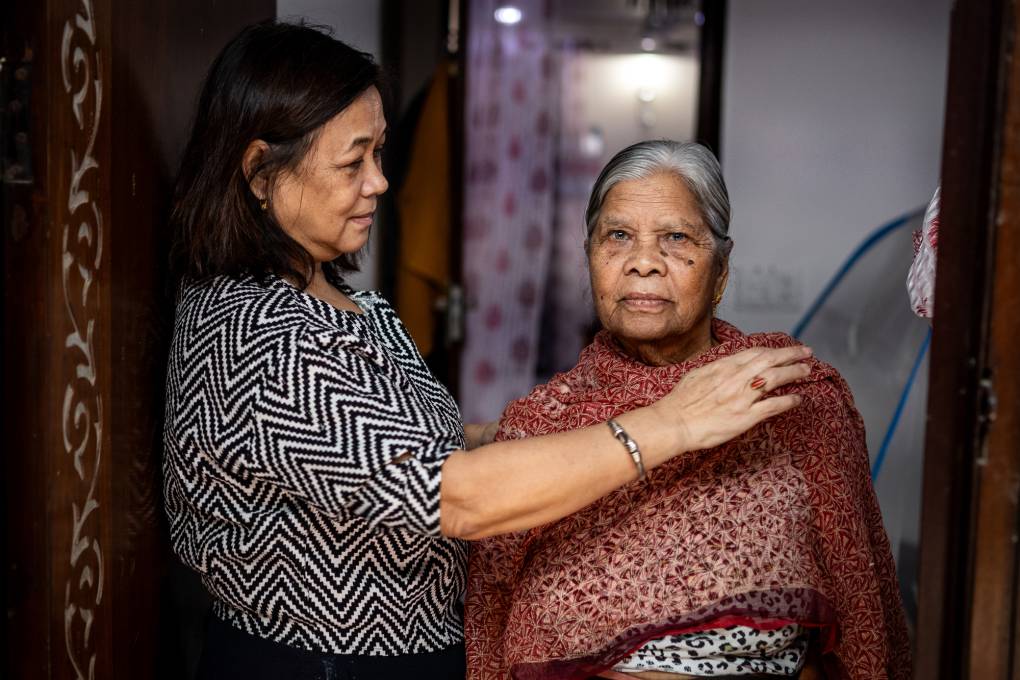
"caption": "Tara Manchin Hangzo adjusts a scarf on her mother, Madhumati Khwairakpam, 87, in their apartment with family members in Delhi, India, on March 31, 2024. They were displaced from their home in the northeastern state of Manipur when ethnic violence erupted on May 3, 2023, between the Meitei people, a non-tribal majority living in the Imphal Valley, and the Kuki tribal community from the surrounding hills. Hangzo identifies as Kuki, and her mother identifies as Meitei.",
"description": null,
"title": "240331-ManipurIndia-BethLaBerge-027",
"credit": "Beth LaBerge/KQED",
"status": "inherit",
"altTag": null,
"isLoading": false,
"fetchFailed": false
},
"news_11988324": {
"type": "attachments",
"id": "news_11988324",
"meta": {
"index": "attachments_1716263798",
"site": "news",
"id": "11988324",
"found": true
},
"title": "240530-BrownPelicans-10-BL",
"publishDate": 1717108347,
"status": "inherit",
"parent": 0,
"modified": 1717115100,
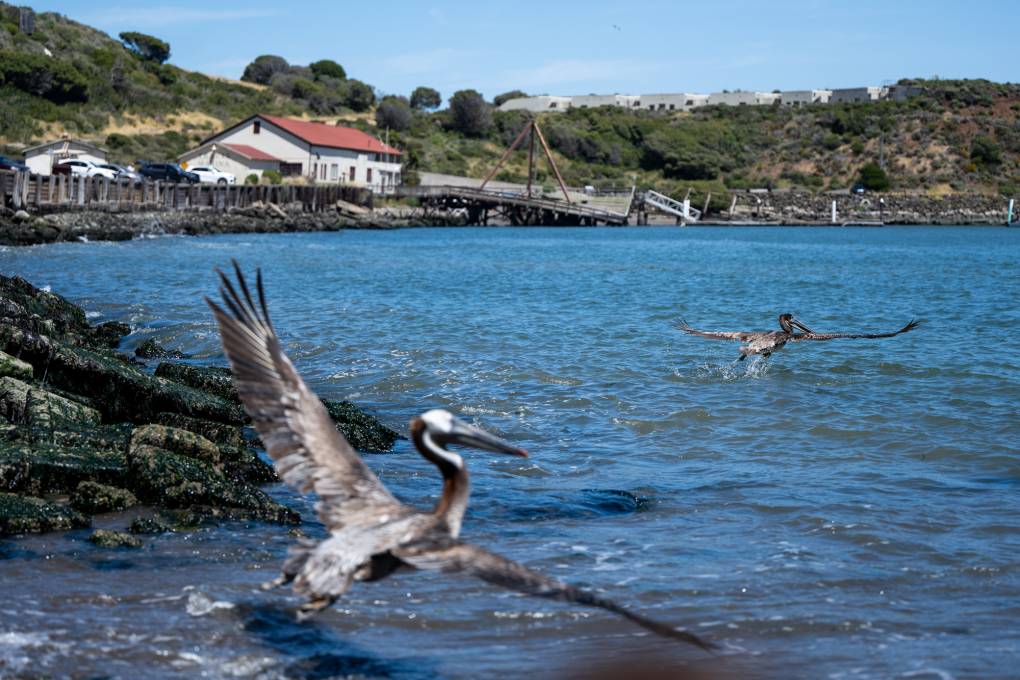
"caption": "International Bird Rescue members released eight rehabilitated brown pelicans, the first group to be returned to the wild, at Fort Baker in Sausalito on May 30, 2024, after they had been treated for starvation.",
"credit": "Beth LaBerge/KQED",
"altTag": null,
"description": null,
"imgSizes": {
"medium": {
"file": "https://cdn.kqed.org/wp-content/uploads/sites/10/2024/05/240530-BrownPelicans-10-BL-800x533.jpg",
"width": 800,
"height": 533,
"mimeType": "image/jpeg"
},
"large": {
"file": "https://cdn.kqed.org/wp-content/uploads/sites/10/2024/05/240530-BrownPelicans-10-BL-1020x680.jpg",
"width": 1020,
"height": 680,
"mimeType": "image/jpeg"
},
"thumbnail": {
"file": "https://cdn.kqed.org/wp-content/uploads/sites/10/2024/05/240530-BrownPelicans-10-BL-160x107.jpg",
"width": 160,
"height": 107,
"mimeType": "image/jpeg"
},
"1536x1536": {
"file": "https://cdn.kqed.org/wp-content/uploads/sites/10/2024/05/240530-BrownPelicans-10-BL-1536x1024.jpg",
"width": 1536,
"height": 1024,
"mimeType": "image/jpeg"
},
"post-thumbnail": {
"file": "https://cdn.kqed.org/wp-content/uploads/sites/10/2024/05/240530-BrownPelicans-10-BL-672x372.jpg",
"width": 672,
"height": 372,
"mimeType": "image/jpeg"
},
"twentyfourteen-full-width": {
"file": "https://cdn.kqed.org/wp-content/uploads/sites/10/2024/05/240530-BrownPelicans-10-BL-1038x576.jpg",
"width": 1038,
"height": 576,
"mimeType": "image/jpeg"
},
"full-width": {
"file": "https://cdn.kqed.org/wp-content/uploads/sites/10/2024/05/240530-BrownPelicans-10-BL-1920x1280.jpg",
"width": 1920,
"height": 1280,
"mimeType": "image/jpeg"
},
"kqedFullSize": {
"file": "https://cdn.kqed.org/wp-content/uploads/sites/10/2024/05/240530-BrownPelicans-10-BL.jpg",
"width": 2000,
"height": 1333
}
},
"isLoading": false,
"fetchFailed": false
},
"news_11984797": {
"type": "attachments",
"id": "news_11984797",
"meta": {
"index": "attachments_1716263798",
"site": "news",
"id": "11984797",
"found": true
},
"parent": 11985510,
"imgSizes": {
"twentyfourteen-full-width": {
"file": "https://cdn.kqed.org/wp-content/uploads/sites/10/2024/05/20240430_STOLENBIKESGUIDE-18-GC-KQED-1038x576.jpg",
"width": 1038,
"mimeType": "image/jpeg",
"height": 576
},
"thumbnail": {
"file": "https://cdn.kqed.org/wp-content/uploads/sites/10/2024/05/20240430_STOLENBIKESGUIDE-18-GC-KQED-160x107.jpg",
"width": 160,
"mimeType": "image/jpeg",
"height": 107
},
"post-thumbnail": {
"file": "https://cdn.kqed.org/wp-content/uploads/sites/10/2024/05/20240430_STOLENBIKESGUIDE-18-GC-KQED-672x372.jpg",
"width": 672,
"mimeType": "image/jpeg",
"height": 372
},
"kqedFullSize": {
"file": "https://cdn.kqed.org/wp-content/uploads/sites/10/2024/05/20240430_STOLENBIKESGUIDE-18-GC-KQED.jpg",
"width": 2000,
"height": 1333
},
"large": {
"file": "https://cdn.kqed.org/wp-content/uploads/sites/10/2024/05/20240430_STOLENBIKESGUIDE-18-GC-KQED-1020x680.jpg",
"width": 1020,
"mimeType": "image/jpeg",
"height": 680
},
"1536x1536": {
"file": "https://cdn.kqed.org/wp-content/uploads/sites/10/2024/05/20240430_STOLENBIKESGUIDE-18-GC-KQED-1536x1024.jpg",
"width": 1536,
"mimeType": "image/jpeg",
"height": 1024
},
"full-width": {
"file": "https://cdn.kqed.org/wp-content/uploads/sites/10/2024/05/20240430_STOLENBIKESGUIDE-18-GC-KQED-1920x1280.jpg",
"width": 1920,
"mimeType": "image/jpeg",
"height": 1280
},
"medium": {
"file": "https://cdn.kqed.org/wp-content/uploads/sites/10/2024/05/20240430_STOLENBIKESGUIDE-18-GC-KQED-800x533.jpg",
"width": 800,
"mimeType": "image/jpeg",
"height": 533
}
},
"publishDate": 1714672533,
"modified": 1715286250,
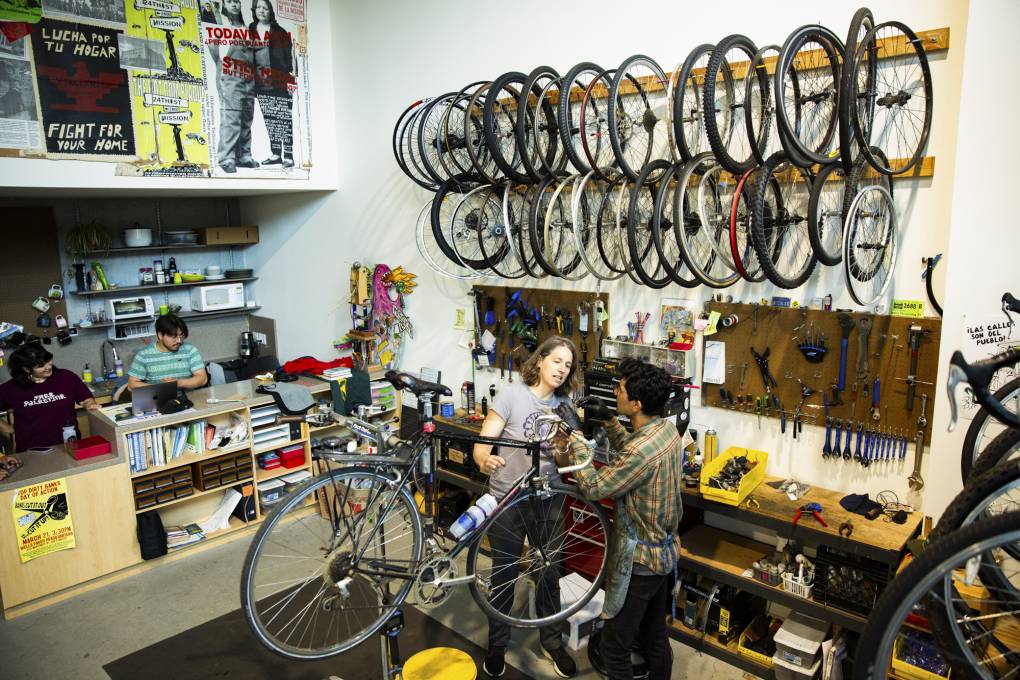
"caption": "Alison LaBonte, left, and Jessie Fernandez, right, install brakes on her bike at the Bicis del Pueblo bike repair shop in the Mission district on Tuesday April 30, 2024. Bicis del Pueblo has been operating since 2011 and through their earn-a-bike program, individuals get a free refurbished bike, donated by the city, and receive lessons on the mechanics and operation of the bike.",
"description": null,
"title": "20240430_STOLENBIKESGUIDE-18-GC-KQED",
"credit": "Gina Castro/KQED",
"status": "inherit",
"altTag": null,
"isLoading": false,
"fetchFailed": false
},
"news_11985533": {
"type": "attachments",
"id": "news_11985533",
"meta": {
"index": "attachments_1716263798",
"site": "news",
"id": "11985533",
"found": true
},
"parent": 11985524,
"imgSizes": {
"twentyfourteen-full-width": {
"file": "https://cdn.kqed.org/wp-content/uploads/sites/10/2024/05/GettyImages-2151617617-1-1024x576.jpg",
"width": 1024,
"mimeType": "image/jpeg",
"height": 576
},
"thumbnail": {
"file": "https://cdn.kqed.org/wp-content/uploads/sites/10/2024/05/GettyImages-2151617617-1-160x107.jpg",
"width": 160,
"mimeType": "image/jpeg",
"height": 107
},
"post-thumbnail": {
"file": "https://cdn.kqed.org/wp-content/uploads/sites/10/2024/05/GettyImages-2151617617-1-672x372.jpg",
"width": 672,
"mimeType": "image/jpeg",
"height": 372
},
"kqedFullSize": {
"file": "https://cdn.kqed.org/wp-content/uploads/sites/10/2024/05/GettyImages-2151617617-1.jpg",
"width": 1024,
"height": 682
},
"large": {
"file": "https://cdn.kqed.org/wp-content/uploads/sites/10/2024/05/GettyImages-2151617617-1-1020x679.jpg",
"width": 1020,
"mimeType": "image/jpeg",
"height": 679
},
"medium": {
"file": "https://cdn.kqed.org/wp-content/uploads/sites/10/2024/05/GettyImages-2151617617-1-800x533.jpg",
"width": 800,
"mimeType": "image/jpeg",
"height": 533
}
},
"publishDate": 1715281709,
"modified": 1715282740,
"caption": "The sun sets over San Francisco International Airport on May 8, 2024, ahead of a two-day heat wave in the Bay Area.",
"description": null,
"title": "San Francisco Bay Area to get warmest temps of the year",
"credit": "Tayfun Coskun/Anadolu via Getty Images",
"status": "inherit",
"altTag": null,
"isLoading": false,
"fetchFailed": false
},
"news_11985193": {
"type": "attachments",
"id": "news_11985193",
"meta": {
"index": "attachments_1716263798",
"site": "news",
"id": "11985193",
"found": true
},
"title": "Valley Transit Authority",
"publishDate": 1715106456,
"status": "inherit",
"parent": 11985190,
"modified": 1718227807,
"caption": "A VTA light rail train at Mountain View Station on May 3, 2019. ",
"credit": "Smith Collection/Gado/Getty Images",
"altTag": "A train with \"VTA\" on the front pulls up to a station.",
"description": null,
"imgSizes": {
"medium": {
"file": "https://cdn.kqed.org/wp-content/uploads/sites/10/2024/05/GettyImages-1147411300-800x534.jpg",
"width": 800,
"height": 534,
"mimeType": "image/jpeg"
},
"large": {
"file": "https://cdn.kqed.org/wp-content/uploads/sites/10/2024/05/GettyImages-1147411300-1020x680.jpg",
"width": 1020,
"height": 680,
"mimeType": "image/jpeg"
},
"thumbnail": {
"file": "https://cdn.kqed.org/wp-content/uploads/sites/10/2024/05/GettyImages-1147411300-160x107.jpg",
"width": 160,
"height": 107,
"mimeType": "image/jpeg"
},
"post-thumbnail": {
"file": "https://cdn.kqed.org/wp-content/uploads/sites/10/2024/05/GettyImages-1147411300-672x372.jpg",
"width": 672,
"height": 372,
"mimeType": "image/jpeg"
},
"twentyfourteen-full-width": {
"file": "https://cdn.kqed.org/wp-content/uploads/sites/10/2024/05/GettyImages-1147411300-1024x576.jpg",
"width": 1024,
"height": 576,
"mimeType": "image/jpeg"
},
"kqedFullSize": {
"file": "https://cdn.kqed.org/wp-content/uploads/sites/10/2024/05/GettyImages-1147411300.jpg",
"width": 1024,
"height": 683
}
},
"isLoading": false,
"fetchFailed": false
},
"news_11984136": {
"type": "attachments",
"id": "news_11984136",
"meta": {
"index": "attachments_1716263798",
"site": "news",
"id": "11984136",
"found": true
},
"parent": 0,
"imgSizes": {
"twentyfourteen-full-width": {
"file": "https://cdn.kqed.org/wp-content/uploads/sites/10/2024/04/240425-StanfordGazaProtest-022-BL-1038x576.jpg",
"width": 1038,
"mimeType": "image/jpeg",
"height": 576
},
"thumbnail": {
"file": "https://cdn.kqed.org/wp-content/uploads/sites/10/2024/04/240425-StanfordGazaProtest-022-BL-160x107.jpg",
"width": 160,
"mimeType": "image/jpeg",
"height": 107
},
"post-thumbnail": {
"file": "https://cdn.kqed.org/wp-content/uploads/sites/10/2024/04/240425-StanfordGazaProtest-022-BL-672x372.jpg",
"width": 672,
"mimeType": "image/jpeg",
"height": 372
},
"kqedFullSize": {
"file": "https://cdn.kqed.org/wp-content/uploads/sites/10/2024/04/240425-StanfordGazaProtest-022-BL.jpg",
"width": 1920,
"height": 1280
},
"large": {
"file": "https://cdn.kqed.org/wp-content/uploads/sites/10/2024/04/240425-StanfordGazaProtest-022-BL-1020x680.jpg",
"width": 1020,
"mimeType": "image/jpeg",
"height": 680
},
"1536x1536": {
"file": "https://cdn.kqed.org/wp-content/uploads/sites/10/2024/04/240425-StanfordGazaProtest-022-BL-1536x1024.jpg",
"width": 1536,
"mimeType": "image/jpeg",
"height": 1024
},
"medium": {
"file": "https://cdn.kqed.org/wp-content/uploads/sites/10/2024/04/240425-StanfordGazaProtest-022-BL-800x533.jpg",
"width": 800,
"mimeType": "image/jpeg",
"height": 533
}
},
"publishDate": 1714149444,
"modified": 1714178507,
"caption": "A pro-Israel counterprotester waves an Israel flag during a pro-Palestinian march through the Stanford University campus on April 25, 2024, calling for the university to divest from Israel. The rally took place during Stanford's Admit Weekend, a time for incoming students to tour the university.",
"description": null,
"title": "240425-StanfordGazaProtest-022-BL",
"credit": "Beth LaBerge/KQED",
"status": "inherit",
"altTag": null,
"isLoading": false,
"fetchFailed": false
},
"news_11767898": {
"type": "attachments",
"id": "news_11767898",
"meta": {
"index": "attachments_1716263798",
"site": "news",
"id": "11767898",
"found": true
},
"parent": 11767538,
"imgSizes": {
"apple_news_ca_landscape_5_5": {
"file": "https://cdn.kqed.org/wp-content/uploads/sites/10/2019/08/RS37791__DSC0888-qut-1044x783.jpg",
"width": 1044,
"mimeType": "image/jpeg",
"height": 783
},
"apple_news_ca_square_4_0": {
"file": "https://cdn.kqed.org/wp-content/uploads/sites/10/2019/08/RS37791__DSC0888-qut-470x470.jpg",
"width": 470,
"mimeType": "image/jpeg",
"height": 470
},
"twentyfourteen-full-width": {
"file": "https://cdn.kqed.org/wp-content/uploads/sites/10/2019/08/RS37791__DSC0888-qut-1038x576.jpg",
"width": 1038,
"mimeType": "image/jpeg",
"height": 576
},
"thumbnail": {
"file": "https://cdn.kqed.org/wp-content/uploads/sites/10/2019/08/RS37791__DSC0888-qut-160x107.jpg",
"width": 160,
"mimeType": "image/jpeg",
"height": 107
},
"post-thumbnail": {
"file": "https://cdn.kqed.org/wp-content/uploads/sites/10/2019/08/RS37791__DSC0888-qut-672x372.jpg",
"width": 672,
"mimeType": "image/jpeg",
"height": 372
},
"kqedFullSize": {
"file": "https://cdn.kqed.org/wp-content/uploads/sites/10/2019/08/RS37791__DSC0888-qut.jpg",
"width": 1920,
"height": 1281
},
"apple_news_ca_landscape_4_7": {
"file": "https://cdn.kqed.org/wp-content/uploads/sites/10/2019/08/RS37791__DSC0888-qut-632x474.jpg",
"width": 632,
"mimeType": "image/jpeg",
"height": 474
},
"large": {
"file": "https://cdn.kqed.org/wp-content/uploads/sites/10/2019/08/RS37791__DSC0888-qut-1020x681.jpg",
"width": 1020,
"mimeType": "image/jpeg",
"height": 681
},
"complete_open_graph": {
"file": "https://cdn.kqed.org/wp-content/uploads/sites/10/2019/08/RS37791__DSC0888-qut-1200x801.jpg",
"width": 1200,
"mimeType": "image/jpeg",
"height": 801
},
"apple_news_ca_landscape_4_0": {
"file": "https://cdn.kqed.org/wp-content/uploads/sites/10/2019/08/RS37791__DSC0888-qut-536x402.jpg",
"width": 536,
"mimeType": "image/jpeg",
"height": 402
},
"apple_news_ca_portrait_12_9": {
"file": "https://cdn.kqed.org/wp-content/uploads/sites/10/2019/08/RS37791__DSC0888-qut-1122x1281.jpg",
"width": 1122,
"mimeType": "image/jpeg",
"height": 1281
},
"medium": {
"file": "https://cdn.kqed.org/wp-content/uploads/sites/10/2019/08/RS37791__DSC0888-qut-800x534.jpg",
"width": 800,
"mimeType": "image/jpeg",
"height": 534
},
"apple_news_ca_portrait_4_0": {
"file": "https://cdn.kqed.org/wp-content/uploads/sites/10/2019/08/RS37791__DSC0888-qut-354x472.jpg",
"width": 354,
"mimeType": "image/jpeg",
"height": 472
},
"apple_news_ca_portrait_9_7": {
"file": "https://cdn.kqed.org/wp-content/uploads/sites/10/2019/08/RS37791__DSC0888-qut-840x1120.jpg",
"width": 840,
"mimeType": "image/jpeg",
"height": 1120
},
"apple_news_ca_landscape_12_9": {
"file": "https://cdn.kqed.org/wp-content/uploads/sites/10/2019/08/RS37791__DSC0888-qut-1832x1281.jpg",
"width": 1832,
"mimeType": "image/jpeg",
"height": 1281
},
"apple_news_ca_square_9_7": {
"file": "https://cdn.kqed.org/wp-content/uploads/sites/10/2019/08/RS37791__DSC0888-qut-1104x1104.jpg",
"width": 1104,
"mimeType": "image/jpeg",
"height": 1104
},
"apple_news_ca_portrait_4_7": {
"file": "https://cdn.kqed.org/wp-content/uploads/sites/10/2019/08/RS37791__DSC0888-qut-414x552.jpg",
"width": 414,
"mimeType": "image/jpeg",
"height": 552
},
"apple_news_ca_square_12_9": {
"file": "https://cdn.kqed.org/wp-content/uploads/sites/10/2019/08/RS37791__DSC0888-qut-1472x1281.jpg",
"width": 1472,
"mimeType": "image/jpeg",
"height": 1281
},
"apple_news_ca_portrait_5_5": {
"file": "https://cdn.kqed.org/wp-content/uploads/sites/10/2019/08/RS37791__DSC0888-qut-687x916.jpg",
"width": 687,
"mimeType": "image/jpeg",
"height": 916
},
"full-width": {
"file": "https://cdn.kqed.org/wp-content/uploads/sites/10/2019/08/RS37791__DSC0888-qut-1920x1281.jpg",
"width": 1920,
"mimeType": "image/jpeg",
"height": 1281
},
"apple_news_ca_square_4_7": {
"file": "https://cdn.kqed.org/wp-content/uploads/sites/10/2019/08/RS37791__DSC0888-qut-550x550.jpg",
"width": 550,
"mimeType": "image/jpeg",
"height": 550
},
"apple_news_ca_landscape_9_7": {
"file": "https://cdn.kqed.org/wp-content/uploads/sites/10/2019/08/RS37791__DSC0888-qut-1376x1032.jpg",
"width": 1376,
"mimeType": "image/jpeg",
"height": 1032
},
"apple_news_ca_square_5_5": {
"file": "https://cdn.kqed.org/wp-content/uploads/sites/10/2019/08/RS37791__DSC0888-qut-912x912.jpg",
"width": 912,
"mimeType": "image/jpeg",
"height": 912
}
},
"publishDate": 1565915711,
"modified": 1712080479,
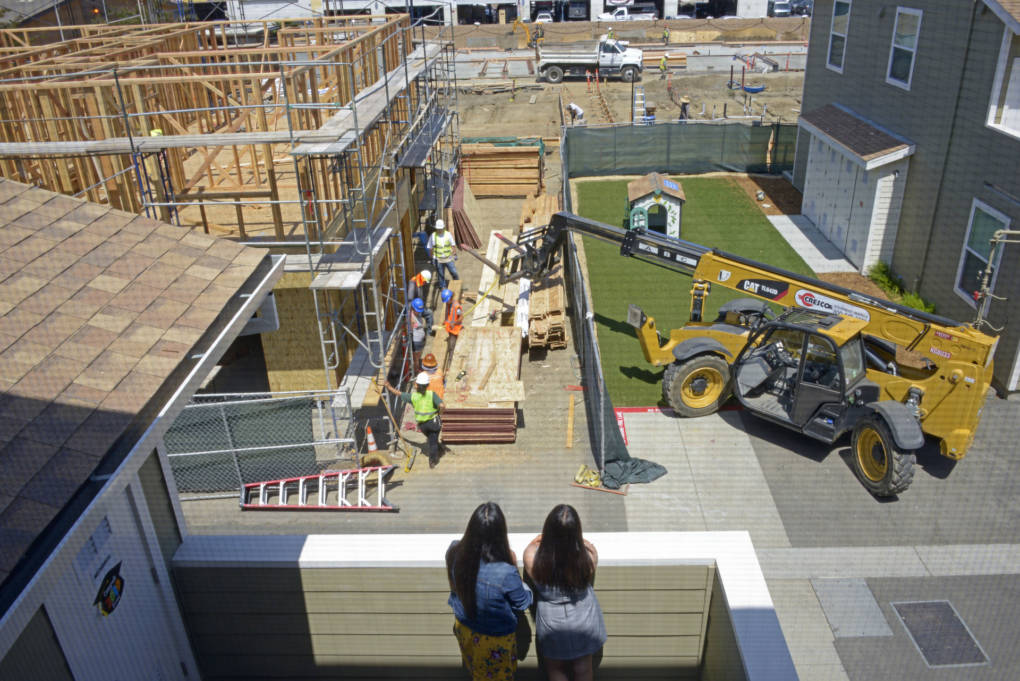
"caption": "Julieta Aquino and her daughter Alexys on the balcony of their new home, watching a construction crew build additional affordable units.",
"description": null,
"title": "RS37791__DSC0888-qut",
"credit": "Stephanie Lister/KQED",
"status": "inherit",
"altTag": "An overhead view of two women watching housing construction from their balcony.",
"isLoading": false,
"fetchFailed": false
},
"news_11980110": {
"type": "attachments",
"id": "news_11980110",
"meta": {
"index": "attachments_1716263798",
"site": "news",
"id": "11980110",
"found": true
},
"parent": 11980101,
"imgSizes": {
"twentyfourteen-full-width": {
"file": "https://cdn.kqed.org/wp-content/uploads/sites/10/2024/03/MScott-1038x576.jpg",
"width": 1038,
"mimeType": "image/jpeg",
"height": 576
},
"thumbnail": {
"file": "https://cdn.kqed.org/wp-content/uploads/sites/10/2024/03/MScott-160x111.jpg",
"width": 160,
"mimeType": "image/jpeg",
"height": 111
},
"post-thumbnail": {
"file": "https://cdn.kqed.org/wp-content/uploads/sites/10/2024/03/MScott-672x372.jpg",
"width": 672,
"mimeType": "image/jpeg",
"height": 372
},
"kqedFullSize": {
"file": "https://cdn.kqed.org/wp-content/uploads/sites/10/2024/03/MScott.jpg",
"width": 1376,
"height": 953
},
"large": {
"file": "https://cdn.kqed.org/wp-content/uploads/sites/10/2024/03/MScott-1020x706.jpg",
"width": 1020,
"mimeType": "image/jpeg",
"height": 706
},
"medium": {
"file": "https://cdn.kqed.org/wp-content/uploads/sites/10/2024/03/MScott-800x554.jpg",
"width": 800,
"mimeType": "image/jpeg",
"height": 554
}
},
"publishDate": 1710961554,
"modified": 1710961681,
"caption": "MacKenzie Scott at the 2018 Vanity Fair Oscar Party in Beverly Hills. ",
"description": null,
"title": "MScott",
"credit": "Taylor Hill/FilmMagic",
"status": "inherit",
"altTag": "A white woman with long brown hair smiles at the camera.",
"isLoading": false,
"fetchFailed": false
},
"news_11977888": {
"type": "attachments",
"id": "news_11977888",
"meta": {
"index": "attachments_1716263798",
"site": "news",
"id": "11977888",
"found": true
},
"parent": 11977887,
"imgSizes": {
"twentyfourteen-full-width": {
"file": "https://cdn.kqed.org/wp-content/uploads/sites/10/2024/03/GettyImages-2053478673-1024x576.jpg",
"width": 1024,
"mimeType": "image/jpeg",
"height": 576
},
"thumbnail": {
"file": "https://cdn.kqed.org/wp-content/uploads/sites/10/2024/03/GettyImages-2053478673-160x113.jpg",
"width": 160,
"mimeType": "image/jpeg",
"height": 113
},
"post-thumbnail": {
"file": "https://cdn.kqed.org/wp-content/uploads/sites/10/2024/03/GettyImages-2053478673-672x372.jpg",
"width": 672,
"mimeType": "image/jpeg",
"height": 372
},
"kqedFullSize": {
"file": "https://cdn.kqed.org/wp-content/uploads/sites/10/2024/03/GettyImages-2053478673.jpg",
"width": 1024,
"height": 723
},
"large": {
"file": "https://cdn.kqed.org/wp-content/uploads/sites/10/2024/03/GettyImages-2053478673-1020x720.jpg",
"width": 1020,
"mimeType": "image/jpeg",
"height": 720
},
"medium": {
"file": "https://cdn.kqed.org/wp-content/uploads/sites/10/2024/03/GettyImages-2053478673-800x565.jpg",
"width": 800,
"mimeType": "image/jpeg",
"height": 565
}
},
"publishDate": 1709411627,
"modified": 1709411675,
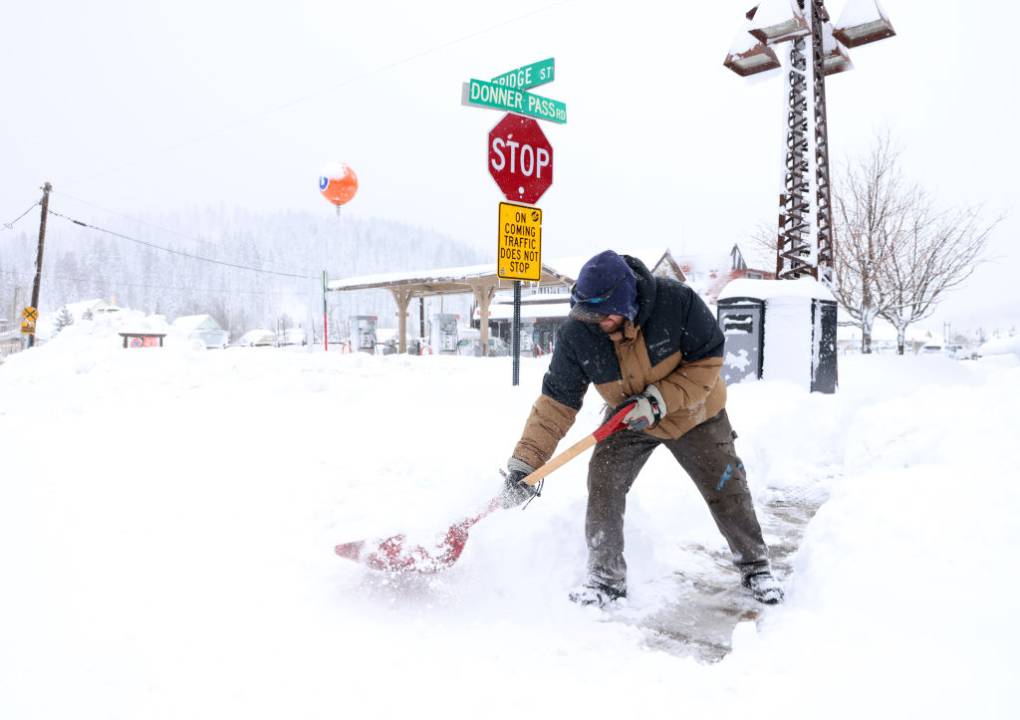
"caption": "Employee Juan Manuel clears snow from in front of Bar of America in downtown Truckee, Nevada County, on Saturday, March 2, 2024.",
"description": null,
"title": "Sierra Nevada Blizzard",
"credit": "Jane Tyska/Digital First Media/East Bay Times via Getty Images",
"status": "inherit",
"altTag": null,
"isLoading": false,
"fetchFailed": false
},
"news_11974712": {
"type": "attachments",
"id": "news_11974712",
"meta": {
"index": "attachments_1716263798",
"site": "news",
"id": "11974712",
"found": true
},
"parent": 0,
"imgSizes": {
"twentyfourteen-full-width": {
"file": "https://cdn.kqed.org/wp-content/uploads/sites/10/2024/02/240202-FIXITCLINIC-KSM-19-KQED-1038x576.jpg",
"width": 1038,
"mimeType": "image/jpeg",
"height": 576
},
"thumbnail": {
"file": "https://cdn.kqed.org/wp-content/uploads/sites/10/2024/02/240202-FIXITCLINIC-KSM-19-KQED-160x107.jpg",
"width": 160,
"mimeType": "image/jpeg",
"height": 107
},
"post-thumbnail": {
"file": "https://cdn.kqed.org/wp-content/uploads/sites/10/2024/02/240202-FIXITCLINIC-KSM-19-KQED-672x372.jpg",
"width": 672,
"mimeType": "image/jpeg",
"height": 372
},
"kqedFullSize": {
"file": "https://cdn.kqed.org/wp-content/uploads/sites/10/2024/02/240202-FIXITCLINIC-KSM-19-KQED.jpg",
"width": 2000,
"height": 1333
},
"large": {
"file": "https://cdn.kqed.org/wp-content/uploads/sites/10/2024/02/240202-FIXITCLINIC-KSM-19-KQED-1020x680.jpg",
"width": 1020,
"mimeType": "image/jpeg",
"height": 680
},
"1536x1536": {
"file": "https://cdn.kqed.org/wp-content/uploads/sites/10/2024/02/240202-FIXITCLINIC-KSM-19-KQED-1536x1024.jpg",
"width": 1536,
"mimeType": "image/jpeg",
"height": 1024
},
"full-width": {
"file": "https://cdn.kqed.org/wp-content/uploads/sites/10/2024/02/240202-FIXITCLINIC-KSM-19-KQED-1920x1280.jpg",
"width": 1920,
"mimeType": "image/jpeg",
"height": 1280
},
"medium": {
"file": "https://cdn.kqed.org/wp-content/uploads/sites/10/2024/02/240202-FIXITCLINIC-KSM-19-KQED-800x533.jpg",
"width": 800,
"mimeType": "image/jpeg",
"height": 533
}
},
"publishDate": 1707157161,
"modified": 1707157241,
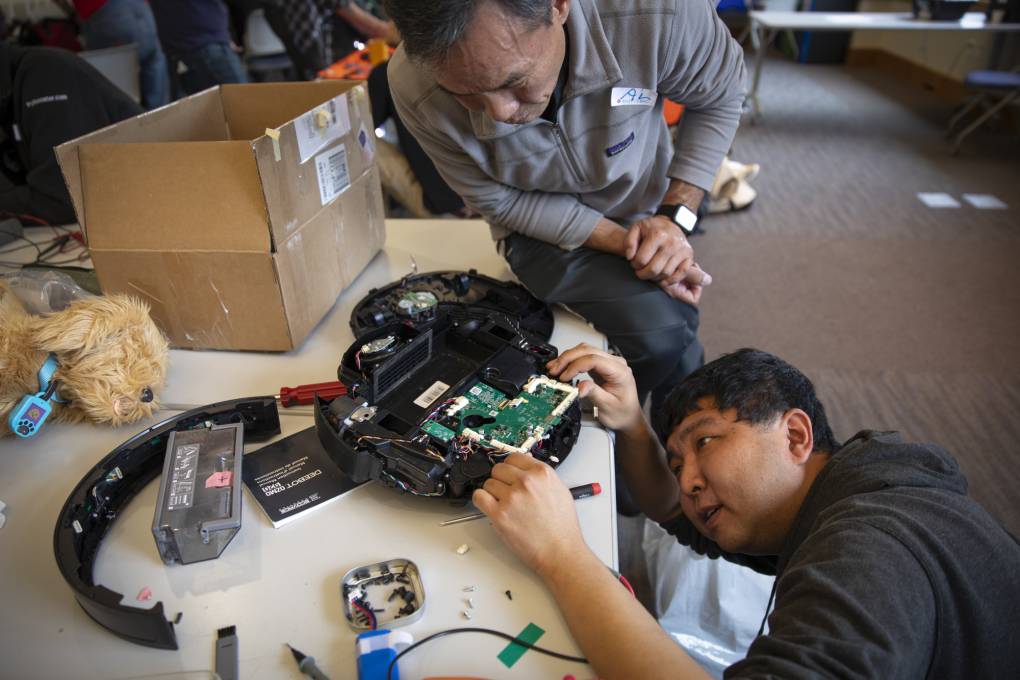
"caption": "Frank Zhao (right), a longtime Fixit clinic coach, helps Al Lee (center) fix a vaccuum cleaner at a Fixit clinic in MIllbrae on Feb. 3, 2024.",
"description": null,
"title": "240202-FIXITCLINIC-KSM-19-KQED",
"credit": "Kathryn Styer Martínez/KQED",
"status": "inherit",
"altTag": "Two people look at the circuit boar inside a disk-shaped device in an indoor setting.",
"isLoading": false,
"fetchFailed": false
},
"news_11939415": {
"type": "attachments",
"id": "news_11939415",
"meta": {
"index": "attachments_1716263798",
"site": "news",
"id": "11939415",
"found": true
},
"parent": 11939412,
"imgSizes": {
"twentyfourteen-full-width": {
"file": "https://cdn.kqed.org/wp-content/uploads/sites/10/2023/01/GettyImages-1246581187-1038x576.jpg",
"width": 1038,
"mimeType": "image/jpeg",
"height": 576
},
"thumbnail": {
"file": "https://cdn.kqed.org/wp-content/uploads/sites/10/2023/01/GettyImages-1246581187-160x120.jpg",
"width": 160,
"mimeType": "image/jpeg",
"height": 120
},
"post-thumbnail": {
"file": "https://cdn.kqed.org/wp-content/uploads/sites/10/2023/01/GettyImages-1246581187-672x372.jpg",
"width": 672,
"mimeType": "image/jpeg",
"height": 372
},
"kqedFullSize": {
"file": "https://cdn.kqed.org/wp-content/uploads/sites/10/2023/01/GettyImages-1246581187-scaled.jpg",
"width": 2560,
"height": 1920
},
"2048x2048": {
"file": "https://cdn.kqed.org/wp-content/uploads/sites/10/2023/01/GettyImages-1246581187-2048x1536.jpg",
"width": 2048,
"mimeType": "image/jpeg",
"height": 1536
},
"large": {
"file": "https://cdn.kqed.org/wp-content/uploads/sites/10/2023/01/GettyImages-1246581187-1020x765.jpg",
"width": 1020,
"mimeType": "image/jpeg",
"height": 765
},
"1536x1536": {
"file": "https://cdn.kqed.org/wp-content/uploads/sites/10/2023/01/GettyImages-1246581187-1536x1152.jpg",
"width": 1536,
"mimeType": "image/jpeg",
"height": 1152
},
"full-width": {
"file": "https://cdn.kqed.org/wp-content/uploads/sites/10/2023/01/GettyImages-1246581187-1920x1440.jpg",
"width": 1920,
"mimeType": "image/jpeg",
"height": 1440
},
"medium": {
"file": "https://cdn.kqed.org/wp-content/uploads/sites/10/2023/01/GettyImages-1246581187-800x600.jpg",
"width": 800,
"mimeType": "image/jpeg",
"height": 600
}
},
"publishDate": 1674829153,
"modified": 1705699777,
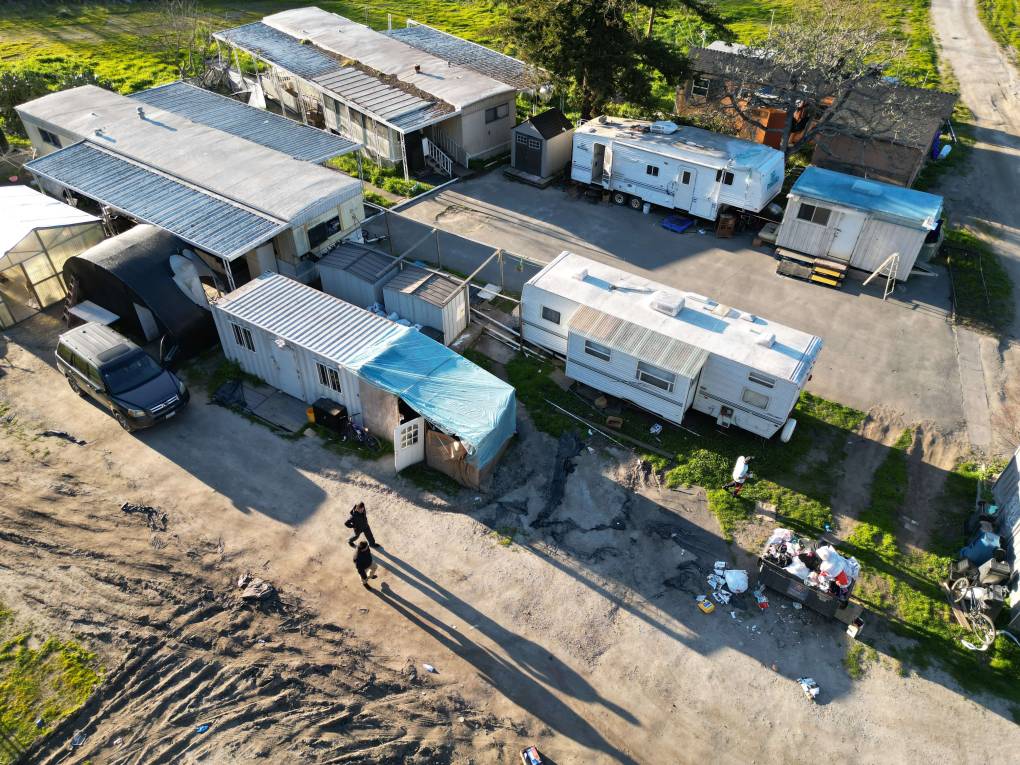
"caption": "An aerial view of some trailers that house farmworkers and their families at California Terra Garden in Half Moon Bay, as seen on Thursday, Jan. 26, 2023. The suspect in the mass killing is believed to have lived with his wife in one of the trailers. ",
"description": "Some of the housing provided to the farmworkers and their families at the mushroom farm on Thursday, Jan. 26, 2023 in Half Moon Bay, Calif. The suspect is said to live with his wife in the upper left house with blue tarp.",
"title": "CAHALFMOON",
"credit": "Paul Kuroda/Washington Post, via Getty Images",
"status": "inherit",
"altTag": "An aerial view of a number of trailers on a farm site.",
"isLoading": false,
"fetchFailed": false
}
},
"audioPlayerReducer": {
"postId": "stream_live",
"isPaused": true,
"isPlaying": false,
"pfsActive": false,
"pledgeModalIsOpen": true,
"playerDrawerIsOpen": false,
"liveAudioPlayStartedAt": 0,
"liveAudioPlayContext": ""
},
"authorsReducer": {
"byline_news_11980101": {
"type": "authors",
"id": "byline_news_11980101",
"meta": {
"override": true
},
"slug": "byline_news_11980101",
"name": "Thalia Beaty\u003cbr>Associated Press",
"isLoading": false
},
"byline_news_11973071": {
"type": "authors",
"id": "byline_news_11973071",
"meta": {
"override": true
},
"slug": "byline_news_11973071",
"name": "\u003ca href=\"https://twitter.com/naomivanderlip?lang=en\">Naomi Vanderlip\u003c/a>",
"isLoading": false
},
"danbrekke": {
"type": "authors",
"id": "222",
"meta": {
"index": "authors_1716337520",
"id": "222",
"found": true
},
"name": "Dan Brekke",
"firstName": "Dan",
"lastName": "Brekke",
"slug": "danbrekke",
"email": "dbrekke@kqed.org",
"display_author_email": true,
"staff_mastheads": [
"news",
"science"
],
"title": "KQED Editor and Reporter",
"bio": "Dan Brekke is a reporter and editor for KQED News, responsible for coverage of topics ranging from California water issues to the Bay Area's transportation challenges. In a newsroom career that began in Chicago in 1972, Dan has worked for \u003cem>The San Francisco Examiner,\u003c/em> Wired and TechTV and has been published in The New York Times, The New York Times Magazine, Business 2.0, Salon and elsewhere.\r\n\r\nSince joining KQED in 2007, Dan has reported, edited and produced both radio and online features and breaking news pieces. He has shared as both editor and reporter in four Society of Professional Journalists Norcal Excellence in Journalism awards and one Edward R. Murrow regional award. He was chosen for a spring 2017 residency at the Mesa Refuge to advance his research on California salmon.\r\n\r\nEmail Dan at: \u003ca href=\"mailto:dbrekke@kqed.org\">dbrekke@kqed.org\u003c/a>\r\n\r\n\u003cstrong>Twitter:\u003c/strong> \u003ca href=\"https://twitter.com/danbrekke\" rel=\"noopener noreferrer\">twitter.com/danbrekke\u003c/a>\r\n\u003cstrong>Facebook:\u003c/strong> \u003ca href=\"https://www.facebook.com/danbrekke\" rel=\"noopener noreferrer\">www.facebook.com/danbrekke\u003c/a>\r\n\u003cstrong>LinkedIn:\u003c/strong> \u003ca href=\"https://www.linkedin.com/in/danbrekke\" rel=\"noopener noreferrer\">www.linkedin.com/in/danbrekke\u003c/a>",
"avatar": "https://secure.gravatar.com/avatar/c8126230345efca3f7aa89b1a402be45?s=600&d=mm&r=g",
"twitter": "danbrekke",
"facebook": null,
"instagram": "https://www.instagram.com/dan.brekke/",
"linkedin": "https://www.linkedin.com/in/danbrekke/",
"sites": [
{
"site": "news",
"roles": [
"administrator",
"create_posts"
]
},
{
"site": "stateofhealth",
"roles": [
"editor"
]
},
{
"site": "science",
"roles": [
"editor"
]
},
{
"site": "quest",
"roles": [
"contributor"
]
},
{
"site": "food",
"roles": [
"contributor"
]
},
{
"site": "forum",
"roles": [
"contributor"
]
},
{
"site": "liveblog",
"roles": [
"editor"
]
}
],
"headData": {
"title": "Dan Brekke | KQED",
"description": "KQED Editor and Reporter",
"ogImgSrc": "https://secure.gravatar.com/avatar/c8126230345efca3f7aa89b1a402be45?s=600&d=mm&r=g",
"twImgSrc": "https://secure.gravatar.com/avatar/c8126230345efca3f7aa89b1a402be45?s=600&d=mm&r=g"
},
"isLoading": false,
"link": "/author/danbrekke"
},
"kqed": {
"type": "authors",
"id": "236",
"meta": {
"index": "authors_1716337520",
"id": "236",
"found": true
},
"name": "KQED News Staff",
"firstName": "KQED News Staff",
"lastName": null,
"slug": "kqed",
"email": "faq@kqed.org",
"display_author_email": false,
"staff_mastheads": [],
"title": null,
"bio": null,
"avatar": "https://secure.gravatar.com/avatar/ef0e801a68c4c54afa9180db14084167?s=600&d=blank&r=g",
"twitter": null,
"facebook": null,
"instagram": null,
"linkedin": null,
"sites": [
{
"site": "arts",
"roles": [
"contributor"
]
},
{
"site": "news",
"roles": [
"editor"
]
},
{
"site": "futureofyou",
"roles": [
"author"
]
}
],
"headData": {
"title": "KQED News Staff | KQED",
"description": null,
"ogImgSrc": "https://secure.gravatar.com/avatar/ef0e801a68c4c54afa9180db14084167?s=600&d=blank&r=g",
"twImgSrc": "https://secure.gravatar.com/avatar/ef0e801a68c4c54afa9180db14084167?s=600&d=blank&r=g"
},
"isLoading": false,
"link": "/author/kqed"
},
"lsarah": {
"type": "authors",
"id": "11626",
"meta": {
"index": "authors_1716337520",
"id": "11626",
"found": true
},
"name": "Lakshmi Sarah",
"firstName": "Lakshmi",
"lastName": "Sarah",
"slug": "lsarah",
"email": "lsarah@kqed.org",
"display_author_email": false,
"staff_mastheads": [],
"title": "Digital Producer",
"bio": "Lakshmi Sarah is an educator, author and journalist with a focus on innovative storytelling. She has worked with newspapers, radio and magazines from Ahmedabad, India to Los Angeles, California. She has written and produced for Die Zeit, Global Voices, AJ+, KQED, Fusion Media Group and the New York Times.",
"avatar": "https://secure.gravatar.com/avatar/652dcaecd8b28826fc17a8b2d6bb4e93?s=600&d=blank&r=g",
"twitter": "lakitalki",
"facebook": null,
"instagram": "https://www.instagram.com/laki.talki/",
"linkedin": "https://www.linkedin.com/in/lakisarah/",
"sites": [
{
"site": "arts",
"roles": []
},
{
"site": "news",
"roles": []
},
{
"site": "bayareabites",
"roles": []
},
{
"site": "science",
"roles": []
}
],
"headData": {
"title": "Lakshmi Sarah | KQED",
"description": "Digital Producer",
"ogImgSrc": "https://secure.gravatar.com/avatar/652dcaecd8b28826fc17a8b2d6bb4e93?s=600&d=blank&r=g",
"twImgSrc": "https://secure.gravatar.com/avatar/652dcaecd8b28826fc17a8b2d6bb4e93?s=600&d=blank&r=g"
},
"isLoading": false,
"link": "/author/lsarah"
},
"ebaldassari": {
"type": "authors",
"id": "11652",
"meta": {
"index": "authors_1716337520",
"id": "11652",
"found": true
},
"name": "Erin Baldassari",
"firstName": "Erin",
"lastName": "Baldassari",
"slug": "ebaldassari",
"email": "ebaldassari@KQED.org",
"display_author_email": true,
"staff_mastheads": [
"news"
],
"title": "Staff Writer",
"bio": "Erin Baldassari covers housing for KQED. She's a former print journalist and most recently worked as the transportation reporter for the \u003cem>Mercury News\u003c/em> and \u003cem>East Bay Times. \u003c/em>There, she focused on how the Bay Area’s housing shortage has changed the way people move around the region. She also served on the \u003cem>East Bay Times\u003c/em>’ 2017 Pulitzer Prize-winning team for coverage of the Ghost Ship Fire in Oakland. Prior to that, Erin worked as a breaking news and general assignment reporter for a variety of outlets in the Bay Area and the greater Boston area. A Tufts University alumna, Erin grew up in the foothills of the Sierra Nevada mountains and in Sonoma County. She is a life-long KQED listener.",
"avatar": "https://secure.gravatar.com/avatar/5e95cad64a8ca08288082212e199d2b0cbeb4fd8e8ef5339395f361032bbe005?s=600&d=blank&r=g",
"twitter": "e_baldi",
"bluesky": null,
"facebook": null,
"instagram": null,
"linkedin": null,
"sites": [
{
"site": "news",
"roles": [
"edit_others_posts",
"editor"
]
},
{
"site": "science",
"roles": [
"editor"
]
},
{
"site": "liveblog",
"roles": [
"editor"
]
}
],
"headData": {
"title": "Erin Baldassari | KQED",
"description": "Staff Writer",
"ogImgSrc": "https://secure.gravatar.com/avatar/5e95cad64a8ca08288082212e199d2b0cbeb4fd8e8ef5339395f361032bbe005?s=600&d=blank&r=g",
"twImgSrc": "https://secure.gravatar.com/avatar/5e95cad64a8ca08288082212e199d2b0cbeb4fd8e8ef5339395f361032bbe005?s=600&d=blank&r=g"
},
"isLoading": false,
"link": "/author/ebaldassari"
},
"blaberge": {
"type": "authors",
"id": "11667",
"meta": {
"index": "authors_1716337520",
"id": "11667",
"found": true
},
"name": "Beth LaBerge",
"firstName": "Beth",
"lastName": "LaBerge",
"slug": "blaberge",
"email": "blaberge@KQED.org",
"display_author_email": true,
"staff_mastheads": [
"news"
],
"title": "Photographer, News",
"bio": "Beth LaBerge is a visual journalist for \u003ca href=\"https://www.kqed.org/news\">KQED News\u003c/a>.",
"avatar": "https://secure.gravatar.com/avatar/ce49ecd7a1306685637b45a1f6f5dedfc4ae9481966eb596fea5160466dd6319?s=600&d=blank&r=g",
"twitter": null,
"bluesky": null,
"facebook": null,
"instagram": "https://www.instagram.com/bethlaberge/",
"linkedin": null,
"sites": [
{
"site": "arts",
"roles": [
"editor",
"manage_categories"
]
},
{
"site": "news",
"roles": [
"editor",
"edit_plugins",
"manage_categories"
]
},
{
"site": "science",
"roles": [
"editor",
"contributor",
"author",
"manage_categories"
]
},
{
"site": "perspectives",
"roles": [
"editor"
]
},
{
"site": "liveblog",
"roles": [
"editor"
]
}
],
"headData": {
"title": "Beth LaBerge | KQED",
"description": "Photographer, News",
"ogImgSrc": "https://secure.gravatar.com/avatar/ce49ecd7a1306685637b45a1f6f5dedfc4ae9481966eb596fea5160466dd6319?s=600&d=blank&r=g",
"twImgSrc": "https://secure.gravatar.com/avatar/ce49ecd7a1306685637b45a1f6f5dedfc4ae9481966eb596fea5160466dd6319?s=600&d=blank&r=g"
},
"isLoading": false,
"link": "/author/blaberge"
},
"abandlamudi": {
"type": "authors",
"id": "11672",
"meta": {
"index": "authors_1716337520",
"id": "11672",
"found": true
},
"name": "Adhiti Bandlamudi",
"firstName": "Adhiti",
"lastName": "Bandlamudi",
"slug": "abandlamudi",
"email": "abandlamudi@kqed.org",
"display_author_email": false,
"staff_mastheads": [
"news"
],
"title": "KQED Housing Reporter",
"bio": "Adhiti Bandlamudi reports for KQED's Housing desk. She focuses on how housing gets built across the Bay Area. Before joining KQED in 2020, she reported for WUNC in Durham, North Carolina, WABE in Atlanta, Georgia and Capital Public Radio in Sacramento. In 2017, she was awarded a Kroc Fellowship at NPR where she reported on everything from sprinkles to the Golden State Killer's arrest. When she's not reporting, she's baking new recipes in her kitchen or watching movies with friends and family. She's originally from Georgia and has strong opinions about Great British Bake Off.",
"avatar": "https://secure.gravatar.com/avatar/868129c8b257bb99a3500e2c86a65400?s=600&d=mm&r=g",
"twitter": "oddity_adhiti",
"facebook": null,
"instagram": null,
"linkedin": null,
"sites": [
{
"site": "arts",
"roles": [
"author"
]
},
{
"site": "news",
"roles": [
"editor"
]
},
{
"site": "liveblog",
"roles": [
"author"
]
}
],
"headData": {
"title": "Adhiti Bandlamudi | KQED",
"description": "KQED Housing Reporter",
"ogImgSrc": "https://secure.gravatar.com/avatar/868129c8b257bb99a3500e2c86a65400?s=600&d=mm&r=g",
"twImgSrc": "https://secure.gravatar.com/avatar/868129c8b257bb99a3500e2c86a65400?s=600&d=mm&r=g"
},
"isLoading": false,
"link": "/author/abandlamudi"
},
"ccabreralomeli": {
"type": "authors",
"id": "11708",
"meta": {
"index": "authors_1716337520",
"id": "11708",
"found": true
},
"name": "Carlos Cabrera-Lomelí",
"firstName": "Carlos",
"lastName": "Cabrera-Lomelí",
"slug": "ccabreralomeli",
"email": "ccabreralomeli@KQED.org",
"display_author_email": true,
"staff_mastheads": [
"news"
],
"title": "Community Reporter",
"bio": "Carlos Cabrera-Lomelí is a community reporter with KQED's digital engagement team. He also reports and co-produces for KQED's bilingual news hub KQED en Español. He grew up in San Francisco's Mission District and has previously worked with Univision, 48 Hills and REFORMA in Mexico City.",
"avatar": "https://secure.gravatar.com/avatar/c309be9665e484f887b818c89e273ecc673004f426f36b24d00a4d813a2e0518?s=600&d=blank&r=g",
"twitter": "@LomeliCabrera",
"bluesky": null,
"facebook": null,
"instagram": null,
"linkedin": null,
"sites": [
{
"site": "arts",
"roles": [
"editor"
]
},
{
"site": "news",
"roles": [
"editor"
]
},
{
"site": "about",
"roles": [
"editor"
]
},
{
"site": "science",
"roles": [
"editor"
]
},
{
"site": "perspectives",
"roles": [
"editor"
]
},
{
"site": "elections",
"roles": [
"editor"
]
},
{
"site": "liveblog",
"roles": [
"contributor"
]
}
],
"headData": {
"title": "Carlos Cabrera-Lomelí | KQED",
"description": "Community Reporter",
"ogImgSrc": "https://secure.gravatar.com/avatar/c309be9665e484f887b818c89e273ecc673004f426f36b24d00a4d813a2e0518?s=600&d=blank&r=g",
"twImgSrc": "https://secure.gravatar.com/avatar/c309be9665e484f887b818c89e273ecc673004f426f36b24d00a4d813a2e0518?s=600&d=blank&r=g"
},
"isLoading": false,
"link": "/author/ccabreralomeli"
},
"jlara": {
"type": "authors",
"id": "11761",
"meta": {
"index": "authors_1716337520",
"id": "11761",
"found": true
},
"name": "Juan Carlos Lara",
"firstName": "Juan Carlos",
"lastName": "Lara",
"slug": "jlara",
"email": "jlara@kqed.org",
"display_author_email": false,
"staff_mastheads": [],
"title": "KQED Contributor",
"bio": null,
"avatar": "https://secure.gravatar.com/avatar/19e2052b9b05657c5ff2af2121846e9c?s=600&d=blank&r=g",
"twitter": null,
"facebook": null,
"instagram": null,
"linkedin": null,
"sites": [
{
"site": "arts",
"roles": [
"editor"
]
},
{
"site": "news",
"roles": [
"editor"
]
},
{
"site": "forum",
"roles": [
"editor"
]
},
{
"site": "liveblog",
"roles": [
"contributor"
]
}
],
"headData": {
"title": "Juan Carlos Lara | KQED",
"description": "KQED Contributor",
"ogImgSrc": "https://secure.gravatar.com/avatar/19e2052b9b05657c5ff2af2121846e9c?s=600&d=blank&r=g",
"twImgSrc": "https://secure.gravatar.com/avatar/19e2052b9b05657c5ff2af2121846e9c?s=600&d=blank&r=g"
},
"isLoading": false,
"link": "/author/jlara"
},
"adahlstromeckman": {
"type": "authors",
"id": "11785",
"meta": {
"index": "authors_1716337520",
"id": "11785",
"found": true
},
"name": "Azul Dahlstrom-Eckman",
"firstName": "Azul",
"lastName": "Dahlstrom-Eckman",
"slug": "adahlstromeckman",
"email": "adahlstrom-eckman@kqed.org",
"display_author_email": true,
"staff_mastheads": [],
"title": "Reporter",
"bio": "Azul is a reporter for KQED focusing on transportation and features. He joined KQED in 2021 as an alumna of KALW's Audio Academy radio journalism training program.",
"avatar": "https://secure.gravatar.com/avatar/9cb750298435add7815a777f55bf1f46845c1386bb8452555c60a7b820b5aba3?s=600&d=blank&r=g",
"twitter": "@zuliemann",
"bluesky": "@azul415.bsky.social",
"facebook": null,
"instagram": null,
"linkedin": null,
"sites": [
{
"site": "arts",
"roles": [
"editor"
]
},
{
"site": "news",
"roles": [
"editor"
]
},
{
"site": "science",
"roles": [
"editor"
]
},
{
"site": "liveblog",
"roles": [
"author"
]
}
],
"headData": {
"title": "Azul Dahlstrom-Eckman | KQED",
"description": "Reporter",
"ogImgSrc": "https://secure.gravatar.com/avatar/9cb750298435add7815a777f55bf1f46845c1386bb8452555c60a7b820b5aba3?s=600&d=blank&r=g",
"twImgSrc": "https://secure.gravatar.com/avatar/9cb750298435add7815a777f55bf1f46845c1386bb8452555c60a7b820b5aba3?s=600&d=blank&r=g"
},
"isLoading": false,
"link": "/author/adahlstromeckman"
},
"sjohnson": {
"type": "authors",
"id": "11840",
"meta": {
"index": "authors_1716337520",
"id": "11840",
"found": true
},
"name": "Sydney Johnson",
"firstName": "Sydney",
"lastName": "Johnson",
"slug": "sjohnson",
"email": "sjohnson@kqed.org",
"display_author_email": false,
"staff_mastheads": [
"news"
],
"title": "KQED Reporter",
"bio": "Sydney Johnson is a general assignment reporter at KQED. She previously reported on public health and city government at the San Francisco Examiner, and before that, she covered statewide education policy for EdSource. Her reporting has won multiple local, state and national awards. Sydney is a graduate of the University of California, Berkeley and lives in San Francisco.",
"avatar": "https://secure.gravatar.com/avatar/97855f2719b72ad6190b7c535fe642c8?s=600&d=blank&r=g",
"twitter": "sydneyfjohnson",
"facebook": null,
"instagram": null,
"linkedin": null,
"sites": [
{
"site": "news",
"roles": [
"editor"
]
}
],
"headData": {
"title": "Sydney Johnson | KQED",
"description": "KQED Reporter",
"ogImgSrc": "https://secure.gravatar.com/avatar/97855f2719b72ad6190b7c535fe642c8?s=600&d=blank&r=g",
"twImgSrc": "https://secure.gravatar.com/avatar/97855f2719b72ad6190b7c535fe642c8?s=600&d=blank&r=g"
},
"isLoading": false,
"link": "/author/sjohnson"
},
"nkhan": {
"type": "authors",
"id": "11867",
"meta": {
"index": "authors_1716337520",
"id": "11867",
"found": true
},
"name": "Nisa Khan",
"firstName": "Nisa",
"lastName": "Khan",
"slug": "nkhan",
"email": "nkhan@kqed.org",
"display_author_email": false,
"staff_mastheads": [],
"title": "KQED Contributor",
"bio": "Nisa Khan is a reporter for KQED's Audience News Desk. She was formerly a data reporter at Michigan Radio. She earned a Bachelor of Science in Information from the University of Michigan and a Master of Arts in Communication from Stanford University.",
"avatar": "https://secure.gravatar.com/avatar/8720459eef081ff64582b3506b124d58523e80e120704a0cbd9892533c914991?s=600&d=blank&r=g",
"twitter": "mnisakhan",
"bluesky": null,
"facebook": null,
"instagram": null,
"linkedin": null,
"sites": [
{
"site": "arts",
"roles": [
"editor"
]
},
{
"site": "news",
"roles": [
"editor"
]
},
{
"site": "science",
"roles": [
"editor",
"author"
]
},
{
"site": "forum",
"roles": [
"editor"
]
},
{
"site": "liveblog",
"roles": [
"contributor"
]
}
],
"headData": {
"title": "Nisa Khan | KQED",
"description": "KQED Contributor",
"ogImgSrc": "https://secure.gravatar.com/avatar/8720459eef081ff64582b3506b124d58523e80e120704a0cbd9892533c914991?s=600&d=blank&r=g",
"twImgSrc": "https://secure.gravatar.com/avatar/8720459eef081ff64582b3506b124d58523e80e120704a0cbd9892533c914991?s=600&d=blank&r=g"
},
"isLoading": false,
"link": "/author/nkhan"
},
"jservantez": {
"type": "authors",
"id": "11909",
"meta": {
"index": "authors_1716337520",
"id": "11909",
"found": true
},
"name": "Jared Servantez",
"firstName": "Jared",
"lastName": "Servantez",
"slug": "jservantez",
"email": "jservantez@kqed.org",
"display_author_email": true,
"staff_mastheads": [
"news"
],
"title": "KQED Contributor",
"bio": "Jared Servantez is the editor of KQED's Express Desk, leading the newsroom's online breaking news operation. He most recently worked for the Los Angeles Times, where he served as a breaking news editor, the Metro Desk's night editor, and a copy editor. Jared is a graduate of the USC Annenberg School for Communication and Journalism.",
"avatar": "https://secure.gravatar.com/avatar/f0e317c67bb498c3f077f033d1cc79e62f3bc1303fa20a14e8880d31fbe7e01e?s=600&d=blank&r=g",
"twitter": "jservantez",
"bluesky": null,
"facebook": null,
"instagram": null,
"linkedin": null,
"sites": [
{
"site": "news",
"roles": [
"editor"
]
},
{
"site": "science",
"roles": [
"editor",
"author"
]
},
{
"site": "liveblog",
"roles": [
"editor"
]
}
],
"headData": {
"title": "Jared Servantez | KQED",
"description": "KQED Contributor",
"ogImgSrc": "https://secure.gravatar.com/avatar/f0e317c67bb498c3f077f033d1cc79e62f3bc1303fa20a14e8880d31fbe7e01e?s=600&d=blank&r=g",
"twImgSrc": "https://secure.gravatar.com/avatar/f0e317c67bb498c3f077f033d1cc79e62f3bc1303fa20a14e8880d31fbe7e01e?s=600&d=blank&r=g"
},
"isLoading": false,
"link": "/author/jservantez"
}
},
"pagesReducer": {
"news_tag_bay-area": {
"type": "terms",
"id": "news_1386",
"meta": {
"index": "terms_1716263798",
"site": "news",
"id": "1386",
"score": 7.788453
},
"featImg": null,
"name": "Bay Area",
"description": null,
"taxonomy": "tag",
"headData": {
"twImgId": null,
"twTitle": null,
"ogTitle": null,
"ogImgId": null,
"twDescription": null,
"description": null,
"title": "Bay Area Archives | KQED News",
"ogDescription": null
},
"ttid": 1398,
"slug": "bay-area",
"isLoading": false,
"title": "Bay Area",
"pageMeta": {
"site": "news",
"WpPageTemplate": "page-topic-editorial",
"currentPage": 89
},
"blocks": [
{
"blockName": "kqed/post-list",
"attrs": {
"layout": "cardArticle2",
"query": "posts/news?tag=bay-area",
"seeMore": false,
"paginated": true,
"page": 89
}
},
{
"blockName": "kqed/ad"
}
]
}
},
"pfsSessionReducer": {},
"postsReducer": {
"stream_live": {
"type": "live",
"id": "stream_live",
"audioUrl": "https://streams.kqed.org/kqedradio",
"title": "Live Stream",
"excerpt": "Live Stream information currently unavailable.",
"link": "/radio",
"featImg": "",
"label": {
"name": "KQED Live",
"link": "/"
}
},
"stream_kqedNewscast": {
"type": "posts",
"id": "stream_kqedNewscast",
"audioUrl": "https://www.kqed.org/.stream/anon/radio/RDnews/newscast.mp3?_=1",
"title": "KQED Newscast",
"featImg": "",
"label": {
"name": "88.5 FM",
"link": "/"
}
},
"news_11989413": {
"type": "posts",
"id": "news_11989413",
"meta": {
"index": "posts_1716263798",
"site": "news",
"id": "11989413",
"score": null,
"sort": [
1718029817000
]
},
"guestAuthors": [],
"slug": "how-to-find-free-and-low-cost-wi-fi-options-as-affordable-connectivity-program-ends",
"title": "How to Find Free and Low-Cost Wi-Fi Options as Affordable Connectivity Program Ends",
"publishDate": 1718029817,
"format": "standard",
"headTitle": "How to Find Free and Low-Cost Wi-Fi Options as Affordable Connectivity Program Ends | KQED",
"labelTerm": {
"site": "news"
},
"content": "\u003cp>\u003ca href=\"https://www.educationsuperhighway.org/no-home-left-offline/acp-data/#dashboard\">Close to 3 million California households\u003c/a> are losing access to free or discounted broadband internet due to the recent expiration of the White House’s Affordable Connectivity Program.\u003c/p>\n\u003cp>ACP was \u003ca href=\"https://www.kqed.org/news/11954197/how-to-find-free-or-lower-cost-wi-fi-in-the-bay-area\">the federal government’s $14.2 billion measure\u003c/a> from the Federal Communications Commission (FCC) to provide discounted broadband internet to eligible households. ACP offered a discount of $30 per month on broadband plans or a discount of $75 for people living on Tribal lands — but as of May 31, the program has ended.\u003c/p>\n\u003cp>During a press conference before the program’s official expiration date, President Joe Biden’s senior adviser, Mayor Steven Benjamin, blamed Congress’s Republicans for failing to act on \u003ca href=\"https://www.cnn.com/2024/05/31/tech/fcc-affordable-connectivity-program-acp-close/index.html\">the president’s repeated calls to extend funding for the program\u003c/a>.\u003c/p>\n\u003cp>“Millions of Americans will see prices increase for the necessary connectivity to do their homework, access telehealth, hold a remote job or run a small business from their homes,” Benjamin said at the May 30 press conference. “In the absence of funding for the Affordable Connectivity Program, President Biden remains committed to doing everything possible to ensure families continue to access affordable, high-speed internet.” (Jump to: \u003ca href=\"#whatwillthewhitehousedotoprovidewifitothosewhoneedit\">What will the White House do to provide Wi-Fi to those who need it?\u003c/a>)\u003c/p>\n\u003cp>[ad fullwidth]\u003c/p>\n\u003cp>According to \u003ca href=\"https://www.fcc.gov/acp-survey\">a 2023 FCC survey\u003c/a>, almost half of respondents said before the ACP, they had either no internet service or were relying entirely on mobile internet service. 77% of respondents said that losing their ACP benefit “would disrupt their service by making them change their plan or drop internet service entirely.”\u003c/p>\n\u003cp>Are you one of millions of people relying on ACP for their Wi-Fi? Read on more to learn about other affordable Wi-Fi options in the Bay Area that might be available to you — and the White House’s future plans are \u003ca href=\"https://www.kqed.org/news/11982394/new-bill-pushes-california-to-confront-digital-discrimination\">around this aspect of the digital divide\u003c/a>.\u003c/p>\n\u003ch2>Now ACP is gone, where else could I find affordable Wi-Fi?\u003c/h2>\n\u003cp>\u003cstrong>Programs from internet providers\u003c/strong>\u003c/p>\n\u003cp>Some providers offer their own access programs you may be eligible for, based on income or if you receive benefits like CalFresh (previously known as food stamps) or Supplemental Security Income. These include:\u003c/p>\n\u003cul>\n\u003cli>\u003ca href=\"https://www.att.com/internet/access/\">AT&T’s Access feature\u003c/a> offers free Wi-Fi up to 100 Mbps.\u003c/li>\n\u003cli>\u003ca href=\"https://www.xfinity.com/learn/internet-service/internet-essentials\">Comcast’s Internet Essential program\u003c/a> gives $9.95 per month for 50 Mbps and $29.95 per month for 100 Mbps.\u003c/li>\n\u003cli>T-Mobile’s \u003ca href=\"https://www.t-mobile.com/business/education/project-10-million\">Project 10Million program for certain students\u003c/a>.\u003c/li>\n\u003c/ul>\n\u003cp>If you were previously enrolled in ACP and did not hear from your internet service provider after ACP ended, reach out to your provider to see how they can help with your bill throughout 2024.\u003c/p>\n\u003cp>\u003cstrong>Lifeline\u003c/strong>\u003c/p>\n\u003cp>\u003ca href=\"https://www.fcc.gov/lifeline-consumers\">Lifeline\u003c/a> is an FCC program that provides discounts for phone or internet service. While separate from ACP, households who qualify for Lifeline also qualify for ACP, and it’s technically possible to be enrolled in both programs (more on this below).\u003c/p>\n\u003cp>Lifeline provides up to $9.25 off the monthly bill for eligible lower-income households (up to $34.25 per month for those on Tribal lands). However, there are caveats: One household cannot have more than one Lifeline service, and it cannot get a discount on both wireline (home phone) or wireless (cellphone) services.\u003c/p>\n\u003cp>But there is also \u003ca href=\"https://www.californialifeline.com/en/discounts_comparison\">a California-only version of Lifeline\u003c/a>. Here, the monthly cellphone service discount is up to $19, and the service connection discount is up to $39 — but again, there’s fine print. “Only one discount per household for each residential address is allowed (except for teletypewriter users and Deaf and Disabled Telecommunications Program participants),” \u003ca href=\"https://www.californialifeline.com/en/discounts_comparison\">the website reads\u003c/a>. “Households cannot get the discount from multiple phone companies. Households not following the one discount per household rule will lose their discounts.”\u003c/p>\n\u003cp>California households qualify for either Lifeline program if they are enrolled in other benefits programs such as:\u003c/p>\n\u003cul>\n\u003cli>Medicaid (Medi-Cal in California)\u003c/li>\n\u003cli>SNAP (CalFresh in California)\u003c/li>\n\u003cli>Section 8\u003c/li>\n\u003cli>Tribal Temporary Assistance for Needy Families\u003c/li>\n\u003c/ul>\n\u003cp>Households can also qualify based on income before taxes. If a household is made up of one to two people, that collective income must be at or under $32,500. For a house of four, it must be at or under $45,900. \u003ca href=\"https://www.cpuc.ca.gov/consumer-support/financial-assistance-savings-and-discounts/lifeline/california-lifeline-eligibility#qualify\">See the full eligibility list for Lifeline.\u003c/a>\u003c/p>\n\u003cp>If households are only interested in broadband (internet access), they can apply for Lifeline on \u003ca href=\"https://www.getinternet.gov/apply?id=nv_home\">the National Verifier application system\u003c/a>. If you’d like help from an internet service provider when getting connected, you can check out \u003ca href=\"https://cnm.universalservice.org/\">this tool to see which companies are nearest to you\u003c/a>. Households will have to recertify every year.\u003c/p>\n\u003cp>\u003cstrong>Other programs to investigate\u003c/strong>\u003c/p>\n\u003cp>Residents may also qualify for the \u003ca href=\"https://www.cpuc.ca.gov/consumer-support/financial-assistance-savings-and-discounts/ddtp\">Deaf and Disabled Telecommunication Program,\u003c/a> which provides specialized technology and services.\u003c/p>\n\u003cp>For those who represent community-based organizations, they may be eligible for 50% off their connection services through \u003ca href=\"https://www.cpuc.ca.gov/consumer-support/financial-assistance-savings-and-discounts/california-teleconnect-fund\">the California Teleconnect Fund\u003c/a>.\u003c/p>\n\u003ch2>Map: Find a free or low-cost internet plan near you\u003c/h2>\n\u003cp>California’s Public Utilities Commission has \u003ca href=\"https://www.cpuc.ca.gov/industries-and-topics/internet-and-phone/california-low-cost-internet-plans\">a tool for users to find free or low-cost options near them, sorted by zip code\u003c/a>.\u003c/p>\n\u003cp>Hover over the highlighted areas to get more information broken down to mobile providers and internet providers near you.\u003c/p>\n\u003cdiv id=\"viz1717788128458\" class=\"tableauPlaceholder\" style=\"position: relative;\">\u003ca href=\"https://ia.cpuc.ca.gov/\">\u003cimg decoding=\"async\" style=\"border: none;\" src=\"https://public.tableau.com/static/images/Ca/CaliforniaAffordableInternetPlans/Dashboard/1_rss.png\" alt=\"Dashboard \">\u003c/a>\u003c/div>\n\u003cp>(\u003cem>Visit the map to locate your neighborhood \u003ca href=\"https://www.cpuc.ca.gov/industries-and-topics/internet-and-phone/california-low-cost-internet-plans\">here\u003c/a>.\u003c/em>)\u003c/p>\n\u003cp>For example, in 94110 (where KQED’s office is located), \u003ca href=\"https://www.xfinity.com/learn/internet-service/internet-essentials\">Comcast’s Internet Essentials\u003c/a> is a nearby low-cost option.\u003c/p>\n\u003ch2>\u003ca id=\"whatwillthewhitehousedotoprovidewifitothosewhoneedit\">\u003c/a>What will the White House do to provide Wi-Fi to those who need it?\u003c/h2>\n\u003cp>According to Biden adviser Steven Benjamin, during the May 30 press conference, the White House encouraged — and received — “voluntary commitments from internet service providers across the private sector … to continue offering high-speed internet plans at $30 or less through 2024 for eligible households.” Those volunteer internet service providers include AT&T, Comcast, Verizon, and Spectrum, Benjamin said.\u003c/p>\n\u003cp>According to an AT&T spokesperson, the company is “working with customers that previously received the ACP benefit to help them adjust to life without it” by \u003ca href=\"https://www.attconnects.com/helping-customers-adjust-to-the-end-of-acp/\">offering temporary benefits and other previously existing low-cost AT&T plans\u003c/a>.\u003c/p>\n\u003cp>“We continue to urge the government to act on a more permanent and reliable funding solution for programs like ACP,” AT&T’s spokesperson told KQED by email. [aside postID=news_11988884 hero='https://cdn.kqed.org/wp-content/uploads/sites/10/2024/06/092223-Native-American-Day-MG-CM-28-1020x680.jpg']However, Benjamin emphasized that “while we’re very happy to see companies pledging to continue these plans, President Biden knows that even $30 is too much for many families.”\u003c/p>\n\u003cp>There is also currently pending legislation to consider restarting the ACP in 2024, with a version both in \u003ca href=\"https://www.congress.gov/bill/118th-congress/house-bill/6929/cosponsors\">the House\u003c/a> and \u003ca href=\"https://www.congress.gov/bill/118th-congress/senate-bill/3565/cosponsors\">the Senate\u003c/a>.\u003c/p>\n\u003cp>The Biden administration also has an assortment of other infrastructure bills addressing Wi-Fi accessibility and funding, which, according to a White House news release, includes The \u003ca href=\"https://broadbandusa.ntia.doc.gov/funding-programs/broadband-equity-access-and-deployment-bead-program\">Broadband Equity, Access, and Deployment (BEAD) Program\u003c/a>, which “requires every state and territory to develop a low-cost plan to ensure networks built with BEAD funding are affordable to the communities and people they connect.”\u003c/p>\n\u003cp>Another program, \u003ca href=\"https://broadbandusa.ntia.doc.gov/funding-programs/enabling-middle-mile-broadband-infrastructure-program\">Middle Mile\u003c/a>, is funding the construction of regional fiber networks, with which the government promises to lower “the cost of building ‘last mile’ connections directly to homes and businesses.”\u003c/p>\n\u003cp>California residents can view the funding breakdown \u003ca href=\"https://www.internetforall.gov/funding-recipients?state=CA&form_build_id=form-m1Y5mB5z5mtBc4WeYMKVqZ3z0876nZEIIU6qUn2Q-kk&form_id=ntia_interactive_map_state_and_program_selection\">specifically for internet access expansion on internetforall.gov.\u003c/a>\u003c/p>\n\u003cp>[ad floatright]\u003c/p>\n",
"blocks": [],
"excerpt": "Millions of people are losing access to free or discounted broadband thanks to the end of the ACP. If you're one of them, other affordable Wi-Fi options in the Bay Area might be available.",
"status": "publish",
"parent": 0,
"modified": 1726011862,
"stats": {
"hasAudio": false,
"hasVideo": false,
"hasChartOrMap": false,
"iframeSrcs": [],
"hasGoogleForm": false,
"hasGallery": false,
"hasHearkenModule": false,
"hasPolis": false,
"paragraphCount": 32,
"wordCount": 1255
},
"headData": {
"title": "How to Find Free and Low-Cost Wi-Fi Options as Affordable Connectivity Program Ends | KQED",
"description": "Millions of people are losing access to free or discounted broadband thanks to the end of the ACP. If you're one of them, other affordable Wi-Fi options in the Bay Area might be available.",
"ogTitle": "",
"ogDescription": "",
"ogImgId": "",
"twTitle": "",
"twDescription": "",
"twImgId": "",
"schema": {
"@context": "https://schema.org",
"@type": "NewsArticle",
"headline": "How to Find Free and Low-Cost Wi-Fi Options as Affordable Connectivity Program Ends",
"datePublished": "2024-06-10T07:30:17-07:00",
"dateModified": "2024-09-10T16:44:22-07:00",
"image": "https://cdn.kqed.org/wp-content/uploads/2020/02/KQED-OG-Image@1x.png",
"isAccessibleForFree": "True",
"publisher": {
"@type": "NewsMediaOrganization",
"@id": "https://www.kqed.org/#organization",
"name": "KQED",
"logo": "https://cdn.kqed.org/wp-content/uploads/2020/02/KQED-OG-Image@1x.png",
"url": "https://www.kqed.org",
"sameAs": [
"https://www.facebook.com/KQED",
"https://twitter.com/KQED",
"https://www.instagram.com/kqed/",
"https://www.tiktok.com/@kqedofficial",
"https://www.linkedin.com/company/kqed",
"https://www.youtube.com/channel/UCeC0IOo7i1P_61zVUWbJ4nw"
]
}
}
},
"sticky": false,
"excludeFromSiteSearch": "Include",
"articleAge": "0",
"path": "/news/11989413/how-to-find-free-and-low-cost-wi-fi-options-as-affordable-connectivity-program-ends",
"audioTrackLength": null,
"parsedContent": [
{
"type": "contentString",
"content": "\u003cdiv class=\"post-body\">\u003cp>\u003cp>\u003ca href=\"https://www.educationsuperhighway.org/no-home-left-offline/acp-data/#dashboard\">Close to 3 million California households\u003c/a> are losing access to free or discounted broadband internet due to the recent expiration of the White House’s Affordable Connectivity Program.\u003c/p>\n\u003cp>ACP was \u003ca href=\"https://www.kqed.org/news/11954197/how-to-find-free-or-lower-cost-wi-fi-in-the-bay-area\">the federal government’s $14.2 billion measure\u003c/a> from the Federal Communications Commission (FCC) to provide discounted broadband internet to eligible households. ACP offered a discount of $30 per month on broadband plans or a discount of $75 for people living on Tribal lands — but as of May 31, the program has ended.\u003c/p>\n\u003cp>During a press conference before the program’s official expiration date, President Joe Biden’s senior adviser, Mayor Steven Benjamin, blamed Congress’s Republicans for failing to act on \u003ca href=\"https://www.cnn.com/2024/05/31/tech/fcc-affordable-connectivity-program-acp-close/index.html\">the president’s repeated calls to extend funding for the program\u003c/a>.\u003c/p>\n\u003cp>“Millions of Americans will see prices increase for the necessary connectivity to do their homework, access telehealth, hold a remote job or run a small business from their homes,” Benjamin said at the May 30 press conference. “In the absence of funding for the Affordable Connectivity Program, President Biden remains committed to doing everything possible to ensure families continue to access affordable, high-speed internet.” (Jump to: \u003ca href=\"#whatwillthewhitehousedotoprovidewifitothosewhoneedit\">What will the White House do to provide Wi-Fi to those who need it?\u003c/a>)\u003c/p>\n\u003cp>\u003c/p>\u003c/div>",
"attributes": {
"named": {},
"numeric": []
}
},
{
"type": "component",
"content": "",
"name": "ad",
"attributes": {
"named": {
"label": "fullwidth"
},
"numeric": [
"fullwidth"
]
}
},
{
"type": "contentString",
"content": "\u003cdiv class=\"post-body\">\u003cp>\u003c/p>\n\u003cp>According to \u003ca href=\"https://www.fcc.gov/acp-survey\">a 2023 FCC survey\u003c/a>, almost half of respondents said before the ACP, they had either no internet service or were relying entirely on mobile internet service. 77% of respondents said that losing their ACP benefit “would disrupt their service by making them change their plan or drop internet service entirely.”\u003c/p>\n\u003cp>Are you one of millions of people relying on ACP for their Wi-Fi? Read on more to learn about other affordable Wi-Fi options in the Bay Area that might be available to you — and the White House’s future plans are \u003ca href=\"https://www.kqed.org/news/11982394/new-bill-pushes-california-to-confront-digital-discrimination\">around this aspect of the digital divide\u003c/a>.\u003c/p>\n\u003ch2>Now ACP is gone, where else could I find affordable Wi-Fi?\u003c/h2>\n\u003cp>\u003cstrong>Programs from internet providers\u003c/strong>\u003c/p>\n\u003cp>Some providers offer their own access programs you may be eligible for, based on income or if you receive benefits like CalFresh (previously known as food stamps) or Supplemental Security Income. These include:\u003c/p>\n\u003cul>\n\u003cli>\u003ca href=\"https://www.att.com/internet/access/\">AT&T’s Access feature\u003c/a> offers free Wi-Fi up to 100 Mbps.\u003c/li>\n\u003cli>\u003ca href=\"https://www.xfinity.com/learn/internet-service/internet-essentials\">Comcast’s Internet Essential program\u003c/a> gives $9.95 per month for 50 Mbps and $29.95 per month for 100 Mbps.\u003c/li>\n\u003cli>T-Mobile’s \u003ca href=\"https://www.t-mobile.com/business/education/project-10-million\">Project 10Million program for certain students\u003c/a>.\u003c/li>\n\u003c/ul>\n\u003cp>If you were previously enrolled in ACP and did not hear from your internet service provider after ACP ended, reach out to your provider to see how they can help with your bill throughout 2024.\u003c/p>\n\u003cp>\u003cstrong>Lifeline\u003c/strong>\u003c/p>\n\u003cp>\u003ca href=\"https://www.fcc.gov/lifeline-consumers\">Lifeline\u003c/a> is an FCC program that provides discounts for phone or internet service. While separate from ACP, households who qualify for Lifeline also qualify for ACP, and it’s technically possible to be enrolled in both programs (more on this below).\u003c/p>\n\u003cp>Lifeline provides up to $9.25 off the monthly bill for eligible lower-income households (up to $34.25 per month for those on Tribal lands). However, there are caveats: One household cannot have more than one Lifeline service, and it cannot get a discount on both wireline (home phone) or wireless (cellphone) services.\u003c/p>\n\u003cp>But there is also \u003ca href=\"https://www.californialifeline.com/en/discounts_comparison\">a California-only version of Lifeline\u003c/a>. Here, the monthly cellphone service discount is up to $19, and the service connection discount is up to $39 — but again, there’s fine print. “Only one discount per household for each residential address is allowed (except for teletypewriter users and Deaf and Disabled Telecommunications Program participants),” \u003ca href=\"https://www.californialifeline.com/en/discounts_comparison\">the website reads\u003c/a>. “Households cannot get the discount from multiple phone companies. Households not following the one discount per household rule will lose their discounts.”\u003c/p>\n\u003cp>California households qualify for either Lifeline program if they are enrolled in other benefits programs such as:\u003c/p>\n\u003cul>\n\u003cli>Medicaid (Medi-Cal in California)\u003c/li>\n\u003cli>SNAP (CalFresh in California)\u003c/li>\n\u003cli>Section 8\u003c/li>\n\u003cli>Tribal Temporary Assistance for Needy Families\u003c/li>\n\u003c/ul>\n\u003cp>Households can also qualify based on income before taxes. If a household is made up of one to two people, that collective income must be at or under $32,500. For a house of four, it must be at or under $45,900. \u003ca href=\"https://www.cpuc.ca.gov/consumer-support/financial-assistance-savings-and-discounts/lifeline/california-lifeline-eligibility#qualify\">See the full eligibility list for Lifeline.\u003c/a>\u003c/p>\n\u003cp>If households are only interested in broadband (internet access), they can apply for Lifeline on \u003ca href=\"https://www.getinternet.gov/apply?id=nv_home\">the National Verifier application system\u003c/a>. If you’d like help from an internet service provider when getting connected, you can check out \u003ca href=\"https://cnm.universalservice.org/\">this tool to see which companies are nearest to you\u003c/a>. Households will have to recertify every year.\u003c/p>\n\u003cp>\u003cstrong>Other programs to investigate\u003c/strong>\u003c/p>\n\u003cp>Residents may also qualify for the \u003ca href=\"https://www.cpuc.ca.gov/consumer-support/financial-assistance-savings-and-discounts/ddtp\">Deaf and Disabled Telecommunication Program,\u003c/a> which provides specialized technology and services.\u003c/p>\n\u003cp>For those who represent community-based organizations, they may be eligible for 50% off their connection services through \u003ca href=\"https://www.cpuc.ca.gov/consumer-support/financial-assistance-savings-and-discounts/california-teleconnect-fund\">the California Teleconnect Fund\u003c/a>.\u003c/p>\n\u003ch2>Map: Find a free or low-cost internet plan near you\u003c/h2>\n\u003cp>California’s Public Utilities Commission has \u003ca href=\"https://www.cpuc.ca.gov/industries-and-topics/internet-and-phone/california-low-cost-internet-plans\">a tool for users to find free or low-cost options near them, sorted by zip code\u003c/a>.\u003c/p>\n\u003cp>Hover over the highlighted areas to get more information broken down to mobile providers and internet providers near you.\u003c/p>\n\u003cdiv id=\"viz1717788128458\" class=\"tableauPlaceholder\" style=\"position: relative;\">\u003ca href=\"https://ia.cpuc.ca.gov/\">\u003cimg decoding=\"async\" style=\"border: none;\" src=\"https://public.tableau.com/static/images/Ca/CaliforniaAffordableInternetPlans/Dashboard/1_rss.png\" alt=\"Dashboard \">\u003c/a>\u003c/div>\n\u003cp>(\u003cem>Visit the map to locate your neighborhood \u003ca href=\"https://www.cpuc.ca.gov/industries-and-topics/internet-and-phone/california-low-cost-internet-plans\">here\u003c/a>.\u003c/em>)\u003c/p>\n\u003cp>For example, in 94110 (where KQED’s office is located), \u003ca href=\"https://www.xfinity.com/learn/internet-service/internet-essentials\">Comcast’s Internet Essentials\u003c/a> is a nearby low-cost option.\u003c/p>\n\u003ch2>\u003ca id=\"whatwillthewhitehousedotoprovidewifitothosewhoneedit\">\u003c/a>What will the White House do to provide Wi-Fi to those who need it?\u003c/h2>\n\u003cp>According to Biden adviser Steven Benjamin, during the May 30 press conference, the White House encouraged — and received — “voluntary commitments from internet service providers across the private sector … to continue offering high-speed internet plans at $30 or less through 2024 for eligible households.” Those volunteer internet service providers include AT&T, Comcast, Verizon, and Spectrum, Benjamin said.\u003c/p>\n\u003cp>According to an AT&T spokesperson, the company is “working with customers that previously received the ACP benefit to help them adjust to life without it” by \u003ca href=\"https://www.attconnects.com/helping-customers-adjust-to-the-end-of-acp/\">offering temporary benefits and other previously existing low-cost AT&T plans\u003c/a>.\u003c/p>\n\u003cp>“We continue to urge the government to act on a more permanent and reliable funding solution for programs like ACP,” AT&T’s spokesperson told KQED by email. \u003c/p>\u003c/div>",
"attributes": {
"named": {},
"numeric": []
}
},
{
"type": "component",
"content": "",
"name": "aside",
"attributes": {
"named": {
"postid": "news_11988884",
"hero": "https://cdn.kqed.org/wp-content/uploads/sites/10/2024/06/092223-Native-American-Day-MG-CM-28-1020x680.jpg",
"label": ""
},
"numeric": []
}
},
{
"type": "contentString",
"content": "\u003cdiv class=\"post-body\">\u003cp>However, Benjamin emphasized that “while we’re very happy to see companies pledging to continue these plans, President Biden knows that even $30 is too much for many families.”\u003c/p>\n\u003cp>There is also currently pending legislation to consider restarting the ACP in 2024, with a version both in \u003ca href=\"https://www.congress.gov/bill/118th-congress/house-bill/6929/cosponsors\">the House\u003c/a> and \u003ca href=\"https://www.congress.gov/bill/118th-congress/senate-bill/3565/cosponsors\">the Senate\u003c/a>.\u003c/p>\n\u003cp>The Biden administration also has an assortment of other infrastructure bills addressing Wi-Fi accessibility and funding, which, according to a White House news release, includes The \u003ca href=\"https://broadbandusa.ntia.doc.gov/funding-programs/broadband-equity-access-and-deployment-bead-program\">Broadband Equity, Access, and Deployment (BEAD) Program\u003c/a>, which “requires every state and territory to develop a low-cost plan to ensure networks built with BEAD funding are affordable to the communities and people they connect.”\u003c/p>\n\u003cp>Another program, \u003ca href=\"https://broadbandusa.ntia.doc.gov/funding-programs/enabling-middle-mile-broadband-infrastructure-program\">Middle Mile\u003c/a>, is funding the construction of regional fiber networks, with which the government promises to lower “the cost of building ‘last mile’ connections directly to homes and businesses.”\u003c/p>\n\u003cp>California residents can view the funding breakdown \u003ca href=\"https://www.internetforall.gov/funding-recipients?state=CA&form_build_id=form-m1Y5mB5z5mtBc4WeYMKVqZ3z0876nZEIIU6qUn2Q-kk&form_id=ntia_interactive_map_state_and_program_selection\">specifically for internet access expansion on internetforall.gov.\u003c/a>\u003c/p>\n\u003cp>\u003c/p>\u003c/div>",
"attributes": {
"named": {},
"numeric": []
}
},
{
"type": "component",
"content": "",
"name": "ad",
"attributes": {
"named": {
"label": "floatright"
},
"numeric": [
"floatright"
]
}
},
{
"type": "contentString",
"content": "\u003cdiv class=\"post-body\">\u003cp>\u003c/p>\n\u003c/div>\u003c/p>",
"attributes": {
"named": {},
"numeric": []
}
}
],
"link": "/news/11989413/how-to-find-free-and-low-cost-wi-fi-options-as-affordable-connectivity-program-ends",
"authors": [
"11867"
],
"categories": [
"news_34168",
"news_8"
],
"tags": [
"news_32707",
"news_1386",
"news_31079",
"news_20449"
],
"featImg": "news_11954541",
"label": "news"
},
"news_11985061": {
"type": "posts",
"id": "news_11985061",
"meta": {
"index": "posts_1716263798",
"site": "news",
"id": "11985061",
"score": null,
"sort": [
1717171219000
]
},
"guestAuthors": [],
"slug": "a-family-fled-ethnic-violence-in-india-they-still-feel-the-impacts-in-the-bay-area",
"title": "A Family Fled Ethnic Violence in India. Its Echoes Resonate in the Bay Area",
"publishDate": 1717171219,
"format": "standard",
"headTitle": "A Family Fled Ethnic Violence in India. Its Echoes Resonate in the Bay Area | KQED",
"labelTerm": {
"term": 26731,
"site": "news"
},
"content": "\u003cp>\u003ci>\u003cspan style=\"font-weight: 400;\">This story originally published on May 7, 2024. It was supported by the Pulitzer Center. \u003c/span>\u003c/i>\u003c/p>\n\u003cp>Sitting on a chair in a rented apartment in Delhi, India, Madhumati Khwairakpam recalled fleeing her home in Manipur.\u003c/p>\n\u003cp>On May 3, 2023, violence erupted after a local court awarded government benefits to the Meitei people, an ethnic group native to Manipur, a state in northeast India. A majority of the Meiteis practice Hinduism, though Manipur’s dominant ethnic community includes Muslims, Christians and followers of the traditional Sanamahi religion.\u003c/p>\n\u003cp>Several tribal communities, including the Kuki, who are mostly Christian, protested the court ruling. Waves of armed Meitei mobs, unofficially supported by the state government according to activists and human rights groups, chanted “Death to Kukis.”\u003c/p>\n\u003cp>Khwairakpam, an 87-year-old mother of 10 who identifies as Meitei, married into a Kuki family.\u003c/p>\n\u003cfigure id=\"attachment_11985060\" class=\"wp-caption aligncenter\" style=\"max-width: 2200px\">\u003cimg loading=\"lazy\" decoding=\"async\" class=\"size-full wp-image-11985060\" src=\"https://cdn.kqed.org/wp-content/uploads/sites/10/2024/05/240331-ManipurIndia-BethLaBerge-Diptych-004.jpg\" alt=\"\" width=\"2200\" height=\"1237\" srcset=\"https://cdn.kqed.org/wp-content/uploads/sites/10/2024/05/240331-ManipurIndia-BethLaBerge-Diptych-004.jpg 2200w, https://cdn.kqed.org/wp-content/uploads/sites/10/2024/05/240331-ManipurIndia-BethLaBerge-Diptych-004-800x450.jpg 800w, https://cdn.kqed.org/wp-content/uploads/sites/10/2024/05/240331-ManipurIndia-BethLaBerge-Diptych-004-1020x574.jpg 1020w, https://cdn.kqed.org/wp-content/uploads/sites/10/2024/05/240331-ManipurIndia-BethLaBerge-Diptych-004-160x90.jpg 160w, https://cdn.kqed.org/wp-content/uploads/sites/10/2024/05/240331-ManipurIndia-BethLaBerge-Diptych-004-1536x864.jpg 1536w, https://cdn.kqed.org/wp-content/uploads/sites/10/2024/05/240331-ManipurIndia-BethLaBerge-Diptych-004-2048x1152.jpg 2048w, https://cdn.kqed.org/wp-content/uploads/sites/10/2024/05/240331-ManipurIndia-BethLaBerge-Diptych-004-1920x1080.jpg 1920w\" sizes=\"(max-width: 2200px) 100vw, 2200px\">\u003cfigcaption class=\"wp-caption-text\">Left: Madhumati Khwairakpam, 87, eats lunch on March 31, 2024, made primarily with vegetables grown in Manipur, which the family bought in Delhi. Right: Tara Hangzo holds a photo of her parents, Vungkham Hangzo (left) and Madhumati Khwairakpam, in the apartment Hangzo shares with her mother, Madhumati, and her sister and sister-in-law in Delhi, India, on March 31, 2024. The photo was recovered by Hangzo’s sister-in-law, Renu Takhellambam, at their home in Manipur after the house was looted following the violence that erupted on May 3, 2023. It was the only photo found at the home. \u003ccite>(Beth LaBerge/KQED)\u003c/cite>\u003c/figcaption>\u003c/figure>\n\u003cp>One year ago this month, the lights in the family’s two-story home were off as they huddled silently in a bedroom. They heard the sound of windows being shattered by tossed stones. Someone called and said the nearby church had been lit aflame. The blasts from gas cylinders used for cooking shook the neighboring houses like bombs.\u003c/p>\n\u003cp>The reverberations were felt in the Bay Area.\u003c/p>\n\u003cp>For roughly three decades, one of Khwairakpam’s daughters, Niang Hangzo, who was born and raised in Manipur, has lived in the Bay Area. Another daughter, Vung Hangzo, also lives in the Bay Area. According to \u003cem>The Mercury News\u003c/em>, people born in India \u003ca href=\"https://www.mercurynews.com/2023/10/28/how-big-is-bay-area-boom-in-india-born-residents-together-theyd-rank-as-the-regions-fourth-largest-city/?clearUserState=true\">represent the largest immigrant group\u003c/a> in Santa Clara and Alameda counties. That’s about 250,000 people, as Indian immigrants have settled in Sunnyvale, Milpitas, Fremont and Dublin.\u003c/p>\n\u003cp>[ad fullwidth]\u003c/p>\n\u003cp>Niang Hangzo co-founded an organization to raise awareness and support for the Kuki people. Bay Area residents who are part of the Indian diaspora attended protests in August. \u003ca href=\"https://www.aljazeera.com/features/2024/4/15/manipur-bjp-cm-inflamed-conflict-assam-rifles-report-on-india-violence\">More than 200 people have been killed\u003c/a> since the conflict in Manipur began, and 60,000 people, like Khwairakpam, have been displaced, according to Al Jazeera.\u003c/p>\n\u003cp>Hundreds of churches have been reduced to ashes.\u003c/p>\n\u003cp>“This is unprecedented,” Niang Hangzo said. “The fact that they were burned seems to be very obvious that this is a real overt act of showing that ‘You guys don’t belong here.’”\u003c/p>\n\u003cp>KQED’s Lakshmi Sarah and Beth LaBerge traveled to Delhi in March to see how Khwairakpam and her family are coping with the trauma of displacement. Khwairakpam told KQED she doesn’t have hope of seeing her home in Imphal, Manipur’s capital, again. She spoke in the Meitei language known as Manipuri, which was translated by Tara Manchin Hangzo, a daughter who lives with her.\u003c/p>\n\u003cfigure id=\"attachment_11984078\" class=\"wp-caption aligncenter\" style=\"max-width: 2000px\">\u003cimg loading=\"lazy\" decoding=\"async\" class=\"wp-image-11984078 size-full\" src=\"https://cdn.kqed.org/wp-content/uploads/sites/10/2024/04/240421-ManipurIndia-BethLaBerge-003.jpg\" alt=\"\" width=\"2000\" height=\"1333\" srcset=\"https://cdn.kqed.org/wp-content/uploads/sites/10/2024/04/240421-ManipurIndia-BethLaBerge-003.jpg 2000w, https://cdn.kqed.org/wp-content/uploads/sites/10/2024/04/240421-ManipurIndia-BethLaBerge-003-800x533.jpg 800w, https://cdn.kqed.org/wp-content/uploads/sites/10/2024/04/240421-ManipurIndia-BethLaBerge-003-1020x680.jpg 1020w, https://cdn.kqed.org/wp-content/uploads/sites/10/2024/04/240421-ManipurIndia-BethLaBerge-003-160x107.jpg 160w, https://cdn.kqed.org/wp-content/uploads/sites/10/2024/04/240421-ManipurIndia-BethLaBerge-003-1536x1024.jpg 1536w, https://cdn.kqed.org/wp-content/uploads/sites/10/2024/04/240421-ManipurIndia-BethLaBerge-003-1920x1280.jpg 1920w\" sizes=\"(max-width: 2000px) 100vw, 2000px\">\u003cfigcaption class=\"wp-caption-text\">Madhumati Khwairakpam’s daughter, Niang Hangzo, displays side-by-side photos of her family posing in front of their home in Manipur on the left in 2012. On the right, an image of the house after it burned when ethnic violence erupted on May 3, 2023. \u003ccite>(Beth LaBerge/KQED)\u003c/cite>\u003c/figcaption>\u003c/figure>\n\u003cp>One year ago, Khwairakpam and her family stood on the street as their home burned before running to a hotel operated by a Meitei man. Khwairakpam lost one of her slippers in the melee. They watched the mob grow on surveillance video. They stayed at the hotel until the police arrived.\u003c/p>\n\u003cp>The police escorted them to a police station and then to a Kuki woman’s house near the precinct, where they waited to be picked up by the Indian Army. Several family members stayed in a squalid relief camp for three nights before relatives in the United States helped 12 of them pay for flights to Delhi, the sprawling metropolitan area that’s 1,500 miles away from their home.\u003c/p>\n\u003cp>“Because of them, we were able to escape,” Khwairakpam said of her family in America.\u003c/p>\n\u003cfigure id=\"attachment_11985075\" class=\"wp-caption aligncenter\" style=\"max-width: 1920px\">\u003cimg loading=\"lazy\" decoding=\"async\" class=\"size-full wp-image-11985075\" src=\"https://cdn.kqed.org/wp-content/uploads/sites/10/2024/05/23210438080991.jpg\" alt=\"\" width=\"1920\" height=\"1280\" srcset=\"https://cdn.kqed.org/wp-content/uploads/sites/10/2024/05/23210438080991.jpg 1920w, https://cdn.kqed.org/wp-content/uploads/sites/10/2024/05/23210438080991-800x533.jpg 800w, https://cdn.kqed.org/wp-content/uploads/sites/10/2024/05/23210438080991-1020x680.jpg 1020w, https://cdn.kqed.org/wp-content/uploads/sites/10/2024/05/23210438080991-160x107.jpg 160w, https://cdn.kqed.org/wp-content/uploads/sites/10/2024/05/23210438080991-1536x1024.jpg 1536w\" sizes=\"(max-width: 1920px) 100vw, 1920px\">\u003cfigcaption class=\"wp-caption-text\">Dozens of houses lay vandalized and burnt during ethnic clashes and rioting in the northeastern Indian state of Manipur on June 21, 2023. \u003ccite>(Altaf Qadri/AP Photo)\u003c/cite>\u003c/figcaption>\u003c/figure>\n\u003cp>Khwairakpam doesn’t speak Hindi, the primary language spoken in Delhi. She’s had breathing problems when the air quality is hazardous. Her joints ached in the winter.\u003c/p>\n\u003cp>There are no fruit trees near their three-bedroom apartment like the ones that surrounded their home in Manipur. There isn’t space to sit outside or walk on the street without the blaring horns of cars navigating the congested roads. The family doesn’t know how long they can afford the tight quarters they share, yet they still come together to enjoy each other’s company.\u003c/p>\n\u003cfigure id=\"attachment_11984050\" class=\"wp-caption aligncenter\" style=\"max-width: 2000px\">\u003cimg loading=\"lazy\" decoding=\"async\" class=\"size-full wp-image-11984050\" src=\"https://cdn.kqed.org/wp-content/uploads/sites/10/2024/04/240327-ManipurIndia-BethLaBerge-008.jpg\" alt=\"\" width=\"2000\" height=\"1333\" srcset=\"https://cdn.kqed.org/wp-content/uploads/sites/10/2024/04/240327-ManipurIndia-BethLaBerge-008.jpg 2000w, https://cdn.kqed.org/wp-content/uploads/sites/10/2024/04/240327-ManipurIndia-BethLaBerge-008-800x533.jpg 800w, https://cdn.kqed.org/wp-content/uploads/sites/10/2024/04/240327-ManipurIndia-BethLaBerge-008-1020x680.jpg 1020w, https://cdn.kqed.org/wp-content/uploads/sites/10/2024/04/240327-ManipurIndia-BethLaBerge-008-160x107.jpg 160w, https://cdn.kqed.org/wp-content/uploads/sites/10/2024/04/240327-ManipurIndia-BethLaBerge-008-1536x1024.jpg 1536w, https://cdn.kqed.org/wp-content/uploads/sites/10/2024/04/240327-ManipurIndia-BethLaBerge-008-1920x1280.jpg 1920w\" sizes=\"(max-width: 2000px) 100vw, 2000px\">\u003cfigcaption class=\"wp-caption-text\">Madhumati Khwairakpam, 87, rests in the room she shares with her daughter, Junia, while her daughter Tara sits with her on the bed at their apartment in Delhi on March 27, 2024. \u003ccite>(Beth LaBerge/KQED)\u003c/cite>\u003c/figcaption>\u003c/figure>\n\u003cfigure id=\"attachment_11984054\" class=\"wp-caption aligncenter\" style=\"max-width: 2000px\">\u003cimg loading=\"lazy\" decoding=\"async\" class=\"size-full wp-image-11984054\" src=\"https://cdn.kqed.org/wp-content/uploads/sites/10/2024/04/240327-ManipurIndia-BethLaBerge-005.jpg\" alt=\"\" width=\"2000\" height=\"1333\" srcset=\"https://cdn.kqed.org/wp-content/uploads/sites/10/2024/04/240327-ManipurIndia-BethLaBerge-005.jpg 2000w, https://cdn.kqed.org/wp-content/uploads/sites/10/2024/04/240327-ManipurIndia-BethLaBerge-005-800x533.jpg 800w, https://cdn.kqed.org/wp-content/uploads/sites/10/2024/04/240327-ManipurIndia-BethLaBerge-005-1020x680.jpg 1020w, https://cdn.kqed.org/wp-content/uploads/sites/10/2024/04/240327-ManipurIndia-BethLaBerge-005-160x107.jpg 160w, https://cdn.kqed.org/wp-content/uploads/sites/10/2024/04/240327-ManipurIndia-BethLaBerge-005-1536x1024.jpg 1536w, https://cdn.kqed.org/wp-content/uploads/sites/10/2024/04/240327-ManipurIndia-BethLaBerge-005-1920x1280.jpg 1920w\" sizes=\"(max-width: 2000px) 100vw, 2000px\">\u003cfigcaption class=\"wp-caption-text\">Junia Hangzo, Khwairakpam’s youngest daughter, does laundry at the apartment she shares with her mother, sister, and sister-in-law in Delhi on March 27, 2024. \u003ccite>(Beth LaBerge/KQED)\u003c/cite>\u003c/figcaption>\u003c/figure>\n\u003cfigure id=\"attachment_11984053\" class=\"wp-caption aligncenter\" style=\"max-width: 2000px\">\u003cimg loading=\"lazy\" decoding=\"async\" class=\"size-full wp-image-11984053\" src=\"https://cdn.kqed.org/wp-content/uploads/sites/10/2024/04/240327-ManipurIndia-BethLaBerge-003.jpg\" alt=\"\" width=\"2000\" height=\"1333\" srcset=\"https://cdn.kqed.org/wp-content/uploads/sites/10/2024/04/240327-ManipurIndia-BethLaBerge-003.jpg 2000w, https://cdn.kqed.org/wp-content/uploads/sites/10/2024/04/240327-ManipurIndia-BethLaBerge-003-800x533.jpg 800w, https://cdn.kqed.org/wp-content/uploads/sites/10/2024/04/240327-ManipurIndia-BethLaBerge-003-1020x680.jpg 1020w, https://cdn.kqed.org/wp-content/uploads/sites/10/2024/04/240327-ManipurIndia-BethLaBerge-003-160x107.jpg 160w, https://cdn.kqed.org/wp-content/uploads/sites/10/2024/04/240327-ManipurIndia-BethLaBerge-003-1536x1024.jpg 1536w, https://cdn.kqed.org/wp-content/uploads/sites/10/2024/04/240327-ManipurIndia-BethLaBerge-003-1920x1280.jpg 1920w\" sizes=\"(max-width: 2000px) 100vw, 2000px\">\u003cfigcaption class=\"wp-caption-text\">(From left) Jason Hangzo, 17, Renu Takhellambam, Jason’s mother, and Junia Hangzo drink tea together in their apartment in Delhi, India, on March 27, 2024. \u003ccite>(Beth LaBerge/KQED)\u003c/cite>\u003c/figcaption>\u003c/figure>\n\u003ch2>‘I didn’t believe it’\u003c/h2>\n\u003cp>On May 4, 2023, Niang Hangzo received a WhatsApp message from her brother as she was on her way to her engineering job in San José. He said their house in Manipur was under attack, but she ignored the message.\u003c/p>\n\u003cp>“I didn’t believe it,” she recalled. “It’s so preposterous. What’s he talking about?”\u003c/p>\n\u003cfigure id=\"attachment_11984079\" class=\"wp-caption aligncenter\" style=\"max-width: 2000px\">\u003cimg loading=\"lazy\" decoding=\"async\" class=\"size-full wp-image-11984079\" src=\"https://cdn.kqed.org/wp-content/uploads/sites/10/2024/04/240421-ManipurIndia-BethLaBerge-004.jpg\" alt=\"\" width=\"2000\" height=\"1333\" srcset=\"https://cdn.kqed.org/wp-content/uploads/sites/10/2024/04/240421-ManipurIndia-BethLaBerge-004.jpg 2000w, https://cdn.kqed.org/wp-content/uploads/sites/10/2024/04/240421-ManipurIndia-BethLaBerge-004-800x533.jpg 800w, https://cdn.kqed.org/wp-content/uploads/sites/10/2024/04/240421-ManipurIndia-BethLaBerge-004-1020x680.jpg 1020w, https://cdn.kqed.org/wp-content/uploads/sites/10/2024/04/240421-ManipurIndia-BethLaBerge-004-160x107.jpg 160w, https://cdn.kqed.org/wp-content/uploads/sites/10/2024/04/240421-ManipurIndia-BethLaBerge-004-1536x1024.jpg 1536w, https://cdn.kqed.org/wp-content/uploads/sites/10/2024/04/240421-ManipurIndia-BethLaBerge-004-1920x1280.jpg 1920w\" sizes=\"(max-width: 2000px) 100vw, 2000px\">\u003cfigcaption class=\"wp-caption-text\">Niang Hangzo sits inside her home in Aptos, California, on Feb. 3, 2024. \u003ccite>(Beth LaBerge/KQED)\u003c/cite>\u003c/figcaption>\u003c/figure>\n\u003cp>She called her oldest sister, who was in Delhi for cancer treatment. It was true. According to Niang Hangzo, who knows many of the families living in the Bay Area who immigrated from Manipur, most of the mob were also from the local area. Some were neighbors.\u003c/p>\n\u003cp>“They knew my mother,” she said. “She might have been the one who delivered them because she worked as a nurse.”\u003c/p>\n\u003cp>In response to the violence, she formed the \u003ca href=\"https://namta.us/\">North American Manipur Tribal Association\u003c/a> with a former Imphal neighbor, who now lives in Texas, to preserve the heritage of Manipur’s tribal people. Doing something felt important, she said.\u003c/p>\n\u003cp>“The other option was to just stay and do nothing, just cry and console each other,” she said. “They lost everything. But beyond that, I think nobody anticipated it to be this long.”\u003c/p>\n\u003cfigure id=\"attachment_11984693\" class=\"wp-caption aligncenter\" style=\"max-width: 2200px\">\u003cimg loading=\"lazy\" decoding=\"async\" class=\"wp-image-11984693 size-full\" src=\"https://cdn.kqed.org/wp-content/uploads/sites/10/2024/05/240421-BayAreaManipurIndia-BethLaBerge-Diptych-002.jpg\" alt=\"\" width=\"2200\" height=\"1238\" srcset=\"https://cdn.kqed.org/wp-content/uploads/sites/10/2024/05/240421-BayAreaManipurIndia-BethLaBerge-Diptych-002.jpg 2200w, https://cdn.kqed.org/wp-content/uploads/sites/10/2024/05/240421-BayAreaManipurIndia-BethLaBerge-Diptych-002-800x450.jpg 800w, https://cdn.kqed.org/wp-content/uploads/sites/10/2024/05/240421-BayAreaManipurIndia-BethLaBerge-Diptych-002-1020x574.jpg 1020w, https://cdn.kqed.org/wp-content/uploads/sites/10/2024/05/240421-BayAreaManipurIndia-BethLaBerge-Diptych-002-160x90.jpg 160w, https://cdn.kqed.org/wp-content/uploads/sites/10/2024/05/240421-BayAreaManipurIndia-BethLaBerge-Diptych-002-1536x864.jpg 1536w, https://cdn.kqed.org/wp-content/uploads/sites/10/2024/05/240421-BayAreaManipurIndia-BethLaBerge-Diptych-002-2048x1152.jpg 2048w, https://cdn.kqed.org/wp-content/uploads/sites/10/2024/05/240421-BayAreaManipurIndia-BethLaBerge-Diptych-002-1920x1080.jpg 1920w\" sizes=\"(max-width: 2200px) 100vw, 2200px\">\u003cfigcaption class=\"wp-caption-text\">Left: Sisters Niang (left) and Vung Hangzo sit at Vung’s home in San José on April 21, 2024. Right: Vung Hangzo looks at a WhatsApp group chat with her sisters that shows a photo of their mother, Madhumati Khwairakpam, in Delhi, at her home in San José on April 21, 2024. The family primarily uses WhatsApp to keep in touch and get updates on the situation in Manipur. \u003ccite>(Beth LaBerge/KQED)\u003c/cite>\u003c/figcaption>\u003c/figure>\n\u003cp>Prime Minister Narendra Modi, who is currently seeking a historic third term, finally \u003ca href=\"https://apnews.com/article/india-modi-parliament-manipur-861226ea4158aaf3f278cc21cb0c9579\">broke his silence\u003c/a> more than three months after the violence began. Modi’s Bharatiya Janata Party holds power in Manipur, a hilly and mountainous state that shares an international border with Myanmar.\u003c/p>\n\u003cp>The conflict has impacted \u003ca href=\"https://www.nytimes.com/2024/04/21/world/asia/india-presidential-election-voting-manipur.html\">voting in the region\u003c/a>, as armed men have attacked polling stations, according to \u003cem>The New York Times\u003c/em>. The third round of voting in the world’s largest general election is scheduled for today. There will be \u003ca href=\"https://www.reuters.com/world/india/why-does-voting-last-six-weeks-indias-general-election-2024-04-17/\">seven phases in total\u003c/a> and results will be announced on June 4. Niang Hangzo is afraid of what will happen when the news cycle moves on.[aside postID=news_11957446 hero='https://ww2.kqed.org/app/uploads/sites/10/2023/08/230803-Manipur-02-KQED-1020x680.jpg']“We could be annihilated, and nobody would know,” she said. “We need to have the government step up and the world to listen.”\u003c/p>\n\u003cp>Nearly 1 billion Indians are eligible to cast ballots, but Tara Hangzo isn’t one because the government has not established a way for \u003ca href=\"https://timesofindia.indiatimes.com/india/risk-to-life-makes-voting-tough-exercise-for-displaced/articleshow/109416369.cms\">internally displaced people to vote remotely\u003c/a>.\u003c/p>\n\u003cp>“I feel that I’m not part of India. Why should we be denied our right to vote just because we are here in Delhi as a displaced person?”\u003c/p>\n\u003cp>Khwairakpam was forced to leave her home eight decades earlier.\u003c/p>\n\u003cp>In the spring of 1944, around the time of the Battle of Imphal, when Japanese troops attempted to break Allied lines to invade India through Myanmar, then known as Burma. British Indian troops forced the Japanese to retreat during the fighting that changed the course of World War II.\u003c/p>\n\u003cp>Kishalay Bhattacharjee, a journalist who has reported on northeastern India, said there are many layers to today’s violence in Manipur. Land, jobs and economic interests in the region, including the illicit trade of narcotics, human trafficking and arms, makes Manipur one of the most strategic states in India, according to Bhattacharjee.\u003c/p>\n\u003cp>Another layer is the armed militias.\u003c/p>\n\u003cp>“I think the most important story is the rise of a civil guerrilla outfit amongst the Meiteis,” Bhattacharjee said, referring to the \u003ca href=\"https://www.outlookindia.com/national/explained-who-are-meitei-radical-group-arambai-tenggol-and-why-did-they-summon-manipur-lawmakers\">Arambai Tenggol\u003c/a>, a radical Meitei group that is allegedly abducting people and threatening the government, according to news reports.\u003c/p>\n\u003cp>“They are the ones who are spearheading the attack against the Kukis,” Bhattacharjee said.\u003c/p>\n\u003cp>Mob violence has created a situation that Sanjib Baruah, a professor of political studies at Bard College, believes resembles a civil war.\u003c/p>\n\u003cp>“There is ample evidence pointing to the fact that the state government bears the lion’s share of the responsibility for this violence,” he wrote in March in \u003cem>\u003ca href=\"https://journals.sagepub.com/doi/10.1177/23210230241235360\">Studies in Indian Politics\u003c/a>\u003c/em>, an academic journal.\u003c/p>\n\u003cfigure id=\"attachment_11984055\" class=\"wp-caption aligncenter\" style=\"max-width: 2000px\">\u003cimg loading=\"lazy\" decoding=\"async\" class=\"size-full wp-image-11984055\" src=\"https://cdn.kqed.org/wp-content/uploads/sites/10/2024/04/240331-ManipurIndia-BethLaBerge-031.jpg\" alt=\"\" width=\"2000\" height=\"1333\" srcset=\"https://cdn.kqed.org/wp-content/uploads/sites/10/2024/04/240331-ManipurIndia-BethLaBerge-031.jpg 2000w, https://cdn.kqed.org/wp-content/uploads/sites/10/2024/04/240331-ManipurIndia-BethLaBerge-031-800x533.jpg 800w, https://cdn.kqed.org/wp-content/uploads/sites/10/2024/04/240331-ManipurIndia-BethLaBerge-031-1020x680.jpg 1020w, https://cdn.kqed.org/wp-content/uploads/sites/10/2024/04/240331-ManipurIndia-BethLaBerge-031-160x107.jpg 160w, https://cdn.kqed.org/wp-content/uploads/sites/10/2024/04/240331-ManipurIndia-BethLaBerge-031-1536x1024.jpg 1536w, https://cdn.kqed.org/wp-content/uploads/sites/10/2024/04/240331-ManipurIndia-BethLaBerge-031-1920x1280.jpg 1920w\" sizes=\"(max-width: 2000px) 100vw, 2000px\">\u003cfigcaption class=\"wp-caption-text\">A poster of India’s Prime Minister Narendra Modi hangs on a wall in Delhi, India, on March 31, 2024. The poster advertises the G20 summit, which took place in September 2023. \u003ccite>(Beth LaBerge/KQED)\u003c/cite>\u003c/figcaption>\u003c/figure>\n\u003cp>Chitra Ahanthem, an independent journalist, said many people, including the media, have oversimplified the conflict.\u003c/p>\n\u003cp>“It’s not about the majority versus the minority. It’s not about the Hindu versus the Christian. It’s not about the poor tribal versus the entitled, majority community,” she said. “It’s much worse than that because the real reason is just too murky.”\u003c/p>\n\u003cp>She believes it comes down to geopolitics and India’s business interests in Myanmar, where a civil war has been raging since the military coup in 2021. She said the conflict in Manipur provides a reason for the central government to activate more forces in the region, which is useful for India to defend itself against China.\u003c/p>\n\u003cp>Ahanthem was in Manipur in November to aid in the relief work. Because she is Meitei, she was only able to visit Meitei camps.\u003c/p>\n\u003cp>“There are people who have committed suicides inside relief camps because they don’t see a future,” she said.\u003c/p>\n\u003cp>People from the Meitei community in Delhi who have spoken out critically against the state government have had their homes in Manipur attacked by local militia, she said. Because of the retaliation tactics, many Meiteis in Delhi contacted by KQED said they did not want to speak to the media.\u003c/p>\n\u003cp>“Society is on its back foot when you are not allowed to ask questions. And that’s exactly where Manipur is,” Ahanthem said. “That’s exactly where India is — that you cannot ask questions anymore.”\u003c/p>\n\u003cfigure id=\"attachment_11984058\" class=\"wp-caption aligncenter\" style=\"max-width: 2000px\">\u003cimg loading=\"lazy\" decoding=\"async\" class=\"size-full wp-image-11984058\" src=\"https://cdn.kqed.org/wp-content/uploads/sites/10/2024/04/240330-ManipurIndia-BethLaBerge-025.jpg\" alt=\"\" width=\"2000\" height=\"1333\" srcset=\"https://cdn.kqed.org/wp-content/uploads/sites/10/2024/04/240330-ManipurIndia-BethLaBerge-025.jpg 2000w, https://cdn.kqed.org/wp-content/uploads/sites/10/2024/04/240330-ManipurIndia-BethLaBerge-025-800x533.jpg 800w, https://cdn.kqed.org/wp-content/uploads/sites/10/2024/04/240330-ManipurIndia-BethLaBerge-025-1020x680.jpg 1020w, https://cdn.kqed.org/wp-content/uploads/sites/10/2024/04/240330-ManipurIndia-BethLaBerge-025-160x107.jpg 160w, https://cdn.kqed.org/wp-content/uploads/sites/10/2024/04/240330-ManipurIndia-BethLaBerge-025-1536x1024.jpg 1536w, https://cdn.kqed.org/wp-content/uploads/sites/10/2024/04/240330-ManipurIndia-BethLaBerge-025-1920x1280.jpg 1920w\" sizes=\"(max-width: 2000px) 100vw, 2000px\">\u003cfigcaption class=\"wp-caption-text\">Tara Hangzo buys vegetables from a shop owner from the Naga tribal community in Manipur in the Munirka neighborhood of Delhi, India, on March 30, 2024. “Will I ever have peace of mind? Will my community ever have a peace of mind? … Will we trust them, [Meitei people]?” Hangzo asked. “We will not be able to live together in peace for many years to come.” \u003ccite>(Beth LaBerge/KQED)\u003c/cite>\u003c/figcaption>\u003c/figure>\n\u003cfigure id=\"attachment_11984060\" class=\"wp-caption aligncenter\" style=\"max-width: 2000px\">\u003cimg loading=\"lazy\" decoding=\"async\" class=\"size-full wp-image-11984060\" src=\"https://cdn.kqed.org/wp-content/uploads/sites/10/2024/04/240329-ManipurIndia-BethLaBerge-014.jpg\" alt=\"\" width=\"2000\" height=\"1333\" srcset=\"https://cdn.kqed.org/wp-content/uploads/sites/10/2024/04/240329-ManipurIndia-BethLaBerge-014.jpg 2000w, https://cdn.kqed.org/wp-content/uploads/sites/10/2024/04/240329-ManipurIndia-BethLaBerge-014-800x533.jpg 800w, https://cdn.kqed.org/wp-content/uploads/sites/10/2024/04/240329-ManipurIndia-BethLaBerge-014-1020x680.jpg 1020w, https://cdn.kqed.org/wp-content/uploads/sites/10/2024/04/240329-ManipurIndia-BethLaBerge-014-160x107.jpg 160w, https://cdn.kqed.org/wp-content/uploads/sites/10/2024/04/240329-ManipurIndia-BethLaBerge-014-1536x1024.jpg 1536w, https://cdn.kqed.org/wp-content/uploads/sites/10/2024/04/240329-ManipurIndia-BethLaBerge-014-1920x1280.jpg 1920w\" sizes=\"(max-width: 2000px) 100vw, 2000px\">\u003cfigcaption class=\"wp-caption-text\">Tara Hangzo (center right) prays during Good Friday services at the Evangelical Baptist Convention Church in Delhi, India, on March 29, 2024. Hangzo belongs to the predominantly Christian Kuki tribal community. \u003ccite>(Beth LaBerge/KQED)\u003c/cite>\u003c/figcaption>\u003c/figure>\n\u003ch2>‘At least we have one another here’\u003c/h2>\n\u003cp>Tara Hangzo’s life has drastically changed since coming to Delhi. It’s not just the extreme heat and cooler weather but also the water and food. Even the rice tastes different, she said.\u003c/p>\n\u003cp>“We have very special rice. It’s almost sticky,” said Tara Hangzo, who continues to participate in the protest movement. “Everything was so natural and so fresh. We were living in a lap of nature.”\u003c/p>\n\u003cfigure id=\"attachment_11984061\" class=\"wp-caption aligncenter\" style=\"max-width: 2000px\">\u003cimg loading=\"lazy\" decoding=\"async\" class=\"size-full wp-image-11984061\" src=\"https://cdn.kqed.org/wp-content/uploads/sites/10/2024/04/240329-ManipurIndia-BethLaBerge-018.jpg\" alt=\"\" width=\"2000\" height=\"1333\" srcset=\"https://cdn.kqed.org/wp-content/uploads/sites/10/2024/04/240329-ManipurIndia-BethLaBerge-018.jpg 2000w, https://cdn.kqed.org/wp-content/uploads/sites/10/2024/04/240329-ManipurIndia-BethLaBerge-018-800x533.jpg 800w, https://cdn.kqed.org/wp-content/uploads/sites/10/2024/04/240329-ManipurIndia-BethLaBerge-018-1020x680.jpg 1020w, https://cdn.kqed.org/wp-content/uploads/sites/10/2024/04/240329-ManipurIndia-BethLaBerge-018-160x107.jpg 160w, https://cdn.kqed.org/wp-content/uploads/sites/10/2024/04/240329-ManipurIndia-BethLaBerge-018-1536x1024.jpg 1536w, https://cdn.kqed.org/wp-content/uploads/sites/10/2024/04/240329-ManipurIndia-BethLaBerge-018-1920x1280.jpg 1920w\" sizes=\"(max-width: 2000px) 100vw, 2000px\">\u003cfigcaption class=\"wp-caption-text\">Ching Songput, daughter of Madhumati Khwairakpam, prepares tea in her kitchen in Delhi, India, on March 27, 2024. \u003ccite>(Beth LaBerge/KQED)\u003c/cite>\u003c/figcaption>\u003c/figure>\n\u003cp>She stops and looks at the stands on the side of the road to see if there are any items native to Manipur. She spends most of her time taking care of Khwairakpam and Junia Hangzo, her younger sister who has Down syndrome, with the help of her sister-in-law, whose husband died several years ago.\u003c/p>\n\u003cp>Ching Songput, Khwairakpam’s oldest daughter who is in Delhi for cancer treatment, doesn’t mind that she lost most of the material things like clothes and jewelry, but she wishes she still had the photo albums and videos from when her three daughters were young. Those were lost when the family’s compound was ransacked. The only photo recovered is of her mother and father, which is now in Khwairakpam’s Delhi apartment.\u003c/p>\n\u003cp>For nearly a week, 11 members of the family shared Songput’s three-bedroom apartment. The family is devout Christian and has formed friendships with many people in the Kuki Christian community in Delhi.\u003c/p>\n\u003cp>“We have a church, so we get busy with that,” Songput said. “We miss what we used to have in Imphal. But at least we have one another here.”\u003c/p>\n\u003cfigure id=\"attachment_11984063\" class=\"wp-caption aligncenter\" style=\"max-width: 2000px\">\u003cimg loading=\"lazy\" decoding=\"async\" class=\"size-full wp-image-11984063\" src=\"https://cdn.kqed.org/wp-content/uploads/sites/10/2024/04/240327-ManipurIndia-BethLaBerge-010.jpg\" alt=\"\" width=\"2000\" height=\"1333\" srcset=\"https://cdn.kqed.org/wp-content/uploads/sites/10/2024/04/240327-ManipurIndia-BethLaBerge-010.jpg 2000w, https://cdn.kqed.org/wp-content/uploads/sites/10/2024/04/240327-ManipurIndia-BethLaBerge-010-800x533.jpg 800w, https://cdn.kqed.org/wp-content/uploads/sites/10/2024/04/240327-ManipurIndia-BethLaBerge-010-1020x680.jpg 1020w, https://cdn.kqed.org/wp-content/uploads/sites/10/2024/04/240327-ManipurIndia-BethLaBerge-010-160x107.jpg 160w, https://cdn.kqed.org/wp-content/uploads/sites/10/2024/04/240327-ManipurIndia-BethLaBerge-010-1536x1024.jpg 1536w, https://cdn.kqed.org/wp-content/uploads/sites/10/2024/04/240327-ManipurIndia-BethLaBerge-010-1920x1280.jpg 1920w\" sizes=\"(max-width: 2000px) 100vw, 2000px\">\u003cfigcaption class=\"wp-caption-text\">(From left) Ching Songput, Tara Hangzo, and Junia Hangzo shop for food at a market in Delhi, India, on March 27, 2024. \u003ccite>(Beth LaBerge/KQED)\u003c/cite>\u003c/figcaption>\u003c/figure>\n\u003cfigure id=\"attachment_11984064\" class=\"wp-caption aligncenter\" style=\"max-width: 2000px\">\u003cimg loading=\"lazy\" decoding=\"async\" class=\"size-full wp-image-11984064\" src=\"https://cdn.kqed.org/wp-content/uploads/sites/10/2024/04/240326-ManipurIndia-BethLaBerge-001.jpg\" alt=\"\" width=\"2000\" height=\"1333\" srcset=\"https://cdn.kqed.org/wp-content/uploads/sites/10/2024/04/240326-ManipurIndia-BethLaBerge-001.jpg 2000w, https://cdn.kqed.org/wp-content/uploads/sites/10/2024/04/240326-ManipurIndia-BethLaBerge-001-800x533.jpg 800w, https://cdn.kqed.org/wp-content/uploads/sites/10/2024/04/240326-ManipurIndia-BethLaBerge-001-1020x680.jpg 1020w, https://cdn.kqed.org/wp-content/uploads/sites/10/2024/04/240326-ManipurIndia-BethLaBerge-001-160x107.jpg 160w, https://cdn.kqed.org/wp-content/uploads/sites/10/2024/04/240326-ManipurIndia-BethLaBerge-001-1536x1024.jpg 1536w, https://cdn.kqed.org/wp-content/uploads/sites/10/2024/04/240326-ManipurIndia-BethLaBerge-001-1920x1280.jpg 1920w\" sizes=\"(max-width: 2000px) 100vw, 2000px\">\u003cfigcaption class=\"wp-caption-text\">Tara Hangzo (right) and her sister Junia Hangzo walk through Delhi, India, on March 26, 2024. \u003ccite>(Beth LaBerge/KQED)\u003c/cite>\u003c/figcaption>\u003c/figure>\n\u003cp>[ad floatright]\u003c/p>\n",
"blocks": [],
"excerpt": "One year ago, the family of Bay resident Niang Hangzo fled violence in India. Hangzo started an organization to help raise awareness of the ethnic conflict as her mother and other family members wondered how to rebuild their lives.",
"status": "publish",
"parent": 0,
"modified": 1729132545,
"stats": {
"hasAudio": false,
"hasVideo": false,
"hasChartOrMap": false,
"iframeSrcs": [],
"hasGoogleForm": false,
"hasGallery": false,
"hasHearkenModule": false,
"hasPolis": false,
"paragraphCount": 50,
"wordCount": 2508
},
"headData": {
"title": "A Family Fled Ethnic Violence in India. Its Echoes Resonate in the Bay Area | KQED",
"description": "One year ago, the family of Bay resident Niang Hangzo fled violence in India. Hangzo started an organization to help raise awareness of the ethnic conflict as her mother and other family members wondered how to rebuild their lives.",
"ogTitle": "",
"ogDescription": "",
"ogImgId": "",
"twTitle": "",
"twDescription": "",
"twImgId": "",
"schema": {
"@context": "https://schema.org",
"@type": "NewsArticle",
"headline": "A Family Fled Ethnic Violence in India. Its Echoes Resonate in the Bay Area",
"datePublished": "2024-05-31T09:00:19-07:00",
"dateModified": "2024-10-16T19:35:45-07:00",
"image": "https://cdn.kqed.org/wp-content/uploads/2020/02/KQED-OG-Image@1x.png",
"isAccessibleForFree": "True",
"publisher": {
"@type": "NewsMediaOrganization",
"@id": "https://www.kqed.org/#organization",
"name": "KQED",
"logo": "https://cdn.kqed.org/wp-content/uploads/2020/02/KQED-OG-Image@1x.png",
"url": "https://www.kqed.org",
"sameAs": [
"https://www.facebook.com/KQED",
"https://twitter.com/KQED",
"https://www.instagram.com/kqed/",
"https://www.tiktok.com/@kqedofficial",
"https://www.linkedin.com/company/kqed",
"https://www.youtube.com/channel/UCeC0IOo7i1P_61zVUWbJ4nw"
]
}
}
},
"audioUrl": "https://traffic.omny.fm/d/clips/0af137ef-751e-4b19-a055-aaef00d2d578/ffca7e9f-6831-41c5-bcaf-aaef00f5a073/69f75eee-42fe-4a0c-94c5-b17d014235cc/audio.mp3",
"sticky": false,
"nprStoryId": "kqed-11985061",
"excludeFromSiteSearch": "Include",
"articleAge": "0",
"path": "/news/11985061/a-family-fled-ethnic-violence-in-india-they-still-feel-the-impacts-in-the-bay-area",
"audioTrackLength": null,
"parsedContent": [
{
"type": "contentString",
"content": "\u003cdiv class=\"post-body\">\u003cp>\u003cp>\u003ci>\u003cspan style=\"font-weight: 400;\">This story originally published on May 7, 2024. It was supported by the Pulitzer Center. \u003c/span>\u003c/i>\u003c/p>\n\u003cp>Sitting on a chair in a rented apartment in Delhi, India, Madhumati Khwairakpam recalled fleeing her home in Manipur.\u003c/p>\n\u003cp>On May 3, 2023, violence erupted after a local court awarded government benefits to the Meitei people, an ethnic group native to Manipur, a state in northeast India. A majority of the Meiteis practice Hinduism, though Manipur’s dominant ethnic community includes Muslims, Christians and followers of the traditional Sanamahi religion.\u003c/p>\n\u003cp>Several tribal communities, including the Kuki, who are mostly Christian, protested the court ruling. Waves of armed Meitei mobs, unofficially supported by the state government according to activists and human rights groups, chanted “Death to Kukis.”\u003c/p>\n\u003cp>Khwairakpam, an 87-year-old mother of 10 who identifies as Meitei, married into a Kuki family.\u003c/p>\n\u003cfigure id=\"attachment_11985060\" class=\"wp-caption aligncenter\" style=\"max-width: 2200px\">\u003cimg loading=\"lazy\" decoding=\"async\" class=\"size-full wp-image-11985060\" src=\"https://cdn.kqed.org/wp-content/uploads/sites/10/2024/05/240331-ManipurIndia-BethLaBerge-Diptych-004.jpg\" alt=\"\" width=\"2200\" height=\"1237\" srcset=\"https://cdn.kqed.org/wp-content/uploads/sites/10/2024/05/240331-ManipurIndia-BethLaBerge-Diptych-004.jpg 2200w, https://cdn.kqed.org/wp-content/uploads/sites/10/2024/05/240331-ManipurIndia-BethLaBerge-Diptych-004-800x450.jpg 800w, https://cdn.kqed.org/wp-content/uploads/sites/10/2024/05/240331-ManipurIndia-BethLaBerge-Diptych-004-1020x574.jpg 1020w, https://cdn.kqed.org/wp-content/uploads/sites/10/2024/05/240331-ManipurIndia-BethLaBerge-Diptych-004-160x90.jpg 160w, https://cdn.kqed.org/wp-content/uploads/sites/10/2024/05/240331-ManipurIndia-BethLaBerge-Diptych-004-1536x864.jpg 1536w, https://cdn.kqed.org/wp-content/uploads/sites/10/2024/05/240331-ManipurIndia-BethLaBerge-Diptych-004-2048x1152.jpg 2048w, https://cdn.kqed.org/wp-content/uploads/sites/10/2024/05/240331-ManipurIndia-BethLaBerge-Diptych-004-1920x1080.jpg 1920w\" sizes=\"(max-width: 2200px) 100vw, 2200px\">\u003cfigcaption class=\"wp-caption-text\">Left: Madhumati Khwairakpam, 87, eats lunch on March 31, 2024, made primarily with vegetables grown in Manipur, which the family bought in Delhi. Right: Tara Hangzo holds a photo of her parents, Vungkham Hangzo (left) and Madhumati Khwairakpam, in the apartment Hangzo shares with her mother, Madhumati, and her sister and sister-in-law in Delhi, India, on March 31, 2024. The photo was recovered by Hangzo’s sister-in-law, Renu Takhellambam, at their home in Manipur after the house was looted following the violence that erupted on May 3, 2023. It was the only photo found at the home. \u003ccite>(Beth LaBerge/KQED)\u003c/cite>\u003c/figcaption>\u003c/figure>\n\u003cp>One year ago this month, the lights in the family’s two-story home were off as they huddled silently in a bedroom. They heard the sound of windows being shattered by tossed stones. Someone called and said the nearby church had been lit aflame. The blasts from gas cylinders used for cooking shook the neighboring houses like bombs.\u003c/p>\n\u003cp>The reverberations were felt in the Bay Area.\u003c/p>\n\u003cp>For roughly three decades, one of Khwairakpam’s daughters, Niang Hangzo, who was born and raised in Manipur, has lived in the Bay Area. Another daughter, Vung Hangzo, also lives in the Bay Area. According to \u003cem>The Mercury News\u003c/em>, people born in India \u003ca href=\"https://www.mercurynews.com/2023/10/28/how-big-is-bay-area-boom-in-india-born-residents-together-theyd-rank-as-the-regions-fourth-largest-city/?clearUserState=true\">represent the largest immigrant group\u003c/a> in Santa Clara and Alameda counties. That’s about 250,000 people, as Indian immigrants have settled in Sunnyvale, Milpitas, Fremont and Dublin.\u003c/p>\n\u003cp>\u003c/p>\u003c/div>",
"attributes": {
"named": {},
"numeric": []
}
},
{
"type": "component",
"content": "",
"name": "ad",
"attributes": {
"named": {
"label": "fullwidth"
},
"numeric": [
"fullwidth"
]
}
},
{
"type": "contentString",
"content": "\u003cdiv class=\"post-body\">\u003cp>\u003c/p>\n\u003cp>Niang Hangzo co-founded an organization to raise awareness and support for the Kuki people. Bay Area residents who are part of the Indian diaspora attended protests in August. \u003ca href=\"https://www.aljazeera.com/features/2024/4/15/manipur-bjp-cm-inflamed-conflict-assam-rifles-report-on-india-violence\">More than 200 people have been killed\u003c/a> since the conflict in Manipur began, and 60,000 people, like Khwairakpam, have been displaced, according to Al Jazeera.\u003c/p>\n\u003cp>Hundreds of churches have been reduced to ashes.\u003c/p>\n\u003cp>“This is unprecedented,” Niang Hangzo said. “The fact that they were burned seems to be very obvious that this is a real overt act of showing that ‘You guys don’t belong here.’”\u003c/p>\n\u003cp>KQED’s Lakshmi Sarah and Beth LaBerge traveled to Delhi in March to see how Khwairakpam and her family are coping with the trauma of displacement. Khwairakpam told KQED she doesn’t have hope of seeing her home in Imphal, Manipur’s capital, again. She spoke in the Meitei language known as Manipuri, which was translated by Tara Manchin Hangzo, a daughter who lives with her.\u003c/p>\n\u003cfigure id=\"attachment_11984078\" class=\"wp-caption aligncenter\" style=\"max-width: 2000px\">\u003cimg loading=\"lazy\" decoding=\"async\" class=\"wp-image-11984078 size-full\" src=\"https://cdn.kqed.org/wp-content/uploads/sites/10/2024/04/240421-ManipurIndia-BethLaBerge-003.jpg\" alt=\"\" width=\"2000\" height=\"1333\" srcset=\"https://cdn.kqed.org/wp-content/uploads/sites/10/2024/04/240421-ManipurIndia-BethLaBerge-003.jpg 2000w, https://cdn.kqed.org/wp-content/uploads/sites/10/2024/04/240421-ManipurIndia-BethLaBerge-003-800x533.jpg 800w, https://cdn.kqed.org/wp-content/uploads/sites/10/2024/04/240421-ManipurIndia-BethLaBerge-003-1020x680.jpg 1020w, https://cdn.kqed.org/wp-content/uploads/sites/10/2024/04/240421-ManipurIndia-BethLaBerge-003-160x107.jpg 160w, https://cdn.kqed.org/wp-content/uploads/sites/10/2024/04/240421-ManipurIndia-BethLaBerge-003-1536x1024.jpg 1536w, https://cdn.kqed.org/wp-content/uploads/sites/10/2024/04/240421-ManipurIndia-BethLaBerge-003-1920x1280.jpg 1920w\" sizes=\"(max-width: 2000px) 100vw, 2000px\">\u003cfigcaption class=\"wp-caption-text\">Madhumati Khwairakpam’s daughter, Niang Hangzo, displays side-by-side photos of her family posing in front of their home in Manipur on the left in 2012. On the right, an image of the house after it burned when ethnic violence erupted on May 3, 2023. \u003ccite>(Beth LaBerge/KQED)\u003c/cite>\u003c/figcaption>\u003c/figure>\n\u003cp>One year ago, Khwairakpam and her family stood on the street as their home burned before running to a hotel operated by a Meitei man. Khwairakpam lost one of her slippers in the melee. They watched the mob grow on surveillance video. They stayed at the hotel until the police arrived.\u003c/p>\n\u003cp>The police escorted them to a police station and then to a Kuki woman’s house near the precinct, where they waited to be picked up by the Indian Army. Several family members stayed in a squalid relief camp for three nights before relatives in the United States helped 12 of them pay for flights to Delhi, the sprawling metropolitan area that’s 1,500 miles away from their home.\u003c/p>\n\u003cp>“Because of them, we were able to escape,” Khwairakpam said of her family in America.\u003c/p>\n\u003cfigure id=\"attachment_11985075\" class=\"wp-caption aligncenter\" style=\"max-width: 1920px\">\u003cimg loading=\"lazy\" decoding=\"async\" class=\"size-full wp-image-11985075\" src=\"https://cdn.kqed.org/wp-content/uploads/sites/10/2024/05/23210438080991.jpg\" alt=\"\" width=\"1920\" height=\"1280\" srcset=\"https://cdn.kqed.org/wp-content/uploads/sites/10/2024/05/23210438080991.jpg 1920w, https://cdn.kqed.org/wp-content/uploads/sites/10/2024/05/23210438080991-800x533.jpg 800w, https://cdn.kqed.org/wp-content/uploads/sites/10/2024/05/23210438080991-1020x680.jpg 1020w, https://cdn.kqed.org/wp-content/uploads/sites/10/2024/05/23210438080991-160x107.jpg 160w, https://cdn.kqed.org/wp-content/uploads/sites/10/2024/05/23210438080991-1536x1024.jpg 1536w\" sizes=\"(max-width: 1920px) 100vw, 1920px\">\u003cfigcaption class=\"wp-caption-text\">Dozens of houses lay vandalized and burnt during ethnic clashes and rioting in the northeastern Indian state of Manipur on June 21, 2023. \u003ccite>(Altaf Qadri/AP Photo)\u003c/cite>\u003c/figcaption>\u003c/figure>\n\u003cp>Khwairakpam doesn’t speak Hindi, the primary language spoken in Delhi. She’s had breathing problems when the air quality is hazardous. Her joints ached in the winter.\u003c/p>\n\u003cp>There are no fruit trees near their three-bedroom apartment like the ones that surrounded their home in Manipur. There isn’t space to sit outside or walk on the street without the blaring horns of cars navigating the congested roads. The family doesn’t know how long they can afford the tight quarters they share, yet they still come together to enjoy each other’s company.\u003c/p>\n\u003cfigure id=\"attachment_11984050\" class=\"wp-caption aligncenter\" style=\"max-width: 2000px\">\u003cimg loading=\"lazy\" decoding=\"async\" class=\"size-full wp-image-11984050\" src=\"https://cdn.kqed.org/wp-content/uploads/sites/10/2024/04/240327-ManipurIndia-BethLaBerge-008.jpg\" alt=\"\" width=\"2000\" height=\"1333\" srcset=\"https://cdn.kqed.org/wp-content/uploads/sites/10/2024/04/240327-ManipurIndia-BethLaBerge-008.jpg 2000w, https://cdn.kqed.org/wp-content/uploads/sites/10/2024/04/240327-ManipurIndia-BethLaBerge-008-800x533.jpg 800w, https://cdn.kqed.org/wp-content/uploads/sites/10/2024/04/240327-ManipurIndia-BethLaBerge-008-1020x680.jpg 1020w, https://cdn.kqed.org/wp-content/uploads/sites/10/2024/04/240327-ManipurIndia-BethLaBerge-008-160x107.jpg 160w, https://cdn.kqed.org/wp-content/uploads/sites/10/2024/04/240327-ManipurIndia-BethLaBerge-008-1536x1024.jpg 1536w, https://cdn.kqed.org/wp-content/uploads/sites/10/2024/04/240327-ManipurIndia-BethLaBerge-008-1920x1280.jpg 1920w\" sizes=\"(max-width: 2000px) 100vw, 2000px\">\u003cfigcaption class=\"wp-caption-text\">Madhumati Khwairakpam, 87, rests in the room she shares with her daughter, Junia, while her daughter Tara sits with her on the bed at their apartment in Delhi on March 27, 2024. \u003ccite>(Beth LaBerge/KQED)\u003c/cite>\u003c/figcaption>\u003c/figure>\n\u003cfigure id=\"attachment_11984054\" class=\"wp-caption aligncenter\" style=\"max-width: 2000px\">\u003cimg loading=\"lazy\" decoding=\"async\" class=\"size-full wp-image-11984054\" src=\"https://cdn.kqed.org/wp-content/uploads/sites/10/2024/04/240327-ManipurIndia-BethLaBerge-005.jpg\" alt=\"\" width=\"2000\" height=\"1333\" srcset=\"https://cdn.kqed.org/wp-content/uploads/sites/10/2024/04/240327-ManipurIndia-BethLaBerge-005.jpg 2000w, https://cdn.kqed.org/wp-content/uploads/sites/10/2024/04/240327-ManipurIndia-BethLaBerge-005-800x533.jpg 800w, https://cdn.kqed.org/wp-content/uploads/sites/10/2024/04/240327-ManipurIndia-BethLaBerge-005-1020x680.jpg 1020w, https://cdn.kqed.org/wp-content/uploads/sites/10/2024/04/240327-ManipurIndia-BethLaBerge-005-160x107.jpg 160w, https://cdn.kqed.org/wp-content/uploads/sites/10/2024/04/240327-ManipurIndia-BethLaBerge-005-1536x1024.jpg 1536w, https://cdn.kqed.org/wp-content/uploads/sites/10/2024/04/240327-ManipurIndia-BethLaBerge-005-1920x1280.jpg 1920w\" sizes=\"(max-width: 2000px) 100vw, 2000px\">\u003cfigcaption class=\"wp-caption-text\">Junia Hangzo, Khwairakpam’s youngest daughter, does laundry at the apartment she shares with her mother, sister, and sister-in-law in Delhi on March 27, 2024. \u003ccite>(Beth LaBerge/KQED)\u003c/cite>\u003c/figcaption>\u003c/figure>\n\u003cfigure id=\"attachment_11984053\" class=\"wp-caption aligncenter\" style=\"max-width: 2000px\">\u003cimg loading=\"lazy\" decoding=\"async\" class=\"size-full wp-image-11984053\" src=\"https://cdn.kqed.org/wp-content/uploads/sites/10/2024/04/240327-ManipurIndia-BethLaBerge-003.jpg\" alt=\"\" width=\"2000\" height=\"1333\" srcset=\"https://cdn.kqed.org/wp-content/uploads/sites/10/2024/04/240327-ManipurIndia-BethLaBerge-003.jpg 2000w, https://cdn.kqed.org/wp-content/uploads/sites/10/2024/04/240327-ManipurIndia-BethLaBerge-003-800x533.jpg 800w, https://cdn.kqed.org/wp-content/uploads/sites/10/2024/04/240327-ManipurIndia-BethLaBerge-003-1020x680.jpg 1020w, https://cdn.kqed.org/wp-content/uploads/sites/10/2024/04/240327-ManipurIndia-BethLaBerge-003-160x107.jpg 160w, https://cdn.kqed.org/wp-content/uploads/sites/10/2024/04/240327-ManipurIndia-BethLaBerge-003-1536x1024.jpg 1536w, https://cdn.kqed.org/wp-content/uploads/sites/10/2024/04/240327-ManipurIndia-BethLaBerge-003-1920x1280.jpg 1920w\" sizes=\"(max-width: 2000px) 100vw, 2000px\">\u003cfigcaption class=\"wp-caption-text\">(From left) Jason Hangzo, 17, Renu Takhellambam, Jason’s mother, and Junia Hangzo drink tea together in their apartment in Delhi, India, on March 27, 2024. \u003ccite>(Beth LaBerge/KQED)\u003c/cite>\u003c/figcaption>\u003c/figure>\n\u003ch2>‘I didn’t believe it’\u003c/h2>\n\u003cp>On May 4, 2023, Niang Hangzo received a WhatsApp message from her brother as she was on her way to her engineering job in San José. He said their house in Manipur was under attack, but she ignored the message.\u003c/p>\n\u003cp>“I didn’t believe it,” she recalled. “It’s so preposterous. What’s he talking about?”\u003c/p>\n\u003cfigure id=\"attachment_11984079\" class=\"wp-caption aligncenter\" style=\"max-width: 2000px\">\u003cimg loading=\"lazy\" decoding=\"async\" class=\"size-full wp-image-11984079\" src=\"https://cdn.kqed.org/wp-content/uploads/sites/10/2024/04/240421-ManipurIndia-BethLaBerge-004.jpg\" alt=\"\" width=\"2000\" height=\"1333\" srcset=\"https://cdn.kqed.org/wp-content/uploads/sites/10/2024/04/240421-ManipurIndia-BethLaBerge-004.jpg 2000w, https://cdn.kqed.org/wp-content/uploads/sites/10/2024/04/240421-ManipurIndia-BethLaBerge-004-800x533.jpg 800w, https://cdn.kqed.org/wp-content/uploads/sites/10/2024/04/240421-ManipurIndia-BethLaBerge-004-1020x680.jpg 1020w, https://cdn.kqed.org/wp-content/uploads/sites/10/2024/04/240421-ManipurIndia-BethLaBerge-004-160x107.jpg 160w, https://cdn.kqed.org/wp-content/uploads/sites/10/2024/04/240421-ManipurIndia-BethLaBerge-004-1536x1024.jpg 1536w, https://cdn.kqed.org/wp-content/uploads/sites/10/2024/04/240421-ManipurIndia-BethLaBerge-004-1920x1280.jpg 1920w\" sizes=\"(max-width: 2000px) 100vw, 2000px\">\u003cfigcaption class=\"wp-caption-text\">Niang Hangzo sits inside her home in Aptos, California, on Feb. 3, 2024. \u003ccite>(Beth LaBerge/KQED)\u003c/cite>\u003c/figcaption>\u003c/figure>\n\u003cp>She called her oldest sister, who was in Delhi for cancer treatment. It was true. According to Niang Hangzo, who knows many of the families living in the Bay Area who immigrated from Manipur, most of the mob were also from the local area. Some were neighbors.\u003c/p>\n\u003cp>“They knew my mother,” she said. “She might have been the one who delivered them because she worked as a nurse.”\u003c/p>\n\u003cp>In response to the violence, she formed the \u003ca href=\"https://namta.us/\">North American Manipur Tribal Association\u003c/a> with a former Imphal neighbor, who now lives in Texas, to preserve the heritage of Manipur’s tribal people. Doing something felt important, she said.\u003c/p>\n\u003cp>“The other option was to just stay and do nothing, just cry and console each other,” she said. “They lost everything. But beyond that, I think nobody anticipated it to be this long.”\u003c/p>\n\u003cfigure id=\"attachment_11984693\" class=\"wp-caption aligncenter\" style=\"max-width: 2200px\">\u003cimg loading=\"lazy\" decoding=\"async\" class=\"wp-image-11984693 size-full\" src=\"https://cdn.kqed.org/wp-content/uploads/sites/10/2024/05/240421-BayAreaManipurIndia-BethLaBerge-Diptych-002.jpg\" alt=\"\" width=\"2200\" height=\"1238\" srcset=\"https://cdn.kqed.org/wp-content/uploads/sites/10/2024/05/240421-BayAreaManipurIndia-BethLaBerge-Diptych-002.jpg 2200w, https://cdn.kqed.org/wp-content/uploads/sites/10/2024/05/240421-BayAreaManipurIndia-BethLaBerge-Diptych-002-800x450.jpg 800w, https://cdn.kqed.org/wp-content/uploads/sites/10/2024/05/240421-BayAreaManipurIndia-BethLaBerge-Diptych-002-1020x574.jpg 1020w, https://cdn.kqed.org/wp-content/uploads/sites/10/2024/05/240421-BayAreaManipurIndia-BethLaBerge-Diptych-002-160x90.jpg 160w, https://cdn.kqed.org/wp-content/uploads/sites/10/2024/05/240421-BayAreaManipurIndia-BethLaBerge-Diptych-002-1536x864.jpg 1536w, https://cdn.kqed.org/wp-content/uploads/sites/10/2024/05/240421-BayAreaManipurIndia-BethLaBerge-Diptych-002-2048x1152.jpg 2048w, https://cdn.kqed.org/wp-content/uploads/sites/10/2024/05/240421-BayAreaManipurIndia-BethLaBerge-Diptych-002-1920x1080.jpg 1920w\" sizes=\"(max-width: 2200px) 100vw, 2200px\">\u003cfigcaption class=\"wp-caption-text\">Left: Sisters Niang (left) and Vung Hangzo sit at Vung’s home in San José on April 21, 2024. Right: Vung Hangzo looks at a WhatsApp group chat with her sisters that shows a photo of their mother, Madhumati Khwairakpam, in Delhi, at her home in San José on April 21, 2024. The family primarily uses WhatsApp to keep in touch and get updates on the situation in Manipur. \u003ccite>(Beth LaBerge/KQED)\u003c/cite>\u003c/figcaption>\u003c/figure>\n\u003cp>Prime Minister Narendra Modi, who is currently seeking a historic third term, finally \u003ca href=\"https://apnews.com/article/india-modi-parliament-manipur-861226ea4158aaf3f278cc21cb0c9579\">broke his silence\u003c/a> more than three months after the violence began. Modi’s Bharatiya Janata Party holds power in Manipur, a hilly and mountainous state that shares an international border with Myanmar.\u003c/p>\n\u003cp>The conflict has impacted \u003ca href=\"https://www.nytimes.com/2024/04/21/world/asia/india-presidential-election-voting-manipur.html\">voting in the region\u003c/a>, as armed men have attacked polling stations, according to \u003cem>The New York Times\u003c/em>. The third round of voting in the world’s largest general election is scheduled for today. There will be \u003ca href=\"https://www.reuters.com/world/india/why-does-voting-last-six-weeks-indias-general-election-2024-04-17/\">seven phases in total\u003c/a> and results will be announced on June 4. Niang Hangzo is afraid of what will happen when the news cycle moves on.\u003c/p>\u003c/div>",
"attributes": {
"named": {},
"numeric": []
}
},
{
"type": "component",
"content": "",
"name": "aside",
"attributes": {
"named": {
"postid": "news_11957446",
"hero": "https://ww2.kqed.org/app/uploads/sites/10/2023/08/230803-Manipur-02-KQED-1020x680.jpg",
"label": ""
},
"numeric": []
}
},
{
"type": "contentString",
"content": "\u003cdiv class=\"post-body\">\u003cp>“We could be annihilated, and nobody would know,” she said. “We need to have the government step up and the world to listen.”\u003c/p>\n\u003cp>Nearly 1 billion Indians are eligible to cast ballots, but Tara Hangzo isn’t one because the government has not established a way for \u003ca href=\"https://timesofindia.indiatimes.com/india/risk-to-life-makes-voting-tough-exercise-for-displaced/articleshow/109416369.cms\">internally displaced people to vote remotely\u003c/a>.\u003c/p>\n\u003cp>“I feel that I’m not part of India. Why should we be denied our right to vote just because we are here in Delhi as a displaced person?”\u003c/p>\n\u003cp>Khwairakpam was forced to leave her home eight decades earlier.\u003c/p>\n\u003cp>In the spring of 1944, around the time of the Battle of Imphal, when Japanese troops attempted to break Allied lines to invade India through Myanmar, then known as Burma. British Indian troops forced the Japanese to retreat during the fighting that changed the course of World War II.\u003c/p>\n\u003cp>Kishalay Bhattacharjee, a journalist who has reported on northeastern India, said there are many layers to today’s violence in Manipur. Land, jobs and economic interests in the region, including the illicit trade of narcotics, human trafficking and arms, makes Manipur one of the most strategic states in India, according to Bhattacharjee.\u003c/p>\n\u003cp>Another layer is the armed militias.\u003c/p>\n\u003cp>“I think the most important story is the rise of a civil guerrilla outfit amongst the Meiteis,” Bhattacharjee said, referring to the \u003ca href=\"https://www.outlookindia.com/national/explained-who-are-meitei-radical-group-arambai-tenggol-and-why-did-they-summon-manipur-lawmakers\">Arambai Tenggol\u003c/a>, a radical Meitei group that is allegedly abducting people and threatening the government, according to news reports.\u003c/p>\n\u003cp>“They are the ones who are spearheading the attack against the Kukis,” Bhattacharjee said.\u003c/p>\n\u003cp>Mob violence has created a situation that Sanjib Baruah, a professor of political studies at Bard College, believes resembles a civil war.\u003c/p>\n\u003cp>“There is ample evidence pointing to the fact that the state government bears the lion’s share of the responsibility for this violence,” he wrote in March in \u003cem>\u003ca href=\"https://journals.sagepub.com/doi/10.1177/23210230241235360\">Studies in Indian Politics\u003c/a>\u003c/em>, an academic journal.\u003c/p>\n\u003cfigure id=\"attachment_11984055\" class=\"wp-caption aligncenter\" style=\"max-width: 2000px\">\u003cimg loading=\"lazy\" decoding=\"async\" class=\"size-full wp-image-11984055\" src=\"https://cdn.kqed.org/wp-content/uploads/sites/10/2024/04/240331-ManipurIndia-BethLaBerge-031.jpg\" alt=\"\" width=\"2000\" height=\"1333\" srcset=\"https://cdn.kqed.org/wp-content/uploads/sites/10/2024/04/240331-ManipurIndia-BethLaBerge-031.jpg 2000w, https://cdn.kqed.org/wp-content/uploads/sites/10/2024/04/240331-ManipurIndia-BethLaBerge-031-800x533.jpg 800w, https://cdn.kqed.org/wp-content/uploads/sites/10/2024/04/240331-ManipurIndia-BethLaBerge-031-1020x680.jpg 1020w, https://cdn.kqed.org/wp-content/uploads/sites/10/2024/04/240331-ManipurIndia-BethLaBerge-031-160x107.jpg 160w, https://cdn.kqed.org/wp-content/uploads/sites/10/2024/04/240331-ManipurIndia-BethLaBerge-031-1536x1024.jpg 1536w, https://cdn.kqed.org/wp-content/uploads/sites/10/2024/04/240331-ManipurIndia-BethLaBerge-031-1920x1280.jpg 1920w\" sizes=\"(max-width: 2000px) 100vw, 2000px\">\u003cfigcaption class=\"wp-caption-text\">A poster of India’s Prime Minister Narendra Modi hangs on a wall in Delhi, India, on March 31, 2024. The poster advertises the G20 summit, which took place in September 2023. \u003ccite>(Beth LaBerge/KQED)\u003c/cite>\u003c/figcaption>\u003c/figure>\n\u003cp>Chitra Ahanthem, an independent journalist, said many people, including the media, have oversimplified the conflict.\u003c/p>\n\u003cp>“It’s not about the majority versus the minority. It’s not about the Hindu versus the Christian. It’s not about the poor tribal versus the entitled, majority community,” she said. “It’s much worse than that because the real reason is just too murky.”\u003c/p>\n\u003cp>She believes it comes down to geopolitics and India’s business interests in Myanmar, where a civil war has been raging since the military coup in 2021. She said the conflict in Manipur provides a reason for the central government to activate more forces in the region, which is useful for India to defend itself against China.\u003c/p>\n\u003cp>Ahanthem was in Manipur in November to aid in the relief work. Because she is Meitei, she was only able to visit Meitei camps.\u003c/p>\n\u003cp>“There are people who have committed suicides inside relief camps because they don’t see a future,” she said.\u003c/p>\n\u003cp>People from the Meitei community in Delhi who have spoken out critically against the state government have had their homes in Manipur attacked by local militia, she said. Because of the retaliation tactics, many Meiteis in Delhi contacted by KQED said they did not want to speak to the media.\u003c/p>\n\u003cp>“Society is on its back foot when you are not allowed to ask questions. And that’s exactly where Manipur is,” Ahanthem said. “That’s exactly where India is — that you cannot ask questions anymore.”\u003c/p>\n\u003cfigure id=\"attachment_11984058\" class=\"wp-caption aligncenter\" style=\"max-width: 2000px\">\u003cimg loading=\"lazy\" decoding=\"async\" class=\"size-full wp-image-11984058\" src=\"https://cdn.kqed.org/wp-content/uploads/sites/10/2024/04/240330-ManipurIndia-BethLaBerge-025.jpg\" alt=\"\" width=\"2000\" height=\"1333\" srcset=\"https://cdn.kqed.org/wp-content/uploads/sites/10/2024/04/240330-ManipurIndia-BethLaBerge-025.jpg 2000w, https://cdn.kqed.org/wp-content/uploads/sites/10/2024/04/240330-ManipurIndia-BethLaBerge-025-800x533.jpg 800w, https://cdn.kqed.org/wp-content/uploads/sites/10/2024/04/240330-ManipurIndia-BethLaBerge-025-1020x680.jpg 1020w, https://cdn.kqed.org/wp-content/uploads/sites/10/2024/04/240330-ManipurIndia-BethLaBerge-025-160x107.jpg 160w, https://cdn.kqed.org/wp-content/uploads/sites/10/2024/04/240330-ManipurIndia-BethLaBerge-025-1536x1024.jpg 1536w, https://cdn.kqed.org/wp-content/uploads/sites/10/2024/04/240330-ManipurIndia-BethLaBerge-025-1920x1280.jpg 1920w\" sizes=\"(max-width: 2000px) 100vw, 2000px\">\u003cfigcaption class=\"wp-caption-text\">Tara Hangzo buys vegetables from a shop owner from the Naga tribal community in Manipur in the Munirka neighborhood of Delhi, India, on March 30, 2024. “Will I ever have peace of mind? Will my community ever have a peace of mind? … Will we trust them, [Meitei people]?” Hangzo asked. “We will not be able to live together in peace for many years to come.” \u003ccite>(Beth LaBerge/KQED)\u003c/cite>\u003c/figcaption>\u003c/figure>\n\u003cfigure id=\"attachment_11984060\" class=\"wp-caption aligncenter\" style=\"max-width: 2000px\">\u003cimg loading=\"lazy\" decoding=\"async\" class=\"size-full wp-image-11984060\" src=\"https://cdn.kqed.org/wp-content/uploads/sites/10/2024/04/240329-ManipurIndia-BethLaBerge-014.jpg\" alt=\"\" width=\"2000\" height=\"1333\" srcset=\"https://cdn.kqed.org/wp-content/uploads/sites/10/2024/04/240329-ManipurIndia-BethLaBerge-014.jpg 2000w, https://cdn.kqed.org/wp-content/uploads/sites/10/2024/04/240329-ManipurIndia-BethLaBerge-014-800x533.jpg 800w, https://cdn.kqed.org/wp-content/uploads/sites/10/2024/04/240329-ManipurIndia-BethLaBerge-014-1020x680.jpg 1020w, https://cdn.kqed.org/wp-content/uploads/sites/10/2024/04/240329-ManipurIndia-BethLaBerge-014-160x107.jpg 160w, https://cdn.kqed.org/wp-content/uploads/sites/10/2024/04/240329-ManipurIndia-BethLaBerge-014-1536x1024.jpg 1536w, https://cdn.kqed.org/wp-content/uploads/sites/10/2024/04/240329-ManipurIndia-BethLaBerge-014-1920x1280.jpg 1920w\" sizes=\"(max-width: 2000px) 100vw, 2000px\">\u003cfigcaption class=\"wp-caption-text\">Tara Hangzo (center right) prays during Good Friday services at the Evangelical Baptist Convention Church in Delhi, India, on March 29, 2024. Hangzo belongs to the predominantly Christian Kuki tribal community. \u003ccite>(Beth LaBerge/KQED)\u003c/cite>\u003c/figcaption>\u003c/figure>\n\u003ch2>‘At least we have one another here’\u003c/h2>\n\u003cp>Tara Hangzo’s life has drastically changed since coming to Delhi. It’s not just the extreme heat and cooler weather but also the water and food. Even the rice tastes different, she said.\u003c/p>\n\u003cp>“We have very special rice. It’s almost sticky,” said Tara Hangzo, who continues to participate in the protest movement. “Everything was so natural and so fresh. We were living in a lap of nature.”\u003c/p>\n\u003cfigure id=\"attachment_11984061\" class=\"wp-caption aligncenter\" style=\"max-width: 2000px\">\u003cimg loading=\"lazy\" decoding=\"async\" class=\"size-full wp-image-11984061\" src=\"https://cdn.kqed.org/wp-content/uploads/sites/10/2024/04/240329-ManipurIndia-BethLaBerge-018.jpg\" alt=\"\" width=\"2000\" height=\"1333\" srcset=\"https://cdn.kqed.org/wp-content/uploads/sites/10/2024/04/240329-ManipurIndia-BethLaBerge-018.jpg 2000w, https://cdn.kqed.org/wp-content/uploads/sites/10/2024/04/240329-ManipurIndia-BethLaBerge-018-800x533.jpg 800w, https://cdn.kqed.org/wp-content/uploads/sites/10/2024/04/240329-ManipurIndia-BethLaBerge-018-1020x680.jpg 1020w, https://cdn.kqed.org/wp-content/uploads/sites/10/2024/04/240329-ManipurIndia-BethLaBerge-018-160x107.jpg 160w, https://cdn.kqed.org/wp-content/uploads/sites/10/2024/04/240329-ManipurIndia-BethLaBerge-018-1536x1024.jpg 1536w, https://cdn.kqed.org/wp-content/uploads/sites/10/2024/04/240329-ManipurIndia-BethLaBerge-018-1920x1280.jpg 1920w\" sizes=\"(max-width: 2000px) 100vw, 2000px\">\u003cfigcaption class=\"wp-caption-text\">Ching Songput, daughter of Madhumati Khwairakpam, prepares tea in her kitchen in Delhi, India, on March 27, 2024. \u003ccite>(Beth LaBerge/KQED)\u003c/cite>\u003c/figcaption>\u003c/figure>\n\u003cp>She stops and looks at the stands on the side of the road to see if there are any items native to Manipur. She spends most of her time taking care of Khwairakpam and Junia Hangzo, her younger sister who has Down syndrome, with the help of her sister-in-law, whose husband died several years ago.\u003c/p>\n\u003cp>Ching Songput, Khwairakpam’s oldest daughter who is in Delhi for cancer treatment, doesn’t mind that she lost most of the material things like clothes and jewelry, but she wishes she still had the photo albums and videos from when her three daughters were young. Those were lost when the family’s compound was ransacked. The only photo recovered is of her mother and father, which is now in Khwairakpam’s Delhi apartment.\u003c/p>\n\u003cp>For nearly a week, 11 members of the family shared Songput’s three-bedroom apartment. The family is devout Christian and has formed friendships with many people in the Kuki Christian community in Delhi.\u003c/p>\n\u003cp>“We have a church, so we get busy with that,” Songput said. “We miss what we used to have in Imphal. But at least we have one another here.”\u003c/p>\n\u003cfigure id=\"attachment_11984063\" class=\"wp-caption aligncenter\" style=\"max-width: 2000px\">\u003cimg loading=\"lazy\" decoding=\"async\" class=\"size-full wp-image-11984063\" src=\"https://cdn.kqed.org/wp-content/uploads/sites/10/2024/04/240327-ManipurIndia-BethLaBerge-010.jpg\" alt=\"\" width=\"2000\" height=\"1333\" srcset=\"https://cdn.kqed.org/wp-content/uploads/sites/10/2024/04/240327-ManipurIndia-BethLaBerge-010.jpg 2000w, https://cdn.kqed.org/wp-content/uploads/sites/10/2024/04/240327-ManipurIndia-BethLaBerge-010-800x533.jpg 800w, https://cdn.kqed.org/wp-content/uploads/sites/10/2024/04/240327-ManipurIndia-BethLaBerge-010-1020x680.jpg 1020w, https://cdn.kqed.org/wp-content/uploads/sites/10/2024/04/240327-ManipurIndia-BethLaBerge-010-160x107.jpg 160w, https://cdn.kqed.org/wp-content/uploads/sites/10/2024/04/240327-ManipurIndia-BethLaBerge-010-1536x1024.jpg 1536w, https://cdn.kqed.org/wp-content/uploads/sites/10/2024/04/240327-ManipurIndia-BethLaBerge-010-1920x1280.jpg 1920w\" sizes=\"(max-width: 2000px) 100vw, 2000px\">\u003cfigcaption class=\"wp-caption-text\">(From left) Ching Songput, Tara Hangzo, and Junia Hangzo shop for food at a market in Delhi, India, on March 27, 2024. \u003ccite>(Beth LaBerge/KQED)\u003c/cite>\u003c/figcaption>\u003c/figure>\n\u003cfigure id=\"attachment_11984064\" class=\"wp-caption aligncenter\" style=\"max-width: 2000px\">\u003cimg loading=\"lazy\" decoding=\"async\" class=\"size-full wp-image-11984064\" src=\"https://cdn.kqed.org/wp-content/uploads/sites/10/2024/04/240326-ManipurIndia-BethLaBerge-001.jpg\" alt=\"\" width=\"2000\" height=\"1333\" srcset=\"https://cdn.kqed.org/wp-content/uploads/sites/10/2024/04/240326-ManipurIndia-BethLaBerge-001.jpg 2000w, https://cdn.kqed.org/wp-content/uploads/sites/10/2024/04/240326-ManipurIndia-BethLaBerge-001-800x533.jpg 800w, https://cdn.kqed.org/wp-content/uploads/sites/10/2024/04/240326-ManipurIndia-BethLaBerge-001-1020x680.jpg 1020w, https://cdn.kqed.org/wp-content/uploads/sites/10/2024/04/240326-ManipurIndia-BethLaBerge-001-160x107.jpg 160w, https://cdn.kqed.org/wp-content/uploads/sites/10/2024/04/240326-ManipurIndia-BethLaBerge-001-1536x1024.jpg 1536w, https://cdn.kqed.org/wp-content/uploads/sites/10/2024/04/240326-ManipurIndia-BethLaBerge-001-1920x1280.jpg 1920w\" sizes=\"(max-width: 2000px) 100vw, 2000px\">\u003cfigcaption class=\"wp-caption-text\">Tara Hangzo (right) and her sister Junia Hangzo walk through Delhi, India, on March 26, 2024. \u003ccite>(Beth LaBerge/KQED)\u003c/cite>\u003c/figcaption>\u003c/figure>\n\u003cp>\u003c/p>\u003c/div>",
"attributes": {
"named": {},
"numeric": []
}
},
{
"type": "component",
"content": "",
"name": "ad",
"attributes": {
"named": {
"label": "floatright"
},
"numeric": [
"floatright"
]
}
},
{
"type": "contentString",
"content": "\u003cdiv class=\"post-body\">\u003cp>\u003c/p>\n\u003c/div>\u003c/p>",
"attributes": {
"named": {},
"numeric": []
}
}
],
"link": "/news/11985061/a-family-fled-ethnic-violence-in-india-they-still-feel-the-impacts-in-the-bay-area",
"authors": [
"11626",
"11667"
],
"programs": [
"news_26731"
],
"categories": [
"news_8",
"news_33520"
],
"tags": [
"news_1386",
"news_18436",
"news_2672",
"news_17968"
],
"featImg": "news_11984048",
"label": "news_26731"
},
"news_11988320": {
"type": "posts",
"id": "news_11988320",
"meta": {
"index": "posts_1716263798",
"site": "news",
"id": "11988320",
"score": null,
"sort": [
1717156805000
]
},
"guestAuthors": [],
"slug": "california-pelicans-released-back-into-the-wild-after-hundreds-found-starving",
"title": "California Pelicans Released Back Into the Wild After Hundreds Found Starving",
"publishDate": 1717156805,
"format": "standard",
"headTitle": "California Pelicans Released Back Into the Wild After Hundreds Found Starving | KQED",
"labelTerm": {
"site": "news"
},
"content": "\u003cp>A group of \u003ca href=\"https://www.kqed.org/science/1992713/sick-brown-pelicans-are-turning-up-along-the-coast-and-we-dont-know-why\">California brown pelicans found starving\u003c/a> off the Northern California coast are returning to the wild following weeks of rehabilitation.\u003c/p>\n\u003cp>Wildlife rescue crews have taken in hundreds of emaciated brown pelicans up and down the coast since April, including in Bay Area roosting grounds like Alameda Point. On Thursday, bird rescuers brought eight pelicans to the base of the Golden Gate Bridge at Fort Baker in Sausalito. There, the pelicans spread their 7-foot wingspans and took off to the skies.\u003c/p>\n\u003cp>“With these releases, we’re sending them home to the ocean healthy and in great condition to fly wherever they need to go,” said Dr. Rebecca Duerr, director of research and veterinary science at International Bird Rescue, in a press release.\u003c/p>\n\u003cp>[ad fullwidth]\u003c/p>\n\u003cp>Over the last two months, International Bird Rescue in Sausalito has been helping take nearly 340 brown pelicans — a fully protected species — discovered between Monterey and Santa Cruz to the organization’s wildlife rescue centers. Of the eight birds released Thursday, the longest stay in Bird Rescue’s care was 39 days, and the shortest was 15.\u003c/p>\n\u003cp>“The birds come in with a variety of challenges. The one thing they all have in common is starvation and anemia,” JD Bergeron, chief executive officer of International Bird Rescue, told KQED. “Some birds require medication; some require veterinary surgical interventions because of injuries they’ve endured from trying more desperate attempts to find food.”\u003c/p>\n\u003cfigure id=\"attachment_11988343\" class=\"wp-caption aligncenter\" style=\"max-width: 2560px\">\u003cimg loading=\"lazy\" decoding=\"async\" class=\"size-full wp-image-11988343\" src=\"https://cdn.kqed.org/wp-content/uploads/sites/10/2024/05/240530-BrownPelicans-31-BL-scaled.jpg\" alt=\"\" width=\"2560\" height=\"1707\" srcset=\"https://cdn.kqed.org/wp-content/uploads/sites/10/2024/05/240530-BrownPelicans-31-BL-scaled.jpg 2560w, https://cdn.kqed.org/wp-content/uploads/sites/10/2024/05/240530-BrownPelicans-31-BL-800x533.jpg 800w, https://cdn.kqed.org/wp-content/uploads/sites/10/2024/05/240530-BrownPelicans-31-BL-1020x680.jpg 1020w, https://cdn.kqed.org/wp-content/uploads/sites/10/2024/05/240530-BrownPelicans-31-BL-160x107.jpg 160w, https://cdn.kqed.org/wp-content/uploads/sites/10/2024/05/240530-BrownPelicans-31-BL-1536x1024.jpg 1536w, https://cdn.kqed.org/wp-content/uploads/sites/10/2024/05/240530-BrownPelicans-31-BL-2048x1365.jpg 2048w, https://cdn.kqed.org/wp-content/uploads/sites/10/2024/05/240530-BrownPelicans-31-BL-1920x1280.jpg 1920w\" sizes=\"(max-width: 2560px) 100vw, 2560px\">\u003cfigcaption class=\"wp-caption-text\">International Bird Rescue members release eight rehabilitated brown pelicans, the first group to be returned to the wild, at Fort Baker in Sausalito on May 30, 2024. \u003ccite>(Beth LaBerge/KQED)\u003c/cite>\u003c/figcaption>\u003c/figure>\n\u003cp>Bergeron was one of three to release the birds, alongside Bird Rescue’s Russ Curtis and Cheryl Reynolds.\u003c/p>\n\u003cp>Experts are still baffled by the die-off, but \u003ca href=\"https://www.kqed.org/science/1992933/california-has-a-theory-on-why-brown-pelicans-are-starving-and-dying\">theories behind the tragedy\u003c/a> include weather patterns affecting the food supply and making the water murkier, making it more difficult for the birds to see and catch fish.\u003c/p>\n\u003cp>The California Department of Fish and Wildlife is investigating the onslaught of hurt pelicans. The issue mirrored a similar case in 2022 when nearly 800 starving pelicans were rescued following severe storms in California that year. Of those rescued, about 394 pelicans returned to the wild.\u003c/p>\n\u003cfigure id=\"attachment_11988329\" class=\"wp-caption aligncenter\" style=\"max-width: 2000px\">\u003cimg loading=\"lazy\" decoding=\"async\" class=\"size-full wp-image-11988329\" src=\"https://cdn.kqed.org/wp-content/uploads/sites/10/2024/05/240530-BrownPelicans-13-BL.jpg\" alt=\"\" width=\"2000\" height=\"1333\" srcset=\"https://cdn.kqed.org/wp-content/uploads/sites/10/2024/05/240530-BrownPelicans-13-BL.jpg 2000w, https://cdn.kqed.org/wp-content/uploads/sites/10/2024/05/240530-BrownPelicans-13-BL-800x533.jpg 800w, https://cdn.kqed.org/wp-content/uploads/sites/10/2024/05/240530-BrownPelicans-13-BL-1020x680.jpg 1020w, https://cdn.kqed.org/wp-content/uploads/sites/10/2024/05/240530-BrownPelicans-13-BL-160x107.jpg 160w, https://cdn.kqed.org/wp-content/uploads/sites/10/2024/05/240530-BrownPelicans-13-BL-1536x1024.jpg 1536w, https://cdn.kqed.org/wp-content/uploads/sites/10/2024/05/240530-BrownPelicans-13-BL-1920x1280.jpg 1920w\" sizes=\"(max-width: 2000px) 100vw, 2000px\">\u003cfigcaption class=\"wp-caption-text\">International Bird Rescue members release eight rehabilitated brown pelicans at Fort Baker in Sausalito on May 30, 2024. Hundreds of these birds were found beginning in mid-April. \u003ccite>(Beth LaBerge/KQED)\u003c/cite>\u003c/figcaption>\u003c/figure>\n\u003cp>Bird Rescue has a banding program that will allow its researchers to monitor how the birds do in the wild after their release.\u003c/p>\n\u003cp>As food on beaches has become harder to come by, brown pelicans have shown up in some unusual places, like ponds, backyards and even Giants stadium.[aside postID=science_1993017 hero='https://cdn.kqed.org/wp-content/uploads/sites/35/2024/05/DSC_0557-1-scaled-e1716592525607-1020x737.jpg']“Fans were excited to see that bird, but we knew that the bird was experiencing challenges and disorientation, that’s not normal behavior,” Bergeron said. “People are seeing more pelicans in places they don’t normally hang out, and that is the number one sign” that there is a problem.\u003c/p>\n\u003cp>Even as some birds have recovered and are released, more pelicans are still showing up.\u003c/p>\n\u003cp>“We can’t keep them in care forever, and we can’t fix what’s ailing the ocean,” Duerr said.\u003c/p>\n\u003cp>The U.S. Fish and Wildlife Service urges people to keep a safe distance from pelicans and not touch the birds. Report an injured or sick pelican to the \u003ca href=\"https://wildlife.ca.gov/Conservation/Laboratories/Wildlife-Health/Rehab/Facilities?utm_medium=email&utm_source=govdelivery\">local wildlife rehabilitation facility\u003c/a>.\u003c/p>\n\u003cp>\u003cem>KQED’s \u003ca href=\"https://www.kqed.org/author/ninathorsen\">Nina Thorsen\u003c/a> contributed to this report. \u003c/em>\u003c/p>\n\u003cp>\u003c/p>\n",
"blocks": [],
"excerpt": "After weeks of rehabilitation, the first group of rescued California brown pelicans returned to the wild on Thursday.",
"status": "publish",
"parent": 0,
"modified": 1717116289,
"stats": {
"hasAudio": false,
"hasVideo": false,
"hasChartOrMap": false,
"iframeSrcs": [],
"hasGoogleForm": false,
"hasGallery": false,
"hasHearkenModule": false,
"hasPolis": false,
"paragraphCount": 16,
"wordCount": 621
},
"headData": {
"title": "California Pelicans Released Back Into the Wild After Hundreds Found Starving | KQED",
"description": "After weeks of rehabilitation, the first group of rescued California brown pelicans returned to the wild on Thursday.",
"ogTitle": "",
"ogDescription": "",
"ogImgId": "",
"twTitle": "",
"twDescription": "",
"twImgId": "",
"schema": {
"@context": "https://schema.org",
"@type": "NewsArticle",
"headline": "California Pelicans Released Back Into the Wild After Hundreds Found Starving",
"datePublished": "2024-05-31T05:00:05-07:00",
"dateModified": "2024-05-30T17:44:49-07:00",
"image": "https://cdn.kqed.org/wp-content/uploads/2020/02/KQED-OG-Image@1x.png",
"isAccessibleForFree": "True",
"publisher": {
"@type": "NewsMediaOrganization",
"@id": "https://www.kqed.org/#organization",
"name": "KQED",
"logo": "https://cdn.kqed.org/wp-content/uploads/2020/02/KQED-OG-Image@1x.png",
"url": "https://www.kqed.org",
"sameAs": [
"https://www.facebook.com/KQED",
"https://twitter.com/KQED",
"https://www.instagram.com/kqed/",
"https://www.tiktok.com/@kqedofficial",
"https://www.linkedin.com/company/kqed",
"https://www.youtube.com/channel/UCeC0IOo7i1P_61zVUWbJ4nw"
]
}
}
},
"sticky": false,
"excludeFromSiteSearch": "Include",
"articleAge": "0",
"path": "/news/11988320/california-pelicans-released-back-into-the-wild-after-hundreds-found-starving",
"audioTrackLength": null,
"parsedContent": [
{
"type": "contentString",
"content": "\u003cdiv class=\"post-body\">\u003cp>\u003cp>A group of \u003ca href=\"https://www.kqed.org/science/1992713/sick-brown-pelicans-are-turning-up-along-the-coast-and-we-dont-know-why\">California brown pelicans found starving\u003c/a> off the Northern California coast are returning to the wild following weeks of rehabilitation.\u003c/p>\n\u003cp>Wildlife rescue crews have taken in hundreds of emaciated brown pelicans up and down the coast since April, including in Bay Area roosting grounds like Alameda Point. On Thursday, bird rescuers brought eight pelicans to the base of the Golden Gate Bridge at Fort Baker in Sausalito. There, the pelicans spread their 7-foot wingspans and took off to the skies.\u003c/p>\n\u003cp>“With these releases, we’re sending them home to the ocean healthy and in great condition to fly wherever they need to go,” said Dr. Rebecca Duerr, director of research and veterinary science at International Bird Rescue, in a press release.\u003c/p>\n\u003cp>\u003c/p>\u003c/div>",
"attributes": {
"named": {},
"numeric": []
}
},
{
"type": "component",
"content": "",
"name": "ad",
"attributes": {
"named": {
"label": "fullwidth"
},
"numeric": [
"fullwidth"
]
}
},
{
"type": "contentString",
"content": "\u003cdiv class=\"post-body\">\u003cp>\u003c/p>\n\u003cp>Over the last two months, International Bird Rescue in Sausalito has been helping take nearly 340 brown pelicans — a fully protected species — discovered between Monterey and Santa Cruz to the organization’s wildlife rescue centers. Of the eight birds released Thursday, the longest stay in Bird Rescue’s care was 39 days, and the shortest was 15.\u003c/p>\n\u003cp>“The birds come in with a variety of challenges. The one thing they all have in common is starvation and anemia,” JD Bergeron, chief executive officer of International Bird Rescue, told KQED. “Some birds require medication; some require veterinary surgical interventions because of injuries they’ve endured from trying more desperate attempts to find food.”\u003c/p>\n\u003cfigure id=\"attachment_11988343\" class=\"wp-caption aligncenter\" style=\"max-width: 2560px\">\u003cimg loading=\"lazy\" decoding=\"async\" class=\"size-full wp-image-11988343\" src=\"https://cdn.kqed.org/wp-content/uploads/sites/10/2024/05/240530-BrownPelicans-31-BL-scaled.jpg\" alt=\"\" width=\"2560\" height=\"1707\" srcset=\"https://cdn.kqed.org/wp-content/uploads/sites/10/2024/05/240530-BrownPelicans-31-BL-scaled.jpg 2560w, https://cdn.kqed.org/wp-content/uploads/sites/10/2024/05/240530-BrownPelicans-31-BL-800x533.jpg 800w, https://cdn.kqed.org/wp-content/uploads/sites/10/2024/05/240530-BrownPelicans-31-BL-1020x680.jpg 1020w, https://cdn.kqed.org/wp-content/uploads/sites/10/2024/05/240530-BrownPelicans-31-BL-160x107.jpg 160w, https://cdn.kqed.org/wp-content/uploads/sites/10/2024/05/240530-BrownPelicans-31-BL-1536x1024.jpg 1536w, https://cdn.kqed.org/wp-content/uploads/sites/10/2024/05/240530-BrownPelicans-31-BL-2048x1365.jpg 2048w, https://cdn.kqed.org/wp-content/uploads/sites/10/2024/05/240530-BrownPelicans-31-BL-1920x1280.jpg 1920w\" sizes=\"(max-width: 2560px) 100vw, 2560px\">\u003cfigcaption class=\"wp-caption-text\">International Bird Rescue members release eight rehabilitated brown pelicans, the first group to be returned to the wild, at Fort Baker in Sausalito on May 30, 2024. \u003ccite>(Beth LaBerge/KQED)\u003c/cite>\u003c/figcaption>\u003c/figure>\n\u003cp>Bergeron was one of three to release the birds, alongside Bird Rescue’s Russ Curtis and Cheryl Reynolds.\u003c/p>\n\u003cp>Experts are still baffled by the die-off, but \u003ca href=\"https://www.kqed.org/science/1992933/california-has-a-theory-on-why-brown-pelicans-are-starving-and-dying\">theories behind the tragedy\u003c/a> include weather patterns affecting the food supply and making the water murkier, making it more difficult for the birds to see and catch fish.\u003c/p>\n\u003cp>The California Department of Fish and Wildlife is investigating the onslaught of hurt pelicans. The issue mirrored a similar case in 2022 when nearly 800 starving pelicans were rescued following severe storms in California that year. Of those rescued, about 394 pelicans returned to the wild.\u003c/p>\n\u003cfigure id=\"attachment_11988329\" class=\"wp-caption aligncenter\" style=\"max-width: 2000px\">\u003cimg loading=\"lazy\" decoding=\"async\" class=\"size-full wp-image-11988329\" src=\"https://cdn.kqed.org/wp-content/uploads/sites/10/2024/05/240530-BrownPelicans-13-BL.jpg\" alt=\"\" width=\"2000\" height=\"1333\" srcset=\"https://cdn.kqed.org/wp-content/uploads/sites/10/2024/05/240530-BrownPelicans-13-BL.jpg 2000w, https://cdn.kqed.org/wp-content/uploads/sites/10/2024/05/240530-BrownPelicans-13-BL-800x533.jpg 800w, https://cdn.kqed.org/wp-content/uploads/sites/10/2024/05/240530-BrownPelicans-13-BL-1020x680.jpg 1020w, https://cdn.kqed.org/wp-content/uploads/sites/10/2024/05/240530-BrownPelicans-13-BL-160x107.jpg 160w, https://cdn.kqed.org/wp-content/uploads/sites/10/2024/05/240530-BrownPelicans-13-BL-1536x1024.jpg 1536w, https://cdn.kqed.org/wp-content/uploads/sites/10/2024/05/240530-BrownPelicans-13-BL-1920x1280.jpg 1920w\" sizes=\"(max-width: 2000px) 100vw, 2000px\">\u003cfigcaption class=\"wp-caption-text\">International Bird Rescue members release eight rehabilitated brown pelicans at Fort Baker in Sausalito on May 30, 2024. Hundreds of these birds were found beginning in mid-April. \u003ccite>(Beth LaBerge/KQED)\u003c/cite>\u003c/figcaption>\u003c/figure>\n\u003cp>Bird Rescue has a banding program that will allow its researchers to monitor how the birds do in the wild after their release.\u003c/p>\n\u003cp>As food on beaches has become harder to come by, brown pelicans have shown up in some unusual places, like ponds, backyards and even Giants stadium.\u003c/p>\u003c/div>",
"attributes": {
"named": {},
"numeric": []
}
},
{
"type": "component",
"content": "",
"name": "aside",
"attributes": {
"named": {
"postid": "science_1993017",
"hero": "https://cdn.kqed.org/wp-content/uploads/sites/35/2024/05/DSC_0557-1-scaled-e1716592525607-1020x737.jpg",
"label": ""
},
"numeric": []
}
},
{
"type": "contentString",
"content": "\u003cdiv class=\"post-body\">\u003cp>“Fans were excited to see that bird, but we knew that the bird was experiencing challenges and disorientation, that’s not normal behavior,” Bergeron said. “People are seeing more pelicans in places they don’t normally hang out, and that is the number one sign” that there is a problem.\u003c/p>\n\u003cp>Even as some birds have recovered and are released, more pelicans are still showing up.\u003c/p>\n\u003cp>“We can’t keep them in care forever, and we can’t fix what’s ailing the ocean,” Duerr said.\u003c/p>\n\u003cp>The U.S. Fish and Wildlife Service urges people to keep a safe distance from pelicans and not touch the birds. Report an injured or sick pelican to the \u003ca href=\"https://wildlife.ca.gov/Conservation/Laboratories/Wildlife-Health/Rehab/Facilities?utm_medium=email&utm_source=govdelivery\">local wildlife rehabilitation facility\u003c/a>.\u003c/p>\n\u003cp>\u003cem>KQED’s \u003ca href=\"https://www.kqed.org/author/ninathorsen\">Nina Thorsen\u003c/a> contributed to this report. \u003c/em>\u003c/p>\n\u003cp>\u003c/p>\n\u003c/div>\u003c/p>",
"attributes": {
"named": {},
"numeric": []
}
}
],
"link": "/news/11988320/california-pelicans-released-back-into-the-wild-after-hundreds-found-starving",
"authors": [
"11840"
],
"categories": [
"news_8",
"news_356"
],
"tags": [
"news_18848",
"news_1386",
"news_18538",
"news_27626",
"news_28199",
"news_1276",
"news_3788",
"news_2705",
"news_38",
"news_721",
"news_655",
"news_3187"
],
"featImg": "news_11988324",
"label": "news"
},
"news_11985510": {
"type": "posts",
"id": "news_11985510",
"meta": {
"index": "posts_1716263798",
"site": "news",
"id": "11985510",
"score": null,
"sort": [
1715610638000
]
},
"guestAuthors": [],
"slug": "what-to-do-when-your-bike-is-stolen-in-the-bay-area",
"title": "What to Do When Your Bike Is Stolen in the Bay Area",
"publishDate": 1715610638,
"format": "standard",
"headTitle": "What to Do When Your Bike Is Stolen in the Bay Area | KQED",
"labelTerm": {
"site": "news"
},
"content": "\u003cp>\u003cem>Updated 4:30 p.m. Monday\u003c/em>\u003c/p>\n\u003cp>I’ve ridden my bicycle all over the Bay Area since middle school and never had a bike stolen before. But that all changed this year.\u003c/p>\n\u003cp>During a night out with friends, I locked my bike to a rack in San Francisco’s Castro District. It was a busy intersection, but I was using a sturdy U-Lock (one advertised as “anti-theft,” no less) through the wheel and frame. I’ll only be gone for a few hours, I told myself. But when I got back, both my bike and lock had disappeared without a trace.\u003c/p>\n\u003cp>Unfortunately, bike theft is common here in the Bay Area — it can happen to anyone, regardless of how much experience you have riding or even how elaborate your system of locks is. However, the Bay is also home to many communities of cyclists who support each other after these types of incidents and are also pushing local officials to boost bike protections.\u003c/p>\n\u003cp>[ad fullwidth]\u003c/p>\n\u003cp>KQED spoke to many of these folks — through interviews and Reddit — to gain insights into the necessary actions to take following a bike theft. We also delve into some of the bigger lessons learned after losing what is, for many of us, more than a mode of transport, but also a sidekick we can always depend on.”\u003c/p>\n\u003cp>If you haven’t lost your bike but are looking for ways to better protect it from theft, the San Francisco Bicycle Coalition has an extensive guide on \u003ca href=\"https://sfbike.org/resources/bike-security-and-locking/\">how to better lock your ride\u003c/a>.\u003c/p>\n\u003cp>\u003cstrong>Jump straight to:\u003c/strong>\u003c/p>\n\u003cul>\n\u003cli>\u003cstrong>\u003ca href=\"#howtoquicklygetthewordoutaboutyourmissingbike\">How to quickly get the word out about your missing bike\u003c/a>\u003c/strong>\u003c/li>\n\u003cli>\u003cstrong>\u003ca href=\"#howcanyoureportastolenbiketothepolice\">How can you report a stolen bike to the police?\u003c/a>\u003c/strong>\u003c/li>\n\u003cli>\u003cstrong>\u003ca href=\"#howcanIlookforabikeinperson\">How can I look for a bike in person?\u003c/a>\u003c/strong>\u003c/li>\n\u003cli>\u003cstrong>\u003ca href=\"#seekoutabikecommunity\">Seek out a bike community\u003c/a>\u003c/strong>\u003c/li>\n\u003c/ul>\n\u003ch2>What to do first when your bike is missing\u003c/h2>\n\u003cp>You’re looking around. Your palms are sweaty. You’re hoping that maybe you’re just — looking in the wrong place? But you feel it at the bottom of your gut: Your bike has disappeared.\u003c/p>\n\u003cfigure id=\"attachment_11984790\" class=\"wp-caption alignnone\" style=\"max-width: 2000px\">\u003cimg loading=\"lazy\" decoding=\"async\" class=\"wp-image-11984790 size-full\" src=\"https://cdn.kqed.org/wp-content/uploads/sites/10/2024/05/20240430_STOLENBIKESGUIDE-2-GC-KQED.jpg\" alt=\"\" width=\"2000\" height=\"1333\" srcset=\"https://cdn.kqed.org/wp-content/uploads/sites/10/2024/05/20240430_STOLENBIKESGUIDE-2-GC-KQED.jpg 2000w, https://cdn.kqed.org/wp-content/uploads/sites/10/2024/05/20240430_STOLENBIKESGUIDE-2-GC-KQED-800x533.jpg 800w, https://cdn.kqed.org/wp-content/uploads/sites/10/2024/05/20240430_STOLENBIKESGUIDE-2-GC-KQED-1020x680.jpg 1020w, https://cdn.kqed.org/wp-content/uploads/sites/10/2024/05/20240430_STOLENBIKESGUIDE-2-GC-KQED-160x107.jpg 160w, https://cdn.kqed.org/wp-content/uploads/sites/10/2024/05/20240430_STOLENBIKESGUIDE-2-GC-KQED-1536x1024.jpg 1536w, https://cdn.kqed.org/wp-content/uploads/sites/10/2024/05/20240430_STOLENBIKESGUIDE-2-GC-KQED-1920x1280.jpg 1920w\" sizes=\"(max-width: 2000px) 100vw, 2000px\">\u003cfigcaption class=\"wp-caption-text\">A set of bikes are displayed at the Bicis del Pueblo repair shop in the Mission District on Tuesday April 30, 2024. \u003ccite>(Gina Castro/KQED)\u003c/cite>\u003c/figcaption>\u003c/figure>\n\u003cp>\u003cstrong>Remember your No. 1 priority: Your safety\u003c/strong>\u003c/p>\n\u003cp>In that moment, what matters the most is making sure you’re safe. Experienced bike thieves can pick a lock in less than a few minutes, so whoever has your bike could still be nearby.\u003c/p>\n\u003cp>While our first instinct could be to confront whoever took our bike and try to get it back, it’s also important to remember that these situations are unpredictable and could quickly escalate. As you scan the area for any trace of your bike, also keep an eye out for anyone who could be watching \u003cem>you\u003c/em> at that moment — and get out of there if you start feeling unsafe.\u003c/p>\n\u003cp>\u003cstrong>Start documenting the scene\u003c/strong>\u003c/p>\n\u003cp>If you do feel safe staying in the area, write down the street corner you’re closest to, along with any nearby landmarks or recognizable businesses. This information will be helpful later on whether you let your friends on social media know your bike is missing or decide to file a police report.\u003c/p>\n\u003cp>Other things to look out for are pieces of your bike that were left behind, including wheels, the bike seat, or even the chain. Knowing that your bike is missing certain parts is also relevant information when identifying your bike to others.\u003c/p>\n\u003ch2>\u003ca id=\"howtoquicklygetthewordoutaboutyourmissingbike\">\u003c/a>How to quickly get the word out about your missing bike\u003c/h2>\n\u003cp>Elisa González of the San Francisco bike community \u003ca href=\"https://www.instagram.com/bicisdelpueblo/\">Bicis del Pueblo\u003c/a> has one big piece of advice for people who’ve just had their bike stolen: Get the word out on social media as soon as you can.\u003c/p>\n\u003cp>González got involved with Bicis del Pueblo — which organizes community rides, promotes bike literacy, advocates for inclusive bike infrastructure and holds weekly repair and refurbishment sessions — around the same time her bike was stolen a few years ago.\u003c/p>\n\u003cfigure id=\"attachment_11984793\" class=\"wp-caption alignnone\" style=\"max-width: 2000px\">\u003cimg loading=\"lazy\" decoding=\"async\" class=\"wp-image-11984793 size-full\" src=\"https://cdn.kqed.org/wp-content/uploads/sites/10/2024/05/20240430_STOLENBIKESGUIDE-10-GC-KQED.jpg\" alt=\"\" width=\"2000\" height=\"1333\" srcset=\"https://cdn.kqed.org/wp-content/uploads/sites/10/2024/05/20240430_STOLENBIKESGUIDE-10-GC-KQED.jpg 2000w, https://cdn.kqed.org/wp-content/uploads/sites/10/2024/05/20240430_STOLENBIKESGUIDE-10-GC-KQED-800x533.jpg 800w, https://cdn.kqed.org/wp-content/uploads/sites/10/2024/05/20240430_STOLENBIKESGUIDE-10-GC-KQED-1020x680.jpg 1020w, https://cdn.kqed.org/wp-content/uploads/sites/10/2024/05/20240430_STOLENBIKESGUIDE-10-GC-KQED-160x107.jpg 160w, https://cdn.kqed.org/wp-content/uploads/sites/10/2024/05/20240430_STOLENBIKESGUIDE-10-GC-KQED-1536x1024.jpg 1536w, https://cdn.kqed.org/wp-content/uploads/sites/10/2024/05/20240430_STOLENBIKESGUIDE-10-GC-KQED-1920x1280.jpg 1920w\" sizes=\"(max-width: 2000px) 100vw, 2000px\">\u003cfigcaption class=\"wp-caption-text\">Alison LaBonte installs brakes on her father’s old bike at the Bicis del Pueblo repair shop in the Mission District on Tuesday April 30, 2024. \u003ccite>(Gina Castro/KQED)\u003c/cite>\u003c/figcaption>\u003c/figure>\n\u003cp>“I went through the whole cycle of being shocked, in denial, feeling angry, feeling sad, and finally, in acceptance,” she said.\u003c/p>\n\u003cp>Being vocal about the theft in your community online can increase your chances of reuniting with your bike, González said. You don’t need to have a massive social media following for this to be effective — and the post can be pretty straightforward, with a photo of your bike that clearly shows the color of the frame, the handlebars and any unique markers like stickers or add-ons.\u003cem> \u003c/em>\u003c/p>\n\u003cp>If you don’t have a photo of your bike, one option is to look up the make and model online to find a photo that most closely matches what your bike looked like.\u003c/p>\n\u003cp>So what happens if a friend does spot your bike in the wild? Maybe they spot it at a \u003ca href=\"#fleamarket\">flea market\u003c/a> or a bike shop. Have them reach out to you and share your bike’s serial number with them so they can confirm if it is your bicycle. If it is yours, head over to talk with the vendor or bike shop staff and have ready your serial number along with photos of you with your bike.\u003c/p>\n\u003cp>And if you or your friends spot someone else using your bike, you may consider negotiating with this person, but keep a few things in mind first:\u003c/p>\n\u003cul>\n\u003cli>\u003cstrong>Your safety:\u003c/strong> Is this a situation that could quickly become unpredictable?\u003c/li>\n\u003cli>\u003cstrong>Once a bike is stolen:\u003c/strong> It may go through many different hands, and the person riding your bike may have bought it without knowing it was a missing bike.\u003c/li>\n\u003cli>\u003cstrong>Avoid escalation:\u003c/strong> For whatever reason, this person may not be willing to negotiate. Have a plan to exit the situation, prioritizing your safety and that of those around you.\u003c/li>\n\u003c/ul>\n\u003cfigure id=\"attachment_11984800\" class=\"wp-caption aligncenter\" style=\"max-width: 2000px\">\u003cimg loading=\"lazy\" decoding=\"async\" class=\"wp-image-11984800 size-full\" src=\"https://cdn.kqed.org/wp-content/uploads/sites/10/2024/05/20240430_STOLENBIKESGUIDE-24-GC-KQED.jpg\" alt=\"\" width=\"2000\" height=\"1196\" srcset=\"https://cdn.kqed.org/wp-content/uploads/sites/10/2024/05/20240430_STOLENBIKESGUIDE-24-GC-KQED.jpg 2000w, https://cdn.kqed.org/wp-content/uploads/sites/10/2024/05/20240430_STOLENBIKESGUIDE-24-GC-KQED-800x478.jpg 800w, https://cdn.kqed.org/wp-content/uploads/sites/10/2024/05/20240430_STOLENBIKESGUIDE-24-GC-KQED-1020x610.jpg 1020w, https://cdn.kqed.org/wp-content/uploads/sites/10/2024/05/20240430_STOLENBIKESGUIDE-24-GC-KQED-160x96.jpg 160w, https://cdn.kqed.org/wp-content/uploads/sites/10/2024/05/20240430_STOLENBIKESGUIDE-24-GC-KQED-1536x919.jpg 1536w, https://cdn.kqed.org/wp-content/uploads/sites/10/2024/05/20240430_STOLENBIKESGUIDE-24-GC-KQED-1920x1148.jpg 1920w\" sizes=\"(max-width: 2000px) 100vw, 2000px\">\u003cfigcaption class=\"wp-caption-text\">Alison LaBonte works on her bike’s brakes at the Bicis del Pueblo repair shop in the Mission District on April 30, 2024. \u003ccite>(Gina Castro/KQED)\u003c/cite>\u003c/figcaption>\u003c/figure>\n\u003cp>\u003cstrong>What to know about serial numbers\u003c/strong>\u003c/p>\n\u003cp>Knowing your bike’s serial number might prove very helpful in tracking it down — and it can also prevent it from being confused with a similar-looking bike.\u003c/p>\n\u003cp>For most bikes, the serial number is located on their underside: If you flip a bicycle upside down, next to the chainrings, you’ll see there’s a point in the frame where three of the metal tubes come together. That’s where you can usually find the serial number.\u003c/p>\n\u003cp>(This is a good opportunity to remind your friends to write down their bikes’ serial numbers somewhere — just in case.)\u003c/p>\n\u003cp>\u003cstrong>Online communities to repost missing bikes\u003c/strong>\u003c/p>\n\u003cp>There are multiple Bay Area-specific groups across social media where riders share details about their bikes and help others find theirs, including \u003ca href=\"https://www.instagram.com/stolenbikesbayarea/\">stolenbikesbayarea\u003c/a> on Instagram and \u003ca href=\"https://www.facebook.com/groups/SanJoseStolenBicycleGroup/\">San José Stolen Bicycle Group\u003c/a> on Facebook, which includes multiple cities in the South Bay.\u003c/p>\n\u003cp>You can also add your bike to an online registry, like \u003ca href=\"https://bikeindex.org/news/bike-index--now-a-nonprofit\">Bike Index\u003c/a>, which is a publicly searchable database of missing bicycles across North America. When community groups, bike shops, or police departments find an abandoned bike, they often search the serial number on Bike Index to see if there’s a rider looking for it somewhere and contact them.\u003c/p>\n\u003ch2>Check: Is the cost of my bike covered by insurance?\u003c/h2>\n\u003cp>If you have home or renters insurance, call your policy provider as soon as possible after your bicycle is stolen — because \u003ca href=\"https://www.progressive.com/answers/does-insurance-cover-bike-theft/\">some insurance plans can actually help cover the cost of a missing bike\u003c/a>.\u003c/p>\n\u003cp>However, this doesn’t mean your insurance company will pay the \u003cem>complete\u003c/em> cost of replacing the bike.\u003c/p>\n\u003cp>There’s usually a deductible you will have to pay first before your insurer doles out any cash. Let’s say you have renters insurance, and your deductible for stolen property is $1,000, but your bike is worth $1,200. This means that you may ultimately get just $200 from your insurer to buy a replacement. But if your bike is worth less than the deductible — let’s say a $800 bike with a $1,000 deductible — then sadly, your insurance won’t be much help.\u003c/p>\n\u003cp>Something else to keep in mind: \u003ca href=\"https://www.progressive.com/answers/replacement-cost-vs-actual-cash-value/\">Some insurance policies cover personal property based on its actual cash value (ACV)\u003c/a> and not its replacement cost (RCV). The difference is that RCV represents what an object is worth at purchase, while ACV is what it is worth when the owner loses it. Most insurance policies will argue that items like cars, motorcycles and bikes lose value over time. So, if you bought a $2,000 bicycle ten years ago, the RCV is $2,000 — but your insurance company may tell you that the ACV is much lower than that.\u003c/p>\n\u003cp>If you decide to file a claim with your insurance company, remember that you will have to provide a police report.\u003c/p>\n\u003ch2>\u003ca id=\"howcanyoureportastolenbiketothepolice\">\u003c/a>How can you report a stolen bike to the police?\u003c/h2>\n\u003cp>If you choose to get the police involved, keep in mind different police departments vary in how they look for missing bikes, but most will usually ask you for:\u003c/p>\n\u003cul>\n\u003cli>The bicycle’s make\u003c/li>\n\u003cli>Its model\u003c/li>\n\u003cli>Its serial number\u003c/li>\n\u003cli>Sometimes, proof of purchase as well\u003c/li>\n\u003c/ul>\n\u003cfigure id=\"attachment_11984794\" class=\"wp-caption aligncenter\" style=\"max-width: 2000px\">\u003cimg loading=\"lazy\" decoding=\"async\" class=\"wp-image-11984794 size-full\" src=\"https://cdn.kqed.org/wp-content/uploads/sites/10/2024/05/20240430_STOLENBIKESGUIDE-14-GC-KQED.jpg\" alt=\"\" width=\"2000\" height=\"1333\" srcset=\"https://cdn.kqed.org/wp-content/uploads/sites/10/2024/05/20240430_STOLENBIKESGUIDE-14-GC-KQED.jpg 2000w, https://cdn.kqed.org/wp-content/uploads/sites/10/2024/05/20240430_STOLENBIKESGUIDE-14-GC-KQED-800x533.jpg 800w, https://cdn.kqed.org/wp-content/uploads/sites/10/2024/05/20240430_STOLENBIKESGUIDE-14-GC-KQED-1020x680.jpg 1020w, https://cdn.kqed.org/wp-content/uploads/sites/10/2024/05/20240430_STOLENBIKESGUIDE-14-GC-KQED-160x107.jpg 160w, https://cdn.kqed.org/wp-content/uploads/sites/10/2024/05/20240430_STOLENBIKESGUIDE-14-GC-KQED-1536x1024.jpg 1536w, https://cdn.kqed.org/wp-content/uploads/sites/10/2024/05/20240430_STOLENBIKESGUIDE-14-GC-KQED-1920x1280.jpg 1920w\" sizes=\"(max-width: 2000px) 100vw, 2000px\">\u003cfigcaption class=\"wp-caption-text\">Alison LaBonte measures the distance between her bike’s brakes on April 30, 2024, at the Bicis del Pueblo repair shop in the Mission District. \u003ccite>(Gina Castro/KQED)\u003c/cite>\u003c/figcaption>\u003c/figure>\n\u003cp>Some cities, like San José, collect abandoned bicycles that are not on private property and \u003ca href=\"https://www.sjpd.org/reporting-crime/bicycle-theft\">compare the serial numbers of these bikes with those reported as stolen\u003c/a>.\u003c/p>\n\u003cp>It’s important to mention that not everyone is comfortable with dealing with the police. In its guide on bicycle security, the San Francisco Bicycle Coalition \u003ca href=\"https://sfbike.org/resources/bike-security-and-locking/#considerations\">notes that it ended any formal relationship with the city’s police department in 2020 due to racialized police violence\u003c/a>, adding in a statement that “because policing is interwoven into nearly all current solutions to bike theft, some of our recommendations do involve minimal contact with the police.”\u003c/p>\n\u003ch2>\u003ca id=\"howcanIlookforabikeinperson\">\u003c/a>How can I look for a bike in person?\u003c/h2>\n\u003cp>Once a bicycle is stolen, it will likely pass through many different hands. In some cases, \u003ca href=\"https://sfbike.org/news/how-to-avoid-buying-a-stolen-bike/\">someone may buy a bike — either to ride or resell later on — and not even know it was stolen from its previous owner\u003c/a>.\u003c/p>\n\u003cp>In the Bay, there are many places you can buy second-hand bikes where riders have found their stolen bikes. One option is Craigslist: If you glance through the site’s SF Bay portal, \u003ca href=\"https://sfbay.craigslist.org/search/bia#search=1~gallery~0~0\">you will find an online bike market that changes \u003c/a>every day. Make sure to use the selection tools to narrow down your search to save yourself time. If you don’t find it the first time you look, keep coming back for several days, as the listings are updated pretty frequently.\u003c/p>\n\u003cfigure id=\"attachment_11984789\" class=\"wp-caption aligncenter\" style=\"max-width: 2000px\">\u003cimg loading=\"lazy\" decoding=\"async\" class=\"wp-image-11984789 size-full\" src=\"https://cdn.kqed.org/wp-content/uploads/sites/10/2024/05/20240430_STOLENBIKESGUIDE-1-GC-KQED.jpg\" alt=\"\" width=\"2000\" height=\"1333\" srcset=\"https://cdn.kqed.org/wp-content/uploads/sites/10/2024/05/20240430_STOLENBIKESGUIDE-1-GC-KQED.jpg 2000w, https://cdn.kqed.org/wp-content/uploads/sites/10/2024/05/20240430_STOLENBIKESGUIDE-1-GC-KQED-800x533.jpg 800w, https://cdn.kqed.org/wp-content/uploads/sites/10/2024/05/20240430_STOLENBIKESGUIDE-1-GC-KQED-1020x680.jpg 1020w, https://cdn.kqed.org/wp-content/uploads/sites/10/2024/05/20240430_STOLENBIKESGUIDE-1-GC-KQED-160x107.jpg 160w, https://cdn.kqed.org/wp-content/uploads/sites/10/2024/05/20240430_STOLENBIKESGUIDE-1-GC-KQED-1536x1024.jpg 1536w, https://cdn.kqed.org/wp-content/uploads/sites/10/2024/05/20240430_STOLENBIKESGUIDE-1-GC-KQED-1920x1280.jpg 1920w\" sizes=\"(max-width: 2000px) 100vw, 2000px\">\u003cfigcaption class=\"wp-caption-text\">Sergio Navarro fixes the brakes on his bike at the Bicis del Pueblo repair shop in the Mission District on April 30, 2024. \u003ccite>(Gina Castro/KQED)\u003c/cite>\u003c/figcaption>\u003c/figure>\n\u003cp>Another option is to head out to one of the many \u003ca id=\"fleamarket\">\u003c/a>flea markets located all over the Bay Area. At some of the bigger ones, like \u003ca href=\"https://www.kqed.org/news/11972507/tales-of-celebration-stories-of-survival-at-this-beloved-east-bay-swap-meet\">Oakland’s Coliseum Swap Meet\u003c/a> or \u003ca href=\"https://www.kqed.org/arts/13905374/la-pulga-san-jose-flea-market-redevelopment-eulogy\">San José’s Berryessa Flea Market\u003c/a>, you can usually find a handful of bicycle vendors during the weekend.\u003c/p>\n\u003cp>If you do happen to spot your bike before anything else, remember once again that after a bike is stolen, it may change hands many times, and the person selling your bike may not even know it was stolen. This is especially important if you decide to talk to the vendor about the bike. For decades, Bay Area flea markets \u003ca href=\"https://www.kqed.org/news/11878548/san-jose-flea-market-leaders-end-hunger-strike-but-future-of-la-pulga-still-hangs-in-the-balance\">have provided a livelihood to hundreds of vendors and their families\u003c/a>, and folks working there are familiar with cyclists looking to find their missing bikes.\u003c/p>\n\u003cp>If you have your missing bike’s serial number handy, first make sure to compare it with the bike you’ve spotted. Let the vendor know that they have your bike, and if possible, show them the bike’s serial number or photos of you with it. You can always ask market staff for support in clarifying the situation, and it’s always a good idea to bring along a friend as well.\u003c/p>\n\u003cp>Craigslist and flea markets are also good options for finding much more affordable bikes, which you may want to consider if you need an immediate replacement — especially if your job requires you to have a bicycle.\u003c/p>\n\u003cp>\u003cstrong>Letting your bike go \u003c/strong>\u003c/p>\n\u003cp>In some cases, no matter how hard you look, your bike isn’t going to come back.\u003c/p>\n\u003cp>In 2022, Benjamin Chang’s bicycle was stolen right outside his Oakland apartment. He had placed an AirTag on the bike and saw online that the bike was somewhere in San Francisco. Despite knowing where the bike was, he decided not to go look for it.[aside postID=news_11984496 hero='https://cdn.kqed.org/wp-content/uploads/sites/10/2024/05/IMG_0768-3-1020x765.jpg']“Whoever stole it, isn’t going to resell it,” he said. “My guess is that they’re just using it, and at that point, it’s a tough loss, but the likelihood I’m going to get it back is pretty darn low.”\u003c/p>\n\u003cp>But he also felt the loss of the bike.\u003c/p>\n\u003cp>“This was the first bike I had built myself. I had spent a lot of time finding parts for it, putting it together. It was the bike that got me into cycling, so it meant a lot to me,” he said. “I wanted to memorialize it in some fashion.”\u003c/p>\n\u003cp>And he did. Using a music stand, he created a makeshift memorial for his bike in the garden where it went missing, along with several candles and the message, “Easy come, easy go.”\u003c/p>\n\u003cfigure id=\"attachment_11985948\" class=\"wp-caption aligncenter\" style=\"max-width: 1920px\">\u003cimg loading=\"lazy\" decoding=\"async\" class=\"size-full wp-image-11985948\" src=\"https://cdn.kqed.org/wp-content/uploads/sites/10/2024/05/IMG_0530-scaled.jpg\" alt=\"In a backyard, there is a music stand. On the music stand, there is a piece of paper with a photo of a bicycle printed on it. In front of the music stand, there are two candles.\" width=\"1920\" height=\"2560\" srcset=\"https://cdn.kqed.org/wp-content/uploads/sites/10/2024/05/IMG_0530-scaled.jpg 1920w, https://cdn.kqed.org/wp-content/uploads/sites/10/2024/05/IMG_0530-800x1067.jpg 800w, https://cdn.kqed.org/wp-content/uploads/sites/10/2024/05/IMG_0530-1020x1360.jpg 1020w, https://cdn.kqed.org/wp-content/uploads/sites/10/2024/05/IMG_0530-160x213.jpg 160w, https://cdn.kqed.org/wp-content/uploads/sites/10/2024/05/IMG_0530-1152x1536.jpg 1152w, https://cdn.kqed.org/wp-content/uploads/sites/10/2024/05/IMG_0530-1536x2048.jpg 1536w\" sizes=\"(max-width: 1920px) 100vw, 1920px\">\u003cfigcaption class=\"wp-caption-text\">After his bicycle was stolen outside his home in 2022, Benjamin Chang decided it would be best to accept the bike was permanently gone. Soon after, he built a small makeshift memorial in his yard. \u003ccite>(Courtesy of Benjamin Chang)\u003c/cite>\u003c/figcaption>\u003c/figure>\n\u003ch2>\u003ca id=\"seekoutabikecommunity\">\u003c/a>Seek out a bike community\u003c/h2>\n\u003cp>Compared to many other places in the country, it’s a lot easier in the Bay Area to use a bicycle daily to commute, connect with public transit, grab groceries and meet up with friends (or in my case, go to the club). Along the way, you end up forming a very close bond with your bike.\u003c/p>\n\u003cfigure id=\"attachment_11984798\" class=\"wp-caption aligncenter\" style=\"max-width: 2000px\">\u003cimg loading=\"lazy\" decoding=\"async\" class=\"wp-image-11984798 size-full\" src=\"https://cdn.kqed.org/wp-content/uploads/sites/10/2024/05/20240430_STOLENBIKESGUIDE-20-GC-KQED.jpg\" alt=\"\" width=\"2000\" height=\"1333\" srcset=\"https://cdn.kqed.org/wp-content/uploads/sites/10/2024/05/20240430_STOLENBIKESGUIDE-20-GC-KQED.jpg 2000w, https://cdn.kqed.org/wp-content/uploads/sites/10/2024/05/20240430_STOLENBIKESGUIDE-20-GC-KQED-800x533.jpg 800w, https://cdn.kqed.org/wp-content/uploads/sites/10/2024/05/20240430_STOLENBIKESGUIDE-20-GC-KQED-1020x680.jpg 1020w, https://cdn.kqed.org/wp-content/uploads/sites/10/2024/05/20240430_STOLENBIKESGUIDE-20-GC-KQED-160x107.jpg 160w, https://cdn.kqed.org/wp-content/uploads/sites/10/2024/05/20240430_STOLENBIKESGUIDE-20-GC-KQED-1536x1024.jpg 1536w, https://cdn.kqed.org/wp-content/uploads/sites/10/2024/05/20240430_STOLENBIKESGUIDE-20-GC-KQED-1920x1280.jpg 1920w\" sizes=\"(max-width: 2000px) 100vw, 2000px\">\u003cfigcaption class=\"wp-caption-text\">From left, Bicis Del Pueblo team members Jacqui Gutiérrez, Jessie Fernández and Mampu Lona pose for a portrait at the group’s repair shop in the Mission District on April 30, 2024. Bicis del Pueblo has been operating since 2011. Through their earn-a-bike program, individuals get a free refurbished bike donated by the city and receive lessons on the mechanics and operation of the bike. \u003ccite>(Gina Castro/KQED)\u003c/cite>\u003c/figcaption>\u003c/figure>\n\u003cp>“I started riding as a young adult because of Bicis del Pueblo,” said Jacqui Gutiérrez, who is also part of this San Francisco-based bike community. Other folks at Bicis showed her how to customize her bike so it felt like a better fit for her, and now she passes on this knowledge to riders starting their bike journey.\u003c/p>\n\u003cp>“Bicis del Pueblo was created for working-class communities of color,” she said, adding that one of the goals of the group is to remove financial barriers that prevent people from picking up a bike.\u003c/p>\n\u003cp>Folks who come to the group’s Tuesday workshops can earn a bike for themselves as they learn about environmental justice, bike accessibility, and how to take care of a bike.\u003c/p>\n\u003cp>“When people come in here and earn a bike, they’re going to hang out here for a couple hours, and they’re going to either work on their own bike or work on somebody else’s bike,” she said. “Maybe there isn’t money exchanged, but there is a level of reciprocity … people can use the space as a resource, but they’re also contributing in a way that is necessary to keep the space together.”\u003c/p>\n\u003cp>And as she forms deeper connections with other riders in Bicis del Pueblo, she knows they have her back if her bike disappears.\u003c/p>\n\u003cp>“I’m part of a bike community,” she said. “My friends are ready to help me look for it and figure out what I need to do.”\u003c/p>\n\u003cp>There are many groups all over the Bay Area that organize community rides, offer skill-sharing workshops or help make riding more accessible to different groups. They include:\u003c/p>\n\u003cul>\n\u003cli>\u003ca href=\"https://www.instagram.com/bicisdelpueblo/\">Bicis del Pueblo (San Francisco)\u003c/a>\u003c/li>\n\u003cli>\u003ca href=\"https://sfbike.org/\">San Francisco Bicycle Coalition\u003c/a>\u003c/li>\n\u003cli>\u003ca href=\"https://www.facebook.com/groups/BlackGirlsDoBikeBayArea/\">Black Girls Do Bike: Bay Area\u003c/a>\u003c/li>\n\u003cli>\u003ca href=\"https://bikeeastbay.org/\">Bike East Bay\u003c/a>\u003c/li>\n\u003cli>\u003ca href=\"https://www.instagram.com/eastbaybikeparty/\">East Bay Bike Party\u003c/a>\u003c/li>\n\u003cli>\u003ca href=\"https://www.instagram.com/rar.bayarea/\">Radical Adventure Riders Bay Area\u003c/a>\u003c/li>\n\u003c/ul>\n\u003cp>[ad fullwidth]\u003c/p>\n\u003chr>\n\u003ch2>\u003ca id=\"tellus\">\u003c/a>Tell us: What else do you need information about?\u003c/h2>\n\u003cp>At KQED News, we know that it can sometimes be hard to track down the answers to navigate life in the Bay Area in 2024. We’ve published \u003ca href=\"https://www.kqed.org/news/tag/coronavirus-resources-and-explainers\">clear, helpful explainers and guides about issues like COVID-19\u003c/a>, \u003ca href=\"https://www.kqed.org/news/11936674/how-to-prepare-for-this-weeks-atmospheric-river-storm-sandbags-emergency-kits-and-more\">how to cope with intense winter weather\u003c/a>, and \u003ca href=\"https://www.kqed.org/news/11821950/how-to-safely-attend-a-protest-in-the-bay-area\">how to exercise your right to protest safely\u003c/a>.\u003c/p>\n\u003cp>So tell us: What do you need to know more about? Tell us, and you could see your question answered online or on social media. What you submit will make our reporting stronger and help us decide what to cover here on our site and on KQED Public Radio, too.\u003c/p>\n\u003cp>[hearken id=\"10483\" src=\"https://modules.wearehearken.com/kqed/embed/10483.js\"]\u003c/p>\n\u003cp>[ad floatright]\u003c/p>\n",
"blocks": [],
"excerpt": "We spoke to cyclists across the Bay Area to hear about their experiences losing their bikes and what they learned after.",
"status": "publish",
"parent": 0,
"modified": 1726011919,
"stats": {
"hasAudio": false,
"hasVideo": false,
"hasChartOrMap": false,
"iframeSrcs": [],
"hasGoogleForm": false,
"hasGallery": false,
"hasHearkenModule": true,
"hasPolis": false,
"paragraphCount": 62,
"wordCount": 3026
},
"headData": {
"title": "What to Do When Your Bike Is Stolen in the Bay Area | KQED",
"description": "We spoke to cyclists across the Bay Area to hear about their experiences losing their bikes and what they learned after.",
"ogTitle": "",
"ogDescription": "",
"ogImgId": "",
"twTitle": "",
"twDescription": "",
"twImgId": "",
"schema": {
"@context": "https://schema.org",
"@type": "NewsArticle",
"headline": "What to Do When Your Bike Is Stolen in the Bay Area",
"datePublished": "2024-05-13T07:30:38-07:00",
"dateModified": "2024-09-10T16:45:19-07:00",
"image": "https://cdn.kqed.org/wp-content/uploads/2020/02/KQED-OG-Image@1x.png",
"isAccessibleForFree": "True",
"publisher": {
"@type": "NewsMediaOrganization",
"@id": "https://www.kqed.org/#organization",
"name": "KQED",
"logo": "https://cdn.kqed.org/wp-content/uploads/2020/02/KQED-OG-Image@1x.png",
"url": "https://www.kqed.org",
"sameAs": [
"https://www.facebook.com/KQED",
"https://twitter.com/KQED",
"https://www.instagram.com/kqed/",
"https://www.tiktok.com/@kqedofficial",
"https://www.linkedin.com/company/kqed",
"https://www.youtube.com/channel/UCeC0IOo7i1P_61zVUWbJ4nw"
]
}
}
},
"sticky": false,
"nprStoryId": "kqed-11985510",
"excludeFromSiteSearch": "Include",
"articleAge": "0",
"path": "/news/11985510/what-to-do-when-your-bike-is-stolen-in-the-bay-area",
"audioTrackLength": null,
"parsedContent": [
{
"type": "contentString",
"content": "\u003cdiv class=\"post-body\">\u003cp>\u003cp>\u003cem>Updated 4:30 p.m. Monday\u003c/em>\u003c/p>\n\u003cp>I’ve ridden my bicycle all over the Bay Area since middle school and never had a bike stolen before. But that all changed this year.\u003c/p>\n\u003cp>During a night out with friends, I locked my bike to a rack in San Francisco’s Castro District. It was a busy intersection, but I was using a sturdy U-Lock (one advertised as “anti-theft,” no less) through the wheel and frame. I’ll only be gone for a few hours, I told myself. But when I got back, both my bike and lock had disappeared without a trace.\u003c/p>\n\u003cp>Unfortunately, bike theft is common here in the Bay Area — it can happen to anyone, regardless of how much experience you have riding or even how elaborate your system of locks is. However, the Bay is also home to many communities of cyclists who support each other after these types of incidents and are also pushing local officials to boost bike protections.\u003c/p>\n\u003cp>\u003c/p>\u003c/div>",
"attributes": {
"named": {},
"numeric": []
}
},
{
"type": "component",
"content": "",
"name": "ad",
"attributes": {
"named": {
"label": "fullwidth"
},
"numeric": [
"fullwidth"
]
}
},
{
"type": "contentString",
"content": "\u003cdiv class=\"post-body\">\u003cp>\u003c/p>\n\u003cp>KQED spoke to many of these folks — through interviews and Reddit — to gain insights into the necessary actions to take following a bike theft. We also delve into some of the bigger lessons learned after losing what is, for many of us, more than a mode of transport, but also a sidekick we can always depend on.”\u003c/p>\n\u003cp>If you haven’t lost your bike but are looking for ways to better protect it from theft, the San Francisco Bicycle Coalition has an extensive guide on \u003ca href=\"https://sfbike.org/resources/bike-security-and-locking/\">how to better lock your ride\u003c/a>.\u003c/p>\n\u003cp>\u003cstrong>Jump straight to:\u003c/strong>\u003c/p>\n\u003cul>\n\u003cli>\u003cstrong>\u003ca href=\"#howtoquicklygetthewordoutaboutyourmissingbike\">How to quickly get the word out about your missing bike\u003c/a>\u003c/strong>\u003c/li>\n\u003cli>\u003cstrong>\u003ca href=\"#howcanyoureportastolenbiketothepolice\">How can you report a stolen bike to the police?\u003c/a>\u003c/strong>\u003c/li>\n\u003cli>\u003cstrong>\u003ca href=\"#howcanIlookforabikeinperson\">How can I look for a bike in person?\u003c/a>\u003c/strong>\u003c/li>\n\u003cli>\u003cstrong>\u003ca href=\"#seekoutabikecommunity\">Seek out a bike community\u003c/a>\u003c/strong>\u003c/li>\n\u003c/ul>\n\u003ch2>What to do first when your bike is missing\u003c/h2>\n\u003cp>You’re looking around. Your palms are sweaty. You’re hoping that maybe you’re just — looking in the wrong place? But you feel it at the bottom of your gut: Your bike has disappeared.\u003c/p>\n\u003cfigure id=\"attachment_11984790\" class=\"wp-caption alignnone\" style=\"max-width: 2000px\">\u003cimg loading=\"lazy\" decoding=\"async\" class=\"wp-image-11984790 size-full\" src=\"https://cdn.kqed.org/wp-content/uploads/sites/10/2024/05/20240430_STOLENBIKESGUIDE-2-GC-KQED.jpg\" alt=\"\" width=\"2000\" height=\"1333\" srcset=\"https://cdn.kqed.org/wp-content/uploads/sites/10/2024/05/20240430_STOLENBIKESGUIDE-2-GC-KQED.jpg 2000w, https://cdn.kqed.org/wp-content/uploads/sites/10/2024/05/20240430_STOLENBIKESGUIDE-2-GC-KQED-800x533.jpg 800w, https://cdn.kqed.org/wp-content/uploads/sites/10/2024/05/20240430_STOLENBIKESGUIDE-2-GC-KQED-1020x680.jpg 1020w, https://cdn.kqed.org/wp-content/uploads/sites/10/2024/05/20240430_STOLENBIKESGUIDE-2-GC-KQED-160x107.jpg 160w, https://cdn.kqed.org/wp-content/uploads/sites/10/2024/05/20240430_STOLENBIKESGUIDE-2-GC-KQED-1536x1024.jpg 1536w, https://cdn.kqed.org/wp-content/uploads/sites/10/2024/05/20240430_STOLENBIKESGUIDE-2-GC-KQED-1920x1280.jpg 1920w\" sizes=\"(max-width: 2000px) 100vw, 2000px\">\u003cfigcaption class=\"wp-caption-text\">A set of bikes are displayed at the Bicis del Pueblo repair shop in the Mission District on Tuesday April 30, 2024. \u003ccite>(Gina Castro/KQED)\u003c/cite>\u003c/figcaption>\u003c/figure>\n\u003cp>\u003cstrong>Remember your No. 1 priority: Your safety\u003c/strong>\u003c/p>\n\u003cp>In that moment, what matters the most is making sure you’re safe. Experienced bike thieves can pick a lock in less than a few minutes, so whoever has your bike could still be nearby.\u003c/p>\n\u003cp>While our first instinct could be to confront whoever took our bike and try to get it back, it’s also important to remember that these situations are unpredictable and could quickly escalate. As you scan the area for any trace of your bike, also keep an eye out for anyone who could be watching \u003cem>you\u003c/em> at that moment — and get out of there if you start feeling unsafe.\u003c/p>\n\u003cp>\u003cstrong>Start documenting the scene\u003c/strong>\u003c/p>\n\u003cp>If you do feel safe staying in the area, write down the street corner you’re closest to, along with any nearby landmarks or recognizable businesses. This information will be helpful later on whether you let your friends on social media know your bike is missing or decide to file a police report.\u003c/p>\n\u003cp>Other things to look out for are pieces of your bike that were left behind, including wheels, the bike seat, or even the chain. Knowing that your bike is missing certain parts is also relevant information when identifying your bike to others.\u003c/p>\n\u003ch2>\u003ca id=\"howtoquicklygetthewordoutaboutyourmissingbike\">\u003c/a>How to quickly get the word out about your missing bike\u003c/h2>\n\u003cp>Elisa González of the San Francisco bike community \u003ca href=\"https://www.instagram.com/bicisdelpueblo/\">Bicis del Pueblo\u003c/a> has one big piece of advice for people who’ve just had their bike stolen: Get the word out on social media as soon as you can.\u003c/p>\n\u003cp>González got involved with Bicis del Pueblo — which organizes community rides, promotes bike literacy, advocates for inclusive bike infrastructure and holds weekly repair and refurbishment sessions — around the same time her bike was stolen a few years ago.\u003c/p>\n\u003cfigure id=\"attachment_11984793\" class=\"wp-caption alignnone\" style=\"max-width: 2000px\">\u003cimg loading=\"lazy\" decoding=\"async\" class=\"wp-image-11984793 size-full\" src=\"https://cdn.kqed.org/wp-content/uploads/sites/10/2024/05/20240430_STOLENBIKESGUIDE-10-GC-KQED.jpg\" alt=\"\" width=\"2000\" height=\"1333\" srcset=\"https://cdn.kqed.org/wp-content/uploads/sites/10/2024/05/20240430_STOLENBIKESGUIDE-10-GC-KQED.jpg 2000w, https://cdn.kqed.org/wp-content/uploads/sites/10/2024/05/20240430_STOLENBIKESGUIDE-10-GC-KQED-800x533.jpg 800w, https://cdn.kqed.org/wp-content/uploads/sites/10/2024/05/20240430_STOLENBIKESGUIDE-10-GC-KQED-1020x680.jpg 1020w, https://cdn.kqed.org/wp-content/uploads/sites/10/2024/05/20240430_STOLENBIKESGUIDE-10-GC-KQED-160x107.jpg 160w, https://cdn.kqed.org/wp-content/uploads/sites/10/2024/05/20240430_STOLENBIKESGUIDE-10-GC-KQED-1536x1024.jpg 1536w, https://cdn.kqed.org/wp-content/uploads/sites/10/2024/05/20240430_STOLENBIKESGUIDE-10-GC-KQED-1920x1280.jpg 1920w\" sizes=\"(max-width: 2000px) 100vw, 2000px\">\u003cfigcaption class=\"wp-caption-text\">Alison LaBonte installs brakes on her father’s old bike at the Bicis del Pueblo repair shop in the Mission District on Tuesday April 30, 2024. \u003ccite>(Gina Castro/KQED)\u003c/cite>\u003c/figcaption>\u003c/figure>\n\u003cp>“I went through the whole cycle of being shocked, in denial, feeling angry, feeling sad, and finally, in acceptance,” she said.\u003c/p>\n\u003cp>Being vocal about the theft in your community online can increase your chances of reuniting with your bike, González said. You don’t need to have a massive social media following for this to be effective — and the post can be pretty straightforward, with a photo of your bike that clearly shows the color of the frame, the handlebars and any unique markers like stickers or add-ons.\u003cem> \u003c/em>\u003c/p>\n\u003cp>If you don’t have a photo of your bike, one option is to look up the make and model online to find a photo that most closely matches what your bike looked like.\u003c/p>\n\u003cp>So what happens if a friend does spot your bike in the wild? Maybe they spot it at a \u003ca href=\"#fleamarket\">flea market\u003c/a> or a bike shop. Have them reach out to you and share your bike’s serial number with them so they can confirm if it is your bicycle. If it is yours, head over to talk with the vendor or bike shop staff and have ready your serial number along with photos of you with your bike.\u003c/p>\n\u003cp>And if you or your friends spot someone else using your bike, you may consider negotiating with this person, but keep a few things in mind first:\u003c/p>\n\u003cul>\n\u003cli>\u003cstrong>Your safety:\u003c/strong> Is this a situation that could quickly become unpredictable?\u003c/li>\n\u003cli>\u003cstrong>Once a bike is stolen:\u003c/strong> It may go through many different hands, and the person riding your bike may have bought it without knowing it was a missing bike.\u003c/li>\n\u003cli>\u003cstrong>Avoid escalation:\u003c/strong> For whatever reason, this person may not be willing to negotiate. Have a plan to exit the situation, prioritizing your safety and that of those around you.\u003c/li>\n\u003c/ul>\n\u003cfigure id=\"attachment_11984800\" class=\"wp-caption aligncenter\" style=\"max-width: 2000px\">\u003cimg loading=\"lazy\" decoding=\"async\" class=\"wp-image-11984800 size-full\" src=\"https://cdn.kqed.org/wp-content/uploads/sites/10/2024/05/20240430_STOLENBIKESGUIDE-24-GC-KQED.jpg\" alt=\"\" width=\"2000\" height=\"1196\" srcset=\"https://cdn.kqed.org/wp-content/uploads/sites/10/2024/05/20240430_STOLENBIKESGUIDE-24-GC-KQED.jpg 2000w, https://cdn.kqed.org/wp-content/uploads/sites/10/2024/05/20240430_STOLENBIKESGUIDE-24-GC-KQED-800x478.jpg 800w, https://cdn.kqed.org/wp-content/uploads/sites/10/2024/05/20240430_STOLENBIKESGUIDE-24-GC-KQED-1020x610.jpg 1020w, https://cdn.kqed.org/wp-content/uploads/sites/10/2024/05/20240430_STOLENBIKESGUIDE-24-GC-KQED-160x96.jpg 160w, https://cdn.kqed.org/wp-content/uploads/sites/10/2024/05/20240430_STOLENBIKESGUIDE-24-GC-KQED-1536x919.jpg 1536w, https://cdn.kqed.org/wp-content/uploads/sites/10/2024/05/20240430_STOLENBIKESGUIDE-24-GC-KQED-1920x1148.jpg 1920w\" sizes=\"(max-width: 2000px) 100vw, 2000px\">\u003cfigcaption class=\"wp-caption-text\">Alison LaBonte works on her bike’s brakes at the Bicis del Pueblo repair shop in the Mission District on April 30, 2024. \u003ccite>(Gina Castro/KQED)\u003c/cite>\u003c/figcaption>\u003c/figure>\n\u003cp>\u003cstrong>What to know about serial numbers\u003c/strong>\u003c/p>\n\u003cp>Knowing your bike’s serial number might prove very helpful in tracking it down — and it can also prevent it from being confused with a similar-looking bike.\u003c/p>\n\u003cp>For most bikes, the serial number is located on their underside: If you flip a bicycle upside down, next to the chainrings, you’ll see there’s a point in the frame where three of the metal tubes come together. That’s where you can usually find the serial number.\u003c/p>\n\u003cp>(This is a good opportunity to remind your friends to write down their bikes’ serial numbers somewhere — just in case.)\u003c/p>\n\u003cp>\u003cstrong>Online communities to repost missing bikes\u003c/strong>\u003c/p>\n\u003cp>There are multiple Bay Area-specific groups across social media where riders share details about their bikes and help others find theirs, including \u003ca href=\"https://www.instagram.com/stolenbikesbayarea/\">stolenbikesbayarea\u003c/a> on Instagram and \u003ca href=\"https://www.facebook.com/groups/SanJoseStolenBicycleGroup/\">San José Stolen Bicycle Group\u003c/a> on Facebook, which includes multiple cities in the South Bay.\u003c/p>\n\u003cp>You can also add your bike to an online registry, like \u003ca href=\"https://bikeindex.org/news/bike-index--now-a-nonprofit\">Bike Index\u003c/a>, which is a publicly searchable database of missing bicycles across North America. When community groups, bike shops, or police departments find an abandoned bike, they often search the serial number on Bike Index to see if there’s a rider looking for it somewhere and contact them.\u003c/p>\n\u003ch2>Check: Is the cost of my bike covered by insurance?\u003c/h2>\n\u003cp>If you have home or renters insurance, call your policy provider as soon as possible after your bicycle is stolen — because \u003ca href=\"https://www.progressive.com/answers/does-insurance-cover-bike-theft/\">some insurance plans can actually help cover the cost of a missing bike\u003c/a>.\u003c/p>\n\u003cp>However, this doesn’t mean your insurance company will pay the \u003cem>complete\u003c/em> cost of replacing the bike.\u003c/p>\n\u003cp>There’s usually a deductible you will have to pay first before your insurer doles out any cash. Let’s say you have renters insurance, and your deductible for stolen property is $1,000, but your bike is worth $1,200. This means that you may ultimately get just $200 from your insurer to buy a replacement. But if your bike is worth less than the deductible — let’s say a $800 bike with a $1,000 deductible — then sadly, your insurance won’t be much help.\u003c/p>\n\u003cp>Something else to keep in mind: \u003ca href=\"https://www.progressive.com/answers/replacement-cost-vs-actual-cash-value/\">Some insurance policies cover personal property based on its actual cash value (ACV)\u003c/a> and not its replacement cost (RCV). The difference is that RCV represents what an object is worth at purchase, while ACV is what it is worth when the owner loses it. Most insurance policies will argue that items like cars, motorcycles and bikes lose value over time. So, if you bought a $2,000 bicycle ten years ago, the RCV is $2,000 — but your insurance company may tell you that the ACV is much lower than that.\u003c/p>\n\u003cp>If you decide to file a claim with your insurance company, remember that you will have to provide a police report.\u003c/p>\n\u003ch2>\u003ca id=\"howcanyoureportastolenbiketothepolice\">\u003c/a>How can you report a stolen bike to the police?\u003c/h2>\n\u003cp>If you choose to get the police involved, keep in mind different police departments vary in how they look for missing bikes, but most will usually ask you for:\u003c/p>\n\u003cul>\n\u003cli>The bicycle’s make\u003c/li>\n\u003cli>Its model\u003c/li>\n\u003cli>Its serial number\u003c/li>\n\u003cli>Sometimes, proof of purchase as well\u003c/li>\n\u003c/ul>\n\u003cfigure id=\"attachment_11984794\" class=\"wp-caption aligncenter\" style=\"max-width: 2000px\">\u003cimg loading=\"lazy\" decoding=\"async\" class=\"wp-image-11984794 size-full\" src=\"https://cdn.kqed.org/wp-content/uploads/sites/10/2024/05/20240430_STOLENBIKESGUIDE-14-GC-KQED.jpg\" alt=\"\" width=\"2000\" height=\"1333\" srcset=\"https://cdn.kqed.org/wp-content/uploads/sites/10/2024/05/20240430_STOLENBIKESGUIDE-14-GC-KQED.jpg 2000w, https://cdn.kqed.org/wp-content/uploads/sites/10/2024/05/20240430_STOLENBIKESGUIDE-14-GC-KQED-800x533.jpg 800w, https://cdn.kqed.org/wp-content/uploads/sites/10/2024/05/20240430_STOLENBIKESGUIDE-14-GC-KQED-1020x680.jpg 1020w, https://cdn.kqed.org/wp-content/uploads/sites/10/2024/05/20240430_STOLENBIKESGUIDE-14-GC-KQED-160x107.jpg 160w, https://cdn.kqed.org/wp-content/uploads/sites/10/2024/05/20240430_STOLENBIKESGUIDE-14-GC-KQED-1536x1024.jpg 1536w, https://cdn.kqed.org/wp-content/uploads/sites/10/2024/05/20240430_STOLENBIKESGUIDE-14-GC-KQED-1920x1280.jpg 1920w\" sizes=\"(max-width: 2000px) 100vw, 2000px\">\u003cfigcaption class=\"wp-caption-text\">Alison LaBonte measures the distance between her bike’s brakes on April 30, 2024, at the Bicis del Pueblo repair shop in the Mission District. \u003ccite>(Gina Castro/KQED)\u003c/cite>\u003c/figcaption>\u003c/figure>\n\u003cp>Some cities, like San José, collect abandoned bicycles that are not on private property and \u003ca href=\"https://www.sjpd.org/reporting-crime/bicycle-theft\">compare the serial numbers of these bikes with those reported as stolen\u003c/a>.\u003c/p>\n\u003cp>It’s important to mention that not everyone is comfortable with dealing with the police. In its guide on bicycle security, the San Francisco Bicycle Coalition \u003ca href=\"https://sfbike.org/resources/bike-security-and-locking/#considerations\">notes that it ended any formal relationship with the city’s police department in 2020 due to racialized police violence\u003c/a>, adding in a statement that “because policing is interwoven into nearly all current solutions to bike theft, some of our recommendations do involve minimal contact with the police.”\u003c/p>\n\u003ch2>\u003ca id=\"howcanIlookforabikeinperson\">\u003c/a>How can I look for a bike in person?\u003c/h2>\n\u003cp>Once a bicycle is stolen, it will likely pass through many different hands. In some cases, \u003ca href=\"https://sfbike.org/news/how-to-avoid-buying-a-stolen-bike/\">someone may buy a bike — either to ride or resell later on — and not even know it was stolen from its previous owner\u003c/a>.\u003c/p>\n\u003cp>In the Bay, there are many places you can buy second-hand bikes where riders have found their stolen bikes. One option is Craigslist: If you glance through the site’s SF Bay portal, \u003ca href=\"https://sfbay.craigslist.org/search/bia#search=1~gallery~0~0\">you will find an online bike market that changes \u003c/a>every day. Make sure to use the selection tools to narrow down your search to save yourself time. If you don’t find it the first time you look, keep coming back for several days, as the listings are updated pretty frequently.\u003c/p>\n\u003cfigure id=\"attachment_11984789\" class=\"wp-caption aligncenter\" style=\"max-width: 2000px\">\u003cimg loading=\"lazy\" decoding=\"async\" class=\"wp-image-11984789 size-full\" src=\"https://cdn.kqed.org/wp-content/uploads/sites/10/2024/05/20240430_STOLENBIKESGUIDE-1-GC-KQED.jpg\" alt=\"\" width=\"2000\" height=\"1333\" srcset=\"https://cdn.kqed.org/wp-content/uploads/sites/10/2024/05/20240430_STOLENBIKESGUIDE-1-GC-KQED.jpg 2000w, https://cdn.kqed.org/wp-content/uploads/sites/10/2024/05/20240430_STOLENBIKESGUIDE-1-GC-KQED-800x533.jpg 800w, https://cdn.kqed.org/wp-content/uploads/sites/10/2024/05/20240430_STOLENBIKESGUIDE-1-GC-KQED-1020x680.jpg 1020w, https://cdn.kqed.org/wp-content/uploads/sites/10/2024/05/20240430_STOLENBIKESGUIDE-1-GC-KQED-160x107.jpg 160w, https://cdn.kqed.org/wp-content/uploads/sites/10/2024/05/20240430_STOLENBIKESGUIDE-1-GC-KQED-1536x1024.jpg 1536w, https://cdn.kqed.org/wp-content/uploads/sites/10/2024/05/20240430_STOLENBIKESGUIDE-1-GC-KQED-1920x1280.jpg 1920w\" sizes=\"(max-width: 2000px) 100vw, 2000px\">\u003cfigcaption class=\"wp-caption-text\">Sergio Navarro fixes the brakes on his bike at the Bicis del Pueblo repair shop in the Mission District on April 30, 2024. \u003ccite>(Gina Castro/KQED)\u003c/cite>\u003c/figcaption>\u003c/figure>\n\u003cp>Another option is to head out to one of the many \u003ca id=\"fleamarket\">\u003c/a>flea markets located all over the Bay Area. At some of the bigger ones, like \u003ca href=\"https://www.kqed.org/news/11972507/tales-of-celebration-stories-of-survival-at-this-beloved-east-bay-swap-meet\">Oakland’s Coliseum Swap Meet\u003c/a> or \u003ca href=\"https://www.kqed.org/arts/13905374/la-pulga-san-jose-flea-market-redevelopment-eulogy\">San José’s Berryessa Flea Market\u003c/a>, you can usually find a handful of bicycle vendors during the weekend.\u003c/p>\n\u003cp>If you do happen to spot your bike before anything else, remember once again that after a bike is stolen, it may change hands many times, and the person selling your bike may not even know it was stolen. This is especially important if you decide to talk to the vendor about the bike. For decades, Bay Area flea markets \u003ca href=\"https://www.kqed.org/news/11878548/san-jose-flea-market-leaders-end-hunger-strike-but-future-of-la-pulga-still-hangs-in-the-balance\">have provided a livelihood to hundreds of vendors and their families\u003c/a>, and folks working there are familiar with cyclists looking to find their missing bikes.\u003c/p>\n\u003cp>If you have your missing bike’s serial number handy, first make sure to compare it with the bike you’ve spotted. Let the vendor know that they have your bike, and if possible, show them the bike’s serial number or photos of you with it. You can always ask market staff for support in clarifying the situation, and it’s always a good idea to bring along a friend as well.\u003c/p>\n\u003cp>Craigslist and flea markets are also good options for finding much more affordable bikes, which you may want to consider if you need an immediate replacement — especially if your job requires you to have a bicycle.\u003c/p>\n\u003cp>\u003cstrong>Letting your bike go \u003c/strong>\u003c/p>\n\u003cp>In some cases, no matter how hard you look, your bike isn’t going to come back.\u003c/p>\n\u003cp>In 2022, Benjamin Chang’s bicycle was stolen right outside his Oakland apartment. He had placed an AirTag on the bike and saw online that the bike was somewhere in San Francisco. Despite knowing where the bike was, he decided not to go look for it.\u003c/p>\u003c/div>",
"attributes": {
"named": {},
"numeric": []
}
},
{
"type": "component",
"content": "",
"name": "aside",
"attributes": {
"named": {
"postid": "news_11984496",
"hero": "https://cdn.kqed.org/wp-content/uploads/sites/10/2024/05/IMG_0768-3-1020x765.jpg",
"label": ""
},
"numeric": []
}
},
{
"type": "contentString",
"content": "\u003cdiv class=\"post-body\">\u003cp>“Whoever stole it, isn’t going to resell it,” he said. “My guess is that they’re just using it, and at that point, it’s a tough loss, but the likelihood I’m going to get it back is pretty darn low.”\u003c/p>\n\u003cp>But he also felt the loss of the bike.\u003c/p>\n\u003cp>“This was the first bike I had built myself. I had spent a lot of time finding parts for it, putting it together. It was the bike that got me into cycling, so it meant a lot to me,” he said. “I wanted to memorialize it in some fashion.”\u003c/p>\n\u003cp>And he did. Using a music stand, he created a makeshift memorial for his bike in the garden where it went missing, along with several candles and the message, “Easy come, easy go.”\u003c/p>\n\u003cfigure id=\"attachment_11985948\" class=\"wp-caption aligncenter\" style=\"max-width: 1920px\">\u003cimg loading=\"lazy\" decoding=\"async\" class=\"size-full wp-image-11985948\" src=\"https://cdn.kqed.org/wp-content/uploads/sites/10/2024/05/IMG_0530-scaled.jpg\" alt=\"In a backyard, there is a music stand. On the music stand, there is a piece of paper with a photo of a bicycle printed on it. In front of the music stand, there are two candles.\" width=\"1920\" height=\"2560\" srcset=\"https://cdn.kqed.org/wp-content/uploads/sites/10/2024/05/IMG_0530-scaled.jpg 1920w, https://cdn.kqed.org/wp-content/uploads/sites/10/2024/05/IMG_0530-800x1067.jpg 800w, https://cdn.kqed.org/wp-content/uploads/sites/10/2024/05/IMG_0530-1020x1360.jpg 1020w, https://cdn.kqed.org/wp-content/uploads/sites/10/2024/05/IMG_0530-160x213.jpg 160w, https://cdn.kqed.org/wp-content/uploads/sites/10/2024/05/IMG_0530-1152x1536.jpg 1152w, https://cdn.kqed.org/wp-content/uploads/sites/10/2024/05/IMG_0530-1536x2048.jpg 1536w\" sizes=\"(max-width: 1920px) 100vw, 1920px\">\u003cfigcaption class=\"wp-caption-text\">After his bicycle was stolen outside his home in 2022, Benjamin Chang decided it would be best to accept the bike was permanently gone. Soon after, he built a small makeshift memorial in his yard. \u003ccite>(Courtesy of Benjamin Chang)\u003c/cite>\u003c/figcaption>\u003c/figure>\n\u003ch2>\u003ca id=\"seekoutabikecommunity\">\u003c/a>Seek out a bike community\u003c/h2>\n\u003cp>Compared to many other places in the country, it’s a lot easier in the Bay Area to use a bicycle daily to commute, connect with public transit, grab groceries and meet up with friends (or in my case, go to the club). Along the way, you end up forming a very close bond with your bike.\u003c/p>\n\u003cfigure id=\"attachment_11984798\" class=\"wp-caption aligncenter\" style=\"max-width: 2000px\">\u003cimg loading=\"lazy\" decoding=\"async\" class=\"wp-image-11984798 size-full\" src=\"https://cdn.kqed.org/wp-content/uploads/sites/10/2024/05/20240430_STOLENBIKESGUIDE-20-GC-KQED.jpg\" alt=\"\" width=\"2000\" height=\"1333\" srcset=\"https://cdn.kqed.org/wp-content/uploads/sites/10/2024/05/20240430_STOLENBIKESGUIDE-20-GC-KQED.jpg 2000w, https://cdn.kqed.org/wp-content/uploads/sites/10/2024/05/20240430_STOLENBIKESGUIDE-20-GC-KQED-800x533.jpg 800w, https://cdn.kqed.org/wp-content/uploads/sites/10/2024/05/20240430_STOLENBIKESGUIDE-20-GC-KQED-1020x680.jpg 1020w, https://cdn.kqed.org/wp-content/uploads/sites/10/2024/05/20240430_STOLENBIKESGUIDE-20-GC-KQED-160x107.jpg 160w, https://cdn.kqed.org/wp-content/uploads/sites/10/2024/05/20240430_STOLENBIKESGUIDE-20-GC-KQED-1536x1024.jpg 1536w, https://cdn.kqed.org/wp-content/uploads/sites/10/2024/05/20240430_STOLENBIKESGUIDE-20-GC-KQED-1920x1280.jpg 1920w\" sizes=\"(max-width: 2000px) 100vw, 2000px\">\u003cfigcaption class=\"wp-caption-text\">From left, Bicis Del Pueblo team members Jacqui Gutiérrez, Jessie Fernández and Mampu Lona pose for a portrait at the group’s repair shop in the Mission District on April 30, 2024. Bicis del Pueblo has been operating since 2011. Through their earn-a-bike program, individuals get a free refurbished bike donated by the city and receive lessons on the mechanics and operation of the bike. \u003ccite>(Gina Castro/KQED)\u003c/cite>\u003c/figcaption>\u003c/figure>\n\u003cp>“I started riding as a young adult because of Bicis del Pueblo,” said Jacqui Gutiérrez, who is also part of this San Francisco-based bike community. Other folks at Bicis showed her how to customize her bike so it felt like a better fit for her, and now she passes on this knowledge to riders starting their bike journey.\u003c/p>\n\u003cp>“Bicis del Pueblo was created for working-class communities of color,” she said, adding that one of the goals of the group is to remove financial barriers that prevent people from picking up a bike.\u003c/p>\n\u003cp>Folks who come to the group’s Tuesday workshops can earn a bike for themselves as they learn about environmental justice, bike accessibility, and how to take care of a bike.\u003c/p>\n\u003cp>“When people come in here and earn a bike, they’re going to hang out here for a couple hours, and they’re going to either work on their own bike or work on somebody else’s bike,” she said. “Maybe there isn’t money exchanged, but there is a level of reciprocity … people can use the space as a resource, but they’re also contributing in a way that is necessary to keep the space together.”\u003c/p>\n\u003cp>And as she forms deeper connections with other riders in Bicis del Pueblo, she knows they have her back if her bike disappears.\u003c/p>\n\u003cp>“I’m part of a bike community,” she said. “My friends are ready to help me look for it and figure out what I need to do.”\u003c/p>\n\u003cp>There are many groups all over the Bay Area that organize community rides, offer skill-sharing workshops or help make riding more accessible to different groups. They include:\u003c/p>\n\u003cul>\n\u003cli>\u003ca href=\"https://www.instagram.com/bicisdelpueblo/\">Bicis del Pueblo (San Francisco)\u003c/a>\u003c/li>\n\u003cli>\u003ca href=\"https://sfbike.org/\">San Francisco Bicycle Coalition\u003c/a>\u003c/li>\n\u003cli>\u003ca href=\"https://www.facebook.com/groups/BlackGirlsDoBikeBayArea/\">Black Girls Do Bike: Bay Area\u003c/a>\u003c/li>\n\u003cli>\u003ca href=\"https://bikeeastbay.org/\">Bike East Bay\u003c/a>\u003c/li>\n\u003cli>\u003ca href=\"https://www.instagram.com/eastbaybikeparty/\">East Bay Bike Party\u003c/a>\u003c/li>\n\u003cli>\u003ca href=\"https://www.instagram.com/rar.bayarea/\">Radical Adventure Riders Bay Area\u003c/a>\u003c/li>\n\u003c/ul>\n\u003cp>\u003c/p>\u003c/div>",
"attributes": {
"named": {},
"numeric": []
}
},
{
"type": "component",
"content": "",
"name": "ad",
"attributes": {
"named": {
"label": "fullwidth"
},
"numeric": [
"fullwidth"
]
}
},
{
"type": "contentString",
"content": "\u003cdiv class=\"post-body\">\u003cp>\u003c/p>\n\u003chr>\n\u003ch2>\u003ca id=\"tellus\">\u003c/a>Tell us: What else do you need information about?\u003c/h2>\n\u003cp>At KQED News, we know that it can sometimes be hard to track down the answers to navigate life in the Bay Area in 2024. We’ve published \u003ca href=\"https://www.kqed.org/news/tag/coronavirus-resources-and-explainers\">clear, helpful explainers and guides about issues like COVID-19\u003c/a>, \u003ca href=\"https://www.kqed.org/news/11936674/how-to-prepare-for-this-weeks-atmospheric-river-storm-sandbags-emergency-kits-and-more\">how to cope with intense winter weather\u003c/a>, and \u003ca href=\"https://www.kqed.org/news/11821950/how-to-safely-attend-a-protest-in-the-bay-area\">how to exercise your right to protest safely\u003c/a>.\u003c/p>\n\u003cp>So tell us: What do you need to know more about? Tell us, and you could see your question answered online or on social media. What you submit will make our reporting stronger and help us decide what to cover here on our site and on KQED Public Radio, too.\u003c/p>\n\u003cp>\u003c/p>\u003c/div>",
"attributes": {
"named": {},
"numeric": []
}
},
{
"type": "component",
"content": "",
"name": "hearken",
"attributes": {
"named": {
"id": "10483",
"src": "https://modules.wearehearken.com/kqed/embed/10483.js",
"label": ""
},
"numeric": []
}
},
{
"type": "contentString",
"content": "\u003cdiv class=\"post-body\">\u003cp>\u003c/p>\n\u003cp>\u003c/p>\u003c/div>",
"attributes": {
"named": {},
"numeric": []
}
},
{
"type": "component",
"content": "",
"name": "ad",
"attributes": {
"named": {
"label": "floatright"
},
"numeric": [
"floatright"
]
}
},
{
"type": "contentString",
"content": "\u003cdiv class=\"post-body\">\u003cp>\u003c/p>\n\u003c/div>\u003c/p>",
"attributes": {
"named": {},
"numeric": []
}
}
],
"link": "/news/11985510/what-to-do-when-your-bike-is-stolen-in-the-bay-area",
"authors": [
"11708"
],
"categories": [
"news_34168",
"news_8"
],
"tags": [
"news_32707",
"news_1386",
"news_578",
"news_2851",
"news_18555",
"news_38"
],
"featImg": "news_11984797",
"label": "news"
},
"news_11985524": {
"type": "posts",
"id": "news_11985524",
"meta": {
"index": "posts_1716263798",
"site": "news",
"id": "11985524",
"score": null,
"sort": [
1715282081000
]
},
"parent": 0,
"labelTerm": {
"site": "news"
},
"blocks": [],
"publishDate": 1715282081,
"format": "standard",
"title": "Early Bay Area Heat Wave Brings Hottest Temperatures of the Year So Far",
"headTitle": "Early Bay Area Heat Wave Brings Hottest Temperatures of the Year So Far | KQED",
"content": "\u003cp>Crowds in San Francisco enjoyed a taste of summertime weather on Thursday as the Bay Area saw its hottest day since last fall amid a regionwide warming trend, \u003ca href=\"https://www.kqed.org/science/1992597/from-storms-to-sunscreen-bay-area-weather-turnaround-is-here\">days after an unusually strong spring storm\u003c/a>.\u003c/p>\n\u003cp>By 2 p.m., temperatures reached 78 degrees in downtown San Francisco, 82 in Oakland, 82 in San José and 84 in Santa Rosa, according to the National Weather Service. However, forecasters said areas throughout the Bay Area could continue to warm up 3 to 5 degrees throughout the afternoon.\u003c/p>\n\u003cp>On Thursday morning, some North Bay weather stations were showing temperatures at least 20 degrees higher than they were the previous morning, the NWS Bay Area office \u003ca href=\"https://twitter.com/NWSBayArea/status/1788603934648696913\">posted on X\u003c/a>.\u003c/p>\n\u003cp>https://twitter.com/NWSBayArea/status/1788603934648696913\u003c/p>\n\u003cp>“It’s definitely above seasonal averages,” said Matt Mehle, a meteorologist with the NWS Bay Area office in Monterey. “Normal temperature this time of year [for the North Bay] is low 70s, and we’re forecasting a high of 89 today.”\u003c/p>\n\u003cp>Even throughout San Francisco and other cities in the heart of the Bay Area, Mehle said, temperatures were expected to be in the ballpark of 10 to 15 degrees above normal.\u003c/p>\n\u003cp>That warm weather drove people out to San Francisco’s Dolores Park en masse. All of the park’s tennis courts were full, laughter radiated from the children’s play area and sunbathers in various states of undress lined the park’s northern hill.\u003c/p>\n\u003cfigure id=\"attachment_11985577\" class=\"wp-caption alignnone\" style=\"max-width: 1598px\">\u003ca href=\"https://cdn.kqed.org/wp-content/uploads/sites/10/2024/05/O3Knd-forecast-high-temperatures-for-thursday-may-9-1.png\">\u003cimg loading=\"lazy\" decoding=\"async\" class=\"wp-image-11985577 size-full\" src=\"https://cdn.kqed.org/wp-content/uploads/sites/10/2024/05/O3Knd-forecast-high-temperatures-for-thursday-may-9-1.png\" alt=\"A map showing high temperatures in different Bay Area cities\" width=\"1598\" height=\"1112\" srcset=\"https://cdn.kqed.org/wp-content/uploads/sites/10/2024/05/O3Knd-forecast-high-temperatures-for-thursday-may-9-1.png 1598w, https://cdn.kqed.org/wp-content/uploads/sites/10/2024/05/O3Knd-forecast-high-temperatures-for-thursday-may-9-1-800x557.png 800w, https://cdn.kqed.org/wp-content/uploads/sites/10/2024/05/O3Knd-forecast-high-temperatures-for-thursday-may-9-1-1020x710.png 1020w, https://cdn.kqed.org/wp-content/uploads/sites/10/2024/05/O3Knd-forecast-high-temperatures-for-thursday-may-9-1-160x111.png 160w, https://cdn.kqed.org/wp-content/uploads/sites/10/2024/05/O3Knd-forecast-high-temperatures-for-thursday-may-9-1-1536x1069.png 1536w\" sizes=\"(max-width: 1598px) 100vw, 1598px\">\u003c/a>\u003cfigcaption class=\"wp-caption-text\">Source: \u003ca href=\"https://twitter.com/NWSBayArea/status/1788302018379227588/photo/1\">National Weather Service\u003c/a> \u003ccite>(Matthew Green/KQED)\u003c/cite>\u003c/figcaption>\u003c/figure>\n\u003cp>Jettiene Legault was flying a kite while chatting with friends.\u003c/p>\n\u003cp>“I feel very good about the weather today,” Legault said. “It’s nice to get out and enjoy the sun. I’m here with my friends. We’re having a picnic, and then we’re going to go to the beach later.”\u003c/p>\n\u003cp>Others at the park had no greater ambition for the day than to bask in the sun’s warmth.\u003c/p>\n\u003cp>Terrence Lee, who was out with a few coworkers, explained his plans simply.\u003c/p>\n\u003cp>“We’re primarily lying flat, and we’re gossiping… I think that’s all on the agenda,” Lee said.\u003c/p>\n\u003cp>Naame Kelet said she had been lying in the sun for hours when she spoke to KQED near noon.\u003c/p>\n\u003cp>[ad fullwidth]\u003c/p>\n\u003cp>“I woke up super early. I had a bunch of things planned, but I really wanted to save part of my day just to come out here and enjoy the sun,” Kelet said.\u003c/p>\n\u003cp>Kelet, a lifelong Bay Area resident, was thrilled about the sunny day but also wary of San Francisco’s reputation for having a few warm spring days that give way to falling temperatures and fog.\u003c/p>\n\u003cp>“I’m just hoping it stays consistently warm, but I’m not putting all of my eggs in that basket,” she said.\u003c/p>\n\u003cp>[aside label=\"more weather coverage\" tag=\"weather\"]The significant warming trend is being driven by high pressure and offshore flow, which is a weather feature normally seen in the fall, with warm, dry wind coming from the north and northeast, said Mehle, the NWS meteorologist.\u003c/p>\n\u003cp>That offshore flow led to some wind advisories early Thursday, with morning gusts of 45 to 55 mph expected in the Mayacamas Mountains, north of Santa Rosa. Although no advisory was issued for the East Bay Hills, Mount Diablo was also expected to see gusts of 40 to 50 mph on Thursday morning.\u003c/p>\n\u003cp>The heat and wind are not expected to significantly increase fire danger, though, thanks in large part to recent precipitation, including last weekend’s rainstorm, Mehle said.\u003c/p>\n\u003cp>“We’re actually in pretty good shape from that standpoint. We are seeing wetter than normal fuels around the Bay Area due to our wet spring,” he said. “These late-season rain events that we’re getting are helping to mitigate fire concerns.”\u003c/p>\n\u003cp>The NWS did not issue a red-flag warning, and state and local fire officials said they were not on high alert.\u003c/p>\n\u003cp>Conditions in the Bay Area will continue to heat up on Friday, which is expected to be the warmest day of the week, particularly in inland areas. Some parts of the North Bay and East Bay could approach 90 degrees.\u003c/p>\n\u003cp>Temperatures will start to dip on Saturday with increased onshore flow, according to \u003ca href=\"https://www.weather.gov/wrh/TextProduct?product=afdmtr\">the NWS forecast\u003c/a>. However, another ridge of high pressure approaching the West Coast should keep the mercury above seasonal averages, with interior areas remaining 5 to 15 degrees above average into early next week.\u003c/p>\n\u003cp>That ridge will drive higher temperatures by next Tuesday or Wednesday, Mehle said, but “not as warm as what we’re seeing today or tomorrow.”\u003c/p>\n\u003cp>\u003c/p>\n",
"stats": {
"hasVideo": false,
"hasChartOrMap": false,
"hasAudio": false,
"hasPolis": false,
"wordCount": 803,
"hasGoogleForm": false,
"hasGallery": false,
"hasHearkenModule": false,
"iframeSrcs": [],
"paragraphCount": 25
},
"modified": 1715291949,
"excerpt": "The region is gearing up for its hottest day since last fall, with temperatures expected to top 80 degrees in parts of San Francisco and Oakland and inch close to 90 in Santa Rosa, San José and Livermore.",
"headData": {
"twImgId": "",
"twTitle": "",
"ogTitle": "",
"ogImgId": "",
"twDescription": "",
"description": "The region is gearing up for its hottest day since last fall, with temperatures expected to top 80 degrees in parts of San Francisco and Oakland and inch close to 90 in Santa Rosa, San José and Livermore.",
"title": "Early Bay Area Heat Wave Brings Hottest Temperatures of the Year So Far | KQED",
"ogDescription": "",
"schema": {
"@context": "https://schema.org",
"@type": "NewsArticle",
"headline": "Early Bay Area Heat Wave Brings Hottest Temperatures of the Year So Far",
"datePublished": "2024-05-09T12:14:41-07:00",
"dateModified": "2024-05-09T14:59:09-07:00",
"image": "https://cdn.kqed.org/wp-content/uploads/2020/02/KQED-OG-Image@1x.png",
"isAccessibleForFree": "True",
"publisher": {
"@type": "NewsMediaOrganization",
"@id": "https://www.kqed.org/#organization",
"name": "KQED",
"logo": "https://cdn.kqed.org/wp-content/uploads/2020/02/KQED-OG-Image@1x.png",
"url": "https://www.kqed.org",
"sameAs": [
"https://www.facebook.com/KQED",
"https://twitter.com/KQED",
"https://www.instagram.com/kqed/",
"https://www.tiktok.com/@kqedofficial",
"https://www.linkedin.com/company/kqed",
"https://www.youtube.com/channel/UCeC0IOo7i1P_61zVUWbJ4nw"
]
}
}
},
"guestAuthors": [],
"slug": "early-bay-area-heat-wave-brings-hottest-temperatures-of-the-year-so-far",
"status": "publish",
"lastUpdated": 1715291100,
"excludeFromSiteSearch": "Include",
"sticky": false,
"articleAge": "0",
"nprStoryId": "kqed-11985524",
"path": "/news/11985524/early-bay-area-heat-wave-brings-hottest-temperatures-of-the-year-so-far",
"audioTrackLength": null,
"parsedContent": [
{
"type": "contentString",
"content": "\u003cdiv class=\"post-body\">\u003cp>\u003cp>Crowds in San Francisco enjoyed a taste of summertime weather on Thursday as the Bay Area saw its hottest day since last fall amid a regionwide warming trend, \u003ca href=\"https://www.kqed.org/science/1992597/from-storms-to-sunscreen-bay-area-weather-turnaround-is-here\">days after an unusually strong spring storm\u003c/a>.\u003c/p>\n\u003cp>By 2 p.m., temperatures reached 78 degrees in downtown San Francisco, 82 in Oakland, 82 in San José and 84 in Santa Rosa, according to the National Weather Service. However, forecasters said areas throughout the Bay Area could continue to warm up 3 to 5 degrees throughout the afternoon.\u003c/p>\n\u003cp>On Thursday morning, some North Bay weather stations were showing temperatures at least 20 degrees higher than they were the previous morning, the NWS Bay Area office \u003ca href=\"https://twitter.com/NWSBayArea/status/1788603934648696913\">posted on X\u003c/a>.\u003c/p>\u003c/p>\u003c/div>",
"attributes": {
"named": {},
"numeric": []
}
},
{
"type": "component",
"content": "",
"name": "singleTwitterStatus",
"attributes": {
"named": {
"id": "1788603934648696913"
},
"numeric": []
}
},
{
"type": "contentString",
"content": "\u003cdiv class=\"post-body\">\u003cp>\n\u003cp>“It’s definitely above seasonal averages,” said Matt Mehle, a meteorologist with the NWS Bay Area office in Monterey. “Normal temperature this time of year [for the North Bay] is low 70s, and we’re forecasting a high of 89 today.”\u003c/p>\n\u003cp>Even throughout San Francisco and other cities in the heart of the Bay Area, Mehle said, temperatures were expected to be in the ballpark of 10 to 15 degrees above normal.\u003c/p>\n\u003cp>That warm weather drove people out to San Francisco’s Dolores Park en masse. All of the park’s tennis courts were full, laughter radiated from the children’s play area and sunbathers in various states of undress lined the park’s northern hill.\u003c/p>\n\u003cfigure id=\"attachment_11985577\" class=\"wp-caption alignnone\" style=\"max-width: 1598px\">\u003ca href=\"https://cdn.kqed.org/wp-content/uploads/sites/10/2024/05/O3Knd-forecast-high-temperatures-for-thursday-may-9-1.png\">\u003cimg loading=\"lazy\" decoding=\"async\" class=\"wp-image-11985577 size-full\" src=\"https://cdn.kqed.org/wp-content/uploads/sites/10/2024/05/O3Knd-forecast-high-temperatures-for-thursday-may-9-1.png\" alt=\"A map showing high temperatures in different Bay Area cities\" width=\"1598\" height=\"1112\" srcset=\"https://cdn.kqed.org/wp-content/uploads/sites/10/2024/05/O3Knd-forecast-high-temperatures-for-thursday-may-9-1.png 1598w, https://cdn.kqed.org/wp-content/uploads/sites/10/2024/05/O3Knd-forecast-high-temperatures-for-thursday-may-9-1-800x557.png 800w, https://cdn.kqed.org/wp-content/uploads/sites/10/2024/05/O3Knd-forecast-high-temperatures-for-thursday-may-9-1-1020x710.png 1020w, https://cdn.kqed.org/wp-content/uploads/sites/10/2024/05/O3Knd-forecast-high-temperatures-for-thursday-may-9-1-160x111.png 160w, https://cdn.kqed.org/wp-content/uploads/sites/10/2024/05/O3Knd-forecast-high-temperatures-for-thursday-may-9-1-1536x1069.png 1536w\" sizes=\"(max-width: 1598px) 100vw, 1598px\">\u003c/a>\u003cfigcaption class=\"wp-caption-text\">Source: \u003ca href=\"https://twitter.com/NWSBayArea/status/1788302018379227588/photo/1\">National Weather Service\u003c/a> \u003ccite>(Matthew Green/KQED)\u003c/cite>\u003c/figcaption>\u003c/figure>\n\u003cp>Jettiene Legault was flying a kite while chatting with friends.\u003c/p>\n\u003cp>“I feel very good about the weather today,” Legault said. “It’s nice to get out and enjoy the sun. I’m here with my friends. We’re having a picnic, and then we’re going to go to the beach later.”\u003c/p>\n\u003cp>Others at the park had no greater ambition for the day than to bask in the sun’s warmth.\u003c/p>\n\u003cp>Terrence Lee, who was out with a few coworkers, explained his plans simply.\u003c/p>\n\u003cp>“We’re primarily lying flat, and we’re gossiping… I think that’s all on the agenda,” Lee said.\u003c/p>\n\u003cp>Naame Kelet said she had been lying in the sun for hours when she spoke to KQED near noon.\u003c/p>\n\u003cp>\u003c/p>\u003c/div>",
"attributes": {
"named": {},
"numeric": []
}
},
{
"type": "component",
"content": "",
"name": "ad",
"attributes": {
"named": {
"label": "fullwidth"
},
"numeric": [
"fullwidth"
]
}
},
{
"type": "contentString",
"content": "\u003cdiv class=\"post-body\">\u003cp>\u003c/p>\n\u003cp>“I woke up super early. I had a bunch of things planned, but I really wanted to save part of my day just to come out here and enjoy the sun,” Kelet said.\u003c/p>\n\u003cp>Kelet, a lifelong Bay Area resident, was thrilled about the sunny day but also wary of San Francisco’s reputation for having a few warm spring days that give way to falling temperatures and fog.\u003c/p>\n\u003cp>“I’m just hoping it stays consistently warm, but I’m not putting all of my eggs in that basket,” she said.\u003c/p>\n\u003cp>\u003c/p>\u003c/div>",
"attributes": {
"named": {},
"numeric": []
}
},
{
"type": "component",
"content": "",
"name": "aside",
"attributes": {
"named": {
"label": "more weather coverage ",
"tag": "weather"
},
"numeric": []
}
},
{
"type": "contentString",
"content": "\u003cdiv class=\"post-body\">\u003cp>The significant warming trend is being driven by high pressure and offshore flow, which is a weather feature normally seen in the fall, with warm, dry wind coming from the north and northeast, said Mehle, the NWS meteorologist.\u003c/p>\n\u003cp>That offshore flow led to some wind advisories early Thursday, with morning gusts of 45 to 55 mph expected in the Mayacamas Mountains, north of Santa Rosa. Although no advisory was issued for the East Bay Hills, Mount Diablo was also expected to see gusts of 40 to 50 mph on Thursday morning.\u003c/p>\n\u003cp>The heat and wind are not expected to significantly increase fire danger, though, thanks in large part to recent precipitation, including last weekend’s rainstorm, Mehle said.\u003c/p>\n\u003cp>“We’re actually in pretty good shape from that standpoint. We are seeing wetter than normal fuels around the Bay Area due to our wet spring,” he said. “These late-season rain events that we’re getting are helping to mitigate fire concerns.”\u003c/p>\n\u003cp>The NWS did not issue a red-flag warning, and state and local fire officials said they were not on high alert.\u003c/p>\n\u003cp>Conditions in the Bay Area will continue to heat up on Friday, which is expected to be the warmest day of the week, particularly in inland areas. Some parts of the North Bay and East Bay could approach 90 degrees.\u003c/p>\n\u003cp>Temperatures will start to dip on Saturday with increased onshore flow, according to \u003ca href=\"https://www.weather.gov/wrh/TextProduct?product=afdmtr\">the NWS forecast\u003c/a>. However, another ridge of high pressure approaching the West Coast should keep the mercury above seasonal averages, with interior areas remaining 5 to 15 degrees above average into early next week.\u003c/p>\n\u003cp>That ridge will drive higher temperatures by next Tuesday or Wednesday, Mehle said, but “not as warm as what we’re seeing today or tomorrow.”\u003c/p>\n\u003cp>\u003c/p>\n\u003c/div>\u003c/p>",
"attributes": {
"named": {},
"numeric": []
}
}
],
"link": "/news/11985524/early-bay-area-heat-wave-brings-hottest-temperatures-of-the-year-so-far",
"authors": [
"11909",
"11761"
],
"categories": [
"news_8"
],
"tags": [
"news_1386",
"news_27626",
"news_18578",
"news_3"
],
"featImg": "news_11985533",
"label": "news"
},
"news_11985190": {
"type": "posts",
"id": "news_11985190",
"meta": {
"index": "posts_1716263798",
"site": "news",
"id": "11985190",
"score": null,
"sort": [
1715108441000
]
},
"parent": 0,
"labelTerm": {
"site": "news"
},
"blocks": [],
"publishDate": 1715108441,
"format": "standard",
"title": "South Bay’s VTA Says It Can’t Back Regional Transit Tax Measure",
"headTitle": "South Bay’s VTA Says It Can’t Back Regional Transit Tax Measure | KQED",
"content": "\u003cp>The South Bay’s main transit agency has come out against a state Senate bill that would pave the way for a 2026 regional tax measure to raise money for the Bay Area’s bus, train and ferry operators and other transportation needs.\u003c/p>\n\u003cp>In voting last week to oppose \u003ca href=\"https://leginfo.legislature.ca.gov/faces/billTextClient.xhtml?bill_id=202320240SB1031\">SB 1031, known as the Connect Bay Area Act\u003c/a>, the Santa Clara Valley Transportation Authority board cited the possibility that putting the measure on the ballot in 2026, which other transit agencies and legislators are pushing for to plug expected budget gaps, could undercut the county’s efforts to get voters to reauthorize existing transportation sales taxes, among other concerns.\u003c/p>\n\u003cp>Jim Lawson, the VTA’s chief of external affairs, said Santa Clara County sales taxes raise about $900 million a year for transit and transportation in the Bay Area’s most populous county.\u003c/p>\n\u003cp>“If we do not have the ability to say whether or not this is the right time to put something (new) on the ballot, we have a serious existential problem,” Lawson told the board.\u003c/p>\n\u003cp>Lawson did not clarify the district’s concerns about the potential election date, and a VTA representative said Monday that the agency “is not prepared to address an election date at this time.”\u003c/p>\n\u003cp>[ad fullwidth]\u003c/p>\n\u003cp>The Bay Area transit agencies, advocates and legislators pushing for a vote in November 2026, responding to potentially catastrophic budget deficits caused by declining ridership and the slow return of daily work commuters, have argued that that’s the latest date a vote could help BART, Muni and other operators get the cash needed to avoid major service cuts.\u003c/p>\n\u003cp>The Metropolitan Transportation Commission estimates that regionwide transit deficits will total at least $700 million a year starting in 2026. Total deficits over the next five years are expected to top $2 billion.[aside postID=\"news_11981195,news_11971332,news_11956833\" label=\"Related Stories\"]\u003c/p>\n\u003cp>The measure outlined by SB 1031 would raise $1.5 billion a year in the region’s nine counties, likely in the form of a half-cent sales tax possibly coupled with a parcel tax or another type or levy, but VTA management and South Bay officials say the bill fails to guarantee that new tax revenue raised in Santa Clara County would be funneled back to the county for use there.\u003c/p>\n\u003cp>More than half of the overall revenue would go to pay for transit operations and initiatives to help coordinate fares, schedules, signage and other operational needs among the region’s 27 transit agencies. Part of the revenue would also go to street safety and highway improvement projects.\u003c/p>\n\u003cp>The MTC would administer the proceeds, and the bill requires at least 70% of the money raised in each county to be spent on projects benefiting county residents.\u003c/p>\n\u003cp>That percentage is too low for Santa Clara County officials, who want the cash returned directly to the counties without the San Francisco-based MTC’s involvement.\u003c/p>\n\u003cp>Sen. Dave Cortese, the San Jose Democrat who chairs the state Senate Transportation Committee, summarized that position during a hearing that approved SB 1031 on April 23.\u003c/p>\n\u003cp>Santa Clara County residents already account for 30% of all sales taxes in the region, he said, adding that asking them to tax themselves further but not have control of the proceeds is “not going to fly.”\u003c/p>\n\u003cp>“You could see why that would be problematic … if you took one county with 30% of the sales taxes and said, ‘Put it in an envelope, send it in a check to San Francisco, and we’ll figure out how to redistribute it for you.’ It’s a hit piece waiting to happen,” Cortese said.\u003c/p>\n\u003cp>In response, SB 1031’s sponsor, San Francisco state Sen. Scott Wiener, stressed the need for regional cooperation to get a transit funding measure done.\u003c/p>\n\u003cp>“As we all work together to address the needs of different counties, we need to never forget that we’re not just our county, that we all depend on each other, and we all rise or fall together,” he said.\u003c/p>\n\u003cp>\u003c/p>\n\u003cp>Behind-the-scenes negotiations on the legislation are ongoing, including the VTA, MTC and Cortese. It gets its next hearing before the Senate Appropriations Committee on May 13.\u003c/p>\n\n",
"stats": {
"hasVideo": false,
"hasChartOrMap": false,
"hasAudio": false,
"hasPolis": false,
"wordCount": 724,
"hasGoogleForm": false,
"hasGallery": false,
"hasHearkenModule": false,
"iframeSrcs": [],
"paragraphCount": 19
},
"modified": 1715109499,
"excerpt": "The plan would raise much-needed money for Bay Area transit, but the Santa Clara County agency says it could hurt its ability to reauthorize existing local sales taxes.",
"headData": {
"twImgId": "",
"twTitle": "",
"ogTitle": "",
"ogImgId": "",
"twDescription": "",
"description": "The plan would raise much-needed money for Bay Area transit, but the Santa Clara County agency says it could hurt its ability to reauthorize existing local sales taxes.",
"title": "South Bay’s VTA Says It Can’t Back Regional Transit Tax Measure | KQED",
"ogDescription": "",
"schema": {
"@context": "https://schema.org",
"@type": "NewsArticle",
"headline": "South Bay’s VTA Says It Can’t Back Regional Transit Tax Measure",
"datePublished": "2024-05-07T12:00:41-07:00",
"dateModified": "2024-05-07T12:18:19-07:00",
"image": "https://cdn.kqed.org/wp-content/uploads/2020/02/KQED-OG-Image@1x.png",
"isAccessibleForFree": "True",
"publisher": {
"@type": "NewsMediaOrganization",
"@id": "https://www.kqed.org/#organization",
"name": "KQED",
"logo": "https://cdn.kqed.org/wp-content/uploads/2020/02/KQED-OG-Image@1x.png",
"url": "https://www.kqed.org",
"sameAs": [
"https://www.facebook.com/KQED",
"https://twitter.com/KQED",
"https://www.instagram.com/kqed/",
"https://www.tiktok.com/@kqedofficial",
"https://www.linkedin.com/company/kqed",
"https://www.youtube.com/channel/UCeC0IOo7i1P_61zVUWbJ4nw"
]
}
}
},
"guestAuthors": [],
"slug": "south-bays-vta-says-it-cant-back-regional-transit-tax-measure",
"status": "publish",
"excludeFromSiteSearch": "Include",
"sticky": false,
"articleAge": "0",
"nprStoryId": "kqed-11985190",
"path": "/news/11985190/south-bays-vta-says-it-cant-back-regional-transit-tax-measure",
"audioTrackLength": null,
"parsedContent": [
{
"type": "contentString",
"content": "\u003cdiv class=\"post-body\">\u003cp>\u003cp>The South Bay’s main transit agency has come out against a state Senate bill that would pave the way for a 2026 regional tax measure to raise money for the Bay Area’s bus, train and ferry operators and other transportation needs.\u003c/p>\n\u003cp>In voting last week to oppose \u003ca href=\"https://leginfo.legislature.ca.gov/faces/billTextClient.xhtml?bill_id=202320240SB1031\">SB 1031, known as the Connect Bay Area Act\u003c/a>, the Santa Clara Valley Transportation Authority board cited the possibility that putting the measure on the ballot in 2026, which other transit agencies and legislators are pushing for to plug expected budget gaps, could undercut the county’s efforts to get voters to reauthorize existing transportation sales taxes, among other concerns.\u003c/p>\n\u003cp>Jim Lawson, the VTA’s chief of external affairs, said Santa Clara County sales taxes raise about $900 million a year for transit and transportation in the Bay Area’s most populous county.\u003c/p>\n\u003cp>“If we do not have the ability to say whether or not this is the right time to put something (new) on the ballot, we have a serious existential problem,” Lawson told the board.\u003c/p>\n\u003cp>Lawson did not clarify the district’s concerns about the potential election date, and a VTA representative said Monday that the agency “is not prepared to address an election date at this time.”\u003c/p>\n\u003cp>\u003c/p>\u003c/div>",
"attributes": {
"named": {},
"numeric": []
}
},
{
"type": "component",
"content": "",
"name": "ad",
"attributes": {
"named": {
"label": "fullwidth"
},
"numeric": [
"fullwidth"
]
}
},
{
"type": "contentString",
"content": "\u003cdiv class=\"post-body\">\u003cp>\u003c/p>\n\u003cp>The Bay Area transit agencies, advocates and legislators pushing for a vote in November 2026, responding to potentially catastrophic budget deficits caused by declining ridership and the slow return of daily work commuters, have argued that that’s the latest date a vote could help BART, Muni and other operators get the cash needed to avoid major service cuts.\u003c/p>\n\u003cp>The Metropolitan Transportation Commission estimates that regionwide transit deficits will total at least $700 million a year starting in 2026. Total deficits over the next five years are expected to top $2 billion.\u003c/p>\u003c/div>",
"attributes": {
"named": {},
"numeric": []
}
},
{
"type": "component",
"content": "",
"name": "aside",
"attributes": {
"named": {
"postid": "news_11981195,news_11971332,news_11956833",
"label": "Related Stories "
},
"numeric": []
}
},
{
"type": "contentString",
"content": "\u003cdiv class=\"post-body\">\u003cp>\u003c/p>\n\u003cp>The measure outlined by SB 1031 would raise $1.5 billion a year in the region’s nine counties, likely in the form of a half-cent sales tax possibly coupled with a parcel tax or another type or levy, but VTA management and South Bay officials say the bill fails to guarantee that new tax revenue raised in Santa Clara County would be funneled back to the county for use there.\u003c/p>\n\u003cp>More than half of the overall revenue would go to pay for transit operations and initiatives to help coordinate fares, schedules, signage and other operational needs among the region’s 27 transit agencies. Part of the revenue would also go to street safety and highway improvement projects.\u003c/p>\n\u003cp>The MTC would administer the proceeds, and the bill requires at least 70% of the money raised in each county to be spent on projects benefiting county residents.\u003c/p>\n\u003cp>That percentage is too low for Santa Clara County officials, who want the cash returned directly to the counties without the San Francisco-based MTC’s involvement.\u003c/p>\n\u003cp>Sen. Dave Cortese, the San Jose Democrat who chairs the state Senate Transportation Committee, summarized that position during a hearing that approved SB 1031 on April 23.\u003c/p>\n\u003cp>Santa Clara County residents already account for 30% of all sales taxes in the region, he said, adding that asking them to tax themselves further but not have control of the proceeds is “not going to fly.”\u003c/p>\n\u003cp>“You could see why that would be problematic … if you took one county with 30% of the sales taxes and said, ‘Put it in an envelope, send it in a check to San Francisco, and we’ll figure out how to redistribute it for you.’ It’s a hit piece waiting to happen,” Cortese said.\u003c/p>\n\u003cp>In response, SB 1031’s sponsor, San Francisco state Sen. Scott Wiener, stressed the need for regional cooperation to get a transit funding measure done.\u003c/p>\n\u003cp>“As we all work together to address the needs of different counties, we need to never forget that we’re not just our county, that we all depend on each other, and we all rise or fall together,” he said.\u003c/p>\n\u003cp>\u003c/p>\n\u003cp>Behind-the-scenes negotiations on the legislation are ongoing, including the VTA, MTC and Cortese. It gets its next hearing before the Senate Appropriations Committee on May 13.\u003c/p>\n\n\u003c/div>\u003c/p>",
"attributes": {
"named": {},
"numeric": []
}
}
],
"link": "/news/11985190/south-bays-vta-says-it-cant-back-regional-transit-tax-measure",
"authors": [
"222"
],
"categories": [
"news_8"
],
"tags": [
"news_1386",
"news_18188",
"news_29087",
"news_2684"
],
"featImg": "news_11985193",
"label": "news"
},
"news_11984203": {
"type": "posts",
"id": "news_11984203",
"meta": {
"index": "posts_1716263798",
"site": "news",
"id": "11984203",
"score": null,
"sort": [
1714226413000
]
},
"parent": 0,
"labelTerm": {
"site": "news"
},
"blocks": [],
"publishDate": 1714226413,
"format": "standard",
"title": "Pro-Palestinian Protests Sweep Bay Area College Campuses Amid Surging National Movement",
"headTitle": "Pro-Palestinian Protests Sweep Bay Area College Campuses Amid Surging National Movement | KQED",
"content": "\u003cp>Capping a week where student protesters at colleges across California staged actions decrying their universities’ business dealings with Israeli-linked companies, students at Stanford University became the latest to join the fray on Thursday evening.\u003c/p>\n\u003cp>This week, students at Cal Poly Humboldt began occupying a building on that campus, police clashed with student protesters at the University of Southern California and UC Berkeley attendees started an encampment in front of Sproul Hall.\u003c/p>\n\u003cp>On Thursday, around 200 students peacefully marched around the Stanford campus for over an hour. The protest coincided with the university’s “Admit Weekend,” when prospective students are on campus for orientation activities.\u003c/p>\n\u003cfigure id=\"attachment_11984137\" class=\"wp-caption aligncenter\" style=\"max-width: 1920px\">\u003cimg loading=\"lazy\" decoding=\"async\" class=\"size-full wp-image-11984137\" src=\"https://cdn.kqed.org/wp-content/uploads/sites/10/2024/04/240425-StanfordGazaProtest-023-BL.jpg\" alt=\"\" width=\"1920\" height=\"1280\" srcset=\"https://cdn.kqed.org/wp-content/uploads/sites/10/2024/04/240425-StanfordGazaProtest-023-BL.jpg 1920w, https://cdn.kqed.org/wp-content/uploads/sites/10/2024/04/240425-StanfordGazaProtest-023-BL-800x533.jpg 800w, https://cdn.kqed.org/wp-content/uploads/sites/10/2024/04/240425-StanfordGazaProtest-023-BL-1020x680.jpg 1020w, https://cdn.kqed.org/wp-content/uploads/sites/10/2024/04/240425-StanfordGazaProtest-023-BL-160x107.jpg 160w, https://cdn.kqed.org/wp-content/uploads/sites/10/2024/04/240425-StanfordGazaProtest-023-BL-1536x1024.jpg 1536w\" sizes=\"(max-width: 1920px) 100vw, 1920px\">\u003cfigcaption class=\"wp-caption-text\">Hundreds of pro-Palestinian demonstrators march through the Stanford University campus on April 25, 2024, calling for the university to divest from Israel. \u003ccite>(Beth LaBerge/KQED)\u003c/cite>\u003c/figcaption>\u003c/figure>\n\u003cp>Once the protest passed White Plaza, what the university calls its “designated free speech zone,” students rushed to quickly form a perimeter around the plaza and throw down tents and tarps. Yungsu Kim, a student at Stanford and one of the organizers of the protest there, said they were setting up a “People’s University” and planned to stay at least through Friday and hold free classes on the subjects of Palestine and the effect of United States imperialism.\u003c/p>\n\u003cp>https://twitter.com/zuliemann/status/1783651064425877558\u003c/p>\n\u003cp>Students like Kim are not only calling on the University to divest but to first disclose their investments, saying there is a lack of transparency by Stanford in its investments.\u003c/p>\n\u003cp>“They play this shadowy game where they refuse to shed any light on which companies the university is actually invested in,” Kim said.\u003c/p>\n\u003cfigure id=\"attachment_11984143\" class=\"wp-caption aligncenter\" style=\"max-width: 1920px\">\u003cimg loading=\"lazy\" decoding=\"async\" class=\"wp-image-11984143 size-full\" src=\"https://cdn.kqed.org/wp-content/uploads/sites/10/2024/04/240425-StanfordGazaProtest-014-BL.jpg\" alt=\"\" width=\"1920\" height=\"1280\" srcset=\"https://cdn.kqed.org/wp-content/uploads/sites/10/2024/04/240425-StanfordGazaProtest-014-BL.jpg 1920w, https://cdn.kqed.org/wp-content/uploads/sites/10/2024/04/240425-StanfordGazaProtest-014-BL-800x533.jpg 800w, https://cdn.kqed.org/wp-content/uploads/sites/10/2024/04/240425-StanfordGazaProtest-014-BL-1020x680.jpg 1020w, https://cdn.kqed.org/wp-content/uploads/sites/10/2024/04/240425-StanfordGazaProtest-014-BL-160x107.jpg 160w, https://cdn.kqed.org/wp-content/uploads/sites/10/2024/04/240425-StanfordGazaProtest-014-BL-1536x1024.jpg 1536w\" sizes=\"(max-width: 1920px) 100vw, 1920px\">\u003cfigcaption class=\"wp-caption-text\">Pro-Palestinian demonstrators march through the Stanford University campus on April 25, 2024. \u003ccite>(Beth LaBerge/KQED)\u003c/cite>\u003c/figcaption>\u003c/figure>\n\u003cp>In a statement to KQED, director of university public relations Charlene Gage wrote:\u003c/p>\n\u003cp>“The university’s endowment has no direct holdings in Israeli companies, or direct holdings in defense contractors, beyond small exposures resulting from passive funds that track broad indexes such as the S&P 500,” Gage wrote.\u003c/p>\n\u003cp>But that doesn’t necessarily mean that the university doesn’t invest in companies that do business in Israel.\u003c/p>\n\u003cp>“Divestment decisions are made by Stanford’s Board of Trustees. In 2015, the Board declined a proposal to divest of certain companies doing business in Israel. The Board has not received another formal divestment petition on this subject, and its 2015 decision remains in place,” wrote Gage.\u003c/p>\n\u003cfigure id=\"attachment_11984142\" class=\"wp-caption aligncenter\" style=\"max-width: 1920px\">\u003cimg loading=\"lazy\" decoding=\"async\" class=\"wp-image-11984142 size-full\" src=\"https://cdn.kqed.org/wp-content/uploads/sites/10/2024/04/240425-StanfordGazaProtest-009-BL.jpg\" alt=\"\" width=\"1920\" height=\"1280\" srcset=\"https://cdn.kqed.org/wp-content/uploads/sites/10/2024/04/240425-StanfordGazaProtest-009-BL.jpg 1920w, https://cdn.kqed.org/wp-content/uploads/sites/10/2024/04/240425-StanfordGazaProtest-009-BL-800x533.jpg 800w, https://cdn.kqed.org/wp-content/uploads/sites/10/2024/04/240425-StanfordGazaProtest-009-BL-1020x680.jpg 1020w, https://cdn.kqed.org/wp-content/uploads/sites/10/2024/04/240425-StanfordGazaProtest-009-BL-160x107.jpg 160w, https://cdn.kqed.org/wp-content/uploads/sites/10/2024/04/240425-StanfordGazaProtest-009-BL-1536x1024.jpg 1536w\" sizes=\"(max-width: 1920px) 100vw, 1920px\">\u003cfigcaption class=\"wp-caption-text\">Pro-Palestinian demonstrators listen to speakers before marching through the Stanford University campus in Stanford on April 25, 2024. \u003ccite>(Beth LaBerge/KQED)\u003c/cite>\u003c/figcaption>\u003c/figure>\n\u003cp>Beheshta Kohistani was among the new students on campus on Thursday for Admit Weekend. The prospective student plans to study biology at Stanford and said that watching how universities respond to peaceful protests like these is “very telling,” especially after seeing how police violently arrested at least 100 people at a student encampment at Columbia University in New York City last week.\u003c/p>\n\u003cp>“I think the violent response from Columbia is very telling of the environment, and I wouldn’t want to be in that type of environment learning. So I’m really interested to see how Stanford responds to these student protests because they are largely peaceful, and I think they’re for the good,” Kohistani said.\u003c/p>\n\u003cp>[ad fullwidth]\u003c/p>\n\u003cp>Stanford has maintained that the university “respects the interest of students in advocating for their views” but has maintained that overnight camping on the campus is prohibited and poses a safety risk.\u003c/p>\n\u003cp>On Friday, Stanford President Richard Saller and Provost Jenny Martinez released a statement that said, “Last night after 8 p.m., university staff handed out letters signed by the two of us to approximately 60 students who remained on White Plaza, notifying them of the university policies they were violating.”\u003c/p>\n\u003cp>The letter said: “The submission of students’ names to the Office of Community Standards (OCS) has begun.” As graduation approaches, a previous letter from the University noted that “the initiation of an OCS proceeding at this time of year may inhibit the timely conferral of a diploma.”\u003c/p>\n\u003cfigure id=\"attachment_11984134\" class=\"wp-caption aligncenter\" style=\"max-width: 1920px\">\u003cimg loading=\"lazy\" decoding=\"async\" class=\"wp-image-11984134 size-full\" src=\"https://cdn.kqed.org/wp-content/uploads/sites/10/2024/04/240425-StanfordGazaProtest-020-BL.jpg\" alt=\"\" width=\"1920\" height=\"1280\" srcset=\"https://cdn.kqed.org/wp-content/uploads/sites/10/2024/04/240425-StanfordGazaProtest-020-BL.jpg 1920w, https://cdn.kqed.org/wp-content/uploads/sites/10/2024/04/240425-StanfordGazaProtest-020-BL-800x533.jpg 800w, https://cdn.kqed.org/wp-content/uploads/sites/10/2024/04/240425-StanfordGazaProtest-020-BL-1020x680.jpg 1020w, https://cdn.kqed.org/wp-content/uploads/sites/10/2024/04/240425-StanfordGazaProtest-020-BL-160x107.jpg 160w, https://cdn.kqed.org/wp-content/uploads/sites/10/2024/04/240425-StanfordGazaProtest-020-BL-1536x1024.jpg 1536w\" sizes=\"(max-width: 1920px) 100vw, 1920px\">\u003cfigcaption class=\"wp-caption-text\">Pro-Palestinian demonstrators march through the Stanford University campus on April 25, 2024. \u003ccite>(Beth LaBerge/KQED)\u003c/cite>\u003c/figcaption>\u003c/figure>\n\u003cp>Organizer Yungsu Kim said he is aware of the risks of protesting.\u003c/p>\n\u003cp>“I am also continuing a legacy of sorts of student involvement in mass movements, where all sectors of society are involved because they know that things like this just cannot continue. Injustice like this can’t continue,” Kim said.\u003c/p>\n\u003cp>An encampment that began Monday is ongoing and growing at UC Berkeley’s Sproul Plaza.\u003c/p>\n\u003cfigure id=\"attachment_11984220\" class=\"wp-caption aligncenter\" style=\"max-width: 1920px\">\u003cimg loading=\"lazy\" decoding=\"async\" class=\"wp-image-11984220 size-full\" src=\"https://cdn.kqed.org/wp-content/uploads/sites/10/2024/04/240424-BERKELEY-GAZA-ENCAMPMENT-MD-06_qut.jpg\" alt=\"\" width=\"1920\" height=\"1280\" srcset=\"https://cdn.kqed.org/wp-content/uploads/sites/10/2024/04/240424-BERKELEY-GAZA-ENCAMPMENT-MD-06_qut.jpg 1920w, https://cdn.kqed.org/wp-content/uploads/sites/10/2024/04/240424-BERKELEY-GAZA-ENCAMPMENT-MD-06_qut-800x533.jpg 800w, https://cdn.kqed.org/wp-content/uploads/sites/10/2024/04/240424-BERKELEY-GAZA-ENCAMPMENT-MD-06_qut-1020x680.jpg 1020w, https://cdn.kqed.org/wp-content/uploads/sites/10/2024/04/240424-BERKELEY-GAZA-ENCAMPMENT-MD-06_qut-160x107.jpg 160w, https://cdn.kqed.org/wp-content/uploads/sites/10/2024/04/240424-BERKELEY-GAZA-ENCAMPMENT-MD-06_qut-1536x1024.jpg 1536w\" sizes=\"(max-width: 1920px) 100vw, 1920px\">\u003cfigcaption class=\"wp-caption-text\">The UC Berkeley Gaza Solidarity Encampment in front of Sproul Hall on April 24, 2024. \u003ccite>(Martin do Nascimento/KQED)\u003c/cite>\u003c/figcaption>\u003c/figure>\n\u003cp>On Monday, students like Lev Collins unfurled their tents across the iconic Sproul steps, home to the 1960s Free Speech movement, which made an indelible mark on campus activism and the country at large.\u003c/p>\n\u003cp>“I am here because of the genocide that’s going on in Gaza. It is completely unacceptable and tragic, and it’s upsetting that our tuition money and our tax dollars are funding this genocide,” Collins said.\u003c/p>\n\u003cp>Students have vowed to stay there until UC stops investing in companies that benefit Israel.\u003c/p>\n\u003cfigure id=\"attachment_11984215\" class=\"wp-caption aligncenter\" style=\"max-width: 1920px\">\u003cimg loading=\"lazy\" decoding=\"async\" class=\"wp-image-11984215 size-full\" src=\"https://cdn.kqed.org/wp-content/uploads/sites/10/2024/04/240423-BERKELEY-GAZA-ENCAMPMENT-MD-05_qut.jpg\" alt=\"\" width=\"1920\" height=\"1280\" srcset=\"https://cdn.kqed.org/wp-content/uploads/sites/10/2024/04/240423-BERKELEY-GAZA-ENCAMPMENT-MD-05_qut.jpg 1920w, https://cdn.kqed.org/wp-content/uploads/sites/10/2024/04/240423-BERKELEY-GAZA-ENCAMPMENT-MD-05_qut-800x533.jpg 800w, https://cdn.kqed.org/wp-content/uploads/sites/10/2024/04/240423-BERKELEY-GAZA-ENCAMPMENT-MD-05_qut-1020x680.jpg 1020w, https://cdn.kqed.org/wp-content/uploads/sites/10/2024/04/240423-BERKELEY-GAZA-ENCAMPMENT-MD-05_qut-160x107.jpg 160w, https://cdn.kqed.org/wp-content/uploads/sites/10/2024/04/240423-BERKELEY-GAZA-ENCAMPMENT-MD-05_qut-1536x1024.jpg 1536w\" sizes=\"(max-width: 1920px) 100vw, 1920px\">\u003cfigcaption class=\"wp-caption-text\">UC Berkeley students at the UC Berkeley Gaza Solidarity Encampment in front of Sproul Hall on April 23, 2024. \u003ccite>(Martin do Nascimento/KQED)\u003c/cite>\u003c/figcaption>\u003c/figure>\n\u003cp>Yousuf Abubakr studies mechanical engineering at Cal. He has just three weeks left to graduate and said he’s doing his best to juggle his studies while running security for the new overnight encampment.\u003c/p>\n\u003cp>“A lot of us are falling behind in school, whatever. But, you know, you look at the struggles that we’re seeing on the other side of the world, and we can’t let that go,” Abubakr said.\u003c/p>\n\u003cfigure id=\"attachment_11984219\" class=\"wp-caption aligncenter\" style=\"max-width: 1920px\">\u003cimg loading=\"lazy\" decoding=\"async\" class=\"wp-image-11984219 size-full\" src=\"https://cdn.kqed.org/wp-content/uploads/sites/10/2024/04/240424-BERKELEY-GAZA-ENCAMPMENT-MD-03_qut.jpg\" alt=\"\" width=\"1920\" height=\"1280\" srcset=\"https://cdn.kqed.org/wp-content/uploads/sites/10/2024/04/240424-BERKELEY-GAZA-ENCAMPMENT-MD-03_qut.jpg 1920w, https://cdn.kqed.org/wp-content/uploads/sites/10/2024/04/240424-BERKELEY-GAZA-ENCAMPMENT-MD-03_qut-800x533.jpg 800w, https://cdn.kqed.org/wp-content/uploads/sites/10/2024/04/240424-BERKELEY-GAZA-ENCAMPMENT-MD-03_qut-1020x680.jpg 1020w, https://cdn.kqed.org/wp-content/uploads/sites/10/2024/04/240424-BERKELEY-GAZA-ENCAMPMENT-MD-03_qut-160x107.jpg 160w, https://cdn.kqed.org/wp-content/uploads/sites/10/2024/04/240424-BERKELEY-GAZA-ENCAMPMENT-MD-03_qut-1536x1024.jpg 1536w\" sizes=\"(max-width: 1920px) 100vw, 1920px\">\u003cfigcaption class=\"wp-caption-text\">Signs set beside tents at UC Berkeley Gaza Solidarity Encampment in front of Sproul Hall on April 24, 2024. \u003ccite>(Martin do Nascimento/KQED)\u003c/cite>\u003c/figcaption>\u003c/figure>\n\u003cp>In a statement, UC Berkeley said it has no plans to change its investment policies and practices, and UC’s Office of the Chief Investment Officer declined to comment.\u003c/p>\n\u003cp>\u003cem>KQED’s \u003ca href=\"https://www.kqed.org/author/shossaini\">Sara Hossaini\u003c/a> contributed reporting to this story.\u003c/em>\u003c/p>\n\u003cp>\u003c/p>\n",
"stats": {
"hasVideo": false,
"hasChartOrMap": false,
"hasAudio": false,
"hasPolis": false,
"wordCount": 1065,
"hasGoogleForm": false,
"hasGallery": false,
"hasHearkenModule": false,
"iframeSrcs": [],
"paragraphCount": 27
},
"modified": 1714506942,
"excerpt": "Protests on college campuses over the Israel-Hamas War in Gaza are spreading throughout California. KQED captured images of demonstrations taking place at UC Berkeley and Stanford University.",
"headData": {
"twImgId": "",
"twTitle": "",
"ogTitle": "",
"ogImgId": "",
"twDescription": "",
"description": "Protests on college campuses over the Israel-Hamas War in Gaza are spreading throughout California. KQED captured images of demonstrations taking place at UC Berkeley and Stanford University.",
"title": "Pro-Palestinian Protests Sweep Bay Area College Campuses Amid Surging National Movement | KQED",
"ogDescription": "",
"schema": {
"@context": "https://schema.org",
"@type": "NewsArticle",
"headline": "Pro-Palestinian Protests Sweep Bay Area College Campuses Amid Surging National Movement",
"datePublished": "2024-04-27T07:00:13-07:00",
"dateModified": "2024-04-30T12:55:42-07:00",
"image": "https://cdn.kqed.org/wp-content/uploads/2020/02/KQED-OG-Image@1x.png",
"isAccessibleForFree": "True",
"publisher": {
"@type": "NewsMediaOrganization",
"@id": "https://www.kqed.org/#organization",
"name": "KQED",
"logo": "https://cdn.kqed.org/wp-content/uploads/2020/02/KQED-OG-Image@1x.png",
"url": "https://www.kqed.org",
"sameAs": [
"https://www.facebook.com/KQED",
"https://twitter.com/KQED",
"https://www.instagram.com/kqed/",
"https://www.tiktok.com/@kqedofficial",
"https://www.linkedin.com/company/kqed",
"https://www.youtube.com/channel/UCeC0IOo7i1P_61zVUWbJ4nw"
]
}
}
},
"guestAuthors": [],
"slug": "pro-palestinian-protests-sweep-california-college-campuses-amid-israel-hamas-war",
"status": "publish",
"excludeFromSiteSearch": "Include",
"sticky": false,
"articleAge": "0",
"nprStoryId": "kqed-11984203",
"path": "/news/11984203/pro-palestinian-protests-sweep-california-college-campuses-amid-israel-hamas-war",
"audioTrackLength": null,
"parsedContent": [
{
"type": "contentString",
"content": "\u003cdiv class=\"post-body\">\u003cp>\u003cp>Capping a week where student protesters at colleges across California staged actions decrying their universities’ business dealings with Israeli-linked companies, students at Stanford University became the latest to join the fray on Thursday evening.\u003c/p>\n\u003cp>This week, students at Cal Poly Humboldt began occupying a building on that campus, police clashed with student protesters at the University of Southern California and UC Berkeley attendees started an encampment in front of Sproul Hall.\u003c/p>\n\u003cp>On Thursday, around 200 students peacefully marched around the Stanford campus for over an hour. The protest coincided with the university’s “Admit Weekend,” when prospective students are on campus for orientation activities.\u003c/p>\n\u003cfigure id=\"attachment_11984137\" class=\"wp-caption aligncenter\" style=\"max-width: 1920px\">\u003cimg loading=\"lazy\" decoding=\"async\" class=\"size-full wp-image-11984137\" src=\"https://cdn.kqed.org/wp-content/uploads/sites/10/2024/04/240425-StanfordGazaProtest-023-BL.jpg\" alt=\"\" width=\"1920\" height=\"1280\" srcset=\"https://cdn.kqed.org/wp-content/uploads/sites/10/2024/04/240425-StanfordGazaProtest-023-BL.jpg 1920w, https://cdn.kqed.org/wp-content/uploads/sites/10/2024/04/240425-StanfordGazaProtest-023-BL-800x533.jpg 800w, https://cdn.kqed.org/wp-content/uploads/sites/10/2024/04/240425-StanfordGazaProtest-023-BL-1020x680.jpg 1020w, https://cdn.kqed.org/wp-content/uploads/sites/10/2024/04/240425-StanfordGazaProtest-023-BL-160x107.jpg 160w, https://cdn.kqed.org/wp-content/uploads/sites/10/2024/04/240425-StanfordGazaProtest-023-BL-1536x1024.jpg 1536w\" sizes=\"(max-width: 1920px) 100vw, 1920px\">\u003cfigcaption class=\"wp-caption-text\">Hundreds of pro-Palestinian demonstrators march through the Stanford University campus on April 25, 2024, calling for the university to divest from Israel. \u003ccite>(Beth LaBerge/KQED)\u003c/cite>\u003c/figcaption>\u003c/figure>\n\u003cp>Once the protest passed White Plaza, what the university calls its “designated free speech zone,” students rushed to quickly form a perimeter around the plaza and throw down tents and tarps. Yungsu Kim, a student at Stanford and one of the organizers of the protest there, said they were setting up a “People’s University” and planned to stay at least through Friday and hold free classes on the subjects of Palestine and the effect of United States imperialism.\u003c/p>\u003c/p>\u003c/div>",
"attributes": {
"named": {},
"numeric": []
}
},
{
"type": "component",
"content": "",
"name": "singleTwitterStatus",
"attributes": {
"named": {
"id": "1783651064425877558"
},
"numeric": []
}
},
{
"type": "contentString",
"content": "\u003cdiv class=\"post-body\">\u003cp>\n\u003cp>Students like Kim are not only calling on the University to divest but to first disclose their investments, saying there is a lack of transparency by Stanford in its investments.\u003c/p>\n\u003cp>“They play this shadowy game where they refuse to shed any light on which companies the university is actually invested in,” Kim said.\u003c/p>\n\u003cfigure id=\"attachment_11984143\" class=\"wp-caption aligncenter\" style=\"max-width: 1920px\">\u003cimg loading=\"lazy\" decoding=\"async\" class=\"wp-image-11984143 size-full\" src=\"https://cdn.kqed.org/wp-content/uploads/sites/10/2024/04/240425-StanfordGazaProtest-014-BL.jpg\" alt=\"\" width=\"1920\" height=\"1280\" srcset=\"https://cdn.kqed.org/wp-content/uploads/sites/10/2024/04/240425-StanfordGazaProtest-014-BL.jpg 1920w, https://cdn.kqed.org/wp-content/uploads/sites/10/2024/04/240425-StanfordGazaProtest-014-BL-800x533.jpg 800w, https://cdn.kqed.org/wp-content/uploads/sites/10/2024/04/240425-StanfordGazaProtest-014-BL-1020x680.jpg 1020w, https://cdn.kqed.org/wp-content/uploads/sites/10/2024/04/240425-StanfordGazaProtest-014-BL-160x107.jpg 160w, https://cdn.kqed.org/wp-content/uploads/sites/10/2024/04/240425-StanfordGazaProtest-014-BL-1536x1024.jpg 1536w\" sizes=\"(max-width: 1920px) 100vw, 1920px\">\u003cfigcaption class=\"wp-caption-text\">Pro-Palestinian demonstrators march through the Stanford University campus on April 25, 2024. \u003ccite>(Beth LaBerge/KQED)\u003c/cite>\u003c/figcaption>\u003c/figure>\n\u003cp>In a statement to KQED, director of university public relations Charlene Gage wrote:\u003c/p>\n\u003cp>“The university’s endowment has no direct holdings in Israeli companies, or direct holdings in defense contractors, beyond small exposures resulting from passive funds that track broad indexes such as the S&P 500,” Gage wrote.\u003c/p>\n\u003cp>But that doesn’t necessarily mean that the university doesn’t invest in companies that do business in Israel.\u003c/p>\n\u003cp>“Divestment decisions are made by Stanford’s Board of Trustees. In 2015, the Board declined a proposal to divest of certain companies doing business in Israel. The Board has not received another formal divestment petition on this subject, and its 2015 decision remains in place,” wrote Gage.\u003c/p>\n\u003cfigure id=\"attachment_11984142\" class=\"wp-caption aligncenter\" style=\"max-width: 1920px\">\u003cimg loading=\"lazy\" decoding=\"async\" class=\"wp-image-11984142 size-full\" src=\"https://cdn.kqed.org/wp-content/uploads/sites/10/2024/04/240425-StanfordGazaProtest-009-BL.jpg\" alt=\"\" width=\"1920\" height=\"1280\" srcset=\"https://cdn.kqed.org/wp-content/uploads/sites/10/2024/04/240425-StanfordGazaProtest-009-BL.jpg 1920w, https://cdn.kqed.org/wp-content/uploads/sites/10/2024/04/240425-StanfordGazaProtest-009-BL-800x533.jpg 800w, https://cdn.kqed.org/wp-content/uploads/sites/10/2024/04/240425-StanfordGazaProtest-009-BL-1020x680.jpg 1020w, https://cdn.kqed.org/wp-content/uploads/sites/10/2024/04/240425-StanfordGazaProtest-009-BL-160x107.jpg 160w, https://cdn.kqed.org/wp-content/uploads/sites/10/2024/04/240425-StanfordGazaProtest-009-BL-1536x1024.jpg 1536w\" sizes=\"(max-width: 1920px) 100vw, 1920px\">\u003cfigcaption class=\"wp-caption-text\">Pro-Palestinian demonstrators listen to speakers before marching through the Stanford University campus in Stanford on April 25, 2024. \u003ccite>(Beth LaBerge/KQED)\u003c/cite>\u003c/figcaption>\u003c/figure>\n\u003cp>Beheshta Kohistani was among the new students on campus on Thursday for Admit Weekend. The prospective student plans to study biology at Stanford and said that watching how universities respond to peaceful protests like these is “very telling,” especially after seeing how police violently arrested at least 100 people at a student encampment at Columbia University in New York City last week.\u003c/p>\n\u003cp>“I think the violent response from Columbia is very telling of the environment, and I wouldn’t want to be in that type of environment learning. So I’m really interested to see how Stanford responds to these student protests because they are largely peaceful, and I think they’re for the good,” Kohistani said.\u003c/p>\n\u003cp>\u003c/p>\u003c/div>",
"attributes": {
"named": {},
"numeric": []
}
},
{
"type": "component",
"content": "",
"name": "ad",
"attributes": {
"named": {
"label": "fullwidth"
},
"numeric": [
"fullwidth"
]
}
},
{
"type": "contentString",
"content": "\u003cdiv class=\"post-body\">\u003cp>\u003c/p>\n\u003cp>Stanford has maintained that the university “respects the interest of students in advocating for their views” but has maintained that overnight camping on the campus is prohibited and poses a safety risk.\u003c/p>\n\u003cp>On Friday, Stanford President Richard Saller and Provost Jenny Martinez released a statement that said, “Last night after 8 p.m., university staff handed out letters signed by the two of us to approximately 60 students who remained on White Plaza, notifying them of the university policies they were violating.”\u003c/p>\n\u003cp>The letter said: “The submission of students’ names to the Office of Community Standards (OCS) has begun.” As graduation approaches, a previous letter from the University noted that “the initiation of an OCS proceeding at this time of year may inhibit the timely conferral of a diploma.”\u003c/p>\n\u003cfigure id=\"attachment_11984134\" class=\"wp-caption aligncenter\" style=\"max-width: 1920px\">\u003cimg loading=\"lazy\" decoding=\"async\" class=\"wp-image-11984134 size-full\" src=\"https://cdn.kqed.org/wp-content/uploads/sites/10/2024/04/240425-StanfordGazaProtest-020-BL.jpg\" alt=\"\" width=\"1920\" height=\"1280\" srcset=\"https://cdn.kqed.org/wp-content/uploads/sites/10/2024/04/240425-StanfordGazaProtest-020-BL.jpg 1920w, https://cdn.kqed.org/wp-content/uploads/sites/10/2024/04/240425-StanfordGazaProtest-020-BL-800x533.jpg 800w, https://cdn.kqed.org/wp-content/uploads/sites/10/2024/04/240425-StanfordGazaProtest-020-BL-1020x680.jpg 1020w, https://cdn.kqed.org/wp-content/uploads/sites/10/2024/04/240425-StanfordGazaProtest-020-BL-160x107.jpg 160w, https://cdn.kqed.org/wp-content/uploads/sites/10/2024/04/240425-StanfordGazaProtest-020-BL-1536x1024.jpg 1536w\" sizes=\"(max-width: 1920px) 100vw, 1920px\">\u003cfigcaption class=\"wp-caption-text\">Pro-Palestinian demonstrators march through the Stanford University campus on April 25, 2024. \u003ccite>(Beth LaBerge/KQED)\u003c/cite>\u003c/figcaption>\u003c/figure>\n\u003cp>Organizer Yungsu Kim said he is aware of the risks of protesting.\u003c/p>\n\u003cp>“I am also continuing a legacy of sorts of student involvement in mass movements, where all sectors of society are involved because they know that things like this just cannot continue. Injustice like this can’t continue,” Kim said.\u003c/p>\n\u003cp>An encampment that began Monday is ongoing and growing at UC Berkeley’s Sproul Plaza.\u003c/p>\n\u003cfigure id=\"attachment_11984220\" class=\"wp-caption aligncenter\" style=\"max-width: 1920px\">\u003cimg loading=\"lazy\" decoding=\"async\" class=\"wp-image-11984220 size-full\" src=\"https://cdn.kqed.org/wp-content/uploads/sites/10/2024/04/240424-BERKELEY-GAZA-ENCAMPMENT-MD-06_qut.jpg\" alt=\"\" width=\"1920\" height=\"1280\" srcset=\"https://cdn.kqed.org/wp-content/uploads/sites/10/2024/04/240424-BERKELEY-GAZA-ENCAMPMENT-MD-06_qut.jpg 1920w, https://cdn.kqed.org/wp-content/uploads/sites/10/2024/04/240424-BERKELEY-GAZA-ENCAMPMENT-MD-06_qut-800x533.jpg 800w, https://cdn.kqed.org/wp-content/uploads/sites/10/2024/04/240424-BERKELEY-GAZA-ENCAMPMENT-MD-06_qut-1020x680.jpg 1020w, https://cdn.kqed.org/wp-content/uploads/sites/10/2024/04/240424-BERKELEY-GAZA-ENCAMPMENT-MD-06_qut-160x107.jpg 160w, https://cdn.kqed.org/wp-content/uploads/sites/10/2024/04/240424-BERKELEY-GAZA-ENCAMPMENT-MD-06_qut-1536x1024.jpg 1536w\" sizes=\"(max-width: 1920px) 100vw, 1920px\">\u003cfigcaption class=\"wp-caption-text\">The UC Berkeley Gaza Solidarity Encampment in front of Sproul Hall on April 24, 2024. \u003ccite>(Martin do Nascimento/KQED)\u003c/cite>\u003c/figcaption>\u003c/figure>\n\u003cp>On Monday, students like Lev Collins unfurled their tents across the iconic Sproul steps, home to the 1960s Free Speech movement, which made an indelible mark on campus activism and the country at large.\u003c/p>\n\u003cp>“I am here because of the genocide that’s going on in Gaza. It is completely unacceptable and tragic, and it’s upsetting that our tuition money and our tax dollars are funding this genocide,” Collins said.\u003c/p>\n\u003cp>Students have vowed to stay there until UC stops investing in companies that benefit Israel.\u003c/p>\n\u003cfigure id=\"attachment_11984215\" class=\"wp-caption aligncenter\" style=\"max-width: 1920px\">\u003cimg loading=\"lazy\" decoding=\"async\" class=\"wp-image-11984215 size-full\" src=\"https://cdn.kqed.org/wp-content/uploads/sites/10/2024/04/240423-BERKELEY-GAZA-ENCAMPMENT-MD-05_qut.jpg\" alt=\"\" width=\"1920\" height=\"1280\" srcset=\"https://cdn.kqed.org/wp-content/uploads/sites/10/2024/04/240423-BERKELEY-GAZA-ENCAMPMENT-MD-05_qut.jpg 1920w, https://cdn.kqed.org/wp-content/uploads/sites/10/2024/04/240423-BERKELEY-GAZA-ENCAMPMENT-MD-05_qut-800x533.jpg 800w, https://cdn.kqed.org/wp-content/uploads/sites/10/2024/04/240423-BERKELEY-GAZA-ENCAMPMENT-MD-05_qut-1020x680.jpg 1020w, https://cdn.kqed.org/wp-content/uploads/sites/10/2024/04/240423-BERKELEY-GAZA-ENCAMPMENT-MD-05_qut-160x107.jpg 160w, https://cdn.kqed.org/wp-content/uploads/sites/10/2024/04/240423-BERKELEY-GAZA-ENCAMPMENT-MD-05_qut-1536x1024.jpg 1536w\" sizes=\"(max-width: 1920px) 100vw, 1920px\">\u003cfigcaption class=\"wp-caption-text\">UC Berkeley students at the UC Berkeley Gaza Solidarity Encampment in front of Sproul Hall on April 23, 2024. \u003ccite>(Martin do Nascimento/KQED)\u003c/cite>\u003c/figcaption>\u003c/figure>\n\u003cp>Yousuf Abubakr studies mechanical engineering at Cal. He has just three weeks left to graduate and said he’s doing his best to juggle his studies while running security for the new overnight encampment.\u003c/p>\n\u003cp>“A lot of us are falling behind in school, whatever. But, you know, you look at the struggles that we’re seeing on the other side of the world, and we can’t let that go,” Abubakr said.\u003c/p>\n\u003cfigure id=\"attachment_11984219\" class=\"wp-caption aligncenter\" style=\"max-width: 1920px\">\u003cimg loading=\"lazy\" decoding=\"async\" class=\"wp-image-11984219 size-full\" src=\"https://cdn.kqed.org/wp-content/uploads/sites/10/2024/04/240424-BERKELEY-GAZA-ENCAMPMENT-MD-03_qut.jpg\" alt=\"\" width=\"1920\" height=\"1280\" srcset=\"https://cdn.kqed.org/wp-content/uploads/sites/10/2024/04/240424-BERKELEY-GAZA-ENCAMPMENT-MD-03_qut.jpg 1920w, https://cdn.kqed.org/wp-content/uploads/sites/10/2024/04/240424-BERKELEY-GAZA-ENCAMPMENT-MD-03_qut-800x533.jpg 800w, https://cdn.kqed.org/wp-content/uploads/sites/10/2024/04/240424-BERKELEY-GAZA-ENCAMPMENT-MD-03_qut-1020x680.jpg 1020w, https://cdn.kqed.org/wp-content/uploads/sites/10/2024/04/240424-BERKELEY-GAZA-ENCAMPMENT-MD-03_qut-160x107.jpg 160w, https://cdn.kqed.org/wp-content/uploads/sites/10/2024/04/240424-BERKELEY-GAZA-ENCAMPMENT-MD-03_qut-1536x1024.jpg 1536w\" sizes=\"(max-width: 1920px) 100vw, 1920px\">\u003cfigcaption class=\"wp-caption-text\">Signs set beside tents at UC Berkeley Gaza Solidarity Encampment in front of Sproul Hall on April 24, 2024. \u003ccite>(Martin do Nascimento/KQED)\u003c/cite>\u003c/figcaption>\u003c/figure>\n\u003cp>In a statement, UC Berkeley said it has no plans to change its investment policies and practices, and UC’s Office of the Chief Investment Officer declined to comment.\u003c/p>\n\u003cp>\u003cem>KQED’s \u003ca href=\"https://www.kqed.org/author/shossaini\">Sara Hossaini\u003c/a> contributed reporting to this story.\u003c/em>\u003c/p>\n\u003cp>\u003c/p>\n\u003c/div>\u003c/p>",
"attributes": {
"named": {},
"numeric": []
}
}
],
"link": "/news/11984203/pro-palestinian-protests-sweep-california-college-campuses-amid-israel-hamas-war",
"authors": [
"11785"
],
"categories": [
"news_18540",
"news_8"
],
"tags": [
"news_1386",
"news_18538",
"news_20013",
"news_27626",
"news_6631",
"news_33333",
"news_745",
"news_1928",
"news_17597",
"news_33765"
],
"featImg": "news_11984136",
"label": "news"
},
"news_11981595": {
"type": "posts",
"id": "news_11981595",
"meta": {
"index": "posts_1716263798",
"site": "news",
"id": "11981595",
"score": null,
"sort": [
1712081713000
]
},
"guestAuthors": [],
"slug": "controversial-california-law-meant-to-spur-new-housing-could-get-more-teeth",
"title": "Controversial California Law Meant to Spur New Housing Could Get More Teeth",
"publishDate": 1712081713,
"format": "standard",
"headTitle": "Controversial California Law Meant to Spur New Housing Could Get More Teeth | KQED",
"labelTerm": {
"site": "news"
},
"content": "\u003cp>A controversial California law meant to scare cities into allowing more housing could grow a few more teeth.\u003c/p>\n\u003cp>Attorney General Rob Bonta announced Tuesday that he is sponsoring AB 1893, a bill by Assemblymember Buffy Wicks (D-Oakland) that would update the builder’s remedy. The law allows developers to bypass local building rules and receive automatic approval for dense housing developments in jurisdictions that are out of compliance with state housing law.\u003c/p>\n\u003cp>\u003ca href=\"https://leginfo.legislature.ca.gov/faces/billNavClient.xhtml?bill_id=202320240AB1893\">AB 1893\u003c/a> updates the original law to reduce the amount of affordable housing required for builder’s remedy projects — from 20% to 10% — and exempt developments with 10 or fewer units from providing any affordable housing at all. It also clarifies where the projects can be located and establishes standards for how large they can be, among other changes.[pullquote size=\"medium\" align=\"right\" citation=\"Adam Mayberry, architect\"]‘A bill like this would lessen the uncertainty and the risk that developers that have submitted projects are going through.’[/pullquote]\u003c/p>\n\u003cp>Bonta said the bill clarifies “how the builder’s remedy will work in different situations.\u003c/p>\n\u003cp>“It provides clear and objective standards, to provide greater guidance, more clarity, more certainty as to when the builder’s remedy applies and when projects must be approved,” he said.\u003c/p>\n\u003cp>[ad fullwidth]\u003c/p>\n\u003cp>By reducing the bill’s requirements and providing legal clarity on a law filled with ambiguities could empower more developers to use the law. And since the builder’s remedy only applies to cities or counties that don’t comply with state housing law, Wicks said the bill should further incentivize those jurisdictions to get in line.\u003c/p>\n\u003cp>“The message to local jurisdictions is very clear: The days of shirking your responsibility to your neighbors are over,” she said. “This bill is not about taking away local control. It’s about creating consequences for ignoring the law.”\u003c/p>\n\u003cp>[aside postID=\"news_11945744,news_11938267\" label=\"Related Stories\"]Though the builder’s remedy has been on the books since 1990, developers have only recently been willing to use it. That changed, in part, due to a bevy of new housing laws that have been approved over the past half-decade as the state seeks to spur the construction of some \u003ca href=\"https://statewide-housing-plan-cahcd.hub.arcgis.com/\">2.5 million new homes by 2031\u003c/a>.\u003c/p>\n\u003cp>In particular, jurisdictions are required to submit plans to the state every eight years detailing where developers can build new housing. But, because of those recent changes to state law, cities and counties not only have to plan for more housing than ever before, they also have to locate more of that housing in neighborhoods with access to highly-rated schools, grocery stores and transportation.\u003c/p>\n\u003cp>That’s meant that cities and counties have often had to resubmit plans multiple times.\u003c/p>\n\u003cp>As of Tuesday, 40% of cities and counties across the state were \u003ca href=\"https://www.hcd.ca.gov/planning-and-community-development/housing-open-data-tools/housing-element-review-and-compliance-report\">out of compliance\u003c/a> with state housing law, and in the Bay Area, 37% were out of compliance — making them potentially vulnerable to builder’s remedy projects.\u003c/p>\n\u003cp>In the past two years, \u003ca href=\"https://airtable.com/app9RDx8iUzQMybXB/shrOu16SXIFWr5Bsy/tblCmd5iq08cbtxR8/viwdVopcBuGou2AfK?backgroundColor=green\">at least 93 builder’s remedy projects\u003c/a>, representing 17,000 potential new homes or apartments, have been proposed across California, according to the pro-housing advocacy organization, YIMBY Law, which keeps a running tally — though Sonja Trauss, the organization’s executive director, admits the tally is an undercount.\u003c/p>\n\u003cp>“When a jurisdiction is in compliance with housing element law, that means they’ve made it possible to build the housing that we need,” Wicks said. “That means that they have zoned to ensure there’s enough land where it’s legal to build housing. They’ve removed constraints so that their approval process is more efficient and objective.”\u003c/p>\n\u003cp>Even without the update proposed under AB 1893, Trauss said the law has been successful “at motivating cities to get in compliance” with state housing laws.\u003c/p>\n\u003cp>“We’re looking forward to continuing to see positive results in the courts on projects using the existing program, and also looking forward to the improvements this bill promises in making the builder’s remedy even easier to use to build housing faster,” she wrote in an email.\u003c/p>\n\u003cp>The projects, however, have faced opposition from cities that have sought to block approvals under the builder’s remedy. In the wealthy Los Angeles-area city of La Cañada Flintridge, for instance, city officials denied an application for a project with 80 mixed-income apartment units, along with hotel and office space, arguing it had “self-certified” its own housing plan, making it immune to the law. Last month, a court \u003ca href=\"https://oag.ca.gov/news/press-releases/attorney-general-bonta-court-orders-la-ca%C3%B1ada-flintridge-follow-state-housing#:~:text=OAKLAND%20%E2%80%94%20California%20Attorney%20General%20Rob,did%20not%20have%20a%20compliant\">ruled against the city\u003c/a>, forcing it to proceed with processing the application.\u003c/p>\n\u003cp>AB 1893 clarifies where housing could be built, designating sites already used for housing, retail or office as appropriate and prohibiting projects on or adjacent to industrial sites. It also provides clearer objective standards for development, allowing projects to more than double or sometimes triple the density of housing the jurisdiction currently allows.\u003c/p>\n\u003cp>All of which should make it easier for developers to make sure their projects can’t be challenged in court, said Muhammad Alameldin, a policy associate with the Terner Center for Housing Innovation at UC Berkeley.\u003c/p>\n\u003cp>“It establishes a definitive objective standard,” he said. “This also diminishes the ability for local governments to disapprove projects by adding onerous standards or refusing to process applications.”\u003c/p>\n\u003cp>Alameldin said the projects are more likely to be financially feasible by lowering the requirements to provide affordable housing.\u003c/p>\n\u003cp>“So what the bill hopes to do is that by lowering the threshold, more projects will be proposed,” he said. “By making [the affordable housing requirement] 10%, then projects could start penciling across the state.”\u003c/p>\n\u003cp>One developer, Sasha Zbrozek, wasted no time submitting an application to build a five-unit townhouse on his property in the Bay Area’s Los Altos Hills. But just a month after he submitted it, city officials found it incomplete.\u003c/p>\n\u003cp>A year later, his project still hasn’t broken ground — a result, he said, of a combination of factors, including high-interest rates and regulatory hurdles. Even with the changes proposed to the builder’s remedy, Zbrozek said it’s unlikely to spur enough housing to make a dent in the state’s affordability crisis.\u003c/p>\n\u003cp>[ad floatright]\u003c/p>\n\u003cp>“I’ve realized that if I want to build homes, that it will need to be in a different state that has fewer and more favorable laws,” he said.\u003c/p>\n\n",
"blocks": [],
"excerpt": "California Attorney General Rob Bonta is partnering with Assemblymember Buffy Wicks on a bill that would update a controversial housing measure known as the 'builder's remedy' meant to get more homes built — and scare cities into following state housing law.",
"status": "publish",
"parent": 0,
"modified": 1727136733,
"stats": {
"hasAudio": false,
"hasVideo": false,
"hasChartOrMap": false,
"iframeSrcs": [],
"hasGoogleForm": false,
"hasGallery": false,
"hasHearkenModule": false,
"hasPolis": false,
"paragraphCount": 26,
"wordCount": 1119
},
"headData": {
"title": "Controversial California Law Meant to Spur New Housing Could Get More Teeth | KQED",
"description": "California Attorney General Rob Bonta is partnering with Assemblymember Buffy Wicks on a bill that would update a controversial housing measure known as the 'builder's remedy' meant to get more homes built — and scare cities into following state housing law.",
"ogTitle": "",
"ogDescription": "",
"ogImgId": "",
"twTitle": "",
"twDescription": "",
"twImgId": "",
"schema": {
"@context": "https://schema.org",
"@type": "NewsArticle",
"headline": "Controversial California Law Meant to Spur New Housing Could Get More Teeth",
"datePublished": "2024-04-02T11:15:13-07:00",
"dateModified": "2024-09-23T17:12:13-07:00",
"image": "https://cdn.kqed.org/wp-content/uploads/2020/02/KQED-OG-Image@1x.png",
"isAccessibleForFree": "True",
"publisher": {
"@type": "NewsMediaOrganization",
"@id": "https://www.kqed.org/#organization",
"name": "KQED",
"logo": "https://cdn.kqed.org/wp-content/uploads/2020/02/KQED-OG-Image@1x.png",
"url": "https://www.kqed.org",
"sameAs": [
"https://www.facebook.com/KQED",
"https://twitter.com/KQED",
"https://www.instagram.com/kqed/",
"https://www.tiktok.com/@kqedofficial",
"https://www.linkedin.com/company/kqed",
"https://www.youtube.com/channel/UCeC0IOo7i1P_61zVUWbJ4nw"
]
}
}
},
"sticky": false,
"excludeFromSiteSearch": "Include",
"articleAge": "0",
"path": "/news/11981595/controversial-california-law-meant-to-spur-new-housing-could-get-more-teeth",
"audioTrackLength": null,
"parsedContent": [
{
"type": "contentString",
"content": "\u003cdiv class=\"post-body\">\u003cp>\u003cp>A controversial California law meant to scare cities into allowing more housing could grow a few more teeth.\u003c/p>\n\u003cp>Attorney General Rob Bonta announced Tuesday that he is sponsoring AB 1893, a bill by Assemblymember Buffy Wicks (D-Oakland) that would update the builder’s remedy. The law allows developers to bypass local building rules and receive automatic approval for dense housing developments in jurisdictions that are out of compliance with state housing law.\u003c/p>\n\u003cp>\u003ca href=\"https://leginfo.legislature.ca.gov/faces/billNavClient.xhtml?bill_id=202320240AB1893\">AB 1893\u003c/a> updates the original law to reduce the amount of affordable housing required for builder’s remedy projects — from 20% to 10% — and exempt developments with 10 or fewer units from providing any affordable housing at all. It also clarifies where the projects can be located and establishes standards for how large they can be, among other changes.\u003c/p>\u003c/div>",
"attributes": {
"named": {},
"numeric": []
}
},
{
"type": "component",
"content": "‘A bill like this would lessen the uncertainty and the risk that developers that have submitted projects are going through.’",
"name": "pullquote",
"attributes": {
"named": {
"size": "medium",
"align": "right",
"citation": "Adam Mayberry, architect",
"label": ""
},
"numeric": []
}
},
{
"type": "contentString",
"content": "\u003cdiv class=\"post-body\">\u003cp>\u003c/p>\n\u003cp>Bonta said the bill clarifies “how the builder’s remedy will work in different situations.\u003c/p>\n\u003cp>“It provides clear and objective standards, to provide greater guidance, more clarity, more certainty as to when the builder’s remedy applies and when projects must be approved,” he said.\u003c/p>\n\u003cp>\u003c/p>\u003c/div>",
"attributes": {
"named": {},
"numeric": []
}
},
{
"type": "component",
"content": "",
"name": "ad",
"attributes": {
"named": {
"label": "fullwidth"
},
"numeric": [
"fullwidth"
]
}
},
{
"type": "contentString",
"content": "\u003cdiv class=\"post-body\">\u003cp>\u003c/p>\n\u003cp>By reducing the bill’s requirements and providing legal clarity on a law filled with ambiguities could empower more developers to use the law. And since the builder’s remedy only applies to cities or counties that don’t comply with state housing law, Wicks said the bill should further incentivize those jurisdictions to get in line.\u003c/p>\n\u003cp>“The message to local jurisdictions is very clear: The days of shirking your responsibility to your neighbors are over,” she said. “This bill is not about taking away local control. It’s about creating consequences for ignoring the law.”\u003c/p>\n\u003cp>\u003c/p>\u003c/div>",
"attributes": {
"named": {},
"numeric": []
}
},
{
"type": "component",
"content": "",
"name": "aside",
"attributes": {
"named": {
"postid": "news_11945744,news_11938267",
"label": "Related Stories "
},
"numeric": []
}
},
{
"type": "contentString",
"content": "\u003cdiv class=\"post-body\">\u003cp>Though the builder’s remedy has been on the books since 1990, developers have only recently been willing to use it. That changed, in part, due to a bevy of new housing laws that have been approved over the past half-decade as the state seeks to spur the construction of some \u003ca href=\"https://statewide-housing-plan-cahcd.hub.arcgis.com/\">2.5 million new homes by 2031\u003c/a>.\u003c/p>\n\u003cp>In particular, jurisdictions are required to submit plans to the state every eight years detailing where developers can build new housing. But, because of those recent changes to state law, cities and counties not only have to plan for more housing than ever before, they also have to locate more of that housing in neighborhoods with access to highly-rated schools, grocery stores and transportation.\u003c/p>\n\u003cp>That’s meant that cities and counties have often had to resubmit plans multiple times.\u003c/p>\n\u003cp>As of Tuesday, 40% of cities and counties across the state were \u003ca href=\"https://www.hcd.ca.gov/planning-and-community-development/housing-open-data-tools/housing-element-review-and-compliance-report\">out of compliance\u003c/a> with state housing law, and in the Bay Area, 37% were out of compliance — making them potentially vulnerable to builder’s remedy projects.\u003c/p>\n\u003cp>In the past two years, \u003ca href=\"https://airtable.com/app9RDx8iUzQMybXB/shrOu16SXIFWr5Bsy/tblCmd5iq08cbtxR8/viwdVopcBuGou2AfK?backgroundColor=green\">at least 93 builder’s remedy projects\u003c/a>, representing 17,000 potential new homes or apartments, have been proposed across California, according to the pro-housing advocacy organization, YIMBY Law, which keeps a running tally — though Sonja Trauss, the organization’s executive director, admits the tally is an undercount.\u003c/p>\n\u003cp>“When a jurisdiction is in compliance with housing element law, that means they’ve made it possible to build the housing that we need,” Wicks said. “That means that they have zoned to ensure there’s enough land where it’s legal to build housing. They’ve removed constraints so that their approval process is more efficient and objective.”\u003c/p>\n\u003cp>Even without the update proposed under AB 1893, Trauss said the law has been successful “at motivating cities to get in compliance” with state housing laws.\u003c/p>\n\u003cp>“We’re looking forward to continuing to see positive results in the courts on projects using the existing program, and also looking forward to the improvements this bill promises in making the builder’s remedy even easier to use to build housing faster,” she wrote in an email.\u003c/p>\n\u003cp>The projects, however, have faced opposition from cities that have sought to block approvals under the builder’s remedy. In the wealthy Los Angeles-area city of La Cañada Flintridge, for instance, city officials denied an application for a project with 80 mixed-income apartment units, along with hotel and office space, arguing it had “self-certified” its own housing plan, making it immune to the law. Last month, a court \u003ca href=\"https://oag.ca.gov/news/press-releases/attorney-general-bonta-court-orders-la-ca%C3%B1ada-flintridge-follow-state-housing#:~:text=OAKLAND%20%E2%80%94%20California%20Attorney%20General%20Rob,did%20not%20have%20a%20compliant\">ruled against the city\u003c/a>, forcing it to proceed with processing the application.\u003c/p>\n\u003cp>AB 1893 clarifies where housing could be built, designating sites already used for housing, retail or office as appropriate and prohibiting projects on or adjacent to industrial sites. It also provides clearer objective standards for development, allowing projects to more than double or sometimes triple the density of housing the jurisdiction currently allows.\u003c/p>\n\u003cp>All of which should make it easier for developers to make sure their projects can’t be challenged in court, said Muhammad Alameldin, a policy associate with the Terner Center for Housing Innovation at UC Berkeley.\u003c/p>\n\u003cp>“It establishes a definitive objective standard,” he said. “This also diminishes the ability for local governments to disapprove projects by adding onerous standards or refusing to process applications.”\u003c/p>\n\u003cp>Alameldin said the projects are more likely to be financially feasible by lowering the requirements to provide affordable housing.\u003c/p>\n\u003cp>“So what the bill hopes to do is that by lowering the threshold, more projects will be proposed,” he said. “By making [the affordable housing requirement] 10%, then projects could start penciling across the state.”\u003c/p>\n\u003cp>One developer, Sasha Zbrozek, wasted no time submitting an application to build a five-unit townhouse on his property in the Bay Area’s Los Altos Hills. But just a month after he submitted it, city officials found it incomplete.\u003c/p>\n\u003cp>A year later, his project still hasn’t broken ground — a result, he said, of a combination of factors, including high-interest rates and regulatory hurdles. Even with the changes proposed to the builder’s remedy, Zbrozek said it’s unlikely to spur enough housing to make a dent in the state’s affordability crisis.\u003c/p>\n\u003cp>\u003c/p>\u003c/div>",
"attributes": {
"named": {},
"numeric": []
}
},
{
"type": "component",
"content": "",
"name": "ad",
"attributes": {
"named": {
"label": "floatright"
},
"numeric": [
"floatright"
]
}
},
{
"type": "contentString",
"content": "\u003cdiv class=\"post-body\">\u003cp>\u003c/p>\n\u003cp>“I’ve realized that if I want to build homes, that it will need to be in a different state that has fewer and more favorable laws,” he said.\u003c/p>\n\n\u003c/div>\u003c/p>",
"attributes": {
"named": {},
"numeric": []
}
}
],
"link": "/news/11981595/controversial-california-law-meant-to-spur-new-housing-could-get-more-teeth",
"authors": [
"11652",
"11672"
],
"categories": [
"news_6266",
"news_8"
],
"tags": [
"news_3921",
"news_1386",
"news_20179",
"news_18538",
"news_27626",
"news_1775",
"news_27208",
"news_21358",
"news_3674"
],
"featImg": "news_11767898",
"label": "news"
},
"news_11980101": {
"type": "posts",
"id": "news_11980101",
"meta": {
"index": "posts_1716263798",
"site": "news",
"id": "11980101",
"score": null,
"sort": [
1710968407000
]
},
"parent": 0,
"labelTerm": {
"site": "news"
},
"blocks": [],
"publishDate": 1710968407,
"format": "standard",
"title": "Billionaire Philanthropist Mackenzie Scott Donates $57 Million to Bay Area Nonprofits",
"headTitle": "Billionaire Philanthropist Mackenzie Scott Donates $57 Million to Bay Area Nonprofits | KQED",
"content": "\u003cp style=\"text-align: left\">Billionaire philanthropist and author MacKenzie Scott is giving $640 million to 361 small nonprofits — \u003ca href=\"https://yieldgiving.com/gifts/?essay=20240319&locations=us_west_ca_alameda,us_west_ca_alameda_county,us_west_ca_contra_costa,us_west_ca_contra_costa_county,us_west_ca_marin_county,us_west_ca_oakland,us_west_ca_richmond,us_west_ca_san_francisco,us_west_ca_san_francisco_bay_area,us_west_ca_san_francisco_county,us_west_ca_san_jose,us_west_ca_san_jose_county,us_west_ca_san_mateo,us_west_ca_san_mateo_county,us_west_ca_san_rafael,us_west_ca_santa_clara_county,us_west_ca_sonoma_county\">including some $57 million to over 30 Bay Area groups \u003c/a>— that responded to an open call for applications.\u003c/p>\n\u003cp>Scott’s foundation, Yield Giving, announced its first round of donations on Tuesday. The $640 million in grants amount to \u003ca href=\"https://apnews.com/article/mackenzie-scott-open-call-philanthropy-adbb6beb833bbac318dcfa95a1e59749\">more than double\u003c/a> what Scott, formerly married to Amazon founder Jeff Bezos, had initially pledged to give away through the application process.\u003c/p>\n\u003cp>The Bay Area nonprofit recipients address a wide range of social justice issues, from youth development and human rights to gender equity and racial justice. They include many well-known local organizations, such as 826 Valencia, Youth ALIVE! and Ella Baker Center for Human Rights.\u003c/p>\n\u003cp>“This incredible investment from MacKenzie Scott’s Yield Giving is a testament to the impact of our work,” said Veronica Goei, executive director of San José-based Grail Family Services, in a press release. “We are committed to using this funding strategically to address the root causes of inequity and create lasting change for families.”\u003c/p>\n\u003cp>[ad fullwidth]\u003c/p>\n\u003cp>Since Scott \u003ca href=\"https://apnews.com/article/mackenzie-scott-donations-962490e92faab36492b7481205ec7249\">began giving away billions in 2019\u003c/a>, she and her team have researched and selected organizations without an application process and provided them with large, unrestricted gifts.\u003c/p>\n\u003cp>In a \u003ca href=\"https://yieldgiving.com/essays/open-call-update/\">brief note\u003c/a> on her website, Scott wrote she was grateful to Lever for Change, the organization that managed the open call, and the evaluators for “their roles in creating this pathway to support for people working to improve access to foundational resources in their communities. They are vital agents of change.”\u003c/p>\n\u003cp>The increase in both the award amount and the number of organizations who were selected is “a pleasant surprise,” said Elisha Smith Arrillaga, vice president at The Center for Effective Philanthropy. She is interested in learning more about the applicants’ experience of the process and whether Scott will continue to use this process going forward.\u003c/p>\n\u003cp>\u003ca href=\"https://apnews.com/article/mackenzie-scott-grants-3bec2a5fd1467e68728eb636d5b9f46a\">Some 6,353 nonprofits\u003c/a> applied for the $1 million grants when applications opened.\u003c/p>\n\u003cp>[pullquote align=\"right\" size=\"medium\" citation=\"Renee Karibi-Whyte, senior vice president, Rockefeller Philanthropy Advisors\"]‘One of the best things about prize philanthropy is that it surfaces people and organizations and institutions that otherwise wouldn’t have access to the people in the power centers and the funding.’[/pullquote]“The donor team decided to expand the awardee pool and the award amount,” said Lever for Change, which specializes in running philanthropic prize awards.\u003c/p>\n\u003cp>The 279 nonprofits that received top scores from an external review panel were awarded $2 million, while 82 organizations in a second tier received $1 million each.\u003c/p>\n\u003cp>Competitions like Scott’s open call can help organizations who do not have connections with a specific funder get considered, said Renee Karibi-Whyte, senior vice president of Rockefeller Philanthropy Advisors.\u003c/p>\n\u003cp>“One of the best things about prize philanthropy is that it surfaces people and organizations and institutions that otherwise wouldn’t have access to the people in the power centers and the funding,” she said. Her organization also advises funders who run competitive grants or philanthropic prize competitions to phase the application to diminish the burden of applying on any organization that is eliminated early.\u003c/p>\n\u003cp>Megan Peterson, executive director of the Minnesota-based nonprofit, Gender Justice, said the application was a rare opportunity to get noticed by Scott.\u003c/p>\n\u003cp>“Having seen the types of work that she has supported in the past, we did feel like, ‘Oh, if only she knew that we were out here racking up wins,’” Peterson said.\u003c/p>\n\u003cp>Her organization has recently won lawsuits regarding access to emergency contraception and the rights of trans youth to play sports. They plan to use the funds to expand their work into North Dakota. Peterson said the funds must be used for tax-exempt purposes but otherwise come with no restrictions or reporting requirements — just like Scott’s previous grants.\u003c/p>\n\u003cp>[pullquote align=\"right\" size=\"medium\" citation=\"Megan Peterson, executive director, Gender Justice\"]‘I think she’s really helping to set a new path for philanthropy broadly, which is with that philosophy of: Find people doing good work and give them resources and then get out of the way.’[/pullquote]“I think she’s really helping to set a new path for philanthropy broadly, which is with that philosophy of: Find people doing good work and give them resources and then get out of the way,” Peterson said of Scott. “I am grateful for not just the support individually, but the way in which I think she is having an impact on philanthropy broadly.”\u003c/p>\n\u003cp>The open call asked for applications from community-led nonprofits with missions “to advance the voices and opportunities of individuals and families of meager or modest means,” Yield Giving said on its website. Only nonprofits with annual budgets between $1 and $5 million were eligible to apply.\u003c/p>\n\u003cp>The awardees were selected through a multilayer process, where applicants scored fellow applicants, and then the top organizations were reviewed by a panel of outside experts.\u003c/p>\n\u003cp>Scott has given away $16.5 billion from the fortune she came into after divorcing Amazon founder Jeff Bezos. Initially, she publicized the gifts in online blog posts, sometimes naming the organizations and sometimes not. She launched a \u003ca href=\"https://apnews.com/article/business-philanthropy-amazoncom-inc-cd1001a49c168f1d01c99ade96c5c671\">database of her giving\u003c/a> in December 2022 under the name Yield Giving.\u003c/p>\n\u003cp>In an \u003ca href=\"https://yieldgiving.com/essays/bridges-and-barriers/\">essay reflecting on the website\u003c/a>, she wrote, “Information from other people — other givers, my team, the nonprofit teams I’ve been giving to — has been enormously helpful to me. If more information about these gifts can be helpful to anyone, I want to share it.”\u003c/p>\n\u003cp>Smith Arrillaga, of CEP, said it was important that Scott is “continuing to honor her commitment in terms of giving away her wealth, even though she’s thinking, changing and tweaking the ‘how’ of how it’s done and she’s still trying to go with the spirit of what she committed to.”\u003c/p>\n\u003cp>\u003cem>Associated Press coverage of philanthropy and nonprofits receives support through the AP’s collaboration with The Conversation US, with funding from Lilly Endowment Inc. The AP is solely responsible for this content. For all of AP’s philanthropy coverage, visit \u003ca href=\"https://apnews.com/hub/philanthropy\">https://apnews.com/hub/philanthropy\u003c/a>.\u003c/em>\u003c/p>\n\u003cp>\u003cem>This story includes reporting by KQED.\u003c/em>\u003c/p>\n\u003cp>\u003c/p>\n",
"stats": {
"hasVideo": false,
"hasChartOrMap": false,
"hasAudio": false,
"hasPolis": false,
"wordCount": 1080,
"hasGoogleForm": false,
"hasGallery": false,
"hasHearkenModule": false,
"iframeSrcs": [],
"paragraphCount": 24
},
"modified": 1710975230,
"excerpt": "The $57 million in donations to Bay Area nonprofits are part of a total of $640 million in donations to 361 small nonprofits nationwide.",
"headData": {
"twImgId": "",
"twTitle": "",
"ogTitle": "",
"ogImgId": "",
"twDescription": "",
"description": "The $57 million in donations to Bay Area nonprofits are part of a total of $640 million in donations to 361 small nonprofits nationwide.",
"title": "Billionaire Philanthropist Mackenzie Scott Donates $57 Million to Bay Area Nonprofits | KQED",
"ogDescription": "",
"schema": {
"@context": "https://schema.org",
"@type": "NewsArticle",
"headline": "Billionaire Philanthropist Mackenzie Scott Donates $57 Million to Bay Area Nonprofits",
"datePublished": "2024-03-20T14:00:07-07:00",
"dateModified": "2024-03-20T15:53:50-07:00",
"image": "https://cdn.kqed.org/wp-content/uploads/2020/02/KQED-OG-Image@1x.png",
"isAccessibleForFree": "True",
"publisher": {
"@type": "NewsMediaOrganization",
"@id": "https://www.kqed.org/#organization",
"name": "KQED",
"logo": "https://cdn.kqed.org/wp-content/uploads/2020/02/KQED-OG-Image@1x.png",
"url": "https://www.kqed.org",
"sameAs": [
"https://www.facebook.com/KQED",
"https://twitter.com/KQED",
"https://www.instagram.com/kqed/",
"https://www.tiktok.com/@kqedofficial",
"https://www.linkedin.com/company/kqed",
"https://www.youtube.com/channel/UCeC0IOo7i1P_61zVUWbJ4nw"
]
}
}
},
"guestAuthors": [],
"slug": "billionaire-philanthropist-mackenzie-scott-donates-57-million-to-bay-area-nonprofits",
"status": "publish",
"nprByline": "Thalia Beaty\u003cbr>Associated Press",
"excludeFromSiteSearch": "Include",
"sticky": false,
"showOnAuthorArchivePages": "No",
"articleAge": "0",
"path": "/news/11980101/billionaire-philanthropist-mackenzie-scott-donates-57-million-to-bay-area-nonprofits",
"audioTrackLength": null,
"parsedContent": [
{
"type": "contentString",
"content": "\u003cdiv class=\"post-body\">\u003cp>\u003cp style=\"text-align: left\">Billionaire philanthropist and author MacKenzie Scott is giving $640 million to 361 small nonprofits — \u003ca href=\"https://yieldgiving.com/gifts/?essay=20240319&locations=us_west_ca_alameda,us_west_ca_alameda_county,us_west_ca_contra_costa,us_west_ca_contra_costa_county,us_west_ca_marin_county,us_west_ca_oakland,us_west_ca_richmond,us_west_ca_san_francisco,us_west_ca_san_francisco_bay_area,us_west_ca_san_francisco_county,us_west_ca_san_jose,us_west_ca_san_jose_county,us_west_ca_san_mateo,us_west_ca_san_mateo_county,us_west_ca_san_rafael,us_west_ca_santa_clara_county,us_west_ca_sonoma_county\">including some $57 million to over 30 Bay Area groups \u003c/a>— that responded to an open call for applications.\u003c/p>\n\u003cp>Scott’s foundation, Yield Giving, announced its first round of donations on Tuesday. The $640 million in grants amount to \u003ca href=\"https://apnews.com/article/mackenzie-scott-open-call-philanthropy-adbb6beb833bbac318dcfa95a1e59749\">more than double\u003c/a> what Scott, formerly married to Amazon founder Jeff Bezos, had initially pledged to give away through the application process.\u003c/p>\n\u003cp>The Bay Area nonprofit recipients address a wide range of social justice issues, from youth development and human rights to gender equity and racial justice. They include many well-known local organizations, such as 826 Valencia, Youth ALIVE! and Ella Baker Center for Human Rights.\u003c/p>\n\u003cp>“This incredible investment from MacKenzie Scott’s Yield Giving is a testament to the impact of our work,” said Veronica Goei, executive director of San José-based Grail Family Services, in a press release. “We are committed to using this funding strategically to address the root causes of inequity and create lasting change for families.”\u003c/p>\n\u003cp>\u003c/p>\u003c/div>",
"attributes": {
"named": {},
"numeric": []
}
},
{
"type": "component",
"content": "",
"name": "ad",
"attributes": {
"named": {
"label": "fullwidth"
},
"numeric": [
"fullwidth"
]
}
},
{
"type": "contentString",
"content": "\u003cdiv class=\"post-body\">\u003cp>\u003c/p>\n\u003cp>Since Scott \u003ca href=\"https://apnews.com/article/mackenzie-scott-donations-962490e92faab36492b7481205ec7249\">began giving away billions in 2019\u003c/a>, she and her team have researched and selected organizations without an application process and provided them with large, unrestricted gifts.\u003c/p>\n\u003cp>In a \u003ca href=\"https://yieldgiving.com/essays/open-call-update/\">brief note\u003c/a> on her website, Scott wrote she was grateful to Lever for Change, the organization that managed the open call, and the evaluators for “their roles in creating this pathway to support for people working to improve access to foundational resources in their communities. They are vital agents of change.”\u003c/p>\n\u003cp>The increase in both the award amount and the number of organizations who were selected is “a pleasant surprise,” said Elisha Smith Arrillaga, vice president at The Center for Effective Philanthropy. She is interested in learning more about the applicants’ experience of the process and whether Scott will continue to use this process going forward.\u003c/p>\n\u003cp>\u003ca href=\"https://apnews.com/article/mackenzie-scott-grants-3bec2a5fd1467e68728eb636d5b9f46a\">Some 6,353 nonprofits\u003c/a> applied for the $1 million grants when applications opened.\u003c/p>\n\u003cp>\u003c/p>\u003c/div>",
"attributes": {
"named": {},
"numeric": []
}
},
{
"type": "component",
"content": "‘One of the best things about prize philanthropy is that it surfaces people and organizations and institutions that otherwise wouldn’t have access to the people in the power centers and the funding.’",
"name": "pullquote",
"attributes": {
"named": {
"align": "right",
"size": "medium",
"citation": "Renee Karibi-Whyte, senior vice president, Rockefeller Philanthropy Advisors",
"label": ""
},
"numeric": []
}
},
{
"type": "contentString",
"content": "\u003cdiv class=\"post-body\">\u003cp>“The donor team decided to expand the awardee pool and the award amount,” said Lever for Change, which specializes in running philanthropic prize awards.\u003c/p>\n\u003cp>The 279 nonprofits that received top scores from an external review panel were awarded $2 million, while 82 organizations in a second tier received $1 million each.\u003c/p>\n\u003cp>Competitions like Scott’s open call can help organizations who do not have connections with a specific funder get considered, said Renee Karibi-Whyte, senior vice president of Rockefeller Philanthropy Advisors.\u003c/p>\n\u003cp>“One of the best things about prize philanthropy is that it surfaces people and organizations and institutions that otherwise wouldn’t have access to the people in the power centers and the funding,” she said. Her organization also advises funders who run competitive grants or philanthropic prize competitions to phase the application to diminish the burden of applying on any organization that is eliminated early.\u003c/p>\n\u003cp>Megan Peterson, executive director of the Minnesota-based nonprofit, Gender Justice, said the application was a rare opportunity to get noticed by Scott.\u003c/p>\n\u003cp>“Having seen the types of work that she has supported in the past, we did feel like, ‘Oh, if only she knew that we were out here racking up wins,’” Peterson said.\u003c/p>\n\u003cp>Her organization has recently won lawsuits regarding access to emergency contraception and the rights of trans youth to play sports. They plan to use the funds to expand their work into North Dakota. Peterson said the funds must be used for tax-exempt purposes but otherwise come with no restrictions or reporting requirements — just like Scott’s previous grants.\u003c/p>\n\u003cp>\u003c/p>\u003c/div>",
"attributes": {
"named": {},
"numeric": []
}
},
{
"type": "component",
"content": "‘I think she’s really helping to set a new path for philanthropy broadly, which is with that philosophy of: Find people doing good work and give them resources and then get out of the way.’",
"name": "pullquote",
"attributes": {
"named": {
"align": "right",
"size": "medium",
"citation": "Megan Peterson, executive director, Gender Justice",
"label": ""
},
"numeric": []
}
},
{
"type": "contentString",
"content": "\u003cdiv class=\"post-body\">\u003cp>“I think she’s really helping to set a new path for philanthropy broadly, which is with that philosophy of: Find people doing good work and give them resources and then get out of the way,” Peterson said of Scott. “I am grateful for not just the support individually, but the way in which I think she is having an impact on philanthropy broadly.”\u003c/p>\n\u003cp>The open call asked for applications from community-led nonprofits with missions “to advance the voices and opportunities of individuals and families of meager or modest means,” Yield Giving said on its website. Only nonprofits with annual budgets between $1 and $5 million were eligible to apply.\u003c/p>\n\u003cp>The awardees were selected through a multilayer process, where applicants scored fellow applicants, and then the top organizations were reviewed by a panel of outside experts.\u003c/p>\n\u003cp>Scott has given away $16.5 billion from the fortune she came into after divorcing Amazon founder Jeff Bezos. Initially, she publicized the gifts in online blog posts, sometimes naming the organizations and sometimes not. She launched a \u003ca href=\"https://apnews.com/article/business-philanthropy-amazoncom-inc-cd1001a49c168f1d01c99ade96c5c671\">database of her giving\u003c/a> in December 2022 under the name Yield Giving.\u003c/p>\n\u003cp>In an \u003ca href=\"https://yieldgiving.com/essays/bridges-and-barriers/\">essay reflecting on the website\u003c/a>, she wrote, “Information from other people — other givers, my team, the nonprofit teams I’ve been giving to — has been enormously helpful to me. If more information about these gifts can be helpful to anyone, I want to share it.”\u003c/p>\n\u003cp>Smith Arrillaga, of CEP, said it was important that Scott is “continuing to honor her commitment in terms of giving away her wealth, even though she’s thinking, changing and tweaking the ‘how’ of how it’s done and she’s still trying to go with the spirit of what she committed to.”\u003c/p>\n\u003cp>\u003cem>Associated Press coverage of philanthropy and nonprofits receives support through the AP’s collaboration with The Conversation US, with funding from Lilly Endowment Inc. The AP is solely responsible for this content. For all of AP’s philanthropy coverage, visit \u003ca href=\"https://apnews.com/hub/philanthropy\">https://apnews.com/hub/philanthropy\u003c/a>.\u003c/em>\u003c/p>\n\u003cp>\u003cem>This story includes reporting by KQED.\u003c/em>\u003c/p>\n\u003cp>\u003c/p>\n\u003c/div>\u003c/p>",
"attributes": {
"named": {},
"numeric": []
}
}
],
"link": "/news/11980101/billionaire-philanthropist-mackenzie-scott-donates-57-million-to-bay-area-nonprofits",
"authors": [
"byline_news_11980101"
],
"categories": [
"news_8"
],
"tags": [
"news_1611",
"news_1386",
"news_3424",
"news_2173"
],
"featImg": "news_11980110",
"label": "news"
},
"news_11977887": {
"type": "posts",
"id": "news_11977887",
"meta": {
"index": "posts_1716263798",
"site": "news",
"id": "11977887",
"score": null,
"sort": [
1709413245000
]
},
"parent": 0,
"labelTerm": {
"site": "news"
},
"blocks": [],
"publishDate": 1709413245,
"format": "standard",
"title": "Severe Bay Area Storm Brings Road Closures and Blizzard Conditions to the Sierra Nevada",
"headTitle": "Severe Bay Area Storm Brings Road Closures and Blizzard Conditions to the Sierra Nevada | KQED",
"content": "\u003cp>\u003cem>Updated 5 p.m. Saturday\u003c/em>\u003c/p>\n\u003cp>A major storm ripping through the Sierra Nevada mountains has shut down Interstate 80 in both directions and closed ski resorts for the day in the Lake Tahoe area. PG&E is reporting power outages affecting thousands of customers.\u003c/p>\n\u003cp>Interstate 80 has been partially closed since 5 p.m. Friday and remained closed late Saturday between Colfax, Placer County, and the Nevada state line “due to spinouts.” The California Highway Patrol is advising travelers to completely avoid mountain travel.\u003c/p>\n\u003cp>https://twitter.com/NWSSacramento/status/1763953581223256430\u003c/p>\n\u003cp>The National Weather Service’s Sacramento office said they project snowfall totals of over 12 feet at higher elevations from the storm, which is expected to last through Sunday morning. Wind gusts of 60 to 80 miles per hour are also expected over the mountains. This, combined with rapidly falling snow, means there will be near-zero visibility for travelers in the area today.\u003c/p>\n\u003cp>NWS Sacramento meteorologist Sarah Purdue said on Saturday mountain travel is “extremely dangerous right now,” and highly discouraged any travel until the blizzard warning expires Sunday morning.\u003c/p>\n\u003cfigure id=\"attachment_11977893\" class=\"wp-caption alignnone\" style=\"max-width: 1024px\">\u003cimg loading=\"lazy\" decoding=\"async\" class=\"size-full wp-image-11977893\" src=\"https://cdn.kqed.org/wp-content/uploads/sites/10/2024/03/GettyImages-2053478681.jpg\" alt=\"\" width=\"1024\" height=\"688\" srcset=\"https://cdn.kqed.org/wp-content/uploads/sites/10/2024/03/GettyImages-2053478681.jpg 1024w, https://cdn.kqed.org/wp-content/uploads/sites/10/2024/03/GettyImages-2053478681-800x538.jpg 800w, https://cdn.kqed.org/wp-content/uploads/sites/10/2024/03/GettyImages-2053478681-1020x685.jpg 1020w, https://cdn.kqed.org/wp-content/uploads/sites/10/2024/03/GettyImages-2053478681-160x108.jpg 160w\" sizes=\"(max-width: 1024px) 100vw, 1024px\">\u003cfigcaption class=\"wp-caption-text\">People walk along Donner Pass Road as snow continues to fall in downtown Truckee on Saturday, March 2, 2024. \u003ccite>(Jane Tyska/Digital First Media/East Bay Times via Getty Images)\u003c/cite>\u003c/figcaption>\u003c/figure>\n\u003cp>But Purdue said there’s a second storm on the way, primarily affecting the Sierra.\u003c/p>\n\u003cp>“It’ll be less impactful than this current system,” said Purdue. “But between the limited recovery time between this system and the next — and expecting 1 to 2 feet of snow, potentially at elevations above 5000 feet — it could just put a hamper on recovery efforts and clean up.”\u003c/p>\n\u003cfigure id=\"attachment_11977894\" class=\"wp-caption alignnone\" style=\"max-width: 1024px\">\u003cimg loading=\"lazy\" decoding=\"async\" class=\"size-full wp-image-11977894\" src=\"https://cdn.kqed.org/wp-content/uploads/sites/10/2024/03/GettyImages-2046558140.jpg\" alt=\"\" width=\"1024\" height=\"683\" srcset=\"https://cdn.kqed.org/wp-content/uploads/sites/10/2024/03/GettyImages-2046558140.jpg 1024w, https://cdn.kqed.org/wp-content/uploads/sites/10/2024/03/GettyImages-2046558140-800x534.jpg 800w, https://cdn.kqed.org/wp-content/uploads/sites/10/2024/03/GettyImages-2046558140-1020x680.jpg 1020w, https://cdn.kqed.org/wp-content/uploads/sites/10/2024/03/GettyImages-2046558140-160x107.jpg 160w\" sizes=\"(max-width: 1024px) 100vw, 1024px\">\u003cfigcaption class=\"wp-caption-text\">A group waits at a bus stop for an ‘out of service’ bus pull up as a blizzard hits Mammoth Lakes in the Eastern Sierra Nevadas on March 2, 2024. \u003ccite>(DAVID SWANSON/AFP via Getty Images)\u003c/cite>\u003c/figcaption>\u003c/figure>\n\u003cp>Several ski resorts in the Tahoe area decided to close Saturday, including Sugar Bowl, Boreal, Sierra and Kirkwood, although Heavenly had \u003ca href=\"https://www.skiheavenly.com/the-mountain/mountain-conditions/terrain-and-lift-status.aspx\">a few lifts open\u003c/a>. Yosemite National Park also \u003ca href=\"https://www.nps.gov/yose/index.htm\">remained closed\u003c/a> through at least noon Sunday.\u003c/p>\n\u003cp>Patrick Lacey, PR manager for Palisades Tahoe told KQED the ski resort made the decision to close for the day after it received 2 to 4 feet of snow overnight, with at least another foot expected. Lacey also said 190 mile-per-hour wind gusts were recorded last night at the summit.\u003c/p>\n\u003cp>https://twitter.com/UCB_CSSL/status/1763971737639932075\u003c/p>\n\u003cp>PG&E said it has mobilized more than \u003ca href=\"https://www.pgecurrents.com/articles/3931-pg-e-responding-significant-winter-storm\">6,500 personnel and over 450 crews\u003c/a> and reports that as of Saturday evening there were \u003ca href=\"https://pgealerts.alerts.pge.com/?_gl=1*t6422z*_gcl_au*ODEyMDgyNjY1LjE3MDk0MDcxODg.\">230 outages affecting 11,299 customers\u003c/a> throughout \u003ca href=\"https://pgealerts.alerts.pge.com/outage-tools/outage-map/\">Northern California and the Sierras\u003c/a>.\u003c/p>\n\u003cp>In the Bay Area, more rain showers and strong westerly winds were expected, with a \u003ca href=\"https://www.weather.gov/mtr/\">high surf advisory\u003c/a> in effect through 4 p.m. Saturday, and also a frost advisory issued for late Saturday through Sunday morning in the North Bay, including overnight lows in the 40s. Caltrans had a high wind advisory in effect for the San Francisco-Oakland Bay Bridge on Saturday afternoon.\u003c/p>\n\u003cp>https://twitter.com/NWSBayArea/status/1763963379872678352\u003c/p>\n\u003cp> \u003c/p>\n\u003cp>On Friday evening, \u003ca href=\"https://twitter.com/Sarah_Stierch/status/1763752483019759739\">\u003cem>The Mendocino Voice\u003c/em> reported\u003c/a> that a U.S. Postal Service office in Leggett, Mendocino County, was struck by lightning, causing the building to burn down. No injuries have been reported.\u003c/p>\n\u003cp>\u003cem>KQED’s Lakshmi Sarah, Azul Dahlstrom-Eckman, Natalia Navarro and Attila Pelit contributed to this story.\u003c/em>\u003c/p>\n\u003cp>[ad fullwidth]\u003c/p>\n\u003cp>\u003c/p>\n",
"stats": {
"hasVideo": false,
"hasChartOrMap": false,
"hasAudio": false,
"hasPolis": false,
"wordCount": 582,
"hasGoogleForm": false,
"hasGallery": false,
"hasHearkenModule": false,
"iframeSrcs": [],
"paragraphCount": 15
},
"modified": 1709428050,
"excerpt": "Wind, rain, snow, thunderstorms and frost combine for cold weekend weather in the region. Interstate 80 shut both ways for a 50-mile stretch, and many Tahoe resorts also remained closed late Saturday. ",
"headData": {
"twImgId": "",
"twTitle": "",
"ogTitle": "",
"ogImgId": "",
"twDescription": "",
"description": "Wind, rain, snow, thunderstorms and frost combine for cold weekend weather in the region. Interstate 80 shut both ways for a 50-mile stretch, and many Tahoe resorts also remained closed late Saturday. ",
"title": "Severe Bay Area Storm Brings Road Closures and Blizzard Conditions to the Sierra Nevada | KQED",
"ogDescription": "",
"schema": {
"@context": "https://schema.org",
"@type": "NewsArticle",
"headline": "Severe Bay Area Storm Brings Road Closures and Blizzard Conditions to the Sierra Nevada",
"datePublished": "2024-03-02T13:00:45-08:00",
"dateModified": "2024-03-02T17:07:30-08:00",
"image": "https://cdn.kqed.org/wp-content/uploads/2020/02/KQED-OG-Image@1x.png",
"isAccessibleForFree": "True",
"publisher": {
"@type": "NewsMediaOrganization",
"@id": "https://www.kqed.org/#organization",
"name": "KQED",
"logo": "https://cdn.kqed.org/wp-content/uploads/2020/02/KQED-OG-Image@1x.png",
"url": "https://www.kqed.org",
"sameAs": [
"https://www.facebook.com/KQED",
"https://twitter.com/KQED",
"https://www.instagram.com/kqed/",
"https://www.tiktok.com/@kqedofficial",
"https://www.linkedin.com/company/kqed",
"https://www.youtube.com/channel/UCeC0IOo7i1P_61zVUWbJ4nw"
]
}
}
},
"guestAuthors": [],
"slug": "severe-bay-area-storm-brings-road-closures-and-blizzard-conditions-to-the-sierra-nevada",
"status": "publish",
"excludeFromSiteSearch": "Include",
"sticky": false,
"articleAge": "0",
"path": "/news/11977887/severe-bay-area-storm-brings-road-closures-and-blizzard-conditions-to-the-sierra-nevada",
"audioTrackLength": null,
"parsedContent": [
{
"type": "contentString",
"content": "\u003cdiv class=\"post-body\">\u003cp>\u003cp>\u003cem>Updated 5 p.m. Saturday\u003c/em>\u003c/p>\n\u003cp>A major storm ripping through the Sierra Nevada mountains has shut down Interstate 80 in both directions and closed ski resorts for the day in the Lake Tahoe area. PG&E is reporting power outages affecting thousands of customers.\u003c/p>\n\u003cp>Interstate 80 has been partially closed since 5 p.m. Friday and remained closed late Saturday between Colfax, Placer County, and the Nevada state line “due to spinouts.” The California Highway Patrol is advising travelers to completely avoid mountain travel.\u003c/p>\u003c/p>\u003c/div>",
"attributes": {
"named": {},
"numeric": []
}
},
{
"type": "component",
"content": "",
"name": "singleTwitterStatus",
"attributes": {
"named": {
"id": "1763953581223256430"
},
"numeric": []
}
},
{
"type": "contentString",
"content": "\u003cdiv class=\"post-body\">\u003cp>\n\u003cp>The National Weather Service’s Sacramento office said they project snowfall totals of over 12 feet at higher elevations from the storm, which is expected to last through Sunday morning. Wind gusts of 60 to 80 miles per hour are also expected over the mountains. This, combined with rapidly falling snow, means there will be near-zero visibility for travelers in the area today.\u003c/p>\n\u003cp>NWS Sacramento meteorologist Sarah Purdue said on Saturday mountain travel is “extremely dangerous right now,” and highly discouraged any travel until the blizzard warning expires Sunday morning.\u003c/p>\n\u003cfigure id=\"attachment_11977893\" class=\"wp-caption alignnone\" style=\"max-width: 1024px\">\u003cimg loading=\"lazy\" decoding=\"async\" class=\"size-full wp-image-11977893\" src=\"https://cdn.kqed.org/wp-content/uploads/sites/10/2024/03/GettyImages-2053478681.jpg\" alt=\"\" width=\"1024\" height=\"688\" srcset=\"https://cdn.kqed.org/wp-content/uploads/sites/10/2024/03/GettyImages-2053478681.jpg 1024w, https://cdn.kqed.org/wp-content/uploads/sites/10/2024/03/GettyImages-2053478681-800x538.jpg 800w, https://cdn.kqed.org/wp-content/uploads/sites/10/2024/03/GettyImages-2053478681-1020x685.jpg 1020w, https://cdn.kqed.org/wp-content/uploads/sites/10/2024/03/GettyImages-2053478681-160x108.jpg 160w\" sizes=\"(max-width: 1024px) 100vw, 1024px\">\u003cfigcaption class=\"wp-caption-text\">People walk along Donner Pass Road as snow continues to fall in downtown Truckee on Saturday, March 2, 2024. \u003ccite>(Jane Tyska/Digital First Media/East Bay Times via Getty Images)\u003c/cite>\u003c/figcaption>\u003c/figure>\n\u003cp>But Purdue said there’s a second storm on the way, primarily affecting the Sierra.\u003c/p>\n\u003cp>“It’ll be less impactful than this current system,” said Purdue. “But between the limited recovery time between this system and the next — and expecting 1 to 2 feet of snow, potentially at elevations above 5000 feet — it could just put a hamper on recovery efforts and clean up.”\u003c/p>\n\u003cfigure id=\"attachment_11977894\" class=\"wp-caption alignnone\" style=\"max-width: 1024px\">\u003cimg loading=\"lazy\" decoding=\"async\" class=\"size-full wp-image-11977894\" src=\"https://cdn.kqed.org/wp-content/uploads/sites/10/2024/03/GettyImages-2046558140.jpg\" alt=\"\" width=\"1024\" height=\"683\" srcset=\"https://cdn.kqed.org/wp-content/uploads/sites/10/2024/03/GettyImages-2046558140.jpg 1024w, https://cdn.kqed.org/wp-content/uploads/sites/10/2024/03/GettyImages-2046558140-800x534.jpg 800w, https://cdn.kqed.org/wp-content/uploads/sites/10/2024/03/GettyImages-2046558140-1020x680.jpg 1020w, https://cdn.kqed.org/wp-content/uploads/sites/10/2024/03/GettyImages-2046558140-160x107.jpg 160w\" sizes=\"(max-width: 1024px) 100vw, 1024px\">\u003cfigcaption class=\"wp-caption-text\">A group waits at a bus stop for an ‘out of service’ bus pull up as a blizzard hits Mammoth Lakes in the Eastern Sierra Nevadas on March 2, 2024. \u003ccite>(DAVID SWANSON/AFP via Getty Images)\u003c/cite>\u003c/figcaption>\u003c/figure>\n\u003cp>Several ski resorts in the Tahoe area decided to close Saturday, including Sugar Bowl, Boreal, Sierra and Kirkwood, although Heavenly had \u003ca href=\"https://www.skiheavenly.com/the-mountain/mountain-conditions/terrain-and-lift-status.aspx\">a few lifts open\u003c/a>. Yosemite National Park also \u003ca href=\"https://www.nps.gov/yose/index.htm\">remained closed\u003c/a> through at least noon Sunday.\u003c/p>\n\u003cp>Patrick Lacey, PR manager for Palisades Tahoe told KQED the ski resort made the decision to close for the day after it received 2 to 4 feet of snow overnight, with at least another foot expected. Lacey also said 190 mile-per-hour wind gusts were recorded last night at the summit.\u003c/p>\u003c/p>\u003c/div>",
"attributes": {
"named": {},
"numeric": []
}
},
{
"type": "component",
"content": "",
"name": "singleTwitterStatus",
"attributes": {
"named": {
"id": "1763971737639932075"
},
"numeric": []
}
},
{
"type": "contentString",
"content": "\u003cdiv class=\"post-body\">\u003cp>\n\u003cp>PG&E said it has mobilized more than \u003ca href=\"https://www.pgecurrents.com/articles/3931-pg-e-responding-significant-winter-storm\">6,500 personnel and over 450 crews\u003c/a> and reports that as of Saturday evening there were \u003ca href=\"https://pgealerts.alerts.pge.com/?_gl=1*t6422z*_gcl_au*ODEyMDgyNjY1LjE3MDk0MDcxODg.\">230 outages affecting 11,299 customers\u003c/a> throughout \u003ca href=\"https://pgealerts.alerts.pge.com/outage-tools/outage-map/\">Northern California and the Sierras\u003c/a>.\u003c/p>\n\u003cp>In the Bay Area, more rain showers and strong westerly winds were expected, with a \u003ca href=\"https://www.weather.gov/mtr/\">high surf advisory\u003c/a> in effect through 4 p.m. Saturday, and also a frost advisory issued for late Saturday through Sunday morning in the North Bay, including overnight lows in the 40s. Caltrans had a high wind advisory in effect for the San Francisco-Oakland Bay Bridge on Saturday afternoon.\u003c/p>\u003c/p>\u003c/div>",
"attributes": {
"named": {},
"numeric": []
}
},
{
"type": "component",
"content": "",
"name": "singleTwitterStatus",
"attributes": {
"named": {
"id": "1763963379872678352"
},
"numeric": []
}
},
{
"type": "contentString",
"content": "\u003cdiv class=\"post-body\">\u003cp>\n\u003cp> \u003c/p>\n\u003cp>On Friday evening, \u003ca href=\"https://twitter.com/Sarah_Stierch/status/1763752483019759739\">\u003cem>The Mendocino Voice\u003c/em> reported\u003c/a> that a U.S. Postal Service office in Leggett, Mendocino County, was struck by lightning, causing the building to burn down. No injuries have been reported.\u003c/p>\n\u003cp>\u003cem>KQED’s Lakshmi Sarah, Azul Dahlstrom-Eckman, Natalia Navarro and Attila Pelit contributed to this story.\u003c/em>\u003c/p>\n\u003cp>\u003c/p>\u003c/div>",
"attributes": {
"named": {},
"numeric": []
}
},
{
"type": "component",
"content": "",
"name": "ad",
"attributes": {
"named": {
"label": "fullwidth"
},
"numeric": [
"fullwidth"
]
}
},
{
"type": "contentString",
"content": "\u003cdiv class=\"post-body\">\u003cp>\u003c/p>\n\u003cp>\u003c/p>\n\u003c/div>\u003c/p>",
"attributes": {
"named": {},
"numeric": []
}
}
],
"link": "/news/11977887/severe-bay-area-storm-brings-road-closures-and-blizzard-conditions-to-the-sierra-nevada",
"authors": [
"236"
],
"categories": [
"news_8"
],
"tags": [
"news_1386",
"news_27626",
"news_33871",
"news_466",
"news_467",
"news_1083",
"news_29871",
"news_3"
],
"featImg": "news_11977888",
"label": "news"
},
"news_11976367": {
"type": "posts",
"id": "news_11976367",
"meta": {
"index": "posts_1716263798",
"site": "news",
"id": "11976367",
"score": null,
"sort": [
1708459201000
]
},
"parent": 0,
"labelTerm": {
"site": "news"
},
"blocks": [],
"publishDate": 1708459201,
"format": "standard",
"title": "Bay Area's 'Fix-It' Culture Thrives Amid State's Forthcoming Right-to-Repair Law",
"headTitle": "Bay Area’s ‘Fix-It’ Culture Thrives Amid State’s Forthcoming Right-to-Repair Law | KQED",
"content": "\u003cp>Nancy Harris does what many Americans do when appliances break — she throws them away. In particular, she has gone through four Magic Bullet blenders. When this happened again, she decided to try to save it and break the cycle of waste.\u003c/p>\n\u003cp>That desire, mixed with frustration, motivated her to drive 25 miles of foggy roads from Moss Beach to the Redwood City Public Library one recent Saturday morning. There, she found a Fixit Clinic. It’s a bustling, pop-up workshop where around a dozen volunteers — called Fixit Coaches — were hunched over their projects. Wires splayed out from a toaster. There was a disassembled air purifier. A 1950s-era waffle iron was ready for dissection.\u003c/p>\n\u003cp>Upon Harris’s arrival, the group did a customary welcome ritual. A volunteer took the broken appliance and held it up in the air — like Simba in “The Lion King” — and shouted “Magic Bullet Blender!” Cheers ensued.\u003c/p>\n\u003cp>[pullquote size=\"medium\" align=\"right\" citation=\"Peter Mui, founder, Fixit Clinics\"]‘It’s incumbent on us at this point in the planet to keep all of our durable goods in service as long as possible.’[/pullquote]Harris was then thrown into the deep end of this grassroots repair subculture. A person acting as a sort of maitre d’ polled the room of waiting volunteers.\u003c/p>\n\u003cp>“Who wants to give fixing the blender a shot?” one of them asked.\u003cbr>\nWith a bewildered look on her face, Harris was whisked to a table where volunteer Alex Schmitt was stationed. Schmitt, whose day job is in software, said he likes to tinker in his spare time.\u003c/p>\n\u003cp>Harris, like a patient at a hospital, described her blender’s symptoms to Schmitt.\u003c/p>\n\u003cp>“As soon as I plug it in, it starts whirring. It’s just always on, and I can’t get it to turn off,” she said.\u003c/p>\n\u003cp>Schmitt quickly diagnosed the problem. He said the machine probably hadn’t been cleaned in a while. Blended liquids and foods can leak, making the switch that turns the motor on and off permanently stuck.\u003c/p>\n\u003cp>[ad fullwidth]\u003c/p>\n\u003cp>Fixit Clinics are different in that they aren’t places where someone can just drop off an item and expect it to be fixed. At these events, the owners of the appliances are expected to roll up their sleeves and be the primary people enacting the repair, with the guidance of a coach.\u003c/p>\n\u003cp>Both Schmitt and Harris spent an hour or so working on the small appliance. Together, they manipulated small screwdrivers, removed protective panels to reveal the inner workings of the machine, and even discovered a family of small bugs that had made a home inside the motor.\u003c/p>\n\u003cp>Before long, Harris’s Magic Bullet was as good as new.\u003c/p>\n\u003cp>“That saves me $100, $200 every couple of years when this happens again,” she said. “I’m really happy about it.”\u003c/p>\n\u003cfigure id=\"attachment_11974710\" class=\"wp-caption aligncenter\" style=\"max-width: 2000px\">\u003ca href=\"https://cdn.kqed.org/wp-content/uploads/sites/10/2024/02/240202-FIXITCLINIC-KSM-16-KQED.jpg\">\u003cimg loading=\"lazy\" decoding=\"async\" class=\"size-full wp-image-11974710\" src=\"https://cdn.kqed.org/wp-content/uploads/sites/10/2024/02/240202-FIXITCLINIC-KSM-16-KQED.jpg\" alt=\"A person wearing a work apron holds up a set of bells in an indoor setting.\" width=\"2000\" height=\"1333\" srcset=\"https://cdn.kqed.org/wp-content/uploads/sites/10/2024/02/240202-FIXITCLINIC-KSM-16-KQED.jpg 2000w, https://cdn.kqed.org/wp-content/uploads/sites/10/2024/02/240202-FIXITCLINIC-KSM-16-KQED-800x533.jpg 800w, https://cdn.kqed.org/wp-content/uploads/sites/10/2024/02/240202-FIXITCLINIC-KSM-16-KQED-1020x680.jpg 1020w, https://cdn.kqed.org/wp-content/uploads/sites/10/2024/02/240202-FIXITCLINIC-KSM-16-KQED-160x107.jpg 160w, https://cdn.kqed.org/wp-content/uploads/sites/10/2024/02/240202-FIXITCLINIC-KSM-16-KQED-1536x1024.jpg 1536w, https://cdn.kqed.org/wp-content/uploads/sites/10/2024/02/240202-FIXITCLINIC-KSM-16-KQED-1920x1280.jpg 1920w\" sizes=\"(max-width: 2000px) 100vw, 2000px\">\u003c/a>\u003cfigcaption class=\"wp-caption-text\">Peter Mui celebrates an item being repaired by chiming tingsha bells at a Fixit clinic in Millbrae on Feb. 3, 2024. \u003ccite>(Kathryn Styer Martínez/KQED)\u003c/cite>\u003c/figcaption>\u003c/figure>\n\u003cp>As Harris said her goodbyes, Peter Mui held up the blender in the air and initiated another Fixit Clinic ritual, yelling, “Magic Bullet Fixed!” This time, he rang a bell, the sonic signal of a victory. The workshop, like a set piece in a movie musical, erupted in cheers again.\u003c/p>\n\u003ch2>Bay Area Roots\u003c/h2>\n\u003cp>Mui founded Fixit Clinics in Berkeley in 2009. The first one was at the UC Berkeley Albany Village Community Center.\u003c/p>\n\u003cp>“It was really just to see if we could even fix anything,” Mui said. “And lo and behold, not only could we open them up, but we could fix a lot of it.”\u003c/p>\n\u003cfigure id=\"attachment_11974711\" class=\"wp-caption aligncenter\" style=\"max-width: 2000px\">\u003ca href=\"https://cdn.kqed.org/wp-content/uploads/sites/10/2024/02/240202-FIXITCLINIC-KSM-17-KQED.jpg\">\u003cimg loading=\"lazy\" decoding=\"async\" class=\"size-full wp-image-11974711\" src=\"https://cdn.kqed.org/wp-content/uploads/sites/10/2024/02/240202-FIXITCLINIC-KSM-17-KQED.jpg\" alt=\"A person wearing a work apron smiles and looks at the camera.\" width=\"2000\" height=\"1333\" srcset=\"https://cdn.kqed.org/wp-content/uploads/sites/10/2024/02/240202-FIXITCLINIC-KSM-17-KQED.jpg 2000w, https://cdn.kqed.org/wp-content/uploads/sites/10/2024/02/240202-FIXITCLINIC-KSM-17-KQED-800x533.jpg 800w, https://cdn.kqed.org/wp-content/uploads/sites/10/2024/02/240202-FIXITCLINIC-KSM-17-KQED-1020x680.jpg 1020w, https://cdn.kqed.org/wp-content/uploads/sites/10/2024/02/240202-FIXITCLINIC-KSM-17-KQED-160x107.jpg 160w, https://cdn.kqed.org/wp-content/uploads/sites/10/2024/02/240202-FIXITCLINIC-KSM-17-KQED-1536x1024.jpg 1536w, https://cdn.kqed.org/wp-content/uploads/sites/10/2024/02/240202-FIXITCLINIC-KSM-17-KQED-1920x1280.jpg 1920w\" sizes=\"(max-width: 2000px) 100vw, 2000px\">\u003c/a>\u003cfigcaption class=\"wp-caption-text\">Peter Mui at a Fixit clinic in Millbrae on Feb. 3, 2024. \u003ccite>(Kathryn Styer Martínez/KQED)\u003c/cite>\u003c/figcaption>\u003c/figure>\n\u003cp>He said since then, people have asked him and his fellow fixers to repair all sorts of things: broken washing machines, a Geiger counter, even a backpack to carry a parrot.\u003c/p>\n\u003cp>“It’s like improv. You never know what the general public is going to present you with,” Mui said. “It speaks to our innate desire to want to fix and to be curious about why the thing broke.”\u003c/p>\n\u003cp>According to Mui, Fixit Clinics have a dual purpose: They are places where people can learn critical thinking and troubleshooting skills through repair, and they’re designed to get people to think about how their buying habits affect the environment. He argues that getting people into the mindset of repairing before buying something new helps reduce waste, conserve resources, and lower their carbon footprint.\u003c/p>\n\u003cp>“It’s incumbent on us at this point in the planet to keep all of our durable goods in service as long as possible,” he said.\u003c/p>\n\u003cp>Over the past two decades, these clinics have grown in popularity and expanded outside of the Bay Area. Mui said there were over 200 Fixit Clinics last year in the U.S. He has also built an international community on the social media platform Discord.\u003c/p>\n\u003cfigure id=\"attachment_11974708\" class=\"wp-caption aligncenter\" style=\"max-width: 2000px\">\u003ca href=\"https://cdn.kqed.org/wp-content/uploads/sites/10/2024/02/240202-FIXITCLINIC-KSM-12-KQED.jpg\">\u003cimg loading=\"lazy\" decoding=\"async\" class=\"size-full wp-image-11974708\" src=\"https://cdn.kqed.org/wp-content/uploads/sites/10/2024/02/240202-FIXITCLINIC-KSM-12-KQED.jpg\" alt=\"A large room filled with groups of people clustered in groups around tables.\" width=\"2000\" height=\"1333\" srcset=\"https://cdn.kqed.org/wp-content/uploads/sites/10/2024/02/240202-FIXITCLINIC-KSM-12-KQED.jpg 2000w, https://cdn.kqed.org/wp-content/uploads/sites/10/2024/02/240202-FIXITCLINIC-KSM-12-KQED-800x533.jpg 800w, https://cdn.kqed.org/wp-content/uploads/sites/10/2024/02/240202-FIXITCLINIC-KSM-12-KQED-1020x680.jpg 1020w, https://cdn.kqed.org/wp-content/uploads/sites/10/2024/02/240202-FIXITCLINIC-KSM-12-KQED-160x107.jpg 160w, https://cdn.kqed.org/wp-content/uploads/sites/10/2024/02/240202-FIXITCLINIC-KSM-12-KQED-1536x1024.jpg 1536w, https://cdn.kqed.org/wp-content/uploads/sites/10/2024/02/240202-FIXITCLINIC-KSM-12-KQED-1920x1280.jpg 1920w\" sizes=\"(max-width: 2000px) 100vw, 2000px\">\u003c/a>\u003cfigcaption class=\"wp-caption-text\">People attend a Fixit clinic hosted by the County of San Mateo’s Office of Sustainability at the library in Millbrae, California, on Saturday, Feb. 3, 2024. \u003ccite>(Kathryn Styer Martínez/KQED)\u003c/cite>\u003c/figcaption>\u003c/figure>\n\u003cp>This year, Mui has partnered with the San Mateo County Office of Sustainability to bring Fixit Clinics to a different San Mateo County Library each month.\u003c/p>\n\u003cp>“It has exploded,” said Shova Ale Magar, a sustainability specialist at the San Mateo County Office of Sustainability. “We have a lot more demand than what we can offer.”\u003c/p>\n\u003cp>Mui said the ultimate goal is to increase a local repair culture in the Bay Area and around the world.\u003c/p>\n\u003cp>“We want to propagate these skills and that ethos,” he said. “It’s a hobby that has gotten way out of control.”\u003c/p>\n\u003ch2>Right to Repair\u003c/h2>\n\u003cp>This community of passionate fixers has grown alongside a burgeoning right-to-repair movement in the U.S.\u003c/p>\n\u003cp>In July, California will become the sixth state in the nation to enact a right-to-repair law. The new law will require manufacturers of appliances and electronics to make the parts, tools, and information necessary to fix their products broadly available.\u003c/p>\n\u003cfigure id=\"attachment_11974709\" class=\"wp-caption aligncenter\" style=\"max-width: 2000px\">\u003ca href=\"https://cdn.kqed.org/wp-content/uploads/sites/10/2024/02/240202-FIXITCLINIC-KSM-15-KQED.jpg\">\u003cimg loading=\"lazy\" decoding=\"async\" class=\"size-full wp-image-11974709\" src=\"https://cdn.kqed.org/wp-content/uploads/sites/10/2024/02/240202-FIXITCLINIC-KSM-15-KQED.jpg\" alt=\"Two people work closely on the inside of a wooden device.\" width=\"2000\" height=\"1333\" srcset=\"https://cdn.kqed.org/wp-content/uploads/sites/10/2024/02/240202-FIXITCLINIC-KSM-15-KQED.jpg 2000w, https://cdn.kqed.org/wp-content/uploads/sites/10/2024/02/240202-FIXITCLINIC-KSM-15-KQED-800x533.jpg 800w, https://cdn.kqed.org/wp-content/uploads/sites/10/2024/02/240202-FIXITCLINIC-KSM-15-KQED-1020x680.jpg 1020w, https://cdn.kqed.org/wp-content/uploads/sites/10/2024/02/240202-FIXITCLINIC-KSM-15-KQED-160x107.jpg 160w, https://cdn.kqed.org/wp-content/uploads/sites/10/2024/02/240202-FIXITCLINIC-KSM-15-KQED-1536x1024.jpg 1536w, https://cdn.kqed.org/wp-content/uploads/sites/10/2024/02/240202-FIXITCLINIC-KSM-15-KQED-1920x1280.jpg 1920w\" sizes=\"(max-width: 2000px) 100vw, 2000px\">\u003c/a>\u003cfigcaption class=\"wp-caption-text\">Andy Caughman (right) holds a clock while Charlie Kennedy (left) inspects it at a Fixit clinic in Millbrae on Feb. 3, 2024. \u003ccite>(Kathryn Styer Martínez/KQED)\u003c/cite>\u003c/figcaption>\u003c/figure>\n\u003cp>Mui said this signals a turning of the tide in the fight for the right to repair, given the stiff opposition California and other states have been met with when attempting to pass right-to-repair legislation. Companies like Apple, John Deere, and T-Mobile have all lobbied against these laws in an attempt to keep information on how to make repairs secret or require that repairs only be made by the company itself.\u003c/p>\n\u003cp>“Apple has spent hundreds of thousands of dollars in California alone fighting against right to repair and millions of dollars nationally,” said Liz Chamberlain, Director of Sustainability at iFixit, a website that sells repair guides and tools for electronics and appliances. (iFixit also co-sponsored California’s right-to-repair law.) “But at the last minute in California, right before the bill passed, they came on in support.”\u003c/p>\n\u003cp>In October 2023, when California’s law was signed, Apple announced it would comply with the law nationally, not just in California. In January, Samsung announced it was broadly expanding its self-repair program for its phones, tablets and PCs.\u003c/p>\n\u003cp>“Manufacturers can’t just stop selling in California and New York. So, if they want to keep the U.S. market, they have to comply,” Chamberlain said. “Manufacturers are interested in making money, but they’re also not interested in angering customers, and if customers tell them over and over again, ‘Hey, we don’t want this stuff to break after a year; we want to be able to fix it.’ Eventually, they will respond to that consumer demand.”\u003c/p>\n\u003cp>According to Chamberlain, California has the strongest right-to-repair law passed by any state so far, but it has some caveats. It only applies to products sold after 2021, and there is a limited time frame for when it applies. If an item costs between $50 and $99.99, manufacturers must make parts, tools and information to repair the item available for three years after the sale. If it is more than $100, manufacturers must make these repair assets available for seven years.\u003c/p>\n\u003cp>So far this year, 24 state Legislatures are considering their right-to-repair measures covering everything from farm equipment to cars to consumer electronics.\u003c/p>\n\u003cp>“I think a lot of people are fed up with disposable culture,” Chamberlain said. “They’re fed up with the idea that planned obsolescence has become status quo in a way.”\u003c/p>\n\u003cp>Those same people fed up with disposable culture are falling in love with the feeling of repair, Mui said.\u003c/p>\n\u003cp>“Because when the thing starts working again, and they’re the ones who fixed it, it’s like Easter,” he adds. “It’s a really wonderful feeling that we don’t want to deprive anybody of.”\u003c/p>\n\u003cp>[ad floatright]\u003c/p>\n",
"stats": {
"hasVideo": false,
"hasChartOrMap": false,
"hasAudio": false,
"hasPolis": false,
"wordCount": 1588,
"hasGoogleForm": false,
"hasGallery": false,
"hasHearkenModule": false,
"iframeSrcs": [],
"paragraphCount": 37
},
"modified": 1708462362,
"excerpt": "As right-to-repair laws gain traction in California and many other states, the repair culture that began in the Bay Area remains strong.",
"headData": {
"twImgId": "",
"twTitle": "",
"ogTitle": "",
"ogImgId": "",
"twDescription": "",
"description": "As right-to-repair laws gain traction in California and many other states, the repair culture that began in the Bay Area remains strong.",
"title": "Bay Area's 'Fix-It' Culture Thrives Amid State's Forthcoming Right-to-Repair Law | KQED",
"ogDescription": "",
"schema": {
"@context": "https://schema.org",
"@type": "NewsArticle",
"headline": "Bay Area's 'Fix-It' Culture Thrives Amid State's Forthcoming Right-to-Repair Law",
"datePublished": "2024-02-20T12:00:01-08:00",
"dateModified": "2024-02-20T12:52:42-08:00",
"image": "https://cdn.kqed.org/wp-content/uploads/2020/02/KQED-OG-Image@1x.png",
"isAccessibleForFree": "True",
"publisher": {
"@type": "NewsMediaOrganization",
"@id": "https://www.kqed.org/#organization",
"name": "KQED",
"logo": "https://cdn.kqed.org/wp-content/uploads/2020/02/KQED-OG-Image@1x.png",
"url": "https://www.kqed.org",
"sameAs": [
"https://www.facebook.com/KQED",
"https://twitter.com/KQED",
"https://www.instagram.com/kqed/",
"https://www.tiktok.com/@kqedofficial",
"https://www.linkedin.com/company/kqed",
"https://www.youtube.com/channel/UCeC0IOo7i1P_61zVUWbJ4nw"
]
}
}
},
"guestAuthors": [],
"slug": "bay-areas-fix-it-culture-thrives-as-right-to-repair-law-takes-effect-soon",
"status": "publish",
"audioUrl": "https://traffic.omny.fm/d/clips/0af137ef-751e-4b19-a055-aaef00d2d578/ffca7e9f-6831-41c5-bcaf-aaef00f5a073/3596f3fd-1361-4e1e-8c84-b107015bcf1b/audio.mp3",
"excludeFromSiteSearch": "Include",
"sticky": false,
"articleAge": "0",
"path": "/news/11976367/bay-areas-fix-it-culture-thrives-as-right-to-repair-law-takes-effect-soon",
"audioTrackLength": null,
"parsedContent": [
{
"type": "contentString",
"content": "\u003cdiv class=\"post-body\">\u003cp>\u003cp>Nancy Harris does what many Americans do when appliances break — she throws them away. In particular, she has gone through four Magic Bullet blenders. When this happened again, she decided to try to save it and break the cycle of waste.\u003c/p>\n\u003cp>That desire, mixed with frustration, motivated her to drive 25 miles of foggy roads from Moss Beach to the Redwood City Public Library one recent Saturday morning. There, she found a Fixit Clinic. It’s a bustling, pop-up workshop where around a dozen volunteers — called Fixit Coaches — were hunched over their projects. Wires splayed out from a toaster. There was a disassembled air purifier. A 1950s-era waffle iron was ready for dissection.\u003c/p>\n\u003cp>Upon Harris’s arrival, the group did a customary welcome ritual. A volunteer took the broken appliance and held it up in the air — like Simba in “The Lion King” — and shouted “Magic Bullet Blender!” Cheers ensued.\u003c/p>\n\u003cp>\u003c/p>\u003c/div>",
"attributes": {
"named": {},
"numeric": []
}
},
{
"type": "component",
"content": "‘It’s incumbent on us at this point in the planet to keep all of our durable goods in service as long as possible.’",
"name": "pullquote",
"attributes": {
"named": {
"size": "medium",
"align": "right",
"citation": "Peter Mui, founder, Fixit Clinics",
"label": ""
},
"numeric": []
}
},
{
"type": "contentString",
"content": "\u003cdiv class=\"post-body\">\u003cp>Harris was then thrown into the deep end of this grassroots repair subculture. A person acting as a sort of maitre d’ polled the room of waiting volunteers.\u003c/p>\n\u003cp>“Who wants to give fixing the blender a shot?” one of them asked.\u003cbr>\nWith a bewildered look on her face, Harris was whisked to a table where volunteer Alex Schmitt was stationed. Schmitt, whose day job is in software, said he likes to tinker in his spare time.\u003c/p>\n\u003cp>Harris, like a patient at a hospital, described her blender’s symptoms to Schmitt.\u003c/p>\n\u003cp>“As soon as I plug it in, it starts whirring. It’s just always on, and I can’t get it to turn off,” she said.\u003c/p>\n\u003cp>Schmitt quickly diagnosed the problem. He said the machine probably hadn’t been cleaned in a while. Blended liquids and foods can leak, making the switch that turns the motor on and off permanently stuck.\u003c/p>\n\u003cp>\u003c/p>\u003c/div>",
"attributes": {
"named": {},
"numeric": []
}
},
{
"type": "component",
"content": "",
"name": "ad",
"attributes": {
"named": {
"label": "fullwidth"
},
"numeric": [
"fullwidth"
]
}
},
{
"type": "contentString",
"content": "\u003cdiv class=\"post-body\">\u003cp>\u003c/p>\n\u003cp>Fixit Clinics are different in that they aren’t places where someone can just drop off an item and expect it to be fixed. At these events, the owners of the appliances are expected to roll up their sleeves and be the primary people enacting the repair, with the guidance of a coach.\u003c/p>\n\u003cp>Both Schmitt and Harris spent an hour or so working on the small appliance. Together, they manipulated small screwdrivers, removed protective panels to reveal the inner workings of the machine, and even discovered a family of small bugs that had made a home inside the motor.\u003c/p>\n\u003cp>Before long, Harris’s Magic Bullet was as good as new.\u003c/p>\n\u003cp>“That saves me $100, $200 every couple of years when this happens again,” she said. “I’m really happy about it.”\u003c/p>\n\u003cfigure id=\"attachment_11974710\" class=\"wp-caption aligncenter\" style=\"max-width: 2000px\">\u003ca href=\"https://cdn.kqed.org/wp-content/uploads/sites/10/2024/02/240202-FIXITCLINIC-KSM-16-KQED.jpg\">\u003cimg loading=\"lazy\" decoding=\"async\" class=\"size-full wp-image-11974710\" src=\"https://cdn.kqed.org/wp-content/uploads/sites/10/2024/02/240202-FIXITCLINIC-KSM-16-KQED.jpg\" alt=\"A person wearing a work apron holds up a set of bells in an indoor setting.\" width=\"2000\" height=\"1333\" srcset=\"https://cdn.kqed.org/wp-content/uploads/sites/10/2024/02/240202-FIXITCLINIC-KSM-16-KQED.jpg 2000w, https://cdn.kqed.org/wp-content/uploads/sites/10/2024/02/240202-FIXITCLINIC-KSM-16-KQED-800x533.jpg 800w, https://cdn.kqed.org/wp-content/uploads/sites/10/2024/02/240202-FIXITCLINIC-KSM-16-KQED-1020x680.jpg 1020w, https://cdn.kqed.org/wp-content/uploads/sites/10/2024/02/240202-FIXITCLINIC-KSM-16-KQED-160x107.jpg 160w, https://cdn.kqed.org/wp-content/uploads/sites/10/2024/02/240202-FIXITCLINIC-KSM-16-KQED-1536x1024.jpg 1536w, https://cdn.kqed.org/wp-content/uploads/sites/10/2024/02/240202-FIXITCLINIC-KSM-16-KQED-1920x1280.jpg 1920w\" sizes=\"(max-width: 2000px) 100vw, 2000px\">\u003c/a>\u003cfigcaption class=\"wp-caption-text\">Peter Mui celebrates an item being repaired by chiming tingsha bells at a Fixit clinic in Millbrae on Feb. 3, 2024. \u003ccite>(Kathryn Styer Martínez/KQED)\u003c/cite>\u003c/figcaption>\u003c/figure>\n\u003cp>As Harris said her goodbyes, Peter Mui held up the blender in the air and initiated another Fixit Clinic ritual, yelling, “Magic Bullet Fixed!” This time, he rang a bell, the sonic signal of a victory. The workshop, like a set piece in a movie musical, erupted in cheers again.\u003c/p>\n\u003ch2>Bay Area Roots\u003c/h2>\n\u003cp>Mui founded Fixit Clinics in Berkeley in 2009. The first one was at the UC Berkeley Albany Village Community Center.\u003c/p>\n\u003cp>“It was really just to see if we could even fix anything,” Mui said. “And lo and behold, not only could we open them up, but we could fix a lot of it.”\u003c/p>\n\u003cfigure id=\"attachment_11974711\" class=\"wp-caption aligncenter\" style=\"max-width: 2000px\">\u003ca href=\"https://cdn.kqed.org/wp-content/uploads/sites/10/2024/02/240202-FIXITCLINIC-KSM-17-KQED.jpg\">\u003cimg loading=\"lazy\" decoding=\"async\" class=\"size-full wp-image-11974711\" src=\"https://cdn.kqed.org/wp-content/uploads/sites/10/2024/02/240202-FIXITCLINIC-KSM-17-KQED.jpg\" alt=\"A person wearing a work apron smiles and looks at the camera.\" width=\"2000\" height=\"1333\" srcset=\"https://cdn.kqed.org/wp-content/uploads/sites/10/2024/02/240202-FIXITCLINIC-KSM-17-KQED.jpg 2000w, https://cdn.kqed.org/wp-content/uploads/sites/10/2024/02/240202-FIXITCLINIC-KSM-17-KQED-800x533.jpg 800w, https://cdn.kqed.org/wp-content/uploads/sites/10/2024/02/240202-FIXITCLINIC-KSM-17-KQED-1020x680.jpg 1020w, https://cdn.kqed.org/wp-content/uploads/sites/10/2024/02/240202-FIXITCLINIC-KSM-17-KQED-160x107.jpg 160w, https://cdn.kqed.org/wp-content/uploads/sites/10/2024/02/240202-FIXITCLINIC-KSM-17-KQED-1536x1024.jpg 1536w, https://cdn.kqed.org/wp-content/uploads/sites/10/2024/02/240202-FIXITCLINIC-KSM-17-KQED-1920x1280.jpg 1920w\" sizes=\"(max-width: 2000px) 100vw, 2000px\">\u003c/a>\u003cfigcaption class=\"wp-caption-text\">Peter Mui at a Fixit clinic in Millbrae on Feb. 3, 2024. \u003ccite>(Kathryn Styer Martínez/KQED)\u003c/cite>\u003c/figcaption>\u003c/figure>\n\u003cp>He said since then, people have asked him and his fellow fixers to repair all sorts of things: broken washing machines, a Geiger counter, even a backpack to carry a parrot.\u003c/p>\n\u003cp>“It’s like improv. You never know what the general public is going to present you with,” Mui said. “It speaks to our innate desire to want to fix and to be curious about why the thing broke.”\u003c/p>\n\u003cp>According to Mui, Fixit Clinics have a dual purpose: They are places where people can learn critical thinking and troubleshooting skills through repair, and they’re designed to get people to think about how their buying habits affect the environment. He argues that getting people into the mindset of repairing before buying something new helps reduce waste, conserve resources, and lower their carbon footprint.\u003c/p>\n\u003cp>“It’s incumbent on us at this point in the planet to keep all of our durable goods in service as long as possible,” he said.\u003c/p>\n\u003cp>Over the past two decades, these clinics have grown in popularity and expanded outside of the Bay Area. Mui said there were over 200 Fixit Clinics last year in the U.S. He has also built an international community on the social media platform Discord.\u003c/p>\n\u003cfigure id=\"attachment_11974708\" class=\"wp-caption aligncenter\" style=\"max-width: 2000px\">\u003ca href=\"https://cdn.kqed.org/wp-content/uploads/sites/10/2024/02/240202-FIXITCLINIC-KSM-12-KQED.jpg\">\u003cimg loading=\"lazy\" decoding=\"async\" class=\"size-full wp-image-11974708\" src=\"https://cdn.kqed.org/wp-content/uploads/sites/10/2024/02/240202-FIXITCLINIC-KSM-12-KQED.jpg\" alt=\"A large room filled with groups of people clustered in groups around tables.\" width=\"2000\" height=\"1333\" srcset=\"https://cdn.kqed.org/wp-content/uploads/sites/10/2024/02/240202-FIXITCLINIC-KSM-12-KQED.jpg 2000w, https://cdn.kqed.org/wp-content/uploads/sites/10/2024/02/240202-FIXITCLINIC-KSM-12-KQED-800x533.jpg 800w, https://cdn.kqed.org/wp-content/uploads/sites/10/2024/02/240202-FIXITCLINIC-KSM-12-KQED-1020x680.jpg 1020w, https://cdn.kqed.org/wp-content/uploads/sites/10/2024/02/240202-FIXITCLINIC-KSM-12-KQED-160x107.jpg 160w, https://cdn.kqed.org/wp-content/uploads/sites/10/2024/02/240202-FIXITCLINIC-KSM-12-KQED-1536x1024.jpg 1536w, https://cdn.kqed.org/wp-content/uploads/sites/10/2024/02/240202-FIXITCLINIC-KSM-12-KQED-1920x1280.jpg 1920w\" sizes=\"(max-width: 2000px) 100vw, 2000px\">\u003c/a>\u003cfigcaption class=\"wp-caption-text\">People attend a Fixit clinic hosted by the County of San Mateo’s Office of Sustainability at the library in Millbrae, California, on Saturday, Feb. 3, 2024. \u003ccite>(Kathryn Styer Martínez/KQED)\u003c/cite>\u003c/figcaption>\u003c/figure>\n\u003cp>This year, Mui has partnered with the San Mateo County Office of Sustainability to bring Fixit Clinics to a different San Mateo County Library each month.\u003c/p>\n\u003cp>“It has exploded,” said Shova Ale Magar, a sustainability specialist at the San Mateo County Office of Sustainability. “We have a lot more demand than what we can offer.”\u003c/p>\n\u003cp>Mui said the ultimate goal is to increase a local repair culture in the Bay Area and around the world.\u003c/p>\n\u003cp>“We want to propagate these skills and that ethos,” he said. “It’s a hobby that has gotten way out of control.”\u003c/p>\n\u003ch2>Right to Repair\u003c/h2>\n\u003cp>This community of passionate fixers has grown alongside a burgeoning right-to-repair movement in the U.S.\u003c/p>\n\u003cp>In July, California will become the sixth state in the nation to enact a right-to-repair law. The new law will require manufacturers of appliances and electronics to make the parts, tools, and information necessary to fix their products broadly available.\u003c/p>\n\u003cfigure id=\"attachment_11974709\" class=\"wp-caption aligncenter\" style=\"max-width: 2000px\">\u003ca href=\"https://cdn.kqed.org/wp-content/uploads/sites/10/2024/02/240202-FIXITCLINIC-KSM-15-KQED.jpg\">\u003cimg loading=\"lazy\" decoding=\"async\" class=\"size-full wp-image-11974709\" src=\"https://cdn.kqed.org/wp-content/uploads/sites/10/2024/02/240202-FIXITCLINIC-KSM-15-KQED.jpg\" alt=\"Two people work closely on the inside of a wooden device.\" width=\"2000\" height=\"1333\" srcset=\"https://cdn.kqed.org/wp-content/uploads/sites/10/2024/02/240202-FIXITCLINIC-KSM-15-KQED.jpg 2000w, https://cdn.kqed.org/wp-content/uploads/sites/10/2024/02/240202-FIXITCLINIC-KSM-15-KQED-800x533.jpg 800w, https://cdn.kqed.org/wp-content/uploads/sites/10/2024/02/240202-FIXITCLINIC-KSM-15-KQED-1020x680.jpg 1020w, https://cdn.kqed.org/wp-content/uploads/sites/10/2024/02/240202-FIXITCLINIC-KSM-15-KQED-160x107.jpg 160w, https://cdn.kqed.org/wp-content/uploads/sites/10/2024/02/240202-FIXITCLINIC-KSM-15-KQED-1536x1024.jpg 1536w, https://cdn.kqed.org/wp-content/uploads/sites/10/2024/02/240202-FIXITCLINIC-KSM-15-KQED-1920x1280.jpg 1920w\" sizes=\"(max-width: 2000px) 100vw, 2000px\">\u003c/a>\u003cfigcaption class=\"wp-caption-text\">Andy Caughman (right) holds a clock while Charlie Kennedy (left) inspects it at a Fixit clinic in Millbrae on Feb. 3, 2024. \u003ccite>(Kathryn Styer Martínez/KQED)\u003c/cite>\u003c/figcaption>\u003c/figure>\n\u003cp>Mui said this signals a turning of the tide in the fight for the right to repair, given the stiff opposition California and other states have been met with when attempting to pass right-to-repair legislation. Companies like Apple, John Deere, and T-Mobile have all lobbied against these laws in an attempt to keep information on how to make repairs secret or require that repairs only be made by the company itself.\u003c/p>\n\u003cp>“Apple has spent hundreds of thousands of dollars in California alone fighting against right to repair and millions of dollars nationally,” said Liz Chamberlain, Director of Sustainability at iFixit, a website that sells repair guides and tools for electronics and appliances. (iFixit also co-sponsored California’s right-to-repair law.) “But at the last minute in California, right before the bill passed, they came on in support.”\u003c/p>\n\u003cp>In October 2023, when California’s law was signed, Apple announced it would comply with the law nationally, not just in California. In January, Samsung announced it was broadly expanding its self-repair program for its phones, tablets and PCs.\u003c/p>\n\u003cp>“Manufacturers can’t just stop selling in California and New York. So, if they want to keep the U.S. market, they have to comply,” Chamberlain said. “Manufacturers are interested in making money, but they’re also not interested in angering customers, and if customers tell them over and over again, ‘Hey, we don’t want this stuff to break after a year; we want to be able to fix it.’ Eventually, they will respond to that consumer demand.”\u003c/p>\n\u003cp>According to Chamberlain, California has the strongest right-to-repair law passed by any state so far, but it has some caveats. It only applies to products sold after 2021, and there is a limited time frame for when it applies. If an item costs between $50 and $99.99, manufacturers must make parts, tools and information to repair the item available for three years after the sale. If it is more than $100, manufacturers must make these repair assets available for seven years.\u003c/p>\n\u003cp>So far this year, 24 state Legislatures are considering their right-to-repair measures covering everything from farm equipment to cars to consumer electronics.\u003c/p>\n\u003cp>“I think a lot of people are fed up with disposable culture,” Chamberlain said. “They’re fed up with the idea that planned obsolescence has become status quo in a way.”\u003c/p>\n\u003cp>Those same people fed up with disposable culture are falling in love with the feeling of repair, Mui said.\u003c/p>\n\u003cp>“Because when the thing starts working again, and they’re the ones who fixed it, it’s like Easter,” he adds. “It’s a really wonderful feeling that we don’t want to deprive anybody of.”\u003c/p>\n\u003cp>\u003c/p>\u003c/div>",
"attributes": {
"named": {},
"numeric": []
}
},
{
"type": "component",
"content": "",
"name": "ad",
"attributes": {
"named": {
"label": "floatright"
},
"numeric": [
"floatright"
]
}
},
{
"type": "contentString",
"content": "\u003cdiv class=\"post-body\">\u003cp>\u003c/p>\n\u003c/div>\u003c/p>",
"attributes": {
"named": {},
"numeric": []
}
}
],
"link": "/news/11976367/bay-areas-fix-it-culture-thrives-as-right-to-repair-law-takes-effect-soon",
"authors": [
"11785"
],
"categories": [
"news_8"
],
"tags": [
"news_1386",
"news_27626",
"news_2960",
"news_30035",
"news_1631"
],
"featImg": "news_11974712",
"label": "news"
},
"news_11973071": {
"type": "posts",
"id": "news_11973071",
"meta": {
"index": "posts_1716263798",
"site": "news",
"id": "11973071",
"score": null,
"sort": [
1705924844000
]
},
"guestAuthors": [],
"slug": "survivors-of-half-moon-bay-mass-shooting-struggle-to-rebuild-1-year-later",
"title": "Survivors of Half Moon Bay Mass Shooting Struggle to Rebuild 1 Year Later",
"publishDate": 1705924844,
"format": "standard",
"headTitle": "Survivors of Half Moon Bay Mass Shooting Struggle to Rebuild 1 Year Later | KQED",
"labelTerm": {
"site": "news"
},
"content": "\u003cp>The five Chinese farmworkers sitting together in Half Moon Bay Library on a foggy afternoon last month were there to receive information about their permanent homes.\u003c/p>\n\u003cp>It had been almost a year since they were displaced by the \u003ca href=\"https://www.kqed.org/news/11938972/7-killed-in-monday-shooting-massacre-in-half-moon-bay\">mass shooting at two produce farms\u003c/a> in the small city on California’s coast. They lost more than their homes. They also lost their sense of community and safety.\u003c/p>\n\u003cp>The deadliest shooting recorded in San Mateo County was the third in a week of gun violence that rocked California in 2023.\u003c/p>\n\u003cp>On Jan. 16, six people, including a \u003ca href=\"https://www.kqed.org/news/11948187/california-teen-mother-baby-murdered-gang-related-mass-shooting\">teenage mother and her infant son\u003c/a>, were massacred in a house in Goshen, an unincorporated community in the Central Valley.\u003c/p>\n\u003cp>On Jan. 21, a gunman opened fire in a Monterey Park dance studio, \u003ca href=\"https://www.kqed.org/news/11938863/the-long-process-of-healing-aapi-community-members-react-to-the-lunar-new-year-mass-shooting\">killing 11 people\u003c/a> celebrating the Lunar New Year.\u003c/p>\n\u003cp>Then, on Jan. 23, seven people were killed across two mushroom farms about three miles apart in Half Moon Bay. Five of the victims were Chinese, and two were Latino. Almost 30 people who lived on the farms in sheds, shipping containers and converted trailers were left unhoused.\u003c/p>\n\u003cfigure id=\"attachment_11973075\" class=\"wp-caption aligncenter\" style=\"max-width: 1920px\">\u003cimg loading=\"lazy\" decoding=\"async\" class=\"size-full wp-image-11973075\" src=\"https://cdn.kqed.org/wp-content/uploads/sites/10/2024/01/044_KQED_HMBMassShootingVigil_01272023-qut.jpg\" alt=\"A candlelit vigil for the victims of the Half Moon Bay mass shooting.\" width=\"1920\" height=\"1280\" srcset=\"https://cdn.kqed.org/wp-content/uploads/sites/10/2024/01/044_KQED_HMBMassShootingVigil_01272023-qut.jpg 1920w, https://cdn.kqed.org/wp-content/uploads/sites/10/2024/01/044_KQED_HMBMassShootingVigil_01272023-qut-800x533.jpg 800w, https://cdn.kqed.org/wp-content/uploads/sites/10/2024/01/044_KQED_HMBMassShootingVigil_01272023-qut-1020x680.jpg 1020w, https://cdn.kqed.org/wp-content/uploads/sites/10/2024/01/044_KQED_HMBMassShootingVigil_01272023-qut-160x107.jpg 160w, https://cdn.kqed.org/wp-content/uploads/sites/10/2024/01/044_KQED_HMBMassShootingVigil_01272023-qut-1536x1024.jpg 1536w\" sizes=\"(max-width: 1920px) 100vw, 1920px\">\u003cfigcaption class=\"wp-caption-text\">A sign at a memorial for victims of a mass shooting in Half Moon Bay says, ‘We Stand With You’ after a vigil in their honor at Mac Dutra Park in Half Moon Bay on Jan. 27, 2023. \u003ccite>(Beth LaBerge/KQED)\u003c/cite>\u003c/figcaption>\u003c/figure>\n\u003cp>The mass shooting brought renewed attention to the \u003ca href=\"https://www.kqed.org/news/11940017/under-the-radar-half-moon-bay-and-the-vulnerability-of-farmwork\">living and working conditions of California’s farmworkers\u003c/a>. Farmworkers, many of whom are undocumented immigrants and fear deportation, are less likely to report safety violations and wage theft. In the state where the national movement to organize farmworkers began more than five decades ago, agricultural laborers still face employer retaliation for unionizing.\u003c/p>\n\u003cp>Many who toil in fields for long hours and low wages struggle to afford housing and find themselves sleeping in unsafe structures on farms. But experts, community advocates and survivors interviewed by KQED for this story said the gun violence in Half Moon Bay exposed the emergent vulnerability of Chinese farmworkers, who are almost invisible because they represent a sliver of migrant farmworkers.\u003c/p>\n\u003cp>Yvonne Lee, a member of the U.S. Department of Agriculture’s Equity Commission, said AAPI farmworkers are vulnerable because of isolation. The closest Chinatown to Half Moon Bay is in San Francisco, about an hour’s drive.[pullquote size=\"medium\" align=\"right\" citation=\"Yvonne Lee, member, US Department of Agriculture’s Equity Commission\"]‘They don’t think, ‘Hey, what I’m experiencing, it may not be fair.’ So they keep it on themselves.’[/pullquote]“If you are in a farming industry — No. 1, it’s more fragmented — and farming, you tend to be in a rural area outside of the traditional Asian enclaves that you would find support,” Lee said. “Yes, Half Moon Bay is not that far, but if you’re talking about an immigrant who doesn’t own a car — even if they own a car, they have limited resources.\u003c/p>\n\u003cp>“They don’t think, ‘Hey, what I’m experiencing, it may not be fair.’ So they keep it on themselves.”\u003c/p>\n\u003cp>Lee said very few Americans know of the legacy of AAPI farmworkers in the agricultural industry. In the 1850s, Chinese workers began migrating to America to work in California’s gold mines. Chinese immigrants were also instrumental in building the transcontinental railroad from 1863–69.\u003c/p>\n\u003cp>Chinese migrants also took agricultural jobs and introduced new farming techniques, including shifting California’s agricultural business from grain to vegetables and fruits.\u003c/p>\n\u003cfigure id=\"attachment_11971712\" class=\"wp-caption aligncenter\" style=\"max-width: 2000px\">\u003cimg loading=\"lazy\" decoding=\"async\" class=\"size-full wp-image-11971712\" src=\"https://cdn.kqed.org/wp-content/uploads/sites/10/2024/01/240103-HMBFARMS-10-BL-KQED.jpg\" alt=\"\" width=\"2000\" height=\"1333\" srcset=\"https://cdn.kqed.org/wp-content/uploads/sites/10/2024/01/240103-HMBFARMS-10-BL-KQED.jpg 2000w, https://cdn.kqed.org/wp-content/uploads/sites/10/2024/01/240103-HMBFARMS-10-BL-KQED-800x533.jpg 800w, https://cdn.kqed.org/wp-content/uploads/sites/10/2024/01/240103-HMBFARMS-10-BL-KQED-1020x680.jpg 1020w, https://cdn.kqed.org/wp-content/uploads/sites/10/2024/01/240103-HMBFARMS-10-BL-KQED-160x107.jpg 160w, https://cdn.kqed.org/wp-content/uploads/sites/10/2024/01/240103-HMBFARMS-10-BL-KQED-1536x1024.jpg 1536w, https://cdn.kqed.org/wp-content/uploads/sites/10/2024/01/240103-HMBFARMS-10-BL-KQED-1920x1280.jpg 1920w\" sizes=\"(max-width: 2000px) 100vw, 2000px\">\u003cfigcaption class=\"wp-caption-text\">Concord Farms can be seen in the distance in Half Moon Bay on Jan. 3, 2024. \u003ccite>(Beth LaBerge/KQED)\u003c/cite>\u003c/figcaption>\u003c/figure>\n\u003cp>“Very few people will know that back in the late 1880s, Asian farmers and workers contributed to almost 70% of California’s produce output,” Lee said.\u003c/p>\n\u003cp>Anti-Chinese racism festered among white laborers, particularly among unemployed European immigrants who refused to work in fields. The resentment culminated in the Chinese Exclusion Act, the xenophobic 1882 law that prohibited the immigration of Chinese laborers. The law was repealed in 1943.[pullquote size=\"medium\" align=\"right\" citation=\"Yvonne Lee, member, US Department of Agriculture’s Equity Commission\"]‘Very few people will know that back in the late 1880s, Asian farmers and workers contributed to almost 70% of California’s produce output.’[/pullquote]The agricultural jobs vacated by the Chinese were filled by Japanese workers until the incarceration of people of Japanese descent, many of whom were American citizens, disrupted California’s vegetable industry. Japanese farmers grew most of the state’s peppers, celery, tomatoes and strawberries.\u003c/p>\n\u003cp>Today, about 96% of farmworkers in California identify as Hispanic, with \u003ca href=\"https://farmworkerfamily.org/information\">75% undocumented\u003c/a>, according to the Center for Farmworker Families. In 2017, the U.S. Department of Agriculture’s \u003ca href=\"https://www.nass.usda.gov/Publications/Highlights/2019/2017Census_Asian_Producers.pdf\">census (PDF)\u003c/a>, which is conducted every five years, found that Asian producers accounted for 0.7% of the country’s 3.4 million producers.\u003c/p>\n\u003cp>At roughly 7,000, California had the highest number of Asian farmworkers.\u003c/p>\n\u003cp>[ad fullwidth]\u003c/p>\n\u003ch2>‘It’s a forever memory’\u003c/h2>\n\u003cp>Chunli Zhao opened fire at California Terra Garden, where he lived and worked as a forklift driver, killing four people and wounding Pedro Romero Pérez.\u003c/p>\n\u003cp>Zhao then drove to Concord Farms, a farm he was reportedly fired from in 2015, and fatally shot three people. Zhao, 67, was arrested. He has pleaded not guilty.\u003c/p>\n\u003cp>In an \u003ca href=\"https://www.nbcbayarea.com/news/local/half-moon-bay-shooting-suspect-interview/3140537/\">interview\u003c/a> three days after the shooting, Zhao told NBC Bay Area that he had endured years of bullying and long hours working at the two farms. According to Steve Wagstaffe, the San Mateo County district attorney, Zhao told investigators that he was angry at the time of the shootings because California Terra Garden demanded $100 to repair a damaged forklift.\u003c/p>\n\u003cp>The seven victims were Jose Romero Pérez, 38; Zhishen Liu, 73; Marciano Martinez Jimenez, 50; Aixiang Zhang, 74; Qizhong Cheng, 66; Jingzhi Lu, 64; and Yetao Bing, 43.\u003c/p>\n\u003cfigure id=\"attachment_11973088\" class=\"wp-caption aligncenter\" style=\"max-width: 1920px\">\u003cimg loading=\"lazy\" decoding=\"async\" class=\"size-full wp-image-11973088\" src=\"https://cdn.kqed.org/wp-content/uploads/sites/10/2024/01/046_KQED_HMBMassShootingVigil_01272023-qut.jpg\" alt=\"A large vigil with many bouquets of flowers, candles and handwritten signs in memory of those who were victims of the mass shooting in Half Moon Bay.\" width=\"1920\" height=\"1280\" srcset=\"https://cdn.kqed.org/wp-content/uploads/sites/10/2024/01/046_KQED_HMBMassShootingVigil_01272023-qut.jpg 1920w, https://cdn.kqed.org/wp-content/uploads/sites/10/2024/01/046_KQED_HMBMassShootingVigil_01272023-qut-800x533.jpg 800w, https://cdn.kqed.org/wp-content/uploads/sites/10/2024/01/046_KQED_HMBMassShootingVigil_01272023-qut-1020x680.jpg 1020w, https://cdn.kqed.org/wp-content/uploads/sites/10/2024/01/046_KQED_HMBMassShootingVigil_01272023-qut-160x107.jpg 160w, https://cdn.kqed.org/wp-content/uploads/sites/10/2024/01/046_KQED_HMBMassShootingVigil_01272023-qut-1536x1024.jpg 1536w\" sizes=\"(max-width: 1920px) 100vw, 1920px\">\u003cfigcaption class=\"wp-caption-text\">A mourner lights a candle after a vigil in Half Moon Bay for victims of the Half Moon Bay mass shooting earlier in the week, which left 7 dead and 1 wounded, on Jan. 27, 2023. \u003ccite>(Beth LaBerge/KQED)\u003c/cite>\u003c/figcaption>\u003c/figure>\n\u003cp>Pedro Romero Pérez, the younger brother of José Romero Pérez, is \u003ca href=\"https://www.kqed.org/news/11966741/culture-cures-accordion-classes-for-half-moon-bay-farmworkers-offer-healing-through-music\">learning to play accordion in a music therapy class\u003c/a> at another farm in Half Moon Bay, KQED reported in November.\u003c/p>\n\u003cp>The workers were forced to move off the farms as the police and FBI conducted investigations. They’ve moved between hotels and short-term rentals. The rent will be paid by San Mateo County through March or April, according to a Half Moon Bay city official. The city will need to raise money for temporary housing, officials told KQED.\u003c/p>\n\u003cp>On a December afternoon the week before Christmas, KQED interviewed a middle-aged Chinese couple through an interpreter at the Half Moon Bay Library. Before the mass shooting, they lived in a shed on Concord Farms without a kitchen or bathroom.\u003c/p>\n\u003cp>Inside the library’s community room, an elderly Chinese couple never left each other’s side. The man walked with a hunch, and his wife clutched the handle of her cane with one hand and rested the other on his walker.\u003c/p>\n\u003cp>A man joined the couple. In bits of English and Cantonese, he talked with a KQED reporter whose mother immigrated from China about how both of their families have roots in Guangdong, a coastal province in China.\u003c/p>\n\u003cp>To speak with KQED, the younger of the two couples requested anonymity to maintain their privacy while discussing the massacre and their housing situation. Their case manager, Sao Leng U, translated from Mandarin to English.\u003c/p>\n\u003cp>The woman made intense eye contact with Leng U during the interview. Her husband, a truck driver who was on his daily route when his coworkers and friends were fatally shot, kept his eyes glued to a handout printed in Mandarin.[pullquote size=\"medium\" align=\"right\" citation=\"Half Moon Bay farmworker\"]‘We, of course, want stable housing. In the past, we were living at the farm, and after the shooting, we cannot. So we just want to know, ‘What’s my future? What does it look like?”[/pullquote]“I was at the farm, but the farm is quite loud and noisy,” the woman told KQED. “I didn’t know anything had happened until we went outside and saw [the farmworkers who had been shot] and called the police.”\u003c/p>\n\u003cp>In the last year, they’ve been burdened with lingering trauma, the fear of losing pay, and the uncertainty of where they’ll live.\u003c/p>\n\u003cp>“After the shooting happened, we are kind of moving from place to place, and we’re feeling insecure,” the woman said. “We, of course, want stable housing. In the past, we were living at the farm, and after the shooting, we cannot. So we just want to know, ‘What’s my future? What does it look like?’”\u003c/p>\n\u003cp>When asked about returning to work a week after the shooting, the man looked up and spoke for the first time.\u003c/p>\n\u003cp>“I think we might have a little bit of PTSD,” he said through the interpreter. “It’s not like a sickness or something, but every time we go back, we’re thinking of the incident. It’s no longer like before. Because before, even though we were working really hard, we were happy.”\u003c/p>\n\u003cp>The couple said they are unsure if they will ever truly move on.\u003c/p>\n\u003cp>“It’s a forever memory,” the woman said. “Especially now, we’re still working at the farm. Because all the farmworkers are living together, we have different sheds, but we have lots of memories. Especially because I am a witness, it’s really difficult to move on, and it’s not easy.”\u003c/p>\n\u003ch2>A community overlooked\u003c/h2>\n\u003cp>Just a turn off Highway 92 is Spanish Town Shops, where a metal T. rex sculpture, intricate water fountains and handcrafted pottery greet visitors. Nestled between the shops is a narrow, rutted road and a creek bridge that leads to California Terra Garden, formerly known as Mountain Mushroom Farm.\u003c/p>\n\u003cp>There is a greenhouse to the right, and on a recent visit, there were about a dozen cars in the parking lot.\u003c/p>\n\u003cp>Multiple signs tell lurkers to “Keep Out” and to not take photos.\u003c/p>\n\u003cfigure id=\"attachment_11971711\" class=\"wp-caption aligncenter\" style=\"max-width: 2000px\">\u003cimg loading=\"lazy\" decoding=\"async\" class=\"size-full wp-image-11971711\" src=\"https://cdn.kqed.org/wp-content/uploads/sites/10/2024/01/240103-HMBFARMS-07-BL-KQED.jpg\" alt=\"\" width=\"2000\" height=\"1333\" srcset=\"https://cdn.kqed.org/wp-content/uploads/sites/10/2024/01/240103-HMBFARMS-07-BL-KQED.jpg 2000w, https://cdn.kqed.org/wp-content/uploads/sites/10/2024/01/240103-HMBFARMS-07-BL-KQED-800x533.jpg 800w, https://cdn.kqed.org/wp-content/uploads/sites/10/2024/01/240103-HMBFARMS-07-BL-KQED-1020x680.jpg 1020w, https://cdn.kqed.org/wp-content/uploads/sites/10/2024/01/240103-HMBFARMS-07-BL-KQED-160x107.jpg 160w, https://cdn.kqed.org/wp-content/uploads/sites/10/2024/01/240103-HMBFARMS-07-BL-KQED-1536x1024.jpg 1536w, https://cdn.kqed.org/wp-content/uploads/sites/10/2024/01/240103-HMBFARMS-07-BL-KQED-1920x1280.jpg 1920w\" sizes=\"(max-width: 2000px) 100vw, 2000px\">\u003cfigcaption class=\"wp-caption-text\">The entrance to Concord Farms in Half Moon Bay on Jan. 3, 2024. \u003ccite>(Beth LaBerge/KQED)\u003c/cite>\u003c/figcaption>\u003c/figure>\n\u003cp>Concord Farms is down Highway 1, a 10-minute drive with ocean views. After a stretch of unpaved road, the farm appears with tractors on one side and rolling hills in the distance. Trucks drive in and out.\u003c/p>\n\u003cp>Half Moon Bay’s reputation as a picturesque oceanside getaway known for its quaint pumpkin festival and big wave surfing was jolted by the shooting. A year ago, the farmworker community was overlooked.\u003c/p>\n\u003cp>According to \u003ca href=\"https://www.census.gov/quickfacts/halfmoonbaycitycalifornia\">2023 U.S. Census data\u003c/a>, Half Moon Bay, with a population of roughly 11,000, is 65.8% white, 24.5% Hispanic or Latino and 5.1% Asian. The median household income is $149,000, and only 6.8% live below the poverty line.\u003c/p>\n\u003cp>“[The farms are] driven by frequently. Lots of people drive on Highway 92,” said Karen Decker, Half Moon Bay’s economic and city vitality manager. “You pass these landmarks, but just past those recognizable landmarks, there are really insular communities, and you have isolation within isolation.”[pullquote size=\"medium\" align=\"right\" citation=\"Karen Decker, economic and city vitality manager, Half Moon Bay\"]‘Sometimes, you would hear like an eruption of crying, and you didn’t know if a family had just received a death notification or if they already knew.’[/pullquote]Decker was at the community center that was converted to a reunification site on Jan. 23, 2023. She recalled a large crowd of Spanish-speaking farmworkers on one side and, on another, a group of six to eight Chinese farmworkers huddled together, speaking Mandarin.\u003c/p>\n\u003cp>“Sometimes, you would hear like an eruption of crying, and you didn’t know if a family had just received a death notification or if they already knew,” Decker said.\u003c/p>\n\u003cp>She recalled asking one Chinese woman about her biggest need, expecting to hear water or food. Instead, Decker said the woman conveyed a “great anxiety about missing work” the next day.\u003c/p>\n\u003cp>“They’re so frantic that they’re going to lose their housing if they can’t work,” Decker said. “They’re terrified about missing, like, an hour of wages.”\u003c/p>\n\u003cp>When Decker and other volunteers went to pick up the farmworkers from their hotels on Jan. 24, 2023, no one was eating the continental breakfast. They didn’t know it was included, Decker said.\u003c/p>\n\u003cp>“It became clear to us that the people we work with who were displaced hadn’t stayed in a hotel before,” Decker said.\u003c/p>\n\u003cp>Leng U, the director of social services at Self-Help for the Elderly, a San Francisco Chinatown nonprofit that provides case management to Chinese farmworkers, said many Chinese immigrants rely on family to house them after arriving in the U.S. That’s not the case for the Half Moon Bay farmworkers, she said.\u003c/p>\n\u003cfigure id=\"attachment_11971710\" class=\"wp-caption aligncenter\" style=\"max-width: 2000px\">\u003cimg loading=\"lazy\" decoding=\"async\" class=\"size-full wp-image-11971710\" src=\"https://cdn.kqed.org/wp-content/uploads/sites/10/2024/01/240103-HMBFARMS-02-BL-KQED.jpg\" alt=\"\" width=\"2000\" height=\"1333\" srcset=\"https://cdn.kqed.org/wp-content/uploads/sites/10/2024/01/240103-HMBFARMS-02-BL-KQED.jpg 2000w, https://cdn.kqed.org/wp-content/uploads/sites/10/2024/01/240103-HMBFARMS-02-BL-KQED-800x533.jpg 800w, https://cdn.kqed.org/wp-content/uploads/sites/10/2024/01/240103-HMBFARMS-02-BL-KQED-1020x680.jpg 1020w, https://cdn.kqed.org/wp-content/uploads/sites/10/2024/01/240103-HMBFARMS-02-BL-KQED-160x107.jpg 160w, https://cdn.kqed.org/wp-content/uploads/sites/10/2024/01/240103-HMBFARMS-02-BL-KQED-1536x1024.jpg 1536w, https://cdn.kqed.org/wp-content/uploads/sites/10/2024/01/240103-HMBFARMS-02-BL-KQED-1920x1280.jpg 1920w\" sizes=\"(max-width: 2000px) 100vw, 2000px\">\u003cfigcaption class=\"wp-caption-text\">The entrance to California Terra Garden farm in Half Moon Bay on Jan. 3, 2024. \u003ccite>(Beth LaBerge/KQED)\u003c/cite>\u003c/figcaption>\u003c/figure>\n\u003cp>She said most of the affected Chinese farmworkers did not have family support. Advertisements for farms in publications like Sing Tao, a Bay Area Chinese newspaper, offer on-site housing. That’s what drew the workers to Half Moon Bay, she said.\u003c/p>\n\u003cp>“Most of the time, they are stationed at the farm. They live at the farm. They eat at the farm,” Leng U added. “They get along with each other like family because most of them have very limited social interaction with the people outside. There is no agency that specifically works with the Chinese population. They don’t have any community connection.”[pullquote size=\"medium\" align=\"right\" citation=\"California Gov. Gavin Newsom\"]‘Some of you should see where these folks are living — the conditions they’re in. Living in shipping containers. Folks getting $9 an hour. No health care, no support, no services.’[/pullquote]Leng U visited both farms after the shooting. The sheds used as homes had plastic sheets for insulation and just enough room for a mattress and personal belongings. There were makeshift outdoor kitchens. During the winter months, cold temperatures caused the farmworkers to lose sleep, according to Leng U.\u003c/p>\n\u003cp>“Some of you should see where these folks are living — the conditions they’re in,” Gov. Gavin Newsom said in a Jan. 24, 2023, \u003ca href=\"https://www.youtube.com/watch?v=5fD7JYgh1wI'\">press conference\u003c/a> in Half Moon Bay. “Living in shipping containers. Folks getting $9 an hour. No health care, no support, no services.”\u003c/p>\n\u003cp>According to a Jan. 28, 2023, story in the \u003ca href=\"https://www.sfchronicle.com/bayarea/article/half-moon-bay-mass-shooting-farms-were-not-17747665.php\">\u003cem>San Francisco Chronicle\u003c/em>\u003c/a>, San Mateo County officials did not find records of housing permits or inspection records for either farm. In June 2023, \u003ca href=\"https://www.dir.ca.gov/DIRNews/2023/2023-46.html\">Cal/OSHA cited both farms\u003c/a> for failure to secure labor camp permits for onsite worker housing, among other violations.\u003c/p>\n\u003cp>Newsom announced \u003ca href=\"https://www.gov.ca.gov/2023/06/01/governor-newsom-announces-16-million-to-support-farmworker-homeownership/\">$16 million\u003c/a> to increase homeownership for California farmworkers, $5 million of which would be allocated to Half Moon Bay to purchase 28 housing units, in June 2023. The city has set aside $1 million \u003ca href=\"https://www.half-moon-bay.ca.us/881/880-Stone-Pine---Frequently-Asked-Questi\">to plan a development\u003c/a> slated to be completed in 2025.[aside postID=news_11941716 hero='https://ww2.kqed.org/app/uploads/sites/10/2023/02/IMG_2540-1-1020x765.jpeg']Wei-ting Chen, the executive director of community engagement at the Stanford School of Medicine, volunteered to translate for the Chinese farmworkers in the immediate aftermath. She routinely goes to Half Moon Bay to deliver supplies and texts the farmworkers using WeChat, a Chinese messaging app.\u003c/p>\n\u003cp>According to Chen, the farmworkers feel that the temporary housing, while comfortable, doesn’t feel like their homes. They will sleep there, but they still cook on the farm because the smoke from their woks fills the apartments.\u003c/p>\n\u003cp>“They still do most of their living on the farm,” she said.\u003c/p>\n\u003cp>According to Chen, most of the employees work six days a week. Their one day off is used to run errands. One older couple decided to retire, but the rest of the Chinese workers returned to work almost immediately.\u003c/p>\n\u003cp>“They were eager to go back to work because if they didn’t work, they didn’t get paid,” she said.\u003c/p>\n\u003cp>[ad floatright]\u003c/p>\n",
"blocks": [],
"excerpt": "Almost one year after the deadliest shooting recorded in San Mateo County, many farmworkers in the area are still struggling to move on with their lives and wonder deeply about their futures.",
"status": "publish",
"parent": 0,
"modified": 1721145975,
"stats": {
"hasAudio": false,
"hasVideo": false,
"hasChartOrMap": false,
"iframeSrcs": [],
"hasGoogleForm": false,
"hasGallery": false,
"hasHearkenModule": false,
"hasPolis": false,
"paragraphCount": 57,
"wordCount": 2829
},
"headData": {
"title": "Survivors of Half Moon Bay Mass Shooting Struggle to Rebuild 1 Year Later | KQED",
"description": "Almost one year after the deadliest shooting recorded in San Mateo County, many farmworkers in the area are still struggling to move on with their lives and wonder deeply about their futures.",
"ogTitle": "",
"ogDescription": "",
"ogImgId": "",
"twTitle": "",
"twDescription": "",
"twImgId": "",
"schema": {
"@context": "https://schema.org",
"@type": "NewsArticle",
"headline": "Survivors of Half Moon Bay Mass Shooting Struggle to Rebuild 1 Year Later",
"datePublished": "2024-01-22T04:00:44-08:00",
"dateModified": "2024-07-16T09:06:15-07:00",
"image": "https://cdn.kqed.org/wp-content/uploads/2020/02/KQED-OG-Image@1x.png",
"isAccessibleForFree": "True",
"publisher": {
"@type": "NewsMediaOrganization",
"@id": "https://www.kqed.org/#organization",
"name": "KQED",
"logo": "https://cdn.kqed.org/wp-content/uploads/2020/02/KQED-OG-Image@1x.png",
"url": "https://www.kqed.org",
"sameAs": [
"https://www.facebook.com/KQED",
"https://twitter.com/KQED",
"https://www.instagram.com/kqed/",
"https://www.tiktok.com/@kqedofficial",
"https://www.linkedin.com/company/kqed",
"https://www.youtube.com/channel/UCeC0IOo7i1P_61zVUWbJ4nw"
]
}
}
},
"sticky": false,
"nprByline": "\u003ca href=\"https://twitter.com/naomivanderlip?lang=en\">Naomi Vanderlip\u003c/a>",
"excludeFromSiteSearch": "Include",
"showOnAuthorArchivePages": "No",
"articleAge": "0",
"path": "/news/11973071/survivors-of-half-moon-bay-mass-shooting-struggle-to-rebuild-1-year-later",
"audioTrackLength": null,
"parsedContent": [
{
"type": "contentString",
"content": "\u003cdiv class=\"post-body\">\u003cp>\u003cp>The five Chinese farmworkers sitting together in Half Moon Bay Library on a foggy afternoon last month were there to receive information about their permanent homes.\u003c/p>\n\u003cp>It had been almost a year since they were displaced by the \u003ca href=\"https://www.kqed.org/news/11938972/7-killed-in-monday-shooting-massacre-in-half-moon-bay\">mass shooting at two produce farms\u003c/a> in the small city on California’s coast. They lost more than their homes. They also lost their sense of community and safety.\u003c/p>\n\u003cp>The deadliest shooting recorded in San Mateo County was the third in a week of gun violence that rocked California in 2023.\u003c/p>\n\u003cp>On Jan. 16, six people, including a \u003ca href=\"https://www.kqed.org/news/11948187/california-teen-mother-baby-murdered-gang-related-mass-shooting\">teenage mother and her infant son\u003c/a>, were massacred in a house in Goshen, an unincorporated community in the Central Valley.\u003c/p>\n\u003cp>On Jan. 21, a gunman opened fire in a Monterey Park dance studio, \u003ca href=\"https://www.kqed.org/news/11938863/the-long-process-of-healing-aapi-community-members-react-to-the-lunar-new-year-mass-shooting\">killing 11 people\u003c/a> celebrating the Lunar New Year.\u003c/p>\n\u003cp>Then, on Jan. 23, seven people were killed across two mushroom farms about three miles apart in Half Moon Bay. Five of the victims were Chinese, and two were Latino. Almost 30 people who lived on the farms in sheds, shipping containers and converted trailers were left unhoused.\u003c/p>\n\u003cfigure id=\"attachment_11973075\" class=\"wp-caption aligncenter\" style=\"max-width: 1920px\">\u003cimg loading=\"lazy\" decoding=\"async\" class=\"size-full wp-image-11973075\" src=\"https://cdn.kqed.org/wp-content/uploads/sites/10/2024/01/044_KQED_HMBMassShootingVigil_01272023-qut.jpg\" alt=\"A candlelit vigil for the victims of the Half Moon Bay mass shooting.\" width=\"1920\" height=\"1280\" srcset=\"https://cdn.kqed.org/wp-content/uploads/sites/10/2024/01/044_KQED_HMBMassShootingVigil_01272023-qut.jpg 1920w, https://cdn.kqed.org/wp-content/uploads/sites/10/2024/01/044_KQED_HMBMassShootingVigil_01272023-qut-800x533.jpg 800w, https://cdn.kqed.org/wp-content/uploads/sites/10/2024/01/044_KQED_HMBMassShootingVigil_01272023-qut-1020x680.jpg 1020w, https://cdn.kqed.org/wp-content/uploads/sites/10/2024/01/044_KQED_HMBMassShootingVigil_01272023-qut-160x107.jpg 160w, https://cdn.kqed.org/wp-content/uploads/sites/10/2024/01/044_KQED_HMBMassShootingVigil_01272023-qut-1536x1024.jpg 1536w\" sizes=\"(max-width: 1920px) 100vw, 1920px\">\u003cfigcaption class=\"wp-caption-text\">A sign at a memorial for victims of a mass shooting in Half Moon Bay says, ‘We Stand With You’ after a vigil in their honor at Mac Dutra Park in Half Moon Bay on Jan. 27, 2023. \u003ccite>(Beth LaBerge/KQED)\u003c/cite>\u003c/figcaption>\u003c/figure>\n\u003cp>The mass shooting brought renewed attention to the \u003ca href=\"https://www.kqed.org/news/11940017/under-the-radar-half-moon-bay-and-the-vulnerability-of-farmwork\">living and working conditions of California’s farmworkers\u003c/a>. Farmworkers, many of whom are undocumented immigrants and fear deportation, are less likely to report safety violations and wage theft. In the state where the national movement to organize farmworkers began more than five decades ago, agricultural laborers still face employer retaliation for unionizing.\u003c/p>\n\u003cp>Many who toil in fields for long hours and low wages struggle to afford housing and find themselves sleeping in unsafe structures on farms. But experts, community advocates and survivors interviewed by KQED for this story said the gun violence in Half Moon Bay exposed the emergent vulnerability of Chinese farmworkers, who are almost invisible because they represent a sliver of migrant farmworkers.\u003c/p>\n\u003cp>Yvonne Lee, a member of the U.S. Department of Agriculture’s Equity Commission, said AAPI farmworkers are vulnerable because of isolation. The closest Chinatown to Half Moon Bay is in San Francisco, about an hour’s drive.\u003c/p>\u003c/div>",
"attributes": {
"named": {},
"numeric": []
}
},
{
"type": "component",
"content": "‘They don’t think, ‘Hey, what I’m experiencing, it may not be fair.’ So they keep it on themselves.’",
"name": "pullquote",
"attributes": {
"named": {
"size": "medium",
"align": "right",
"citation": "Yvonne Lee, member, US Department of Agriculture’s Equity Commission",
"label": ""
},
"numeric": []
}
},
{
"type": "contentString",
"content": "\u003cdiv class=\"post-body\">\u003cp>“If you are in a farming industry — No. 1, it’s more fragmented — and farming, you tend to be in a rural area outside of the traditional Asian enclaves that you would find support,” Lee said. “Yes, Half Moon Bay is not that far, but if you’re talking about an immigrant who doesn’t own a car — even if they own a car, they have limited resources.\u003c/p>\n\u003cp>“They don’t think, ‘Hey, what I’m experiencing, it may not be fair.’ So they keep it on themselves.”\u003c/p>\n\u003cp>Lee said very few Americans know of the legacy of AAPI farmworkers in the agricultural industry. In the 1850s, Chinese workers began migrating to America to work in California’s gold mines. Chinese immigrants were also instrumental in building the transcontinental railroad from 1863–69.\u003c/p>\n\u003cp>Chinese migrants also took agricultural jobs and introduced new farming techniques, including shifting California’s agricultural business from grain to vegetables and fruits.\u003c/p>\n\u003cfigure id=\"attachment_11971712\" class=\"wp-caption aligncenter\" style=\"max-width: 2000px\">\u003cimg loading=\"lazy\" decoding=\"async\" class=\"size-full wp-image-11971712\" src=\"https://cdn.kqed.org/wp-content/uploads/sites/10/2024/01/240103-HMBFARMS-10-BL-KQED.jpg\" alt=\"\" width=\"2000\" height=\"1333\" srcset=\"https://cdn.kqed.org/wp-content/uploads/sites/10/2024/01/240103-HMBFARMS-10-BL-KQED.jpg 2000w, https://cdn.kqed.org/wp-content/uploads/sites/10/2024/01/240103-HMBFARMS-10-BL-KQED-800x533.jpg 800w, https://cdn.kqed.org/wp-content/uploads/sites/10/2024/01/240103-HMBFARMS-10-BL-KQED-1020x680.jpg 1020w, https://cdn.kqed.org/wp-content/uploads/sites/10/2024/01/240103-HMBFARMS-10-BL-KQED-160x107.jpg 160w, https://cdn.kqed.org/wp-content/uploads/sites/10/2024/01/240103-HMBFARMS-10-BL-KQED-1536x1024.jpg 1536w, https://cdn.kqed.org/wp-content/uploads/sites/10/2024/01/240103-HMBFARMS-10-BL-KQED-1920x1280.jpg 1920w\" sizes=\"(max-width: 2000px) 100vw, 2000px\">\u003cfigcaption class=\"wp-caption-text\">Concord Farms can be seen in the distance in Half Moon Bay on Jan. 3, 2024. \u003ccite>(Beth LaBerge/KQED)\u003c/cite>\u003c/figcaption>\u003c/figure>\n\u003cp>“Very few people will know that back in the late 1880s, Asian farmers and workers contributed to almost 70% of California’s produce output,” Lee said.\u003c/p>\n\u003cp>Anti-Chinese racism festered among white laborers, particularly among unemployed European immigrants who refused to work in fields. The resentment culminated in the Chinese Exclusion Act, the xenophobic 1882 law that prohibited the immigration of Chinese laborers. The law was repealed in 1943.\u003c/p>\u003c/div>",
"attributes": {
"named": {},
"numeric": []
}
},
{
"type": "component",
"content": "‘Very few people will know that back in the late 1880s, Asian farmers and workers contributed to almost 70% of California’s produce output.’",
"name": "pullquote",
"attributes": {
"named": {
"size": "medium",
"align": "right",
"citation": "Yvonne Lee, member, US Department of Agriculture’s Equity Commission",
"label": ""
},
"numeric": []
}
},
{
"type": "contentString",
"content": "\u003cdiv class=\"post-body\">\u003cp>The agricultural jobs vacated by the Chinese were filled by Japanese workers until the incarceration of people of Japanese descent, many of whom were American citizens, disrupted California’s vegetable industry. Japanese farmers grew most of the state’s peppers, celery, tomatoes and strawberries.\u003c/p>\n\u003cp>Today, about 96% of farmworkers in California identify as Hispanic, with \u003ca href=\"https://farmworkerfamily.org/information\">75% undocumented\u003c/a>, according to the Center for Farmworker Families. In 2017, the U.S. Department of Agriculture’s \u003ca href=\"https://www.nass.usda.gov/Publications/Highlights/2019/2017Census_Asian_Producers.pdf\">census (PDF)\u003c/a>, which is conducted every five years, found that Asian producers accounted for 0.7% of the country’s 3.4 million producers.\u003c/p>\n\u003cp>At roughly 7,000, California had the highest number of Asian farmworkers.\u003c/p>\n\u003cp>\u003c/p>\u003c/div>",
"attributes": {
"named": {},
"numeric": []
}
},
{
"type": "component",
"content": "",
"name": "ad",
"attributes": {
"named": {
"label": "fullwidth"
},
"numeric": [
"fullwidth"
]
}
},
{
"type": "contentString",
"content": "\u003cdiv class=\"post-body\">\u003cp>\u003c/p>\n\u003ch2>‘It’s a forever memory’\u003c/h2>\n\u003cp>Chunli Zhao opened fire at California Terra Garden, where he lived and worked as a forklift driver, killing four people and wounding Pedro Romero Pérez.\u003c/p>\n\u003cp>Zhao then drove to Concord Farms, a farm he was reportedly fired from in 2015, and fatally shot three people. Zhao, 67, was arrested. He has pleaded not guilty.\u003c/p>\n\u003cp>In an \u003ca href=\"https://www.nbcbayarea.com/news/local/half-moon-bay-shooting-suspect-interview/3140537/\">interview\u003c/a> three days after the shooting, Zhao told NBC Bay Area that he had endured years of bullying and long hours working at the two farms. According to Steve Wagstaffe, the San Mateo County district attorney, Zhao told investigators that he was angry at the time of the shootings because California Terra Garden demanded $100 to repair a damaged forklift.\u003c/p>\n\u003cp>The seven victims were Jose Romero Pérez, 38; Zhishen Liu, 73; Marciano Martinez Jimenez, 50; Aixiang Zhang, 74; Qizhong Cheng, 66; Jingzhi Lu, 64; and Yetao Bing, 43.\u003c/p>\n\u003cfigure id=\"attachment_11973088\" class=\"wp-caption aligncenter\" style=\"max-width: 1920px\">\u003cimg loading=\"lazy\" decoding=\"async\" class=\"size-full wp-image-11973088\" src=\"https://cdn.kqed.org/wp-content/uploads/sites/10/2024/01/046_KQED_HMBMassShootingVigil_01272023-qut.jpg\" alt=\"A large vigil with many bouquets of flowers, candles and handwritten signs in memory of those who were victims of the mass shooting in Half Moon Bay.\" width=\"1920\" height=\"1280\" srcset=\"https://cdn.kqed.org/wp-content/uploads/sites/10/2024/01/046_KQED_HMBMassShootingVigil_01272023-qut.jpg 1920w, https://cdn.kqed.org/wp-content/uploads/sites/10/2024/01/046_KQED_HMBMassShootingVigil_01272023-qut-800x533.jpg 800w, https://cdn.kqed.org/wp-content/uploads/sites/10/2024/01/046_KQED_HMBMassShootingVigil_01272023-qut-1020x680.jpg 1020w, https://cdn.kqed.org/wp-content/uploads/sites/10/2024/01/046_KQED_HMBMassShootingVigil_01272023-qut-160x107.jpg 160w, https://cdn.kqed.org/wp-content/uploads/sites/10/2024/01/046_KQED_HMBMassShootingVigil_01272023-qut-1536x1024.jpg 1536w\" sizes=\"(max-width: 1920px) 100vw, 1920px\">\u003cfigcaption class=\"wp-caption-text\">A mourner lights a candle after a vigil in Half Moon Bay for victims of the Half Moon Bay mass shooting earlier in the week, which left 7 dead and 1 wounded, on Jan. 27, 2023. \u003ccite>(Beth LaBerge/KQED)\u003c/cite>\u003c/figcaption>\u003c/figure>\n\u003cp>Pedro Romero Pérez, the younger brother of José Romero Pérez, is \u003ca href=\"https://www.kqed.org/news/11966741/culture-cures-accordion-classes-for-half-moon-bay-farmworkers-offer-healing-through-music\">learning to play accordion in a music therapy class\u003c/a> at another farm in Half Moon Bay, KQED reported in November.\u003c/p>\n\u003cp>The workers were forced to move off the farms as the police and FBI conducted investigations. They’ve moved between hotels and short-term rentals. The rent will be paid by San Mateo County through March or April, according to a Half Moon Bay city official. The city will need to raise money for temporary housing, officials told KQED.\u003c/p>\n\u003cp>On a December afternoon the week before Christmas, KQED interviewed a middle-aged Chinese couple through an interpreter at the Half Moon Bay Library. Before the mass shooting, they lived in a shed on Concord Farms without a kitchen or bathroom.\u003c/p>\n\u003cp>Inside the library’s community room, an elderly Chinese couple never left each other’s side. The man walked with a hunch, and his wife clutched the handle of her cane with one hand and rested the other on his walker.\u003c/p>\n\u003cp>A man joined the couple. In bits of English and Cantonese, he talked with a KQED reporter whose mother immigrated from China about how both of their families have roots in Guangdong, a coastal province in China.\u003c/p>\n\u003cp>To speak with KQED, the younger of the two couples requested anonymity to maintain their privacy while discussing the massacre and their housing situation. Their case manager, Sao Leng U, translated from Mandarin to English.\u003c/p>\n\u003cp>The woman made intense eye contact with Leng U during the interview. Her husband, a truck driver who was on his daily route when his coworkers and friends were fatally shot, kept his eyes glued to a handout printed in Mandarin.\u003c/p>\u003c/div>",
"attributes": {
"named": {},
"numeric": []
}
},
{
"type": "component",
"content": "‘We, of course, want stable housing. In the past, we were living at the farm, and after the shooting, we cannot. So we just want to know, ‘What’s my future? What does it look like?”",
"name": "pullquote",
"attributes": {
"named": {
"size": "medium",
"align": "right",
"citation": "Half Moon Bay farmworker",
"label": ""
},
"numeric": []
}
},
{
"type": "contentString",
"content": "\u003cdiv class=\"post-body\">\u003cp>“I was at the farm, but the farm is quite loud and noisy,” the woman told KQED. “I didn’t know anything had happened until we went outside and saw [the farmworkers who had been shot] and called the police.”\u003c/p>\n\u003cp>In the last year, they’ve been burdened with lingering trauma, the fear of losing pay, and the uncertainty of where they’ll live.\u003c/p>\n\u003cp>“After the shooting happened, we are kind of moving from place to place, and we’re feeling insecure,” the woman said. “We, of course, want stable housing. In the past, we were living at the farm, and after the shooting, we cannot. So we just want to know, ‘What’s my future? What does it look like?’”\u003c/p>\n\u003cp>When asked about returning to work a week after the shooting, the man looked up and spoke for the first time.\u003c/p>\n\u003cp>“I think we might have a little bit of PTSD,” he said through the interpreter. “It’s not like a sickness or something, but every time we go back, we’re thinking of the incident. It’s no longer like before. Because before, even though we were working really hard, we were happy.”\u003c/p>\n\u003cp>The couple said they are unsure if they will ever truly move on.\u003c/p>\n\u003cp>“It’s a forever memory,” the woman said. “Especially now, we’re still working at the farm. Because all the farmworkers are living together, we have different sheds, but we have lots of memories. Especially because I am a witness, it’s really difficult to move on, and it’s not easy.”\u003c/p>\n\u003ch2>A community overlooked\u003c/h2>\n\u003cp>Just a turn off Highway 92 is Spanish Town Shops, where a metal T. rex sculpture, intricate water fountains and handcrafted pottery greet visitors. Nestled between the shops is a narrow, rutted road and a creek bridge that leads to California Terra Garden, formerly known as Mountain Mushroom Farm.\u003c/p>\n\u003cp>There is a greenhouse to the right, and on a recent visit, there were about a dozen cars in the parking lot.\u003c/p>\n\u003cp>Multiple signs tell lurkers to “Keep Out” and to not take photos.\u003c/p>\n\u003cfigure id=\"attachment_11971711\" class=\"wp-caption aligncenter\" style=\"max-width: 2000px\">\u003cimg loading=\"lazy\" decoding=\"async\" class=\"size-full wp-image-11971711\" src=\"https://cdn.kqed.org/wp-content/uploads/sites/10/2024/01/240103-HMBFARMS-07-BL-KQED.jpg\" alt=\"\" width=\"2000\" height=\"1333\" srcset=\"https://cdn.kqed.org/wp-content/uploads/sites/10/2024/01/240103-HMBFARMS-07-BL-KQED.jpg 2000w, https://cdn.kqed.org/wp-content/uploads/sites/10/2024/01/240103-HMBFARMS-07-BL-KQED-800x533.jpg 800w, https://cdn.kqed.org/wp-content/uploads/sites/10/2024/01/240103-HMBFARMS-07-BL-KQED-1020x680.jpg 1020w, https://cdn.kqed.org/wp-content/uploads/sites/10/2024/01/240103-HMBFARMS-07-BL-KQED-160x107.jpg 160w, https://cdn.kqed.org/wp-content/uploads/sites/10/2024/01/240103-HMBFARMS-07-BL-KQED-1536x1024.jpg 1536w, https://cdn.kqed.org/wp-content/uploads/sites/10/2024/01/240103-HMBFARMS-07-BL-KQED-1920x1280.jpg 1920w\" sizes=\"(max-width: 2000px) 100vw, 2000px\">\u003cfigcaption class=\"wp-caption-text\">The entrance to Concord Farms in Half Moon Bay on Jan. 3, 2024. \u003ccite>(Beth LaBerge/KQED)\u003c/cite>\u003c/figcaption>\u003c/figure>\n\u003cp>Concord Farms is down Highway 1, a 10-minute drive with ocean views. After a stretch of unpaved road, the farm appears with tractors on one side and rolling hills in the distance. Trucks drive in and out.\u003c/p>\n\u003cp>Half Moon Bay’s reputation as a picturesque oceanside getaway known for its quaint pumpkin festival and big wave surfing was jolted by the shooting. A year ago, the farmworker community was overlooked.\u003c/p>\n\u003cp>According to \u003ca href=\"https://www.census.gov/quickfacts/halfmoonbaycitycalifornia\">2023 U.S. Census data\u003c/a>, Half Moon Bay, with a population of roughly 11,000, is 65.8% white, 24.5% Hispanic or Latino and 5.1% Asian. The median household income is $149,000, and only 6.8% live below the poverty line.\u003c/p>\n\u003cp>“[The farms are] driven by frequently. Lots of people drive on Highway 92,” said Karen Decker, Half Moon Bay’s economic and city vitality manager. “You pass these landmarks, but just past those recognizable landmarks, there are really insular communities, and you have isolation within isolation.”\u003c/p>\u003c/div>",
"attributes": {
"named": {},
"numeric": []
}
},
{
"type": "component",
"content": "‘Sometimes, you would hear like an eruption of crying, and you didn’t know if a family had just received a death notification or if they already knew.’",
"name": "pullquote",
"attributes": {
"named": {
"size": "medium",
"align": "right",
"citation": "Karen Decker, economic and city vitality manager, Half Moon Bay",
"label": ""
},
"numeric": []
}
},
{
"type": "contentString",
"content": "\u003cdiv class=\"post-body\">\u003cp>Decker was at the community center that was converted to a reunification site on Jan. 23, 2023. She recalled a large crowd of Spanish-speaking farmworkers on one side and, on another, a group of six to eight Chinese farmworkers huddled together, speaking Mandarin.\u003c/p>\n\u003cp>“Sometimes, you would hear like an eruption of crying, and you didn’t know if a family had just received a death notification or if they already knew,” Decker said.\u003c/p>\n\u003cp>She recalled asking one Chinese woman about her biggest need, expecting to hear water or food. Instead, Decker said the woman conveyed a “great anxiety about missing work” the next day.\u003c/p>\n\u003cp>“They’re so frantic that they’re going to lose their housing if they can’t work,” Decker said. “They’re terrified about missing, like, an hour of wages.”\u003c/p>\n\u003cp>When Decker and other volunteers went to pick up the farmworkers from their hotels on Jan. 24, 2023, no one was eating the continental breakfast. They didn’t know it was included, Decker said.\u003c/p>\n\u003cp>“It became clear to us that the people we work with who were displaced hadn’t stayed in a hotel before,” Decker said.\u003c/p>\n\u003cp>Leng U, the director of social services at Self-Help for the Elderly, a San Francisco Chinatown nonprofit that provides case management to Chinese farmworkers, said many Chinese immigrants rely on family to house them after arriving in the U.S. That’s not the case for the Half Moon Bay farmworkers, she said.\u003c/p>\n\u003cfigure id=\"attachment_11971710\" class=\"wp-caption aligncenter\" style=\"max-width: 2000px\">\u003cimg loading=\"lazy\" decoding=\"async\" class=\"size-full wp-image-11971710\" src=\"https://cdn.kqed.org/wp-content/uploads/sites/10/2024/01/240103-HMBFARMS-02-BL-KQED.jpg\" alt=\"\" width=\"2000\" height=\"1333\" srcset=\"https://cdn.kqed.org/wp-content/uploads/sites/10/2024/01/240103-HMBFARMS-02-BL-KQED.jpg 2000w, https://cdn.kqed.org/wp-content/uploads/sites/10/2024/01/240103-HMBFARMS-02-BL-KQED-800x533.jpg 800w, https://cdn.kqed.org/wp-content/uploads/sites/10/2024/01/240103-HMBFARMS-02-BL-KQED-1020x680.jpg 1020w, https://cdn.kqed.org/wp-content/uploads/sites/10/2024/01/240103-HMBFARMS-02-BL-KQED-160x107.jpg 160w, https://cdn.kqed.org/wp-content/uploads/sites/10/2024/01/240103-HMBFARMS-02-BL-KQED-1536x1024.jpg 1536w, https://cdn.kqed.org/wp-content/uploads/sites/10/2024/01/240103-HMBFARMS-02-BL-KQED-1920x1280.jpg 1920w\" sizes=\"(max-width: 2000px) 100vw, 2000px\">\u003cfigcaption class=\"wp-caption-text\">The entrance to California Terra Garden farm in Half Moon Bay on Jan. 3, 2024. \u003ccite>(Beth LaBerge/KQED)\u003c/cite>\u003c/figcaption>\u003c/figure>\n\u003cp>She said most of the affected Chinese farmworkers did not have family support. Advertisements for farms in publications like Sing Tao, a Bay Area Chinese newspaper, offer on-site housing. That’s what drew the workers to Half Moon Bay, she said.\u003c/p>\n\u003cp>“Most of the time, they are stationed at the farm. They live at the farm. They eat at the farm,” Leng U added. “They get along with each other like family because most of them have very limited social interaction with the people outside. There is no agency that specifically works with the Chinese population. They don’t have any community connection.”\u003c/p>\u003c/div>",
"attributes": {
"named": {},
"numeric": []
}
},
{
"type": "component",
"content": "‘Some of you should see where these folks are living — the conditions they’re in. Living in shipping containers. Folks getting $9 an hour. No health care, no support, no services.’",
"name": "pullquote",
"attributes": {
"named": {
"size": "medium",
"align": "right",
"citation": "California Gov. Gavin Newsom",
"label": ""
},
"numeric": []
}
},
{
"type": "contentString",
"content": "\u003cdiv class=\"post-body\">\u003cp>Leng U visited both farms after the shooting. The sheds used as homes had plastic sheets for insulation and just enough room for a mattress and personal belongings. There were makeshift outdoor kitchens. During the winter months, cold temperatures caused the farmworkers to lose sleep, according to Leng U.\u003c/p>\n\u003cp>“Some of you should see where these folks are living — the conditions they’re in,” Gov. Gavin Newsom said in a Jan. 24, 2023, \u003ca href=\"https://www.youtube.com/watch?v=5fD7JYgh1wI'\">press conference\u003c/a> in Half Moon Bay. “Living in shipping containers. Folks getting $9 an hour. No health care, no support, no services.”\u003c/p>\n\u003cp>According to a Jan. 28, 2023, story in the \u003ca href=\"https://www.sfchronicle.com/bayarea/article/half-moon-bay-mass-shooting-farms-were-not-17747665.php\">\u003cem>San Francisco Chronicle\u003c/em>\u003c/a>, San Mateo County officials did not find records of housing permits or inspection records for either farm. In June 2023, \u003ca href=\"https://www.dir.ca.gov/DIRNews/2023/2023-46.html\">Cal/OSHA cited both farms\u003c/a> for failure to secure labor camp permits for onsite worker housing, among other violations.\u003c/p>\n\u003cp>Newsom announced \u003ca href=\"https://www.gov.ca.gov/2023/06/01/governor-newsom-announces-16-million-to-support-farmworker-homeownership/\">$16 million\u003c/a> to increase homeownership for California farmworkers, $5 million of which would be allocated to Half Moon Bay to purchase 28 housing units, in June 2023. The city has set aside $1 million \u003ca href=\"https://www.half-moon-bay.ca.us/881/880-Stone-Pine---Frequently-Asked-Questi\">to plan a development\u003c/a> slated to be completed in 2025.\u003c/p>\u003c/div>",
"attributes": {
"named": {},
"numeric": []
}
},
{
"type": "component",
"content": "",
"name": "aside",
"attributes": {
"named": {
"postid": "news_11941716",
"hero": "https://ww2.kqed.org/app/uploads/sites/10/2023/02/IMG_2540-1-1020x765.jpeg",
"label": ""
},
"numeric": []
}
},
{
"type": "contentString",
"content": "\u003cdiv class=\"post-body\">\u003cp>Wei-ting Chen, the executive director of community engagement at the Stanford School of Medicine, volunteered to translate for the Chinese farmworkers in the immediate aftermath. She routinely goes to Half Moon Bay to deliver supplies and texts the farmworkers using WeChat, a Chinese messaging app.\u003c/p>\n\u003cp>According to Chen, the farmworkers feel that the temporary housing, while comfortable, doesn’t feel like their homes. They will sleep there, but they still cook on the farm because the smoke from their woks fills the apartments.\u003c/p>\n\u003cp>“They still do most of their living on the farm,” she said.\u003c/p>\n\u003cp>According to Chen, most of the employees work six days a week. Their one day off is used to run errands. One older couple decided to retire, but the rest of the Chinese workers returned to work almost immediately.\u003c/p>\n\u003cp>“They were eager to go back to work because if they didn’t work, they didn’t get paid,” she said.\u003c/p>\n\u003cp>\u003c/p>\u003c/div>",
"attributes": {
"named": {},
"numeric": []
}
},
{
"type": "component",
"content": "",
"name": "ad",
"attributes": {
"named": {
"label": "floatright"
},
"numeric": [
"floatright"
]
}
},
{
"type": "contentString",
"content": "\u003cdiv class=\"post-body\">\u003cp>\u003c/p>\n\u003c/div>\u003c/p>",
"attributes": {
"named": {},
"numeric": []
}
}
],
"link": "/news/11973071/survivors-of-half-moon-bay-mass-shooting-struggle-to-rebuild-1-year-later",
"authors": [
"byline_news_11973071"
],
"categories": [
"news_8"
],
"tags": [
"news_1386",
"news_18269",
"news_27626",
"news_1164",
"news_32332",
"news_21721",
"news_551",
"news_23074"
],
"featImg": "news_11939415",
"label": "news"
}
},
"podcastsReducer": {
"isFetching": false,
"fetchFailed": false,
"hasFetched": false,
"podcasts": {}
},
"radioProgramsReducer": {
"isFetching": false,
"fetchFailed": false,
"hasFetched": false,
"radioPrograms": {}
},
"radioSearchSegmentsReducer": {},
"programsReducer": {
"all-things-considered": {
"id": "all-things-considered",
"title": "All Things Considered",
"info": "Every weekday, \u003cem>All Things Considered\u003c/em> hosts Robert Siegel, Audie Cornish, Ari Shapiro, and Kelly McEvers present the program's trademark mix of news, interviews, commentaries, reviews, and offbeat features. Michel Martin hosts on the weekends.",
"airtime": "MON-FRI 1pm-2pm, 4:30pm-6:30pm\u003cbr />SAT-SUN 5pm-6pm",
"imageSrc": "https://cdn.kqed.org/wp-content/uploads/2024/04/All-Things-Considered-Podcast-Tile-360x360-1.jpg",
"officialWebsiteLink": "https://www.npr.org/programs/all-things-considered/",
"meta": {
"site": "news",
"source": "npr"
},
"link": "/radio/program/all-things-considered"
},
"american-suburb-podcast": {
"id": "american-suburb-podcast",
"title": "American Suburb: The Podcast",
"tagline": "The flip side of gentrification, told through one town",
"info": "Gentrification is changing cities across America, forcing people from neighborhoods they have long called home. Call them the displaced. Now those priced out of the Bay Area are looking for a better life in an unlikely place. American Suburb follows this migration to one California town along the Delta, 45 miles from San Francisco. But is this once sleepy suburb ready for them?",
"imageSrc": "https://cdn.kqed.org/wp-content/uploads/2024/04/American-Suburb-Podcast-Tile-703x703-1.jpg",
"officialWebsiteLink": "/news/series/american-suburb-podcast",
"meta": {
"site": "news",
"source": "kqed",
"order": 19
},
"link": "/news/series/american-suburb-podcast/",
"subscribe": {
"npr": "https://rpb3r.app.goo.gl/RBrW",
"apple": "https://itunes.apple.com/WebObjects/MZStore.woa/wa/viewPodcast?mt=2&id=1287748328",
"tuneIn": "https://tunein.com/radio/American-Suburb-p1086805/",
"rss": "https://ww2.kqed.org/news/series/american-suburb-podcast/feed/podcast",
"google": "https://podcasts.google.com/feed/aHR0cHM6Ly9mZWVkcy5tZWdhcGhvbmUuZm0vS1FJTkMzMDExODgxNjA5"
}
},
"baycurious": {
"id": "baycurious",
"title": "Bay Curious",
"tagline": "Exploring the Bay Area, one question at a time",
"info": "KQED’s new podcast, Bay Curious, gets to the bottom of the mysteries — both profound and peculiar — that give the Bay Area its unique identity. And we’ll do it with your help! You ask the questions. You decide what Bay Curious investigates. And you join us on the journey to find the answers.",
"imageSrc": "https://cdn.kqed.org/wp-content/uploads/2024/04/Bay-Curious-Podcast-Tile-703x703-1.jpg",
"imageAlt": "KQED Bay Curious",
"officialWebsiteLink": "/news/series/baycurious",
"meta": {
"site": "news",
"source": "kqed",
"order": 3
},
"link": "/podcasts/baycurious",
"subscribe": {
"apple": "https://podcasts.apple.com/us/podcast/bay-curious/id1172473406",
"npr": "https://www.npr.org/podcasts/500557090/bay-curious",
"rss": "https://ww2.kqed.org/news/category/bay-curious-podcast/feed/podcast",
"amazon": "https://music.amazon.com/podcasts/9a90d476-aa04-455d-9a4c-0871ed6216d4/bay-curious",
"stitcher": "https://www.stitcher.com/podcast/kqed/bay-curious",
"spotify": "https://open.spotify.com/show/6O76IdmhixfijmhTZLIJ8k"
}
},
"bbc-world-service": {
"id": "bbc-world-service",
"title": "BBC World Service",
"info": "The day's top stories from BBC News compiled twice daily in the week, once at weekends.",
"airtime": "MON-FRI 9pm-10pm, TUE-FRI 1am-2am",
"imageSrc": "https://cdn.kqed.org/wp-content/uploads/2024/04/BBC-World-Service-Podcast-Tile-360x360-1.jpg",
"officialWebsiteLink": "https://www.bbc.co.uk/sounds/play/live:bbc_world_service",
"meta": {
"site": "news",
"source": "BBC World Service"
},
"link": "/radio/program/bbc-world-service",
"subscribe": {
"apple": "https://itunes.apple.com/us/podcast/global-news-podcast/id135067274?mt=2",
"tuneIn": "https://tunein.com/radio/BBC-World-Service-p455581/",
"rss": "https://podcasts.files.bbci.co.uk/p02nq0gn.rss"
}
},
"californiareport": {
"id": "californiareport",
"title": "The California Report",
"tagline": "California, day by day",
"info": "KQED’s statewide radio news program providing daily coverage of issues, trends and public policy decisions.",
"imageSrc": "https://cdn.kqed.org/wp-content/uploads/2024/04/The-California-Report-Podcast-Tile-703x703-1.jpg",
"imageAlt": "KQED The California Report",
"officialWebsiteLink": "/californiareport",
"meta": {
"site": "news",
"source": "kqed",
"order": 8
},
"link": "/californiareport",
"subscribe": {
"apple": "https://podcasts.apple.com/us/podcast/kqeds-the-california-report/id79681292",
"amazon": "https://music.amazon.com/podcasts/26099305-72af-4542-9dde-ac1807fe36d5/kqed-s-the-california-report",
"npr": "https://www.npr.org/podcasts/432285393/the-california-report",
"stitcher": "https://www.stitcher.com/podcast/kqedfm-kqeds-the-california-report-podcast-8838",
"rss": "https://ww2.kqed.org/news/tag/tcram/feed/podcast"
}
},
"californiareportmagazine": {
"id": "californiareportmagazine",
"title": "The California Report Magazine",
"tagline": "Your state, your stories",
"info": "Every week, The California Report Magazine takes you on a road trip for the ears: to visit the places and meet the people who make California unique. The in-depth storytelling podcast from the California Report.",
"airtime": "FRI 4:30pm-5pm, 6:30pm-7pm, 11pm-11:30pm",
"imageSrc": "https://cdn.kqed.org/wp-content/uploads/2024/04/The-California-Report-Magazine-Podcast-Tile-703x703-1.jpg",
"imageAlt": "KQED The California Report Magazine",
"officialWebsiteLink": "/californiareportmagazine",
"meta": {
"site": "news",
"source": "kqed",
"order": 10
},
"link": "/californiareportmagazine",
"subscribe": {
"apple": "https://podcasts.apple.com/us/podcast/the-california-report-magazine/id1314750545",
"google": "https://podcasts.google.com/feed/aHR0cHM6Ly9mZWVkcy5tZWdhcGhvbmUuZm0vS1FJTkM3NjkwNjk1OTAz",
"npr": "https://www.npr.org/podcasts/564733126/the-california-report-magazine",
"stitcher": "https://www.stitcher.com/podcast/kqed/the-california-report-magazine",
"rss": "https://ww2.kqed.org/news/tag/tcrmag/feed/podcast"
}
},
"city-arts": {
"id": "city-arts",
"title": "City Arts & Lectures",
"info": "A one-hour radio program to hear celebrated writers, artists and thinkers address contemporary ideas and values, often discussing the creative process. Please note: tapes or transcripts are not available",
"imageSrc": "https://ww2.kqed.org/radio/wp-content/uploads/sites/50/2018/05/cityartsandlecture-300x300.jpg",
"officialWebsiteLink": "https://www.cityarts.net/",
"airtime": "SUN 1pm-2pm, TUE 10pm, WED 1am",
"meta": {
"site": "news",
"source": "City Arts & Lectures"
},
"link": "https://www.cityarts.net",
"subscribe": {
"tuneIn": "https://tunein.com/radio/City-Arts-and-Lectures-p692/",
"rss": "https://www.cityarts.net/feed/"
}
},
"closealltabs": {
"id": "closealltabs",
"title": "Close All Tabs",
"tagline": "Your irreverent guide to the trends redefining our world",
"info": "Close All Tabs breaks down how digital culture shapes our world through thoughtful insights and irreverent humor.",
"imageSrc": "https://cdn.kqed.org/wp-content/uploads/2025/02/CAT_2_Tile-scaled.jpg",
"imageAlt": "KQED Close All Tabs",
"officialWebsiteLink": "/podcasts/closealltabs",
"meta": {
"site": "news",
"source": "kqed",
"order": 1
},
"link": "/podcasts/closealltabs",
"subscribe": {
"apple": "https://podcasts.apple.com/us/podcast/close-all-tabs/id214663465",
"rss": "https://feeds.megaphone.fm/KQINC6993880386",
"amazon": "https://music.amazon.com/podcasts/92d9d4ac-67a3-4eed-b10a-fb45d45b1ef2/close-all-tabs",
"spotify": "https://open.spotify.com/show/6LAJFHnGK1pYXYzv6SIol6?si=deb0cae19813417c"
}
},
"code-switch-life-kit": {
"id": "code-switch-life-kit",
"title": "Code Switch / Life Kit",
"info": "\u003cem>Code Switch\u003c/em>, which listeners will hear in the first part of the hour, has fearless and much-needed conversations about race. Hosted by journalists of color, the show tackles the subject of race head-on, exploring how it impacts every part of society — from politics and pop culture to history, sports and more.\u003cbr />\u003cbr />\u003cem>Life Kit\u003c/em>, which will be in the second part of the hour, guides you through spaces and feelings no one prepares you for — from finances to mental health, from workplace microaggressions to imposter syndrome, from relationships to parenting. The show features experts with real world experience and shares their knowledge. Because everyone needs a little help being human.\u003cbr />\u003cbr />\u003ca href=\"https://www.npr.org/podcasts/510312/codeswitch\">\u003cem>Code Switch\u003c/em> offical site and podcast\u003c/a>\u003cbr />\u003ca href=\"https://www.npr.org/lifekit\">\u003cem>Life Kit\u003c/em> offical site and podcast\u003c/a>\u003cbr />",
"airtime": "SUN 9pm-10pm",
"imageSrc": "https://cdn.kqed.org/wp-content/uploads/2024/04/Code-Switch-Life-Kit-Podcast-Tile-360x360-1.jpg",
"meta": {
"site": "radio",
"source": "npr"
},
"link": "/radio/program/code-switch-life-kit",
"subscribe": {
"apple": "https://podcasts.apple.com/podcast/1112190608?mt=2&at=11l79Y&ct=nprdirectory",
"google": "https://podcasts.google.com/feed/aHR0cHM6Ly93d3cubnByLm9yZy9yc3MvcG9kY2FzdC5waHA_aWQ9NTEwMzEy",
"spotify": "https://open.spotify.com/show/3bExJ9JQpkwNhoHvaIIuyV",
"rss": "https://feeds.npr.org/510312/podcast.xml"
}
},
"commonwealth-club": {
"id": "commonwealth-club",
"title": "Commonwealth Club of California Podcast",
"info": "The Commonwealth Club of California is the nation's oldest and largest public affairs forum. As a non-partisan forum, The Club brings to the public airwaves diverse viewpoints on important topics. The Club's weekly radio broadcast - the oldest in the U.S., dating back to 1924 - is carried across the nation on public radio stations and is now podcasting. Our website archive features audio of our recent programs, as well as selected speeches from our long and distinguished history. This podcast feed is usually updated twice a week and is always un-edited.",
"airtime": "THU 10pm, FRI 1am",
"imageSrc": "https://cdn.kqed.org/wp-content/uploads/2024/04/Commonwealth-Club-Podcast-Tile-360x360-1.jpg",
"officialWebsiteLink": "https://www.commonwealthclub.org/podcasts",
"meta": {
"site": "news",
"source": "Commonwealth Club of California"
},
"link": "/radio/program/commonwealth-club",
"subscribe": {
"apple": "https://itunes.apple.com/us/podcast/commonwealth-club-of-california-podcast/id976334034?mt=2",
"google": "https://podcasts.google.com/feed/aHR0cDovL3d3dy5jb21tb253ZWFsdGhjbHViLm9yZy9hdWRpby9wb2RjYXN0L3dlZWtseS54bWw",
"tuneIn": "https://tunein.com/radio/Commonwealth-Club-of-California-p1060/"
}
},
"forum": {
"id": "forum",
"title": "Forum",
"tagline": "The conversation starts here",
"info": "KQED’s live call-in program discussing local, state, national and international issues, as well as in-depth interviews.",
"airtime": "MON-FRI 9am-11am, 10pm-11pm",
"imageSrc": "https://cdn.kqed.org/wp-content/uploads/2024/04/Forum-Podcast-Tile-703x703-1.jpg",
"imageAlt": "KQED Forum with Mina Kim and Alexis Madrigal",
"officialWebsiteLink": "/forum",
"meta": {
"site": "news",
"source": "kqed",
"order": 9
},
"link": "/forum",
"subscribe": {
"apple": "https://podcasts.apple.com/us/podcast/kqeds-forum/id73329719",
"google": "https://podcasts.google.com/feed/aHR0cHM6Ly9mZWVkcy5tZWdhcGhvbmUuZm0vS1FJTkM5NTU3MzgxNjMz",
"npr": "https://www.npr.org/podcasts/432307980/forum",
"stitcher": "https://www.stitcher.com/podcast/kqedfm-kqeds-forum-podcast",
"rss": "https://feeds.megaphone.fm/KQINC9557381633"
}
},
"freakonomics-radio": {
"id": "freakonomics-radio",
"title": "Freakonomics Radio",
"info": "Freakonomics Radio is a one-hour award-winning podcast and public-radio project hosted by Stephen Dubner, with co-author Steve Levitt as a regular guest. It is produced in partnership with WNYC.",
"imageSrc": "https://ww2.kqed.org/news/wp-content/uploads/sites/10/2018/05/freakonomicsRadio.png",
"officialWebsiteLink": "http://freakonomics.com/",
"airtime": "SUN 1am-2am, SAT 3pm-4pm",
"meta": {
"site": "radio",
"source": "WNYC"
},
"link": "/radio/program/freakonomics-radio",
"subscribe": {
"npr": "https://rpb3r.app.goo.gl/4s8b",
"apple": "https://itunes.apple.com/us/podcast/freakonomics-radio/id354668519",
"tuneIn": "https://tunein.com/podcasts/WNYC-Podcasts/Freakonomics-Radio-p272293/",
"rss": "https://feeds.feedburner.com/freakonomicsradio"
}
},
"fresh-air": {
"id": "fresh-air",
"title": "Fresh Air",
"info": "Hosted by Terry Gross, \u003cem>Fresh Air from WHYY\u003c/em> is the Peabody Award-winning weekday magazine of contemporary arts and issues. One of public radio's most popular programs, Fresh Air features intimate conversations with today's biggest luminaries.",
"airtime": "MON-FRI 7pm-8pm",
"imageSrc": "https://cdn.kqed.org/wp-content/uploads/2024/04/Fresh-Air-Podcast-Tile-360x360-1.jpg",
"officialWebsiteLink": "https://www.npr.org/programs/fresh-air/",
"meta": {
"site": "radio",
"source": "npr"
},
"link": "/radio/program/fresh-air",
"subscribe": {
"npr": "https://rpb3r.app.goo.gl/4s8b",
"apple": "https://itunes.apple.com/WebObjects/MZStore.woa/wa/viewPodcast?s=143441&mt=2&id=214089682&at=11l79Y&ct=nprdirectory",
"tuneIn": "https://tunein.com/radio/Fresh-Air-p17/",
"rss": "https://feeds.npr.org/381444908/podcast.xml"
}
},
"here-and-now": {
"id": "here-and-now",
"title": "Here & Now",
"info": "A live production of NPR and WBUR Boston, in collaboration with stations across the country, Here & Now reflects the fluid world of news as it's happening in the middle of the day, with timely, in-depth news, interviews and conversation. Hosted by Robin Young, Jeremy Hobson and Tonya Mosley.",
"airtime": "MON-THU 11am-12pm",
"imageSrc": "https://cdn.kqed.org/wp-content/uploads/2024/04/Here-And-Now-Podcast-Tile-360x360-1.jpg",
"officialWebsiteLink": "http://www.wbur.org/hereandnow",
"meta": {
"site": "news",
"source": "npr"
},
"link": "/radio/program/here-and-now",
"subsdcribe": {
"apple": "https://itunes.apple.com/WebObjects/MZStore.woa/wa/viewPodcast?mt=2&id=426698661",
"tuneIn": "https://tunein.com/radio/Here--Now-p211/",
"rss": "https://feeds.npr.org/510051/podcast.xml"
}
},
"hidden-brain": {
"id": "hidden-brain",
"title": "Hidden Brain",
"info": "Shankar Vedantam uses science and storytelling to reveal the unconscious patterns that drive human behavior, shape our choices and direct our relationships.",
"imageSrc": "https://ww2.kqed.org/radio/wp-content/uploads/sites/50/2018/05/hiddenbrain.jpg",
"officialWebsiteLink": "https://www.npr.org/series/423302056/hidden-brain",
"airtime": "SUN 7pm-8pm",
"meta": {
"site": "news",
"source": "NPR"
},
"link": "/radio/program/hidden-brain",
"subscribe": {
"apple": "https://itunes.apple.com/us/podcast/hidden-brain/id1028908750?mt=2",
"tuneIn": "https://tunein.com/podcasts/Science-Podcasts/Hidden-Brain-p787503/",
"rss": "https://feeds.npr.org/510308/podcast.xml"
}
},
"how-i-built-this": {
"id": "how-i-built-this",
"title": "How I Built This with Guy Raz",
"info": "Guy Raz dives into the stories behind some of the world's best known companies. How I Built This weaves a narrative journey about innovators, entrepreneurs and idealists—and the movements they built.",
"imageSrc": "https://ww2.kqed.org/news/wp-content/uploads/sites/10/2018/05/howIBuiltThis.png",
"officialWebsiteLink": "https://www.npr.org/podcasts/510313/how-i-built-this",
"airtime": "SUN 7:30pm-8pm",
"meta": {
"site": "news",
"source": "npr"
},
"link": "/radio/program/how-i-built-this",
"subscribe": {
"npr": "https://rpb3r.app.goo.gl/3zxy",
"apple": "https://itunes.apple.com/us/podcast/how-i-built-this-with-guy-raz/id1150510297?mt=2",
"tuneIn": "https://tunein.com/podcasts/Arts--Culture-Podcasts/How-I-Built-This-p910896/",
"rss": "https://feeds.npr.org/510313/podcast.xml"
}
},
"hyphenacion": {
"id": "hyphenacion",
"title": "Hyphenación",
"tagline": "Where conversation and cultura meet",
"info": "What kind of no sabo word is Hyphenación? For us, it’s about living within a hyphenation. Like being a third-gen Mexican-American from the Texas border now living that Bay Area Chicano life. Like Xorje! Each week we bring together a couple of hyphenated Latinos to talk all about personal life choices: family, careers, relationships, belonging … everything is on the table. ",
"imageSrc": "https://cdn.kqed.org/wp-content/uploads/2025/03/Hyphenacion_FinalAssets_PodcastTile.png",
"imageAlt": "KQED Hyphenación",
"officialWebsiteLink": "/podcasts/hyphenacion",
"meta": {
"site": "news",
"source": "kqed",
"order": 15
},
"link": "/podcasts/hyphenacion",
"subscribe": {
"apple": "https://podcasts.apple.com/us/podcast/hyphenaci%C3%B3n/id1191591838",
"spotify": "https://open.spotify.com/show/2p3Fifq96nw9BPcmFdIq0o?si=39209f7b25774f38",
"youtube": "https://www.youtube.com/c/kqedarts",
"amazon": "https://music.amazon.com/podcasts/6c3dd23c-93fb-4aab-97ba-1725fa6315f1/hyphenaci%C3%B3n",
"rss": "https://feeds.megaphone.fm/KQINC2275451163"
}
},
"jerrybrown": {
"id": "jerrybrown",
"title": "The Political Mind of Jerry Brown",
"tagline": "Lessons from a lifetime in politics",
"info": "The Political Mind of Jerry Brown brings listeners the wisdom of the former Governor, Mayor, and presidential candidate. Scott Shafer interviewed Brown for more than 40 hours, covering the former governor's life and half-century in the political game – and Brown has some lessons he'd like to share. ",
"imageSrc": "https://cdn.kqed.org/wp-content/uploads/2024/04/The-Political-Mind-of-Jerry-Brown-Podcast-Tile-703x703-1.jpg",
"imageAlt": "KQED The Political Mind of Jerry Brown",
"officialWebsiteLink": "/podcasts/jerrybrown",
"meta": {
"site": "news",
"source": "kqed",
"order": 18
},
"link": "/podcasts/jerrybrown",
"subscribe": {
"npr": "https://www.npr.org/podcasts/790253322/the-political-mind-of-jerry-brown",
"apple": "https://itunes.apple.com/us/podcast/id1492194549",
"rss": "https://ww2.kqed.org/news/series/jerrybrown/feed/podcast/",
"tuneIn": "http://tun.in/pjGcK",
"stitcher": "https://www.stitcher.com/podcast/kqed/the-political-mind-of-jerry-brown",
"spotify": "https://open.spotify.com/show/54C1dmuyFyKMFttY6X2j6r?si=K8SgRCoISNK6ZbjpXrX5-w",
"amazon": "https://music.amazon.com/podcasts/44420f75-3b0e-4301-ab3b-16da6b09e543/the-political-mind-of-jerry-brown"
}
},
"latino-usa": {
"id": "latino-usa",
"title": "Latino USA",
"airtime": "MON 1am-2am, SUN 6pm-7pm",
"info": "Latino USA, the radio journal of news and culture, is the only national, English-language radio program produced from a Latino perspective.",
"imageSrc": "https://ww2.kqed.org/radio/wp-content/uploads/sites/50/2018/04/latinoUsa.jpg",
"officialWebsiteLink": "http://latinousa.org/",
"meta": {
"site": "news",
"source": "npr"
},
"link": "/radio/program/latino-usa",
"subscribe": {
"npr": "https://rpb3r.app.goo.gl/xtTd",
"apple": "https://itunes.apple.com/WebObjects/MZStore.woa/wa/viewPodcast?s=143441&mt=2&id=79681317&at=11l79Y&ct=nprdirectory",
"tuneIn": "https://tunein.com/radio/Latino-USA-p621/",
"rss": "https://feeds.npr.org/510016/podcast.xml"
}
},
"marketplace": {
"id": "marketplace",
"title": "Marketplace",
"info": "Our flagship program, helmed by Kai Ryssdal, examines what the day in money delivered, through stories, conversations, newsworthy numbers and more. Updated Monday through Friday at about 3:30 p.m. PT.",
"airtime": "MON-FRI 4pm-4:30pm, MON-WED 6:30pm-7pm",
"imageSrc": "https://cdn.kqed.org/wp-content/uploads/2024/04/Marketplace-Podcast-Tile-360x360-1.jpg",
"officialWebsiteLink": "https://www.marketplace.org/",
"meta": {
"site": "news",
"source": "American Public Media"
},
"link": "/radio/program/marketplace",
"subscribe": {
"apple": "https://itunes.apple.com/WebObjects/MZStore.woa/wa/viewPodcast?s=143441&mt=2&id=201853034&at=11l79Y&ct=nprdirectory",
"tuneIn": "https://tunein.com/radio/APM-Marketplace-p88/",
"rss": "https://feeds.publicradio.org/public_feeds/marketplace-pm/rss/rss"
}
},
"masters-of-scale": {
"id": "masters-of-scale",
"title": "Masters of Scale",
"info": "Masters of Scale is an original podcast in which LinkedIn co-founder and Greylock Partner Reid Hoffman sets out to describe and prove theories that explain how great entrepreneurs take their companies from zero to a gazillion in ingenious fashion.",
"airtime": "Every other Wednesday June 12 through October 16 at 8pm (repeats Thursdays at 2am)",
"imageSrc": "https://cdn.kqed.org/wp-content/uploads/2024/04/Masters-of-Scale-Podcast-Tile-360x360-1.jpg",
"officialWebsiteLink": "https://mastersofscale.com/",
"meta": {
"site": "radio",
"source": "WaitWhat"
},
"link": "/radio/program/masters-of-scale",
"subscribe": {
"apple": "http://mastersofscale.app.link/",
"rss": "https://rss.art19.com/masters-of-scale"
}
},
"mindshift": {
"id": "mindshift",
"title": "MindShift",
"tagline": "A podcast about the future of learning and how we raise our kids",
"info": "The MindShift podcast explores the innovations in education that are shaping how kids learn. Hosts Ki Sung and Katrina Schwartz introduce listeners to educators, researchers, parents and students who are developing effective ways to improve how kids learn. We cover topics like how fed-up administrators are developing surprising tactics to deal with classroom disruptions; how listening to podcasts are helping kids develop reading skills; the consequences of overparenting; and why interdisciplinary learning can engage students on all ends of the traditional achievement spectrum. This podcast is part of the MindShift education site, a division of KQED News. KQED is an NPR/PBS member station based in San Francisco. You can also visit the MindShift website for episodes and supplemental blog posts or tweet us \u003ca href=\"https://twitter.com/MindShiftKQED\">@MindShiftKQED\u003c/a> or visit us at \u003ca href=\"/mindshift\">MindShift.KQED.org\u003c/a>",
"imageSrc": "https://cdn.kqed.org/wp-content/uploads/2024/04/Mindshift-Podcast-Tile-703x703-1.jpg",
"imageAlt": "KQED MindShift: How We Will Learn",
"officialWebsiteLink": "/mindshift/",
"meta": {
"site": "news",
"source": "kqed",
"order": 12
},
"link": "/podcasts/mindshift",
"subscribe": {
"apple": "https://podcasts.apple.com/us/podcast/mindshift-podcast/id1078765985",
"google": "https://podcasts.google.com/feed/aHR0cHM6Ly9mZWVkcy5tZWdhcGhvbmUuZm0vS1FJTkM1NzY0NjAwNDI5",
"npr": "https://www.npr.org/podcasts/464615685/mind-shift-podcast",
"stitcher": "https://www.stitcher.com/podcast/kqed/stories-teachers-share",
"spotify": "https://open.spotify.com/show/0MxSpNYZKNprFLCl7eEtyx"
}
},
"morning-edition": {
"id": "morning-edition",
"title": "Morning Edition",
"info": "\u003cem>Morning Edition\u003c/em> takes listeners around the country and the world with multi-faceted stories and commentaries every weekday. Hosts Steve Inskeep, David Greene and Rachel Martin bring you the latest breaking news and features to prepare you for the day.",
"airtime": "MON-FRI 3am-9am",
"imageSrc": "https://cdn.kqed.org/wp-content/uploads/2024/04/Morning-Edition-Podcast-Tile-360x360-1.jpg",
"officialWebsiteLink": "https://www.npr.org/programs/morning-edition/",
"meta": {
"site": "news",
"source": "npr"
},
"link": "/radio/program/morning-edition"
},
"onourwatch": {
"id": "onourwatch",
"title": "On Our Watch",
"tagline": "Deeply-reported investigative journalism",
"info": "For decades, the process for how police police themselves has been inconsistent – if not opaque. In some states, like California, these proceedings were completely hidden. After a new police transparency law unsealed scores of internal affairs files, our reporters set out to examine these cases and the shadow world of police discipline. On Our Watch brings listeners into the rooms where officers are questioned and witnesses are interrogated to find out who this system is really protecting. Is it the officers, or the public they've sworn to serve?",
"imageSrc": "https://cdn.kqed.org/wp-content/uploads/2024/04/On-Our-Watch-Podcast-Tile-703x703-1.jpg",
"imageAlt": "On Our Watch from NPR and KQED",
"officialWebsiteLink": "/podcasts/onourwatch",
"meta": {
"site": "news",
"source": "kqed",
"order": 11
},
"link": "/podcasts/onourwatch",
"subscribe": {
"apple": "https://podcasts.apple.com/podcast/id1567098962",
"google": "https://podcasts.google.com/feed/aHR0cHM6Ly9mZWVkcy5ucHIub3JnLzUxMDM2MC9wb2RjYXN0LnhtbD9zYz1nb29nbGVwb2RjYXN0cw",
"npr": "https://rpb3r.app.goo.gl/onourwatch",
"spotify": "https://open.spotify.com/show/0OLWoyizopu6tY1XiuX70x",
"tuneIn": "https://tunein.com/radio/On-Our-Watch-p1436229/",
"stitcher": "https://www.stitcher.com/show/on-our-watch",
"rss": "https://feeds.npr.org/510360/podcast.xml"
}
},
"on-the-media": {
"id": "on-the-media",
"title": "On The Media",
"info": "Our weekly podcast explores how the media 'sausage' is made, casts an incisive eye on fluctuations in the marketplace of ideas, and examines threats to the freedom of information and expression in America and abroad. For one hour a week, the show tries to lift the veil from the process of \"making media,\" especially news media, because it's through that lens that we see the world and the world sees us",
"airtime": "SUN 2pm-3pm, MON 12am-1am",
"imageSrc": "https://ww2.kqed.org/radio/wp-content/uploads/sites/50/2018/04/onTheMedia.png",
"officialWebsiteLink": "https://www.wnycstudios.org/shows/otm",
"meta": {
"site": "news",
"source": "wnyc"
},
"link": "/radio/program/on-the-media",
"subscribe": {
"apple": "https://itunes.apple.com/us/podcast/on-the-media/id73330715?mt=2",
"tuneIn": "https://tunein.com/radio/On-the-Media-p69/",
"rss": "http://feeds.wnyc.org/onthemedia"
}
},
"pbs-newshour": {
"id": "pbs-newshour",
"title": "PBS NewsHour",
"info": "Analysis, background reports and updates from the PBS NewsHour putting today's news in context.",
"airtime": "MON-FRI 3pm-4pm",
"imageSrc": "https://cdn.kqed.org/wp-content/uploads/2024/04/PBS-News-Hour-Podcast-Tile-360x360-1.jpg",
"officialWebsiteLink": "https://www.pbs.org/newshour/",
"meta": {
"site": "news",
"source": "pbs"
},
"link": "/radio/program/pbs-newshour",
"subscribe": {
"apple": "https://itunes.apple.com/us/podcast/pbs-newshour-full-show/id394432287?mt=2",
"tuneIn": "https://tunein.com/radio/PBS-NewsHour---Full-Show-p425698/",
"rss": "https://www.pbs.org/newshour/feeds/rss/podcasts/show"
}
},
"perspectives": {
"id": "perspectives",
"title": "Perspectives",
"tagline": "KQED's series of daily listener commentaries since 1991",
"info": "KQED's series of daily listener commentaries since 1991.",
"imageSrc": "https://cdn.kqed.org/wp-content/uploads/2025/01/Perspectives_Tile_Final.jpg",
"imageAlt": "KQED Perspectives",
"officialWebsiteLink": "/perspectives/",
"meta": {
"site": "radio",
"source": "kqed",
"order": 14
},
"link": "/perspectives",
"subscribe": {
"apple": "https://podcasts.apple.com/us/podcast/id73801135",
"npr": "https://www.npr.org/podcasts/432309616/perspectives",
"rss": "https://ww2.kqed.org/perspectives/category/perspectives/feed/",
"google": "https://podcasts.google.com/feed/aHR0cHM6Ly93dzIua3FlZC5vcmcvcGVyc3BlY3RpdmVzL2NhdGVnb3J5L3BlcnNwZWN0aXZlcy9mZWVkLw"
}
},
"planet-money": {
"id": "planet-money",
"title": "Planet Money",
"info": "The economy explained. Imagine you could call up a friend and say, Meet me at the bar and tell me what's going on with the economy. Now imagine that's actually a fun evening.",
"airtime": "SUN 3pm-4pm",
"imageSrc": "https://ww2.kqed.org/radio/wp-content/uploads/sites/50/2018/04/planetmoney.jpg",
"officialWebsiteLink": "https://www.npr.org/sections/money/",
"meta": {
"site": "news",
"source": "npr"
},
"link": "/radio/program/planet-money",
"subscribe": {
"npr": "https://rpb3r.app.goo.gl/M4f5",
"apple": "https://itunes.apple.com/us/podcast/planet-money/id290783428?mt=2",
"tuneIn": "https://tunein.com/podcasts/Business--Economics-Podcasts/Planet-Money-p164680/",
"rss": "https://feeds.npr.org/510289/podcast.xml"
}
},
"politicalbreakdown": {
"id": "politicalbreakdown",
"title": "Political Breakdown",
"tagline": "Politics from a personal perspective",
"info": "Political Breakdown is a new series that explores the political intersection of California and the nation. Each week hosts Scott Shafer and Marisa Lagos are joined with a new special guest to unpack politics -- with personality — and offer an insider’s glimpse at how politics happens.",
"airtime": "THU 6:30pm-7pm",
"imageSrc": "https://cdn.kqed.org/wp-content/uploads/2024/04/Political-Breakdown-2024-Podcast-Tile-703x703-1.jpg",
"imageAlt": "KQED Political Breakdown",
"officialWebsiteLink": "/podcasts/politicalbreakdown",
"meta": {
"site": "radio",
"source": "kqed",
"order": 5
},
"link": "/podcasts/politicalbreakdown",
"subscribe": {
"apple": "https://podcasts.apple.com/us/podcast/political-breakdown/id1327641087",
"amazon": "https://music.amazon.com/podcasts/e0c2d153-ad36-4c8d-901d-f1da6a724824/political-breakdown",
"npr": "https://www.npr.org/podcasts/572155894/political-breakdown",
"stitcher": "https://www.stitcher.com/podcast/kqed/political-breakdown",
"spotify": "https://open.spotify.com/show/07RVyIjIdk2WDuVehvBMoN",
"rss": "https://ww2.kqed.org/news/tag/political-breakdown/feed/podcast"
}
},
"possible": {
"id": "possible",
"title": "Possible",
"info": "Possible is hosted by entrepreneur Reid Hoffman and writer Aria Finger. Together in Possible, Hoffman and Finger lead enlightening discussions about building a brighter collective future. The show features interviews with visionary guests like Trevor Noah, Sam Altman and Janette Sadik-Khan. Possible paints an optimistic portrait of the world we can create through science, policy, business, art and our shared humanity. It asks: What if everything goes right for once? How can we get there? Each episode also includes a short fiction story generated by advanced AI GPT-4, serving as a thought-provoking springboard to speculate how humanity could leverage technology for good.",
"airtime": "SUN 2pm",
"imageSrc": "https://cdn.kqed.org/wp-content/uploads/2024/04/Possible-Podcast-Tile-360x360-1.jpg",
"officialWebsiteLink": "https://www.possible.fm/",
"meta": {
"site": "news",
"source": "Possible"
},
"link": "/radio/program/possible",
"subscribe": {
"apple": "https://podcasts.apple.com/us/podcast/possible/id1677184070",
"spotify": "https://open.spotify.com/show/730YpdUSNlMyPQwNnyjp4k"
}
},
"pri-the-world": {
"id": "pri-the-world",
"title": "PRI's The World: Latest Edition",
"info": "Each weekday, host Marco Werman and his team of producers bring you the world's most interesting stories in an hour of radio that reminds us just how small our planet really is.",
"airtime": "MON-FRI 2pm-3pm",
"imageSrc": "https://cdn.kqed.org/wp-content/uploads/2024/04/The-World-Podcast-Tile-360x360-1.jpg",
"officialWebsiteLink": "https://www.pri.org/programs/the-world",
"meta": {
"site": "news",
"source": "PRI"
},
"link": "/radio/program/pri-the-world",
"subscribe": {
"apple": "https://itunes.apple.com/us/podcast/pris-the-world-latest-edition/id278196007?mt=2",
"tuneIn": "https://tunein.com/podcasts/News--Politics-Podcasts/PRIs-The-World-p24/",
"rss": "http://feeds.feedburner.com/pri/theworld"
}
},
"radiolab": {
"id": "radiolab",
"title": "Radiolab",
"info": "A two-time Peabody Award-winner, Radiolab is an investigation told through sounds and stories, and centered around one big idea. In the Radiolab world, information sounds like music and science and culture collide. Hosted by Jad Abumrad and Robert Krulwich, the show is designed for listeners who demand skepticism, but appreciate wonder. WNYC Studios is the producer of other leading podcasts including Freakonomics Radio, Death, Sex & Money, On the Media and many more.",
"airtime": "SUN 12am-1am, SAT 2pm-3pm",
"imageSrc": "https://ww2.kqed.org/radio/wp-content/uploads/sites/50/2018/04/radiolab1400.png",
"officialWebsiteLink": "https://www.wnycstudios.org/shows/radiolab/",
"meta": {
"site": "science",
"source": "WNYC"
},
"link": "/radio/program/radiolab",
"subscribe": {
"apple": "https://itunes.apple.com/us/podcast/radiolab/id152249110?mt=2",
"tuneIn": "https://tunein.com/radio/RadioLab-p68032/",
"rss": "https://feeds.wnyc.org/radiolab"
}
},
"reveal": {
"id": "reveal",
"title": "Reveal",
"info": "Created by The Center for Investigative Reporting and PRX, Reveal is public radios first one-hour weekly radio show and podcast dedicated to investigative reporting. Credible, fact based and without a partisan agenda, Reveal combines the power and artistry of driveway moment storytelling with data-rich reporting on critically important issues. The result is stories that inform and inspire, arming our listeners with information to right injustices, hold the powerful accountable and improve lives.Reveal is hosted by Al Letson and showcases the award-winning work of CIR and newsrooms large and small across the nation. In a radio and podcast market crowded with choices, Reveal focuses on important and often surprising stories that illuminate the world for our listeners.",
"airtime": "SAT 4pm-5pm",
"imageSrc": "https://ww2.kqed.org/radio/wp-content/uploads/sites/50/2018/04/reveal300px.png",
"officialWebsiteLink": "https://www.revealnews.org/episodes/",
"meta": {
"site": "news",
"source": "npr"
},
"link": "/radio/program/reveal",
"subscribe": {
"apple": "https://itunes.apple.com/us/podcast/reveal/id886009669",
"tuneIn": "https://tunein.com/radio/Reveal-p679597/",
"rss": "http://feeds.revealradio.org/revealpodcast"
}
},
"rightnowish": {
"id": "rightnowish",
"title": "Rightnowish",
"tagline": "Art is where you find it",
"info": "Rightnowish digs into life in the Bay Area right now… ish. Journalist Pendarvis Harshaw takes us to galleries painted on the sides of liquor stores in West Oakland. We'll dance in warehouses in the Bayview, make smoothies with kids in South Berkeley, and listen to classical music in a 1984 Cutlass Supreme in Richmond. Every week, Pen talks to movers and shakers about how the Bay Area shapes what they create, and how they shape the place we call home.",
"imageSrc": "https://cdn.kqed.org/wp-content/uploads/2024/04/Rightnowish-Podcast-Tile-500x500-1.jpg",
"imageAlt": "KQED Rightnowish with Pendarvis Harshaw",
"officialWebsiteLink": "/podcasts/rightnowish",
"meta": {
"site": "arts",
"source": "kqed",
"order": 16
},
"link": "/podcasts/rightnowish",
"subscribe": {
"npr": "https://www.npr.org/podcasts/721590300/rightnowish",
"rss": "https://ww2.kqed.org/arts/programs/rightnowish/feed/podcast",
"apple": "https://podcasts.apple.com/us/podcast/rightnowish/id1482187648",
"stitcher": "https://www.stitcher.com/podcast/kqed/rightnowish",
"google": "https://podcasts.google.com/feed/aHR0cHM6Ly9mZWVkcy5tZWdhcGhvbmUuZm0vS1FJTkMxMjU5MTY3NDc4",
"spotify": "https://open.spotify.com/show/7kEJuafTzTVan7B78ttz1I"
}
},
"science-friday": {
"id": "science-friday",
"title": "Science Friday",
"info": "Science Friday is a weekly science talk show, broadcast live over public radio stations nationwide. Each week, the show focuses on science topics that are in the news and tries to bring an educated, balanced discussion to bear on the scientific issues at hand. Panels of expert guests join host Ira Flatow, a veteran science journalist, to discuss science and to take questions from listeners during the call-in portion of the program.",
"airtime": "FRI 11am-1pm",
"imageSrc": "https://cdn.kqed.org/wp-content/uploads/2024/04/Science-Friday-Podcast-Tile-360x360-1.jpg",
"officialWebsiteLink": "https://www.wnycstudios.org/shows/science-friday",
"meta": {
"site": "news",
"source": "npr"
},
"link": "/radio/program/science-friday",
"subscribe": {
"apple": "https://itunes.apple.com/WebObjects/MZStore.woa/wa/viewPodcast?s=143441&mt=2&id=73329284&at=11l79Y&ct=nprdirectory",
"tuneIn": "https://tunein.com/radio/Science-Friday-p394/",
"rss": "http://feeds.wnyc.org/science-friday"
}
},
"snap-judgment": {
"id": "snap-judgment",
"title": "Snap Judgment",
"tagline": "Real stories with killer beats",
"info": "The Snap Judgment radio show and podcast mixes real stories with killer beats to produce cinematic, dramatic radio. Snap's musical brand of storytelling dares listeners to see the world through the eyes of another. This is storytelling... with a BEAT!! Snap first aired on public radio stations nationwide in July 2010. Today, Snap Judgment airs on over 450 public radio stations and is brought to the airwaves by KQED & PRX.",
"airtime": "SAT 1pm-2pm, 9pm-10pm",
"imageSrc": "https://cdn.kqed.org/wp-content/uploads/2024/05/Snap-Judgment-Podcast-Tile-703x703-1.jpg",
"imageAlt": "KQED Snap Judgment",
"officialWebsiteLink": "https://snapjudgment.org",
"meta": {
"site": "arts",
"source": "kqed",
"order": 4
},
"link": "https://snapjudgment.org",
"subscribe": {
"apple": "https://podcasts.apple.com/us/podcast/snap-judgment/id283657561",
"npr": "https://www.npr.org/podcasts/449018144/snap-judgment",
"stitcher": "https://www.pandora.com/podcast/snap-judgment/PC:241?source=stitcher-sunset",
"spotify": "https://open.spotify.com/show/3Cct7ZWmxHNAtLgBTqjC5v",
"rss": "https://snap.feed.snapjudgment.org/"
}
},
"soldout": {
"id": "soldout",
"title": "SOLD OUT: Rethinking Housing in America",
"tagline": "A new future for housing",
"info": "Sold Out: Rethinking Housing in America",
"imageSrc": "https://cdn.kqed.org/wp-content/uploads/2024/04/Sold-Out-Podcast-Tile-703x703-1.jpg",
"imageAlt": "KQED Sold Out: Rethinking Housing in America",
"officialWebsiteLink": "/podcasts/soldout",
"meta": {
"site": "news",
"source": "kqed",
"order": 13
},
"link": "/podcasts/soldout",
"subscribe": {
"npr": "https://www.npr.org/podcasts/911586047/s-o-l-d-o-u-t-a-new-future-for-housing",
"apple": "https://podcasts.apple.com/us/podcast/introducing-sold-out-rethinking-housing-in-america/id1531354937",
"rss": "https://feeds.megaphone.fm/soldout",
"spotify": "https://open.spotify.com/show/38dTBSk2ISFoPiyYNoKn1X",
"stitcher": "https://www.stitcher.com/podcast/kqed/sold-out-rethinking-housing-in-america",
"tunein": "https://tunein.com/radio/SOLD-OUT-Rethinking-Housing-in-America-p1365871/"
}
},
"spooked": {
"id": "spooked",
"title": "Spooked",
"tagline": "True-life supernatural stories",
"info": "",
"imageSrc": "https://cdn.kqed.org/wp-content/uploads/2024/10/Spooked-Podcast-Tile-703x703-1.jpg",
"imageAlt": "KQED Spooked",
"officialWebsiteLink": "https://spookedpodcast.org/",
"meta": {
"site": "news",
"source": "kqed",
"order": 7
},
"link": "https://spookedpodcast.org/",
"subscribe": {
"apple": "https://podcasts.apple.com/us/podcast/spooked/id1279361017",
"npr": "https://www.npr.org/podcasts/549547848/snap-judgment-presents-spooked",
"spotify": "https://open.spotify.com/show/76571Rfl3m7PLJQZKQIGCT",
"rss": "https://feeds.simplecast.com/TBotaapn"
}
},
"tech-nation": {
"id": "tech-nation",
"title": "Tech Nation Radio Podcast",
"info": "Tech Nation is a weekly public radio program, hosted by Dr. Moira Gunn. Founded in 1993, it has grown from a simple interview show to a multi-faceted production, featuring conversations with noted technology and science leaders, and a weekly science and technology-related commentary.",
"airtime": "FRI 10pm",
"imageSrc": "https://cdn.kqed.org/wp-content/uploads/2024/04/Tech-Nation-Radio-Podcast-Tile-360x360-1.jpg",
"officialWebsiteLink": "http://technation.podomatic.com/",
"meta": {
"site": "science",
"source": "Tech Nation Media"
},
"link": "/radio/program/tech-nation",
"subscribe": {
"rss": "https://technation.podomatic.com/rss2.xml"
}
},
"ted-radio-hour": {
"id": "ted-radio-hour",
"title": "TED Radio Hour",
"info": "The TED Radio Hour is a journey through fascinating ideas, astonishing inventions, fresh approaches to old problems, and new ways to think and create.",
"airtime": "SUN 3pm-4pm, SAT 10pm-11pm",
"imageSrc": "https://ww2.kqed.org/radio/wp-content/uploads/sites/50/2018/04/tedRadioHour.jpg",
"officialWebsiteLink": "https://www.npr.org/programs/ted-radio-hour/?showDate=2018-06-22",
"meta": {
"site": "news",
"source": "npr"
},
"link": "/radio/program/ted-radio-hour",
"subscribe": {
"npr": "https://rpb3r.app.goo.gl/8vsS",
"apple": "https://itunes.apple.com/WebObjects/MZStore.woa/wa/viewPodcast?s=143441&mt=2&id=523121474&at=11l79Y&ct=nprdirectory",
"tuneIn": "https://tunein.com/radio/TED-Radio-Hour-p418021/",
"rss": "https://feeds.npr.org/510298/podcast.xml"
}
},
"thebay": {
"id": "thebay",
"title": "The Bay",
"tagline": "Local news to keep you rooted",
"info": "Host Devin Katayama walks you through the biggest story of the day with reporters and newsmakers.",
"imageSrc": "https://cdn.kqed.org/wp-content/uploads/2024/04/The-Bay-Podcast-Tile-703x703-1.jpg",
"imageAlt": "KQED The Bay",
"officialWebsiteLink": "/podcasts/thebay",
"meta": {
"site": "radio",
"source": "kqed",
"order": 2
},
"link": "/podcasts/thebay",
"subscribe": {
"apple": "https://podcasts.apple.com/us/podcast/the-bay/id1350043452",
"amazon": "https://music.amazon.com/podcasts/d800ea4c-7a2c-42f2-b861-edaf78a5db0b/the-bay",
"npr": "https://www.npr.org/podcasts/586725995/the-bay",
"stitcher": "https://www.stitcher.com/podcast/kqed/the-bay",
"spotify": "https://open.spotify.com/show/4BIKBKIujizLHlIlBNaAqQ",
"rss": "https://feeds.megaphone.fm/KQINC8259786327"
}
},
"thelatest": {
"id": "thelatest",
"title": "The Latest",
"tagline": "Trusted local news in real time",
"info": "",
"imageSrc": "https://cdn.kqed.org/wp-content/uploads/2025/05/The-Latest-2025-Podcast-Tile-703x703-1.jpg",
"imageAlt": "KQED The Latest",
"officialWebsiteLink": "/thelatest",
"meta": {
"site": "news",
"source": "kqed",
"order": 6
},
"link": "/thelatest",
"subscribe": {
"apple": "https://podcasts.apple.com/us/podcast/the-latest-from-kqed/id1197721799",
"npr": "https://www.npr.org/podcasts/1257949365/the-latest-from-k-q-e-d",
"spotify": "https://open.spotify.com/show/5KIIXMgM9GTi5AepwOYvIZ?si=bd3053fec7244dba",
"rss": "https://feeds.megaphone.fm/KQINC9137121918"
}
},
"theleap": {
"id": "theleap",
"title": "The Leap",
"tagline": "What if you closed your eyes, and jumped?",
"info": "Stories about people making dramatic, risky changes, told by award-winning public radio reporter Judy Campbell.",
"imageSrc": "https://cdn.kqed.org/wp-content/uploads/2024/04/The-Leap-Podcast-Tile-703x703-1.jpg",
"imageAlt": "KQED The Leap",
"officialWebsiteLink": "/podcasts/theleap",
"meta": {
"site": "news",
"source": "kqed",
"order": 17
},
"link": "/podcasts/theleap",
"subscribe": {
"apple": "https://podcasts.apple.com/us/podcast/the-leap/id1046668171",
"npr": "https://www.npr.org/podcasts/447248267/the-leap",
"stitcher": "https://www.stitcher.com/podcast/kqed/the-leap",
"spotify": "https://open.spotify.com/show/3sSlVHHzU0ytLwuGs1SD1U",
"rss": "https://ww2.kqed.org/news/programs/the-leap/feed/podcast"
}
},
"the-moth-radio-hour": {
"id": "the-moth-radio-hour",
"title": "The Moth Radio Hour",
"info": "Since its launch in 1997, The Moth has presented thousands of true stories, told live and without notes, to standing-room-only crowds worldwide. Moth storytellers stand alone, under a spotlight, with only a microphone and a roomful of strangers. The storyteller and the audience embark on a high-wire act of shared experience which is both terrifying and exhilarating. Since 2008, The Moth podcast has featured many of our favorite stories told live on Moth stages around the country. For information on all of our programs and live events, visit themoth.org.",
"airtime": "SAT 8pm-9pm and SUN 11am-12pm",
"imageSrc": "https://ww2.kqed.org/radio/wp-content/uploads/sites/50/2018/04/theMoth.jpg",
"officialWebsiteLink": "https://themoth.org/",
"meta": {
"site": "arts",
"source": "prx"
},
"link": "/radio/program/the-moth-radio-hour",
"subscribe": {
"apple": "https://itunes.apple.com/us/podcast/the-moth-podcast/id275699983?mt=2",
"tuneIn": "https://tunein.com/radio/The-Moth-p273888/",
"rss": "http://feeds.themoth.org/themothpodcast"
}
},
"the-new-yorker-radio-hour": {
"id": "the-new-yorker-radio-hour",
"title": "The New Yorker Radio Hour",
"info": "The New Yorker Radio Hour is a weekly program presented by the magazine's editor, David Remnick, and produced by WNYC Studios and The New Yorker. Each episode features a diverse mix of interviews, profiles, storytelling, and an occasional burst of humor inspired by the magazine, and shaped by its writers, artists, and editors. This isn't a radio version of a magazine, but something all its own, reflecting the rich possibilities of audio storytelling and conversation. Theme music for the show was composed and performed by Merrill Garbus of tUnE-YArDs.",
"airtime": "SAT 10am-11am",
"imageSrc": "https://cdn.kqed.org/wp-content/uploads/2024/04/The-New-Yorker-Podcast-Tile-360x360-1.jpg",
"officialWebsiteLink": "https://www.wnycstudios.org/shows/tnyradiohour",
"meta": {
"site": "arts",
"source": "WNYC"
},
"link": "/radio/program/the-new-yorker-radio-hour",
"subscribe": {
"apple": "https://itunes.apple.com/us/podcast/id1050430296",
"tuneIn": "https://tunein.com/podcasts/WNYC-Podcasts/New-Yorker-Radio-Hour-p803804/",
"rss": "https://feeds.feedburner.com/newyorkerradiohour"
}
},
"the-sam-sanders-show": {
"id": "the-sam-sanders-show",
"title": "The Sam Sanders Show",
"info": "One of public radio's most dynamic voices, Sam Sanders helped launch The NPR Politics Podcast and hosted NPR's hit show It's Been A Minute. Now, the award-winning host returns with something brand new, The Sam Sanders Show. Every week, Sam Sanders and friends dig into the culture that shapes our lives: what's driving the biggest trends, how artists really think, and even the memes you can't stop scrolling past. Sam is beloved for his way of unpacking the world and bringing you up close to fresh currents and engaging conversations. The Sam Sanders Show is smart, funny and always a good time.",
"airtime": "FRI 12-1pm AND SAT 11am-12pm",
"imageSrc": "https://cdn.kqed.org/wp-content/uploads/2025/11/The-Sam-Sanders-Show-Podcast-Tile-400x400-1.jpg",
"officialWebsiteLink": "https://www.kcrw.com/shows/the-sam-sanders-show/latest",
"meta": {
"site": "arts",
"source": "KCRW"
},
"link": "https://www.kcrw.com/shows/the-sam-sanders-show/latest",
"subscribe": {
"rss": "https://feed.cdnstream1.com/zjb/feed/download/ac/28/59/ac28594c-e1d0-4231-8728-61865cdc80e8.xml"
}
},
"the-splendid-table": {
"id": "the-splendid-table",
"title": "The Splendid Table",
"info": "\u003cem>The Splendid Table\u003c/em> hosts our nation's conversations about cooking, sustainability and food culture.",
"imageSrc": "https://cdn.kqed.org/wp-content/uploads/2024/04/The-Splendid-Table-Podcast-Tile-360x360-1.jpg",
"officialWebsiteLink": "https://www.splendidtable.org/",
"airtime": "SUN 10-11 pm",
"meta": {
"site": "radio",
"source": "npr"
},
"link": "/radio/program/the-splendid-table"
},
"this-american-life": {
"id": "this-american-life",
"title": "This American Life",
"info": "This American Life is a weekly public radio show, heard by 2.2 million people on more than 500 stations. Another 2.5 million people download the weekly podcast. It is hosted by Ira Glass, produced in collaboration with Chicago Public Media, delivered to stations by PRX The Public Radio Exchange, and has won all of the major broadcasting awards.",
"airtime": "SAT 12pm-1pm, 7pm-8pm",
"imageSrc": "https://ww2.kqed.org/radio/wp-content/uploads/sites/50/2018/04/thisAmericanLife.png",
"officialWebsiteLink": "https://www.thisamericanlife.org/",
"meta": {
"site": "news",
"source": "wbez"
},
"link": "/radio/program/this-american-life",
"subscribe": {
"apple": "https://itunes.apple.com/WebObjects/MZStore.woa/wa/viewPodcast?s=143441&mt=2&id=201671138&at=11l79Y&ct=nprdirectory",
"rss": "https://www.thisamericanlife.org/podcast/rss.xml"
}
},
"tinydeskradio": {
"id": "tinydeskradio",
"title": "Tiny Desk Radio",
"info": "We're bringing the best of Tiny Desk to the airwaves, only on public radio.",
"airtime": "SUN 8pm and SAT 9pm",
"imageSrc": "https://cdn.kqed.org/wp-content/uploads/2025/04/300x300-For-Member-Station-Logo-Tiny-Desk-Radio-@2x.png",
"officialWebsiteLink": "https://www.npr.org/series/g-s1-52030/tiny-desk-radio",
"meta": {
"site": "news",
"source": "npr"
},
"link": "/radio/program/tinydeskradio",
"subscribe": {
"rss": "https://feeds.npr.org/g-s1-52030/rss.xml"
}
},
"wait-wait-dont-tell-me": {
"id": "wait-wait-dont-tell-me",
"title": "Wait Wait... Don't Tell Me!",
"info": "Peter Sagal and Bill Kurtis host the weekly NPR News quiz show alongside some of the best and brightest news and entertainment personalities.",
"airtime": "SUN 10am-11am, SAT 11am-12pm, SAT 6pm-7pm",
"imageSrc": "https://cdn.kqed.org/wp-content/uploads/2024/04/Wait-Wait-Podcast-Tile-300x300-1.jpg",
"officialWebsiteLink": "https://www.npr.org/programs/wait-wait-dont-tell-me/",
"meta": {
"site": "news",
"source": "npr"
},
"link": "/radio/program/wait-wait-dont-tell-me",
"subscribe": {
"npr": "https://rpb3r.app.goo.gl/Xogv",
"apple": "https://itunes.apple.com/WebObjects/MZStore.woa/wa/viewPodcast?s=143441&mt=2&id=121493804&at=11l79Y&ct=nprdirectory",
"tuneIn": "https://tunein.com/radio/Wait-Wait-Dont-Tell-Me-p46/",
"rss": "https://feeds.npr.org/344098539/podcast.xml"
}
},
"weekend-edition-saturday": {
"id": "weekend-edition-saturday",
"title": "Weekend Edition Saturday",
"info": "Weekend Edition Saturday wraps up the week's news and offers a mix of analysis and features on a wide range of topics, including arts, sports, entertainment, and human interest stories. The two-hour program is hosted by NPR's Peabody Award-winning Scott Simon.",
"airtime": "SAT 5am-10am",
"imageSrc": "https://cdn.kqed.org/wp-content/uploads/2024/04/Weekend-Edition-Podcast-Tile-360x360-1.jpg",
"officialWebsiteLink": "https://www.npr.org/programs/weekend-edition-saturday/",
"meta": {
"site": "news",
"source": "npr"
},
"link": "/radio/program/weekend-edition-saturday"
},
"weekend-edition-sunday": {
"id": "weekend-edition-sunday",
"title": "Weekend Edition Sunday",
"info": "Weekend Edition Sunday features interviews with newsmakers, artists, scientists, politicians, musicians, writers, theologians and historians. The program has covered news events from Nelson Mandela's 1990 release from a South African prison to the capture of Saddam Hussein.",
"airtime": "SUN 5am-10am",
"imageSrc": "https://cdn.kqed.org/wp-content/uploads/2024/04/Weekend-Edition-Podcast-Tile-360x360-1.jpg",
"officialWebsiteLink": "https://www.npr.org/programs/weekend-edition-sunday/",
"meta": {
"site": "news",
"source": "npr"
},
"link": "/radio/program/weekend-edition-sunday"
}
},
"racesReducer": {},
"racesGenElectionReducer": {},
"racesGenElection2026Reducer": {},
"radioSchedulesReducer": {},
"listsReducer": {
"posts/news?tag=bay-area": {
"isFetching": false,
"latestQuery": {
"from": 1056,
"size": 12
},
"vitalsOnly": false,
"totalRequested": 12,
"isLoading": false,
"isLoadingMore": true,
"total": {
"value": 1216,
"relation": "eq"
},
"items": [
"news_11989413",
"news_11985061",
"news_11988320",
"news_11985510",
"news_11985524",
"news_11985190",
"news_11984203",
"news_11981595",
"news_11980101",
"news_11977887",
"news_11976367",
"news_11973071"
],
"complete": true
}
},
"recallGuideReducer": {
"intros": {},
"policy": {},
"candidates": {}
},
"savedArticleReducer": {
"articles": [],
"status": {}
},
"newslettersReducer": {
"isFetching": false,
"fetchFailed": false,
"hasFetched": false,
"newsletters": {},
"isSubscribing": false,
"isUnsubscribing": false,
"subscribedNewsletters": {}
},
"termsReducer": {
"about": {
"name": "About",
"type": "terms",
"id": "about",
"slug": "about",
"link": "/about",
"taxonomy": "site"
},
"arts": {
"name": "Arts & Culture",
"grouping": [
"arts",
"pop",
"trulyca"
],
"description": "KQED Arts provides daily in-depth coverage of the Bay Area's music, art, film, performing arts, literature and arts news, as well as cultural commentary and criticism.",
"type": "terms",
"id": "arts",
"slug": "arts",
"link": "/arts",
"taxonomy": "site"
},
"artschool": {
"name": "Art School",
"parent": "arts",
"type": "terms",
"id": "artschool",
"slug": "artschool",
"link": "/artschool",
"taxonomy": "site"
},
"bayareabites": {
"name": "KQED food",
"grouping": [
"food",
"bayareabites",
"checkplease"
],
"parent": "food",
"type": "terms",
"id": "bayareabites",
"slug": "bayareabites",
"link": "/food",
"taxonomy": "site"
},
"bayareahiphop": {
"name": "Bay Area Hiphop",
"type": "terms",
"id": "bayareahiphop",
"slug": "bayareahiphop",
"link": "/bayareahiphop",
"taxonomy": "site"
},
"campaign21": {
"name": "Campaign 21",
"type": "terms",
"id": "campaign21",
"slug": "campaign21",
"link": "/campaign21",
"taxonomy": "site"
},
"careers": {
"name": "Careers",
"type": "terms",
"id": "careers",
"slug": "careers",
"link": "/careers",
"taxonomy": "site"
},
"checkplease": {
"name": "KQED food",
"grouping": [
"food",
"bayareabites",
"checkplease"
],
"parent": "food",
"type": "terms",
"id": "checkplease",
"slug": "checkplease",
"link": "/food",
"taxonomy": "site"
},
"education": {
"name": "Education",
"grouping": [
"education"
],
"type": "terms",
"id": "education",
"slug": "education",
"link": "/education",
"taxonomy": "site"
},
"elections": {
"name": "Elections",
"type": "terms",
"id": "elections",
"slug": "elections",
"link": "/elections",
"taxonomy": "site"
},
"events": {
"name": "Events",
"type": "terms",
"id": "events",
"slug": "events",
"link": "/events",
"taxonomy": "site"
},
"event": {
"name": "Event",
"alias": "events",
"type": "terms",
"id": "event",
"slug": "event",
"link": "/event",
"taxonomy": "site"
},
"filmschoolshorts": {
"name": "Film School Shorts",
"type": "terms",
"id": "filmschoolshorts",
"slug": "filmschoolshorts",
"link": "/filmschoolshorts",
"taxonomy": "site"
},
"food": {
"name": "KQED food",
"grouping": [
"food",
"bayareabites",
"checkplease"
],
"type": "terms",
"id": "food",
"slug": "food",
"link": "/food",
"taxonomy": "site"
},
"forum": {
"name": "Forum",
"relatedContentQuery": "posts/forum?",
"parent": "news",
"type": "terms",
"id": "forum",
"slug": "forum",
"link": "/forum",
"taxonomy": "site"
},
"futureofyou": {
"name": "Future of You",
"grouping": [
"science",
"futureofyou"
],
"parent": "science",
"type": "terms",
"id": "futureofyou",
"slug": "futureofyou",
"link": "/futureofyou",
"taxonomy": "site"
},
"jpepinheart": {
"name": "KQED food",
"relatedContentQuery": "posts/food,bayareabites,checkplease",
"parent": "food",
"type": "terms",
"id": "jpepinheart",
"slug": "jpepinheart",
"link": "/food",
"taxonomy": "site"
},
"liveblog": {
"name": "Live Blog",
"type": "terms",
"id": "liveblog",
"slug": "liveblog",
"link": "/liveblog",
"taxonomy": "site"
},
"livetv": {
"name": "Live TV",
"parent": "tv",
"type": "terms",
"id": "livetv",
"slug": "livetv",
"link": "/livetv",
"taxonomy": "site"
},
"lowdown": {
"name": "The Lowdown",
"relatedContentQuery": "posts/lowdown?",
"parent": "news",
"type": "terms",
"id": "lowdown",
"slug": "lowdown",
"link": "/lowdown",
"taxonomy": "site"
},
"mindshift": {
"name": "Mindshift",
"parent": "news",
"description": "MindShift explores the future of education by highlighting the innovative – and sometimes counterintuitive – ways educators and parents are helping all children succeed.",
"type": "terms",
"id": "mindshift",
"slug": "mindshift",
"link": "/mindshift",
"taxonomy": "site"
},
"news": {
"name": "News",
"grouping": [
"news",
"forum"
],
"type": "terms",
"id": "news",
"slug": "news",
"link": "/news",
"taxonomy": "site"
},
"newsletters": {
"name": "newsletters",
"type": "terms",
"id": "newsletters",
"slug": "newsletters",
"link": "/newsletters",
"taxonomy": "site"
},
"perspectives": {
"name": "Perspectives",
"parent": "radio",
"type": "terms",
"id": "perspectives",
"slug": "perspectives",
"link": "/perspectives",
"taxonomy": "site"
},
"podcasts": {
"name": "Podcasts",
"type": "terms",
"id": "podcasts",
"slug": "podcasts",
"link": "/podcasts",
"taxonomy": "site"
},
"pop": {
"name": "Pop",
"parent": "arts",
"type": "terms",
"id": "pop",
"slug": "pop",
"link": "/pop",
"taxonomy": "site"
},
"pressroom": {
"name": "Pressroom",
"type": "terms",
"id": "pressroom",
"slug": "pressroom",
"link": "/pressroom",
"taxonomy": "site"
},
"quest": {
"name": "Quest",
"parent": "science",
"type": "terms",
"id": "quest",
"slug": "quest",
"link": "/quest",
"taxonomy": "site"
},
"radio": {
"name": "Radio",
"grouping": [
"forum",
"perspectives"
],
"description": "Listen to KQED Public Radio – home of Forum and The California Report – on 88.5 FM in San Francisco, 89.3 FM in Sacramento, 88.3 FM in Santa Rosa and 88.1 FM in Martinez.",
"type": "terms",
"id": "radio",
"slug": "radio",
"link": "/radio",
"taxonomy": "site"
},
"root": {
"name": "KQED",
"image": "https://ww2.kqed.org/app/uploads/2020/02/KQED-OG-Image@1x.png",
"imageWidth": 1200,
"imageHeight": 630,
"headData": {
"title": "KQED | News, Radio, Podcasts, TV | Public Media for Northern California",
"description": "KQED provides public radio, television, and independent reporting on issues that matter to the Bay Area. We’re the NPR and PBS member station for Northern California."
},
"type": "terms",
"id": "root",
"slug": "root",
"link": "/root",
"taxonomy": "site"
},
"science": {
"name": "Science",
"grouping": [
"science",
"futureofyou"
],
"description": "KQED Science brings you award-winning science and environment coverage from the Bay Area and beyond.",
"type": "terms",
"id": "science",
"slug": "science",
"link": "/science",
"taxonomy": "site"
},
"stateofhealth": {
"name": "State of Health",
"parent": "science",
"type": "terms",
"id": "stateofhealth",
"slug": "stateofhealth",
"link": "/stateofhealth",
"taxonomy": "site"
},
"support": {
"name": "Support",
"type": "terms",
"id": "support",
"slug": "support",
"link": "/support",
"taxonomy": "site"
},
"thedolist": {
"name": "The Do List",
"parent": "arts",
"type": "terms",
"id": "thedolist",
"slug": "thedolist",
"link": "/thedolist",
"taxonomy": "site"
},
"trulyca": {
"name": "Truly CA",
"grouping": [
"arts",
"pop",
"trulyca"
],
"parent": "arts",
"type": "terms",
"id": "trulyca",
"slug": "trulyca",
"link": "/trulyca",
"taxonomy": "site"
},
"tv": {
"name": "TV",
"type": "terms",
"id": "tv",
"slug": "tv",
"link": "/tv",
"taxonomy": "site"
},
"voterguide": {
"name": "Voter Guide",
"parent": "elections",
"alias": "elections",
"type": "terms",
"id": "voterguide",
"slug": "voterguide",
"link": "/voterguide",
"taxonomy": "site"
},
"guiaelectoral": {
"name": "Guia Electoral",
"parent": "elections",
"alias": "elections",
"type": "terms",
"id": "guiaelectoral",
"slug": "guiaelectoral",
"link": "/guiaelectoral",
"taxonomy": "site"
},
"news_tag_bay-area": {
"isLoading": true
},
"news_1386": {
"type": "terms",
"id": "news_1386",
"meta": {
"index": "terms_1716263798",
"site": "news",
"id": "1386",
"found": true
},
"relationships": {},
"featImg": null,
"name": "Bay Area",
"description": null,
"taxonomy": "tag",
"headData": {
"twImgId": null,
"twTitle": null,
"ogTitle": null,
"ogImgId": null,
"twDescription": null,
"description": null,
"title": "Bay Area Archives | KQED News",
"ogDescription": null
},
"ttid": 1398,
"slug": "bay-area",
"isLoading": false,
"link": "/news/tag/bay-area"
},
"news_34168": {
"type": "terms",
"id": "news_34168",
"meta": {
"index": "terms_1716263798",
"site": "news",
"id": "34168",
"found": true
},
"relationships": {},
"name": "Guides and Explainers",
"slug": "guides-and-explainers",
"taxonomy": "category",
"description": null,
"featImg": null,
"headData": {
"title": "Guides and Explainers Archives | KQED News",
"description": null,
"ogTitle": null,
"ogDescription": null,
"ogImgId": null,
"twTitle": null,
"twDescription": null,
"twImgId": null
},
"ttid": 34185,
"isLoading": false,
"link": "/news/category/guides-and-explainers"
},
"news_8": {
"type": "terms",
"id": "news_8",
"meta": {
"index": "terms_1716263798",
"site": "news",
"id": "8",
"found": true
},
"relationships": {},
"featImg": null,
"name": "News",
"description": null,
"taxonomy": "category",
"headData": {
"twImgId": null,
"twTitle": null,
"ogTitle": null,
"ogImgId": null,
"twDescription": null,
"description": null,
"title": "News Archives | KQED News",
"ogDescription": null
},
"ttid": 8,
"slug": "news",
"isLoading": false,
"link": "/news/category/news"
},
"news_32707": {
"type": "terms",
"id": "news_32707",
"meta": {
"index": "terms_1716263798",
"site": "news",
"id": "32707",
"found": true
},
"relationships": {},
"featImg": null,
"name": "audience-news",
"description": null,
"taxonomy": "tag",
"headData": {
"twImgId": null,
"twTitle": null,
"ogTitle": null,
"ogImgId": null,
"twDescription": null,
"description": null,
"title": "audience-news Archives | KQED News",
"ogDescription": null
},
"ttid": 32724,
"slug": "audience-news",
"isLoading": false,
"link": "/news/tag/audience-news"
},
"news_31079": {
"type": "terms",
"id": "news_31079",
"meta": {
"index": "terms_1716263798",
"site": "news",
"id": "31079",
"found": true
},
"relationships": {},
"featImg": null,
"name": "internet access",
"description": null,
"taxonomy": "tag",
"headData": {
"twImgId": null,
"twTitle": null,
"ogTitle": null,
"ogImgId": null,
"twDescription": null,
"description": null,
"title": "internet access Archives | KQED News",
"ogDescription": null
},
"ttid": 31096,
"slug": "internet-access",
"isLoading": false,
"link": "/news/tag/internet-access"
},
"news_20449": {
"type": "terms",
"id": "news_20449",
"meta": {
"index": "terms_1716263798",
"site": "news",
"id": "20449",
"found": true
},
"relationships": {},
"featImg": null,
"name": "White House",
"description": null,
"taxonomy": "tag",
"headData": {
"twImgId": null,
"twTitle": null,
"ogTitle": null,
"ogImgId": null,
"twDescription": null,
"description": null,
"title": "White House Archives | KQED News",
"ogDescription": null
},
"ttid": 20466,
"slug": "white-house",
"isLoading": false,
"link": "/news/tag/white-house"
},
"news_33733": {
"type": "terms",
"id": "news_33733",
"meta": {
"index": "terms_1716263798",
"site": "news",
"id": "33733",
"found": true
},
"relationships": {},
"featImg": null,
"name": "News",
"description": null,
"taxonomy": "interest",
"headData": {
"twImgId": null,
"twTitle": null,
"ogTitle": null,
"ogImgId": null,
"twDescription": null,
"description": null,
"title": "News Archives | KQED News",
"ogDescription": null
},
"ttid": 33750,
"slug": "news",
"isLoading": false,
"link": "/news/interest/news"
},
"news_26731": {
"type": "terms",
"id": "news_26731",
"meta": {
"index": "terms_1716263798",
"site": "news",
"id": "26731",
"found": true
},
"relationships": {},
"featImg": null,
"name": "The California Report Magazine",
"description": null,
"taxonomy": "program",
"headData": {
"twImgId": null,
"twTitle": null,
"ogTitle": null,
"ogImgId": null,
"twDescription": null,
"description": null,
"title": "The California Report Magazine Archives | KQED News",
"ogDescription": null
},
"ttid": 26748,
"slug": "the-california-report-magazine",
"isLoading": false,
"link": "/news/program/the-california-report-magazine"
},
"news_33520": {
"type": "terms",
"id": "news_33520",
"meta": {
"index": "terms_1716263798",
"site": "news",
"id": "33520",
"found": true
},
"relationships": {},
"featImg": null,
"name": "Podcast",
"description": null,
"taxonomy": "category",
"headData": {
"twImgId": null,
"twTitle": null,
"ogTitle": null,
"ogImgId": null,
"twDescription": null,
"description": null,
"title": "Podcast Archives | KQED News",
"ogDescription": null
},
"ttid": 33537,
"slug": "podcast",
"isLoading": false,
"link": "/news/category/podcast"
},
"news_18436": {
"type": "terms",
"id": "news_18436",
"meta": {
"index": "terms_1716263798",
"site": "news",
"id": "18436",
"found": true
},
"relationships": {},
"featImg": null,
"name": "India",
"description": null,
"taxonomy": "tag",
"headData": {
"twImgId": null,
"twTitle": null,
"ogTitle": null,
"ogImgId": null,
"twDescription": null,
"description": null,
"title": "India Archives | KQED News",
"ogDescription": null
},
"ttid": 18470,
"slug": "india",
"isLoading": false,
"link": "/news/tag/india"
},
"news_2672": {
"type": "terms",
"id": "news_2672",
"meta": {
"index": "terms_1716263798",
"site": "news",
"id": "2672",
"found": true
},
"relationships": {},
"featImg": null,
"name": "Photography",
"description": "Witness the Bay Area through captivating images and compelling narratives. Explore the latest visually-driven storytelling by KQED and immerse yourself in the heart of our community.",
"taxonomy": "tag",
"headData": {
"twImgId": null,
"twTitle": null,
"ogTitle": null,
"ogImgId": null,
"twDescription": null,
"description": "Witness the Bay Area through captivating images and compelling narratives. Explore the latest visually-driven storytelling by KQED and immerse yourself in the heart of our community.",
"title": "Photography Archives | KQED News",
"ogDescription": null
},
"ttid": 2689,
"slug": "photography",
"isLoading": false,
"link": "/news/tag/photography"
},
"news_17968": {
"type": "terms",
"id": "news_17968",
"meta": {
"index": "terms_1716263798",
"site": "news",
"id": "17968",
"found": true
},
"relationships": {},
"name": "Politics",
"slug": "politics",
"taxonomy": "tag",
"description": null,
"featImg": null,
"headData": {
"title": "Politics | KQED News",
"description": null,
"ogTitle": null,
"ogDescription": null,
"ogImgId": null,
"twTitle": null,
"twDescription": null,
"twImgId": null
},
"ttid": 18002,
"isLoading": false,
"link": "/news/tag/politics"
},
"news_356": {
"type": "terms",
"id": "news_356",
"meta": {
"index": "terms_1716263798",
"site": "news",
"id": "356",
"found": true
},
"relationships": {},
"featImg": null,
"name": "Science",
"description": null,
"taxonomy": "category",
"headData": {
"twImgId": null,
"twTitle": null,
"ogTitle": null,
"ogImgId": null,
"twDescription": null,
"description": null,
"title": "Science Archives | KQED News",
"ogDescription": null
},
"ttid": 364,
"slug": "science",
"isLoading": false,
"link": "/news/category/science"
},
"news_18848": {
"type": "terms",
"id": "news_18848",
"meta": {
"index": "terms_1716263798",
"site": "news",
"id": "18848",
"found": true
},
"relationships": {},
"featImg": null,
"name": "Alameda",
"description": null,
"taxonomy": "tag",
"headData": {
"twImgId": null,
"twTitle": null,
"ogTitle": null,
"ogImgId": null,
"twDescription": null,
"description": null,
"title": "Alameda Archives | KQED News",
"ogDescription": null
},
"ttid": 18865,
"slug": "alameda",
"isLoading": false,
"link": "/news/tag/alameda"
},
"news_18538": {
"type": "terms",
"id": "news_18538",
"meta": {
"index": "terms_1716263798",
"site": "news",
"id": "18538",
"found": true
},
"relationships": {},
"featImg": null,
"name": "California",
"description": null,
"taxonomy": "tag",
"headData": {
"twImgId": null,
"twTitle": null,
"ogTitle": null,
"ogImgId": null,
"twDescription": null,
"description": null,
"title": "California Archives | KQED News",
"ogDescription": null
},
"ttid": 31,
"slug": "california",
"isLoading": false,
"link": "/news/tag/california"
},
"news_27626": {
"type": "terms",
"id": "news_27626",
"meta": {
"index": "terms_1716263798",
"site": "news",
"id": "27626",
"found": true
},
"relationships": {},
"featImg": null,
"name": "featured-news",
"description": null,
"taxonomy": "tag",
"headData": {
"twImgId": null,
"twTitle": null,
"ogTitle": null,
"ogImgId": null,
"twDescription": null,
"description": null,
"title": "featured-news Archives | KQED News",
"ogDescription": null
},
"ttid": 27643,
"slug": "featured-news",
"isLoading": false,
"link": "/news/tag/featured-news"
},
"news_28199": {
"type": "terms",
"id": "news_28199",
"meta": {
"index": "terms_1716263798",
"site": "news",
"id": "28199",
"found": true
},
"relationships": {},
"featImg": null,
"name": "featured-science",
"description": null,
"taxonomy": "tag",
"headData": {
"twImgId": null,
"twTitle": null,
"ogTitle": null,
"ogImgId": null,
"twDescription": null,
"description": null,
"title": "featured-science Archives | KQED News",
"ogDescription": null
},
"ttid": 28216,
"slug": "featured-science",
"isLoading": false,
"link": "/news/tag/featured-science"
},
"news_1276": {
"type": "terms",
"id": "news_1276",
"meta": {
"index": "terms_1716263798",
"site": "news",
"id": "1276",
"found": true
},
"relationships": {},
"featImg": null,
"name": "Golden Gate Bridge",
"description": null,
"taxonomy": "tag",
"headData": {
"twImgId": null,
"twTitle": null,
"ogTitle": null,
"ogImgId": null,
"twDescription": null,
"description": null,
"title": "Golden Gate Bridge Archives | KQED News",
"ogDescription": null
},
"ttid": 1288,
"slug": "golden-gate-bridge",
"isLoading": false,
"link": "/news/tag/golden-gate-bridge"
},
"news_3788": {
"type": "terms",
"id": "news_3788",
"meta": {
"index": "terms_1716263798",
"site": "news",
"id": "3788",
"found": true
},
"relationships": {},
"featImg": null,
"name": "Monterey",
"description": null,
"taxonomy": "tag",
"headData": {
"twImgId": null,
"twTitle": null,
"ogTitle": null,
"ogImgId": null,
"twDescription": null,
"description": null,
"title": "Monterey Archives | KQED News",
"ogDescription": null
},
"ttid": 3806,
"slug": "monterey",
"isLoading": false,
"link": "/news/tag/monterey"
},
"news_2705": {
"type": "terms",
"id": "news_2705",
"meta": {
"index": "terms_1716263798",
"site": "news",
"id": "2705",
"found": true
},
"relationships": {},
"featImg": null,
"name": "pelicans",
"description": null,
"taxonomy": "tag",
"headData": {
"twImgId": null,
"twTitle": null,
"ogTitle": null,
"ogImgId": null,
"twDescription": null,
"description": null,
"title": "pelicans Archives | KQED News",
"ogDescription": null
},
"ttid": 2723,
"slug": "pelicans",
"isLoading": false,
"link": "/news/tag/pelicans"
},
"news_38": {
"type": "terms",
"id": "news_38",
"meta": {
"index": "terms_1716263798",
"site": "news",
"id": "38",
"found": true
},
"relationships": {},
"featImg": null,
"name": "San Francisco",
"description": null,
"taxonomy": "tag",
"headData": {
"twImgId": null,
"twTitle": null,
"ogTitle": null,
"ogImgId": null,
"twDescription": null,
"description": null,
"title": "San Francisco Archives | KQED News",
"ogDescription": null
},
"ttid": 58,
"slug": "san-francisco",
"isLoading": false,
"link": "/news/tag/san-francisco"
},
"news_721": {
"type": "terms",
"id": "news_721",
"meta": {
"index": "terms_1716263798",
"site": "news",
"id": "721",
"found": true
},
"relationships": {},
"featImg": null,
"name": "Santa Cruz",
"description": null,
"taxonomy": "tag",
"headData": {
"twImgId": null,
"twTitle": null,
"ogTitle": null,
"ogImgId": null,
"twDescription": null,
"description": null,
"title": "Santa Cruz Archives | KQED News",
"ogDescription": null
},
"ttid": 730,
"slug": "santa-cruz",
"isLoading": false,
"link": "/news/tag/santa-cruz"
},
"news_655": {
"type": "terms",
"id": "news_655",
"meta": {
"index": "terms_1716263798",
"site": "news",
"id": "655",
"found": true
},
"relationships": {},
"featImg": null,
"name": "Sausalito",
"description": null,
"taxonomy": "tag",
"headData": {
"twImgId": null,
"twTitle": null,
"ogTitle": null,
"ogImgId": null,
"twDescription": null,
"description": null,
"title": "Sausalito Archives | KQED News",
"ogDescription": null
},
"ttid": 664,
"slug": "sausalito",
"isLoading": false,
"link": "/news/tag/sausalito"
},
"news_3187": {
"type": "terms",
"id": "news_3187",
"meta": {
"index": "terms_1716263798",
"site": "news",
"id": "3187",
"found": true
},
"relationships": {},
"featImg": null,
"name": "science",
"description": null,
"taxonomy": "tag",
"headData": {
"twImgId": null,
"twTitle": null,
"ogTitle": null,
"ogImgId": null,
"twDescription": null,
"description": null,
"title": "science Archives | KQED News",
"ogDescription": null
},
"ttid": 3205,
"slug": "science-2",
"isLoading": false,
"link": "/news/tag/science-2"
},
"news_33738": {
"type": "terms",
"id": "news_33738",
"meta": {
"index": "terms_1716263798",
"site": "news",
"id": "33738",
"found": true
},
"relationships": {},
"featImg": null,
"name": "California",
"description": null,
"taxonomy": "interest",
"headData": {
"twImgId": null,
"twTitle": null,
"ogTitle": null,
"ogImgId": null,
"twDescription": null,
"description": null,
"title": "California Archives | KQED News",
"ogDescription": null
},
"ttid": 33755,
"slug": "california",
"isLoading": false,
"link": "/news/interest/california"
},
"news_33737": {
"type": "terms",
"id": "news_33737",
"meta": {
"index": "terms_1716263798",
"site": "news",
"id": "33737",
"found": true
},
"relationships": {},
"featImg": null,
"name": "Science",
"description": null,
"taxonomy": "interest",
"headData": {
"twImgId": null,
"twTitle": null,
"ogTitle": null,
"ogImgId": null,
"twDescription": null,
"description": null,
"title": "Science Archives | KQED News",
"ogDescription": null
},
"ttid": 33754,
"slug": "science",
"isLoading": false,
"link": "/news/interest/science"
},
"news_578": {
"type": "terms",
"id": "news_578",
"meta": {
"index": "terms_1716263798",
"site": "news",
"id": "578",
"found": true
},
"relationships": {},
"featImg": null,
"name": "bicycles",
"description": null,
"taxonomy": "tag",
"headData": {
"twImgId": null,
"twTitle": null,
"ogTitle": null,
"ogImgId": null,
"twDescription": null,
"description": null,
"title": "bicycles Archives | KQED News",
"ogDescription": null
},
"ttid": 587,
"slug": "bicycles",
"isLoading": false,
"link": "/news/tag/bicycles"
},
"news_2851": {
"type": "terms",
"id": "news_2851",
"meta": {
"index": "terms_1716263798",
"site": "news",
"id": "2851",
"found": true
},
"relationships": {},
"featImg": null,
"name": "bicycling",
"description": null,
"taxonomy": "tag",
"headData": {
"twImgId": null,
"twTitle": null,
"ogTitle": null,
"ogImgId": null,
"twDescription": null,
"description": null,
"title": "bicycling Archives | KQED News",
"ogDescription": null
},
"ttid": 2869,
"slug": "bicycling",
"isLoading": false,
"link": "/news/tag/bicycling"
},
"news_18555": {
"type": "terms",
"id": "news_18555",
"meta": {
"index": "terms_1716263798",
"site": "news",
"id": "18555",
"found": true
},
"relationships": {},
"featImg": null,
"name": "cycling",
"description": null,
"taxonomy": "tag",
"headData": {
"twImgId": null,
"twTitle": null,
"ogTitle": null,
"ogImgId": null,
"twDescription": null,
"description": null,
"title": "cycling Archives | KQED News",
"ogDescription": null
},
"ttid": 18572,
"slug": "cycling",
"isLoading": false,
"link": "/news/tag/cycling"
},
"news_33741": {
"type": "terms",
"id": "news_33741",
"meta": {
"index": "terms_1716263798",
"site": "news",
"id": "33741",
"found": true
},
"relationships": {},
"featImg": null,
"name": "East Bay",
"description": null,
"taxonomy": "interest",
"headData": {
"twImgId": null,
"twTitle": null,
"ogTitle": null,
"ogImgId": null,
"twDescription": null,
"description": null,
"title": "East Bay Archives | KQED News",
"ogDescription": null
},
"ttid": 33758,
"slug": "east-bay",
"isLoading": false,
"link": "/news/interest/east-bay"
},
"news_33729": {
"type": "terms",
"id": "news_33729",
"meta": {
"index": "terms_1716263798",
"site": "news",
"id": "33729",
"found": true
},
"relationships": {},
"featImg": null,
"name": "San Francisco",
"description": null,
"taxonomy": "interest",
"headData": {
"twImgId": null,
"twTitle": null,
"ogTitle": null,
"ogImgId": null,
"twDescription": null,
"description": null,
"title": "San Francisco Archives | KQED News",
"ogDescription": null
},
"ttid": 33746,
"slug": "san-francisco",
"isLoading": false,
"link": "/news/interest/san-francisco"
},
"news_18578": {
"type": "terms",
"id": "news_18578",
"meta": {
"index": "terms_1716263798",
"site": "news",
"id": "18578",
"found": true
},
"relationships": {},
"featImg": null,
"name": "heat wave",
"description": null,
"taxonomy": "tag",
"headData": {
"twImgId": null,
"twTitle": null,
"ogTitle": null,
"ogImgId": null,
"twDescription": null,
"description": null,
"title": "heat wave Archives | KQED News",
"ogDescription": null
},
"ttid": 18595,
"slug": "heat-wave",
"isLoading": false,
"link": "/news/tag/heat-wave"
},
"news_3": {
"type": "terms",
"id": "news_3",
"meta": {
"index": "terms_1716263798",
"site": "news",
"id": "3",
"found": true
},
"relationships": {},
"featImg": null,
"name": "weather",
"description": null,
"taxonomy": "tag",
"headData": {
"twImgId": null,
"twTitle": null,
"ogTitle": null,
"ogImgId": null,
"twDescription": null,
"description": null,
"title": "weather Archives | KQED News",
"ogDescription": null
},
"ttid": 3,
"slug": "weather",
"isLoading": false,
"link": "/news/tag/weather"
},
"news_33750": {
"type": "terms",
"id": "news_33750",
"meta": {
"index": "terms_1716263798",
"site": "news",
"id": "33750",
"found": true
},
"relationships": {},
"featImg": null,
"name": "Climate",
"description": null,
"taxonomy": "interest",
"headData": {
"twImgId": null,
"twTitle": null,
"ogTitle": null,
"ogImgId": null,
"twDescription": null,
"description": null,
"title": "Climate Archives | KQED News",
"ogDescription": null
},
"ttid": 33767,
"slug": "climate",
"isLoading": false,
"link": "/news/interest/climate"
},
"news_33743": {
"type": "terms",
"id": "news_33743",
"meta": {
"index": "terms_1716263798",
"site": "news",
"id": "33743",
"found": true
},
"relationships": {},
"featImg": null,
"name": "North Bay",
"description": null,
"taxonomy": "interest",
"headData": {
"twImgId": null,
"twTitle": null,
"ogTitle": null,
"ogImgId": null,
"twDescription": null,
"description": null,
"title": "North Bay Archives | KQED News",
"ogDescription": null
},
"ttid": 33760,
"slug": "north-bay",
"isLoading": false,
"link": "/news/interest/north-bay"
},
"news_18188": {
"type": "terms",
"id": "news_18188",
"meta": {
"index": "terms_1716263798",
"site": "news",
"id": "18188",
"found": true
},
"relationships": {},
"featImg": null,
"name": "Santa Clara County",
"description": null,
"taxonomy": "tag",
"headData": {
"twImgId": null,
"twTitle": null,
"ogTitle": null,
"ogImgId": null,
"twDescription": null,
"description": null,
"title": "Santa Clara County Archives | KQED News",
"ogDescription": null
},
"ttid": 18222,
"slug": "santa-clara-county",
"isLoading": false,
"link": "/news/tag/santa-clara-county"
},
"news_29087": {
"type": "terms",
"id": "news_29087",
"meta": {
"index": "terms_1716263798",
"site": "news",
"id": "29087",
"found": true
},
"relationships": {},
"featImg": null,
"name": "Santa Clara Valley Transportation Authority",
"description": null,
"taxonomy": "tag",
"headData": {
"twImgId": null,
"twTitle": null,
"ogTitle": null,
"ogImgId": null,
"twDescription": null,
"description": null,
"title": "Santa Clara Valley Transportation Authority Archives | KQED News",
"ogDescription": null
},
"ttid": 29104,
"slug": "santa-clara-valley-transportation-authority",
"isLoading": false,
"link": "/news/tag/santa-clara-valley-transportation-authority"
},
"news_2684": {
"type": "terms",
"id": "news_2684",
"meta": {
"index": "terms_1716263798",
"site": "news",
"id": "2684",
"found": true
},
"relationships": {},
"featImg": null,
"name": "transit",
"description": null,
"taxonomy": "tag",
"headData": {
"twImgId": null,
"twTitle": null,
"ogTitle": null,
"ogImgId": null,
"twDescription": null,
"description": null,
"title": "transit Archives | KQED News",
"ogDescription": null
},
"ttid": 2701,
"slug": "transit",
"isLoading": false,
"link": "/news/tag/transit"
},
"news_18540": {
"type": "terms",
"id": "news_18540",
"meta": {
"index": "terms_1716263798",
"site": "news",
"id": "18540",
"found": true
},
"relationships": {},
"featImg": null,
"name": "Education",
"description": null,
"taxonomy": "category",
"headData": {
"twImgId": null,
"twTitle": null,
"ogTitle": null,
"ogImgId": null,
"twDescription": null,
"description": null,
"title": "Education Archives | KQED News",
"ogDescription": null
},
"ttid": 2595,
"slug": "education",
"isLoading": false,
"link": "/news/category/education"
},
"news_20013": {
"type": "terms",
"id": "news_20013",
"meta": {
"index": "terms_1716263798",
"site": "news",
"id": "20013",
"found": true
},
"relationships": {},
"featImg": null,
"name": "education",
"description": null,
"taxonomy": "tag",
"headData": {
"twImgId": null,
"twTitle": null,
"ogTitle": null,
"ogImgId": null,
"twDescription": null,
"description": null,
"title": "education Archives | KQED News",
"ogDescription": null
},
"ttid": 20030,
"slug": "education",
"isLoading": false,
"link": "/news/tag/education"
},
"news_6631": {
"type": "terms",
"id": "news_6631",
"meta": {
"index": "terms_1716263798",
"site": "news",
"id": "6631",
"found": true
},
"relationships": {},
"featImg": null,
"name": "Gaza",
"description": null,
"taxonomy": "tag",
"headData": {
"twImgId": null,
"twTitle": null,
"ogTitle": null,
"ogImgId": null,
"twDescription": null,
"description": null,
"title": "Gaza Archives | KQED News",
"ogDescription": null
},
"ttid": 6655,
"slug": "gaza",
"isLoading": false,
"link": "/news/tag/gaza"
},
"news_33333": {
"type": "terms",
"id": "news_33333",
"meta": {
"index": "terms_1716263798",
"site": "news",
"id": "33333",
"found": true
},
"relationships": {},
"featImg": null,
"name": "Israel-Hamas War",
"description": null,
"taxonomy": "tag",
"headData": {
"twImgId": null,
"twTitle": null,
"ogTitle": null,
"ogImgId": null,
"twDescription": null,
"description": null,
"title": "Israel-Hamas War Archives | KQED News",
"ogDescription": null
},
"ttid": 33350,
"slug": "israel-hamas-war",
"isLoading": false,
"link": "/news/tag/israel-hamas-war"
},
"news_745": {
"type": "terms",
"id": "news_745",
"meta": {
"index": "terms_1716263798",
"site": "news",
"id": "745",
"found": true
},
"relationships": {},
"featImg": null,
"name": "protests",
"description": null,
"taxonomy": "tag",
"headData": {
"twImgId": null,
"twTitle": null,
"ogTitle": null,
"ogImgId": null,
"twDescription": null,
"description": null,
"title": "protests Archives | KQED News",
"ogDescription": null
},
"ttid": 754,
"slug": "protests",
"isLoading": false,
"link": "/news/tag/protests"
},
"news_1928": {
"type": "terms",
"id": "news_1928",
"meta": {
"index": "terms_1716263798",
"site": "news",
"id": "1928",
"found": true
},
"relationships": {},
"featImg": null,
"name": "Stanford University",
"description": null,
"taxonomy": "tag",
"headData": {
"twImgId": null,
"twTitle": null,
"ogTitle": null,
"ogImgId": null,
"twDescription": null,
"description": null,
"title": "Stanford University Archives | KQED News",
"ogDescription": null
},
"ttid": 1943,
"slug": "stanford-university",
"isLoading": false,
"link": "/news/tag/stanford-university"
},
"news_17597": {
"type": "terms",
"id": "news_17597",
"meta": {
"index": "terms_1716263798",
"site": "news",
"id": "17597",
"found": true
},
"relationships": {},
"featImg": null,
"name": "UC Berkeley",
"description": null,
"taxonomy": "tag",
"headData": {
"twImgId": null,
"twTitle": null,
"ogTitle": null,
"ogImgId": null,
"twDescription": null,
"description": null,
"title": "UC Berkeley Archives | KQED News",
"ogDescription": null
},
"ttid": 17631,
"slug": "uc-berkeley",
"isLoading": false,
"link": "/news/tag/uc-berkeley"
},
"news_33765": {
"type": "terms",
"id": "news_33765",
"meta": {
"index": "terms_1716263798",
"site": "news",
"id": "33765",
"found": true
},
"relationships": {},
"featImg": null,
"name": "universities",
"description": null,
"taxonomy": "tag",
"headData": {
"twImgId": null,
"twTitle": null,
"ogTitle": null,
"ogImgId": null,
"twDescription": null,
"description": null,
"title": "universities Archives | KQED News",
"ogDescription": null
},
"ttid": 33782,
"slug": "universities",
"isLoading": false,
"link": "/news/tag/universities"
},
"news_33746": {
"type": "terms",
"id": "news_33746",
"meta": {
"index": "terms_1716263798",
"site": "news",
"id": "33746",
"found": true
},
"relationships": {},
"featImg": null,
"name": "Education",
"description": null,
"taxonomy": "interest",
"headData": {
"twImgId": null,
"twTitle": null,
"ogTitle": null,
"ogImgId": null,
"twDescription": null,
"description": null,
"title": "Education Archives | KQED News",
"ogDescription": null
},
"ttid": 33763,
"slug": "education",
"isLoading": false,
"link": "/news/interest/education"
},
"news_6266": {
"type": "terms",
"id": "news_6266",
"meta": {
"index": "terms_1716263798",
"site": "news",
"id": "6266",
"found": true
},
"relationships": {},
"featImg": null,
"name": "Housing",
"description": null,
"taxonomy": "category",
"headData": {
"twImgId": null,
"twTitle": null,
"ogTitle": null,
"ogImgId": null,
"twDescription": null,
"description": null,
"title": "Housing Archives | KQED News",
"ogDescription": null
},
"ttid": 6290,
"slug": "housing",
"isLoading": false,
"link": "/news/category/housing"
},
"news_3921": {
"type": "terms",
"id": "news_3921",
"meta": {
"index": "terms_1716263798",
"site": "news",
"id": "3921",
"found": true
},
"relationships": {},
"featImg": null,
"name": "affordable housing",
"description": null,
"taxonomy": "tag",
"headData": {
"twImgId": null,
"twTitle": null,
"ogTitle": null,
"ogImgId": null,
"twDescription": null,
"description": null,
"title": "affordable housing Archives | KQED News",
"ogDescription": null
},
"ttid": 3940,
"slug": "affordable-housing",
"isLoading": false,
"link": "/news/tag/affordable-housing"
},
"news_20179": {
"type": "terms",
"id": "news_20179",
"meta": {
"index": "terms_1716263798",
"site": "news",
"id": "20179",
"found": true
},
"relationships": {},
"featImg": null,
"name": "Buffy Wicks",
"description": null,
"taxonomy": "tag",
"headData": {
"twImgId": null,
"twTitle": null,
"ogTitle": null,
"ogImgId": null,
"twDescription": null,
"description": null,
"title": "Buffy Wicks Archives | KQED News",
"ogDescription": null
},
"ttid": 20196,
"slug": "buffy-wicks",
"isLoading": false,
"link": "/news/tag/buffy-wicks"
},
"news_1775": {
"type": "terms",
"id": "news_1775",
"meta": {
"index": "terms_1716263798",
"site": "news",
"id": "1775",
"found": true
},
"relationships": {},
"featImg": null,
"name": "housing",
"description": null,
"taxonomy": "tag",
"headData": {
"twImgId": null,
"twTitle": null,
"ogTitle": null,
"ogImgId": null,
"twDescription": null,
"description": null,
"title": "housing Archives | KQED News",
"ogDescription": null
},
"ttid": 1790,
"slug": "housing",
"isLoading": false,
"link": "/news/tag/housing"
},
"news_27208": {
"type": "terms",
"id": "news_27208",
"meta": {
"index": "terms_1716263798",
"site": "news",
"id": "27208",
"found": true
},
"relationships": {},
"featImg": null,
"name": "housing affordability",
"description": null,
"taxonomy": "tag",
"headData": {
"twImgId": null,
"twTitle": null,
"ogTitle": null,
"ogImgId": null,
"twDescription": null,
"description": null,
"title": "housing affordability Archives | KQED News",
"ogDescription": null
},
"ttid": 27225,
"slug": "housing-affordability",
"isLoading": false,
"link": "/news/tag/housing-affordability"
},
"news_21358": {
"type": "terms",
"id": "news_21358",
"meta": {
"index": "terms_1716263798",
"site": "news",
"id": "21358",
"found": true
},
"relationships": {},
"featImg": null,
"name": "housing crisis",
"description": null,
"taxonomy": "tag",
"headData": {
"twImgId": null,
"twTitle": null,
"ogTitle": null,
"ogImgId": null,
"twDescription": null,
"description": null,
"title": "housing crisis Archives | KQED News",
"ogDescription": null
},
"ttid": 21375,
"slug": "housing-crisis",
"isLoading": false,
"link": "/news/tag/housing-crisis"
},
"news_3674": {
"type": "terms",
"id": "news_3674",
"meta": {
"index": "terms_1716263798",
"site": "news",
"id": "3674",
"found": true
},
"relationships": {},
"featImg": null,
"name": "Rob Bonta",
"description": null,
"taxonomy": "tag",
"headData": {
"twImgId": null,
"twTitle": null,
"ogTitle": null,
"ogImgId": null,
"twDescription": null,
"description": null,
"title": "Rob Bonta Archives | KQED News",
"ogDescription": null
},
"ttid": 3692,
"slug": "rob-bonta",
"isLoading": false,
"link": "/news/tag/rob-bonta"
},
"news_33739": {
"type": "terms",
"id": "news_33739",
"meta": {
"index": "terms_1716263798",
"site": "news",
"id": "33739",
"found": true
},
"relationships": {},
"featImg": null,
"name": "Housing",
"description": null,
"taxonomy": "interest",
"headData": {
"twImgId": null,
"twTitle": null,
"ogTitle": null,
"ogImgId": null,
"twDescription": null,
"description": null,
"title": "Housing Archives | KQED News",
"ogDescription": null
},
"ttid": 33756,
"slug": "housing",
"isLoading": false,
"link": "/news/interest/housing"
},
"news_1611": {
"type": "terms",
"id": "news_1611",
"meta": {
"index": "terms_1716263798",
"site": "news",
"id": "1611",
"found": true
},
"relationships": {},
"featImg": null,
"name": "Amazon",
"description": null,
"taxonomy": "tag",
"headData": {
"twImgId": null,
"twTitle": null,
"ogTitle": null,
"ogImgId": null,
"twDescription": null,
"description": null,
"title": "Amazon Archives | KQED News",
"ogDescription": null
},
"ttid": 1623,
"slug": "amazon",
"isLoading": false,
"link": "/news/tag/amazon"
},
"news_3424": {
"type": "terms",
"id": "news_3424",
"meta": {
"index": "terms_1716263798",
"site": "news",
"id": "3424",
"found": true
},
"relationships": {},
"featImg": null,
"name": "nonprofits",
"description": null,
"taxonomy": "tag",
"headData": {
"twImgId": null,
"twTitle": null,
"ogTitle": null,
"ogImgId": null,
"twDescription": null,
"description": null,
"title": "nonprofits Archives | KQED News",
"ogDescription": null
},
"ttid": 3442,
"slug": "nonprofits",
"isLoading": false,
"link": "/news/tag/nonprofits"
},
"news_2173": {
"type": "terms",
"id": "news_2173",
"meta": {
"index": "terms_1716263798",
"site": "news",
"id": "2173",
"found": true
},
"relationships": {},
"featImg": null,
"name": "Philanthropy",
"description": null,
"taxonomy": "tag",
"headData": {
"twImgId": null,
"twTitle": null,
"ogTitle": null,
"ogImgId": null,
"twDescription": null,
"description": null,
"title": "Philanthropy Archives | KQED News",
"ogDescription": null
},
"ttid": 2188,
"slug": "philanthropy",
"isLoading": false,
"link": "/news/tag/philanthropy"
},
"news_466": {
"type": "terms",
"id": "news_466",
"meta": {
"index": "terms_1716263798",
"site": "news",
"id": "466",
"found": true
},
"relationships": {},
"featImg": null,
"name": "snow",
"description": null,
"taxonomy": "tag",
"headData": {
"twImgId": null,
"twTitle": null,
"ogTitle": null,
"ogImgId": null,
"twDescription": null,
"description": null,
"title": "snow Archives | KQED News",
"ogDescription": null
},
"ttid": 475,
"slug": "snow",
"isLoading": false,
"link": "/news/tag/snow"
},
"news_467": {
"type": "terms",
"id": "news_467",
"meta": {
"index": "terms_1716263798",
"site": "news",
"id": "467",
"found": true
},
"relationships": {},
"featImg": null,
"name": "snowpack",
"description": null,
"taxonomy": "tag",
"headData": {
"twImgId": null,
"twTitle": null,
"ogTitle": null,
"ogImgId": null,
"twDescription": null,
"description": null,
"title": "snowpack Archives | KQED News",
"ogDescription": null
},
"ttid": 476,
"slug": "snowpack",
"isLoading": false,
"link": "/news/tag/snowpack"
},
"news_1083": {
"type": "terms",
"id": "news_1083",
"meta": {
"index": "terms_1716263798",
"site": "news",
"id": "1083",
"found": true
},
"relationships": {},
"featImg": null,
"name": "storm",
"description": null,
"taxonomy": "tag",
"headData": {
"twImgId": null,
"twTitle": null,
"ogTitle": null,
"ogImgId": null,
"twDescription": null,
"description": null,
"title": "storm Archives | KQED News",
"ogDescription": null
},
"ttid": 1094,
"slug": "storm",
"isLoading": false,
"link": "/news/tag/storm"
},
"news_29871": {
"type": "terms",
"id": "news_29871",
"meta": {
"index": "terms_1716263798",
"site": "news",
"id": "29871",
"found": true
},
"relationships": {},
"featImg": null,
"name": "tahoe",
"description": null,
"taxonomy": "tag",
"headData": {
"twImgId": null,
"twTitle": null,
"ogTitle": null,
"ogImgId": null,
"twDescription": null,
"description": null,
"title": "tahoe Archives | KQED News",
"ogDescription": null
},
"ttid": 29888,
"slug": "tahoe",
"isLoading": false,
"link": "/news/tag/tahoe"
},
"news_2960": {
"type": "terms",
"id": "news_2960",
"meta": {
"index": "terms_1716263798",
"site": "news",
"id": "2960",
"found": true
},
"relationships": {},
"featImg": null,
"name": "legislation",
"description": null,
"taxonomy": "tag",
"headData": {
"twImgId": null,
"twTitle": null,
"ogTitle": null,
"ogImgId": null,
"twDescription": null,
"description": null,
"title": "legislation Archives | KQED News",
"ogDescription": null
},
"ttid": 2978,
"slug": "legislation",
"isLoading": false,
"link": "/news/tag/legislation"
},
"news_30035": {
"type": "terms",
"id": "news_30035",
"meta": {
"index": "terms_1716263798",
"site": "news",
"id": "30035",
"found": true
},
"relationships": {},
"name": "repair",
"slug": "repair",
"taxonomy": "tag",
"description": null,
"featImg": null,
"headData": {
"title": "repair | KQED News",
"description": null,
"ogTitle": null,
"ogDescription": null,
"ogImgId": null,
"twTitle": null,
"twDescription": null,
"twImgId": null,
"metaRobotsNoIndex": "noindex"
},
"ttid": 30052,
"isLoading": false,
"link": "/news/tag/repair"
},
"news_1631": {
"type": "terms",
"id": "news_1631",
"meta": {
"index": "terms_1716263798",
"site": "news",
"id": "1631",
"found": true
},
"relationships": {},
"name": "Technology",
"slug": "technology",
"taxonomy": "tag",
"description": null,
"featImg": null,
"headData": {
"title": "Technology | KQED News",
"description": null,
"ogTitle": null,
"ogDescription": null,
"ogImgId": null,
"twTitle": null,
"twDescription": null,
"twImgId": null
},
"ttid": 1643,
"isLoading": false,
"link": "/news/tag/technology"
},
"news_18269": {
"type": "terms",
"id": "news_18269",
"meta": {
"index": "terms_1716263798",
"site": "news",
"id": "18269",
"found": true
},
"relationships": {},
"featImg": null,
"name": "farmworkers",
"description": null,
"taxonomy": "tag",
"headData": {
"twImgId": null,
"twTitle": null,
"ogTitle": null,
"ogImgId": null,
"twDescription": null,
"description": null,
"title": "farmworkers Archives | KQED News",
"ogDescription": null
},
"ttid": 18303,
"slug": "farmworkers",
"isLoading": false,
"link": "/news/tag/farmworkers"
},
"news_1164": {
"type": "terms",
"id": "news_1164",
"meta": {
"index": "terms_1716263798",
"site": "news",
"id": "1164",
"found": true
},
"relationships": {},
"featImg": null,
"name": "Half Moon Bay",
"description": null,
"taxonomy": "tag",
"headData": {
"twImgId": null,
"twTitle": null,
"ogTitle": null,
"ogImgId": null,
"twDescription": null,
"description": null,
"title": "Half Moon Bay Archives | KQED News",
"ogDescription": null
},
"ttid": 1175,
"slug": "half-moon-bay",
"isLoading": false,
"link": "/news/tag/half-moon-bay"
},
"news_32332": {
"type": "terms",
"id": "news_32332",
"meta": {
"index": "terms_1716263798",
"site": "news",
"id": "32332",
"found": true
},
"relationships": {},
"featImg": null,
"name": "half moon bay shooting",
"description": null,
"taxonomy": "tag",
"headData": {
"twImgId": null,
"twTitle": null,
"ogTitle": null,
"ogImgId": null,
"twDescription": null,
"description": null,
"title": "half moon bay shooting Archives | KQED News",
"ogDescription": null
},
"ttid": 32349,
"slug": "half-moon-bay-shooting",
"isLoading": false,
"link": "/news/tag/half-moon-bay-shooting"
},
"news_21721": {
"type": "terms",
"id": "news_21721",
"meta": {
"index": "terms_1716263798",
"site": "news",
"id": "21721",
"found": true
},
"relationships": {},
"featImg": null,
"name": "mass shooting",
"description": null,
"taxonomy": "tag",
"headData": {
"twImgId": null,
"twTitle": null,
"ogTitle": null,
"ogImgId": null,
"twDescription": null,
"description": null,
"title": "mass shooting Archives | KQED News",
"ogDescription": null
},
"ttid": 21738,
"slug": "mass-shooting",
"isLoading": false,
"link": "/news/tag/mass-shooting"
},
"news_551": {
"type": "terms",
"id": "news_551",
"meta": {
"index": "terms_1716263798",
"site": "news",
"id": "551",
"found": true
},
"relationships": {},
"featImg": null,
"name": "San Mateo County",
"description": null,
"taxonomy": "tag",
"headData": {
"twImgId": null,
"twTitle": null,
"ogTitle": null,
"ogImgId": null,
"twDescription": null,
"description": null,
"title": "San Mateo County Archives | KQED News",
"ogDescription": null
},
"ttid": 560,
"slug": "san-mateo-county",
"isLoading": false,
"link": "/news/tag/san-mateo-county"
},
"news_23074": {
"type": "terms",
"id": "news_23074",
"meta": {
"index": "terms_1716263798",
"site": "news",
"id": "23074",
"found": true
},
"relationships": {},
"featImg": null,
"name": "shootings",
"description": null,
"taxonomy": "tag",
"headData": {
"twImgId": null,
"twTitle": null,
"ogTitle": null,
"ogImgId": null,
"twDescription": null,
"description": null,
"title": "shootings Archives | KQED News",
"ogDescription": null
},
"ttid": 23091,
"slug": "shootings",
"isLoading": false,
"link": "/news/tag/shootings"
}
},
"userPermissionsReducer": {
"wpLoggedIn": false
},
"eventsReducer": {},
"fssReducer": {},
"tvDailyScheduleReducer": {},
"tvWeeklyScheduleReducer": {},
"tvPrimetimeScheduleReducer": {},
"tvMonthlyScheduleReducer": {},
"userAccountReducer": {
"user": {
"email": null,
"emailStatus": "EMAIL_UNVALIDATED",
"loggedStatus": "LOGGED_OUT",
"loggingChecked": false,
"articles": [],
"firstName": null,
"lastName": null,
"phoneNumber": null,
"fetchingMembership": false,
"membershipError": false,
"memberships": [
{
"id": null,
"startDate": null,
"firstName": null,
"lastName": null,
"familyNumber": null,
"memberNumber": null,
"memberSince": null,
"expirationDate": null,
"pfsEligible": false,
"isSustaining": false,
"membershipLevel": "Prospect",
"membershipStatus": "Non Member",
"lastGiftDate": null,
"renewalDate": null,
"lastDonationAmount": null
}
]
},
"authModal": {
"isOpen": false,
"view": "LANDING_VIEW"
},
"error": null
},
"youthMediaReducer": {},
"checkPleaseReducer": {
"filterData": {
"region": {
"key": "Restaurant Region",
"filters": [
"Any Region"
]
},
"cuisine": {
"key": "Restaurant Cuisine",
"filters": [
"Any Cuisine"
]
}
},
"restaurantDataById": {},
"restaurantIdsSorted": [],
"error": null
},
"userAgentReducer": {
"userAgent": "Mozilla/5.0 AppleWebKit/537.36 (KHTML, like Gecko; compatible; ClaudeBot/1.0; +claudebot@anthropic.com)",
"isBot": true
},
"requestOutcomesReducer": {
"notFound": []
}
}