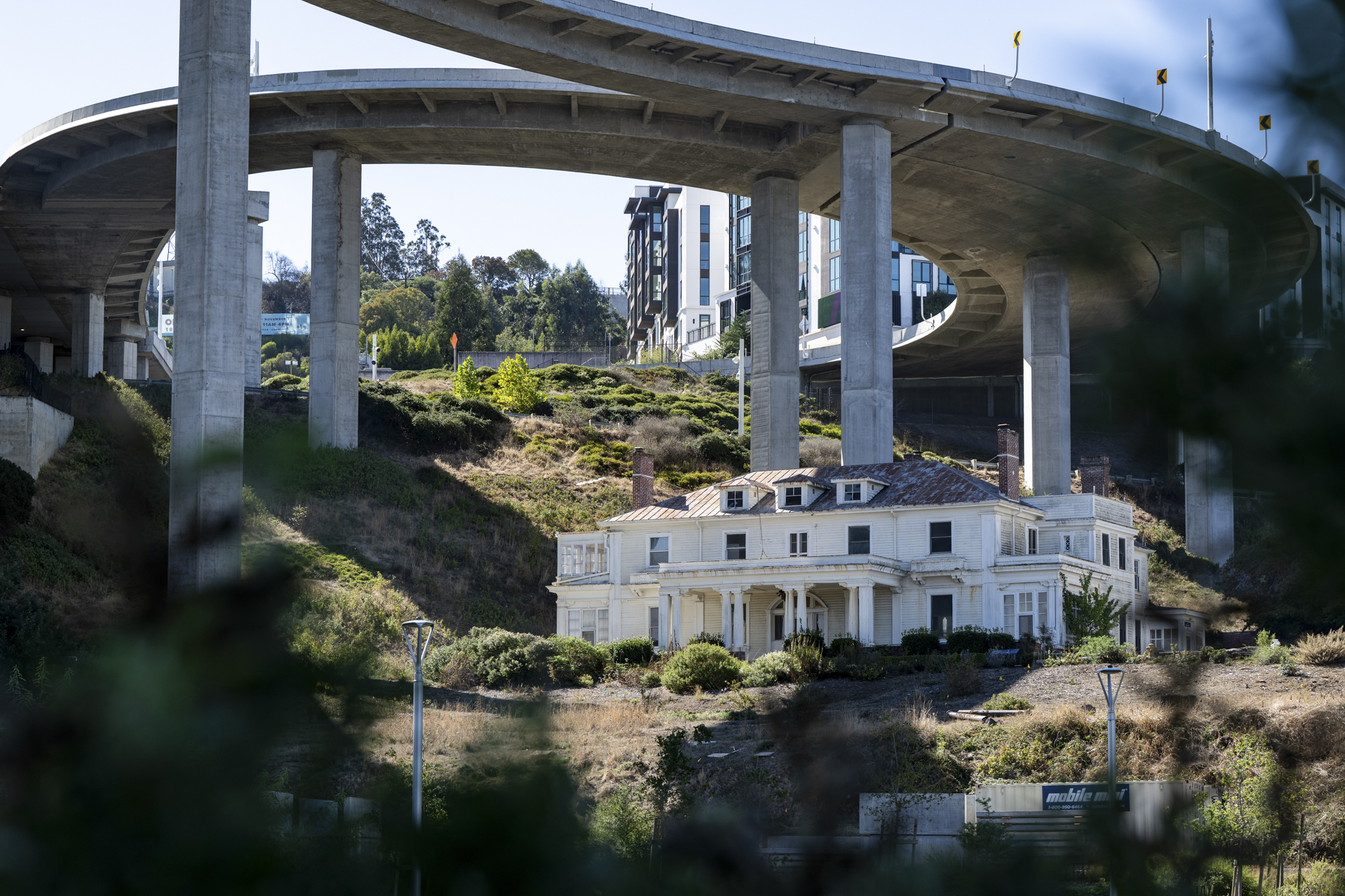
There’s a Grand Historic House Hiding Under the Bay Bridge
San Francisco’s Love-Hate Relationship with Big Box Stores
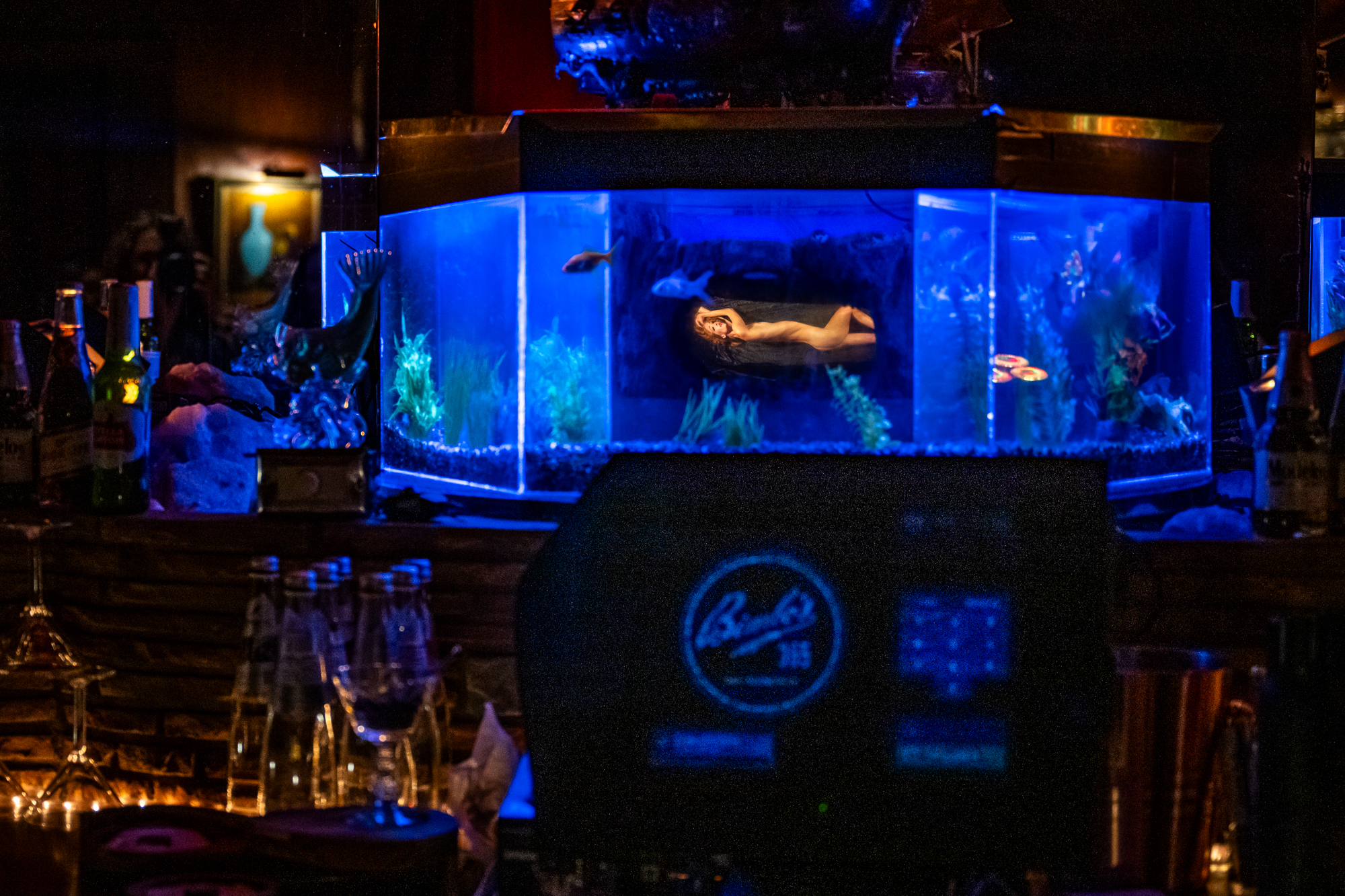
The Girl in the Fishbowl: The Secret Behind San Francisco's Quirkiest Nightclub Act
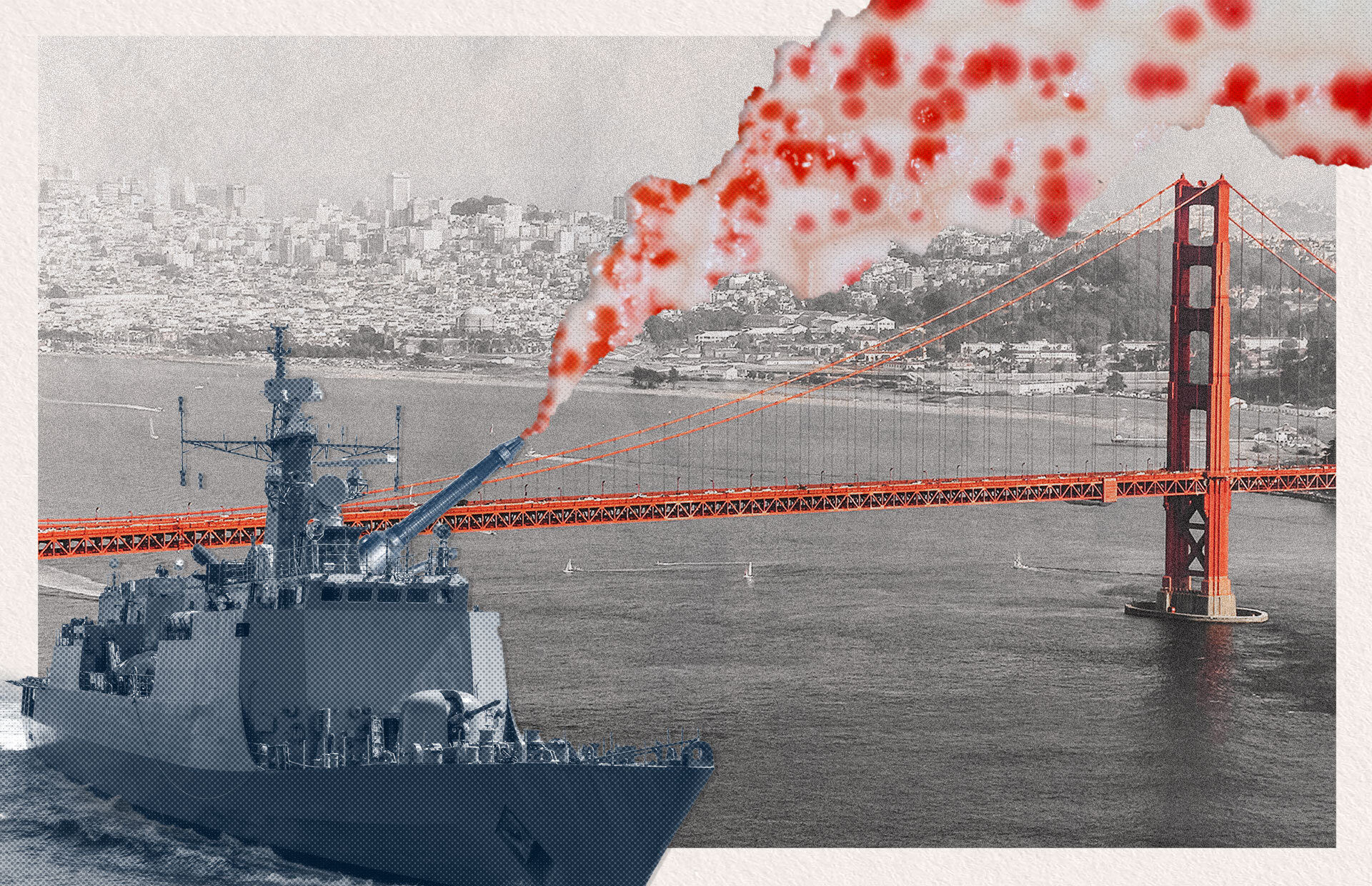
The True Story of the Military's Secret 1950 San Francisco Biological Weapons Test
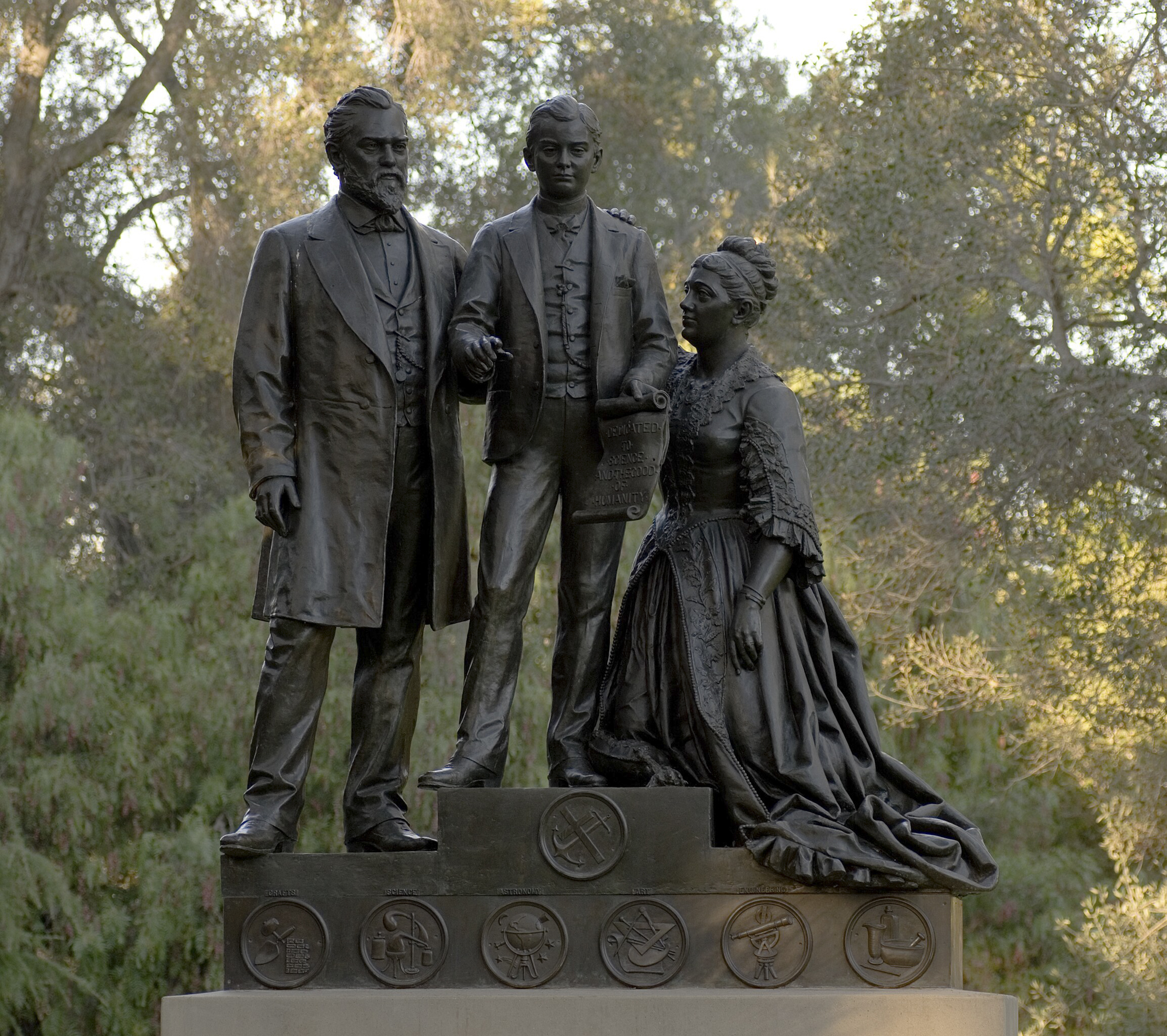
Who Killed Jane Stanford? Inside a 120-Year-Old Mystery
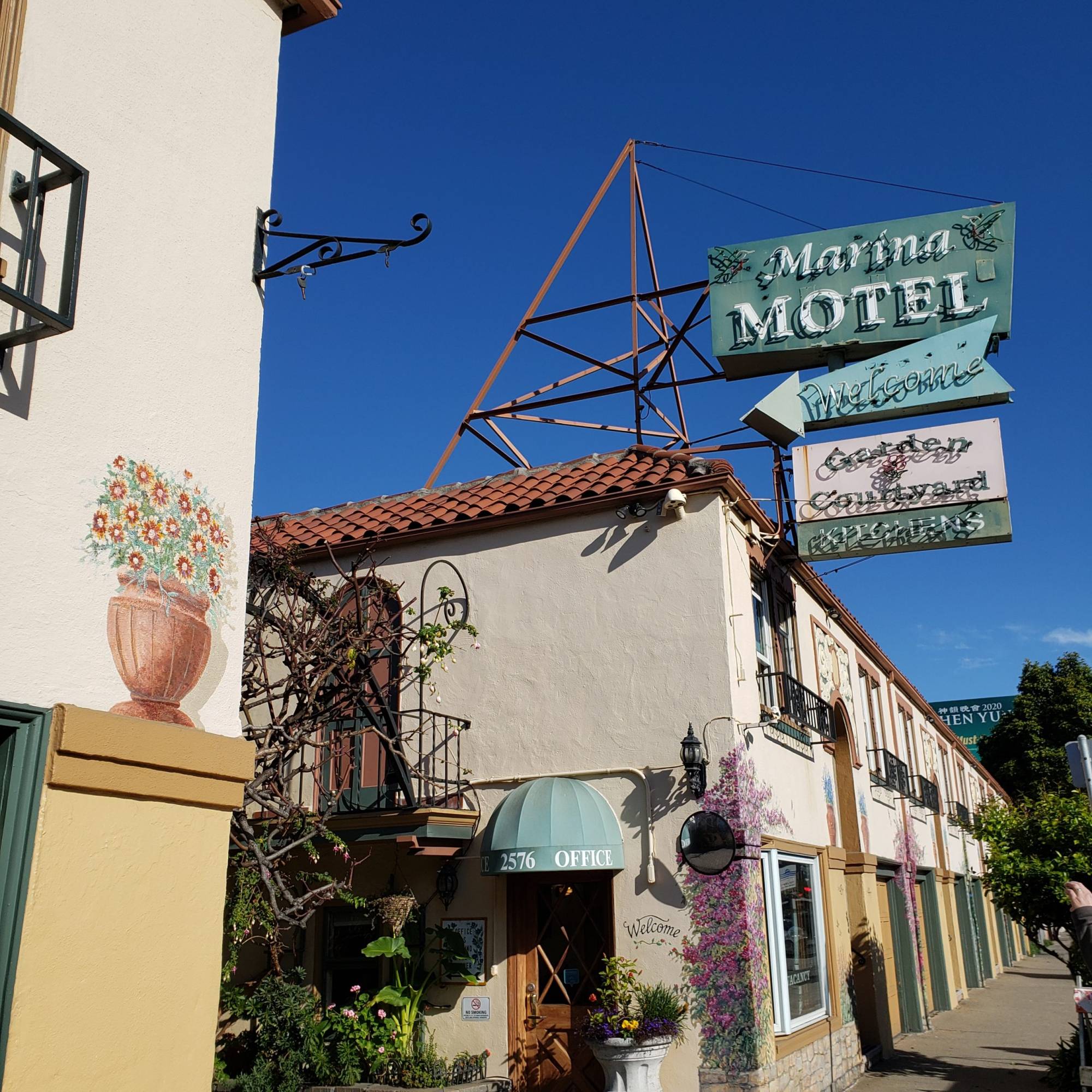
Why Are There So Many Motels on San Francisco’s Lombard Street?
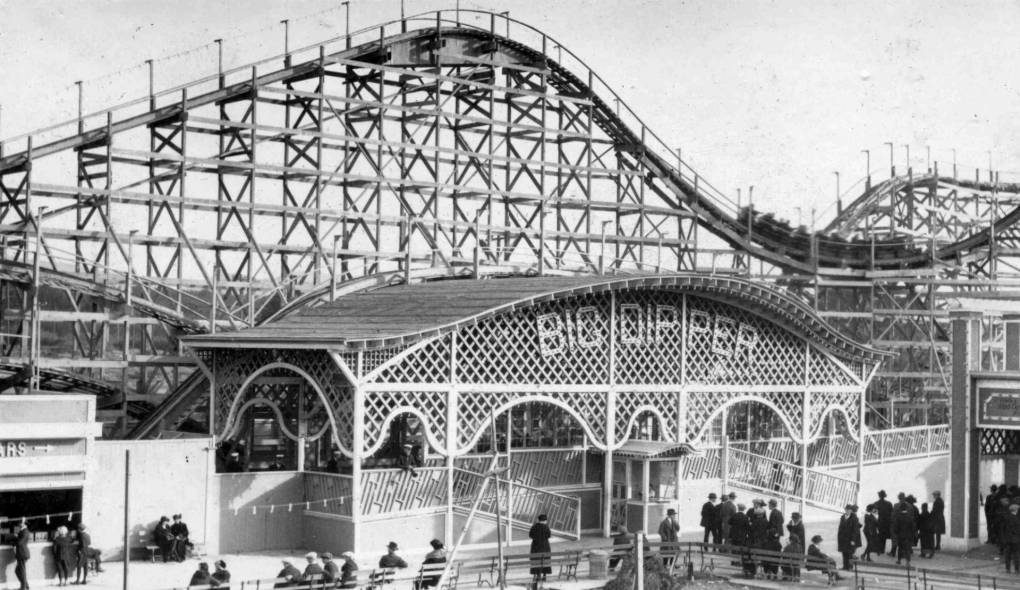
Idora Park and Playland-at-the-Beach: Bay Area Amusement Parks of a Bygone Era
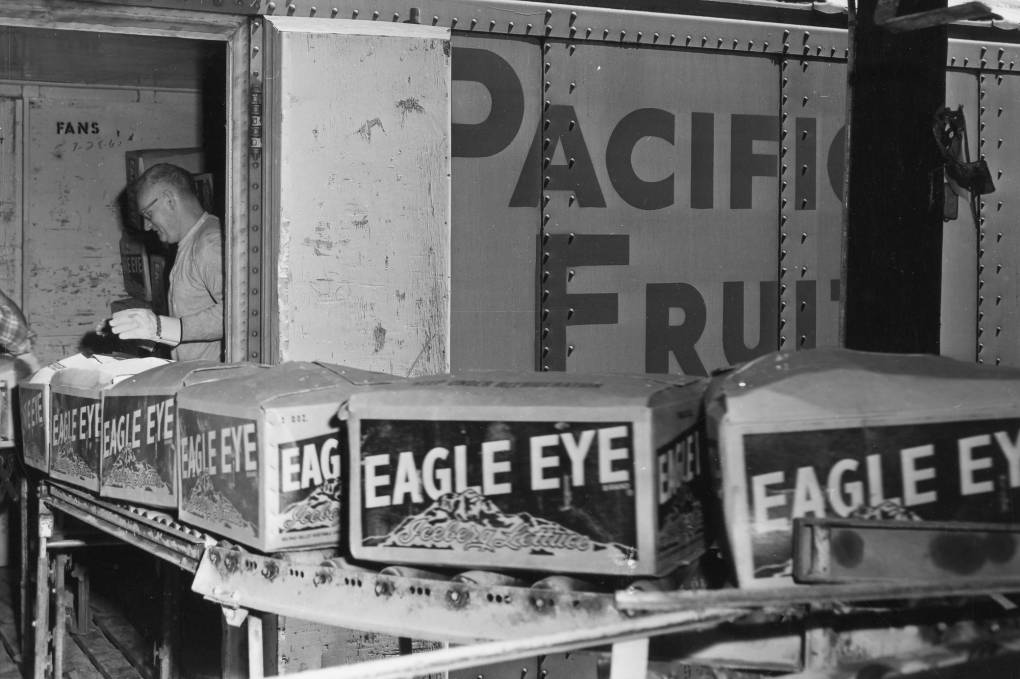
The California Railroad's Surprising Impact on Food and Civil Rights
SF’s History With Sanctuary Laws Brings Renewed Challenges Under Trump
Sponsored
Player sponsored by
window.__IS_SSR__=true
window.__INITIAL_STATE__={
"attachmentsReducer": {
"audio_0": {
"type": "attachments",
"id": "audio_0",
"imgSizes": {
"kqedFullSize": {
"file": "https://ww2.kqed.org/news/wp-content/themes/KQED-unified/img/audio_bgs/background0.jpg"
}
}
},
"audio_1": {
"type": "attachments",
"id": "audio_1",
"imgSizes": {
"kqedFullSize": {
"file": "https://ww2.kqed.org/news/wp-content/themes/KQED-unified/img/audio_bgs/background1.jpg"
}
}
},
"audio_2": {
"type": "attachments",
"id": "audio_2",
"imgSizes": {
"kqedFullSize": {
"file": "https://ww2.kqed.org/news/wp-content/themes/KQED-unified/img/audio_bgs/background2.jpg"
}
}
},
"audio_3": {
"type": "attachments",
"id": "audio_3",
"imgSizes": {
"kqedFullSize": {
"file": "https://ww2.kqed.org/news/wp-content/themes/KQED-unified/img/audio_bgs/background3.jpg"
}
}
},
"audio_4": {
"type": "attachments",
"id": "audio_4",
"imgSizes": {
"kqedFullSize": {
"file": "https://ww2.kqed.org/news/wp-content/themes/KQED-unified/img/audio_bgs/background4.jpg"
}
}
},
"placeholder": {
"type": "attachments",
"id": "placeholder",
"imgSizes": {
"thumbnail": {
"file": "https://cdn.kqed.org/wp-content/uploads/2024/12/KQED-Default-Image-816638274-2000x1333-1-160x107.jpg",
"width": 160,
"height": 107,
"mimeType": "image/jpeg"
},
"medium": {
"file": "https://cdn.kqed.org/wp-content/uploads/2024/12/KQED-Default-Image-816638274-2000x1333-1-800x533.jpg",
"width": 800,
"height": 533,
"mimeType": "image/jpeg"
},
"medium_large": {
"file": "https://cdn.kqed.org/wp-content/uploads/2024/12/KQED-Default-Image-816638274-2000x1333-1-768x512.jpg",
"width": 768,
"height": 512,
"mimeType": "image/jpeg"
},
"large": {
"file": "https://cdn.kqed.org/wp-content/uploads/2024/12/KQED-Default-Image-816638274-2000x1333-1-1020x680.jpg",
"width": 1020,
"height": 680,
"mimeType": "image/jpeg"
},
"1536x1536": {
"file": "https://cdn.kqed.org/wp-content/uploads/2024/12/KQED-Default-Image-816638274-2000x1333-1-1536x1024.jpg",
"width": 1536,
"height": 1024,
"mimeType": "image/jpeg"
},
"fd-lrg": {
"file": "https://cdn.kqed.org/wp-content/uploads/2024/12/KQED-Default-Image-816638274-2000x1333-1-1536x1024.jpg",
"width": 1536,
"height": 1024,
"mimeType": "image/jpeg"
},
"fd-med": {
"file": "https://cdn.kqed.org/wp-content/uploads/2024/12/KQED-Default-Image-816638274-2000x1333-1-1020x680.jpg",
"width": 1020,
"height": 680,
"mimeType": "image/jpeg"
},
"fd-sm": {
"file": "https://cdn.kqed.org/wp-content/uploads/2024/12/KQED-Default-Image-816638274-2000x1333-1-800x533.jpg",
"width": 800,
"height": 533,
"mimeType": "image/jpeg"
},
"post-thumbnail": {
"file": "https://cdn.kqed.org/wp-content/uploads/2024/12/KQED-Default-Image-816638274-2000x1333-1-672x372.jpg",
"width": 672,
"height": 372,
"mimeType": "image/jpeg"
},
"twentyfourteen-full-width": {
"file": "https://cdn.kqed.org/wp-content/uploads/2024/12/KQED-Default-Image-816638274-2000x1333-1-1038x576.jpg",
"width": 1038,
"height": 576,
"mimeType": "image/jpeg"
},
"xxsmall": {
"file": "https://cdn.kqed.org/wp-content/uploads/2024/12/KQED-Default-Image-816638274-2000x1333-1-160x107.jpg",
"width": 160,
"height": 107,
"mimeType": "image/jpeg"
},
"xsmall": {
"file": "https://cdn.kqed.org/wp-content/uploads/2024/12/KQED-Default-Image-816638274-2000x1333-1-672x372.jpg",
"width": 672,
"height": 372,
"mimeType": "image/jpeg"
},
"small": {
"file": "https://cdn.kqed.org/wp-content/uploads/2024/12/KQED-Default-Image-816638274-2000x1333-1-672x372.jpg",
"width": 672,
"height": 372,
"mimeType": "image/jpeg"
},
"xlarge": {
"file": "https://cdn.kqed.org/wp-content/uploads/2024/12/KQED-Default-Image-816638274-2000x1333-1-1020x680.jpg",
"width": 1020,
"height": 680,
"mimeType": "image/jpeg"
},
"full-width": {
"file": "https://cdn.kqed.org/wp-content/uploads/2024/12/KQED-Default-Image-816638274-2000x1333-1-1920x1280.jpg",
"width": 1920,
"height": 1280,
"mimeType": "image/jpeg"
},
"guest-author-32": {
"file": "https://cdn.kqed.org/wp-content/uploads/2025/01/KQED-Default-Image-816638274-1333x1333-1-160x160.jpg",
"width": 32,
"height": 32,
"mimeType": "image/jpeg"
},
"guest-author-50": {
"file": "https://cdn.kqed.org/wp-content/uploads/2025/01/KQED-Default-Image-816638274-1333x1333-1-160x160.jpg",
"width": 50,
"height": 50,
"mimeType": "image/jpeg"
},
"guest-author-64": {
"file": "https://cdn.kqed.org/wp-content/uploads/2025/01/KQED-Default-Image-816638274-1333x1333-1-160x160.jpg",
"width": 64,
"height": 64,
"mimeType": "image/jpeg"
},
"guest-author-96": {
"file": "https://cdn.kqed.org/wp-content/uploads/2025/01/KQED-Default-Image-816638274-1333x1333-1-160x160.jpg",
"width": 96,
"height": 96,
"mimeType": "image/jpeg"
},
"guest-author-128": {
"file": "https://cdn.kqed.org/wp-content/uploads/2025/01/KQED-Default-Image-816638274-1333x1333-1-160x160.jpg",
"width": 128,
"height": 128,
"mimeType": "image/jpeg"
},
"detail": {
"file": "https://cdn.kqed.org/wp-content/uploads/2025/01/KQED-Default-Image-816638274-1333x1333-1-160x160.jpg",
"width": 160,
"height": 160,
"mimeType": "image/jpeg"
},
"kqedFullSize": {
"file": "https://cdn.kqed.org/wp-content/uploads/2024/12/KQED-Default-Image-816638274-2000x1333-1.jpg",
"width": 2000,
"height": 1333
}
}
},
"news_12060399": {
"type": "attachments",
"id": "news_12060399",
"meta": {
"index": "attachments_1716263798",
"site": "news",
"id": "12060399",
"found": true
},
"title": "251016-NIMITZHOUSE-38-BL-KQED",
"publishDate": 1760734604,
"status": "inherit",
"parent": 0,
"modified": 1760734636,
"caption": "The Nimitz House on Yerba Buena Island in San Francisco on Oct. 16, 2025, was built around 1900 as part of the Naval Training Station and later became the home of Fleet Admiral Chester Nimitz during the final years of his life.",
"credit": "Beth LaBerge/KQED",
"altTag": null,
"description": null,
"imgSizes": {
"thumbnail": {
"file": "https://cdn.kqed.org/wp-content/uploads/sites/10/2025/10/251016-NIMITZHOUSE-38-BL-KQED-160x107.jpg",
"width": 160,
"height": 107,
"mimeType": "image/jpeg"
},
"1536x1536": {
"file": "https://cdn.kqed.org/wp-content/uploads/sites/10/2025/10/251016-NIMITZHOUSE-38-BL-KQED-1536x1024.jpg",
"width": 1536,
"height": 1024,
"mimeType": "image/jpeg"
},
"post-thumbnail": {
"file": "https://cdn.kqed.org/wp-content/uploads/sites/10/2025/10/251016-NIMITZHOUSE-38-BL-KQED-672x372.jpg",
"width": 672,
"height": 372,
"mimeType": "image/jpeg"
},
"twentyfourteen-full-width": {
"file": "https://cdn.kqed.org/wp-content/uploads/sites/10/2025/10/251016-NIMITZHOUSE-38-BL-KQED-1038x576.jpg",
"width": 1038,
"height": 576,
"mimeType": "image/jpeg"
},
"kqedFullSize": {
"file": "https://cdn.kqed.org/wp-content/uploads/sites/10/2025/10/251016-NIMITZHOUSE-38-BL-KQED.jpg",
"width": 2000,
"height": 1333
}
},
"fetchFailed": false,
"isLoading": false
},
"news_12064705": {
"type": "attachments",
"id": "news_12064705",
"meta": {
"index": "attachments_1716263798",
"site": "news",
"id": "12064705",
"found": true
},
"title": "251118-BIGBOXSTORES-05-BL-KQED",
"publishDate": 1763576897,
"status": "inherit",
"parent": 0,
"modified": 1763577207,
"caption": "Former San Francisco Board of Supervisors President Aaron Peskin sits with friends at Caffe Trieste in the city’s North Beach neighborhood on Nov. 18, 2025.",
"credit": "Beth LaBerge/KQED",
"altTag": null,
"description": null,
"imgSizes": {
"thumbnail": {
"file": "https://cdn.kqed.org/wp-content/uploads/sites/10/2025/11/251118-BIGBOXSTORES-05-BL-KQED-160x107.jpg",
"width": 160,
"height": 107,
"mimeType": "image/jpeg"
},
"1536x1536": {
"file": "https://cdn.kqed.org/wp-content/uploads/sites/10/2025/11/251118-BIGBOXSTORES-05-BL-KQED-1536x1024.jpg",
"width": 1536,
"height": 1024,
"mimeType": "image/jpeg"
},
"post-thumbnail": {
"file": "https://cdn.kqed.org/wp-content/uploads/sites/10/2025/11/251118-BIGBOXSTORES-05-BL-KQED-672x372.jpg",
"width": 672,
"height": 372,
"mimeType": "image/jpeg"
},
"twentyfourteen-full-width": {
"file": "https://cdn.kqed.org/wp-content/uploads/sites/10/2025/11/251118-BIGBOXSTORES-05-BL-KQED-1038x576.jpg",
"width": 1038,
"height": 576,
"mimeType": "image/jpeg"
},
"npr-cds-wide": {
"file": "https://cdn.kqed.org/wp-content/uploads/sites/10/2025/11/251118-BIGBOXSTORES-05-BL-KQED-1200x675.jpg",
"width": 1200,
"height": 675,
"mimeType": "image/jpeg"
},
"kqedFullSize": {
"file": "https://cdn.kqed.org/wp-content/uploads/sites/10/2025/11/251118-BIGBOXSTORES-05-BL-KQED.jpg",
"width": 2000,
"height": 1333
}
},
"fetchFailed": false,
"isLoading": false
},
"news_12062954": {
"type": "attachments",
"id": "news_12062954",
"meta": {
"index": "attachments_1716263798",
"site": "news",
"id": "12062954",
"found": true
},
"title": "251008-GirlintheFishbowl-01-BL",
"publishDate": 1762303194,
"status": "inherit",
"parent": 0,
"modified": 1762813797,
"caption": "Hanna Longwell performs as the 'Girl in the Fishbowl' at Bimbo’s 365 Club on Oct. 8, 2025. The act has been part of the venue since it opened in 1931.",
"credit": "Beth LaBerge/KQED",
"altTag": null,
"description": null,
"imgSizes": {
"thumbnail": {
"file": "https://cdn.kqed.org/wp-content/uploads/sites/10/2025/11/251008-GirlintheFishbowl-01-BL-160x107.jpg",
"width": 160,
"height": 107,
"mimeType": "image/jpeg"
},
"1536x1536": {
"file": "https://cdn.kqed.org/wp-content/uploads/sites/10/2025/11/251008-GirlintheFishbowl-01-BL-1536x1024.jpg",
"width": 1536,
"height": 1024,
"mimeType": "image/jpeg"
},
"post-thumbnail": {
"file": "https://cdn.kqed.org/wp-content/uploads/sites/10/2025/11/251008-GirlintheFishbowl-01-BL-672x372.jpg",
"width": 672,
"height": 372,
"mimeType": "image/jpeg"
},
"twentyfourteen-full-width": {
"file": "https://cdn.kqed.org/wp-content/uploads/sites/10/2025/11/251008-GirlintheFishbowl-01-BL-1038x576.jpg",
"width": 1038,
"height": 576,
"mimeType": "image/jpeg"
},
"npr-cds-wide": {
"file": "https://cdn.kqed.org/wp-content/uploads/sites/10/2025/11/251008-GirlintheFishbowl-01-BL-1200x675.jpg",
"width": 1200,
"height": 675,
"mimeType": "image/jpeg"
},
"kqedFullSize": {
"file": "https://cdn.kqed.org/wp-content/uploads/sites/10/2025/11/251008-GirlintheFishbowl-01-BL.jpg",
"width": 2000,
"height": 1333
}
},
"fetchFailed": false,
"isLoading": false
},
"news_12063107": {
"type": "attachments",
"id": "news_12063107",
"meta": {
"index": "attachments_1716263798",
"site": "news",
"id": "12063107",
"found": true
},
"title": "Ocean-Spray_3",
"publishDate": 1762383143,
"status": "inherit",
"parent": 12062909,
"modified": 1762386663,
"caption": "Unbeknownst to San Francisco citizens, in 1950, the U.S. military tested how bacteria would disperse if sprayed from a boat offshore, simulating a biological weapons attack. The experiment is now known as Operation Seaspray.",
"credit": "Illustration by Darren Tu/Getty Images",
"altTag": null,
"description": null,
"imgSizes": {
"thumbnail": {
"file": "https://cdn.kqed.org/wp-content/uploads/sites/10/2025/11/Ocean-Spray_3-160x103.jpg",
"width": 160,
"height": 103,
"mimeType": "image/jpeg"
},
"1536x1536": {
"file": "https://cdn.kqed.org/wp-content/uploads/sites/10/2025/11/Ocean-Spray_3-1536x992.jpg",
"width": 1536,
"height": 992,
"mimeType": "image/jpeg"
},
"post-thumbnail": {
"file": "https://cdn.kqed.org/wp-content/uploads/sites/10/2025/11/Ocean-Spray_3-672x372.jpg",
"width": 672,
"height": 372,
"mimeType": "image/jpeg"
},
"twentyfourteen-full-width": {
"file": "https://cdn.kqed.org/wp-content/uploads/sites/10/2025/11/Ocean-Spray_3-1038x576.jpg",
"width": 1038,
"height": 576,
"mimeType": "image/jpeg"
},
"npr-cds-wide": {
"file": "https://cdn.kqed.org/wp-content/uploads/sites/10/2025/11/Ocean-Spray_3-1200x675.jpg",
"width": 1200,
"height": 675,
"mimeType": "image/jpeg"
},
"kqedFullSize": {
"file": "https://cdn.kqed.org/wp-content/uploads/sites/10/2025/11/Ocean-Spray_3.jpg",
"width": 1920,
"height": 1240
}
},
"fetchFailed": false,
"isLoading": false
},
"news_12061781": {
"type": "attachments",
"id": "news_12061781",
"meta": {
"index": "attachments_1716263798",
"site": "news",
"id": "12061781",
"found": true
},
"title": "251027-JANE STANFORD ARCHIVAL-03-KQED",
"publishDate": 1761604939,
"status": "inherit",
"parent": 0,
"modified": 1761605047,
"caption": "This bronze statue of the Stanford family is located on Stanford University’s campus. Crafted by Larkin Goldsmith Mead in 1899.",
"credit": "Wikimedia Commons",
"altTag": null,
"description": null,
"imgSizes": {
"thumbnail": {
"file": "https://cdn.kqed.org/wp-content/uploads/sites/10/2025/10/251027-JANE-STANFORD-ARCHIVAL-03-KQED-160x142.jpg",
"width": 160,
"height": 142,
"mimeType": "image/jpeg"
},
"1536x1536": {
"file": "https://cdn.kqed.org/wp-content/uploads/sites/10/2025/10/251027-JANE-STANFORD-ARCHIVAL-03-KQED-1536x1363.jpg",
"width": 1536,
"height": 1363,
"mimeType": "image/jpeg"
},
"post-thumbnail": {
"file": "https://cdn.kqed.org/wp-content/uploads/sites/10/2025/10/251027-JANE-STANFORD-ARCHIVAL-03-KQED-672x372.jpg",
"width": 672,
"height": 372,
"mimeType": "image/jpeg"
},
"twentyfourteen-full-width": {
"file": "https://cdn.kqed.org/wp-content/uploads/sites/10/2025/10/251027-JANE-STANFORD-ARCHIVAL-03-KQED-1038x576.jpg",
"width": 1038,
"height": 576,
"mimeType": "image/jpeg"
},
"npr-cds-wide": {
"file": "https://cdn.kqed.org/wp-content/uploads/sites/10/2025/10/251027-JANE-STANFORD-ARCHIVAL-03-KQED-1600x900.jpg",
"width": 1600,
"height": 900,
"mimeType": "image/jpeg"
},
"kqedFullSize": {
"file": "https://cdn.kqed.org/wp-content/uploads/sites/10/2025/10/251027-JANE-STANFORD-ARCHIVAL-03-KQED.jpg",
"width": 2000,
"height": 1775
}
},
"fetchFailed": false,
"isLoading": false
},
"news_12058835": {
"type": "attachments",
"id": "news_12058835",
"meta": {
"index": "attachments_1716263798",
"site": "news",
"id": "12058835",
"found": true
},
"title": "The Marina Motel at 2576 Lombard. Heritage photo.",
"publishDate": 1759787762,
"status": "inherit",
"parent": 12058829,
"modified": 1759949923,
"caption": "The Marina Motel at 2576 Lombard St. in San Francisco. ",
"credit": "Courtesy of San Francisco Heritage",
"altTag": null,
"description": null,
"imgSizes": {
"medium": {
"file": "https://cdn.kqed.org/wp-content/uploads/sites/10/2025/10/The-Marina-Motel-at-2576-Lombard.-Heritage-photo-2000x2000.jpg",
"width": 2000,
"height": 2000,
"mimeType": "image/jpeg"
},
"large": {
"file": "https://cdn.kqed.org/wp-content/uploads/sites/10/2025/10/The-Marina-Motel-at-2576-Lombard.-Heritage-photo-2000x2000.jpg",
"width": 2000,
"height": 2000,
"mimeType": "image/jpeg"
},
"thumbnail": {
"file": "https://cdn.kqed.org/wp-content/uploads/sites/10/2025/10/The-Marina-Motel-at-2576-Lombard.-Heritage-photo-160x160.jpg",
"width": 160,
"height": 160,
"mimeType": "image/jpeg"
},
"1536x1536": {
"file": "https://cdn.kqed.org/wp-content/uploads/sites/10/2025/10/The-Marina-Motel-at-2576-Lombard.-Heritage-photo-1536x1536.jpg",
"width": 1536,
"height": 1536,
"mimeType": "image/jpeg"
},
"2048x2048": {
"file": "https://cdn.kqed.org/wp-content/uploads/sites/10/2025/10/The-Marina-Motel-at-2576-Lombard.-Heritage-photo-2048x2048.jpg",
"width": 2048,
"height": 2048,
"mimeType": "image/jpeg"
},
"post-thumbnail": {
"file": "https://cdn.kqed.org/wp-content/uploads/sites/10/2025/10/The-Marina-Motel-at-2576-Lombard.-Heritage-photo-672x372.jpg",
"width": 672,
"height": 372,
"mimeType": "image/jpeg"
},
"twentyfourteen-full-width": {
"file": "https://cdn.kqed.org/wp-content/uploads/sites/10/2025/10/The-Marina-Motel-at-2576-Lombard.-Heritage-photo-1038x576.jpg",
"width": 1038,
"height": 576,
"mimeType": "image/jpeg"
},
"full-width": {
"file": "https://cdn.kqed.org/wp-content/uploads/sites/10/2025/10/The-Marina-Motel-at-2576-Lombard.-Heritage-photo-2000x2000.jpg",
"width": 2000,
"height": 2000,
"mimeType": "image/jpeg"
},
"kqedFullSize": {
"file": "https://cdn.kqed.org/wp-content/uploads/sites/10/2025/10/The-Marina-Motel-at-2576-Lombard.-Heritage-photo-e1759787961707.jpg",
"width": 2000,
"height": 2000
}
},
"fetchFailed": false,
"isLoading": false
},
"news_11925582": {
"type": "attachments",
"id": "news_11925582",
"meta": {
"index": "attachments_1716263798",
"site": "news",
"id": "11925582",
"found": true
},
"parent": 11925112,
"imgSizes": {
"twentyfourteen-full-width": {
"file": "https://ww2.kqed.org/app/uploads/sites/10/2022/09/BigDipper-Ride-1038x576.jpg",
"width": 1038,
"mimeType": "image/jpeg",
"height": 576
},
"thumbnail": {
"file": "https://ww2.kqed.org/app/uploads/sites/10/2022/09/BigDipper-Ride-160x93.jpg",
"width": 160,
"mimeType": "image/jpeg",
"height": 93
},
"post-thumbnail": {
"file": "https://ww2.kqed.org/app/uploads/sites/10/2022/09/BigDipper-Ride-672x372.jpg",
"width": 672,
"mimeType": "image/jpeg",
"height": 372
},
"kqedFullSize": {
"file": "https://ww2.kqed.org/app/uploads/sites/10/2022/09/BigDipper-Ride.jpg",
"width": 1920,
"height": 1110
},
"large": {
"file": "https://ww2.kqed.org/app/uploads/sites/10/2022/09/BigDipper-Ride-1020x590.jpg",
"width": 1020,
"mimeType": "image/jpeg",
"height": 590
},
"1536x1536": {
"file": "https://ww2.kqed.org/app/uploads/sites/10/2022/09/BigDipper-Ride-1536x888.jpg",
"width": 1536,
"mimeType": "image/jpeg",
"height": 888
},
"medium": {
"file": "https://ww2.kqed.org/app/uploads/sites/10/2022/09/BigDipper-Ride-800x463.jpg",
"width": 800,
"mimeType": "image/jpeg",
"height": 463
}
},
"publishDate": 1663180614,
"modified": 1663194368,
"caption": "San Francisco's Big Dipper roller coaster at Playland-at-the-Beach, circa 1920s.",
"description": null,
"title": "BigDipper-Ride",
"credit": "Courtesy of Jim Smith",
"status": "inherit",
"altTag": "Black and white photo of people lining up to ride a roller coaster. A wooden structure at the entrance to the ride has the words BIG DIPPER across it.",
"fetchFailed": false,
"isLoading": false
},
"news_12018792": {
"type": "attachments",
"id": "news_12018792",
"meta": {
"index": "attachments_1716263798",
"site": "news",
"id": "12018792",
"found": true
},
"title": "Loading PFE Cars",
"publishDate": 1734545579,
"status": "inherit",
"parent": 0,
"modified": 1734659534,
"caption": "Workers load a Pacific Fruit Express mechanical refrigerator car with lettuce in this undated photograph.",
"credit": "PFE/California State Railroad Museum",
"altTag": null,
"description": null,
"imgSizes": {
"medium": {
"file": "https://cdn.kqed.org/wp-content/uploads/sites/10/2024/12/CSRM_39595_p-800x533.jpg",
"width": 800,
"height": 533,
"mimeType": "image/jpeg"
},
"large": {
"file": "https://cdn.kqed.org/wp-content/uploads/sites/10/2024/12/CSRM_39595_p-1020x679.jpg",
"width": 1020,
"height": 679,
"mimeType": "image/jpeg"
},
"thumbnail": {
"file": "https://cdn.kqed.org/wp-content/uploads/sites/10/2024/12/CSRM_39595_p-160x107.jpg",
"width": 160,
"height": 107,
"mimeType": "image/jpeg"
},
"1536x1536": {
"file": "https://cdn.kqed.org/wp-content/uploads/sites/10/2024/12/CSRM_39595_p-1536x1023.jpg",
"width": 1536,
"height": 1023,
"mimeType": "image/jpeg"
},
"post-thumbnail": {
"file": "https://cdn.kqed.org/wp-content/uploads/sites/10/2024/12/CSRM_39595_p-672x372.jpg",
"width": 672,
"height": 372,
"mimeType": "image/jpeg"
},
"twentyfourteen-full-width": {
"file": "https://cdn.kqed.org/wp-content/uploads/sites/10/2024/12/CSRM_39595_p-1038x576.jpg",
"width": 1038,
"height": 576,
"mimeType": "image/jpeg"
},
"full-width": {
"file": "https://cdn.kqed.org/wp-content/uploads/sites/10/2024/12/CSRM_39595_p-1920x1279.jpg",
"width": 1920,
"height": 1279,
"mimeType": "image/jpeg"
},
"kqedFullSize": {
"file": "https://cdn.kqed.org/wp-content/uploads/sites/10/2024/12/CSRM_39595_p.jpg",
"width": 2000,
"height": 1332
}
},
"fetchFailed": false,
"isLoading": false
},
"news_12024430": {
"type": "attachments",
"id": "news_12024430",
"meta": {
"index": "attachments_1716263798",
"site": "news",
"id": "12024430",
"found": true
},
"title": "250128-SFImmigration-08-BL",
"publishDate": 1738105102,
"status": "inherit",
"parent": 12024325,
"modified": 1742325555,
"caption": "A group of elected and public safety officials, labor leaders, and community members fill the steps in front of City Hall in San Francisco on Jan. 28, 2025, during a press conference to reaffirm San Francisco’s commitment to being a Sanctuary City.",
"credit": "Beth LaBerge/KQED",
"altTag": null,
"description": null,
"imgSizes": {
"medium": {
"file": "https://cdn.kqed.org/wp-content/uploads/sites/10/2025/01/250128-SFImmigration-08-BL-800x533.jpg",
"width": 800,
"height": 533,
"mimeType": "image/jpeg"
},
"large": {
"file": "https://cdn.kqed.org/wp-content/uploads/sites/10/2025/01/250128-SFImmigration-08-BL-1020x680.jpg",
"width": 1020,
"height": 680,
"mimeType": "image/jpeg"
},
"thumbnail": {
"file": "https://cdn.kqed.org/wp-content/uploads/sites/10/2025/01/250128-SFImmigration-08-BL-160x107.jpg",
"width": 160,
"height": 107,
"mimeType": "image/jpeg"
},
"1536x1536": {
"file": "https://cdn.kqed.org/wp-content/uploads/sites/10/2025/01/250128-SFImmigration-08-BL-1536x1024.jpg",
"width": 1536,
"height": 1024,
"mimeType": "image/jpeg"
},
"post-thumbnail": {
"file": "https://cdn.kqed.org/wp-content/uploads/sites/10/2025/01/250128-SFImmigration-08-BL-672x372.jpg",
"width": 672,
"height": 372,
"mimeType": "image/jpeg"
},
"twentyfourteen-full-width": {
"file": "https://cdn.kqed.org/wp-content/uploads/sites/10/2025/01/250128-SFImmigration-08-BL-1038x576.jpg",
"width": 1038,
"height": 576,
"mimeType": "image/jpeg"
},
"full-width": {
"file": "https://cdn.kqed.org/wp-content/uploads/sites/10/2025/01/250128-SFImmigration-08-BL-1920x1280.jpg",
"width": 1920,
"height": 1280,
"mimeType": "image/jpeg"
},
"kqedFullSize": {
"file": "https://cdn.kqed.org/wp-content/uploads/sites/10/2025/01/250128-SFImmigration-08-BL.jpg",
"width": 2000,
"height": 1333
}
},
"fetchFailed": false,
"isLoading": false
}
},
"audioPlayerReducer": {
"postId": "stream_live",
"isPaused": true,
"isPlaying": false,
"pfsActive": false,
"pledgeModalIsOpen": true,
"playerDrawerIsOpen": false
},
"authorsReducer": {
"scottshafer": {
"type": "authors",
"id": "255",
"meta": {
"index": "authors_1716337520",
"id": "255",
"found": true
},
"name": "Scott Shafer",
"firstName": "Scott",
"lastName": "Shafer",
"slug": "scottshafer",
"email": "sshafer@kqed.org",
"display_author_email": false,
"staff_mastheads": [
"news"
],
"title": "KQED Contributor",
"bio": "Scott Shafer is a senior editor with the KQED Politics and Government desk. He is co-host of Political Breakdown, the award-winning radio show and podcast with a personal take on the world of politics. Scott came to KQED in 1998 to host the statewide\u003cem> California Report\u003c/em>. Prior to that he had extended stints in politics and government\u003cem>.\u003c/em> He uses that inside experience at KQED in his, reporting, hosting and analysis for the politics desk. Scott collaborated \u003cem>Political Breakdown a\u003c/em>nd on \u003cem>The Political Mind of Jerry Brown, \u003c/em>an eight-part series about the life and extraordinary political career of the former governor. For fun, he plays water polo with the San Francisco Tsunami.",
"avatar": "https://secure.gravatar.com/avatar/a62ebae45b79d7aed1a39a0e3bf68104?s=600&d=blank&r=g",
"twitter": "scottshafer",
"facebook": null,
"instagram": null,
"linkedin": null,
"sites": [
{
"site": "news",
"roles": [
"editor"
]
},
{
"site": "stateofhealth",
"roles": [
"author"
]
},
{
"site": "science",
"roles": [
"author"
]
},
{
"site": "forum",
"roles": [
"subscriber"
]
}
],
"headData": {
"title": "Scott Shafer | KQED",
"description": "KQED Contributor",
"ogImgSrc": "https://secure.gravatar.com/avatar/a62ebae45b79d7aed1a39a0e3bf68104?s=600&d=blank&r=g",
"twImgSrc": "https://secure.gravatar.com/avatar/a62ebae45b79d7aed1a39a0e3bf68104?s=600&d=blank&r=g"
},
"isLoading": false,
"link": "/author/scottshafer"
},
"lmorehouse": {
"type": "authors",
"id": "3229",
"meta": {
"index": "authors_1716337520",
"id": "3229",
"found": true
},
"name": "Lisa Morehouse",
"firstName": "Lisa",
"lastName": "Morehouse",
"slug": "lmorehouse",
"email": "morehouse.lisa@gmail.com",
"display_author_email": false,
"staff_mastheads": [],
"title": "KQED Contributor",
"bio": "Lisa Morehouse is an award-winning public radio and print journalist, who has filed for National Public Radio, American Public Media, KQED Public Radio, Edutopia, and McSweeney’s. Her reporting has taken her from Samoan traveling circuses to Mississippi Delta classrooms to the homes of Lao refugees in rural Iowa. In addition to reporting, she teaches radio production to at-risk youth in the Bay Area. Her series \u003ca href=\"http://afterthegoldrushradio.com/\">After the Gold Rush\u003c/a> featured the changing industries, populations and identities of rural towns throughout California. She’s now producing \u003ca href=\"http://www.californiafoodways.com/\">California Foodways\u003c/a>, a series exploring the intersections of food, culture, economics, history and labor. Follow along on the \u003ca href=\"https://www.facebook.com/californiafoodways?ref=hl\">Facebook page\u003c/a> or on Twitter @cafoodways.",
"avatar": "https://secure.gravatar.com/avatar/dae74b002a6e256f39abb19d6f5acaea?s=600&d=blank&r=g",
"twitter": null,
"facebook": null,
"instagram": null,
"linkedin": null,
"sites": [
{
"site": "",
"roles": [
"editor"
]
},
{
"site": "news",
"roles": [
"author"
]
}
],
"headData": {
"title": "Lisa Morehouse | KQED",
"description": "KQED Contributor",
"ogImgSrc": "https://secure.gravatar.com/avatar/dae74b002a6e256f39abb19d6f5acaea?s=600&d=blank&r=g",
"twImgSrc": "https://secure.gravatar.com/avatar/dae74b002a6e256f39abb19d6f5acaea?s=600&d=blank&r=g"
},
"isLoading": false,
"link": "/author/lmorehouse"
},
"mlagos": {
"type": "authors",
"id": "3239",
"meta": {
"index": "authors_1716337520",
"id": "3239",
"found": true
},
"name": "Marisa Lagos",
"firstName": "Marisa",
"lastName": "Lagos",
"slug": "mlagos",
"email": "mlagos@kqed.org",
"display_author_email": false,
"staff_mastheads": [
"news"
],
"title": "KQED Contributor",
"bio": "Marisa Lagos is a correspondent for KQED’s California Politics and Government Desk and co-hosts the award-winning show and podcast, Political Breakdown. At KQED, Lagos also conducts reporting, analysis and investigations into state, local and national politics for radio, TV, online and onstage. In 2022, she and co-host, Scott Shafer, moderated the only gubernatorial debate in California. In 2020, the \u003ci>Washington Post\u003c/i> named her one of the top political journalists in California; she was nominated for a Peabody and won several other awards for her work investigating the 2017 California wildfires. She has worked at the \u003ci>San Francisco Chronicle\u003c/i>, \u003ci>San Francisco Examiner\u003c/i> and \u003ci>Los Angeles Times\u003c/i>. A UC Santa Barbara graduate, she lives in San Francisco with her two sons and husband.",
"avatar": "https://secure.gravatar.com/avatar/a261a0d3696fc066871ef96b85b5e7d2?s=600&d=blank&r=g",
"twitter": "@mlagos",
"facebook": null,
"instagram": null,
"linkedin": null,
"sites": [
{
"site": "arts",
"roles": [
"author"
]
},
{
"site": "news",
"roles": [
"editor"
]
},
{
"site": "science",
"roles": [
"editor"
]
},
{
"site": "forum",
"roles": [
"author"
]
},
{
"site": "liveblog",
"roles": [
"author"
]
}
],
"headData": {
"title": "Marisa Lagos | KQED",
"description": "KQED Contributor",
"ogImgSrc": "https://secure.gravatar.com/avatar/a261a0d3696fc066871ef96b85b5e7d2?s=600&d=blank&r=g",
"twImgSrc": "https://secure.gravatar.com/avatar/a261a0d3696fc066871ef96b85b5e7d2?s=600&d=blank&r=g"
},
"isLoading": false,
"link": "/author/mlagos"
},
"carlysevern": {
"type": "authors",
"id": "3243",
"meta": {
"index": "authors_1716337520",
"id": "3243",
"found": true
},
"name": "Carly Severn",
"firstName": "Carly",
"lastName": "Severn",
"slug": "carlysevern",
"email": "csevern@kqed.org",
"display_author_email": false,
"staff_mastheads": [
"news"
],
"title": "Senior Editor, Audience News ",
"bio": "Carly is KQED's Senior Editor of Audience News on the Digital News team, and has reported for the California Report Magazine, Bay Curious and KQED Arts. She's formerly the host of \u003ca href=\"http://ww2.kqed.org/pop/category/the-cooler/\" rel=\"noopener noreferrer\">The Cooler\u003c/a> podcast.",
"avatar": "https://secure.gravatar.com/avatar/2d8d6765f186e64c798cf7f0c8088a41?s=600&d=blank&r=g",
"twitter": "teacupinthebay",
"facebook": null,
"instagram": null,
"linkedin": null,
"sites": [
{
"site": "",
"roles": [
"editor"
]
},
{
"site": "arts",
"roles": [
"editor"
]
},
{
"site": "news",
"roles": [
"administrator"
]
},
{
"site": "pop",
"roles": [
"editor"
]
},
{
"site": "futureofyou",
"roles": [
"editor"
]
},
{
"site": "about",
"roles": [
"administrator"
]
},
{
"site": "mindshift",
"roles": [
"editor"
]
},
{
"site": "bayareabites",
"roles": [
"editor"
]
},
{
"site": "stateofhealth",
"roles": [
"editor"
]
},
{
"site": "science",
"roles": [
"editor"
]
},
{
"site": "food",
"roles": [
"contributor"
]
},
{
"site": "forum",
"roles": [
"editor"
]
},
{
"site": "perspectives",
"roles": [
"administrator"
]
},
{
"site": "liveblog",
"roles": [
"editor"
]
}
],
"headData": {
"title": "Carly Severn | KQED",
"description": "Senior Editor, Audience News ",
"ogImgSrc": "https://secure.gravatar.com/avatar/2d8d6765f186e64c798cf7f0c8088a41?s=600&d=blank&r=g",
"twImgSrc": "https://secure.gravatar.com/avatar/2d8d6765f186e64c798cf7f0c8088a41?s=600&d=blank&r=g"
},
"isLoading": false,
"link": "/author/carlysevern"
},
"ecruzguevarra": {
"type": "authors",
"id": "8654",
"meta": {
"index": "authors_1716337520",
"id": "8654",
"found": true
},
"name": "Ericka Cruz Guevarra",
"firstName": "Ericka",
"lastName": "Cruz Guevarra",
"slug": "ecruzguevarra",
"email": "ecruzguevarra@kqed.org",
"display_author_email": true,
"staff_mastheads": [
"news"
],
"title": "Producer, The Bay Podcast",
"bio": "Ericka Cruz Guevarra is host of \u003ca href=\"https://www.kqed.org/podcasts/thebay\">\u003cem>The Bay\u003c/em>\u003c/a> podcast at KQED. Before host, she was the show’s producer. Her work in that capacity includes a three-part reported series on policing in Vallejo, which won a 2020 excellence in journalism award from the Society of Professional Journalists. Ericka has worked as a breaking news reporter at Oregon Public Broadcasting, helped produce the Code Switch podcast, and was KQED’s inaugural Raul Ramirez Diversity Fund intern. She’s also an alumna of NPR’s Next Generation Radio program. Send her an email if you have strong feelings about whether Fairfield and Suisun City are the Bay. Ericka is represented by SAG-AFTRA.",
"avatar": "https://secure.gravatar.com/avatar/25e5ab8d3d53fad2dcc7bb2b5c506b1a?s=600&d=blank&r=g",
"twitter": "NotoriousECG",
"facebook": null,
"instagram": null,
"linkedin": null,
"sites": [
{
"site": "arts",
"roles": [
"subscriber"
]
},
{
"site": "news",
"roles": [
"editor",
"manage_categories"
]
},
{
"site": "futureofyou",
"roles": [
"subscriber"
]
},
{
"site": "stateofhealth",
"roles": [
"subscriber"
]
},
{
"site": "science",
"roles": [
"editor"
]
},
{
"site": "forum",
"roles": [
"subscriber"
]
}
],
"headData": {
"title": "Ericka Cruz Guevarra | KQED",
"description": "Producer, The Bay Podcast",
"ogImgSrc": "https://secure.gravatar.com/avatar/25e5ab8d3d53fad2dcc7bb2b5c506b1a?s=600&d=blank&r=g",
"twImgSrc": "https://secure.gravatar.com/avatar/25e5ab8d3d53fad2dcc7bb2b5c506b1a?s=600&d=blank&r=g"
},
"isLoading": false,
"link": "/author/ecruzguevarra"
},
"btaylor": {
"type": "authors",
"id": "11365",
"meta": {
"index": "authors_1716337520",
"id": "11365",
"found": true
},
"name": "Bianca Taylor",
"firstName": "Bianca",
"lastName": "Taylor",
"slug": "btaylor",
"email": "btaylor@KQED.org",
"display_author_email": false,
"staff_mastheads": [
"news"
],
"title": "Host and Producer ",
"bio": "Bianca Taylor is a news producer and host of KQED's The Latest podcast.\r\n\r\nHer work with KQED has been honored by the Society of Professional Journalists NorCal, the Webby's, the Regional Murrow Awards, and ONA. She has also worked with NPR, the BBC World Service, and the Washington Post Creative Group.\r\n\r\nBianca is represented by SAG-AFTRA.",
"avatar": "https://secure.gravatar.com/avatar/6b9d3f6552dd10470c5d1c2e58cfe717?s=600&d=blank&r=g",
"twitter": "SoundsLkeBianca",
"facebook": null,
"instagram": null,
"linkedin": null,
"sites": [
{
"site": "arts",
"roles": [
"editor"
]
},
{
"site": "news",
"roles": [
"edit_others_posts",
"editor"
]
},
{
"site": "pop",
"roles": [
"editor"
]
},
{
"site": "bayareabites",
"roles": [
"author"
]
},
{
"site": "science",
"roles": [
"editor"
]
},
{
"site": "forum",
"roles": [
"editor"
]
},
{
"site": "radio",
"roles": [
"editor"
]
},
{
"site": "podcasts",
"roles": [
"editor"
]
}
],
"headData": {
"title": "Bianca Taylor | KQED",
"description": "Host and Producer ",
"ogImgSrc": "https://secure.gravatar.com/avatar/6b9d3f6552dd10470c5d1c2e58cfe717?s=600&d=blank&r=g",
"twImgSrc": "https://secure.gravatar.com/avatar/6b9d3f6552dd10470c5d1c2e58cfe717?s=600&d=blank&r=g"
},
"isLoading": false,
"link": "/author/btaylor"
},
"blaberge": {
"type": "authors",
"id": "11667",
"meta": {
"index": "authors_1716337520",
"id": "11667",
"found": true
},
"name": "Beth LaBerge",
"firstName": "Beth",
"lastName": "LaBerge",
"slug": "blaberge",
"email": "blaberge@KQED.org",
"display_author_email": true,
"staff_mastheads": [
"news"
],
"title": "Photographer, News",
"bio": "Beth LaBerge is a visual journalist for \u003ca href=\"https://www.kqed.org/news\">KQED News\u003c/a>.",
"avatar": "https://secure.gravatar.com/avatar/15e224cd55918d1876693b8280954875?s=600&d=blank&r=g",
"twitter": null,
"facebook": null,
"instagram": "https://www.instagram.com/bethlaberge/",
"linkedin": null,
"sites": [
{
"site": "arts",
"roles": [
"editor"
]
},
{
"site": "news",
"roles": [
"editor"
]
},
{
"site": "science",
"roles": [
"editor",
"contributor",
"author"
]
},
{
"site": "liveblog",
"roles": [
"editor"
]
}
],
"headData": {
"title": "Beth LaBerge | KQED",
"description": "Photographer, News",
"ogImgSrc": "https://secure.gravatar.com/avatar/15e224cd55918d1876693b8280954875?s=600&d=blank&r=g",
"twImgSrc": "https://secure.gravatar.com/avatar/15e224cd55918d1876693b8280954875?s=600&d=blank&r=g"
},
"isLoading": false,
"link": "/author/blaberge"
},
"agonzalez": {
"type": "authors",
"id": "11724",
"meta": {
"index": "authors_1716337520",
"id": "11724",
"found": true
},
"name": "Alexander Gonzalez",
"firstName": "Alexander",
"lastName": "Gonzalez",
"slug": "agonzalez",
"email": "AlexanderGonzalez@KQED.org",
"display_author_email": false,
"staff_mastheads": [
"news"
],
"title": "KQED Contributor",
"bio": null,
"avatar": "https://secure.gravatar.com/avatar/63d43593dd7ebcafcd638e851a9bce5a?s=600&d=blank&r=g",
"twitter": null,
"facebook": null,
"instagram": null,
"linkedin": null,
"sites": [
{
"site": "arts",
"roles": [
"editor"
]
},
{
"site": "news",
"roles": [
"editor"
]
}
],
"headData": {
"title": "Alexander Gonzalez | KQED",
"description": "KQED Contributor",
"ogImgSrc": "https://secure.gravatar.com/avatar/63d43593dd7ebcafcd638e851a9bce5a?s=600&d=blank&r=g",
"twImgSrc": "https://secure.gravatar.com/avatar/63d43593dd7ebcafcd638e851a9bce5a?s=600&d=blank&r=g"
},
"isLoading": false,
"link": "/author/agonzalez"
},
"cbeale": {
"type": "authors",
"id": "11749",
"meta": {
"index": "authors_1716337520",
"id": "11749",
"found": true
},
"name": "Christopher Beale",
"firstName": "Christopher",
"lastName": "Beale",
"slug": "cbeale",
"email": "cbeale@kqed.org",
"display_author_email": true,
"staff_mastheads": [
"news"
],
"title": "Engineer/Producer/Reporter",
"bio": "\u003ca href=\"https://linktr.ee/realchrisjbeale\" rel=\"noopener noreferrer\">Christopher J. Beale\u003c/a> is an award winning journalist, audio engineer, and media host living in San Francisco. \r\n\r\nChristopher works primarily as an audio engineer at KQED and serves as the sound designer for both the Bay Curious and Rightnowish podcasts. He is the host and producer of the LGBTQIA podcast and radio segment \u003ca href=\"https://stereotypespodcast.org\">Stereotypes\u003c/a>.",
"avatar": "https://secure.gravatar.com/avatar/dc485bf84788eb7e7414eb638e72407e?s=600&d=blank&r=g",
"twitter": "realchrisjbeale",
"facebook": null,
"instagram": "http://instagram.com/realchrisjbeale",
"linkedin": null,
"sites": [
{
"site": "arts",
"roles": [
"contributor"
]
},
{
"site": "news",
"roles": [
"editor"
]
},
{
"site": "forum",
"roles": [
"editor"
]
}
],
"headData": {
"title": "Christopher Beale | KQED",
"description": "Engineer/Producer/Reporter",
"ogImgSrc": "https://secure.gravatar.com/avatar/dc485bf84788eb7e7414eb638e72407e?s=600&d=blank&r=g",
"twImgSrc": "https://secure.gravatar.com/avatar/dc485bf84788eb7e7414eb638e72407e?s=600&d=blank&r=g"
},
"isLoading": false,
"link": "/author/cbeale"
},
"jessicakariisa": {
"type": "authors",
"id": "11831",
"meta": {
"index": "authors_1716337520",
"id": "11831",
"found": true
},
"name": "Jessica Kariisa",
"firstName": "Jessica",
"lastName": "Kariisa",
"slug": "jessicakariisa",
"email": "jkariisa@kqed.org",
"display_author_email": false,
"staff_mastheads": [
"news"
],
"title": "Producer, The Bay",
"bio": "Jessica Kariisa is the producer of The Bay. She first joined KQED as an intern for The California Report Magazine, after which she became an on-call producer. She reported a Bay Curious episode on the use of rap lyrics in criminal trials which won a Society of Professional Journalists award in 2023 for Excellence in Features Journalism and the 2023 Signal Award for Best Conversation Starter. She’s worked on podcasts for Snap Judgment and American Public Media. Before embarking on her audio career, she was a music journalist.\r\n\r\nJessica Kariisa is represented by SAG-AFTRA.",
"avatar": "https://secure.gravatar.com/avatar/4afd355fd24f5515aeab77fd6c72b671?s=600&d=blank&r=g",
"twitter": null,
"facebook": null,
"instagram": null,
"linkedin": null,
"sites": [
{
"site": "arts",
"roles": [
"author"
]
},
{
"site": "news",
"roles": [
"editor",
"manage_categories"
]
}
],
"headData": {
"title": "Jessica Kariisa | KQED",
"description": "Producer, The Bay",
"ogImgSrc": "https://secure.gravatar.com/avatar/4afd355fd24f5515aeab77fd6c72b671?s=600&d=blank&r=g",
"twImgSrc": "https://secure.gravatar.com/avatar/4afd355fd24f5515aeab77fd6c72b671?s=600&d=blank&r=g"
},
"isLoading": false,
"link": "/author/jessicakariisa"
},
"kmonahan": {
"type": "authors",
"id": "11842",
"meta": {
"index": "authors_1716337520",
"id": "11842",
"found": true
},
"name": "Katherine Monahan",
"firstName": "Katherine",
"lastName": "Monahan",
"slug": "kmonahan",
"email": "kmonahan@kqed.org",
"display_author_email": true,
"staff_mastheads": [],
"title": "Reporter / Sound Engineer",
"bio": "I cover state and local news. I’m also a sound engineer at the station, mixing stories and running live broadcasts. I link to source materials so that readers can draw their own conclusions, and seek comment from a range of perspectives, including from people directly affected by events. Awards received include from the Society of Professional Journalists, Northern California chapter and the Alaska Press Club. I speak multiple languages and have reported and engineered in the Bay Area, Alaska, West Africa and Latin America.",
"avatar": "https://secure.gravatar.com/avatar/ed63e1170ee4abe7e85e75cfcbdfc787?s=600&d=blank&r=g",
"twitter": null,
"facebook": null,
"instagram": null,
"linkedin": null,
"sites": [
{
"site": "news",
"roles": [
"contributor"
]
},
{
"site": "science",
"roles": [
"contributor"
]
}
],
"headData": {
"title": "Katherine Monahan | KQED",
"description": "Reporter / Sound Engineer",
"ogImgSrc": "https://secure.gravatar.com/avatar/ed63e1170ee4abe7e85e75cfcbdfc787?s=600&d=blank&r=g",
"twImgSrc": "https://secure.gravatar.com/avatar/ed63e1170ee4abe7e85e75cfcbdfc787?s=600&d=blank&r=g"
},
"isLoading": false,
"link": "/author/kmonahan"
},
"mvelasquez": {
"type": "authors",
"id": "11939",
"meta": {
"index": "authors_1716337520",
"id": "11939",
"found": true
},
"name": "Mel Velasquez",
"firstName": "Mel",
"lastName": "Velasquez",
"slug": "mvelasquez",
"email": "mvelasquez@kqed.org",
"display_author_email": false,
"staff_mastheads": [],
"title": "KQED Contributor",
"bio": null,
"avatar": "https://secure.gravatar.com/avatar/409094312d56fab09fef4251e949ffa6?s=600&d=blank&r=g",
"twitter": null,
"facebook": null,
"instagram": null,
"linkedin": "www.linkedin.com/in/melanievelasquezz",
"sites": [
{
"site": "news",
"roles": [
"editor"
]
}
],
"headData": {
"title": "Mel Velasquez | KQED",
"description": "KQED Contributor",
"ogImgSrc": "https://secure.gravatar.com/avatar/409094312d56fab09fef4251e949ffa6?s=600&d=blank&r=g",
"twImgSrc": "https://secure.gravatar.com/avatar/409094312d56fab09fef4251e949ffa6?s=600&d=blank&r=g"
},
"isLoading": false,
"link": "/author/mvelasquez"
},
"gglueck": {
"type": "authors",
"id": "11946",
"meta": {
"index": "authors_1716337520",
"id": "11946",
"found": true
},
"name": "Gabriela Glueck",
"firstName": "Gabriela",
"lastName": "Glueck",
"slug": "gglueck",
"email": "gglueck@kqed.org",
"display_author_email": false,
"staff_mastheads": [
"news"
],
"title": "KQED Contributor",
"bio": null,
"avatar": "https://secure.gravatar.com/avatar/097b777fe1ad90e753bb1882b1ae01f3?s=600&d=blank&r=g",
"twitter": null,
"facebook": null,
"instagram": null,
"linkedin": null,
"sites": [
{
"site": "news",
"roles": [
"editor"
]
}
],
"headData": {
"title": "Gabriela Glueck | KQED",
"description": "KQED Contributor",
"ogImgSrc": "https://secure.gravatar.com/avatar/097b777fe1ad90e753bb1882b1ae01f3?s=600&d=blank&r=g",
"twImgSrc": "https://secure.gravatar.com/avatar/097b777fe1ad90e753bb1882b1ae01f3?s=600&d=blank&r=g"
},
"isLoading": false,
"link": "/author/gglueck"
}
},
"breakingNewsReducer": {},
"pagesReducer": {},
"postsReducer": {
"stream_live": {
"type": "live",
"id": "stream_live",
"audioUrl": "https://streams.kqed.org/kqedradio",
"title": "Live Stream",
"excerpt": "Live Stream information currently unavailable.",
"link": "/radio",
"featImg": "",
"label": {
"name": "KQED Live",
"link": "/"
}
},
"stream_kqedNewscast": {
"type": "posts",
"id": "stream_kqedNewscast",
"audioUrl": "https://www.kqed.org/.stream/anon/radio/RDnews/newscast.mp3?_=1",
"title": "KQED Newscast",
"featImg": "",
"label": {
"name": "88.5 FM",
"link": "/"
}
},
"news_12065901": {
"type": "posts",
"id": "news_12065901",
"meta": {
"index": "posts_1716263798",
"site": "news",
"id": "12065901",
"score": null,
"sort": [
1764846056000
]
},
"guestAuthors": [],
"slug": "theres-a-grand-historic-house-hiding-under-the-bay-bridge",
"title": "There’s a Grand Historic House Hiding Under the Bay Bridge",
"publishDate": 1764846056,
"format": "standard",
"headTitle": "There’s a Grand Historic House Hiding Under the Bay Bridge | KQED",
"labelTerm": {},
"content": "\u003cp>\u003ca href=\"#episode-transcript\">\u003ci>View the full episode transcript.\u003c/i>\u003c/a>\u003c/p>\n\u003cp>If you’ve ever driven across the San Francisco-Oakland Bay Bridge, you’ve passed right over one of the Bay Area’s most historic houses — probably without realizing it. Take the Yerba Buena Island exit and after a few winding turns, you’ll come upon a surprisingly nice group of homes.\u003c/p>\n\u003cp>The houses in question are multi-storied, perched on a sloping green hillside. It’s a grand scene, a collection of white columns framing stately front porches, windows adorned with delicate lattice work, and sweeping views of the Bay. Although one house stands out from the rest: the Nimitz House.\u003c/p>\n\u003cp>More formally known as Quarters One, the Nimitz House is a relic of the island’s military past. Built in the early 1900s, the home was once the official residence for the top commanding officer on base. Compare old photos with the house today, and you’ll see how much has changed.\u003c/p>\n\u003cp>[ad fullwidth]\u003c/p>\n\u003cp>The most dramatic shift is the Bay Bridge itself — the rebuilt eastern span towers over the grand home, creating a cacophony of car noise. Years of disuse have also stripped the house of some of its original shine.\u003c/p>\n\u003cp>“It’s just such an anomaly there,” said Bay Curious listener Ben Kaiser. “It just does not belong… it [looks] like a toy house placed under a bridge. [It’s] truly visually confusing.”\u003c/p>\n\u003cfigure id=\"attachment_12060394\" class=\"wp-caption aligncenter\" style=\"max-width: 2000px\">\u003ca href=\"https://cdn.kqed.org/wp-content/uploads/sites/10/2025/10/251016-NIMITZHOUSE-27-BL-KQED.jpg\">\u003cimg loading=\"lazy\" decoding=\"async\" class=\"size-full wp-image-12060394\" src=\"https://cdn.kqed.org/wp-content/uploads/sites/10/2025/10/251016-NIMITZHOUSE-27-BL-KQED.jpg\" alt=\"\" width=\"2000\" height=\"1333\" srcset=\"https://cdn.kqed.org/wp-content/uploads/sites/10/2025/10/251016-NIMITZHOUSE-27-BL-KQED.jpg 2000w, https://cdn.kqed.org/wp-content/uploads/sites/10/2025/10/251016-NIMITZHOUSE-27-BL-KQED-160x107.jpg 160w, https://cdn.kqed.org/wp-content/uploads/sites/10/2025/10/251016-NIMITZHOUSE-27-BL-KQED-1536x1024.jpg 1536w\" sizes=\"auto, (max-width: 2000px) 100vw, 2000px\">\u003c/a>\u003cfigcaption class=\"wp-caption-text\">Windows look out onto the Bay and the Bay Bridge at the Nimitz House on Yerba Buena Island in San Francisco on Oct. 16, 2025. Built around 1900 as part of the Naval Training Station, the home later served as the residence of Fleet Admiral Chester Nimitz during the final years of his life. \u003ccite>(Beth LaBerge/KQED)\u003c/cite>\u003c/figcaption>\u003c/figure>\n\u003cp>Kaiser wants to know nearly everything about the history of this house that led to its surreal placement. Who was Nimitz and why is this house named for him? How did it end up tucked beneath the bridge? And what plans are there for it in the future?\u003c/p>\n\u003ch2>Who is Nimitz?\u003c/h2>\n\u003cp>For retired Rear Admiral John Bitoff, a mention of Nimitz takes him straight back to his childhood. Growing up in Brooklyn during World War II, Bitoff was captivated by Fleet Admiral Chester W. Nimitz, whose leadership in the Pacific made him a household name.\u003c/p>\n\u003cp>“My father was a big newspaper junkie,” Bitoff remembered, “there were always these front page photographs of the war in the Pacific and the pictures of Admiral Nimitz and Admiral Spruance. And so I just ate that up.”[aside postID=news_12063643 hero='https://cdn.kqed.org/wp-content/uploads/sites/10/2025/11/251008-GirlintheFishbowl-01-BL.jpg']\u003c/p>\n\u003cp>Before World War II, Nimitz taught Naval Science at Berkeley and helped start the Naval Reserve Officer Training Corps (NROTC) program. He grew fond of the area and later returned to retire. When his health deteriorated, the Navy offered him a home in Quarters One.\u003c/p>\n\u003cp>“That’s how he became the occupant of that grand home and lived out his last days,” Bitoff said.\u003c/p>\n\u003cp>Years later, Bitoff would live there himself — as part of his own Naval career. “It seemed like it was deemed to happen,” Bitoff said, “that I would find myself living in those very Quarters.”\u003c/p>\n\u003cp>He was inspired to preserve the Admiral’s legacy. During his time there, Bitoff said he tracked down Nimitz’s old paperboy, hosted the Admiral’s daughter for dinner, and interviewed the last remaining firefighter on the island who remembered Nimitz. Bitoff and his wife, Maureen, even refurbished Nimitz’s desk.\u003c/p>\n\u003cp>“[We] put it back in the library, in the very same spot where Nimitz had it, where he could look out the window,” Bitoff said.\u003c/p>\n\u003cfigure id=\"attachment_12060954\" class=\"wp-caption aligncenter\" style=\"max-width: 2000px\">\u003ca href=\"https://cdn.kqed.org/wp-content/uploads/sites/10/2025/10/251021-NIMITZHOUSE-10-BL_QED-KQED.jpg\">\u003cimg loading=\"lazy\" decoding=\"async\" class=\"size-full wp-image-12060954\" src=\"https://cdn.kqed.org/wp-content/uploads/sites/10/2025/10/251021-NIMITZHOUSE-10-BL_QED-KQED.jpg\" alt=\"\" width=\"2000\" height=\"1333\" srcset=\"https://cdn.kqed.org/wp-content/uploads/sites/10/2025/10/251021-NIMITZHOUSE-10-BL_QED-KQED.jpg 2000w, https://cdn.kqed.org/wp-content/uploads/sites/10/2025/10/251021-NIMITZHOUSE-10-BL_QED-KQED-160x107.jpg 160w, https://cdn.kqed.org/wp-content/uploads/sites/10/2025/10/251021-NIMITZHOUSE-10-BL_QED-KQED-1536x1024.jpg 1536w\" sizes=\"auto, (max-width: 2000px) 100vw, 2000px\">\u003c/a>\u003cfigcaption class=\"wp-caption-text\">Ret. Rear Admiral John Bitoff sits in the living room of his home in San Francisco on Oct. 21, 2025. \u003ccite>(Beth LaBerge/KQED)\u003c/cite>\u003c/figcaption>\u003c/figure>\n\u003cp>But the idyllic chapter was short-lived. In 1991, Bitoff retired and a few years later the base shut down entirely. It was swept up in a nationwide Base Realignment and Closure (BRAC) effort, meant to reign in military spending after the Cold War. \u003ca href=\"https://www.kqed.org/news/12022479/why-are-there-so-many-abandoned-military-bases-in-the-bay-area\">More than 30 major bases in California closed, including Treasure Island in 1997.\u003c/a>\u003c/p>\n\u003cp>It was the end of an era for the Nimitz House.\u003c/p>\n\u003ch2>The Nimitz House in Limbo\u003c/h2>\n\u003cp>“I knew that when the military closes down its bases, it’s not very good about maintaining historical edifices,” Bitoff said. “They basically don’t have the wherewithal to do it.”\u003c/p>\n\u003cp>He was worried about what would happen to the house he’d come to love. His wife, Maureen, worked to get the residence listed as a historic site, but the designation offered little practical protection. Most of the former base was turned over to the city of San Francisco, and the newly created Treasure Island Development Authority (TIDA) took over long-term oversight.\u003c/p>\n\u003cfigure id=\"attachment_12066230\" class=\"wp-caption aligncenter\" style=\"max-width: 2500px\">\u003ca href=\"https://cdn.kqed.org/wp-content/uploads/sites/10/2025/12/Side-by-side-Downpage-4.jpg\">\u003cimg loading=\"lazy\" decoding=\"async\" class=\"size-full wp-image-12066230\" src=\"https://cdn.kqed.org/wp-content/uploads/sites/10/2025/12/Side-by-side-Downpage-4.jpg\" alt=\"\" width=\"2500\" height=\"833\" srcset=\"https://cdn.kqed.org/wp-content/uploads/sites/10/2025/12/Side-by-side-Downpage-4.jpg 2500w, https://cdn.kqed.org/wp-content/uploads/sites/10/2025/12/Side-by-side-Downpage-4-2000x666.jpg 2000w, https://cdn.kqed.org/wp-content/uploads/sites/10/2025/12/Side-by-side-Downpage-4-160x53.jpg 160w, https://cdn.kqed.org/wp-content/uploads/sites/10/2025/12/Side-by-side-Downpage-4-1536x512.jpg 1536w, https://cdn.kqed.org/wp-content/uploads/sites/10/2025/12/Side-by-side-Downpage-4-2048x682.jpg 2048w\" sizes=\"auto, (max-width: 2500px) 100vw, 2500px\">\u003c/a>\u003cfigcaption class=\"wp-caption-text\">Left: Quarters One, also known as the Nimitz House, stands in all its glory. Right: The interior of the Nimitz House on Yerba Buena Island in San Francisco on Oct. 16, 2025. Built around 1900 as part of the Naval Training Station, the home later served as the residence of Fleet Admiral Chester Nimitz during the final years of his life. \u003ccite>(Library of Congress, Beth LaBerge/KQED)\u003c/cite>\u003c/figcaption>\u003c/figure>\n\u003cfigure id=\"attachment_12066231\" class=\"wp-caption aligncenter\" style=\"max-width: 2500px\">\u003ca href=\"https://cdn.kqed.org/wp-content/uploads/sites/10/2025/12/Side-by-side-Downpage-3.jpg\">\u003cimg loading=\"lazy\" decoding=\"async\" class=\"wp-image-12066231 size-full\" src=\"https://cdn.kqed.org/wp-content/uploads/sites/10/2025/12/Side-by-side-Downpage-3.jpg\" alt=\"\" width=\"2500\" height=\"833\" srcset=\"https://cdn.kqed.org/wp-content/uploads/sites/10/2025/12/Side-by-side-Downpage-3.jpg 2500w, https://cdn.kqed.org/wp-content/uploads/sites/10/2025/12/Side-by-side-Downpage-3-2000x666.jpg 2000w, https://cdn.kqed.org/wp-content/uploads/sites/10/2025/12/Side-by-side-Downpage-3-160x53.jpg 160w, https://cdn.kqed.org/wp-content/uploads/sites/10/2025/12/Side-by-side-Downpage-3-1536x512.jpg 1536w, https://cdn.kqed.org/wp-content/uploads/sites/10/2025/12/Side-by-side-Downpage-3-2048x682.jpg 2048w\" sizes=\"auto, (max-width: 2500px) 100vw, 2500px\">\u003c/a>\u003cfigcaption class=\"wp-caption-text\">Left: The interior of the Nimitz House on Yerba Buena Island in San Francisco shows signs of decay on Oct. 16, 2025. Built around 1900 as part of the Naval Training Station, the home later served as the residence of Fleet Admiral Chester Nimitz during the final years of his life. Right: Ret. Rear Admiral John Bitoff holds a photo of the Nimitz House, where he lived with his wife from 1989 to 1992, at his home in San Francisco on Oct. 21, 2025. \u003ccite>(Beth LaBerge/KQED)\u003c/cite>\u003c/figcaption>\u003c/figure>\n\u003cdiv class=\"mceTemp\">\u003c/div>\n\u003cp>Peter Summerville, a long-time TIDA employee, says the Nimitz House comes with a series of challenges that make reuse difficult. Its exposed location in the middle of the bay means it takes a beating from the weather, and its historic designation makes upgrades difficult. “[There are limits] in terms of how much you can adjust the building,” Summerville said.\u003c/p>\n\u003cp>Today, the city handles basic maintenance, but long-term plans for the house — and the entire district — are still being worked out. Summerville says possibilities include a series of restaurants, an artists colony or an educational space. \u003ca href=\"https://www.kqed.org/news/12023708/surprising-ways-former-bay-area-military-bases-are-transforming-and-why-it-takes-so-long\">Realizing those possibilities, however, could take a long time.\u003c/a>\u003c/p>\n\u003cp>“I mean, I share [Bitoff’s] chagrin that maybe something didn’t happen way back when the city first took over to kind of keep the ball rolling with those buildings,” Summerville said. “But again, it’s just sort of an example of the challenge of a public agency maintaining a building.”\u003c/p>\n\u003ch2>The Bridge Becomes a Backdrop\u003c/h2>\n\u003cp>One of the biggest obstacles to reusing the house for anything productive is the presence of the bridge. The 1989 Loma Prieta earthquake — \u003ca href=\"https://www.youtube.com/watch?v=4ERvsmnTb6w\">which caused a section of the old upper deck to collapse\u003c/a> — made rebuilding a must.\u003c/p>\n\u003cp>When planners debated where the new span should land on Yerba Buena Island, conflict quickly ensued. Nearly everyone had something at stake, including the Coast Guard, East Bay MUD, the Port of Oakland, the Navy and the City of San Francisco.[aside postID=news_12062909 hero='https://cdn.kqed.org/wp-content/uploads/sites/10/2025/11/Ocean-Spray_3.jpg']With thousands of commuters still using the old bridge while the new one was being built, the question was: Should the new span connect to the island south of the old bridge or north of it?\u003c/p>\n\u003cp>“So, the city, and I believe particularly the mayor’s office at the time, put up a strenuous defense of the southern alignment,” Summerville said. This alignment would veer clear of the Nimitz House.\u003c/p>\n\u003cp>“The city saw this district as a great opportunity for reuse of these historic properties and to sort of bring them back to their original shine,” he said. A handful of state lawmakers and the Navy agreed.\u003c/p>\n\u003cp>Despite those objections, the more northern alignment won out. Competing interests from other agencies plus Caltrans’ own arguments over earthquake safety sealed the deal. The new span now towers over the Nimitz House, adding a constant buzz of traffic to an otherwise tranquil setting.\u003c/p>\n\u003cp>“It destroyed much of the ambience, and certainly destroyed the gardens and the buildings surrounding it,” Bitoff said.\u003c/p>\n\u003cp>Bitoff sees the Nimitz House story as a lesson in forgotten history. The Bay Area was once a major military hub, but as time passed, that connection faded. “I don’t think it was done intentionally, I just think it was just what happens when people forget,” Bitoff said.\u003c/p>\n\u003cp>[baycuriousquestion]\u003c/p>\n\u003ch2 id=\"episode-transcript\">Episode Transcript\u003c/h2>\n\u003cp>\u003cb>Olivia Allen-Price:\u003c/b>\u003cspan style=\"font-weight: 400\"> Hello, hello! I’m Olivia Allen-Price, back in the Bay Curious host’s seat after a 6 month maternity leave. For those who know me – pfew! I have missed this job, and you. And if you’ve started listening while I was gone – welcome! I’m so glad you’re here. Listen at the end for more update on me, but for now on the with show…\u003c/span>\u003c/p>\n\u003cp>\u003cspan style=\"font-weight: 400\">Something that I learned recently is every time you cross the Bay Bridge, you’re passing over one of the Bay Area’s most historic houses. We’re talking so close… that if you got out of your car on the bridge – \u003c/span>\u003ci>\u003cspan style=\"font-weight: 400\">not recommended\u003c/span>\u003c/i>\u003cspan style=\"font-weight: 400\"> – you could toss a rock and hit the home’s roof, a few hundred feet below. \u003c/span>\u003c/p>\n\u003cp>\u003cb>Ben Kaiser: \u003c/b>\u003cspan style=\"font-weight: 400\">Even today, the mansion is stunning, even in its slow demise.\u003c/span>\u003c/p>\n\u003cp>\u003cb>Olivia Allen-Price: \u003c/b>\u003cspan style=\"font-weight: 400\">That’s Ben Kaiser, this week’s question asker. The house he’s talking about is an odd sight to say the least: a once glorious mansion, tucked right beneath the Bay bridge’s eastern span.\u003c/span>\u003c/p>\n\u003cp>\u003cspan style=\"font-weight: 400\">There are a handful of grand old white houses grouped together in a little neighborhood of sorts. They’re multi-story with white columns framing stately front porches…. windows adorned with delicate lattice work. And the location could be primo… perched on the sloping green hillside of Yerba Buena island….looking out at the East Bay hills.\u003c/span>\u003c/p>\n\u003cp>\u003cspan style=\"font-weight: 400\">It’s an impressive scene… although there’s one house that stands out from the rest.\u003c/span>\u003c/p>\n\u003cp>\u003cb>Ben Kaiser:\u003c/b>\u003cspan style=\"font-weight: 400\"> It was called Nimitz house. It was called quarters one. It was, it was built in 1900 and played a certain role, I guess, in the naval efforts of World War Two.\u003c/span>\u003c/p>\n\u003cp>\u003cb>Olivia Allen-Price: \u003c/b>\u003cspan style=\"font-weight: 400\">While none of these homes are small, this ‘Quarters One’ is notably more imposing than the rest. It’s a stately mansion – complete with multiple bedrooms and baths – and it’s a vestige from the Island’s military past. \u003c/span>\u003c/p>\n\u003cp>\u003cspan style=\"font-weight: 400\">These days though, the house tells a different story — one of peeling plaster, water damage, disrepair.\u003c/span>\u003c/p>\n\u003cp>\u003cspan style=\"font-weight: 400\">And since 2013, there’s been a new visual addition to the background: the rebuilt eastern span of the Bay Bridge.\u003c/span>\u003c/p>\n\u003cp>\u003cb>Ben Kaiser: \u003c/b>\u003cspan style=\"font-weight: 400\">It’s this contrast in old with the house, and new with the bridge, and big with the house, but massive with the bridge.\u003c/span>\u003c/p>\n\u003cp>\u003cb>Olivia Allen-Price: \u003c/b>\u003cspan style=\"font-weight: 400\">It’s a contrast indicative of an fascinating/captivating/intriguing history, one that Ben wants to know nearly everything about.\u003c/span>\u003c/p>\n\u003cp>\u003cb>Ben Kaiser:\u003c/b>\u003cspan style=\"font-weight: 400\"> I want to know its role in the Navy before it was renamed Nimitz house. I want to know about life after Nimitz passed away. But more than anything, I want to know what the future of it is.\u003c/span>\u003c/p>\n\u003cp>\u003cb>Olivia Allen-Price: \u003c/b>\u003cspan style=\"font-weight: 400\">This week on Bay Curious we’re stepping inside the Nimitz house. (Yes, the same Nimitz with a freeway named after him.)\u003c/span>\u003c/p>\n\u003cp>\u003cspan style=\"font-weight: 400\">We’ll learn more about the house’s namesake and meet a retired Navy officer who used to live there. Then we’ll turn to the bridge.\u003c/span>\u003c/p>\n\u003cp>\u003ci>\u003cspan style=\"font-weight: 400\">Sponsor Break\u003c/span>\u003c/i>\u003c/p>\n\u003cp>\u003cb>Olivia Allen-Price:\u003c/b>\u003cspan style=\"font-weight: 400\"> For much of the 20th century, Yerba Buena Island was part of the Navy’s West Coast operations. Quarters one – later known as the Nimitz house – was the official residence for the top/commanding officer on base.\u003c/span>\u003c/p>\n\u003cp>\u003cspan style=\"font-weight: 400\">Over the years, many Naval officers have called the house home. To start our story, Bay Curious reporter Gabriela Glueck met up with one of them – someone who can’t quite let go of the history.\u003c/span>\u003c/p>\n\u003cp>\u003cb>Gabriela Glueck:\u003c/b>\u003cspan style=\"font-weight: 400\"> Chances are, someone else lived in your house before you did.\u003c/span>\u003c/p>\n\u003cp>\u003cspan style=\"font-weight: 400\">If you look closely, maybe you can see traces of them. \u003c/span>\u003c/p>\n\u003cp>\u003cspan style=\"font-weight: 400\">When it comes to the Nimitz house, RADM John Bitoff has spent a lot of time thinking about the man who came before him: Fleet Admiral Chester W. Nimitz.\u003c/span>\u003c/p>\n\u003cp>\u003cb>John Bitoff:\u003c/b>\u003cspan style=\"font-weight: 400\"> I would find myself\u003c/span> \u003cspan style=\"font-weight: 400\">sitting there and thinking I wonder what happened here.\u003c/span>\u003c/p>\n\u003cp>\u003cb>Gabriela Glueck: \u003c/b>\u003cspan style=\"font-weight: 400\">Nimitz was a legendary WWII Naval Commander and John’s childhood hero.\u003c/span>\u003c/p>\n\u003cp>\u003cb>Archival war tape:\u003c/b>\u003cspan style=\"font-weight: 400\"> The Nimitz story is not simply an account of an outstanding Naval officer who rose to a position of greatness and honour. It is also the chronicle of our modern Navy, its coming of age and its greatest triumphs in the epic struggle of the Pacific during World War II.\u003c/span>\u003c/p>\n\u003cp>\u003cb>Gabriela Glueck: \u003c/b>\u003cspan style=\"font-weight: 400\">As a kid growing up in Brooklyn at the onset of the War, John watched this ‘epic struggle’ play out in real time. When the Japanese attacked Pearl harbor, drawing the United States into war, John saw the uptick of ships going in and out of the Brooklyn Navy Yard.\u003c/span>\u003c/p>\n\u003cp>\u003cb>Archival war tape:\u003c/b>\u003cspan style=\"font-weight: 400\"> The flames had hardly died before Chester Nimitz was called from a desk in Washington to take command of the Pacific Fleet. It was a dark time and a formidable task. It would take a man of vast experience and vigour to get victory out of wreckage and chaos. It would take a Nimitz.\u003c/span>\u003c/p>\n\u003cp>\u003cb>Gabriela Glueck: \u003c/b>\u003cspan style=\"font-weight: 400\">With the United States officially at war, many Americans turned their focus to Europe. But John was preoccupied with the Pacific front and the Naval commander at its center.\u003c/span>\u003c/p>\n\u003cp>\u003cb>John Bitoff:\u003c/b>\u003cspan style=\"font-weight: 400\"> Well, my father was a big newspaper junkie and so there were always these front page photographs of the war in the Pacific and the pictures of Admiral Nimitz and Admiral Spruance. I just ate that up. \u003c/span>\u003c/p>\n\u003cp>\u003cb>Gabriela Glueck: \u003c/b>\u003cspan style=\"font-weight: 400\">It’s hard to say how exactly we settle on a childhood hero — a mix of context, timing, and awe. But for John it was Nimitz.\u003c/span>\u003c/p>\n\u003cp>\u003cspan style=\"font-weight: 400\">In 1945, Japan’s formal surrender was signed in Tokyo Bay, the end of World War II.\u003c/span>\u003c/p>\n\u003cp>\u003cspan style=\"font-weight: 400\">By then Nimitz was a Fleet Admiral, holding the Navy’s highest rank. After the war, he became Chief of Naval operations.\u003c/span>\u003c/p>\n\u003cp>\u003cspan style=\"font-weight: 400\">Then, in 1947, he retired.\u003c/span>\u003c/p>\n\u003cp>\u003cb>John Bitoff:\u003c/b>\u003cspan style=\"font-weight: 400\"> And so when he retired, they decided to buy a house in Berkeley.\u003c/span>\u003c/p>\n\u003cp>\u003cb>Gabriela Glueck: \u003c/b>\u003cspan style=\"font-weight: 400\">Nimitz had taught Naval Sciences there, before the war, and he’d also helped start the school’s ROTC unit. He wanted to spend his golden years there.\u003c/span>\u003c/p>\n\u003cp>\u003cspan style=\"font-weight: 400\">But when it comes to five star admirals, as John puts it, you never really retire from the Navy. So when Nimitz’s health started to deteriorate in his late 70s, the Navy stepped in.\u003c/span>\u003c/p>\n\u003cp>\u003cb>John Bitoff:\u003c/b>\u003cspan style=\"font-weight: 400\"> So we can provide you with a staff, a driver and a house staff, but you must live in public quarters. We cannot do that in a private home. They said, “You can have any set of quarters the Navy has.’ And Nimitz said, “Well, How about quarters one on Yerba Buena? And so they moved him over there. \u003c/span>\u003c/p>\n\u003cp>\u003cb>Gabriela Glueck: \u003c/b>\u003cspan style=\"font-weight: 400\">Yerba Buena Island had been an important part of the Navy’s West Coast operations since the early 1900s. And during WWII, it fell under the jurisdiction of the Treasure Island Naval Station, serving as headquarters for the 12th Naval District. \u003c/span>\u003c/p>\n\u003cp>\u003cspan style=\"font-weight: 400\">Quarters one – where Nimitz was headed – was a fitting home for a legendary admiral.\u003c/span>\u003c/p>\n\u003cp>\u003cb>John Bitoff: \u003c/b>\u003cspan style=\"font-weight: 400\">That’s how he became the occupant of that grand home and lived out his last days.\u003c/span>\u003c/p>\n\u003cp>\u003cb>Gabriela Glueck: \u003c/b>\u003cspan style=\"font-weight: 400\">When Nimitz passed away in 1966 — four days before his 81st birthday — he was laid to rest at the Golden Gate National Cemetery. If you’d looked to the sky at the end of that service, you’d have seen a 70 plane flyover and heard the military bugle song of Taps floating through the crisp winter air\u003c/span>\u003c/p>\n\u003cp>\u003ci>\u003cspan style=\"font-weight: 400\">Sounds of Taps playing\u003c/span>\u003c/i>\u003c/p>\n\u003cp>\u003cb>Gabriela Glueck: \u003c/b>\u003cspan style=\"font-weight: 400\">It’s no surprise then, that the home he died in took on his name.\u003c/span>\u003c/p>\n\u003cp>\u003cspan style=\"font-weight: 400\">Ok, fast forward about 20 years. It’s 1989 now. Many a naval officer have come and gone from the Nimitz house and a new Rear Admiral is about to move in.\u003c/span>\u003c/p>\n\u003cp>\u003cspan style=\"font-weight: 400\">His name? John Bitoff. No longer a boy from Brooklyn but a Navy man in his own right, at the end of a long career.\u003c/span>\u003c/p>\n\u003cp>\u003cspan style=\"font-weight: 400\">As part of his final duty station, *John was assigned to the Nimitz house.\u003c/span>\u003c/p>\n\u003cp>\u003cb>John Bitoff:\u003c/b>\u003cspan style=\"font-weight: 400\"> And so I was absolutely astonished. It seemed like it was deemed to be. That I would find myself living in those very in those very quarters.\u003c/span>\u003c/p>\n\u003cp>\u003cb>Gabriela Glueck: \u003c/b>\u003cspan style=\"font-weight: 400\">For John, it was a marvelous place to live.\u003c/span>\u003c/p>\n\u003cp>\u003cb>John Bitoff:\u003c/b>\u003cspan style=\"font-weight: 400\"> It had a grand porch leading up to the quarters, and it looked out onto a garden, a rose garden in the back that a double door let out, and steps led out to where they held receptions, there was a goldfish pond there. It was just absolutely gorgeous.\u003c/span>\u003c/p>\n\u003cp>\u003cb>Gabriela Glueck: \u003c/b>\u003cspan style=\"font-weight: 400\">With Nimitz history surrounding him, John thought he’d take the opportunity to learn more about the Fleet Admiral. To kick off a sort of oral history project.\u003c/span>\u003c/p>\n\u003cp>\u003cb>John Bitoff:\u003c/b>\u003cspan style=\"font-weight: 400\"> I had heard that he used to go down to the firehouse on Yerba Buena Island and have a cup of coffee with the firemen, firefighters and and then at Christmas time, he was known to bring down chocolate chip cookies they cooked and he would share with the firefighters. And so I found out that the last remaining firefighter was retiring in a very short period of time. So I met with him.\u003c/span>\u003c/p>\n\u003cp>\u003cb>Gabriela Glueck: \u003c/b>\u003cspan style=\"font-weight: 400\">And John and his wife also made efforts to restore the home to the way it was in the Nimitz days to honor the Fleet Admiral’s legacy. \u003c/span>\u003c/p>\n\u003cp>\u003cspan style=\"font-weight: 400\">They refurbished Nimitz’s desk and — using a photograph as reference — put it back in the library. \u003c/span>\u003c/p>\n\u003cp>\u003cb>John Bitoff:\u003c/b>\u003cspan style=\"font-weight: 400\"> In the very same spot where Nimitz had it, where he could look out the window\u003c/span>\u003c/p>\n\u003cp>\u003cb>Gabriela Glueck: \u003c/b>\u003cspan style=\"font-weight: 400\">When John retired in 1991, he moved out of the Nimitz house.\u003c/span>\u003c/p>\n\u003cp>\u003cb>John Bitoff:\u003c/b>\u003cspan style=\"font-weight: 400\"> I was replaced by two other admirals. And then the whole Navy establishment was was part of the Base Realignment, and it was closed. All Navy activities were closed.\u003c/span>\u003c/p>\n\u003cp>\u003cb>Gabriela Glueck: \u003c/b>\u003cspan style=\"font-weight: 400\">With the Cold War winding down, the US was looking to tighten its defense budget. And the base closure process — which ramped up in the 90s — was a big part of that effort.\u003c/span>\u003c/p>\n\u003cp>\u003cspan style=\"font-weight: 400\">These series of cuts hit California hard. More than 30 major bases shut down.\u003c/span>\u003c/p>\n\u003cp>\u003cspan style=\"font-weight: 400\">For John, the Treasure Island closure in 1997 was particularly worrisome.\u003c/span>\u003c/p>\n\u003cp>\u003cb>John Bitoff:\u003c/b>\u003cspan style=\"font-weight: 400\"> I knew that when the military closes down its bases, it’s not very good about maintaining historical edifices, and they basically don’t, don’t, they don’t have the wherewithal to do it.\u003c/span>\u003c/p>\n\u003cp>\u003cb>Gabriela Glueck: \u003c/b>\u003cspan style=\"font-weight: 400\">While John’s wife managed to get the residence listed as a *historic site… most of the former base was ultimately turned over to the city of San Francisco. \u003c/span>\u003c/p>\n\u003cp>\u003cb>John Bitoff:\u003c/b>\u003cspan style=\"font-weight: 400\"> I was very concerned, because I love that House, and it is such a historic residence. If the walls could speak, they’d be a history lesson.\u003c/span>\u003c/p>\n\u003cp>\u003cb>Gabriela Glueck: \u003c/b>\u003cspan style=\"font-weight: 400\">And soon enough, a new agency was created to oversee the base’s reuse and development. It’s called the Treasure Island Development Authority or TIDA.\u003c/span>\u003c/p>\n\u003cp>\u003cspan style=\"font-weight: 400\">Peter Summerville has worked at TIDA for over 20 years and says if he’s got the time, he’ll sometimes take his lunch break on the front porch of the Nimitz house.\u003c/span>\u003c/p>\n\u003cp>\u003cspan style=\"font-weight: 400\">Although – he admits – these days with the bridge there, it’s kind of loud.\u003c/span>\u003c/p>\n\u003cp>\u003ci>\u003cspan style=\"font-weight: 400\">Sounds of loud traffic\u003c/span>\u003c/i>\u003c/p>\n\u003cp>\u003cb>Gabriela Glueck: \u003c/b>\u003cspan style=\"font-weight: 400\">I met up with him at the house to take a tour.\u003c/span>\u003c/p>\n\u003cp>\u003cspan style=\"font-weight: 400\">Standing on the front porch, the first thing you notice about the place – after the bridge noise – is the many signs of weathering on the old home.\u003c/span>\u003c/p>\n\u003cp>\u003cb>Peter Summerville:\u003c/b>\u003cspan style=\"font-weight: 400\"> I think it’s a very challenging site. Exposure wise, definitely, we see that a lot, which is all our public infrastructure, that out here, we’re right in the middle of the bay, and it takes a beating.\u003c/span>\u003c/p>\n\u003cp>\u003cb>Gabriela Glueck: \u003c/b>\u003cspan style=\"font-weight: 400\">The old porch ceiling fan is warped, the wooden blades drooping now.\u003c/span>\u003c/p>\n\u003cp>\u003cb>Gabriela Glueck (in scene): \u003c/b>\u003cspan style=\"font-weight: 400\">Should we go inside? \u003c/span>\u003c/p>\n\u003cp>\u003cb>Peter Summerville:\u003c/b>\u003cspan style=\"font-weight: 400\"> Go inside? And I’m proud of myself. They actually brought the keys. One of my tricks I’m good at is getting places and forgetting my keys.\u003c/span>\u003c/p>\n\u003cp>\u003cb>Gabriela Glueck: \u003c/b>\u003cspan style=\"font-weight: 400\">The slamming sounds you’re hearing now are from the door. After years of little use it’s jammed and Peter has to use all his body weight to open it.\u003c/span>\u003c/p>\n\u003cp>\u003ci>\u003cspan style=\"font-weight: 400\">Sounds of kicking at a door\u003c/span>\u003c/i>\u003c/p>\n\u003cp>\u003cb>Peter Summerville:\u003c/b>\u003cspan style=\"font-weight: 400\"> It’s coming. It’s coming. I just don’t have anything to kick them. Oh, my goodness.\u003c/span>\u003c/p>\n\u003cp>\u003ci>\u003cspan style=\"font-weight: 400\">Traffic sounds fade away\u003c/span>\u003c/i>\u003c/p>\n\u003cp>\u003cb>Gabriela Glueck: \u003c/b>\u003cspan style=\"font-weight: 400\">When you get inside, the air feels… still… save for a few floating spider webs.\u003c/span>\u003c/p>\n\u003cp>\u003cb>Kiah: \u003c/b>We have beautiful hardwood floors, and then big, kind of big open spaces, big doorways, tall ceilings that really you can hear the echo of it.\u003c/p>\n\u003cp>\u003cb>Gabriela Glueck: \u003c/b>\u003cspan style=\"font-weight: 400\">That’s Kiah McCarley, \u003c/span>\u003cspan style=\"font-weight: 400\">she works with Peter. \u003c/span>\u003cspan style=\"font-weight: 400\">Compared to him, she’s new to the agency and it’s her first time in the house too.\u003c/span>\u003c/p>\n\u003cp>\u003cspan style=\"font-weight: 400\">And it’s a sight to behold.\u003c/span>\u003c/p>\n\u003cp>\u003cb>Gabriela Glueck: What has happened on the ceiling?\u003c/b>\u003c/p>\n\u003cp>\u003cb>Kiah McCarley: Yeah, it looks like we’re having some the paint or plaster come off the ceiling. A little bit of time damage, maybe a little bit of water damage.\u003c/b>\u003c/p>\n\u003cp>\u003cb>Gabriela Glueck: \u003c/b>\u003cspan style=\"font-weight: 400\">There are speckles of black mold creeping up some of the walls, but other rooms look to be in pretty good shape. \u003c/span>\u003c/p>\n\u003cp>\u003cspan style=\"font-weight: 400\">After everything John’s told me about the house, I have to admit it’s a little bit shocking to see. And when I ask Peter about the city of San Francisco’s plans for the space, he gives me a kind of open-ended answer.\u003c/span>\u003c/p>\n\u003cp>\u003cb>Peter Summerville:\u003c/b>\u003cspan style=\"font-weight: 400\"> The long term plans for the house and for its kind of overall district are still being developed. They’ll ultimately be some sort of that kind of public use, either a collective reuse of the whole district, as, you know, a series of restaurants and bed and breakfasts, or an artists colony, or, you know, a variety of different things, or maybe their individual uses in each of the buildings. \u003c/span>\u003c/p>\n\u003cp>\u003cb>Gabriela Glueck: \u003c/b>\u003cspan style=\"font-weight: 400\">Or maybe, he says, they’ll let an educational institution come in and use some leftover military houses for studios or classrooms.\u003c/span>\u003c/p>\n\u003cp>\u003cspan style=\"font-weight: 400\">But right now, they’re focused on basic repairs. Although Peter says the home’s historic designation complicates things. \u003c/span>\u003c/p>\n\u003cp>\u003cb>Peter Summerville:\u003c/b>\u003cspan style=\"font-weight: 400\"> All the improvements that you have to make in their systems, architecturally, all of that has to be done very sensitively, and is limited in terms of how much you can adjust the building as well. So even bringing the buildings up to kind of modern standards for practical reuse going forward is a challenge. \u003c/span>\u003c/p>\n\u003cp>\u003cb>Gabriela Glueck: \u003c/b>\u003cspan style=\"font-weight: 400\">Heading into the main room, I notice pieces of broken glass all over the floor. \u003c/span>\u003c/p>\n\u003cp>\u003cspan style=\"font-weight: 400\">Turn the corner, and a beautiful, airy, sun room.\u003c/span>\u003c/p>\n\u003cp>\u003cspan style=\"font-weight: 400\">Head across the hallway and you’ll see an antique looking elevator next to the staircase.\u003c/span>\u003c/p>\n\u003cp>\u003cb>Peter Summerville:\u003c/b>\u003cspan style=\"font-weight: 400\"> Yeah, this is definitely some can do. Can do Navy engineering.\u003c/span>\u003c/p>\n\u003cp>\u003cb>Gabriela Glueck: \u003c/b>\u003cspan style=\"font-weight: 400\">It’s a house full of contrast. Outside, the same is true.\u003c/span>\u003c/p>\n\u003cp>\u003cb>Gabriela Glueck (in scene):\u003c/b>\u003cspan style=\"font-weight: 400\"> It’s kind of funny right now, out the window, you can see, what would you call that? Like, the legs of the bridge.\u003c/span>\u003c/p>\n\u003cp>\u003cb>Peter Summerville:\u003c/b>\u003cspan style=\"font-weight: 400\"> This window is really just like a portrait of the bridge.\u003c/span>\u003c/p>\n\u003cp>\u003cb>Gabriela Glueck: \u003c/b>\u003cspan style=\"font-weight: 400\">Back when John lived here, the window was mostly a portrait of the Bay. The Bay Bridge existed, true, but it used to touch down on another point of the island.\u003c/span>\u003c/p>\n\u003cp>\u003cspan style=\"font-weight: 400\">So, what happened?\u003c/span>\u003c/p>\n\u003cp>\u003cb>Archival tape:\u003c/b>\u003cspan style=\"font-weight: 400\"> On Tuesday, October 17 1989 at 17:04 Pacific Daylight Time, a strong motion earthquake emanated from a location south southeast of San Francisco, near Loma Prieta in the Santa Cruz mountain range.\u003c/span>\u003c/p>\n\u003cp>\u003cb>Gabriela Glueck:\u003c/b>\u003cspan style=\"font-weight: 400\">The 6.9 magnitude quake was the strongest shock to hit the area since the 1906 earthquake\u003c/span>\u003c/p>\n\u003cp>\u003cspan style=\"font-weight: 400\">63 people were killed, and thousands more injured.\u003c/span>\u003cb> \u003c/b>\u003c/p>\n\u003cp>\u003ci>\u003cspan style=\"font-weight: 400\">Sounds of emergency response radio and crackling\u003c/span>\u003c/i>\u003c/p>\n\u003cp>\u003cspan style=\"font-weight: 400\">Drivers on the Bay Bridge watched as a section of the upper deck collapsed, falling onto the lower deck, trapping many and ultimately killing one motorist.\u003c/span>\u003c/p>\n\u003cp>\u003cb>Peter Summerville:\u003c/b>\u003cspan style=\"font-weight: 400\"> After that, as the years went on Caltrans, which owns the bridge. Caltrans and the state toll bridge authority determined that the Eastern span of the Bay Bridge needed to be replaced.\u003c/span>\u003c/p>\n\u003cp>\u003cb>Gabriela Glueck: \u003c/b>\u003cspan style=\"font-weight: 400\">There were plenty of opinions about what the new span should look like. \u003c/span>\u003c/p>\n\u003cp>\u003cspan style=\"font-weight: 400\">The Oakland Tribune commented:\u003c/span>\u003c/p>\n\u003cp>\u003cb>Voice Over reading newspaper clipping: \u003c/b>\u003cspan style=\"font-weight: 400\">Let’s make this a splendid front door to the East Bay….the bridges spanning San Francisco Bay are a world-class attraction that have made our Bay Area a living postcard. Let’s keep them picture perfect.\u003c/span>\u003c/p>\n\u003cp>\u003cb>Gabriela Glueck: \u003c/b>\u003cspan style=\"font-weight: 400\">But one of the fiercest debates wasn’t about design at all. It was about location. Thousands of commuters were still using the old bridge, while the new one was being built. So the question was, where should the new bridge connect to Yerba Buena Island? Should it land south of the old bridge, or north of it?\u003c/span>\u003c/p>\n\u003cp>\u003cspan style=\"font-weight: 400\">The question became known as the alignment debate.\u003c/span>\u003c/p>\n\u003cp>\u003cspan style=\"font-weight: 400\">Nearly everyone felt they had something at stake. The Coast Guard, the East Bay MUD, the Port of Oakland, the Navy, the City of San Francisco, just to name a few.\u003c/span>\u003c/p>\n\u003cp>\u003cb>Peter Summerville: \u003c/b>\u003cspan style=\"font-weight: 400\">So the city, and I believe, particularly the mayor’s office at the time, put up a strenuous defense of, you know, the southern alignment. \u003c/span>\u003c/p>\n\u003cp>\u003cb>Gabriela Glueck: \u003c/b>\u003cspan style=\"font-weight: 400\">That’s the one that would have steered clear of the Nimitz house.\u003c/span>\u003c/p>\n\u003cp>\u003cb>Peter Summerville:\u003c/b>\u003cspan style=\"font-weight: 400\"> The city saw this district as sort of a great opportunity for reuse of these historic properties and to sort of bring them back to their, you know, original shine.\u003c/span>\u003c/p>\n\u003cp>\u003cb>Gabriela Glueck: \u003c/b>\u003cspan style=\"font-weight: 400\">A handful of state lawmakers and the Navy agreed\u003c/span>\u003cspan style=\"font-weight: 400\">. \u003c/span>\u003cspan style=\"font-weight: 400\">But despite those objections the northern alignment won out. Competing interests from other agencies plus Caltrans own arguments over earthquake safety sealed the deal. Even the grand promise of the Nimitz house couldn’t tip the scales.\u003c/span>\u003c/p>\n\u003cp>\u003cb>Peter Summerville:\u003c/b>\u003cspan style=\"font-weight: 400\"> And that’s sort of the alignment that we have today. The new bridge is up. You know, it just sort of is what it is in our world.\u003c/span>\u003c/p>\n\u003cp>\u003cb>Gabriela Glueck: \u003c/b>\u003cspan style=\"font-weight: 400\">The bridge construction project dragged on for decades. And by the time the new eastern span opened in 2013, it cost billions more than the original estimate.\u003c/span>\u003c/p>\n\u003cp>\u003cspan style=\"font-weight: 400\">For the Nimitz house, the Bridge’s impact was just as dramatic.\u003c/span>\u003c/p>\n\u003cp>\u003cb>John Bitoff:\u003c/b>\u003cspan style=\"font-weight: 400\"> Much of the ambience, and certainly destroyed the gardens and the buildings surrounding it.\u003c/span>\u003c/p>\n\u003cp>\u003cb>Gabriela Glueck: \u003c/b>\u003cspan style=\"font-weight: 400\">What was once a stately home with sweeping views now sits in the shadow of concrete columns surrounded by the constant drone of traffic.\u003c/span>\u003c/p>\n\u003cp>\u003cb>John Bitoff:\u003c/b>\u003cspan style=\"font-weight: 400\"> I really don’t like going over there because the area is so changed. I was very saddened by it, and I didn’t want to go back again. The last time I went down to the quarters\u003c/span> \u003cspan style=\"font-weight: 400\">the house was in a terrible state of disrepair, and I made up my mind I didn’t want to go back there again, because it was ruining my memory.\u003c/span>\u003c/p>\n\u003cp>\u003cb>Gabriela Glueck: \u003c/b>\u003cspan style=\"font-weight: 400\">For John, visiting the house now stirs up this very particular kind of feeling. It’s like driving by your childhood home — a place that’s meant so much to you — except it’s not yours anymore. The porch is different, the tree out front is gone, the lawn is overgrown. It’s your old house but not really.\u003c/span>\u003c/p>\n\u003cp>\u003cb>John Bitoff:\u003c/b>\u003cspan style=\"font-weight: 400\"> That’s precisely how I felt. You know, they say you can never go home, that’s the old saying, you can never go home. Well, that’s true in this case.\u003c/span>\u003c/p>\n\u003cp>\u003cb>Gabriela Glueck: \u003c/b>\u003cspan style=\"font-weight: 400\">One thing is for sure, if the once grand Nimitz house is ever going to have a new future as an artist colony, a history museum, or anything else.\u003c/span>\u003c/p>\n\u003cp>\u003ci>\u003cspan style=\"font-weight: 400\">Sounds of traffic on the bridge\u003c/span>\u003c/i>\u003c/p>\n\u003cp>\u003cb>Gabriela Glueck: \u003c/b>\u003cspan style=\"font-weight: 400\">Soundproofing is going to be a must.\u003c/span>\u003c/p>\n\u003cp>\u003ci>\u003cspan style=\"font-weight: 400\">Car horn squeals\u003c/span>\u003c/i>\u003c/p>\n\u003cp>\u003cb>Olivia Allen-Price:\u003c/b> That was reporter and producer Gabriela Glueck. Who, I want to give a special shout out to. Gabi filled in as producer on Bay Curious for the six months while I was out and did an incredible job. The team will miss her creativity, impeccable taste in music and infectious passion about whatever story she was working on. Luckily, she’ll continue to report for Bay Curious, so stay tuned for more from Gabi.\u003c/p>\n\u003cp>I also gotta give some flowers to Katrina Schwartz, who has been editing and hosting these past six months. It is truly a gift to be able to walk away from something you love as much as I love this show and know that it’s in the very best hands. Thank you Katrina – and I’m so happy to be working alongside you – and audio engineer extraordinaire, Christopher Beale – every day again.\u003c/p>\n\u003cp>Baby sounds…\u003c/p>\n\u003cp>Let me introduce you all to Clark, who was born in May. We call him our smiley guy because he cannot help but smile at you whenever you make eye contact. It was so special to get to spend these early months of his life with him, day in and day out. It’s a time of my life I know I’ll remember forever.\u003c/p>\n\u003cp>Bay Curious is made in San Francisco at member-supported KQED. If you’re not a member, join us! Whether with a one-time donation or a monthly membership – it all helps. KQED.org/donate is the place to go.\u003c/p>\n\u003cp>Our show is produced by Katrina Schwartz, Christopher Beale, Gabriela Glueck and me, Olivia Allen-Price.\u003c/p>\n\u003cp>Extra Support from Maha Sanad, Katie Sprenger, Jen Chien,Ethan Toven-Lindsey and everyone on team KQED.\u003c/p>\n\u003cp>Some members of the KQED podcast team are represented by The Screen Actors Guild, American Federation of Television and Radio Artists. San Francisco Northern California Local.\u003c/p>\n\u003cp>I’m Olivia Allen-Price. See ya next week!\u003c/p>\n\u003cp>[ad floatright]\u003c/p>\n",
"blocks": [],
"excerpt": "Hidden under the eastern span of the Bay Bridge on Yerba Buena Island is a historic mansion with links to the San Francisco Bay Area’s military past.\r\n",
"status": "publish",
"parent": 0,
"modified": 1765485304,
"stats": {
"hasAudio": false,
"hasVideo": false,
"hasChartOrMap": false,
"iframeSrcs": [],
"hasGoogleForm": false,
"hasGallery": false,
"hasHearkenModule": true,
"hasPolis": false,
"paragraphCount": 164,
"wordCount": 5335
},
"headData": {
"title": "There’s a Grand Historic House Hiding Under the Bay Bridge | KQED",
"description": "Hidden under the eastern span of the Bay Bridge on Yerba Buena Island is a historic mansion with links to the San Francisco Bay Area’s military past.\r\n",
"ogTitle": "",
"ogDescription": "",
"ogImgId": "",
"twTitle": "",
"twDescription": "",
"twImgId": "",
"schema": {
"@context": "https://schema.org",
"@type": "NewsArticle",
"headline": "There’s a Grand Historic House Hiding Under the Bay Bridge",
"datePublished": "2025-12-04T03:00:56-08:00",
"dateModified": "2025-12-11T12:35:04-08:00",
"image": "https://cdn.kqed.org/wp-content/uploads/2020/02/KQED-OG-Image@1x.png",
"isAccessibleForFree": "True",
"publisher": {
"@type": "NewsMediaOrganization",
"@id": "https://www.kqed.org/#organization",
"name": "KQED",
"logo": "https://cdn.kqed.org/wp-content/uploads/2020/02/KQED-OG-Image@1x.png",
"url": "https://www.kqed.org",
"sameAs": [
"https://www.facebook.com/KQED",
"https://twitter.com/KQED",
"https://www.instagram.com/kqed/",
"https://www.tiktok.com/@kqedofficial",
"https://www.linkedin.com/company/kqed",
"https://www.youtube.com/channel/UCeC0IOo7i1P_61zVUWbJ4nw"
]
}
}
},
"primaryCategory": {
"termId": 33520,
"slug": "podcast",
"name": "Podcast"
},
"source": "Bay Curious",
"sourceUrl": "https://www.kqed.org/podcasts/baycurious",
"audioUrl": "https://dcs-spotify.megaphone.fm/KQINC5813295016.mp3?key=9b3b8befe5d7e02f7b66e67e3055a4da&request_event_id=925e41f4-24f6-4650-a915-18c01dd3cd62&session_id=925e41f4-24f6-4650-a915-18c01dd3cd62&timetoken=1764724755_4D5487E904820B5A27F8C319B437E4B2",
"sticky": false,
"templateType": "standard",
"featuredImageType": "standard",
"excludeFromSiteSearch": "Include",
"articleAge": "0",
"path": "/news/12065901/theres-a-grand-historic-house-hiding-under-the-bay-bridge",
"audioTrackLength": null,
"parsedContent": [
{
"type": "contentString",
"content": "\u003cdiv class=\"post-body\">\u003cp>\u003cp>\u003ca href=\"#episode-transcript\">\u003ci>View the full episode transcript.\u003c/i>\u003c/a>\u003c/p>\n\u003cp>If you’ve ever driven across the San Francisco-Oakland Bay Bridge, you’ve passed right over one of the Bay Area’s most historic houses — probably without realizing it. Take the Yerba Buena Island exit and after a few winding turns, you’ll come upon a surprisingly nice group of homes.\u003c/p>\n\u003cp>The houses in question are multi-storied, perched on a sloping green hillside. It’s a grand scene, a collection of white columns framing stately front porches, windows adorned with delicate lattice work, and sweeping views of the Bay. Although one house stands out from the rest: the Nimitz House.\u003c/p>\n\u003cp>More formally known as Quarters One, the Nimitz House is a relic of the island’s military past. Built in the early 1900s, the home was once the official residence for the top commanding officer on base. Compare old photos with the house today, and you’ll see how much has changed.\u003c/p>\n\u003cp>\u003c/p>\u003c/div>",
"attributes": {
"named": {},
"numeric": []
}
},
{
"type": "component",
"content": "",
"name": "ad",
"attributes": {
"named": {
"label": "fullwidth"
},
"numeric": [
"fullwidth"
]
}
},
{
"type": "contentString",
"content": "\u003cdiv class=\"post-body\">\u003cp>\u003c/p>\n\u003cp>The most dramatic shift is the Bay Bridge itself — the rebuilt eastern span towers over the grand home, creating a cacophony of car noise. Years of disuse have also stripped the house of some of its original shine.\u003c/p>\n\u003cp>“It’s just such an anomaly there,” said Bay Curious listener Ben Kaiser. “It just does not belong… it [looks] like a toy house placed under a bridge. [It’s] truly visually confusing.”\u003c/p>\n\u003cfigure id=\"attachment_12060394\" class=\"wp-caption aligncenter\" style=\"max-width: 2000px\">\u003ca href=\"https://cdn.kqed.org/wp-content/uploads/sites/10/2025/10/251016-NIMITZHOUSE-27-BL-KQED.jpg\">\u003cimg loading=\"lazy\" decoding=\"async\" class=\"size-full wp-image-12060394\" src=\"https://cdn.kqed.org/wp-content/uploads/sites/10/2025/10/251016-NIMITZHOUSE-27-BL-KQED.jpg\" alt=\"\" width=\"2000\" height=\"1333\" srcset=\"https://cdn.kqed.org/wp-content/uploads/sites/10/2025/10/251016-NIMITZHOUSE-27-BL-KQED.jpg 2000w, https://cdn.kqed.org/wp-content/uploads/sites/10/2025/10/251016-NIMITZHOUSE-27-BL-KQED-160x107.jpg 160w, https://cdn.kqed.org/wp-content/uploads/sites/10/2025/10/251016-NIMITZHOUSE-27-BL-KQED-1536x1024.jpg 1536w\" sizes=\"auto, (max-width: 2000px) 100vw, 2000px\">\u003c/a>\u003cfigcaption class=\"wp-caption-text\">Windows look out onto the Bay and the Bay Bridge at the Nimitz House on Yerba Buena Island in San Francisco on Oct. 16, 2025. Built around 1900 as part of the Naval Training Station, the home later served as the residence of Fleet Admiral Chester Nimitz during the final years of his life. \u003ccite>(Beth LaBerge/KQED)\u003c/cite>\u003c/figcaption>\u003c/figure>\n\u003cp>Kaiser wants to know nearly everything about the history of this house that led to its surreal placement. Who was Nimitz and why is this house named for him? How did it end up tucked beneath the bridge? And what plans are there for it in the future?\u003c/p>\n\u003ch2>Who is Nimitz?\u003c/h2>\n\u003cp>For retired Rear Admiral John Bitoff, a mention of Nimitz takes him straight back to his childhood. Growing up in Brooklyn during World War II, Bitoff was captivated by Fleet Admiral Chester W. Nimitz, whose leadership in the Pacific made him a household name.\u003c/p>\n\u003cp>“My father was a big newspaper junkie,” Bitoff remembered, “there were always these front page photographs of the war in the Pacific and the pictures of Admiral Nimitz and Admiral Spruance. And so I just ate that up.”\u003c/p>\u003c/div>",
"attributes": {
"named": {},
"numeric": []
}
},
{
"type": "component",
"content": "",
"name": "aside",
"attributes": {
"named": {
"postid": "news_12063643",
"hero": "https://cdn.kqed.org/wp-content/uploads/sites/10/2025/11/251008-GirlintheFishbowl-01-BL.jpg",
"label": ""
},
"numeric": []
}
},
{
"type": "contentString",
"content": "\u003cdiv class=\"post-body\">\u003cp>\u003c/p>\n\u003cp>Before World War II, Nimitz taught Naval Science at Berkeley and helped start the Naval Reserve Officer Training Corps (NROTC) program. He grew fond of the area and later returned to retire. When his health deteriorated, the Navy offered him a home in Quarters One.\u003c/p>\n\u003cp>“That’s how he became the occupant of that grand home and lived out his last days,” Bitoff said.\u003c/p>\n\u003cp>Years later, Bitoff would live there himself — as part of his own Naval career. “It seemed like it was deemed to happen,” Bitoff said, “that I would find myself living in those very Quarters.”\u003c/p>\n\u003cp>He was inspired to preserve the Admiral’s legacy. During his time there, Bitoff said he tracked down Nimitz’s old paperboy, hosted the Admiral’s daughter for dinner, and interviewed the last remaining firefighter on the island who remembered Nimitz. Bitoff and his wife, Maureen, even refurbished Nimitz’s desk.\u003c/p>\n\u003cp>“[We] put it back in the library, in the very same spot where Nimitz had it, where he could look out the window,” Bitoff said.\u003c/p>\n\u003cfigure id=\"attachment_12060954\" class=\"wp-caption aligncenter\" style=\"max-width: 2000px\">\u003ca href=\"https://cdn.kqed.org/wp-content/uploads/sites/10/2025/10/251021-NIMITZHOUSE-10-BL_QED-KQED.jpg\">\u003cimg loading=\"lazy\" decoding=\"async\" class=\"size-full wp-image-12060954\" src=\"https://cdn.kqed.org/wp-content/uploads/sites/10/2025/10/251021-NIMITZHOUSE-10-BL_QED-KQED.jpg\" alt=\"\" width=\"2000\" height=\"1333\" srcset=\"https://cdn.kqed.org/wp-content/uploads/sites/10/2025/10/251021-NIMITZHOUSE-10-BL_QED-KQED.jpg 2000w, https://cdn.kqed.org/wp-content/uploads/sites/10/2025/10/251021-NIMITZHOUSE-10-BL_QED-KQED-160x107.jpg 160w, https://cdn.kqed.org/wp-content/uploads/sites/10/2025/10/251021-NIMITZHOUSE-10-BL_QED-KQED-1536x1024.jpg 1536w\" sizes=\"auto, (max-width: 2000px) 100vw, 2000px\">\u003c/a>\u003cfigcaption class=\"wp-caption-text\">Ret. Rear Admiral John Bitoff sits in the living room of his home in San Francisco on Oct. 21, 2025. \u003ccite>(Beth LaBerge/KQED)\u003c/cite>\u003c/figcaption>\u003c/figure>\n\u003cp>But the idyllic chapter was short-lived. In 1991, Bitoff retired and a few years later the base shut down entirely. It was swept up in a nationwide Base Realignment and Closure (BRAC) effort, meant to reign in military spending after the Cold War. \u003ca href=\"https://www.kqed.org/news/12022479/why-are-there-so-many-abandoned-military-bases-in-the-bay-area\">More than 30 major bases in California closed, including Treasure Island in 1997.\u003c/a>\u003c/p>\n\u003cp>It was the end of an era for the Nimitz House.\u003c/p>\n\u003ch2>The Nimitz House in Limbo\u003c/h2>\n\u003cp>“I knew that when the military closes down its bases, it’s not very good about maintaining historical edifices,” Bitoff said. “They basically don’t have the wherewithal to do it.”\u003c/p>\n\u003cp>He was worried about what would happen to the house he’d come to love. His wife, Maureen, worked to get the residence listed as a historic site, but the designation offered little practical protection. Most of the former base was turned over to the city of San Francisco, and the newly created Treasure Island Development Authority (TIDA) took over long-term oversight.\u003c/p>\n\u003cfigure id=\"attachment_12066230\" class=\"wp-caption aligncenter\" style=\"max-width: 2500px\">\u003ca href=\"https://cdn.kqed.org/wp-content/uploads/sites/10/2025/12/Side-by-side-Downpage-4.jpg\">\u003cimg loading=\"lazy\" decoding=\"async\" class=\"size-full wp-image-12066230\" src=\"https://cdn.kqed.org/wp-content/uploads/sites/10/2025/12/Side-by-side-Downpage-4.jpg\" alt=\"\" width=\"2500\" height=\"833\" srcset=\"https://cdn.kqed.org/wp-content/uploads/sites/10/2025/12/Side-by-side-Downpage-4.jpg 2500w, https://cdn.kqed.org/wp-content/uploads/sites/10/2025/12/Side-by-side-Downpage-4-2000x666.jpg 2000w, https://cdn.kqed.org/wp-content/uploads/sites/10/2025/12/Side-by-side-Downpage-4-160x53.jpg 160w, https://cdn.kqed.org/wp-content/uploads/sites/10/2025/12/Side-by-side-Downpage-4-1536x512.jpg 1536w, https://cdn.kqed.org/wp-content/uploads/sites/10/2025/12/Side-by-side-Downpage-4-2048x682.jpg 2048w\" sizes=\"auto, (max-width: 2500px) 100vw, 2500px\">\u003c/a>\u003cfigcaption class=\"wp-caption-text\">Left: Quarters One, also known as the Nimitz House, stands in all its glory. Right: The interior of the Nimitz House on Yerba Buena Island in San Francisco on Oct. 16, 2025. Built around 1900 as part of the Naval Training Station, the home later served as the residence of Fleet Admiral Chester Nimitz during the final years of his life. \u003ccite>(Library of Congress, Beth LaBerge/KQED)\u003c/cite>\u003c/figcaption>\u003c/figure>\n\u003cfigure id=\"attachment_12066231\" class=\"wp-caption aligncenter\" style=\"max-width: 2500px\">\u003ca href=\"https://cdn.kqed.org/wp-content/uploads/sites/10/2025/12/Side-by-side-Downpage-3.jpg\">\u003cimg loading=\"lazy\" decoding=\"async\" class=\"wp-image-12066231 size-full\" src=\"https://cdn.kqed.org/wp-content/uploads/sites/10/2025/12/Side-by-side-Downpage-3.jpg\" alt=\"\" width=\"2500\" height=\"833\" srcset=\"https://cdn.kqed.org/wp-content/uploads/sites/10/2025/12/Side-by-side-Downpage-3.jpg 2500w, https://cdn.kqed.org/wp-content/uploads/sites/10/2025/12/Side-by-side-Downpage-3-2000x666.jpg 2000w, https://cdn.kqed.org/wp-content/uploads/sites/10/2025/12/Side-by-side-Downpage-3-160x53.jpg 160w, https://cdn.kqed.org/wp-content/uploads/sites/10/2025/12/Side-by-side-Downpage-3-1536x512.jpg 1536w, https://cdn.kqed.org/wp-content/uploads/sites/10/2025/12/Side-by-side-Downpage-3-2048x682.jpg 2048w\" sizes=\"auto, (max-width: 2500px) 100vw, 2500px\">\u003c/a>\u003cfigcaption class=\"wp-caption-text\">Left: The interior of the Nimitz House on Yerba Buena Island in San Francisco shows signs of decay on Oct. 16, 2025. Built around 1900 as part of the Naval Training Station, the home later served as the residence of Fleet Admiral Chester Nimitz during the final years of his life. Right: Ret. Rear Admiral John Bitoff holds a photo of the Nimitz House, where he lived with his wife from 1989 to 1992, at his home in San Francisco on Oct. 21, 2025. \u003ccite>(Beth LaBerge/KQED)\u003c/cite>\u003c/figcaption>\u003c/figure>\n\u003cdiv class=\"mceTemp\">\u003c/div>\n\u003cp>Peter Summerville, a long-time TIDA employee, says the Nimitz House comes with a series of challenges that make reuse difficult. Its exposed location in the middle of the bay means it takes a beating from the weather, and its historic designation makes upgrades difficult. “[There are limits] in terms of how much you can adjust the building,” Summerville said.\u003c/p>\n\u003cp>Today, the city handles basic maintenance, but long-term plans for the house — and the entire district — are still being worked out. Summerville says possibilities include a series of restaurants, an artists colony or an educational space. \u003ca href=\"https://www.kqed.org/news/12023708/surprising-ways-former-bay-area-military-bases-are-transforming-and-why-it-takes-so-long\">Realizing those possibilities, however, could take a long time.\u003c/a>\u003c/p>\n\u003cp>“I mean, I share [Bitoff’s] chagrin that maybe something didn’t happen way back when the city first took over to kind of keep the ball rolling with those buildings,” Summerville said. “But again, it’s just sort of an example of the challenge of a public agency maintaining a building.”\u003c/p>\n\u003ch2>The Bridge Becomes a Backdrop\u003c/h2>\n\u003cp>One of the biggest obstacles to reusing the house for anything productive is the presence of the bridge. The 1989 Loma Prieta earthquake — \u003ca href=\"https://www.youtube.com/watch?v=4ERvsmnTb6w\">which caused a section of the old upper deck to collapse\u003c/a> — made rebuilding a must.\u003c/p>\n\u003cp>When planners debated where the new span should land on Yerba Buena Island, conflict quickly ensued. Nearly everyone had something at stake, including the Coast Guard, East Bay MUD, the Port of Oakland, the Navy and the City of San Francisco.\u003c/p>\u003c/div>",
"attributes": {
"named": {},
"numeric": []
}
},
{
"type": "component",
"content": "",
"name": "aside",
"attributes": {
"named": {
"postid": "news_12062909",
"hero": "https://cdn.kqed.org/wp-content/uploads/sites/10/2025/11/Ocean-Spray_3.jpg",
"label": ""
},
"numeric": []
}
},
{
"type": "contentString",
"content": "\u003cdiv class=\"post-body\">\u003cp>With thousands of commuters still using the old bridge while the new one was being built, the question was: Should the new span connect to the island south of the old bridge or north of it?\u003c/p>\n\u003cp>“So, the city, and I believe particularly the mayor’s office at the time, put up a strenuous defense of the southern alignment,” Summerville said. This alignment would veer clear of the Nimitz House.\u003c/p>\n\u003cp>“The city saw this district as a great opportunity for reuse of these historic properties and to sort of bring them back to their original shine,” he said. A handful of state lawmakers and the Navy agreed.\u003c/p>\n\u003cp>Despite those objections, the more northern alignment won out. Competing interests from other agencies plus Caltrans’ own arguments over earthquake safety sealed the deal. The new span now towers over the Nimitz House, adding a constant buzz of traffic to an otherwise tranquil setting.\u003c/p>\n\u003cp>“It destroyed much of the ambience, and certainly destroyed the gardens and the buildings surrounding it,” Bitoff said.\u003c/p>\n\u003cp>Bitoff sees the Nimitz House story as a lesson in forgotten history. The Bay Area was once a major military hub, but as time passed, that connection faded. “I don’t think it was done intentionally, I just think it was just what happens when people forget,” Bitoff said.\u003c/p>\n\u003cp>\u003c/p>\u003c/div>",
"attributes": {
"named": {},
"numeric": []
}
},
{
"type": "component",
"content": "",
"name": "baycuriousquestion",
"attributes": {
"named": {
"label": ""
},
"numeric": []
}
},
{
"type": "contentString",
"content": "\u003cdiv class=\"post-body\">\u003cp>\u003c/p>\n\u003ch2 id=\"episode-transcript\">Episode Transcript\u003c/h2>\n\u003cp>\u003cb>Olivia Allen-Price:\u003c/b>\u003cspan style=\"font-weight: 400\"> Hello, hello! I’m Olivia Allen-Price, back in the Bay Curious host’s seat after a 6 month maternity leave. For those who know me – pfew! I have missed this job, and you. And if you’ve started listening while I was gone – welcome! I’m so glad you’re here. Listen at the end for more update on me, but for now on the with show…\u003c/span>\u003c/p>\n\u003cp>\u003cspan style=\"font-weight: 400\">Something that I learned recently is every time you cross the Bay Bridge, you’re passing over one of the Bay Area’s most historic houses. We’re talking so close… that if you got out of your car on the bridge – \u003c/span>\u003ci>\u003cspan style=\"font-weight: 400\">not recommended\u003c/span>\u003c/i>\u003cspan style=\"font-weight: 400\"> – you could toss a rock and hit the home’s roof, a few hundred feet below. \u003c/span>\u003c/p>\n\u003cp>\u003cb>Ben Kaiser: \u003c/b>\u003cspan style=\"font-weight: 400\">Even today, the mansion is stunning, even in its slow demise.\u003c/span>\u003c/p>\n\u003cp>\u003cb>Olivia Allen-Price: \u003c/b>\u003cspan style=\"font-weight: 400\">That’s Ben Kaiser, this week’s question asker. The house he’s talking about is an odd sight to say the least: a once glorious mansion, tucked right beneath the Bay bridge’s eastern span.\u003c/span>\u003c/p>\n\u003cp>\u003cspan style=\"font-weight: 400\">There are a handful of grand old white houses grouped together in a little neighborhood of sorts. They’re multi-story with white columns framing stately front porches…. windows adorned with delicate lattice work. And the location could be primo… perched on the sloping green hillside of Yerba Buena island….looking out at the East Bay hills.\u003c/span>\u003c/p>\n\u003cp>\u003cspan style=\"font-weight: 400\">It’s an impressive scene… although there’s one house that stands out from the rest.\u003c/span>\u003c/p>\n\u003cp>\u003cb>Ben Kaiser:\u003c/b>\u003cspan style=\"font-weight: 400\"> It was called Nimitz house. It was called quarters one. It was, it was built in 1900 and played a certain role, I guess, in the naval efforts of World War Two.\u003c/span>\u003c/p>\n\u003cp>\u003cb>Olivia Allen-Price: \u003c/b>\u003cspan style=\"font-weight: 400\">While none of these homes are small, this ‘Quarters One’ is notably more imposing than the rest. It’s a stately mansion – complete with multiple bedrooms and baths – and it’s a vestige from the Island’s military past. \u003c/span>\u003c/p>\n\u003cp>\u003cspan style=\"font-weight: 400\">These days though, the house tells a different story — one of peeling plaster, water damage, disrepair.\u003c/span>\u003c/p>\n\u003cp>\u003cspan style=\"font-weight: 400\">And since 2013, there’s been a new visual addition to the background: the rebuilt eastern span of the Bay Bridge.\u003c/span>\u003c/p>\n\u003cp>\u003cb>Ben Kaiser: \u003c/b>\u003cspan style=\"font-weight: 400\">It’s this contrast in old with the house, and new with the bridge, and big with the house, but massive with the bridge.\u003c/span>\u003c/p>\n\u003cp>\u003cb>Olivia Allen-Price: \u003c/b>\u003cspan style=\"font-weight: 400\">It’s a contrast indicative of an fascinating/captivating/intriguing history, one that Ben wants to know nearly everything about.\u003c/span>\u003c/p>\n\u003cp>\u003cb>Ben Kaiser:\u003c/b>\u003cspan style=\"font-weight: 400\"> I want to know its role in the Navy before it was renamed Nimitz house. I want to know about life after Nimitz passed away. But more than anything, I want to know what the future of it is.\u003c/span>\u003c/p>\n\u003cp>\u003cb>Olivia Allen-Price: \u003c/b>\u003cspan style=\"font-weight: 400\">This week on Bay Curious we’re stepping inside the Nimitz house. (Yes, the same Nimitz with a freeway named after him.)\u003c/span>\u003c/p>\n\u003cp>\u003cspan style=\"font-weight: 400\">We’ll learn more about the house’s namesake and meet a retired Navy officer who used to live there. Then we’ll turn to the bridge.\u003c/span>\u003c/p>\n\u003cp>\u003ci>\u003cspan style=\"font-weight: 400\">Sponsor Break\u003c/span>\u003c/i>\u003c/p>\n\u003cp>\u003cb>Olivia Allen-Price:\u003c/b>\u003cspan style=\"font-weight: 400\"> For much of the 20th century, Yerba Buena Island was part of the Navy’s West Coast operations. Quarters one – later known as the Nimitz house – was the official residence for the top/commanding officer on base.\u003c/span>\u003c/p>\n\u003cp>\u003cspan style=\"font-weight: 400\">Over the years, many Naval officers have called the house home. To start our story, Bay Curious reporter Gabriela Glueck met up with one of them – someone who can’t quite let go of the history.\u003c/span>\u003c/p>\n\u003cp>\u003cb>Gabriela Glueck:\u003c/b>\u003cspan style=\"font-weight: 400\"> Chances are, someone else lived in your house before you did.\u003c/span>\u003c/p>\n\u003cp>\u003cspan style=\"font-weight: 400\">If you look closely, maybe you can see traces of them. \u003c/span>\u003c/p>\n\u003cp>\u003cspan style=\"font-weight: 400\">When it comes to the Nimitz house, RADM John Bitoff has spent a lot of time thinking about the man who came before him: Fleet Admiral Chester W. Nimitz.\u003c/span>\u003c/p>\n\u003cp>\u003cb>John Bitoff:\u003c/b>\u003cspan style=\"font-weight: 400\"> I would find myself\u003c/span> \u003cspan style=\"font-weight: 400\">sitting there and thinking I wonder what happened here.\u003c/span>\u003c/p>\n\u003cp>\u003cb>Gabriela Glueck: \u003c/b>\u003cspan style=\"font-weight: 400\">Nimitz was a legendary WWII Naval Commander and John’s childhood hero.\u003c/span>\u003c/p>\n\u003cp>\u003cb>Archival war tape:\u003c/b>\u003cspan style=\"font-weight: 400\"> The Nimitz story is not simply an account of an outstanding Naval officer who rose to a position of greatness and honour. It is also the chronicle of our modern Navy, its coming of age and its greatest triumphs in the epic struggle of the Pacific during World War II.\u003c/span>\u003c/p>\n\u003cp>\u003cb>Gabriela Glueck: \u003c/b>\u003cspan style=\"font-weight: 400\">As a kid growing up in Brooklyn at the onset of the War, John watched this ‘epic struggle’ play out in real time. When the Japanese attacked Pearl harbor, drawing the United States into war, John saw the uptick of ships going in and out of the Brooklyn Navy Yard.\u003c/span>\u003c/p>\n\u003cp>\u003cb>Archival war tape:\u003c/b>\u003cspan style=\"font-weight: 400\"> The flames had hardly died before Chester Nimitz was called from a desk in Washington to take command of the Pacific Fleet. It was a dark time and a formidable task. It would take a man of vast experience and vigour to get victory out of wreckage and chaos. It would take a Nimitz.\u003c/span>\u003c/p>\n\u003cp>\u003cb>Gabriela Glueck: \u003c/b>\u003cspan style=\"font-weight: 400\">With the United States officially at war, many Americans turned their focus to Europe. But John was preoccupied with the Pacific front and the Naval commander at its center.\u003c/span>\u003c/p>\n\u003cp>\u003cb>John Bitoff:\u003c/b>\u003cspan style=\"font-weight: 400\"> Well, my father was a big newspaper junkie and so there were always these front page photographs of the war in the Pacific and the pictures of Admiral Nimitz and Admiral Spruance. I just ate that up. \u003c/span>\u003c/p>\n\u003cp>\u003cb>Gabriela Glueck: \u003c/b>\u003cspan style=\"font-weight: 400\">It’s hard to say how exactly we settle on a childhood hero — a mix of context, timing, and awe. But for John it was Nimitz.\u003c/span>\u003c/p>\n\u003cp>\u003cspan style=\"font-weight: 400\">In 1945, Japan’s formal surrender was signed in Tokyo Bay, the end of World War II.\u003c/span>\u003c/p>\n\u003cp>\u003cspan style=\"font-weight: 400\">By then Nimitz was a Fleet Admiral, holding the Navy’s highest rank. After the war, he became Chief of Naval operations.\u003c/span>\u003c/p>\n\u003cp>\u003cspan style=\"font-weight: 400\">Then, in 1947, he retired.\u003c/span>\u003c/p>\n\u003cp>\u003cb>John Bitoff:\u003c/b>\u003cspan style=\"font-weight: 400\"> And so when he retired, they decided to buy a house in Berkeley.\u003c/span>\u003c/p>\n\u003cp>\u003cb>Gabriela Glueck: \u003c/b>\u003cspan style=\"font-weight: 400\">Nimitz had taught Naval Sciences there, before the war, and he’d also helped start the school’s ROTC unit. He wanted to spend his golden years there.\u003c/span>\u003c/p>\n\u003cp>\u003cspan style=\"font-weight: 400\">But when it comes to five star admirals, as John puts it, you never really retire from the Navy. So when Nimitz’s health started to deteriorate in his late 70s, the Navy stepped in.\u003c/span>\u003c/p>\n\u003cp>\u003cb>John Bitoff:\u003c/b>\u003cspan style=\"font-weight: 400\"> So we can provide you with a staff, a driver and a house staff, but you must live in public quarters. We cannot do that in a private home. They said, “You can have any set of quarters the Navy has.’ And Nimitz said, “Well, How about quarters one on Yerba Buena? And so they moved him over there. \u003c/span>\u003c/p>\n\u003cp>\u003cb>Gabriela Glueck: \u003c/b>\u003cspan style=\"font-weight: 400\">Yerba Buena Island had been an important part of the Navy’s West Coast operations since the early 1900s. And during WWII, it fell under the jurisdiction of the Treasure Island Naval Station, serving as headquarters for the 12th Naval District. \u003c/span>\u003c/p>\n\u003cp>\u003cspan style=\"font-weight: 400\">Quarters one – where Nimitz was headed – was a fitting home for a legendary admiral.\u003c/span>\u003c/p>\n\u003cp>\u003cb>John Bitoff: \u003c/b>\u003cspan style=\"font-weight: 400\">That’s how he became the occupant of that grand home and lived out his last days.\u003c/span>\u003c/p>\n\u003cp>\u003cb>Gabriela Glueck: \u003c/b>\u003cspan style=\"font-weight: 400\">When Nimitz passed away in 1966 — four days before his 81st birthday — he was laid to rest at the Golden Gate National Cemetery. If you’d looked to the sky at the end of that service, you’d have seen a 70 plane flyover and heard the military bugle song of Taps floating through the crisp winter air\u003c/span>\u003c/p>\n\u003cp>\u003ci>\u003cspan style=\"font-weight: 400\">Sounds of Taps playing\u003c/span>\u003c/i>\u003c/p>\n\u003cp>\u003cb>Gabriela Glueck: \u003c/b>\u003cspan style=\"font-weight: 400\">It’s no surprise then, that the home he died in took on his name.\u003c/span>\u003c/p>\n\u003cp>\u003cspan style=\"font-weight: 400\">Ok, fast forward about 20 years. It’s 1989 now. Many a naval officer have come and gone from the Nimitz house and a new Rear Admiral is about to move in.\u003c/span>\u003c/p>\n\u003cp>\u003cspan style=\"font-weight: 400\">His name? John Bitoff. No longer a boy from Brooklyn but a Navy man in his own right, at the end of a long career.\u003c/span>\u003c/p>\n\u003cp>\u003cspan style=\"font-weight: 400\">As part of his final duty station, *John was assigned to the Nimitz house.\u003c/span>\u003c/p>\n\u003cp>\u003cb>John Bitoff:\u003c/b>\u003cspan style=\"font-weight: 400\"> And so I was absolutely astonished. It seemed like it was deemed to be. That I would find myself living in those very in those very quarters.\u003c/span>\u003c/p>\n\u003cp>\u003cb>Gabriela Glueck: \u003c/b>\u003cspan style=\"font-weight: 400\">For John, it was a marvelous place to live.\u003c/span>\u003c/p>\n\u003cp>\u003cb>John Bitoff:\u003c/b>\u003cspan style=\"font-weight: 400\"> It had a grand porch leading up to the quarters, and it looked out onto a garden, a rose garden in the back that a double door let out, and steps led out to where they held receptions, there was a goldfish pond there. It was just absolutely gorgeous.\u003c/span>\u003c/p>\n\u003cp>\u003cb>Gabriela Glueck: \u003c/b>\u003cspan style=\"font-weight: 400\">With Nimitz history surrounding him, John thought he’d take the opportunity to learn more about the Fleet Admiral. To kick off a sort of oral history project.\u003c/span>\u003c/p>\n\u003cp>\u003cb>John Bitoff:\u003c/b>\u003cspan style=\"font-weight: 400\"> I had heard that he used to go down to the firehouse on Yerba Buena Island and have a cup of coffee with the firemen, firefighters and and then at Christmas time, he was known to bring down chocolate chip cookies they cooked and he would share with the firefighters. And so I found out that the last remaining firefighter was retiring in a very short period of time. So I met with him.\u003c/span>\u003c/p>\n\u003cp>\u003cb>Gabriela Glueck: \u003c/b>\u003cspan style=\"font-weight: 400\">And John and his wife also made efforts to restore the home to the way it was in the Nimitz days to honor the Fleet Admiral’s legacy. \u003c/span>\u003c/p>\n\u003cp>\u003cspan style=\"font-weight: 400\">They refurbished Nimitz’s desk and — using a photograph as reference — put it back in the library. \u003c/span>\u003c/p>\n\u003cp>\u003cb>John Bitoff:\u003c/b>\u003cspan style=\"font-weight: 400\"> In the very same spot where Nimitz had it, where he could look out the window\u003c/span>\u003c/p>\n\u003cp>\u003cb>Gabriela Glueck: \u003c/b>\u003cspan style=\"font-weight: 400\">When John retired in 1991, he moved out of the Nimitz house.\u003c/span>\u003c/p>\n\u003cp>\u003cb>John Bitoff:\u003c/b>\u003cspan style=\"font-weight: 400\"> I was replaced by two other admirals. And then the whole Navy establishment was was part of the Base Realignment, and it was closed. All Navy activities were closed.\u003c/span>\u003c/p>\n\u003cp>\u003cb>Gabriela Glueck: \u003c/b>\u003cspan style=\"font-weight: 400\">With the Cold War winding down, the US was looking to tighten its defense budget. And the base closure process — which ramped up in the 90s — was a big part of that effort.\u003c/span>\u003c/p>\n\u003cp>\u003cspan style=\"font-weight: 400\">These series of cuts hit California hard. More than 30 major bases shut down.\u003c/span>\u003c/p>\n\u003cp>\u003cspan style=\"font-weight: 400\">For John, the Treasure Island closure in 1997 was particularly worrisome.\u003c/span>\u003c/p>\n\u003cp>\u003cb>John Bitoff:\u003c/b>\u003cspan style=\"font-weight: 400\"> I knew that when the military closes down its bases, it’s not very good about maintaining historical edifices, and they basically don’t, don’t, they don’t have the wherewithal to do it.\u003c/span>\u003c/p>\n\u003cp>\u003cb>Gabriela Glueck: \u003c/b>\u003cspan style=\"font-weight: 400\">While John’s wife managed to get the residence listed as a *historic site… most of the former base was ultimately turned over to the city of San Francisco. \u003c/span>\u003c/p>\n\u003cp>\u003cb>John Bitoff:\u003c/b>\u003cspan style=\"font-weight: 400\"> I was very concerned, because I love that House, and it is such a historic residence. If the walls could speak, they’d be a history lesson.\u003c/span>\u003c/p>\n\u003cp>\u003cb>Gabriela Glueck: \u003c/b>\u003cspan style=\"font-weight: 400\">And soon enough, a new agency was created to oversee the base’s reuse and development. It’s called the Treasure Island Development Authority or TIDA.\u003c/span>\u003c/p>\n\u003cp>\u003cspan style=\"font-weight: 400\">Peter Summerville has worked at TIDA for over 20 years and says if he’s got the time, he’ll sometimes take his lunch break on the front porch of the Nimitz house.\u003c/span>\u003c/p>\n\u003cp>\u003cspan style=\"font-weight: 400\">Although – he admits – these days with the bridge there, it’s kind of loud.\u003c/span>\u003c/p>\n\u003cp>\u003ci>\u003cspan style=\"font-weight: 400\">Sounds of loud traffic\u003c/span>\u003c/i>\u003c/p>\n\u003cp>\u003cb>Gabriela Glueck: \u003c/b>\u003cspan style=\"font-weight: 400\">I met up with him at the house to take a tour.\u003c/span>\u003c/p>\n\u003cp>\u003cspan style=\"font-weight: 400\">Standing on the front porch, the first thing you notice about the place – after the bridge noise – is the many signs of weathering on the old home.\u003c/span>\u003c/p>\n\u003cp>\u003cb>Peter Summerville:\u003c/b>\u003cspan style=\"font-weight: 400\"> I think it’s a very challenging site. Exposure wise, definitely, we see that a lot, which is all our public infrastructure, that out here, we’re right in the middle of the bay, and it takes a beating.\u003c/span>\u003c/p>\n\u003cp>\u003cb>Gabriela Glueck: \u003c/b>\u003cspan style=\"font-weight: 400\">The old porch ceiling fan is warped, the wooden blades drooping now.\u003c/span>\u003c/p>\n\u003cp>\u003cb>Gabriela Glueck (in scene): \u003c/b>\u003cspan style=\"font-weight: 400\">Should we go inside? \u003c/span>\u003c/p>\n\u003cp>\u003cb>Peter Summerville:\u003c/b>\u003cspan style=\"font-weight: 400\"> Go inside? And I’m proud of myself. They actually brought the keys. One of my tricks I’m good at is getting places and forgetting my keys.\u003c/span>\u003c/p>\n\u003cp>\u003cb>Gabriela Glueck: \u003c/b>\u003cspan style=\"font-weight: 400\">The slamming sounds you’re hearing now are from the door. After years of little use it’s jammed and Peter has to use all his body weight to open it.\u003c/span>\u003c/p>\n\u003cp>\u003ci>\u003cspan style=\"font-weight: 400\">Sounds of kicking at a door\u003c/span>\u003c/i>\u003c/p>\n\u003cp>\u003cb>Peter Summerville:\u003c/b>\u003cspan style=\"font-weight: 400\"> It’s coming. It’s coming. I just don’t have anything to kick them. Oh, my goodness.\u003c/span>\u003c/p>\n\u003cp>\u003ci>\u003cspan style=\"font-weight: 400\">Traffic sounds fade away\u003c/span>\u003c/i>\u003c/p>\n\u003cp>\u003cb>Gabriela Glueck: \u003c/b>\u003cspan style=\"font-weight: 400\">When you get inside, the air feels… still… save for a few floating spider webs.\u003c/span>\u003c/p>\n\u003cp>\u003cb>Kiah: \u003c/b>We have beautiful hardwood floors, and then big, kind of big open spaces, big doorways, tall ceilings that really you can hear the echo of it.\u003c/p>\n\u003cp>\u003cb>Gabriela Glueck: \u003c/b>\u003cspan style=\"font-weight: 400\">That’s Kiah McCarley, \u003c/span>\u003cspan style=\"font-weight: 400\">she works with Peter. \u003c/span>\u003cspan style=\"font-weight: 400\">Compared to him, she’s new to the agency and it’s her first time in the house too.\u003c/span>\u003c/p>\n\u003cp>\u003cspan style=\"font-weight: 400\">And it’s a sight to behold.\u003c/span>\u003c/p>\n\u003cp>\u003cb>Gabriela Glueck: What has happened on the ceiling?\u003c/b>\u003c/p>\n\u003cp>\u003cb>Kiah McCarley: Yeah, it looks like we’re having some the paint or plaster come off the ceiling. A little bit of time damage, maybe a little bit of water damage.\u003c/b>\u003c/p>\n\u003cp>\u003cb>Gabriela Glueck: \u003c/b>\u003cspan style=\"font-weight: 400\">There are speckles of black mold creeping up some of the walls, but other rooms look to be in pretty good shape. \u003c/span>\u003c/p>\n\u003cp>\u003cspan style=\"font-weight: 400\">After everything John’s told me about the house, I have to admit it’s a little bit shocking to see. And when I ask Peter about the city of San Francisco’s plans for the space, he gives me a kind of open-ended answer.\u003c/span>\u003c/p>\n\u003cp>\u003cb>Peter Summerville:\u003c/b>\u003cspan style=\"font-weight: 400\"> The long term plans for the house and for its kind of overall district are still being developed. They’ll ultimately be some sort of that kind of public use, either a collective reuse of the whole district, as, you know, a series of restaurants and bed and breakfasts, or an artists colony, or, you know, a variety of different things, or maybe their individual uses in each of the buildings. \u003c/span>\u003c/p>\n\u003cp>\u003cb>Gabriela Glueck: \u003c/b>\u003cspan style=\"font-weight: 400\">Or maybe, he says, they’ll let an educational institution come in and use some leftover military houses for studios or classrooms.\u003c/span>\u003c/p>\n\u003cp>\u003cspan style=\"font-weight: 400\">But right now, they’re focused on basic repairs. Although Peter says the home’s historic designation complicates things. \u003c/span>\u003c/p>\n\u003cp>\u003cb>Peter Summerville:\u003c/b>\u003cspan style=\"font-weight: 400\"> All the improvements that you have to make in their systems, architecturally, all of that has to be done very sensitively, and is limited in terms of how much you can adjust the building as well. So even bringing the buildings up to kind of modern standards for practical reuse going forward is a challenge. \u003c/span>\u003c/p>\n\u003cp>\u003cb>Gabriela Glueck: \u003c/b>\u003cspan style=\"font-weight: 400\">Heading into the main room, I notice pieces of broken glass all over the floor. \u003c/span>\u003c/p>\n\u003cp>\u003cspan style=\"font-weight: 400\">Turn the corner, and a beautiful, airy, sun room.\u003c/span>\u003c/p>\n\u003cp>\u003cspan style=\"font-weight: 400\">Head across the hallway and you’ll see an antique looking elevator next to the staircase.\u003c/span>\u003c/p>\n\u003cp>\u003cb>Peter Summerville:\u003c/b>\u003cspan style=\"font-weight: 400\"> Yeah, this is definitely some can do. Can do Navy engineering.\u003c/span>\u003c/p>\n\u003cp>\u003cb>Gabriela Glueck: \u003c/b>\u003cspan style=\"font-weight: 400\">It’s a house full of contrast. Outside, the same is true.\u003c/span>\u003c/p>\n\u003cp>\u003cb>Gabriela Glueck (in scene):\u003c/b>\u003cspan style=\"font-weight: 400\"> It’s kind of funny right now, out the window, you can see, what would you call that? Like, the legs of the bridge.\u003c/span>\u003c/p>\n\u003cp>\u003cb>Peter Summerville:\u003c/b>\u003cspan style=\"font-weight: 400\"> This window is really just like a portrait of the bridge.\u003c/span>\u003c/p>\n\u003cp>\u003cb>Gabriela Glueck: \u003c/b>\u003cspan style=\"font-weight: 400\">Back when John lived here, the window was mostly a portrait of the Bay. The Bay Bridge existed, true, but it used to touch down on another point of the island.\u003c/span>\u003c/p>\n\u003cp>\u003cspan style=\"font-weight: 400\">So, what happened?\u003c/span>\u003c/p>\n\u003cp>\u003cb>Archival tape:\u003c/b>\u003cspan style=\"font-weight: 400\"> On Tuesday, October 17 1989 at 17:04 Pacific Daylight Time, a strong motion earthquake emanated from a location south southeast of San Francisco, near Loma Prieta in the Santa Cruz mountain range.\u003c/span>\u003c/p>\n\u003cp>\u003cb>Gabriela Glueck:\u003c/b>\u003cspan style=\"font-weight: 400\">The 6.9 magnitude quake was the strongest shock to hit the area since the 1906 earthquake\u003c/span>\u003c/p>\n\u003cp>\u003cspan style=\"font-weight: 400\">63 people were killed, and thousands more injured.\u003c/span>\u003cb> \u003c/b>\u003c/p>\n\u003cp>\u003ci>\u003cspan style=\"font-weight: 400\">Sounds of emergency response radio and crackling\u003c/span>\u003c/i>\u003c/p>\n\u003cp>\u003cspan style=\"font-weight: 400\">Drivers on the Bay Bridge watched as a section of the upper deck collapsed, falling onto the lower deck, trapping many and ultimately killing one motorist.\u003c/span>\u003c/p>\n\u003cp>\u003cb>Peter Summerville:\u003c/b>\u003cspan style=\"font-weight: 400\"> After that, as the years went on Caltrans, which owns the bridge. Caltrans and the state toll bridge authority determined that the Eastern span of the Bay Bridge needed to be replaced.\u003c/span>\u003c/p>\n\u003cp>\u003cb>Gabriela Glueck: \u003c/b>\u003cspan style=\"font-weight: 400\">There were plenty of opinions about what the new span should look like. \u003c/span>\u003c/p>\n\u003cp>\u003cspan style=\"font-weight: 400\">The Oakland Tribune commented:\u003c/span>\u003c/p>\n\u003cp>\u003cb>Voice Over reading newspaper clipping: \u003c/b>\u003cspan style=\"font-weight: 400\">Let’s make this a splendid front door to the East Bay….the bridges spanning San Francisco Bay are a world-class attraction that have made our Bay Area a living postcard. Let’s keep them picture perfect.\u003c/span>\u003c/p>\n\u003cp>\u003cb>Gabriela Glueck: \u003c/b>\u003cspan style=\"font-weight: 400\">But one of the fiercest debates wasn’t about design at all. It was about location. Thousands of commuters were still using the old bridge, while the new one was being built. So the question was, where should the new bridge connect to Yerba Buena Island? Should it land south of the old bridge, or north of it?\u003c/span>\u003c/p>\n\u003cp>\u003cspan style=\"font-weight: 400\">The question became known as the alignment debate.\u003c/span>\u003c/p>\n\u003cp>\u003cspan style=\"font-weight: 400\">Nearly everyone felt they had something at stake. The Coast Guard, the East Bay MUD, the Port of Oakland, the Navy, the City of San Francisco, just to name a few.\u003c/span>\u003c/p>\n\u003cp>\u003cb>Peter Summerville: \u003c/b>\u003cspan style=\"font-weight: 400\">So the city, and I believe, particularly the mayor’s office at the time, put up a strenuous defense of, you know, the southern alignment. \u003c/span>\u003c/p>\n\u003cp>\u003cb>Gabriela Glueck: \u003c/b>\u003cspan style=\"font-weight: 400\">That’s the one that would have steered clear of the Nimitz house.\u003c/span>\u003c/p>\n\u003cp>\u003cb>Peter Summerville:\u003c/b>\u003cspan style=\"font-weight: 400\"> The city saw this district as sort of a great opportunity for reuse of these historic properties and to sort of bring them back to their, you know, original shine.\u003c/span>\u003c/p>\n\u003cp>\u003cb>Gabriela Glueck: \u003c/b>\u003cspan style=\"font-weight: 400\">A handful of state lawmakers and the Navy agreed\u003c/span>\u003cspan style=\"font-weight: 400\">. \u003c/span>\u003cspan style=\"font-weight: 400\">But despite those objections the northern alignment won out. Competing interests from other agencies plus Caltrans own arguments over earthquake safety sealed the deal. Even the grand promise of the Nimitz house couldn’t tip the scales.\u003c/span>\u003c/p>\n\u003cp>\u003cb>Peter Summerville:\u003c/b>\u003cspan style=\"font-weight: 400\"> And that’s sort of the alignment that we have today. The new bridge is up. You know, it just sort of is what it is in our world.\u003c/span>\u003c/p>\n\u003cp>\u003cb>Gabriela Glueck: \u003c/b>\u003cspan style=\"font-weight: 400\">The bridge construction project dragged on for decades. And by the time the new eastern span opened in 2013, it cost billions more than the original estimate.\u003c/span>\u003c/p>\n\u003cp>\u003cspan style=\"font-weight: 400\">For the Nimitz house, the Bridge’s impact was just as dramatic.\u003c/span>\u003c/p>\n\u003cp>\u003cb>John Bitoff:\u003c/b>\u003cspan style=\"font-weight: 400\"> Much of the ambience, and certainly destroyed the gardens and the buildings surrounding it.\u003c/span>\u003c/p>\n\u003cp>\u003cb>Gabriela Glueck: \u003c/b>\u003cspan style=\"font-weight: 400\">What was once a stately home with sweeping views now sits in the shadow of concrete columns surrounded by the constant drone of traffic.\u003c/span>\u003c/p>\n\u003cp>\u003cb>John Bitoff:\u003c/b>\u003cspan style=\"font-weight: 400\"> I really don’t like going over there because the area is so changed. I was very saddened by it, and I didn’t want to go back again. The last time I went down to the quarters\u003c/span> \u003cspan style=\"font-weight: 400\">the house was in a terrible state of disrepair, and I made up my mind I didn’t want to go back there again, because it was ruining my memory.\u003c/span>\u003c/p>\n\u003cp>\u003cb>Gabriela Glueck: \u003c/b>\u003cspan style=\"font-weight: 400\">For John, visiting the house now stirs up this very particular kind of feeling. It’s like driving by your childhood home — a place that’s meant so much to you — except it’s not yours anymore. The porch is different, the tree out front is gone, the lawn is overgrown. It’s your old house but not really.\u003c/span>\u003c/p>\n\u003cp>\u003cb>John Bitoff:\u003c/b>\u003cspan style=\"font-weight: 400\"> That’s precisely how I felt. You know, they say you can never go home, that’s the old saying, you can never go home. Well, that’s true in this case.\u003c/span>\u003c/p>\n\u003cp>\u003cb>Gabriela Glueck: \u003c/b>\u003cspan style=\"font-weight: 400\">One thing is for sure, if the once grand Nimitz house is ever going to have a new future as an artist colony, a history museum, or anything else.\u003c/span>\u003c/p>\n\u003cp>\u003ci>\u003cspan style=\"font-weight: 400\">Sounds of traffic on the bridge\u003c/span>\u003c/i>\u003c/p>\n\u003cp>\u003cb>Gabriela Glueck: \u003c/b>\u003cspan style=\"font-weight: 400\">Soundproofing is going to be a must.\u003c/span>\u003c/p>\n\u003cp>\u003ci>\u003cspan style=\"font-weight: 400\">Car horn squeals\u003c/span>\u003c/i>\u003c/p>\n\u003cp>\u003cb>Olivia Allen-Price:\u003c/b> That was reporter and producer Gabriela Glueck. Who, I want to give a special shout out to. Gabi filled in as producer on Bay Curious for the six months while I was out and did an incredible job. The team will miss her creativity, impeccable taste in music and infectious passion about whatever story she was working on. Luckily, she’ll continue to report for Bay Curious, so stay tuned for more from Gabi.\u003c/p>\n\u003cp>I also gotta give some flowers to Katrina Schwartz, who has been editing and hosting these past six months. It is truly a gift to be able to walk away from something you love as much as I love this show and know that it’s in the very best hands. Thank you Katrina – and I’m so happy to be working alongside you – and audio engineer extraordinaire, Christopher Beale – every day again.\u003c/p>\n\u003cp>Baby sounds…\u003c/p>\n\u003cp>Let me introduce you all to Clark, who was born in May. We call him our smiley guy because he cannot help but smile at you whenever you make eye contact. It was so special to get to spend these early months of his life with him, day in and day out. It’s a time of my life I know I’ll remember forever.\u003c/p>\n\u003cp>Bay Curious is made in San Francisco at member-supported KQED. If you’re not a member, join us! Whether with a one-time donation or a monthly membership – it all helps. KQED.org/donate is the place to go.\u003c/p>\n\u003cp>Our show is produced by Katrina Schwartz, Christopher Beale, Gabriela Glueck and me, Olivia Allen-Price.\u003c/p>\n\u003cp>Extra Support from Maha Sanad, Katie Sprenger, Jen Chien,Ethan Toven-Lindsey and everyone on team KQED.\u003c/p>\n\u003cp>Some members of the KQED podcast team are represented by The Screen Actors Guild, American Federation of Television and Radio Artists. San Francisco Northern California Local.\u003c/p>\n\u003cp>I’m Olivia Allen-Price. See ya next week!\u003c/p>\n\u003cp>\u003c/p>\u003c/div>",
"attributes": {
"named": {},
"numeric": []
}
},
{
"type": "component",
"content": "",
"name": "ad",
"attributes": {
"named": {
"label": "floatright"
},
"numeric": [
"floatright"
]
}
},
{
"type": "contentString",
"content": "\u003cdiv class=\"post-body\">\u003cp>\u003c/p>\n\u003c/div>\u003c/p>",
"attributes": {
"named": {},
"numeric": []
}
}
],
"link": "/news/12065901/theres-a-grand-historic-house-hiding-under-the-bay-bridge",
"authors": [
"11946"
],
"programs": [
"news_33523",
"news_34552"
],
"series": [
"news_17986"
],
"categories": [
"news_28250",
"news_8",
"news_33520"
],
"tags": [
"news_3631",
"news_18426",
"news_17611",
"news_18538",
"news_1198",
"news_2672",
"news_28426",
"news_38",
"news_25372"
],
"featImg": "news_12060399",
"label": "source_news_12065901"
},
"news_12064789": {
"type": "posts",
"id": "news_12064789",
"meta": {
"index": "posts_1716263798",
"site": "news",
"id": "12064789",
"score": null,
"sort": [
1763636432000
]
},
"guestAuthors": [],
"slug": "san-franciscos-love-hate-relationship-with-big-box-stores",
"title": "San Francisco’s Love-Hate Relationship with Big Box Stores",
"publishDate": 1763636432,
"format": "standard",
"headTitle": "San Francisco’s Love-Hate Relationship with Big Box Stores | KQED",
"labelTerm": {},
"content": "\u003cp>\u003ca href=\"#episode-transcript\">\u003ci>View the full episode transcript.\u003c/i>\u003c/a>\u003c/p>\n\u003cp>When I arrived in \u003ca href=\"https://www.kqed.org/news/tag/san-francisco\">San Francisco\u003c/a> in 1981, I rented a room for $400 in a Victorian condo on Masonic Avenue near Waller Street —the heart of the world-famous Haight-Ashbury. Whenever I walked down Haight Street, I was struck by how many stores seemed to be remnants of the hippie era and the 1967 Summer of Love.\u003c/p>\n\u003cp>There were stores selling tie-dye clothes, incense, smoke shops, art supplies, a bowling alley, bars and coffee houses where people lingered talking or writing in their journals. One thing that did not exist: chain stores.\u003c/p>\n\u003cp>That was probably the result of the neighborhood’s “alternative” vibe, which included resistance to corporatizing the commercial district of an iconic neighborhood famous for being the center of the hippie movement and culture.\u003c/p>\n\u003cp>[ad fullwidth]\u003c/p>\n\u003cp>I vividly remember one day in 1988, when a construction site for a new Thrifty Drug Store at Haight and Cole Street exploded in flames in the middle of the night — a fire determined to have been caused by arson. The drug store had been vehemently opposed by some in the neighborhood. The fire destroyed it — and Thrifty never returned.\u003c/p>\n\u003cp>Back then, there was no real way for residents to stop the arrival of a chain store. And look around today, there are plenty of chain stores — Starbucks, Safeway and Walgreens, to name a few. But there have also been big fights against chain stores moving into the city.\u003c/p>\n\u003cfigure id=\"attachment_12064707\" class=\"wp-caption aligncenter\" style=\"max-width: 2000px\">\u003ca href=\"https://cdn.kqed.org/wp-content/uploads/sites/10/2025/11/251118-BIGBOXSTORES-13-BL-KQED.jpg\">\u003cimg loading=\"lazy\" decoding=\"async\" class=\"size-full wp-image-12064707\" src=\"https://cdn.kqed.org/wp-content/uploads/sites/10/2025/11/251118-BIGBOXSTORES-13-BL-KQED.jpg\" alt=\"\" width=\"2000\" height=\"1333\" srcset=\"https://cdn.kqed.org/wp-content/uploads/sites/10/2025/11/251118-BIGBOXSTORES-13-BL-KQED.jpg 2000w, https://cdn.kqed.org/wp-content/uploads/sites/10/2025/11/251118-BIGBOXSTORES-13-BL-KQED-160x107.jpg 160w, https://cdn.kqed.org/wp-content/uploads/sites/10/2025/11/251118-BIGBOXSTORES-13-BL-KQED-1536x1024.jpg 1536w\" sizes=\"auto, (max-width: 2000px) 100vw, 2000px\">\u003c/a>\u003cfigcaption class=\"wp-caption-text\">People walk past the Target store on 4th and Mission Streets in San Francisco on Nov. 18, 2025. \u003ccite>(Beth LaBerge/KQED)\u003c/cite>\u003c/figcaption>\u003c/figure>\n\u003cp>Bay Curious listener, Sarah Soule, remembers some of the controversy over stores like Costco opening. And she wants to gut check something she heard as a kid growing up here: “Did San Francisco really use to prevent big box stores from opening in the city? And when did that change and what effects has that change had on the city?”\u003cstrong>\u003cem> \u003c/em>\u003c/strong>\u003c/p>\n\u003cp>Like most big controversies in San Francisco, this one revolved around land use and zoning — what you can build where.\u003c/p>\n\u003cp>So, I turned to someone who knows the city’s planning codes and zoning restraints better than anyone — former Supervisor Aaron Peskin, who was a county supervisor for more than 20 years. His district included North Beach, which is notoriously hostile to chain stores.\u003c/p>\n\u003cp>As we walked up Columbus Avenue, Peskin described the neighborhood’s retail environment. “The neighborhood is thriving; it actually led the way in post-pandemic recovery,” he explained. “It has an extremely low vacancy rate.”\u003c/p>\n\u003cp>North Beach is perhaps best known for its coffeehouse culture. Over the decades, it’s attracted members of \u003ca href=\"https://www.kqed.org/forum/201205071000/one-and-only-the-untold-story-of-on-the-road\">the Beat Generation\u003c/a> — writers like Allen Ginsberg and Lawrence Ferlinghetti — and others looking for that smell of fresh ground espresso in an atmospheric setting. Long-time establishments like \u003ca href=\"https://caffetrieste.com/\">Caffe Trieste\u003c/a> and the Savoy Tivoli are part of what makes North Beach, North Beach.[aside postID=news_12063643 hero='https://cdn.kqed.org/wp-content/uploads/sites/10/2025/11/251008-GirlintheFishbowl-01-BL.jpg']Inside Caffe Trieste, the walls are full of black and white photos of the many famous people who’ve stopped by, many of them Italian.\u003c/p>\n\u003cp>“There’s Francis Ford Coppola sitting at the back table writing the screenplay for \u003cem>The Godfather\u003c/em> right there. There’s Luciano Pavarotti singing in here,” Peskin said. This cafe serves as a kind of satellite office for him.\u003c/p>\n\u003cp>Peskin — who termed out of the Board of Supervisors last year and has a long history as a local preservationist — remembers a day decades ago that made him sit up and pay attention.\u003c/p>\n\u003cp>“There was a petition on the counter. This is in maybe the early 1990s, asking people to sign to object to a Starbucks on the corner of Columbus and Broadway. I remember it vividly,” Peskin recalled.\u003c/p>\n\u003cp>That petition, all those years ago, was an early example of San Franciscans \u003ca href=\"https://www.latimes.com/archives/la-xpm-2003-aug-06-me-starbucks6-story.html\">pushing \u003c/a>back against a chain moving in. And they succeeded in keeping Starbucks out.\u003c/p>\n\u003cp>Meanwhile, other neighborhoods were waging similar battles.\u003c/p>\n\u003cp>“There was outcry from various parts of the city,” Peskin said. The problem for regulating chain stores was that there was no official definition of them.\u003c/p>\n\u003ch2>What makes something a chain store?\u003c/h2>\n\u003cp>So, in 2004, San Francisco defined what a chain store — more formally known as “formula retail” — was exactly: A business having 11 or more stores nationwide.\u003c/p>\n\u003cp>“That definition never existed in the San Francisco Planning Code, [and] it did not prohibit anything at all,” Peskin noted. “It defined what a chain store was and then left it to the future to determine where they were green light, where they were red light, and where they were yellow light, needing a conditional use.”\u003c/p>\n\u003cfigure id=\"attachment_12064706\" class=\"wp-caption aligncenter\" style=\"max-width: 2000px\">\u003ca href=\"https://cdn.kqed.org/wp-content/uploads/sites/10/2025/11/251118-BIGBOXSTORES-07-BL-KQED.jpg\">\u003cimg loading=\"lazy\" decoding=\"async\" class=\"size-full wp-image-12064706\" src=\"https://cdn.kqed.org/wp-content/uploads/sites/10/2025/11/251118-BIGBOXSTORES-07-BL-KQED.jpg\" alt=\"\" width=\"2000\" height=\"1333\" srcset=\"https://cdn.kqed.org/wp-content/uploads/sites/10/2025/11/251118-BIGBOXSTORES-07-BL-KQED.jpg 2000w, https://cdn.kqed.org/wp-content/uploads/sites/10/2025/11/251118-BIGBOXSTORES-07-BL-KQED-160x107.jpg 160w, https://cdn.kqed.org/wp-content/uploads/sites/10/2025/11/251118-BIGBOXSTORES-07-BL-KQED-1536x1024.jpg 1536w\" sizes=\"auto, (max-width: 2000px) 100vw, 2000px\">\u003c/a>\u003cfigcaption class=\"wp-caption-text\">Former San Francisco Board of Supervisors President Aaron Peskin leaves Caffe Trieste in the city’s North Beach neighborhood on Nov. 18, 2025. \u003ccite>(Beth LaBerge/KQED)\u003c/cite>\u003c/figcaption>\u003c/figure>\n\u003cp>With that 2004 definition in place, neighborhoods began adopting different levels of control.\u003c/p>\n\u003cp>A “red light” meant a total ban on chains — that’s what Hayes Valley did.\u003c/p>\n\u003cp>Now, some of you might say, “Hey, wait a minute. There \u003cem>are\u003c/em> chain stores in Hayes Valley — like All Birds shoes and Warby Parker eyeglasses.” Yep, that’s true. But when they opened, they were relatively small companies and had fewer than the 11 locations nationwide that triggered those limitations.\u003c/p>\n\u003cp>A “yellow light” applied to neighborhoods — like Cole Valley and parts of the Haight Ashbury — where chains were allowed, but only after neighbors could weigh in. It required what’s called “a conditional use permit.”\u003c/p>\n\u003cp>And finally, “green light” areas — South of Market, Union Square and the rest of downtown — where chain stores like Macy’s, Nordstrom and Old Navy are allowed without any additional permits.\u003c/p>\n\u003cp>The regulations grew piecemeal, neighborhood by neighborhood, without any citywide coordination. So, in 2006, voters approved Proposition G, dubbed the “Small Business Protection Act,” mandating conditional use permits for new chain stores in \u003cem>all\u003c/em> neighborhood commercial districts where small businesses dominate.\u003c/p>\n\u003ch2>San Franciscans continue to fight chain stores\u003c/h2>\n\u003cp>But having clearer regulations didn’t end the fights over big box stores. That became clear in a battle over whether to allow Lowe’s, a major hardware chain, to open on Bayshore Boulevard.[aside postID=news_12062909 hero='https://cdn.kqed.org/wp-content/uploads/sites/10/2025/11/Ocean-Spray_3.jpg']The site where Lowe’s wanted to open — Bayshore Avenue near Cortland — bordered on two very different supervisorial districts — the thriving Bernal Heights and the economically depressed Bayview.\u003c/p>\n\u003cp>\u003cstrong>“\u003c/strong>It was a huge fight,” Peskin recalled. Lowe’s sweetened the pot by promising to hire hundreds of local workers.\u003c/p>\n\u003cp>“Ultimately, the Board of Supervisors on a 6-to-5 vote voted to approve Lowe’s. I was the swing vote,” Peskin said.\u003c/p>\n\u003cp>The store opened in 2010 — and remains there today.\u003c/p>\n\u003ch2>What the research says about chain store impacts\u003c/h2>\n\u003cp>This seems like a good time to lay out some of the research on chains and how they affect local communities.\u003c/p>\n\u003cp>“There was \u003ca href=\"https://sfplanning.org/project/policy-basis-formula-retail-chain-stores#economic-analysis\">a lot of analysis\u003c/a> about how local businesses kept money in the local economy and the multiplier effect of keeping money in the local economy rather than it being sucked out to a corporate headquarters in Atlanta or New York City,” Peskin said. “There was also the fact that local businesses hired people at better living wages. So there’s a lot of data that supported the legislation beyond just the fact that people wanted to maintain the unique character of their neighborhoods.”\u003c/p>\n\u003cp>Another argument against chains — they \u003ca href=\"https://ilsr.org/article/independent-business/affordable-space/#:~:text=As%20the%20cost%20of%20space,locally%20owned%20businesses%20can%20thrive.\">put upward pressure on rents\u003c/a>. Because they have more access to revenue than a small retail operation, chains can sign longer leases and pay higher rents if they really want the location. It can leave small businesses priced out.\u003c/p>\n\u003cp>On the upside, counties get a lot of sales tax revenue from chains, customers like them, and they do provide some jobs. For example, Costco on 11th Street is always packed with customers. And the sales tax from that business stays in San Francisco, as opposed to, say, Home Depot, which only has Bay Area locations outside the city.\u003c/p>\n\u003ch2>A post-COVID shift towards more chain stores\u003c/h2>\n\u003cp>Earlier this year, Supervisor Danny Sauter, whose district includes North Beach, co-sponsored legislation making it \u003ca href=\"https://www.sfchronicle.com/sf/article/s-f-to-make-easier-to-open-chain-stores-van-ness-20288462.php\">easier \u003c/a>for chain stores to open on a relatively desolate stretch of Van Ness Avenue.\u003c/p>\n\u003cp>“It’s a reflection of the current state of things, where it’s rows and rows of empty storefronts — we have to try something,” Sauter said.\u003c/p>\n\u003cfigure id=\"attachment_12064711\" class=\"wp-caption aligncenter\" style=\"max-width: 2000px\">\u003ca href=\"https://cdn.kqed.org/wp-content/uploads/sites/10/2025/11/251118-BIGBOXSTORES-26-BL-KQED.jpg\">\u003cimg loading=\"lazy\" decoding=\"async\" class=\"size-full wp-image-12064711\" src=\"https://cdn.kqed.org/wp-content/uploads/sites/10/2025/11/251118-BIGBOXSTORES-26-BL-KQED.jpg\" alt=\"\" width=\"2000\" height=\"1333\" srcset=\"https://cdn.kqed.org/wp-content/uploads/sites/10/2025/11/251118-BIGBOXSTORES-26-BL-KQED.jpg 2000w, https://cdn.kqed.org/wp-content/uploads/sites/10/2025/11/251118-BIGBOXSTORES-26-BL-KQED-160x107.jpg 160w, https://cdn.kqed.org/wp-content/uploads/sites/10/2025/11/251118-BIGBOXSTORES-26-BL-KQED-1536x1024.jpg 1536w\" sizes=\"auto, (max-width: 2000px) 100vw, 2000px\">\u003c/a>\u003cfigcaption class=\"wp-caption-text\">Lowe’s home improvement store on Bayshore Boulevard in San Francisco on Nov. 18, 2025. \u003ccite>(Beth LaBerge/KQED)\u003c/cite>\u003c/figcaption>\u003c/figure>\n\u003cp>He said there are already a few sprouts of interest, and even glimmers of success, including a new Apple Cinemas movie theatre to \u003ca href=\"https://www.sfchronicle.com/entertainment/article/apple-cinemas-san-francisco-opening-20762805.php\">replace \u003c/a>one that closed years ago. That opened pretty quickly at 1000 Van Ness Ave.\u003c/p>\n\u003cp>Now Sauter is going even further. He authored an ordinance titled “\u003ca href=\"https://www.sfchronicle.com/sf/article/zoning-north-beach-21122722.php\">District 3 Thrives\u003c/a>,” which weakens long-time restrictions on what businesses can do in parts of the district, including North Beach.\u003c/p>\n\u003cp>It will expand the kinds of commercial enterprises allowed to operate, and allow adjacent storefronts to merge to make a larger space so existing businesses can expand, or new ones can move into it, assuming they get a permit.\u003c/p>\n\u003cfigure id=\"attachment_12064713\" class=\"wp-caption aligncenter\" style=\"max-width: 2000px\">\u003ca href=\"https://cdn.kqed.org/wp-content/uploads/sites/10/2025/11/251118-BIGBOXSTORES-30-BL-KQED.jpg\">\u003cimg loading=\"lazy\" decoding=\"async\" class=\"size-full wp-image-12064713\" src=\"https://cdn.kqed.org/wp-content/uploads/sites/10/2025/11/251118-BIGBOXSTORES-30-BL-KQED.jpg\" alt=\"\" width=\"2000\" height=\"1333\" srcset=\"https://cdn.kqed.org/wp-content/uploads/sites/10/2025/11/251118-BIGBOXSTORES-30-BL-KQED.jpg 2000w, https://cdn.kqed.org/wp-content/uploads/sites/10/2025/11/251118-BIGBOXSTORES-30-BL-KQED-160x107.jpg 160w, https://cdn.kqed.org/wp-content/uploads/sites/10/2025/11/251118-BIGBOXSTORES-30-BL-KQED-1536x1024.jpg 1536w\" sizes=\"auto, (max-width: 2000px) 100vw, 2000px\">\u003c/a>\u003cfigcaption class=\"wp-caption-text\">The now closed Silver Crest donut shop on Bayshore Boulevard in San Francisco on Nov. 18, 2025. \u003ccite>(Beth LaBerge/KQED)\u003c/cite>\u003c/figcaption>\u003c/figure>\n\u003cp>Sauter’s ordinance passed 8–2 last month and has prompted a spirited neighborhood debate.\u003c/p>\n\u003cp>All this shows that the city —for all its crazy building codes, permitting and chain store regulations — has a fair amount of flexibility.\u003c/p>\n\u003cp>“San Francisco’s land use laws were built on the notion that different neighborhoods had different destinies and were trying to do different things to be economically successful,” Peskin said. “The whole notion was that it wasn’t a one-size-fits-all solution.”\u003c/p>\n\u003cp>Will other neighborhoods also loosen restrictions on chain stores? Stay tuned.\u003c/p>\n\u003cp>[baycuriousquestion]\u003c/p>\n\u003ch2 id=\"episode-transcript\">Episode Transcript\u003c/h2>\n\u003cp>\u003cstrong>Katrina Schwartz:\u003c/strong> Growing up in San Francisco, I’ve always loved how each neighborhood is distinct…like little villages. Each with their own shopping streets\u003c/p>\n\u003cp>\u003cem>Sounds of cars passing and people walking by\u003c/em>\u003c/p>\n\u003cp>\u003cstrong>Katrina Schwartz: \u003c/strong>My family lived in the Richmond District, so we did our shopping on Clement. On it, you can find everything from fresh-caught fish.\u003c/p>\n\u003cp>\u003cem>Fishmonger: So right now we have rock cod and we have calamari… \u003c/em>\u003c/p>\n\u003cp>\u003cstrong>Katrina Schwartz:\u003c/strong> To produce, hair salons, pastry shops…\u003c/p>\n\u003cp>\u003cem>Bakery worker: You pay with cash or card?\u003c/em>\u003c/p>\n\u003cp>\u003cstrong>Katrina Schwartz:\u003c/strong> Ice cream, restaurants, a bookstore — you name it. By and large, local businesses, one of a kind in the neighborhood.\u003c/p>\n\u003cp>\u003cem>Bookstore worker: Welcome to Green Apple\u003c/em>\u003c/p>\n\u003cp>\u003cstrong>Katrina Schwartz: \u003c/strong>And most neighborhoods in San Francisco have a street like this…it’s part of what makes San Francisco feel unique.\u003c/p>\n\u003cp>\u003cstrong>Sarah Soule: \u003c/strong>My name is Sarah Soule. I live in San Francisco. And I’ve grown up here my whole life.\u003c/p>\n\u003cp>\u003cstrong>Katrina Schwartz: \u003c/strong>Sarah remembers shopping mostly at local businesses growing up. She even remembers hearing that San Francisco didn’t allow big box stores, like Walmart or Home Depot, at all.\u003c/p>\n\u003cp>\u003cstrong>Sarah: \u003c/strong>In order to protect local businesses.\u003c/p>\n\u003cp>\u003cstrong>Katrina Schwartz: \u003c/strong>But recently, she’s noticed more chain stores in the city.\u003c/p>\n\u003cp>\u003cstrong>Sarah Soule: \u003c/strong>We didn’t use to have Costco. Um, and I kind of remember Costco opening here for the first time.\u003c/p>\n\u003cp>\u003cstrong>Katrina Schwartz: \u003c/strong>That was in the early 90s. Sarah remembers the fight around it.\u003c/p>\n\u003cp>\u003cstrong>Sarah Soule: \u003c/strong>Like, it was controversial. Some people were upset about it, and I was wondering, you know, why that happened? Why did it get to open here?\u003c/p>\n\u003cp>\u003cstrong>Katrina Schwartz: \u003c/strong>She’s trying to understand what’s changed in the city since she was a kid.\u003c/p>\n\u003cp>\u003cstrong>Sarah Soule: \u003c/strong>And my question is: Did San Francisco really used to prevent big box stores from opening in the city? And when did that change, and what effects have that change had on the city?\u003c/p>\n\u003cp>\u003cstrong>Katrina Schwartz: \u003c/strong>Today on Bay Curious, we’re going shopping for some answers to Sarah’s question and learning a little retail history, San Francisco style. I’m Katrina Schwartz. Stay with us.\u003c/p>\n\u003cp>\u003cem>Sponsor message\u003c/em>\u003c/p>\n\u003cp>\u003cstrong>Katrina Schwartz:\u003c/strong> San Francisco today definitely has chain stores. Think Safeway, Starbucks and Target, to name just a few. But there are hundreds of pages of planning codes and regulations for them. And that means politics. So we asked Scott Shafer, KQED’s senior politics correspondent and co-host of the Political Breakdown podcast, to walk us through how those regulations have changed over the last several decades.\u003c/p>\n\u003cp>\u003cstrong>Scott Shafer:\u003c/strong> Land use in San Francisco is guided by the city’s Byzantine Planning Code, which is kind of like the twisty, curvy part of Lombard Street. And few understand it better than this guy.\u003c/p>\n\u003cp>\u003cstrong>Aaron Peskin: \u003c/strong>My name is Aaron Peskin. I live and work in North Beach, and we are in the heart of North Beach on the 400 block of Columbus Avenue.\u003c/p>\n\u003cp>\u003cstrong>Scott Shafer: \u003c/strong>Aaron Peskin served on the San Francisco Board of Supervisors for more than 20 years, and his district included this neighborhood, which has been famously anti-chain store for a long time..\u003c/p>\n\u003cp>\u003cstrong>Aaron Peskin:\u003c/strong> North Beach has always been a dining and entertainment destination zone, but it’s also a place where people live and shop and maintaining the balance of neighborhood-serving businesses is also important and also adds to making it a real neighborhood.\u003c/p>\n\u003cp>\u003cstrong>Scott Shafer in scene:\u003c/strong> So this neighborhood, obviously, as you said, it’s a historic neighborhood. How are the businesses doing here, and how the cafe scene doing?\u003c/p>\n\u003cp>\u003cstrong>Aaron Peskin:\u003c/strong> So the neighborhood is thriving; it actually led the way in post-pandemic recovery. It has an extremely low vacancy rate. The cafes, as we can see, here is Stella Pastry and Cafe is booming with a bunch of the old Italians who are hanging out. What’s going on, Frankie How are you gentlemen?\u003c/p>\n\u003cp>\u003cstrong>Frankie: \u003c/strong>Buon giorno!\u003c/p>\n\u003cp>\u003cstrong>Aaron Peskin:\u003c/strong> KQED wants to know if you guys are alive and well.\u003c/p>\n\u003cp>\u003cstrong>Frankie:\u003c/strong> We’re okay. It’s a little bit hot. Yeah, but yeah. When we check his blood pressure, he’s all right. Yeah.\u003c/p>\n\u003cp>\u003cstrong>Scott Shafer: \u003c/strong>Among the things North Beach is most famous for are its small, independent coffee houses…like Cafe Trieste.\u003c/p>\n\u003cp>\u003cstrong>Aaron Peskin: \u003c/strong>Cafe Trieste is 70 years old. It was the first place on the western seaboard of the United States that started to serve espresso. It is still in the same family.\u003c/p>\n\u003cp>\u003cem>Sounds of espresso maker. Barista says: This is a coffee latte. The next one is a cappuccino. \u003c/em>\u003c/p>\n\u003cp>\u003cstrong>Aaron Peskin: \u003c/strong>It’s kind of North Beach’s living room.\u003c/p>\n\u003cp>\u003cstrong>Scott Shafer: \u003c/strong>The walls are covered in old photos showing the many famous people who’ve been through.\u003c/p>\n\u003cp>\u003cstrong>Aaron Peskin: \u003c/strong>Here’s Francis Ford Coppola sitting at the back table writing the screenplay for The Godfather right there. There’s Luciano Pavarotti singing in here.\u003c/p>\n\u003cp>\u003cstrong>Scott Shafer: \u003c/strong>People come to North Beach for businesses like this. That’s why Peskin remembers one day at Cafe Trieste so clearly.\u003c/p>\n\u003cp>\u003cstrong>Aaron Peskin: \u003c/strong>And there was a petition on the counter. This is in maybe the early 1990s; this was a long time ago, asking people to sign to object to a Starbucks on the corner of Columbus and Broadway. I remember it vividly.\u003c/p>\n\u003cp>\u003cstrong>Scott Shafer: \u003c/strong>This petition, all those years ago, was one of the first instances of a neighborhood pushing back against a chain moving in. They succeeded in keeping the Starbucks out, by the way.\u003c/p>\n\u003cp>Back at his office, Peskin tells me that fight against Starbucks was just the beginning. Other neighborhoods were waging similar battles.\u003c/p>\n\u003cp>\u003cstrong>Aaron Peskin: \u003c/strong>There was outcry from various parts of the city.\u003c/p>\n\u003cp>\u003cstrong>Scott Shafer: \u003c/strong>In 2004, San Francisco defined what a chain store, more formally known as “formula retail”, was exactly — having 11 or more stores nationwide.\u003c/p>\n\u003cp>\u003cstrong>Aaron Peskin: \u003c/strong>That definition never existed in the San Francisco Planning Code; it did not prohibit anything at all. It defined what a chain store was and then left it to the future to determine where they were green light, where they where red light, and where they are yellow light needing a conditional use.\u003c/p>\n\u003cp>\u003cstrong>Scott Shafer:\u003c/strong> With that 2004 definition in place, neighborhoods began adopting different levels of control.\u003c/p>\n\u003cp>A red light meant a total ban on chains — that’s what Hayes Valley did.\u003c/p>\n\u003cp>Now, some of you might say, “Hey, wait a minute. There \u003cem>are\u003c/em> chain stores in Hayes Valley — like \u003cem>All Birds\u003c/em> shoes and \u003cem>Warby Parker \u003c/em>eyeglasses. Yep, that’s true. \u003cu>But\u003c/u> when they opened, they were relatively small companies … and had fewer than the 11 locations nationwide that triggered those limitations.\u003c/p>\n\u003cp>A yellow light applied to neighborhoods — like Cole Valley and parts of the Haight Ashbury — where chains were allowed, but only after neighbors could weigh in before any final decisions.\u003c/p>\n\u003cp>And finally green light areas — South of Market, Union Square and the rest of downtown — where chain stores like Macy’s, Nordstrom and Old Navy are allowed without any additional permits.\u003c/p>\n\u003cp>Gradually, more neighborhoods adopted limitations.\u003c/p>\n\u003cp>As the regulations grew piecemeal, in 2006, voters approved Proposition G, dubbed the “Small Business Protection Act,” mandating those conditional use permits for new chain stores in all neighborhood commercial districts where small businesses dominate.\u003c/p>\n\u003cp>But having clearer regulations didn’t end the fights over big box stores. That became clear in a battle over whether to allow a major hardware chain to open on Bayshore Boulevard.\u003c/p>\n\u003cp>\u003cstrong>Lowe’s commercial:\u003c/strong> Go to Lowe’s home improvement warehouse because Lowe’s knows (fades out)\u003c/p>\n\u003cp>\u003cstrong>Scott Shafer: \u003c/strong>The site where Lowe’s wanted to open bordered on two very different supervisorial districts — the thriving Bernal Heights and the economically depressed Bayview.\u003c/p>\n\u003cp>\u003cstrong>Aaron Peskin: \u003c/strong>It was a huge fight.\u003c/p>\n\u003cp>\u003cstrong>Scott Shafer: \u003c/strong>Lowe’s sweetened the pot by promising to hire hundreds of local workers..\u003c/p>\n\u003cp>\u003cstrong>Aaron Peskin:\u003c/strong> Ultimately, the Board of Supervisors, on a 6 to 5 vote, voted to approve Lowe’s. I was the swing vote.\u003c/p>\n\u003cp>\u003cstrong>Scott Shafer: \u003c/strong>The store opened — and remains there today.\u003c/p>\n\u003cp>This seems like a good time to lay out some of the research on chains and how they affect local communities.\u003c/p>\n\u003cp>\u003cstrong>Aaron Peskin: \u003c/strong>There was a lot of analysis about how local businesses kept money in the local economy and the multiplier effect of keeping money in the local economy rather than it being sucked out to a corporate headquarters in Atlanta or New York City. The fact that local businesses hired people at better living wages. So there’s a lot of data that supported the legislation beyond just the fact that people wanted to maintain the unique character of their neighborhoods.\u003c/p>\n\u003cp>\u003cstrong>Scott Shafer: \u003c/strong>Another argument against chains — they put upward pressure on rents.\u003c/p>\n\u003cp>\u003cstrong>Aaron Peskin: \u003c/strong>There is no question that multinational chain stores can command higher rents, and the impact of that has been to raise commercial rents for small businesses and neighborhood commercial districts, which has been very deleterious to the health of small businesses.\u003c/p>\n\u003cp>\u003cstrong>Scott Shafer: \u003c/strong>On the pro side, counties get a lot of tax revenue from chains, customers like them, and they do provide some jobs.\u003c/p>\n\u003cp>\u003cstrong>Aaron Peskin: \u003c/strong>There are plenty of places in San Francisco where they are allowed as of right or where they’re allowed conditionally.\u003c/p>\n\u003cp>\u003cstrong>Scott Shafer:\u003c/strong> In fact, despite the hurdles, the regulations and the NIMBY politics, San Francisco still has plenty of chain stores.\u003c/p>\n\u003cp>\u003cstrong>Aaron Peskin:\u003c/strong> So this whole notion that San Francisco isn’t allowing businesses to grow is kind of nonsense.\u003c/p>\n\u003cp>\u003cstrong>Scott Shafer: \u003c/strong>And when chains close, people complain. That happened along Van Ness Avenue as KGO reported earlier this year.\u003c/p>\n\u003cp>\u003cstrong>KGO clip: \u003c/strong>Van Ness Avenue was once San Francisco’s auto row. Rambler, Dodge, Cadillac, Buick all had a stake in the city. The majority are gone, leaving behind large, empty commercial spaces.\u003c/p>\n\u003cp>\u003cstrong>Scott Shafer: \u003c/strong>Supervisor Danny Sauter … co-sponsored legislation making it easier for chain stores to open on Van Ness.\u003c/p>\n\u003cp>\u003cstrong>Danny Sauter: \u003c/strong>It’s a reflection of the current state of things. Where it’s rows and rows of empty storefronts, we have to try something.\u003c/p>\n\u003cp>\u003cstrong>Scott Shafer: \u003c/strong>Sauter says there’s already a few sprouts of interest … and even glimmers of success … including a new Apple Cinemas movie theatre to replace one that closed years ago. That opened pretty quickly at 1000 Van Ness.\u003c/p>\n\u003cp>All this shows that the city — for all its crazy building codes, permitting and chain store regulations, as Peskin noted, has a fair amount of flexibility.\u003c/p>\n\u003cp>\u003cstrong>Aaron Peskin:\u003c/strong> San Francisco’s land use laws were built on the notion that different neighborhoods had different destinies and were trying to do different things to be economically successful. The whole notion was that it wasn’t a one-size-fits-all solution.\u003c/p>\n\u003cp>\u003cstrong>Scott Shafer: \u003c/strong>In thriving neighborhoods like Hayes Valley…where sidewalks are filled with shoppers, it’s still hard to open a chain store. But in others, like Van Ness Ave, where huge storefronts sit empty, the calculus is changing. A big box store doesn’t look so bad anymore.\u003c/p>\n\u003cp>I took all this back to our question asker, Sarah, to see what she makes of it.\u003c/p>\n\u003cp>\u003cstrong>Sarah Soule: \u003c/strong>I actually spent some time as a small child in those North Beach cafes. And I learned to play Pac-Man in one of those. So it’s interesting to hear that it started in that neighborhood.\u003c/p>\n\u003cp>\u003cstrong>Scott Shafer: \u003c/strong>She’s been thinking a lot about where she chooses to spend her money and wants to invest more in local businesses.\u003c/p>\n\u003cp>\u003cstrong>Sarah Soule:\u003c/strong> One of the things that makes any city so special is those small local businesses that exist there and no place else\u003c/p>\n\u003cp>\u003cstrong>Scott Shafer: \u003c/strong>No doubt the city will keep tweaking its rules for chain stores … trying to find that elusive balance between protecting the unique character of its neighborhoods and allowing chains to open where they make sense.\u003c/p>\n\u003cp>\u003cstrong>Katrina Schwartz:\u003c/strong> That story was brought to you by KQED’s senior politics correspondent and co-host of Political Breakdown, Scott Shafer.\u003c/p>\n\u003cp>Next week, the Bay Curious team will be taking a break for the Thanksgiving holiday. But we’re back with you the following week …Dec. 4 … with a new episode. And…drumroll please…Olivia Allen-Price is back from maternity leave and will be back in the host seat! We’re super excited to have her back and want to say a special thank you to producer Gabriela Glueck, who has been an amazing partner on the show during Olivia’s leave. Much of the beautiful scoring and sound design you’ve enjoyed over the last many months is her magic. Thank you, Gabi.\u003c/p>\n\u003cp>It has been very fun to host the show over these past couple months, but I’m not going anywhere, and I’m excited to do more reporting and to get out into the field a bit more to answer your questions!\u003c/p>\n\u003cp>Bay Curious is produced at member-supported KQED in San Francisco.\u003c/p>\n\u003cp>Our show is made by Olivia Allen-Price, Gabriela Glueck, Christopher Beale and me, Katrina Schwartz.\u003c/p>\n\u003cp>With extra support from Maha Sanad, Katie Sprenger, Jen Chien, Ethan Toven-Lindsey and everyone on team KQED.\u003c/p>\n\u003cp>Some members of the KQED podcast team are represented by the Screen Actors Guild American Federation of Television and Radio Artists, San Francisco, Northern California local.\u003c/p>\n\u003cp>Thanks for listening. Have a holiday and we’ll see you back here in a couple weeks.\u003c/p>\n\u003cp>[ad floatright]\u003c/p>\n",
"blocks": [],
"excerpt": "San Francisco has long tried to protect local businesses from competing against bigger chain stores, but those regulations are loosening.\r\n",
"status": "publish",
"parent": 0,
"modified": 1763596347,
"stats": {
"hasAudio": false,
"hasVideo": false,
"hasChartOrMap": false,
"iframeSrcs": [],
"hasGoogleForm": false,
"hasGallery": false,
"hasHearkenModule": true,
"hasPolis": false,
"paragraphCount": 131,
"wordCount": 4098
},
"headData": {
"title": "San Francisco’s Love-Hate Relationship with Big Box Stores | KQED",
"description": "San Francisco has long tried to protect local businesses from competing against bigger chain stores, but those regulations are loosening.\r\n",
"ogTitle": "",
"ogDescription": "",
"ogImgId": "",
"twTitle": "",
"twDescription": "",
"twImgId": "",
"schema": {
"@context": "https://schema.org",
"@type": "NewsArticle",
"headline": "San Francisco’s Love-Hate Relationship with Big Box Stores",
"datePublished": "2025-11-20T03:00:32-08:00",
"dateModified": "2025-11-19T15:52:27-08:00",
"image": "https://cdn.kqed.org/wp-content/uploads/2020/02/KQED-OG-Image@1x.png",
"isAccessibleForFree": "True",
"publisher": {
"@type": "NewsMediaOrganization",
"@id": "https://www.kqed.org/#organization",
"name": "KQED",
"logo": "https://cdn.kqed.org/wp-content/uploads/2020/02/KQED-OG-Image@1x.png",
"url": "https://www.kqed.org",
"sameAs": [
"https://www.facebook.com/KQED",
"https://twitter.com/KQED",
"https://www.instagram.com/kqed/",
"https://www.tiktok.com/@kqedofficial",
"https://www.linkedin.com/company/kqed",
"https://www.youtube.com/channel/UCeC0IOo7i1P_61zVUWbJ4nw"
]
}
}
},
"primaryCategory": {
"termId": 33520,
"slug": "podcast",
"name": "Podcast"
},
"source": "Bay Curious",
"sourceUrl": "https://www.kqed.org/podcasts/baycurious",
"audioUrl": "https://dcs-spotify.megaphone.fm/KQINC3694992153.mp3?key=920320f7180f1cc8795b938ac5f348b8&request_event_id=68db8f6e-dc53-47ae-b13b-b3a0c41618da&session_id=68db8f6e-dc53-47ae-b13b-b3a0c41618da&timetoken=1763583314_7434A9051B5D896C574AB87B5583A167",
"sticky": false,
"templateType": "standard",
"featuredImageType": "standard",
"excludeFromSiteSearch": "Include",
"articleAge": "0",
"path": "/news/12064789/san-franciscos-love-hate-relationship-with-big-box-stores",
"audioTrackLength": null,
"parsedContent": [
{
"type": "contentString",
"content": "\u003cdiv class=\"post-body\">\u003cp>\u003cp>\u003ca href=\"#episode-transcript\">\u003ci>View the full episode transcript.\u003c/i>\u003c/a>\u003c/p>\n\u003cp>When I arrived in \u003ca href=\"https://www.kqed.org/news/tag/san-francisco\">San Francisco\u003c/a> in 1981, I rented a room for $400 in a Victorian condo on Masonic Avenue near Waller Street —the heart of the world-famous Haight-Ashbury. Whenever I walked down Haight Street, I was struck by how many stores seemed to be remnants of the hippie era and the 1967 Summer of Love.\u003c/p>\n\u003cp>There were stores selling tie-dye clothes, incense, smoke shops, art supplies, a bowling alley, bars and coffee houses where people lingered talking or writing in their journals. One thing that did not exist: chain stores.\u003c/p>\n\u003cp>That was probably the result of the neighborhood’s “alternative” vibe, which included resistance to corporatizing the commercial district of an iconic neighborhood famous for being the center of the hippie movement and culture.\u003c/p>\n\u003cp>\u003c/p>\u003c/div>",
"attributes": {
"named": {},
"numeric": []
}
},
{
"type": "component",
"content": "",
"name": "ad",
"attributes": {
"named": {
"label": "fullwidth"
},
"numeric": [
"fullwidth"
]
}
},
{
"type": "contentString",
"content": "\u003cdiv class=\"post-body\">\u003cp>\u003c/p>\n\u003cp>I vividly remember one day in 1988, when a construction site for a new Thrifty Drug Store at Haight and Cole Street exploded in flames in the middle of the night — a fire determined to have been caused by arson. The drug store had been vehemently opposed by some in the neighborhood. The fire destroyed it — and Thrifty never returned.\u003c/p>\n\u003cp>Back then, there was no real way for residents to stop the arrival of a chain store. And look around today, there are plenty of chain stores — Starbucks, Safeway and Walgreens, to name a few. But there have also been big fights against chain stores moving into the city.\u003c/p>\n\u003cfigure id=\"attachment_12064707\" class=\"wp-caption aligncenter\" style=\"max-width: 2000px\">\u003ca href=\"https://cdn.kqed.org/wp-content/uploads/sites/10/2025/11/251118-BIGBOXSTORES-13-BL-KQED.jpg\">\u003cimg loading=\"lazy\" decoding=\"async\" class=\"size-full wp-image-12064707\" src=\"https://cdn.kqed.org/wp-content/uploads/sites/10/2025/11/251118-BIGBOXSTORES-13-BL-KQED.jpg\" alt=\"\" width=\"2000\" height=\"1333\" srcset=\"https://cdn.kqed.org/wp-content/uploads/sites/10/2025/11/251118-BIGBOXSTORES-13-BL-KQED.jpg 2000w, https://cdn.kqed.org/wp-content/uploads/sites/10/2025/11/251118-BIGBOXSTORES-13-BL-KQED-160x107.jpg 160w, https://cdn.kqed.org/wp-content/uploads/sites/10/2025/11/251118-BIGBOXSTORES-13-BL-KQED-1536x1024.jpg 1536w\" sizes=\"auto, (max-width: 2000px) 100vw, 2000px\">\u003c/a>\u003cfigcaption class=\"wp-caption-text\">People walk past the Target store on 4th and Mission Streets in San Francisco on Nov. 18, 2025. \u003ccite>(Beth LaBerge/KQED)\u003c/cite>\u003c/figcaption>\u003c/figure>\n\u003cp>Bay Curious listener, Sarah Soule, remembers some of the controversy over stores like Costco opening. And she wants to gut check something she heard as a kid growing up here: “Did San Francisco really use to prevent big box stores from opening in the city? And when did that change and what effects has that change had on the city?”\u003cstrong>\u003cem> \u003c/em>\u003c/strong>\u003c/p>\n\u003cp>Like most big controversies in San Francisco, this one revolved around land use and zoning — what you can build where.\u003c/p>\n\u003cp>So, I turned to someone who knows the city’s planning codes and zoning restraints better than anyone — former Supervisor Aaron Peskin, who was a county supervisor for more than 20 years. His district included North Beach, which is notoriously hostile to chain stores.\u003c/p>\n\u003cp>As we walked up Columbus Avenue, Peskin described the neighborhood’s retail environment. “The neighborhood is thriving; it actually led the way in post-pandemic recovery,” he explained. “It has an extremely low vacancy rate.”\u003c/p>\n\u003cp>North Beach is perhaps best known for its coffeehouse culture. Over the decades, it’s attracted members of \u003ca href=\"https://www.kqed.org/forum/201205071000/one-and-only-the-untold-story-of-on-the-road\">the Beat Generation\u003c/a> — writers like Allen Ginsberg and Lawrence Ferlinghetti — and others looking for that smell of fresh ground espresso in an atmospheric setting. Long-time establishments like \u003ca href=\"https://caffetrieste.com/\">Caffe Trieste\u003c/a> and the Savoy Tivoli are part of what makes North Beach, North Beach.\u003c/p>\u003c/div>",
"attributes": {
"named": {},
"numeric": []
}
},
{
"type": "component",
"content": "",
"name": "aside",
"attributes": {
"named": {
"postid": "news_12063643",
"hero": "https://cdn.kqed.org/wp-content/uploads/sites/10/2025/11/251008-GirlintheFishbowl-01-BL.jpg",
"label": ""
},
"numeric": []
}
},
{
"type": "contentString",
"content": "\u003cdiv class=\"post-body\">\u003cp>Inside Caffe Trieste, the walls are full of black and white photos of the many famous people who’ve stopped by, many of them Italian.\u003c/p>\n\u003cp>“There’s Francis Ford Coppola sitting at the back table writing the screenplay for \u003cem>The Godfather\u003c/em> right there. There’s Luciano Pavarotti singing in here,” Peskin said. This cafe serves as a kind of satellite office for him.\u003c/p>\n\u003cp>Peskin — who termed out of the Board of Supervisors last year and has a long history as a local preservationist — remembers a day decades ago that made him sit up and pay attention.\u003c/p>\n\u003cp>“There was a petition on the counter. This is in maybe the early 1990s, asking people to sign to object to a Starbucks on the corner of Columbus and Broadway. I remember it vividly,” Peskin recalled.\u003c/p>\n\u003cp>That petition, all those years ago, was an early example of San Franciscans \u003ca href=\"https://www.latimes.com/archives/la-xpm-2003-aug-06-me-starbucks6-story.html\">pushing \u003c/a>back against a chain moving in. And they succeeded in keeping Starbucks out.\u003c/p>\n\u003cp>Meanwhile, other neighborhoods were waging similar battles.\u003c/p>\n\u003cp>“There was outcry from various parts of the city,” Peskin said. The problem for regulating chain stores was that there was no official definition of them.\u003c/p>\n\u003ch2>What makes something a chain store?\u003c/h2>\n\u003cp>So, in 2004, San Francisco defined what a chain store — more formally known as “formula retail” — was exactly: A business having 11 or more stores nationwide.\u003c/p>\n\u003cp>“That definition never existed in the San Francisco Planning Code, [and] it did not prohibit anything at all,” Peskin noted. “It defined what a chain store was and then left it to the future to determine where they were green light, where they were red light, and where they were yellow light, needing a conditional use.”\u003c/p>\n\u003cfigure id=\"attachment_12064706\" class=\"wp-caption aligncenter\" style=\"max-width: 2000px\">\u003ca href=\"https://cdn.kqed.org/wp-content/uploads/sites/10/2025/11/251118-BIGBOXSTORES-07-BL-KQED.jpg\">\u003cimg loading=\"lazy\" decoding=\"async\" class=\"size-full wp-image-12064706\" src=\"https://cdn.kqed.org/wp-content/uploads/sites/10/2025/11/251118-BIGBOXSTORES-07-BL-KQED.jpg\" alt=\"\" width=\"2000\" height=\"1333\" srcset=\"https://cdn.kqed.org/wp-content/uploads/sites/10/2025/11/251118-BIGBOXSTORES-07-BL-KQED.jpg 2000w, https://cdn.kqed.org/wp-content/uploads/sites/10/2025/11/251118-BIGBOXSTORES-07-BL-KQED-160x107.jpg 160w, https://cdn.kqed.org/wp-content/uploads/sites/10/2025/11/251118-BIGBOXSTORES-07-BL-KQED-1536x1024.jpg 1536w\" sizes=\"auto, (max-width: 2000px) 100vw, 2000px\">\u003c/a>\u003cfigcaption class=\"wp-caption-text\">Former San Francisco Board of Supervisors President Aaron Peskin leaves Caffe Trieste in the city’s North Beach neighborhood on Nov. 18, 2025. \u003ccite>(Beth LaBerge/KQED)\u003c/cite>\u003c/figcaption>\u003c/figure>\n\u003cp>With that 2004 definition in place, neighborhoods began adopting different levels of control.\u003c/p>\n\u003cp>A “red light” meant a total ban on chains — that’s what Hayes Valley did.\u003c/p>\n\u003cp>Now, some of you might say, “Hey, wait a minute. There \u003cem>are\u003c/em> chain stores in Hayes Valley — like All Birds shoes and Warby Parker eyeglasses.” Yep, that’s true. But when they opened, they were relatively small companies and had fewer than the 11 locations nationwide that triggered those limitations.\u003c/p>\n\u003cp>A “yellow light” applied to neighborhoods — like Cole Valley and parts of the Haight Ashbury — where chains were allowed, but only after neighbors could weigh in. It required what’s called “a conditional use permit.”\u003c/p>\n\u003cp>And finally, “green light” areas — South of Market, Union Square and the rest of downtown — where chain stores like Macy’s, Nordstrom and Old Navy are allowed without any additional permits.\u003c/p>\n\u003cp>The regulations grew piecemeal, neighborhood by neighborhood, without any citywide coordination. So, in 2006, voters approved Proposition G, dubbed the “Small Business Protection Act,” mandating conditional use permits for new chain stores in \u003cem>all\u003c/em> neighborhood commercial districts where small businesses dominate.\u003c/p>\n\u003ch2>San Franciscans continue to fight chain stores\u003c/h2>\n\u003cp>But having clearer regulations didn’t end the fights over big box stores. That became clear in a battle over whether to allow Lowe’s, a major hardware chain, to open on Bayshore Boulevard.\u003c/p>\u003c/div>",
"attributes": {
"named": {},
"numeric": []
}
},
{
"type": "component",
"content": "",
"name": "aside",
"attributes": {
"named": {
"postid": "news_12062909",
"hero": "https://cdn.kqed.org/wp-content/uploads/sites/10/2025/11/Ocean-Spray_3.jpg",
"label": ""
},
"numeric": []
}
},
{
"type": "contentString",
"content": "\u003cdiv class=\"post-body\">\u003cp>The site where Lowe’s wanted to open — Bayshore Avenue near Cortland — bordered on two very different supervisorial districts — the thriving Bernal Heights and the economically depressed Bayview.\u003c/p>\n\u003cp>\u003cstrong>“\u003c/strong>It was a huge fight,” Peskin recalled. Lowe’s sweetened the pot by promising to hire hundreds of local workers.\u003c/p>\n\u003cp>“Ultimately, the Board of Supervisors on a 6-to-5 vote voted to approve Lowe’s. I was the swing vote,” Peskin said.\u003c/p>\n\u003cp>The store opened in 2010 — and remains there today.\u003c/p>\n\u003ch2>What the research says about chain store impacts\u003c/h2>\n\u003cp>This seems like a good time to lay out some of the research on chains and how they affect local communities.\u003c/p>\n\u003cp>“There was \u003ca href=\"https://sfplanning.org/project/policy-basis-formula-retail-chain-stores#economic-analysis\">a lot of analysis\u003c/a> about how local businesses kept money in the local economy and the multiplier effect of keeping money in the local economy rather than it being sucked out to a corporate headquarters in Atlanta or New York City,” Peskin said. “There was also the fact that local businesses hired people at better living wages. So there’s a lot of data that supported the legislation beyond just the fact that people wanted to maintain the unique character of their neighborhoods.”\u003c/p>\n\u003cp>Another argument against chains — they \u003ca href=\"https://ilsr.org/article/independent-business/affordable-space/#:~:text=As%20the%20cost%20of%20space,locally%20owned%20businesses%20can%20thrive.\">put upward pressure on rents\u003c/a>. Because they have more access to revenue than a small retail operation, chains can sign longer leases and pay higher rents if they really want the location. It can leave small businesses priced out.\u003c/p>\n\u003cp>On the upside, counties get a lot of sales tax revenue from chains, customers like them, and they do provide some jobs. For example, Costco on 11th Street is always packed with customers. And the sales tax from that business stays in San Francisco, as opposed to, say, Home Depot, which only has Bay Area locations outside the city.\u003c/p>\n\u003ch2>A post-COVID shift towards more chain stores\u003c/h2>\n\u003cp>Earlier this year, Supervisor Danny Sauter, whose district includes North Beach, co-sponsored legislation making it \u003ca href=\"https://www.sfchronicle.com/sf/article/s-f-to-make-easier-to-open-chain-stores-van-ness-20288462.php\">easier \u003c/a>for chain stores to open on a relatively desolate stretch of Van Ness Avenue.\u003c/p>\n\u003cp>“It’s a reflection of the current state of things, where it’s rows and rows of empty storefronts — we have to try something,” Sauter said.\u003c/p>\n\u003cfigure id=\"attachment_12064711\" class=\"wp-caption aligncenter\" style=\"max-width: 2000px\">\u003ca href=\"https://cdn.kqed.org/wp-content/uploads/sites/10/2025/11/251118-BIGBOXSTORES-26-BL-KQED.jpg\">\u003cimg loading=\"lazy\" decoding=\"async\" class=\"size-full wp-image-12064711\" src=\"https://cdn.kqed.org/wp-content/uploads/sites/10/2025/11/251118-BIGBOXSTORES-26-BL-KQED.jpg\" alt=\"\" width=\"2000\" height=\"1333\" srcset=\"https://cdn.kqed.org/wp-content/uploads/sites/10/2025/11/251118-BIGBOXSTORES-26-BL-KQED.jpg 2000w, https://cdn.kqed.org/wp-content/uploads/sites/10/2025/11/251118-BIGBOXSTORES-26-BL-KQED-160x107.jpg 160w, https://cdn.kqed.org/wp-content/uploads/sites/10/2025/11/251118-BIGBOXSTORES-26-BL-KQED-1536x1024.jpg 1536w\" sizes=\"auto, (max-width: 2000px) 100vw, 2000px\">\u003c/a>\u003cfigcaption class=\"wp-caption-text\">Lowe’s home improvement store on Bayshore Boulevard in San Francisco on Nov. 18, 2025. \u003ccite>(Beth LaBerge/KQED)\u003c/cite>\u003c/figcaption>\u003c/figure>\n\u003cp>He said there are already a few sprouts of interest, and even glimmers of success, including a new Apple Cinemas movie theatre to \u003ca href=\"https://www.sfchronicle.com/entertainment/article/apple-cinemas-san-francisco-opening-20762805.php\">replace \u003c/a>one that closed years ago. That opened pretty quickly at 1000 Van Ness Ave.\u003c/p>\n\u003cp>Now Sauter is going even further. He authored an ordinance titled “\u003ca href=\"https://www.sfchronicle.com/sf/article/zoning-north-beach-21122722.php\">District 3 Thrives\u003c/a>,” which weakens long-time restrictions on what businesses can do in parts of the district, including North Beach.\u003c/p>\n\u003cp>It will expand the kinds of commercial enterprises allowed to operate, and allow adjacent storefronts to merge to make a larger space so existing businesses can expand, or new ones can move into it, assuming they get a permit.\u003c/p>\n\u003cfigure id=\"attachment_12064713\" class=\"wp-caption aligncenter\" style=\"max-width: 2000px\">\u003ca href=\"https://cdn.kqed.org/wp-content/uploads/sites/10/2025/11/251118-BIGBOXSTORES-30-BL-KQED.jpg\">\u003cimg loading=\"lazy\" decoding=\"async\" class=\"size-full wp-image-12064713\" src=\"https://cdn.kqed.org/wp-content/uploads/sites/10/2025/11/251118-BIGBOXSTORES-30-BL-KQED.jpg\" alt=\"\" width=\"2000\" height=\"1333\" srcset=\"https://cdn.kqed.org/wp-content/uploads/sites/10/2025/11/251118-BIGBOXSTORES-30-BL-KQED.jpg 2000w, https://cdn.kqed.org/wp-content/uploads/sites/10/2025/11/251118-BIGBOXSTORES-30-BL-KQED-160x107.jpg 160w, https://cdn.kqed.org/wp-content/uploads/sites/10/2025/11/251118-BIGBOXSTORES-30-BL-KQED-1536x1024.jpg 1536w\" sizes=\"auto, (max-width: 2000px) 100vw, 2000px\">\u003c/a>\u003cfigcaption class=\"wp-caption-text\">The now closed Silver Crest donut shop on Bayshore Boulevard in San Francisco on Nov. 18, 2025. \u003ccite>(Beth LaBerge/KQED)\u003c/cite>\u003c/figcaption>\u003c/figure>\n\u003cp>Sauter’s ordinance passed 8–2 last month and has prompted a spirited neighborhood debate.\u003c/p>\n\u003cp>All this shows that the city —for all its crazy building codes, permitting and chain store regulations — has a fair amount of flexibility.\u003c/p>\n\u003cp>“San Francisco’s land use laws were built on the notion that different neighborhoods had different destinies and were trying to do different things to be economically successful,” Peskin said. “The whole notion was that it wasn’t a one-size-fits-all solution.”\u003c/p>\n\u003cp>Will other neighborhoods also loosen restrictions on chain stores? Stay tuned.\u003c/p>\n\u003cp>\u003c/p>\u003c/div>",
"attributes": {
"named": {},
"numeric": []
}
},
{
"type": "component",
"content": "",
"name": "baycuriousquestion",
"attributes": {
"named": {
"label": ""
},
"numeric": []
}
},
{
"type": "contentString",
"content": "\u003cdiv class=\"post-body\">\u003cp>\u003c/p>\n\u003ch2 id=\"episode-transcript\">Episode Transcript\u003c/h2>\n\u003cp>\u003cstrong>Katrina Schwartz:\u003c/strong> Growing up in San Francisco, I’ve always loved how each neighborhood is distinct…like little villages. Each with their own shopping streets\u003c/p>\n\u003cp>\u003cem>Sounds of cars passing and people walking by\u003c/em>\u003c/p>\n\u003cp>\u003cstrong>Katrina Schwartz: \u003c/strong>My family lived in the Richmond District, so we did our shopping on Clement. On it, you can find everything from fresh-caught fish.\u003c/p>\n\u003cp>\u003cem>Fishmonger: So right now we have rock cod and we have calamari… \u003c/em>\u003c/p>\n\u003cp>\u003cstrong>Katrina Schwartz:\u003c/strong> To produce, hair salons, pastry shops…\u003c/p>\n\u003cp>\u003cem>Bakery worker: You pay with cash or card?\u003c/em>\u003c/p>\n\u003cp>\u003cstrong>Katrina Schwartz:\u003c/strong> Ice cream, restaurants, a bookstore — you name it. By and large, local businesses, one of a kind in the neighborhood.\u003c/p>\n\u003cp>\u003cem>Bookstore worker: Welcome to Green Apple\u003c/em>\u003c/p>\n\u003cp>\u003cstrong>Katrina Schwartz: \u003c/strong>And most neighborhoods in San Francisco have a street like this…it’s part of what makes San Francisco feel unique.\u003c/p>\n\u003cp>\u003cstrong>Sarah Soule: \u003c/strong>My name is Sarah Soule. I live in San Francisco. And I’ve grown up here my whole life.\u003c/p>\n\u003cp>\u003cstrong>Katrina Schwartz: \u003c/strong>Sarah remembers shopping mostly at local businesses growing up. She even remembers hearing that San Francisco didn’t allow big box stores, like Walmart or Home Depot, at all.\u003c/p>\n\u003cp>\u003cstrong>Sarah: \u003c/strong>In order to protect local businesses.\u003c/p>\n\u003cp>\u003cstrong>Katrina Schwartz: \u003c/strong>But recently, she’s noticed more chain stores in the city.\u003c/p>\n\u003cp>\u003cstrong>Sarah Soule: \u003c/strong>We didn’t use to have Costco. Um, and I kind of remember Costco opening here for the first time.\u003c/p>\n\u003cp>\u003cstrong>Katrina Schwartz: \u003c/strong>That was in the early 90s. Sarah remembers the fight around it.\u003c/p>\n\u003cp>\u003cstrong>Sarah Soule: \u003c/strong>Like, it was controversial. Some people were upset about it, and I was wondering, you know, why that happened? Why did it get to open here?\u003c/p>\n\u003cp>\u003cstrong>Katrina Schwartz: \u003c/strong>She’s trying to understand what’s changed in the city since she was a kid.\u003c/p>\n\u003cp>\u003cstrong>Sarah Soule: \u003c/strong>And my question is: Did San Francisco really used to prevent big box stores from opening in the city? And when did that change, and what effects have that change had on the city?\u003c/p>\n\u003cp>\u003cstrong>Katrina Schwartz: \u003c/strong>Today on Bay Curious, we’re going shopping for some answers to Sarah’s question and learning a little retail history, San Francisco style. I’m Katrina Schwartz. Stay with us.\u003c/p>\n\u003cp>\u003cem>Sponsor message\u003c/em>\u003c/p>\n\u003cp>\u003cstrong>Katrina Schwartz:\u003c/strong> San Francisco today definitely has chain stores. Think Safeway, Starbucks and Target, to name just a few. But there are hundreds of pages of planning codes and regulations for them. And that means politics. So we asked Scott Shafer, KQED’s senior politics correspondent and co-host of the Political Breakdown podcast, to walk us through how those regulations have changed over the last several decades.\u003c/p>\n\u003cp>\u003cstrong>Scott Shafer:\u003c/strong> Land use in San Francisco is guided by the city’s Byzantine Planning Code, which is kind of like the twisty, curvy part of Lombard Street. And few understand it better than this guy.\u003c/p>\n\u003cp>\u003cstrong>Aaron Peskin: \u003c/strong>My name is Aaron Peskin. I live and work in North Beach, and we are in the heart of North Beach on the 400 block of Columbus Avenue.\u003c/p>\n\u003cp>\u003cstrong>Scott Shafer: \u003c/strong>Aaron Peskin served on the San Francisco Board of Supervisors for more than 20 years, and his district included this neighborhood, which has been famously anti-chain store for a long time..\u003c/p>\n\u003cp>\u003cstrong>Aaron Peskin:\u003c/strong> North Beach has always been a dining and entertainment destination zone, but it’s also a place where people live and shop and maintaining the balance of neighborhood-serving businesses is also important and also adds to making it a real neighborhood.\u003c/p>\n\u003cp>\u003cstrong>Scott Shafer in scene:\u003c/strong> So this neighborhood, obviously, as you said, it’s a historic neighborhood. How are the businesses doing here, and how the cafe scene doing?\u003c/p>\n\u003cp>\u003cstrong>Aaron Peskin:\u003c/strong> So the neighborhood is thriving; it actually led the way in post-pandemic recovery. It has an extremely low vacancy rate. The cafes, as we can see, here is Stella Pastry and Cafe is booming with a bunch of the old Italians who are hanging out. What’s going on, Frankie How are you gentlemen?\u003c/p>\n\u003cp>\u003cstrong>Frankie: \u003c/strong>Buon giorno!\u003c/p>\n\u003cp>\u003cstrong>Aaron Peskin:\u003c/strong> KQED wants to know if you guys are alive and well.\u003c/p>\n\u003cp>\u003cstrong>Frankie:\u003c/strong> We’re okay. It’s a little bit hot. Yeah, but yeah. When we check his blood pressure, he’s all right. Yeah.\u003c/p>\n\u003cp>\u003cstrong>Scott Shafer: \u003c/strong>Among the things North Beach is most famous for are its small, independent coffee houses…like Cafe Trieste.\u003c/p>\n\u003cp>\u003cstrong>Aaron Peskin: \u003c/strong>Cafe Trieste is 70 years old. It was the first place on the western seaboard of the United States that started to serve espresso. It is still in the same family.\u003c/p>\n\u003cp>\u003cem>Sounds of espresso maker. Barista says: This is a coffee latte. The next one is a cappuccino. \u003c/em>\u003c/p>\n\u003cp>\u003cstrong>Aaron Peskin: \u003c/strong>It’s kind of North Beach’s living room.\u003c/p>\n\u003cp>\u003cstrong>Scott Shafer: \u003c/strong>The walls are covered in old photos showing the many famous people who’ve been through.\u003c/p>\n\u003cp>\u003cstrong>Aaron Peskin: \u003c/strong>Here’s Francis Ford Coppola sitting at the back table writing the screenplay for The Godfather right there. There’s Luciano Pavarotti singing in here.\u003c/p>\n\u003cp>\u003cstrong>Scott Shafer: \u003c/strong>People come to North Beach for businesses like this. That’s why Peskin remembers one day at Cafe Trieste so clearly.\u003c/p>\n\u003cp>\u003cstrong>Aaron Peskin: \u003c/strong>And there was a petition on the counter. This is in maybe the early 1990s; this was a long time ago, asking people to sign to object to a Starbucks on the corner of Columbus and Broadway. I remember it vividly.\u003c/p>\n\u003cp>\u003cstrong>Scott Shafer: \u003c/strong>This petition, all those years ago, was one of the first instances of a neighborhood pushing back against a chain moving in. They succeeded in keeping the Starbucks out, by the way.\u003c/p>\n\u003cp>Back at his office, Peskin tells me that fight against Starbucks was just the beginning. Other neighborhoods were waging similar battles.\u003c/p>\n\u003cp>\u003cstrong>Aaron Peskin: \u003c/strong>There was outcry from various parts of the city.\u003c/p>\n\u003cp>\u003cstrong>Scott Shafer: \u003c/strong>In 2004, San Francisco defined what a chain store, more formally known as “formula retail”, was exactly — having 11 or more stores nationwide.\u003c/p>\n\u003cp>\u003cstrong>Aaron Peskin: \u003c/strong>That definition never existed in the San Francisco Planning Code; it did not prohibit anything at all. It defined what a chain store was and then left it to the future to determine where they were green light, where they where red light, and where they are yellow light needing a conditional use.\u003c/p>\n\u003cp>\u003cstrong>Scott Shafer:\u003c/strong> With that 2004 definition in place, neighborhoods began adopting different levels of control.\u003c/p>\n\u003cp>A red light meant a total ban on chains — that’s what Hayes Valley did.\u003c/p>\n\u003cp>Now, some of you might say, “Hey, wait a minute. There \u003cem>are\u003c/em> chain stores in Hayes Valley — like \u003cem>All Birds\u003c/em> shoes and \u003cem>Warby Parker \u003c/em>eyeglasses. Yep, that’s true. \u003cu>But\u003c/u> when they opened, they were relatively small companies … and had fewer than the 11 locations nationwide that triggered those limitations.\u003c/p>\n\u003cp>A yellow light applied to neighborhoods — like Cole Valley and parts of the Haight Ashbury — where chains were allowed, but only after neighbors could weigh in before any final decisions.\u003c/p>\n\u003cp>And finally green light areas — South of Market, Union Square and the rest of downtown — where chain stores like Macy’s, Nordstrom and Old Navy are allowed without any additional permits.\u003c/p>\n\u003cp>Gradually, more neighborhoods adopted limitations.\u003c/p>\n\u003cp>As the regulations grew piecemeal, in 2006, voters approved Proposition G, dubbed the “Small Business Protection Act,” mandating those conditional use permits for new chain stores in all neighborhood commercial districts where small businesses dominate.\u003c/p>\n\u003cp>But having clearer regulations didn’t end the fights over big box stores. That became clear in a battle over whether to allow a major hardware chain to open on Bayshore Boulevard.\u003c/p>\n\u003cp>\u003cstrong>Lowe’s commercial:\u003c/strong> Go to Lowe’s home improvement warehouse because Lowe’s knows (fades out)\u003c/p>\n\u003cp>\u003cstrong>Scott Shafer: \u003c/strong>The site where Lowe’s wanted to open bordered on two very different supervisorial districts — the thriving Bernal Heights and the economically depressed Bayview.\u003c/p>\n\u003cp>\u003cstrong>Aaron Peskin: \u003c/strong>It was a huge fight.\u003c/p>\n\u003cp>\u003cstrong>Scott Shafer: \u003c/strong>Lowe’s sweetened the pot by promising to hire hundreds of local workers..\u003c/p>\n\u003cp>\u003cstrong>Aaron Peskin:\u003c/strong> Ultimately, the Board of Supervisors, on a 6 to 5 vote, voted to approve Lowe’s. I was the swing vote.\u003c/p>\n\u003cp>\u003cstrong>Scott Shafer: \u003c/strong>The store opened — and remains there today.\u003c/p>\n\u003cp>This seems like a good time to lay out some of the research on chains and how they affect local communities.\u003c/p>\n\u003cp>\u003cstrong>Aaron Peskin: \u003c/strong>There was a lot of analysis about how local businesses kept money in the local economy and the multiplier effect of keeping money in the local economy rather than it being sucked out to a corporate headquarters in Atlanta or New York City. The fact that local businesses hired people at better living wages. So there’s a lot of data that supported the legislation beyond just the fact that people wanted to maintain the unique character of their neighborhoods.\u003c/p>\n\u003cp>\u003cstrong>Scott Shafer: \u003c/strong>Another argument against chains — they put upward pressure on rents.\u003c/p>\n\u003cp>\u003cstrong>Aaron Peskin: \u003c/strong>There is no question that multinational chain stores can command higher rents, and the impact of that has been to raise commercial rents for small businesses and neighborhood commercial districts, which has been very deleterious to the health of small businesses.\u003c/p>\n\u003cp>\u003cstrong>Scott Shafer: \u003c/strong>On the pro side, counties get a lot of tax revenue from chains, customers like them, and they do provide some jobs.\u003c/p>\n\u003cp>\u003cstrong>Aaron Peskin: \u003c/strong>There are plenty of places in San Francisco where they are allowed as of right or where they’re allowed conditionally.\u003c/p>\n\u003cp>\u003cstrong>Scott Shafer:\u003c/strong> In fact, despite the hurdles, the regulations and the NIMBY politics, San Francisco still has plenty of chain stores.\u003c/p>\n\u003cp>\u003cstrong>Aaron Peskin:\u003c/strong> So this whole notion that San Francisco isn’t allowing businesses to grow is kind of nonsense.\u003c/p>\n\u003cp>\u003cstrong>Scott Shafer: \u003c/strong>And when chains close, people complain. That happened along Van Ness Avenue as KGO reported earlier this year.\u003c/p>\n\u003cp>\u003cstrong>KGO clip: \u003c/strong>Van Ness Avenue was once San Francisco’s auto row. Rambler, Dodge, Cadillac, Buick all had a stake in the city. The majority are gone, leaving behind large, empty commercial spaces.\u003c/p>\n\u003cp>\u003cstrong>Scott Shafer: \u003c/strong>Supervisor Danny Sauter … co-sponsored legislation making it easier for chain stores to open on Van Ness.\u003c/p>\n\u003cp>\u003cstrong>Danny Sauter: \u003c/strong>It’s a reflection of the current state of things. Where it’s rows and rows of empty storefronts, we have to try something.\u003c/p>\n\u003cp>\u003cstrong>Scott Shafer: \u003c/strong>Sauter says there’s already a few sprouts of interest … and even glimmers of success … including a new Apple Cinemas movie theatre to replace one that closed years ago. That opened pretty quickly at 1000 Van Ness.\u003c/p>\n\u003cp>All this shows that the city — for all its crazy building codes, permitting and chain store regulations, as Peskin noted, has a fair amount of flexibility.\u003c/p>\n\u003cp>\u003cstrong>Aaron Peskin:\u003c/strong> San Francisco’s land use laws were built on the notion that different neighborhoods had different destinies and were trying to do different things to be economically successful. The whole notion was that it wasn’t a one-size-fits-all solution.\u003c/p>\n\u003cp>\u003cstrong>Scott Shafer: \u003c/strong>In thriving neighborhoods like Hayes Valley…where sidewalks are filled with shoppers, it’s still hard to open a chain store. But in others, like Van Ness Ave, where huge storefronts sit empty, the calculus is changing. A big box store doesn’t look so bad anymore.\u003c/p>\n\u003cp>I took all this back to our question asker, Sarah, to see what she makes of it.\u003c/p>\n\u003cp>\u003cstrong>Sarah Soule: \u003c/strong>I actually spent some time as a small child in those North Beach cafes. And I learned to play Pac-Man in one of those. So it’s interesting to hear that it started in that neighborhood.\u003c/p>\n\u003cp>\u003cstrong>Scott Shafer: \u003c/strong>She’s been thinking a lot about where she chooses to spend her money and wants to invest more in local businesses.\u003c/p>\n\u003cp>\u003cstrong>Sarah Soule:\u003c/strong> One of the things that makes any city so special is those small local businesses that exist there and no place else\u003c/p>\n\u003cp>\u003cstrong>Scott Shafer: \u003c/strong>No doubt the city will keep tweaking its rules for chain stores … trying to find that elusive balance between protecting the unique character of its neighborhoods and allowing chains to open where they make sense.\u003c/p>\n\u003cp>\u003cstrong>Katrina Schwartz:\u003c/strong> That story was brought to you by KQED’s senior politics correspondent and co-host of Political Breakdown, Scott Shafer.\u003c/p>\n\u003cp>Next week, the Bay Curious team will be taking a break for the Thanksgiving holiday. But we’re back with you the following week …Dec. 4 … with a new episode. And…drumroll please…Olivia Allen-Price is back from maternity leave and will be back in the host seat! We’re super excited to have her back and want to say a special thank you to producer Gabriela Glueck, who has been an amazing partner on the show during Olivia’s leave. Much of the beautiful scoring and sound design you’ve enjoyed over the last many months is her magic. Thank you, Gabi.\u003c/p>\n\u003cp>It has been very fun to host the show over these past couple months, but I’m not going anywhere, and I’m excited to do more reporting and to get out into the field a bit more to answer your questions!\u003c/p>\n\u003cp>Bay Curious is produced at member-supported KQED in San Francisco.\u003c/p>\n\u003cp>Our show is made by Olivia Allen-Price, Gabriela Glueck, Christopher Beale and me, Katrina Schwartz.\u003c/p>\n\u003cp>With extra support from Maha Sanad, Katie Sprenger, Jen Chien, Ethan Toven-Lindsey and everyone on team KQED.\u003c/p>\n\u003cp>Some members of the KQED podcast team are represented by the Screen Actors Guild American Federation of Television and Radio Artists, San Francisco, Northern California local.\u003c/p>\n\u003cp>Thanks for listening. Have a holiday and we’ll see you back here in a couple weeks.\u003c/p>\n\u003cp>\u003c/p>\u003c/div>",
"attributes": {
"named": {},
"numeric": []
}
},
{
"type": "component",
"content": "",
"name": "ad",
"attributes": {
"named": {
"label": "floatright"
},
"numeric": [
"floatright"
]
}
},
{
"type": "contentString",
"content": "\u003cdiv class=\"post-body\">\u003cp>\u003c/p>\n\u003c/div>\u003c/p>",
"attributes": {
"named": {},
"numeric": []
}
}
],
"link": "/news/12064789/san-franciscos-love-hate-relationship-with-big-box-stores",
"authors": [
"255"
],
"programs": [
"news_33523",
"news_34552"
],
"series": [
"news_17986"
],
"categories": [
"news_28250",
"news_8",
"news_33520"
],
"tags": [
"news_3631",
"news_18426",
"news_17611",
"news_18538",
"news_1198",
"news_28426",
"news_38",
"news_25372"
],
"featImg": "news_12064705",
"label": "source_news_12064789"
},
"news_12063643": {
"type": "posts",
"id": "news_12063643",
"meta": {
"index": "posts_1716263798",
"site": "news",
"id": "12063643",
"score": null,
"sort": [
1763031628000
]
},
"guestAuthors": [],
"slug": "the-girl-in-the-fishbowl-the-secret-behind-san-franciscos-quirkiest-nightclub-act",
"title": "The Girl in the Fishbowl: The Secret Behind San Francisco's Quirkiest Nightclub Act",
"publishDate": 1763031628,
"format": "standard",
"headTitle": "The Girl in the Fishbowl: The Secret Behind San Francisco’s Quirkiest Nightclub Act | KQED",
"labelTerm": {},
"content": "\u003cp>\u003ca href=\"#episode-transcript\">\u003ci>View the full episode transcript.\u003c/i>\u003c/a>\u003c/p>\n\u003cp>Rita Hayworth, Robin Williams, Adele — these are just a few of the huge stars that have graced the stage of \u003ca href=\"https://www.kqed.org/news/tag/san-francisco\">Bimbo’s 365 Club\u003c/a> over its 94 years.\u003c/p>\n\u003cp>But the act the club is most famous for is Dolphina — or the “Girl in the Fishbowl.” Artistic interpretations of her riding a fish are everywhere in the club: etched into the glass on the front doors, painted on murals on the walls, even immortalized in an Italian marble sculpture.\u003c/p>\n\u003cp>Dolphina isn’t a person, though; she’s a character who’s been played by many different women since 1931. When Dolphina performs, it looks like there is a real, live woman, shrunk down to 6 inches, swimming in a fish tank at the bar — hence the moniker, “The Girl in the Fishbowl.”\u003c/p>\n\u003cp>[ad fullwidth]\u003c/p>\n\u003cp>How did this quirky act come to be?\u003c/p>\n\u003cp>“My understanding is that a magician came up with this idea and presented it to my grandfather,” said Michael Cerchiai, the club’s current owner and general manager. “And he thought it was fantastic, so the two of them collaborated on the whole thing.”\u003c/p>\n\u003cfigure id=\"attachment_12062972\" class=\"wp-caption aligncenter\" style=\"max-width: 2000px\">\u003ca href=\"https://cdn.kqed.org/wp-content/uploads/sites/10/2025/11/Patrons-of-Bimbos-365-Club-watching-_the-girl-in-the-fishbowl_-1940-1980-San-Francisco-Historical-Photograph-Collection-SAN-FRANCISCO-PUBLIC-LIBRARY.jpg\">\u003cimg loading=\"lazy\" decoding=\"async\" class=\"size-full wp-image-12062972\" src=\"https://cdn.kqed.org/wp-content/uploads/sites/10/2025/11/Patrons-of-Bimbos-365-Club-watching-_the-girl-in-the-fishbowl_-1940-1980-San-Francisco-Historical-Photograph-Collection-SAN-FRANCISCO-PUBLIC-LIBRARY.jpg\" alt=\"\" width=\"2000\" height=\"1504\" srcset=\"https://cdn.kqed.org/wp-content/uploads/sites/10/2025/11/Patrons-of-Bimbos-365-Club-watching-_the-girl-in-the-fishbowl_-1940-1980-San-Francisco-Historical-Photograph-Collection-SAN-FRANCISCO-PUBLIC-LIBRARY.jpg 2000w, https://cdn.kqed.org/wp-content/uploads/sites/10/2025/11/Patrons-of-Bimbos-365-Club-watching-_the-girl-in-the-fishbowl_-1940-1980-San-Francisco-Historical-Photograph-Collection-SAN-FRANCISCO-PUBLIC-LIBRARY-160x120.jpg 160w, https://cdn.kqed.org/wp-content/uploads/sites/10/2025/11/Patrons-of-Bimbos-365-Club-watching-_the-girl-in-the-fishbowl_-1940-1980-San-Francisco-Historical-Photograph-Collection-SAN-FRANCISCO-PUBLIC-LIBRARY-1536x1155.jpg 1536w\" sizes=\"auto, (max-width: 2000px) 100vw, 2000px\">\u003c/a>\u003cfigcaption class=\"wp-caption-text\">Patrons watch the ‘Girl in the Fishbowl’ at Bimbo’s 365 Club in the late 1940s or 1950s. \u003ccite>(San Francisco History Center, San Francisco Public Library)\u003c/cite>\u003c/figcaption>\u003c/figure>\n\u003cp>Cerchiai practically grew up at Bimbo’s because his grandfather was the original owner and founder: Agostino “Bimbo” Giuntoli.\u003c/p>\n\u003cp>Giuntoli immigrated to the United States from Tuscany, Italy, in 1922. He got the nickname “Bimbo” (Italian slang for ‘boy’) from a man named Arthur Monk Young while working at a restaurant in San Francisco. In 1930, Bimbo and Young decided to strike out on their own and opened up the 365 Club, located at 365 Market Street.\u003c/p>\n\u003cfigure id=\"attachment_12062956\" class=\"wp-caption aligncenter\" style=\"max-width: 2225px\">\u003ca href=\"https://cdn.kqed.org/wp-content/uploads/sites/10/2025/11/Bimbos365Club-Diptych.jpg\">\u003cimg loading=\"lazy\" decoding=\"async\" class=\"size-full wp-image-12062956\" src=\"https://cdn.kqed.org/wp-content/uploads/sites/10/2025/11/Bimbos365Club-Diptych.jpg\" alt=\"\" width=\"2225\" height=\"1143\" srcset=\"https://cdn.kqed.org/wp-content/uploads/sites/10/2025/11/Bimbos365Club-Diptych.jpg 2225w, https://cdn.kqed.org/wp-content/uploads/sites/10/2025/11/Bimbos365Club-Diptych-2000x1027.jpg 2000w, https://cdn.kqed.org/wp-content/uploads/sites/10/2025/11/Bimbos365Club-Diptych-160x82.jpg 160w, https://cdn.kqed.org/wp-content/uploads/sites/10/2025/11/Bimbos365Club-Diptych-1536x789.jpg 1536w, https://cdn.kqed.org/wp-content/uploads/sites/10/2025/11/Bimbos365Club-Diptych-2048x1052.jpg 2048w\" sizes=\"auto, (max-width: 2225px) 100vw, 2225px\">\u003c/a>\u003cfigcaption class=\"wp-caption-text\">Left: Agostino “Bimbo” Giuntoli. Right: A stage show at Bimbo’s 365 Club around 1950. \u003ccite>(Left: Courtesy of Michael Cerchiai Right: San Francisco History Center, San Francisco Public Library)\u003c/cite>\u003c/figcaption>\u003c/figure>\n\u003cp>Even though it was technically Prohibition, guests drank gin out of coffee mugs while they enjoyed decadent chorus lines and $3.65 dinners. Eventually, Bimbo bought out his partner, renamed the joint to “Bimbo’s 365 Club,” and relocated to a bigger spot on Columbus Avenue, where it still stands today.\u003c/p>\n\u003cp>As Prohibition came to an end in 1933, the San Francisco nightlife scene exploded. \u003ca href=\"https://www.kqed.org/arts/13914487/the-chinatown-nightclub-dancer-who-helped-squash-asian-stereotypes\">Forbidden City\u003c/a> on Sutter Street broke barriers as the first Chinese nightclub in the U.S. \u003ca href=\"https://www.kqed.org/arts/13929998/historic-lesbian-bars-san-francisco-mauds-pegs-front-anns-monas-440-tommy-vasu\">Mona’s 440 Club\u003c/a> had drag kings on staff and advertised itself as a place where “girls could be boys.” Bimbo knew he needed something special to set Bimbo’s 365 Club apart from the rest of the scene. The Girl in the Fishbowl Act fit the bill perfectly.\u003c/p>\n\u003cfigure id=\"attachment_12063185\" class=\"wp-caption aligncenter\" style=\"max-width: 2000px\">\u003ca href=\"https://cdn.kqed.org/wp-content/uploads/sites/10/2025/11/Bimbos365Club-Diptych-04.jpg\">\u003cimg loading=\"lazy\" decoding=\"async\" class=\"size-full wp-image-12063185\" src=\"https://cdn.kqed.org/wp-content/uploads/sites/10/2025/11/Bimbos365Club-Diptych-04.jpg\" alt=\"\" width=\"2000\" height=\"884\" srcset=\"https://cdn.kqed.org/wp-content/uploads/sites/10/2025/11/Bimbos365Club-Diptych-04.jpg 2000w, https://cdn.kqed.org/wp-content/uploads/sites/10/2025/11/Bimbos365Club-Diptych-04-160x71.jpg 160w, https://cdn.kqed.org/wp-content/uploads/sites/10/2025/11/Bimbos365Club-Diptych-04-1536x679.jpg 1536w\" sizes=\"auto, (max-width: 2000px) 100vw, 2000px\">\u003c/a>\u003cfigcaption class=\"wp-caption-text\">Left: Owner Michael Cerchiai looks through a book featuring the club’s art at his office at Bimbo’s 365 Club on Oct. 22, 2025. Right: Cerchiai holds a patch made of the ‘Girl in the Fishbowl.’ \u003ccite>(Beth LaBerge/KQED)\u003c/cite>\u003c/figcaption>\u003c/figure>\n\u003cfigure id=\"attachment_12062966\" class=\"wp-caption aligncenter\" style=\"max-width: 1999px\">\u003ca href=\"https://cdn.kqed.org/wp-content/uploads/sites/10/2025/11/250718-BimbosGirlintheFishbowl-02_qed.jpg\">\u003cimg loading=\"lazy\" decoding=\"async\" class=\"size-full wp-image-12062966\" src=\"https://cdn.kqed.org/wp-content/uploads/sites/10/2025/11/250718-BimbosGirlintheFishbowl-02_qed.jpg\" alt=\"\" width=\"1999\" height=\"1333\" srcset=\"https://cdn.kqed.org/wp-content/uploads/sites/10/2025/11/250718-BimbosGirlintheFishbowl-02_qed.jpg 1999w, https://cdn.kqed.org/wp-content/uploads/sites/10/2025/11/250718-BimbosGirlintheFishbowl-02_qed-160x107.jpg 160w, https://cdn.kqed.org/wp-content/uploads/sites/10/2025/11/250718-BimbosGirlintheFishbowl-02_qed-1536x1024.jpg 1536w\" sizes=\"auto, (max-width: 1999px) 100vw, 1999px\">\u003c/a>\u003cfigcaption class=\"wp-caption-text\">Bimbo’s 365 Club in San Francisco’s North Beach neighborhood on July 18, 2025. \u003ccite>(Beth LaBerge/KQED)\u003c/cite>\u003c/figcaption>\u003c/figure>\n\u003cp>“[The Girl in the Fishbowl] was all about building the brand,” Cerchiai said. In between floor shows and comedy acts, the emcee would announce that Dolphina would be appearing in the fishtank. “People would get up and go to the bar, and want to see her, and of course, while they’re there, they were more likely to buy a cocktail. So it was just a gimmick to get people to go to the bar and spend some money.”\u003c/p>\n\u003cp>The illusion behind the Girl in the Fishbowl is remarkably low-tech and hasn’t changed since the 1930s. Down in the club’s basement, a motor powers a turntable topped with a black mattress. As Dolphina lies on the turntable, her image is projected up into the fishtank at the bar via a chute with curved mirrors that line the side of the tank. When the turntable rotates, her image ripples into the tank in such a way that it looks like she is swimming.\u003c/p>\n\u003cfigure id=\"attachment_12063618\" class=\"wp-caption aligncenter\" style=\"max-width: 2000px\">\u003ca href=\"https://cdn.kqed.org/wp-content/uploads/sites/10/2025/11/BimbosDiptych_04.jpg\">\u003cimg loading=\"lazy\" decoding=\"async\" class=\"size-full wp-image-12063618\" src=\"https://cdn.kqed.org/wp-content/uploads/sites/10/2025/11/BimbosDiptych_04.jpg\" alt=\"\" width=\"2000\" height=\"1033\" srcset=\"https://cdn.kqed.org/wp-content/uploads/sites/10/2025/11/BimbosDiptych_04.jpg 2000w, https://cdn.kqed.org/wp-content/uploads/sites/10/2025/11/BimbosDiptych_04-160x83.jpg 160w, https://cdn.kqed.org/wp-content/uploads/sites/10/2025/11/BimbosDiptych_04-1536x793.jpg 1536w\" sizes=\"auto, (max-width: 2000px) 100vw, 2000px\">\u003c/a>\u003cfigcaption class=\"wp-caption-text\">Left: Burlesque star Tempest Storm in 1965. Right: Stage performers relax in the dressing room at Bimbo’s 365 Club in 1943. \u003ccite>(San Francisco History Center, San Francisco Public Library)\u003c/cite>\u003c/figcaption>\u003c/figure>\n\u003cp>One of the earliest Dolphina performers was iconic burlesque star Tempest Storm. With her flaming red hair and infamous bust, “the Queen of Exotic Dancers,” as she was known, owned the stage in the ’50s and ’60s. With performers like her, it didn’t take long for Bimbo’s to become famous as the “Home of the Girl in the Fishbowl.” A 1939 travel guide called “How to Sin in San Francisco” described it like this:\u003c/p>\n\u003cp>“You’ll like the food, which is superb, because it was cooked by Bimbo. You’ll like your drinks because they’re good. You’ll like the Girl in the Fishbowl because she’s very naked.”\u003c/p>\n\u003cfigure id=\"attachment_12062967\" class=\"wp-caption aligncenter\" style=\"max-width: 2000px\">\u003ca href=\"https://cdn.kqed.org/wp-content/uploads/sites/10/2025/11/251008-GirlInTheFishbowl-01-BL_qed.jpg\">\u003cimg loading=\"lazy\" decoding=\"async\" class=\"size-full wp-image-12062967\" src=\"https://cdn.kqed.org/wp-content/uploads/sites/10/2025/11/251008-GirlInTheFishbowl-01-BL_qed.jpg\" alt=\"\" width=\"2000\" height=\"1333\" srcset=\"https://cdn.kqed.org/wp-content/uploads/sites/10/2025/11/251008-GirlInTheFishbowl-01-BL_qed.jpg 2000w, https://cdn.kqed.org/wp-content/uploads/sites/10/2025/11/251008-GirlInTheFishbowl-01-BL_qed-160x107.jpg 160w, https://cdn.kqed.org/wp-content/uploads/sites/10/2025/11/251008-GirlInTheFishbowl-01-BL_qed-1536x1024.jpg 1536w\" sizes=\"auto, (max-width: 2000px) 100vw, 2000px\">\u003c/a>\u003cfigcaption class=\"wp-caption-text\">Hanna Longwell sits in the vanity room at Bimbo’s 365 Club on Oct. 8, 2025. She performs as the club’s current ‘Girl in the Fishbowl,’ and is among many women who, over decades, have stepped into the role. \u003ccite>(Beth LaBerge/KQED)\u003c/cite>\u003c/figcaption>\u003c/figure>\n\u003cfigure id=\"attachment_12062970\" class=\"wp-caption aligncenter\" style=\"max-width: 2000px\">\u003ca href=\"https://cdn.kqed.org/wp-content/uploads/sites/10/2025/11/Bimbos365Club-Diptych-03.jpg\">\u003cimg loading=\"lazy\" decoding=\"async\" class=\"size-full wp-image-12062970\" src=\"https://cdn.kqed.org/wp-content/uploads/sites/10/2025/11/Bimbos365Club-Diptych-03.jpg\" alt=\"\" width=\"2000\" height=\"829\" srcset=\"https://cdn.kqed.org/wp-content/uploads/sites/10/2025/11/Bimbos365Club-Diptych-03.jpg 2000w, https://cdn.kqed.org/wp-content/uploads/sites/10/2025/11/Bimbos365Club-Diptych-03-160x66.jpg 160w, https://cdn.kqed.org/wp-content/uploads/sites/10/2025/11/Bimbos365Club-Diptych-03-1536x637.jpg 1536w\" sizes=\"auto, (max-width: 2000px) 100vw, 2000px\">\u003c/a>\u003cfigcaption class=\"wp-caption-text\">Left: A note from a former ‘Girl in the Fishbowl’ hangs in the vanity room at Bimbo’s 365 Club on Oct. 8, 2025. The note says, “Darla says bye after almost 3 years as Dolphina. Kisses!” Right: Items left by former performers sit by the mirror in the vanity room. \u003ccite>(Beth LaBerge/KQED)\u003c/cite>\u003c/figcaption>\u003c/figure>\n\u003cp>Dolphina may be naked, but Cerchiai insisted Bimbo never meant for the act to be lewd.\u003c/p>\n\u003cp>“It was all done with taste and class,” he said. “[Bimbo] used to always say, ‘There’s no substitute for class.’”\u003c/p>\n\u003cp>Plus, Cerchiai said it had to pass the approval of his grandmother, Bimbo’s wife, Emelia.\u003c/p>\n\u003cp>“Nothing happened [at Bimbo’s] without it going through her,” Cerchiai said. “He used to call her ‘the General.’ If you had a question for him that he didn’t want to answer, ‘You better go talk to the General.’”\u003c/p>\n\u003cfigure id=\"attachment_12062961\" class=\"wp-caption aligncenter\" style=\"max-width: 2000px\">\u003ca href=\"https://cdn.kqed.org/wp-content/uploads/sites/10/2025/11/251022-GirlInTheFishbowl-01-BL_qed.jpg\">\u003cimg loading=\"lazy\" decoding=\"async\" class=\"size-full wp-image-12062961\" src=\"https://cdn.kqed.org/wp-content/uploads/sites/10/2025/11/251022-GirlInTheFishbowl-01-BL_qed.jpg\" alt=\"\" width=\"2000\" height=\"1333\" srcset=\"https://cdn.kqed.org/wp-content/uploads/sites/10/2025/11/251022-GirlInTheFishbowl-01-BL_qed.jpg 2000w, https://cdn.kqed.org/wp-content/uploads/sites/10/2025/11/251022-GirlInTheFishbowl-01-BL_qed-160x107.jpg 160w, https://cdn.kqed.org/wp-content/uploads/sites/10/2025/11/251022-GirlInTheFishbowl-01-BL_qed-1536x1024.jpg 1536w\" sizes=\"auto, (max-width: 2000px) 100vw, 2000px\">\u003c/a>\u003cfigcaption class=\"wp-caption-text\">Owner Michael Cerchiai holds a photo of himself as a child surrounded by family at the club in his office at Bimbo’s 365 Club on Oct. 22, 2025. Cerchiai’s grandfather, Agostino “Bimbo” Giuntoli, founded the club in 1931, and Michael continues his family’s longtime management of the venue. \u003ccite>(Beth LaBerge/KQED)\u003c/cite>\u003c/figcaption>\u003c/figure>\n\u003cp>For nearly 4 decades, Dolphina performed every night of the week. She even made the cover of LIFE Magazine. But as the saying goes, all good things must come to an end, and the last nightly Dolphina show happened on New Year’s Eve, 1969. In an era when television was becoming more popular and people weren’t going out as much, Bimbo decided to shut down the club’s expensive nightly shows and rent out the venue for events instead.\u003c/p>\n\u003cp>Even though she no longer performs nightly, you \u003cem>can \u003c/em>hire Dolphina to perform at your Bimbo’s event.\u003c/p>\n\u003cfigure id=\"attachment_12062955\" class=\"wp-caption aligncenter\" style=\"max-width: 2000px\">\u003ca href=\"https://cdn.kqed.org/wp-content/uploads/sites/10/2025/11/251008-GirlintheFishbowl-06-BL.jpg\">\u003cimg loading=\"lazy\" decoding=\"async\" class=\"size-full wp-image-12062955\" src=\"https://cdn.kqed.org/wp-content/uploads/sites/10/2025/11/251008-GirlintheFishbowl-06-BL.jpg\" alt=\"\" width=\"2000\" height=\"1333\" srcset=\"https://cdn.kqed.org/wp-content/uploads/sites/10/2025/11/251008-GirlintheFishbowl-06-BL.jpg 2000w, https://cdn.kqed.org/wp-content/uploads/sites/10/2025/11/251008-GirlintheFishbowl-06-BL-160x107.jpg 160w, https://cdn.kqed.org/wp-content/uploads/sites/10/2025/11/251008-GirlintheFishbowl-06-BL-1536x1024.jpg 1536w\" sizes=\"auto, (max-width: 2000px) 100vw, 2000px\">\u003c/a>\u003cfigcaption class=\"wp-caption-text\">Hanna Longwell poses for a portrait in front of the fishbowl at Bimbo’s 365 Club on Oct. 8, 2025. She performs as the club’s current ‘Girl in the Fishbowl,’ and she is now developing a documentary about the role’s legacy and its place in San Francisco’s nightlife. \u003ccite>(Beth LaBerge/KQED)\u003c/cite>\u003c/figcaption>\u003c/figure>\n\u003cp>If you do, you will see Hanna Longwell, Bimbo’s current Dolphina. Longwell has been performing at Bimbo’s since April 2024 and is producing a documentary on Dolphina and all the women who have been a part of her history.\u003c/p>\n\u003cp>She said so far she’s found 35 former Girls in the Fishbowl.\u003c/p>\n\u003cp>“I am honored to be in the same role as them,” Longwell said. “They’re all really brave and powerful and creative.”\u003c/p>\n\u003cp>Outside of their gig at Bimbo’s, the women have held jobs ranging from contortionist to tattoo artist, wedding dress designer to Mexican masked wrestler. One of them, Donna Powers, was even a Richmond City Councilmember.\u003c/p>\n\u003cblockquote id=\"newscom-article-:r0:\" data-embed-url=\"https://www.newspapers.com/embed/183940268/\">\n\u003cp dir=\"ltr\" lang=\"en\">\u003ca href=\"https://www.newspapers.com/article/san-francisco-chronicle-donna-powers-as/183940268/\">Donna Powers as Dolphina\u003c/a>\u003c/p>\n\u003cp>Article from Mar 13, 1992 San Francisco Chronicle (San Francisco, California) <!— \u003cimg decoding=\"async\" src=\"https://img.newspapers.com/img/img?clippingId=183940268&width=700&height=511\"> –>\u003c/p>\u003c/blockquote>\n\u003cp>Powers started working as the Girl in the Fishbowl in 1969, when she was a 19-year-old art student. She performed as Dolphina for 25 years, a fact which surfaced when she ran for Richmond City Council in 1991. When people found out she “was swimming naked in the fishbowl,” there were calls for her to step down, but Powers refused. In 1992, she told the San Francisco Chronicle:\u003c/p>\n\u003cp>“A lot of people get to be politicians, but how many people get to be a mermaid? I love being the girl in the fishbowl, the whole mystique, it’s very glamorous and charming.”\u003c/p>\n\u003cfigure id=\"attachment_12062960\" class=\"wp-caption aligncenter\" style=\"max-width: 2000px\">\u003ca href=\"https://cdn.kqed.org/wp-content/uploads/sites/10/2025/11/250718-BimbosGirlintheFishbowl-04_qed.jpg\">\u003cimg loading=\"lazy\" decoding=\"async\" class=\"size-full wp-image-12062960\" src=\"https://cdn.kqed.org/wp-content/uploads/sites/10/2025/11/250718-BimbosGirlintheFishbowl-04_qed.jpg\" alt=\"\" width=\"2000\" height=\"1333\" srcset=\"https://cdn.kqed.org/wp-content/uploads/sites/10/2025/11/250718-BimbosGirlintheFishbowl-04_qed.jpg 2000w, https://cdn.kqed.org/wp-content/uploads/sites/10/2025/11/250718-BimbosGirlintheFishbowl-04_qed-160x107.jpg 160w, https://cdn.kqed.org/wp-content/uploads/sites/10/2025/11/250718-BimbosGirlintheFishbowl-04_qed-1536x1024.jpg 1536w\" sizes=\"auto, (max-width: 2000px) 100vw, 2000px\">\u003c/a>\u003cfigcaption class=\"wp-caption-text\">Celeste Knickerbocker, a former ‘Girl in the Fishbowl,’ at Bimbo’s 365 Club on July 18, 2025. \u003ccite>(Beth LaBerge/KQED)\u003c/cite>\u003c/figcaption>\u003c/figure>\n\u003cp>Pilates instructor Celeste Knickerbocker performed as Dolphina from 2011 to 2015. She said the experience was empowering, similar to her work as a burlesque performer.\u003c/p>\n\u003cp>“I’m very proud of having done it,” she said. “I got to be this iconic, San Francisco, elegant, classy homage to the days when women’s bodies were still somewhat mysterious and a lot was left to the imagination. Because a lot really is left to the imagination as the Girl in the Fishbowl.”\u003c/p>\n\u003cp>She’s got a point. Compared to what we see today on TV or online, the Girl in the Fishbowl seems almost demure. Dolphina is a reflection, just 6 inches long, seen for only seconds at a time as her watery image spins in and out of view. She’s a reminder of a time when there were no cell phones, martinis cost 85 cents, and San Francisco was a place where the weird and wonderful could truly shine.\u003c/p>\n\u003cp>[baycuriousquestion]\u003c/p>\n\u003ch2 id=\"episode-transcript\">Episode Transcript\u003c/h2>\n\u003cp>\u003cstrong>Katrina Schwartz: \u003c/strong>The inside of Bimbo’s 365 Club” in San Francisco’s North Beach is lush with red velvet, moody lighting, and dark wood paneling, you half expect the Rat Pack to step out from the coat room.\u003c/p>\n\u003cp>And almost everywhere you look, there are images of a naked woman on a fish. She’s etched into the glass on the front doors, painted on murals on the walls, even immortalized as an Italian marble statue in the lobby.\u003c/p>\n\u003cp>She’s Dolphina – the star of Bimbo’s Girl in the Fishbowl act who’s been luring customers in since 1931. What — and who — was this Girl in the Fish Bowl. And can you still see her?\u003c/p>\n\u003cp>Today on Bay Curious, we’re diving into the mysterious waters of the famous nightclub’s past. I’m Katrina Schwartz, stay with us.\u003c/p>\n\u003cp>\u003cem>Sponsor message\u003c/em>\u003c/p>\n\u003cp>\u003cstrong>Katrina Schwartz: \u003c/strong>Bimbo’s 365 Club has been entertaining San Franciscans for 94 years. Huge stars have graced its stage from a young Adele to Robin Williams… but the act it’s MOST famous for is Dolphina, the Girl in the Fishbowl. KQED’s Bianca Taylor visited Bimbo’s to find out more.\u003c/p>\n\u003cp>\u003cstrong>Bianca Taylor:\u003c/strong> The story of Dolphina actually starts with the story of Agostino Giuntoli.\u003c/p>\n\u003cp>19-year-old Agostino immigrated to the United States from Tuscany, Italy, in 1922. When he arrived in San Francisco, he started working in hospitality … first as a janitor, then a cook, where his boss, Arthur Monk Young, gave him the nickname “Bimbo” – Italian slang for “boy”.\u003c/p>\n\u003cp>\u003cstrong>Michael Cerchiai:\u003c/strong> You know, old school Italian, he had a hot temper, he let him have it, but once he got his point across, water under the bridge and you know he’d put his arm around you and move on.\u003c/p>\n\u003cp>\u003cstrong>Bianca Taylor: \u003c/strong>That’s Michael Cerchiai, the current owner of Bimbos’ 365 Club and Bimbo’s grandson.\u003c/p>\n\u003cp>In 1931, Bimbo and Arthur opened their own nightclub on Market Street called the 365 Club. There, A young Rita Hayworth danced in the chorus line and guests ate steaks and sipped gin out of coffee mugs. Even though it was technically Prohibition, San Francisco openly flouted the law. Over the next few decades, Bimbo would buy out his partner, rename the joint to Bimbo’s 365 Club, and move the venue to a bigger spot on Columbus Avenue, where it still stands today.\u003c/p>\n\u003cp>Like his namesake club, Bimbo the man was larger than life.\u003c/p>\n\u003cp>\u003cstrong>Michael Cerchiai:\u003c/strong> My grandfather was like a celebrity. He had a lot of personality. He was very jovial. He was a showman.\u003c/p>\n\u003cp>\u003cstrong>Bianca Taylor: \u003c/strong>Michael took over the family business from HIS dad, Graziano Cerchiai, who was Bimbo’s son-in-law. Michael’s earliest memories of being at the nightclub are running around with his cousins, drinking Shirley Temples, and meeting quite a few famous people.\u003c/p>\n\u003cp>\u003cstrong>Michael Cerchiai: \u003c/strong>I’ve got a picture sitting on Frank Sinatra, Jr.’s lap. Went up to meet Smokey Robinson.\u003c/p>\n\u003cp>\u003cstrong>Bianca Taylor: \u003c/strong>Here he is at 9 years old, on stage at Bimbo’s for a banquet honoring his grandfather in 1969.\u003c/p>\n\u003cp>\u003cstrong>Young Michael Cerchiai: \u003c/strong>Dear Nonna, I’m here tonight to thank you for all the things you have done. Like when you actually take me someplace or actually to help me or do something for me, you always say yes. And everyone says I look like you, and I’m glad I do because next to my dad, you’re the next man I love best.\u003c/p>\n\u003cp>\u003cstrong>Bianca Taylor: \u003c/strong>Michael may have grown up in the club, but his grandfather, Bimbo, was the club. He would do anything to drum up publicity and promote the Bimbo brand, including paging his own name at the airport so people would hear it.\u003c/p>\n\u003cp>\u003cstrong>Michael Cerchiai:\u003c/strong> You know, Mr. Bimbo, white courtesy telephone, Mr Bimbo, white, courtesy telephone, you know, and it was all about building the brand and all his publicity stunts. And the girl in the fishbowl was part of it.\u003c/p>\n\u003cp>\u003cstrong>Bianca Taylor: \u003c/strong>The Girl in the Fishbowl, aka Dolphina.\u003c/p>\n\u003cp>In post-prohibition San Francisco, every night club was competing for customers: Forbidden City on Sutter Street broke barriers as the first Chinese nightclub in the US… Mona’s 440 Club had drag kings on staff and advertised itself as a place where “girls could be boys.”\u003c/p>\n\u003cp>So, in addition to the good food and floor shows that the SF Chronicle called “miniature Broadway revues,” the Girl in the Fishbowl Act was yet another way to set Bimbo’s 365 Club apart from the crowd.\u003c/p>\n\u003cp>The Girl in the Fishbowl is both exactly what it sounds like and not.\u003c/p>\n\u003cp>\u003cstrong>Michael Cerchiai:\u003c/strong> Well, most people, to be honest, when they come in, they think that there’s a big fish tank, a huge fish tank with a life-size naked woman swimming in that tank. But that’s not the case.\u003c/p>\n\u003cp>\u003cstrong>Bianca Taylor: \u003c/strong>In the main bar of Bimbo’s sits a standard fishtank. When Dolphina is performing, it looks like there’s a real, live woman, but shrunk down to about 6 inches, swimming in the tank with fish.\u003c/p>\n\u003cp>\u003cstrong>Michael Cerchiai:\u003c/strong> From my understanding, is that a magician came up with this idea and presented it to my grandfather, and he thought it was fantastic, so the two of them collaborated on the whole thing.\u003c/p>\n\u003cp>\u003cstrong>Bianca Taylor: \u003c/strong>The illusion behind the Girl in the Fishbowl is remarkably low-tech. In the basement of the club, there’s a mattress on a motor-powered turntable. When Dolphina lies down on the turntable, her image is projected up into the fishtank at the bar via curved mirrors that line the side of the tank. When the turntable rotates, her image ripples into the tank in such a way that it looks like she is “swimming.”\u003c/p>\n\u003cp>In between floor shows and comedy acts, the emcee at Bimbo’s would announce that Dolphina would be appearing in the fishtank.\u003c/p>\n\u003cp>\u003cstrong>Michael Cerchiai:\u003c/strong> And so people would get up and go to the bar, and want to see her, and of course, while they’re there, they were more likely to buy a cocktail. So it was just like, you know, it was a gimmick just to get people to go to the bar and spend some money.\u003c/p>\n\u003cp>\u003cstrong>Bianca Taylor: \u003c/strong>One of the earliest Dolphina performers was iconic burlesque star, Tempest Storm. With her flaming red hair and infamous bust, “the Queen of Exotic Dancers,” as she was known, owned the stage in the 50’s and 60’s. With performers like her, it didn’t take long for Bimbo’s to become known as the Home of the Girl in the Fishbowl. A 1939 travel guide called “How to Sin in San Francisco” described it like this:\u003c/p>\n\u003cp>\u003cstrong>\u003cem>Voice over reading: \u003c/em>\u003c/strong>You’ll like the food, because it was cooked by Bimbo. You’ll like your drinks because they’re good. You’ll like the Girl in the Fish Bowl because she’s very naked.\u003c/p>\n\u003cp>\u003cstrong>Bianca Taylor: \u003c/strong>Yes, Dolphina was naked. But Michael says Bimbo never meant for the act to be be lewd:\u003c/p>\n\u003cp>\u003cstrong>Michael Cerchiai: \u003c/strong>Even though a naked woman and a club called Bimbo’s, you would think that it’s a strip joint, but it’s never ever not even close to something like that. But it was all done with taste and class. He used to always say, there’s no substitute for class.\u003c/p>\n\u003cp>\u003cstrong>Bianca Taylor: \u003c/strong>Bimbo himself was a conservative Italian Catholic family man, plus he had a tough critic who had to sign off on Dolphina: his wife Emelia.\u003c/p>\n\u003cp>\u003cstrong>Michael Cerchiai:\u003c/strong> It obviously got my grandmother’s approval because, really, nothing happened here without it going through her. And he used to call her the general, and if you had a question for him and you didn’t want to answer, you better go talk to the general.\u003c/p>\n\u003cp>\u003cstrong>Bianca Taylor: \u003c/strong>For nearly 4 decades, Dolphina performed every night of the week. She even made the cover of \u003cem>LIFE Magazine\u003c/em>.\u003c/p>\n\u003cp>\u003cstrong>Michael Cerchiai: I\u003c/strong>n the day, Life Magazine was, excuse my French, it was the s***, right? I mean, it was very prestigious. It was highly regarded. And to make it into \u003cem>LIFE Magazine\u003c/em> in 1947 was a big deal.\u003c/p>\n\u003cp>\u003cstrong>Bianca Taylor: \u003c/strong>The era of nightly Dolphina shows came to an end on New Year’s Eve, 1969. Bimbo had made the decision to shut down the club’s expensive nightly shows and rent out the venue for events instead.\u003c/p>\n\u003cp>\u003cstrong>Michael Cerchiai: \u003c/strong>My grandfather was competing with, TV was becoming popular, people weren’t going out as much. So times were changing, and he just said, you know, it’s time for me to call it quits.\u003c/p>\n\u003cp>\u003cstrong>Bianca Taylor: \u003c/strong>You can still see lots of music and comedy shows at Bimbo’s these days, but Dolphina only performs on rare occasions. And for those who heed her siren call, the chance to perform in the fishtank is an alluring opportunity.\u003c/p>\n\u003cp>\u003cstrong>Celeste Knickerbocker: \u003c/strong>I mean, who doesn’t want to be a mermaid?\u003c/p>\n\u003cp>\u003cstrong>Bianca Taylor: \u003c/strong>Celeste Knickerbocker performed as Dolphina for 5 years. At the time, she was doing burlesque and studying to become a pilates instructor. One night, a friend called her and asked if she wouldn’t mind filling in for her shift at Bimbo’s. Celeste barely hesitated:\u003c/p>\n\u003cp>\u003cstrong>Celeste Knickerbocker: \u003c/strong>So, I really felt excited about being an iconic sort of legendary San Francisco creature, for lack of a better term.\u003c/p>\n\u003cp>\u003cstrong>Bianca Taylor: \u003c/strong>For a three-hour shift, Celeste made $150. On New Year’s Eve, she made $200. She credits being Dolphina as one of the things that helped launch her pilates career: It was good money and she could study for her exams in the basement in between shifts.\u003c/p>\n\u003cp>Working at the old club, though, did have its eerie moments … like the time she says she saw a ghost in the coatroom. For the record, Michael Cerchiai agrees — there is just too much history here for it not to be haunted.\u003c/p>\n\u003cp>\u003cstrong>Michael Cerchiai:\u003c/strong> You know, you walk through the room, and if it’s dark before the lights are on or it’s late at night, we’re closing up, you might hear a laugh or two. But like I said, they’re happy ghosts.\u003c/p>\n\u003cp>\u003cstrong>Bianca Taylor: \u003c/strong>There was also the fact that down in the basement, lying underneath the tunnel of mirrors projecting her image, Celeste could hear everything the people at the bar were saying about her, even though they couldn’t see her.\u003c/p>\n\u003cp>\u003cstrong>Celeste Knickerbocker: \u003c/strong>You know I would hear bar patrons standing at the bar and noticing that, you know, she was performing and, they, you know, like. I don’t really remember specifics other than I do remember one gentleman was analyzing which one of my breasts he thought was bigger than the other, you know, which of course just could have been the water. Changing the visual or whatever.\u003c/p>\n\u003cp>\u003cstrong>Bianca Taylor: \u003c/strong>For the most part, though, Celeste says the performance of Dolphina was, like burlesque, a way to reclaim her body and sexuality.\u003c/p>\n\u003cp>\u003cstrong>Celeste Knickerbocker: \u003c/strong>It was never even a question of, you know, is this something taboo or is this something that I’m gonna regret doing one day?\u003c/p>\n\u003cp>\u003cstrong>Bianca Taylor: \u003c/strong>Another Dolphina from the past is former Richmond city councilmember Donna Powers.\u003c/p>\n\u003cp>Donna started working as the Girl in the Fishbowl in 1969, when she was a 19-year-old art student. She performed as Dolphina for 25 years … a fact which surfaced when she ran for Richmond City Council in 1991. When people found out she “was swimming naked in the fishbowl”, there were calls for her to step down…but Donna refused.\u003c/p>\n\u003cp>In a 1992 story for the SF Chronicle, she said:\u003c/p>\n\u003cp>\u003cstrong>\u003cem>Voice-over reading: \u003c/em>\u003c/strong>A lot of people get to be politicians, but how many people get to be a mermaid? I love being the girl in the fishbowl, the whole mystique, it’s very glamorous and charming.\u003c/p>\n\u003cp>\u003cstrong>Bianca Taylor: \u003c/strong>Like Donna, Celeste is PROUD of her time as Girl in the Fishbowl.\u003c/p>\n\u003cp>\u003cstrong>Celeste Knickerbocker: \u003c/strong>Plus, I got to be this iconic San Francisco, you know, to me, elegant, and classy kind of homage to the days when women’s bodies were still somewhat mysterious and you know, a lot was left to the imagination because a lot really is left to the imagination as the girl in the fishbowl.\u003c/p>\n\u003cp>\u003cstrong>Bianca Taylor: \u003c/strong>Yes, the Girl in the Fishbowl is a naked woman, but compared to advertisements and entertainment we see today, she seems almost demure. A reflection, just 6 inches long, seen for only seconds at a time as her watery image spins in and out of view. Dolphina is a reminder of a time when there were no cell phones, martinis cost 85 cents, and San Francisco was a place where the weird and wonderful could truly shine.\u003c/p>\n\u003cp>\u003cstrong>Katrina Schwartz: \u003c/strong>That was KQED’s Bianca Taylor.\u003c/p>\n\u003cp>Bay Curious is a production of member-supported KQED in San Francisco.\u003c/p>\n\u003cp>Our show is produced by Gabriela Glueck, Christopher Beale and me, Katrina Schwartz.\u003c/p>\n\u003cp>With extra support from Maha Sanad, Katie Sprenger, Jen Chien, Ethan Toven-Lindsey and everyone on team KQED.\u003c/p>\n\u003cp>Some members of the KQED podcast team are represented by the Screen Actors Guild American Federation of Television and Radio Artists, San Francisco, Northern California local.\u003c/p>\n\u003cp>I’m Katrina Schwartz. Have a great week.\u003c/p>\n\u003cp>[ad floatright]\u003c/p>\n",
"blocks": [],
"excerpt": "Since 1931, audiences at Bimbo’s 365 Club in North Beach have been shocked and delighted by Dolphina, the Girl in the Fishbowl. The act, which simulates a nude woman swimming in a fishtank, hasn’t changed since the club’s opening.",
"status": "publish",
"parent": 0,
"modified": 1763072762,
"stats": {
"hasAudio": false,
"hasVideo": false,
"hasChartOrMap": false,
"iframeSrcs": [],
"hasGoogleForm": false,
"hasGallery": false,
"hasHearkenModule": true,
"hasPolis": false,
"paragraphCount": 96,
"wordCount": 4098
},
"headData": {
"title": "The Girl in the Fishbowl: The Secret Behind San Francisco's Quirkiest Nightclub Act | KQED",
"description": "Since 1931, audiences at Bimbo’s 365 Club in North Beach have been shocked and delighted by Dolphina, the Girl in the Fishbowl. The act, which simulates a nude woman swimming in a fishtank, hasn’t changed since the club’s opening.",
"ogTitle": "",
"ogDescription": "",
"ogImgId": "",
"twTitle": "",
"twDescription": "",
"twImgId": "",
"schema": {
"@context": "https://schema.org",
"@type": "NewsArticle",
"headline": "The Girl in the Fishbowl: The Secret Behind San Francisco's Quirkiest Nightclub Act",
"datePublished": "2025-11-13T03:00:28-08:00",
"dateModified": "2025-11-13T14:26:02-08:00",
"image": "https://cdn.kqed.org/wp-content/uploads/2020/02/KQED-OG-Image@1x.png",
"isAccessibleForFree": "True",
"publisher": {
"@type": "NewsMediaOrganization",
"@id": "https://www.kqed.org/#organization",
"name": "KQED",
"logo": "https://cdn.kqed.org/wp-content/uploads/2020/02/KQED-OG-Image@1x.png",
"url": "https://www.kqed.org",
"sameAs": [
"https://www.facebook.com/KQED",
"https://twitter.com/KQED",
"https://www.instagram.com/kqed/",
"https://www.tiktok.com/@kqedofficial",
"https://www.linkedin.com/company/kqed",
"https://www.youtube.com/channel/UCeC0IOo7i1P_61zVUWbJ4nw"
]
}
}
},
"primaryCategory": {
"termId": 33520,
"slug": "podcast",
"name": "Podcast"
},
"source": "Bay Curious",
"sourceUrl": "https://www.kqed.org/podcasts/baycurious",
"audioUrl": "https://dcs-spotify.megaphone.fm/KQINC3929781169.mp3?key=e74ed33cf0064891bb2a664c3515665d&request_event_id=ac9d6d83-422d-48b0-af4d-bff22bd234f2&session_id=ac9d6d83-422d-48b0-af4d-bff22bd234f2&timetoken=1762984520_8638174A4A3B043283AEE73813A77905",
"sticky": false,
"templateType": "standard",
"featuredImageType": "standard",
"excludeFromSiteSearch": "Include",
"articleAge": "0",
"path": "/news/12063643/the-girl-in-the-fishbowl-the-secret-behind-san-franciscos-quirkiest-nightclub-act",
"audioTrackLength": null,
"parsedContent": [
{
"type": "contentString",
"content": "\u003cdiv class=\"post-body\">\u003cp>\u003cp>\u003ca href=\"#episode-transcript\">\u003ci>View the full episode transcript.\u003c/i>\u003c/a>\u003c/p>\n\u003cp>Rita Hayworth, Robin Williams, Adele — these are just a few of the huge stars that have graced the stage of \u003ca href=\"https://www.kqed.org/news/tag/san-francisco\">Bimbo’s 365 Club\u003c/a> over its 94 years.\u003c/p>\n\u003cp>But the act the club is most famous for is Dolphina — or the “Girl in the Fishbowl.” Artistic interpretations of her riding a fish are everywhere in the club: etched into the glass on the front doors, painted on murals on the walls, even immortalized in an Italian marble sculpture.\u003c/p>\n\u003cp>Dolphina isn’t a person, though; she’s a character who’s been played by many different women since 1931. When Dolphina performs, it looks like there is a real, live woman, shrunk down to 6 inches, swimming in a fish tank at the bar — hence the moniker, “The Girl in the Fishbowl.”\u003c/p>\n\u003cp>\u003c/p>\u003c/div>",
"attributes": {
"named": {},
"numeric": []
}
},
{
"type": "component",
"content": "",
"name": "ad",
"attributes": {
"named": {
"label": "fullwidth"
},
"numeric": [
"fullwidth"
]
}
},
{
"type": "contentString",
"content": "\u003cdiv class=\"post-body\">\u003cp>\u003c/p>\n\u003cp>How did this quirky act come to be?\u003c/p>\n\u003cp>“My understanding is that a magician came up with this idea and presented it to my grandfather,” said Michael Cerchiai, the club’s current owner and general manager. “And he thought it was fantastic, so the two of them collaborated on the whole thing.”\u003c/p>\n\u003cfigure id=\"attachment_12062972\" class=\"wp-caption aligncenter\" style=\"max-width: 2000px\">\u003ca href=\"https://cdn.kqed.org/wp-content/uploads/sites/10/2025/11/Patrons-of-Bimbos-365-Club-watching-_the-girl-in-the-fishbowl_-1940-1980-San-Francisco-Historical-Photograph-Collection-SAN-FRANCISCO-PUBLIC-LIBRARY.jpg\">\u003cimg loading=\"lazy\" decoding=\"async\" class=\"size-full wp-image-12062972\" src=\"https://cdn.kqed.org/wp-content/uploads/sites/10/2025/11/Patrons-of-Bimbos-365-Club-watching-_the-girl-in-the-fishbowl_-1940-1980-San-Francisco-Historical-Photograph-Collection-SAN-FRANCISCO-PUBLIC-LIBRARY.jpg\" alt=\"\" width=\"2000\" height=\"1504\" srcset=\"https://cdn.kqed.org/wp-content/uploads/sites/10/2025/11/Patrons-of-Bimbos-365-Club-watching-_the-girl-in-the-fishbowl_-1940-1980-San-Francisco-Historical-Photograph-Collection-SAN-FRANCISCO-PUBLIC-LIBRARY.jpg 2000w, https://cdn.kqed.org/wp-content/uploads/sites/10/2025/11/Patrons-of-Bimbos-365-Club-watching-_the-girl-in-the-fishbowl_-1940-1980-San-Francisco-Historical-Photograph-Collection-SAN-FRANCISCO-PUBLIC-LIBRARY-160x120.jpg 160w, https://cdn.kqed.org/wp-content/uploads/sites/10/2025/11/Patrons-of-Bimbos-365-Club-watching-_the-girl-in-the-fishbowl_-1940-1980-San-Francisco-Historical-Photograph-Collection-SAN-FRANCISCO-PUBLIC-LIBRARY-1536x1155.jpg 1536w\" sizes=\"auto, (max-width: 2000px) 100vw, 2000px\">\u003c/a>\u003cfigcaption class=\"wp-caption-text\">Patrons watch the ‘Girl in the Fishbowl’ at Bimbo’s 365 Club in the late 1940s or 1950s. \u003ccite>(San Francisco History Center, San Francisco Public Library)\u003c/cite>\u003c/figcaption>\u003c/figure>\n\u003cp>Cerchiai practically grew up at Bimbo’s because his grandfather was the original owner and founder: Agostino “Bimbo” Giuntoli.\u003c/p>\n\u003cp>Giuntoli immigrated to the United States from Tuscany, Italy, in 1922. He got the nickname “Bimbo” (Italian slang for ‘boy’) from a man named Arthur Monk Young while working at a restaurant in San Francisco. In 1930, Bimbo and Young decided to strike out on their own and opened up the 365 Club, located at 365 Market Street.\u003c/p>\n\u003cfigure id=\"attachment_12062956\" class=\"wp-caption aligncenter\" style=\"max-width: 2225px\">\u003ca href=\"https://cdn.kqed.org/wp-content/uploads/sites/10/2025/11/Bimbos365Club-Diptych.jpg\">\u003cimg loading=\"lazy\" decoding=\"async\" class=\"size-full wp-image-12062956\" src=\"https://cdn.kqed.org/wp-content/uploads/sites/10/2025/11/Bimbos365Club-Diptych.jpg\" alt=\"\" width=\"2225\" height=\"1143\" srcset=\"https://cdn.kqed.org/wp-content/uploads/sites/10/2025/11/Bimbos365Club-Diptych.jpg 2225w, https://cdn.kqed.org/wp-content/uploads/sites/10/2025/11/Bimbos365Club-Diptych-2000x1027.jpg 2000w, https://cdn.kqed.org/wp-content/uploads/sites/10/2025/11/Bimbos365Club-Diptych-160x82.jpg 160w, https://cdn.kqed.org/wp-content/uploads/sites/10/2025/11/Bimbos365Club-Diptych-1536x789.jpg 1536w, https://cdn.kqed.org/wp-content/uploads/sites/10/2025/11/Bimbos365Club-Diptych-2048x1052.jpg 2048w\" sizes=\"auto, (max-width: 2225px) 100vw, 2225px\">\u003c/a>\u003cfigcaption class=\"wp-caption-text\">Left: Agostino “Bimbo” Giuntoli. Right: A stage show at Bimbo’s 365 Club around 1950. \u003ccite>(Left: Courtesy of Michael Cerchiai Right: San Francisco History Center, San Francisco Public Library)\u003c/cite>\u003c/figcaption>\u003c/figure>\n\u003cp>Even though it was technically Prohibition, guests drank gin out of coffee mugs while they enjoyed decadent chorus lines and $3.65 dinners. Eventually, Bimbo bought out his partner, renamed the joint to “Bimbo’s 365 Club,” and relocated to a bigger spot on Columbus Avenue, where it still stands today.\u003c/p>\n\u003cp>As Prohibition came to an end in 1933, the San Francisco nightlife scene exploded. \u003ca href=\"https://www.kqed.org/arts/13914487/the-chinatown-nightclub-dancer-who-helped-squash-asian-stereotypes\">Forbidden City\u003c/a> on Sutter Street broke barriers as the first Chinese nightclub in the U.S. \u003ca href=\"https://www.kqed.org/arts/13929998/historic-lesbian-bars-san-francisco-mauds-pegs-front-anns-monas-440-tommy-vasu\">Mona’s 440 Club\u003c/a> had drag kings on staff and advertised itself as a place where “girls could be boys.” Bimbo knew he needed something special to set Bimbo’s 365 Club apart from the rest of the scene. The Girl in the Fishbowl Act fit the bill perfectly.\u003c/p>\n\u003cfigure id=\"attachment_12063185\" class=\"wp-caption aligncenter\" style=\"max-width: 2000px\">\u003ca href=\"https://cdn.kqed.org/wp-content/uploads/sites/10/2025/11/Bimbos365Club-Diptych-04.jpg\">\u003cimg loading=\"lazy\" decoding=\"async\" class=\"size-full wp-image-12063185\" src=\"https://cdn.kqed.org/wp-content/uploads/sites/10/2025/11/Bimbos365Club-Diptych-04.jpg\" alt=\"\" width=\"2000\" height=\"884\" srcset=\"https://cdn.kqed.org/wp-content/uploads/sites/10/2025/11/Bimbos365Club-Diptych-04.jpg 2000w, https://cdn.kqed.org/wp-content/uploads/sites/10/2025/11/Bimbos365Club-Diptych-04-160x71.jpg 160w, https://cdn.kqed.org/wp-content/uploads/sites/10/2025/11/Bimbos365Club-Diptych-04-1536x679.jpg 1536w\" sizes=\"auto, (max-width: 2000px) 100vw, 2000px\">\u003c/a>\u003cfigcaption class=\"wp-caption-text\">Left: Owner Michael Cerchiai looks through a book featuring the club’s art at his office at Bimbo’s 365 Club on Oct. 22, 2025. Right: Cerchiai holds a patch made of the ‘Girl in the Fishbowl.’ \u003ccite>(Beth LaBerge/KQED)\u003c/cite>\u003c/figcaption>\u003c/figure>\n\u003cfigure id=\"attachment_12062966\" class=\"wp-caption aligncenter\" style=\"max-width: 1999px\">\u003ca href=\"https://cdn.kqed.org/wp-content/uploads/sites/10/2025/11/250718-BimbosGirlintheFishbowl-02_qed.jpg\">\u003cimg loading=\"lazy\" decoding=\"async\" class=\"size-full wp-image-12062966\" src=\"https://cdn.kqed.org/wp-content/uploads/sites/10/2025/11/250718-BimbosGirlintheFishbowl-02_qed.jpg\" alt=\"\" width=\"1999\" height=\"1333\" srcset=\"https://cdn.kqed.org/wp-content/uploads/sites/10/2025/11/250718-BimbosGirlintheFishbowl-02_qed.jpg 1999w, https://cdn.kqed.org/wp-content/uploads/sites/10/2025/11/250718-BimbosGirlintheFishbowl-02_qed-160x107.jpg 160w, https://cdn.kqed.org/wp-content/uploads/sites/10/2025/11/250718-BimbosGirlintheFishbowl-02_qed-1536x1024.jpg 1536w\" sizes=\"auto, (max-width: 1999px) 100vw, 1999px\">\u003c/a>\u003cfigcaption class=\"wp-caption-text\">Bimbo’s 365 Club in San Francisco’s North Beach neighborhood on July 18, 2025. \u003ccite>(Beth LaBerge/KQED)\u003c/cite>\u003c/figcaption>\u003c/figure>\n\u003cp>“[The Girl in the Fishbowl] was all about building the brand,” Cerchiai said. In between floor shows and comedy acts, the emcee would announce that Dolphina would be appearing in the fishtank. “People would get up and go to the bar, and want to see her, and of course, while they’re there, they were more likely to buy a cocktail. So it was just a gimmick to get people to go to the bar and spend some money.”\u003c/p>\n\u003cp>The illusion behind the Girl in the Fishbowl is remarkably low-tech and hasn’t changed since the 1930s. Down in the club’s basement, a motor powers a turntable topped with a black mattress. As Dolphina lies on the turntable, her image is projected up into the fishtank at the bar via a chute with curved mirrors that line the side of the tank. When the turntable rotates, her image ripples into the tank in such a way that it looks like she is swimming.\u003c/p>\n\u003cfigure id=\"attachment_12063618\" class=\"wp-caption aligncenter\" style=\"max-width: 2000px\">\u003ca href=\"https://cdn.kqed.org/wp-content/uploads/sites/10/2025/11/BimbosDiptych_04.jpg\">\u003cimg loading=\"lazy\" decoding=\"async\" class=\"size-full wp-image-12063618\" src=\"https://cdn.kqed.org/wp-content/uploads/sites/10/2025/11/BimbosDiptych_04.jpg\" alt=\"\" width=\"2000\" height=\"1033\" srcset=\"https://cdn.kqed.org/wp-content/uploads/sites/10/2025/11/BimbosDiptych_04.jpg 2000w, https://cdn.kqed.org/wp-content/uploads/sites/10/2025/11/BimbosDiptych_04-160x83.jpg 160w, https://cdn.kqed.org/wp-content/uploads/sites/10/2025/11/BimbosDiptych_04-1536x793.jpg 1536w\" sizes=\"auto, (max-width: 2000px) 100vw, 2000px\">\u003c/a>\u003cfigcaption class=\"wp-caption-text\">Left: Burlesque star Tempest Storm in 1965. Right: Stage performers relax in the dressing room at Bimbo’s 365 Club in 1943. \u003ccite>(San Francisco History Center, San Francisco Public Library)\u003c/cite>\u003c/figcaption>\u003c/figure>\n\u003cp>One of the earliest Dolphina performers was iconic burlesque star Tempest Storm. With her flaming red hair and infamous bust, “the Queen of Exotic Dancers,” as she was known, owned the stage in the ’50s and ’60s. With performers like her, it didn’t take long for Bimbo’s to become famous as the “Home of the Girl in the Fishbowl.” A 1939 travel guide called “How to Sin in San Francisco” described it like this:\u003c/p>\n\u003cp>“You’ll like the food, which is superb, because it was cooked by Bimbo. You’ll like your drinks because they’re good. You’ll like the Girl in the Fishbowl because she’s very naked.”\u003c/p>\n\u003cfigure id=\"attachment_12062967\" class=\"wp-caption aligncenter\" style=\"max-width: 2000px\">\u003ca href=\"https://cdn.kqed.org/wp-content/uploads/sites/10/2025/11/251008-GirlInTheFishbowl-01-BL_qed.jpg\">\u003cimg loading=\"lazy\" decoding=\"async\" class=\"size-full wp-image-12062967\" src=\"https://cdn.kqed.org/wp-content/uploads/sites/10/2025/11/251008-GirlInTheFishbowl-01-BL_qed.jpg\" alt=\"\" width=\"2000\" height=\"1333\" srcset=\"https://cdn.kqed.org/wp-content/uploads/sites/10/2025/11/251008-GirlInTheFishbowl-01-BL_qed.jpg 2000w, https://cdn.kqed.org/wp-content/uploads/sites/10/2025/11/251008-GirlInTheFishbowl-01-BL_qed-160x107.jpg 160w, https://cdn.kqed.org/wp-content/uploads/sites/10/2025/11/251008-GirlInTheFishbowl-01-BL_qed-1536x1024.jpg 1536w\" sizes=\"auto, (max-width: 2000px) 100vw, 2000px\">\u003c/a>\u003cfigcaption class=\"wp-caption-text\">Hanna Longwell sits in the vanity room at Bimbo’s 365 Club on Oct. 8, 2025. She performs as the club’s current ‘Girl in the Fishbowl,’ and is among many women who, over decades, have stepped into the role. \u003ccite>(Beth LaBerge/KQED)\u003c/cite>\u003c/figcaption>\u003c/figure>\n\u003cfigure id=\"attachment_12062970\" class=\"wp-caption aligncenter\" style=\"max-width: 2000px\">\u003ca href=\"https://cdn.kqed.org/wp-content/uploads/sites/10/2025/11/Bimbos365Club-Diptych-03.jpg\">\u003cimg loading=\"lazy\" decoding=\"async\" class=\"size-full wp-image-12062970\" src=\"https://cdn.kqed.org/wp-content/uploads/sites/10/2025/11/Bimbos365Club-Diptych-03.jpg\" alt=\"\" width=\"2000\" height=\"829\" srcset=\"https://cdn.kqed.org/wp-content/uploads/sites/10/2025/11/Bimbos365Club-Diptych-03.jpg 2000w, https://cdn.kqed.org/wp-content/uploads/sites/10/2025/11/Bimbos365Club-Diptych-03-160x66.jpg 160w, https://cdn.kqed.org/wp-content/uploads/sites/10/2025/11/Bimbos365Club-Diptych-03-1536x637.jpg 1536w\" sizes=\"auto, (max-width: 2000px) 100vw, 2000px\">\u003c/a>\u003cfigcaption class=\"wp-caption-text\">Left: A note from a former ‘Girl in the Fishbowl’ hangs in the vanity room at Bimbo’s 365 Club on Oct. 8, 2025. The note says, “Darla says bye after almost 3 years as Dolphina. Kisses!” Right: Items left by former performers sit by the mirror in the vanity room. \u003ccite>(Beth LaBerge/KQED)\u003c/cite>\u003c/figcaption>\u003c/figure>\n\u003cp>Dolphina may be naked, but Cerchiai insisted Bimbo never meant for the act to be lewd.\u003c/p>\n\u003cp>“It was all done with taste and class,” he said. “[Bimbo] used to always say, ‘There’s no substitute for class.’”\u003c/p>\n\u003cp>Plus, Cerchiai said it had to pass the approval of his grandmother, Bimbo’s wife, Emelia.\u003c/p>\n\u003cp>“Nothing happened [at Bimbo’s] without it going through her,” Cerchiai said. “He used to call her ‘the General.’ If you had a question for him that he didn’t want to answer, ‘You better go talk to the General.’”\u003c/p>\n\u003cfigure id=\"attachment_12062961\" class=\"wp-caption aligncenter\" style=\"max-width: 2000px\">\u003ca href=\"https://cdn.kqed.org/wp-content/uploads/sites/10/2025/11/251022-GirlInTheFishbowl-01-BL_qed.jpg\">\u003cimg loading=\"lazy\" decoding=\"async\" class=\"size-full wp-image-12062961\" src=\"https://cdn.kqed.org/wp-content/uploads/sites/10/2025/11/251022-GirlInTheFishbowl-01-BL_qed.jpg\" alt=\"\" width=\"2000\" height=\"1333\" srcset=\"https://cdn.kqed.org/wp-content/uploads/sites/10/2025/11/251022-GirlInTheFishbowl-01-BL_qed.jpg 2000w, https://cdn.kqed.org/wp-content/uploads/sites/10/2025/11/251022-GirlInTheFishbowl-01-BL_qed-160x107.jpg 160w, https://cdn.kqed.org/wp-content/uploads/sites/10/2025/11/251022-GirlInTheFishbowl-01-BL_qed-1536x1024.jpg 1536w\" sizes=\"auto, (max-width: 2000px) 100vw, 2000px\">\u003c/a>\u003cfigcaption class=\"wp-caption-text\">Owner Michael Cerchiai holds a photo of himself as a child surrounded by family at the club in his office at Bimbo’s 365 Club on Oct. 22, 2025. Cerchiai’s grandfather, Agostino “Bimbo” Giuntoli, founded the club in 1931, and Michael continues his family’s longtime management of the venue. \u003ccite>(Beth LaBerge/KQED)\u003c/cite>\u003c/figcaption>\u003c/figure>\n\u003cp>For nearly 4 decades, Dolphina performed every night of the week. She even made the cover of LIFE Magazine. But as the saying goes, all good things must come to an end, and the last nightly Dolphina show happened on New Year’s Eve, 1969. In an era when television was becoming more popular and people weren’t going out as much, Bimbo decided to shut down the club’s expensive nightly shows and rent out the venue for events instead.\u003c/p>\n\u003cp>Even though she no longer performs nightly, you \u003cem>can \u003c/em>hire Dolphina to perform at your Bimbo’s event.\u003c/p>\n\u003cfigure id=\"attachment_12062955\" class=\"wp-caption aligncenter\" style=\"max-width: 2000px\">\u003ca href=\"https://cdn.kqed.org/wp-content/uploads/sites/10/2025/11/251008-GirlintheFishbowl-06-BL.jpg\">\u003cimg loading=\"lazy\" decoding=\"async\" class=\"size-full wp-image-12062955\" src=\"https://cdn.kqed.org/wp-content/uploads/sites/10/2025/11/251008-GirlintheFishbowl-06-BL.jpg\" alt=\"\" width=\"2000\" height=\"1333\" srcset=\"https://cdn.kqed.org/wp-content/uploads/sites/10/2025/11/251008-GirlintheFishbowl-06-BL.jpg 2000w, https://cdn.kqed.org/wp-content/uploads/sites/10/2025/11/251008-GirlintheFishbowl-06-BL-160x107.jpg 160w, https://cdn.kqed.org/wp-content/uploads/sites/10/2025/11/251008-GirlintheFishbowl-06-BL-1536x1024.jpg 1536w\" sizes=\"auto, (max-width: 2000px) 100vw, 2000px\">\u003c/a>\u003cfigcaption class=\"wp-caption-text\">Hanna Longwell poses for a portrait in front of the fishbowl at Bimbo’s 365 Club on Oct. 8, 2025. She performs as the club’s current ‘Girl in the Fishbowl,’ and she is now developing a documentary about the role’s legacy and its place in San Francisco’s nightlife. \u003ccite>(Beth LaBerge/KQED)\u003c/cite>\u003c/figcaption>\u003c/figure>\n\u003cp>If you do, you will see Hanna Longwell, Bimbo’s current Dolphina. Longwell has been performing at Bimbo’s since April 2024 and is producing a documentary on Dolphina and all the women who have been a part of her history.\u003c/p>\n\u003cp>She said so far she’s found 35 former Girls in the Fishbowl.\u003c/p>\n\u003cp>“I am honored to be in the same role as them,” Longwell said. “They’re all really brave and powerful and creative.”\u003c/p>\n\u003cp>Outside of their gig at Bimbo’s, the women have held jobs ranging from contortionist to tattoo artist, wedding dress designer to Mexican masked wrestler. One of them, Donna Powers, was even a Richmond City Councilmember.\u003c/p>\n\u003cblockquote id=\"newscom-article-:r0:\" data-embed-url=\"https://www.newspapers.com/embed/183940268/\">\n\u003cp dir=\"ltr\" lang=\"en\">\u003ca href=\"https://www.newspapers.com/article/san-francisco-chronicle-donna-powers-as/183940268/\">Donna Powers as Dolphina\u003c/a>\u003c/p>\n\u003cp>Article from Mar 13, 1992 San Francisco Chronicle (San Francisco, California) <!— \u003cimg decoding=\"async\" src=\"https://img.newspapers.com/img/img?clippingId=183940268&width=700&height=511\"> –>\u003c/p>\u003c/blockquote>\n\u003cp>Powers started working as the Girl in the Fishbowl in 1969, when she was a 19-year-old art student. She performed as Dolphina for 25 years, a fact which surfaced when she ran for Richmond City Council in 1991. When people found out she “was swimming naked in the fishbowl,” there were calls for her to step down, but Powers refused. In 1992, she told the San Francisco Chronicle:\u003c/p>\n\u003cp>“A lot of people get to be politicians, but how many people get to be a mermaid? I love being the girl in the fishbowl, the whole mystique, it’s very glamorous and charming.”\u003c/p>\n\u003cfigure id=\"attachment_12062960\" class=\"wp-caption aligncenter\" style=\"max-width: 2000px\">\u003ca href=\"https://cdn.kqed.org/wp-content/uploads/sites/10/2025/11/250718-BimbosGirlintheFishbowl-04_qed.jpg\">\u003cimg loading=\"lazy\" decoding=\"async\" class=\"size-full wp-image-12062960\" src=\"https://cdn.kqed.org/wp-content/uploads/sites/10/2025/11/250718-BimbosGirlintheFishbowl-04_qed.jpg\" alt=\"\" width=\"2000\" height=\"1333\" srcset=\"https://cdn.kqed.org/wp-content/uploads/sites/10/2025/11/250718-BimbosGirlintheFishbowl-04_qed.jpg 2000w, https://cdn.kqed.org/wp-content/uploads/sites/10/2025/11/250718-BimbosGirlintheFishbowl-04_qed-160x107.jpg 160w, https://cdn.kqed.org/wp-content/uploads/sites/10/2025/11/250718-BimbosGirlintheFishbowl-04_qed-1536x1024.jpg 1536w\" sizes=\"auto, (max-width: 2000px) 100vw, 2000px\">\u003c/a>\u003cfigcaption class=\"wp-caption-text\">Celeste Knickerbocker, a former ‘Girl in the Fishbowl,’ at Bimbo’s 365 Club on July 18, 2025. \u003ccite>(Beth LaBerge/KQED)\u003c/cite>\u003c/figcaption>\u003c/figure>\n\u003cp>Pilates instructor Celeste Knickerbocker performed as Dolphina from 2011 to 2015. She said the experience was empowering, similar to her work as a burlesque performer.\u003c/p>\n\u003cp>“I’m very proud of having done it,” she said. “I got to be this iconic, San Francisco, elegant, classy homage to the days when women’s bodies were still somewhat mysterious and a lot was left to the imagination. Because a lot really is left to the imagination as the Girl in the Fishbowl.”\u003c/p>\n\u003cp>She’s got a point. Compared to what we see today on TV or online, the Girl in the Fishbowl seems almost demure. Dolphina is a reflection, just 6 inches long, seen for only seconds at a time as her watery image spins in and out of view. She’s a reminder of a time when there were no cell phones, martinis cost 85 cents, and San Francisco was a place where the weird and wonderful could truly shine.\u003c/p>\n\u003cp>\u003c/p>\u003c/div>",
"attributes": {
"named": {},
"numeric": []
}
},
{
"type": "component",
"content": "",
"name": "baycuriousquestion",
"attributes": {
"named": {
"label": ""
},
"numeric": []
}
},
{
"type": "contentString",
"content": "\u003cdiv class=\"post-body\">\u003cp>\u003c/p>\n\u003ch2 id=\"episode-transcript\">Episode Transcript\u003c/h2>\n\u003cp>\u003cstrong>Katrina Schwartz: \u003c/strong>The inside of Bimbo’s 365 Club” in San Francisco’s North Beach is lush with red velvet, moody lighting, and dark wood paneling, you half expect the Rat Pack to step out from the coat room.\u003c/p>\n\u003cp>And almost everywhere you look, there are images of a naked woman on a fish. She’s etched into the glass on the front doors, painted on murals on the walls, even immortalized as an Italian marble statue in the lobby.\u003c/p>\n\u003cp>She’s Dolphina – the star of Bimbo’s Girl in the Fishbowl act who’s been luring customers in since 1931. What — and who — was this Girl in the Fish Bowl. And can you still see her?\u003c/p>\n\u003cp>Today on Bay Curious, we’re diving into the mysterious waters of the famous nightclub’s past. I’m Katrina Schwartz, stay with us.\u003c/p>\n\u003cp>\u003cem>Sponsor message\u003c/em>\u003c/p>\n\u003cp>\u003cstrong>Katrina Schwartz: \u003c/strong>Bimbo’s 365 Club has been entertaining San Franciscans for 94 years. Huge stars have graced its stage from a young Adele to Robin Williams… but the act it’s MOST famous for is Dolphina, the Girl in the Fishbowl. KQED’s Bianca Taylor visited Bimbo’s to find out more.\u003c/p>\n\u003cp>\u003cstrong>Bianca Taylor:\u003c/strong> The story of Dolphina actually starts with the story of Agostino Giuntoli.\u003c/p>\n\u003cp>19-year-old Agostino immigrated to the United States from Tuscany, Italy, in 1922. When he arrived in San Francisco, he started working in hospitality … first as a janitor, then a cook, where his boss, Arthur Monk Young, gave him the nickname “Bimbo” – Italian slang for “boy”.\u003c/p>\n\u003cp>\u003cstrong>Michael Cerchiai:\u003c/strong> You know, old school Italian, he had a hot temper, he let him have it, but once he got his point across, water under the bridge and you know he’d put his arm around you and move on.\u003c/p>\n\u003cp>\u003cstrong>Bianca Taylor: \u003c/strong>That’s Michael Cerchiai, the current owner of Bimbos’ 365 Club and Bimbo’s grandson.\u003c/p>\n\u003cp>In 1931, Bimbo and Arthur opened their own nightclub on Market Street called the 365 Club. There, A young Rita Hayworth danced in the chorus line and guests ate steaks and sipped gin out of coffee mugs. Even though it was technically Prohibition, San Francisco openly flouted the law. Over the next few decades, Bimbo would buy out his partner, rename the joint to Bimbo’s 365 Club, and move the venue to a bigger spot on Columbus Avenue, where it still stands today.\u003c/p>\n\u003cp>Like his namesake club, Bimbo the man was larger than life.\u003c/p>\n\u003cp>\u003cstrong>Michael Cerchiai:\u003c/strong> My grandfather was like a celebrity. He had a lot of personality. He was very jovial. He was a showman.\u003c/p>\n\u003cp>\u003cstrong>Bianca Taylor: \u003c/strong>Michael took over the family business from HIS dad, Graziano Cerchiai, who was Bimbo’s son-in-law. Michael’s earliest memories of being at the nightclub are running around with his cousins, drinking Shirley Temples, and meeting quite a few famous people.\u003c/p>\n\u003cp>\u003cstrong>Michael Cerchiai: \u003c/strong>I’ve got a picture sitting on Frank Sinatra, Jr.’s lap. Went up to meet Smokey Robinson.\u003c/p>\n\u003cp>\u003cstrong>Bianca Taylor: \u003c/strong>Here he is at 9 years old, on stage at Bimbo’s for a banquet honoring his grandfather in 1969.\u003c/p>\n\u003cp>\u003cstrong>Young Michael Cerchiai: \u003c/strong>Dear Nonna, I’m here tonight to thank you for all the things you have done. Like when you actually take me someplace or actually to help me or do something for me, you always say yes. And everyone says I look like you, and I’m glad I do because next to my dad, you’re the next man I love best.\u003c/p>\n\u003cp>\u003cstrong>Bianca Taylor: \u003c/strong>Michael may have grown up in the club, but his grandfather, Bimbo, was the club. He would do anything to drum up publicity and promote the Bimbo brand, including paging his own name at the airport so people would hear it.\u003c/p>\n\u003cp>\u003cstrong>Michael Cerchiai:\u003c/strong> You know, Mr. Bimbo, white courtesy telephone, Mr Bimbo, white, courtesy telephone, you know, and it was all about building the brand and all his publicity stunts. And the girl in the fishbowl was part of it.\u003c/p>\n\u003cp>\u003cstrong>Bianca Taylor: \u003c/strong>The Girl in the Fishbowl, aka Dolphina.\u003c/p>\n\u003cp>In post-prohibition San Francisco, every night club was competing for customers: Forbidden City on Sutter Street broke barriers as the first Chinese nightclub in the US… Mona’s 440 Club had drag kings on staff and advertised itself as a place where “girls could be boys.”\u003c/p>\n\u003cp>So, in addition to the good food and floor shows that the SF Chronicle called “miniature Broadway revues,” the Girl in the Fishbowl Act was yet another way to set Bimbo’s 365 Club apart from the crowd.\u003c/p>\n\u003cp>The Girl in the Fishbowl is both exactly what it sounds like and not.\u003c/p>\n\u003cp>\u003cstrong>Michael Cerchiai:\u003c/strong> Well, most people, to be honest, when they come in, they think that there’s a big fish tank, a huge fish tank with a life-size naked woman swimming in that tank. But that’s not the case.\u003c/p>\n\u003cp>\u003cstrong>Bianca Taylor: \u003c/strong>In the main bar of Bimbo’s sits a standard fishtank. When Dolphina is performing, it looks like there’s a real, live woman, but shrunk down to about 6 inches, swimming in the tank with fish.\u003c/p>\n\u003cp>\u003cstrong>Michael Cerchiai:\u003c/strong> From my understanding, is that a magician came up with this idea and presented it to my grandfather, and he thought it was fantastic, so the two of them collaborated on the whole thing.\u003c/p>\n\u003cp>\u003cstrong>Bianca Taylor: \u003c/strong>The illusion behind the Girl in the Fishbowl is remarkably low-tech. In the basement of the club, there’s a mattress on a motor-powered turntable. When Dolphina lies down on the turntable, her image is projected up into the fishtank at the bar via curved mirrors that line the side of the tank. When the turntable rotates, her image ripples into the tank in such a way that it looks like she is “swimming.”\u003c/p>\n\u003cp>In between floor shows and comedy acts, the emcee at Bimbo’s would announce that Dolphina would be appearing in the fishtank.\u003c/p>\n\u003cp>\u003cstrong>Michael Cerchiai:\u003c/strong> And so people would get up and go to the bar, and want to see her, and of course, while they’re there, they were more likely to buy a cocktail. So it was just like, you know, it was a gimmick just to get people to go to the bar and spend some money.\u003c/p>\n\u003cp>\u003cstrong>Bianca Taylor: \u003c/strong>One of the earliest Dolphina performers was iconic burlesque star, Tempest Storm. With her flaming red hair and infamous bust, “the Queen of Exotic Dancers,” as she was known, owned the stage in the 50’s and 60’s. With performers like her, it didn’t take long for Bimbo’s to become known as the Home of the Girl in the Fishbowl. A 1939 travel guide called “How to Sin in San Francisco” described it like this:\u003c/p>\n\u003cp>\u003cstrong>\u003cem>Voice over reading: \u003c/em>\u003c/strong>You’ll like the food, because it was cooked by Bimbo. You’ll like your drinks because they’re good. You’ll like the Girl in the Fish Bowl because she’s very naked.\u003c/p>\n\u003cp>\u003cstrong>Bianca Taylor: \u003c/strong>Yes, Dolphina was naked. But Michael says Bimbo never meant for the act to be be lewd:\u003c/p>\n\u003cp>\u003cstrong>Michael Cerchiai: \u003c/strong>Even though a naked woman and a club called Bimbo’s, you would think that it’s a strip joint, but it’s never ever not even close to something like that. But it was all done with taste and class. He used to always say, there’s no substitute for class.\u003c/p>\n\u003cp>\u003cstrong>Bianca Taylor: \u003c/strong>Bimbo himself was a conservative Italian Catholic family man, plus he had a tough critic who had to sign off on Dolphina: his wife Emelia.\u003c/p>\n\u003cp>\u003cstrong>Michael Cerchiai:\u003c/strong> It obviously got my grandmother’s approval because, really, nothing happened here without it going through her. And he used to call her the general, and if you had a question for him and you didn’t want to answer, you better go talk to the general.\u003c/p>\n\u003cp>\u003cstrong>Bianca Taylor: \u003c/strong>For nearly 4 decades, Dolphina performed every night of the week. She even made the cover of \u003cem>LIFE Magazine\u003c/em>.\u003c/p>\n\u003cp>\u003cstrong>Michael Cerchiai: I\u003c/strong>n the day, Life Magazine was, excuse my French, it was the s***, right? I mean, it was very prestigious. It was highly regarded. And to make it into \u003cem>LIFE Magazine\u003c/em> in 1947 was a big deal.\u003c/p>\n\u003cp>\u003cstrong>Bianca Taylor: \u003c/strong>The era of nightly Dolphina shows came to an end on New Year’s Eve, 1969. Bimbo had made the decision to shut down the club’s expensive nightly shows and rent out the venue for events instead.\u003c/p>\n\u003cp>\u003cstrong>Michael Cerchiai: \u003c/strong>My grandfather was competing with, TV was becoming popular, people weren’t going out as much. So times were changing, and he just said, you know, it’s time for me to call it quits.\u003c/p>\n\u003cp>\u003cstrong>Bianca Taylor: \u003c/strong>You can still see lots of music and comedy shows at Bimbo’s these days, but Dolphina only performs on rare occasions. And for those who heed her siren call, the chance to perform in the fishtank is an alluring opportunity.\u003c/p>\n\u003cp>\u003cstrong>Celeste Knickerbocker: \u003c/strong>I mean, who doesn’t want to be a mermaid?\u003c/p>\n\u003cp>\u003cstrong>Bianca Taylor: \u003c/strong>Celeste Knickerbocker performed as Dolphina for 5 years. At the time, she was doing burlesque and studying to become a pilates instructor. One night, a friend called her and asked if she wouldn’t mind filling in for her shift at Bimbo’s. Celeste barely hesitated:\u003c/p>\n\u003cp>\u003cstrong>Celeste Knickerbocker: \u003c/strong>So, I really felt excited about being an iconic sort of legendary San Francisco creature, for lack of a better term.\u003c/p>\n\u003cp>\u003cstrong>Bianca Taylor: \u003c/strong>For a three-hour shift, Celeste made $150. On New Year’s Eve, she made $200. She credits being Dolphina as one of the things that helped launch her pilates career: It was good money and she could study for her exams in the basement in between shifts.\u003c/p>\n\u003cp>Working at the old club, though, did have its eerie moments … like the time she says she saw a ghost in the coatroom. For the record, Michael Cerchiai agrees — there is just too much history here for it not to be haunted.\u003c/p>\n\u003cp>\u003cstrong>Michael Cerchiai:\u003c/strong> You know, you walk through the room, and if it’s dark before the lights are on or it’s late at night, we’re closing up, you might hear a laugh or two. But like I said, they’re happy ghosts.\u003c/p>\n\u003cp>\u003cstrong>Bianca Taylor: \u003c/strong>There was also the fact that down in the basement, lying underneath the tunnel of mirrors projecting her image, Celeste could hear everything the people at the bar were saying about her, even though they couldn’t see her.\u003c/p>\n\u003cp>\u003cstrong>Celeste Knickerbocker: \u003c/strong>You know I would hear bar patrons standing at the bar and noticing that, you know, she was performing and, they, you know, like. I don’t really remember specifics other than I do remember one gentleman was analyzing which one of my breasts he thought was bigger than the other, you know, which of course just could have been the water. Changing the visual or whatever.\u003c/p>\n\u003cp>\u003cstrong>Bianca Taylor: \u003c/strong>For the most part, though, Celeste says the performance of Dolphina was, like burlesque, a way to reclaim her body and sexuality.\u003c/p>\n\u003cp>\u003cstrong>Celeste Knickerbocker: \u003c/strong>It was never even a question of, you know, is this something taboo or is this something that I’m gonna regret doing one day?\u003c/p>\n\u003cp>\u003cstrong>Bianca Taylor: \u003c/strong>Another Dolphina from the past is former Richmond city councilmember Donna Powers.\u003c/p>\n\u003cp>Donna started working as the Girl in the Fishbowl in 1969, when she was a 19-year-old art student. She performed as Dolphina for 25 years … a fact which surfaced when she ran for Richmond City Council in 1991. When people found out she “was swimming naked in the fishbowl”, there were calls for her to step down…but Donna refused.\u003c/p>\n\u003cp>In a 1992 story for the SF Chronicle, she said:\u003c/p>\n\u003cp>\u003cstrong>\u003cem>Voice-over reading: \u003c/em>\u003c/strong>A lot of people get to be politicians, but how many people get to be a mermaid? I love being the girl in the fishbowl, the whole mystique, it’s very glamorous and charming.\u003c/p>\n\u003cp>\u003cstrong>Bianca Taylor: \u003c/strong>Like Donna, Celeste is PROUD of her time as Girl in the Fishbowl.\u003c/p>\n\u003cp>\u003cstrong>Celeste Knickerbocker: \u003c/strong>Plus, I got to be this iconic San Francisco, you know, to me, elegant, and classy kind of homage to the days when women’s bodies were still somewhat mysterious and you know, a lot was left to the imagination because a lot really is left to the imagination as the girl in the fishbowl.\u003c/p>\n\u003cp>\u003cstrong>Bianca Taylor: \u003c/strong>Yes, the Girl in the Fishbowl is a naked woman, but compared to advertisements and entertainment we see today, she seems almost demure. A reflection, just 6 inches long, seen for only seconds at a time as her watery image spins in and out of view. Dolphina is a reminder of a time when there were no cell phones, martinis cost 85 cents, and San Francisco was a place where the weird and wonderful could truly shine.\u003c/p>\n\u003cp>\u003cstrong>Katrina Schwartz: \u003c/strong>That was KQED’s Bianca Taylor.\u003c/p>\n\u003cp>Bay Curious is a production of member-supported KQED in San Francisco.\u003c/p>\n\u003cp>Our show is produced by Gabriela Glueck, Christopher Beale and me, Katrina Schwartz.\u003c/p>\n\u003cp>With extra support from Maha Sanad, Katie Sprenger, Jen Chien, Ethan Toven-Lindsey and everyone on team KQED.\u003c/p>\n\u003cp>Some members of the KQED podcast team are represented by the Screen Actors Guild American Federation of Television and Radio Artists, San Francisco, Northern California local.\u003c/p>\n\u003cp>I’m Katrina Schwartz. Have a great week.\u003c/p>\n\u003cp>\u003c/p>\u003c/div>",
"attributes": {
"named": {},
"numeric": []
}
},
{
"type": "component",
"content": "",
"name": "ad",
"attributes": {
"named": {
"label": "floatright"
},
"numeric": [
"floatright"
]
}
},
{
"type": "contentString",
"content": "\u003cdiv class=\"post-body\">\u003cp>\u003c/p>\n\u003c/div>\u003c/p>",
"attributes": {
"named": {},
"numeric": []
}
}
],
"link": "/news/12063643/the-girl-in-the-fishbowl-the-secret-behind-san-franciscos-quirkiest-nightclub-act",
"authors": [
"11365",
"11667"
],
"programs": [
"news_33523",
"news_34552"
],
"series": [
"news_17986"
],
"categories": [
"news_28250",
"news_8",
"news_33520"
],
"tags": [
"news_3631",
"news_18426",
"news_18538",
"news_59",
"news_1198",
"news_2672",
"news_28426",
"news_38"
],
"featImg": "news_12062954",
"label": "source_news_12063643"
},
"news_12062909": {
"type": "posts",
"id": "news_12062909",
"meta": {
"index": "posts_1716263798",
"site": "news",
"id": "12062909",
"score": null,
"sort": [
1762426859000
]
},
"guestAuthors": [],
"slug": "the-true-story-of-the-militarys-secret-1950-san-francisco-biological-weapons-test",
"title": "The True Story of the Military's Secret 1950 San Francisco Biological Weapons Test",
"publishDate": 1762426859,
"format": "standard",
"headTitle": "The True Story of the Military’s Secret 1950 San Francisco Biological Weapons Test | KQED",
"labelTerm": {},
"content": "\u003cp>\u003ca href=\"#episode-transcript\">\u003ci>View the full episode transcript.\u003c/i>\u003c/a>\u003c/p>\n\u003cp>On a foggy September day in 1950, most Bay Area residents were going about their daily lives, headed to work or school. The newspapers were full of headlines about the Korean War — no one suspected that the U.S military might be testing weapons just outside the Golden Gate.[baycuriouspodcastinfo]\u003c/p>\n\u003cp>But they were. Now known as Operation Seaspray, it sounds like a conspiracy theory, but it’s real. For eight days in September 1950, the U.S. military sprayed bacteria over an unsuspecting Bay Area from a Navy ship offshore.\u003c/p>\n\u003cp>It was a biological warfare experiment; \u003ca href=\"https://books.google.com/books?hl=en&lr=&id=CLCTL4woX_4C&oi=fnd&pg=PR7&ots=1gbJq0C-cL&sig=mIFxFGJC_-htAI4iwTLuljzbpKI#v=onepage&q=san%20francisco&f=false\">just one of over 200 secret tests carried out nationwide from the 1940s through the 1960s\u003c/a>. The bacteria were supposed to be harmless, so the military had no medical monitoring plan in place for the experiment. That would become a point of contention in the years that followed.\u003c/p>\n\u003cp>[ad fullwidth]\u003c/p>\n\u003ch2>Why this seemed like a reasonable idea back then\u003c/h2>\n\u003cp>In 1950, the Cold War was in full swing, and the Korean War had just begun. Army spokesmen warned of a communist takeover of the world, arguing that the only intelligent move was to prepare for another global war.\u003c/p>\n\u003cp>During WWII, the U.S. government had created a \u003ca href=\"https://pmc.ncbi.nlm.nih.gov/articles/PMC1200679/\">chemical weapons research division\u003c/a> within the military. And by the late 1940s, it had begun testing on human subjects.\u003c/p>\n\u003cfigure id=\"attachment_12062950\" class=\"wp-caption aligncenter\" style=\"max-width: 2000px\">\u003ca href=\"https://cdn.kqed.org/wp-content/uploads/sites/10/2025/11/251104-OPERATIONSEASPRAY-01-BL-KQED.jpg\">\u003cimg loading=\"lazy\" decoding=\"async\" class=\"size-full wp-image-12062950\" src=\"https://cdn.kqed.org/wp-content/uploads/sites/10/2025/11/251104-OPERATIONSEASPRAY-01-BL-KQED.jpg\" alt=\"\" width=\"2000\" height=\"1333\" srcset=\"https://cdn.kqed.org/wp-content/uploads/sites/10/2025/11/251104-OPERATIONSEASPRAY-01-BL-KQED.jpg 2000w, https://cdn.kqed.org/wp-content/uploads/sites/10/2025/11/251104-OPERATIONSEASPRAY-01-BL-KQED-160x107.jpg 160w, https://cdn.kqed.org/wp-content/uploads/sites/10/2025/11/251104-OPERATIONSEASPRAY-01-BL-KQED-1536x1024.jpg 1536w\" sizes=\"auto, (max-width: 2000px) 100vw, 2000px\">\u003c/a>\u003cfigcaption class=\"wp-caption-text\">Edward Nevin III stands in his home in Petaluma on Nov. 4, 2025. His grandfather, Edward J. Nevin, is tied to the 1950 Operation Seaspray experiment in San Francisco, in which the U.S. military released bacteria over the city. This secret test later led to legal action by the Nevin family. \u003ccite>(Beth LaBerge/KQED)\u003c/cite>\u003c/figcaption>\u003c/figure>\n\u003cp>“Research on weapons goes on all the time,” Matthew Meselson, a Harvard emeritus molecular biologist and geneticist, said. “Otherwise, you’d be caught with your pants down, so to speak, if a war broke out.”\u003c/p>\n\u003cp>\u003ca href=\"https://www.youtube.com/watch?v=JGAXfKP1JLg\">The program was centered at Fort Detrick in Maryland\u003c/a>, where the Army produced, tested, and stockpiled pathogens like anthrax and botulism, as well as defoliants like Agent Orange. The military wanted to know how these substances could be used to attack different populated areas. For example, whether a small boat offshore could spray a biological weapon to cover a coastal city like San Francisco.\u003c/p>\n\u003cp>“They needed something that was, first of all, thought to be harmless,” Meselson said, “because they certainly didn’t want to kill everybody in San Francisco or Oakland. And [something] that could easily be detected by simple methods.”\u003c/p>\n\u003cp>For the San Francisco experiment, the military chose two bacteria: bacillus globigii and serratia marcescens. \u003ca href=\"https://pubmed.ncbi.nlm.nih.gov/21976608/\">Serratia marcescens\u003c/a> is found naturally in water and soil, and it’s not normally dangerous to healthy people. But it’s not normally sprayed into the air in large quantities either.\u003c/p>\n\u003cp>While sailors \u003ca href=\"https://babel.hathitrust.org/cgi/pt?id=mdp.39015005321081&seq=1\">sprayed this biological aerosol along the coast\u003c/a>, monitors at 43 sampling stations around the Bay Area held up little cones to collect it. They found that it had traveled as far as 23 miles, reaching into communities in the East Bay as well.\u003c/p>\n\u003cp>The winds carried it directly over Stanford hospital, which at that time was still in San Francisco. Eleven patients developed serratia marcescens infections. And one of them — a 75-year-old Irish American named Edward Nevin — died when the bacteria made its way into his heart.\u003cem> \u003c/em>\u003c/p>\n\u003cp>At the time, Stanford doctors were baffled as to how their patients had encountered the serratia marcescens because they’d never seen an outbreak before. They even published \u003ca href=\"https://jamanetwork.com/journals/jamainternalmedicine/article-abstract/555999#google_vignette\">an academic paper\u003c/a> about the serratia outbreak.\u003c/p>\n\u003cp>The Pentagon declined to interview for this story, but said in a statement that it is “committed to safeguarding our nation and our citizens.”\u003c/p>\n\u003ch2>Biological weapons tests come to light\u003c/h2>\n\u003cp>In 1969, \u003ca href=\"https://www.presidency.ucsb.edu/documents/remarks-announcing-decisions-chemical-and-biological-defense-policies-and-programs\">Nixon ended U.S. research into biological weapons\u003c/a> and ordered all offensive toxins destroyed. And in 1972, the U.S. signed onto the international \u003ca href=\"https://www.armscontrol.org/factsheets/biological-weapons-convention-bwc-glance-0\">Biological Weapons Convention\u003c/a> — still in effect today — in which almost all nations agree not to develop or stockpile biochemical weapons.\u003c/p>\n\u003cp>Around this time, the public started to find out about the \u003ca href=\"https://archive.org/details/biologicaltestin00unit/page/n1/mode/2up\">more than 200 tests\u003c/a> that had been done on them: in the New York City subway, at Greyhound bus stations in Alaska and Hawaii, in the national airport in Washington, D.C., on the Pennsylvania Turnpike, in Texas and the Florida Keys and of course in San Francisco.[aside postID=news_12062097 hero='https://cdn.kqed.org/wp-content/uploads/sites/10/2025/10/251027-JANE-STANFORD-ARCHIVAL-03-KQED.jpg']Edward Nevin III was riding the BART train to work when he read his grandfather’s name in the Dec. 22, 1976, edition of \u003cem>the San Francisco Chronicle\u003c/em>. His grandfather was the man who died in Stanford hospital due to complications from a serratia marcescens infection. Nevin III, or Eddie III as his grandfather called him, had been nine years old when his grandpa went into the hospital for a simple surgery, with a full recovery expected. His family had been stunned and puzzled by the death.\u003c/p>\n\u003cp>“I remember sitting in a ‘41 Chevy, my family’s car, outside, waiting for my parents who went in to see him,” Eddie III said. “They didn’t want the children in there.”\u003c/p>\n\u003cp>By the time Eddie III learned that a secret biochemical weapons test in the 50s might have killed his beloved grandfather, he was a trial lawyer in his early 30s. He decided to sue the United States government.\u003c/p>\n\u003cp>His huge Irish American family was reluctant at first. They didn’t want the publicity. And they knew Eddie’s grandfather, a proud immigrant who loved America, would not have wanted to sue his country.\u003c/p>\n\u003cp>“He had his citizenship papers on the wall of the living room in the home,” Eddie III said. “I truly believe he would’ve told me not to do it if he were alive.”\u003c/p>\n\u003cp>But the family came to see it as the only way to find out what had truly happened to their loved one. So in 1981, the trial of the Nevin family — all 67 of them — vs. the United States began.\u003c/p>\n\u003cp>\u003ca href=\"https://www.cambridge.org/core/journals/politics-and-the-life-sciences/article/abs/clouds-of-secrecy-the-armys-germ-warfare-tests-over-populated-areasleonard-a-cole-totowa-new-jersey-rowman-and-littlefield-1988/9F78E0487B7B3A3FB24AE5C612A6F141\">It was action-packed\u003c/a>. At one point, an army general challenged Eddie III to a fistfight outside the courtroom.\u003c/p>\n\u003cp>“People were really mad at me,” Eddie III said. “They felt like they were heroes themselves for doing this hard work, you know? And so they were upset that I would even imagine bringing a case like that.”\u003c/p>\n\u003cp>The military maintained that the test was safe and the death was a coincidence. Its lawyers argued that the government had \u003ca href=\"https://www.plainsite.org/opinions/4y32hvk8/mabel-nevin-v-united-states/\">legal immunity\u003c/a> from being sued by a citizen for a high-level planning decision.\u003c/p>\n\u003cp>For the family’s side, Dr. Meselson and other scientists argued that the serratia found in Edward Nevin’s blood was likely the same serratia the military had sprayed over the city. They said the military should have considered that there was potential for the test to cause disease.\u003c/p>\n\u003cp>“The judge did one fine thing,” Eddie III said. “He said, ‘There’s no jury in this case. I will give the jury box to the press.’ And so they filled the jury box every day.”\u003c/p>\n\u003cfigure id=\"attachment_12062951\" class=\"wp-caption aligncenter\" style=\"max-width: 2000px\">\u003ca href=\"https://cdn.kqed.org/wp-content/uploads/sites/10/2025/11/251104-OPERATIONSEASPRAY-03-BL-KQED.jpg\">\u003cimg loading=\"lazy\" decoding=\"async\" class=\"size-full wp-image-12062951\" src=\"https://cdn.kqed.org/wp-content/uploads/sites/10/2025/11/251104-OPERATIONSEASPRAY-03-BL-KQED.jpg\" alt=\"\" width=\"2000\" height=\"1333\" srcset=\"https://cdn.kqed.org/wp-content/uploads/sites/10/2025/11/251104-OPERATIONSEASPRAY-03-BL-KQED.jpg 2000w, https://cdn.kqed.org/wp-content/uploads/sites/10/2025/11/251104-OPERATIONSEASPRAY-03-BL-KQED-160x107.jpg 160w, https://cdn.kqed.org/wp-content/uploads/sites/10/2025/11/251104-OPERATIONSEASPRAY-03-BL-KQED-1536x1024.jpg 1536w\" sizes=\"auto, (max-width: 2000px) 100vw, 2000px\">\u003c/a>\u003cfigcaption class=\"wp-caption-text\">Edward Nevin III looks at a New York Times article from 1981 about the lawsuit at his home in Petaluma on Nov. 4, 2025. His grandfather, Edward J. Nevin, is tied to the 1950 Operation Seaspray experiment in San Francisco, in which the U.S. military released bacteria over the city. \u003ccite>(Beth LaBerge/KQED)\u003c/cite>\u003c/figcaption>\u003c/figure>\n\u003cp>\u003ca href=\"https://law.justia.com/cases/federal/appellate-courts/F2/696/1229/328999/\">The Nevins lost their case\u003c/a>. They appealed, lost again at the 9th Circuit, and appealed again to the U.S. Supreme Court, which declined to hear it. Nevin said he never thought that they would win.\u003c/p>\n\u003cp>“But we still had to tell the story,” he said.” To have a citizen submitted to that kind of risk is awful.”\u003c/p>\n\u003cp>Looking back on it all, Dr. Meselson is relieved that the era of secret chemical warfare testing on the public is over. And that today, so far as we have evidence for, no country in the world is developing new biological weapons.\u003c/p>\n\u003cp>“This kind of weapon is really useful only if you want to kill civilians,” he said. “And who knows where it could lead? It’s turning our knowledge of life against life. It’s a bad idea.”\u003c/p>\n\u003cp>[baycuriousquestion]\u003c/p>\n\u003ch2 id=\"episode-transcript\">Episode Transcript\u003c/h2>\n\u003cp>\u003cstrong>Katrina Schwartz:\u003c/strong> It’s a foggy September day in 1950s San Francisco. For most Bay Area residents, it’s a normal day…people get up and head out to work or school…just like any other day. The San Francisco Examiner is full of news about the Korean War and a reminder that daylight savings ends soon.\u003c/p>\n\u003cp>On the ocean, just outside the Golden Gate, floats a Navy boat. On deck, men hold up what look like big metal hoses and point them at San Francisco. There’s a long, low cloud over them that could be mistaken for part of the area’s usual fog, but it’s not.\u003c/p>\n\u003cp>Two days later, Stanford hospital, which was located in San Francisco at the time, started noticing something odd. Doctors started seeing some patients complaining of serious chest pain, shortness of breath, chills and fever — symptoms of what’s called serratia marcescens infection. Doctors had never seen this bacteria at the hospital before, and certainly not in so many patients at one time. Eleven people got sick, and one would die.\u003c/p>\n\u003cp>Is it possible that the U.S. military was testing biological weapons on its own citizens? That’s what one Bay Curious listener wants to know. We’ll get into it right after this. I’m Katrina Schwartz, and you’re listening to Bay Curious.\u003c/p>\n\u003cp>\u003cem>Sponsor message\u003c/em>\u003c/p>\n\u003cp>\u003cstrong>Katrina Schwartz: \u003c/strong>The question we’re answering today is whether it’s possible the U.S. government was spraying bacteria over its own citizens to learn more about how to stage a biological attack on an enemy. And it’s true. In 1950, the military sprayed bacteria over an unsuspecting Bay Area for eight days, with no medical monitoring plan.\u003c/p>\n\u003cp>It was just one of hundreds of experiments that the military carried out in secret across the nation from the 1940s through the 1960s. These tests would affect people’s lives and help shape our country’s policy on biological weapons. Reporter Katherine Monahan takes us back to that time to help us understand how and why this happened.\u003c/p>\n\u003cp>\u003cem>Sounds of archival newsreel static\u003c/em>\u003c/p>\n\u003cp>\u003cstrong>Katherine Monahan: \u003c/strong>The U.S. was obsessed with the threat from the Soviet Union.\u003c/p>\n\u003cp>\u003cstrong>Archival newsreel:\u003c/strong> \u003cem>In 1950, men throughout the world learned to look at the brutal face of communism…\u003c/em>\u003c/p>\n\u003cp>\u003cstrong>Katherine Monahan: \u003c/strong>The Cold War was in full swing, and the Korean War had just begun. Only a few years out of World War II, people feared a World War III was on the horizon. And Army spokesmen said the only intelligent move was to prepare.\u003c/p>\n\u003cp>\u003cstrong>Clip 1: \u003c/strong>For many years, information has been needed about the effects of a biological warfare attack on man.\u003c/p>\n\u003cp>\u003cstrong>Clip 2: \u003c/strong>Because today the threat cannot be ignored.\u003c/p>\n\u003cp>\u003cstrong>Clip 3: \u003c/strong>If we adopt a pacifist attitude the end can only be a communist dictatorship of the world.\u003c/p>\n\u003cp>\u003cstrong>Katherine Monahan: \u003c/strong>During WWII, the U.S. government had created a chemical weapons research division within the military. And in the late 1940s, it began testing on human subjects.\u003c/p>\n\u003cp>\u003cstrong>Matthew Meselson: \u003c/strong>A very small circle of people knew anything about this. After all, it certainly wasn’t public knowledge.\u003c/p>\n\u003cp>\u003cstrong>Katherine Monahan: \u003c/strong>Matthew Meselson is a Harvard molecular biologist and geneticist who served as a government consultant on arms control. He was instrumental in changing our nation’s policy on biological weapons.\u003c/p>\n\u003cp>\u003cstrong>Matthew Meselson: \u003c/strong>Research on weapons goes on all the time. Otherwise, you’d be caught with your pants down, so to speak. If a war broke out.\u003c/p>\n\u003cp>\u003cstrong>Katherine Monahan: \u003c/strong>The program was centered at Fort Detrick in Maryland, where the Army produced, tested, and stockpiled pathogens like anthrax and botulism, as well as defoliants like Agent Orange.\u003c/p>\n\u003cp>The military wanted to know how these substances could be used to attack different populated areas. For example, whether a small boat offshore could spray a biological weapon to cover a coastal city like San Francisco.\u003c/p>\n\u003cp>\u003cstrong>Matthew Meselson: \u003c/strong>They needed something that was, first of all, thought to be harmless because they certainly didn’t wanna kill everybody in San Francisco or Oakland. And that could easily be detected by simple methods.\u003c/p>\n\u003cp>\u003cstrong>Katherine Monahan: \u003c/strong>So the Army used substances that would disperse like a biological weapon, but weren’t actually harmful, as far as they knew.\u003c/p>\n\u003cp>For the San Francisco experiment, they chose two bacteria: bacillus globigii and serratia marcescens. Serratia marcescens is found naturally in water and soil, and it’s not normally dangerous to healthy people, but then it’s not normally sprayed into the air in large quantities.\u003c/p>\n\u003cp>It has a unique property that makes it easy to track.\u003c/p>\n\u003cp>\u003cstrong>Matthew Meselson: \u003c/strong>It’s bright red, and that’s why the Navy decided to use it, because when you plate a sample from the air on a petri dish, there’s only one thing that makes nice red colonies and they’re very easy to see.\u003c/p>\n\u003cp>\u003cstrong>Katherine Monahan: \u003c/strong>While the testing team sprayed the bacteria along the coast, monitors at 43 sampling stations around the Bay Area held up little cones to collect it, and found that it had traveled as far as 23 miles, covering the East Bay as well. The Army summarized its findings in a report.\u003c/p>\n\u003cp>\u003cstrong>Voice over: \u003c/strong>Every one of the 800,000 people in San Francisco exposed to the cloud at normal breathing rate (10 liters per minute) inhaled 5,000 or more fluorescent particles.\u003c/p>\n\u003cp>\u003cstrong>Katherine Monahan: \u003c/strong>That’s per minute. The test, Meselson said, showed that it was indeed possible to attack a coastal city by spraying a biological weapon from a boat offshore.\u003c/p>\n\u003cp>\u003cstrong>Matthew Meselson: \u003c/strong>Presumably, of course, if it was a real war, you’d use something like anthrax that would kill people.\u003c/p>\n\u003cp>\u003cstrong>Katherine Monahan: \u003c/strong>But this supposedly harmless bacteria may have killed someone.\u003c/p>\n\u003cp>\u003cem>Music featuring chimes\u003c/em>\u003c/p>\n\u003cp>The winds carried the spray directly over Stanford hospital. Eleven patients developed serratia marcescens infections. And one of them — a 75-year-old Irish American named Edward Nevin — died, when the bacteria made its way into his heart.\u003c/p>\n\u003cp>Its source was a mystery.\u003c/p>\n\u003cp>Meselson would be one of the first members of the public to connect Edward Nevin’s death to the military’s experiment. But not until 15 years later, when a lab assistant shared a secret with him. Her boyfriend had worked at the Navy’s Biological Laboratory Facility in Oakland.\u003c/p>\n\u003cp>\u003cstrong>Matthew Meselson: \u003c/strong>Her boyfriend told her that one day the commander of this naval base called a meeting of everybody and told them that a recent test they had just done, probably was responsible for the death of a man, and if anyone ever talked about that publicly, that the Navy would make sure that that person could never find a job anywhere in the United States.\u003c/p>\n\u003cp>\u003cstrong>Katherine Monahan: \u003c/strong>The Pentagon declined to interview for this story, but said in a statement that it is “committed to safeguarding our nation and our citizens.”\u003c/p>\n\u003cp>Meselson was already gravely concerned about the U.S. biological weapons program because he’d worked for the United States Arms Control and Disarmament Agency in 1963. He had high security clearances and was given a tour of Fort Detrick in Maryland, where the biological weapons were developed.\u003c/p>\n\u003cp>\u003cstrong>Archival newsreel:\u003c/strong> At Camp Detrick, a National Guard airport near Fredrick, Maryland, requisitioned for this purpose, a new chapter in an uncharted adventure was to begin.\u003c/p>\n\u003cp>\u003cstrong>Matthew Meselson: \u003c/strong>We came to a seven-story building. So I asked the Colonel. What do you do in this building? And he said, we make anthrax spores there. So I said something like, well, why do we do that?\u003c/p>\n\u003cp>\u003cstrong>Archival newsreel: \u003c/strong>The aim: defensive and offensive protection against this new weapon.\u003c/p>\n\u003cp>\u003cstrong>Matthew Meselson: \u003c/strong>And he said, because anthrax could be a strategic weapon. Much cheaper than hydrogen bombs. Now, I don’t know if it occurred to me right away. But certainly on the taxi ride back to the State Department, it dawned on me that the last thing the United States would like is a cheap hydrogen bomb so that everybody could have one.\u003c/p>\n\u003cp>\u003cstrong>Katherine Monahan: \u003c/strong>Meselson began alerting members of the government that this was madness. He was friends with Secretary of State Henry Kissinger and was able to get the message through to President Richard Nixon.\u003c/p>\n\u003cp>\u003cstrong>Matthew Meselson: \u003c/strong>You don’t wanna make powerful weapons very, very cheap. This would create a world in which we would be the losers. It’s obvious. It’s a simple argument and that’s what made the United States decide to get out of it.\u003c/p>\n\u003cp>\u003cstrong>Katherine Monahan: \u003c/strong>In 1969, Nixon ended U.S. research into biological weapons and ordered all offensive toxins destroyed. And in 1972, the U.S. signed on to the international Biological Weapons Convention — still in effect today — in which almost all nations agree not to develop or stockpile biochemical weapons.\u003c/p>\n\u003cp>Around this time, the public started to find out about the more than 200 tests that had been done on them. And people were horrified. One of the first experiments people learned about was in the New York City subway system. Here’s a reenactment from a 1975 Senate hearing. Senator Gary Hart of Colorado is questioning Charles Senseney, a physicist at Fort Detrick.\u003c/p>\n\u003cp>\u003cstrong>Voice actor for Gary Hart: \u003c/strong>How was the study or experiment conducted?\u003c/p>\n\u003cp>\u003cstrong>Voice actor for Charles Senseney: \u003c/strong>Well, there was one person that was the operator — if you want to call it an operator — who rode a certain train, and walking between trains, dropped what looked like an ordinary light bulb, which contained biological simulant agent. And it went quite well through the entire subway system.\u003c/p>\n\u003cp>\u003cstrong>Voice actor for Gary Hart: \u003c/strong>Were the officials of the city of New York aware that this study was being conducted?\u003c/p>\n\u003cp>\u003cstrong>Voice actor for Charles Senseney:\u003c/strong> I do not believe so.\u003c/p>\n\u003cp>\u003cstrong>Voice actor for Gary Hart:\u003c/strong> And certainly the passengers weren’t?\u003c/p>\n\u003cp>\u003cstrong>Voice actor for Charles Senseney:\u003c/strong> That is correct.\u003c/p>\n\u003cp>\u003cstrong>Katherine Monahan: \u003c/strong>The public was appalled. Even more so when a subsequent hearing and report revealed more tests — in greyhound bus stations in Alaska and Hawaii, in the national airport in Washington D.C., on the Pennsylvania Turnpike, in Texas, and the Florida Keys.\u003c/p>\n\u003cp>Edward Nevin III remembers when he first learned about the San Francisco experiment, now known to the public as Operation Seaspray.\u003c/p>\n\u003cp>\u003cstrong>Edward Nevin III:\u003c/strong> I was on the BART train going into my office in San Francisco for Berkeley, where I lived.\u003c/p>\n\u003cp>\u003cstrong>Katherine Monahan: \u003c/strong>He was reading the San Francisco Chronicle, as he usually did on his way to work, and saw that his grandfather was the man who died in Stanford hospital.\u003c/p>\n\u003cp>\u003cstrong>Edward Nevin III: \u003c/strong>I was reading it with sort of an upset that the government would do something like that. And, uh, I turned to the back page and it says, ‘The only person who died was Edward Nevin.’ That’s how I learned it.\u003c/p>\n\u003cp>\u003cstrong>Katherine Monahan: \u003c/strong>Eddie III, as his grandfather used to call him, had been 9-years-old when his grandpa went into the hospital for a simple surgery, with a full recovery expected. His family had been stunned and puzzled by his death.\u003c/p>\n\u003cp>\u003cstrong>Edward Nevin III: \u003c/strong>I remember sitting in a ‘41 Chevy, my family’s car, uh, outside, waiting for my parents who went in to see him. They didn’t want the children in there. So I have absolute memory of that moment.\u003c/p>\n\u003cp>\u003cstrong>Katherine Monahan: \u003c/strong>Eddie III by 1976 was a trial lawyer in his early 30s. And he decided to sue the United States government.\u003c/p>\n\u003cp>He called his huge Irish American family together to discuss it.\u003c/p>\n\u003cp>\u003cstrong>Edward Nevin III: \u003c/strong>One aunt, God love her, said, uh, ‘Eddie, you’re pretty young, are you sure we shouldn’t get someone that’s been around a while, you know?’ I said, ‘I don’t think anyone will do it. There’s no real money in it.’\u003c/p>\n\u003cp>\u003cstrong>Katherine Monahan: \u003c/strong>The family was reluctant at first. They didn’t want the publicity. And they knew Eddie’s grandfather, a proud immigrant who loved America, would not have wanted to sue his country.\u003c/p>\n\u003cp>\u003cstrong>Edward Nevin III: \u003c/strong>He had his citizenship papers on the wall of the living room in the home. I truly believe he would’ve told me not to do it if he were alive. I’m sure he would’ve said no.\u003c/p>\n\u003cp>\u003cstrong>Katherine Monahan: \u003c/strong>But Eddie III was determined, and his family came to see it as the only way to find out what had truly happened to their loved one. So in 1981, the trial of the Nevin family — all 67 of them — vs. the United States began.\u003c/p>\n\u003cp>It was action-packed. At one point, an army general challenged Eddie III to a fistfight outside the courtroom.\u003c/p>\n\u003cp>\u003cstrong>Edward Nevin III: \u003c/strong>People were really mad at me. They, they were, they felt like they were quite a heroes themselves for doing this hard work, you know? And so they were upset that I would even imagine bringing a case like that.\u003c/p>\n\u003cp>\u003cstrong>Katherine Monahan: \u003c/strong>The military maintained that the test was safe, and the death was a coincidence. And that, anyway, the government had legal immunity from being sued by a citizen for a high-level planning decision like this one.\u003c/p>\n\u003cp>For the family’s side, Dr. Meselson and other scientists argued that the serratia found in Edward Nevin’s blood was likely the same serratia the military had sprayed over the city. And that they should have considered that there was potential for it to cause disease.\u003c/p>\n\u003cp>\u003cstrong>Edward Nevin III: \u003c/strong>The judge did one fine thing. He said, there’s no jury in this case. I will give the jury box to the press. And so they filled the jury box every day.\u003c/p>\n\u003cp>\u003cstrong>Katherine Monahan: \u003c/strong>That is where the real trial took place, Nevin figures, in the minds of the American people. He says every day he was interviewed outside the courthouse, and the story ran in newspapers across the country.\u003c/p>\n\u003cp>\u003cstrong>Katherine Monahan in scene: \u003c/strong>Did you ever think that you were gonna win?\u003c/p>\n\u003cp>\u003cstrong>Edward Nevin III: \u003c/strong>No. But we still had to tell the story. To have a citizen submitted to that kind of risk is awful.\u003c/p>\n\u003cp>\u003cstrong>Katherine Monahan: \u003c/strong>The Nevins lost their case. They appealed, lost again at the 9th Circuit, and appealed again to the U.S. Supreme Court, which declined to hear it.\u003c/p>\n\u003cp>Looking back on it all, Dr. Meselson, who campaigned to ban chemical weapons, is relieved that the era of secret chemical warfare testing on the public is over.\u003c/p>\n\u003cp>\u003cstrong>Matthew Meselson:\u003c/strong> This kind of weapon is really useful only if you want to kill civilians. And that’s not a very good thing to do in a war. Who knows where it could lead. It’s turning our knowledge of life against life. It’s a bad idea.\u003c/p>\n\u003cp>\u003cstrong>Katherine Monahan: \u003c/strong>Today, so far as we have evidence for, no country in the world is developing new biological weapons.\u003c/p>\n\u003cp>\u003cstrong>Katrina Schwartz:\u003c/strong> That story was brought to you by KQED reporter Katherine Monahan.\u003c/p>\n\u003cp>Bay Curious is produced at member-supported KQED in San Francisco.\u003c/p>\n\u003cp>Our show is produced by Gabriela Glueck, Christopher Beale and me, Katrina Schwartz. With extra support from Maha Sanad, Katie Sprenger, Jen Chien, Ethan Toven-Lindsey and everyone on Team KQED.\u003c/p>\n\u003cp>Thank you for listening and donating and being members. We appreciate it so much. Thank you, and have a great week.\u003c/p>\n\u003cp>[ad floatright]\u003c/p>\n",
"blocks": [],
"excerpt": "Operation Seaspray was a military experiment that tested biological weapons over San Francisco in the 1950s. While meant to be harmless, the bacteria used may have killed someone.",
"status": "publish",
"parent": 0,
"modified": 1762388692,
"stats": {
"hasAudio": false,
"hasVideo": false,
"hasChartOrMap": false,
"iframeSrcs": [],
"hasGoogleForm": false,
"hasGallery": false,
"hasHearkenModule": true,
"hasPolis": false,
"paragraphCount": 113,
"wordCount": 4091
},
"headData": {
"title": "The True Story of the Military's Secret 1950 San Francisco Biological Weapons Test | KQED",
"description": "Operation Seaspray was a military experiment that tested biological weapons over San Francisco in the 1950s. While meant to be harmless, the bacteria used may have killed someone.",
"ogTitle": "",
"ogDescription": "",
"ogImgId": "",
"twTitle": "",
"twDescription": "",
"twImgId": "",
"schema": {
"@context": "https://schema.org",
"@type": "NewsArticle",
"headline": "The True Story of the Military's Secret 1950 San Francisco Biological Weapons Test",
"datePublished": "2025-11-06T03:00:59-08:00",
"dateModified": "2025-11-05T16:24:52-08:00",
"image": "https://cdn.kqed.org/wp-content/uploads/2020/02/KQED-OG-Image@1x.png",
"isAccessibleForFree": "True",
"publisher": {
"@type": "NewsMediaOrganization",
"@id": "https://www.kqed.org/#organization",
"name": "KQED",
"logo": "https://cdn.kqed.org/wp-content/uploads/2020/02/KQED-OG-Image@1x.png",
"url": "https://www.kqed.org",
"sameAs": [
"https://www.facebook.com/KQED",
"https://twitter.com/KQED",
"https://www.instagram.com/kqed/",
"https://www.tiktok.com/@kqedofficial",
"https://www.linkedin.com/company/kqed",
"https://www.youtube.com/channel/UCeC0IOo7i1P_61zVUWbJ4nw"
]
}
}
},
"primaryCategory": {
"termId": 33520,
"slug": "podcast",
"name": "Podcast"
},
"source": "Bay Curious",
"sourceUrl": "https://www.kqed.org/podcasts/baycurious",
"audioUrl": "https://dcs-spotify.megaphone.fm/KQINC9853554415.mp3?key=7412ed426b360de7c1af853075fa4f7b[…]56&timetoken=1762384753_397F9185C5A2BE7B6B0B75F0EA628D27",
"sticky": false,
"templateType": "standard",
"featuredImageType": "standard",
"excludeFromSiteSearch": "Include",
"articleAge": "0",
"path": "/news/12062909/the-true-story-of-the-militarys-secret-1950-san-francisco-biological-weapons-test",
"audioTrackLength": null,
"parsedContent": [
{
"type": "contentString",
"content": "\u003cdiv class=\"post-body\">\u003cp>\u003cp>\u003ca href=\"#episode-transcript\">\u003ci>View the full episode transcript.\u003c/i>\u003c/a>\u003c/p>\n\u003cp>On a foggy September day in 1950, most Bay Area residents were going about their daily lives, headed to work or school. The newspapers were full of headlines about the Korean War — no one suspected that the U.S military might be testing weapons just outside the Golden Gate.\u003c/p>\u003cp>\u003caside class=\"alignleft utils-parseShortcode-shortcodes-__bayCuriousPodcastShortcode__bayCurious\">\u003cimg src=https://cdn.kqed.org/wp-content/uploads/2023/02/bayCuriousLogo.png alt=\"Bay Curious Podcast\" loading=\"lazy\" />\n \u003ca href=\"/news/series/baycurious\">Bay Curious\u003c/a> is a podcast that answers your questions about the Bay Area.\n Subscribe on \u003ca href=\"https://itunes.apple.com/us/podcast/bay-curious/id1172473406\" target=\"_blank\" rel=\"noopener noreferrer\">Apple Podcasts\u003c/a>,\n \u003ca href=\"http://www.npr.org/podcasts/500557090/bay-curious\" target=\"_blank\" rel=\"noopener noreferrer\">NPR One\u003c/a> or your favorite podcast platform.\u003c/aside>\u003c/p>\u003cp>\u003c/p>\n\u003cp>But they were. Now known as Operation Seaspray, it sounds like a conspiracy theory, but it’s real. For eight days in September 1950, the U.S. military sprayed bacteria over an unsuspecting Bay Area from a Navy ship offshore.\u003c/p>\n\u003cp>It was a biological warfare experiment; \u003ca href=\"https://books.google.com/books?hl=en&lr=&id=CLCTL4woX_4C&oi=fnd&pg=PR7&ots=1gbJq0C-cL&sig=mIFxFGJC_-htAI4iwTLuljzbpKI#v=onepage&q=san%20francisco&f=false\">just one of over 200 secret tests carried out nationwide from the 1940s through the 1960s\u003c/a>. The bacteria were supposed to be harmless, so the military had no medical monitoring plan in place for the experiment. That would become a point of contention in the years that followed.\u003c/p>\n\u003cp>\u003c/p>\u003c/div>",
"attributes": {
"named": {},
"numeric": []
}
},
{
"type": "component",
"content": "",
"name": "ad",
"attributes": {
"named": {
"label": "fullwidth"
},
"numeric": [
"fullwidth"
]
}
},
{
"type": "contentString",
"content": "\u003cdiv class=\"post-body\">\u003cp>\u003c/p>\n\u003ch2>Why this seemed like a reasonable idea back then\u003c/h2>\n\u003cp>In 1950, the Cold War was in full swing, and the Korean War had just begun. Army spokesmen warned of a communist takeover of the world, arguing that the only intelligent move was to prepare for another global war.\u003c/p>\n\u003cp>During WWII, the U.S. government had created a \u003ca href=\"https://pmc.ncbi.nlm.nih.gov/articles/PMC1200679/\">chemical weapons research division\u003c/a> within the military. And by the late 1940s, it had begun testing on human subjects.\u003c/p>\n\u003cfigure id=\"attachment_12062950\" class=\"wp-caption aligncenter\" style=\"max-width: 2000px\">\u003ca href=\"https://cdn.kqed.org/wp-content/uploads/sites/10/2025/11/251104-OPERATIONSEASPRAY-01-BL-KQED.jpg\">\u003cimg loading=\"lazy\" decoding=\"async\" class=\"size-full wp-image-12062950\" src=\"https://cdn.kqed.org/wp-content/uploads/sites/10/2025/11/251104-OPERATIONSEASPRAY-01-BL-KQED.jpg\" alt=\"\" width=\"2000\" height=\"1333\" srcset=\"https://cdn.kqed.org/wp-content/uploads/sites/10/2025/11/251104-OPERATIONSEASPRAY-01-BL-KQED.jpg 2000w, https://cdn.kqed.org/wp-content/uploads/sites/10/2025/11/251104-OPERATIONSEASPRAY-01-BL-KQED-160x107.jpg 160w, https://cdn.kqed.org/wp-content/uploads/sites/10/2025/11/251104-OPERATIONSEASPRAY-01-BL-KQED-1536x1024.jpg 1536w\" sizes=\"auto, (max-width: 2000px) 100vw, 2000px\">\u003c/a>\u003cfigcaption class=\"wp-caption-text\">Edward Nevin III stands in his home in Petaluma on Nov. 4, 2025. His grandfather, Edward J. Nevin, is tied to the 1950 Operation Seaspray experiment in San Francisco, in which the U.S. military released bacteria over the city. This secret test later led to legal action by the Nevin family. \u003ccite>(Beth LaBerge/KQED)\u003c/cite>\u003c/figcaption>\u003c/figure>\n\u003cp>“Research on weapons goes on all the time,” Matthew Meselson, a Harvard emeritus molecular biologist and geneticist, said. “Otherwise, you’d be caught with your pants down, so to speak, if a war broke out.”\u003c/p>\n\u003cp>\u003ca href=\"https://www.youtube.com/watch?v=JGAXfKP1JLg\">The program was centered at Fort Detrick in Maryland\u003c/a>, where the Army produced, tested, and stockpiled pathogens like anthrax and botulism, as well as defoliants like Agent Orange. The military wanted to know how these substances could be used to attack different populated areas. For example, whether a small boat offshore could spray a biological weapon to cover a coastal city like San Francisco.\u003c/p>\n\u003cp>“They needed something that was, first of all, thought to be harmless,” Meselson said, “because they certainly didn’t want to kill everybody in San Francisco or Oakland. And [something] that could easily be detected by simple methods.”\u003c/p>\n\u003cp>For the San Francisco experiment, the military chose two bacteria: bacillus globigii and serratia marcescens. \u003ca href=\"https://pubmed.ncbi.nlm.nih.gov/21976608/\">Serratia marcescens\u003c/a> is found naturally in water and soil, and it’s not normally dangerous to healthy people. But it’s not normally sprayed into the air in large quantities either.\u003c/p>\n\u003cp>While sailors \u003ca href=\"https://babel.hathitrust.org/cgi/pt?id=mdp.39015005321081&seq=1\">sprayed this biological aerosol along the coast\u003c/a>, monitors at 43 sampling stations around the Bay Area held up little cones to collect it. They found that it had traveled as far as 23 miles, reaching into communities in the East Bay as well.\u003c/p>\n\u003cp>The winds carried it directly over Stanford hospital, which at that time was still in San Francisco. Eleven patients developed serratia marcescens infections. And one of them — a 75-year-old Irish American named Edward Nevin — died when the bacteria made its way into his heart.\u003cem> \u003c/em>\u003c/p>\n\u003cp>At the time, Stanford doctors were baffled as to how their patients had encountered the serratia marcescens because they’d never seen an outbreak before. They even published \u003ca href=\"https://jamanetwork.com/journals/jamainternalmedicine/article-abstract/555999#google_vignette\">an academic paper\u003c/a> about the serratia outbreak.\u003c/p>\n\u003cp>The Pentagon declined to interview for this story, but said in a statement that it is “committed to safeguarding our nation and our citizens.”\u003c/p>\n\u003ch2>Biological weapons tests come to light\u003c/h2>\n\u003cp>In 1969, \u003ca href=\"https://www.presidency.ucsb.edu/documents/remarks-announcing-decisions-chemical-and-biological-defense-policies-and-programs\">Nixon ended U.S. research into biological weapons\u003c/a> and ordered all offensive toxins destroyed. And in 1972, the U.S. signed onto the international \u003ca href=\"https://www.armscontrol.org/factsheets/biological-weapons-convention-bwc-glance-0\">Biological Weapons Convention\u003c/a> — still in effect today — in which almost all nations agree not to develop or stockpile biochemical weapons.\u003c/p>\n\u003cp>Around this time, the public started to find out about the \u003ca href=\"https://archive.org/details/biologicaltestin00unit/page/n1/mode/2up\">more than 200 tests\u003c/a> that had been done on them: in the New York City subway, at Greyhound bus stations in Alaska and Hawaii, in the national airport in Washington, D.C., on the Pennsylvania Turnpike, in Texas and the Florida Keys and of course in San Francisco.\u003c/p>\u003c/div>",
"attributes": {
"named": {},
"numeric": []
}
},
{
"type": "component",
"content": "",
"name": "aside",
"attributes": {
"named": {
"postid": "news_12062097",
"hero": "https://cdn.kqed.org/wp-content/uploads/sites/10/2025/10/251027-JANE-STANFORD-ARCHIVAL-03-KQED.jpg",
"label": ""
},
"numeric": []
}
},
{
"type": "contentString",
"content": "\u003cdiv class=\"post-body\">\u003cp>Edward Nevin III was riding the BART train to work when he read his grandfather’s name in the Dec. 22, 1976, edition of \u003cem>the San Francisco Chronicle\u003c/em>. His grandfather was the man who died in Stanford hospital due to complications from a serratia marcescens infection. Nevin III, or Eddie III as his grandfather called him, had been nine years old when his grandpa went into the hospital for a simple surgery, with a full recovery expected. His family had been stunned and puzzled by the death.\u003c/p>\n\u003cp>“I remember sitting in a ‘41 Chevy, my family’s car, outside, waiting for my parents who went in to see him,” Eddie III said. “They didn’t want the children in there.”\u003c/p>\n\u003cp>By the time Eddie III learned that a secret biochemical weapons test in the 50s might have killed his beloved grandfather, he was a trial lawyer in his early 30s. He decided to sue the United States government.\u003c/p>\n\u003cp>His huge Irish American family was reluctant at first. They didn’t want the publicity. And they knew Eddie’s grandfather, a proud immigrant who loved America, would not have wanted to sue his country.\u003c/p>\n\u003cp>“He had his citizenship papers on the wall of the living room in the home,” Eddie III said. “I truly believe he would’ve told me not to do it if he were alive.”\u003c/p>\n\u003cp>But the family came to see it as the only way to find out what had truly happened to their loved one. So in 1981, the trial of the Nevin family — all 67 of them — vs. the United States began.\u003c/p>\n\u003cp>\u003ca href=\"https://www.cambridge.org/core/journals/politics-and-the-life-sciences/article/abs/clouds-of-secrecy-the-armys-germ-warfare-tests-over-populated-areasleonard-a-cole-totowa-new-jersey-rowman-and-littlefield-1988/9F78E0487B7B3A3FB24AE5C612A6F141\">It was action-packed\u003c/a>. At one point, an army general challenged Eddie III to a fistfight outside the courtroom.\u003c/p>\n\u003cp>“People were really mad at me,” Eddie III said. “They felt like they were heroes themselves for doing this hard work, you know? And so they were upset that I would even imagine bringing a case like that.”\u003c/p>\n\u003cp>The military maintained that the test was safe and the death was a coincidence. Its lawyers argued that the government had \u003ca href=\"https://www.plainsite.org/opinions/4y32hvk8/mabel-nevin-v-united-states/\">legal immunity\u003c/a> from being sued by a citizen for a high-level planning decision.\u003c/p>\n\u003cp>For the family’s side, Dr. Meselson and other scientists argued that the serratia found in Edward Nevin’s blood was likely the same serratia the military had sprayed over the city. They said the military should have considered that there was potential for the test to cause disease.\u003c/p>\n\u003cp>“The judge did one fine thing,” Eddie III said. “He said, ‘There’s no jury in this case. I will give the jury box to the press.’ And so they filled the jury box every day.”\u003c/p>\n\u003cfigure id=\"attachment_12062951\" class=\"wp-caption aligncenter\" style=\"max-width: 2000px\">\u003ca href=\"https://cdn.kqed.org/wp-content/uploads/sites/10/2025/11/251104-OPERATIONSEASPRAY-03-BL-KQED.jpg\">\u003cimg loading=\"lazy\" decoding=\"async\" class=\"size-full wp-image-12062951\" src=\"https://cdn.kqed.org/wp-content/uploads/sites/10/2025/11/251104-OPERATIONSEASPRAY-03-BL-KQED.jpg\" alt=\"\" width=\"2000\" height=\"1333\" srcset=\"https://cdn.kqed.org/wp-content/uploads/sites/10/2025/11/251104-OPERATIONSEASPRAY-03-BL-KQED.jpg 2000w, https://cdn.kqed.org/wp-content/uploads/sites/10/2025/11/251104-OPERATIONSEASPRAY-03-BL-KQED-160x107.jpg 160w, https://cdn.kqed.org/wp-content/uploads/sites/10/2025/11/251104-OPERATIONSEASPRAY-03-BL-KQED-1536x1024.jpg 1536w\" sizes=\"auto, (max-width: 2000px) 100vw, 2000px\">\u003c/a>\u003cfigcaption class=\"wp-caption-text\">Edward Nevin III looks at a New York Times article from 1981 about the lawsuit at his home in Petaluma on Nov. 4, 2025. His grandfather, Edward J. Nevin, is tied to the 1950 Operation Seaspray experiment in San Francisco, in which the U.S. military released bacteria over the city. \u003ccite>(Beth LaBerge/KQED)\u003c/cite>\u003c/figcaption>\u003c/figure>\n\u003cp>\u003ca href=\"https://law.justia.com/cases/federal/appellate-courts/F2/696/1229/328999/\">The Nevins lost their case\u003c/a>. They appealed, lost again at the 9th Circuit, and appealed again to the U.S. Supreme Court, which declined to hear it. Nevin said he never thought that they would win.\u003c/p>\n\u003cp>“But we still had to tell the story,” he said.” To have a citizen submitted to that kind of risk is awful.”\u003c/p>\n\u003cp>Looking back on it all, Dr. Meselson is relieved that the era of secret chemical warfare testing on the public is over. And that today, so far as we have evidence for, no country in the world is developing new biological weapons.\u003c/p>\n\u003cp>“This kind of weapon is really useful only if you want to kill civilians,” he said. “And who knows where it could lead? It’s turning our knowledge of life against life. It’s a bad idea.”\u003c/p>\n\u003cp>\u003c/p>\u003c/div>",
"attributes": {
"named": {},
"numeric": []
}
},
{
"type": "component",
"content": "",
"name": "baycuriousquestion",
"attributes": {
"named": {
"label": ""
},
"numeric": []
}
},
{
"type": "contentString",
"content": "\u003cdiv class=\"post-body\">\u003cp>\u003c/p>\n\u003ch2 id=\"episode-transcript\">Episode Transcript\u003c/h2>\n\u003cp>\u003cstrong>Katrina Schwartz:\u003c/strong> It’s a foggy September day in 1950s San Francisco. For most Bay Area residents, it’s a normal day…people get up and head out to work or school…just like any other day. The San Francisco Examiner is full of news about the Korean War and a reminder that daylight savings ends soon.\u003c/p>\n\u003cp>On the ocean, just outside the Golden Gate, floats a Navy boat. On deck, men hold up what look like big metal hoses and point them at San Francisco. There’s a long, low cloud over them that could be mistaken for part of the area’s usual fog, but it’s not.\u003c/p>\n\u003cp>Two days later, Stanford hospital, which was located in San Francisco at the time, started noticing something odd. Doctors started seeing some patients complaining of serious chest pain, shortness of breath, chills and fever — symptoms of what’s called serratia marcescens infection. Doctors had never seen this bacteria at the hospital before, and certainly not in so many patients at one time. Eleven people got sick, and one would die.\u003c/p>\n\u003cp>Is it possible that the U.S. military was testing biological weapons on its own citizens? That’s what one Bay Curious listener wants to know. We’ll get into it right after this. I’m Katrina Schwartz, and you’re listening to Bay Curious.\u003c/p>\n\u003cp>\u003cem>Sponsor message\u003c/em>\u003c/p>\n\u003cp>\u003cstrong>Katrina Schwartz: \u003c/strong>The question we’re answering today is whether it’s possible the U.S. government was spraying bacteria over its own citizens to learn more about how to stage a biological attack on an enemy. And it’s true. In 1950, the military sprayed bacteria over an unsuspecting Bay Area for eight days, with no medical monitoring plan.\u003c/p>\n\u003cp>It was just one of hundreds of experiments that the military carried out in secret across the nation from the 1940s through the 1960s. These tests would affect people’s lives and help shape our country’s policy on biological weapons. Reporter Katherine Monahan takes us back to that time to help us understand how and why this happened.\u003c/p>\n\u003cp>\u003cem>Sounds of archival newsreel static\u003c/em>\u003c/p>\n\u003cp>\u003cstrong>Katherine Monahan: \u003c/strong>The U.S. was obsessed with the threat from the Soviet Union.\u003c/p>\n\u003cp>\u003cstrong>Archival newsreel:\u003c/strong> \u003cem>In 1950, men throughout the world learned to look at the brutal face of communism…\u003c/em>\u003c/p>\n\u003cp>\u003cstrong>Katherine Monahan: \u003c/strong>The Cold War was in full swing, and the Korean War had just begun. Only a few years out of World War II, people feared a World War III was on the horizon. And Army spokesmen said the only intelligent move was to prepare.\u003c/p>\n\u003cp>\u003cstrong>Clip 1: \u003c/strong>For many years, information has been needed about the effects of a biological warfare attack on man.\u003c/p>\n\u003cp>\u003cstrong>Clip 2: \u003c/strong>Because today the threat cannot be ignored.\u003c/p>\n\u003cp>\u003cstrong>Clip 3: \u003c/strong>If we adopt a pacifist attitude the end can only be a communist dictatorship of the world.\u003c/p>\n\u003cp>\u003cstrong>Katherine Monahan: \u003c/strong>During WWII, the U.S. government had created a chemical weapons research division within the military. And in the late 1940s, it began testing on human subjects.\u003c/p>\n\u003cp>\u003cstrong>Matthew Meselson: \u003c/strong>A very small circle of people knew anything about this. After all, it certainly wasn’t public knowledge.\u003c/p>\n\u003cp>\u003cstrong>Katherine Monahan: \u003c/strong>Matthew Meselson is a Harvard molecular biologist and geneticist who served as a government consultant on arms control. He was instrumental in changing our nation’s policy on biological weapons.\u003c/p>\n\u003cp>\u003cstrong>Matthew Meselson: \u003c/strong>Research on weapons goes on all the time. Otherwise, you’d be caught with your pants down, so to speak. If a war broke out.\u003c/p>\n\u003cp>\u003cstrong>Katherine Monahan: \u003c/strong>The program was centered at Fort Detrick in Maryland, where the Army produced, tested, and stockpiled pathogens like anthrax and botulism, as well as defoliants like Agent Orange.\u003c/p>\n\u003cp>The military wanted to know how these substances could be used to attack different populated areas. For example, whether a small boat offshore could spray a biological weapon to cover a coastal city like San Francisco.\u003c/p>\n\u003cp>\u003cstrong>Matthew Meselson: \u003c/strong>They needed something that was, first of all, thought to be harmless because they certainly didn’t wanna kill everybody in San Francisco or Oakland. And that could easily be detected by simple methods.\u003c/p>\n\u003cp>\u003cstrong>Katherine Monahan: \u003c/strong>So the Army used substances that would disperse like a biological weapon, but weren’t actually harmful, as far as they knew.\u003c/p>\n\u003cp>For the San Francisco experiment, they chose two bacteria: bacillus globigii and serratia marcescens. Serratia marcescens is found naturally in water and soil, and it’s not normally dangerous to healthy people, but then it’s not normally sprayed into the air in large quantities.\u003c/p>\n\u003cp>It has a unique property that makes it easy to track.\u003c/p>\n\u003cp>\u003cstrong>Matthew Meselson: \u003c/strong>It’s bright red, and that’s why the Navy decided to use it, because when you plate a sample from the air on a petri dish, there’s only one thing that makes nice red colonies and they’re very easy to see.\u003c/p>\n\u003cp>\u003cstrong>Katherine Monahan: \u003c/strong>While the testing team sprayed the bacteria along the coast, monitors at 43 sampling stations around the Bay Area held up little cones to collect it, and found that it had traveled as far as 23 miles, covering the East Bay as well. The Army summarized its findings in a report.\u003c/p>\n\u003cp>\u003cstrong>Voice over: \u003c/strong>Every one of the 800,000 people in San Francisco exposed to the cloud at normal breathing rate (10 liters per minute) inhaled 5,000 or more fluorescent particles.\u003c/p>\n\u003cp>\u003cstrong>Katherine Monahan: \u003c/strong>That’s per minute. The test, Meselson said, showed that it was indeed possible to attack a coastal city by spraying a biological weapon from a boat offshore.\u003c/p>\n\u003cp>\u003cstrong>Matthew Meselson: \u003c/strong>Presumably, of course, if it was a real war, you’d use something like anthrax that would kill people.\u003c/p>\n\u003cp>\u003cstrong>Katherine Monahan: \u003c/strong>But this supposedly harmless bacteria may have killed someone.\u003c/p>\n\u003cp>\u003cem>Music featuring chimes\u003c/em>\u003c/p>\n\u003cp>The winds carried the spray directly over Stanford hospital. Eleven patients developed serratia marcescens infections. And one of them — a 75-year-old Irish American named Edward Nevin — died, when the bacteria made its way into his heart.\u003c/p>\n\u003cp>Its source was a mystery.\u003c/p>\n\u003cp>Meselson would be one of the first members of the public to connect Edward Nevin’s death to the military’s experiment. But not until 15 years later, when a lab assistant shared a secret with him. Her boyfriend had worked at the Navy’s Biological Laboratory Facility in Oakland.\u003c/p>\n\u003cp>\u003cstrong>Matthew Meselson: \u003c/strong>Her boyfriend told her that one day the commander of this naval base called a meeting of everybody and told them that a recent test they had just done, probably was responsible for the death of a man, and if anyone ever talked about that publicly, that the Navy would make sure that that person could never find a job anywhere in the United States.\u003c/p>\n\u003cp>\u003cstrong>Katherine Monahan: \u003c/strong>The Pentagon declined to interview for this story, but said in a statement that it is “committed to safeguarding our nation and our citizens.”\u003c/p>\n\u003cp>Meselson was already gravely concerned about the U.S. biological weapons program because he’d worked for the United States Arms Control and Disarmament Agency in 1963. He had high security clearances and was given a tour of Fort Detrick in Maryland, where the biological weapons were developed.\u003c/p>\n\u003cp>\u003cstrong>Archival newsreel:\u003c/strong> At Camp Detrick, a National Guard airport near Fredrick, Maryland, requisitioned for this purpose, a new chapter in an uncharted adventure was to begin.\u003c/p>\n\u003cp>\u003cstrong>Matthew Meselson: \u003c/strong>We came to a seven-story building. So I asked the Colonel. What do you do in this building? And he said, we make anthrax spores there. So I said something like, well, why do we do that?\u003c/p>\n\u003cp>\u003cstrong>Archival newsreel: \u003c/strong>The aim: defensive and offensive protection against this new weapon.\u003c/p>\n\u003cp>\u003cstrong>Matthew Meselson: \u003c/strong>And he said, because anthrax could be a strategic weapon. Much cheaper than hydrogen bombs. Now, I don’t know if it occurred to me right away. But certainly on the taxi ride back to the State Department, it dawned on me that the last thing the United States would like is a cheap hydrogen bomb so that everybody could have one.\u003c/p>\n\u003cp>\u003cstrong>Katherine Monahan: \u003c/strong>Meselson began alerting members of the government that this was madness. He was friends with Secretary of State Henry Kissinger and was able to get the message through to President Richard Nixon.\u003c/p>\n\u003cp>\u003cstrong>Matthew Meselson: \u003c/strong>You don’t wanna make powerful weapons very, very cheap. This would create a world in which we would be the losers. It’s obvious. It’s a simple argument and that’s what made the United States decide to get out of it.\u003c/p>\n\u003cp>\u003cstrong>Katherine Monahan: \u003c/strong>In 1969, Nixon ended U.S. research into biological weapons and ordered all offensive toxins destroyed. And in 1972, the U.S. signed on to the international Biological Weapons Convention — still in effect today — in which almost all nations agree not to develop or stockpile biochemical weapons.\u003c/p>\n\u003cp>Around this time, the public started to find out about the more than 200 tests that had been done on them. And people were horrified. One of the first experiments people learned about was in the New York City subway system. Here’s a reenactment from a 1975 Senate hearing. Senator Gary Hart of Colorado is questioning Charles Senseney, a physicist at Fort Detrick.\u003c/p>\n\u003cp>\u003cstrong>Voice actor for Gary Hart: \u003c/strong>How was the study or experiment conducted?\u003c/p>\n\u003cp>\u003cstrong>Voice actor for Charles Senseney: \u003c/strong>Well, there was one person that was the operator — if you want to call it an operator — who rode a certain train, and walking between trains, dropped what looked like an ordinary light bulb, which contained biological simulant agent. And it went quite well through the entire subway system.\u003c/p>\n\u003cp>\u003cstrong>Voice actor for Gary Hart: \u003c/strong>Were the officials of the city of New York aware that this study was being conducted?\u003c/p>\n\u003cp>\u003cstrong>Voice actor for Charles Senseney:\u003c/strong> I do not believe so.\u003c/p>\n\u003cp>\u003cstrong>Voice actor for Gary Hart:\u003c/strong> And certainly the passengers weren’t?\u003c/p>\n\u003cp>\u003cstrong>Voice actor for Charles Senseney:\u003c/strong> That is correct.\u003c/p>\n\u003cp>\u003cstrong>Katherine Monahan: \u003c/strong>The public was appalled. Even more so when a subsequent hearing and report revealed more tests — in greyhound bus stations in Alaska and Hawaii, in the national airport in Washington D.C., on the Pennsylvania Turnpike, in Texas, and the Florida Keys.\u003c/p>\n\u003cp>Edward Nevin III remembers when he first learned about the San Francisco experiment, now known to the public as Operation Seaspray.\u003c/p>\n\u003cp>\u003cstrong>Edward Nevin III:\u003c/strong> I was on the BART train going into my office in San Francisco for Berkeley, where I lived.\u003c/p>\n\u003cp>\u003cstrong>Katherine Monahan: \u003c/strong>He was reading the San Francisco Chronicle, as he usually did on his way to work, and saw that his grandfather was the man who died in Stanford hospital.\u003c/p>\n\u003cp>\u003cstrong>Edward Nevin III: \u003c/strong>I was reading it with sort of an upset that the government would do something like that. And, uh, I turned to the back page and it says, ‘The only person who died was Edward Nevin.’ That’s how I learned it.\u003c/p>\n\u003cp>\u003cstrong>Katherine Monahan: \u003c/strong>Eddie III, as his grandfather used to call him, had been 9-years-old when his grandpa went into the hospital for a simple surgery, with a full recovery expected. His family had been stunned and puzzled by his death.\u003c/p>\n\u003cp>\u003cstrong>Edward Nevin III: \u003c/strong>I remember sitting in a ‘41 Chevy, my family’s car, uh, outside, waiting for my parents who went in to see him. They didn’t want the children in there. So I have absolute memory of that moment.\u003c/p>\n\u003cp>\u003cstrong>Katherine Monahan: \u003c/strong>Eddie III by 1976 was a trial lawyer in his early 30s. And he decided to sue the United States government.\u003c/p>\n\u003cp>He called his huge Irish American family together to discuss it.\u003c/p>\n\u003cp>\u003cstrong>Edward Nevin III: \u003c/strong>One aunt, God love her, said, uh, ‘Eddie, you’re pretty young, are you sure we shouldn’t get someone that’s been around a while, you know?’ I said, ‘I don’t think anyone will do it. There’s no real money in it.’\u003c/p>\n\u003cp>\u003cstrong>Katherine Monahan: \u003c/strong>The family was reluctant at first. They didn’t want the publicity. And they knew Eddie’s grandfather, a proud immigrant who loved America, would not have wanted to sue his country.\u003c/p>\n\u003cp>\u003cstrong>Edward Nevin III: \u003c/strong>He had his citizenship papers on the wall of the living room in the home. I truly believe he would’ve told me not to do it if he were alive. I’m sure he would’ve said no.\u003c/p>\n\u003cp>\u003cstrong>Katherine Monahan: \u003c/strong>But Eddie III was determined, and his family came to see it as the only way to find out what had truly happened to their loved one. So in 1981, the trial of the Nevin family — all 67 of them — vs. the United States began.\u003c/p>\n\u003cp>It was action-packed. At one point, an army general challenged Eddie III to a fistfight outside the courtroom.\u003c/p>\n\u003cp>\u003cstrong>Edward Nevin III: \u003c/strong>People were really mad at me. They, they were, they felt like they were quite a heroes themselves for doing this hard work, you know? And so they were upset that I would even imagine bringing a case like that.\u003c/p>\n\u003cp>\u003cstrong>Katherine Monahan: \u003c/strong>The military maintained that the test was safe, and the death was a coincidence. And that, anyway, the government had legal immunity from being sued by a citizen for a high-level planning decision like this one.\u003c/p>\n\u003cp>For the family’s side, Dr. Meselson and other scientists argued that the serratia found in Edward Nevin’s blood was likely the same serratia the military had sprayed over the city. And that they should have considered that there was potential for it to cause disease.\u003c/p>\n\u003cp>\u003cstrong>Edward Nevin III: \u003c/strong>The judge did one fine thing. He said, there’s no jury in this case. I will give the jury box to the press. And so they filled the jury box every day.\u003c/p>\n\u003cp>\u003cstrong>Katherine Monahan: \u003c/strong>That is where the real trial took place, Nevin figures, in the minds of the American people. He says every day he was interviewed outside the courthouse, and the story ran in newspapers across the country.\u003c/p>\n\u003cp>\u003cstrong>Katherine Monahan in scene: \u003c/strong>Did you ever think that you were gonna win?\u003c/p>\n\u003cp>\u003cstrong>Edward Nevin III: \u003c/strong>No. But we still had to tell the story. To have a citizen submitted to that kind of risk is awful.\u003c/p>\n\u003cp>\u003cstrong>Katherine Monahan: \u003c/strong>The Nevins lost their case. They appealed, lost again at the 9th Circuit, and appealed again to the U.S. Supreme Court, which declined to hear it.\u003c/p>\n\u003cp>Looking back on it all, Dr. Meselson, who campaigned to ban chemical weapons, is relieved that the era of secret chemical warfare testing on the public is over.\u003c/p>\n\u003cp>\u003cstrong>Matthew Meselson:\u003c/strong> This kind of weapon is really useful only if you want to kill civilians. And that’s not a very good thing to do in a war. Who knows where it could lead. It’s turning our knowledge of life against life. It’s a bad idea.\u003c/p>\n\u003cp>\u003cstrong>Katherine Monahan: \u003c/strong>Today, so far as we have evidence for, no country in the world is developing new biological weapons.\u003c/p>\n\u003cp>\u003cstrong>Katrina Schwartz:\u003c/strong> That story was brought to you by KQED reporter Katherine Monahan.\u003c/p>\n\u003cp>Bay Curious is produced at member-supported KQED in San Francisco.\u003c/p>\n\u003cp>Our show is produced by Gabriela Glueck, Christopher Beale and me, Katrina Schwartz. With extra support from Maha Sanad, Katie Sprenger, Jen Chien, Ethan Toven-Lindsey and everyone on Team KQED.\u003c/p>\n\u003cp>Thank you for listening and donating and being members. We appreciate it so much. Thank you, and have a great week.\u003c/p>\n\u003cp>\u003c/p>\u003c/div>",
"attributes": {
"named": {},
"numeric": []
}
},
{
"type": "component",
"content": "",
"name": "ad",
"attributes": {
"named": {
"label": "floatright"
},
"numeric": [
"floatright"
]
}
},
{
"type": "contentString",
"content": "\u003cdiv class=\"post-body\">\u003cp>\u003c/p>\n\u003c/div>\u003c/p>",
"attributes": {
"named": {},
"numeric": []
}
}
],
"link": "/news/12062909/the-true-story-of-the-militarys-secret-1950-san-francisco-biological-weapons-test",
"authors": [
"11842"
],
"programs": [
"news_33523",
"news_34552"
],
"series": [
"news_17986"
],
"categories": [
"news_28250",
"news_8",
"news_33520"
],
"tags": [
"news_3631",
"news_18426",
"news_18538",
"news_28426",
"news_38",
"news_21417"
],
"featImg": "news_12063107",
"label": "source_news_12062909"
},
"news_12062097": {
"type": "posts",
"id": "news_12062097",
"meta": {
"index": "posts_1716263798",
"site": "news",
"id": "12062097",
"score": null,
"sort": [
1761818404000
]
},
"guestAuthors": [],
"slug": "who-killed-jane-stanford-inside-a-120-year-old-mystery",
"title": "Who Killed Jane Stanford? Inside a 120-Year-Old Mystery",
"publishDate": 1761818404,
"format": "standard",
"headTitle": "Who Killed Jane Stanford? Inside a 120-Year-Old Mystery | KQED",
"labelTerm": {},
"content": "\u003cp>\u003ca href=\"#episode-transcript\">\u003ci>View the full episode transcript.\u003c/i>\u003c/a>\u003cbr>\n[baycuriouspodcastinfo]\u003cbr>\nFounded in 1885, Stanford University is famed for its world-class research in medicine, business, law and the humanities, not to mention its 20 living Nobel laureates.\u003cbr>\nThis manicured institution on the San Francisco peninsula isn’t necessarily the kind of place you’d expect to harbor a century-old murder mystery.\u003c/p>\n\u003cp>But 120 years ago this year, the university’s co-founder, Jane Stanford, died suddenly one winter evening. And although the official verdict was natural causes, the original coroner’s report indicated something far more sinister: poisoning.\u003c/p>\n\u003cp>So what really happened to Jane Stanford in 1905? It’s a question that preoccupies Richard White, Stanford University history professor emeritus and author of \u003ca href=\"https://history.stanford.edu/people/richard-white\">\u003cem>Who Killed Jane Stanford\u003c/em>\u003c/a>\u003cem>?\u003c/em>\u003c/p>\n\u003cp>[ad fullwidth]\u003c/p>\n\u003cp>Several years ago, White was teaching his students how to use the Stanford University archives. He asked them to research the curious history of Jane Stanford.\u003c/p>\n\u003cp>“I thought, if I can’t get them interested in the story that supposedly somebody murdered the founder of the university, I cannot get them interested in anything,” White said.\u003c/p>\n\u003cfigure id=\"attachment_12061787\" class=\"wp-caption alignright\" style=\"max-width: 1594px\">\u003ca href=\"https://cdn.kqed.org/wp-content/uploads/sites/10/2025/10/251027-JANE-STANFORD-ARCHIVAL-06-KQED.jpg\">\u003cimg loading=\"lazy\" decoding=\"async\" class=\"size-full wp-image-12061787\" src=\"https://cdn.kqed.org/wp-content/uploads/sites/10/2025/10/251027-JANE-STANFORD-ARCHIVAL-06-KQED.jpg\" alt=\"\" width=\"1594\" height=\"2500\" srcset=\"https://cdn.kqed.org/wp-content/uploads/sites/10/2025/10/251027-JANE-STANFORD-ARCHIVAL-06-KQED.jpg 1594w, https://cdn.kqed.org/wp-content/uploads/sites/10/2025/10/251027-JANE-STANFORD-ARCHIVAL-06-KQED-160x251.jpg 160w, https://cdn.kqed.org/wp-content/uploads/sites/10/2025/10/251027-JANE-STANFORD-ARCHIVAL-06-KQED-979x1536.jpg 979w, https://cdn.kqed.org/wp-content/uploads/sites/10/2025/10/251027-JANE-STANFORD-ARCHIVAL-06-KQED-1306x2048.jpg 1306w\" sizes=\"auto, (max-width: 1594px) 100vw, 1594px\">\u003c/a>\u003cfigcaption class=\"wp-caption-text\">A Portrait of Jane Stanford with her son, Leland Jr., before he died of typhoid in 1884. \u003ccite>(Special Collections & University Archives, Stanford University Libraries)\u003c/cite>\u003c/figcaption>\u003c/figure>\n\u003cp>When his students kept hitting roadblocks in the archives, an intrigued White couldn’t resist looking into the story himself — and soon found himself baffled that the death of Jane Stanford wasn’t a bigger source of intrigue. Especially since Stanford Medical School physician Robert Cutler had \u003ca href=\"https://www.sup.org/books/history/mysterious-death-jane-stanford\">already published a 2003 book\u003c/a> concluding that she did not die of natural causes, but had instead been killed by strychnine poisoning.\u003c/p>\n\u003cp>“The university had contended from the very beginning that she’d died of a heart attack,” White said. “And that contradiction, I thought, would have a lot of public interest and certainly bring some response from the university — but it hadn’t.”\u003c/p>\n\u003cp>\u003ca href=\"https://www.stanford.edu/about/history/\">The university’s history webpage\u003c/a> doesn’t mention the death of Jane Stanford at all, let alone the fact that she may well have been murdered. (Stanford University didn’t respond to our request for official comment on their co-founder’s death.)\u003c/p>\n\u003cp>But one thing is certain: strychnine poisoning is a particularly horrible way to die. When this white powder gets into the body, it attacks the chemical that normally controls nerve signals to a person’s muscles, inducing waves of painful spasms. The jaw locks tight and the limbs start twisting in on themselves. In high amounts, strychnine can kill within minutes.\u003c/p>\n\u003cp>Strychnine tastes bitter but is odorless, making it a notoriously popular way to poison a person in the 19th and early 20th centuries. It was also an ingredient in rat bait — and even some medicines — making it easy to obtain.\u003c/p>\n\u003cp>“You have to be able to follow the evidence, and I follow the evidence,” White said. And after much research, he has a theory about who ended Jane Stanford’s life.\u003c/p>\n\u003ch2>A ‘personal fiefdom’\u003c/h2>\n\u003cp>Jane Stanford was born Jane Lathrop in 1828 in upstate New York. At the age of 22, she married Leland Stanford, a railroad baron, who briefly served as governor of California from 1862 to 1863, and then a U.S. senator for almost a decade starting in 1885.\u003c/p>\n\u003cp>At age 39, Jane Stanford gave birth to \u003ca href=\"https://stanfordmag.org/contents/about-a-boy\">her only child, Leland Stanford Jr\u003c/a>., but Leland Jr. died from typhoid in his teens. “She never gets over that,” White said. “She will be in mourning for the rest of her life.”[aside postID=news_11893685 hero='https://cdn.kqed.org/wp-content/uploads/sites/10/2019/10/RS39771_4.34-qut.jpg']In their grief, the Stanfords sought ways to honor Leland Jr.’s memory. At this time, “California has great ambitions beyond just being a sort of outpost of wealth in the West,” White said. “It wants to become a cultural leader, an industrial leader. And so, founding universities and founding colleges is very much in the mind of the San Francisco elite.”\u003c/p>\n\u003cp>So, in 1891, Jane and Leland opened their university on the San Francisco Peninsula, called Leland Stanford Junior University. But Leland Stanford Sr would only live two more years before he too died, in 1893.\u003c/p>\n\u003cp>At age 65, Jane Stanford found herself in charge of the new university — a heavy responsibility compounded, White said, by Leland Sr’s financial mismanagement of both the university’s funds and the Stanfords’ own money.\u003c/p>\n\u003cp>“It turned out that Leland Stanford was not nearly as competent as most people thought,” White said.\u003c/p>\n\u003cp>For the next several years, Jane Stanford was constantly fighting to keep the university afloat in a way that wouldn’t further tank her considerable fortune. But her methods of managing the university’s affairs swiftly made her very unpopular.\u003c/p>\n\u003cp>“Once she gets power, she uses it ruthlessly,” White said. “She knows the power of wealth and she exerts that power — so much so that she makes a great many enemies.”\u003c/p>\n\u003cp>Jane Stanford was a walking contradiction. She was an advocate for women’s rights and insisted Stanford admit female students, but then treated those same students poorly. The women in her personal life found this out firsthand — chief among them her longtime companion and secretary, Bertha Berner, “who wasn’t really a servant, but Jane Stanford often treated her like one,” White said.\u003c/p>\n\u003cfigure id=\"attachment_12061782\" class=\"wp-caption aligncenter\" style=\"max-width: 2000px\">\u003ca href=\"https://cdn.kqed.org/wp-content/uploads/sites/10/2025/10/251027-JANE-STANFORD-ARCHIVAL-04-KQED.jpg\">\u003cimg loading=\"lazy\" decoding=\"async\" class=\"size-full wp-image-12061782\" src=\"https://cdn.kqed.org/wp-content/uploads/sites/10/2025/10/251027-JANE-STANFORD-ARCHIVAL-04-KQED.jpg\" alt=\"\" width=\"2000\" height=\"1387\" srcset=\"https://cdn.kqed.org/wp-content/uploads/sites/10/2025/10/251027-JANE-STANFORD-ARCHIVAL-04-KQED.jpg 2000w, https://cdn.kqed.org/wp-content/uploads/sites/10/2025/10/251027-JANE-STANFORD-ARCHIVAL-04-KQED-160x111.jpg 160w, https://cdn.kqed.org/wp-content/uploads/sites/10/2025/10/251027-JANE-STANFORD-ARCHIVAL-04-KQED-1536x1065.jpg 1536w\" sizes=\"auto, (max-width: 2000px) 100vw, 2000px\">\u003c/a>\u003cfigcaption class=\"wp-caption-text\">The Stanford women’s basketball team circa 1896. Jane Stanford, co-founder of Stanford University, insisted that women be admitted from the school’s inception in 1891. \u003ccite>(Special Collections & University Archives, Stanford University Libraries)\u003c/cite>\u003c/figcaption>\u003c/figure>\n\u003cp>While running the university as what White called “a personal fiefdom,” Jane Stanford butted heads often with the institution’s president, David Starr Jordan. While “devoted” to the university, Jordan knew “that the university and his own job depend on pleasing Jane Stanford,” White said.\u003c/p>\n\u003cp>Jane Stanford’s religious beliefs were also a major headache for Jordan. She was a Spiritualist: a belief system that hinged on making contact with the dead. Like many people who turned to Spiritualism in the 19th century, Stanford was motivated by the losses in her own life: the death of her son and husband.\u003c/p>\n\u003cp>Back in the Victorian era, the sheer prevalence of death through disease and infant mortality meant that virtually everyone was surrounded by tragedies like Stanford’s. But it was one thing for well-to-do ladies to be conducting seances in their free time, and quite another for the leader of a major university. Not least because Stanford told people that she was using those seances to receive instructions on how to run the university.\u003c/p>\n\u003cp>Jordan and his Stanford University colleagues lived in fear of their boss’s Spiritualism becoming common knowledge, White said.\u003c/p>\n\u003cp>“That’s going to endanger all the legal documents she signs,” he said. “It’s very hard to uphold a legal document when you say the ghosts are the ones telling you to sign it or not.”\u003c/p>\n\u003cp>But for Jordan, things soon got even worse, White said – when he realized “that Leland Stanford had endowed the university in such a way that the university really has no free and clear access to its funds or even a guarantee of its funds until Jane Stanford is dead.”\u003c/p>\n\u003cp>All of this leads us to 1905, when 76-year-old Jane Stanford was poisoned not once but twice. She did not survive the second attempt.\u003c/p>\n\u003ch2>A cover-up across an ocean\u003c/h2>\n\u003cp>The first poisoning attempt in January 1905, inside Jane Stanford’s San Francisco mansion, was unsuccessful.\u003c/p>\n\u003cp>Stanford complained of feeling sick after drinking from a bottle of Poland Spring water and called out for her household staff, including her secretary and companion, Bertha Berner. After vomiting, Stanford recovered — and when the water was tested, strychnine was found.[aside postID=news_11700225 hero='https://cdn.kqed.org/wp-content/uploads/sites/10/2018/10/RS33251_composite_2-qut.jpg'] However, it wasn’t a pure form of the poison in the bottle. “Somebody who didn’t know much about poisoning people had dumped rat poison in it,” White said. Other ingredients in the rat poison had caused Stanford to vomit, which saved her life.\u003c/p>\n\u003cp>Stanford’s inner circle advised her to keep the incident under wraps to prevent a scandal that could taint the university, and to get far away from San Francisco and a poisoner who might try again. So just over a month later, Stanford departed for Hawaii with just two trusted employees: a maid and Bertha Berner.\u003c/p>\n\u003cp>Her attempts to evade her poisoner proved unsuccessful. On February 28, 1905, Stanford woke up in her Oahu hotel in the middle of the night and screamed out for Berner. She knew she’d been poisoned again.\u003c/p>\n\u003cp>“She died within 10 minutes of the doctor coming in,” White said — and the medical evaluation swiftly concluded she showed all the symptoms of strychnine poisoning. “Later on, the coroner’s jury would determine that it had been strychnine poisoning and that she had been poisoned by party or parties unknown,” White said.\u003c/p>\n\u003cp>This was the story reported by the earliest newspaper accounts, like that of \u003ca href=\"https://cdnc.ucr.edu/?a=d&d=BT19050304.2.29&srpos=10&e=------190-en--20--1--txt-txIN-%22jane+stanford%22----1905---\">the Oceanside Blade in Southern California\u003c/a> on March 4, 1905, which noted the “suspicious circumstances which point to poisoning by strychnine.\u003cstrong>”\u003c/strong>\u003c/p>\n\u003cfigure id=\"attachment_12061783\" class=\"wp-caption alignright\" style=\"max-width: 2047px\">\u003ca href=\"https://cdn.kqed.org/wp-content/uploads/sites/10/2025/10/251027-JANE-STANFORD-ARCHIVAL-05-KQED-scaled.jpg\">\u003cimg loading=\"lazy\" decoding=\"async\" class=\"size-full wp-image-12061783\" src=\"https://cdn.kqed.org/wp-content/uploads/sites/10/2025/10/251027-JANE-STANFORD-ARCHIVAL-05-KQED-scaled.jpg\" alt=\"\" width=\"2047\" height=\"2560\" srcset=\"https://cdn.kqed.org/wp-content/uploads/sites/10/2025/10/251027-JANE-STANFORD-ARCHIVAL-05-KQED-scaled.jpg 2047w, https://cdn.kqed.org/wp-content/uploads/sites/10/2025/10/251027-JANE-STANFORD-ARCHIVAL-05-KQED-2000x2501.jpg 2000w, https://cdn.kqed.org/wp-content/uploads/sites/10/2025/10/251027-JANE-STANFORD-ARCHIVAL-05-KQED-160x200.jpg 160w, https://cdn.kqed.org/wp-content/uploads/sites/10/2025/10/251027-JANE-STANFORD-ARCHIVAL-05-KQED-1228x1536.jpg 1228w, https://cdn.kqed.org/wp-content/uploads/sites/10/2025/10/251027-JANE-STANFORD-ARCHIVAL-05-KQED-1638x2048.jpg 1638w\" sizes=\"auto, (max-width: 2047px) 100vw, 2047px\">\u003c/a>\u003cfigcaption class=\"wp-caption-text\">David Starr Jordan was the first president of Stanford University and butted heads with Jane Stanford often. He died in 1931, outliving Jane by more than 20 years. \u003ccite>(Courtesy of the San Francisco History Center, San Francisco Public Library)\u003c/cite>\u003c/figcaption>\u003c/figure>\n\u003cp>While Stanford’s household fell under suspicion, another person absolutely had the motive, White said: Stanford University’s president, David Starr Jordan. Just a few weeks before the first poisoning attempt, Jordan had not only discovered that Stanford intended to fire him, but had been working with colleagues to try to take control of the university’s finances.\u003c/p>\n\u003cp>At the news of Jane Stanford’s death, Jordan jumped on a boat to Oahu: “Ostensibly to bring her body home,” White said, “but what he’s really in Hawaii for is to suppress the coroner’s jury verdict.”\u003c/p>\n\u003cp>On arrival in Honolulu, Jordan hired another doctor to deliver a verdict on the death, one who contradicted the earlier account of strychnine poisoning, “though he has not examined the body,” and “doesn’t know anything about strychnine poisoning,” White said.\u003c/p>\n\u003cp>Jordan then used that new verdict to suppress the investigation back in San Francisco, an inquiry which neatly concluded that rather than being poisoned, Stanford had instead died of a heart attack. \u003ca href=\"https://cdnc.ucr.edu/?a=d&d=SRPD19051231.2.17&srpos=5&e=------190-en--20--1--txt-txIN-%22jane+stanford%22----1905---\">He also used the local papers\u003c/a> to discredit the Hawaii authorities, creating a general air of — as White put it — “There’s nothing to see here, there’s nothing to look at, let’s get on with things.”\u003c/p>\n\u003cp>“For a long time, this becomes the official story from Stanford University: That she died a natural death and that she was not poisoned by strychnine,” he said.\u003c/p>\n\u003ch2>A suspect in plain sight\u003c/h2>\n\u003cp>While Jordan certainly acted suspiciously, White said that “the other stuff with Jordan doesn’t really add up.”\u003c/p>\n\u003cp>Jordan may have had several reasons to want Jane Stanford out of the picture, but he wasn’t actually present at either poisoning attempt. He lacked the opportunity to poison her himself. “Sometimes you just get really lucky,” White said. “He wanted her killed, and she was killed.\u003cbr>\n[aside postID=news_11894939 hero='https://ww2.kqed.org/app/uploads/sites/10/2021/11/3738571926_99e9526967_o-1020x683.jpg']For White, there’s a far more persuasive suspect hiding in plain sight: Stanford’s longtime, long-suffering companion and secretary Bertha Berner.\u003c/p>\n\u003cp>Berner had been in Stanford’s service from a young age, ever since they met at the memorial service for Leland Junior. She was, by all accounts, “a very attractive, very smart, and very capable woman,” White said — and he believes Berner’s decision not to marry was a strategic, practical move.\u003c/p>\n\u003cp>Not only would marriage have meant giving up traveling the world with Jane Stanford and access to high society, but Berner was also the sole caretaker for her sick mother. “She really cannot afford to give up this job,” White said. And Stanford knew it, even going so far as to sabotage any romantic relationships Berner dared to have.\u003c/p>\n\u003cp>The relationship between the two women became “incredibly rocky,” White said, to the point where Berner quit Stanford’s employ several times. “But she always comes back.”\u003c/p>\n\u003cp>Not convinced? How about this for motive — Berner was a beneficiary in Jane Stanford’s will.\u003c/p>\n\u003cp>And at the time of the second poisoning attempt, Berner’s mother became even sicker. Berner even declined to join Stanford on her Hawaii trip due to fears about her mother’s ailing health, but her employer insisted that Berner make the trip if she wanted to keep the job.\u003c/p>\n\u003cp>While Stanford clearly did not harbor any suspicions that her trusted companion and secretary of many years had anything to do with the first attempt on her life, she was nonetheless aware that Berner was romantically involved with Stanford’s own butler — and that the pair had been “embezzling money from her,” White said. “She can hang that over Bertha Berner’s head.”\u003c/p>\n\u003ch2>A killer walks free?\u003c/h2>\n\u003cp>To White, when added together, Berner’s motives are convincing. Her trusted position meant she also had the opportunity to poison Stanford, and she was present at both attempts.\u003c/p>\n\u003cp>White’s research shows Berner also had the means to kill Jane Stanford. By the time Berner left for Hawaii, she’d started a relationship with a Palo Alto pharmacist. This association provided “a place where Bertha Berner can get free, pure strychnine,” White said. “Otherwise, that would be very difficult to do.”\u003c/p>\n\u003cfigure id=\"attachment_12061780\" class=\"wp-caption aligncenter\" style=\"max-width: 2000px\">\u003ca href=\"https://cdn.kqed.org/wp-content/uploads/sites/10/2025/10/251027-JANE-STANFORD-ARCHIVAL-02-KQED.jpg\">\u003cimg loading=\"lazy\" decoding=\"async\" class=\"size-full wp-image-12061780\" src=\"https://cdn.kqed.org/wp-content/uploads/sites/10/2025/10/251027-JANE-STANFORD-ARCHIVAL-02-KQED.jpg\" alt=\"\" width=\"2000\" height=\"1362\" srcset=\"https://cdn.kqed.org/wp-content/uploads/sites/10/2025/10/251027-JANE-STANFORD-ARCHIVAL-02-KQED.jpg 2000w, https://cdn.kqed.org/wp-content/uploads/sites/10/2025/10/251027-JANE-STANFORD-ARCHIVAL-02-KQED-160x109.jpg 160w, https://cdn.kqed.org/wp-content/uploads/sites/10/2025/10/251027-JANE-STANFORD-ARCHIVAL-02-KQED-1536x1046.jpg 1536w\" sizes=\"auto, (max-width: 2000px) 100vw, 2000px\">\u003c/a>\u003cfigcaption class=\"wp-caption-text\">David Starr Jordan, the first president of Stanford University, bats in a faculty versus student baseball game, a tradition on campus. Jordan often butted heads with Jane Stanford over how to run the university and covered up her death by poisoning in 1905. \u003ccite>(Special Collections & University Archives, Stanford University Libraries)\u003c/cite>\u003c/figcaption>\u003c/figure>\n\u003cp>White suspects that university president Jordan may have suspected Berner at the time, and that he may have actively protected her after Jane Stanford’s demise.\u003c/p>\n\u003cp>“He does it in writing,” White said: “He reassures her that, ‘we know you didn’t do it; we’re going take care of you; you have nothing to worry about.’”\u003c/p>\n\u003cp>And even if other people close to Jane Stanford suspected there’d been a murder and a cover-up, nobody wanted to bring that kind of scandal upon Stanford University, White said.\u003c/p>\n\u003cp>Jane Stanford was buried in the mausoleum at Stanford University, next to her husband and son. As her body was carried to its final resting place, the procession was full of people who had butted heads with her while she was alive.\u003c/p>\n\u003cp>The man who led the cover-up of her murder now led the walk from the church to her tomb. And walking pride of place, behind the casket, was Bertha Berner.\u003c/p>\n\u003cp>\u003c!-- iframe plugin v.4.3 wordpress.org/plugins/iframe/ -->\u003cbr>\n\u003ciframe loading=\"lazy\" data-testid=\"embed-iframe\" style=\"border-radius:12px\" src=\"https://open.spotify.com/embed/playlist/63j9eNYdy78nVPUzUJ791e?utm_source=generator&theme=0\" width=\"100%\" height=\"352\" frameborder=\"0\" allowfullscreen allow=\"autoplay; clipboard-write; encrypted-media; fullscreen; picture-in-picture\" scrolling=\"yes\" class=\"iframe-class\">\u003c/iframe>\u003c/p>\n\u003cp>[baycuriousquestion]\u003c/p>\n\u003ch2 id=\"episode-transcript\">Episode Transcript\u003c/h2>\n\u003cp>\u003cstrong>Katrina Schwartz:\u003c/strong> Stanford University is undeniably a Bay Area icon with the pedigree to match.\u003c/p>\n\u003cp>Founded back in the late 19th century, this private institution sprawling over 8,000 manicured acres on the sunny San Francisco peninsula is famed for its world-class research in medicine, business, law and the humanities. It has 20 living Nobel laureates.\u003c/p>\n\u003cp>In short: not the kind of place you’d necessarily expect to harbor a century-old mystery full of skulduggery, lies and poison.\u003c/p>\n\u003cp>But that’s exactly what lies beneath Stanford’s history. Because the woman who co-founded this place, Jane Stanford, died in very strange circumstances in 1905. And although the official verdict was natural causes, some suspect something far more sinister happened.\u003c/p>\n\u003cp>Today on Bay Curious, we’re following the historic breadcrumbs to discover who might have been responsible. Stay with us.\u003c/p>\n\u003cp>\u003cem>Sponsor message\u003c/em>\u003c/p>\n\u003cp>\u003cstrong>Katrina Schwartz:\u003c/strong> What really happened to Jane Stanford, co-founder of Stanford University, who died suddenly in 1905?\u003c/p>\n\u003cp>KQED’s Carly Severn brings us the historic mystery — and dastardly cover-up — that a lot of people in the Bay Area still don’t know about.\u003c/p>\n\u003cp>\u003cstrong>Carly Severn:\u003c/strong> Death by poisoning is a nasty way to go. But strychnine poisoning is a particularly horrible way to die.\u003c/p>\n\u003cp>When this white powder gets into your body, it attacks the chemical that normally controls nerve signals to your muscles resulting in overwhelming, painful spasms all over. Your jaw locks tight. Your limbs start twisting in on themselves. In high amounts, strychnine can kill you within minutes.\u003c/p>\n\u003cp>Strychnine tastes bitter but it doesn’t smell of anything. And as an ingredient in rat bait, and even some medicines in the 19th and early twentieth centuries, it was a very popular way to poison someone.\u003c/p>\n\u003cp>So what if I told you that 120 years ago, the co-founder of Stanford University found this out first-hand. And almost nobody is talking about it.\u003c/p>\n\u003cp>\u003cstrong>Richard White: \u003c/strong>You have to be able to follow the evidence, and I follow the evidence.\u003c/p>\n\u003cp>\u003cstrong>Carly Severn: \u003c/strong>Richard White is a professor emeritus in Stanford University’s history department. Several years ago he was TEACHING students how to use the university’s own archives to investigate historical conundrums … and he asked them to find out what happened to Jane Stanford.\u003c/p>\n\u003cp>\u003cstrong>Richard White: \u003c/strong>I thought, if I can’t get them interested in the story that supposedly somebody murdered the founder of the university, I cannot get them interested in anything.\u003c/p>\n\u003cp>\u003cstrong>Carly Severn: \u003c/strong>Richard found there was a lot his students couldn’t uncover about this case, prompting him to turn historical detective after the class had long ended.\u003c/p>\n\u003cp>When he started looking into it he was baffled this wasn’t a bigger source of intrigue. Especially because a physician at Stanford Medical School had already written a book showing that Jane Stanford had 100% been killed by strychnine poisoning.\u003c/p>\n\u003cp>\u003cstrong>Richard White: \u003c/strong>And the university had contended from the very beginning that she’d died of a heart attack. And that contradiction, I thought, would have a lot of public interest and certainly bring some response from the university, but it hadn’t.\u003c/p>\n\u003cp>\u003cstrong>Carly Severn: \u003c/strong>To get to the bottom of this mystery, let’s wind back all the way to 1828 when Jane Stanford entered this world in upstate New York.\u003c/p>\n\u003cp>As a young woman, Jane married Leland Stanford, a businessman and politician who made his fortune in the railroad business, and who briefly served as governor of California in the 1860s.\u003c/p>\n\u003cp>Jane gave birth to her only child — also called Leland — when she was 39. And she doted on him.\u003c/p>\n\u003cp>But then tragedy struck in 1884, when that son died of typhoid. And in their grief, the Stanfords looked for ways to honor his memory.\u003c/p>\n\u003cp>\u003cstrong>Richard White: \u003c/strong>Founding universities and founding colleges is very much in the mind of the San Francisco elite.\u003c/p>\n\u003cp>\u003cstrong>Carly Severn: \u003c/strong>And so, in 1891, Jane and Leland opened a university on the Peninsula calling it Leland Stanford Junior University, after their son.\u003c/p>\n\u003cp>But just two years later, Jane’s husband died. And at age 65, Jane found herself in charge of the university.\u003c/p>\n\u003cp>\u003cstrong>Richard White: \u003c/strong>But it turned out that Leland Stanford was not nearly as competent as most people thought.\u003c/p>\n\u003cp>\u003cstrong>Carly Severn: \u003c/strong>Richard says Leland Stanford had mismanaged University funds and his own fortune for a long time. So for the next several years, Jane was constantly fighting to keep the university afloat in a way that wouldn’t tank her considerable fortune.\u003c/p>\n\u003cp>And this is really where the trouble began. Because Jane’s way of managing affairs at Stanford University made her very unpopular.\u003c/p>\n\u003cp>\u003cstrong>Richard White:\u003c/strong> Once she gets power she uses it ruthlessly. She knows the power of wealth and she exerts that power, so much so that she makes a great many enemies.\u003c/p>\n\u003cp>\u003cstrong>Carly Severn: \u003c/strong>Jane was a walking contradiction. She was an advocate for women’s rights and insisted Stanford admit female students, but treated those students terribly.\u003c/p>\n\u003cp>And when it came to men, Jane particularly butted heads with the president of Stanford University: David Starr Jordan.\u003c/p>\n\u003cp>\u003cstrong>Richard White: \u003c/strong>Jane Stanford runs Stanford University as a personal fiefdom. David Starr Jordan is devoted to the university, but he knows that the university and his own job depend on pleasing Jane Stanford.\u003c/p>\n\u003cp>\u003cstrong>Carly Severn: \u003c/strong>Jane Stanford was also a Spiritualist, a belief system that hinged on making contact with the dead. And like many people who turned to Spiritualism in the 19th century, Jane was motivated by personal tragedy beginning with the death of her son.\u003c/p>\n\u003cp>\u003cstrong>Richard White: \u003c/strong>She never gets over that. She will be in mourning for the rest of her life.\u003c/p>\n\u003cp>\u003cstrong>Carly Severn: \u003c/strong>But it was one thing for well-to-do ladies to be conducting seances in their free time and quite another for the leader of a major university.\u003c/p>\n\u003cp>Jane’s Spiritualism became a big problem for Stanford University and for its president, Jordan. Because Jane told people that she was using her seances to receive instructions from her dead husband and son on how to run Stanford.\u003c/p>\n\u003cp>\u003cstrong>Richard White: \u003c/strong>The great fear of Stanford University is that they’re gonna discover that Jane Stanford is a spiritualist and that’s gonna endanger all the legal documents she signs. It’s very hard to uphold the legal document when you say the ghosts are the ones telling you to sign it or not.\u003c/p>\n\u003cp>\u003cstrong>Carly Severn: \u003c/strong>Jane’s beliefs were a constant source of stress for Jordan. And their relationship deteriorated even further when Jane made him fire a professor friend of his, sparking a scandal about academic freedom.\u003c/p>\n\u003cp>And while trying to navigate all of this, Jordan made a discovery:\u003c/p>\n\u003cp>\u003cstrong>Richard White: \u003c/strong>He also realizes that Leland Stanford had endowed the university in such a way that the university really has no free and clear access to its funds or even a guarantee of its funds until Jane Stanford is dead.\u003c/p>\n\u003cp>\u003cstrong>Carly Severn: \u003c/strong>In 1905, when Jane was 76, someone tried to poison her not once, but twice.\u003c/p>\n\u003cp>The first attempt, at her Nob Hill mansion, was unsuccessful. Jane complained of feeling sick after drinking from a bottle of spring water and called for her staff.\u003c/p>\n\u003cp>\u003cstrong>Richard White: \u003c/strong>One of them was her secretary and companion, Bertha Berner, who wasn’t really a servant, but Jane Stanford often treated her like one.\u003c/p>\n\u003cp>\u003cstrong>Carly Severn: \u003c/strong>Bertha and the maids helped Jane to vomit. And when that water bottle was tested, the verdict came back: it was strychnine.\u003c/p>\n\u003cp>\u003cstrong>Richard White: \u003c/strong>But it wasn’t pure strychnine. Somebody who didn’t know much about poisoning people, had dumped rat poison in it. The rat poison had caused her to vomit. She felt very sick, but she recovered from it.\u003c/p>\n\u003cp>\u003cstrong>Carly Severn: \u003c/strong>The people around Jane advised her to keep the incident under wraps to prevent a scandal. And to get the hell out of dodge away from the poisoner who might try again with something even stronger than rat poison this time.\u003c/p>\n\u003cp>So Jane left for Hawaii with just two trusted employees: a maid and Bertha Berner.\u003c/p>\n\u003cp>Which leads us to the second poisoning. Just over a month after the first attempt, Jane woke up in the middle of the night in her Oahu hotel and screamed for Bertha. She knew she’d been poisoned again.\u003c/p>\n\u003cp>\u003cstrong>Richard White: \u003c/strong>Somebody obtained pure strychnine, put it in her water and she died within 10 minutes of the doctor coming in. The doctors looked at her, she showed all the symptoms of strychnine poisoning. Later on, the coroner’s jury would determine that it had been strychnine poisoning and that she had been poisoned by party or parties unknown.\u003c/p>\n\u003cp>\u003cstrong>Carly Severn: \u003c/strong>And this was the story that was reported by the earliest newspaper accounts.\u003c/p>\n\u003cp>\u003cstrong>Voice reads newspaper clipping: \u003c/strong>Oceanside Blade, March 1905: Mrs. Jane Stanford of San Francisco … died at Honolulu Wednesday under suspicious circumstances which point to poisoning by strychnine which had been mixed with bicarbonate of soda taken as a medicine … Mrs. Stanford had taken the medicine and retired but was soon afterward seized with violent convulsions dying in a few minutes.\u003c/p>\n\u003cp>\u003cstrong>Carly Severn: \u003c/strong>Naturally, Jane’s household was under suspicion. But another person absolutely had the motive — David Starr Jordan, the president of Stanford University.\u003c/p>\n\u003cp>Just a few weeks before Jane was poisoned the first time he’d found out that she was planning to fire him. And Richard says Jordan had also been trying to take control from Jane of those Stanford finances via some pretty shady means.\u003c/p>\n\u003cp>And now, Jane was dead and Jordan was on a boat to Hawaii.\u003c/p>\n\u003cp>\u003cstrong>Richard White: \u003c/strong>Ostensibly to bring her body home, but what he’s really in Hawaii for is to suppress the coroner’s jury verdict. He hires another doctor. He says she didn’t die of strychnine poisoning, though he has not examined the body, doesn’t know anything about strychnine poisoning, and he discredits doctors who in fact are much more senior and well-known than him.\u003c/p>\n\u003cp>\u003cstrong>Carly Severn: \u003c/strong>Jordan then used that new verdict to suppress the investigation back in San Francisco, which neatly concluded that instead of being poisoned, Jane had died of a heart attack.\u003c/p>\n\u003cp>Jordan also used the newspapers to discredit the Hawaii authorities.\u003c/p>\n\u003cp>\u003cstrong>Voice reading newspaper clipping: \u003c/strong>Press Democrat, December 1905: According to Dr. Jordan no strychnine was found in Mrs. Stanford’s room.\u003c/p>\n\u003cp>\u003cstrong>Richard White: \u003c/strong>There’s nothing to see here. There’s nothing to look at. Let’s get on with things. And it is a conspiracy to cover up her death and the conspiracy worked.\u003c/p>\n\u003cp>\u003cstrong>Carly Severn: \u003c/strong>Because in 1905 — before widespread telephones, before the internet — covering up someone’s death like this across an ocean no less was in many ways a lot simpler.\u003c/p>\n\u003cp>\u003cstrong>Richard White: \u003c/strong>For a long time, this becomes the official story from Stanford University, that she died a natural death and that she was not poisoned by strychnine.\u003c/p>\n\u003cp>\u003cstrong>Carly Severn: \u003c/strong>So you’re hearing all this and thinking: well, it’s so clearly this guy right? David Starr Jordan’s the murderer? He’s the one trying to cover up her death! I mean, what more do we need??\u003c/p>\n\u003cp>\u003cstrong>Richard White: \u003c/strong>And that’s what a lot of people think, except that the other stuff with Jordan doesn’t really add up.\u003c/p>\n\u003cp>\u003cstrong>Carly Severn: \u003c/strong>For one thing, he’s not present at the scene of either poisoning attempt. And he definitely wasn’t anywhere near Hawaii the second time. So while he had the motive, he doesn’t actually have the opportunity to poison her himself.\u003c/p>\n\u003cp>\u003cstrong>Richard White: \u003c/strong>It’s one of those times where for David Starr Jordan, you just think sometimes you just get really lucky. He wanted her killed and she was killed.\u003c/p>\n\u003cp>\u003cstrong>Carly Severn: \u003c/strong>So if it wasn’t David Starr Jordan, who did kill Jane Stanford?\u003c/p>\n\u003cp>Well if you’ve watched one murder mystery in your life, you’ve probably learned to watch out for that one “harmless” background character who keeps popping up.\u003c/p>\n\u003cp>And so you might be wondering, what about Jane’s longtime, long-suffering companion and secretary: Bertha Berner?\u003c/p>\n\u003cp>Bertha had been employed by Jane from a young age, ever since they met at the memorial service for Jane’s son.\u003c/p>\n\u003cp>\u003cstrong>Richard White: \u003c/strong>And Bertha Berner, by all accounts, was both a very attractive, very smart, and very capable woman.\u003c/p>\n\u003cp>\u003cstrong>Carly Severn: \u003c/strong>Bertha never married, which wasn’t that unusual for the time, but Richard says that was a strategic, practical decision she made.\u003c/p>\n\u003cp>\u003cstrong>Richard White: \u003c/strong>First of all, it would give up her job that she has with Stanford, traveling around the world, the access to a society which otherwise she would have no access to. And secondly, she becomes the sole support of her mother. She really cannot afford to give up this job.\u003c/p>\n\u003cp>\u003cstrong>Carly Severn: \u003c/strong>And Jane knew it. Richard says this gave her carte blanche to treat Bertha like a true “frenemy,” even going so far as to sabotage Bertha’s romantic relationships when she dared to have them.\u003c/p>\n\u003cp>\u003cstrong>Richard White: \u003c/strong>Their relationship becomes incredibly rocky. Bertha Berner refuses to put up with it. And several times, which rarely shows up until I started looking at it, she leaves Jane Stanford’s employ, sometimes for years at a time. But she always comes back.\u003c/p>\n\u003cp>\u003cstrong>Carly Severn: \u003c/strong>Another reason that Bertha stuck around through it all … she was in Jane Stanford’s will.\u003c/p>\n\u003cp>And this is where we come to Richard’s theory about Bertha.\u003c/p>\n\u003cp>Because the second poisoning attempt coincides with Bertha’s mother getting really sick.\u003c/p>\n\u003cp>\u003cstrong>Richard White: \u003c/strong>When Jane Stanford asked her to come to Hawaii, says, I can’t. My mother’s dying. I have to stay here and take care of her.\u003c/p>\n\u003cp>\u003cstrong>Carly Severn: \u003c/strong>But Jane insisted she make the journey if she wanted to keep the job.\u003c/p>\n\u003cp>Jane clearly still trusted Bertha and harbored zero suspicions she’d been involved in the first poisoning. Although she did have some dirt on Bertha:\u003c/p>\n\u003cp>\u003cstrong>Richard White: \u003c/strong>Bertha Berner has had an affair with Albert Beverly, who’s Jane Stanford’s butler at the time.\u003c/p>\n\u003cp>\u003cstrong>Carly Severn: \u003c/strong>Yup, there’s a shady butler in this mystery.\u003c/p>\n\u003cp>\u003cstrong>Richard White: \u003c/strong>Jane Stanford knows about that. And she also knows that both of them have been embezzling money from her. She can hang that over Bertha Berners head.\u003c/p>\n\u003cp>\u003cstrong>Carly Severn: \u003c/strong>As all good mysteries show, a killer needs the means, the motive, and the opportunity. And according to Richard, Bertha had all three.\u003c/p>\n\u003cp>She had the motive: anger at her years of mistreatment by Jane, fear that her embezzlement might be exposed, and financial incentive, from being in the will.\u003c/p>\n\u003cp>\u003cstrong>Richard White: \u003c/strong>If she can get away with the murder, she will have money in the will. She will in fact be able to continue to take care of her mother and she can set herself up not comfortably, but well enough to last for the rest of her life, which she does do.\u003c/p>\n\u003cp>\u003cstrong>Carly Severn: \u003c/strong>She also had the physical opportunity. All of Jane’s servants were suspects in the first poisoning, but Bertha was the only one who’d been present for both attempts.\u003c/p>\n\u003cp>Which brings us to the means. That first poisoning, with the rat poison, had been clumsy. But by the time Bertha left for Hawaii, Richard says she’d started a relationship with a Palo Alto pharmacist.\u003c/p>\n\u003cp>\u003cstrong>Richard White: \u003c/strong>He becomes a place where Bertha Berner can get free, pure strychnine. Otherwise, that would be very difficult to do.\u003c/p>\n\u003cp>\u003cstrong>Carly Severn: \u003c/strong>Guess the Butler was out of the picture?\u003c/p>\n\u003cp>Some time after Jane died, Bertha also did something really weird. She wrote a tell-all book about Jane.\u003c/p>\n\u003cp>\u003cstrong>Richard White: \u003c/strong>She doesn’t mention the affairs, she doesn’t mentioned the embezzling, but what she says is Jane Stanford had money and she knew the power of money. She used it like a queen. She dominated everyone around her. She got what she wanted and she forced people to do what she want them to do because she has control over her money. Which sounds very much like the reason why, in fact, in the end, she will kill her.\u003c/p>\n\u003cp>\u003cstrong>Carly Severn: \u003c/strong>So if it was Bertha, even if Stanford president David Starr Jordan wasn’t in on it, did he know?\u003c/p>\n\u003cp>Richard says he’s pretty sure the answer is yes, given how Jordan treated Bertha after the murder:\u003c/p>\n\u003cp>\u003cstrong>Richard White: \u003c/strong>What he does, and this he does in writing, is he reassures her that we know you didn’t do it, we’re gonna take care of you, you have nothing to worry about.\u003c/p>\n\u003cp>\u003cstrong>Carly Severn: \u003c/strong>And even if other people close to Jane suspected there’d been a murder and a cover-up, they didn’t want to bring that kind of smoke to Stanford.\u003c/p>\n\u003cp>Jane was buried in the mausoleum at Stanford University next to her husband and son. As her body was carried to her final resting place, the procession was full of people who had butted heads with her while she was alive.\u003c/p>\n\u003cp>David Starr Jordan — the man who led the cover-up of her murder — led the walk from the church to her tomb.\u003c/p>\n\u003cp>And the final insult? Walking pride of place, behind the casket, was Bertha Berner.\u003c/p>\n\u003cp>\u003cstrong>Richard White: \u003c/strong>The woman I think, murdered her.\u003cstrong> \u003c/strong>\u003c/p>\n\u003cp>\u003cstrong>Carly Severn: \u003c/strong>When you made as many enemies in life as Jane Stanford not even your funeral is safe.\u003c/p>\n\u003cp>\u003cstrong>Katrina Schwartz:\u003c/strong> That was KQED’s Carly Severn.\u003c/p>\n\u003cp>Bay Curious has published many episodes over the years that get into the spookier side of Bay Area history. If you’re looking for a little thrill this All Hallow’s Eve, check out our spooky Spotify playlist linked in the show notes.\u003c/p>\n\u003cp>And, don’t forget to grab yourself a ticket to our trivia night. It’s on Thursday, November 13 at KQED headquarters in San Francisco. Come alone or with a team. It will be a lot of fun! Tickets are at kqed.org/events.\u003c/p>\n\u003cp>Bay Curious is produced at member-supported KQED in San Francisco.\u003c/p>\n\u003cp>Our show is made by Christopher Beale, Gabriela Glueck, Olivia Allen-Price, and me, Katrina Schwartz.\u003c/p>\n\u003cp>With extra support from Maha Sanad, Katie Sprenger, Jen Chien, Ethan Toven-Lindsey and everyone on team KQED.\u003c/p>\n\u003cp>Some members of the KQED podcast team are represented by The Screen Actors Guild, American Federation of Television and Radio Artists. San Francisco Northern California Local.\u003c/p>\n\u003cp>I hope everyone has a fun and safe Halloween tomorrow. See you next week!\u003c/p>\n\u003cp>[ad floatright]\u003c/p>\n",
"blocks": [],
"excerpt": "In 1905, Stanford University’s cofounder died suddenly under mysterious circumstances. This professor has a theory on who’s responsible.\r\n",
"status": "publish",
"parent": 0,
"modified": 1761784445,
"stats": {
"hasAudio": false,
"hasVideo": false,
"hasChartOrMap": false,
"iframeSrcs": [],
"hasGoogleForm": false,
"hasGallery": false,
"hasHearkenModule": true,
"hasPolis": false,
"paragraphCount": 165,
"wordCount": 5858
},
"headData": {
"title": "Who Killed Jane Stanford? Inside a 120-Year-Old Mystery | KQED",
"description": "In 1905, Stanford University’s cofounder died suddenly under mysterious circumstances. This professor has a theory on who’s responsible.\r\n",
"ogTitle": "",
"ogDescription": "",
"ogImgId": "",
"twTitle": "",
"twDescription": "",
"twImgId": "",
"schema": {
"@context": "https://schema.org",
"@type": "NewsArticle",
"headline": "Who Killed Jane Stanford? Inside a 120-Year-Old Mystery",
"datePublished": "2025-10-30T03:00:04-07:00",
"dateModified": "2025-10-29T17:34:05-07:00",
"image": "https://cdn.kqed.org/wp-content/uploads/2020/02/KQED-OG-Image@1x.png",
"isAccessibleForFree": "True",
"publisher": {
"@type": "NewsMediaOrganization",
"@id": "https://www.kqed.org/#organization",
"name": "KQED",
"logo": "https://cdn.kqed.org/wp-content/uploads/2020/02/KQED-OG-Image@1x.png",
"url": "https://www.kqed.org",
"sameAs": [
"https://www.facebook.com/KQED",
"https://twitter.com/KQED",
"https://www.instagram.com/kqed/",
"https://www.tiktok.com/@kqedofficial",
"https://www.linkedin.com/company/kqed",
"https://www.youtube.com/channel/UCeC0IOo7i1P_61zVUWbJ4nw"
]
}
}
},
"primaryCategory": {
"termId": 33520,
"slug": "podcast",
"name": "Podcast"
},
"source": "Bay Curious",
"sourceUrl": "https://www.kqed.org/podcasts/baycurious",
"audioUrl": "https://dcs-spotify.megaphone.fm/KQINC7981493048.mp3?key=c42c67d3a8c0b16f837a466cd0171926&request_event_id=7ae14c67-a7b6-4c6a-b1a9-5a66892f14dc&session_id=7ae14c67-a7b6-4c6a-b1a9-5a66892f14dc&timetoken=1761782484_618AA9DEA804588BEF7EE03A444E16D2",
"sticky": false,
"templateType": "standard",
"featuredImageType": "standard",
"excludeFromSiteSearch": "Include",
"articleAge": "0",
"path": "/news/12062097/who-killed-jane-stanford-inside-a-120-year-old-mystery",
"audioTrackLength": null,
"parsedContent": [
{
"type": "contentString",
"content": "\u003cdiv class=\"post-body\">\u003cp>\u003cp>\u003ca href=\"#episode-transcript\">\u003ci>View the full episode transcript.\u003c/i>\u003c/a>\u003cbr>\n\u003c/p>\u003cp>\u003caside class=\"alignleft utils-parseShortcode-shortcodes-__bayCuriousPodcastShortcode__bayCurious\">\u003cimg src=https://cdn.kqed.org/wp-content/uploads/2023/02/bayCuriousLogo.png alt=\"Bay Curious Podcast\" loading=\"lazy\" />\n \u003ca href=\"/news/series/baycurious\">Bay Curious\u003c/a> is a podcast that answers your questions about the Bay Area.\n Subscribe on \u003ca href=\"https://itunes.apple.com/us/podcast/bay-curious/id1172473406\" target=\"_blank\" rel=\"noopener noreferrer\">Apple Podcasts\u003c/a>,\n \u003ca href=\"http://www.npr.org/podcasts/500557090/bay-curious\" target=\"_blank\" rel=\"noopener noreferrer\">NPR One\u003c/a> or your favorite podcast platform.\u003c/aside>\u003c/p>\u003cp>\u003cbr>\nFounded in 1885, Stanford University is famed for its world-class research in medicine, business, law and the humanities, not to mention its 20 living Nobel laureates.\u003cbr>\nThis manicured institution on the San Francisco peninsula isn’t necessarily the kind of place you’d expect to harbor a century-old murder mystery.\u003c/p>\n\u003cp>But 120 years ago this year, the university’s co-founder, Jane Stanford, died suddenly one winter evening. And although the official verdict was natural causes, the original coroner’s report indicated something far more sinister: poisoning.\u003c/p>\n\u003cp>So what really happened to Jane Stanford in 1905? It’s a question that preoccupies Richard White, Stanford University history professor emeritus and author of \u003ca href=\"https://history.stanford.edu/people/richard-white\">\u003cem>Who Killed Jane Stanford\u003c/em>\u003c/a>\u003cem>?\u003c/em>\u003c/p>\n\u003cp>\u003c/p>\u003c/div>",
"attributes": {
"named": {},
"numeric": []
}
},
{
"type": "component",
"content": "",
"name": "ad",
"attributes": {
"named": {
"label": "fullwidth"
},
"numeric": [
"fullwidth"
]
}
},
{
"type": "contentString",
"content": "\u003cdiv class=\"post-body\">\u003cp>\u003c/p>\n\u003cp>Several years ago, White was teaching his students how to use the Stanford University archives. He asked them to research the curious history of Jane Stanford.\u003c/p>\n\u003cp>“I thought, if I can’t get them interested in the story that supposedly somebody murdered the founder of the university, I cannot get them interested in anything,” White said.\u003c/p>\n\u003cfigure id=\"attachment_12061787\" class=\"wp-caption alignright\" style=\"max-width: 1594px\">\u003ca href=\"https://cdn.kqed.org/wp-content/uploads/sites/10/2025/10/251027-JANE-STANFORD-ARCHIVAL-06-KQED.jpg\">\u003cimg loading=\"lazy\" decoding=\"async\" class=\"size-full wp-image-12061787\" src=\"https://cdn.kqed.org/wp-content/uploads/sites/10/2025/10/251027-JANE-STANFORD-ARCHIVAL-06-KQED.jpg\" alt=\"\" width=\"1594\" height=\"2500\" srcset=\"https://cdn.kqed.org/wp-content/uploads/sites/10/2025/10/251027-JANE-STANFORD-ARCHIVAL-06-KQED.jpg 1594w, https://cdn.kqed.org/wp-content/uploads/sites/10/2025/10/251027-JANE-STANFORD-ARCHIVAL-06-KQED-160x251.jpg 160w, https://cdn.kqed.org/wp-content/uploads/sites/10/2025/10/251027-JANE-STANFORD-ARCHIVAL-06-KQED-979x1536.jpg 979w, https://cdn.kqed.org/wp-content/uploads/sites/10/2025/10/251027-JANE-STANFORD-ARCHIVAL-06-KQED-1306x2048.jpg 1306w\" sizes=\"auto, (max-width: 1594px) 100vw, 1594px\">\u003c/a>\u003cfigcaption class=\"wp-caption-text\">A Portrait of Jane Stanford with her son, Leland Jr., before he died of typhoid in 1884. \u003ccite>(Special Collections & University Archives, Stanford University Libraries)\u003c/cite>\u003c/figcaption>\u003c/figure>\n\u003cp>When his students kept hitting roadblocks in the archives, an intrigued White couldn’t resist looking into the story himself — and soon found himself baffled that the death of Jane Stanford wasn’t a bigger source of intrigue. Especially since Stanford Medical School physician Robert Cutler had \u003ca href=\"https://www.sup.org/books/history/mysterious-death-jane-stanford\">already published a 2003 book\u003c/a> concluding that she did not die of natural causes, but had instead been killed by strychnine poisoning.\u003c/p>\n\u003cp>“The university had contended from the very beginning that she’d died of a heart attack,” White said. “And that contradiction, I thought, would have a lot of public interest and certainly bring some response from the university — but it hadn’t.”\u003c/p>\n\u003cp>\u003ca href=\"https://www.stanford.edu/about/history/\">The university’s history webpage\u003c/a> doesn’t mention the death of Jane Stanford at all, let alone the fact that she may well have been murdered. (Stanford University didn’t respond to our request for official comment on their co-founder’s death.)\u003c/p>\n\u003cp>But one thing is certain: strychnine poisoning is a particularly horrible way to die. When this white powder gets into the body, it attacks the chemical that normally controls nerve signals to a person’s muscles, inducing waves of painful spasms. The jaw locks tight and the limbs start twisting in on themselves. In high amounts, strychnine can kill within minutes.\u003c/p>\n\u003cp>Strychnine tastes bitter but is odorless, making it a notoriously popular way to poison a person in the 19th and early 20th centuries. It was also an ingredient in rat bait — and even some medicines — making it easy to obtain.\u003c/p>\n\u003cp>“You have to be able to follow the evidence, and I follow the evidence,” White said. And after much research, he has a theory about who ended Jane Stanford’s life.\u003c/p>\n\u003ch2>A ‘personal fiefdom’\u003c/h2>\n\u003cp>Jane Stanford was born Jane Lathrop in 1828 in upstate New York. At the age of 22, she married Leland Stanford, a railroad baron, who briefly served as governor of California from 1862 to 1863, and then a U.S. senator for almost a decade starting in 1885.\u003c/p>\n\u003cp>At age 39, Jane Stanford gave birth to \u003ca href=\"https://stanfordmag.org/contents/about-a-boy\">her only child, Leland Stanford Jr\u003c/a>., but Leland Jr. died from typhoid in his teens. “She never gets over that,” White said. “She will be in mourning for the rest of her life.”\u003c/p>\u003c/div>",
"attributes": {
"named": {},
"numeric": []
}
},
{
"type": "component",
"content": "",
"name": "aside",
"attributes": {
"named": {
"postid": "news_11893685",
"hero": "https://cdn.kqed.org/wp-content/uploads/sites/10/2019/10/RS39771_4.34-qut.jpg",
"label": ""
},
"numeric": []
}
},
{
"type": "contentString",
"content": "\u003cdiv class=\"post-body\">\u003cp>In their grief, the Stanfords sought ways to honor Leland Jr.’s memory. At this time, “California has great ambitions beyond just being a sort of outpost of wealth in the West,” White said. “It wants to become a cultural leader, an industrial leader. And so, founding universities and founding colleges is very much in the mind of the San Francisco elite.”\u003c/p>\n\u003cp>So, in 1891, Jane and Leland opened their university on the San Francisco Peninsula, called Leland Stanford Junior University. But Leland Stanford Sr would only live two more years before he too died, in 1893.\u003c/p>\n\u003cp>At age 65, Jane Stanford found herself in charge of the new university — a heavy responsibility compounded, White said, by Leland Sr’s financial mismanagement of both the university’s funds and the Stanfords’ own money.\u003c/p>\n\u003cp>“It turned out that Leland Stanford was not nearly as competent as most people thought,” White said.\u003c/p>\n\u003cp>For the next several years, Jane Stanford was constantly fighting to keep the university afloat in a way that wouldn’t further tank her considerable fortune. But her methods of managing the university’s affairs swiftly made her very unpopular.\u003c/p>\n\u003cp>“Once she gets power, she uses it ruthlessly,” White said. “She knows the power of wealth and she exerts that power — so much so that she makes a great many enemies.”\u003c/p>\n\u003cp>Jane Stanford was a walking contradiction. She was an advocate for women’s rights and insisted Stanford admit female students, but then treated those same students poorly. The women in her personal life found this out firsthand — chief among them her longtime companion and secretary, Bertha Berner, “who wasn’t really a servant, but Jane Stanford often treated her like one,” White said.\u003c/p>\n\u003cfigure id=\"attachment_12061782\" class=\"wp-caption aligncenter\" style=\"max-width: 2000px\">\u003ca href=\"https://cdn.kqed.org/wp-content/uploads/sites/10/2025/10/251027-JANE-STANFORD-ARCHIVAL-04-KQED.jpg\">\u003cimg loading=\"lazy\" decoding=\"async\" class=\"size-full wp-image-12061782\" src=\"https://cdn.kqed.org/wp-content/uploads/sites/10/2025/10/251027-JANE-STANFORD-ARCHIVAL-04-KQED.jpg\" alt=\"\" width=\"2000\" height=\"1387\" srcset=\"https://cdn.kqed.org/wp-content/uploads/sites/10/2025/10/251027-JANE-STANFORD-ARCHIVAL-04-KQED.jpg 2000w, https://cdn.kqed.org/wp-content/uploads/sites/10/2025/10/251027-JANE-STANFORD-ARCHIVAL-04-KQED-160x111.jpg 160w, https://cdn.kqed.org/wp-content/uploads/sites/10/2025/10/251027-JANE-STANFORD-ARCHIVAL-04-KQED-1536x1065.jpg 1536w\" sizes=\"auto, (max-width: 2000px) 100vw, 2000px\">\u003c/a>\u003cfigcaption class=\"wp-caption-text\">The Stanford women’s basketball team circa 1896. Jane Stanford, co-founder of Stanford University, insisted that women be admitted from the school’s inception in 1891. \u003ccite>(Special Collections & University Archives, Stanford University Libraries)\u003c/cite>\u003c/figcaption>\u003c/figure>\n\u003cp>While running the university as what White called “a personal fiefdom,” Jane Stanford butted heads often with the institution’s president, David Starr Jordan. While “devoted” to the university, Jordan knew “that the university and his own job depend on pleasing Jane Stanford,” White said.\u003c/p>\n\u003cp>Jane Stanford’s religious beliefs were also a major headache for Jordan. She was a Spiritualist: a belief system that hinged on making contact with the dead. Like many people who turned to Spiritualism in the 19th century, Stanford was motivated by the losses in her own life: the death of her son and husband.\u003c/p>\n\u003cp>Back in the Victorian era, the sheer prevalence of death through disease and infant mortality meant that virtually everyone was surrounded by tragedies like Stanford’s. But it was one thing for well-to-do ladies to be conducting seances in their free time, and quite another for the leader of a major university. Not least because Stanford told people that she was using those seances to receive instructions on how to run the university.\u003c/p>\n\u003cp>Jordan and his Stanford University colleagues lived in fear of their boss’s Spiritualism becoming common knowledge, White said.\u003c/p>\n\u003cp>“That’s going to endanger all the legal documents she signs,” he said. “It’s very hard to uphold a legal document when you say the ghosts are the ones telling you to sign it or not.”\u003c/p>\n\u003cp>But for Jordan, things soon got even worse, White said – when he realized “that Leland Stanford had endowed the university in such a way that the university really has no free and clear access to its funds or even a guarantee of its funds until Jane Stanford is dead.”\u003c/p>\n\u003cp>All of this leads us to 1905, when 76-year-old Jane Stanford was poisoned not once but twice. She did not survive the second attempt.\u003c/p>\n\u003ch2>A cover-up across an ocean\u003c/h2>\n\u003cp>The first poisoning attempt in January 1905, inside Jane Stanford’s San Francisco mansion, was unsuccessful.\u003c/p>\n\u003cp>Stanford complained of feeling sick after drinking from a bottle of Poland Spring water and called out for her household staff, including her secretary and companion, Bertha Berner. After vomiting, Stanford recovered — and when the water was tested, strychnine was found.\u003c/p>\u003c/div>",
"attributes": {
"named": {},
"numeric": []
}
},
{
"type": "component",
"content": "",
"name": "aside",
"attributes": {
"named": {
"postid": "news_11700225",
"hero": "https://cdn.kqed.org/wp-content/uploads/sites/10/2018/10/RS33251_composite_2-qut.jpg",
"label": ""
},
"numeric": []
}
},
{
"type": "contentString",
"content": "\u003cdiv class=\"post-body\">\u003cp> However, it wasn’t a pure form of the poison in the bottle. “Somebody who didn’t know much about poisoning people had dumped rat poison in it,” White said. Other ingredients in the rat poison had caused Stanford to vomit, which saved her life.\u003c/p>\n\u003cp>Stanford’s inner circle advised her to keep the incident under wraps to prevent a scandal that could taint the university, and to get far away from San Francisco and a poisoner who might try again. So just over a month later, Stanford departed for Hawaii with just two trusted employees: a maid and Bertha Berner.\u003c/p>\n\u003cp>Her attempts to evade her poisoner proved unsuccessful. On February 28, 1905, Stanford woke up in her Oahu hotel in the middle of the night and screamed out for Berner. She knew she’d been poisoned again.\u003c/p>\n\u003cp>“She died within 10 minutes of the doctor coming in,” White said — and the medical evaluation swiftly concluded she showed all the symptoms of strychnine poisoning. “Later on, the coroner’s jury would determine that it had been strychnine poisoning and that she had been poisoned by party or parties unknown,” White said.\u003c/p>\n\u003cp>This was the story reported by the earliest newspaper accounts, like that of \u003ca href=\"https://cdnc.ucr.edu/?a=d&d=BT19050304.2.29&srpos=10&e=------190-en--20--1--txt-txIN-%22jane+stanford%22----1905---\">the Oceanside Blade in Southern California\u003c/a> on March 4, 1905, which noted the “suspicious circumstances which point to poisoning by strychnine.\u003cstrong>”\u003c/strong>\u003c/p>\n\u003cfigure id=\"attachment_12061783\" class=\"wp-caption alignright\" style=\"max-width: 2047px\">\u003ca href=\"https://cdn.kqed.org/wp-content/uploads/sites/10/2025/10/251027-JANE-STANFORD-ARCHIVAL-05-KQED-scaled.jpg\">\u003cimg loading=\"lazy\" decoding=\"async\" class=\"size-full wp-image-12061783\" src=\"https://cdn.kqed.org/wp-content/uploads/sites/10/2025/10/251027-JANE-STANFORD-ARCHIVAL-05-KQED-scaled.jpg\" alt=\"\" width=\"2047\" height=\"2560\" srcset=\"https://cdn.kqed.org/wp-content/uploads/sites/10/2025/10/251027-JANE-STANFORD-ARCHIVAL-05-KQED-scaled.jpg 2047w, https://cdn.kqed.org/wp-content/uploads/sites/10/2025/10/251027-JANE-STANFORD-ARCHIVAL-05-KQED-2000x2501.jpg 2000w, https://cdn.kqed.org/wp-content/uploads/sites/10/2025/10/251027-JANE-STANFORD-ARCHIVAL-05-KQED-160x200.jpg 160w, https://cdn.kqed.org/wp-content/uploads/sites/10/2025/10/251027-JANE-STANFORD-ARCHIVAL-05-KQED-1228x1536.jpg 1228w, https://cdn.kqed.org/wp-content/uploads/sites/10/2025/10/251027-JANE-STANFORD-ARCHIVAL-05-KQED-1638x2048.jpg 1638w\" sizes=\"auto, (max-width: 2047px) 100vw, 2047px\">\u003c/a>\u003cfigcaption class=\"wp-caption-text\">David Starr Jordan was the first president of Stanford University and butted heads with Jane Stanford often. He died in 1931, outliving Jane by more than 20 years. \u003ccite>(Courtesy of the San Francisco History Center, San Francisco Public Library)\u003c/cite>\u003c/figcaption>\u003c/figure>\n\u003cp>While Stanford’s household fell under suspicion, another person absolutely had the motive, White said: Stanford University’s president, David Starr Jordan. Just a few weeks before the first poisoning attempt, Jordan had not only discovered that Stanford intended to fire him, but had been working with colleagues to try to take control of the university’s finances.\u003c/p>\n\u003cp>At the news of Jane Stanford’s death, Jordan jumped on a boat to Oahu: “Ostensibly to bring her body home,” White said, “but what he’s really in Hawaii for is to suppress the coroner’s jury verdict.”\u003c/p>\n\u003cp>On arrival in Honolulu, Jordan hired another doctor to deliver a verdict on the death, one who contradicted the earlier account of strychnine poisoning, “though he has not examined the body,” and “doesn’t know anything about strychnine poisoning,” White said.\u003c/p>\n\u003cp>Jordan then used that new verdict to suppress the investigation back in San Francisco, an inquiry which neatly concluded that rather than being poisoned, Stanford had instead died of a heart attack. \u003ca href=\"https://cdnc.ucr.edu/?a=d&d=SRPD19051231.2.17&srpos=5&e=------190-en--20--1--txt-txIN-%22jane+stanford%22----1905---\">He also used the local papers\u003c/a> to discredit the Hawaii authorities, creating a general air of — as White put it — “There’s nothing to see here, there’s nothing to look at, let’s get on with things.”\u003c/p>\n\u003cp>“For a long time, this becomes the official story from Stanford University: That she died a natural death and that she was not poisoned by strychnine,” he said.\u003c/p>\n\u003ch2>A suspect in plain sight\u003c/h2>\n\u003cp>While Jordan certainly acted suspiciously, White said that “the other stuff with Jordan doesn’t really add up.”\u003c/p>\n\u003cp>Jordan may have had several reasons to want Jane Stanford out of the picture, but he wasn’t actually present at either poisoning attempt. He lacked the opportunity to poison her himself. “Sometimes you just get really lucky,” White said. “He wanted her killed, and she was killed.\u003cbr>\n\u003c/p>\u003c/div>",
"attributes": {
"named": {},
"numeric": []
}
},
{
"type": "component",
"content": "",
"name": "aside",
"attributes": {
"named": {
"postid": "news_11894939",
"hero": "https://ww2.kqed.org/app/uploads/sites/10/2021/11/3738571926_99e9526967_o-1020x683.jpg",
"label": ""
},
"numeric": []
}
},
{
"type": "contentString",
"content": "\u003cdiv class=\"post-body\">\u003cp>For White, there’s a far more persuasive suspect hiding in plain sight: Stanford’s longtime, long-suffering companion and secretary Bertha Berner.\u003c/p>\n\u003cp>Berner had been in Stanford’s service from a young age, ever since they met at the memorial service for Leland Junior. She was, by all accounts, “a very attractive, very smart, and very capable woman,” White said — and he believes Berner’s decision not to marry was a strategic, practical move.\u003c/p>\n\u003cp>Not only would marriage have meant giving up traveling the world with Jane Stanford and access to high society, but Berner was also the sole caretaker for her sick mother. “She really cannot afford to give up this job,” White said. And Stanford knew it, even going so far as to sabotage any romantic relationships Berner dared to have.\u003c/p>\n\u003cp>The relationship between the two women became “incredibly rocky,” White said, to the point where Berner quit Stanford’s employ several times. “But she always comes back.”\u003c/p>\n\u003cp>Not convinced? How about this for motive — Berner was a beneficiary in Jane Stanford’s will.\u003c/p>\n\u003cp>And at the time of the second poisoning attempt, Berner’s mother became even sicker. Berner even declined to join Stanford on her Hawaii trip due to fears about her mother’s ailing health, but her employer insisted that Berner make the trip if she wanted to keep the job.\u003c/p>\n\u003cp>While Stanford clearly did not harbor any suspicions that her trusted companion and secretary of many years had anything to do with the first attempt on her life, she was nonetheless aware that Berner was romantically involved with Stanford’s own butler — and that the pair had been “embezzling money from her,” White said. “She can hang that over Bertha Berner’s head.”\u003c/p>\n\u003ch2>A killer walks free?\u003c/h2>\n\u003cp>To White, when added together, Berner’s motives are convincing. Her trusted position meant she also had the opportunity to poison Stanford, and she was present at both attempts.\u003c/p>\n\u003cp>White’s research shows Berner also had the means to kill Jane Stanford. By the time Berner left for Hawaii, she’d started a relationship with a Palo Alto pharmacist. This association provided “a place where Bertha Berner can get free, pure strychnine,” White said. “Otherwise, that would be very difficult to do.”\u003c/p>\n\u003cfigure id=\"attachment_12061780\" class=\"wp-caption aligncenter\" style=\"max-width: 2000px\">\u003ca href=\"https://cdn.kqed.org/wp-content/uploads/sites/10/2025/10/251027-JANE-STANFORD-ARCHIVAL-02-KQED.jpg\">\u003cimg loading=\"lazy\" decoding=\"async\" class=\"size-full wp-image-12061780\" src=\"https://cdn.kqed.org/wp-content/uploads/sites/10/2025/10/251027-JANE-STANFORD-ARCHIVAL-02-KQED.jpg\" alt=\"\" width=\"2000\" height=\"1362\" srcset=\"https://cdn.kqed.org/wp-content/uploads/sites/10/2025/10/251027-JANE-STANFORD-ARCHIVAL-02-KQED.jpg 2000w, https://cdn.kqed.org/wp-content/uploads/sites/10/2025/10/251027-JANE-STANFORD-ARCHIVAL-02-KQED-160x109.jpg 160w, https://cdn.kqed.org/wp-content/uploads/sites/10/2025/10/251027-JANE-STANFORD-ARCHIVAL-02-KQED-1536x1046.jpg 1536w\" sizes=\"auto, (max-width: 2000px) 100vw, 2000px\">\u003c/a>\u003cfigcaption class=\"wp-caption-text\">David Starr Jordan, the first president of Stanford University, bats in a faculty versus student baseball game, a tradition on campus. Jordan often butted heads with Jane Stanford over how to run the university and covered up her death by poisoning in 1905. \u003ccite>(Special Collections & University Archives, Stanford University Libraries)\u003c/cite>\u003c/figcaption>\u003c/figure>\n\u003cp>White suspects that university president Jordan may have suspected Berner at the time, and that he may have actively protected her after Jane Stanford’s demise.\u003c/p>\n\u003cp>“He does it in writing,” White said: “He reassures her that, ‘we know you didn’t do it; we’re going take care of you; you have nothing to worry about.’”\u003c/p>\n\u003cp>And even if other people close to Jane Stanford suspected there’d been a murder and a cover-up, nobody wanted to bring that kind of scandal upon Stanford University, White said.\u003c/p>\n\u003cp>Jane Stanford was buried in the mausoleum at Stanford University, next to her husband and son. As her body was carried to its final resting place, the procession was full of people who had butted heads with her while she was alive.\u003c/p>\n\u003cp>The man who led the cover-up of her murder now led the walk from the church to her tomb. And walking pride of place, behind the casket, was Bertha Berner.\u003c/p>\n\u003cp>\u003c!-- iframe plugin v.4.3 wordpress.org/plugins/iframe/ -->\u003cbr>\n\u003ciframe loading=\"lazy\" data-testid=\"embed-iframe\" style=\"border-radius:12px\" src=\"https://open.spotify.com/embed/playlist/63j9eNYdy78nVPUzUJ791e?utm_source=generator&theme=0\" width=\"100%\" height=\"352\" frameborder=\"0\" allowfullscreen allow=\"autoplay; clipboard-write; encrypted-media; fullscreen; picture-in-picture\" scrolling=\"yes\" class=\"iframe-class\">\u003c/iframe>\u003c/p>\n\u003cp>\u003c/p>\u003c/div>",
"attributes": {
"named": {},
"numeric": []
}
},
{
"type": "component",
"content": "",
"name": "baycuriousquestion",
"attributes": {
"named": {
"label": ""
},
"numeric": []
}
},
{
"type": "contentString",
"content": "\u003cdiv class=\"post-body\">\u003cp>\u003c/p>\n\u003ch2 id=\"episode-transcript\">Episode Transcript\u003c/h2>\n\u003cp>\u003cstrong>Katrina Schwartz:\u003c/strong> Stanford University is undeniably a Bay Area icon with the pedigree to match.\u003c/p>\n\u003cp>Founded back in the late 19th century, this private institution sprawling over 8,000 manicured acres on the sunny San Francisco peninsula is famed for its world-class research in medicine, business, law and the humanities. It has 20 living Nobel laureates.\u003c/p>\n\u003cp>In short: not the kind of place you’d necessarily expect to harbor a century-old mystery full of skulduggery, lies and poison.\u003c/p>\n\u003cp>But that’s exactly what lies beneath Stanford’s history. Because the woman who co-founded this place, Jane Stanford, died in very strange circumstances in 1905. And although the official verdict was natural causes, some suspect something far more sinister happened.\u003c/p>\n\u003cp>Today on Bay Curious, we’re following the historic breadcrumbs to discover who might have been responsible. Stay with us.\u003c/p>\n\u003cp>\u003cem>Sponsor message\u003c/em>\u003c/p>\n\u003cp>\u003cstrong>Katrina Schwartz:\u003c/strong> What really happened to Jane Stanford, co-founder of Stanford University, who died suddenly in 1905?\u003c/p>\n\u003cp>KQED’s Carly Severn brings us the historic mystery — and dastardly cover-up — that a lot of people in the Bay Area still don’t know about.\u003c/p>\n\u003cp>\u003cstrong>Carly Severn:\u003c/strong> Death by poisoning is a nasty way to go. But strychnine poisoning is a particularly horrible way to die.\u003c/p>\n\u003cp>When this white powder gets into your body, it attacks the chemical that normally controls nerve signals to your muscles resulting in overwhelming, painful spasms all over. Your jaw locks tight. Your limbs start twisting in on themselves. In high amounts, strychnine can kill you within minutes.\u003c/p>\n\u003cp>Strychnine tastes bitter but it doesn’t smell of anything. And as an ingredient in rat bait, and even some medicines in the 19th and early twentieth centuries, it was a very popular way to poison someone.\u003c/p>\n\u003cp>So what if I told you that 120 years ago, the co-founder of Stanford University found this out first-hand. And almost nobody is talking about it.\u003c/p>\n\u003cp>\u003cstrong>Richard White: \u003c/strong>You have to be able to follow the evidence, and I follow the evidence.\u003c/p>\n\u003cp>\u003cstrong>Carly Severn: \u003c/strong>Richard White is a professor emeritus in Stanford University’s history department. Several years ago he was TEACHING students how to use the university’s own archives to investigate historical conundrums … and he asked them to find out what happened to Jane Stanford.\u003c/p>\n\u003cp>\u003cstrong>Richard White: \u003c/strong>I thought, if I can’t get them interested in the story that supposedly somebody murdered the founder of the university, I cannot get them interested in anything.\u003c/p>\n\u003cp>\u003cstrong>Carly Severn: \u003c/strong>Richard found there was a lot his students couldn’t uncover about this case, prompting him to turn historical detective after the class had long ended.\u003c/p>\n\u003cp>When he started looking into it he was baffled this wasn’t a bigger source of intrigue. Especially because a physician at Stanford Medical School had already written a book showing that Jane Stanford had 100% been killed by strychnine poisoning.\u003c/p>\n\u003cp>\u003cstrong>Richard White: \u003c/strong>And the university had contended from the very beginning that she’d died of a heart attack. And that contradiction, I thought, would have a lot of public interest and certainly bring some response from the university, but it hadn’t.\u003c/p>\n\u003cp>\u003cstrong>Carly Severn: \u003c/strong>To get to the bottom of this mystery, let’s wind back all the way to 1828 when Jane Stanford entered this world in upstate New York.\u003c/p>\n\u003cp>As a young woman, Jane married Leland Stanford, a businessman and politician who made his fortune in the railroad business, and who briefly served as governor of California in the 1860s.\u003c/p>\n\u003cp>Jane gave birth to her only child — also called Leland — when she was 39. And she doted on him.\u003c/p>\n\u003cp>But then tragedy struck in 1884, when that son died of typhoid. And in their grief, the Stanfords looked for ways to honor his memory.\u003c/p>\n\u003cp>\u003cstrong>Richard White: \u003c/strong>Founding universities and founding colleges is very much in the mind of the San Francisco elite.\u003c/p>\n\u003cp>\u003cstrong>Carly Severn: \u003c/strong>And so, in 1891, Jane and Leland opened a university on the Peninsula calling it Leland Stanford Junior University, after their son.\u003c/p>\n\u003cp>But just two years later, Jane’s husband died. And at age 65, Jane found herself in charge of the university.\u003c/p>\n\u003cp>\u003cstrong>Richard White: \u003c/strong>But it turned out that Leland Stanford was not nearly as competent as most people thought.\u003c/p>\n\u003cp>\u003cstrong>Carly Severn: \u003c/strong>Richard says Leland Stanford had mismanaged University funds and his own fortune for a long time. So for the next several years, Jane was constantly fighting to keep the university afloat in a way that wouldn’t tank her considerable fortune.\u003c/p>\n\u003cp>And this is really where the trouble began. Because Jane’s way of managing affairs at Stanford University made her very unpopular.\u003c/p>\n\u003cp>\u003cstrong>Richard White:\u003c/strong> Once she gets power she uses it ruthlessly. She knows the power of wealth and she exerts that power, so much so that she makes a great many enemies.\u003c/p>\n\u003cp>\u003cstrong>Carly Severn: \u003c/strong>Jane was a walking contradiction. She was an advocate for women’s rights and insisted Stanford admit female students, but treated those students terribly.\u003c/p>\n\u003cp>And when it came to men, Jane particularly butted heads with the president of Stanford University: David Starr Jordan.\u003c/p>\n\u003cp>\u003cstrong>Richard White: \u003c/strong>Jane Stanford runs Stanford University as a personal fiefdom. David Starr Jordan is devoted to the university, but he knows that the university and his own job depend on pleasing Jane Stanford.\u003c/p>\n\u003cp>\u003cstrong>Carly Severn: \u003c/strong>Jane Stanford was also a Spiritualist, a belief system that hinged on making contact with the dead. And like many people who turned to Spiritualism in the 19th century, Jane was motivated by personal tragedy beginning with the death of her son.\u003c/p>\n\u003cp>\u003cstrong>Richard White: \u003c/strong>She never gets over that. She will be in mourning for the rest of her life.\u003c/p>\n\u003cp>\u003cstrong>Carly Severn: \u003c/strong>But it was one thing for well-to-do ladies to be conducting seances in their free time and quite another for the leader of a major university.\u003c/p>\n\u003cp>Jane’s Spiritualism became a big problem for Stanford University and for its president, Jordan. Because Jane told people that she was using her seances to receive instructions from her dead husband and son on how to run Stanford.\u003c/p>\n\u003cp>\u003cstrong>Richard White: \u003c/strong>The great fear of Stanford University is that they’re gonna discover that Jane Stanford is a spiritualist and that’s gonna endanger all the legal documents she signs. It’s very hard to uphold the legal document when you say the ghosts are the ones telling you to sign it or not.\u003c/p>\n\u003cp>\u003cstrong>Carly Severn: \u003c/strong>Jane’s beliefs were a constant source of stress for Jordan. And their relationship deteriorated even further when Jane made him fire a professor friend of his, sparking a scandal about academic freedom.\u003c/p>\n\u003cp>And while trying to navigate all of this, Jordan made a discovery:\u003c/p>\n\u003cp>\u003cstrong>Richard White: \u003c/strong>He also realizes that Leland Stanford had endowed the university in such a way that the university really has no free and clear access to its funds or even a guarantee of its funds until Jane Stanford is dead.\u003c/p>\n\u003cp>\u003cstrong>Carly Severn: \u003c/strong>In 1905, when Jane was 76, someone tried to poison her not once, but twice.\u003c/p>\n\u003cp>The first attempt, at her Nob Hill mansion, was unsuccessful. Jane complained of feeling sick after drinking from a bottle of spring water and called for her staff.\u003c/p>\n\u003cp>\u003cstrong>Richard White: \u003c/strong>One of them was her secretary and companion, Bertha Berner, who wasn’t really a servant, but Jane Stanford often treated her like one.\u003c/p>\n\u003cp>\u003cstrong>Carly Severn: \u003c/strong>Bertha and the maids helped Jane to vomit. And when that water bottle was tested, the verdict came back: it was strychnine.\u003c/p>\n\u003cp>\u003cstrong>Richard White: \u003c/strong>But it wasn’t pure strychnine. Somebody who didn’t know much about poisoning people, had dumped rat poison in it. The rat poison had caused her to vomit. She felt very sick, but she recovered from it.\u003c/p>\n\u003cp>\u003cstrong>Carly Severn: \u003c/strong>The people around Jane advised her to keep the incident under wraps to prevent a scandal. And to get the hell out of dodge away from the poisoner who might try again with something even stronger than rat poison this time.\u003c/p>\n\u003cp>So Jane left for Hawaii with just two trusted employees: a maid and Bertha Berner.\u003c/p>\n\u003cp>Which leads us to the second poisoning. Just over a month after the first attempt, Jane woke up in the middle of the night in her Oahu hotel and screamed for Bertha. She knew she’d been poisoned again.\u003c/p>\n\u003cp>\u003cstrong>Richard White: \u003c/strong>Somebody obtained pure strychnine, put it in her water and she died within 10 minutes of the doctor coming in. The doctors looked at her, she showed all the symptoms of strychnine poisoning. Later on, the coroner’s jury would determine that it had been strychnine poisoning and that she had been poisoned by party or parties unknown.\u003c/p>\n\u003cp>\u003cstrong>Carly Severn: \u003c/strong>And this was the story that was reported by the earliest newspaper accounts.\u003c/p>\n\u003cp>\u003cstrong>Voice reads newspaper clipping: \u003c/strong>Oceanside Blade, March 1905: Mrs. Jane Stanford of San Francisco … died at Honolulu Wednesday under suspicious circumstances which point to poisoning by strychnine which had been mixed with bicarbonate of soda taken as a medicine … Mrs. Stanford had taken the medicine and retired but was soon afterward seized with violent convulsions dying in a few minutes.\u003c/p>\n\u003cp>\u003cstrong>Carly Severn: \u003c/strong>Naturally, Jane’s household was under suspicion. But another person absolutely had the motive — David Starr Jordan, the president of Stanford University.\u003c/p>\n\u003cp>Just a few weeks before Jane was poisoned the first time he’d found out that she was planning to fire him. And Richard says Jordan had also been trying to take control from Jane of those Stanford finances via some pretty shady means.\u003c/p>\n\u003cp>And now, Jane was dead and Jordan was on a boat to Hawaii.\u003c/p>\n\u003cp>\u003cstrong>Richard White: \u003c/strong>Ostensibly to bring her body home, but what he’s really in Hawaii for is to suppress the coroner’s jury verdict. He hires another doctor. He says she didn’t die of strychnine poisoning, though he has not examined the body, doesn’t know anything about strychnine poisoning, and he discredits doctors who in fact are much more senior and well-known than him.\u003c/p>\n\u003cp>\u003cstrong>Carly Severn: \u003c/strong>Jordan then used that new verdict to suppress the investigation back in San Francisco, which neatly concluded that instead of being poisoned, Jane had died of a heart attack.\u003c/p>\n\u003cp>Jordan also used the newspapers to discredit the Hawaii authorities.\u003c/p>\n\u003cp>\u003cstrong>Voice reading newspaper clipping: \u003c/strong>Press Democrat, December 1905: According to Dr. Jordan no strychnine was found in Mrs. Stanford’s room.\u003c/p>\n\u003cp>\u003cstrong>Richard White: \u003c/strong>There’s nothing to see here. There’s nothing to look at. Let’s get on with things. And it is a conspiracy to cover up her death and the conspiracy worked.\u003c/p>\n\u003cp>\u003cstrong>Carly Severn: \u003c/strong>Because in 1905 — before widespread telephones, before the internet — covering up someone’s death like this across an ocean no less was in many ways a lot simpler.\u003c/p>\n\u003cp>\u003cstrong>Richard White: \u003c/strong>For a long time, this becomes the official story from Stanford University, that she died a natural death and that she was not poisoned by strychnine.\u003c/p>\n\u003cp>\u003cstrong>Carly Severn: \u003c/strong>So you’re hearing all this and thinking: well, it’s so clearly this guy right? David Starr Jordan’s the murderer? He’s the one trying to cover up her death! I mean, what more do we need??\u003c/p>\n\u003cp>\u003cstrong>Richard White: \u003c/strong>And that’s what a lot of people think, except that the other stuff with Jordan doesn’t really add up.\u003c/p>\n\u003cp>\u003cstrong>Carly Severn: \u003c/strong>For one thing, he’s not present at the scene of either poisoning attempt. And he definitely wasn’t anywhere near Hawaii the second time. So while he had the motive, he doesn’t actually have the opportunity to poison her himself.\u003c/p>\n\u003cp>\u003cstrong>Richard White: \u003c/strong>It’s one of those times where for David Starr Jordan, you just think sometimes you just get really lucky. He wanted her killed and she was killed.\u003c/p>\n\u003cp>\u003cstrong>Carly Severn: \u003c/strong>So if it wasn’t David Starr Jordan, who did kill Jane Stanford?\u003c/p>\n\u003cp>Well if you’ve watched one murder mystery in your life, you’ve probably learned to watch out for that one “harmless” background character who keeps popping up.\u003c/p>\n\u003cp>And so you might be wondering, what about Jane’s longtime, long-suffering companion and secretary: Bertha Berner?\u003c/p>\n\u003cp>Bertha had been employed by Jane from a young age, ever since they met at the memorial service for Jane’s son.\u003c/p>\n\u003cp>\u003cstrong>Richard White: \u003c/strong>And Bertha Berner, by all accounts, was both a very attractive, very smart, and very capable woman.\u003c/p>\n\u003cp>\u003cstrong>Carly Severn: \u003c/strong>Bertha never married, which wasn’t that unusual for the time, but Richard says that was a strategic, practical decision she made.\u003c/p>\n\u003cp>\u003cstrong>Richard White: \u003c/strong>First of all, it would give up her job that she has with Stanford, traveling around the world, the access to a society which otherwise she would have no access to. And secondly, she becomes the sole support of her mother. She really cannot afford to give up this job.\u003c/p>\n\u003cp>\u003cstrong>Carly Severn: \u003c/strong>And Jane knew it. Richard says this gave her carte blanche to treat Bertha like a true “frenemy,” even going so far as to sabotage Bertha’s romantic relationships when she dared to have them.\u003c/p>\n\u003cp>\u003cstrong>Richard White: \u003c/strong>Their relationship becomes incredibly rocky. Bertha Berner refuses to put up with it. And several times, which rarely shows up until I started looking at it, she leaves Jane Stanford’s employ, sometimes for years at a time. But she always comes back.\u003c/p>\n\u003cp>\u003cstrong>Carly Severn: \u003c/strong>Another reason that Bertha stuck around through it all … she was in Jane Stanford’s will.\u003c/p>\n\u003cp>And this is where we come to Richard’s theory about Bertha.\u003c/p>\n\u003cp>Because the second poisoning attempt coincides with Bertha’s mother getting really sick.\u003c/p>\n\u003cp>\u003cstrong>Richard White: \u003c/strong>When Jane Stanford asked her to come to Hawaii, says, I can’t. My mother’s dying. I have to stay here and take care of her.\u003c/p>\n\u003cp>\u003cstrong>Carly Severn: \u003c/strong>But Jane insisted she make the journey if she wanted to keep the job.\u003c/p>\n\u003cp>Jane clearly still trusted Bertha and harbored zero suspicions she’d been involved in the first poisoning. Although she did have some dirt on Bertha:\u003c/p>\n\u003cp>\u003cstrong>Richard White: \u003c/strong>Bertha Berner has had an affair with Albert Beverly, who’s Jane Stanford’s butler at the time.\u003c/p>\n\u003cp>\u003cstrong>Carly Severn: \u003c/strong>Yup, there’s a shady butler in this mystery.\u003c/p>\n\u003cp>\u003cstrong>Richard White: \u003c/strong>Jane Stanford knows about that. And she also knows that both of them have been embezzling money from her. She can hang that over Bertha Berners head.\u003c/p>\n\u003cp>\u003cstrong>Carly Severn: \u003c/strong>As all good mysteries show, a killer needs the means, the motive, and the opportunity. And according to Richard, Bertha had all three.\u003c/p>\n\u003cp>She had the motive: anger at her years of mistreatment by Jane, fear that her embezzlement might be exposed, and financial incentive, from being in the will.\u003c/p>\n\u003cp>\u003cstrong>Richard White: \u003c/strong>If she can get away with the murder, she will have money in the will. She will in fact be able to continue to take care of her mother and she can set herself up not comfortably, but well enough to last for the rest of her life, which she does do.\u003c/p>\n\u003cp>\u003cstrong>Carly Severn: \u003c/strong>She also had the physical opportunity. All of Jane’s servants were suspects in the first poisoning, but Bertha was the only one who’d been present for both attempts.\u003c/p>\n\u003cp>Which brings us to the means. That first poisoning, with the rat poison, had been clumsy. But by the time Bertha left for Hawaii, Richard says she’d started a relationship with a Palo Alto pharmacist.\u003c/p>\n\u003cp>\u003cstrong>Richard White: \u003c/strong>He becomes a place where Bertha Berner can get free, pure strychnine. Otherwise, that would be very difficult to do.\u003c/p>\n\u003cp>\u003cstrong>Carly Severn: \u003c/strong>Guess the Butler was out of the picture?\u003c/p>\n\u003cp>Some time after Jane died, Bertha also did something really weird. She wrote a tell-all book about Jane.\u003c/p>\n\u003cp>\u003cstrong>Richard White: \u003c/strong>She doesn’t mention the affairs, she doesn’t mentioned the embezzling, but what she says is Jane Stanford had money and she knew the power of money. She used it like a queen. She dominated everyone around her. She got what she wanted and she forced people to do what she want them to do because she has control over her money. Which sounds very much like the reason why, in fact, in the end, she will kill her.\u003c/p>\n\u003cp>\u003cstrong>Carly Severn: \u003c/strong>So if it was Bertha, even if Stanford president David Starr Jordan wasn’t in on it, did he know?\u003c/p>\n\u003cp>Richard says he’s pretty sure the answer is yes, given how Jordan treated Bertha after the murder:\u003c/p>\n\u003cp>\u003cstrong>Richard White: \u003c/strong>What he does, and this he does in writing, is he reassures her that we know you didn’t do it, we’re gonna take care of you, you have nothing to worry about.\u003c/p>\n\u003cp>\u003cstrong>Carly Severn: \u003c/strong>And even if other people close to Jane suspected there’d been a murder and a cover-up, they didn’t want to bring that kind of smoke to Stanford.\u003c/p>\n\u003cp>Jane was buried in the mausoleum at Stanford University next to her husband and son. As her body was carried to her final resting place, the procession was full of people who had butted heads with her while she was alive.\u003c/p>\n\u003cp>David Starr Jordan — the man who led the cover-up of her murder — led the walk from the church to her tomb.\u003c/p>\n\u003cp>And the final insult? Walking pride of place, behind the casket, was Bertha Berner.\u003c/p>\n\u003cp>\u003cstrong>Richard White: \u003c/strong>The woman I think, murdered her.\u003cstrong> \u003c/strong>\u003c/p>\n\u003cp>\u003cstrong>Carly Severn: \u003c/strong>When you made as many enemies in life as Jane Stanford not even your funeral is safe.\u003c/p>\n\u003cp>\u003cstrong>Katrina Schwartz:\u003c/strong> That was KQED’s Carly Severn.\u003c/p>\n\u003cp>Bay Curious has published many episodes over the years that get into the spookier side of Bay Area history. If you’re looking for a little thrill this All Hallow’s Eve, check out our spooky Spotify playlist linked in the show notes.\u003c/p>\n\u003cp>And, don’t forget to grab yourself a ticket to our trivia night. It’s on Thursday, November 13 at KQED headquarters in San Francisco. Come alone or with a team. It will be a lot of fun! Tickets are at kqed.org/events.\u003c/p>\n\u003cp>Bay Curious is produced at member-supported KQED in San Francisco.\u003c/p>\n\u003cp>Our show is made by Christopher Beale, Gabriela Glueck, Olivia Allen-Price, and me, Katrina Schwartz.\u003c/p>\n\u003cp>With extra support from Maha Sanad, Katie Sprenger, Jen Chien, Ethan Toven-Lindsey and everyone on team KQED.\u003c/p>\n\u003cp>Some members of the KQED podcast team are represented by The Screen Actors Guild, American Federation of Television and Radio Artists. San Francisco Northern California Local.\u003c/p>\n\u003cp>I hope everyone has a fun and safe Halloween tomorrow. See you next week!\u003c/p>\n\u003cp>\u003c/p>\u003c/div>",
"attributes": {
"named": {},
"numeric": []
}
},
{
"type": "component",
"content": "",
"name": "ad",
"attributes": {
"named": {
"label": "floatright"
},
"numeric": [
"floatright"
]
}
},
{
"type": "contentString",
"content": "\u003cdiv class=\"post-body\">\u003cp>\u003c/p>\n\u003c/div>\u003c/p>",
"attributes": {
"named": {},
"numeric": []
}
}
],
"link": "/news/12062097/who-killed-jane-stanford-inside-a-120-year-old-mystery",
"authors": [
"3243"
],
"programs": [
"news_33523",
"news_34552"
],
"series": [
"news_17986"
],
"categories": [
"news_28250",
"news_8",
"news_33520"
],
"tags": [
"news_3631",
"news_18426",
"news_18538",
"news_28426",
"news_178",
"news_1928"
],
"featImg": "news_12061781",
"label": "source_news_12062097"
},
"news_12058829": {
"type": "posts",
"id": "news_12058829",
"meta": {
"index": "posts_1716263798",
"site": "news",
"id": "12058829",
"score": null,
"sort": [
1760004034000
]
},
"guestAuthors": [],
"slug": "why-are-there-so-many-motels-on-san-franciscos-lombard-street",
"title": "Why Are There So Many Motels on San Francisco’s Lombard Street?",
"publishDate": 1760004034,
"format": "standard",
"headTitle": "Why Are There So Many Motels on San Francisco’s Lombard Street? | KQED",
"labelTerm": {},
"content": "\u003cp>\u003ca href=\"#episode-transcript\">\u003ci>View the full episode transcript.\u003c/i>\u003c/a>\u003c/p>\n\u003cp>Lombard Street is one of San Francisco’s most iconic thoroughfares.[baycuriouspodcastinfo]\u003cbr>\nBeautiful mansions and carefully trimmed hedges frame the winding brick lane. But after the curves end, the street continues, heading all the way to the Golden Gate Bridge.\u003c/p>\n\u003cp>If you’ve ever driven along this stretch through the Marina district, you might have noticed that dozens of motels dot the thoroughfare. Why so many in one place? That’s what Bay Curious question asker Nick Glasser wanted to know.\u003c/p>\n\u003cp>[ad fullwidth]\u003c/p>\n\u003cp>As is so often the case, San Francisco’s built environment is a product of its past. By the 1920s, America had entered the age of automobiles and highways began to connect places that had once seemed distant. And, in the early 1930s, engineers started planning for the construction of what was, at the time, going to be the longest suspension bridge in the world.\u003c/p>\n\u003cp>Now one of San Francisco’s most iconic landmarks, the Golden Gate Bridge would stretch across the channel of water between Marin County and San Francisco, formerly only connected by boat. And Lombard Street would be the main approach road leading to the bridge.\u003c/p>\n\u003cfigure id=\"attachment_12058836\" class=\"wp-caption aligncenter\" style=\"max-width: 945px\">\u003ca href=\"https://cdn.kqed.org/wp-content/uploads/sites/10/2025/10/LombardBrod.jpg\">\u003cimg loading=\"lazy\" decoding=\"async\" class=\"size-full wp-image-12058836\" src=\"https://cdn.kqed.org/wp-content/uploads/sites/10/2025/10/LombardBrod.jpg\" alt=\"\" width=\"945\" height=\"774\" srcset=\"https://cdn.kqed.org/wp-content/uploads/sites/10/2025/10/LombardBrod.jpg 945w, https://cdn.kqed.org/wp-content/uploads/sites/10/2025/10/LombardBrod-160x131.jpg 160w\" sizes=\"auto, (max-width: 945px) 100vw, 945px\">\u003c/a>\u003cfigcaption class=\"wp-caption-text\">A photo of the Marina Motel, on the corner of Lombard and Broderick streets, in 1940. Built by the son of a California Gold Rush miner, the historic Marina Motel was built to celebrate the opening of the Golden Gate Bridge in the late 1930s and is still run by the same family. \u003ccite>(Courtesy of San Francisco History Center, San Francisco Public Library)\u003c/cite>\u003c/figcaption>\u003c/figure>\n\u003cp>Back in 1939, Heidi Detjen’s grandfather could see the writing on the wall: when the bridge opened, visitors with cars would flood into San Francisco. They — and their cars — would need a place to stay. In 1939, just two years after the Bridge inauguration, he opened up the first motor lodge on Lombard Street. It was called the Marina Motel.\u003c/p>\n\u003cp>“He came out of retirement to build this after visiting a motor court yard,” Detjen said. Motor lodges offered direct access to the parking lot from each unit, making it an ideal choice for auto-crazed Americans.[aside postID=news_11907457 hero='https://ww2.kqed.org/app/uploads/sites/10/2022/03/garden-from-above-1020x574.jpeg']When the bridge opened, the once quiet, 2-lane Lombard Street was transformed into a buzzing thoroughfare. The city soon decided to widen the road to six lanes of traffic. To do that, they had to raze the buildings on the south side of Lombard to make space for the bigger road. That meant when the road construction was done, there were many open lots of land available to purchase.\u003c/p>\n\u003cp>“That’s when all these other motels appeared,” Detjen said. “In the old days, people literally got off the Golden Gate Bridge, and they went from motel to motel to motel to try to get the best rate.”\u003c/p>\n\u003cp>The Marina Motel is still in business today. Detjen has kept it in the family, bringing it with her into the 21st century. “I feel like I’m kind of holding up the legacy,” Detjen said. “My family has owned it since the 1930s, and I’m the third generation doing it, and now my daughters are involved as well. There’s a lot of heart that goes into this place.”\u003c/p>\n\u003cp>[baycuriousquestion]\u003c/p>\n\u003ch2 id=\"episode-transcript\">Episode Transcript\u003c/h2>\n\u003cp>\u003cb>Katrina Schwartz:\u003c/b>\u003cspan style=\"font-weight: 400\"> This is Bay Curious, the podcast that answers your questions about the San Francisco Bay Area. I’m Katrina Schwartz.\u003c/span>\u003c/p>\n\u003cp>\u003cspan style=\"font-weight: 400\">It’s hard to imagine life here in the Bay without the bridges that allow us to crisscross the water. Thousands of us do it every day. Sometimes it’s a real pain.\u003c/span>\u003c/p>\n\u003cp>\u003cb>Newscaster:\u003c/b>\u003cspan style=\"font-weight: 400\"> We have a real traffic mess on the Bay Bridge eastbound.\u003c/span>\u003c/p>\n\u003cp>\u003cb>Newscaster: \u003c/b>\u003cspan style=\"font-weight: 400\">Thousands of drivers got home late tonight after a protest over vaccine mandates sparked a chaotic scene.\u003c/span>\u003c/p>\n\u003cp>\u003cb>Newscaster: \u003c/b>\u003cspan style=\"font-weight: 400\">We continue to track major delays across the San Mateo Bridge; this has just been the headache of the morning.\u003c/span>\u003c/p>\n\u003cp>\u003cb>Katrina Schwartz: \u003c/b>\u003cspan style=\"font-weight: 400\">But since we all spend so much time sitting in bridge traffic, we get lots of questions about things you’ve noticed from your car windows. Like:\u003c/span>\u003c/p>\n\u003cp>\u003cb>Jessica Kariisa:\u003c/b>\u003cspan style=\"font-weight: 400\"> Why are there so many motels on Lombard Street as it approaches the Golden Gate Bridge?\u003c/span>\u003c/p>\n\u003cp>\u003cb>Katrina Schwartz: \u003c/b>\u003cspan style=\"font-weight: 400\">And…\u003c/span>\u003c/p>\n\u003cp>\u003cb>Gabriela Glueck: \u003c/b>\u003cspan style=\"font-weight: 400\">What was the original San Mateo-Hayward Bridge like?\u003c/span>\u003c/p>\n\u003cp>\u003cb>Katrina Schwartz: \u003c/b>\u003cspan style=\"font-weight: 400\">Today on the show, it’s a bridge-focused lightning round where we answer several of your questions. First, we’re going to tackle why there are so many motels on Lombard Street, and then we’re moving south to a bridge that doesn’t always get the recognition it deserves. Stay with us.\u003c/span>\u003c/p>\n\u003cp>\u003ci>\u003cspan style=\"font-weight: 400\">Sponsor break\u003c/span>\u003c/i>\u003c/p>\n\u003cp>\u003cb>Katrina Schwartz: \u003c/b>\u003cspan style=\"font-weight: 400\">These days, Lombard Street is best known for the short section that wiggles down a steep hill, beautiful mansions on each side. Cars line up for the chance to drive it. But just down the way from there, Lombard becomes a main thoroughfare to the Golden Gate Bridge. And dotted along it are dozens of motels. Why so many in one place? Bay Curious reporter and sound engineer Christopher Beale went to find out.\u003c/span>\u003c/p>\n\u003cp>\u003cb>Christopher Beale:\u003c/b>\u003cspan style=\"font-weight: 400\"> I thought the most obvious place to start to answer this question was to take a look for myself, so my partner and I decided to take a little drive down Lombard Street and just count how many hotels we saw.\u003c/span>\u003c/p>\n\u003cp>\u003cb>Christopher Beale: \u003c/b>\u003cspan style=\"font-weight: 400\">We’re gonna start at Franklin. I’m just curious how many we are going to get, there’s two and we haven’t even turned onto Lombard yet.\u003c/span>\u003c/p>\n\u003cp>\u003cb>Christopher Beale:\u003c/b>\u003cspan style=\"font-weight: 400\"> We drove west, towards the Golden Gate Bridge.\u003c/span>\u003c/p>\n\u003cp>\u003cb>Christopher Beale: \u003c/b>\u003cspan style=\"font-weight: 400\">All right, so there’s the San Francisco Bay Inn, the La Casa Inn.\u003c/span>\u003c/p>\n\u003cp>\u003ci>\u003cspan style=\"font-weight: 400\">Montage of counting motels\u003c/span>\u003c/i>\u003c/p>\n\u003cp>\u003cb>Christopher Beale: \u003c/b>\u003cspan style=\"font-weight: 400\">OK, counting all of these might take a while. \u003c/span>\u003c/p>\n\u003cp>\u003cb>Reagan Rockzsfforde: \u003c/b>\u003cspan style=\"font-weight: 400\">Well, you look on that side and I will look on this side.\u003c/span>\u003c/p>\n\u003cp>\u003cb>Christopher Beale: \u003c/b>\u003cspan style=\"font-weight: 400\">We’ll check in on this later, let’s get to the other part of the question. Why are these motels, or motor lodges, here in the first place?\u003c/span>\u003c/p>\n\u003cp>\u003cspan style=\"font-weight: 400\">By the 1920s, Americans were falling in love with the automobile, and highways began to snake across the United States, connecting people from coast to coast like never before.\u003c/span>\u003c/p>\n\u003cp>\u003cspan style=\"font-weight: 400\">In the early ’30s, plans were in place to build what was, at the time, the longest suspension bridge in the world, right here in San Francisco. \u003c/span>\u003c/p>\n\u003cp>\u003cspan style=\"font-weight: 400\">The Golden Gate Bridge would stretch across a narrow, deep channel of water long known as The Golden Gate, soaring high above the water, and allowing automobile traffic from Marin County into San Francisco. Lombard Street was going to be the main approach road for this massive bridge.\u003c/span>\u003c/p>\n\u003cp>\u003cb>Heidi Detjen:\u003c/b>\u003cspan style=\"font-weight: 400\"> There wasn’t a lot of people who lived over there then, so it was not a very busy road.\u003c/span>\u003c/p>\n\u003cp>\u003cb>Christopher Beale: \u003c/b>\u003cspan style=\"font-weight: 400\">That is Heidi Detjen. She is the owner of the first motor lodge to pop up on Lombard Street, it’s called the Marina Motel and Heidi’s grandfather started welcoming guests in 1939, just two years after the Golden Gate Bridge opened. Now, of course, her grandfather didn’t invent the concept of a motor lodge but…\u003c/span>\u003c/p>\n\u003cp>\u003cb>Heidi Detjen: \u003c/b>\u003cspan style=\"font-weight: 400\">He came out of retirement to build this after visiting a motor courtyard, I wanna say maybe Niagara Falls or something.\u003c/span>\u003c/p>\n\u003cp>\u003cb>Christopher Beale: \u003c/b>\u003cspan style=\"font-weight: 400\">A motor lodge, or a motel is a hotel that is specifically targeted at motorists, they usually offer direct access to the parking lot from the unit vs having to enter and exit through a more traditional hotel’s central lobby.\u003c/span>\u003c/p>\n\u003cp>\u003cspan style=\"font-weight: 400\">Heidi’s granddad believed that the Golden Gate Bridge would bring people in cars who needed a place to sleep, and that a motor lodge was just the thing to service those motorists. And boy was he right! \u003c/span>\u003c/p>\n\u003cp>\u003cspan style=\"font-weight: 400\">Once the bridge opened, Lombard Street got really busy, really fast! The Marina Motel was perfectly situated to take advantage of all that traffic along sleepy Lombard Street.\u003c/span>\u003c/p>\n\u003cp>\u003cb>Heidi Detjen: \u003c/b>\u003cspan style=\"font-weight: 400\">When they built this place, it was just a two-lane road with a lot of multi-story shingled housing along it.\u003c/span>\u003c/p>\n\u003cp>\u003cb>Christopher Beale: \u003c/b>\u003cspan style=\"font-weight: 400\">But right after the bridge opened, officials decided to expand Lombard Street.\u003c/span>\u003c/p>\n\u003cp>\u003cb>Heidi Detjen: \u003c/b>\u003cspan style=\"font-weight: 400\">And they pushed it from a two-lane road into a six-lane road.\u003c/span>\u003c/p>\n\u003cp>\u003cb>Christopher Beale: \u003c/b>\u003cspan style=\"font-weight: 400\">The south side of the street was bulldozed to make room for the new lanes of traffic. But the Marina Motel is on the north side of Lombard, closer to the Bay and the Palace of Fine Arts, so it wasn’t directly impacted until the road was finished, that is.\u003c/span>\u003c/p>\n\u003cp>\u003cb>Heidi Detjen: \u003c/b>\u003cspan style=\"font-weight: 400\">That’s when all these other motels appeared.\u003c/span>\u003c/p>\n\u003cp>\u003cb>Christopher Beale: \u003c/b>\u003cspan style=\"font-weight: 400\">It’s rare for land to be available at that scale in San Francisco, and before long, dozens of motor lodges of varying quality and price dotted the south side of Lombard Street, giving the Marina Motel some very real competition.\u003c/span>\u003c/p>\n\u003cp>\u003cb>Heidi Detjen: \u003c/b>\u003cspan style=\"font-weight: 400\">In the old days, people literally got off the Golden Gate Bridge, and they went from motel to motel to motel to try to get the best rate. Unfortunately, then we were on the wrong side. So as people were coming over the Golden Gate Bridge into San Francisco, they would go all to the motels on the other side, and we stood empty.\u003c/span>\u003c/p>\n\u003cp>\u003cb>Christopher Beale: \u003c/b>\u003cspan style=\"font-weight: 400\">The Marina Motel would go through ups and downs, but is still there today, and still in the family. Business has gotten easier thanks to the internet.\u003c/span>\u003c/p>\n\u003cp>\u003cb>Heidi Detjen: \u003c/b>\u003cspan style=\"font-weight: 400\">Nowadays, people can look your pictures up online. So we get a clientele who really appreciates that and appreciates the historic significance. \u003c/span>\u003c/p>\n\u003cp>\u003cb>Christopher Beale: \u003c/b>\u003cspan style=\"font-weight: 400\">So that covers how Lombard’s motor lodges got to be there in the first place, but just how many are we talking about here?\u003c/span>\u003c/p>\n\u003cp>\u003cspan style=\"font-weight: 400\">This is by no means an official count, but on our single road trip down Lombard that day, between Franklin and Chestnut streets, my partner and I counted…\u003c/span>\u003c/p>\n\u003cp>\u003cb>Christopher Beale: \u003c/b>\u003cspan style=\"font-weight: 400\">24, like old motor lodge style motels in just a mile or so. Yeah, I think that qualifies as a high concentration, don’t you? \u003c/span>\u003c/p>\n\u003cp>\u003cb>Reagan Rockzsfforde: \u003c/b>\u003cspan style=\"font-weight: 400\">Mm-hmm.\u003c/span>\u003c/p>\n\u003cp>\u003cb>Christopher Beale: \u003c/b>\u003cspan style=\"font-weight: 400\">Now, we’ve all heard the headlines about how hotels aren’t doing so well in a post-COVID era, but Heidi’s family has weathered ups and downs in the business before.\u003c/span>\u003c/p>\n\u003cp>\u003cb>Christopher Beale: \u003c/b>\u003cspan style=\"font-weight: 400\">Why do this in 2025?\u003c/span>\u003c/p>\n\u003cp>\u003cb>Heidi Detjen: \u003c/b>\u003cspan style=\"font-weight: 400\">Oh, this is the best business ever. People come here, they’re on vacation, they’re happy. I go home and I tell my family about it at the dinner table, like, oh, I met this scientist…\u003c/span>\u003c/p>\n\u003cp>\u003cb>Christopher Beale: \u003c/b>\u003cspan style=\"font-weight: 400\">The traffic from the Golden Gate Bridge is why these hotels popped up in the first place, and though these motor lodges are sort of a relic of a bygone era, Heidi said these days business is still thriving, possibly because of that fact. Nostalgia is in, so is free parking.\u003c/span>\u003c/p>\n\u003cp>\u003cb>Heidi Detjen: \u003c/b>\u003cspan style=\"font-weight: 400\">I feel like I’m kind of holding up the legacy. My family has owned it since the 1930s, and I’m the third generation doing it, and now my daughters are involved as well. There’s a lot of heart that goes into this place.\u003c/span>\u003c/p>\n\u003cp>\u003cb>Katrina Schwartz:\u003c/b>\u003cspan style=\"font-weight: 400\"> That was Bay Curious reporter and sound engineer Christopher Beale.\u003c/span>\u003c/p>\n\u003cp>\u003cspan style=\"font-weight: 400\">We just heard about the huge impact the Golden Gate Bridge had on the Marina neighborhood of San Francisco, now we’re going to turn to a bridge that doesn’t get nearly the same hype as its International Orange friend.\u003c/span>\u003c/p>\n\u003cp>\u003cspan style=\"font-weight: 400\">The San Mateo-Hayward Bridge. Today, it’s a fairly unassuming workhorse bridge. But did you know the original actually preceded the Golden Gate Bridge by almost a decade? It was once the longest bridge in North America. And one of the skinniest!\u003c/span>\u003c/p>\n\u003cp>\u003cspan style=\"font-weight: 400\">Kathleen McKusick of Redwood City used to work in biotech near Bridgeview Park in Foster City. Which is how she came to ask us this question:\u003c/span>\u003c/p>\n\u003cp>\u003cb>Kathleen McKusick: \u003c/b>\u003cspan style=\"font-weight: 400\">I stumbled across a remnant of the 1929 San Mateo Bridge about a dozen years ago. I would love to know more about that original bridge in its heyday. \u003c/span>\u003c/p>\n\u003cp>\u003cb>Katrina Schwartz:\u003c/b>\u003cspan style=\"font-weight: 400\"> Built in 1929 and then called the San Francisco Bay Toll-Bridge, we sent KQED’s Rachael Myrow to check it out. This story first aired in 2023.\u003c/span>\u003c/p>\n\u003cp>\u003cb>Rachael Myrow:\u003c/b>\u003cspan style=\"font-weight: 400\"> If you’ve walked or cycled along the Bay Trail on the Peninsula, you know it passes under the San Mateo-Hayward Bridge. \u003c/span>\u003c/p>\n\u003cp>\u003cb>Kathleen McKusick: \u003c/b>\u003cspan style=\"font-weight: 400\">My daughter and I were here on the weekend to ride bikes on the Bay Trail, and we went on the bikes a little farther than I usually went on foot, and here was this astonishing little piece of a bridge. Which raised all kinds of questions in my mind.\u003c/span>\u003c/p>\n\u003cp>\u003cb>Rachael Myrow: \u003c/b>\u003cspan style=\"font-weight: 400\">Kathleen McKusick Googled it, naturally, as did I, and there just isn’t a whole lot out there. The best resource? One article written a few years ago for the Hayward Historical Society, an article written by this guy.\u003c/span>\u003c/p>\n\u003cp>\u003cb>John Christian:\u003c/b>\u003cspan style=\"font-weight: 400\"> John Christian, formerly an archivist at the Hayward Historical Society.\u003c/span>\u003c/p>\n\u003cp>\u003cb>Rachael Myrow: \u003c/b>\u003cspan style=\"font-weight: 400\">We all met at the Bridgeview Park, where you can spy a little stub of the old bridge alongside the big new one. It’s a noisy park. You can hear the traffic from the new bridge, not to mention planes flying overhead from SFO.\u003c/span>\u003c/p>\n\u003cp>\u003cb>John Christian:\u003c/b>\u003cspan style=\"font-weight: 400\"> This is the first time I’ve been over here. I guess I’m too Hayward-centric. But yeah, I’ve never really seen it from this side, to be honest.\u003c/span>\u003c/p>\n\u003cp>\u003cb>Rachael Myrow: \u003c/b>\u003cspan style=\"font-weight: 400\">According to Christian, the Hayward-San Mateo Bridge was originally proposed in 1922 by the Oakland Chamber of Commerce as a way to jump-start commerce between the Peninsula and the East Bay. Construction began in December of 1927. Flash forward to March 2, 1929, and we have…\u003c/span>\u003c/p>\n\u003cp>\u003ci>\u003cspan style=\"font-weight: 400\">Old-timey music\u003c/span>\u003c/i>\u003c/p>\n\u003cp>\u003cb>Rachael Myrow: \u003c/b>\u003cspan style=\"font-weight: 400\">The grand opening of what was then called the San Francisco Bay Toll-Bridge! Now, quick production note. 1929 is a tricky time for sound reporters in the Bay. Much of the news footage from that era was still silent.\u003c/span>\u003c/p>\n\u003cp>\u003ci>\u003cspan style=\"font-weight: 400\">Archival recording of Calvin Coolidge talking\u003c/span>\u003c/i>\u003c/p>\n\u003cp>\u003cb>Rachael Myrow: \u003c/b>\u003cspan style=\"font-weight: 400\">What talkies there were typically brought sound to big, national news stories. But the Bridge opening in 1929 was a big deal for the Bay Area.\u003c/span>\u003c/p>\n\u003cp>\u003ci>\u003cspan style=\"font-weight: 400\">Sound of Morse code being sent over a telegraph\u003c/span>\u003c/i>\u003c/p>\n\u003cp>\u003cb>Rachael Myrow: \u003c/b>\u003cspan style=\"font-weight: 400\">And then-President Calvin Coolidge participated in the dedication by pressing a telegraph button in Washington, D.C., that directed the unfurling of an American flag from the bridge.\u003c/span>\u003c/p>\n\u003cp>\u003ci>\u003cspan style=\"font-weight: 400\">Sound of a flag unfurling sound, crowd says “Ahhhh”\u003c/span>\u003c/i>\u003c/p>\n\u003cp>\u003cb>Rachael Myrow: \u003c/b>\u003cspan style=\"font-weight: 400\">Then-San Francisco Mayor James Rolph, who was known to love attending celebrations of almost any kind, was the biggest local celebrity to show up in person.\u003c/span>\u003c/p>\n\u003cp>\u003ci>\u003cspan style=\"font-weight: 400\">Sounds of 1929 Ford AA Truck engine starting up\u003c/span>\u003c/i>\u003c/p>\n\u003cp>\u003cb>Rachael Myrow: \u003c/b>\u003cspan style=\"font-weight: 400\">Not unlike the Golden Gate Bridge to the north, this bridge helped farmers get their goods to market. In the 1920s, the region on both sides of the Bay was rural, as opposed to suburban, as it is today. Farms, orchards, canneries, salt harvesting. And maybe because it wasn’t designed primarily for commuter traffic, I think it’s worth noting that the original bridge was only 30 feet wide with just two lanes, and about 7 miles long.\u003c/span>\u003c/p>\n\u003cp>\u003cb>John Christian:\u003c/b>\u003cspan style=\"font-weight: 400\"> Looking at the new bridge, I mean, compared to the old bridge, this bridge is a monster. You know, this is like, six lanes. The original bridge would have been just two lanes, back and forth. \u003c/span>\u003c/p>\n\u003cp>\u003cb>Rachael Myrow (in the field): \u003c/b>\u003cspan style=\"font-weight: 400\">Petite, and also, I have to say, terrifying. Right? Two lanes, two lanes only, one going in one direction, one in the other. 30 feet wide, going over, over the Bay.\u003c/span>\u003c/p>\n\u003cp>\u003cb>John Christian:\u003c/b>\u003cspan style=\"font-weight: 400\"> Right.\u003c/span>\u003c/p>\n\u003cp>\u003ci>\u003cspan style=\"font-weight: 400\">Dramatic music swells\u003c/span>\u003c/i>\u003c/p>\n\u003cp>\u003cb>John Christian:\u003c/b>\u003cspan style=\"font-weight: 400\"> Yeah, I mean, it must have, I guess, you know, probably it was kind of fun, I guess. But yeah, probably a little horrifying.\u003c/span>\u003c/p>\n\u003cp>\u003cb>Rachael Myrow (in the field): \u003c/b>\u003cspan style=\"font-weight: 400\">Especially if there’s a stiff wind? Picking up off the water?\u003c/span>\u003c/p>\n\u003cp>\u003cb>John Christian:\u003c/b>\u003cspan style=\"font-weight: 400\"> Yeah, I mean…\u003c/span>\u003c/p>\n\u003cp>\u003cb>Rachael Myrow (in the field): \u003c/b>\u003cspan style=\"font-weight: 400\">Driving a Model T Ford?\u003c/span>\u003c/p>\n\u003cp>\u003cb>John Christian:\u003c/b>\u003cspan style=\"font-weight: 400\"> Nobody was blown into the water, as far as I can tell.\u003c/span>\u003c/p>\n\u003cp>\u003cb>Rachael Myrow: \u003c/b>\u003cspan style=\"font-weight: 400\">Fun fact: The original toll was 45 cents, about $8 in today’s money! So, Christian says, adjusted for inflation, it was more expensive to cross in 1929 than it is today! Takes the sting out of today’s $7 toll? Or maybe not.\u003c/span>\u003c/p>\n\u003cp>\u003cspan style=\"font-weight: 400\">Anyways, it wasn’t long before newspaper articles were calling the old bridge “antique.” By 1954, 7,400 cars and trucks were crossing every day. Because the rural towns on either side of the Bay did become suburbs.\u003c/span>\u003c/p>\n\u003cp>\u003cb>John Christian:\u003c/b>\u003cspan style=\"font-weight: 400\"> You know, it was a small bridge taking you to a small place, you know? And now it’s like, this massive, like, you know, city center to city center. \u003c/span>\u003c/p>\n\u003cp>\u003cb>Rachael Myrow: \u003c/b>\u003cspan style=\"font-weight: 400\">And the biggest complaint about this bridge was not how slender it was, but the electric drawbridge that went up on average 6 times a day to let marine traffic pass underneath. That brought cars and trucks on the bridge to a standstill.\u003c/span>\u003c/p>\n\u003cp>\u003cspan style=\"font-weight: 400\">So in 1961, the groundwork was laid for the construction of a wider, taller bridge, to be built just a few feet north of the original span. The old bridge was dismantled, piece by piece, except for the small bit you can still see from Bridgeview Park today. According to the state’s Department of Transportation, by the way, the new bridge is still the longest bridge in California.\u003c/span>\u003c/p>\n\u003cp>\u003cb>Rachael Myrow (in the field): \u003c/b>\u003cspan style=\"font-weight: 400\">So now that you know the full story, any thoughts?\u003c/span>\u003c/p>\n\u003cp>\u003cb>Kathleen McKusick: \u003c/b>\u003cspan style=\"font-weight: 400\">I really wish that the pier were open and I could walk out onto the bridge. That would be a dream come true.\u003c/span>\u003c/p>\n\u003cp>\u003cb>Katrina Schwartz: \u003c/b>\u003cspan style=\"font-weight: 400\">That story was reported by KQED’s Rachael Myrow.\u003c/span>\u003c/p>\n\u003cp>\u003cspan style=\"font-weight: 400\">Both of the questions in this episode won Bay Curious voting rounds. We’ve got a new set of questions up on our website right now, \u003c/span>\u003ca href=\"http://baycurious.org\">\u003cspan style=\"font-weight: 400\">BayCurious.org\u003c/span>\u003c/a>\u003cspan style=\"font-weight: 400\">. Head on over to cast your vote for what we should answer next. And be sure you follow Bay Curious so you never miss a new episode. \u003c/span>\u003c/p>\n\u003cp>\u003cspan style=\"font-weight: 400\">Our show is made in San Francisco at member-supported KQED. Bay Curious is made by Gabriela Glueck, Christopher Beale and me, Katrina Schwartz. With extra support from Maha Sanad, Katie Sprenger, Jen Chien, Ethan Toven-Lindsey and everyone on team KQED.\u003c/span>\u003c/p>\n\u003cp>\u003cspan style=\"font-weight: 400\">Have a great week!\u003c/span>\u003c/p>\n\u003cp>[ad floatright]\u003c/p>\n",
"blocks": [],
"excerpt": "If you’ve ever driven along this stretch through San Francisco's Marina neighborhood towards the Golden Gate Bridge, you might have noticed that dozens of motels dot the thoroughfare. Why so many in one place?",
"status": "publish",
"parent": 0,
"modified": 1760129862,
"stats": {
"hasAudio": false,
"hasVideo": false,
"hasChartOrMap": false,
"iframeSrcs": [],
"hasGoogleForm": false,
"hasGallery": false,
"hasHearkenModule": true,
"hasPolis": false,
"paragraphCount": 102,
"wordCount": 3209
},
"headData": {
"title": "Why Are There So Many Motels on San Francisco’s Lombard Street? | KQED",
"description": "If you’ve ever driven along this stretch through San Francisco's Marina neighborhood towards the Golden Gate Bridge, you might have noticed that dozens of motels dot the thoroughfare. Why so many in one place?",
"ogTitle": "",
"ogDescription": "",
"ogImgId": "",
"twTitle": "",
"twDescription": "",
"twImgId": "",
"schema": {
"@context": "https://schema.org",
"@type": "NewsArticle",
"headline": "Why Are There So Many Motels on San Francisco’s Lombard Street?",
"datePublished": "2025-10-09T03:00:34-07:00",
"dateModified": "2025-10-10T13:57:42-07:00",
"image": "https://cdn.kqed.org/wp-content/uploads/2020/02/KQED-OG-Image@1x.png",
"isAccessibleForFree": "True",
"publisher": {
"@type": "NewsMediaOrganization",
"@id": "https://www.kqed.org/#organization",
"name": "KQED",
"logo": "https://cdn.kqed.org/wp-content/uploads/2020/02/KQED-OG-Image@1x.png",
"url": "https://www.kqed.org",
"sameAs": [
"https://www.facebook.com/KQED",
"https://twitter.com/KQED",
"https://www.instagram.com/kqed/",
"https://www.tiktok.com/@kqedofficial",
"https://www.linkedin.com/company/kqed",
"https://www.youtube.com/channel/UCeC0IOo7i1P_61zVUWbJ4nw"
]
}
}
},
"primaryCategory": {
"termId": 33520,
"slug": "podcast",
"name": "Podcast"
},
"source": "Bay Curious",
"sourceUrl": "https://www.kqed.org/podcasts/baycurious",
"audioUrl": "https://dcs-spotify.megaphone.fm/KQINC9931080941.mp3?key=655a86b5926c0f7b389d53957094e461&request_event_id=13fc70ca-0890-4f41-982e-3c5abce47dba&session_id=6e1e16d3-d6d0-4c61-896d-fedc2da2daa7&timetoken=1759783097_16154104A857440C525E2B99D54EE7F1",
"sticky": false,
"templateType": "standard",
"featuredImageType": "standard",
"excludeFromSiteSearch": "Include",
"articleAge": "0",
"path": "/news/12058829/why-are-there-so-many-motels-on-san-franciscos-lombard-street",
"audioTrackLength": null,
"parsedContent": [
{
"type": "contentString",
"content": "\u003cdiv class=\"post-body\">\u003cp>\u003cp>\u003ca href=\"#episode-transcript\">\u003ci>View the full episode transcript.\u003c/i>\u003c/a>\u003c/p>\n\u003cp>Lombard Street is one of San Francisco’s most iconic thoroughfares.\u003c/p>\u003cp>\u003caside class=\"alignleft utils-parseShortcode-shortcodes-__bayCuriousPodcastShortcode__bayCurious\">\u003cimg src=https://cdn.kqed.org/wp-content/uploads/2023/02/bayCuriousLogo.png alt=\"Bay Curious Podcast\" loading=\"lazy\" />\n \u003ca href=\"/news/series/baycurious\">Bay Curious\u003c/a> is a podcast that answers your questions about the Bay Area.\n Subscribe on \u003ca href=\"https://itunes.apple.com/us/podcast/bay-curious/id1172473406\" target=\"_blank\" rel=\"noopener noreferrer\">Apple Podcasts\u003c/a>,\n \u003ca href=\"http://www.npr.org/podcasts/500557090/bay-curious\" target=\"_blank\" rel=\"noopener noreferrer\">NPR One\u003c/a> or your favorite podcast platform.\u003c/aside>\u003c/p>\u003cp>\u003cbr>\nBeautiful mansions and carefully trimmed hedges frame the winding brick lane. But after the curves end, the street continues, heading all the way to the Golden Gate Bridge.\u003c/p>\n\u003cp>If you’ve ever driven along this stretch through the Marina district, you might have noticed that dozens of motels dot the thoroughfare. Why so many in one place? That’s what Bay Curious question asker Nick Glasser wanted to know.\u003c/p>\n\u003cp>\u003c/p>\u003c/div>",
"attributes": {
"named": {},
"numeric": []
}
},
{
"type": "component",
"content": "",
"name": "ad",
"attributes": {
"named": {
"label": "fullwidth"
},
"numeric": [
"fullwidth"
]
}
},
{
"type": "contentString",
"content": "\u003cdiv class=\"post-body\">\u003cp>\u003c/p>\n\u003cp>As is so often the case, San Francisco’s built environment is a product of its past. By the 1920s, America had entered the age of automobiles and highways began to connect places that had once seemed distant. And, in the early 1930s, engineers started planning for the construction of what was, at the time, going to be the longest suspension bridge in the world.\u003c/p>\n\u003cp>Now one of San Francisco’s most iconic landmarks, the Golden Gate Bridge would stretch across the channel of water between Marin County and San Francisco, formerly only connected by boat. And Lombard Street would be the main approach road leading to the bridge.\u003c/p>\n\u003cfigure id=\"attachment_12058836\" class=\"wp-caption aligncenter\" style=\"max-width: 945px\">\u003ca href=\"https://cdn.kqed.org/wp-content/uploads/sites/10/2025/10/LombardBrod.jpg\">\u003cimg loading=\"lazy\" decoding=\"async\" class=\"size-full wp-image-12058836\" src=\"https://cdn.kqed.org/wp-content/uploads/sites/10/2025/10/LombardBrod.jpg\" alt=\"\" width=\"945\" height=\"774\" srcset=\"https://cdn.kqed.org/wp-content/uploads/sites/10/2025/10/LombardBrod.jpg 945w, https://cdn.kqed.org/wp-content/uploads/sites/10/2025/10/LombardBrod-160x131.jpg 160w\" sizes=\"auto, (max-width: 945px) 100vw, 945px\">\u003c/a>\u003cfigcaption class=\"wp-caption-text\">A photo of the Marina Motel, on the corner of Lombard and Broderick streets, in 1940. Built by the son of a California Gold Rush miner, the historic Marina Motel was built to celebrate the opening of the Golden Gate Bridge in the late 1930s and is still run by the same family. \u003ccite>(Courtesy of San Francisco History Center, San Francisco Public Library)\u003c/cite>\u003c/figcaption>\u003c/figure>\n\u003cp>Back in 1939, Heidi Detjen’s grandfather could see the writing on the wall: when the bridge opened, visitors with cars would flood into San Francisco. They — and their cars — would need a place to stay. In 1939, just two years after the Bridge inauguration, he opened up the first motor lodge on Lombard Street. It was called the Marina Motel.\u003c/p>\n\u003cp>“He came out of retirement to build this after visiting a motor court yard,” Detjen said. Motor lodges offered direct access to the parking lot from each unit, making it an ideal choice for auto-crazed Americans.\u003c/p>\u003c/div>",
"attributes": {
"named": {},
"numeric": []
}
},
{
"type": "component",
"content": "",
"name": "aside",
"attributes": {
"named": {
"postid": "news_11907457",
"hero": "https://ww2.kqed.org/app/uploads/sites/10/2022/03/garden-from-above-1020x574.jpeg",
"label": ""
},
"numeric": []
}
},
{
"type": "contentString",
"content": "\u003cdiv class=\"post-body\">\u003cp>When the bridge opened, the once quiet, 2-lane Lombard Street was transformed into a buzzing thoroughfare. The city soon decided to widen the road to six lanes of traffic. To do that, they had to raze the buildings on the south side of Lombard to make space for the bigger road. That meant when the road construction was done, there were many open lots of land available to purchase.\u003c/p>\n\u003cp>“That’s when all these other motels appeared,” Detjen said. “In the old days, people literally got off the Golden Gate Bridge, and they went from motel to motel to motel to try to get the best rate.”\u003c/p>\n\u003cp>The Marina Motel is still in business today. Detjen has kept it in the family, bringing it with her into the 21st century. “I feel like I’m kind of holding up the legacy,” Detjen said. “My family has owned it since the 1930s, and I’m the third generation doing it, and now my daughters are involved as well. There’s a lot of heart that goes into this place.”\u003c/p>\n\u003cp>\u003c/p>\u003c/div>",
"attributes": {
"named": {},
"numeric": []
}
},
{
"type": "component",
"content": "",
"name": "baycuriousquestion",
"attributes": {
"named": {
"label": ""
},
"numeric": []
}
},
{
"type": "contentString",
"content": "\u003cdiv class=\"post-body\">\u003cp>\u003c/p>\n\u003ch2 id=\"episode-transcript\">Episode Transcript\u003c/h2>\n\u003cp>\u003cb>Katrina Schwartz:\u003c/b>\u003cspan style=\"font-weight: 400\"> This is Bay Curious, the podcast that answers your questions about the San Francisco Bay Area. I’m Katrina Schwartz.\u003c/span>\u003c/p>\n\u003cp>\u003cspan style=\"font-weight: 400\">It’s hard to imagine life here in the Bay without the bridges that allow us to crisscross the water. Thousands of us do it every day. Sometimes it’s a real pain.\u003c/span>\u003c/p>\n\u003cp>\u003cb>Newscaster:\u003c/b>\u003cspan style=\"font-weight: 400\"> We have a real traffic mess on the Bay Bridge eastbound.\u003c/span>\u003c/p>\n\u003cp>\u003cb>Newscaster: \u003c/b>\u003cspan style=\"font-weight: 400\">Thousands of drivers got home late tonight after a protest over vaccine mandates sparked a chaotic scene.\u003c/span>\u003c/p>\n\u003cp>\u003cb>Newscaster: \u003c/b>\u003cspan style=\"font-weight: 400\">We continue to track major delays across the San Mateo Bridge; this has just been the headache of the morning.\u003c/span>\u003c/p>\n\u003cp>\u003cb>Katrina Schwartz: \u003c/b>\u003cspan style=\"font-weight: 400\">But since we all spend so much time sitting in bridge traffic, we get lots of questions about things you’ve noticed from your car windows. Like:\u003c/span>\u003c/p>\n\u003cp>\u003cb>Jessica Kariisa:\u003c/b>\u003cspan style=\"font-weight: 400\"> Why are there so many motels on Lombard Street as it approaches the Golden Gate Bridge?\u003c/span>\u003c/p>\n\u003cp>\u003cb>Katrina Schwartz: \u003c/b>\u003cspan style=\"font-weight: 400\">And…\u003c/span>\u003c/p>\n\u003cp>\u003cb>Gabriela Glueck: \u003c/b>\u003cspan style=\"font-weight: 400\">What was the original San Mateo-Hayward Bridge like?\u003c/span>\u003c/p>\n\u003cp>\u003cb>Katrina Schwartz: \u003c/b>\u003cspan style=\"font-weight: 400\">Today on the show, it’s a bridge-focused lightning round where we answer several of your questions. First, we’re going to tackle why there are so many motels on Lombard Street, and then we’re moving south to a bridge that doesn’t always get the recognition it deserves. Stay with us.\u003c/span>\u003c/p>\n\u003cp>\u003ci>\u003cspan style=\"font-weight: 400\">Sponsor break\u003c/span>\u003c/i>\u003c/p>\n\u003cp>\u003cb>Katrina Schwartz: \u003c/b>\u003cspan style=\"font-weight: 400\">These days, Lombard Street is best known for the short section that wiggles down a steep hill, beautiful mansions on each side. Cars line up for the chance to drive it. But just down the way from there, Lombard becomes a main thoroughfare to the Golden Gate Bridge. And dotted along it are dozens of motels. Why so many in one place? Bay Curious reporter and sound engineer Christopher Beale went to find out.\u003c/span>\u003c/p>\n\u003cp>\u003cb>Christopher Beale:\u003c/b>\u003cspan style=\"font-weight: 400\"> I thought the most obvious place to start to answer this question was to take a look for myself, so my partner and I decided to take a little drive down Lombard Street and just count how many hotels we saw.\u003c/span>\u003c/p>\n\u003cp>\u003cb>Christopher Beale: \u003c/b>\u003cspan style=\"font-weight: 400\">We’re gonna start at Franklin. I’m just curious how many we are going to get, there’s two and we haven’t even turned onto Lombard yet.\u003c/span>\u003c/p>\n\u003cp>\u003cb>Christopher Beale:\u003c/b>\u003cspan style=\"font-weight: 400\"> We drove west, towards the Golden Gate Bridge.\u003c/span>\u003c/p>\n\u003cp>\u003cb>Christopher Beale: \u003c/b>\u003cspan style=\"font-weight: 400\">All right, so there’s the San Francisco Bay Inn, the La Casa Inn.\u003c/span>\u003c/p>\n\u003cp>\u003ci>\u003cspan style=\"font-weight: 400\">Montage of counting motels\u003c/span>\u003c/i>\u003c/p>\n\u003cp>\u003cb>Christopher Beale: \u003c/b>\u003cspan style=\"font-weight: 400\">OK, counting all of these might take a while. \u003c/span>\u003c/p>\n\u003cp>\u003cb>Reagan Rockzsfforde: \u003c/b>\u003cspan style=\"font-weight: 400\">Well, you look on that side and I will look on this side.\u003c/span>\u003c/p>\n\u003cp>\u003cb>Christopher Beale: \u003c/b>\u003cspan style=\"font-weight: 400\">We’ll check in on this later, let’s get to the other part of the question. Why are these motels, or motor lodges, here in the first place?\u003c/span>\u003c/p>\n\u003cp>\u003cspan style=\"font-weight: 400\">By the 1920s, Americans were falling in love with the automobile, and highways began to snake across the United States, connecting people from coast to coast like never before.\u003c/span>\u003c/p>\n\u003cp>\u003cspan style=\"font-weight: 400\">In the early ’30s, plans were in place to build what was, at the time, the longest suspension bridge in the world, right here in San Francisco. \u003c/span>\u003c/p>\n\u003cp>\u003cspan style=\"font-weight: 400\">The Golden Gate Bridge would stretch across a narrow, deep channel of water long known as The Golden Gate, soaring high above the water, and allowing automobile traffic from Marin County into San Francisco. Lombard Street was going to be the main approach road for this massive bridge.\u003c/span>\u003c/p>\n\u003cp>\u003cb>Heidi Detjen:\u003c/b>\u003cspan style=\"font-weight: 400\"> There wasn’t a lot of people who lived over there then, so it was not a very busy road.\u003c/span>\u003c/p>\n\u003cp>\u003cb>Christopher Beale: \u003c/b>\u003cspan style=\"font-weight: 400\">That is Heidi Detjen. She is the owner of the first motor lodge to pop up on Lombard Street, it’s called the Marina Motel and Heidi’s grandfather started welcoming guests in 1939, just two years after the Golden Gate Bridge opened. Now, of course, her grandfather didn’t invent the concept of a motor lodge but…\u003c/span>\u003c/p>\n\u003cp>\u003cb>Heidi Detjen: \u003c/b>\u003cspan style=\"font-weight: 400\">He came out of retirement to build this after visiting a motor courtyard, I wanna say maybe Niagara Falls or something.\u003c/span>\u003c/p>\n\u003cp>\u003cb>Christopher Beale: \u003c/b>\u003cspan style=\"font-weight: 400\">A motor lodge, or a motel is a hotel that is specifically targeted at motorists, they usually offer direct access to the parking lot from the unit vs having to enter and exit through a more traditional hotel’s central lobby.\u003c/span>\u003c/p>\n\u003cp>\u003cspan style=\"font-weight: 400\">Heidi’s granddad believed that the Golden Gate Bridge would bring people in cars who needed a place to sleep, and that a motor lodge was just the thing to service those motorists. And boy was he right! \u003c/span>\u003c/p>\n\u003cp>\u003cspan style=\"font-weight: 400\">Once the bridge opened, Lombard Street got really busy, really fast! The Marina Motel was perfectly situated to take advantage of all that traffic along sleepy Lombard Street.\u003c/span>\u003c/p>\n\u003cp>\u003cb>Heidi Detjen: \u003c/b>\u003cspan style=\"font-weight: 400\">When they built this place, it was just a two-lane road with a lot of multi-story shingled housing along it.\u003c/span>\u003c/p>\n\u003cp>\u003cb>Christopher Beale: \u003c/b>\u003cspan style=\"font-weight: 400\">But right after the bridge opened, officials decided to expand Lombard Street.\u003c/span>\u003c/p>\n\u003cp>\u003cb>Heidi Detjen: \u003c/b>\u003cspan style=\"font-weight: 400\">And they pushed it from a two-lane road into a six-lane road.\u003c/span>\u003c/p>\n\u003cp>\u003cb>Christopher Beale: \u003c/b>\u003cspan style=\"font-weight: 400\">The south side of the street was bulldozed to make room for the new lanes of traffic. But the Marina Motel is on the north side of Lombard, closer to the Bay and the Palace of Fine Arts, so it wasn’t directly impacted until the road was finished, that is.\u003c/span>\u003c/p>\n\u003cp>\u003cb>Heidi Detjen: \u003c/b>\u003cspan style=\"font-weight: 400\">That’s when all these other motels appeared.\u003c/span>\u003c/p>\n\u003cp>\u003cb>Christopher Beale: \u003c/b>\u003cspan style=\"font-weight: 400\">It’s rare for land to be available at that scale in San Francisco, and before long, dozens of motor lodges of varying quality and price dotted the south side of Lombard Street, giving the Marina Motel some very real competition.\u003c/span>\u003c/p>\n\u003cp>\u003cb>Heidi Detjen: \u003c/b>\u003cspan style=\"font-weight: 400\">In the old days, people literally got off the Golden Gate Bridge, and they went from motel to motel to motel to try to get the best rate. Unfortunately, then we were on the wrong side. So as people were coming over the Golden Gate Bridge into San Francisco, they would go all to the motels on the other side, and we stood empty.\u003c/span>\u003c/p>\n\u003cp>\u003cb>Christopher Beale: \u003c/b>\u003cspan style=\"font-weight: 400\">The Marina Motel would go through ups and downs, but is still there today, and still in the family. Business has gotten easier thanks to the internet.\u003c/span>\u003c/p>\n\u003cp>\u003cb>Heidi Detjen: \u003c/b>\u003cspan style=\"font-weight: 400\">Nowadays, people can look your pictures up online. So we get a clientele who really appreciates that and appreciates the historic significance. \u003c/span>\u003c/p>\n\u003cp>\u003cb>Christopher Beale: \u003c/b>\u003cspan style=\"font-weight: 400\">So that covers how Lombard’s motor lodges got to be there in the first place, but just how many are we talking about here?\u003c/span>\u003c/p>\n\u003cp>\u003cspan style=\"font-weight: 400\">This is by no means an official count, but on our single road trip down Lombard that day, between Franklin and Chestnut streets, my partner and I counted…\u003c/span>\u003c/p>\n\u003cp>\u003cb>Christopher Beale: \u003c/b>\u003cspan style=\"font-weight: 400\">24, like old motor lodge style motels in just a mile or so. Yeah, I think that qualifies as a high concentration, don’t you? \u003c/span>\u003c/p>\n\u003cp>\u003cb>Reagan Rockzsfforde: \u003c/b>\u003cspan style=\"font-weight: 400\">Mm-hmm.\u003c/span>\u003c/p>\n\u003cp>\u003cb>Christopher Beale: \u003c/b>\u003cspan style=\"font-weight: 400\">Now, we’ve all heard the headlines about how hotels aren’t doing so well in a post-COVID era, but Heidi’s family has weathered ups and downs in the business before.\u003c/span>\u003c/p>\n\u003cp>\u003cb>Christopher Beale: \u003c/b>\u003cspan style=\"font-weight: 400\">Why do this in 2025?\u003c/span>\u003c/p>\n\u003cp>\u003cb>Heidi Detjen: \u003c/b>\u003cspan style=\"font-weight: 400\">Oh, this is the best business ever. People come here, they’re on vacation, they’re happy. I go home and I tell my family about it at the dinner table, like, oh, I met this scientist…\u003c/span>\u003c/p>\n\u003cp>\u003cb>Christopher Beale: \u003c/b>\u003cspan style=\"font-weight: 400\">The traffic from the Golden Gate Bridge is why these hotels popped up in the first place, and though these motor lodges are sort of a relic of a bygone era, Heidi said these days business is still thriving, possibly because of that fact. Nostalgia is in, so is free parking.\u003c/span>\u003c/p>\n\u003cp>\u003cb>Heidi Detjen: \u003c/b>\u003cspan style=\"font-weight: 400\">I feel like I’m kind of holding up the legacy. My family has owned it since the 1930s, and I’m the third generation doing it, and now my daughters are involved as well. There’s a lot of heart that goes into this place.\u003c/span>\u003c/p>\n\u003cp>\u003cb>Katrina Schwartz:\u003c/b>\u003cspan style=\"font-weight: 400\"> That was Bay Curious reporter and sound engineer Christopher Beale.\u003c/span>\u003c/p>\n\u003cp>\u003cspan style=\"font-weight: 400\">We just heard about the huge impact the Golden Gate Bridge had on the Marina neighborhood of San Francisco, now we’re going to turn to a bridge that doesn’t get nearly the same hype as its International Orange friend.\u003c/span>\u003c/p>\n\u003cp>\u003cspan style=\"font-weight: 400\">The San Mateo-Hayward Bridge. Today, it’s a fairly unassuming workhorse bridge. But did you know the original actually preceded the Golden Gate Bridge by almost a decade? It was once the longest bridge in North America. And one of the skinniest!\u003c/span>\u003c/p>\n\u003cp>\u003cspan style=\"font-weight: 400\">Kathleen McKusick of Redwood City used to work in biotech near Bridgeview Park in Foster City. Which is how she came to ask us this question:\u003c/span>\u003c/p>\n\u003cp>\u003cb>Kathleen McKusick: \u003c/b>\u003cspan style=\"font-weight: 400\">I stumbled across a remnant of the 1929 San Mateo Bridge about a dozen years ago. I would love to know more about that original bridge in its heyday. \u003c/span>\u003c/p>\n\u003cp>\u003cb>Katrina Schwartz:\u003c/b>\u003cspan style=\"font-weight: 400\"> Built in 1929 and then called the San Francisco Bay Toll-Bridge, we sent KQED’s Rachael Myrow to check it out. This story first aired in 2023.\u003c/span>\u003c/p>\n\u003cp>\u003cb>Rachael Myrow:\u003c/b>\u003cspan style=\"font-weight: 400\"> If you’ve walked or cycled along the Bay Trail on the Peninsula, you know it passes under the San Mateo-Hayward Bridge. \u003c/span>\u003c/p>\n\u003cp>\u003cb>Kathleen McKusick: \u003c/b>\u003cspan style=\"font-weight: 400\">My daughter and I were here on the weekend to ride bikes on the Bay Trail, and we went on the bikes a little farther than I usually went on foot, and here was this astonishing little piece of a bridge. Which raised all kinds of questions in my mind.\u003c/span>\u003c/p>\n\u003cp>\u003cb>Rachael Myrow: \u003c/b>\u003cspan style=\"font-weight: 400\">Kathleen McKusick Googled it, naturally, as did I, and there just isn’t a whole lot out there. The best resource? One article written a few years ago for the Hayward Historical Society, an article written by this guy.\u003c/span>\u003c/p>\n\u003cp>\u003cb>John Christian:\u003c/b>\u003cspan style=\"font-weight: 400\"> John Christian, formerly an archivist at the Hayward Historical Society.\u003c/span>\u003c/p>\n\u003cp>\u003cb>Rachael Myrow: \u003c/b>\u003cspan style=\"font-weight: 400\">We all met at the Bridgeview Park, where you can spy a little stub of the old bridge alongside the big new one. It’s a noisy park. You can hear the traffic from the new bridge, not to mention planes flying overhead from SFO.\u003c/span>\u003c/p>\n\u003cp>\u003cb>John Christian:\u003c/b>\u003cspan style=\"font-weight: 400\"> This is the first time I’ve been over here. I guess I’m too Hayward-centric. But yeah, I’ve never really seen it from this side, to be honest.\u003c/span>\u003c/p>\n\u003cp>\u003cb>Rachael Myrow: \u003c/b>\u003cspan style=\"font-weight: 400\">According to Christian, the Hayward-San Mateo Bridge was originally proposed in 1922 by the Oakland Chamber of Commerce as a way to jump-start commerce between the Peninsula and the East Bay. Construction began in December of 1927. Flash forward to March 2, 1929, and we have…\u003c/span>\u003c/p>\n\u003cp>\u003ci>\u003cspan style=\"font-weight: 400\">Old-timey music\u003c/span>\u003c/i>\u003c/p>\n\u003cp>\u003cb>Rachael Myrow: \u003c/b>\u003cspan style=\"font-weight: 400\">The grand opening of what was then called the San Francisco Bay Toll-Bridge! Now, quick production note. 1929 is a tricky time for sound reporters in the Bay. Much of the news footage from that era was still silent.\u003c/span>\u003c/p>\n\u003cp>\u003ci>\u003cspan style=\"font-weight: 400\">Archival recording of Calvin Coolidge talking\u003c/span>\u003c/i>\u003c/p>\n\u003cp>\u003cb>Rachael Myrow: \u003c/b>\u003cspan style=\"font-weight: 400\">What talkies there were typically brought sound to big, national news stories. But the Bridge opening in 1929 was a big deal for the Bay Area.\u003c/span>\u003c/p>\n\u003cp>\u003ci>\u003cspan style=\"font-weight: 400\">Sound of Morse code being sent over a telegraph\u003c/span>\u003c/i>\u003c/p>\n\u003cp>\u003cb>Rachael Myrow: \u003c/b>\u003cspan style=\"font-weight: 400\">And then-President Calvin Coolidge participated in the dedication by pressing a telegraph button in Washington, D.C., that directed the unfurling of an American flag from the bridge.\u003c/span>\u003c/p>\n\u003cp>\u003ci>\u003cspan style=\"font-weight: 400\">Sound of a flag unfurling sound, crowd says “Ahhhh”\u003c/span>\u003c/i>\u003c/p>\n\u003cp>\u003cb>Rachael Myrow: \u003c/b>\u003cspan style=\"font-weight: 400\">Then-San Francisco Mayor James Rolph, who was known to love attending celebrations of almost any kind, was the biggest local celebrity to show up in person.\u003c/span>\u003c/p>\n\u003cp>\u003ci>\u003cspan style=\"font-weight: 400\">Sounds of 1929 Ford AA Truck engine starting up\u003c/span>\u003c/i>\u003c/p>\n\u003cp>\u003cb>Rachael Myrow: \u003c/b>\u003cspan style=\"font-weight: 400\">Not unlike the Golden Gate Bridge to the north, this bridge helped farmers get their goods to market. In the 1920s, the region on both sides of the Bay was rural, as opposed to suburban, as it is today. Farms, orchards, canneries, salt harvesting. And maybe because it wasn’t designed primarily for commuter traffic, I think it’s worth noting that the original bridge was only 30 feet wide with just two lanes, and about 7 miles long.\u003c/span>\u003c/p>\n\u003cp>\u003cb>John Christian:\u003c/b>\u003cspan style=\"font-weight: 400\"> Looking at the new bridge, I mean, compared to the old bridge, this bridge is a monster. You know, this is like, six lanes. The original bridge would have been just two lanes, back and forth. \u003c/span>\u003c/p>\n\u003cp>\u003cb>Rachael Myrow (in the field): \u003c/b>\u003cspan style=\"font-weight: 400\">Petite, and also, I have to say, terrifying. Right? Two lanes, two lanes only, one going in one direction, one in the other. 30 feet wide, going over, over the Bay.\u003c/span>\u003c/p>\n\u003cp>\u003cb>John Christian:\u003c/b>\u003cspan style=\"font-weight: 400\"> Right.\u003c/span>\u003c/p>\n\u003cp>\u003ci>\u003cspan style=\"font-weight: 400\">Dramatic music swells\u003c/span>\u003c/i>\u003c/p>\n\u003cp>\u003cb>John Christian:\u003c/b>\u003cspan style=\"font-weight: 400\"> Yeah, I mean, it must have, I guess, you know, probably it was kind of fun, I guess. But yeah, probably a little horrifying.\u003c/span>\u003c/p>\n\u003cp>\u003cb>Rachael Myrow (in the field): \u003c/b>\u003cspan style=\"font-weight: 400\">Especially if there’s a stiff wind? Picking up off the water?\u003c/span>\u003c/p>\n\u003cp>\u003cb>John Christian:\u003c/b>\u003cspan style=\"font-weight: 400\"> Yeah, I mean…\u003c/span>\u003c/p>\n\u003cp>\u003cb>Rachael Myrow (in the field): \u003c/b>\u003cspan style=\"font-weight: 400\">Driving a Model T Ford?\u003c/span>\u003c/p>\n\u003cp>\u003cb>John Christian:\u003c/b>\u003cspan style=\"font-weight: 400\"> Nobody was blown into the water, as far as I can tell.\u003c/span>\u003c/p>\n\u003cp>\u003cb>Rachael Myrow: \u003c/b>\u003cspan style=\"font-weight: 400\">Fun fact: The original toll was 45 cents, about $8 in today’s money! So, Christian says, adjusted for inflation, it was more expensive to cross in 1929 than it is today! Takes the sting out of today’s $7 toll? Or maybe not.\u003c/span>\u003c/p>\n\u003cp>\u003cspan style=\"font-weight: 400\">Anyways, it wasn’t long before newspaper articles were calling the old bridge “antique.” By 1954, 7,400 cars and trucks were crossing every day. Because the rural towns on either side of the Bay did become suburbs.\u003c/span>\u003c/p>\n\u003cp>\u003cb>John Christian:\u003c/b>\u003cspan style=\"font-weight: 400\"> You know, it was a small bridge taking you to a small place, you know? And now it’s like, this massive, like, you know, city center to city center. \u003c/span>\u003c/p>\n\u003cp>\u003cb>Rachael Myrow: \u003c/b>\u003cspan style=\"font-weight: 400\">And the biggest complaint about this bridge was not how slender it was, but the electric drawbridge that went up on average 6 times a day to let marine traffic pass underneath. That brought cars and trucks on the bridge to a standstill.\u003c/span>\u003c/p>\n\u003cp>\u003cspan style=\"font-weight: 400\">So in 1961, the groundwork was laid for the construction of a wider, taller bridge, to be built just a few feet north of the original span. The old bridge was dismantled, piece by piece, except for the small bit you can still see from Bridgeview Park today. According to the state’s Department of Transportation, by the way, the new bridge is still the longest bridge in California.\u003c/span>\u003c/p>\n\u003cp>\u003cb>Rachael Myrow (in the field): \u003c/b>\u003cspan style=\"font-weight: 400\">So now that you know the full story, any thoughts?\u003c/span>\u003c/p>\n\u003cp>\u003cb>Kathleen McKusick: \u003c/b>\u003cspan style=\"font-weight: 400\">I really wish that the pier were open and I could walk out onto the bridge. That would be a dream come true.\u003c/span>\u003c/p>\n\u003cp>\u003cb>Katrina Schwartz: \u003c/b>\u003cspan style=\"font-weight: 400\">That story was reported by KQED’s Rachael Myrow.\u003c/span>\u003c/p>\n\u003cp>\u003cspan style=\"font-weight: 400\">Both of the questions in this episode won Bay Curious voting rounds. We’ve got a new set of questions up on our website right now, \u003c/span>\u003ca href=\"http://baycurious.org\">\u003cspan style=\"font-weight: 400\">BayCurious.org\u003c/span>\u003c/a>\u003cspan style=\"font-weight: 400\">. Head on over to cast your vote for what we should answer next. And be sure you follow Bay Curious so you never miss a new episode. \u003c/span>\u003c/p>\n\u003cp>\u003cspan style=\"font-weight: 400\">Our show is made in San Francisco at member-supported KQED. Bay Curious is made by Gabriela Glueck, Christopher Beale and me, Katrina Schwartz. With extra support from Maha Sanad, Katie Sprenger, Jen Chien, Ethan Toven-Lindsey and everyone on team KQED.\u003c/span>\u003c/p>\n\u003cp>\u003cspan style=\"font-weight: 400\">Have a great week!\u003c/span>\u003c/p>\n\u003cp>\u003c/p>\u003c/div>",
"attributes": {
"named": {},
"numeric": []
}
},
{
"type": "component",
"content": "",
"name": "ad",
"attributes": {
"named": {
"label": "floatright"
},
"numeric": [
"floatright"
]
}
},
{
"type": "contentString",
"content": "\u003cdiv class=\"post-body\">\u003cp>\u003c/p>\n\u003c/div>\u003c/p>",
"attributes": {
"named": {},
"numeric": []
}
}
],
"link": "/news/12058829/why-are-there-so-many-motels-on-san-franciscos-lombard-street",
"authors": [
"11749",
"11946"
],
"programs": [
"news_33523",
"news_34552",
"news_28779"
],
"series": [
"news_17986"
],
"categories": [
"news_223",
"news_28250",
"news_8",
"news_33520"
],
"tags": [
"news_3631",
"news_18426",
"news_18538",
"news_25624",
"news_28426",
"news_38"
],
"featImg": "news_12058835",
"label": "source_news_12058829"
},
"news_11925112": {
"type": "posts",
"id": "news_11925112",
"meta": {
"index": "posts_1716263798",
"site": "news",
"id": "11925112",
"score": null,
"sort": [
1756375216000
]
},
"guestAuthors": [],
"slug": "idora-park-and-playland-at-the-beach-bay-area-amusement-parks-of-a-bygone-era",
"title": "Idora Park and Playland-at-the-Beach: Bay Area Amusement Parks of a Bygone Era",
"publishDate": 1756375216,
"format": "standard",
"headTitle": "Idora Park and Playland-at-the-Beach: Bay Area Amusement Parks of a Bygone Era | KQED",
"labelTerm": {},
"content": "\u003cp>\u003ca href=\"#episode-transcript\">\u003ci>View the full episode transcript.\u003c/i>\u003c/a>\u003c/p>\n\u003cp>\u003cem>This story originally published September 15, 2022. It has been updated to reflect that Six Flags now owns California’s Great America and in 2024 it announced that the park will close after the 2027 season.\u003c/em>\u003c/p>\n\u003cp>While the rest of the country cools off and settles into fall, the Bay Area has a couple of months of warm weather that seem designed for a trip to an old-fashioned amusement park. For generations Bay Area residents have sought fresh air, community and thrills. Many of these parks are gone now, and their ultimate demise was the result of a very Bay Area problem: sky-high real estate values.\u003c/p>\n\u003cp>[baycuriouspodcastinfo]\u003c/p>\n\u003ch2>A center of culture in Oakland\u003c/h2>\n\u003cp>Oakland was a city on the move at the turn of the century. Still a few years from the automobile becoming ubiquitous, the city bustled with kinetic energy from bicycles, pedestrians and streetcars.\u003c/p>\n\u003cp>[ad fullwidth]\u003c/p>\n\u003cp>A group of business and property owners who called themselves the Realty Syndicate owned most of the streetcars and the land they ran over. Commuters used the trolleys on weekdays, but on the weekends there wasn’t much happening around Oakland that necessitated a streetcar ride.\u003c/p>\n\u003cp>The Realty Syndicate came up with a strategy to increase weekend ridership and the value of land it owned in North Oakland — a parcel bordered by Telegraph and Shattuck avenues to the east and west, and 58th and 56th streets to the north and south. There was already a sleepy neighborhood park there, called Ayala Park, but Realty Syndicate had big plans for it.\u003c/p>\n\u003cp>The syndicate leased Ayala Park to Ingersoll Amusements, who built a beautiful amusement park destination for Oaklanders. They named it Idora Park and opened its doors to the public in 1903. Visitors could conveniently reach it by riding the trolleys owned by the syndicate.\u003c/p>\n\u003cfigure id=\"attachment_11925587\" class=\"wp-caption aligncenter\" style=\"max-width: 800px\">\u003ca href=\"https://ww2.kqed.org/app/uploads/sites/10/2022/09/Idora-Park-Entrance.jpg\">\u003cimg loading=\"lazy\" decoding=\"async\" class=\"wp-image-11925587 size-medium\" src=\"https://ww2.kqed.org/app/uploads/sites/10/2022/09/Idora-Park-Entrance-800x513.jpg\" alt=\"\" width=\"800\" height=\"513\" srcset=\"https://cdn.kqed.org/wp-content/uploads/sites/10/2022/09/Idora-Park-Entrance-800x513.jpg 800w, https://cdn.kqed.org/wp-content/uploads/sites/10/2022/09/Idora-Park-Entrance-1020x653.jpg 1020w, https://cdn.kqed.org/wp-content/uploads/sites/10/2022/09/Idora-Park-Entrance-160x103.jpg 160w, https://cdn.kqed.org/wp-content/uploads/sites/10/2022/09/Idora-Park-Entrance.jpg 1024w\" sizes=\"auto, (max-width: 800px) 100vw, 800px\">\u003c/a>\u003cfigcaption class=\"wp-caption-text\">The main entrance of Oakland’s Idora Park. \u003ccite>(JL/Oakland LocalWiki)\u003c/cite>\u003c/figcaption>\u003c/figure>\n\u003cp>For the price of admission, just $0.10, visitors could access Idora Park’s beautifully landscaped grounds with many attractions and exhibits on display.\u003c/p>\n\u003cp>“There were a huge number of things that would get people thinking about new technologies,” said amusement park historian TJ Fisher. “They had an experience that showed you what a coal mine was like.” Concessions and some of the rides cost a little extra, and Idora Park had swings, slides, a bandstand, a scenic railway and a pool, which was segregated.\u003c/p>\n\u003cp>Recounting his life story to the Bancroft Library in Berkeley, native Oaklander and Olympic gold medalist Archie Williams remembered being barred from joining his friends at the Idora Park pool because of a sign that read “No Blacks Allowed!”\u003c/p>\n\u003cfigure id=\"attachment_11925584\" class=\"wp-caption aligncenter\" style=\"max-width: 800px\">\u003ca href=\"https://ww2.kqed.org/app/uploads/sites/10/2022/09/Idora-Park.jpg\">\u003cimg loading=\"lazy\" decoding=\"async\" class=\"size-full wp-image-11925584\" src=\"https://ww2.kqed.org/app/uploads/sites/10/2022/09/Idora-Park.jpg\" alt=\"\" width=\"800\" height=\"329\" srcset=\"https://cdn.kqed.org/wp-content/uploads/sites/10/2022/09/Idora-Park.jpg 800w, https://cdn.kqed.org/wp-content/uploads/sites/10/2022/09/Idora-Park-160x66.jpg 160w\" sizes=\"auto, (max-width: 800px) 100vw, 800px\">\u003c/a>\u003cfigcaption class=\"wp-caption-text\">Idora Park in 1910. \u003ccite>(JL/Oakland LocalWiki)\u003c/cite>\u003c/figcaption>\u003c/figure>\n\u003cp>After the 1906 earthquake, the Realty Syndicate used Idora Park as a home base to house and support several thousand refugees fleeing the destruction in San Francisco. In the years that followed, the park became an informal community center where demonstrations, performances and political rallies took place.\u003c/p>\n\u003cp>“It was really a center of culture in Oakland before we had as many public city parks as we do today,” Fisher said. “It was something everybody would have known.”\u003c/p>\n\u003cp>The neighborhood around Idora Park continued to grow in popularity, and land values in the area started to rise. “At the end of 1928 it was announced that the [Realty Syndicate] was going to subdivide the park, and sell it as real estate,” Fisher said. Idora Park closed and, by the end of 1929, was demolished. Homes quickly went up, the first in Oakland with underground plumbing, and many of them are still standing today.\u003c/p>\n\u003cp>“There’s no sign there was ever an amusement park there,” Fisher said of the now quiet neighborhood just north of the 24 freeway. “Which is a real shame, because it was an important part of civic life in Oakland for so long.”\u003c/p>\n\u003ch2>San Francisco’s very own beachside attraction\u003c/h2>\n\u003cp>Ocean Beach was already a popular — though hard-to-reach — destination for San Franciscans at the turn of the 20th century. The Cliff House restaurant and nearby Sutro Baths attracted people with the means to make the trip west, but when the city’s \u003cem>trolleys\u003c/em> reached the western part of the city, the makeup of the neighborhood began to shift.\u003c/p>\n\u003cp>Almost immediately vendors and concessions began popping up on the beach to take advantage of the tourist traffic. Over a decade or so, a small, disorganized amusement park began to assemble at Ocean Beach.\u003c/p>\n\u003cfigure id=\"attachment_11925590\" class=\"wp-caption aligncenter\" style=\"max-width: 800px\">\u003ca href=\"https://ww2.kqed.org/app/uploads/sites/10/2022/09/Hippodrome-scaled.jpg\">\u003cimg loading=\"lazy\" decoding=\"async\" class=\"size-medium wp-image-11925590\" src=\"https://ww2.kqed.org/app/uploads/sites/10/2022/09/Hippodrome-800x506.jpg\" alt=\"\" width=\"800\" height=\"506\" srcset=\"https://cdn.kqed.org/wp-content/uploads/sites/10/2022/09/Hippodrome-800x506.jpg 800w, https://cdn.kqed.org/wp-content/uploads/sites/10/2022/09/Hippodrome-1020x646.jpg 1020w, https://cdn.kqed.org/wp-content/uploads/sites/10/2022/09/Hippodrome-160x101.jpg 160w, https://cdn.kqed.org/wp-content/uploads/sites/10/2022/09/Hippodrome-1536x972.jpg 1536w, https://cdn.kqed.org/wp-content/uploads/sites/10/2022/09/Hippodrome-2048x1297.jpg 2048w, https://cdn.kqed.org/wp-content/uploads/sites/10/2022/09/Hippodrome-1920x1216.jpg 1920w\" sizes=\"auto, (max-width: 800px) 100vw, 800px\">\u003c/a>\u003cfigcaption class=\"wp-caption-text\">Looff’s Hippodrome at night. \u003ccite>(Courtesy of Jim Smith)\u003c/cite>\u003c/figcaption>\u003c/figure>\n\u003cp>“In 1914 they actually put in the merry-go-round down there. That was the Looff’s Hippodrome,” said historian Jim Smith, author of \u003cem>San Francisco’s Playland at the Beach: The Early Years\u003c/em> and \u003cem>San Francisco’s Playland at the Beach: The Golden Years\u003c/em>. Other attractions like Shoot-the-Chutes — a primitive log flume ride — soon popped up, and the park gained popularity. Within a few years a businessman named John Friedle stepped in with financial investments and big ideas for the area now known by residents as “Chutes-at-the-Beach.”\u003c/p>\n\u003cp>“Friedle wanted to make a first-rate park out of it,” Smith said. He expanded the park’s offerings, building the famous 65-foot-high Big Dipper roller coaster. He eventually stepped aside, and in 1926 George Whitney took over and gave the park the name that would stick: “Playland-at-the-Beach.”\u003c/p>\n\u003cfigure id=\"attachment_11925592\" class=\"wp-caption aligncenter\" style=\"max-width: 800px\">\u003ca href=\"https://ww2.kqed.org/app/uploads/sites/10/2022/09/PlayLand-At-the-Beach-1.jpg\">\u003cimg loading=\"lazy\" decoding=\"async\" class=\"size-medium wp-image-11925592\" src=\"https://ww2.kqed.org/app/uploads/sites/10/2022/09/PlayLand-At-the-Beach-1-800x620.jpg\" alt=\"\" width=\"800\" height=\"620\" srcset=\"https://cdn.kqed.org/wp-content/uploads/sites/10/2022/09/PlayLand-At-the-Beach-1-800x620.jpg 800w, https://cdn.kqed.org/wp-content/uploads/sites/10/2022/09/PlayLand-At-the-Beach-1-1020x791.jpg 1020w, https://cdn.kqed.org/wp-content/uploads/sites/10/2022/09/PlayLand-At-the-Beach-1-160x124.jpg 160w, https://cdn.kqed.org/wp-content/uploads/sites/10/2022/09/PlayLand-At-the-Beach-1-1536x1190.jpg 1536w, https://cdn.kqed.org/wp-content/uploads/sites/10/2022/09/PlayLand-At-the-Beach-1.jpg 1920w\" sizes=\"auto, (max-width: 800px) 100vw, 800px\">\u003c/a>\u003cfigcaption class=\"wp-caption-text\">The Playland-at-the-Beach midway in the 1940s. \u003ccite>(Courtesy of Jim Smith)\u003c/cite>\u003c/figcaption>\u003c/figure>\n\u003ch2>Playland-at-the-Beach becomes beloved\u003c/h2>\n\u003cp>Under Whitney, the various independent concessionaires began to work together. “They made it free to get in,” said Smith. “There were no gates, and if you had a dime or a quarter, you could put it toward a ride.\u003c/p>\n\u003cp>Rides like the Skyliner, the Big Dipper, Dodg ‘Em, the Scrambler, the Twister and the Diving Bell thrilled guests over the years, but one quirky attraction called the Fun House etched itself into the memory of Bay Area resident Jeanne Lawton, who would often go to Playland-at-the-Beach in the 1960s.\u003c/p>\n\u003cp>“The scariest thing about going into the Fun House when wearing a skirt was the air holes in the floor,” Lawton said, referring to something pretty unsavory: Seemingly at random, jets of air would burst up from the floor, riffling the skirts of unsuspecting women. One night, Lawton and her friends figured out what was actually going on.\u003c/p>\n\u003cp>“I happened to look up in the balcony and saw a guy that was working there grinning from ear to ear,” she said. The man would wait until women walked over the air holes, “and then he would hit the button,” she said.\u003c/p>\n\u003cp>Lawton has fond memories, too. Playland owner George Whitney invented the famous \u003ca class=\"c-link\" href=\"https://www.kqed.org/news/10710678/its-it-the-san-francisco-treat-that-sparked-a-cult-following\" target=\"_blank\" rel=\"noopener noreferrer\" data-stringify-link=\"https://www.kqed.org/news/10710678/its-it-the-san-francisco-treat-that-sparked-a-cult-following\" data-sk=\"tooltip_parent\" data-remove-tab-index=\"true\">Its-It ice cream sandwich\u003c/a>.\u003c/p>\n\u003cp>“They made their own oatmeal cookies,” Lawton remembered fondly, “and then put a scoop of vanilla ice cream in between the cookies, dipped it in hot chocolate and handed it to you to eat right away.”\u003c/p>\n\u003cfigure id=\"attachment_11925601\" class=\"wp-caption aligncenter\" style=\"max-width: 800px\">\u003ca href=\"https://ww2.kqed.org/app/uploads/sites/10/2022/09/Playland-Rides.jpg\">\u003cimg loading=\"lazy\" decoding=\"async\" class=\"size-medium wp-image-11925601\" src=\"https://ww2.kqed.org/app/uploads/sites/10/2022/09/Playland-Rides-800x553.jpg\" alt=\"\" width=\"800\" height=\"553\" srcset=\"https://cdn.kqed.org/wp-content/uploads/sites/10/2022/09/Playland-Rides-800x553.jpg 800w, https://cdn.kqed.org/wp-content/uploads/sites/10/2022/09/Playland-Rides-1020x705.jpg 1020w, https://cdn.kqed.org/wp-content/uploads/sites/10/2022/09/Playland-Rides-160x111.jpg 160w, https://cdn.kqed.org/wp-content/uploads/sites/10/2022/09/Playland-Rides-1536x1062.jpg 1536w, https://cdn.kqed.org/wp-content/uploads/sites/10/2022/09/Playland-Rides.jpg 1820w\" sizes=\"auto, (max-width: 800px) 100vw, 800px\">\u003c/a>\u003cfigcaption class=\"wp-caption-text\">An overview showing the Skylark and the Diving Bell at Playland-at-the-Beach. \u003ccite>(Courtesy of Jim Smith)\u003c/cite>\u003c/figcaption>\u003c/figure>\n\u003ch2>Playland’s slow decline\u003c/h2>\n\u003cp>During the Great Depression, many of Playland’s independently owned concessionaires struggled to stay open as attendance at the park dwindled. George Whitney bought up many of those concessions, gaining control of much of the park. He was known as the “Barnum of the Golden Gate,” and his beachside attractions thrived until his death in 1958.\u003c/p>\n\u003cp>The Whitneys also purchased the Cliff House, Sutro Baths and additional plots nearby for future expansion.\u003c/p>\n\u003cp>Whitney’s son used his experience at Playland to help Walt Disney design some of the queues on the earliest attractions at Disneyland. He was Disneyland employee No. 7 and has a window bearing his name on Main Street, U.S.A. After his father’s death, he returned to San Francisco to run Playland himself. After a few years of conflict with his mother over how the park should be run, Whitney Jr. stepped aside.\u003c/p>\n\u003cp>In 1972, a developer named Jeremy Ets-Hokin bought the park, closed it and unceremoniously tore it down. “The developer wanted to build condos up there,” Smith said. “Everyone hated him in the city because, the way they saw it, he stole Playland from them. No one wanted to see Playland go, except the ones who wanted the money.”\u003c/p>\n\u003cfigure id=\"attachment_11925603\" class=\"wp-caption alignright\" style=\"max-width: 800px\">\u003ca href=\"https://ww2.kqed.org/app/uploads/sites/10/2022/09/Laffing-Sal-scaled.jpg\">\u003cimg loading=\"lazy\" decoding=\"async\" class=\"size-medium wp-image-11925603\" src=\"https://ww2.kqed.org/app/uploads/sites/10/2022/09/Laffing-Sal-800x1010.jpg\" alt=\"\" width=\"800\" height=\"1010\" srcset=\"https://cdn.kqed.org/wp-content/uploads/sites/10/2022/09/Laffing-Sal-800x1010.jpg 800w, https://cdn.kqed.org/wp-content/uploads/sites/10/2022/09/Laffing-Sal-1020x1288.jpg 1020w, https://cdn.kqed.org/wp-content/uploads/sites/10/2022/09/Laffing-Sal-160x202.jpg 160w, https://cdn.kqed.org/wp-content/uploads/sites/10/2022/09/Laffing-Sal-1217x1536.jpg 1217w, https://cdn.kqed.org/wp-content/uploads/sites/10/2022/09/Laffing-Sal-1622x2048.jpg 1622w, https://cdn.kqed.org/wp-content/uploads/sites/10/2022/09/Laffing-Sal-1920x2424.jpg 1920w, https://cdn.kqed.org/wp-content/uploads/sites/10/2022/09/Laffing-Sal-scaled.jpg 2028w\" sizes=\"auto, (max-width: 800px) 100vw, 800px\">\u003c/a>\u003cfigcaption class=\"wp-caption-text\">Laffing Sal in the Funhouse at Playland-at-the-Beach. This item is now on display at the Musée Mécanique. \u003ccite>(Courtesy of Jim Smith)\u003c/cite>\u003c/figcaption>\u003c/figure>\n\u003ch2>Amusement parks still struggle to survive here\u003c/h2>\n\u003cp>Only a few amusement parks remain in operation in the Bay Area today: Six Flags Discovery Kingdom in Vallejo, Children’s Fairyland in Oakland and California’s Great America in Santa Clara. Six Flags, the operator of California’s Great America, announced in 2024 that they’ll close the park after the 2027 season.\u003c/p>\n\u003cp>Luckily, some quirky souvenirs from Playland still exist. At the Santa Cruz Beach Boardwalk, you’ll find a rare Wurlitzer organ from Playland still in operation. At the Musée Mécanique on San Francisco’s Pier 45, you can still hear animatronic Laffing Sal’s eerie cackle. And a collector named Marianne Stevens purchased the original carousel from Looff’s Hippodrome. At 116 years old, the LeRoy King Carousel, as it’s now known, is part of the Children’s Creativity Museum in Yerba Buena Gardens. There you can still climb aboard a genuine wooden horse, and race to victory with your family and friends.\u003c/p>\n\u003cp>[baycuriousquestion]\u003c/p>\n\u003ch2 id=\"episode-transcript\">Episode Transcript\u003c/h2>\n\u003cp>\u003cb>Katrina Schwartz:\u003c/b>\u003cspan style=\"font-weight: 400;\"> Try to imagine the first time you saw the lights of an amusement park twinkling in the night sky…\u003c/span>\u003c/p>\n\u003cp>\u003cspan style=\"font-weight: 400;\">To me those lights meant fun with my family, fried food and rides! Although to be honest, I’ve always had a little bit of a weak stomach for them. \u003c/span>\u003c/p>\n\u003cp>\u003cspan style=\"font-weight: 400;\">Throughout the last 100 years or so, amusement parks like Marine World, Neptune’s Beach, Great America, and Discovery Kingdom have dotted the landscape here in the Bay Area … a few are still around, but most have closed for good. In a few years, California’s Great America in Santa Clara will become the next to close its gates.\u003c/span>\u003c/p>\n\u003cp>\u003cspan style=\"font-weight: 400;\">This week we remember two amusement parks that have etched themselves into the imaginations of generations of Bay Area residents….Idora Park in Oakland, and San Francisco’s Playland at the Beach. This episode first aired in 2022, but we’re bringing it back to celebrate the end of summer. I’m Katrina Schwartz. You’re listening to Bay Curious.\u003c/span>\u003c/p>\n\u003cp>\u003ci>\u003cspan style=\"font-weight: 400;\">Sponsor message\u003c/span>\u003c/i>\u003c/p>\n\u003cp>\u003cb>Katrina Schwartz:\u003c/b>\u003cspan style=\"font-weight: 400;\"> This week on Bay Curious, we look back at Bay Area amusement \u003c/span>\u003cspan style=\"font-weight: 400;\">parks of yesteryear. Here’s reporter Christopher Beale.\u003c/span>\u003c/p>\n\u003cp>\u003cb>Christopher Beale:\u003c/b>\u003cspan style=\"font-weight: 400;\"> In the early 1900s, Oakland was bustling with activity. The Model-T was still a few years away so cars weren’t super commonplace yet. The streets buzzed with bicycle and trolley traffic. The main streetcar around Oakland in those days was the San Francisco, Oakland, and San Jose Railway (SFOSJR), which later became the Key System. The streetcar and the land it ran on was owned by the very mob-sounding “Realty Syndicate.”\u003c/span>\u003c/p>\n\u003cp>\u003cb>TJ Fisher: \u003c/b>\u003cspan style=\"font-weight: 400;\">An impossibly evil name for a corporation.\u003c/span>\u003c/p>\n\u003cp>\u003cb>Christopher Beale: \u003c/b>\u003cspan style=\"font-weight: 400;\">This is TJ Fisher.\u003c/span>\u003c/p>\n\u003cp>\u003cb>TJ Fisher: \u003c/b>\u003cspan style=\"font-weight: 400;\">But the Realty syndicate was exactly what it sounded like.\u003c/span>\u003c/p>\n\u003cp>\u003cb>Christopher:\u003c/b>\u003cspan style=\"font-weight: 400;\"> TJ grew up on the east coast. He now lives in the Castro in San Francisco and says he has loved and studied amusement parks, pretty much his entire life.\u003c/span>\u003c/p>\n\u003cp>\u003cb>TJ Fisher: \u003c/b>\u003cspan style=\"font-weight: 400;\">When I was in college, I wrote my thesis about different intersectional aspects of the way people enjoyed amusement parks over time and how that reflected other elements of culture.\u003c/span>\u003c/p>\n\u003cp>\u003cb>Christopher Beale: \u003c/b>\u003cspan style=\"font-weight: 400;\">The way TJ tells it, this group of wealthy businessmen…\u003c/span>\u003c/p>\n\u003cp>\u003cb>TJ Fisher:\u003c/b>\u003cspan style=\"font-weight: 400;\"> The Realty Syndicate.\u003c/span>\u003c/p>\n\u003cp>\u003cb>Christopher Beale:\u003c/b>\u003cspan style=\"font-weight: 400;\"> Owned the trolley system, as well as a lot of land around Oakland. The trolleys were busy on the weekdays with commuters, but on the weekends…not so much. This presented a cash flow issue for the Syndicate…they thought if they could boost weekend ridership there might be other benefits down the line. The Syndicate owned a piece of land in what is now North Oakland, just north of where the 24 freeway crosses telegraph now…\u003c/span>\u003c/p>\n\u003cp>\u003cb>TJ Fisher:\u003c/b>\u003cspan style=\"font-weight: 400;\"> Between 56th and 58th streets and Shaddock and Telegraph.\u003c/span>\u003c/p>\n\u003cp>\u003cb>Christopher Beale:\u003c/b>\u003cspan style=\"font-weight: 400;\"> And they leased it to this company called Ingersoll Amusements. Ingersoll set out to create a beautiful destination for Oaklanders, and the Realty Syndicate put a streetcar stop nearby. In 1904, Idora Park was born, and was an instant hit with locals.\u003c/span>\u003c/p>\n\u003cp>\u003cb>TJ Fisher:\u003c/b>\u003cspan style=\"font-weight: 400;\"> It was just about 10 cents admission fee to get in, which would be about $3 in today’s money. That’s a fantastic bargain when you think about what it costs to get into Great America or Disneyland today.\u003c/span>\u003c/p>\n\u003cp>\u003cb>Christopher Beale:\u003c/b>\u003cspan style=\"font-weight: 400;\"> That admission got you into the more than 17 acre park where there were roller coasters, slides, swings, and all manner of concessions.\u003c/span>\u003c/p>\n\u003cp>\u003cb>TJ Fisher: \u003c/b>\u003cspan style=\"font-weight: 400;\">You got the beautifully landscaped grounds. You got some, but not all of the rides, there were a huge number of things on display that would really get people thinking about new technologies. They had an experience that showed you what a coal mine was like. So those kinds of things would be included and then concessions like a roller coaster, a carousel would cost extra.\u003c/span>\u003c/p>\n\u003cp>\u003cb>Christopher Beale:\u003c/b>\u003cspan style=\"font-weight: 400;\"> There was also an opera house, animals, exhibits, and a pool.\u003c/span>\u003c/p>\n\u003cp>\u003cb>TJ Fisher:\u003c/b>\u003cspan style=\"font-weight: 400;\"> It was really a center of culture in Oakland before we had as many public city parks as we do today, you would go to Idora to get outside. It was really something that everybody would’ve known.\u003c/span>\u003c/p>\n\u003cp>\u003cb>Christopher Beale: \u003c/b>\u003cspan style=\"font-weight: 400;\">But the Realty Syndicate…that’s the trolley company…had another motivation for making this part of Oakland a destination.\u003c/span>\u003c/p>\n\u003cp>\u003cb>TJ Fisher:\u003c/b>\u003cspan style=\"font-weight: 400;\"> They had always hoped that the area around the park would grow and be considered desirable and they would be able to use the park for another purpose. So it was a huge shock when at the end of 1928, it was announced that the Realty trust was going to subdivide the park and sell it as real estate. And so, things were dismantled very quickly in, uh, early 1929. and now it’s a very residential neighborhood and there are no signs that there was ever an amusement park there.\u003c/span>\u003c/p>\n\u003cp>\u003cb>Christopher Beale:\u003c/b>\u003cspan style=\"font-weight: 400;\"> When Idora Park was at its most popular in the early nineteen hundreds, another amusement park popped up just across the Bay at San Francisco’s Ocean Beach.\u003c/span>\u003c/p>\n\u003cp>\u003cspan style=\"font-weight: 400;\">Like Idora Park, new trolley lines played a big role…food stands and small rides greeted passengers riding all the way to the Western end of the line. Soon, the ragtag park would become a beloved getaway for young and old alike.\u003c/span>\u003c/p>\n\u003cp>\u003cb>Jim Smith:\u003c/b>\u003cspan style=\"font-weight: 400;\"> In 1914 they actually put in the, uh, merry-go-round there. And that was the Loof’s Hippodrome.\u003c/span>\u003c/p>\n\u003cp>\u003cb>Christopher Beale:\u003c/b>\u003cspan style=\"font-weight: 400;\">That’s Jim Smith.\u003c/span>\u003c/p>\n\u003cp>\u003cb>Jim Smith:\u003c/b>\u003cspan style=\"font-weight: 400;\"> I’m the author of, San Francisco’s Playland at the beach the early years and a second book, the golden years.\u003c/span>\u003c/p>\n\u003cp>\u003cb>Christopher Beale:\u003c/b>\u003cspan style=\"font-weight: 400;\"> Loof’s Hippodrome was this ornate carousel, shortly after it opened it this guy John Friedel bought in and brought big ideas to the area residents were calling Chutes-At-The-Beach.\u003c/span>\u003c/p>\n\u003cp>\u003cb>Jim Smith: \u003c/b>\u003cspan style=\"font-weight: 400;\">Friedel decided that he wanted to make a first rate park out of it. So in 1919, he went in and started building a lot of rides and people loved it. I mean, at that time there was nothing near like it anywhere else in the west coast.\u003c/span>\u003c/p>\n\u003cp>\u003cb>Christopher Beale:\u003c/b>\u003cspan style=\"font-weight: 400;\"> George Whitney became the manager in 1926 and formally changed the name of the roughly three block area to Playland-at-the-Beach.\u003c/span>\u003c/p>\n\u003cp>\u003cb>Jim Smith:\u003c/b>\u003cspan style=\"font-weight: 400;\"> Now, one of the smart things they did was they, uh, made it free to get in the park. There were no gates. You just go down there and If you got a quarter or you got a dime, you could put those towards a ride.\u003c/span>\u003c/p>\n\u003cp>\u003ci>\u003cspan style=\"font-weight: 400;\">Sound of LAFFING SAL\u003c/span>\u003c/i>\u003c/p>\n\u003cp>\u003cb>Christopher Beale: \u003c/b>\u003cspan style=\"font-weight: 400;\">That’s Laffing Sal, possibly the most iconic character to survive Playland at the Beach. More on that later. She was a sort of early animatronic…and this was way before Disneyland. She was located at the entrance to the Funhouse. Jeanne Lawton remembers visiting in the 60s.\u003c/span>\u003c/p>\n\u003cp>\u003cb>Jeanne Lawton:\u003c/b>\u003cspan style=\"font-weight: 400;\"> And always the scariest thing about going into the funhouse when wearing a skirt was the airholes in the floor that randomly would blow a shot of air as you stepped over them. We girls would scream with delight and try to jump over them before they got us, but we never succeeded.\u003c/span>\u003c/p>\n\u003cp>\u003cb>Christopher Beale:\u003c/b>\u003cspan style=\"font-weight: 400;\"> One night she and her girlfriends discovered the secret to that gag.\u003c/span>\u003c/p>\n\u003cp>\u003cb>Jeanne Lawton:\u003c/b>\u003cspan style=\"font-weight: 400;\"> I distinctly remember the day that I happened to look up in the balcony and saw a guy that was working there grinning from ear to ear, and then he would hit the button.\u003c/span>\u003c/p>\n\u003cp>\u003cb>Christopher Beale:\u003c/b>\u003cspan style=\"font-weight: 400;\"> The Playhouse was one of a whole selection of attractions available at the park. There were food vendors too, one of the more popular ones was actually invented by George Whitney in 1928. When he got the formula right he is said to have yelled “It’s…it!” the It’s-It was born.\u003c/span>\u003c/p>\n\u003cp>\u003cb>Jeanne Lawton:\u003c/b>\u003cspan style=\"font-weight: 400;\"> Back then they made their own oatmeal cookies, and then put a scoop of vanilla ice cream in between the cookies, and then dipped it in hot chocolate and handed it to you to eat right away.\u003c/span>\u003c/p>\n\u003cp>\u003cb>Christopher Beale: \u003c/b>\u003cspan style=\"font-weight: 400;\">You can still buy It’s-Its at many west coast grocery stores in the freezer section. A Lot of the attractions and food stands at Playland at the Beach were independently owned and operated. Like small businesses.\u003c/span>\u003c/p>\n\u003cp>\u003cb>Jim Smith:\u003c/b>\u003cspan style=\"font-weight: 400;\"> Bob’s roller coaster. The merry-go-round. The Whirlpool ride, which you’re sitting in a cage spinning around, was really fast. They had, uh, Dodger, it was originally, it was called Dodge him, and then it became Dodger and they didn’t ever call ’em bumper cars cuz they didn’t want you to slam ’em into each other. They had to repair ’em. The big dipper when they built that was really tall.\u003c/span>\u003c/p>\n\u003cp>\u003cb>Christopher Beale:\u003c/b>\u003cspan style=\"font-weight: 400;\"> 65 feet…like a 7 story building.\u003c/span>\u003c/p>\n\u003cp>\u003cb>Jim Smith:\u003c/b>\u003cspan style=\"font-weight: 400;\"> And it had huge drops and long climbs. It was really an exciting ride and everybody wanted to ride that thing. By the way it had no seat belts, no bar, nothing to hang onto except the rail on each side. People did get hurt on that once in a while\u003c/span>\u003c/p>\n\u003cp>\u003cb>Christopher Beale:\u003c/b>\u003cspan style=\"font-weight: 400;\"> Like the rides weren’t very safe were they?\u003c/span>\u003c/p>\n\u003cp>\u003cb>Jim Smith:\u003c/b>\u003cspan style=\"font-weight: 400;\"> No, there was no OSHA back then! \u003c/span>\u003c/p>\n\u003cp>\u003ci>\u003cspan style=\"font-weight: 400;\">Sound of the Diving Bell\u003c/span>\u003c/i>\u003c/p>\n\u003cp>\u003cb>Jim Smith:\u003c/b>\u003cspan style=\"font-weight: 400;\"> Diving bell was fun. It was a bell shaped thing. Once you get in, they bolt down the door, you know, tie it down, like in a, like in a submarine They had this 40 foot deep, well, and as you were going down, you’d see fish in there. I mean, it had sharks. It had, uh, Octupie. It had all kinds of different, uh, salt water animals. I think it was designed this way on purpose it leaked, and the guy was operating. It would say uh oh, uh, oh, we’re leaking here. We’re gonna sink. I’m not gonna be able to get this thing back up. He says, let’s see . If we can come up. Well, he’d pull the brakes off this thing. And it would Bob to the top, like a cork. Some people thought it was a riot and some people were scared to death.\u003c/span>\u003c/p>\n\u003cp>\u003cb>Christopher Beale:\u003c/b>\u003cspan style=\"font-weight: 400;\"> During the great depression in the 30s, Whitney was able to consolidate power by buying out other concessions as they failed, and through this he garnered control of much of Playland-at-the-Beach. The Whitneys even bought the land Playland sat on, and nearby plots for future expansion. But then, in 1958, George Whitney died. Without him, Playland-At-The-Beach was rudderless and began to fail.\u003c/span>\u003c/p>\n\u003cp>\u003cb>Jim Smith:\u003c/b>\u003cspan style=\"font-weight: 400;\"> They started pulling down the rides. They tore down the Big Dipper.\u003c/span>\u003c/p>\n\u003cp>\u003cb>Christopher: \u003c/b>\u003cspan style=\"font-weight: 400;\">The property itself fell into disrepair, and folks stopped visiting. Then in 1972, Whitney’s widow sold Playland-At-The-Beach to a developer.\u003c/span>\u003c/p>\n\u003cp>\u003cb>Jim Smith:\u003c/b>\u003cspan style=\"font-weight: 400;\"> They sold it to Jeremy Ets-Hokin.\u003c/span>\u003c/p>\n\u003cp>\u003cb>Christopher Beale:\u003c/b>\u003cspan style=\"font-weight: 400;\"> Eventually the property’s new owner decided to close Playland.\u003c/span>\u003c/p>\n\u003cp>\u003cb>Jim Smith:\u003c/b>\u003cspan style=\"font-weight: 400;\"> He wanted to build on it and he wanted to build these, uh, big condos up there. Everybody hated him in the city.\u003c/span>\u003c/p>\n\u003cp>\u003cb>Christopher Beale in scene:\u003c/b>\u003cspan style=\"font-weight: 400;\"> Wait, why did people hate him?\u003c/span>\u003c/p>\n\u003cp>\u003cb>Jim Smith:\u003c/b>\u003cspan style=\"font-weight: 400;\"> The way they saw it is he stole Playland from them. Nobody wanted to see a Playland go away except for the ones that wanted the money.\u003c/span>\u003c/p>\n\u003cp>\u003cb>Christopher Beale:\u003c/b>\u003cspan style=\"font-weight: 400;\"> Ets-Hoken had the park torn down.\u003c/span>\u003c/p>\n\u003cp>\u003cb>Jim Smith:\u003c/b>\u003cspan style=\"font-weight: 400;\"> He had no permission or anything. And then the city fathers got all ticked off. So they put a 10 year moratorium on building on that lot. So he was stuck with this thing. He paid a fortune for it, but he couldn’t do anything with it now.\u003c/span>\u003c/p>\n\u003cp>\u003cb>Christopher Beale: \u003c/b>\u003cspan style=\"font-weight: 400;\">The moratorium eventually ended. Today, those apartments that are various shades of pastels…and the Safeway on 48th Avenue, are where Playland-At-The-Beach… used to be. Thankfully, several important pieces of Playland survived the demolition. A pretty visible one is the big Wurlitzer organ at the Santa Cruz Boardwalk. Of course there is Laffing Sal, at Pier 45’s Musee Mechanique and the original carousel from Loof’s Hippodrome is still around too. Today the Leroy King Carousel, as it’s now known, is operated by the Children’s Creativity Museum at Yerba Buena Gardens. \u003c/span>\u003c/p>\n\u003cp>\u003cb>Deyvi Solorzano:\u003c/b>\u003cspan style=\"font-weight: 400;\"> Key in the ignition. Bell time.\u003c/span>\u003c/p>\n\u003cp>\u003ci>\u003cspan style=\"font-weight: 400;\">Bell rings. Overhead announcement: Welcome to the Leroy King Carousel! While the ride is in motion please remain seated facing forward.\u003c/span>\u003c/i>\u003c/p>\n\u003cp>\u003cb>Christopher Beale:\u003c/b>\u003cspan style=\"font-weight: 400;\"> Okay. So I heard that earlier and I thought it was a recording. I didn’t realize that was actually you saying that.\u003c/span>\u003c/p>\n\u003cp>\u003cb>Deyvi Solorzano:\u003c/b>\u003cspan style=\"font-weight: 400;\"> That’s me. Yeah. My name is Deyvi Solorzano. I’m the operations and events coordinator here. carousel operator, amongst many other things.\u003c/span>\u003c/p>\n\u003cp>\u003cb>Christopher Beale:\u003c/b>\u003cspan style=\"font-weight: 400;\">Is it crazy to stand here every day and operate something that is like several lifetimes older than you like that has been around all this time and people have cared for it. And now it’s in your hands?\u003c/span>\u003c/p>\n\u003cp>\u003cb>Deyvi Solorzano:\u003c/b>\u003cspan style=\"font-weight: 400;\"> Yeah. It’s a really cool job. Um, it’s not even a job. I don’t even, I I’m, I’m literally just here. This is not a job. \u003c/span>\u003c/p>\n\u003cp>\u003cb>Christopher Beale:\u003c/b>\u003cspan style=\"font-weight: 400;\"> Yeah. Don’t, don’t tell them, you’ll do it for free though.\u003c/span>\u003c/p>\n\u003cp>\u003cb>Deyvi Solorzano: \u003c/b>\u003cspan style=\"font-weight: 400;\">Yeah, no, I won’t say that. \u003c/span>\u003c/p>\n\u003cp>\u003cb>Christopher Beale:\u003c/b>\u003cspan style=\"font-weight: 400;\"> Idora Park closed 90 years ago…Playland has been gone almost 50 years. There are no pieces of Idora Park remaining, but these tangible memories of Playland-At-The-Beach, like organs, carousels, and weird carnival attractions like Laffing Sal will live on under the watchful eye of their caretakers. Allowing the next generation of thrill seekers, and those chasing nostalgia another trip back in time.\u003c/span>\u003c/p>\n\u003cp>\u003cb>Katrina Schwartz:\u003c/b>\u003cspan style=\"font-weight: 400;\"> That was reporter Christopher Beale. Thanks to David Gallagher, Mike Winslow and Carol Tang for their help with this story.\u003c/span>\u003c/p>\n\u003cp>\u003cspan style=\"font-weight: 400;\">We’ve got pictures galore of these old parks on our website … be sure to check them out at BayCurious.org. And while you are there, take a moment to vote in our August voting round.\u003c/span>\u003c/p>\n\u003cp>\u003cspan style=\"font-weight: 400;\">Here are your choices:\u003c/span>\u003c/p>\n\u003cp>\u003cb>Voice 1:\u003c/b>\u003cspan style=\"font-weight: 400;\"> How did Telegraph Avenue in Berkeley and Oakland become such a hub of East African cuisine?\u003c/span>\u003c/p>\n\u003cp>\u003cb>Voice 2:\u003c/b>\u003cspan style=\"font-weight: 400;\"> What was South San Francisco “the birthplace of biotechnology,” and why is it still home to so much of the biotech industry today? Why didn’t it develop closer to universities in Palo Alto or Berkeley?\u003c/span>\u003c/p>\n\u003cp>\u003cb>Voice 3:\u003c/b>\u003cspan style=\"font-weight: 400;\"> What’s the history of the concrete ruins in American Canyon right off Highway 29?\u003c/span>\u003c/p>\n\u003cp>\u003cb>Katrina Schwartz:\u003c/b>\u003cspan style=\"font-weight: 400;\"> These three are neck and neck right now…but there’s still time to make your voice heard. Go to Bay Curious dot org to cast your vote.\u003c/span>\u003c/p>\n\u003cp>\u003cspan style=\"font-weight: 400;\">Our team will be off next week for Labor Day, but we’ll be back with a brand new episode on September 11th.\u003c/span>\u003c/p>\n\u003cp>\u003cspan style=\"font-weight: 400;\">Bay Curious is made in San Francisco at member-supported KQED.\u003c/span>\u003c/p>\n\u003cp>\u003cspan style=\"font-weight: 400;\">Our show is produced by Gabriela Glueck, Christopher Beale and me, Katrina Schwartz.\u003c/span>\u003c/p>\n\u003cp>[ad floatright]\u003c/p>\n\u003cp>\u003cspan style=\"font-weight: 400;\">With extra support from Maha Sanad, Katie Sprenger, Jen Chien, Ethan Toven-Lindsey and everyone on team KQED. Thanks for listening.\u003c/span>\u003c/p>\n\n",
"blocks": [],
"excerpt": "Journey back in time to remember two Bay Area amusement parks that have etched themselves into the imaginations of generations of residents: Idora Park in Oakland and San Francisco's Playland at the Beach.",
"status": "publish",
"parent": 0,
"modified": 1756332729,
"stats": {
"hasAudio": false,
"hasVideo": false,
"hasChartOrMap": false,
"iframeSrcs": [],
"hasGoogleForm": false,
"hasGallery": false,
"hasHearkenModule": true,
"hasPolis": false,
"paragraphCount": 113,
"wordCount": 4310
},
"headData": {
"title": "Idora Park and Playland-at-the-Beach: Bay Area Amusement Parks of a Bygone Era | KQED",
"description": "Journey back in time to remember two Bay Area amusement parks that have etched themselves into the imaginations of generations of residents: Idora Park in Oakland and San Francisco's Playland at the Beach.",
"ogTitle": "",
"ogDescription": "",
"ogImgId": "",
"twTitle": "",
"twDescription": "",
"twImgId": "",
"schema": {
"@context": "https://schema.org",
"@type": "NewsArticle",
"headline": "Idora Park and Playland-at-the-Beach: Bay Area Amusement Parks of a Bygone Era",
"datePublished": "2025-08-28T03:00:16-07:00",
"dateModified": "2025-08-27T15:12:09-07:00",
"image": "https://cdn.kqed.org/wp-content/uploads/2020/02/KQED-OG-Image@1x.png",
"isAccessibleForFree": "True",
"publisher": {
"@type": "NewsMediaOrganization",
"@id": "https://www.kqed.org/#organization",
"name": "KQED",
"logo": "https://cdn.kqed.org/wp-content/uploads/2020/02/KQED-OG-Image@1x.png",
"url": "https://www.kqed.org",
"sameAs": [
"https://www.facebook.com/KQED",
"https://twitter.com/KQED",
"https://www.instagram.com/kqed/",
"https://www.tiktok.com/@kqedofficial",
"https://www.linkedin.com/company/kqed",
"https://www.youtube.com/channel/UCeC0IOo7i1P_61zVUWbJ4nw"
]
}
}
},
"source": "Bay Curious",
"sourceUrl": "https://kqed.org/baycurious",
"audioUrl": "https://www.podtrac.com/pts/redirect.mp3/pdst.fm/e/chrt.fm/track/G6C7C3/traffic.megaphone.fm/KQINC8430546876.mp3?updated=1756332830",
"sticky": false,
"templateType": "standard",
"featuredImageType": "standard",
"excludeFromSiteSearch": "Include",
"articleAge": "0",
"path": "/news/11925112/idora-park-and-playland-at-the-beach-bay-area-amusement-parks-of-a-bygone-era",
"audioTrackLength": null,
"parsedContent": [
{
"type": "contentString",
"content": "\u003cdiv class=\"post-body\">\u003cp>\u003cp>\u003ca href=\"#episode-transcript\">\u003ci>View the full episode transcript.\u003c/i>\u003c/a>\u003c/p>\n\u003cp>\u003cem>This story originally published September 15, 2022. It has been updated to reflect that Six Flags now owns California’s Great America and in 2024 it announced that the park will close after the 2027 season.\u003c/em>\u003c/p>\n\u003cp>While the rest of the country cools off and settles into fall, the Bay Area has a couple of months of warm weather that seem designed for a trip to an old-fashioned amusement park. For generations Bay Area residents have sought fresh air, community and thrills. Many of these parks are gone now, and their ultimate demise was the result of a very Bay Area problem: sky-high real estate values.\u003c/p>\n\u003cp>\u003c/p>\u003cp>\u003caside class=\"alignleft utils-parseShortcode-shortcodes-__bayCuriousPodcastShortcode__bayCurious\">\u003cimg src=https://cdn.kqed.org/wp-content/uploads/2023/02/bayCuriousLogo.png alt=\"Bay Curious Podcast\" loading=\"lazy\" />\n \u003ca href=\"/news/series/baycurious\">Bay Curious\u003c/a> is a podcast that answers your questions about the Bay Area.\n Subscribe on \u003ca href=\"https://itunes.apple.com/us/podcast/bay-curious/id1172473406\" target=\"_blank\" rel=\"noopener noreferrer\">Apple Podcasts\u003c/a>,\n \u003ca href=\"http://www.npr.org/podcasts/500557090/bay-curious\" target=\"_blank\" rel=\"noopener noreferrer\">NPR One\u003c/a> or your favorite podcast platform.\u003c/aside>\u003c/p>\u003cp>\u003c/p>\n\u003ch2>A center of culture in Oakland\u003c/h2>\n\u003cp>Oakland was a city on the move at the turn of the century. Still a few years from the automobile becoming ubiquitous, the city bustled with kinetic energy from bicycles, pedestrians and streetcars.\u003c/p>\n\u003cp>\u003c/p>\u003c/div>",
"attributes": {
"named": {},
"numeric": []
}
},
{
"type": "component",
"content": "",
"name": "ad",
"attributes": {
"named": {
"label": "fullwidth"
},
"numeric": [
"fullwidth"
]
}
},
{
"type": "contentString",
"content": "\u003cdiv class=\"post-body\">\u003cp>\u003c/p>\n\u003cp>A group of business and property owners who called themselves the Realty Syndicate owned most of the streetcars and the land they ran over. Commuters used the trolleys on weekdays, but on the weekends there wasn’t much happening around Oakland that necessitated a streetcar ride.\u003c/p>\n\u003cp>The Realty Syndicate came up with a strategy to increase weekend ridership and the value of land it owned in North Oakland — a parcel bordered by Telegraph and Shattuck avenues to the east and west, and 58th and 56th streets to the north and south. There was already a sleepy neighborhood park there, called Ayala Park, but Realty Syndicate had big plans for it.\u003c/p>\n\u003cp>The syndicate leased Ayala Park to Ingersoll Amusements, who built a beautiful amusement park destination for Oaklanders. They named it Idora Park and opened its doors to the public in 1903. Visitors could conveniently reach it by riding the trolleys owned by the syndicate.\u003c/p>\n\u003cfigure id=\"attachment_11925587\" class=\"wp-caption aligncenter\" style=\"max-width: 800px\">\u003ca href=\"https://ww2.kqed.org/app/uploads/sites/10/2022/09/Idora-Park-Entrance.jpg\">\u003cimg loading=\"lazy\" decoding=\"async\" class=\"wp-image-11925587 size-medium\" src=\"https://ww2.kqed.org/app/uploads/sites/10/2022/09/Idora-Park-Entrance-800x513.jpg\" alt=\"\" width=\"800\" height=\"513\" srcset=\"https://cdn.kqed.org/wp-content/uploads/sites/10/2022/09/Idora-Park-Entrance-800x513.jpg 800w, https://cdn.kqed.org/wp-content/uploads/sites/10/2022/09/Idora-Park-Entrance-1020x653.jpg 1020w, https://cdn.kqed.org/wp-content/uploads/sites/10/2022/09/Idora-Park-Entrance-160x103.jpg 160w, https://cdn.kqed.org/wp-content/uploads/sites/10/2022/09/Idora-Park-Entrance.jpg 1024w\" sizes=\"auto, (max-width: 800px) 100vw, 800px\">\u003c/a>\u003cfigcaption class=\"wp-caption-text\">The main entrance of Oakland’s Idora Park. \u003ccite>(JL/Oakland LocalWiki)\u003c/cite>\u003c/figcaption>\u003c/figure>\n\u003cp>For the price of admission, just $0.10, visitors could access Idora Park’s beautifully landscaped grounds with many attractions and exhibits on display.\u003c/p>\n\u003cp>“There were a huge number of things that would get people thinking about new technologies,” said amusement park historian TJ Fisher. “They had an experience that showed you what a coal mine was like.” Concessions and some of the rides cost a little extra, and Idora Park had swings, slides, a bandstand, a scenic railway and a pool, which was segregated.\u003c/p>\n\u003cp>Recounting his life story to the Bancroft Library in Berkeley, native Oaklander and Olympic gold medalist Archie Williams remembered being barred from joining his friends at the Idora Park pool because of a sign that read “No Blacks Allowed!”\u003c/p>\n\u003cfigure id=\"attachment_11925584\" class=\"wp-caption aligncenter\" style=\"max-width: 800px\">\u003ca href=\"https://ww2.kqed.org/app/uploads/sites/10/2022/09/Idora-Park.jpg\">\u003cimg loading=\"lazy\" decoding=\"async\" class=\"size-full wp-image-11925584\" src=\"https://ww2.kqed.org/app/uploads/sites/10/2022/09/Idora-Park.jpg\" alt=\"\" width=\"800\" height=\"329\" srcset=\"https://cdn.kqed.org/wp-content/uploads/sites/10/2022/09/Idora-Park.jpg 800w, https://cdn.kqed.org/wp-content/uploads/sites/10/2022/09/Idora-Park-160x66.jpg 160w\" sizes=\"auto, (max-width: 800px) 100vw, 800px\">\u003c/a>\u003cfigcaption class=\"wp-caption-text\">Idora Park in 1910. \u003ccite>(JL/Oakland LocalWiki)\u003c/cite>\u003c/figcaption>\u003c/figure>\n\u003cp>After the 1906 earthquake, the Realty Syndicate used Idora Park as a home base to house and support several thousand refugees fleeing the destruction in San Francisco. In the years that followed, the park became an informal community center where demonstrations, performances and political rallies took place.\u003c/p>\n\u003cp>“It was really a center of culture in Oakland before we had as many public city parks as we do today,” Fisher said. “It was something everybody would have known.”\u003c/p>\n\u003cp>The neighborhood around Idora Park continued to grow in popularity, and land values in the area started to rise. “At the end of 1928 it was announced that the [Realty Syndicate] was going to subdivide the park, and sell it as real estate,” Fisher said. Idora Park closed and, by the end of 1929, was demolished. Homes quickly went up, the first in Oakland with underground plumbing, and many of them are still standing today.\u003c/p>\n\u003cp>“There’s no sign there was ever an amusement park there,” Fisher said of the now quiet neighborhood just north of the 24 freeway. “Which is a real shame, because it was an important part of civic life in Oakland for so long.”\u003c/p>\n\u003ch2>San Francisco’s very own beachside attraction\u003c/h2>\n\u003cp>Ocean Beach was already a popular — though hard-to-reach — destination for San Franciscans at the turn of the 20th century. The Cliff House restaurant and nearby Sutro Baths attracted people with the means to make the trip west, but when the city’s \u003cem>trolleys\u003c/em> reached the western part of the city, the makeup of the neighborhood began to shift.\u003c/p>\n\u003cp>Almost immediately vendors and concessions began popping up on the beach to take advantage of the tourist traffic. Over a decade or so, a small, disorganized amusement park began to assemble at Ocean Beach.\u003c/p>\n\u003cfigure id=\"attachment_11925590\" class=\"wp-caption aligncenter\" style=\"max-width: 800px\">\u003ca href=\"https://ww2.kqed.org/app/uploads/sites/10/2022/09/Hippodrome-scaled.jpg\">\u003cimg loading=\"lazy\" decoding=\"async\" class=\"size-medium wp-image-11925590\" src=\"https://ww2.kqed.org/app/uploads/sites/10/2022/09/Hippodrome-800x506.jpg\" alt=\"\" width=\"800\" height=\"506\" srcset=\"https://cdn.kqed.org/wp-content/uploads/sites/10/2022/09/Hippodrome-800x506.jpg 800w, https://cdn.kqed.org/wp-content/uploads/sites/10/2022/09/Hippodrome-1020x646.jpg 1020w, https://cdn.kqed.org/wp-content/uploads/sites/10/2022/09/Hippodrome-160x101.jpg 160w, https://cdn.kqed.org/wp-content/uploads/sites/10/2022/09/Hippodrome-1536x972.jpg 1536w, https://cdn.kqed.org/wp-content/uploads/sites/10/2022/09/Hippodrome-2048x1297.jpg 2048w, https://cdn.kqed.org/wp-content/uploads/sites/10/2022/09/Hippodrome-1920x1216.jpg 1920w\" sizes=\"auto, (max-width: 800px) 100vw, 800px\">\u003c/a>\u003cfigcaption class=\"wp-caption-text\">Looff’s Hippodrome at night. \u003ccite>(Courtesy of Jim Smith)\u003c/cite>\u003c/figcaption>\u003c/figure>\n\u003cp>“In 1914 they actually put in the merry-go-round down there. That was the Looff’s Hippodrome,” said historian Jim Smith, author of \u003cem>San Francisco’s Playland at the Beach: The Early Years\u003c/em> and \u003cem>San Francisco’s Playland at the Beach: The Golden Years\u003c/em>. Other attractions like Shoot-the-Chutes — a primitive log flume ride — soon popped up, and the park gained popularity. Within a few years a businessman named John Friedle stepped in with financial investments and big ideas for the area now known by residents as “Chutes-at-the-Beach.”\u003c/p>\n\u003cp>“Friedle wanted to make a first-rate park out of it,” Smith said. He expanded the park’s offerings, building the famous 65-foot-high Big Dipper roller coaster. He eventually stepped aside, and in 1926 George Whitney took over and gave the park the name that would stick: “Playland-at-the-Beach.”\u003c/p>\n\u003cfigure id=\"attachment_11925592\" class=\"wp-caption aligncenter\" style=\"max-width: 800px\">\u003ca href=\"https://ww2.kqed.org/app/uploads/sites/10/2022/09/PlayLand-At-the-Beach-1.jpg\">\u003cimg loading=\"lazy\" decoding=\"async\" class=\"size-medium wp-image-11925592\" src=\"https://ww2.kqed.org/app/uploads/sites/10/2022/09/PlayLand-At-the-Beach-1-800x620.jpg\" alt=\"\" width=\"800\" height=\"620\" srcset=\"https://cdn.kqed.org/wp-content/uploads/sites/10/2022/09/PlayLand-At-the-Beach-1-800x620.jpg 800w, https://cdn.kqed.org/wp-content/uploads/sites/10/2022/09/PlayLand-At-the-Beach-1-1020x791.jpg 1020w, https://cdn.kqed.org/wp-content/uploads/sites/10/2022/09/PlayLand-At-the-Beach-1-160x124.jpg 160w, https://cdn.kqed.org/wp-content/uploads/sites/10/2022/09/PlayLand-At-the-Beach-1-1536x1190.jpg 1536w, https://cdn.kqed.org/wp-content/uploads/sites/10/2022/09/PlayLand-At-the-Beach-1.jpg 1920w\" sizes=\"auto, (max-width: 800px) 100vw, 800px\">\u003c/a>\u003cfigcaption class=\"wp-caption-text\">The Playland-at-the-Beach midway in the 1940s. \u003ccite>(Courtesy of Jim Smith)\u003c/cite>\u003c/figcaption>\u003c/figure>\n\u003ch2>Playland-at-the-Beach becomes beloved\u003c/h2>\n\u003cp>Under Whitney, the various independent concessionaires began to work together. “They made it free to get in,” said Smith. “There were no gates, and if you had a dime or a quarter, you could put it toward a ride.\u003c/p>\n\u003cp>Rides like the Skyliner, the Big Dipper, Dodg ‘Em, the Scrambler, the Twister and the Diving Bell thrilled guests over the years, but one quirky attraction called the Fun House etched itself into the memory of Bay Area resident Jeanne Lawton, who would often go to Playland-at-the-Beach in the 1960s.\u003c/p>\n\u003cp>“The scariest thing about going into the Fun House when wearing a skirt was the air holes in the floor,” Lawton said, referring to something pretty unsavory: Seemingly at random, jets of air would burst up from the floor, riffling the skirts of unsuspecting women. One night, Lawton and her friends figured out what was actually going on.\u003c/p>\n\u003cp>“I happened to look up in the balcony and saw a guy that was working there grinning from ear to ear,” she said. The man would wait until women walked over the air holes, “and then he would hit the button,” she said.\u003c/p>\n\u003cp>Lawton has fond memories, too. Playland owner George Whitney invented the famous \u003ca class=\"c-link\" href=\"https://www.kqed.org/news/10710678/its-it-the-san-francisco-treat-that-sparked-a-cult-following\" target=\"_blank\" rel=\"noopener noreferrer\" data-stringify-link=\"https://www.kqed.org/news/10710678/its-it-the-san-francisco-treat-that-sparked-a-cult-following\" data-sk=\"tooltip_parent\" data-remove-tab-index=\"true\">Its-It ice cream sandwich\u003c/a>.\u003c/p>\n\u003cp>“They made their own oatmeal cookies,” Lawton remembered fondly, “and then put a scoop of vanilla ice cream in between the cookies, dipped it in hot chocolate and handed it to you to eat right away.”\u003c/p>\n\u003cfigure id=\"attachment_11925601\" class=\"wp-caption aligncenter\" style=\"max-width: 800px\">\u003ca href=\"https://ww2.kqed.org/app/uploads/sites/10/2022/09/Playland-Rides.jpg\">\u003cimg loading=\"lazy\" decoding=\"async\" class=\"size-medium wp-image-11925601\" src=\"https://ww2.kqed.org/app/uploads/sites/10/2022/09/Playland-Rides-800x553.jpg\" alt=\"\" width=\"800\" height=\"553\" srcset=\"https://cdn.kqed.org/wp-content/uploads/sites/10/2022/09/Playland-Rides-800x553.jpg 800w, https://cdn.kqed.org/wp-content/uploads/sites/10/2022/09/Playland-Rides-1020x705.jpg 1020w, https://cdn.kqed.org/wp-content/uploads/sites/10/2022/09/Playland-Rides-160x111.jpg 160w, https://cdn.kqed.org/wp-content/uploads/sites/10/2022/09/Playland-Rides-1536x1062.jpg 1536w, https://cdn.kqed.org/wp-content/uploads/sites/10/2022/09/Playland-Rides.jpg 1820w\" sizes=\"auto, (max-width: 800px) 100vw, 800px\">\u003c/a>\u003cfigcaption class=\"wp-caption-text\">An overview showing the Skylark and the Diving Bell at Playland-at-the-Beach. \u003ccite>(Courtesy of Jim Smith)\u003c/cite>\u003c/figcaption>\u003c/figure>\n\u003ch2>Playland’s slow decline\u003c/h2>\n\u003cp>During the Great Depression, many of Playland’s independently owned concessionaires struggled to stay open as attendance at the park dwindled. George Whitney bought up many of those concessions, gaining control of much of the park. He was known as the “Barnum of the Golden Gate,” and his beachside attractions thrived until his death in 1958.\u003c/p>\n\u003cp>The Whitneys also purchased the Cliff House, Sutro Baths and additional plots nearby for future expansion.\u003c/p>\n\u003cp>Whitney’s son used his experience at Playland to help Walt Disney design some of the queues on the earliest attractions at Disneyland. He was Disneyland employee No. 7 and has a window bearing his name on Main Street, U.S.A. After his father’s death, he returned to San Francisco to run Playland himself. After a few years of conflict with his mother over how the park should be run, Whitney Jr. stepped aside.\u003c/p>\n\u003cp>In 1972, a developer named Jeremy Ets-Hokin bought the park, closed it and unceremoniously tore it down. “The developer wanted to build condos up there,” Smith said. “Everyone hated him in the city because, the way they saw it, he stole Playland from them. No one wanted to see Playland go, except the ones who wanted the money.”\u003c/p>\n\u003cfigure id=\"attachment_11925603\" class=\"wp-caption alignright\" style=\"max-width: 800px\">\u003ca href=\"https://ww2.kqed.org/app/uploads/sites/10/2022/09/Laffing-Sal-scaled.jpg\">\u003cimg loading=\"lazy\" decoding=\"async\" class=\"size-medium wp-image-11925603\" src=\"https://ww2.kqed.org/app/uploads/sites/10/2022/09/Laffing-Sal-800x1010.jpg\" alt=\"\" width=\"800\" height=\"1010\" srcset=\"https://cdn.kqed.org/wp-content/uploads/sites/10/2022/09/Laffing-Sal-800x1010.jpg 800w, https://cdn.kqed.org/wp-content/uploads/sites/10/2022/09/Laffing-Sal-1020x1288.jpg 1020w, https://cdn.kqed.org/wp-content/uploads/sites/10/2022/09/Laffing-Sal-160x202.jpg 160w, https://cdn.kqed.org/wp-content/uploads/sites/10/2022/09/Laffing-Sal-1217x1536.jpg 1217w, https://cdn.kqed.org/wp-content/uploads/sites/10/2022/09/Laffing-Sal-1622x2048.jpg 1622w, https://cdn.kqed.org/wp-content/uploads/sites/10/2022/09/Laffing-Sal-1920x2424.jpg 1920w, https://cdn.kqed.org/wp-content/uploads/sites/10/2022/09/Laffing-Sal-scaled.jpg 2028w\" sizes=\"auto, (max-width: 800px) 100vw, 800px\">\u003c/a>\u003cfigcaption class=\"wp-caption-text\">Laffing Sal in the Funhouse at Playland-at-the-Beach. This item is now on display at the Musée Mécanique. \u003ccite>(Courtesy of Jim Smith)\u003c/cite>\u003c/figcaption>\u003c/figure>\n\u003ch2>Amusement parks still struggle to survive here\u003c/h2>\n\u003cp>Only a few amusement parks remain in operation in the Bay Area today: Six Flags Discovery Kingdom in Vallejo, Children’s Fairyland in Oakland and California’s Great America in Santa Clara. Six Flags, the operator of California’s Great America, announced in 2024 that they’ll close the park after the 2027 season.\u003c/p>\n\u003cp>Luckily, some quirky souvenirs from Playland still exist. At the Santa Cruz Beach Boardwalk, you’ll find a rare Wurlitzer organ from Playland still in operation. At the Musée Mécanique on San Francisco’s Pier 45, you can still hear animatronic Laffing Sal’s eerie cackle. And a collector named Marianne Stevens purchased the original carousel from Looff’s Hippodrome. At 116 years old, the LeRoy King Carousel, as it’s now known, is part of the Children’s Creativity Museum in Yerba Buena Gardens. There you can still climb aboard a genuine wooden horse, and race to victory with your family and friends.\u003c/p>\n\u003cp>\u003c/p>\u003c/div>",
"attributes": {
"named": {},
"numeric": []
}
},
{
"type": "component",
"content": "",
"name": "baycuriousquestion",
"attributes": {
"named": {
"label": ""
},
"numeric": []
}
},
{
"type": "contentString",
"content": "\u003cdiv class=\"post-body\">\u003cp>\u003c/p>\n\u003ch2 id=\"episode-transcript\">Episode Transcript\u003c/h2>\n\u003cp>\u003cb>Katrina Schwartz:\u003c/b>\u003cspan style=\"font-weight: 400;\"> Try to imagine the first time you saw the lights of an amusement park twinkling in the night sky…\u003c/span>\u003c/p>\n\u003cp>\u003cspan style=\"font-weight: 400;\">To me those lights meant fun with my family, fried food and rides! Although to be honest, I’ve always had a little bit of a weak stomach for them. \u003c/span>\u003c/p>\n\u003cp>\u003cspan style=\"font-weight: 400;\">Throughout the last 100 years or so, amusement parks like Marine World, Neptune’s Beach, Great America, and Discovery Kingdom have dotted the landscape here in the Bay Area … a few are still around, but most have closed for good. In a few years, California’s Great America in Santa Clara will become the next to close its gates.\u003c/span>\u003c/p>\n\u003cp>\u003cspan style=\"font-weight: 400;\">This week we remember two amusement parks that have etched themselves into the imaginations of generations of Bay Area residents….Idora Park in Oakland, and San Francisco’s Playland at the Beach. This episode first aired in 2022, but we’re bringing it back to celebrate the end of summer. I’m Katrina Schwartz. You’re listening to Bay Curious.\u003c/span>\u003c/p>\n\u003cp>\u003ci>\u003cspan style=\"font-weight: 400;\">Sponsor message\u003c/span>\u003c/i>\u003c/p>\n\u003cp>\u003cb>Katrina Schwartz:\u003c/b>\u003cspan style=\"font-weight: 400;\"> This week on Bay Curious, we look back at Bay Area amusement \u003c/span>\u003cspan style=\"font-weight: 400;\">parks of yesteryear. Here’s reporter Christopher Beale.\u003c/span>\u003c/p>\n\u003cp>\u003cb>Christopher Beale:\u003c/b>\u003cspan style=\"font-weight: 400;\"> In the early 1900s, Oakland was bustling with activity. The Model-T was still a few years away so cars weren’t super commonplace yet. The streets buzzed with bicycle and trolley traffic. The main streetcar around Oakland in those days was the San Francisco, Oakland, and San Jose Railway (SFOSJR), which later became the Key System. The streetcar and the land it ran on was owned by the very mob-sounding “Realty Syndicate.”\u003c/span>\u003c/p>\n\u003cp>\u003cb>TJ Fisher: \u003c/b>\u003cspan style=\"font-weight: 400;\">An impossibly evil name for a corporation.\u003c/span>\u003c/p>\n\u003cp>\u003cb>Christopher Beale: \u003c/b>\u003cspan style=\"font-weight: 400;\">This is TJ Fisher.\u003c/span>\u003c/p>\n\u003cp>\u003cb>TJ Fisher: \u003c/b>\u003cspan style=\"font-weight: 400;\">But the Realty syndicate was exactly what it sounded like.\u003c/span>\u003c/p>\n\u003cp>\u003cb>Christopher:\u003c/b>\u003cspan style=\"font-weight: 400;\"> TJ grew up on the east coast. He now lives in the Castro in San Francisco and says he has loved and studied amusement parks, pretty much his entire life.\u003c/span>\u003c/p>\n\u003cp>\u003cb>TJ Fisher: \u003c/b>\u003cspan style=\"font-weight: 400;\">When I was in college, I wrote my thesis about different intersectional aspects of the way people enjoyed amusement parks over time and how that reflected other elements of culture.\u003c/span>\u003c/p>\n\u003cp>\u003cb>Christopher Beale: \u003c/b>\u003cspan style=\"font-weight: 400;\">The way TJ tells it, this group of wealthy businessmen…\u003c/span>\u003c/p>\n\u003cp>\u003cb>TJ Fisher:\u003c/b>\u003cspan style=\"font-weight: 400;\"> The Realty Syndicate.\u003c/span>\u003c/p>\n\u003cp>\u003cb>Christopher Beale:\u003c/b>\u003cspan style=\"font-weight: 400;\"> Owned the trolley system, as well as a lot of land around Oakland. The trolleys were busy on the weekdays with commuters, but on the weekends…not so much. This presented a cash flow issue for the Syndicate…they thought if they could boost weekend ridership there might be other benefits down the line. The Syndicate owned a piece of land in what is now North Oakland, just north of where the 24 freeway crosses telegraph now…\u003c/span>\u003c/p>\n\u003cp>\u003cb>TJ Fisher:\u003c/b>\u003cspan style=\"font-weight: 400;\"> Between 56th and 58th streets and Shaddock and Telegraph.\u003c/span>\u003c/p>\n\u003cp>\u003cb>Christopher Beale:\u003c/b>\u003cspan style=\"font-weight: 400;\"> And they leased it to this company called Ingersoll Amusements. Ingersoll set out to create a beautiful destination for Oaklanders, and the Realty Syndicate put a streetcar stop nearby. In 1904, Idora Park was born, and was an instant hit with locals.\u003c/span>\u003c/p>\n\u003cp>\u003cb>TJ Fisher:\u003c/b>\u003cspan style=\"font-weight: 400;\"> It was just about 10 cents admission fee to get in, which would be about $3 in today’s money. That’s a fantastic bargain when you think about what it costs to get into Great America or Disneyland today.\u003c/span>\u003c/p>\n\u003cp>\u003cb>Christopher Beale:\u003c/b>\u003cspan style=\"font-weight: 400;\"> That admission got you into the more than 17 acre park where there were roller coasters, slides, swings, and all manner of concessions.\u003c/span>\u003c/p>\n\u003cp>\u003cb>TJ Fisher: \u003c/b>\u003cspan style=\"font-weight: 400;\">You got the beautifully landscaped grounds. You got some, but not all of the rides, there were a huge number of things on display that would really get people thinking about new technologies. They had an experience that showed you what a coal mine was like. So those kinds of things would be included and then concessions like a roller coaster, a carousel would cost extra.\u003c/span>\u003c/p>\n\u003cp>\u003cb>Christopher Beale:\u003c/b>\u003cspan style=\"font-weight: 400;\"> There was also an opera house, animals, exhibits, and a pool.\u003c/span>\u003c/p>\n\u003cp>\u003cb>TJ Fisher:\u003c/b>\u003cspan style=\"font-weight: 400;\"> It was really a center of culture in Oakland before we had as many public city parks as we do today, you would go to Idora to get outside. It was really something that everybody would’ve known.\u003c/span>\u003c/p>\n\u003cp>\u003cb>Christopher Beale: \u003c/b>\u003cspan style=\"font-weight: 400;\">But the Realty Syndicate…that’s the trolley company…had another motivation for making this part of Oakland a destination.\u003c/span>\u003c/p>\n\u003cp>\u003cb>TJ Fisher:\u003c/b>\u003cspan style=\"font-weight: 400;\"> They had always hoped that the area around the park would grow and be considered desirable and they would be able to use the park for another purpose. So it was a huge shock when at the end of 1928, it was announced that the Realty trust was going to subdivide the park and sell it as real estate. And so, things were dismantled very quickly in, uh, early 1929. and now it’s a very residential neighborhood and there are no signs that there was ever an amusement park there.\u003c/span>\u003c/p>\n\u003cp>\u003cb>Christopher Beale:\u003c/b>\u003cspan style=\"font-weight: 400;\"> When Idora Park was at its most popular in the early nineteen hundreds, another amusement park popped up just across the Bay at San Francisco’s Ocean Beach.\u003c/span>\u003c/p>\n\u003cp>\u003cspan style=\"font-weight: 400;\">Like Idora Park, new trolley lines played a big role…food stands and small rides greeted passengers riding all the way to the Western end of the line. Soon, the ragtag park would become a beloved getaway for young and old alike.\u003c/span>\u003c/p>\n\u003cp>\u003cb>Jim Smith:\u003c/b>\u003cspan style=\"font-weight: 400;\"> In 1914 they actually put in the, uh, merry-go-round there. And that was the Loof’s Hippodrome.\u003c/span>\u003c/p>\n\u003cp>\u003cb>Christopher Beale:\u003c/b>\u003cspan style=\"font-weight: 400;\">That’s Jim Smith.\u003c/span>\u003c/p>\n\u003cp>\u003cb>Jim Smith:\u003c/b>\u003cspan style=\"font-weight: 400;\"> I’m the author of, San Francisco’s Playland at the beach the early years and a second book, the golden years.\u003c/span>\u003c/p>\n\u003cp>\u003cb>Christopher Beale:\u003c/b>\u003cspan style=\"font-weight: 400;\"> Loof’s Hippodrome was this ornate carousel, shortly after it opened it this guy John Friedel bought in and brought big ideas to the area residents were calling Chutes-At-The-Beach.\u003c/span>\u003c/p>\n\u003cp>\u003cb>Jim Smith: \u003c/b>\u003cspan style=\"font-weight: 400;\">Friedel decided that he wanted to make a first rate park out of it. So in 1919, he went in and started building a lot of rides and people loved it. I mean, at that time there was nothing near like it anywhere else in the west coast.\u003c/span>\u003c/p>\n\u003cp>\u003cb>Christopher Beale:\u003c/b>\u003cspan style=\"font-weight: 400;\"> George Whitney became the manager in 1926 and formally changed the name of the roughly three block area to Playland-at-the-Beach.\u003c/span>\u003c/p>\n\u003cp>\u003cb>Jim Smith:\u003c/b>\u003cspan style=\"font-weight: 400;\"> Now, one of the smart things they did was they, uh, made it free to get in the park. There were no gates. You just go down there and If you got a quarter or you got a dime, you could put those towards a ride.\u003c/span>\u003c/p>\n\u003cp>\u003ci>\u003cspan style=\"font-weight: 400;\">Sound of LAFFING SAL\u003c/span>\u003c/i>\u003c/p>\n\u003cp>\u003cb>Christopher Beale: \u003c/b>\u003cspan style=\"font-weight: 400;\">That’s Laffing Sal, possibly the most iconic character to survive Playland at the Beach. More on that later. She was a sort of early animatronic…and this was way before Disneyland. She was located at the entrance to the Funhouse. Jeanne Lawton remembers visiting in the 60s.\u003c/span>\u003c/p>\n\u003cp>\u003cb>Jeanne Lawton:\u003c/b>\u003cspan style=\"font-weight: 400;\"> And always the scariest thing about going into the funhouse when wearing a skirt was the airholes in the floor that randomly would blow a shot of air as you stepped over them. We girls would scream with delight and try to jump over them before they got us, but we never succeeded.\u003c/span>\u003c/p>\n\u003cp>\u003cb>Christopher Beale:\u003c/b>\u003cspan style=\"font-weight: 400;\"> One night she and her girlfriends discovered the secret to that gag.\u003c/span>\u003c/p>\n\u003cp>\u003cb>Jeanne Lawton:\u003c/b>\u003cspan style=\"font-weight: 400;\"> I distinctly remember the day that I happened to look up in the balcony and saw a guy that was working there grinning from ear to ear, and then he would hit the button.\u003c/span>\u003c/p>\n\u003cp>\u003cb>Christopher Beale:\u003c/b>\u003cspan style=\"font-weight: 400;\"> The Playhouse was one of a whole selection of attractions available at the park. There were food vendors too, one of the more popular ones was actually invented by George Whitney in 1928. When he got the formula right he is said to have yelled “It’s…it!” the It’s-It was born.\u003c/span>\u003c/p>\n\u003cp>\u003cb>Jeanne Lawton:\u003c/b>\u003cspan style=\"font-weight: 400;\"> Back then they made their own oatmeal cookies, and then put a scoop of vanilla ice cream in between the cookies, and then dipped it in hot chocolate and handed it to you to eat right away.\u003c/span>\u003c/p>\n\u003cp>\u003cb>Christopher Beale: \u003c/b>\u003cspan style=\"font-weight: 400;\">You can still buy It’s-Its at many west coast grocery stores in the freezer section. A Lot of the attractions and food stands at Playland at the Beach were independently owned and operated. Like small businesses.\u003c/span>\u003c/p>\n\u003cp>\u003cb>Jim Smith:\u003c/b>\u003cspan style=\"font-weight: 400;\"> Bob’s roller coaster. The merry-go-round. The Whirlpool ride, which you’re sitting in a cage spinning around, was really fast. They had, uh, Dodger, it was originally, it was called Dodge him, and then it became Dodger and they didn’t ever call ’em bumper cars cuz they didn’t want you to slam ’em into each other. They had to repair ’em. The big dipper when they built that was really tall.\u003c/span>\u003c/p>\n\u003cp>\u003cb>Christopher Beale:\u003c/b>\u003cspan style=\"font-weight: 400;\"> 65 feet…like a 7 story building.\u003c/span>\u003c/p>\n\u003cp>\u003cb>Jim Smith:\u003c/b>\u003cspan style=\"font-weight: 400;\"> And it had huge drops and long climbs. It was really an exciting ride and everybody wanted to ride that thing. By the way it had no seat belts, no bar, nothing to hang onto except the rail on each side. People did get hurt on that once in a while\u003c/span>\u003c/p>\n\u003cp>\u003cb>Christopher Beale:\u003c/b>\u003cspan style=\"font-weight: 400;\"> Like the rides weren’t very safe were they?\u003c/span>\u003c/p>\n\u003cp>\u003cb>Jim Smith:\u003c/b>\u003cspan style=\"font-weight: 400;\"> No, there was no OSHA back then! \u003c/span>\u003c/p>\n\u003cp>\u003ci>\u003cspan style=\"font-weight: 400;\">Sound of the Diving Bell\u003c/span>\u003c/i>\u003c/p>\n\u003cp>\u003cb>Jim Smith:\u003c/b>\u003cspan style=\"font-weight: 400;\"> Diving bell was fun. It was a bell shaped thing. Once you get in, they bolt down the door, you know, tie it down, like in a, like in a submarine They had this 40 foot deep, well, and as you were going down, you’d see fish in there. I mean, it had sharks. It had, uh, Octupie. It had all kinds of different, uh, salt water animals. I think it was designed this way on purpose it leaked, and the guy was operating. It would say uh oh, uh, oh, we’re leaking here. We’re gonna sink. I’m not gonna be able to get this thing back up. He says, let’s see . If we can come up. Well, he’d pull the brakes off this thing. And it would Bob to the top, like a cork. Some people thought it was a riot and some people were scared to death.\u003c/span>\u003c/p>\n\u003cp>\u003cb>Christopher Beale:\u003c/b>\u003cspan style=\"font-weight: 400;\"> During the great depression in the 30s, Whitney was able to consolidate power by buying out other concessions as they failed, and through this he garnered control of much of Playland-at-the-Beach. The Whitneys even bought the land Playland sat on, and nearby plots for future expansion. But then, in 1958, George Whitney died. Without him, Playland-At-The-Beach was rudderless and began to fail.\u003c/span>\u003c/p>\n\u003cp>\u003cb>Jim Smith:\u003c/b>\u003cspan style=\"font-weight: 400;\"> They started pulling down the rides. They tore down the Big Dipper.\u003c/span>\u003c/p>\n\u003cp>\u003cb>Christopher: \u003c/b>\u003cspan style=\"font-weight: 400;\">The property itself fell into disrepair, and folks stopped visiting. Then in 1972, Whitney’s widow sold Playland-At-The-Beach to a developer.\u003c/span>\u003c/p>\n\u003cp>\u003cb>Jim Smith:\u003c/b>\u003cspan style=\"font-weight: 400;\"> They sold it to Jeremy Ets-Hokin.\u003c/span>\u003c/p>\n\u003cp>\u003cb>Christopher Beale:\u003c/b>\u003cspan style=\"font-weight: 400;\"> Eventually the property’s new owner decided to close Playland.\u003c/span>\u003c/p>\n\u003cp>\u003cb>Jim Smith:\u003c/b>\u003cspan style=\"font-weight: 400;\"> He wanted to build on it and he wanted to build these, uh, big condos up there. Everybody hated him in the city.\u003c/span>\u003c/p>\n\u003cp>\u003cb>Christopher Beale in scene:\u003c/b>\u003cspan style=\"font-weight: 400;\"> Wait, why did people hate him?\u003c/span>\u003c/p>\n\u003cp>\u003cb>Jim Smith:\u003c/b>\u003cspan style=\"font-weight: 400;\"> The way they saw it is he stole Playland from them. Nobody wanted to see a Playland go away except for the ones that wanted the money.\u003c/span>\u003c/p>\n\u003cp>\u003cb>Christopher Beale:\u003c/b>\u003cspan style=\"font-weight: 400;\"> Ets-Hoken had the park torn down.\u003c/span>\u003c/p>\n\u003cp>\u003cb>Jim Smith:\u003c/b>\u003cspan style=\"font-weight: 400;\"> He had no permission or anything. And then the city fathers got all ticked off. So they put a 10 year moratorium on building on that lot. So he was stuck with this thing. He paid a fortune for it, but he couldn’t do anything with it now.\u003c/span>\u003c/p>\n\u003cp>\u003cb>Christopher Beale: \u003c/b>\u003cspan style=\"font-weight: 400;\">The moratorium eventually ended. Today, those apartments that are various shades of pastels…and the Safeway on 48th Avenue, are where Playland-At-The-Beach… used to be. Thankfully, several important pieces of Playland survived the demolition. A pretty visible one is the big Wurlitzer organ at the Santa Cruz Boardwalk. Of course there is Laffing Sal, at Pier 45’s Musee Mechanique and the original carousel from Loof’s Hippodrome is still around too. Today the Leroy King Carousel, as it’s now known, is operated by the Children’s Creativity Museum at Yerba Buena Gardens. \u003c/span>\u003c/p>\n\u003cp>\u003cb>Deyvi Solorzano:\u003c/b>\u003cspan style=\"font-weight: 400;\"> Key in the ignition. Bell time.\u003c/span>\u003c/p>\n\u003cp>\u003ci>\u003cspan style=\"font-weight: 400;\">Bell rings. Overhead announcement: Welcome to the Leroy King Carousel! While the ride is in motion please remain seated facing forward.\u003c/span>\u003c/i>\u003c/p>\n\u003cp>\u003cb>Christopher Beale:\u003c/b>\u003cspan style=\"font-weight: 400;\"> Okay. So I heard that earlier and I thought it was a recording. I didn’t realize that was actually you saying that.\u003c/span>\u003c/p>\n\u003cp>\u003cb>Deyvi Solorzano:\u003c/b>\u003cspan style=\"font-weight: 400;\"> That’s me. Yeah. My name is Deyvi Solorzano. I’m the operations and events coordinator here. carousel operator, amongst many other things.\u003c/span>\u003c/p>\n\u003cp>\u003cb>Christopher Beale:\u003c/b>\u003cspan style=\"font-weight: 400;\">Is it crazy to stand here every day and operate something that is like several lifetimes older than you like that has been around all this time and people have cared for it. And now it’s in your hands?\u003c/span>\u003c/p>\n\u003cp>\u003cb>Deyvi Solorzano:\u003c/b>\u003cspan style=\"font-weight: 400;\"> Yeah. It’s a really cool job. Um, it’s not even a job. I don’t even, I I’m, I’m literally just here. This is not a job. \u003c/span>\u003c/p>\n\u003cp>\u003cb>Christopher Beale:\u003c/b>\u003cspan style=\"font-weight: 400;\"> Yeah. Don’t, don’t tell them, you’ll do it for free though.\u003c/span>\u003c/p>\n\u003cp>\u003cb>Deyvi Solorzano: \u003c/b>\u003cspan style=\"font-weight: 400;\">Yeah, no, I won’t say that. \u003c/span>\u003c/p>\n\u003cp>\u003cb>Christopher Beale:\u003c/b>\u003cspan style=\"font-weight: 400;\"> Idora Park closed 90 years ago…Playland has been gone almost 50 years. There are no pieces of Idora Park remaining, but these tangible memories of Playland-At-The-Beach, like organs, carousels, and weird carnival attractions like Laffing Sal will live on under the watchful eye of their caretakers. Allowing the next generation of thrill seekers, and those chasing nostalgia another trip back in time.\u003c/span>\u003c/p>\n\u003cp>\u003cb>Katrina Schwartz:\u003c/b>\u003cspan style=\"font-weight: 400;\"> That was reporter Christopher Beale. Thanks to David Gallagher, Mike Winslow and Carol Tang for their help with this story.\u003c/span>\u003c/p>\n\u003cp>\u003cspan style=\"font-weight: 400;\">We’ve got pictures galore of these old parks on our website … be sure to check them out at BayCurious.org. And while you are there, take a moment to vote in our August voting round.\u003c/span>\u003c/p>\n\u003cp>\u003cspan style=\"font-weight: 400;\">Here are your choices:\u003c/span>\u003c/p>\n\u003cp>\u003cb>Voice 1:\u003c/b>\u003cspan style=\"font-weight: 400;\"> How did Telegraph Avenue in Berkeley and Oakland become such a hub of East African cuisine?\u003c/span>\u003c/p>\n\u003cp>\u003cb>Voice 2:\u003c/b>\u003cspan style=\"font-weight: 400;\"> What was South San Francisco “the birthplace of biotechnology,” and why is it still home to so much of the biotech industry today? Why didn’t it develop closer to universities in Palo Alto or Berkeley?\u003c/span>\u003c/p>\n\u003cp>\u003cb>Voice 3:\u003c/b>\u003cspan style=\"font-weight: 400;\"> What’s the history of the concrete ruins in American Canyon right off Highway 29?\u003c/span>\u003c/p>\n\u003cp>\u003cb>Katrina Schwartz:\u003c/b>\u003cspan style=\"font-weight: 400;\"> These three are neck and neck right now…but there’s still time to make your voice heard. Go to Bay Curious dot org to cast your vote.\u003c/span>\u003c/p>\n\u003cp>\u003cspan style=\"font-weight: 400;\">Our team will be off next week for Labor Day, but we’ll be back with a brand new episode on September 11th.\u003c/span>\u003c/p>\n\u003cp>\u003cspan style=\"font-weight: 400;\">Bay Curious is made in San Francisco at member-supported KQED.\u003c/span>\u003c/p>\n\u003cp>\u003cspan style=\"font-weight: 400;\">Our show is produced by Gabriela Glueck, Christopher Beale and me, Katrina Schwartz.\u003c/span>\u003c/p>\n\u003cp>\u003c/p>\u003c/div>",
"attributes": {
"named": {},
"numeric": []
}
},
{
"type": "component",
"content": "",
"name": "ad",
"attributes": {
"named": {
"label": "floatright"
},
"numeric": [
"floatright"
]
}
},
{
"type": "contentString",
"content": "\u003cdiv class=\"post-body\">\u003cp>\u003c/p>\n\u003cp>\u003cspan style=\"font-weight: 400;\">With extra support from Maha Sanad, Katie Sprenger, Jen Chien, Ethan Toven-Lindsey and everyone on team KQED. Thanks for listening.\u003c/span>\u003c/p>\n\n\u003c/div>\u003c/p>",
"attributes": {
"named": {},
"numeric": []
}
}
],
"link": "/news/11925112/idora-park-and-playland-at-the-beach-bay-area-amusement-parks-of-a-bygone-era",
"authors": [
"11749"
],
"programs": [
"news_33523",
"news_34552"
],
"series": [
"news_17986"
],
"categories": [
"news_8",
"news_33520"
],
"tags": [
"news_3631",
"news_240",
"news_30162"
],
"featImg": "news_11925582",
"label": "source_news_11925112"
},
"news_12029560": {
"type": "posts",
"id": "news_12029560",
"meta": {
"index": "posts_1716263798",
"site": "news",
"id": "12029560",
"score": null,
"sort": [
1741951853000
]
},
"guestAuthors": [],
"slug": "the-california-railroads-surprising-impact-on-food-and-civil-rights",
"title": "The California Railroad's Surprising Impact on Food and Civil Rights",
"publishDate": 1741951853,
"format": "standard",
"headTitle": "The California Railroad’s Surprising Impact on Food and Civil Rights | KQED",
"labelTerm": {
"term": 26731,
"site": "news"
},
"content": "\u003cp>\u003cstrong>\u003cem>For her series \u003ca href=\"https://www.kqed.org/californiafoodways\">California Foodways\u003c/a>, Lisa Morehouse is reporting a story about food and farming from each of California’s 58 counties.\u003c/em>\u003c/strong>\u003c/p>\n\u003cp>Riding the Amtrak’s California Zephyr \u003ca href=\"https://www.kqed.org/news/tag/bay-area\">from the Bay Area\u003c/a> to Chicago had always been an item on passengers Jamie Thomas and Shreya Jalan’s bucket lists.\u003c/p>\n\u003cp>“I always took trains with my dad,” Thomas told KQED. “My fondest memories are sitting with him, chatting or getting dinner together. It was a very good place to connect with people.”\u003c/p>\n\u003cp>This includes strangers. The dining car, where Thomas was seated next to fellow Bay Area resident Jalan, practices “community seating.”\u003c/p>\n\u003cp>[ad fullwidth]\u003c/p>\n\u003cp>“The number of stories we get to hear and exchange, I think it’s really beautiful,” said Jalan, who didn’t know Thomas before the trip.\u003c/p>\n\u003cp>Growing up in California, fourth graders learn about \u003ca href=\"https://www.kqed.org/news/11910890/how-oaklands-16th-street-train-station-helped-build-west-oakland-and-the-modern-civil-rights-movement\">the transcontinental railroad\u003c/a> and \u003ca href=\"https://www.kqed.org/forum/201507271000/stanford-project-unearths-personal-histories-of-chinese-railroad-workers-2\">the mostly Chinese laborers\u003c/a> who laid the track eastward from Sacramento, leveling, drilling and tunneling through the Sierra Nevada to connect with the westward tracks. The so-called “Big Four” railroad tycoons behind the construction — the Central Pacific Railroad — are also well-known. However, some of this history can get overlooked, like how the railroad – and its connection to food – shaped much of California’s story.\u003c/p>\n\u003cfigure id=\"attachment_12018787\" class=\"wp-caption alignnone\" style=\"max-width: 2000px\">\u003ca href=\"https://cdn.kqed.org/wp-content/uploads/sites/10/2024/12/CSRM-Roster-Cochiti-Dining_2024-03-27_A7R5393_HighRes.jpg\">\u003cimg loading=\"lazy\" decoding=\"async\" class=\"size-full wp-image-12018787\" src=\"https://cdn.kqed.org/wp-content/uploads/sites/10/2024/12/CSRM-Roster-Cochiti-Dining_2024-03-27_A7R5393_HighRes.jpg\" alt=\"\" width=\"2000\" height=\"1334\" srcset=\"https://cdn.kqed.org/wp-content/uploads/sites/10/2024/12/CSRM-Roster-Cochiti-Dining_2024-03-27_A7R5393_HighRes.jpg 2000w, https://cdn.kqed.org/wp-content/uploads/sites/10/2024/12/CSRM-Roster-Cochiti-Dining_2024-03-27_A7R5393_HighRes-800x534.jpg 800w, https://cdn.kqed.org/wp-content/uploads/sites/10/2024/12/CSRM-Roster-Cochiti-Dining_2024-03-27_A7R5393_HighRes-1020x680.jpg 1020w, https://cdn.kqed.org/wp-content/uploads/sites/10/2024/12/CSRM-Roster-Cochiti-Dining_2024-03-27_A7R5393_HighRes-160x107.jpg 160w, https://cdn.kqed.org/wp-content/uploads/sites/10/2024/12/CSRM-Roster-Cochiti-Dining_2024-03-27_A7R5393_HighRes-1536x1025.jpg 1536w, https://cdn.kqed.org/wp-content/uploads/sites/10/2024/12/CSRM-Roster-Cochiti-Dining_2024-03-27_A7R5393_HighRes-1920x1281.jpg 1920w\" sizes=\"auto, (max-width: 2000px) 100vw, 2000px\">\u003c/a>\u003cfigcaption class=\"wp-caption-text\">Place settings in a dining car on display on Dec. 18, 2024, at the California State Railroad Museum. \u003ccite>(Kelly B. Huston/California State Railroad Museum)\u003c/cite>\u003c/figcaption>\u003c/figure>\n\u003cp>Trains would go on to make the Golden State a powerhouse. But innovation went hand in hand with exploitation of land and rail workers, whose resistance against discrimination led to breakthroughs in labor and civil rights. As author and archivist, Benjamin Jenkins put it, “The railroad really revolutionizes just about every part of California’s politics, society and economy.”\u003c/p>\n\u003ch2>Laying The Tracks\u003c/h2>\n\u003cp>Some of the \u003ca href=\"https://dp.la/exhibitions/transcontinental-railroad/nation-transformed/connection-exclusion?item=967\">routes\u003c/a> of the Zephyr line parallels that of the first transcontinental railroad. One of the most beautiful train routes in the United States, Zephyr’s California path alone is stunning. Leaving Emeryville, near Oakland, it hugs the Bay before passing under the Carquinez Bridge and heading into the Delta, snaking by islands and waterways. After stopping in Sacramento, it climbs through California’s foothills, then into the Sierra Nevada.\u003c/p>\n\u003cp>On shorter routes, a lot of trains have cafe cars with drinks, snacks and pre-packaged food. But many of the longer Amtrak routes have dining cars like this one, with a full kitchen taking up the whole lower level. Diners mingle over white table cloths, flower vases and plastic plates.\u003c/p>\n\u003cp>[aside postID=news_12029482 hero='https://cdn.kqed.org/wp-content/uploads/sites/10/2025/03/al-akbar-band-1020x686.jpg']\u003c/p>\n\u003cp>By the time the Central Pacific was completed in 1869, trains with \u003ca href=\"https://www.nyhistory.org/blogs/dining-in-transit-the-introduction-of-the-railroad\">dining cars\u003c/a> were already running out of Chicago. It would take California a while to catch up.\u003c/p>\n\u003cp>But the Big Four had big plans. They purchased a small railroad line, the Southern Pacific, and expanded it dramatically, stretching from the Bay Area down to Los Angeles and across hundreds of miles to Louisiana.\u003c/p>\n\u003cp>In the early days of the Southern Pacific, the Big Four had a near-monopoly in California. Riding the train was prohibitively expensive, but when a competing company — known as the Atchison, Topeka and Santa Fe Railway — later reached Los Angeles, it caused a rate war. Tickets from Chicago to LA dropped from $125 to $1. Los Angeles went from cowtown to boomtown.\u003c/p>\n\u003cp>Back then, the train offered few amenities and people packed their own food to avoid terrible roadhouse meals.\u003c/p>\n\u003cp>“Most of the people would make fried chicken and get on the train. They’d trade some of that fried chicken for pillows and [other goods],” said Lawrence Dale, who worked for the BNSF Railway Company for more than 42 years.\u003c/p>\n\u003cp>Standing at an exhibit at the \u003ca href=\"https://barstowrailmuseums.com/\">Western American Railroad Museum\u003c/a> in Barstow, Dale explained that the further the trains went, the less practical it was for passengers to bring all of their own food on a trip. And when there’s a business vacuum, someone will try to fill it. Enter Fred Harvey.\u003c/p>\n\u003cfigure id=\"attachment_12018784\" class=\"wp-caption aligncenter\" style=\"max-width: 2000px\">\u003ca href=\"https://cdn.kqed.org/wp-content/uploads/sites/10/2024/12/DSC08157.jpg\">\u003cimg loading=\"lazy\" decoding=\"async\" class=\"size-full wp-image-12018784\" src=\"https://cdn.kqed.org/wp-content/uploads/sites/10/2024/12/DSC08157.jpg\" alt=\"\" width=\"2000\" height=\"1333\" srcset=\"https://cdn.kqed.org/wp-content/uploads/sites/10/2024/12/DSC08157.jpg 2000w, https://cdn.kqed.org/wp-content/uploads/sites/10/2024/12/DSC08157-800x533.jpg 800w, https://cdn.kqed.org/wp-content/uploads/sites/10/2024/12/DSC08157-1020x680.jpg 1020w, https://cdn.kqed.org/wp-content/uploads/sites/10/2024/12/DSC08157-160x107.jpg 160w, https://cdn.kqed.org/wp-content/uploads/sites/10/2024/12/DSC08157-1536x1024.jpg 1536w, https://cdn.kqed.org/wp-content/uploads/sites/10/2024/12/DSC08157-1920x1280.jpg 1920w\" sizes=\"auto, (max-width: 2000px) 100vw, 2000px\">\u003c/a>\u003cfigcaption class=\"wp-caption-text\">Lawrence Dale poses near an exhibit at the Western American Railroad Museum in Barstow on Dec. 18, 2024. \u003ccite>(Lisa Morehouse/KQED)\u003c/cite>\u003c/figcaption>\u003c/figure>\n\u003cp>The museum takes up a section of what was once Barstow’s Harvey House, a restaurant designed for train passengers right off the railroad tracks. For a building that’s more than 110 years old, it’s beautiful with columns, decorative brick arches and shaded walkways.\u003c/p>\n\u003cp>In partnership with the Santa Fe railroad, Harvey built Harvey Houses every 100 miles. They served fancy cheeses, oysters, fruit, sirloin and generous slices of pie. Another big attraction: waitresses known as “Harvey Girls.”\u003c/p>\n\u003cp>Harvey Girls were young, single and almost always white.\u003c/p>\n\u003cp>“All I can tell you about Harvey Girls is they were young women out of the Midwest,” said Dale. “They were brought in here by Fred Harvey and weren’t allowed to date. They weren’t allowed to do nothing except serve the people.”\u003c/p>\n\u003cp>Of course, plenty of Harvey Girls did marry and relocate to farms and ranches across the West. While they were Harvey Girls, they worked long hours, lived in dorms under the watchful eyes of house mothers and were expected to meet strict standards of decorum and image, down to their uniform.\u003c/p>\n\u003cp>White gloves, white full-cover apron with a black garment underneath.\u003c/p>\n\u003cfigure id=\"attachment_12018770\" class=\"wp-caption alignnone\" style=\"max-width: 2000px\">\u003ca href=\"https://cdn.kqed.org/wp-content/uploads/sites/10/2024/12/18350.jpg\">\u003cimg loading=\"lazy\" decoding=\"async\" class=\"size-full wp-image-12018770\" src=\"https://cdn.kqed.org/wp-content/uploads/sites/10/2024/12/18350.jpg\" alt=\"\" width=\"2000\" height=\"1232\" srcset=\"https://cdn.kqed.org/wp-content/uploads/sites/10/2024/12/18350.jpg 2000w, https://cdn.kqed.org/wp-content/uploads/sites/10/2024/12/18350-800x493.jpg 800w, https://cdn.kqed.org/wp-content/uploads/sites/10/2024/12/18350-1020x628.jpg 1020w, https://cdn.kqed.org/wp-content/uploads/sites/10/2024/12/18350-160x99.jpg 160w, https://cdn.kqed.org/wp-content/uploads/sites/10/2024/12/18350-1536x946.jpg 1536w, https://cdn.kqed.org/wp-content/uploads/sites/10/2024/12/18350-1920x1183.jpg 1920w\" sizes=\"auto, (max-width: 2000px) 100vw, 2000px\">\u003c/a>\u003cfigcaption class=\"wp-caption-text\">Fred Harvey manager Victor Patrosso poses in front of the El Tovar Hotel in Grand Canyon National Park with a group of 20 Harvey Girls dressed in their evening uniform in 1926. \u003ccite>(National Park Service)\u003c/cite>\u003c/figcaption>\u003c/figure>\n\u003cp>“Bow in the back of the hair,” Dale said, pointing to a display. “They were all supposed to be dressed alike.”\u003c/p>\n\u003cp>For passengers, eating at a Harvey House was an elevated dining experience, but it was more efficient than leisurely. Trains called in passengers’ orders ahead by telegraph.\u003c/p>\n\u003cp>Say a westbound train pulled into Needles, a city in San Bernardino County. The conductor would come through the cars, taking orders and contact the next Harvey House down the line in Barstow, letting staff know how many people planned to eat and what time they’d arrive.\u003c/p>\n\u003cp>Passengers disembarked, sat in the well-appointed dining room and had a limited time to eat before the train left the station.\u003c/p>\n\u003cp>Harvey Houses were a precursor to fast food and chain restaurants and they helped change the intent of train travel from something that was just utilitarian to an experience, according to Ty Smith, director of the California State Railroad Museum.\u003c/p>\n\u003cfigure id=\"attachment_12018769\" class=\"wp-caption alignnone\" style=\"max-width: 2000px\">\u003ca href=\"https://cdn.kqed.org/wp-content/uploads/sites/10/2024/12/18207.jpg\">\u003cimg loading=\"lazy\" decoding=\"async\" class=\"size-full wp-image-12018769\" src=\"https://cdn.kqed.org/wp-content/uploads/sites/10/2024/12/18207.jpg\" alt=\"\" width=\"2000\" height=\"1190\" srcset=\"https://cdn.kqed.org/wp-content/uploads/sites/10/2024/12/18207.jpg 2000w, https://cdn.kqed.org/wp-content/uploads/sites/10/2024/12/18207-800x476.jpg 800w, https://cdn.kqed.org/wp-content/uploads/sites/10/2024/12/18207-1020x607.jpg 1020w, https://cdn.kqed.org/wp-content/uploads/sites/10/2024/12/18207-160x95.jpg 160w, https://cdn.kqed.org/wp-content/uploads/sites/10/2024/12/18207-1536x914.jpg 1536w, https://cdn.kqed.org/wp-content/uploads/sites/10/2024/12/18207-1920x1142.jpg 1920w\" sizes=\"auto, (max-width: 2000px) 100vw, 2000px\">\u003c/a>\u003cfigcaption class=\"wp-caption-text\">Harvey girls and other employees pose in front of the Bright Angel Lodge in Grand Canyon National Park in 1915. \u003ccite>(T.L. Brown/National Park Service)\u003c/cite>\u003c/figcaption>\u003c/figure>\n\u003cp>“Dining was at the heart of the transition from conveyance to experience,” he said.\u003c/p>\n\u003cp>Sacramento, a city rich in railroad history, is the perfect home for the museum, where kids wearing conductor’s hats and blowing train whistles mingle with adult rail buffs.\u003c/p>\n\u003cp>“We’re two blocks from mile marker zero, where the Central Pacific Railroad started building from west to east,” Smith said.\u003c/p>\n\u003cp>During the Gold Rush, trains transported picks and shovels and other goods from the city into the foothills to the miners.\u003c/p>\n\u003cp>[aside postID=news_11910890 hero='https://cdn.kqed.org/wp-content/uploads/sites/10/2022/04/16thStreetStationOakland_02162022-qut.jpg']\u003c/p>\n\u003cp>Foodways are embedded throughout the museum, too. Smith pointed out a display that holds artifacts of a Chinese workers camp: a ginger jar, a tea cup, a rice bowl, a glazed stoneware jar that stored vinegars and sauces.\u003c/p>\n\u003cp>Even though Chinese workers made up 90% of the labor force for the Central Pacific Railroad, they were in segregated camps, according to Smith.\u003c/p>\n\u003cp>“The Chinese railroad workers didn’t get the same pay or food allowances that their Irish and other counterparts did,” he said.\u003c/p>\n\u003cp>Even this small display illustrates the racism baked into the building of the railroads: the chasm between people who owned the railroads and the people who worked on them.\u003c/p>\n\u003cp>The museum also has a sleeper car on a rocker to simulate the feeling of being on a train. It’s set up to show how the car would look both during the day and in the evening.\u003c/p>\n\u003cp>“During the day, the upper berths would be folded up. The lower berths serve as comfy seats,” said Smith.\u003c/p>\n\u003cfigure id=\"attachment_12019268\" class=\"wp-caption alignnone\" style=\"max-width: 2560px\">\u003ca href=\"https://cdn.kqed.org/wp-content/uploads/sites/10/2024/12/11001768.TIF_duo-scaled.jpg\">\u003cimg loading=\"lazy\" decoding=\"async\" class=\"size-full wp-image-12019268\" src=\"https://cdn.kqed.org/wp-content/uploads/sites/10/2024/12/11001768.TIF_duo-scaled.jpg\" alt=\"\" width=\"2560\" height=\"842\" srcset=\"https://cdn.kqed.org/wp-content/uploads/sites/10/2024/12/11001768.TIF_duo-scaled.jpg 2560w, https://cdn.kqed.org/wp-content/uploads/sites/10/2024/12/11001768.TIF_duo-800x263.jpg 800w, https://cdn.kqed.org/wp-content/uploads/sites/10/2024/12/11001768.TIF_duo-1020x335.jpg 1020w, https://cdn.kqed.org/wp-content/uploads/sites/10/2024/12/11001768.TIF_duo-160x53.jpg 160w, https://cdn.kqed.org/wp-content/uploads/sites/10/2024/12/11001768.TIF_duo-1536x505.jpg 1536w, https://cdn.kqed.org/wp-content/uploads/sites/10/2024/12/11001768.TIF_duo-2048x673.jpg 2048w, https://cdn.kqed.org/wp-content/uploads/sites/10/2024/12/11001768.TIF_duo-1920x631.jpg 1920w\" sizes=\"auto, (max-width: 2560px) 100vw, 2560px\">\u003c/a>\u003cfigcaption class=\"wp-caption-text\">(right): Interior view of the Harvey House Hotel between 1909-1910 in Barstow, California. The decor includes ceiling lamps, a clock, a potted palm, deco stencils and wooden chairs. (left): View of the Harvey House Hotel from the railroad tracks. The building, also called Casa del Desierto, was designed by Francis Wilson and includes arcades, balconies, and corbeled brick. \u003ccite>(G. M. Hamilton/Denver Public Library Special Collections)\u003c/cite>\u003c/figcaption>\u003c/figure>\n\u003cp>At night, porters would unfold the upper berths and convert the seats to beds. Smith pointed to a little button passengers could push to call a porter.\u003c/p>\n\u003cp>Next to the sleeper car is a 1937 Cochiti dining car, which ran on Santa Fe’s Super Chief train between Chicago and Los Angeles.\u003c/p>\n\u003cp>“That gives us a chance to talk about what it was like to dine on a train during the golden era of rail travel,” Smith said.\u003c/p>\n\u003cp>In the narrow galley kitchen, it’s hard to imagine all the people needed to prepare three gourmet meals a day for 50 people.\u003c/p>\n\u003cp>“The chef, people doing prep, mise-en-place,” Smith enumerated. “You’d have to find a cadence to work within the space. A lot of gleaming stainless steel-like surfaces — knives and graters and colanders and big soup pots.”\u003c/p>\n\u003cfigure id=\"attachment_12018775\" class=\"wp-caption alignnone\" style=\"max-width: 1626px\">\u003ca href=\"https://cdn.kqed.org/wp-content/uploads/sites/10/2024/12/MS189_1328.jpg\">\u003cimg loading=\"lazy\" decoding=\"async\" class=\"size-full wp-image-12018775\" src=\"https://cdn.kqed.org/wp-content/uploads/sites/10/2024/12/MS189_1328.jpg\" alt=\"\" width=\"1626\" height=\"2000\" srcset=\"https://cdn.kqed.org/wp-content/uploads/sites/10/2024/12/MS189_1328.jpg 1626w, https://cdn.kqed.org/wp-content/uploads/sites/10/2024/12/MS189_1328-800x984.jpg 800w, https://cdn.kqed.org/wp-content/uploads/sites/10/2024/12/MS189_1328-1020x1255.jpg 1020w, https://cdn.kqed.org/wp-content/uploads/sites/10/2024/12/MS189_1328-160x197.jpg 160w, https://cdn.kqed.org/wp-content/uploads/sites/10/2024/12/MS189_1328-1249x1536.jpg 1249w\" sizes=\"auto, (max-width: 1626px) 100vw, 1626px\">\u003c/a>\u003cfigcaption class=\"wp-caption-text\">Unnamed railroad chef carving turkey in the narrow kitchen galley of a Baltimore and Ohio train, undated. \u003ccite>(African American Museum and Library at Oakland)\u003c/cite>\u003c/figcaption>\u003c/figure>\n\u003cp>Called to the dining room by chimes, passengers would sit among abundant flower arrangements and intricate Art Deco metalwork. They ate at tables with tablecloths and off of china with patterns that reflected the route: poppies in California and animal images inspired by Native American art in the Southwest.\u003c/p>\n\u003cp>Docent Allen Blum shared a menu for the Super Chief, including “ripe California colossal olives, grapefruit, orange and raisin fruit, swordfish steak, and poached salmon.”\u003c/p>\n\u003cp>Menus often reflected cuisines and ingredients along the route. Blum said the Super Chief carried politicians and stars from Walt Disney to Jack Benny to Marilyn Monroe.\u003c/p>\n\u003cp>“This was definitely considered first class,” he said.\u003c/p>\n\u003cp>Passengers on dining cars came to expect attentive service — one waiter per two tables. Smith explained that the businessman best known for railroad dining cars was George Pullman. He built and owned luxury train cars to appeal to passengers who wanted to travel in style, and he leased his cars to the railroads.\u003c/p>\n\u003cp>Smith said Pullman was a master at branding.\u003c/p>\n\u003cfigure id=\"attachment_12018772\" class=\"wp-caption aligncenter\" style=\"max-width: 2000px\">\u003ca href=\"https://cdn.kqed.org/wp-content/uploads/sites/10/2024/12/MS189_1314.jpg\">\u003cimg loading=\"lazy\" decoding=\"async\" class=\"size-full wp-image-12018772\" src=\"https://cdn.kqed.org/wp-content/uploads/sites/10/2024/12/MS189_1314.jpg\" alt=\"\" width=\"2000\" height=\"1620\" srcset=\"https://cdn.kqed.org/wp-content/uploads/sites/10/2024/12/MS189_1314.jpg 2000w, https://cdn.kqed.org/wp-content/uploads/sites/10/2024/12/MS189_1314-800x648.jpg 800w, https://cdn.kqed.org/wp-content/uploads/sites/10/2024/12/MS189_1314-1020x826.jpg 1020w, https://cdn.kqed.org/wp-content/uploads/sites/10/2024/12/MS189_1314-160x130.jpg 160w, https://cdn.kqed.org/wp-content/uploads/sites/10/2024/12/MS189_1314-1536x1244.jpg 1536w, https://cdn.kqed.org/wp-content/uploads/sites/10/2024/12/MS189_1314-1920x1555.jpg 1920w\" sizes=\"auto, (max-width: 2000px) 100vw, 2000px\">\u003c/a>\u003cfigcaption class=\"wp-caption-text\">Group photograph of the ‘Owl’ Dining Car Crew (back row, left-right): Bert Hackett, unidentified, unidentified, Henry Earl (front row, left-right): Joe C. Brown, Arthur Johnson, unidentified, steward, Charles Williams, dated 1927. \u003ccite>(African American Museum and Library at Oakland)\u003c/cite>\u003c/figcaption>\u003c/figure>\n\u003cp>“Pullman is creating the romance of train travel,” he added. “To ride on a Pullman car means something, and this feeds his ability to lease these cars to the railroads.”\u003c/p>\n\u003cp>But Pullman built his business on the backs of the Black service workers he hired.\u003c/p>\n\u003cp>“It was a luxurious experience, but a completely racialized experience,” said Susan Anderson, history curator at the California African American Museum. “From the appointment of the sleeping area to the dining car to the cuisine and the meals, the way that you were waited on, all of that was just premium. And all of it, on the Pullman cars, was provided by Black labor.”\u003c/p>\n\u003ch2>Engines of resistance\u003c/h2>\n\u003cp>White men held positions like engineer and conductor. The servant-type jobs — porter, steward, cook, maid and waiter — were reserved for Black people.\u003c/p>\n\u003cp>“George Pullman and the Pullman Company were explicit about this,” Anderson said. “They wanted white people to be waited on by Black people because, in our history, racism conflated being a slave or being a servant with being Black.”\u003c/p>\n\u003cfigure id=\"attachment_12018776\" class=\"wp-caption alignnone\" style=\"max-width: 2000px\">\u003ca href=\"https://cdn.kqed.org/wp-content/uploads/sites/10/2024/12/MS189_1997.jpg\">\u003cimg loading=\"lazy\" decoding=\"async\" class=\"size-full wp-image-12018776\" src=\"https://cdn.kqed.org/wp-content/uploads/sites/10/2024/12/MS189_1997.jpg\" alt=\"\" width=\"2000\" height=\"1186\" srcset=\"https://cdn.kqed.org/wp-content/uploads/sites/10/2024/12/MS189_1997.jpg 2000w, https://cdn.kqed.org/wp-content/uploads/sites/10/2024/12/MS189_1997-800x474.jpg 800w, https://cdn.kqed.org/wp-content/uploads/sites/10/2024/12/MS189_1997-1020x605.jpg 1020w, https://cdn.kqed.org/wp-content/uploads/sites/10/2024/12/MS189_1997-160x95.jpg 160w, https://cdn.kqed.org/wp-content/uploads/sites/10/2024/12/MS189_1997-1536x911.jpg 1536w, https://cdn.kqed.org/wp-content/uploads/sites/10/2024/12/MS189_1997-1920x1139.jpg 1920w\" sizes=\"auto, (max-width: 2000px) 100vw, 2000px\">\u003c/a>\u003cfigcaption class=\"wp-caption-text\">Sunset Limited Pullman porters standing on train platform (left-right): George Kunnard, Eddie Hayes, Sam Dungey, S. Matthews, Albert Moore, McNally Ray, 1923, African American Museum & Library at Oakland Photograph collection, MS 189, African American Museum & Library at Oakland, Oakland Public Library. \u003ccite>(African American Museum and Library at Oakland)\u003c/cite>\u003c/figcaption>\u003c/figure>\n\u003cp>Porters who did everything from turning down beds, carrying luggage and serving food were usually not addressed by their names. They were called “George” after Pullman.\u003c/p>\n\u003cp>Anderson said the subjugation of Black workers was a direct reflection of the way the U.S. economy was organized.\u003c/p>\n\u003cp>“So, that’s U.S. history. But Black history is that they took these positions and they made the most out of them, and they used them to the advantage of their own people and their own families,” she said.\u003c/p>\n\u003cp>Many Black people saw railroad jobs as opportunities to broaden their horizons, bring money back home or leave Southern states altogether and move their families elsewhere.\u003c/p>\n\u003cp>“People who worked for the railroad got a lot of respect in the community,” said Anderson.\u003c/p>\n\u003cp>Her own family has a connection to railroad history. Anderson’s maternal great-grandfather was a chef on the railroad. His name was Edward Wilcox and his family was originally from Louisiana.\u003c/p>\n\u003cfigure id=\"attachment_12018774\" class=\"wp-caption alignnone\" style=\"max-width: 2000px\">\u003ca href=\"https://cdn.kqed.org/wp-content/uploads/sites/10/2024/12/MS189_1322.jpg\">\u003cimg loading=\"lazy\" decoding=\"async\" class=\"size-full wp-image-12018774\" src=\"https://cdn.kqed.org/wp-content/uploads/sites/10/2024/12/MS189_1322.jpg\" alt=\"\" width=\"2000\" height=\"1138\" srcset=\"https://cdn.kqed.org/wp-content/uploads/sites/10/2024/12/MS189_1322.jpg 2000w, https://cdn.kqed.org/wp-content/uploads/sites/10/2024/12/MS189_1322-800x455.jpg 800w, https://cdn.kqed.org/wp-content/uploads/sites/10/2024/12/MS189_1322-1020x580.jpg 1020w, https://cdn.kqed.org/wp-content/uploads/sites/10/2024/12/MS189_1322-160x91.jpg 160w, https://cdn.kqed.org/wp-content/uploads/sites/10/2024/12/MS189_1322-1536x874.jpg 1536w, https://cdn.kqed.org/wp-content/uploads/sites/10/2024/12/MS189_1322-1920x1092.jpg 1920w\" sizes=\"auto, (max-width: 2000px) 100vw, 2000px\">\u003c/a>\u003cfigcaption class=\"wp-caption-text\">Four Pullman porters standing on sidewalk in an undated photograph, identified on the image’s reverse as C.L. Jones, Richardson, J. Simms. \u003ccite>(African American Museum and Library at Oakland)\u003c/cite>\u003c/figcaption>\u003c/figure>\n\u003cp>“They came to West Oakland in the late 19th century,” Anderson said. “They actually established a church in West Oakland. It’s still there, Bethlehem Lutheran Church. And that enclave was partly like a labor reserve for the Southern Pacific Railroad.”\u003c/p>\n\u003cp>By 1926, the Pullman Company was \u003ca href=\"https://www.kqed.org/arts/13931436/frances-albrier-black-red-cross-naacp-richmond-shipyard-berkeley-wwii-seniors\">the largest single employer of African American workers\u003c/a> in the country, with over 10,000 porters and 200 maids.\u003c/p>\n\u003cp>According to Anderson, a lot of intellectuals worked as porters or waiters.\u003c/p>\n\u003cp>“There were college men who had no other employment opportunities in a racist economy,” she said.\u003c/p>\n\u003cp>The railroad workers left a big legacy in American civic and cultural life. In his autobiography, Malcolm X wrote about selling sandwiches on trains. Renowned photographer \u003ca href=\"https://www.jstor.org/stable/3134060\">Gordon Parks\u003c/a> waited tables in dining cars. \u003ca href=\"https://www.baltimoresun.com/2021/03/25/pullman-porters-once-the-backbone-of-passenger-rail-service-laid-the-groundwork-for-what-became-the-civil-rights-movement/\">Thurgood Marshall\u003c/a>, \u003ca href=\"https://www.nytimes.com/1984/06/16/us/for-a-politician-power-and-riches-go-together.html\">Willie Brown\u003c/a>, \u003ca href=\"https://www.washingtonpost.com/archive/lifestyle/1984/07/27/tom-bradley-beating-the-odds/78bf47b4-d24e-42ea-be97-dec78cae9723/\">Tom Bradley\u003c/a> and \u003ca href=\"https://www.simonandschuster.com/books/My-Life-as-I-See-It/Dionne-Warwick/9781439171356\">Dionne Warwick\u003c/a> had fathers who were porters.\u003c/p>\n\u003cfigure id=\"attachment_12031165\" class=\"wp-caption alignnone\" style=\"max-width: 1597px\">\u003ca href=\"https://cdn.kqed.org/wp-content/uploads/sites/10/2025/03/BSCP.png\">\u003cimg loading=\"lazy\" decoding=\"async\" class=\"size-full wp-image-12031165\" src=\"https://cdn.kqed.org/wp-content/uploads/sites/10/2025/03/BSCP.png\" alt=\"\" width=\"1597\" height=\"1080\" srcset=\"https://cdn.kqed.org/wp-content/uploads/sites/10/2025/03/BSCP.png 1597w, https://cdn.kqed.org/wp-content/uploads/sites/10/2025/03/BSCP-800x541.png 800w, https://cdn.kqed.org/wp-content/uploads/sites/10/2025/03/BSCP-1020x690.png 1020w, https://cdn.kqed.org/wp-content/uploads/sites/10/2025/03/BSCP-160x108.png 160w, https://cdn.kqed.org/wp-content/uploads/sites/10/2025/03/BSCP-1536x1039.png 1536w\" sizes=\"auto, (max-width: 1597px) 100vw, 1597px\">\u003c/a>\u003cfigcaption class=\"wp-caption-text\">Delegates, 1st Porters’ national convention. At top, C. L. Dellums of Oakland’s 16th St. Station, who became the powerful Vice President of the Brotherhood of Sleeping Car Porters and later president. \u003ccite>(AAMLO Collection)\u003c/cite>\u003c/figcaption>\u003c/figure>\n\u003cp>Railroad workers networked with each other across the country, sharing copies of Black-owned newspapers and other literature, including \u003cem>The Messenger\u003c/em>, a political and literary magazine for Black people that was founded by \u003ca href=\"https://www.pbs.org/wgbh/americanexperience/features/garvey-philip-randolph/\">A. Phillip Randolph\u003c/a>, an influential civil rights activist and labor organizer.\u003c/p>\n\u003cp>“And they began the effort to organize so that they could demand better wages, better working conditions for themselves, better hours,” Anderson said.\u003c/p>\n\u003cp>In an oral history archived at the \u003ca href=\"https://www.kqed.org/arts/13834135/oakland-library-wins-grant-to-digitize-unused-footage-of-the-black-panther-party\">African American Museum & Library at Oakland\u003c/a>, former Oakland-based Pullman porter Cottrell Laurence (C.L.) Dellums said, “There was no limit on the number of hours. The company unilaterally set up the operation of the runs.”\u003c/p>\n\u003cp>Dellums, whose late nephew, \u003ca href=\"https://www.kqed.org/forum/2010101866505/remembering-former-oakland-mayor-congressman-ron-dellums\">Ron Dellums\u003c/a>, was a California congressman and former Oakland mayor, started working for Pullman in 1924. He said the salary at the time was $60 a month. Workloads for the porters was from 300 to over 400 hours a month.\u003c/p>\n\u003cfigure id=\"attachment_12018773\" class=\"wp-caption alignright\" style=\"max-width: 1342px\">\u003ca href=\"https://cdn.kqed.org/wp-content/uploads/sites/10/2024/12/MS189_1320.jpg\">\u003cimg loading=\"lazy\" decoding=\"async\" class=\"size-full wp-image-12018773\" src=\"https://cdn.kqed.org/wp-content/uploads/sites/10/2024/12/MS189_1320.jpg\" alt=\"\" width=\"1342\" height=\"2000\" srcset=\"https://cdn.kqed.org/wp-content/uploads/sites/10/2024/12/MS189_1320.jpg 1342w, https://cdn.kqed.org/wp-content/uploads/sites/10/2024/12/MS189_1320-800x1192.jpg 800w, https://cdn.kqed.org/wp-content/uploads/sites/10/2024/12/MS189_1320-1020x1520.jpg 1020w, https://cdn.kqed.org/wp-content/uploads/sites/10/2024/12/MS189_1320-160x238.jpg 160w, https://cdn.kqed.org/wp-content/uploads/sites/10/2024/12/MS189_1320-1031x1536.jpg 1031w\" sizes=\"auto, (max-width: 1342px) 100vw, 1342px\">\u003c/a>\u003cfigcaption class=\"wp-caption-text\">Portrait of C.L. Dellums \u003ccite>(African American Museum and Library at Oakland)\u003c/cite>\u003c/figcaption>\u003c/figure>\n\u003cp>“And they provided what we said was just enough rest between trips for the porter to be able to make one more trip,” Dellums said in the audio recording. “Anybody could take the porter’s job. Not only any kind of Pullman official — from the lowest to the highest — could take his job. Anybody traveling as a passenger, even though it might be the first trip they’ve ever been on a train, they could write him up and get him fired.”\u003c/p>\n\u003cp>Kept out of the American Railway Union, Black workers founded the Brotherhood of Sleeping Car Porters & Maids in 1925. Dellums began signing up workers for the union despite the risks.\u003c/p>\n\u003cp>“I never heard of a war that there weren’t battles. And never, never heard of a battle without casualties … But I will be heard from. And so I did. And sure enough, of course, they did discharge me,” Dellums said.\u003c/p>\n\u003cp>He eventually became one of the union’s vice presidents.\u003c/p>\n\u003cp>It took years, but the Brotherhood became the first Black union to be recognized by the American Federation of Labor. In 1937, they got a contract with Pullman, the first in history between a Black union and a large U.S. company. The union established an eight-hour work day, regulated work schedules and increased pay.\u003c/p>\n\u003cp>The Brotherhood influenced much more than service work on railroads. They were on the ground for many efforts during the civil rights movement, including the Montgomery Bus Boycott and the March on Washington.\u003c/p>\n\u003ch2>How railroads changed what and how we eat\u003c/h2>\n\u003cp>Along the California Zephyr’s route through the outskirts of Sacramento, intricate irrigation systems and crops in perfect rows reveal the railroad’s impact on agriculture.\u003c/p>\n\u003cfigure id=\"attachment_12019265\" class=\"wp-caption aligncenter\" style=\"max-width: 2000px\">\u003ca href=\"https://cdn.kqed.org/wp-content/uploads/sites/10/2024/12/CSRM_40274_p-2_duo.jpg\">\u003cimg loading=\"lazy\" decoding=\"async\" class=\"size-full wp-image-12019265\" src=\"https://cdn.kqed.org/wp-content/uploads/sites/10/2024/12/CSRM_40274_p-2_duo.jpg\" alt=\"\" width=\"2000\" height=\"789\" srcset=\"https://cdn.kqed.org/wp-content/uploads/sites/10/2024/12/CSRM_40274_p-2_duo.jpg 2000w, https://cdn.kqed.org/wp-content/uploads/sites/10/2024/12/CSRM_40274_p-2_duo-800x316.jpg 800w, https://cdn.kqed.org/wp-content/uploads/sites/10/2024/12/CSRM_40274_p-2_duo-1020x402.jpg 1020w, https://cdn.kqed.org/wp-content/uploads/sites/10/2024/12/CSRM_40274_p-2_duo-160x63.jpg 160w, https://cdn.kqed.org/wp-content/uploads/sites/10/2024/12/CSRM_40274_p-2_duo-1536x606.jpg 1536w, https://cdn.kqed.org/wp-content/uploads/sites/10/2024/12/CSRM_40274_p-2_duo-1920x757.jpg 1920w\" sizes=\"auto, (max-width: 2000px) 100vw, 2000px\">\u003c/a>\u003cfigcaption class=\"wp-caption-text\">(right): Two men loading boxes of chopped spinach into PFE mechanical reefer. (left): Preco mechanical car icer in operation in LA. \u003ccite>(Preco/California State Railroad Museum)\u003c/cite>\u003c/figcaption>\u003c/figure>\n\u003cp>Archivist Benjamin Jenkins has written about the railroad’s impact on what we eat in his book, \u003cem>Octopus’s Garden: How Railroads and Citrus Transformed Southern California\u003c/em>.\u003c/p>\n\u003cp>The first entire railroad car full of oranges left Los Angeles for the Midwest in 1877, Jenkins told KQED. The oranges traveled on a refrigerator car packed with ice.\u003c/p>\n\u003cp>“It had to be re-iced 10 times going across the desert and the Badlands to make sure that the fruit didn’t spoil,” he said.\u003c/p>\n\u003cp>California’s produce industry took off a decade later.\u003c/p>\n\u003cp>“But once it starts, it really never looks back,” Jenkins said. “So the explosion of new people, new crops as a result of the railroad bringing them in, and then shipping the goods out is just utterly transformative for California.”\u003c/p>\n\u003cp>Railroads built “spur lines” off the main lines to access huge parts of the state.\u003c/p>\n\u003cp>[aside postID=news_12027942 hero='https://cdn.kqed.org/wp-content/uploads/sites/10/2025/02/image4-e1740093867875-1020x1015.jpg']\u003c/p>\n\u003cp>“Wherever the railroad goes, land values start to increase,” Jenkins said. “And so they are able to sell land at a premium.”\u003c/p>\n\u003cp>Jenkins explained that in many states, the government had given the railroads loans and gifted them enormous tracts of land. The idea was that after the tracks were built, the railroads could sell off much of the land at a profit to farmers who would build packing houses right on the tracks. There were fewer land grants of this kind in California, but railroad companies still secured rights of way — sometimes over Native reservations — and became major landowners.\u003c/p>\n\u003cp>Communities tried to entice railroads to come their way as “citrus cities” began forming in the late 1800s along tracks, especially in Southern California.\u003c/p>\n\u003cp>Railroads shipped out more than just produce.\u003c/p>\n\u003cp>“Full-color advertising starts to appear in the late 19th and early 20th centuries selling a packaged California lifestyle,” Jenkins said.\u003c/p>\n\u003cp>The Southern Pacific Railroad launched Sunset Magazine as a part of this campaign to draw people out west.\u003c/p>\n\u003cp>Wooden packing crates got loaded onto trains, sporting labels with illustrations of almost comically perfect produce.\u003c/p>\n\u003cp>“All of these images show a perpetually sunny Golden State, the fruits of paradise being grown underneath these purple snow-capped mountains,” said Jenkins.\u003c/p>\n\u003cp>The railroad even circulated California postcards, advertising the state as what Jenkins called a “new Eden,” an image that endured well beyond the heyday of train travel.\u003c/p>\n\u003cp>\u003cem>This story was produced as part of California Foodways with support from the Food and Environment Reporting Network and California Humanities, a nonprofit partner of National Endowment for the Humanities. Big thanks also go to the African American Museum and Library at Oakland, the library and archives at the California State Railroad Museum and Rachel Reinhard.\u003c/em>\u003c/p>\n\u003cp>[ad floatright]\u003c/p>\n",
"blocks": [],
"excerpt": "California's railroads have left surprising tracks on the state's history — impacting what and how we eat and shaping the fight for racial justice.",
"status": "publish",
"parent": 0,
"modified": 1741905873,
"stats": {
"hasAudio": false,
"hasVideo": false,
"hasChartOrMap": false,
"iframeSrcs": [],
"hasGoogleForm": false,
"hasGallery": false,
"hasHearkenModule": false,
"hasPolis": false,
"paragraphCount": 95,
"wordCount": 3511
},
"headData": {
"title": "The California Railroad's Surprising Impact on Food and Civil Rights | KQED",
"description": "California's railroads have left surprising tracks on the state's history — impacting what and how we eat and shaping the fight for racial justice.",
"ogTitle": "",
"ogDescription": "",
"ogImgId": "",
"twTitle": "",
"twDescription": "",
"twImgId": "",
"schema": {
"@context": "https://schema.org",
"@type": "NewsArticle",
"headline": "The California Railroad's Surprising Impact on Food and Civil Rights",
"datePublished": "2025-03-14T04:30:53-07:00",
"dateModified": "2025-03-13T15:44:33-07:00",
"image": "https://cdn.kqed.org/wp-content/uploads/2020/02/KQED-OG-Image@1x.png",
"isAccessibleForFree": "True",
"publisher": {
"@type": "NewsMediaOrganization",
"@id": "https://www.kqed.org/#organization",
"name": "KQED",
"logo": "https://cdn.kqed.org/wp-content/uploads/2020/02/KQED-OG-Image@1x.png",
"url": "https://www.kqed.org",
"sameAs": [
"https://www.facebook.com/KQED",
"https://twitter.com/KQED",
"https://www.instagram.com/kqed/",
"https://www.tiktok.com/@kqedofficial",
"https://www.linkedin.com/company/kqed",
"https://www.youtube.com/channel/UCeC0IOo7i1P_61zVUWbJ4nw"
]
}
}
},
"sticky": false,
"templateType": "standard",
"featuredImageType": "standard",
"excludeFromSiteSearch": "Include",
"articleAge": "0",
"path": "/news/12029560/the-california-railroads-surprising-impact-on-food-and-civil-rights",
"audioTrackLength": null,
"parsedContent": [
{
"type": "contentString",
"content": "\u003cdiv class=\"post-body\">\u003cp>\u003cp>\u003cstrong>\u003cem>For her series \u003ca href=\"https://www.kqed.org/californiafoodways\">California Foodways\u003c/a>, Lisa Morehouse is reporting a story about food and farming from each of California’s 58 counties.\u003c/em>\u003c/strong>\u003c/p>\n\u003cp>Riding the Amtrak’s California Zephyr \u003ca href=\"https://www.kqed.org/news/tag/bay-area\">from the Bay Area\u003c/a> to Chicago had always been an item on passengers Jamie Thomas and Shreya Jalan’s bucket lists.\u003c/p>\n\u003cp>“I always took trains with my dad,” Thomas told KQED. “My fondest memories are sitting with him, chatting or getting dinner together. It was a very good place to connect with people.”\u003c/p>\n\u003cp>This includes strangers. The dining car, where Thomas was seated next to fellow Bay Area resident Jalan, practices “community seating.”\u003c/p>\n\u003cp>\u003c/p>\u003c/div>",
"attributes": {
"named": {},
"numeric": []
}
},
{
"type": "component",
"content": "",
"name": "ad",
"attributes": {
"named": {
"label": "fullwidth"
},
"numeric": [
"fullwidth"
]
}
},
{
"type": "contentString",
"content": "\u003cdiv class=\"post-body\">\u003cp>\u003c/p>\n\u003cp>“The number of stories we get to hear and exchange, I think it’s really beautiful,” said Jalan, who didn’t know Thomas before the trip.\u003c/p>\n\u003cp>Growing up in California, fourth graders learn about \u003ca href=\"https://www.kqed.org/news/11910890/how-oaklands-16th-street-train-station-helped-build-west-oakland-and-the-modern-civil-rights-movement\">the transcontinental railroad\u003c/a> and \u003ca href=\"https://www.kqed.org/forum/201507271000/stanford-project-unearths-personal-histories-of-chinese-railroad-workers-2\">the mostly Chinese laborers\u003c/a> who laid the track eastward from Sacramento, leveling, drilling and tunneling through the Sierra Nevada to connect with the westward tracks. The so-called “Big Four” railroad tycoons behind the construction — the Central Pacific Railroad — are also well-known. However, some of this history can get overlooked, like how the railroad – and its connection to food – shaped much of California’s story.\u003c/p>\n\u003cfigure id=\"attachment_12018787\" class=\"wp-caption alignnone\" style=\"max-width: 2000px\">\u003ca href=\"https://cdn.kqed.org/wp-content/uploads/sites/10/2024/12/CSRM-Roster-Cochiti-Dining_2024-03-27_A7R5393_HighRes.jpg\">\u003cimg loading=\"lazy\" decoding=\"async\" class=\"size-full wp-image-12018787\" src=\"https://cdn.kqed.org/wp-content/uploads/sites/10/2024/12/CSRM-Roster-Cochiti-Dining_2024-03-27_A7R5393_HighRes.jpg\" alt=\"\" width=\"2000\" height=\"1334\" srcset=\"https://cdn.kqed.org/wp-content/uploads/sites/10/2024/12/CSRM-Roster-Cochiti-Dining_2024-03-27_A7R5393_HighRes.jpg 2000w, https://cdn.kqed.org/wp-content/uploads/sites/10/2024/12/CSRM-Roster-Cochiti-Dining_2024-03-27_A7R5393_HighRes-800x534.jpg 800w, https://cdn.kqed.org/wp-content/uploads/sites/10/2024/12/CSRM-Roster-Cochiti-Dining_2024-03-27_A7R5393_HighRes-1020x680.jpg 1020w, https://cdn.kqed.org/wp-content/uploads/sites/10/2024/12/CSRM-Roster-Cochiti-Dining_2024-03-27_A7R5393_HighRes-160x107.jpg 160w, https://cdn.kqed.org/wp-content/uploads/sites/10/2024/12/CSRM-Roster-Cochiti-Dining_2024-03-27_A7R5393_HighRes-1536x1025.jpg 1536w, https://cdn.kqed.org/wp-content/uploads/sites/10/2024/12/CSRM-Roster-Cochiti-Dining_2024-03-27_A7R5393_HighRes-1920x1281.jpg 1920w\" sizes=\"auto, (max-width: 2000px) 100vw, 2000px\">\u003c/a>\u003cfigcaption class=\"wp-caption-text\">Place settings in a dining car on display on Dec. 18, 2024, at the California State Railroad Museum. \u003ccite>(Kelly B. Huston/California State Railroad Museum)\u003c/cite>\u003c/figcaption>\u003c/figure>\n\u003cp>Trains would go on to make the Golden State a powerhouse. But innovation went hand in hand with exploitation of land and rail workers, whose resistance against discrimination led to breakthroughs in labor and civil rights. As author and archivist, Benjamin Jenkins put it, “The railroad really revolutionizes just about every part of California’s politics, society and economy.”\u003c/p>\n\u003ch2>Laying The Tracks\u003c/h2>\n\u003cp>Some of the \u003ca href=\"https://dp.la/exhibitions/transcontinental-railroad/nation-transformed/connection-exclusion?item=967\">routes\u003c/a> of the Zephyr line parallels that of the first transcontinental railroad. One of the most beautiful train routes in the United States, Zephyr’s California path alone is stunning. Leaving Emeryville, near Oakland, it hugs the Bay before passing under the Carquinez Bridge and heading into the Delta, snaking by islands and waterways. After stopping in Sacramento, it climbs through California’s foothills, then into the Sierra Nevada.\u003c/p>\n\u003cp>On shorter routes, a lot of trains have cafe cars with drinks, snacks and pre-packaged food. But many of the longer Amtrak routes have dining cars like this one, with a full kitchen taking up the whole lower level. Diners mingle over white table cloths, flower vases and plastic plates.\u003c/p>\n\u003cp>\u003c/p>\u003c/div>",
"attributes": {
"named": {},
"numeric": []
}
},
{
"type": "component",
"content": "",
"name": "aside",
"attributes": {
"named": {
"postid": "news_12029482",
"hero": "https://cdn.kqed.org/wp-content/uploads/sites/10/2025/03/al-akbar-band-1020x686.jpg",
"label": ""
},
"numeric": []
}
},
{
"type": "contentString",
"content": "\u003cdiv class=\"post-body\">\u003cp>\u003c/p>\n\u003cp>By the time the Central Pacific was completed in 1869, trains with \u003ca href=\"https://www.nyhistory.org/blogs/dining-in-transit-the-introduction-of-the-railroad\">dining cars\u003c/a> were already running out of Chicago. It would take California a while to catch up.\u003c/p>\n\u003cp>But the Big Four had big plans. They purchased a small railroad line, the Southern Pacific, and expanded it dramatically, stretching from the Bay Area down to Los Angeles and across hundreds of miles to Louisiana.\u003c/p>\n\u003cp>In the early days of the Southern Pacific, the Big Four had a near-monopoly in California. Riding the train was prohibitively expensive, but when a competing company — known as the Atchison, Topeka and Santa Fe Railway — later reached Los Angeles, it caused a rate war. Tickets from Chicago to LA dropped from $125 to $1. Los Angeles went from cowtown to boomtown.\u003c/p>\n\u003cp>Back then, the train offered few amenities and people packed their own food to avoid terrible roadhouse meals.\u003c/p>\n\u003cp>“Most of the people would make fried chicken and get on the train. They’d trade some of that fried chicken for pillows and [other goods],” said Lawrence Dale, who worked for the BNSF Railway Company for more than 42 years.\u003c/p>\n\u003cp>Standing at an exhibit at the \u003ca href=\"https://barstowrailmuseums.com/\">Western American Railroad Museum\u003c/a> in Barstow, Dale explained that the further the trains went, the less practical it was for passengers to bring all of their own food on a trip. And when there’s a business vacuum, someone will try to fill it. Enter Fred Harvey.\u003c/p>\n\u003cfigure id=\"attachment_12018784\" class=\"wp-caption aligncenter\" style=\"max-width: 2000px\">\u003ca href=\"https://cdn.kqed.org/wp-content/uploads/sites/10/2024/12/DSC08157.jpg\">\u003cimg loading=\"lazy\" decoding=\"async\" class=\"size-full wp-image-12018784\" src=\"https://cdn.kqed.org/wp-content/uploads/sites/10/2024/12/DSC08157.jpg\" alt=\"\" width=\"2000\" height=\"1333\" srcset=\"https://cdn.kqed.org/wp-content/uploads/sites/10/2024/12/DSC08157.jpg 2000w, https://cdn.kqed.org/wp-content/uploads/sites/10/2024/12/DSC08157-800x533.jpg 800w, https://cdn.kqed.org/wp-content/uploads/sites/10/2024/12/DSC08157-1020x680.jpg 1020w, https://cdn.kqed.org/wp-content/uploads/sites/10/2024/12/DSC08157-160x107.jpg 160w, https://cdn.kqed.org/wp-content/uploads/sites/10/2024/12/DSC08157-1536x1024.jpg 1536w, https://cdn.kqed.org/wp-content/uploads/sites/10/2024/12/DSC08157-1920x1280.jpg 1920w\" sizes=\"auto, (max-width: 2000px) 100vw, 2000px\">\u003c/a>\u003cfigcaption class=\"wp-caption-text\">Lawrence Dale poses near an exhibit at the Western American Railroad Museum in Barstow on Dec. 18, 2024. \u003ccite>(Lisa Morehouse/KQED)\u003c/cite>\u003c/figcaption>\u003c/figure>\n\u003cp>The museum takes up a section of what was once Barstow’s Harvey House, a restaurant designed for train passengers right off the railroad tracks. For a building that’s more than 110 years old, it’s beautiful with columns, decorative brick arches and shaded walkways.\u003c/p>\n\u003cp>In partnership with the Santa Fe railroad, Harvey built Harvey Houses every 100 miles. They served fancy cheeses, oysters, fruit, sirloin and generous slices of pie. Another big attraction: waitresses known as “Harvey Girls.”\u003c/p>\n\u003cp>Harvey Girls were young, single and almost always white.\u003c/p>\n\u003cp>“All I can tell you about Harvey Girls is they were young women out of the Midwest,” said Dale. “They were brought in here by Fred Harvey and weren’t allowed to date. They weren’t allowed to do nothing except serve the people.”\u003c/p>\n\u003cp>Of course, plenty of Harvey Girls did marry and relocate to farms and ranches across the West. While they were Harvey Girls, they worked long hours, lived in dorms under the watchful eyes of house mothers and were expected to meet strict standards of decorum and image, down to their uniform.\u003c/p>\n\u003cp>White gloves, white full-cover apron with a black garment underneath.\u003c/p>\n\u003cfigure id=\"attachment_12018770\" class=\"wp-caption alignnone\" style=\"max-width: 2000px\">\u003ca href=\"https://cdn.kqed.org/wp-content/uploads/sites/10/2024/12/18350.jpg\">\u003cimg loading=\"lazy\" decoding=\"async\" class=\"size-full wp-image-12018770\" src=\"https://cdn.kqed.org/wp-content/uploads/sites/10/2024/12/18350.jpg\" alt=\"\" width=\"2000\" height=\"1232\" srcset=\"https://cdn.kqed.org/wp-content/uploads/sites/10/2024/12/18350.jpg 2000w, https://cdn.kqed.org/wp-content/uploads/sites/10/2024/12/18350-800x493.jpg 800w, https://cdn.kqed.org/wp-content/uploads/sites/10/2024/12/18350-1020x628.jpg 1020w, https://cdn.kqed.org/wp-content/uploads/sites/10/2024/12/18350-160x99.jpg 160w, https://cdn.kqed.org/wp-content/uploads/sites/10/2024/12/18350-1536x946.jpg 1536w, https://cdn.kqed.org/wp-content/uploads/sites/10/2024/12/18350-1920x1183.jpg 1920w\" sizes=\"auto, (max-width: 2000px) 100vw, 2000px\">\u003c/a>\u003cfigcaption class=\"wp-caption-text\">Fred Harvey manager Victor Patrosso poses in front of the El Tovar Hotel in Grand Canyon National Park with a group of 20 Harvey Girls dressed in their evening uniform in 1926. \u003ccite>(National Park Service)\u003c/cite>\u003c/figcaption>\u003c/figure>\n\u003cp>“Bow in the back of the hair,” Dale said, pointing to a display. “They were all supposed to be dressed alike.”\u003c/p>\n\u003cp>For passengers, eating at a Harvey House was an elevated dining experience, but it was more efficient than leisurely. Trains called in passengers’ orders ahead by telegraph.\u003c/p>\n\u003cp>Say a westbound train pulled into Needles, a city in San Bernardino County. The conductor would come through the cars, taking orders and contact the next Harvey House down the line in Barstow, letting staff know how many people planned to eat and what time they’d arrive.\u003c/p>\n\u003cp>Passengers disembarked, sat in the well-appointed dining room and had a limited time to eat before the train left the station.\u003c/p>\n\u003cp>Harvey Houses were a precursor to fast food and chain restaurants and they helped change the intent of train travel from something that was just utilitarian to an experience, according to Ty Smith, director of the California State Railroad Museum.\u003c/p>\n\u003cfigure id=\"attachment_12018769\" class=\"wp-caption alignnone\" style=\"max-width: 2000px\">\u003ca href=\"https://cdn.kqed.org/wp-content/uploads/sites/10/2024/12/18207.jpg\">\u003cimg loading=\"lazy\" decoding=\"async\" class=\"size-full wp-image-12018769\" src=\"https://cdn.kqed.org/wp-content/uploads/sites/10/2024/12/18207.jpg\" alt=\"\" width=\"2000\" height=\"1190\" srcset=\"https://cdn.kqed.org/wp-content/uploads/sites/10/2024/12/18207.jpg 2000w, https://cdn.kqed.org/wp-content/uploads/sites/10/2024/12/18207-800x476.jpg 800w, https://cdn.kqed.org/wp-content/uploads/sites/10/2024/12/18207-1020x607.jpg 1020w, https://cdn.kqed.org/wp-content/uploads/sites/10/2024/12/18207-160x95.jpg 160w, https://cdn.kqed.org/wp-content/uploads/sites/10/2024/12/18207-1536x914.jpg 1536w, https://cdn.kqed.org/wp-content/uploads/sites/10/2024/12/18207-1920x1142.jpg 1920w\" sizes=\"auto, (max-width: 2000px) 100vw, 2000px\">\u003c/a>\u003cfigcaption class=\"wp-caption-text\">Harvey girls and other employees pose in front of the Bright Angel Lodge in Grand Canyon National Park in 1915. \u003ccite>(T.L. Brown/National Park Service)\u003c/cite>\u003c/figcaption>\u003c/figure>\n\u003cp>“Dining was at the heart of the transition from conveyance to experience,” he said.\u003c/p>\n\u003cp>Sacramento, a city rich in railroad history, is the perfect home for the museum, where kids wearing conductor’s hats and blowing train whistles mingle with adult rail buffs.\u003c/p>\n\u003cp>“We’re two blocks from mile marker zero, where the Central Pacific Railroad started building from west to east,” Smith said.\u003c/p>\n\u003cp>During the Gold Rush, trains transported picks and shovels and other goods from the city into the foothills to the miners.\u003c/p>\n\u003cp>\u003c/p>\u003c/div>",
"attributes": {
"named": {},
"numeric": []
}
},
{
"type": "component",
"content": "",
"name": "aside",
"attributes": {
"named": {
"postid": "news_11910890",
"hero": "https://cdn.kqed.org/wp-content/uploads/sites/10/2022/04/16thStreetStationOakland_02162022-qut.jpg",
"label": ""
},
"numeric": []
}
},
{
"type": "contentString",
"content": "\u003cdiv class=\"post-body\">\u003cp>\u003c/p>\n\u003cp>Foodways are embedded throughout the museum, too. Smith pointed out a display that holds artifacts of a Chinese workers camp: a ginger jar, a tea cup, a rice bowl, a glazed stoneware jar that stored vinegars and sauces.\u003c/p>\n\u003cp>Even though Chinese workers made up 90% of the labor force for the Central Pacific Railroad, they were in segregated camps, according to Smith.\u003c/p>\n\u003cp>“The Chinese railroad workers didn’t get the same pay or food allowances that their Irish and other counterparts did,” he said.\u003c/p>\n\u003cp>Even this small display illustrates the racism baked into the building of the railroads: the chasm between people who owned the railroads and the people who worked on them.\u003c/p>\n\u003cp>The museum also has a sleeper car on a rocker to simulate the feeling of being on a train. It’s set up to show how the car would look both during the day and in the evening.\u003c/p>\n\u003cp>“During the day, the upper berths would be folded up. The lower berths serve as comfy seats,” said Smith.\u003c/p>\n\u003cfigure id=\"attachment_12019268\" class=\"wp-caption alignnone\" style=\"max-width: 2560px\">\u003ca href=\"https://cdn.kqed.org/wp-content/uploads/sites/10/2024/12/11001768.TIF_duo-scaled.jpg\">\u003cimg loading=\"lazy\" decoding=\"async\" class=\"size-full wp-image-12019268\" src=\"https://cdn.kqed.org/wp-content/uploads/sites/10/2024/12/11001768.TIF_duo-scaled.jpg\" alt=\"\" width=\"2560\" height=\"842\" srcset=\"https://cdn.kqed.org/wp-content/uploads/sites/10/2024/12/11001768.TIF_duo-scaled.jpg 2560w, https://cdn.kqed.org/wp-content/uploads/sites/10/2024/12/11001768.TIF_duo-800x263.jpg 800w, https://cdn.kqed.org/wp-content/uploads/sites/10/2024/12/11001768.TIF_duo-1020x335.jpg 1020w, https://cdn.kqed.org/wp-content/uploads/sites/10/2024/12/11001768.TIF_duo-160x53.jpg 160w, https://cdn.kqed.org/wp-content/uploads/sites/10/2024/12/11001768.TIF_duo-1536x505.jpg 1536w, https://cdn.kqed.org/wp-content/uploads/sites/10/2024/12/11001768.TIF_duo-2048x673.jpg 2048w, https://cdn.kqed.org/wp-content/uploads/sites/10/2024/12/11001768.TIF_duo-1920x631.jpg 1920w\" sizes=\"auto, (max-width: 2560px) 100vw, 2560px\">\u003c/a>\u003cfigcaption class=\"wp-caption-text\">(right): Interior view of the Harvey House Hotel between 1909-1910 in Barstow, California. The decor includes ceiling lamps, a clock, a potted palm, deco stencils and wooden chairs. (left): View of the Harvey House Hotel from the railroad tracks. The building, also called Casa del Desierto, was designed by Francis Wilson and includes arcades, balconies, and corbeled brick. \u003ccite>(G. M. Hamilton/Denver Public Library Special Collections)\u003c/cite>\u003c/figcaption>\u003c/figure>\n\u003cp>At night, porters would unfold the upper berths and convert the seats to beds. Smith pointed to a little button passengers could push to call a porter.\u003c/p>\n\u003cp>Next to the sleeper car is a 1937 Cochiti dining car, which ran on Santa Fe’s Super Chief train between Chicago and Los Angeles.\u003c/p>\n\u003cp>“That gives us a chance to talk about what it was like to dine on a train during the golden era of rail travel,” Smith said.\u003c/p>\n\u003cp>In the narrow galley kitchen, it’s hard to imagine all the people needed to prepare three gourmet meals a day for 50 people.\u003c/p>\n\u003cp>“The chef, people doing prep, mise-en-place,” Smith enumerated. “You’d have to find a cadence to work within the space. A lot of gleaming stainless steel-like surfaces — knives and graters and colanders and big soup pots.”\u003c/p>\n\u003cfigure id=\"attachment_12018775\" class=\"wp-caption alignnone\" style=\"max-width: 1626px\">\u003ca href=\"https://cdn.kqed.org/wp-content/uploads/sites/10/2024/12/MS189_1328.jpg\">\u003cimg loading=\"lazy\" decoding=\"async\" class=\"size-full wp-image-12018775\" src=\"https://cdn.kqed.org/wp-content/uploads/sites/10/2024/12/MS189_1328.jpg\" alt=\"\" width=\"1626\" height=\"2000\" srcset=\"https://cdn.kqed.org/wp-content/uploads/sites/10/2024/12/MS189_1328.jpg 1626w, https://cdn.kqed.org/wp-content/uploads/sites/10/2024/12/MS189_1328-800x984.jpg 800w, https://cdn.kqed.org/wp-content/uploads/sites/10/2024/12/MS189_1328-1020x1255.jpg 1020w, https://cdn.kqed.org/wp-content/uploads/sites/10/2024/12/MS189_1328-160x197.jpg 160w, https://cdn.kqed.org/wp-content/uploads/sites/10/2024/12/MS189_1328-1249x1536.jpg 1249w\" sizes=\"auto, (max-width: 1626px) 100vw, 1626px\">\u003c/a>\u003cfigcaption class=\"wp-caption-text\">Unnamed railroad chef carving turkey in the narrow kitchen galley of a Baltimore and Ohio train, undated. \u003ccite>(African American Museum and Library at Oakland)\u003c/cite>\u003c/figcaption>\u003c/figure>\n\u003cp>Called to the dining room by chimes, passengers would sit among abundant flower arrangements and intricate Art Deco metalwork. They ate at tables with tablecloths and off of china with patterns that reflected the route: poppies in California and animal images inspired by Native American art in the Southwest.\u003c/p>\n\u003cp>Docent Allen Blum shared a menu for the Super Chief, including “ripe California colossal olives, grapefruit, orange and raisin fruit, swordfish steak, and poached salmon.”\u003c/p>\n\u003cp>Menus often reflected cuisines and ingredients along the route. Blum said the Super Chief carried politicians and stars from Walt Disney to Jack Benny to Marilyn Monroe.\u003c/p>\n\u003cp>“This was definitely considered first class,” he said.\u003c/p>\n\u003cp>Passengers on dining cars came to expect attentive service — one waiter per two tables. Smith explained that the businessman best known for railroad dining cars was George Pullman. He built and owned luxury train cars to appeal to passengers who wanted to travel in style, and he leased his cars to the railroads.\u003c/p>\n\u003cp>Smith said Pullman was a master at branding.\u003c/p>\n\u003cfigure id=\"attachment_12018772\" class=\"wp-caption aligncenter\" style=\"max-width: 2000px\">\u003ca href=\"https://cdn.kqed.org/wp-content/uploads/sites/10/2024/12/MS189_1314.jpg\">\u003cimg loading=\"lazy\" decoding=\"async\" class=\"size-full wp-image-12018772\" src=\"https://cdn.kqed.org/wp-content/uploads/sites/10/2024/12/MS189_1314.jpg\" alt=\"\" width=\"2000\" height=\"1620\" srcset=\"https://cdn.kqed.org/wp-content/uploads/sites/10/2024/12/MS189_1314.jpg 2000w, https://cdn.kqed.org/wp-content/uploads/sites/10/2024/12/MS189_1314-800x648.jpg 800w, https://cdn.kqed.org/wp-content/uploads/sites/10/2024/12/MS189_1314-1020x826.jpg 1020w, https://cdn.kqed.org/wp-content/uploads/sites/10/2024/12/MS189_1314-160x130.jpg 160w, https://cdn.kqed.org/wp-content/uploads/sites/10/2024/12/MS189_1314-1536x1244.jpg 1536w, https://cdn.kqed.org/wp-content/uploads/sites/10/2024/12/MS189_1314-1920x1555.jpg 1920w\" sizes=\"auto, (max-width: 2000px) 100vw, 2000px\">\u003c/a>\u003cfigcaption class=\"wp-caption-text\">Group photograph of the ‘Owl’ Dining Car Crew (back row, left-right): Bert Hackett, unidentified, unidentified, Henry Earl (front row, left-right): Joe C. Brown, Arthur Johnson, unidentified, steward, Charles Williams, dated 1927. \u003ccite>(African American Museum and Library at Oakland)\u003c/cite>\u003c/figcaption>\u003c/figure>\n\u003cp>“Pullman is creating the romance of train travel,” he added. “To ride on a Pullman car means something, and this feeds his ability to lease these cars to the railroads.”\u003c/p>\n\u003cp>But Pullman built his business on the backs of the Black service workers he hired.\u003c/p>\n\u003cp>“It was a luxurious experience, but a completely racialized experience,” said Susan Anderson, history curator at the California African American Museum. “From the appointment of the sleeping area to the dining car to the cuisine and the meals, the way that you were waited on, all of that was just premium. And all of it, on the Pullman cars, was provided by Black labor.”\u003c/p>\n\u003ch2>Engines of resistance\u003c/h2>\n\u003cp>White men held positions like engineer and conductor. The servant-type jobs — porter, steward, cook, maid and waiter — were reserved for Black people.\u003c/p>\n\u003cp>“George Pullman and the Pullman Company were explicit about this,” Anderson said. “They wanted white people to be waited on by Black people because, in our history, racism conflated being a slave or being a servant with being Black.”\u003c/p>\n\u003cfigure id=\"attachment_12018776\" class=\"wp-caption alignnone\" style=\"max-width: 2000px\">\u003ca href=\"https://cdn.kqed.org/wp-content/uploads/sites/10/2024/12/MS189_1997.jpg\">\u003cimg loading=\"lazy\" decoding=\"async\" class=\"size-full wp-image-12018776\" src=\"https://cdn.kqed.org/wp-content/uploads/sites/10/2024/12/MS189_1997.jpg\" alt=\"\" width=\"2000\" height=\"1186\" srcset=\"https://cdn.kqed.org/wp-content/uploads/sites/10/2024/12/MS189_1997.jpg 2000w, https://cdn.kqed.org/wp-content/uploads/sites/10/2024/12/MS189_1997-800x474.jpg 800w, https://cdn.kqed.org/wp-content/uploads/sites/10/2024/12/MS189_1997-1020x605.jpg 1020w, https://cdn.kqed.org/wp-content/uploads/sites/10/2024/12/MS189_1997-160x95.jpg 160w, https://cdn.kqed.org/wp-content/uploads/sites/10/2024/12/MS189_1997-1536x911.jpg 1536w, https://cdn.kqed.org/wp-content/uploads/sites/10/2024/12/MS189_1997-1920x1139.jpg 1920w\" sizes=\"auto, (max-width: 2000px) 100vw, 2000px\">\u003c/a>\u003cfigcaption class=\"wp-caption-text\">Sunset Limited Pullman porters standing on train platform (left-right): George Kunnard, Eddie Hayes, Sam Dungey, S. Matthews, Albert Moore, McNally Ray, 1923, African American Museum & Library at Oakland Photograph collection, MS 189, African American Museum & Library at Oakland, Oakland Public Library. \u003ccite>(African American Museum and Library at Oakland)\u003c/cite>\u003c/figcaption>\u003c/figure>\n\u003cp>Porters who did everything from turning down beds, carrying luggage and serving food were usually not addressed by their names. They were called “George” after Pullman.\u003c/p>\n\u003cp>Anderson said the subjugation of Black workers was a direct reflection of the way the U.S. economy was organized.\u003c/p>\n\u003cp>“So, that’s U.S. history. But Black history is that they took these positions and they made the most out of them, and they used them to the advantage of their own people and their own families,” she said.\u003c/p>\n\u003cp>Many Black people saw railroad jobs as opportunities to broaden their horizons, bring money back home or leave Southern states altogether and move their families elsewhere.\u003c/p>\n\u003cp>“People who worked for the railroad got a lot of respect in the community,” said Anderson.\u003c/p>\n\u003cp>Her own family has a connection to railroad history. Anderson’s maternal great-grandfather was a chef on the railroad. His name was Edward Wilcox and his family was originally from Louisiana.\u003c/p>\n\u003cfigure id=\"attachment_12018774\" class=\"wp-caption alignnone\" style=\"max-width: 2000px\">\u003ca href=\"https://cdn.kqed.org/wp-content/uploads/sites/10/2024/12/MS189_1322.jpg\">\u003cimg loading=\"lazy\" decoding=\"async\" class=\"size-full wp-image-12018774\" src=\"https://cdn.kqed.org/wp-content/uploads/sites/10/2024/12/MS189_1322.jpg\" alt=\"\" width=\"2000\" height=\"1138\" srcset=\"https://cdn.kqed.org/wp-content/uploads/sites/10/2024/12/MS189_1322.jpg 2000w, https://cdn.kqed.org/wp-content/uploads/sites/10/2024/12/MS189_1322-800x455.jpg 800w, https://cdn.kqed.org/wp-content/uploads/sites/10/2024/12/MS189_1322-1020x580.jpg 1020w, https://cdn.kqed.org/wp-content/uploads/sites/10/2024/12/MS189_1322-160x91.jpg 160w, https://cdn.kqed.org/wp-content/uploads/sites/10/2024/12/MS189_1322-1536x874.jpg 1536w, https://cdn.kqed.org/wp-content/uploads/sites/10/2024/12/MS189_1322-1920x1092.jpg 1920w\" sizes=\"auto, (max-width: 2000px) 100vw, 2000px\">\u003c/a>\u003cfigcaption class=\"wp-caption-text\">Four Pullman porters standing on sidewalk in an undated photograph, identified on the image’s reverse as C.L. Jones, Richardson, J. Simms. \u003ccite>(African American Museum and Library at Oakland)\u003c/cite>\u003c/figcaption>\u003c/figure>\n\u003cp>“They came to West Oakland in the late 19th century,” Anderson said. “They actually established a church in West Oakland. It’s still there, Bethlehem Lutheran Church. And that enclave was partly like a labor reserve for the Southern Pacific Railroad.”\u003c/p>\n\u003cp>By 1926, the Pullman Company was \u003ca href=\"https://www.kqed.org/arts/13931436/frances-albrier-black-red-cross-naacp-richmond-shipyard-berkeley-wwii-seniors\">the largest single employer of African American workers\u003c/a> in the country, with over 10,000 porters and 200 maids.\u003c/p>\n\u003cp>According to Anderson, a lot of intellectuals worked as porters or waiters.\u003c/p>\n\u003cp>“There were college men who had no other employment opportunities in a racist economy,” she said.\u003c/p>\n\u003cp>The railroad workers left a big legacy in American civic and cultural life. In his autobiography, Malcolm X wrote about selling sandwiches on trains. Renowned photographer \u003ca href=\"https://www.jstor.org/stable/3134060\">Gordon Parks\u003c/a> waited tables in dining cars. \u003ca href=\"https://www.baltimoresun.com/2021/03/25/pullman-porters-once-the-backbone-of-passenger-rail-service-laid-the-groundwork-for-what-became-the-civil-rights-movement/\">Thurgood Marshall\u003c/a>, \u003ca href=\"https://www.nytimes.com/1984/06/16/us/for-a-politician-power-and-riches-go-together.html\">Willie Brown\u003c/a>, \u003ca href=\"https://www.washingtonpost.com/archive/lifestyle/1984/07/27/tom-bradley-beating-the-odds/78bf47b4-d24e-42ea-be97-dec78cae9723/\">Tom Bradley\u003c/a> and \u003ca href=\"https://www.simonandschuster.com/books/My-Life-as-I-See-It/Dionne-Warwick/9781439171356\">Dionne Warwick\u003c/a> had fathers who were porters.\u003c/p>\n\u003cfigure id=\"attachment_12031165\" class=\"wp-caption alignnone\" style=\"max-width: 1597px\">\u003ca href=\"https://cdn.kqed.org/wp-content/uploads/sites/10/2025/03/BSCP.png\">\u003cimg loading=\"lazy\" decoding=\"async\" class=\"size-full wp-image-12031165\" src=\"https://cdn.kqed.org/wp-content/uploads/sites/10/2025/03/BSCP.png\" alt=\"\" width=\"1597\" height=\"1080\" srcset=\"https://cdn.kqed.org/wp-content/uploads/sites/10/2025/03/BSCP.png 1597w, https://cdn.kqed.org/wp-content/uploads/sites/10/2025/03/BSCP-800x541.png 800w, https://cdn.kqed.org/wp-content/uploads/sites/10/2025/03/BSCP-1020x690.png 1020w, https://cdn.kqed.org/wp-content/uploads/sites/10/2025/03/BSCP-160x108.png 160w, https://cdn.kqed.org/wp-content/uploads/sites/10/2025/03/BSCP-1536x1039.png 1536w\" sizes=\"auto, (max-width: 1597px) 100vw, 1597px\">\u003c/a>\u003cfigcaption class=\"wp-caption-text\">Delegates, 1st Porters’ national convention. At top, C. L. Dellums of Oakland’s 16th St. Station, who became the powerful Vice President of the Brotherhood of Sleeping Car Porters and later president. \u003ccite>(AAMLO Collection)\u003c/cite>\u003c/figcaption>\u003c/figure>\n\u003cp>Railroad workers networked with each other across the country, sharing copies of Black-owned newspapers and other literature, including \u003cem>The Messenger\u003c/em>, a political and literary magazine for Black people that was founded by \u003ca href=\"https://www.pbs.org/wgbh/americanexperience/features/garvey-philip-randolph/\">A. Phillip Randolph\u003c/a>, an influential civil rights activist and labor organizer.\u003c/p>\n\u003cp>“And they began the effort to organize so that they could demand better wages, better working conditions for themselves, better hours,” Anderson said.\u003c/p>\n\u003cp>In an oral history archived at the \u003ca href=\"https://www.kqed.org/arts/13834135/oakland-library-wins-grant-to-digitize-unused-footage-of-the-black-panther-party\">African American Museum & Library at Oakland\u003c/a>, former Oakland-based Pullman porter Cottrell Laurence (C.L.) Dellums said, “There was no limit on the number of hours. The company unilaterally set up the operation of the runs.”\u003c/p>\n\u003cp>Dellums, whose late nephew, \u003ca href=\"https://www.kqed.org/forum/2010101866505/remembering-former-oakland-mayor-congressman-ron-dellums\">Ron Dellums\u003c/a>, was a California congressman and former Oakland mayor, started working for Pullman in 1924. He said the salary at the time was $60 a month. Workloads for the porters was from 300 to over 400 hours a month.\u003c/p>\n\u003cfigure id=\"attachment_12018773\" class=\"wp-caption alignright\" style=\"max-width: 1342px\">\u003ca href=\"https://cdn.kqed.org/wp-content/uploads/sites/10/2024/12/MS189_1320.jpg\">\u003cimg loading=\"lazy\" decoding=\"async\" class=\"size-full wp-image-12018773\" src=\"https://cdn.kqed.org/wp-content/uploads/sites/10/2024/12/MS189_1320.jpg\" alt=\"\" width=\"1342\" height=\"2000\" srcset=\"https://cdn.kqed.org/wp-content/uploads/sites/10/2024/12/MS189_1320.jpg 1342w, https://cdn.kqed.org/wp-content/uploads/sites/10/2024/12/MS189_1320-800x1192.jpg 800w, https://cdn.kqed.org/wp-content/uploads/sites/10/2024/12/MS189_1320-1020x1520.jpg 1020w, https://cdn.kqed.org/wp-content/uploads/sites/10/2024/12/MS189_1320-160x238.jpg 160w, https://cdn.kqed.org/wp-content/uploads/sites/10/2024/12/MS189_1320-1031x1536.jpg 1031w\" sizes=\"auto, (max-width: 1342px) 100vw, 1342px\">\u003c/a>\u003cfigcaption class=\"wp-caption-text\">Portrait of C.L. Dellums \u003ccite>(African American Museum and Library at Oakland)\u003c/cite>\u003c/figcaption>\u003c/figure>\n\u003cp>“And they provided what we said was just enough rest between trips for the porter to be able to make one more trip,” Dellums said in the audio recording. “Anybody could take the porter’s job. Not only any kind of Pullman official — from the lowest to the highest — could take his job. Anybody traveling as a passenger, even though it might be the first trip they’ve ever been on a train, they could write him up and get him fired.”\u003c/p>\n\u003cp>Kept out of the American Railway Union, Black workers founded the Brotherhood of Sleeping Car Porters & Maids in 1925. Dellums began signing up workers for the union despite the risks.\u003c/p>\n\u003cp>“I never heard of a war that there weren’t battles. And never, never heard of a battle without casualties … But I will be heard from. And so I did. And sure enough, of course, they did discharge me,” Dellums said.\u003c/p>\n\u003cp>He eventually became one of the union’s vice presidents.\u003c/p>\n\u003cp>It took years, but the Brotherhood became the first Black union to be recognized by the American Federation of Labor. In 1937, they got a contract with Pullman, the first in history between a Black union and a large U.S. company. The union established an eight-hour work day, regulated work schedules and increased pay.\u003c/p>\n\u003cp>The Brotherhood influenced much more than service work on railroads. They were on the ground for many efforts during the civil rights movement, including the Montgomery Bus Boycott and the March on Washington.\u003c/p>\n\u003ch2>How railroads changed what and how we eat\u003c/h2>\n\u003cp>Along the California Zephyr’s route through the outskirts of Sacramento, intricate irrigation systems and crops in perfect rows reveal the railroad’s impact on agriculture.\u003c/p>\n\u003cfigure id=\"attachment_12019265\" class=\"wp-caption aligncenter\" style=\"max-width: 2000px\">\u003ca href=\"https://cdn.kqed.org/wp-content/uploads/sites/10/2024/12/CSRM_40274_p-2_duo.jpg\">\u003cimg loading=\"lazy\" decoding=\"async\" class=\"size-full wp-image-12019265\" src=\"https://cdn.kqed.org/wp-content/uploads/sites/10/2024/12/CSRM_40274_p-2_duo.jpg\" alt=\"\" width=\"2000\" height=\"789\" srcset=\"https://cdn.kqed.org/wp-content/uploads/sites/10/2024/12/CSRM_40274_p-2_duo.jpg 2000w, https://cdn.kqed.org/wp-content/uploads/sites/10/2024/12/CSRM_40274_p-2_duo-800x316.jpg 800w, https://cdn.kqed.org/wp-content/uploads/sites/10/2024/12/CSRM_40274_p-2_duo-1020x402.jpg 1020w, https://cdn.kqed.org/wp-content/uploads/sites/10/2024/12/CSRM_40274_p-2_duo-160x63.jpg 160w, https://cdn.kqed.org/wp-content/uploads/sites/10/2024/12/CSRM_40274_p-2_duo-1536x606.jpg 1536w, https://cdn.kqed.org/wp-content/uploads/sites/10/2024/12/CSRM_40274_p-2_duo-1920x757.jpg 1920w\" sizes=\"auto, (max-width: 2000px) 100vw, 2000px\">\u003c/a>\u003cfigcaption class=\"wp-caption-text\">(right): Two men loading boxes of chopped spinach into PFE mechanical reefer. (left): Preco mechanical car icer in operation in LA. \u003ccite>(Preco/California State Railroad Museum)\u003c/cite>\u003c/figcaption>\u003c/figure>\n\u003cp>Archivist Benjamin Jenkins has written about the railroad’s impact on what we eat in his book, \u003cem>Octopus’s Garden: How Railroads and Citrus Transformed Southern California\u003c/em>.\u003c/p>\n\u003cp>The first entire railroad car full of oranges left Los Angeles for the Midwest in 1877, Jenkins told KQED. The oranges traveled on a refrigerator car packed with ice.\u003c/p>\n\u003cp>“It had to be re-iced 10 times going across the desert and the Badlands to make sure that the fruit didn’t spoil,” he said.\u003c/p>\n\u003cp>California’s produce industry took off a decade later.\u003c/p>\n\u003cp>“But once it starts, it really never looks back,” Jenkins said. “So the explosion of new people, new crops as a result of the railroad bringing them in, and then shipping the goods out is just utterly transformative for California.”\u003c/p>\n\u003cp>Railroads built “spur lines” off the main lines to access huge parts of the state.\u003c/p>\n\u003cp>\u003c/p>\u003c/div>",
"attributes": {
"named": {},
"numeric": []
}
},
{
"type": "component",
"content": "",
"name": "aside",
"attributes": {
"named": {
"postid": "news_12027942",
"hero": "https://cdn.kqed.org/wp-content/uploads/sites/10/2025/02/image4-e1740093867875-1020x1015.jpg",
"label": ""
},
"numeric": []
}
},
{
"type": "contentString",
"content": "\u003cdiv class=\"post-body\">\u003cp>\u003c/p>\n\u003cp>“Wherever the railroad goes, land values start to increase,” Jenkins said. “And so they are able to sell land at a premium.”\u003c/p>\n\u003cp>Jenkins explained that in many states, the government had given the railroads loans and gifted them enormous tracts of land. The idea was that after the tracks were built, the railroads could sell off much of the land at a profit to farmers who would build packing houses right on the tracks. There were fewer land grants of this kind in California, but railroad companies still secured rights of way — sometimes over Native reservations — and became major landowners.\u003c/p>\n\u003cp>Communities tried to entice railroads to come their way as “citrus cities” began forming in the late 1800s along tracks, especially in Southern California.\u003c/p>\n\u003cp>Railroads shipped out more than just produce.\u003c/p>\n\u003cp>“Full-color advertising starts to appear in the late 19th and early 20th centuries selling a packaged California lifestyle,” Jenkins said.\u003c/p>\n\u003cp>The Southern Pacific Railroad launched Sunset Magazine as a part of this campaign to draw people out west.\u003c/p>\n\u003cp>Wooden packing crates got loaded onto trains, sporting labels with illustrations of almost comically perfect produce.\u003c/p>\n\u003cp>“All of these images show a perpetually sunny Golden State, the fruits of paradise being grown underneath these purple snow-capped mountains,” said Jenkins.\u003c/p>\n\u003cp>The railroad even circulated California postcards, advertising the state as what Jenkins called a “new Eden,” an image that endured well beyond the heyday of train travel.\u003c/p>\n\u003cp>\u003cem>This story was produced as part of California Foodways with support from the Food and Environment Reporting Network and California Humanities, a nonprofit partner of National Endowment for the Humanities. Big thanks also go to the African American Museum and Library at Oakland, the library and archives at the California State Railroad Museum and Rachel Reinhard.\u003c/em>\u003c/p>\n\u003cp>\u003c/p>\u003c/div>",
"attributes": {
"named": {},
"numeric": []
}
},
{
"type": "component",
"content": "",
"name": "ad",
"attributes": {
"named": {
"label": "floatright"
},
"numeric": [
"floatright"
]
}
},
{
"type": "contentString",
"content": "\u003cdiv class=\"post-body\">\u003cp>\u003c/p>\n\u003c/div>\u003c/p>",
"attributes": {
"named": {},
"numeric": []
}
}
],
"link": "/news/12029560/the-california-railroads-surprising-impact-on-food-and-civil-rights",
"authors": [
"3229"
],
"programs": [
"news_26731"
],
"series": [
"news_17045"
],
"categories": [
"news_31795",
"news_8",
"news_34018"
],
"tags": [
"news_5241",
"news_3631",
"news_18538",
"news_333",
"news_28426",
"news_30233"
],
"featImg": "news_12018792",
"label": "news_26731"
},
"news_12028154": {
"type": "posts",
"id": "news_12028154",
"meta": {
"index": "posts_1716263798",
"site": "news",
"id": "12028154",
"score": null,
"sort": [
1740394836000
]
},
"guestAuthors": [],
"slug": "sfs-history-with-sanctuary-laws-brings-renewed-challenges-under-trump",
"title": "SF’s History With Sanctuary Laws Brings Renewed Challenges Under Trump",
"publishDate": 1740394836,
"format": "audio",
"headTitle": "SF’s History With Sanctuary Laws Brings Renewed Challenges Under Trump | KQED",
"labelTerm": {},
"content": "\u003cp>\u003cspan style=\"font-weight: 400\">San Francisco’s sanctuary policies have been contested repeatedly since they were first enacted in the 1980s following an immigration raid at a Mission District dance club that left dozens of people detained for hours — some U.S. citizens. So what can the history of challenges against the city’s sanctuary policies tell us about President Donald Trump’s threats to it today?\u003c/span>\u003c/p>\n\u003cp>\u003cem>Some members of the KQED podcast team are represented by The Screen Actors Guild, American Federation of Television and Radio Artists. San Francisco Northern California Local.\u003c/em>\u003c/p>\n\u003cp>\u003c!-- iframe plugin v.4.3 wordpress.org/plugins/iframe/ -->\u003cbr>\n\u003ciframe loading=\"lazy\" frameborder=\"0\" height=\"200\" scrolling=\"no\" src=\"https://playlist.megaphone.fm?e=KQINC1834114881&light=true\" width=\"100%\" class=\"iframe-class\">\u003c/iframe>\u003c/p>\n\u003cp>\u003cem>This is a computer-generated transcript. While our team has reviewed it, there may be errors.\u003c/em>\u003c/p>\n\u003cp>\u003cstrong>Ericka Cruz Guevarra \u003c/strong>[00:00:57] I wonder if you could take us back to the 1980s before San Francisco was a sanctuary city. What was going on in the U .S. and abroad at that time?\u003c/p>\n\u003cp>[ad fullwidth]\u003c/p>\n\u003cp>\u003cstrong>Marisa Lagos \u003c/strong>[00:01:07] So in the 1980s, there was a number of Central American countries, Nicaragua, El Salvador, Guatemala, Honduras, who were wrapped up in civil wars. A lot of people were fleeing to the United States and seeking refugee status. The Reagan administration, Ronald Reagan was in the White House at the time, refused to recognize these folks as asylum seekers.\u003c/p>\n\u003cp>\u003cstrong>Ericka Cruz Guevarra \u003c/strong>[00:01:45] Was the city then at the time like openly collaborating with federal immigration agents like all the time?\u003c/p>\n\u003cp>\u003cstrong>Marisa Lagos \u003c/strong>[00:01:53] You know, it was normal for federal immigration officials to show up at the county jail, ask to just look through the records of who was there. From what I’ve talked to folks who were in the sheriff’s department and around during that time, it sounds like there was sort of this open door policy into the jails. And then there was a moment in 1989 that really sort of changed the entire dynamic here in San Francisco.\u003c/p>\n\u003cp>\u003cstrong>Ericka Cruz Guevarra \u003c/strong>[00:02:17] And that turning point moment was this immigration raid that happened at a dance club in the Mission known as Club Elegante. What was Club Elegante?\u003c/p>\n\u003cp>\u003cstrong>Marisa Lagos \u003c/strong>[00:02:28] So this was like a Latin dance club in the Mission. It was a super popular spot for folks to go on the weekends and blow off steam.\u003c/p>\n\u003cp>\u003cstrong>Tom Ammiano \u003c/strong>[00:02:36] You know, you get your paycheck on Friday and you want to go, you know, have a little fun or whatever.\u003c/p>\n\u003cp>\u003cstrong>Marisa Lagos \u003c/strong>[00:02:43] Tom Amiano was a longtime politician in San Francisco, and I spoke to him about what was going on in San Francisco in the 1980s, back in 2017.\u003c/p>\n\u003cp>\u003cstrong>Tom Ammiano \u003c/strong>[00:02:53] It was really a place where I think a lot of people were undocumented, you know, especially people maybe associated with the day laborers. And when it happened, you could hear the sirens and the activity, but one one really didn’t know what was it, you know, what was what was really happening.\u003c/p>\n\u003cp>\u003cstrong>Marisa Lagos \u003c/strong>[00:03:17] There was a joint raid between the federal government and local police in which they essentially came into this club on a busy weekend night and took, I think, most everyone there into custody.\u003c/p>\n\u003cp>\u003cstrong>Tom Ammiano \u003c/strong>[00:03:31] Our police, they went in there and they roughed up a lot of people. And I think they busted some people who were citizens. You know, it was obvious that this was a big snafu that should have never happened. And I think it was what ignited that sleeping giant.\u003c/p>\n\u003cp>\u003cstrong>Marisa Lagos \u003c/strong>[00:03:50] So it was a really huge moment in the city, and it was something that people were very much aware of. It made a lot of headlines and sparked a lot of anger.\u003c/p>\n\u003cp>\u003cstrong>Ericka Cruz Guevarra \u003c/strong>[00:04:00] I mean, I can’t even imagine something like that happening today in San Francisco. That would just be insane. And I guess how did we go from this raid at Club Elegante to city leaders starting to to really talk seriously about the sanctuary policies and what was their rationale at the time?\u003c/p>\n\u003cp>\u003cstrong>Marisa Lagos \u003c/strong>[00:04:29] Some of them actually came out of law enforcement. Like the police themselves were saying, hey, if we’re being deputized to essentially do the job of the federal government, we are undermining our ability to build trust with these immigrant communities.\u003c/p>\n\u003cp>\u003cstrong>Tom Ammiano \u003c/strong>[00:04:46] There were demands made on the mayor. And what are you going to do? What is the solution?\u003c/p>\n\u003cp>\u003cstrong>Marisa Lagos \u003c/strong>[00:04:51] When this Club Elegante raid happened and there was such huge outcry and fear in the immigrant community, it really created a lot of political momentum and pressure on City Hall and on the police chief, Frank Jordan, to figure out a way to kind of thread this needle. Because it’s not just about someone who’s undocumented being scared to come to the police, although certainly it’s that. But if you are a citizen or a legal resident, but your neighbor is not, or your uncle or your spouse, like a crime happens to you, are you going to be willing to go to the police if you know that they might actually call federal immigration enforcement? And so by the end of that year, they had written and passed the sanctuary policy.\u003c/p>\n\u003cp>\u003cstrong>Ericka Cruz Guevarra \u003c/strong>[00:05:42] What exactly do San Francisco’s first sanctuary policies look like? And I guess what was passed as a result of this raid?\u003c/p>\n\u003cp>\u003cstrong>Marisa Lagos \u003c/strong>[00:05:51] Yeah, the original sanctuary ordinance was really straightforward. It basically just said city employees may not use city funds or resources to help federal immigration enforcement. We won’t stand in the way because that would be illegal, but we’re not going to participate in immigration actions as a local police force.\u003c/p>\n\u003cp>\u003cstrong>Ericka Cruz Guevarra \u003c/strong>[00:06:20] It’s sort of interesting to think of sanctuary policies being really a result of pushes by local law enforcement.\u003c/p>\n\u003cp>\u003cstrong>Marisa Lagos \u003c/strong>[00:06:28] But I do think when you have people in law enforcement, I mean, who are part of, let’s be real, that political system and they’re hearing the same thing and they’re seeing the impact on their ability to investigate and solve crimes, which is the main sort of core function of a local police department. You know, I think often there are disagreements around the nuance and details of these things. But I think that over the years, there has been a fair amount of support within police agencies for these sorts of things.\u003c/p>\n\u003cp>\u003cstrong>Ericka Cruz Guevarra \u003c/strong>[00:07:20] I mean, for I guess as long as I’ve lived now, San Francisco has always been a sanctuary city, but has there always been support for this policy or these policies in San Francisco?\u003c/p>\n\u003cp>\u003cstrong>Marisa Lagos \u003c/strong>[00:07:33] Yeah, I mean, it’s interesting. I was not here in the 1990s, but that was an era where there was a lot of sort of backlash to immigration in California, right? This was an era when Prop 187 was passed statewide, which sought to take any public resources and benefits away from folks without legal status. But it really wasn’t until the 2000s that we saw some really high profile criminal cases that kind of brought the sanctuary policy back into the forefront in San Francisco.\u003c/p>\n\u003cp>\u003cstrong>Marisa Lagos \u003c/strong>[00:08:12] The first one was a really tragic triple murder. A man and his two sons were driving in San Francisco in June of 2008, and they were shot by a man who turned out was a gang member and an undocumented immigrant, and it was a case of mistaken identity. This was the first real example in recent years that we saw the right really seize on these policies and really go after San Francisco. The widow of the man, Tony Bologna, who died, you know, went on Fox News and was on Laura Ingraham talking about this. They really made a connection between these sanctuary policies and this murder because the accused shooter, Edwin Ramos, had been convicted of two violent felonies when he was a juvenile. The federal government knew exactly who this person was, Edwin Ramos. He had applied for legal status, so he was in their system. They knew where he lived and what he was doing. And there’s evidence that shows that they had actively sort of chosen not to deport him because they were trying to build a bigger gang case against him and other folks. But because under the current policy at the time, there was like no mechanism to hand over youths to immigration officials, it really sort of focused attention on the sanctuary policy, and at the time, now Governor Gavin Newsom was the mayor here in San Francisco, and ended up in a lot of pressure to try to figure out kind of how to answer this political firestorm.\u003c/p>\n\u003cp>\u003cstrong>Ericka Cruz Guevarra \u003c/strong>[00:10:06] Right. And he did respond to that pressure by actually making some changes to San Francisco sanctuary policy at the time.\u003c/p>\n\u003cp>\u003cstrong>Marisa Lagos \u003c/strong>[00:10:16] Yeah. And what we saw at the time was a sort of, I think maybe what some might argue, I don’t know, maybe even the governor was like maybe an overcorrection. He essentially kind of unilaterally, as the head official in the city, changed the policy so that any undocumented kid merely accused of a felony was handed over to immigration officials. And that in itself caused sort of a backlash. Within a year, the city turned over more than 100 young people to immigration and customs enforcement. And eventually, a year later, the board of supervisors came back to table and amended the city law to say, look, we’re not going to just turn people over who have been accused of felonies and are undocumented young people. So much of the attention, if you were here at the time, was focused on Newsom and Democrats and their policies. And very little attention was given to the mistakes that were, quite frankly, pretty obviously made by immigration officials. If you’re going to say, like, we could have, would have, should have, I don’t think you can only blame the city policies. I think you have to look at the actions of the feds as well.\u003c/p>\n\u003cp>\u003cstrong>Ericka Cruz Guevarra \u003c/strong>[00:11:23] Right. Although that’s that’s what usually happens is that it’s the local measures that get all the attention. Right. And I feel like another big case that really put San Francisco’s sanctuary policies in the spotlight again was, and I remember this case very vividly, the 2015 fatal shooting of Kate Steinle, which I just remember being just like all over national news at the time.\u003c/p>\n\u003cp>\u003cstrong>Marisa Lagos \u003c/strong>[00:11:52] Yeah. And that, again, was a horribly tragic event. This is a young woman, 32 years old, walking along the San Francisco waterfront on Embarcadero Pier and she is shot. The case was very complicated. The accused killer, Juan Francisco Lopez Sanchez, had stolen the gun used in this case from a federal park ranger who had left it unsecured in his car. Lopez Sanchez maintained throughout the entire trial it was an accidental firing of the gun. But, you know, at the core of this, again, was these questions over why he was still in the U .S. He had been deported five times before this. The shooting occurred right after he got out of San Francisco County jail. And again, that’s what a lot of folks seized on, especially critics of the sanctuary policy. Why didn’t San Francisco hand over this known felon to immigration officials?\u003c/p>\n\u003cp>\u003cstrong>Ericka Cruz Guevarra \u003c/strong>[00:12:51] So, Marisa, I mean, it’s pretty clear San Francisco’s sanctuary status has been challenged repeatedly since the 1980s. And of course, we’re talking about this now because we’re in another one of those moments with President Donald Trump, you know, really challenging California sanctuary status and the sanctuary statuses of other municipalities and states. Tell me a little bit more about what that current fight looks like now\u003c/p>\n\u003cp>\u003cstrong>Marisa Lagos \u003c/strong>[00:13:20] The first time Trump was president, his administration went after sanctuary cities threatening to withhold funding from them. They have essentially dusted off almost identical language and issued a series of executive orders and memos out of D .C. that seek to do exactly what they tried to do the first time, which is essentially say either drop these policies, help us with immigration enforcement, or we’re going to cut off federal funds. And so San Francisco and Santa Clara, along with some other jurisdictions around the nation, have sued. And I think, you know, we’re going to see this really play out in court. The city feels very strongly that they have the Constitution and the law on their side.\u003c/p>\n\u003cp>\u003cstrong>David Chiu \u003c/strong>[00:14:06] It’s not clear from the executive order what they mean by a sanctuary city.\u003c/p>\n\u003cp>\u003cstrong>Marisa Lagos \u003c/strong>[00:14:11] What David Chiu, the city attorney, says is that they are illegally asserting a right and commandeering local law enforcement for something that is not the city’s job.\u003c/p>\n\u003cp>\u003cstrong>David Chiu \u003c/strong>[00:14:23] One of the aspects of our lawsuit points out that you have to be clear when you lay out rules and it violates due process if you don’t have clarity. My hope is they would look at facts and the studies that show that building trust with communities help to reduce crime, to improve public safety. That is what this is about.\u003c/p>\n\u003cp>\u003cstrong>Ericka Cruz Guevarra \u003c/strong>[00:14:46] This is not the first time San Francisco is facing a challenge of its sanctuary status and policies. But why do you think that looking back at this long history and even the origins of San Francisco sanctuary policy is so important?\u003c/p>\n\u003cp>[ad floatright]\u003c/p>\n\u003cp>\u003cstrong>Marisa Lagos \u003c/strong>[00:15:04] I think it’s important to sort of know where we came from and to understand that a lot of these debates have been going on for decades, that they’re not new to this moment. You know, we tend to see these pendulum swings around public opinion on issues like immigration and criminal justice. It’s important to understand that, you know, there’s a reason cities like this did this, not something that David Chiu really underscored that, you know, the role of San Francisco Police Department or the Sheriff’s Department is to keep this community safe. And to them, that includes everyone in the community.\u003c/p>\n\n",
"blocks": [],
"excerpt": "Since they were first enacted in the late 1980s, San Francisco's sanctuary policies have been consistently challenged. ",
"status": "publish",
"parent": 0,
"modified": 1740701769,
"stats": {
"hasAudio": true,
"hasVideo": false,
"hasChartOrMap": false,
"iframeSrcs": [],
"hasGoogleForm": false,
"hasGallery": false,
"hasHearkenModule": false,
"hasPolis": false,
"paragraphCount": 40,
"wordCount": 2529
},
"headData": {
"title": "SF’s History With Sanctuary Laws Brings Renewed Challenges Under Trump | KQED",
"description": "Since they were first enacted in the late 1980s, San Francisco's sanctuary policies have been consistently challenged. ",
"ogTitle": "",
"ogDescription": "",
"ogImgId": "",
"twTitle": "",
"twDescription": "",
"twImgId": "",
"schema": {
"@context": "https://schema.org",
"@type": "NewsArticle",
"headline": "SF’s History With Sanctuary Laws Brings Renewed Challenges Under Trump",
"datePublished": "2025-02-24T03:00:36-08:00",
"dateModified": "2025-02-27T16:16:09-08:00",
"image": "https://cdn.kqed.org/wp-content/uploads/2020/02/KQED-OG-Image@1x.png",
"isAccessibleForFree": "True",
"publisher": {
"@type": "NewsMediaOrganization",
"@id": "https://www.kqed.org/#organization",
"name": "KQED",
"logo": "https://cdn.kqed.org/wp-content/uploads/2020/02/KQED-OG-Image@1x.png",
"url": "https://www.kqed.org",
"sameAs": [
"https://www.facebook.com/KQED",
"https://twitter.com/KQED",
"https://www.instagram.com/kqed/",
"https://www.tiktok.com/@kqedofficial",
"https://www.linkedin.com/company/kqed",
"https://www.youtube.com/channel/UCeC0IOo7i1P_61zVUWbJ4nw"
]
}
}
},
"source": "The Bay",
"sourceUrl": "https://www.kqed.org/podcasts/thebay",
"audioUrl": "https://www.podtrac.com/pts/redirect.mp3/chrt.fm/track/G6C7C3/traffic.megaphone.fm/KQINC1834114881.mp3?updated=1740176639",
"sticky": false,
"nprStoryId": "kqed-12028154",
"excludeFromSiteSearch": "Include",
"articleAge": "0",
"path": "/news/12028154/sfs-history-with-sanctuary-laws-brings-renewed-challenges-under-trump",
"audioTrackLength": null,
"parsedContent": [
{
"type": "contentString",
"content": "\u003cdiv class=\"post-body\">\u003cp>\u003cp>\u003cspan style=\"font-weight: 400\">San Francisco’s sanctuary policies have been contested repeatedly since they were first enacted in the 1980s following an immigration raid at a Mission District dance club that left dozens of people detained for hours — some U.S. citizens. So what can the history of challenges against the city’s sanctuary policies tell us about President Donald Trump’s threats to it today?\u003c/span>\u003c/p>\n\u003cp>\u003cem>Some members of the KQED podcast team are represented by The Screen Actors Guild, American Federation of Television and Radio Artists. San Francisco Northern California Local.\u003c/em>\u003c/p>\n\u003cp>\u003c!-- iframe plugin v.4.3 wordpress.org/plugins/iframe/ -->\u003cbr>\n\u003ciframe loading=\"lazy\" frameborder=\"0\" height=\"200\" scrolling=\"no\" src=\"https://playlist.megaphone.fm?e=KQINC1834114881&light=true\" width=\"100%\" class=\"iframe-class\">\u003c/iframe>\u003c/p>\n\u003cp>\u003cem>This is a computer-generated transcript. While our team has reviewed it, there may be errors.\u003c/em>\u003c/p>\n\u003cp>\u003cstrong>Ericka Cruz Guevarra \u003c/strong>[00:00:57] I wonder if you could take us back to the 1980s before San Francisco was a sanctuary city. What was going on in the U .S. and abroad at that time?\u003c/p>\n\u003cp>\u003c/p>\u003c/div>",
"attributes": {
"named": {},
"numeric": []
}
},
{
"type": "component",
"content": "",
"name": "ad",
"attributes": {
"named": {
"label": "fullwidth"
},
"numeric": [
"fullwidth"
]
}
},
{
"type": "contentString",
"content": "\u003cdiv class=\"post-body\">\u003cp>\u003c/p>\n\u003cp>\u003cstrong>Marisa Lagos \u003c/strong>[00:01:07] So in the 1980s, there was a number of Central American countries, Nicaragua, El Salvador, Guatemala, Honduras, who were wrapped up in civil wars. A lot of people were fleeing to the United States and seeking refugee status. The Reagan administration, Ronald Reagan was in the White House at the time, refused to recognize these folks as asylum seekers.\u003c/p>\n\u003cp>\u003cstrong>Ericka Cruz Guevarra \u003c/strong>[00:01:45] Was the city then at the time like openly collaborating with federal immigration agents like all the time?\u003c/p>\n\u003cp>\u003cstrong>Marisa Lagos \u003c/strong>[00:01:53] You know, it was normal for federal immigration officials to show up at the county jail, ask to just look through the records of who was there. From what I’ve talked to folks who were in the sheriff’s department and around during that time, it sounds like there was sort of this open door policy into the jails. And then there was a moment in 1989 that really sort of changed the entire dynamic here in San Francisco.\u003c/p>\n\u003cp>\u003cstrong>Ericka Cruz Guevarra \u003c/strong>[00:02:17] And that turning point moment was this immigration raid that happened at a dance club in the Mission known as Club Elegante. What was Club Elegante?\u003c/p>\n\u003cp>\u003cstrong>Marisa Lagos \u003c/strong>[00:02:28] So this was like a Latin dance club in the Mission. It was a super popular spot for folks to go on the weekends and blow off steam.\u003c/p>\n\u003cp>\u003cstrong>Tom Ammiano \u003c/strong>[00:02:36] You know, you get your paycheck on Friday and you want to go, you know, have a little fun or whatever.\u003c/p>\n\u003cp>\u003cstrong>Marisa Lagos \u003c/strong>[00:02:43] Tom Amiano was a longtime politician in San Francisco, and I spoke to him about what was going on in San Francisco in the 1980s, back in 2017.\u003c/p>\n\u003cp>\u003cstrong>Tom Ammiano \u003c/strong>[00:02:53] It was really a place where I think a lot of people were undocumented, you know, especially people maybe associated with the day laborers. And when it happened, you could hear the sirens and the activity, but one one really didn’t know what was it, you know, what was what was really happening.\u003c/p>\n\u003cp>\u003cstrong>Marisa Lagos \u003c/strong>[00:03:17] There was a joint raid between the federal government and local police in which they essentially came into this club on a busy weekend night and took, I think, most everyone there into custody.\u003c/p>\n\u003cp>\u003cstrong>Tom Ammiano \u003c/strong>[00:03:31] Our police, they went in there and they roughed up a lot of people. And I think they busted some people who were citizens. You know, it was obvious that this was a big snafu that should have never happened. And I think it was what ignited that sleeping giant.\u003c/p>\n\u003cp>\u003cstrong>Marisa Lagos \u003c/strong>[00:03:50] So it was a really huge moment in the city, and it was something that people were very much aware of. It made a lot of headlines and sparked a lot of anger.\u003c/p>\n\u003cp>\u003cstrong>Ericka Cruz Guevarra \u003c/strong>[00:04:00] I mean, I can’t even imagine something like that happening today in San Francisco. That would just be insane. And I guess how did we go from this raid at Club Elegante to city leaders starting to to really talk seriously about the sanctuary policies and what was their rationale at the time?\u003c/p>\n\u003cp>\u003cstrong>Marisa Lagos \u003c/strong>[00:04:29] Some of them actually came out of law enforcement. Like the police themselves were saying, hey, if we’re being deputized to essentially do the job of the federal government, we are undermining our ability to build trust with these immigrant communities.\u003c/p>\n\u003cp>\u003cstrong>Tom Ammiano \u003c/strong>[00:04:46] There were demands made on the mayor. And what are you going to do? What is the solution?\u003c/p>\n\u003cp>\u003cstrong>Marisa Lagos \u003c/strong>[00:04:51] When this Club Elegante raid happened and there was such huge outcry and fear in the immigrant community, it really created a lot of political momentum and pressure on City Hall and on the police chief, Frank Jordan, to figure out a way to kind of thread this needle. Because it’s not just about someone who’s undocumented being scared to come to the police, although certainly it’s that. But if you are a citizen or a legal resident, but your neighbor is not, or your uncle or your spouse, like a crime happens to you, are you going to be willing to go to the police if you know that they might actually call federal immigration enforcement? And so by the end of that year, they had written and passed the sanctuary policy.\u003c/p>\n\u003cp>\u003cstrong>Ericka Cruz Guevarra \u003c/strong>[00:05:42] What exactly do San Francisco’s first sanctuary policies look like? And I guess what was passed as a result of this raid?\u003c/p>\n\u003cp>\u003cstrong>Marisa Lagos \u003c/strong>[00:05:51] Yeah, the original sanctuary ordinance was really straightforward. It basically just said city employees may not use city funds or resources to help federal immigration enforcement. We won’t stand in the way because that would be illegal, but we’re not going to participate in immigration actions as a local police force.\u003c/p>\n\u003cp>\u003cstrong>Ericka Cruz Guevarra \u003c/strong>[00:06:20] It’s sort of interesting to think of sanctuary policies being really a result of pushes by local law enforcement.\u003c/p>\n\u003cp>\u003cstrong>Marisa Lagos \u003c/strong>[00:06:28] But I do think when you have people in law enforcement, I mean, who are part of, let’s be real, that political system and they’re hearing the same thing and they’re seeing the impact on their ability to investigate and solve crimes, which is the main sort of core function of a local police department. You know, I think often there are disagreements around the nuance and details of these things. But I think that over the years, there has been a fair amount of support within police agencies for these sorts of things.\u003c/p>\n\u003cp>\u003cstrong>Ericka Cruz Guevarra \u003c/strong>[00:07:20] I mean, for I guess as long as I’ve lived now, San Francisco has always been a sanctuary city, but has there always been support for this policy or these policies in San Francisco?\u003c/p>\n\u003cp>\u003cstrong>Marisa Lagos \u003c/strong>[00:07:33] Yeah, I mean, it’s interesting. I was not here in the 1990s, but that was an era where there was a lot of sort of backlash to immigration in California, right? This was an era when Prop 187 was passed statewide, which sought to take any public resources and benefits away from folks without legal status. But it really wasn’t until the 2000s that we saw some really high profile criminal cases that kind of brought the sanctuary policy back into the forefront in San Francisco.\u003c/p>\n\u003cp>\u003cstrong>Marisa Lagos \u003c/strong>[00:08:12] The first one was a really tragic triple murder. A man and his two sons were driving in San Francisco in June of 2008, and they were shot by a man who turned out was a gang member and an undocumented immigrant, and it was a case of mistaken identity. This was the first real example in recent years that we saw the right really seize on these policies and really go after San Francisco. The widow of the man, Tony Bologna, who died, you know, went on Fox News and was on Laura Ingraham talking about this. They really made a connection between these sanctuary policies and this murder because the accused shooter, Edwin Ramos, had been convicted of two violent felonies when he was a juvenile. The federal government knew exactly who this person was, Edwin Ramos. He had applied for legal status, so he was in their system. They knew where he lived and what he was doing. And there’s evidence that shows that they had actively sort of chosen not to deport him because they were trying to build a bigger gang case against him and other folks. But because under the current policy at the time, there was like no mechanism to hand over youths to immigration officials, it really sort of focused attention on the sanctuary policy, and at the time, now Governor Gavin Newsom was the mayor here in San Francisco, and ended up in a lot of pressure to try to figure out kind of how to answer this political firestorm.\u003c/p>\n\u003cp>\u003cstrong>Ericka Cruz Guevarra \u003c/strong>[00:10:06] Right. And he did respond to that pressure by actually making some changes to San Francisco sanctuary policy at the time.\u003c/p>\n\u003cp>\u003cstrong>Marisa Lagos \u003c/strong>[00:10:16] Yeah. And what we saw at the time was a sort of, I think maybe what some might argue, I don’t know, maybe even the governor was like maybe an overcorrection. He essentially kind of unilaterally, as the head official in the city, changed the policy so that any undocumented kid merely accused of a felony was handed over to immigration officials. And that in itself caused sort of a backlash. Within a year, the city turned over more than 100 young people to immigration and customs enforcement. And eventually, a year later, the board of supervisors came back to table and amended the city law to say, look, we’re not going to just turn people over who have been accused of felonies and are undocumented young people. So much of the attention, if you were here at the time, was focused on Newsom and Democrats and their policies. And very little attention was given to the mistakes that were, quite frankly, pretty obviously made by immigration officials. If you’re going to say, like, we could have, would have, should have, I don’t think you can only blame the city policies. I think you have to look at the actions of the feds as well.\u003c/p>\n\u003cp>\u003cstrong>Ericka Cruz Guevarra \u003c/strong>[00:11:23] Right. Although that’s that’s what usually happens is that it’s the local measures that get all the attention. Right. And I feel like another big case that really put San Francisco’s sanctuary policies in the spotlight again was, and I remember this case very vividly, the 2015 fatal shooting of Kate Steinle, which I just remember being just like all over national news at the time.\u003c/p>\n\u003cp>\u003cstrong>Marisa Lagos \u003c/strong>[00:11:52] Yeah. And that, again, was a horribly tragic event. This is a young woman, 32 years old, walking along the San Francisco waterfront on Embarcadero Pier and she is shot. The case was very complicated. The accused killer, Juan Francisco Lopez Sanchez, had stolen the gun used in this case from a federal park ranger who had left it unsecured in his car. Lopez Sanchez maintained throughout the entire trial it was an accidental firing of the gun. But, you know, at the core of this, again, was these questions over why he was still in the U .S. He had been deported five times before this. The shooting occurred right after he got out of San Francisco County jail. And again, that’s what a lot of folks seized on, especially critics of the sanctuary policy. Why didn’t San Francisco hand over this known felon to immigration officials?\u003c/p>\n\u003cp>\u003cstrong>Ericka Cruz Guevarra \u003c/strong>[00:12:51] So, Marisa, I mean, it’s pretty clear San Francisco’s sanctuary status has been challenged repeatedly since the 1980s. And of course, we’re talking about this now because we’re in another one of those moments with President Donald Trump, you know, really challenging California sanctuary status and the sanctuary statuses of other municipalities and states. Tell me a little bit more about what that current fight looks like now\u003c/p>\n\u003cp>\u003cstrong>Marisa Lagos \u003c/strong>[00:13:20] The first time Trump was president, his administration went after sanctuary cities threatening to withhold funding from them. They have essentially dusted off almost identical language and issued a series of executive orders and memos out of D .C. that seek to do exactly what they tried to do the first time, which is essentially say either drop these policies, help us with immigration enforcement, or we’re going to cut off federal funds. And so San Francisco and Santa Clara, along with some other jurisdictions around the nation, have sued. And I think, you know, we’re going to see this really play out in court. The city feels very strongly that they have the Constitution and the law on their side.\u003c/p>\n\u003cp>\u003cstrong>David Chiu \u003c/strong>[00:14:06] It’s not clear from the executive order what they mean by a sanctuary city.\u003c/p>\n\u003cp>\u003cstrong>Marisa Lagos \u003c/strong>[00:14:11] What David Chiu, the city attorney, says is that they are illegally asserting a right and commandeering local law enforcement for something that is not the city’s job.\u003c/p>\n\u003cp>\u003cstrong>David Chiu \u003c/strong>[00:14:23] One of the aspects of our lawsuit points out that you have to be clear when you lay out rules and it violates due process if you don’t have clarity. My hope is they would look at facts and the studies that show that building trust with communities help to reduce crime, to improve public safety. That is what this is about.\u003c/p>\n\u003cp>\u003cstrong>Ericka Cruz Guevarra \u003c/strong>[00:14:46] This is not the first time San Francisco is facing a challenge of its sanctuary status and policies. But why do you think that looking back at this long history and even the origins of San Francisco sanctuary policy is so important?\u003c/p>\n\u003cp>\u003c/p>\u003c/div>",
"attributes": {
"named": {},
"numeric": []
}
},
{
"type": "component",
"content": "",
"name": "ad",
"attributes": {
"named": {
"label": "floatright"
},
"numeric": [
"floatright"
]
}
},
{
"type": "contentString",
"content": "\u003cdiv class=\"post-body\">\u003cp>\u003c/p>\n\u003cp>\u003cstrong>Marisa Lagos \u003c/strong>[00:15:04] I think it’s important to sort of know where we came from and to understand that a lot of these debates have been going on for decades, that they’re not new to this moment. You know, we tend to see these pendulum swings around public opinion on issues like immigration and criminal justice. It’s important to understand that, you know, there’s a reason cities like this did this, not something that David Chiu really underscored that, you know, the role of San Francisco Police Department or the Sheriff’s Department is to keep this community safe. And to them, that includes everyone in the community.\u003c/p>\n\n\u003c/div>\u003c/p>",
"attributes": {
"named": {},
"numeric": []
}
}
],
"link": "/news/12028154/sfs-history-with-sanctuary-laws-brings-renewed-challenges-under-trump",
"authors": [
"8654",
"3239",
"11831",
"11724",
"11939"
],
"programs": [
"news_28779"
],
"categories": [
"news_31795",
"news_1169",
"news_33520",
"news_13"
],
"tags": [
"news_3631",
"news_1323",
"news_20202",
"news_33812",
"news_31420",
"news_5270",
"news_6627",
"news_20445",
"news_22719",
"news_22598"
],
"featImg": "news_12024430",
"label": "source_news_12028154"
}
},
"programsReducer": {
"all-things-considered": {
"id": "all-things-considered",
"title": "All Things Considered",
"info": "Every weekday, \u003cem>All Things Considered\u003c/em> hosts Robert Siegel, Audie Cornish, Ari Shapiro, and Kelly McEvers present the program's trademark mix of news, interviews, commentaries, reviews, and offbeat features. Michel Martin hosts on the weekends.",
"airtime": "MON-FRI 1pm-2pm, 4:30pm-6:30pm\u003cbr />SAT-SUN 5pm-6pm",
"imageSrc": "https://cdn.kqed.org/wp-content/uploads/2024/04/All-Things-Considered-Podcast-Tile-360x360-1.jpg",
"officialWebsiteLink": "https://www.npr.org/programs/all-things-considered/",
"meta": {
"site": "news",
"source": "npr"
},
"link": "/radio/program/all-things-considered"
},
"american-suburb-podcast": {
"id": "american-suburb-podcast",
"title": "American Suburb: The Podcast",
"tagline": "The flip side of gentrification, told through one town",
"info": "Gentrification is changing cities across America, forcing people from neighborhoods they have long called home. Call them the displaced. Now those priced out of the Bay Area are looking for a better life in an unlikely place. American Suburb follows this migration to one California town along the Delta, 45 miles from San Francisco. But is this once sleepy suburb ready for them?",
"imageSrc": "https://cdn.kqed.org/wp-content/uploads/2024/04/American-Suburb-Podcast-Tile-703x703-1.jpg",
"officialWebsiteLink": "/news/series/american-suburb-podcast",
"meta": {
"site": "news",
"source": "kqed",
"order": 19
},
"link": "/news/series/american-suburb-podcast/",
"subscribe": {
"npr": "https://rpb3r.app.goo.gl/RBrW",
"apple": "https://itunes.apple.com/WebObjects/MZStore.woa/wa/viewPodcast?mt=2&id=1287748328",
"tuneIn": "https://tunein.com/radio/American-Suburb-p1086805/",
"rss": "https://ww2.kqed.org/news/series/american-suburb-podcast/feed/podcast",
"google": "https://podcasts.google.com/feed/aHR0cHM6Ly9mZWVkcy5tZWdhcGhvbmUuZm0vS1FJTkMzMDExODgxNjA5"
}
},
"baycurious": {
"id": "baycurious",
"title": "Bay Curious",
"tagline": "Exploring the Bay Area, one question at a time",
"info": "KQED’s new podcast, Bay Curious, gets to the bottom of the mysteries — both profound and peculiar — that give the Bay Area its unique identity. And we’ll do it with your help! You ask the questions. You decide what Bay Curious investigates. And you join us on the journey to find the answers.",
"imageSrc": "https://cdn.kqed.org/wp-content/uploads/2024/04/Bay-Curious-Podcast-Tile-703x703-1.jpg",
"imageAlt": "\"KQED Bay Curious",
"officialWebsiteLink": "/news/series/baycurious",
"meta": {
"site": "news",
"source": "kqed",
"order": 3
},
"link": "/podcasts/baycurious",
"subscribe": {
"apple": "https://podcasts.apple.com/us/podcast/bay-curious/id1172473406",
"npr": "https://www.npr.org/podcasts/500557090/bay-curious",
"rss": "https://ww2.kqed.org/news/category/bay-curious-podcast/feed/podcast",
"google": "https://podcasts.google.com/feed/aHR0cHM6Ly93dzIua3FlZC5vcmcvbmV3cy9jYXRlZ29yeS9iYXktY3VyaW91cy1wb2RjYXN0L2ZlZWQvcG9kY2FzdA",
"stitcher": "https://www.stitcher.com/podcast/kqed/bay-curious",
"spotify": "https://open.spotify.com/show/6O76IdmhixfijmhTZLIJ8k"
}
},
"bbc-world-service": {
"id": "bbc-world-service",
"title": "BBC World Service",
"info": "The day's top stories from BBC News compiled twice daily in the week, once at weekends.",
"airtime": "MON-FRI 9pm-10pm, TUE-FRI 1am-2am",
"imageSrc": "https://cdn.kqed.org/wp-content/uploads/2024/04/BBC-World-Service-Podcast-Tile-360x360-1.jpg",
"officialWebsiteLink": "https://www.bbc.co.uk/sounds/play/live:bbc_world_service",
"meta": {
"site": "news",
"source": "BBC World Service"
},
"link": "/radio/program/bbc-world-service",
"subscribe": {
"apple": "https://itunes.apple.com/us/podcast/global-news-podcast/id135067274?mt=2",
"tuneIn": "https://tunein.com/radio/BBC-World-Service-p455581/",
"rss": "https://podcasts.files.bbci.co.uk/p02nq0gn.rss"
}
},
"californiareport": {
"id": "californiareport",
"title": "The California Report",
"tagline": "California, day by day",
"info": "KQED’s statewide radio news program providing daily coverage of issues, trends and public policy decisions.",
"imageSrc": "https://cdn.kqed.org/wp-content/uploads/2024/04/The-California-Report-Podcast-Tile-703x703-1.jpg",
"imageAlt": "KQED The California Report",
"officialWebsiteLink": "/californiareport",
"meta": {
"site": "news",
"source": "kqed",
"order": 8
},
"link": "/californiareport",
"subscribe": {
"apple": "https://podcasts.apple.com/us/podcast/kqeds-the-california-report/id79681292",
"google": "https://podcasts.google.com/feed/aHR0cHM6Ly9mZWVkcy5tZWdhcGhvbmUuZm0vS1FJTkM1MDAyODE4NTgz",
"npr": "https://www.npr.org/podcasts/432285393/the-california-report",
"stitcher": "https://www.stitcher.com/podcast/kqedfm-kqeds-the-california-report-podcast-8838",
"rss": "https://ww2.kqed.org/news/tag/tcram/feed/podcast"
}
},
"californiareportmagazine": {
"id": "californiareportmagazine",
"title": "The California Report Magazine",
"tagline": "Your state, your stories",
"info": "Every week, The California Report Magazine takes you on a road trip for the ears: to visit the places and meet the people who make California unique. The in-depth storytelling podcast from the California Report.",
"airtime": "FRI 4:30pm-5pm, 6:30pm-7pm, 11pm-11:30pm",
"imageSrc": "https://cdn.kqed.org/wp-content/uploads/2024/04/The-California-Report-Magazine-Podcast-Tile-703x703-1.jpg",
"imageAlt": "KQED The California Report Magazine",
"officialWebsiteLink": "/californiareportmagazine",
"meta": {
"site": "news",
"source": "kqed",
"order": 10
},
"link": "/californiareportmagazine",
"subscribe": {
"apple": "https://podcasts.apple.com/us/podcast/the-california-report-magazine/id1314750545",
"google": "https://podcasts.google.com/feed/aHR0cHM6Ly9mZWVkcy5tZWdhcGhvbmUuZm0vS1FJTkM3NjkwNjk1OTAz",
"npr": "https://www.npr.org/podcasts/564733126/the-california-report-magazine",
"stitcher": "https://www.stitcher.com/podcast/kqed/the-california-report-magazine",
"rss": "https://ww2.kqed.org/news/tag/tcrmag/feed/podcast"
}
},
"city-arts": {
"id": "city-arts",
"title": "City Arts & Lectures",
"info": "A one-hour radio program to hear celebrated writers, artists and thinkers address contemporary ideas and values, often discussing the creative process. Please note: tapes or transcripts are not available",
"imageSrc": "https://ww2.kqed.org/radio/wp-content/uploads/sites/50/2018/05/cityartsandlecture-300x300.jpg",
"officialWebsiteLink": "https://www.cityarts.net/",
"airtime": "SUN 1pm-2pm, TUE 10pm, WED 1am",
"meta": {
"site": "news",
"source": "City Arts & Lectures"
},
"link": "https://www.cityarts.net",
"subscribe": {
"tuneIn": "https://tunein.com/radio/City-Arts-and-Lectures-p692/",
"rss": "https://www.cityarts.net/feed/"
}
},
"closealltabs": {
"id": "closealltabs",
"title": "Close All Tabs",
"tagline": "Your irreverent guide to the trends redefining our world",
"info": "Close All Tabs breaks down how digital culture shapes our world through thoughtful insights and irreverent humor.",
"imageSrc": "https://cdn.kqed.org/wp-content/uploads/2025/02/CAT_2_Tile-scaled.jpg",
"imageAlt": "\"KQED Close All Tabs",
"officialWebsiteLink": "/podcasts/closealltabs",
"meta": {
"site": "news",
"source": "kqed",
"order": 1
},
"link": "/podcasts/closealltabs",
"subscribe": {
"apple": "https://podcasts.apple.com/us/podcast/close-all-tabs/id214663465",
"rss": "https://feeds.megaphone.fm/KQINC6993880386",
"amazon": "https://music.amazon.com/podcasts/92d9d4ac-67a3-4eed-b10a-fb45d45b1ef2/close-all-tabs",
"spotify": "https://open.spotify.com/show/6LAJFHnGK1pYXYzv6SIol6?si=deb0cae19813417c"
}
},
"code-switch-life-kit": {
"id": "code-switch-life-kit",
"title": "Code Switch / Life Kit",
"info": "\u003cem>Code Switch\u003c/em>, which listeners will hear in the first part of the hour, has fearless and much-needed conversations about race. Hosted by journalists of color, the show tackles the subject of race head-on, exploring how it impacts every part of society — from politics and pop culture to history, sports and more.\u003cbr />\u003cbr />\u003cem>Life Kit\u003c/em>, which will be in the second part of the hour, guides you through spaces and feelings no one prepares you for — from finances to mental health, from workplace microaggressions to imposter syndrome, from relationships to parenting. The show features experts with real world experience and shares their knowledge. Because everyone needs a little help being human.\u003cbr />\u003cbr />\u003ca href=\"https://www.npr.org/podcasts/510312/codeswitch\">\u003cem>Code Switch\u003c/em> offical site and podcast\u003c/a>\u003cbr />\u003ca href=\"https://www.npr.org/lifekit\">\u003cem>Life Kit\u003c/em> offical site and podcast\u003c/a>\u003cbr />",
"airtime": "SUN 9pm-10pm",
"imageSrc": "https://cdn.kqed.org/wp-content/uploads/2024/04/Code-Switch-Life-Kit-Podcast-Tile-360x360-1.jpg",
"meta": {
"site": "radio",
"source": "npr"
},
"link": "/radio/program/code-switch-life-kit",
"subscribe": {
"apple": "https://podcasts.apple.com/podcast/1112190608?mt=2&at=11l79Y&ct=nprdirectory",
"google": "https://podcasts.google.com/feed/aHR0cHM6Ly93d3cubnByLm9yZy9yc3MvcG9kY2FzdC5waHA_aWQ9NTEwMzEy",
"spotify": "https://open.spotify.com/show/3bExJ9JQpkwNhoHvaIIuyV",
"rss": "https://feeds.npr.org/510312/podcast.xml"
}
},
"commonwealth-club": {
"id": "commonwealth-club",
"title": "Commonwealth Club of California Podcast",
"info": "The Commonwealth Club of California is the nation's oldest and largest public affairs forum. As a non-partisan forum, The Club brings to the public airwaves diverse viewpoints on important topics. The Club's weekly radio broadcast - the oldest in the U.S., dating back to 1924 - is carried across the nation on public radio stations and is now podcasting. Our website archive features audio of our recent programs, as well as selected speeches from our long and distinguished history. This podcast feed is usually updated twice a week and is always un-edited.",
"airtime": "THU 10pm, FRI 1am",
"imageSrc": "https://cdn.kqed.org/wp-content/uploads/2024/04/Commonwealth-Club-Podcast-Tile-360x360-1.jpg",
"officialWebsiteLink": "https://www.commonwealthclub.org/podcasts",
"meta": {
"site": "news",
"source": "Commonwealth Club of California"
},
"link": "/radio/program/commonwealth-club",
"subscribe": {
"apple": "https://itunes.apple.com/us/podcast/commonwealth-club-of-california-podcast/id976334034?mt=2",
"google": "https://podcasts.google.com/feed/aHR0cDovL3d3dy5jb21tb253ZWFsdGhjbHViLm9yZy9hdWRpby9wb2RjYXN0L3dlZWtseS54bWw",
"tuneIn": "https://tunein.com/radio/Commonwealth-Club-of-California-p1060/"
}
},
"forum": {
"id": "forum",
"title": "Forum",
"tagline": "The conversation starts here",
"info": "KQED’s live call-in program discussing local, state, national and international issues, as well as in-depth interviews.",
"airtime": "MON-FRI 9am-11am, 10pm-11pm",
"imageSrc": "https://cdn.kqed.org/wp-content/uploads/2024/04/Forum-Podcast-Tile-703x703-1.jpg",
"imageAlt": "KQED Forum with Mina Kim and Alexis Madrigal",
"officialWebsiteLink": "/forum",
"meta": {
"site": "news",
"source": "kqed",
"order": 9
},
"link": "/forum",
"subscribe": {
"apple": "https://podcasts.apple.com/us/podcast/kqeds-forum/id73329719",
"google": "https://podcasts.google.com/feed/aHR0cHM6Ly9mZWVkcy5tZWdhcGhvbmUuZm0vS1FJTkM5NTU3MzgxNjMz",
"npr": "https://www.npr.org/podcasts/432307980/forum",
"stitcher": "https://www.stitcher.com/podcast/kqedfm-kqeds-forum-podcast",
"rss": "https://feeds.megaphone.fm/KQINC9557381633"
}
},
"freakonomics-radio": {
"id": "freakonomics-radio",
"title": "Freakonomics Radio",
"info": "Freakonomics Radio is a one-hour award-winning podcast and public-radio project hosted by Stephen Dubner, with co-author Steve Levitt as a regular guest. It is produced in partnership with WNYC.",
"imageSrc": "https://ww2.kqed.org/news/wp-content/uploads/sites/10/2018/05/freakonomicsRadio.png",
"officialWebsiteLink": "http://freakonomics.com/",
"airtime": "SUN 1am-2am, SAT 3pm-4pm",
"meta": {
"site": "radio",
"source": "WNYC"
},
"link": "/radio/program/freakonomics-radio",
"subscribe": {
"npr": "https://rpb3r.app.goo.gl/4s8b",
"apple": "https://itunes.apple.com/us/podcast/freakonomics-radio/id354668519",
"tuneIn": "https://tunein.com/podcasts/WNYC-Podcasts/Freakonomics-Radio-p272293/",
"rss": "https://feeds.feedburner.com/freakonomicsradio"
}
},
"fresh-air": {
"id": "fresh-air",
"title": "Fresh Air",
"info": "Hosted by Terry Gross, \u003cem>Fresh Air from WHYY\u003c/em> is the Peabody Award-winning weekday magazine of contemporary arts and issues. One of public radio's most popular programs, Fresh Air features intimate conversations with today's biggest luminaries.",
"airtime": "MON-FRI 7pm-8pm",
"imageSrc": "https://cdn.kqed.org/wp-content/uploads/2024/04/Fresh-Air-Podcast-Tile-360x360-1.jpg",
"officialWebsiteLink": "https://www.npr.org/programs/fresh-air/",
"meta": {
"site": "radio",
"source": "npr"
},
"link": "/radio/program/fresh-air",
"subscribe": {
"npr": "https://rpb3r.app.goo.gl/4s8b",
"apple": "https://itunes.apple.com/WebObjects/MZStore.woa/wa/viewPodcast?s=143441&mt=2&id=214089682&at=11l79Y&ct=nprdirectory",
"tuneIn": "https://tunein.com/radio/Fresh-Air-p17/",
"rss": "https://feeds.npr.org/381444908/podcast.xml"
}
},
"here-and-now": {
"id": "here-and-now",
"title": "Here & Now",
"info": "A live production of NPR and WBUR Boston, in collaboration with stations across the country, Here & Now reflects the fluid world of news as it's happening in the middle of the day, with timely, in-depth news, interviews and conversation. Hosted by Robin Young, Jeremy Hobson and Tonya Mosley.",
"airtime": "MON-THU 11am-12pm",
"imageSrc": "https://cdn.kqed.org/wp-content/uploads/2024/04/Here-And-Now-Podcast-Tile-360x360-1.jpg",
"officialWebsiteLink": "http://www.wbur.org/hereandnow",
"meta": {
"site": "news",
"source": "npr"
},
"link": "/radio/program/here-and-now",
"subsdcribe": {
"apple": "https://itunes.apple.com/WebObjects/MZStore.woa/wa/viewPodcast?mt=2&id=426698661",
"tuneIn": "https://tunein.com/radio/Here--Now-p211/",
"rss": "https://feeds.npr.org/510051/podcast.xml"
}
},
"hidden-brain": {
"id": "hidden-brain",
"title": "Hidden Brain",
"info": "Shankar Vedantam uses science and storytelling to reveal the unconscious patterns that drive human behavior, shape our choices and direct our relationships.",
"imageSrc": "https://ww2.kqed.org/radio/wp-content/uploads/sites/50/2018/05/hiddenbrain.jpg",
"officialWebsiteLink": "https://www.npr.org/series/423302056/hidden-brain",
"airtime": "SUN 7pm-8pm",
"meta": {
"site": "news",
"source": "NPR"
},
"link": "/radio/program/hidden-brain",
"subscribe": {
"apple": "https://itunes.apple.com/us/podcast/hidden-brain/id1028908750?mt=2",
"tuneIn": "https://tunein.com/podcasts/Science-Podcasts/Hidden-Brain-p787503/",
"rss": "https://feeds.npr.org/510308/podcast.xml"
}
},
"how-i-built-this": {
"id": "how-i-built-this",
"title": "How I Built This with Guy Raz",
"info": "Guy Raz dives into the stories behind some of the world's best known companies. How I Built This weaves a narrative journey about innovators, entrepreneurs and idealists—and the movements they built.",
"imageSrc": "https://ww2.kqed.org/news/wp-content/uploads/sites/10/2018/05/howIBuiltThis.png",
"officialWebsiteLink": "https://www.npr.org/podcasts/510313/how-i-built-this",
"airtime": "SUN 7:30pm-8pm",
"meta": {
"site": "news",
"source": "npr"
},
"link": "/radio/program/how-i-built-this",
"subscribe": {
"npr": "https://rpb3r.app.goo.gl/3zxy",
"apple": "https://itunes.apple.com/us/podcast/how-i-built-this-with-guy-raz/id1150510297?mt=2",
"tuneIn": "https://tunein.com/podcasts/Arts--Culture-Podcasts/How-I-Built-This-p910896/",
"rss": "https://feeds.npr.org/510313/podcast.xml"
}
},
"hyphenacion": {
"id": "hyphenacion",
"title": "Hyphenación",
"tagline": "Where conversation and cultura meet",
"info": "What kind of no sabo word is Hyphenación? For us, it’s about living within a hyphenation. Like being a third-gen Mexican-American from the Texas border now living that Bay Area Chicano life. Like Xorje! Each week we bring together a couple of hyphenated Latinos to talk all about personal life choices: family, careers, relationships, belonging … everything is on the table. ",
"imageSrc": "https://cdn.kqed.org/wp-content/uploads/2025/03/Hyphenacion_FinalAssets_PodcastTile.png",
"imageAlt": "KQED Hyphenación",
"officialWebsiteLink": "/podcasts/hyphenacion",
"meta": {
"site": "news",
"source": "kqed",
"order": 15
},
"link": "/podcasts/hyphenacion",
"subscribe": {
"apple": "https://podcasts.apple.com/us/podcast/hyphenaci%C3%B3n/id1191591838",
"spotify": "https://open.spotify.com/show/2p3Fifq96nw9BPcmFdIq0o?si=39209f7b25774f38",
"youtube": "https://www.youtube.com/c/kqedarts",
"amazon": "https://music.amazon.com/podcasts/6c3dd23c-93fb-4aab-97ba-1725fa6315f1/hyphenaci%C3%B3n",
"rss": "https://feeds.megaphone.fm/KQINC2275451163"
}
},
"jerrybrown": {
"id": "jerrybrown",
"title": "The Political Mind of Jerry Brown",
"tagline": "Lessons from a lifetime in politics",
"info": "The Political Mind of Jerry Brown brings listeners the wisdom of the former Governor, Mayor, and presidential candidate. Scott Shafer interviewed Brown for more than 40 hours, covering the former governor's life and half-century in the political game – and Brown has some lessons he'd like to share. ",
"imageSrc": "https://cdn.kqed.org/wp-content/uploads/2024/04/The-Political-Mind-of-Jerry-Brown-Podcast-Tile-703x703-1.jpg",
"imageAlt": "KQED The Political Mind of Jerry Brown",
"officialWebsiteLink": "/podcasts/jerrybrown",
"meta": {
"site": "news",
"source": "kqed",
"order": 18
},
"link": "/podcasts/jerrybrown",
"subscribe": {
"npr": "https://www.npr.org/podcasts/790253322/the-political-mind-of-jerry-brown",
"apple": "https://itunes.apple.com/us/podcast/id1492194549",
"rss": "https://ww2.kqed.org/news/series/jerrybrown/feed/podcast/",
"tuneIn": "http://tun.in/pjGcK",
"stitcher": "https://www.stitcher.com/podcast/kqed/the-political-mind-of-jerry-brown",
"spotify": "https://open.spotify.com/show/54C1dmuyFyKMFttY6X2j6r?si=K8SgRCoISNK6ZbjpXrX5-w",
"google": "https://podcasts.google.com/feed/aHR0cHM6Ly93dzIua3FlZC5vcmcvbmV3cy9zZXJpZXMvamVycnlicm93bi9mZWVkL3BvZGNhc3Qv"
}
},
"latino-usa": {
"id": "latino-usa",
"title": "Latino USA",
"airtime": "MON 1am-2am, SUN 6pm-7pm",
"info": "Latino USA, the radio journal of news and culture, is the only national, English-language radio program produced from a Latino perspective.",
"imageSrc": "https://ww2.kqed.org/radio/wp-content/uploads/sites/50/2018/04/latinoUsa.jpg",
"officialWebsiteLink": "http://latinousa.org/",
"meta": {
"site": "news",
"source": "npr"
},
"link": "/radio/program/latino-usa",
"subscribe": {
"npr": "https://rpb3r.app.goo.gl/xtTd",
"apple": "https://itunes.apple.com/WebObjects/MZStore.woa/wa/viewPodcast?s=143441&mt=2&id=79681317&at=11l79Y&ct=nprdirectory",
"tuneIn": "https://tunein.com/radio/Latino-USA-p621/",
"rss": "https://feeds.npr.org/510016/podcast.xml"
}
},
"marketplace": {
"id": "marketplace",
"title": "Marketplace",
"info": "Our flagship program, helmed by Kai Ryssdal, examines what the day in money delivered, through stories, conversations, newsworthy numbers and more. Updated Monday through Friday at about 3:30 p.m. PT.",
"airtime": "MON-FRI 4pm-4:30pm, MON-WED 6:30pm-7pm",
"imageSrc": "https://cdn.kqed.org/wp-content/uploads/2024/04/Marketplace-Podcast-Tile-360x360-1.jpg",
"officialWebsiteLink": "https://www.marketplace.org/",
"meta": {
"site": "news",
"source": "American Public Media"
},
"link": "/radio/program/marketplace",
"subscribe": {
"apple": "https://itunes.apple.com/WebObjects/MZStore.woa/wa/viewPodcast?s=143441&mt=2&id=201853034&at=11l79Y&ct=nprdirectory",
"tuneIn": "https://tunein.com/radio/APM-Marketplace-p88/",
"rss": "https://feeds.publicradio.org/public_feeds/marketplace-pm/rss/rss"
}
},
"masters-of-scale": {
"id": "masters-of-scale",
"title": "Masters of Scale",
"info": "Masters of Scale is an original podcast in which LinkedIn co-founder and Greylock Partner Reid Hoffman sets out to describe and prove theories that explain how great entrepreneurs take their companies from zero to a gazillion in ingenious fashion.",
"airtime": "Every other Wednesday June 12 through October 16 at 8pm (repeats Thursdays at 2am)",
"imageSrc": "https://cdn.kqed.org/wp-content/uploads/2024/04/Masters-of-Scale-Podcast-Tile-360x360-1.jpg",
"officialWebsiteLink": "https://mastersofscale.com/",
"meta": {
"site": "radio",
"source": "WaitWhat"
},
"link": "/radio/program/masters-of-scale",
"subscribe": {
"apple": "http://mastersofscale.app.link/",
"rss": "https://rss.art19.com/masters-of-scale"
}
},
"mindshift": {
"id": "mindshift",
"title": "MindShift",
"tagline": "A podcast about the future of learning and how we raise our kids",
"info": "The MindShift podcast explores the innovations in education that are shaping how kids learn. Hosts Ki Sung and Katrina Schwartz introduce listeners to educators, researchers, parents and students who are developing effective ways to improve how kids learn. We cover topics like how fed-up administrators are developing surprising tactics to deal with classroom disruptions; how listening to podcasts are helping kids develop reading skills; the consequences of overparenting; and why interdisciplinary learning can engage students on all ends of the traditional achievement spectrum. This podcast is part of the MindShift education site, a division of KQED News. KQED is an NPR/PBS member station based in San Francisco. You can also visit the MindShift website for episodes and supplemental blog posts or tweet us \u003ca href=\"https://twitter.com/MindShiftKQED\">@MindShiftKQED\u003c/a> or visit us at \u003ca href=\"/mindshift\">MindShift.KQED.org\u003c/a>",
"imageSrc": "https://cdn.kqed.org/wp-content/uploads/2024/04/Mindshift-Podcast-Tile-703x703-1.jpg",
"imageAlt": "KQED MindShift: How We Will Learn",
"officialWebsiteLink": "/mindshift/",
"meta": {
"site": "news",
"source": "kqed",
"order": 12
},
"link": "/podcasts/mindshift",
"subscribe": {
"apple": "https://podcasts.apple.com/us/podcast/mindshift-podcast/id1078765985",
"google": "https://podcasts.google.com/feed/aHR0cHM6Ly9mZWVkcy5tZWdhcGhvbmUuZm0vS1FJTkM1NzY0NjAwNDI5",
"npr": "https://www.npr.org/podcasts/464615685/mind-shift-podcast",
"stitcher": "https://www.stitcher.com/podcast/kqed/stories-teachers-share",
"spotify": "https://open.spotify.com/show/0MxSpNYZKNprFLCl7eEtyx"
}
},
"morning-edition": {
"id": "morning-edition",
"title": "Morning Edition",
"info": "\u003cem>Morning Edition\u003c/em> takes listeners around the country and the world with multi-faceted stories and commentaries every weekday. Hosts Steve Inskeep, David Greene and Rachel Martin bring you the latest breaking news and features to prepare you for the day.",
"airtime": "MON-FRI 3am-9am",
"imageSrc": "https://cdn.kqed.org/wp-content/uploads/2024/04/Morning-Edition-Podcast-Tile-360x360-1.jpg",
"officialWebsiteLink": "https://www.npr.org/programs/morning-edition/",
"meta": {
"site": "news",
"source": "npr"
},
"link": "/radio/program/morning-edition"
},
"onourwatch": {
"id": "onourwatch",
"title": "On Our Watch",
"tagline": "Deeply-reported investigative journalism",
"info": "For decades, the process for how police police themselves has been inconsistent – if not opaque. In some states, like California, these proceedings were completely hidden. After a new police transparency law unsealed scores of internal affairs files, our reporters set out to examine these cases and the shadow world of police discipline. On Our Watch brings listeners into the rooms where officers are questioned and witnesses are interrogated to find out who this system is really protecting. Is it the officers, or the public they've sworn to serve?",
"imageSrc": "https://cdn.kqed.org/wp-content/uploads/2024/04/On-Our-Watch-Podcast-Tile-703x703-1.jpg",
"imageAlt": "On Our Watch from NPR and KQED",
"officialWebsiteLink": "/podcasts/onourwatch",
"meta": {
"site": "news",
"source": "kqed",
"order": 11
},
"link": "/podcasts/onourwatch",
"subscribe": {
"apple": "https://podcasts.apple.com/podcast/id1567098962",
"google": "https://podcasts.google.com/feed/aHR0cHM6Ly9mZWVkcy5ucHIub3JnLzUxMDM2MC9wb2RjYXN0LnhtbD9zYz1nb29nbGVwb2RjYXN0cw",
"npr": "https://rpb3r.app.goo.gl/onourwatch",
"spotify": "https://open.spotify.com/show/0OLWoyizopu6tY1XiuX70x",
"tuneIn": "https://tunein.com/radio/On-Our-Watch-p1436229/",
"stitcher": "https://www.stitcher.com/show/on-our-watch",
"rss": "https://feeds.npr.org/510360/podcast.xml"
}
},
"on-the-media": {
"id": "on-the-media",
"title": "On The Media",
"info": "Our weekly podcast explores how the media 'sausage' is made, casts an incisive eye on fluctuations in the marketplace of ideas, and examines threats to the freedom of information and expression in America and abroad. For one hour a week, the show tries to lift the veil from the process of \"making media,\" especially news media, because it's through that lens that we see the world and the world sees us",
"airtime": "SUN 2pm-3pm, MON 12am-1am",
"imageSrc": "https://ww2.kqed.org/radio/wp-content/uploads/sites/50/2018/04/onTheMedia.png",
"officialWebsiteLink": "https://www.wnycstudios.org/shows/otm",
"meta": {
"site": "news",
"source": "wnyc"
},
"link": "/radio/program/on-the-media",
"subscribe": {
"apple": "https://itunes.apple.com/us/podcast/on-the-media/id73330715?mt=2",
"tuneIn": "https://tunein.com/radio/On-the-Media-p69/",
"rss": "http://feeds.wnyc.org/onthemedia"
}
},
"pbs-newshour": {
"id": "pbs-newshour",
"title": "PBS NewsHour",
"info": "Analysis, background reports and updates from the PBS NewsHour putting today's news in context.",
"airtime": "MON-FRI 3pm-4pm",
"imageSrc": "https://cdn.kqed.org/wp-content/uploads/2024/04/PBS-News-Hour-Podcast-Tile-360x360-1.jpg",
"officialWebsiteLink": "https://www.pbs.org/newshour/",
"meta": {
"site": "news",
"source": "pbs"
},
"link": "/radio/program/pbs-newshour",
"subscribe": {
"apple": "https://itunes.apple.com/us/podcast/pbs-newshour-full-show/id394432287?mt=2",
"tuneIn": "https://tunein.com/radio/PBS-NewsHour---Full-Show-p425698/",
"rss": "https://www.pbs.org/newshour/feeds/rss/podcasts/show"
}
},
"perspectives": {
"id": "perspectives",
"title": "Perspectives",
"tagline": "KQED's series of daily listener commentaries since 1991",
"info": "KQED's series of daily listener commentaries since 1991.",
"imageSrc": "https://cdn.kqed.org/wp-content/uploads/2025/01/Perspectives_Tile_Final.jpg",
"officialWebsiteLink": "/perspectives/",
"meta": {
"site": "radio",
"source": "kqed",
"order": 14
},
"link": "/perspectives",
"subscribe": {
"apple": "https://podcasts.apple.com/us/podcast/id73801135",
"npr": "https://www.npr.org/podcasts/432309616/perspectives",
"rss": "https://ww2.kqed.org/perspectives/category/perspectives/feed/",
"google": "https://podcasts.google.com/feed/aHR0cHM6Ly93dzIua3FlZC5vcmcvcGVyc3BlY3RpdmVzL2NhdGVnb3J5L3BlcnNwZWN0aXZlcy9mZWVkLw"
}
},
"planet-money": {
"id": "planet-money",
"title": "Planet Money",
"info": "The economy explained. Imagine you could call up a friend and say, Meet me at the bar and tell me what's going on with the economy. Now imagine that's actually a fun evening.",
"airtime": "SUN 3pm-4pm",
"imageSrc": "https://ww2.kqed.org/radio/wp-content/uploads/sites/50/2018/04/planetmoney.jpg",
"officialWebsiteLink": "https://www.npr.org/sections/money/",
"meta": {
"site": "news",
"source": "npr"
},
"link": "/radio/program/planet-money",
"subscribe": {
"npr": "https://rpb3r.app.goo.gl/M4f5",
"apple": "https://itunes.apple.com/us/podcast/planet-money/id290783428?mt=2",
"tuneIn": "https://tunein.com/podcasts/Business--Economics-Podcasts/Planet-Money-p164680/",
"rss": "https://feeds.npr.org/510289/podcast.xml"
}
},
"politicalbreakdown": {
"id": "politicalbreakdown",
"title": "Political Breakdown",
"tagline": "Politics from a personal perspective",
"info": "Political Breakdown is a new series that explores the political intersection of California and the nation. Each week hosts Scott Shafer and Marisa Lagos are joined with a new special guest to unpack politics -- with personality — and offer an insider’s glimpse at how politics happens.",
"airtime": "THU 6:30pm-7pm",
"imageSrc": "https://cdn.kqed.org/wp-content/uploads/2024/04/Political-Breakdown-2024-Podcast-Tile-703x703-1.jpg",
"imageAlt": "KQED Political Breakdown",
"officialWebsiteLink": "/podcasts/politicalbreakdown",
"meta": {
"site": "radio",
"source": "kqed",
"order": 5
},
"link": "/podcasts/politicalbreakdown",
"subscribe": {
"apple": "https://podcasts.apple.com/us/podcast/political-breakdown/id1327641087",
"google": "https://podcasts.google.com/feed/aHR0cHM6Ly9mZWVkcy5tZWdhcGhvbmUuZm0vS1FJTkM5Nzk2MzI2MTEx",
"npr": "https://www.npr.org/podcasts/572155894/political-breakdown",
"stitcher": "https://www.stitcher.com/podcast/kqed/political-breakdown",
"spotify": "https://open.spotify.com/show/07RVyIjIdk2WDuVehvBMoN",
"rss": "https://ww2.kqed.org/news/tag/political-breakdown/feed/podcast"
}
},
"possible": {
"id": "possible",
"title": "Possible",
"info": "Possible is hosted by entrepreneur Reid Hoffman and writer Aria Finger. Together in Possible, Hoffman and Finger lead enlightening discussions about building a brighter collective future. The show features interviews with visionary guests like Trevor Noah, Sam Altman and Janette Sadik-Khan. Possible paints an optimistic portrait of the world we can create through science, policy, business, art and our shared humanity. It asks: What if everything goes right for once? How can we get there? Each episode also includes a short fiction story generated by advanced AI GPT-4, serving as a thought-provoking springboard to speculate how humanity could leverage technology for good.",
"airtime": "SUN 2pm",
"imageSrc": "https://cdn.kqed.org/wp-content/uploads/2024/04/Possible-Podcast-Tile-360x360-1.jpg",
"officialWebsiteLink": "https://www.possible.fm/",
"meta": {
"site": "news",
"source": "Possible"
},
"link": "/radio/program/possible",
"subscribe": {
"apple": "https://podcasts.apple.com/us/podcast/possible/id1677184070",
"spotify": "https://open.spotify.com/show/730YpdUSNlMyPQwNnyjp4k"
}
},
"pri-the-world": {
"id": "pri-the-world",
"title": "PRI's The World: Latest Edition",
"info": "Each weekday, host Marco Werman and his team of producers bring you the world's most interesting stories in an hour of radio that reminds us just how small our planet really is.",
"airtime": "MON-FRI 2pm-3pm",
"imageSrc": "https://cdn.kqed.org/wp-content/uploads/2024/04/The-World-Podcast-Tile-360x360-1.jpg",
"officialWebsiteLink": "https://www.pri.org/programs/the-world",
"meta": {
"site": "news",
"source": "PRI"
},
"link": "/radio/program/pri-the-world",
"subscribe": {
"apple": "https://itunes.apple.com/us/podcast/pris-the-world-latest-edition/id278196007?mt=2",
"tuneIn": "https://tunein.com/podcasts/News--Politics-Podcasts/PRIs-The-World-p24/",
"rss": "http://feeds.feedburner.com/pri/theworld"
}
},
"radiolab": {
"id": "radiolab",
"title": "Radiolab",
"info": "A two-time Peabody Award-winner, Radiolab is an investigation told through sounds and stories, and centered around one big idea. In the Radiolab world, information sounds like music and science and culture collide. Hosted by Jad Abumrad and Robert Krulwich, the show is designed for listeners who demand skepticism, but appreciate wonder. WNYC Studios is the producer of other leading podcasts including Freakonomics Radio, Death, Sex & Money, On the Media and many more.",
"airtime": "SUN 12am-1am, SAT 2pm-3pm",
"imageSrc": "https://ww2.kqed.org/radio/wp-content/uploads/sites/50/2018/04/radiolab1400.png",
"officialWebsiteLink": "https://www.wnycstudios.org/shows/radiolab/",
"meta": {
"site": "science",
"source": "WNYC"
},
"link": "/radio/program/radiolab",
"subscribe": {
"apple": "https://itunes.apple.com/us/podcast/radiolab/id152249110?mt=2",
"tuneIn": "https://tunein.com/radio/RadioLab-p68032/",
"rss": "https://feeds.wnyc.org/radiolab"
}
},
"reveal": {
"id": "reveal",
"title": "Reveal",
"info": "Created by The Center for Investigative Reporting and PRX, Reveal is public radios first one-hour weekly radio show and podcast dedicated to investigative reporting. Credible, fact based and without a partisan agenda, Reveal combines the power and artistry of driveway moment storytelling with data-rich reporting on critically important issues. The result is stories that inform and inspire, arming our listeners with information to right injustices, hold the powerful accountable and improve lives.Reveal is hosted by Al Letson and showcases the award-winning work of CIR and newsrooms large and small across the nation. In a radio and podcast market crowded with choices, Reveal focuses on important and often surprising stories that illuminate the world for our listeners.",
"airtime": "SAT 4pm-5pm",
"imageSrc": "https://ww2.kqed.org/radio/wp-content/uploads/sites/50/2018/04/reveal300px.png",
"officialWebsiteLink": "https://www.revealnews.org/episodes/",
"meta": {
"site": "news",
"source": "npr"
},
"link": "/radio/program/reveal",
"subscribe": {
"apple": "https://itunes.apple.com/us/podcast/reveal/id886009669",
"tuneIn": "https://tunein.com/radio/Reveal-p679597/",
"rss": "http://feeds.revealradio.org/revealpodcast"
}
},
"rightnowish": {
"id": "rightnowish",
"title": "Rightnowish",
"tagline": "Art is where you find it",
"info": "Rightnowish digs into life in the Bay Area right now… ish. Journalist Pendarvis Harshaw takes us to galleries painted on the sides of liquor stores in West Oakland. We'll dance in warehouses in the Bayview, make smoothies with kids in South Berkeley, and listen to classical music in a 1984 Cutlass Supreme in Richmond. Every week, Pen talks to movers and shakers about how the Bay Area shapes what they create, and how they shape the place we call home.",
"imageSrc": "https://cdn.kqed.org/wp-content/uploads/2024/04/Rightnowish-Podcast-Tile-500x500-1.jpg",
"imageAlt": "KQED Rightnowish with Pendarvis Harshaw",
"officialWebsiteLink": "/podcasts/rightnowish",
"meta": {
"site": "arts",
"source": "kqed",
"order": 16
},
"link": "/podcasts/rightnowish",
"subscribe": {
"npr": "https://www.npr.org/podcasts/721590300/rightnowish",
"rss": "https://ww2.kqed.org/arts/programs/rightnowish/feed/podcast",
"apple": "https://podcasts.apple.com/us/podcast/rightnowish/id1482187648",
"stitcher": "https://www.stitcher.com/podcast/kqed/rightnowish",
"google": "https://podcasts.google.com/feed/aHR0cHM6Ly9mZWVkcy5tZWdhcGhvbmUuZm0vS1FJTkMxMjU5MTY3NDc4",
"spotify": "https://open.spotify.com/show/7kEJuafTzTVan7B78ttz1I"
}
},
"science-friday": {
"id": "science-friday",
"title": "Science Friday",
"info": "Science Friday is a weekly science talk show, broadcast live over public radio stations nationwide. Each week, the show focuses on science topics that are in the news and tries to bring an educated, balanced discussion to bear on the scientific issues at hand. Panels of expert guests join host Ira Flatow, a veteran science journalist, to discuss science and to take questions from listeners during the call-in portion of the program.",
"airtime": "FRI 11am-1pm",
"imageSrc": "https://cdn.kqed.org/wp-content/uploads/2024/04/Science-Friday-Podcast-Tile-360x360-1.jpg",
"officialWebsiteLink": "https://www.wnycstudios.org/shows/science-friday",
"meta": {
"site": "news",
"source": "npr"
},
"link": "/radio/program/science-friday",
"subscribe": {
"apple": "https://itunes.apple.com/WebObjects/MZStore.woa/wa/viewPodcast?s=143441&mt=2&id=73329284&at=11l79Y&ct=nprdirectory",
"tuneIn": "https://tunein.com/radio/Science-Friday-p394/",
"rss": "http://feeds.wnyc.org/science-friday"
}
},
"snap-judgment": {
"id": "snap-judgment",
"title": "Snap Judgment",
"tagline": "Real stories with killer beats",
"info": "The Snap Judgment radio show and podcast mixes real stories with killer beats to produce cinematic, dramatic radio. Snap's musical brand of storytelling dares listeners to see the world through the eyes of another. This is storytelling... with a BEAT!! Snap first aired on public radio stations nationwide in July 2010. Today, Snap Judgment airs on over 450 public radio stations and is brought to the airwaves by KQED & PRX.",
"airtime": "SAT 1pm-2pm, 9pm-10pm",
"imageSrc": "https://cdn.kqed.org/wp-content/uploads/2024/05/Snap-Judgment-Podcast-Tile-703x703-1.jpg",
"officialWebsiteLink": "https://snapjudgment.org",
"meta": {
"site": "arts",
"source": "kqed",
"order": 4
},
"link": "https://snapjudgment.org",
"subscribe": {
"apple": "https://podcasts.apple.com/us/podcast/snap-judgment/id283657561",
"npr": "https://www.npr.org/podcasts/449018144/snap-judgment",
"stitcher": "https://www.pandora.com/podcast/snap-judgment/PC:241?source=stitcher-sunset",
"spotify": "https://open.spotify.com/show/3Cct7ZWmxHNAtLgBTqjC5v",
"rss": "https://snap.feed.snapjudgment.org/"
}
},
"soldout": {
"id": "soldout",
"title": "SOLD OUT: Rethinking Housing in America",
"tagline": "A new future for housing",
"info": "Sold Out: Rethinking Housing in America",
"imageSrc": "https://cdn.kqed.org/wp-content/uploads/2024/04/Sold-Out-Podcast-Tile-703x703-1.jpg",
"imageAlt": "KQED Sold Out: Rethinking Housing in America",
"officialWebsiteLink": "/podcasts/soldout",
"meta": {
"site": "news",
"source": "kqed",
"order": 13
},
"link": "/podcasts/soldout",
"subscribe": {
"npr": "https://www.npr.org/podcasts/911586047/s-o-l-d-o-u-t-a-new-future-for-housing",
"apple": "https://podcasts.apple.com/us/podcast/introducing-sold-out-rethinking-housing-in-america/id1531354937",
"rss": "https://feeds.megaphone.fm/soldout",
"spotify": "https://open.spotify.com/show/38dTBSk2ISFoPiyYNoKn1X",
"stitcher": "https://www.stitcher.com/podcast/kqed/sold-out-rethinking-housing-in-america",
"tunein": "https://tunein.com/radio/SOLD-OUT-Rethinking-Housing-in-America-p1365871/",
"google": "https://podcasts.google.com/feed/aHR0cHM6Ly9mZWVkcy5tZWdhcGhvbmUuZm0vc29sZG91dA"
}
},
"spooked": {
"id": "spooked",
"title": "Spooked",
"tagline": "True-life supernatural stories",
"info": "",
"imageSrc": "https://cdn.kqed.org/wp-content/uploads/2024/10/Spooked-Podcast-Tile-703x703-1.jpg",
"imageAlt": "",
"officialWebsiteLink": "https://spookedpodcast.org/",
"meta": {
"site": "news",
"source": "kqed",
"order": 7
},
"link": "https://spookedpodcast.org/",
"subscribe": {
"apple": "https://podcasts.apple.com/us/podcast/spooked/id1279361017",
"npr": "https://www.npr.org/podcasts/549547848/snap-judgment-presents-spooked",
"spotify": "https://open.spotify.com/show/76571Rfl3m7PLJQZKQIGCT",
"rss": "https://feeds.simplecast.com/TBotaapn"
}
},
"tech-nation": {
"id": "tech-nation",
"title": "Tech Nation Radio Podcast",
"info": "Tech Nation is a weekly public radio program, hosted by Dr. Moira Gunn. Founded in 1993, it has grown from a simple interview show to a multi-faceted production, featuring conversations with noted technology and science leaders, and a weekly science and technology-related commentary.",
"airtime": "FRI 10pm",
"imageSrc": "https://cdn.kqed.org/wp-content/uploads/2024/04/Tech-Nation-Radio-Podcast-Tile-360x360-1.jpg",
"officialWebsiteLink": "http://technation.podomatic.com/",
"meta": {
"site": "science",
"source": "Tech Nation Media"
},
"link": "/radio/program/tech-nation",
"subscribe": {
"rss": "https://technation.podomatic.com/rss2.xml"
}
},
"ted-radio-hour": {
"id": "ted-radio-hour",
"title": "TED Radio Hour",
"info": "The TED Radio Hour is a journey through fascinating ideas, astonishing inventions, fresh approaches to old problems, and new ways to think and create.",
"airtime": "SUN 3pm-4pm, SAT 10pm-11pm",
"imageSrc": "https://ww2.kqed.org/radio/wp-content/uploads/sites/50/2018/04/tedRadioHour.jpg",
"officialWebsiteLink": "https://www.npr.org/programs/ted-radio-hour/?showDate=2018-06-22",
"meta": {
"site": "news",
"source": "npr"
},
"link": "/radio/program/ted-radio-hour",
"subscribe": {
"npr": "https://rpb3r.app.goo.gl/8vsS",
"apple": "https://itunes.apple.com/WebObjects/MZStore.woa/wa/viewPodcast?s=143441&mt=2&id=523121474&at=11l79Y&ct=nprdirectory",
"tuneIn": "https://tunein.com/radio/TED-Radio-Hour-p418021/",
"rss": "https://feeds.npr.org/510298/podcast.xml"
}
},
"thebay": {
"id": "thebay",
"title": "The Bay",
"tagline": "Local news to keep you rooted",
"info": "Host Devin Katayama walks you through the biggest story of the day with reporters and newsmakers.",
"imageSrc": "https://cdn.kqed.org/wp-content/uploads/2024/04/The-Bay-Podcast-Tile-703x703-1.jpg",
"imageAlt": "KQED The Bay",
"officialWebsiteLink": "/podcasts/thebay",
"meta": {
"site": "radio",
"source": "kqed",
"order": 2
},
"link": "/podcasts/thebay",
"subscribe": {
"apple": "https://podcasts.apple.com/us/podcast/the-bay/id1350043452",
"google": "https://podcasts.google.com/feed/aHR0cHM6Ly9mZWVkcy5tZWdhcGhvbmUuZm0vS1FJTkM4MjU5Nzg2MzI3",
"npr": "https://www.npr.org/podcasts/586725995/the-bay",
"stitcher": "https://www.stitcher.com/podcast/kqed/the-bay",
"spotify": "https://open.spotify.com/show/4BIKBKIujizLHlIlBNaAqQ",
"rss": "https://feeds.megaphone.fm/KQINC8259786327"
}
},
"thelatest": {
"id": "thelatest",
"title": "The Latest",
"tagline": "Trusted local news in real time",
"info": "",
"imageSrc": "https://cdn.kqed.org/wp-content/uploads/2025/05/The-Latest-2025-Podcast-Tile-703x703-1.jpg",
"imageAlt": "KQED The Latest",
"officialWebsiteLink": "/thelatest",
"meta": {
"site": "news",
"source": "kqed",
"order": 6
},
"link": "/thelatest",
"subscribe": {
"apple": "https://podcasts.apple.com/us/podcast/the-latest-from-kqed/id1197721799",
"npr": "https://www.npr.org/podcasts/1257949365/the-latest-from-k-q-e-d",
"spotify": "https://open.spotify.com/show/5KIIXMgM9GTi5AepwOYvIZ?si=bd3053fec7244dba",
"rss": "https://feeds.megaphone.fm/KQINC9137121918"
}
},
"theleap": {
"id": "theleap",
"title": "The Leap",
"tagline": "What if you closed your eyes, and jumped?",
"info": "Stories about people making dramatic, risky changes, told by award-winning public radio reporter Judy Campbell.",
"imageSrc": "https://cdn.kqed.org/wp-content/uploads/2024/04/The-Leap-Podcast-Tile-703x703-1.jpg",
"imageAlt": "KQED The Leap",
"officialWebsiteLink": "/podcasts/theleap",
"meta": {
"site": "news",
"source": "kqed",
"order": 17
},
"link": "/podcasts/theleap",
"subscribe": {
"apple": "https://podcasts.apple.com/us/podcast/the-leap/id1046668171",
"google": "https://podcasts.google.com/feed/aHR0cHM6Ly9mZWVkcy5tZWdhcGhvbmUuZm0vS1FJTkM0NTcwODQ2MjY2",
"npr": "https://www.npr.org/podcasts/447248267/the-leap",
"stitcher": "https://www.stitcher.com/podcast/kqed/the-leap",
"spotify": "https://open.spotify.com/show/3sSlVHHzU0ytLwuGs1SD1U",
"rss": "https://ww2.kqed.org/news/programs/the-leap/feed/podcast"
}
},
"the-moth-radio-hour": {
"id": "the-moth-radio-hour",
"title": "The Moth Radio Hour",
"info": "Since its launch in 1997, The Moth has presented thousands of true stories, told live and without notes, to standing-room-only crowds worldwide. Moth storytellers stand alone, under a spotlight, with only a microphone and a roomful of strangers. The storyteller and the audience embark on a high-wire act of shared experience which is both terrifying and exhilarating. Since 2008, The Moth podcast has featured many of our favorite stories told live on Moth stages around the country. For information on all of our programs and live events, visit themoth.org.",
"airtime": "SAT 8pm-9pm and SUN 11am-12pm",
"imageSrc": "https://ww2.kqed.org/radio/wp-content/uploads/sites/50/2018/04/theMoth.jpg",
"officialWebsiteLink": "https://themoth.org/",
"meta": {
"site": "arts",
"source": "prx"
},
"link": "/radio/program/the-moth-radio-hour",
"subscribe": {
"apple": "https://itunes.apple.com/us/podcast/the-moth-podcast/id275699983?mt=2",
"tuneIn": "https://tunein.com/radio/The-Moth-p273888/",
"rss": "http://feeds.themoth.org/themothpodcast"
}
},
"the-new-yorker-radio-hour": {
"id": "the-new-yorker-radio-hour",
"title": "The New Yorker Radio Hour",
"info": "The New Yorker Radio Hour is a weekly program presented by the magazine's editor, David Remnick, and produced by WNYC Studios and The New Yorker. Each episode features a diverse mix of interviews, profiles, storytelling, and an occasional burst of humor inspired by the magazine, and shaped by its writers, artists, and editors. This isn't a radio version of a magazine, but something all its own, reflecting the rich possibilities of audio storytelling and conversation. Theme music for the show was composed and performed by Merrill Garbus of tUnE-YArDs.",
"airtime": "SAT 10am-11am",
"imageSrc": "https://cdn.kqed.org/wp-content/uploads/2024/04/The-New-Yorker-Podcast-Tile-360x360-1.jpg",
"officialWebsiteLink": "https://www.wnycstudios.org/shows/tnyradiohour",
"meta": {
"site": "arts",
"source": "WNYC"
},
"link": "/radio/program/the-new-yorker-radio-hour",
"subscribe": {
"apple": "https://itunes.apple.com/us/podcast/id1050430296",
"tuneIn": "https://tunein.com/podcasts/WNYC-Podcasts/New-Yorker-Radio-Hour-p803804/",
"rss": "https://feeds.feedburner.com/newyorkerradiohour"
}
},
"the-sam-sanders-show": {
"id": "the-sam-sanders-show",
"title": "The Sam Sanders Show",
"info": "One of public radio's most dynamic voices, Sam Sanders helped launch The NPR Politics Podcast and hosted NPR's hit show It's Been A Minute. Now, the award-winning host returns with something brand new, The Sam Sanders Show. Every week, Sam Sanders and friends dig into the culture that shapes our lives: what's driving the biggest trends, how artists really think, and even the memes you can't stop scrolling past. Sam is beloved for his way of unpacking the world and bringing you up close to fresh currents and engaging conversations. The Sam Sanders Show is smart, funny and always a good time.",
"airtime": "FRI 12-1pm AND SAT 11am-12pm",
"imageSrc": "https://cdn.kqed.org/wp-content/uploads/2025/11/The-Sam-Sanders-Show-Podcast-Tile-400x400-1.jpg",
"officialWebsiteLink": "https://www.kcrw.com/shows/the-sam-sanders-show/latest",
"meta": {
"site": "arts",
"source": "KCRW"
},
"link": "https://www.kcrw.com/shows/the-sam-sanders-show/latest",
"subscribe": {
"rss": "https://feed.cdnstream1.com/zjb/feed/download/ac/28/59/ac28594c-e1d0-4231-8728-61865cdc80e8.xml"
}
},
"the-splendid-table": {
"id": "the-splendid-table",
"title": "The Splendid Table",
"info": "\u003cem>The Splendid Table\u003c/em> hosts our nation's conversations about cooking, sustainability and food culture.",
"imageSrc": "https://cdn.kqed.org/wp-content/uploads/2024/04/The-Splendid-Table-Podcast-Tile-360x360-1.jpg",
"officialWebsiteLink": "https://www.splendidtable.org/",
"airtime": "SUN 10-11 pm",
"meta": {
"site": "radio",
"source": "npr"
},
"link": "/radio/program/the-splendid-table"
},
"this-american-life": {
"id": "this-american-life",
"title": "This American Life",
"info": "This American Life is a weekly public radio show, heard by 2.2 million people on more than 500 stations. Another 2.5 million people download the weekly podcast. It is hosted by Ira Glass, produced in collaboration with Chicago Public Media, delivered to stations by PRX The Public Radio Exchange, and has won all of the major broadcasting awards.",
"airtime": "SAT 12pm-1pm, 7pm-8pm",
"imageSrc": "https://ww2.kqed.org/radio/wp-content/uploads/sites/50/2018/04/thisAmericanLife.png",
"officialWebsiteLink": "https://www.thisamericanlife.org/",
"meta": {
"site": "news",
"source": "wbez"
},
"link": "/radio/program/this-american-life",
"subscribe": {
"apple": "https://itunes.apple.com/WebObjects/MZStore.woa/wa/viewPodcast?s=143441&mt=2&id=201671138&at=11l79Y&ct=nprdirectory",
"rss": "https://www.thisamericanlife.org/podcast/rss.xml"
}
},
"tinydeskradio": {
"id": "tinydeskradio",
"title": "Tiny Desk Radio",
"info": "We're bringing the best of Tiny Desk to the airwaves, only on public radio.",
"airtime": "SUN 8pm and SAT 9pm",
"imageSrc": "https://cdn.kqed.org/wp-content/uploads/2025/04/300x300-For-Member-Station-Logo-Tiny-Desk-Radio-@2x.png",
"officialWebsiteLink": "https://www.npr.org/series/g-s1-52030/tiny-desk-radio",
"meta": {
"site": "news",
"source": "npr"
},
"link": "/radio/program/tinydeskradio",
"subscribe": {
"rss": "https://feeds.npr.org/g-s1-52030/rss.xml"
}
},
"wait-wait-dont-tell-me": {
"id": "wait-wait-dont-tell-me",
"title": "Wait Wait... Don't Tell Me!",
"info": "Peter Sagal and Bill Kurtis host the weekly NPR News quiz show alongside some of the best and brightest news and entertainment personalities.",
"airtime": "SUN 10am-11am, SAT 11am-12pm, SAT 6pm-7pm",
"imageSrc": "https://cdn.kqed.org/wp-content/uploads/2024/04/Wait-Wait-Podcast-Tile-300x300-1.jpg",
"officialWebsiteLink": "https://www.npr.org/programs/wait-wait-dont-tell-me/",
"meta": {
"site": "news",
"source": "npr"
},
"link": "/radio/program/wait-wait-dont-tell-me",
"subscribe": {
"npr": "https://rpb3r.app.goo.gl/Xogv",
"apple": "https://itunes.apple.com/WebObjects/MZStore.woa/wa/viewPodcast?s=143441&mt=2&id=121493804&at=11l79Y&ct=nprdirectory",
"tuneIn": "https://tunein.com/radio/Wait-Wait-Dont-Tell-Me-p46/",
"rss": "https://feeds.npr.org/344098539/podcast.xml"
}
},
"weekend-edition-saturday": {
"id": "weekend-edition-saturday",
"title": "Weekend Edition Saturday",
"info": "Weekend Edition Saturday wraps up the week's news and offers a mix of analysis and features on a wide range of topics, including arts, sports, entertainment, and human interest stories. The two-hour program is hosted by NPR's Peabody Award-winning Scott Simon.",
"airtime": "SAT 5am-10am",
"imageSrc": "https://cdn.kqed.org/wp-content/uploads/2024/04/Weekend-Edition-Podcast-Tile-360x360-1.jpg",
"officialWebsiteLink": "https://www.npr.org/programs/weekend-edition-saturday/",
"meta": {
"site": "news",
"source": "npr"
},
"link": "/radio/program/weekend-edition-saturday"
},
"weekend-edition-sunday": {
"id": "weekend-edition-sunday",
"title": "Weekend Edition Sunday",
"info": "Weekend Edition Sunday features interviews with newsmakers, artists, scientists, politicians, musicians, writers, theologians and historians. The program has covered news events from Nelson Mandela's 1990 release from a South African prison to the capture of Saddam Hussein.",
"airtime": "SUN 5am-10am",
"imageSrc": "https://cdn.kqed.org/wp-content/uploads/2024/04/Weekend-Edition-Podcast-Tile-360x360-1.jpg",
"officialWebsiteLink": "https://www.npr.org/programs/weekend-edition-sunday/",
"meta": {
"site": "news",
"source": "npr"
},
"link": "/radio/program/weekend-edition-sunday"
}
},
"racesReducer": {},
"racesGenElectionReducer": {},
"radioSchedulesReducer": {},
"listsReducer": {
"posts/news?tag=bay-area-history": {
"isFetching": false,
"latestQuery": {
"from": 0,
"postsToRender": 9
},
"tag": null,
"vitalsOnly": true,
"totalRequested": 9,
"isLoading": false,
"isLoadingMore": true,
"total": {
"value": 58,
"relation": "eq"
},
"items": [
"news_12065901",
"news_12064789",
"news_12063643",
"news_12062909",
"news_12062097",
"news_12058829",
"news_11925112",
"news_12029560",
"news_12028154"
]
}
},
"recallGuideReducer": {
"intros": {},
"policy": {},
"candidates": {}
},
"savedArticleReducer": {
"articles": [],
"status": {}
},
"pfsSessionReducer": {},
"subscriptionsReducer": {},
"termsReducer": {
"about": {
"name": "About",
"type": "terms",
"id": "about",
"slug": "about",
"link": "/about",
"taxonomy": "site"
},
"arts": {
"name": "Arts & Culture",
"grouping": [
"arts",
"pop",
"trulyca"
],
"description": "KQED Arts provides daily in-depth coverage of the Bay Area's music, art, film, performing arts, literature and arts news, as well as cultural commentary and criticism.",
"type": "terms",
"id": "arts",
"slug": "arts",
"link": "/arts",
"taxonomy": "site"
},
"artschool": {
"name": "Art School",
"parent": "arts",
"type": "terms",
"id": "artschool",
"slug": "artschool",
"link": "/artschool",
"taxonomy": "site"
},
"bayareabites": {
"name": "KQED food",
"grouping": [
"food",
"bayareabites",
"checkplease"
],
"parent": "food",
"type": "terms",
"id": "bayareabites",
"slug": "bayareabites",
"link": "/food",
"taxonomy": "site"
},
"bayareahiphop": {
"name": "Bay Area Hiphop",
"type": "terms",
"id": "bayareahiphop",
"slug": "bayareahiphop",
"link": "/bayareahiphop",
"taxonomy": "site"
},
"campaign21": {
"name": "Campaign 21",
"type": "terms",
"id": "campaign21",
"slug": "campaign21",
"link": "/campaign21",
"taxonomy": "site"
},
"checkplease": {
"name": "KQED food",
"grouping": [
"food",
"bayareabites",
"checkplease"
],
"parent": "food",
"type": "terms",
"id": "checkplease",
"slug": "checkplease",
"link": "/food",
"taxonomy": "site"
},
"education": {
"name": "Education",
"grouping": [
"education"
],
"type": "terms",
"id": "education",
"slug": "education",
"link": "/education",
"taxonomy": "site"
},
"elections": {
"name": "Elections",
"type": "terms",
"id": "elections",
"slug": "elections",
"link": "/elections",
"taxonomy": "site"
},
"events": {
"name": "Events",
"type": "terms",
"id": "events",
"slug": "events",
"link": "/events",
"taxonomy": "site"
},
"event": {
"name": "Event",
"alias": "events",
"type": "terms",
"id": "event",
"slug": "event",
"link": "/event",
"taxonomy": "site"
},
"filmschoolshorts": {
"name": "Film School Shorts",
"type": "terms",
"id": "filmschoolshorts",
"slug": "filmschoolshorts",
"link": "/filmschoolshorts",
"taxonomy": "site"
},
"food": {
"name": "KQED food",
"grouping": [
"food",
"bayareabites",
"checkplease"
],
"type": "terms",
"id": "food",
"slug": "food",
"link": "/food",
"taxonomy": "site"
},
"forum": {
"name": "Forum",
"relatedContentQuery": "posts/forum?",
"parent": "news",
"type": "terms",
"id": "forum",
"slug": "forum",
"link": "/forum",
"taxonomy": "site"
},
"futureofyou": {
"name": "Future of You",
"grouping": [
"science",
"futureofyou"
],
"parent": "science",
"type": "terms",
"id": "futureofyou",
"slug": "futureofyou",
"link": "/futureofyou",
"taxonomy": "site"
},
"jpepinheart": {
"name": "KQED food",
"relatedContentQuery": "posts/food,bayareabites,checkplease",
"parent": "food",
"type": "terms",
"id": "jpepinheart",
"slug": "jpepinheart",
"link": "/food",
"taxonomy": "site"
},
"liveblog": {
"name": "Live Blog",
"type": "terms",
"id": "liveblog",
"slug": "liveblog",
"link": "/liveblog",
"taxonomy": "site"
},
"livetv": {
"name": "Live TV",
"parent": "tv",
"type": "terms",
"id": "livetv",
"slug": "livetv",
"link": "/livetv",
"taxonomy": "site"
},
"lowdown": {
"name": "The Lowdown",
"relatedContentQuery": "posts/lowdown?",
"parent": "news",
"type": "terms",
"id": "lowdown",
"slug": "lowdown",
"link": "/lowdown",
"taxonomy": "site"
},
"mindshift": {
"name": "Mindshift",
"parent": "news",
"description": "MindShift explores the future of education by highlighting the innovative – and sometimes counterintuitive – ways educators and parents are helping all children succeed.",
"type": "terms",
"id": "mindshift",
"slug": "mindshift",
"link": "/mindshift",
"taxonomy": "site"
},
"news": {
"name": "News",
"grouping": [
"news",
"forum"
],
"type": "terms",
"id": "news",
"slug": "news",
"link": "/news",
"taxonomy": "site"
},
"perspectives": {
"name": "Perspectives",
"parent": "radio",
"type": "terms",
"id": "perspectives",
"slug": "perspectives",
"link": "/perspectives",
"taxonomy": "site"
},
"podcasts": {
"name": "Podcasts",
"type": "terms",
"id": "podcasts",
"slug": "podcasts",
"link": "/podcasts",
"taxonomy": "site"
},
"pop": {
"name": "Pop",
"parent": "arts",
"type": "terms",
"id": "pop",
"slug": "pop",
"link": "/pop",
"taxonomy": "site"
},
"pressroom": {
"name": "Pressroom",
"type": "terms",
"id": "pressroom",
"slug": "pressroom",
"link": "/pressroom",
"taxonomy": "site"
},
"quest": {
"name": "Quest",
"parent": "science",
"type": "terms",
"id": "quest",
"slug": "quest",
"link": "/quest",
"taxonomy": "site"
},
"radio": {
"name": "Radio",
"grouping": [
"forum",
"perspectives"
],
"description": "Listen to KQED Public Radio – home of Forum and The California Report – on 88.5 FM in San Francisco, 89.3 FM in Sacramento, 88.3 FM in Santa Rosa and 88.1 FM in Martinez.",
"type": "terms",
"id": "radio",
"slug": "radio",
"link": "/radio",
"taxonomy": "site"
},
"root": {
"name": "KQED",
"image": "https://ww2.kqed.org/app/uploads/2020/02/KQED-OG-Image@1x.png",
"imageWidth": 1200,
"imageHeight": 630,
"headData": {
"title": "KQED | News, Radio, Podcasts, TV | Public Media for Northern California",
"description": "KQED provides public radio, television, and independent reporting on issues that matter to the Bay Area. We’re the NPR and PBS member station for Northern California."
},
"type": "terms",
"id": "root",
"slug": "root",
"link": "/root",
"taxonomy": "site"
},
"science": {
"name": "Science",
"grouping": [
"science",
"futureofyou"
],
"description": "KQED Science brings you award-winning science and environment coverage from the Bay Area and beyond.",
"type": "terms",
"id": "science",
"slug": "science",
"link": "/science",
"taxonomy": "site"
},
"stateofhealth": {
"name": "State of Health",
"parent": "science",
"type": "terms",
"id": "stateofhealth",
"slug": "stateofhealth",
"link": "/stateofhealth",
"taxonomy": "site"
},
"support": {
"name": "Support",
"type": "terms",
"id": "support",
"slug": "support",
"link": "/support",
"taxonomy": "site"
},
"thedolist": {
"name": "The Do List",
"parent": "arts",
"type": "terms",
"id": "thedolist",
"slug": "thedolist",
"link": "/thedolist",
"taxonomy": "site"
},
"trulyca": {
"name": "Truly CA",
"grouping": [
"arts",
"pop",
"trulyca"
],
"parent": "arts",
"type": "terms",
"id": "trulyca",
"slug": "trulyca",
"link": "/trulyca",
"taxonomy": "site"
},
"tv": {
"name": "TV",
"type": "terms",
"id": "tv",
"slug": "tv",
"link": "/tv",
"taxonomy": "site"
},
"voterguide": {
"name": "Voter Guide",
"parent": "elections",
"alias": "elections",
"type": "terms",
"id": "voterguide",
"slug": "voterguide",
"link": "/voterguide",
"taxonomy": "site"
},
"guiaelectoral": {
"name": "Guia Electoral",
"parent": "elections",
"alias": "elections",
"type": "terms",
"id": "guiaelectoral",
"slug": "guiaelectoral",
"link": "/guiaelectoral",
"taxonomy": "site"
},
"news_3631": {
"type": "terms",
"id": "news_3631",
"meta": {
"index": "terms_1716263798",
"site": "news",
"id": "3631",
"found": true
},
"relationships": {},
"featImg": null,
"name": "Bay Area History",
"description": null,
"taxonomy": "tag",
"headData": {
"twImgId": null,
"twTitle": null,
"ogTitle": null,
"ogImgId": null,
"twDescription": null,
"description": null,
"title": "Bay Area History Archives | KQED News",
"ogDescription": null,
"imageData": {
"ogImageSize": {
"file": "https://cdn.kqed.org/wp-content/uploads/2020/02/KQED-OG-Image@1x.png",
"width": 1200,
"height": 630
},
"twImageSize": {
"file": "https://cdn.kqed.org/wp-content/uploads/2020/02/KQED-OG-Image@1x.png"
},
"twitterCard": "summary_large_image"
}
},
"ttid": 3649,
"slug": "bay-area-history",
"isLoading": false,
"link": "/news/tag/bay-area-history"
},
"source_news_12065901": {
"type": "terms",
"id": "source_news_12065901",
"meta": {
"override": true
},
"name": "Bay Curious",
"link": "https://www.kqed.org/podcasts/baycurious",
"isLoading": false
},
"source_news_12064789": {
"type": "terms",
"id": "source_news_12064789",
"meta": {
"override": true
},
"name": "Bay Curious",
"link": "https://www.kqed.org/podcasts/baycurious",
"isLoading": false
},
"source_news_12063643": {
"type": "terms",
"id": "source_news_12063643",
"meta": {
"override": true
},
"name": "Bay Curious",
"link": "https://www.kqed.org/podcasts/baycurious",
"isLoading": false
},
"source_news_12062909": {
"type": "terms",
"id": "source_news_12062909",
"meta": {
"override": true
},
"name": "Bay Curious",
"link": "https://www.kqed.org/podcasts/baycurious",
"isLoading": false
},
"source_news_12062097": {
"type": "terms",
"id": "source_news_12062097",
"meta": {
"override": true
},
"name": "Bay Curious",
"link": "https://www.kqed.org/podcasts/baycurious",
"isLoading": false
},
"source_news_12058829": {
"type": "terms",
"id": "source_news_12058829",
"meta": {
"override": true
},
"name": "Bay Curious",
"link": "https://www.kqed.org/podcasts/baycurious",
"isLoading": false
},
"source_news_11925112": {
"type": "terms",
"id": "source_news_11925112",
"meta": {
"override": true
},
"name": "Bay Curious",
"link": "https://kqed.org/baycurious",
"isLoading": false
},
"source_news_12028154": {
"type": "terms",
"id": "source_news_12028154",
"meta": {
"override": true
},
"name": "The Bay",
"link": "https://www.kqed.org/podcasts/thebay",
"isLoading": false
},
"news_33523": {
"type": "terms",
"id": "news_33523",
"meta": {
"index": "terms_1716263798",
"site": "news",
"id": "33523",
"found": true
},
"relationships": {},
"featImg": null,
"name": "Bay Curious",
"description": null,
"taxonomy": "program",
"headData": {
"twImgId": null,
"twTitle": null,
"ogTitle": null,
"ogImgId": null,
"twDescription": null,
"description": null,
"title": "Bay Curious Archives | KQED News",
"ogDescription": null
},
"ttid": 33540,
"slug": "bay-curious",
"isLoading": false,
"link": "/news/program/bay-curious"
},
"news_34552": {
"type": "terms",
"id": "news_34552",
"meta": {
"index": "terms_1716263798",
"site": "news",
"id": "34552",
"found": true
},
"relationships": {},
"name": "baycurious",
"slug": "baycurious",
"taxonomy": "program",
"description": null,
"featImg": null,
"headData": {
"title": "baycurious | KQED News",
"description": null,
"ogTitle": null,
"ogDescription": null,
"ogImgId": null,
"twTitle": null,
"twDescription": null,
"twImgId": null
},
"ttid": 34569,
"isLoading": false,
"link": "/news/program/baycurious"
},
"news_17986": {
"type": "terms",
"id": "news_17986",
"meta": {
"index": "terms_1716263798",
"site": "news",
"id": "17986",
"found": true
},
"relationships": {},
"featImg": "https://ww2.kqed.org/app/uploads/sites/10/2016/11/BayCuriousLogoFinal01-e1493662037229.png",
"name": "Bay Curious",
"description": "\u003ch2>A podcast exploring the Bay Area one question at a time\u003c/h2>\r\n\r\n\u003caside>\r\n\u003cdiv style=\"width: 100%; padding-right: 20px;\">\r\n\r\nKQED’s \u003cstrong>Bay Curious\u003c/strong> gets to the bottom of the mysteries — both profound and peculiar — that give the Bay Area its unique identity. And we’ll do it with your help! You ask the questions. You decide what Bay Curious investigates. And you join us on the journey to find the answers.\r\n\u003cbr />\r\n\u003cspan class=\"alignleft\">\u003ca href=\"https://itunes.apple.com/us/podcast/id1172473406\">\u003cimg width=\"75px\" src=\"https://ww2.kqed.org/news/wp-content/uploads/sites/10/2016/11/DownloadOniTunes_100x100.png\">\u003c/a> \u003ca href=\"https://goo.gl/app/playmusic?ibi=com.google.PlayMusic&isi=691797987&ius=googleplaymusic&link=https://play.google.com/music/m/Ipi2mc5aqfen4nr2daayiziiyuy?t%3DBay_Curious\">\u003cimg width=\"75px\" src=\"https://ww2.kqed.org/news/wp-content/uploads/sites/10/2016/11/Google_Play_100x100.png\">\u003c/a>\u003c/span>\u003c/div>\r\n\u003c/aside> \r\n\u003ch2>What's your question?\u003c/h2>\r\n\u003cdiv id=\"huxq6\" class=\"curiosity-module\" data-pym-src=\"//modules.wearehearken.com/kqed/curiosity_modules/133\">\u003c/div>\r\n\u003cscript src=\"//assets.wearehearken.com/production/thirdparty/p.m.js\">\u003c/script>\r\n\u003ch2>Bay Curious monthly newsletter\u003c/h2>\r\nWe're launching it soon! \u003ca href=\"https://docs.google.com/forms/d/e/1FAIpQLSdEtzbyNbSQkRHCCAkKhoGiAl3Bd0zWxhk0ZseJ1KH_o_ZDjQ/viewform\" target=\"_blank\">Sign up\u003c/a> so you don't miss it when it drops.\r\n",
"taxonomy": "series",
"headData": {
"twImgId": null,
"twTitle": null,
"ogTitle": null,
"ogImgId": null,
"twDescription": null,
"description": "A podcast exploring the Bay Area one question at a time KQED’s Bay Curious gets to the bottom of the mysteries — both profound and peculiar — that give the Bay Area its unique identity. And we’ll do it with your help! You ask the questions. You decide what Bay Curious investigates. And you join us on the journey to find the answers. What's your question? Bay Curious monthly newsletter We're launching it soon! Sign up so you don't miss it when it drops.",
"title": "Bay Curious Archives | KQED News",
"ogDescription": null
},
"ttid": 18020,
"slug": "baycurious",
"isLoading": false,
"link": "/news/series/baycurious"
},
"news_28250": {
"type": "terms",
"id": "news_28250",
"meta": {
"index": "terms_1716263798",
"site": "news",
"id": "28250",
"found": true
},
"relationships": {},
"featImg": null,
"name": "Local",
"description": null,
"taxonomy": "category",
"headData": {
"twImgId": null,
"twTitle": null,
"ogTitle": null,
"ogImgId": null,
"twDescription": null,
"description": null,
"title": "Local Archives | KQED News",
"ogDescription": null
},
"ttid": 28267,
"slug": "local",
"isLoading": false,
"link": "/news/category/local"
},
"news_8": {
"type": "terms",
"id": "news_8",
"meta": {
"index": "terms_1716263798",
"site": "news",
"id": "8",
"found": true
},
"relationships": {},
"featImg": null,
"name": "News",
"description": null,
"taxonomy": "category",
"headData": {
"twImgId": null,
"twTitle": null,
"ogTitle": null,
"ogImgId": null,
"twDescription": null,
"description": null,
"title": "News Archives | KQED News",
"ogDescription": null
},
"ttid": 8,
"slug": "news",
"isLoading": false,
"link": "/news/category/news"
},
"news_33520": {
"type": "terms",
"id": "news_33520",
"meta": {
"index": "terms_1716263798",
"site": "news",
"id": "33520",
"found": true
},
"relationships": {},
"featImg": null,
"name": "Podcast",
"description": null,
"taxonomy": "category",
"headData": {
"twImgId": null,
"twTitle": null,
"ogTitle": null,
"ogImgId": null,
"twDescription": null,
"description": null,
"title": "Podcast Archives | KQED News",
"ogDescription": null
},
"ttid": 33537,
"slug": "podcast",
"isLoading": false,
"link": "/news/category/podcast"
},
"news_18426": {
"type": "terms",
"id": "news_18426",
"meta": {
"index": "terms_1716263798",
"site": "news",
"id": "18426",
"found": true
},
"relationships": {},
"featImg": null,
"name": "Bay Curious",
"description": null,
"taxonomy": "tag",
"headData": {
"twImgId": null,
"twTitle": null,
"ogTitle": null,
"ogImgId": null,
"twDescription": null,
"description": null,
"title": "Bay Curious Archives | KQED News",
"ogDescription": null
},
"ttid": 18460,
"slug": "bay-curious",
"isLoading": false,
"link": "/news/tag/bay-curious"
},
"news_17611": {
"type": "terms",
"id": "news_17611",
"meta": {
"index": "terms_1716263798",
"site": "news",
"id": "17611",
"found": true
},
"relationships": {},
"featImg": null,
"name": "business",
"description": null,
"taxonomy": "tag",
"headData": {
"twImgId": null,
"twTitle": null,
"ogTitle": null,
"ogImgId": null,
"twDescription": null,
"description": null,
"title": "business Archives | KQED News",
"ogDescription": null
},
"ttid": 17645,
"slug": "business",
"isLoading": false,
"link": "/news/tag/business"
},
"news_18538": {
"type": "terms",
"id": "news_18538",
"meta": {
"index": "terms_1716263798",
"site": "news",
"id": "18538",
"found": true
},
"relationships": {},
"featImg": null,
"name": "California",
"description": null,
"taxonomy": "tag",
"headData": {
"twImgId": null,
"twTitle": null,
"ogTitle": null,
"ogImgId": null,
"twDescription": null,
"description": null,
"title": "California Archives | KQED News",
"ogDescription": null
},
"ttid": 31,
"slug": "california",
"isLoading": false,
"link": "/news/tag/california"
},
"news_1198": {
"type": "terms",
"id": "news_1198",
"meta": {
"index": "terms_1716263798",
"site": "news",
"id": "1198",
"found": true
},
"relationships": {},
"featImg": null,
"name": "North Beach",
"description": null,
"taxonomy": "tag",
"headData": {
"twImgId": null,
"twTitle": null,
"ogTitle": null,
"ogImgId": null,
"twDescription": null,
"description": null,
"title": "North Beach Archives | KQED News",
"ogDescription": null
},
"ttid": 1210,
"slug": "north-beach",
"isLoading": false,
"link": "/news/tag/north-beach"
},
"news_2672": {
"type": "terms",
"id": "news_2672",
"meta": {
"index": "terms_1716263798",
"site": "news",
"id": "2672",
"found": true
},
"relationships": {},
"featImg": null,
"name": "Photography",
"description": "Witness the Bay Area through captivating images and compelling narratives. Explore the latest visually-driven storytelling by KQED and immerse yourself in the heart of our community.",
"taxonomy": "tag",
"headData": {
"twImgId": null,
"twTitle": null,
"ogTitle": null,
"ogImgId": null,
"twDescription": null,
"description": "Witness the Bay Area through captivating images and compelling narratives. Explore the latest visually-driven storytelling by KQED and immerse yourself in the heart of our community.",
"title": "Photography Archives | KQED News",
"ogDescription": null
},
"ttid": 2689,
"slug": "photography",
"isLoading": false,
"link": "/news/tag/photography"
},
"news_28426": {
"type": "terms",
"id": "news_28426",
"meta": {
"index": "terms_1716263798",
"site": "news",
"id": "28426",
"found": true
},
"relationships": {},
"featImg": null,
"name": "podcast",
"description": null,
"taxonomy": "tag",
"headData": {
"twImgId": null,
"twTitle": null,
"ogTitle": null,
"ogImgId": null,
"twDescription": null,
"description": null,
"title": "podcast Archives | KQED News",
"ogDescription": null
},
"ttid": 28443,
"slug": "podcast",
"isLoading": false,
"link": "/news/tag/podcast"
},
"news_38": {
"type": "terms",
"id": "news_38",
"meta": {
"index": "terms_1716263798",
"site": "news",
"id": "38",
"found": true
},
"relationships": {},
"featImg": null,
"name": "San Francisco",
"description": null,
"taxonomy": "tag",
"headData": {
"twImgId": null,
"twTitle": null,
"ogTitle": null,
"ogImgId": null,
"twDescription": null,
"description": null,
"title": "San Francisco Archives | KQED News",
"ogDescription": null
},
"ttid": 58,
"slug": "san-francisco",
"isLoading": false,
"link": "/news/tag/san-francisco"
},
"news_25372": {
"type": "terms",
"id": "news_25372",
"meta": {
"index": "terms_1716263798",
"site": "news",
"id": "25372",
"found": true
},
"relationships": {},
"featImg": null,
"name": "zoning",
"description": null,
"taxonomy": "tag",
"headData": {
"twImgId": null,
"twTitle": null,
"ogTitle": null,
"ogImgId": null,
"twDescription": null,
"description": null,
"title": "zoning Archives | KQED News",
"ogDescription": null
},
"ttid": 25389,
"slug": "zoning",
"isLoading": false,
"link": "/news/tag/zoning"
},
"news_33736": {
"type": "terms",
"id": "news_33736",
"meta": {
"index": "terms_1716263798",
"site": "news",
"id": "33736",
"found": true
},
"relationships": {},
"featImg": null,
"name": "Arts and Culture",
"description": null,
"taxonomy": "interest",
"headData": {
"twImgId": null,
"twTitle": null,
"ogTitle": null,
"ogImgId": null,
"twDescription": null,
"description": null,
"title": "Arts and Culture Archives | KQED News",
"ogDescription": null
},
"ttid": 33753,
"slug": "arts-and-culture",
"isLoading": false,
"link": "/news/interest/arts-and-culture"
},
"news_33738": {
"type": "terms",
"id": "news_33738",
"meta": {
"index": "terms_1716263798",
"site": "news",
"id": "33738",
"found": true
},
"relationships": {},
"featImg": null,
"name": "California",
"description": null,
"taxonomy": "interest",
"headData": {
"twImgId": null,
"twTitle": null,
"ogTitle": null,
"ogImgId": null,
"twDescription": null,
"description": null,
"title": "California Archives | KQED News",
"ogDescription": null
},
"ttid": 33755,
"slug": "california",
"isLoading": false,
"link": "/news/interest/california"
},
"news_33729": {
"type": "terms",
"id": "news_33729",
"meta": {
"index": "terms_1716263798",
"site": "news",
"id": "33729",
"found": true
},
"relationships": {},
"featImg": null,
"name": "San Francisco",
"description": null,
"taxonomy": "interest",
"headData": {
"twImgId": null,
"twTitle": null,
"ogTitle": null,
"ogImgId": null,
"twDescription": null,
"description": null,
"title": "San Francisco Archives | KQED News",
"ogDescription": null
},
"ttid": 33746,
"slug": "san-francisco",
"isLoading": false,
"link": "/news/interest/san-francisco"
},
"news_59": {
"type": "terms",
"id": "news_59",
"meta": {
"index": "terms_1716263798",
"site": "news",
"id": "59",
"found": true
},
"relationships": {},
"featImg": null,
"name": "night life",
"description": null,
"taxonomy": "tag",
"headData": {
"twImgId": null,
"twTitle": null,
"ogTitle": null,
"ogImgId": null,
"twDescription": null,
"description": null,
"title": "night life Archives | KQED News",
"ogDescription": null
},
"ttid": 60,
"slug": "night-life",
"isLoading": false,
"link": "/news/tag/night-life"
},
"news_21417": {
"type": "terms",
"id": "news_21417",
"meta": {
"index": "terms_1716263798",
"site": "news",
"id": "21417",
"found": true
},
"relationships": {},
"featImg": null,
"name": "U.S. Military",
"description": null,
"taxonomy": "tag",
"headData": {
"twImgId": null,
"twTitle": null,
"ogTitle": null,
"ogImgId": null,
"twDescription": null,
"description": null,
"title": "U.S. Military Archives | KQED News",
"ogDescription": null
},
"ttid": 21434,
"slug": "u-s-military",
"isLoading": false,
"link": "/news/tag/u-s-military"
},
"news_178": {
"type": "terms",
"id": "news_178",
"meta": {
"index": "terms_1716263798",
"site": "news",
"id": "178",
"found": true
},
"relationships": {},
"featImg": null,
"name": "Stanford",
"description": null,
"taxonomy": "tag",
"headData": {
"twImgId": null,
"twTitle": null,
"ogTitle": null,
"ogImgId": null,
"twDescription": null,
"description": null,
"title": "Stanford Archives | KQED News",
"ogDescription": null
},
"ttid": 185,
"slug": "stanford",
"isLoading": false,
"link": "/news/tag/stanford"
},
"news_1928": {
"type": "terms",
"id": "news_1928",
"meta": {
"index": "terms_1716263798",
"site": "news",
"id": "1928",
"found": true
},
"relationships": {},
"featImg": null,
"name": "Stanford University",
"description": null,
"taxonomy": "tag",
"headData": {
"twImgId": null,
"twTitle": null,
"ogTitle": null,
"ogImgId": null,
"twDescription": null,
"description": null,
"title": "Stanford University Archives | KQED News",
"ogDescription": null
},
"ttid": 1943,
"slug": "stanford-university",
"isLoading": false,
"link": "/news/tag/stanford-university"
},
"news_28779": {
"type": "terms",
"id": "news_28779",
"meta": {
"index": "terms_1716263798",
"site": "news",
"id": "28779",
"found": true
},
"relationships": {},
"featImg": null,
"name": "The Bay",
"description": null,
"taxonomy": "program",
"headData": {
"twImgId": null,
"twTitle": null,
"ogTitle": null,
"ogImgId": null,
"twDescription": null,
"description": "The Bay is a daily news and culture program from KQED that covers the latest headlines, trends, and stories that matter to the Bay Area.",
"title": "The Bay Area Archives | KQED",
"ogDescription": null
},
"ttid": 28796,
"slug": "the-bay",
"isLoading": false,
"link": "/news/program/the-bay"
},
"news_223": {
"type": "terms",
"id": "news_223",
"meta": {
"index": "terms_1716263798",
"site": "news",
"id": "223",
"found": true
},
"relationships": {},
"featImg": null,
"name": "Arts and Culture",
"description": null,
"taxonomy": "category",
"headData": {
"twImgId": null,
"twTitle": null,
"ogTitle": null,
"ogImgId": null,
"twDescription": null,
"description": null,
"title": "Arts and Culture Archives | KQED News",
"ogDescription": null
},
"ttid": 231,
"slug": "arts-and-culture",
"isLoading": false,
"link": "/news/category/arts-and-culture"
},
"news_25624": {
"type": "terms",
"id": "news_25624",
"meta": {
"index": "terms_1716263798",
"site": "news",
"id": "25624",
"found": true
},
"relationships": {},
"name": "Lombard Street",
"slug": "lombard-street",
"taxonomy": "tag",
"description": null,
"featImg": null,
"headData": {
"title": "Lombard Street | KQED News",
"description": null,
"ogTitle": null,
"ogDescription": null,
"ogImgId": null,
"twTitle": null,
"twDescription": null,
"twImgId": null,
"metaRobotsNoIndex": "noindex"
},
"ttid": 25641,
"isLoading": false,
"link": "/news/tag/lombard-street"
},
"news_240": {
"type": "terms",
"id": "news_240",
"meta": {
"index": "terms_1716263798",
"site": "news",
"id": "240",
"found": true
},
"relationships": {},
"featImg": null,
"name": "Ocean Beach",
"description": null,
"taxonomy": "tag",
"headData": {
"twImgId": null,
"twTitle": null,
"ogTitle": null,
"ogImgId": null,
"twDescription": null,
"description": null,
"title": "Ocean Beach Archives | KQED News",
"ogDescription": null
},
"ttid": 248,
"slug": "ocean-beach",
"isLoading": false,
"link": "/news/tag/ocean-beach"
},
"news_30162": {
"type": "terms",
"id": "news_30162",
"meta": {
"index": "terms_1716263798",
"site": "news",
"id": "30162",
"found": true
},
"relationships": {},
"featImg": null,
"name": "The California Report Magazine",
"description": null,
"taxonomy": "tag",
"headData": {
"twImgId": null,
"twTitle": null,
"ogTitle": null,
"ogImgId": null,
"twDescription": null,
"description": null,
"title": "The California Report Magazine Archives | KQED News",
"ogDescription": null
},
"ttid": 30179,
"slug": "the-california-report-magazine",
"isLoading": false,
"link": "/news/tag/the-california-report-magazine"
},
"news_26731": {
"type": "terms",
"id": "news_26731",
"meta": {
"index": "terms_1716263798",
"site": "news",
"id": "26731",
"found": true
},
"relationships": {},
"featImg": null,
"name": "The California Report Magazine",
"description": null,
"taxonomy": "program",
"headData": {
"twImgId": null,
"twTitle": null,
"ogTitle": null,
"ogImgId": null,
"twDescription": null,
"description": null,
"title": "The California Report Magazine Archives | KQED News",
"ogDescription": null
},
"ttid": 26748,
"slug": "the-california-report-magazine",
"isLoading": false,
"link": "/news/program/the-california-report-magazine"
},
"news_17045": {
"type": "terms",
"id": "news_17045",
"meta": {
"index": "terms_1716263798",
"site": "news",
"id": "17045",
"found": true
},
"relationships": {},
"featImg": null,
"name": "California Foodways",
"description": "\u003ca href=\"http://www.californiafoodways.com/\" target=\"_blank\">California Foodways\u003c/a> is a series by independent producer Lisa Morehouse. She's traveling county by county reporting on people and places at the intersection of food, culture, history and economy.\r\n\r\nFollow the series on \u003ca href=\"https://www.facebook.com/californiafoodways\">Facebook\u003c/a> and Twitter \u003ca href=\"https://twitter.com/cafoodways\">@cafoodways.\r\n\u003c/a>\r\n\u003cem>Funded in part by \u003ca href=\"http://www.calhum.org/\">Cal Humanities\u003c/a>.\u003c/em>",
"taxonomy": "series",
"headData": {
"twImgId": null,
"twTitle": null,
"ogTitle": null,
"ogImgId": null,
"twDescription": null,
"description": "California Foodways is a series by independent producer Lisa Morehouse. She's traveling county by county reporting on people and places at the intersection of food, culture, history and economy. Follow the series on Facebook and Twitter @cafoodways. Funded in part by Cal Humanities.",
"title": "California Foodways Archives | KQED News",
"ogDescription": null
},
"ttid": 17073,
"slug": "california-foodways",
"isLoading": false,
"link": "/news/series/california-foodways"
},
"news_31795": {
"type": "terms",
"id": "news_31795",
"meta": {
"index": "terms_1716263798",
"site": "news",
"id": "31795",
"found": true
},
"relationships": {},
"featImg": null,
"name": "California",
"description": null,
"taxonomy": "category",
"headData": {
"twImgId": null,
"twTitle": null,
"ogTitle": null,
"ogImgId": null,
"twDescription": null,
"description": null,
"title": "California Archives | KQED News",
"ogDescription": null
},
"ttid": 31812,
"slug": "california",
"isLoading": false,
"link": "/news/category/california"
},
"news_34018": {
"type": "terms",
"id": "news_34018",
"meta": {
"index": "terms_1716263798",
"site": "news",
"id": "34018",
"found": true
},
"relationships": {},
"featImg": null,
"name": "tcr",
"description": null,
"taxonomy": "category",
"headData": {
"twImgId": null,
"twTitle": null,
"ogTitle": null,
"ogImgId": null,
"twDescription": null,
"description": null,
"title": "tcr Archives | KQED News",
"ogDescription": null
},
"ttid": 34035,
"slug": "tcr",
"isLoading": false,
"link": "/news/category/tcr"
},
"news_5241": {
"type": "terms",
"id": "news_5241",
"meta": {
"index": "terms_1716263798",
"site": "news",
"id": "5241",
"found": true
},
"relationships": {},
"featImg": null,
"name": "African-American history",
"description": null,
"taxonomy": "tag",
"headData": {
"twImgId": null,
"twTitle": null,
"ogTitle": null,
"ogImgId": null,
"twDescription": null,
"description": null,
"title": "African-American history Archives | KQED News",
"ogDescription": null
},
"ttid": 5263,
"slug": "african-american-history",
"isLoading": false,
"link": "/news/tag/african-american-history"
},
"news_333": {
"type": "terms",
"id": "news_333",
"meta": {
"index": "terms_1716263798",
"site": "news",
"id": "333",
"found": true
},
"relationships": {},
"featImg": null,
"name": "Food",
"description": null,
"taxonomy": "tag",
"headData": {
"twImgId": null,
"twTitle": null,
"ogTitle": null,
"ogImgId": null,
"twDescription": null,
"description": null,
"title": "Food Archives | KQED News",
"ogDescription": null
},
"ttid": 341,
"slug": "food",
"isLoading": false,
"link": "/news/tag/food"
},
"news_30233": {
"type": "terms",
"id": "news_30233",
"meta": {
"index": "terms_1716263798",
"site": "news",
"id": "30233",
"found": true
},
"relationships": {},
"featImg": null,
"name": "TCR Mag",
"description": null,
"taxonomy": "tag",
"headData": {
"twImgId": null,
"twTitle": null,
"ogTitle": null,
"ogImgId": null,
"twDescription": null,
"description": null,
"title": "TCR Mag Archives | KQED News",
"ogDescription": null
},
"ttid": 30250,
"slug": "tcr-mag",
"isLoading": false,
"link": "/news/tag/tcr-mag"
},
"news_33733": {
"type": "terms",
"id": "news_33733",
"meta": {
"index": "terms_1716263798",
"site": "news",
"id": "33733",
"found": true
},
"relationships": {},
"featImg": null,
"name": "News",
"description": null,
"taxonomy": "interest",
"headData": {
"twImgId": null,
"twTitle": null,
"ogTitle": null,
"ogImgId": null,
"twDescription": null,
"description": null,
"title": "News Archives | KQED News",
"ogDescription": null
},
"ttid": 33750,
"slug": "news",
"isLoading": false,
"link": "/news/interest/news"
},
"news_1169": {
"type": "terms",
"id": "news_1169",
"meta": {
"index": "terms_1716263798",
"site": "news",
"id": "1169",
"found": true
},
"relationships": {},
"featImg": null,
"name": "Immigration",
"description": null,
"taxonomy": "category",
"headData": {
"twImgId": null,
"twTitle": null,
"ogTitle": null,
"ogImgId": null,
"twDescription": null,
"description": null,
"title": "Immigration Archives | KQED News",
"ogDescription": null
},
"ttid": 1180,
"slug": "immigration",
"isLoading": false,
"link": "/news/category/immigration"
},
"news_13": {
"type": "terms",
"id": "news_13",
"meta": {
"index": "terms_1716263798",
"site": "news",
"id": "13",
"found": true
},
"relationships": {},
"name": "Politics",
"slug": "politics",
"taxonomy": "category",
"description": null,
"featImg": null,
"headData": {
"title": "Politics | KQED News",
"description": null,
"ogTitle": null,
"ogDescription": null,
"ogImgId": null,
"twTitle": null,
"twDescription": null,
"twImgId": null
},
"ttid": 13,
"isLoading": false,
"link": "/news/category/politics"
},
"news_1323": {
"type": "terms",
"id": "news_1323",
"meta": {
"index": "terms_1716263798",
"site": "news",
"id": "1323",
"found": true
},
"relationships": {},
"featImg": null,
"name": "Donald Trump",
"description": null,
"taxonomy": "tag",
"headData": {
"twImgId": null,
"twTitle": null,
"ogTitle": null,
"ogImgId": null,
"twDescription": null,
"description": null,
"title": "Donald Trump Archives | KQED News",
"ogDescription": null
},
"ttid": 1335,
"slug": "donald-trump",
"isLoading": false,
"link": "/news/tag/donald-trump"
},
"news_20202": {
"type": "terms",
"id": "news_20202",
"meta": {
"index": "terms_1716263798",
"site": "news",
"id": "20202",
"found": true
},
"relationships": {},
"featImg": null,
"name": "immigration",
"description": null,
"taxonomy": "tag",
"headData": {
"twImgId": null,
"twTitle": null,
"ogTitle": null,
"ogImgId": null,
"twDescription": null,
"description": null,
"title": "immigration Archives | KQED News",
"ogDescription": null
},
"ttid": 20219,
"slug": "immigration",
"isLoading": false,
"link": "/news/tag/immigration"
},
"news_33812": {
"type": "terms",
"id": "news_33812",
"meta": {
"index": "terms_1716263798",
"site": "news",
"id": "33812",
"found": true
},
"relationships": {},
"featImg": null,
"name": "Interests",
"description": null,
"taxonomy": "tag",
"headData": {
"twImgId": null,
"twTitle": null,
"ogTitle": null,
"ogImgId": null,
"twDescription": null,
"description": null,
"title": "Interests Archives | KQED News",
"ogDescription": null
},
"ttid": 33829,
"slug": "interests",
"isLoading": false,
"link": "/news/tag/interests"
},
"news_31420": {
"type": "terms",
"id": "news_31420",
"meta": {
"index": "terms_1716263798",
"site": "news",
"id": "31420",
"found": true
},
"relationships": {},
"featImg": null,
"name": "latino community",
"description": null,
"taxonomy": "tag",
"headData": {
"twImgId": null,
"twTitle": null,
"ogTitle": null,
"ogImgId": null,
"twDescription": null,
"description": null,
"title": "latino community Archives | KQED News",
"ogDescription": null
},
"ttid": 31437,
"slug": "latino-community",
"isLoading": false,
"link": "/news/tag/latino-community"
},
"news_5270": {
"type": "terms",
"id": "news_5270",
"meta": {
"index": "terms_1716263798",
"site": "news",
"id": "5270",
"found": true
},
"relationships": {},
"featImg": null,
"name": "Mission District",
"description": null,
"taxonomy": "tag",
"headData": {
"twImgId": null,
"twTitle": null,
"ogTitle": null,
"ogImgId": null,
"twDescription": null,
"description": null,
"title": "Mission District Archives | KQED News",
"ogDescription": null
},
"ttid": 5292,
"slug": "mission-district",
"isLoading": false,
"link": "/news/tag/mission-district"
},
"news_6627": {
"type": "terms",
"id": "news_6627",
"meta": {
"index": "terms_1716263798",
"site": "news",
"id": "6627",
"found": true
},
"relationships": {},
"featImg": null,
"name": "San Francisco history",
"description": null,
"taxonomy": "tag",
"headData": {
"twImgId": null,
"twTitle": null,
"ogTitle": null,
"ogImgId": null,
"twDescription": null,
"description": null,
"title": "San Francisco history Archives | KQED News",
"ogDescription": null
},
"ttid": 6651,
"slug": "san-francisco-history",
"isLoading": false,
"link": "/news/tag/san-francisco-history"
},
"news_20445": {
"type": "terms",
"id": "news_20445",
"meta": {
"index": "terms_1716263798",
"site": "news",
"id": "20445",
"found": true
},
"relationships": {},
"featImg": null,
"name": "Sanctuary Cities",
"description": null,
"taxonomy": "tag",
"headData": {
"twImgId": null,
"twTitle": null,
"ogTitle": null,
"ogImgId": null,
"twDescription": null,
"description": null,
"title": "Sanctuary Cities Archives | KQED News",
"ogDescription": null
},
"ttid": 20462,
"slug": "sanctuary-cities",
"isLoading": false,
"link": "/news/tag/sanctuary-cities"
},
"news_22719": {
"type": "terms",
"id": "news_22719",
"meta": {
"index": "terms_1716263798",
"site": "news",
"id": "22719",
"found": true
},
"relationships": {},
"featImg": null,
"name": "Sanctuary Policy",
"description": null,
"taxonomy": "tag",
"headData": {
"twImgId": null,
"twTitle": null,
"ogTitle": null,
"ogImgId": null,
"twDescription": null,
"description": null,
"title": "Sanctuary Policy Archives | KQED News",
"ogDescription": null
},
"ttid": 22736,
"slug": "sanctuary-policy",
"isLoading": false,
"link": "/news/tag/sanctuary-policy"
},
"news_22598": {
"type": "terms",
"id": "news_22598",
"meta": {
"index": "terms_1716263798",
"site": "news",
"id": "22598",
"found": true
},
"relationships": {},
"featImg": null,
"name": "The Bay",
"description": "\u003cimg class=\"alignnone size-medium wp-image-11638190\" src=\"https://ww2.kqed.org/news/wp-content/uploads/sites/10/2018/02/TheBay_1200x6301.png\" alt=\"\" />\r\n\u003cbr/>\r\n\r\nEvery good story starts local. So that’s where we start. \u003ci>The Bay\u003c/i> is storytelling for daily news. KQED host Devin Katayama talks with reporters to help us make sense of what’s happening in the Bay Area. One story. One conversation. One idea.\r\n\r\n\u003cstrong>Subscribe to The Bay:\u003c/strong>\r\n\r\n\u003ca href=\"https://itunes.apple.com/us/podcast/the-bay/id1350043452?mt=2\">\u003cimg src=\"https://ww2.kqed.org/news/wp-content/uploads/sites/10/2018/01/Listen_on_Apple_Podcasts_sRGB_US-e1515635079510.png\" />\u003c/a>",
"taxonomy": "tag",
"headData": {
"twImgId": null,
"twTitle": null,
"ogTitle": null,
"ogImgId": null,
"twDescription": null,
"description": "Every good story starts local. So that’s where we start. The Bay is storytelling for daily news. KQED host Devin Katayama talks with reporters to help us make sense of what’s happening in the Bay Area. One story. One conversation. One idea. Subscribe to The Bay:",
"title": "The Bay Archives | KQED News",
"ogDescription": null
},
"ttid": 22615,
"slug": "the-bay",
"isLoading": false,
"link": "/news/tag/the-bay"
}
},
"userAgentReducer": {
"userAgent": "Mozilla/5.0 AppleWebKit/537.36 (KHTML, like Gecko; compatible; ClaudeBot/1.0; +claudebot@anthropic.com)",
"isBot": true
},
"userPermissionsReducer": {
"wpLoggedIn": false
},
"localStorageReducer": {},
"browserHistoryReducer": [],
"eventsReducer": {},
"fssReducer": {},
"tvDailyScheduleReducer": {},
"tvWeeklyScheduleReducer": {},
"tvPrimetimeScheduleReducer": {},
"tvMonthlyScheduleReducer": {},
"userAccountReducer": {
"user": {
"email": null,
"emailStatus": "EMAIL_UNVALIDATED",
"loggedStatus": "LOGGED_OUT",
"loggingChecked": false,
"articles": [],
"firstName": null,
"lastName": null,
"phoneNumber": null,
"fetchingMembership": false,
"membershipError": false,
"memberships": [
{
"id": null,
"startDate": null,
"firstName": null,
"lastName": null,
"familyNumber": null,
"memberNumber": null,
"memberSince": null,
"expirationDate": null,
"pfsEligible": false,
"isSustaining": false,
"membershipLevel": "Prospect",
"membershipStatus": "Non Member",
"lastGiftDate": null,
"renewalDate": null,
"lastDonationAmount": null
}
]
},
"authModal": {
"isOpen": false,
"view": "LANDING_VIEW"
},
"error": null
},
"youthMediaReducer": {},
"checkPleaseReducer": {
"filterData": {},
"restaurantData": []
},
"location": {
"pathname": "/news/tag/bay-area-history",
"previousPathname": "/"
}
}