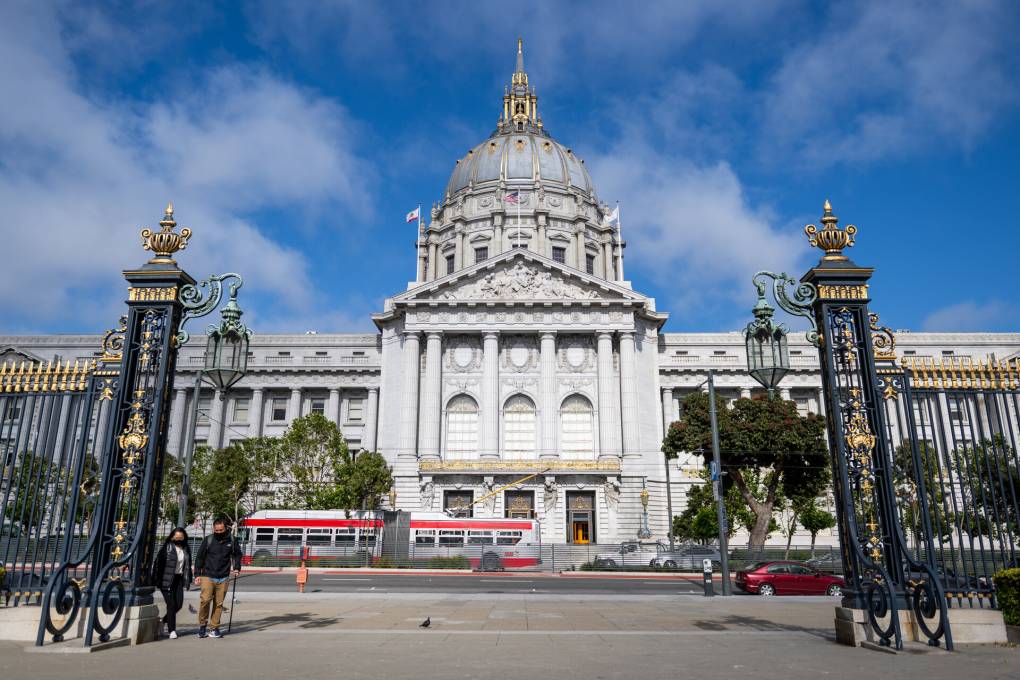
San Francisco Public Bank Supporters Eye 2026 Ballot Measure
Banks Asking For Customer's Voice Samples
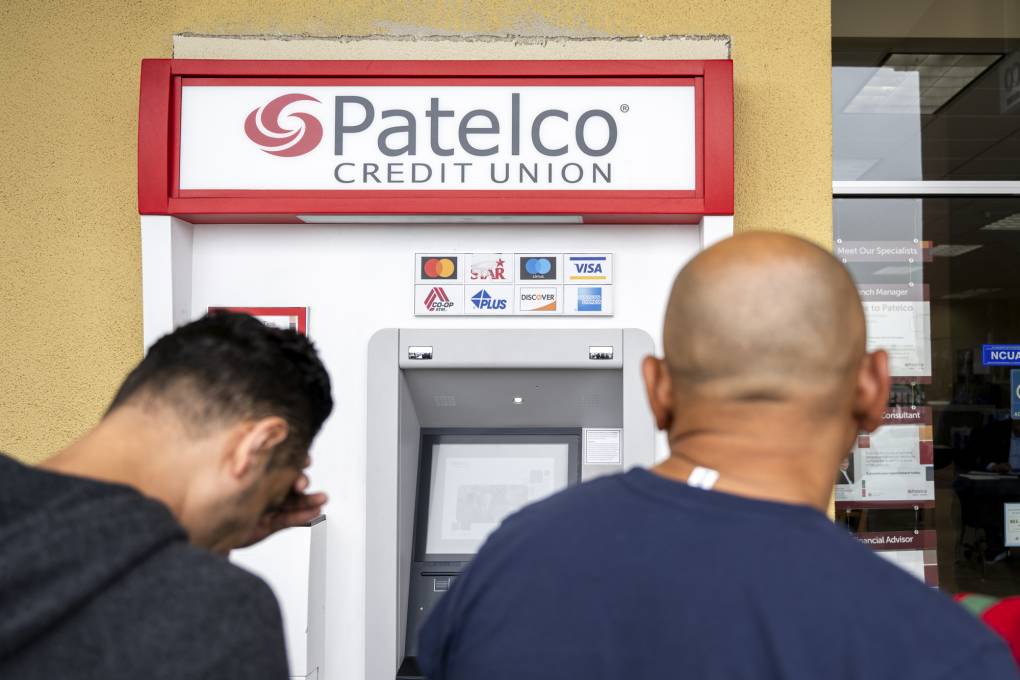
Patelco Restores Most Banking Services Weeks After Massive Ransomware Attack
Crippling Patelco Ransomware Attack Leads to Pair of Class Action Lawsuits
Cybersecurity Expert Shares Tips for Dublin-Based Patelco Credit Union Customers After Ransomware Attack
Why Does My Bank Want My Voice to Login?
San Francisco Green-Lights Nation's First City-Run Public Bank
JPMorgan Chase Lays Off 1,000 Employees at First Republic Bank a Month After Takeover
Another Bay Area Bank Collapsed. Here's How Big Deposits From the Very Wealthy Contributed
Sponsored
Player sponsored by
window.__IS_SSR__=true
window.__INITIAL_STATE__={
"attachmentsReducer": {
"audio_0": {
"type": "attachments",
"id": "audio_0",
"imgSizes": {
"kqedFullSize": {
"file": "https://ww2.kqed.org/news/wp-content/themes/KQED-unified/img/audio_bgs/background0.jpg"
}
}
},
"audio_1": {
"type": "attachments",
"id": "audio_1",
"imgSizes": {
"kqedFullSize": {
"file": "https://ww2.kqed.org/news/wp-content/themes/KQED-unified/img/audio_bgs/background1.jpg"
}
}
},
"audio_2": {
"type": "attachments",
"id": "audio_2",
"imgSizes": {
"kqedFullSize": {
"file": "https://ww2.kqed.org/news/wp-content/themes/KQED-unified/img/audio_bgs/background2.jpg"
}
}
},
"audio_3": {
"type": "attachments",
"id": "audio_3",
"imgSizes": {
"kqedFullSize": {
"file": "https://ww2.kqed.org/news/wp-content/themes/KQED-unified/img/audio_bgs/background3.jpg"
}
}
},
"audio_4": {
"type": "attachments",
"id": "audio_4",
"imgSizes": {
"kqedFullSize": {
"file": "https://ww2.kqed.org/news/wp-content/themes/KQED-unified/img/audio_bgs/background4.jpg"
}
}
},
"placeholder": {
"type": "attachments",
"id": "placeholder",
"imgSizes": {
"thumbnail": {
"file": "https://cdn.kqed.org/wp-content/uploads/2024/12/KQED-Default-Image-816638274-2000x1333-1-160x107.jpg",
"width": 160,
"height": 107,
"mimeType": "image/jpeg"
},
"medium": {
"file": "https://cdn.kqed.org/wp-content/uploads/2024/12/KQED-Default-Image-816638274-2000x1333-1-800x533.jpg",
"width": 800,
"height": 533,
"mimeType": "image/jpeg"
},
"medium_large": {
"file": "https://cdn.kqed.org/wp-content/uploads/2024/12/KQED-Default-Image-816638274-2000x1333-1-768x512.jpg",
"width": 768,
"height": 512,
"mimeType": "image/jpeg"
},
"large": {
"file": "https://cdn.kqed.org/wp-content/uploads/2024/12/KQED-Default-Image-816638274-2000x1333-1-1020x680.jpg",
"width": 1020,
"height": 680,
"mimeType": "image/jpeg"
},
"1536x1536": {
"file": "https://cdn.kqed.org/wp-content/uploads/2024/12/KQED-Default-Image-816638274-2000x1333-1-1536x1024.jpg",
"width": 1536,
"height": 1024,
"mimeType": "image/jpeg"
},
"fd-lrg": {
"file": "https://cdn.kqed.org/wp-content/uploads/2024/12/KQED-Default-Image-816638274-2000x1333-1-1536x1024.jpg",
"width": 1536,
"height": 1024,
"mimeType": "image/jpeg"
},
"fd-med": {
"file": "https://cdn.kqed.org/wp-content/uploads/2024/12/KQED-Default-Image-816638274-2000x1333-1-1020x680.jpg",
"width": 1020,
"height": 680,
"mimeType": "image/jpeg"
},
"fd-sm": {
"file": "https://cdn.kqed.org/wp-content/uploads/2024/12/KQED-Default-Image-816638274-2000x1333-1-800x533.jpg",
"width": 800,
"height": 533,
"mimeType": "image/jpeg"
},
"post-thumbnail": {
"file": "https://cdn.kqed.org/wp-content/uploads/2024/12/KQED-Default-Image-816638274-2000x1333-1-672x372.jpg",
"width": 672,
"height": 372,
"mimeType": "image/jpeg"
},
"twentyfourteen-full-width": {
"file": "https://cdn.kqed.org/wp-content/uploads/2024/12/KQED-Default-Image-816638274-2000x1333-1-1038x576.jpg",
"width": 1038,
"height": 576,
"mimeType": "image/jpeg"
},
"xxsmall": {
"file": "https://cdn.kqed.org/wp-content/uploads/2024/12/KQED-Default-Image-816638274-2000x1333-1-160x107.jpg",
"width": 160,
"height": 107,
"mimeType": "image/jpeg"
},
"xsmall": {
"file": "https://cdn.kqed.org/wp-content/uploads/2024/12/KQED-Default-Image-816638274-2000x1333-1-672x372.jpg",
"width": 672,
"height": 372,
"mimeType": "image/jpeg"
},
"small": {
"file": "https://cdn.kqed.org/wp-content/uploads/2024/12/KQED-Default-Image-816638274-2000x1333-1-672x372.jpg",
"width": 672,
"height": 372,
"mimeType": "image/jpeg"
},
"xlarge": {
"file": "https://cdn.kqed.org/wp-content/uploads/2024/12/KQED-Default-Image-816638274-2000x1333-1-1020x680.jpg",
"width": 1020,
"height": 680,
"mimeType": "image/jpeg"
},
"full-width": {
"file": "https://cdn.kqed.org/wp-content/uploads/2024/12/KQED-Default-Image-816638274-2000x1333-1-1920x1280.jpg",
"width": 1920,
"height": 1280,
"mimeType": "image/jpeg"
},
"guest-author-32": {
"file": "https://cdn.kqed.org/wp-content/uploads/2025/01/KQED-Default-Image-816638274-1333x1333-1-160x160.jpg",
"width": 32,
"height": 32,
"mimeType": "image/jpeg"
},
"guest-author-50": {
"file": "https://cdn.kqed.org/wp-content/uploads/2025/01/KQED-Default-Image-816638274-1333x1333-1-160x160.jpg",
"width": 50,
"height": 50,
"mimeType": "image/jpeg"
},
"guest-author-64": {
"file": "https://cdn.kqed.org/wp-content/uploads/2025/01/KQED-Default-Image-816638274-1333x1333-1-160x160.jpg",
"width": 64,
"height": 64,
"mimeType": "image/jpeg"
},
"guest-author-96": {
"file": "https://cdn.kqed.org/wp-content/uploads/2025/01/KQED-Default-Image-816638274-1333x1333-1-160x160.jpg",
"width": 96,
"height": 96,
"mimeType": "image/jpeg"
},
"guest-author-128": {
"file": "https://cdn.kqed.org/wp-content/uploads/2025/01/KQED-Default-Image-816638274-1333x1333-1-160x160.jpg",
"width": 128,
"height": 128,
"mimeType": "image/jpeg"
},
"detail": {
"file": "https://cdn.kqed.org/wp-content/uploads/2025/01/KQED-Default-Image-816638274-1333x1333-1-160x160.jpg",
"width": 160,
"height": 160,
"mimeType": "image/jpeg"
},
"kqedFullSize": {
"file": "https://cdn.kqed.org/wp-content/uploads/2024/12/KQED-Default-Image-816638274-2000x1333-1.jpg",
"width": 2000,
"height": 1333
}
}
},
"news_12058872": {
"type": "attachments",
"id": "news_12058872",
"meta": {
"index": "attachments_1716263798",
"site": "news",
"id": "12058872",
"found": true
},
"title": "230808-SanFranciscoCityHall-23-BL_qed",
"publishDate": 1759795710,
"status": "inherit",
"parent": 12058853,
"modified": 1759796817,
"caption": "City Hall is reflected in the Veteran's Building in San Francisco on Aug. 8, 2023. San Francisco is laying the groundwork to become the first city in the country to have a municipal bank, with supporters exploring their next steps. ",
"credit": "Beth LaBerge/KQED",
"altTag": null,
"description": null,
"imgSizes": {
"thumbnail": {
"file": "https://cdn.kqed.org/wp-content/uploads/sites/10/2025/10/230808-SanFranciscoCityHall-23-BL_qed-160x107.jpg",
"width": 160,
"height": 107,
"mimeType": "image/jpeg"
},
"1536x1536": {
"file": "https://cdn.kqed.org/wp-content/uploads/sites/10/2025/10/230808-SanFranciscoCityHall-23-BL_qed-1536x1024.jpg",
"width": 1536,
"height": 1024,
"mimeType": "image/jpeg"
},
"post-thumbnail": {
"file": "https://cdn.kqed.org/wp-content/uploads/sites/10/2025/10/230808-SanFranciscoCityHall-23-BL_qed-672x372.jpg",
"width": 672,
"height": 372,
"mimeType": "image/jpeg"
},
"twentyfourteen-full-width": {
"file": "https://cdn.kqed.org/wp-content/uploads/sites/10/2025/10/230808-SanFranciscoCityHall-23-BL_qed-1038x576.jpg",
"width": 1038,
"height": 576,
"mimeType": "image/jpeg"
},
"kqedFullSize": {
"file": "https://cdn.kqed.org/wp-content/uploads/sites/10/2025/10/230808-SanFranciscoCityHall-23-BL_qed.jpg",
"width": 1999,
"height": 1333
}
},
"fetchFailed": false,
"isLoading": false
},
"news_12042478": {
"type": "attachments",
"id": "news_12042478",
"meta": {
"index": "attachments_1716263798",
"site": "news",
"id": "12042478",
"found": true
},
"title": "GettyImages-861092546-1020x680",
"publishDate": 1748958165,
"status": "inherit",
"parent": 12042477,
"modified": 1748958202,
"caption": null,
"credit": "Metamorworks via iStock/Getty Images Plus",
"altTag": null,
"description": null,
"imgSizes": {
"medium": {
"file": "https://cdn.kqed.org/wp-content/uploads/sites/10/2025/06/GettyImages-861092546-1020x680-1-800x533.jpg",
"width": 800,
"height": 533,
"mimeType": "image/jpeg"
},
"thumbnail": {
"file": "https://cdn.kqed.org/wp-content/uploads/sites/10/2025/06/GettyImages-861092546-1020x680-1-160x107.jpg",
"width": 160,
"height": 107,
"mimeType": "image/jpeg"
},
"post-thumbnail": {
"file": "https://cdn.kqed.org/wp-content/uploads/sites/10/2025/06/GettyImages-861092546-1020x680-1-672x372.jpg",
"width": 672,
"height": 372,
"mimeType": "image/jpeg"
},
"twentyfourteen-full-width": {
"file": "https://cdn.kqed.org/wp-content/uploads/sites/10/2025/06/GettyImages-861092546-1020x680-1-1020x576.jpg",
"width": 1020,
"height": 576,
"mimeType": "image/jpeg"
},
"kqedFullSize": {
"file": "https://cdn.kqed.org/wp-content/uploads/sites/10/2025/06/GettyImages-861092546-1020x680-1.jpg",
"width": 1020,
"height": 680
}
},
"fetchFailed": false,
"isLoading": false
},
"news_11993535": {
"type": "attachments",
"id": "news_11993535",
"meta": {
"index": "attachments_1716263798",
"site": "news",
"id": "11993535",
"found": true
},
"title": "240710-PATELCOCREDITUNION-19-BL-KQED",
"publishDate": 1720647884,
"status": "inherit",
"parent": 0,
"modified": 1720648003,
"caption": "A Patelco Credit Union ATM machine at their location in Daly City on July 10, 2024.",
"credit": "Beth LaBerge/KQED",
"altTag": null,
"description": null,
"imgSizes": {
"medium": {
"file": "https://cdn.kqed.org/wp-content/uploads/sites/10/2024/07/240710-PATELCOCREDITUNION-19-BL-KQED-800x533.jpg",
"width": 800,
"height": 533,
"mimeType": "image/jpeg"
},
"large": {
"file": "https://cdn.kqed.org/wp-content/uploads/sites/10/2024/07/240710-PATELCOCREDITUNION-19-BL-KQED-1020x680.jpg",
"width": 1020,
"height": 680,
"mimeType": "image/jpeg"
},
"thumbnail": {
"file": "https://cdn.kqed.org/wp-content/uploads/sites/10/2024/07/240710-PATELCOCREDITUNION-19-BL-KQED-160x107.jpg",
"width": 160,
"height": 107,
"mimeType": "image/jpeg"
},
"1536x1536": {
"file": "https://cdn.kqed.org/wp-content/uploads/sites/10/2024/07/240710-PATELCOCREDITUNION-19-BL-KQED-1536x1024.jpg",
"width": 1536,
"height": 1024,
"mimeType": "image/jpeg"
},
"post-thumbnail": {
"file": "https://cdn.kqed.org/wp-content/uploads/sites/10/2024/07/240710-PATELCOCREDITUNION-19-BL-KQED-672x372.jpg",
"width": 672,
"height": 372,
"mimeType": "image/jpeg"
},
"twentyfourteen-full-width": {
"file": "https://cdn.kqed.org/wp-content/uploads/sites/10/2024/07/240710-PATELCOCREDITUNION-19-BL-KQED-1038x576.jpg",
"width": 1038,
"height": 576,
"mimeType": "image/jpeg"
},
"full-width": {
"file": "https://cdn.kqed.org/wp-content/uploads/sites/10/2024/07/240710-PATELCOCREDITUNION-19-BL-KQED-1920x1280.jpg",
"width": 1920,
"height": 1280,
"mimeType": "image/jpeg"
},
"kqedFullSize": {
"file": "https://cdn.kqed.org/wp-content/uploads/sites/10/2024/07/240710-PATELCOCREDITUNION-19-BL-KQED.jpg",
"width": 2000,
"height": 1333
}
},
"fetchFailed": false,
"isLoading": false
},
"news_11993536": {
"type": "attachments",
"id": "news_11993536",
"meta": {
"index": "attachments_1716263798",
"site": "news",
"id": "11993536",
"found": true
},
"title": "240710-PATELCOCREDITUNION-18-BL-KQED",
"publishDate": 1720647994,
"status": "inherit",
"parent": 0,
"modified": 1720648017,
"caption": "A line of customers wait to speak with a teller at Patelco Credit Union in Daly City on July 10, 2024.",
"credit": "Beth LaBerge/KQED",
"altTag": null,
"description": null,
"imgSizes": {
"medium": {
"file": "https://cdn.kqed.org/wp-content/uploads/sites/10/2024/07/240710-PATELCOCREDITUNION-18-BL-KQED-800x533.jpg",
"width": 800,
"height": 533,
"mimeType": "image/jpeg"
},
"large": {
"file": "https://cdn.kqed.org/wp-content/uploads/sites/10/2024/07/240710-PATELCOCREDITUNION-18-BL-KQED-1020x680.jpg",
"width": 1020,
"height": 680,
"mimeType": "image/jpeg"
},
"thumbnail": {
"file": "https://cdn.kqed.org/wp-content/uploads/sites/10/2024/07/240710-PATELCOCREDITUNION-18-BL-KQED-160x107.jpg",
"width": 160,
"height": 107,
"mimeType": "image/jpeg"
},
"1536x1536": {
"file": "https://cdn.kqed.org/wp-content/uploads/sites/10/2024/07/240710-PATELCOCREDITUNION-18-BL-KQED-1536x1024.jpg",
"width": 1536,
"height": 1024,
"mimeType": "image/jpeg"
},
"post-thumbnail": {
"file": "https://cdn.kqed.org/wp-content/uploads/sites/10/2024/07/240710-PATELCOCREDITUNION-18-BL-KQED-672x372.jpg",
"width": 672,
"height": 372,
"mimeType": "image/jpeg"
},
"twentyfourteen-full-width": {
"file": "https://cdn.kqed.org/wp-content/uploads/sites/10/2024/07/240710-PATELCOCREDITUNION-18-BL-KQED-1038x576.jpg",
"width": 1038,
"height": 576,
"mimeType": "image/jpeg"
},
"full-width": {
"file": "https://cdn.kqed.org/wp-content/uploads/sites/10/2024/07/240710-PATELCOCREDITUNION-18-BL-KQED-1920x1280.jpg",
"width": 1920,
"height": 1280,
"mimeType": "image/jpeg"
},
"kqedFullSize": {
"file": "https://cdn.kqed.org/wp-content/uploads/sites/10/2024/07/240710-PATELCOCREDITUNION-18-BL-KQED.jpg",
"width": 2000,
"height": 1333
}
},
"fetchFailed": false,
"isLoading": false
},
"news_11992956": {
"type": "attachments",
"id": "news_11992956",
"meta": {
"index": "attachments_1716263798",
"site": "news",
"id": "11992956",
"found": true
},
"title": "Patelco Credit Union",
"publishDate": 1720035971,
"status": "inherit",
"parent": 11992954,
"modified": 1720036136,
"caption": "A Patelco Credit Union building in Dublin on July 23, 2018. ",
"credit": "Smith Collection/Gado/Getty Images",
"altTag": "The facade of a building with a sign that reads \"Patelco\" with a swirling red logo to the left.",
"description": null,
"imgSizes": {
"medium": {
"file": "https://cdn.kqed.org/wp-content/uploads/sites/10/2024/07/GettyImages-1006643110-800x534.jpg",
"width": 800,
"height": 534,
"mimeType": "image/jpeg"
},
"large": {
"file": "https://cdn.kqed.org/wp-content/uploads/sites/10/2024/07/GettyImages-1006643110-1020x680.jpg",
"width": 1020,
"height": 680,
"mimeType": "image/jpeg"
},
"thumbnail": {
"file": "https://cdn.kqed.org/wp-content/uploads/sites/10/2024/07/GettyImages-1006643110-160x107.jpg",
"width": 160,
"height": 107,
"mimeType": "image/jpeg"
},
"post-thumbnail": {
"file": "https://cdn.kqed.org/wp-content/uploads/sites/10/2024/07/GettyImages-1006643110-672x372.jpg",
"width": 672,
"height": 372,
"mimeType": "image/jpeg"
},
"twentyfourteen-full-width": {
"file": "https://cdn.kqed.org/wp-content/uploads/sites/10/2024/07/GettyImages-1006643110-1024x576.jpg",
"width": 1024,
"height": 576,
"mimeType": "image/jpeg"
},
"kqedFullSize": {
"file": "https://cdn.kqed.org/wp-content/uploads/sites/10/2024/07/GettyImages-1006643110.jpg",
"width": 1024,
"height": 683
}
},
"fetchFailed": false,
"isLoading": false
},
"news_11992720": {
"type": "attachments",
"id": "news_11992720",
"meta": {
"index": "attachments_1716263798",
"site": "news",
"id": "11992720",
"found": true
},
"title": "speech recognition concept. hands-free communication. machine translation.",
"publishDate": 1719866946,
"status": "inherit",
"parent": 11992707,
"modified": 1719867226,
"caption": null,
"credit": "Metamorworks via iStock/Getty Images Plus",
"altTag": "A man holds a hand to his ear while the other hand holds a smartphone close to his face with a microphone logo and connected dots.",
"description": null,
"imgSizes": {
"medium": {
"file": "https://cdn.kqed.org/wp-content/uploads/sites/10/2024/07/GettyImages-861092546-800x533.jpg",
"width": 800,
"height": 533,
"mimeType": "image/jpeg"
},
"large": {
"file": "https://cdn.kqed.org/wp-content/uploads/sites/10/2024/07/GettyImages-861092546-1020x680.jpg",
"width": 1020,
"height": 680,
"mimeType": "image/jpeg"
},
"thumbnail": {
"file": "https://cdn.kqed.org/wp-content/uploads/sites/10/2024/07/GettyImages-861092546-160x107.jpg",
"width": 160,
"height": 107,
"mimeType": "image/jpeg"
},
"1536x1536": {
"file": "https://cdn.kqed.org/wp-content/uploads/sites/10/2024/07/GettyImages-861092546-1536x1024.jpg",
"width": 1536,
"height": 1024,
"mimeType": "image/jpeg"
},
"2048x2048": {
"file": "https://cdn.kqed.org/wp-content/uploads/sites/10/2024/07/GettyImages-861092546-2048x1365.jpg",
"width": 2048,
"height": 1365,
"mimeType": "image/jpeg"
},
"post-thumbnail": {
"file": "https://cdn.kqed.org/wp-content/uploads/sites/10/2024/07/GettyImages-861092546-672x372.jpg",
"width": 672,
"height": 372,
"mimeType": "image/jpeg"
},
"twentyfourteen-full-width": {
"file": "https://cdn.kqed.org/wp-content/uploads/sites/10/2024/07/GettyImages-861092546-1038x576.jpg",
"width": 1038,
"height": 576,
"mimeType": "image/jpeg"
},
"full-width": {
"file": "https://cdn.kqed.org/wp-content/uploads/sites/10/2024/07/GettyImages-861092546-1920x1280.jpg",
"width": 1920,
"height": 1280,
"mimeType": "image/jpeg"
},
"kqedFullSize": {
"file": "https://cdn.kqed.org/wp-content/uploads/sites/10/2024/07/GettyImages-861092546.jpg",
"width": 2121,
"height": 1414
}
},
"fetchFailed": false,
"isLoading": false
},
"news_11960409": {
"type": "attachments",
"id": "news_11960409",
"meta": {
"index": "attachments_1716263798",
"site": "news",
"id": "11960409",
"found": true
},
"parent": 11960406,
"imgSizes": {
"twentyfourteen-full-width": {
"file": "https://cdn.kqed.org/wp-content/uploads/sites/10/2023/09/RS67750_230808-SanFranciscoCityHall-19-BL-qut-1038x576.jpg",
"width": 1038,
"mimeType": "image/jpeg",
"height": 576
},
"thumbnail": {
"file": "https://cdn.kqed.org/wp-content/uploads/sites/10/2023/09/RS67750_230808-SanFranciscoCityHall-19-BL-qut-160x107.jpg",
"width": 160,
"mimeType": "image/jpeg",
"height": 107
},
"post-thumbnail": {
"file": "https://cdn.kqed.org/wp-content/uploads/sites/10/2023/09/RS67750_230808-SanFranciscoCityHall-19-BL-qut-672x372.jpg",
"width": 672,
"mimeType": "image/jpeg",
"height": 372
},
"kqedFullSize": {
"file": "https://cdn.kqed.org/wp-content/uploads/sites/10/2023/09/RS67750_230808-SanFranciscoCityHall-19-BL-qut.jpg",
"width": 1920,
"height": 1280
},
"large": {
"file": "https://cdn.kqed.org/wp-content/uploads/sites/10/2023/09/RS67750_230808-SanFranciscoCityHall-19-BL-qut-1020x680.jpg",
"width": 1020,
"mimeType": "image/jpeg",
"height": 680
},
"1536x1536": {
"file": "https://cdn.kqed.org/wp-content/uploads/sites/10/2023/09/RS67750_230808-SanFranciscoCityHall-19-BL-qut-1536x1024.jpg",
"width": 1536,
"mimeType": "image/jpeg",
"height": 1024
},
"medium": {
"file": "https://cdn.kqed.org/wp-content/uploads/sites/10/2023/09/RS67750_230808-SanFranciscoCityHall-19-BL-qut-800x533.jpg",
"width": 800,
"mimeType": "image/jpeg",
"height": 533
}
},
"publishDate": 1694131442,
"modified": 1709340288,
"caption": "A Muni bus passes by City Hall in San Francisco on Aug. 8, 2023.",
"description": null,
"title": "A Muni bus passes by City Hall in San Francisco on Aug. 8, 2023.",
"credit": "Beth LaBerge/KQED",
"status": "inherit",
"altTag": "A building with intricate pillars in front, as well as a red and white city bus.",
"fetchFailed": false,
"isLoading": false
},
"news_11950901": {
"type": "attachments",
"id": "news_11950901",
"meta": {
"index": "attachments_1716263798",
"site": "news",
"id": "11950901",
"found": true
},
"parent": 11950891,
"imgSizes": {
"twentyfourteen-full-width": {
"file": "https://ww2.kqed.org/app/uploads/sites/10/2023/05/GettyImages-1252546185-1024x576.jpg",
"width": 1024,
"mimeType": "image/jpeg",
"height": 576
},
"thumbnail": {
"file": "https://ww2.kqed.org/app/uploads/sites/10/2023/05/GettyImages-1252546185-160x107.jpg",
"width": 160,
"mimeType": "image/jpeg",
"height": 107
},
"post-thumbnail": {
"file": "https://ww2.kqed.org/app/uploads/sites/10/2023/05/GettyImages-1252546185-672x372.jpg",
"width": 672,
"mimeType": "image/jpeg",
"height": 372
},
"kqedFullSize": {
"file": "https://ww2.kqed.org/app/uploads/sites/10/2023/05/GettyImages-1252546185.jpg",
"width": 1024,
"height": 683
},
"large": {
"file": "https://ww2.kqed.org/app/uploads/sites/10/2023/05/GettyImages-1252546185-1020x680.jpg",
"width": 1020,
"mimeType": "image/jpeg",
"height": 680
},
"medium": {
"file": "https://ww2.kqed.org/app/uploads/sites/10/2023/05/GettyImages-1252546185-800x534.jpg",
"width": 800,
"mimeType": "image/jpeg",
"height": 534
}
},
"publishDate": 1685126437,
"modified": 1685126508,
"caption": null,
"description": null,
"title": "In this photo illustration, JPMorgan Chase & Co. logo is",
"credit": "Pavlo Gonchar/SOPA Images/LightRocket via Getty Images",
"status": "inherit",
"altTag": "Illustration with logos of JPMorgan Chase on a phone screen with logo of First Republic in a green background.",
"fetchFailed": false,
"isLoading": false
},
"news_11948237": {
"type": "attachments",
"id": "news_11948237",
"meta": {
"index": "attachments_1716263798",
"site": "news",
"id": "11948237",
"found": true
},
"parent": 11948206,
"imgSizes": {
"twentyfourteen-full-width": {
"file": "https://ww2.kqed.org/app/uploads/sites/10/2023/05/GettyImages-1484874436-1024x576.jpg",
"width": 1024,
"mimeType": "image/jpeg",
"height": 576
},
"thumbnail": {
"file": "https://ww2.kqed.org/app/uploads/sites/10/2023/05/GettyImages-1484874436-160x107.jpg",
"width": 160,
"mimeType": "image/jpeg",
"height": 107
},
"post-thumbnail": {
"file": "https://ww2.kqed.org/app/uploads/sites/10/2023/05/GettyImages-1484874436-672x372.jpg",
"width": 672,
"mimeType": "image/jpeg",
"height": 372
},
"kqedFullSize": {
"file": "https://ww2.kqed.org/app/uploads/sites/10/2023/05/GettyImages-1484874436.jpg",
"width": 1024,
"height": 683
},
"large": {
"file": "https://ww2.kqed.org/app/uploads/sites/10/2023/05/GettyImages-1484874436-1020x680.jpg",
"width": 1020,
"mimeType": "image/jpeg",
"height": 680
},
"medium": {
"file": "https://ww2.kqed.org/app/uploads/sites/10/2023/05/GettyImages-1484874436-800x534.jpg",
"width": 800,
"mimeType": "image/jpeg",
"height": 534
}
},
"publishDate": 1682979508,
"modified": 1682991688,
"caption": "Two people walk past a First Republic Bank branch in Manhattan on April 24, 2023, in New York City.",
"description": null,
"title": "Troubled First Republic Bank Reports First Quarter Earnings",
"credit": "Spencer Platt/Getty Images",
"status": "inherit",
"altTag": "Two people wearing dark colored hooded sweatshirts, one with a blue backpack and the other with a cap and face mask, walk past a building with a sign that reads \"First Republic\" with an eagle logo next to it.",
"fetchFailed": false,
"isLoading": false
}
},
"audioPlayerReducer": {
"postId": "stream_live",
"isPaused": true,
"isPlaying": false,
"pfsActive": false,
"pledgeModalIsOpen": true,
"playerDrawerIsOpen": false
},
"authorsReducer": {
"byline_news_11950891": {
"type": "authors",
"id": "byline_news_11950891",
"meta": {
"override": true
},
"slug": "byline_news_11950891",
"name": "Ken Sweet\u003cbr>The Associated Press",
"isLoading": false
},
"kqednewsstaffandwires": {
"type": "authors",
"id": "237",
"meta": {
"index": "authors_1716337520",
"id": "237",
"found": true
},
"name": "KQED News Staff and Wires",
"firstName": "KQED News Staff and Wires",
"lastName": null,
"slug": "kqednewsstaffandwires",
"email": "onlinenewsstaff@kqed.org",
"display_author_email": false,
"staff_mastheads": [],
"title": null,
"bio": null,
"avatar": "https://secure.gravatar.com/avatar/72295af8ebbfbd19a4948f5271285664?s=600&d=blank&r=g",
"twitter": null,
"facebook": null,
"instagram": null,
"linkedin": null,
"sites": [
{
"site": "arts",
"roles": [
"contributor"
]
},
{
"site": "news",
"roles": [
"contributor"
]
},
{
"site": "lowdown",
"roles": [
"author"
]
},
{
"site": "stateofhealth",
"roles": [
"contributor"
]
},
{
"site": "food",
"roles": [
"author"
]
}
],
"headData": {
"title": "KQED News Staff and Wires | KQED",
"description": null,
"ogImgSrc": "https://secure.gravatar.com/avatar/72295af8ebbfbd19a4948f5271285664?s=600&d=blank&r=g",
"twImgSrc": "https://secure.gravatar.com/avatar/72295af8ebbfbd19a4948f5271285664?s=600&d=blank&r=g"
},
"isLoading": false,
"link": "/author/kqednewsstaffandwires"
},
"rachael-myrow": {
"type": "authors",
"id": "251",
"meta": {
"index": "authors_1716337520",
"id": "251",
"found": true
},
"name": "Rachael Myrow",
"firstName": "Rachael",
"lastName": "Myrow",
"slug": "rachael-myrow",
"email": "rmyrow@kqed.org",
"display_author_email": true,
"staff_mastheads": [
"news"
],
"title": "Senior Editor of KQED's Silicon Valley News Desk",
"bio": "• I write and edit stories about how Silicon Valley power and policies shape everyday life in California. I’m also passionate about making Bay Area history and culture more accessible to a broad public. • I’ve been a journalist for most of my life, starting in high school with The Franklin Press in Los Angeles, where I grew up. While earning my first degree in English at UC Berkeley, I got my start in public radio at KALX-FM. After completing a second degree in journalism at Cal, I landed my first professional job at Marketplace, then moved on to KPCC (now LAist), and then KQED, where I hosted The California Report for more than seven years. • My reporting has appeared on NPR, The World, WBUR’s \u003ci>Here & Now\u003c/i>, and the BBC. I also guest host for KQED’s \u003ci>Forum\u003c/i>, as well as the Commonwealth Club in San Francisco. • I speak periodically on media, democracy and technology issues, and do voiceover work for documentaries and educational video projects. • Outside of the studio, you'll find me hiking Bay Area trails and whipping up Insta-ready meals in my kitchen. • I do not accept gifts, money, or favors from anyone connected to my reporting, I don't pay people for information, and I do not support or donate to political causes. • I strive to treat the people I report on with fairness, honesty, and respect. I also recognize there are often multiple sides to a story and work to verify information through multiple sources and documentation. If I get something wrong, I correct it.",
"avatar": "https://secure.gravatar.com/avatar/87bf8cb5874e045cdff430523a6d48b1?s=600&d=blank&r=g",
"twitter": "rachaelmyrow",
"facebook": null,
"instagram": null,
"linkedin": "https://www.linkedin.com/in/rachaelmyrow/",
"sites": [
{
"site": "arts",
"roles": [
"administrator"
]
},
{
"site": "news",
"roles": [
"edit_others_posts",
"editor"
]
},
{
"site": "futureofyou",
"roles": [
"editor"
]
},
{
"site": "bayareabites",
"roles": [
"editor"
]
},
{
"site": "stateofhealth",
"roles": [
"editor"
]
},
{
"site": "science",
"roles": [
"editor"
]
},
{
"site": "food",
"roles": [
"editor"
]
},
{
"site": "forum",
"roles": [
"editor"
]
},
{
"site": "liveblog",
"roles": [
"author"
]
}
],
"headData": {
"title": "Rachael Myrow | KQED",
"description": "Senior Editor of KQED's Silicon Valley News Desk",
"ogImgSrc": "https://secure.gravatar.com/avatar/87bf8cb5874e045cdff430523a6d48b1?s=600&d=blank&r=g",
"twImgSrc": "https://secure.gravatar.com/avatar/87bf8cb5874e045cdff430523a6d48b1?s=600&d=blank&r=g"
},
"isLoading": false,
"link": "/author/rachael-myrow"
},
"agonzalez": {
"type": "authors",
"id": "11724",
"meta": {
"index": "authors_1716337520",
"id": "11724",
"found": true
},
"name": "Alexander Gonzalez",
"firstName": "Alexander",
"lastName": "Gonzalez",
"slug": "agonzalez",
"email": "AlexanderGonzalez@KQED.org",
"display_author_email": false,
"staff_mastheads": [
"news"
],
"title": "KQED Contributor",
"bio": null,
"avatar": "https://secure.gravatar.com/avatar/63d43593dd7ebcafcd638e851a9bce5a?s=600&d=blank&r=g",
"twitter": null,
"facebook": null,
"instagram": null,
"linkedin": null,
"sites": [
{
"site": "arts",
"roles": [
"editor"
]
},
{
"site": "news",
"roles": [
"editor"
]
}
],
"headData": {
"title": "Alexander Gonzalez | KQED",
"description": "KQED Contributor",
"ogImgSrc": "https://secure.gravatar.com/avatar/63d43593dd7ebcafcd638e851a9bce5a?s=600&d=blank&r=g",
"twImgSrc": "https://secure.gravatar.com/avatar/63d43593dd7ebcafcd638e851a9bce5a?s=600&d=blank&r=g"
},
"isLoading": false,
"link": "/author/agonzalez"
},
"kmizuguchi": {
"type": "authors",
"id": "11739",
"meta": {
"index": "authors_1716337520",
"id": "11739",
"found": true
},
"name": "Keith Mizuguchi",
"firstName": "Keith",
"lastName": "Mizuguchi",
"slug": "kmizuguchi",
"email": "kmizuguchi@kqed.org",
"display_author_email": false,
"staff_mastheads": [],
"title": "KQED Contributor",
"bio": null,
"avatar": "https://secure.gravatar.com/avatar/ce1182f9924192ae5ea66d39a75cd7d1?s=600&d=blank&r=g",
"twitter": null,
"facebook": null,
"instagram": null,
"linkedin": null,
"sites": [
{
"site": "news",
"roles": [
"editor"
]
},
{
"site": "science",
"roles": [
"editor"
]
}
],
"headData": {
"title": "Keith Mizuguchi | KQED",
"description": "KQED Contributor",
"ogImgSrc": "https://secure.gravatar.com/avatar/ce1182f9924192ae5ea66d39a75cd7d1?s=600&d=blank&r=g",
"twImgSrc": "https://secure.gravatar.com/avatar/ce1182f9924192ae5ea66d39a75cd7d1?s=600&d=blank&r=g"
},
"isLoading": false,
"link": "/author/kmizuguchi"
},
"sjohnson": {
"type": "authors",
"id": "11840",
"meta": {
"index": "authors_1716337520",
"id": "11840",
"found": true
},
"name": "Sydney Johnson",
"firstName": "Sydney",
"lastName": "Johnson",
"slug": "sjohnson",
"email": "sjohnson@kqed.org",
"display_author_email": false,
"staff_mastheads": [
"news"
],
"title": "KQED Reporter",
"bio": "Sydney Johnson is a general assignment reporter at KQED. She previously reported on public health and city government at the San Francisco Examiner, and before that, she covered statewide education policy for EdSource. Her reporting has won multiple local, state and national awards. Sydney is a graduate of the University of California, Berkeley and lives in San Francisco.",
"avatar": "https://secure.gravatar.com/avatar/97855f2719b72ad6190b7c535fe642c8?s=600&d=blank&r=g",
"twitter": "sydneyfjohnson",
"facebook": null,
"instagram": null,
"linkedin": null,
"sites": [
{
"site": "news",
"roles": [
"editor"
]
}
],
"headData": {
"title": "Sydney Johnson | KQED",
"description": "KQED Reporter",
"ogImgSrc": "https://secure.gravatar.com/avatar/97855f2719b72ad6190b7c535fe642c8?s=600&d=blank&r=g",
"twImgSrc": "https://secure.gravatar.com/avatar/97855f2719b72ad6190b7c535fe642c8?s=600&d=blank&r=g"
},
"isLoading": false,
"link": "/author/sjohnson"
},
"kdebenedetti": {
"type": "authors",
"id": "11913",
"meta": {
"index": "authors_1716337520",
"id": "11913",
"found": true
},
"name": "Katie DeBenedetti",
"firstName": "Katie",
"lastName": "DeBenedetti",
"slug": "kdebenedetti",
"email": "kdebenedetti@kqed.org",
"display_author_email": false,
"staff_mastheads": [
"news",
"science"
],
"title": "KQED Contributor",
"bio": "Katie DeBenedetti is a digital reporter covering daily news for the Express Desk. Prior to joining KQED as a culture reporting intern in January 2024, she covered education and city government for the Napa Valley Register.",
"avatar": "https://secure.gravatar.com/avatar/6e31073cb8f7e4214ab03f42771d0f45?s=600&d=blank&r=g",
"twitter": null,
"facebook": null,
"instagram": null,
"linkedin": null,
"sites": [
{
"site": "news",
"roles": [
"author"
]
},
{
"site": "science",
"roles": [
"author"
]
},
{
"site": "liveblog",
"roles": [
"author"
]
}
],
"headData": {
"title": "Katie DeBenedetti | KQED",
"description": "KQED Contributor",
"ogImgSrc": "https://secure.gravatar.com/avatar/6e31073cb8f7e4214ab03f42771d0f45?s=600&d=blank&r=g",
"twImgSrc": "https://secure.gravatar.com/avatar/6e31073cb8f7e4214ab03f42771d0f45?s=600&d=blank&r=g"
},
"isLoading": false,
"link": "/author/kdebenedetti"
}
},
"breakingNewsReducer": {},
"pagesReducer": {},
"postsReducer": {
"stream_live": {
"type": "live",
"id": "stream_live",
"audioUrl": "https://streams.kqed.org/kqedradio",
"title": "Live Stream",
"excerpt": "Live Stream information currently unavailable.",
"link": "/radio",
"featImg": "",
"label": {
"name": "KQED Live",
"link": "/"
}
},
"stream_kqedNewscast": {
"type": "posts",
"id": "stream_kqedNewscast",
"audioUrl": "https://www.kqed.org/.stream/anon/radio/RDnews/newscast.mp3?_=1",
"title": "KQED Newscast",
"featImg": "",
"label": {
"name": "88.5 FM",
"link": "/"
}
},
"news_12058853": {
"type": "posts",
"id": "news_12058853",
"meta": {
"index": "posts_1716263798",
"site": "news",
"id": "12058853",
"score": null,
"sort": [
1759845602000
]
},
"guestAuthors": [],
"slug": "san-francisco-public-bank-supporters-eye-2026-ballot-measure",
"title": "San Francisco Public Bank Supporters Eye 2026 Ballot Measure",
"publishDate": 1759845602,
"format": "standard",
"headTitle": "San Francisco Public Bank Supporters Eye 2026 Ballot Measure | KQED",
"labelTerm": {
"site": "news"
},
"content": "\u003cp>A long-brewing effort to open the nation’s first municipal bank in \u003ca href=\"https://www.kqed.org/news/tag/san-francisco\">San Francisco\u003c/a> could go before the city’s voters next year.\u003c/p>\n\u003cp>That’s according to lead organizers behind the San Francisco Public Bank Coalition, who released a poll on Monday showing 67% of likely San Francisco voters support the creation of a public bank. The push comes as the city faces a pressing housing crisis, the coalition said the bank could help address, and as legal barriers to creating the institution have cleared.\u003c/p>\n\u003cp>“We are in this moment of crisis with the federal and state government having not been able to backfill and actually cut back some low-income housing,” said Fernando Martí, former co-director at the Council of Community Housing Organizations, who now teaches housing politics at the University of San Francisco. “Affordable housing is dependent on the public’s investment.”\u003c/p>\n\u003cp>[ad fullwidth]\u003c/p>\n\u003cp>Organizers behind the public bank effort say it would offer low-cost financing for affordable housing development, small business loans and green infrastructure projects.\u003c/p>\n\u003cp>California lawmakers passed \u003ca href=\"https://trackbill.com/bill/california-assembly-bill-857-public-banks/1697845/\">Assembly Bill 857\u003c/a> in 2019, enabling local governments to charter public banks. In April 2022, San Francisco launched a working group made up of community leaders, bankers, financial experts and small-business owners to study the idea. The following year, \u003ca href=\"https://www.kqed.org/news/11960406/san-francisco-green-lights-nations-first-public-bank\">San Francisco supervisors gave a green light\u003c/a> for the city to begin designing the bank.\u003c/p>\n\u003cp>The city has since crafted a business plan with The Federal Deposit Insurance Corporation (FDIC) approval “top of mind,” according to lead organizer Misha Steier. Next, the city has to pass an ordinance that would create the publicly owned financial corporation.\u003c/p>\n\u003cfigure id=\"attachment_12058874\" class=\"wp-caption aligncenter\" style=\"max-width: 2000px\">\u003cimg loading=\"lazy\" decoding=\"async\" class=\"size-full wp-image-12058874\" src=\"https://cdn.kqed.org/wp-content/uploads/sites/10/2025/10/241022-Prop36-19-BL_qed.jpg\" alt=\"\" width=\"2000\" height=\"1333\" srcset=\"https://cdn.kqed.org/wp-content/uploads/sites/10/2025/10/241022-Prop36-19-BL_qed.jpg 2000w, https://cdn.kqed.org/wp-content/uploads/sites/10/2025/10/241022-Prop36-19-BL_qed-160x107.jpg 160w, https://cdn.kqed.org/wp-content/uploads/sites/10/2025/10/241022-Prop36-19-BL_qed-1536x1024.jpg 1536w\" sizes=\"auto, (max-width: 2000px) 100vw, 2000px\">\u003cfigcaption class=\"wp-caption-text\">Booksmith owner Christin Evans speaks during a rally against Proposition 36 at the Upper Haight bookstore, Booksmith, in San Francisco on Oct. 22, 2024. \u003ccite>(Beth LaBerge/KQED)\u003c/cite>\u003c/figcaption>\u003c/figure>\n\u003cp>“We have a business plan. And now we need the seed funding,” said Martí, who was on the working group. A ballot measure is one way proponents are exploring generating initial capital, but specifics remain unclear.\u003c/p>\n\u003cp>Small business supporters on the working group said a municipal bank would provide an alternative to corporate lenders who tend to favor mid-sized and large-scale businesses, and protect mom and pop shops from fraudulent loans.\u003c/p>\n\u003cp>“We’ve seen examples of small businesses along Haight Street that have gotten caught up in predatory lending. There’s a ton of advertisements towards small businesses; we get it all the time,” said Christin Evans, who owns a bookstore along Haight Street and has been working with the San Francisco Public Bank Coalition. “Most banks are not catering to small business needs.”\u003c/p>\n\u003cp>San Francisco is also on the hook to pass rezoning legislation by January 2026 and build nearly 82,000 housing units by 2031. Failing to meet these goals could result in loss of funding, or the state could step in to approve local development plans.[aside postID=news_12057616 hero='https://cdn.kqed.org/wp-content/uploads/sites/10/2025/08/250826_SFHARMREDUCTION00437_TV-KQED-1.jpg']Nearly 46,600 of those units must be affordable to very low- to moderate-income residents, meaning a single person making up to about $68,550 to $130,600, \u003ca href=\"https://www.hcd.ca.gov/sites/default/files/docs/grants-and-funding/income-limits-2025.pdf\">according to 2025 state income limits\u003c/a>.\u003c/p>\n\u003cp>Evans, who also served as vice chair of the city’s Homeless Oversight Commission, said her initial support for the public bank stemmed from her advocacy for more affordable and subsidized housing.\u003c/p>\n\u003cp>“We’ve had a real lack of capital and dollars for greatly expanding affordable housing,” Evans said. “So we’re in a very difficult situation where our affordable housing crisis continues to worsen.”\u003c/p>\n\u003cp>City officials are currently battling over Mayor Daniel Lurie’s rezoning plan, which would increase density along transit corridors and is expected to increase zoning capacity to make room for 36,000 new housing units on the city’s north and west sides, two regions that have historically resisted new development.\u003c/p>\n\u003cp>The mayor’s \u003ca href=\"https://sfplanning.org/sf-family-zoning-plan#faqs\">Family Zoning Plan\u003c/a> is not tied to any specific projects, but would allow developers and homeowners to build more housing in certain areas where supporters say it’s most needed.\u003c/p>\n\u003cp>But Martí and others say that zoning changes alone won’t solve the city’s housing crunch. Thousands of projects have received city approval, yet developers are struggling to find financing to get construction off the ground, and fallout from the COVID-19 pandemic continues to affect the city’s economic recovery.\u003c/p>\n\u003cfigure id=\"attachment_12024435\" class=\"wp-caption aligncenter\" style=\"max-width: 2000px\">\u003cimg loading=\"lazy\" decoding=\"async\" class=\"size-full wp-image-12024435\" src=\"https://cdn.kqed.org/wp-content/uploads/sites/10/2025/01/250128-SFImmigration-30-BL.jpg\" alt=\"\" width=\"2000\" height=\"1333\" srcset=\"https://cdn.kqed.org/wp-content/uploads/sites/10/2025/01/250128-SFImmigration-30-BL.jpg 2000w, https://cdn.kqed.org/wp-content/uploads/sites/10/2025/01/250128-SFImmigration-30-BL-800x533.jpg 800w, https://cdn.kqed.org/wp-content/uploads/sites/10/2025/01/250128-SFImmigration-30-BL-1020x680.jpg 1020w, https://cdn.kqed.org/wp-content/uploads/sites/10/2025/01/250128-SFImmigration-30-BL-160x107.jpg 160w, https://cdn.kqed.org/wp-content/uploads/sites/10/2025/01/250128-SFImmigration-30-BL-1536x1024.jpg 1536w, https://cdn.kqed.org/wp-content/uploads/sites/10/2025/01/250128-SFImmigration-30-BL-1920x1280.jpg 1920w\" sizes=\"auto, (max-width: 2000px) 100vw, 2000px\">\u003cfigcaption class=\"wp-caption-text\">San Francisco Supervisor Jackie Fielder speaks during a press conference with elected and public safety officials and labor leaders in front of City Hall in San Francisco on Tuesday, Jan. 28, 2025, to reaffirm San Francisco’s commitment to being a Sanctuary City. \u003ccite>(Beth LaBerge/KQED)\u003c/cite>\u003c/figcaption>\u003c/figure>\n\u003cp>“We see the cost of living rising, and when it comes to affordable housing, zoning is just one part of it. What’s really missing is the financing piece,” said Supervisor Jackie Fielder, who has advocated for the public bank since before her election in 2024. “Not even market-rate housing developers are breaking ground on projects because there’s just not a market for it.”\u003c/p>\n\u003cp>Fielder said her office is also exploring a legislative proposal through the Board of Supervisors that could later bring the public bank before voters.\u003c/p>\n\u003cp>“So if we want to decouple our ability to build housing from market conditions, we really need a public financing option like a public bank, that could, through no-cost loans, help bridge crucial financing,” Fielder said.[aside postID=news_12050701 hero='https://cdn.kqed.org/wp-content/uploads/sites/10/2025/07/250722-SHELTERFAMILIES-08-BL-KQED.jpg']\u003c/p>\n\u003cp>Voters passed Proposition C in 2018, creating a tax on the city’s wealthiest tech companies to fund homeless services and affordable housing. However, the city’s most recent budget, passed this year, moved some funding that had been set aside for permanent housing to building out the city’s temporary shelter system.\u003c/p>\n\u003cp>“Unfortunately, the political will from our prior mayor and our current mayor is that they’ve been unwilling to spend that [Proposition C] money on housing,” Evans said. “Instead, they’ve focused on things like zoning alone, which basically creates the capacity for some future housing that may or may not appear.”\u003c/p>\n\u003cp>The public bank model proponents are pushing for in San Francisco is similar to a statewide state-owned bank in North Dakota, currently the only public bank in the nation.\u003c/p>\n\u003cp>Jon Coupal, president of the anti-tax Howard Jarvis Taxpayers Association, said the North Dakota example is intriguing. But if San Francisco is planning any tax increase in order to fund a public bank locally, “we would oppose it,” he said.\u003c/p>\n\u003cp>The poll released Monday, conducted for the coalition by Underpin, a progressive political strategy firm, also found nearly 69% of voters would support the public bank if it invests in renewable energy, affordable housing and other public projects. The survey was based upon a representative sample of 541 San Franciscans, with a margin of error of 4.4%.\u003c/p>\n\u003cp>“This poll is really powerful in showing that a lot of people have heard about a public bank and they see the need for it,” Fielder said. “We’re at a point where Wall Street banks being in charge of our money is clearly not aligned with our values and our interests in San Francisco.”\u003c/p>\n\u003cp>[ad floatright]\u003c/p>\n",
"blocks": [],
"excerpt": "San Francisco is laying the groundwork to become the first city in the country to have a municipal bank, with supporters exploring their next steps. ",
"status": "publish",
"parent": 0,
"modified": 1759861095,
"stats": {
"hasAudio": false,
"hasVideo": false,
"hasChartOrMap": false,
"iframeSrcs": [],
"hasGoogleForm": false,
"hasGallery": false,
"hasHearkenModule": false,
"hasPolis": false,
"paragraphCount": 26,
"wordCount": 1279
},
"headData": {
"title": "San Francisco Public Bank Supporters Eye 2026 Ballot Measure | KQED",
"description": "San Francisco is laying the groundwork to become the first city in the country to have a municipal bank, with supporters exploring their next steps. ",
"ogTitle": "",
"ogDescription": "",
"ogImgId": "",
"twTitle": "",
"twDescription": "",
"twImgId": "",
"schema": {
"@context": "https://schema.org",
"@type": "NewsArticle",
"headline": "San Francisco Public Bank Supporters Eye 2026 Ballot Measure",
"datePublished": "2025-10-07T07:00:02-07:00",
"dateModified": "2025-10-07T11:18:15-07:00",
"image": "https://cdn.kqed.org/wp-content/uploads/2020/02/KQED-OG-Image@1x.png",
"isAccessibleForFree": "True",
"publisher": {
"@type": "NewsMediaOrganization",
"@id": "https://www.kqed.org/#organization",
"name": "KQED",
"logo": "https://cdn.kqed.org/wp-content/uploads/2020/02/KQED-OG-Image@1x.png",
"url": "https://www.kqed.org",
"sameAs": [
"https://www.facebook.com/KQED",
"https://twitter.com/KQED",
"https://www.instagram.com/kqed/",
"https://www.tiktok.com/@kqedofficial",
"https://www.linkedin.com/company/kqed",
"https://www.youtube.com/channel/UCeC0IOo7i1P_61zVUWbJ4nw"
]
}
}
},
"primaryCategory": {
"termId": 28250,
"slug": "local",
"name": "Local"
},
"sticky": false,
"nprStoryId": "kqed-12058853",
"templateType": "standard",
"featuredImageType": "standard",
"excludeFromSiteSearch": "Include",
"articleAge": "0",
"path": "/news/12058853/san-francisco-public-bank-supporters-eye-2026-ballot-measure",
"audioTrackLength": null,
"parsedContent": [
{
"type": "contentString",
"content": "\u003cdiv class=\"post-body\">\u003cp>\u003cp>A long-brewing effort to open the nation’s first municipal bank in \u003ca href=\"https://www.kqed.org/news/tag/san-francisco\">San Francisco\u003c/a> could go before the city’s voters next year.\u003c/p>\n\u003cp>That’s according to lead organizers behind the San Francisco Public Bank Coalition, who released a poll on Monday showing 67% of likely San Francisco voters support the creation of a public bank. The push comes as the city faces a pressing housing crisis, the coalition said the bank could help address, and as legal barriers to creating the institution have cleared.\u003c/p>\n\u003cp>“We are in this moment of crisis with the federal and state government having not been able to backfill and actually cut back some low-income housing,” said Fernando Martí, former co-director at the Council of Community Housing Organizations, who now teaches housing politics at the University of San Francisco. “Affordable housing is dependent on the public’s investment.”\u003c/p>\n\u003cp>\u003c/p>\u003c/div>",
"attributes": {
"named": {},
"numeric": []
}
},
{
"type": "component",
"content": "",
"name": "ad",
"attributes": {
"named": {
"label": "fullwidth"
},
"numeric": [
"fullwidth"
]
}
},
{
"type": "contentString",
"content": "\u003cdiv class=\"post-body\">\u003cp>\u003c/p>\n\u003cp>Organizers behind the public bank effort say it would offer low-cost financing for affordable housing development, small business loans and green infrastructure projects.\u003c/p>\n\u003cp>California lawmakers passed \u003ca href=\"https://trackbill.com/bill/california-assembly-bill-857-public-banks/1697845/\">Assembly Bill 857\u003c/a> in 2019, enabling local governments to charter public banks. In April 2022, San Francisco launched a working group made up of community leaders, bankers, financial experts and small-business owners to study the idea. The following year, \u003ca href=\"https://www.kqed.org/news/11960406/san-francisco-green-lights-nations-first-public-bank\">San Francisco supervisors gave a green light\u003c/a> for the city to begin designing the bank.\u003c/p>\n\u003cp>The city has since crafted a business plan with The Federal Deposit Insurance Corporation (FDIC) approval “top of mind,” according to lead organizer Misha Steier. Next, the city has to pass an ordinance that would create the publicly owned financial corporation.\u003c/p>\n\u003cfigure id=\"attachment_12058874\" class=\"wp-caption aligncenter\" style=\"max-width: 2000px\">\u003cimg loading=\"lazy\" decoding=\"async\" class=\"size-full wp-image-12058874\" src=\"https://cdn.kqed.org/wp-content/uploads/sites/10/2025/10/241022-Prop36-19-BL_qed.jpg\" alt=\"\" width=\"2000\" height=\"1333\" srcset=\"https://cdn.kqed.org/wp-content/uploads/sites/10/2025/10/241022-Prop36-19-BL_qed.jpg 2000w, https://cdn.kqed.org/wp-content/uploads/sites/10/2025/10/241022-Prop36-19-BL_qed-160x107.jpg 160w, https://cdn.kqed.org/wp-content/uploads/sites/10/2025/10/241022-Prop36-19-BL_qed-1536x1024.jpg 1536w\" sizes=\"auto, (max-width: 2000px) 100vw, 2000px\">\u003cfigcaption class=\"wp-caption-text\">Booksmith owner Christin Evans speaks during a rally against Proposition 36 at the Upper Haight bookstore, Booksmith, in San Francisco on Oct. 22, 2024. \u003ccite>(Beth LaBerge/KQED)\u003c/cite>\u003c/figcaption>\u003c/figure>\n\u003cp>“We have a business plan. And now we need the seed funding,” said Martí, who was on the working group. A ballot measure is one way proponents are exploring generating initial capital, but specifics remain unclear.\u003c/p>\n\u003cp>Small business supporters on the working group said a municipal bank would provide an alternative to corporate lenders who tend to favor mid-sized and large-scale businesses, and protect mom and pop shops from fraudulent loans.\u003c/p>\n\u003cp>“We’ve seen examples of small businesses along Haight Street that have gotten caught up in predatory lending. There’s a ton of advertisements towards small businesses; we get it all the time,” said Christin Evans, who owns a bookstore along Haight Street and has been working with the San Francisco Public Bank Coalition. “Most banks are not catering to small business needs.”\u003c/p>\n\u003cp>San Francisco is also on the hook to pass rezoning legislation by January 2026 and build nearly 82,000 housing units by 2031. Failing to meet these goals could result in loss of funding, or the state could step in to approve local development plans.\u003c/p>\u003c/div>",
"attributes": {
"named": {},
"numeric": []
}
},
{
"type": "component",
"content": "",
"name": "aside",
"attributes": {
"named": {
"postid": "news_12057616",
"hero": "https://cdn.kqed.org/wp-content/uploads/sites/10/2025/08/250826_SFHARMREDUCTION00437_TV-KQED-1.jpg",
"label": ""
},
"numeric": []
}
},
{
"type": "contentString",
"content": "\u003cdiv class=\"post-body\">\u003cp>Nearly 46,600 of those units must be affordable to very low- to moderate-income residents, meaning a single person making up to about $68,550 to $130,600, \u003ca href=\"https://www.hcd.ca.gov/sites/default/files/docs/grants-and-funding/income-limits-2025.pdf\">according to 2025 state income limits\u003c/a>.\u003c/p>\n\u003cp>Evans, who also served as vice chair of the city’s Homeless Oversight Commission, said her initial support for the public bank stemmed from her advocacy for more affordable and subsidized housing.\u003c/p>\n\u003cp>“We’ve had a real lack of capital and dollars for greatly expanding affordable housing,” Evans said. “So we’re in a very difficult situation where our affordable housing crisis continues to worsen.”\u003c/p>\n\u003cp>City officials are currently battling over Mayor Daniel Lurie’s rezoning plan, which would increase density along transit corridors and is expected to increase zoning capacity to make room for 36,000 new housing units on the city’s north and west sides, two regions that have historically resisted new development.\u003c/p>\n\u003cp>The mayor’s \u003ca href=\"https://sfplanning.org/sf-family-zoning-plan#faqs\">Family Zoning Plan\u003c/a> is not tied to any specific projects, but would allow developers and homeowners to build more housing in certain areas where supporters say it’s most needed.\u003c/p>\n\u003cp>But Martí and others say that zoning changes alone won’t solve the city’s housing crunch. Thousands of projects have received city approval, yet developers are struggling to find financing to get construction off the ground, and fallout from the COVID-19 pandemic continues to affect the city’s economic recovery.\u003c/p>\n\u003cfigure id=\"attachment_12024435\" class=\"wp-caption aligncenter\" style=\"max-width: 2000px\">\u003cimg loading=\"lazy\" decoding=\"async\" class=\"size-full wp-image-12024435\" src=\"https://cdn.kqed.org/wp-content/uploads/sites/10/2025/01/250128-SFImmigration-30-BL.jpg\" alt=\"\" width=\"2000\" height=\"1333\" srcset=\"https://cdn.kqed.org/wp-content/uploads/sites/10/2025/01/250128-SFImmigration-30-BL.jpg 2000w, https://cdn.kqed.org/wp-content/uploads/sites/10/2025/01/250128-SFImmigration-30-BL-800x533.jpg 800w, https://cdn.kqed.org/wp-content/uploads/sites/10/2025/01/250128-SFImmigration-30-BL-1020x680.jpg 1020w, https://cdn.kqed.org/wp-content/uploads/sites/10/2025/01/250128-SFImmigration-30-BL-160x107.jpg 160w, https://cdn.kqed.org/wp-content/uploads/sites/10/2025/01/250128-SFImmigration-30-BL-1536x1024.jpg 1536w, https://cdn.kqed.org/wp-content/uploads/sites/10/2025/01/250128-SFImmigration-30-BL-1920x1280.jpg 1920w\" sizes=\"auto, (max-width: 2000px) 100vw, 2000px\">\u003cfigcaption class=\"wp-caption-text\">San Francisco Supervisor Jackie Fielder speaks during a press conference with elected and public safety officials and labor leaders in front of City Hall in San Francisco on Tuesday, Jan. 28, 2025, to reaffirm San Francisco’s commitment to being a Sanctuary City. \u003ccite>(Beth LaBerge/KQED)\u003c/cite>\u003c/figcaption>\u003c/figure>\n\u003cp>“We see the cost of living rising, and when it comes to affordable housing, zoning is just one part of it. What’s really missing is the financing piece,” said Supervisor Jackie Fielder, who has advocated for the public bank since before her election in 2024. “Not even market-rate housing developers are breaking ground on projects because there’s just not a market for it.”\u003c/p>\n\u003cp>Fielder said her office is also exploring a legislative proposal through the Board of Supervisors that could later bring the public bank before voters.\u003c/p>\n\u003cp>“So if we want to decouple our ability to build housing from market conditions, we really need a public financing option like a public bank, that could, through no-cost loans, help bridge crucial financing,” Fielder said.\u003c/p>\u003c/div>",
"attributes": {
"named": {},
"numeric": []
}
},
{
"type": "component",
"content": "",
"name": "aside",
"attributes": {
"named": {
"postid": "news_12050701",
"hero": "https://cdn.kqed.org/wp-content/uploads/sites/10/2025/07/250722-SHELTERFAMILIES-08-BL-KQED.jpg",
"label": ""
},
"numeric": []
}
},
{
"type": "contentString",
"content": "\u003cdiv class=\"post-body\">\u003cp>\u003c/p>\n\u003cp>Voters passed Proposition C in 2018, creating a tax on the city’s wealthiest tech companies to fund homeless services and affordable housing. However, the city’s most recent budget, passed this year, moved some funding that had been set aside for permanent housing to building out the city’s temporary shelter system.\u003c/p>\n\u003cp>“Unfortunately, the political will from our prior mayor and our current mayor is that they’ve been unwilling to spend that [Proposition C] money on housing,” Evans said. “Instead, they’ve focused on things like zoning alone, which basically creates the capacity for some future housing that may or may not appear.”\u003c/p>\n\u003cp>The public bank model proponents are pushing for in San Francisco is similar to a statewide state-owned bank in North Dakota, currently the only public bank in the nation.\u003c/p>\n\u003cp>Jon Coupal, president of the anti-tax Howard Jarvis Taxpayers Association, said the North Dakota example is intriguing. But if San Francisco is planning any tax increase in order to fund a public bank locally, “we would oppose it,” he said.\u003c/p>\n\u003cp>The poll released Monday, conducted for the coalition by Underpin, a progressive political strategy firm, also found nearly 69% of voters would support the public bank if it invests in renewable energy, affordable housing and other public projects. The survey was based upon a representative sample of 541 San Franciscans, with a margin of error of 4.4%.\u003c/p>\n\u003cp>“This poll is really powerful in showing that a lot of people have heard about a public bank and they see the need for it,” Fielder said. “We’re at a point where Wall Street banks being in charge of our money is clearly not aligned with our values and our interests in San Francisco.”\u003c/p>\n\u003cp>\u003c/p>\u003c/div>",
"attributes": {
"named": {},
"numeric": []
}
},
{
"type": "component",
"content": "",
"name": "ad",
"attributes": {
"named": {
"label": "floatright"
},
"numeric": [
"floatright"
]
}
},
{
"type": "contentString",
"content": "\u003cdiv class=\"post-body\">\u003cp>\u003c/p>\n\u003c/div>\u003c/p>",
"attributes": {
"named": {},
"numeric": []
}
}
],
"link": "/news/12058853/san-francisco-public-bank-supporters-eye-2026-ballot-measure",
"authors": [
"11840"
],
"categories": [
"news_1758",
"news_28250",
"news_8",
"news_13"
],
"tags": [
"news_69",
"news_34055",
"news_18545",
"news_27626",
"news_34377",
"news_17968",
"news_38",
"news_20147",
"news_2027"
],
"featImg": "news_12058872",
"label": "news"
},
"news_12042477": {
"type": "posts",
"id": "news_12042477",
"meta": {
"index": "posts_1716263798",
"site": "news",
"id": "12042477",
"score": null,
"sort": [
1748966957000
]
},
"guestAuthors": [],
"slug": "banks-asking-for-customers-voice-samples",
"title": "Banks Asking For Customer's Voice Samples",
"publishDate": 1748966957,
"format": "audio",
"headTitle": "Banks Asking For Customer’s Voice Samples | KQED",
"labelTerm": {},
"content": "\u003cp>\u003cb>Here are the morning’s top stories on Tuesday, June 3, 2025…\u003c/b>\u003c/p>\n\u003cul>\n\u003cli style=\"font-weight: 400\">\u003cspan style=\"font-weight: 400\">Many of us have become accustomed to giving up some personal data to access financial services accounts, like Social Security numbers and the places we were born. But \u003c/span>\u003ca href=\"https://www.kqed.org/news/11992707/why-does-my-bank-want-my-voice-to-login\">\u003cspan style=\"font-weight: 400\">a growing number of financial institutions\u003c/span>\u003c/a>\u003cspan style=\"font-weight: 400\"> are also asking for customers’ voice samples.\u003c/span>\u003c/li>\n\u003cli style=\"font-weight: 400\">\u003cspan style=\"font-weight: 400\">Bay Area members of Congress \u003c/span>\u003ca href=\"https://www.kqed.org/science/1997135/with-california-weather-service-offices-at-half-strength-lawmakers-want-cuts-reversed\">\u003cspan style=\"font-weight: 400\">are pushing the Trump administration\u003c/span>\u003c/a>\u003cspan style=\"font-weight: 400\"> to rehire National Weather Service workers it cut from its Sacramento and Hanford offices.\u003c/span>\u003c/li>\n\u003cli>Anyone entering a California prison could be subject to a canine search under a new policy that rolls out statewide this week. That’s according to \u003ca href=\"https://calmatters.org/justice/2025/06/california-prisons-canine-search/\">a department of corrections memo\u003c/a> obtained by our partner, CalMatters.\u003c/li>\n\u003c/ul>\n\u003ch2 class=\"routes-Site-routes-Post-Title-__Title__title\">\u003ca href=\"https://www.kqed.org/news/11992707/why-does-my-bank-want-my-voice-to-login\">\u003cstrong>Why Does My Bank Want My Voice to Login?\u003c/strong>\u003c/a>\u003c/h2>\n\u003cp>We’re all used to giving out a bit of personal data to get into our financial accounts: social security numbers, our birthdays and so on. However, a growing number of financial institutions are asking for a sample of our voices. Should we be concerned?\u003c/p>\n\u003cp>Voice authentication systems are a form of biometric authentication, similar to a fingerprint. It relies on voice recognition software, which verifies customer identities by detecting the unique patterns in a small speaking sample.\u003c/p>\n\u003cp>Banks have to try something new because our personal data is no longer so private, according to \u003ca href=\"https://www.idtheftcenter.org/key-staff-and-board-of-directors/\">James Lee\u003c/a>, Chief Operating Officer of the non-profit Identity Theft Resource Center outside of San Diego. “All of that data’s been compromised. Our Social Security numbers, our driver’s license numbers, where we live, our phone numbers, you know. …That’s all readily available,” Lee said. He and other cybersecurity experts \u003ca href=\"https://www.wsj.com/tech/cybersecurity/ai-is-helping-scammers-outsmart-youand-your-bank-23bbbced\">warn\u003c/a> that a readily available pool of personal data contributes to fraudulent logins and financial theft.\u003c/p>\n\u003ch2 class=\"routes-Site-routes-Post-Title-__Title__title\">\u003ca href=\"https://www.kqed.org/science/1997135/with-california-weather-service-offices-at-half-strength-lawmakers-want-cuts-reversed\">\u003cstrong>With California Weather Service Offices At ‘Half Strength,’ Lawmakers Want Cuts Reversed\u003c/strong>\u003c/a>\u003c/h2>\n\u003cp>Several members of the Bay Area’s congressional delegation are pressing the Trump administration to reverse \u003ca href=\"https://www.kqed.org/news/12029178/trumps-mass-layoffs-noaa-cut-into-bay-area-weather-service\">firings\u003c/a> at the \u003ca href=\"https://www.kqed.org/news/tag/national-weather-service\">National Weather Service\u003c/a> offices in Sacramento and Hanford that curtailed their 24-hour operations.\u003c/p>\n\u003cp>[ad fullwidth]\u003c/p>\n\u003cp>Eight Bay Area representatives were among 23 California Democrats who signed a \u003ca href=\"https://lofgren.house.gov/sites/evo-subsites/lofgren.house.gov/files/evo-media-document/california-delegation-letter-on-nws-cuts-5.30.25.pdf\">letter\u003c/a> criticizing the “\u003ca href=\"https://www.kqed.org/forum/2010101909033/trump-purge-hits-bay-area-federal-workers\">terminations, hiring freezes, and vacancies\u003c/a>” that led the weather service to reduce services at these forecast offices.\u003c/p>\n\u003cp>“These service reductions represent the beginning of a public safety crisis with potentially catastrophic consequences if the NWS is unable to retain the staff necessary to maintain around-the-clock weather monitoring in California,” the letter said. “Across the state’s airports, highways, farms, and reservoirs, accurate, reliable, and timely weather forecasting is critical for every Californian.”\u003c/p>\n\u003cp>Lawmakers addressed the letter to Commerce Secretary Howard Lutnick and Laura Grimm, acting administrator for the National Oceanic and Atmospheric Administration, which is housed in the Commerce Department. The letter urged them to halt any service reductions, reinstate terminated workers and lift the federal hiring freeze for NWS.\u003c/p>\n\u003ch2 class=\"entry-title \">\u003ca href=\"https://calmatters.org/justice/2025/06/california-prisons-canine-search/\">\u003cstrong>California Prisons Have A Narcotics Problem. Now, More People Will Face Canine Searches\u003c/strong>\u003c/a>\u003c/h2>\n\u003cp>Anyone entering a \u003ca href=\"https://calmatters.org/tag/prisons/\" target=\"_blank\" rel=\"noreferrer noopener\">California prison\u003c/a> — including visitors, staff and attorneys — will be subject to a canine search under a new policy rolling out today across the state.\u003c/p>\n\u003cp>CalMatters obtained a California Department of Corrections and Rehabilitation memo from March 10, announcing the statewide implementation of the policy. It said the canine searches are meant “to combat the introduction of illegal drugs and contraband into (prisons) and reduce the overall level of narcotics, contraband, and criminal activity within the incarcerated population, thereby enhancing the safety and security of all institutions,” the memo stated.\u003c/p>\n\u003cp>\u003c/p>\n\u003cp>Now, visitors and attorneys will not be permitted to visit an incarcerated person in a way that would allow for close contact if they refuse a search. In some cases, a refusal “may lead to exclusion from all (California Department of Corrections and Rehabilitation) institutions,” according to the memo.\u003c/p>\n\n",
"blocks": [],
"excerpt": "Cybersecurity experts warn that more available personal data can contribute to financial theft.",
"status": "publish",
"parent": 0,
"modified": 1748966957,
"stats": {
"hasAudio": false,
"hasVideo": false,
"hasChartOrMap": false,
"iframeSrcs": [],
"hasGoogleForm": false,
"hasGallery": false,
"hasHearkenModule": false,
"hasPolis": false,
"paragraphCount": 13,
"wordCount": 663
},
"headData": {
"title": "Banks Asking For Customer's Voice Samples | KQED",
"description": "Cybersecurity experts warn that more available personal data can contribute to financial theft.",
"ogTitle": "",
"ogDescription": "",
"ogImgId": "",
"twTitle": "",
"twDescription": "",
"twImgId": "",
"schema": {
"@context": "https://schema.org",
"@type": "NewsArticle",
"headline": "Banks Asking For Customer's Voice Samples",
"datePublished": "2025-06-03T09:09:17-07:00",
"dateModified": "2025-06-03T09:09:17-07:00",
"image": "https://cdn.kqed.org/wp-content/uploads/2020/02/KQED-OG-Image@1x.png",
"isAccessibleForFree": "True",
"publisher": {
"@type": "NewsMediaOrganization",
"@id": "https://www.kqed.org/#organization",
"name": "KQED",
"logo": "https://cdn.kqed.org/wp-content/uploads/2020/02/KQED-OG-Image@1x.png",
"url": "https://www.kqed.org",
"sameAs": [
"https://www.facebook.com/KQED",
"https://twitter.com/KQED",
"https://www.instagram.com/kqed/",
"https://www.tiktok.com/@kqedofficial",
"https://www.linkedin.com/company/kqed",
"https://www.youtube.com/channel/UCeC0IOo7i1P_61zVUWbJ4nw"
]
}
}
},
"source": "The California Report",
"sourceUrl": "https://www.kqed.org/news/tag/tcrarchive/",
"audioUrl": "https://www.podtrac.com/pts/redirect.mp3/chrt.fm/track/G6C7C3/traffic.megaphone.fm/KQINC4089304664.mp3?updated=1748959210",
"sticky": false,
"nprStoryId": "kqed-12042477",
"templateType": "standard",
"featuredImageType": "standard",
"excludeFromSiteSearch": "Include",
"articleAge": "0",
"path": "/news/12042477/banks-asking-for-customers-voice-samples",
"audioTrackLength": null,
"parsedContent": [
{
"type": "contentString",
"content": "\u003cdiv class=\"post-body\">\u003cp>\u003cp>\u003cb>Here are the morning’s top stories on Tuesday, June 3, 2025…\u003c/b>\u003c/p>\n\u003cul>\n\u003cli style=\"font-weight: 400\">\u003cspan style=\"font-weight: 400\">Many of us have become accustomed to giving up some personal data to access financial services accounts, like Social Security numbers and the places we were born. But \u003c/span>\u003ca href=\"https://www.kqed.org/news/11992707/why-does-my-bank-want-my-voice-to-login\">\u003cspan style=\"font-weight: 400\">a growing number of financial institutions\u003c/span>\u003c/a>\u003cspan style=\"font-weight: 400\"> are also asking for customers’ voice samples.\u003c/span>\u003c/li>\n\u003cli style=\"font-weight: 400\">\u003cspan style=\"font-weight: 400\">Bay Area members of Congress \u003c/span>\u003ca href=\"https://www.kqed.org/science/1997135/with-california-weather-service-offices-at-half-strength-lawmakers-want-cuts-reversed\">\u003cspan style=\"font-weight: 400\">are pushing the Trump administration\u003c/span>\u003c/a>\u003cspan style=\"font-weight: 400\"> to rehire National Weather Service workers it cut from its Sacramento and Hanford offices.\u003c/span>\u003c/li>\n\u003cli>Anyone entering a California prison could be subject to a canine search under a new policy that rolls out statewide this week. That’s according to \u003ca href=\"https://calmatters.org/justice/2025/06/california-prisons-canine-search/\">a department of corrections memo\u003c/a> obtained by our partner, CalMatters.\u003c/li>\n\u003c/ul>\n\u003ch2 class=\"routes-Site-routes-Post-Title-__Title__title\">\u003ca href=\"https://www.kqed.org/news/11992707/why-does-my-bank-want-my-voice-to-login\">\u003cstrong>Why Does My Bank Want My Voice to Login?\u003c/strong>\u003c/a>\u003c/h2>\n\u003cp>We’re all used to giving out a bit of personal data to get into our financial accounts: social security numbers, our birthdays and so on. However, a growing number of financial institutions are asking for a sample of our voices. Should we be concerned?\u003c/p>\n\u003cp>Voice authentication systems are a form of biometric authentication, similar to a fingerprint. It relies on voice recognition software, which verifies customer identities by detecting the unique patterns in a small speaking sample.\u003c/p>\n\u003cp>Banks have to try something new because our personal data is no longer so private, according to \u003ca href=\"https://www.idtheftcenter.org/key-staff-and-board-of-directors/\">James Lee\u003c/a>, Chief Operating Officer of the non-profit Identity Theft Resource Center outside of San Diego. “All of that data’s been compromised. Our Social Security numbers, our driver’s license numbers, where we live, our phone numbers, you know. …That’s all readily available,” Lee said. He and other cybersecurity experts \u003ca href=\"https://www.wsj.com/tech/cybersecurity/ai-is-helping-scammers-outsmart-youand-your-bank-23bbbced\">warn\u003c/a> that a readily available pool of personal data contributes to fraudulent logins and financial theft.\u003c/p>\n\u003ch2 class=\"routes-Site-routes-Post-Title-__Title__title\">\u003ca href=\"https://www.kqed.org/science/1997135/with-california-weather-service-offices-at-half-strength-lawmakers-want-cuts-reversed\">\u003cstrong>With California Weather Service Offices At ‘Half Strength,’ Lawmakers Want Cuts Reversed\u003c/strong>\u003c/a>\u003c/h2>\n\u003cp>Several members of the Bay Area’s congressional delegation are pressing the Trump administration to reverse \u003ca href=\"https://www.kqed.org/news/12029178/trumps-mass-layoffs-noaa-cut-into-bay-area-weather-service\">firings\u003c/a> at the \u003ca href=\"https://www.kqed.org/news/tag/national-weather-service\">National Weather Service\u003c/a> offices in Sacramento and Hanford that curtailed their 24-hour operations.\u003c/p>\n\u003cp>\u003c/p>\u003c/div>",
"attributes": {
"named": {},
"numeric": []
}
},
{
"type": "component",
"content": "",
"name": "ad",
"attributes": {
"named": {
"label": "fullwidth"
},
"numeric": [
"fullwidth"
]
}
},
{
"type": "contentString",
"content": "\u003cdiv class=\"post-body\">\u003cp>\u003c/p>\n\u003cp>Eight Bay Area representatives were among 23 California Democrats who signed a \u003ca href=\"https://lofgren.house.gov/sites/evo-subsites/lofgren.house.gov/files/evo-media-document/california-delegation-letter-on-nws-cuts-5.30.25.pdf\">letter\u003c/a> criticizing the “\u003ca href=\"https://www.kqed.org/forum/2010101909033/trump-purge-hits-bay-area-federal-workers\">terminations, hiring freezes, and vacancies\u003c/a>” that led the weather service to reduce services at these forecast offices.\u003c/p>\n\u003cp>“These service reductions represent the beginning of a public safety crisis with potentially catastrophic consequences if the NWS is unable to retain the staff necessary to maintain around-the-clock weather monitoring in California,” the letter said. “Across the state’s airports, highways, farms, and reservoirs, accurate, reliable, and timely weather forecasting is critical for every Californian.”\u003c/p>\n\u003cp>Lawmakers addressed the letter to Commerce Secretary Howard Lutnick and Laura Grimm, acting administrator for the National Oceanic and Atmospheric Administration, which is housed in the Commerce Department. The letter urged them to halt any service reductions, reinstate terminated workers and lift the federal hiring freeze for NWS.\u003c/p>\n\u003ch2 class=\"entry-title \">\u003ca href=\"https://calmatters.org/justice/2025/06/california-prisons-canine-search/\">\u003cstrong>California Prisons Have A Narcotics Problem. Now, More People Will Face Canine Searches\u003c/strong>\u003c/a>\u003c/h2>\n\u003cp>Anyone entering a \u003ca href=\"https://calmatters.org/tag/prisons/\" target=\"_blank\" rel=\"noreferrer noopener\">California prison\u003c/a> — including visitors, staff and attorneys — will be subject to a canine search under a new policy rolling out today across the state.\u003c/p>\n\u003cp>CalMatters obtained a California Department of Corrections and Rehabilitation memo from March 10, announcing the statewide implementation of the policy. It said the canine searches are meant “to combat the introduction of illegal drugs and contraband into (prisons) and reduce the overall level of narcotics, contraband, and criminal activity within the incarcerated population, thereby enhancing the safety and security of all institutions,” the memo stated.\u003c/p>\n\u003cp>\u003c/p>\n\u003cp>Now, visitors and attorneys will not be permitted to visit an incarcerated person in a way that would allow for close contact if they refuse a search. In some cases, a refusal “may lead to exclusion from all (California Department of Corrections and Rehabilitation) institutions,” according to the memo.\u003c/p>\n\n\u003c/div>\u003c/p>",
"attributes": {
"named": {},
"numeric": []
}
}
],
"link": "/news/12042477/banks-asking-for-customers-voice-samples",
"authors": [
"11739"
],
"programs": [
"news_72"
],
"categories": [
"news_33520",
"news_34018"
],
"tags": [
"news_69",
"news_461",
"news_35037",
"news_35510",
"news_21998",
"news_21268",
"news_35509"
],
"featImg": "news_12042478",
"label": "source_news_12042477"
},
"news_11994012": {
"type": "posts",
"id": "news_11994012",
"meta": {
"index": "posts_1716263798",
"site": "news",
"id": "11994012",
"score": null,
"sort": [
1721062507000
]
},
"guestAuthors": [],
"slug": "patelco-restores-most-banking-services-weeks-after-massive-ransomware-attack",
"title": "Patelco Restores Most Banking Services Weeks After Massive Ransomware Attack",
"publishDate": 1721062507,
"format": "standard",
"headTitle": "Patelco Restores Most Banking Services Weeks After Massive Ransomware Attack | KQED",
"labelTerm": {
"site": "news"
},
"content": "\u003cp>More than two weeks after a crippling ransomware attack, Patelco Credit Union announced Monday that most online banking and other services have been restored.\u003c/p>\n\u003cp>The \u003ca href=\"https://www.kqed.org/news/11992954/cybersecurity-expert-shares-tips-for-dublin-based-patelco-credit-union-customers-after-ransomware-attack\">large-scale breach\u003c/a>, first reported on June 29, left hundreds of thousands of customers without access to the Dublin-based credit union’s mobile app, electronic money transfers and, in some cases, funds. Patelco’s recovery has taken weeks, and the company was slapped with a pair of \u003ca href=\"https://www.kqed.org/news/11993524/crippling-patelco-ransomware-attack-leads-to-pair-of-class-action-lawsuits\">class-action lawsuits\u003c/a> alleging that it didn’t adequately protect customers’ personal information.\u003c/p>\n\u003cp>On Monday, the company said in an update to customers that access to its online banking and mobile app services had been restored and that it would be removing most July and August fees and reimbursing third-party fees related to late payments on bills between June 29 and July 15.\u003c/p>\n\u003cp>[ad fullwidth]\u003c/p>\n\u003cp>Patelco also announced that it has opened a hotline to assist customers with challenges brought on by the ransomware attack, including support for questions about fees and late or delayed transactions, as well as requesting letters for those whose credit scores might have been affected.\u003c/p>\n\u003cp>According to Patelco’s website, some services, including setting up new accounts or loans, credit card balance transfers, electronic statements and statement copies, are still unavailable. Wire transfers and some branches and call centers continue to have limited functionality.\u003c/p>\n\u003cp>\u003c/p>\n",
"blocks": [],
"excerpt": "Bay Area-based Patelco Credit Union said most online banking and other services have been restored more than two weeks after a crippling ransomware attack.",
"status": "publish",
"parent": 0,
"modified": 1721066293,
"stats": {
"hasAudio": false,
"hasVideo": false,
"hasChartOrMap": false,
"iframeSrcs": [],
"hasGoogleForm": false,
"hasGallery": false,
"hasHearkenModule": false,
"hasPolis": false,
"paragraphCount": 7,
"wordCount": 228
},
"headData": {
"title": "Patelco Restores Most Banking Services Weeks After Massive Ransomware Attack | KQED",
"description": "Bay Area-based Patelco Credit Union said most online banking and other services have been restored more than two weeks after a crippling ransomware attack.",
"ogTitle": "",
"ogDescription": "",
"ogImgId": "",
"twTitle": "",
"twDescription": "",
"twImgId": "",
"schema": {
"@context": "https://schema.org",
"@type": "NewsArticle",
"headline": "Patelco Restores Most Banking Services Weeks After Massive Ransomware Attack",
"datePublished": "2024-07-15T09:55:07-07:00",
"dateModified": "2024-07-15T10:58:13-07:00",
"image": "https://cdn.kqed.org/wp-content/uploads/2020/02/KQED-OG-Image@1x.png",
"isAccessibleForFree": "True",
"publisher": {
"@type": "NewsMediaOrganization",
"@id": "https://www.kqed.org/#organization",
"name": "KQED",
"logo": "https://cdn.kqed.org/wp-content/uploads/2020/02/KQED-OG-Image@1x.png",
"url": "https://www.kqed.org",
"sameAs": [
"https://www.facebook.com/KQED",
"https://twitter.com/KQED",
"https://www.instagram.com/kqed/",
"https://www.tiktok.com/@kqedofficial",
"https://www.linkedin.com/company/kqed",
"https://www.youtube.com/channel/UCeC0IOo7i1P_61zVUWbJ4nw"
]
}
}
},
"sticky": false,
"nprStoryId": "kqed-11994012",
"excludeFromSiteSearch": "Include",
"articleAge": "0",
"path": "/news/11994012/patelco-restores-most-banking-services-weeks-after-massive-ransomware-attack",
"audioTrackLength": null,
"parsedContent": [
{
"type": "contentString",
"content": "\u003cdiv class=\"post-body\">\u003cp>\u003cp>More than two weeks after a crippling ransomware attack, Patelco Credit Union announced Monday that most online banking and other services have been restored.\u003c/p>\n\u003cp>The \u003ca href=\"https://www.kqed.org/news/11992954/cybersecurity-expert-shares-tips-for-dublin-based-patelco-credit-union-customers-after-ransomware-attack\">large-scale breach\u003c/a>, first reported on June 29, left hundreds of thousands of customers without access to the Dublin-based credit union’s mobile app, electronic money transfers and, in some cases, funds. Patelco’s recovery has taken weeks, and the company was slapped with a pair of \u003ca href=\"https://www.kqed.org/news/11993524/crippling-patelco-ransomware-attack-leads-to-pair-of-class-action-lawsuits\">class-action lawsuits\u003c/a> alleging that it didn’t adequately protect customers’ personal information.\u003c/p>\n\u003cp>On Monday, the company said in an update to customers that access to its online banking and mobile app services had been restored and that it would be removing most July and August fees and reimbursing third-party fees related to late payments on bills between June 29 and July 15.\u003c/p>\n\u003cp>\u003c/p>\u003c/div>",
"attributes": {
"named": {},
"numeric": []
}
},
{
"type": "component",
"content": "",
"name": "ad",
"attributes": {
"named": {
"label": "fullwidth"
},
"numeric": [
"fullwidth"
]
}
},
{
"type": "contentString",
"content": "\u003cdiv class=\"post-body\">\u003cp>\u003c/p>\n\u003cp>Patelco also announced that it has opened a hotline to assist customers with challenges brought on by the ransomware attack, including support for questions about fees and late or delayed transactions, as well as requesting letters for those whose credit scores might have been affected.\u003c/p>\n\u003cp>According to Patelco’s website, some services, including setting up new accounts or loans, credit card balance transfers, electronic statements and statement copies, are still unavailable. Wire transfers and some branches and call centers continue to have limited functionality.\u003c/p>\n\u003cp>\u003c/p>\n\u003c/div>\u003c/p>",
"attributes": {
"named": {},
"numeric": []
}
}
],
"link": "/news/11994012/patelco-restores-most-banking-services-weeks-after-massive-ransomware-attack",
"authors": [
"11913"
],
"categories": [
"news_8"
],
"tags": [
"news_69",
"news_1386",
"news_17619",
"news_22844",
"news_2125"
],
"featImg": "news_11993535",
"label": "news"
},
"news_11993524": {
"type": "posts",
"id": "news_11993524",
"meta": {
"index": "posts_1716263798",
"site": "news",
"id": "11993524",
"score": null,
"sort": [
1720652724000
]
},
"guestAuthors": [],
"slug": "crippling-patelco-ransomware-attack-leads-to-pair-of-class-action-lawsuits",
"title": "Crippling Patelco Ransomware Attack Leads to Pair of Class Action Lawsuits",
"publishDate": 1720652724,
"format": "standard",
"headTitle": "Crippling Patelco Ransomware Attack Leads to Pair of Class Action Lawsuits | KQED",
"labelTerm": {
"site": "news"
},
"content": "\u003cp>Patelco is facing a pair of class action lawsuits after the Dublin-based credit union was \u003ca href=\"https://www.kqed.org/news/11992954/cybersecurity-expert-shares-tips-for-dublin-based-patelco-credit-union-customers-after-ransomware-attack\">targeted in a ransomware attack\u003c/a> that has affected potentially hundreds of thousands of customers.\u003c/p>\n\u003cp>Since the large-scale breach was first reported on June 29, the company, which serves half a million members, shut down access to services including online banking and electronic money transfers. More than a week later, the company’s systems are still not fully operational.\u003c/p>\n\u003cp>The lawsuits allege Patelco failed to take reasonable steps to protect clients’ private information and caused customers time and monetary damages as a result of the attack.\u003c/p>\n\u003cp>Scott Cole, the principal attorney on a suit filed by Oakland law firm Cole & Van Note on behalf of Eileen Poluck, said his goal is to ensure the credit union implements better cybersecurity practices and to recover monetary damages for customers who have been harmed.\u003c/p>\n\u003cp>[ad fullwidth]\u003c/p>\n\u003cp>“There are a lot of people in the state of California that are suffering as a result of what we think is some pretty heavy negligence on part of the organization,” Cole told KQED.\u003c/p>\n\u003cp>The suit was filed on July 1, the day after Patelco’s 450,000 customers were notified of the ransomware attack. On July 3, San Diego law firm Wolf Haldenstein Adler Freeman & Herz filed a similar suit on behalf of Livermore resident Josh Warren.\u003c/p>\n\u003cp>Both cases allege that the company failed to protect customers’ personal information, which they were required to provide to access Patelco’s services.\u003c/p>\n\u003cp>Cole was unable to say how much personal information may have been exposed, but he said “if the extreme is the case … [it could include] Social Security numbers, to things such as the nature of the transactions that they retained the Patelco system with, to a variety of historical information about people’s finances.”\u003c/p>\n\u003cp>Poluck and other customers have been harmed by “lost time, annoyance, interference and inconvenience” and “anxiety and increased concerns for the loss of privacy,” according to the complaint.\u003c/p>\n\u003cp>“I have received probably no less than 100 calls and emails from people today, telling stories that range from trying to access money to complete home loan transactions, purchasing homes, accessing their money so they can pay basic bills for survival,” Cole told KQED.\u003c/p>\n\u003cp>Warren’s case also says that the credit union “knew or should have known that these attacks were common and foreseeable,” and points out that Patelco was the target of a “similar data security incident” in 2023.\u003c/p>\n\u003cp>Cole said that the two firms have been in touch regarding the suits, and that in similar cases, there is often a consolidation of leadership.\u003c/p>\n\u003cp>“I feel very confident the lawyers in both firms will work cooperatively and aggressively in litigating this case,” he told KQED.\u003c/p>\n\u003cp>Rina Johnson, Patelco’s vice president of marketing, told KQED on Wednesday that the company does not have any comment regarding questions of a lawsuit.\u003c/p>\n\u003cp>“We’re completely focused on getting back up and running right now and making sure our members are supported throughout the process,” Johnson said via email.\u003c/p>\n\u003cp>In an update sent to customers Tuesday, Patelco President and CEO Erin Mendez said that while the company does not yet know when online banking and access to account information will be fully operational, its “infrastructure is stable, secure and [they] are making positive momentum daily” toward restoring services.\u003c/p>\n\u003cp>Mendez said the credit union expects to catch up on processing transactions by the end of the week, at which time it will be able to confirm when account access will be restored.\u003c/p>\n\u003cp>\u003cem>KQED’s \u003ca href=\"https://www.kqed.org/author/jlara\">Juan Carlos Lara\u003c/a> contributed to this report.\u003c/em>\u003c/p>\n\u003cp>\u003c/p>\n",
"blocks": [],
"excerpt": "As the Bay Area credit union works to restore services to thousands of customers, attorneys allege its cybersecurity practices left private information vulnerable.",
"status": "publish",
"parent": 0,
"modified": 1720655712,
"stats": {
"hasAudio": false,
"hasVideo": false,
"hasChartOrMap": false,
"iframeSrcs": [],
"hasGoogleForm": false,
"hasGallery": false,
"hasHearkenModule": false,
"hasPolis": false,
"paragraphCount": 20,
"wordCount": 634
},
"headData": {
"title": "Crippling Patelco Ransomware Attack Leads to Pair of Class Action Lawsuits | KQED",
"description": "As the Bay Area credit union works to restore services to thousands of customers, attorneys allege its cybersecurity practices left private information vulnerable.",
"ogTitle": "",
"ogDescription": "",
"ogImgId": "",
"twTitle": "",
"twDescription": "",
"twImgId": "",
"schema": {
"@context": "https://schema.org",
"@type": "NewsArticle",
"headline": "Crippling Patelco Ransomware Attack Leads to Pair of Class Action Lawsuits",
"datePublished": "2024-07-10T16:05:24-07:00",
"dateModified": "2024-07-10T16:55:12-07:00",
"image": "https://cdn.kqed.org/wp-content/uploads/2020/02/KQED-OG-Image@1x.png",
"isAccessibleForFree": "True",
"publisher": {
"@type": "NewsMediaOrganization",
"@id": "https://www.kqed.org/#organization",
"name": "KQED",
"logo": "https://cdn.kqed.org/wp-content/uploads/2020/02/KQED-OG-Image@1x.png",
"url": "https://www.kqed.org",
"sameAs": [
"https://www.facebook.com/KQED",
"https://twitter.com/KQED",
"https://www.instagram.com/kqed/",
"https://www.tiktok.com/@kqedofficial",
"https://www.linkedin.com/company/kqed",
"https://www.youtube.com/channel/UCeC0IOo7i1P_61zVUWbJ4nw"
]
}
}
},
"sticky": false,
"nprStoryId": "kqed-11993524",
"excludeFromSiteSearch": "Include",
"articleAge": "0",
"path": "/news/11993524/crippling-patelco-ransomware-attack-leads-to-pair-of-class-action-lawsuits",
"audioTrackLength": null,
"parsedContent": [
{
"type": "contentString",
"content": "\u003cdiv class=\"post-body\">\u003cp>\u003cp>Patelco is facing a pair of class action lawsuits after the Dublin-based credit union was \u003ca href=\"https://www.kqed.org/news/11992954/cybersecurity-expert-shares-tips-for-dublin-based-patelco-credit-union-customers-after-ransomware-attack\">targeted in a ransomware attack\u003c/a> that has affected potentially hundreds of thousands of customers.\u003c/p>\n\u003cp>Since the large-scale breach was first reported on June 29, the company, which serves half a million members, shut down access to services including online banking and electronic money transfers. More than a week later, the company’s systems are still not fully operational.\u003c/p>\n\u003cp>The lawsuits allege Patelco failed to take reasonable steps to protect clients’ private information and caused customers time and monetary damages as a result of the attack.\u003c/p>\n\u003cp>Scott Cole, the principal attorney on a suit filed by Oakland law firm Cole & Van Note on behalf of Eileen Poluck, said his goal is to ensure the credit union implements better cybersecurity practices and to recover monetary damages for customers who have been harmed.\u003c/p>\n\u003cp>\u003c/p>\u003c/div>",
"attributes": {
"named": {},
"numeric": []
}
},
{
"type": "component",
"content": "",
"name": "ad",
"attributes": {
"named": {
"label": "fullwidth"
},
"numeric": [
"fullwidth"
]
}
},
{
"type": "contentString",
"content": "\u003cdiv class=\"post-body\">\u003cp>\u003c/p>\n\u003cp>“There are a lot of people in the state of California that are suffering as a result of what we think is some pretty heavy negligence on part of the organization,” Cole told KQED.\u003c/p>\n\u003cp>The suit was filed on July 1, the day after Patelco’s 450,000 customers were notified of the ransomware attack. On July 3, San Diego law firm Wolf Haldenstein Adler Freeman & Herz filed a similar suit on behalf of Livermore resident Josh Warren.\u003c/p>\n\u003cp>Both cases allege that the company failed to protect customers’ personal information, which they were required to provide to access Patelco’s services.\u003c/p>\n\u003cp>Cole was unable to say how much personal information may have been exposed, but he said “if the extreme is the case … [it could include] Social Security numbers, to things such as the nature of the transactions that they retained the Patelco system with, to a variety of historical information about people’s finances.”\u003c/p>\n\u003cp>Poluck and other customers have been harmed by “lost time, annoyance, interference and inconvenience” and “anxiety and increased concerns for the loss of privacy,” according to the complaint.\u003c/p>\n\u003cp>“I have received probably no less than 100 calls and emails from people today, telling stories that range from trying to access money to complete home loan transactions, purchasing homes, accessing their money so they can pay basic bills for survival,” Cole told KQED.\u003c/p>\n\u003cp>Warren’s case also says that the credit union “knew or should have known that these attacks were common and foreseeable,” and points out that Patelco was the target of a “similar data security incident” in 2023.\u003c/p>\n\u003cp>Cole said that the two firms have been in touch regarding the suits, and that in similar cases, there is often a consolidation of leadership.\u003c/p>\n\u003cp>“I feel very confident the lawyers in both firms will work cooperatively and aggressively in litigating this case,” he told KQED.\u003c/p>\n\u003cp>Rina Johnson, Patelco’s vice president of marketing, told KQED on Wednesday that the company does not have any comment regarding questions of a lawsuit.\u003c/p>\n\u003cp>“We’re completely focused on getting back up and running right now and making sure our members are supported throughout the process,” Johnson said via email.\u003c/p>\n\u003cp>In an update sent to customers Tuesday, Patelco President and CEO Erin Mendez said that while the company does not yet know when online banking and access to account information will be fully operational, its “infrastructure is stable, secure and [they] are making positive momentum daily” toward restoring services.\u003c/p>\n\u003cp>Mendez said the credit union expects to catch up on processing transactions by the end of the week, at which time it will be able to confirm when account access will be restored.\u003c/p>\n\u003cp>\u003cem>KQED’s \u003ca href=\"https://www.kqed.org/author/jlara\">Juan Carlos Lara\u003c/a> contributed to this report.\u003c/em>\u003c/p>\n\u003cp>\u003c/p>\n\u003c/div>\u003c/p>",
"attributes": {
"named": {},
"numeric": []
}
}
],
"link": "/news/11993524/crippling-patelco-ransomware-attack-leads-to-pair-of-class-action-lawsuits",
"authors": [
"11913"
],
"categories": [
"news_8"
],
"tags": [
"news_260",
"news_69",
"news_17619",
"news_22844",
"news_3543",
"news_1432",
"news_2125",
"news_1631"
],
"featImg": "news_11993536",
"label": "news"
},
"news_11992954": {
"type": "posts",
"id": "news_11992954",
"meta": {
"index": "posts_1716263798",
"site": "news",
"id": "11992954",
"score": null,
"sort": [
1720040431000
]
},
"guestAuthors": [],
"slug": "cybersecurity-expert-shares-tips-for-dublin-based-patelco-credit-union-customers-after-ransomware-attack",
"title": "Cybersecurity Expert Shares Tips for Dublin-Based Patelco Credit Union Customers After Ransomware Attack",
"publishDate": 1720040431,
"format": "standard",
"headTitle": "Cybersecurity Expert Shares Tips for Dublin-Based Patelco Credit Union Customers After Ransomware Attack | KQED",
"labelTerm": {
"site": "news"
},
"content": "\u003cp>One of the largest credit unions in the Bay Area and nationwide has been trying to restore its systems, after a ransomware attack first reported Saturday.\u003c/p>\n\u003cp>The Patelco Credit Union, which is based in Dublin and serves half a million members, has shut down some day-to-day banking services, namely electronic transactions, like Zelle, direct deposit, balance inquiries, and payments.\u003c/p>\n\u003cp>According to the latest \u003ca href=\"https://www.patelco.org/securityupdate\">update\u003c/a> posted Tuesday on its site: “Please know that any incoming direct deposit(s) will be credited to your account and processed before any withdrawals (e.g., checks, cash withdrawals). Currently, you can access the funds from your direct deposit by writing a check, using an ATM card to get cash or make a purchase.”\u003c/p>\n\u003cp>Customers can still make cash withdrawals at ATMs. Dwight Moore, who’s been banking with Patelco for 25 years, said he was able to get cash on Monday, but he couldn’t see his balance.\u003c/p>\n\u003cp>“It does make me worry,” he said. “Patelco has been good since I’ve been banking with them, so this is shocking.”\u003c/p>\n\u003cp>[ad fullwidth]\u003c/p>\n\u003cp>Patelco has sought help from a third-party cybersecurity firm to investigate the data breach. How many union members were affected and how long it would take before systems are fully restored is unclear.\u003c/p>\n\u003cp>“When I talked to people on the phone, because I called their customer service line, they weren’t able to give me any sort of information regarding what my balance was,” said Alex Ellis, who’s banked with Patelco for years.\u003c/p>\n\u003cp>Ellis, who lives in Oregon with her husband, said her grandfather opened an account for her when she was a kid. But the stress she has experienced over the past few days could lead her to leave Patelco altogether, as the attack took place just before the beginning of the month when payments like rent are typically due.\u003c/p>\n\u003cp>“We are very fortunate that our landlords seem to be working with us and [are] understanding of the situation,” she said. “I’m very interested to kind of see how they finish handling stuff, because it will definitely help determine what I end up deciding to do in the future.”\u003c/p>\n\u003cp>Ransomware attacks typically target institutions — like schools, health care systems and local governments (like the \u003ca href=\"https://www.oaklandca.gov/news/ransomware-substitute-notice\">City of Oakland\u003c/a>) — where large tranches of personal information are stored — or hackers presume the victim is willing to spend a lot of money to get the institution up and running again quickly.\u003c/p>\n\u003cp>Even \u003ca href=\"https://www.kqed.org/futureofyou/436414/the-crippling-ransomware-attack-on-kqed-the-inside-story\">KQED was hacked in 2018\u003c/a>.\u003c/p>\n\u003cp>Ransomware incidents have been on the rise. In 2023, they went up by 68 percent, according to the ThreatDown State of Malware \u003ca href=\"https://try.threatdown.com/2024-state-of-malware/\">report\u003c/a> published by Malwarebytes, a cybersecurity company based in Santa Clara.\u003c/p>\n\u003cp>Davis Hake, a San Francisco-based senior director of cybersecurity services at the Venable law firm and an adjunct professor in cyber risk management at UC Berkeley, is a leading author of early cybersecurity legislation in Congress. He shared his insights on the Patelco case with Rachael Myrow, senior editor of KQED’s Silicon Valley news desk.\u003c/p>\n\u003cp>Here’s an excerpt of their conversation, edited for clarity:\u003c/p>\n\u003cp>\u003cb>RACHAEL MYROW: Tell us more about ransomware attacks. How do they work exactly?\u003c/b>\u003c/p>\n\u003cp>DAVIS HAKE: Adversaries will start with a phishing attack, which is an impersonation, to try and get someone through email to click on a link, which gives them access to the account. The adversaries then work through low-level attacks to escalate their ability to get closer and closer to critical parts of a business. And then, once they’re there, they’ll deploy malware, which locks down a system.\u003c/p>\n\u003cp>It’s a type of attack that locks down critical parts of a business. And what attackers were really trying to do here is they’re trying to put pressure on the business to pay an extortion in order to restore services. Unfortunately, we’ve seen these types of attacks become more popular among criminals. Folks may remember the \u003ca href=\"https://www.npr.org/sections/thetwo-way/2017/06/28/534679950/petya-ransomware-hits-at-least-65-countries-microsoft-traces-it-to-tax-software\">“NotPetya”\u003c/a> ransomware attacks of 2017. After that time period, these types of attacks started growing in success. And over the pandemic, when we saw a shift to work from home, as well as major disruptions to health care systems, these attacks really took off and have been a major issue since.\u003c/p>\n\u003cp>\u003cb>Financial institutions know they’re big targets for hackers. So, what processes do they have in place to prevent these attacks?\u003c/b>\u003c/p>\n\u003cp>Security controls, such as multi-factor authentication, can help limit the adversary getting access to larger accounts. Having backups in place is critical, obviously, so you can restore without paying an extortion.[aside postID=\"news_11982634,news_11973657,mindshift_63353\" label=\"Related Stories\"] But a larger issue for ransomware victims is social pressure that extortionists put on the victim. Like in this case [of Patelco], there’s enormous social pressure to fix it. [That’s] what will oftentimes drive payment and extortion, which we always want to try and avoid. So, in this case, working on developing an incident response plan ahead of time and then following that plan ensures that you have business processes in place to account for disruptions.\u003c/p>\n\u003cp>\u003cb>What do we know, if anything, about the ransomware attack that hit Patelco?\u003c/b>\u003c/p>\n\u003cp>I don’t know the specifics of this case other than what’s been reported publicly. But for any individual, they should treat this just like a data breach. It’s critical to look into things like changing your passwords, which is always a good idea. Looking at other bank accounts, being alert for fraud that may be associated with the email that you use for banking, and then also to think about how this may impact your ability, if you’re a small business, to pay your vendors or your employees. Plan ahead for what this disruption might mean to your business.\u003c/p>\n\u003cp>When the city of Oakland was hit last year, it took a long time for some services to come back. But I know that they prioritized critical services coming in first. So, you know, general cyber hygiene is what you can take advantage of for your own self.\u003c/p>\n\u003cp>\u003cb>How can the rest of us prepare ourselves to avoid or limit the damage from future attacks of this nature? Should we also be thinking in terms of distributed banking, making sure that we don’t pay everything from the same account?\u003c/b>\u003c/p>\n\u003cp>Certainly. So, thinking through; what is your own backup plan? How can you ensure resiliency to your services? This is actually what we teach folks experiencing ransomware incidents. The idea is to make sure that your business, and the critical functions of that business can keep on operating, even when disrupted. And [that’s] even in a case where it may take weeks for services to come back online.\u003c/p>\n\u003cp>[ad floatright]\u003c/p>\n\u003cp>\u003ci>KQED’s Caroline Smith contributed to this report.\u003c/i>\u003c/p>\n\n",
"blocks": [],
"excerpt": "A cybersecurity expert gives practical advice for folks affected by the data breach at one of the Bay Area’s largest credit unions.",
"status": "publish",
"parent": 0,
"modified": 1740181423,
"stats": {
"hasAudio": false,
"hasVideo": false,
"hasChartOrMap": false,
"iframeSrcs": [],
"hasGoogleForm": false,
"hasGallery": false,
"hasHearkenModule": false,
"hasPolis": false,
"paragraphCount": 27,
"wordCount": 1174
},
"headData": {
"title": "Cybersecurity Expert Shares Tips for Dublin-Based Patelco Credit Union Customers After Ransomware Attack | KQED",
"description": "A cybersecurity expert gives practical advice for folks affected by the data breach at one of the Bay Area’s largest credit unions.",
"ogTitle": "",
"ogDescription": "",
"ogImgId": "",
"twTitle": "",
"twDescription": "",
"twImgId": "",
"schema": {
"@context": "https://schema.org",
"@type": "NewsArticle",
"headline": "Cybersecurity Expert Shares Tips for Dublin-Based Patelco Credit Union Customers After Ransomware Attack",
"datePublished": "2024-07-03T14:00:31-07:00",
"dateModified": "2025-02-21T15:43:43-08:00",
"image": "https://cdn.kqed.org/wp-content/uploads/2020/02/KQED-OG-Image@1x.png",
"isAccessibleForFree": "True",
"publisher": {
"@type": "NewsMediaOrganization",
"@id": "https://www.kqed.org/#organization",
"name": "KQED",
"logo": "https://cdn.kqed.org/wp-content/uploads/2020/02/KQED-OG-Image@1x.png",
"url": "https://www.kqed.org",
"sameAs": [
"https://www.facebook.com/KQED",
"https://twitter.com/KQED",
"https://www.instagram.com/kqed/",
"https://www.tiktok.com/@kqedofficial",
"https://www.linkedin.com/company/kqed",
"https://www.youtube.com/channel/UCeC0IOo7i1P_61zVUWbJ4nw"
]
}
}
},
"sticky": false,
"nprStoryId": "kqed-11992954",
"excludeFromSiteSearch": "Include",
"articleAge": "0",
"path": "/news/11992954/cybersecurity-expert-shares-tips-for-dublin-based-patelco-credit-union-customers-after-ransomware-attack",
"audioTrackLength": null,
"parsedContent": [
{
"type": "contentString",
"content": "\u003cdiv class=\"post-body\">\u003cp>\u003cp>One of the largest credit unions in the Bay Area and nationwide has been trying to restore its systems, after a ransomware attack first reported Saturday.\u003c/p>\n\u003cp>The Patelco Credit Union, which is based in Dublin and serves half a million members, has shut down some day-to-day banking services, namely electronic transactions, like Zelle, direct deposit, balance inquiries, and payments.\u003c/p>\n\u003cp>According to the latest \u003ca href=\"https://www.patelco.org/securityupdate\">update\u003c/a> posted Tuesday on its site: “Please know that any incoming direct deposit(s) will be credited to your account and processed before any withdrawals (e.g., checks, cash withdrawals). Currently, you can access the funds from your direct deposit by writing a check, using an ATM card to get cash or make a purchase.”\u003c/p>\n\u003cp>Customers can still make cash withdrawals at ATMs. Dwight Moore, who’s been banking with Patelco for 25 years, said he was able to get cash on Monday, but he couldn’t see his balance.\u003c/p>\n\u003cp>“It does make me worry,” he said. “Patelco has been good since I’ve been banking with them, so this is shocking.”\u003c/p>\n\u003cp>\u003c/p>\u003c/div>",
"attributes": {
"named": {},
"numeric": []
}
},
{
"type": "component",
"content": "",
"name": "ad",
"attributes": {
"named": {
"label": "fullwidth"
},
"numeric": [
"fullwidth"
]
}
},
{
"type": "contentString",
"content": "\u003cdiv class=\"post-body\">\u003cp>\u003c/p>\n\u003cp>Patelco has sought help from a third-party cybersecurity firm to investigate the data breach. How many union members were affected and how long it would take before systems are fully restored is unclear.\u003c/p>\n\u003cp>“When I talked to people on the phone, because I called their customer service line, they weren’t able to give me any sort of information regarding what my balance was,” said Alex Ellis, who’s banked with Patelco for years.\u003c/p>\n\u003cp>Ellis, who lives in Oregon with her husband, said her grandfather opened an account for her when she was a kid. But the stress she has experienced over the past few days could lead her to leave Patelco altogether, as the attack took place just before the beginning of the month when payments like rent are typically due.\u003c/p>\n\u003cp>“We are very fortunate that our landlords seem to be working with us and [are] understanding of the situation,” she said. “I’m very interested to kind of see how they finish handling stuff, because it will definitely help determine what I end up deciding to do in the future.”\u003c/p>\n\u003cp>Ransomware attacks typically target institutions — like schools, health care systems and local governments (like the \u003ca href=\"https://www.oaklandca.gov/news/ransomware-substitute-notice\">City of Oakland\u003c/a>) — where large tranches of personal information are stored — or hackers presume the victim is willing to spend a lot of money to get the institution up and running again quickly.\u003c/p>\n\u003cp>Even \u003ca href=\"https://www.kqed.org/futureofyou/436414/the-crippling-ransomware-attack-on-kqed-the-inside-story\">KQED was hacked in 2018\u003c/a>.\u003c/p>\n\u003cp>Ransomware incidents have been on the rise. In 2023, they went up by 68 percent, according to the ThreatDown State of Malware \u003ca href=\"https://try.threatdown.com/2024-state-of-malware/\">report\u003c/a> published by Malwarebytes, a cybersecurity company based in Santa Clara.\u003c/p>\n\u003cp>Davis Hake, a San Francisco-based senior director of cybersecurity services at the Venable law firm and an adjunct professor in cyber risk management at UC Berkeley, is a leading author of early cybersecurity legislation in Congress. He shared his insights on the Patelco case with Rachael Myrow, senior editor of KQED’s Silicon Valley news desk.\u003c/p>\n\u003cp>Here’s an excerpt of their conversation, edited for clarity:\u003c/p>\n\u003cp>\u003cb>RACHAEL MYROW: Tell us more about ransomware attacks. How do they work exactly?\u003c/b>\u003c/p>\n\u003cp>DAVIS HAKE: Adversaries will start with a phishing attack, which is an impersonation, to try and get someone through email to click on a link, which gives them access to the account. The adversaries then work through low-level attacks to escalate their ability to get closer and closer to critical parts of a business. And then, once they’re there, they’ll deploy malware, which locks down a system.\u003c/p>\n\u003cp>It’s a type of attack that locks down critical parts of a business. And what attackers were really trying to do here is they’re trying to put pressure on the business to pay an extortion in order to restore services. Unfortunately, we’ve seen these types of attacks become more popular among criminals. Folks may remember the \u003ca href=\"https://www.npr.org/sections/thetwo-way/2017/06/28/534679950/petya-ransomware-hits-at-least-65-countries-microsoft-traces-it-to-tax-software\">“NotPetya”\u003c/a> ransomware attacks of 2017. After that time period, these types of attacks started growing in success. And over the pandemic, when we saw a shift to work from home, as well as major disruptions to health care systems, these attacks really took off and have been a major issue since.\u003c/p>\n\u003cp>\u003cb>Financial institutions know they’re big targets for hackers. So, what processes do they have in place to prevent these attacks?\u003c/b>\u003c/p>\n\u003cp>Security controls, such as multi-factor authentication, can help limit the adversary getting access to larger accounts. Having backups in place is critical, obviously, so you can restore without paying an extortion.\u003c/p>\u003c/div>",
"attributes": {
"named": {},
"numeric": []
}
},
{
"type": "component",
"content": "",
"name": "aside",
"attributes": {
"named": {
"postid": "news_11982634,news_11973657,mindshift_63353",
"label": "Related Stories "
},
"numeric": []
}
},
{
"type": "contentString",
"content": "\u003cdiv class=\"post-body\">\u003cp> But a larger issue for ransomware victims is social pressure that extortionists put on the victim. Like in this case [of Patelco], there’s enormous social pressure to fix it. [That’s] what will oftentimes drive payment and extortion, which we always want to try and avoid. So, in this case, working on developing an incident response plan ahead of time and then following that plan ensures that you have business processes in place to account for disruptions.\u003c/p>\n\u003cp>\u003cb>What do we know, if anything, about the ransomware attack that hit Patelco?\u003c/b>\u003c/p>\n\u003cp>I don’t know the specifics of this case other than what’s been reported publicly. But for any individual, they should treat this just like a data breach. It’s critical to look into things like changing your passwords, which is always a good idea. Looking at other bank accounts, being alert for fraud that may be associated with the email that you use for banking, and then also to think about how this may impact your ability, if you’re a small business, to pay your vendors or your employees. Plan ahead for what this disruption might mean to your business.\u003c/p>\n\u003cp>When the city of Oakland was hit last year, it took a long time for some services to come back. But I know that they prioritized critical services coming in first. So, you know, general cyber hygiene is what you can take advantage of for your own self.\u003c/p>\n\u003cp>\u003cb>How can the rest of us prepare ourselves to avoid or limit the damage from future attacks of this nature? Should we also be thinking in terms of distributed banking, making sure that we don’t pay everything from the same account?\u003c/b>\u003c/p>\n\u003cp>Certainly. So, thinking through; what is your own backup plan? How can you ensure resiliency to your services? This is actually what we teach folks experiencing ransomware incidents. The idea is to make sure that your business, and the critical functions of that business can keep on operating, even when disrupted. And [that’s] even in a case where it may take weeks for services to come back online.\u003c/p>\n\u003cp>\u003c/p>\u003c/div>",
"attributes": {
"named": {},
"numeric": []
}
},
{
"type": "component",
"content": "",
"name": "ad",
"attributes": {
"named": {
"label": "floatright"
},
"numeric": [
"floatright"
]
}
},
{
"type": "contentString",
"content": "\u003cdiv class=\"post-body\">\u003cp>\u003c/p>\n\u003cp>\u003ci>KQED’s Caroline Smith contributed to this report.\u003c/i>\u003c/p>\n\n\u003c/div>\u003c/p>",
"attributes": {
"named": {},
"numeric": []
}
}
],
"link": "/news/11992954/cybersecurity-expert-shares-tips-for-dublin-based-patelco-credit-union-customers-after-ransomware-attack",
"authors": [
"251",
"11724"
],
"categories": [
"news_8",
"news_248"
],
"tags": [
"news_69",
"news_17619",
"news_22844",
"news_27626",
"news_2736",
"news_1631"
],
"featImg": "news_11992956",
"label": "news"
},
"news_11992707": {
"type": "posts",
"id": "news_11992707",
"meta": {
"index": "posts_1716263798",
"site": "news",
"id": "11992707",
"score": null,
"sort": [
1719918044000
]
},
"guestAuthors": [],
"slug": "why-does-my-bank-want-my-voice-to-login",
"title": "Why Does My Bank Want My Voice to Login?",
"publishDate": 1719918044,
"format": "standard",
"headTitle": "Why Does My Bank Want My Voice to Login? | KQED",
"labelTerm": {
"site": "news"
},
"content": "\u003cp>We’re all used to giving out a bit of personal data to get into our financial accounts: social security numbers, our birthdays and so on. However, a growing number of financial institutions are asking for a sample of our voices. Should we be concerned?\u003c/p>\n\u003ch2>What is Voice ID?\u003c/h2>\n\u003cp>Voice authentication systems are a form of biometric authentication, similar to a fingerprint. It relies on voice recognition software, which verifies customer identities by detecting the unique patterns in a small speaking sample.\u003c/p>\n\u003ch2>Why does my bank want my voice?\u003c/h2>\n\u003cp>Banks have to try something new because our personal data is no longer so private, according to \u003ca href=\"https://www.idtheftcenter.org/key-staff-and-board-of-directors/\">James Lee\u003c/a>, Chief Operating Officer of the non-profit Identity Theft Resource Center outside of San Diego. “All of that data’s been compromised. Our Social Security numbers, our driver’s license numbers, where we live, our phone numbers, you know. …That’s all readily available,” Lee said.\u003c/p>\n\u003cp>He and other cybersecurity experts \u003ca href=\"https://www.wsj.com/tech/cybersecurity/ai-is-helping-scammers-outsmart-youand-your-bank-23bbbced\">warn\u003c/a> that a readily available pool of personal data contributes to fraudulent logins and financial theft.\u003c/p>\n\u003ch2>Isn’t it easy for hackers to use AI to clone my voice?\u003c/h2>\n\u003cp>Recent advances in generative artificial intelligence have led to better, cheaper and publicly accessible AI voice cloning models.\u003c/p>\n\u003cp>[ad fullwidth]\u003c/p>\n\u003cp>And as we see and hear more deep fakes, it might feel like a bad idea to use our voices to access our accounts.\u003c/p>\n\u003cp>But Lee downplayed those concerns, saying that most of us don’t have a big enough vocal profile on the Internet to attract the attention of hackers or make it easy for them to develop effectively convincing clones.\u003c/p>\n\u003cp>What about celebrities? Podcasters? Or, really, is anybody who posts videos on social media? Lee argued that most hackers like to hack at scale, and most of us don’t have that much money in our financial accounts.\u003c/p>\n\u003cp>“For somebody to appropriate your voice, it’s a little more difficult, and identity criminals don’t like to do things that are difficult. They like to do things that are easy,” Lee said. “So the risk to any one individual is relatively low.”\u003c/p>\n\u003ch2>Reasons to think twice\u003c/h2>\n\u003cp>Your financial data is arguably your most sensitive data, even if you don’t have a lot of money in your accounts.\u003c/p>\n\u003cp>Also, publicly available generative AI tools are notoriously insecure. Most of the companies that produce the software make \u003ca href=\"https://www.proofnews.org/ai-tools-make-it-easy-to-clone-someones-voice-without-consent/\">little or no attempt to ensure\u003c/a> that the humans being copied have consented to the process.\u003c/p>\n\u003cp>“It seems like it’s fast becoming normalized insanity, where even questioning it is made to make you feel old,” said \u003ca href=\"https://consumerwatchdog.org/author/justin-kloczko/\">Justin Kloczko\u003c/a>, a tech and privacy advocate for Consumer Watchdog. “It’s not really safe, and you really shouldn’t feel crazy.”\u003c/p>\n\u003ch2>What are banks saying?\u003c/h2>\n\u003cp>KQED reached out to a number of financial institutions for this story, but only Wells Fargo responded:\u003c/p>\n\u003cp>\u003ci>“Wells Fargo uses a \u003c/i>\u003cb>\u003ci>layered approach to authentication\u003c/i>\u003c/b>\u003ci>. One such layer is a service called “Voice Verification,” which allows customers to use a unique voiceprint to access certain accounts. \u003c/i>\u003cb>\u003ci>This service must be paired with other identity verification methods to allow access to customer accounts.\u003c/i>\u003c/b>\u003ci> A customer’s voice ID by itself will not grant access to user accounts.”\u003c/i>\u003c/p>\n\u003cp>[aside postID=\"news_11988031,news_11985769,news_11987803\" label=\"Related Stories\"]Eva Velasquez, who heads the Identity Theft Resource Center outside of San Diego, explains that a layered approach means the bank is using multiple factors to determine whether a login attempt should be deemed credible. “They’re pinging for the location. Is that a known device to [the bank]?”\u003c/p>\n\u003cp>“I’m all for adding more [layers],” Velasquez said. “You pick up a single twig; you can break it with no effort. You bundle 20 or 30 of them, and you can’t.”\u003c/p>\n\u003ch2>What comes next?\u003c/h2>\n\u003cp>As AI becomes more powerful, the financial sector knows it’s in an arms race with hackers to keep our data and our money secure.\u003c/p>\n\u003cp>“We’re going to need AI to defend against AI,” Deborah Guild, chair of the Financial Services Sector Coordinating Council, said at a recent event that brought together representatives from government and industry to talk about threats from AI. “We as an industry need to mount a coordinated defense. We have to get better and faster at sharing actionable insights,” she said.\u003c/p>\n\u003cp>\u003c/p>\n\u003cp>In March, the U.S. Treasury Department released a report entitled \u003ca href=\"https://home.treasury.gov/news/press-releases/jy2212\">Managing Artificial Intelligence-Specific Cybersecurity Risks in the Financial Sector\u003c/a> after conducting in-depth interviews with 42 firms of all sizes, from global, too-big-to-fail financial institutions to local banks and credit unions. The report promises that industry-wide standards for generative AI-powered ID technology are coming soon.\u003c/p>\n\n",
"blocks": [],
"excerpt": "Financial institutions are increasingly encouraging customers to 'opt-in' to Voice ID powered by generative artificial intelligence. But the human voice is growing easier for AI to fake.",
"status": "publish",
"parent": 0,
"modified": 1726245043,
"stats": {
"hasAudio": false,
"hasVideo": false,
"hasChartOrMap": false,
"iframeSrcs": [],
"hasGoogleForm": false,
"hasGallery": false,
"hasHearkenModule": false,
"hasPolis": false,
"paragraphCount": 21,
"wordCount": 821
},
"headData": {
"title": "Why Does My Bank Want My Voice to Login? | KQED",
"description": "Financial institutions are increasingly encouraging customers to 'opt-in' to Voice ID powered by generative artificial intelligence. But the human voice is growing easier for AI to fake.",
"ogTitle": "",
"ogDescription": "",
"ogImgId": "",
"twTitle": "",
"twDescription": "",
"twImgId": "",
"schema": {
"@context": "https://schema.org",
"@type": "NewsArticle",
"headline": "Why Does My Bank Want My Voice to Login?",
"datePublished": "2024-07-02T04:00:44-07:00",
"dateModified": "2024-09-13T09:30:43-07:00",
"image": "https://cdn.kqed.org/wp-content/uploads/2020/02/KQED-OG-Image@1x.png",
"isAccessibleForFree": "True",
"publisher": {
"@type": "NewsMediaOrganization",
"@id": "https://www.kqed.org/#organization",
"name": "KQED",
"logo": "https://cdn.kqed.org/wp-content/uploads/2020/02/KQED-OG-Image@1x.png",
"url": "https://www.kqed.org",
"sameAs": [
"https://www.facebook.com/KQED",
"https://twitter.com/KQED",
"https://www.instagram.com/kqed/",
"https://www.tiktok.com/@kqedofficial",
"https://www.linkedin.com/company/kqed",
"https://www.youtube.com/channel/UCeC0IOo7i1P_61zVUWbJ4nw"
]
}
}
},
"audioUrl": "https://traffic.omny.fm/d/clips/0af137ef-751e-4b19-a055-aaef00d2d578/ffca7e9f-6831-41c5-bcaf-aaef00f5a073/6cbe6fc4-91aa-4ae2-839a-b178010c7538/audio.mp3",
"sticky": false,
"nprStoryId": "kqed-11992707",
"excludeFromSiteSearch": "Include",
"articleAge": "0",
"path": "/news/11992707/why-does-my-bank-want-my-voice-to-login",
"audioTrackLength": null,
"parsedContent": [
{
"type": "contentString",
"content": "\u003cdiv class=\"post-body\">\u003cp>\u003cp>We’re all used to giving out a bit of personal data to get into our financial accounts: social security numbers, our birthdays and so on. However, a growing number of financial institutions are asking for a sample of our voices. Should we be concerned?\u003c/p>\n\u003ch2>What is Voice ID?\u003c/h2>\n\u003cp>Voice authentication systems are a form of biometric authentication, similar to a fingerprint. It relies on voice recognition software, which verifies customer identities by detecting the unique patterns in a small speaking sample.\u003c/p>\n\u003ch2>Why does my bank want my voice?\u003c/h2>\n\u003cp>Banks have to try something new because our personal data is no longer so private, according to \u003ca href=\"https://www.idtheftcenter.org/key-staff-and-board-of-directors/\">James Lee\u003c/a>, Chief Operating Officer of the non-profit Identity Theft Resource Center outside of San Diego. “All of that data’s been compromised. Our Social Security numbers, our driver’s license numbers, where we live, our phone numbers, you know. …That’s all readily available,” Lee said.\u003c/p>\n\u003cp>He and other cybersecurity experts \u003ca href=\"https://www.wsj.com/tech/cybersecurity/ai-is-helping-scammers-outsmart-youand-your-bank-23bbbced\">warn\u003c/a> that a readily available pool of personal data contributes to fraudulent logins and financial theft.\u003c/p>\n\u003ch2>Isn’t it easy for hackers to use AI to clone my voice?\u003c/h2>\n\u003cp>Recent advances in generative artificial intelligence have led to better, cheaper and publicly accessible AI voice cloning models.\u003c/p>\n\u003cp>\u003c/p>\u003c/div>",
"attributes": {
"named": {},
"numeric": []
}
},
{
"type": "component",
"content": "",
"name": "ad",
"attributes": {
"named": {
"label": "fullwidth"
},
"numeric": [
"fullwidth"
]
}
},
{
"type": "contentString",
"content": "\u003cdiv class=\"post-body\">\u003cp>\u003c/p>\n\u003cp>And as we see and hear more deep fakes, it might feel like a bad idea to use our voices to access our accounts.\u003c/p>\n\u003cp>But Lee downplayed those concerns, saying that most of us don’t have a big enough vocal profile on the Internet to attract the attention of hackers or make it easy for them to develop effectively convincing clones.\u003c/p>\n\u003cp>What about celebrities? Podcasters? Or, really, is anybody who posts videos on social media? Lee argued that most hackers like to hack at scale, and most of us don’t have that much money in our financial accounts.\u003c/p>\n\u003cp>“For somebody to appropriate your voice, it’s a little more difficult, and identity criminals don’t like to do things that are difficult. They like to do things that are easy,” Lee said. “So the risk to any one individual is relatively low.”\u003c/p>\n\u003ch2>Reasons to think twice\u003c/h2>\n\u003cp>Your financial data is arguably your most sensitive data, even if you don’t have a lot of money in your accounts.\u003c/p>\n\u003cp>Also, publicly available generative AI tools are notoriously insecure. Most of the companies that produce the software make \u003ca href=\"https://www.proofnews.org/ai-tools-make-it-easy-to-clone-someones-voice-without-consent/\">little or no attempt to ensure\u003c/a> that the humans being copied have consented to the process.\u003c/p>\n\u003cp>“It seems like it’s fast becoming normalized insanity, where even questioning it is made to make you feel old,” said \u003ca href=\"https://consumerwatchdog.org/author/justin-kloczko/\">Justin Kloczko\u003c/a>, a tech and privacy advocate for Consumer Watchdog. “It’s not really safe, and you really shouldn’t feel crazy.”\u003c/p>\n\u003ch2>What are banks saying?\u003c/h2>\n\u003cp>KQED reached out to a number of financial institutions for this story, but only Wells Fargo responded:\u003c/p>\n\u003cp>\u003ci>“Wells Fargo uses a \u003c/i>\u003cb>\u003ci>layered approach to authentication\u003c/i>\u003c/b>\u003ci>. One such layer is a service called “Voice Verification,” which allows customers to use a unique voiceprint to access certain accounts. \u003c/i>\u003cb>\u003ci>This service must be paired with other identity verification methods to allow access to customer accounts.\u003c/i>\u003c/b>\u003ci> A customer’s voice ID by itself will not grant access to user accounts.”\u003c/i>\u003c/p>\n\u003cp>\u003c/p>\u003c/div>",
"attributes": {
"named": {},
"numeric": []
}
},
{
"type": "component",
"content": "",
"name": "aside",
"attributes": {
"named": {
"postid": "news_11988031,news_11985769,news_11987803",
"label": "Related Stories "
},
"numeric": []
}
},
{
"type": "contentString",
"content": "\u003cdiv class=\"post-body\">\u003cp>Eva Velasquez, who heads the Identity Theft Resource Center outside of San Diego, explains that a layered approach means the bank is using multiple factors to determine whether a login attempt should be deemed credible. “They’re pinging for the location. Is that a known device to [the bank]?”\u003c/p>\n\u003cp>“I’m all for adding more [layers],” Velasquez said. “You pick up a single twig; you can break it with no effort. You bundle 20 or 30 of them, and you can’t.”\u003c/p>\n\u003ch2>What comes next?\u003c/h2>\n\u003cp>As AI becomes more powerful, the financial sector knows it’s in an arms race with hackers to keep our data and our money secure.\u003c/p>\n\u003cp>“We’re going to need AI to defend against AI,” Deborah Guild, chair of the Financial Services Sector Coordinating Council, said at a recent event that brought together representatives from government and industry to talk about threats from AI. “We as an industry need to mount a coordinated defense. We have to get better and faster at sharing actionable insights,” she said.\u003c/p>\n\u003cp>\u003c/p>\n\u003cp>In March, the U.S. Treasury Department released a report entitled \u003ca href=\"https://home.treasury.gov/news/press-releases/jy2212\">Managing Artificial Intelligence-Specific Cybersecurity Risks in the Financial Sector\u003c/a> after conducting in-depth interviews with 42 firms of all sizes, from global, too-big-to-fail financial institutions to local banks and credit unions. The report promises that industry-wide standards for generative AI-powered ID technology are coming soon.\u003c/p>\n\n\u003c/div>\u003c/p>",
"attributes": {
"named": {},
"numeric": []
}
}
],
"link": "/news/11992707/why-does-my-bank-want-my-voice-to-login",
"authors": [
"251"
],
"categories": [
"news_8",
"news_248"
],
"tags": [
"news_25184",
"news_69",
"news_17619",
"news_22844",
"news_27626",
"news_1631"
],
"featImg": "news_11992720",
"label": "news"
},
"news_11960406": {
"type": "posts",
"id": "news_11960406",
"meta": {
"index": "posts_1716263798",
"site": "news",
"id": "11960406",
"score": null,
"sort": [
1694183472000
]
},
"guestAuthors": [],
"slug": "san-francisco-green-lights-nations-first-public-bank",
"title": "San Francisco Green-Lights Nation's First City-Run Public Bank",
"publishDate": 1694183472,
"format": "standard",
"headTitle": "San Francisco Green-Lights Nation’s First City-Run Public Bank | KQED",
"labelTerm": {
"site": "news"
},
"content": "\u003cp>After years of pressure from financial equity advocates, San Francisco supervisors this week \u003ca href=\"https://sfgov.legistar.com/View.ashx?M=F&ID=12189483&GUID=BB6E2B58-7284-4C25-8285-70199518CD06\">unanimously approved a plan \u003c/a>for the city to begin the process of creating the nation’s first publicly owned municipal bank.\u003c/p>\n\u003cp>“We’re thrilled, this is a big milestone,” said Misha Steier, an organizer with the San Francisco Public Bank Coalition, which for years has been lobbying city leaders to launch a public bank. “We’re really optimistic that this is something that’s going to cut across the typical bipartisan divide in San Francisco of the progressives versus moderates. We’re seeing folks from all camps interested in this.”[pullquote size=\"medium\" align=\"right\" citation=\"San Francisco Supervisor Dean Preston\"]‘I would love to see a vibrant public banking institution at the state level, and any city that wants to have their own public bank as well.’[/pullquote]Tuesday’s vote carves a path for San Francisco to form a new agency to oversee the creation of the bank, with the goal of building a public alternative to the private banking systems that now manage the millions of dollars the city receives from taxpayers. The bank could finance housing for lower-income residents, small businesses and other projects beneficial to the community that private lenders often shy away from. And under this model, unlike most conventional financial institutions, most of the profits generated from loans and money-handling would be reinvested in the bank, rather than going to private shareholders.\u003c/p>\n\u003cp>In 2019, California lawmakers passed \u003ca href=\"https://trackbill.com/bill/california-assembly-bill-857-public-banks/1697845/\">Assembly Bill 857\u003c/a>, which enabled local governments to charter public banks. In April 2022, San Francisco launched a working group to study the idea, made up of community leaders, bankers, financial experts and small-business owners.\u003c/p>\n\u003cp>With the approval from the Board of Supervisors, the work of building the bank from the ground up begins.[aside postID=\"news_11948019,news_11948206\" label=\"Related Posts\"]Next, the city has to pass an ordinance that would create the publicly-owned financial corporation. After a few years of operations and investments, the corporation would then apply to be a FDIC-approved bank.\u003c/p>\n\u003cp>Currently, residents won’t be able to open up a checking account with the bank — although that could change in the future. Instead, the plan involves working with other local banking institutions, like credit unions, to begin investing in the coalition’s three main areas of focus: green infrastructure, affordable housing and small business.\u003c/p>\n\u003cp>“Perhaps you won’t be able to go to the public bank to get a mortgage, but your local credit union will have the capacity to make that mortgage cheaper now that they’re partnering with us to get that cheaper credit,” said Steier.\u003c/p>\n\u003cp>Advocates with the San Francisco Public Bank Coalition, who have been organizing since around 2017, want the public bank to refrain from investing in sectors like fossil fuels, prisons and weapons, and instead support land trusts and community-benefiting needs. Actual investments and programming however will be up to professional banking staff once the agency has opened.\u003c/p>\n\u003cp>The bank would be independently run by professional bankers and have public oversight. But an exact timeline for when the bank will roll out is not yet clear.\u003c/p>\n\u003cfigure id=\"attachment_11960410\" class=\"wp-caption aligncenter\" style=\"max-width: 800px\">\u003ca href=\"https://ww2.kqed.org/app/uploads/sites/10/2023/09/RS57436_028_KQED_TenderloinHousingClinicStrike_07272022-qut.jpg\">\u003cimg loading=\"lazy\" decoding=\"async\" class=\"size-medium wp-image-11960410\" src=\"https://ww2.kqed.org/app/uploads/sites/10/2023/09/RS57436_028_KQED_TenderloinHousingClinicStrike_07272022-qut-800x533.jpg\" alt=\"A white man wearing a business suit and glasses holds a microphone in the middle of a crowd of people holding signs.\" width=\"800\" height=\"533\" srcset=\"https://cdn.kqed.org/wp-content/uploads/sites/10/2023/09/RS57436_028_KQED_TenderloinHousingClinicStrike_07272022-qut-800x533.jpg 800w, https://cdn.kqed.org/wp-content/uploads/sites/10/2023/09/RS57436_028_KQED_TenderloinHousingClinicStrike_07272022-qut-1020x679.jpg 1020w, https://cdn.kqed.org/wp-content/uploads/sites/10/2023/09/RS57436_028_KQED_TenderloinHousingClinicStrike_07272022-qut-160x107.jpg 160w, https://cdn.kqed.org/wp-content/uploads/sites/10/2023/09/RS57436_028_KQED_TenderloinHousingClinicStrike_07272022-qut-1536x1022.jpg 1536w, https://cdn.kqed.org/wp-content/uploads/sites/10/2023/09/RS57436_028_KQED_TenderloinHousingClinicStrike_07272022-qut.jpg 1920w\" sizes=\"auto, (max-width: 800px) 100vw, 800px\">\u003c/a>\u003cfigcaption class=\"wp-caption-text\">Supervisor Dean Preston speaks during a Tenderloin Housing Clinic workers rally for a new contract and higher wages in San Francisco on July 27, 2022. \u003ccite>(Beth LaBerge/KQED)\u003c/cite>\u003c/figcaption>\u003c/figure>\n\u003cp>Supervisor Dean Preston said he hopes to propose legislation to create the financial corporation by the end of the year. Time is of the essence, he said, because there are unique opportunities for funding that could bolster initial investments, including President Joe Biden’s \u003ca href=\"https://www.irs.gov/inflation-reduction-act-of-2022\">Inflation Reduction Act\u003c/a>.\u003c/p>\n\u003cp>“We now have a plan, a road map for doing this, and the next step is to turn this plan that has been unanimously accepted by the Board of Supervisors into an ordinance that creates these different structures,” Preston told KQED. “Our hope is that we can do that relatively quickly. We want to make sure that the city is competitive for some big chunks of money that are available at the federal level.”\u003c/p>\n\u003cp>Supporters have highlighted the instability of the private banking industry, from the 2008–2009 financial crisis to more recent challenges like the \u003ca href=\"https://www.kqed.org/news/11943215/us-seizes-silicon-valley-bank-as-stocks-tumble-depositors-scramble-to-withdraw-funds\">collapse of local Silicon Valley Bank\u003c/a>. The bank’s closing also impacted or delayed several affordable housing projects.\u003c/p>\n\u003cp>“These things just highlight some of the weaknesses of a system that is so heavily dependent on private for-profit Wall Street, [and] national and international banks for capital,” Preston said. “It certainly would be a positive thing to have public bank financing for things like affordable housing instead of just relying so much on the private sector, as we have seen multiple scandals and collapses in the private banking sector.”\u003c/p>\n\u003cp>[ad fullwidth]\u003c/p>\n\u003cp>The plan comes as the city continues to recover from economic hardship brought on by the COVID-19 pandemic. Preston added that private banking has left many San Francisco residents, particularly communities of color and small businesses, excluded from accessing equitable financial services like loans and mortgages.\u003c/p>\n\u003cp>Studies have shown that in San Francisco, Black and Latino households are disproportionately more likely to be denied home purchase loans. Research by the nonprofit Greenlining Institute found that Black San Franciscans, despite making up 6% of the local population, receive less than 1% of home purchase loans in the city. Latino households make up 16% of the population, but receive only 4% of such loans.\u003c/p>\n\u003cp>“This has led to potential ‘banking deserts’ where communities lack easy access to personal, business, and other financial services with bankers with local relationships and knowledge, a trend that has disproportionately affected low-income and minority populations,” \u003ca href=\"https://sfgov.legistar.com/View.ashx?M=F&ID=12189483&GUID=BB6E2B58-7284-4C25-8285-70199518CD06\">the plan reads\u003c/a>. “This lack of services can lead customers to payday lenders, check cashers, and other financial services providers who offer predatory and harmful products.”\u003c/p>\n\u003cp>While North Dakota already operates a statewide public bank, San Francisco would be the first-ever city in the U.S. to operate one.\u003c/p>\n\u003cp>Interest in a statewide public banking option is also bubbling. In 2021, Gov. Gavin Newsom signed \u003ca href=\"https://leginfo.legislature.ca.gov/faces/billTextClient.xhtml?bill_id=202120220AB1177\">Assembly Bill 1177\u003c/a> into law, which called on the state to analyze what a statewide public option for personal financial services could entail. That analysis is due by July 1, 2024.\u003c/p>\n\u003cp>“I would love to see a vibrant public banking institution at the state level, and any city that wants to have their own public bank as well,” Preston said. “That would be the best-case scenario.”\u003c/p>\n\u003cp>[ad floatright]\u003c/p>\n",
"blocks": [],
"excerpt": "The idea is to create a public alternative to private banking systems that currently manage taxpayer money. ",
"status": "publish",
"parent": 0,
"modified": 1740181918,
"stats": {
"hasAudio": false,
"hasVideo": false,
"hasChartOrMap": false,
"iframeSrcs": [],
"hasGoogleForm": false,
"hasGallery": false,
"hasHearkenModule": false,
"hasPolis": false,
"paragraphCount": 20,
"wordCount": 1116
},
"headData": {
"title": "San Francisco Green-Lights Nation's First City-Run Public Bank | KQED",
"description": "The idea is to create a public alternative to private banking systems that currently manage taxpayer money. ",
"ogTitle": "",
"ogDescription": "",
"ogImgId": "",
"twTitle": "",
"twDescription": "",
"twImgId": "",
"schema": {
"@context": "https://schema.org",
"@type": "NewsArticle",
"headline": "San Francisco Green-Lights Nation's First City-Run Public Bank",
"datePublished": "2023-09-08T07:31:12-07:00",
"dateModified": "2025-02-21T15:51:58-08:00",
"image": "https://cdn.kqed.org/wp-content/uploads/2020/02/KQED-OG-Image@1x.png",
"isAccessibleForFree": "True",
"publisher": {
"@type": "NewsMediaOrganization",
"@id": "https://www.kqed.org/#organization",
"name": "KQED",
"logo": "https://cdn.kqed.org/wp-content/uploads/2020/02/KQED-OG-Image@1x.png",
"url": "https://www.kqed.org",
"sameAs": [
"https://www.facebook.com/KQED",
"https://twitter.com/KQED",
"https://www.instagram.com/kqed/",
"https://www.tiktok.com/@kqedofficial",
"https://www.linkedin.com/company/kqed",
"https://www.youtube.com/channel/UCeC0IOo7i1P_61zVUWbJ4nw"
]
}
}
},
"sticky": false,
"excludeFromSiteSearch": "Include",
"articleAge": "0",
"path": "/news/11960406/san-francisco-green-lights-nations-first-public-bank",
"audioTrackLength": null,
"parsedContent": [
{
"type": "contentString",
"content": "\u003cdiv class=\"post-body\">\u003cp>\u003cp>After years of pressure from financial equity advocates, San Francisco supervisors this week \u003ca href=\"https://sfgov.legistar.com/View.ashx?M=F&ID=12189483&GUID=BB6E2B58-7284-4C25-8285-70199518CD06\">unanimously approved a plan \u003c/a>for the city to begin the process of creating the nation’s first publicly owned municipal bank.\u003c/p>\n\u003cp>“We’re thrilled, this is a big milestone,” said Misha Steier, an organizer with the San Francisco Public Bank Coalition, which for years has been lobbying city leaders to launch a public bank. “We’re really optimistic that this is something that’s going to cut across the typical bipartisan divide in San Francisco of the progressives versus moderates. We’re seeing folks from all camps interested in this.”\u003c/p>\u003c/div>",
"attributes": {
"named": {},
"numeric": []
}
},
{
"type": "component",
"content": "‘I would love to see a vibrant public banking institution at the state level, and any city that wants to have their own public bank as well.’",
"name": "pullquote",
"attributes": {
"named": {
"size": "medium",
"align": "right",
"citation": "San Francisco Supervisor Dean Preston",
"label": ""
},
"numeric": []
}
},
{
"type": "contentString",
"content": "\u003cdiv class=\"post-body\">\u003cp>Tuesday’s vote carves a path for San Francisco to form a new agency to oversee the creation of the bank, with the goal of building a public alternative to the private banking systems that now manage the millions of dollars the city receives from taxpayers. The bank could finance housing for lower-income residents, small businesses and other projects beneficial to the community that private lenders often shy away from. And under this model, unlike most conventional financial institutions, most of the profits generated from loans and money-handling would be reinvested in the bank, rather than going to private shareholders.\u003c/p>\n\u003cp>In 2019, California lawmakers passed \u003ca href=\"https://trackbill.com/bill/california-assembly-bill-857-public-banks/1697845/\">Assembly Bill 857\u003c/a>, which enabled local governments to charter public banks. In April 2022, San Francisco launched a working group to study the idea, made up of community leaders, bankers, financial experts and small-business owners.\u003c/p>\n\u003cp>With the approval from the Board of Supervisors, the work of building the bank from the ground up begins.\u003c/p>\u003c/div>",
"attributes": {
"named": {},
"numeric": []
}
},
{
"type": "component",
"content": "",
"name": "aside",
"attributes": {
"named": {
"postid": "news_11948019,news_11948206",
"label": "Related Posts "
},
"numeric": []
}
},
{
"type": "contentString",
"content": "\u003cdiv class=\"post-body\">\u003cp>Next, the city has to pass an ordinance that would create the publicly-owned financial corporation. After a few years of operations and investments, the corporation would then apply to be a FDIC-approved bank.\u003c/p>\n\u003cp>Currently, residents won’t be able to open up a checking account with the bank — although that could change in the future. Instead, the plan involves working with other local banking institutions, like credit unions, to begin investing in the coalition’s three main areas of focus: green infrastructure, affordable housing and small business.\u003c/p>\n\u003cp>“Perhaps you won’t be able to go to the public bank to get a mortgage, but your local credit union will have the capacity to make that mortgage cheaper now that they’re partnering with us to get that cheaper credit,” said Steier.\u003c/p>\n\u003cp>Advocates with the San Francisco Public Bank Coalition, who have been organizing since around 2017, want the public bank to refrain from investing in sectors like fossil fuels, prisons and weapons, and instead support land trusts and community-benefiting needs. Actual investments and programming however will be up to professional banking staff once the agency has opened.\u003c/p>\n\u003cp>The bank would be independently run by professional bankers and have public oversight. But an exact timeline for when the bank will roll out is not yet clear.\u003c/p>\n\u003cfigure id=\"attachment_11960410\" class=\"wp-caption aligncenter\" style=\"max-width: 800px\">\u003ca href=\"https://ww2.kqed.org/app/uploads/sites/10/2023/09/RS57436_028_KQED_TenderloinHousingClinicStrike_07272022-qut.jpg\">\u003cimg loading=\"lazy\" decoding=\"async\" class=\"size-medium wp-image-11960410\" src=\"https://ww2.kqed.org/app/uploads/sites/10/2023/09/RS57436_028_KQED_TenderloinHousingClinicStrike_07272022-qut-800x533.jpg\" alt=\"A white man wearing a business suit and glasses holds a microphone in the middle of a crowd of people holding signs.\" width=\"800\" height=\"533\" srcset=\"https://cdn.kqed.org/wp-content/uploads/sites/10/2023/09/RS57436_028_KQED_TenderloinHousingClinicStrike_07272022-qut-800x533.jpg 800w, https://cdn.kqed.org/wp-content/uploads/sites/10/2023/09/RS57436_028_KQED_TenderloinHousingClinicStrike_07272022-qut-1020x679.jpg 1020w, https://cdn.kqed.org/wp-content/uploads/sites/10/2023/09/RS57436_028_KQED_TenderloinHousingClinicStrike_07272022-qut-160x107.jpg 160w, https://cdn.kqed.org/wp-content/uploads/sites/10/2023/09/RS57436_028_KQED_TenderloinHousingClinicStrike_07272022-qut-1536x1022.jpg 1536w, https://cdn.kqed.org/wp-content/uploads/sites/10/2023/09/RS57436_028_KQED_TenderloinHousingClinicStrike_07272022-qut.jpg 1920w\" sizes=\"auto, (max-width: 800px) 100vw, 800px\">\u003c/a>\u003cfigcaption class=\"wp-caption-text\">Supervisor Dean Preston speaks during a Tenderloin Housing Clinic workers rally for a new contract and higher wages in San Francisco on July 27, 2022. \u003ccite>(Beth LaBerge/KQED)\u003c/cite>\u003c/figcaption>\u003c/figure>\n\u003cp>Supervisor Dean Preston said he hopes to propose legislation to create the financial corporation by the end of the year. Time is of the essence, he said, because there are unique opportunities for funding that could bolster initial investments, including President Joe Biden’s \u003ca href=\"https://www.irs.gov/inflation-reduction-act-of-2022\">Inflation Reduction Act\u003c/a>.\u003c/p>\n\u003cp>“We now have a plan, a road map for doing this, and the next step is to turn this plan that has been unanimously accepted by the Board of Supervisors into an ordinance that creates these different structures,” Preston told KQED. “Our hope is that we can do that relatively quickly. We want to make sure that the city is competitive for some big chunks of money that are available at the federal level.”\u003c/p>\n\u003cp>Supporters have highlighted the instability of the private banking industry, from the 2008–2009 financial crisis to more recent challenges like the \u003ca href=\"https://www.kqed.org/news/11943215/us-seizes-silicon-valley-bank-as-stocks-tumble-depositors-scramble-to-withdraw-funds\">collapse of local Silicon Valley Bank\u003c/a>. The bank’s closing also impacted or delayed several affordable housing projects.\u003c/p>\n\u003cp>“These things just highlight some of the weaknesses of a system that is so heavily dependent on private for-profit Wall Street, [and] national and international banks for capital,” Preston said. “It certainly would be a positive thing to have public bank financing for things like affordable housing instead of just relying so much on the private sector, as we have seen multiple scandals and collapses in the private banking sector.”\u003c/p>\n\u003cp>\u003c/p>\u003c/div>",
"attributes": {
"named": {},
"numeric": []
}
},
{
"type": "component",
"content": "",
"name": "ad",
"attributes": {
"named": {
"label": "fullwidth"
},
"numeric": [
"fullwidth"
]
}
},
{
"type": "contentString",
"content": "\u003cdiv class=\"post-body\">\u003cp>\u003c/p>\n\u003cp>The plan comes as the city continues to recover from economic hardship brought on by the COVID-19 pandemic. Preston added that private banking has left many San Francisco residents, particularly communities of color and small businesses, excluded from accessing equitable financial services like loans and mortgages.\u003c/p>\n\u003cp>Studies have shown that in San Francisco, Black and Latino households are disproportionately more likely to be denied home purchase loans. Research by the nonprofit Greenlining Institute found that Black San Franciscans, despite making up 6% of the local population, receive less than 1% of home purchase loans in the city. Latino households make up 16% of the population, but receive only 4% of such loans.\u003c/p>\n\u003cp>“This has led to potential ‘banking deserts’ where communities lack easy access to personal, business, and other financial services with bankers with local relationships and knowledge, a trend that has disproportionately affected low-income and minority populations,” \u003ca href=\"https://sfgov.legistar.com/View.ashx?M=F&ID=12189483&GUID=BB6E2B58-7284-4C25-8285-70199518CD06\">the plan reads\u003c/a>. “This lack of services can lead customers to payday lenders, check cashers, and other financial services providers who offer predatory and harmful products.”\u003c/p>\n\u003cp>While North Dakota already operates a statewide public bank, San Francisco would be the first-ever city in the U.S. to operate one.\u003c/p>\n\u003cp>Interest in a statewide public banking option is also bubbling. In 2021, Gov. Gavin Newsom signed \u003ca href=\"https://leginfo.legislature.ca.gov/faces/billTextClient.xhtml?bill_id=202120220AB1177\">Assembly Bill 1177\u003c/a> into law, which called on the state to analyze what a statewide public option for personal financial services could entail. That analysis is due by July 1, 2024.\u003c/p>\n\u003cp>“I would love to see a vibrant public banking institution at the state level, and any city that wants to have their own public bank as well,” Preston said. “That would be the best-case scenario.”\u003c/p>\n\u003cp>\u003c/p>\u003c/div>",
"attributes": {
"named": {},
"numeric": []
}
},
{
"type": "component",
"content": "",
"name": "ad",
"attributes": {
"named": {
"label": "floatright"
},
"numeric": [
"floatright"
]
}
},
{
"type": "contentString",
"content": "\u003cdiv class=\"post-body\">\u003cp>\u003c/p>\n\u003c/div>\u003c/p>",
"attributes": {
"named": {},
"numeric": []
}
}
],
"link": "/news/11960406/san-francisco-green-lights-nations-first-public-bank",
"authors": [
"11840"
],
"categories": [
"news_1758",
"news_8"
],
"tags": [
"news_69",
"news_20332",
"news_27045",
"news_27626"
],
"featImg": "news_11960409",
"label": "news"
},
"news_11950891": {
"type": "posts",
"id": "news_11950891",
"meta": {
"index": "posts_1716263798",
"site": "news",
"id": "11950891",
"score": null,
"sort": [
1685128357000
]
},
"guestAuthors": [],
"slug": "jpmorgan-chase-lays-off-1000-employees-at-first-republic-bank-a-month-after-takeover",
"title": "JPMorgan Chase Lays Off 1,000 Employees at First Republic Bank a Month After Takeover",
"publishDate": 1685128357,
"format": "standard",
"headTitle": "JPMorgan Chase Lays Off 1,000 Employees at First Republic Bank a Month After Takeover | KQED",
"labelTerm": {
"site": "news"
},
"content": "\u003cp>About 1,000 employees of First Republic Bank are being let go about a month after \u003ca href=\"https://apnews.com/article/first-republic-bank-silicon-valley-fdic-5ab48702b7136d42f73ac13e0a20955d\">the bank was seized by regulators\u003c/a> and acquired by JPMorgan Chase.\u003c/p>\n\u003cp>The vast majority of First Republic employees, roughly 7,200 before it ran into trouble, were offered jobs by JPMorgan, but about 15% of the bank’s employees are being laid off.\u003c/p>\n\u003cp>When First Republic failed and was bought by JPMorgan on May 1, JPMorgan executives said they planned to take 30 days to figure out new roles for the First Republic employees and that not every employee would be guaranteed a job.[aside label=\"Related Stories\" postID=\"forum_2010101893009,news_11948206\"]“We recognize that they have been under stress and uncertainty since March and hope that today will bring clarity and closure,” the bank said in a written statement.\u003c/p>\n\u003cp>First Republic cut roughly 25% of its workforce before JPMorgan stepped in. Bank employees who are not being offered jobs at JPMorgan will get an additional 60 days of pay and benefits, the bank said. Additional payments to those being let go will be based on how long they worked at First Republic.\u003c/p>\n\u003cp>The failure of First Republic Bank, based in San Francisco, became the second-largest in U.S. history. Regulators sold all of its deposits and most of its assets to JPMorgan Chase to restore order after three banks, including \u003ca href=\"https://apnews.com/article/signature-fdic-failure-new-york-community-bank-3c820646cc6574439fa158095594505e\">Signature\u003c/a> and \u003ca href=\"https://apnews.com/article/silicon-valley-bank-uk-bailout-hsbc-sale-4d2da0e9c6f39c0fd8faf321a2b295cf\">Silicon Valley\u003c/a> banks, collapsed and threatened to undermine faith in the U.S. banking system.\u003c/p>\n\u003cp>The banks were unique, however, due to the large, uninsured deposits held by their customers and exposure to the tech industry, which had been hammered by rising interest rates that made borrowing more expensive.\u003c/p>\n\u003cp>[ad fullwidth]\u003c/p>\n\u003cp>\u003c/p>\n",
"blocks": [],
"excerpt": "About 15% of employees of the San Francisco-based bank are being let go after it was seized by regulators and acquired by JPMorgan Chase in what became the second-largest bank failure in US history.",
"status": "publish",
"parent": 0,
"modified": 1740181924,
"stats": {
"hasAudio": false,
"hasVideo": false,
"hasChartOrMap": false,
"iframeSrcs": [],
"hasGoogleForm": false,
"hasGallery": false,
"hasHearkenModule": false,
"hasPolis": false,
"paragraphCount": 8,
"wordCount": 286
},
"headData": {
"title": "JPMorgan Chase Lays Off 1,000 Employees at First Republic Bank a Month After Takeover | KQED",
"description": "About 15% of employees of the San Francisco-based bank are being let go after it was seized by regulators and acquired by JPMorgan Chase in what became the second-largest bank failure in US history.",
"ogTitle": "",
"ogDescription": "",
"ogImgId": "",
"twTitle": "",
"twDescription": "",
"twImgId": "",
"schema": {
"@context": "https://schema.org",
"@type": "NewsArticle",
"headline": "JPMorgan Chase Lays Off 1,000 Employees at First Republic Bank a Month After Takeover",
"datePublished": "2023-05-26T12:12:37-07:00",
"dateModified": "2025-02-21T15:52:04-08:00",
"image": "https://cdn.kqed.org/wp-content/uploads/2020/02/KQED-OG-Image@1x.png",
"isAccessibleForFree": "True",
"publisher": {
"@type": "NewsMediaOrganization",
"@id": "https://www.kqed.org/#organization",
"name": "KQED",
"logo": "https://cdn.kqed.org/wp-content/uploads/2020/02/KQED-OG-Image@1x.png",
"url": "https://www.kqed.org",
"sameAs": [
"https://www.facebook.com/KQED",
"https://twitter.com/KQED",
"https://www.instagram.com/kqed/",
"https://www.tiktok.com/@kqedofficial",
"https://www.linkedin.com/company/kqed",
"https://www.youtube.com/channel/UCeC0IOo7i1P_61zVUWbJ4nw"
]
}
}
},
"sticky": false,
"nprByline": "Ken Sweet\u003cbr>The Associated Press",
"excludeFromSiteSearch": "Include",
"showOnAuthorArchivePages": "No",
"articleAge": "0",
"path": "/news/11950891/jpmorgan-chase-lays-off-1000-employees-at-first-republic-bank-a-month-after-takeover",
"audioTrackLength": null,
"parsedContent": [
{
"type": "contentString",
"content": "\u003cdiv class=\"post-body\">\u003cp>\u003cp>About 1,000 employees of First Republic Bank are being let go about a month after \u003ca href=\"https://apnews.com/article/first-republic-bank-silicon-valley-fdic-5ab48702b7136d42f73ac13e0a20955d\">the bank was seized by regulators\u003c/a> and acquired by JPMorgan Chase.\u003c/p>\n\u003cp>The vast majority of First Republic employees, roughly 7,200 before it ran into trouble, were offered jobs by JPMorgan, but about 15% of the bank’s employees are being laid off.\u003c/p>\n\u003cp>When First Republic failed and was bought by JPMorgan on May 1, JPMorgan executives said they planned to take 30 days to figure out new roles for the First Republic employees and that not every employee would be guaranteed a job.\u003c/p>\u003c/div>",
"attributes": {
"named": {},
"numeric": []
}
},
{
"type": "component",
"content": "",
"name": "aside",
"attributes": {
"named": {
"label": "Related Stories ",
"postid": "forum_2010101893009,news_11948206"
},
"numeric": []
}
},
{
"type": "contentString",
"content": "\u003cdiv class=\"post-body\">\u003cp>“We recognize that they have been under stress and uncertainty since March and hope that today will bring clarity and closure,” the bank said in a written statement.\u003c/p>\n\u003cp>First Republic cut roughly 25% of its workforce before JPMorgan stepped in. Bank employees who are not being offered jobs at JPMorgan will get an additional 60 days of pay and benefits, the bank said. Additional payments to those being let go will be based on how long they worked at First Republic.\u003c/p>\n\u003cp>The failure of First Republic Bank, based in San Francisco, became the second-largest in U.S. history. Regulators sold all of its deposits and most of its assets to JPMorgan Chase to restore order after three banks, including \u003ca href=\"https://apnews.com/article/signature-fdic-failure-new-york-community-bank-3c820646cc6574439fa158095594505e\">Signature\u003c/a> and \u003ca href=\"https://apnews.com/article/silicon-valley-bank-uk-bailout-hsbc-sale-4d2da0e9c6f39c0fd8faf321a2b295cf\">Silicon Valley\u003c/a> banks, collapsed and threatened to undermine faith in the U.S. banking system.\u003c/p>\n\u003cp>The banks were unique, however, due to the large, uninsured deposits held by their customers and exposure to the tech industry, which had been hammered by rising interest rates that made borrowing more expensive.\u003c/p>\n\u003cp>\u003c/p>\u003c/div>",
"attributes": {
"named": {},
"numeric": []
}
},
{
"type": "component",
"content": "",
"name": "ad",
"attributes": {
"named": {
"label": "fullwidth"
},
"numeric": [
"fullwidth"
]
}
},
{
"type": "contentString",
"content": "\u003cdiv class=\"post-body\">\u003cp>\u003c/p>\n\u003cp>\u003c/p>\n\u003c/div>\u003c/p>",
"attributes": {
"named": {},
"numeric": []
}
}
],
"link": "/news/11950891/jpmorgan-chase-lays-off-1000-employees-at-first-republic-bank-a-month-after-takeover",
"authors": [
"byline_news_11950891"
],
"categories": [
"news_1758",
"news_8"
],
"tags": [
"news_69",
"news_18545"
],
"featImg": "news_11950901",
"label": "news"
},
"news_11948206": {
"type": "posts",
"id": "news_11948206",
"meta": {
"index": "posts_1716263798",
"site": "news",
"id": "11948206",
"score": null,
"sort": [
1683025256000
]
},
"guestAuthors": [],
"slug": "another-bay-area-bank-collapsed-heres-how-big-deposits-from-the-very-wealthy-contributed",
"title": "Another Bay Area Bank Collapsed. Here's How Big Deposits From the Very Wealthy Contributed",
"publishDate": 1683025256,
"format": "standard",
"headTitle": "Another Bay Area Bank Collapsed. Here’s How Big Deposits From the Very Wealthy Contributed | KQED",
"labelTerm": {
"site": "news"
},
"content": "\u003cp>After California regulators seized San Francisco’s troubled First Republic Bank early Monday, the Federal Deposit Insurance Corporation (FDIC) \u003ca href=\"https://www.fdic.gov/news/press-releases/2023/pr23034.html\">promptly sold\u003c/a> all of its deposits and most of its assets to JPMorgan Chase in a bid to \u003ca href=\"https://apnews.com/article/silicon-valley-fed-supervision-review-30f56061bf5d103cef7e9445d50fd759\">end the turmoil\u003c/a> that has raised questions about the health of the U.S. banking system.\u003c/p>\n\u003cp>The bank’s demise marked the second-largest bank failure in U.S. history. It was also the second Bay Area-based bank to fail in less than two months, joining Silicon Valley Bank — for just over seven weeks the second-largest bank failure, and now the third — which \u003ca href=\"https://apnews.com/article/silicon-valley-bank-failure-fdic-tech-vc-f343cdc6a8adee4a3635b756cec1f787\">was seized by the FDIC \u003c/a>on March 10 after its collapse following a bank run.\u003c/p>\n\u003cp>In the wake of Silicon Valley Bank’s failure, concerned depositors also began pulling money out of First Republic, which has more than three dozen branches in the Bay Area.\u003c/p>\n\u003cp>[pullquote size=\"medium\" align=\"right\" citation=\"Filippo Rebessi, economics professor, Cal State East Bay\"]‘Other banks across the nation, they don’t have these very large uninsured depositors that all of a sudden may be more prone to make a run.’[/pullquote]\u003c/p>\n\u003cp>That’s an especially significant problem for banks based in a region where the tech industry has created enormous wealth for some. For both failed banks, big money meant big deposits that often exceeded federal insurance maximums.\u003c/p>\n\u003cp>“Other banks across the nation, they don’t have these very large uninsured depositors that all of a sudden may be more prone to make a run on the bank,” said Cal State East Bay economics professor Filippo Rebessi. “Because if the bank goes bankrupt, they don’t have their money insured.”\u003c/p>\n\u003cp>Rebessi said it’s hard to tell whether there will be more large-scale bank failures in the near future.\u003c/p>\n\u003cp>“A month ago, I would have told you the worst is behind us, because I really thought that the action that had been taken was decisive,” he said. “At the same time, it seems like we’re going through some very unpredictable times and depositors are not feeling completely safe in their circumstances.”\u003c/p>\n\u003cp>Despite a $30 billion infusion of capital by major U.S. banks and other efforts by federal regulators to restore confidence in First Republic, it’s now the third midsize bank, with Signature Bank, to fail in less than two months. The only larger bank failure in U.S. history was \u003ca href=\"https://apnews.com/article/silicon-valley-bank-failure-fdic-tech-vc-f343cdc6a8adee4a3635b756cec1f787\">Washington Mutual\u003c/a>, which collapsed at the height of the 2008 financial crisis and was also taken over by JPMorgan in a similar government-orchestrated deal.\u003c/p>\n\u003cp>“Our government invited us and others to step up, and we did,” said Jamie Dimon, chair and CEO of JPMorgan Chase.\u003c/p>\n\u003cp>First Republic’s 84 branches opened on Monday as branches of JPMorgan Chase, which acquired the bank’s $92 billion in deposits and $203 billion in loans and other securities. The bank’s shareholders are likely to be wiped out as part of the deal.\u003c/p>\n\u003cp>Dimon said in a conference call with both reporters and investors that he believed “this part of this (banking) crisis is over.” Other midsize banks reported their results last week and the vast majority showed that deposits had stabilized and profits remained relatively healthy. The outlier was First Republic.\u003c/p>\n\u003ch2>When catering to the very rich becomes a liability\u003c/h2>\n\u003cp>Before this year, First Republic was the envy of the banking industry. Its well-appointed branches served warm cookies to its clients — who were almost exclusively the rich and powerful. Its bankers lured in wealthy clients with low-cost mortgages and attractive savings rates in order to sell them on higher-profit businesses like wealth management and brokerage accounts. In return, the wealthy rarely defaulted on their loans and parked substantial sums of money in the bank that could be lent elsewhere.\u003c/p>\n\u003cp>But that business model of catering to the rich became a liability with the \u003ca href=\"https://apnews.com/article/silicon-valley-bank-uk-bailout-hsbc-sale-4d2da0e9c6f39c0fd8faf321a2b295cf\">collapses of Silicon Valley Bank\u003c/a> and \u003ca href=\"https://apnews.com/article/signature-fdic-failure-new-york-community-bank-3c820646cc6574439fa158095594505e\">Signature Bank\u003c/a>. These banks had large amount of uninsured deposits — that is, deposits above the $250,000 limit set by the FDIC. As was the case with Silicon Valley Bank and Signature Bank, First Republic clients with large accounts were quick to pull their money at the first sign of trouble.\u003c/p>\n\u003cp>“Too many (First Republic) customers showed their true loyalties were to their own fears,” wrote Timothy Coffey, analyst with Janney Montgomery Scott, in a note to investors.\u003c/p>\n\u003cp>[ad fullwidth]\u003c/p>\n\u003cp>A coalition of a dozen banks pulled together \u003ca href=\"https://apnews.com/article/first-republic-bank-deposits-rescue-9daaea0e7133007d5e7f8257030d1b1c\">a $30 billion funding package\u003c/a> for First Republic last month that, for a while, seemed to stanch the bleeding of deposits. But it became increasingly clear that First Republic was on borrowed time: It needed to find a buyer, or find new forms of funding to replace the deposits that had left the bank.\u003c/p>\n\u003cp>First Republic planned to sell off unprofitable assets, including low-interest mortgages that it provided to wealthy clients. It also announced plans to lay off up to a quarter of its workforce, which totaled about 7,200 employees in late 2022. But it was seen as too little, too late, by analysts. The bank seemed to be on the brink of failure for weeks.\u003c/p>\n\u003cp>The $30 billion package “bought time when time was needed” for First Republic, said Jeremy Barnum, JPMorgan’s chief financial officer, in a call with reporters.\u003c/p>\n\u003cp>Last Monday, First Republic reported its first-quarter results and stunned analysts and investors when it revealed that $100 billion in deposits had flowed out of the bank, most in mid-March immediately after the failure of Silicon Valley Bank and Signature Bank. Its executives took no questions from analysts on an earning conference call. First Republic’s stock plunged more than 50% the day after the report.\u003c/p>\n\u003cp>By the middle of last week, it became clear government intervention in First Republic was necessary. Treasury officials asked banks to submit bids for First Republic, and bankers and regulators worked through the weekend to find a way forward.\u003c/p>\n\u003cp>Once again JPMorgan Chase, the nation’s biggest bank with a reputation as a dealmaker during times of crisis, became the government’s go-to bank; Treasury officials had enlisted JPMorgan last month to lead the $30 billion rescue package. Also, back in 2008, Dimon was the go-to banker for Washington to find private solutions for that banking crisis, and JPMorgan acquired both Bear Stearns and Washington Mutual.\u003c/p>\n\u003cp>[aside postID=\"news_11943901,news_11948019,news_11944608\" label=\"Related Posts\"]The Federal Reserve and FDIC, which regulate the banking industry along with the Office of the Comptroller of the Currency, could face renewed criticism over their handling of First Republic. Both acknowledged Friday in separate reports that \u003ca href=\"https://apnews.com/article/silicon-valley-fed-supervision-review-30f56061bf5d103cef7e9445d50fd759\">lax supervision had contributed\u003c/a> to the failures of Silicon Valley Bank and Signature Bank.\u003c/p>\n\u003cp>“These banks were allowed to get too big too quickly when interest rates were low,” Coffey said in an interview.\u003c/p>\n\u003cp>There could also now be questions about the size of JPMorgan Chase, which has more than $3 trillion in assets and is by far the biggest of the “too big to fail” institutions around the world.\u003c/p>\n\u003cp>Regulators “permitted the country’s biggest bank to get even bigger. We expect this will be a Democratic focus for months,” said Jaret Seiberg, banking analyst at TD Cowen.\u003c/p>\n\u003cp>JPMorgan is so big that by law it would not be allowed to buy First Republic because no one bank can have more than a 10% market share of deposits in the U.S. It is only because First Republic failed that JPMorgan was allowed to step in.\u003c/p>\n\u003cp>In a statement, JPMorgan portrayed the First Republic deal as beneficial both to the financial system and the company. As part of the agreement, the FDIC will share losses with JPMorgan on First Republic’s loans. The FDIC expects First Republic’s failure to cost the insurance fund roughly $13 billion, which is funded by bank assessments, not by taxpayers.\u003c/p>\n\u003cp>JPMorgan expects the addition of First Republic to add $500 million to its net income per year, although it expects to incur $2 billion in costs integrating First Republic into its operations over the next 18 months.\u003c/p>\n\u003cp>\u003cem>This story includes reporting by Ken Sweet, Matt O’Brien and Christopher Rugaber of The Associated Press, and KQED’s Erin Baldassari and Spencer Whitney.\u003c/em>\u003c/p>\n\u003cp>[ad floatright]\u003c/p>\n",
"blocks": [],
"excerpt": "The historic collapse of San Francisco's First Republic Bank on Monday came on the heels of the failure of Silicon Valley Bank. Uninsurably large deposits from very wealthy investors made things worse for both.",
"status": "publish",
"parent": 0,
"modified": 1740181929,
"stats": {
"hasAudio": false,
"hasVideo": false,
"hasChartOrMap": false,
"iframeSrcs": [],
"hasGoogleForm": false,
"hasGallery": false,
"hasHearkenModule": false,
"hasPolis": false,
"paragraphCount": 31,
"wordCount": 1428
},
"headData": {
"title": "Another Bay Area Bank Collapsed. Here's How Big Deposits From the Very Wealthy Contributed | KQED",
"description": "The historic collapse of San Francisco's First Republic Bank on Monday came on the heels of the failure of Silicon Valley Bank. Uninsurably large deposits from very wealthy investors made things worse for both.",
"ogTitle": "",
"ogDescription": "",
"ogImgId": "",
"twTitle": "",
"twDescription": "",
"twImgId": "",
"schema": {
"@context": "https://schema.org",
"@type": "NewsArticle",
"headline": "Another Bay Area Bank Collapsed. Here's How Big Deposits From the Very Wealthy Contributed",
"datePublished": "2023-05-02T04:00:56-07:00",
"dateModified": "2025-02-21T15:52:09-08:00",
"image": "https://cdn.kqed.org/wp-content/uploads/2020/02/KQED-OG-Image@1x.png",
"isAccessibleForFree": "True",
"publisher": {
"@type": "NewsMediaOrganization",
"@id": "https://www.kqed.org/#organization",
"name": "KQED",
"logo": "https://cdn.kqed.org/wp-content/uploads/2020/02/KQED-OG-Image@1x.png",
"url": "https://www.kqed.org",
"sameAs": [
"https://www.facebook.com/KQED",
"https://twitter.com/KQED",
"https://www.instagram.com/kqed/",
"https://www.tiktok.com/@kqedofficial",
"https://www.linkedin.com/company/kqed",
"https://www.youtube.com/channel/UCeC0IOo7i1P_61zVUWbJ4nw"
]
}
}
},
"sticky": false,
"excludeFromSiteSearch": "Include",
"showOnAuthorArchivePages": "No",
"articleAge": "0",
"path": "/news/11948206/another-bay-area-bank-collapsed-heres-how-big-deposits-from-the-very-wealthy-contributed",
"audioTrackLength": null,
"parsedContent": [
{
"type": "contentString",
"content": "\u003cdiv class=\"post-body\">\u003cp>\u003cp>After California regulators seized San Francisco’s troubled First Republic Bank early Monday, the Federal Deposit Insurance Corporation (FDIC) \u003ca href=\"https://www.fdic.gov/news/press-releases/2023/pr23034.html\">promptly sold\u003c/a> all of its deposits and most of its assets to JPMorgan Chase in a bid to \u003ca href=\"https://apnews.com/article/silicon-valley-fed-supervision-review-30f56061bf5d103cef7e9445d50fd759\">end the turmoil\u003c/a> that has raised questions about the health of the U.S. banking system.\u003c/p>\n\u003cp>The bank’s demise marked the second-largest bank failure in U.S. history. It was also the second Bay Area-based bank to fail in less than two months, joining Silicon Valley Bank — for just over seven weeks the second-largest bank failure, and now the third — which \u003ca href=\"https://apnews.com/article/silicon-valley-bank-failure-fdic-tech-vc-f343cdc6a8adee4a3635b756cec1f787\">was seized by the FDIC \u003c/a>on March 10 after its collapse following a bank run.\u003c/p>\n\u003cp>In the wake of Silicon Valley Bank’s failure, concerned depositors also began pulling money out of First Republic, which has more than three dozen branches in the Bay Area.\u003c/p>\n\u003cp>\u003c/p>\u003c/div>",
"attributes": {
"named": {},
"numeric": []
}
},
{
"type": "component",
"content": "‘Other banks across the nation, they don’t have these very large uninsured depositors that all of a sudden may be more prone to make a run.’",
"name": "pullquote",
"attributes": {
"named": {
"size": "medium",
"align": "right",
"citation": "Filippo Rebessi, economics professor, Cal State East Bay",
"label": ""
},
"numeric": []
}
},
{
"type": "contentString",
"content": "\u003cdiv class=\"post-body\">\u003cp>\u003c/p>\n\u003cp>That’s an especially significant problem for banks based in a region where the tech industry has created enormous wealth for some. For both failed banks, big money meant big deposits that often exceeded federal insurance maximums.\u003c/p>\n\u003cp>“Other banks across the nation, they don’t have these very large uninsured depositors that all of a sudden may be more prone to make a run on the bank,” said Cal State East Bay economics professor Filippo Rebessi. “Because if the bank goes bankrupt, they don’t have their money insured.”\u003c/p>\n\u003cp>Rebessi said it’s hard to tell whether there will be more large-scale bank failures in the near future.\u003c/p>\n\u003cp>“A month ago, I would have told you the worst is behind us, because I really thought that the action that had been taken was decisive,” he said. “At the same time, it seems like we’re going through some very unpredictable times and depositors are not feeling completely safe in their circumstances.”\u003c/p>\n\u003cp>Despite a $30 billion infusion of capital by major U.S. banks and other efforts by federal regulators to restore confidence in First Republic, it’s now the third midsize bank, with Signature Bank, to fail in less than two months. The only larger bank failure in U.S. history was \u003ca href=\"https://apnews.com/article/silicon-valley-bank-failure-fdic-tech-vc-f343cdc6a8adee4a3635b756cec1f787\">Washington Mutual\u003c/a>, which collapsed at the height of the 2008 financial crisis and was also taken over by JPMorgan in a similar government-orchestrated deal.\u003c/p>\n\u003cp>“Our government invited us and others to step up, and we did,” said Jamie Dimon, chair and CEO of JPMorgan Chase.\u003c/p>\n\u003cp>First Republic’s 84 branches opened on Monday as branches of JPMorgan Chase, which acquired the bank’s $92 billion in deposits and $203 billion in loans and other securities. The bank’s shareholders are likely to be wiped out as part of the deal.\u003c/p>\n\u003cp>Dimon said in a conference call with both reporters and investors that he believed “this part of this (banking) crisis is over.” Other midsize banks reported their results last week and the vast majority showed that deposits had stabilized and profits remained relatively healthy. The outlier was First Republic.\u003c/p>\n\u003ch2>When catering to the very rich becomes a liability\u003c/h2>\n\u003cp>Before this year, First Republic was the envy of the banking industry. Its well-appointed branches served warm cookies to its clients — who were almost exclusively the rich and powerful. Its bankers lured in wealthy clients with low-cost mortgages and attractive savings rates in order to sell them on higher-profit businesses like wealth management and brokerage accounts. In return, the wealthy rarely defaulted on their loans and parked substantial sums of money in the bank that could be lent elsewhere.\u003c/p>\n\u003cp>But that business model of catering to the rich became a liability with the \u003ca href=\"https://apnews.com/article/silicon-valley-bank-uk-bailout-hsbc-sale-4d2da0e9c6f39c0fd8faf321a2b295cf\">collapses of Silicon Valley Bank\u003c/a> and \u003ca href=\"https://apnews.com/article/signature-fdic-failure-new-york-community-bank-3c820646cc6574439fa158095594505e\">Signature Bank\u003c/a>. These banks had large amount of uninsured deposits — that is, deposits above the $250,000 limit set by the FDIC. As was the case with Silicon Valley Bank and Signature Bank, First Republic clients with large accounts were quick to pull their money at the first sign of trouble.\u003c/p>\n\u003cp>“Too many (First Republic) customers showed their true loyalties were to their own fears,” wrote Timothy Coffey, analyst with Janney Montgomery Scott, in a note to investors.\u003c/p>\n\u003cp>\u003c/p>\u003c/div>",
"attributes": {
"named": {},
"numeric": []
}
},
{
"type": "component",
"content": "",
"name": "ad",
"attributes": {
"named": {
"label": "fullwidth"
},
"numeric": [
"fullwidth"
]
}
},
{
"type": "contentString",
"content": "\u003cdiv class=\"post-body\">\u003cp>\u003c/p>\n\u003cp>A coalition of a dozen banks pulled together \u003ca href=\"https://apnews.com/article/first-republic-bank-deposits-rescue-9daaea0e7133007d5e7f8257030d1b1c\">a $30 billion funding package\u003c/a> for First Republic last month that, for a while, seemed to stanch the bleeding of deposits. But it became increasingly clear that First Republic was on borrowed time: It needed to find a buyer, or find new forms of funding to replace the deposits that had left the bank.\u003c/p>\n\u003cp>First Republic planned to sell off unprofitable assets, including low-interest mortgages that it provided to wealthy clients. It also announced plans to lay off up to a quarter of its workforce, which totaled about 7,200 employees in late 2022. But it was seen as too little, too late, by analysts. The bank seemed to be on the brink of failure for weeks.\u003c/p>\n\u003cp>The $30 billion package “bought time when time was needed” for First Republic, said Jeremy Barnum, JPMorgan’s chief financial officer, in a call with reporters.\u003c/p>\n\u003cp>Last Monday, First Republic reported its first-quarter results and stunned analysts and investors when it revealed that $100 billion in deposits had flowed out of the bank, most in mid-March immediately after the failure of Silicon Valley Bank and Signature Bank. Its executives took no questions from analysts on an earning conference call. First Republic’s stock plunged more than 50% the day after the report.\u003c/p>\n\u003cp>By the middle of last week, it became clear government intervention in First Republic was necessary. Treasury officials asked banks to submit bids for First Republic, and bankers and regulators worked through the weekend to find a way forward.\u003c/p>\n\u003cp>Once again JPMorgan Chase, the nation’s biggest bank with a reputation as a dealmaker during times of crisis, became the government’s go-to bank; Treasury officials had enlisted JPMorgan last month to lead the $30 billion rescue package. Also, back in 2008, Dimon was the go-to banker for Washington to find private solutions for that banking crisis, and JPMorgan acquired both Bear Stearns and Washington Mutual.\u003c/p>\n\u003cp>\u003c/p>\u003c/div>",
"attributes": {
"named": {},
"numeric": []
}
},
{
"type": "component",
"content": "",
"name": "aside",
"attributes": {
"named": {
"postid": "news_11943901,news_11948019,news_11944608",
"label": "Related Posts "
},
"numeric": []
}
},
{
"type": "contentString",
"content": "\u003cdiv class=\"post-body\">\u003cp>The Federal Reserve and FDIC, which regulate the banking industry along with the Office of the Comptroller of the Currency, could face renewed criticism over their handling of First Republic. Both acknowledged Friday in separate reports that \u003ca href=\"https://apnews.com/article/silicon-valley-fed-supervision-review-30f56061bf5d103cef7e9445d50fd759\">lax supervision had contributed\u003c/a> to the failures of Silicon Valley Bank and Signature Bank.\u003c/p>\n\u003cp>“These banks were allowed to get too big too quickly when interest rates were low,” Coffey said in an interview.\u003c/p>\n\u003cp>There could also now be questions about the size of JPMorgan Chase, which has more than $3 trillion in assets and is by far the biggest of the “too big to fail” institutions around the world.\u003c/p>\n\u003cp>Regulators “permitted the country’s biggest bank to get even bigger. We expect this will be a Democratic focus for months,” said Jaret Seiberg, banking analyst at TD Cowen.\u003c/p>\n\u003cp>JPMorgan is so big that by law it would not be allowed to buy First Republic because no one bank can have more than a 10% market share of deposits in the U.S. It is only because First Republic failed that JPMorgan was allowed to step in.\u003c/p>\n\u003cp>In a statement, JPMorgan portrayed the First Republic deal as beneficial both to the financial system and the company. As part of the agreement, the FDIC will share losses with JPMorgan on First Republic’s loans. The FDIC expects First Republic’s failure to cost the insurance fund roughly $13 billion, which is funded by bank assessments, not by taxpayers.\u003c/p>\n\u003cp>JPMorgan expects the addition of First Republic to add $500 million to its net income per year, although it expects to incur $2 billion in costs integrating First Republic into its operations over the next 18 months.\u003c/p>\n\u003cp>\u003cem>This story includes reporting by Ken Sweet, Matt O’Brien and Christopher Rugaber of The Associated Press, and KQED’s Erin Baldassari and Spencer Whitney.\u003c/em>\u003c/p>\n\u003cp>\u003c/p>\u003c/div>",
"attributes": {
"named": {},
"numeric": []
}
},
{
"type": "component",
"content": "",
"name": "ad",
"attributes": {
"named": {
"label": "floatright"
},
"numeric": [
"floatright"
]
}
},
{
"type": "contentString",
"content": "\u003cdiv class=\"post-body\">\u003cp>\u003c/p>\n\u003c/div>\u003c/p>",
"attributes": {
"named": {},
"numeric": []
}
}
],
"link": "/news/11948206/another-bay-area-bank-collapsed-heres-how-big-deposits-from-the-very-wealthy-contributed",
"authors": [
"237"
],
"categories": [
"news_1758",
"news_8",
"news_248"
],
"tags": [
"news_69",
"news_18545"
],
"featImg": "news_11948237",
"label": "news"
}
},
"programsReducer": {
"all-things-considered": {
"id": "all-things-considered",
"title": "All Things Considered",
"info": "Every weekday, \u003cem>All Things Considered\u003c/em> hosts Robert Siegel, Audie Cornish, Ari Shapiro, and Kelly McEvers present the program's trademark mix of news, interviews, commentaries, reviews, and offbeat features. Michel Martin hosts on the weekends.",
"airtime": "MON-FRI 1pm-2pm, 4:30pm-6:30pm\u003cbr />SAT-SUN 5pm-6pm",
"imageSrc": "https://cdn.kqed.org/wp-content/uploads/2024/04/All-Things-Considered-Podcast-Tile-360x360-1.jpg",
"officialWebsiteLink": "https://www.npr.org/programs/all-things-considered/",
"meta": {
"site": "news",
"source": "npr"
},
"link": "/radio/program/all-things-considered"
},
"american-suburb-podcast": {
"id": "american-suburb-podcast",
"title": "American Suburb: The Podcast",
"tagline": "The flip side of gentrification, told through one town",
"info": "Gentrification is changing cities across America, forcing people from neighborhoods they have long called home. Call them the displaced. Now those priced out of the Bay Area are looking for a better life in an unlikely place. American Suburb follows this migration to one California town along the Delta, 45 miles from San Francisco. But is this once sleepy suburb ready for them?",
"imageSrc": "https://cdn.kqed.org/wp-content/uploads/2024/04/American-Suburb-Podcast-Tile-703x703-1.jpg",
"officialWebsiteLink": "/news/series/american-suburb-podcast",
"meta": {
"site": "news",
"source": "kqed",
"order": 19
},
"link": "/news/series/american-suburb-podcast/",
"subscribe": {
"npr": "https://rpb3r.app.goo.gl/RBrW",
"apple": "https://itunes.apple.com/WebObjects/MZStore.woa/wa/viewPodcast?mt=2&id=1287748328",
"tuneIn": "https://tunein.com/radio/American-Suburb-p1086805/",
"rss": "https://ww2.kqed.org/news/series/american-suburb-podcast/feed/podcast",
"google": "https://podcasts.google.com/feed/aHR0cHM6Ly9mZWVkcy5tZWdhcGhvbmUuZm0vS1FJTkMzMDExODgxNjA5"
}
},
"baycurious": {
"id": "baycurious",
"title": "Bay Curious",
"tagline": "Exploring the Bay Area, one question at a time",
"info": "KQED’s new podcast, Bay Curious, gets to the bottom of the mysteries — both profound and peculiar — that give the Bay Area its unique identity. And we’ll do it with your help! You ask the questions. You decide what Bay Curious investigates. And you join us on the journey to find the answers.",
"imageSrc": "https://cdn.kqed.org/wp-content/uploads/2024/04/Bay-Curious-Podcast-Tile-703x703-1.jpg",
"imageAlt": "\"KQED Bay Curious",
"officialWebsiteLink": "/news/series/baycurious",
"meta": {
"site": "news",
"source": "kqed",
"order": 3
},
"link": "/podcasts/baycurious",
"subscribe": {
"apple": "https://podcasts.apple.com/us/podcast/bay-curious/id1172473406",
"npr": "https://www.npr.org/podcasts/500557090/bay-curious",
"rss": "https://ww2.kqed.org/news/category/bay-curious-podcast/feed/podcast",
"google": "https://podcasts.google.com/feed/aHR0cHM6Ly93dzIua3FlZC5vcmcvbmV3cy9jYXRlZ29yeS9iYXktY3VyaW91cy1wb2RjYXN0L2ZlZWQvcG9kY2FzdA",
"stitcher": "https://www.stitcher.com/podcast/kqed/bay-curious",
"spotify": "https://open.spotify.com/show/6O76IdmhixfijmhTZLIJ8k"
}
},
"bbc-world-service": {
"id": "bbc-world-service",
"title": "BBC World Service",
"info": "The day's top stories from BBC News compiled twice daily in the week, once at weekends.",
"airtime": "MON-FRI 9pm-10pm, TUE-FRI 1am-2am",
"imageSrc": "https://cdn.kqed.org/wp-content/uploads/2024/04/BBC-World-Service-Podcast-Tile-360x360-1.jpg",
"officialWebsiteLink": "https://www.bbc.co.uk/sounds/play/live:bbc_world_service",
"meta": {
"site": "news",
"source": "BBC World Service"
},
"link": "/radio/program/bbc-world-service",
"subscribe": {
"apple": "https://itunes.apple.com/us/podcast/global-news-podcast/id135067274?mt=2",
"tuneIn": "https://tunein.com/radio/BBC-World-Service-p455581/",
"rss": "https://podcasts.files.bbci.co.uk/p02nq0gn.rss"
}
},
"californiareport": {
"id": "californiareport",
"title": "The California Report",
"tagline": "California, day by day",
"info": "KQED’s statewide radio news program providing daily coverage of issues, trends and public policy decisions.",
"imageSrc": "https://cdn.kqed.org/wp-content/uploads/2024/04/The-California-Report-Podcast-Tile-703x703-1.jpg",
"imageAlt": "KQED The California Report",
"officialWebsiteLink": "/californiareport",
"meta": {
"site": "news",
"source": "kqed",
"order": 8
},
"link": "/californiareport",
"subscribe": {
"apple": "https://podcasts.apple.com/us/podcast/kqeds-the-california-report/id79681292",
"google": "https://podcasts.google.com/feed/aHR0cHM6Ly9mZWVkcy5tZWdhcGhvbmUuZm0vS1FJTkM1MDAyODE4NTgz",
"npr": "https://www.npr.org/podcasts/432285393/the-california-report",
"stitcher": "https://www.stitcher.com/podcast/kqedfm-kqeds-the-california-report-podcast-8838",
"rss": "https://ww2.kqed.org/news/tag/tcram/feed/podcast"
}
},
"californiareportmagazine": {
"id": "californiareportmagazine",
"title": "The California Report Magazine",
"tagline": "Your state, your stories",
"info": "Every week, The California Report Magazine takes you on a road trip for the ears: to visit the places and meet the people who make California unique. The in-depth storytelling podcast from the California Report.",
"airtime": "FRI 4:30pm-5pm, 6:30pm-7pm, 11pm-11:30pm",
"imageSrc": "https://cdn.kqed.org/wp-content/uploads/2024/04/The-California-Report-Magazine-Podcast-Tile-703x703-1.jpg",
"imageAlt": "KQED The California Report Magazine",
"officialWebsiteLink": "/californiareportmagazine",
"meta": {
"site": "news",
"source": "kqed",
"order": 10
},
"link": "/californiareportmagazine",
"subscribe": {
"apple": "https://podcasts.apple.com/us/podcast/the-california-report-magazine/id1314750545",
"google": "https://podcasts.google.com/feed/aHR0cHM6Ly9mZWVkcy5tZWdhcGhvbmUuZm0vS1FJTkM3NjkwNjk1OTAz",
"npr": "https://www.npr.org/podcasts/564733126/the-california-report-magazine",
"stitcher": "https://www.stitcher.com/podcast/kqed/the-california-report-magazine",
"rss": "https://ww2.kqed.org/news/tag/tcrmag/feed/podcast"
}
},
"city-arts": {
"id": "city-arts",
"title": "City Arts & Lectures",
"info": "A one-hour radio program to hear celebrated writers, artists and thinkers address contemporary ideas and values, often discussing the creative process. Please note: tapes or transcripts are not available",
"imageSrc": "https://ww2.kqed.org/radio/wp-content/uploads/sites/50/2018/05/cityartsandlecture-300x300.jpg",
"officialWebsiteLink": "https://www.cityarts.net/",
"airtime": "SUN 1pm-2pm, TUE 10pm, WED 1am",
"meta": {
"site": "news",
"source": "City Arts & Lectures"
},
"link": "https://www.cityarts.net",
"subscribe": {
"tuneIn": "https://tunein.com/radio/City-Arts-and-Lectures-p692/",
"rss": "https://www.cityarts.net/feed/"
}
},
"closealltabs": {
"id": "closealltabs",
"title": "Close All Tabs",
"tagline": "Your irreverent guide to the trends redefining our world",
"info": "Close All Tabs breaks down how digital culture shapes our world through thoughtful insights and irreverent humor.",
"imageSrc": "https://cdn.kqed.org/wp-content/uploads/2025/02/CAT_2_Tile-scaled.jpg",
"imageAlt": "\"KQED Close All Tabs",
"officialWebsiteLink": "/podcasts/closealltabs",
"meta": {
"site": "news",
"source": "kqed",
"order": 1
},
"link": "/podcasts/closealltabs",
"subscribe": {
"apple": "https://podcasts.apple.com/us/podcast/close-all-tabs/id214663465",
"rss": "https://feeds.megaphone.fm/KQINC6993880386",
"amazon": "https://music.amazon.com/podcasts/92d9d4ac-67a3-4eed-b10a-fb45d45b1ef2/close-all-tabs",
"spotify": "https://open.spotify.com/show/6LAJFHnGK1pYXYzv6SIol6?si=deb0cae19813417c"
}
},
"code-switch-life-kit": {
"id": "code-switch-life-kit",
"title": "Code Switch / Life Kit",
"info": "\u003cem>Code Switch\u003c/em>, which listeners will hear in the first part of the hour, has fearless and much-needed conversations about race. Hosted by journalists of color, the show tackles the subject of race head-on, exploring how it impacts every part of society — from politics and pop culture to history, sports and more.\u003cbr />\u003cbr />\u003cem>Life Kit\u003c/em>, which will be in the second part of the hour, guides you through spaces and feelings no one prepares you for — from finances to mental health, from workplace microaggressions to imposter syndrome, from relationships to parenting. The show features experts with real world experience and shares their knowledge. Because everyone needs a little help being human.\u003cbr />\u003cbr />\u003ca href=\"https://www.npr.org/podcasts/510312/codeswitch\">\u003cem>Code Switch\u003c/em> offical site and podcast\u003c/a>\u003cbr />\u003ca href=\"https://www.npr.org/lifekit\">\u003cem>Life Kit\u003c/em> offical site and podcast\u003c/a>\u003cbr />",
"airtime": "SUN 9pm-10pm",
"imageSrc": "https://cdn.kqed.org/wp-content/uploads/2024/04/Code-Switch-Life-Kit-Podcast-Tile-360x360-1.jpg",
"meta": {
"site": "radio",
"source": "npr"
},
"link": "/radio/program/code-switch-life-kit",
"subscribe": {
"apple": "https://podcasts.apple.com/podcast/1112190608?mt=2&at=11l79Y&ct=nprdirectory",
"google": "https://podcasts.google.com/feed/aHR0cHM6Ly93d3cubnByLm9yZy9yc3MvcG9kY2FzdC5waHA_aWQ9NTEwMzEy",
"spotify": "https://open.spotify.com/show/3bExJ9JQpkwNhoHvaIIuyV",
"rss": "https://feeds.npr.org/510312/podcast.xml"
}
},
"commonwealth-club": {
"id": "commonwealth-club",
"title": "Commonwealth Club of California Podcast",
"info": "The Commonwealth Club of California is the nation's oldest and largest public affairs forum. As a non-partisan forum, The Club brings to the public airwaves diverse viewpoints on important topics. The Club's weekly radio broadcast - the oldest in the U.S., dating back to 1924 - is carried across the nation on public radio stations and is now podcasting. Our website archive features audio of our recent programs, as well as selected speeches from our long and distinguished history. This podcast feed is usually updated twice a week and is always un-edited.",
"airtime": "THU 10pm, FRI 1am",
"imageSrc": "https://cdn.kqed.org/wp-content/uploads/2024/04/Commonwealth-Club-Podcast-Tile-360x360-1.jpg",
"officialWebsiteLink": "https://www.commonwealthclub.org/podcasts",
"meta": {
"site": "news",
"source": "Commonwealth Club of California"
},
"link": "/radio/program/commonwealth-club",
"subscribe": {
"apple": "https://itunes.apple.com/us/podcast/commonwealth-club-of-california-podcast/id976334034?mt=2",
"google": "https://podcasts.google.com/feed/aHR0cDovL3d3dy5jb21tb253ZWFsdGhjbHViLm9yZy9hdWRpby9wb2RjYXN0L3dlZWtseS54bWw",
"tuneIn": "https://tunein.com/radio/Commonwealth-Club-of-California-p1060/"
}
},
"forum": {
"id": "forum",
"title": "Forum",
"tagline": "The conversation starts here",
"info": "KQED’s live call-in program discussing local, state, national and international issues, as well as in-depth interviews.",
"airtime": "MON-FRI 9am-11am, 10pm-11pm",
"imageSrc": "https://cdn.kqed.org/wp-content/uploads/2024/04/Forum-Podcast-Tile-703x703-1.jpg",
"imageAlt": "KQED Forum with Mina Kim and Alexis Madrigal",
"officialWebsiteLink": "/forum",
"meta": {
"site": "news",
"source": "kqed",
"order": 9
},
"link": "/forum",
"subscribe": {
"apple": "https://podcasts.apple.com/us/podcast/kqeds-forum/id73329719",
"google": "https://podcasts.google.com/feed/aHR0cHM6Ly9mZWVkcy5tZWdhcGhvbmUuZm0vS1FJTkM5NTU3MzgxNjMz",
"npr": "https://www.npr.org/podcasts/432307980/forum",
"stitcher": "https://www.stitcher.com/podcast/kqedfm-kqeds-forum-podcast",
"rss": "https://feeds.megaphone.fm/KQINC9557381633"
}
},
"freakonomics-radio": {
"id": "freakonomics-radio",
"title": "Freakonomics Radio",
"info": "Freakonomics Radio is a one-hour award-winning podcast and public-radio project hosted by Stephen Dubner, with co-author Steve Levitt as a regular guest. It is produced in partnership with WNYC.",
"imageSrc": "https://ww2.kqed.org/news/wp-content/uploads/sites/10/2018/05/freakonomicsRadio.png",
"officialWebsiteLink": "http://freakonomics.com/",
"airtime": "SUN 1am-2am, SAT 3pm-4pm",
"meta": {
"site": "radio",
"source": "WNYC"
},
"link": "/radio/program/freakonomics-radio",
"subscribe": {
"npr": "https://rpb3r.app.goo.gl/4s8b",
"apple": "https://itunes.apple.com/us/podcast/freakonomics-radio/id354668519",
"tuneIn": "https://tunein.com/podcasts/WNYC-Podcasts/Freakonomics-Radio-p272293/",
"rss": "https://feeds.feedburner.com/freakonomicsradio"
}
},
"fresh-air": {
"id": "fresh-air",
"title": "Fresh Air",
"info": "Hosted by Terry Gross, \u003cem>Fresh Air from WHYY\u003c/em> is the Peabody Award-winning weekday magazine of contemporary arts and issues. One of public radio's most popular programs, Fresh Air features intimate conversations with today's biggest luminaries.",
"airtime": "MON-FRI 7pm-8pm",
"imageSrc": "https://cdn.kqed.org/wp-content/uploads/2024/04/Fresh-Air-Podcast-Tile-360x360-1.jpg",
"officialWebsiteLink": "https://www.npr.org/programs/fresh-air/",
"meta": {
"site": "radio",
"source": "npr"
},
"link": "/radio/program/fresh-air",
"subscribe": {
"npr": "https://rpb3r.app.goo.gl/4s8b",
"apple": "https://itunes.apple.com/WebObjects/MZStore.woa/wa/viewPodcast?s=143441&mt=2&id=214089682&at=11l79Y&ct=nprdirectory",
"tuneIn": "https://tunein.com/radio/Fresh-Air-p17/",
"rss": "https://feeds.npr.org/381444908/podcast.xml"
}
},
"here-and-now": {
"id": "here-and-now",
"title": "Here & Now",
"info": "A live production of NPR and WBUR Boston, in collaboration with stations across the country, Here & Now reflects the fluid world of news as it's happening in the middle of the day, with timely, in-depth news, interviews and conversation. Hosted by Robin Young, Jeremy Hobson and Tonya Mosley.",
"airtime": "MON-THU 11am-12pm",
"imageSrc": "https://cdn.kqed.org/wp-content/uploads/2024/04/Here-And-Now-Podcast-Tile-360x360-1.jpg",
"officialWebsiteLink": "http://www.wbur.org/hereandnow",
"meta": {
"site": "news",
"source": "npr"
},
"link": "/radio/program/here-and-now",
"subsdcribe": {
"apple": "https://itunes.apple.com/WebObjects/MZStore.woa/wa/viewPodcast?mt=2&id=426698661",
"tuneIn": "https://tunein.com/radio/Here--Now-p211/",
"rss": "https://feeds.npr.org/510051/podcast.xml"
}
},
"hidden-brain": {
"id": "hidden-brain",
"title": "Hidden Brain",
"info": "Shankar Vedantam uses science and storytelling to reveal the unconscious patterns that drive human behavior, shape our choices and direct our relationships.",
"imageSrc": "https://ww2.kqed.org/radio/wp-content/uploads/sites/50/2018/05/hiddenbrain.jpg",
"officialWebsiteLink": "https://www.npr.org/series/423302056/hidden-brain",
"airtime": "SUN 7pm-8pm",
"meta": {
"site": "news",
"source": "NPR"
},
"link": "/radio/program/hidden-brain",
"subscribe": {
"apple": "https://itunes.apple.com/us/podcast/hidden-brain/id1028908750?mt=2",
"tuneIn": "https://tunein.com/podcasts/Science-Podcasts/Hidden-Brain-p787503/",
"rss": "https://feeds.npr.org/510308/podcast.xml"
}
},
"how-i-built-this": {
"id": "how-i-built-this",
"title": "How I Built This with Guy Raz",
"info": "Guy Raz dives into the stories behind some of the world's best known companies. How I Built This weaves a narrative journey about innovators, entrepreneurs and idealists—and the movements they built.",
"imageSrc": "https://ww2.kqed.org/news/wp-content/uploads/sites/10/2018/05/howIBuiltThis.png",
"officialWebsiteLink": "https://www.npr.org/podcasts/510313/how-i-built-this",
"airtime": "SUN 7:30pm-8pm",
"meta": {
"site": "news",
"source": "npr"
},
"link": "/radio/program/how-i-built-this",
"subscribe": {
"npr": "https://rpb3r.app.goo.gl/3zxy",
"apple": "https://itunes.apple.com/us/podcast/how-i-built-this-with-guy-raz/id1150510297?mt=2",
"tuneIn": "https://tunein.com/podcasts/Arts--Culture-Podcasts/How-I-Built-This-p910896/",
"rss": "https://feeds.npr.org/510313/podcast.xml"
}
},
"hyphenacion": {
"id": "hyphenacion",
"title": "Hyphenación",
"tagline": "Where conversation and cultura meet",
"info": "What kind of no sabo word is Hyphenación? For us, it’s about living within a hyphenation. Like being a third-gen Mexican-American from the Texas border now living that Bay Area Chicano life. Like Xorje! Each week we bring together a couple of hyphenated Latinos to talk all about personal life choices: family, careers, relationships, belonging … everything is on the table. ",
"imageSrc": "https://cdn.kqed.org/wp-content/uploads/2025/03/Hyphenacion_FinalAssets_PodcastTile.png",
"imageAlt": "KQED Hyphenación",
"officialWebsiteLink": "/podcasts/hyphenacion",
"meta": {
"site": "news",
"source": "kqed",
"order": 15
},
"link": "/podcasts/hyphenacion",
"subscribe": {
"apple": "https://podcasts.apple.com/us/podcast/hyphenaci%C3%B3n/id1191591838",
"spotify": "https://open.spotify.com/show/2p3Fifq96nw9BPcmFdIq0o?si=39209f7b25774f38",
"youtube": "https://www.youtube.com/c/kqedarts",
"amazon": "https://music.amazon.com/podcasts/6c3dd23c-93fb-4aab-97ba-1725fa6315f1/hyphenaci%C3%B3n",
"rss": "https://feeds.megaphone.fm/KQINC2275451163"
}
},
"jerrybrown": {
"id": "jerrybrown",
"title": "The Political Mind of Jerry Brown",
"tagline": "Lessons from a lifetime in politics",
"info": "The Political Mind of Jerry Brown brings listeners the wisdom of the former Governor, Mayor, and presidential candidate. Scott Shafer interviewed Brown for more than 40 hours, covering the former governor's life and half-century in the political game – and Brown has some lessons he'd like to share. ",
"imageSrc": "https://cdn.kqed.org/wp-content/uploads/2024/04/The-Political-Mind-of-Jerry-Brown-Podcast-Tile-703x703-1.jpg",
"imageAlt": "KQED The Political Mind of Jerry Brown",
"officialWebsiteLink": "/podcasts/jerrybrown",
"meta": {
"site": "news",
"source": "kqed",
"order": 18
},
"link": "/podcasts/jerrybrown",
"subscribe": {
"npr": "https://www.npr.org/podcasts/790253322/the-political-mind-of-jerry-brown",
"apple": "https://itunes.apple.com/us/podcast/id1492194549",
"rss": "https://ww2.kqed.org/news/series/jerrybrown/feed/podcast/",
"tuneIn": "http://tun.in/pjGcK",
"stitcher": "https://www.stitcher.com/podcast/kqed/the-political-mind-of-jerry-brown",
"spotify": "https://open.spotify.com/show/54C1dmuyFyKMFttY6X2j6r?si=K8SgRCoISNK6ZbjpXrX5-w",
"google": "https://podcasts.google.com/feed/aHR0cHM6Ly93dzIua3FlZC5vcmcvbmV3cy9zZXJpZXMvamVycnlicm93bi9mZWVkL3BvZGNhc3Qv"
}
},
"latino-usa": {
"id": "latino-usa",
"title": "Latino USA",
"airtime": "MON 1am-2am, SUN 6pm-7pm",
"info": "Latino USA, the radio journal of news and culture, is the only national, English-language radio program produced from a Latino perspective.",
"imageSrc": "https://ww2.kqed.org/radio/wp-content/uploads/sites/50/2018/04/latinoUsa.jpg",
"officialWebsiteLink": "http://latinousa.org/",
"meta": {
"site": "news",
"source": "npr"
},
"link": "/radio/program/latino-usa",
"subscribe": {
"npr": "https://rpb3r.app.goo.gl/xtTd",
"apple": "https://itunes.apple.com/WebObjects/MZStore.woa/wa/viewPodcast?s=143441&mt=2&id=79681317&at=11l79Y&ct=nprdirectory",
"tuneIn": "https://tunein.com/radio/Latino-USA-p621/",
"rss": "https://feeds.npr.org/510016/podcast.xml"
}
},
"marketplace": {
"id": "marketplace",
"title": "Marketplace",
"info": "Our flagship program, helmed by Kai Ryssdal, examines what the day in money delivered, through stories, conversations, newsworthy numbers and more. Updated Monday through Friday at about 3:30 p.m. PT.",
"airtime": "MON-FRI 4pm-4:30pm, MON-WED 6:30pm-7pm",
"imageSrc": "https://cdn.kqed.org/wp-content/uploads/2024/04/Marketplace-Podcast-Tile-360x360-1.jpg",
"officialWebsiteLink": "https://www.marketplace.org/",
"meta": {
"site": "news",
"source": "American Public Media"
},
"link": "/radio/program/marketplace",
"subscribe": {
"apple": "https://itunes.apple.com/WebObjects/MZStore.woa/wa/viewPodcast?s=143441&mt=2&id=201853034&at=11l79Y&ct=nprdirectory",
"tuneIn": "https://tunein.com/radio/APM-Marketplace-p88/",
"rss": "https://feeds.publicradio.org/public_feeds/marketplace-pm/rss/rss"
}
},
"masters-of-scale": {
"id": "masters-of-scale",
"title": "Masters of Scale",
"info": "Masters of Scale is an original podcast in which LinkedIn co-founder and Greylock Partner Reid Hoffman sets out to describe and prove theories that explain how great entrepreneurs take their companies from zero to a gazillion in ingenious fashion.",
"airtime": "Every other Wednesday June 12 through October 16 at 8pm (repeats Thursdays at 2am)",
"imageSrc": "https://cdn.kqed.org/wp-content/uploads/2024/04/Masters-of-Scale-Podcast-Tile-360x360-1.jpg",
"officialWebsiteLink": "https://mastersofscale.com/",
"meta": {
"site": "radio",
"source": "WaitWhat"
},
"link": "/radio/program/masters-of-scale",
"subscribe": {
"apple": "http://mastersofscale.app.link/",
"rss": "https://rss.art19.com/masters-of-scale"
}
},
"mindshift": {
"id": "mindshift",
"title": "MindShift",
"tagline": "A podcast about the future of learning and how we raise our kids",
"info": "The MindShift podcast explores the innovations in education that are shaping how kids learn. Hosts Ki Sung and Katrina Schwartz introduce listeners to educators, researchers, parents and students who are developing effective ways to improve how kids learn. We cover topics like how fed-up administrators are developing surprising tactics to deal with classroom disruptions; how listening to podcasts are helping kids develop reading skills; the consequences of overparenting; and why interdisciplinary learning can engage students on all ends of the traditional achievement spectrum. This podcast is part of the MindShift education site, a division of KQED News. KQED is an NPR/PBS member station based in San Francisco. You can also visit the MindShift website for episodes and supplemental blog posts or tweet us \u003ca href=\"https://twitter.com/MindShiftKQED\">@MindShiftKQED\u003c/a> or visit us at \u003ca href=\"/mindshift\">MindShift.KQED.org\u003c/a>",
"imageSrc": "https://cdn.kqed.org/wp-content/uploads/2024/04/Mindshift-Podcast-Tile-703x703-1.jpg",
"imageAlt": "KQED MindShift: How We Will Learn",
"officialWebsiteLink": "/mindshift/",
"meta": {
"site": "news",
"source": "kqed",
"order": 12
},
"link": "/podcasts/mindshift",
"subscribe": {
"apple": "https://podcasts.apple.com/us/podcast/mindshift-podcast/id1078765985",
"google": "https://podcasts.google.com/feed/aHR0cHM6Ly9mZWVkcy5tZWdhcGhvbmUuZm0vS1FJTkM1NzY0NjAwNDI5",
"npr": "https://www.npr.org/podcasts/464615685/mind-shift-podcast",
"stitcher": "https://www.stitcher.com/podcast/kqed/stories-teachers-share",
"spotify": "https://open.spotify.com/show/0MxSpNYZKNprFLCl7eEtyx"
}
},
"morning-edition": {
"id": "morning-edition",
"title": "Morning Edition",
"info": "\u003cem>Morning Edition\u003c/em> takes listeners around the country and the world with multi-faceted stories and commentaries every weekday. Hosts Steve Inskeep, David Greene and Rachel Martin bring you the latest breaking news and features to prepare you for the day.",
"airtime": "MON-FRI 3am-9am",
"imageSrc": "https://cdn.kqed.org/wp-content/uploads/2024/04/Morning-Edition-Podcast-Tile-360x360-1.jpg",
"officialWebsiteLink": "https://www.npr.org/programs/morning-edition/",
"meta": {
"site": "news",
"source": "npr"
},
"link": "/radio/program/morning-edition"
},
"onourwatch": {
"id": "onourwatch",
"title": "On Our Watch",
"tagline": "Deeply-reported investigative journalism",
"info": "For decades, the process for how police police themselves has been inconsistent – if not opaque. In some states, like California, these proceedings were completely hidden. After a new police transparency law unsealed scores of internal affairs files, our reporters set out to examine these cases and the shadow world of police discipline. On Our Watch brings listeners into the rooms where officers are questioned and witnesses are interrogated to find out who this system is really protecting. Is it the officers, or the public they've sworn to serve?",
"imageSrc": "https://cdn.kqed.org/wp-content/uploads/2024/04/On-Our-Watch-Podcast-Tile-703x703-1.jpg",
"imageAlt": "On Our Watch from NPR and KQED",
"officialWebsiteLink": "/podcasts/onourwatch",
"meta": {
"site": "news",
"source": "kqed",
"order": 11
},
"link": "/podcasts/onourwatch",
"subscribe": {
"apple": "https://podcasts.apple.com/podcast/id1567098962",
"google": "https://podcasts.google.com/feed/aHR0cHM6Ly9mZWVkcy5ucHIub3JnLzUxMDM2MC9wb2RjYXN0LnhtbD9zYz1nb29nbGVwb2RjYXN0cw",
"npr": "https://rpb3r.app.goo.gl/onourwatch",
"spotify": "https://open.spotify.com/show/0OLWoyizopu6tY1XiuX70x",
"tuneIn": "https://tunein.com/radio/On-Our-Watch-p1436229/",
"stitcher": "https://www.stitcher.com/show/on-our-watch",
"rss": "https://feeds.npr.org/510360/podcast.xml"
}
},
"on-the-media": {
"id": "on-the-media",
"title": "On The Media",
"info": "Our weekly podcast explores how the media 'sausage' is made, casts an incisive eye on fluctuations in the marketplace of ideas, and examines threats to the freedom of information and expression in America and abroad. For one hour a week, the show tries to lift the veil from the process of \"making media,\" especially news media, because it's through that lens that we see the world and the world sees us",
"airtime": "SUN 2pm-3pm, MON 12am-1am",
"imageSrc": "https://ww2.kqed.org/radio/wp-content/uploads/sites/50/2018/04/onTheMedia.png",
"officialWebsiteLink": "https://www.wnycstudios.org/shows/otm",
"meta": {
"site": "news",
"source": "wnyc"
},
"link": "/radio/program/on-the-media",
"subscribe": {
"apple": "https://itunes.apple.com/us/podcast/on-the-media/id73330715?mt=2",
"tuneIn": "https://tunein.com/radio/On-the-Media-p69/",
"rss": "http://feeds.wnyc.org/onthemedia"
}
},
"pbs-newshour": {
"id": "pbs-newshour",
"title": "PBS NewsHour",
"info": "Analysis, background reports and updates from the PBS NewsHour putting today's news in context.",
"airtime": "MON-FRI 3pm-4pm",
"imageSrc": "https://cdn.kqed.org/wp-content/uploads/2024/04/PBS-News-Hour-Podcast-Tile-360x360-1.jpg",
"officialWebsiteLink": "https://www.pbs.org/newshour/",
"meta": {
"site": "news",
"source": "pbs"
},
"link": "/radio/program/pbs-newshour",
"subscribe": {
"apple": "https://itunes.apple.com/us/podcast/pbs-newshour-full-show/id394432287?mt=2",
"tuneIn": "https://tunein.com/radio/PBS-NewsHour---Full-Show-p425698/",
"rss": "https://www.pbs.org/newshour/feeds/rss/podcasts/show"
}
},
"perspectives": {
"id": "perspectives",
"title": "Perspectives",
"tagline": "KQED's series of daily listener commentaries since 1991",
"info": "KQED's series of daily listener commentaries since 1991.",
"imageSrc": "https://cdn.kqed.org/wp-content/uploads/2025/01/Perspectives_Tile_Final.jpg",
"officialWebsiteLink": "/perspectives/",
"meta": {
"site": "radio",
"source": "kqed",
"order": 14
},
"link": "/perspectives",
"subscribe": {
"apple": "https://podcasts.apple.com/us/podcast/id73801135",
"npr": "https://www.npr.org/podcasts/432309616/perspectives",
"rss": "https://ww2.kqed.org/perspectives/category/perspectives/feed/",
"google": "https://podcasts.google.com/feed/aHR0cHM6Ly93dzIua3FlZC5vcmcvcGVyc3BlY3RpdmVzL2NhdGVnb3J5L3BlcnNwZWN0aXZlcy9mZWVkLw"
}
},
"planet-money": {
"id": "planet-money",
"title": "Planet Money",
"info": "The economy explained. Imagine you could call up a friend and say, Meet me at the bar and tell me what's going on with the economy. Now imagine that's actually a fun evening.",
"airtime": "SUN 3pm-4pm",
"imageSrc": "https://ww2.kqed.org/radio/wp-content/uploads/sites/50/2018/04/planetmoney.jpg",
"officialWebsiteLink": "https://www.npr.org/sections/money/",
"meta": {
"site": "news",
"source": "npr"
},
"link": "/radio/program/planet-money",
"subscribe": {
"npr": "https://rpb3r.app.goo.gl/M4f5",
"apple": "https://itunes.apple.com/us/podcast/planet-money/id290783428?mt=2",
"tuneIn": "https://tunein.com/podcasts/Business--Economics-Podcasts/Planet-Money-p164680/",
"rss": "https://feeds.npr.org/510289/podcast.xml"
}
},
"politicalbreakdown": {
"id": "politicalbreakdown",
"title": "Political Breakdown",
"tagline": "Politics from a personal perspective",
"info": "Political Breakdown is a new series that explores the political intersection of California and the nation. Each week hosts Scott Shafer and Marisa Lagos are joined with a new special guest to unpack politics -- with personality — and offer an insider’s glimpse at how politics happens.",
"airtime": "THU 6:30pm-7pm",
"imageSrc": "https://cdn.kqed.org/wp-content/uploads/2024/04/Political-Breakdown-2024-Podcast-Tile-703x703-1.jpg",
"imageAlt": "KQED Political Breakdown",
"officialWebsiteLink": "/podcasts/politicalbreakdown",
"meta": {
"site": "radio",
"source": "kqed",
"order": 5
},
"link": "/podcasts/politicalbreakdown",
"subscribe": {
"apple": "https://podcasts.apple.com/us/podcast/political-breakdown/id1327641087",
"google": "https://podcasts.google.com/feed/aHR0cHM6Ly9mZWVkcy5tZWdhcGhvbmUuZm0vS1FJTkM5Nzk2MzI2MTEx",
"npr": "https://www.npr.org/podcasts/572155894/political-breakdown",
"stitcher": "https://www.stitcher.com/podcast/kqed/political-breakdown",
"spotify": "https://open.spotify.com/show/07RVyIjIdk2WDuVehvBMoN",
"rss": "https://ww2.kqed.org/news/tag/political-breakdown/feed/podcast"
}
},
"possible": {
"id": "possible",
"title": "Possible",
"info": "Possible is hosted by entrepreneur Reid Hoffman and writer Aria Finger. Together in Possible, Hoffman and Finger lead enlightening discussions about building a brighter collective future. The show features interviews with visionary guests like Trevor Noah, Sam Altman and Janette Sadik-Khan. Possible paints an optimistic portrait of the world we can create through science, policy, business, art and our shared humanity. It asks: What if everything goes right for once? How can we get there? Each episode also includes a short fiction story generated by advanced AI GPT-4, serving as a thought-provoking springboard to speculate how humanity could leverage technology for good.",
"airtime": "SUN 2pm",
"imageSrc": "https://cdn.kqed.org/wp-content/uploads/2024/04/Possible-Podcast-Tile-360x360-1.jpg",
"officialWebsiteLink": "https://www.possible.fm/",
"meta": {
"site": "news",
"source": "Possible"
},
"link": "/radio/program/possible",
"subscribe": {
"apple": "https://podcasts.apple.com/us/podcast/possible/id1677184070",
"spotify": "https://open.spotify.com/show/730YpdUSNlMyPQwNnyjp4k"
}
},
"pri-the-world": {
"id": "pri-the-world",
"title": "PRI's The World: Latest Edition",
"info": "Each weekday, host Marco Werman and his team of producers bring you the world's most interesting stories in an hour of radio that reminds us just how small our planet really is.",
"airtime": "MON-FRI 2pm-3pm",
"imageSrc": "https://cdn.kqed.org/wp-content/uploads/2024/04/The-World-Podcast-Tile-360x360-1.jpg",
"officialWebsiteLink": "https://www.pri.org/programs/the-world",
"meta": {
"site": "news",
"source": "PRI"
},
"link": "/radio/program/pri-the-world",
"subscribe": {
"apple": "https://itunes.apple.com/us/podcast/pris-the-world-latest-edition/id278196007?mt=2",
"tuneIn": "https://tunein.com/podcasts/News--Politics-Podcasts/PRIs-The-World-p24/",
"rss": "http://feeds.feedburner.com/pri/theworld"
}
},
"radiolab": {
"id": "radiolab",
"title": "Radiolab",
"info": "A two-time Peabody Award-winner, Radiolab is an investigation told through sounds and stories, and centered around one big idea. In the Radiolab world, information sounds like music and science and culture collide. Hosted by Jad Abumrad and Robert Krulwich, the show is designed for listeners who demand skepticism, but appreciate wonder. WNYC Studios is the producer of other leading podcasts including Freakonomics Radio, Death, Sex & Money, On the Media and many more.",
"airtime": "SUN 12am-1am, SAT 2pm-3pm",
"imageSrc": "https://ww2.kqed.org/radio/wp-content/uploads/sites/50/2018/04/radiolab1400.png",
"officialWebsiteLink": "https://www.wnycstudios.org/shows/radiolab/",
"meta": {
"site": "science",
"source": "WNYC"
},
"link": "/radio/program/radiolab",
"subscribe": {
"apple": "https://itunes.apple.com/us/podcast/radiolab/id152249110?mt=2",
"tuneIn": "https://tunein.com/radio/RadioLab-p68032/",
"rss": "https://feeds.wnyc.org/radiolab"
}
},
"reveal": {
"id": "reveal",
"title": "Reveal",
"info": "Created by The Center for Investigative Reporting and PRX, Reveal is public radios first one-hour weekly radio show and podcast dedicated to investigative reporting. Credible, fact based and without a partisan agenda, Reveal combines the power and artistry of driveway moment storytelling with data-rich reporting on critically important issues. The result is stories that inform and inspire, arming our listeners with information to right injustices, hold the powerful accountable and improve lives.Reveal is hosted by Al Letson and showcases the award-winning work of CIR and newsrooms large and small across the nation. In a radio and podcast market crowded with choices, Reveal focuses on important and often surprising stories that illuminate the world for our listeners.",
"airtime": "SAT 4pm-5pm",
"imageSrc": "https://ww2.kqed.org/radio/wp-content/uploads/sites/50/2018/04/reveal300px.png",
"officialWebsiteLink": "https://www.revealnews.org/episodes/",
"meta": {
"site": "news",
"source": "npr"
},
"link": "/radio/program/reveal",
"subscribe": {
"apple": "https://itunes.apple.com/us/podcast/reveal/id886009669",
"tuneIn": "https://tunein.com/radio/Reveal-p679597/",
"rss": "http://feeds.revealradio.org/revealpodcast"
}
},
"rightnowish": {
"id": "rightnowish",
"title": "Rightnowish",
"tagline": "Art is where you find it",
"info": "Rightnowish digs into life in the Bay Area right now… ish. Journalist Pendarvis Harshaw takes us to galleries painted on the sides of liquor stores in West Oakland. We'll dance in warehouses in the Bayview, make smoothies with kids in South Berkeley, and listen to classical music in a 1984 Cutlass Supreme in Richmond. Every week, Pen talks to movers and shakers about how the Bay Area shapes what they create, and how they shape the place we call home.",
"imageSrc": "https://cdn.kqed.org/wp-content/uploads/2024/04/Rightnowish-Podcast-Tile-500x500-1.jpg",
"imageAlt": "KQED Rightnowish with Pendarvis Harshaw",
"officialWebsiteLink": "/podcasts/rightnowish",
"meta": {
"site": "arts",
"source": "kqed",
"order": 16
},
"link": "/podcasts/rightnowish",
"subscribe": {
"npr": "https://www.npr.org/podcasts/721590300/rightnowish",
"rss": "https://ww2.kqed.org/arts/programs/rightnowish/feed/podcast",
"apple": "https://podcasts.apple.com/us/podcast/rightnowish/id1482187648",
"stitcher": "https://www.stitcher.com/podcast/kqed/rightnowish",
"google": "https://podcasts.google.com/feed/aHR0cHM6Ly9mZWVkcy5tZWdhcGhvbmUuZm0vS1FJTkMxMjU5MTY3NDc4",
"spotify": "https://open.spotify.com/show/7kEJuafTzTVan7B78ttz1I"
}
},
"science-friday": {
"id": "science-friday",
"title": "Science Friday",
"info": "Science Friday is a weekly science talk show, broadcast live over public radio stations nationwide. Each week, the show focuses on science topics that are in the news and tries to bring an educated, balanced discussion to bear on the scientific issues at hand. Panels of expert guests join host Ira Flatow, a veteran science journalist, to discuss science and to take questions from listeners during the call-in portion of the program.",
"airtime": "FRI 11am-1pm",
"imageSrc": "https://cdn.kqed.org/wp-content/uploads/2024/04/Science-Friday-Podcast-Tile-360x360-1.jpg",
"officialWebsiteLink": "https://www.wnycstudios.org/shows/science-friday",
"meta": {
"site": "news",
"source": "npr"
},
"link": "/radio/program/science-friday",
"subscribe": {
"apple": "https://itunes.apple.com/WebObjects/MZStore.woa/wa/viewPodcast?s=143441&mt=2&id=73329284&at=11l79Y&ct=nprdirectory",
"tuneIn": "https://tunein.com/radio/Science-Friday-p394/",
"rss": "http://feeds.wnyc.org/science-friday"
}
},
"snap-judgment": {
"id": "snap-judgment",
"title": "Snap Judgment",
"tagline": "Real stories with killer beats",
"info": "The Snap Judgment radio show and podcast mixes real stories with killer beats to produce cinematic, dramatic radio. Snap's musical brand of storytelling dares listeners to see the world through the eyes of another. This is storytelling... with a BEAT!! Snap first aired on public radio stations nationwide in July 2010. Today, Snap Judgment airs on over 450 public radio stations and is brought to the airwaves by KQED & PRX.",
"airtime": "SAT 1pm-2pm, 9pm-10pm",
"imageSrc": "https://cdn.kqed.org/wp-content/uploads/2024/05/Snap-Judgment-Podcast-Tile-703x703-1.jpg",
"officialWebsiteLink": "https://snapjudgment.org",
"meta": {
"site": "arts",
"source": "kqed",
"order": 4
},
"link": "https://snapjudgment.org",
"subscribe": {
"apple": "https://podcasts.apple.com/us/podcast/snap-judgment/id283657561",
"npr": "https://www.npr.org/podcasts/449018144/snap-judgment",
"stitcher": "https://www.pandora.com/podcast/snap-judgment/PC:241?source=stitcher-sunset",
"spotify": "https://open.spotify.com/show/3Cct7ZWmxHNAtLgBTqjC5v",
"rss": "https://snap.feed.snapjudgment.org/"
}
},
"soldout": {
"id": "soldout",
"title": "SOLD OUT: Rethinking Housing in America",
"tagline": "A new future for housing",
"info": "Sold Out: Rethinking Housing in America",
"imageSrc": "https://cdn.kqed.org/wp-content/uploads/2024/04/Sold-Out-Podcast-Tile-703x703-1.jpg",
"imageAlt": "KQED Sold Out: Rethinking Housing in America",
"officialWebsiteLink": "/podcasts/soldout",
"meta": {
"site": "news",
"source": "kqed",
"order": 13
},
"link": "/podcasts/soldout",
"subscribe": {
"npr": "https://www.npr.org/podcasts/911586047/s-o-l-d-o-u-t-a-new-future-for-housing",
"apple": "https://podcasts.apple.com/us/podcast/introducing-sold-out-rethinking-housing-in-america/id1531354937",
"rss": "https://feeds.megaphone.fm/soldout",
"spotify": "https://open.spotify.com/show/38dTBSk2ISFoPiyYNoKn1X",
"stitcher": "https://www.stitcher.com/podcast/kqed/sold-out-rethinking-housing-in-america",
"tunein": "https://tunein.com/radio/SOLD-OUT-Rethinking-Housing-in-America-p1365871/",
"google": "https://podcasts.google.com/feed/aHR0cHM6Ly9mZWVkcy5tZWdhcGhvbmUuZm0vc29sZG91dA"
}
},
"spooked": {
"id": "spooked",
"title": "Spooked",
"tagline": "True-life supernatural stories",
"info": "",
"imageSrc": "https://cdn.kqed.org/wp-content/uploads/2024/10/Spooked-Podcast-Tile-703x703-1.jpg",
"imageAlt": "",
"officialWebsiteLink": "https://spookedpodcast.org/",
"meta": {
"site": "news",
"source": "kqed",
"order": 7
},
"link": "https://spookedpodcast.org/",
"subscribe": {
"apple": "https://podcasts.apple.com/us/podcast/spooked/id1279361017",
"npr": "https://www.npr.org/podcasts/549547848/snap-judgment-presents-spooked",
"spotify": "https://open.spotify.com/show/76571Rfl3m7PLJQZKQIGCT",
"rss": "https://feeds.simplecast.com/TBotaapn"
}
},
"tech-nation": {
"id": "tech-nation",
"title": "Tech Nation Radio Podcast",
"info": "Tech Nation is a weekly public radio program, hosted by Dr. Moira Gunn. Founded in 1993, it has grown from a simple interview show to a multi-faceted production, featuring conversations with noted technology and science leaders, and a weekly science and technology-related commentary.",
"airtime": "FRI 10pm",
"imageSrc": "https://cdn.kqed.org/wp-content/uploads/2024/04/Tech-Nation-Radio-Podcast-Tile-360x360-1.jpg",
"officialWebsiteLink": "http://technation.podomatic.com/",
"meta": {
"site": "science",
"source": "Tech Nation Media"
},
"link": "/radio/program/tech-nation",
"subscribe": {
"rss": "https://technation.podomatic.com/rss2.xml"
}
},
"ted-radio-hour": {
"id": "ted-radio-hour",
"title": "TED Radio Hour",
"info": "The TED Radio Hour is a journey through fascinating ideas, astonishing inventions, fresh approaches to old problems, and new ways to think and create.",
"airtime": "SUN 3pm-4pm, SAT 10pm-11pm",
"imageSrc": "https://ww2.kqed.org/radio/wp-content/uploads/sites/50/2018/04/tedRadioHour.jpg",
"officialWebsiteLink": "https://www.npr.org/programs/ted-radio-hour/?showDate=2018-06-22",
"meta": {
"site": "news",
"source": "npr"
},
"link": "/radio/program/ted-radio-hour",
"subscribe": {
"npr": "https://rpb3r.app.goo.gl/8vsS",
"apple": "https://itunes.apple.com/WebObjects/MZStore.woa/wa/viewPodcast?s=143441&mt=2&id=523121474&at=11l79Y&ct=nprdirectory",
"tuneIn": "https://tunein.com/radio/TED-Radio-Hour-p418021/",
"rss": "https://feeds.npr.org/510298/podcast.xml"
}
},
"thebay": {
"id": "thebay",
"title": "The Bay",
"tagline": "Local news to keep you rooted",
"info": "Host Devin Katayama walks you through the biggest story of the day with reporters and newsmakers.",
"imageSrc": "https://cdn.kqed.org/wp-content/uploads/2024/04/The-Bay-Podcast-Tile-703x703-1.jpg",
"imageAlt": "KQED The Bay",
"officialWebsiteLink": "/podcasts/thebay",
"meta": {
"site": "radio",
"source": "kqed",
"order": 2
},
"link": "/podcasts/thebay",
"subscribe": {
"apple": "https://podcasts.apple.com/us/podcast/the-bay/id1350043452",
"google": "https://podcasts.google.com/feed/aHR0cHM6Ly9mZWVkcy5tZWdhcGhvbmUuZm0vS1FJTkM4MjU5Nzg2MzI3",
"npr": "https://www.npr.org/podcasts/586725995/the-bay",
"stitcher": "https://www.stitcher.com/podcast/kqed/the-bay",
"spotify": "https://open.spotify.com/show/4BIKBKIujizLHlIlBNaAqQ",
"rss": "https://feeds.megaphone.fm/KQINC8259786327"
}
},
"thelatest": {
"id": "thelatest",
"title": "The Latest",
"tagline": "Trusted local news in real time",
"info": "",
"imageSrc": "https://cdn.kqed.org/wp-content/uploads/2025/05/The-Latest-2025-Podcast-Tile-703x703-1.jpg",
"imageAlt": "KQED The Latest",
"officialWebsiteLink": "/thelatest",
"meta": {
"site": "news",
"source": "kqed",
"order": 6
},
"link": "/thelatest",
"subscribe": {
"apple": "https://podcasts.apple.com/us/podcast/the-latest-from-kqed/id1197721799",
"npr": "https://www.npr.org/podcasts/1257949365/the-latest-from-k-q-e-d",
"spotify": "https://open.spotify.com/show/5KIIXMgM9GTi5AepwOYvIZ?si=bd3053fec7244dba",
"rss": "https://feeds.megaphone.fm/KQINC9137121918"
}
},
"theleap": {
"id": "theleap",
"title": "The Leap",
"tagline": "What if you closed your eyes, and jumped?",
"info": "Stories about people making dramatic, risky changes, told by award-winning public radio reporter Judy Campbell.",
"imageSrc": "https://cdn.kqed.org/wp-content/uploads/2024/04/The-Leap-Podcast-Tile-703x703-1.jpg",
"imageAlt": "KQED The Leap",
"officialWebsiteLink": "/podcasts/theleap",
"meta": {
"site": "news",
"source": "kqed",
"order": 17
},
"link": "/podcasts/theleap",
"subscribe": {
"apple": "https://podcasts.apple.com/us/podcast/the-leap/id1046668171",
"google": "https://podcasts.google.com/feed/aHR0cHM6Ly9mZWVkcy5tZWdhcGhvbmUuZm0vS1FJTkM0NTcwODQ2MjY2",
"npr": "https://www.npr.org/podcasts/447248267/the-leap",
"stitcher": "https://www.stitcher.com/podcast/kqed/the-leap",
"spotify": "https://open.spotify.com/show/3sSlVHHzU0ytLwuGs1SD1U",
"rss": "https://ww2.kqed.org/news/programs/the-leap/feed/podcast"
}
},
"the-moth-radio-hour": {
"id": "the-moth-radio-hour",
"title": "The Moth Radio Hour",
"info": "Since its launch in 1997, The Moth has presented thousands of true stories, told live and without notes, to standing-room-only crowds worldwide. Moth storytellers stand alone, under a spotlight, with only a microphone and a roomful of strangers. The storyteller and the audience embark on a high-wire act of shared experience which is both terrifying and exhilarating. Since 2008, The Moth podcast has featured many of our favorite stories told live on Moth stages around the country. For information on all of our programs and live events, visit themoth.org.",
"airtime": "SAT 8pm-9pm and SUN 11am-12pm",
"imageSrc": "https://ww2.kqed.org/radio/wp-content/uploads/sites/50/2018/04/theMoth.jpg",
"officialWebsiteLink": "https://themoth.org/",
"meta": {
"site": "arts",
"source": "prx"
},
"link": "/radio/program/the-moth-radio-hour",
"subscribe": {
"apple": "https://itunes.apple.com/us/podcast/the-moth-podcast/id275699983?mt=2",
"tuneIn": "https://tunein.com/radio/The-Moth-p273888/",
"rss": "http://feeds.themoth.org/themothpodcast"
}
},
"the-new-yorker-radio-hour": {
"id": "the-new-yorker-radio-hour",
"title": "The New Yorker Radio Hour",
"info": "The New Yorker Radio Hour is a weekly program presented by the magazine's editor, David Remnick, and produced by WNYC Studios and The New Yorker. Each episode features a diverse mix of interviews, profiles, storytelling, and an occasional burst of humor inspired by the magazine, and shaped by its writers, artists, and editors. This isn't a radio version of a magazine, but something all its own, reflecting the rich possibilities of audio storytelling and conversation. Theme music for the show was composed and performed by Merrill Garbus of tUnE-YArDs.",
"airtime": "SAT 10am-11am",
"imageSrc": "https://cdn.kqed.org/wp-content/uploads/2024/04/The-New-Yorker-Podcast-Tile-360x360-1.jpg",
"officialWebsiteLink": "https://www.wnycstudios.org/shows/tnyradiohour",
"meta": {
"site": "arts",
"source": "WNYC"
},
"link": "/radio/program/the-new-yorker-radio-hour",
"subscribe": {
"apple": "https://itunes.apple.com/us/podcast/id1050430296",
"tuneIn": "https://tunein.com/podcasts/WNYC-Podcasts/New-Yorker-Radio-Hour-p803804/",
"rss": "https://feeds.feedburner.com/newyorkerradiohour"
}
},
"the-sam-sanders-show": {
"id": "the-sam-sanders-show",
"title": "The Sam Sanders Show",
"info": "One of public radio's most dynamic voices, Sam Sanders helped launch The NPR Politics Podcast and hosted NPR's hit show It's Been A Minute. Now, the award-winning host returns with something brand new, The Sam Sanders Show. Every week, Sam Sanders and friends dig into the culture that shapes our lives: what's driving the biggest trends, how artists really think, and even the memes you can't stop scrolling past. Sam is beloved for his way of unpacking the world and bringing you up close to fresh currents and engaging conversations. The Sam Sanders Show is smart, funny and always a good time.",
"airtime": "FRI 12-1pm AND SAT 11am-12pm",
"imageSrc": "https://cdn.kqed.org/wp-content/uploads/2025/11/The-Sam-Sanders-Show-Podcast-Tile-400x400-1.jpg",
"officialWebsiteLink": "https://www.kcrw.com/shows/the-sam-sanders-show/latest",
"meta": {
"site": "arts",
"source": "KCRW"
},
"link": "https://www.kcrw.com/shows/the-sam-sanders-show/latest",
"subscribe": {
"rss": "https://feed.cdnstream1.com/zjb/feed/download/ac/28/59/ac28594c-e1d0-4231-8728-61865cdc80e8.xml"
}
},
"the-splendid-table": {
"id": "the-splendid-table",
"title": "The Splendid Table",
"info": "\u003cem>The Splendid Table\u003c/em> hosts our nation's conversations about cooking, sustainability and food culture.",
"imageSrc": "https://cdn.kqed.org/wp-content/uploads/2024/04/The-Splendid-Table-Podcast-Tile-360x360-1.jpg",
"officialWebsiteLink": "https://www.splendidtable.org/",
"airtime": "SUN 10-11 pm",
"meta": {
"site": "radio",
"source": "npr"
},
"link": "/radio/program/the-splendid-table"
},
"this-american-life": {
"id": "this-american-life",
"title": "This American Life",
"info": "This American Life is a weekly public radio show, heard by 2.2 million people on more than 500 stations. Another 2.5 million people download the weekly podcast. It is hosted by Ira Glass, produced in collaboration with Chicago Public Media, delivered to stations by PRX The Public Radio Exchange, and has won all of the major broadcasting awards.",
"airtime": "SAT 12pm-1pm, 7pm-8pm",
"imageSrc": "https://ww2.kqed.org/radio/wp-content/uploads/sites/50/2018/04/thisAmericanLife.png",
"officialWebsiteLink": "https://www.thisamericanlife.org/",
"meta": {
"site": "news",
"source": "wbez"
},
"link": "/radio/program/this-american-life",
"subscribe": {
"apple": "https://itunes.apple.com/WebObjects/MZStore.woa/wa/viewPodcast?s=143441&mt=2&id=201671138&at=11l79Y&ct=nprdirectory",
"rss": "https://www.thisamericanlife.org/podcast/rss.xml"
}
},
"tinydeskradio": {
"id": "tinydeskradio",
"title": "Tiny Desk Radio",
"info": "We're bringing the best of Tiny Desk to the airwaves, only on public radio.",
"airtime": "SUN 8pm and SAT 9pm",
"imageSrc": "https://cdn.kqed.org/wp-content/uploads/2025/04/300x300-For-Member-Station-Logo-Tiny-Desk-Radio-@2x.png",
"officialWebsiteLink": "https://www.npr.org/series/g-s1-52030/tiny-desk-radio",
"meta": {
"site": "news",
"source": "npr"
},
"link": "/radio/program/tinydeskradio",
"subscribe": {
"rss": "https://feeds.npr.org/g-s1-52030/rss.xml"
}
},
"wait-wait-dont-tell-me": {
"id": "wait-wait-dont-tell-me",
"title": "Wait Wait... Don't Tell Me!",
"info": "Peter Sagal and Bill Kurtis host the weekly NPR News quiz show alongside some of the best and brightest news and entertainment personalities.",
"airtime": "SUN 10am-11am, SAT 11am-12pm, SAT 6pm-7pm",
"imageSrc": "https://cdn.kqed.org/wp-content/uploads/2024/04/Wait-Wait-Podcast-Tile-300x300-1.jpg",
"officialWebsiteLink": "https://www.npr.org/programs/wait-wait-dont-tell-me/",
"meta": {
"site": "news",
"source": "npr"
},
"link": "/radio/program/wait-wait-dont-tell-me",
"subscribe": {
"npr": "https://rpb3r.app.goo.gl/Xogv",
"apple": "https://itunes.apple.com/WebObjects/MZStore.woa/wa/viewPodcast?s=143441&mt=2&id=121493804&at=11l79Y&ct=nprdirectory",
"tuneIn": "https://tunein.com/radio/Wait-Wait-Dont-Tell-Me-p46/",
"rss": "https://feeds.npr.org/344098539/podcast.xml"
}
},
"weekend-edition-saturday": {
"id": "weekend-edition-saturday",
"title": "Weekend Edition Saturday",
"info": "Weekend Edition Saturday wraps up the week's news and offers a mix of analysis and features on a wide range of topics, including arts, sports, entertainment, and human interest stories. The two-hour program is hosted by NPR's Peabody Award-winning Scott Simon.",
"airtime": "SAT 5am-10am",
"imageSrc": "https://cdn.kqed.org/wp-content/uploads/2024/04/Weekend-Edition-Podcast-Tile-360x360-1.jpg",
"officialWebsiteLink": "https://www.npr.org/programs/weekend-edition-saturday/",
"meta": {
"site": "news",
"source": "npr"
},
"link": "/radio/program/weekend-edition-saturday"
},
"weekend-edition-sunday": {
"id": "weekend-edition-sunday",
"title": "Weekend Edition Sunday",
"info": "Weekend Edition Sunday features interviews with newsmakers, artists, scientists, politicians, musicians, writers, theologians and historians. The program has covered news events from Nelson Mandela's 1990 release from a South African prison to the capture of Saddam Hussein.",
"airtime": "SUN 5am-10am",
"imageSrc": "https://cdn.kqed.org/wp-content/uploads/2024/04/Weekend-Edition-Podcast-Tile-360x360-1.jpg",
"officialWebsiteLink": "https://www.npr.org/programs/weekend-edition-sunday/",
"meta": {
"site": "news",
"source": "npr"
},
"link": "/radio/program/weekend-edition-sunday"
}
},
"racesReducer": {},
"racesGenElectionReducer": {},
"radioSchedulesReducer": {},
"listsReducer": {
"posts/news?tag=banks": {
"isFetching": false,
"latestQuery": {
"from": 0,
"postsToRender": 9
},
"tag": null,
"vitalsOnly": true,
"totalRequested": 9,
"isLoading": false,
"isLoadingMore": true,
"total": {
"value": 53,
"relation": "eq"
},
"items": [
"news_12058853",
"news_12042477",
"news_11994012",
"news_11993524",
"news_11992954",
"news_11992707",
"news_11960406",
"news_11950891",
"news_11948206"
]
}
},
"recallGuideReducer": {
"intros": {},
"policy": {},
"candidates": {}
},
"savedArticleReducer": {
"articles": [],
"status": {}
},
"pfsSessionReducer": {},
"subscriptionsReducer": {},
"termsReducer": {
"about": {
"name": "About",
"type": "terms",
"id": "about",
"slug": "about",
"link": "/about",
"taxonomy": "site"
},
"arts": {
"name": "Arts & Culture",
"grouping": [
"arts",
"pop",
"trulyca"
],
"description": "KQED Arts provides daily in-depth coverage of the Bay Area's music, art, film, performing arts, literature and arts news, as well as cultural commentary and criticism.",
"type": "terms",
"id": "arts",
"slug": "arts",
"link": "/arts",
"taxonomy": "site"
},
"artschool": {
"name": "Art School",
"parent": "arts",
"type": "terms",
"id": "artschool",
"slug": "artschool",
"link": "/artschool",
"taxonomy": "site"
},
"bayareabites": {
"name": "KQED food",
"grouping": [
"food",
"bayareabites",
"checkplease"
],
"parent": "food",
"type": "terms",
"id": "bayareabites",
"slug": "bayareabites",
"link": "/food",
"taxonomy": "site"
},
"bayareahiphop": {
"name": "Bay Area Hiphop",
"type": "terms",
"id": "bayareahiphop",
"slug": "bayareahiphop",
"link": "/bayareahiphop",
"taxonomy": "site"
},
"campaign21": {
"name": "Campaign 21",
"type": "terms",
"id": "campaign21",
"slug": "campaign21",
"link": "/campaign21",
"taxonomy": "site"
},
"checkplease": {
"name": "KQED food",
"grouping": [
"food",
"bayareabites",
"checkplease"
],
"parent": "food",
"type": "terms",
"id": "checkplease",
"slug": "checkplease",
"link": "/food",
"taxonomy": "site"
},
"education": {
"name": "Education",
"grouping": [
"education"
],
"type": "terms",
"id": "education",
"slug": "education",
"link": "/education",
"taxonomy": "site"
},
"elections": {
"name": "Elections",
"type": "terms",
"id": "elections",
"slug": "elections",
"link": "/elections",
"taxonomy": "site"
},
"events": {
"name": "Events",
"type": "terms",
"id": "events",
"slug": "events",
"link": "/events",
"taxonomy": "site"
},
"event": {
"name": "Event",
"alias": "events",
"type": "terms",
"id": "event",
"slug": "event",
"link": "/event",
"taxonomy": "site"
},
"filmschoolshorts": {
"name": "Film School Shorts",
"type": "terms",
"id": "filmschoolshorts",
"slug": "filmschoolshorts",
"link": "/filmschoolshorts",
"taxonomy": "site"
},
"food": {
"name": "KQED food",
"grouping": [
"food",
"bayareabites",
"checkplease"
],
"type": "terms",
"id": "food",
"slug": "food",
"link": "/food",
"taxonomy": "site"
},
"forum": {
"name": "Forum",
"relatedContentQuery": "posts/forum?",
"parent": "news",
"type": "terms",
"id": "forum",
"slug": "forum",
"link": "/forum",
"taxonomy": "site"
},
"futureofyou": {
"name": "Future of You",
"grouping": [
"science",
"futureofyou"
],
"parent": "science",
"type": "terms",
"id": "futureofyou",
"slug": "futureofyou",
"link": "/futureofyou",
"taxonomy": "site"
},
"jpepinheart": {
"name": "KQED food",
"relatedContentQuery": "posts/food,bayareabites,checkplease",
"parent": "food",
"type": "terms",
"id": "jpepinheart",
"slug": "jpepinheart",
"link": "/food",
"taxonomy": "site"
},
"liveblog": {
"name": "Live Blog",
"type": "terms",
"id": "liveblog",
"slug": "liveblog",
"link": "/liveblog",
"taxonomy": "site"
},
"livetv": {
"name": "Live TV",
"parent": "tv",
"type": "terms",
"id": "livetv",
"slug": "livetv",
"link": "/livetv",
"taxonomy": "site"
},
"lowdown": {
"name": "The Lowdown",
"relatedContentQuery": "posts/lowdown?",
"parent": "news",
"type": "terms",
"id": "lowdown",
"slug": "lowdown",
"link": "/lowdown",
"taxonomy": "site"
},
"mindshift": {
"name": "Mindshift",
"parent": "news",
"description": "MindShift explores the future of education by highlighting the innovative – and sometimes counterintuitive – ways educators and parents are helping all children succeed.",
"type": "terms",
"id": "mindshift",
"slug": "mindshift",
"link": "/mindshift",
"taxonomy": "site"
},
"news": {
"name": "News",
"grouping": [
"news",
"forum"
],
"type": "terms",
"id": "news",
"slug": "news",
"link": "/news",
"taxonomy": "site"
},
"perspectives": {
"name": "Perspectives",
"parent": "radio",
"type": "terms",
"id": "perspectives",
"slug": "perspectives",
"link": "/perspectives",
"taxonomy": "site"
},
"podcasts": {
"name": "Podcasts",
"type": "terms",
"id": "podcasts",
"slug": "podcasts",
"link": "/podcasts",
"taxonomy": "site"
},
"pop": {
"name": "Pop",
"parent": "arts",
"type": "terms",
"id": "pop",
"slug": "pop",
"link": "/pop",
"taxonomy": "site"
},
"pressroom": {
"name": "Pressroom",
"type": "terms",
"id": "pressroom",
"slug": "pressroom",
"link": "/pressroom",
"taxonomy": "site"
},
"quest": {
"name": "Quest",
"parent": "science",
"type": "terms",
"id": "quest",
"slug": "quest",
"link": "/quest",
"taxonomy": "site"
},
"radio": {
"name": "Radio",
"grouping": [
"forum",
"perspectives"
],
"description": "Listen to KQED Public Radio – home of Forum and The California Report – on 88.5 FM in San Francisco, 89.3 FM in Sacramento, 88.3 FM in Santa Rosa and 88.1 FM in Martinez.",
"type": "terms",
"id": "radio",
"slug": "radio",
"link": "/radio",
"taxonomy": "site"
},
"root": {
"name": "KQED",
"image": "https://ww2.kqed.org/app/uploads/2020/02/KQED-OG-Image@1x.png",
"imageWidth": 1200,
"imageHeight": 630,
"headData": {
"title": "KQED | News, Radio, Podcasts, TV | Public Media for Northern California",
"description": "KQED provides public radio, television, and independent reporting on issues that matter to the Bay Area. We’re the NPR and PBS member station for Northern California."
},
"type": "terms",
"id": "root",
"slug": "root",
"link": "/root",
"taxonomy": "site"
},
"science": {
"name": "Science",
"grouping": [
"science",
"futureofyou"
],
"description": "KQED Science brings you award-winning science and environment coverage from the Bay Area and beyond.",
"type": "terms",
"id": "science",
"slug": "science",
"link": "/science",
"taxonomy": "site"
},
"stateofhealth": {
"name": "State of Health",
"parent": "science",
"type": "terms",
"id": "stateofhealth",
"slug": "stateofhealth",
"link": "/stateofhealth",
"taxonomy": "site"
},
"support": {
"name": "Support",
"type": "terms",
"id": "support",
"slug": "support",
"link": "/support",
"taxonomy": "site"
},
"thedolist": {
"name": "The Do List",
"parent": "arts",
"type": "terms",
"id": "thedolist",
"slug": "thedolist",
"link": "/thedolist",
"taxonomy": "site"
},
"trulyca": {
"name": "Truly CA",
"grouping": [
"arts",
"pop",
"trulyca"
],
"parent": "arts",
"type": "terms",
"id": "trulyca",
"slug": "trulyca",
"link": "/trulyca",
"taxonomy": "site"
},
"tv": {
"name": "TV",
"type": "terms",
"id": "tv",
"slug": "tv",
"link": "/tv",
"taxonomy": "site"
},
"voterguide": {
"name": "Voter Guide",
"parent": "elections",
"alias": "elections",
"type": "terms",
"id": "voterguide",
"slug": "voterguide",
"link": "/voterguide",
"taxonomy": "site"
},
"guiaelectoral": {
"name": "Guia Electoral",
"parent": "elections",
"alias": "elections",
"type": "terms",
"id": "guiaelectoral",
"slug": "guiaelectoral",
"link": "/guiaelectoral",
"taxonomy": "site"
},
"news_69": {
"type": "terms",
"id": "news_69",
"meta": {
"index": "terms_1716263798",
"site": "news",
"id": "69",
"found": true
},
"relationships": {},
"name": "Banks",
"slug": "banks",
"taxonomy": "tag",
"description": null,
"featImg": null,
"headData": {
"title": "Banks | KQED News",
"description": null,
"ogTitle": null,
"ogDescription": null,
"ogImgId": null,
"twTitle": null,
"twDescription": null,
"twImgId": null,
"imageData": {
"ogImageSize": {
"file": "https://cdn.kqed.org/wp-content/uploads/2020/02/KQED-OG-Image@1x.png",
"width": 1200,
"height": 630
},
"twImageSize": {
"file": "https://cdn.kqed.org/wp-content/uploads/2020/02/KQED-OG-Image@1x.png"
},
"twitterCard": "summary_large_image"
}
},
"ttid": 70,
"isLoading": false,
"link": "/news/tag/banks"
},
"source_news_12042477": {
"type": "terms",
"id": "source_news_12042477",
"meta": {
"override": true
},
"name": "The California Report",
"link": "https://www.kqed.org/news/tag/tcrarchive/",
"isLoading": false
},
"news_1758": {
"type": "terms",
"id": "news_1758",
"meta": {
"index": "terms_1716263798",
"site": "news",
"id": "1758",
"found": true
},
"relationships": {},
"featImg": null,
"name": "Economy",
"description": null,
"taxonomy": "category",
"headData": {
"twImgId": null,
"twTitle": null,
"ogTitle": null,
"ogImgId": null,
"twDescription": null,
"description": "Full coverage of the economy",
"title": "Economy Archives | KQED News",
"ogDescription": null
},
"ttid": 2648,
"slug": "economy",
"isLoading": false,
"link": "/news/category/economy"
},
"news_28250": {
"type": "terms",
"id": "news_28250",
"meta": {
"index": "terms_1716263798",
"site": "news",
"id": "28250",
"found": true
},
"relationships": {},
"featImg": null,
"name": "Local",
"description": null,
"taxonomy": "category",
"headData": {
"twImgId": null,
"twTitle": null,
"ogTitle": null,
"ogImgId": null,
"twDescription": null,
"description": null,
"title": "Local Archives | KQED News",
"ogDescription": null
},
"ttid": 28267,
"slug": "local",
"isLoading": false,
"link": "/news/category/local"
},
"news_8": {
"type": "terms",
"id": "news_8",
"meta": {
"index": "terms_1716263798",
"site": "news",
"id": "8",
"found": true
},
"relationships": {},
"featImg": null,
"name": "News",
"description": null,
"taxonomy": "category",
"headData": {
"twImgId": null,
"twTitle": null,
"ogTitle": null,
"ogImgId": null,
"twDescription": null,
"description": null,
"title": "News Archives | KQED News",
"ogDescription": null
},
"ttid": 8,
"slug": "news",
"isLoading": false,
"link": "/news/category/news"
},
"news_13": {
"type": "terms",
"id": "news_13",
"meta": {
"index": "terms_1716263798",
"site": "news",
"id": "13",
"found": true
},
"relationships": {},
"name": "Politics",
"slug": "politics",
"taxonomy": "category",
"description": null,
"featImg": null,
"headData": {
"title": "Politics | KQED News",
"description": null,
"ogTitle": null,
"ogDescription": null,
"ogImgId": null,
"twTitle": null,
"twDescription": null,
"twImgId": null
},
"ttid": 13,
"isLoading": false,
"link": "/news/category/politics"
},
"news_34055": {
"type": "terms",
"id": "news_34055",
"meta": {
"index": "terms_1716263798",
"site": "news",
"id": "34055",
"found": true
},
"relationships": {},
"name": "Daniel Lurie",
"slug": "daniel-lurie",
"taxonomy": "tag",
"description": null,
"featImg": null,
"headData": {
"title": "Daniel Lurie | KQED News",
"description": null,
"ogTitle": null,
"ogDescription": null,
"ogImgId": null,
"twTitle": null,
"twDescription": null,
"twImgId": null
},
"ttid": 34072,
"isLoading": false,
"link": "/news/tag/daniel-lurie"
},
"news_18545": {
"type": "terms",
"id": "news_18545",
"meta": {
"index": "terms_1716263798",
"site": "news",
"id": "18545",
"found": true
},
"relationships": {},
"featImg": null,
"name": "Economy",
"description": null,
"taxonomy": "tag",
"headData": {
"twImgId": null,
"twTitle": null,
"ogTitle": null,
"ogImgId": null,
"twDescription": null,
"description": null,
"title": "Economy Archives | KQED News",
"ogDescription": null
},
"ttid": 1771,
"slug": "economy",
"isLoading": false,
"link": "/news/tag/economy"
},
"news_27626": {
"type": "terms",
"id": "news_27626",
"meta": {
"index": "terms_1716263798",
"site": "news",
"id": "27626",
"found": true
},
"relationships": {},
"featImg": null,
"name": "featured-news",
"description": null,
"taxonomy": "tag",
"headData": {
"twImgId": null,
"twTitle": null,
"ogTitle": null,
"ogImgId": null,
"twDescription": null,
"description": null,
"title": "featured-news Archives | KQED News",
"ogDescription": null
},
"ttid": 27643,
"slug": "featured-news",
"isLoading": false,
"link": "/news/tag/featured-news"
},
"news_34377": {
"type": "terms",
"id": "news_34377",
"meta": {
"index": "terms_1716263798",
"site": "news",
"id": "34377",
"found": true
},
"relationships": {},
"name": "featured-politics",
"slug": "featured-politics",
"taxonomy": "tag",
"description": null,
"featImg": null,
"headData": {
"title": "featured-politics Archives | KQED News",
"description": null,
"ogTitle": null,
"ogDescription": null,
"ogImgId": null,
"twTitle": null,
"twDescription": null,
"twImgId": null
},
"ttid": 34394,
"isLoading": false,
"link": "/news/tag/featured-politics"
},
"news_17968": {
"type": "terms",
"id": "news_17968",
"meta": {
"index": "terms_1716263798",
"site": "news",
"id": "17968",
"found": true
},
"relationships": {},
"name": "Politics",
"slug": "politics",
"taxonomy": "tag",
"description": null,
"featImg": null,
"headData": {
"title": "Politics | KQED News",
"description": null,
"ogTitle": null,
"ogDescription": null,
"ogImgId": null,
"twTitle": null,
"twDescription": null,
"twImgId": null
},
"ttid": 18002,
"isLoading": false,
"link": "/news/tag/politics"
},
"news_38": {
"type": "terms",
"id": "news_38",
"meta": {
"index": "terms_1716263798",
"site": "news",
"id": "38",
"found": true
},
"relationships": {},
"featImg": null,
"name": "San Francisco",
"description": null,
"taxonomy": "tag",
"headData": {
"twImgId": null,
"twTitle": null,
"ogTitle": null,
"ogImgId": null,
"twDescription": null,
"description": null,
"title": "San Francisco Archives | KQED News",
"ogDescription": null
},
"ttid": 58,
"slug": "san-francisco",
"isLoading": false,
"link": "/news/tag/san-francisco"
},
"news_20147": {
"type": "terms",
"id": "news_20147",
"meta": {
"index": "terms_1716263798",
"site": "news",
"id": "20147",
"found": true
},
"relationships": {},
"featImg": null,
"name": "voters",
"description": null,
"taxonomy": "tag",
"headData": {
"twImgId": null,
"twTitle": null,
"ogTitle": null,
"ogImgId": null,
"twDescription": null,
"description": null,
"title": "voters Archives | KQED News",
"ogDescription": null
},
"ttid": 20164,
"slug": "voters",
"isLoading": false,
"link": "/news/tag/voters"
},
"news_2027": {
"type": "terms",
"id": "news_2027",
"meta": {
"index": "terms_1716263798",
"site": "news",
"id": "2027",
"found": true
},
"relationships": {},
"featImg": null,
"name": "voting",
"description": null,
"taxonomy": "tag",
"headData": {
"twImgId": null,
"twTitle": null,
"ogTitle": null,
"ogImgId": null,
"twDescription": null,
"description": null,
"title": "voting Archives | KQED News",
"ogDescription": null
},
"ttid": 2042,
"slug": "voting",
"isLoading": false,
"link": "/news/tag/voting"
},
"news_33734": {
"type": "terms",
"id": "news_33734",
"meta": {
"index": "terms_1716263798",
"site": "news",
"id": "33734",
"found": true
},
"relationships": {},
"featImg": null,
"name": "Local Politics",
"description": null,
"taxonomy": "interest",
"headData": {
"twImgId": null,
"twTitle": null,
"ogTitle": null,
"ogImgId": null,
"twDescription": null,
"description": null,
"title": "Local Politics Archives | KQED News",
"ogDescription": null
},
"ttid": 33751,
"slug": "local-politics",
"isLoading": false,
"link": "/news/interest/local-politics"
},
"news_33733": {
"type": "terms",
"id": "news_33733",
"meta": {
"index": "terms_1716263798",
"site": "news",
"id": "33733",
"found": true
},
"relationships": {},
"featImg": null,
"name": "News",
"description": null,
"taxonomy": "interest",
"headData": {
"twImgId": null,
"twTitle": null,
"ogTitle": null,
"ogImgId": null,
"twDescription": null,
"description": null,
"title": "News Archives | KQED News",
"ogDescription": null
},
"ttid": 33750,
"slug": "news",
"isLoading": false,
"link": "/news/interest/news"
},
"news_33729": {
"type": "terms",
"id": "news_33729",
"meta": {
"index": "terms_1716263798",
"site": "news",
"id": "33729",
"found": true
},
"relationships": {},
"featImg": null,
"name": "San Francisco",
"description": null,
"taxonomy": "interest",
"headData": {
"twImgId": null,
"twTitle": null,
"ogTitle": null,
"ogImgId": null,
"twDescription": null,
"description": null,
"title": "San Francisco Archives | KQED News",
"ogDescription": null
},
"ttid": 33746,
"slug": "san-francisco",
"isLoading": false,
"link": "/news/interest/san-francisco"
},
"news_72": {
"type": "terms",
"id": "news_72",
"meta": {
"index": "terms_1716263798",
"site": "news",
"id": "72",
"found": true
},
"relationships": {},
"featImg": "https://ww2.kqed.org/app/uploads/sites/10/2014/10/TCR-2-Logo-Web-Banners-03.png",
"name": "The California Report",
"description": null,
"taxonomy": "program",
"headData": {
"twImgId": null,
"twTitle": null,
"ogTitle": null,
"ogImgId": null,
"twDescription": null,
"description": null,
"title": "The California Report Archives | KQED News",
"ogDescription": null
},
"ttid": 6969,
"slug": "the-california-report",
"isLoading": false,
"link": "/news/program/the-california-report"
},
"news_33520": {
"type": "terms",
"id": "news_33520",
"meta": {
"index": "terms_1716263798",
"site": "news",
"id": "33520",
"found": true
},
"relationships": {},
"featImg": null,
"name": "Podcast",
"description": null,
"taxonomy": "category",
"headData": {
"twImgId": null,
"twTitle": null,
"ogTitle": null,
"ogImgId": null,
"twDescription": null,
"description": null,
"title": "Podcast Archives | KQED News",
"ogDescription": null
},
"ttid": 33537,
"slug": "podcast",
"isLoading": false,
"link": "/news/category/podcast"
},
"news_34018": {
"type": "terms",
"id": "news_34018",
"meta": {
"index": "terms_1716263798",
"site": "news",
"id": "34018",
"found": true
},
"relationships": {},
"featImg": null,
"name": "tcr",
"description": null,
"taxonomy": "category",
"headData": {
"twImgId": null,
"twTitle": null,
"ogTitle": null,
"ogImgId": null,
"twDescription": null,
"description": null,
"title": "tcr Archives | KQED News",
"ogDescription": null
},
"ttid": 34035,
"slug": "tcr",
"isLoading": false,
"link": "/news/category/tcr"
},
"news_461": {
"type": "terms",
"id": "news_461",
"meta": {
"index": "terms_1716263798",
"site": "news",
"id": "461",
"found": true
},
"relationships": {},
"featImg": null,
"name": "National Weather Service",
"description": null,
"taxonomy": "tag",
"headData": {
"twImgId": null,
"twTitle": null,
"ogTitle": null,
"ogImgId": null,
"twDescription": null,
"description": null,
"title": "National Weather Service Archives | KQED News",
"ogDescription": null
},
"ttid": 470,
"slug": "national-weather-service",
"isLoading": false,
"link": "/news/tag/national-weather-service"
},
"news_35037": {
"type": "terms",
"id": "news_35037",
"meta": {
"index": "terms_1716263798",
"site": "news",
"id": "35037",
"found": true
},
"relationships": {},
"name": "prison",
"slug": "prison",
"taxonomy": "tag",
"description": null,
"featImg": null,
"headData": {
"title": "prison | KQED News",
"description": null,
"ogTitle": null,
"ogDescription": null,
"ogImgId": null,
"twTitle": null,
"twDescription": null,
"twImgId": null
},
"ttid": 35054,
"isLoading": false,
"link": "/news/tag/prison"
},
"news_35510": {
"type": "terms",
"id": "news_35510",
"meta": {
"index": "terms_1716263798",
"site": "news",
"id": "35510",
"found": true
},
"relationships": {},
"name": "searches",
"slug": "searches",
"taxonomy": "tag",
"description": null,
"featImg": null,
"headData": {
"title": "searches | KQED News",
"description": null,
"ogTitle": null,
"ogDescription": null,
"ogImgId": null,
"twTitle": null,
"twDescription": null,
"twImgId": null
},
"ttid": 35527,
"isLoading": false,
"link": "/news/tag/searches"
},
"news_21998": {
"type": "terms",
"id": "news_21998",
"meta": {
"index": "terms_1716263798",
"site": "news",
"id": "21998",
"found": true
},
"relationships": {},
"featImg": null,
"name": "TCRAM",
"description": null,
"taxonomy": "tag",
"headData": {
"twImgId": null,
"twTitle": null,
"ogTitle": null,
"ogImgId": null,
"twDescription": null,
"description": null,
"title": "TCRAM Archives | KQED News",
"ogDescription": null
},
"ttid": 22015,
"slug": "tcram",
"isLoading": false,
"link": "/news/tag/tcram"
},
"news_21268": {
"type": "terms",
"id": "news_21268",
"meta": {
"index": "terms_1716263798",
"site": "news",
"id": "21268",
"found": true
},
"relationships": {},
"featImg": null,
"name": "tcrarchive",
"description": null,
"taxonomy": "tag",
"headData": {
"twImgId": null,
"twTitle": null,
"ogTitle": null,
"ogImgId": null,
"twDescription": null,
"description": null,
"title": "tcrarchive Archives | KQED News",
"ogDescription": null
},
"ttid": 21285,
"slug": "tcrarchive",
"isLoading": false,
"link": "/news/tag/tcrarchive"
},
"news_35509": {
"type": "terms",
"id": "news_35509",
"meta": {
"index": "terms_1716263798",
"site": "news",
"id": "35509",
"found": true
},
"relationships": {},
"name": "voice samples",
"slug": "voice-samples",
"taxonomy": "tag",
"description": null,
"featImg": null,
"headData": {
"title": "voice samples | KQED News",
"description": null,
"ogTitle": null,
"ogDescription": null,
"ogImgId": null,
"twTitle": null,
"twDescription": null,
"twImgId": null
},
"ttid": 35526,
"isLoading": false,
"link": "/news/tag/voice-samples"
},
"news_1386": {
"type": "terms",
"id": "news_1386",
"meta": {
"index": "terms_1716263798",
"site": "news",
"id": "1386",
"found": true
},
"relationships": {},
"featImg": null,
"name": "Bay Area",
"description": null,
"taxonomy": "tag",
"headData": {
"twImgId": null,
"twTitle": null,
"ogTitle": null,
"ogImgId": null,
"twDescription": null,
"description": null,
"title": "Bay Area Archives | KQED News",
"ogDescription": null
},
"ttid": 1398,
"slug": "bay-area",
"isLoading": false,
"link": "/news/tag/bay-area"
},
"news_17619": {
"type": "terms",
"id": "news_17619",
"meta": {
"index": "terms_1716263798",
"site": "news",
"id": "17619",
"found": true
},
"relationships": {},
"featImg": null,
"name": "cybersecurity",
"description": null,
"taxonomy": "tag",
"headData": {
"twImgId": null,
"twTitle": null,
"ogTitle": null,
"ogImgId": null,
"twDescription": null,
"description": null,
"title": "cybersecurity Archives | KQED News",
"ogDescription": null
},
"ttid": 17653,
"slug": "cybersecurity",
"isLoading": false,
"link": "/news/tag/cybersecurity"
},
"news_22844": {
"type": "terms",
"id": "news_22844",
"meta": {
"index": "terms_1716263798",
"site": "news",
"id": "22844",
"found": true
},
"relationships": {},
"featImg": null,
"name": "Data Privacy",
"description": null,
"taxonomy": "tag",
"headData": {
"twImgId": null,
"twTitle": null,
"ogTitle": null,
"ogImgId": null,
"twDescription": null,
"description": null,
"title": "Data Privacy Archives | KQED News",
"ogDescription": null
},
"ttid": 22861,
"slug": "data-privacy",
"isLoading": false,
"link": "/news/tag/data-privacy"
},
"news_2125": {
"type": "terms",
"id": "news_2125",
"meta": {
"index": "terms_1716263798",
"site": "news",
"id": "2125",
"found": true
},
"relationships": {},
"featImg": null,
"name": "online privacy",
"description": null,
"taxonomy": "tag",
"headData": {
"twImgId": null,
"twTitle": null,
"ogTitle": null,
"ogImgId": null,
"twDescription": null,
"description": null,
"title": "online privacy Archives | KQED News",
"ogDescription": null
},
"ttid": 2140,
"slug": "online-privacy",
"isLoading": false,
"link": "/news/tag/online-privacy"
},
"news_33732": {
"type": "terms",
"id": "news_33732",
"meta": {
"index": "terms_1716263798",
"site": "news",
"id": "33732",
"found": true
},
"relationships": {},
"featImg": null,
"name": "Technology",
"description": null,
"taxonomy": "interest",
"headData": {
"twImgId": null,
"twTitle": null,
"ogTitle": null,
"ogImgId": null,
"twDescription": null,
"description": null,
"title": "Technology Archives | KQED News",
"ogDescription": null
},
"ttid": 33749,
"slug": "technology",
"isLoading": false,
"link": "/news/interest/technology"
},
"news_260": {
"type": "terms",
"id": "news_260",
"meta": {
"index": "terms_1716263798",
"site": "news",
"id": "260",
"found": true
},
"relationships": {},
"featImg": null,
"name": "Alameda County",
"description": null,
"taxonomy": "tag",
"headData": {
"twImgId": null,
"twTitle": null,
"ogTitle": null,
"ogImgId": null,
"twDescription": null,
"description": null,
"title": "Alameda County Archives | KQED News",
"ogDescription": null
},
"ttid": 268,
"slug": "alameda-county",
"isLoading": false,
"link": "/news/tag/alameda-county"
},
"news_3543": {
"type": "terms",
"id": "news_3543",
"meta": {
"index": "terms_1716263798",
"site": "news",
"id": "3543",
"found": true
},
"relationships": {},
"featImg": null,
"name": "Dublin",
"description": null,
"taxonomy": "tag",
"headData": {
"twImgId": null,
"twTitle": null,
"ogTitle": null,
"ogImgId": null,
"twDescription": null,
"description": null,
"title": "Dublin Archives | KQED News",
"ogDescription": null
},
"ttid": 3561,
"slug": "dublin",
"isLoading": false,
"link": "/news/tag/dublin"
},
"news_1432": {
"type": "terms",
"id": "news_1432",
"meta": {
"index": "terms_1716263798",
"site": "news",
"id": "1432",
"found": true
},
"relationships": {},
"featImg": null,
"name": "identity theft",
"description": null,
"taxonomy": "tag",
"headData": {
"twImgId": null,
"twTitle": null,
"ogTitle": null,
"ogImgId": null,
"twDescription": null,
"description": null,
"title": "identity theft Archives | KQED News",
"ogDescription": null
},
"ttid": 1444,
"slug": "identity-theft",
"isLoading": false,
"link": "/news/tag/identity-theft"
},
"news_1631": {
"type": "terms",
"id": "news_1631",
"meta": {
"index": "terms_1716263798",
"site": "news",
"id": "1631",
"found": true
},
"relationships": {},
"name": "Technology",
"slug": "technology",
"taxonomy": "tag",
"description": null,
"featImg": null,
"headData": {
"title": "Technology | KQED News",
"description": null,
"ogTitle": null,
"ogDescription": null,
"ogImgId": null,
"twTitle": null,
"twDescription": null,
"twImgId": null
},
"ttid": 1643,
"isLoading": false,
"link": "/news/tag/technology"
},
"news_248": {
"type": "terms",
"id": "news_248",
"meta": {
"index": "terms_1716263798",
"site": "news",
"id": "248",
"found": true
},
"relationships": {},
"featImg": null,
"name": "Technology",
"description": null,
"taxonomy": "category",
"headData": {
"twImgId": null,
"twTitle": null,
"ogTitle": null,
"ogImgId": null,
"twDescription": null,
"description": null,
"title": "Technology Archives | KQED News",
"ogDescription": null
},
"ttid": 256,
"slug": "technology",
"isLoading": false,
"link": "/news/category/technology"
},
"news_2736": {
"type": "terms",
"id": "news_2736",
"meta": {
"index": "terms_1716263798",
"site": "news",
"id": "2736",
"found": true
},
"relationships": {},
"featImg": null,
"name": "hackers",
"description": null,
"taxonomy": "tag",
"headData": {
"twImgId": null,
"twTitle": null,
"ogTitle": null,
"ogImgId": null,
"twDescription": null,
"description": null,
"title": "hackers Archives | KQED News",
"ogDescription": null
},
"ttid": 2754,
"slug": "hackers",
"isLoading": false,
"link": "/news/tag/hackers"
},
"news_25184": {
"type": "terms",
"id": "news_25184",
"meta": {
"index": "terms_1716263798",
"site": "news",
"id": "25184",
"found": true
},
"relationships": {},
"featImg": null,
"name": "AI",
"description": null,
"taxonomy": "tag",
"headData": {
"twImgId": null,
"twTitle": null,
"ogTitle": null,
"ogImgId": null,
"twDescription": null,
"description": null,
"title": "AI Archives | KQED News",
"ogDescription": null
},
"ttid": 25201,
"slug": "ai",
"isLoading": false,
"link": "/news/tag/ai"
},
"news_20332": {
"type": "terms",
"id": "news_20332",
"meta": {
"index": "terms_1716263798",
"site": "news",
"id": "20332",
"found": true
},
"relationships": {},
"featImg": null,
"name": "Board of Supervisors",
"description": null,
"taxonomy": "tag",
"headData": {
"twImgId": null,
"twTitle": null,
"ogTitle": null,
"ogImgId": null,
"twDescription": null,
"description": null,
"title": "Board of Supervisors Archives | KQED News",
"ogDescription": null
},
"ttid": 20349,
"slug": "board-of-supervisors",
"isLoading": false,
"link": "/news/tag/board-of-supervisors"
},
"news_27045": {
"type": "terms",
"id": "news_27045",
"meta": {
"index": "terms_1716263798",
"site": "news",
"id": "27045",
"found": true
},
"relationships": {},
"featImg": null,
"name": "Dean Preston",
"description": null,
"taxonomy": "tag",
"headData": {
"twImgId": null,
"twTitle": null,
"ogTitle": null,
"ogImgId": null,
"twDescription": null,
"description": null,
"title": "Dean Preston Archives | KQED News",
"ogDescription": null
},
"ttid": 27062,
"slug": "dean-preston",
"isLoading": false,
"link": "/news/tag/dean-preston"
}
},
"userAgentReducer": {
"userAgent": "Mozilla/5.0 AppleWebKit/537.36 (KHTML, like Gecko; compatible; ClaudeBot/1.0; +claudebot@anthropic.com)",
"isBot": true
},
"userPermissionsReducer": {
"wpLoggedIn": false
},
"localStorageReducer": {},
"browserHistoryReducer": [],
"eventsReducer": {},
"fssReducer": {},
"tvDailyScheduleReducer": {},
"tvWeeklyScheduleReducer": {},
"tvPrimetimeScheduleReducer": {},
"tvMonthlyScheduleReducer": {},
"userAccountReducer": {
"user": {
"email": null,
"emailStatus": "EMAIL_UNVALIDATED",
"loggedStatus": "LOGGED_OUT",
"loggingChecked": false,
"articles": [],
"firstName": null,
"lastName": null,
"phoneNumber": null,
"fetchingMembership": false,
"membershipError": false,
"memberships": [
{
"id": null,
"startDate": null,
"firstName": null,
"lastName": null,
"familyNumber": null,
"memberNumber": null,
"memberSince": null,
"expirationDate": null,
"pfsEligible": false,
"isSustaining": false,
"membershipLevel": "Prospect",
"membershipStatus": "Non Member",
"lastGiftDate": null,
"renewalDate": null,
"lastDonationAmount": null
}
]
},
"authModal": {
"isOpen": false,
"view": "LANDING_VIEW"
},
"error": null
},
"youthMediaReducer": {},
"checkPleaseReducer": {
"filterData": {},
"restaurantData": []
},
"location": {
"pathname": "/news/tag/banks",
"previousPathname": "/"
}
}