Ericka Cruz Guevarra [00:00:51] I’m Ericka Cruz Guevara and welcome to The Bay, local news to keep you rooted, and welcome to our June news roundup where we talk about some of the other stories on our radars this month. In the studio with me is Senior Editor Alan Montecillo. Hey, Alan.
Alan Montecillo [00:01:07] Hello, good morning.
Ericka Cruz Guevarra [00:01:08] And our very special guest this week is KQED producer Francesca Fenzi. Hey Francesca.
Francesca Fenzi [00:01:14] Hey, thank you for having me.
Ericka Cruz Guevarra [00:01:15] Yeah, it’s so nice to have you here with us filling in on the show before our July break.
Alan Montecillo [00:01:22] Yes, as long-time listeners of the show know, we do not make new episodes in the month of July. There’s a few reasons why we do this. The main one is that it’s a lot of work to make three episodes a week with only three people. And so this is really the only time of year where we have the ability to do any kind of long-term planning, any strategizing about the future of the show. It’s also frankly the only times, Ericka, when both you and I can take vacation at the same time. So in July we’ll be taking a bit of a break, doing some planning, and we’ll also be introducing a new producer for the show, which we will have later on in July.
Ericka Cruz Guevarra [00:01:59] Right, right. So lots to come for you all listeners when we get back in August, but make sure you stay subscribed to The Bay.
Alan Montecillo [00:02:08] Maybe catch up on old episodes you didn’t finish.
Ericka Cruz Guevarra [00:02:11] Totally, or take a listen to some Bay Curious while you’re missing us. We’re also wrapping up the end of Pride Month here, and I guess to dive into our stories for this month, Francesca, not a great way to transition into your, I guess, kind of Pride month story, but tell us about the story you brought for us today.
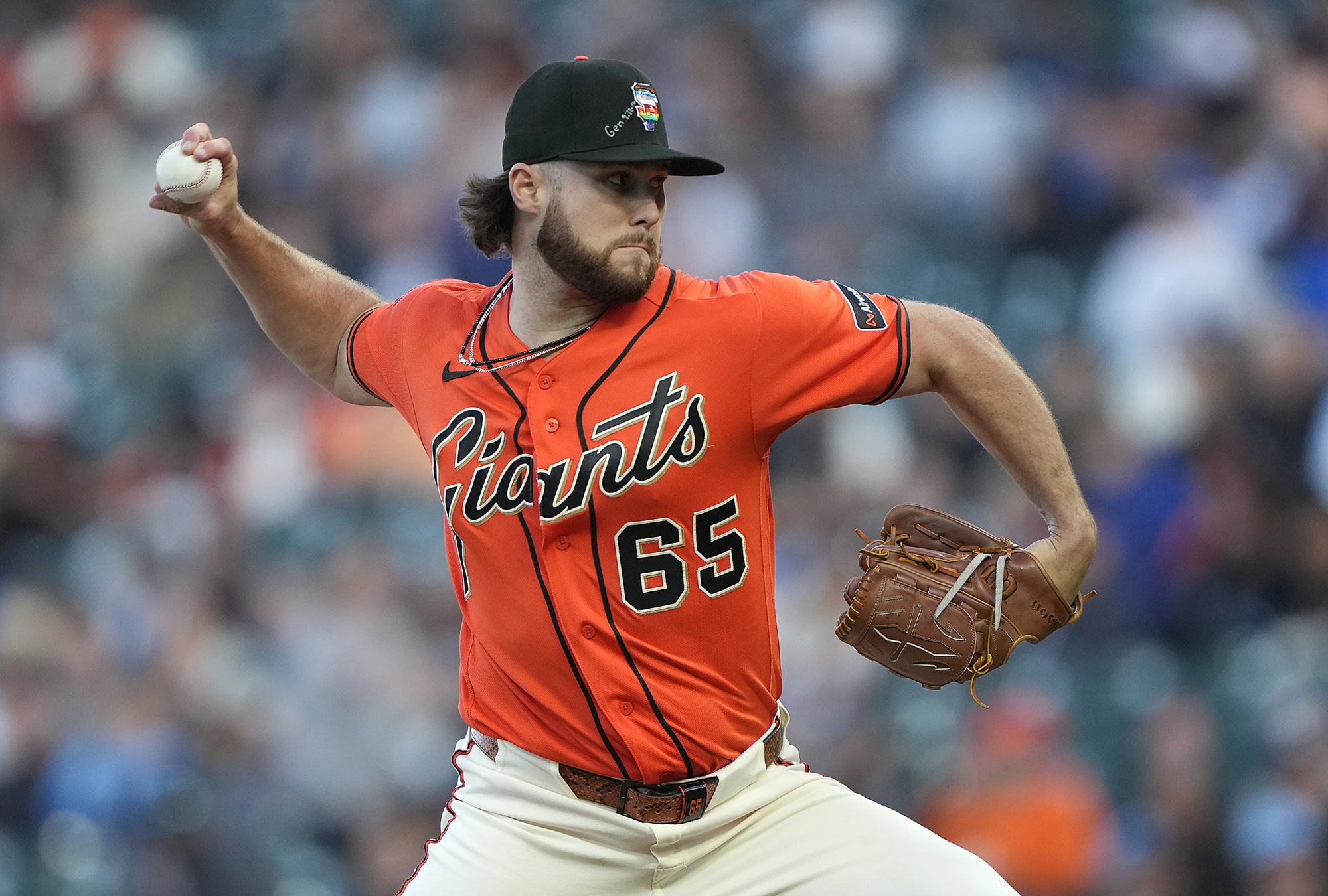
Francesca Fenzi [00:02:38] Yes, yes. Well, as you may already know a little bit, there has been a bit of a pride controversy around the Giants, the San Francisco baseball team. So at a Pride Month event on June 12, this was a game themed around pride that the Giants play every year, or at least they’ve played this every year since about 2021. So it’s been going for a while. And three pitchers for the Giants walked onto the field with inscribed Bible verses on their hats. And that kicked off a controversy that we’re still feeling the ripple effects of for the rest of the month
Alan Montecillo [00:03:12] Right. So these were, um, for pride night, they were wearing these caps, right? That had the normal SF logo, but that was rainbow colored, right. And so the pictures had written references to Bible verses kind of over or on the hats. Is that right?
Francesca Fenzi [00:03:25] Yeah, exactly. So the typical uniform that players wear for this pride event, it’s the same San Francisco Giants jersey with rainbow insignia on the on the jerseys on the hats. And these three pictures, particularly the starting pitcher Landen Roupp, when he came onto the field, his hat had a reference to a passage from the book of Genesis, which had been scrolled over the rainbow logo. This is a passage that characterizes the rainbow as a sort of covenant between God and the faithful in Christianity. Obviously, rainbow is super prominent symbol for the queer community as well. So this Bible verse has been used by Christian groups in the past that oppose same-sex marriage and homosexuality in general to sort of, you know, kind of counter the narrative that rainbows are symbolic for the, the queer Community. And it’s kind of a controversial move.
Ericka Cruz Guevarra [00:04:16] Yeah, and I’ve seen quite a bit of the backlash online. I mean, a lot of Giants fans feeling really disappointed in the team.
Francesca Fenzi [00:04:28] Yes, the fan response has been pretty negative, particularly from the queer community. Obviously, San Francisco is a city that has long been a mecca for queer people, super gay city. And historically, the baseball team has been really aligned with that. The Giants were the first professional sports team to host a game raising awareness for and money for the AIDS epidemic. That was in 1994. And then, of course, in 2021, they began. This Pride event and we’re actually the first team to incorporate Rainbow Colors and do a Pride-themed game annually. Many other Major League Baseball teams have adopted that practice now. So the Giants have a pretty pro-LGBTQ community history and I think fans were very upset by that.
Alan Montecillo [00:05:14] So three players who wrote these verses over the Pride themed hats, I’m sure they’ve seen a lot of the backlash that’s happened. Have they responded to this publicly at all?
Francesca Fenzi [00:05:26] Well, so the players themselves have largely let the Bible verses speak for themselves. There was a post-game interview with that starting pitcher who I mentioned, Landon Roop. He more or less described this as something that represents his relationship to Christianity, the covenant between him and God, and tried to kind of downplay it as something that was a broader cultural statement and more about a personal belief.
Ericka Cruz Guevarra [00:05:53] What about the franchise more broadly and also the MLB, how are they responding to this?
Francesca Fenzi [00:05:58] Yeah, so the major league baseball officials did reprimand these pitchers, but not for the contents of their message. So MLB has a policy against slogans and writing on team uniforms generally, and they made a really big point of citing this as a rules violation of that standing no slogans policy. In fact, they even compared it to writing things like Happy Birthday Mom, which was another real example that a player’s been disciplined for in the past. So I think that landed a little lackluster for fans who were hoping to see the league take more of a stance on the content and the messaging. And then the team’s president, Buster Posey, this is his second year managing the team and he sort of dodged the controversy altogether.
Reporter [00:06:43] Buster, you were a member of this organization for a long time, and every year there’s been a night to honor the gay community. Did you object to those nights when you were player?
Buster Posey [00:06:57] I mentioned that I’m not going to revisit it, so if you want to ask baseball questions, I’ll answer baseball questions.
Reporter [00:07:02] Were you planning to reach out to the gay community about any of this or no?
Buster Posey [00:07:06] Again, if you wanna go baseball questions I made my statement.
Francesca Fenzi [00:07:09] Really awkward press conference where he actively avoided answering many questions about this. In addition to some of the questions about how the team was playing and some other uncomfortable things he didn’t want to have to talk about.
Alan Montecillo [00:07:23] I feel like whenever anything remotely controversial happens in San Francisco, many people across the country take notice and have opinions about it, particularly conservative media and conservative political figures. I know there’s been some stuff around that, right?
Francesca Fenzi [00:07:37] Yes, yes, certainly this became a national news story. The New York Times has been reporting about it. Fox News has been recording about it, and part of the reason why this has blown up so much is that it fits into this broader context of the Trump administration’s increasingly aggressive rhetoric, which has been demonizing queer and trans people. That, of course, has frustrated and frightened many people in the community, particularly in this month of pride, which is usually and a time to celebrate. And then it’s also fitting into this larger conversation that’s playing out in sports. This is, of course, not the first time that athletes or even Bay Area athletes have used their platform or visibility to advocate for personal beliefs. The most prominent example of that probably being 49ers football player Colin Kaepernick. He, of of course we all remember, took a knee to protest police brutality and racial injustice in 2016 as part of the Black Lives Matter movement. This current controversy with the Giants has become a flash point for some of those conversations about what the role of players’ beliefs should be in sport. And of course, the conservative media outlets have kind of latched onto this as being a one-for-one comparison. Fans have pushed back on this and have been describing the Bible verses as bigotry and something that is excluding a body of the fandom, a group of people, and not necessarily akin to the Black Lives Matter. Protests.
Ericka Cruz Guevarra [00:09:06] And if I’m understanding correctly as well, Francesca, the Giants aren’t doing very well in terms of their games either, right?
Francesca Fenzi [00:09:16] That has been I think the roughest part is that they are the Giants are not doing well this season. They are fourth in the division. They’ve lost a lot of games and I think even more specifically, they have lost a lotta games even when they’ve scored a lot of runs. So the fans have really pushed the blame on that to the bullpen and onto the pitchers for losing these advantages.
Ericka Cruz Guevarra [00:09:42] Well, Francesca, thank you so much for bringing that story. Appreciate it.
Francesca Fenzi [00:09:45] Yeah, my pleasure.
Ericka Cruz Guevarra [00:09:47] Well, we’re gonna take a quick break, but when we come back, we’re going to talk about some of the other stories on our radars this month. Stay with us.
Ericka Cruz Guevarra [00:10:45] And welcome back to the Bay’s June News Roundup, where we talk about some of the other stories on our radars this month. And now we’re gonna talk about a story that I am bringing from Pittsburg in Contra Costa County, where the city is planning to build a 300,000 square foot data center on a former golf course. And residents are not happy about it. Earlier this month, more than 300 Pittsburg residents packed this city hall meeting to express their concerns over this new data center. For context, Pittsburg is this working class suburb. It’s got real blue collar roots and it lost its main industry, the steel plant a couple years ago. And so it’s really sort of struggled with its economic identity and its economic future. And so meanwhile, the city says that this kind of is the answer to its economic problems, but of course others say this doesn’t really reflect the long-term vision that residents have for their city.
Alan Montecillo [00:11:55] So, uh, this data center you mentioned on a former golf course, 300,000 square feet, um, who is behind it and what is it supposed to be used for?
Ericka Cruz Guevarra [00:12:06] The company behind this data center is called AVAIO. They say that they develop this sort of energy smart hyper scale data centers that are used for AI.
Alan Montecillo [00:12:18] So the argument for this data center in Pittsburg is related to jobs and economic opportunity. You mentioned though that there’s some vocal pushback against it. What are those folks saying?
Ericka Cruz Guevarra [00:12:30] There’s a lot of concern from folks, the kind of things that you hear often when it comes to pushback on these data centers, concern about the resources it’ll take, the power, the water that it’ll take to cool down these data centers. But another really big part of this in Pittsburg in particular is this big question that residents have of like, can this valuable land be used for? Something else. Something that actually benefits the community on a daily basis. Maybe it’s a park or mixed-use retail dining, for example, or more community gathering spaces. Something that folks can really use on the day-to-day in their daily lives to improve life in Pittsburg. Another big part of this, too, is this question of transparency.
Pittsburg resident [00:13:28] How about you listen to the community when you represent. You represent that. If you want some money, I got some change in my pocket.
Ericka Cruz Guevarra [00:13:33] The interesting thing is that this data center was approved unanimously a couple of years ago, actually, in November of 2024. It seems like the public backlash is only sort of happening now, and that is in part because of these transparency concerns. I think a lot of folks spoke at this city council meeting earlier this month, really feeling not included in the process of deciding to build this data center, not feeling like they had enough opportunity to express their concerns about it. There’s a petition going around that’s been signed by more than 20,000 people now, and it states that this is not an opposition to technology or progress, but it’s a call for, quote, thoughtful planning and responsible land use that reflects the priorities of the community.
Alan Montecillo [00:14:24] Regarding the timeline, I also wonder if part of this is because there’s more of an AI backlash sentiment in the air in 2026 than there was in 2024, in that not just in the Bay, but nationwide opposition to data centers is perhaps one of the few tangible things that AI skeptics feel they can do to oppose this seemingly kind of so-called, framed as inevitable growth of AI. Not being a Pittsburgh resident. I don’t know if that’s the case, but I wonder if part of that, if you’re the city, you’re like, well, we had this two years ago, like, what’s your problem with it now, I think the conversation day to day around AI data centers is pretty different than it was two years.
Ericka Cruz Guevarra [00:15:08] No, totally. I mean, I feel like I know so much more about the water usage of these data centers than I did two years ago.
Francesca Fenzi [00:15:15] Same. Has the company behind this data center in Pittsburgh said where they’re planning to pull energy and resources from?
Ericka Cruz Guevarra [00:15:25] City officials have said that the power will not come from the PG&E power grid that supplies local residents, but instead something called the Pittsburgh Power Company. And so they’re really trying to say, like, this won’t cause any increase in local rates, for example, in people’s PG&Es bills. And then they’re saying that the water that will be used to cool the center will be primarily recycled water from the Delta Diablo treatment plant, according to the city of Pittsburgh.
Allison Spells [00:15:57] There are two concerns you hear about data centers all across the country, electricity and water. In Pittsburgh, the approved project handles both in ways that are specific to this community, and this is where it really stands apart.
Ericka Cruz Guevarra [00:16:11] John Funberg, the Assistant Director of Community and Economic Development, and Allison Spells, who’s a Senior Planner for the city, really emphasized in this video that, you know, the project is operating under very strict environmental rules that they did, their due diligence to do an environmental impact report on the potential, you now, consequences of having a data center in the community. And they say that they have plans for how to mitigate the environmental impact of this project.
Francesca Fenzi [00:16:46] And if I understand it correctly, this is not the only data center in the Bay Area that is meeting with some local pushback, right?
Ericka Cruz Guevarra [00:16:55] Yeah, that’s correct. Not too far away in Oakley, actually, the city recently unanimously voted to ban data centers. And then in December, Amazon began construction on a super controversial data center in Gilroy. So this is, I feel like another example of just these communities that exist on like the fringes of Silicon Valley. That are sort of struggling economically and then having to choose between a future where data centers are the future or it’s something else. And that is it for my very complicated news roundup story. Alan, we’re gonna turn to you for the last one here. What story did you bring for us today?
Alan Montecillo [00:17:48] So I have a fun, inspiring, lighter story about transit activism in San Francisco. This is a story by KQED’s Elise Manoukian about how students have been successfully pushing for improvements to their local bus line, specifically the 29. Shout out to the sunset, that’s where I live.
Francesca Fenzi [00:18:07] And so Alan, for those of us who don’t live in San Francisco, tell me more about the 29 and who it serves.
Alan Montecillo [00:18:13] This bus line goes through about 35 different schools across the city. 12% of riders on the 29 are students. That’s more than the city’s average. It goes from Baker Beach on one end, south through the Richmond, Golden Gate Park, the Sunset. It goes through San Francisco State and actually cuts east through Ingleside, Excelsior, Bayview. It’s actually the longest daytime bus route. And what students say, and honestly, many riders, including myself, would observe, is that. There’ve been lots of problems with crowding, delays, reliability. I mean, this is a very used bus line, actually. It’s about at 90% of pre-pandemic ridership because it, it serves lots of neighborhoods and not downtown. But if you can imagine a public bus line that has lots of students, you know, at around eight o’clock and 3.30, there’s just a huge influx of people getting on the bus. So you wind up with busses that get bunched together. Maybe you think you’re going to get on a bus, but it’s too full and you got to wait for the next one. Maybe you’re a student waiting for your bus in the morning and then you’re late for class because the bus you thought was gonna be available is not available. Some of that advocacy that came from students, particularly a group called the Lowell Transit Club at Lowell High School, had been pushing for changes since, honestly, before COVID, since around 2019.
Ericka Cruz Guevarra [00:19:30] I definitely remember being a student at San Francisco State, standing at the bus stop and then seeing a packed 29, filled like sardine, people just like squished in there and just always being like, God, I’m not going to get on that. The worst, truly.
Francesca Fenzi [00:19:48] The worst feeling. And so what were some of the changes that these students proposed?
Alan Montecillo [00:19:54] Right, so some of these students at the Lowell Transit Club had been going to public meetings and organizing feedback campaigns, talking directly to SFMTA officials. So a lot of these are sort of quality of life improvements, consolidating bus stops to help increase the speed, infrastructure improvements, making wider sidewalks so it’s easier to board. Sometimes consolidating stops can get a bit contentious because you get into this problem of access, like maybe you live near a bus stop and it’s no longer available. But then the trade-off is that You know, fewer stops equals going faster. Some of these proposed changes had even been, um, going on before COVID. So yeah, a series of changes designed to create faster service, more convenient service, and avoid this sort of overcrowding problem where, or this issue when you think you’re going to get on a bus and it’s packed to the brim and you just got to wait for the next one.
Ericka Cruz Guevarra [00:20:43] I mean, I think it’s interesting that some of these students have been working on this since like before the pandemic. I imagine some of them have probably graduated by this point, but I don’t know. It seems like an inspiring story about like, what you can do to like improve their community’s transit system.