A Queer History of The Sims
View the full episode transcript.
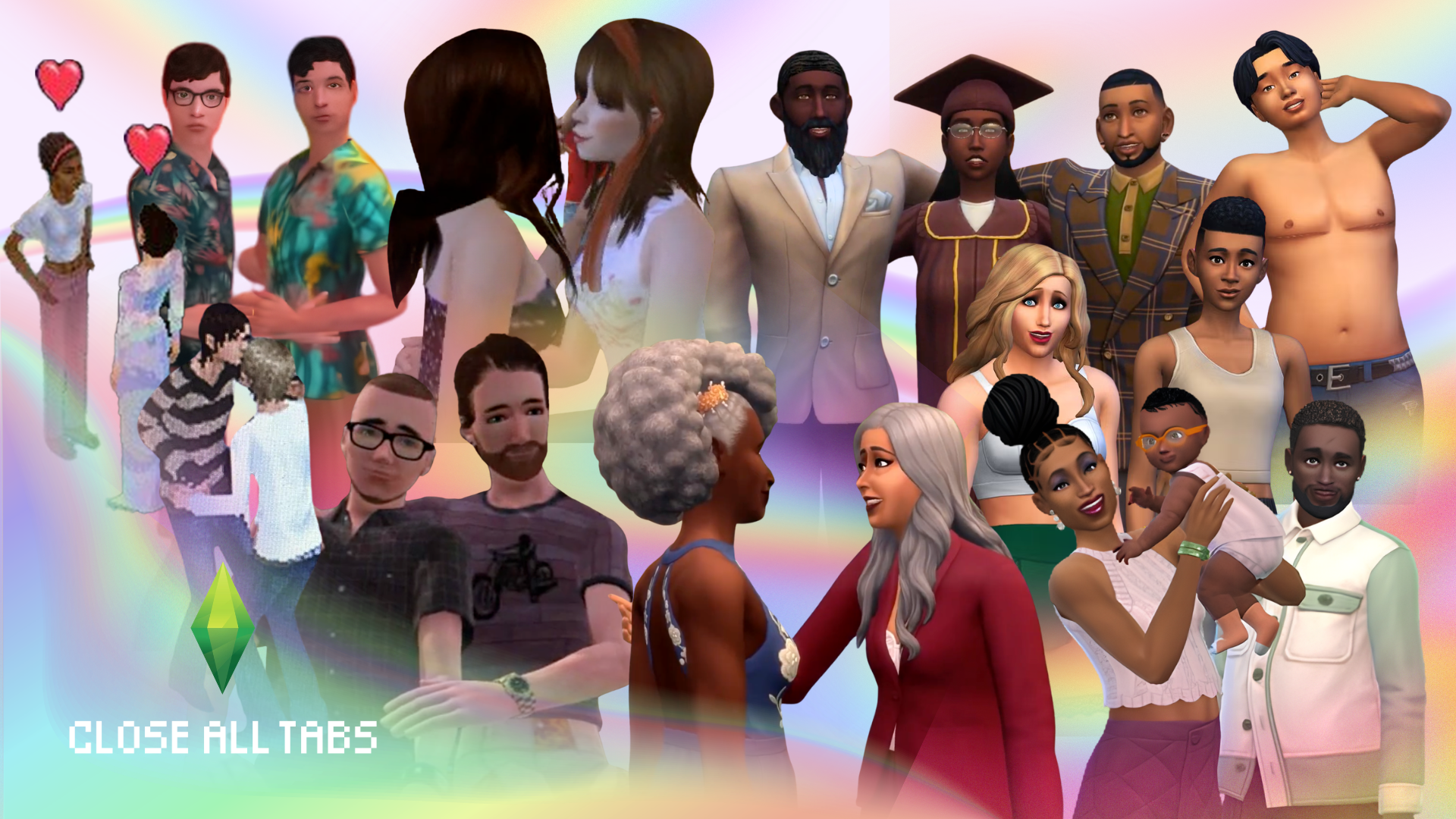
“Did The Sims make you gay?” is a long-running joke among Sims players. For millions, The Sims has been more than a video game — it’s been a place to experiment, tell stories, and explore identity. Long before LGBTQ representation became common in mainstream games, The Sims allowed same-sex relationships, helping create a devoted queer fan base that reshaped what players expected from virtual worlds.
In this episode, Morgan Sung talks with The Sims 4 senior designer Jessica Croft and Electronic Arts’ senior game design director Loel Phelps about the game’s unlikely emergence as one of the most queer-inclusive franchises in gaming. They explore the legendary story of how same-sex romance accidentally made it into the original game, the challenges of translating sexuality and gender into game systems, why so many LGBTQ players discovered their own identities in The Sims long before they felt safe doing so in real life — and why some players are worried about where the game might be headed.
Guest:
- Jessica Croft, senior designer and lead designer at EA on The Sims 4
- Loel Phelps, senior game design director at Maxis
Further Reading/Listening:
- The Kiss That Changed Video Games — Simon Parkin, The New Yorker
- Unearthed The Sims design docs show the internal debate over same-sex relationships — Steven Messner, PC Gamer
- Did The Sims make you gay? – a video essay. — Alexander Avila, YouTube
- The Sims Knew I Was Queer Before I Did — Megan Elliot,BRICKS Magazine
- Gay weddings for Russia: How The Sims became a battleground for the LGBTQ+ community — Tom Regan, The Guardian
- The Sims designer says that the series’ diversity is “critical, especially at times like now” as the games must recognise “the fundamental truths of our humanity” to stay successful — Lewis White, FIVR
Want to give us feedback on the show? Shoot us an email at [email protected]
Follow us on Instagram and TikTok
[ad fullwidth]
Episode Transcript
This is a computer-generated transcript. While our team has reviewed it, there may be errors.
Morgan Sung: Do you like these deep dives? Whether you call yourself a tabby or a tab head or part of the tab hive, if you’re a fan of Close All Tabs, it would be so, so helpful if you could rate and review the show on Spotify, Apple podcasts, or wherever you’re listening to us. Under our watch, every tab in the land will be closed. Eventually. I mean, I have like 15 open right now. Okay, let’s get to the show.
So the other day, I got out of bed and I did my normal morning chores. Fed the chickens, watered my crops, and checked in on my sweet baby cow plant. He ate one of my friends last week, so I’m keeping him on a really strict feeding schedule so he doesn’t try it again. I kissed my wife goodbye before she left for her job as an undertaker, and then I started getting ready for my job as a Grim Reaper. I just got promoted to Soul Slayer, which is a pretty big deal. Lots of responsibility there. But, just as I was about to leave, the gnomes started spawning around my house again. They went around breaking all my stuff, and when I tried to stop them, they had the audacity to strike me with lightning. Just another typical day in The Sims.
This franchise has been wildly popular since the first Sims game came out 26 years ago. It’s like a virtual dollhouse. You control these dolls, called Sims, and help them fulfill goals, manage their needs, and interact with their world. I love it. For the last 14 years, my sister and I have shared an account just to play this game. And together, We’ve logged more than 6,000 hours in The Sims 4 alone. I’m kind of scared to check where we clocked in on The Sims 3. The game is constantly evolving and adapting to whatever the current culture is. And in addition to some very silly gameplay, The Sims has become this oasis for diversity and representation. In queer spaces, Sims players, also known as Simmers, love to ask each other this question. Did The Sims make you gay? Why is that, you may ask?
Jessica Croft: Because it made a lot of people gay
Morgan Sung: Jessica Croft is a senior designer for The Sims 4. She’s had a hand in designing some of the features that make the game so unique, like the sexual orientation system. More on that later. The Sims is iconic because of its freedom. It lets players experience the game however they want. That freedom has given rise to a few distinct types of simmers. You might be a builder. Spending hours constructing and decorating complex architectural marvels. Maybe you’re a storyteller who plays the game like an eternal personal soap opera, or a completionist trying to get every possible achievement in the game. And at some point in their life, every Simmer has been a chaos agent, setting things on fire, ruining in-game relationships, even removing the ladder from their Sim’s pool so they get stuck and drown. You know. Playing God.
Jessica Croft: I would say it’s, to me, a storytelling tool. So you’re playing this game about everyday life, and in that game, you’re gonna have stories emerge around the characters you play. But I think ultimately, to try and characterize The Sims as one thing, kind of does it an injustice because it’s so many things to so many people.
Morgan Sung: There are so many ways to play this game, but for a lot of players, including myself, The Sims provided this safe little sandbox to figure out who they were.
Jessica Croft: I think the fact that Sims is about crafting characters that might literally look, act, and have the same life you do has led a lot of folks to exploring who they are through The Sims. And I think it seems like a small thing, it’s just a game, like what’s the big deal? I figured out who I was through seeing myself in media because it let me know that who I am is okay.
Morgan Sung: A few years ago, Jessica led the Sims sexual orientation update. It was huge both for players and for the games industry overall. It allowed players to set specific parameters for who their Sims were attracted to and what kind of relationships they were interested in. But for years before this update ever rolled out, the game had already attracted a dedicated queer player base. In fact, same-sex relationships were possible from the very beginning when The Sims 1 launched in 2000. Jessica says this decision shifted the whole industry.
Jessica Croft: Back then it was pretty rare to have same-sex relationships in the game. And you saw more and more and more coming at that moment until where you are now where it’s actually pretty unusual I would say for a game where you create a character and embody that character to not have the option to have a same-sex relationship.
Morgan Sung: And since those early days, The Sims has grown into the symbol of LGBTQ representation, getting more inclusive with every update. In other words, it’s gotten more gay. Today, The Sims is arguably the most explicitly queer mainstream game ever made. So how did we get here? We’re diving into a topic I love yapping about, The Sims. From the game’s origin story, to the character lore, to the technical snafus involved in coding sexuality, we’re opening a bunch of tabs on how this game became an oasis for LGBTQ representation, and why some players are worried that might change. So, a gay history of The Sims. Ready?
This is Close All Tabs. I’m Morgan Sung, tech journalist and your chronically online friend, here to open as many browser tabs as it takes to help you understand how the digital world affects our real lives. Let’s get into it.
Okay, let’s open our first tab. The Sims Gay Origin Story. The Sims is the brainchild of Will Wright, co-founder of the legendary game studio, Maxis, and creator of SimCity, SimEarth, and other beloved titles. This story starts in 1991, when Will and his family lost everything in the deadly Oakland Berkeley firestorm. In the aftermath, he and his wife began rebuilding, assessing what they needed and what it actually took to make a home. He had an idea for a life simulator, one that was totally open-ended. Where players start from scratch. Here he is speaking to KQED’s Snap Judgment for an upcoming episode that dives even deeper into this origin story.
Will Wright: The goal is meant to be for the player to choose. So you can play The Sims and say, “Okay, I want my Sims to be super happy,” or “I want them to be top of their career,” or they have the biggest mansion with the most friends or the most babies, whatever. What I’d rather produce is present a series of possible goals. And I think that’s much more meaningful. And it makes it more about you. So, you know, you’re actually pursuing a goal that means something to you and you’re the one kind of measuring your progress.
Morgan Sung: It was a revolutionary idea in gaming at the time, but it had trouble gaining traction. The game had been stuck in development hell since the early 90s. The studio behind the game, Maxis, had been acquired by EA, Electronic Arts, while The Sims was still in development. And it was during this time that the first decisions around sexuality were being made. Will wanted to include same-sex relationships in the game because it was supposed to reflect real life. But it came on the heels of a major scandal in another Maxis game, the 1996 flight simulator, SimCopter.
[Clip of SimCopter review from YouTube]: A bunch of dudes wearing Speedos that start kissing each other loudly. Not only that, but you can jump out and start making out with them yourself.
Morgan Sung: This was a joke programmed into the game by one of the developers, which could be triggered when a player met certain criteria. That developer was later fired for including it. So when it came to The Sims a few years later, the team was understandably worried about backlash. And after a lot of back and forth,
Jessica Croft: The team had decided that they weren’t going to do same-sex relationships in the original Sims game.
Morgan Sung: Jessica was a teenager at the time. She was not working on the game back then. But the lore of the game’s origin has been passed down through generations of developers. That’s because the queer legacy of The Sims, and everything it’s come to mean to LGBTQ players, started with a mistake.
Jessica Croft: The dev who was coding the game was new to the team, and I guess he didn’t get the memo, or didn’t read the design doc, couldn’t be me.
Morgan Sung: That programmer was Patrick Barrett, and according to an interview he did with The New Yorker in 2014, he did read the design document. Just the wrong version. Here’s what happened. It was the late 90s. Soon after Patrick joined the team, the game’s lead programmer went on vacation. Someone handed Patrick the design documents that outlined how all social interactions between characters in the game should be coded. But… He was given a version of the document from before the team decided to exclude gay relationships. So, Patrick wrote up the code for Sim conversations, arguments, and romance. And in Patrick’s version, romances between Sims of the same gender were allowed.
No one mentioned it. E3 was coming up, the hottest, most prestigious games industry convention of its time. And this was supposed to be the Sims big debut. Patrick was asked to put together a gameplay demo, which highlighted these different scripted scenarios for The Sims. One of them was a wedding. There were so many Sims attending that Patrick didn’t have time to script all of their interactions. That meant some of the characters would act autonomously.
Jessica Croft: They put everything together, shipped it off, and then at the trade show in front of a gigantic crowd and like one of the biggest trade shows for our industry, in front everybody, two female Sims kissed each other and everyone just went nuts. Like, it was one of those things where the cat was totally out of the bag. There was such buzz coming out of that moment that it had to be part of the game from that point on. And even though we got there by accident, I’m not picky. I’m glad it happened at all. And from that moment, The Sims kind of became the tip of the spear.
Morgan Sung: This blunder at a trade show 27 years ago set something in motion that is still reverberating today. But considering how foundational the story is to Sims lore, I wanted to verify it. Is there anything backing up this story? Consider this our first side quest, tracking down the receipts. This much I can say. There’s no footage of this legendary kiss happening. While working on this episode, I spent days scrubbing through archived forums, interviews with Will Wright, and B-roll from news broadcasts covering the Sims demo. There is a lot of coverage of E3 in 1999.
[Clip of Lauren Fielder for GameSpot TV from YouTube]: Here we are! We’re on the floor of the Electronic Entertainment Expo in Los Angeles, California, with a special edition of GameSpot TV.
Morgan Sung: Some news reports have a sentence or two about The Sims, like a Washington Post write-up that called it, “a quiet little game,” and, “a surprise hit.” But there’s barely any coverage with details about The Sims demo. What I did manage to dig up is from a German DVD showcasing PC games that debuted at E3.
[Clip of DVD demo in German from YouTube]: [Speaking German]
Morgan Sung: The part mentioning the Sims is just 22 seconds long. The fabled kiss does not appear. So I scrubbed through, no joke, hours of show footage from that year’s convention. This is the pre-vlogging era. I’m talking shaky camcorder clips, unedited, capturing these little snippets of what gaming was like in 1999.
[Clip of E3 convention in 1999 from YouTube]: You can be a master if you try! Pokemon! The adventure begins with the TV show…
Morgan Sung: These scenes were lost to time until someone found the tapes, digitized them, and then uploaded them to YouTube decades later. I found a brief flash of the Sims booth in one video, but the camera holder didn’t bother to focus on the screen. On the internet, there’s no mention of this groundbreaking lesbian kiss until 2014, when The New Yorker published the interview with Patrick Barrett. We tried reaching out to the programmer through multiple contact methods, but didn’t get a response. I even friended him on Facebook. But, crickets. Maybe one day, someone will uncover and digitize the grainy camcorder footage of the kiss that changed it all.
What we do have is confirmation of an internal struggle at Maxis over whether to include same-sex relationships at all. In 2019, another programmer, Don Hopkins, released the design documents from 1998, months before that infamous E3 game demo. He criticized the prototype’s strictly enforced heterosexuality. In one version, trying to initiate a kiss with a Sim of the same gender would actually result in the Sim getting slapped. Here’s a note that Don left in the document.
[Dramatic reading of Don’s comment by Chris Egusa]: We are going to be expected to do better than that after the SimCopter fiasco and the lip service that Maxis publicly gave in response about not being anti-gay. And anyone offended by that needs to grow up and get a life. And hopefully our game will help them in that quest.
Morgan Sung: The Sims debuted at E3 months later. Gay romance and all. The full game was released the next year.
Jessica Croft: So it’s, it’s 2000, young Jessica is 16. Uh, and I’m reading my PC Mag, because we had physical media back then. And I see this article about this new game, The Sims, and it is not like anything else I’ve ever seen. It’s this quirky little game where instead of like, being a warrior, a wizard, or like flying spaceships, you’re just living a life. And to me I’m like, “How could that possibly be fun?” is my first thought. And then my second thought, “I’m kind of curious.” I want to see why people think this is fun. And I load up, I play it, and it just opened up this whole new space for me. And I’m like, “Huh, this is actually really interesting playing a game about just the everyday life of a character.”
Morgan Sung: The Sims was a hit. Critics praised it for the character customization, the totally unique gameplay, and the storytelling. For a lot of players, the best part was that they could be gay in the game.
Jessica Croft: I think like, so often when you talk about representation, the first of something, the first time you see a same-sex couple in like a major production, the first time you see a trans character in a major like piece of media, that really signals to everyone else that like, “Hey, you know, we can explore these spaces and we can tell these authentic stories and represent folks that are not represented,” and largely, it’s gonna be fine.
Morgan Sung: There were limits. Like, straight Sims could get married, but gay Sims couldn’t. Okay. But, it was 26 years ago. And as cultural norms evolved, so did the game. But video games function based on defined rules. So, how do you fit something as nuanced as sexuality into lines of code? How does introducing human concepts of gender into a game alter non-human characters? And how did these updates affect the beloved Simmer tradition of woohoo-ing the Grim Reaper? (Woohoo-ing, by the way, is the Sims version of sex). We’re opening a tab on that in just a minute. But first, we wanted to remind you that Close All Tabs depends on listeners like you to keep us going. You can support us by becoming a member at donate dot kqed dot org slash podcast. Okay, after the break: more on the gay history of The Sims. Welcome back. Let’s open another tab: a Gay History of the Sims.
Loel Phelps: The game, like, it didn’t say queer or not queer. It was, I was interacting and I chose to kiss a man and the game would be like, “Okay.”
Morgan Sung: Lowell Phelps is a senior game design director at EA, and he’s worked on The Sims for over 15 years. He calls himself “a shepherd of ideas,” for the game. He spends a lot of time researching human psychology and how it can be applied to game design. But for many years before that, he was a college student living in a dorm with five other guys when The Sims 1 came out. How his life turned out today didn’t even seem like a possibility back then.
Loel Phelps: I have a husband, I have child, like this is kind of my culture, even though I hadn’t really explored any of that growing up, but I could with The Sims.
Morgan Sung: Sexuality didn’t necessarily exist in The Sims 1. None of the characters had any sexual preference. If they had a high enough relationship score with the player, it would unlock romantic interactions.
Loel Phelps: Everybody was just default pansexual, right? And that was really fascinating to kind of see how the game chose not to make a choice for me, but waited for me to make that choice and drive the direction of these stories. Like being able to woohoo and kiss and just have dates with other characters in ways that maybe you wouldn’t feel comfortable doing in public.
Morgan Sung: Same-sex couples couldn’t get married like straight Sims couples, but if they moved in together, the game treated them as if they were married anyway. The Sims 2 came out in 2004 and introduced gender preference to the game. It was a weighted system, hidden from players but shifted based on player choices. Think of a scale, tipping one way or the other depending on romantic interactions. So, if a female Sim flirted with a female character, they’d both develop a preference for women, and then autonomously flirt with other female Sims. And then those Sims would autonomously flirt with other female Sims, shifting their preferences. In other words, in The Sims 2, being gay was contagious. And although none of the pre-made characters were explicitly LGBTQ, there were a few that were coded to be queer.
Loel Phelps: I found Sims 2 versions where we’d told stories about queer couples, um, and it was in the text and maybe how we set some of the parameters. I didn’t realize that until I started digging into the actual history. Um, and I kind of learned that the team has started, not started, but has always included the things that allow gender expression to happen in whatever way we felt comfortable, the person setting it up felt comfortable. So you’ll see it in descriptions, you’ll it in stories of the characters.
Morgan Sung: The game also allowed Sims to formally propose to each other and plan weddings, regardless of gender. Players would have to buy a special in-game wedding object: a floral arch. When they clicked on it, if they were in a straight relationship, a bubble would pop up that said, “Get married,” triggering a cutscene where the two Sims would exchange rings and cry.
[Clip of Sims 2 wedding in Simlish from YouTube]: [Speaking Simlish]
Morgan Sung: It was basically the same thing for same-sex couples — but their bubble would say, “Join Union.” Today, that does seem pretty discriminatory. But back then, most states didn’t even offer domestic partnerships or civil unions for same-sex couples. The fact that you could have an in-game gay wedding at all was a pretty big deal.
Loel Phelps: Gay marriage was not a acceptable thing at the time, it was not legally approved. And just being able to have those joined unions, being able actually to have a situation where I can take the stories I’m playing out and have a lesbian couple and a gay couple and have the feeling that they are a family, they’re a collective.
Morgan Sung: And, I’m not gonna lie, as a kid, I used to stay up late on YouTube watching videos of gay weddings in The Sims 2 on the family computer. The scenes were always set to very on-the-nose music, like Katy Perry’s, “I Kissed a Girl,” or the theme song from The L Word. But as a queer preteen, the videos were eye-opening.
Loel Phelps: And The Sims, because of that first kiss, right? From the moment that happened, it felt like both the players and the creators, like the teams that are working on this product, felt a little bit of freedom to do what we needed to do to just express as many versions of life as we could.
Morgan Sung: When The Sims 3 came out in 2009, the United States was at a real inflection point for marriage equality. Obergefell v. Hodges, the landmark Supreme Court ruling that established marriage as a fundamental right for same-sex couples, was still years away. So you could get gay married in The Sims 3, but none of the game’s pre-made characters were officially gay. Pre-made Sims are fully fleshed out characters with backstories and relationships and skills and homes — already established by developers. But, just because characters weren’t explicitly gay doesn’t mean that they didn’t exist. The game included several characters that were heavily implied to be LGBTQ. Like, a household of two women were labeled “roommates,” but they sleep in two beds pushed together in their pre-made house. Or, two guys labeled “best friends” who lived with their adopted daughter who has both of their last names.
Loel Phelps: We create characters that live in the world and have stories that they should be pre-built with. And those stories start by applying their preferences, their traits, their aspirations and their wants. And those tools give us a lot of control to say, “What is this initial starting story that the player might be jumping into if they play with a household that already exists?”
Morgan Sung: The year before The Sims 3 release, Prop 8 passed in California, banning same-sex marriage. A federal court later struck it down, and in June 2013, California Governor Jerry Brown ordered county clerks to resume issuing marriage licenses for gay couples. Which is where we get this meme of then-Attorney General Kamala Harris.
[Clip of Kamala Harris from X]: You must start marriages immediately. You must start the marriages immediately.
Morgan Sung: Later that year, The Sims 3 released an expansion pack called Roaring Heights, and with it, the first explicitly LGBTQ characters.
Loel Phelps: So the Roaring Heights couple, the Dylan and Audrey, was really the first time I think we’d actually put a lesbian couple in a world as an actual family with the correct settings that said, “Hey, we are married, we’re a couple.” And that felt pretty transformative. So, right around the time that Prop 8 got overturned is kind of when we started introducing that as an actual element in the game, so players could experience it.
Morgan Sung: At that point, the next game in the series, The Sims 4, was already in the works. It was released in 2014, and this was the version that really transformed what it means to be represented in games, beyond who can woohoo and marry. In The Sims 4, the team tackled a new frontier: gender. Time for a new tab. Can a cat be non-binary? Two years after The Sims 4 release, the game underwent a major character customization overhaul. So, when you start a new game, you have the option to play as a pre-made household, or customize one yourself. That part is called Create-A-Sim.
Loel Phelps: We started with male/female as the default for base game and we realized that just wasn’t good enough, right? We wanted to be able to allow, again, better representation, more nuance into the choice. So we quickly realized that thinking about maybe masculine or feminine expression is how we wanna actually tackle this.
Morgan Sung: The Sims 4 offers a series of gender-related choices for players to choose from. They can choose whether their Sim has a masculine frame or a feminine frame. And from there, choose whether they prefer masculine clothing or feminine clothing. It actually went further than just appearance. The game is rated T for Teen. Sims never get naked, unless you’re playing with a spicy mod. Wicked Whims players, you know who you are. But for the official game… That limitation, not showing body parts, got the development team to think about gender and expression beyond what’s assigned at birth.
Loel Phelps: Different clothing preferences, regardless of what my physical appearance actually is. Being able to set whether I can get pregnant or not, or I stand up at the toilet instead of sitting down. It’s not about labeling. It’s about thinking about what is the behavior that’s happening and letting players choose what portion of that behavior is important to them. That’s why peeing standing up or using the toilet standing up is the approach instead of saying, “I have a specific body part,” right? That’s less important. It’s about the behavior.
Morgan Sung: This new framing of gender led to the first canonically trans character, the spellcaster Morgyn Ember, who can’t get pregnant, can’t other Sims pregnant, has a masculine frame, and wears feminine clothing. Some players tried to romance Morgyn and were confused about their gender. In 2022, Morgyn’s pronouns were updated to they/them. It was part of a bigger game update that allowed players to set unique pronouns for their Sims. Updating a game like this, which has versions in many different languages, was actually pretty complicated. Only English versions of the game have customizable pronouns, which has been disappointing to some players. Here’s Jessica Croft again.
Jessica Croft: The pronouns update was something that I think was very important to our community, especially obviously non-binary folks within our community. The difficulty there is just simply, language itself is not fully aligned on how to handle things like pronouns. They are heavily gendered and in a way where if you don’t study those things at all you might not realize it’s not just about translating a pronoun, it things like adjectives, articles, even past tense verbs are gendered in these places. And then further, some languages do have gender-neutral words, but they are restricted for objects. So, there’s a certain thing where it’s like, if we use that kind of language, does it cause additional problems?
And it’s a cliché saying, but perfect is the enemy of good. We wanted to get something out there that did a lot of good work, that represented a lot folks and made people feel seen, um, as soon as we could. And I think it’s one of those things where if you wait until you get the perfect version of something, where you solve all the problems, where we figure out how to do pronouns in every language, you might never release that thing.
Morgan Sung: This game has been out for 12 years now, and in that time, there have been dozens of additional packs — extra contents that includes new worlds, new features, and new pre-made characters. Every time it gets updated, it affects years of pre-existing game content.
Loel Phelps: The Sims is a little bit weird. We have robots and we have skeletons and we have lots of other things that maybe you can ask yourself, “Do they have gender? Should they have gender?” Cats and dogs, when we did the non-binary update… You can make a cat and a dog non-binary, that’s okay. So really it comes down to character by character and thinking about is it important for this character to have an identity?
Jessica Croft: I think at one point we had non-binary horses in the horse pack, which, I’m sure those players were like, “Well, you should have just kept that,” and like, maybe, but it was definitely unintentional. When you work with a game like The Sims that’s just layers and layers of systems sitting on top of each other, you get these knock-on effects of some choices you make that are occasionally hilarious.
Morgan Sung: After the pronoun update, the Sims 4 unveiled its crown jewel for character customization: a giant overhaul of in-game sexual orientation. Jessica was actually leading the design for an expansion pack all about high school. The development team had been working on fine-tuning Sim sexuality, and Jessica pitched releasing that update with a high school expansion. Why there?
Jessica Croft: It’s a pack about high school that… It’s about being a teenager, it’s about figuring out who you are. That’s where, in real life a lot of folks do figure out who they are and start exploring questions of their sexuality. So it felt like the right place to do it and the team just rallied around that.
Morgan Sung: And, like with a gender update, this wasn’t a simple matter of slapping on some labels and letting players pick one. It had to be functional in gameplay.
Jessica Croft: The space is so nuanced, the definitions folks have for certain words can differ, in ways where painting with a broad brush on what these labels mean can become incredibly divisive. That was one of the things that we discovered really quickly, working with GLAAD and It Gets Better, that fact. So eventually, we got to a spot where we didn’t use labels. It’s just strictly defining the characteristics of who you’re attracted to and the types of things that you’re into, to craft what is effectively a sexual orientation without the label.
Morgan Sung: So instead of picking from a menu of words like: “lesbian,” “gay,” “bi,” “asexual,” players just pick the genders they’re attracted to and whether they’re interested in romantic relationships and woohoo-ing. They also don’t have to make a decision. There’s an option for exploring. Jessica said this was also important to include because figuring it out is also a part of real life sexuality. However, players cannot opt out of this aspect of the game entirely. There’s no way to default set all Sims to be straight. When the update first came out, Jessica wrote this in a blog post.
Jessica Croft: I think something along the lines of, “While we generally give players the option to toggle off certain gameplay elements, LGBTQIA+ identities are a fact of life, and not just a toggle you can switch on and off.” I stand by that statement. I frankly don’t care if you don’t like certain people. You can’t just turn them off, right? In real life or in a game. And I think it’s important to stand on business there. We want to commit to our vision for diversity and representation within The Sims, and that’s not a thing you get to just turn off.
Morgan Sung: The Sims has come so far since the accidental sapphic kiss 27 years ago. It’s way more inclusive, but far from perfect. Despite the expanded framing of gender, the whole system still operates within a binary.
Jessica Croft: When The Sims was originally engineered, in its very core, like, structural bones, there’s a gender binary. And that next step is like, how do we break this game out of this gender binary? It’s a tricky thing. It would require like this foundational rework of like, so many systems. If at some point we’re able to do an update to, to fully break the game out this gender binary like, foundation it has, that would be so meaningful. It would open up a lot of gameplay, too. Again, it’s immensely tricky. It’s like, a thing that would require really re-engineering a good chunk of the foundation of the game to make happen.
Morgan Sung: There have been some workarounds though. Loel talked about this recent feature that he really loves.
Loel Phelps: So, one of my favorite things that we have added were binders and chest, uh… top surgery scars. Um, and those… Sorry, I get a little emotional talking about it. So my husband is trans. Being able to create his character before that transition after he came out, and have a screenshot of our family, my husband, my daughter, and me just in a space was really impactful. So while it didn’t physically bind the chest, just being able to put on a binder is a step in that transition of his story was really impactful. There’s so many different ways in which people live and have transitions. If I can give one little thing to any player that lets them tell those stories, it’s really important. And those little updates just make such an impact on being able to both represent yourself and feel like yourself in this digital world.
Morgan Sung: I’ve been playing The Sims for over half my life, and created so many different lives within the game. I still think about one of my first playthroughs. It was The Sims 3. I moved my Sim to a tropical island, fell in love with a mermaid, and we settled down on a houseboat together. At 13, being openly gay seemed just as fantastical as proposing to a mermaid. The whimsical queer life I built in that save file unfortunately came to an end —when my kitchen caught fire, with my Sims still in it, and instead of helping, my mermaid wife got stuck on a random floor tile and died of dehydration. The whole house boat went down. It was devastating. So, I started another save, and then another, and then probably a couple hundred more. And today, being openly gay isn’t that absurd at all. There’s a reason queer people make up such a large portion of The Sims player base. We reached out to Simmers to hear what this game has meant to them over the years. Here’s what they had to say.
Plumbella: Will be the first Simmer to hold my hands up and say I was a bit too interested in making my Sims kiss Sims of the same sex. And I think that for a lot of queer people, they will also be able to trace their own gameplay in The Sims back and have a lot of things suddenly make sense.
Owen McHall: The Sims was the first game I ever played where I could make the player character trans.
Stephen Works (SpringSims): It felt more like home… It felt like my safe space where I could be who I want, how I want without any fear of judgment. As a queer Black male, I was able to recreate myself authentically from my skin tone to my hair type, to the clothing options. There were so many stories that I have told and created and shaped that I knew it was like, “This is where I wanna be for the rest of my life.”
Mivyard: For me, as a queer kid growing up in a Christian school, I definitely felt like I had to be quiet about who I was and I didn’t see a lot of role models at school. And so, having The Sims as a tool for exploration and expression really helped me find a sense of belonging and it helped me feel confident, and proud of who I was.
Tonya (Gryphi): If I could have two girls kiss and fall in love in this game, then maybe it was okay in real life as well.
Plumbella: Being able to fall in with whoever you wanted might have been an oversight of the developers, it might have an accident that they forgot to write in the code. It’s ended up that in a time where it wasn’t really okay to be anything outside of the norm, The Sims has been a beacon of inclusivity, and that’s just grown over the years.
Morgan Sung: This game has come to mean so much to so many queer players. It’s made such huge strides for LGBTQ inclusion — meaningful representation, without feeling like some kind of corporate pandering. But today, a lot of those players are really, deeply concerned about the future of The Sims. Late last year, Electronic Arts confirmed that the entire brand and its catalog, including The Sims, had been sold to private investors, a cohort that includes Jared Kushner’s firm, Affinity Partners, and Saudi Arabia’s Sovereign Wealth Fund.
Kayla Sims (LilSimsie): It’s also a $55 billion deal, which is completely unprecedented. I mean, it’s hard to even, like, fathom the scale of that, but that actually is more than the entire music industry combined.
Morgan Sung: Kayla Sims, better known online as LilSimsie, is one of the the creators speaking out about this deal.
Kayla Sims (LilSimsie): And there’s a lot of concerns about censorship within The Sims, I think also, because of those new owners that do not have a great track record with human rights. They actually have a direct track record of criminalizing LGBTQ+ expression. And so a lot queer players of The Sims are really, really worried about those new owners for that reason, too.
Morgan Sung: So, we’re extending our deep dive. We have a few more tabs on what this deal really entails, how players are responding, and what The Sims team says about the future of the game. I’m gonna leave these tabs open for now. Come back next week for the second half of the story. And, if you’re dying for more before then, stick around after the credits for some bonus content.
Close All Tabs is a production of KQED Studios and is reported and hosted by me, Morgan Sung. This episode was produced by Maya Cueva with production help from Francesca Fenzi. It was edited by Chris Egusa, who also composed our theme song and credits music, and did the dramatic reading for this episode.
The Close All Tabs team also includes editor Chris Hambrick and audio engineer Brendan Willard. Additional music by APM. Audience engagement support from Maha Sanad. Jen Chien is our Director of Podcasts and Ethan Toven-Lindsey is our Editor in Chief. Some members of the KQED podcast team are represented by the Screen Actors Guild, American Federation of Television and Radio Artists, San Francisco, Northern California Local.
This episode’s keyboard sounds were submitted by Alex Tran, and recorded on his white Epomaker Hi75 keyboard with Fogruaden red samurai keycaps and gateron milky yellow pro V2 switches.
Special thanks to the Simmers who contributed voice notes for this episode: Plumbella, Owen McHall, SpringSims, Mivyard, and Griphy. And thank you to John Fecile, senior producer for KQED’s Snap Judgment, for the tape of his interview with Will Wright. Thanks for listening!
I remember when the update for, I think it was maybe High School Years, when the sexuality update first came out, people were upset that the Grim Reaper was now asexual. They just really wanted to bang the Grim Reaper.
Loel Phelps: Yeah, and I mean, in Life and Death, we went back and made Grim woohoo-able again. Players have a fascination with our special characters… And at some point, the ownership of the thing becomes the person’s and not the dev team’s. Yeah, so yeah, Grim is an interesting case.