It’s a driver’s nightmare: You’re driving on the Bay Bridge from San Francisco to Oakland, and your car grinds to a halt.
But whether it’s your car’s transmission, tire pressure or you simply ran out of gas, who are you meant to call?
KQED spoke to Caltrans to learn exactly what you’re meant to do in this situation. Keep reading for what to do if your car breaks down on the Bay Bridge or other bridges around California.
(And if you’re wondering if the Bay Bridge will be closed during this weekend’s I-80 closure through San Francisco, the answer is: the bridge won’t be closed, but it will see traffic impacts Friday-Monday from this 1.6 miles of freeway closure and detours.)
Pull over, stay inside the vehicle and call 911
If you can, drive to the shoulder and once there, stay in the car. While some drivers’ instincts may be to exit their vehicle and try to see what’s wrong — or say, fix a tire themselves — officials strongly recommend you:
- Stay seated in your car
- Turn on your flashing hazard warning lights
- Call 911
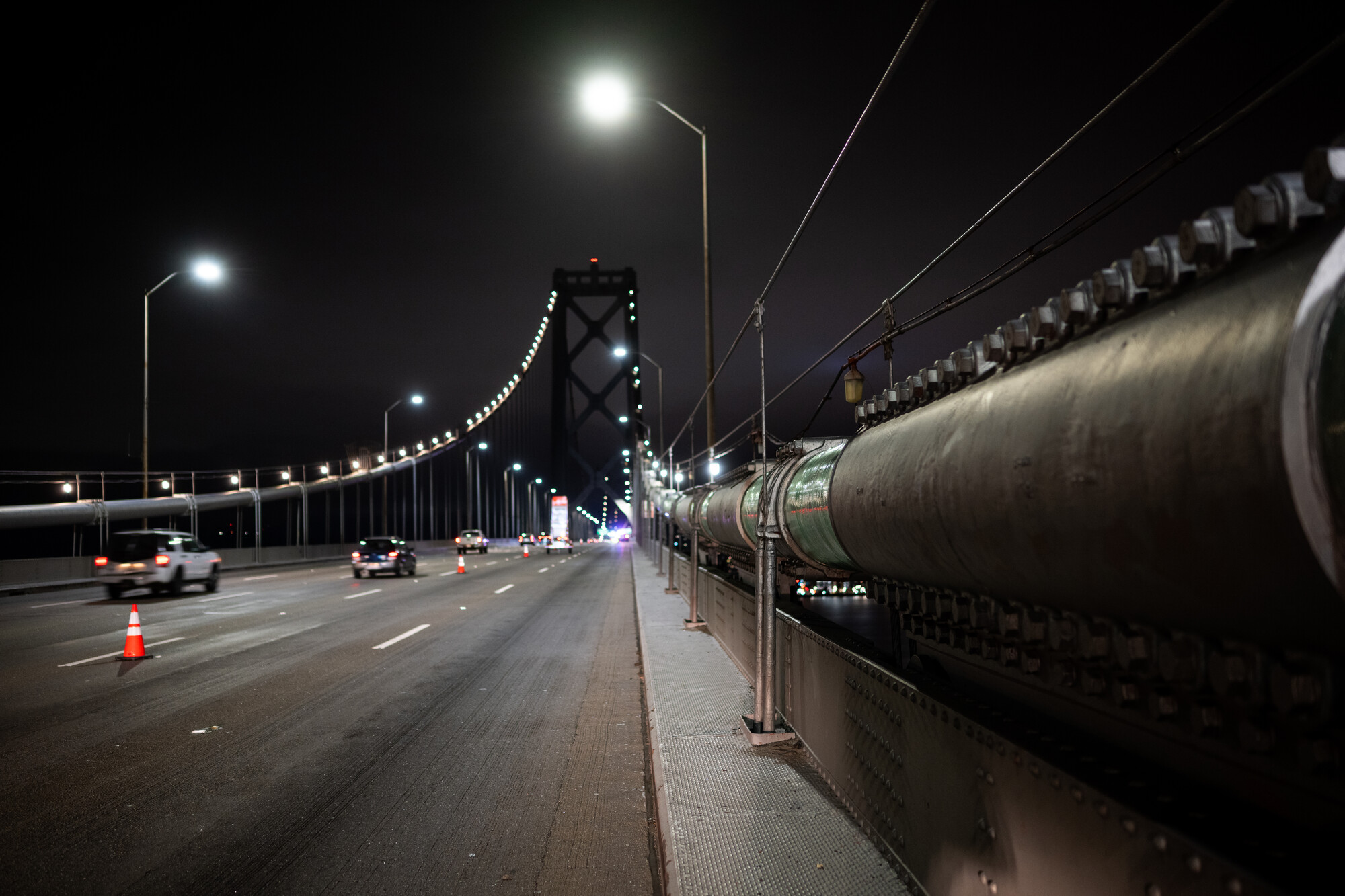
If your car didn’t make it all the way to the shoulder and you’re still in a lane (or if there is no shoulder), stick to the same plan and be extra-sure to turn on your hazard lights to alert other drivers that you’re stationary.
By calling 911 first, drivers can “report to the California Highway Patrol what their location is,” said Lori Shepherd, Caltrans’ public information officer for San Francisco County.
- Jump straight to: What if I break down on the Golden Gate Bridge?
CHP will contact the Caltrans Dispatch Communication Center, which then sends out a tow truck. This applies both during the day and night, no matter the time.
It’s normal to be stressed when you have car trouble like this, and you might also be panicking about the traffic your stall is already causing.
It’s normal to be stressed when you have car trouble like this, and you might also be panicking about the traffic your stall is already causing.