Ericka Cruz Guevarra: [00:00:00] I’m Ericka Cruz Guevarra and welcome to The Bay, local news to keep you rooted.
Singers sing Amazing Grace
Over the weekend, more than 100 people gathered in the town of Truckee near Lake Tahoe to mourn the victims in what’s become the deadliest avalanche in California’s modern history.
Courtney Henderson: [00:00:26] On a cold night, in the middle of so much heartbreak, you all came. That is exactly who this community is.
Ericka Cruz Guevarra: [00:00:38] Four of the nine people who died in last Tuesday’s avalanche were from the Bay Area. They’ve been described as mothers, wives, and friends who connected through their love of the outdoors.
Courtney Henderson: [00:00:53] The families carrying those losses bear a weight that is unbearable. What we know is that however that grief is held tonight, it will not be held alone.
Ericka Cruz Guevarra: [00:01:10] Today, the latest on the Tahoe Avalanche and the Bay Area’s close ties with Tahoe’s outdoor community.
Sarah Wright: [00:01:30] My first reaction being from Tahoe was, oh no, who do I know?
Ericka Cruz Guevarra: [00:01:37] Sarah Wright covers the outdoors for KQED.
Sarah Wright: [00:01:42] There’s a lot of people I know who backcountry ski, or people who I follow on social media who back country ski, and I was immediately thinking, which person who I’ve seen this beautiful video or commented on a wonderful photo just had the worst possible outcome.
Ericka Cruz Guevarra: [00:02:03] What a feeling to be seeing the news and be wondering if you know any of those people personally. I mean, what do we know about the victims?
Sarah Wright: [00:02:15] This was a guided group of 15 people out on a three-day backcountry skiing trip to the Frog Lake Huts, which is up in Tahoe by Donner Summit. What we know so far is that there were nine victims of this avalanche and six survivors. Among the nine victims, three of them were guides with this guided trip that everybody was on and the remaining six were clients. And of those clients. They were all women, primarily in their 40s and 50s, and many of them were from the Bay Area. They’re experienced backcountry skiers. They go on trips like these every single year. It appeared that this was like a fully scheduled and advanced trip. They were looking forward to it. And so this was just obviously a huge shock to their families.
Ericka Cruz Guevarra: [00:03:07] Let’s talk a little bit about what happened and what we know about what happens so far. Where the avalanche occurred is this place called Castle… Peak. Castle Peak. Is this a pretty popular place to go back country skiing?
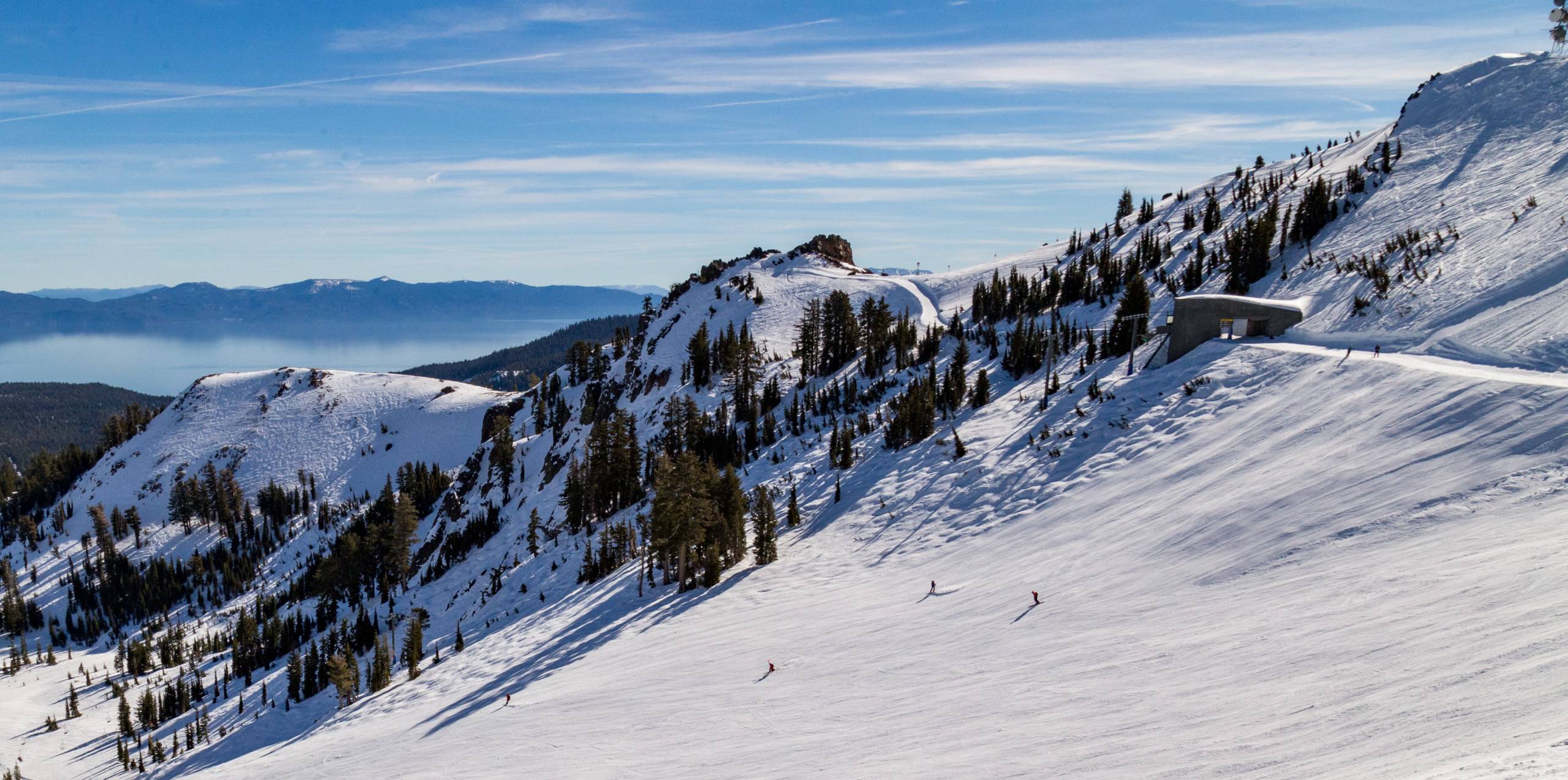
Sarah Wright: [00:03:21] Yeah. So it’s in the Tahoe National Forest and it’s just north of Highway 80. So if you’ve ever been up to Tahoe, like you’ve probably passed by it, not even realizing. But especially, I mean, I talked to the mayor of Truckee on a close dot and she said a lot of Trukkee residents recreate in this area all the time. Truckees sits at the base of Donner Summit and you can see Castle Peak from most of Trukee. So, it’s very close to our community. It’s one of those places that is actually not super far from Highway 80, a major interstate, but feels very remote when you’re out there because it’s up in the high elevation and it’s just really gorgeous, high alpine environment.
Ericka Cruz Guevarra: [00:04:07] How rare was an avalanche like this there? Like, was it unexpected?
Sarah Wright: [00:04:13] Avalanches are possible and quite common in areas like this. It’s not like you can predict avalanches, but the Sierra Avalanche Center does issue high, moderate, and otherwise avalanche warnings and alerts and advisories. And in this case, on Tuesday morning, they had issued a high avalanch risk warning. We knew that this storm was going to come in and that it was going be a big one.
Ericka Cruz Guevarra: [00:04:47] I mean, for people who aren’t familiar or don’t recreate in this area, what even is backcountry skiing and how is that different from regular skiing?
Sarah Wright: [00:04:58] If you’re regular skiing, you’re probably at a ski resort. There’s ski patrol that’s patrolling the entirety of the resort, there’s certain trails and certain lifts that are open and closed depending on conditions. You are kind of entering into an agreement with that resort that they’re going to do the best they can to protect you. The major difference with backcountry skiing is that there is no resort, no ski patrol, you are in charge of your own safety. You’re out in wilderness area. And you are basically there ensuring your own safety. It’s actually a really cool sport. It’s a really wonderful sport. It allows people to go skiing and to go explore wilderness that they normally wouldn’t be able to. And it’s very rewarding because you can be out there and just feel completely alone in a way that’s very fun and empowering and beautiful. I don’t backcountry ski myself, but I do hike. And camp in the backcountry a lot, so I’m familiar with this feeling of only having to go a little ways to get a big experience.
Ericka Cruz Guevarra: [00:06:16] I guess as someone from Tahoe, what have the conversations in your circles been like in the wake of the avalanche?
Sarah Wright: [00:06:24] Yeah, I’ve seen a lot of people talk about what would I have done in this scenario. I feel like what I’ve been seeing is the people that know the least have the most to say and the people who know the most. All they can say is this is part of the tragedy of this sport. And, you know, this is just a very, very sad incident and a lot of experts even saying like, I have been in situations like this and I got lucky.
Kevin Cooper: [00:06:51] We have to learn from this. We have use it as a learning experience.
Sarah Wright: [00:06:54] Kevin Cooper is a long-time backcountry skier, and he’s ingrained in the local ski industry. And so he kind of really warned people that the backcountry is not a safe place to be. And if you’re going to go out there, you have to basically do everything you can to to mitigate your risk.
Kevin Cooper: [00:07:12] Were they out there in the back country because, you know, this was going to be an experience to ski fresh snow? Yes. But what were the signals that Mother Nature was sending in the National Weather Service and the Sierra Avalanche Center was putting out there that they could have made a little bit different of a decision? And I’m not here to judge anybody. I was not there.
Sarah Wright: [00:07:32] And some of his advice is, like many, to take courses, to get educated, and to basically commit to this lifelong practice of learning about the backcountry and about avalanche safety. There is a long history of education of how to do this sport safely, as safely as possible.
Kevin Cooper: [00:07:53] You can’t just take the course and graduate and get the sheep skin and think, ‘I’m the back country expert.’ It takes years of knowledge to understand snow, snow loads, wind loading, all the different conditions mother nature puts out there.
Sarah Wright: [00:08:09] That said, I think everybody is going to learn from this incident once we have more details about the decisions they did make. This will be taught in avalanche courses. It’s the deadliest modern avalanches in California history. The folks who teach back country courses and lead these back country guiding expeditions, they will be looking at their curriculum, their training, their preparation. And revising it based on the information that comes out of this incident.
Ericka Cruz Guevarra: [00:08:40] So what now, Sarah? I understand there’s an investigation.
Sarah Wright: [00:08:45] Both Cal OSHA and the Nevada County Sheriff’s Office have launched separate investigations into the guiding company. They’re looking for any evidence of criminal negligence. Just by launching an investigation doesn’t mean there is any evidence of that, but that’s part of their role moving forward. And I think from here the biggest thing is that, you know, once the survivors are ready to tell their story, and once more details are released by the sheriff’s office about their communication with the guides and with the guiding company, that’s going to reveal a lot about what decisions were made and when, and kind of just any failure points in their decision-making tree, as we call it. And, you know, once we hear from the survivors, I imagine that will be an extremely powerful and very scary account of what happened.
Ericka Cruz Guevarra: [00:09:50] Tahoe is not the Bay, Sarah, but obviously there is a very direct Bay Area connection to this story. Some of the victims being moms from the Bay Area. And there seems to be this very tight connection between the Bay area and Tahoe. I mean, I know schools here in the Bay Area have ‘ski week.’ Can you talk a little bit about that connection between the two communities?
Sarah Wright: [00:10:14] Yeah, absolutely. I’m an example of that. In fact, my family lived in the Bay Area and chose to move to Tahoe in order to be able to ski and hike and live where they were recreating every weekend. I think there are a lot of families, and this was the case with some of the families who ended up victims of this avalanche. They were up at Tahoe every weekend. You know, they’re these sort of weekend warrior types. It’s super common to see people who are really committed to these outdoor sports or just like love the nature of the place to be up there. I actually spoke last month to Nina O’Brien, she’s an alpine ski racer who was at the Olympics this month. And she grew up as a weekend warrior, grew up in San Francisco going to Tahoe every single weekend to train and she made the Olympics. So this is like a huge, a huge side of the Bay Area. I know also talking to the Truckee community, like some guides were local to that area. So they’re mourning not only, you know, their own. Residents, but also, you know, we get to know the regular visitors and the folks who choose to make Tahoe their second home.
Ericka Cruz Guevarra: [00:11:33] Well, Sarah, thank you so much for sharing your reporting with us. I appreciate it.
Sarah Wright: [00:11:36] Thank you.