Episode Transcript
Love You for You Episode 1: Coming Out to Love
Sasha Khokha: Hey, it’s Sasha Khokha. And here on the California Report’s weekly magazine show, we get to do something really special: take deep dives into issues that shape who we are as Californians. Spend time to really get to know the people whose stories and voices we bring you. So you can understand the complexity of their experience. The nuances, not just the headlines.
Well, over the next few weeks, we’re gonna do just that by introducing you to some transgender, nonbinary and other gender expansive youth and their families.Trans kids have been in the headlines a lot recently, especially since the Trump Administration has started targeting them through executive orders and policies.We’ve been hearing a lot of debates over whether they’re being harmed by the medical system or their schools.
But we’re not hearing much from those young people themselves about their lives. And most media coverage focuses on the hardships trans kids can face: suicide risk, depression, rejection from their families, lack of access to supportive care.
All of those factors are real. But I’ve got some amazing trans and nonbinary kids in my life, and it seems like we rarely hear stories about these young people are thriving with love and support from their families and communities. And how trans youth actually have complex, multifaceted identities that go beyond their gender. They’re scholars, siblings, artists, athletes and so much more.
So over the next few weeks, we’ll introduce you to some gender-expansive youth from across California and the people in their lives who love, support, and mentor them.
Montage of voices
Being trans, of course it’s a big deal, but I wish it didn’t feel like such a big deal. I wish I just felt like, you now, another fun thing about me instead of my whole identity?
What do you want people who are targeting trans kids right now to know about your grandkid?
Just about how special she is. That you gotta know the person.
Thanks for letting me be who I am.
And thank you for letting me be your parent and for letting me love you.
What are you hopeful for the future will look like for trans kids?
All the trans people I know have one vision and it is just a society where being trans isn’t this whole like thing, right?Where I can just say, ‘Hey, I’m trans,’ and everyone’s like, ‘OK, cool.’
Sasha Khokha: We’re gonna take a page from the long-running storytelling project “Storycorps” and listen in as these young people have conversations with their parents, their grandparents, or their mentors, about how they can thrive with love. We’re calling the series “Love You for You.”
This week, we’ll hear from two young people. An 8-year-old in conversation with their mom…and then, a 16-year-old talking to his “Aunty” – his mom’s best friend, who’s a lesbian. And just a note, many of the youth in this series have chosen to stay anonymous and not use their names out of fear that they and their families could face harm in this current climate.
Here’s our first conversation…
[Mother and child speak in Vietnamese: I will ask some questions so the answer is in American. OK.]
Mother: Can you tell me a little bit about yourself?
Child: I like to play soccer and read, and my family is from Asia, like Vietnam and Taiwan, and my pronouns is they/them and I’m 8 years old.
What are you most proud of about me?
Mother: What am I most proud of about you? Um, I think in terms of being non-binary that you knew when you were very young. You were only about four years old and you just kind of told me that you weren’t sure that you fit being either a boy or a girl and you felt maybe like you were neither or both.
And so that was something for us to learn because we didn’t think kids that young knew that about themselves. And so we had to learn a lot about it and support you. And you’ve always just kind stuck with it, even though people ask a lot, like, ‘How do you know?’ Like you just know.
Music bridge
Mother: What does it feel like to be non-binary?
Child: Um, Different
Mother: Different in what way?
Child: Just kids sometimes tease me.
Mother: Kids sometimes tease you?
Child Yeah.
Mother: What do they say?
Child: They’re just like, like ‘Why are you in here? You’re not allowed to.’
Mother: Oh, when you go to the bathrooms?
Child: Yeah.
Mother: And it sounds like that made you feel bad. I remember it made you feel really sad when you were little.
Child: I’m sad that, like, some people don’t like that I’m non-binary and they don’t want it to be allowed.
Mother: Oh, yeah, do you mean at school or just like in the world?
Child: In the world.
Mother: In the world. Yeah, it feels like you can’t be yourself?
Child: Yeah.
Mother: Does it feel like there’s, like, new rules about it?
Child: Yeah.
Mother: Yeah? And that makes you sad?
Child: Mm-hmm.
Music sneaks in
Mother: And before it was hard, if people got your pronouns wrong, you wouldn’t say anything. And now you’ll correct people. And like at school, like sometimes you wear a bracelet that says what your pronouns are. You know, we found ways at school to find safe spaces for bathrooms, right? You’ll go to the principal’s office or in the library. Um, but sometimes if you want to use the restroom, you’re not letting other kids like bully you, um, out of the space anymore.
Child: If they say I can’t, I’m just like ‘Too bad. I’m gonna go anyway.’
Mother: Yeah.(laughs)
You have really good friends at school that use the buddy system and they’ll go with you, too, so it’s almost like you have an extra person there that’s an ally. And then how about at home? What about our family?
Child: You like use my correct pronouns, and if you say it wrong, then you correct yourself and say sorry.
Mother: Do you feel like the rest of our family and friends have been OK with your pronouns or do you think they understand it? Like grandma?
Child: Yeah, fifty-fifty
Mother: Fifty-fifty. Yeah, I think sometimes, like, aunties will understand it and then your uncles kind of forget sometimes, huh? (Child yeah) And then your grandma’s, it’s a little hard because in our languages, there are no pronouns. And so for them, it’s everybody’s a they, or they mix hes and shes a lot.
Music bridge
Child: Maybe like the future could just be like people accept they/them or trans just as like would they accept she or he right now.
Mother: Yeah.
Child: Like the same.
Mother: What do you hope the future is going to be like for trans and non-binary kids like you?
Child: I hope that it’s like you can just be trans or non-binary and no one will like judge you.
Mother: Yeah.
Music fades
Child: What are your dreams for me?
Mother: What are my dreams for you? Um, I hope in the future that it’s safe for you to be who you are and continue to be who you are. I feel like in the Bay Area, we’re pretty lucky and our family has been really supported in our community. And I hope that that can extend outside of, you know, where we live and kind of in the world. And I just hope that you can be happy, happy with who you are. And I don’t know, that you just get to be and do the things that you want to do and that people don’t put like limits on what you can do because of your gender identity. Yeah. And I hope that people can be as kind as you and as accepting as you.
Child: And thanks for letting me be who I am.
Mother: Yeah. And thank you for letting me be your parent and for letting me love you.
Child: You’re welcome.
Music
Hunter and Shirin
Sasha Khokha: That kind of support – allowing gender-expansive kids to just be who they are – can come from many people in their lives…whether it’s a parent or someone else.
Hunter Stoval: Hi, I’m Hunter. I’m 16 years old and I am a trans guy. And my pronouns are he, him. Now introduce yourself.
Shirin Amini: OK. My name is Shirin. I am 48 years old. I identify as a lesbian. I came out of the closet in 1993. That was another century ago. And my pronouns are she and her.
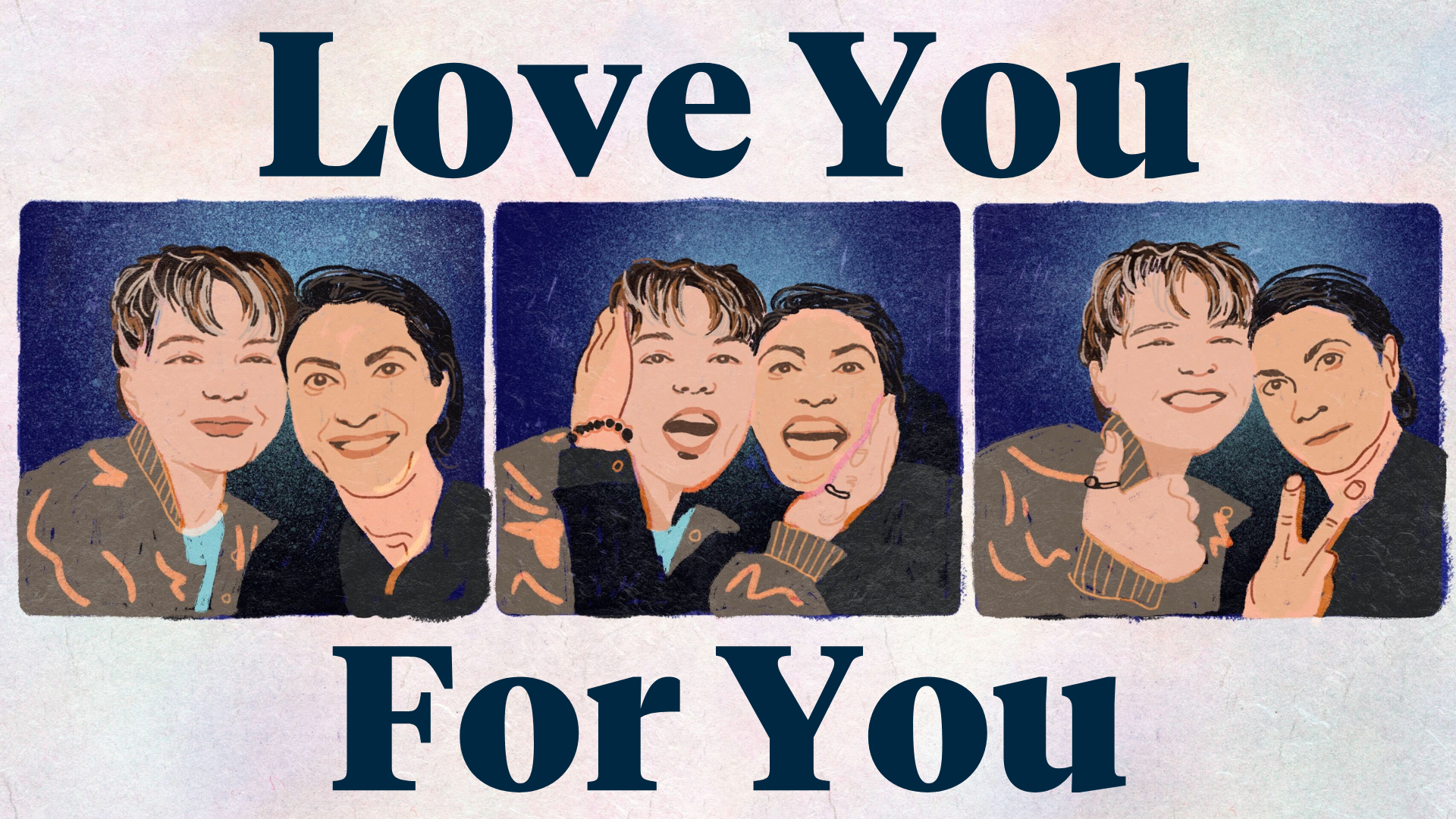
Sasha Khokha: Meet Hunter Stoval and Shirin Amini. Shirin is Hunter’s mom’s best friend. She’s known him his whole life. And she’s kind of Aunty to him. Let’s hear their conversation.
Hunter Stoval: I think both of us have been through a lot in the past few years, which has made us a lot closer. We text a lot, we call a lot. You know all of my gossip. And I think since I came out, that’s only made us closer since we have even more things in common now. And yeah, I would say beyond you being my aunt, you’re one of my closest friends.
Shirin Amini: Oh, I love that because I was just, as you were talking, I was like, you know, yeah, ‘You’re like my nephew, but actually I feel like more just a friend’. So tell me about being trans. Will you remind me of your like coming out story?
Hunter Stoval: Yeah, so I came out probably two and a half or three years ago when I was still in middle school. And I first came out to my friends who were super supportive. And then I came to my parents. And it was very scary. It was probably the hardest thing I’ve ever done. I had been planning what I was going to say for a very long time. I wrote my mom a letter and I read it to her. And she didn’t really know what was going on, I would say, but she was supportive of me.
I think I came out to my mom the night prior to coming out to you, but I do think I came out to you before I came out to my dad.
Shirin Amini: Yeah.
Hunter Stoval: And I think that was helpful for my mom as well so that she could have someone to talk to because she did tell me it was hard for her to keep secrets from my dad, So, I’m glad that she had you to rely on, and you to kind of almost help her through and um, because I know you understand, so….
Shirin Amini: I remember the night that you came out to me. We were in your room, and I was sitting on the floor, and you were on your bed, and we were talking. And I think maybe dating myself, my gaydar went off (laughs). And I had, like, this hunch, you know?
And I know I asked about your pronouns. And that was the first time you told me that they were he and they, at that time. And now, I don’t really think they is the pronoun you identify with, right?
Hunter Stoval: Yeah, I think part of my coming out … there’s definitely like a very common she/her, she/they, they/them, like a shift from, you know, one gender identity, like shifting from female to male. And I think at the time, I kind of included “they” in my pronouns because I was like, ‘Oh, I don’t want to make it difficult for other people. I wanna make this, you know, easy on everyone. If they don’t know my pronouns, like I won’t cry if they call me they,’ but that didn’t last very long, turns out.
Shirin Amini: I was so happy that you told me and I feel like there was a little bit of excitement, right? There is like this relief. And so then I felt like, OK, we all right. It like bonded us a little bit.
Hunter Stoval: Yeah. It might be because I’m older or it might be because of, you know, we’re both queer, a combination of the two, but I definitely think it made us closer because you felt like someone I could rely on as one of, as an older queer person, that I’m super, you now, close to and have known for the past 16 years of my life.
Hunter Stoval: So, can you tell me about your coming out story? How old were you when you came out?
Shirin Amini: I was exactly your age. I was 16, it was 1993. And so when I came out, I first came out to my mom, who is a very loving and supportive mother. But back then she didn’t have any friends who had other gay children. She didn’t have any gay friends and I was like the only one. Which might seem bizarre today because it seems like most people know people in the LGBTQ+ community.
The way I came out was my mom asked me, ‘Well, you’re not gay, are you?’ [Hunter laughs] Which is always a great way to set up a question. And instead of confirming that I was not, I told her that, well, actually I was.
And for me, there was a ton of shame, because as supportive as my mom wanted to be, she was shocked and disappointed. And so I could feel that. And… It felt like immediately I was on this island by myself. And so I kind of carry that experience with me. And I think that it relates or I assume that a lot of trans kids and coming out kind of feel a little bit like that.
Hunter Stoval: Yeah, I think I felt a similar way with my dad, who now is such a big supporter of me, but he had a very different upbringing than me, and doesn’t know any other parents with trans kids, I think, which makes it a bit harder.
So there was definitely a lot of, you know, shock and how do I feel about this and, you know, what are the next steps? But I think you were really helpful with that because my parents did know queer people, mostly, like, gay people or lesbian people, but regardless queer, so it really could have been worse. I’m very grateful for, you know, my community. I have a lot of family that lives locally who I’m really close to.
Shirin Amini: Awesome. I will say one thing that’s been really exciting, I guess, to see and watch is how you have come out and I’ve learned so much from you and I actually feel like you’ve been so inspirational to me even and I kind of look back and I think, ‘Oh my gosh, I wish I had the courage that you had when I came out,’ because you’re so authentic and you’re so yourself and you don’t feel that you have to fit a certain mold which I think is extremely powerful, to say that you’re trans this is how you feel, this is who you are And I think that that has been something that’s been really powerful for me to watch and learn and actually even help me be more authentic person even at this age.
Hunter Stoval: Thank you so much.
Music
Shirin Amini: So I think about like what an amazing human you are and all of your interests and things that you do. What would you say your superpower is?
Hunter Stoval: I would say my superpower is being creative. I’m really into art, I’m into fashion, and I think that helps me express my identity in creative ways. I am not super worried about being the most masculine person on earth. I love just wearing what I think is cute. I love fashion, I love creating art and writing about who I am, and I wouldn’t have it any way.
Shirin Amini: I totally agree, especially with your fits. You are a little bit of a fashionista, so I can always get some tips from you.
Hunter Stoval: So, one of the other things I want to talk about is what has someone in your life done to make you feel supported in your identity?
Shirin Amini: I think, honestly, that your mom was the most supportive person in my life, that was kind of a rock, like my rock of Gibraltar.
And I remember when I came out to your mom. We were parked out in front of her house in my 1979 baby blue Monte Carlo. I was dropping her off at night and I was so nervous. And back in that day, you kind of prefaced it with like, ‘Well, I think I’m bisexual. I don’t know, you know, I don’t really know if I’m totally gay.’ And your mom was like, ‘Yeah, I know, I’m not surprised,’ and I think I was more shocked. And then after that was in high school.
And I think just having one person in your life that was just not embarrassed, like would be by my side. It was kind of like having this confidence kick by you. And that made actually a really significant difference. Somebody that was like open and go to gay pride parades with me and go out to places. I think that was the most helpful thing to have in my life especially at the beginning when I was younger.
Do you have somebody in your life? I mean, I’m curious what somebody has done to make you feel really supported through all this.
Hunter Stoval: When I came out to my grandmother, instead of questioning anything, she’s a very solution-oriented person, and she was immediately like, ‘OK, so what does that mean? Like, what should we do?’ And there was no shock or whatever. She was just immediately so supportive of me.
And then another thing that someone has done is my dad. I had to get my passport renewed, and there was a little option to change your gender marker, and he was like, ‘OK, do you want to change it to male?’ So now my passport says male on it, which you know feels so great and it feels really affirming, especially coming from my dad when our relationship was a little bit rocky when I first came out. He’s definitely grown a lot and I’m super proud of him in that way.
Shirin Amini: Just to clarify, Hunter, this all happened before the election, right? That you did this?
Hunter Stoval: This was before the election, but this was when we kind of knew that Donald Trump was going to run for president and that with him possibly in office at the time, that that could affect a lot of things related to transgender rights and stuff like that. So…
Shirin Amini: I’m happy you did it. It’s like you got in and like that window almost. I’ve been married more than once, but the first time I got married, there was a window right before Prop. 8 came out in California. They were allowing same-sex marriage and there was this window of opportunity that my partner and I seized at the time and went and got married during that window.
Hunter Stoval: Can you explain what Prop. 8 is?
Shirin Amini: Yeah, Prop. 8, which the LGBTQ community called “Prop Hate,” was a proposition that was very controversial to ban gay marriage in California. And they did ban gay marriage. And it was several years that gay people were banned from being married. However, those of us who got married in that window where it was legal for a short time were still considered married. I think that a lot of younger people can’t even imagine that could have been illegal and kind of the anti-gay sentiment
Music
In the ’90s, when I came out, and there was a big incident that you’re probably not aware of, there was a big incident with a young guy named Matthew Shepard, who was gay, and he was killed in a homophobic gay hate crime. And that really rocked the gay community at that time. And I think ultimately, hopefully, we now feel safer; however, I think that the trans community may still be in a similar position today, and that I don’t want.
Hunter Stoval: I still feel a sense of community with all the trans people in this country and in the world, and it’s really sad to see, in my opinion.
Music
Shirin Amini: What do you feel is the most difficult thing about where you are being trans youth at like your age or if you could change one thing or one thing that you struggle with, if you’re willing to share.
Hunter Stoval: I think for me, my biggest issue is in gender dysphoria. So, like, feeling, you know, insecure about my voice, feeling insecure about my body. Luckily, I’ve been gifted with height, so…
Shirin Amini: Mm-hmm.
Hunter Stoval: I know that’s an issue for a lot of, especially trans men. I love feeling confident in myself, but there are days where I do not feel confident. So yeah, it is hard, but it has gotten easier. And I hope that all trans people, especially the ones who are planning on coming out or just came out. I hope they know it does, it does get easier. And you know, I used to hate being trans, but now I love it. I have made so many friends and so many connections this way and gotten so much closer to my family too, which is really amazing.
Shirin Amini: That’s awesome.
Hunter Stoval: What do you hope the future looks like for trans people or queer people in general?
Shirin Amini: In my perfect world, I hope that it’s NBD, it’s like no big deal, that people have parents who are trans, children who are trans, everybody knows somebody. And it’s just become pretty much mainstream and acceptable. That coming out isn’t a big deal, that trans people have all the same rights that non-trans people have. The other thing is I want the future to be safe for trans and non-binary kids. And I think that it’s still unfortunately not.
What do you want your future to look like?
Hunter Stoval: Um, I feel the same way. I think, you know, being trans has, of course it’s a big deal, but I wish it didn’t feel like such a big deal. I wish I just felt like, you now, another fun thing about me instead of my whole identity? I’m so much more than being trans and being trans is really hard and it could be so much easier, you know?
One thing that I really wish people would understand is that it’s OK to be confused when someone comes out, but it’s not an excuse to invalidate them. It’s OK for things to change. It’s OK that things weren’t like how they were when you were a kid and you know, the least you can do when someone comes out is just say, OK, I’m here for you, and I promise you the person coming out to you is having a harder time than you receiving the news.
Shirin Amini: That is so true, Hunter. I actually was thinking that. I was like, well, for as much as it makes some people uncomfortable, it’s so much more uncomfortable being on the coming out side. It’s really difficult. I do think that you are a bit of a pioneer. Whether you want to be or not.
And I look back, and I kind of think, maybe I was a little bit of a pioneer. And there were a lot of people who were not accepting of gays, lesbians, let alone trans back then. And I think that I was able to change a lot of people’s minds as they got to know me. And it’s really important to come out because once people actually know that the people that they love and care about are LGBTQ, that’s when you change minds. And I’m really proud of you. It does take a lot of courage and I really hope that by you coming out now, I really believe that you’re changing a lot of people’s minds.
Hunter Stoval: Thank you so much. And I really agree with that. I think a lot of the people who have come out too, like that I’m not super close to, but people still in my life, like my parents’ friends or whatever, I might be one of the first trans people that they’ve met and it feels really good to just be around them and be myself and help them understand, I’m still the same person as I was before I came out. It’s just you know, a slight shift in what pronoun you use for me, but besides that, I’m still me, you know?
Shirin Amini: Yep.
Hunter Stovall: I think everyone should have a Shirin in their life. Like an older role model who’s also your friend, who you can tell anything and you know they won’t tell your parents unless you ask them to and they’re there to advocate for you and call you when you need anything. Just having that mentor-friend combination is just, you know, so perfect, so.
Music bridge
Shirin Amini: Well, I love you with all my heart, always will, no matter what. And I wish everyone had a Hunter in their life.
Hunter Stoval: You’re so sweet. (laughs)
Music comes out
Sasha Khokha: 16-year-old Hunter Stoval in conversation with his special Aunty, Shirin Amini as part of our series Love You for You where transgender and nonbinary kids are talking with people who love and support them and help them to thrive.
Next week a conversation between kids and their grandparents…
Older sister: What do you want people who are targeting trans kids right now to know about your grandkid?
Grandpa: Just about how special she is. That you gotta know the person.
Upbeat music in
Sasha Khokha: That’s next week on the California Report Magazine.
The interviews in our Love You for You series were produced by Tessa Paoli and Suzie Racho. Our senior editor is Victoria Mauleon. Our engineer is Brendan Willard. Srishti Prabha is our intern. Special thanks to Tuck Woodstock, host of the Gender Reveal podcast, for all his help on the series.
Special thanks to KQED’s Jen Chien, Katie Sprenger, Ana de Almeida Amaral and Anna Vignet for their help on the series.
I’m Sasha Khokha of the California Report Magazine, Your State, Your stories.