This transcript is computer-generated. While our team has reviewed it, there may be errors.
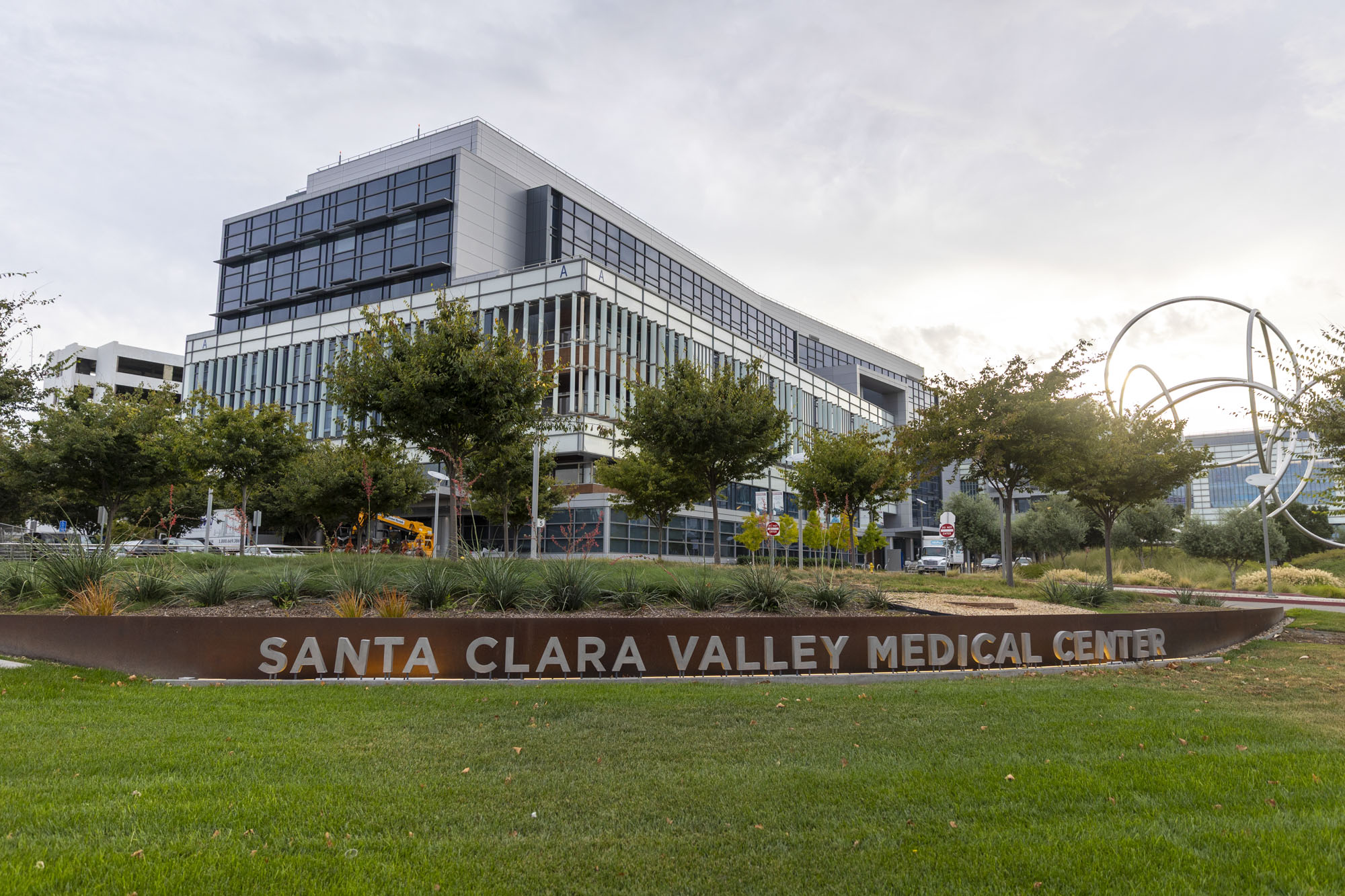
Ericka Cruz Guevarra [00:00:00] I’m Ericka Cruz-Guevarra and welcome to The Bay, local news to keep you rooted. The Santa Clara Valley Medical Center is unique. It’s one of the few certified burn centers in Northern California, treating patients from Santa Clara County and beyond. But thanks to President Trump’s Big Beautiful Bill, staff at public hospitals like Valley Medical are on edge. Huge federal cuts to Medicaid are expected to put public hospitals like it in big financial trouble, enough to risk shutting down.
Betty Duong [00:00:43] We can’t go down without a fight. This is our way of fighting. We’re turning to our voters, and I have every confidence that the legacy and the history and the values of this community will be to protect each other.
Ericka Cruz Guevarra [00:01:00] Santa Clara County voters will decide on Measure A, an increase in the county sales tax that proponents say will help keep hospitals afloat. But opponents say it’s time to reimagine the role of the area’s public hospitals entirely.
Liang Chao [00:01:20] This is like a knee-jerk reaction to something happening on federal government and kind of taking advantage of the federal cut as an excuse to tax the voters more.
Ericka Cruz Guevarra [00:01:36] Today, we break down Measure A and Santa Clara County’s unprecedented approach to saving local hospitals.
Ericka Cruz Guevarra [00:01:51] Why is what’s happening at the federal level and these cuts to Medicaid expected to be so devastating for Santa Clara County?
Guy Marzorati [00:01:58] Yeah, I think in particular with Santa Clara County, you’re talking about a public health care system.
Ericka Cruz Guevarra [00:02:06] Guy Marzorati is a politics and government correspondent for KQED.
Guy Marzorati [00:02:11] So these are public hospitals, and public hospitals in California serve an overwhelming share of patients who are on Medi-Cal, which is our state’s version of Medicaid. This is health insurance for people with low incomes, with disabilities, and so these hospitals end up caring for a large share of those patients, and the way the hospitals get paid for providing those services is largely through reimbursements and payments from the federal government. What we’re seeing through the one Big Beautiful Bill Act that President Trump signed this summer is a huge reduction in federal funding for Medicaid and also an expectation going forward that there will be fewer people on Medicaid, so fewer people with this kind of health insurance, but if those people show up at the hospital, they’re still gonna get treatment. What’s gonna change is there’s not gonna be necessarily the payments to go along with that.
Ericka Cruz Guevarra [00:03:08] And you mentioned these county run hospitals. Can you tell me a little bit more about them and what they do and who they really serve?
Guy Marzorati [00:03:18] Yeah, so Santa Clara is unique in that the county has these four publicly run hospitals. Valley Med right in San Jose is kind of the flagship of the hospital system. But what we’ve seen in Santa Clara County in recent years is the county has acquired hospitals. They’ve bought hospitals that are struggling financially. We saw that just recently, last year, with Regional Medical Center. And this really is a case of hospitals that, in a lot of other counties, would have just closed their doors. They wouldn’t have had enough money to operate. They would have shut down. Santa Clara County is in a really unique position because it’s a relatively wealthy county compared to others in California. But there’s also huge disparities in income, so there are huge proportions of residents who rely on public hospitals. And so the county has stepped in in these cases and said, we’re actually gonna take on the cost. We’re gonna purchase these hospitals. But all of that was done with an expectation of this existing model where the federal government through Medicaid is helping to support the cause. Now that that doesn’t exist anymore in its previous form, that’s why you have all this uncertainty.
Ericka Cruz Guevarra [00:04:39] And I know you spoke with a nurse who works at one of these county-run hospitals. Can you tell me about Emiko Rivera and what she tells you about what it’s like to be working at these hospitals right now and the uncertainty that must be hanging over everything?
Guy Marzorati [00:04:58] Yeah, so Emiko Rivera is a nurse at the burn center at Valley Medical Center.
Emiko Rivera [00:05:07] I started in the Burn Center about 17 years ago as a new grad. I graduated from San Jose State.
Guy Marzorati [00:05:14] You know, with her, I think it’s a lot of uncertainty, like with a lot of other I think healthcare workers, because we don’t know exactly what the ramifications of the cuts are going to be.
Emiko Rivera [00:05:25] Because the burn center is vital for our community and for the region. So personally, I wanna make sure that we maintain our burn services.
Guy Marzorati [00:05:37] In Rivera’s case, you know, the burn center that she works at treats patients from really all across the region. There aren’t many burn centers like this in California that are connected to trauma centers and that are able to serve in this kind of emergency capacity. So they are actually treating patients beyond Santa Clara County’s borders. And so what she talks about is ramifications that will actually go beyond the county and could end up affecting really people throughout the Bay Area.
Emiko Rivera [00:06:06] Nobody is immune to a burn injury. It doesn’t matter if you are houseless or if you have millions of dollars, everybody’s going to the same place and that’s our burn center.
Guy Marzorati [00:06:22] These cuts have largely not taken effect yet. This is something that’s gonna play out in the coming years. So I think there’s concern, you know, do hospitals stay open? Is there staffing issues? Can clinics operate as they currently do? But we don’t have any hard answers as to what actually is going to happen.
Ericka Cruz Guevarra [00:06:46] So how does Santa Clara County plan to address this problem?
Guy Marzorati [00:06:51] What Santa Clara County is facing is not unique. Hospitals across California have been struggling, especially in rural areas in recent years, even before these Medicaid cuts. But now we’ve seen that crisis spread to a wealthy county in Silicon Valley. And what makes the response different in Santa Clara county is that they’re going to the voters and asking for money to help kind of bridge these cuts.
Ericka Cruz Guevarra [00:07:18] And that is, of course, why we’re talking today. You’re talking about measure A. Tell me a little bit more about it, Guy. What would it do and how much is it expected to raise?
Guy Marzorati [00:07:31] So measure A is an increase in the county sales tax of about 0.6% for five years. And that’s paid on goods that people buy at stores. There’s certain goods that are exempted, I believe, like groceries, and is expected to bring in $330 million. Now, that is well short of the amount of money the county is expecting to lose because of these federal cuts. So this alone will not solve the issue that the county has facing. There will still probably have to be some cutbacks. There’s still going to be a lot of advocacy, I think, from county leaders asking the state government for more money in this realm. But what supporters of Measure A have, the picture that they have painted is that passing this sales tax, bringing in this 300 plus million dollars every year will allow them to avoid the worst consequences of the federal cuts. And what they’ve billed this as is save the hospitals.
Ericka Cruz Guevarra [00:08:48] Tell me a little bit more about the people who are really backing Measure A in Santa Clara County right now. Who is for it and what is the argument that they’re making?
Guy Marzorati [00:08:58] The board of supervisors voted unanimously five to zero in August to put Measure A on the ballot. So they’ve really been the biggest supporters of this idea from the beginning to put this sales tax in front of voters.
Betty Duong [00:09:11] Other counties, their response to this to close the gap, the budget gap, is to close down their hospitals. This county cannot let that happen without a fight.
Guy Marzorati [00:09:20] I talked with Betty Duong, she’s a supervisor in District 2 in San Jose. She was born at a county hospital. She said that these are facilities that her family has used throughout her entire life and are kind of bedrocks of the community. She doesn’t want to see the hospitals closed. That’s why she’s putting her support behind Measure A.
Betty Duong [00:09:40] There is no other hole in the budget this big, so this $330 million that’s projected to be generated on an annual basis covers one-third of the $1 billion plus gap that we have.
Guy Marzorati [00:09:57] And you’ve seen across the board that the county district attorney, the county sheriff, local congress members, local members of the state legislature, Matt Mahan, the mayor of San Jose, other local officials all putting their support behind Measure A, because I think there is concern that, look, there are hospitals in Santa Clara County that are not run by the county, but there’s a fear that if you start to see cutbacks at these public facilities, they’re going to be ripple effects and, you know, that will spill over to other health care. Facilities, other hospitals in terms of crowding, in terms of lack of services in certain parts of the county. And so I think that’s what all these folks who are supporting measure A are trying to avoid.
Ericka Cruz Guevarra [00:10:41] Is there anyone against Measure A? What’s the argument they’re making?
Guy Marzorati [00:10:46] We have seen some local elected officials come out against Measure A in Santa Clara County.
Liang Chao [00:10:51] I think this is like a knee-jerk reaction to something happening on federal government.
Guy Marzorati [00:11:00] Liang Chao is the mayor of Cupertino. You know, she points out to begin with that Measure A is just a general sales tax. So while the campaign for Measure A might say, this is about bringing in money for the healthcare system and saving the hospitals, she makes the point which is true, technically this money could be spent on anything.
Liang Chao [00:11:18] So that’s kind of not very honest. So many people agree it’s important to provide healthcare for everyone. But is sales tax at this point in the special election the right thing to do at the last moment?
Guy Marzorati [00:11:38] And I think that the larger point that Chao brings up and other opponents of Measure A have brought up is that the status quo for the county running these four hospitals is simply not sustainable. That with the lack of money coming in from the federal government through Medicaid going forward into the future, that it’s just not possible for the county to be operating these hospitals. We’ve seen since the county has purchased some of these hospitals, healthcare costs have become a huge part of the county budget. And Chow and others have made the argument that this is the time not to go back to the well and bring in more money into the system, but this is time to reevaluate whether the system as it exists really can be maintained.
Liang Chao [00:12:22] I think if they don’t reform the hospitals, they will have the hospitals closing anyway, no matter how much money you throw at it. And we also need to decide, do we need all four hospitals, right? And maybe we can have a really good plan for a smaller number, but really well successfully run.
Ericka Cruz Guevarra [00:12:43] Do we have any sense, really, of how likely voters are to pass this?
Guy Marzorati [00:12:47] You know, I don’t have any really concrete public polling that’s been done in recent weeks since this campaign has really gotten underway. I will say the yes side on Measure A has a massive financial advantage. They have raised over $2 million and there really hasn’t been any fundraising on the no side. So if you drive around the South Bay, you’re going to see these yes on A placards in people’s lawns. There’s been a lot of mail pieces that I’ve gotten in my mailbox in support of Measure A and you’re not seeing that as much on the no side, you know, a lot of the messaging for Measure A has been framed as giving voters an opportunity to push back against what Trump did. And you’re seeing that a lot of those themes echoed in the statewide campaign for Proposition 50 about redistricting. These two measures will appear right next to each other on the ballot in November. And so I think if you’re in this space where especially democratic voters have an appetite for measures and proposals that they feel like gives them some sense of agency and pushing back against some of the things that have happened at the federal level. Measure A fits right into that lane.
Ericka Cruz Guevarra [00:13:56] And Guy, if this were to pass, you mentioned it doesn’t fully cover the losses that are expected to be incurred by the big, beautiful bill. And so it sounds like this is really just one piece of the conversation and that more conversations will have to be had about how to really keep these hospitals afloat, even if Measure A is passed.
Guy Marzorati [00:14:20] That’s exactly right. Because the loss to the county, when you add in the Medicaid cuts, cuts to CalFresh food assistance that all came through that federal bill, you’re talking about a hit that’s gonna be over a billion dollars a year by the end of this decade. So $330 million a year is not gonna completely solve that. There’s still gonna have to be some really difficult budget negotiations to try to figure this out. Officials say measure a is basically just our stopgap. It’s our ability to you know, keep the system going as is and again I think opponents would say you’re just you know Scooping water out of a sinking ocean liner like there needs to be a larger conversation here beyond just pouring a little bit more money in the system.
Ericka Cruz Guevarra [00:15:08] Well, Guy, thank you so much for breaking this down. I appreciate it.