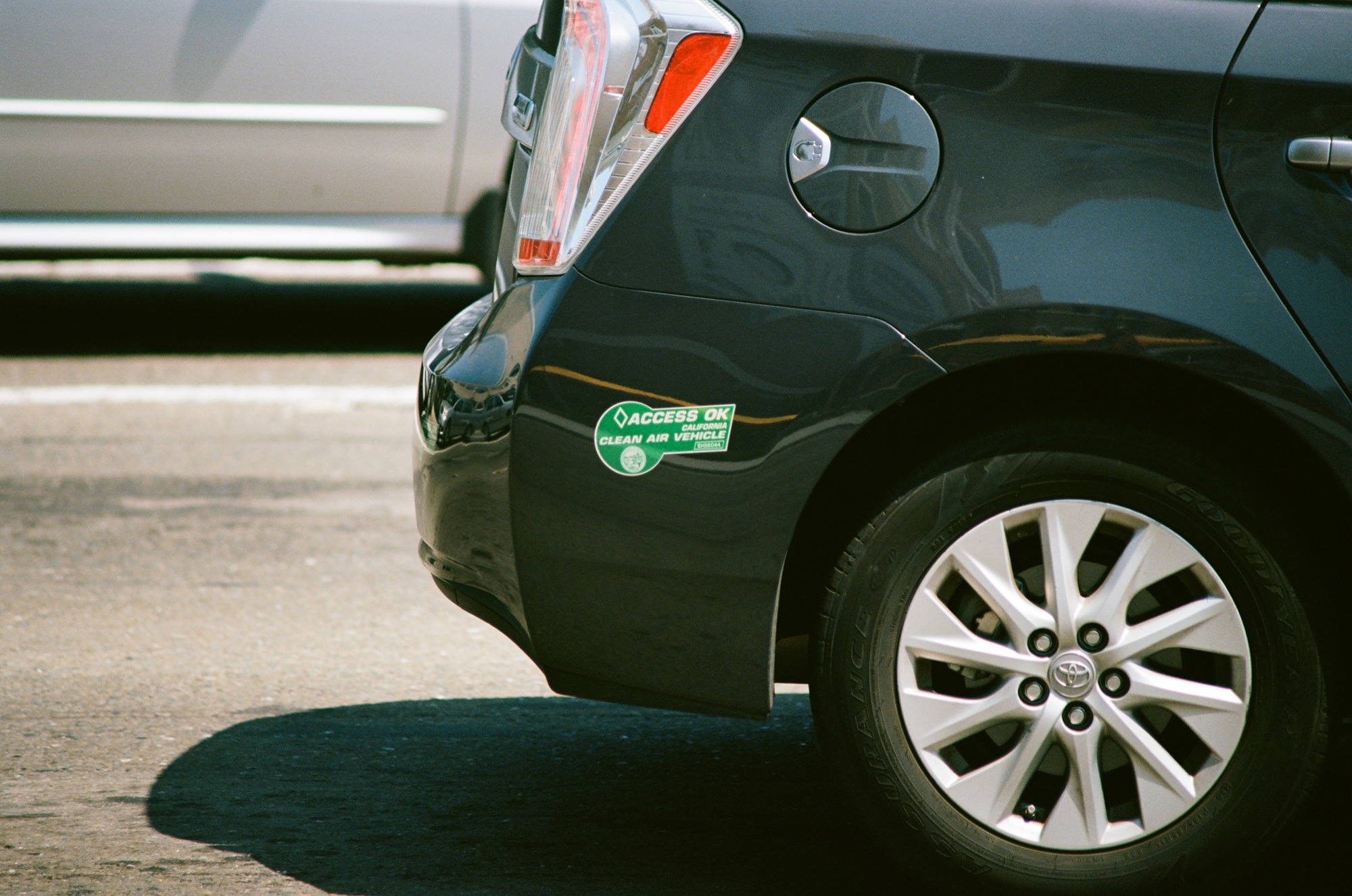
For more than two decades, California’s Clean Air Vehicle Decal Program has allowed certain hybrid, electric and hydrogen-powered cars to use the carpool lane — even when they didn’t meet the passenger minimum that other cars are subject to.
On Wednesday, CAV comes to an end, and drivers who would have otherwise qualified for the program will no longer be able to use the HOV lane if driving without passengers, regardless of whether they have a valid clean-air sticker on their vehicle.
However, the California Highway Patrol has confirmed to KQED that drivers will have a 60-day grace period beginning Oct. 1, “during which drivers with a valid clean-air decal will not be cited for driving alone in the carpool lane.” But CHP added that officers could still pull over drivers during this period for a variety of reasons.
After Nov. 30 — once 60 days have passed — CHP confirmed that driving without passengers in the carpool lane will result in a citation.
Why is the CAV Decal Program ending?
California officials originally launched CAV in 1999 to encourage drivers to buy low-emission vehicles. But Congress did not approve an extension of CAV to enable the program to keep running. “The state needs approval to operate [the program] on federal roadways throughout the state,” said Lindsay Buckley, director of communications of the California Air Resources Board.
- Jump straight to: How can I keep using the carpool lane?
“We’re really disappointed in the federal government’s inaction,” added Buckley. “It’s a really smart, cost-effective thing that has played an important role here in driving adoption of clean air vehicles and making Californians aware that these vehicles even exist.”
According to state data, this change will affect around half a million vehicles that currently have the CAV sticker. If you’re one of them, keep reading for what you need to know.
I have a CAV decal. What will happen on Oct. 1?
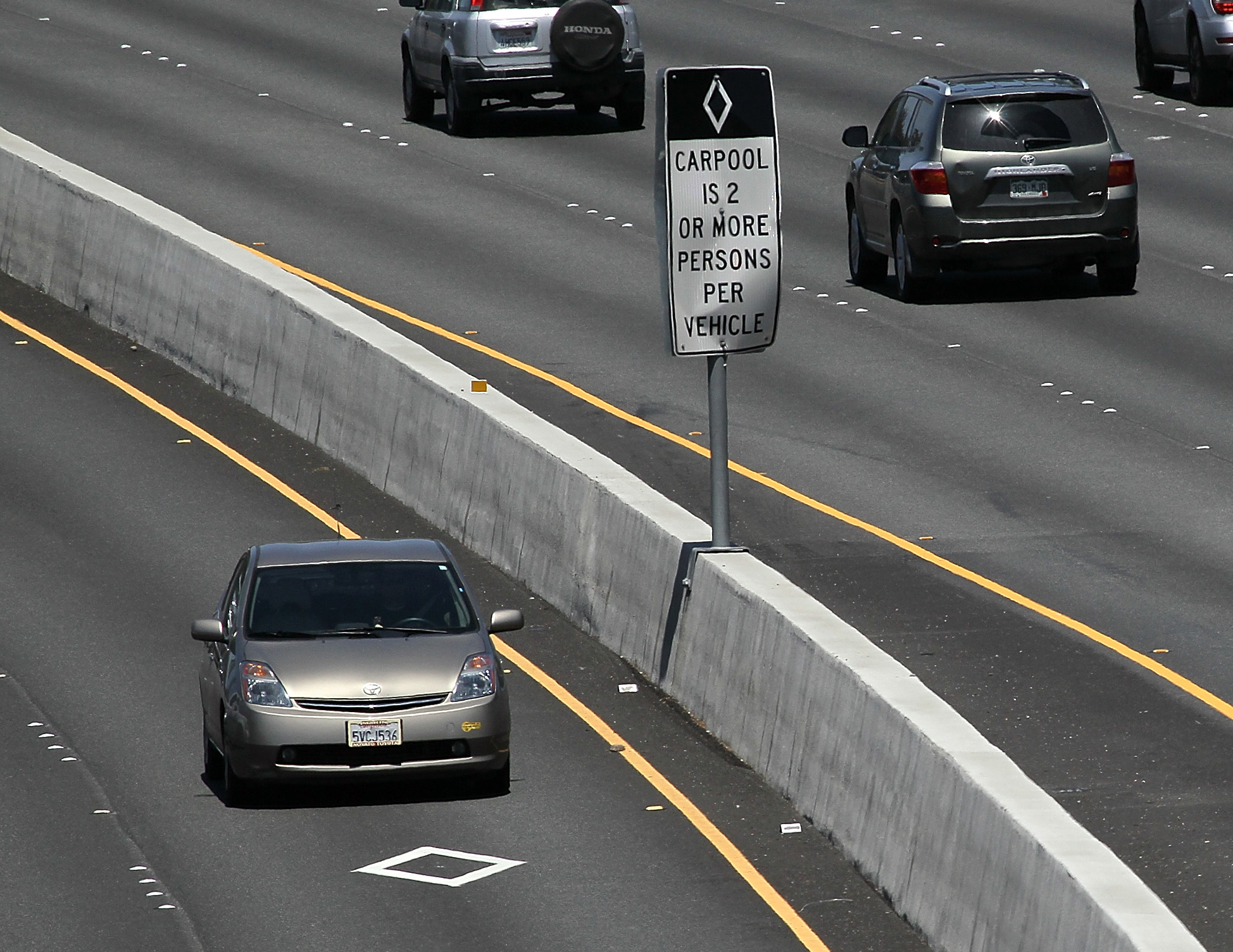
Sept. 30 is the last day the CAV program will exist in its current form. State officials previously told KQED that after that date, folks driving solo in the HOV lane could receive a citation from CHP. And misusing the carpool lane could cost you a fine of at least $490.
But CHP recently updated KQED that drivers will have a 60-day grace period starting Oct. 1 where the law enforcement agency will be educating residents about this change. During this 60-day window, however, CHP could still pull over a car with a decal, if officers believe there’s something else the driver is doing wrong.
(You don’t have to remove your decal if you don’t want to.)