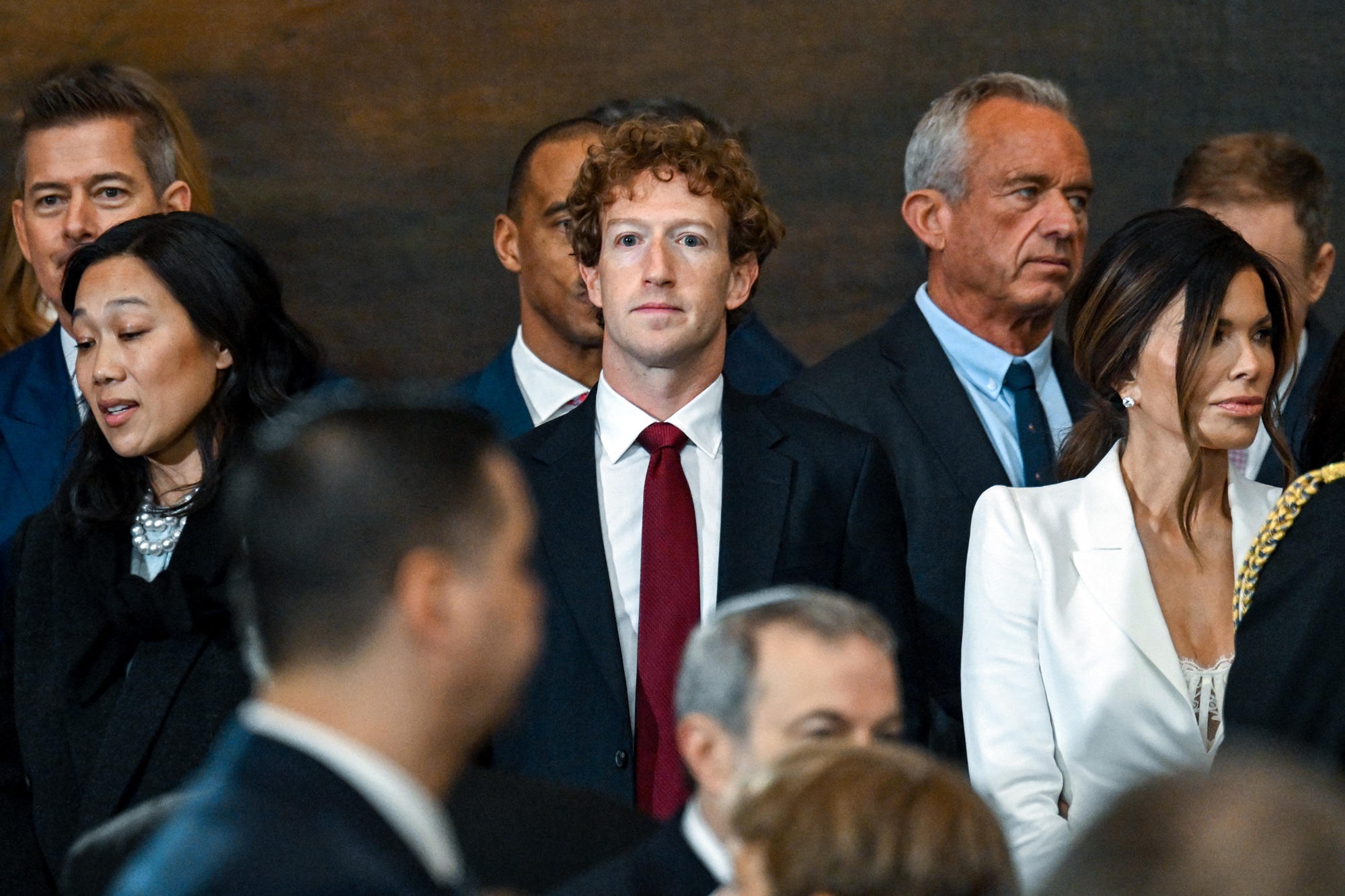
There has been speculation that President Trump could be convinced to abandon the trial and force federal regulators to settle with Meta after CEO Mark Zuckerberg donated $1 million to Trump’s inaugural committee. Zuckerberg agreed to pay Trump $25 million to settle a suit Trump filed for being suspended from Facebook and Instagram in the wake of Jan. 6. Zuckerberg ended fact-checking on Facebook and Instagram and dialed back diversity, equity and inclusion programs. The CEO has also repeatedly visited Trump’s White House and the Mar-a-Lago club in recent months.
But so far, there’s no indication that Trump is responding to the lobbying. And not just for Meta, but for Google, which also faces an antitrust case launched during Trump’s first term. Next week, in the same courthouse where Meta’s case is happening, Alphabet’s Google will argue why it shouldn’t face a breakup after a judge found it illegally monopolized the online search market.
Howard calls the case a “reckoning” for Meta — and a sign the president meant what he posted when he announced Gail Slater his pick to head the Department of Justice, writing on X: “Big Tech has run wild for years, stifling competition in our most innovative sector and, as we all know, using its market power to crack down on the rights of so many Americans, as well as those of Little Tech! I was proud to fight these abuses in my First Term, and our Department of Justice’s antitrust team will continue that work.”
“We’re not going to be competitive if we allow these big, bloated bureaucratic businesses to continue to stifle the next generation of innovation,” Howard told KQED. “Certainly, it’s not going to come from here if we continue to protect them by allowing them to do this sort of moating of monopolies. China’s going to come, and come with something better.”
On that score, Howard noted, antitrust advocates on both sides of the political divide have something they can agree on.