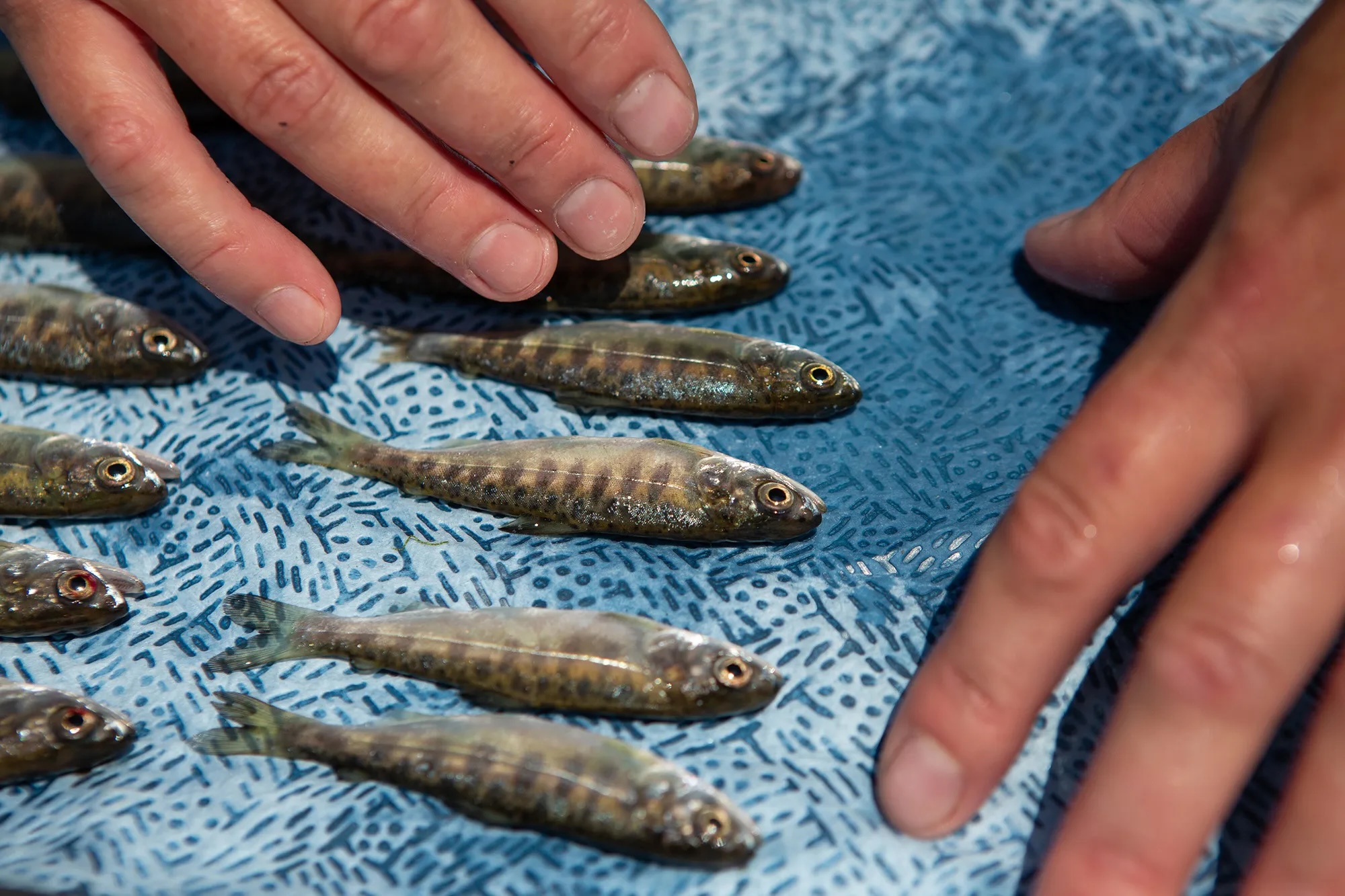
With salmon populations throughout California declining for decades and facing the threat of extinction (PDF), Gov. Gavin Newsom on Tuesday unveiled a state strategy (PDF) aimed at protecting and restoring the iconic species “amidst hotter and drier weather exacerbated by climate change.”
The blueprint calls for tearing down dams and improving passages for migrating salmon, restoring flows in key waterways, modernizing hatcheries to raise fish and taking other steps to help chinook, coho, steelhead and other migrating fish.
“We’re doubling down to make sure this species not only adapts in the face of extreme weather but remains a fixture of California’s natural beauty and ecosystems for generations to come,” Newsom said in a statement.
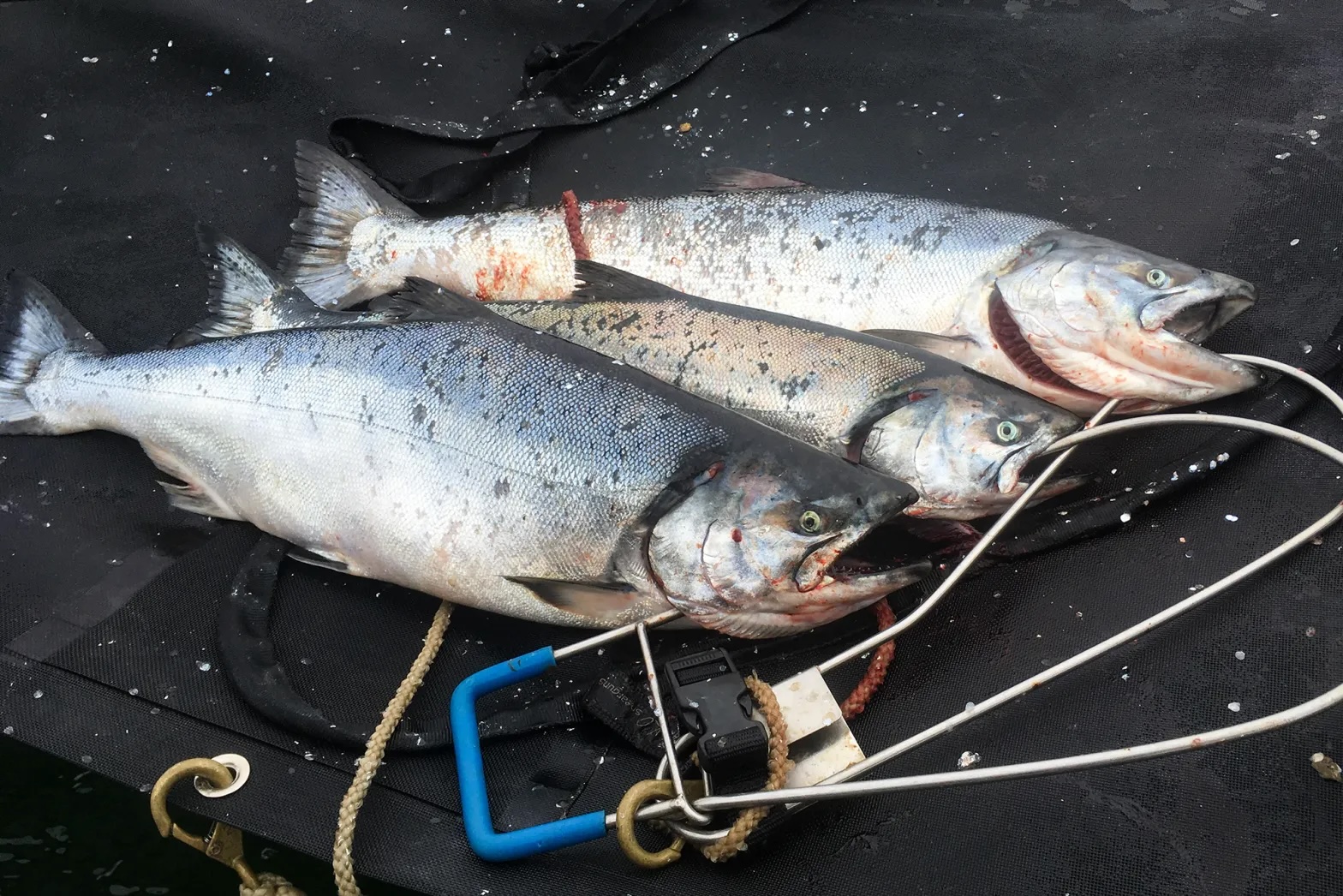
Fewer than 80,000 Central Valley fall-run chinook salmon — a mainstay of the state’s salmon fishery — returned to spawn in 2022, according to the California Department of Fish and Wildlife. It’s a decline of nearly 40% from the previous year and the lowest since 2009. Last year, all salmon fishing was canceled in California and much of Oregon due to low numbers projected to return from the Pacific.
The threats to California’s salmon are many — dams that block migration, diversions that drain rivers, ocean conditions and climate change. And the effects of the decline are wide-ranging: loss of fishery jobs, impacts on tribes’ food security and cultures, no local supplies for restaurants and consumers, and more.
Many of the projects and solutions outlined in Newsom’s report are already underway, or under the direction of the federal government, tribes and conservation groups. Included are the historic demolition of four aging hydroelectric dams on the Klamath River and reintroduction of endangered Sacramento River winter-run chinook eggs to the McCloud River upstream of Lake Shasta.
Regulatory efforts include establishing minimum flows on the fiercely contested Scott and Shasta Rivers and the long-delayed and controversial management plan for the Bay-Delta, the heart of the state’s water supply.
Some environmental groups called the plan a ploy to burnish Newsom’s image after taking other steps that jeopardized salmon: his waiver of water quality requirements in the Delta that protect salmon, his support of a controversial pact with major water suppliers, and his backing of the Delta tunnel project, which the state’s environmental assessment warned could put salmon at risk.
Scott Artis, executive director of the Golden State Salmon Association, said in a statement that the plan is “packed full of good stuff that we have been fighting to get for years,” but said, “It conflicts with what the Newsom administration has been doing for years to devastate California’s most important salmon runs.”
“What it potentially boils down to is conveniently timed smoke and mirrors,” he added.
The plan “is a repackaging of victories by tribes and environmental and fishing organizations across the state, which were hard-fought and which happened to fall on Governor Newsom’s watch,” said Jon Rosenfield, science director of San Francisco Baykeeper.
“The governor has spent his entire administration resisting new protections for salmon, waiving existing protections, making sure his water board didn’t adopt new regulatory safeguards that everyone agrees are necessary,” he said. “And now, in the sixth year of his administration, he’s got a plan, which doesn’t include any of the fixes that the best available science says are necessary.”
For instance, he said the state should stop promoting major water diversions like the Delta tunnel and Sites Reservoir and instead reduce demand for water, particularly among growers. He also raised concerns that the administration has backed voluntary agreements with major water suppliers related to Bay-Delta flows that could undermine and supplant science-based, mandatory standards developed by the state.