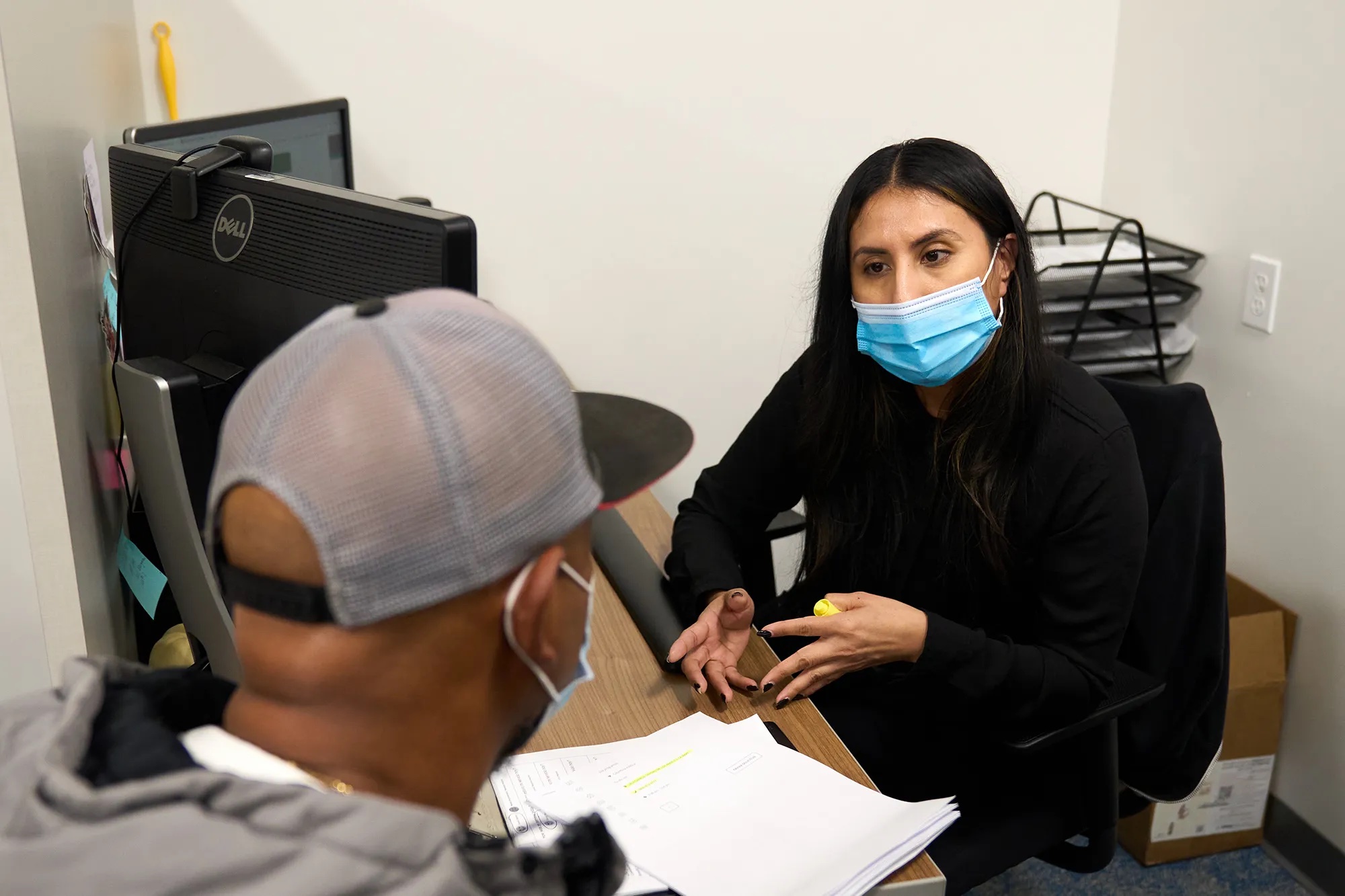
Baudeilio, who has been denied coverage before and asked that his last name not be published to protect him from immigration authorities, will join more than 700,000 undocumented immigrants between the ages of 26 and 49 who will become eligible for Medi-Cal as part of the state’s final expansion of the program — the realization of a long-awaited dream for Californians without legal status.
“This is the culmination of literally decades of work, and it’s huge,” said Sarah Dar, policy director for the California Immigrant Policy Center. “It’s huge because of all the work and effort and advocacy that went into making this possible, and it’s also huge because of the impact that it’s going to have.”
Gov. Gavin Newsom and the state’s Democratic-led Legislature have committed more than $4 billion annually to the Medi-Cal expansion. Newsom’s 2022 budget made the latest expansion possible, and though the state is now headed into a $68 billion deficit, advocates said the positive impact Medi-Cal will have on individual health is priceless.
The change resonates deeply with Lopez, who is herself undocumented and eligible to work through the Deferred Action for Childhood Arrivals program.
Last year, when the state expanded Medi-Cal to older immigrants over 50, Lopez’s mother was finally able to get medication and blood testing equipment for her diabetes. This year, surrounded by tinsel and other Christmas decorations in her brightly lit office, Lopez is happy she gets to deliver good news to undocumented patients.
“It really touches me,” she said. “It’s a stressor we take away from them. … For people with health issues, Medi-Cal really makes a difference.”
The clinic where Lopez works estimates about 13,000 of its patients will become eligible for Medi-Cal in the new year. They’re part of the largest group in California’s ambitious plan to close the insurance gap. Los Angeles County alone accounts for roughly half of the enrollees who are expected to qualify for Medi-Cal.
“It’s an exciting moment for our patients as well as for us,” said Annie Uraga, benefits counselor coordinator at St. John’s Community Health. “They’re ready. Many of them are in need or waiting for specialist visits.”
California’s health insurance expansion
The final expansion comes nine years after then-Gov. Jerry Brown signed the 2015 law making undocumented children eligible for state insurance, and it is due to the efforts of advocates trekking to the Capitol to plead their case.
“When we talk to people who are impacted by this, the difference it makes in their lives is something that truly numbers and words cannot even describe,” Dar, with the California Immigrant Policy Center, said. “In many cases, people have lived for decades without any kind of health care whatsoever.”
Full-scope Medi-Cal, which offers access to primary and preventive care, specialists, pharmaceuticals, and other wraparound services, will change lives, Dar said. California does not share immigration information with federal authorities, and enrolling in Medi-Cal will not threaten chances to pursue legal residency.
The California Immigrant Policy Center and consumer advocacy group Health Access California have been the leading force in the campaign to eliminate citizenship requirements for Medi-Cal. The work was not easy, even in left-leaning California. Many moderate Democrats voted against the legislation or refrained from weighing in on the debate in the early days, Dar said, but slowly, public opinion and political will shifted.
About 66% of California adults supported health coverage for undocumented immigrants in March 2021, up from 54% in 2015, according to a survey by the Public Policy Institute of California.
Former Republican President Donald Trump lambasted California’s expansion for young adults in 2020 and claimed California and other states would “bankrupt our nation by providing free taxpayer-funded health care to millions of illegal aliens.” California Republican leaders, though less harsh in their condemnation of the state’s immigration policies in recent years, have accused Newsom of overloading the state’s budget and Medi-Cal system.
“Medi-Cal is already strained by serving 14.6 million Californians —more than a third of the state’s population. Adding 764,000 more individuals to the system will certainly exacerbate current provider access problems,” the Senate Republican Caucus said in a January 2022 budget analysis.
For his part, Newsom has played a critical role in propelling the movement forward, said Rachel Linn Gish, communications director for Health Access California. Newsom, who took office in 2019, campaigned on the promise of establishing universal health care in California, and advocates have spent the duration of his governorship pushing him to keep that promise.