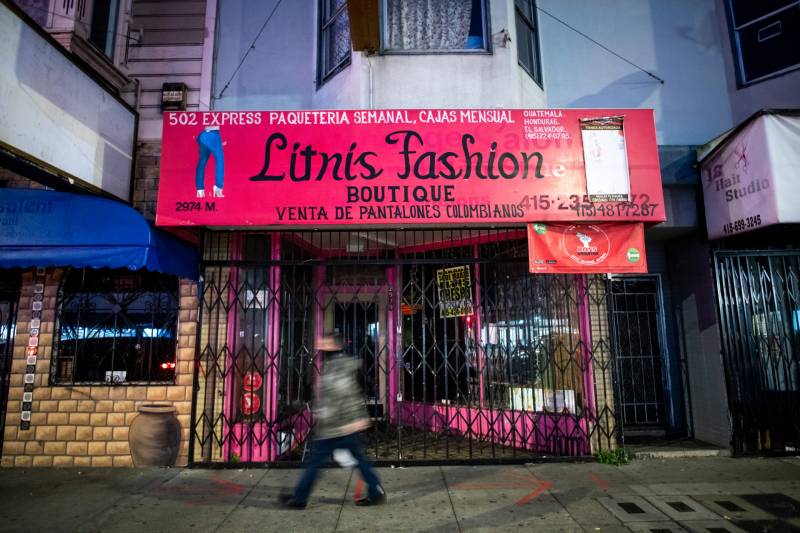
With great speed, Litnis pulls out several sets of shirts and pants from a box and starts folding them. She moves quickly around her new store located in San Francisco’s Mission District, keeping an eye on every detail. She plans to open up for the first time on Sunday, selling clothing, shoes and other accessories.
“This is a blessing. To have the opportunity to open up again despite everything,” Litnis says in Spanish. We’re only using her first name due to her immigration status.
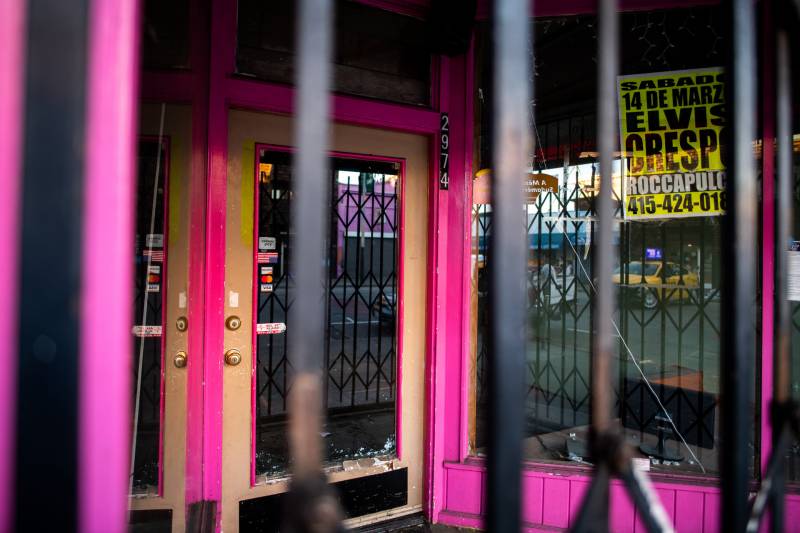
This summer, a fire broke out in a restaurant neighboring her original store on Mission Street. While her particular store wasn’t damaged, her landlord asked her to leave, citing damages to the overall property from the fire. But finding a new site proved very difficult during the pandemic.
“With the restrictions and so many people without a job, we were losing so much already. Losing the store felt like a punch I couldn’t get back up from,” she explained.
Determined to open up her store again, but with limited cash on hand, she decided the best thing to do was wait. Her turn to collect the tanda was coming up.
For more than five years, Litnis has participated in tandas, first learning about them in her native Honduras. Here in the U.S., her family comes together virtually each month and agrees on an amount each person will contribute to a pot. Each time, a different person in the group gets to keep the money in the pot, and everyone in the circle gets a turn.
The amount each participant receives will be equal to the total of what they’ve given each month. While the net gain is zero, the goal of a tanda is not to make a profit.
“I get to save money this way by putting away bit by bit an amount I don’t have upfront,” Litnis explains. “After it’s been my turn to receive the tanda, I keep paying my part each month until everyone in the circle has gotten their turn.”
When the tanda finally got to her, she invested the funds into a new locale on Folsom Street, just a few blocks away from her original store.
“There are so many expenses each month that I can only put away a little. But I wouldn’t have been able to start again during the pandemic without the help of my tanda,” she says.
Tandas, juntas, colectas and cundinas are only a few names in Spanish to describe people coming together to support each other financially without relying on banks. They’re not just popular within the Latino community, but with diasporas from all over the world as well — specifically with migrants who don’t have access to formal credit markets.
In the U.S., they’re also known as lending circles or clubs, and have become essential tools during the COVID-19 pandemic recession.
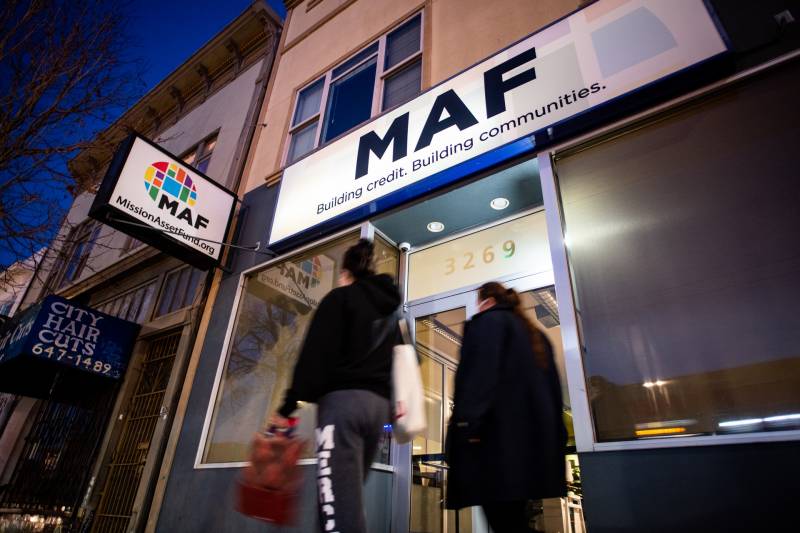
“We’ve seen that many clients use lending circles as a way to save during the pandemic,” says Binh Ngo, communications and engagement manager at Mission Asset Fund (MAF). Based in the Mission District, MAF organizes its own lending circles.
Some cut back, others just hang on
The coronavirus health restrictions and a drop in consumer spending have disproportionately affected small businesses and low-income households, specifically their ability to save. While the national personal savings rate shot up this year — 13.6% in October, almost double from where it was this time last year — not everyone is saving equally.
While the richest households are cutting down on expenses, those with the least resources are using up more of their savings as the pandemic keeps dragging on.
Stay-at-home orders restrict the operations of high-risk businesses like restaurants and gyms, but also limit employment options for low-income workers. On the other hand, higher-paying white-collar employees have transitioned to working from home, reducing expenses for leisure and eating out.
The top quartile of income-earners in the U.S. cut down their spending by 9.2% in October when compared to the same time in 2019, according to data gathered by Opportunity Insights, a Harvard-based research institute. Households at the bottom 25% of the income distribution have barely had the chance to cut down on spending — saving almost nothing in October 2020 compared to October 2019.
In California, both geography and income feed into this inequality. The data from Opportunity Insights for December shows that in San Francisco, a city with a 2018 median income of $112,376, savings rose by 10.4%, but in places with a much lower median income, like Kern County ($51,579), spending went up instead, by 4.7%.
When higher earners spend less, smaller businesses are those that suffer the most, and with them their employees. Opportunity Insights compared the revenue losses of small businesses with the unemployment rates of low-income workers in New York City from January to April of this year and found a positive correlation between the two factors.
A drop in consumption at the top and the latest stay-at-home orders have created additional burdens to workers that were already struggling to keep up before COVID-19.
“Almost all I made before the pandemic went to rent and food before the pandemic. It’s the same case for the other people who are in my tanda,” Litnis says. “The little we can keep now, we have to make sure it counts.”
These expenses can pile up, especially during the holiday season. With unemployment still high, some people like Litnis are teaming up with family or friends to split up costs of gifts, repairs or just to cover the bills as an option, whether that is through the casual tanda or the more formalized lending circle.
If you’ve never done something like this, we looked for the best ways to start, while keeping in mind risks and accessibility.