Episode Transcript
This is a computer-generated transcript. While our team has reviewed it, there may be errors.
Ki Sung: Welcome to the Mind Shift Podcast where we explore the future of learning and how we raise our kids. I’m Ki Sung.
Today we’re going to get an update on sex ed in the United States., sex ed is no longer about just intercourse and preventing pregnancy and sexually transmitted infections. Sexuality education is more nuanced and starts earlier in life. And biologically, that makes a lot of sense. But culturally, we may have a lot catching up to do.
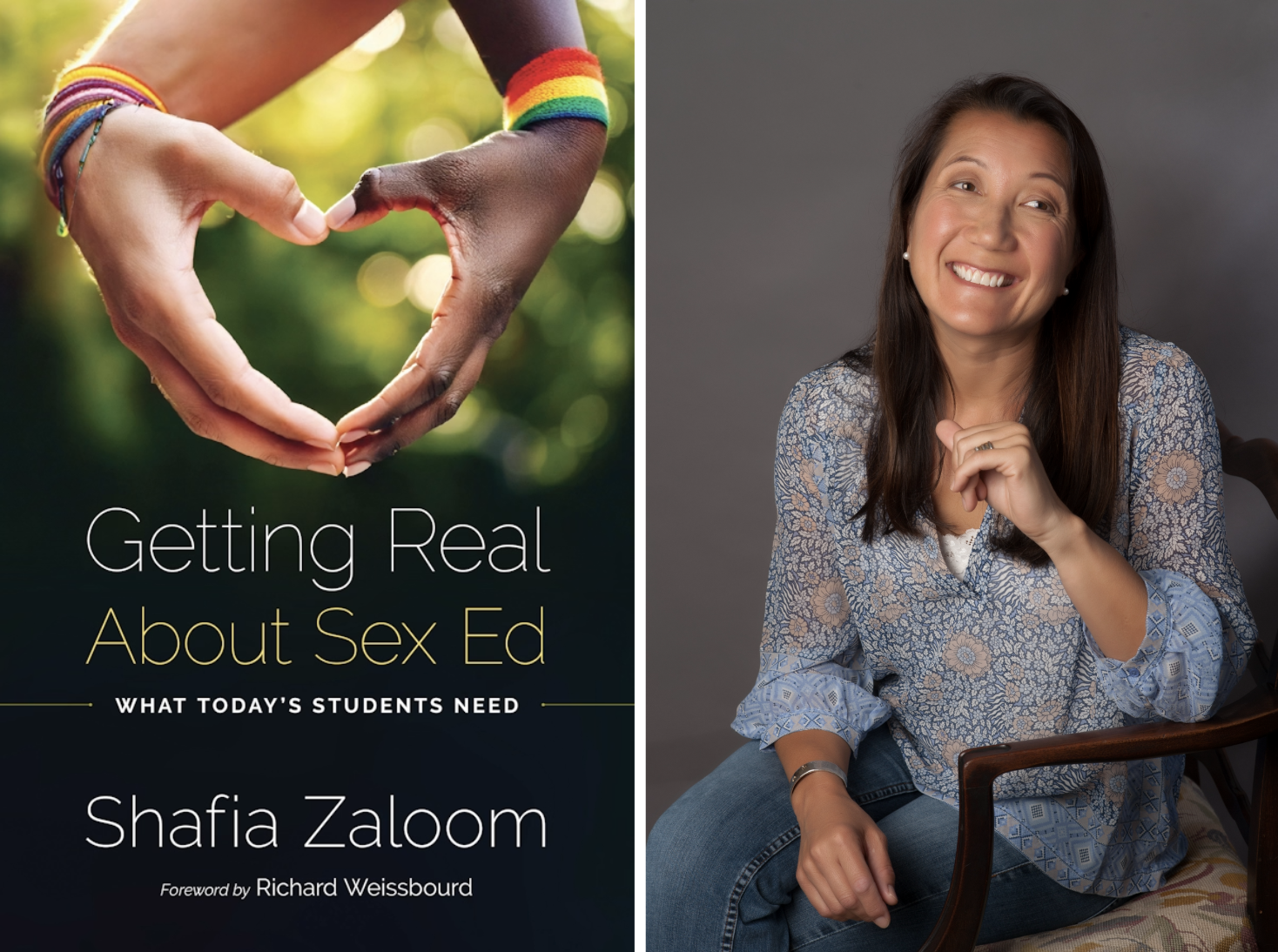
My guest today is Shafia Zaloom. Health educator and author of Getting Real About Sex Ed: What Today’s Students Need. Stay with us.
Ki Sung: Shafia Zaloom, welcome to MindShift.
Shafia Zaloom: Thank you so much for having me.
Ki Sung: You teach at the Harvard Graduate School of Education and you’re a high school health educator in San Francisco. You also work with schools across the country in states of all political leanings which you describe in your book Getting Real About Sex Ed: What Today’s Students Need.
For old timers like me, can you describe the evolution of sex education to sexuality education- What’s the difference and how are they taught differently?
Shafia Zaloom: Yeah, of course. So when it comes to sex education in particular, that’s mostly information-based and it’s really grounded in sort of medical health, sexual reproductive health, right? So it has to do with preventing unintended pregnancy, unwanted pregnancy. It has to deal with preventing passing of sexually transmitted infections. And it’s very sort of clinical and medical-based. It’s important.
But sexuality education is a lot more holistic and it’s a lot nuanced and it includes a whole lot more. So not just the information, but what do you actually do with it and what’s the meaning we assign to it? It really has to do with… How we relate to ourselves and to the world, how we take care of others, how we treat others because that matters. And that’s really at the heart of comprehensive sexuality education. There’s an ethical aspect to it having to do with decision-making that promotes and encourages relationships grounded in mutual respect, empathy, and dignity.
Ki Sung: As a health educator, you must get asked all kinds of questions by students of all ages. What are some of the most frequently asked questions you get from middle schoolers and teens?
Shafia Zaloom: It is such a tremendous range, and I’ve been doing this for 30 years, right? So the questions have been the same for 30 years, and then other questions have sort of evolved and become different. And then there’s brand new stuff. And the brand new staff sometimes changes constantly because it’s within a context of digital spaces. And so it’s just super interesting, you know, for the younger kids from middle school. You know, they’ll just ask basic direct questions. What is this? What is that? How do I know if I like girls or boys? How do know if someone really has a crush on me? How do tell my best friend that I don’t like it when they’re always hugging me? You know questions like that that have sort of transcended time.
I have some kids now in middle school who are asking about pornography. Which is different because it’s so ubiquitous, it’s still accessible now, that I see more questions that are very specific to certain types of media and what they’re exposed to in media. You know, what is popping the cherry mean? What’s a grundle? What’s gooning? You know, all these different sort of, this different kind of language that exists in digital spaces that they’re expose to. And are sort of wrestling with to make meaning of.
And then as kids get older in high school, the stakes feel a lot higher. I get a lot like to shave or not to shave. How do I make it not hurt when I lose my virginity? Questions like when is it okay to have sex with someone? How do you know what real trust actually is? Really pretty important and intense questions that also reveal… These aren’t being discussed in other spaces, right? That this is one of the first times someone has asked them, you know, what are you curious about?
And a lot of times too now, which is different from the past, kids are asking me to legitimize something. I heard that, or is it true that…” kind of questions having to do with what they’re exposed to in media, like “what’s a blue waffle? Can girls pee out of their vaginas?” Like there’s all kinds of different things that they’re exposed to that they are wondering about. Most of the time they’ll just Google, right? And so they get this information and then they have this intuitive response of like, I don’t know if that can actually be right. And then they ask it in class.
Ki Sung: Uh… That sounds way more complicated than I think the questions were asked in my sex ed class a long time ago.
Shafia Zaloom: [Laughter]
Ki Sung: Um, how do you navigate that world? Or maybe the better question is how are the kids navigating? You mentioned they’re searching online, but it seems like an endless rabbit hole that could lead you to pretty dark places, especially at a very young age, because I saw this study that showed that kids are encountering porn. The average age that they encounter porn is 12, and it happens a lot at school just by clicking through links unassumingly. And so that’s what I wonder, like how do you think they’re navigating the space? You mentioned like parents, but what else are they doing?
Shafia Zaloom: I think more parents are trying to talk about these things, and modern parents, and good for them, yay, and we’re trying to get folks to talk about this more, but we’ll check the box around like, okay, I talk to my kids about consent, I talk my kid about STIs, I talk about birth control, things like that, if we’re talking about teenagers.
And then I have a kid come up to me to say, okay, I know the definition of consent, and my parents keep telling me, you know, I should respect women or I should respect whomever, whatever it may be. But what does that mean exactly? Right, like that’s the followup question that I’m now getting, what does that mean?
And so I think that’s important. The Googling, absolutely, a lot of times pornography will come up. It’s a lot harder for kids to avoid coming across porn or sexually explicit material than it is not to these days. And so then that, you know, that’s a whole rabbit hole in of itself. And because we’re not providing, and in fact currently rolling back comprehensive sexuality education courses in schools, you know. Kids are turning to pornography. It’s become the default sex ed of this country. That’s like watching the Fast and the Furious to learn how to drive.
And so, you know, kids are looking for information from their friends. They’re looking to social media. They’re asking Google. And for parents, if you’re not talking to your kid about sexuality, you’re the only person not talking your kid about sexuality because their friends are, the internet is, you know all these different influencers who are out there. And so that’s why this conversation is so important, not only in learning spaces, but also at home, because parenting adults, a kid’s guardian is the primary sexuality educator in a child’s life. That has been true forever. I don’t know a single professional sexuality educator who doesn’t believe that. And it’s challenging. It’s really hard to keep up, especially if you haven’t had a positive experience with that education yourself.
Ki Sung: I think one of the most fascinating aspects of your book is that you lay out a lot of real life scenarios in school in very precise language. For example, I’ve never heard of the term, and I think it’s okay to say, clamper. Oh yeah. It’s probably in a category of behaviors that…
Shafia Zaloom: Mm-hmm
Ki Sung: happened on school campuses or elsewhere outside of the school. Can you describe what that is and how you’ve addressed that in schools?
Shafia Zaloom: Yeah, for sure. So clamping, depending on what classroom you’re in, and this tends to start sort of young, right? In the case of my book, there’s a field trip and they’re walking upstairs in a museum. There are different terms for it too, euphemisms, like fish in the creek, clamping. You know, a lot of different ways by which kids will reference this behavior. You know the euphemism is supposed to make it humorous, which sort of excuses the. Inappropriate or aggressive behavior behind it. And it’s basically poking someone in the butt and in the butt crack in particular and thinking that that’s really funny. And I don’t know a lot of kids who actually think that is very funny, but this is also happening during a time when they’re negotiating social landscapes, social power and currency, and how we connect to and relate to each other and what kind of influence different kids have.
So in addressing that, there are two things we need to do, and sometimes there’s a third. If there’s kid who brings that to your attention, because sometimes there is, right? There’s the kid who will say, hey, this is going on. Did you see this? Did you know this? They go to the adult because they’re looking for some sort of help, because intuitively they know that this isn’t something that’s okay. And that kid needs to be recognized, right, because… When it comes to that dynamic, you know, the topic of snitching comes up, it’s really important to be very concrete about the difference between snitching, which is telling on someone on purpose to get them in trouble on purpose, and reporting, which is where you’re sharing information, asking for help trying to support community and righting a wrong.
And then you have two other things: You have the kid who actually experienced the clamp or the poke, the unwanted poking, and then you have the kid who actually did it. And so those are two kids, usually the kid who does it, it’s important to remove their audience. When we address these things publicly, it’s important to say something, to stand for what’s right, to hold people accountable to the guidelines you’ve set up in your classroom or amongst each other in your community. But we don’t want to go too far because for adolescents when we go too far in a public setting, they shut down because it feels shameful. And so what we want to do is say something so that people know oh okay the teacher is aware the the caretaking adult knows this is happening and so they’re going to take care of it but they’re also going to honor and respect that kids make mistakes and that we have the opportunity to learn from them so that we can be better people. And that’s what you’re going do in private right? That’s what you’re going to do with discretion, not secrecy. That’s different. But hold kids accountable in a way that honors privacy and the opportunity to become available to the learning and the guidance.
And that social learning is going to be critical. So we want to support the kid who experienced it, find out how they felt about it, how things are going, what kind of support they may need. The other kid, we’re doing something similar. And we really want to get behind that behavior to see what need is. They’re trying to meet by engaging in that behavior.
Were they looking for connection? Were they are looking for affirmation through attention?, whether it was negative or positive, didn’t really matter for them, like, whatever it may have been, help them understand how their choice in making that, getting that need met actually didn’t serve them or anyone else. And it’s absolutely not acceptable. And so then what are the other options for them when they’re feeling that way to get those needs met, in a way that actually then affirms what they’re trying to figure out, how they’re in the classroom and how they are part of community?
Ki Sung: And I guess that can also be applicable to other interactions one has with others in the world.
Shafia Zaloom: Oh, 100%, yes. And it’s an opportunity to give, to impart a lesson to and to reinforce information, right? That very rarely do any of us, the first time we hear something, especially if we’re a young person, right, are we gonna remember, internalize, and make that a part of our practice? Practice is essential. That’s why kids are in school. And so that kid, it’s also an opportunity to review consent, bodily autonomy, asking permission, what accountability actually means, the value of community, what we’re actually going for in our relationships, who we wanna be. There’s a ton of things.
Ki Sung: But the scenario you describe is really detailed, as are a lot of incidents that are really uncomfortable or challenging. And I think what you do really well is lay out several raw descriptions of conflict you’ve heard about or seen on campus, including the use of slurs. And a lot those instances, when boundaries are crossed, you often end up with a student reply of, I was just joking or I didn’t mean it. So how do you address that seemingly common response to an infraction?
Shafia Zaloom: That’s such a good question. You know, I think, so it’s so important when working with young people in particular that we get, that we recognize the behavior, that we hold them accountable, but that we also guide them to what’s behind the behavior. And I think that’s… The most important piece is when these things come up, because kids are in gender and sexuality school all the time, all day, every day, it’s constantly being modeled for them. They’re being socialized by all these different social institutions all the times, is that we guide them towards those universal values that we think are really important when it comes to relationships with others.
And what our culture teaches kids, because sex is everywhere and nowhere all at once. It’s something that a lot of people don’t have a lot practice talking about in really positive, productive, constructive ways. And so when it comes to kids, they’ve learned that when we talk about sex, if we veil it in humor, that we can get away with a lot behaviors. That if we didn’t veil them in humor, would definitely not be okay, that would be disrespectful, would be considered rude.
And this is a way by which sort of the sex stigmatization that has historically been a part of our culture continues and is perpetuated. So when talking with kids, it’s really important first that we not shame and this is the thing, most adults have been socialized to respond to issues of sexuality that would warrant, oh, I was just kidding, it’s not a big deal, I didn’t mean it that way, with some sort of shame, fear avoidance versus care, love, and affirmation. Because that’s the counter narrative, right, the care, love, and affirmation. And a lot of times kids, especially adolescents, are just mirroring and trying on navigating the gauntlet to adulthood of what they see in adult culture. So we have to help them understand. We have to contextualize it for them. We have to get behind the behavior to help understand the feelings that are there and what values we’re actually aspiring to. And the reason why that behavior actually erodes relationships and community versus affirms and builds them.
Ki Sung: I’m wondering if you can make a connection to being an adult by having these experiences early. How do they manifest in an adult’s life? And by experiences I mean standing up for yourself or communicating what you want or how you need to be treated and like entering into interactions with understanding instead of shame. I mean, you just mentioned many things here. So I guess generally like, you know, if somebody has this kind of experience, how does that project into their lives as an adult?
Shafia Zaloom: Well, what we understand and know about social learning is that one, it makes us available to feel socially connected, actually improves and cultivates the capacity for young people to learn effectively. What we also know about learning is that we need practice and it needs to be scaffolded over time in a developmentally appropriate way. And so when we take this on, you know, Freud said that the two most important things in life are work and love. And this is ultimately comprehensive sexuality education. You know, we forget this sometimes because of our history of stigmatizing it, is that this is about cultivating the capacity to love and be loved. And so that requires skills. It requires being attuned to yourself and others. You know, skills are something we have to practice and build over time. And so when you have someone who’s had the benefit of these skills, of this sort of reinforcement, the contextualizing, applying these skills and cultivating these capacities in different contexts across different experiences, you have some one who actually becomes more considerate of others, who’s able to be attuned to others and to themselves to act in ways that are ethical in terms of how we treat each other because that really matters, who can exercise empathy, who can ask for help when they need it, and who have the language and the practice to verbalize what they’re thinking and feeling when they need to ask for that, or when they see that others need it too and offer it.
I think that’s a really important piece. I wanna make sure we don’t only focus on self. We really have to balance how we connect with ourselves as individuals with becoming community-minded and understanding the value of being socially connected and in community with other people.
Ki Sung: So what tips do you have for parents who really struggle with their discomfort around talking about sexuality and relationships with their kids?
Shafia Zaloom: I mean, as much as we can is get comfortable with feeling uncomfortable, which is such a valuable thing to model, right? That sometimes the hardest conversations are the most important ones to have in a relationship. And there are plenty of scripts and resources out there, some great books for having these conversations with young people across developmental stages in ways that are cognitively congruent. And so I would say it’s really important for a parent to educate themselves to find those resources that align with their values so that they can start early. And it’s never too late, I wanna say that too. And to provide their kid with medically accurate, credible information first and foremost. But the most important piece is actually the values stuff.
So to get concrete around it, let’s say you’re in the car with your kid and you let them DJ for the ride. And a song comes on, you can simply drop a question, like, “huh, do you think this is about infatuation or authentic connection? Because I’m not really sure, you know?” It’s just a question like that.
Or you’re watching as a family, you’re a watching a show, or you’re just watching something with your kid, or you heard they’re watching something, so you start to watch it too. And you talk about the characters like real people. And you say like, well, do you think that was wordless consent? Do you think that that was actually like a response that really honored and respected what they wanted or their right to make a decision or I noticed they changed their mind, you know, like that kind of a thing.
And you’re not, you’re not launching, um, and you’re just collecting these beautiful moments that you scaffold over time, and then you can go back and you can sort of embellish and bedazzle and hang all kinds of beautiful things on the scaffolding, but it’s really important to get that foundational piece first.
So, becoming the askable parent means that we have our eyes and ears open, and for adolescents, a lot of times that’s not on our time, it’s on their time, right, like late at night or whatever else because their circadian rhythms have shifted. And we’re doing a lot values education in particular, you know, we want to make sure they have access to the medically accurate information, but then the values education and how we apply that information to interpersonal dynamics is going to be super important.
And so for kids, even saying, hey, I heard this podcast and there was this woman speaking about sexuality education. Are you getting any of that in school and in what ways? And how’s it been? What do you think about it? Kids love to, they have a keen sense of justice too. Could even say, she said this, do you think that’s true? Have you seen that come up? Do you think that would be valuable information?
But those are the ways that I. I think parents can become askable when it comes to their kids. And it doesn’t mean being your kid’s friend. They really need a parent with boundaries and doing the hard stuff. And how do you get comfortable with being uncomfortable? Those sorts of things.
Ki Sung: So I want to ask you, for maybe millennials, Gen Xers who grew up in a different era of sex ed, can you identify some myths about sexuality education that adults should consider unlearning?
Shafia Zaloom: I think this is true of all adults, actually, just because it’s interesting, I think the stigmatizing aspect of sexuality has been perpetuated across its cyclical, right, generational cycles of this, and we really need to move away from that, and that requires people to work on themselves. And earlier you had asked about how can parents become askable parents, right? And get comfortable with this. And part of that’s a parent’s responsibility to do with other people their own age, right. Like your own friends, have conversations about this, practice having this conversation. The myths that are out there are that if we tell kids then they’re gonna go run out and do.
There’s no empirical evidence whatsoever. That tells us that’s the case. In fact, the inverse is true. And so, you know, that’s just when we’ve put political ideology above student health and perpetuated stigmatizing ideas around sexuality. All you have to do is look at the Dutch. I mean, they start age-appropriate sexuality education in preschool and kindergarten, and it follows them all up into adulthood. You know, their focus is really on responsibility and joy. Versus like disaster prevention, fear and avoidance. And so, and their young people are far more relational, their STI and unintended pregnancy rates are like some of the lowest in the world.
You know, it’s really important that we understand…we spend more, we invest more in fire prevention and fire safety, like information and learning with young people than we do on sex ed. And when you give that education to kids, like, okay, here’s how we prevent fires or how we deal with them if there is one or whatever else they don’t go home and start making fires.
When I tell young people that this is what adults believe, that if they acquire a sex education, they’re gonna run out and go start having sex, they look at me like I have three heads. And they’re offended. They’re like, really? And then they get funny and they’re like oh, think of all the other things that they tell us to do when they spend all this time trying to teach us and how we don’t do them. Right? Um, so I think that’s the biggest one is, uh, that if we tell them they’re automatically going to go out and do, um, because all the evidence and there’s tons of it, decades of it tells us that if engage in age appropriate comprehensive sexuality education as it’s meant to be, that all the things we hope for our kids, there’s a higher probability of that happening than the inverse, which people are afraid of.
Ki Sung: Thank you so much for all that context and guiding us to become the Askable parent.
Shafia Zaloom: Thank you for having me and your interest.
Ki Sung: Shafia Zaloom is the author of the recently published book, Getting Real About Sex Ed: What Today’s Students Need. She’s a health educator who teaches at the Harvard Graduate School of Education and at a high school in San Francisco and consults schools across the country.
Credits:
The MindShift team includes me, Ki Sung, Nimah Gobir, Marlena Jackson-Retondo and Marnette Federis. Our editor is Chris Hambrick. Seth Samuel is our sound designer. Jen Chien is our head of podcasts and Ethan Toven Lindsey is our editor in chief. We receive additional support from Maha Sanad.
MindShift is supported in part by the generosity of the William & Flora Hewlett Foundation and members of KQED.
Some members of the KQED podcast team are represented by The Screen Actors Guild, American Federation of Television and Radio Artists. San Francisco Northern California Local.
Thanks for listening to MindShift.